upper waypoint

Forget the Roman Empire — Think About the Etruscans Instead

Save ArticleSave Article
Failed to save article

Please try again

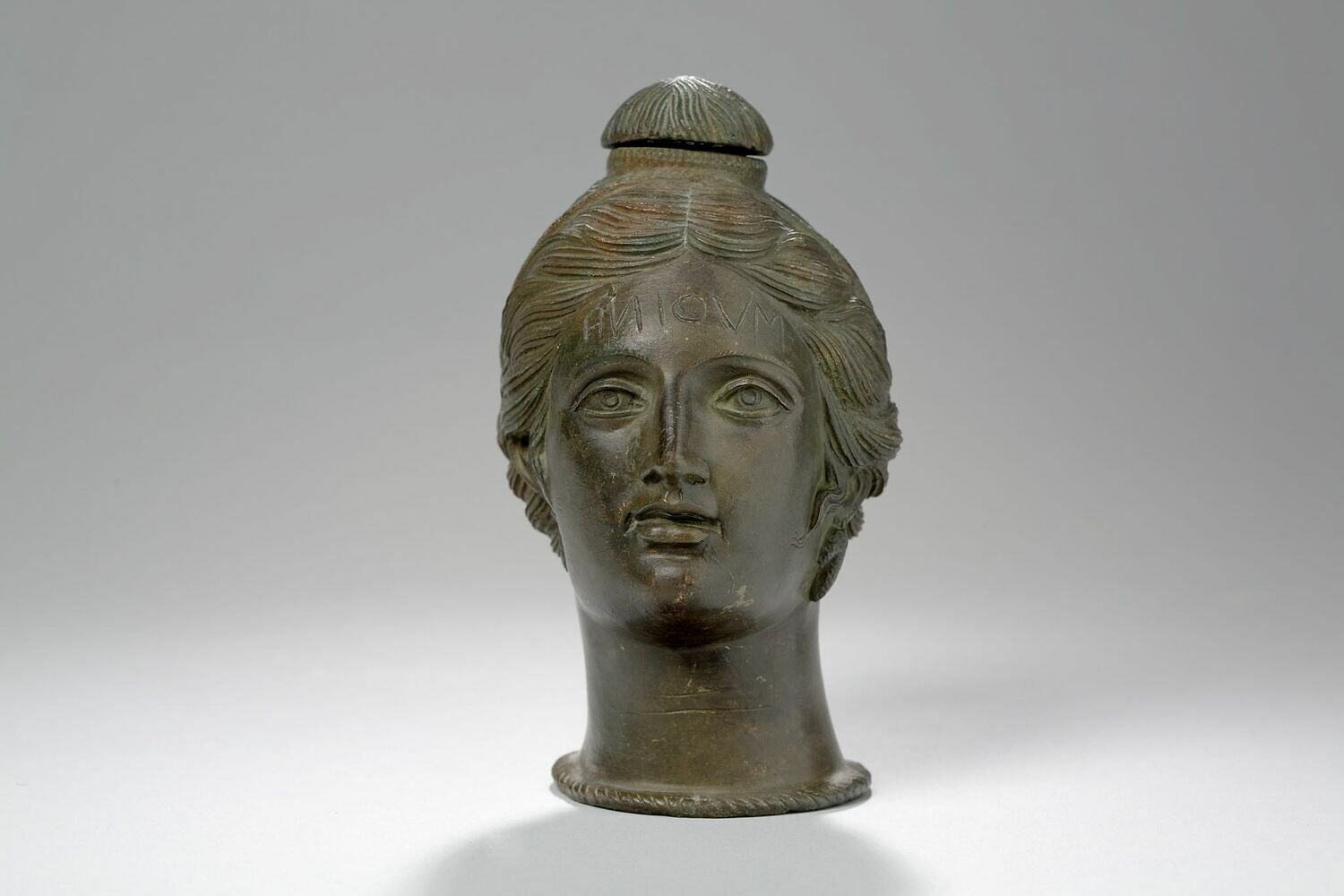
woman's head with inscription on forehead
Funerary vase in the shape of a female head, 225—175 B.C., on display in 'The Etruscans: From the Heart of Ancient Italy' at the Legion of Honor. (Musée du Louvre)

Empires get all the credit. And yet it was the Etruscans, the people who lived in present-day Tuscany between 900 and 100 B.C., who taught the Romans about viticulture, urban planning and complex hydraulic works. Without the Etruscans there would be no toga, or what we now call Roman numerals.

For too long, as curator Renée Dreyfus argues in her Legion of Honor exhibition The Etruscans: From the Heart of Ancient Italy, Etruscan culture has been overshadowed by the Greeks and Romans. The Etruscans are considered “mysterious” or “unknowable,” but as the show’s introductory video says, we just need to dig deeper — literally.

The Etruscans gathers the latest scholarship and over 150 objects for the largest-ever presentation of Etruscan art and artifacts outside of Italy. An international roster of over two dozen institutions has loaned what are clearly treasures to this show; some have left their host museums for the first time since they were discovered.
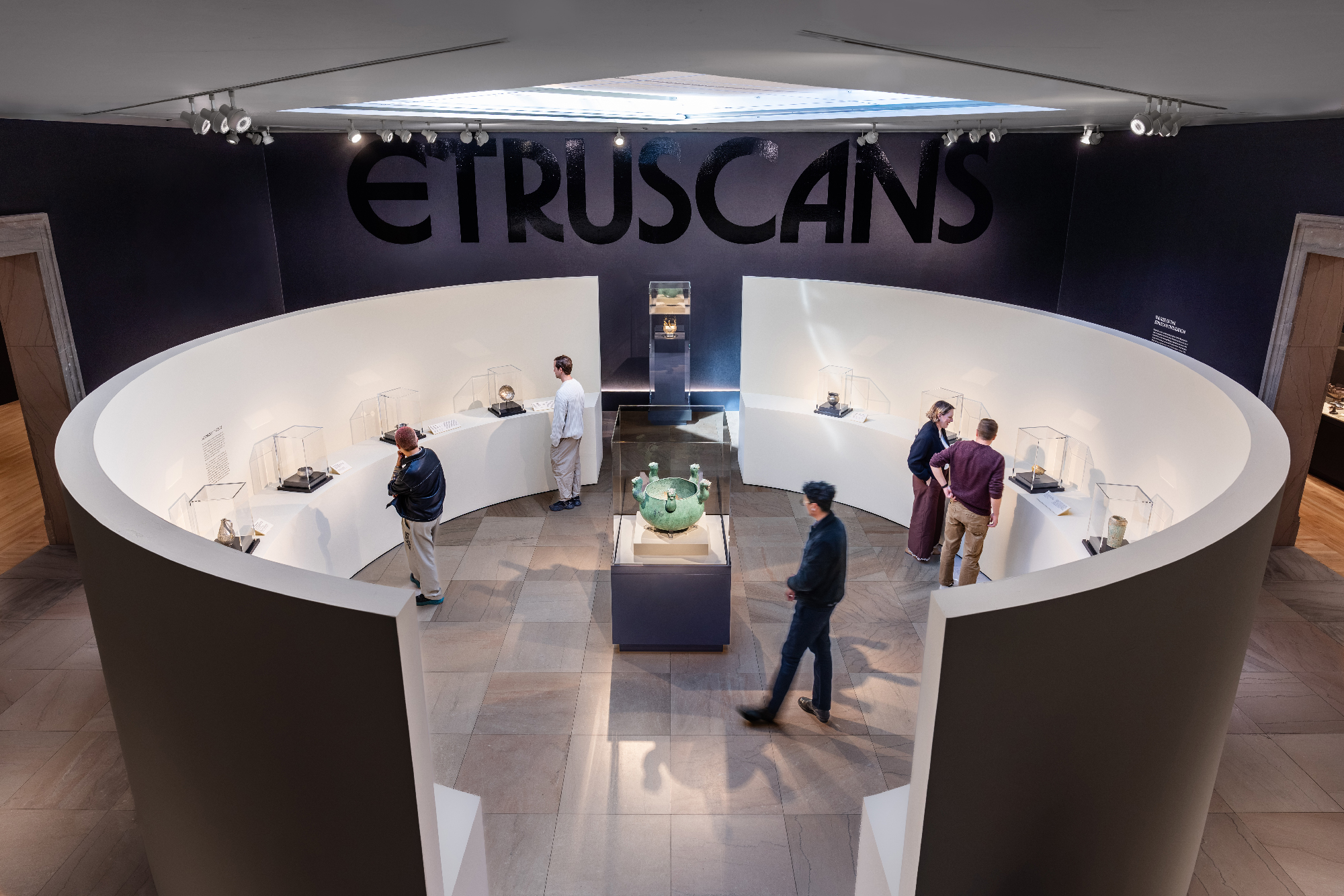
curved display with objects in vitrines, show title in black on wall
Installation view of ‘The Etruscans: From The Heart of Ancient Italy’ at the Legion of Honor. (Photo by Gary Sexton; courtesy of the Fine Arts Museums of San Francisco)

Much of what we see at the Legion of Honor comes from the tombs of the elite: finely wrought jewelry, delicately painted pottery, everything needed to live well in the afterlife. (This includes eating and partying — the Etruscans were devoted to their banquets.)

But the show also contains objects made for the living: a model for the study of divination, votive figures of the Etruscans’ many gods, and small bronzes found in the thermal waters of San Casciano dei Bagni. That model, the “Liver of Piacenza,” is one of the most remarkable objects on display. The life-sized bronze replica of a sheep’s liver is inscribed with the names of Etruscan deities; it acted as a guide to reading the entrails of sacrificed animals, which in turn determined the will of the gods.
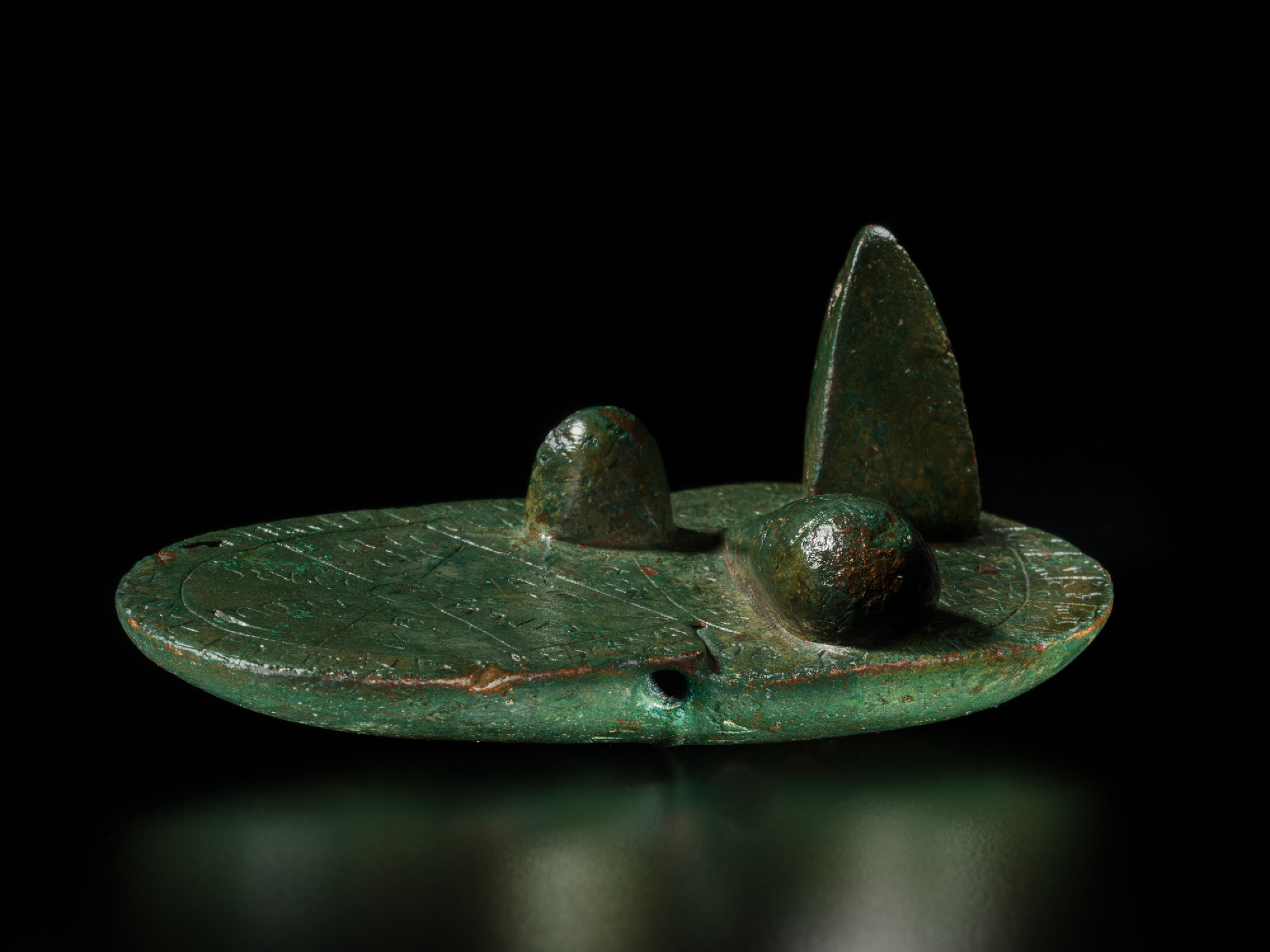
bronze object covered in inscriptions
Etruscan model of a sheep’s liver, found in Piacenza, second century B.C. (Courtesy of the Musei Civici di Palazzo Farnese, Piacenza)

While the Etruscans used the Greek alphabet, generally read right to left, their language was a unique non-Indo-European tongue with no known antecedents or modern descendants. Most of the Etruscan writing that exists now is funerary inscriptions on objects, short phrases of ownership or dedication. But at the Legion of Honor — incredibly rare thing alert! — we also get to see the longest example of Etruscan writing: a wide, framed display on strips of linen that has its own incredible backstory.
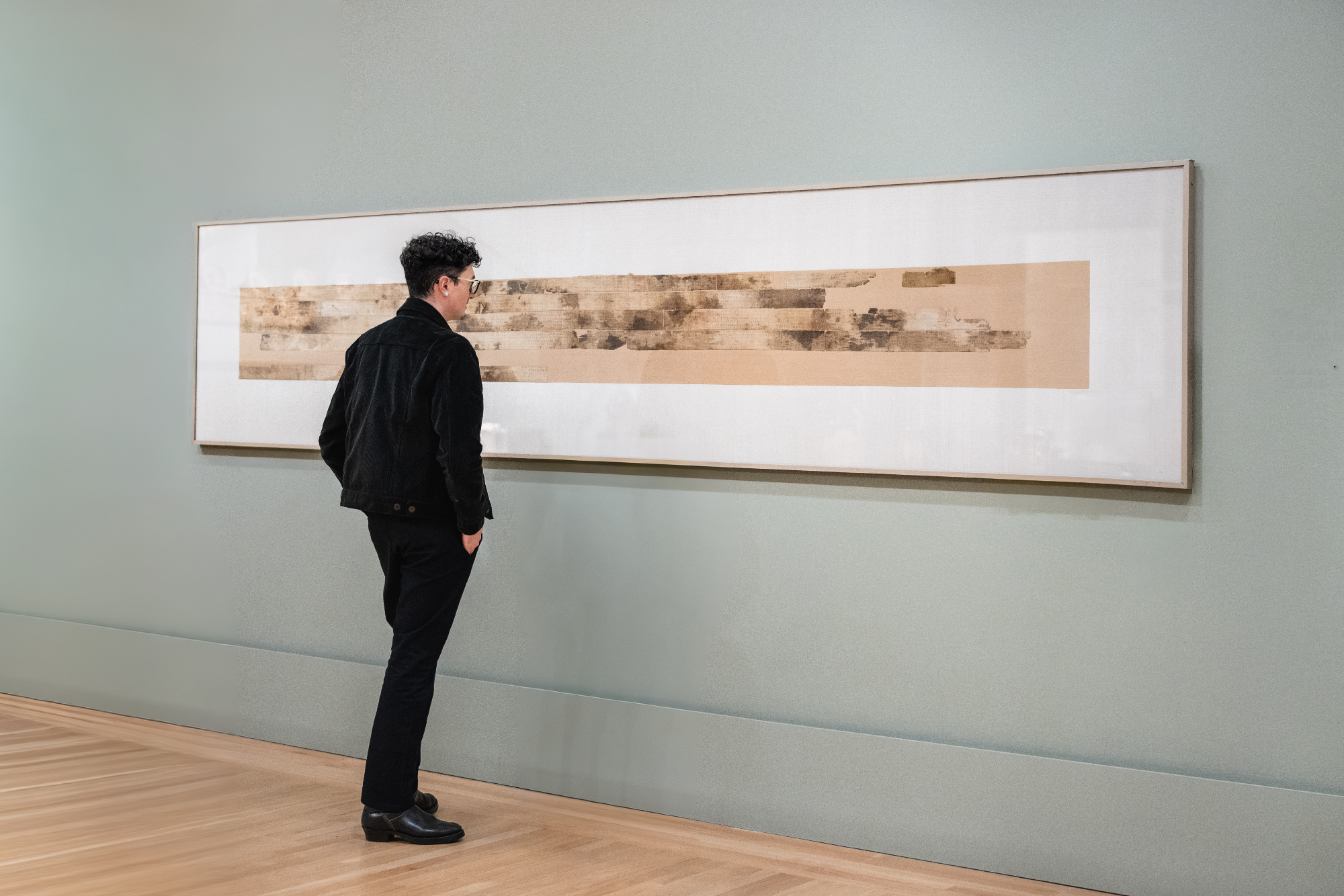
The Liber linteus zagrabiensis (Linen book of Zagreb) is the longest-surviving Etruscan text (aka Europe’s oldest book). Believed to be a calendar of ritual sacrifices and prayers, it dates back to the mid-third century B.C. The text exists only because the manuscript was cut into strips and used to wrap an Egyptian mummy. Preserved by Egypt’s dry climate, the deconstructed book was identified as Etruscian writing in 1892, nearly 50 years after it was purchased in Alexandria.

person stands in front of wide frame holding strips of linen
Installation view of ‘Liber linteus zagrabiensis’ in ‘The Etruscans: From The Heart of Ancient Italy’ at the Legion of Honor. (Photo by Gary Sexton; courtesy of the Fine Arts Museums of San Francisco)

That may seem oh so long ago, but scholars and archeologists are still making new discoveries about the Etruscans today. The small sculptures excavated from the mud of San Casciano dei Bagni, on display in the exhibition’s final gallery, were found just two years ago.

It’s hard to make an ancient civilization come alive for modern audiences. It helps that so many of the objects on view are playful, animated: a handle made from a bent-backwards body, a wonderfully elongated figure, a cup in the shape of a leg. The Etruscans also stresses again and again just what made these people unique, especially in comparison to the empire that eventually subsumed them. (Etruscans became Roman citizens in 89 B.C.)

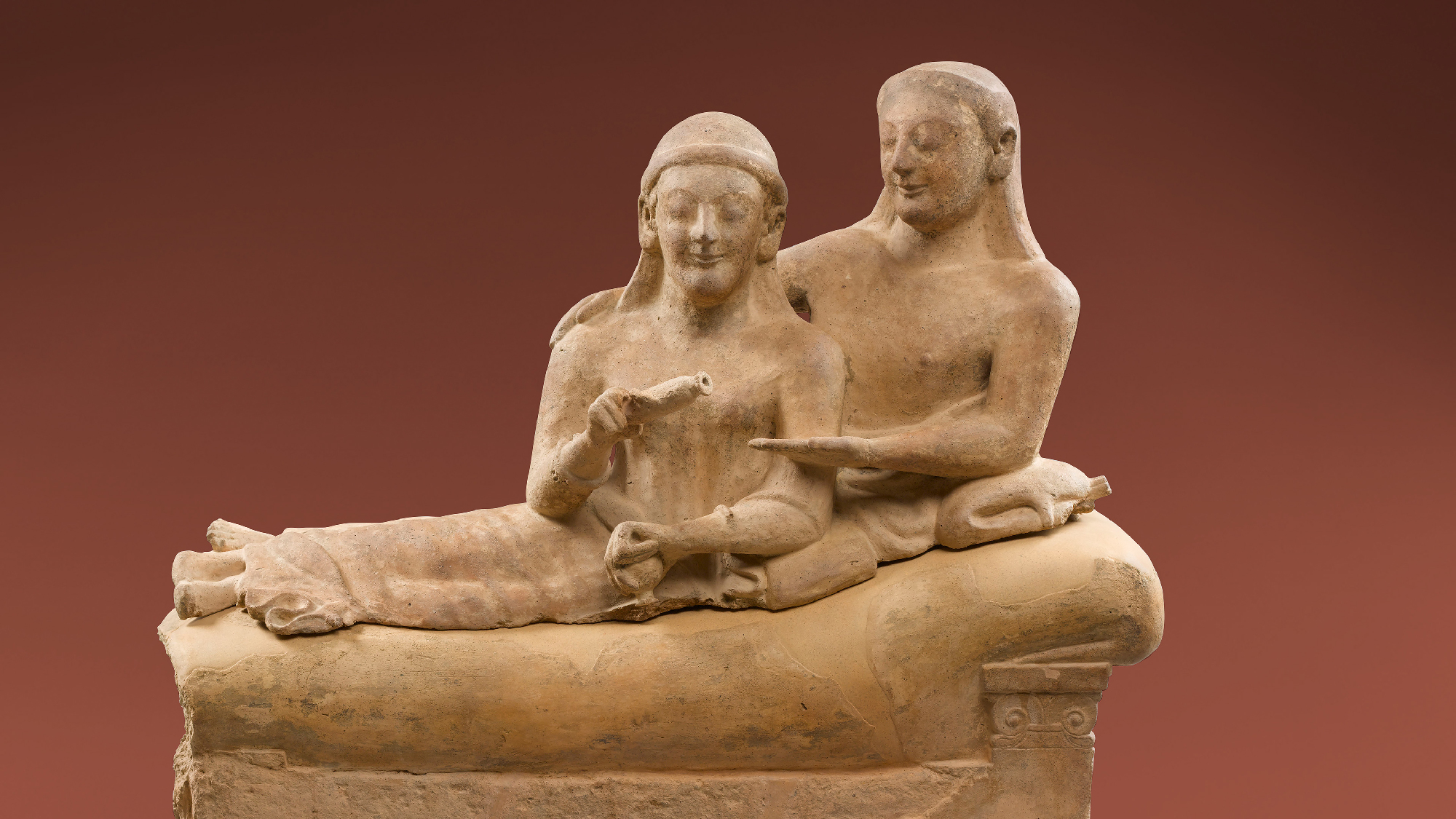
terracotta sculpture of man and woman lounging together
Cinerary urn of the spouses, Etruscan, Caere, 520–500 B.C. (Musée du Louvre)

Women, in particular, enjoyed an elevated status in Etruscan society. They were highly literate, could inherit property, kept their maiden names and participated in public life. A reproduction of a painting in the Tomb of the Leopards spreads across one wall of the exhibition, showing both men and women lounging, conversing and generally enjoying themselves at a banquet. Greek symposia, in contrast, were the sole domain of aristocratic men.

The society that emerges through this exhibition is one of great wealth (the fine detail on the jewelry, holy moly) and great joy. Only people with a sense of delight would carve a toiletries box in the shape of a fawn. Or put such enigmatic and peaceful smiles on their renderings of the dead. You may emerge from the subterranean depths of the Legion of Honor wishing a bit more of Etruscan culture seeped its way into the Roman world, and, eventually, Western civilization.


The Etruscans: From the Heart of Ancient Italy’ is on view at the Legion of Honor (100 34th Ave., San Francisco) May 2–Sept. 20, 2026.

lower waypoint
next waypoint
Player sponsored by