If you were a Bay Area dirtbag in the early 2000s, you likely remember the thrill of seeing your people, your neighborhoods and your more nefarious activities reflected back at you in the street photography of the period. Vice magazine is usually credited with popularizing the unfiltered and uncompromising aesthetic, but Bay Area photographers were arguably the underground leaders.
Celebrate the Grit and Glory of ‘25 Years of Hamburger Eyes’ at the SF Public Library
The groundbreaking street photography zine and book series has a summer-long exhibit at the main library.
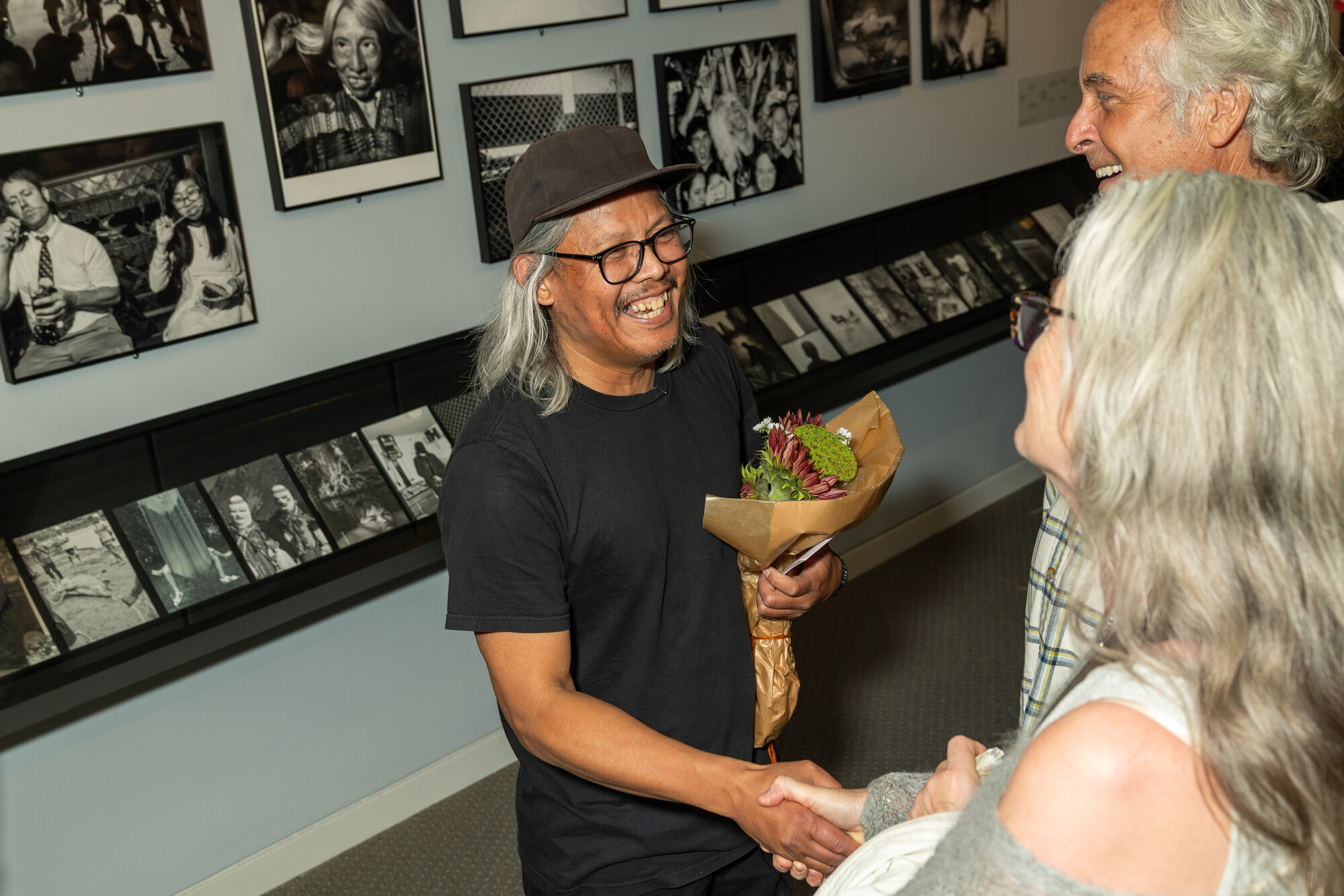
‘Hamburger Eyes’ founder Ray Potes greets guests at the ‘Hamburger Eyes: The First 25 Years’ opening at the San Francisco Public Library on April 23, 2026. (Gustavo Hernandez)
Related Article
At the forefront was Hamburger Eyes, a fanzine that captured and celebrated the everyday realities of city living in black-and-white candids. Founder and editor Ray Potes arrived in San Francisco (from San Diego) in 2003 and quickly began printing his zine on a Heidelberg press, with the assistance of his brother David. By 2007, Potes and his close collaborator Stefan Simikich had also set up the Photo Epicenter in the Mission District — an art gallery, dark room and social space. A year later came the first Hamburger Eyes book: Inside Burgerworld.
Potes has helmed or assisted countless photo projects in the time since, including his side project zine Celly Brain which, for a time, offered an online cellphone photo portal that pre-dated Instagram.
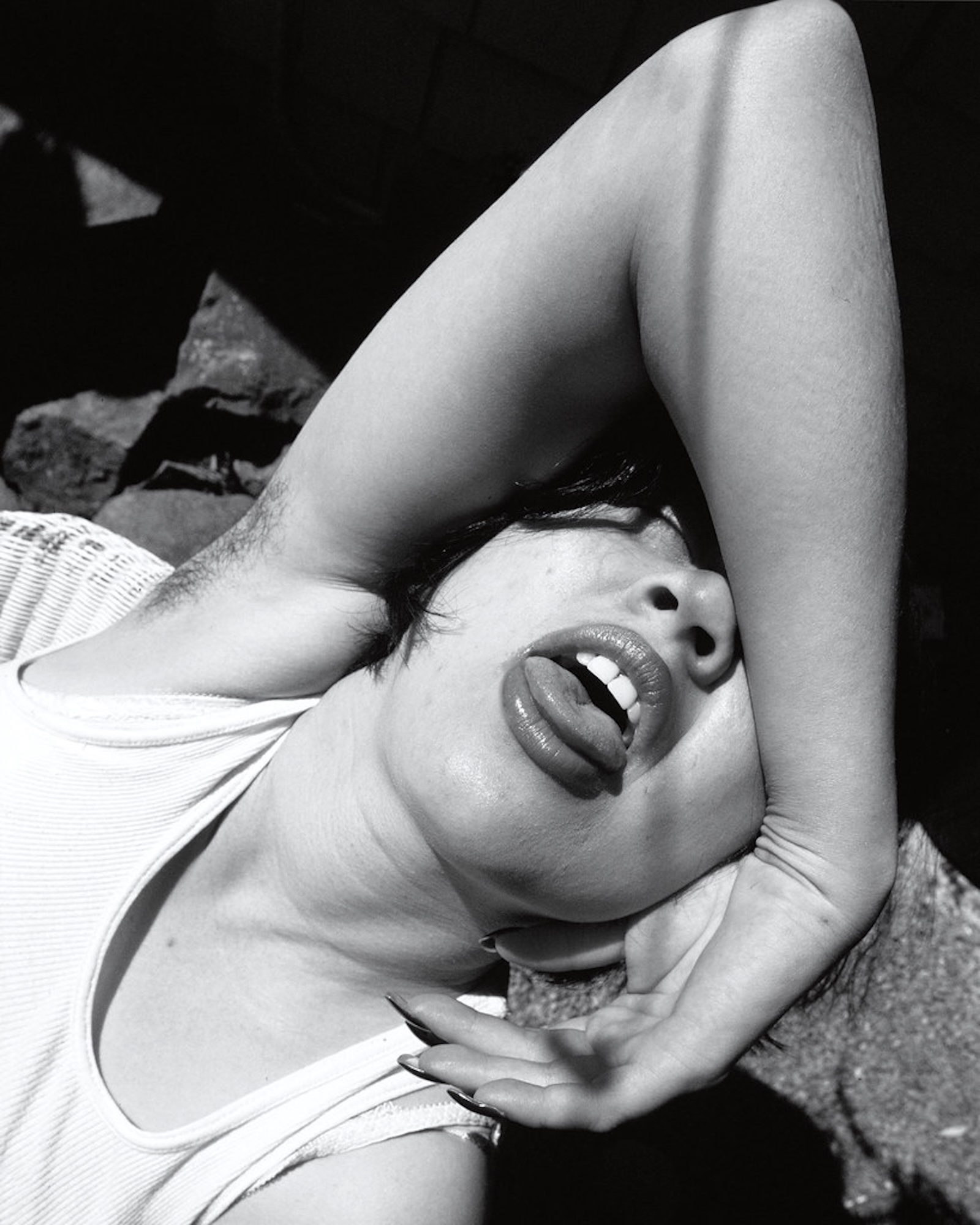
For the next five months, the San Francisco Public Library’s Jewett Gallery is exhibiting work by 83 photographers who have featured in the pages of Hamburger Eyes. These shots start with Ted Pushinsky’s early-’80s street photography and transport viewers up to the present day, via images of everything and anything you can think of. Like kids lined up on a fairground ride, a dog carrying around a dead pigeon and an entirely wrecked automobile on the side of the road, adorned with a “FREE CAR” sign. The show is a fitting reflection of the chaos that Hamburger Eyes has always embraced.
As usual, Potes (with co-curator Megan Merritt) has leaned into curious juxtapositions for The Continuing Story Of Life On Earth: 25 Years of Hamburger Eyes. In one corner, a photo of an aging man showing off his torso of stick and poke tattoos sits underneath the image of posed, suburban family portraits discarded inside a dumpster. A cluster of microphone-wielding journalists sits directly above curious hands touching a giant yellow python. Near a shot of an old man sitting quietly in a laundromat is a photograph of a young man stuck halfway through a hole in a chainlink fence, while his skateboard waits patiently for him on the other side. It is a dizzying, consistently absorbing display.
Accompanying the anniversary celebration is a new book too. Hamburger Eyes — The First 25 Years features 200 photographers, including the likes of Dave Schubert, Tobin Yelland, Troy Holden, Andrea Sonnenberg and Mother Jones photo director Mark Murrmann. The work of Murrmann and Potes also features heavily in a free zine available only at the exhibition.
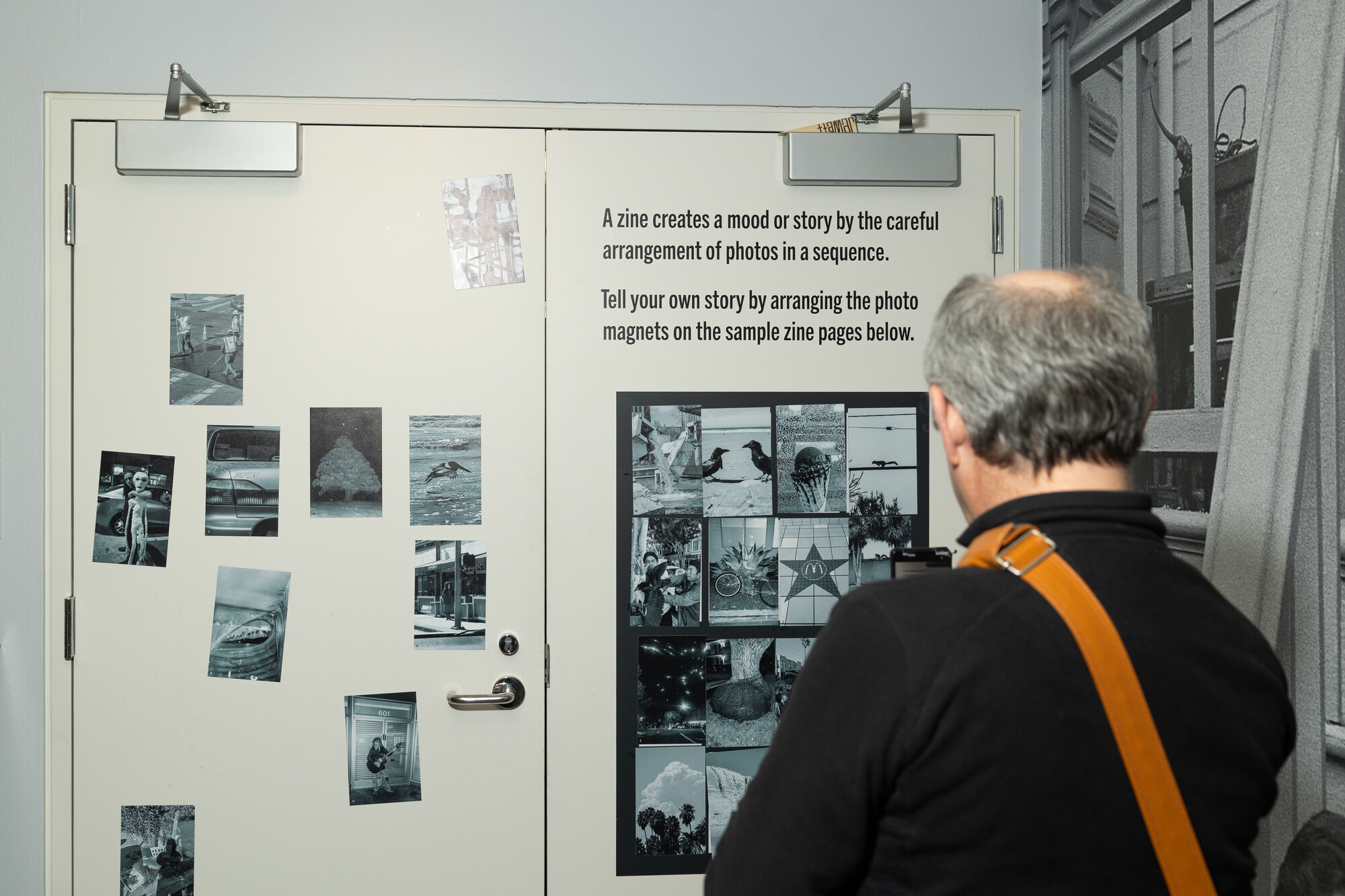
The importance of Potes’ indefatigable work highlighting photo talent cannot be overstated. His commitment to DIY forms of visual expression is not limited to his own output either. At the KQED-sponsored Night of Ideas earlier this month, Potes helmed a Hamburger Eyes panel that was followed by a zine-making workshop by Fish Juice’s Edie Trautwein, to encourage young creators to get involved. There is also a section at the library exhibit that offers visitors the chance to arrange a set of Potes’ magnetized photos into their own zine display.
For many of us who were first thrilled by the work in Hamburger Eyes decades ago, our dirtbag days are firmly in the rearview. The fact that Hamburger Eyes continues to survive and thrive on its own terms is truly an event to be celebrated.
‘The Continuing Story Of Life On Earth: 25 Years of Hamburger Eyes’ is on view at the San Francisco Public Library’s Jewett Gallery through Sept. 24, 2026. The accompanying book ‘Hamburger Eyes — The First 25 Years’ is out now.