upper waypoint

Vikingur Ólafsson Talks Bach, Nature and the Bay Area

Save ArticleSave Article
Failed to save article

Please try again

A 42-year-old man in a deep green jacket stands against a cloudy sky and lush green fields and rocks.
Saying Bach is too mathematical ‘is like someone telling me that nature isn't beautiful,’ says Vikingur Ólafsson.  (Ari Magg)

The Icelandic pianist Vikingur Ólafsson is one of the world’s most engrossing live performers of classical piano music right now. Dazzling yet nuanced, he visited the Bay Area twice last year: to premiere an exciting new John Adams concerto and to pull off Bach’s Goldberg Variations from memory in a last-minute program switcheroo.

The Goldberg Variations, in particular, rewired Ólafsson’s consciousness after performing them for more than a year in concert halls around the world: “Slowly, the work takes over your perception of reality, forcing you to notice how, really, everything can be viewed as a set of variations,” he says. “Places, events, people. Trees, leaves, houses, streets. Thoughts and ideas. Cells and DNA.”

Now, on a recent album on Deutsche Grammophon and in concert this week at Berkeley’s Zellerbach Hall, the widely lauded 42-year-old pianist directs his attention to Beethoven’s Piano Sonata No. 30, adding context of Bach and Schubert to show the threads of imagination among three composers. Ólafsson spoke with KQED about the Bay Area, his process and his home country of Iceland.

Interview has been edited for length and clarity.
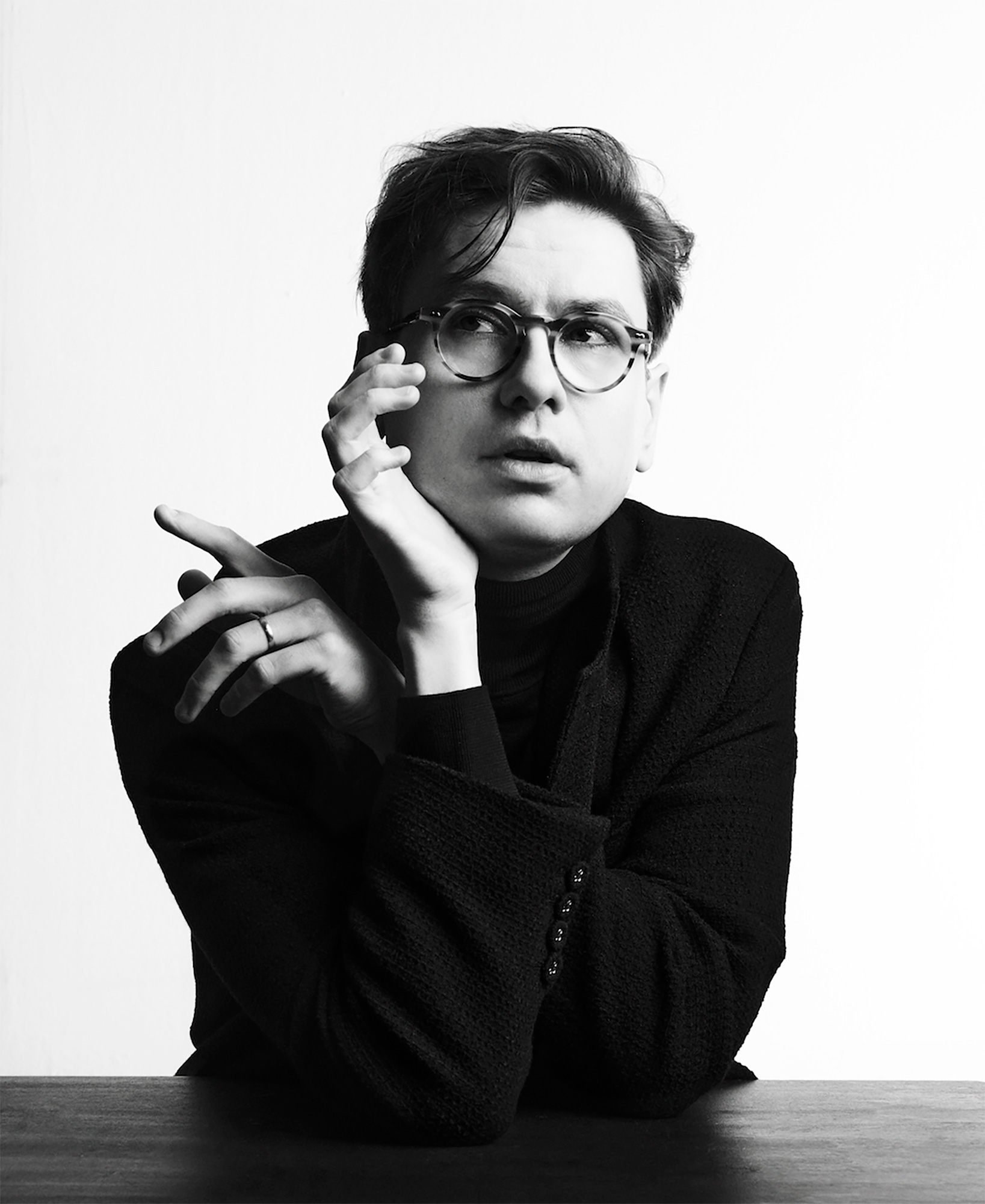
Vikingur Ólafsson. (Markus Jans)

KQED: You keep coming back to the Bay Area. What are your general impressions of the region?

Vikingur Ólafsson: I love it so much. I could live there if it wasn’t so far away from home. It’s a perfect place. It has some of the most interesting people. And of course, it has one of the people who is dearest to me in the whole music world, John Adams. When I come to the Bay Area, I’m looking forward to it every time. I know I’ll have good conversations, excellent food and, hopefully, good performances.

I like Japantown — I very much like the restaurants there, and the vibe. The time before last when I was there, I went hiking, and it was just so wonderful. The coffee in the Bay Area is so excellent that you can almost go into any coffee shop, and this is unusual for the United States, but you can really get fabulous coffee everywhere.
You premiered John Adams’ newest concerto here. What is it like working with John Adams?

He’s the kind of composer that reinvents himself in every piece. You never know what you’re gonna get, except that it’s gonna be beautiful and fantastic, because he’s such an incredible creator in that sense. I was so excited by that, him writing a piece for me — the honor of my musical life, really. I have such high regard for this man on all levels. As a composer, but also just a musical thinker in general. It’s fantastic to talk with him about Debussy, or Bach or Beethoven.

It helps that I have a very good relationship with him and consider him a dear friend, and an ally. We’ve known each other now for five years and spent time together in different parts of the world. And so it feels very personal, him writing me a concerto, and of course in the manner he did: a three-movement work, but in one connected structure, with that incredible Bach fantasia taking over the third movement. It’s such a stroke of genius, but it also felt very much like he was sort of tailor-making it for me. He created a world for me to inhabit very freely.

You have a new album, Opus 109, which you’ll play in Berkeley. It seems very inspired by your time touring with the Goldberg Variations.

Once you spend a year with the Goldberg Variations, you start to see traces of it in so much of music that came after Bach. And nowhere, I believe, more than in the late works of Ludwig van Beethoven, when he comes back from that five-year silence and goes into what we now have come to call his third period. Beethoven’s revolution with the third period, this music of the future — I realized it was very much fueled by Bach.

Beethoven’s last three sonatas, Opus 109, 110, 111, these three sisters, they’re always played together. And I was actually gonna try to do that, to be a good boy for once, and do something like everybody does it. But I failed with that. I just didn’t like it. Opus 109 is such a perfect sonata, it really deserves to be the center of the program. I looked around and I saw very strong connections, especially with the second movement of Beethoven’s E minor sonata, Opus 90, written six years before the Opus 109.

Then in the middle of those two sonatas, young Schubert, living in the same city as Beethoven, writes this E minor sonata that’s basically forgotten today. And it’s an absolute masterpiece of work. Later-time musicologists added a terrible scherzo, in A-flat major, found in the same sketchbook, but it’s just a rough draft. And then someone else found another E major movement, a rondo, which also is quite terrible, which was written two years before the other parts of that sonata. They put that as a fourth movement. I just looked at it and was like, “Well, the sonata is already complete in two movements.”

I also decided to put a little Bach into the mix. And I wasn’t sure if I could do it, but I wanted to test if I could actually do an entire album in E — just in one tonality, E major, E minor — and get away with it. And at least for me personally, I think you don’t really get tired of that tonality. I haven’t heard anyone complain yet.

You said in your post-concert comments, last time you were here, that “One should never apologize for Johann Sebastian Bach.” Do you find yourself having to defend Bach against people who say that Bach is too mathematical, or architectural?

I mean, that’s like someone telling me that nature isn’t beautiful. I don’t have anything to say to them. I feel bad for them if they see no beauty, if they hear no beauty. There’s nothing to be said.

Is there anything about growing up in Iceland that has influenced your playing or your studies?

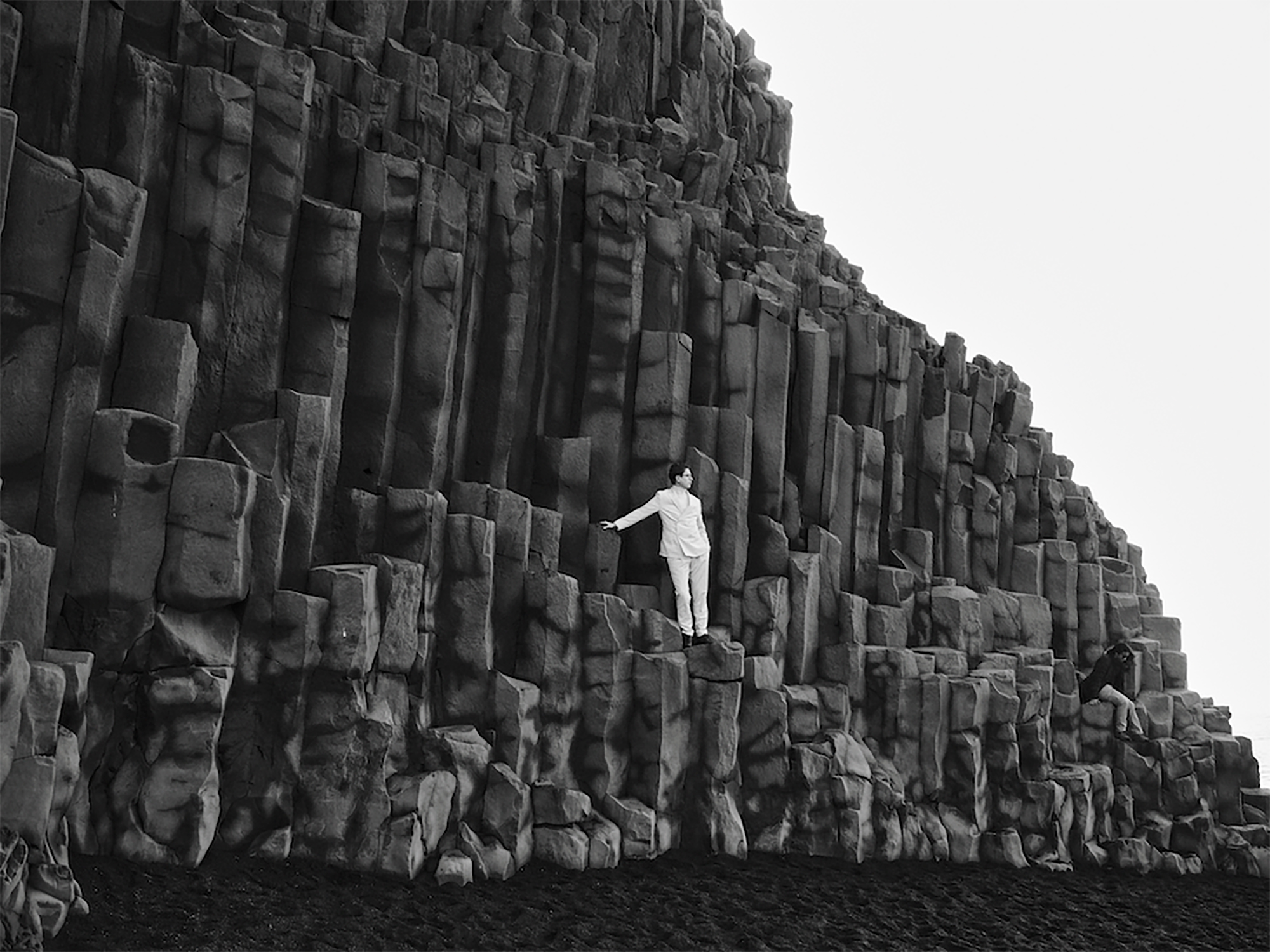
You could say the instability of Iceland, in every sense. The fact that it’s very much still being born as an island, with all the earthquakes, with all of the volcanoes, with the glaciers, with that fact that the nature there and the weather changes constantly. It’s an incredibly dynamic country.

Vikingur Ólafsson. (Markus Jans)

And the fact that I come from a country where I had a much longer path than I might have had if I came from a different culture with more connections to the music industry. I became world-famous inside Iceland, and was completely unknown outside of Iceland. I was filling the house every night as a 21-year-old, but no one had heard of me! That gave me a lot of creative time in my youth and my formative years to experiment more than if I’d had an international career pushed upon me when I was 22 or 24.

There are so many other factors that are more subconscious than that. But I think the slowness of my path, although I wasn’t grateful for it at the time, helped me in that sense.


Vikingur Olafsson performs selections for solo piano by Beethoven, Bach and Schubert on Wednesday, April 29, at Zellerbach Hall in Berkeley. More information and tickets here.

lower waypoint
next waypoint
Player sponsored by