upper waypoint

In ‘Mother Mary,’ a Pop Star’s Costume Crisis Turns Existential

Save ArticleSave Article
Failed to save article

Please try again

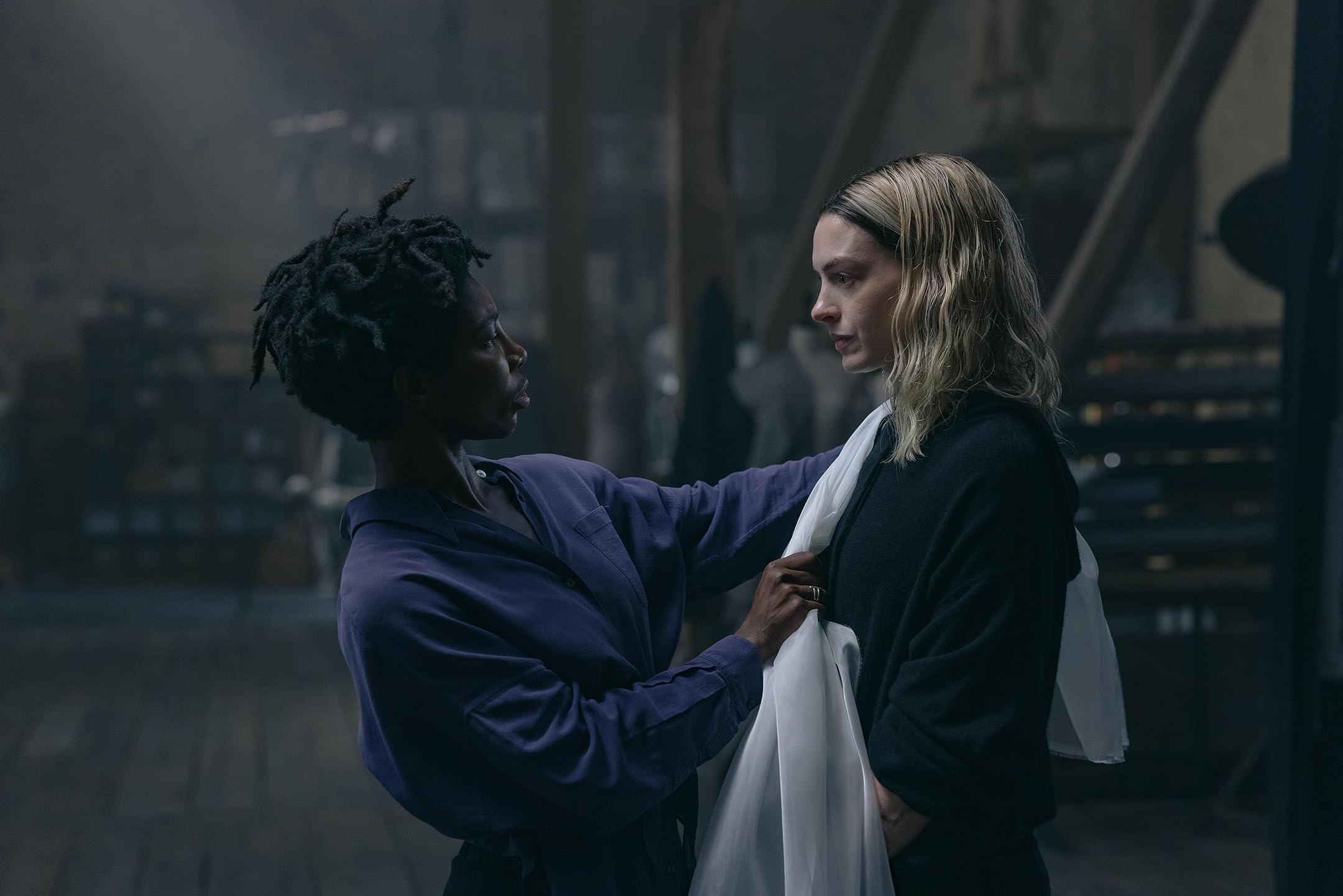
Two women stand facing each other.
Michaela Coel and Anne Hathaway in a scene from ‘Mother Mary.’ (Eric Zachanowich/A24)

A pop star’s need for a new dress sets in motion David Lowery’s Mother Mary, a fitfully spellbinding chamber drama that grows more operatic with every stitch.

What might be a fairly routine affair — some performers change outfits nearly every song — is in Lowery’s latest taken to beguiling extremes when the pop star Mother Mary (Anne Hathaway) turns up wet and forlorn at the studio of her former fashion designer Sam Anselm (Michaela Coel).

Their reunion, after more than a decade of estrangement, reopens old wounds, stirs reinvention and spawns a ghost story sewn together, you could say, by phantom threads. It’s best at its least adorned, when Lowery leaves it to Hathaway and Coel, in a grand, shadowy workroom to work through their past. As the movie grows more abstract, it loses momentum. But an impassioned melodrama and a curiously sincere belief in the transformative power of pop music wrap Mother Mary in a gothic garb all its own.
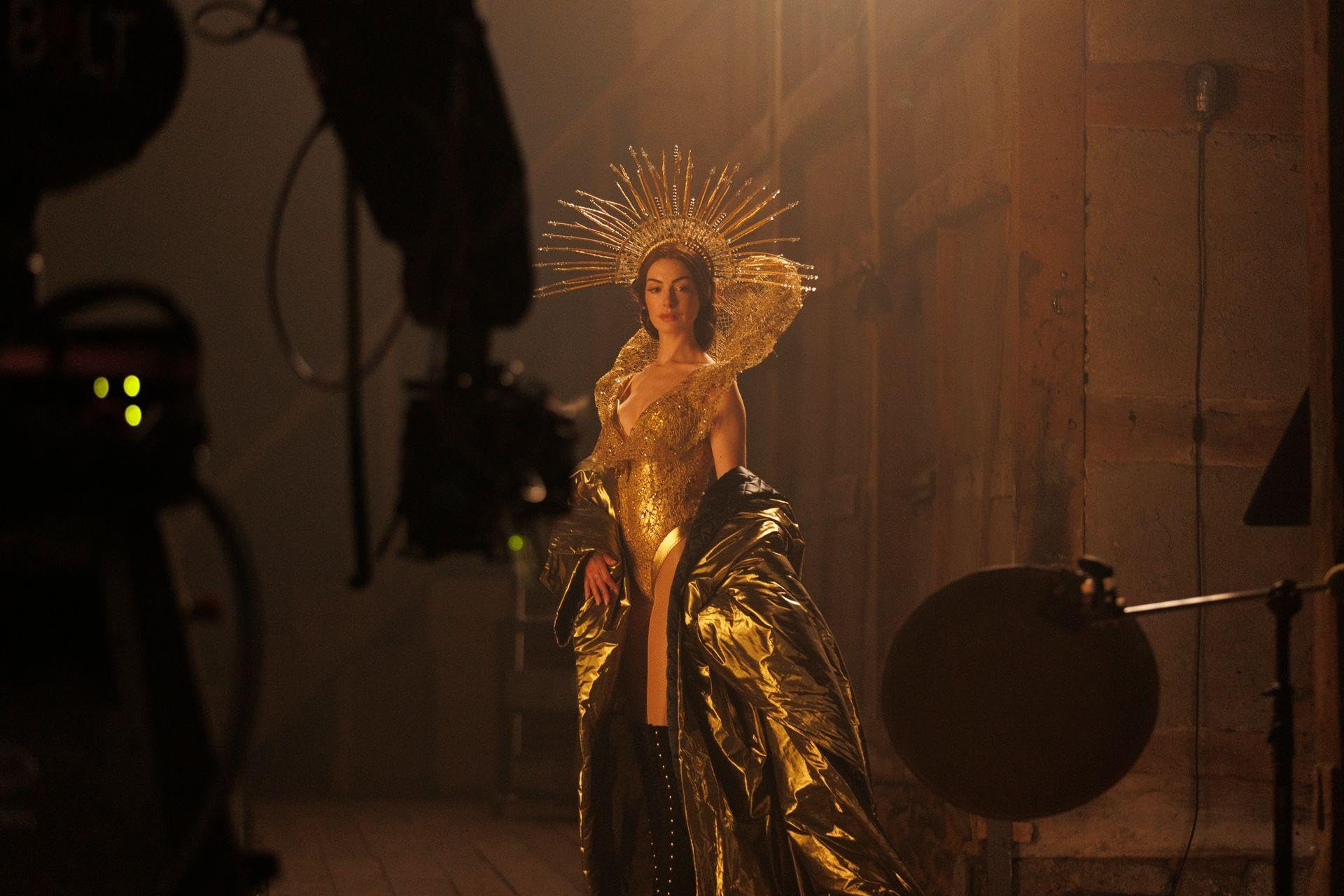
Anne Hathaway pictured in a gold outfit and headpiece.
Anne Hathaway in ‘Mother Mary.’ (Eric Zachanowich/A24)

It is, at the least, the first movie that could be called an earnest attempt to meld Taylor Swift’s Eras Tour with A Christmas Carol. Yet Lowery, whose previous films include A Ghost Story, The Green Knight and Ain’t Them Bodies Saints, took real inspiration from Swift in fashioning Mother Mary, an arena-playing star whose faithful following has spiritual dimensions made explicit by her trademark halo. (The devil may wear Prada but Mother Mary doesn’t.) Her songs in the film — written by Charli xcx, Jack Antonoff, and FKA twigs, who also co-stars — also have real pop bona fides.

In the movie’s heightened opening, Sam senses her impending approach instinctively. “I could tell she was coming from a thousand miles away,” she narrates. When she does turn up, Sam is offish and reluctant but too curious not to pepper and prod Mary with questions. The many attending assistants around her eventually disperse — a little hesitantly because Sam is in the middle of preparing a new show — and the two withdraw to Sam’s cavernous studio.
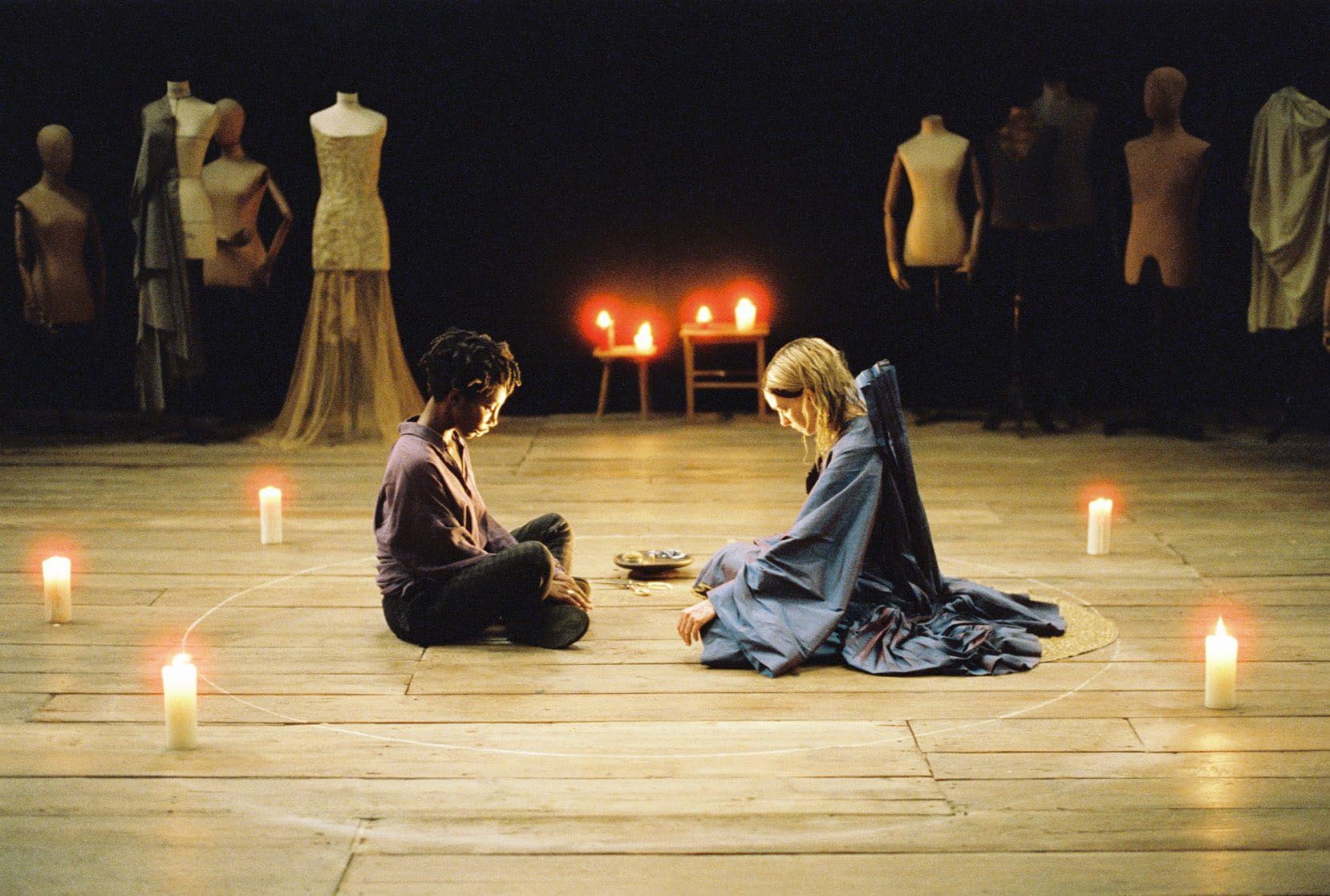
“I need a dress,” says Mary. “Will you let me do whatever I like?” asks Sam.

Two women sit cross-legged, facing each other, surrounded by candles and mannequins.
Michaela Coel and Anne Hathaway in a scene from ‘Mother Mary.’ (Eric Zachanowich/A24)

The charged dialogue that follows teases out their past. The two are identified as former best friends in the press notes, but, by the sharpness of feeling, I assumed they were once lovers. More importantly, perhaps, is that they were intense collaborators. Sam was with her from the beginning and helped turn Mother Mary into the icon she’s become. As she develops a concept for a new outfit, Sam envisions a train made up of each era’s celebrated looks.

The shedding of some past skin seems paramount, and it’s Sam’s artistry that enables it. Mary, in a crisis that goes beyond any outfit, struggles to articulate what she’s looking for. But Sam puts her finger on it: Clarity. In three days time, Mary is to perform her first concert since a fall on stage that’s rendered more like a near suicide.

Hathaway makes not just a believable pop star but an indelible portrait of an artist’s ego in extremes. Her onstage power is massive — she tells Sam her new song “might be the greatest song in the history of songs” — but it’s derived from acutely apparent sensitivity and pain.

Still, the movie belongs to Coel, the creator of I May Destroy You. Mother Mary is the story of an exorcism, and she’s the exorcist. Charged with pulling out of Mary the hurt inside, Coel exquisitely performs the task with the precision of an elite surgeon.

As it happens, Mother Mary is one of two two-handers starring Coel out now, along with Steven Soderbergh’s The Christophers, with Ian McKellen. Both depend extensively on two performers in a single location mulling the making of art. But while The Christophers has the conviction to stick with its bare-bones set up, Mother Mary grows increasingly surreal, sliding into body horror to unwrap a spiraling psychodrama.

Emotional wounds turn physical. The characters even walk through their past in Dickens-styled flashbacks. Mother Mary gets more visually captivating but more tiresome. It puts on a fancy dress when threadbare worked just fine.


‘Mother Mary’ opens in theaters on Friday, April 17.

lower waypoint
next waypoint
Player sponsored by