
upper waypoint

BAMPFA Spotlights Lucrecia Martel’s Parables of Middle-Class Desperation

Save ArticleSave Article
Failed to save article

Please try again

man and woman in profile in swim attire with palm trees in background
A still from Lucrecia Martel's 2001 film 'La ciénaga.' (Courtesy of BAMPFA)

The Headless Woman (2008), Argentine writer-director Lucrecia Martel’s unnerving third feature, opens on three boys and a dog running and playing in the sun alongside a semi-rural two-lane highway. From the very first frame — there are 24 in a second, remember — the filmmaker thrusts us into the heightened immediacy of now.

Nothing of particular importance seems to be taking place, or maybe we’re not attuned to it. The soundtrack pops with shouts and barks and, on a subliminal wavelength, also unnerves us. Our antennae detect a danger in the vicinity, or on the horizon, that makes us shift uncomfortably in our seat. We are already immersed and, to Martel’s way of thinking, complicit.

One of the most acclaimed and unsettling filmmakers working today, Martel is the focus of a Berkeley Art Museum and Pacific Film Archive career retrospective timed to her current residency at UC Berkeley. Lucrecia Martel: Un destino común opens Saturday, April 4 with her stunning debut La ciénaga (2001) and concludes Sunday, April 19 with her most recent feature Zama (2017), the odd and fascinating tale of a frustrated Spanish functionary losing his bearings in colonial Paraguay.
small crowd looks down hillside at white tent
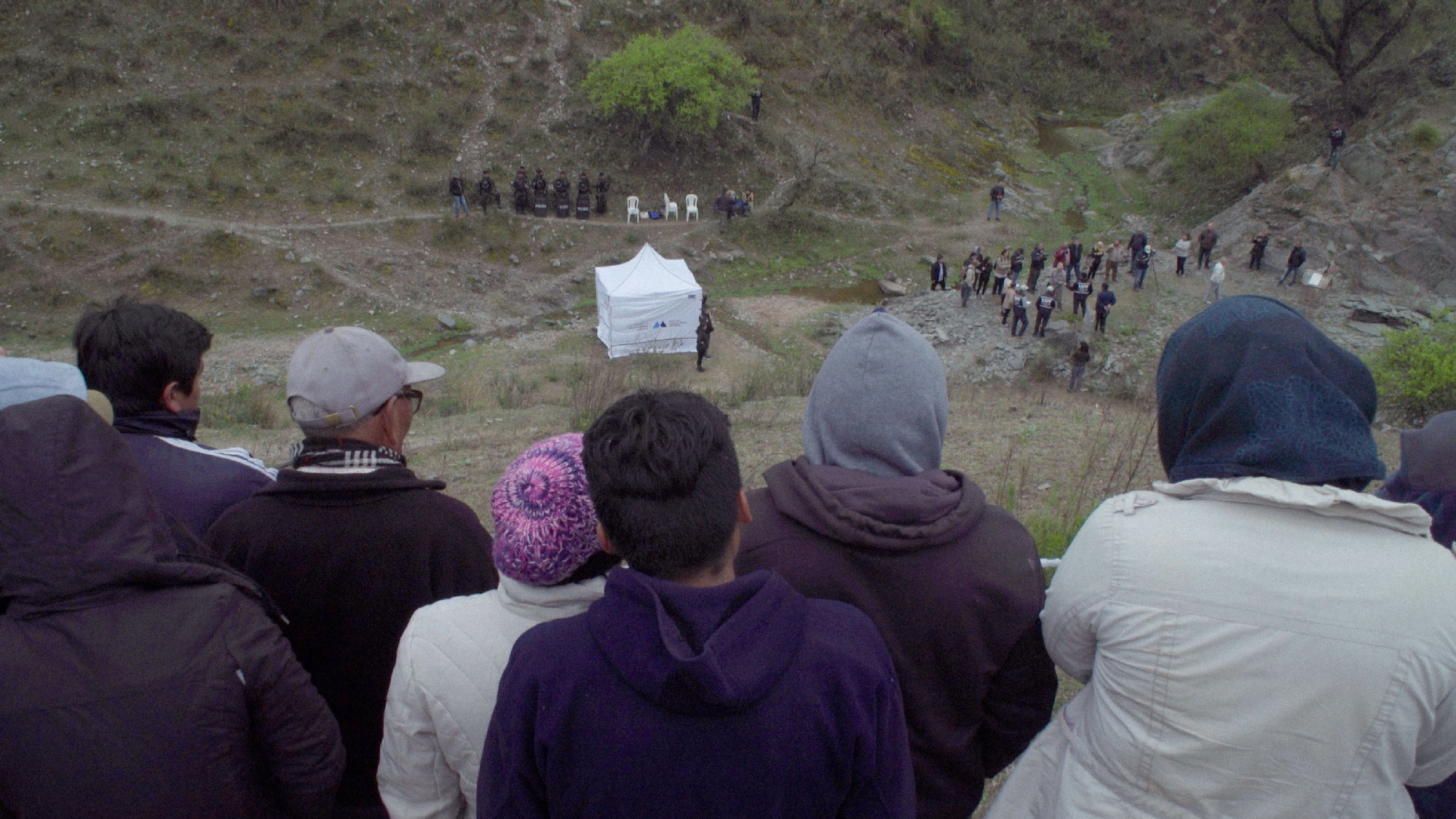
A still from Lucrecia Martel’s ‘Our Land/Nuestra Tierra,’ 2025. (Courtesy of BAMPFA)

The series also includes a sold-out screening of Martel’s 2025 documentary Our Land/Nuestra Tierra, which plays April 16 at the Roxie and opens May 1 in the Bay Area. This comparatively straightforward saga of crime and injustice documents the 2018 trial of the killers of unarmed activist Javier Chocobar in Argentina’s Tucumán Province. By way of rebutting their attorneys’ claim that the defendants had the right to access the disputed land and the Indigenous Chuschagasta community had no legal claim, Martel assembles acres of photographic, anecdotal and moral evidence to the contrary.

In her fiction features, Martel typically provides just enough context and bones of a story to give the viewer some footing. Her insistence that we interpret the perceptions and responses of the characters, along with her propensity to compress and elongate time, results in ambiguous, open-ended films whose pleasure correlates with the viewer’s willingness to be challenged.

Cinephiles said similar things about the then-radical films of Michelangelo Antonioni and Alain Resnais. They also spent hours, if you can imagine, discussing the movies’ meanings and themes. Martel’s films invite equally intense conversations.

older woman caresses younger woman's face as they sit on bed
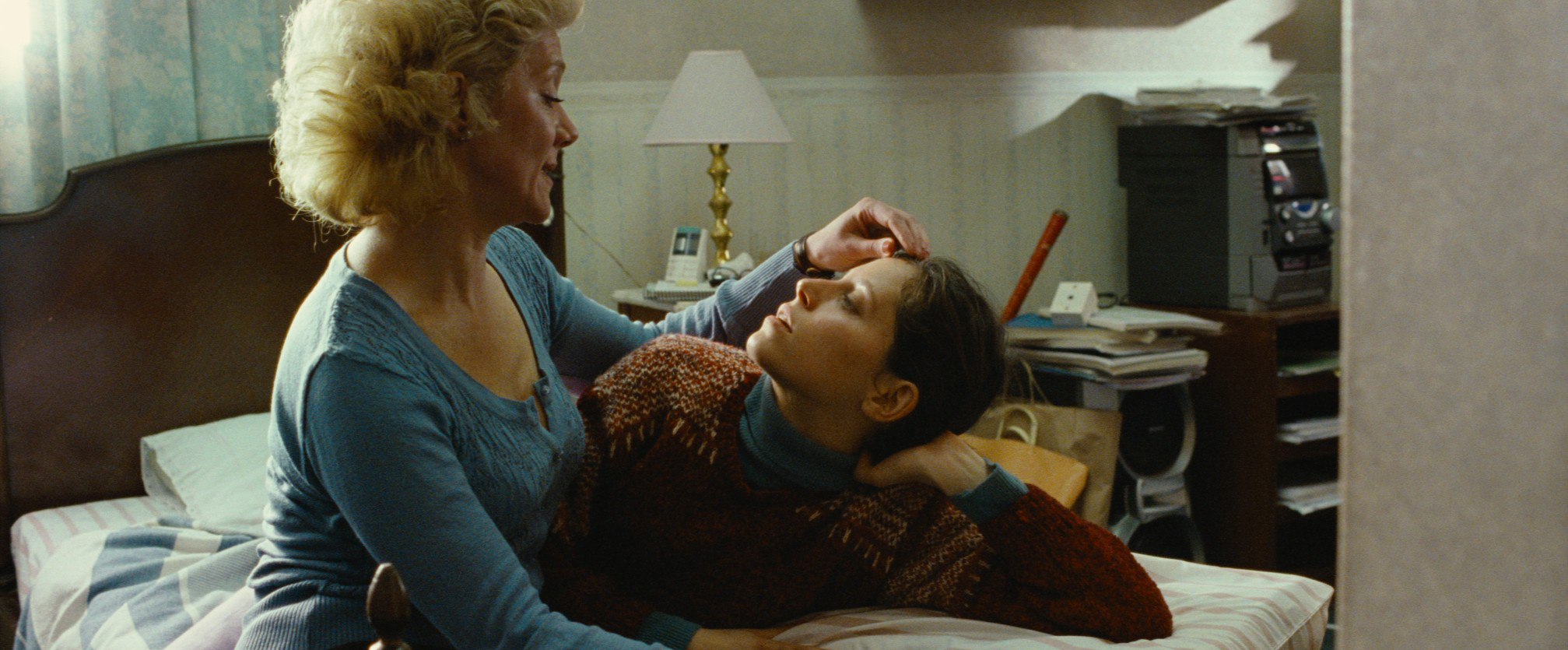
María Onetto and Inés Efron in a scene from Lucrecia Martel’s ‘The Headless Woman,’ 2008. (Courtesy of BAMPFA)

“Whenever you manage, through cinema, to cast doubt on the assumed nature of things, you might be approaching something really interesting,” Martel said in a 2019 interview with the Museum of Modern Art’s online journal post: notes on art in a global context. “And when you have done that once, there’s no way back. Because once you become aware of what makes no sense, never again can reality manage to completely hide its quality of disguise.”

La ciénaga (The Swamp) is a fraught, impressionistic portrait of two decaying middle-class families. The Holy Girl (2004) explores the twisted entanglement between a doctor attending a conference, a confused-by-religion teenager and her divorced mother. The Headless Woman (2008) follows a well-off woman in the aftermath of a hit-and-run accident. Zama (adapted from Antonio di Benedetto’s 1956 novel) is likewise a portrait of privilege, stasis and desperation, although it more explicitly acknowledges colonial and (by extension) contemporary prejudice and exploitation.

Because Martel resists convention, plot summaries only convey the surface of her movies. Nor can synopses convey the importance of the outdoors — the natural world, certainly, but the land as identification, inheritance, history — as an embedded theme. The recurring presence of Indigenous people in various roles (employees, servants, children on the side of a highway), whether acknowledged by the characters or not, is a reminder to audiences of Argentina’s past and present.

two girls swim on their backs in blue pool
A scene from Lucrecia Martel’s ‘The Holy Girl,’ 2004. (Courtesy of BAMPFA)

Martel’s films are populated with adults so enmeshed in lives of pointless desperation that they lose touch with their children. If they can deny reality to the degree that their kids aren’t a priority, they are surely indifferent to a larger historical and geographic perspective.

There is an immediacy and energy to Martel’s work that hooks us and commands our attention, and feels completely of the moment. And although her films are rooted in specific Argentine experience and history, their invocations of the intersection of power and gender, and power and class, feel especially relevant now to (North) American audiences.

I have heard it described as cognitive dissonance. The comfort and complacency that has long existed in a certain strata of American society can’t continue, not in the same way and with the same obliviousness, in a tidal wave of increasing inequality, reduced rights, ICE detention centers, ongoing war, bottomless lies and a collapse of the moral code.

If we can recognize ourselves in Lucrecia Martel’s characters — selfish, ridiculous, dumbstruck, unmoored, committed to a failed system — we might begin to live in the urgency of now.


Lucrecia Martel: Un destino común’ plays April 4–19, 2026 at the Berkeley Art Museum and Pacific Film Archive (2155 Center St., Berkeley).

lower waypoint
next waypoint
Player sponsored by