Sponsor MessageBecome a KQED sponsor
upper waypoint

The Cure-All of Annie Vought’s Intricate Worlds

Save ArticleSave Article
Failed to save article

Please try again

close-up of cut black paper with dense imagery
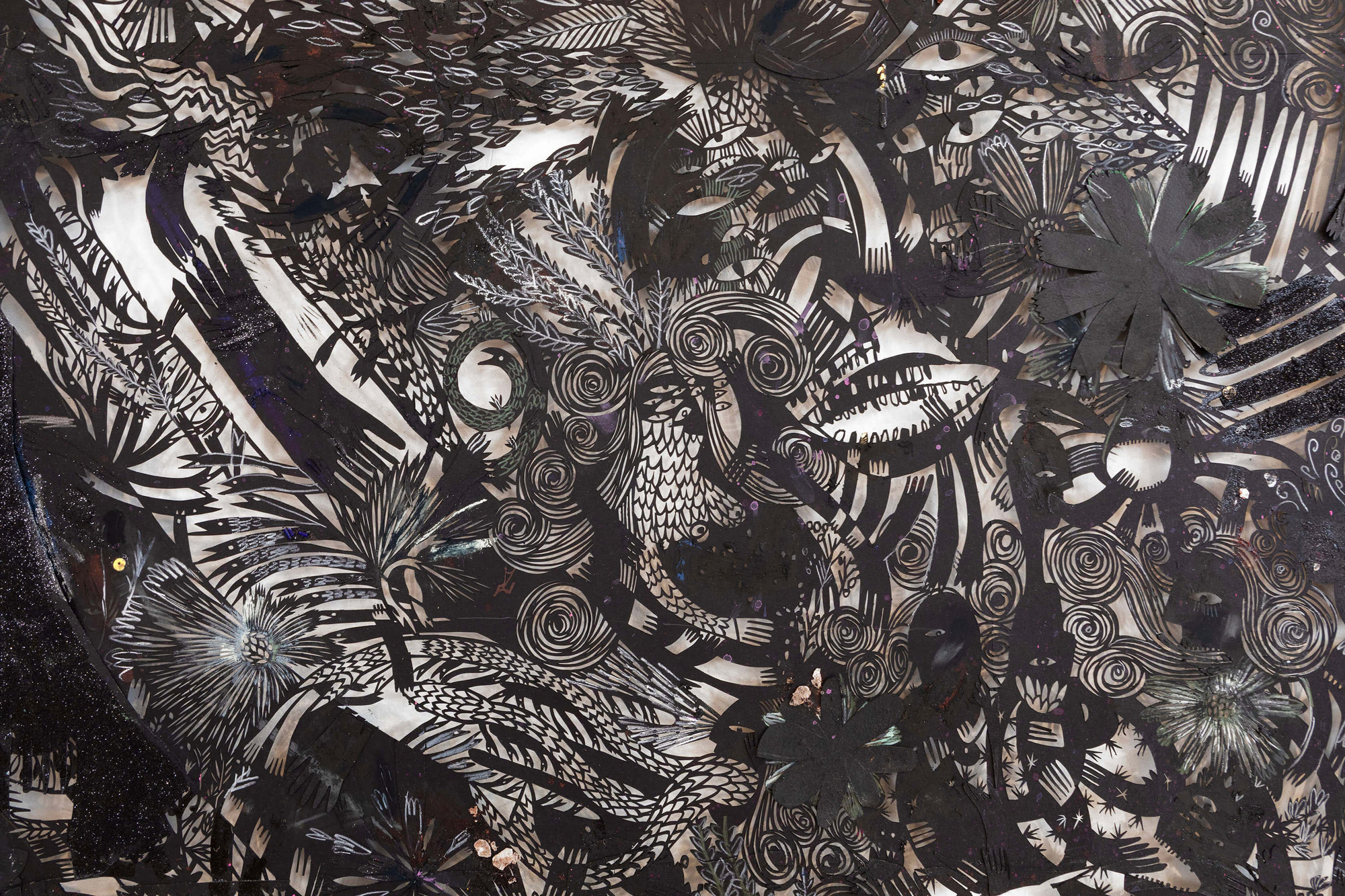
Annie Vought, 'Demeter' (detail), 2025; Hand cut paper, oil stick, glitter, sequins, glue, graphite, charcoal, colored pencil. (Courtesy of the artist)

It’s a sign of something (a not-great something) when an arts writer develops a persistent eye twitch — in both eyes.

In retrospect, the cause was clear: too many screens and not enough sleep. The twitch started because everything in my life was too sleek and digital, too up-close and glowing. I needed to gaze at distant vistas, or even medium-distance potted plants. I was doing neither. (It ultimately took two weeks of jury duty, enforced non-screen time, to put the twitch to rest.)

Mid-twitch, though, I did experience some reprieve. Visiting Berkeley’s Traywick Contemporary to see Annie Vought’s solo show opened and split, I felt the sweet relief of absorbing actual texture, depth and detail through my eyeballs.

Vought’s 12 cut-paper works are intricate worlds created with a blade, oil stick, colored pencil, glitter, sequins, graphite and charcoal. Some of those worlds are small, just 12 by 9 inches of cut black paper. Others measure six feet tall, stunningly solid despite being made of such slight material.
black paper cut into house shape with waves inside
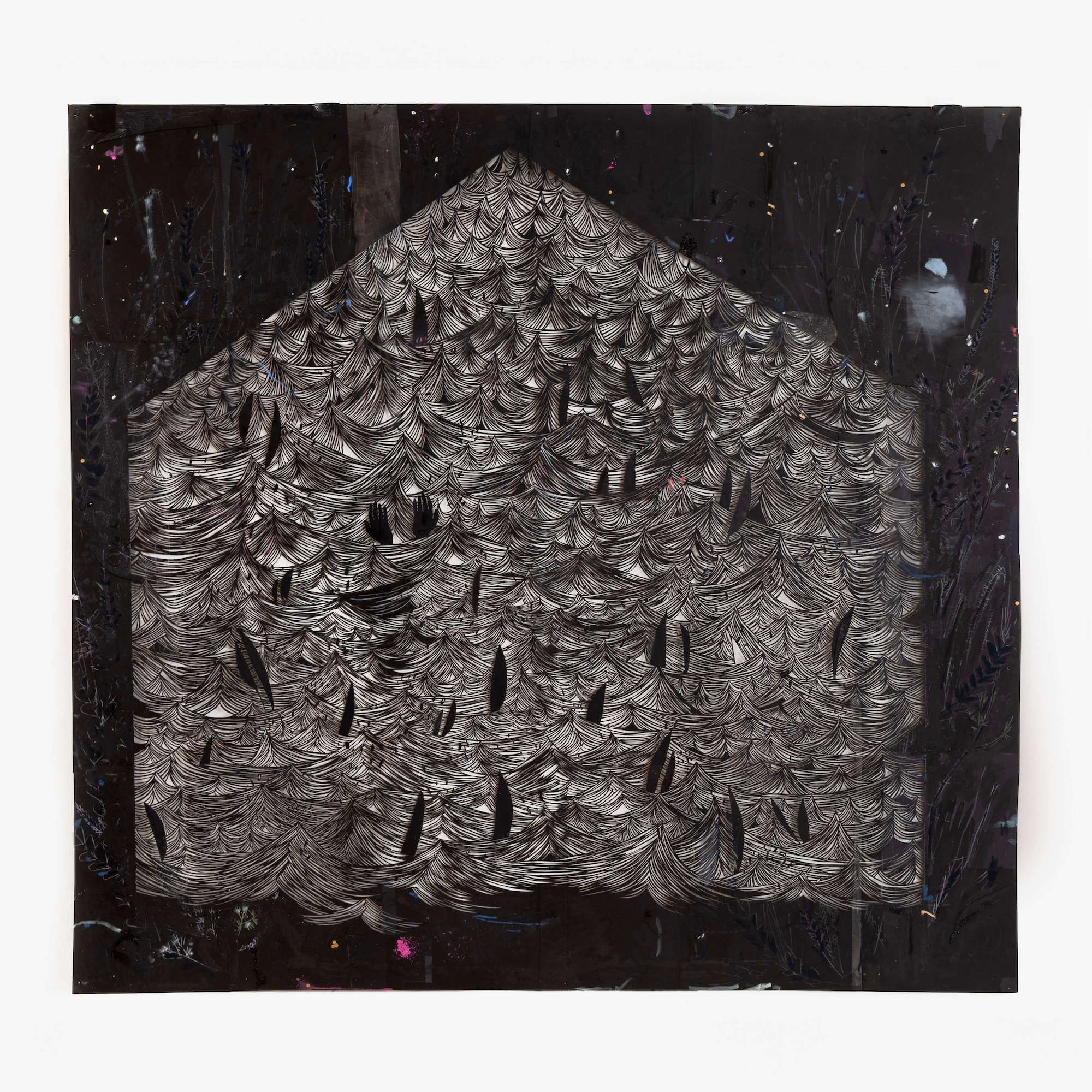
Annie Vought, ‘There is a loneliness that can be rocked,’ 2025; Hand cut paper, oil stick, glitter, sequins, glue, graphite, charcoal, colored pencil, ink. (Courtesy of the artist)

The artist, who relocated to Santa Fe from the Bay Area, is incredibly adept at slicing through paper to create lace-like, mind-boggling compositions. Before making the body of work shown at Traywick, she translated handwritten pages of text into large-scale cut-outs. Pieces were held together by the meeting points of letter and line, all the while appropriating someone else’s flowing cursive or gangly scrawl.
Sponsored

In opened and split, Vought shifts from text to image, honing her own loose, kinetic style. Her pieces are filled with tiny characters and their minuscule teeth, hands (so many hands), desert plants, waves, spirals, bugs, eyes and feathers. All of this is cut into black paper, which then hangs in front of white background to create an added dimension of shadow.

The detail doesn’t stop with the interplay of positive and negative space. Shapes are glued to the paper surface. Chunky oil stick, colored pencil and black glitter add additional textural dimension to each piece. Around the edges of Vought’s works, notes and doodles bestow a sense of rapidity — in contrast to the sharp, careful cuts she makes by the thousand.

black paper with cut-in imagery of swirls, hands, plants, etc.
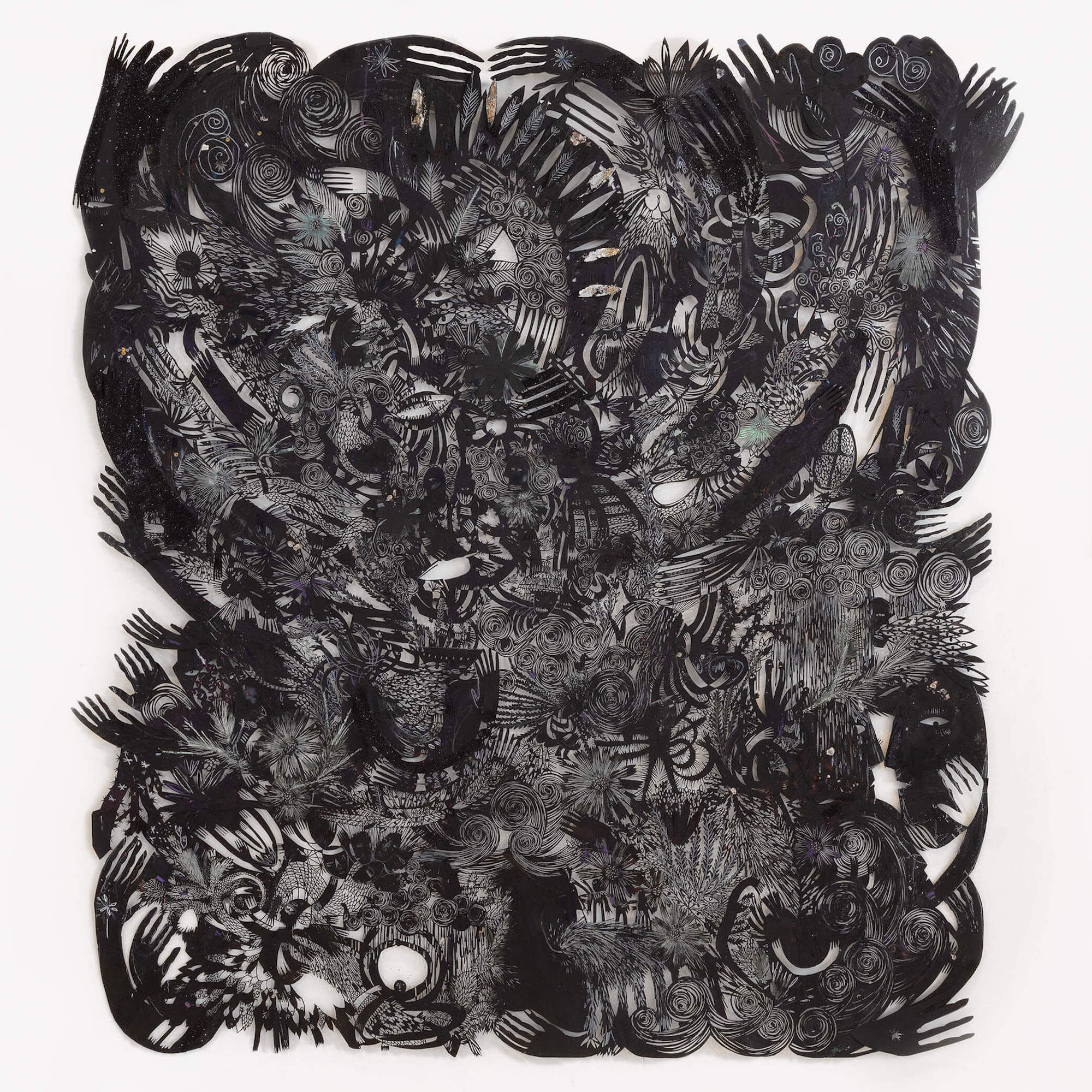
Annie Vought, ‘Demeter,’ 2025; Hand cut paper, oil stick, glitter, sequins, glue, graphite, charcoal, colored pencil. (Courtesy of the artist)

Spring is the perfect time to encounter the abundance of Vought’s art, with all its churning, teeming activity. The showstopper Demeter, named after the Greek goddess of the harvest, breaks free from the rectangular shape that bounds the rest of the show’s works. Hands and fingers curve around its edges.

In A baptism in the river Styx and There is a loneliness that can be rocked, the next-largest pieces, Vought makes her cuts within the shape of a boat and a house, respectively. Filling those spaces with rough waters, reaching hands and what look like bunches of grass, she conjures dark, mythological narratives. Much of the art in opened and split explicitly or materially references maternal figures. It’s hard not to see the many hands in Vought’s work as cushioning the boundary between familial and societal chaos.

Near the end of my time at Traywick, I lingered, returning for close-up views of each of the dozen works, knowing that unless I lived with them, I’d never be able to spot all the tiny vignettes and interactions they contained. Vought’s art, dense and dynamic, imparts a share of its energy onto the viewer. You can’t help but walk away with a bounce in your step.

And for that whole period of looking, I was blessedly twitch-free. It seems counterintuitive that highly detailed, intricately rendered art could be an antidote to digital strain. But the tangibility, the effort and evidence of Vought’s own hand, are the complete opposite of what ailed me.

Don’t deny your own eyes this particular remedy.


opened and split’ is on view at Traywick Contemporary (895 Colusa Ave., Berkeley) through April 11, 2026. The show is a collaboration between Traywick and the curatorial project Pacific Saw Works.

lower waypoint
next waypoint
Player sponsored by