Sponsor MessageBecome a KQED sponsor
upper waypoint

Mxka Sings ‘R&B Tumbados’ for the Lover Girls

Save ArticleSave Article
Failed to save article

Please try again

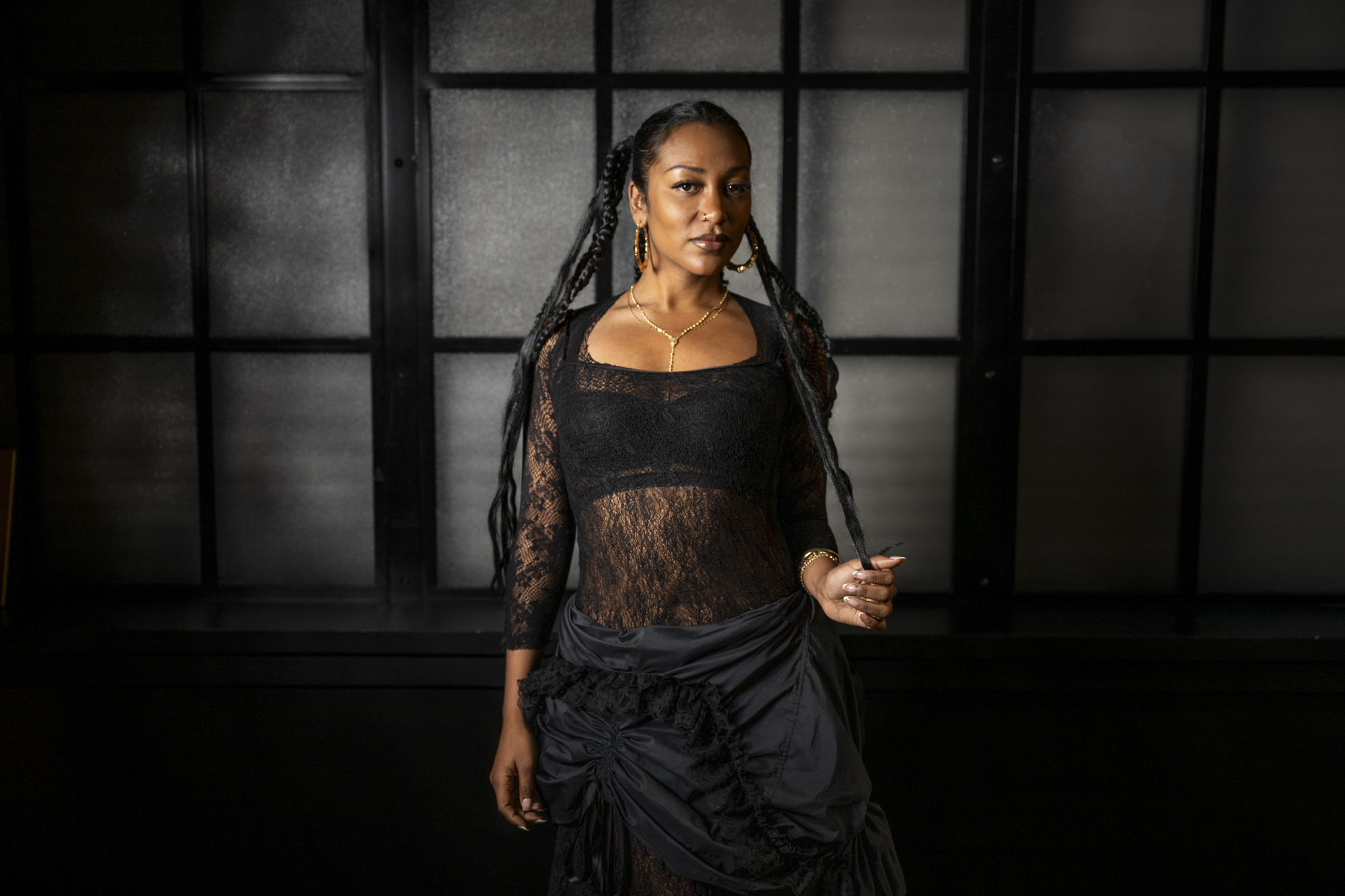
Mxka poses for a portrait in San Francisco on March 9, 2026. (Beth LaBerge/KQED)

It was girls-to-the-front when Mxka took the stage last month at the Lovers Lane block party in San Francisco’s Mission district. At the annual Valentine’s Day celebration of Chicano culture, friends grinned and swayed arm-in-arm as Mxka’s honeyed voice soared over the rapid strum of her band’s acoustic guitars. Rosary necklace glinting in the sun and coquettish red dress billowing, she sang defiantly in Spanglish about a dude who underestimated her: “Las malas no caen tan fácil / come on, bro” (“Baddies don’t fall that easily / come on, bro”).

Raised in San Leandro, Mxka (pronounced Moka) is making waves with her distinctly Bay Area take on corridos tumbados, the regional Mexican music style that hit the U.S. mainstream in recent years with the rise of Peso Pluma and Natanael Cano. While the genre’s largely male listenership tends to gravitate towards artists with hard, macho lyrics, Mxka’s romantic subject matter and R&B-inflected delivery is drawing an audience of women that haven’t seen themselves reflected in the music style they love.

“It’s very, very, very few women that are in this space, let alone Black women,” Mxka says during a recent interview at EMPIRE’s studios in San Francisco as she’s getting ready for a video shoot for an acoustic version of her song “La Vuelta.” “I’ve been getting a lot of support after I was told that I wouldn’t.”

The child of a Mexican mother from Mexico City and a Black American father from Louisiana, Mxka identifies as Blaxican. She grew up immersed in the performing arts, trying out dance and theater before turning her efforts towards singing in Spanish. She eventually moved to LA and linked up with producer Stylolive, a frequent collaborator of fellow Bay Area corrido singer DELACiiO. She and Stylolive worked together on bilingual house and dance pop before Mxka decided to go all in on Mexican regional music, with guitarist Zahid Ayala as her ace.


Sponsored

On Mxka’s new single, “Cómo Te Va?,” she pleads with an ex as lush strings swell under her yearning vocal runs. “It came obviously from a personal experience,” she says of the song, “where it was definitely like, ‘OK, maybe it was my fault that everything turned out the way it did. But if you are open to it, I’m here.’”

Mxka grew up immersed in Mexican culture and would frequently make trips back to her family’s hometown of Los Reyes La Paz. As for singing in Spanish, though, she faced a learning curve — not to mention the stigma of the “no sabo kid” label for children of immigrants who aren’t fluent. But Mxka took heart that one of Latin music’s greatest singers, Selena, also struggled with the language while proudly embracing her bicultural Tejana identity.

“She just practiced, and look at her,” Mxka says. “So it’s like, if she can do it, I can do it, too. And so I hope to be the same [inspiration] for other kids that feel like that.”

Mxka records a music video with guitarist Zahid Ayala Ramirez at Empire in San Francisco on March 9, 2026. (Beth LaBerge/KQED)

Mxka joins a growing wave of California artists helping to shape Mexican regional music, including San Bernadino-raised chart-toppers Fuerza Regida, whose corridos tumbados carry the high-octane energy of trap music, and San Francisco’s La Doña, whose “Corrido Palestina” captures the fire of protest movements. With her distinctively soft, soulful take on corridos, which she calls R&B tumbados, Mxka brings her own flavor to the growing scene.

“Especially when you’re messing with traditional sounds, people are not always going to be super keen at first,” she says. “But I feel like in order to push the culture forward, we do have to try new things. I feel the California artists have definitely been doing that.”

Mxka poses for a portrait in San Francisco on March 9, 2026. (Beth LaBerge/KQED)

Mxka is now back in the Bay and signed to EMPIRE, the powerhouse San Francisco-based record label which now has a regional Mexican music division. She has a 12-song mixtape in the works, blending corridos, pop and Brazilian baile funk, which she expects to release in time for the summer season of beach trips and day parties.

After years of having to explain herself and her cultural influences, Mxka says she’s grateful to have the support of a team that gets her vision, and to immerse herself in her hometown’s bubbling creative scene.

“I feel like there’s a lot of exciting things happening in Oakland and San Francisco,” she says. “It’s starting to become this place where more things are happening in the industry.”

lower waypoint
next waypoint
Player sponsored by