A photograph rarely shows us the whole picture. Jonathan Calm’s photographs tell us even more about what’s left out. Archives of Absence, a survey of Calm’s new and recent photographs and textile works, at the de Saisset Museum at Santa Clara University, explores how the United States’ legacy of imperialism, segregation and oppression haunts contemporary life in ways we may not always see.
Jonathan Calm Photographs the Empty Spaces in American History
In ‘Archives of Absence’ at Santa Clara’s de Saisset Museum, the artist pulls the past into the present.
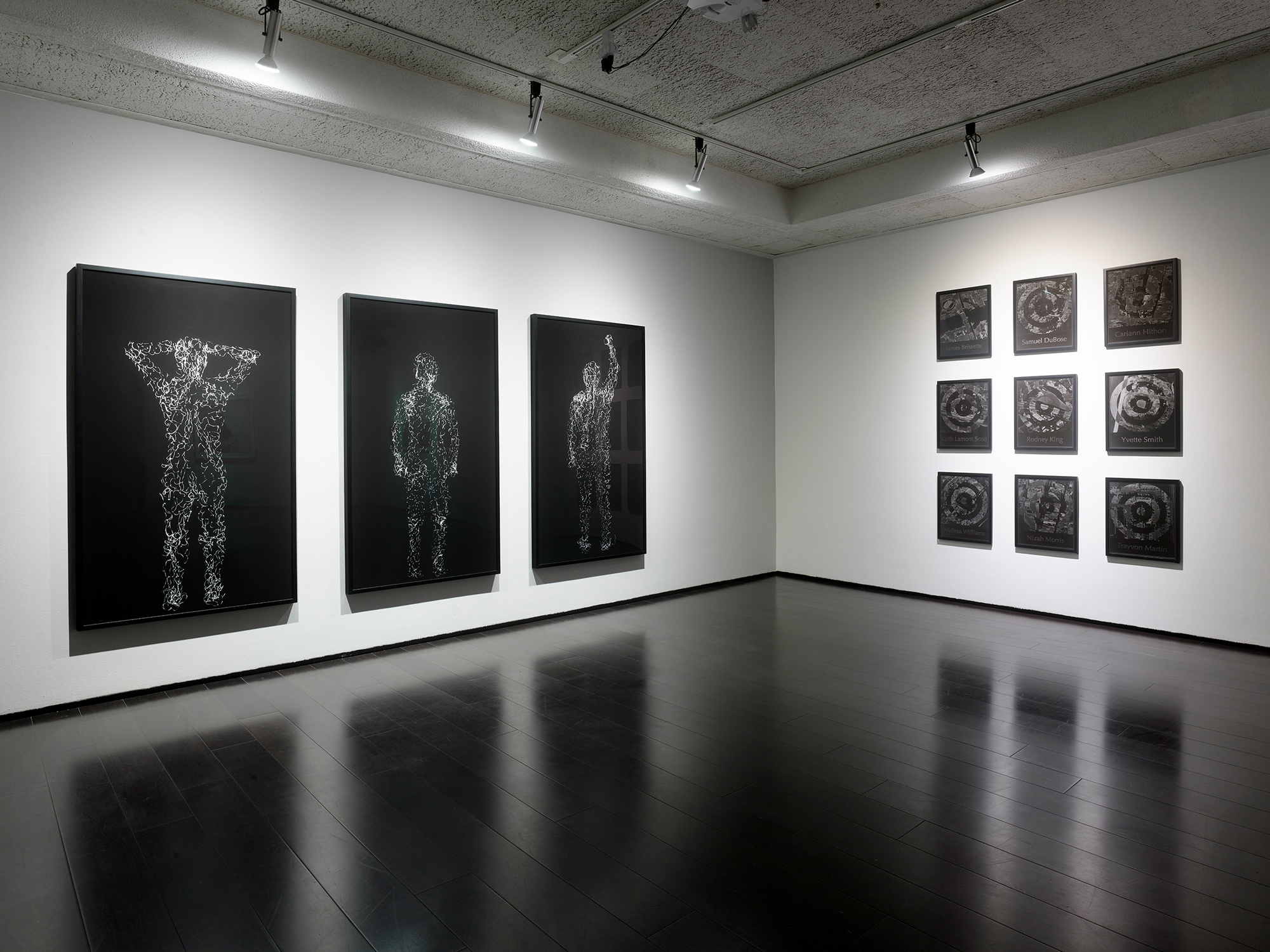
Installation view of Jonathan Calm's 'Archives of Absence' at the de Saisset Museum, with 'Body Language,' 2018 at left and 'Travel is Fatal to Prejudice IV,' 2017–18 at right. (Robert Divers Herrick)
Related Article
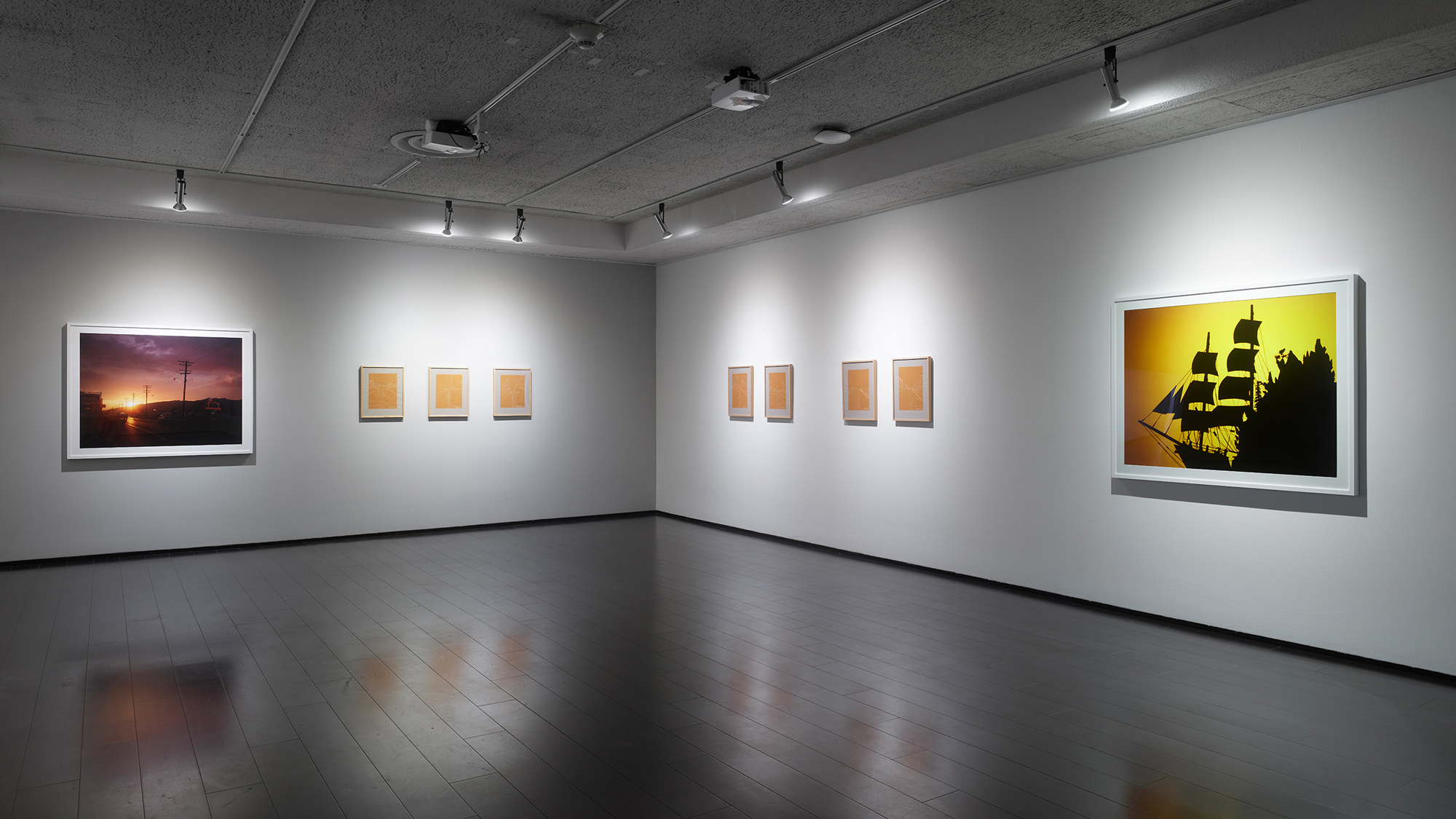
Visitors to the museum are greeted in the foyer by a fleet of Calm’s Ghostship (2026) photographs, grainy black-and-white silhouettes of imposing galleons. A few more prints from the series circulate throughout the exhibition, always in the viewer’s periphery.
The spectral presence of the motif references 19th-century etchings showing scenes of the transatlantic slave trade, in which ships are often seen in the background. Employed here, the ships act as a metaphor for the long shadow of enslavement that haunts the stories of segregation and police brutality Calm’s work addresses.
“Unless that moment is dealt with and discussed, I don’t think we will solve any of the other things that have germinated from its origin,” Calm tells KQED.
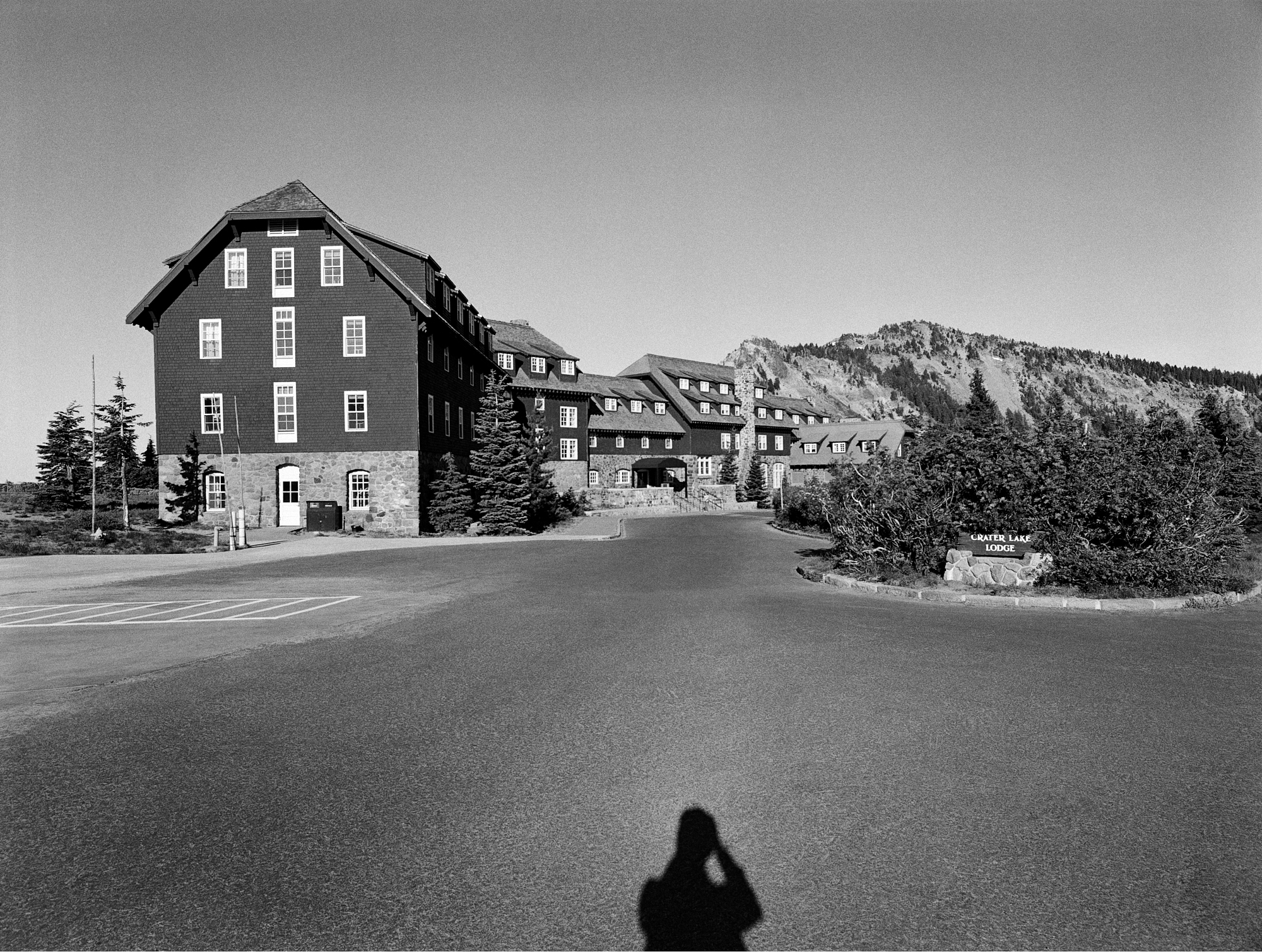
If the specter of the slave trade is the through line, then Calm’s Green Book series, a small selection from which is included at the de Saisset, operates as the keynote.
Since 2016, Calm has traveled much of the country photographing locations from the titular Negro Motorist Green Book, a travel guide to the United States for Black road trippers, published between 1936 and 1964, which noted safe alternative routes for avoiding “sundown towns” — segregated municipalities dangerous for people of color after dark. While Calm’s Green Book pictures are concerned with documenting what’s left of those friendly locations, his latest work addresses the in-betweens.
In the Sundown Town (2026) series, gold thread embroidery stitches the outlines of images atop electric orange rectangles, the work of a custom-built computer program Calm designed to transpose his photographs into textiles. Each composition shows a central road receding into the distance, the name of the sundown town the road bisects stitched along the bottom.
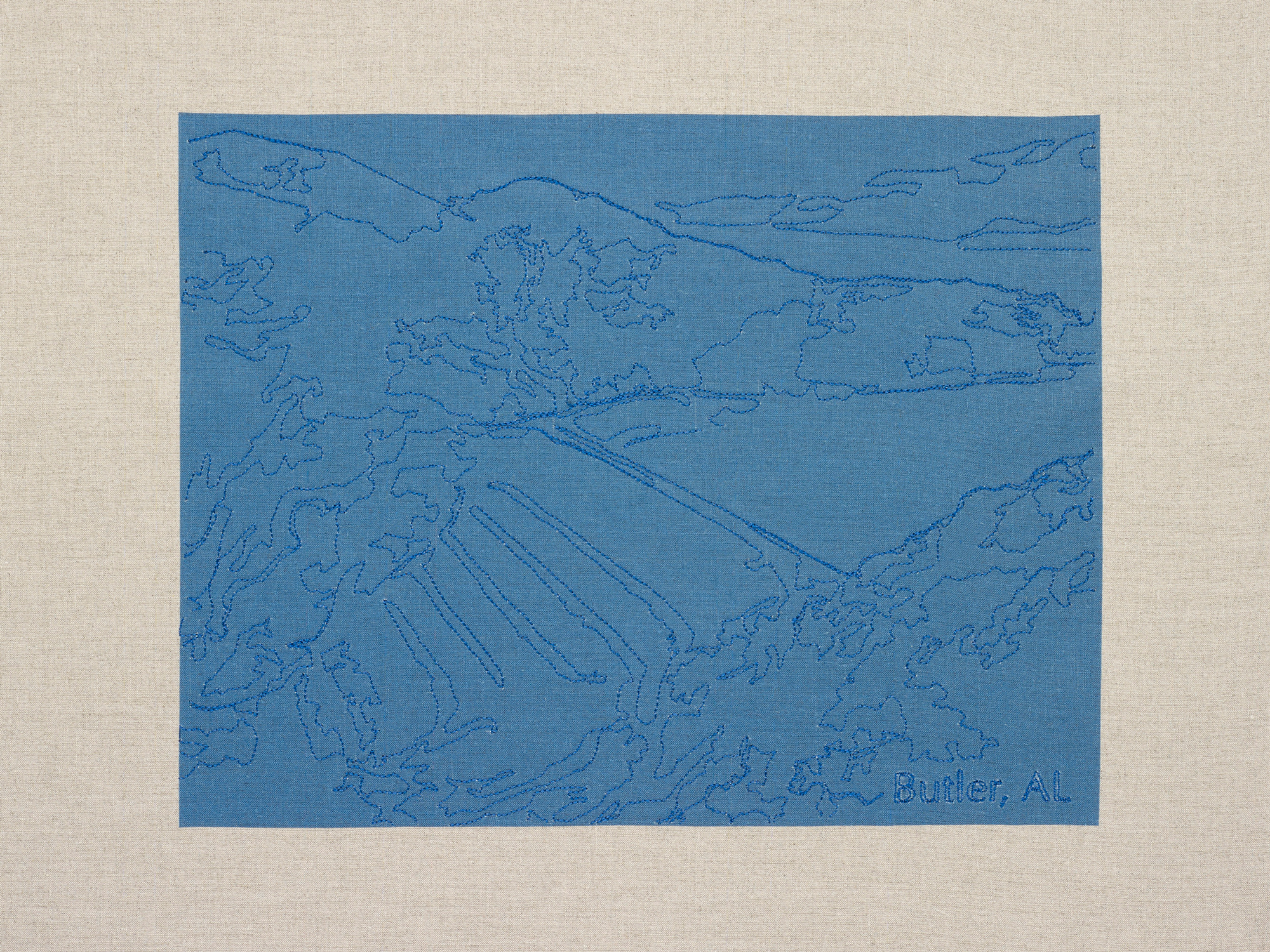
Calm’s Drown Town (2026) series uses the same technique, employing shades of blue rather than gold, and documenting another form of displacement in American history. Drowned towns were predominantly Black or minority communities displaced and then submerged as the result of regional damming projects. Human figures are noticeably absent from both series. Instead, Calm depicts ghost towns emptied of the communities that once lived there, empty of the ghosts of travelers who never stopped at all.
“This exhibition allowed me to think more fully about my Green Book experience and the larger causes of needing a Green Book to exist in the first place,” Calm says. “As I went on these trips, it was clear to me that there were some towns where you don’t feel welcome, even today, if you don’t look like a person from around there.”
Each of the gelatin silver prints in Calm’s series Travel is Fatal to Prejudice V (2017–2018) shows a target homing in on the geographic location of an act of police brutality, the name of the victim printed beneath, several of which have become synonymous with social justice movements — Oscar Grant, Rodney King, Treyvon Martin, the list goes on.
Where in the Town series’ place names come to stand in for human absence, here the names of individuals become representative for geographic locations. While the target operates as an ominous signifier of violence, it can also be read in reverse, a concentric circle reverberating outward from the point of origin, symbolizing the ripple effect these events have had.
This visual motif recurs in Hurricane Series I and II, cyanotype prints of satellite photographs taken moments before hurricanes touched down in the United States, their anthropomorphic names like “Katrina” and “Sandy” printed below each swirling image. The hurricanes are a clear mirror for Travel is Fatal to Prejudice, both visually and in how they address catastrophes that have had an outsized impact on communities of color.
The Hurricane Series also operate in tandem with Drown Town, serving as a warning of the potential impact of sea-level rise to submerge vulnerable communities.
Be it a fleet of ships freighted with violence, a set of locations that represent a traveler or a target that acts as a portrait, Archives of Absence insists that identity cannot be separated from history; presence and absence are always linked. When Calm finally gives us a human figure, he does so only to further illustrate this entanglement. In Body Language (2018), a triptych of near–life sized black-and-white photos, a figure swathed in fishing net strikes various recognizable poses — one with hands behind head, the other in a neutral stance, and the last with a raised fist.
The three positions offer different attitudes in relation to the surrounding work, while the netting acts as another spectral trace of the Ghostship pictures and the legacy they represent. No matter how we move through the present, we drag the past behind, an invisible shroud that in turn subsumes the individual. Here, Calm gives us the opportunity to confront it.
‘Archives of Absence’ is on view at the de Saisset Museum (500 El Camino Real, Santa Clara) through June 13, 2026.