Trina Michelle Robinson is trying to talk to ghosts. For 10 years, the San Francisco-based artist has been on a journey to uncover and share the stories of her ancestors and the legacies of Black migration. She hasn’t always succeeded – and that’s exactly what makes her work powerful.
Robinson’s two-venue exhibition Open Your Eyes to Water, on view through May 16 at 500 Capp Street in the Mission, and Root Division, South of Market, contains work from the past decade, spanning multiple mediums, continents and histories. All of Robinson’s work begins with archival research, mining the records of her ancestors’ lives in Kentucky, Ohio and California. The results include video and installation as a form of embodied history, photography and printmaking as a way of engaging directly with the archive.
At 500 Capp Street, former home of conceptual artist David Ireland (1930-2009), Robinson has staged three installations. Encoded (2022), a three-channel video piece in the house’s garage, opens with a long shot of the Ohio River before following Robinson’s own travels to Senegal, seeking vestiges of what her ancestors might have experienced. The film ends on the underwater memorial for the Henrietta Marie, a British slave ship that sank off the Florida Straits in 1700, with Robinson’s sparse voiceover documenting the trip.
In 500 Capp Street’s archive room, Robinson’s own archival materials showcase the historiography essential to her practice while noting a glaring omission from Ireland’s.
“Marginalized voices weren’t always celebrated in certain parts of David’s life,” Robinson tells KQED. “If you look at his book collection, especially in relation to Africa, many are about people going to Africa for adventure. I’m welcoming the narrative David left out, fully focused on the Black experience.”
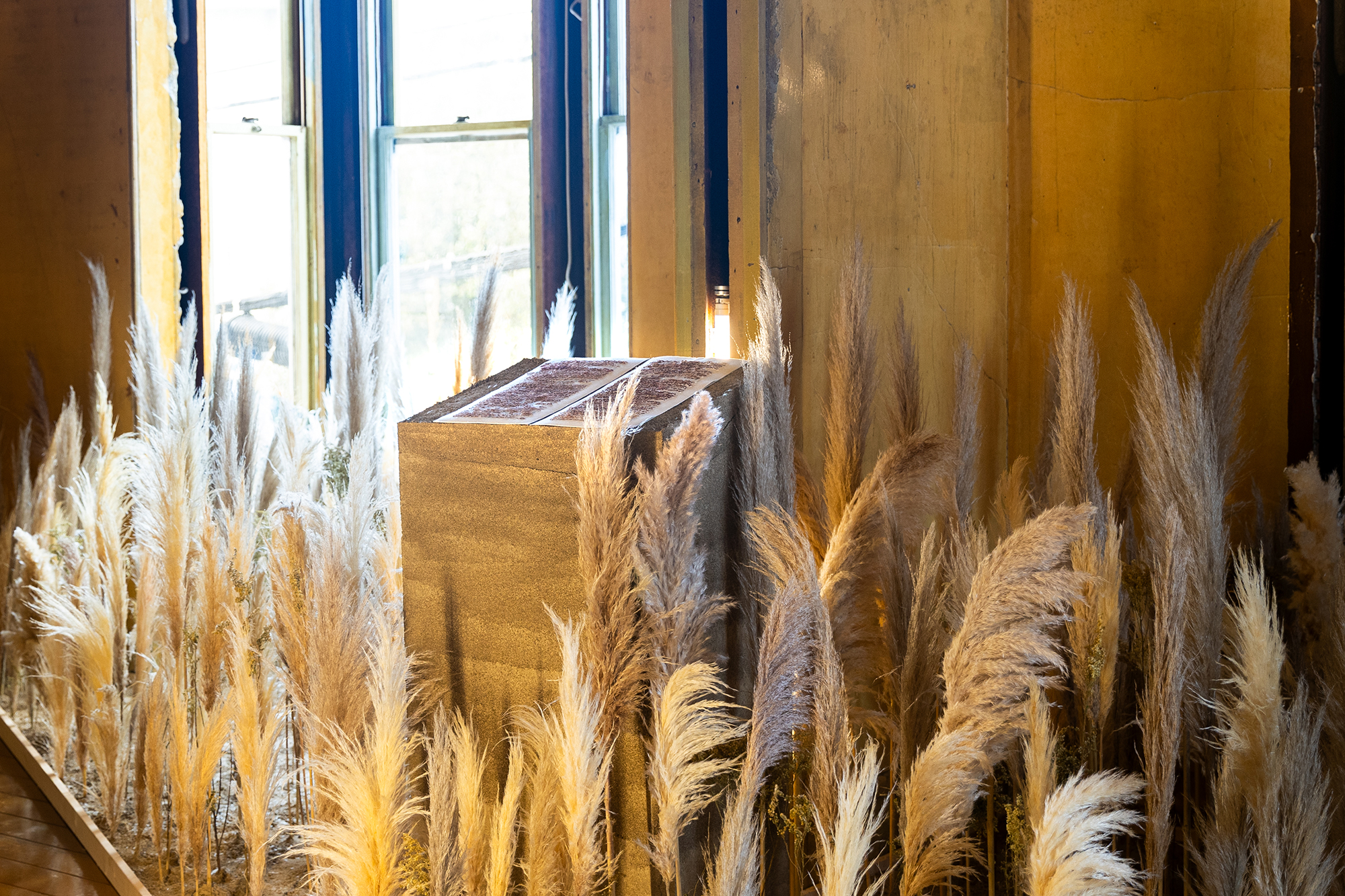
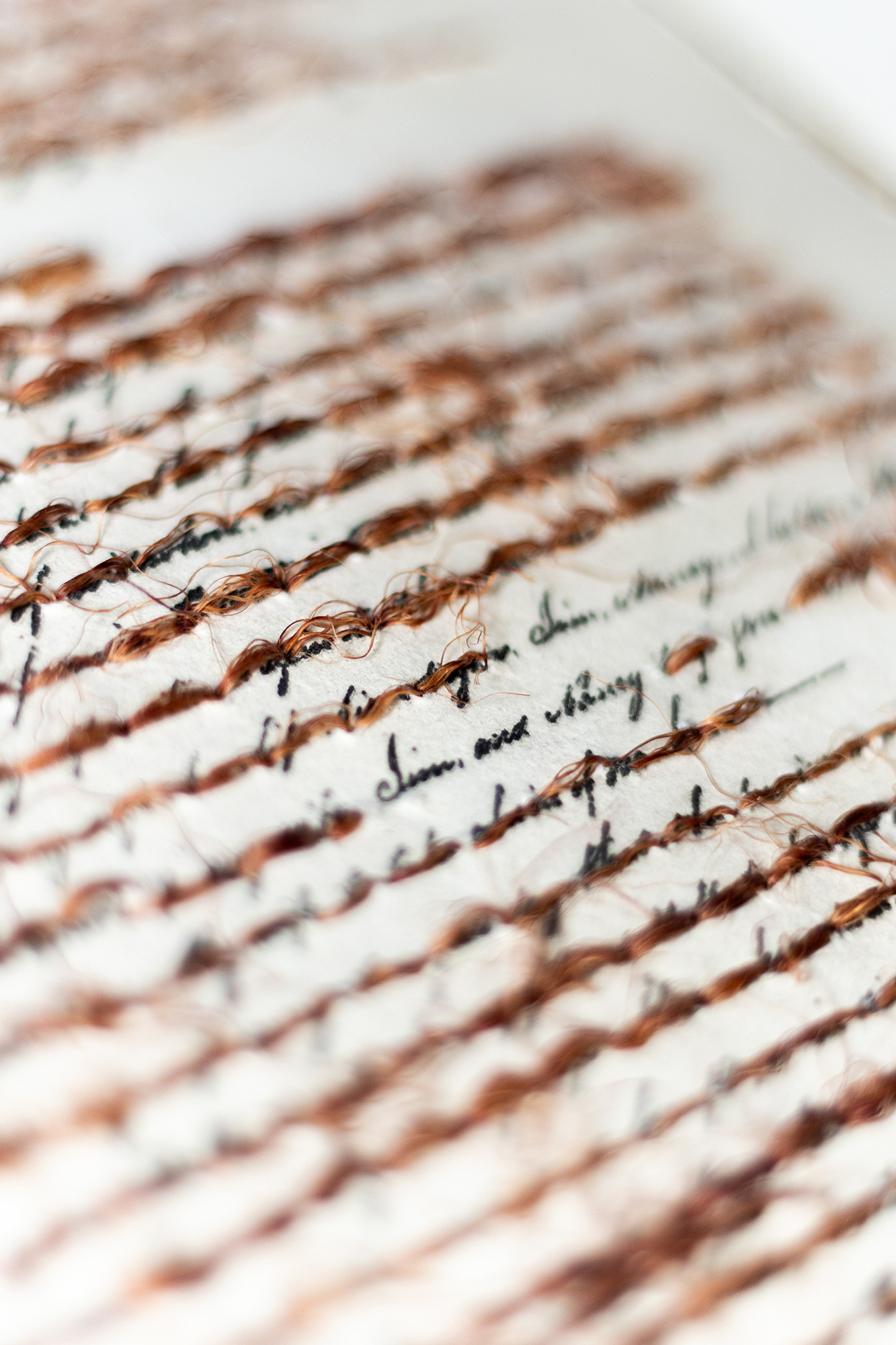
Robinson also leverages omission as a rhetorical tool for empowerment. Liberation Through Redaction (2022), an immersive, multi-media installation occupying the home’s upstairs parlor, constructed for Capp Street by Dan Ake and Andy Vogt, features a plot of soil filled with flora – goldenrod representing Kentucky, pampas grass representing California – and a pedestal holding an intaglio print of the 1835 will of a white individual who enslaved Robinson’s ancestors. The text has been redacted with red thread so that only references to the freedom of Robinson’s ancestors remain legible. The piece is accompanied by a soundscape of field recordings from Berea, Kentucky; Ripley, Ohio; and Yokuts Valley, California.
The installation creates a somatic experience, playing on the duality between presence and absence to convey the individual human narrative often lost in historicizing. “I want to create an immersive space that triggers a memory that might be deep inside someone, that they’re able to unlock by entering that space,” Robinson says.
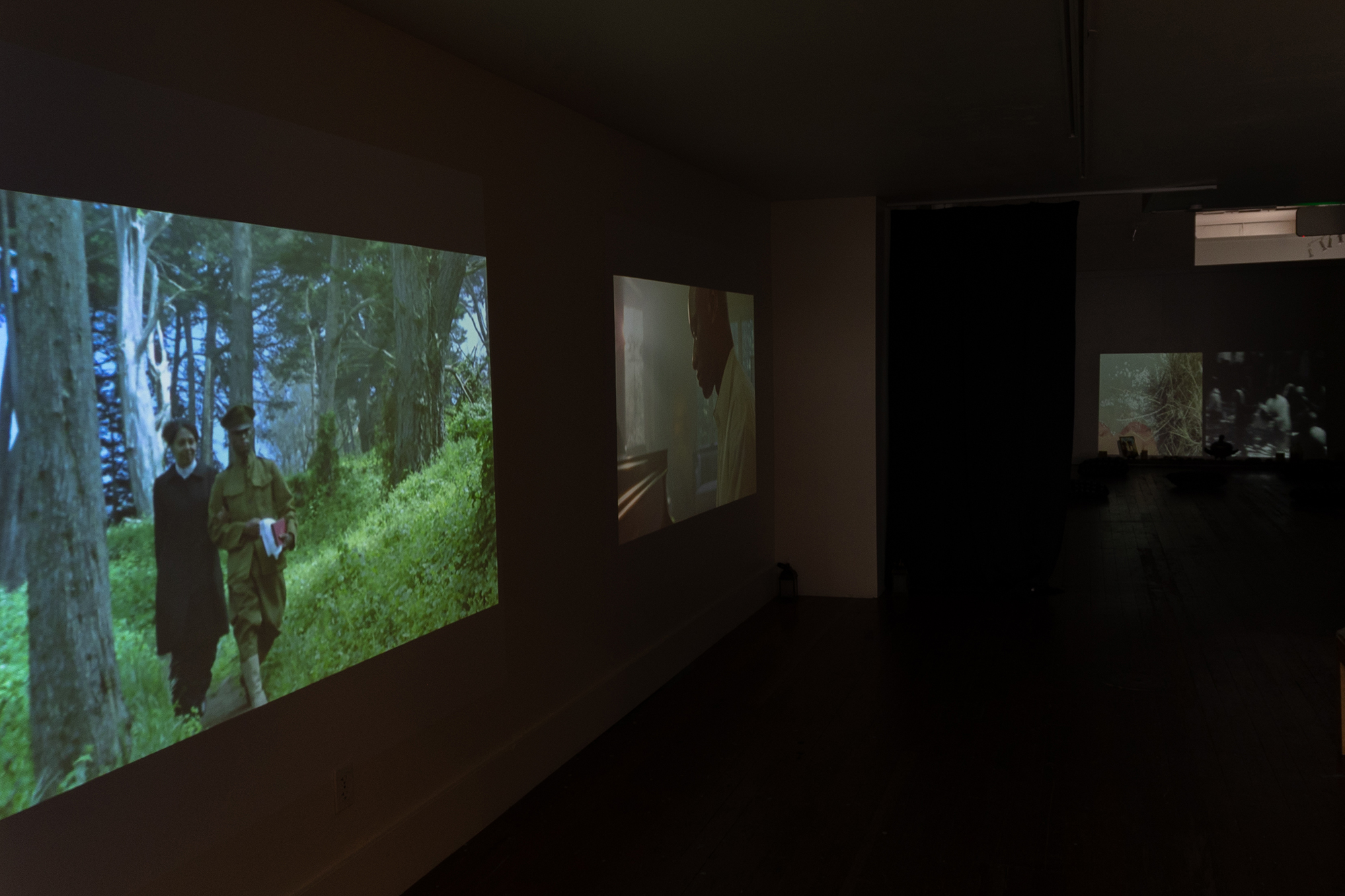
At Root Division, Elegy for Nancy (2022) is dedicated to Robinson’s most distant known ancestor, who was born around 1770, likely in Virginia, before migrating to Kentucky where she was enslaved.
Footage of Robinson wading into the Sacramento River is interspersed with shots of the Ohio River, which runs through both West Virginia and Kentucky, as well as archival footage of a 1920s African-American baptism, scenes from the Ogun River in Nigeria and text from Lucille Clifton’s poem “Blessing the Boats.” (The title of the exhibition, Open Your Eyes to Water, is taken from the same poem.) Continuing the matrilineage into the present, an altar holds contributions by an intergenerational group of Bay Area Black women artists, including Lynse Cooper, Chloe King and Ashley Spencer. You can feel Nancy’s presence, if only in relief, in the attempt to make her story and legacy visible.
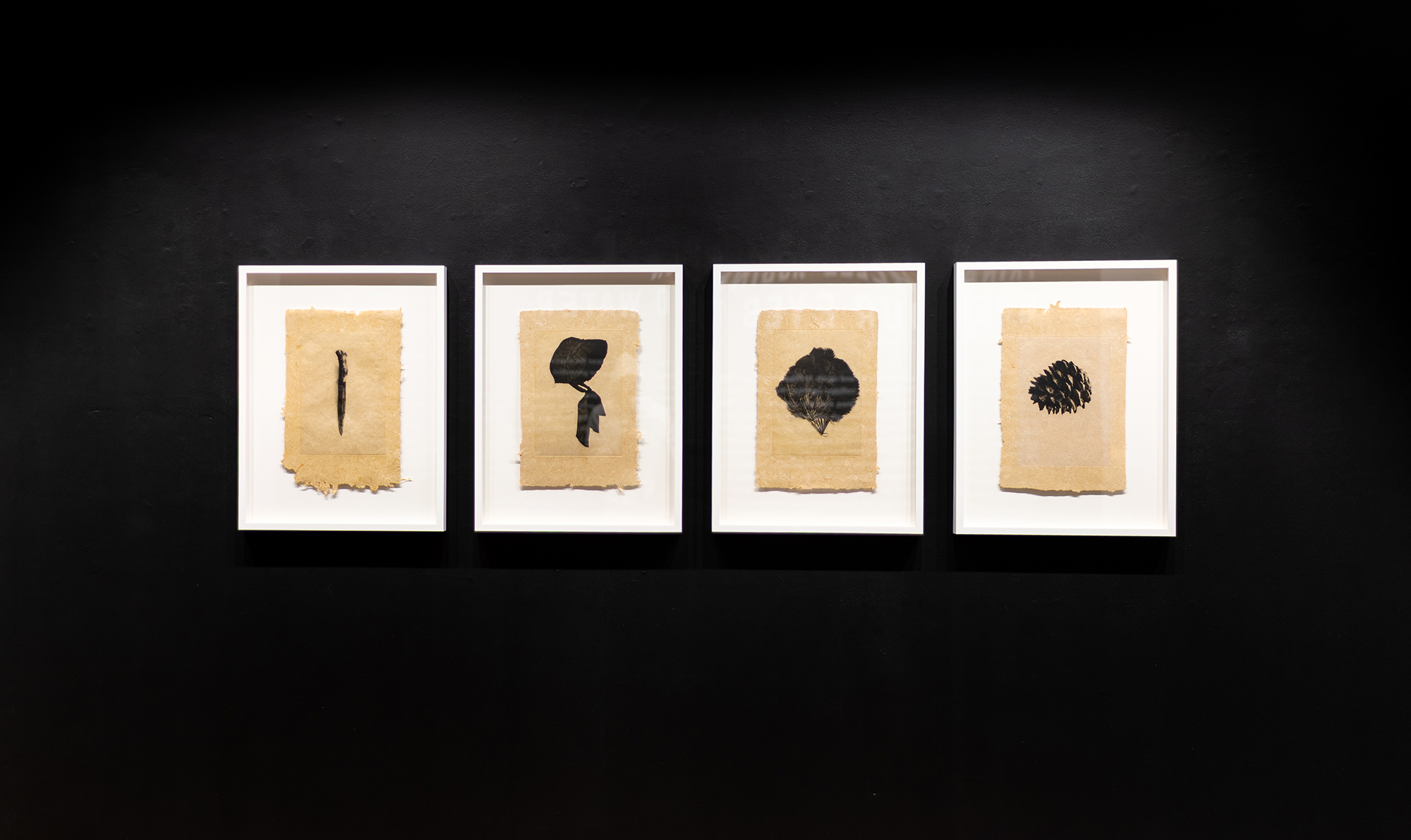
A series of intaglio prints published by Oakland’s Moonlight Press, titled Memory Index: Imagined Family Heirlooms (2024-2026), show a grouping of speculative family heirlooms – a knife, a mourning bonnet, a fan, a pinecone. The title of each print is borrowed from an archival document pertaining to each ancestor, vivid with poetic imagery like “… beautiful ladies attired in the most magnificent costumes … black lace, ostrich tips” The Appeal, January 20, 1889.
A single, smaller intaglio, Refuge (2022), is a forest scene showing a patch of land in Kentucky where Robinson’s ancestors were enslaved. Absence is again employed for empowerment: In the archive, the redaction of violence poses a danger of erasing history, while here, the absence of bodies is a reclamation of personhood.
The speculative liberties Robinson takes with her archival subjects highlight the difficulty of tracing family history, especially for Black American communities. In her work, however, she has turned the inability to fully apprehend the past from an impediment to the very subject. Like any ghost story, you’re left to ask yourself what’s real and what isn’t. Here, that uncertainty makes space for possibility, a reconciliation with the past in service of the future.
‘Open Your Eyes to Water’ is on view at 500 Capp Street (San Francisco) and Root Division (1131 Mission St., San Francisco) through May 16, 2026.