Sponsor MessageBecome a KQED sponsor
upper waypoint

‘The Cherry Orchard’ Is a Captivating Portrait of Family Delusion

Save ArticleSave Article
Failed to save article

Please try again

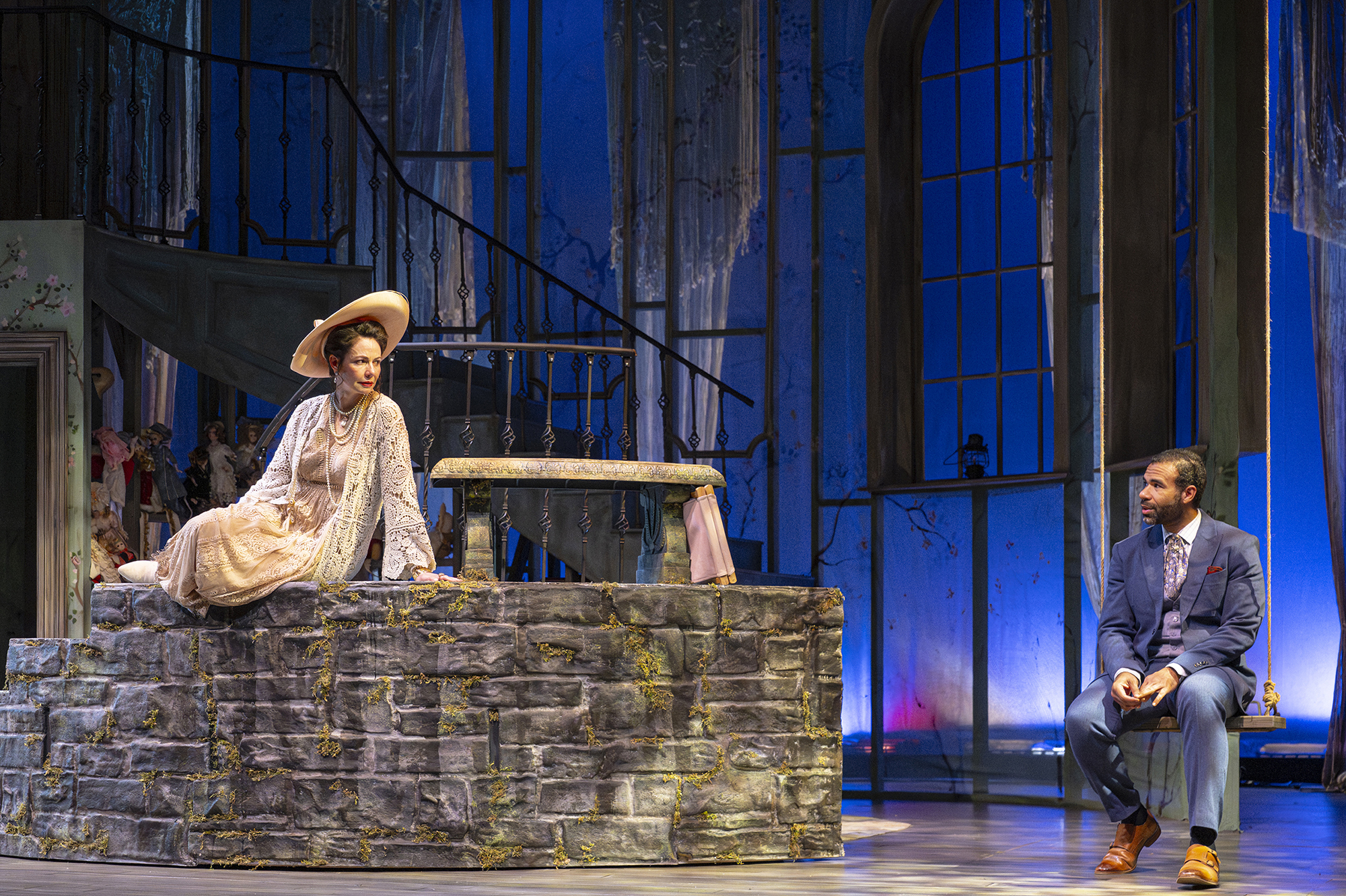
A white woman in a dress and large hat sits on a stone wall, looking to the right at a Black man in a blue suit, sitting on a swing
Liubóv Andréyevna Ranyévskaya (Liz Sklar) and Lopákhin (Lance Gardner) in Marin Theatre’s ‘The Cherry Orchard.’  (David Allen)

Delusions do not pay the bills.

In Marin Theatre’s interpretation of Anton Chekhov’s final play The Cherry Orchard, Liubóv is coming to terms with this fact, but in the worst way possible. It is her pride, and her belief that everything will magically turn around, that causes her downfall — all while disregarding that her aristocratic lot in society teeters on the brink of disappearance.

In a wonderful translation by Paul Schmidt, Marin Theatre’s production soars with a gleaming cast built from some of the best acting talents in the region. Those talents are showcased with terrific movement and sharp tableaus from Carey Perloff’s erudite direction.
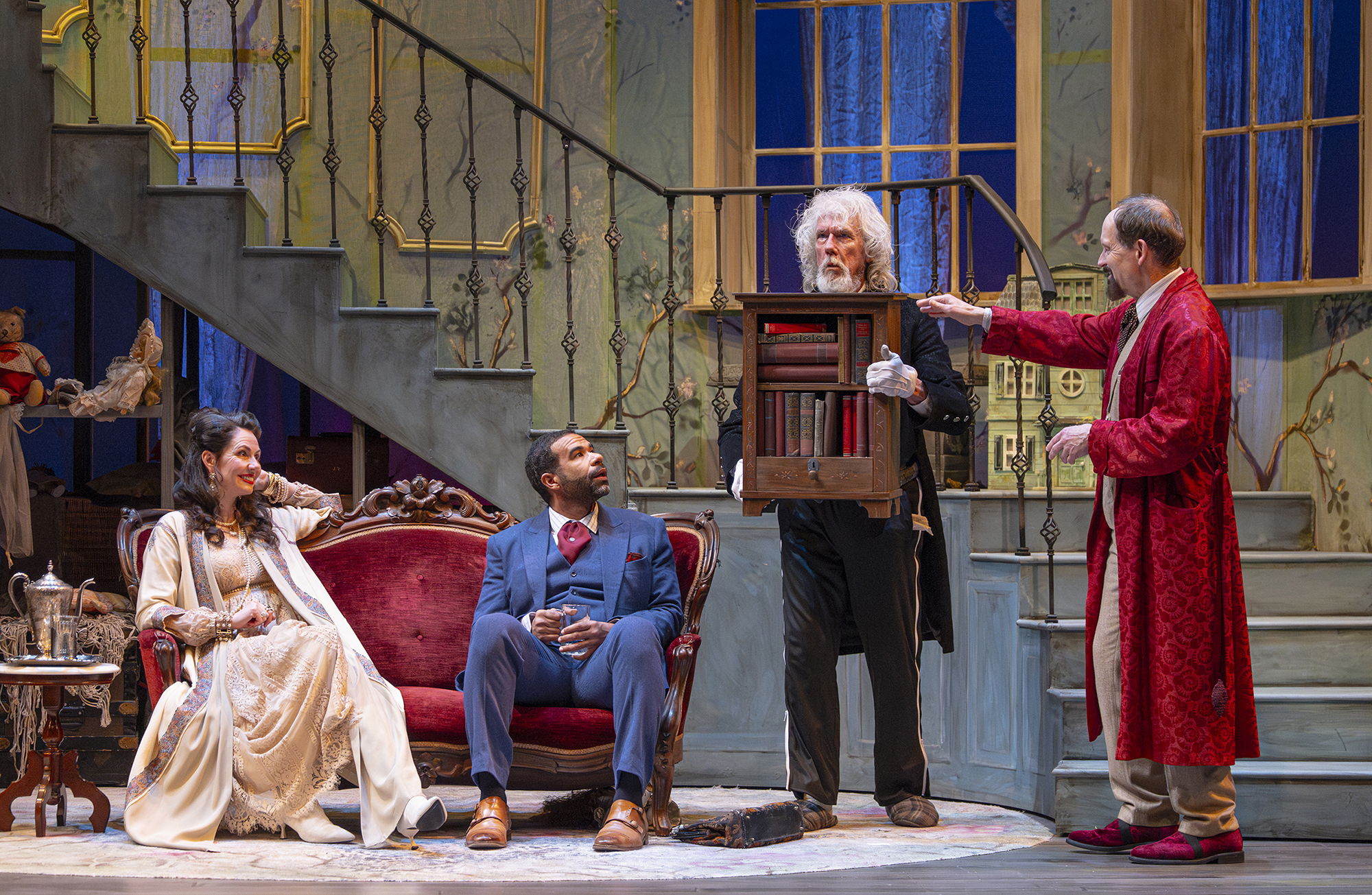
Liubóv Andréyevna Ranyévskaya (Liz Sklar), Lopákhin (Lance Gardner), Firs (Howard Swain), and Gáyev (Anthony Fusco) in Marin Theatre’s ‘The Cherry Orchard.’ (David Allen)

Liubóv (Liz Sklar) returns from Paris after a five-year absence to her “nursery,” a residence that sits on the massive land beside the family cherry orchard. The property has become a drag on the family’s bank account, the orchard no longer holding the magic that birthed so many variations of cherry, including the delicious dried one that 87-year-old valet Firs (Howard Swain) recalls with luscious longing. When the wealthy Lopákhin (Lance Gardner), whose enslaved father and grandfather worked this very land, suggests building summer cottages as a way to stay, Liubóv scoffs at the mere suggestion.

But what options are there? Liubóv has lived her life firmly upon the richest clouds of Russian society at the turn of the 20th century. Her lifetime habit of wasteful spending is not a new problem, but one that’s reached a breaking point.
Sponsored

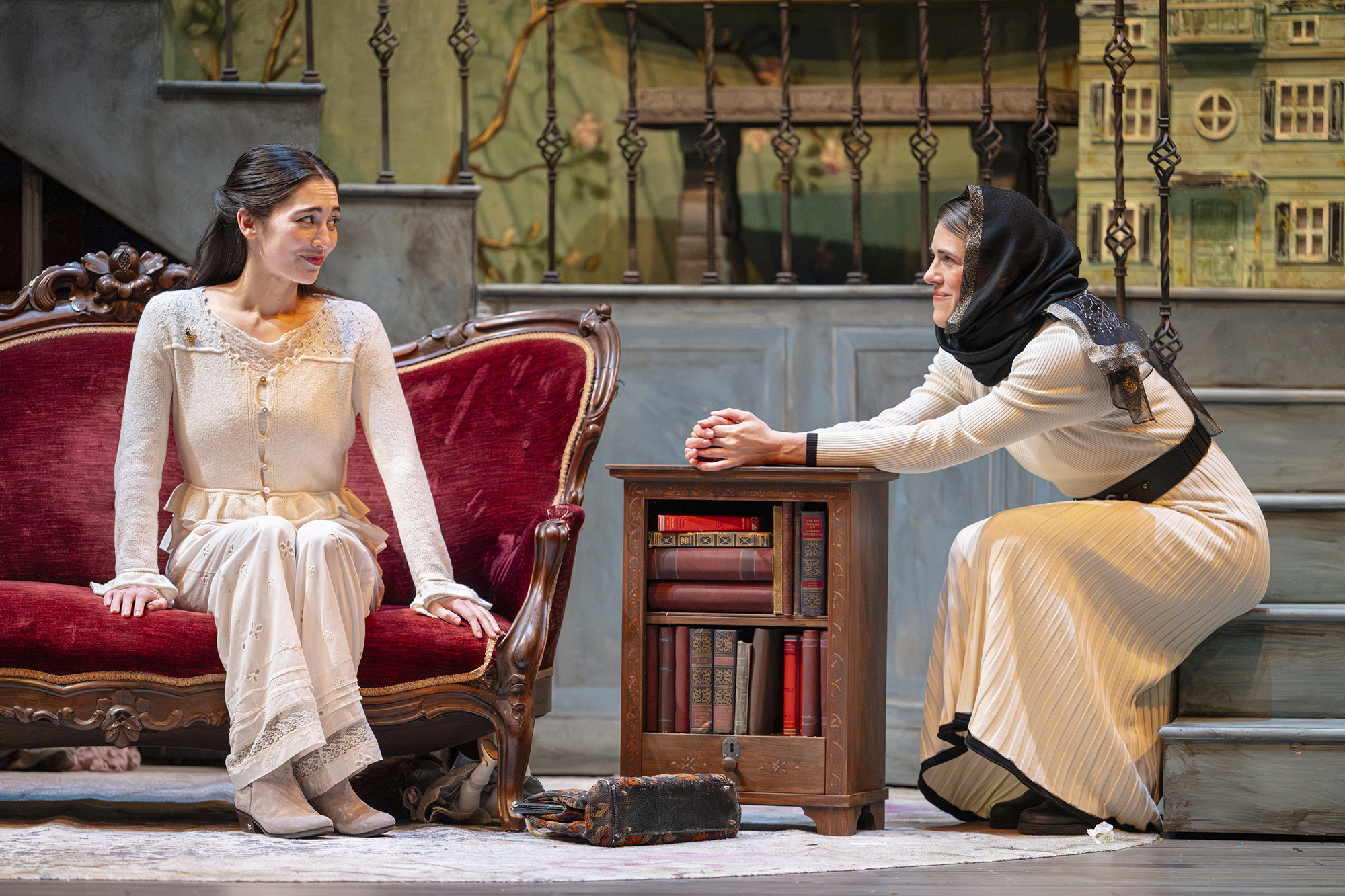
The power of Chekhov’s story is evident: all of the characters in this archaic aristocracy are careening towards extinction. There’s Liubóv’s adopted daughter Varya (Rosie Hallett), who awkwardly prances around with a perpetual hood over her head, hopelessly in love with Lopákhin while facing her own demise as the estate’s manager. Liubóv’s brother Gáyev (Anthony Fusco) presents as a hollow member of the aristocracy, often flexing his bona fides and penchant for great billiards shots, while also insulting those he feels are beneath him.

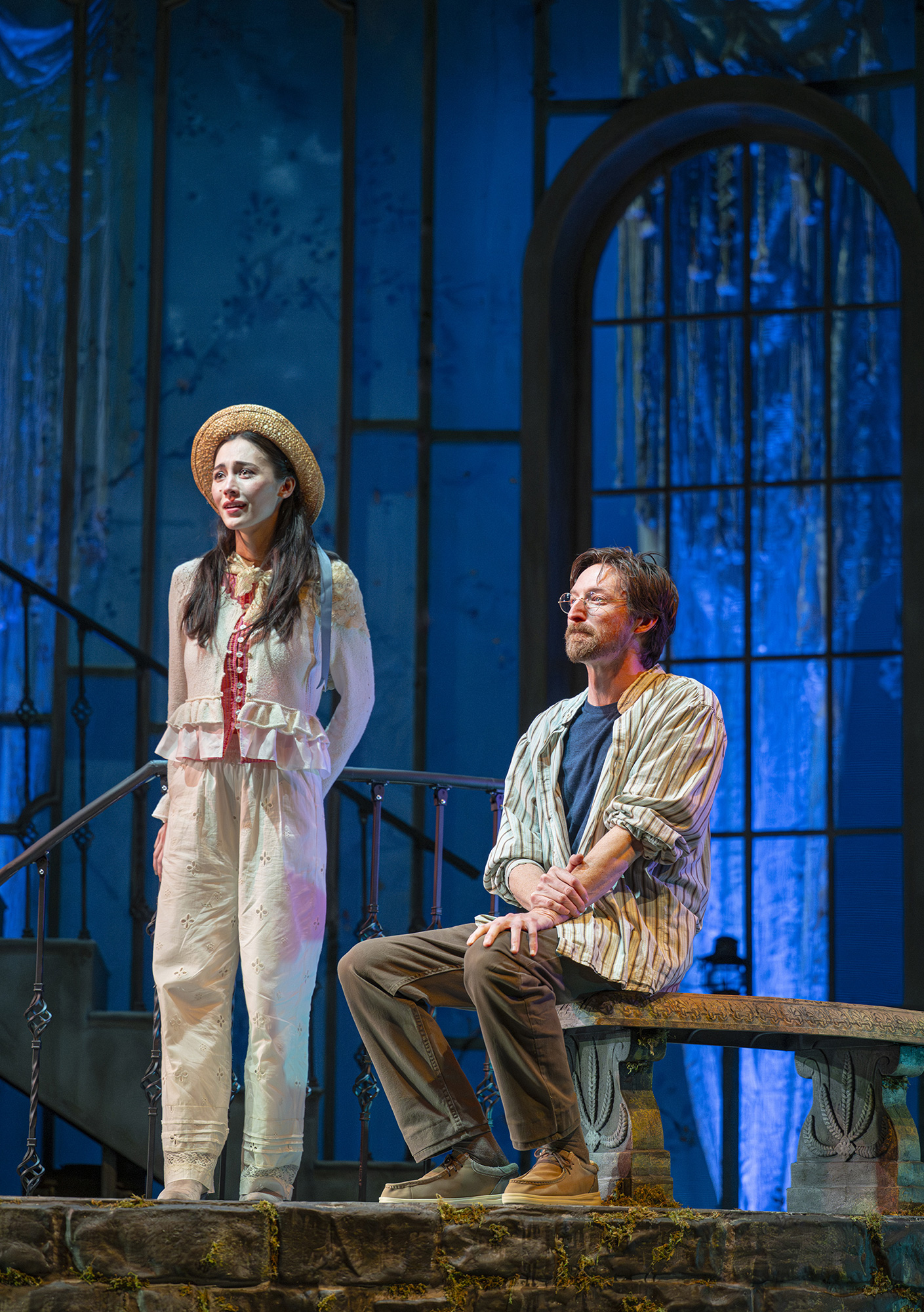
Ánya (Anna Takayo) and Trofímov (Joseph O’Malley) reflect on the estate in Marin Theatre’s ‘The Cherry Orchard.’ (David Allen)

Liubóv’s biological daughter Ánya (Anna Takayo) is only 17, but shares a deep connection with eternal student Trofímov (Joseph O’Malley), who advertises to be above love, focusing instead on his idealistic worldview that resists materialism.

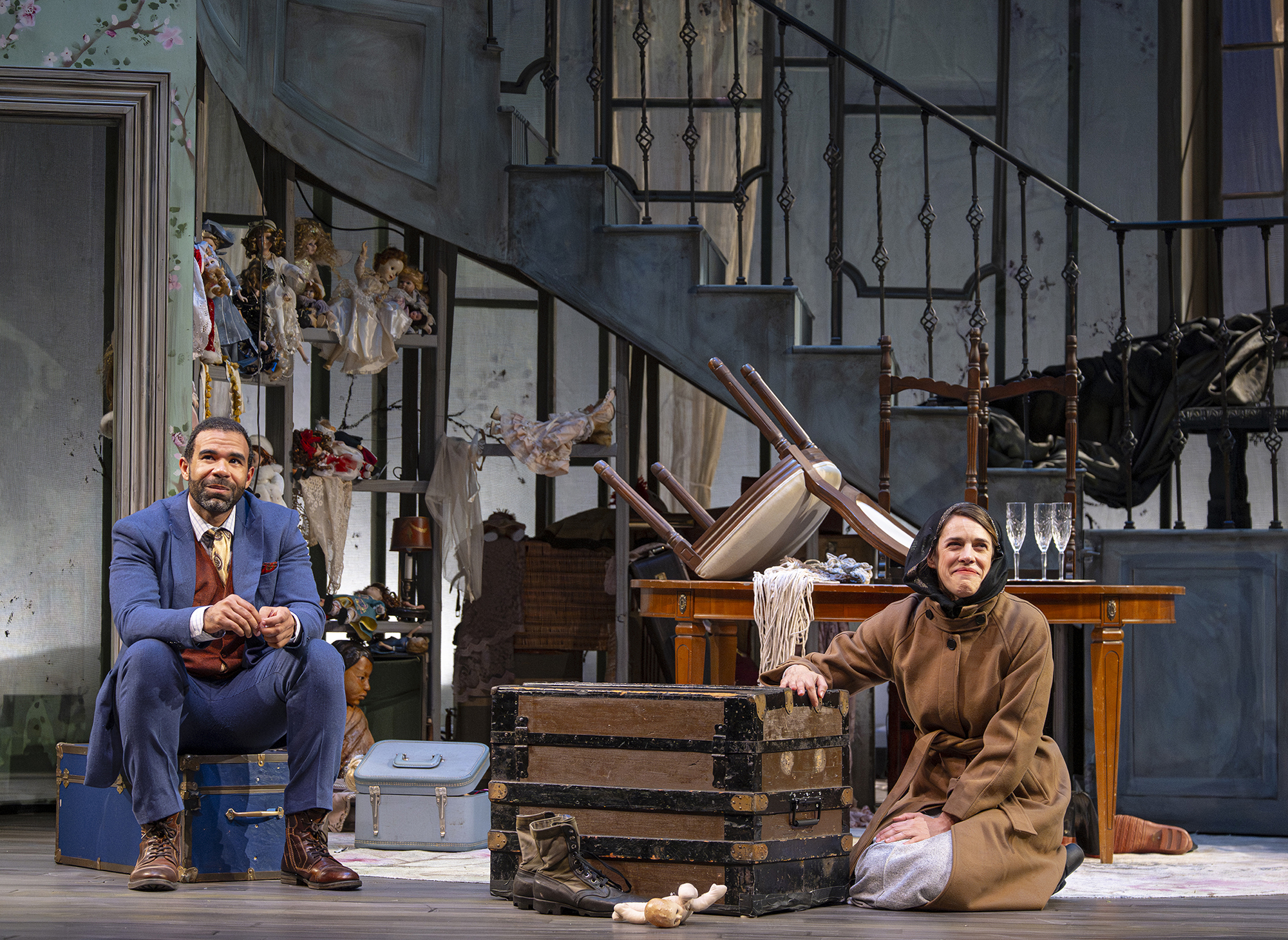
Perloff’s direction shines in its commitment to symbolism, highly enhanced by Nina Ball’s scenic design with plenty of rustic, antique dolls that have seen better days, beautifully lit by Kate Boyd. For much of the play, actions only exist in a grander context.

Notice the brilliant moment where a passerby begs for money and asks to cut through the orchard. With Liubóv’s action of presenting this beggar a gold coin, the others thunder that her own serfs are starving. Her inability to understand her own frivolity is perhaps her greatest tragic flaw. Throwing a ball you can’t afford on the day your property is about to be auctioned off? Bless her heart.

Does this allow for a completely empathetic view of Liubóv, who is genuinely crushed by her own vices? Well, yes and no. While many are in no rush to shed tears for a class that has built their fortunes on the literal backs of others, the production makes clear the pain of letting go of the place where Liubóv’s young child lost his life.

Lopákhin (Lance Gardner) and Várya (Rosie Hallett) share a moment in Marin Theatre’s ‘The Cherry Orchard.’ (David Allen)

Schmidt’s interpretation strikes a wonderful balance of drawing out the story’s tragic elements while being terribly funny. As Píschik, Danny Scheie continues to display his sharp hilarity as one of the region’s most skilled comic actors, whether searching for some money or dealing with a sudden jolt of gout. Jomar Tagatac’s bumbling clerk Yepikhódov showcases his fantastic commitment to physical comedy.

The production’s range belongs to both Sklar and Gardner, two performers who possess oodles of stage presence. Sklar’s strength is advocating for a character who’s clueless about what is coming. Her performance is loaded with melancholy radiance — choosing to dance in the most inopportune moments, while hoping this will all just go away.

Gardner’s power comes from understanding how his Lopákhin has the upper hand, and his unbridled glee at his rise from the lowest rungs of his class, now on the cusp of generational financial power. That makes for one particularly breathtaking, devastating moment, when he’s alone with Varya in a perfect position to propose, choosing instead to pull the earth from beneath her. (Hallett, as Varya, is in full command of how to play disappointment and devastation with grace.)

Sisters Ánya (Anna Takayo) and Várya (Rosie Hallett) connect in Marin Theatre’s ‘The Cherry Orchard.’ (David Allen)

None of the play’s symbols are as striking as what Swain does with Firs, who gently appears throughout the story. In one of the play’s most painful moments, Fir is simply forgotten, a life deemed insignificant now cast aside, no matter how loyal he was to those whom he loved. Swain’s devastating physical work, showcasing Firs’ body slowly giving way to age, speaks volumes about the fragile nature of the past.

Chekhov’s characters are sometimes described as sipping delicious hot tea while the walls crumble around them. In The Cherry Orchard, it’s not walls, but trees. And when those trees finally crumble, due to Lopákhin’s new vision, all that’s left of this obscure cherry orchard is a lonely old man, riddled with dementia, forgotten and unafraid.


Sponsored

‘The Cherry Orchard’ runs through Feb. 22 at Marin Theatre (397 Miller Ave., Mill Valley). Tickets and more information here.

lower waypoint
next waypoint
Player sponsored by