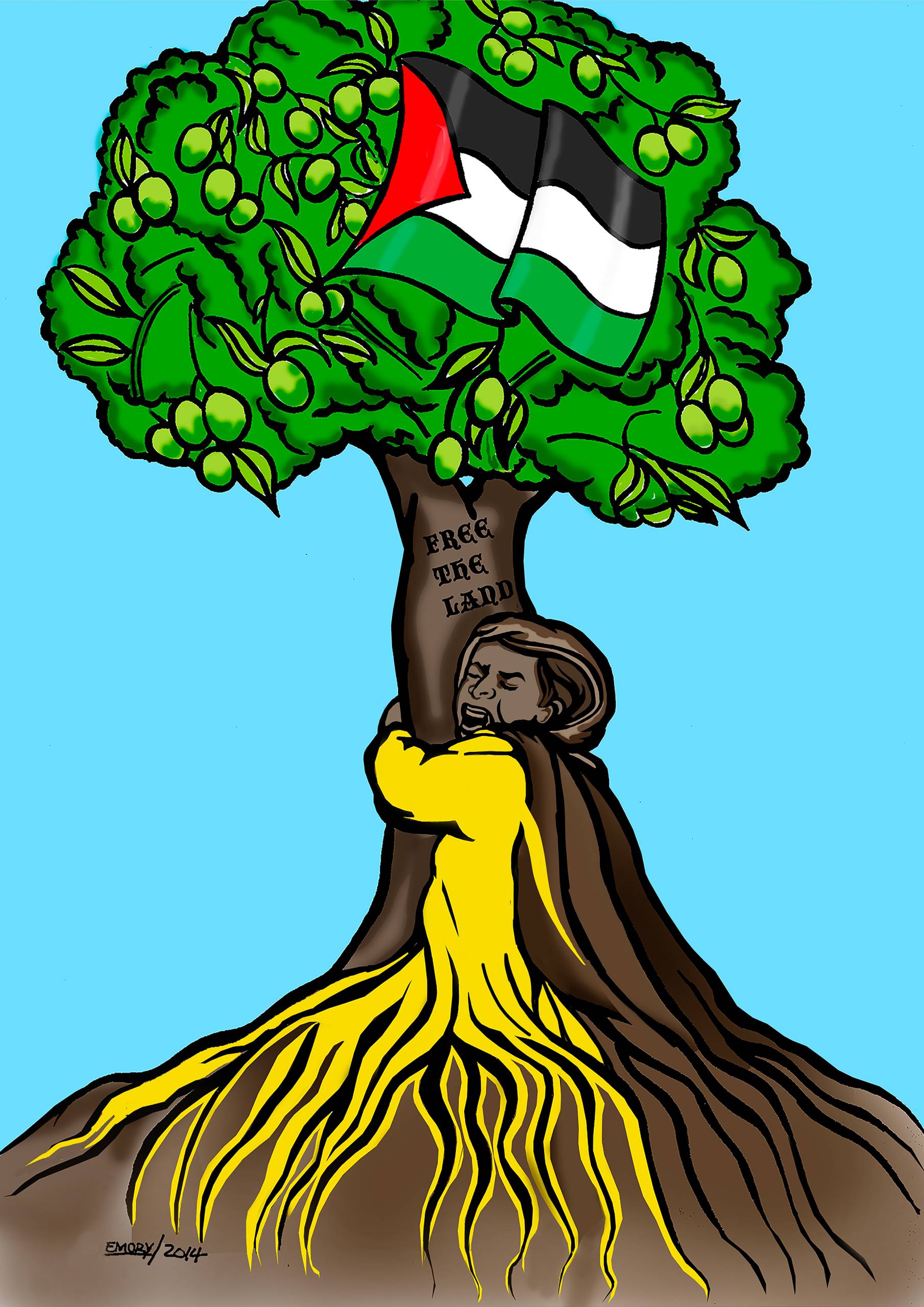
When it comes to the giants of protest art, few loom as large as Emory Douglas, the 82-year-old graphic artist, illustrator and muralist who served as the Black Panther Party’s minister of culture from 1967 to 1982. Douglas’ covers for the Black Panther Party newspaper defined the look of the radical movements of the ’60s and ’70s, and more than 50 years later, those striking, high-contrast illustrations still offer a timely rebuke to police brutality and imperialism.
Most people know Douglas for iconic pieces like his rifle- and newspaper-toting Paperboy from 1970, and in the decades since, he’s never stopped making art about liberation. It’s that more recent work, digital prints Douglas created within the last 15 years, that fills the first part of a new exhibition called Emory Douglas: In Our Lifetime. The show, co-curated by Rio Yañez and Rosalind McGary, opened last week at San Francisco’s African American Art & Culture Complex. A second part of the exhibition, with Douglas’ archival works, will open at the same venue in February.
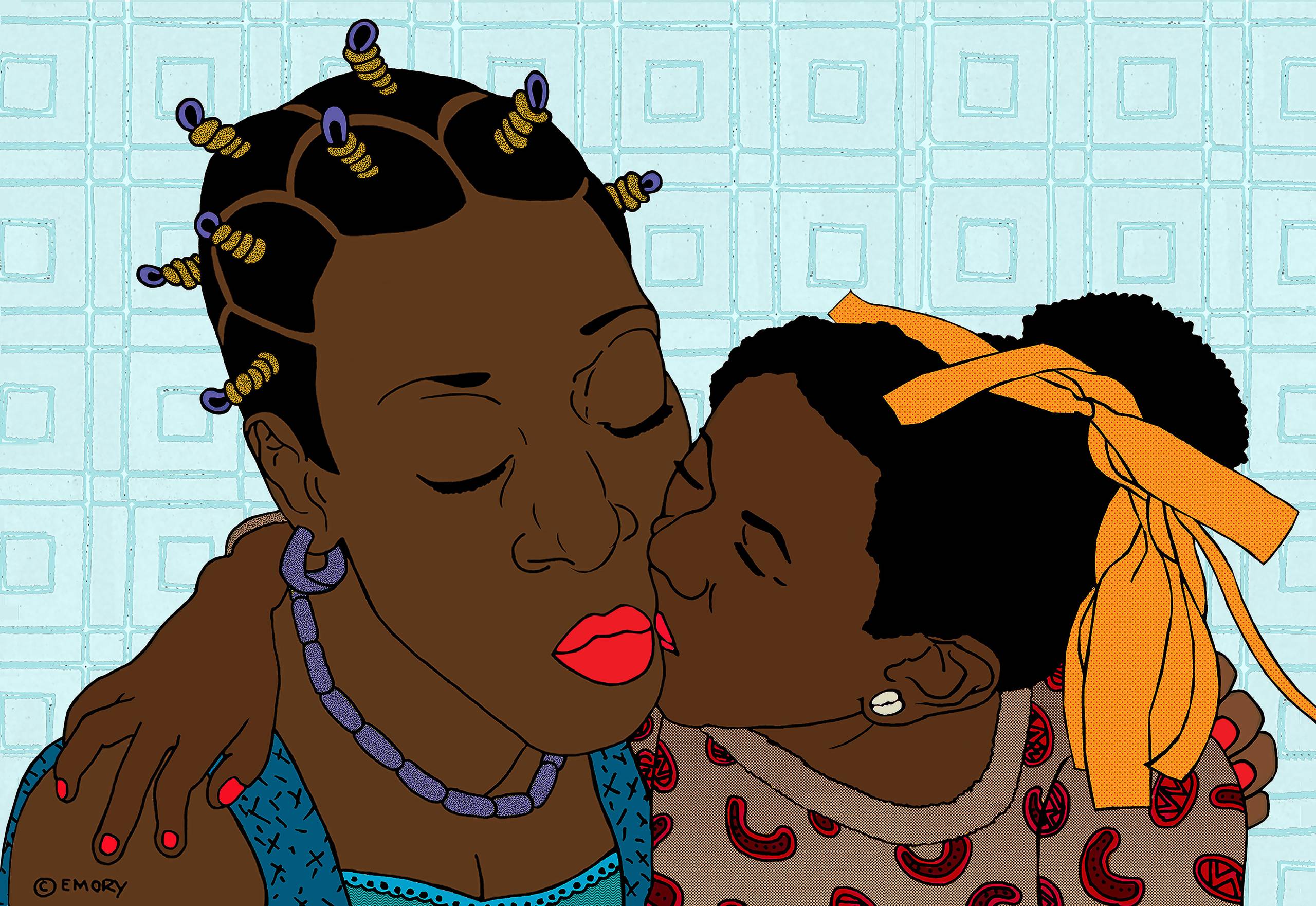
While many of Douglas’ classic illustrations of armed Black Panthers focus on the grit and righteous rage required to resist a violent status quo, in these new, vibrant, large-scale digital prints, Douglas softens his gaze and sets his sights on a hopeful future. Many of his subjects are women and children, who he renders in tropical oranges, leafy greens and ocean blues, often wearing West African textiles inspired by his international travels to build solidarity with revolutionary artists from around the world.
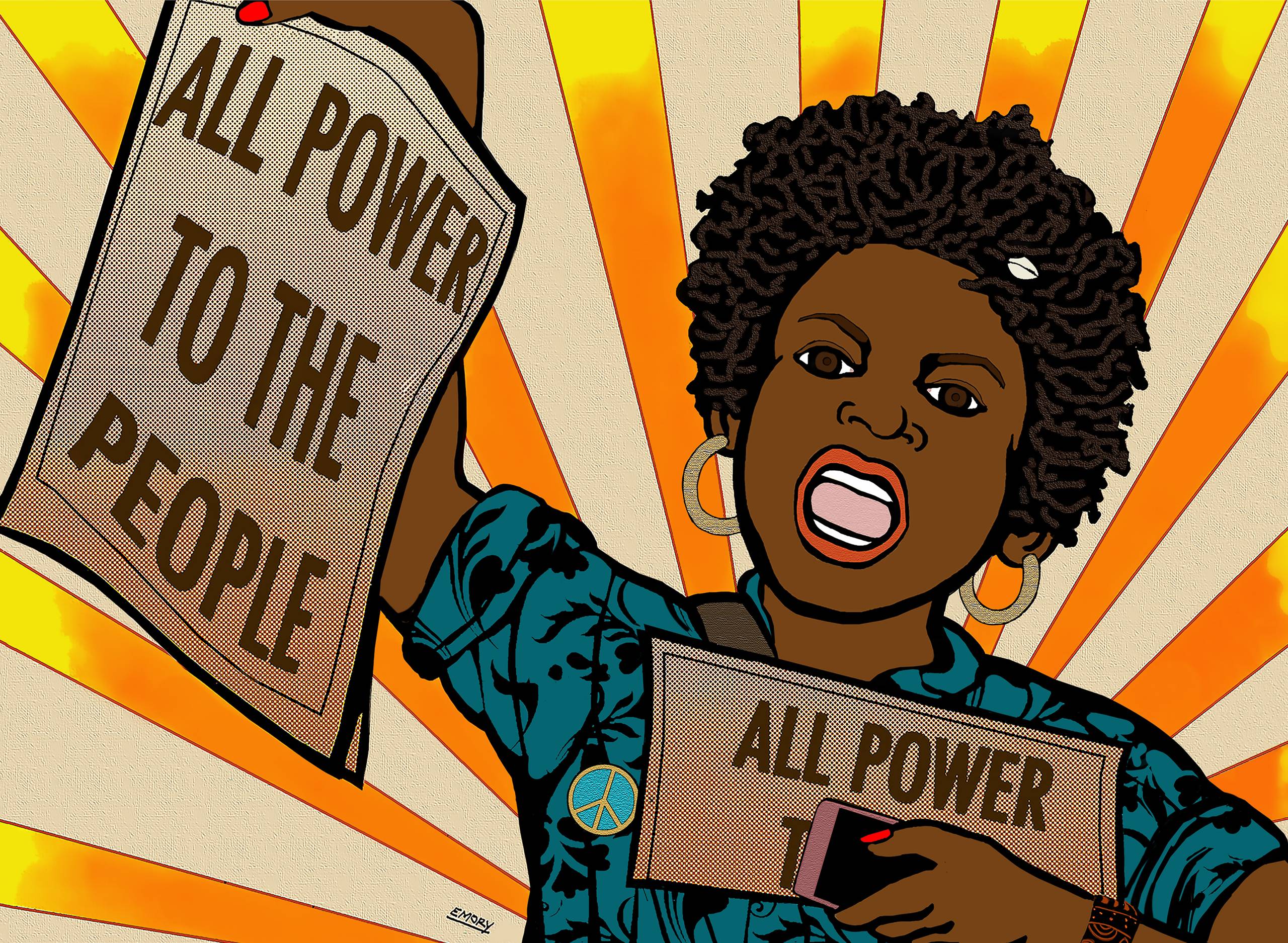
In the exhibition, Douglas reimagines his Paperboy as Paper Girl, who, like the original, holds a newspaper that reads “All power to the people.” Instead of a gun, she has an iPhone, a nod to the way social media accelerated more recent movements like Black Lives Matter.
A large poster of Douglas’ Political Artist Manifesto greets visitors at the exhibition entrance, providing a lens through which to take in his commanding visuals. Douglas wrote the document in his Panther days, and it offers 12 points of advice: “Create art of social concerns that even a child can understand,” offers one. “Be prepared if necessary to defend and explain what you communicate through your art,” reads another.