I write letters to my first college friend, who I got close to during a Zoom breakout room — we’ve been inseparable ever since. Now, when I sit down to write her letters, I’m back in my childhood bedroom, where technically we first met.
When I sit down to write, I often use a pen issued by my college newspaper; my editor called it “the best pen on campus.” I’ll admit, the pen is irritating, its flow too inconsistent. But when I’m using it, I think of college, and all the friends I’ve given the same pen to, lying to them about its quality. My best friend from the newspaper sends me collages and coasters, and sometimes signs the letter from her and her cat. Maybe she also uses the same pen I use.
For as long as I can remember, my whole purpose was outlined for me on a syllabus. Post-grad, there’s been more freedom to do what I want. No exams to study for. No papers to dwell on. I’m thinking less about deadlines, and more about why I do what I do. I’m no longer cramming for exams or pulling all-nighters. I’m choosing things simply because they matter to me.
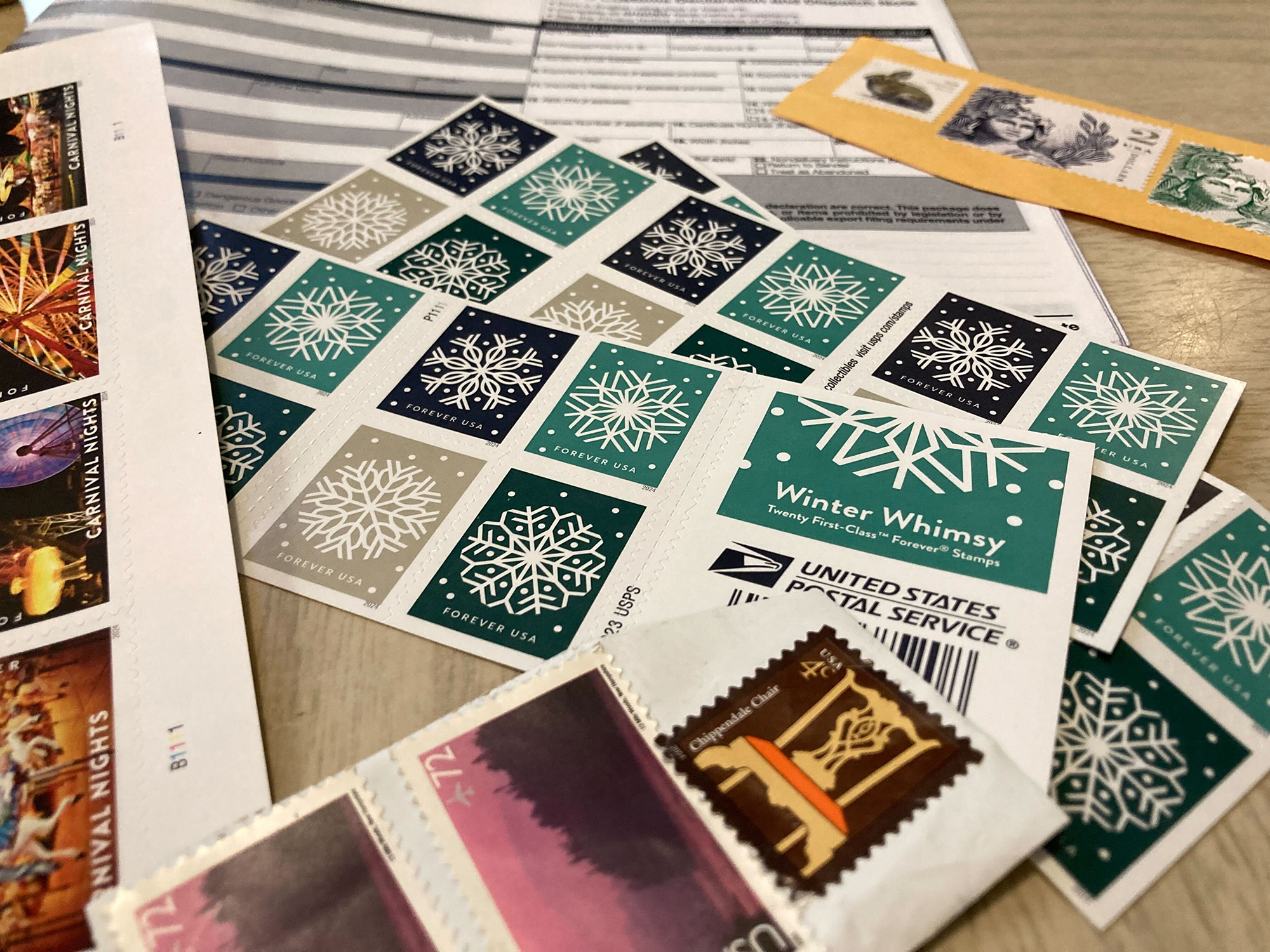
This is my first step. Ink on paper, a message sealed and stamped. A letter is small, though the meaning is not.
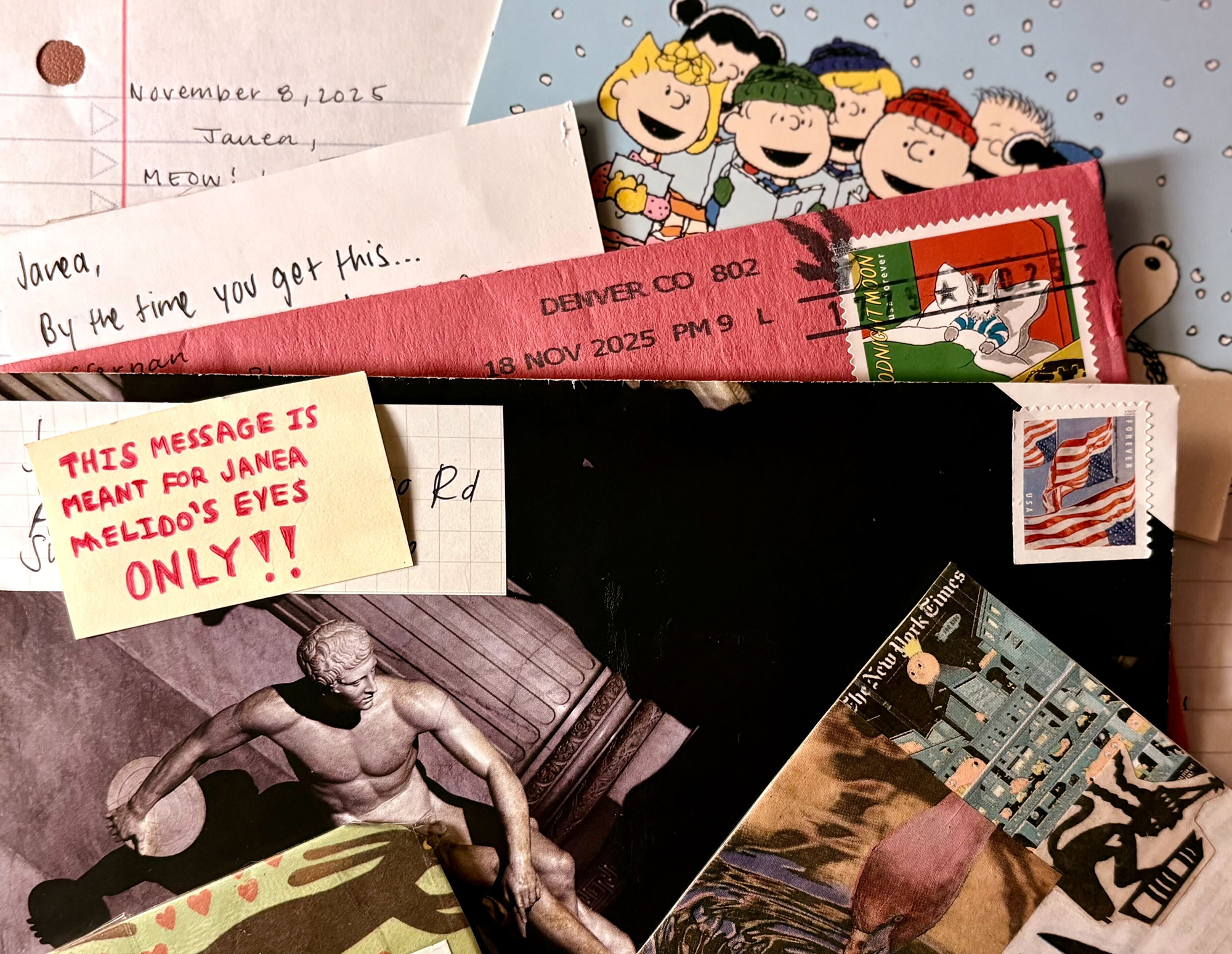
Letters have become collectible items in my circle of friends. They’re memorabilia we keep hung up on our fridges like good grades, or tacked on onto our walls like a piece of artwork, and maybe even framed on a desk to keep us in high spirits.
This pen-pal endeavor has done more than give me something to look forward to. It’s fueled me in a creative way. I’m finding time to not only write, but relight the artistic spirit I once lost. I spend about an hour a week – sometimes more if I’m feeling extra crafty – writing a letter to all my friends. It’s become a form of self-care.
Collages, felt bookmarks and magnets. My friends and I have gotten imaginative with what we can fit in a standard sized envelope. And when they don’t fit, or I dismayingly run out of envelopes, I make my own with old magazine pages.
Sometimes I imagine myself decades from now opening a box filled to the brim with these letters, reading through them all like an epistolary novel. A time capsule of our twenties when we were desperately trying to figure ourselves out. Friendships that weren’t only lived, but documented.
I’ve learned a lot about myself since I’ve started sending letters. One is that stamps are way more expensive than I thought they would be. Second, I’m a perfectionist to a fault. I knew this to be true when I found myself crumpling up letters that were almost finished because I spelled something wrong toward the end. (I’ve since fallen out of this habit and have embraced the look of scribbled-out words).
Most importantly, I’ve learned that when I think about the things I want to be known for, I don’t want them to be the texts I forget about in a matter of hours. Instead, let it be a box of letters — messages crafted with intention.
 Long-distance friendships should hypothetically have a higher success rate these days, considering that phone calls are readily available at our fingertips. It’s easy, too easy. We get lost in the routine of everyday life, and relationships become subject to “catch-up” phone calls that never seem to fully satiate.