Amid all the uncertainty and upheaval, the greatest balm remained the art itself. So many great shows and events were spread across the Bay Area this year that I could only cover a fraction of it. Here, in loose chronological order, are the best things I saw but didn’t get a chance to write about in 2025:
Dynasty Handbag performing ‘The Bored Identity’ at the Lab in January 2025. (Courtesy of The Lab)
Best distraction from a very bad January
Dynasty Handbag, ‘The Bored Identity’
The Lab, San Francisco
Jan. 17 and 18, 2025
2025 kicked off in the worst way possible, with multiple fires raging across Southern California, ripping through the Palisades and my hometown of Altadena. Each day after Jan. 7, fresh news came in about whose homes and businesses had been destroyed, who had lost their life’s work and their family heirlooms.
The performer Dynasty Handbag (aka Jibz Cameron) arrived in San Francisco from LA with a disclaimer — “I thought about canceling this show” — and proceeded to shapeshift her way through a night of exceedingly silly and subversive comedy numbers, the sold-out crowd cackling appreciatively. The darker realities of our climate crisis were never far away (in “Vat Do You Vahnt For Bwekfas?” a seemingly endless list of breakfast options are turned down until all choices disappear), but Cameron provided a sanctuary from worry for a few hours, and made me laugh with total abandon.
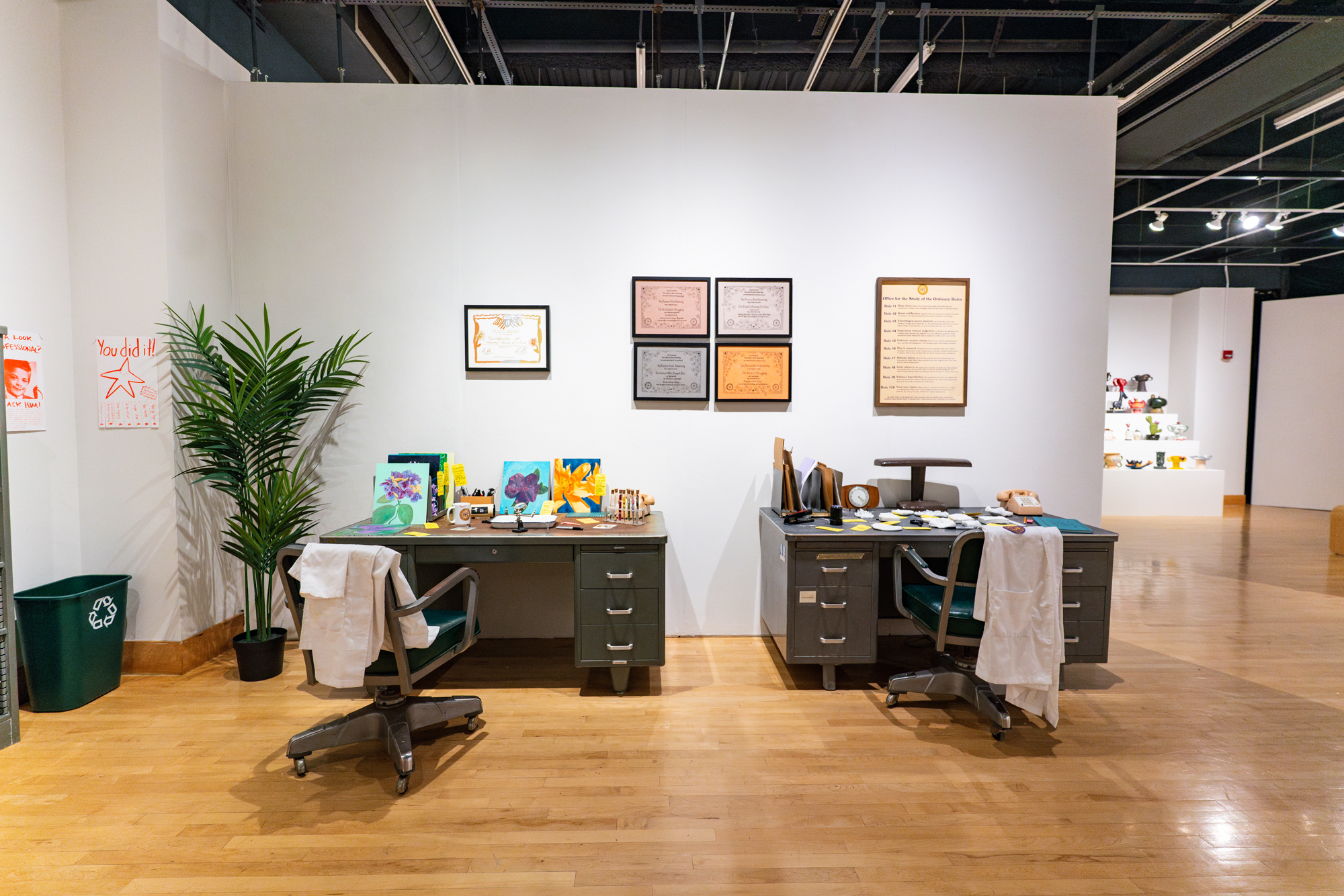
An installation view of Liz Hernández’s ‘Objects of Inquiry’ at San Francisco State University, with the tower of trophies in the background. (Claire S. Burke)
Best fictional bureaucracy
Liz Hernández, ‘Objects of Inquiry’
Fine Arts Gallery, San Francisco State University
Feb. 22–April 5, 2025
Many of my favorite art experiences of the year involved a ceding of authority into collective authorship. At SF State, local artist Liz Hernández launched The Office for the Studio of the Ordinary, a residency-turned-research institution. The artist and over 150 students joined in what she called an “artistic conspiracy,” celebrating everyday moments and hidden narratives across campus. The culminating exhibition included (among many other creative exercises) black-and-white photographs of the team in action, a tower of ceramic trophies, an illustrated myth of campus resistance and animal liberation, and an archive of dreams. Against a backdrop of reduced higher ed arts programs, Objects of Inquiry took play and wonder seriously — and made an excellent case for the role of artists in even “the grayest corners of the institution.”
Al Wong, ‘Twin Peaks’
San Francisco Museum of Modern Art
April 26, 2025–Summer 2026
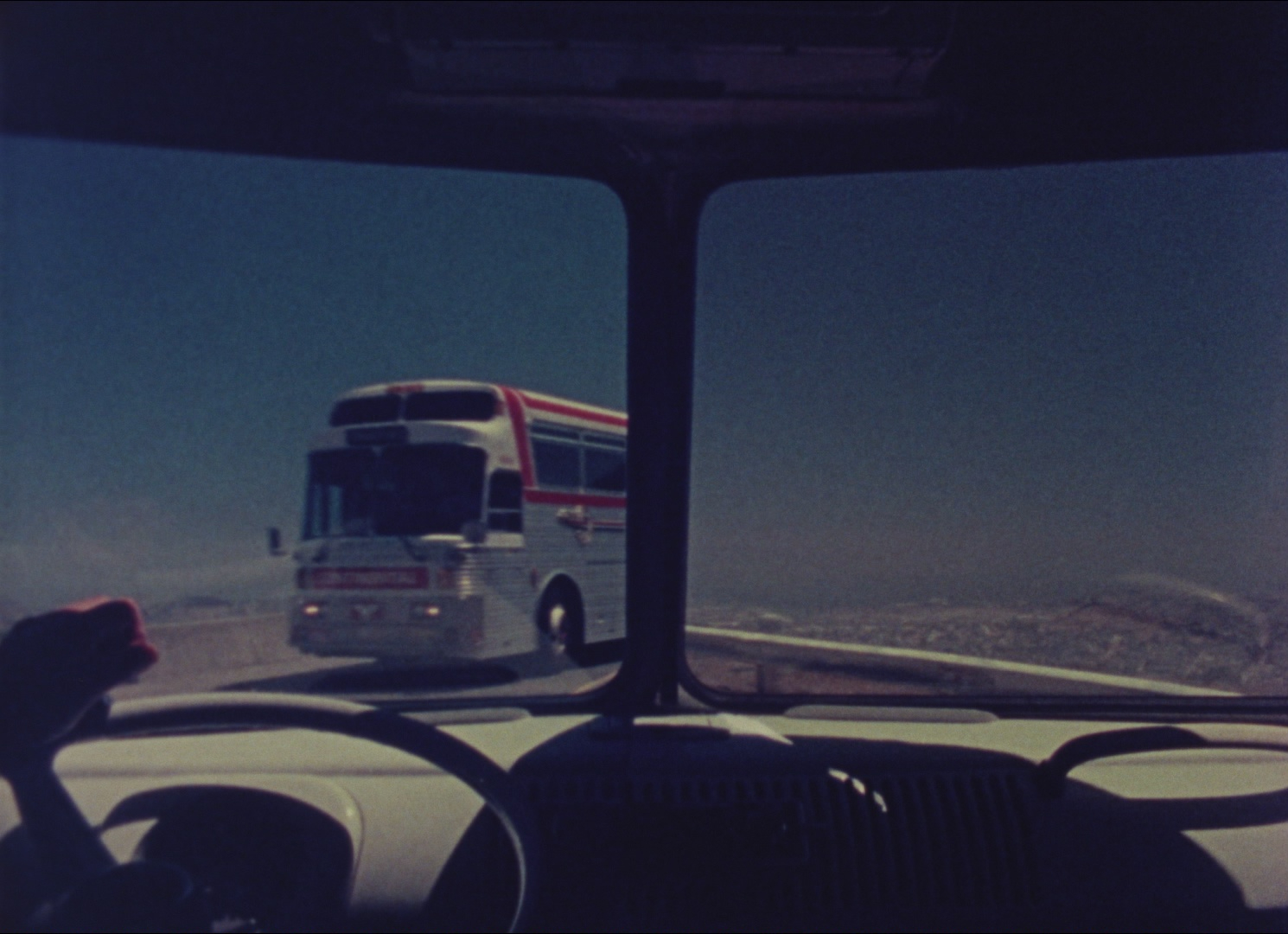
Currently above the Third Street lobby at SFMOMA, Al Wong’s hypnotic, potentially nausea-inducing film Twin Peaks traverses a figure-eight around San Francisco’s bald hills. Transferred from 16mm and screened digitally here for the first time, the 1977 film at first appears straightforward: a 50-minute loop around Twin Peaks, filmed through the windshield of a Volkswagen van over the course of a year. Gradually, the two “eyes” of the windshield split into a slight mismatch, then more extreme juxtapositions. We’re still seeing Twin Peaks, but Wong creates a disorienting diptych of time and place, perfectly emblematic of the confusion I personally feel when trying to place events within San Francisco’s subtle seasonal shifts.
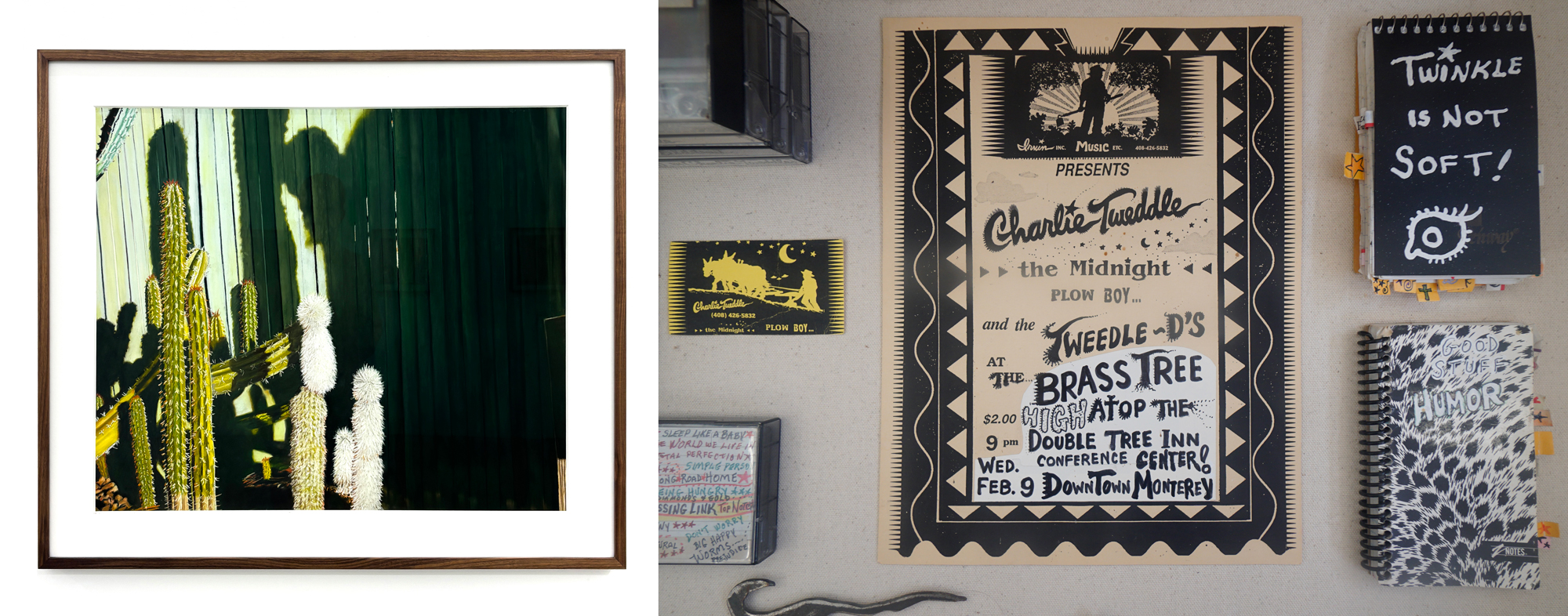
L: Pastel on paper by René Smith; R: A view into a vitrine of Charlie Tweddle’s works. (Courtesy of Et al.)
Et al.’s expansion into the former Ratio 3 space means the gallery now has the square footage to stage as many as three distinct shows at once. And this summer, two very different solo exhibitions buoyed me at just the right time. In the first gallery, René Smith’s luminous pastel on paper drawings captured poetic scenes of family life and travels (hard light on spiky cactus, a glowing Northern California forest, a well-worn wooden wall). Nearly photorealistic in their execution, the drawings also satisfyingly showed the layers of color and gesture that went into creating this effect, exuding a warm fuzziness.
Then, the following two galleries, curated by Zully Adler, offered up something wholly unfamiliar: the unclassifiable work of Charlie Tweddle — hatmaker, musician, pigeon-keeper, sculptor, painter and maxim writer. Tweddle’s embellished guitars and assemblages, covered in patterns and animal fur, were displayed alongside vitrines filled with handwritten “sayings” on scraps of paper. “You be … the kind’a person you’re look’n for,” read one framed edict. Elsewhere: “Agriculture is anything but dull!” In combination with Smith’s peaceful pastels, Better Than Normal! was a reminder to move slowly and in one’s own direction, wherever that might lead.
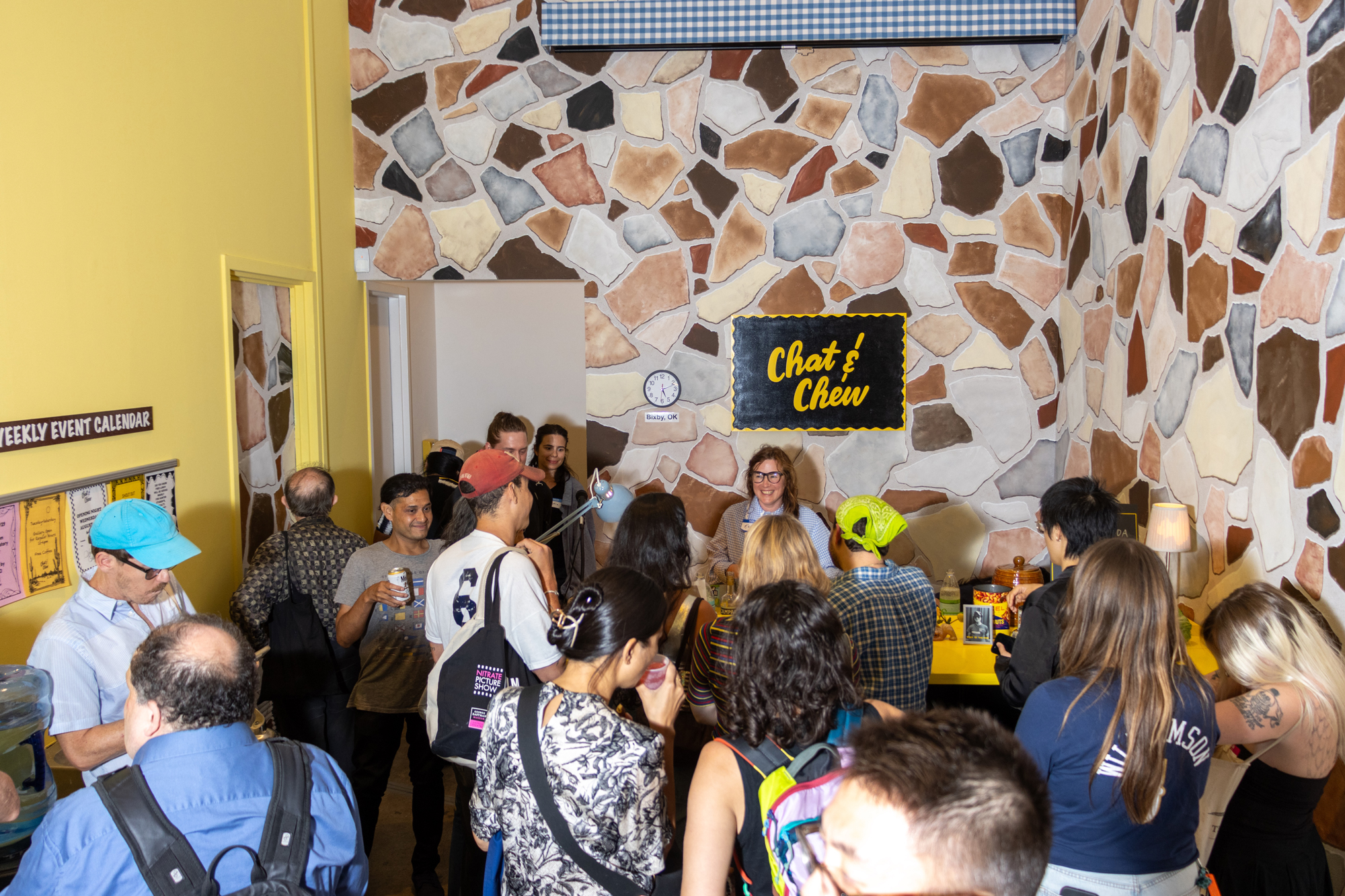
The opening reception of ‘Last Art School,’ Aug. 27, 2025, at 205 Hudson Gallery, Hunter College Art Galleries. (Leo Sano)
Best postmortem on SFAI
Lindsey White, ‘Last Art School’
205 Hudson Gallery, Hunter College, New York
Aug. 27–Nov. 22, 2025
There have been many shows about the San Francisco Art Institute since the 151-year-old art school closed its doors in 2022 (People Make This Place is up right now at SFMOMA). But sometimes it takes distance — real, physical distance — to reflect back on the promise and legacy of a beloved and ultimately flawed institution.
Lindsey White, a former photography professor at SFAI, presented Last Art School 3,000 miles away in the ground-floor galleries of Hunter College’s MFA program. Part SFAI archive, part group show, part event space, Last Art School explored, across mediums, what arts education can be — and how ideals often fall short. Despite the backdrop of SFAI’s closure, the show had a utopian bent, mostly from its “Chat & Chew” section, dressed up with faux rock walls, cushy seating, endless coffee and a functional jukebox. Art school, the show posited, is wherever people can sit together and talk about wild ideas over a free lunch.
In this vein, White and Jon Rubin are now accepting applications to Present Company, a free summer program at Headlands Center for the Arts.
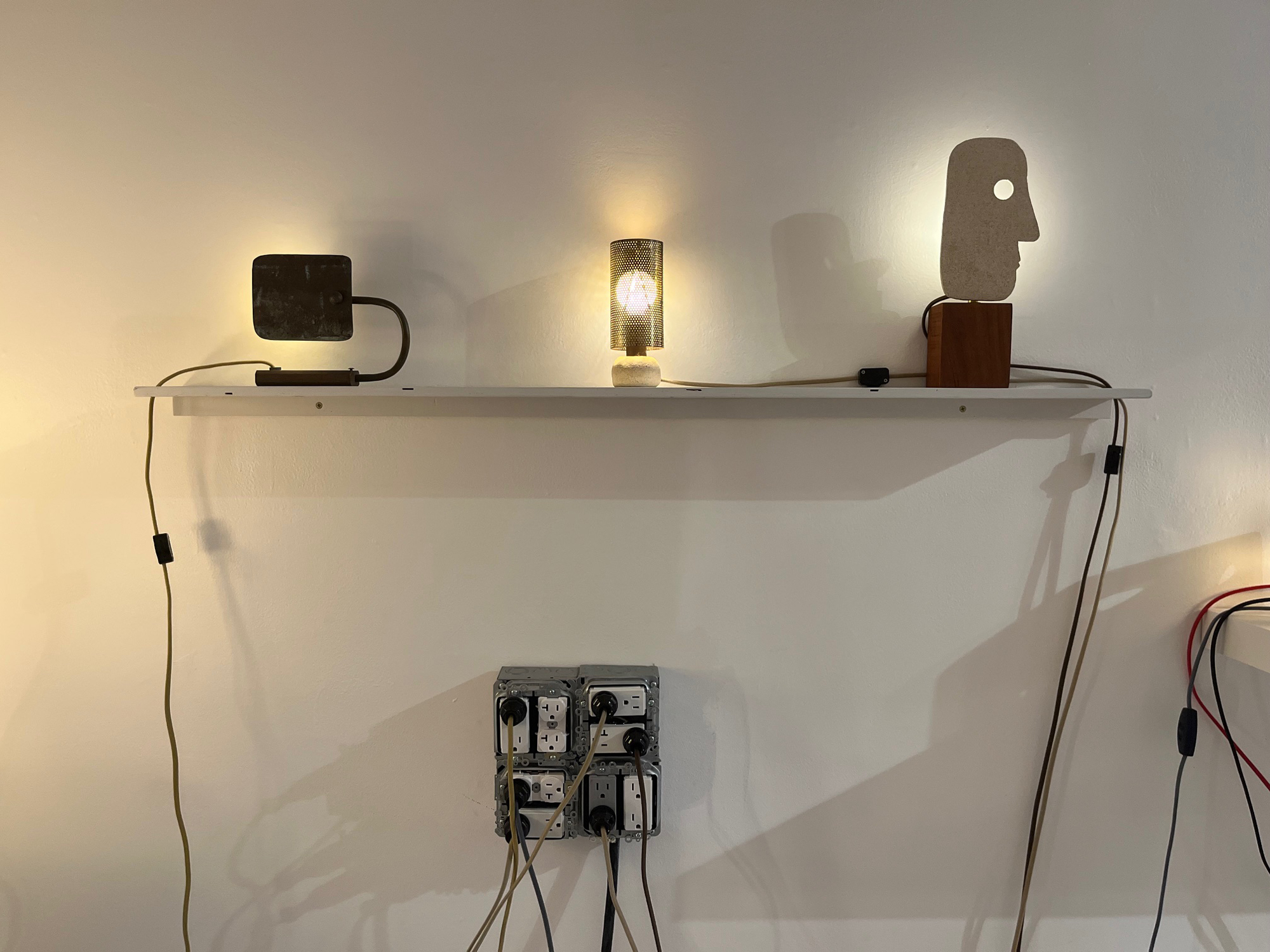
A view of Rico Duenas’ solo show at Park Life, ‘Light Work.’ (Courtesy of Park Life)
Outlet doing the most
Rico Duenas, Light Work
Park Life, San Francisco
Aug. 8–Sept. 8, 2025
In a show of artfully made lighting fixtures at the Richmond District shop and gallery Park Life, Rico Duenas had a number of stunners: wall-mounted ceramic sconces with light-bulb eyeballs; lamps fashioned from magnifying glasses and other objects sourced from the Alemany flea market; a payphone, glowing from within. But one of my favorite moments in Light Work was an outlet, beefed up by Duenas (an electrician by trade) to accommodate the dozens of lamps he had installed in the space. It was a thing of orderly, functional beauty.
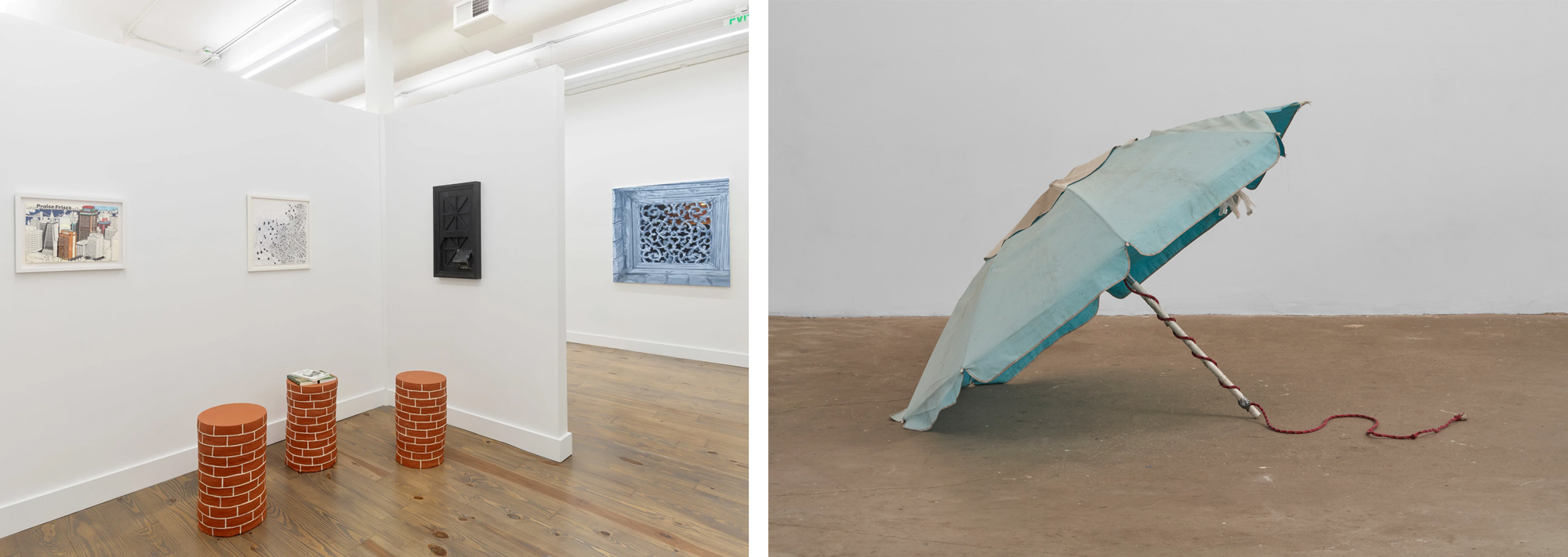
L: Installation view of ‘So the city can exist’ at Rebecca Camacho; R: Carlos Agredano, ‘Parasol,’ 2023. (Courtesy of Rebecca Camacho; Courtesy of Slash)
‘Like a City’
Slash Art, San Francisco
Sept. 13–Dec. 13, 2025
These two exhibitions did a magical kind of handoff, while narrowing focus to one particular place. The first, a group show at Rebecca Camacho curated by Nick Makanna and MacKenzie Stevens, included works that very literally represented a city’s structures (Malcolm Kenter’s one-to-one replica of a breaker box), alongside pieces that gestured at a commingling of multitudes (Mary Lum’s painting of abstracted framework). It was an elegant, materially expansive exhibition filled with discoveries and delights, not the least of which were three “brick” stools made by Makanna to support people and city-related books.
At Slash, Like a City turned its attention to Los Angeles. Curator Sophie Appel, formerly of SF’s Delaplane and now running Melrose Botanical Garden down south, stages a scene, sculptural props included, of a dreamy sun-drenched place. But each artwork, on close inspection, tells a deeper story of LA’s history and self-styling. See: John Tottenham’s drawings of Manson girls; Carlos Agredano’s lonely parasol, now symbolic of the city’s missing immigrant vendors; and Anais Franco’s ceramics, pressed with plant life. In a full-circle moment for 2025, Franco’s pieces evoke, in their own lovely way, the craftsman tiles that volunteers chiseled away from the fireplaces of Altadena’s burned homes.
Also, also
Honorable mentions go to Bec Imrich’s colored-pencil postcards of animals getting MRIs at Bass & Reiner’s Pyramid Scheme 2 show (a great exhibition conceit with everything priced at $20, an ATM in the corner); the cable-knit outfits at the end of Bugonia (I’ll say no more); and the chaotically fun book-talk-slash-game-show that was Chuck Tingle’s event at the Internet Archive on Sept. 2.