Sponsor MessageBecome a KQED sponsor
upper waypoint

‘Good Fire: Tending Native Lands’ Burns Bright at the Oakland Museum of California

Save ArticleSave Article
Failed to save article

Please try again

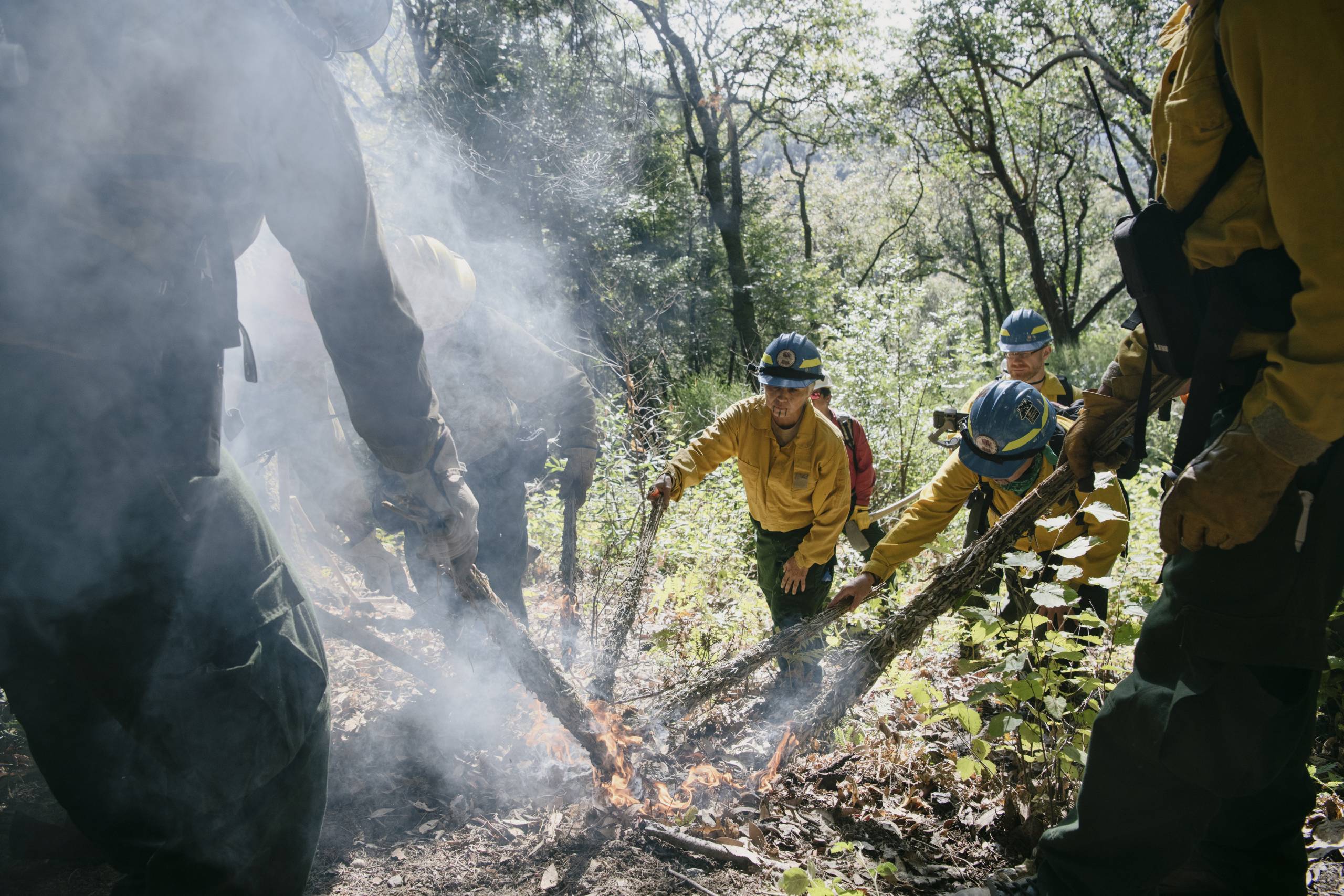
Margo Robbins of the Cultural Fire Management Council leads firefighters as they light an Indigenous prescribed burn with bundles of wormwood in ceremony, near Weitchpec, CA. (Kiliii Yuyan)

For anyone devastated or dismayed by the last decade of catastrophic megafires in California, there is no more hopeful story than that of Native Californians reviving their use of intentional, beneficial fire. By using “good fire,” they are leaving forests, fields and brushlands more resilient to future wildfires. They also use fire to regenerate ecosystems, spurring the regrowth of plants that serve as food, medicine and basketry materials.

At Oakland Museum of California, a new exhibit called Good Fire: Tending Native Lands traces the past, present and hoped-for future of Indigenous Californians’ use of fire.

Diana Almendariz (Wintun, Nisenan, Hupa, Yurok) uses fire to tend the Cache Creek Nature Preserve, and was a consultant and collaborator in the exhibit. Fire, she explained at the Nov. 6 press preview, was “the first child of land and water.” It completes natural cycles.

Working with it, she said, is “beautiful. It’s like art. You want to share it with people.”

Good Fire features a photo of her burning basketry materials with a joyous smile on her face.
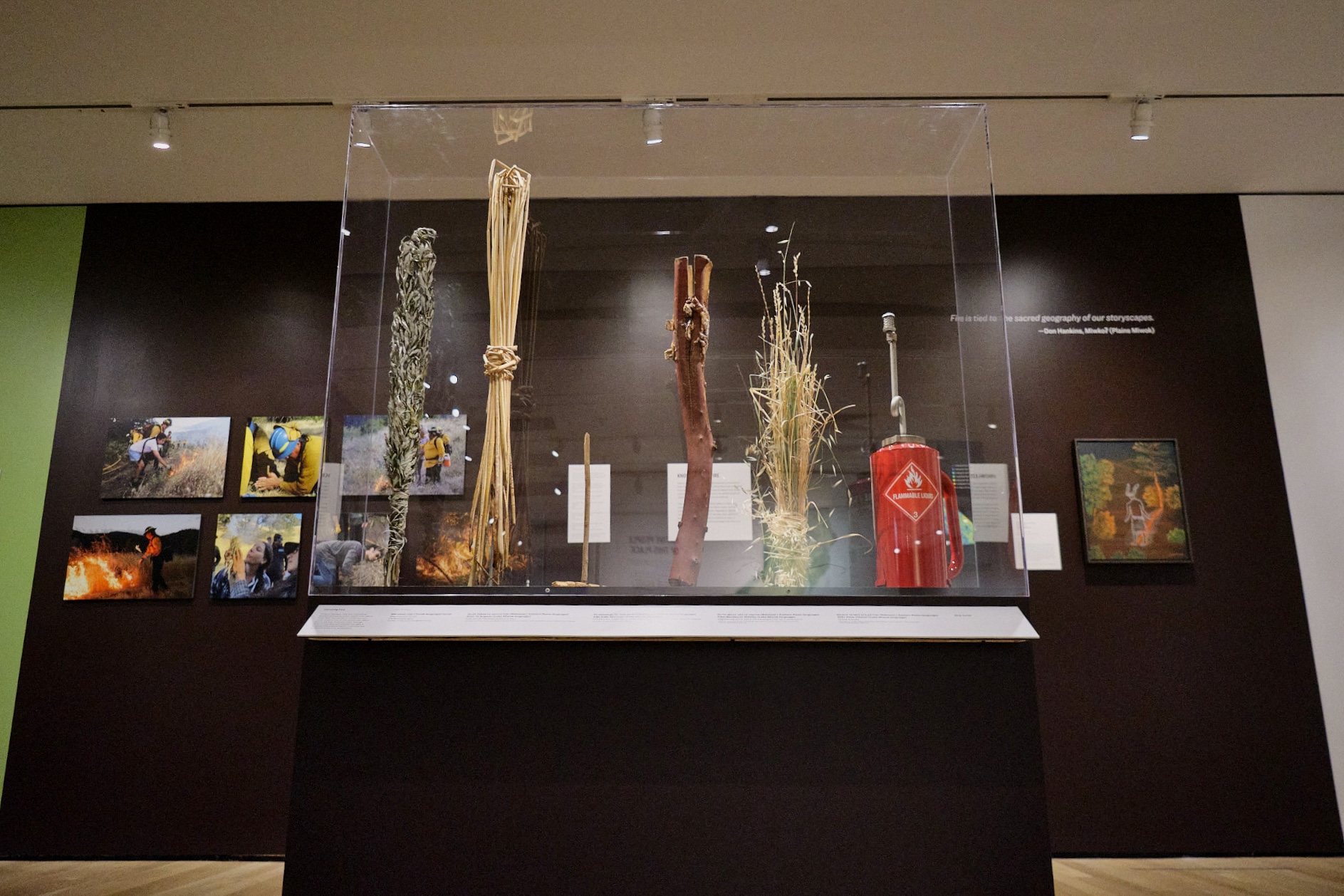
An exhibition display features kindling for controlled burns.
An installation view of ‘Good Fire: Tending Native Lands,’ on view at Oakland Museum of California through May 31, 2026. (Kiki King, Oakland Museum of California)

Visitors will also see videos of burns and displays holding natural torches — bundles of wormwood, tule or manzanita. The exhibit also interweaves sculptures, paintings, collages, regalia, baskets, photographs and cuts from tree trunks with burn scars. A collection of T-shirts from various organizations speaks to the Indigenous sovereignty movement. “We Undammed the Klamath,” says one. “Land Back, Fire Back,” says another.
Sponsored

Good Fire explores the legacy of violence and government policies that made it impossible for Native people to be on their lands, use fire, hunt, gather food and practice their culture.

In one displayed quote from 1879, the former director of the U.S. Geological Survey, John Wesley Powell, said, “The fires can, then, be very greatly curtailed by the removal of the Indians… Once protected from fires, the forests will increase in extent and value.”

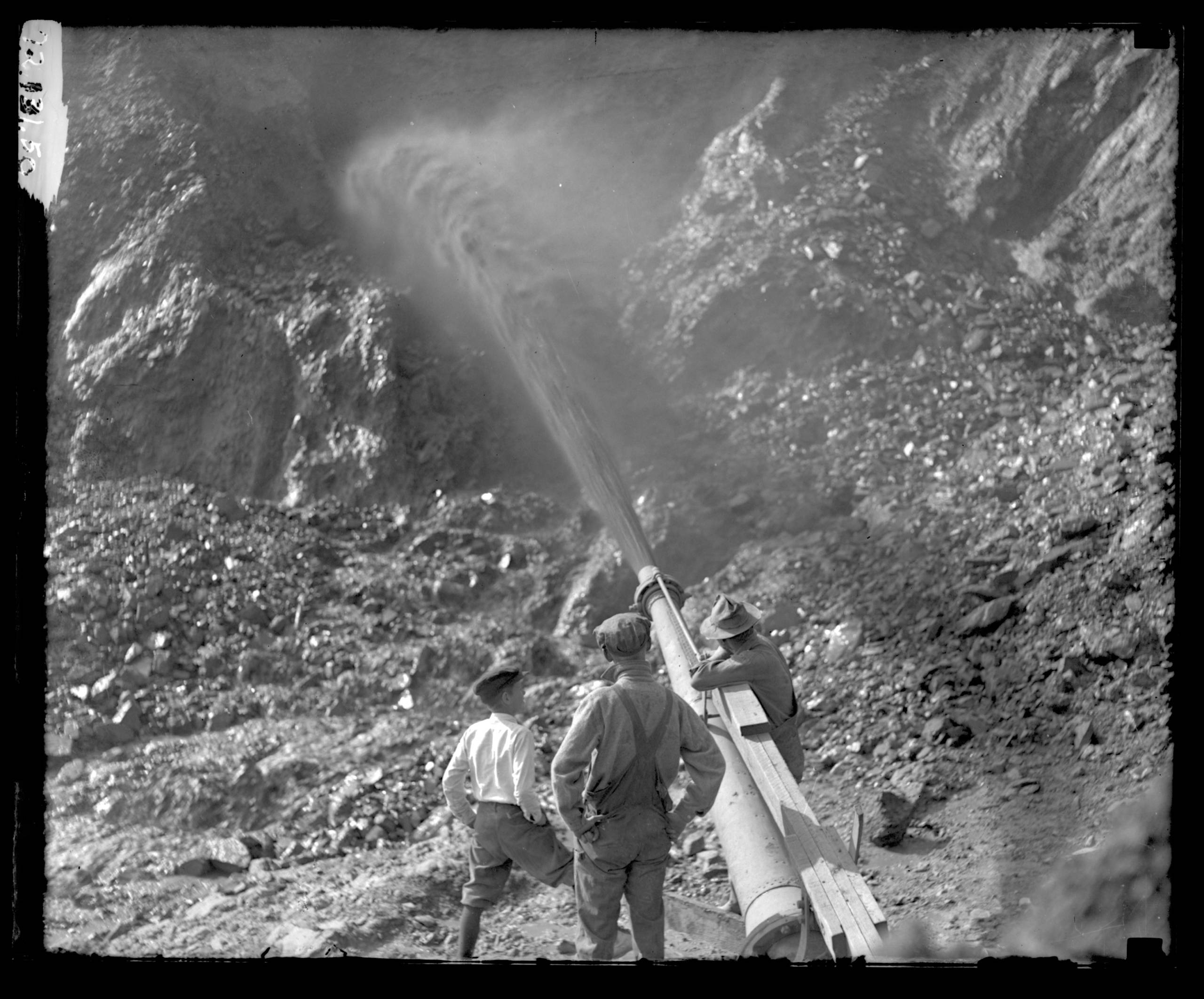
The history of suppressing native fire contributed directly to our era of megafires. Under an 1850 state law, Native Americans were fined, punished and even shot for setting fires. Forests became overgrown and primed to burn.

A historical photo of white men blasting a California cliffside with a high-pressure jet of water.
Harry Courtright, ‘Building a reservoir with hydraulic mining techniques,’ n.d. Photograph. (Collection of the Oakland Museum of California. Gift of Herrington & Olson)

“Our lands are starved of fire,” said Brittani R. Orona (Hupa), co-curator of the exhibition and Assistant Professor of Native American Studies at UC Davis. “Megafires are a result of poor settler management of the lands.”

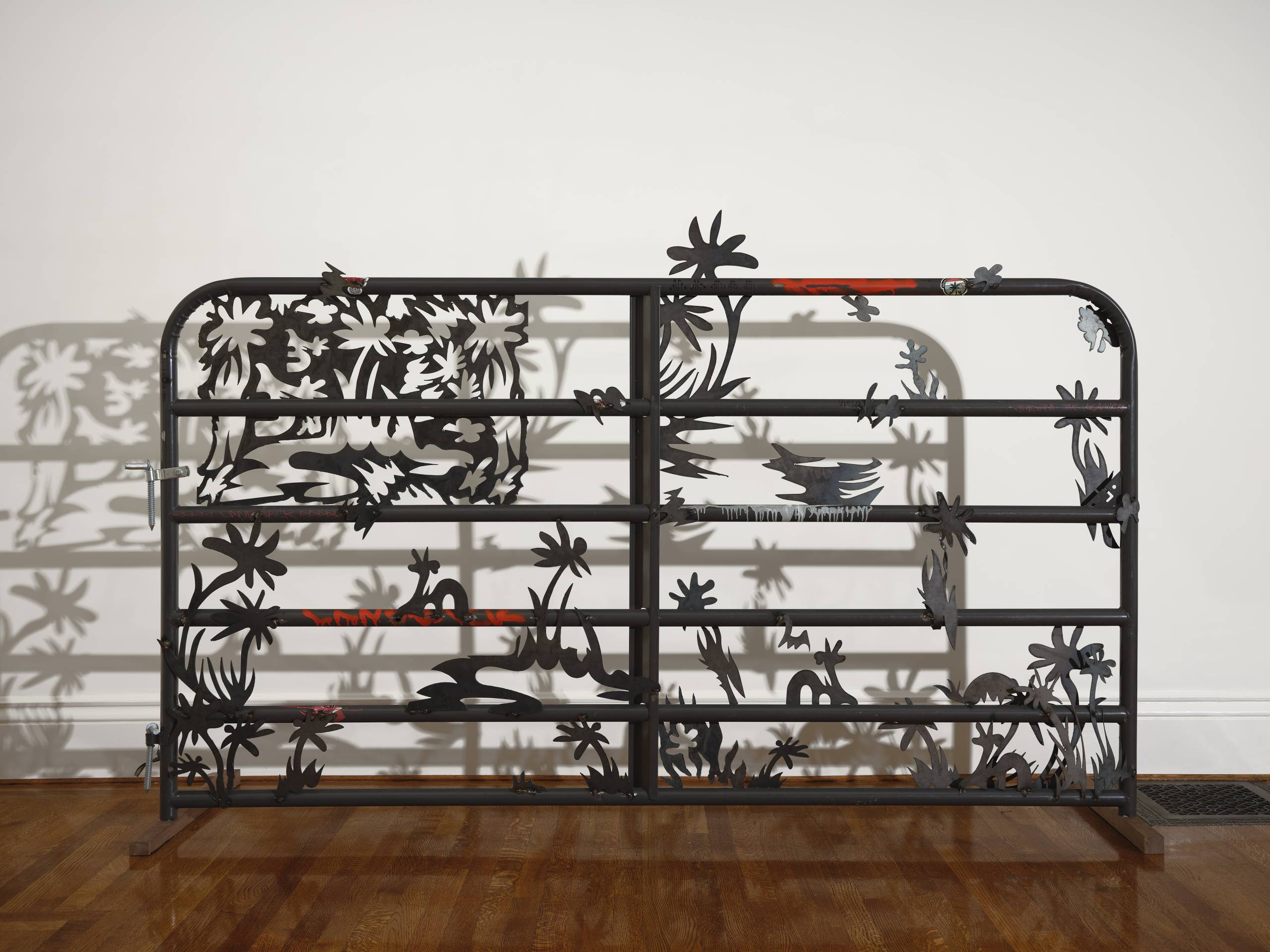
A sculpture by Saif Azzuz (Yurok/Libyan) uses a metal cattle gate to convey how livestock grazing cut off Native access to ancestral lands. But it also incorporates symbols of resilience. Welded into the metal gate are shapes of animals, plants and what appear to be splashes of flame. It’s evocative and moving, and worth lingering at.

A metal sculpture shaped like a fence with silhouettes of flames and plants.
Saif Azzuz (Yurok, Libyan), ‘Who says,’ 2022. Stickers, ink, bungee cord, chains, and steel. (Courtesy of the artist and Anthony Meier, Mill Valley)

Nearby a mixed-media work on paper by Brian D. Tripp (Karuk) says “They Think They Own The Place,” the words crowded around large, flashy dollar signs. (On another copy of the poster at the Gorman Museum of Native American Art, Tripp wrote at the bottom in pen, “BUT WE KNOW BETTER.”)

Many Native people link the process of re-normalizing their use of good fire with the process of restoring personal and community health. Despite a painful past for Indigenous Californians, the future can and does look more hopeful. Fire is integral to that hope. In the exhibit’s final section, a quote on the wall from Jordan Reyes of the Middletown Rancheria of Pomo Indians says, “Doing these cultural burns, we can start to heal each other.”

The last 150 years have shown there’s no California without fire, but we can do more to choose what kind of fires we want. Learning about and supporting those who know how to use good fire is a step along that path, whether we are Native or not. Instead of only fearing and fighting fire, we can befriend it, domesticate it.

“It’s not just an element,” Almendariz said. “It’s alive. And the first thing it wants to do is eat. So you better know what you’re going to feed it. If you starve it, it will become wild.”


Good Fire: Tending Native Lands’ is on view at Oakland Museum of California through May 31, 2026.

lower waypoint
next waypoint
Player sponsored by