Sponsor MessageBecome a KQED sponsor
upper waypoint

In 'Osato/Quiet Conversations,' Home Is Ramune Bottles and Sailor Moon

Save ArticleSave Article
Failed to save article

Please try again

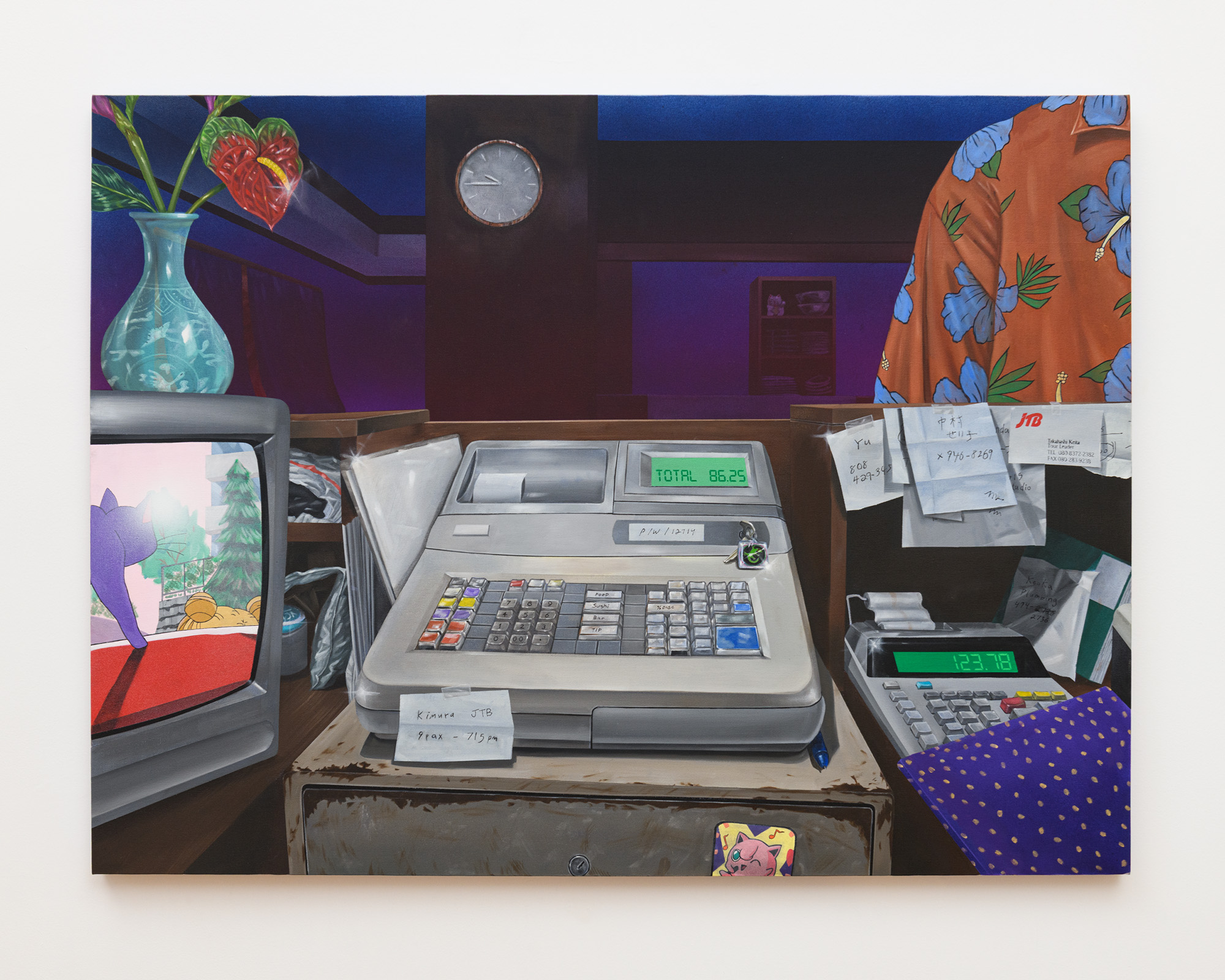
Painting: On a cluttered countertop, there is a cash register, a television set, and several handwritten notes.
Shingo Yamazaki, 'Front of House,' 2025. (Shaun Roberts, courtesy of Glass Rice)

In a reception celebrated with sake and handmade onigiri, the San Francisco gallery Glass Rice opened Osato/Quiet Conversations, a duo presentation of work by Maya Fuji and Shingo Yamazaki, in late October. The exhibition features delicate paintings by each artist, in addition to an immersive VR recreation of Fuji’s grandmother’s house in Kanazawa, Japan.

Osato/Quiet Conversations represents a soft gaze inward and backwards in search of home, or “osato,” the Japanese term for a person’s hometown or upbringing. In the exhibition, Fuji and Yamazaki both explore the remaking of memories held within familial spaces. Mundane objects like house slippers, Pokémon cards and tissue boxes act as quiet elements that both evoke memory and give it texture.

Fuji, for instance, uses family oral history, photographs and home videos to create new moments within her grandmother’s house. Meanwhile, Yamazaki, who was born and raised in Honolulu, paints quiet indoor scenes entwined with distinctly Hawaiian motifs. As a second-generation Japanese and Korean American “without full access to his Zainichi (Koreans living in Japan) lineage,” as stated in the exhibition’s press release, he renegotiates feelings of longing and a fragmented sense of belonging through visually complicated glimpses into “home.”

Both artists quietly interweave artifacts of growing up as mixed-race Asians in America into their work, gesturing towards the intimacy of interior spaces. Through these cultural references, Fuji and Yamazaki call upon the ability of mundane objects to elicit a viewer’s memories, making those experiences integral to the meaning-making of the exhibition.
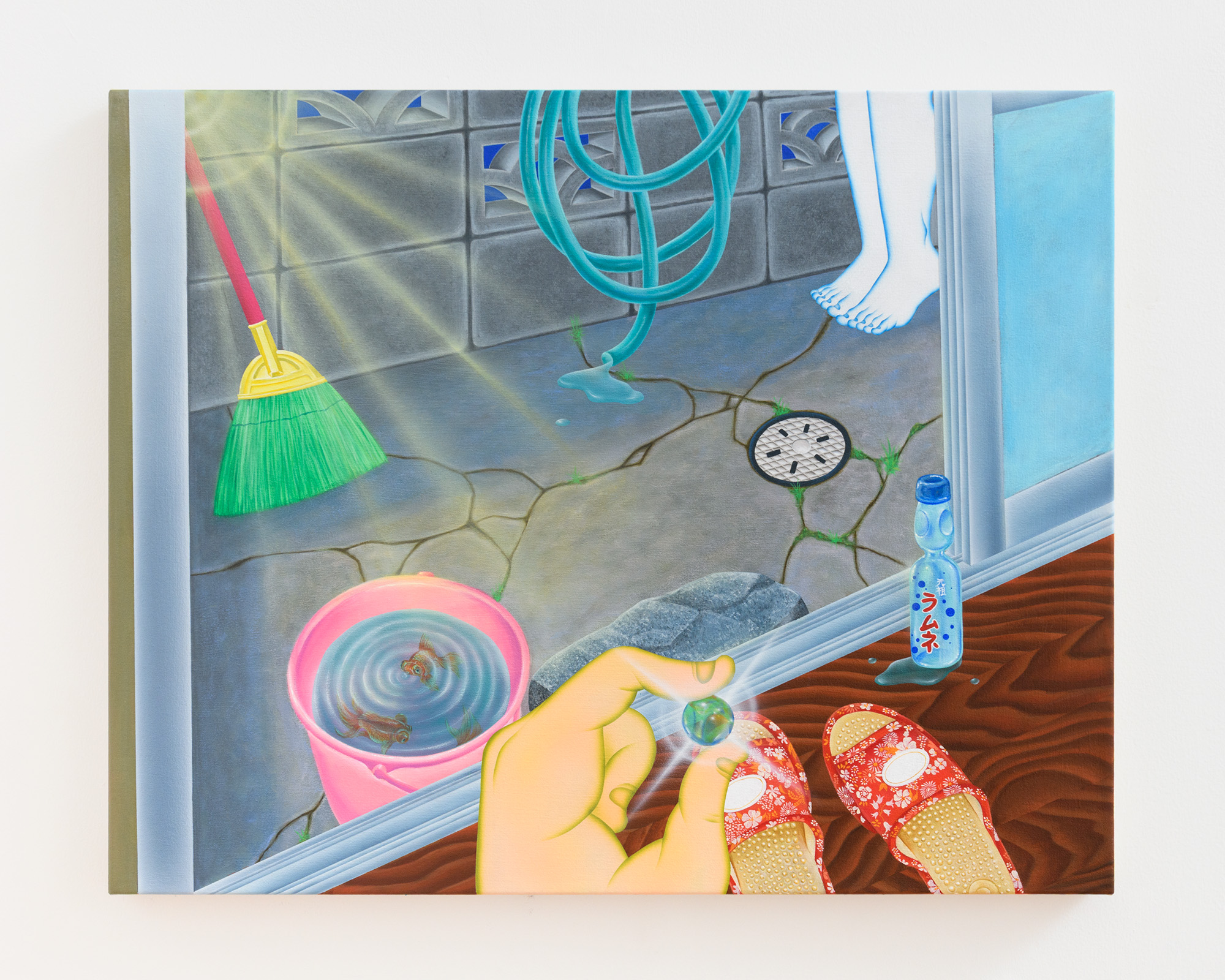
Painting: A hand holds a marble taken from a Japanese soda bottle on the floor below.
Maya Fuji, ‘Finally Mine,’ 2025. (Shaun Roberts, courtesy of Glass Rice)

In Fuji’s painting, Marble of My Eye, soft hands cradle a precious glass ball from within a Ramune Japanese soda bottle, reminding me of my own childhood memories of trying to get that ball out of the bottle with my brother. In Yamazaki’s Front of House — a double meaning, as the depicted space functions as both his family’s restaurant and home — Yamazaki renders a distinct still from Sailor Moon on a TV set, juxtaposing that with a vanitas-style arrangement of hurriedly written notes cluttered around a cash register.
Sponsored

At the opening, the exhibition sparked so many conversations about shared memories of watching shows like Sailor Moon and Pokémon. “A lot of the things they reference in their paintings from when we were growing up in the ’90s and early 2000s hits really close to home for me too,” says Glass Rice director Cecilia Chia. “I really love these layers and meanings of home as what kind of defines your character.”

A beaded red curtain in the back of the gallery marks the threshold to Fuji’s virtual world. In this VR environment, created in Fuji’s signature style (developed in partnership with VR developer Storm Griffith), viewers navigate the quiet Kanazawa countryside home of the artist’s grandmother depicted in so many of the paintings on view.

Visitors can virtually move through the house and pick up the objects that fill the space — like plates of steamed buns or maneki neko Lucky Cat figurines — and overhear the familiar sounds of family chatter, a home video and the gentle hum of a Kanazawa street.

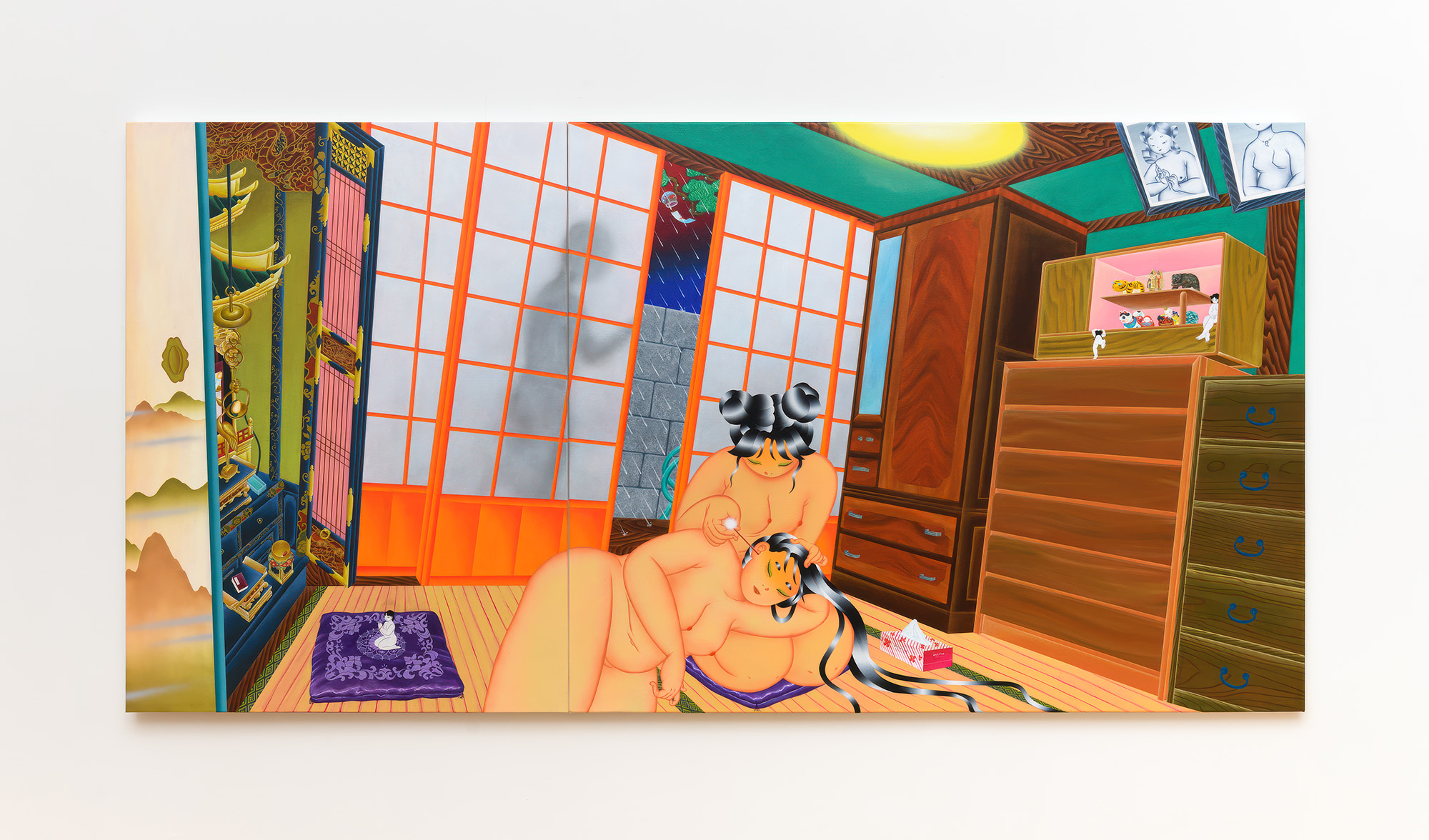
Going through the virtual house, I could almost imagine myself embodied as one of the soft, sensual, almost divine feminine figures that are signature to Fuji’s work, like the central figures in pieces like Listening・聞き耳, her largest painting on view. By activating Fuji’s paintings in an immersive virtual space, memory becomes something that is alive, awake and even playful.

Painting: Inside a traditional Japanese room, two nude Asian women. One cleans the ears of the other with a pick while her companion reclines in her lap.
Maya Fuji, ‘Listening・聞き耳,’ 2025. (Shaun Roberts, courtesy of Glass Rice)

Home is what we make of it. In the end, Osato/Quiet Conversations comes to no distinct answers about home, belonging or what it means to represent those things. Fuji and Yamazaki never represent feelings of cultural in-betweenness as “half” or otherwise un-whole. Instead, their paintings create generative representations of hybridity and overlap, whether that be through Yamazaki’s obscuring hazy washes and translucent lines or Fuji’s playful fusing of contemporary and Y2K aesthetics with traditional Japanese objects and folklore.

Both artists reflect the hazy and disjointed nature of memory and family storytelling while also envisioning profound remakings of home. Fuji and Yamazaki leave room for multiple realities of home, whether it is fogged by the passing of time, sharply remembered in home videos, or made into myth by the artist’s own hand. For them, ‘osato’ is the foundation upon which we all must constantly renegotiate what belonging means to us.


Osato/Quiet Conversations’ is on view through Dec. 6, 2025 at Glass Rice (808 Sutter St., San Francisco).

lower waypoint
next waypoint