Sponsor MessageBecome a KQED sponsor
upper waypoint

‘Train Dreams’ Is a Mesmerizing Portrayal of a Working Man’s Life

Save ArticleSave Article
Failed to save article

Please try again

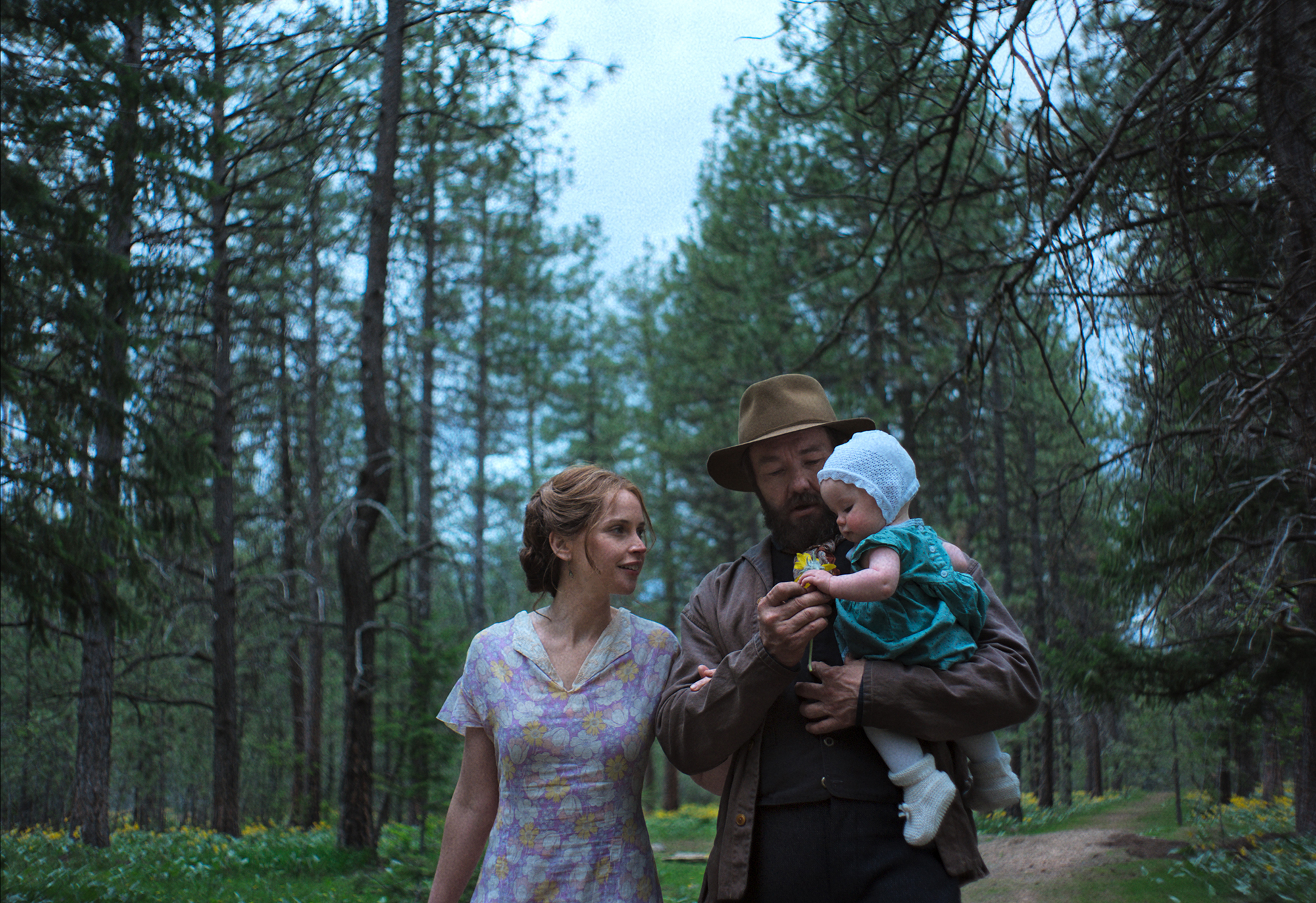
A rural-dressed young couple walk through the woods with a newborn baby
Felicity Jones and Joel Edgerton in ‘Train Dreams.’ (Netflix)

Train Dreams, Clint Bentley’s impressionistic adaptation of Denis Johnson’s much-loved 2011 novella, takes us on a woodsy trek through an ordinary working man’s life. Strewn with revelatory moments, it’s a sincere and enthralling effort to mine the grit, gravity and mystery of life for nuggets of profundity.

As the low-key saga of everyman Robert Grainier (Joel Edgerton), a logger in the Pacific Northwest in the first half of the 20th century, Train Dreams (released Friday, Nov. 7 in theaters and Nov. 21 on Netflix) invites us to set aside our cynicism about both the movies and the real world. The payoff is a rush of unexpected emotions rarely experienced in movie theaters, and one of the most rewarding films you will see this year.
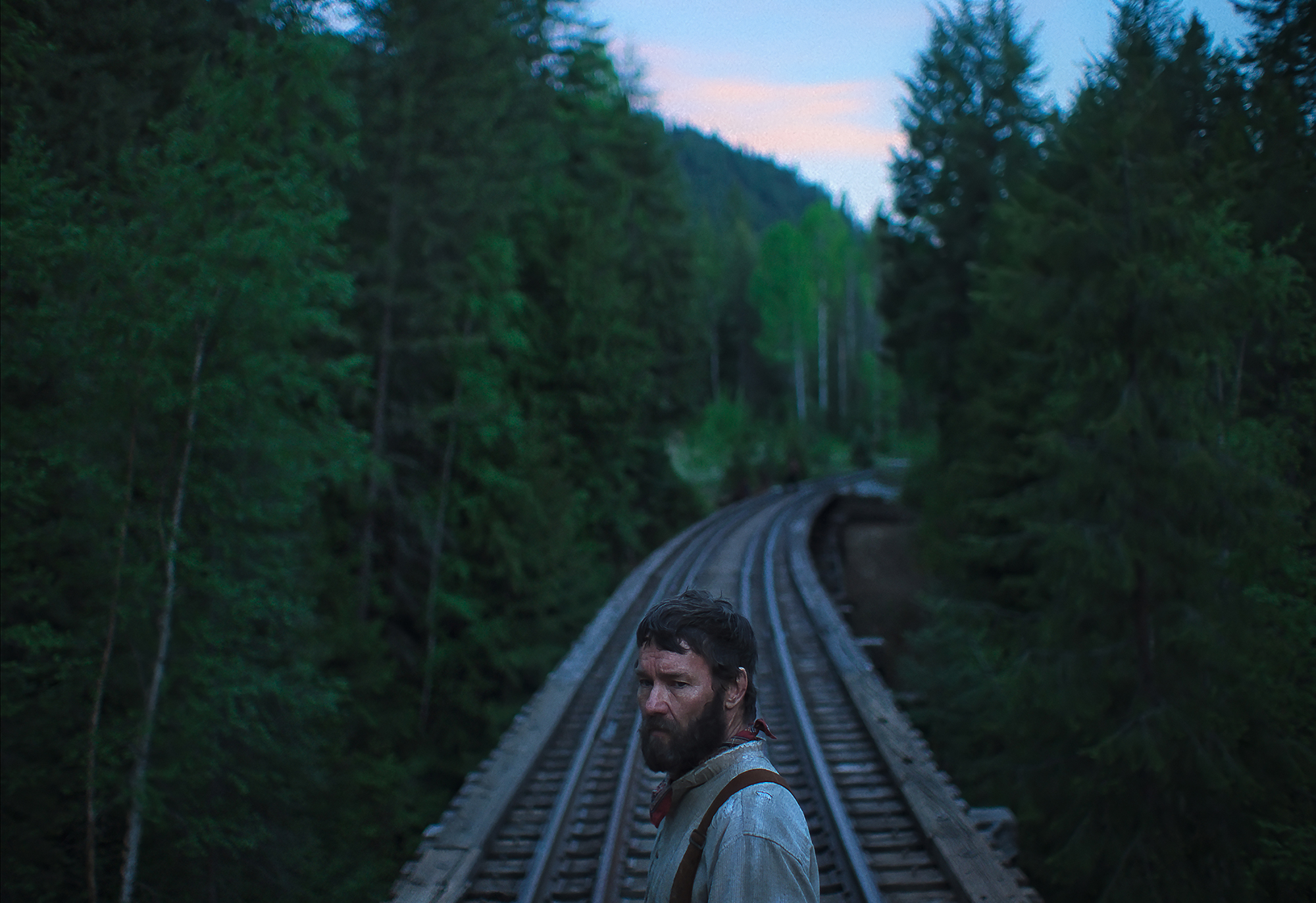
Joel Edgerton in ‘Train Dreams.’ (Netflix)

Train Dreams is less a chronological narrative than a poem in shards, conjuring the subjective and ephemeral nature of memory, nightmares, love and grief in a way that may put you in mind of Terrence Malick’s later works. The film largely operates outside of time; we rarely know what year it is (thanks to Will Patton’s note-perfect narration), while the rural settings elide markers like period clothes.

At the center of Train Dreams is Robert — a blank slate, a tabula rasa, who doesn’t even know where he came from (his parents died when he was very young and he was sent to live with strangers). Without background or baggage, this innocent foundling grows up to be, basically, two strong hands propelled by an understanding that food requires work.

Robert has a rudimentary moral code, though little education (it occurred to me a couple days later that Grainier might not know how to read) and no discernible ambition or destination. Early in the film, though already in his 30s, he meets Gladys (Felicity Jones), who possesses enough initiative and direction for both of them. Indeed, she saw and chose him, rather than Robert courting her.

Felicity Jones and Joel Edgerton in ’Train Dreams.’
(Netflix)

Gladys and their daughter, Kate, quickly become the center of his world, the powerful magnets drawing him home from his seasonal work felling trees. They build a house some distance from town, with no other people in sight. Robert has a purpose now, and a joy he’d never known.
Sponsored

Train Dreams, which debuted at Sundance and premiered locally a month ago in the Mill Valley Film Festival, is an art film, comprised of carefully composed shots of the natural world, about a man with no conception of art. This isn’t ironic so much as intentional: The point of the piece is that even the life of an anonymous, forgotten human being with no special talent or world-changing accomplishment — our lives, say — is festooned with miracles and grandeur and depth.

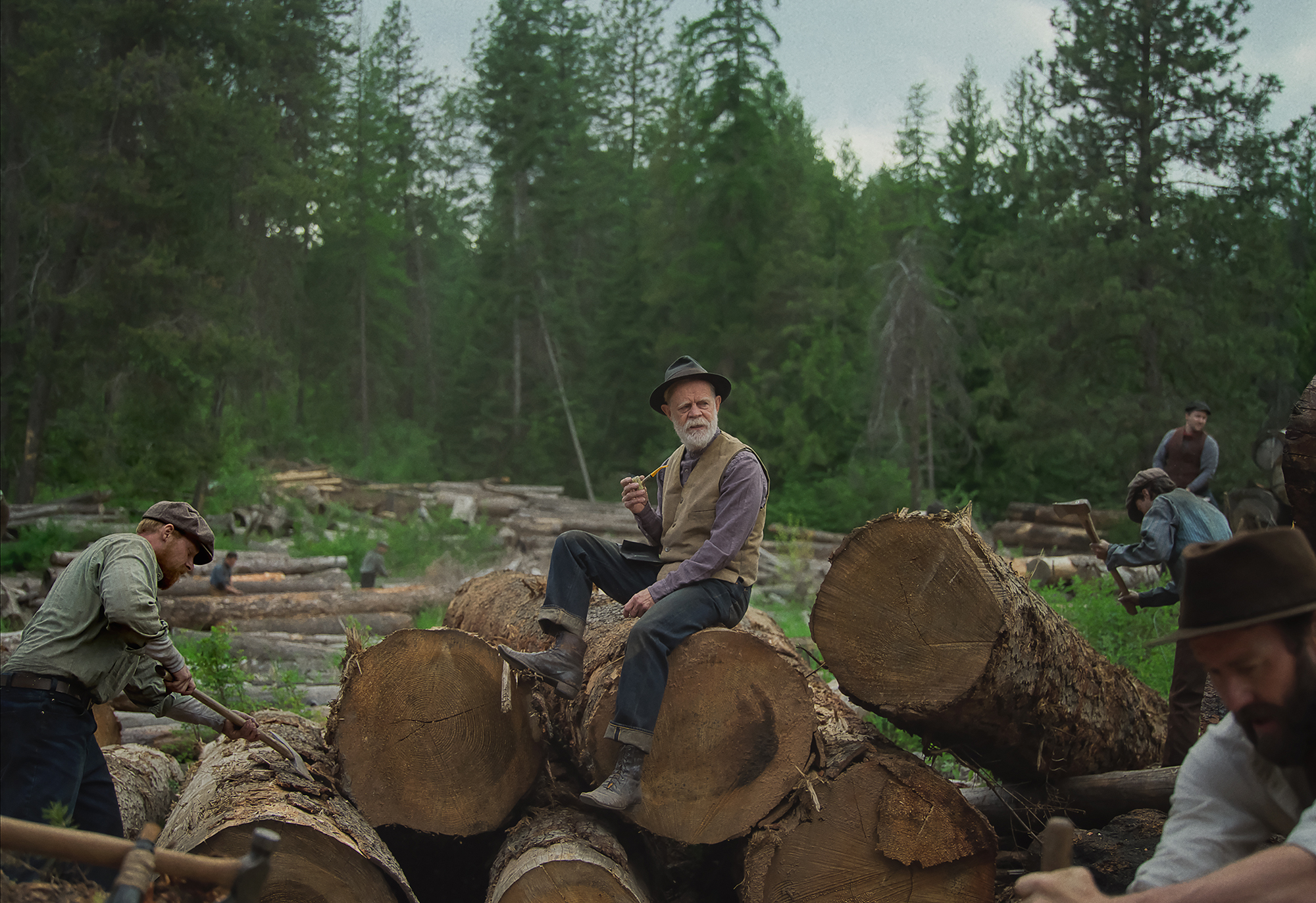
Robert can appreciate natural beauty, along with the danger in nature, though he usually needs someone to call his attention to it. The philosophical explosives expert Arn Peeples (William H. Macy) with whom Robert crosses paths in the forests most years, serves that function. (Macy is one of the film’s defining pleasures; his various affectations seem to emanate from his love for his character rather than a character actor’s impulse to steal scenes).

William H. Macy in ‘Train Dreams.’ (Netflix)

Arn’s ruminations extend to (what we would call today) the sustainability of natural resources and the wages of progress, but director and co-writer Bentley (Jockey) is judicious in his social critique. You don’t have to be an environmentalist or Social Democrat to comprehend Robert’s universe. A simple man who makes his living with his hands and just wants to be left alone to raise a family (the character, in conjunction with Robert Redford’s passing, reminded me of the taciturn protagonist of the 1972 Western Jeremiah Johnson), Robert has several of the characteristics of a MAGA supporter, in fact.

Train Dreams isn’t a political film by any stretch, but at times it plays like a meditation on national existential questions: Is America’s past a dream to those living in the present? Is the American dream, well, a dream? Is life a dream?

You will parse the meaning and ponder the themes of Train Dreams in accord with your own experiences and worldview, of course. For those who work in offices, commute in cars and live in centrally heated and cooled houses, Robert’s rugged outdoorsman may be a bridge too far. So I have a suggestion.

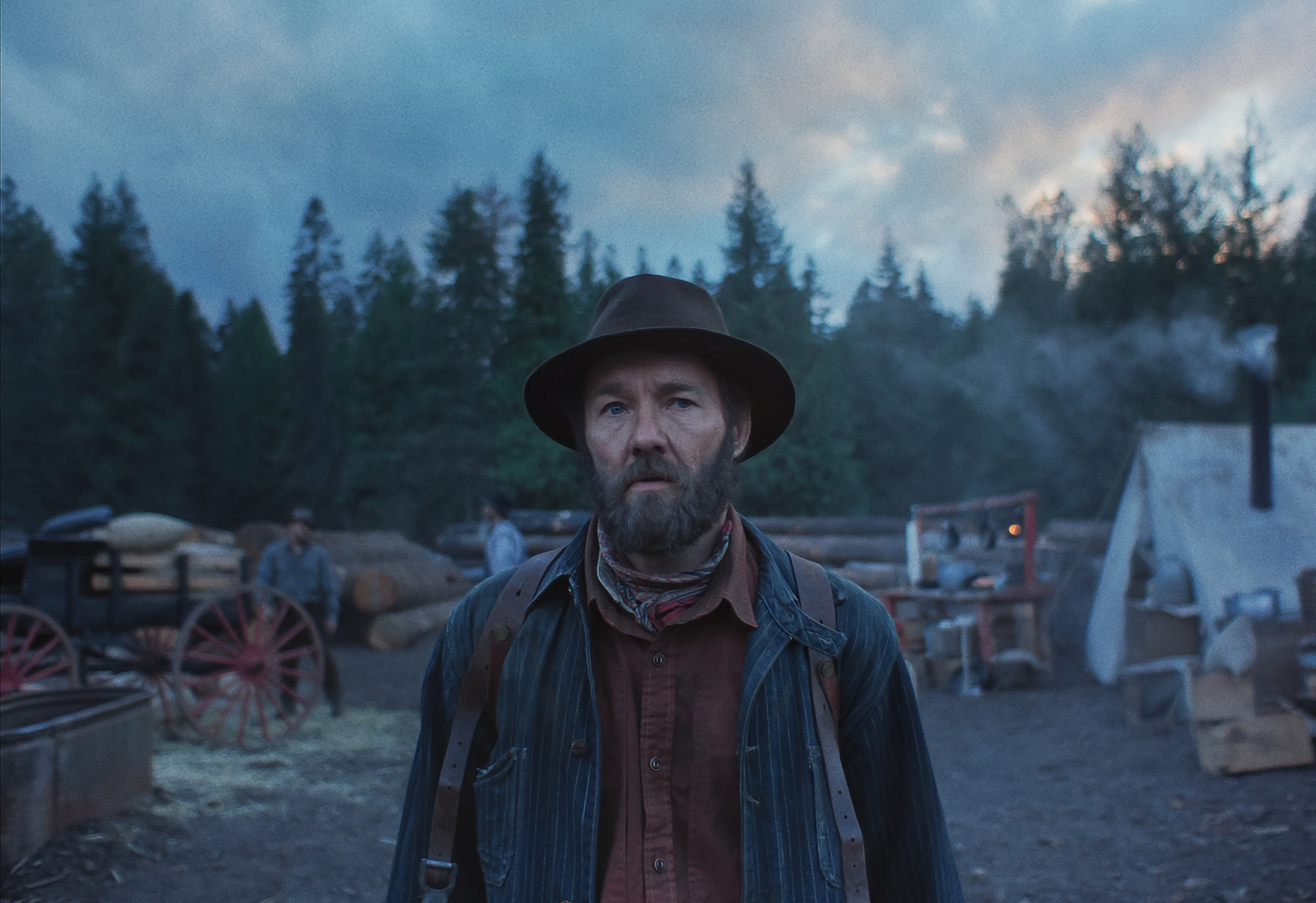
The vast majority of Train Dreams unfolds outside or in very close proximity. It is an elemental film, as in earth, air, fire and water. (Fire isn’t metaphorical for Robert, nor for Bay Area viewers who recall the Oakland firestorm or Paradise conflagration.) That’s one reason it should be seen in a theater: You should enter and depart the world of the film via the outdoors, in a reality not entirely within your control.

Joel Edgerton in ‘Train Dreams.’ (Netflix)

If you do wait and stream Train Dreams at home, take a walk around your neighborhood before settling down to watch. Listen. Breathe in. Take another stroll outside after the film; your ears will be even more attuned to ambient sounds. (Do I need to advise you to silence your phone and keep it in your pocket? Land sakes, man.)

Robert comes to see that he isn’t going to gain wisdom through his experiences, or more control over his world. The truth sets him briefly and gloriously free. Train Dreams is a mesmerizing opening through which to contemplate the passage of time, the significance of love and (dare I say it) the meaning of life.


‘Train Dreams’ is in theaters Friday, Nov. 7 and on streaming Friday Nov. 21.

lower waypoint
next waypoint
Player sponsored by