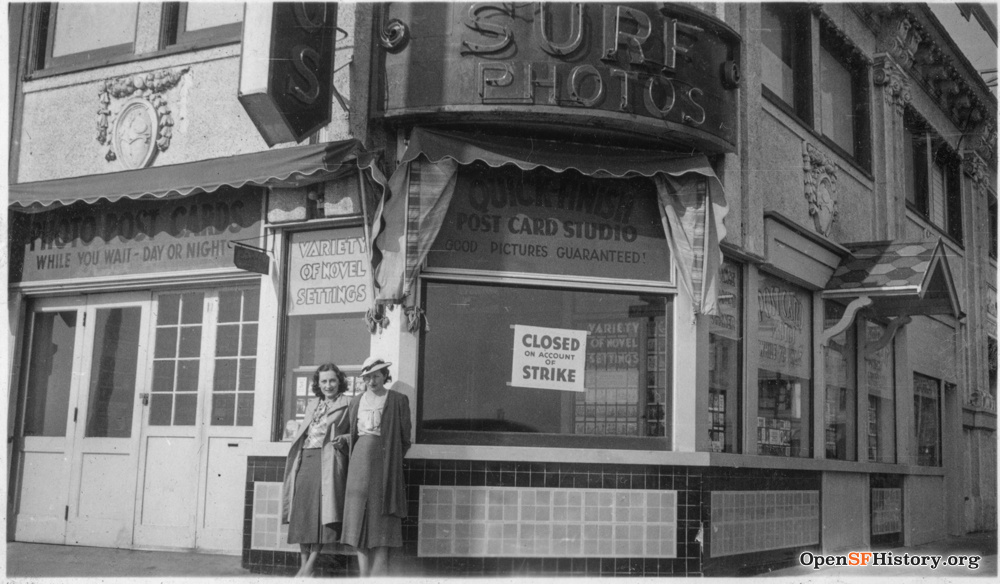
If there’s a lesser-known corner of San Francisco history, chances are Chris Carlsson has peeked into it. The historian, author, director of Shaping San Francisco and co-director of the history archive FoundSF is particularly interested in the city’s labor movements. Signs of those movements can still be spotted across the urban landscape, he says — if you know where to look.
On Nov. 1, Carlsson will lead a free, two-hour bike tour on San Francisco’s labor history as part of the Wattis Institute’s six-month-long research program “Labor is on our mind.” Not only is this a labor-ful way to hit even more historically significant spots, Carlsson has bike bona fides: He helped co-found Critical Mass in 1992.
The tour will kick off at Mission Dolores and end at the Wattis. (Carlsson says there’s so much labor history in San Francisco it’s usually a four-hour tour.) One stop will be Esprit Park in the Dogpatch, in honor of the 1974 Jung Sai garment workers strike; a group of Chinese immigrant women protested their treatment at an Esprit clothing factory in Chinatown. Another stop is Alameda and Bryant, for a taste of just how industrial the Mission used to be; on that corner, a former Hostess factory is now a U-Haul storage center.
“We’ll stop at the shipyards at Pier 70,” Carlsson says, “and talk about the history of militarism and seafaring.” The tour will also touch on legacies of slavery, how 19th-century stories about San Francisco continue to shape our understanding of the city and, of course, the 1934 General Strike.
If time allows, Carlsson hopes to make it to Steuart and Mission Streets to visit the memorial to the International Longshoremen’s and Warehousemen’s Union, created in 1985 by an art collective called M.E.T.A.L. (Mural Environmentalists Together in Art Labor).