In 1886, the industrialist Andrew Carnegie began funding the construction of free public libraries across the United States, eventually lending his name to 1,681 “Carnegie libraries.” Chances are you’ve stepped into a Carnegie library at some point — in San Francisco, the Mission, Golden Gate Valley and Chinatown branch libraries, among others, were all built with the help of the philanthropist’s grants.
Bay Area Carnegie Libraries to Receive $10,000 Each
The unrestricted grants will go to historic Bay Area libraries built with funds from Andrew Carnegie.
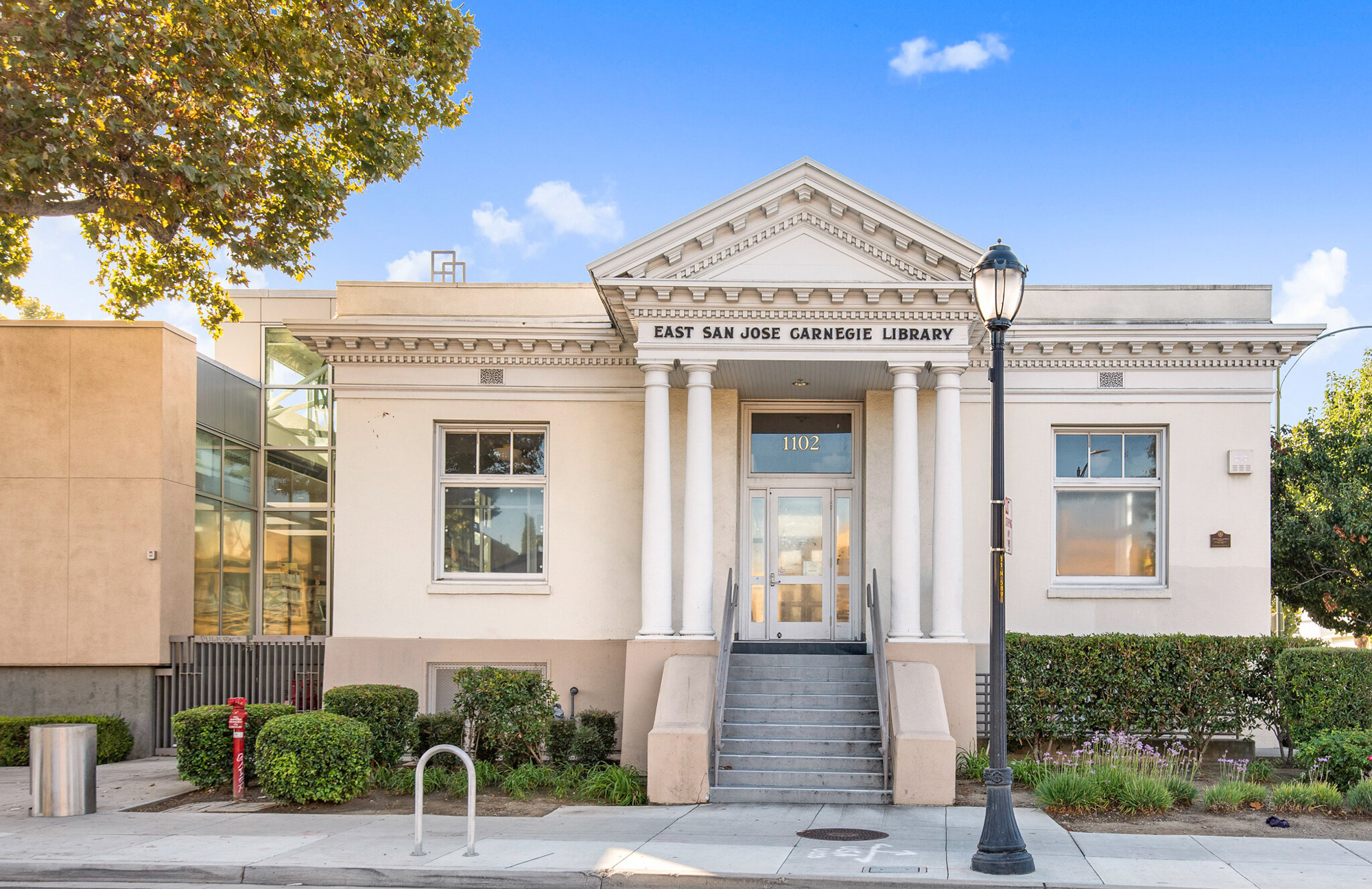
The East San Jose Carnegie Branch of the San Jose Public Library system opened in 1908 with the help of $7,000 Carnegie grant. (Courtesy of San Jose Public Library)
Related Article
Now, thanks to the Carnegie Corporation of New York, Carnegie libraries across the country will each receive a $10,000 donation as part of a $20 million initiative to commemorate the 250th anniversary of the signing of the Declaration of Independence. The funds, to be delivered in January 2026, are unrestricted, and can be used by the libraries in any way they see fit.
Roughly 1,280 Carnegie libraries in the U.S. are still in operation and acknowledge their link to Carnegie, making them eligible to receive the funds. The initiative aims to support “America’s civic institutions and organizations that foster civic participation and bring people together,” according to a press release from the Carnegie Corporation.
San Francisco and Oakland house the majority of still-operating Carnegie libraries in the Bay Area. Other locations include East San Jose, San Rafael and San Anselmo.
While the $10,000 grants are welcome support, public library systems — including those in the Bay Area — continue to face financial headwinds and deferred maintenance.
At the national level, President Trump signed an executive order earlier this year seeking to dismantle the entire Institute of Museum and Library Services. A total of $30 million in IMLS grants meant for museums and libraries were terminated or frozen this year. (The IMLS recently announced it will support “Freedom Trucks,” mobile exhibits of American history, to celebrate the country’s semiquincentennial.)
For the Carnegie Foundation, the library donations are part of an effort to reduce political polarization and, in the process, help strengthen these civic institutions facing persistent funding challenges.