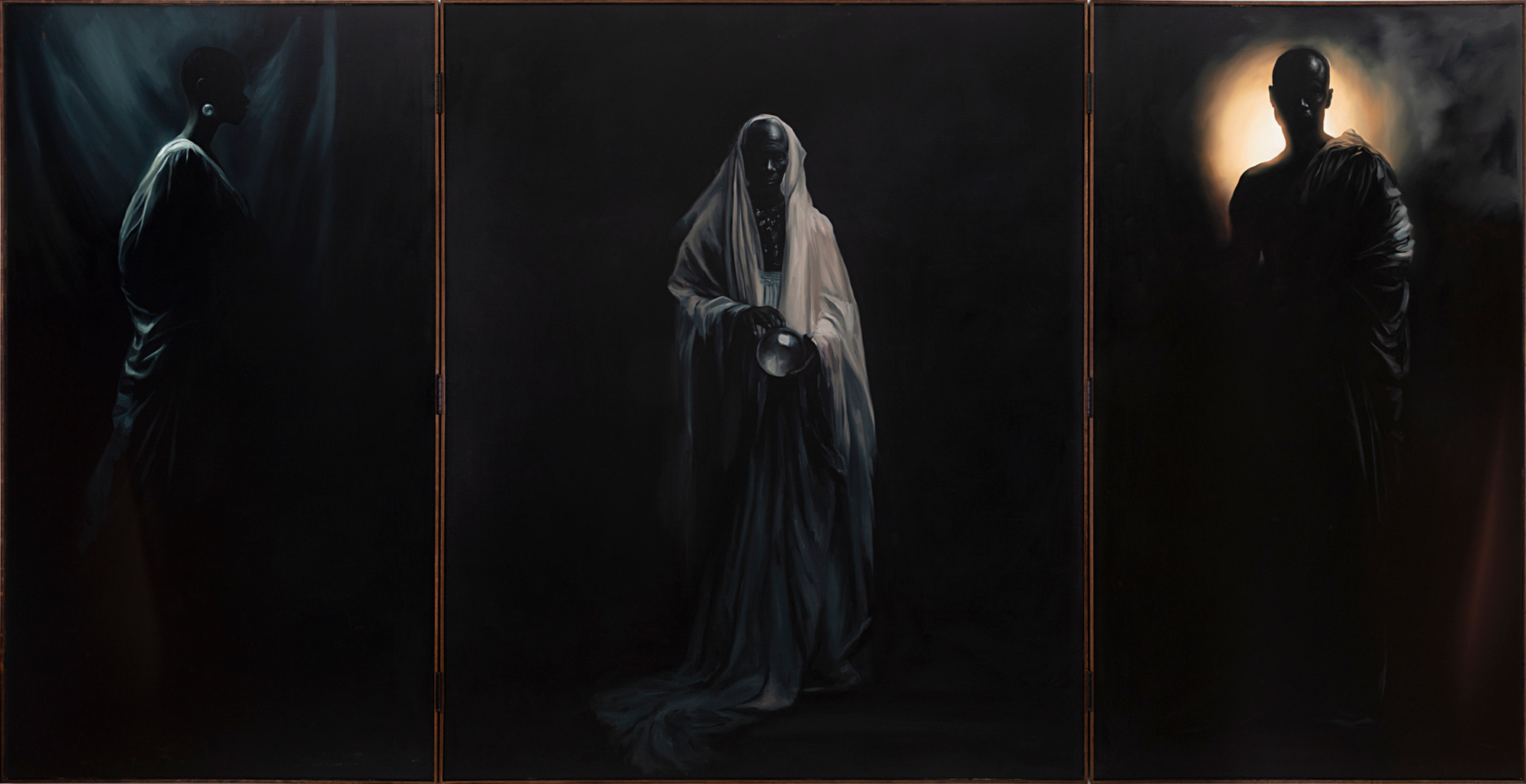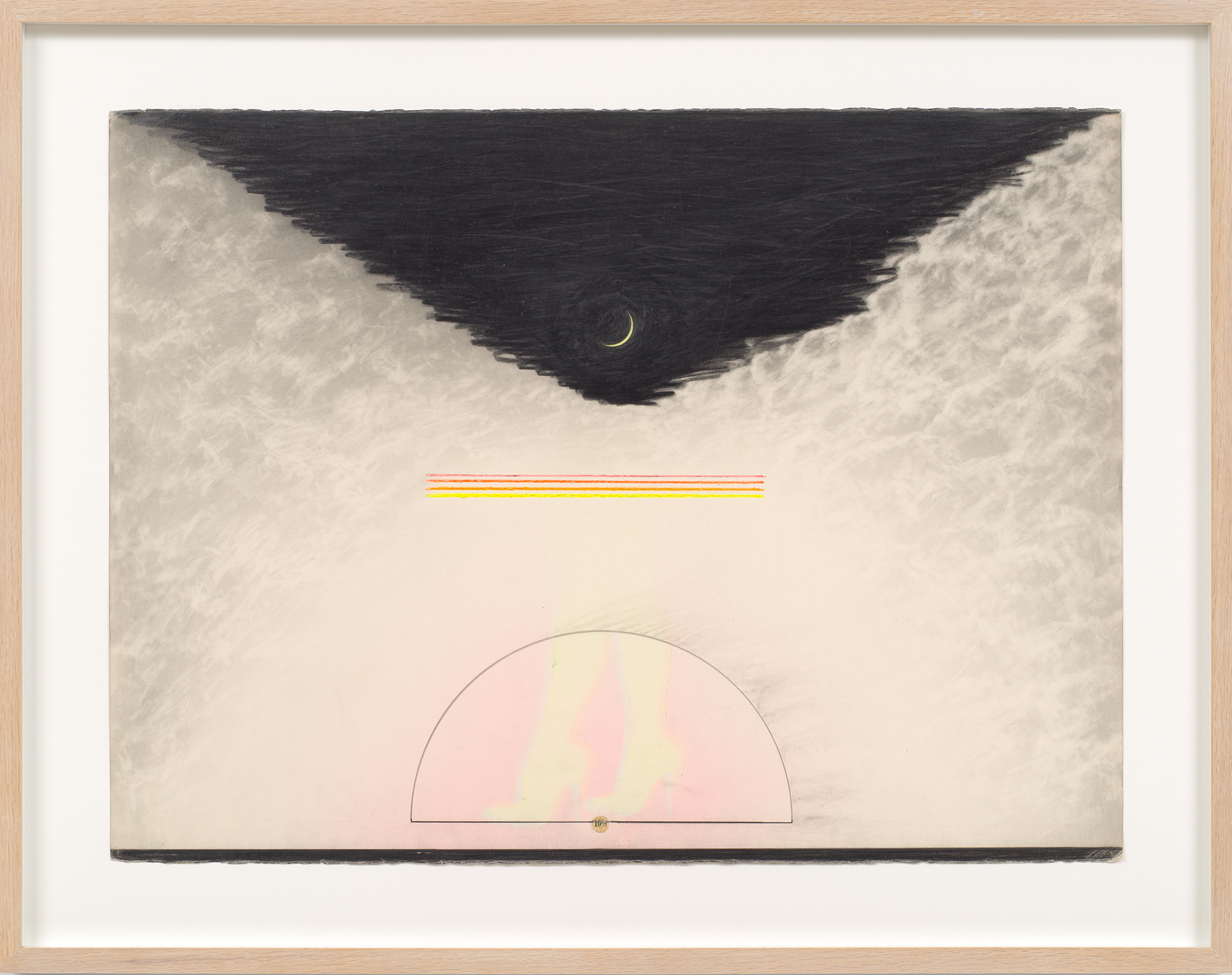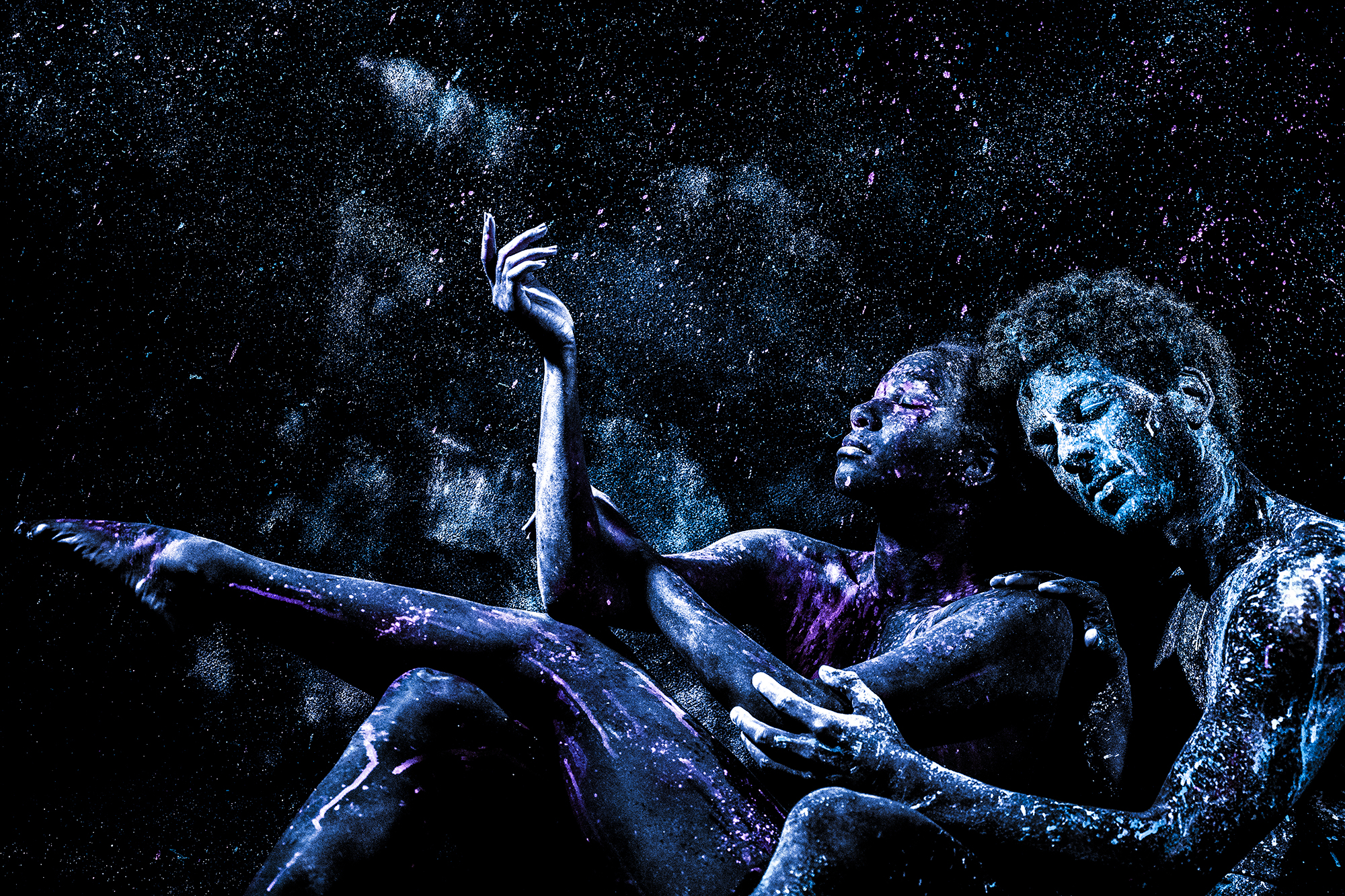
We walk among giants. Paragons whose vision rises above the Earth, and whose example lifts us with them, toward a freer tomorrow.
Unbound: Art, Blackness and the Universe, a new exhibition at the Museum of the African Diaspora (MoAD), is physically confined by four walls. But its central proposal goes like this: What if humankind could release itself from terrestrial limitations — and in the process, transcend religion, technology and myth as well?
It may seem like a heady concept. But the first exhibition at the newly reopened MoAD, which spent six months closed for lighting and HVAC upgrades, is both visually and cerebrally stunning, and delivers on its promise more often than not. Expanding beyond familiar staples from the past decade of art spaces’ fixation on Afrofuturism, it challenges the viewer not to reflect backward, but to push forward in newness and courage.
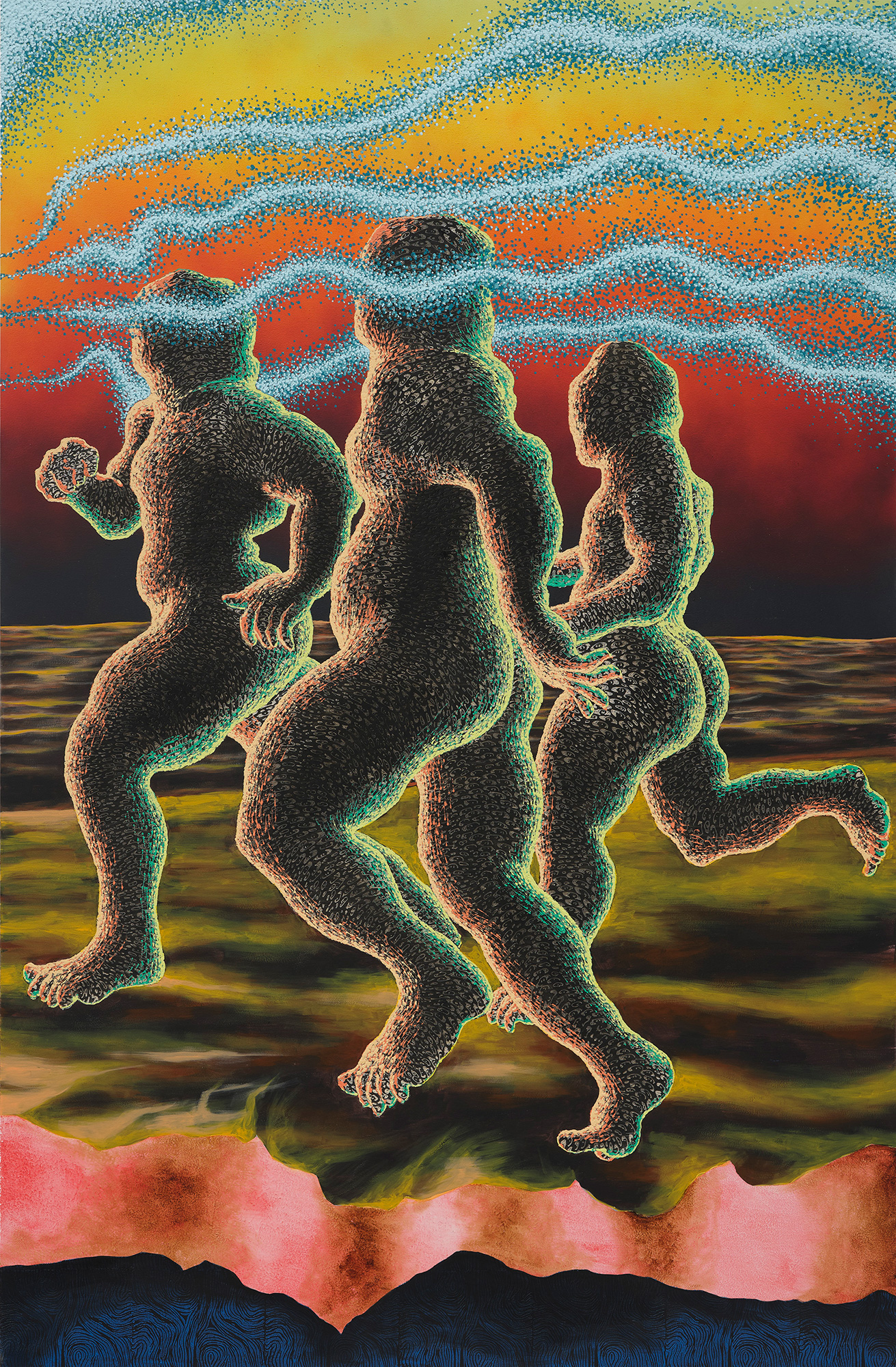
Take Didier Williams’ painting Dark Shores, depicting three running figures whose faceless bodies are alive with vibration, streaks of light blue energy floating around their heads. Can we, mere mortals, hope to achieve this state of being while racing toward an unknown destination?
Doing so requires seeing the world in new ways, like Lorna Simpson’s Blue Turned Temporal. Its massive landscape of a blue and iceberg-like monument is flecked with slim, vertical columns of partial text. Is the text the interruption on the landscape? Or is the landscape the dreamlike picture of possibility beyond our text- and screen-heavy existence?