Have Other Musicians Benefited From Taylor Swift’s Fight for Her Masters?
Taylor Swift turned masters ownership from a behind-the-scenes conversation into a mainstream debate.
Isabella Gomez Sarmiento, NPR
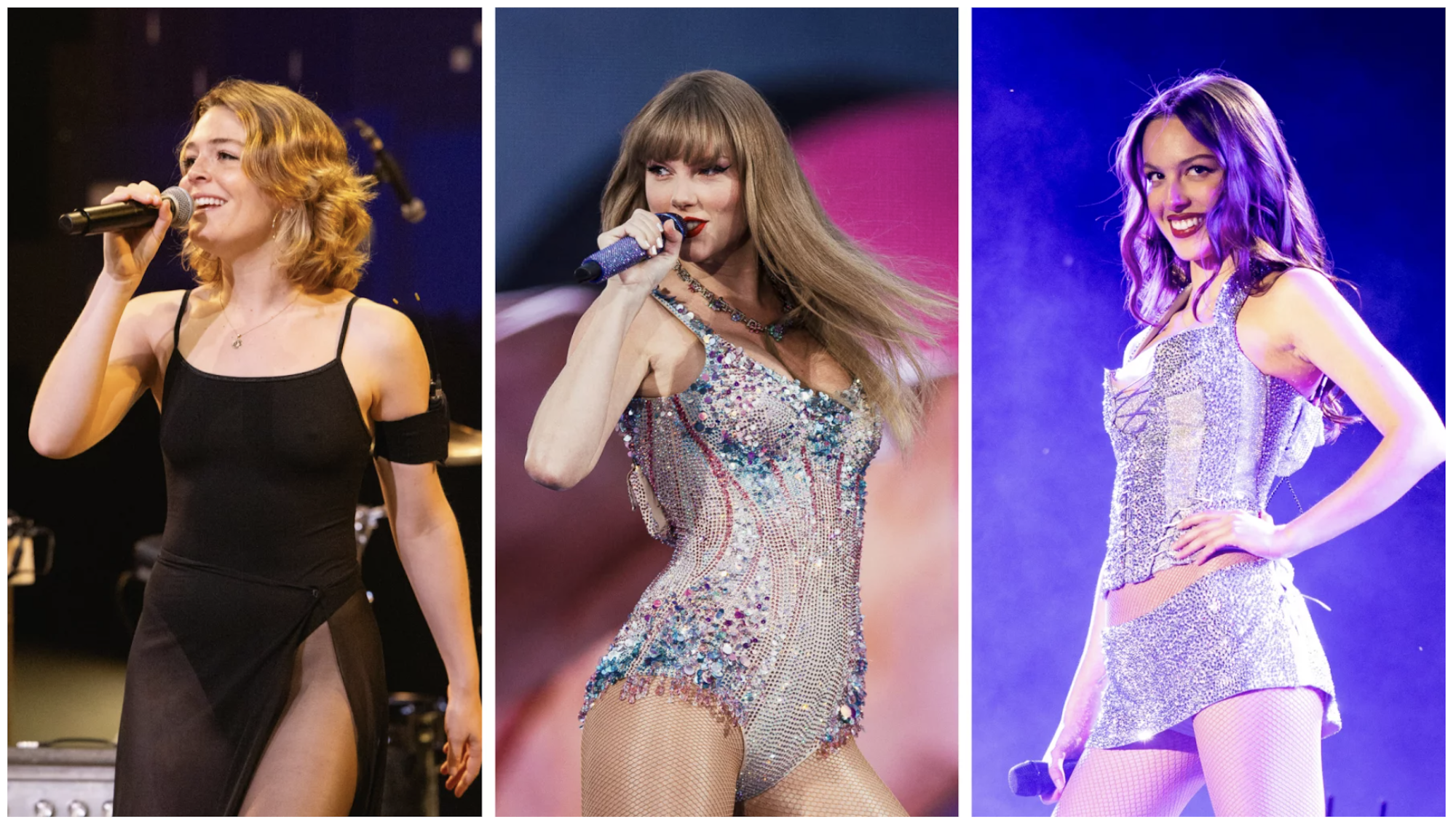
Maggie Rogers, left, Taylor Swift and Olivia Rodrigo have all spoken about the importance of owning master recordings. (Rick Kern/Getty Images; Photo by ANDRE DIAS NOBRE/AFP via Getty Images/Joshua Applegate/WireImage)
When Taylor Swift appeared on the podcast New Heights in August, she said she’d been saving up to buy back her master recordings since she was a teenager.
“I thought about not owning my music every day,” Swift stated on the show, which is co-hosted by her fiancé, Travis Kelce. “It was like an intrusive thought that I had every day.”
Related Article
Swift already owned the publishing rights to her music, which apply to the composition and lyrics of a song. But the masters rights for her first six albums — which means the actual recorded versions of her songs and music videos — belonged to her first label, Big Machine Records, as is standard in the music industry. This year, Swift finally struck a deal and reclaimed the master recordings from Shamrock Capitol, the private equity firm that acquired them in 2020. It was the culmination of a years-long battle in which the pop star turned masters ownership from a largely behind-the-scenes industry conversation into a mainstream debate about artist autonomy.
In 2019, the pop star aired her grievances against star manager Scooter Braun after his company Ithaca Holdings acquired Big Machine, and Swift’s early catalog along with it. She consequently embarked on a journey to re-record her earliest material, giving birth to the Taylor’s Version albums. The 35-year-old’s ability to finally buy back the originals marked a full circle moment in her career, echoing similar deals reached by Jay-Z and Rihanna in the past.
In recent years, more and more artists, particularly young women, have made owning their masters a priority early in their careers, including Maggie Rogers, Ice Spice and Olivia Rodrigo (who cited Swift as a direct inspiration). Industry experts say Swift, who turned the business transaction into a deeply personal ordeal, added fuel to an already-growing fire in the industry: thanks to the rise of DIY production, digital service providers and social media, the music marketplace is trending toward artist ownership.
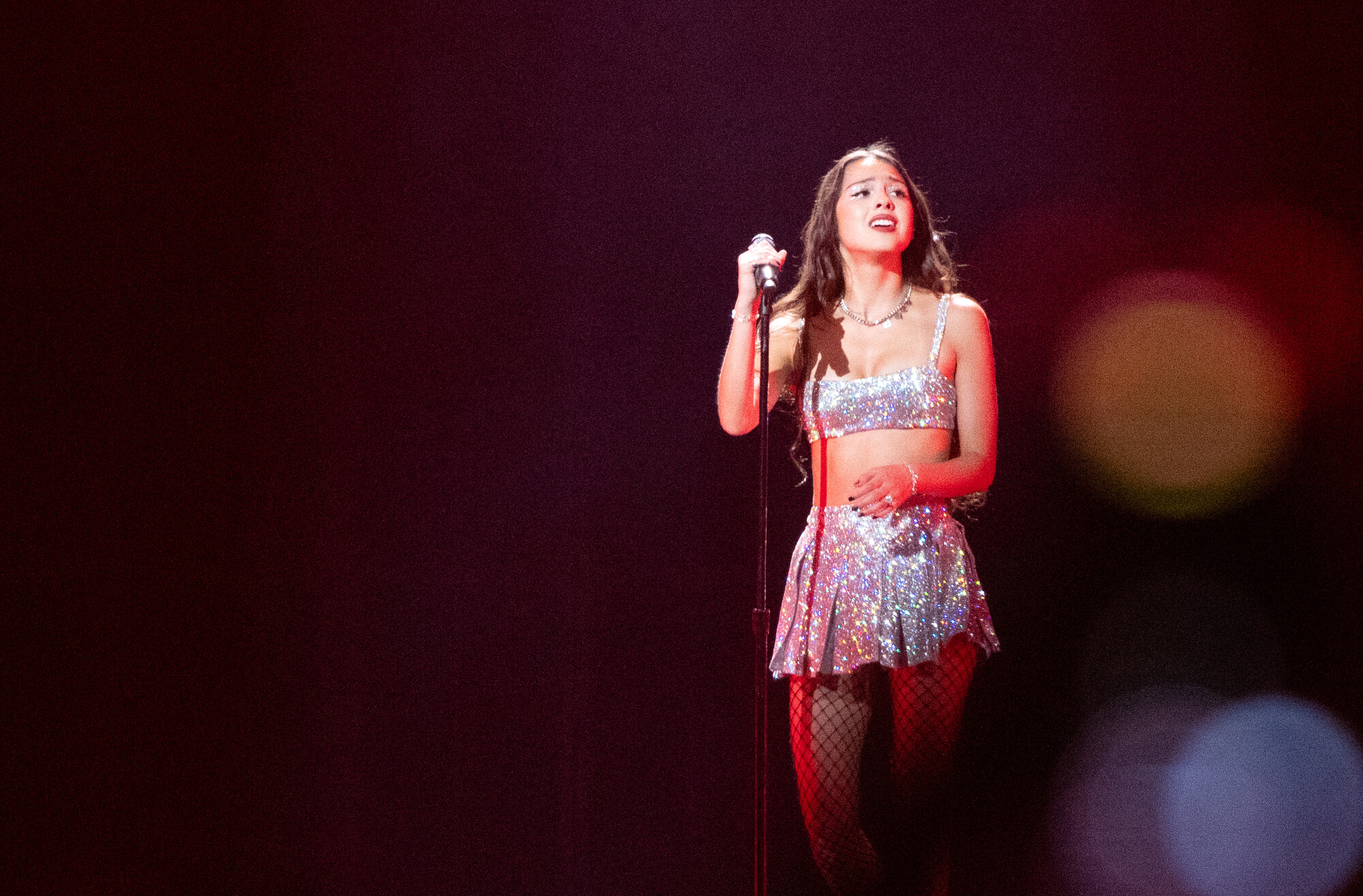
Olivia Rodrigo performs during her GUTS World Tour at the Chase Center in San Francisco on Aug. 2, 2024. (Gina Castro/KQED)
One-sided deals of the past
It became standard practice for record labels to own masters during the earliest days of music recording. Booking studios, hiring producers and mixing songs was a lengthy and expensive process — one that emerging artists could rarely afford without a label advance.
“As a result, you had these companies coming in and bestowing upon these young talents this check to enable them to create recordings that the label could then make money with,” says David Herlihy, an entertainment attorney and music industry professor at Northeastern University. “And so the labels owned the recordings.”
Artists like Little Richard and The Beatles signed infamously one-sided deals at the start of their careers, resulting in legal battles for years to come. In some cases, bands like The Rolling Stones launched their own labels once their initial record deals expired. Other artists, like Michael Jackson and Prince, leveraged hit albums in order to renegotiate their contracts.
“It was a function in a particular artist’s case of having massive success and having the stature in the industry that they could demand it,” says attorney John Branca, who represented Jackson and heads the music department at the entertainment firm Ziffren Brittenham LLP. “It wasn’t a common occurrence and still is fairly rare. But it’s more common today than it was in the past.”
“Artist-friendly” shift
But with the digital revolution, music production and distribution became increasingly democratized. Artists gained not only the ability to record music inside their bedrooms, but also to post it directly online.
In 2016, a video of then-unknown NYU student Maggie Rogers playing Pharrell Williams a demo of her song “Alaska” went viral. It turned the recent grad into an overnight sensation, which she wasn’t expecting — she told Billboard she didn’t even know the video would get published online. But while Rogers grappled with her newfound spotlight, it also allowed her to push for a contract retaining the rights to her music. “The Pharrell video gave me enough leverage to say, ‘These are the terms, who wants to do the deal?’ ” Rogers told Billboard in 2019. “I was a 22-year-old woman who got to walk into a boardroom and be the one in control.”
Rogers’ story is not a one-off example; it’s a representation of how labels now pluck aspiring artists with a strong social media presence from personalized algorithms into mainstream success. Megan Thee Stallion, Clairo and Shawn Mendes all harnessed viral clips on platforms like YouTube and Vine to sign record deals. The rise of TikTok has further disrupted the music industry, both by largely dictating what songs end up becoming breakout hits on the Billboard charts and by boosting content creators like Addison Rae and Alex Warren into pop legitimacy. Going into label conversations with cultural clout and a preexisting fan base has given musicians a new kind of upper hand in the digital age.
“What you’re seeing now are licenses where there’s ownership on both sides,” explains attorney Jason Boyarski, who has represented artists including Prince, Marc Anthony and Fetty Wap.
Related Article
The terms and lengths of those licenses vary by artist, he explains. But whereas labels used to frequently own master recordings in perpetuity, leaving artists solely with royalty earnings, today’s licenses often revert back to musicians after a period of time. Boyarski says this is similar to a shift in music publishing deals, where the copyright for a song’s lyrics and composition is eventually returned to the songwriter. That’s largely thanks to the Copyright Act of 1976, which deemed that starting in 1978, authors could reclaim the rights to their songs after a certain number of years (even if they had previously signed or sold them to a label).
“In the music publishing business, you’ve seen a gold rush of music catalog sales in large part because of full reversions, either the ones that happened under the Copyright Act or contractual reversions,” he explains. “You’re seeing songwriters with the power to sell. We see the master sale gold rush coming soon.”
(In recent years, Bob Dylan and Neil Diamond — both of whom owned their masters and their publishing rights — sold both to major labels, with Dylan reaching a separate agreement for each catalog.)
Digital service providers like Spotify and Apple Music have also made it easier for artists to strike deals with distributors directly without needing to go through a label. For some artists, including Boyarski’s client and TikTok sensation JVKE, that means it’s more feasible to stay independent and focus on growing an audience through social media.
Partnerships and superfans
Despite the internet’s impact — and paradigm shift — on the recording industry, artists still reap huge benefits from signing to major labels. (Just look at Billboard’s Hot 100 chart, which is still dominated by label-backed talent). Jonathan Eshak of Mick Management, which represents artists including Maggie Rogers, The Marías and Leon Bridges, says those relationships have become increasingly equitable over the last few decades.
“It used to be where these labels would come in and they would present like it was an acquisition. We needed them, and they were going to acquire us and fulfill our dreams,” he says. “Now they come in and say, ‘As partners, how can we be additive?’ ”
Jason Boyarski says his firm has seen more transparent royalty splits between artists and labels, and shorter deals for three or four albums as opposed to five or six. But the Taylor Swift story did come with one drawback: stricter rerecording clauses.
“[Labels] pay a lot more attention to rerecord restrictions,” says Boyarski. “In catalog sales, now the buyers — especially the private equity buyers — are insisting on rerecord restrictions in those deals, too.”
Although it’s not uncommon for artists to re-record songs, Swift pushed the practice to a new plane. All four Taylor Version albums topped Billboard‘s Top 200 albums chart and spawned hit singles, including the 10-minute rendition of “All Too Well,” and new collaborations with artists like Chris Stapleton and Phoebe Bridgers. Re-record restrictions have long existed in standard record deals, typically indicating that an artist has to wait a certain number of years (or for the end of their contract) in order to recreate existing songs. But Swift’s massive success is pushing labels to make those clauses longer and less forgiving, say Herlihy and Boyarski.
Another major takeaway from the Taylor’s Version project? A dedicated fanbase goes far. The democratization of the industry may be tipping the ownership scales in the artists’ favor, but DSPs and social media have also led to increasingly fractured income streams. Although Goldman Sachs predicts that global music revenues will double by 2035, a hit single or a sold-out show is no longer the main metric of profitability. The streaming economy, social media monetization and subscription-led online communities (think Patreon or OnlyFans) are all pushing the needle.
Related Article
That’s why “super fans,” or fans who support artists across multiple mediums like touring, merch and physical album sales, are becoming more important than ever. Holding on to masters and publishing rights will continue to give artists maximum financial and artistic control over their careers — but keeping fans satisfied and consistently engaged is the ultimate goal for the industry’s bottom line.
“It’s always been about fans and how fans feel about the artists,” says David Herlihy. “But now the way that that is monetized in targeted advertising and in surveillance capitalism, it’s all really changing the way that music generates money for profit-seeking companies.”