Sponsor MessageBecome a KQED sponsor
upper waypoint

‘The Art of Manga’ Brings New Worlds to the de Young Museum

Save ArticleSave Article
Failed to save article

Please try again

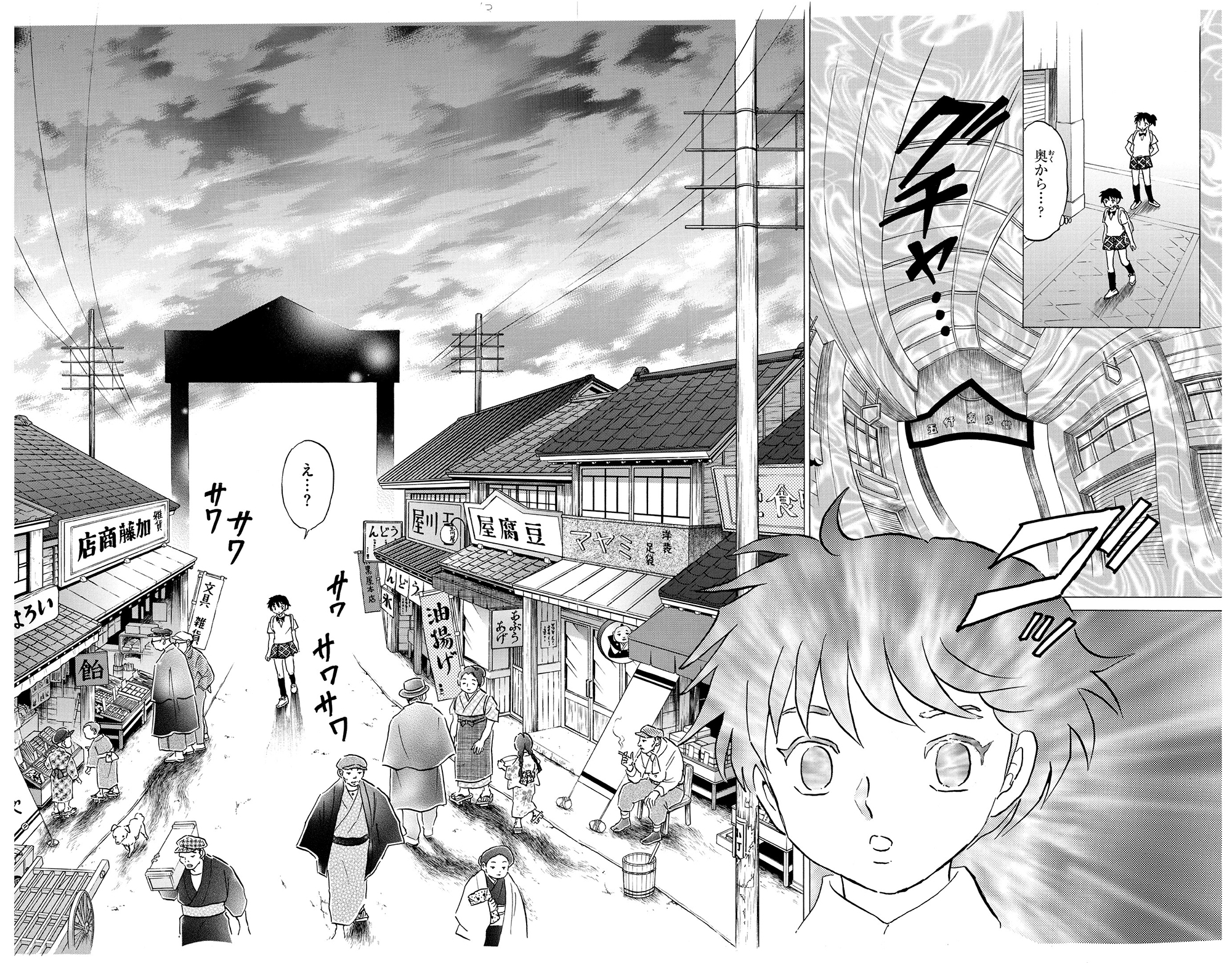
A black and white illustrated panel with a collage of a Japanese city scene of markets and storefronts, with a large face of a young girl superimposed in the lower right corner
‘Art of Manga’ at the de Young Museum is the first large-scale exhibition of its kind in San Francisco. Pictured above is art work from the Takahashi Rumiko (高橋留美子) manga, ‘MAO’ (MAO マオ). (© Rumiko Takahashi / Shogakukan)

Manga as a medium is meant to be intimate. Something portable to carry in your hands, whether bound in a thick, glossy magazine, or glowing from the screen of your phone.

Anime adaptations of manga may add sound, motion, and color, creating worlds that seem to leap off the page. But the true power of manga is its ability to compress entire universes into stark black-and-white panels, inviting the reader to exercise their imagination.

As the first large-scale exhibition of its kind in North America, Art of Manga at San Francisco’s de Young Museum feels like stepping inside one of those panels. A feast for fans, but still accessible to manga outsiders, it guides the viewer patiently through the genre’s terms, stories, storyboard sketches, influences and techniques.
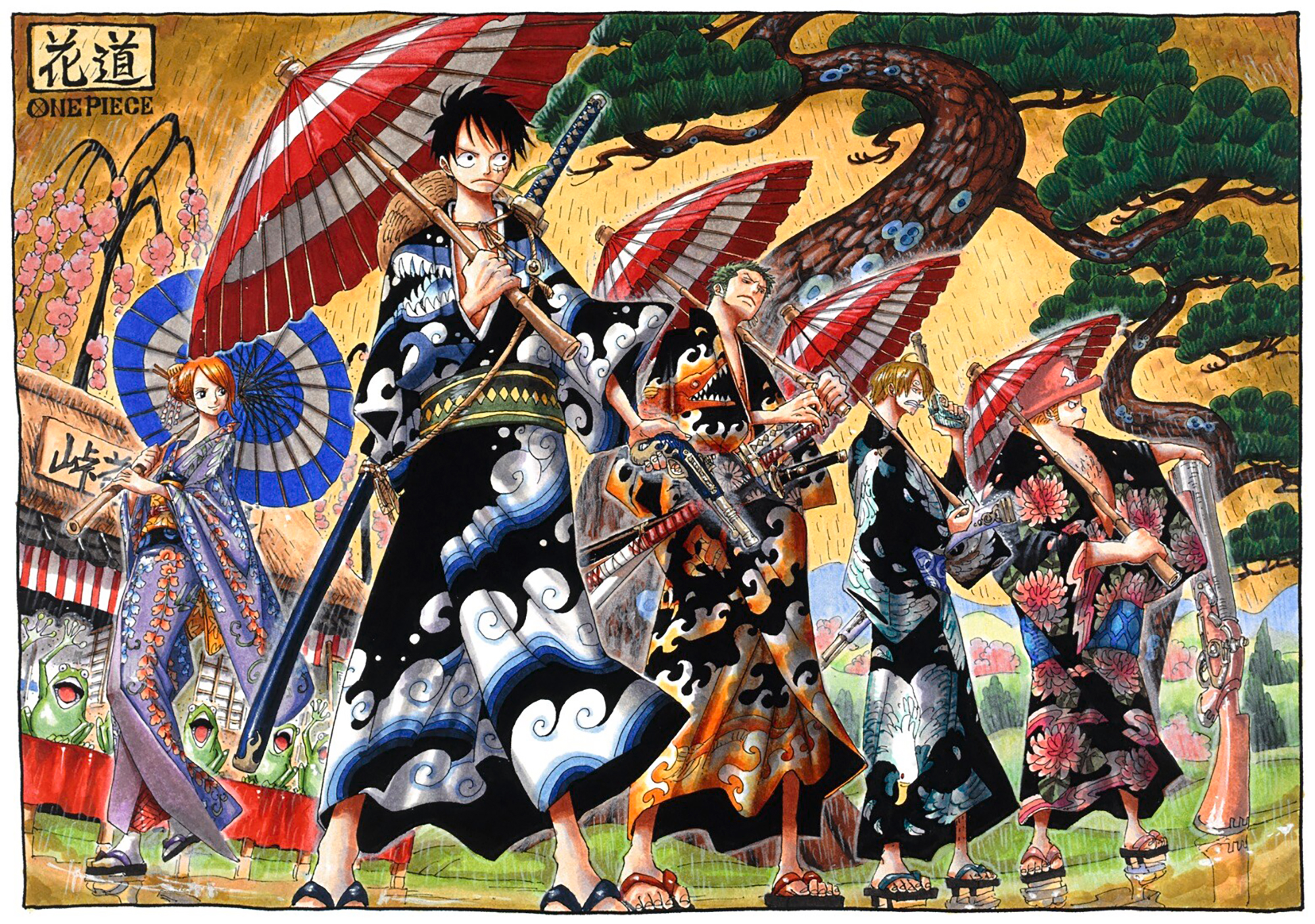
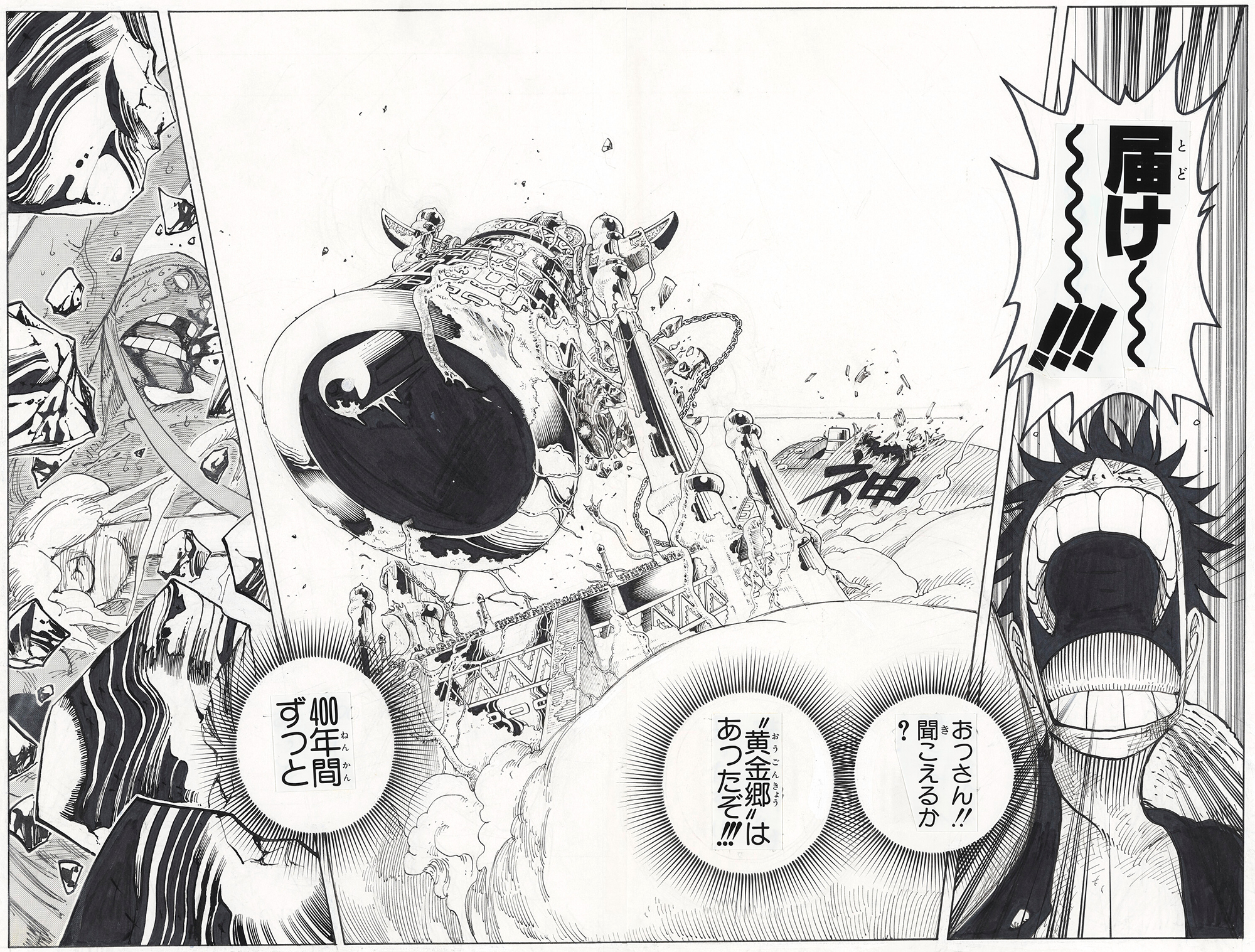
Oda Eiichiro (尾田栄一郎), ‘ONE PIECE.’ (©Eiichiro Oda/Shueisha)

Twelve artists’ work from the past five decades is displayed across 10 zones laid out in a clockwise loop. Visitors are instructed to go through each room from right to left, the way manga is traditionally read, in order to unlearn the instinctual Western scan and instead embrace a new flow of looking.

One of the artists showcased is Oda Eiichiro, the creator of One Piece, which celebrates its 28th year of production. The series exemplifies manga’s far-reaching global influence – not just as entertainment but as a cultural force, with the One Piece flag having been adopted by Gen Z protestors across Asia as an emblem of freedom.
Sponsored

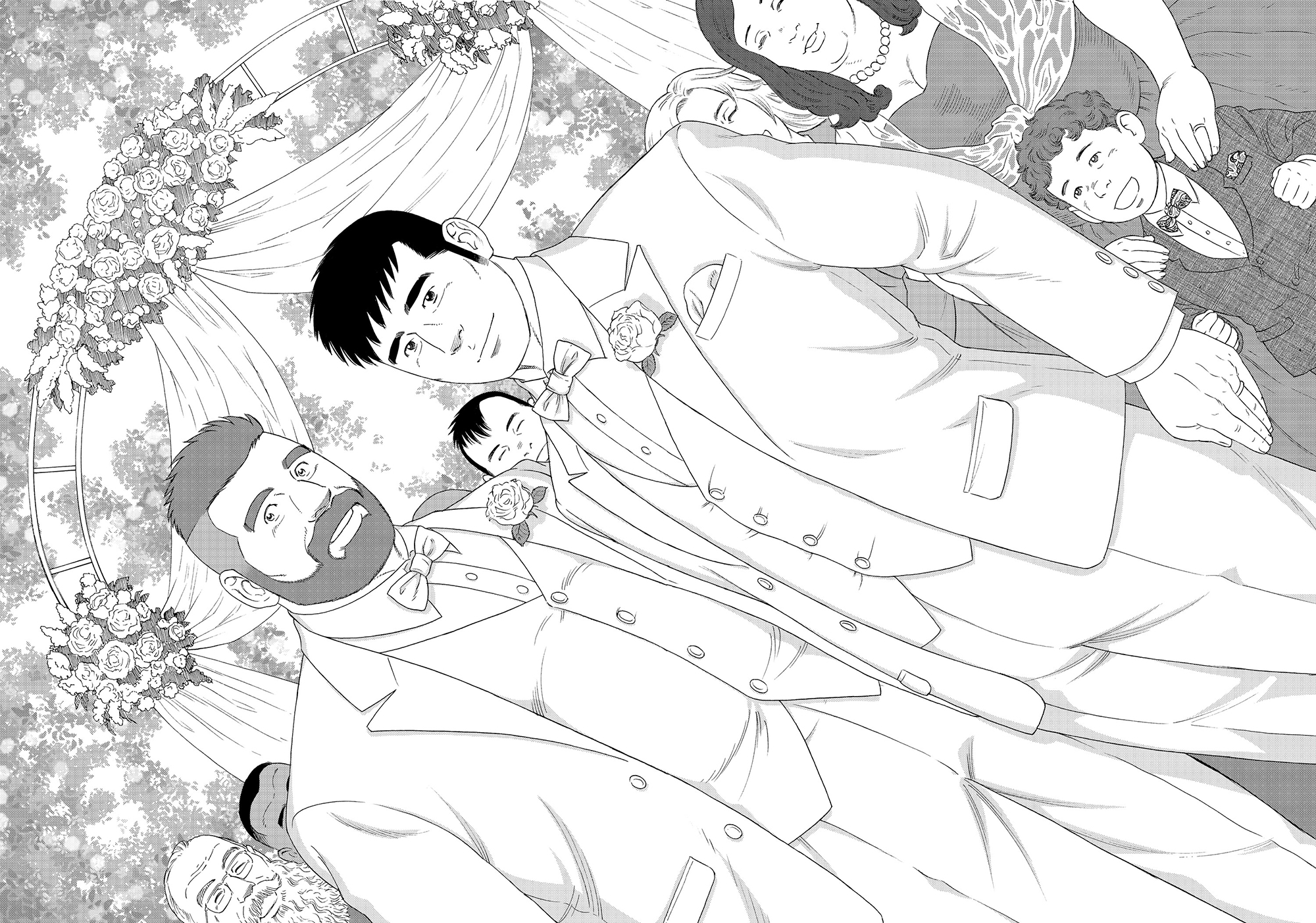
Storylines that unpack history, gender, sexuality, and identity are also displayed in the exhibit, demonstrating the emotional depth and wide range of manga. Tagame Gengoroh, and his work from the popular series My Brother’s Husband, represents a changing tide in the genre’s themes.

Tagame Gengoroh (田亀源五郎), ‘My Brother’s Husband’ (弟の夫). (©Gengoroh Tagame/Futabasha Publishers Ltd.)
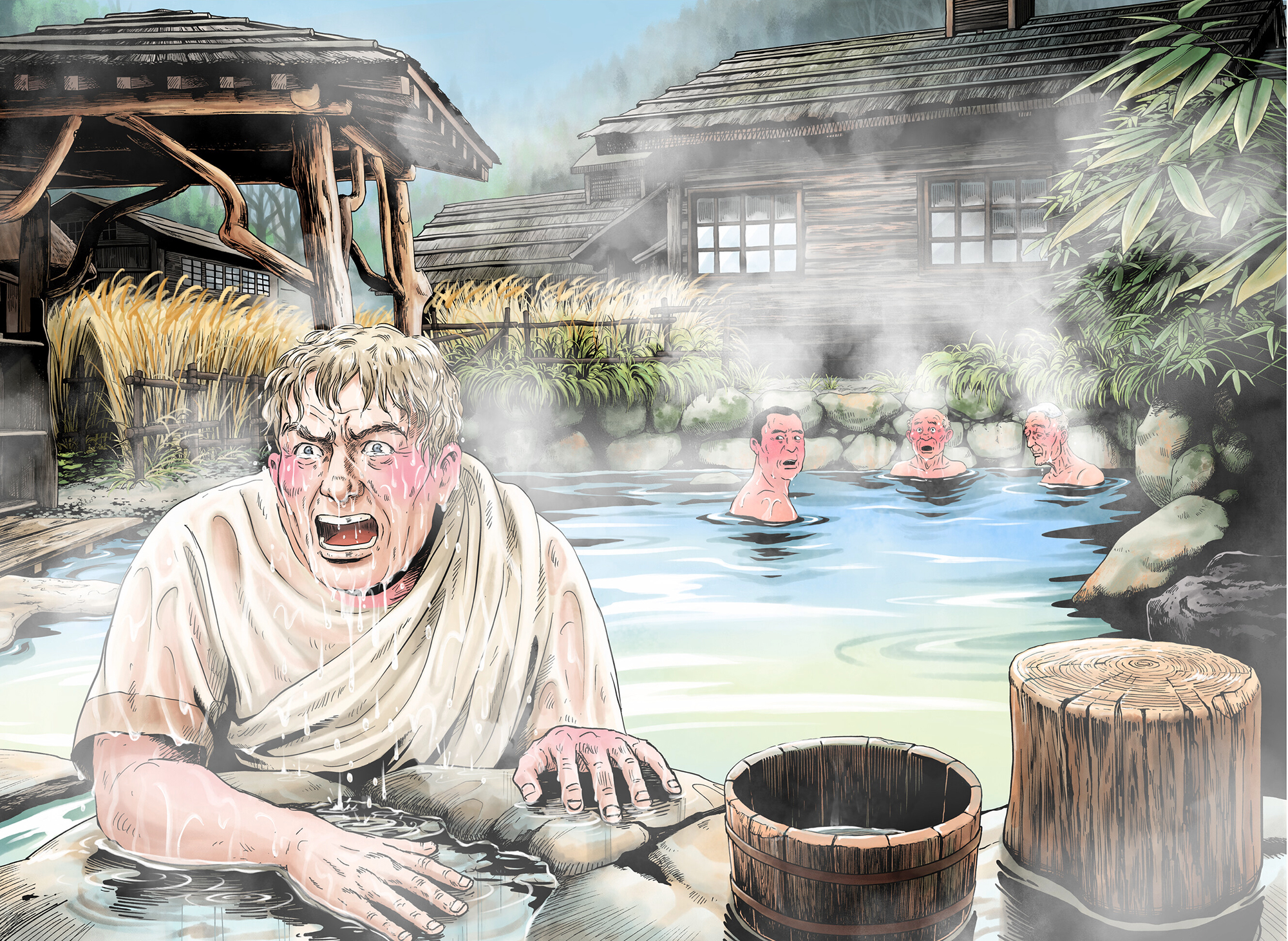
Yamazaki Mari (ヤマザキマリ), ‘THERMAE ROMAE’ redux (続テルマエ・ロマエ), 2024. (©Mari Yamazaki/Shueisha)

Changing aesthetics are part of Art of Manga, as well. Walking into a room dedicated to the work of Yamazaki Mari feels a bit out of place, with its projections of an archway, pillars, and statue reminiscent of Ancient Rome. Yamazaki was born in Tokyo, but lived many years in Italy; her manga Thermae Romae tells the story of a Roman architect who accidentally discovers a Japanese bathhouse.

Fittingly, the artwork on display departs from the soft lines of other rooms, with Yamazaki’s figures rendered in sharper, more sculptural detail — faces and bodies that look as if they’ve been carved from stone.

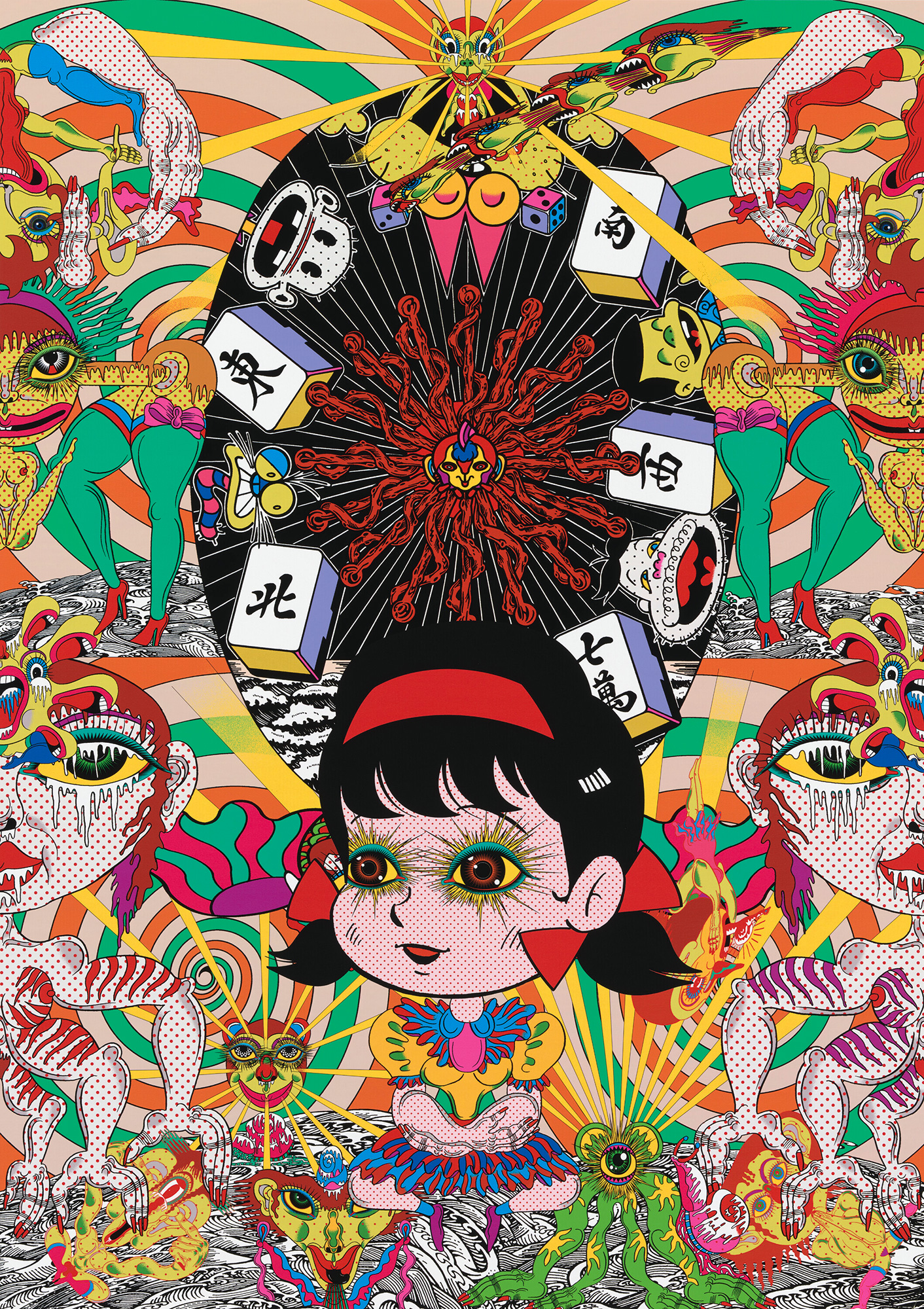
The exhibit ends with a section with work from the Shueisha Manga-Art Heritage, and it’s the most visually stimulating. Offering an array of artworks from already existing manga, it bursts with vibrant color. The prints are dynamic, celebrating the full imagination and energy of the medium, showcasing manga as bold and playfully inventive.

Tanaami Keiichi (田名網敬一), ‘TANAAMI!! AKATSUKA!!’ / Revolver 2 (Looking in the Mirror) (‘TANAAMI!! AKATSUKA!!’ / Revolver 2「鏡を見ている」), 2023. (©Keiichi Tanaami Courtesy of NANZUKA ©Fujio Productions Ltd./Shueisha Inc.)

It’s a striking contrast to the rest of the exhibition, and if there’s any drawback to Art of Manga, it’s that the traditionally black-and-white, two-dimensional panels of the genre begin to feel a bit repetitive. Some art is displayed as if jumping off the wall into the real world, but viewers would have benefited from pushing that approach further, with a more literal “stepping into the manga” experience.

Still, certain display choices draw the viewer in nonetheless. Among the many gems from the Shueisha-Manga Art Heritage is a mesmerizing handscroll encased in a glass box, featuring the main characters from One Piece in vibrant color and precise detail.

The handscroll pays homage to the centuries-old Japanese mode of storytelling. Adorned with modern manga characters, it demonstrates that storytelling transcends generations. With manga’s ongoing reinvention in bold new styles, digital formats and global influence, Art of Manga shows that the future of the art form is limitless.


‘Art of Manga’ is on view Sept. 27, 2025–Jan. 25, 2026 at the de Young Museum (50 Hagiwara Tea Garden Drive, San Francisco). Tickets and more information here.

lower waypoint
next waypoint