Sponsor MessageBecome a KQED sponsor
upper waypoint

An Escape from Conversion Therapy in ‘Limp Wrist on the Lever’

Save ArticleSave Article
Failed to save article

Please try again

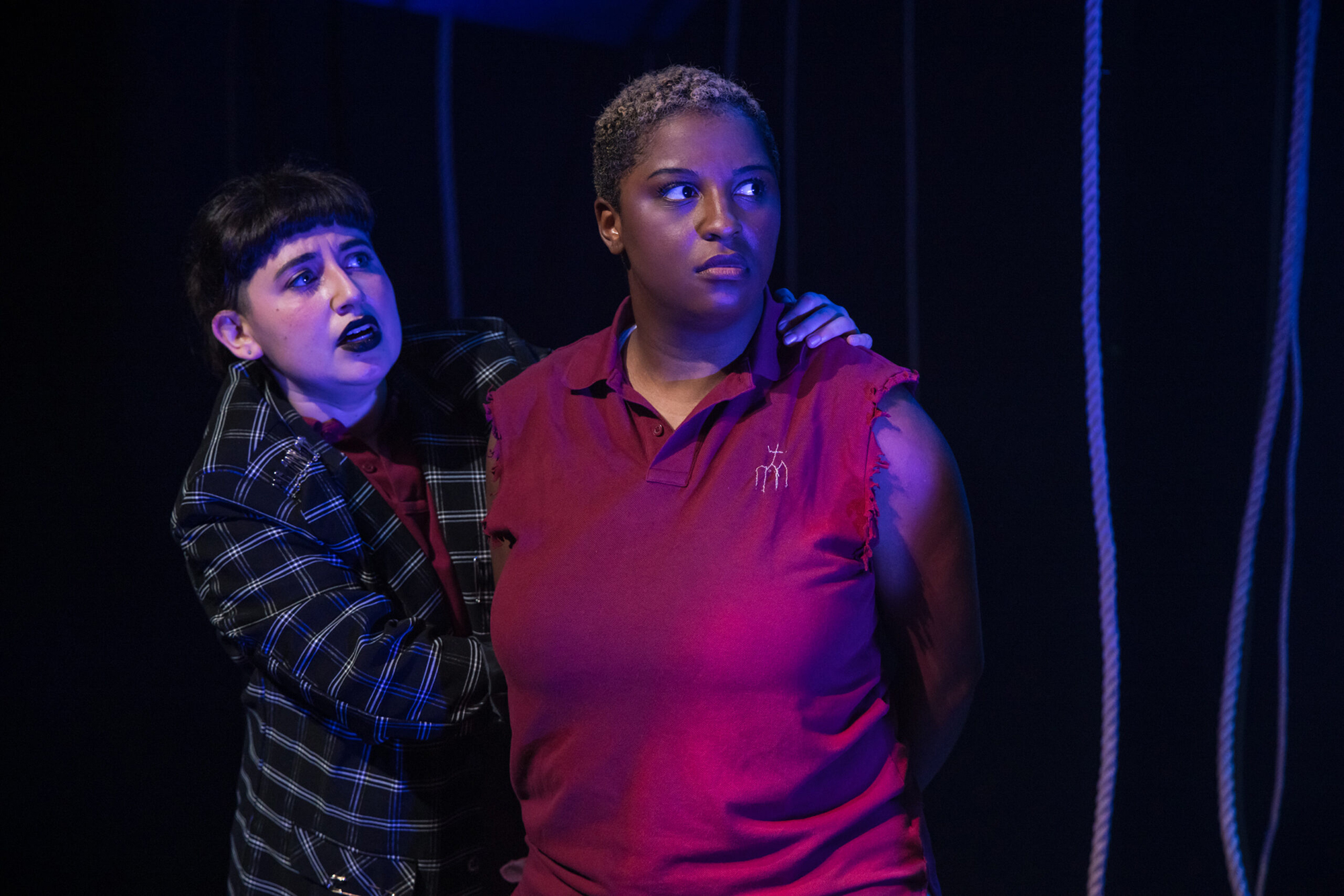
(L–R) linda maria girón (Zo) and Ashley Jaye (Anita) in the Crowded Fire Theater world premiere of Preston Choi's ‘Limp Wrist on the Lever.’ (Cheshire Isaacs)

Conversion therapy can easily be classified as one great, big, stupid, dangerous, horrible, cruel idea.

It’s a misguided attempt by Christian fundamentalists and mental health quacks to make young gay kids feel “normal,” dismissing the fact that there is nothing abnormal about waking up with an attraction to the same sex. Outcomes of this anti-mental health initiative have been proven to lead to even more serious problems, including addiction and suicide.

In Crowded Fire Theater’s world premiere of playwright Preston Choi’s Limp Wrist on the Lever, these ideas dominate the play’s early dialogue, which provides three queer teens some serious purpose. Their mission is to run as far away as possible from their gay conversion camp, a hellhole of homophobic intolerance. Their subsequent challenge is a daunting one due to the group’s lack of survival skills in the wild, a detail the counselor rightly points out.
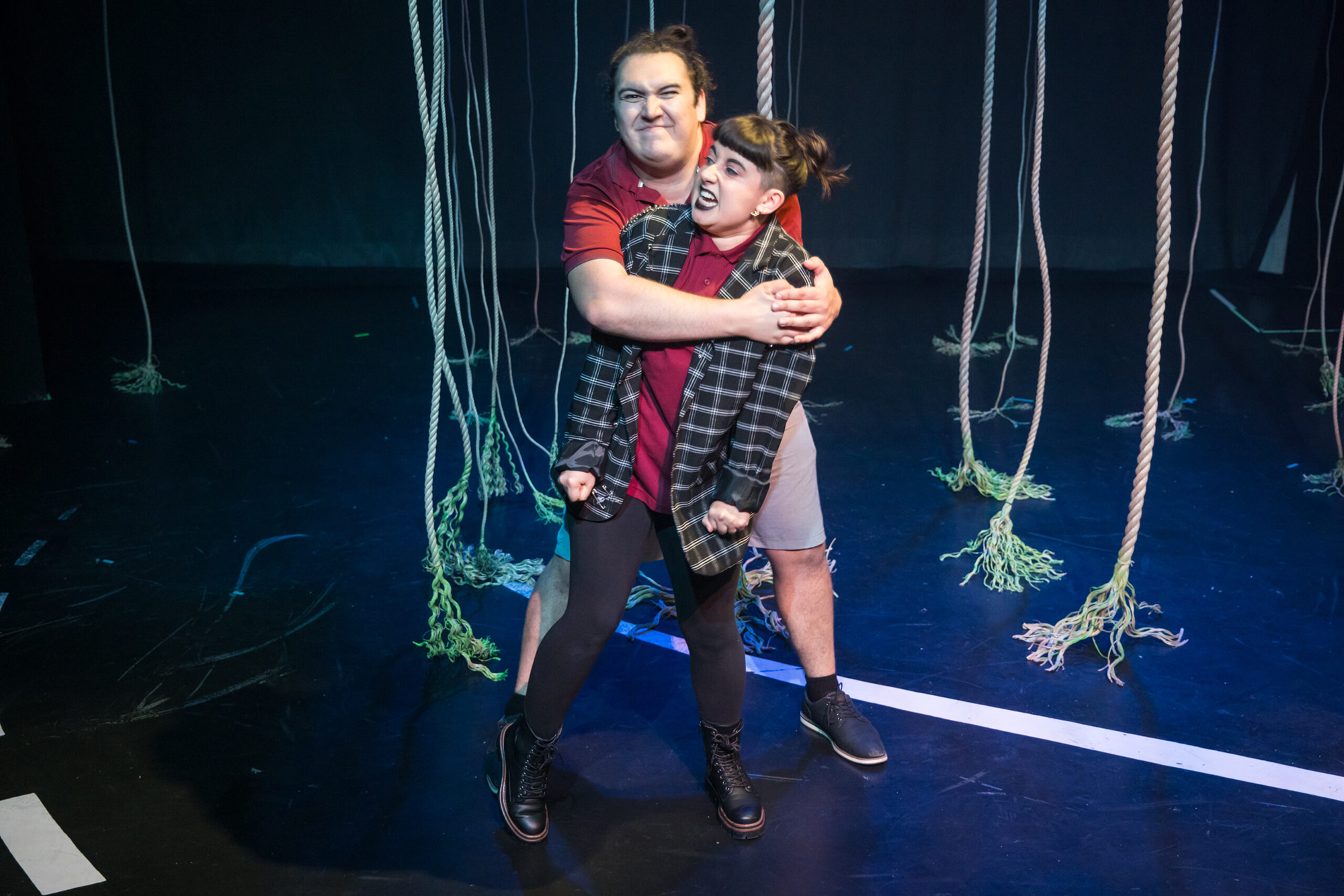
River Bermudez Sanders (Charli) and linda maria girón (Zo) in ‘Limp Wrist on the Lever.’ (Cheshire Isaacs)

Crowded Fire has built their well-earned reputation for bold, inspired takes on dark themes that center the marginalized. The problem with this production is that it veers too far into proselytization. The drama and drive is undercut by the play’s inability to provide its characters with immediate purpose and convey a unified critical message.

Preston Choi’s script offers up plenty of masterful dialogue, handled deftly by director Becca Wolff, But there’s too much of it. While the confusion on how to proceed with the escape dominates the trio’s indecisiveness, the wordiness makes for a staging that feels both long and long-winded.
Sponsored

Limp Wrist on the Lever’s violence is both highly stylized and necessary. There is no turning of the other cheek amongst Zo (linda maria girón), Anita (Ashley Jaye) and Charli (River Bermudez Sanders), who are built for violence based on what they’ve witnessed and experienced. Righteous drivel and Bible verses have been used as cudgels to destroy every ounce of their souls, yet they can retaliate just as forcefully, with counselor Thomas (Kenny Scott) bearing the brunt of the teens’ survival mode.

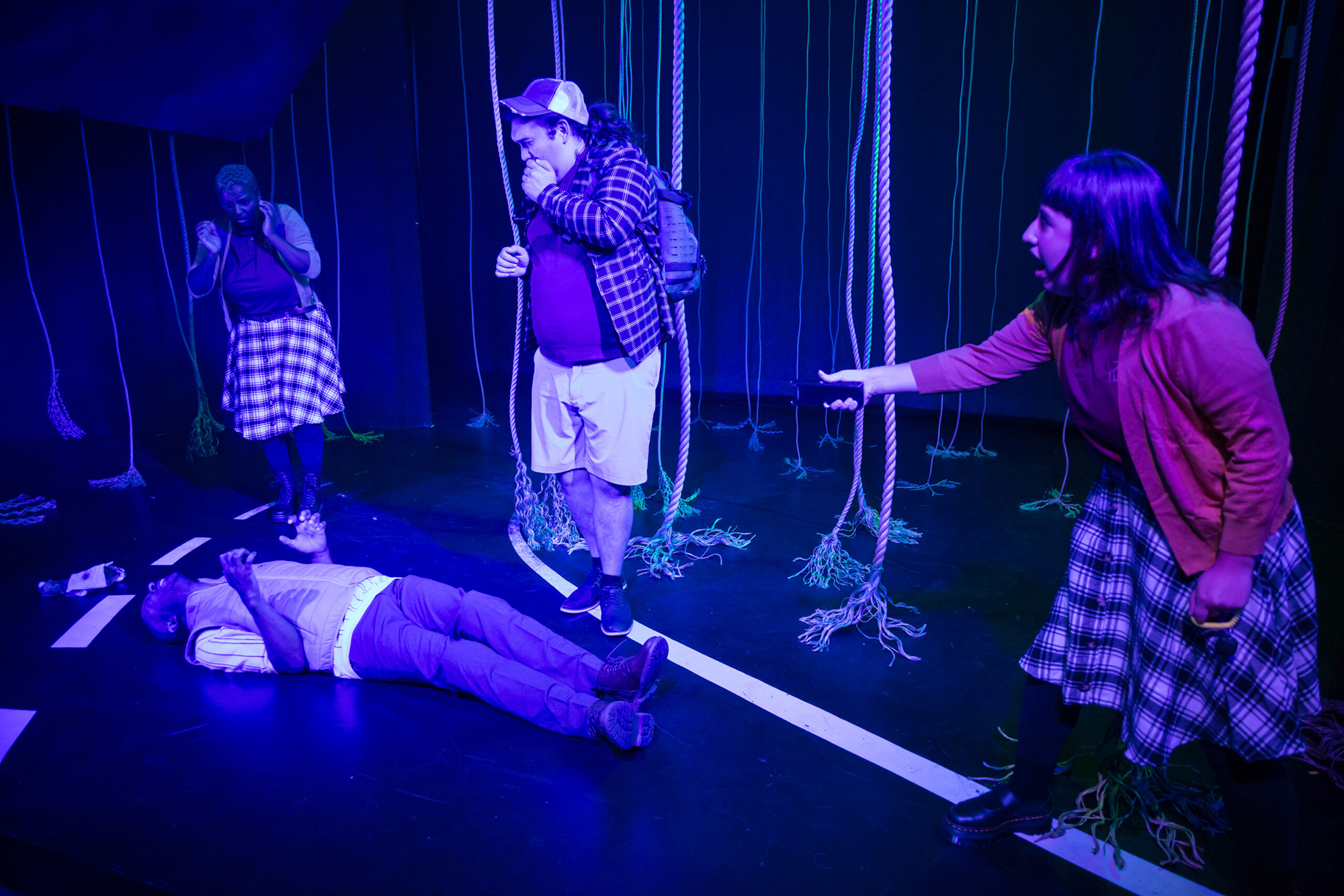
Kenny Scott (Thomas), Ashley Jaye (Anita), River Bermudez Sanders (Charli), and linda maria girón (Zo) in ‘Limp Wrist on the Lever.’ (Cheshire Isaacs)

The scenic design world of the three teens with visions for escape is a marvel, a symbolic woods informed by shards of rope that suggest something more sinister. Inside these woods is where Wolff’s many choices truly shine, and where the stylistic pas de deux of violence and dim light sharpen the story’s intent. Jenna Lauren Carroll’s scintillating scenic design, along with Ray Oppenheimer’s mutedly brilliant lighting plot and a haunting subwoofer-fueled soundscape from Tab Mattos, neatly layer each aspect of the story with technical brilliance.

Despite the storyline’s leanings that chooses word quantity over quality, Choi’s script does many good things, namely its ability to find humor in something serious. Its quick-witted observations about the pervasiveness and necessity of queer culture are slickly and humorously rattled off by the cast.

Sanders is in constant motion — and constantly changing costume, to boot — with comic timing that’s sharp and sustained. Both Jaye and girón are aggressors with the dialogue, forcing the movement and action that their characters must utilize in order to survive. Scott’s physical commitments, namely his work tied to a chair while being tortured, help unify the play’s world where violence is a necessity.

While Limp Wrist on the Lever’s messaging can be murky, there is much brilliance in its script, in need of tightening though it may be. (The symbolism of a ghost wrapped in a pride flag, for example, is not terribly clear.) Wherever one may fall inside the ultimate throughline of the play, one fact remains clear at its finale: Conversion therapy can easily be classified as one great, big, stupid, dangerous, horrible, cruel idea.


‘Limp Wrist on the Lever’ runs through Saturday, Oct. 4, at Crowded Fire Theater (1695 18th St., San Francisco). Tickets and more information here.

lower waypoint
next waypoint