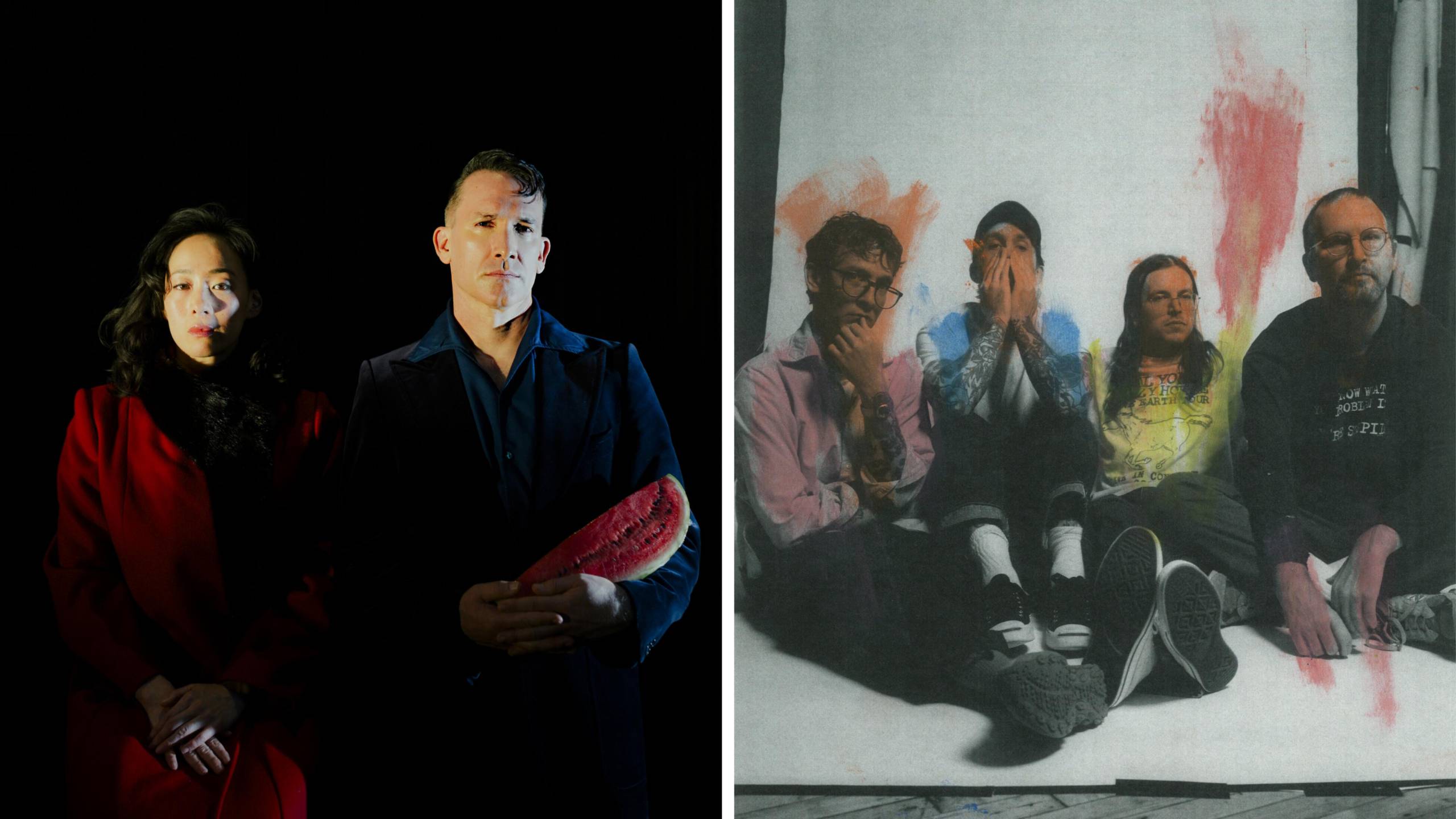
Over the summer, a slew of bands began to make similar announcements on social media: They’d be pulling their music off Spotify, the largest streaming service in the world.
It started in June with indie rock quartet Deerhoof. Within weeks, groups like Xiu Xiu, King Gizzard & the Lizard Wizard and Hotline TNT followed suit. The wave of departures continued into September; most recently, The Mynabirds, WU LYF, Kadhja Bonet and Young Widows have all decided to leave Spotify. So why are musicians — many of them independent — removing their songs from the most popular streamer globally, which has nearly 700 million users?
All artists cite Spotify CEO Daniel Ek’s ties to Helsing, an artificial intelligence defense company with a mission to “attain technological leadership so that democratic societies are free to make sovereign decisions and control their ethical standards.” In 2021, Ek’s venture capital firm Prima Materia invested more than $100 million into the German startup. This past June, Prima Materia raised more than $700 million for Helsing, where Ek is now also chairman. He told The Financial Times that Prima Materia is “doubling down” on its investments in light of the role that AI plays in Russia’s war on Ukraine. The Financial Times reported that Helsing is now producing its own drones, aircraft and submarines.
It’s not the first time artists have decided to cut ties with Spotify. In 2013, Thom Yorke removed his solo albums from the streaming service to protest low royalty payouts (his music has since reappeared on the platform). The following year, Taylor Swift wrote an op-ed in The Wall Street Journal arguing that “music should not be free” and pulled her songs from Spotify; three years later, she returned her discography to all streaming services. In 2022, Neil Young and Joni Mitchell left Spotify in objection to the company’s exclusive relationship with Joe Rogan, citing concerns that Rogan was spreading COVID-19 vaccine misinformation on his massively successful podcast, The Joe Rogan Experience. Young and Mitchell ended their boycott in 2024 after Rogan’s podcast became available on multiple streaming platforms.
But this most recent exodus, which began shortly after the June fundraising news, marks a new wave of artist-led protests against Spotify.