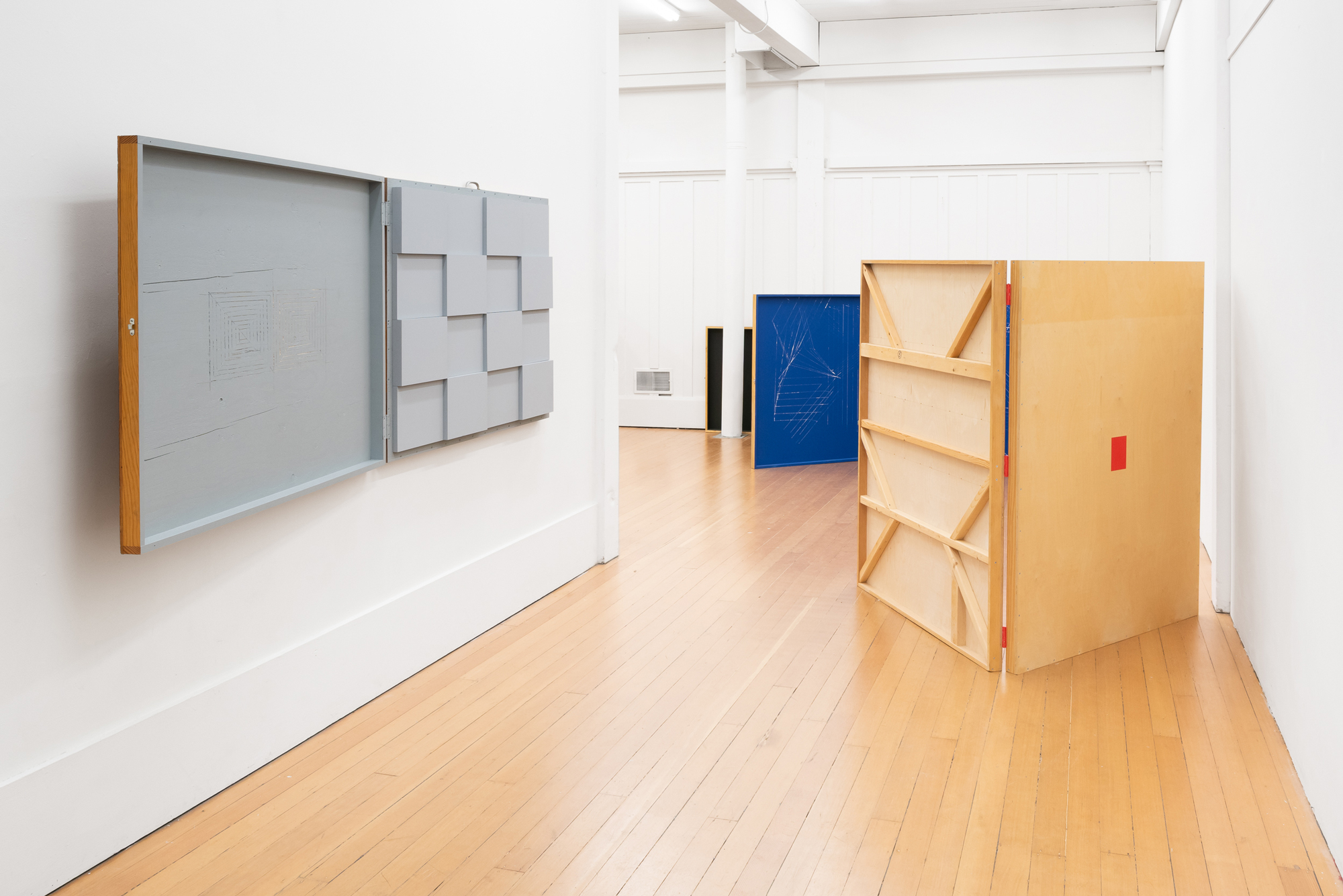
Foldable, portable art. In practice, it sounds like a great idea. A handle here, a hinge there, a locking mechanism to keep everything in place while you’re on the move. Can’t bear to be parted from a piece of art? Take it with you!
That’s conceivably what Carlos Villa was going for when he created the pieces on view in Cushion Works’ The Code, a show of sculptural paintings made toward the end of the San Francisco artist’s life. These are artworks that come complete with their own crates — or rather, they are crates.
However, this may be the most difficult-to-transport art shown in Cushion Works’ history. Villa’s weighty, large-scale contraptions, slim as suitcases but made out of heavy-duty wood and plywood, hinge open to reveal maps of angled scratches, grids of painted panels and minimalist rectangles in relief.
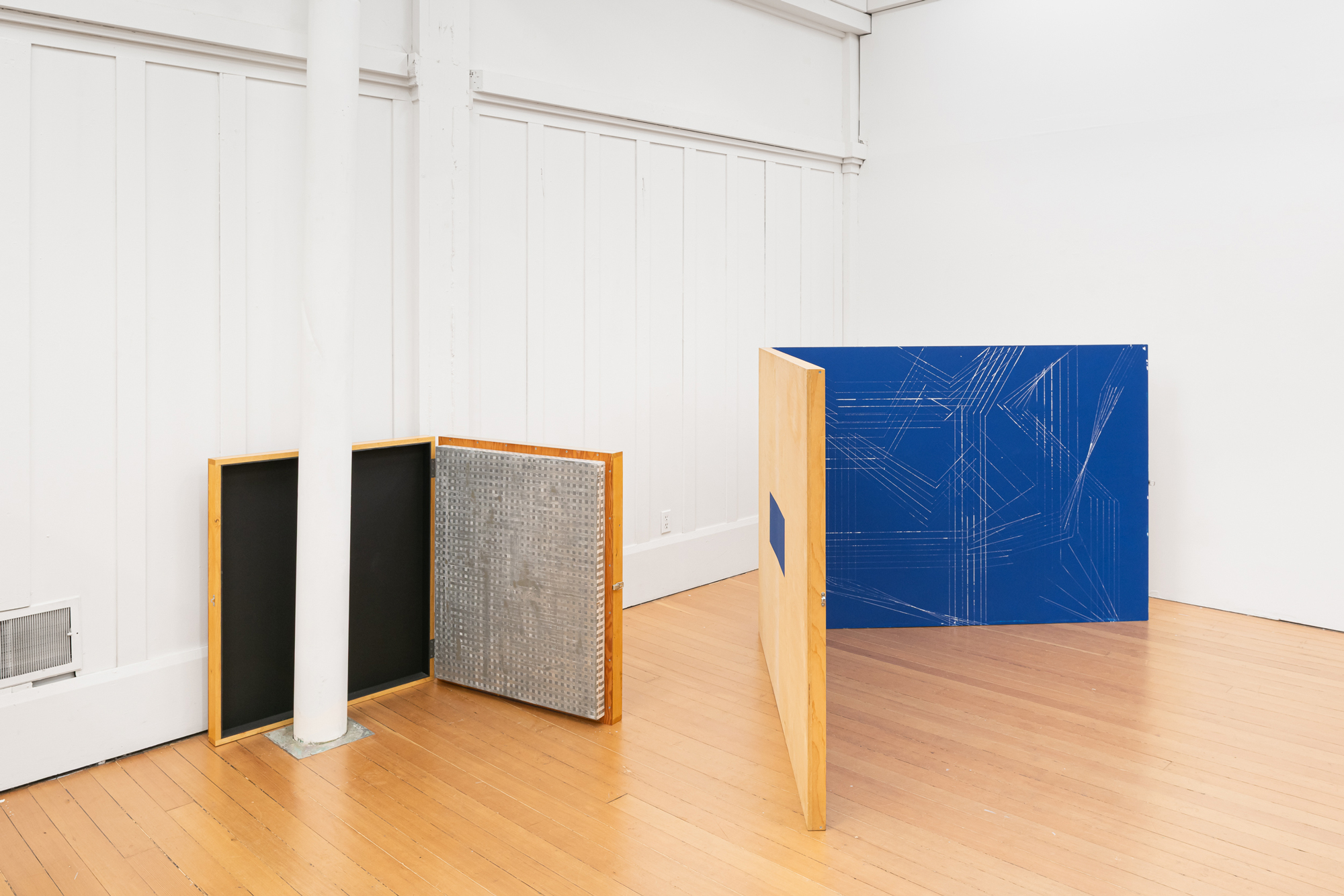
They splay out at angles across the gallery’s two spaces like giant board books. Others hang from the wall on cleats, their “lids” left free. Those familiar with Villa’s career, either from his long time in the Bay Area as an artist and educator — or from the recent Asian Art Museum and San Francisco Arts Commission retrospectives — may be surprised by this work, which is so minimal, so pared down, it’s difficult to reconcile with the artist’s better-known feathered capes, swirl-covered canvasses and performances.
The strange shock of The Code partly comes from not seeing anything like this en masse before, or at least in a long while. The entire series appeared together in the 2011 Mission Cultural Center show Manongs, Some Doors and a Bouquet of Crates, and then never again. Villa died in 2013.
What is this “bouquet of crates,” then? The artwork’s titles do little to shed light on their meaning: Gemini-Scream, All Tony at the Bonton, Art of the Deal / Title One. (In this Cushion Works presentation, the 2003 piece The Code is particularly coy, half-slid behind a gallery column.)
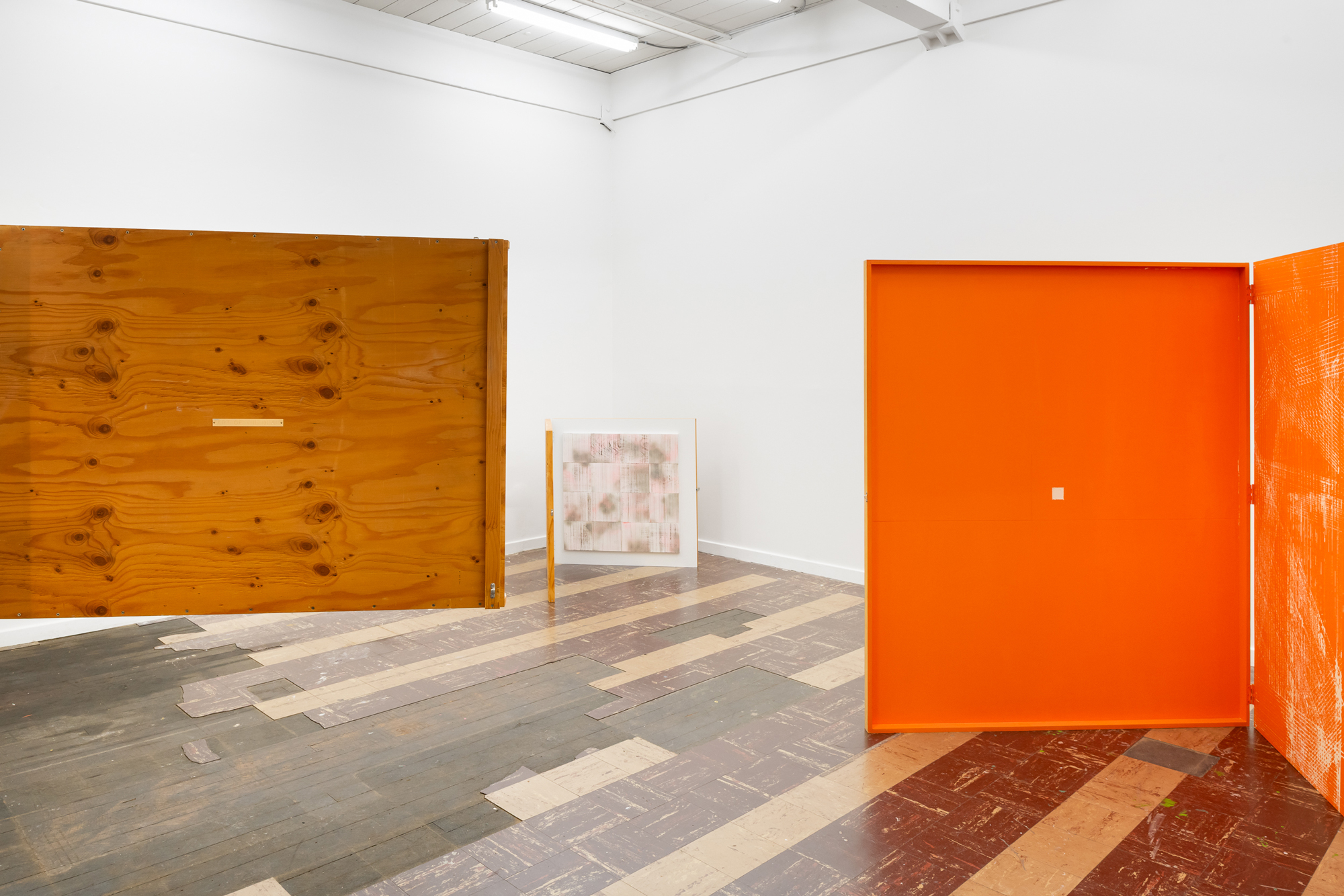
The bigger pieces open to become protective screens. But their other state — folded up, clasped shut, lips zipped — is just a swing of a hinge away. Orange-A-Boom, in particular, could hold a lot of secrets. Standing six feet tall and 60 inches wide (that is, when it’s closed), one side of its interior is covered in scratched striations. The other side is solidly orange, with a postage stamp of white at its center.
Closed, Orange-A-Boom’s electric orange-ness would be nearly completely concealed, save for a matching postage-stamp-sized square of orange on its exterior. Many of the pieces provide a sampler of their interiors on their faces: a black rectangle, a square-edged yellow ring.
Hanging near Orange-A-Boom, Art of the Deal / Title Two bears its title on metal labels. It opens like an altarpiece, two flaps hinging out two reveal a wide, light-yellow relief that verges on Day-Glo. Rectangular blocks arranged in a four-by-four grid pop out at different depths. These are the depressed buttons of some mysterious businesslike machine, a stretched-out Sol LeWitt.
In all their material heft and decorative restraint, these late-in-life works are a reminder that no artist, particularly one as accomplished and omnivorous as Carlos Villa, can be represented by a single body of work.
Instead of seeking answers from The Code, what a delight it is, instead, to surrender to its angles. Here, Villa makes us all performers. Weaving, crouching, peering and puzzling our way through the show, the code remains unbroken.
‘Carlos Villa: The Code’ is on view through Sept. 6, 2025 at Cushion Works (3320 18th St., San Francisco).