Sponsor MessageBecome a KQED sponsor
upper waypoint

Birkenstock Building Off 101 in Novato to Become a Design Museum

Save ArticleSave Article
Failed to save article

Please try again

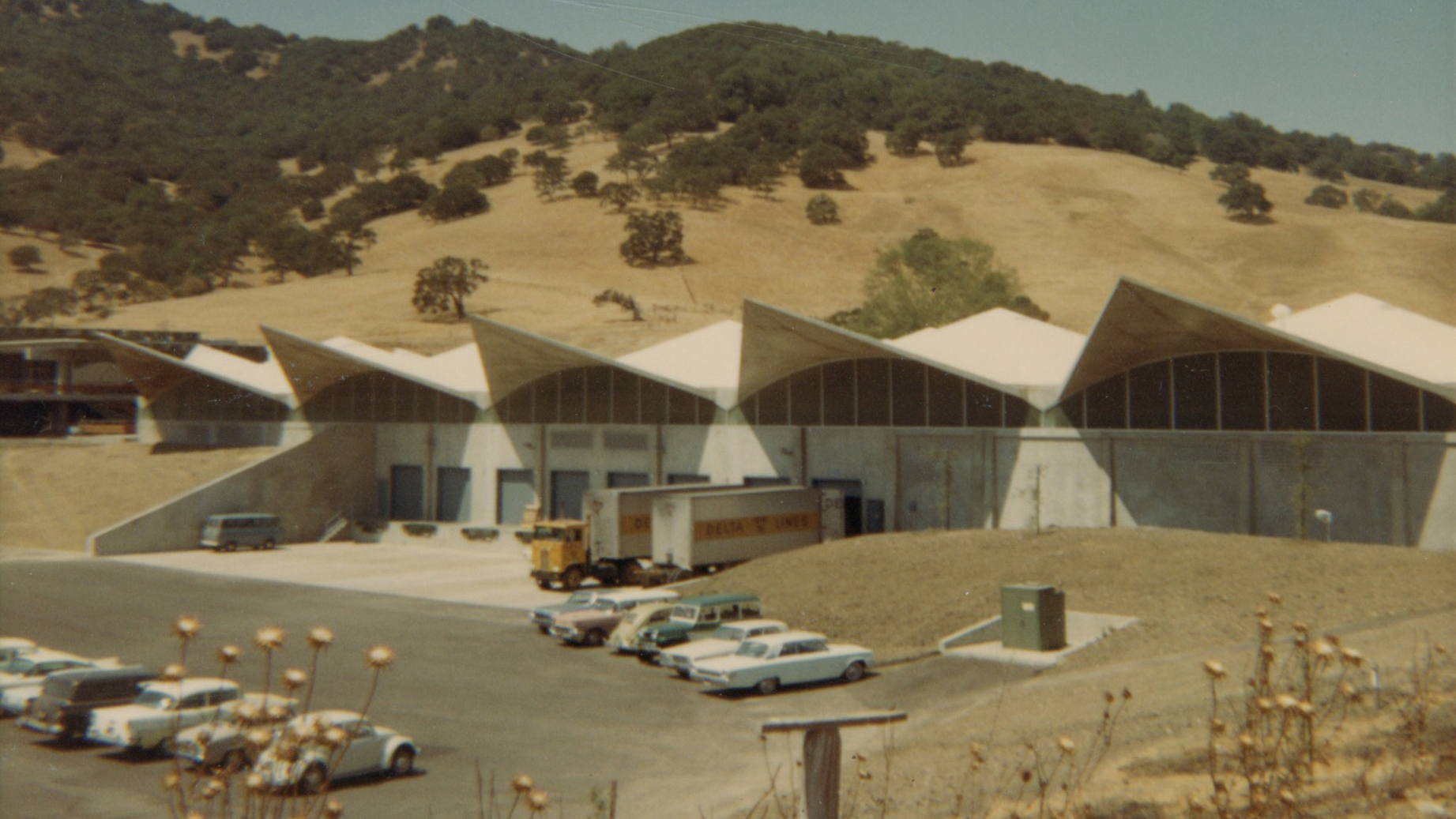
older photograph of pointed warehouse roof with 50s and 60s cars parked outside
The John Savage Bolles-designed warehouse and office during its early years as a distribution center for McGraw-Hill. (Courtesy of Eames Institute)

The Eames Institute of Infinite Curiosity, a Petaluma and Richmond-based nonprofit dedicated to the legacy of midcentury designers Charles and Ray Eames, announced it will open a museum in one of the Bay Area’s most distinctive pieces of architecture. That’s right, I’m talking about the former Birkenstock campus in Novato, the jagged-roofed warehouse and office just west of Highway 101.

The as-yet unnamed museum, which the institute hopes to open by 2030, will house the Eames Collection, along with large-scale art exhibitions, workshops, educational programming and more. The Eameses, who moved fluidly between the fields of furniture, architecture, graphic design and fine art, were two of the most influential designers of the 20th century. (Have you coveted this chair? Charles and Ray Eames designed it.)

Eames Institute CEO John Cary said they’ve had their eye on the 88.5-acre Birkenstock campus for quite a while, but it wasn’t on the market until earlier this year. Birkenstock ceased operations at the distribution site in 2019; the property has been vacant since 2020.

“When it finally appeared for sale, we were ready and we were excited about it,” Cary tells KQED. “We got to work real fast.” The deal closed yesterday.
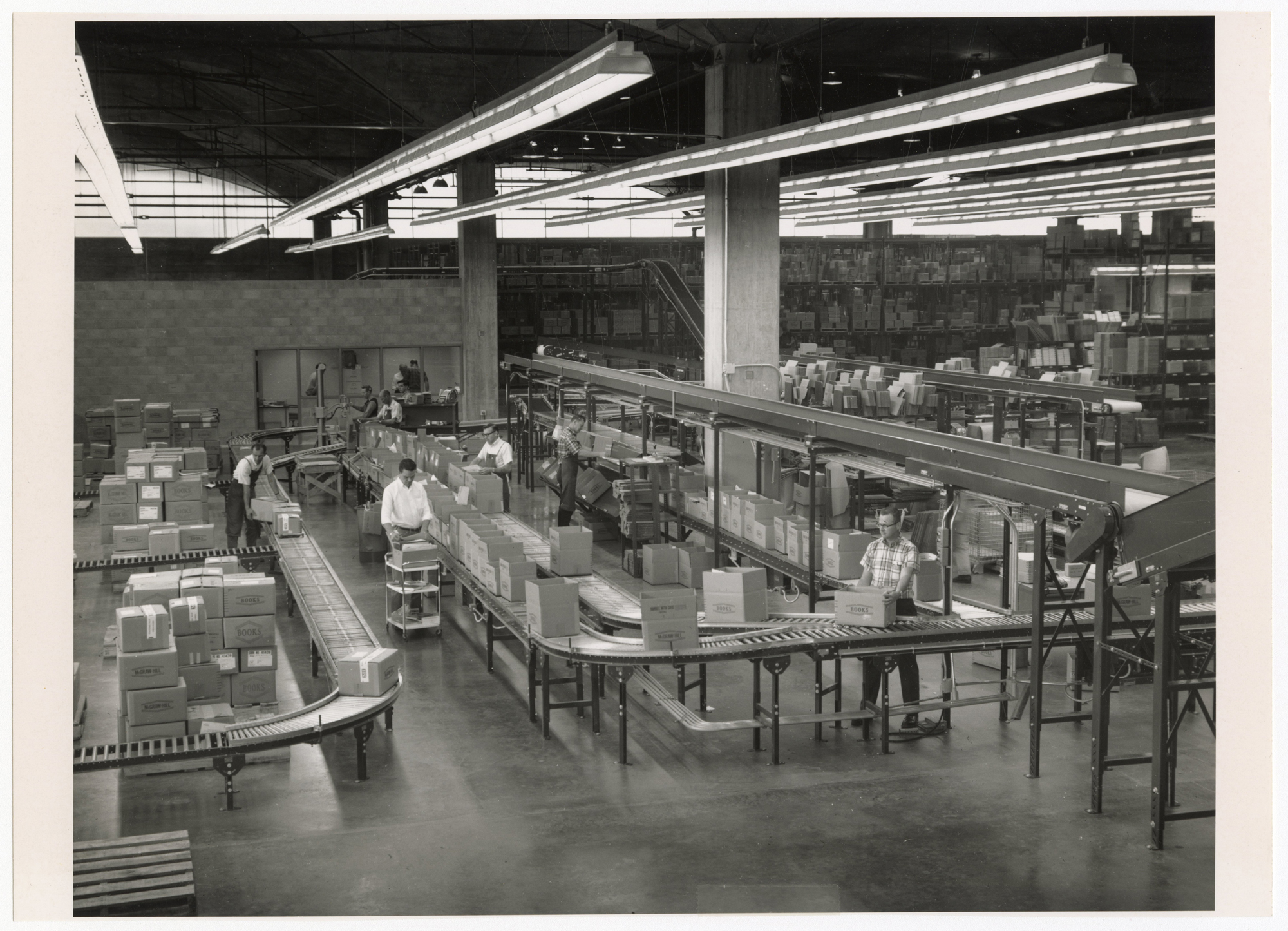
photo of boxes on conveyor belts in large factory
A view inside the Novato warehouse in its McGraw-Hill days. (Courtesy of Eames Institute)

The campus was originally designed for the educational publishers McGraw-Hill in the early 1960s by John Savage Bolles, the modernist architect also responsible for Candlestick Park and the IBM Campus in San José. In the early ’70s, Bolles was part of the team that designed San Francisco’s Embarcadero Plaza.
Sponsored

“One of the big reasons that we’re so interested in that site is its adaptive reuse,” Cary says. “We’re really focused on those existing two buildings and improving them.” The Swiss architecture firm Herzog & de Meuron (responsible for the de Young Museum) will reimagine the campus as a public space.

This is key: though the Birkenstock campus is a significant North Bay landmark, only those on official textbook or shoe business have previously had access to the site. “We want buses just lined up in the parking lot outside — or better yet, they take the SMART train or some other mode of transportation,” Cary says.

The Eames Institute has been remarkably active since it announced itself publicly in 2022. Its first base of operations was a family ranch in Petaluma, once home to Lucia Eames, daughter of Charles. That property is now undergoing a multi-year renovation.

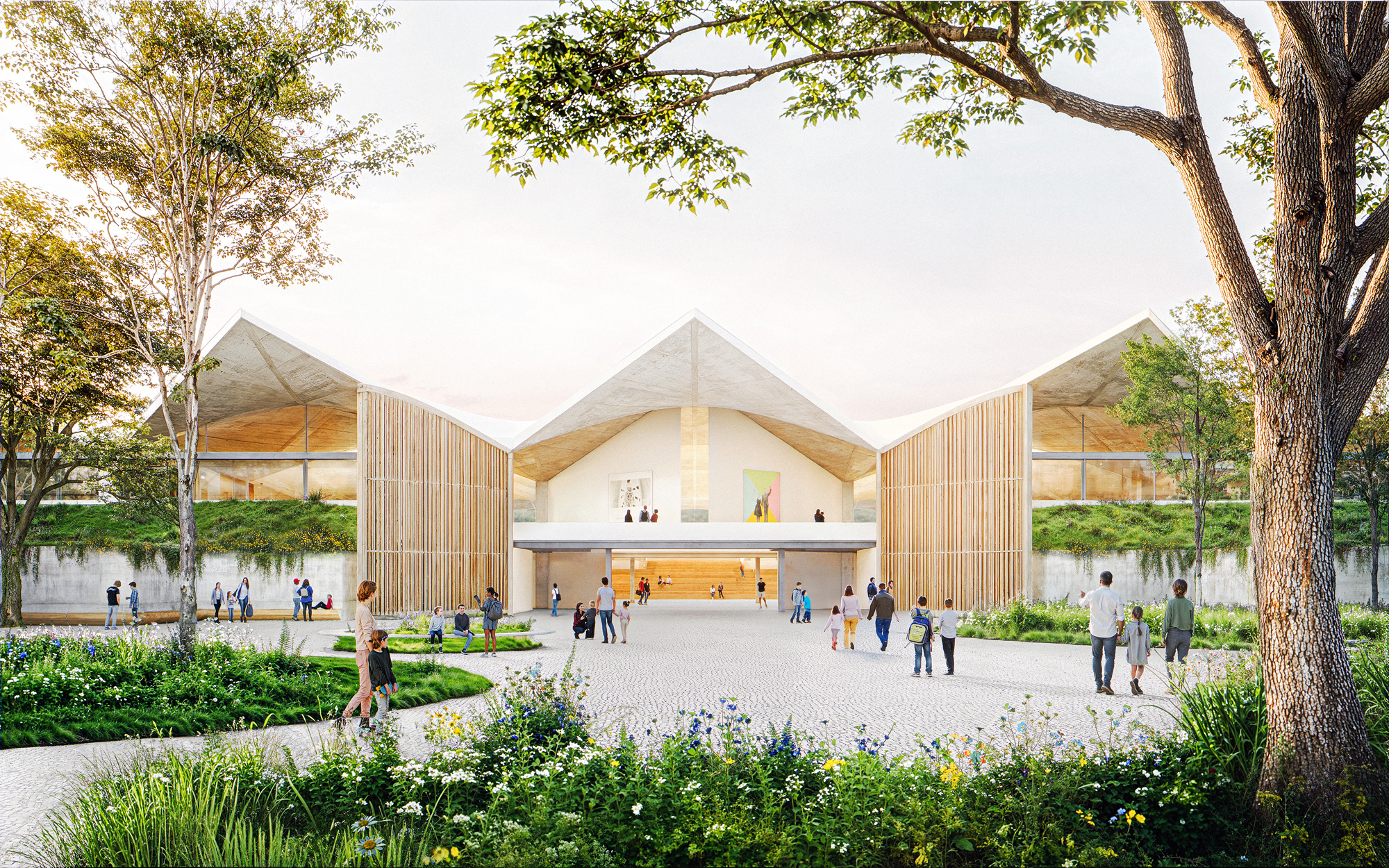
people walking around well planted open plaza with vaulted roofline above
A rendering of Herzog & de Meuron’s plans for the arrival court of the refurbished Birkenstock campus. (Courtesy of Herzog & de Meuron)

The institute purchased William Stout Architectural Books from its founder and namesake in 2022, safeguarding the beloved art and design bookstore in San Francisco’s Jackson Square. Last month, the institute purchased the Zurich-based Lars Müller Publishers.

In 2024, operations shifted to Richmond, where the Eames archive is now housed and open to small tour groups. The Eames Institute looks after over 40,000 objects that came directly from the Eameses and their Venice, California office, including furniture prototypes, ephemera, tools and personal items. While the Library of Congress holds a large amount of 2D material from the Eameses, Cary says, “The family held back a lot of its most significant things — what they call the family jewels — that we ended up being able to acquire.”

Online and in-person shows curated from the collection are usually accompanied by a publication. The Last Decade of Furniture Design by Ray and Charles Eames (1968–1978), a playfully arranged exhibition of chairs, loungers and objects, is currently on view at the base of the Transamerica Pyramid.

Ultimately, the Novato museum will display not just the Eames archives, but other prominent design artifacts. Cary emphases that they are and will be a collecting institution. “We’ve got a whole lot of work ahead of us,” he says. “We haven’t yet defined exactly what that is or what that will be, but that’ll be part of the next several years as we’re developing this project.”

lower waypoint
next waypoint