Over 30 years ago, Octavia Butler pretty much predicted our present moment with her science-fiction opus, Parable of the Sower. The novel opens in California in 2024, and to many of today’s readers, Butler’s prescient depictions of a state ravaged by fires, extreme inequality, rising authoritarianism and corporate greed feel uncanny. It’s no wonder that countless activists and thinkers turn to Butler as a beacon as they figure out how to navigate this era of political upheaval and manmade environmental disasters.
Octavia Butler Offers a Roadmap for Survival In This Documentary
‘Earth Seed’ follows People’s Kitchen Collective on a journey across California to learn from intentional communities.
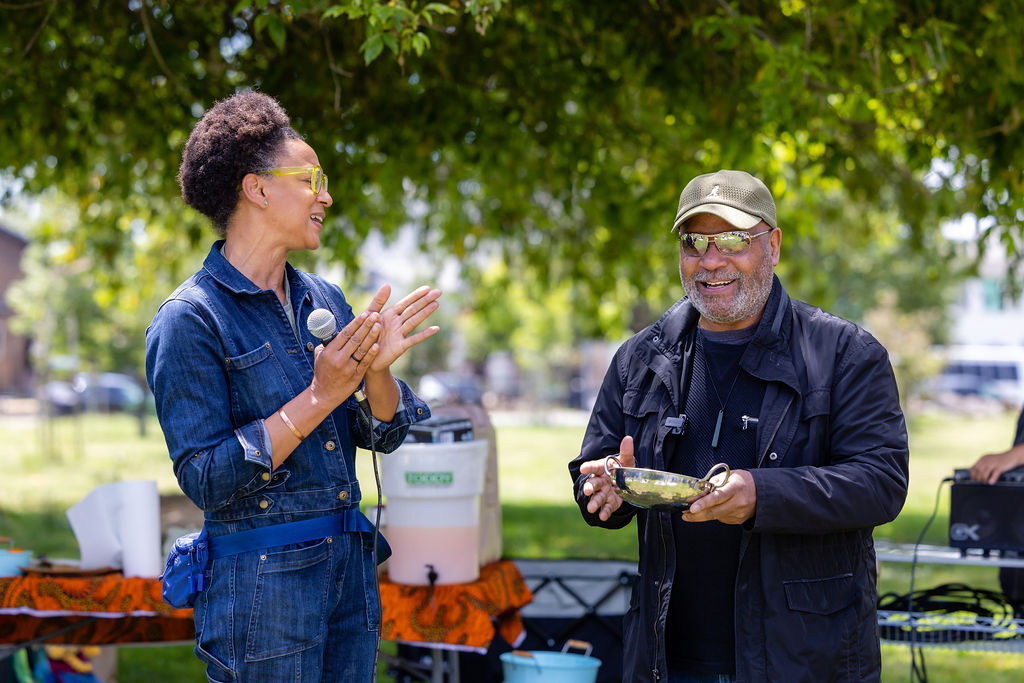
Jocelyn Jackson of People's Kitchen Collective with Emory Douglas, artist and the Black Panthers' Minister of Culture. (Courtesy of People's Kitchen Collective)
Related Article
Parable of the Sower’s main character, Lauren Olamina, journeys from Southern California in search of a better life up north with a trusted crew that helps each other survive. In the process, she comes up with a new spiritual belief system called Earthseed, whose core tenet is “God is change.”
For People’s Kitchen Collective’s Jocelyn Jackson, Sita Kurato Bhaumik and Võ Hải, the story serves as a roadmap. Since its beginnings in Oakland in 2011, the collective’s omnivorous programming has used art and food to build solidarity among people struggling against oppressive systems — whether that’s serving free breakfast to anyone who’s hungry, or reclaiming ancestral recipes at the Museum of the African Diaspora, where Jackson was a chef-in-residence.
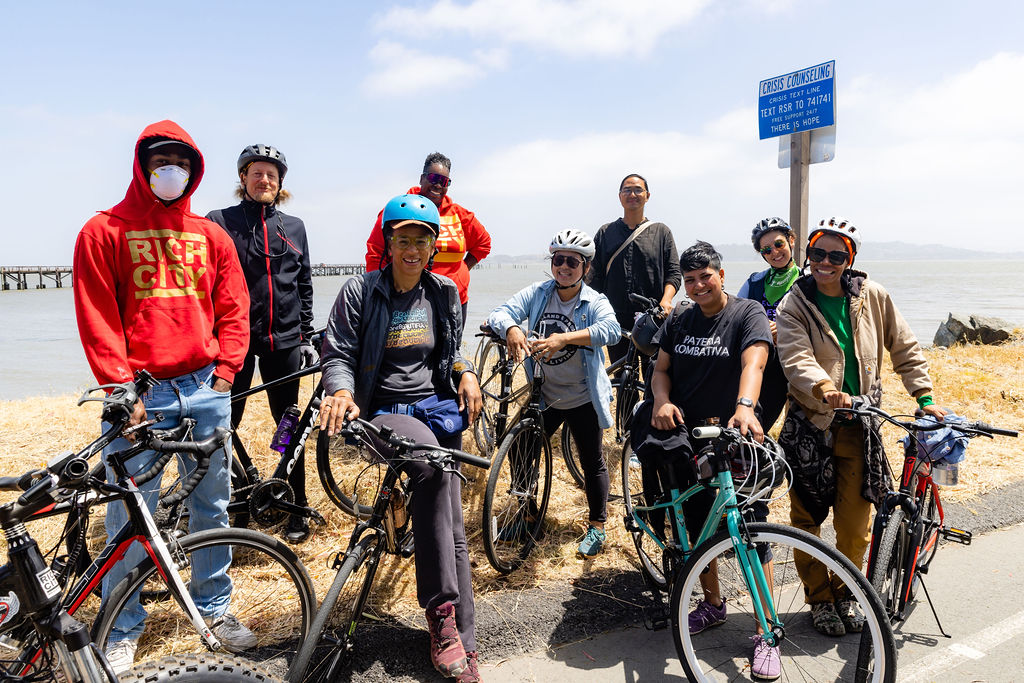
In 2023, following in Olamina’s footsteps in Parable of the Sower, People’s Kitchen Collective set out on a journey by foot and bike to visit intentional communities developing alternative social structures, from Los Angeles to Mendocino County. They broke bread with nearly a dozen different collectives of Black and brown artists, farmers, activists and chefs, and learned about how they care for one another and the people around them. Viewers can tag along in the new documentary directed by Fox Nakai, Earth Seed: A People’s Journey of Radical Hospitality, which will screen at the Berkeley Art Museum and Pacific Film Archive on July 27.
Hospitality, the way many of us have experienced it, may call to mind a hierarchical relationship, whether it’s waiters serving customers at a restaurant or women making sure everyone is fed and taken care of at a family gathering. In Earth Seed, a new way of engaging emerges: The idea of radical hospitality asks viewers to imagine how we can be in reciprocal relationships with those around us and the land.
“Mutual aid for me is a practice,” Jackson tells KQED. “It’s not just something you do during an emergency. … The emergency is 100% of the time at this point.”
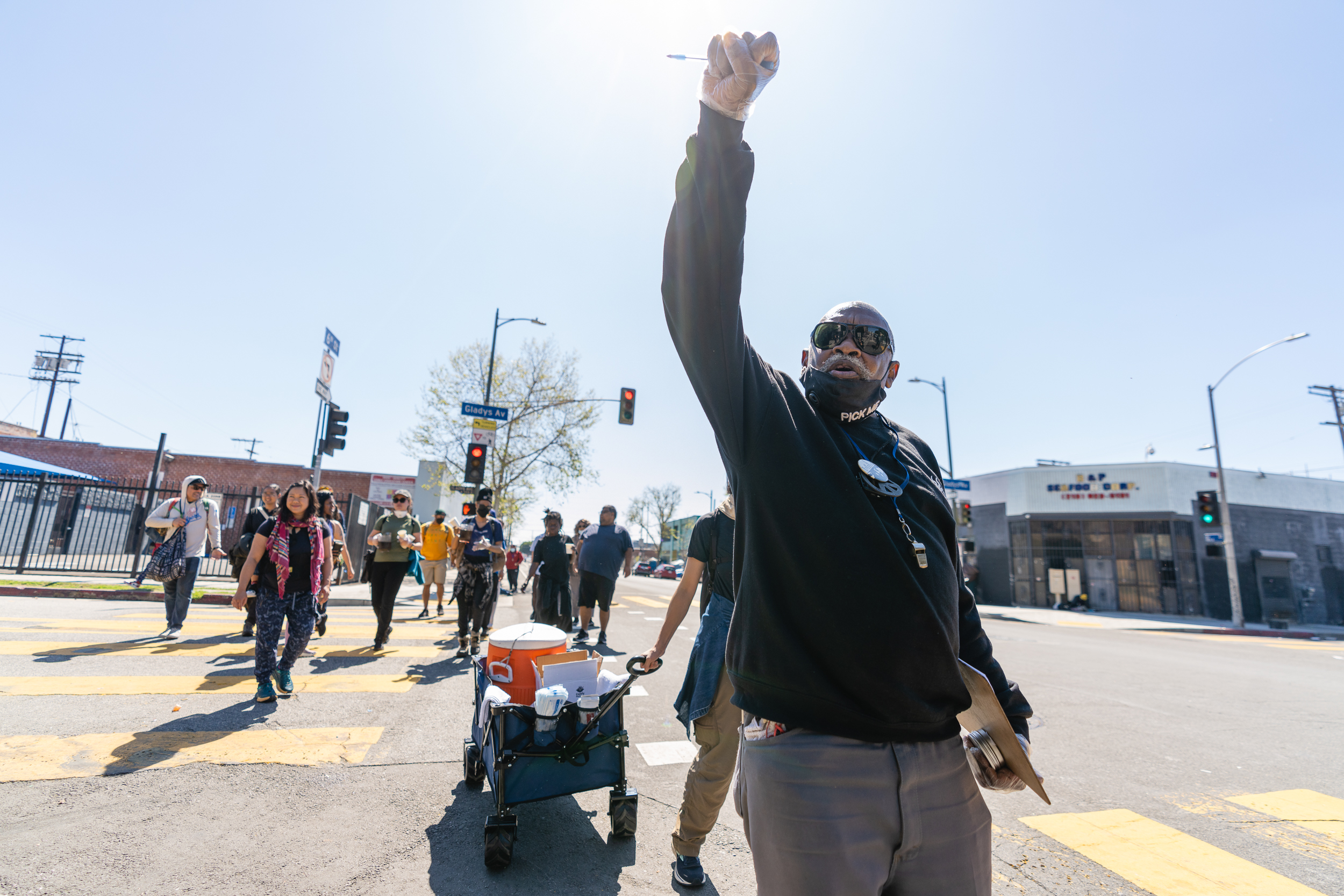
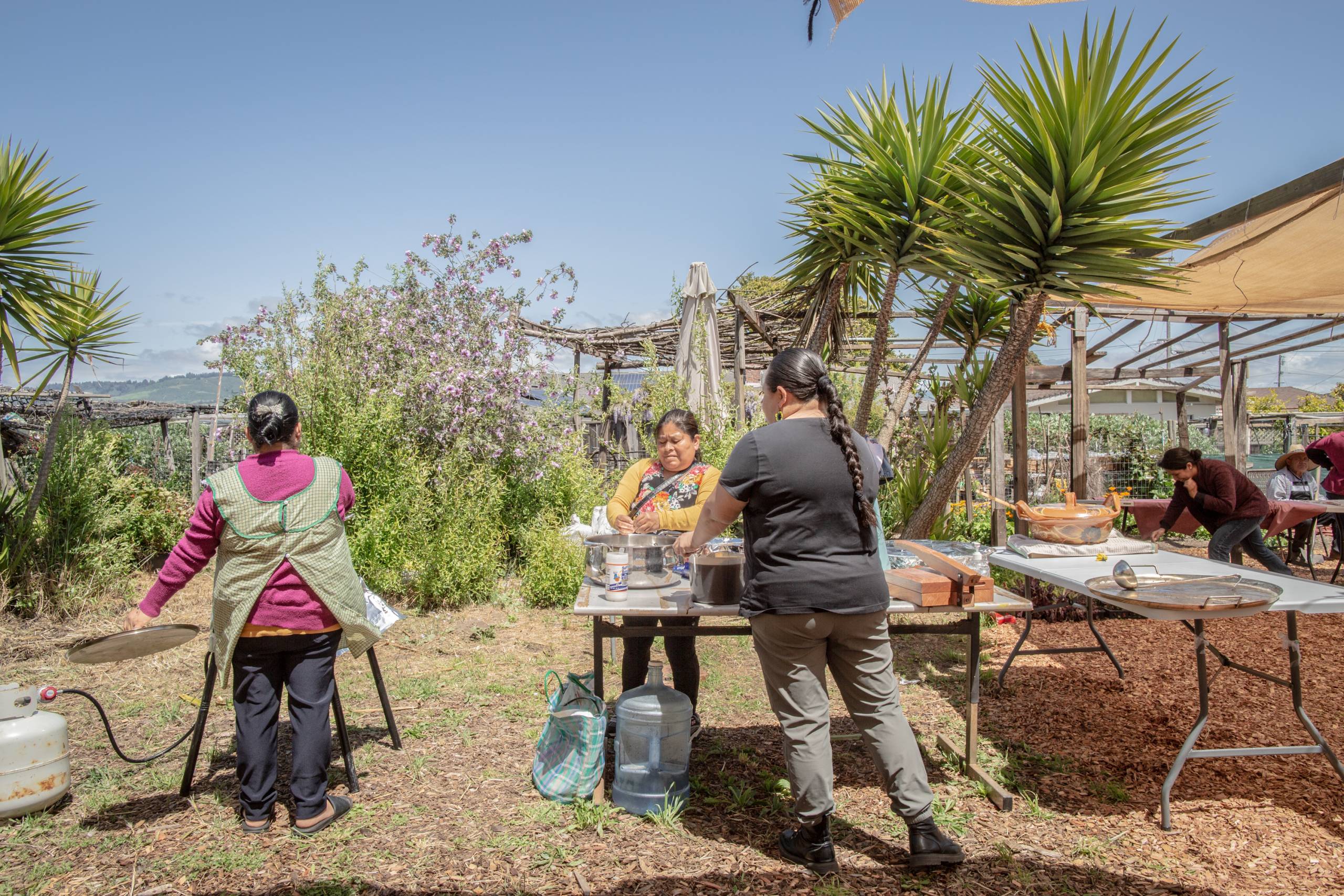
Earth Seed begins in the urban heart of Los Angeles, where the Los Angeles Community Action Network feeds people living on the streets of Skid Row. Beyond handing out meals, the collective creates spaces for LA’s poorest residents to come together, both to heal and to fight for their rights. The People’s Kitchen Collective moves out of LA County and through Central Valley, later visiting Tierras Milperas, a community garden where farmworkers from Watsonville and Pajaro, just outside of Santa Cruz, grow food for themselves and their families. When People’s Kitchen Collective visited, they had received a 15-day eviction notice to vacate the land they had stewarded for 15 years.
“They were actively being evicted from their land in some of the most insidious ways, in some of the violent ways and some of just tragically oppressive ways,” says Jackson. “And in the midst of that eviction, they still hosted us. … That’s profound to me.”
As they headed further north, People’s Kitchen Collective returned to their home base of Oakland to share a meal with elders from the Black Panther Party, who reminded them that their now-legendary survival programs, including free breakfast, were simply the product of young people noticing the needs of their community and doing something about it.
“It’s not like it can’t be done — it has been done, and it can continue to be done,” the Panthers’ Minister of Culture, Emory Douglas, says in the documentary to a crowd that includes Oakland schoolchildren listening with rapt attention.
It’s a crucial reminder for our era. As 2025 marches on, many people feel paralyzed by the dissonance of having to continue business as usual amid so much suffering locally and globally — millions starving in Gaza as Israel continues to block humanitarian aid; hunger rising in the U.S. after the Trump administration’s cuts to federal funding; a persistent homelessness crisis in San Francisco, Oakland and other major American cities.
As one watches Earth Seed, the groups that People’s Kitchen Collective visits are a reminder of everyday people’s agency to create alternative ways of relating to one another and the environment, striving to move away from extractive and exploitative ways of doing things. That’s a seed that People’s Kitchen Collective wants to nurture as the organization prepares to take the documentary on a national tour, with more screenings to be announced after the July 27 event at BAMPFA.
“We understand that hyper-local actions impact globally,” says Jackson. “And that’s fundamentally where we want to go with this film. And we wouldn’t be doing this national tour except for that intention.”
‘Earth Seed: A Journey of Radical Hospitality’ screens for free on July 27, 2025, 3–6 p.m. at the Berkeley Art Museum and Pacific Film Archive, followed by a discussion with Jocelyn Jackson and Isis Asare of Sistah Scifi, an online bookstore that focuses on speculative fiction by Black and Indigenous authors.