Sponsor MessageBecome a KQED sponsor
upper waypoint

Morgan Freeman on Bringing the Blues to the Symphony: ‘You’d Be Surprised’

Save ArticleSave Article
Failed to save article

Please try again

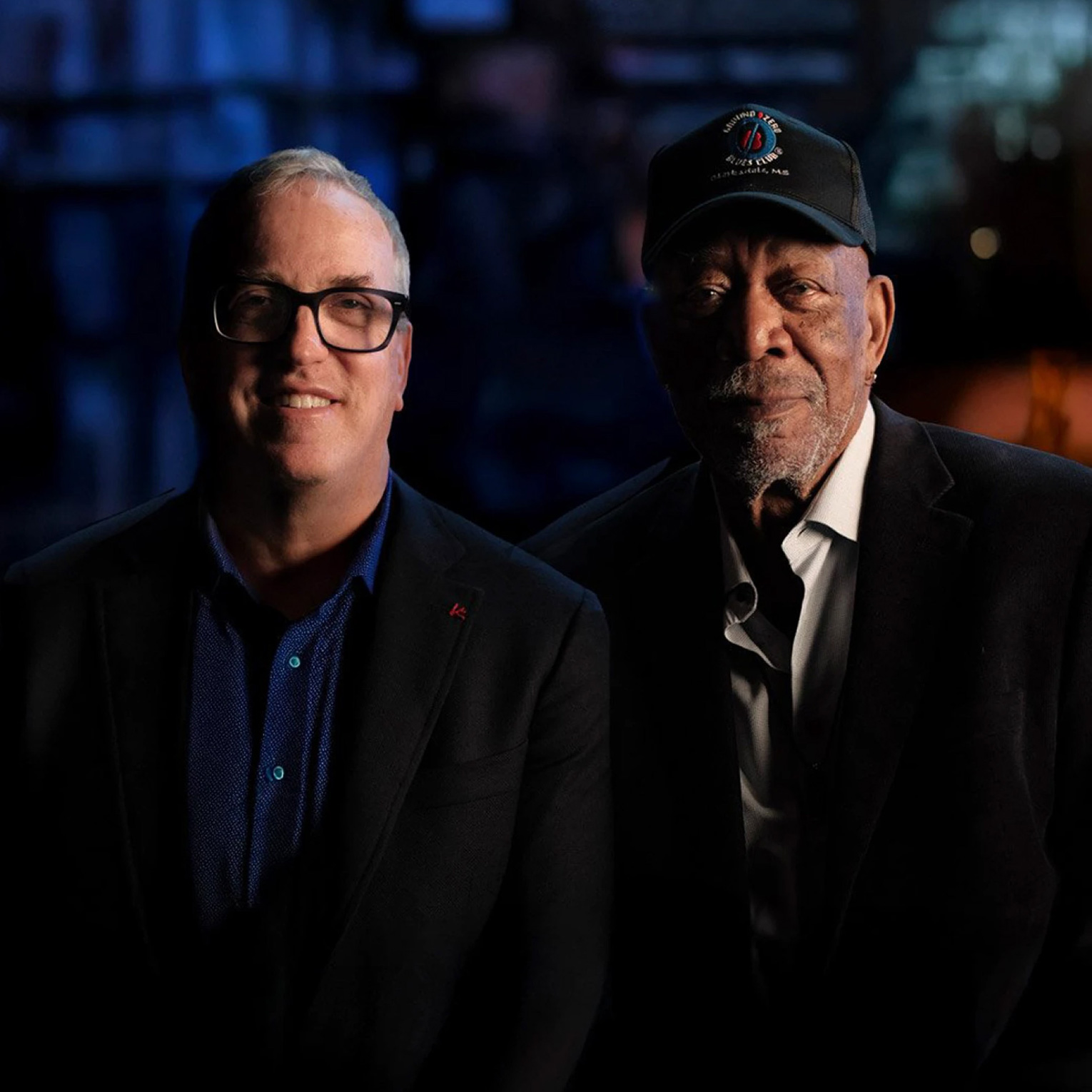
Eric Meier and Morgan Freeman, co-owners of the Ground Zero Blues Club in Mississippi, are taking the delta blues and merging it with the sound of a symphony orchestra for their latest venture, ‘Morgan Freeman’s Symphonic Blues Experience.’ (Ground Zero Blues Club Media LLC)

As a kid in coming of age in Mississippi, Morgan Freeman could never have foreseen what he’s up to now.

Freeman, one of the country’s finest and most celebrated actors, always enjoyed the delta blues, he tells me. But he never thought he’d one day combine the sound of the South with a symphony orchestra, and a dash of his own trademark narration, for audiences at concert halls around the world.

But sometimes life gives you the blues. From there, it’s on you to figure out what to do.

“I was not one of those who needed to get on that bandwagon and then start selling the blues,” Freeman, now 88, says on a recent video call. “But life takes you where it wants you to be. So I wound up as one of the main ambassadors.”
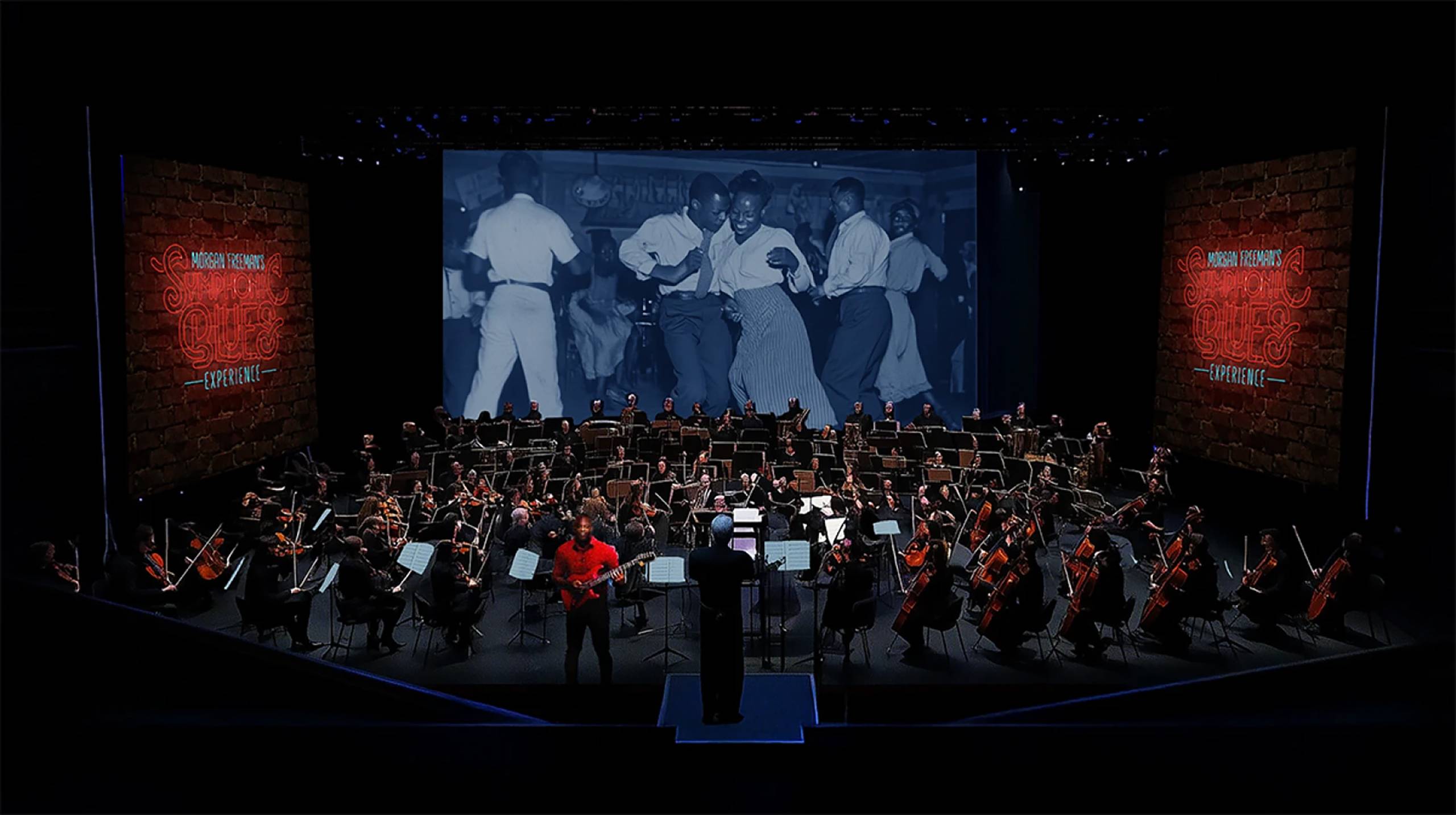
A full orchestra and guest blues artists appear in ‘Morgan Freeman’s Symphonic Blues Experience.’ (Ground Zero Blues Club Media LLC)

Freeman’s latest production, Morgan Freeman’s Symphonic Blues Experience, is musical storytelling adventure that takes a autobiographical spin on the delta blues, a genre born in Clarksdale, Mississippi.
Sponsored

He and his team take the soulful sound and sync it with Freeman’s onscreen voice and the sonic waves of a symphony orchestra for a performance that covers more than a century of musical history. They’ve already held performances in Savannah, Georgia, as well as Ireland and Austria. Freeman will be onstage to introduce the show at Davies Symphony Hall, accompanied by the San Francisco Symphony, on Friday, July 25.

“You’d be surprised,” Freeman says, describing the combination of the blues and the symphony. “It’s a very beautiful merge.”

Eric Meier, one of Freeman’s business partners, elaborates on the unlikely blend of music born from field hands in the rural South with a style originating from opulent concert halls in central Europe. “What we’ve figured out,” Meier says, “is how to take the authenticity and rawness of the blues and merge it with the elegance of a symphony.”

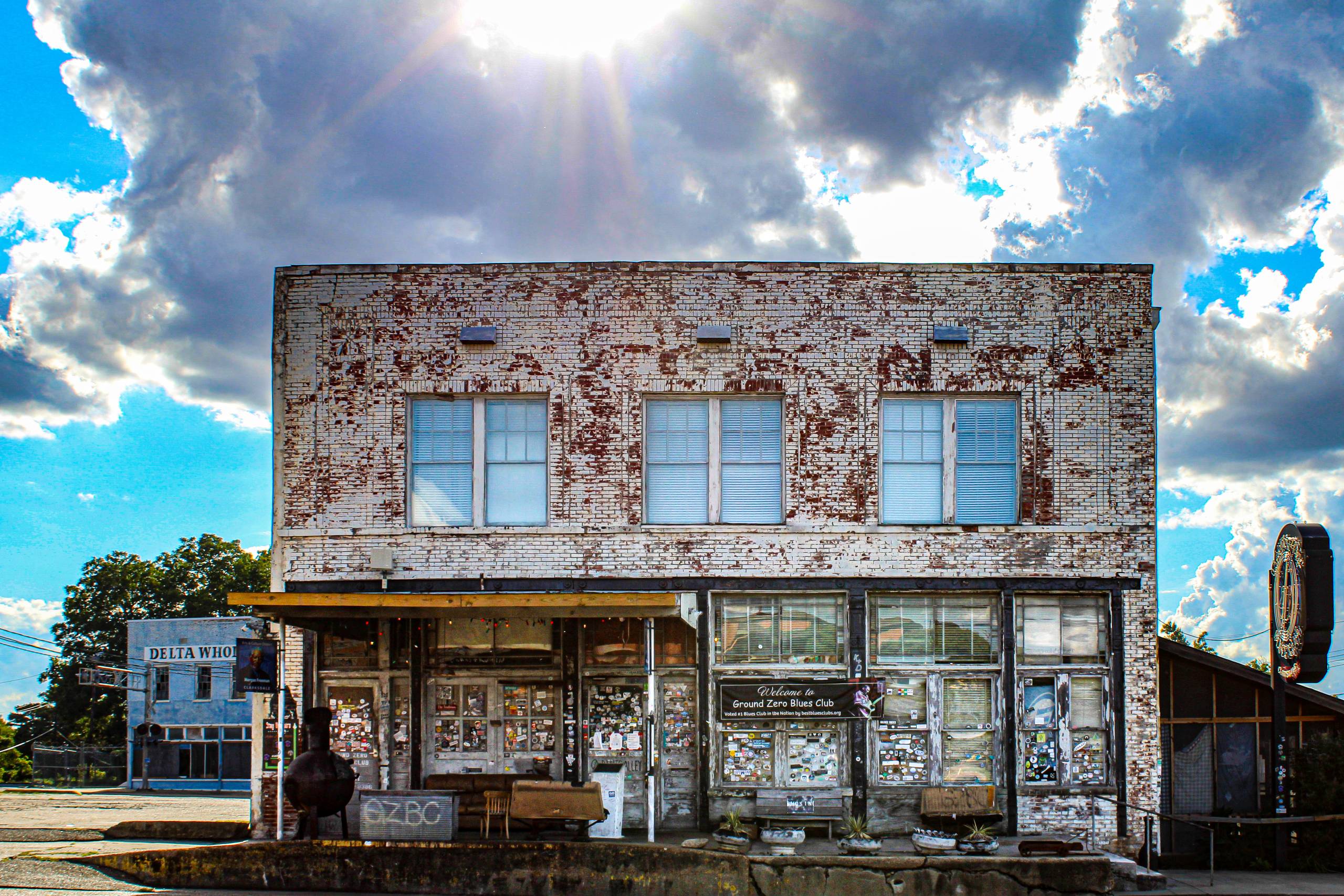
Since 2001, when Morgan Freeman opened the Ground Zero Blues Club in his hometown of Clarksdale, Mississippi, people all over the world have come to see shows by top-name blues artists. (Casey Ladd)

Meier and Freeman are two of the co-owners of a juke joint in Clarksdale, the Ground Zero Blues Club. Since opening in 2001, the venue has hosted a long list of musicians who’ve kept the local tradition of delta blues alive, some of whom will appear in the show at Davies.

Clarksdale, recently popularized after its depiction in this year’s blockbuster film Sinners, is home to a wealthy roster of blues legends, living and deceased. The list includes the late Muddy Waters, John Lee Hooker and Sam Cooke, as well as current practitioners like Super Chikan and Christone “Kingfish” Ingram.

Clarksdale is also undergoing a revival, aided by Freeman’s Ground Zero club, along with the reopening of the area’s only Black grocery store and a new festival, Clarksdale Day. With no movie theater in town, Sinners was screened at the local civic auditorium — but a youth nonprofit is working to reopen the city’s historic downtown theater.

It’s more than case of “something in the water” that leads to the blues being so prominent in the region. As Freeman says, “the genesis of the blues was the field holler,” noting that the songs originally came from “work rhythms” of people picking cotton and tilling tobacco fields.

While the early 1900s institution of sharecropping is no longer practiced, Meier adds, there’s currently a prison blues band at the Mississippi State Penitentiary known as Parchman Farm, 24 miles outside of Clarksdale. And that’s evidence that there’s still oppressive elements of society that keep the soul-churning nature of the genre relevant.

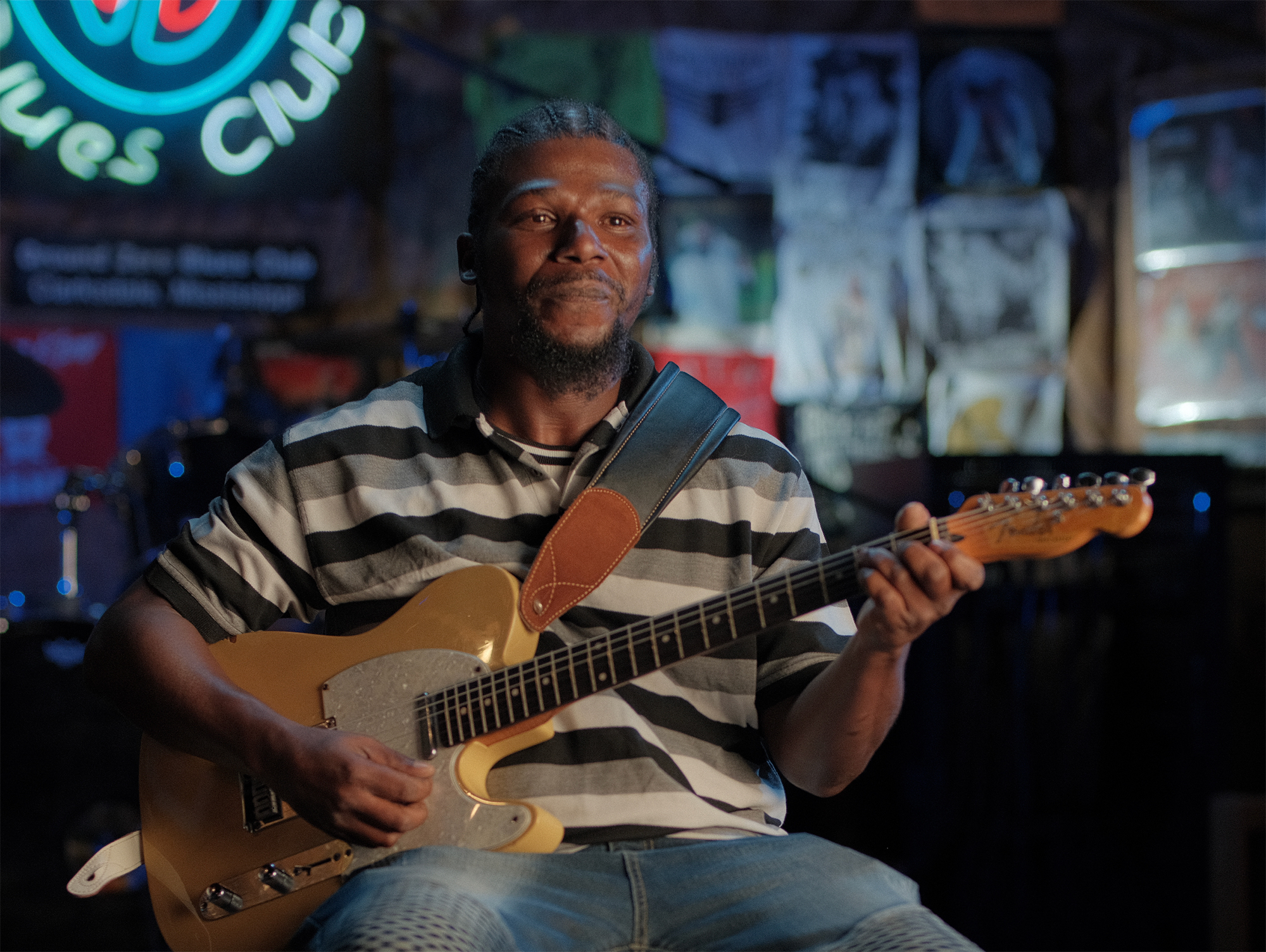
Anthony ‘Big A’ Sherrod, a regular at Morgan Freeman’s juke joint in Clarksdale, Miss., is a featured performer at ‘Morgan Freeman’s Symphonic Blues Experience.’ (Ground Zero Blues Club Media LLC)

“We’re living through some interesting times, right?” Meier says of the current state of the federal government. He points to the “underlying focus on resilience and perseverance” found within blues lyrics, and insists that the craft still serves a purpose today.

Decades after the sound was pulled from backwood juke joints in southern states and handed to British acts like the Rolling Stones and the Yardbirds during the “British Invasion,” the music is still popular around the globe. Through crowds that’ve attended the shows at their Mississippi club, Meier and Freeman have seen this popularity firsthand.

“About a third of the people visiting our club on any given night are from outside of the United States,” says Meier. “Yeah,” follows Freeman, “so it only makes sense to go to them, if so many of them are coming to us.”

Included in Freeman’s show are songs stretching as far back as 1927, with Blind Willie Johnson’s landmark 1927 recording “Dark Was the Night, Cold Was the Ground,” and spanning nearly 100 years through Albert King and Ray Charles up to the present day, with Raphael Saadiq’s contribution to Sinners, “I Lied to You.”

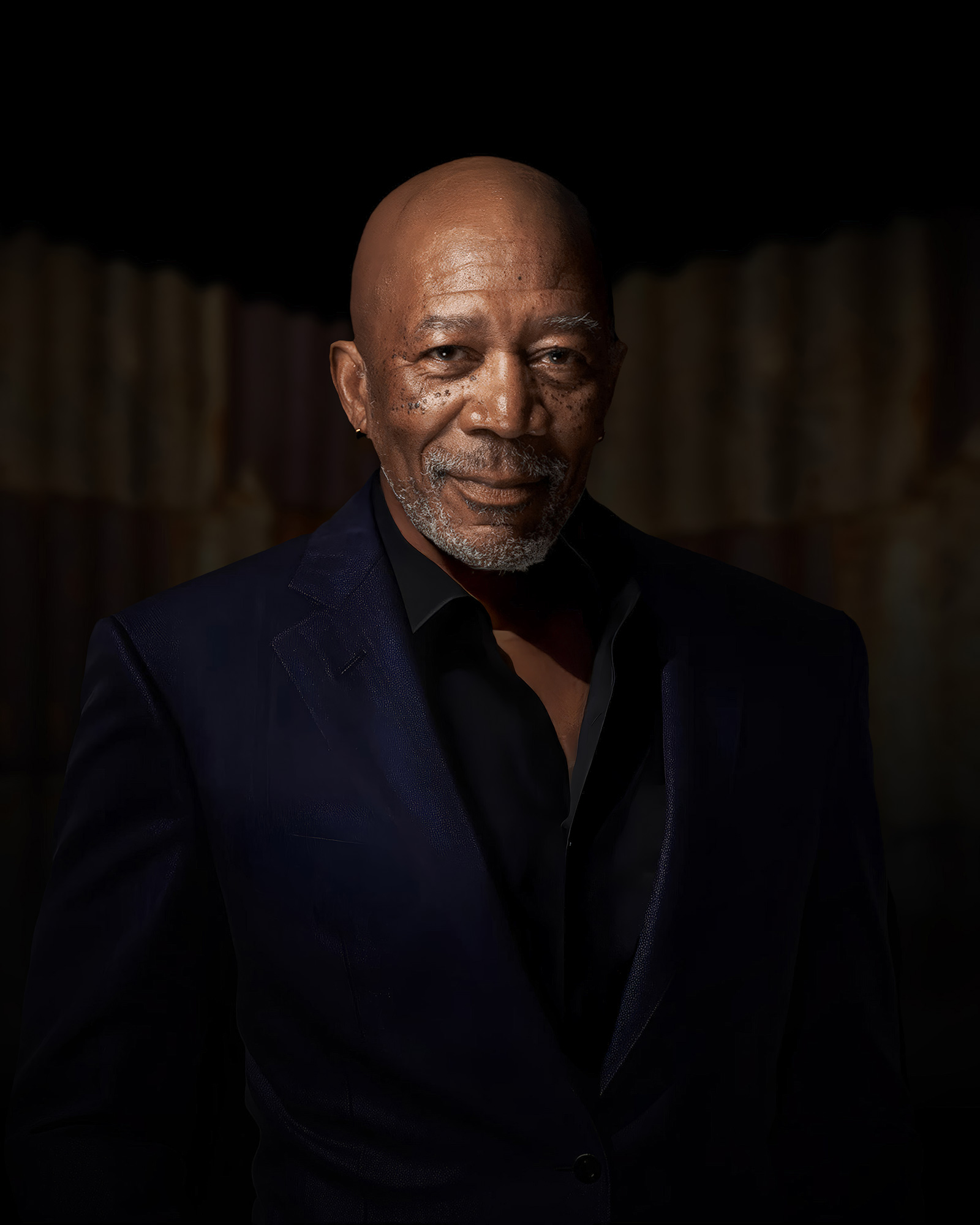
Morgan Freeman. (Ground Zero Blues Club Media LLC)

Meier, conscious that this effort to intertwine the blues with classical music also inherently means merging race as well as class, says that’s the goal: to utilize music as a form of diplomacy.

At the same time, Freeman and Meier both want to ensure quality. “You don’t want to turn this into Muzak,” says Meier.

As a reminder that the blues is a feeling as well as a genre, Freeman rhetorically asks why we as people have the blues, and what can be done about it. The answer? “We’re doing it,” he says with a nod.

“No one has thought of this particular way of merging music before,” Freeman says reflecting on his show. “So if you come, I think you’ll be very pleasantly surprised at how well they do.”


Sponsored

Morgan Freeman’s Symphonic Blues Experience’ takes place with the San Francisco Symphony on Friday, July 25, at Davies Symphony Hall in San Francisco. For tickets and information, click here.

lower waypoint
next waypoint