First Known Cookbook by a Black American Woman Is Back in Print
Malinda Russell’s ‘A Domestic Cookbook,’ containing over 100 recipes for sweets, was first published in 1866.
Neda Ulaby, NPR
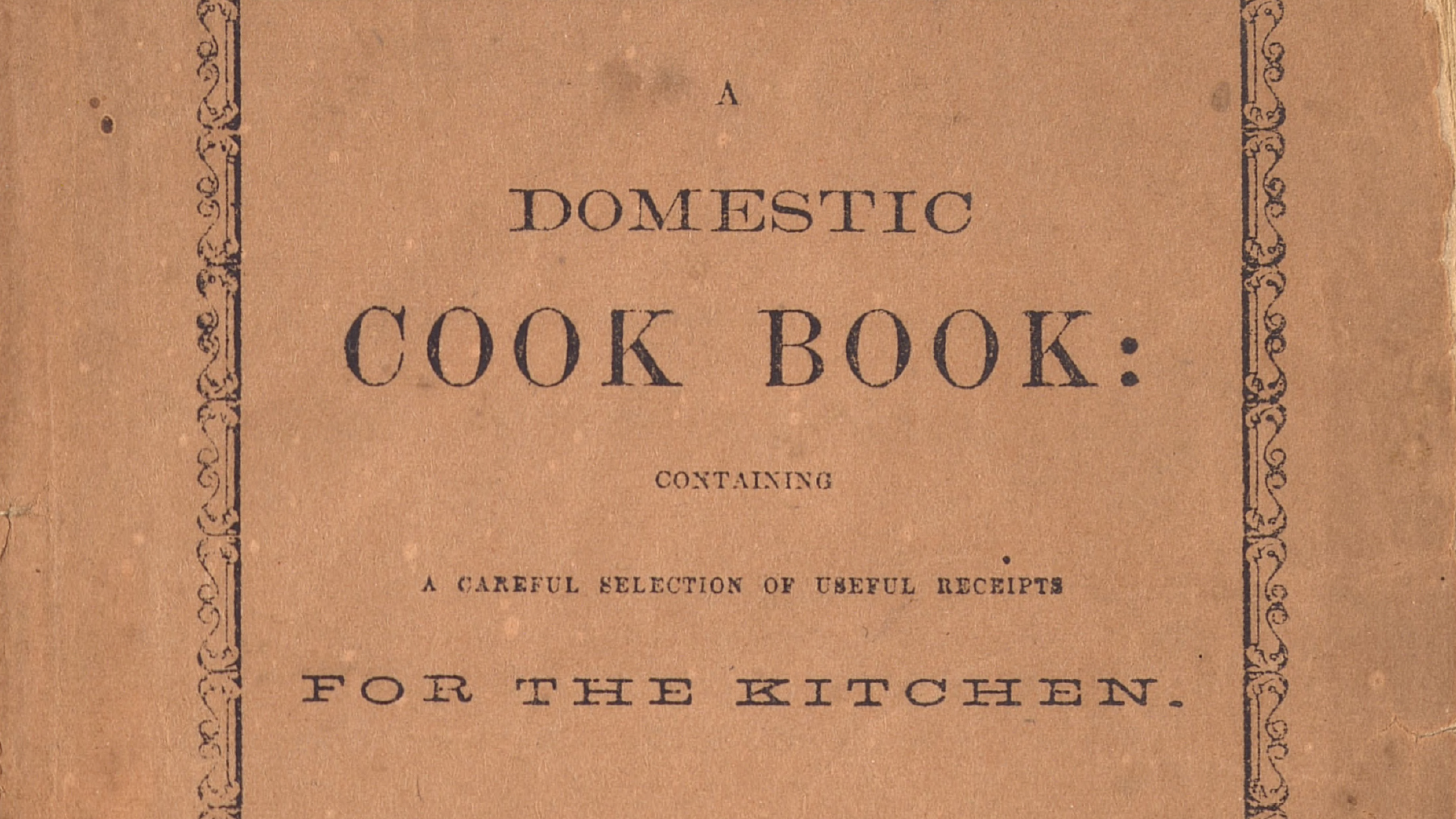
The cover of the only known remaining copy of Malinda Russel's 'A Domestic Cook Book,' published in 1866. (University of Michigan)
The oldest published cookbook by a Black American woman — that we know of — is out in a brand new edition this February.
Malinda Russell wrote A Domestic Cookbook: Containing a Careful Selection of Useful Receipts for the Kitchen in 1866. We know sadly little about her, says Rafia Zafar, a retired professor at Washington University in St Louis, Missouri, who contributed a foreword to the new edition.
“She’s widowed early. She has a handicapped child. She starts her own business. She has a pastry shop,” Zafar says.
Related Article
Russell’s shop may explain why you can find at least a hundred recipes for sweets in A Domestic Cookbook. The desserts are old-fashioned: allspice cake, French lady cake, lemon puffs, boiled berry pudding. But they still sound delicious. Her cookbook also includes a number of savory recipes, recipes for shampoo and cologne — and remedies for toothaches, corns, even dropsy (an archaic term for swelling and edema.)
Zafar, who wrote the 2019 book Recipes for Respect: African American Meals and Meaning says for a long time, scholars believed that the oldest cookbook by a Black American woman was Abby Fisher’s What Mrs. Fisher Knows About Old Southern Cooking, from 1881. Fisher was born enslaved in South Carolina, and could not read or write. She dictated her cookbook to friends after becoming something of a local culinary celebrity in San Francisco, where she had moved in 1877. Two Black men wrote earlier books still: Robert Roberts’ 1827 manual The House Servant’s Directory and Tunis Campbell’s 1848 book, Hotel Keepers, Head Waiters and Housekeeper’s Guide.
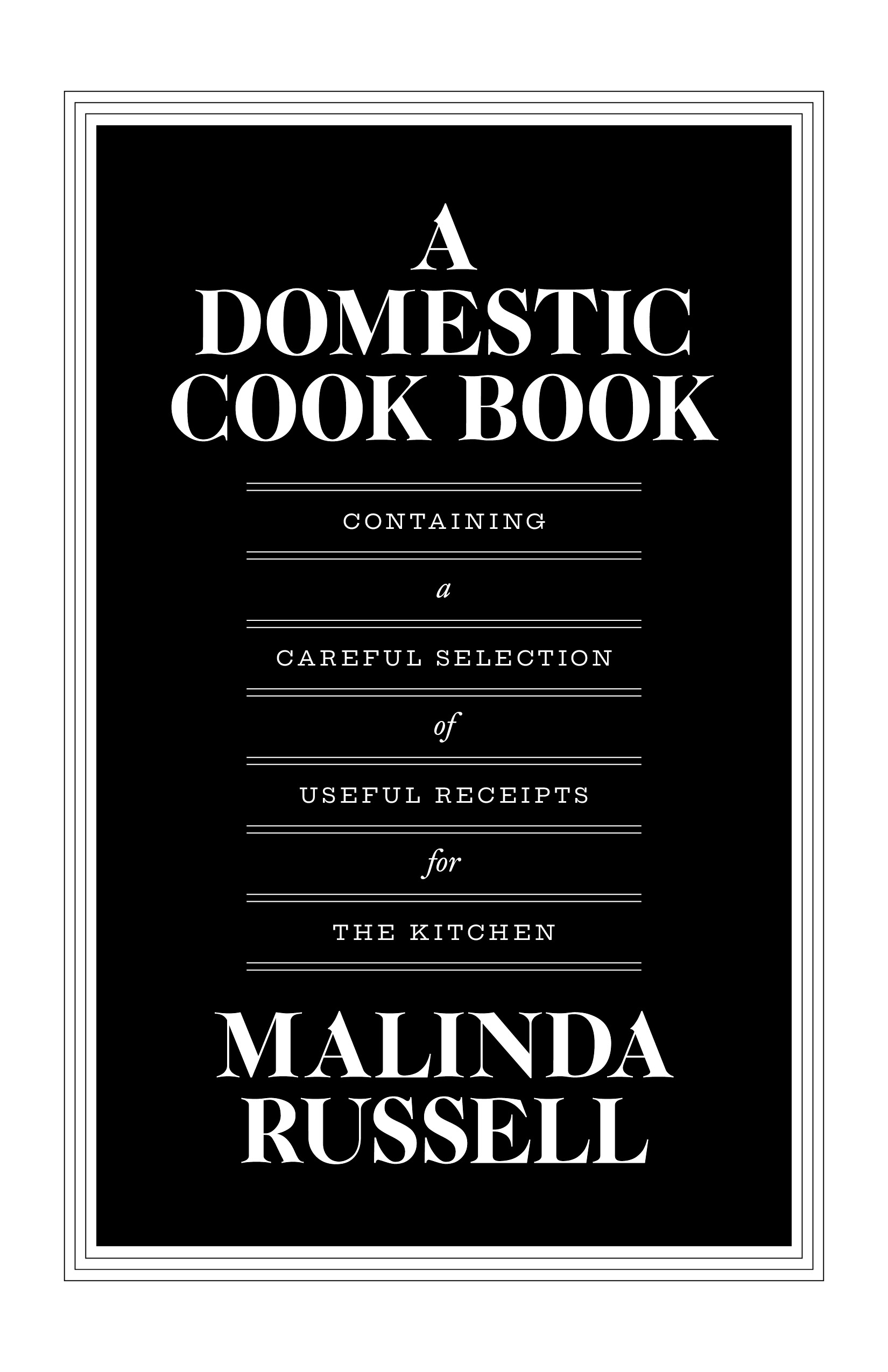
The cover of the reissued version of Malinda Russell’s 1866 cookbook. (Shiraz Abdullahi Gallab/University of Michigan Press)
Malinda Russell’s cookbook was discovered at the bottom of a box of books in the early 2000s by culinary historian Janice Bluestein Longone, who donated it as part of an extensive archive of cookbooks now stored at the University of Michigan.
Russell was never enslaved, as she wrote in the first paragraph of her book.
“I was born in Washington County, and raised in Green County, in the eastern part of Tennessee,” she wrote. “My mother, Malinda Russell, was a member of one of the first families set free by Mr. Noddie, of Virginia … My mother died when I was quite young.”
As a teenager, Russell wrote, she planned to move to Liberia, but was robbed by one of her fellow travelers before she left the country. Resourceful and industrious, she opened a washing business and boarding house before the pastry shop, but lost her savings when she was robbed again in 1864 “by a guerrilla party who threatened my life if I revealed who they were.” Her savings, she wrote, were all she had to support herself and her son, who lacked the use of one hand. A Domestic Cookbook came partly as an attempt to recoup those losses.
“This is one reason why I publish my Cook Book,” Russell wrote. “I know my book will sell well where I have cooked, and am sure those using my receipts will be well satisfied.”
For years, the cookbook has been available for free online through open access. The Virginia Museum of History and Culture included Russell’s recipe for ginger drop cake in its online series Recipes Remade, featuring reference coordinator Matthew Guillen stirring together molasses and butter in a YouTube video.
He’s one of many home cooks and historians who’ve paid tribute to Russell by adapting her 160-year-old recipes. That’s not easy, says Zafar, given the lack of information in old cookbooks like Russell’s that leave out the size of pans and the heat of ovens. She points to one example from Russell’s cookbook:
One pound flour. One ditto butter. Nine eggs. Two quarts milk. A little yeast mixed together warm.
“That’s the recipe,” Zafar says. “People always say reading cookbooks are like reading novels, but reading cookbooks are also like reading ethnographies and travel books.”
Or perhaps, books that can travel through time. What a joy in this Black History Month, she adds, to meet a heroine as determined as Malinda Russell, who reminds readers today how creativity and talent have circulated and survived.