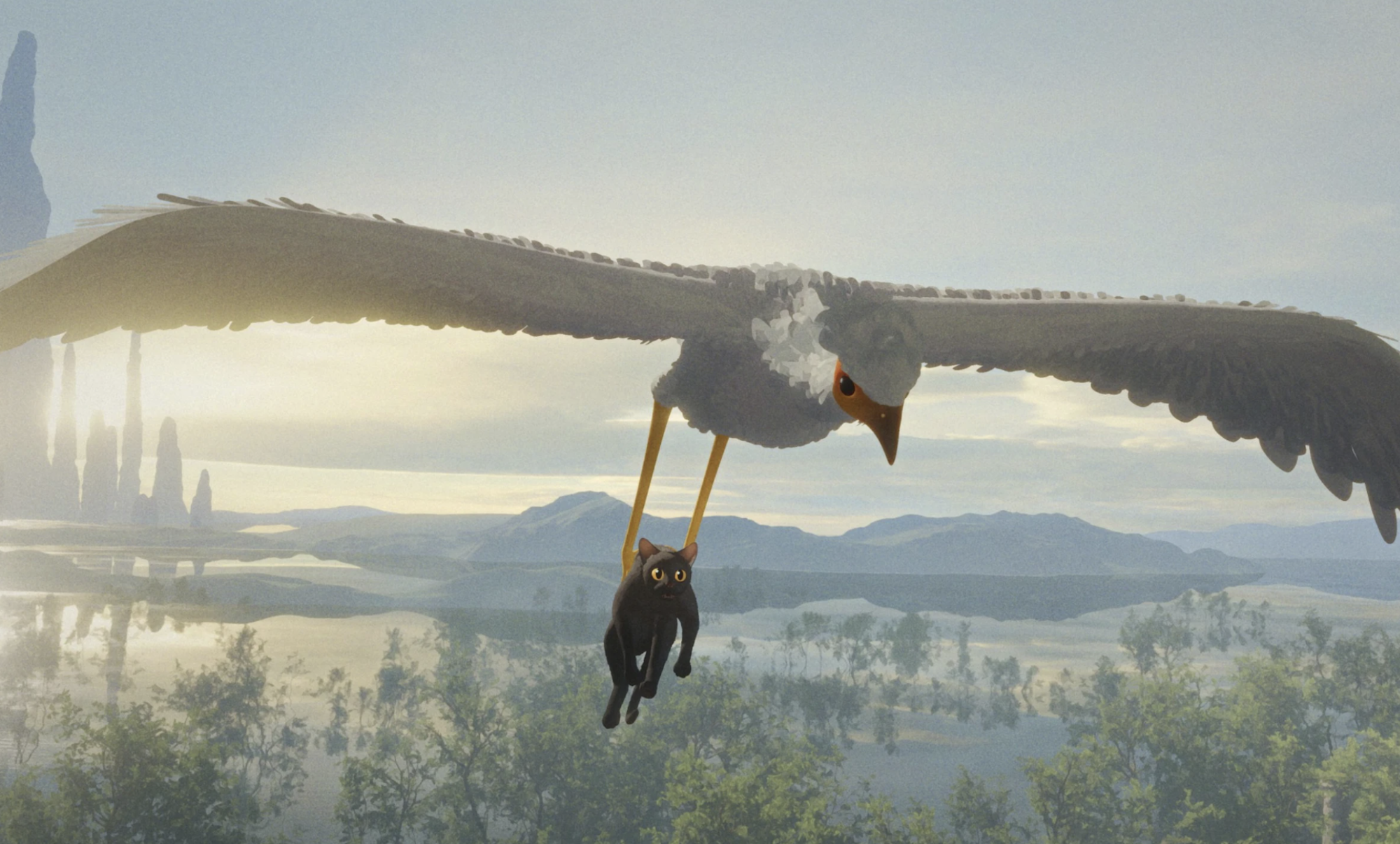
Of all the post-apocalyptic landscapes we’ve been treated to over the years, none is as beautiful nor peaceful as that of Flow.
In Gints Zilbalodis’ wondrously shimmering animated fable, a solitary black cat, after escaping a cataclysmic flood, navigates a water world. What brought things to this point is never explained. We’re left to look upon this strange, verdant and overgrown landscape through the amber eyes of our unnamed feline protagonist. Humans are completely absent, and it’s part of this beguilingly meditative film to wonder not just about what role we played in the flood, but to ponder the grace of the animal life left to inherit the Earth.
As much as I didn’t have a wordless Latvian animated movie on my 2024 bingo card, Flow — an expected Oscar contender currently in theaters — is quite easily the best animated movie of the year and one of the most poetic ecological parables in recent memory. It’s an all-audiences movie, and by that, I’m tempted to include not just young and old, but cats and dogs, too.
When the waters rise, the cat encounters a friendly Labrador, a long-legged secretary bird, a dozing capybara and a bauble-hoarding ring-tailed lemur. Cute as they are, they aren’t quite your typical animated animals. Part of the allure of Flow is seeing animal characters that would normally be anthropomorphized and voiced by celebrity actors — the lemur, in particularly, has until now been ruled by Sacha Baron Cohen’s King Julian of Madagascar — move and sound authentically.
Well, mostly. Circumstances bring these five together aboard a small sailboat, an ark sans Noah. And while Flow doesn’t exactly go for realism — the secretary bird, for instance, proves an especially adept captain in steering the rudder — it is most decidedly drawn in closer harmony to the natural world than your average animation. Together they sail through mountain tops-turned-islands and an abandoned city with rivers for streets.