It’s hard to fit a house inside a museum. Especially when that house is 50 years old, has acted as a studio to hundreds of artists and now contains tens of thousands of art pieces in its attic. (The house in this architectural metaphor is Creative Growth, Oakland’s nonprofit center for artists with disabilities.)
SFMOMA’s Creative Growth Show Annexes ‘The House That Art Built’
The show marks the nonprofit’s 50 years, and the museum’s major acquisition of work by artists with disabilities.
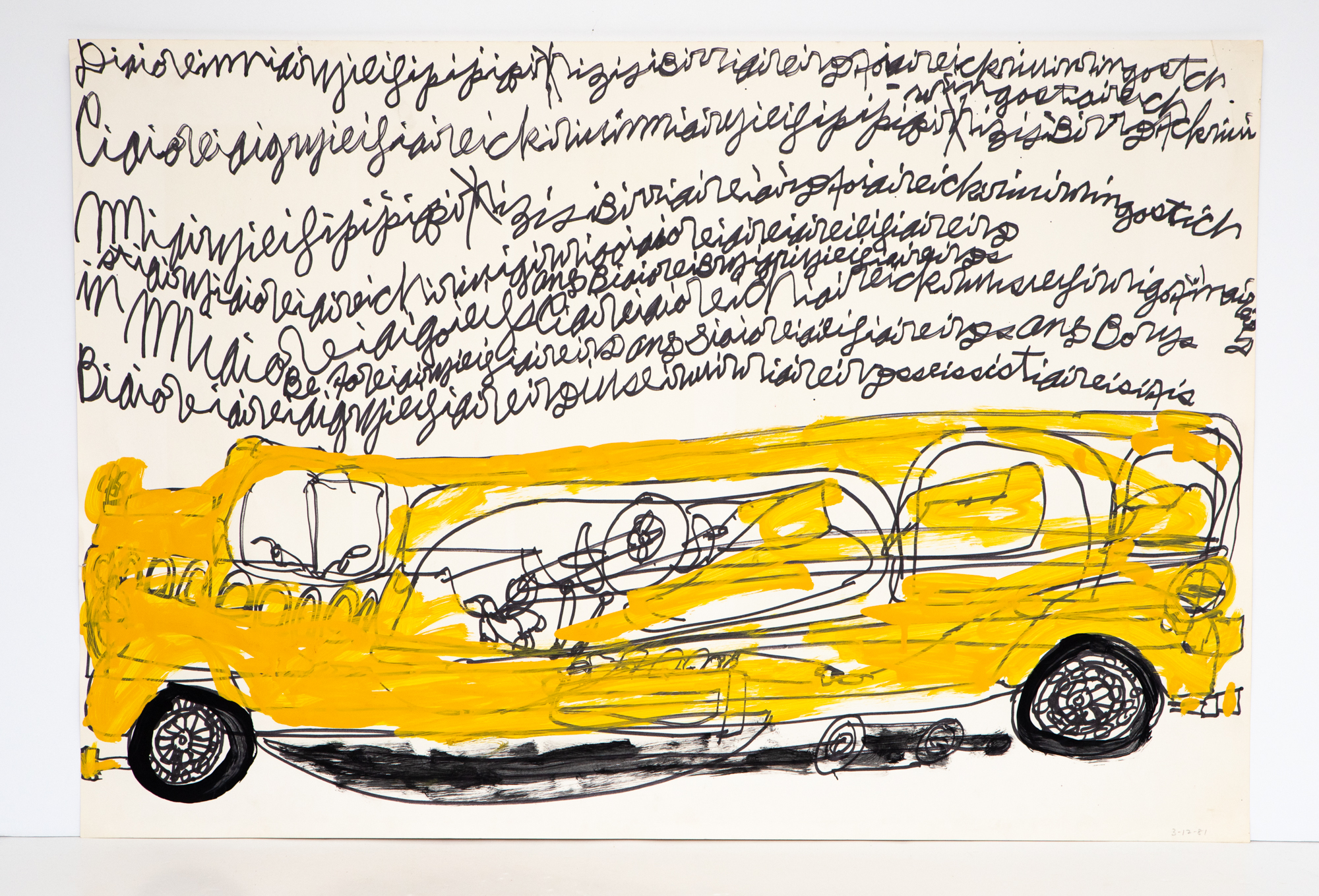
Dwight Mackintosh, 'Untitled,' 1981; Felt-tip pen and acrylic paint on paper. (Courtesy of SFMOMA)
Related Article
A museum may be large, but it is already very full with the trappings of art history — for so long, a very Western, male and ableist version of art history. Augmenting such collections is often a rather thin gesture, like slipping someone an I.O.U. But sometimes, a bolder approach, a glomming-on of a self-contained mass, can shift the balance of an entire institution.
Creative Growth: The House That Art Built, opening April 6 at the San Francisco Museum of Modern Art, is a celebration of both the art center’s innovative model and the museum’s recent acquisition of over 100 works by Creative Growth artists (more than 80 of which are on view in the show). Co-curated by Nancy Lim and Jenny Gheith, with curatorial assistant Auriel Garza, the show is one facet of a three-year partnership between the two institutions.
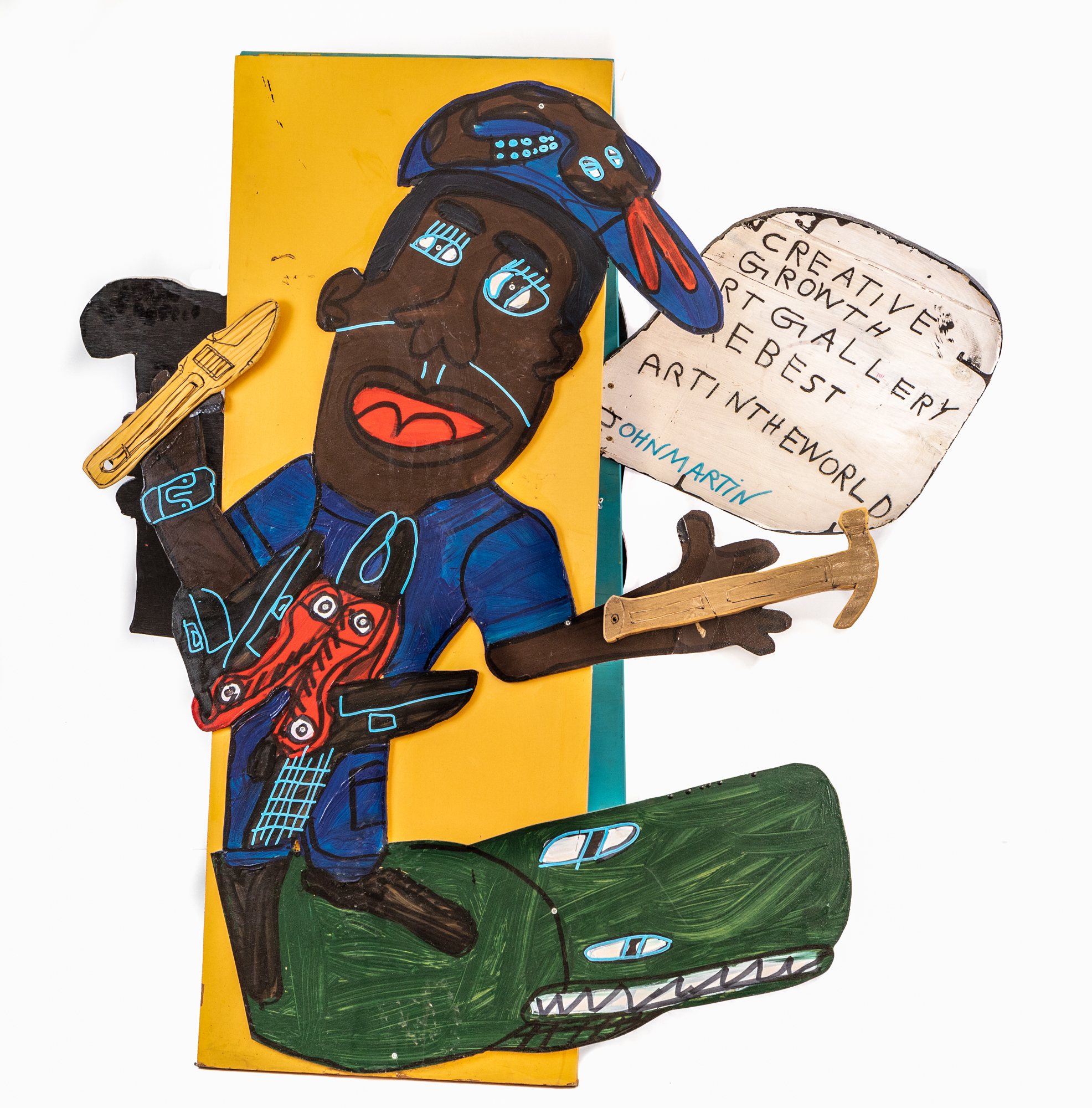
For the duration of the show, SFMOMA has condensed these additions to its holdings into three galleries on the museum’s second floor. But the idea is to spread the work throughout the collection, placing paintings, drawings, sculptures, video work and at least one dapper (and painted) suit not in the context of “a group show of artists with disabilities,” but in the context of art history.
The late artist Judith Scott’s 2004 Untitled, a highlight of the exhibition, exemplifies the possibilities of heterogeneous amalgamation. At the center of the sculpture is a small chair. Through additive layers of yarn, strips of fabric, a wicker basket and a bicycle wheel, Scott turned it into a package, a bundle, an elegantly composed assemblage of color and tension.
This show is important, her sculpture says. It is also full of self-evidently beautiful things.
The House That Art Built opens with a 32-foot-wide mural by William Scott, a dizzying representation of San Francisco that is semi-familiar and semi-fantastical. “Praise Frisco,” Scott’s utopian version of the city, is populated with younger versions of the artist and his mother, and filled with high-rise apartment towers, healthy restaurants and cultural centers.
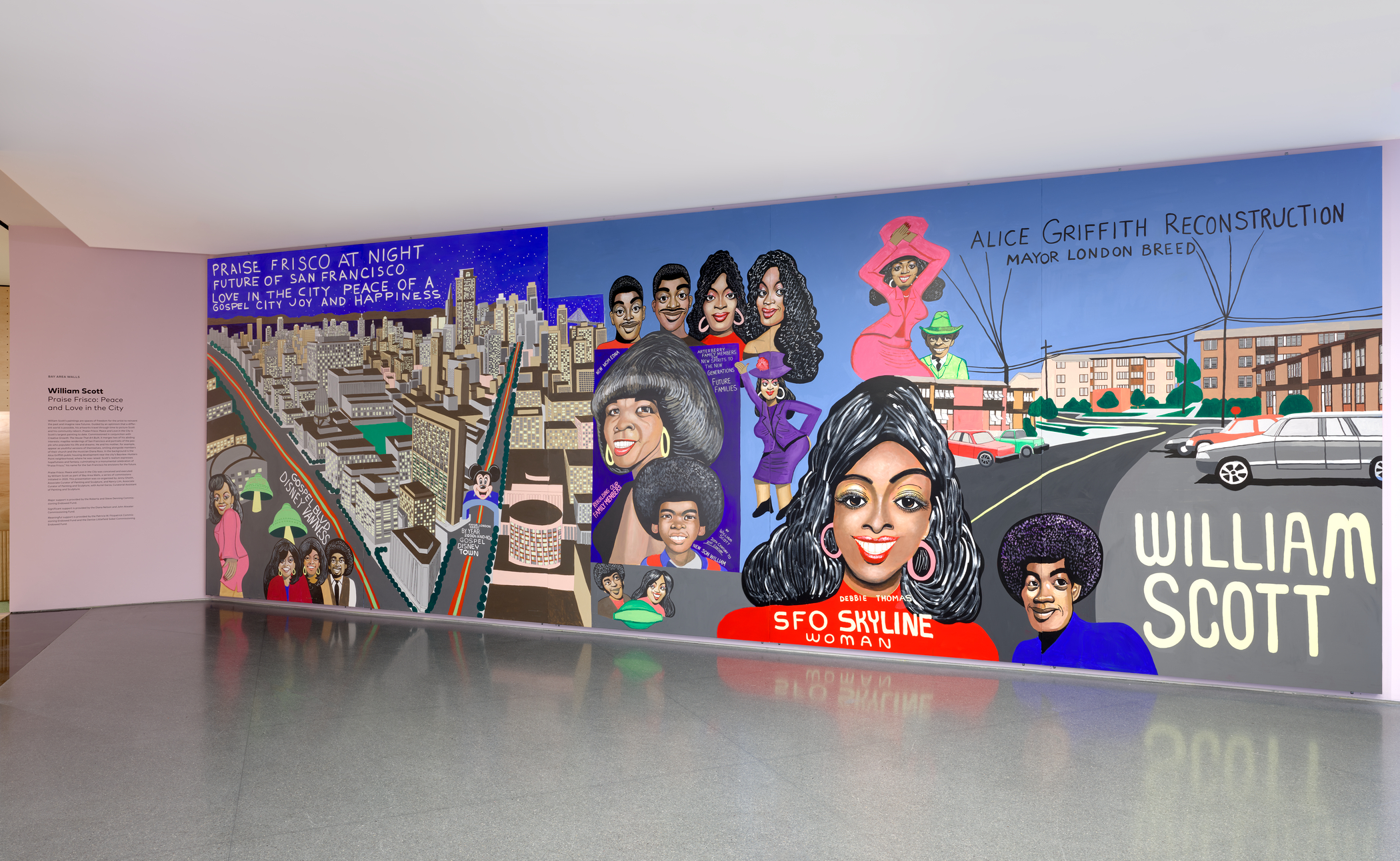
“Praise Frisco will be a good place to live, the best place to live,” Scott said in a recent interview with the museum. “No bad people, no crimes, no killings, no homelessness.”
Scott’s precise lettering, beaming faces and graphically punchy compositions are concept art for a bright future that I, for one, would love to be a part of. Mayoral candidates, take note.
The work that follows Scott’s optimistic entryway spans mediums and artistic movements: densely layered drawings (Dan Miller); conceptual video art (Susan Janow); colorful abstract expressions in paint (Joseph Alef); found images appropriated and modified (Alice Wong and Ron Veasy); intricate yet flattened ceramic reliefs (John Martin).
Not to be missed is work on paper by Dwight Mackintosh, who joined Creative Growth when he was 72 years old and worked at the studio for 20 years. Mackintosh deployed strings of cursive lettering and rendered people in radiating loops. In one drawing adorning an 88th birthday announcement, fingers and toes emit rippling waves of energy — a body still busy with creative motion.
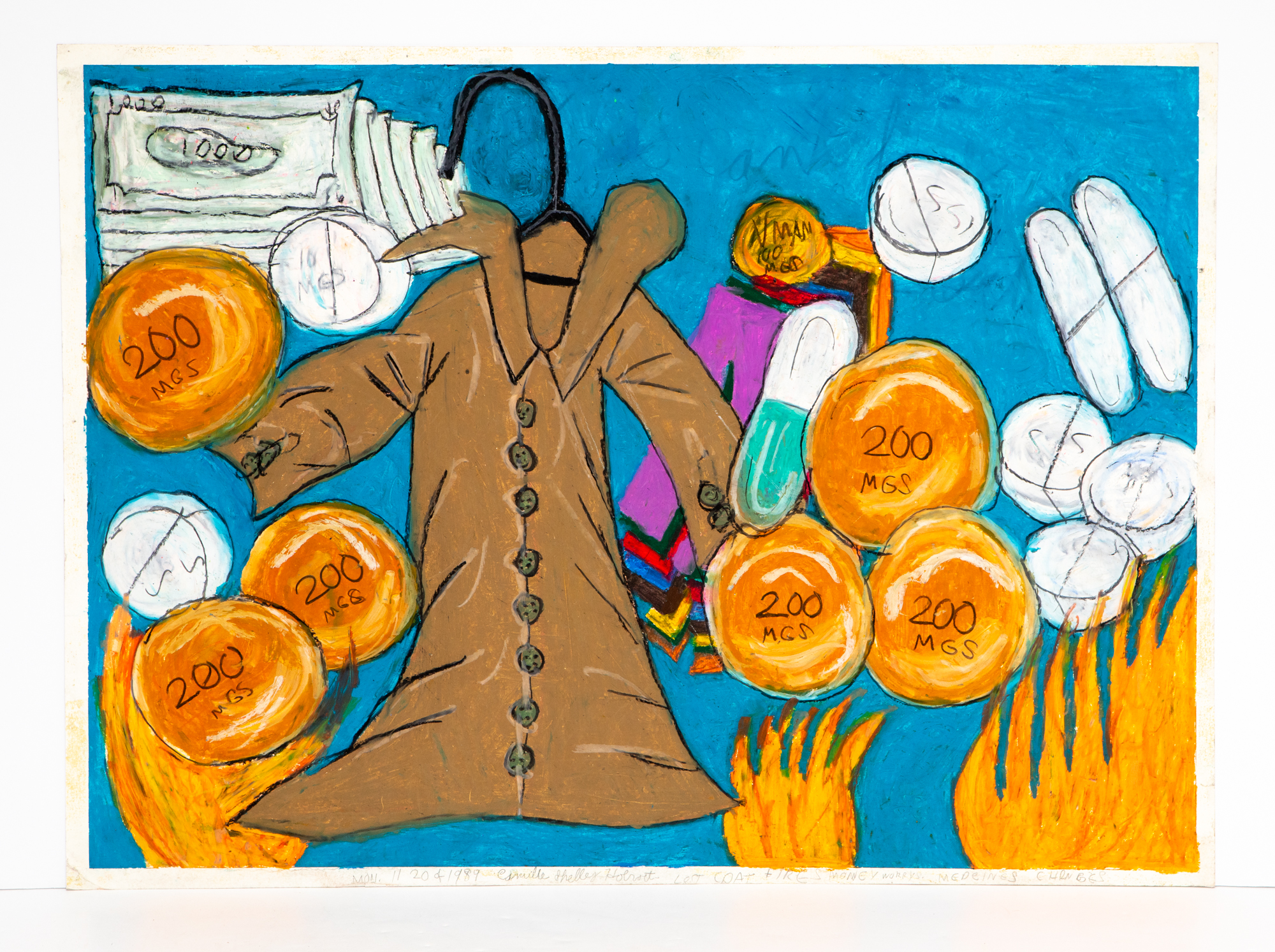
Less abstract, but no less affecting are Camille Holvoet’s oil pastels on paper, evocative renderings of banal (and very recognizable) slices of the artist’s life. Anyone who’s ever laid awake in the throes of insomnia will see themselves in OBSESSING CAN’T SLEEP AT NIGHT, a drawing from 1988.
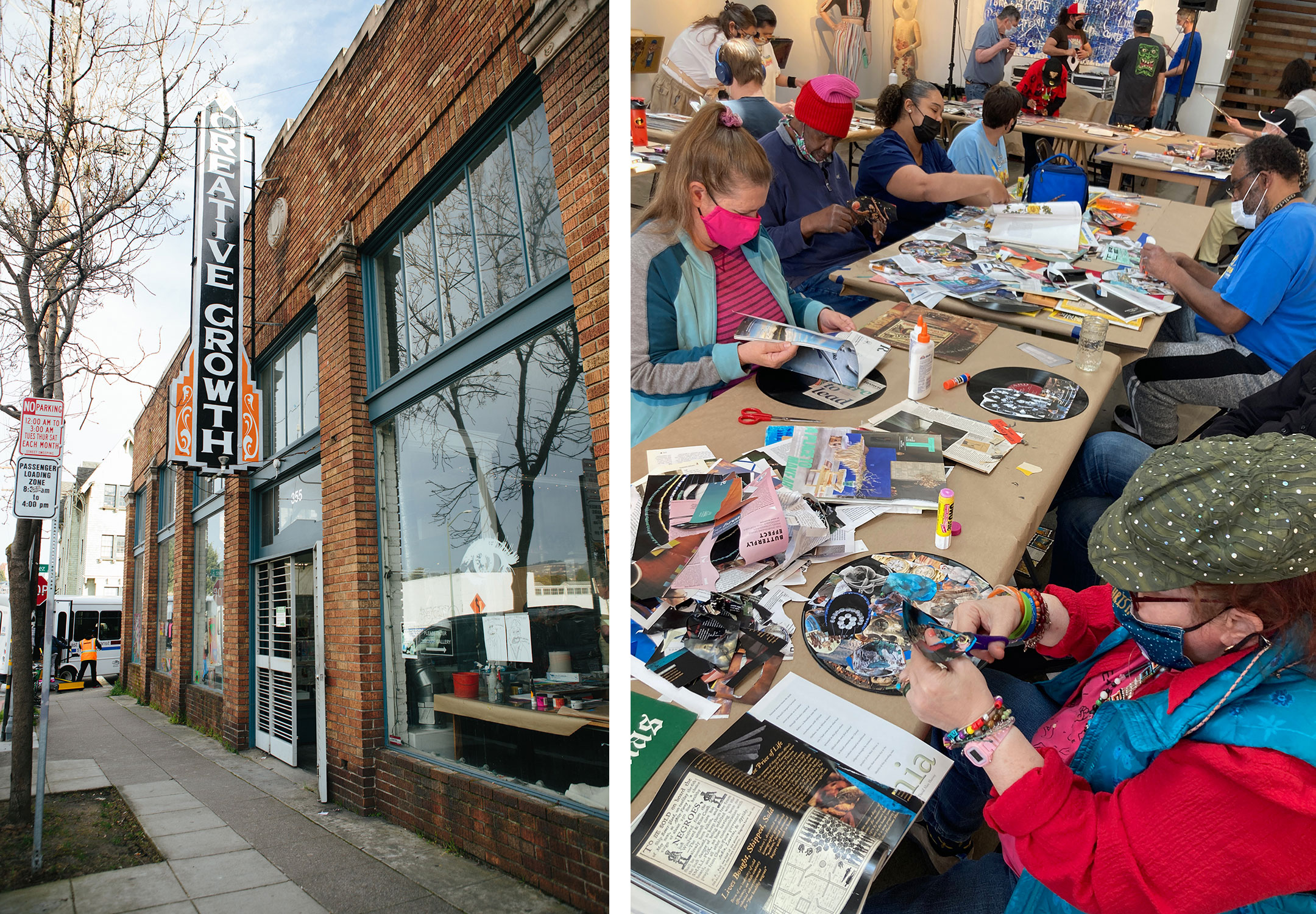
There is much to pore over in the galleries of The House That Art Built, including a small section of ephemera tied to Creative Growth’s many fundraisers, exhibition announcements and artistic collaborations over its five decades. These are restrained hints at the activity and relationships contained within the physical place of all this art making. (It’s not the show’s fault that it’s inside a museum, a notoriously sterile and white-walled space.)
And so it’s crucial that the exhibition includes a wall-sized group portrait taken just a few weeks ago at Creative Growth, featuring dozens of artists and staff in the nonprofit’s cavernous Oakland studio, a former auto-repair shop. It’s a picture that you can’t help but smile back at, one that suggests a more present-tense scenario: a house that art builds.
‘Creative Growth: The House That Art Built’ is on view at San Francisco Museum of Modern Art April 6–Oct. 6, 2024. Click here for more information.