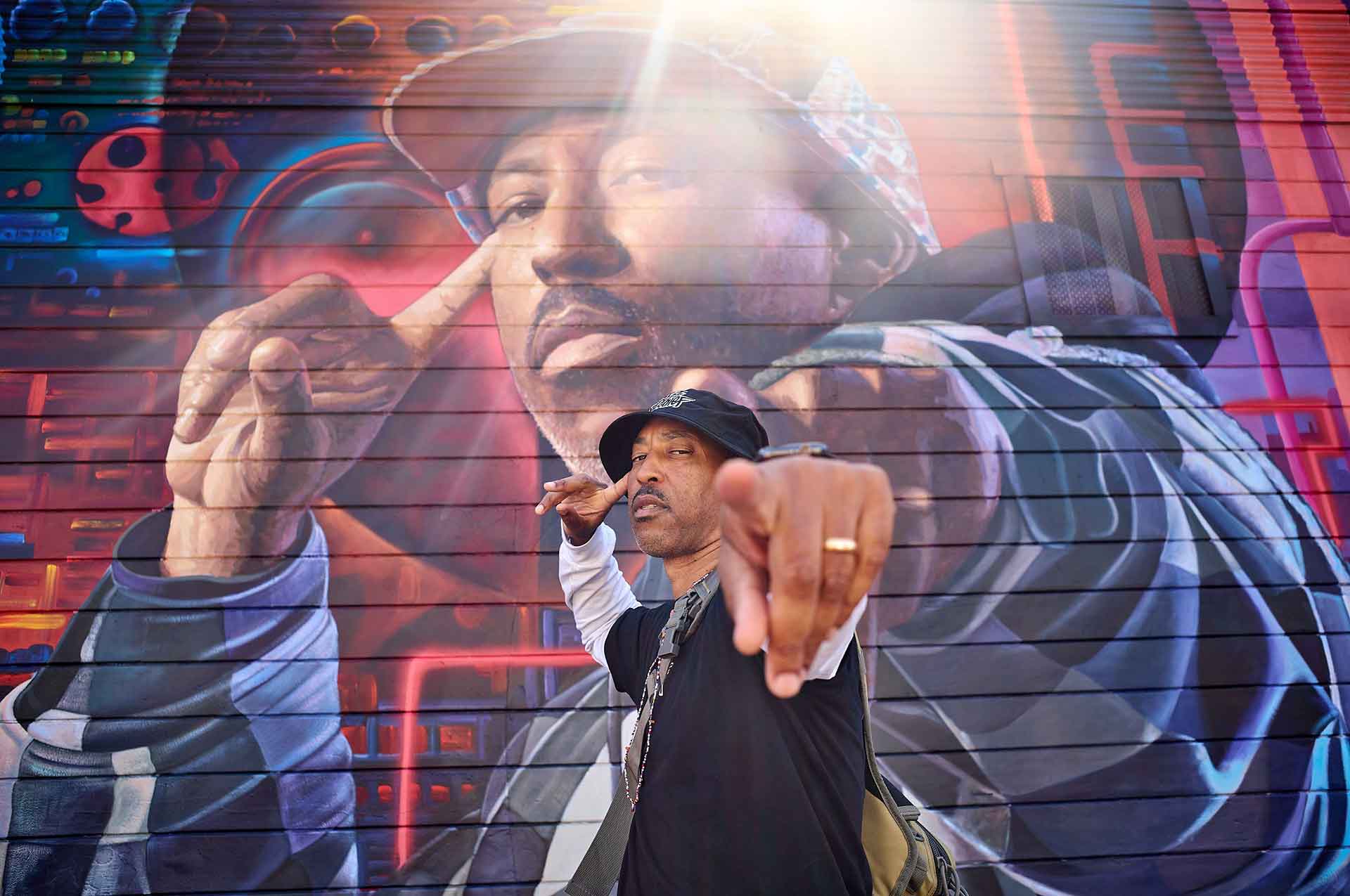
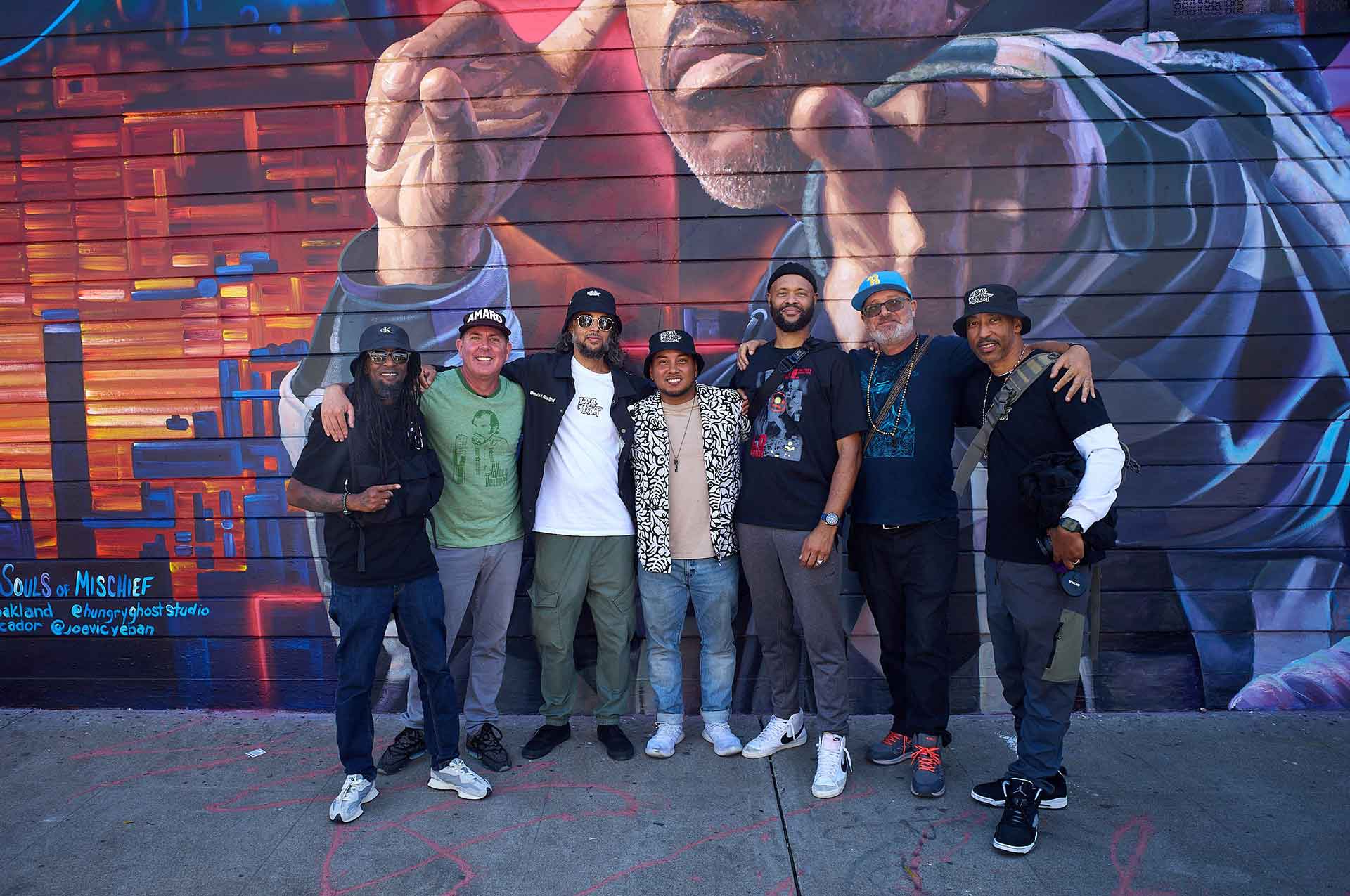
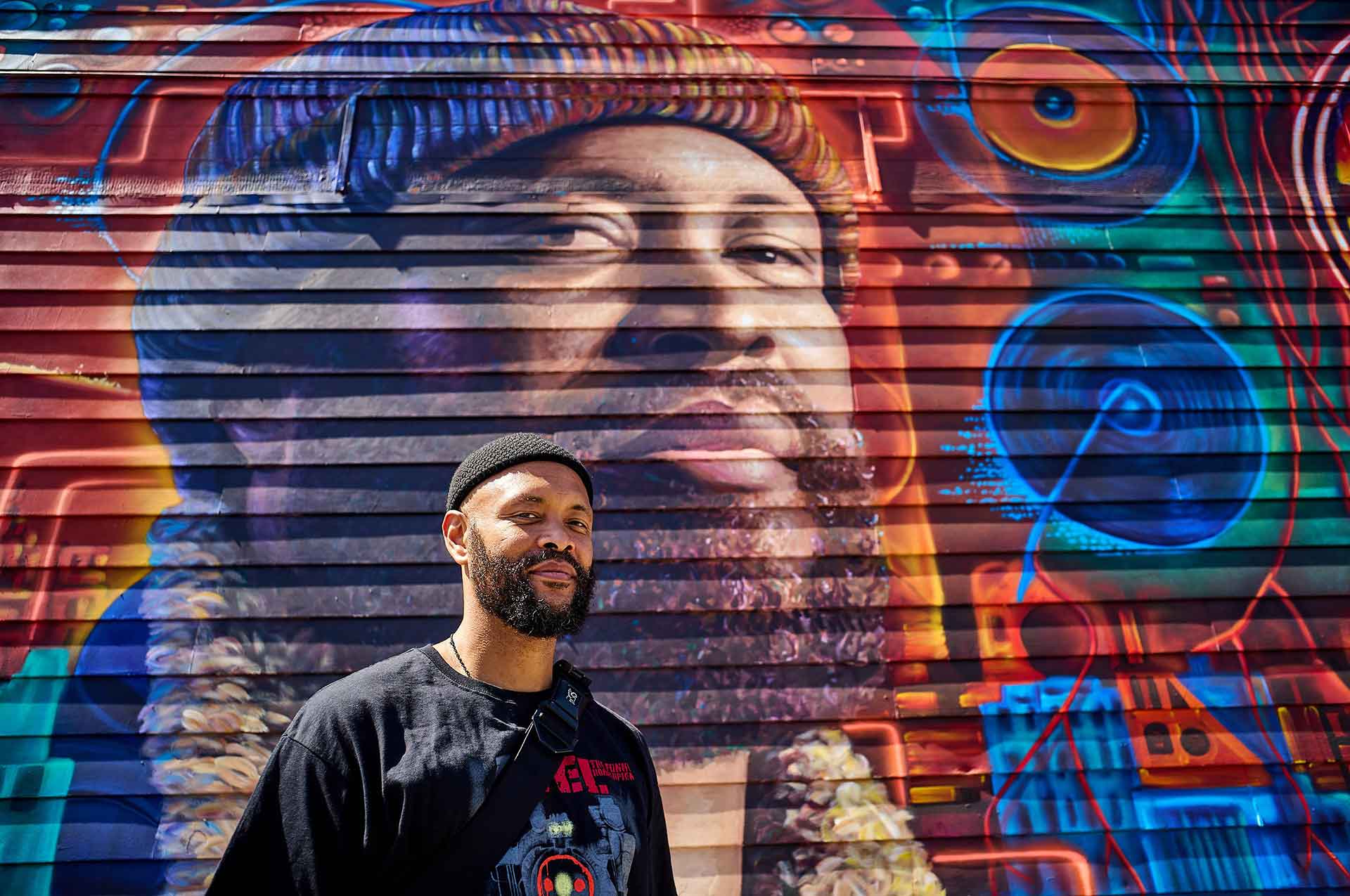
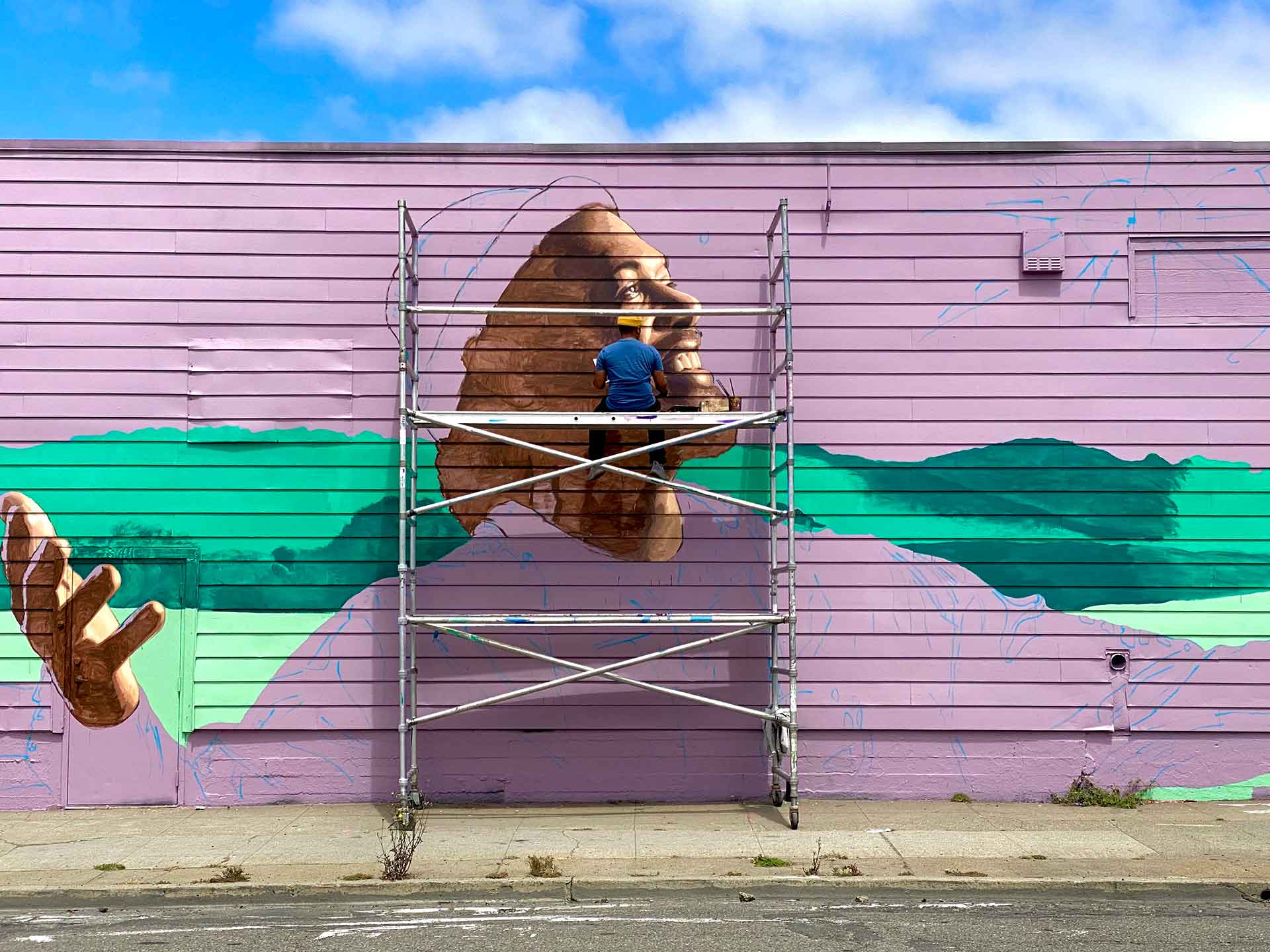
If you’ve been near lower High Street in Oakland over the past few weeks, you may have noticed something beautiful taking shape: a large, colorful mural featuring Oakland’s Souls of Mischief.
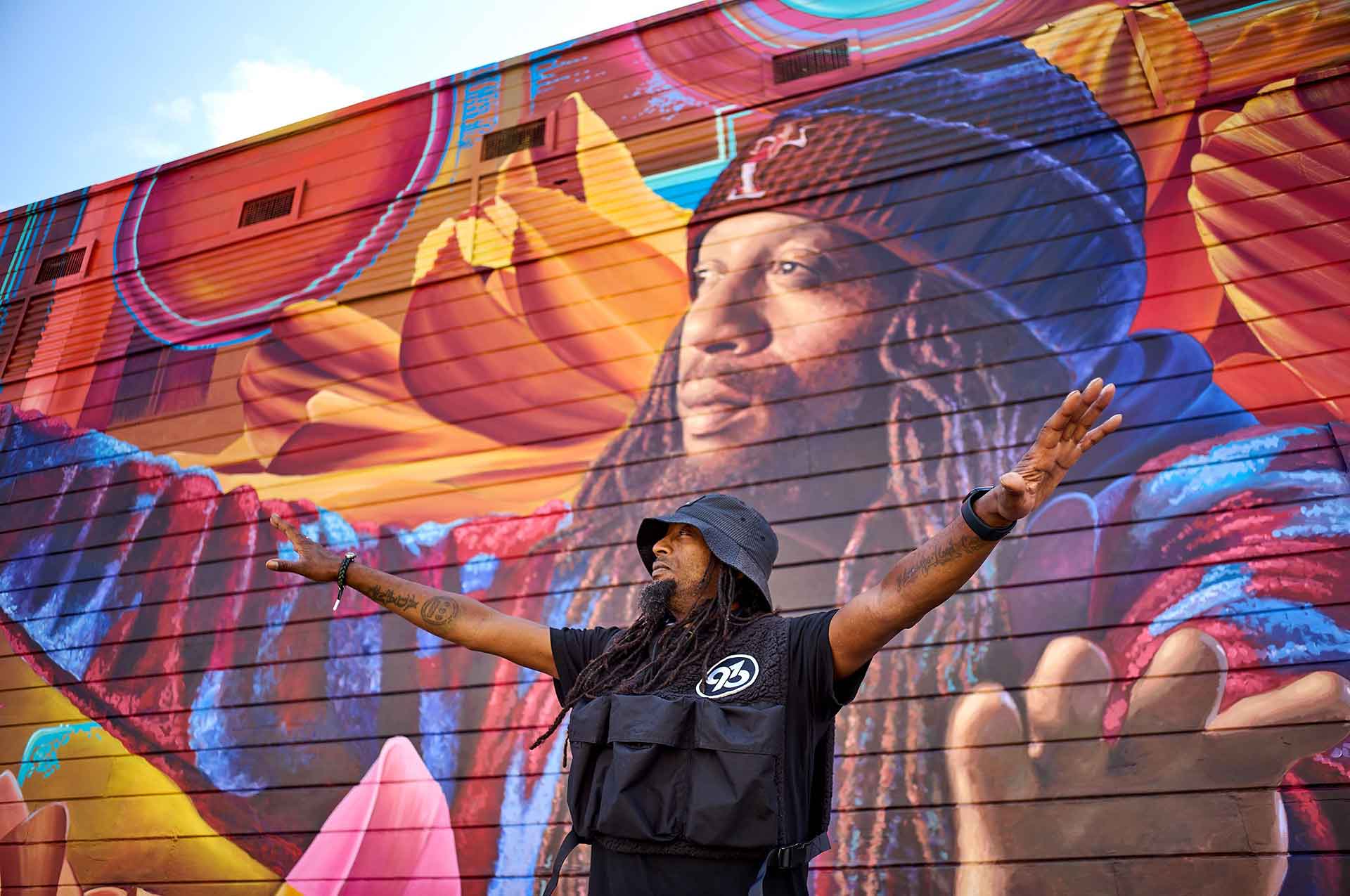
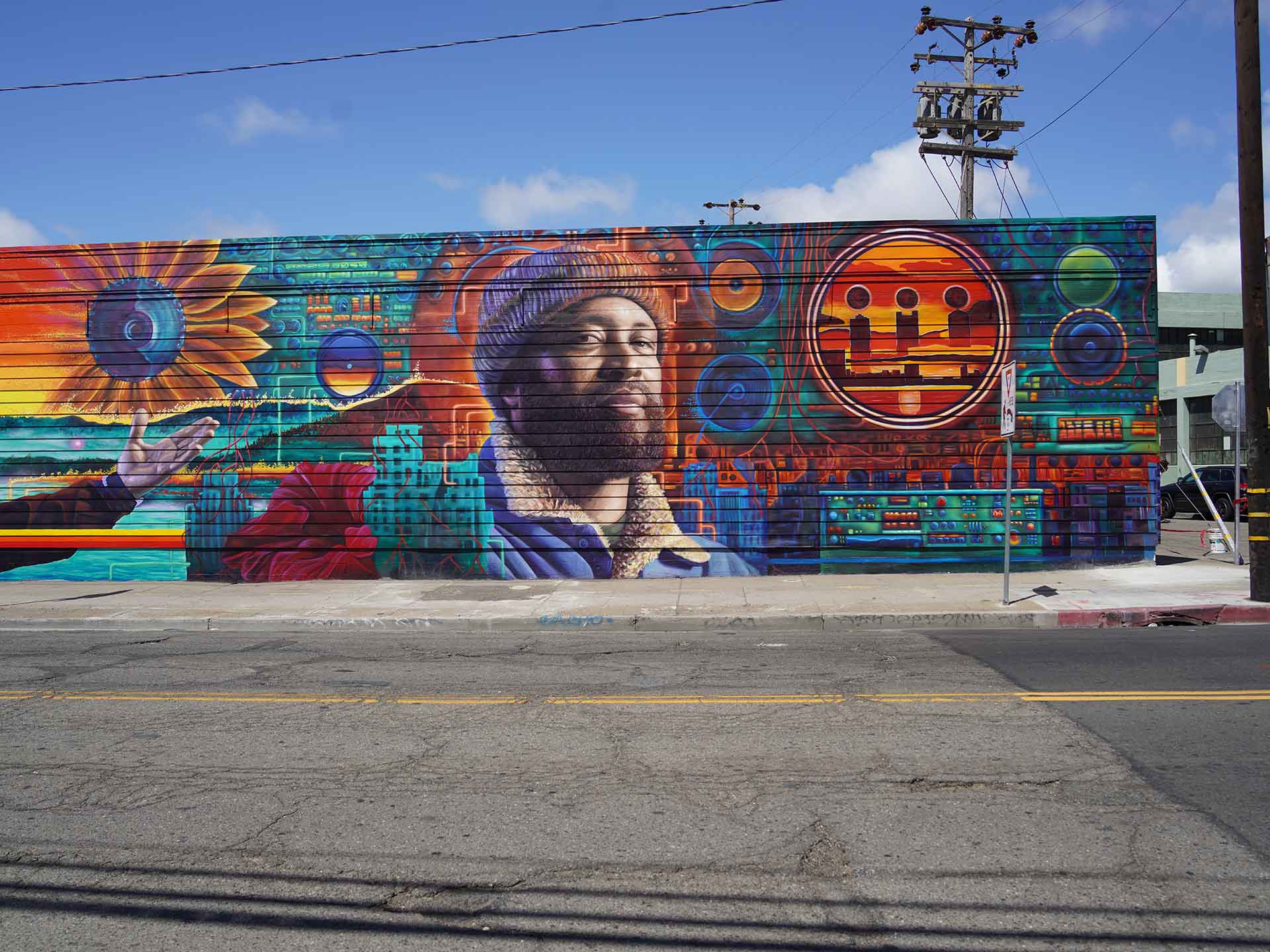
The mural, which covers the building for High Street Studios, spans parts of two city blocks and features portraits of all four members of the East Oakland hip-hop group. On the High Street side, Opio appears in a setting dotted with sunstars, flowers, and birds against a multi-hued sky. Next to him, Tajai gazes out at viewers amidst a backdrop of urban buildings, geometrical shapes, and the Hiero sigil imposed over a sunset cityscape
On the Watting Street side, Phesto Dee taps the side of his head with one hand while the other points outward, his figure partially obscuring what looks like an African mask with a speaker cone for an eye. Nearby is A-Plus, arms outstretched in a welcoming gesture in front of flowers and abstract disks. The combination of these images suggests a spiritual aspect of hip-hop you never knew existed.
The vibrant painting, created by artists based out of High Street Studios, is nestled in a working-class, industrial part of the Fruitvale District. It’s a neighborhood whose environmental landscape has historically been defined by nondescript buildings: auto parts stores, an OUSD facility and a lumber company coexist with numerous warehouses and live-work spaces.
Now, the mural nods to a lesser-known element of the neighborhood’s history. Quiet as it’s kept, lower High Street has long been home to a vibrant artist community working out of those warehouses, and the area has made notable contributions to local hip-hop. In the mid-’90s, the warehouse at 4001 San Leandro was occupied by the Mystik Journeymen during a formative time in their development. The DIY hip-hop duo became known for throwing “Top Ramen” parties at the spot, where the cover charge was $5 or a package of the starchy instant noodle soup. When the crew expanded to become the Living Legends in 1996, emcees Eligh, the Grouch and Murs all moved into the space, where they lived in makeshift partitioned “rooms” and recorded some of their earliest works as a collective.