Spoiler alert: You’re about to hear, in detail, the endings of the movies Promising Young Woman and Things Heard and Seen. If you don’t want to, please leave now.
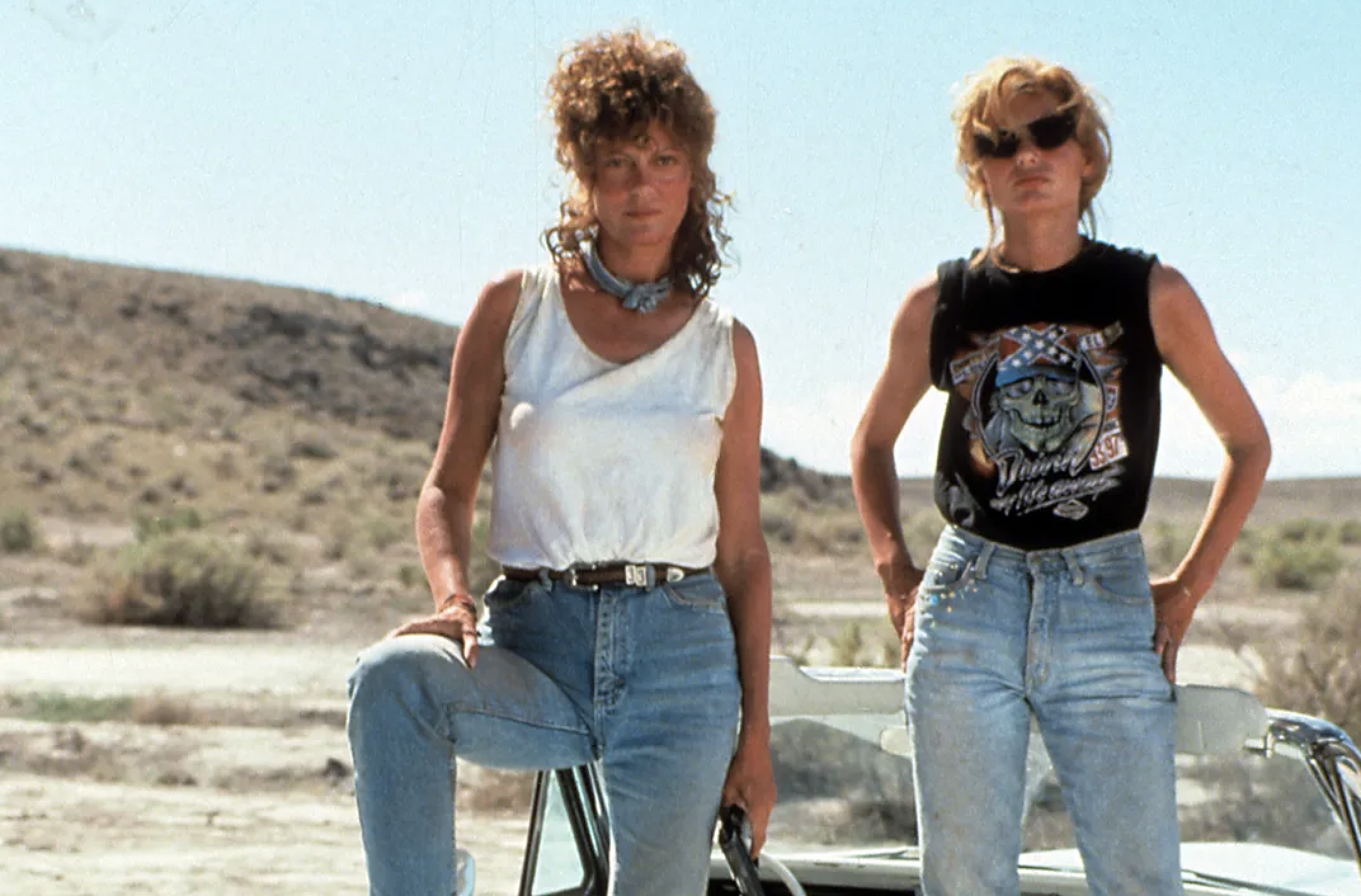
I’m about to talk about the ending of Thelma & Louise too, but if you still haven’t seen that, this probably isn’t the essay for you. The movie turned 30 on May 24 and is, at this point, woven deep into the American consciousness. Who could ever forget the image of the brand-new outlaws driving that ’66 T-Bird into the Grand Canyon, hands locked together in united defiance? Women who would rather die a fiery death on their own terms than live under the thumbs of any more men. It’s an iconic ending to an unerringly feminist movie.
And I absolutely hate it.
Allow me to give my ire some context. In Thelma & Louise, the titular characters are on the run after Louise murders a man who is in the process of violently raping Thelma. (We find out later that Louise had, some years earlier, herself survived a deeply traumatizing sexual assault.) After Louise’s life savings are stolen by a hitchhiker who Thelma spends the night with, Thelma robs a convenience store in order to get gas money. The friends then blow up the truck of a man who is persistently sexually harassing them as they desperately try to reach Mexico.