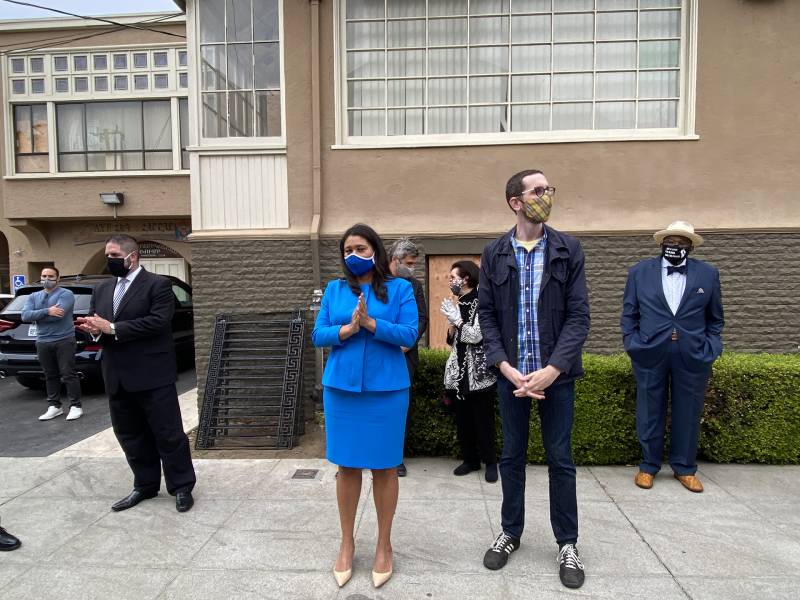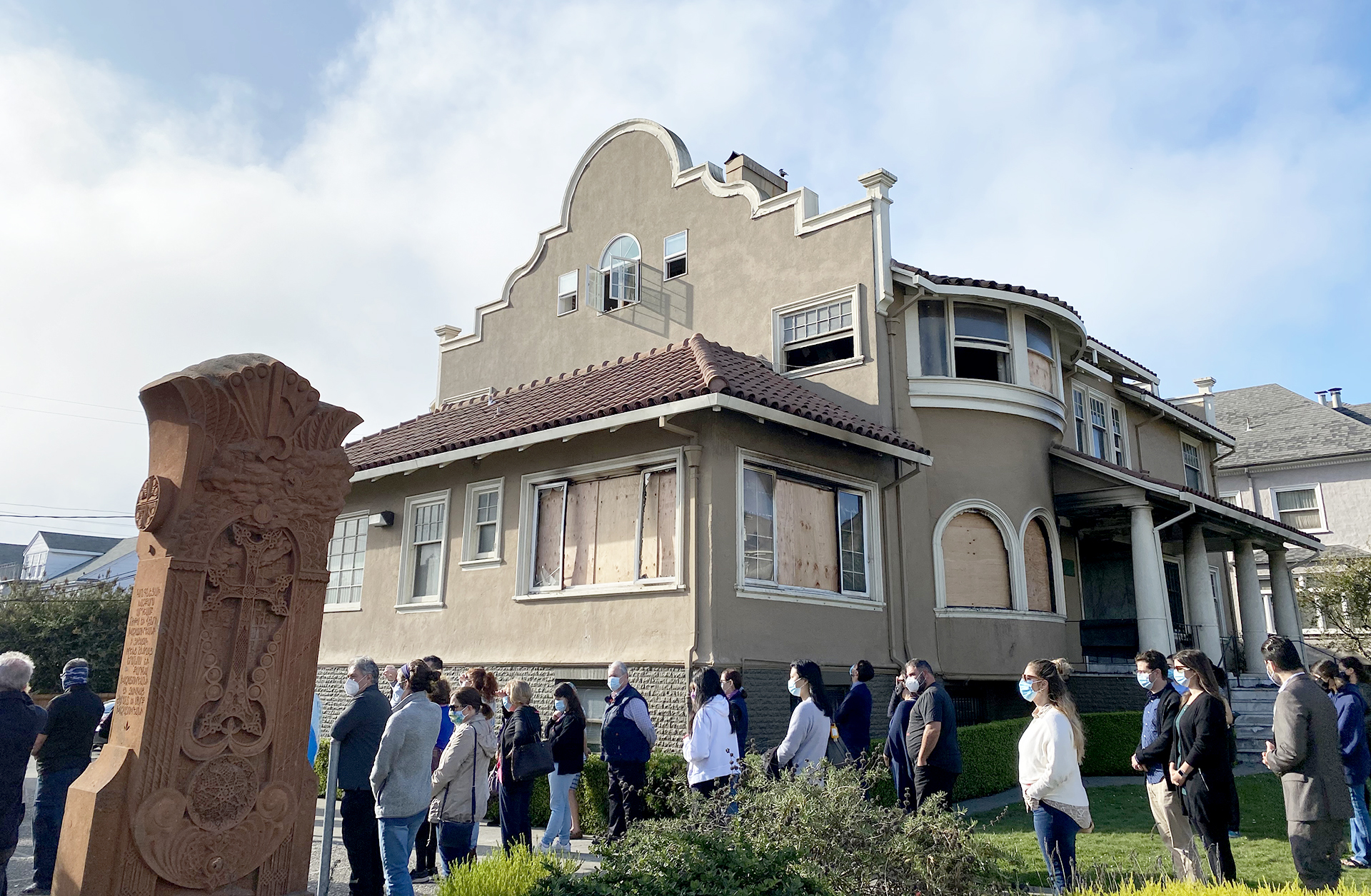
When Aida and her family immigrated to San Francisco in 1977, St. Gregory the Illuminator Armenian Apostolic Church and its surrounding community offered a safe place to land.
The church and its adjoining building, Vasbouragan Hall, were a hub of Armenian American cultural, civic and religious life. It housed the church office, the Armenian performing arts organization Hamazkayin and its library, with priceless, out-of-print books by authors killed in the 1915 genocide. It contained the offices of multiple Armenian nonprofit organizations, including the Genocide Education Project, which creates school curricula about the murders and exile of 1.5 million Armenians at the hands of the Ottoman Empire. Vasbouragan Hall was where hundreds of people celebrated weddings and baptisms, and mourned loved ones at funerals.
And last week, it became a shell of a building after unknown arsonists set it on fire in the early hours of Sept. 17.
“We’re stunned, we’re just shocked at what type of people would do this repeatedly,” says Aida, who declined to use her real name in this article for safety reasons. “They have no shame. … Every record that we had for everything in our community is all gone now. My wedding records, my kids’ baptisms, everything is gone. My parents’, my brothers’ funeral records. It’s very close to the heart. We have great memories from there. The generations older than me and younger than me all had meetings there. It built our culture within us.”
She and her Armenian community in San Francisco are reeling from the fire and two other incidents the San Francisco Police Department is investigating as hate crimes: anti-Armenian graffiti that appeared at the KZV Armenian School in July, and a bullet fired at the school in the early morning of Sept. 19. (The church is currently asking for donations to rebuild via GoFundMe.)
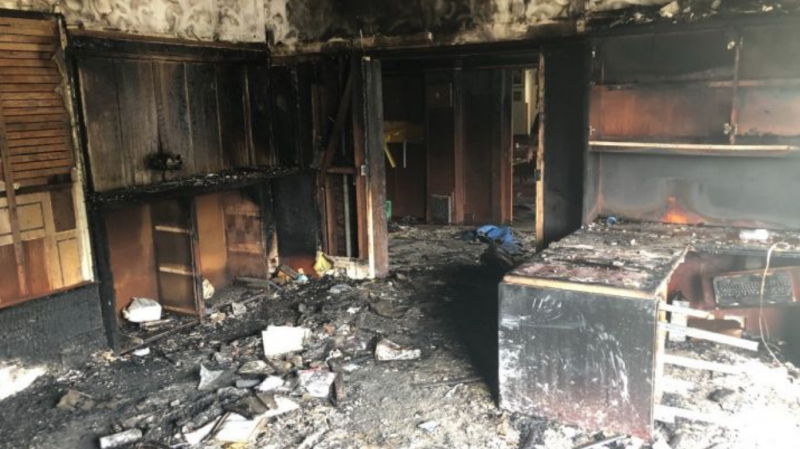
For many Armenian Americans in San Francisco, these incidents feel like a direct attack on the institutions they use to preserve their language, traditions and history after enduring multiple waves of displacement. “These perpetrators really understood what they were targeting,” says Roxanne Makasdjian, the director of the Genocide Education Project. Along with her office, the headquarters of the political advocacy group Armenian National Committee of America, the philanthropic organization Armenian Relief Society and the sports and scouting group Homenetmen were damaged by the flames.
“They went for the heart,” Makasdjian says.
Sacred Spaces for a Displaced Community
For many, Vasbouragan Hall was much more than a building; it was the glue that held together a diverse community of first-, second-, third- and fourth-generation Armenian Americans of different national origins. Some Armenians arrived directly after the genocide and made San Francisco their home; others, like Aida’s family, first landed in Iran and left around the time of that country’s theocratic revolution; and still others spread through Russia and other former Soviet Republics like Azerbaijan, where Armenians were systemically attacked in pogroms in the early 1990s and fled to the United States as refugees.
There are more Armenians in the diaspora today than in Armenia itself, and centers like Vasbouragan Hall are essential to preserving culture for such a scattered population. Aida’s daughter Adrineh (also not her real name), an artist born San Francisco, was raised with a strong sense of Armenian identity. Adrineh went to the KZV school through 8th grade was a Homenenetmen scout. The mother and daughter were both actively involved in Hamazkayin, participating in and organizing music, theater and dance events.
“With Armenian communities in diaspora, one of the first things that’s built is the church and around that comes the community center of the church and the school,” says Adrineh, adding that her artistic practice today is deeply rooted in her experience in the Armenian diaspora. “It’s not only a religious site but a cultural site. … It’s a place where you get acquainted with the community, even if you’re not a religious or spiritual person or don’t fit into those spaces. It’s where you find people to have conversations with or learn the language, or engage with events, dance, food—”
Her mom, Aida, interjects: “It’s our identity.”
Beyond reflecting her own life experience, Adrineh’s art has a bigger purpose. “For Armenians, the only way to counter these attacks and hate is through education, and it’s by having more young historians, writers, researchers, artists—people who are producing counternarratives,” says Adrineh. “And that’s what [the attackers] don’t want. They don’t want people to be researching into their culture and sharing these facts.”
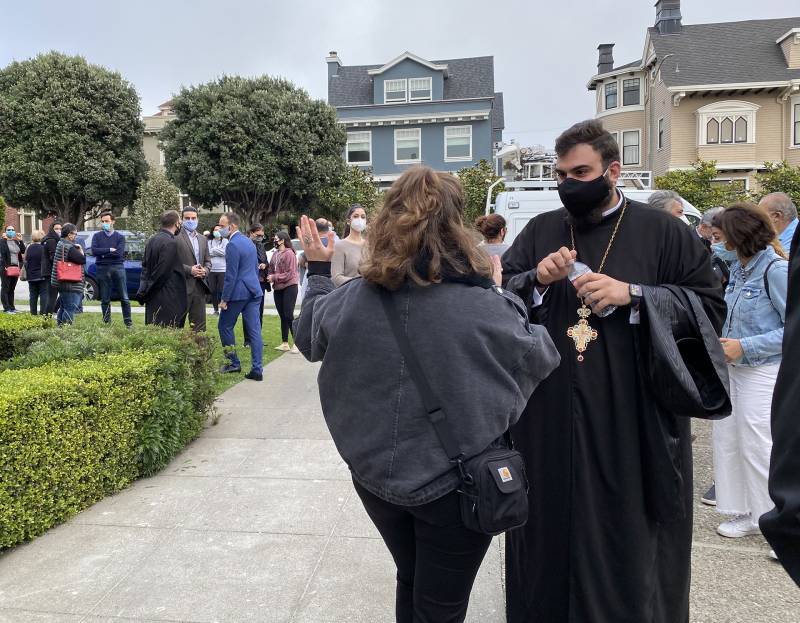
“Armenia is in our hearts, and whenever two Armenians meet they create a community and build a new Armenia,” says Very Reverend Father Smpad Saboundjian, the pastor of St. Gregory. He found a welcoming and tight-knit community when he moved to San Francisco from his birthplace of Lebanon, another country with a large Armenian population, only a year ago. “This is why we feel these vandalisms are a wake-up call for us to be more united against all hate crimes.”
Fears of Escalating Violence and Messages of Hope
Aida, Adrineh and their fellow parishioners at St. Gregory now find themselves on edge, afraid of whether the vandalism and anti-Armenian hate speech could escalate to people getting hurt, or worse. Though SFPD hasn’t confirmed the identities of the attackers, the anti-Armenian graffiti that appeared at the KZV School over the summer bore the blue, red and green of the Azerbaijani flag.
This summer, a longstanding border dispute between Armenia and Azerbaijan escalated over the Nagorno-Karabakh territory, home to many ethnic Armenians. Militarized conflict in the region has boiled over into recent attacks against the Armenian diaspora in Moscow and St. Petersburg, Russia, and, now, many suspect, San Francisco; meanwhile, a July pro-Armenia demonstration outside the Azerbaijani consulate in Los Angeles resulted in three allegations of hate crimes against Azerbaijani counterprotesters.