Editor’s Note: This article is part of KQED Arts’ story series Pride as Protest, which chronicles the past and present of LGBTQ+ activism in honor of the 50th anniversary of the Stonewall riots. Learn more about the series here.
Thanks to the show RuPaul’s Drag Race and its accompanying DragCon beauty conference, the art of drag is now a multi-million-dollar industry with straight and LGBTQ+ consumers alike.
But before drag culture crossed over into the mainstream, it was a source of survival for queer and trans youth whose families rejected them for expressing themselves. Since at least the ’60s, drag houses functioned as chosen families that kept young people off the streets.
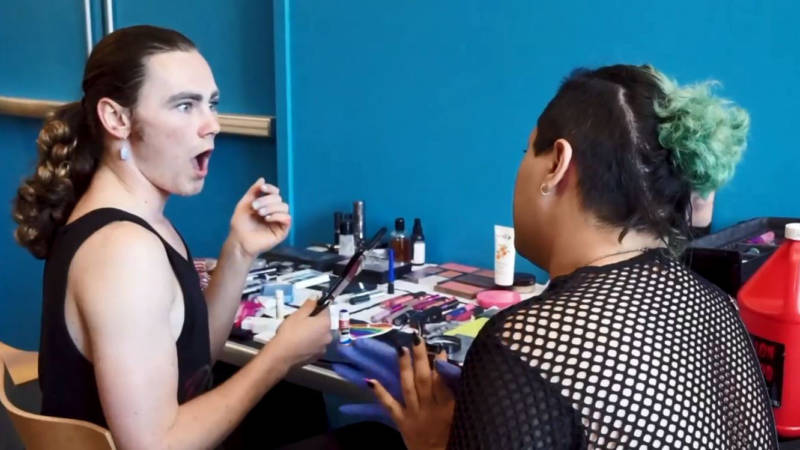
That legacy is what The One and Only Rexy and Grace Towers decided to channel when they teamed up to create DragTivism, a mentorship program for LGBTQ+ youth that uses drag makeup as an art therapy tool, building community through carefully applied rhinestones, false lashes and contouring.