Within the Context of All Contexts: The Rewiring of Our Relationship to Music
You've probably been surprised to hear a remarkable song you've never heard pop out of nowhere sometime recently — you're not alone. But as the terms of excavation shift, what are we losing?
Ben Ratliff
Imagine you are in an averagely pleasant pub in Manhattan, talking to a couple of people, half-listening to the music being played from the ceiling speakers, until a song from the distant past makes you start listening closely.
The song is Homer Banks’ “60 Minutes of Your Love,” from 1966, which was not an American hit, but became a favorite in the English mod club-dancer’s canon of rediscovery called Northern Soul. Now this is a song: undiluted momentum from the first beat, one satisfying jolt after another. There you are, having an encounter with music’s past. You point at the ceiling in recognition. You realize that you have been pointing at the ceiling more often lately.
All right: “You” is really me. I am a music critic, for whom all songs carry some kind of coding. I would be paying attention anyway — but I have a feeling you’d have noticed that song too. A while after Homer Banks, Ruth Brown’s “Wild, Wild Young Men,” from 1953, came on. Ruth Brown is in the Rock and Roll Hall of Fame and her song was a hit, rising to No. 3 on the R&B charts that year; even so, you’d need to have a pretty decent grip on the history of American music to know it by ear. Later, I heard a few southern rock-shuffles strung together, including ZZ Top’s famous “La Grange” and a more recent and more leaden one that I felt I should know and didn’t. (It bothered me that I didn’t.) And then, out of the blue: Blind Melon’s “No Rain,” a doughy song that seemed to be for some other place than this one, an early ’90s MTV hit which I suspect far more people know than like. It felt even more shallow than usual, by virtue of the depth that had preceded it.
Clearly, I was listening to a streaming-service algorithm. The overall sequence made no sense. The music in that place, while I was there, at first felt like a gift — and then like an encounter with an alien presence. It had “taste” — and then no-taste. (Not “tastelessness,” but an absence of so-called taste.) The signifiers had gone haywire.
Part of becoming an adult is learning to recognize cultural signifiers, which tell you something about where you are and who’s behind the bar and what kind of time you might be having before you leave. These signifiers (not just musical ones) always, in some way, have to do with history, with the past. That Blind Melon song retroactively soured the Homer Banks encounter a little. Also, I recognized that Homer Banks song, but what if I didn’t? The appropriate or typical response to it in our time might not be this is part of a tradition about which I want to know more, but rather: what the hell is this? And then, maybe, at best, ahalf-step further: What’s the footprint of this thing? How many views on YouTube? Who knew about it first? How did this escape me? How did it find me? And so on. A paradoxical reaction, both uninformed andconnoisseur-ish.
Here’s a different example. A few weeks ago, in my Discover Weekly playlist on Spotify — constructed by an algorithm for someone of my data-set – came “Pourquoi Tu Me Fous Plus des Coups?,” an electro-pop love song, a good one, by the French-Vietnamese singer An Luu. I put its lyrics into a translation engine: The conceit of the song is domestic abuse — one of those he-hit-me-and-it-felt-like-a-kiss songs, a complicated and disconcerting trope that also comes up in Bessie Smith, Rodgers and Hammerstein, The Crystals and Lana Del Rey. I’d never heard of An Luu,soI looked her up online. Oh, okay — she’s an actor; she was in the movie Diva. I remember that. Otherwise, not much there. A YouTube video with about 10,000 views, and also a blog post about it written a few months ago by a media-studies Ph.D in Indiana. “I don’t know how or why Spotify recommended this track to me,” that Ph.D student wrote, “but I sure am grateful they did.” Like me, he was registering the surprise of secondary use. Meaning: He didn’t come to the song because something led him toward the work of An Luu, French-Vietnamese actor and singer, in and of herself. He came to it incidentally, because Spotify used it, within a playlist, as an act of seduction by orphaned data.
I’d want to know who An Luu is and what else she did and what led her to record “Pourquoi Tu Me Fous Plus des Coups?” (The song was written, unsurprisingly, by two men — Jacques Duvall and Philipe Chany.) But Spotify won’t tell me any of that, because Spotify tells you very little. Instead, I’m given an encounter that ends with me wondering: What the hell is this? Nevertheless, now I recognize the song, for what it’s worth.
My sense is that such encounters, just like encountering little-known songs in movies and advertisements and new TV shows (such as when the funk-pop slow-dance “Amarsi Un Po” by Lucio Battisti, a wise and searching Italian pop singer of the ’70s and ’80s who never had any American audience whatsoever, appeared on Master of None last spring) are changing, perhaps subtly, what we are looking for from the past. And just as importantly, what we are getting.
I’m going to generalize for a minute. The new assumption we carry around is that we know most of what we need to know because of the considerable labor most of us put into using social media and streaming services. If you use them, think of how many ideas, observations, warnings, judgments, alarms, images, videos and sounds you absorb regularly. The neuroscientist Daniel Levitin has, by some wild math, estimated the information intake of a social-media user as similar to reading 175 newspapers per day. I would imagine this all leads us to feel we recognize what is “relevant” simply because we feel the fatigue of so much keeping up. If something escapes our attention, it must be pretty negligible. Relevance, as logic requires, is finite. If it weren’t, then everything would be relevant, and there would be no use for the concept. What really takes us by surprise is when we hear music that has perhaps never been important to our way of thinking but is somehow smuggled into our presence. We experience a feeling of temporary disbelief, or of being privy to an alternate reality. It’s lucky to get our attention.
Old music, reframed or brought into new circulation, can be as dynamic and unpredictable as new music. Its work is not done by the end of its own epoch. This was always so, but once, only a small number of people truly knew it; scholars, mostly, who understand that the past evolves by our understanding of its context. People like Mary Beard, the Cambridge professor of ancient Greek and Latin languages and history, who wrote in a 2012 essay that “the study of the Classics is the study of what happens in the gap between antiquity and ourselves.”
College-radio DJs, a guild whose influence is disappearing, knew too. I was one during what I take to be the first great wave of reissued popular music, the mid-’80s. American roots music issued from little record labels in Massachusetts, California, Germany, England; Rounder, Arhoolie, Bear Family, Charly, Ace. (Reissues of funk, disco, electronic and psychedelic music came slightly later.) When Ace, an English label, released B. B. King’s music from the 1950s in an ongoing series of LPs during the mid-’80s, there was a sense that a presidential door had been unbolted. These extravagant outpourings of blues, massive and sophisticated and virtuosic, weren’t really accessible in any other way. There was no YouTube, no Amazon, no Discogs, no Spotify. Even when Ace made it available, this music would not probably reach you unless you moved toward it — and when you did, you committed yourself a little. Here was the past as national library, offering you on the back cover what sober and legitimate context was required, but otherwise letting the work, in considerable quantities, stand for its own powerful self.
Around the same time came a different orientation to the past, typified by the Norton label, run by Miriam Linna and Billy Miller. Norton presented American music from the ’50s and ’60s as regional and eccentric and extreme. Hits, in Norton logic, were exceptions; the more common reality was a bunch of tapes made by nobodies like Hasil Adkins, Wade Curtiss and Jack Starr. “The idea was the discovery of stuff that was not available at all,” Linna told me. “We hated to call ourselves a reissue label — we wanted to find people whose music was never released.” Here was the past as delirious garage-cult fandom, with lots of information attached, and it was just as immersive as the legit kind — again, as long as you went toward it, rather than waiting for it to come toward you.
When I think about listening to those B.B. King records in 1986, I am thinking of a time when the role of music’s present was usually surprise, counter-argument and probable oblivion. The role of music’s past was confirmation, grounding, study and possible immortality. My sense is that these roles are being reversed. In 2014, Daniel Ek, the CEO of Spotify, said to the New Yorker journalist John Seabrook: “We’re not in the music space — we’re in the moment space.” This implies that music’s past could become a sequence of brief, discontinuous moments, like quick-fading Snapchat pictures.
Ten years ago, I thought the effect of widespread, immediate access to so much of the history of recorded music would be that the past would come to merge with the present. It would simply become another room in the house. I liked that idea, and I imagine Mary Beard would too. But it seems, instead, that the more likely use of the past, and the more profitable one, is as a weird or uncanny diversion. It delivers you a punch in the neck and then retreats back into a flat, non-hierarchical landscape.
Audio cassette. (Serts/Getty Images)
My encounter with Homer Banks happened during a conversation I was having in an Irish pub with Ken Shipley and Rob Sevier, who run the Numero Group, a Chicago-based label for reissuing old music. They have worked together for 15 years, long enough to become foils: Shipley is sparky and associative, optimistically building theories, and Sevier is saturnine and skeptical, taking them apart.
They were in Manhattan on scouting trips. The day before, they’d visited a private collector of instructional belly-dancing records in Brooklyn; they’re working on a project about what they called “appropriated ethnic music.” After meeting me, they were off to visit a New York avant-gardist of great stature with a promising archive of early work. They spend long periods of time working on multiple deep and esoteric projects simultaneously, finding master tapes, securing the rights, then doing the complicated work of re-framing the past. This is their passion.
Are they obscurity snobs? Probably. But beyond that, they are betting on a belief that even average listeners know there is more to the history of music than what has been placed before them by radio, algorithms or the happenstance of social media. Their work has originality and integrity as primary-use culture — you buy, you move towards, a Numero Group record or box set dedicated to a single artist or label from the past, beautifully designed and well-annotated, and you’re going to learn a lot. But primary use isn’t paying the bills anymore.
“Ten years ago, it didn’t take any effort to sell 5 to 10,000 CDs,” Shipley told me. “Now you’re lucky if you can sell 3,000.” Just recently, as they noticed in their last round of royalty statements, Numero has started to sell more LPs than CDs. And though there has been a gradual rise in the sales of LPs, the few small (actual) stores that sell them, as Shipley explained, prioritize LPs that young people are actually going to buy. The Beatles’ Abbey Road, Metallica’s Kill ‘Em All, and so on. There may not be room in the bin for obscure soul records after that. The LP revival does not lift all boats.
Not long ago, they realized the vastness of their interests was outpacing the market. They’d been great at the game of reframing the past and won Grammys for their work, but were now sitting on dead stock. As a consequence, they are putting out far fewer records now, a fifth as many as they did four years ago. And their priority, increasingly, is to be able to administer the “sync rights” (synchronization rights, for songs to be used in movies or TV or in ads) themselves. They’ve negotiated for songs — mostly American music from the ’60s and ’70s — in many movies: The Circle, The Trust, Loving — lots and lots. Take my word for it. If you don’t talk about music while pointing at the ceiling in bars, perhaps you are doing it while pointing at the television. Same thing. You are pointing at the means of production. Secondary use.
“Our business is changing away from being a record company to being a copyright company, which is kind of ugly,” Shipley said. From primary to secondary. “But: You make these records, they’re really beautiful, and the record audience is actually really minimal. I don’t care who you talk to” — here he named four other pre-eminent “reissue” labels — “Light in the Attic, Ace, Rhino, Now Again. Physical business is not the business any more, it can’t survive on selling CDs and LPs. It’s not a sustainable way of thinking about copyrights. The sustainable way is to figure out: One, how can you get something to stream as many times as possible? Two, how can you put it in a film, television show, or advertisement? Those are the two avenues for historical music that are available to finance it.”
They hope that the ’60s Girl Group playlist they made for Spotify, full of obscurities, called “Basement Beehive,” will become more widely listened to than the mainstream-oriented one created by Spotify. (It’s making gains. It could happen.)
Actively reframing the past is another way. Shipley and Sevier, who are putting their fingerprints on currents in music of the past that did not have a name or genre: “Kid Soul” (little-known Motown-era bands with pre-adolescent singers), “Black Vietnam” (war-haunted ’70s soul and funk). They’re taking many approaches: national-library, garage-cult, critical reframing and playlisting. They are sharing minute obsessions for fun, because obsession is fun, and it is communicable. But they are also challenging theories of relevance.
“We’re reframing in a way that corrects for hits,” Sevier told me. “Look at what the history of popular music is at any given point. What’s focused on are the hits. We’re getting into what happened at the time and creating a restructured version that just looks at what happened in the scene, but doesn’t have anything to do with hits. Isn’t interested in it.” The restructured version doesn’t just rule out big, dumb pop music; it might rule out B. B. King, too. But their theory is still legitimate. The American imagination, and American media, can stand to devote more time considering what was not made successful by the usual commercial forces.
When I pointed at the ceiling, Shipley and Sevier both made the same doubtful face. They were listening to the whole sequence of songs, not just the one that got me excited. This, I said to them, must be the real challenge in your work — it’s easy now to have an adequately new experience with old music. You don’t need to be curious about anything in particular; you just leave it to an algorithm or a new Netflix show and you’ll hear something you don’t know. They looked at me as if I didn’t know the half of it. Or a fifth of it.
As Shipley suggested, I spoke to Matt Sullivan, of Light in the Attic, founded in 2002. “The sync world… to be frank, it’s one of the last bastions of making a living in music,” he said. His label, he explained, had hired one person to work on licensing ten years ago — now it has three. “There are more original TV shows,” he said, “and a lot of supervisors now — this has been building for the last 15 or 20 years — come from a college radio or record-store background. Master of None, or Fargo, these shows have phenomenal music. They’re almost the new form of college radio, in terms of a discovery tool.”
This seems true. You want to know about new hip-hop and R&B? Watch Insecure. You want to see music used with subtlety as a mood, or as an extension of the character? Watch the shows Sullivan mentioned, or Transparent, or Big Little Lies, whose music supervisor, Susan Jacobs, very recently won the first-ever Emmy for music supervision.
Like Numero Group, Light in the Attic has released some of the most interesting records of the last 15 years: its Native North America compilation of Canadian Native-American folk-rock; the catalogs of Lizzie Mercier Descloux, Betty Davis, Françoise Hardy, and Rodriguez, all of which can reorder and expand the histories of pop you have in your head. It just put out a collection of the work of the 1990s Los Angeles post-rock band Acetone, a band which for me certainly needed reframing, since I ignored them at the time. At the moment, starting with the compilation Even a Tree Can Shed Tears: Japanese Folk & Rock 1969-1973, the label is looking toward Japanese pop from the ’70s and ’80s, the next frontier for discophiles — and if Sullivan is lucky, for secondary use.
It could be that the current generation of music supervisors for TV and film are establishing a new express lane that connects a certain kind of obscurantist taste (mining for overlooked artists who are either representative or unusual, but not exceptional in the old way, the stun-you-up-front, accomplished-all-around way of B.B. King, or Aretha Franklin, or Prince) and the most powerful secondary-source platforms for music. From there, they all run together; an obscure old song that gains traction in a film or TV show can quickly enter streaming-service playlists.
Our relationships to music are dictated by the means of its transmission to us (Getty/Glasshouse Images)
“I can fancy a man,” wrote Oscar Wilde in The Critic as Artist, “who had led a perfectly commonplace life, hearing by chance some curious piece of music, and suddenly discovering that his soul, without his being conscious of it, had passed through terrible experiences, and known fearful joys, or wild romantic loves, or great renunciations.” Music is particularly good at suggesting a kind of alternative past for the listener, Wilde argued, because it is always implying motion, and because it has a life of its own. It can’t be bound by the intention of the composer.
Zach Cowie might disagree. I used to correspond with him 15 years ago when he worked as a publicist for Drag City records, and it was clear that he knew more about music than most of the writers he was helping. He is now one of the music supervisors for Master of None (he and Kerri Drootin are responsible for that Lucio Battisti moment at the end of that show’s second season). They were also nominated for the music-supervising Emmy this year. He finds himself in an interesting position: His job is encouraging secondary use, but he worries about what secondary use is doing to music.
“I don’t think any music goes beyond its intention,” he told me. “And a lot of music that is being passed my way as a supervisor has a commercial intent. A lot of reasons got us to this point, but I can detect it right away. My interest in finding these old things is to find music that was made for the sake of making music,” he said. “Music-making has changed so much since the era of everything’s-available, to where I hear more direct derivativeness than ever before. I get pitched stuff all day: ‘Imagine Kate Bush fronting Kraftwerk!’ Well, the reason I love Kate Bush and I love Kraftwerk is because they never wanted to be anything other than themselves.”
If Cowie is right — and if the commercial intent of more and more new music is, increasingly, for secondary use — what then? Will ahistoricism eventually make all music even out? The English theorist and critic Mark Fisher, who died earlier this year at the age of 48, had a Marxist answer to this question. Capitalism, as he wrote about it in the books Capitalist Realism and Ghosts of My Life, unhitches us from a structured idea of history and makes us unable to imagine a future of any kind, including a future of art. He noticed that pastiche was all around us in pop music of the ’80s, coming with quotation marks included. But around the turn of the 21st century, he argued, the quotation marks came off, resulting in bands like the Arctic Monkeys. “They’re clearly a retro group,” he said in an interview from 2014, “but the category of retro doesn’t make any sense anymore because it’s retro compared to what?” It was around 2003, in his estimation, when he felt that listeners on a grand scale got used to the idea that they would never hear anything new again.
I’m sympathetic to that idea, but I can’t fully get on board with it. Fisher was generally talking about pop music, which carries the profit motive genetically. But pop music isn’t all music, and it makes sense that what lives by capitalism may die by it. I have spent a lot of time writing and thinking about music in which innovation happens slowly, and in which tendencies that might otherwise be known as “retro” are really strategies for survival, for learning from the elder spirits. In jazz, the elder spirits are often still alive, playing, sometimes giving lessons. Then there’s hip-hop. Hip-hop’s never satisfied for long. It comes with aspirations of change.
This isn’t a bad period for music’s past. (No time ever was.) And it has some clear advantages — a mania about stories, stoked by public radio and podcasts and documentaries; the everything’s-available assumption, making what is not available seem exotically attractive; a sense of sociocultural reparation, leading the charge in bringing some artists back to light; and a furious new intensity of research, which is a byproduct of all the other advantages. (For example, A 12,000-word essay accompanies Numero’s Hüsker Dü box set.) Now may be the time of passive encounters and secondary use, but it is also the time of the Julius Eastman revival. Eastman, the New York composer who died in 1990, was uncannily contemporary —an honorary citizen of now — in his forthright blackness, gayness, and disinterest in institutional power. The reissue culture of the last few years has directed us to his recorded music and has started to bring his repertory into contemporary music ensembles. None of this happened because of ahistoricism — quite the opposite.
But what if the real proof of Eastman’s relevance is if his music becomes used for TV shows and streaming playlists, and thereafter lives only as vague allusions in the music of others who want their tunes to be picked up for later secondary use?
The real lesson of the past, now that cultural artifacts have become so easy to share, is the unwieldiness of it. Once there wasn’t enough, now there’s too much to go around. A national-library approach to old music, understanding artists of special stature in and of themselves, may be respectful and responsible and history-minded, but isn’t the only way, and can hardly be trusted. Who has bestowed the special stature? And what’s their stake in it?
One of my recent interests is an English label, or some kind of music-organizing entity called Death Is Not the End, run by Luke Owen. He finished university seven years ago, he told me, and has worked for record distributors ever since, surrounded by old music. He has put together a series of brilliant shows for NTS — an English, web-based radio-station — filled with music still lurking below the level of collection, from pre-LP times, from the radio, from microphones someone stuck in the air at a certain time and place. The shows overlap with what he has released on his label, mostly digitally or in small editions on cassette. One of his recent shows, in mid-August, was an edit of various tapes from from reggae sound-clash and sound-system sets in London during the ’80s and ’90s. They represent hectic places. The backing tracks stop and start, the singers and toasters wail and imprecate and drift in and out, including one called Screamer, who made me think, much like Wilde’s man, I’ve been there. They’re not unlike field recordings, and as with many field recordings, there’s not a lot of information attached to this music. The assumption, somehow, on behalf of someone, is that you don’t want to know the information, or it’s unknowable, or it’s all better when presented as an uncanny mystery. I’ve looked up Screamer. Next to nothing. Less than An Luu.
The recordings come from sites like Who Cork The Dance, among others—online storage-houses of old soundsystem tapes. This isn’t ephemera, it’s the true broth. The sound-clash program was one of the best things I’ve heard in months. I went toward it, learned from it, made primary use of it. But I also got a major hit of the uncanny feeling, the punch-in-the-neck feeling. I wondered what was rendering this music especially attractive to me: the indistinct, slurry-like sound quality? The density of the action, making me conjure the place? The ongoingness and never-endingness of it, such that one thing is pretty much as good as the next? The fact that I don’t know how to find out more about Screamer?
What’s the worst that can happen? Oh, I don’t know — where to begin? That new music won’t suggest a future; that the only viable use of music’s past is as ahistorical amusement to accompany scripted stories or conversations in bars; and every note ever played will level out into a vaguely seductive past-present. Perhaps, at that point, all music will become field recordings.
Copyright 2017 NPR. To see more, visit http://www.npr.org/.
lower waypointnext waypoint
Player sponsored by
window.__IS_SSR__=true
window.__INITIAL_STATE__={
"attachmentsReducer": {
"audio_0": {
"type": "attachments",
"id": "audio_0",
"imgSizes": {
"kqedFullSize": {
"file": "https://ww2.kqed.org/news/wp-content/themes/KQED-unified/img/audio_bgs/background0.jpg"
}
}
},
"audio_1": {
"type": "attachments",
"id": "audio_1",
"imgSizes": {
"kqedFullSize": {
"file": "https://ww2.kqed.org/news/wp-content/themes/KQED-unified/img/audio_bgs/background1.jpg"
}
}
},
"audio_2": {
"type": "attachments",
"id": "audio_2",
"imgSizes": {
"kqedFullSize": {
"file": "https://ww2.kqed.org/news/wp-content/themes/KQED-unified/img/audio_bgs/background2.jpg"
}
}
},
"audio_3": {
"type": "attachments",
"id": "audio_3",
"imgSizes": {
"kqedFullSize": {
"file": "https://ww2.kqed.org/news/wp-content/themes/KQED-unified/img/audio_bgs/background3.jpg"
}
}
},
"audio_4": {
"type": "attachments",
"id": "audio_4",
"imgSizes": {
"kqedFullSize": {
"file": "https://ww2.kqed.org/news/wp-content/themes/KQED-unified/img/audio_bgs/background4.jpg"
}
}
},
"placeholder": {
"type": "attachments",
"id": "placeholder",
"imgSizes": {
"thumbnail": {
"file": "https://cdn.kqed.org/wp-content/uploads/2024/12/KQED-Default-Image-816638274-2000x1333-1-160x107.jpg",
"width": 160,
"height": 107,
"mimeType": "image/jpeg"
},
"medium": {
"file": "https://cdn.kqed.org/wp-content/uploads/2024/12/KQED-Default-Image-816638274-2000x1333-1-800x533.jpg",
"width": 800,
"height": 533,
"mimeType": "image/jpeg"
},
"medium_large": {
"file": "https://cdn.kqed.org/wp-content/uploads/2024/12/KQED-Default-Image-816638274-2000x1333-1-768x512.jpg",
"width": 768,
"height": 512,
"mimeType": "image/jpeg"
},
"large": {
"file": "https://cdn.kqed.org/wp-content/uploads/2024/12/KQED-Default-Image-816638274-2000x1333-1-1020x680.jpg",
"width": 1020,
"height": 680,
"mimeType": "image/jpeg"
},
"1536x1536": {
"file": "https://cdn.kqed.org/wp-content/uploads/2024/12/KQED-Default-Image-816638274-2000x1333-1-1536x1024.jpg",
"width": 1536,
"height": 1024,
"mimeType": "image/jpeg"
},
"fd-lrg": {
"file": "https://cdn.kqed.org/wp-content/uploads/2024/12/KQED-Default-Image-816638274-2000x1333-1-1536x1024.jpg",
"width": 1536,
"height": 1024,
"mimeType": "image/jpeg"
},
"fd-med": {
"file": "https://cdn.kqed.org/wp-content/uploads/2024/12/KQED-Default-Image-816638274-2000x1333-1-1020x680.jpg",
"width": 1020,
"height": 680,
"mimeType": "image/jpeg"
},
"fd-sm": {
"file": "https://cdn.kqed.org/wp-content/uploads/2024/12/KQED-Default-Image-816638274-2000x1333-1-800x533.jpg",
"width": 800,
"height": 533,
"mimeType": "image/jpeg"
},
"post-thumbnail": {
"file": "https://cdn.kqed.org/wp-content/uploads/2024/12/KQED-Default-Image-816638274-2000x1333-1-672x372.jpg",
"width": 672,
"height": 372,
"mimeType": "image/jpeg"
},
"twentyfourteen-full-width": {
"file": "https://cdn.kqed.org/wp-content/uploads/2024/12/KQED-Default-Image-816638274-2000x1333-1-1038x576.jpg",
"width": 1038,
"height": 576,
"mimeType": "image/jpeg"
},
"xxsmall": {
"file": "https://cdn.kqed.org/wp-content/uploads/2024/12/KQED-Default-Image-816638274-2000x1333-1-160x107.jpg",
"width": 160,
"height": 107,
"mimeType": "image/jpeg"
},
"xsmall": {
"file": "https://cdn.kqed.org/wp-content/uploads/2024/12/KQED-Default-Image-816638274-2000x1333-1-672x372.jpg",
"width": 672,
"height": 372,
"mimeType": "image/jpeg"
},
"small": {
"file": "https://cdn.kqed.org/wp-content/uploads/2024/12/KQED-Default-Image-816638274-2000x1333-1-672x372.jpg",
"width": 672,
"height": 372,
"mimeType": "image/jpeg"
},
"xlarge": {
"file": "https://cdn.kqed.org/wp-content/uploads/2024/12/KQED-Default-Image-816638274-2000x1333-1-1020x680.jpg",
"width": 1020,
"height": 680,
"mimeType": "image/jpeg"
},
"full-width": {
"file": "https://cdn.kqed.org/wp-content/uploads/2024/12/KQED-Default-Image-816638274-2000x1333-1-1920x1280.jpg",
"width": 1920,
"height": 1280,
"mimeType": "image/jpeg"
},
"guest-author-32": {
"file": "https://cdn.kqed.org/wp-content/uploads/2025/01/KQED-Default-Image-816638274-1333x1333-1-160x160.jpg",
"width": 32,
"height": 32,
"mimeType": "image/jpeg"
},
"guest-author-50": {
"file": "https://cdn.kqed.org/wp-content/uploads/2025/01/KQED-Default-Image-816638274-1333x1333-1-160x160.jpg",
"width": 50,
"height": 50,
"mimeType": "image/jpeg"
},
"guest-author-64": {
"file": "https://cdn.kqed.org/wp-content/uploads/2025/01/KQED-Default-Image-816638274-1333x1333-1-160x160.jpg",
"width": 64,
"height": 64,
"mimeType": "image/jpeg"
},
"guest-author-96": {
"file": "https://cdn.kqed.org/wp-content/uploads/2025/01/KQED-Default-Image-816638274-1333x1333-1-160x160.jpg",
"width": 96,
"height": 96,
"mimeType": "image/jpeg"
},
"guest-author-128": {
"file": "https://cdn.kqed.org/wp-content/uploads/2025/01/KQED-Default-Image-816638274-1333x1333-1-160x160.jpg",
"width": 128,
"height": 128,
"mimeType": "image/jpeg"
},
"detail": {
"file": "https://cdn.kqed.org/wp-content/uploads/2025/01/KQED-Default-Image-816638274-1333x1333-1-160x160.jpg",
"width": 160,
"height": 160,
"mimeType": "image/jpeg"
},
"kqedFullSize": {
"file": "https://cdn.kqed.org/wp-content/uploads/2024/12/KQED-Default-Image-816638274-2000x1333-1.jpg",
"width": 2000,
"height": 1333
}
}
},
"arts_13815913": {
"type": "attachments",
"id": "arts_13815913",
"meta": {
"index": "attachments_1716263798",
"site": "arts",
"id": "13815913",
"found": true
},
"parent": 13815912,
"imgSizes": {
"small": {
"file": "https://ww2.kqed.org/app/uploads/sites/2/2017/11/istock-577327180-cdaa42636a92acad5b36060910fc669b2c5b48ca-520x390.jpg",
"width": 520,
"mimeType": "image/jpeg",
"height": 390
},
"twentyfourteen-full-width": {
"file": "https://ww2.kqed.org/app/uploads/sites/2/2017/11/istock-577327180-cdaa42636a92acad5b36060910fc669b2c5b48ca-1038x576.jpg",
"width": 1038,
"mimeType": "image/jpeg",
"height": 576
},
"thumbnail": {
"file": "https://ww2.kqed.org/app/uploads/sites/2/2017/11/istock-577327180-cdaa42636a92acad5b36060910fc669b2c5b48ca-160x120.jpg",
"width": 160,
"mimeType": "image/jpeg",
"height": 120
},
"fd-sm": {
"file": "https://ww2.kqed.org/app/uploads/sites/2/2017/11/istock-577327180-cdaa42636a92acad5b36060910fc669b2c5b48ca-960x720.jpg",
"width": 960,
"mimeType": "image/jpeg",
"height": 720
},
"post-thumbnail": {
"file": "https://ww2.kqed.org/app/uploads/sites/2/2017/11/istock-577327180-cdaa42636a92acad5b36060910fc669b2c5b48ca-672x372.jpg",
"width": 672,
"mimeType": "image/jpeg",
"height": 372
},
"xsmall": {
"file": "https://ww2.kqed.org/app/uploads/sites/2/2017/11/istock-577327180-cdaa42636a92acad5b36060910fc669b2c5b48ca-375x281.jpg",
"width": 375,
"mimeType": "image/jpeg",
"height": 281
},
"kqedFullSize": {
"file": "https://ww2.kqed.org/app/uploads/sites/2/2017/11/istock-577327180-cdaa42636a92acad5b36060910fc669b2c5b48ca.jpg",
"width": 2998,
"height": 2248
},
"large": {
"file": "https://ww2.kqed.org/app/uploads/sites/2/2017/11/istock-577327180-cdaa42636a92acad5b36060910fc669b2c5b48ca-1020x765.jpg",
"width": 1020,
"mimeType": "image/jpeg",
"height": 765
},
"xlarge": {
"file": "https://ww2.kqed.org/app/uploads/sites/2/2017/11/istock-577327180-cdaa42636a92acad5b36060910fc669b2c5b48ca-1180x885.jpg",
"width": 1180,
"mimeType": "image/jpeg",
"height": 885
},
"guest-author-50": {
"file": "https://ww2.kqed.org/app/uploads/sites/2/2017/11/istock-577327180-cdaa42636a92acad5b36060910fc669b2c5b48ca-50x50.jpg",
"width": 50,
"mimeType": "image/jpeg",
"height": 50
},
"guest-author-96": {
"file": "https://ww2.kqed.org/app/uploads/sites/2/2017/11/istock-577327180-cdaa42636a92acad5b36060910fc669b2c5b48ca-96x96.jpg",
"width": 96,
"mimeType": "image/jpeg",
"height": 96
},
"medium": {
"file": "https://ww2.kqed.org/app/uploads/sites/2/2017/11/istock-577327180-cdaa42636a92acad5b36060910fc669b2c5b48ca-800x600.jpg",
"width": 800,
"mimeType": "image/jpeg",
"height": 600
},
"guest-author-64": {
"file": "https://ww2.kqed.org/app/uploads/sites/2/2017/11/istock-577327180-cdaa42636a92acad5b36060910fc669b2c5b48ca-64x64.jpg",
"width": 64,
"mimeType": "image/jpeg",
"height": 64
},
"guest-author-32": {
"file": "https://ww2.kqed.org/app/uploads/sites/2/2017/11/istock-577327180-cdaa42636a92acad5b36060910fc669b2c5b48ca-32x32.jpg",
"width": 32,
"mimeType": "image/jpeg",
"height": 32
},
"fd-lrg": {
"file": "https://ww2.kqed.org/app/uploads/sites/2/2017/11/istock-577327180-cdaa42636a92acad5b36060910fc669b2c5b48ca-1920x1440.jpg",
"width": 1920,
"mimeType": "image/jpeg",
"height": 1440
},
"fd-med": {
"file": "https://ww2.kqed.org/app/uploads/sites/2/2017/11/istock-577327180-cdaa42636a92acad5b36060910fc669b2c5b48ca-1180x885.jpg",
"width": 1180,
"mimeType": "image/jpeg",
"height": 885
},
"full-width": {
"file": "https://ww2.kqed.org/app/uploads/sites/2/2017/11/istock-577327180-cdaa42636a92acad5b36060910fc669b2c5b48ca-1920x1440.jpg",
"width": 1920,
"mimeType": "image/jpeg",
"height": 1440
},
"detail": {
"file": "https://ww2.kqed.org/app/uploads/sites/2/2017/11/istock-577327180-cdaa42636a92acad5b36060910fc669b2c5b48ca-150x150.jpg",
"width": 150,
"mimeType": "image/jpeg",
"height": 150
},
"medium_large": {
"file": "https://ww2.kqed.org/app/uploads/sites/2/2017/11/istock-577327180-cdaa42636a92acad5b36060910fc669b2c5b48ca-768x576.jpg",
"width": 768,
"mimeType": "image/jpeg",
"height": 576
},
"guest-author-128": {
"file": "https://ww2.kqed.org/app/uploads/sites/2/2017/11/istock-577327180-cdaa42636a92acad5b36060910fc669b2c5b48ca-128x128.jpg",
"width": 128,
"mimeType": "image/jpeg",
"height": 128
},
"xxsmall": {
"file": "https://ww2.kqed.org/app/uploads/sites/2/2017/11/istock-577327180-cdaa42636a92acad5b36060910fc669b2c5b48ca-240x180.jpg",
"width": 240,
"mimeType": "image/jpeg",
"height": 180
}
},
"publishDate": 1511815259,
"modified": 1511815259,
"caption": null,
"description": "You've probably been surprised to hear a remarkable song you've never heard pop out of nowhere sometime recently — you're not alone. But as the terms of excavation shift, what are we losin",
"title": "You've probably been surprised to hear a remarkable song you've never heard pop out of nowhere sometime recently — you're not alone. But as the terms of excavation shift, what are we losing?",
"credit": null,
"status": "inherit",
"isLoading": false,
"fetchFailed": false
}
},
"audioPlayerReducer": {
"postId": "stream_live",
"isPaused": true,
"isPlaying": false,
"pfsActive": false,
"pledgeModalIsOpen": true,
"playerDrawerIsOpen": false,
"liveAudioPlayStartedAt": 0,
"liveAudioPlayContext": ""
},
"authorsReducer": {
"byline_arts_13815912": {
"type": "authors",
"id": "byline_arts_13815912",
"meta": {
"override": true
},
"slug": "byline_arts_13815912",
"name": "Ben Ratliff",
"isLoading": false
}
},
"pagesReducer": {},
"pfsSessionReducer": {},
"postsReducer": {
"stream_live": {
"type": "live",
"id": "stream_live",
"audioUrl": "https://streams.kqed.org/kqedradio",
"title": "Live Stream",
"excerpt": "Live Stream information currently unavailable.",
"link": "/radio",
"featImg": "",
"label": {
"name": "KQED Live",
"link": "/"
}
},
"stream_kqedNewscast": {
"type": "posts",
"id": "stream_kqedNewscast",
"audioUrl": "https://www.kqed.org/.stream/anon/radio/RDnews/newscast.mp3?_=1",
"title": "KQED Newscast",
"featImg": "",
"label": {
"name": "88.5 FM",
"link": "/"
}
},
"arts_13815912": {
"type": "posts",
"id": "arts_13815912",
"meta": {
"index": "posts_1716263798",
"site": "arts",
"id": "13815912",
"found": true
},
"articlePosition": 0,
"parent": 0,
"labelTerm": {
"site": "arts",
"term": 137
},
"blocks": [],
"publishDate": 1511823610,
"format": "image",
"title": "Within the Context of All Contexts: The Rewiring of Our Relationship to Music",
"headTitle": "Within the Context of All Contexts: The Rewiring of Our Relationship to Music | KQED",
"content": "\u003cp>\u003cstrong>Imagine you are\u003c/strong> in an averagely pleasant pub in Manhattan, talking to a couple of people, half-listening to the music being played from the ceiling speakers, until a song from the distant past makes you start listening closely.\u003c/p>\n\u003cp>The song is Homer Banks’ “\u003ca href=\"https://www.youtube.com/watch?v=CrMgLRZ6Wzk\" target=\"_blank\" rel=\"noopener\">60 Minutes of Your Love\u003c/a>,” from 1966, which was not an American hit, but became a favorite in the English mod club-dancer’s canon of rediscovery called Northern Soul. Now this is a \u003cem>song\u003c/em>: undiluted momentum from the first beat, one satisfying jolt after another. There you are, having an encounter with music’s past. You point at the ceiling in recognition. You realize that you have been pointing at the ceiling more often lately.\u003c/p>\n\u003cp>All right: “You” is really me. I am a music critic, for whom all songs carry some kind of coding. I would be paying attention anyway — but I have a feeling you’d have noticed that song too. A while after Homer Banks, Ruth Brown’s “\u003ca href=\"https://www.youtube.com/watch?v=OA2U5Rh8-qg\" target=\"_blank\" rel=\"noopener\">Wild, Wild Young Men\u003c/a>,” from 1953, came on. Ruth Brown is in the Rock and Roll Hall of Fame and her song \u003cem>was \u003c/em>a hit, rising to No. 3 on the R&B charts that year; even so, you’d need to have a pretty decent grip on the history of American music to know it by ear. Later, I heard a few southern rock-shuffles strung together, including ZZ Top’s famous “\u003ca href=\"https://www.youtube.com/watch?v=Vppbdf-qtGU\" target=\"_blank\" rel=\"noopener\">La Grange\u003c/a>” and a more recent and more leaden one that I felt I should know and didn’t. (It bothered me that I didn’t.) And then, out of the blue: Blind Melon’s “\u003ca href=\"https://www.youtube.com/watch?v=3qVPNONdF58\" target=\"_blank\" rel=\"noopener\">No Rain\u003c/a>,” a doughy song that seemed to be for some other place than this one, an early ’90s MTV hit which I suspect far more people know than like. It felt even more shallow than usual, by virtue of the depth that had preceded it.\u003c/p>\n\u003cp>Clearly, I was listening to a streaming-service algorithm. The overall sequence made no sense. The music in that place, while I was there, at first felt like a gift — and then like an encounter with an alien presence. It had “taste” — and then no-taste. (Not “tastelessness,” but an \u003cem>absence\u003c/em> of so-called taste.) The signifiers had gone haywire.\u003c/p>\n\u003cp>Part of becoming an adult is learning to recognize cultural signifiers, which tell you something about where you are and who’s behind the bar and what kind of time you might be having before you leave. These signifiers (not just musical ones) always, in some way, have to do with history, with the past. That Blind Melon song retroactively soured the Homer Banks encounter a little. Also, I recognized that Homer Banks song, but what if I didn’t? The appropriate or typical response to it in our time might not be \u003cem>this is part of a tradition about which I want to know more, \u003c/em>but rather: \u003cem>what the hell is this? \u003c/em>And then, maybe, at best, a\u003cem> \u003c/em>half-step further: \u003cem>What’s the footprint of this thing? How many views on YouTube? Who knew about it first? How did this escape me? How did it find me? \u003c/em>And so on. A paradoxical reaction, both uninformed and\u003cem> \u003c/em>connoisseur-ish.\u003c/p>\n\u003cp>[ad fullwidth]\u003c/p>\n\u003cp>Here’s a different example. A few weeks ago, in my Discover Weekly playlist on Spotify — constructed by an algorithm for someone of my data-set – came “\u003ca href=\"https://www.youtube.com/watch?v=gLyoHrZ1kqY\" target=\"_blank\" rel=\"noopener\">Pourquoi Tu Me Fous Plus des Coups?\u003c/a>,” an electro-pop love song, a good one, by the French-Vietnamese singer An Luu. I put its lyrics into a translation engine: The conceit of the song is domestic abuse — one of those he-hit-me-and-it-felt-like-a-kiss songs, a complicated and disconcerting trope that also comes up in Bessie Smith, Rodgers and Hammerstein, The Crystals and Lana Del Rey. I’d never heard of An Luu,\u003cem> \u003c/em>so\u003cem> \u003c/em>I looked her up online. Oh, okay — she’s an actor; she was in the movie \u003cem>Diva. \u003c/em>I remember that. Otherwise, not much there. A YouTube video with about 10,000 views, and also a \u003ca href=\"http://blog.joshuadsites.com/2017/04/25/todays-lesson-an-luu-pourquoi-tu-me-fous-plus-des-coups/\" target=\"_blank\" rel=\"noopener\">blog post about it\u003c/a> written a few months ago by a media-studies Ph.D in Indiana. “I don’t know how or why Spotify recommended this track to me,” that Ph.D student wrote, “but I sure am grateful they did.” Like me, he was registering the surprise of secondary use. Meaning: He didn’t come to the song because something led him toward the work of An Luu, French-Vietnamese actor and singer, in and of herself. He came to it incidentally, because Spotify used it, within a playlist, as an act of seduction by orphaned data.\u003c/p>\n\u003cp>I’d want to know who An Luu is and what else she did and what led her to record “Pourquoi Tu Me Fous Plus des Coups?” (The song was written, unsurprisingly, by two men — Jacques Duvall and Philipe Chany.) But Spotify won’t tell me any of that, because Spotify tells you very little. Instead, I’m given an encounter that ends with me wondering: \u003cem>What the hell is this? \u003c/em>Nevertheless, now I recognize the song, for what it’s worth.\u003c/p>\n\u003cp>My sense is that such encounters, just like encountering little-known songs in movies and advertisements and new TV shows (such as when the funk-pop slow-dance “\u003ca href=\"https://www.youtube.com/watch?v=ODgezpIjR9k\" target=\"_blank\" rel=\"noopener\">Amarsi Un Po\u003c/a>” by Lucio Battisti, a wise and searching Italian pop singer of the ’70s and ’80s who never had any American audience whatsoever, appeared on \u003cem>Master of None\u003c/em> last spring) are changing, perhaps subtly, what we are looking for from the past. And just as importantly, what we are getting.\u003c/p>\n\u003cp>I’m going to generalize for a minute. The new assumption we carry around is that we know most of what we need to know because of the considerable labor most of us put into using social media and streaming services. If you use them, think of how many ideas, observations, warnings, judgments, alarms, images, videos and sounds you absorb regularly. The neuroscientist Daniel Levitin has, by some wild math, estimated the information intake of a social-media user as similar to reading 175 newspapers per day. I would imagine this all leads us to feel we recognize what is “relevant” simply because we feel the fatigue of so much keeping up. If something escapes our attention, it must be pretty negligible. Relevance, as logic requires, is finite. If it weren’t, then everything would be relevant, and there would be no use for the concept. What really takes us by surprise is when we hear music that has perhaps never been important to our way of thinking but is somehow smuggled into our presence. We experience a feeling of temporary disbelief, or of being privy to an alternate reality. It’s lucky to get our attention.\u003c/p>\n\u003cp>Old music, reframed or brought into new circulation, can be as dynamic and unpredictable as new music. Its work is not done by the end of its own epoch. This was always so, but once, only a small number of people truly knew it; scholars, mostly, who understand that the past evolves by our understanding of its context. People like Mary Beard, the Cambridge professor of ancient Greek and Latin languages and history, who \u003ca href=\"http://www.nybooks.com/articles/2012/01/12/do-classics-have-future/\" target=\"_blank\" rel=\"noopener\">wrote in a 2012 essay\u003c/a> that “the study of the Classics is the study of what happens in the gap between antiquity and ourselves.”\u003c/p>\n\u003cp>College-radio DJs, a guild whose influence is disappearing, knew too. I was one during what I take to be the first great wave of reissued popular music, the mid-’80s. American roots music issued from little record labels in Massachusetts, California, Germany, England; Rounder, Arhoolie, Bear Family, Charly, Ace. (Reissues of funk, disco, electronic and psychedelic music came slightly later.) When Ace, an English label, released B. B. King’s music from the 1950s in an ongoing series of LPs during the mid-’80s, there was a sense that a presidential door had been unbolted. These extravagant outpourings of blues, massive and sophisticated and virtuosic, weren’t really accessible in any other way. There was no YouTube, no Amazon, no Discogs, no Spotify. Even when Ace made it available, this music would not probably reach you unless you moved toward it — and when you did, you committed yourself a little. Here was the past as national library, offering you on the back cover what sober and legitimate context was required, but otherwise letting the work, in considerable quantities, stand for its own powerful self.\u003c/p>\n\u003cp>Around the same time came a different orientation to the past, typified by the Norton label, run by Miriam Linna and Billy Miller. Norton presented American music from the ’50s and ’60s as regional and eccentric and extreme. Hits, in Norton logic, were exceptions; the more common reality was a bunch of tapes made by nobodies like Hasil Adkins, Wade Curtiss and Jack Starr. “The idea was the discovery of stuff that was not available at all,” Linna told me. “We hated to call ourselves a reissue label — we wanted to find people whose music was \u003cem>never\u003c/em> released.” Here was the past as delirious garage-cult fandom, with lots of information attached, and it was just as immersive as the legit kind — again, as long as \u003cem>you went toward it\u003c/em>, rather than \u003cem>waiting for it to come toward you\u003c/em>.\u003c/p>\n\u003cp>When I think about listening to those B.B. King records in 1986, I am thinking of a time when the role of music’s present was usually surprise, counter-argument and probable oblivion. The role of music’s past was confirmation, grounding, study and possible immortality. My sense is that these roles are being reversed. In 2014, Daniel Ek, the CEO of Spotify, said to the \u003cem>New Yorker\u003c/em> journalist John Seabrook: “We’re not in the music space — we’re in the moment space.” This implies that music’s past could become a sequence of brief, discontinuous moments, like quick-fading Snapchat pictures.\u003c/p>\n\u003cp>Ten years ago, I thought the effect of widespread, immediate access to so much of the history of recorded music would be that the past would come to merge with the present. It would simply become another room in the house. I liked that idea, and I imagine Mary Beard would too. But it seems, instead, that the more likely use of the past, and the more profitable one, is as a weird or uncanny diversion. It delivers you a punch in the neck and then retreats back into a flat, non-hierarchical landscape.\u003c/p>\n\u003cfigure id=\"attachment_13815921\" class=\"wp-caption alignright\" style=\"max-width: 500px\">\u003cimg loading=\"lazy\" decoding=\"async\" src=\"https://ww2.kqed.org/arts/wp-content/uploads/sites/2/2017/11/Cassette.jpg\" alt=\"Audio cassette.\" width=\"500\" height=\"323\" class=\"size-full wp-image-13815921\" srcset=\"https://cdn.kqed.org/wp-content/uploads/sites/2/2017/11/Cassette.jpg 500w, https://cdn.kqed.org/wp-content/uploads/sites/2/2017/11/Cassette-160x103.jpg 160w, https://cdn.kqed.org/wp-content/uploads/sites/2/2017/11/Cassette-240x155.jpg 240w, https://cdn.kqed.org/wp-content/uploads/sites/2/2017/11/Cassette-375x242.jpg 375w\" sizes=\"(max-width: 500px) 100vw, 500px\">\u003cfigcaption class=\"wp-caption-text\">Audio cassette. \u003ccite>(Serts/Getty Images)\u003c/cite>\u003c/figcaption>\u003c/figure>\n\u003cp>\u003cstrong>My encounter with Homer Banks\u003c/strong> happened during a conversation I was having in an Irish pub with Ken Shipley and Rob Sevier, who run the Numero Group, a Chicago-based label for reissuing old music. They have worked together for 15 years, long enough to become foils: Shipley is sparky and associative, optimistically building theories, and Sevier is saturnine and skeptical, taking them apart.\u003c/p>\n\u003cp>They were in Manhattan on scouting trips. The day before, they’d visited a private collector of instructional belly-dancing records in Brooklyn; they’re working on a project about what they called “appropriated ethnic music.” After meeting me, they were off to visit a New York avant-gardist of great stature with a promising archive of early work. They spend long periods of time working on multiple deep and esoteric projects simultaneously, finding master tapes, securing the rights, then doing the complicated work of re-framing the past. This is their passion.\u003c/p>\n\u003cp>Are they obscurity snobs? Probably. But beyond that, they are betting on a belief that even average listeners know there is more to the history of music than what has been placed before them by radio, algorithms or the happenstance of social media. Their work has originality and integrity as \u003cem>primary-use\u003c/em> culture — you buy, you \u003cem>move towards\u003c/em>, a Numero Group record or box set dedicated to a single artist or label from the past, beautifully designed and well-annotated, and you’re going to learn a lot. But primary use isn’t paying the bills anymore.\u003c/p>\n\u003cp>“Ten years ago, it didn’t take any effort to sell 5 to 10,000 CDs,” Shipley told me. “Now you’re lucky if you can sell 3,000.” Just recently, as they noticed in their last round of royalty statements, Numero has started to sell more LPs than CDs. And though there has been a gradual rise in the sales of LPs, the few small (actual) stores that sell them, as Shipley explained, prioritize LPs that young people are actually going to buy. The Beatles’ \u003cem>Abbey Road\u003c/em>, Metallica’s \u003cem>Kill ‘Em All\u003c/em>, and so on. There may not be room in the bin for obscure soul records after that. The LP revival does not lift all boats.\u003c/p>\n\u003cp>Not long ago, they realized the vastness of their interests was outpacing the market. They’d been great at the game of reframing the past and won Grammys for their work, but were now sitting on dead stock. As a consequence, they are putting out far fewer records now, a fifth as many as they did four years ago. And their priority, increasingly, is to be able to administer the “sync rights” (synchronization rights, for songs to be used in movies or TV or in ads) themselves. They’ve negotiated for songs — mostly American music from the ’60s and ’70s — in many movies: \u003cem>The Circle, The Trust, Loving \u003c/em>— lots and lots. Take my word for it. If you don’t talk about music while pointing at the ceiling in bars, perhaps you are doing it while pointing at the television. Same thing. You are pointing at the means of production. Secondary use.\u003c/p>\n\u003cp>“Our business is changing away from being a record company to being a copyright company, which is kind of ugly,” Shipley said. From primary to secondary. “But: You make these records, they’re really beautiful, and the record audience is actually really minimal. I don’t care who you talk to” — here he named four other pre-eminent “reissue” labels — “Light in the Attic, Ace, Rhino, Now Again. Physical business is not the business any more, it can’t survive on selling CDs and LPs. It’s not a sustainable way of thinking about copyrights. The sustainable way is to figure out: One, how can you get something to stream as many times as possible? Two, how can you put it in a film, television show, or advertisement? Those are the two avenues for historical music that are available to finance it.”\u003c/p>\n\u003cp>They hope that the \u003ca href=\"https://open.spotify.com/user/numerogroup/playlist/52WrPQG9sn9xVS9PK00i2z\" target=\"_blank\" rel=\"noopener\">’60s Girl Group playlist\u003c/a> they made for Spotify, full of obscurities, called “Basement Beehive,” will become more widely listened to than the mainstream-oriented one created by Spotify. (It’s making gains. It could happen.)\u003c/p>\n\u003cp>Actively reframing the past is another way. Shipley and Sevier, who are putting their fingerprints on currents in music of the past that did not have a name or genre: “Kid Soul” (little-known Motown-era bands with pre-adolescent singers), “Black Vietnam” (war-haunted ’70s soul and funk). They’re taking many approaches: national-library, garage-cult, critical reframing \u003cem>and\u003c/em> playlisting. They are sharing minute obsessions for fun, because obsession is fun, and it is communicable. But they are also challenging theories of relevance.\u003c/p>\n\u003cp>“We’re reframing in a way that \u003cem>corrects for hits,” \u003c/em>Sevier told me. “Look at what the history of popular music is at any given point. What’s focused on are the hits. We’re getting into what happened at the time and creating a restructured version that just looks at what happened in the scene, but doesn’t have anything to do with hits. Isn’t interested in it.” The restructured version doesn’t just rule out big, dumb pop music; it might rule out B. B. King, too. But their theory is still legitimate. The American imagination, and American media, can stand to devote more time considering what was \u003cem>not\u003c/em> made successful by the usual commercial forces.\u003c/p>\n\u003cp>When I pointed at the ceiling, Shipley and Sevier both made the same doubtful face. They were listening to the whole sequence of songs, not just the one that got me excited. This, I said to them, must be the real challenge in your work — it’s easy now to have an \u003cem>adequately new\u003c/em> experience with old music. You don’t need to be curious about anything in particular; you just leave it to an algorithm or a new Netflix show and you’ll hear something you don’t know. They looked at me as if I didn’t know the half of it. Or a fifth of it.\u003c/p>\n\u003cp>\u003cstrong>As Shipley suggested\u003c/strong>, I spoke to Matt Sullivan, of Light in the Attic, founded in 2002. “The sync world… to be frank, it’s one of the last bastions of making a living in music,” he said. His label, he explained, had hired one person to work on licensing ten years ago — now it has three. “There are more original TV shows,” he said, “and a lot of supervisors now — this has been building for the last 15 or 20 years — come from a college radio or record-store background. \u003cem>Master of None\u003c/em>, or \u003cem>Fargo\u003c/em>, these shows have phenomenal music. They’re almost the new form of college radio, in terms of a discovery tool.”\u003c/p>\n\u003cp>This seems true. You want to know about new hip-hop and R&B? Watch \u003cem>Insecure. \u003c/em>You want to see music used with subtlety as a mood, or as an extension of the character? Watch the shows Sullivan mentioned, or \u003cem>Transparent, \u003c/em>or \u003cem>Big Little Lies\u003c/em>, whose music supervisor, Susan Jacobs, very recently won the first-ever Emmy for music supervision.\u003c/p>\n\u003cp>Like Numero Group, Light in the Attic has released some of the most interesting records of the last 15 years: its \u003cem>Native North America \u003c/em>compilation of Canadian Native-American folk-rock; the catalogs of Lizzie Mercier Descloux, Betty Davis, Françoise Hardy, and Rodriguez, all of which can reorder and expand the histories of pop you have in your head. It just put out a collection of the work of the 1990s Los Angeles post-rock band Acetone, a band which for me certainly needed reframing, since I ignored them at the time. At the moment, starting with the compilation \u003cem>Even a Tree Can Shed Tears: Japanese Folk & Rock 1969-1973\u003c/em>, the label is looking toward Japanese pop from the ’70s and ’80s, the next frontier for discophiles — and if Sullivan is lucky, for secondary use.\u003c/p>\n\u003cp>It could be that the current generation of music supervisors for TV and film are establishing a new express lane that connects a certain kind of obscurantist taste (mining for overlooked artists who are either representative or unusual, but not exceptional in the old way, the stun-you-up-front, accomplished-all-around way of B.B. King, or Aretha Franklin, or Prince) and the most powerful secondary-source platforms for music. From there, they all run together; an obscure old song that gains traction in a film or TV show can quickly enter streaming-service playlists.\u003c/p>\n\u003cfigure id=\"attachment_13815922\" class=\"wp-caption aligncenter\" style=\"max-width: 800px\">\u003cimg loading=\"lazy\" decoding=\"async\" src=\"https://ww2.kqed.org/arts/wp-content/uploads/sites/2/2017/11/Tape-players-800x392.jpg\" alt=\"Our relationships to music are dictated by the means of its transmission to us\" width=\"800\" height=\"392\" class=\"size-medium wp-image-13815922\" srcset=\"https://cdn.kqed.org/wp-content/uploads/sites/2/2017/11/Tape-players-800x392.jpg 800w, https://cdn.kqed.org/wp-content/uploads/sites/2/2017/11/Tape-players-160x78.jpg 160w, https://cdn.kqed.org/wp-content/uploads/sites/2/2017/11/Tape-players-768x376.jpg 768w, https://cdn.kqed.org/wp-content/uploads/sites/2/2017/11/Tape-players-1020x500.jpg 1020w, https://cdn.kqed.org/wp-content/uploads/sites/2/2017/11/Tape-players-1180x578.jpg 1180w, https://cdn.kqed.org/wp-content/uploads/sites/2/2017/11/Tape-players-960x470.jpg 960w, https://cdn.kqed.org/wp-content/uploads/sites/2/2017/11/Tape-players-240x118.jpg 240w, https://cdn.kqed.org/wp-content/uploads/sites/2/2017/11/Tape-players-375x184.jpg 375w, https://cdn.kqed.org/wp-content/uploads/sites/2/2017/11/Tape-players-520x255.jpg 520w, https://cdn.kqed.org/wp-content/uploads/sites/2/2017/11/Tape-players.jpg 1300w\" sizes=\"(max-width: 800px) 100vw, 800px\">\u003cfigcaption class=\"wp-caption-text\">Our relationships to music are dictated by the means of its transmission to us \u003ccite>(Getty/Glasshouse Images)\u003c/cite>\u003c/figcaption>\u003c/figure>\n\u003cp>\u003cstrong>“I can fancy a man,”\u003c/strong> wrote Oscar Wilde in \u003cem>The Critic as Artist\u003c/em>, “who had led a perfectly commonplace life, hearing by chance some curious piece of music, and suddenly discovering that his soul, without his being conscious of it, had passed through terrible experiences, and known fearful joys, or wild romantic loves, or great renunciations.” Music is particularly good at suggesting a kind of alternative past for the listener, Wilde argued, because it is always implying motion, and because it has a life of its own. It can’t be bound by the intention of the composer.\u003c/p>\n\u003cp>Zach Cowie might disagree. I used to correspond with him 15 years ago when he worked as a publicist for Drag City records, and it was clear that he knew more about music than most of the writers he was helping. He is now one of the music supervisors for \u003cem>Master of None\u003c/em> (he and Kerri Drootin are responsible for that Lucio Battisti moment at the end of that show’s second season). They were also nominated for the music-supervising Emmy this year. He finds himself in an interesting position: His job is encouraging secondary use, but he worries about what secondary use is doing to music.\u003c/p>\n\u003cp>“I don’t think any music goes beyond its intention,” he told me. “And a lot of music that is being passed my way as a supervisor has a commercial intent. A lot of reasons got us to this point, but I can detect it right away. My interest in finding these old things is to find music that was made for the \u003cem>sake of making music,”\u003c/em> he said. “Music-making has changed so much since the era of everything’s-available, to where I hear more direct derivativeness than ever before. I get pitched stuff all day: ‘Imagine Kate Bush fronting Kraftwerk!’ Well, the reason I love Kate Bush and I love Kraftwerk is because they never wanted to be anything other than themselves.”\u003c/p>\n\u003cp>If Cowie is right — and if the commercial intent of more and more new music is, increasingly, for secondary use — what then? Will ahistoricism eventually make all music even out? The English theorist and critic Mark Fisher, who died earlier this year at the age of 48, had a Marxist answer to this question. Capitalism, as he wrote about it in the books \u003cem>Capitalist Realism \u003c/em>and \u003cem>Ghosts of My Life, \u003c/em>unhitches us from a structured idea of history and makes us unable to imagine a future of any kind, including a future of art. He noticed that pastiche was all around us in pop music of the ’80s, coming with quotation marks included. But around the turn of the 21st century, he argued, the quotation marks came off, resulting in bands like the Arctic Monkeys. “They’re clearly a retro group,” he said in \u003ca href=\"http://crackmagazine.net/article/music/mark-fisher-interviewed/\">an interview from 2014\u003c/a>, “but the category of retro doesn’t make any sense anymore because it’s retro compared to what?” It was around 2003, in his estimation, when he felt that listeners on a grand scale got used to the idea that they would never hear anything new again.\u003c/p>\n\u003cp>I’m sympathetic to that idea, but I can’t fully get on board with it. Fisher was generally talking about pop music, which carries the profit motive genetically. But pop music isn’t all music, and it makes sense that what lives by capitalism may die by it. I have spent a lot of time writing and thinking about music in which innovation happens slowly, and in which tendencies that might otherwise be known as “retro” are really strategies for survival, for learning from the elder spirits. In jazz, the elder spirits are often still alive, playing, sometimes giving lessons. Then there’s hip-hop. Hip-hop’s never satisfied for long. It comes with aspirations of change.\u003c/p>\n\u003cp>This isn’t a bad period for music’s past. (No time ever was.) And it has some clear advantages — a mania about stories, stoked by public radio and podcasts and documentaries; the everything’s-available assumption, making what is \u003cem>not \u003c/em>available seem exotically attractive; a sense of sociocultural reparation, leading the charge in bringing some artists back to light; and a furious new intensity of research, which is a byproduct of all the other advantages. (For example, A 12,000-word essay accompanies Numero’s Hüsker Dü box set.) Now may be the time of passive encounters and secondary use, but it is also the time of the Julius Eastman revival. Eastman, the New York composer who died in 1990, was uncannily contemporary —an honorary citizen of \u003cem>now\u003c/em> — in his forthright blackness, gayness, and disinterest in institutional power. The reissue culture of the last few years has directed us to his recorded music and has started to bring his repertory into contemporary music ensembles. None of this happened because of ahistoricism — quite the opposite.\u003c/p>\n\u003cp>But what if the real proof of Eastman’s relevance is if his music becomes used for TV shows and streaming playlists, and thereafter lives only as vague allusions in the music of others who want their tunes to be picked up for later secondary use?\u003c/p>\n\u003cp>\u003cimg loading=\"lazy\" decoding=\"async\" src=\"https://ww2.kqed.org/arts/wp-content/uploads/sites/2/2017/11/beat-up-tape-player.jpeg\" alt=\"\" width=\"500\" height=\"275\" class=\"alignright size-full wp-image-13815924\" srcset=\"https://cdn.kqed.org/wp-content/uploads/sites/2/2017/11/beat-up-tape-player.jpeg 500w, https://cdn.kqed.org/wp-content/uploads/sites/2/2017/11/beat-up-tape-player-160x88.jpeg 160w, https://cdn.kqed.org/wp-content/uploads/sites/2/2017/11/beat-up-tape-player-240x132.jpeg 240w, https://cdn.kqed.org/wp-content/uploads/sites/2/2017/11/beat-up-tape-player-375x206.jpeg 375w\" sizes=\"(max-width: 500px) 100vw, 500px\">\u003c/p>\n\u003cp>\u003cstrong>The real lesson of the past\u003c/strong>, now that cultural artifacts have become so easy to share, is the unwieldiness of it. Once there wasn’t enough, now there’s too much to go around. A national-library approach to old music, understanding artists of special stature in and of themselves, may be respectful and responsible and history-minded, but isn’t the only way, and can hardly be trusted. Who has bestowed the special stature? And what’s their stake in it?\u003c/p>\n\u003cp>One of my recent interests is an English label, or some kind of music-organizing entity called \u003ca href=\"https://twitter.com/deathisnot?lang=en\">Death Is Not the End\u003c/a>, run by Luke Owen. He finished university seven years ago, he told me, and has worked for record distributors ever since, surrounded by old music. He has put together a series of brilliant shows for NTS — an English, web-based radio-station — filled with music still lurking below the level of collection, from pre-LP times, from the radio, from microphones someone stuck in the air at a certain time and place. The shows overlap with what he has released on his label, mostly digitally or in small editions on cassette. One of his recent shows, in mid-August, was \u003ca href=\"https://www.nts.live/shows/death-is-not-the-end/episodes/death-is-not-the-end-26-08-17\" target=\"_blank\" rel=\"noopener\">an edit of various tapes\u003c/a> from from reggae sound-clash and sound-system sets in London during the ’80s and ’90s. They represent hectic places. The backing tracks stop and start, the singers and toasters wail and imprecate and drift in and out, including one called Screamer, who made me think, much like Wilde’s man, \u003cem>I’ve been there. \u003c/em>They’re not unlike field recordings, and as with many field recordings, there’s not a lot of information attached to this music. The assumption, somehow, on behalf of someone, is that you don’t want to know the information, or it’s unknowable, or it’s all better when presented as an uncanny mystery. I’ve looked up Screamer. Next to nothing. Less than An Luu.\u003c/p>\n\u003cp>The recordings come from sites like \u003ca href=\"http://whocorkthedance.com\" target=\"_blank\" rel=\"noopener\">Who Cork The Dance\u003c/a>, among others—online storage-houses of old soundsystem tapes. This isn’t ephemera, it’s the true broth. \u003ca href=\"https://www.nts.live/shows/death-is-not-the-end/episodes/death-is-not-the-end-26-08-17\" target=\"_blank\" rel=\"noopener\">The sound-clash program\u003c/a> was one of the best things I’ve heard in months. I went toward it, learned from it, made primary use of it. But I also got a major hit of the uncanny feeling, the punch-in-the-neck feeling. I wondered what was rendering this music especially attractive to me: the indistinct, slurry-like sound quality? The density of the action, making me conjure the place? The ongoingness and never-endingness of it, such that one thing is pretty much as good as the next? The fact that I don’t know how to find out more about Screamer?\u003c/p>\n\u003cp>[ad floatright]\u003c/p>\n\u003cp>\u003cstrong>What’s the worst\u003c/strong> that can happen? Oh, I don’t know — where to begin? That new music won’t suggest a future; that the only viable use of music’s past is as ahistorical amusement to accompany scripted stories or conversations in bars; and every note ever played will level out into a vaguely seductive past-present. Perhaps, at that point, all music will become field recordings. \u003c/p>\n\u003cdiv class=\"fullattribution\">Copyright 2017 NPR. To see more, visit http://www.npr.org/.\u003cimg decoding=\"async\" src=\"https://www.google-analytics.com/__utm.gif?utmac=UA-5828686-4&utmdt=Within+The+Context+Of+All+Contexts%3A+The+Rewiring+Of+Our+Relationship+To+Music&utme=8(APIKey)9(MDAxOTAwOTE4MDEyMTkxMDAzNjczZDljZA004)\">\u003c/div>\n\n",
"stats": {
"hasVideo": false,
"hasChartOrMap": false,
"hasAudio": false,
"hasPolis": false,
"wordCount": 4862,
"hasGoogleForm": false,
"hasGallery": false,
"hasHearkenModule": false,
"iframeSrcs": [],
"paragraphCount": 42
},
"modified": 1705029034,
"excerpt": "You've probably been surprised to hear a remarkable song you've never heard pop out of nowhere sometime recently — you're not alone. But as the terms of excavation shift, what are we losing?",
"headData": {
"twImgId": "",
"twTitle": "",
"ogTitle": "",
"ogImgId": "",
"twDescription": "",
"description": "You've probably been surprised to hear a remarkable song you've never heard pop out of nowhere sometime recently — you're not alone. But as the terms of excavation shift, what are we losing?",
"title": "Within the Context of All Contexts: The Rewiring of Our Relationship to Music | KQED",
"ogDescription": "",
"schema": {
"@context": "https://schema.org",
"@type": "Article",
"headline": "Within the Context of All Contexts: The Rewiring of Our Relationship to Music",
"datePublished": "2017-11-27T15:00:10-08:00",
"dateModified": "2024-01-11T19:10:34-08:00",
"image": "https://ww2.kqed.org/app/uploads/sites/2/2017/11/istock-577327180-cdaa42636a92acad5b36060910fc669b2c5b48ca-1020x765.jpg"
},
"authorsData": [],
"tagData": []
},
"guestAuthors": [],
"slug": "within-the-context-of-all-contexts-the-rewiring-of-our-relationship-to-music",
"status": "publish",
"nprApiLink": "http://api.npr.org/query?id=565968260&apiKey=MDAxOTAwOTE4MDEyMTkxMDAzNjczZDljZA004",
"nprByline": "Ben Ratliff",
"nprStoryDate": "Mon, 27 Nov 2017 06:00:46 -0500",
"nprLastModifiedDate": "Mon, 27 Nov 2017 06:00:46 -0500",
"sticky": false,
"nprHtmlLink": "https://www.npr.org/sections/therecord/2017/11/27/565968260/within-the-context-of-all-contexts-the-rewiring-of-our-relationship-to-music?ft=nprml&f=565968260",
"nprImageAgency": "Getty Images/iStockphoto",
"nprImageCredit": "martinwimmer",
"nprStoryId": "565968260",
"nprRetrievedStory": "1",
"nprPubDate": "Mon, 27 Nov 2017 06:00:00 -0500",
"path": "/arts/13815912/within-the-context-of-all-contexts-the-rewiring-of-our-relationship-to-music",
"audioTrackLength": null,
"parsedContent": [
{
"type": "contentString",
"content": "\u003cdiv class=\"post-body\">\u003cp>\u003cp>\u003cstrong>Imagine you are\u003c/strong> in an averagely pleasant pub in Manhattan, talking to a couple of people, half-listening to the music being played from the ceiling speakers, until a song from the distant past makes you start listening closely.\u003c/p>\n\u003cp>The song is Homer Banks’ “\u003ca href=\"https://www.youtube.com/watch?v=CrMgLRZ6Wzk\" target=\"_blank\" rel=\"noopener\">60 Minutes of Your Love\u003c/a>,” from 1966, which was not an American hit, but became a favorite in the English mod club-dancer’s canon of rediscovery called Northern Soul. Now this is a \u003cem>song\u003c/em>: undiluted momentum from the first beat, one satisfying jolt after another. There you are, having an encounter with music’s past. You point at the ceiling in recognition. You realize that you have been pointing at the ceiling more often lately.\u003c/p>\n\u003cp>All right: “You” is really me. I am a music critic, for whom all songs carry some kind of coding. I would be paying attention anyway — but I have a feeling you’d have noticed that song too. A while after Homer Banks, Ruth Brown’s “\u003ca href=\"https://www.youtube.com/watch?v=OA2U5Rh8-qg\" target=\"_blank\" rel=\"noopener\">Wild, Wild Young Men\u003c/a>,” from 1953, came on. Ruth Brown is in the Rock and Roll Hall of Fame and her song \u003cem>was \u003c/em>a hit, rising to No. 3 on the R&B charts that year; even so, you’d need to have a pretty decent grip on the history of American music to know it by ear. Later, I heard a few southern rock-shuffles strung together, including ZZ Top’s famous “\u003ca href=\"https://www.youtube.com/watch?v=Vppbdf-qtGU\" target=\"_blank\" rel=\"noopener\">La Grange\u003c/a>” and a more recent and more leaden one that I felt I should know and didn’t. (It bothered me that I didn’t.) And then, out of the blue: Blind Melon’s “\u003ca href=\"https://www.youtube.com/watch?v=3qVPNONdF58\" target=\"_blank\" rel=\"noopener\">No Rain\u003c/a>,” a doughy song that seemed to be for some other place than this one, an early ’90s MTV hit which I suspect far more people know than like. It felt even more shallow than usual, by virtue of the depth that had preceded it.\u003c/p>\n\u003cp>Clearly, I was listening to a streaming-service algorithm. The overall sequence made no sense. The music in that place, while I was there, at first felt like a gift — and then like an encounter with an alien presence. It had “taste” — and then no-taste. (Not “tastelessness,” but an \u003cem>absence\u003c/em> of so-called taste.) The signifiers had gone haywire.\u003c/p>\n\u003cp>Part of becoming an adult is learning to recognize cultural signifiers, which tell you something about where you are and who’s behind the bar and what kind of time you might be having before you leave. These signifiers (not just musical ones) always, in some way, have to do with history, with the past. That Blind Melon song retroactively soured the Homer Banks encounter a little. Also, I recognized that Homer Banks song, but what if I didn’t? The appropriate or typical response to it in our time might not be \u003cem>this is part of a tradition about which I want to know more, \u003c/em>but rather: \u003cem>what the hell is this? \u003c/em>And then, maybe, at best, a\u003cem> \u003c/em>half-step further: \u003cem>What’s the footprint of this thing? How many views on YouTube? Who knew about it first? How did this escape me? How did it find me? \u003c/em>And so on. A paradoxical reaction, both uninformed and\u003cem> \u003c/em>connoisseur-ish.\u003c/p>\n\u003cp>\u003c/p>\u003c/div>",
"attributes": {
"named": {},
"numeric": []
}
},
{
"type": "component",
"content": "",
"name": "ad",
"attributes": {
"named": {
"label": "fullwidth"
},
"numeric": [
"fullwidth"
]
}
},
{
"type": "contentString",
"content": "\u003cdiv class=\"post-body\">\u003cp>\u003c/p>\n\u003cp>Here’s a different example. A few weeks ago, in my Discover Weekly playlist on Spotify — constructed by an algorithm for someone of my data-set – came “\u003ca href=\"https://www.youtube.com/watch?v=gLyoHrZ1kqY\" target=\"_blank\" rel=\"noopener\">Pourquoi Tu Me Fous Plus des Coups?\u003c/a>,” an electro-pop love song, a good one, by the French-Vietnamese singer An Luu. I put its lyrics into a translation engine: The conceit of the song is domestic abuse — one of those he-hit-me-and-it-felt-like-a-kiss songs, a complicated and disconcerting trope that also comes up in Bessie Smith, Rodgers and Hammerstein, The Crystals and Lana Del Rey. I’d never heard of An Luu,\u003cem> \u003c/em>so\u003cem> \u003c/em>I looked her up online. Oh, okay — she’s an actor; she was in the movie \u003cem>Diva. \u003c/em>I remember that. Otherwise, not much there. A YouTube video with about 10,000 views, and also a \u003ca href=\"http://blog.joshuadsites.com/2017/04/25/todays-lesson-an-luu-pourquoi-tu-me-fous-plus-des-coups/\" target=\"_blank\" rel=\"noopener\">blog post about it\u003c/a> written a few months ago by a media-studies Ph.D in Indiana. “I don’t know how or why Spotify recommended this track to me,” that Ph.D student wrote, “but I sure am grateful they did.” Like me, he was registering the surprise of secondary use. Meaning: He didn’t come to the song because something led him toward the work of An Luu, French-Vietnamese actor and singer, in and of herself. He came to it incidentally, because Spotify used it, within a playlist, as an act of seduction by orphaned data.\u003c/p>\n\u003cp>I’d want to know who An Luu is and what else she did and what led her to record “Pourquoi Tu Me Fous Plus des Coups?” (The song was written, unsurprisingly, by two men — Jacques Duvall and Philipe Chany.) But Spotify won’t tell me any of that, because Spotify tells you very little. Instead, I’m given an encounter that ends with me wondering: \u003cem>What the hell is this? \u003c/em>Nevertheless, now I recognize the song, for what it’s worth.\u003c/p>\n\u003cp>My sense is that such encounters, just like encountering little-known songs in movies and advertisements and new TV shows (such as when the funk-pop slow-dance “\u003ca href=\"https://www.youtube.com/watch?v=ODgezpIjR9k\" target=\"_blank\" rel=\"noopener\">Amarsi Un Po\u003c/a>” by Lucio Battisti, a wise and searching Italian pop singer of the ’70s and ’80s who never had any American audience whatsoever, appeared on \u003cem>Master of None\u003c/em> last spring) are changing, perhaps subtly, what we are looking for from the past. And just as importantly, what we are getting.\u003c/p>\n\u003cp>I’m going to generalize for a minute. The new assumption we carry around is that we know most of what we need to know because of the considerable labor most of us put into using social media and streaming services. If you use them, think of how many ideas, observations, warnings, judgments, alarms, images, videos and sounds you absorb regularly. The neuroscientist Daniel Levitin has, by some wild math, estimated the information intake of a social-media user as similar to reading 175 newspapers per day. I would imagine this all leads us to feel we recognize what is “relevant” simply because we feel the fatigue of so much keeping up. If something escapes our attention, it must be pretty negligible. Relevance, as logic requires, is finite. If it weren’t, then everything would be relevant, and there would be no use for the concept. What really takes us by surprise is when we hear music that has perhaps never been important to our way of thinking but is somehow smuggled into our presence. We experience a feeling of temporary disbelief, or of being privy to an alternate reality. It’s lucky to get our attention.\u003c/p>\n\u003cp>Old music, reframed or brought into new circulation, can be as dynamic and unpredictable as new music. Its work is not done by the end of its own epoch. This was always so, but once, only a small number of people truly knew it; scholars, mostly, who understand that the past evolves by our understanding of its context. People like Mary Beard, the Cambridge professor of ancient Greek and Latin languages and history, who \u003ca href=\"http://www.nybooks.com/articles/2012/01/12/do-classics-have-future/\" target=\"_blank\" rel=\"noopener\">wrote in a 2012 essay\u003c/a> that “the study of the Classics is the study of what happens in the gap between antiquity and ourselves.”\u003c/p>\n\u003cp>College-radio DJs, a guild whose influence is disappearing, knew too. I was one during what I take to be the first great wave of reissued popular music, the mid-’80s. American roots music issued from little record labels in Massachusetts, California, Germany, England; Rounder, Arhoolie, Bear Family, Charly, Ace. (Reissues of funk, disco, electronic and psychedelic music came slightly later.) When Ace, an English label, released B. B. King’s music from the 1950s in an ongoing series of LPs during the mid-’80s, there was a sense that a presidential door had been unbolted. These extravagant outpourings of blues, massive and sophisticated and virtuosic, weren’t really accessible in any other way. There was no YouTube, no Amazon, no Discogs, no Spotify. Even when Ace made it available, this music would not probably reach you unless you moved toward it — and when you did, you committed yourself a little. Here was the past as national library, offering you on the back cover what sober and legitimate context was required, but otherwise letting the work, in considerable quantities, stand for its own powerful self.\u003c/p>\n\u003cp>Around the same time came a different orientation to the past, typified by the Norton label, run by Miriam Linna and Billy Miller. Norton presented American music from the ’50s and ’60s as regional and eccentric and extreme. Hits, in Norton logic, were exceptions; the more common reality was a bunch of tapes made by nobodies like Hasil Adkins, Wade Curtiss and Jack Starr. “The idea was the discovery of stuff that was not available at all,” Linna told me. “We hated to call ourselves a reissue label — we wanted to find people whose music was \u003cem>never\u003c/em> released.” Here was the past as delirious garage-cult fandom, with lots of information attached, and it was just as immersive as the legit kind — again, as long as \u003cem>you went toward it\u003c/em>, rather than \u003cem>waiting for it to come toward you\u003c/em>.\u003c/p>\n\u003cp>When I think about listening to those B.B. King records in 1986, I am thinking of a time when the role of music’s present was usually surprise, counter-argument and probable oblivion. The role of music’s past was confirmation, grounding, study and possible immortality. My sense is that these roles are being reversed. In 2014, Daniel Ek, the CEO of Spotify, said to the \u003cem>New Yorker\u003c/em> journalist John Seabrook: “We’re not in the music space — we’re in the moment space.” This implies that music’s past could become a sequence of brief, discontinuous moments, like quick-fading Snapchat pictures.\u003c/p>\n\u003cp>Ten years ago, I thought the effect of widespread, immediate access to so much of the history of recorded music would be that the past would come to merge with the present. It would simply become another room in the house. I liked that idea, and I imagine Mary Beard would too. But it seems, instead, that the more likely use of the past, and the more profitable one, is as a weird or uncanny diversion. It delivers you a punch in the neck and then retreats back into a flat, non-hierarchical landscape.\u003c/p>\n\u003cfigure id=\"attachment_13815921\" class=\"wp-caption alignright\" style=\"max-width: 500px\">\u003cimg loading=\"lazy\" decoding=\"async\" src=\"https://ww2.kqed.org/arts/wp-content/uploads/sites/2/2017/11/Cassette.jpg\" alt=\"Audio cassette.\" width=\"500\" height=\"323\" class=\"size-full wp-image-13815921\" srcset=\"https://cdn.kqed.org/wp-content/uploads/sites/2/2017/11/Cassette.jpg 500w, https://cdn.kqed.org/wp-content/uploads/sites/2/2017/11/Cassette-160x103.jpg 160w, https://cdn.kqed.org/wp-content/uploads/sites/2/2017/11/Cassette-240x155.jpg 240w, https://cdn.kqed.org/wp-content/uploads/sites/2/2017/11/Cassette-375x242.jpg 375w\" sizes=\"(max-width: 500px) 100vw, 500px\">\u003cfigcaption class=\"wp-caption-text\">Audio cassette. \u003ccite>(Serts/Getty Images)\u003c/cite>\u003c/figcaption>\u003c/figure>\n\u003cp>\u003cstrong>My encounter with Homer Banks\u003c/strong> happened during a conversation I was having in an Irish pub with Ken Shipley and Rob Sevier, who run the Numero Group, a Chicago-based label for reissuing old music. They have worked together for 15 years, long enough to become foils: Shipley is sparky and associative, optimistically building theories, and Sevier is saturnine and skeptical, taking them apart.\u003c/p>\n\u003cp>They were in Manhattan on scouting trips. The day before, they’d visited a private collector of instructional belly-dancing records in Brooklyn; they’re working on a project about what they called “appropriated ethnic music.” After meeting me, they were off to visit a New York avant-gardist of great stature with a promising archive of early work. They spend long periods of time working on multiple deep and esoteric projects simultaneously, finding master tapes, securing the rights, then doing the complicated work of re-framing the past. This is their passion.\u003c/p>\n\u003cp>Are they obscurity snobs? Probably. But beyond that, they are betting on a belief that even average listeners know there is more to the history of music than what has been placed before them by radio, algorithms or the happenstance of social media. Their work has originality and integrity as \u003cem>primary-use\u003c/em> culture — you buy, you \u003cem>move towards\u003c/em>, a Numero Group record or box set dedicated to a single artist or label from the past, beautifully designed and well-annotated, and you’re going to learn a lot. But primary use isn’t paying the bills anymore.\u003c/p>\n\u003cp>“Ten years ago, it didn’t take any effort to sell 5 to 10,000 CDs,” Shipley told me. “Now you’re lucky if you can sell 3,000.” Just recently, as they noticed in their last round of royalty statements, Numero has started to sell more LPs than CDs. And though there has been a gradual rise in the sales of LPs, the few small (actual) stores that sell them, as Shipley explained, prioritize LPs that young people are actually going to buy. The Beatles’ \u003cem>Abbey Road\u003c/em>, Metallica’s \u003cem>Kill ‘Em All\u003c/em>, and so on. There may not be room in the bin for obscure soul records after that. The LP revival does not lift all boats.\u003c/p>\n\u003cp>Not long ago, they realized the vastness of their interests was outpacing the market. They’d been great at the game of reframing the past and won Grammys for their work, but were now sitting on dead stock. As a consequence, they are putting out far fewer records now, a fifth as many as they did four years ago. And their priority, increasingly, is to be able to administer the “sync rights” (synchronization rights, for songs to be used in movies or TV or in ads) themselves. They’ve negotiated for songs — mostly American music from the ’60s and ’70s — in many movies: \u003cem>The Circle, The Trust, Loving \u003c/em>— lots and lots. Take my word for it. If you don’t talk about music while pointing at the ceiling in bars, perhaps you are doing it while pointing at the television. Same thing. You are pointing at the means of production. Secondary use.\u003c/p>\n\u003cp>“Our business is changing away from being a record company to being a copyright company, which is kind of ugly,” Shipley said. From primary to secondary. “But: You make these records, they’re really beautiful, and the record audience is actually really minimal. I don’t care who you talk to” — here he named four other pre-eminent “reissue” labels — “Light in the Attic, Ace, Rhino, Now Again. Physical business is not the business any more, it can’t survive on selling CDs and LPs. It’s not a sustainable way of thinking about copyrights. The sustainable way is to figure out: One, how can you get something to stream as many times as possible? Two, how can you put it in a film, television show, or advertisement? Those are the two avenues for historical music that are available to finance it.”\u003c/p>\n\u003cp>They hope that the \u003ca href=\"https://open.spotify.com/user/numerogroup/playlist/52WrPQG9sn9xVS9PK00i2z\" target=\"_blank\" rel=\"noopener\">’60s Girl Group playlist\u003c/a> they made for Spotify, full of obscurities, called “Basement Beehive,” will become more widely listened to than the mainstream-oriented one created by Spotify. (It’s making gains. It could happen.)\u003c/p>\n\u003cp>Actively reframing the past is another way. Shipley and Sevier, who are putting their fingerprints on currents in music of the past that did not have a name or genre: “Kid Soul” (little-known Motown-era bands with pre-adolescent singers), “Black Vietnam” (war-haunted ’70s soul and funk). They’re taking many approaches: national-library, garage-cult, critical reframing \u003cem>and\u003c/em> playlisting. They are sharing minute obsessions for fun, because obsession is fun, and it is communicable. But they are also challenging theories of relevance.\u003c/p>\n\u003cp>“We’re reframing in a way that \u003cem>corrects for hits,” \u003c/em>Sevier told me. “Look at what the history of popular music is at any given point. What’s focused on are the hits. We’re getting into what happened at the time and creating a restructured version that just looks at what happened in the scene, but doesn’t have anything to do with hits. Isn’t interested in it.” The restructured version doesn’t just rule out big, dumb pop music; it might rule out B. B. King, too. But their theory is still legitimate. The American imagination, and American media, can stand to devote more time considering what was \u003cem>not\u003c/em> made successful by the usual commercial forces.\u003c/p>\n\u003cp>When I pointed at the ceiling, Shipley and Sevier both made the same doubtful face. They were listening to the whole sequence of songs, not just the one that got me excited. This, I said to them, must be the real challenge in your work — it’s easy now to have an \u003cem>adequately new\u003c/em> experience with old music. You don’t need to be curious about anything in particular; you just leave it to an algorithm or a new Netflix show and you’ll hear something you don’t know. They looked at me as if I didn’t know the half of it. Or a fifth of it.\u003c/p>\n\u003cp>\u003cstrong>As Shipley suggested\u003c/strong>, I spoke to Matt Sullivan, of Light in the Attic, founded in 2002. “The sync world… to be frank, it’s one of the last bastions of making a living in music,” he said. His label, he explained, had hired one person to work on licensing ten years ago — now it has three. “There are more original TV shows,” he said, “and a lot of supervisors now — this has been building for the last 15 or 20 years — come from a college radio or record-store background. \u003cem>Master of None\u003c/em>, or \u003cem>Fargo\u003c/em>, these shows have phenomenal music. They’re almost the new form of college radio, in terms of a discovery tool.”\u003c/p>\n\u003cp>This seems true. You want to know about new hip-hop and R&B? Watch \u003cem>Insecure. \u003c/em>You want to see music used with subtlety as a mood, or as an extension of the character? Watch the shows Sullivan mentioned, or \u003cem>Transparent, \u003c/em>or \u003cem>Big Little Lies\u003c/em>, whose music supervisor, Susan Jacobs, very recently won the first-ever Emmy for music supervision.\u003c/p>\n\u003cp>Like Numero Group, Light in the Attic has released some of the most interesting records of the last 15 years: its \u003cem>Native North America \u003c/em>compilation of Canadian Native-American folk-rock; the catalogs of Lizzie Mercier Descloux, Betty Davis, Françoise Hardy, and Rodriguez, all of which can reorder and expand the histories of pop you have in your head. It just put out a collection of the work of the 1990s Los Angeles post-rock band Acetone, a band which for me certainly needed reframing, since I ignored them at the time. At the moment, starting with the compilation \u003cem>Even a Tree Can Shed Tears: Japanese Folk & Rock 1969-1973\u003c/em>, the label is looking toward Japanese pop from the ’70s and ’80s, the next frontier for discophiles — and if Sullivan is lucky, for secondary use.\u003c/p>\n\u003cp>It could be that the current generation of music supervisors for TV and film are establishing a new express lane that connects a certain kind of obscurantist taste (mining for overlooked artists who are either representative or unusual, but not exceptional in the old way, the stun-you-up-front, accomplished-all-around way of B.B. King, or Aretha Franklin, or Prince) and the most powerful secondary-source platforms for music. From there, they all run together; an obscure old song that gains traction in a film or TV show can quickly enter streaming-service playlists.\u003c/p>\n\u003cfigure id=\"attachment_13815922\" class=\"wp-caption aligncenter\" style=\"max-width: 800px\">\u003cimg loading=\"lazy\" decoding=\"async\" src=\"https://ww2.kqed.org/arts/wp-content/uploads/sites/2/2017/11/Tape-players-800x392.jpg\" alt=\"Our relationships to music are dictated by the means of its transmission to us\" width=\"800\" height=\"392\" class=\"size-medium wp-image-13815922\" srcset=\"https://cdn.kqed.org/wp-content/uploads/sites/2/2017/11/Tape-players-800x392.jpg 800w, https://cdn.kqed.org/wp-content/uploads/sites/2/2017/11/Tape-players-160x78.jpg 160w, https://cdn.kqed.org/wp-content/uploads/sites/2/2017/11/Tape-players-768x376.jpg 768w, https://cdn.kqed.org/wp-content/uploads/sites/2/2017/11/Tape-players-1020x500.jpg 1020w, https://cdn.kqed.org/wp-content/uploads/sites/2/2017/11/Tape-players-1180x578.jpg 1180w, https://cdn.kqed.org/wp-content/uploads/sites/2/2017/11/Tape-players-960x470.jpg 960w, https://cdn.kqed.org/wp-content/uploads/sites/2/2017/11/Tape-players-240x118.jpg 240w, https://cdn.kqed.org/wp-content/uploads/sites/2/2017/11/Tape-players-375x184.jpg 375w, https://cdn.kqed.org/wp-content/uploads/sites/2/2017/11/Tape-players-520x255.jpg 520w, https://cdn.kqed.org/wp-content/uploads/sites/2/2017/11/Tape-players.jpg 1300w\" sizes=\"(max-width: 800px) 100vw, 800px\">\u003cfigcaption class=\"wp-caption-text\">Our relationships to music are dictated by the means of its transmission to us \u003ccite>(Getty/Glasshouse Images)\u003c/cite>\u003c/figcaption>\u003c/figure>\n\u003cp>\u003cstrong>“I can fancy a man,”\u003c/strong> wrote Oscar Wilde in \u003cem>The Critic as Artist\u003c/em>, “who had led a perfectly commonplace life, hearing by chance some curious piece of music, and suddenly discovering that his soul, without his being conscious of it, had passed through terrible experiences, and known fearful joys, or wild romantic loves, or great renunciations.” Music is particularly good at suggesting a kind of alternative past for the listener, Wilde argued, because it is always implying motion, and because it has a life of its own. It can’t be bound by the intention of the composer.\u003c/p>\n\u003cp>Zach Cowie might disagree. I used to correspond with him 15 years ago when he worked as a publicist for Drag City records, and it was clear that he knew more about music than most of the writers he was helping. He is now one of the music supervisors for \u003cem>Master of None\u003c/em> (he and Kerri Drootin are responsible for that Lucio Battisti moment at the end of that show’s second season). They were also nominated for the music-supervising Emmy this year. He finds himself in an interesting position: His job is encouraging secondary use, but he worries about what secondary use is doing to music.\u003c/p>\n\u003cp>“I don’t think any music goes beyond its intention,” he told me. “And a lot of music that is being passed my way as a supervisor has a commercial intent. A lot of reasons got us to this point, but I can detect it right away. My interest in finding these old things is to find music that was made for the \u003cem>sake of making music,”\u003c/em> he said. “Music-making has changed so much since the era of everything’s-available, to where I hear more direct derivativeness than ever before. I get pitched stuff all day: ‘Imagine Kate Bush fronting Kraftwerk!’ Well, the reason I love Kate Bush and I love Kraftwerk is because they never wanted to be anything other than themselves.”\u003c/p>\n\u003cp>If Cowie is right — and if the commercial intent of more and more new music is, increasingly, for secondary use — what then? Will ahistoricism eventually make all music even out? The English theorist and critic Mark Fisher, who died earlier this year at the age of 48, had a Marxist answer to this question. Capitalism, as he wrote about it in the books \u003cem>Capitalist Realism \u003c/em>and \u003cem>Ghosts of My Life, \u003c/em>unhitches us from a structured idea of history and makes us unable to imagine a future of any kind, including a future of art. He noticed that pastiche was all around us in pop music of the ’80s, coming with quotation marks included. But around the turn of the 21st century, he argued, the quotation marks came off, resulting in bands like the Arctic Monkeys. “They’re clearly a retro group,” he said in \u003ca href=\"http://crackmagazine.net/article/music/mark-fisher-interviewed/\">an interview from 2014\u003c/a>, “but the category of retro doesn’t make any sense anymore because it’s retro compared to what?” It was around 2003, in his estimation, when he felt that listeners on a grand scale got used to the idea that they would never hear anything new again.\u003c/p>\n\u003cp>I’m sympathetic to that idea, but I can’t fully get on board with it. Fisher was generally talking about pop music, which carries the profit motive genetically. But pop music isn’t all music, and it makes sense that what lives by capitalism may die by it. I have spent a lot of time writing and thinking about music in which innovation happens slowly, and in which tendencies that might otherwise be known as “retro” are really strategies for survival, for learning from the elder spirits. In jazz, the elder spirits are often still alive, playing, sometimes giving lessons. Then there’s hip-hop. Hip-hop’s never satisfied for long. It comes with aspirations of change.\u003c/p>\n\u003cp>This isn’t a bad period for music’s past. (No time ever was.) And it has some clear advantages — a mania about stories, stoked by public radio and podcasts and documentaries; the everything’s-available assumption, making what is \u003cem>not \u003c/em>available seem exotically attractive; a sense of sociocultural reparation, leading the charge in bringing some artists back to light; and a furious new intensity of research, which is a byproduct of all the other advantages. (For example, A 12,000-word essay accompanies Numero’s Hüsker Dü box set.) Now may be the time of passive encounters and secondary use, but it is also the time of the Julius Eastman revival. Eastman, the New York composer who died in 1990, was uncannily contemporary —an honorary citizen of \u003cem>now\u003c/em> — in his forthright blackness, gayness, and disinterest in institutional power. The reissue culture of the last few years has directed us to his recorded music and has started to bring his repertory into contemporary music ensembles. None of this happened because of ahistoricism — quite the opposite.\u003c/p>\n\u003cp>But what if the real proof of Eastman’s relevance is if his music becomes used for TV shows and streaming playlists, and thereafter lives only as vague allusions in the music of others who want their tunes to be picked up for later secondary use?\u003c/p>\n\u003cp>\u003cimg loading=\"lazy\" decoding=\"async\" src=\"https://ww2.kqed.org/arts/wp-content/uploads/sites/2/2017/11/beat-up-tape-player.jpeg\" alt=\"\" width=\"500\" height=\"275\" class=\"alignright size-full wp-image-13815924\" srcset=\"https://cdn.kqed.org/wp-content/uploads/sites/2/2017/11/beat-up-tape-player.jpeg 500w, https://cdn.kqed.org/wp-content/uploads/sites/2/2017/11/beat-up-tape-player-160x88.jpeg 160w, https://cdn.kqed.org/wp-content/uploads/sites/2/2017/11/beat-up-tape-player-240x132.jpeg 240w, https://cdn.kqed.org/wp-content/uploads/sites/2/2017/11/beat-up-tape-player-375x206.jpeg 375w\" sizes=\"(max-width: 500px) 100vw, 500px\">\u003c/p>\n\u003cp>\u003cstrong>The real lesson of the past\u003c/strong>, now that cultural artifacts have become so easy to share, is the unwieldiness of it. Once there wasn’t enough, now there’s too much to go around. A national-library approach to old music, understanding artists of special stature in and of themselves, may be respectful and responsible and history-minded, but isn’t the only way, and can hardly be trusted. Who has bestowed the special stature? And what’s their stake in it?\u003c/p>\n\u003cp>One of my recent interests is an English label, or some kind of music-organizing entity called \u003ca href=\"https://twitter.com/deathisnot?lang=en\">Death Is Not the End\u003c/a>, run by Luke Owen. He finished university seven years ago, he told me, and has worked for record distributors ever since, surrounded by old music. He has put together a series of brilliant shows for NTS — an English, web-based radio-station — filled with music still lurking below the level of collection, from pre-LP times, from the radio, from microphones someone stuck in the air at a certain time and place. The shows overlap with what he has released on his label, mostly digitally or in small editions on cassette. One of his recent shows, in mid-August, was \u003ca href=\"https://www.nts.live/shows/death-is-not-the-end/episodes/death-is-not-the-end-26-08-17\" target=\"_blank\" rel=\"noopener\">an edit of various tapes\u003c/a> from from reggae sound-clash and sound-system sets in London during the ’80s and ’90s. They represent hectic places. The backing tracks stop and start, the singers and toasters wail and imprecate and drift in and out, including one called Screamer, who made me think, much like Wilde’s man, \u003cem>I’ve been there. \u003c/em>They’re not unlike field recordings, and as with many field recordings, there’s not a lot of information attached to this music. The assumption, somehow, on behalf of someone, is that you don’t want to know the information, or it’s unknowable, or it’s all better when presented as an uncanny mystery. I’ve looked up Screamer. Next to nothing. Less than An Luu.\u003c/p>\n\u003cp>The recordings come from sites like \u003ca href=\"http://whocorkthedance.com\" target=\"_blank\" rel=\"noopener\">Who Cork The Dance\u003c/a>, among others—online storage-houses of old soundsystem tapes. This isn’t ephemera, it’s the true broth. \u003ca href=\"https://www.nts.live/shows/death-is-not-the-end/episodes/death-is-not-the-end-26-08-17\" target=\"_blank\" rel=\"noopener\">The sound-clash program\u003c/a> was one of the best things I’ve heard in months. I went toward it, learned from it, made primary use of it. But I also got a major hit of the uncanny feeling, the punch-in-the-neck feeling. I wondered what was rendering this music especially attractive to me: the indistinct, slurry-like sound quality? The density of the action, making me conjure the place? The ongoingness and never-endingness of it, such that one thing is pretty much as good as the next? The fact that I don’t know how to find out more about Screamer?\u003c/p>\n\u003cp>\u003c/p>\u003c/div>",
"attributes": {
"named": {},
"numeric": []
}
},
{
"type": "component",
"content": "",
"name": "ad",
"attributes": {
"named": {
"label": "floatright"
},
"numeric": [
"floatright"
]
}
},
{
"type": "contentString",
"content": "\u003cdiv class=\"post-body\">\u003cp>\u003c/p>\n\u003cp>\u003cstrong>What’s the worst\u003c/strong> that can happen? Oh, I don’t know — where to begin? That new music won’t suggest a future; that the only viable use of music’s past is as ahistorical amusement to accompany scripted stories or conversations in bars; and every note ever played will level out into a vaguely seductive past-present. Perhaps, at that point, all music will become field recordings. \u003c/p>\n\u003cdiv class=\"fullattribution\">Copyright 2017 NPR. To see more, visit http://www.npr.org/.\u003cimg decoding=\"async\" src=\"https://www.google-analytics.com/__utm.gif?utmac=UA-5828686-4&utmdt=Within+The+Context+Of+All+Contexts%3A+The+Rewiring+Of+Our+Relationship+To+Music&utme=8(APIKey)9(MDAxOTAwOTE4MDEyMTkxMDAzNjczZDljZA004)\">\u003c/div>\n\n\u003c/div>\u003c/p>",
"attributes": {
"named": {},
"numeric": []
}
}
],
"link": "/arts/13815912/within-the-context-of-all-contexts-the-rewiring-of-our-relationship-to-music",
"authors": [
"byline_arts_13815912"
],
"categories": [
"arts_69",
"arts_235"
],
"tags": [
"arts_991",
"arts_1118",
"arts_596"
],
"affiliates": [
"arts_137"
],
"featImg": "arts_13815913",
"label": "arts_137",
"isLoading": false,
"hasAllInfo": true
}
},
"podcastsReducer": {
"isFetching": false,
"fetchFailed": false,
"hasFetched": false,
"podcasts": {}
},
"radioProgramsReducer": {
"isFetching": false,
"fetchFailed": false,
"hasFetched": false,
"radioPrograms": {}
},
"radioSearchSegmentsReducer": {},
"programsReducer": {
"all-things-considered": {
"id": "all-things-considered",
"title": "All Things Considered",
"info": "Every weekday, \u003cem>All Things Considered\u003c/em> hosts Robert Siegel, Audie Cornish, Ari Shapiro, and Kelly McEvers present the program's trademark mix of news, interviews, commentaries, reviews, and offbeat features. Michel Martin hosts on the weekends.",
"airtime": "MON-FRI 1pm-2pm, 4:30pm-6:30pm\u003cbr />SAT-SUN 5pm-6pm",
"imageSrc": "https://cdn.kqed.org/wp-content/uploads/2024/04/All-Things-Considered-Podcast-Tile-360x360-1.jpg",
"officialWebsiteLink": "https://www.npr.org/programs/all-things-considered/",
"meta": {
"site": "news",
"source": "npr"
},
"link": "/radio/program/all-things-considered"
},
"american-suburb-podcast": {
"id": "american-suburb-podcast",
"title": "American Suburb: The Podcast",
"tagline": "The flip side of gentrification, told through one town",
"info": "Gentrification is changing cities across America, forcing people from neighborhoods they have long called home. Call them the displaced. Now those priced out of the Bay Area are looking for a better life in an unlikely place. American Suburb follows this migration to one California town along the Delta, 45 miles from San Francisco. But is this once sleepy suburb ready for them?",
"imageSrc": "https://cdn.kqed.org/wp-content/uploads/2024/04/American-Suburb-Podcast-Tile-703x703-1.jpg",
"officialWebsiteLink": "/news/series/american-suburb-podcast",
"meta": {
"site": "news",
"source": "kqed",
"order": 19
},
"link": "/news/series/american-suburb-podcast/",
"subscribe": {
"npr": "https://rpb3r.app.goo.gl/RBrW",
"apple": "https://itunes.apple.com/WebObjects/MZStore.woa/wa/viewPodcast?mt=2&id=1287748328",
"tuneIn": "https://tunein.com/radio/American-Suburb-p1086805/",
"rss": "https://ww2.kqed.org/news/series/american-suburb-podcast/feed/podcast",
"google": "https://podcasts.google.com/feed/aHR0cHM6Ly9mZWVkcy5tZWdhcGhvbmUuZm0vS1FJTkMzMDExODgxNjA5"
}
},
"baycurious": {
"id": "baycurious",
"title": "Bay Curious",
"tagline": "Exploring the Bay Area, one question at a time",
"info": "KQED’s new podcast, Bay Curious, gets to the bottom of the mysteries — both profound and peculiar — that give the Bay Area its unique identity. And we’ll do it with your help! You ask the questions. You decide what Bay Curious investigates. And you join us on the journey to find the answers.",
"imageSrc": "https://cdn.kqed.org/wp-content/uploads/2024/04/Bay-Curious-Podcast-Tile-703x703-1.jpg",
"imageAlt": "KQED Bay Curious",
"officialWebsiteLink": "/news/series/baycurious",
"meta": {
"site": "news",
"source": "kqed",
"order": 3
},
"link": "/podcasts/baycurious",
"subscribe": {
"apple": "https://podcasts.apple.com/us/podcast/bay-curious/id1172473406",
"npr": "https://www.npr.org/podcasts/500557090/bay-curious",
"rss": "https://ww2.kqed.org/news/category/bay-curious-podcast/feed/podcast",
"amazon": "https://music.amazon.com/podcasts/9a90d476-aa04-455d-9a4c-0871ed6216d4/bay-curious",
"stitcher": "https://www.stitcher.com/podcast/kqed/bay-curious",
"spotify": "https://open.spotify.com/show/6O76IdmhixfijmhTZLIJ8k"
}
},
"bbc-world-service": {
"id": "bbc-world-service",
"title": "BBC World Service",
"info": "The day's top stories from BBC News compiled twice daily in the week, once at weekends.",
"airtime": "MON-FRI 9pm-10pm, TUE-FRI 1am-2am",
"imageSrc": "https://cdn.kqed.org/wp-content/uploads/2024/04/BBC-World-Service-Podcast-Tile-360x360-1.jpg",
"officialWebsiteLink": "https://www.bbc.co.uk/sounds/play/live:bbc_world_service",
"meta": {
"site": "news",
"source": "BBC World Service"
},
"link": "/radio/program/bbc-world-service",
"subscribe": {
"apple": "https://itunes.apple.com/us/podcast/global-news-podcast/id135067274?mt=2",
"tuneIn": "https://tunein.com/radio/BBC-World-Service-p455581/",
"rss": "https://podcasts.files.bbci.co.uk/p02nq0gn.rss"
}
},
"californiareport": {
"id": "californiareport",
"title": "The California Report",
"tagline": "California, day by day",
"info": "KQED’s statewide radio news program providing daily coverage of issues, trends and public policy decisions.",
"imageSrc": "https://cdn.kqed.org/wp-content/uploads/2024/04/The-California-Report-Podcast-Tile-703x703-1.jpg",
"imageAlt": "KQED The California Report",
"officialWebsiteLink": "/californiareport",
"meta": {
"site": "news",
"source": "kqed",
"order": 8
},
"link": "/californiareport",
"subscribe": {
"apple": "https://podcasts.apple.com/us/podcast/kqeds-the-california-report/id79681292",
"amazon": "https://music.amazon.com/podcasts/26099305-72af-4542-9dde-ac1807fe36d5/kqed-s-the-california-report",
"npr": "https://www.npr.org/podcasts/432285393/the-california-report",
"stitcher": "https://www.stitcher.com/podcast/kqedfm-kqeds-the-california-report-podcast-8838",
"rss": "https://ww2.kqed.org/news/tag/tcram/feed/podcast"
}
},
"californiareportmagazine": {
"id": "californiareportmagazine",
"title": "The California Report Magazine",
"tagline": "Your state, your stories",
"info": "Every week, The California Report Magazine takes you on a road trip for the ears: to visit the places and meet the people who make California unique. The in-depth storytelling podcast from the California Report.",
"airtime": "FRI 4:30pm-5pm, 6:30pm-7pm, 11pm-11:30pm",
"imageSrc": "https://cdn.kqed.org/wp-content/uploads/2024/04/The-California-Report-Magazine-Podcast-Tile-703x703-1.jpg",
"imageAlt": "KQED The California Report Magazine",
"officialWebsiteLink": "/californiareportmagazine",
"meta": {
"site": "news",
"source": "kqed",
"order": 10
},
"link": "/californiareportmagazine",
"subscribe": {
"apple": "https://podcasts.apple.com/us/podcast/the-california-report-magazine/id1314750545",
"google": "https://podcasts.google.com/feed/aHR0cHM6Ly9mZWVkcy5tZWdhcGhvbmUuZm0vS1FJTkM3NjkwNjk1OTAz",
"npr": "https://www.npr.org/podcasts/564733126/the-california-report-magazine",
"stitcher": "https://www.stitcher.com/podcast/kqed/the-california-report-magazine",
"rss": "https://ww2.kqed.org/news/tag/tcrmag/feed/podcast"
}
},
"city-arts": {
"id": "city-arts",
"title": "City Arts & Lectures",
"info": "A one-hour radio program to hear celebrated writers, artists and thinkers address contemporary ideas and values, often discussing the creative process. Please note: tapes or transcripts are not available",
"imageSrc": "https://ww2.kqed.org/radio/wp-content/uploads/sites/50/2018/05/cityartsandlecture-300x300.jpg",
"officialWebsiteLink": "https://www.cityarts.net/",
"airtime": "SUN 1pm-2pm, TUE 10pm, WED 1am",
"meta": {
"site": "news",
"source": "City Arts & Lectures"
},
"link": "https://www.cityarts.net",
"subscribe": {
"tuneIn": "https://tunein.com/radio/City-Arts-and-Lectures-p692/",
"rss": "https://www.cityarts.net/feed/"
}
},
"closealltabs": {
"id": "closealltabs",
"title": "Close All Tabs",
"tagline": "Your irreverent guide to the trends redefining our world",
"info": "Close All Tabs breaks down how digital culture shapes our world through thoughtful insights and irreverent humor.",
"imageSrc": "https://cdn.kqed.org/wp-content/uploads/2025/02/CAT_2_Tile-scaled.jpg",
"imageAlt": "KQED Close All Tabs",
"officialWebsiteLink": "/podcasts/closealltabs",
"meta": {
"site": "news",
"source": "kqed",
"order": 1
},
"link": "/podcasts/closealltabs",
"subscribe": {
"apple": "https://podcasts.apple.com/us/podcast/close-all-tabs/id214663465",
"rss": "https://feeds.megaphone.fm/KQINC6993880386",
"amazon": "https://music.amazon.com/podcasts/92d9d4ac-67a3-4eed-b10a-fb45d45b1ef2/close-all-tabs",
"spotify": "https://open.spotify.com/show/6LAJFHnGK1pYXYzv6SIol6?si=deb0cae19813417c"
}
},
"code-switch-life-kit": {
"id": "code-switch-life-kit",
"title": "Code Switch / Life Kit",
"info": "\u003cem>Code Switch\u003c/em>, which listeners will hear in the first part of the hour, has fearless and much-needed conversations about race. Hosted by journalists of color, the show tackles the subject of race head-on, exploring how it impacts every part of society — from politics and pop culture to history, sports and more.\u003cbr />\u003cbr />\u003cem>Life Kit\u003c/em>, which will be in the second part of the hour, guides you through spaces and feelings no one prepares you for — from finances to mental health, from workplace microaggressions to imposter syndrome, from relationships to parenting. The show features experts with real world experience and shares their knowledge. Because everyone needs a little help being human.\u003cbr />\u003cbr />\u003ca href=\"https://www.npr.org/podcasts/510312/codeswitch\">\u003cem>Code Switch\u003c/em> offical site and podcast\u003c/a>\u003cbr />\u003ca href=\"https://www.npr.org/lifekit\">\u003cem>Life Kit\u003c/em> offical site and podcast\u003c/a>\u003cbr />",
"airtime": "SUN 9pm-10pm",
"imageSrc": "https://cdn.kqed.org/wp-content/uploads/2024/04/Code-Switch-Life-Kit-Podcast-Tile-360x360-1.jpg",
"meta": {
"site": "radio",
"source": "npr"
},
"link": "/radio/program/code-switch-life-kit",
"subscribe": {
"apple": "https://podcasts.apple.com/podcast/1112190608?mt=2&at=11l79Y&ct=nprdirectory",
"google": "https://podcasts.google.com/feed/aHR0cHM6Ly93d3cubnByLm9yZy9yc3MvcG9kY2FzdC5waHA_aWQ9NTEwMzEy",
"spotify": "https://open.spotify.com/show/3bExJ9JQpkwNhoHvaIIuyV",
"rss": "https://feeds.npr.org/510312/podcast.xml"
}
},
"commonwealth-club": {
"id": "commonwealth-club",
"title": "Commonwealth Club of California Podcast",
"info": "The Commonwealth Club of California is the nation's oldest and largest public affairs forum. As a non-partisan forum, The Club brings to the public airwaves diverse viewpoints on important topics. The Club's weekly radio broadcast - the oldest in the U.S., dating back to 1924 - is carried across the nation on public radio stations and is now podcasting. Our website archive features audio of our recent programs, as well as selected speeches from our long and distinguished history. This podcast feed is usually updated twice a week and is always un-edited.",
"airtime": "THU 10pm, FRI 1am",
"imageSrc": "https://cdn.kqed.org/wp-content/uploads/2024/04/Commonwealth-Club-Podcast-Tile-360x360-1.jpg",
"officialWebsiteLink": "https://www.commonwealthclub.org/podcasts",
"meta": {
"site": "news",
"source": "Commonwealth Club of California"
},
"link": "/radio/program/commonwealth-club",
"subscribe": {
"apple": "https://itunes.apple.com/us/podcast/commonwealth-club-of-california-podcast/id976334034?mt=2",
"google": "https://podcasts.google.com/feed/aHR0cDovL3d3dy5jb21tb253ZWFsdGhjbHViLm9yZy9hdWRpby9wb2RjYXN0L3dlZWtseS54bWw",
"tuneIn": "https://tunein.com/radio/Commonwealth-Club-of-California-p1060/"
}
},
"forum": {
"id": "forum",
"title": "Forum",
"tagline": "The conversation starts here",
"info": "KQED’s live call-in program discussing local, state, national and international issues, as well as in-depth interviews.",
"airtime": "MON-FRI 9am-11am, 10pm-11pm",
"imageSrc": "https://cdn.kqed.org/wp-content/uploads/2024/04/Forum-Podcast-Tile-703x703-1.jpg",
"imageAlt": "KQED Forum with Mina Kim and Alexis Madrigal",
"officialWebsiteLink": "/forum",
"meta": {
"site": "news",
"source": "kqed",
"order": 9
},
"link": "/forum",
"subscribe": {
"apple": "https://podcasts.apple.com/us/podcast/kqeds-forum/id73329719",
"google": "https://podcasts.google.com/feed/aHR0cHM6Ly9mZWVkcy5tZWdhcGhvbmUuZm0vS1FJTkM5NTU3MzgxNjMz",
"npr": "https://www.npr.org/podcasts/432307980/forum",
"stitcher": "https://www.stitcher.com/podcast/kqedfm-kqeds-forum-podcast",
"rss": "https://feeds.megaphone.fm/KQINC9557381633"
}
},
"freakonomics-radio": {
"id": "freakonomics-radio",
"title": "Freakonomics Radio",
"info": "Freakonomics Radio is a one-hour award-winning podcast and public-radio project hosted by Stephen Dubner, with co-author Steve Levitt as a regular guest. It is produced in partnership with WNYC.",
"imageSrc": "https://ww2.kqed.org/news/wp-content/uploads/sites/10/2018/05/freakonomicsRadio.png",
"officialWebsiteLink": "http://freakonomics.com/",
"airtime": "SUN 1am-2am, SAT 3pm-4pm",
"meta": {
"site": "radio",
"source": "WNYC"
},
"link": "/radio/program/freakonomics-radio",
"subscribe": {
"npr": "https://rpb3r.app.goo.gl/4s8b",
"apple": "https://itunes.apple.com/us/podcast/freakonomics-radio/id354668519",
"tuneIn": "https://tunein.com/podcasts/WNYC-Podcasts/Freakonomics-Radio-p272293/",
"rss": "https://feeds.feedburner.com/freakonomicsradio"
}
},
"fresh-air": {
"id": "fresh-air",
"title": "Fresh Air",
"info": "Hosted by Terry Gross, \u003cem>Fresh Air from WHYY\u003c/em> is the Peabody Award-winning weekday magazine of contemporary arts and issues. One of public radio's most popular programs, Fresh Air features intimate conversations with today's biggest luminaries.",
"airtime": "MON-FRI 7pm-8pm",
"imageSrc": "https://cdn.kqed.org/wp-content/uploads/2024/04/Fresh-Air-Podcast-Tile-360x360-1.jpg",
"officialWebsiteLink": "https://www.npr.org/programs/fresh-air/",
"meta": {
"site": "radio",
"source": "npr"
},
"link": "/radio/program/fresh-air",
"subscribe": {
"npr": "https://rpb3r.app.goo.gl/4s8b",
"apple": "https://itunes.apple.com/WebObjects/MZStore.woa/wa/viewPodcast?s=143441&mt=2&id=214089682&at=11l79Y&ct=nprdirectory",
"tuneIn": "https://tunein.com/radio/Fresh-Air-p17/",
"rss": "https://feeds.npr.org/381444908/podcast.xml"
}
},
"here-and-now": {
"id": "here-and-now",
"title": "Here & Now",
"info": "A live production of NPR and WBUR Boston, in collaboration with stations across the country, Here & Now reflects the fluid world of news as it's happening in the middle of the day, with timely, in-depth news, interviews and conversation. Hosted by Robin Young, Jeremy Hobson and Tonya Mosley.",
"airtime": "MON-THU 11am-12pm",
"imageSrc": "https://cdn.kqed.org/wp-content/uploads/2024/04/Here-And-Now-Podcast-Tile-360x360-1.jpg",
"officialWebsiteLink": "http://www.wbur.org/hereandnow",
"meta": {
"site": "news",
"source": "npr"
},
"link": "/radio/program/here-and-now",
"subsdcribe": {
"apple": "https://itunes.apple.com/WebObjects/MZStore.woa/wa/viewPodcast?mt=2&id=426698661",
"tuneIn": "https://tunein.com/radio/Here--Now-p211/",
"rss": "https://feeds.npr.org/510051/podcast.xml"
}
},
"hidden-brain": {
"id": "hidden-brain",
"title": "Hidden Brain",
"info": "Shankar Vedantam uses science and storytelling to reveal the unconscious patterns that drive human behavior, shape our choices and direct our relationships.",
"imageSrc": "https://ww2.kqed.org/radio/wp-content/uploads/sites/50/2018/05/hiddenbrain.jpg",
"officialWebsiteLink": "https://www.npr.org/series/423302056/hidden-brain",
"airtime": "SUN 7pm-8pm",
"meta": {
"site": "news",
"source": "NPR"
},
"link": "/radio/program/hidden-brain",
"subscribe": {
"apple": "https://itunes.apple.com/us/podcast/hidden-brain/id1028908750?mt=2",
"tuneIn": "https://tunein.com/podcasts/Science-Podcasts/Hidden-Brain-p787503/",
"rss": "https://feeds.npr.org/510308/podcast.xml"
}
},
"how-i-built-this": {
"id": "how-i-built-this",
"title": "How I Built This with Guy Raz",
"info": "Guy Raz dives into the stories behind some of the world's best known companies. How I Built This weaves a narrative journey about innovators, entrepreneurs and idealists—and the movements they built.",
"imageSrc": "https://ww2.kqed.org/news/wp-content/uploads/sites/10/2018/05/howIBuiltThis.png",
"officialWebsiteLink": "https://www.npr.org/podcasts/510313/how-i-built-this",
"airtime": "SUN 7:30pm-8pm",
"meta": {
"site": "news",
"source": "npr"
},
"link": "/radio/program/how-i-built-this",
"subscribe": {
"npr": "https://rpb3r.app.goo.gl/3zxy",
"apple": "https://itunes.apple.com/us/podcast/how-i-built-this-with-guy-raz/id1150510297?mt=2",
"tuneIn": "https://tunein.com/podcasts/Arts--Culture-Podcasts/How-I-Built-This-p910896/",
"rss": "https://feeds.npr.org/510313/podcast.xml"
}
},
"hyphenacion": {
"id": "hyphenacion",
"title": "Hyphenación",
"tagline": "Where conversation and cultura meet",
"info": "What kind of no sabo word is Hyphenación? For us, it’s about living within a hyphenation. Like being a third-gen Mexican-American from the Texas border now living that Bay Area Chicano life. Like Xorje! Each week we bring together a couple of hyphenated Latinos to talk all about personal life choices: family, careers, relationships, belonging … everything is on the table. ",
"imageSrc": "https://cdn.kqed.org/wp-content/uploads/2025/03/Hyphenacion_FinalAssets_PodcastTile.png",
"imageAlt": "KQED Hyphenación",
"officialWebsiteLink": "/podcasts/hyphenacion",
"meta": {
"site": "news",
"source": "kqed",
"order": 15
},
"link": "/podcasts/hyphenacion",
"subscribe": {
"apple": "https://podcasts.apple.com/us/podcast/hyphenaci%C3%B3n/id1191591838",
"spotify": "https://open.spotify.com/show/2p3Fifq96nw9BPcmFdIq0o?si=39209f7b25774f38",
"youtube": "https://www.youtube.com/c/kqedarts",
"amazon": "https://music.amazon.com/podcasts/6c3dd23c-93fb-4aab-97ba-1725fa6315f1/hyphenaci%C3%B3n",
"rss": "https://feeds.megaphone.fm/KQINC2275451163"
}
},
"jerrybrown": {
"id": "jerrybrown",
"title": "The Political Mind of Jerry Brown",
"tagline": "Lessons from a lifetime in politics",
"info": "The Political Mind of Jerry Brown brings listeners the wisdom of the former Governor, Mayor, and presidential candidate. Scott Shafer interviewed Brown for more than 40 hours, covering the former governor's life and half-century in the political game – and Brown has some lessons he'd like to share. ",
"imageSrc": "https://cdn.kqed.org/wp-content/uploads/2024/04/The-Political-Mind-of-Jerry-Brown-Podcast-Tile-703x703-1.jpg",
"imageAlt": "KQED The Political Mind of Jerry Brown",
"officialWebsiteLink": "/podcasts/jerrybrown",
"meta": {
"site": "news",
"source": "kqed",
"order": 18
},
"link": "/podcasts/jerrybrown",
"subscribe": {
"npr": "https://www.npr.org/podcasts/790253322/the-political-mind-of-jerry-brown",
"apple": "https://itunes.apple.com/us/podcast/id1492194549",
"rss": "https://ww2.kqed.org/news/series/jerrybrown/feed/podcast/",
"tuneIn": "http://tun.in/pjGcK",
"stitcher": "https://www.stitcher.com/podcast/kqed/the-political-mind-of-jerry-brown",
"spotify": "https://open.spotify.com/show/54C1dmuyFyKMFttY6X2j6r?si=K8SgRCoISNK6ZbjpXrX5-w",
"amazon": "https://music.amazon.com/podcasts/44420f75-3b0e-4301-ab3b-16da6b09e543/the-political-mind-of-jerry-brown"
}
},
"latino-usa": {
"id": "latino-usa",
"title": "Latino USA",
"airtime": "MON 1am-2am, SUN 6pm-7pm",
"info": "Latino USA, the radio journal of news and culture, is the only national, English-language radio program produced from a Latino perspective.",
"imageSrc": "https://ww2.kqed.org/radio/wp-content/uploads/sites/50/2018/04/latinoUsa.jpg",
"officialWebsiteLink": "http://latinousa.org/",
"meta": {
"site": "news",
"source": "npr"
},
"link": "/radio/program/latino-usa",
"subscribe": {
"npr": "https://rpb3r.app.goo.gl/xtTd",
"apple": "https://itunes.apple.com/WebObjects/MZStore.woa/wa/viewPodcast?s=143441&mt=2&id=79681317&at=11l79Y&ct=nprdirectory",
"tuneIn": "https://tunein.com/radio/Latino-USA-p621/",
"rss": "https://feeds.npr.org/510016/podcast.xml"
}
},
"marketplace": {
"id": "marketplace",
"title": "Marketplace",
"info": "Our flagship program, helmed by Kai Ryssdal, examines what the day in money delivered, through stories, conversations, newsworthy numbers and more. Updated Monday through Friday at about 3:30 p.m. PT.",
"airtime": "MON-FRI 4pm-4:30pm, MON-WED 6:30pm-7pm",
"imageSrc": "https://cdn.kqed.org/wp-content/uploads/2024/04/Marketplace-Podcast-Tile-360x360-1.jpg",
"officialWebsiteLink": "https://www.marketplace.org/",
"meta": {
"site": "news",
"source": "American Public Media"
},
"link": "/radio/program/marketplace",
"subscribe": {
"apple": "https://itunes.apple.com/WebObjects/MZStore.woa/wa/viewPodcast?s=143441&mt=2&id=201853034&at=11l79Y&ct=nprdirectory",
"tuneIn": "https://tunein.com/radio/APM-Marketplace-p88/",
"rss": "https://feeds.publicradio.org/public_feeds/marketplace-pm/rss/rss"
}
},
"masters-of-scale": {
"id": "masters-of-scale",
"title": "Masters of Scale",
"info": "Masters of Scale is an original podcast in which LinkedIn co-founder and Greylock Partner Reid Hoffman sets out to describe and prove theories that explain how great entrepreneurs take their companies from zero to a gazillion in ingenious fashion.",
"airtime": "Every other Wednesday June 12 through October 16 at 8pm (repeats Thursdays at 2am)",
"imageSrc": "https://cdn.kqed.org/wp-content/uploads/2024/04/Masters-of-Scale-Podcast-Tile-360x360-1.jpg",
"officialWebsiteLink": "https://mastersofscale.com/",
"meta": {
"site": "radio",
"source": "WaitWhat"
},
"link": "/radio/program/masters-of-scale",
"subscribe": {
"apple": "http://mastersofscale.app.link/",
"rss": "https://rss.art19.com/masters-of-scale"
}
},
"mindshift": {
"id": "mindshift",
"title": "MindShift",
"tagline": "A podcast about the future of learning and how we raise our kids",
"info": "The MindShift podcast explores the innovations in education that are shaping how kids learn. Hosts Ki Sung and Katrina Schwartz introduce listeners to educators, researchers, parents and students who are developing effective ways to improve how kids learn. We cover topics like how fed-up administrators are developing surprising tactics to deal with classroom disruptions; how listening to podcasts are helping kids develop reading skills; the consequences of overparenting; and why interdisciplinary learning can engage students on all ends of the traditional achievement spectrum. This podcast is part of the MindShift education site, a division of KQED News. KQED is an NPR/PBS member station based in San Francisco. You can also visit the MindShift website for episodes and supplemental blog posts or tweet us \u003ca href=\"https://twitter.com/MindShiftKQED\">@MindShiftKQED\u003c/a> or visit us at \u003ca href=\"/mindshift\">MindShift.KQED.org\u003c/a>",
"imageSrc": "https://cdn.kqed.org/wp-content/uploads/2024/04/Mindshift-Podcast-Tile-703x703-1.jpg",
"imageAlt": "KQED MindShift: How We Will Learn",
"officialWebsiteLink": "/mindshift/",
"meta": {
"site": "news",
"source": "kqed",
"order": 12
},
"link": "/podcasts/mindshift",
"subscribe": {
"apple": "https://podcasts.apple.com/us/podcast/mindshift-podcast/id1078765985",
"google": "https://podcasts.google.com/feed/aHR0cHM6Ly9mZWVkcy5tZWdhcGhvbmUuZm0vS1FJTkM1NzY0NjAwNDI5",
"npr": "https://www.npr.org/podcasts/464615685/mind-shift-podcast",
"stitcher": "https://www.stitcher.com/podcast/kqed/stories-teachers-share",
"spotify": "https://open.spotify.com/show/0MxSpNYZKNprFLCl7eEtyx"
}
},
"morning-edition": {
"id": "morning-edition",
"title": "Morning Edition",
"info": "\u003cem>Morning Edition\u003c/em> takes listeners around the country and the world with multi-faceted stories and commentaries every weekday. Hosts Steve Inskeep, David Greene and Rachel Martin bring you the latest breaking news and features to prepare you for the day.",
"airtime": "MON-FRI 3am-9am",
"imageSrc": "https://cdn.kqed.org/wp-content/uploads/2024/04/Morning-Edition-Podcast-Tile-360x360-1.jpg",
"officialWebsiteLink": "https://www.npr.org/programs/morning-edition/",
"meta": {
"site": "news",
"source": "npr"
},
"link": "/radio/program/morning-edition"
},
"onourwatch": {
"id": "onourwatch",
"title": "On Our Watch",
"tagline": "Deeply-reported investigative journalism",
"info": "For decades, the process for how police police themselves has been inconsistent – if not opaque. In some states, like California, these proceedings were completely hidden. After a new police transparency law unsealed scores of internal affairs files, our reporters set out to examine these cases and the shadow world of police discipline. On Our Watch brings listeners into the rooms where officers are questioned and witnesses are interrogated to find out who this system is really protecting. Is it the officers, or the public they've sworn to serve?",
"imageSrc": "https://cdn.kqed.org/wp-content/uploads/2024/04/On-Our-Watch-Podcast-Tile-703x703-1.jpg",
"imageAlt": "On Our Watch from NPR and KQED",
"officialWebsiteLink": "/podcasts/onourwatch",
"meta": {
"site": "news",
"source": "kqed",
"order": 11
},
"link": "/podcasts/onourwatch",
"subscribe": {
"apple": "https://podcasts.apple.com/podcast/id1567098962",
"google": "https://podcasts.google.com/feed/aHR0cHM6Ly9mZWVkcy5ucHIub3JnLzUxMDM2MC9wb2RjYXN0LnhtbD9zYz1nb29nbGVwb2RjYXN0cw",
"npr": "https://rpb3r.app.goo.gl/onourwatch",
"spotify": "https://open.spotify.com/show/0OLWoyizopu6tY1XiuX70x",
"tuneIn": "https://tunein.com/radio/On-Our-Watch-p1436229/",
"stitcher": "https://www.stitcher.com/show/on-our-watch",
"rss": "https://feeds.npr.org/510360/podcast.xml"
}
},
"on-the-media": {
"id": "on-the-media",
"title": "On The Media",
"info": "Our weekly podcast explores how the media 'sausage' is made, casts an incisive eye on fluctuations in the marketplace of ideas, and examines threats to the freedom of information and expression in America and abroad. For one hour a week, the show tries to lift the veil from the process of \"making media,\" especially news media, because it's through that lens that we see the world and the world sees us",
"airtime": "SUN 2pm-3pm, MON 12am-1am",
"imageSrc": "https://ww2.kqed.org/radio/wp-content/uploads/sites/50/2018/04/onTheMedia.png",
"officialWebsiteLink": "https://www.wnycstudios.org/shows/otm",
"meta": {
"site": "news",
"source": "wnyc"
},
"link": "/radio/program/on-the-media",
"subscribe": {
"apple": "https://itunes.apple.com/us/podcast/on-the-media/id73330715?mt=2",
"tuneIn": "https://tunein.com/radio/On-the-Media-p69/",
"rss": "http://feeds.wnyc.org/onthemedia"
}
},
"pbs-newshour": {
"id": "pbs-newshour",
"title": "PBS NewsHour",
"info": "Analysis, background reports and updates from the PBS NewsHour putting today's news in context.",
"airtime": "MON-FRI 3pm-4pm",
"imageSrc": "https://cdn.kqed.org/wp-content/uploads/2024/04/PBS-News-Hour-Podcast-Tile-360x360-1.jpg",
"officialWebsiteLink": "https://www.pbs.org/newshour/",
"meta": {
"site": "news",
"source": "pbs"
},
"link": "/radio/program/pbs-newshour",
"subscribe": {
"apple": "https://itunes.apple.com/us/podcast/pbs-newshour-full-show/id394432287?mt=2",
"tuneIn": "https://tunein.com/radio/PBS-NewsHour---Full-Show-p425698/",
"rss": "https://www.pbs.org/newshour/feeds/rss/podcasts/show"
}
},
"perspectives": {
"id": "perspectives",
"title": "Perspectives",
"tagline": "KQED's series of daily listener commentaries since 1991",
"info": "KQED's series of daily listener commentaries since 1991.",
"imageSrc": "https://cdn.kqed.org/wp-content/uploads/2025/01/Perspectives_Tile_Final.jpg",
"imageAlt": "KQED Perspectives",
"officialWebsiteLink": "/perspectives/",
"meta": {
"site": "radio",
"source": "kqed",
"order": 14
},
"link": "/perspectives",
"subscribe": {
"apple": "https://podcasts.apple.com/us/podcast/id73801135",
"npr": "https://www.npr.org/podcasts/432309616/perspectives",
"rss": "https://ww2.kqed.org/perspectives/category/perspectives/feed/",
"google": "https://podcasts.google.com/feed/aHR0cHM6Ly93dzIua3FlZC5vcmcvcGVyc3BlY3RpdmVzL2NhdGVnb3J5L3BlcnNwZWN0aXZlcy9mZWVkLw"
}
},
"planet-money": {
"id": "planet-money",
"title": "Planet Money",
"info": "The economy explained. Imagine you could call up a friend and say, Meet me at the bar and tell me what's going on with the economy. Now imagine that's actually a fun evening.",
"airtime": "SUN 3pm-4pm",
"imageSrc": "https://ww2.kqed.org/radio/wp-content/uploads/sites/50/2018/04/planetmoney.jpg",
"officialWebsiteLink": "https://www.npr.org/sections/money/",
"meta": {
"site": "news",
"source": "npr"
},
"link": "/radio/program/planet-money",
"subscribe": {
"npr": "https://rpb3r.app.goo.gl/M4f5",
"apple": "https://itunes.apple.com/us/podcast/planet-money/id290783428?mt=2",
"tuneIn": "https://tunein.com/podcasts/Business--Economics-Podcasts/Planet-Money-p164680/",
"rss": "https://feeds.npr.org/510289/podcast.xml"
}
},
"politicalbreakdown": {
"id": "politicalbreakdown",
"title": "Political Breakdown",
"tagline": "Politics from a personal perspective",
"info": "Political Breakdown is a new series that explores the political intersection of California and the nation. Each week hosts Scott Shafer and Marisa Lagos are joined with a new special guest to unpack politics -- with personality — and offer an insider’s glimpse at how politics happens.",
"airtime": "THU 6:30pm-7pm",
"imageSrc": "https://cdn.kqed.org/wp-content/uploads/2024/04/Political-Breakdown-2024-Podcast-Tile-703x703-1.jpg",
"imageAlt": "KQED Political Breakdown",
"officialWebsiteLink": "/podcasts/politicalbreakdown",
"meta": {
"site": "radio",
"source": "kqed",
"order": 5
},
"link": "/podcasts/politicalbreakdown",
"subscribe": {
"apple": "https://podcasts.apple.com/us/podcast/political-breakdown/id1327641087",
"amazon": "https://music.amazon.com/podcasts/e0c2d153-ad36-4c8d-901d-f1da6a724824/political-breakdown",
"npr": "https://www.npr.org/podcasts/572155894/political-breakdown",
"stitcher": "https://www.stitcher.com/podcast/kqed/political-breakdown",
"spotify": "https://open.spotify.com/show/07RVyIjIdk2WDuVehvBMoN",
"rss": "https://ww2.kqed.org/news/tag/political-breakdown/feed/podcast"
}
},
"possible": {
"id": "possible",
"title": "Possible",
"info": "Possible is hosted by entrepreneur Reid Hoffman and writer Aria Finger. Together in Possible, Hoffman and Finger lead enlightening discussions about building a brighter collective future. The show features interviews with visionary guests like Trevor Noah, Sam Altman and Janette Sadik-Khan. Possible paints an optimistic portrait of the world we can create through science, policy, business, art and our shared humanity. It asks: What if everything goes right for once? How can we get there? Each episode also includes a short fiction story generated by advanced AI GPT-4, serving as a thought-provoking springboard to speculate how humanity could leverage technology for good.",
"airtime": "SUN 2pm",
"imageSrc": "https://cdn.kqed.org/wp-content/uploads/2024/04/Possible-Podcast-Tile-360x360-1.jpg",
"officialWebsiteLink": "https://www.possible.fm/",
"meta": {
"site": "news",
"source": "Possible"
},
"link": "/radio/program/possible",
"subscribe": {
"apple": "https://podcasts.apple.com/us/podcast/possible/id1677184070",
"spotify": "https://open.spotify.com/show/730YpdUSNlMyPQwNnyjp4k"
}
},
"pri-the-world": {
"id": "pri-the-world",
"title": "PRI's The World: Latest Edition",
"info": "Each weekday, host Marco Werman and his team of producers bring you the world's most interesting stories in an hour of radio that reminds us just how small our planet really is.",
"airtime": "MON-FRI 2pm-3pm",
"imageSrc": "https://cdn.kqed.org/wp-content/uploads/2024/04/The-World-Podcast-Tile-360x360-1.jpg",
"officialWebsiteLink": "https://www.pri.org/programs/the-world",
"meta": {
"site": "news",
"source": "PRI"
},
"link": "/radio/program/pri-the-world",
"subscribe": {
"apple": "https://itunes.apple.com/us/podcast/pris-the-world-latest-edition/id278196007?mt=2",
"tuneIn": "https://tunein.com/podcasts/News--Politics-Podcasts/PRIs-The-World-p24/",
"rss": "http://feeds.feedburner.com/pri/theworld"
}
},
"radiolab": {
"id": "radiolab",
"title": "Radiolab",
"info": "A two-time Peabody Award-winner, Radiolab is an investigation told through sounds and stories, and centered around one big idea. In the Radiolab world, information sounds like music and science and culture collide. Hosted by Jad Abumrad and Robert Krulwich, the show is designed for listeners who demand skepticism, but appreciate wonder. WNYC Studios is the producer of other leading podcasts including Freakonomics Radio, Death, Sex & Money, On the Media and many more.",
"airtime": "SUN 12am-1am, SAT 2pm-3pm",
"imageSrc": "https://ww2.kqed.org/radio/wp-content/uploads/sites/50/2018/04/radiolab1400.png",
"officialWebsiteLink": "https://www.wnycstudios.org/shows/radiolab/",
"meta": {
"site": "science",
"source": "WNYC"
},
"link": "/radio/program/radiolab",
"subscribe": {
"apple": "https://itunes.apple.com/us/podcast/radiolab/id152249110?mt=2",
"tuneIn": "https://tunein.com/radio/RadioLab-p68032/",
"rss": "https://feeds.wnyc.org/radiolab"
}
},
"reveal": {
"id": "reveal",
"title": "Reveal",
"info": "Created by The Center for Investigative Reporting and PRX, Reveal is public radios first one-hour weekly radio show and podcast dedicated to investigative reporting. Credible, fact based and without a partisan agenda, Reveal combines the power and artistry of driveway moment storytelling with data-rich reporting on critically important issues. The result is stories that inform and inspire, arming our listeners with information to right injustices, hold the powerful accountable and improve lives.Reveal is hosted by Al Letson and showcases the award-winning work of CIR and newsrooms large and small across the nation. In a radio and podcast market crowded with choices, Reveal focuses on important and often surprising stories that illuminate the world for our listeners.",
"airtime": "SAT 4pm-5pm",
"imageSrc": "https://ww2.kqed.org/radio/wp-content/uploads/sites/50/2018/04/reveal300px.png",
"officialWebsiteLink": "https://www.revealnews.org/episodes/",
"meta": {
"site": "news",
"source": "npr"
},
"link": "/radio/program/reveal",
"subscribe": {
"apple": "https://itunes.apple.com/us/podcast/reveal/id886009669",
"tuneIn": "https://tunein.com/radio/Reveal-p679597/",
"rss": "http://feeds.revealradio.org/revealpodcast"
}
},
"rightnowish": {
"id": "rightnowish",
"title": "Rightnowish",
"tagline": "Art is where you find it",
"info": "Rightnowish digs into life in the Bay Area right now… ish. Journalist Pendarvis Harshaw takes us to galleries painted on the sides of liquor stores in West Oakland. We'll dance in warehouses in the Bayview, make smoothies with kids in South Berkeley, and listen to classical music in a 1984 Cutlass Supreme in Richmond. Every week, Pen talks to movers and shakers about how the Bay Area shapes what they create, and how they shape the place we call home.",
"imageSrc": "https://cdn.kqed.org/wp-content/uploads/2024/04/Rightnowish-Podcast-Tile-500x500-1.jpg",
"imageAlt": "KQED Rightnowish with Pendarvis Harshaw",
"officialWebsiteLink": "/podcasts/rightnowish",
"meta": {
"site": "arts",
"source": "kqed",
"order": 16
},
"link": "/podcasts/rightnowish",
"subscribe": {
"npr": "https://www.npr.org/podcasts/721590300/rightnowish",
"rss": "https://ww2.kqed.org/arts/programs/rightnowish/feed/podcast",
"apple": "https://podcasts.apple.com/us/podcast/rightnowish/id1482187648",
"stitcher": "https://www.stitcher.com/podcast/kqed/rightnowish",
"google": "https://podcasts.google.com/feed/aHR0cHM6Ly9mZWVkcy5tZWdhcGhvbmUuZm0vS1FJTkMxMjU5MTY3NDc4",
"spotify": "https://open.spotify.com/show/7kEJuafTzTVan7B78ttz1I"
}
},
"science-friday": {
"id": "science-friday",
"title": "Science Friday",
"info": "Science Friday is a weekly science talk show, broadcast live over public radio stations nationwide. Each week, the show focuses on science topics that are in the news and tries to bring an educated, balanced discussion to bear on the scientific issues at hand. Panels of expert guests join host Ira Flatow, a veteran science journalist, to discuss science and to take questions from listeners during the call-in portion of the program.",
"airtime": "FRI 11am-1pm",
"imageSrc": "https://cdn.kqed.org/wp-content/uploads/2024/04/Science-Friday-Podcast-Tile-360x360-1.jpg",
"officialWebsiteLink": "https://www.wnycstudios.org/shows/science-friday",
"meta": {
"site": "news",
"source": "npr"
},
"link": "/radio/program/science-friday",
"subscribe": {
"apple": "https://itunes.apple.com/WebObjects/MZStore.woa/wa/viewPodcast?s=143441&mt=2&id=73329284&at=11l79Y&ct=nprdirectory",
"tuneIn": "https://tunein.com/radio/Science-Friday-p394/",
"rss": "http://feeds.wnyc.org/science-friday"
}
},
"snap-judgment": {
"id": "snap-judgment",
"title": "Snap Judgment",
"tagline": "Real stories with killer beats",
"info": "The Snap Judgment radio show and podcast mixes real stories with killer beats to produce cinematic, dramatic radio. Snap's musical brand of storytelling dares listeners to see the world through the eyes of another. This is storytelling... with a BEAT!! Snap first aired on public radio stations nationwide in July 2010. Today, Snap Judgment airs on over 450 public radio stations and is brought to the airwaves by KQED & PRX.",
"airtime": "SAT 1pm-2pm, 9pm-10pm",
"imageSrc": "https://cdn.kqed.org/wp-content/uploads/2024/05/Snap-Judgment-Podcast-Tile-703x703-1.jpg",
"imageAlt": "KQED Snap Judgment",
"officialWebsiteLink": "https://snapjudgment.org",
"meta": {
"site": "arts",
"source": "kqed",
"order": 4
},
"link": "https://snapjudgment.org",
"subscribe": {
"apple": "https://podcasts.apple.com/us/podcast/snap-judgment/id283657561",
"npr": "https://www.npr.org/podcasts/449018144/snap-judgment",
"stitcher": "https://www.pandora.com/podcast/snap-judgment/PC:241?source=stitcher-sunset",
"spotify": "https://open.spotify.com/show/3Cct7ZWmxHNAtLgBTqjC5v",
"rss": "https://snap.feed.snapjudgment.org/"
}
},
"soldout": {
"id": "soldout",
"title": "SOLD OUT: Rethinking Housing in America",
"tagline": "A new future for housing",
"info": "Sold Out: Rethinking Housing in America",
"imageSrc": "https://cdn.kqed.org/wp-content/uploads/2024/04/Sold-Out-Podcast-Tile-703x703-1.jpg",
"imageAlt": "KQED Sold Out: Rethinking Housing in America",
"officialWebsiteLink": "/podcasts/soldout",
"meta": {
"site": "news",
"source": "kqed",
"order": 13
},
"link": "/podcasts/soldout",
"subscribe": {
"npr": "https://www.npr.org/podcasts/911586047/s-o-l-d-o-u-t-a-new-future-for-housing",
"apple": "https://podcasts.apple.com/us/podcast/introducing-sold-out-rethinking-housing-in-america/id1531354937",
"rss": "https://feeds.megaphone.fm/soldout",
"spotify": "https://open.spotify.com/show/38dTBSk2ISFoPiyYNoKn1X",
"stitcher": "https://www.stitcher.com/podcast/kqed/sold-out-rethinking-housing-in-america",
"tunein": "https://tunein.com/radio/SOLD-OUT-Rethinking-Housing-in-America-p1365871/"
}
},
"spooked": {
"id": "spooked",
"title": "Spooked",
"tagline": "True-life supernatural stories",
"info": "",
"imageSrc": "https://cdn.kqed.org/wp-content/uploads/2024/10/Spooked-Podcast-Tile-703x703-1.jpg",
"imageAlt": "KQED Spooked",
"officialWebsiteLink": "https://spookedpodcast.org/",
"meta": {
"site": "news",
"source": "kqed",
"order": 7
},
"link": "https://spookedpodcast.org/",
"subscribe": {
"apple": "https://podcasts.apple.com/us/podcast/spooked/id1279361017",
"npr": "https://www.npr.org/podcasts/549547848/snap-judgment-presents-spooked",
"spotify": "https://open.spotify.com/show/76571Rfl3m7PLJQZKQIGCT",
"rss": "https://feeds.simplecast.com/TBotaapn"
}
},
"tech-nation": {
"id": "tech-nation",
"title": "Tech Nation Radio Podcast",
"info": "Tech Nation is a weekly public radio program, hosted by Dr. Moira Gunn. Founded in 1993, it has grown from a simple interview show to a multi-faceted production, featuring conversations with noted technology and science leaders, and a weekly science and technology-related commentary.",
"airtime": "FRI 10pm",
"imageSrc": "https://cdn.kqed.org/wp-content/uploads/2024/04/Tech-Nation-Radio-Podcast-Tile-360x360-1.jpg",
"officialWebsiteLink": "http://technation.podomatic.com/",
"meta": {
"site": "science",
"source": "Tech Nation Media"
},
"link": "/radio/program/tech-nation",
"subscribe": {
"rss": "https://technation.podomatic.com/rss2.xml"
}
},
"ted-radio-hour": {
"id": "ted-radio-hour",
"title": "TED Radio Hour",
"info": "The TED Radio Hour is a journey through fascinating ideas, astonishing inventions, fresh approaches to old problems, and new ways to think and create.",
"airtime": "SUN 3pm-4pm, SAT 10pm-11pm",
"imageSrc": "https://ww2.kqed.org/radio/wp-content/uploads/sites/50/2018/04/tedRadioHour.jpg",
"officialWebsiteLink": "https://www.npr.org/programs/ted-radio-hour/?showDate=2018-06-22",
"meta": {
"site": "news",
"source": "npr"
},
"link": "/radio/program/ted-radio-hour",
"subscribe": {
"npr": "https://rpb3r.app.goo.gl/8vsS",
"apple": "https://itunes.apple.com/WebObjects/MZStore.woa/wa/viewPodcast?s=143441&mt=2&id=523121474&at=11l79Y&ct=nprdirectory",
"tuneIn": "https://tunein.com/radio/TED-Radio-Hour-p418021/",
"rss": "https://feeds.npr.org/510298/podcast.xml"
}
},
"thebay": {
"id": "thebay",
"title": "The Bay",
"tagline": "Local news to keep you rooted",
"info": "Host Devin Katayama walks you through the biggest story of the day with reporters and newsmakers.",
"imageSrc": "https://cdn.kqed.org/wp-content/uploads/2024/04/The-Bay-Podcast-Tile-703x703-1.jpg",
"imageAlt": "KQED The Bay",
"officialWebsiteLink": "/podcasts/thebay",
"meta": {
"site": "radio",
"source": "kqed",
"order": 2
},
"link": "/podcasts/thebay",
"subscribe": {
"apple": "https://podcasts.apple.com/us/podcast/the-bay/id1350043452",
"amazon": "https://music.amazon.com/podcasts/d800ea4c-7a2c-42f2-b861-edaf78a5db0b/the-bay",
"npr": "https://www.npr.org/podcasts/586725995/the-bay",
"stitcher": "https://www.stitcher.com/podcast/kqed/the-bay",
"spotify": "https://open.spotify.com/show/4BIKBKIujizLHlIlBNaAqQ",
"rss": "https://feeds.megaphone.fm/KQINC8259786327"
}
},
"thelatest": {
"id": "thelatest",
"title": "The Latest",
"tagline": "Trusted local news in real time",
"info": "",
"imageSrc": "https://cdn.kqed.org/wp-content/uploads/2025/05/The-Latest-2025-Podcast-Tile-703x703-1.jpg",
"imageAlt": "KQED The Latest",
"officialWebsiteLink": "/thelatest",
"meta": {
"site": "news",
"source": "kqed",
"order": 6
},
"link": "/thelatest",
"subscribe": {
"apple": "https://podcasts.apple.com/us/podcast/the-latest-from-kqed/id1197721799",
"npr": "https://www.npr.org/podcasts/1257949365/the-latest-from-k-q-e-d",
"spotify": "https://open.spotify.com/show/5KIIXMgM9GTi5AepwOYvIZ?si=bd3053fec7244dba",
"rss": "https://feeds.megaphone.fm/KQINC9137121918"
}
},
"theleap": {
"id": "theleap",
"title": "The Leap",
"tagline": "What if you closed your eyes, and jumped?",
"info": "Stories about people making dramatic, risky changes, told by award-winning public radio reporter Judy Campbell.",
"imageSrc": "https://cdn.kqed.org/wp-content/uploads/2024/04/The-Leap-Podcast-Tile-703x703-1.jpg",
"imageAlt": "KQED The Leap",
"officialWebsiteLink": "/podcasts/theleap",
"meta": {
"site": "news",
"source": "kqed",
"order": 17
},
"link": "/podcasts/theleap",
"subscribe": {
"apple": "https://podcasts.apple.com/us/podcast/the-leap/id1046668171",
"npr": "https://www.npr.org/podcasts/447248267/the-leap",
"stitcher": "https://www.stitcher.com/podcast/kqed/the-leap",
"spotify": "https://open.spotify.com/show/3sSlVHHzU0ytLwuGs1SD1U",
"rss": "https://ww2.kqed.org/news/programs/the-leap/feed/podcast"
}
},
"the-moth-radio-hour": {
"id": "the-moth-radio-hour",
"title": "The Moth Radio Hour",
"info": "Since its launch in 1997, The Moth has presented thousands of true stories, told live and without notes, to standing-room-only crowds worldwide. Moth storytellers stand alone, under a spotlight, with only a microphone and a roomful of strangers. The storyteller and the audience embark on a high-wire act of shared experience which is both terrifying and exhilarating. Since 2008, The Moth podcast has featured many of our favorite stories told live on Moth stages around the country. For information on all of our programs and live events, visit themoth.org.",
"airtime": "SAT 8pm-9pm and SUN 11am-12pm",
"imageSrc": "https://ww2.kqed.org/radio/wp-content/uploads/sites/50/2018/04/theMoth.jpg",
"officialWebsiteLink": "https://themoth.org/",
"meta": {
"site": "arts",
"source": "prx"
},
"link": "/radio/program/the-moth-radio-hour",
"subscribe": {
"apple": "https://itunes.apple.com/us/podcast/the-moth-podcast/id275699983?mt=2",
"tuneIn": "https://tunein.com/radio/The-Moth-p273888/",
"rss": "http://feeds.themoth.org/themothpodcast"
}
},
"the-new-yorker-radio-hour": {
"id": "the-new-yorker-radio-hour",
"title": "The New Yorker Radio Hour",
"info": "The New Yorker Radio Hour is a weekly program presented by the magazine's editor, David Remnick, and produced by WNYC Studios and The New Yorker. Each episode features a diverse mix of interviews, profiles, storytelling, and an occasional burst of humor inspired by the magazine, and shaped by its writers, artists, and editors. This isn't a radio version of a magazine, but something all its own, reflecting the rich possibilities of audio storytelling and conversation. Theme music for the show was composed and performed by Merrill Garbus of tUnE-YArDs.",
"airtime": "SAT 10am-11am",
"imageSrc": "https://cdn.kqed.org/wp-content/uploads/2024/04/The-New-Yorker-Podcast-Tile-360x360-1.jpg",
"officialWebsiteLink": "https://www.wnycstudios.org/shows/tnyradiohour",
"meta": {
"site": "arts",
"source": "WNYC"
},
"link": "/radio/program/the-new-yorker-radio-hour",
"subscribe": {
"apple": "https://itunes.apple.com/us/podcast/id1050430296",
"tuneIn": "https://tunein.com/podcasts/WNYC-Podcasts/New-Yorker-Radio-Hour-p803804/",
"rss": "https://feeds.feedburner.com/newyorkerradiohour"
}
},
"the-sam-sanders-show": {
"id": "the-sam-sanders-show",
"title": "The Sam Sanders Show",
"info": "One of public radio's most dynamic voices, Sam Sanders helped launch The NPR Politics Podcast and hosted NPR's hit show It's Been A Minute. Now, the award-winning host returns with something brand new, The Sam Sanders Show. Every week, Sam Sanders and friends dig into the culture that shapes our lives: what's driving the biggest trends, how artists really think, and even the memes you can't stop scrolling past. Sam is beloved for his way of unpacking the world and bringing you up close to fresh currents and engaging conversations. The Sam Sanders Show is smart, funny and always a good time.",
"airtime": "FRI 12-1pm AND SAT 11am-12pm",
"imageSrc": "https://cdn.kqed.org/wp-content/uploads/2025/11/The-Sam-Sanders-Show-Podcast-Tile-400x400-1.jpg",
"officialWebsiteLink": "https://www.kcrw.com/shows/the-sam-sanders-show/latest",
"meta": {
"site": "arts",
"source": "KCRW"
},
"link": "https://www.kcrw.com/shows/the-sam-sanders-show/latest",
"subscribe": {
"rss": "https://feed.cdnstream1.com/zjb/feed/download/ac/28/59/ac28594c-e1d0-4231-8728-61865cdc80e8.xml"
}
},
"the-splendid-table": {
"id": "the-splendid-table",
"title": "The Splendid Table",
"info": "\u003cem>The Splendid Table\u003c/em> hosts our nation's conversations about cooking, sustainability and food culture.",
"imageSrc": "https://cdn.kqed.org/wp-content/uploads/2024/04/The-Splendid-Table-Podcast-Tile-360x360-1.jpg",
"officialWebsiteLink": "https://www.splendidtable.org/",
"airtime": "SUN 10-11 pm",
"meta": {
"site": "radio",
"source": "npr"
},
"link": "/radio/program/the-splendid-table"
},
"this-american-life": {
"id": "this-american-life",
"title": "This American Life",
"info": "This American Life is a weekly public radio show, heard by 2.2 million people on more than 500 stations. Another 2.5 million people download the weekly podcast. It is hosted by Ira Glass, produced in collaboration with Chicago Public Media, delivered to stations by PRX The Public Radio Exchange, and has won all of the major broadcasting awards.",
"airtime": "SAT 12pm-1pm, 7pm-8pm",
"imageSrc": "https://ww2.kqed.org/radio/wp-content/uploads/sites/50/2018/04/thisAmericanLife.png",
"officialWebsiteLink": "https://www.thisamericanlife.org/",
"meta": {
"site": "news",
"source": "wbez"
},
"link": "/radio/program/this-american-life",
"subscribe": {
"apple": "https://itunes.apple.com/WebObjects/MZStore.woa/wa/viewPodcast?s=143441&mt=2&id=201671138&at=11l79Y&ct=nprdirectory",
"rss": "https://www.thisamericanlife.org/podcast/rss.xml"
}
},
"tinydeskradio": {
"id": "tinydeskradio",
"title": "Tiny Desk Radio",
"info": "We're bringing the best of Tiny Desk to the airwaves, only on public radio.",
"airtime": "SUN 8pm and SAT 9pm",
"imageSrc": "https://cdn.kqed.org/wp-content/uploads/2025/04/300x300-For-Member-Station-Logo-Tiny-Desk-Radio-@2x.png",
"officialWebsiteLink": "https://www.npr.org/series/g-s1-52030/tiny-desk-radio",
"meta": {
"site": "news",
"source": "npr"
},
"link": "/radio/program/tinydeskradio",
"subscribe": {
"rss": "https://feeds.npr.org/g-s1-52030/rss.xml"
}
},
"wait-wait-dont-tell-me": {
"id": "wait-wait-dont-tell-me",
"title": "Wait Wait... Don't Tell Me!",
"info": "Peter Sagal and Bill Kurtis host the weekly NPR News quiz show alongside some of the best and brightest news and entertainment personalities.",
"airtime": "SUN 10am-11am, SAT 11am-12pm, SAT 6pm-7pm",
"imageSrc": "https://cdn.kqed.org/wp-content/uploads/2024/04/Wait-Wait-Podcast-Tile-300x300-1.jpg",
"officialWebsiteLink": "https://www.npr.org/programs/wait-wait-dont-tell-me/",
"meta": {
"site": "news",
"source": "npr"
},
"link": "/radio/program/wait-wait-dont-tell-me",
"subscribe": {
"npr": "https://rpb3r.app.goo.gl/Xogv",
"apple": "https://itunes.apple.com/WebObjects/MZStore.woa/wa/viewPodcast?s=143441&mt=2&id=121493804&at=11l79Y&ct=nprdirectory",
"tuneIn": "https://tunein.com/radio/Wait-Wait-Dont-Tell-Me-p46/",
"rss": "https://feeds.npr.org/344098539/podcast.xml"
}
},
"weekend-edition-saturday": {
"id": "weekend-edition-saturday",
"title": "Weekend Edition Saturday",
"info": "Weekend Edition Saturday wraps up the week's news and offers a mix of analysis and features on a wide range of topics, including arts, sports, entertainment, and human interest stories. The two-hour program is hosted by NPR's Peabody Award-winning Scott Simon.",
"airtime": "SAT 5am-10am",
"imageSrc": "https://cdn.kqed.org/wp-content/uploads/2024/04/Weekend-Edition-Podcast-Tile-360x360-1.jpg",
"officialWebsiteLink": "https://www.npr.org/programs/weekend-edition-saturday/",
"meta": {
"site": "news",
"source": "npr"
},
"link": "/radio/program/weekend-edition-saturday"
},
"weekend-edition-sunday": {
"id": "weekend-edition-sunday",
"title": "Weekend Edition Sunday",
"info": "Weekend Edition Sunday features interviews with newsmakers, artists, scientists, politicians, musicians, writers, theologians and historians. The program has covered news events from Nelson Mandela's 1990 release from a South African prison to the capture of Saddam Hussein.",
"airtime": "SUN 5am-10am",
"imageSrc": "https://cdn.kqed.org/wp-content/uploads/2024/04/Weekend-Edition-Podcast-Tile-360x360-1.jpg",
"officialWebsiteLink": "https://www.npr.org/programs/weekend-edition-sunday/",
"meta": {
"site": "news",
"source": "npr"
},
"link": "/radio/program/weekend-edition-sunday"
}
},
"racesReducer": {},
"racesGenElectionReducer": {},
"racesGenElection2026Reducer": {},
"racesGenElection2026PresidentialReducer": {},
"radioSchedulesReducer": {},
"listsReducer": {},
"recallGuideReducer": {
"intros": {},
"policy": {},
"candidates": {}
},
"savedArticleReducer": {
"articles": [],
"status": {}
},
"newslettersReducer": {
"isFetching": false,
"fetchFailed": false,
"hasFetched": false,
"newsletters": {},
"isSubscribing": false,
"isUnsubscribing": false,
"subscribedNewsletters": {}
},
"termsReducer": {
"about": {
"name": "About",
"type": "terms",
"id": "about",
"slug": "about",
"link": "/about",
"taxonomy": "site"
},
"arts": {
"name": "Arts & Culture",
"grouping": [
"arts",
"pop",
"trulyca"
],
"description": "KQED Arts provides daily in-depth coverage of the Bay Area's music, art, film, performing arts, literature and arts news, as well as cultural commentary and criticism.",
"type": "terms",
"id": "arts",
"slug": "arts",
"link": "/arts",
"taxonomy": "site"
},
"artschool": {
"name": "Art School",
"parent": "arts",
"type": "terms",
"id": "artschool",
"slug": "artschool",
"link": "/artschool",
"taxonomy": "site"
},
"bayareabites": {
"name": "KQED food",
"grouping": [
"food",
"bayareabites",
"checkplease"
],
"parent": "food",
"type": "terms",
"id": "bayareabites",
"slug": "bayareabites",
"link": "/food",
"taxonomy": "site"
},
"bayareahiphop": {
"name": "Bay Area Hiphop",
"type": "terms",
"id": "bayareahiphop",
"slug": "bayareahiphop",
"link": "/bayareahiphop",
"taxonomy": "site"
},
"campaign21": {
"name": "Campaign 21",
"type": "terms",
"id": "campaign21",
"slug": "campaign21",
"link": "/campaign21",
"taxonomy": "site"
},
"careers": {
"name": "Careers",
"type": "terms",
"id": "careers",
"slug": "careers",
"link": "/careers",
"taxonomy": "site"
},
"checkplease": {
"name": "KQED food",
"grouping": [
"food",
"bayareabites",
"checkplease"
],
"parent": "food",
"type": "terms",
"id": "checkplease",
"slug": "checkplease",
"link": "/food",
"taxonomy": "site"
},
"education": {
"name": "Education",
"grouping": [
"education"
],
"type": "terms",
"id": "education",
"slug": "education",
"link": "/education",
"taxonomy": "site"
},
"elections": {
"name": "Elections",
"type": "terms",
"id": "elections",
"slug": "elections",
"link": "/elections",
"taxonomy": "site"
},
"events": {
"name": "Events",
"type": "terms",
"id": "events",
"slug": "events",
"link": "/events",
"taxonomy": "site"
},
"event": {
"name": "Event",
"alias": "events",
"type": "terms",
"id": "event",
"slug": "event",
"link": "/event",
"taxonomy": "site"
},
"filmschoolshorts": {
"name": "Film School Shorts",
"type": "terms",
"id": "filmschoolshorts",
"slug": "filmschoolshorts",
"link": "/filmschoolshorts",
"taxonomy": "site"
},
"food": {
"name": "KQED food",
"grouping": [
"food",
"bayareabites",
"checkplease"
],
"type": "terms",
"id": "food",
"slug": "food",
"link": "/food",
"taxonomy": "site"
},
"forum": {
"name": "Forum",
"relatedContentQuery": "posts/forum?",
"parent": "news",
"type": "terms",
"id": "forum",
"slug": "forum",
"link": "/forum",
"taxonomy": "site"
},
"futureofyou": {
"name": "Future of You",
"grouping": [
"science",
"futureofyou"
],
"parent": "science",
"type": "terms",
"id": "futureofyou",
"slug": "futureofyou",
"link": "/futureofyou",
"taxonomy": "site"
},
"jpepinheart": {
"name": "KQED food",
"relatedContentQuery": "posts/food,bayareabites,checkplease",
"parent": "food",
"type": "terms",
"id": "jpepinheart",
"slug": "jpepinheart",
"link": "/food",
"taxonomy": "site"
},
"liveblog": {
"name": "Live Blog",
"type": "terms",
"id": "liveblog",
"slug": "liveblog",
"link": "/liveblog",
"taxonomy": "site"
},
"livetv": {
"name": "Live TV",
"parent": "tv",
"type": "terms",
"id": "livetv",
"slug": "livetv",
"link": "/livetv",
"taxonomy": "site"
},
"lowdown": {
"name": "The Lowdown",
"relatedContentQuery": "posts/lowdown?",
"parent": "news",
"type": "terms",
"id": "lowdown",
"slug": "lowdown",
"link": "/lowdown",
"taxonomy": "site"
},
"mindshift": {
"name": "Mindshift",
"parent": "news",
"description": "MindShift explores the future of education by highlighting the innovative – and sometimes counterintuitive – ways educators and parents are helping all children succeed.",
"type": "terms",
"id": "mindshift",
"slug": "mindshift",
"link": "/mindshift",
"taxonomy": "site"
},
"news": {
"name": "News",
"grouping": [
"news",
"forum"
],
"type": "terms",
"id": "news",
"slug": "news",
"link": "/news",
"taxonomy": "site"
},
"newsletters": {
"name": "newsletters",
"type": "terms",
"id": "newsletters",
"slug": "newsletters",
"link": "/newsletters",
"taxonomy": "site"
},
"perspectives": {
"name": "Perspectives",
"parent": "radio",
"type": "terms",
"id": "perspectives",
"slug": "perspectives",
"link": "/perspectives",
"taxonomy": "site"
},
"podcasts": {
"name": "Podcasts",
"type": "terms",
"id": "podcasts",
"slug": "podcasts",
"link": "/podcasts",
"taxonomy": "site"
},
"pop": {
"name": "Pop",
"parent": "arts",
"type": "terms",
"id": "pop",
"slug": "pop",
"link": "/pop",
"taxonomy": "site"
},
"pressroom": {
"name": "Pressroom",
"type": "terms",
"id": "pressroom",
"slug": "pressroom",
"link": "/pressroom",
"taxonomy": "site"
},
"quest": {
"name": "Quest",
"parent": "science",
"type": "terms",
"id": "quest",
"slug": "quest",
"link": "/quest",
"taxonomy": "site"
},
"radio": {
"name": "Radio",
"grouping": [
"forum",
"perspectives"
],
"description": "Listen to KQED Public Radio – home of Forum and The California Report – on 88.5 FM in San Francisco, 89.3 FM in Sacramento, 88.3 FM in Santa Rosa and 88.1 FM in Martinez.",
"type": "terms",
"id": "radio",
"slug": "radio",
"link": "/radio",
"taxonomy": "site"
},
"root": {
"name": "KQED",
"image": "https://ww2.kqed.org/app/uploads/2020/02/KQED-OG-Image@1x.png",
"imageWidth": 1200,
"imageHeight": 630,
"headData": {
"title": "KQED | News, Radio, Podcasts, TV | Public Media for Northern California",
"description": "KQED provides public radio, television, and independent reporting on issues that matter to the Bay Area. We’re the NPR and PBS member station for Northern California."
},
"type": "terms",
"id": "root",
"slug": "root",
"link": "/root",
"taxonomy": "site"
},
"science": {
"name": "Science",
"grouping": [
"science",
"futureofyou"
],
"description": "KQED Science brings you award-winning science and environment coverage from the Bay Area and beyond.",
"type": "terms",
"id": "science",
"slug": "science",
"link": "/science",
"taxonomy": "site"
},
"stateofhealth": {
"name": "State of Health",
"parent": "science",
"type": "terms",
"id": "stateofhealth",
"slug": "stateofhealth",
"link": "/stateofhealth",
"taxonomy": "site"
},
"support": {
"name": "Support",
"type": "terms",
"id": "support",
"slug": "support",
"link": "/support",
"taxonomy": "site"
},
"thedolist": {
"name": "The Do List",
"parent": "arts",
"type": "terms",
"id": "thedolist",
"slug": "thedolist",
"link": "/thedolist",
"taxonomy": "site"
},
"trulyca": {
"name": "Truly CA",
"grouping": [
"arts",
"pop",
"trulyca"
],
"parent": "arts",
"type": "terms",
"id": "trulyca",
"slug": "trulyca",
"link": "/trulyca",
"taxonomy": "site"
},
"tv": {
"name": "TV",
"type": "terms",
"id": "tv",
"slug": "tv",
"link": "/tv",
"taxonomy": "site"
},
"voterguide": {
"name": "Voter Guide",
"parent": "elections",
"alias": "elections",
"type": "terms",
"id": "voterguide",
"slug": "voterguide",
"link": "/voterguide",
"taxonomy": "site"
},
"guiaelectoral": {
"name": "Guia Electoral",
"parent": "elections",
"alias": "elections",
"type": "terms",
"id": "guiaelectoral",
"slug": "guiaelectoral",
"link": "/guiaelectoral",
"taxonomy": "site"
},
"arts_69": {
"type": "terms",
"id": "arts_69",
"meta": {
"index": "terms_1716263798",
"site": "arts",
"id": "69",
"found": true
},
"relationships": {},
"featImg": null,
"name": "Music",
"description": null,
"taxonomy": "category",
"headData": {
"twImgId": null,
"twTitle": null,
"ogTitle": null,
"ogImgId": null,
"twDescription": null,
"description": null,
"title": "Music Archives | KQED Arts",
"ogDescription": null
},
"ttid": 70,
"slug": "music",
"isLoading": false,
"link": "/arts/category/music"
},
"arts_235": {
"type": "terms",
"id": "arts_235",
"meta": {
"index": "terms_1716263798",
"site": "arts",
"id": "235",
"found": true
},
"relationships": {},
"featImg": null,
"name": "News",
"description": null,
"taxonomy": "category",
"headData": {
"twImgId": null,
"twTitle": null,
"ogTitle": null,
"ogImgId": null,
"twDescription": null,
"description": null,
"title": "News Archives | KQED Arts",
"ogDescription": null
},
"ttid": 236,
"slug": "news",
"isLoading": false,
"link": "/arts/category/news"
},
"arts_991": {
"type": "terms",
"id": "arts_991",
"meta": {
"index": "terms_1716263798",
"site": "arts",
"id": "991",
"found": true
},
"relationships": {},
"featImg": null,
"name": "Essay",
"description": null,
"taxonomy": "tag",
"headData": {
"twImgId": null,
"twTitle": null,
"ogTitle": null,
"ogImgId": null,
"twDescription": null,
"description": null,
"title": "Essay Archives | KQED Arts",
"ogDescription": null
},
"ttid": 1009,
"slug": "essay",
"isLoading": false,
"link": "/arts/tag/essay"
},
"arts_1118": {
"type": "terms",
"id": "arts_1118",
"meta": {
"index": "terms_1716263798",
"site": "arts",
"id": "1118",
"found": true
},
"relationships": {},
"featImg": null,
"name": "featured",
"description": null,
"taxonomy": "tag",
"headData": {
"twImgId": null,
"twTitle": null,
"ogTitle": null,
"ogImgId": null,
"twDescription": null,
"description": null,
"title": "featured Archives | KQED Arts",
"ogDescription": null
},
"ttid": 1135,
"slug": "featured",
"isLoading": false,
"link": "/arts/tag/featured"
},
"arts_596": {
"type": "terms",
"id": "arts_596",
"meta": {
"index": "terms_1716263798",
"site": "arts",
"id": "596",
"found": true
},
"relationships": {},
"featImg": null,
"name": "ntv",
"description": null,
"taxonomy": "tag",
"headData": {
"twImgId": null,
"twTitle": null,
"ogTitle": null,
"ogImgId": null,
"twDescription": null,
"description": null,
"title": "ntv Archives | KQED Arts",
"ogDescription": null
},
"ttid": 602,
"slug": "ntv",
"isLoading": false,
"link": "/arts/tag/ntv"
},
"arts_137": {
"type": "terms",
"id": "arts_137",
"meta": {
"index": "terms_1716263798",
"site": "arts",
"id": "137",
"found": true
},
"relationships": {},
"featImg": "https://ww2.kqed.org/app/uploads/sites/2/2014/04/logo-npr-lg1.png",
"name": "NPR",
"description": null,
"taxonomy": "affiliate",
"headData": {
"twImgId": null,
"twTitle": null,
"ogTitle": null,
"ogImgId": null,
"twDescription": null,
"description": null,
"title": "NPR Archives | KQED Arts",
"ogDescription": null
},
"ttid": 138,
"slug": "npr",
"isLoading": false,
"link": "/arts/affiliate/npr"
}
},
"userPermissionsReducer": {
"wpLoggedIn": false
},
"eventsReducer": {},
"fssReducer": {},
"tvDailyScheduleReducer": {},
"tvWeeklyScheduleReducer": {},
"tvPrimetimeScheduleReducer": {},
"tvMonthlyScheduleReducer": {},
"userAccountReducer": {
"user": {
"email": null,
"emailStatus": "EMAIL_UNVALIDATED",
"loggedStatus": "LOGGED_OUT",
"loggingChecked": false,
"articles": [],
"firstName": null,
"lastName": null,
"phoneNumber": null,
"fetchingMembership": false,
"membershipError": false,
"memberships": [
{
"id": null,
"startDate": null,
"firstName": null,
"lastName": null,
"familyNumber": null,
"memberNumber": null,
"memberSince": null,
"expirationDate": null,
"pfsEligible": false,
"isSustaining": false,
"membershipLevel": "Prospect",
"membershipStatus": "Non Member",
"lastGiftDate": null,
"renewalDate": null,
"lastDonationAmount": null
}
]
},
"authModal": {
"isOpen": false,
"view": "LANDING_VIEW"
},
"error": null
},
"youthMediaReducer": {},
"checkPleaseReducer": {
"filterData": {
"region": {
"key": "Restaurant Region",
"filters": [
"Any Region"
]
},
"cuisine": {
"key": "Restaurant Cuisine",
"filters": [
"Any Cuisine"
]
}
},
"restaurantDataById": {},
"restaurantIdsSorted": [],
"error": null
},
"userAgentReducer": {
"userAgent": "Mozilla/5.0 AppleWebKit/537.36 (KHTML, like Gecko; compatible; ClaudeBot/1.0; +claudebot@anthropic.com)",
"isBot": true
},
"requestOutcomesReducer": {
"notFound": []
}
}
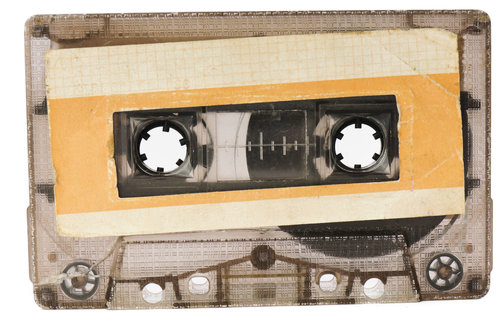
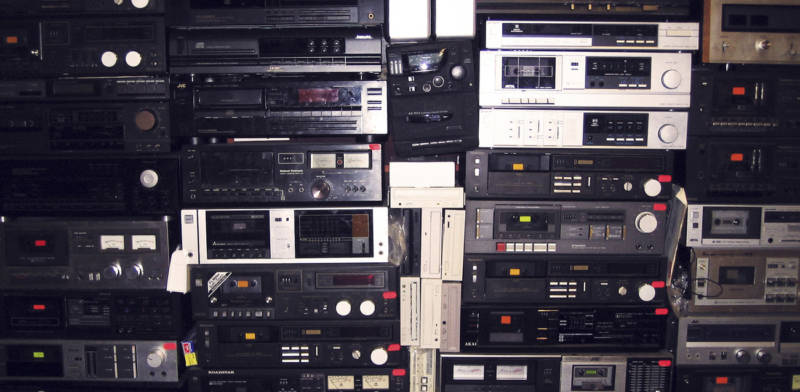
9(MDAxOTAwOTE4MDEyMTkxMDAzNjczZDljZA004))