12 Must-See Films and One We Defy You to Sit Through at the SFIFF
The annual San Francisco International Film Festival is a beast, screening the best international films in multiple venues over its 15-day run. There are 74 films in the fiction feature category alone. Here are the 13 we like best.
Jon Brooks
Bad Hair
I finished my final preview screener from the 2014 San Francisco International Film Festival exhilarated and exhausted. Those two emotions coexisted uneasily during much of my time in the trenches. At my giddiest, I entertained thoughts about the great redemptive power of cinema: If only we could all just sit down and watch each others’ movies! Then there was Tsai Ming Liang’s 13-minute two-shot of a man and woman staring at a wall — that was more likely to incite violence. Or at least a kind of awestruck insanity.
In watching many of the films below, I had to resist a reflexive craving for the default aesthetics of Hollywood, inculcated by virtue of thousands of hours at the movie theater or in front of the TV. A recognizable moral scheme, obvious but entertaining storytelling, rapid-fire editing — not much of that going on in the movies I saw. Many of these films have a fraction of the edits you find at the cineplex. Slow and reflective, they exhibit a fondness for mood, ambiguity, and a lingering on the passive — I often found myself watching characters thinking. Which got me to thinking what are they thinking? Which is the beginning of empathy as opposed to mere sentimentalism.
It’s not always easy to step outside your own cinematic culture. Cognitive dissonance erupted, for example, while watching Salvation Army, a beautiful Moroccan film set partly in Casablanca. Just the mention of that city sets off a visceral nostalgia for American myth-making, for exultant lies told in the high style of circa 1942 Warner Bros. My first association with the word “Casablanca” has always been Humphrey Bogart. Now, possibly, I might think of actual Moroccans.
Of the 74 fictional features at the festival, here are 13 I saw in advance that I can recommend. You can see more about the films or buy tickets by clicking on the film titles.
Gay Youth
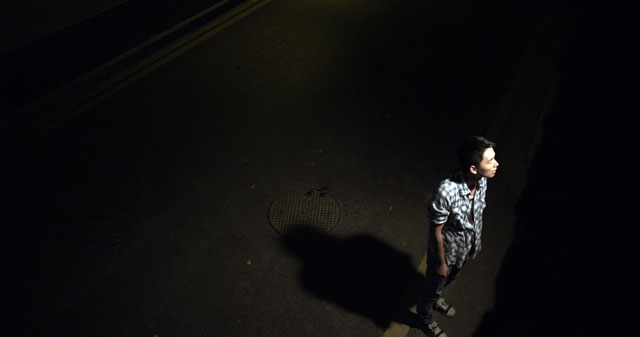
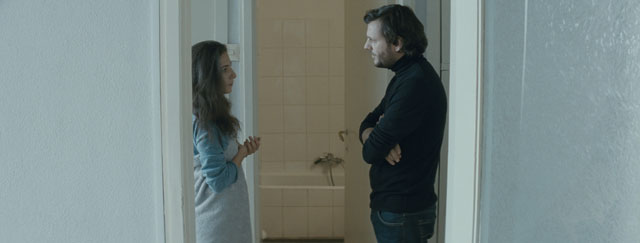
Bad Hair is a heartbreaking film about a Venezuelan boy and his mother, an unemployed security guard who is appalled by his emerging homosexuality. They live in a massive and decrepit housing complex where things start to unravel when poverty and homophobia impinge on their lives. There is also an ever-present concern with violence in this rare glimpse into Venezuelan society at the end of the Hugo Chavez era.
Look for: In just two lines of dialogue, one of the most quietly searing exchanges between a child and parent you’ll ever see on-screen.
Directed by Mariana Rondón. 93 min, Venezuela/Peru
Thu, May 1, 9:15am Kabuki
Sun May 4, 6:15pm. New People
Wed, May 7, 6:30pm BAM/PFA
Salvation Army
Salvation Armyis a lovely, honest film about a gay youth in Morocco. Abdellah is a teenager in love with his older brother, stealing moments alone in his sibling’s bed just to bathe in his aura. He also has anonymous sex with men on the streets. But the film does not convey overt oppression or shame, rather a sense of longing and, when it fast forwards 10 years, an unspecified regret and bitterness. The anonymous sexual encounters all have a different feel, sometimes seamy, sometimes not. The characters frequently treat one another tenderly, and there is a touching dignity to many of their interactions.
Look for: The ending, which left me in tears, though I don’t know why.
Directed by Abdellah Taia, from his book. 82 min, Morocco
Fri May 2 9:00pm Kabuki
Sun May 4 8:30pm BAM/PFA
Tue May 6 6:30pm Kabuki
Societal Critiques
Trap Street
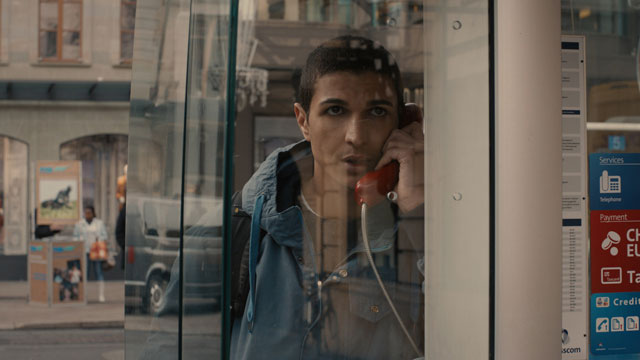
Trap Street is a diverting tale with all the elements of a young adult mystery novel. A teenage boy, working as a surveyor for a digital mapping firm, stumbles onto a secret government lab. There’s a mysterious, attractive young girl who is prone to taking a powder, menacing government agents, and burgeoning paranoia as reprisals mount for pursuing what you clearly shouldn’t. But beneath the familiar genre construction lies a deep disquiet with China’s surveillance state, and an illustration of the limits the country places on capitalist enterprise when it comes into conflict with entrenched power.
Look for: A scene in which the hero’s father is interrogated about his son. In an American film, he’d grow increasingly outraged and demand his rights; here, the man quietly complies and tries to distance himself from his kid.
Directed by Vivian Qu. 94 min, China
Sat April 26 8:00pm BAM/PFA
Sun May 4 9:45pm Kabuki
Tue May 6 6:45pm Kabuki
Harmony Lessons
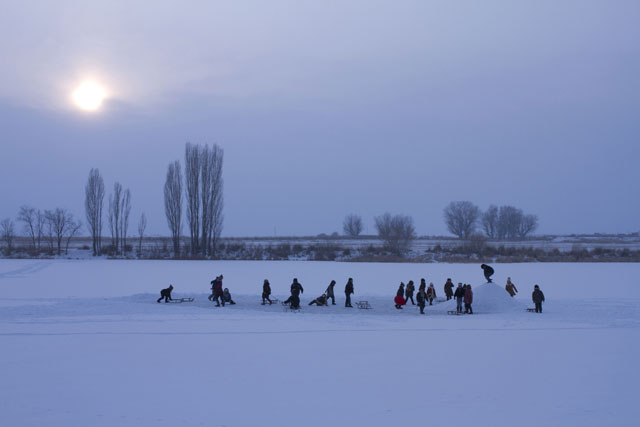
In Harmony Lessons, student members of a sort of Mafia-in-training at a Kazakhstani school shake down their weaker peers. One of the victims has been singled out for ostracism, and he reacts by frequently vomiting and obsessive-compulsive cleaning. A new boy arrives who stands up to the head bully, but not without severe consequences. The film has a Lord of the Flies feel–clueless or cruel teachers leave any supervision of the boys meaningless. And when the police get involved, they turn out to be the worst thugs of all. Chillingly, it all seems a rehearsal for the same roles everyone will play in adult society. The violence is belied and thus made more shocking by director Emir Baigazin’s quiet approach; he moves his camera sparingly, adds almost no music, and creates gorgeous, almost painterly compositions.
Look for: Chilling performances by menacing twin brothers in the senior class, at the top of the criminal chain.
Directed by Emir Baigazin. 114 min, Kazakhstan/Germany/France
Fri April 25 3:30pm, Kabuki
Sun May 4 12:45pm, Kabuki
Mon May 5 6:15pm, Kabuki
White Shadow
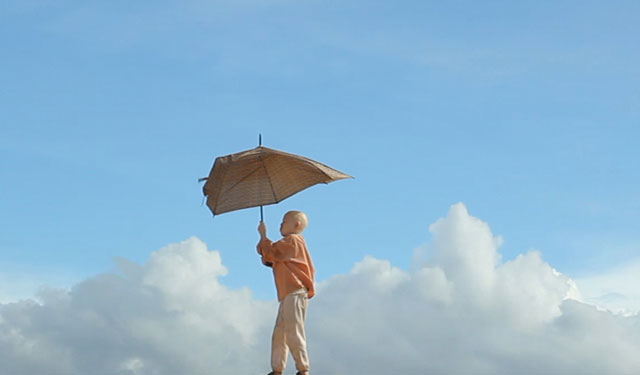
White Shadow is a gruesome yet compelling story based on a real-life horrific cultural phenomenon. Alias is an albino boy living in a Tanzanian village. The body parts of those with his disorder are prized by witch doctors, and his father is killed in order to harvest them. Afterwards, his mother sends Alias to live in the city with his uncle. There he hustles goods to motorists, scavenges in toxic waste dumps, and grows up extremely fast. The film depicts a country in which magical thinking and a belief in the occult overwhelm civil society, and where superstition and greed join to make life very cheap. And yet, the resiliency of the ostracized Alias shines through.
Look for: Several visual references to Obama, an icon in Africa.
Directed by Noaz Deshe. 115 min, Italy/Germany/Tanzania
Sun May 4 6:30pm Kabuki
Tue May 6 6:15pm Kabuki
Thu May 8 8:00pm Kabuki
The Militant
In The Militant, a young man in Uruguay named Ariel Cruz tries to find himself during the country’s 2002 economic crisis, participating in hapless school occupations in which the students prioritize getting stoned. Cruz both typifies and chafes against the aimlessness, but whatever he tries, he never moves past bemusement. The newcomer Felipe Dieste showcases the kind of offbeat performance Dustin Hoffman used to be known for: His hand trembles, he walks with a limp, and he whines like Ratso Rizzo. Or perhaps he’s the Latin American-leftist Benjamin Braddock, thrust into an ill-suiting role and thoroughly lost.
Look for: On the occupying students’ agenda: “First motion — create a committee to throw a party.” And before joining a meat packers’ hunger strike, Cruz asks, “Is smoking allowed?”
Directed by Manolo Nieto. 121 min, Uruguay/Argentina
Sat Apr 26 9:00pm New People
Sun Apr 27 3:15pm Kabuki
Thu May 1 8:50pm BAM/PFA
Films About Film Directors
When Evening Falls on Bucharest
In When Evening Falls on Bucharest or Metabolism, a director and leading lady participate in dialogues about the movie they’re making, how dining utensils influence cuisine, and more. But really every conversation alludes to cinema. At one point the two spend five on-screen minutes discussing the most truthful way to dress in a particular scene. Despite their passion for cinematic verisimilitude, they both engage in real-life duplicity. The dichotomy between the intense conversations and the emotional detachment in which they state their positions is compelling. We never really get a closeup of the actors; they’re shot frequently in profile or from behind, yet we’re paradoxically drawn in.
Look for: The opinion that the penis is “a mistake from an aesthetic point of view.”
Directed by Corneliu Porumboiu. 93 min, Romania/France
Fri April 25 3:45pm New People Cinema
Sat April 26 6:30pm Kabuki
Mon April 28 8:30pm BAM/PFA
Abuse of Weakness
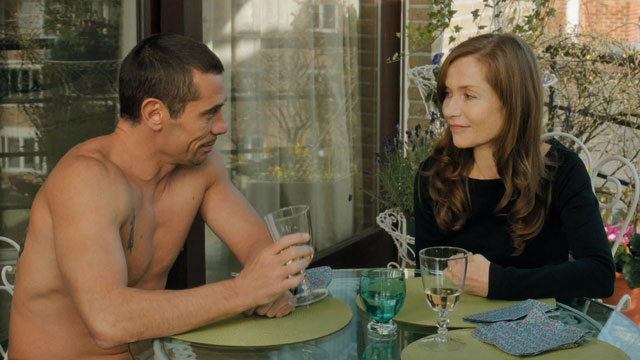
Abuse of Weakness is Catherine Breillat’s autobiographical film about a director who suffers a paralyzing stroke then gets fleeced by a known swindler. This is no Mametesque delving into the subtleties of the big con — the man’s lies are completely transparent, yet his victim gives him large sums seemingly without a thought. Both the director and her character struggle to explain going bankrupt at the hands of an obvious sociopath. But no one does perversity like Isabelle Huppert, who may have found the answer in a filmmaker’s predilection for experiencing life anthropologically: He’s a “caveman,” she says, before gleefully calling him “fascinating.” Amidst the power games, the film asks: If someone must cut your meat, who is really in control, you or him?
Look for: Huppert’s line: “You took me to the cleaners,” delivered almost giddily and with a smile, before admitting she doesn’t have enough money for food. Only she could so skillfully convey the fine line between a lark and a tragedy.
Directed by Catherine Breillat. 104 min, France/Belgium/Germany
Thu May 1 9:00pm Kabuki
Freud Wasn’t Wrong About Everything
Club Sandwich
Club Sandwich is the compact story of a single mother and her teenage son on a resort vacation. Simpatico, they have their routines and games, and at times act like an old married couple. But straining just beneath the surface is a mutual sexualizing, which leaves the boy in a terrible confusion about how to exercise his inflamed adolescent libido. When a partner in horniness his own age arrives, the bond between mother and son frays, and intensely uncomfortable situations develop. What could have been perversely grim is actually wry and charming, and while some may feel hatred for the mom, it’s easy to see how such a situation can develop. Great performances, especially by the kids, who perfectly capture the awkwardness of fumbling teenage lust.
Look for: Cool cover version of the Pixies “Where is My Mind” over the opening credits; and a scene in which the mom cannonballs into the water from off-screen, disturbing the two kids tranquilly holding each others’ hands in the pool.
Directed by Fernando Eimbcke. 82 min, Mexico
Sat April 26, 4:15pm Kabuki
Mon April 28, 9:15pm New People Cinema
Sun May 4, 1:30pm Kabuki
Argentinian Alienation
The Reconstruction
In The Reconstruction, a doleful middle-aged man completely disengaged from life finds himself in the middle of a crisis concerning the family of an old friend. The spectacle of a man who answers an invitation to dinner with “what for?” having to suddenly attend a parent-teacher conference for someone else’s kid is very good. While the film’s director, Juan Taraturo, and his star, Diego Peretti, could have played it for laughs, as in their previous pairings, any comedy here grows out of the rueful absurdity of a misanthrope attempting an altruistic intervention. The film loses steam about two-thirds through, when it turns from an existential character study into a conventional weepie. But well worth a look for Peretti as the sullen, long-faced Eduardo.
Look for: One of the more concisely effective — if shocking — delineations of character in the very first moments of the film.
Directed by Juan Taratuto. 93 min, Argentina
Fri April 25 9:00pm New People Cinema
Mon April 28 2:00pm Kabuki
Wed April 30 4:00pm New People Cinema
Hooray For Hollywood
All That Jazz
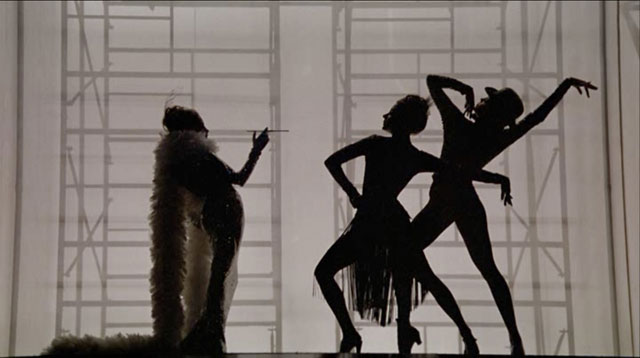
Return, if you will, to a time when jazz hands could be unironically employed on-stage. Even when the culture was more tolerant of artists pouring out their self-involvement on-screen, All That Jazz, an 8 1/2 derivative, was considered an over-the-top indulgence. Roy Scheider stars as “Joe Gideon,” a talented, self-destructive choreographer juggling multiple projects and women. While Fosse alternates between self-hatred and egomania, the man does know how to shoot a song and dance, and you’ll enjoy several show-stoppers, especially the opening, a cattle-call audition process that whittles hundreds of dancers down to a chosen few. Ending one’s film with a 15-minute hallucinogenic fantasy must break some dramatic rule somewhere, but at its best, this is an exuberant look at dyed-in-the-wool show folk plying their trade while contending with venal producers and their own neuroses.
Look for: Leland Palmer as a Gwen Verdon doppelganger, rehearsing a dance number in front of the Fosse character while simultaneously picking at their mutual emotional scabs. Then there’s Ann Reinking as the tallest drink-of-water triple threat in decades. Plus the line: “Now Sinatra will never record it.”
Restored by Twentieth Century Fox in collaboration with The Film Foundation.
Directed by Bob Fosse. 123 min, USA
Sun April 27, 12:30pm Kabuki
Fri May 2, 8:30pm BAM/PFA
The Lady Eve
You hate to resort to they-don’t-make-em-like-that-anymore sentiment, but in the midst of a festival brimming over with grim realism, the celebration of The Lady Eve, one of those perfect specimens from the great Hollywood Dream Machine, is much welcome. Director Preston Sturges had a great run between 1940-44, enjoying a good deal of creative independence at Paramount before flaming out in battles with the money boys. A leading practitioner of screwball comedy, an American auteur, and a keen satirist, Sturges was never more winning than in breathing life into this swindler/swindled romance. With Henry Fonda as the world’s most eligible bachelor and Barbara Stanwyck in the title role, taking her place alongside Rosalind Russell, Katherine Hepburn and Irene Dunne as female screwball royalty.
Look for: You get the impression Stanwyck’s character is a lot more taken with Fonda than is Sturges, who destroys his leading man in gag after uproarious gag.
Directed by Preston Sturges. 94 min, USA
Sun May 4 3:00pm Kabuki
Film essayist David Thomson has chosen this movie to screen when he receives the Mel Novikoff Award for enhancing the film-going public’s knowledge and appreciation of world cinema.
And in the Department of Uncategorizable…
Stray Dogs
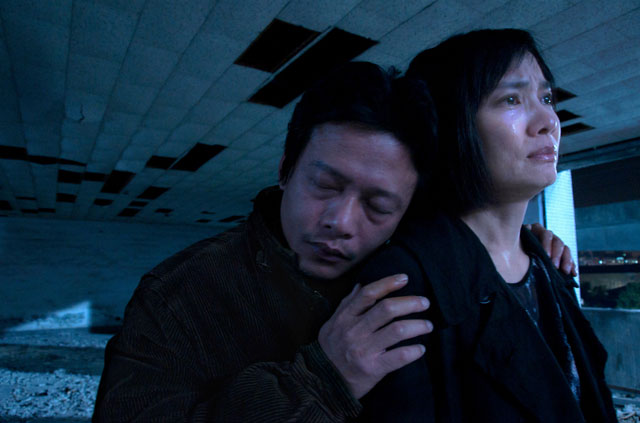
Those with cinematic stamina will want to try acclaimed director Tsai Ming-liang’s Stray Dogs , one of the most aesthetically provocative works you’ll ever sit through. The opening shot of a woman brushing her hair in front of two sleeping children lasts four minutes. But that’s a Michael Bay film compared to the penultimate image of a man and woman staring at a wall for 13 minutes straight. In between, a disjointed story of sorts develops, about a destitute Taipei family, but anything more specific you’ll have to bring to the work yourself. With such a dearth of narrative markers, you either fall into a kind of image fetishism, scrutinizing every inch of the screen, or your mind feverishly works to comprehend what’s being communicated. It’s a unique strategy for engaging an audience, and many will find themselves contemplating the next Game of Thrones. During the lulls, I imagined Tsai’s producer arguing with him over whether that shot should go the full 13 minutes or if he could maybe get his point across in 11. Yet, when the film was done, I had the urge to watch it again.
Look for: The agony of dull labor — or is it the agony of all existence? — represented in a series of lengthy shots of people holding real estate advertising signs on the street.
Directed by Tsai Ming-liang. 138 min, Taiwan/France
Mon April 28 6:00pm Kabuki
Tue April 29 3:15pm New People Cinema
Wed April 30 6:30pm BAM/PFA
Also of Note:
Boyhood
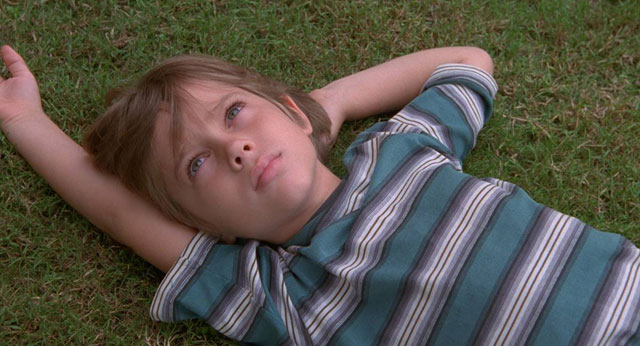
Founder’s Directing Award recipient, Richard Linklater, will be on hand to screen his film Boyhood. “Filming over the course of 12 years, Linklater and his cast depict a young man’s journey from a 6-year-old boy to 19-year-old college freshman.” (May 2, 7:00pm Castro Theatre)
Justin Simien’s camp comedy Dear White People is a satire about race and identity at a fictional Ivy league school. The film earned a Special Jury Award for Breakthrough Talent at the Sundance Film Festival. (April 26, 6:45pm Kabuki; April 29 8:45 p.m. New People Cinema)
Filmmaker Gia Coppola makes an appearance for the screening of her adaptation of James Franco’s book Palo Alto, about teenagers shifting from childhood innocence to adult responsibility. (May 3, 7:30pm Kabuki)
Steve Coogan and Rob Brydon return in The Trip to Italy, a sequel to their very funny The Trip. Once again, Michael Winterbottom directs. (April 29 6:30pm Kabuki; May 2 1:30pm Kabuki)
Young & Beautiful. The step from a teenage girl’s “first time” to her adoption of the world’s oldest profession proves a very short one in the latest from director François Ozon (Swimming Pool, 8 Women) (April 28 9:30pm, Kabuki; May 1 3:45pm, Kabuki)
Jesse Eisenberg and Mia Wasikowska star in the “Kafkaesque” film The Double, about a “white-collar drone stuck in a waking nightmare of perpetual humiliation.” Directed by Richard Ayoade. (April 26 1:00pm Kabuki; April 29 9:15pm Kabuki)
As with all of his films, Iranian dissident filmmaker Mohammad Rasoulof’s Manuscripts Don’t Burn remains unreleased in his home country. Raoulof was arrested and sent to prison in 2010 for filming without a permit. (April 25 8:40pm BAM/PFA; April 27 4:00pm Kabuki; April 29 9:00pm Kabuki)
In Night Moves, writer/director Kelly Reichardt (Meek’s Cutoff, Wendy and Lucy) tries her hand at the political thriller genre. With Jesse Eisenberg, Dakota Fanning, and Peter Sarsgaard. (May 7, 9:00pm Kabuki; May 8 7:30pm Kabuki)
Queen Margot: The Director’s Cut, from director Patrice Chéreau, was the 1994 Cannes Jury Prize Winner. (April 26 12:45pm Kabuki; May 1 9:00pm New People Cinema)
Craig Johnson’s The Skeleton Twins stars SNL alumni Bill Hader and Kristen Wiig as long-estranged twins. (May 1 6:30pm Kabuki; May 2 3:30pm Kabuki)
The San Francisco International Film Festival runs April 24 through May 8, 2104 at various Bay Area locations. For tickets and information, visit sffs.org.
lower waypointnext waypoint
Player sponsored by
window.__IS_SSR__=true
window.__INITIAL_STATE__={
"attachmentsReducer": {
"audio_0": {
"type": "attachments",
"id": "audio_0",
"imgSizes": {
"kqedFullSize": {
"file": "https://ww2.kqed.org/news/wp-content/themes/KQED-unified/img/audio_bgs/background0.jpg"
}
}
},
"audio_1": {
"type": "attachments",
"id": "audio_1",
"imgSizes": {
"kqedFullSize": {
"file": "https://ww2.kqed.org/news/wp-content/themes/KQED-unified/img/audio_bgs/background1.jpg"
}
}
},
"audio_2": {
"type": "attachments",
"id": "audio_2",
"imgSizes": {
"kqedFullSize": {
"file": "https://ww2.kqed.org/news/wp-content/themes/KQED-unified/img/audio_bgs/background2.jpg"
}
}
},
"audio_3": {
"type": "attachments",
"id": "audio_3",
"imgSizes": {
"kqedFullSize": {
"file": "https://ww2.kqed.org/news/wp-content/themes/KQED-unified/img/audio_bgs/background3.jpg"
}
}
},
"audio_4": {
"type": "attachments",
"id": "audio_4",
"imgSizes": {
"kqedFullSize": {
"file": "https://ww2.kqed.org/news/wp-content/themes/KQED-unified/img/audio_bgs/background4.jpg"
}
}
},
"placeholder": {
"type": "attachments",
"id": "placeholder",
"imgSizes": {
"thumbnail": {
"file": "https://cdn.kqed.org/wp-content/uploads/2024/12/KQED-Default-Image-816638274-2000x1333-1-160x107.jpg",
"width": 160,
"height": 107,
"mimeType": "image/jpeg"
},
"medium": {
"file": "https://cdn.kqed.org/wp-content/uploads/2024/12/KQED-Default-Image-816638274-2000x1333-1-800x533.jpg",
"width": 800,
"height": 533,
"mimeType": "image/jpeg"
},
"medium_large": {
"file": "https://cdn.kqed.org/wp-content/uploads/2024/12/KQED-Default-Image-816638274-2000x1333-1-768x512.jpg",
"width": 768,
"height": 512,
"mimeType": "image/jpeg"
},
"large": {
"file": "https://cdn.kqed.org/wp-content/uploads/2024/12/KQED-Default-Image-816638274-2000x1333-1-1020x680.jpg",
"width": 1020,
"height": 680,
"mimeType": "image/jpeg"
},
"1536x1536": {
"file": "https://cdn.kqed.org/wp-content/uploads/2024/12/KQED-Default-Image-816638274-2000x1333-1-1536x1024.jpg",
"width": 1536,
"height": 1024,
"mimeType": "image/jpeg"
},
"fd-lrg": {
"file": "https://cdn.kqed.org/wp-content/uploads/2024/12/KQED-Default-Image-816638274-2000x1333-1-1536x1024.jpg",
"width": 1536,
"height": 1024,
"mimeType": "image/jpeg"
},
"fd-med": {
"file": "https://cdn.kqed.org/wp-content/uploads/2024/12/KQED-Default-Image-816638274-2000x1333-1-1020x680.jpg",
"width": 1020,
"height": 680,
"mimeType": "image/jpeg"
},
"fd-sm": {
"file": "https://cdn.kqed.org/wp-content/uploads/2024/12/KQED-Default-Image-816638274-2000x1333-1-800x533.jpg",
"width": 800,
"height": 533,
"mimeType": "image/jpeg"
},
"post-thumbnail": {
"file": "https://cdn.kqed.org/wp-content/uploads/2024/12/KQED-Default-Image-816638274-2000x1333-1-672x372.jpg",
"width": 672,
"height": 372,
"mimeType": "image/jpeg"
},
"twentyfourteen-full-width": {
"file": "https://cdn.kqed.org/wp-content/uploads/2024/12/KQED-Default-Image-816638274-2000x1333-1-1038x576.jpg",
"width": 1038,
"height": 576,
"mimeType": "image/jpeg"
},
"xxsmall": {
"file": "https://cdn.kqed.org/wp-content/uploads/2024/12/KQED-Default-Image-816638274-2000x1333-1-160x107.jpg",
"width": 160,
"height": 107,
"mimeType": "image/jpeg"
},
"xsmall": {
"file": "https://cdn.kqed.org/wp-content/uploads/2024/12/KQED-Default-Image-816638274-2000x1333-1-672x372.jpg",
"width": 672,
"height": 372,
"mimeType": "image/jpeg"
},
"small": {
"file": "https://cdn.kqed.org/wp-content/uploads/2024/12/KQED-Default-Image-816638274-2000x1333-1-672x372.jpg",
"width": 672,
"height": 372,
"mimeType": "image/jpeg"
},
"xlarge": {
"file": "https://cdn.kqed.org/wp-content/uploads/2024/12/KQED-Default-Image-816638274-2000x1333-1-1020x680.jpg",
"width": 1020,
"height": 680,
"mimeType": "image/jpeg"
},
"full-width": {
"file": "https://cdn.kqed.org/wp-content/uploads/2024/12/KQED-Default-Image-816638274-2000x1333-1-1920x1280.jpg",
"width": 1920,
"height": 1280,
"mimeType": "image/jpeg"
},
"guest-author-32": {
"file": "https://cdn.kqed.org/wp-content/uploads/2025/01/KQED-Default-Image-816638274-1333x1333-1-160x160.jpg",
"width": 32,
"height": 32,
"mimeType": "image/jpeg"
},
"guest-author-50": {
"file": "https://cdn.kqed.org/wp-content/uploads/2025/01/KQED-Default-Image-816638274-1333x1333-1-160x160.jpg",
"width": 50,
"height": 50,
"mimeType": "image/jpeg"
},
"guest-author-64": {
"file": "https://cdn.kqed.org/wp-content/uploads/2025/01/KQED-Default-Image-816638274-1333x1333-1-160x160.jpg",
"width": 64,
"height": 64,
"mimeType": "image/jpeg"
},
"guest-author-96": {
"file": "https://cdn.kqed.org/wp-content/uploads/2025/01/KQED-Default-Image-816638274-1333x1333-1-160x160.jpg",
"width": 96,
"height": 96,
"mimeType": "image/jpeg"
},
"guest-author-128": {
"file": "https://cdn.kqed.org/wp-content/uploads/2025/01/KQED-Default-Image-816638274-1333x1333-1-160x160.jpg",
"width": 128,
"height": 128,
"mimeType": "image/jpeg"
},
"detail": {
"file": "https://cdn.kqed.org/wp-content/uploads/2025/01/KQED-Default-Image-816638274-1333x1333-1-160x160.jpg",
"width": 160,
"height": 160,
"mimeType": "image/jpeg"
},
"kqedFullSize": {
"file": "https://cdn.kqed.org/wp-content/uploads/2024/12/KQED-Default-Image-816638274-2000x1333-1.jpg",
"width": 2000,
"height": 1333
}
}
},
"arts_10135046": {
"type": "attachments",
"id": "arts_10135046",
"meta": {
"index": "attachments_1716263798",
"site": "arts",
"id": "10135046",
"found": true
},
"parent": 10135020,
"imgSizes": {
"thumbnail": {
"file": "https://ww2.kqed.org/app/uploads/sites/2/2015/04/badhair-400x208.jpg",
"width": 400,
"mimeType": "image/jpeg",
"height": 208
},
"kqedFullSize": {
"file": "https://ww2.kqed.org/app/uploads/sites/2/2015/04/badhair.jpg",
"width": 640,
"height": 334
},
"guest-author-96": {
"file": "https://ww2.kqed.org/app/uploads/sites/2/2015/04/badhair-96x96.jpg",
"width": 96,
"mimeType": "image/jpeg",
"height": 96
},
"medium": {
"file": "https://ww2.kqed.org/app/uploads/sites/2/2015/04/badhair-300x156.jpg",
"width": 300,
"mimeType": "image/jpeg",
"height": 156
},
"guest-author-64": {
"file": "https://ww2.kqed.org/app/uploads/sites/2/2015/04/badhair-64x64.jpg",
"width": 64,
"mimeType": "image/jpeg",
"height": 64
},
"detail": {
"file": "https://ww2.kqed.org/app/uploads/sites/2/2015/04/badhair-75x75.jpg",
"width": 75,
"mimeType": "image/jpeg",
"height": 75
},
"guest-author-32": {
"file": "https://ww2.kqed.org/app/uploads/sites/2/2015/04/badhair-32x32.jpg",
"width": 32,
"mimeType": "image/jpeg",
"height": 32
},
"guest-author-128": {
"file": "https://ww2.kqed.org/app/uploads/sites/2/2015/04/badhair-128x128.jpg",
"width": 128,
"mimeType": "image/jpeg",
"height": 128
}
},
"publishDate": 1398040052,
"modified": 1398040052,
"caption": "\u003ci>Bad Hair\u003c/i>",
"description": null,
"title": "badhair",
"credit": null,
"status": "inherit",
"isLoading": false,
"fetchFailed": false
}
},
"audioPlayerReducer": {
"postId": "stream_live",
"isPaused": true,
"isPlaying": false,
"pfsActive": false,
"pledgeModalIsOpen": true,
"playerDrawerIsOpen": false,
"liveAudioPlayStartedAt": 0,
"liveAudioPlayContext": ""
},
"authorsReducer": {
"128436": {
"type": "authors",
"id": "128436",
"meta": {
"override": true
},
"slug": "128436",
"name": "Jon Brooks",
"firstName": "Jon",
"lastName": "Brooks",
"bio": "Jon Brooks is a KQED News online editor and writer for KQED's daily news blog, \u003ci>News Fix\u003c/i>. A veteran blogger, he previously worked for Yahoo! in various news writing and editing roles. He was also the editor of \u003ca>EconomyBeat.org\u003c/a>, which documented user-generated content about the financial crisis and recession. Jon is also a playwright whose work has been produced in San Francisco, New York, Italy, and around the U.S. He has written about film for his own blog and studied film at Boston University. He has an MFA in Creative Writing from Brooklyn College.",
"email": "jbrooks@kqed.org",
"isLoading": false
}
},
"pagesReducer": {},
"pfsSessionReducer": {},
"postsReducer": {
"stream_live": {
"type": "live",
"id": "stream_live",
"audioUrl": "https://streams.kqed.org/kqedradio",
"title": "Live Stream",
"excerpt": "Live Stream information currently unavailable.",
"link": "/radio",
"featImg": "",
"label": {
"name": "KQED Live",
"link": "/"
}
},
"stream_kqedNewscast": {
"type": "posts",
"id": "stream_kqedNewscast",
"audioUrl": "https://www.kqed.org/.stream/anon/radio/RDnews/newscast.mp3?_=1",
"title": "KQED Newscast",
"featImg": "",
"label": {
"name": "88.5 FM",
"link": "/"
}
},
"arts_10135020": {
"type": "posts",
"id": "arts_10135020",
"meta": {
"index": "posts_1716263798",
"site": "arts",
"id": "10135020",
"found": true
},
"articlePosition": 0,
"parent": 0,
"labelTerm": {
"site": "arts"
},
"blocks": [],
"publishDate": 1398085244,
"format": "standard",
"title": "12 Must-See Films and One We Defy You to Sit Through at the SFIFF",
"headTitle": "12 Must-See Films and One We Defy You to Sit Through at the SFIFF | KQED",
"content": "\u003cp>I finished my final preview screener from the \u003ca href=\"http://www.sffs.org/festival-home/\">2014 San Francisco International Film Festival\u003c/a> exhilarated and exhausted. Those two emotions coexisted uneasily during much of my time in the trenches. At my giddiest, I entertained thoughts about the great redemptive power of cinema: If only we could all just sit down and watch each others’ movies! Then there was Tsai Ming Liang’s 13-minute two-shot of a man and woman staring at a wall — that was more likely to \u003cem>incite\u003c/em> violence. Or at least a kind of awestruck insanity.\u003c/p>\n\u003cp>In watching many of the films below, I had to resist a reflexive craving for the default aesthetics of Hollywood, inculcated by virtue of thousands of hours at the movie theater or in front of the TV. A recognizable moral scheme, obvious but entertaining storytelling, rapid-fire editing — not much of that going on in the movies I saw. Many of these films have a fraction of the edits you find at the cineplex. Slow and reflective, they exhibit a fondness for mood, ambiguity, and a lingering on the passive — I often found myself watching characters \u003ci>thinking\u003c/i>. Which got me to thinking what are they thinking? Which is the beginning of empathy as opposed to mere sentimentalism.\u003c/p>\n\u003cp>It’s not always easy to step outside your own cinematic culture. Cognitive dissonance erupted, for example, while watching \u003ci>Salvation Army\u003c/i>, a beautiful Moroccan film set partly in Casablanca. Just the mention of that city sets off a visceral nostalgia for American myth-making, for exultant lies told in the high style of circa 1942 Warner Bros. My first association with the word “Casablanca” has always been Humphrey Bogart. Now, possibly, I might think of actual Moroccans.\u003c/p>\n\u003cp>Of the 74 fictional features at the festival, here are 13 I saw in advance that I can recommend. \u003cstrong>You can see more about the films or buy tickets by clicking on the film titles\u003c/strong>.\u003c/p>\n\u003ch2>Gay Youth\u003c/h2>\n\u003cp>\u003ca href=\"http://www.sffs.org/festival-home/attend/film-guide/bad-hair\">\u003cem>\u003cstrong>Bad Hair\u003c/strong>\u003c/em>\u003c/a> is a heartbreaking film about a Venezuelan boy and his mother, an unemployed security guard who is appalled by his emerging homosexuality. They live in a massive and decrepit housing complex where things start to unravel when poverty and homophobia impinge on their lives. There is also an ever-present concern with violence in this rare glimpse into Venezuelan society at the end of the Hugo Chavez era.\u003c/p>\n\u003cp>[ad fullwidth]\u003c/p>\n\u003cp>Look for: In just two lines of dialogue, one of the most quietly searing exchanges between a child and parent you’ll ever see on-screen.\u003c/p>\n\u003cp>Directed by Mariana Rondón. 93 min, Venezuela/Peru\u003cbr>\nThu, May 1, 9:15am Kabuki\u003cbr>\nSun May 4, 6:15pm. New People\u003cbr>\nWed, May 7, 6:30pm BAM/PFA\u003c/p>\n\u003cfigure id=\"attachment_10135047\" class=\"wp-caption alignright\" style=\"max-width: 640px\">\u003ca href=\"http://ww2.kqed.org/arts/wp-content/uploads/sites/2/2015/04/salvation.jpg\">\u003cimg loading=\"lazy\" decoding=\"async\" class=\"size-full wp-image-10135047\" src=\"http://ww2.kqed.org/arts/wp-content/uploads/sites/2/2015/04/salvation.jpg\" alt=\"Salvation Army\" width=\"640\" height=\"360\" srcset=\"https://cdn.kqed.org/wp-content/uploads/sites/2/2015/04/salvation.jpg 640w, https://cdn.kqed.org/wp-content/uploads/sites/2/2015/04/salvation-400x225.jpg 400w, https://cdn.kqed.org/wp-content/uploads/sites/2/2015/04/salvation-300x168.jpg 300w\" sizes=\"(max-width: 640px) 100vw, 640px\">\u003c/a>\u003cfigcaption class=\"wp-caption-text\">\u003ci>Salvation Army\u003c/i>\u003c/figcaption>\u003c/figure>\n\u003cp>\u003ca href=\"http://www.sffs.org/festival-home/attend/film-guide/salvation-army\">\u003cem>\u003cb>Salvation Army\u003c/b>\u003c/em> \u003c/a>is a lovely, honest film about a gay youth in Morocco. Abdellah is a teenager in love with his older brother, stealing moments alone in his sibling’s bed just to bathe in his aura. He also has anonymous sex with men on the streets. But the film does not convey overt oppression or shame, rather a sense of longing and, when it fast forwards 10 years, an unspecified regret and bitterness. The anonymous sexual encounters all have a different feel, sometimes seamy, sometimes not. The characters frequently treat one another tenderly, and there is a touching dignity to many of their interactions.\u003c/p>\n\u003cp>Look for: The ending, which left me in tears, though I don’t know why.\u003c/p>\n\u003cp>Directed by Abdellah Taia, from his book. 82 min, Morocco\u003cbr>\nFri May 2 9:00pm Kabuki\u003cbr>\nSun May 4 8:30pm BAM/PFA\u003cbr>\nTue May 6 6:30pm Kabuki\u003c/p>\n\u003ch2>Societal Critiques\u003c/h2>\n\u003cfigure id=\"attachment_10135048\" class=\"wp-caption alignright\" style=\"max-width: 640px\">\u003ca href=\"http://ww2.kqed.org/arts/wp-content/uploads/sites/2/2015/04/trapstreet.jpg\">\u003cimg loading=\"lazy\" decoding=\"async\" class=\"size-full wp-image-10135048\" src=\"http://ww2.kqed.org/arts/wp-content/uploads/sites/2/2015/04/trapstreet.jpg\" alt=\"Trap Street\" width=\"640\" height=\"337\" srcset=\"https://cdn.kqed.org/wp-content/uploads/sites/2/2015/04/trapstreet.jpg 640w, https://cdn.kqed.org/wp-content/uploads/sites/2/2015/04/trapstreet-400x210.jpg 400w, https://cdn.kqed.org/wp-content/uploads/sites/2/2015/04/trapstreet-300x157.jpg 300w\" sizes=\"(max-width: 640px) 100vw, 640px\">\u003c/a>\u003cfigcaption class=\"wp-caption-text\">\u003ci>Trap Street\u003c/i>\u003c/figcaption>\u003c/figure>\n\u003cp>\u003ca href=\"http://www.sffs.org/festival-home/attend/film-guide/trap-street\" target=\"_blank\" rel=\"noopener\">\u003cem>\u003cb>Trap Street\u003c/b>\u003c/em>\u003c/a> is a diverting tale with all the elements of a young adult mystery novel. A teenage boy, working as a surveyor for a digital mapping firm, stumbles onto a secret government lab. There’s a mysterious, attractive young girl who is prone to taking a powder, menacing government agents, and burgeoning paranoia as reprisals mount for pursuing what you clearly shouldn’t. But beneath the familiar genre construction lies a deep disquiet with China’s surveillance state, and an illustration of the limits the country places on capitalist enterprise when it comes into conflict with entrenched power.\u003c/p>\n\u003cp>Look for: A scene in which the hero’s father is interrogated about his son. In an American film, he’d grow increasingly outraged and demand his rights; here, the man quietly complies and tries to distance himself from his kid.\u003c/p>\n\u003cp>Directed by Vivian Qu. 94 min, China\u003cbr>\nSat April 26 8:00pm BAM/PFA\u003cbr>\nSun May 4 9:45pm Kabuki\u003cbr>\nTue May 6 6:45pm Kabuki\u003c/p>\n\u003cfigure id=\"attachment_10135049\" class=\"wp-caption alignright\" style=\"max-width: 640px\">\u003ca href=\"http://ww2.kqed.org/arts/wp-content/uploads/sites/2/2015/04/harmonylessons.jpg\">\u003cimg loading=\"lazy\" decoding=\"async\" class=\"size-full wp-image-10135049\" src=\"http://ww2.kqed.org/arts/wp-content/uploads/sites/2/2015/04/harmonylessons.jpg\" alt=\"Harmony Lessons\" width=\"640\" height=\"427\" srcset=\"https://cdn.kqed.org/wp-content/uploads/sites/2/2015/04/harmonylessons.jpg 640w, https://cdn.kqed.org/wp-content/uploads/sites/2/2015/04/harmonylessons-400x266.jpg 400w, https://cdn.kqed.org/wp-content/uploads/sites/2/2015/04/harmonylessons-300x200.jpg 300w\" sizes=\"(max-width: 640px) 100vw, 640px\">\u003c/a>\u003cfigcaption class=\"wp-caption-text\">\u003ci>Harmony Lessons\u003c/i>\u003c/figcaption>\u003c/figure>\n\u003cp>In \u003ca href=\"http://www.sffs.org/festival-home/attend/film-guide/harmony-lessons\" target=\"_blank\" rel=\"noopener\">\u003cem>\u003cstrong>Harmony Lessons\u003c/strong>\u003c/em>\u003c/a>, student members of a sort of Mafia-in-training at a Kazakhstani school shake down their weaker peers. One of the victims has been singled out for ostracism, and he reacts by frequently vomiting and obsessive-compulsive cleaning. A new boy arrives who stands up to the head bully, but not without severe consequences. The film has a \u003ci>Lord of the Flies \u003c/i> feel–clueless or cruel teachers leave any supervision of the boys meaningless. And when the police get involved, they turn out to be the worst thugs of all. Chillingly, it all seems a rehearsal for the same roles everyone will play in adult society. The violence is belied and thus made more shocking by director Emir Baigazin’s quiet approach; he moves his camera sparingly, adds almost no music, and creates gorgeous, almost painterly compositions.\u003c/p>\n\u003cp>Look for: Chilling performances by menacing twin brothers in the senior class, at the top of the criminal chain.\u003c/p>\n\u003cp>Directed by Emir Baigazin. 114 min, Kazakhstan/Germany/France\u003cbr>\nFri April 25 3:30pm, Kabuki\u003cbr>\nSun May 4 12:45pm, Kabuki\u003cbr>\nMon May 5 6:15pm, Kabuki\u003c/p>\n\u003cfigure id=\"attachment_10135050\" class=\"wp-caption alignright\" style=\"max-width: 640px\">\u003ca href=\"http://ww2.kqed.org/arts/wp-content/uploads/sites/2/2015/04/whiteshadow.jpg\">\u003cimg loading=\"lazy\" decoding=\"async\" class=\"size-full wp-image-10135050\" src=\"http://ww2.kqed.org/arts/wp-content/uploads/sites/2/2015/04/whiteshadow.jpg\" alt=\"White Shadow\" width=\"640\" height=\"375\" srcset=\"https://cdn.kqed.org/wp-content/uploads/sites/2/2015/04/whiteshadow.jpg 640w, https://cdn.kqed.org/wp-content/uploads/sites/2/2015/04/whiteshadow-400x234.jpg 400w, https://cdn.kqed.org/wp-content/uploads/sites/2/2015/04/whiteshadow-300x175.jpg 300w\" sizes=\"(max-width: 640px) 100vw, 640px\">\u003c/a>\u003cfigcaption class=\"wp-caption-text\">\u003ci>White Shadow\u003c/i>\u003c/figcaption>\u003c/figure>\n\u003cp>\u003ca href=\"http://www.sffs.org/festival-home/attend/film-guide/white-shadow\" target=\"_blank\" rel=\"noopener\">\u003cem>\u003cstrong>White Shadow\u003c/strong>\u003c/em>\u003c/a> is a gruesome yet compelling story based on a real-life horrific cultural phenomenon. Alias is an albino boy living in a Tanzanian village. The body parts of those with his disorder are prized by witch doctors, and his father is killed in order to harvest them. Afterwards, his mother sends Alias to live in the city with his uncle. There he hustles goods to motorists, scavenges in toxic waste dumps, and grows up extremely fast. The film depicts a country in which magical thinking and a belief in the occult overwhelm civil society, and where superstition and greed join to make life very cheap. And yet, the resiliency of the ostracized Alias shines through.\u003c/p>\n\u003cp>Look for: Several visual references to Obama, an icon in Africa.\u003c/p>\n\u003cp>Directed by Noaz Deshe. 115 min, Italy/Germany/Tanzania\u003cbr>\nSun May 4 6:30pm Kabuki\u003cbr>\nTue May 6 6:15pm Kabuki\u003cbr>\nThu May 8 8:00pm Kabuki\u003c/p>\n\u003cfigure id=\"attachment_10135051\" class=\"wp-caption alignright\" style=\"max-width: 640px\">\u003ca href=\"http://ww2.kqed.org/arts/wp-content/uploads/sites/2/2015/04/militant.jpg\">\u003cimg loading=\"lazy\" decoding=\"async\" class=\"size-full wp-image-10135051\" src=\"http://ww2.kqed.org/arts/wp-content/uploads/sites/2/2015/04/militant.jpg\" alt=\"The Militant\" width=\"640\" height=\"360\" srcset=\"https://cdn.kqed.org/wp-content/uploads/sites/2/2015/04/militant.jpg 640w, https://cdn.kqed.org/wp-content/uploads/sites/2/2015/04/militant-400x225.jpg 400w, https://cdn.kqed.org/wp-content/uploads/sites/2/2015/04/militant-300x168.jpg 300w\" sizes=\"(max-width: 640px) 100vw, 640px\">\u003c/a>\u003cfigcaption class=\"wp-caption-text\">\u003ci>The Militant\u003c/i>\u003c/figcaption>\u003c/figure>\n\u003cp>In \u003cem>\u003cstrong>\u003ca href=\"http://www.sffs.org/festival-home/attend/film-guide/the-militant\" target=\"_blank\" rel=\"noopener\">The Militant\u003c/a>\u003c/strong>\u003c/em>, a young man in Uruguay named Ariel Cruz tries to find himself during the country’s 2002 economic crisis, participating in hapless school occupations in which the students prioritize getting stoned. Cruz both typifies and chafes against the aimlessness, but whatever he tries, he never moves past bemusement. The newcomer Felipe Dieste showcases the kind of offbeat performance Dustin Hoffman used to be known for: His hand trembles, he walks with a limp, and he whines like \u003ca href=\"https://www.youtube.com/watch?v=c412hqucHKw\" target=\"_blank\" rel=\"noopener\">Ratso Rizzo\u003c/a>. Or perhaps he’s the Latin American-leftist \u003ca href=\"https://www.youtube.com/watch?v=PSxihhBzCjk\" target=\"_blank\" rel=\"noopener\">Benjamin Braddock\u003c/a>, thrust into an ill-suiting role and thoroughly lost.\u003c/p>\n\u003cp>Look for: On the occupying students’ agenda: “First motion — create a committee to throw a party.” And before joining a meat packers’ hunger strike, Cruz asks, “Is smoking allowed?”\u003c/p>\n\u003cp>Directed by Manolo Nieto. 121 min, Uruguay/Argentina\u003cbr>\nSat Apr 26 9:00pm New People\u003cbr>\nSun Apr 27 3:15pm Kabuki\u003cbr>\nThu May 1 8:50pm BAM/PFA\u003c/p>\n\u003ch2>Films About Film Directors\u003c/h2>\n\u003cfigure id=\"attachment_10135052\" class=\"wp-caption alignright\" style=\"max-width: 640px\">\u003ca href=\"http://ww2.kqed.org/arts/wp-content/uploads/sites/2/2015/04/whenevening.jpg\">\u003cimg loading=\"lazy\" decoding=\"async\" class=\"size-full wp-image-10135052\" src=\"http://ww2.kqed.org/arts/wp-content/uploads/sites/2/2015/04/whenevening.jpg\" alt=\"When Evening Falls on Bucharest\" width=\"640\" height=\"243\" srcset=\"https://cdn.kqed.org/wp-content/uploads/sites/2/2015/04/whenevening.jpg 640w, https://cdn.kqed.org/wp-content/uploads/sites/2/2015/04/whenevening-400x151.jpg 400w, https://cdn.kqed.org/wp-content/uploads/sites/2/2015/04/whenevening-300x113.jpg 300w\" sizes=\"(max-width: 640px) 100vw, 640px\">\u003c/a>\u003cfigcaption class=\"wp-caption-text\">\u003ci>When Evening Falls on Bucharest\u003c/i>\u003c/figcaption>\u003c/figure>\n\u003cp>In \u003ca href=\"http://www.sffs.org/festival-home/attend/film-guide/when-evening-falls-on-bucharest-or-metabolism\" target=\"_blank\" rel=\"noopener\">\u003cem>\u003cstrong>When Evening Falls on Bucharest or Metabolism\u003c/strong>\u003c/em>\u003c/a>, a director and leading lady participate in dialogues about the movie they’re making, how dining utensils influence cuisine, and more. But really every conversation alludes to cinema. At one point the two spend five on-screen minutes discussing the most truthful way to dress in a particular scene. Despite their passion for cinematic verisimilitude, they both engage in real-life duplicity. The dichotomy between the intense conversations and the emotional detachment in which they state their positions is compelling. We never really get a closeup of the actors; they’re shot frequently in profile or from behind, yet we’re paradoxically drawn in.\u003c/p>\n\u003cp>Look for: The opinion that the penis is “a mistake from an aesthetic point of view.”\u003c/p>\n\u003cp>Directed by Corneliu Porumboiu. 93 min, Romania/France\u003cbr>\nFri April 25 3:45pm New People Cinema\u003cbr>\nSat April 26 6:30pm Kabuki\u003cbr>\nMon April 28 8:30pm BAM/PFA\u003c/p>\n\u003cfigure id=\"attachment_10135053\" class=\"wp-caption alignright\" style=\"max-width: 640px\">\u003ca href=\"http://ww2.kqed.org/arts/wp-content/uploads/sites/2/2015/04/abuseweakness.jpg\">\u003cimg loading=\"lazy\" decoding=\"async\" class=\"size-full wp-image-10135053\" src=\"http://ww2.kqed.org/arts/wp-content/uploads/sites/2/2015/04/abuseweakness.jpg\" alt=\"Abuse of Weakness\" width=\"640\" height=\"360\" srcset=\"https://cdn.kqed.org/wp-content/uploads/sites/2/2015/04/abuseweakness.jpg 640w, https://cdn.kqed.org/wp-content/uploads/sites/2/2015/04/abuseweakness-400x225.jpg 400w, https://cdn.kqed.org/wp-content/uploads/sites/2/2015/04/abuseweakness-300x168.jpg 300w\" sizes=\"(max-width: 640px) 100vw, 640px\">\u003c/a>\u003cfigcaption class=\"wp-caption-text\">\u003ci>Abuse of Weakness\u003c/i>\u003c/figcaption>\u003c/figure>\n\u003cp>\u003ca href=\"http://www.sffs.org/festival-home/attend/film-guide/abuse-of-weakness\" target=\"_blank\" rel=\"noopener\">\u003cem>\u003cstrong>\u003ci>Abuse of Weakness\u003c/i>\u003c/strong>\u003c/em>\u003c/a> is Catherine Breillat’s autobiographical film about a director who suffers a paralyzing stroke then gets fleeced by a known swindler. This is no Mametesque delving into the subtleties of the big con — the man’s lies are completely transparent, yet his victim gives him large sums seemingly without a thought. Both the director and her character struggle to explain going bankrupt at the hands of an obvious sociopath. But no one does perversity like Isabelle Huppert, who may have found the answer in a filmmaker’s predilection for experiencing life anthropologically: He’s a “caveman,” she says, before gleefully calling him “fascinating.” Amidst the power games, the film asks: If someone must cut your meat, who is really in control, you or him?\u003c/p>\n\u003cp>Look for: Huppert’s line: “You took me to the cleaners,” delivered almost giddily and with a smile, before admitting she doesn’t have enough money for food. Only she could so skillfully convey the fine line between a lark and a tragedy.\u003c/p>\n\u003cp>Directed by Catherine Breillat. 104 min, France/Belgium/Germany\u003cbr>\nThu May 1 9:00pm Kabuki\u003c/p>\n\u003ch2>Freud Wasn’t Wrong About \u003cem>Everything\u003c/em>\u003c/h2>\n\u003cfigure id=\"attachment_10135054\" class=\"wp-caption alignright\" style=\"max-width: 640px\">\u003ca href=\"http://ww2.kqed.org/arts/wp-content/uploads/sites/2/2015/04/clubsandwich.jpg\">\u003cimg loading=\"lazy\" decoding=\"async\" class=\"size-full wp-image-10135054\" src=\"http://ww2.kqed.org/arts/wp-content/uploads/sites/2/2015/04/clubsandwich.jpg\" alt=\"Club Sandwich\" width=\"640\" height=\"427\" srcset=\"https://cdn.kqed.org/wp-content/uploads/sites/2/2015/04/clubsandwich.jpg 640w, https://cdn.kqed.org/wp-content/uploads/sites/2/2015/04/clubsandwich-400x266.jpg 400w, https://cdn.kqed.org/wp-content/uploads/sites/2/2015/04/clubsandwich-300x200.jpg 300w\" sizes=\"(max-width: 640px) 100vw, 640px\">\u003c/a>\u003cfigcaption class=\"wp-caption-text\">\u003ci>Club Sandwich\u003c/i>\u003c/figcaption>\u003c/figure>\n\u003cp>\u003ca href=\"http://www.sffs.org/festival-home/attend/film-guide/club-sandwich\" target=\"_blank\" rel=\"noopener\">\u003cem>\u003cstrong>Club Sandwich\u003c/strong>\u003c/em>\u003c/a> is the compact story of a single mother and her teenage son on a resort vacation. Simpatico, they have their routines and games, and at times act like an old married couple. But straining just beneath the surface is a mutual sexualizing, which leaves the boy in a terrible confusion about how to exercise his inflamed adolescent libido. When a partner in horniness his own age arrives, the bond between mother and son frays, and intensely uncomfortable situations develop. What could have been perversely grim is actually wry and charming, and while some may feel hatred for the mom, it’s easy to see how such a situation can develop. Great performances, especially by the kids, who perfectly capture the awkwardness of fumbling teenage lust.\u003c/p>\n\u003cp>Look for: Cool cover version of the Pixies “Where is My Mind” over the opening credits; and a scene in which the mom cannonballs into the water from off-screen, disturbing the two kids tranquilly holding each others’ hands in the pool.\u003c/p>\n\u003cp>Directed by Fernando Eimbcke. 82 min, Mexico\u003cbr>\nSat April 26, 4:15pm Kabuki\u003cbr>\nMon April 28, 9:15pm New People Cinema\u003cbr>\nSun May 4, 1:30pm Kabuki\u003c/p>\n\u003ch2>Argentinian Alienation\u003c/h2>\n\u003cfigure id=\"attachment_10135055\" class=\"wp-caption alignright\" style=\"max-width: 640px\">\u003ca href=\"http://ww2.kqed.org/arts/wp-content/uploads/sites/2/2015/04/reconstruction.jpg\">\u003cimg loading=\"lazy\" decoding=\"async\" class=\"size-full wp-image-10135055\" src=\"http://ww2.kqed.org/arts/wp-content/uploads/sites/2/2015/04/reconstruction.jpg\" alt=\"The Reconstruction\" width=\"640\" height=\"360\" srcset=\"https://cdn.kqed.org/wp-content/uploads/sites/2/2015/04/reconstruction.jpg 640w, https://cdn.kqed.org/wp-content/uploads/sites/2/2015/04/reconstruction-400x225.jpg 400w, https://cdn.kqed.org/wp-content/uploads/sites/2/2015/04/reconstruction-300x168.jpg 300w\" sizes=\"(max-width: 640px) 100vw, 640px\">\u003c/a>\u003cfigcaption class=\"wp-caption-text\">\u003ci>The Reconstruction\u003c/i>\u003c/figcaption>\u003c/figure>\n\u003cp>In \u003ca href=\"http://www.sffs.org/festival-home/attend/film-guide/the-reconstruction\" target=\"_blank\" rel=\"noopener\">\u003cstrong>\u003cem>The Reconstruction\u003c/em>\u003c/strong>, \u003c/a>a doleful middle-aged man completely disengaged from life finds himself in the middle of a crisis concerning the family of an old friend. The spectacle of a man who answers an invitation to dinner with “what for?” having to suddenly attend a parent-teacher conference for someone else’s kid is very good. While the film’s director, Juan Taraturo, and his star, Diego Peretti, could have played it for laughs, as in their previous pairings, any comedy here grows out of the rueful absurdity of a misanthrope attempting an altruistic intervention. The film loses steam about two-thirds through, when it turns from an existential character study into a conventional weepie. But well worth a look for Peretti as the sullen, long-faced Eduardo.\u003c/p>\n\u003cp>Look for: One of the more concisely effective — if shocking — delineations of character in the very first moments of the film.\u003c/p>\n\u003cp>Directed by Juan Taratuto. 93 min, Argentina\u003cbr>\nFri April 25 9:00pm New People Cinema\u003cbr>\nMon April 28 2:00pm Kabuki\u003cbr>\nWed April 30 4:00pm New People Cinema\u003c/p>\n\u003ch2>Hooray For Hollywood\u003c/h2>\n\u003cfigure id=\"attachment_10135056\" class=\"wp-caption alignright\" style=\"max-width: 640px\">\u003ca href=\"http://ww2.kqed.org/arts/wp-content/uploads/sites/2/2015/04/allthatjazz.jpg\">\u003cimg loading=\"lazy\" decoding=\"async\" class=\"size-full wp-image-10135056\" src=\"http://ww2.kqed.org/arts/wp-content/uploads/sites/2/2015/04/allthatjazz.jpg\" alt=\"All That Jazz\" width=\"640\" height=\"358\" srcset=\"https://cdn.kqed.org/wp-content/uploads/sites/2/2015/04/allthatjazz.jpg 640w, https://cdn.kqed.org/wp-content/uploads/sites/2/2015/04/allthatjazz-400x223.jpg 400w, https://cdn.kqed.org/wp-content/uploads/sites/2/2015/04/allthatjazz-300x167.jpg 300w\" sizes=\"(max-width: 640px) 100vw, 640px\">\u003c/a>\u003cfigcaption class=\"wp-caption-text\">\u003ci>All That Jazz\u003c/i>\u003c/figcaption>\u003c/figure>\n\u003cp>Return, if you will, to a time when \u003ca href=\"//www.urbandictionary.com/define.php?term=jazz%20hands%E2%80%9D\">jazz hands\u003c/a> could be unironically employed on-stage. Even when the culture was more tolerant of artists pouring out their self-involvement on-screen, \u003cstrong>\u003cem>\u003ca href=\"http://www.sffs.org/festival-home/attend/film-guide/all-that-jazz\" target=\"_blank\" rel=\"noopener\">All That Jazz\u003c/a>\u003c/em>\u003c/strong>, an \u003ci>8 1/2\u003c/i> derivative, was considered an over-the-top indulgence. Roy Scheider stars as “Joe Gideon,” a talented, self-destructive choreographer juggling multiple projects and women. While Fosse alternates between self-hatred and egomania, the man does know how to shoot a song and dance, and you’ll enjoy several show-stoppers, especially the opening, a cattle-call audition process that whittles hundreds of dancers down to a chosen few. Ending one’s film with a 15-minute hallucinogenic fantasy must break some dramatic rule somewhere, but at its best, this is an exuberant look at dyed-in-the-wool show folk plying their trade while contending with venal producers and their own neuroses.\u003c/p>\n\u003cp>Look for: \u003ca href=\"http://www.imdb.com/name/nm0658336/?ref_=tt_cl_t3\">Leland Palmer\u003c/a> as a \u003ca href=\"http://en.wikipedia.org/wiki/Gwen_Verdon\">Gwen Verdon \u003c/a> doppelganger, rehearsing a dance number in front of the Fosse character while simultaneously picking at their mutual emotional scabs. Then there’s Ann Reinking as the tallest drink-of-water triple threat in decades. Plus the line: “Now Sinatra will never record it.”\u003c/p>\n\u003cp>Restored by Twentieth Century Fox in collaboration with The Film Foundation.\u003cbr>\nDirected by Bob Fosse. 123 min, USA\u003cbr>\nSun April 27, 12:30pm Kabuki\u003cbr>\nFri May 2, 8:30pm BAM/PFA\u003c/p>\n\u003cfigure id=\"attachment_10135057\" class=\"wp-caption alignright\" style=\"max-width: 640px\">\u003ca href=\"http://ww2.kqed.org/arts/wp-content/uploads/sites/2/2015/04/ladyeve.jpg\">\u003cimg loading=\"lazy\" decoding=\"async\" class=\"size-full wp-image-10135057\" src=\"http://ww2.kqed.org/arts/wp-content/uploads/sites/2/2015/04/ladyeve.jpg\" alt=\"The Lady Eve\" width=\"640\" height=\"810\" srcset=\"https://cdn.kqed.org/wp-content/uploads/sites/2/2015/04/ladyeve.jpg 640w, https://cdn.kqed.org/wp-content/uploads/sites/2/2015/04/ladyeve-400x506.jpg 400w, https://cdn.kqed.org/wp-content/uploads/sites/2/2015/04/ladyeve-237x300.jpg 237w\" sizes=\"(max-width: 640px) 100vw, 640px\">\u003c/a>\u003cfigcaption class=\"wp-caption-text\">\u003ci>The Lady Eve\u003c/i>\u003c/figcaption>\u003c/figure>\n\u003cp>You hate to resort to they-don’t-make-em-like-that-anymore sentiment, but in the midst of a festival brimming over with grim realism, the celebration of \u003ca href=\"http://www.sffs.org/festival-home/attend/film-guide/the-lady-eve\" target=\"_blank\" rel=\"noopener\">\u003cem>\u003cb>The Lady Eve\u003c/b>\u003c/em>\u003c/a>, one of those perfect specimens from the great Hollywood Dream Machine, is much welcome. Director Preston Sturges had a great run between 1940-44, enjoying a good deal of creative independence at Paramount before flaming out in battles with the money boys. A leading practitioner of screwball comedy, an American auteur, and a keen satirist, Sturges was never more winning than in breathing life into this swindler/swindled romance. With Henry Fonda as the world’s most eligible bachelor and Barbara Stanwyck in the title role, taking her place alongside Rosalind Russell, Katherine Hepburn and Irene Dunne as female screwball royalty.\u003c/p>\n\u003cp>Look for: You get the impression Stanwyck’s character is a lot more taken with Fonda than is Sturges, who destroys his leading man in gag after uproarious gag.\u003c/p>\n\u003cp>Directed by Preston Sturges. 94 min, USA\u003cbr>\nSun May 4 3:00pm Kabuki\u003c/p>\n\u003cp>\u003cb>Film essayist David Thomson has chosen this movie to screen when he receives the Mel Novikoff Award for enhancing the film-going public’s knowledge and appreciation of world cinema.\u003c/b>\u003c/p>\n\u003ch2>And in the Department of Uncategorizable…\u003c/h2>\n\u003cfigure id=\"attachment_10135058\" class=\"wp-caption alignright\" style=\"max-width: 640px\">\u003ca href=\"http://ww2.kqed.org/arts/wp-content/uploads/sites/2/2015/04/straydogs.jpg\">\u003cimg loading=\"lazy\" decoding=\"async\" class=\"size-full wp-image-10135058\" src=\"http://ww2.kqed.org/arts/wp-content/uploads/sites/2/2015/04/straydogs.jpg\" alt=\"Stray Dogs\" width=\"640\" height=\"423\" srcset=\"https://cdn.kqed.org/wp-content/uploads/sites/2/2015/04/straydogs.jpg 640w, https://cdn.kqed.org/wp-content/uploads/sites/2/2015/04/straydogs-400x264.jpg 400w, https://cdn.kqed.org/wp-content/uploads/sites/2/2015/04/straydogs-300x198.jpg 300w\" sizes=\"(max-width: 640px) 100vw, 640px\">\u003c/a>\u003cfigcaption class=\"wp-caption-text\">\u003ci>Stray Dogs\u003c/i>\u003c/figcaption>\u003c/figure>\n\u003cp>Those with cinematic stamina will want to try acclaimed director Tsai Ming-liang’s \u003cstrong>\u003ca href=\"http://www.sffs.org/festival-home/attend/film-guide/stray-dogs\" target=\"_blank\" rel=\"noopener\">\u003cem>Stray Dogs \u003c/em>\u003c/a>\u003c/strong>, one of the most aesthetically provocative works you’ll ever sit through. The opening shot of a woman brushing her hair in front of two sleeping children lasts four minutes. But that’s a Michael Bay film compared to the penultimate image of a man and woman staring at a wall for 13 minutes straight. In between, a disjointed story of sorts develops, about a destitute Taipei family, but anything more specific you’ll have to bring to the work yourself. With such a dearth of narrative markers, you either fall into a kind of image fetishism, scrutinizing every inch of the screen, or your mind feverishly works to comprehend what’s being communicated. It’s a unique strategy for engaging an audience, and many will find themselves contemplating the next \u003cem>Game of Thrones\u003c/em>. During the lulls, I imagined Tsai’s producer arguing with him over whether that shot should go the full 13 minutes or if he could maybe get his point across in 11. Yet, when the film was done, I had the urge to watch it again.\u003c/p>\n\u003cp>Look for: The agony of dull labor — or is it the agony of all existence? — represented in a series of lengthy shots of people holding real estate advertising signs on the street.\u003c/p>\n\u003cp>Directed by Tsai Ming-liang. 138 min, Taiwan/France\u003cbr>\nMon April 28 6:00pm Kabuki\u003cbr>\nTue April 29 3:15pm New People Cinema\u003cbr>\nWed April 30 6:30pm BAM/PFA\u003c/p>\n\u003ch2>Also of Note:\u003c/h2>\n\u003cfigure id=\"attachment_10135059\" class=\"wp-caption alignright\" style=\"max-width: 640px\">\u003ca href=\"http://ww2.kqed.org/arts/wp-content/uploads/sites/2/2015/04/boyhood.jpg\">\u003cimg loading=\"lazy\" decoding=\"async\" class=\"size-full wp-image-10135059\" src=\"http://ww2.kqed.org/arts/wp-content/uploads/sites/2/2015/04/boyhood.jpg\" alt=\"Boyhood\" width=\"640\" height=\"346\" srcset=\"https://cdn.kqed.org/wp-content/uploads/sites/2/2015/04/boyhood.jpg 640w, https://cdn.kqed.org/wp-content/uploads/sites/2/2015/04/boyhood-400x216.jpg 400w, https://cdn.kqed.org/wp-content/uploads/sites/2/2015/04/boyhood-300x162.jpg 300w\" sizes=\"(max-width: 640px) 100vw, 640px\">\u003c/a>\u003cfigcaption class=\"wp-caption-text\">\u003ci>Boyhood\u003c/i>\u003c/figcaption>\u003c/figure>\n\u003cp>Founder’s Directing Award recipient, Richard Linklater, will be on hand to screen his film \u003ca href=\"http://www.sffs.org/festival-home/attend/film-guide/boyhood\" target=\"_blank\" rel=\"noopener\">\u003cem>\u003cstrong>Boyhood\u003c/strong>\u003c/em>.\u003c/a> “Filming over the course of 12 years, Linklater and his cast depict a young man’s journey from a 6-year-old boy to 19-year-old college freshman.” (May 2, 7:00pm Castro Theatre)\u003c/p>\n\u003cp>Justin Simien’s camp comedy \u003ca href=\"http://www.sffs.org/festival-home/attend/film-guide/dear-white-people\" target=\"_blank\" rel=\"noopener\">\u003cem>\u003cstrong>Dear White People \u003c/strong>\u003c/em>\u003c/a>is a satire about race and identity at a fictional Ivy league school. The film earned a Special Jury Award for Breakthrough Talent at the Sundance Film Festival. (April 26, 6:45pm Kabuki; April 29 8:45 p.m. New People Cinema)\u003c/p>\n\u003cp>Filmmaker Gia Coppola makes an appearance for the screening of her adaptation of James Franco’s book\u003cem>\u003cstrong>\u003ca href=\"http://www.sffs.org/festival-home/attend/film-guide/palo-alto\" target=\"_blank\" rel=\"noopener\"> Palo Alto\u003c/a>\u003c/strong>\u003c/em>, about teenagers shifting from childhood innocence to adult responsibility. (May 3, 7:30pm Kabuki)\u003c/p>\n\u003cp>Steve Coogan and Rob Brydon return in \u003cem>\u003cstrong>\u003ca href=\"http://www.sffs.org/festival-home/attend/film-guide/the-trip-to-italy\" target=\"_blank\" rel=\"noopener\">The Trip to Italy\u003c/a>\u003c/strong>\u003c/em>, a sequel to their very funny \u003cem>The Trip\u003c/em>. Once again, Michael Winterbottom directs. (April 29 6:30pm Kabuki; May 2 1:30pm Kabuki)\u003c/p>\n\u003cp>\u003cem>\u003cstrong>\u003ca href=\"http://www.sffs.org/festival-home/attend/film-guide/young-and-beautiful\" target=\"_blank\" rel=\"noopener\">Young & Beautiful\u003c/a>\u003c/strong>\u003c/em>. The step from a teenage girl’s “first time” to her adoption of the world’s oldest profession proves a very short one in the latest from director François Ozon (\u003cem>Swimming Pool\u003c/em>, \u003cem>8 Women\u003c/em>) (April 28 9:30pm, Kabuki; May 1 3:45pm, Kabuki)\u003c/p>\n\u003cp>Jesse Eisenberg and Mia Wasikowska star in the “Kafkaesque” film \u003cem>\u003cstrong>\u003ca href=\"http://www.sffs.org/festival-home/attend/film-guide/the-double\" target=\"_blank\" rel=\"noopener\">The Double\u003c/a>\u003c/strong>\u003c/em>, about a “white-collar drone stuck in a waking nightmare of perpetual humiliation.” Directed by Richard Ayoade. (April 26 1:00pm Kabuki; April 29 9:15pm Kabuki)\u003c/p>\n\u003cp>As with all of his films, Iranian dissident filmmaker Mohammad Rasoulof’s \u003cstrong>\u003cem>\u003ca href=\"http://www.sffs.org/festival-home/attend/film-guide/manuscripts-don%E2%80%99t-burn\" target=\"_blank\" rel=\"noopener\">Manuscripts Don’t Burn\u003c/a>\u003c/em>\u003c/strong> remains unreleased in his home country. Raoulof was arrested and sent to prison in 2010 for filming without a permit. (April 25 8:40pm BAM/PFA; April 27 4:00pm Kabuki; April 29 9:00pm Kabuki)\u003c/p>\n\u003cp>In \u003cem>\u003cstrong>\u003ca href=\"http://www.sffs.org/festival-home/attend/film-guide/night-moves\" target=\"_blank\" rel=\"noopener\">Night Moves\u003c/a>\u003c/strong>\u003c/em>, writer/director Kelly Reichardt (\u003cem>Meek’s Cutoff, Wendy and Lucy\u003c/em>) tries her hand at the political thriller genre. With Jesse Eisenberg, Dakota Fanning, and Peter Sarsgaard. (May 7, 9:00pm Kabuki; May 8 7:30pm Kabuki)\u003c/p>\n\u003cp>\u003cem>\u003cstrong>\u003ca href=\"http://www.sffs.org/festival-home/attend/film-guide/queen-margot-the-director%E2%80%99s-cut\" target=\"_blank\" rel=\"noopener\">Queen Margot: The Director’s Cut\u003c/a>\u003c/strong>\u003c/em>, from director Patrice Chéreau, was the 1994 Cannes Jury Prize Winner. (April 26 12:45pm Kabuki; May 1 9:00pm New People Cinema)\u003c/p>\n\u003cp>Craig Johnson’s \u003cstrong>\u003cem>\u003ca href=\"http://www.sffs.org/festival-home/attend/film-guide/the-skeleton-twins\" target=\"_blank\" rel=\"noopener\">The Skeleton Twins\u003c/a>\u003c/em>\u003c/strong> stars SNL alumni Bill Hader and Kristen Wiig as long-estranged twins. (May 1 6:30pm Kabuki; May 2 3:30pm Kabuki)\u003c/p>\n\u003cp>Plus: Lots of \u003cstrong>\u003ca href=\"http://www.sffs.org/festival-home/attend/film-guide?search=shorts\" target=\"_blank\" rel=\"noopener\">shorts\u003c/a>\u003c/strong>.\u003c/p>\n\u003cp>[ad floatright]\u003c/p>\n\u003cp>The San Francisco International Film Festival runs April 24 through May 8, 2104 at various Bay Area locations. For \u003ca href=\"http://www.sffs.org/festival-home/attend/film-guide?\" target=\"_blank\" rel=\"noopener\">tickets and information\u003c/a>, visit sffs.org.\u003c/p>\n\n",
"stats": {
"hasVideo": false,
"hasChartOrMap": false,
"hasAudio": false,
"hasPolis": false,
"wordCount": 3289,
"hasGoogleForm": false,
"hasGallery": false,
"hasHearkenModule": false,
"iframeSrcs": [],
"paragraphCount": 58
},
"modified": 1705049093,
"excerpt": "The annual San Francisco International Film Festival is a beast, screening the best international films in multiple venues over its 15-day run. There are 74 films in the fiction feature category alone. Here are the 13 we like best. ",
"headData": {
"twImgId": "",
"twTitle": "",
"ogTitle": "",
"ogImgId": "",
"twDescription": "",
"description": "The annual San Francisco International Film Festival is a beast, screening the best international films in multiple venues over its 15-day run. There are 74 films in the fiction feature category alone. Here are the 13 we like best. ",
"title": "12 Must-See Films and One We Defy You to Sit Through at the SFIFF | KQED",
"ogDescription": "",
"schema": {
"@context": "https://schema.org",
"@type": "Article",
"headline": "12 Must-See Films and One We Defy You to Sit Through at the SFIFF",
"datePublished": "2014-04-21T06:00:44-07:00",
"dateModified": "2024-01-12T00:44:53-08:00",
"image": "https://cdn.kqed.org/wp-content/uploads/2020/02/KQED-OG-Image@1x.png"
},
"authorsData": [],
"tagData": []
},
"guestAuthors": [
{
"userLogin": "jon-brooks",
"firstName": "Jon",
"lastName": "Brooks",
"website": "",
"displayName": "Jon Brooks",
"linkedAccount": "jbrooks",
"nickname": "",
"description": "Jon Brooks is a KQED News online editor and writer for KQED's daily news blog, \u003ci>News Fix\u003c/i>. A veteran blogger, he previously worked for Yahoo! in various news writing and editing roles. He was also the editor of \u003ca>EconomyBeat.org\u003c/a>, which documented user-generated content about the financial crisis and recession. Jon is also a playwright whose work has been produced in San Francisco, New York, Italy, and around the U.S. He has written about film for his own blog and studied film at Boston University. He has an MFA in Creative Writing from Brooklyn College.",
"userEmail": "jbrooks@kqed.org",
"ID": "128436",
"type": "guest-author",
"userNicename": "jon-brooks"
}
],
"slug": "a-handy-guide-to-the-2014-san-francisco-international-film-festival",
"status": "publish",
"sticky": false,
"path": "/arts/10135020/a-handy-guide-to-the-2014-san-francisco-international-film-festival",
"audioTrackLength": null,
"parsedContent": [
{
"type": "contentString",
"content": "\u003cdiv class=\"post-body\">\u003cp>\u003cp>I finished my final preview screener from the \u003ca href=\"http://www.sffs.org/festival-home/\">2014 San Francisco International Film Festival\u003c/a> exhilarated and exhausted. Those two emotions coexisted uneasily during much of my time in the trenches. At my giddiest, I entertained thoughts about the great redemptive power of cinema: If only we could all just sit down and watch each others’ movies! Then there was Tsai Ming Liang’s 13-minute two-shot of a man and woman staring at a wall — that was more likely to \u003cem>incite\u003c/em> violence. Or at least a kind of awestruck insanity.\u003c/p>\n\u003cp>In watching many of the films below, I had to resist a reflexive craving for the default aesthetics of Hollywood, inculcated by virtue of thousands of hours at the movie theater or in front of the TV. A recognizable moral scheme, obvious but entertaining storytelling, rapid-fire editing — not much of that going on in the movies I saw. Many of these films have a fraction of the edits you find at the cineplex. Slow and reflective, they exhibit a fondness for mood, ambiguity, and a lingering on the passive — I often found myself watching characters \u003ci>thinking\u003c/i>. Which got me to thinking what are they thinking? Which is the beginning of empathy as opposed to mere sentimentalism.\u003c/p>\n\u003cp>It’s not always easy to step outside your own cinematic culture. Cognitive dissonance erupted, for example, while watching \u003ci>Salvation Army\u003c/i>, a beautiful Moroccan film set partly in Casablanca. Just the mention of that city sets off a visceral nostalgia for American myth-making, for exultant lies told in the high style of circa 1942 Warner Bros. My first association with the word “Casablanca” has always been Humphrey Bogart. Now, possibly, I might think of actual Moroccans.\u003c/p>\n\u003cp>Of the 74 fictional features at the festival, here are 13 I saw in advance that I can recommend. \u003cstrong>You can see more about the films or buy tickets by clicking on the film titles\u003c/strong>.\u003c/p>\n\u003ch2>Gay Youth\u003c/h2>\n\u003cp>\u003ca href=\"http://www.sffs.org/festival-home/attend/film-guide/bad-hair\">\u003cem>\u003cstrong>Bad Hair\u003c/strong>\u003c/em>\u003c/a> is a heartbreaking film about a Venezuelan boy and his mother, an unemployed security guard who is appalled by his emerging homosexuality. They live in a massive and decrepit housing complex where things start to unravel when poverty and homophobia impinge on their lives. There is also an ever-present concern with violence in this rare glimpse into Venezuelan society at the end of the Hugo Chavez era.\u003c/p>\n\u003cp>\u003c/p>\u003c/div>",
"attributes": {
"named": {},
"numeric": []
}
},
{
"type": "component",
"content": "",
"name": "ad",
"attributes": {
"named": {
"label": "fullwidth"
},
"numeric": [
"fullwidth"
]
}
},
{
"type": "contentString",
"content": "\u003cdiv class=\"post-body\">\u003cp>\u003c/p>\n\u003cp>Look for: In just two lines of dialogue, one of the most quietly searing exchanges between a child and parent you’ll ever see on-screen.\u003c/p>\n\u003cp>Directed by Mariana Rondón. 93 min, Venezuela/Peru\u003cbr>\nThu, May 1, 9:15am Kabuki\u003cbr>\nSun May 4, 6:15pm. New People\u003cbr>\nWed, May 7, 6:30pm BAM/PFA\u003c/p>\n\u003cfigure id=\"attachment_10135047\" class=\"wp-caption alignright\" style=\"max-width: 640px\">\u003ca href=\"http://ww2.kqed.org/arts/wp-content/uploads/sites/2/2015/04/salvation.jpg\">\u003cimg loading=\"lazy\" decoding=\"async\" class=\"size-full wp-image-10135047\" src=\"http://ww2.kqed.org/arts/wp-content/uploads/sites/2/2015/04/salvation.jpg\" alt=\"Salvation Army\" width=\"640\" height=\"360\" srcset=\"https://cdn.kqed.org/wp-content/uploads/sites/2/2015/04/salvation.jpg 640w, https://cdn.kqed.org/wp-content/uploads/sites/2/2015/04/salvation-400x225.jpg 400w, https://cdn.kqed.org/wp-content/uploads/sites/2/2015/04/salvation-300x168.jpg 300w\" sizes=\"(max-width: 640px) 100vw, 640px\">\u003c/a>\u003cfigcaption class=\"wp-caption-text\">\u003ci>Salvation Army\u003c/i>\u003c/figcaption>\u003c/figure>\n\u003cp>\u003ca href=\"http://www.sffs.org/festival-home/attend/film-guide/salvation-army\">\u003cem>\u003cb>Salvation Army\u003c/b>\u003c/em> \u003c/a>is a lovely, honest film about a gay youth in Morocco. Abdellah is a teenager in love with his older brother, stealing moments alone in his sibling’s bed just to bathe in his aura. He also has anonymous sex with men on the streets. But the film does not convey overt oppression or shame, rather a sense of longing and, when it fast forwards 10 years, an unspecified regret and bitterness. The anonymous sexual encounters all have a different feel, sometimes seamy, sometimes not. The characters frequently treat one another tenderly, and there is a touching dignity to many of their interactions.\u003c/p>\n\u003cp>Look for: The ending, which left me in tears, though I don’t know why.\u003c/p>\n\u003cp>Directed by Abdellah Taia, from his book. 82 min, Morocco\u003cbr>\nFri May 2 9:00pm Kabuki\u003cbr>\nSun May 4 8:30pm BAM/PFA\u003cbr>\nTue May 6 6:30pm Kabuki\u003c/p>\n\u003ch2>Societal Critiques\u003c/h2>\n\u003cfigure id=\"attachment_10135048\" class=\"wp-caption alignright\" style=\"max-width: 640px\">\u003ca href=\"http://ww2.kqed.org/arts/wp-content/uploads/sites/2/2015/04/trapstreet.jpg\">\u003cimg loading=\"lazy\" decoding=\"async\" class=\"size-full wp-image-10135048\" src=\"http://ww2.kqed.org/arts/wp-content/uploads/sites/2/2015/04/trapstreet.jpg\" alt=\"Trap Street\" width=\"640\" height=\"337\" srcset=\"https://cdn.kqed.org/wp-content/uploads/sites/2/2015/04/trapstreet.jpg 640w, https://cdn.kqed.org/wp-content/uploads/sites/2/2015/04/trapstreet-400x210.jpg 400w, https://cdn.kqed.org/wp-content/uploads/sites/2/2015/04/trapstreet-300x157.jpg 300w\" sizes=\"(max-width: 640px) 100vw, 640px\">\u003c/a>\u003cfigcaption class=\"wp-caption-text\">\u003ci>Trap Street\u003c/i>\u003c/figcaption>\u003c/figure>\n\u003cp>\u003ca href=\"http://www.sffs.org/festival-home/attend/film-guide/trap-street\" target=\"_blank\" rel=\"noopener\">\u003cem>\u003cb>Trap Street\u003c/b>\u003c/em>\u003c/a> is a diverting tale with all the elements of a young adult mystery novel. A teenage boy, working as a surveyor for a digital mapping firm, stumbles onto a secret government lab. There’s a mysterious, attractive young girl who is prone to taking a powder, menacing government agents, and burgeoning paranoia as reprisals mount for pursuing what you clearly shouldn’t. But beneath the familiar genre construction lies a deep disquiet with China’s surveillance state, and an illustration of the limits the country places on capitalist enterprise when it comes into conflict with entrenched power.\u003c/p>\n\u003cp>Look for: A scene in which the hero’s father is interrogated about his son. In an American film, he’d grow increasingly outraged and demand his rights; here, the man quietly complies and tries to distance himself from his kid.\u003c/p>\n\u003cp>Directed by Vivian Qu. 94 min, China\u003cbr>\nSat April 26 8:00pm BAM/PFA\u003cbr>\nSun May 4 9:45pm Kabuki\u003cbr>\nTue May 6 6:45pm Kabuki\u003c/p>\n\u003cfigure id=\"attachment_10135049\" class=\"wp-caption alignright\" style=\"max-width: 640px\">\u003ca href=\"http://ww2.kqed.org/arts/wp-content/uploads/sites/2/2015/04/harmonylessons.jpg\">\u003cimg loading=\"lazy\" decoding=\"async\" class=\"size-full wp-image-10135049\" src=\"http://ww2.kqed.org/arts/wp-content/uploads/sites/2/2015/04/harmonylessons.jpg\" alt=\"Harmony Lessons\" width=\"640\" height=\"427\" srcset=\"https://cdn.kqed.org/wp-content/uploads/sites/2/2015/04/harmonylessons.jpg 640w, https://cdn.kqed.org/wp-content/uploads/sites/2/2015/04/harmonylessons-400x266.jpg 400w, https://cdn.kqed.org/wp-content/uploads/sites/2/2015/04/harmonylessons-300x200.jpg 300w\" sizes=\"(max-width: 640px) 100vw, 640px\">\u003c/a>\u003cfigcaption class=\"wp-caption-text\">\u003ci>Harmony Lessons\u003c/i>\u003c/figcaption>\u003c/figure>\n\u003cp>In \u003ca href=\"http://www.sffs.org/festival-home/attend/film-guide/harmony-lessons\" target=\"_blank\" rel=\"noopener\">\u003cem>\u003cstrong>Harmony Lessons\u003c/strong>\u003c/em>\u003c/a>, student members of a sort of Mafia-in-training at a Kazakhstani school shake down their weaker peers. One of the victims has been singled out for ostracism, and he reacts by frequently vomiting and obsessive-compulsive cleaning. A new boy arrives who stands up to the head bully, but not without severe consequences. The film has a \u003ci>Lord of the Flies \u003c/i> feel–clueless or cruel teachers leave any supervision of the boys meaningless. And when the police get involved, they turn out to be the worst thugs of all. Chillingly, it all seems a rehearsal for the same roles everyone will play in adult society. The violence is belied and thus made more shocking by director Emir Baigazin’s quiet approach; he moves his camera sparingly, adds almost no music, and creates gorgeous, almost painterly compositions.\u003c/p>\n\u003cp>Look for: Chilling performances by menacing twin brothers in the senior class, at the top of the criminal chain.\u003c/p>\n\u003cp>Directed by Emir Baigazin. 114 min, Kazakhstan/Germany/France\u003cbr>\nFri April 25 3:30pm, Kabuki\u003cbr>\nSun May 4 12:45pm, Kabuki\u003cbr>\nMon May 5 6:15pm, Kabuki\u003c/p>\n\u003cfigure id=\"attachment_10135050\" class=\"wp-caption alignright\" style=\"max-width: 640px\">\u003ca href=\"http://ww2.kqed.org/arts/wp-content/uploads/sites/2/2015/04/whiteshadow.jpg\">\u003cimg loading=\"lazy\" decoding=\"async\" class=\"size-full wp-image-10135050\" src=\"http://ww2.kqed.org/arts/wp-content/uploads/sites/2/2015/04/whiteshadow.jpg\" alt=\"White Shadow\" width=\"640\" height=\"375\" srcset=\"https://cdn.kqed.org/wp-content/uploads/sites/2/2015/04/whiteshadow.jpg 640w, https://cdn.kqed.org/wp-content/uploads/sites/2/2015/04/whiteshadow-400x234.jpg 400w, https://cdn.kqed.org/wp-content/uploads/sites/2/2015/04/whiteshadow-300x175.jpg 300w\" sizes=\"(max-width: 640px) 100vw, 640px\">\u003c/a>\u003cfigcaption class=\"wp-caption-text\">\u003ci>White Shadow\u003c/i>\u003c/figcaption>\u003c/figure>\n\u003cp>\u003ca href=\"http://www.sffs.org/festival-home/attend/film-guide/white-shadow\" target=\"_blank\" rel=\"noopener\">\u003cem>\u003cstrong>White Shadow\u003c/strong>\u003c/em>\u003c/a> is a gruesome yet compelling story based on a real-life horrific cultural phenomenon. Alias is an albino boy living in a Tanzanian village. The body parts of those with his disorder are prized by witch doctors, and his father is killed in order to harvest them. Afterwards, his mother sends Alias to live in the city with his uncle. There he hustles goods to motorists, scavenges in toxic waste dumps, and grows up extremely fast. The film depicts a country in which magical thinking and a belief in the occult overwhelm civil society, and where superstition and greed join to make life very cheap. And yet, the resiliency of the ostracized Alias shines through.\u003c/p>\n\u003cp>Look for: Several visual references to Obama, an icon in Africa.\u003c/p>\n\u003cp>Directed by Noaz Deshe. 115 min, Italy/Germany/Tanzania\u003cbr>\nSun May 4 6:30pm Kabuki\u003cbr>\nTue May 6 6:15pm Kabuki\u003cbr>\nThu May 8 8:00pm Kabuki\u003c/p>\n\u003cfigure id=\"attachment_10135051\" class=\"wp-caption alignright\" style=\"max-width: 640px\">\u003ca href=\"http://ww2.kqed.org/arts/wp-content/uploads/sites/2/2015/04/militant.jpg\">\u003cimg loading=\"lazy\" decoding=\"async\" class=\"size-full wp-image-10135051\" src=\"http://ww2.kqed.org/arts/wp-content/uploads/sites/2/2015/04/militant.jpg\" alt=\"The Militant\" width=\"640\" height=\"360\" srcset=\"https://cdn.kqed.org/wp-content/uploads/sites/2/2015/04/militant.jpg 640w, https://cdn.kqed.org/wp-content/uploads/sites/2/2015/04/militant-400x225.jpg 400w, https://cdn.kqed.org/wp-content/uploads/sites/2/2015/04/militant-300x168.jpg 300w\" sizes=\"(max-width: 640px) 100vw, 640px\">\u003c/a>\u003cfigcaption class=\"wp-caption-text\">\u003ci>The Militant\u003c/i>\u003c/figcaption>\u003c/figure>\n\u003cp>In \u003cem>\u003cstrong>\u003ca href=\"http://www.sffs.org/festival-home/attend/film-guide/the-militant\" target=\"_blank\" rel=\"noopener\">The Militant\u003c/a>\u003c/strong>\u003c/em>, a young man in Uruguay named Ariel Cruz tries to find himself during the country’s 2002 economic crisis, participating in hapless school occupations in which the students prioritize getting stoned. Cruz both typifies and chafes against the aimlessness, but whatever he tries, he never moves past bemusement. The newcomer Felipe Dieste showcases the kind of offbeat performance Dustin Hoffman used to be known for: His hand trembles, he walks with a limp, and he whines like \u003ca href=\"https://www.youtube.com/watch?v=c412hqucHKw\" target=\"_blank\" rel=\"noopener\">Ratso Rizzo\u003c/a>. Or perhaps he’s the Latin American-leftist \u003ca href=\"https://www.youtube.com/watch?v=PSxihhBzCjk\" target=\"_blank\" rel=\"noopener\">Benjamin Braddock\u003c/a>, thrust into an ill-suiting role and thoroughly lost.\u003c/p>\n\u003cp>Look for: On the occupying students’ agenda: “First motion — create a committee to throw a party.” And before joining a meat packers’ hunger strike, Cruz asks, “Is smoking allowed?”\u003c/p>\n\u003cp>Directed by Manolo Nieto. 121 min, Uruguay/Argentina\u003cbr>\nSat Apr 26 9:00pm New People\u003cbr>\nSun Apr 27 3:15pm Kabuki\u003cbr>\nThu May 1 8:50pm BAM/PFA\u003c/p>\n\u003ch2>Films About Film Directors\u003c/h2>\n\u003cfigure id=\"attachment_10135052\" class=\"wp-caption alignright\" style=\"max-width: 640px\">\u003ca href=\"http://ww2.kqed.org/arts/wp-content/uploads/sites/2/2015/04/whenevening.jpg\">\u003cimg loading=\"lazy\" decoding=\"async\" class=\"size-full wp-image-10135052\" src=\"http://ww2.kqed.org/arts/wp-content/uploads/sites/2/2015/04/whenevening.jpg\" alt=\"When Evening Falls on Bucharest\" width=\"640\" height=\"243\" srcset=\"https://cdn.kqed.org/wp-content/uploads/sites/2/2015/04/whenevening.jpg 640w, https://cdn.kqed.org/wp-content/uploads/sites/2/2015/04/whenevening-400x151.jpg 400w, https://cdn.kqed.org/wp-content/uploads/sites/2/2015/04/whenevening-300x113.jpg 300w\" sizes=\"(max-width: 640px) 100vw, 640px\">\u003c/a>\u003cfigcaption class=\"wp-caption-text\">\u003ci>When Evening Falls on Bucharest\u003c/i>\u003c/figcaption>\u003c/figure>\n\u003cp>In \u003ca href=\"http://www.sffs.org/festival-home/attend/film-guide/when-evening-falls-on-bucharest-or-metabolism\" target=\"_blank\" rel=\"noopener\">\u003cem>\u003cstrong>When Evening Falls on Bucharest or Metabolism\u003c/strong>\u003c/em>\u003c/a>, a director and leading lady participate in dialogues about the movie they’re making, how dining utensils influence cuisine, and more. But really every conversation alludes to cinema. At one point the two spend five on-screen minutes discussing the most truthful way to dress in a particular scene. Despite their passion for cinematic verisimilitude, they both engage in real-life duplicity. The dichotomy between the intense conversations and the emotional detachment in which they state their positions is compelling. We never really get a closeup of the actors; they’re shot frequently in profile or from behind, yet we’re paradoxically drawn in.\u003c/p>\n\u003cp>Look for: The opinion that the penis is “a mistake from an aesthetic point of view.”\u003c/p>\n\u003cp>Directed by Corneliu Porumboiu. 93 min, Romania/France\u003cbr>\nFri April 25 3:45pm New People Cinema\u003cbr>\nSat April 26 6:30pm Kabuki\u003cbr>\nMon April 28 8:30pm BAM/PFA\u003c/p>\n\u003cfigure id=\"attachment_10135053\" class=\"wp-caption alignright\" style=\"max-width: 640px\">\u003ca href=\"http://ww2.kqed.org/arts/wp-content/uploads/sites/2/2015/04/abuseweakness.jpg\">\u003cimg loading=\"lazy\" decoding=\"async\" class=\"size-full wp-image-10135053\" src=\"http://ww2.kqed.org/arts/wp-content/uploads/sites/2/2015/04/abuseweakness.jpg\" alt=\"Abuse of Weakness\" width=\"640\" height=\"360\" srcset=\"https://cdn.kqed.org/wp-content/uploads/sites/2/2015/04/abuseweakness.jpg 640w, https://cdn.kqed.org/wp-content/uploads/sites/2/2015/04/abuseweakness-400x225.jpg 400w, https://cdn.kqed.org/wp-content/uploads/sites/2/2015/04/abuseweakness-300x168.jpg 300w\" sizes=\"(max-width: 640px) 100vw, 640px\">\u003c/a>\u003cfigcaption class=\"wp-caption-text\">\u003ci>Abuse of Weakness\u003c/i>\u003c/figcaption>\u003c/figure>\n\u003cp>\u003ca href=\"http://www.sffs.org/festival-home/attend/film-guide/abuse-of-weakness\" target=\"_blank\" rel=\"noopener\">\u003cem>\u003cstrong>\u003ci>Abuse of Weakness\u003c/i>\u003c/strong>\u003c/em>\u003c/a> is Catherine Breillat’s autobiographical film about a director who suffers a paralyzing stroke then gets fleeced by a known swindler. This is no Mametesque delving into the subtleties of the big con — the man’s lies are completely transparent, yet his victim gives him large sums seemingly without a thought. Both the director and her character struggle to explain going bankrupt at the hands of an obvious sociopath. But no one does perversity like Isabelle Huppert, who may have found the answer in a filmmaker’s predilection for experiencing life anthropologically: He’s a “caveman,” she says, before gleefully calling him “fascinating.” Amidst the power games, the film asks: If someone must cut your meat, who is really in control, you or him?\u003c/p>\n\u003cp>Look for: Huppert’s line: “You took me to the cleaners,” delivered almost giddily and with a smile, before admitting she doesn’t have enough money for food. Only she could so skillfully convey the fine line between a lark and a tragedy.\u003c/p>\n\u003cp>Directed by Catherine Breillat. 104 min, France/Belgium/Germany\u003cbr>\nThu May 1 9:00pm Kabuki\u003c/p>\n\u003ch2>Freud Wasn’t Wrong About \u003cem>Everything\u003c/em>\u003c/h2>\n\u003cfigure id=\"attachment_10135054\" class=\"wp-caption alignright\" style=\"max-width: 640px\">\u003ca href=\"http://ww2.kqed.org/arts/wp-content/uploads/sites/2/2015/04/clubsandwich.jpg\">\u003cimg loading=\"lazy\" decoding=\"async\" class=\"size-full wp-image-10135054\" src=\"http://ww2.kqed.org/arts/wp-content/uploads/sites/2/2015/04/clubsandwich.jpg\" alt=\"Club Sandwich\" width=\"640\" height=\"427\" srcset=\"https://cdn.kqed.org/wp-content/uploads/sites/2/2015/04/clubsandwich.jpg 640w, https://cdn.kqed.org/wp-content/uploads/sites/2/2015/04/clubsandwich-400x266.jpg 400w, https://cdn.kqed.org/wp-content/uploads/sites/2/2015/04/clubsandwich-300x200.jpg 300w\" sizes=\"(max-width: 640px) 100vw, 640px\">\u003c/a>\u003cfigcaption class=\"wp-caption-text\">\u003ci>Club Sandwich\u003c/i>\u003c/figcaption>\u003c/figure>\n\u003cp>\u003ca href=\"http://www.sffs.org/festival-home/attend/film-guide/club-sandwich\" target=\"_blank\" rel=\"noopener\">\u003cem>\u003cstrong>Club Sandwich\u003c/strong>\u003c/em>\u003c/a> is the compact story of a single mother and her teenage son on a resort vacation. Simpatico, they have their routines and games, and at times act like an old married couple. But straining just beneath the surface is a mutual sexualizing, which leaves the boy in a terrible confusion about how to exercise his inflamed adolescent libido. When a partner in horniness his own age arrives, the bond between mother and son frays, and intensely uncomfortable situations develop. What could have been perversely grim is actually wry and charming, and while some may feel hatred for the mom, it’s easy to see how such a situation can develop. Great performances, especially by the kids, who perfectly capture the awkwardness of fumbling teenage lust.\u003c/p>\n\u003cp>Look for: Cool cover version of the Pixies “Where is My Mind” over the opening credits; and a scene in which the mom cannonballs into the water from off-screen, disturbing the two kids tranquilly holding each others’ hands in the pool.\u003c/p>\n\u003cp>Directed by Fernando Eimbcke. 82 min, Mexico\u003cbr>\nSat April 26, 4:15pm Kabuki\u003cbr>\nMon April 28, 9:15pm New People Cinema\u003cbr>\nSun May 4, 1:30pm Kabuki\u003c/p>\n\u003ch2>Argentinian Alienation\u003c/h2>\n\u003cfigure id=\"attachment_10135055\" class=\"wp-caption alignright\" style=\"max-width: 640px\">\u003ca href=\"http://ww2.kqed.org/arts/wp-content/uploads/sites/2/2015/04/reconstruction.jpg\">\u003cimg loading=\"lazy\" decoding=\"async\" class=\"size-full wp-image-10135055\" src=\"http://ww2.kqed.org/arts/wp-content/uploads/sites/2/2015/04/reconstruction.jpg\" alt=\"The Reconstruction\" width=\"640\" height=\"360\" srcset=\"https://cdn.kqed.org/wp-content/uploads/sites/2/2015/04/reconstruction.jpg 640w, https://cdn.kqed.org/wp-content/uploads/sites/2/2015/04/reconstruction-400x225.jpg 400w, https://cdn.kqed.org/wp-content/uploads/sites/2/2015/04/reconstruction-300x168.jpg 300w\" sizes=\"(max-width: 640px) 100vw, 640px\">\u003c/a>\u003cfigcaption class=\"wp-caption-text\">\u003ci>The Reconstruction\u003c/i>\u003c/figcaption>\u003c/figure>\n\u003cp>In \u003ca href=\"http://www.sffs.org/festival-home/attend/film-guide/the-reconstruction\" target=\"_blank\" rel=\"noopener\">\u003cstrong>\u003cem>The Reconstruction\u003c/em>\u003c/strong>, \u003c/a>a doleful middle-aged man completely disengaged from life finds himself in the middle of a crisis concerning the family of an old friend. The spectacle of a man who answers an invitation to dinner with “what for?” having to suddenly attend a parent-teacher conference for someone else’s kid is very good. While the film’s director, Juan Taraturo, and his star, Diego Peretti, could have played it for laughs, as in their previous pairings, any comedy here grows out of the rueful absurdity of a misanthrope attempting an altruistic intervention. The film loses steam about two-thirds through, when it turns from an existential character study into a conventional weepie. But well worth a look for Peretti as the sullen, long-faced Eduardo.\u003c/p>\n\u003cp>Look for: One of the more concisely effective — if shocking — delineations of character in the very first moments of the film.\u003c/p>\n\u003cp>Directed by Juan Taratuto. 93 min, Argentina\u003cbr>\nFri April 25 9:00pm New People Cinema\u003cbr>\nMon April 28 2:00pm Kabuki\u003cbr>\nWed April 30 4:00pm New People Cinema\u003c/p>\n\u003ch2>Hooray For Hollywood\u003c/h2>\n\u003cfigure id=\"attachment_10135056\" class=\"wp-caption alignright\" style=\"max-width: 640px\">\u003ca href=\"http://ww2.kqed.org/arts/wp-content/uploads/sites/2/2015/04/allthatjazz.jpg\">\u003cimg loading=\"lazy\" decoding=\"async\" class=\"size-full wp-image-10135056\" src=\"http://ww2.kqed.org/arts/wp-content/uploads/sites/2/2015/04/allthatjazz.jpg\" alt=\"All That Jazz\" width=\"640\" height=\"358\" srcset=\"https://cdn.kqed.org/wp-content/uploads/sites/2/2015/04/allthatjazz.jpg 640w, https://cdn.kqed.org/wp-content/uploads/sites/2/2015/04/allthatjazz-400x223.jpg 400w, https://cdn.kqed.org/wp-content/uploads/sites/2/2015/04/allthatjazz-300x167.jpg 300w\" sizes=\"(max-width: 640px) 100vw, 640px\">\u003c/a>\u003cfigcaption class=\"wp-caption-text\">\u003ci>All That Jazz\u003c/i>\u003c/figcaption>\u003c/figure>\n\u003cp>Return, if you will, to a time when \u003ca href=\"//www.urbandictionary.com/define.php?term=jazz%20hands%E2%80%9D\">jazz hands\u003c/a> could be unironically employed on-stage. Even when the culture was more tolerant of artists pouring out their self-involvement on-screen, \u003cstrong>\u003cem>\u003ca href=\"http://www.sffs.org/festival-home/attend/film-guide/all-that-jazz\" target=\"_blank\" rel=\"noopener\">All That Jazz\u003c/a>\u003c/em>\u003c/strong>, an \u003ci>8 1/2\u003c/i> derivative, was considered an over-the-top indulgence. Roy Scheider stars as “Joe Gideon,” a talented, self-destructive choreographer juggling multiple projects and women. While Fosse alternates between self-hatred and egomania, the man does know how to shoot a song and dance, and you’ll enjoy several show-stoppers, especially the opening, a cattle-call audition process that whittles hundreds of dancers down to a chosen few. Ending one’s film with a 15-minute hallucinogenic fantasy must break some dramatic rule somewhere, but at its best, this is an exuberant look at dyed-in-the-wool show folk plying their trade while contending with venal producers and their own neuroses.\u003c/p>\n\u003cp>Look for: \u003ca href=\"http://www.imdb.com/name/nm0658336/?ref_=tt_cl_t3\">Leland Palmer\u003c/a> as a \u003ca href=\"http://en.wikipedia.org/wiki/Gwen_Verdon\">Gwen Verdon \u003c/a> doppelganger, rehearsing a dance number in front of the Fosse character while simultaneously picking at their mutual emotional scabs. Then there’s Ann Reinking as the tallest drink-of-water triple threat in decades. Plus the line: “Now Sinatra will never record it.”\u003c/p>\n\u003cp>Restored by Twentieth Century Fox in collaboration with The Film Foundation.\u003cbr>\nDirected by Bob Fosse. 123 min, USA\u003cbr>\nSun April 27, 12:30pm Kabuki\u003cbr>\nFri May 2, 8:30pm BAM/PFA\u003c/p>\n\u003cfigure id=\"attachment_10135057\" class=\"wp-caption alignright\" style=\"max-width: 640px\">\u003ca href=\"http://ww2.kqed.org/arts/wp-content/uploads/sites/2/2015/04/ladyeve.jpg\">\u003cimg loading=\"lazy\" decoding=\"async\" class=\"size-full wp-image-10135057\" src=\"http://ww2.kqed.org/arts/wp-content/uploads/sites/2/2015/04/ladyeve.jpg\" alt=\"The Lady Eve\" width=\"640\" height=\"810\" srcset=\"https://cdn.kqed.org/wp-content/uploads/sites/2/2015/04/ladyeve.jpg 640w, https://cdn.kqed.org/wp-content/uploads/sites/2/2015/04/ladyeve-400x506.jpg 400w, https://cdn.kqed.org/wp-content/uploads/sites/2/2015/04/ladyeve-237x300.jpg 237w\" sizes=\"(max-width: 640px) 100vw, 640px\">\u003c/a>\u003cfigcaption class=\"wp-caption-text\">\u003ci>The Lady Eve\u003c/i>\u003c/figcaption>\u003c/figure>\n\u003cp>You hate to resort to they-don’t-make-em-like-that-anymore sentiment, but in the midst of a festival brimming over with grim realism, the celebration of \u003ca href=\"http://www.sffs.org/festival-home/attend/film-guide/the-lady-eve\" target=\"_blank\" rel=\"noopener\">\u003cem>\u003cb>The Lady Eve\u003c/b>\u003c/em>\u003c/a>, one of those perfect specimens from the great Hollywood Dream Machine, is much welcome. Director Preston Sturges had a great run between 1940-44, enjoying a good deal of creative independence at Paramount before flaming out in battles with the money boys. A leading practitioner of screwball comedy, an American auteur, and a keen satirist, Sturges was never more winning than in breathing life into this swindler/swindled romance. With Henry Fonda as the world’s most eligible bachelor and Barbara Stanwyck in the title role, taking her place alongside Rosalind Russell, Katherine Hepburn and Irene Dunne as female screwball royalty.\u003c/p>\n\u003cp>Look for: You get the impression Stanwyck’s character is a lot more taken with Fonda than is Sturges, who destroys his leading man in gag after uproarious gag.\u003c/p>\n\u003cp>Directed by Preston Sturges. 94 min, USA\u003cbr>\nSun May 4 3:00pm Kabuki\u003c/p>\n\u003cp>\u003cb>Film essayist David Thomson has chosen this movie to screen when he receives the Mel Novikoff Award for enhancing the film-going public’s knowledge and appreciation of world cinema.\u003c/b>\u003c/p>\n\u003ch2>And in the Department of Uncategorizable…\u003c/h2>\n\u003cfigure id=\"attachment_10135058\" class=\"wp-caption alignright\" style=\"max-width: 640px\">\u003ca href=\"http://ww2.kqed.org/arts/wp-content/uploads/sites/2/2015/04/straydogs.jpg\">\u003cimg loading=\"lazy\" decoding=\"async\" class=\"size-full wp-image-10135058\" src=\"http://ww2.kqed.org/arts/wp-content/uploads/sites/2/2015/04/straydogs.jpg\" alt=\"Stray Dogs\" width=\"640\" height=\"423\" srcset=\"https://cdn.kqed.org/wp-content/uploads/sites/2/2015/04/straydogs.jpg 640w, https://cdn.kqed.org/wp-content/uploads/sites/2/2015/04/straydogs-400x264.jpg 400w, https://cdn.kqed.org/wp-content/uploads/sites/2/2015/04/straydogs-300x198.jpg 300w\" sizes=\"(max-width: 640px) 100vw, 640px\">\u003c/a>\u003cfigcaption class=\"wp-caption-text\">\u003ci>Stray Dogs\u003c/i>\u003c/figcaption>\u003c/figure>\n\u003cp>Those with cinematic stamina will want to try acclaimed director Tsai Ming-liang’s \u003cstrong>\u003ca href=\"http://www.sffs.org/festival-home/attend/film-guide/stray-dogs\" target=\"_blank\" rel=\"noopener\">\u003cem>Stray Dogs \u003c/em>\u003c/a>\u003c/strong>, one of the most aesthetically provocative works you’ll ever sit through. The opening shot of a woman brushing her hair in front of two sleeping children lasts four minutes. But that’s a Michael Bay film compared to the penultimate image of a man and woman staring at a wall for 13 minutes straight. In between, a disjointed story of sorts develops, about a destitute Taipei family, but anything more specific you’ll have to bring to the work yourself. With such a dearth of narrative markers, you either fall into a kind of image fetishism, scrutinizing every inch of the screen, or your mind feverishly works to comprehend what’s being communicated. It’s a unique strategy for engaging an audience, and many will find themselves contemplating the next \u003cem>Game of Thrones\u003c/em>. During the lulls, I imagined Tsai’s producer arguing with him over whether that shot should go the full 13 minutes or if he could maybe get his point across in 11. Yet, when the film was done, I had the urge to watch it again.\u003c/p>\n\u003cp>Look for: The agony of dull labor — or is it the agony of all existence? — represented in a series of lengthy shots of people holding real estate advertising signs on the street.\u003c/p>\n\u003cp>Directed by Tsai Ming-liang. 138 min, Taiwan/France\u003cbr>\nMon April 28 6:00pm Kabuki\u003cbr>\nTue April 29 3:15pm New People Cinema\u003cbr>\nWed April 30 6:30pm BAM/PFA\u003c/p>\n\u003ch2>Also of Note:\u003c/h2>\n\u003cfigure id=\"attachment_10135059\" class=\"wp-caption alignright\" style=\"max-width: 640px\">\u003ca href=\"http://ww2.kqed.org/arts/wp-content/uploads/sites/2/2015/04/boyhood.jpg\">\u003cimg loading=\"lazy\" decoding=\"async\" class=\"size-full wp-image-10135059\" src=\"http://ww2.kqed.org/arts/wp-content/uploads/sites/2/2015/04/boyhood.jpg\" alt=\"Boyhood\" width=\"640\" height=\"346\" srcset=\"https://cdn.kqed.org/wp-content/uploads/sites/2/2015/04/boyhood.jpg 640w, https://cdn.kqed.org/wp-content/uploads/sites/2/2015/04/boyhood-400x216.jpg 400w, https://cdn.kqed.org/wp-content/uploads/sites/2/2015/04/boyhood-300x162.jpg 300w\" sizes=\"(max-width: 640px) 100vw, 640px\">\u003c/a>\u003cfigcaption class=\"wp-caption-text\">\u003ci>Boyhood\u003c/i>\u003c/figcaption>\u003c/figure>\n\u003cp>Founder’s Directing Award recipient, Richard Linklater, will be on hand to screen his film \u003ca href=\"http://www.sffs.org/festival-home/attend/film-guide/boyhood\" target=\"_blank\" rel=\"noopener\">\u003cem>\u003cstrong>Boyhood\u003c/strong>\u003c/em>.\u003c/a> “Filming over the course of 12 years, Linklater and his cast depict a young man’s journey from a 6-year-old boy to 19-year-old college freshman.” (May 2, 7:00pm Castro Theatre)\u003c/p>\n\u003cp>Justin Simien’s camp comedy \u003ca href=\"http://www.sffs.org/festival-home/attend/film-guide/dear-white-people\" target=\"_blank\" rel=\"noopener\">\u003cem>\u003cstrong>Dear White People \u003c/strong>\u003c/em>\u003c/a>is a satire about race and identity at a fictional Ivy league school. The film earned a Special Jury Award for Breakthrough Talent at the Sundance Film Festival. (April 26, 6:45pm Kabuki; April 29 8:45 p.m. New People Cinema)\u003c/p>\n\u003cp>Filmmaker Gia Coppola makes an appearance for the screening of her adaptation of James Franco’s book\u003cem>\u003cstrong>\u003ca href=\"http://www.sffs.org/festival-home/attend/film-guide/palo-alto\" target=\"_blank\" rel=\"noopener\"> Palo Alto\u003c/a>\u003c/strong>\u003c/em>, about teenagers shifting from childhood innocence to adult responsibility. (May 3, 7:30pm Kabuki)\u003c/p>\n\u003cp>Steve Coogan and Rob Brydon return in \u003cem>\u003cstrong>\u003ca href=\"http://www.sffs.org/festival-home/attend/film-guide/the-trip-to-italy\" target=\"_blank\" rel=\"noopener\">The Trip to Italy\u003c/a>\u003c/strong>\u003c/em>, a sequel to their very funny \u003cem>The Trip\u003c/em>. Once again, Michael Winterbottom directs. (April 29 6:30pm Kabuki; May 2 1:30pm Kabuki)\u003c/p>\n\u003cp>\u003cem>\u003cstrong>\u003ca href=\"http://www.sffs.org/festival-home/attend/film-guide/young-and-beautiful\" target=\"_blank\" rel=\"noopener\">Young & Beautiful\u003c/a>\u003c/strong>\u003c/em>. The step from a teenage girl’s “first time” to her adoption of the world’s oldest profession proves a very short one in the latest from director François Ozon (\u003cem>Swimming Pool\u003c/em>, \u003cem>8 Women\u003c/em>) (April 28 9:30pm, Kabuki; May 1 3:45pm, Kabuki)\u003c/p>\n\u003cp>Jesse Eisenberg and Mia Wasikowska star in the “Kafkaesque” film \u003cem>\u003cstrong>\u003ca href=\"http://www.sffs.org/festival-home/attend/film-guide/the-double\" target=\"_blank\" rel=\"noopener\">The Double\u003c/a>\u003c/strong>\u003c/em>, about a “white-collar drone stuck in a waking nightmare of perpetual humiliation.” Directed by Richard Ayoade. (April 26 1:00pm Kabuki; April 29 9:15pm Kabuki)\u003c/p>\n\u003cp>As with all of his films, Iranian dissident filmmaker Mohammad Rasoulof’s \u003cstrong>\u003cem>\u003ca href=\"http://www.sffs.org/festival-home/attend/film-guide/manuscripts-don%E2%80%99t-burn\" target=\"_blank\" rel=\"noopener\">Manuscripts Don’t Burn\u003c/a>\u003c/em>\u003c/strong> remains unreleased in his home country. Raoulof was arrested and sent to prison in 2010 for filming without a permit. (April 25 8:40pm BAM/PFA; April 27 4:00pm Kabuki; April 29 9:00pm Kabuki)\u003c/p>\n\u003cp>In \u003cem>\u003cstrong>\u003ca href=\"http://www.sffs.org/festival-home/attend/film-guide/night-moves\" target=\"_blank\" rel=\"noopener\">Night Moves\u003c/a>\u003c/strong>\u003c/em>, writer/director Kelly Reichardt (\u003cem>Meek’s Cutoff, Wendy and Lucy\u003c/em>) tries her hand at the political thriller genre. With Jesse Eisenberg, Dakota Fanning, and Peter Sarsgaard. (May 7, 9:00pm Kabuki; May 8 7:30pm Kabuki)\u003c/p>\n\u003cp>\u003cem>\u003cstrong>\u003ca href=\"http://www.sffs.org/festival-home/attend/film-guide/queen-margot-the-director%E2%80%99s-cut\" target=\"_blank\" rel=\"noopener\">Queen Margot: The Director’s Cut\u003c/a>\u003c/strong>\u003c/em>, from director Patrice Chéreau, was the 1994 Cannes Jury Prize Winner. (April 26 12:45pm Kabuki; May 1 9:00pm New People Cinema)\u003c/p>\n\u003cp>Craig Johnson’s \u003cstrong>\u003cem>\u003ca href=\"http://www.sffs.org/festival-home/attend/film-guide/the-skeleton-twins\" target=\"_blank\" rel=\"noopener\">The Skeleton Twins\u003c/a>\u003c/em>\u003c/strong> stars SNL alumni Bill Hader and Kristen Wiig as long-estranged twins. (May 1 6:30pm Kabuki; May 2 3:30pm Kabuki)\u003c/p>\n\u003cp>Plus: Lots of \u003cstrong>\u003ca href=\"http://www.sffs.org/festival-home/attend/film-guide?search=shorts\" target=\"_blank\" rel=\"noopener\">shorts\u003c/a>\u003c/strong>.\u003c/p>\n\u003cp>\u003c/p>\u003c/div>",
"attributes": {
"named": {},
"numeric": []
}
},
{
"type": "component",
"content": "",
"name": "ad",
"attributes": {
"named": {
"label": "floatright"
},
"numeric": [
"floatright"
]
}
},
{
"type": "contentString",
"content": "\u003cdiv class=\"post-body\">\u003cp>\u003c/p>\n\u003cp>The San Francisco International Film Festival runs April 24 through May 8, 2104 at various Bay Area locations. For \u003ca href=\"http://www.sffs.org/festival-home/attend/film-guide?\" target=\"_blank\" rel=\"noopener\">tickets and information\u003c/a>, visit sffs.org.\u003c/p>\n\n\u003c/div>\u003c/p>",
"attributes": {
"named": {},
"numeric": []
}
}
],
"link": "/arts/10135020/a-handy-guide-to-the-2014-san-francisco-international-film-festival",
"authors": [
"128436"
],
"categories": [
"arts_74"
],
"tags": [
"arts_1006",
"arts_596"
],
"featImg": "arts_10135046",
"label": "arts",
"isLoading": false,
"hasAllInfo": true
}
},
"podcastsReducer": {
"isFetching": false,
"fetchFailed": false,
"hasFetched": false,
"podcasts": {}
},
"radioProgramsReducer": {
"isFetching": false,
"fetchFailed": false,
"hasFetched": false,
"radioPrograms": {}
},
"radioSearchSegmentsReducer": {},
"programsReducer": {
"all-things-considered": {
"id": "all-things-considered",
"title": "All Things Considered",
"info": "Every weekday, \u003cem>All Things Considered\u003c/em> hosts Robert Siegel, Audie Cornish, Ari Shapiro, and Kelly McEvers present the program's trademark mix of news, interviews, commentaries, reviews, and offbeat features. Michel Martin hosts on the weekends.",
"airtime": "MON-FRI 1pm-2pm, 4:30pm-6:30pm\u003cbr />SAT-SUN 5pm-6pm",
"imageSrc": "https://cdn.kqed.org/wp-content/uploads/2024/04/All-Things-Considered-Podcast-Tile-360x360-1.jpg",
"officialWebsiteLink": "https://www.npr.org/programs/all-things-considered/",
"meta": {
"site": "news",
"source": "npr"
},
"link": "/radio/program/all-things-considered"
},
"american-suburb-podcast": {
"id": "american-suburb-podcast",
"title": "American Suburb: The Podcast",
"tagline": "The flip side of gentrification, told through one town",
"info": "Gentrification is changing cities across America, forcing people from neighborhoods they have long called home. Call them the displaced. Now those priced out of the Bay Area are looking for a better life in an unlikely place. American Suburb follows this migration to one California town along the Delta, 45 miles from San Francisco. But is this once sleepy suburb ready for them?",
"imageSrc": "https://cdn.kqed.org/wp-content/uploads/2024/04/American-Suburb-Podcast-Tile-703x703-1.jpg",
"officialWebsiteLink": "/news/series/american-suburb-podcast",
"meta": {
"site": "news",
"source": "kqed",
"order": 19
},
"link": "/news/series/american-suburb-podcast/",
"subscribe": {
"npr": "https://rpb3r.app.goo.gl/RBrW",
"apple": "https://itunes.apple.com/WebObjects/MZStore.woa/wa/viewPodcast?mt=2&id=1287748328",
"tuneIn": "https://tunein.com/radio/American-Suburb-p1086805/",
"rss": "https://ww2.kqed.org/news/series/american-suburb-podcast/feed/podcast",
"google": "https://podcasts.google.com/feed/aHR0cHM6Ly9mZWVkcy5tZWdhcGhvbmUuZm0vS1FJTkMzMDExODgxNjA5"
}
},
"baycurious": {
"id": "baycurious",
"title": "Bay Curious",
"tagline": "Exploring the Bay Area, one question at a time",
"info": "KQED’s new podcast, Bay Curious, gets to the bottom of the mysteries — both profound and peculiar — that give the Bay Area its unique identity. And we’ll do it with your help! You ask the questions. You decide what Bay Curious investigates. And you join us on the journey to find the answers.",
"imageSrc": "https://cdn.kqed.org/wp-content/uploads/2024/04/Bay-Curious-Podcast-Tile-703x703-1.jpg",
"imageAlt": "KQED Bay Curious",
"officialWebsiteLink": "/news/series/baycurious",
"meta": {
"site": "news",
"source": "kqed",
"order": 3
},
"link": "/podcasts/baycurious",
"subscribe": {
"apple": "https://podcasts.apple.com/us/podcast/bay-curious/id1172473406",
"npr": "https://www.npr.org/podcasts/500557090/bay-curious",
"rss": "https://ww2.kqed.org/news/category/bay-curious-podcast/feed/podcast",
"amazon": "https://music.amazon.com/podcasts/9a90d476-aa04-455d-9a4c-0871ed6216d4/bay-curious",
"stitcher": "https://www.stitcher.com/podcast/kqed/bay-curious",
"spotify": "https://open.spotify.com/show/6O76IdmhixfijmhTZLIJ8k"
}
},
"bbc-world-service": {
"id": "bbc-world-service",
"title": "BBC World Service",
"info": "The day's top stories from BBC News compiled twice daily in the week, once at weekends.",
"airtime": "MON-FRI 9pm-10pm, TUE-FRI 1am-2am",
"imageSrc": "https://cdn.kqed.org/wp-content/uploads/2024/04/BBC-World-Service-Podcast-Tile-360x360-1.jpg",
"officialWebsiteLink": "https://www.bbc.co.uk/sounds/play/live:bbc_world_service",
"meta": {
"site": "news",
"source": "BBC World Service"
},
"link": "/radio/program/bbc-world-service",
"subscribe": {
"apple": "https://itunes.apple.com/us/podcast/global-news-podcast/id135067274?mt=2",
"tuneIn": "https://tunein.com/radio/BBC-World-Service-p455581/",
"rss": "https://podcasts.files.bbci.co.uk/p02nq0gn.rss"
}
},
"californiareport": {
"id": "californiareport",
"title": "The California Report",
"tagline": "California, day by day",
"info": "KQED’s statewide radio news program providing daily coverage of issues, trends and public policy decisions.",
"imageSrc": "https://cdn.kqed.org/wp-content/uploads/2024/04/The-California-Report-Podcast-Tile-703x703-1.jpg",
"imageAlt": "KQED The California Report",
"officialWebsiteLink": "/californiareport",
"meta": {
"site": "news",
"source": "kqed",
"order": 8
},
"link": "/californiareport",
"subscribe": {
"apple": "https://podcasts.apple.com/us/podcast/kqeds-the-california-report/id79681292",
"amazon": "https://music.amazon.com/podcasts/26099305-72af-4542-9dde-ac1807fe36d5/kqed-s-the-california-report",
"npr": "https://www.npr.org/podcasts/432285393/the-california-report",
"stitcher": "https://www.stitcher.com/podcast/kqedfm-kqeds-the-california-report-podcast-8838",
"rss": "https://ww2.kqed.org/news/tag/tcram/feed/podcast"
}
},
"californiareportmagazine": {
"id": "californiareportmagazine",
"title": "The California Report Magazine",
"tagline": "Your state, your stories",
"info": "Every week, The California Report Magazine takes you on a road trip for the ears: to visit the places and meet the people who make California unique. The in-depth storytelling podcast from the California Report.",
"airtime": "FRI 4:30pm-5pm, 6:30pm-7pm, 11pm-11:30pm",
"imageSrc": "https://cdn.kqed.org/wp-content/uploads/2024/04/The-California-Report-Magazine-Podcast-Tile-703x703-1.jpg",
"imageAlt": "KQED The California Report Magazine",
"officialWebsiteLink": "/californiareportmagazine",
"meta": {
"site": "news",
"source": "kqed",
"order": 10
},
"link": "/californiareportmagazine",
"subscribe": {
"apple": "https://podcasts.apple.com/us/podcast/the-california-report-magazine/id1314750545",
"google": "https://podcasts.google.com/feed/aHR0cHM6Ly9mZWVkcy5tZWdhcGhvbmUuZm0vS1FJTkM3NjkwNjk1OTAz",
"npr": "https://www.npr.org/podcasts/564733126/the-california-report-magazine",
"stitcher": "https://www.stitcher.com/podcast/kqed/the-california-report-magazine",
"rss": "https://ww2.kqed.org/news/tag/tcrmag/feed/podcast"
}
},
"city-arts": {
"id": "city-arts",
"title": "City Arts & Lectures",
"info": "A one-hour radio program to hear celebrated writers, artists and thinkers address contemporary ideas and values, often discussing the creative process. Please note: tapes or transcripts are not available",
"imageSrc": "https://ww2.kqed.org/radio/wp-content/uploads/sites/50/2018/05/cityartsandlecture-300x300.jpg",
"officialWebsiteLink": "https://www.cityarts.net/",
"airtime": "SUN 1pm-2pm, TUE 10pm, WED 1am",
"meta": {
"site": "news",
"source": "City Arts & Lectures"
},
"link": "https://www.cityarts.net",
"subscribe": {
"tuneIn": "https://tunein.com/radio/City-Arts-and-Lectures-p692/",
"rss": "https://www.cityarts.net/feed/"
}
},
"closealltabs": {
"id": "closealltabs",
"title": "Close All Tabs",
"tagline": "Your irreverent guide to the trends redefining our world",
"info": "Close All Tabs breaks down how digital culture shapes our world through thoughtful insights and irreverent humor.",
"imageSrc": "https://cdn.kqed.org/wp-content/uploads/2025/02/CAT_2_Tile-scaled.jpg",
"imageAlt": "KQED Close All Tabs",
"officialWebsiteLink": "/podcasts/closealltabs",
"meta": {
"site": "news",
"source": "kqed",
"order": 1
},
"link": "/podcasts/closealltabs",
"subscribe": {
"apple": "https://podcasts.apple.com/us/podcast/close-all-tabs/id214663465",
"rss": "https://feeds.megaphone.fm/KQINC6993880386",
"amazon": "https://music.amazon.com/podcasts/92d9d4ac-67a3-4eed-b10a-fb45d45b1ef2/close-all-tabs",
"spotify": "https://open.spotify.com/show/6LAJFHnGK1pYXYzv6SIol6?si=deb0cae19813417c"
}
},
"code-switch-life-kit": {
"id": "code-switch-life-kit",
"title": "Code Switch / Life Kit",
"info": "\u003cem>Code Switch\u003c/em>, which listeners will hear in the first part of the hour, has fearless and much-needed conversations about race. Hosted by journalists of color, the show tackles the subject of race head-on, exploring how it impacts every part of society — from politics and pop culture to history, sports and more.\u003cbr />\u003cbr />\u003cem>Life Kit\u003c/em>, which will be in the second part of the hour, guides you through spaces and feelings no one prepares you for — from finances to mental health, from workplace microaggressions to imposter syndrome, from relationships to parenting. The show features experts with real world experience and shares their knowledge. Because everyone needs a little help being human.\u003cbr />\u003cbr />\u003ca href=\"https://www.npr.org/podcasts/510312/codeswitch\">\u003cem>Code Switch\u003c/em> offical site and podcast\u003c/a>\u003cbr />\u003ca href=\"https://www.npr.org/lifekit\">\u003cem>Life Kit\u003c/em> offical site and podcast\u003c/a>\u003cbr />",
"airtime": "SUN 9pm-10pm",
"imageSrc": "https://cdn.kqed.org/wp-content/uploads/2024/04/Code-Switch-Life-Kit-Podcast-Tile-360x360-1.jpg",
"meta": {
"site": "radio",
"source": "npr"
},
"link": "/radio/program/code-switch-life-kit",
"subscribe": {
"apple": "https://podcasts.apple.com/podcast/1112190608?mt=2&at=11l79Y&ct=nprdirectory",
"google": "https://podcasts.google.com/feed/aHR0cHM6Ly93d3cubnByLm9yZy9yc3MvcG9kY2FzdC5waHA_aWQ9NTEwMzEy",
"spotify": "https://open.spotify.com/show/3bExJ9JQpkwNhoHvaIIuyV",
"rss": "https://feeds.npr.org/510312/podcast.xml"
}
},
"commonwealth-club": {
"id": "commonwealth-club",
"title": "Commonwealth Club of California Podcast",
"info": "The Commonwealth Club of California is the nation's oldest and largest public affairs forum. As a non-partisan forum, The Club brings to the public airwaves diverse viewpoints on important topics. The Club's weekly radio broadcast - the oldest in the U.S., dating back to 1924 - is carried across the nation on public radio stations and is now podcasting. Our website archive features audio of our recent programs, as well as selected speeches from our long and distinguished history. This podcast feed is usually updated twice a week and is always un-edited.",
"airtime": "THU 10pm, FRI 1am",
"imageSrc": "https://cdn.kqed.org/wp-content/uploads/2024/04/Commonwealth-Club-Podcast-Tile-360x360-1.jpg",
"officialWebsiteLink": "https://www.commonwealthclub.org/podcasts",
"meta": {
"site": "news",
"source": "Commonwealth Club of California"
},
"link": "/radio/program/commonwealth-club",
"subscribe": {
"apple": "https://itunes.apple.com/us/podcast/commonwealth-club-of-california-podcast/id976334034?mt=2",
"google": "https://podcasts.google.com/feed/aHR0cDovL3d3dy5jb21tb253ZWFsdGhjbHViLm9yZy9hdWRpby9wb2RjYXN0L3dlZWtseS54bWw",
"tuneIn": "https://tunein.com/radio/Commonwealth-Club-of-California-p1060/"
}
},
"forum": {
"id": "forum",
"title": "Forum",
"tagline": "The conversation starts here",
"info": "KQED’s live call-in program discussing local, state, national and international issues, as well as in-depth interviews.",
"airtime": "MON-FRI 9am-11am, 10pm-11pm",
"imageSrc": "https://cdn.kqed.org/wp-content/uploads/2024/04/Forum-Podcast-Tile-703x703-1.jpg",
"imageAlt": "KQED Forum with Mina Kim and Alexis Madrigal",
"officialWebsiteLink": "/forum",
"meta": {
"site": "news",
"source": "kqed",
"order": 9
},
"link": "/forum",
"subscribe": {
"apple": "https://podcasts.apple.com/us/podcast/kqeds-forum/id73329719",
"google": "https://podcasts.google.com/feed/aHR0cHM6Ly9mZWVkcy5tZWdhcGhvbmUuZm0vS1FJTkM5NTU3MzgxNjMz",
"npr": "https://www.npr.org/podcasts/432307980/forum",
"stitcher": "https://www.stitcher.com/podcast/kqedfm-kqeds-forum-podcast",
"rss": "https://feeds.megaphone.fm/KQINC9557381633"
}
},
"freakonomics-radio": {
"id": "freakonomics-radio",
"title": "Freakonomics Radio",
"info": "Freakonomics Radio is a one-hour award-winning podcast and public-radio project hosted by Stephen Dubner, with co-author Steve Levitt as a regular guest. It is produced in partnership with WNYC.",
"imageSrc": "https://ww2.kqed.org/news/wp-content/uploads/sites/10/2018/05/freakonomicsRadio.png",
"officialWebsiteLink": "http://freakonomics.com/",
"airtime": "SUN 1am-2am, SAT 3pm-4pm",
"meta": {
"site": "radio",
"source": "WNYC"
},
"link": "/radio/program/freakonomics-radio",
"subscribe": {
"npr": "https://rpb3r.app.goo.gl/4s8b",
"apple": "https://itunes.apple.com/us/podcast/freakonomics-radio/id354668519",
"tuneIn": "https://tunein.com/podcasts/WNYC-Podcasts/Freakonomics-Radio-p272293/",
"rss": "https://feeds.feedburner.com/freakonomicsradio"
}
},
"fresh-air": {
"id": "fresh-air",
"title": "Fresh Air",
"info": "Hosted by Terry Gross, \u003cem>Fresh Air from WHYY\u003c/em> is the Peabody Award-winning weekday magazine of contemporary arts and issues. One of public radio's most popular programs, Fresh Air features intimate conversations with today's biggest luminaries.",
"airtime": "MON-FRI 7pm-8pm",
"imageSrc": "https://cdn.kqed.org/wp-content/uploads/2024/04/Fresh-Air-Podcast-Tile-360x360-1.jpg",
"officialWebsiteLink": "https://www.npr.org/programs/fresh-air/",
"meta": {
"site": "radio",
"source": "npr"
},
"link": "/radio/program/fresh-air",
"subscribe": {
"npr": "https://rpb3r.app.goo.gl/4s8b",
"apple": "https://itunes.apple.com/WebObjects/MZStore.woa/wa/viewPodcast?s=143441&mt=2&id=214089682&at=11l79Y&ct=nprdirectory",
"tuneIn": "https://tunein.com/radio/Fresh-Air-p17/",
"rss": "https://feeds.npr.org/381444908/podcast.xml"
}
},
"here-and-now": {
"id": "here-and-now",
"title": "Here & Now",
"info": "A live production of NPR and WBUR Boston, in collaboration with stations across the country, Here & Now reflects the fluid world of news as it's happening in the middle of the day, with timely, in-depth news, interviews and conversation. Hosted by Robin Young, Jeremy Hobson and Tonya Mosley.",
"airtime": "MON-THU 11am-12pm",
"imageSrc": "https://cdn.kqed.org/wp-content/uploads/2024/04/Here-And-Now-Podcast-Tile-360x360-1.jpg",
"officialWebsiteLink": "http://www.wbur.org/hereandnow",
"meta": {
"site": "news",
"source": "npr"
},
"link": "/radio/program/here-and-now",
"subsdcribe": {
"apple": "https://itunes.apple.com/WebObjects/MZStore.woa/wa/viewPodcast?mt=2&id=426698661",
"tuneIn": "https://tunein.com/radio/Here--Now-p211/",
"rss": "https://feeds.npr.org/510051/podcast.xml"
}
},
"hidden-brain": {
"id": "hidden-brain",
"title": "Hidden Brain",
"info": "Shankar Vedantam uses science and storytelling to reveal the unconscious patterns that drive human behavior, shape our choices and direct our relationships.",
"imageSrc": "https://ww2.kqed.org/radio/wp-content/uploads/sites/50/2018/05/hiddenbrain.jpg",
"officialWebsiteLink": "https://www.npr.org/series/423302056/hidden-brain",
"airtime": "SUN 7pm-8pm",
"meta": {
"site": "news",
"source": "NPR"
},
"link": "/radio/program/hidden-brain",
"subscribe": {
"apple": "https://itunes.apple.com/us/podcast/hidden-brain/id1028908750?mt=2",
"tuneIn": "https://tunein.com/podcasts/Science-Podcasts/Hidden-Brain-p787503/",
"rss": "https://feeds.npr.org/510308/podcast.xml"
}
},
"how-i-built-this": {
"id": "how-i-built-this",
"title": "How I Built This with Guy Raz",
"info": "Guy Raz dives into the stories behind some of the world's best known companies. How I Built This weaves a narrative journey about innovators, entrepreneurs and idealists—and the movements they built.",
"imageSrc": "https://ww2.kqed.org/news/wp-content/uploads/sites/10/2018/05/howIBuiltThis.png",
"officialWebsiteLink": "https://www.npr.org/podcasts/510313/how-i-built-this",
"airtime": "SUN 7:30pm-8pm",
"meta": {
"site": "news",
"source": "npr"
},
"link": "/radio/program/how-i-built-this",
"subscribe": {
"npr": "https://rpb3r.app.goo.gl/3zxy",
"apple": "https://itunes.apple.com/us/podcast/how-i-built-this-with-guy-raz/id1150510297?mt=2",
"tuneIn": "https://tunein.com/podcasts/Arts--Culture-Podcasts/How-I-Built-This-p910896/",
"rss": "https://feeds.npr.org/510313/podcast.xml"
}
},
"hyphenacion": {
"id": "hyphenacion",
"title": "Hyphenación",
"tagline": "Where conversation and cultura meet",
"info": "What kind of no sabo word is Hyphenación? For us, it’s about living within a hyphenation. Like being a third-gen Mexican-American from the Texas border now living that Bay Area Chicano life. Like Xorje! Each week we bring together a couple of hyphenated Latinos to talk all about personal life choices: family, careers, relationships, belonging … everything is on the table. ",
"imageSrc": "https://cdn.kqed.org/wp-content/uploads/2025/03/Hyphenacion_FinalAssets_PodcastTile.png",
"imageAlt": "KQED Hyphenación",
"officialWebsiteLink": "/podcasts/hyphenacion",
"meta": {
"site": "news",
"source": "kqed",
"order": 15
},
"link": "/podcasts/hyphenacion",
"subscribe": {
"apple": "https://podcasts.apple.com/us/podcast/hyphenaci%C3%B3n/id1191591838",
"spotify": "https://open.spotify.com/show/2p3Fifq96nw9BPcmFdIq0o?si=39209f7b25774f38",
"youtube": "https://www.youtube.com/c/kqedarts",
"amazon": "https://music.amazon.com/podcasts/6c3dd23c-93fb-4aab-97ba-1725fa6315f1/hyphenaci%C3%B3n",
"rss": "https://feeds.megaphone.fm/KQINC2275451163"
}
},
"jerrybrown": {
"id": "jerrybrown",
"title": "The Political Mind of Jerry Brown",
"tagline": "Lessons from a lifetime in politics",
"info": "The Political Mind of Jerry Brown brings listeners the wisdom of the former Governor, Mayor, and presidential candidate. Scott Shafer interviewed Brown for more than 40 hours, covering the former governor's life and half-century in the political game – and Brown has some lessons he'd like to share. ",
"imageSrc": "https://cdn.kqed.org/wp-content/uploads/2024/04/The-Political-Mind-of-Jerry-Brown-Podcast-Tile-703x703-1.jpg",
"imageAlt": "KQED The Political Mind of Jerry Brown",
"officialWebsiteLink": "/podcasts/jerrybrown",
"meta": {
"site": "news",
"source": "kqed",
"order": 18
},
"link": "/podcasts/jerrybrown",
"subscribe": {
"npr": "https://www.npr.org/podcasts/790253322/the-political-mind-of-jerry-brown",
"apple": "https://itunes.apple.com/us/podcast/id1492194549",
"rss": "https://ww2.kqed.org/news/series/jerrybrown/feed/podcast/",
"tuneIn": "http://tun.in/pjGcK",
"stitcher": "https://www.stitcher.com/podcast/kqed/the-political-mind-of-jerry-brown",
"spotify": "https://open.spotify.com/show/54C1dmuyFyKMFttY6X2j6r?si=K8SgRCoISNK6ZbjpXrX5-w",
"amazon": "https://music.amazon.com/podcasts/44420f75-3b0e-4301-ab3b-16da6b09e543/the-political-mind-of-jerry-brown"
}
},
"latino-usa": {
"id": "latino-usa",
"title": "Latino USA",
"airtime": "MON 1am-2am, SUN 6pm-7pm",
"info": "Latino USA, the radio journal of news and culture, is the only national, English-language radio program produced from a Latino perspective.",
"imageSrc": "https://ww2.kqed.org/radio/wp-content/uploads/sites/50/2018/04/latinoUsa.jpg",
"officialWebsiteLink": "http://latinousa.org/",
"meta": {
"site": "news",
"source": "npr"
},
"link": "/radio/program/latino-usa",
"subscribe": {
"npr": "https://rpb3r.app.goo.gl/xtTd",
"apple": "https://itunes.apple.com/WebObjects/MZStore.woa/wa/viewPodcast?s=143441&mt=2&id=79681317&at=11l79Y&ct=nprdirectory",
"tuneIn": "https://tunein.com/radio/Latino-USA-p621/",
"rss": "https://feeds.npr.org/510016/podcast.xml"
}
},
"marketplace": {
"id": "marketplace",
"title": "Marketplace",
"info": "Our flagship program, helmed by Kai Ryssdal, examines what the day in money delivered, through stories, conversations, newsworthy numbers and more. Updated Monday through Friday at about 3:30 p.m. PT.",
"airtime": "MON-FRI 4pm-4:30pm, MON-WED 6:30pm-7pm",
"imageSrc": "https://cdn.kqed.org/wp-content/uploads/2024/04/Marketplace-Podcast-Tile-360x360-1.jpg",
"officialWebsiteLink": "https://www.marketplace.org/",
"meta": {
"site": "news",
"source": "American Public Media"
},
"link": "/radio/program/marketplace",
"subscribe": {
"apple": "https://itunes.apple.com/WebObjects/MZStore.woa/wa/viewPodcast?s=143441&mt=2&id=201853034&at=11l79Y&ct=nprdirectory",
"tuneIn": "https://tunein.com/radio/APM-Marketplace-p88/",
"rss": "https://feeds.publicradio.org/public_feeds/marketplace-pm/rss/rss"
}
},
"masters-of-scale": {
"id": "masters-of-scale",
"title": "Masters of Scale",
"info": "Masters of Scale is an original podcast in which LinkedIn co-founder and Greylock Partner Reid Hoffman sets out to describe and prove theories that explain how great entrepreneurs take their companies from zero to a gazillion in ingenious fashion.",
"airtime": "Every other Wednesday June 12 through October 16 at 8pm (repeats Thursdays at 2am)",
"imageSrc": "https://cdn.kqed.org/wp-content/uploads/2024/04/Masters-of-Scale-Podcast-Tile-360x360-1.jpg",
"officialWebsiteLink": "https://mastersofscale.com/",
"meta": {
"site": "radio",
"source": "WaitWhat"
},
"link": "/radio/program/masters-of-scale",
"subscribe": {
"apple": "http://mastersofscale.app.link/",
"rss": "https://rss.art19.com/masters-of-scale"
}
},
"mindshift": {
"id": "mindshift",
"title": "MindShift",
"tagline": "A podcast about the future of learning and how we raise our kids",
"info": "The MindShift podcast explores the innovations in education that are shaping how kids learn. Hosts Ki Sung and Katrina Schwartz introduce listeners to educators, researchers, parents and students who are developing effective ways to improve how kids learn. We cover topics like how fed-up administrators are developing surprising tactics to deal with classroom disruptions; how listening to podcasts are helping kids develop reading skills; the consequences of overparenting; and why interdisciplinary learning can engage students on all ends of the traditional achievement spectrum. This podcast is part of the MindShift education site, a division of KQED News. KQED is an NPR/PBS member station based in San Francisco. You can also visit the MindShift website for episodes and supplemental blog posts or tweet us \u003ca href=\"https://twitter.com/MindShiftKQED\">@MindShiftKQED\u003c/a> or visit us at \u003ca href=\"/mindshift\">MindShift.KQED.org\u003c/a>",
"imageSrc": "https://cdn.kqed.org/wp-content/uploads/2024/04/Mindshift-Podcast-Tile-703x703-1.jpg",
"imageAlt": "KQED MindShift: How We Will Learn",
"officialWebsiteLink": "/mindshift/",
"meta": {
"site": "news",
"source": "kqed",
"order": 12
},
"link": "/podcasts/mindshift",
"subscribe": {
"apple": "https://podcasts.apple.com/us/podcast/mindshift-podcast/id1078765985",
"google": "https://podcasts.google.com/feed/aHR0cHM6Ly9mZWVkcy5tZWdhcGhvbmUuZm0vS1FJTkM1NzY0NjAwNDI5",
"npr": "https://www.npr.org/podcasts/464615685/mind-shift-podcast",
"stitcher": "https://www.stitcher.com/podcast/kqed/stories-teachers-share",
"spotify": "https://open.spotify.com/show/0MxSpNYZKNprFLCl7eEtyx"
}
},
"morning-edition": {
"id": "morning-edition",
"title": "Morning Edition",
"info": "\u003cem>Morning Edition\u003c/em> takes listeners around the country and the world with multi-faceted stories and commentaries every weekday. Hosts Steve Inskeep, David Greene and Rachel Martin bring you the latest breaking news and features to prepare you for the day.",
"airtime": "MON-FRI 3am-9am",
"imageSrc": "https://cdn.kqed.org/wp-content/uploads/2024/04/Morning-Edition-Podcast-Tile-360x360-1.jpg",
"officialWebsiteLink": "https://www.npr.org/programs/morning-edition/",
"meta": {
"site": "news",
"source": "npr"
},
"link": "/radio/program/morning-edition"
},
"onourwatch": {
"id": "onourwatch",
"title": "On Our Watch",
"tagline": "Deeply-reported investigative journalism",
"info": "For decades, the process for how police police themselves has been inconsistent – if not opaque. In some states, like California, these proceedings were completely hidden. After a new police transparency law unsealed scores of internal affairs files, our reporters set out to examine these cases and the shadow world of police discipline. On Our Watch brings listeners into the rooms where officers are questioned and witnesses are interrogated to find out who this system is really protecting. Is it the officers, or the public they've sworn to serve?",
"imageSrc": "https://cdn.kqed.org/wp-content/uploads/2024/04/On-Our-Watch-Podcast-Tile-703x703-1.jpg",
"imageAlt": "On Our Watch from NPR and KQED",
"officialWebsiteLink": "/podcasts/onourwatch",
"meta": {
"site": "news",
"source": "kqed",
"order": 11
},
"link": "/podcasts/onourwatch",
"subscribe": {
"apple": "https://podcasts.apple.com/podcast/id1567098962",
"google": "https://podcasts.google.com/feed/aHR0cHM6Ly9mZWVkcy5ucHIub3JnLzUxMDM2MC9wb2RjYXN0LnhtbD9zYz1nb29nbGVwb2RjYXN0cw",
"npr": "https://rpb3r.app.goo.gl/onourwatch",
"spotify": "https://open.spotify.com/show/0OLWoyizopu6tY1XiuX70x",
"tuneIn": "https://tunein.com/radio/On-Our-Watch-p1436229/",
"stitcher": "https://www.stitcher.com/show/on-our-watch",
"rss": "https://feeds.npr.org/510360/podcast.xml"
}
},
"on-the-media": {
"id": "on-the-media",
"title": "On The Media",
"info": "Our weekly podcast explores how the media 'sausage' is made, casts an incisive eye on fluctuations in the marketplace of ideas, and examines threats to the freedom of information and expression in America and abroad. For one hour a week, the show tries to lift the veil from the process of \"making media,\" especially news media, because it's through that lens that we see the world and the world sees us",
"airtime": "SUN 2pm-3pm, MON 12am-1am",
"imageSrc": "https://ww2.kqed.org/radio/wp-content/uploads/sites/50/2018/04/onTheMedia.png",
"officialWebsiteLink": "https://www.wnycstudios.org/shows/otm",
"meta": {
"site": "news",
"source": "wnyc"
},
"link": "/radio/program/on-the-media",
"subscribe": {
"apple": "https://itunes.apple.com/us/podcast/on-the-media/id73330715?mt=2",
"tuneIn": "https://tunein.com/radio/On-the-Media-p69/",
"rss": "http://feeds.wnyc.org/onthemedia"
}
},
"pbs-newshour": {
"id": "pbs-newshour",
"title": "PBS NewsHour",
"info": "Analysis, background reports and updates from the PBS NewsHour putting today's news in context.",
"airtime": "MON-FRI 3pm-4pm",
"imageSrc": "https://cdn.kqed.org/wp-content/uploads/2024/04/PBS-News-Hour-Podcast-Tile-360x360-1.jpg",
"officialWebsiteLink": "https://www.pbs.org/newshour/",
"meta": {
"site": "news",
"source": "pbs"
},
"link": "/radio/program/pbs-newshour",
"subscribe": {
"apple": "https://itunes.apple.com/us/podcast/pbs-newshour-full-show/id394432287?mt=2",
"tuneIn": "https://tunein.com/radio/PBS-NewsHour---Full-Show-p425698/",
"rss": "https://www.pbs.org/newshour/feeds/rss/podcasts/show"
}
},
"perspectives": {
"id": "perspectives",
"title": "Perspectives",
"tagline": "KQED's series of daily listener commentaries since 1991",
"info": "KQED's series of daily listener commentaries since 1991.",
"imageSrc": "https://cdn.kqed.org/wp-content/uploads/2025/01/Perspectives_Tile_Final.jpg",
"imageAlt": "KQED Perspectives",
"officialWebsiteLink": "/perspectives/",
"meta": {
"site": "radio",
"source": "kqed",
"order": 14
},
"link": "/perspectives",
"subscribe": {
"apple": "https://podcasts.apple.com/us/podcast/id73801135",
"npr": "https://www.npr.org/podcasts/432309616/perspectives",
"rss": "https://ww2.kqed.org/perspectives/category/perspectives/feed/",
"google": "https://podcasts.google.com/feed/aHR0cHM6Ly93dzIua3FlZC5vcmcvcGVyc3BlY3RpdmVzL2NhdGVnb3J5L3BlcnNwZWN0aXZlcy9mZWVkLw"
}
},
"planet-money": {
"id": "planet-money",
"title": "Planet Money",
"info": "The economy explained. Imagine you could call up a friend and say, Meet me at the bar and tell me what's going on with the economy. Now imagine that's actually a fun evening.",
"airtime": "SUN 3pm-4pm",
"imageSrc": "https://ww2.kqed.org/radio/wp-content/uploads/sites/50/2018/04/planetmoney.jpg",
"officialWebsiteLink": "https://www.npr.org/sections/money/",
"meta": {
"site": "news",
"source": "npr"
},
"link": "/radio/program/planet-money",
"subscribe": {
"npr": "https://rpb3r.app.goo.gl/M4f5",
"apple": "https://itunes.apple.com/us/podcast/planet-money/id290783428?mt=2",
"tuneIn": "https://tunein.com/podcasts/Business--Economics-Podcasts/Planet-Money-p164680/",
"rss": "https://feeds.npr.org/510289/podcast.xml"
}
},
"politicalbreakdown": {
"id": "politicalbreakdown",
"title": "Political Breakdown",
"tagline": "Politics from a personal perspective",
"info": "Political Breakdown is a new series that explores the political intersection of California and the nation. Each week hosts Scott Shafer and Marisa Lagos are joined with a new special guest to unpack politics -- with personality — and offer an insider’s glimpse at how politics happens.",
"airtime": "THU 6:30pm-7pm",
"imageSrc": "https://cdn.kqed.org/wp-content/uploads/2024/04/Political-Breakdown-2024-Podcast-Tile-703x703-1.jpg",
"imageAlt": "KQED Political Breakdown",
"officialWebsiteLink": "/podcasts/politicalbreakdown",
"meta": {
"site": "radio",
"source": "kqed",
"order": 5
},
"link": "/podcasts/politicalbreakdown",
"subscribe": {
"apple": "https://podcasts.apple.com/us/podcast/political-breakdown/id1327641087",
"amazon": "https://music.amazon.com/podcasts/e0c2d153-ad36-4c8d-901d-f1da6a724824/political-breakdown",
"npr": "https://www.npr.org/podcasts/572155894/political-breakdown",
"stitcher": "https://www.stitcher.com/podcast/kqed/political-breakdown",
"spotify": "https://open.spotify.com/show/07RVyIjIdk2WDuVehvBMoN",
"rss": "https://ww2.kqed.org/news/tag/political-breakdown/feed/podcast"
}
},
"possible": {
"id": "possible",
"title": "Possible",
"info": "Possible is hosted by entrepreneur Reid Hoffman and writer Aria Finger. Together in Possible, Hoffman and Finger lead enlightening discussions about building a brighter collective future. The show features interviews with visionary guests like Trevor Noah, Sam Altman and Janette Sadik-Khan. Possible paints an optimistic portrait of the world we can create through science, policy, business, art and our shared humanity. It asks: What if everything goes right for once? How can we get there? Each episode also includes a short fiction story generated by advanced AI GPT-4, serving as a thought-provoking springboard to speculate how humanity could leverage technology for good.",
"airtime": "SUN 2pm",
"imageSrc": "https://cdn.kqed.org/wp-content/uploads/2024/04/Possible-Podcast-Tile-360x360-1.jpg",
"officialWebsiteLink": "https://www.possible.fm/",
"meta": {
"site": "news",
"source": "Possible"
},
"link": "/radio/program/possible",
"subscribe": {
"apple": "https://podcasts.apple.com/us/podcast/possible/id1677184070",
"spotify": "https://open.spotify.com/show/730YpdUSNlMyPQwNnyjp4k"
}
},
"pri-the-world": {
"id": "pri-the-world",
"title": "PRI's The World: Latest Edition",
"info": "Each weekday, host Marco Werman and his team of producers bring you the world's most interesting stories in an hour of radio that reminds us just how small our planet really is.",
"airtime": "MON-FRI 2pm-3pm",
"imageSrc": "https://cdn.kqed.org/wp-content/uploads/2024/04/The-World-Podcast-Tile-360x360-1.jpg",
"officialWebsiteLink": "https://www.pri.org/programs/the-world",
"meta": {
"site": "news",
"source": "PRI"
},
"link": "/radio/program/pri-the-world",
"subscribe": {
"apple": "https://itunes.apple.com/us/podcast/pris-the-world-latest-edition/id278196007?mt=2",
"tuneIn": "https://tunein.com/podcasts/News--Politics-Podcasts/PRIs-The-World-p24/",
"rss": "http://feeds.feedburner.com/pri/theworld"
}
},
"radiolab": {
"id": "radiolab",
"title": "Radiolab",
"info": "A two-time Peabody Award-winner, Radiolab is an investigation told through sounds and stories, and centered around one big idea. In the Radiolab world, information sounds like music and science and culture collide. Hosted by Jad Abumrad and Robert Krulwich, the show is designed for listeners who demand skepticism, but appreciate wonder. WNYC Studios is the producer of other leading podcasts including Freakonomics Radio, Death, Sex & Money, On the Media and many more.",
"airtime": "SUN 12am-1am, SAT 2pm-3pm",
"imageSrc": "https://ww2.kqed.org/radio/wp-content/uploads/sites/50/2018/04/radiolab1400.png",
"officialWebsiteLink": "https://www.wnycstudios.org/shows/radiolab/",
"meta": {
"site": "science",
"source": "WNYC"
},
"link": "/radio/program/radiolab",
"subscribe": {
"apple": "https://itunes.apple.com/us/podcast/radiolab/id152249110?mt=2",
"tuneIn": "https://tunein.com/radio/RadioLab-p68032/",
"rss": "https://feeds.wnyc.org/radiolab"
}
},
"reveal": {
"id": "reveal",
"title": "Reveal",
"info": "Created by The Center for Investigative Reporting and PRX, Reveal is public radios first one-hour weekly radio show and podcast dedicated to investigative reporting. Credible, fact based and without a partisan agenda, Reveal combines the power and artistry of driveway moment storytelling with data-rich reporting on critically important issues. The result is stories that inform and inspire, arming our listeners with information to right injustices, hold the powerful accountable and improve lives.Reveal is hosted by Al Letson and showcases the award-winning work of CIR and newsrooms large and small across the nation. In a radio and podcast market crowded with choices, Reveal focuses on important and often surprising stories that illuminate the world for our listeners.",
"airtime": "SAT 4pm-5pm",
"imageSrc": "https://ww2.kqed.org/radio/wp-content/uploads/sites/50/2018/04/reveal300px.png",
"officialWebsiteLink": "https://www.revealnews.org/episodes/",
"meta": {
"site": "news",
"source": "npr"
},
"link": "/radio/program/reveal",
"subscribe": {
"apple": "https://itunes.apple.com/us/podcast/reveal/id886009669",
"tuneIn": "https://tunein.com/radio/Reveal-p679597/",
"rss": "http://feeds.revealradio.org/revealpodcast"
}
},
"rightnowish": {
"id": "rightnowish",
"title": "Rightnowish",
"tagline": "Art is where you find it",
"info": "Rightnowish digs into life in the Bay Area right now… ish. Journalist Pendarvis Harshaw takes us to galleries painted on the sides of liquor stores in West Oakland. We'll dance in warehouses in the Bayview, make smoothies with kids in South Berkeley, and listen to classical music in a 1984 Cutlass Supreme in Richmond. Every week, Pen talks to movers and shakers about how the Bay Area shapes what they create, and how they shape the place we call home.",
"imageSrc": "https://cdn.kqed.org/wp-content/uploads/2024/04/Rightnowish-Podcast-Tile-500x500-1.jpg",
"imageAlt": "KQED Rightnowish with Pendarvis Harshaw",
"officialWebsiteLink": "/podcasts/rightnowish",
"meta": {
"site": "arts",
"source": "kqed",
"order": 16
},
"link": "/podcasts/rightnowish",
"subscribe": {
"npr": "https://www.npr.org/podcasts/721590300/rightnowish",
"rss": "https://ww2.kqed.org/arts/programs/rightnowish/feed/podcast",
"apple": "https://podcasts.apple.com/us/podcast/rightnowish/id1482187648",
"stitcher": "https://www.stitcher.com/podcast/kqed/rightnowish",
"google": "https://podcasts.google.com/feed/aHR0cHM6Ly9mZWVkcy5tZWdhcGhvbmUuZm0vS1FJTkMxMjU5MTY3NDc4",
"spotify": "https://open.spotify.com/show/7kEJuafTzTVan7B78ttz1I"
}
},
"science-friday": {
"id": "science-friday",
"title": "Science Friday",
"info": "Science Friday is a weekly science talk show, broadcast live over public radio stations nationwide. Each week, the show focuses on science topics that are in the news and tries to bring an educated, balanced discussion to bear on the scientific issues at hand. Panels of expert guests join host Ira Flatow, a veteran science journalist, to discuss science and to take questions from listeners during the call-in portion of the program.",
"airtime": "FRI 11am-1pm",
"imageSrc": "https://cdn.kqed.org/wp-content/uploads/2024/04/Science-Friday-Podcast-Tile-360x360-1.jpg",
"officialWebsiteLink": "https://www.wnycstudios.org/shows/science-friday",
"meta": {
"site": "news",
"source": "npr"
},
"link": "/radio/program/science-friday",
"subscribe": {
"apple": "https://itunes.apple.com/WebObjects/MZStore.woa/wa/viewPodcast?s=143441&mt=2&id=73329284&at=11l79Y&ct=nprdirectory",
"tuneIn": "https://tunein.com/radio/Science-Friday-p394/",
"rss": "http://feeds.wnyc.org/science-friday"
}
},
"snap-judgment": {
"id": "snap-judgment",
"title": "Snap Judgment",
"tagline": "Real stories with killer beats",
"info": "The Snap Judgment radio show and podcast mixes real stories with killer beats to produce cinematic, dramatic radio. Snap's musical brand of storytelling dares listeners to see the world through the eyes of another. This is storytelling... with a BEAT!! Snap first aired on public radio stations nationwide in July 2010. Today, Snap Judgment airs on over 450 public radio stations and is brought to the airwaves by KQED & PRX.",
"airtime": "SAT 1pm-2pm, 9pm-10pm",
"imageSrc": "https://cdn.kqed.org/wp-content/uploads/2024/05/Snap-Judgment-Podcast-Tile-703x703-1.jpg",
"imageAlt": "KQED Snap Judgment",
"officialWebsiteLink": "https://snapjudgment.org",
"meta": {
"site": "arts",
"source": "kqed",
"order": 4
},
"link": "https://snapjudgment.org",
"subscribe": {
"apple": "https://podcasts.apple.com/us/podcast/snap-judgment/id283657561",
"npr": "https://www.npr.org/podcasts/449018144/snap-judgment",
"stitcher": "https://www.pandora.com/podcast/snap-judgment/PC:241?source=stitcher-sunset",
"spotify": "https://open.spotify.com/show/3Cct7ZWmxHNAtLgBTqjC5v",
"rss": "https://snap.feed.snapjudgment.org/"
}
},
"soldout": {
"id": "soldout",
"title": "SOLD OUT: Rethinking Housing in America",
"tagline": "A new future for housing",
"info": "Sold Out: Rethinking Housing in America",
"imageSrc": "https://cdn.kqed.org/wp-content/uploads/2024/04/Sold-Out-Podcast-Tile-703x703-1.jpg",
"imageAlt": "KQED Sold Out: Rethinking Housing in America",
"officialWebsiteLink": "/podcasts/soldout",
"meta": {
"site": "news",
"source": "kqed",
"order": 13
},
"link": "/podcasts/soldout",
"subscribe": {
"npr": "https://www.npr.org/podcasts/911586047/s-o-l-d-o-u-t-a-new-future-for-housing",
"apple": "https://podcasts.apple.com/us/podcast/introducing-sold-out-rethinking-housing-in-america/id1531354937",
"rss": "https://feeds.megaphone.fm/soldout",
"spotify": "https://open.spotify.com/show/38dTBSk2ISFoPiyYNoKn1X",
"stitcher": "https://www.stitcher.com/podcast/kqed/sold-out-rethinking-housing-in-america",
"tunein": "https://tunein.com/radio/SOLD-OUT-Rethinking-Housing-in-America-p1365871/"
}
},
"spooked": {
"id": "spooked",
"title": "Spooked",
"tagline": "True-life supernatural stories",
"info": "",
"imageSrc": "https://cdn.kqed.org/wp-content/uploads/2024/10/Spooked-Podcast-Tile-703x703-1.jpg",
"imageAlt": "KQED Spooked",
"officialWebsiteLink": "https://spookedpodcast.org/",
"meta": {
"site": "news",
"source": "kqed",
"order": 7
},
"link": "https://spookedpodcast.org/",
"subscribe": {
"apple": "https://podcasts.apple.com/us/podcast/spooked/id1279361017",
"npr": "https://www.npr.org/podcasts/549547848/snap-judgment-presents-spooked",
"spotify": "https://open.spotify.com/show/76571Rfl3m7PLJQZKQIGCT",
"rss": "https://feeds.simplecast.com/TBotaapn"
}
},
"tech-nation": {
"id": "tech-nation",
"title": "Tech Nation Radio Podcast",
"info": "Tech Nation is a weekly public radio program, hosted by Dr. Moira Gunn. Founded in 1993, it has grown from a simple interview show to a multi-faceted production, featuring conversations with noted technology and science leaders, and a weekly science and technology-related commentary.",
"airtime": "FRI 10pm",
"imageSrc": "https://cdn.kqed.org/wp-content/uploads/2024/04/Tech-Nation-Radio-Podcast-Tile-360x360-1.jpg",
"officialWebsiteLink": "http://technation.podomatic.com/",
"meta": {
"site": "science",
"source": "Tech Nation Media"
},
"link": "/radio/program/tech-nation",
"subscribe": {
"rss": "https://technation.podomatic.com/rss2.xml"
}
},
"ted-radio-hour": {
"id": "ted-radio-hour",
"title": "TED Radio Hour",
"info": "The TED Radio Hour is a journey through fascinating ideas, astonishing inventions, fresh approaches to old problems, and new ways to think and create.",
"airtime": "SUN 3pm-4pm, SAT 10pm-11pm",
"imageSrc": "https://ww2.kqed.org/radio/wp-content/uploads/sites/50/2018/04/tedRadioHour.jpg",
"officialWebsiteLink": "https://www.npr.org/programs/ted-radio-hour/?showDate=2018-06-22",
"meta": {
"site": "news",
"source": "npr"
},
"link": "/radio/program/ted-radio-hour",
"subscribe": {
"npr": "https://rpb3r.app.goo.gl/8vsS",
"apple": "https://itunes.apple.com/WebObjects/MZStore.woa/wa/viewPodcast?s=143441&mt=2&id=523121474&at=11l79Y&ct=nprdirectory",
"tuneIn": "https://tunein.com/radio/TED-Radio-Hour-p418021/",
"rss": "https://feeds.npr.org/510298/podcast.xml"
}
},
"thebay": {
"id": "thebay",
"title": "The Bay",
"tagline": "Local news to keep you rooted",
"info": "Host Devin Katayama walks you through the biggest story of the day with reporters and newsmakers.",
"imageSrc": "https://cdn.kqed.org/wp-content/uploads/2024/04/The-Bay-Podcast-Tile-703x703-1.jpg",
"imageAlt": "KQED The Bay",
"officialWebsiteLink": "/podcasts/thebay",
"meta": {
"site": "radio",
"source": "kqed",
"order": 2
},
"link": "/podcasts/thebay",
"subscribe": {
"apple": "https://podcasts.apple.com/us/podcast/the-bay/id1350043452",
"amazon": "https://music.amazon.com/podcasts/d800ea4c-7a2c-42f2-b861-edaf78a5db0b/the-bay",
"npr": "https://www.npr.org/podcasts/586725995/the-bay",
"stitcher": "https://www.stitcher.com/podcast/kqed/the-bay",
"spotify": "https://open.spotify.com/show/4BIKBKIujizLHlIlBNaAqQ",
"rss": "https://feeds.megaphone.fm/KQINC8259786327"
}
},
"thelatest": {
"id": "thelatest",
"title": "The Latest",
"tagline": "Trusted local news in real time",
"info": "",
"imageSrc": "https://cdn.kqed.org/wp-content/uploads/2025/05/The-Latest-2025-Podcast-Tile-703x703-1.jpg",
"imageAlt": "KQED The Latest",
"officialWebsiteLink": "/thelatest",
"meta": {
"site": "news",
"source": "kqed",
"order": 6
},
"link": "/thelatest",
"subscribe": {
"apple": "https://podcasts.apple.com/us/podcast/the-latest-from-kqed/id1197721799",
"npr": "https://www.npr.org/podcasts/1257949365/the-latest-from-k-q-e-d",
"spotify": "https://open.spotify.com/show/5KIIXMgM9GTi5AepwOYvIZ?si=bd3053fec7244dba",
"rss": "https://feeds.megaphone.fm/KQINC9137121918"
}
},
"theleap": {
"id": "theleap",
"title": "The Leap",
"tagline": "What if you closed your eyes, and jumped?",
"info": "Stories about people making dramatic, risky changes, told by award-winning public radio reporter Judy Campbell.",
"imageSrc": "https://cdn.kqed.org/wp-content/uploads/2024/04/The-Leap-Podcast-Tile-703x703-1.jpg",
"imageAlt": "KQED The Leap",
"officialWebsiteLink": "/podcasts/theleap",
"meta": {
"site": "news",
"source": "kqed",
"order": 17
},
"link": "/podcasts/theleap",
"subscribe": {
"apple": "https://podcasts.apple.com/us/podcast/the-leap/id1046668171",
"npr": "https://www.npr.org/podcasts/447248267/the-leap",
"stitcher": "https://www.stitcher.com/podcast/kqed/the-leap",
"spotify": "https://open.spotify.com/show/3sSlVHHzU0ytLwuGs1SD1U",
"rss": "https://ww2.kqed.org/news/programs/the-leap/feed/podcast"
}
},
"the-moth-radio-hour": {
"id": "the-moth-radio-hour",
"title": "The Moth Radio Hour",
"info": "Since its launch in 1997, The Moth has presented thousands of true stories, told live and without notes, to standing-room-only crowds worldwide. Moth storytellers stand alone, under a spotlight, with only a microphone and a roomful of strangers. The storyteller and the audience embark on a high-wire act of shared experience which is both terrifying and exhilarating. Since 2008, The Moth podcast has featured many of our favorite stories told live on Moth stages around the country. For information on all of our programs and live events, visit themoth.org.",
"airtime": "SAT 8pm-9pm and SUN 11am-12pm",
"imageSrc": "https://ww2.kqed.org/radio/wp-content/uploads/sites/50/2018/04/theMoth.jpg",
"officialWebsiteLink": "https://themoth.org/",
"meta": {
"site": "arts",
"source": "prx"
},
"link": "/radio/program/the-moth-radio-hour",
"subscribe": {
"apple": "https://itunes.apple.com/us/podcast/the-moth-podcast/id275699983?mt=2",
"tuneIn": "https://tunein.com/radio/The-Moth-p273888/",
"rss": "http://feeds.themoth.org/themothpodcast"
}
},
"the-new-yorker-radio-hour": {
"id": "the-new-yorker-radio-hour",
"title": "The New Yorker Radio Hour",
"info": "The New Yorker Radio Hour is a weekly program presented by the magazine's editor, David Remnick, and produced by WNYC Studios and The New Yorker. Each episode features a diverse mix of interviews, profiles, storytelling, and an occasional burst of humor inspired by the magazine, and shaped by its writers, artists, and editors. This isn't a radio version of a magazine, but something all its own, reflecting the rich possibilities of audio storytelling and conversation. Theme music for the show was composed and performed by Merrill Garbus of tUnE-YArDs.",
"airtime": "SAT 10am-11am",
"imageSrc": "https://cdn.kqed.org/wp-content/uploads/2024/04/The-New-Yorker-Podcast-Tile-360x360-1.jpg",
"officialWebsiteLink": "https://www.wnycstudios.org/shows/tnyradiohour",
"meta": {
"site": "arts",
"source": "WNYC"
},
"link": "/radio/program/the-new-yorker-radio-hour",
"subscribe": {
"apple": "https://itunes.apple.com/us/podcast/id1050430296",
"tuneIn": "https://tunein.com/podcasts/WNYC-Podcasts/New-Yorker-Radio-Hour-p803804/",
"rss": "https://feeds.feedburner.com/newyorkerradiohour"
}
},
"the-sam-sanders-show": {
"id": "the-sam-sanders-show",
"title": "The Sam Sanders Show",
"info": "One of public radio's most dynamic voices, Sam Sanders helped launch The NPR Politics Podcast and hosted NPR's hit show It's Been A Minute. Now, the award-winning host returns with something brand new, The Sam Sanders Show. Every week, Sam Sanders and friends dig into the culture that shapes our lives: what's driving the biggest trends, how artists really think, and even the memes you can't stop scrolling past. Sam is beloved for his way of unpacking the world and bringing you up close to fresh currents and engaging conversations. The Sam Sanders Show is smart, funny and always a good time.",
"airtime": "FRI 12-1pm AND SAT 11am-12pm",
"imageSrc": "https://cdn.kqed.org/wp-content/uploads/2025/11/The-Sam-Sanders-Show-Podcast-Tile-400x400-1.jpg",
"officialWebsiteLink": "https://www.kcrw.com/shows/the-sam-sanders-show/latest",
"meta": {
"site": "arts",
"source": "KCRW"
},
"link": "https://www.kcrw.com/shows/the-sam-sanders-show/latest",
"subscribe": {
"rss": "https://feed.cdnstream1.com/zjb/feed/download/ac/28/59/ac28594c-e1d0-4231-8728-61865cdc80e8.xml"
}
},
"the-splendid-table": {
"id": "the-splendid-table",
"title": "The Splendid Table",
"info": "\u003cem>The Splendid Table\u003c/em> hosts our nation's conversations about cooking, sustainability and food culture.",
"imageSrc": "https://cdn.kqed.org/wp-content/uploads/2024/04/The-Splendid-Table-Podcast-Tile-360x360-1.jpg",
"officialWebsiteLink": "https://www.splendidtable.org/",
"airtime": "SUN 10-11 pm",
"meta": {
"site": "radio",
"source": "npr"
},
"link": "/radio/program/the-splendid-table"
},
"this-american-life": {
"id": "this-american-life",
"title": "This American Life",
"info": "This American Life is a weekly public radio show, heard by 2.2 million people on more than 500 stations. Another 2.5 million people download the weekly podcast. It is hosted by Ira Glass, produced in collaboration with Chicago Public Media, delivered to stations by PRX The Public Radio Exchange, and has won all of the major broadcasting awards.",
"airtime": "SAT 12pm-1pm, 7pm-8pm",
"imageSrc": "https://ww2.kqed.org/radio/wp-content/uploads/sites/50/2018/04/thisAmericanLife.png",
"officialWebsiteLink": "https://www.thisamericanlife.org/",
"meta": {
"site": "news",
"source": "wbez"
},
"link": "/radio/program/this-american-life",
"subscribe": {
"apple": "https://itunes.apple.com/WebObjects/MZStore.woa/wa/viewPodcast?s=143441&mt=2&id=201671138&at=11l79Y&ct=nprdirectory",
"rss": "https://www.thisamericanlife.org/podcast/rss.xml"
}
},
"tinydeskradio": {
"id": "tinydeskradio",
"title": "Tiny Desk Radio",
"info": "We're bringing the best of Tiny Desk to the airwaves, only on public radio.",
"airtime": "SUN 8pm and SAT 9pm",
"imageSrc": "https://cdn.kqed.org/wp-content/uploads/2025/04/300x300-For-Member-Station-Logo-Tiny-Desk-Radio-@2x.png",
"officialWebsiteLink": "https://www.npr.org/series/g-s1-52030/tiny-desk-radio",
"meta": {
"site": "news",
"source": "npr"
},
"link": "/radio/program/tinydeskradio",
"subscribe": {
"rss": "https://feeds.npr.org/g-s1-52030/rss.xml"
}
},
"wait-wait-dont-tell-me": {
"id": "wait-wait-dont-tell-me",
"title": "Wait Wait... Don't Tell Me!",
"info": "Peter Sagal and Bill Kurtis host the weekly NPR News quiz show alongside some of the best and brightest news and entertainment personalities.",
"airtime": "SUN 10am-11am, SAT 11am-12pm, SAT 6pm-7pm",
"imageSrc": "https://cdn.kqed.org/wp-content/uploads/2024/04/Wait-Wait-Podcast-Tile-300x300-1.jpg",
"officialWebsiteLink": "https://www.npr.org/programs/wait-wait-dont-tell-me/",
"meta": {
"site": "news",
"source": "npr"
},
"link": "/radio/program/wait-wait-dont-tell-me",
"subscribe": {
"npr": "https://rpb3r.app.goo.gl/Xogv",
"apple": "https://itunes.apple.com/WebObjects/MZStore.woa/wa/viewPodcast?s=143441&mt=2&id=121493804&at=11l79Y&ct=nprdirectory",
"tuneIn": "https://tunein.com/radio/Wait-Wait-Dont-Tell-Me-p46/",
"rss": "https://feeds.npr.org/344098539/podcast.xml"
}
},
"weekend-edition-saturday": {
"id": "weekend-edition-saturday",
"title": "Weekend Edition Saturday",
"info": "Weekend Edition Saturday wraps up the week's news and offers a mix of analysis and features on a wide range of topics, including arts, sports, entertainment, and human interest stories. The two-hour program is hosted by NPR's Peabody Award-winning Scott Simon.",
"airtime": "SAT 5am-10am",
"imageSrc": "https://cdn.kqed.org/wp-content/uploads/2024/04/Weekend-Edition-Podcast-Tile-360x360-1.jpg",
"officialWebsiteLink": "https://www.npr.org/programs/weekend-edition-saturday/",
"meta": {
"site": "news",
"source": "npr"
},
"link": "/radio/program/weekend-edition-saturday"
},
"weekend-edition-sunday": {
"id": "weekend-edition-sunday",
"title": "Weekend Edition Sunday",
"info": "Weekend Edition Sunday features interviews with newsmakers, artists, scientists, politicians, musicians, writers, theologians and historians. The program has covered news events from Nelson Mandela's 1990 release from a South African prison to the capture of Saddam Hussein.",
"airtime": "SUN 5am-10am",
"imageSrc": "https://cdn.kqed.org/wp-content/uploads/2024/04/Weekend-Edition-Podcast-Tile-360x360-1.jpg",
"officialWebsiteLink": "https://www.npr.org/programs/weekend-edition-sunday/",
"meta": {
"site": "news",
"source": "npr"
},
"link": "/radio/program/weekend-edition-sunday"
}
},
"racesReducer": {},
"racesGenElectionReducer": {},
"racesGenElection2026Reducer": {},
"racesGenElection2026PresidentialReducer": {},
"radioSchedulesReducer": {},
"listsReducer": {},
"recallGuideReducer": {
"intros": {},
"policy": {},
"candidates": {}
},
"savedArticleReducer": {
"articles": [],
"status": {}
},
"newslettersReducer": {
"isFetching": false,
"fetchFailed": false,
"hasFetched": false,
"newsletters": {},
"isSubscribing": false,
"isUnsubscribing": false,
"subscribedNewsletters": {}
},
"termsReducer": {
"about": {
"name": "About",
"type": "terms",
"id": "about",
"slug": "about",
"link": "/about",
"taxonomy": "site"
},
"arts": {
"name": "Arts & Culture",
"grouping": [
"arts",
"pop",
"trulyca"
],
"description": "KQED Arts provides daily in-depth coverage of the Bay Area's music, art, film, performing arts, literature and arts news, as well as cultural commentary and criticism.",
"type": "terms",
"id": "arts",
"slug": "arts",
"link": "/arts",
"taxonomy": "site"
},
"artschool": {
"name": "Art School",
"parent": "arts",
"type": "terms",
"id": "artschool",
"slug": "artschool",
"link": "/artschool",
"taxonomy": "site"
},
"bayareabites": {
"name": "KQED food",
"grouping": [
"food",
"bayareabites",
"checkplease"
],
"parent": "food",
"type": "terms",
"id": "bayareabites",
"slug": "bayareabites",
"link": "/food",
"taxonomy": "site"
},
"bayareahiphop": {
"name": "Bay Area Hiphop",
"type": "terms",
"id": "bayareahiphop",
"slug": "bayareahiphop",
"link": "/bayareahiphop",
"taxonomy": "site"
},
"campaign21": {
"name": "Campaign 21",
"type": "terms",
"id": "campaign21",
"slug": "campaign21",
"link": "/campaign21",
"taxonomy": "site"
},
"careers": {
"name": "Careers",
"type": "terms",
"id": "careers",
"slug": "careers",
"link": "/careers",
"taxonomy": "site"
},
"checkplease": {
"name": "KQED food",
"grouping": [
"food",
"bayareabites",
"checkplease"
],
"parent": "food",
"type": "terms",
"id": "checkplease",
"slug": "checkplease",
"link": "/food",
"taxonomy": "site"
},
"education": {
"name": "Education",
"grouping": [
"education"
],
"type": "terms",
"id": "education",
"slug": "education",
"link": "/education",
"taxonomy": "site"
},
"elections": {
"name": "Elections",
"type": "terms",
"id": "elections",
"slug": "elections",
"link": "/elections",
"taxonomy": "site"
},
"events": {
"name": "Events",
"type": "terms",
"id": "events",
"slug": "events",
"link": "/events",
"taxonomy": "site"
},
"event": {
"name": "Event",
"alias": "events",
"type": "terms",
"id": "event",
"slug": "event",
"link": "/event",
"taxonomy": "site"
},
"filmschoolshorts": {
"name": "Film School Shorts",
"type": "terms",
"id": "filmschoolshorts",
"slug": "filmschoolshorts",
"link": "/filmschoolshorts",
"taxonomy": "site"
},
"food": {
"name": "KQED food",
"grouping": [
"food",
"bayareabites",
"checkplease"
],
"type": "terms",
"id": "food",
"slug": "food",
"link": "/food",
"taxonomy": "site"
},
"forum": {
"name": "Forum",
"relatedContentQuery": "posts/forum?",
"parent": "news",
"type": "terms",
"id": "forum",
"slug": "forum",
"link": "/forum",
"taxonomy": "site"
},
"futureofyou": {
"name": "Future of You",
"grouping": [
"science",
"futureofyou"
],
"parent": "science",
"type": "terms",
"id": "futureofyou",
"slug": "futureofyou",
"link": "/futureofyou",
"taxonomy": "site"
},
"jpepinheart": {
"name": "KQED food",
"relatedContentQuery": "posts/food,bayareabites,checkplease",
"parent": "food",
"type": "terms",
"id": "jpepinheart",
"slug": "jpepinheart",
"link": "/food",
"taxonomy": "site"
},
"liveblog": {
"name": "Live Blog",
"type": "terms",
"id": "liveblog",
"slug": "liveblog",
"link": "/liveblog",
"taxonomy": "site"
},
"livetv": {
"name": "Live TV",
"parent": "tv",
"type": "terms",
"id": "livetv",
"slug": "livetv",
"link": "/livetv",
"taxonomy": "site"
},
"lowdown": {
"name": "The Lowdown",
"relatedContentQuery": "posts/lowdown?",
"parent": "news",
"type": "terms",
"id": "lowdown",
"slug": "lowdown",
"link": "/lowdown",
"taxonomy": "site"
},
"mindshift": {
"name": "Mindshift",
"parent": "news",
"description": "MindShift explores the future of education by highlighting the innovative – and sometimes counterintuitive – ways educators and parents are helping all children succeed.",
"type": "terms",
"id": "mindshift",
"slug": "mindshift",
"link": "/mindshift",
"taxonomy": "site"
},
"news": {
"name": "News",
"grouping": [
"news",
"forum"
],
"type": "terms",
"id": "news",
"slug": "news",
"link": "/news",
"taxonomy": "site"
},
"newsletters": {
"name": "newsletters",
"type": "terms",
"id": "newsletters",
"slug": "newsletters",
"link": "/newsletters",
"taxonomy": "site"
},
"perspectives": {
"name": "Perspectives",
"parent": "radio",
"type": "terms",
"id": "perspectives",
"slug": "perspectives",
"link": "/perspectives",
"taxonomy": "site"
},
"podcasts": {
"name": "Podcasts",
"type": "terms",
"id": "podcasts",
"slug": "podcasts",
"link": "/podcasts",
"taxonomy": "site"
},
"pop": {
"name": "Pop",
"parent": "arts",
"type": "terms",
"id": "pop",
"slug": "pop",
"link": "/pop",
"taxonomy": "site"
},
"pressroom": {
"name": "Pressroom",
"type": "terms",
"id": "pressroom",
"slug": "pressroom",
"link": "/pressroom",
"taxonomy": "site"
},
"quest": {
"name": "Quest",
"parent": "science",
"type": "terms",
"id": "quest",
"slug": "quest",
"link": "/quest",
"taxonomy": "site"
},
"radio": {
"name": "Radio",
"grouping": [
"forum",
"perspectives"
],
"description": "Listen to KQED Public Radio – home of Forum and The California Report – on 88.5 FM in San Francisco, 89.3 FM in Sacramento, 88.3 FM in Santa Rosa and 88.1 FM in Martinez.",
"type": "terms",
"id": "radio",
"slug": "radio",
"link": "/radio",
"taxonomy": "site"
},
"root": {
"name": "KQED",
"image": "https://ww2.kqed.org/app/uploads/2020/02/KQED-OG-Image@1x.png",
"imageWidth": 1200,
"imageHeight": 630,
"headData": {
"title": "KQED | News, Radio, Podcasts, TV | Public Media for Northern California",
"description": "KQED provides public radio, television, and independent reporting on issues that matter to the Bay Area. We’re the NPR and PBS member station for Northern California."
},
"type": "terms",
"id": "root",
"slug": "root",
"link": "/root",
"taxonomy": "site"
},
"science": {
"name": "Science",
"grouping": [
"science",
"futureofyou"
],
"description": "KQED Science brings you award-winning science and environment coverage from the Bay Area and beyond.",
"type": "terms",
"id": "science",
"slug": "science",
"link": "/science",
"taxonomy": "site"
},
"stateofhealth": {
"name": "State of Health",
"parent": "science",
"type": "terms",
"id": "stateofhealth",
"slug": "stateofhealth",
"link": "/stateofhealth",
"taxonomy": "site"
},
"support": {
"name": "Support",
"type": "terms",
"id": "support",
"slug": "support",
"link": "/support",
"taxonomy": "site"
},
"thedolist": {
"name": "The Do List",
"parent": "arts",
"type": "terms",
"id": "thedolist",
"slug": "thedolist",
"link": "/thedolist",
"taxonomy": "site"
},
"trulyca": {
"name": "Truly CA",
"grouping": [
"arts",
"pop",
"trulyca"
],
"parent": "arts",
"type": "terms",
"id": "trulyca",
"slug": "trulyca",
"link": "/trulyca",
"taxonomy": "site"
},
"tv": {
"name": "TV",
"type": "terms",
"id": "tv",
"slug": "tv",
"link": "/tv",
"taxonomy": "site"
},
"voterguide": {
"name": "Voter Guide",
"parent": "elections",
"alias": "elections",
"type": "terms",
"id": "voterguide",
"slug": "voterguide",
"link": "/voterguide",
"taxonomy": "site"
},
"guiaelectoral": {
"name": "Guia Electoral",
"parent": "elections",
"alias": "elections",
"type": "terms",
"id": "guiaelectoral",
"slug": "guiaelectoral",
"link": "/guiaelectoral",
"taxonomy": "site"
},
"arts_74": {
"type": "terms",
"id": "arts_74",
"meta": {
"index": "terms_1716263798",
"site": "arts",
"id": "74",
"found": true
},
"relationships": {},
"featImg": null,
"name": "Movies",
"description": null,
"taxonomy": "category",
"headData": {
"twImgId": null,
"twTitle": null,
"ogTitle": null,
"ogImgId": null,
"twDescription": null,
"description": null,
"title": "Movies Archives | KQED Arts",
"ogDescription": null
},
"ttid": 75,
"slug": "movies",
"isLoading": false,
"link": "/arts/category/movies"
},
"arts_1006": {
"type": "terms",
"id": "arts_1006",
"meta": {
"index": "terms_1716263798",
"site": "arts",
"id": "1006",
"found": true
},
"relationships": {},
"featImg": null,
"name": "guide",
"description": null,
"taxonomy": "tag",
"headData": {
"twImgId": null,
"twTitle": null,
"ogTitle": null,
"ogImgId": null,
"twDescription": null,
"description": null,
"title": "guide Archives | KQED Arts",
"ogDescription": null
},
"ttid": 1023,
"slug": "guide",
"isLoading": false,
"link": "/arts/tag/guide"
},
"arts_596": {
"type": "terms",
"id": "arts_596",
"meta": {
"index": "terms_1716263798",
"site": "arts",
"id": "596",
"found": true
},
"relationships": {},
"featImg": null,
"name": "ntv",
"description": null,
"taxonomy": "tag",
"headData": {
"twImgId": null,
"twTitle": null,
"ogTitle": null,
"ogImgId": null,
"twDescription": null,
"description": null,
"title": "ntv Archives | KQED Arts",
"ogDescription": null
},
"ttid": 602,
"slug": "ntv",
"isLoading": false,
"link": "/arts/tag/ntv"
}
},
"userPermissionsReducer": {
"wpLoggedIn": false
},
"eventsReducer": {},
"fssReducer": {},
"tvDailyScheduleReducer": {},
"tvWeeklyScheduleReducer": {},
"tvPrimetimeScheduleReducer": {},
"tvMonthlyScheduleReducer": {},
"userAccountReducer": {
"user": {
"email": null,
"emailStatus": "EMAIL_UNVALIDATED",
"loggedStatus": "LOGGED_OUT",
"loggingChecked": false,
"articles": [],
"firstName": null,
"lastName": null,
"phoneNumber": null,
"fetchingMembership": false,
"membershipError": false,
"memberships": [
{
"id": null,
"startDate": null,
"firstName": null,
"lastName": null,
"familyNumber": null,
"memberNumber": null,
"memberSince": null,
"expirationDate": null,
"pfsEligible": false,
"isSustaining": false,
"membershipLevel": "Prospect",
"membershipStatus": "Non Member",
"lastGiftDate": null,
"renewalDate": null,
"lastDonationAmount": null
}
]
},
"authModal": {
"isOpen": false,
"view": "LANDING_VIEW"
},
"error": null
},
"youthMediaReducer": {},
"checkPleaseReducer": {
"filterData": {
"region": {
"key": "Restaurant Region",
"filters": [
"Any Region"
]
},
"cuisine": {
"key": "Restaurant Cuisine",
"filters": [
"Any Cuisine"
]
}
},
"restaurantDataById": {},
"restaurantIdsSorted": [],
"error": null
},
"userAgentReducer": {
"userAgent": "Mozilla/5.0 AppleWebKit/537.36 (KHTML, like Gecko; compatible; ClaudeBot/1.0; +claudebot@anthropic.com)",
"isBot": true
},
"requestOutcomesReducer": {
"notFound": []
}
}