window.__IS_SSR__=true
window.__INITIAL_STATE__={
"attachmentsReducer": {
"audio_0": {
"type": "attachments",
"id": "audio_0",
"imgSizes": {
"kqedFullSize": {
"file": "https://ww2.kqed.org/news/wp-content/themes/KQED-unified/img/audio_bgs/background0.jpg"
}
}
},
"audio_1": {
"type": "attachments",
"id": "audio_1",
"imgSizes": {
"kqedFullSize": {
"file": "https://ww2.kqed.org/news/wp-content/themes/KQED-unified/img/audio_bgs/background1.jpg"
}
}
},
"audio_2": {
"type": "attachments",
"id": "audio_2",
"imgSizes": {
"kqedFullSize": {
"file": "https://ww2.kqed.org/news/wp-content/themes/KQED-unified/img/audio_bgs/background2.jpg"
}
}
},
"audio_3": {
"type": "attachments",
"id": "audio_3",
"imgSizes": {
"kqedFullSize": {
"file": "https://ww2.kqed.org/news/wp-content/themes/KQED-unified/img/audio_bgs/background3.jpg"
}
}
},
"audio_4": {
"type": "attachments",
"id": "audio_4",
"imgSizes": {
"kqedFullSize": {
"file": "https://ww2.kqed.org/news/wp-content/themes/KQED-unified/img/audio_bgs/background4.jpg"
}
}
},
"placeholder": {
"type": "attachments",
"id": "placeholder",
"imgSizes": {
"thumbnail": {
"file": "https://cdn.kqed.org/wp-content/uploads/2024/12/KQED-Default-Image-816638274-2000x1333-1-160x107.jpg",
"width": 160,
"height": 107,
"mimeType": "image/jpeg"
},
"medium": {
"file": "https://cdn.kqed.org/wp-content/uploads/2024/12/KQED-Default-Image-816638274-2000x1333-1-800x533.jpg",
"width": 800,
"height": 533,
"mimeType": "image/jpeg"
},
"medium_large": {
"file": "https://cdn.kqed.org/wp-content/uploads/2024/12/KQED-Default-Image-816638274-2000x1333-1-768x512.jpg",
"width": 768,
"height": 512,
"mimeType": "image/jpeg"
},
"large": {
"file": "https://cdn.kqed.org/wp-content/uploads/2024/12/KQED-Default-Image-816638274-2000x1333-1-1020x680.jpg",
"width": 1020,
"height": 680,
"mimeType": "image/jpeg"
},
"1536x1536": {
"file": "https://cdn.kqed.org/wp-content/uploads/2024/12/KQED-Default-Image-816638274-2000x1333-1-1536x1024.jpg",
"width": 1536,
"height": 1024,
"mimeType": "image/jpeg"
},
"fd-lrg": {
"file": "https://cdn.kqed.org/wp-content/uploads/2024/12/KQED-Default-Image-816638274-2000x1333-1-1536x1024.jpg",
"width": 1536,
"height": 1024,
"mimeType": "image/jpeg"
},
"fd-med": {
"file": "https://cdn.kqed.org/wp-content/uploads/2024/12/KQED-Default-Image-816638274-2000x1333-1-1020x680.jpg",
"width": 1020,
"height": 680,
"mimeType": "image/jpeg"
},
"fd-sm": {
"file": "https://cdn.kqed.org/wp-content/uploads/2024/12/KQED-Default-Image-816638274-2000x1333-1-800x533.jpg",
"width": 800,
"height": 533,
"mimeType": "image/jpeg"
},
"post-thumbnail": {
"file": "https://cdn.kqed.org/wp-content/uploads/2024/12/KQED-Default-Image-816638274-2000x1333-1-672x372.jpg",
"width": 672,
"height": 372,
"mimeType": "image/jpeg"
},
"twentyfourteen-full-width": {
"file": "https://cdn.kqed.org/wp-content/uploads/2024/12/KQED-Default-Image-816638274-2000x1333-1-1038x576.jpg",
"width": 1038,
"height": 576,
"mimeType": "image/jpeg"
},
"xxsmall": {
"file": "https://cdn.kqed.org/wp-content/uploads/2024/12/KQED-Default-Image-816638274-2000x1333-1-160x107.jpg",
"width": 160,
"height": 107,
"mimeType": "image/jpeg"
},
"xsmall": {
"file": "https://cdn.kqed.org/wp-content/uploads/2024/12/KQED-Default-Image-816638274-2000x1333-1-672x372.jpg",
"width": 672,
"height": 372,
"mimeType": "image/jpeg"
},
"small": {
"file": "https://cdn.kqed.org/wp-content/uploads/2024/12/KQED-Default-Image-816638274-2000x1333-1-672x372.jpg",
"width": 672,
"height": 372,
"mimeType": "image/jpeg"
},
"xlarge": {
"file": "https://cdn.kqed.org/wp-content/uploads/2024/12/KQED-Default-Image-816638274-2000x1333-1-1020x680.jpg",
"width": 1020,
"height": 680,
"mimeType": "image/jpeg"
},
"full-width": {
"file": "https://cdn.kqed.org/wp-content/uploads/2024/12/KQED-Default-Image-816638274-2000x1333-1-1920x1280.jpg",
"width": 1920,
"height": 1280,
"mimeType": "image/jpeg"
},
"guest-author-32": {
"file": "https://cdn.kqed.org/wp-content/uploads/2025/01/KQED-Default-Image-816638274-1333x1333-1-160x160.jpg",
"width": 32,
"height": 32,
"mimeType": "image/jpeg"
},
"guest-author-50": {
"file": "https://cdn.kqed.org/wp-content/uploads/2025/01/KQED-Default-Image-816638274-1333x1333-1-160x160.jpg",
"width": 50,
"height": 50,
"mimeType": "image/jpeg"
},
"guest-author-64": {
"file": "https://cdn.kqed.org/wp-content/uploads/2025/01/KQED-Default-Image-816638274-1333x1333-1-160x160.jpg",
"width": 64,
"height": 64,
"mimeType": "image/jpeg"
},
"guest-author-96": {
"file": "https://cdn.kqed.org/wp-content/uploads/2025/01/KQED-Default-Image-816638274-1333x1333-1-160x160.jpg",
"width": 96,
"height": 96,
"mimeType": "image/jpeg"
},
"guest-author-128": {
"file": "https://cdn.kqed.org/wp-content/uploads/2025/01/KQED-Default-Image-816638274-1333x1333-1-160x160.jpg",
"width": 128,
"height": 128,
"mimeType": "image/jpeg"
},
"detail": {
"file": "https://cdn.kqed.org/wp-content/uploads/2025/01/KQED-Default-Image-816638274-1333x1333-1-160x160.jpg",
"width": 160,
"height": 160,
"mimeType": "image/jpeg"
},
"kqedFullSize": {
"file": "https://cdn.kqed.org/wp-content/uploads/2024/12/KQED-Default-Image-816638274-2000x1333-1.jpg",
"width": 2000,
"height": 1333
}
}
},
"news_11852661": {
"type": "attachments",
"id": "news_11852661",
"meta": {
"index": "attachments_1716263798",
"site": "news",
"id": "11852661",
"found": true
},
"parent": 11852498,
"imgSizes": {
"apple_news_ca_square_4_0": {
"file": "https://ww2.kqed.org/app/uploads/sites/10/2020/12/RS16556_IMG_0695-qut-1020x577-1-470x470.jpg",
"width": 470,
"mimeType": "image/jpeg",
"height": 470
},
"thumbnail": {
"file": "https://ww2.kqed.org/app/uploads/sites/10/2020/12/RS16556_IMG_0695-qut-1020x577-1-160x91.jpg",
"width": 160,
"mimeType": "image/jpeg",
"height": 91
},
"post-thumbnail": {
"file": "https://ww2.kqed.org/app/uploads/sites/10/2020/12/RS16556_IMG_0695-qut-1020x577-1-672x372.jpg",
"width": 672,
"mimeType": "image/jpeg",
"height": 372
},
"kqedFullSize": {
"file": "https://ww2.kqed.org/app/uploads/sites/10/2020/12/RS16556_IMG_0695-qut-1020x577-1.jpg",
"width": 1020,
"height": 577
},
"apple_news_ca_landscape_4_7": {
"file": "https://ww2.kqed.org/app/uploads/sites/10/2020/12/RS16556_IMG_0695-qut-1020x577-1-632x474.jpg",
"width": 632,
"mimeType": "image/jpeg",
"height": 474
},
"apple_news_ca_landscape_4_0": {
"file": "https://ww2.kqed.org/app/uploads/sites/10/2020/12/RS16556_IMG_0695-qut-1020x577-1-536x402.jpg",
"width": 536,
"mimeType": "image/jpeg",
"height": 402
},
"medium": {
"file": "https://ww2.kqed.org/app/uploads/sites/10/2020/12/RS16556_IMG_0695-qut-1020x577-1-800x453.jpg",
"width": 800,
"mimeType": "image/jpeg",
"height": 453
},
"apple_news_ca_portrait_4_0": {
"file": "https://ww2.kqed.org/app/uploads/sites/10/2020/12/RS16556_IMG_0695-qut-1020x577-1-354x472.jpg",
"width": 354,
"mimeType": "image/jpeg",
"height": 472
},
"apple_news_ca_portrait_9_7": {
"file": "https://ww2.kqed.org/app/uploads/sites/10/2020/12/RS16556_IMG_0695-qut-1020x577-1-840x577.jpg",
"width": 840,
"mimeType": "image/jpeg",
"height": 577
},
"apple_news_ca_portrait_4_7": {
"file": "https://ww2.kqed.org/app/uploads/sites/10/2020/12/RS16556_IMG_0695-qut-1020x577-1-414x552.jpg",
"width": 414,
"mimeType": "image/jpeg",
"height": 552
},
"apple_news_ca_portrait_5_5": {
"file": "https://ww2.kqed.org/app/uploads/sites/10/2020/12/RS16556_IMG_0695-qut-1020x577-1-687x577.jpg",
"width": 687,
"mimeType": "image/jpeg",
"height": 577
},
"apple_news_ca_square_4_7": {
"file": "https://ww2.kqed.org/app/uploads/sites/10/2020/12/RS16556_IMG_0695-qut-1020x577-1-550x550.jpg",
"width": 550,
"mimeType": "image/jpeg",
"height": 550
},
"apple_news_ca_square_5_5": {
"file": "https://ww2.kqed.org/app/uploads/sites/10/2020/12/RS16556_IMG_0695-qut-1020x577-1-912x577.jpg",
"width": 912,
"mimeType": "image/jpeg",
"height": 577
}
},
"publishDate": 1608755929,
"modified": 1699237527,
"caption": "An Uber driver waits to pick up a customer in San Francisco.",
"description": null,
"title": "RS16556_IMG_0695-qut-1020x577",
"credit": "Ericka Cruz Guevarra/KQED",
"status": "inherit",
"altTag": "A view of the dashboard of a car with Uber and Lyft logos on the window. Inside sits a man in the driver's seat.",
"isLoading": false,
"fetchFailed": false
},
"news_11845652": {
"type": "attachments",
"id": "news_11845652",
"meta": {
"index": "attachments_1716263798",
"site": "news",
"id": "11845652",
"found": true
},
"parent": 11845643,
"imgSizes": {
"apple_news_ca_landscape_5_5": {
"file": "https://ww2.kqed.org/app/uploads/sites/10/2020/11/congratulations_110420_final-1044x783.png",
"width": 1044,
"mimeType": "image/png",
"height": 783
},
"apple_news_ca_square_4_0": {
"file": "https://ww2.kqed.org/app/uploads/sites/10/2020/11/congratulations_110420_final-470x470.png",
"width": 470,
"mimeType": "image/png",
"height": 470
},
"twentyfourteen-full-width": {
"file": "https://ww2.kqed.org/app/uploads/sites/10/2020/11/congratulations_110420_final-1038x576.png",
"width": 1038,
"mimeType": "image/png",
"height": 576
},
"thumbnail": {
"file": "https://ww2.kqed.org/app/uploads/sites/10/2020/11/congratulations_110420_final-160x104.png",
"width": 160,
"mimeType": "image/png",
"height": 104
},
"post-thumbnail": {
"file": "https://ww2.kqed.org/app/uploads/sites/10/2020/11/congratulations_110420_final-672x372.png",
"width": 672,
"mimeType": "image/png",
"height": 372
},
"kqedFullSize": {
"file": "https://ww2.kqed.org/app/uploads/sites/10/2020/11/congratulations_110420_final.png",
"width": 1920,
"height": 1249
},
"apple_news_ca_landscape_4_7": {
"file": "https://ww2.kqed.org/app/uploads/sites/10/2020/11/congratulations_110420_final-632x474.png",
"width": 632,
"mimeType": "image/png",
"height": 474
},
"large": {
"file": "https://ww2.kqed.org/app/uploads/sites/10/2020/11/congratulations_110420_final-1020x664.png",
"width": 1020,
"mimeType": "image/png",
"height": 664
},
"apple_news_ca_landscape_4_0": {
"file": "https://ww2.kqed.org/app/uploads/sites/10/2020/11/congratulations_110420_final-536x402.png",
"width": 536,
"mimeType": "image/png",
"height": 402
},
"apple_news_ca_portrait_12_9": {
"file": "https://ww2.kqed.org/app/uploads/sites/10/2020/11/congratulations_110420_final-1122x1249.png",
"width": 1122,
"mimeType": "image/png",
"height": 1249
},
"medium": {
"file": "https://ww2.kqed.org/app/uploads/sites/10/2020/11/congratulations_110420_final-800x520.png",
"width": 800,
"mimeType": "image/png",
"height": 520
},
"apple_news_ca_portrait_4_0": {
"file": "https://ww2.kqed.org/app/uploads/sites/10/2020/11/congratulations_110420_final-354x472.png",
"width": 354,
"mimeType": "image/png",
"height": 472
},
"apple_news_ca_portrait_9_7": {
"file": "https://ww2.kqed.org/app/uploads/sites/10/2020/11/congratulations_110420_final-840x1120.png",
"width": 840,
"mimeType": "image/png",
"height": 1120
},
"apple_news_ca_landscape_12_9": {
"file": "https://ww2.kqed.org/app/uploads/sites/10/2020/11/congratulations_110420_final-1832x1249.png",
"width": 1832,
"mimeType": "image/png",
"height": 1249
},
"apple_news_ca_square_9_7": {
"file": "https://ww2.kqed.org/app/uploads/sites/10/2020/11/congratulations_110420_final-1104x1104.png",
"width": 1104,
"mimeType": "image/png",
"height": 1104
},
"1536x1536": {
"file": "https://ww2.kqed.org/app/uploads/sites/10/2020/11/congratulations_110420_final-1536x999.png",
"width": 1536,
"mimeType": "image/png",
"height": 999
},
"apple_news_ca_portrait_4_7": {
"file": "https://ww2.kqed.org/app/uploads/sites/10/2020/11/congratulations_110420_final-414x552.png",
"width": 414,
"mimeType": "image/png",
"height": 552
},
"apple_news_ca_square_12_9": {
"file": "https://ww2.kqed.org/app/uploads/sites/10/2020/11/congratulations_110420_final-1472x1249.png",
"width": 1472,
"mimeType": "image/png",
"height": 1249
},
"apple_news_ca_portrait_5_5": {
"file": "https://ww2.kqed.org/app/uploads/sites/10/2020/11/congratulations_110420_final-687x916.png",
"width": 687,
"mimeType": "image/png",
"height": 916
},
"apple_news_ca_square_4_7": {
"file": "https://ww2.kqed.org/app/uploads/sites/10/2020/11/congratulations_110420_final-550x550.png",
"width": 550,
"mimeType": "image/png",
"height": 550
},
"apple_news_ca_landscape_9_7": {
"file": "https://ww2.kqed.org/app/uploads/sites/10/2020/11/congratulations_110420_final-1376x1032.png",
"width": 1376,
"mimeType": "image/png",
"height": 1032
},
"apple_news_ca_square_5_5": {
"file": "https://ww2.kqed.org/app/uploads/sites/10/2020/11/congratulations_110420_final-912x912.png",
"width": 912,
"mimeType": "image/png",
"height": 912
}
},
"publishDate": 1604528799,
"modified": 1604528847,
"caption": null,
"description": null,
"title": "congratulations_110420_final",
"credit": null,
"status": "inherit",
"isLoading": false,
"fetchFailed": false
},
"news_11845149": {
"type": "attachments",
"id": "news_11845149",
"meta": {
"index": "attachments_1716263798",
"site": "news",
"id": "11845149",
"found": true
},
"parent": 0,
"imgSizes": {
"apple_news_ca_landscape_5_5": {
"file": "https://ww2.kqed.org/app/uploads/sites/10/2020/11/KQED-Election-Updates-1044x630.png",
"width": 1044,
"mimeType": "image/png",
"height": 630
},
"apple_news_ca_square_4_0": {
"file": "https://ww2.kqed.org/app/uploads/sites/10/2020/11/KQED-Election-Updates-470x470.png",
"width": 470,
"mimeType": "image/png",
"height": 470
},
"twentyfourteen-full-width": {
"file": "https://ww2.kqed.org/app/uploads/sites/10/2020/11/KQED-Election-Updates-1038x576.png",
"width": 1038,
"mimeType": "image/png",
"height": 576
},
"thumbnail": {
"file": "https://ww2.kqed.org/app/uploads/sites/10/2020/11/KQED-Election-Updates-160x84.png",
"width": 160,
"mimeType": "image/png",
"height": 84
},
"post-thumbnail": {
"file": "https://ww2.kqed.org/app/uploads/sites/10/2020/11/KQED-Election-Updates-672x372.png",
"width": 672,
"mimeType": "image/png",
"height": 372
},
"kqedFullSize": {
"file": "https://ww2.kqed.org/app/uploads/sites/10/2020/11/KQED-Election-Updates.png",
"width": 1200,
"height": 630
},
"apple_news_ca_landscape_4_7": {
"file": "https://ww2.kqed.org/app/uploads/sites/10/2020/11/KQED-Election-Updates-632x474.png",
"width": 632,
"mimeType": "image/png",
"height": 474
},
"large": {
"file": "https://ww2.kqed.org/app/uploads/sites/10/2020/11/KQED-Election-Updates-1020x536.png",
"width": 1020,
"mimeType": "image/png",
"height": 536
},
"apple_news_ca_landscape_4_0": {
"file": "https://ww2.kqed.org/app/uploads/sites/10/2020/11/KQED-Election-Updates-536x402.png",
"width": 536,
"mimeType": "image/png",
"height": 402
},
"apple_news_ca_portrait_12_9": {
"file": "https://ww2.kqed.org/app/uploads/sites/10/2020/11/KQED-Election-Updates-1122x630.png",
"width": 1122,
"mimeType": "image/png",
"height": 630
},
"medium": {
"file": "https://ww2.kqed.org/app/uploads/sites/10/2020/11/KQED-Election-Updates-800x420.png",
"width": 800,
"mimeType": "image/png",
"height": 420
},
"apple_news_ca_portrait_4_0": {
"file": "https://ww2.kqed.org/app/uploads/sites/10/2020/11/KQED-Election-Updates-354x472.png",
"width": 354,
"mimeType": "image/png",
"height": 472
},
"apple_news_ca_portrait_9_7": {
"file": "https://ww2.kqed.org/app/uploads/sites/10/2020/11/KQED-Election-Updates-840x630.png",
"width": 840,
"mimeType": "image/png",
"height": 630
},
"apple_news_ca_square_9_7": {
"file": "https://ww2.kqed.org/app/uploads/sites/10/2020/11/KQED-Election-Updates-1104x630.png",
"width": 1104,
"mimeType": "image/png",
"height": 630
},
"apple_news_ca_portrait_4_7": {
"file": "https://ww2.kqed.org/app/uploads/sites/10/2020/11/KQED-Election-Updates-414x552.png",
"width": 414,
"mimeType": "image/png",
"height": 552
},
"apple_news_ca_portrait_5_5": {
"file": "https://ww2.kqed.org/app/uploads/sites/10/2020/11/KQED-Election-Updates-687x630.png",
"width": 687,
"mimeType": "image/png",
"height": 630
},
"apple_news_ca_square_4_7": {
"file": "https://ww2.kqed.org/app/uploads/sites/10/2020/11/KQED-Election-Updates-550x550.png",
"width": 550,
"mimeType": "image/png",
"height": 550
},
"apple_news_ca_square_5_5": {
"file": "https://ww2.kqed.org/app/uploads/sites/10/2020/11/KQED-Election-Updates-912x630.png",
"width": 912,
"mimeType": "image/png",
"height": 630
}
},
"publishDate": 1604433766,
"modified": 1604434655,
"caption": null,
"description": "electionupdates",
"title": "KQED-Election-Updates",
"credit": null,
"status": "inherit",
"isLoading": false,
"fetchFailed": false
},
"news_11844818": {
"type": "attachments",
"id": "news_11844818",
"meta": {
"index": "attachments_1716263798",
"site": "news",
"id": "11844818",
"found": true
},
"parent": 11844698,
"imgSizes": {
"apple_news_ca_landscape_5_5": {
"file": "https://ww2.kqed.org/app/uploads/sites/10/2020/10/GettyImages-1251969801-1044x783.jpg",
"width": 1044,
"mimeType": "image/jpeg",
"height": 783
},
"apple_news_ca_square_4_0": {
"file": "https://ww2.kqed.org/app/uploads/sites/10/2020/10/GettyImages-1251969801-470x470.jpg",
"width": 470,
"mimeType": "image/jpeg",
"height": 470
},
"twentyfourteen-full-width": {
"file": "https://ww2.kqed.org/app/uploads/sites/10/2020/10/GettyImages-1251969801-1038x576.jpg",
"width": 1038,
"mimeType": "image/jpeg",
"height": 576
},
"thumbnail": {
"file": "https://ww2.kqed.org/app/uploads/sites/10/2020/10/GettyImages-1251969801-160x107.jpg",
"width": 160,
"mimeType": "image/jpeg",
"height": 107
},
"post-thumbnail": {
"file": "https://ww2.kqed.org/app/uploads/sites/10/2020/10/GettyImages-1251969801-672x372.jpg",
"width": 672,
"mimeType": "image/jpeg",
"height": 372
},
"kqedFullSize": {
"file": "https://ww2.kqed.org/app/uploads/sites/10/2020/10/GettyImages-1251969801-scaled.jpg",
"width": 2560,
"height": 1707
},
"2048x2048": {
"file": "https://ww2.kqed.org/app/uploads/sites/10/2020/10/GettyImages-1251969801-2048x1365.jpg",
"width": 2048,
"mimeType": "image/jpeg",
"height": 1365
},
"apple_news_ca_landscape_4_7": {
"file": "https://ww2.kqed.org/app/uploads/sites/10/2020/10/GettyImages-1251969801-632x474.jpg",
"width": 632,
"mimeType": "image/jpeg",
"height": 474
},
"large": {
"file": "https://ww2.kqed.org/app/uploads/sites/10/2020/10/GettyImages-1251969801-1020x680.jpg",
"width": 1020,
"mimeType": "image/jpeg",
"height": 680
},
"apple_news_ca_landscape_4_0": {
"file": "https://ww2.kqed.org/app/uploads/sites/10/2020/10/GettyImages-1251969801-536x402.jpg",
"width": 536,
"mimeType": "image/jpeg",
"height": 402
},
"apple_news_ca_portrait_12_9": {
"file": "https://ww2.kqed.org/app/uploads/sites/10/2020/10/GettyImages-1251969801-1122x1496.jpg",
"width": 1122,
"mimeType": "image/jpeg",
"height": 1496
},
"medium": {
"file": "https://ww2.kqed.org/app/uploads/sites/10/2020/10/GettyImages-1251969801-800x533.jpg",
"width": 800,
"mimeType": "image/jpeg",
"height": 533
},
"apple_news_ca_portrait_4_0": {
"file": "https://ww2.kqed.org/app/uploads/sites/10/2020/10/GettyImages-1251969801-354x472.jpg",
"width": 354,
"mimeType": "image/jpeg",
"height": 472
},
"apple_news_ca_portrait_9_7": {
"file": "https://ww2.kqed.org/app/uploads/sites/10/2020/10/GettyImages-1251969801-840x1120.jpg",
"width": 840,
"mimeType": "image/jpeg",
"height": 1120
},
"apple_news_ca_landscape_12_9": {
"file": "https://ww2.kqed.org/app/uploads/sites/10/2020/10/GettyImages-1251969801-1832x1374.jpg",
"width": 1832,
"mimeType": "image/jpeg",
"height": 1374
},
"apple_news_ca_square_9_7": {
"file": "https://ww2.kqed.org/app/uploads/sites/10/2020/10/GettyImages-1251969801-1104x1104.jpg",
"width": 1104,
"mimeType": "image/jpeg",
"height": 1104
},
"1536x1536": {
"file": "https://ww2.kqed.org/app/uploads/sites/10/2020/10/GettyImages-1251969801-1536x1024.jpg",
"width": 1536,
"mimeType": "image/jpeg",
"height": 1024
},
"apple_news_ca_portrait_4_7": {
"file": "https://ww2.kqed.org/app/uploads/sites/10/2020/10/GettyImages-1251969801-414x552.jpg",
"width": 414,
"mimeType": "image/jpeg",
"height": 552
},
"apple_news_ca_square_12_9": {
"file": "https://ww2.kqed.org/app/uploads/sites/10/2020/10/GettyImages-1251969801-1472x1472.jpg",
"width": 1472,
"mimeType": "image/jpeg",
"height": 1472
},
"apple_news_ca_portrait_5_5": {
"file": "https://ww2.kqed.org/app/uploads/sites/10/2020/10/GettyImages-1251969801-687x916.jpg",
"width": 687,
"mimeType": "image/jpeg",
"height": 916
},
"full-width": {
"file": "https://ww2.kqed.org/app/uploads/sites/10/2020/10/GettyImages-1251969801-1920x1280.jpg",
"width": 1920,
"mimeType": "image/jpeg",
"height": 1280
},
"apple_news_ca_square_4_7": {
"file": "https://ww2.kqed.org/app/uploads/sites/10/2020/10/GettyImages-1251969801-550x550.jpg",
"width": 550,
"mimeType": "image/jpeg",
"height": 550
},
"apple_news_ca_landscape_9_7": {
"file": "https://ww2.kqed.org/app/uploads/sites/10/2020/10/GettyImages-1251969801-1376x1032.jpg",
"width": 1376,
"mimeType": "image/jpeg",
"height": 1032
},
"apple_news_ca_square_5_5": {
"file": "https://ww2.kqed.org/app/uploads/sites/10/2020/10/GettyImages-1251969801-912x912.jpg",
"width": 912,
"mimeType": "image/jpeg",
"height": 912
}
},
"publishDate": 1604171606,
"modified": 1604345183,
"caption": "Protesters in cars block Pacific Avenue during a demonstration in front of the home of Uber CEO Dara Khosrowshahi on June 24, 2020 in San Francisco. Dozens of app-based workers held a caravan style protest outside of the home of Uber CEO Dara Khosrowshahi to denounce companies that are classifying workers as independent contractors and have not supplied workers with proper personal protective equipment (PPE) during the coronavirus COVID-19 pandemic.",
"description": null,
"title": "App-Based Workers Protest Outside Home Of Uber CEO Dara Khosrowshahi",
"credit": "Justin Sullivan/Getty Images",
"status": "inherit",
"isLoading": false,
"fetchFailed": false
},
"news_11844612": {
"type": "attachments",
"id": "news_11844612",
"meta": {
"index": "attachments_1716263798",
"site": "news",
"id": "11844612",
"found": true
},
"parent": 11844601,
"imgSizes": {
"apple_news_ca_landscape_5_5": {
"file": "https://ww2.kqed.org/app/uploads/sites/10/2020/10/miss_103020_final-1044x783.png",
"width": 1044,
"mimeType": "image/png",
"height": 783
},
"apple_news_ca_square_4_0": {
"file": "https://ww2.kqed.org/app/uploads/sites/10/2020/10/miss_103020_final-470x470.png",
"width": 470,
"mimeType": "image/png",
"height": 470
},
"twentyfourteen-full-width": {
"file": "https://ww2.kqed.org/app/uploads/sites/10/2020/10/miss_103020_final-1038x576.png",
"width": 1038,
"mimeType": "image/png",
"height": 576
},
"thumbnail": {
"file": "https://ww2.kqed.org/app/uploads/sites/10/2020/10/miss_103020_final-160x102.png",
"width": 160,
"mimeType": "image/png",
"height": 102
},
"post-thumbnail": {
"file": "https://ww2.kqed.org/app/uploads/sites/10/2020/10/miss_103020_final-672x372.png",
"width": 672,
"mimeType": "image/png",
"height": 372
},
"kqedFullSize": {
"file": "https://ww2.kqed.org/app/uploads/sites/10/2020/10/miss_103020_final.png",
"width": 1920,
"height": 1218
},
"apple_news_ca_landscape_4_7": {
"file": "https://ww2.kqed.org/app/uploads/sites/10/2020/10/miss_103020_final-632x474.png",
"width": 632,
"mimeType": "image/png",
"height": 474
},
"large": {
"file": "https://ww2.kqed.org/app/uploads/sites/10/2020/10/miss_103020_final-1020x647.png",
"width": 1020,
"mimeType": "image/png",
"height": 647
},
"apple_news_ca_landscape_4_0": {
"file": "https://ww2.kqed.org/app/uploads/sites/10/2020/10/miss_103020_final-536x402.png",
"width": 536,
"mimeType": "image/png",
"height": 402
},
"apple_news_ca_portrait_12_9": {
"file": "https://ww2.kqed.org/app/uploads/sites/10/2020/10/miss_103020_final-1122x1218.png",
"width": 1122,
"mimeType": "image/png",
"height": 1218
},
"medium": {
"file": "https://ww2.kqed.org/app/uploads/sites/10/2020/10/miss_103020_final-800x508.png",
"width": 800,
"mimeType": "image/png",
"height": 508
},
"apple_news_ca_portrait_4_0": {
"file": "https://ww2.kqed.org/app/uploads/sites/10/2020/10/miss_103020_final-354x472.png",
"width": 354,
"mimeType": "image/png",
"height": 472
},
"apple_news_ca_portrait_9_7": {
"file": "https://ww2.kqed.org/app/uploads/sites/10/2020/10/miss_103020_final-840x1120.png",
"width": 840,
"mimeType": "image/png",
"height": 1120
},
"apple_news_ca_landscape_12_9": {
"file": "https://ww2.kqed.org/app/uploads/sites/10/2020/10/miss_103020_final-1832x1218.png",
"width": 1832,
"mimeType": "image/png",
"height": 1218
},
"apple_news_ca_square_9_7": {
"file": "https://ww2.kqed.org/app/uploads/sites/10/2020/10/miss_103020_final-1104x1104.png",
"width": 1104,
"mimeType": "image/png",
"height": 1104
},
"1536x1536": {
"file": "https://ww2.kqed.org/app/uploads/sites/10/2020/10/miss_103020_final-1536x974.png",
"width": 1536,
"mimeType": "image/png",
"height": 974
},
"apple_news_ca_portrait_4_7": {
"file": "https://ww2.kqed.org/app/uploads/sites/10/2020/10/miss_103020_final-414x552.png",
"width": 414,
"mimeType": "image/png",
"height": 552
},
"apple_news_ca_square_12_9": {
"file": "https://ww2.kqed.org/app/uploads/sites/10/2020/10/miss_103020_final-1472x1218.png",
"width": 1472,
"mimeType": "image/png",
"height": 1218
},
"apple_news_ca_portrait_5_5": {
"file": "https://ww2.kqed.org/app/uploads/sites/10/2020/10/miss_103020_final-687x916.png",
"width": 687,
"mimeType": "image/png",
"height": 916
},
"apple_news_ca_square_4_7": {
"file": "https://ww2.kqed.org/app/uploads/sites/10/2020/10/miss_103020_final-550x550.png",
"width": 550,
"mimeType": "image/png",
"height": 550
},
"apple_news_ca_landscape_9_7": {
"file": "https://ww2.kqed.org/app/uploads/sites/10/2020/10/miss_103020_final-1376x1032.png",
"width": 1376,
"mimeType": "image/png",
"height": 1032
},
"apple_news_ca_square_5_5": {
"file": "https://ww2.kqed.org/app/uploads/sites/10/2020/10/miss_103020_final-912x912.png",
"width": 912,
"mimeType": "image/png",
"height": 912
}
},
"publishDate": 1604086954,
"modified": 1604087006,
"caption": null,
"description": null,
"title": "miss_103020_final",
"credit": null,
"status": "inherit",
"isLoading": false,
"fetchFailed": false
},
"news_11843813": {
"type": "attachments",
"id": "news_11843813",
"meta": {
"index": "attachments_1716263798",
"site": "news",
"id": "11843813",
"found": true
},
"parent": 11843123,
"imgSizes": {
"apple_news_ca_landscape_5_5": {
"file": "https://ww2.kqed.org/app/uploads/sites/10/2020/10/uber-lyft-protest-sign-1044x783.jpg",
"width": 1044,
"mimeType": "image/jpeg",
"height": 783
},
"apple_news_ca_square_4_0": {
"file": "https://ww2.kqed.org/app/uploads/sites/10/2020/10/uber-lyft-protest-sign-470x470.jpg",
"width": 470,
"mimeType": "image/jpeg",
"height": 470
},
"twentyfourteen-full-width": {
"file": "https://ww2.kqed.org/app/uploads/sites/10/2020/10/uber-lyft-protest-sign-1038x576.jpg",
"width": 1038,
"mimeType": "image/jpeg",
"height": 576
},
"thumbnail": {
"file": "https://ww2.kqed.org/app/uploads/sites/10/2020/10/uber-lyft-protest-sign-160x111.jpg",
"width": 160,
"mimeType": "image/jpeg",
"height": 111
},
"post-thumbnail": {
"file": "https://ww2.kqed.org/app/uploads/sites/10/2020/10/uber-lyft-protest-sign-672x372.jpg",
"width": 672,
"mimeType": "image/jpeg",
"height": 372
},
"kqedFullSize": {
"file": "https://ww2.kqed.org/app/uploads/sites/10/2020/10/uber-lyft-protest-sign.jpg",
"width": 1920,
"height": 1330
},
"apple_news_ca_landscape_4_7": {
"file": "https://ww2.kqed.org/app/uploads/sites/10/2020/10/uber-lyft-protest-sign-632x474.jpg",
"width": 632,
"mimeType": "image/jpeg",
"height": 474
},
"large": {
"file": "https://ww2.kqed.org/app/uploads/sites/10/2020/10/uber-lyft-protest-sign-1020x707.jpg",
"width": 1020,
"mimeType": "image/jpeg",
"height": 707
},
"apple_news_ca_landscape_4_0": {
"file": "https://ww2.kqed.org/app/uploads/sites/10/2020/10/uber-lyft-protest-sign-536x402.jpg",
"width": 536,
"mimeType": "image/jpeg",
"height": 402
},
"apple_news_ca_portrait_12_9": {
"file": "https://ww2.kqed.org/app/uploads/sites/10/2020/10/uber-lyft-protest-sign-1122x1330.jpg",
"width": 1122,
"mimeType": "image/jpeg",
"height": 1330
},
"medium": {
"file": "https://ww2.kqed.org/app/uploads/sites/10/2020/10/uber-lyft-protest-sign-800x554.jpg",
"width": 800,
"mimeType": "image/jpeg",
"height": 554
},
"apple_news_ca_portrait_4_0": {
"file": "https://ww2.kqed.org/app/uploads/sites/10/2020/10/uber-lyft-protest-sign-354x472.jpg",
"width": 354,
"mimeType": "image/jpeg",
"height": 472
},
"apple_news_ca_portrait_9_7": {
"file": "https://ww2.kqed.org/app/uploads/sites/10/2020/10/uber-lyft-protest-sign-840x1120.jpg",
"width": 840,
"mimeType": "image/jpeg",
"height": 1120
},
"apple_news_ca_landscape_12_9": {
"file": "https://ww2.kqed.org/app/uploads/sites/10/2020/10/uber-lyft-protest-sign-1832x1330.jpg",
"width": 1832,
"mimeType": "image/jpeg",
"height": 1330
},
"apple_news_ca_square_9_7": {
"file": "https://ww2.kqed.org/app/uploads/sites/10/2020/10/uber-lyft-protest-sign-1104x1104.jpg",
"width": 1104,
"mimeType": "image/jpeg",
"height": 1104
},
"1536x1536": {
"file": "https://ww2.kqed.org/app/uploads/sites/10/2020/10/uber-lyft-protest-sign-1536x1064.jpg",
"width": 1536,
"mimeType": "image/jpeg",
"height": 1064
},
"apple_news_ca_portrait_4_7": {
"file": "https://ww2.kqed.org/app/uploads/sites/10/2020/10/uber-lyft-protest-sign-414x552.jpg",
"width": 414,
"mimeType": "image/jpeg",
"height": 552
},
"apple_news_ca_square_12_9": {
"file": "https://ww2.kqed.org/app/uploads/sites/10/2020/10/uber-lyft-protest-sign-1472x1330.jpg",
"width": 1472,
"mimeType": "image/jpeg",
"height": 1330
},
"apple_news_ca_portrait_5_5": {
"file": "https://ww2.kqed.org/app/uploads/sites/10/2020/10/uber-lyft-protest-sign-687x916.jpg",
"width": 687,
"mimeType": "image/jpeg",
"height": 916
},
"apple_news_ca_square_4_7": {
"file": "https://ww2.kqed.org/app/uploads/sites/10/2020/10/uber-lyft-protest-sign-550x550.jpg",
"width": 550,
"mimeType": "image/jpeg",
"height": 550
},
"apple_news_ca_landscape_9_7": {
"file": "https://ww2.kqed.org/app/uploads/sites/10/2020/10/uber-lyft-protest-sign-1376x1032.jpg",
"width": 1376,
"mimeType": "image/jpeg",
"height": 1032
},
"apple_news_ca_square_5_5": {
"file": "https://ww2.kqed.org/app/uploads/sites/10/2020/10/uber-lyft-protest-sign-912x912.jpg",
"width": 912,
"mimeType": "image/jpeg",
"height": 912
}
},
"publishDate": 1603753946,
"modified": 1678823724,
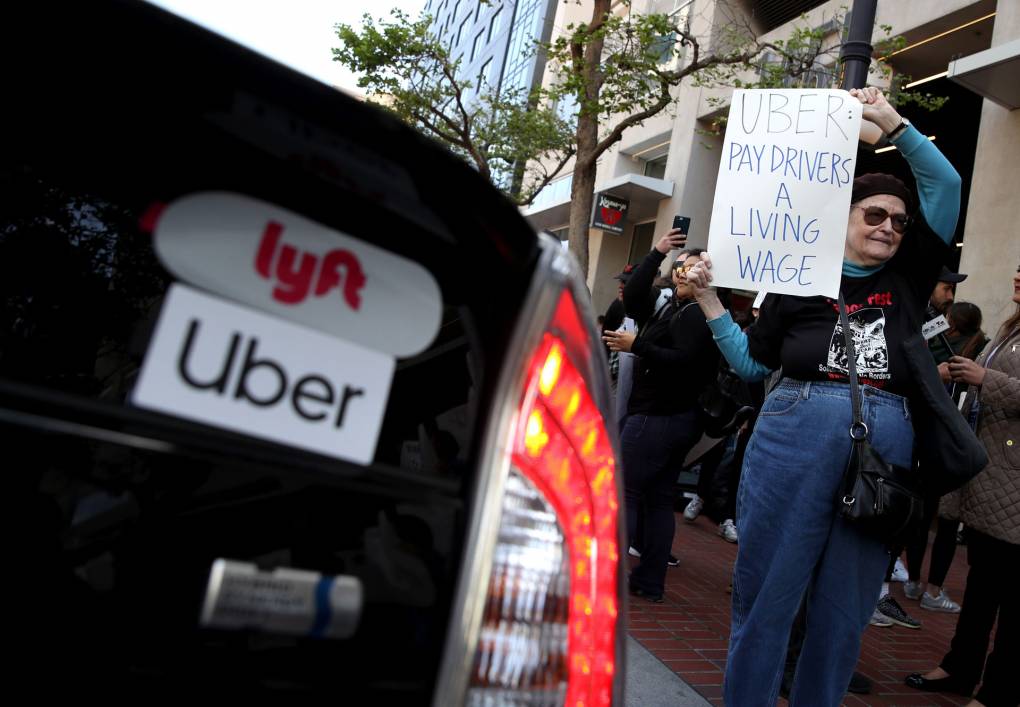
"caption": "A supporter of ride-hail drivers holds a sign during a protest in front of Uber headquarters in May 2019. Prop. 22, backed by huge amounts of cash from gig companies, would create a new class of worker in California.",
"description": "A supporter of ride-hail drivers holds a sign during a protest in front of Uber headquarters in May, 2019. Prop. 22, backed by huge amounts of cash from gig companies, would create a new class of worker in California.",
"title": "uber-lyft-protest-sign",
"credit": "Justin Sullivan/Getty Images",
"status": "inherit",
"altTag": "Protesters stand on a sidewalk in front of an office, and next to a car with Lyft and Uber stickers on the back. A woman holds a sign that says: Uber: 'Pay Drivers a Living Wage.'",
"isLoading": false,
"fetchFailed": false
},
"news_11843001": {
"type": "attachments",
"id": "news_11843001",
"meta": {
"index": "attachments_1716263798",
"site": "news",
"id": "11843001",
"found": true
},
"parent": 11842991,
"imgSizes": {
"apple_news_ca_landscape_5_5": {
"file": "https://ww2.kqed.org/app/uploads/sites/10/2020/10/unlock_102020_final-1044x783.png",
"width": 1044,
"mimeType": "image/png",
"height": 783
},
"apple_news_ca_square_4_0": {
"file": "https://ww2.kqed.org/app/uploads/sites/10/2020/10/unlock_102020_final-470x470.png",
"width": 470,
"mimeType": "image/png",
"height": 470
},
"twentyfourteen-full-width": {
"file": "https://ww2.kqed.org/app/uploads/sites/10/2020/10/unlock_102020_final-1038x576.png",
"width": 1038,
"mimeType": "image/png",
"height": 576
},
"thumbnail": {
"file": "https://ww2.kqed.org/app/uploads/sites/10/2020/10/unlock_102020_final-160x94.png",
"width": 160,
"mimeType": "image/png",
"height": 94
},
"post-thumbnail": {
"file": "https://ww2.kqed.org/app/uploads/sites/10/2020/10/unlock_102020_final-672x372.png",
"width": 672,
"mimeType": "image/png",
"height": 372
},
"kqedFullSize": {
"file": "https://ww2.kqed.org/app/uploads/sites/10/2020/10/unlock_102020_final.png",
"width": 1920,
"height": 1133
},
"apple_news_ca_landscape_4_7": {
"file": "https://ww2.kqed.org/app/uploads/sites/10/2020/10/unlock_102020_final-632x474.png",
"width": 632,
"mimeType": "image/png",
"height": 474
},
"large": {
"file": "https://ww2.kqed.org/app/uploads/sites/10/2020/10/unlock_102020_final-1020x602.png",
"width": 1020,
"mimeType": "image/png",
"height": 602
},
"apple_news_ca_landscape_4_0": {
"file": "https://ww2.kqed.org/app/uploads/sites/10/2020/10/unlock_102020_final-536x402.png",
"width": 536,
"mimeType": "image/png",
"height": 402
},
"apple_news_ca_portrait_12_9": {
"file": "https://ww2.kqed.org/app/uploads/sites/10/2020/10/unlock_102020_final-1122x1133.png",
"width": 1122,
"mimeType": "image/png",
"height": 1133
},
"medium": {
"file": "https://ww2.kqed.org/app/uploads/sites/10/2020/10/unlock_102020_final-800x472.png",
"width": 800,
"mimeType": "image/png",
"height": 472
},
"apple_news_ca_portrait_4_0": {
"file": "https://ww2.kqed.org/app/uploads/sites/10/2020/10/unlock_102020_final-354x472.png",
"width": 354,
"mimeType": "image/png",
"height": 472
},
"apple_news_ca_portrait_9_7": {
"file": "https://ww2.kqed.org/app/uploads/sites/10/2020/10/unlock_102020_final-840x1120.png",
"width": 840,
"mimeType": "image/png",
"height": 1120
},
"apple_news_ca_landscape_12_9": {
"file": "https://ww2.kqed.org/app/uploads/sites/10/2020/10/unlock_102020_final-1832x1133.png",
"width": 1832,
"mimeType": "image/png",
"height": 1133
},
"apple_news_ca_square_9_7": {
"file": "https://ww2.kqed.org/app/uploads/sites/10/2020/10/unlock_102020_final-1104x1104.png",
"width": 1104,
"mimeType": "image/png",
"height": 1104
},
"1536x1536": {
"file": "https://ww2.kqed.org/app/uploads/sites/10/2020/10/unlock_102020_final-1536x906.png",
"width": 1536,
"mimeType": "image/png",
"height": 906
},
"apple_news_ca_portrait_4_7": {
"file": "https://ww2.kqed.org/app/uploads/sites/10/2020/10/unlock_102020_final-414x552.png",
"width": 414,
"mimeType": "image/png",
"height": 552
},
"apple_news_ca_square_12_9": {
"file": "https://ww2.kqed.org/app/uploads/sites/10/2020/10/unlock_102020_final-1472x1133.png",
"width": 1472,
"mimeType": "image/png",
"height": 1133
},
"apple_news_ca_portrait_5_5": {
"file": "https://ww2.kqed.org/app/uploads/sites/10/2020/10/unlock_102020_final-687x916.png",
"width": 687,
"mimeType": "image/png",
"height": 916
},
"apple_news_ca_square_4_7": {
"file": "https://ww2.kqed.org/app/uploads/sites/10/2020/10/unlock_102020_final-550x550.png",
"width": 550,
"mimeType": "image/png",
"height": 550
},
"apple_news_ca_landscape_9_7": {
"file": "https://ww2.kqed.org/app/uploads/sites/10/2020/10/unlock_102020_final-1376x1032.png",
"width": 1376,
"mimeType": "image/png",
"height": 1032
},
"apple_news_ca_square_5_5": {
"file": "https://ww2.kqed.org/app/uploads/sites/10/2020/10/unlock_102020_final-912x912.png",
"width": 912,
"mimeType": "image/png",
"height": 912
}
},
"publishDate": 1603231389,
"modified": 1603231436,
"caption": null,
"description": null,
"title": "unlock_102020_final",
"credit": null,
"status": "inherit",
"isLoading": false,
"fetchFailed": false
},
"news_11843065": {
"type": "attachments",
"id": "news_11843065",
"meta": {
"index": "attachments_1716263798",
"site": "news",
"id": "11843065",
"found": true
},
"parent": 11842964,
"imgSizes": {
"apple_news_ca_landscape_5_5": {
"file": "https://ww2.kqed.org/app/uploads/sites/10/2020/10/Uber-Driver-1044x783.jpg",
"width": 1044,
"mimeType": "image/jpeg",
"height": 783
},
"apple_news_ca_square_4_0": {
"file": "https://ww2.kqed.org/app/uploads/sites/10/2020/10/Uber-Driver-470x470.jpg",
"width": 470,
"mimeType": "image/jpeg",
"height": 470
},
"twentyfourteen-full-width": {
"file": "https://ww2.kqed.org/app/uploads/sites/10/2020/10/Uber-Driver-1038x576.jpg",
"width": 1038,
"mimeType": "image/jpeg",
"height": 576
},
"thumbnail": {
"file": "https://ww2.kqed.org/app/uploads/sites/10/2020/10/Uber-Driver-160x110.jpg",
"width": 160,
"mimeType": "image/jpeg",
"height": 110
},
"post-thumbnail": {
"file": "https://ww2.kqed.org/app/uploads/sites/10/2020/10/Uber-Driver-672x372.jpg",
"width": 672,
"mimeType": "image/jpeg",
"height": 372
},
"kqedFullSize": {
"file": "https://ww2.kqed.org/app/uploads/sites/10/2020/10/Uber-Driver.jpg",
"width": 1920,
"height": 1319
},
"apple_news_ca_landscape_4_7": {
"file": "https://ww2.kqed.org/app/uploads/sites/10/2020/10/Uber-Driver-632x474.jpg",
"width": 632,
"mimeType": "image/jpeg",
"height": 474
},
"large": {
"file": "https://ww2.kqed.org/app/uploads/sites/10/2020/10/Uber-Driver-1020x701.jpg",
"width": 1020,
"mimeType": "image/jpeg",
"height": 701
},
"apple_news_ca_landscape_4_0": {
"file": "https://ww2.kqed.org/app/uploads/sites/10/2020/10/Uber-Driver-536x402.jpg",
"width": 536,
"mimeType": "image/jpeg",
"height": 402
},
"apple_news_ca_portrait_12_9": {
"file": "https://ww2.kqed.org/app/uploads/sites/10/2020/10/Uber-Driver-1122x1319.jpg",
"width": 1122,
"mimeType": "image/jpeg",
"height": 1319
},
"medium": {
"file": "https://ww2.kqed.org/app/uploads/sites/10/2020/10/Uber-Driver-800x550.jpg",
"width": 800,
"mimeType": "image/jpeg",
"height": 550
},
"apple_news_ca_portrait_4_0": {
"file": "https://ww2.kqed.org/app/uploads/sites/10/2020/10/Uber-Driver-354x472.jpg",
"width": 354,
"mimeType": "image/jpeg",
"height": 472
},
"apple_news_ca_portrait_9_7": {
"file": "https://ww2.kqed.org/app/uploads/sites/10/2020/10/Uber-Driver-840x1120.jpg",
"width": 840,
"mimeType": "image/jpeg",
"height": 1120
},
"apple_news_ca_landscape_12_9": {
"file": "https://ww2.kqed.org/app/uploads/sites/10/2020/10/Uber-Driver-1832x1319.jpg",
"width": 1832,
"mimeType": "image/jpeg",
"height": 1319
},
"apple_news_ca_square_9_7": {
"file": "https://ww2.kqed.org/app/uploads/sites/10/2020/10/Uber-Driver-1104x1104.jpg",
"width": 1104,
"mimeType": "image/jpeg",
"height": 1104
},
"1536x1536": {
"file": "https://ww2.kqed.org/app/uploads/sites/10/2020/10/Uber-Driver-1536x1055.jpg",
"width": 1536,
"mimeType": "image/jpeg",
"height": 1055
},
"apple_news_ca_portrait_4_7": {
"file": "https://ww2.kqed.org/app/uploads/sites/10/2020/10/Uber-Driver-414x552.jpg",
"width": 414,
"mimeType": "image/jpeg",
"height": 552
},
"apple_news_ca_square_12_9": {
"file": "https://ww2.kqed.org/app/uploads/sites/10/2020/10/Uber-Driver-1472x1319.jpg",
"width": 1472,
"mimeType": "image/jpeg",
"height": 1319
},
"apple_news_ca_portrait_5_5": {
"file": "https://ww2.kqed.org/app/uploads/sites/10/2020/10/Uber-Driver-687x916.jpg",
"width": 687,
"mimeType": "image/jpeg",
"height": 916
},
"apple_news_ca_square_4_7": {
"file": "https://ww2.kqed.org/app/uploads/sites/10/2020/10/Uber-Driver-550x550.jpg",
"width": 550,
"mimeType": "image/jpeg",
"height": 550
},
"apple_news_ca_landscape_9_7": {
"file": "https://ww2.kqed.org/app/uploads/sites/10/2020/10/Uber-Driver-1376x1032.jpg",
"width": 1376,
"mimeType": "image/jpeg",
"height": 1032
},
"apple_news_ca_square_5_5": {
"file": "https://ww2.kqed.org/app/uploads/sites/10/2020/10/Uber-Driver-912x912.jpg",
"width": 912,
"mimeType": "image/jpeg",
"height": 912
}
},
"publishDate": 1603238374,
"modified": 1603238741,
"caption": "An Uber driver in Los Angeles. ",
"description": null,
"title": "Uber-Driver",
"credit": "Mario Tama/Getty Images",
"status": "inherit",
"isLoading": false,
"fetchFailed": false
},
"news_11837985": {
"type": "attachments",
"id": "news_11837985",
"meta": {
"index": "attachments_1716263798",
"site": "news",
"id": "11837985",
"found": true
},
"parent": 11837394,
"imgSizes": {
"apple_news_ca_landscape_5_5": {
"file": "https://ww2.kqed.org/app/uploads/sites/10/2020/09/Grilling-1044x783.jpg",
"width": 1044,
"mimeType": "image/jpeg",
"height": 783
},
"apple_news_ca_square_4_0": {
"file": "https://ww2.kqed.org/app/uploads/sites/10/2020/09/Grilling-470x470.jpg",
"width": 470,
"mimeType": "image/jpeg",
"height": 470
},
"twentyfourteen-full-width": {
"file": "https://ww2.kqed.org/app/uploads/sites/10/2020/09/Grilling-1038x576.jpg",
"width": 1038,
"mimeType": "image/jpeg",
"height": 576
},
"thumbnail": {
"file": "https://ww2.kqed.org/app/uploads/sites/10/2020/09/Grilling-160x124.jpg",
"width": 160,
"mimeType": "image/jpeg",
"height": 124
},
"post-thumbnail": {
"file": "https://ww2.kqed.org/app/uploads/sites/10/2020/09/Grilling-672x372.jpg",
"width": 672,
"mimeType": "image/jpeg",
"height": 372
},
"kqedFullSize": {
"file": "https://ww2.kqed.org/app/uploads/sites/10/2020/09/Grilling.jpg",
"width": 2000,
"height": 1554
},
"apple_news_ca_landscape_4_7": {
"file": "https://ww2.kqed.org/app/uploads/sites/10/2020/09/Grilling-632x474.jpg",
"width": 632,
"mimeType": "image/jpeg",
"height": 474
},
"large": {
"file": "https://ww2.kqed.org/app/uploads/sites/10/2020/09/Grilling-1020x793.jpg",
"width": 1020,
"mimeType": "image/jpeg",
"height": 793
},
"apple_news_ca_landscape_4_0": {
"file": "https://ww2.kqed.org/app/uploads/sites/10/2020/09/Grilling-536x402.jpg",
"width": 536,
"mimeType": "image/jpeg",
"height": 402
},
"apple_news_ca_portrait_12_9": {
"file": "https://ww2.kqed.org/app/uploads/sites/10/2020/09/Grilling-1122x1496.jpg",
"width": 1122,
"mimeType": "image/jpeg",
"height": 1496
},
"medium": {
"file": "https://ww2.kqed.org/app/uploads/sites/10/2020/09/Grilling-800x622.jpg",
"width": 800,
"mimeType": "image/jpeg",
"height": 622
},
"apple_news_ca_portrait_4_0": {
"file": "https://ww2.kqed.org/app/uploads/sites/10/2020/09/Grilling-354x472.jpg",
"width": 354,
"mimeType": "image/jpeg",
"height": 472
},
"apple_news_ca_portrait_9_7": {
"file": "https://ww2.kqed.org/app/uploads/sites/10/2020/09/Grilling-840x1120.jpg",
"width": 840,
"mimeType": "image/jpeg",
"height": 1120
},
"apple_news_ca_landscape_12_9": {
"file": "https://ww2.kqed.org/app/uploads/sites/10/2020/09/Grilling-1832x1374.jpg",
"width": 1832,
"mimeType": "image/jpeg",
"height": 1374
},
"apple_news_ca_square_9_7": {
"file": "https://ww2.kqed.org/app/uploads/sites/10/2020/09/Grilling-1104x1104.jpg",
"width": 1104,
"mimeType": "image/jpeg",
"height": 1104
},
"1536x1536": {
"file": "https://ww2.kqed.org/app/uploads/sites/10/2020/09/Grilling-1536x1193.jpg",
"width": 1536,
"mimeType": "image/jpeg",
"height": 1193
},
"apple_news_ca_portrait_4_7": {
"file": "https://ww2.kqed.org/app/uploads/sites/10/2020/09/Grilling-414x552.jpg",
"width": 414,
"mimeType": "image/jpeg",
"height": 552
},
"apple_news_ca_square_12_9": {
"file": "https://ww2.kqed.org/app/uploads/sites/10/2020/09/Grilling-1472x1472.jpg",
"width": 1472,
"mimeType": "image/jpeg",
"height": 1472
},
"apple_news_ca_portrait_5_5": {
"file": "https://ww2.kqed.org/app/uploads/sites/10/2020/09/Grilling-687x916.jpg",
"width": 687,
"mimeType": "image/jpeg",
"height": 916
},
"full-width": {
"file": "https://ww2.kqed.org/app/uploads/sites/10/2020/09/Grilling-1920x1492.jpg",
"width": 1920,
"mimeType": "image/jpeg",
"height": 1492
},
"apple_news_ca_square_4_7": {
"file": "https://ww2.kqed.org/app/uploads/sites/10/2020/09/Grilling-550x550.jpg",
"width": 550,
"mimeType": "image/jpeg",
"height": 550
},
"apple_news_ca_landscape_9_7": {
"file": "https://ww2.kqed.org/app/uploads/sites/10/2020/09/Grilling-1376x1032.jpg",
"width": 1376,
"mimeType": "image/jpeg",
"height": 1032
},
"apple_news_ca_square_5_5": {
"file": "https://ww2.kqed.org/app/uploads/sites/10/2020/09/Grilling-912x912.jpg",
"width": 912,
"mimeType": "image/jpeg",
"height": 912
}
},
"publishDate": 1600190581,
"modified": 1600190637,
"caption": "Keion Taylor, or chef KT, has started selling food on the website Foodnome.",
"description": null,
"title": "Grilling",
"credit": "Foodnome",
"status": "inherit",
"isLoading": false,
"fetchFailed": false
},
"news_11836285": {
"type": "attachments",
"id": "news_11836285",
"meta": {
"index": "attachments_1716263798",
"site": "news",
"id": "11836285",
"found": true
},
"parent": 11836282,
"imgSizes": {
"apple_news_ca_landscape_5_5": {
"file": "https://ww2.kqed.org/app/uploads/sites/10/2020/09/RS38766__M6A2530-1044x783.jpg",
"width": 1044,
"mimeType": "image/jpeg",
"height": 783
},
"apple_news_ca_square_4_0": {
"file": "https://ww2.kqed.org/app/uploads/sites/10/2020/09/RS38766__M6A2530-470x470.jpg",
"width": 470,
"mimeType": "image/jpeg",
"height": 470
},
"twentyfourteen-full-width": {
"file": "https://ww2.kqed.org/app/uploads/sites/10/2020/09/RS38766__M6A2530-1038x576.jpg",
"width": 1038,
"mimeType": "image/jpeg",
"height": 576
},
"thumbnail": {
"file": "https://ww2.kqed.org/app/uploads/sites/10/2020/09/RS38766__M6A2530-160x100.jpg",
"width": 160,
"mimeType": "image/jpeg",
"height": 100
},
"post-thumbnail": {
"file": "https://ww2.kqed.org/app/uploads/sites/10/2020/09/RS38766__M6A2530-672x372.jpg",
"width": 672,
"mimeType": "image/jpeg",
"height": 372
},
"kqedFullSize": {
"file": "https://ww2.kqed.org/app/uploads/sites/10/2020/09/RS38766__M6A2530-scaled.jpg",
"width": 2560,
"height": 1595
},
"2048x2048": {
"file": "https://ww2.kqed.org/app/uploads/sites/10/2020/09/RS38766__M6A2530-2048x1276.jpg",
"width": 2048,
"mimeType": "image/jpeg",
"height": 1276
},
"apple_news_ca_landscape_4_7": {
"file": "https://ww2.kqed.org/app/uploads/sites/10/2020/09/RS38766__M6A2530-632x474.jpg",
"width": 632,
"mimeType": "image/jpeg",
"height": 474
},
"large": {
"file": "https://ww2.kqed.org/app/uploads/sites/10/2020/09/RS38766__M6A2530-1020x635.jpg",
"width": 1020,
"mimeType": "image/jpeg",
"height": 635
},
"apple_news_ca_landscape_4_0": {
"file": "https://ww2.kqed.org/app/uploads/sites/10/2020/09/RS38766__M6A2530-536x402.jpg",
"width": 536,
"mimeType": "image/jpeg",
"height": 402
},
"apple_news_ca_portrait_12_9": {
"file": "https://ww2.kqed.org/app/uploads/sites/10/2020/09/RS38766__M6A2530-1122x1496.jpg",
"width": 1122,
"mimeType": "image/jpeg",
"height": 1496
},
"medium": {
"file": "https://ww2.kqed.org/app/uploads/sites/10/2020/09/RS38766__M6A2530-800x498.jpg",
"width": 800,
"mimeType": "image/jpeg",
"height": 498
},
"apple_news_ca_portrait_4_0": {
"file": "https://ww2.kqed.org/app/uploads/sites/10/2020/09/RS38766__M6A2530-354x472.jpg",
"width": 354,
"mimeType": "image/jpeg",
"height": 472
},
"apple_news_ca_portrait_9_7": {
"file": "https://ww2.kqed.org/app/uploads/sites/10/2020/09/RS38766__M6A2530-840x1120.jpg",
"width": 840,
"mimeType": "image/jpeg",
"height": 1120
},
"apple_news_ca_landscape_12_9": {
"file": "https://ww2.kqed.org/app/uploads/sites/10/2020/09/RS38766__M6A2530-1832x1374.jpg",
"width": 1832,
"mimeType": "image/jpeg",
"height": 1374
},
"apple_news_ca_square_9_7": {
"file": "https://ww2.kqed.org/app/uploads/sites/10/2020/09/RS38766__M6A2530-1104x1104.jpg",
"width": 1104,
"mimeType": "image/jpeg",
"height": 1104
},
"1536x1536": {
"file": "https://ww2.kqed.org/app/uploads/sites/10/2020/09/RS38766__M6A2530-1536x957.jpg",
"width": 1536,
"mimeType": "image/jpeg",
"height": 957
},
"apple_news_ca_portrait_4_7": {
"file": "https://ww2.kqed.org/app/uploads/sites/10/2020/09/RS38766__M6A2530-414x552.jpg",
"width": 414,
"mimeType": "image/jpeg",
"height": 552
},
"apple_news_ca_square_12_9": {
"file": "https://ww2.kqed.org/app/uploads/sites/10/2020/09/RS38766__M6A2530-1472x1472.jpg",
"width": 1472,
"mimeType": "image/jpeg",
"height": 1472
},
"apple_news_ca_portrait_5_5": {
"file": "https://ww2.kqed.org/app/uploads/sites/10/2020/09/RS38766__M6A2530-687x916.jpg",
"width": 687,
"mimeType": "image/jpeg",
"height": 916
},
"full-width": {
"file": "https://ww2.kqed.org/app/uploads/sites/10/2020/09/RS38766__M6A2530-1920x1196.jpg",
"width": 1920,
"mimeType": "image/jpeg",
"height": 1196
},
"apple_news_ca_square_4_7": {
"file": "https://ww2.kqed.org/app/uploads/sites/10/2020/09/RS38766__M6A2530-550x550.jpg",
"width": 550,
"mimeType": "image/jpeg",
"height": 550
},
"apple_news_ca_landscape_9_7": {
"file": "https://ww2.kqed.org/app/uploads/sites/10/2020/09/RS38766__M6A2530-1376x1032.jpg",
"width": 1376,
"mimeType": "image/jpeg",
"height": 1032
},
"apple_news_ca_square_5_5": {
"file": "https://ww2.kqed.org/app/uploads/sites/10/2020/09/RS38766__M6A2530-912x912.jpg",
"width": 912,
"mimeType": "image/jpeg",
"height": 912
}
},
"publishDate": 1598996238,
"modified": 1598996286,
"caption": "Rideshare drivers Wayne Anderson (L) and Erica Mighetto (R) rally outside Uber Headquarters in San Francisco to push for Assembly Bill 5 legislation and basic worker's protections on August 27, 2019.",
"description": null,
"title": "RS38766__M6A2530",
"credit": "Sruti Mamidanna/KQED",
"status": "inherit",
"isLoading": false,
"fetchFailed": false
},
"news_11775004": {
"type": "attachments",
"id": "news_11775004",
"meta": {
"index": "attachments_1716263798",
"site": "news",
"id": "11775004",
"found": true
},
"parent": 11774971,
"imgSizes": {
"apple_news_ca_landscape_5_5": {
"file": "https://ww2.kqed.org/app/uploads/sites/10/2019/09/09182019_uber-lyft-qut-1044x783.jpg",
"width": 1044,
"mimeType": "image/jpeg",
"height": 783
},
"apple_news_ca_square_4_0": {
"file": "https://ww2.kqed.org/app/uploads/sites/10/2019/09/09182019_uber-lyft-qut-470x470.jpg",
"width": 470,
"mimeType": "image/jpeg",
"height": 470
},
"twentyfourteen-full-width": {
"file": "https://ww2.kqed.org/app/uploads/sites/10/2019/09/09182019_uber-lyft-qut-1038x576.jpg",
"width": 1038,
"mimeType": "image/jpeg",
"height": 576
},
"thumbnail": {
"file": "https://ww2.kqed.org/app/uploads/sites/10/2019/09/09182019_uber-lyft-qut-160x100.jpg",
"width": 160,
"mimeType": "image/jpeg",
"height": 100
},
"post-thumbnail": {
"file": "https://ww2.kqed.org/app/uploads/sites/10/2019/09/09182019_uber-lyft-qut-672x372.jpg",
"width": 672,
"mimeType": "image/jpeg",
"height": 372
},
"kqedFullSize": {
"file": "https://ww2.kqed.org/app/uploads/sites/10/2019/09/09182019_uber-lyft-qut.jpg",
"width": 1920,
"height": 1205
},
"apple_news_ca_landscape_4_7": {
"file": "https://ww2.kqed.org/app/uploads/sites/10/2019/09/09182019_uber-lyft-qut-632x474.jpg",
"width": 632,
"mimeType": "image/jpeg",
"height": 474
},
"large": {
"file": "https://ww2.kqed.org/app/uploads/sites/10/2019/09/09182019_uber-lyft-qut-1020x640.jpg",
"width": 1020,
"mimeType": "image/jpeg",
"height": 640
},
"complete_open_graph": {
"file": "https://ww2.kqed.org/app/uploads/sites/10/2019/09/09182019_uber-lyft-qut-1200x753.jpg",
"width": 1200,
"mimeType": "image/jpeg",
"height": 753
},
"apple_news_ca_landscape_4_0": {
"file": "https://ww2.kqed.org/app/uploads/sites/10/2019/09/09182019_uber-lyft-qut-536x402.jpg",
"width": 536,
"mimeType": "image/jpeg",
"height": 402
},
"apple_news_ca_portrait_12_9": {
"file": "https://ww2.kqed.org/app/uploads/sites/10/2019/09/09182019_uber-lyft-qut-1122x1205.jpg",
"width": 1122,
"mimeType": "image/jpeg",
"height": 1205
},
"medium": {
"file": "https://ww2.kqed.org/app/uploads/sites/10/2019/09/09182019_uber-lyft-qut-800x502.jpg",
"width": 800,
"mimeType": "image/jpeg",
"height": 502
},
"apple_news_ca_portrait_4_0": {
"file": "https://ww2.kqed.org/app/uploads/sites/10/2019/09/09182019_uber-lyft-qut-354x472.jpg",
"width": 354,
"mimeType": "image/jpeg",
"height": 472
},
"apple_news_ca_portrait_9_7": {
"file": "https://ww2.kqed.org/app/uploads/sites/10/2019/09/09182019_uber-lyft-qut-840x1120.jpg",
"width": 840,
"mimeType": "image/jpeg",
"height": 1120
},
"apple_news_ca_landscape_12_9": {
"file": "https://ww2.kqed.org/app/uploads/sites/10/2019/09/09182019_uber-lyft-qut-1832x1205.jpg",
"width": 1832,
"mimeType": "image/jpeg",
"height": 1205
},
"apple_news_ca_square_9_7": {
"file": "https://ww2.kqed.org/app/uploads/sites/10/2019/09/09182019_uber-lyft-qut-1104x1104.jpg",
"width": 1104,
"mimeType": "image/jpeg",
"height": 1104
},
"apple_news_ca_portrait_4_7": {
"file": "https://ww2.kqed.org/app/uploads/sites/10/2019/09/09182019_uber-lyft-qut-414x552.jpg",
"width": 414,
"mimeType": "image/jpeg",
"height": 552
},
"apple_news_ca_square_12_9": {
"file": "https://ww2.kqed.org/app/uploads/sites/10/2019/09/09182019_uber-lyft-qut-1472x1205.jpg",
"width": 1472,
"mimeType": "image/jpeg",
"height": 1205
},
"apple_news_ca_portrait_5_5": {
"file": "https://ww2.kqed.org/app/uploads/sites/10/2019/09/09182019_uber-lyft-qut-687x916.jpg",
"width": 687,
"mimeType": "image/jpeg",
"height": 916
},
"full-width": {
"file": "https://ww2.kqed.org/app/uploads/sites/10/2019/09/09182019_uber-lyft-qut-1920x1205.jpg",
"width": 1920,
"mimeType": "image/jpeg",
"height": 1205
},
"apple_news_ca_square_4_7": {
"file": "https://ww2.kqed.org/app/uploads/sites/10/2019/09/09182019_uber-lyft-qut-550x550.jpg",
"width": 550,
"mimeType": "image/jpeg",
"height": 550
},
"apple_news_ca_landscape_9_7": {
"file": "https://ww2.kqed.org/app/uploads/sites/10/2019/09/09182019_uber-lyft-qut-1376x1032.jpg",
"width": 1376,
"mimeType": "image/jpeg",
"height": 1032
},
"apple_news_ca_square_5_5": {
"file": "https://ww2.kqed.org/app/uploads/sites/10/2019/09/09182019_uber-lyft-qut-912x912.jpg",
"width": 912,
"mimeType": "image/jpeg",
"height": 912
}
},
"publishDate": 1568835211,
"modified": 1568842616,
"caption": "Taking care of his mother and family, Uber and Lyft driver Malik Ali calls on Uber CEO Dara Khosrowshahi to help drivers earn a living wage.",
"description": "Taking care of his mother and family, Uber and Lyft driver, Malik Ali calls on Uber CEO, Dara Khosrowshahi, to help drivers keep a living wage.",
"title": "09182019_uber lyft-qut",
"credit": "Sruti Mamidanna/KQED",
"status": "inherit",
"isLoading": false,
"fetchFailed": false
},
"news_11832881": {
"type": "attachments",
"id": "news_11832881",
"meta": {
"index": "attachments_1716263798",
"site": "news",
"id": "11832881",
"found": true
},
"parent": 11832880,
"imgSizes": {
"apple_news_ca_landscape_5_5": {
"file": "https://ww2.kqed.org/app/uploads/sites/10/2020/08/gettyimages-1227939563-990bd0824f2e90f39e972f5a6cd13f6e318fa589-1044x783.jpg",
"width": 1044,
"mimeType": "image/jpeg",
"height": 783
},
"apple_news_ca_square_4_0": {
"file": "https://ww2.kqed.org/app/uploads/sites/10/2020/08/gettyimages-1227939563-990bd0824f2e90f39e972f5a6cd13f6e318fa589-470x470.jpg",
"width": 470,
"mimeType": "image/jpeg",
"height": 470
},
"twentyfourteen-full-width": {
"file": "https://ww2.kqed.org/app/uploads/sites/10/2020/08/gettyimages-1227939563-990bd0824f2e90f39e972f5a6cd13f6e318fa589-1038x576.jpg",
"width": 1038,
"mimeType": "image/jpeg",
"height": 576
},
"thumbnail": {
"file": "https://ww2.kqed.org/app/uploads/sites/10/2020/08/gettyimages-1227939563-990bd0824f2e90f39e972f5a6cd13f6e318fa589-160x120.jpg",
"width": 160,
"mimeType": "image/jpeg",
"height": 120
},
"post-thumbnail": {
"file": "https://ww2.kqed.org/app/uploads/sites/10/2020/08/gettyimages-1227939563-990bd0824f2e90f39e972f5a6cd13f6e318fa589-672x372.jpg",
"width": 672,
"mimeType": "image/jpeg",
"height": 372
},
"kqedFullSize": {
"file": "https://ww2.kqed.org/app/uploads/sites/10/2020/08/gettyimages-1227939563-990bd0824f2e90f39e972f5a6cd13f6e318fa589-scaled-e1597104075537.jpg",
"width": 1920,
"height": 1440
},
"2048x2048": {
"file": "https://ww2.kqed.org/app/uploads/sites/10/2020/08/gettyimages-1227939563-990bd0824f2e90f39e972f5a6cd13f6e318fa589-2048x1536.jpg",
"width": 2048,
"mimeType": "image/jpeg",
"height": 1536
},
"apple_news_ca_landscape_4_7": {
"file": "https://ww2.kqed.org/app/uploads/sites/10/2020/08/gettyimages-1227939563-990bd0824f2e90f39e972f5a6cd13f6e318fa589-632x474.jpg",
"width": 632,
"mimeType": "image/jpeg",
"height": 474
},
"large": {
"file": "https://ww2.kqed.org/app/uploads/sites/10/2020/08/gettyimages-1227939563-990bd0824f2e90f39e972f5a6cd13f6e318fa589-1020x765.jpg",
"width": 1020,
"mimeType": "image/jpeg",
"height": 765
},
"apple_news_ca_landscape_4_0": {
"file": "https://ww2.kqed.org/app/uploads/sites/10/2020/08/gettyimages-1227939563-990bd0824f2e90f39e972f5a6cd13f6e318fa589-536x402.jpg",
"width": 536,
"mimeType": "image/jpeg",
"height": 402
},
"apple_news_ca_portrait_12_9": {
"file": "https://ww2.kqed.org/app/uploads/sites/10/2020/08/gettyimages-1227939563-990bd0824f2e90f39e972f5a6cd13f6e318fa589-1122x1496.jpg",
"width": 1122,
"mimeType": "image/jpeg",
"height": 1496
},
"medium": {
"file": "https://ww2.kqed.org/app/uploads/sites/10/2020/08/gettyimages-1227939563-990bd0824f2e90f39e972f5a6cd13f6e318fa589-800x600.jpg",
"width": 800,
"mimeType": "image/jpeg",
"height": 600
},
"apple_news_ca_portrait_4_0": {
"file": "https://ww2.kqed.org/app/uploads/sites/10/2020/08/gettyimages-1227939563-990bd0824f2e90f39e972f5a6cd13f6e318fa589-354x472.jpg",
"width": 354,
"mimeType": "image/jpeg",
"height": 472
},
"apple_news_ca_portrait_9_7": {
"file": "https://ww2.kqed.org/app/uploads/sites/10/2020/08/gettyimages-1227939563-990bd0824f2e90f39e972f5a6cd13f6e318fa589-840x1120.jpg",
"width": 840,
"mimeType": "image/jpeg",
"height": 1120
},
"apple_news_ca_landscape_12_9": {
"file": "https://ww2.kqed.org/app/uploads/sites/10/2020/08/gettyimages-1227939563-990bd0824f2e90f39e972f5a6cd13f6e318fa589-1832x1374.jpg",
"width": 1832,
"mimeType": "image/jpeg",
"height": 1374
},
"apple_news_ca_square_9_7": {
"file": "https://ww2.kqed.org/app/uploads/sites/10/2020/08/gettyimages-1227939563-990bd0824f2e90f39e972f5a6cd13f6e318fa589-1104x1104.jpg",
"width": 1104,
"mimeType": "image/jpeg",
"height": 1104
},
"1536x1536": {
"file": "https://ww2.kqed.org/app/uploads/sites/10/2020/08/gettyimages-1227939563-990bd0824f2e90f39e972f5a6cd13f6e318fa589-1536x1152.jpg",
"width": 1536,
"mimeType": "image/jpeg",
"height": 1152
},
"apple_news_ca_portrait_4_7": {
"file": "https://ww2.kqed.org/app/uploads/sites/10/2020/08/gettyimages-1227939563-990bd0824f2e90f39e972f5a6cd13f6e318fa589-414x552.jpg",
"width": 414,
"mimeType": "image/jpeg",
"height": 552
},
"apple_news_ca_square_12_9": {
"file": "https://ww2.kqed.org/app/uploads/sites/10/2020/08/gettyimages-1227939563-990bd0824f2e90f39e972f5a6cd13f6e318fa589-1472x1472.jpg",
"width": 1472,
"mimeType": "image/jpeg",
"height": 1472
},
"apple_news_ca_portrait_5_5": {
"file": "https://ww2.kqed.org/app/uploads/sites/10/2020/08/gettyimages-1227939563-990bd0824f2e90f39e972f5a6cd13f6e318fa589-687x916.jpg",
"width": 687,
"mimeType": "image/jpeg",
"height": 916
},
"full-width": {
"file": "https://ww2.kqed.org/app/uploads/sites/10/2020/08/gettyimages-1227939563-990bd0824f2e90f39e972f5a6cd13f6e318fa589-1920x1440.jpg",
"width": 1920,
"mimeType": "image/jpeg",
"height": 1440
},
"apple_news_ca_square_4_7": {
"file": "https://ww2.kqed.org/app/uploads/sites/10/2020/08/gettyimages-1227939563-990bd0824f2e90f39e972f5a6cd13f6e318fa589-550x550.jpg",
"width": 550,
"mimeType": "image/jpeg",
"height": 550
},
"apple_news_ca_landscape_9_7": {
"file": "https://ww2.kqed.org/app/uploads/sites/10/2020/08/gettyimages-1227939563-990bd0824f2e90f39e972f5a6cd13f6e318fa589-1376x1032.jpg",
"width": 1376,
"mimeType": "image/jpeg",
"height": 1032
},
"apple_news_ca_square_5_5": {
"file": "https://ww2.kqed.org/app/uploads/sites/10/2020/08/gettyimages-1227939563-990bd0824f2e90f39e972f5a6cd13f6e318fa589-912x912.jpg",
"width": 912,
"mimeType": "image/jpeg",
"height": 912
}
},
"publishDate": 1597103925,
"modified": 1597778666,
"caption": "In a ruling Monday, a California judge said Lyft and Uber have refused to comply with a California law, known as AB5, passed last year that was supposed to make it harder for companies in the state to hire workers as contractors.",
"description": "Rideshare drivers demonstrate against rideshare companies Uber and Lyft during a car caravan protest on August 6, 2020 in Los Angeles.",
"title": "In a ruling Monday, a California judge said Lyft and Uber have refused to comply with a California law, known as AB5, passed last year that was supposed to make it harder for companies in the state to hire workers as contractors.",
"credit": "Robyn Beck/AFP via Getty Images",
"status": "inherit",
"isLoading": false,
"fetchFailed": false
}
},
"audioPlayerReducer": {
"postId": "stream_live",
"isPaused": true,
"isPlaying": false,
"pfsActive": false,
"pledgeModalIsOpen": true,
"playerDrawerIsOpen": false,
"liveAudioPlayStartedAt": 0,
"liveAudioPlayContext": ""
},
"authorsReducer": {
"byline_news_11832880": {
"type": "authors",
"id": "byline_news_11832880",
"meta": {
"override": true
},
"slug": "byline_news_11832880",
"name": "Bobby Allyn",
"isLoading": false
},
"mlam": {
"type": "authors",
"id": "244",
"meta": {
"index": "authors_1716337520",
"id": "244",
"found": true
},
"name": "Monica Lam",
"firstName": "Monica Z.",
"lastName": "Lam",
"slug": "mlam",
"email": "mlam@kqed.org",
"display_author_email": true,
"staff_mastheads": [
"news"
],
"title": "KQED Senior Producer",
"bio": "Monica is senior producer of the weekly current affairs program, \"KQED Newsroom.\" She's also served as senior editor of digital content at KQED. She likes to report and edit as well as produce video and take photos.\r\n\r\nBefore joining KQED, Monica worked at the Center for Investigative Reporting, where she examined conditions inside \u003cspan style=\"font-weight: 400;\">maximum security \u003c/span>prisons and abuse in state-run institutions for the developmentally disabled. Prior to that, she produced and directed \u003cem>Journey of the Bonesetter's Daughter,\u003c/em> a documentary that follows novelist Amy Tan as she creates an opera based on her family history.\r\n\r\nMonica's work has been honored with a duPont Award, five Emmys, regional and national Murrow Awards, and has been recognized by Investigative Reporters and Editors, the Society of Professional Journalists, Religion Newswriters Association and the San Francisco Peninsula Press Club. Monica studied urban studies at Stanford University and earned a master's in journalism at University of California at Berkeley. Follow her on twitter: @monicazlam",
"avatar": "https://secure.gravatar.com/avatar/018c474b2b71f43e0e6ca9b15a0ad36f?s=600&d=blank&r=g",
"twitter": "@monicazlam",
"facebook": null,
"instagram": null,
"linkedin": null,
"sites": [
{
"site": "arts",
"roles": [
"administrator"
]
},
{
"site": "news",
"roles": [
"editor"
]
},
{
"site": "trulyca",
"roles": [
"editor"
]
},
{
"site": "science",
"roles": [
"editor"
]
},
{
"site": "breakingnews",
"roles": [
"editor"
]
}
],
"headData": {
"title": "Monica Lam | KQED",
"description": "KQED Senior Producer",
"ogImgSrc": "https://secure.gravatar.com/avatar/018c474b2b71f43e0e6ca9b15a0ad36f?s=600&d=blank&r=g",
"twImgSrc": "https://secure.gravatar.com/avatar/018c474b2b71f43e0e6ca9b15a0ad36f?s=600&d=blank&r=g"
},
"isLoading": false,
"link": "/author/mlam"
},
"samharnett": {
"type": "authors",
"id": "253",
"meta": {
"index": "authors_1716337520",
"id": "253",
"found": true
},
"name": "Sam Harnett",
"firstName": "Sam",
"lastName": "Harnett",
"slug": "samharnett",
"email": "samharnett@gmail.com",
"display_author_email": false,
"staff_mastheads": [],
"title": "KQED Contributor",
"bio": "Sam Harnett covered tech and work at KQED. He is the co-creator of \u003cem>\u003ca href=\"http://www.theworldaccordingtosound.org\">The World According to Sound\u003c/a>,\u003c/em> a 90-second podcast that features different sounds and the stories behind them.\r\n\r\nBefore coming to KQED, Sam worked as an independent reporter who contributed regularly to \u003cem>The California Report, Marketplace,\u003c/em> \u003cem>The World \u003c/em>and NPR.",
"avatar": "https://secure.gravatar.com/avatar/2538b972ac02f2b9546c7a6c59a0f3d0?s=600&d=blank&r=g",
"twitter": "Samwharnett",
"facebook": null,
"instagram": null,
"linkedin": null,
"sites": [
{
"site": "news",
"roles": [
"edit_others_posts",
"subscriber"
]
},
{
"site": "stateofhealth",
"roles": [
"author"
]
},
{
"site": "science",
"roles": [
"editor"
]
},
{
"site": "quest",
"roles": [
"subscriber"
]
}
],
"headData": {
"title": "Sam Harnett | KQED",
"description": "KQED Contributor",
"ogImgSrc": "https://secure.gravatar.com/avatar/2538b972ac02f2b9546c7a6c59a0f3d0?s=600&d=blank&r=g",
"twImgSrc": "https://secure.gravatar.com/avatar/2538b972ac02f2b9546c7a6c59a0f3d0?s=600&d=blank&r=g"
},
"isLoading": false,
"link": "/author/samharnett"
},
"markfiore": {
"type": "authors",
"id": "3236",
"meta": {
"index": "authors_1716337520",
"id": "3236",
"found": true
},
"name": "Mark Fiore",
"firstName": "Mark",
"lastName": "Fiore",
"slug": "markfiore",
"email": "mark@markfiore.com",
"display_author_email": false,
"staff_mastheads": [
"news"
],
"title": "KQED News Cartoonist",
"bio": "\u003ca href=\"http://www.MarkFiore.com\">MarkFiore.com\u003c/a> | \u003ca href=\"https://twitter.com/markfiore\">Follow on Twitter\u003c/a> | \u003ca href=\"https://www.facebook.com/pages/Mark-Fiore-Animated-Political-Cartoons/94451707396?ref=bookmarks\">Facebook\u003c/a> | \u003ca href=\"mailto:mark@markfiore.com\">email\u003c/a>\r\n\r\nPulitzer Prize-winner, Mark Fiore, who the Wall Street Journal has called “the undisputed guru of the form,” creates animated political cartoons in San Francisco, where his work has been featured regularly on the San Francisco Chronicle’s web site, SFGate.com. His work has appeared on Newsweek.com, Slate.com, CBSNews.com, MotherJones.com, DailyKos.com and NPR’s web site. Fiore’s political animation has appeared on CNN, Frontline, Bill Moyers Journal, Salon.com and cable and broadcast outlets across the globe.\r\n\r\nBeginning his professional life by drawing traditional political cartoons for newspapers, Fiore’s work appeared in publications ranging from the Washington Post to the Los Angeles Times. In the late 1990s, he began to experiment with animating political cartoons and, after a short stint at the San Jose Mercury News as their staff cartoonist, Fiore devoted all his energies to animation.\r\nGrowing up in California, Fiore also spent a good portion of his life in the backwoods of Idaho. It was this combination that shaped him politically. Mark majored in political science at Colorado College, where, in a perfect send-off for a cartoonist, he received his diploma in 1991 as commencement speaker Dick Cheney smiled approvingly.\r\nMark Fiore was awarded the Pulitzer Prize for political cartooning in 2010, a Robert F. Kennedy Journalism Award in 2004 and has twice received an Online Journalism Award for commentary from the Online News Association (2002, 2008). Fiore has received two awards for his work in new media from the National Cartoonists Society (2001, 2002), and in 2006 received The James Madison Freedom of Information Award from The Society of Professional Journalists.",
"avatar": "https://secure.gravatar.com/avatar/fc4e2a612b15b67bad0c6f0e1db4ca9b?s=600&d=blank&r=g",
"twitter": "MarkFiore",
"facebook": null,
"instagram": "https://www.instagram.com/markfiore/?hl=en",
"linkedin": null,
"sites": [
{
"site": "arts",
"roles": [
"contributor"
]
},
{
"site": "news",
"roles": [
"editor"
]
},
{
"site": "futureofyou",
"roles": [
"editor"
]
},
{
"site": "science",
"roles": [
"editor"
]
}
],
"headData": {
"title": "Mark Fiore | KQED",
"description": "KQED News Cartoonist",
"ogImgSrc": "https://secure.gravatar.com/avatar/fc4e2a612b15b67bad0c6f0e1db4ca9b?s=600&d=blank&r=g",
"twImgSrc": "https://secure.gravatar.com/avatar/fc4e2a612b15b67bad0c6f0e1db4ca9b?s=600&d=blank&r=g"
},
"isLoading": false,
"link": "/author/markfiore"
},
"ecruzguevarra": {
"type": "authors",
"id": "8654",
"meta": {
"index": "authors_1716337520",
"id": "8654",
"found": true
},
"name": "Ericka Cruz Guevarra",
"firstName": "Ericka",
"lastName": "Cruz Guevarra",
"slug": "ecruzguevarra",
"email": "ecruzguevarra@kqed.org",
"display_author_email": true,
"staff_mastheads": [
"news"
],
"title": "Producer, The Bay Podcast",
"bio": "Ericka Cruz Guevarra is host of \u003ca href=\"https://www.kqed.org/podcasts/thebay\">\u003cem>The Bay\u003c/em>\u003c/a> podcast at KQED. Before host, she was the show’s producer. Her work in that capacity includes a three-part reported series on policing in Vallejo, which won a 2020 excellence in journalism award from the Society of Professional Journalists. Ericka has worked as a breaking news reporter at Oregon Public Broadcasting, helped produce the Code Switch podcast, and was KQED’s inaugural Raul Ramirez Diversity Fund intern. She’s also an alumna of NPR’s Next Generation Radio program. Send her an email if you have strong feelings about whether Fairfield and Suisun City are the Bay. Ericka is represented by SAG-AFTRA.",
"avatar": "https://secure.gravatar.com/avatar/accefc1de4bafc7e234b69bcb9b6f6536c130fd84709bc3069ef11a78787e1bb?s=600&d=blank&r=g",
"twitter": "NotoriousECG",
"bluesky": null,
"facebook": null,
"instagram": null,
"linkedin": null,
"sites": [
{
"site": "arts",
"roles": [
"subscriber"
]
},
{
"site": "news",
"roles": [
"editor",
"manage_categories"
]
},
{
"site": "futureofyou",
"roles": [
"subscriber"
]
},
{
"site": "stateofhealth",
"roles": [
"subscriber"
]
},
{
"site": "science",
"roles": [
"editor"
]
},
{
"site": "forum",
"roles": [
"subscriber"
]
}
],
"headData": {
"title": "Ericka Cruz Guevarra | KQED",
"description": "Producer, The Bay Podcast",
"ogImgSrc": "https://secure.gravatar.com/avatar/accefc1de4bafc7e234b69bcb9b6f6536c130fd84709bc3069ef11a78787e1bb?s=600&d=blank&r=g",
"twImgSrc": "https://secure.gravatar.com/avatar/accefc1de4bafc7e234b69bcb9b6f6536c130fd84709bc3069ef11a78787e1bb?s=600&d=blank&r=g"
},
"isLoading": false,
"link": "/author/ecruzguevarra"
},
"amontecillo": {
"type": "authors",
"id": "11649",
"meta": {
"index": "authors_1716337520",
"id": "11649",
"found": true
},
"name": "Alan Montecillo",
"firstName": "Alan",
"lastName": "Montecillo",
"slug": "amontecillo",
"email": "amontecillo@kqed.org",
"display_author_email": false,
"staff_mastheads": [
"news"
],
"title": "KQED Contributor",
"bio": "Alan Montecillo is the senior editor of \u003cem>\u003ca href=\"http://kqed.org/thebay\">The Bay\u003c/a>, \u003c/em> KQED's local news podcast. Before moving to the Bay Area, he worked as a senior talk show producer for WILL in Champaign-Urbana, Illinois and at Oregon Public Broadcasting in Portland, Oregon. He has won journalism awards from the Society of Professional Journalists Northern California, the Public Media Journalists Association, The Signal Awards, and has also received a regional Edward R. Murrow award. Alan is a Filipino American from Hong Kong and a graduate of Reed College.",
"avatar": "https://secure.gravatar.com/avatar/268f53a2066899ea9efdd8a5900218b17c822d9862cbc9326cccec53ef41d349?s=600&d=blank&r=g",
"twitter": "alanmontecillo",
"bluesky": null,
"facebook": null,
"instagram": null,
"linkedin": null,
"sites": [
{
"site": "",
"roles": [
"editor"
]
},
{
"site": "news",
"roles": [
"editor",
"manage_categories"
]
}
],
"headData": {
"title": "Alan Montecillo | KQED",
"description": "KQED Contributor",
"ogImgSrc": "https://secure.gravatar.com/avatar/268f53a2066899ea9efdd8a5900218b17c822d9862cbc9326cccec53ef41d349?s=600&d=blank&r=g",
"twImgSrc": "https://secure.gravatar.com/avatar/268f53a2066899ea9efdd8a5900218b17c822d9862cbc9326cccec53ef41d349?s=600&d=blank&r=g"
},
"isLoading": false,
"link": "/author/amontecillo"
},
"slin": {
"type": "authors",
"id": "11680",
"meta": {
"index": "authors_1716337520",
"id": "11680",
"found": true
},
"name": "Shannon Lin",
"firstName": "Shannon",
"lastName": "Lin",
"slug": "slin",
"email": "slin@KQED.org",
"display_author_email": false,
"staff_mastheads": [
"news"
],
"title": "KQED Contributor",
"bio": null,
"avatar": "https://secure.gravatar.com/avatar/933be81059ee104afe4b7976547cf552?s=600&d=blank&r=g",
"twitter": null,
"facebook": null,
"instagram": null,
"linkedin": null,
"sites": [
{
"site": "news",
"roles": [
"subscriber"
]
},
{
"site": "forum",
"roles": [
"editor"
]
}
],
"headData": {
"title": "Shannon Lin | KQED",
"description": "KQED Contributor",
"ogImgSrc": "https://secure.gravatar.com/avatar/933be81059ee104afe4b7976547cf552?s=600&d=blank&r=g",
"twImgSrc": "https://secure.gravatar.com/avatar/933be81059ee104afe4b7976547cf552?s=600&d=blank&r=g"
},
"isLoading": false,
"link": "/author/slin"
}
},
"pagesReducer": {
"news_tag_lyft": {
"type": "terms",
"id": "news_4524",
"meta": {
"index": "terms_1716263798",
"site": "news",
"id": "4524",
"score": 9.555889
},
"featImg": null,
"name": "Lyft",
"description": null,
"taxonomy": "tag",
"headData": {
"twImgId": null,
"twTitle": null,
"ogTitle": null,
"ogImgId": null,
"twDescription": null,
"description": null,
"title": "Lyft Archives | KQED News",
"ogDescription": null
},
"ttid": 4543,
"slug": "lyft",
"isLoading": false,
"title": "Lyft",
"pageMeta": {
"site": "news",
"WpPageTemplate": "page-topic-editorial",
"currentPage": 3
},
"blocks": [
{
"blockName": "kqed/post-list",
"attrs": {
"layout": "cardArticle2",
"query": "posts/news?tag=lyft",
"seeMore": false,
"paginated": true,
"page": 3
}
},
{
"blockName": "kqed/ad"
}
]
}
},
"pfsSessionReducer": {},
"postsReducer": {
"stream_live": {
"type": "live",
"id": "stream_live",
"audioUrl": "https://streams.kqed.org/kqedradio",
"title": "Live Stream",
"excerpt": "Live Stream information currently unavailable.",
"link": "/radio",
"featImg": "",
"label": {
"name": "KQED Live",
"link": "/"
}
},
"stream_kqedNewscast": {
"type": "posts",
"id": "stream_kqedNewscast",
"audioUrl": "https://www.kqed.org/.stream/anon/radio/RDnews/newscast.mp3?_=1",
"title": "KQED Newscast",
"featImg": "",
"label": {
"name": "88.5 FM",
"link": "/"
}
},
"news_11852498": {
"type": "posts",
"id": "news_11852498",
"meta": {
"index": "posts_1716263798",
"site": "news",
"id": "11852498",
"score": null,
"sort": [
1609250411000
]
},
"guestAuthors": [],
"slug": "dashers-taskers-and-other-euphemisms-obscure-real-losses-for-gig-workers",
"title": "'Dashers,' 'Taskers' and Other Euphemisms Obscure Real Losses for Gig Workers",
"publishDate": 1609250411,
"format": "standard",
"headTitle": "‘Dashers,’ ‘Taskers’ and Other Euphemisms Obscure Real Losses for Gig Workers | KQED",
"labelTerm": {
"site": "news"
},
"content": "\u003cp>“Rideshare drivers,” “dashers,” “taskers,” “driver partners,” “entrepreneurs,” “earners”: There’s a long list of euphemisms for low-wage service workers in the U.S. today.\u003c/p>\n\u003cp>The “cute” monikers don’t just constitute a clever strategy by the public relations departments at companies like Uber and Lyft. These firms have made billions by calling their workers contractors, thereby denying them basic employee protections and benefits.\u003c/p>\n\u003cp>While so-called gig companies are best known for the practice these days, American companies have been making up names for low-wage workers for decades. Since the 1970s, managers and executives have created increasingly elaborate titles for workers at the same time they have weakened benefits, held wages stagnant, undermined unions and replaced full-time positions with part-time contract work. \u003ca href=\"https://www.kqed.org/howwegothere\">Here’s a three-hour radio documentary about how they did all that.\u003c/a>\u003c/p>\n\u003ch2>A long history\u003c/h2>\n\u003cp>In 1975, Walmart CEO Sam Walton decided the people staffing his stores would henceforth be called “associates.”\u003c/p>\n\u003cp>Today, Subway employees are called “sandwich artists.” Taco Bell cashiers, “champions.” Amazon workers, ”Amazonians.” At Disney World, managers call everyone from the janitor to the person inside the Mickey Mouse costume a “cast member.”\u003c/p>\n\u003cfigure id=\"attachment_11852714\" class=\"wp-caption aligncenter\" style=\"max-width: 2560px\">\u003cimg loading=\"lazy\" decoding=\"async\" class=\"size-full wp-image-11852714\" src=\"https://ww2.kqed.org/app/uploads/sites/10/2020/12/GettyImages-1226305272.jpg\" alt=\"Say hello to a “cast member” at the Disneyland Resort in Anaheim. \" width=\"2560\" height=\"1707\" srcset=\"https://cdn.kqed.org/wp-content/uploads/sites/10/2020/12/GettyImages-1226305272.jpg 2560w, https://cdn.kqed.org/wp-content/uploads/sites/10/2020/12/GettyImages-1226305272-800x533.jpg 800w, https://cdn.kqed.org/wp-content/uploads/sites/10/2020/12/GettyImages-1226305272-1020x680.jpg 1020w, https://cdn.kqed.org/wp-content/uploads/sites/10/2020/12/GettyImages-1226305272-160x107.jpg 160w, https://cdn.kqed.org/wp-content/uploads/sites/10/2020/12/GettyImages-1226305272-1536x1024.jpg 1536w, https://cdn.kqed.org/wp-content/uploads/sites/10/2020/12/GettyImages-1226305272-2048x1366.jpg 2048w, https://cdn.kqed.org/wp-content/uploads/sites/10/2020/12/GettyImages-1226305272-1920x1280.jpg 1920w\" sizes=\"(max-width: 2560px) 100vw, 2560px\">\u003cfigcaption class=\"wp-caption-text\">Say hello to a “cast member” at the Disneyland Resort in Anaheim. \u003ccite>(Photo by Derek Lee/Disneyland Resort via Getty Images)\u003c/cite>\u003c/figcaption>\u003c/figure>\n\u003cp>“They conjure a kind of egalitarian, creative, nurturing, healthy workplace — where in almost every case in this country, what you really have is a hierarchical, routine, dull, indifferent, and more and more these days, a toxic and unhealthy workplace,” said John Patrick Leary, author of “\u003ca href=\"https://www.haymarketbooks.org/books/1243-keywords\">Keywords: The New Language of Capitalism\u003c/a>.”\u003c/p>\n\u003cp>Leary adds these titles aren’t just about trying to make workers feel better about their jobs, but consumers, too. The names puts a positive gloss on low-wage labor for customers who might feel guilty being served by people working jobs for little pay or satisfaction.\u003c/p>\n\u003cp>Leary says terms like “associate” or “sandwich artist” are so absurd they are disorienting and block critique. “It can make you feel kind of crazy sometimes,” he said. “Like, ‘Am I the only person who thinks calling the person who checks you out at Target an associate is kind of ridiculous given their place in the Target hierarchy?’ It’s part of this saturation of dishonesty and lies that you are surrounded by that can make you feel a little bit overwhelmed.”\u003c/p>\n\u003cp>Gig companies like Uber and DoorDash have taken the titling of workers to a new level. Almost every company comes up with a particular name for workers, and typically, the term mirrors the company name. People doing tasks for TaskRabbit are called “taskers.” People delivering food for DoorDash are called “dashers.” People gathering up and recharging e-scooters for Lime are called “juicers.”\u003c/p>\n\u003ch2>A new economic model\u003c/h2>\n\u003cp>Unlike the “champions” of Taco Bell, or “cast members” of Disney, executives at DoorDash, Uber and the like also claim that their workers are not employees at all, but independent business owners the company is just connecting to clients through an online platform.\u003c/p>\n\u003cp>[pullquote size=\"medium\" align=\"right\" citation=\"John Patrick Leary, author of 'Keywords: The New Language of Capitalism'\"]“They conjure a kind of egalitarian, creative, nurturing, healthy workplace — where in almost every case in this country, what you really have is a hierarchical, routine, dull, indifferent, and more and more these days, a toxic and unhealthy workplace.”[/pullquote]Labor lawyer Caitlin Vega said these invented names help bolster this argument. “They [the gig companies] invented these terms to describe the work that they do that I think is meant to capture both that you should be loyal to the company, and yet we don’t owe you anything,” she said.\u003c/p>\n\u003cp>Many of the invented terms at gig companies obscure the labor of workers in a more drastic way than the aggrandizing titles given to employees at companies like Target and Walmart.\u003c/p>\n\u003cp>[ad fullwidth]\u003c/p>\n\u003cp>Back in 2013, the marketing team at Lyft pushed this rebranding of work to the extreme. In advertisements, cheery narrators told consumers that Lyft drivers were “your friend with a car.” Customers were encouraged to sit in the front seat and fist-bump drivers.\u003c/p>\n\u003cp>Early Uber marketing material promised drivers they could own their own businesses and work without a boss. In fliers and ads, the company boasted about creating more than 100,000 “entrepreneurs.” The company then adopted the term “driver partners.” Most recently, Uber managers and PR people have been calling workers “earners.”\u003c/p>\n\u003cp>These invented terms have legal and economic significance. In 2013, lawyers and executives at Uber and Lyft were able to get the California Public Utilities Commission to write into law an entirely new regulatory category for their business: transportation network companies, or TNCs. This allowed TNCs to steer clear of local taxi and transportation laws, as well as laws governing TNC drivers.\u003c/p>\n\u003cp>This was part of the whole “sharing economy” trend \u003ca href=\"https://www.kqed.org/news/10851717/the-movement-to-kill-the-phrase-sharing-economy\">that journalists and politicians helped invent and inflate in the early days of Uber, Lyft and Airbnb\u003c/a>. Neither “rideshare” nor “sharing economy” has ever made any sense if you take into account any dictionary definition of the word sharing. Nevertheless, the term rideshare is still in use today. \u003ca href=\"https://papers.ssrn.com/sol3/papers.cfm?abstract_id=3668606\">Here’s a whole essay on the complicity of tech media, if you’re curious.\u003c/a>\u003c/p>\n\u003cp>California’s Supreme Court, attorney general and Legislature agree there’s one accurate term for gig workers: employees, a term that guarantees benefits and protections. \u003ca href=\"https://www.kqed.org/news/11843123/prop-22-explained-why-gig-companies-are-spending-huge-money-on-an-unprecedented-measure\">But gig companies spent more than $200 million on Proposition 22\u003c/a>, which legalized a new sub-employee category. It comes with limited benefits, but the company still controls how the workers work and how they get paid.\u003c/p>\n\u003cp>While Sam Walton at Walmart helped mainstream fancy titles for low-paid employees, executives at gig companies like Lyft and Instacart have succeeded in passing labor laws that created a whole new legally defined sub-employee class for their workers. The new term for this sub-employee category? “Independent contractor plus.”\u003c/p>\n\u003cp>\u003c/p>\n",
"blocks": [],
"excerpt": "Made-up names help companies bolster the argument that the workers don't deserve employee benefits.",
"status": "publish",
"parent": 0,
"modified": 1729027999,
"stats": {
"hasAudio": false,
"hasVideo": false,
"hasChartOrMap": false,
"iframeSrcs": [],
"hasGoogleForm": false,
"hasGallery": false,
"hasHearkenModule": false,
"hasPolis": false,
"paragraphCount": 20,
"wordCount": 1071
},
"headData": {
"title": "'Dashers,' 'Taskers' and Other Euphemisms Obscure Real Losses for Gig Workers | KQED",
"description": "Made-up names help companies bolster the argument that the workers don't deserve employee benefits.",
"ogTitle": "",
"ogDescription": "",
"ogImgId": "",
"twTitle": "",
"twDescription": "",
"twImgId": "",
"schema": {
"@context": "https://schema.org",
"@type": "NewsArticle",
"headline": "'Dashers,' 'Taskers' and Other Euphemisms Obscure Real Losses for Gig Workers",
"datePublished": "2020-12-29T06:00:11-08:00",
"dateModified": "2024-10-15T14:33:19-07:00",
"image": "https://cdn.kqed.org/wp-content/uploads/2020/02/KQED-OG-Image@1x.png",
"isAccessibleForFree": "True",
"publisher": {
"@type": "NewsMediaOrganization",
"@id": "https://www.kqed.org/#organization",
"name": "KQED",
"logo": "https://cdn.kqed.org/wp-content/uploads/2020/02/KQED-OG-Image@1x.png",
"url": "https://www.kqed.org",
"sameAs": [
"https://www.facebook.com/KQED",
"https://twitter.com/KQED",
"https://www.instagram.com/kqed/",
"https://www.tiktok.com/@kqedofficial",
"https://www.linkedin.com/company/kqed",
"https://www.youtube.com/channel/UCeC0IOo7i1P_61zVUWbJ4nw"
]
}
}
},
"sticky": false,
"path": "/news/11852498/dashers-taskers-and-other-euphemisms-obscure-real-losses-for-gig-workers",
"audioTrackLength": null,
"parsedContent": [
{
"type": "contentString",
"content": "\u003cdiv class=\"post-body\">\u003cp>\u003cp>“Rideshare drivers,” “dashers,” “taskers,” “driver partners,” “entrepreneurs,” “earners”: There’s a long list of euphemisms for low-wage service workers in the U.S. today.\u003c/p>\n\u003cp>The “cute” monikers don’t just constitute a clever strategy by the public relations departments at companies like Uber and Lyft. These firms have made billions by calling their workers contractors, thereby denying them basic employee protections and benefits.\u003c/p>\n\u003cp>While so-called gig companies are best known for the practice these days, American companies have been making up names for low-wage workers for decades. Since the 1970s, managers and executives have created increasingly elaborate titles for workers at the same time they have weakened benefits, held wages stagnant, undermined unions and replaced full-time positions with part-time contract work. \u003ca href=\"https://www.kqed.org/howwegothere\">Here’s a three-hour radio documentary about how they did all that.\u003c/a>\u003c/p>\n\u003ch2>A long history\u003c/h2>\n\u003cp>In 1975, Walmart CEO Sam Walton decided the people staffing his stores would henceforth be called “associates.”\u003c/p>\n\u003cp>Today, Subway employees are called “sandwich artists.” Taco Bell cashiers, “champions.” Amazon workers, ”Amazonians.” At Disney World, managers call everyone from the janitor to the person inside the Mickey Mouse costume a “cast member.”\u003c/p>\n\u003cfigure id=\"attachment_11852714\" class=\"wp-caption aligncenter\" style=\"max-width: 2560px\">\u003cimg loading=\"lazy\" decoding=\"async\" class=\"size-full wp-image-11852714\" src=\"https://ww2.kqed.org/app/uploads/sites/10/2020/12/GettyImages-1226305272.jpg\" alt=\"Say hello to a “cast member” at the Disneyland Resort in Anaheim. \" width=\"2560\" height=\"1707\" srcset=\"https://cdn.kqed.org/wp-content/uploads/sites/10/2020/12/GettyImages-1226305272.jpg 2560w, https://cdn.kqed.org/wp-content/uploads/sites/10/2020/12/GettyImages-1226305272-800x533.jpg 800w, https://cdn.kqed.org/wp-content/uploads/sites/10/2020/12/GettyImages-1226305272-1020x680.jpg 1020w, https://cdn.kqed.org/wp-content/uploads/sites/10/2020/12/GettyImages-1226305272-160x107.jpg 160w, https://cdn.kqed.org/wp-content/uploads/sites/10/2020/12/GettyImages-1226305272-1536x1024.jpg 1536w, https://cdn.kqed.org/wp-content/uploads/sites/10/2020/12/GettyImages-1226305272-2048x1366.jpg 2048w, https://cdn.kqed.org/wp-content/uploads/sites/10/2020/12/GettyImages-1226305272-1920x1280.jpg 1920w\" sizes=\"(max-width: 2560px) 100vw, 2560px\">\u003cfigcaption class=\"wp-caption-text\">Say hello to a “cast member” at the Disneyland Resort in Anaheim. \u003ccite>(Photo by Derek Lee/Disneyland Resort via Getty Images)\u003c/cite>\u003c/figcaption>\u003c/figure>\n\u003cp>“They conjure a kind of egalitarian, creative, nurturing, healthy workplace — where in almost every case in this country, what you really have is a hierarchical, routine, dull, indifferent, and more and more these days, a toxic and unhealthy workplace,” said John Patrick Leary, author of “\u003ca href=\"https://www.haymarketbooks.org/books/1243-keywords\">Keywords: The New Language of Capitalism\u003c/a>.”\u003c/p>\n\u003cp>Leary adds these titles aren’t just about trying to make workers feel better about their jobs, but consumers, too. The names puts a positive gloss on low-wage labor for customers who might feel guilty being served by people working jobs for little pay or satisfaction.\u003c/p>\n\u003cp>Leary says terms like “associate” or “sandwich artist” are so absurd they are disorienting and block critique. “It can make you feel kind of crazy sometimes,” he said. “Like, ‘Am I the only person who thinks calling the person who checks you out at Target an associate is kind of ridiculous given their place in the Target hierarchy?’ It’s part of this saturation of dishonesty and lies that you are surrounded by that can make you feel a little bit overwhelmed.”\u003c/p>\n\u003cp>Gig companies like Uber and DoorDash have taken the titling of workers to a new level. Almost every company comes up with a particular name for workers, and typically, the term mirrors the company name. People doing tasks for TaskRabbit are called “taskers.” People delivering food for DoorDash are called “dashers.” People gathering up and recharging e-scooters for Lime are called “juicers.”\u003c/p>\n\u003ch2>A new economic model\u003c/h2>\n\u003cp>Unlike the “champions” of Taco Bell, or “cast members” of Disney, executives at DoorDash, Uber and the like also claim that their workers are not employees at all, but independent business owners the company is just connecting to clients through an online platform.\u003c/p>\n\u003cp>\u003c/p>\u003c/div>",
"attributes": {
"named": {},
"numeric": []
}
},
{
"type": "component",
"content": "“They conjure a kind of egalitarian, creative, nurturing, healthy workplace — where in almost every case in this country, what you really have is a hierarchical, routine, dull, indifferent, and more and more these days, a toxic and unhealthy workplace.”",
"name": "pullquote",
"attributes": {
"named": {
"size": "medium",
"align": "right",
"citation": "John Patrick Leary, author of 'Keywords: The New Language of Capitalism'",
"label": ""
},
"numeric": []
}
},
{
"type": "contentString",
"content": "\u003cdiv class=\"post-body\">\u003cp>Labor lawyer Caitlin Vega said these invented names help bolster this argument. “They [the gig companies] invented these terms to describe the work that they do that I think is meant to capture both that you should be loyal to the company, and yet we don’t owe you anything,” she said.\u003c/p>\n\u003cp>Many of the invented terms at gig companies obscure the labor of workers in a more drastic way than the aggrandizing titles given to employees at companies like Target and Walmart.\u003c/p>\n\u003cp>\u003c/p>\u003c/div>",
"attributes": {
"named": {},
"numeric": []
}
},
{
"type": "component",
"content": "",
"name": "ad",
"attributes": {
"named": {
"label": "fullwidth"
},
"numeric": [
"fullwidth"
]
}
},
{
"type": "contentString",
"content": "\u003cdiv class=\"post-body\">\u003cp>\u003c/p>\n\u003cp>Back in 2013, the marketing team at Lyft pushed this rebranding of work to the extreme. In advertisements, cheery narrators told consumers that Lyft drivers were “your friend with a car.” Customers were encouraged to sit in the front seat and fist-bump drivers.\u003c/p>\n\u003cp>Early Uber marketing material promised drivers they could own their own businesses and work without a boss. In fliers and ads, the company boasted about creating more than 100,000 “entrepreneurs.” The company then adopted the term “driver partners.” Most recently, Uber managers and PR people have been calling workers “earners.”\u003c/p>\n\u003cp>These invented terms have legal and economic significance. In 2013, lawyers and executives at Uber and Lyft were able to get the California Public Utilities Commission to write into law an entirely new regulatory category for their business: transportation network companies, or TNCs. This allowed TNCs to steer clear of local taxi and transportation laws, as well as laws governing TNC drivers.\u003c/p>\n\u003cp>This was part of the whole “sharing economy” trend \u003ca href=\"https://www.kqed.org/news/10851717/the-movement-to-kill-the-phrase-sharing-economy\">that journalists and politicians helped invent and inflate in the early days of Uber, Lyft and Airbnb\u003c/a>. Neither “rideshare” nor “sharing economy” has ever made any sense if you take into account any dictionary definition of the word sharing. Nevertheless, the term rideshare is still in use today. \u003ca href=\"https://papers.ssrn.com/sol3/papers.cfm?abstract_id=3668606\">Here’s a whole essay on the complicity of tech media, if you’re curious.\u003c/a>\u003c/p>\n\u003cp>California’s Supreme Court, attorney general and Legislature agree there’s one accurate term for gig workers: employees, a term that guarantees benefits and protections. \u003ca href=\"https://www.kqed.org/news/11843123/prop-22-explained-why-gig-companies-are-spending-huge-money-on-an-unprecedented-measure\">But gig companies spent more than $200 million on Proposition 22\u003c/a>, which legalized a new sub-employee category. It comes with limited benefits, but the company still controls how the workers work and how they get paid.\u003c/p>\n\u003cp>While Sam Walton at Walmart helped mainstream fancy titles for low-paid employees, executives at gig companies like Lyft and Instacart have succeeded in passing labor laws that created a whole new legally defined sub-employee class for their workers. The new term for this sub-employee category? “Independent contractor plus.”\u003c/p>\n\u003cp>\u003c/p>\n\u003c/div>\u003c/p>",
"attributes": {
"named": {},
"numeric": []
}
}
],
"link": "/news/11852498/dashers-taskers-and-other-euphemisms-obscure-real-losses-for-gig-workers",
"authors": [
"253"
],
"categories": [
"news_1758",
"news_8",
"news_248"
],
"tags": [
"news_26532",
"news_27626",
"news_26585",
"news_25039",
"news_4524",
"news_28581",
"news_28695",
"news_22800",
"news_1631",
"news_4523",
"news_1563"
],
"featImg": "news_11852661",
"label": "news"
},
"news_11845643": {
"type": "posts",
"id": "news_11845643",
"meta": {
"index": "posts_1716263798",
"site": "news",
"id": "11845643",
"score": null,
"sort": [
1604533025000
]
},
"guestAuthors": [],
"slug": "thanks-for-the-lift",
"title": "Thanks for the Lift",
"publishDate": 1604533025,
"format": "standard",
"headTitle": "Thanks for the Lift | KQED",
"labelTerm": {
"term": 18515,
"site": "news"
},
"content": "\u003cp>With the \u003ca href=\"http://bit.ly/fioreprop22passes\">passage of Prop. 22\u003c/a> – the most expensive ballot initiative campaign in California history – gig workers for companies like Uber and Lyft will not be categorized as employees.\u003c/p>\n\u003cp>The workers, who are essential to the success of the handful of multibillion-dollar corporations who pushed the ballot measure through, will be considered some sort of new “contract gig worker” not eligible for regular employee benefits.\u003c/p>\n\u003cp>Uber and Lyft stock \u003ca href=\"https://www.cnbc.com/2020/11/04/uber-and-lyft-stock-jump-after-californians-vote-to-pass-prop-22.html\">jumped at the news\u003c/a>.\u003c/p>\n\u003cp>[ad fullwidth]\u003c/p>\n\u003cp>\u003c/p>\n",
"blocks": [],
"excerpt": "With the passage of Prop. 22 – the most expensive ballot initiative campaign in California history – gig workers for companies like Uber and Lyft will not be categorized as employees.",
"status": "publish",
"parent": 0,
"modified": 1722892137,
"stats": {
"hasAudio": false,
"hasVideo": false,
"hasChartOrMap": false,
"iframeSrcs": [],
"hasGoogleForm": false,
"hasGallery": false,
"hasHearkenModule": false,
"hasPolis": false,
"paragraphCount": 5,
"wordCount": 81
},
"headData": {
"title": "Thanks for the Lift | KQED",
"description": "With the passage of Prop. 22 – the most expensive ballot initiative campaign in California history – gig workers for companies like Uber and Lyft will not be categorized as employees.",
"ogTitle": "",
"ogDescription": "",
"ogImgId": "",
"twTitle": "",
"twDescription": "",
"twImgId": "",
"schema": {
"@context": "https://schema.org",
"@type": "NewsArticle",
"headline": "Thanks for the Lift",
"datePublished": "2020-11-04T15:37:05-08:00",
"dateModified": "2024-08-05T14:08:57-07:00",
"image": "https://cdn.kqed.org/wp-content/uploads/2020/02/KQED-OG-Image@1x.png",
"isAccessibleForFree": "True",
"publisher": {
"@type": "NewsMediaOrganization",
"@id": "https://www.kqed.org/#organization",
"name": "KQED",
"logo": "https://cdn.kqed.org/wp-content/uploads/2020/02/KQED-OG-Image@1x.png",
"url": "https://www.kqed.org",
"sameAs": [
"https://www.facebook.com/KQED",
"https://twitter.com/KQED",
"https://www.instagram.com/kqed/",
"https://www.tiktok.com/@kqedofficial",
"https://www.linkedin.com/company/kqed",
"https://www.youtube.com/channel/UCeC0IOo7i1P_61zVUWbJ4nw"
]
}
}
},
"sticky": false,
"path": "/news/11845643/thanks-for-the-lift",
"audioTrackLength": null,
"parsedContent": [
{
"type": "contentString",
"content": "\u003cdiv class=\"post-body\">\u003cp>\u003cp>With the \u003ca href=\"http://bit.ly/fioreprop22passes\">passage of Prop. 22\u003c/a> – the most expensive ballot initiative campaign in California history – gig workers for companies like Uber and Lyft will not be categorized as employees.\u003c/p>\n\u003cp>The workers, who are essential to the success of the handful of multibillion-dollar corporations who pushed the ballot measure through, will be considered some sort of new “contract gig worker” not eligible for regular employee benefits.\u003c/p>\n\u003cp>Uber and Lyft stock \u003ca href=\"https://www.cnbc.com/2020/11/04/uber-and-lyft-stock-jump-after-californians-vote-to-pass-prop-22.html\">jumped at the news\u003c/a>.\u003c/p>\n\u003cp>\u003c/p>\u003c/div>",
"attributes": {
"named": {},
"numeric": []
}
},
{
"type": "component",
"content": "",
"name": "ad",
"attributes": {
"named": {
"label": "fullwidth"
},
"numeric": [
"fullwidth"
]
}
},
{
"type": "contentString",
"content": "\u003cdiv class=\"post-body\">\u003cp>\u003c/p>\n\u003cp>\u003c/p>\n\u003c/div>\u003c/p>",
"attributes": {
"named": {},
"numeric": []
}
}
],
"link": "/news/11845643/thanks-for-the-lift",
"authors": [
"3236"
],
"series": [
"news_18515"
],
"categories": [
"news_6188",
"news_13",
"news_1397"
],
"tags": [
"news_28756",
"news_4524",
"news_20949",
"news_17968",
"news_28581",
"news_18183",
"news_4523"
],
"featImg": "news_11845652",
"label": "news_18515"
},
"news_11845374": {
"type": "posts",
"id": "news_11845374",
"meta": {
"index": "posts_1716263798",
"site": "news",
"id": "11845374",
"score": null,
"sort": [
1604479468000
]
},
"guestAuthors": [],
"slug": "proposition-22-passes-granting-labor-exemptions-for-uber-lyft",
"title": "Proposition 22 Passes, Granting Labor Exemptions for Uber, Lyft",
"publishDate": 1604479468,
"format": "standard",
"headTitle": "Proposition 22 Passes, Granting Labor Exemptions for Uber, Lyft | KQED",
"labelTerm": {
"site": "news"
},
"content": "\u003cp>Proposition 22, an historically expensive effort by gig companies to continue classifying their workers as independent contractors, was passed by California voters Tuesday.\u003c/p>\n\u003cp>The measure was placed on the ballot after the California Legislature passed Assembly Bill 5 last year. That law forces companies to classify more of their workers as employees rather than independent contractors, and offer them workers’ compensation, overtime pay and other basic benefits they hadn’t previously had to provide.\u003c/p>\n\u003cp>Proposition 22, which was sponsored mainly by a handful of companies that rely on part-time workers — namely Lyft, Uber, DoorDash, Instacart and Postmates, sought an exemption from AB 5 for any company that provides transportation or delivery services through an app.\u003c/p>\n\u003cp>It also enshrines into law a kind of third employment category: the contract gig worker, who would receive fewer benefits than a traditional employee.\u003c/p>\n\u003cp>This ballot initiative and the fight to get it passed was unprecedented for numerous reasons, not least of which was the more than $200 million spent by several app-based transportation companies.\u003c/p>\n\u003cp>[ad fullwidth]\u003c/p>\n\u003cp>As of Tuesday night, more than 58% of voters had voted for Proposition 22.\u003c/p>\n\u003cp>\u003c/p>\n\u003cp>Read the full story \u003ca href=\"https://www.kqed.org/news/11844725/proposition-22-passes-locking-in-sub-employee-status-for-gig-workers\">here\u003c/a>.\u003c/p>\n\n",
"blocks": [],
"excerpt": "The proposition, which denies gig workers employee protections, was a historically expensive effort in California.",
"status": "publish",
"parent": 0,
"modified": 1727130796,
"stats": {
"hasAudio": false,
"hasVideo": false,
"hasChartOrMap": false,
"iframeSrcs": [],
"hasGoogleForm": false,
"hasGallery": false,
"hasHearkenModule": false,
"hasPolis": false,
"paragraphCount": 9,
"wordCount": 196
},
"headData": {
"title": "Proposition 22 Passes, Granting Labor Exemptions for Uber, Lyft | KQED",
"description": "The proposition, which denies gig workers employee protections, was a historically expensive effort in California.",
"ogTitle": "",
"ogDescription": "",
"ogImgId": "",
"twTitle": "",
"twDescription": "",
"twImgId": "",
"schema": {
"@context": "https://schema.org",
"@type": "NewsArticle",
"headline": "Proposition 22 Passes, Granting Labor Exemptions for Uber, Lyft",
"datePublished": "2020-11-04T00:44:28-08:00",
"dateModified": "2024-09-23T15:33:16-07:00",
"image": "https://cdn.kqed.org/wp-content/uploads/2020/02/KQED-OG-Image@1x.png",
"isAccessibleForFree": "True",
"publisher": {
"@type": "NewsMediaOrganization",
"@id": "https://www.kqed.org/#organization",
"name": "KQED",
"logo": "https://cdn.kqed.org/wp-content/uploads/2020/02/KQED-OG-Image@1x.png",
"url": "https://www.kqed.org",
"sameAs": [
"https://www.facebook.com/KQED",
"https://twitter.com/KQED",
"https://www.instagram.com/kqed/",
"https://www.tiktok.com/@kqedofficial",
"https://www.linkedin.com/company/kqed",
"https://www.youtube.com/channel/UCeC0IOo7i1P_61zVUWbJ4nw"
]
}
}
},
"sticky": false,
"templateType": "standard",
"featuredImageType": "standard",
"excludeFromSiteSearch": "Include",
"articleAge": "0",
"path": "/news/11845374/proposition-22-passes-granting-labor-exemptions-for-uber-lyft",
"audioTrackLength": null,
"parsedContent": [
{
"type": "contentString",
"content": "\u003cdiv class=\"post-body\">\u003cp>\u003cp>Proposition 22, an historically expensive effort by gig companies to continue classifying their workers as independent contractors, was passed by California voters Tuesday.\u003c/p>\n\u003cp>The measure was placed on the ballot after the California Legislature passed Assembly Bill 5 last year. That law forces companies to classify more of their workers as employees rather than independent contractors, and offer them workers’ compensation, overtime pay and other basic benefits they hadn’t previously had to provide.\u003c/p>\n\u003cp>Proposition 22, which was sponsored mainly by a handful of companies that rely on part-time workers — namely Lyft, Uber, DoorDash, Instacart and Postmates, sought an exemption from AB 5 for any company that provides transportation or delivery services through an app.\u003c/p>\n\u003cp>It also enshrines into law a kind of third employment category: the contract gig worker, who would receive fewer benefits than a traditional employee.\u003c/p>\n\u003cp>This ballot initiative and the fight to get it passed was unprecedented for numerous reasons, not least of which was the more than $200 million spent by several app-based transportation companies.\u003c/p>\n\u003cp>\u003c/p>\u003c/div>",
"attributes": {
"named": {},
"numeric": []
}
},
{
"type": "component",
"content": "",
"name": "ad",
"attributes": {
"named": {
"label": "fullwidth"
},
"numeric": [
"fullwidth"
]
}
},
{
"type": "contentString",
"content": "\u003cdiv class=\"post-body\">\u003cp>\u003c/p>\n\u003cp>As of Tuesday night, more than 58% of voters had voted for Proposition 22.\u003c/p>\n\u003cp>\u003c/p>\n\u003cp>Read the full story \u003ca href=\"https://www.kqed.org/news/11844725/proposition-22-passes-locking-in-sub-employee-status-for-gig-workers\">here\u003c/a>.\u003c/p>\n\n\u003c/div>\u003c/p>",
"attributes": {
"named": {},
"numeric": []
}
}
],
"link": "/news/11845374/proposition-22-passes-granting-labor-exemptions-for-uber-lyft",
"authors": [
"244"
],
"categories": [
"news_8"
],
"tags": [
"news_26585",
"news_4524",
"news_28581",
"news_28695",
"news_4523"
],
"featImg": "news_11845149",
"label": "news"
},
"news_11844698": {
"type": "posts",
"id": "news_11844698",
"meta": {
"index": "posts_1716263798",
"site": "news",
"id": "11844698",
"score": null,
"sort": [
1604245831000
]
},
"guestAuthors": [],
"slug": "uber-engineer-quits-over-pressure-to-support-proposition-22",
"title": "Uber Engineer Quits Over Pressure to Support Proposition 22",
"publishDate": 1604245831,
"format": "standard",
"headTitle": "Uber Engineer Quits Over Pressure to Support Proposition 22 | KQED",
"labelTerm": {
"site": "news"
},
"content": "\u003cp>Former Uber engineer Eddy Hernandez said it started with the yes on Proposition 22 Zoom backgrounds that began appearing around the onset of the coronavirus pandemic. Then employees were offered free Proposition 22 T-shirts, managers and executives talked about the proposition in meetings and Hernandez got the sense that bonuses and promotions would go to people who worked on projects related to promoting the proposition.\u003c/p>\n\u003cp>Hernandez said he felt a constant push to support the proposition at work. He didn’t like feeling that kind of political pressure on the job. On top of that, Hernandez opposes the ballot initiative, and he did not feel comfortable having that viewpoint. If the proposition passes, so-called gig economy companies such as Uber, Lyft and Instacart would be exempted from state labor law and allowed to continue classifying workers as contractors.\u003c/p>\n\u003cp>“I felt like I was stripped of my voice because if I said anything there would be a conflict of interest or it would affect the financials of the company. That’s a weird place to be in. It’s something I didn’t want to normalize,” he said.[pullquote size=\"medium\" align=\"right\" citation=\"Eddy Hernandez, former Uber engineer\"]‘I felt like I was stripped of my voice because if I said anything there would be a conflict of interest or it would affect the financials of the company … It’s something I didn’t want to normalize.’[/pullquote]\u003c/p>\n\u003cp>Finally, in the middle of the pandemic and without another job, he decided he would quit. At the end of September, he handed in his resignation.\u003c/p>\n\u003cp>Hernandez, \u003ca href=\"https://news.techworkerscoalition.org/2020/10/30/issue-13/\" target=\"_blank\" rel=\"noopener noreferrer\">who has since written a public letter about leaving Uber\u003c/a> and his opposition to Proposition 22, is not the first employee to speak out about this kind of pressure.\u003c/p>\n\u003cp>Drivers at Uber tried, unsuccessfully, to sue the company over the \u003ca href=\"https://www.kqed.org/news/11842964/gig-companies-are-making-their-workers-promote-prop-22\" target=\"_blank\" rel=\"noopener noreferrer\">in-app pop-ups soliciting their support\u003c/a>. Current Uber employee Kurt Nelson also wrote an \u003ca href=\"https://techcrunch.com/2020/10/06/im-a-software-engineer-at-uber-im-voting-against-prop-22/\" target=\"_blank\" rel=\"noopener noreferrer\">op-ed in TechCrunch\u003c/a> about opposing Proposition 22, and later described yes on Proposition 22 pressure at the company, similar to what Hernandez experienced.\u003c/p>\n\u003cp>Hernandez said he only started working there in 2019 because the team that was hiring said the company was really changing its culture. He was apprehensive, but eventually took the job.\u003c/p>\n\u003cp>Over the last year, Hernandez said he realized the company has not changed from its past, and that there was no real interest for social good — just economic gain for the company and those who worked there. [ad fullwidth]\u003c/p>\n\u003cp>Hernandez said he was alarmed by an email he said he received from Uber asking him to tell his family and friends why he supported Proposition 22.\u003c/p>\n\u003cp>Uber spokesperson Davis White said there were only two company-wide emails related to Proposition 22. White said that the second email said: “As always, lending your voice, your vote, or your time to Prop. 22 is entirely up to you. With that being said, here are some ways to pitch in, if you choose.” [aside postID=\"news_11843123\" label=\"More on Proposition 22\"]\u003c/p>\n\u003cp>During the coronavirus, Hernandez said the pressure to support Proposition 22 grew. He saw more and more managers start putting the yes on Proposition 22 backgrounds on Zoom, and the company offered to give a free “yes-on-prop-22” T-shirt to any employee who wanted one and many employees started working on yes on Proposition 22 products, like pop-ups urging drivers to vote yes.\u003c/p>\n\u003cp>There is an internal wiki page at Uber with company initiatives and priorities that employees look at to know what is important to talk about in performance review meetings, Hernandez said. He saw Proposition 22 listed there, which he felt meant that employees who did work on Proposition 22-related projects would have an easier chance of being rewarded with bonuses and promotions.\u003c/p>\n\u003cp>“These materials are not what managers use as a guide for performance reviews. There is a lot displayed on the site that is not relevant to everyone,” Uber spokesperson White wrote in an email. “It is simply a general sense of what’s important to the company as a whole, which Prop. 22 obviously is.” \u003c/p>\n\u003cp>He added, “an employee’s position on Prop. 22 has never and in no way will factor into performance reviews.”\u003c/p>\n\u003cp>\u003c/p>\n",
"blocks": [],
"excerpt": "Former Uber engineer Eddy Hernandez handed in his resignation at the end of September. He has since written a public letter about leaving Uber and his opposition to Proposition 22.",
"status": "publish",
"parent": 0,
"modified": 1728430594,
"stats": {
"hasAudio": false,
"hasVideo": false,
"hasChartOrMap": false,
"iframeSrcs": [],
"hasGoogleForm": false,
"hasGallery": false,
"hasHearkenModule": false,
"hasPolis": false,
"paragraphCount": 15,
"wordCount": 735
},
"headData": {
"title": "Uber Engineer Quits Over Pressure to Support Proposition 22 | KQED",
"description": "Former Uber engineer Eddy Hernandez handed in his resignation at the end of September. He has since written a public letter about leaving Uber and his opposition to Proposition 22.",
"ogTitle": "",
"ogDescription": "",
"ogImgId": "",
"twTitle": "",
"twDescription": "",
"twImgId": "",
"schema": {
"@context": "https://schema.org",
"@type": "NewsArticle",
"headline": "Uber Engineer Quits Over Pressure to Support Proposition 22",
"datePublished": "2020-11-01T07:50:31-08:00",
"dateModified": "2024-10-08T16:36:34-07:00",
"image": "https://cdn.kqed.org/wp-content/uploads/2020/02/KQED-OG-Image@1x.png",
"isAccessibleForFree": "True",
"publisher": {
"@type": "NewsMediaOrganization",
"@id": "https://www.kqed.org/#organization",
"name": "KQED",
"logo": "https://cdn.kqed.org/wp-content/uploads/2020/02/KQED-OG-Image@1x.png",
"url": "https://www.kqed.org",
"sameAs": [
"https://www.facebook.com/KQED",
"https://twitter.com/KQED",
"https://www.instagram.com/kqed/",
"https://www.tiktok.com/@kqedofficial",
"https://www.linkedin.com/company/kqed",
"https://www.youtube.com/channel/UCeC0IOo7i1P_61zVUWbJ4nw"
]
}
}
},
"sticky": false,
"path": "/news/11844698/uber-engineer-quits-over-pressure-to-support-proposition-22",
"audioTrackLength": null,
"parsedContent": [
{
"type": "contentString",
"content": "\u003cdiv class=\"post-body\">\u003cp>\u003cp>Former Uber engineer Eddy Hernandez said it started with the yes on Proposition 22 Zoom backgrounds that began appearing around the onset of the coronavirus pandemic. Then employees were offered free Proposition 22 T-shirts, managers and executives talked about the proposition in meetings and Hernandez got the sense that bonuses and promotions would go to people who worked on projects related to promoting the proposition.\u003c/p>\n\u003cp>Hernandez said he felt a constant push to support the proposition at work. He didn’t like feeling that kind of political pressure on the job. On top of that, Hernandez opposes the ballot initiative, and he did not feel comfortable having that viewpoint. If the proposition passes, so-called gig economy companies such as Uber, Lyft and Instacart would be exempted from state labor law and allowed to continue classifying workers as contractors.\u003c/p>\n\u003cp>“I felt like I was stripped of my voice because if I said anything there would be a conflict of interest or it would affect the financials of the company. That’s a weird place to be in. It’s something I didn’t want to normalize,” he said.\u003c/p>\u003c/div>",
"attributes": {
"named": {},
"numeric": []
}
},
{
"type": "component",
"content": "‘I felt like I was stripped of my voice because if I said anything there would be a conflict of interest or it would affect the financials of the company … It’s something I didn’t want to normalize.’",
"name": "pullquote",
"attributes": {
"named": {
"size": "medium",
"align": "right",
"citation": "Eddy Hernandez, former Uber engineer",
"label": ""
},
"numeric": []
}
},
{
"type": "contentString",
"content": "\u003cdiv class=\"post-body\">\u003cp>\u003c/p>\n\u003cp>Finally, in the middle of the pandemic and without another job, he decided he would quit. At the end of September, he handed in his resignation.\u003c/p>\n\u003cp>Hernandez, \u003ca href=\"https://news.techworkerscoalition.org/2020/10/30/issue-13/\" target=\"_blank\" rel=\"noopener noreferrer\">who has since written a public letter about leaving Uber\u003c/a> and his opposition to Proposition 22, is not the first employee to speak out about this kind of pressure.\u003c/p>\n\u003cp>Drivers at Uber tried, unsuccessfully, to sue the company over the \u003ca href=\"https://www.kqed.org/news/11842964/gig-companies-are-making-their-workers-promote-prop-22\" target=\"_blank\" rel=\"noopener noreferrer\">in-app pop-ups soliciting their support\u003c/a>. Current Uber employee Kurt Nelson also wrote an \u003ca href=\"https://techcrunch.com/2020/10/06/im-a-software-engineer-at-uber-im-voting-against-prop-22/\" target=\"_blank\" rel=\"noopener noreferrer\">op-ed in TechCrunch\u003c/a> about opposing Proposition 22, and later described yes on Proposition 22 pressure at the company, similar to what Hernandez experienced.\u003c/p>\n\u003cp>Hernandez said he only started working there in 2019 because the team that was hiring said the company was really changing its culture. He was apprehensive, but eventually took the job.\u003c/p>\n\u003cp>Over the last year, Hernandez said he realized the company has not changed from its past, and that there was no real interest for social good — just economic gain for the company and those who worked there. \u003c/p>\u003c/div>",
"attributes": {
"named": {},
"numeric": []
}
},
{
"type": "component",
"content": "",
"name": "ad",
"attributes": {
"named": {
"label": "fullwidth"
},
"numeric": [
"fullwidth"
]
}
},
{
"type": "contentString",
"content": "\u003cdiv class=\"post-body\">\u003cp>\u003c/p>\n\u003cp>Hernandez said he was alarmed by an email he said he received from Uber asking him to tell his family and friends why he supported Proposition 22.\u003c/p>\n\u003cp>Uber spokesperson Davis White said there were only two company-wide emails related to Proposition 22. White said that the second email said: “As always, lending your voice, your vote, or your time to Prop. 22 is entirely up to you. With that being said, here are some ways to pitch in, if you choose.” \u003c/p>\u003c/div>",
"attributes": {
"named": {},
"numeric": []
}
},
{
"type": "component",
"content": "",
"name": "aside",
"attributes": {
"named": {
"postid": "news_11843123",
"label": "More on Proposition 22 "
},
"numeric": []
}
},
{
"type": "contentString",
"content": "\u003cdiv class=\"post-body\">\u003cp>\u003c/p>\n\u003cp>During the coronavirus, Hernandez said the pressure to support Proposition 22 grew. He saw more and more managers start putting the yes on Proposition 22 backgrounds on Zoom, and the company offered to give a free “yes-on-prop-22” T-shirt to any employee who wanted one and many employees started working on yes on Proposition 22 products, like pop-ups urging drivers to vote yes.\u003c/p>\n\u003cp>There is an internal wiki page at Uber with company initiatives and priorities that employees look at to know what is important to talk about in performance review meetings, Hernandez said. He saw Proposition 22 listed there, which he felt meant that employees who did work on Proposition 22-related projects would have an easier chance of being rewarded with bonuses and promotions.\u003c/p>\n\u003cp>“These materials are not what managers use as a guide for performance reviews. There is a lot displayed on the site that is not relevant to everyone,” Uber spokesperson White wrote in an email. “It is simply a general sense of what’s important to the company as a whole, which Prop. 22 obviously is.” \u003c/p>\n\u003cp>He added, “an employee’s position on Prop. 22 has never and in no way will factor into performance reviews.”\u003c/p>\n\u003cp>\u003c/p>\n\u003c/div>\u003c/p>",
"attributes": {
"named": {},
"numeric": []
}
}
],
"link": "/news/11844698/uber-engineer-quits-over-pressure-to-support-proposition-22",
"authors": [
"253"
],
"categories": [
"news_8",
"news_13"
],
"tags": [
"news_18538",
"news_26532",
"news_28756",
"news_19904",
"news_4524",
"news_28581",
"news_28695",
"news_4523"
],
"featImg": "news_11844818",
"label": "news"
},
"news_11844601": {
"type": "posts",
"id": "news_11844601",
"meta": {
"index": "posts_1716263798",
"site": "news",
"id": "11844601",
"score": null,
"sort": [
1604088203000
]
},
"parent": 0,
"labelTerm": {
"site": "news",
"term": 18515
},
"blocks": [],
"publishDate": 1604088203,
"format": "standard",
"disqusTitle": "Still Disrupting . . .",
"title": "Still Disrupting . . .",
"headTitle": "Mark Fiore: Drawn to the Bay | KQED News",
"content": "\u003cp>With gig companies turning Proposition 22 into the \u003ca href=\"http://bit.ly/fioreprop22\">most expensive ballot measure in California history\u003c/a>, polling shows its passage is anything but certain.\u003c/p>\n\u003cp>The well-funded proposition essentially carves out a new category of gig worker that would not include the usual employee protections mandated in California.\u003c/p>\n\u003cp>Uber has been \u003ca href=\"https://www.kqed.org/news/11842964/gig-companies-are-making-their-workers-promote-prop-22\">particularly aggressive\u003c/a> in enlisting its workers to advocate for the measure.\u003c/p>\n\u003cp>Watching multibillion-dollar companies pouring millions into a ballot measure so they can reap the rewards of an app that connects drivers and riders ... sure makes the days of taxi cabs seem simpler.\u003c/p>\n\u003cp>[ad fullwidth]\u003c/p>\n\u003cp>\u003c/p>\n",
"disqusIdentifier": "11844601 https://ww2.kqed.org/news/?p=11844601",
"disqusUrl": "https://ww2.kqed.org/news/2020/10/30/still-disrupting/",
"stats": {
"hasVideo": false,
"hasChartOrMap": false,
"hasAudio": false,
"hasPolis": false,
"wordCount": 96,
"hasGoogleForm": false,
"hasGallery": false,
"hasHearkenModule": false,
"iframeSrcs": [],
"paragraphCount": 6
},
"modified": 1604093612,
"excerpt": "With gig companies turning Prop. 22 into the most expensive ballot measure in California history, polling shows its passage is anything but certain.",
"headData": {
"twImgId": "",
"twTitle": "",
"ogTitle": "",
"ogImgId": "",
"twDescription": "",
"description": "With gig companies turning Prop. 22 into the most expensive ballot measure in California history, polling shows its passage is anything but certain.",
"title": "Still Disrupting . . . | KQED",
"ogDescription": "",
"schema": {
"@context": "https://schema.org",
"@type": "NewsArticle",
"headline": "Still Disrupting . . .",
"datePublished": "2020-10-30T13:03:23-07:00",
"dateModified": "2020-10-30T14:33:32-07:00",
"image": "https://cdn.kqed.org/wp-content/uploads/2020/02/KQED-OG-Image@1x.png",
"isAccessibleForFree": "True",
"publisher": {
"@type": "NewsMediaOrganization",
"@id": "https://www.kqed.org/#organization",
"name": "KQED",
"logo": "https://cdn.kqed.org/wp-content/uploads/2020/02/KQED-OG-Image@1x.png",
"url": "https://www.kqed.org",
"sameAs": [
"https://www.facebook.com/KQED",
"https://twitter.com/KQED",
"https://www.instagram.com/kqed/",
"https://www.tiktok.com/@kqedofficial",
"https://www.linkedin.com/company/kqed",
"https://www.youtube.com/channel/UCeC0IOo7i1P_61zVUWbJ4nw"
]
}
}
},
"guestAuthors": [],
"slug": "still-disrupting",
"status": "publish",
"path": "/news/11844601/still-disrupting",
"audioTrackLength": null,
"parsedContent": [
{
"type": "contentString",
"content": "\u003cdiv class=\"post-body\">\u003cp>\u003cp>With gig companies turning Proposition 22 into the \u003ca href=\"http://bit.ly/fioreprop22\">most expensive ballot measure in California history\u003c/a>, polling shows its passage is anything but certain.\u003c/p>\n\u003cp>The well-funded proposition essentially carves out a new category of gig worker that would not include the usual employee protections mandated in California.\u003c/p>\n\u003cp>Uber has been \u003ca href=\"https://www.kqed.org/news/11842964/gig-companies-are-making-their-workers-promote-prop-22\">particularly aggressive\u003c/a> in enlisting its workers to advocate for the measure.\u003c/p>\n\u003cp>Watching multibillion-dollar companies pouring millions into a ballot measure so they can reap the rewards of an app that connects drivers and riders ... sure makes the days of taxi cabs seem simpler.\u003c/p>\n\u003cp>\u003c/p>\u003c/div>",
"attributes": {
"named": {},
"numeric": []
}
},
{
"type": "component",
"content": "",
"name": "ad",
"attributes": {
"named": {
"label": "fullwidth"
},
"numeric": [
"fullwidth"
]
}
},
{
"type": "contentString",
"content": "\u003cdiv class=\"post-body\">\u003cp>\u003c/p>\n\u003cp>\u003c/p>\n\u003c/div>\u003c/p>",
"attributes": {
"named": {},
"numeric": []
}
}
],
"link": "/news/11844601/still-disrupting",
"authors": [
"3236"
],
"series": [
"news_18515"
],
"categories": [
"news_1758",
"news_6188",
"news_13",
"news_1397"
],
"tags": [
"news_26585",
"news_4524",
"news_20949",
"news_28581",
"news_28695",
"news_18183",
"news_4523"
],
"featImg": "news_11844612",
"label": "news_18515"
},
"news_11843123": {
"type": "posts",
"id": "news_11843123",
"meta": {
"index": "posts_1716263798",
"site": "news",
"id": "11843123",
"score": null,
"sort": [
1603759727000
]
},
"guestAuthors": [],
"slug": "prop-22-explained-why-gig-companies-are-spending-huge-money-on-an-unprecedented-measure",
"title": "Prop. 22 Explained: Why Gig Companies Are Spending Huge Money on an Unprecedented Measure",
"publishDate": 1603759727,
"format": "image",
"headTitle": "Prop. 22 Explained: Why Gig Companies Are Spending Huge Money on an Unprecedented Measure | KQED",
"labelTerm": {
"site": "news"
},
"content": "\u003cp>\u003ci data-stringify-type=\"italic\">This story was updated Wednesday, Nov. 4 at 12:40pm\u003c/i>\u003c/p>\n\u003cp>\u003cb data-stringify-type=\"bold\">UPDATE: Proposition 22 was approved by California voters Tuesday, Nov. 3. \u003c/b>\u003cb data-stringify-type=\"bold\">\u003ca class=\"c-link\" href=\"https://www.kqed.org/news/11844725/proposition-22-passes-locking-in-sub-employee-status-for-gig-workers\" target=\"_blank\" rel=\"noopener noreferrer\" data-stringify-link=\"https://www.kqed.org/news/11844725/proposition-22-passes-locking-in-sub-employee-status-for-gig-workers\" data-sk=\"tooltip_parent\">Read the full details here\u003c/a>\u003c/b>\u003cb data-stringify-type=\"bold\">.\u003c/b>\u003c/p>\n\u003cp>\u003ci data-stringify-type=\"italic\">Original story:\u003c/i>\u003c/p>\n\u003cp>The decision California voters face on Proposition 22 boils down to this: should a handful of companies be allowed to create a new gig contractor category for their workers that doesn’t include employee protections and benefits, like unemployment insurance and workers compensation? Or should companies like Uber, Lyft and DoorDash have to follow state labor law and classify their drivers as employees, which could mean directing more revenue to workers, higher prices for consumers and increased requirements for more casual drivers?\u003c/p>\n\u003cp>That’s the choice on the ballot. But there’s so much more going on with this unprecedented and far-reaching proposition — a proposition that recent polling indicates will come down to Californians who are still undecided. As of Oct. 26, \u003ca href=\"https://www.kqed.org/news/11843691/poll-measure-pushed-by-uber-lyft-falling-just-short-of-passage-many-voters-still-undecided\">polling of likely voters\u003c/a> shows 46% in favor, 42% opposed and 12% undecided. Here’s everything you’d need to know about the proposition and its backstory before you vote.\u003c/p>\n\u003cp>\u003cstrong>Skip to:\u003c/strong>\u003c/p>\n\u003cul>\n\u003cli>\u003cstrong>\u003ca href=\"#backstory\">The Backstory\u003c/a>\u003c/strong>: How companies like Lyft, Uber and DoorDash have avoided employee classification for eight years despite pressure from workers, labor groups and every branch of state government\u003c/li>\n\u003cli>\u003cstrong>\u003ca href=\"#written\">What’s Actually in Prop. 22?\u003c/a>\u003c/strong>: An explanation of the limited worker benefits and why the “7/8ths provision” would make it nearly impossible to change this law in the future\u003c/li>\n\u003cli>\u003cstrong>\u003ca href=\"#money\">Unprecedented Money\u003c/a>\u003c/strong>: Gig companies are spending record amounts of cash to market Prop. 22 — and it’s being framed as a social justice issue\u003c/li>\n\u003cli>\u003cstrong>\u003ca href=\"#surveys\">Those Driver Surveys, and What’s Wrong With Them\u003c/a>\u003c/strong>: What do drivers want? Surveys used to market Prop. 22 are often flawed and don’t tell the full story\u003c/li>\n\u003cli>\u003cstrong>\u003ca href=\"#directtovoter\">Unprecedented Direct-to-Voter Connection\u003c/a>\u003c/strong>: Millions of apps in millions of pockets, workers asked to deliver political ads and pop ups galore — win or lose, a new election playbook is being written\u003c/li>\n\u003cli>\u003cstrong>\u003ca href=\"#ramifications\">The Ramifications\u003c/a>\u003c/strong>: If Prop. 22 passes, what will it mean for gig work, labor protections, election campaigning and local governance?\u003c/li>\n\u003c/ul>\n\u003ch1>\u003ca id=\"backstory\">\u003c/a>The Backstory\u003c/h1>\n\u003cfigure id=\"attachment_11843145\" class=\"wp-caption aligncenter\" style=\"max-width: 1920px\">\u003cimg loading=\"lazy\" decoding=\"async\" class=\"size-full wp-image-11843145\" src=\"https://ww2.kqed.org/app/uploads/sites/10/2020/10/Lyft-moustache.jpg\" alt=\"Lyft car with mustache\" width=\"1920\" height=\"1250\" srcset=\"https://cdn.kqed.org/wp-content/uploads/sites/10/2020/10/Lyft-moustache.jpg 1920w, https://cdn.kqed.org/wp-content/uploads/sites/10/2020/10/Lyft-moustache-800x521.jpg 800w, https://cdn.kqed.org/wp-content/uploads/sites/10/2020/10/Lyft-moustache-1020x664.jpg 1020w, https://cdn.kqed.org/wp-content/uploads/sites/10/2020/10/Lyft-moustache-160x104.jpg 160w, https://cdn.kqed.org/wp-content/uploads/sites/10/2020/10/Lyft-moustache-1536x1000.jpg 1536w\" sizes=\"(max-width: 1920px) 100vw, 1920px\">\u003cfigcaption class=\"wp-caption-text\">A Lyft driver with one of the early fuzzy pink mustaches drives in downtown San Francisco in January, 2014. \u003ccite>(Justin Sullivan/Getty Images)\u003c/cite>\u003c/figcaption>\u003c/figure>\n\u003cp>It all began in 2012 with a fuzzy pink mustache and a fist bump. It was Lyft, not Uber, that first started paying drivers to use their own cars to do taxi work. Both companies cast themselves not as taxi companies, but platforms to connect riders to drivers, and tech journalists helped propel this image. \u003ca href=\"https://papers.ssrn.com/sol3/papers.cfm?abstract_id=3668606\">Here’s the even deeper backstory on how that all went down\u003c/a>.\u003c/p>\n\u003cp>Using the platform argument, the gig companies classified their workers as contractors, which shielded them from liability and allowed them to avoid paying for protections like overtime and unemployment insurance. Regulators and the government at the state and federal levels did not stop Uber and Lyft, and soon, companies like Instacart, DoorDash and Postmates began following suit.\u003c/p>\n\u003cp>But this contractor model was legally suspect from the start. In California, the determination of whether a worker was a contractor or an employee was made by the Borello test, which is a \u003ca href=\"https://caselaw.findlaw.com/ca-supreme-court/1774638.html\">complex set of 11 factors established by a 1989 California Supreme Court case\u003c/a>.\u003c/p>\n\u003cp>[aside label=\"Election 2020\" link1=\"https://www.kqed.org/voterguide,KQED's California Voter Guide\" hero=\"https://ww2.kqed.org/app/uploads/sites/10/2020/10/RS45342_001_KQED_SanFrancisco_Election2020_MailinBallot_10122020-qut-1020x680.jpg\"]\u003c/p>\n\u003cp>It was arguable that under those parameters, gig workers were not independent entrepreneurs running their own businesses on a platform provided by “tech” companies, but instead, employees of a transportation company in the case of Uber and Lyft, a service company in the case of TaskRabbit and a delivery company in the case of Postmates or DoorDash.\u003ca href=\"https://www.reuters.com/article/us-uber-tech-drivers-lawsuit/uber-drivers-granted-class-action-status-in-lawsuit-over-employment-idUSKCN0R14O920150901\"> Lawyers began trying to make the case\u003c/a> with big lawsuits against gig companies.\u003c/p>\n\u003cp>Workers were and still are fighting almost all the battles over employee protections and benefits behind closed doors. That’s because gig companies make workers sign arbitration clauses, which prevent them from taking any grievance to court. That has helped preempt and neutralize class-action lawsuits. Law professor Charlotte Garden \u003ca href=\"https://digitalcommons.law.seattleu.edu/cgi/viewcontent.cgi?article=1794&context=faculty\">wrote a whole academic paper\u003c/a> on how the gig economy relies on mandatory arbitration.\u003c/p>\n\u003cp>In 2014, as Uber and Lyft began to slash wages in a price war, workers increased their protest, but they could make no headway toward employment status. Gig companies leaned on customer support for political support, and consumers loved these cheap rides, which were kept low by the contractor model and venture capital. It took six years for any notable action from California’s government. And it came first from the judicial branch.\u003c/p>\n\u003cp>[ad fullwidth]\u003c/p>\n\u003cp>In a ruling on a case known as \u003ca href=\"https://scocal.stanford.edu/opinion/dynamex-operations-west-inc-v-superior-court-34584\">Dynamex in 2018\u003c/a>, California’s Supreme Court simplified the Borello test, boiling it down to just three factors, called the ABCs. A worker could now only be classified as a contractor if they:\u003c/p>\n\u003cul>\n\u003cli>A) Were free from the control and direction of the hirer\u003c/li>\n\u003cli>B) Performed work outside the hirer’s normal course of business\u003c/li>\n\u003cli>C) Had their own independently established trade, occupation or business\u003c/li>\n\u003c/ul>\n\u003cp>The ruling made it much more difficult for gig companies to deny workers employee benefits and protections. But still, gig companies kept classifying workers as contractors.\u003c/p>\n\u003cp>After the state Supreme Court, the Legislature took up the fight. Lawmakers passed \u003ca href=\"https://leginfo.legislature.ca.gov/faces/billTextClient.xhtml?bill_id=201920200AB5\">Assembly Bill 5\u003c/a>, which went into effect on Jan. 1, 2020. AB 5 codified the Dynamex ruling and was designed with gig companies in mind.\u003c/p>\n\u003cp>However, the new law also affected a number of other industries that have come to rely on contractors. The bill was amended after a backlash, and a number of professions got exemptions, like fine artists, foresters and translators — but not gig workers. Still, gig companies kept classifying workers as contractors.\u003c/p>\n\u003cp>[aside postID=news_11833598 hero='https://ww2.kqed.org/app/uploads/sites/10/2019/09/09182019_uber-lyft-qut-1020x640.jpg']\u003c/p>\n\u003cp>Then in May, several months into the coronavirus pandemic, with tens of thousands of Uber and Lyft drivers seeking unemployment funds that didn’t exist because the companies had never paid into the state unemployment fund, the executive branch got involved. California Attorney General Xavier Becerra, along with a handful of city attorneys, \u003ca href=\"https://www.kqed.org/news/11816321/california-city-attorneys-sue-uber-and-lyft-over-worker-misclassification\">sued Uber and Lyft for misclassifying workers\u003c/a>. On Oct. 22 Uber and Lyft \u003ca href=\"https://www.latimes.com/business/story/2020-10-22/uber-and-lyft-must-comply-with-labor-law-ab-5-appeals-court-orders\">lost an appeal\u003c/a>, and will have to start classifying workers as employees in 30 days — unless Proposition 22 passes.\u003c/p>\n\u003cp>After AB 5 passed, the gig companies started their ballot initiative campaign, hoping that voters would enshrine their gig contractor model into law. Now, with all three branches of California’s government pressuring them to classify workers as employees, they are pouring money into Proposition 22. It’s become \u003ca href=\"https://ballotpedia.org/What_were_the_most_expensive_ballot_measures_in_California\">the most well-funded ballot initiative in California history\u003c/a>. And it’s designed to be a conclusive victory for gig companies.\u003c/p>\n\u003ch1>\u003ca id=\"written\">\u003c/a>What’s Actually in Prop. 22?\u003c/h1>\n\u003cfigure id=\"attachment_11843210\" class=\"wp-caption aligncenter\" style=\"max-width: 1920px\">\u003cimg loading=\"lazy\" decoding=\"async\" class=\"size-full wp-image-11843210\" src=\"https://ww2.kqed.org/app/uploads/sites/10/2020/10/RS45263_001_KQED_ElectionStockPhotos_TikaHall_10062020-qut.jpg\" alt=\"\" width=\"1920\" height=\"1280\" srcset=\"https://cdn.kqed.org/wp-content/uploads/sites/10/2020/10/RS45263_001_KQED_ElectionStockPhotos_TikaHall_10062020-qut.jpg 1920w, https://cdn.kqed.org/wp-content/uploads/sites/10/2020/10/RS45263_001_KQED_ElectionStockPhotos_TikaHall_10062020-qut-800x533.jpg 800w, https://cdn.kqed.org/wp-content/uploads/sites/10/2020/10/RS45263_001_KQED_ElectionStockPhotos_TikaHall_10062020-qut-1020x680.jpg 1020w, https://cdn.kqed.org/wp-content/uploads/sites/10/2020/10/RS45263_001_KQED_ElectionStockPhotos_TikaHall_10062020-qut-160x107.jpg 160w, https://cdn.kqed.org/wp-content/uploads/sites/10/2020/10/RS45263_001_KQED_ElectionStockPhotos_TikaHall_10062020-qut-1536x1024.jpg 1536w\" sizes=\"(max-width: 1920px) 100vw, 1920px\">\u003cfigcaption class=\"wp-caption-text\">A San Francisco resident fills out their mail-in ballot on Oct. 6, 2020. \u003ccite>(Beth LaBerge/KQED)\u003c/cite>\u003c/figcaption>\u003c/figure>\n\u003cp>Proposition 22 is written as an exemption from AB 5 for any company that provides transportation or delivery services through an app. It would enshrine in law a kind of third employment category: the contract gig worker. This has been a goal of gig companies for years. They have pursued it at the federal level, and have already \u003ca href=\"https://www.nelp.org/publication/rights-at-risk-gig-companies-campaign-to-upend-employment-as-we-know-it/\">had success in getting legislation on the books in a number of states\u003c/a>.\u003c/p>\n\u003cp>But the measure has several other provisions built around the central premise of exempting gig companies from AB 5.\u003c/p>\n\u003ch3>Limited Employee Benefits\u003c/h3>\n\u003cp>Prop. 22 would guarantee gig workers some limited benefits and protections. As contractors, they currently have none. But the benefits are not as straightforward as they appear at first read.\u003c/p>\n\u003cp>The most murky benefit is the guaranteed wage floor. Prop. 22 would ensure 120% of minimum wage and 30 cents per mile for drivers, adjusted for inflation. But there’s a pretty big catch. The guarantee is only for “engaged” driving time, defined as the time between “accepting a service request and completing the request.”\u003c/p>\n\u003cp>Much of gig work is spent waiting for a job in the app. \u003ca href=\"https://laborcenter.berkeley.edu/the-uber-lyft-ballot-initiative-guarantees-only-5-64-an-hour-2/\">UC Berkeley’s Labor Center did a study\u003c/a> where they tried to take time between rides into account, along with wear and tear on the vehicle. Adding those factors in the mix, the study found the wage guarantee drops to just $5.64 an hour, a drastic pay cut from the $13 minimum wage they would be guaranteed as employees in California. Uber and Lyft disputed the findings in the study, and \u003ca href=\"https://ucreconomicforecast.org/wp-content/uploads/2020/08/Prop22_Driver_Earnings_Analysis_August2020.pdf\">they commissioned another study\u003c/a> that put the earnings at between $25 and $27 an hour. That prompted \u003ca href=\"https://laborcenter.berkeley.edu/the-effects-of-proposition-22-on-driver-earnings-response-to-a-lyft-funded-report-by-dr-christopher-thornberg/#_edn5\">a rebuttal from UC Berkeley.\u003c/a>\u003c/p>\n\u003cp>Aside from the wage floor, Prop. 22 includes a number of benefits that are substitutes for protections guaranteed by traditional employment. In each case, these protections are weaker than what workers would get as employees, and some are contingent on driving a certain number of hours.\u003c/p>\n\u003cp>Instead of health care, drivers who put in over 25 hours per week of engaged driving time would get health care subsidies. Instead of workers compensation, companies would offer occupational accident insurance for medical expenses, lost income and disability. Companies would also offer accidental death insurance. It is not clear if these insurance plans would be given to workers automatically, or if they would only be guaranteed the opportunity to purchase them.\u003c/p>\n\u003cfigure id=\"attachment_11843841\" class=\"wp-caption aligncenter\" style=\"max-width: 1920px\">\u003cimg loading=\"lazy\" decoding=\"async\" class=\"size-full wp-image-11843841\" src=\"https://ww2.kqed.org/app/uploads/sites/10/2020/10/RS41942_005_KQED_Oakland_RideHail_03102020_-qut.jpg\" alt=\"ride-hail driver in Oakland\" width=\"1920\" height=\"1280\" srcset=\"https://cdn.kqed.org/wp-content/uploads/sites/10/2020/10/RS41942_005_KQED_Oakland_RideHail_03102020_-qut.jpg 1920w, https://cdn.kqed.org/wp-content/uploads/sites/10/2020/10/RS41942_005_KQED_Oakland_RideHail_03102020_-qut-800x533.jpg 800w, https://cdn.kqed.org/wp-content/uploads/sites/10/2020/10/RS41942_005_KQED_Oakland_RideHail_03102020_-qut-1020x680.jpg 1020w, https://cdn.kqed.org/wp-content/uploads/sites/10/2020/10/RS41942_005_KQED_Oakland_RideHail_03102020_-qut-160x107.jpg 160w, https://cdn.kqed.org/wp-content/uploads/sites/10/2020/10/RS41942_005_KQED_Oakland_RideHail_03102020_-qut-1536x1024.jpg 1536w\" sizes=\"(max-width: 1920px) 100vw, 1920px\">\u003cfigcaption class=\"wp-caption-text\">A ride-hail driver in Oakland In March, 2020. Prop. 22 would guarantee gig workers some limited benefits and protections. As contractors, they currently have none. \u003ccite>(Beth LaBerge/KQED)\u003c/cite>\u003c/figcaption>\u003c/figure>\n\u003cp>Prop. 22 also includes provisions to address long-term accountability issues in the gig industry, like discrimination, sexual misconduct, a lack of background checks and drivers working more than 12 hours a day. Gig companies would be required to create anti-discrimination and sexual harassment policies, develop training programs for drivers and require criminal background checks — all things that the companies have been criticized for lacking in the past.\u003c/p>\n\u003cp>Many of the issues these final provisions would address are things that are exacerbated by the contractor status of workers. If these workers were actually employees, gig companies would be far more liable for things like car accidents, sexual misconduct and criminal activity.\u003c/p>\n\u003ch3>Prop. 22 Would Be Nearly Impossible to Change\u003c/h3>\n\u003cp>If Proposition 22 passes, it would prevent local governments from passing laws that require companies to provide additional benefits and protections for gig workers not included in Prop. 22. It would also be the hardest statute for the Legislature to alter, aside from a handful of propositions that bar any amendment whatsoever. That’s because of the 7/8ths provision.\u003c/p>\n\u003cp>A single sentence on page 18 of the initiative requires a 7/8ths vote of both the state Assembly and Senate in order to amend Prop. 22 in any way. \u003ca href=\"https://calmatters.org/politics/post-it/2020/10/california-amendment-threshold-proposition-22/\">This particular requirement is unprecedented\u003c/a>. Some propositions have required 2/3rds or 3/5s — but never 7/8ths.\u003c/p>\n\u003cp>If it passes, Prop. 22 would be harder to amend than the state’s Wildlife Protection Act, the Clean Air and Transportation Improvement Act or the Cruelty to Farm Animals Act. Amending it would take eight more votes than are needed to override a governor’s veto or revise the state Constitution, according to data provided to KQED by Alex Vassar, communications manager at the California State Library.\u003c/p>\n\u003cp>[aside postID=news_11840343,news_11841547,news_11841059 label='Election 2020 Resources']In California, a proposition can only be undone by another ballot initiative. So why is the threshold for amendment so high on Prop. 22? Part of the reason is that a section of the proposition’s stated purpose is contradictory to the wishes of gig companies.\u003c/p>\n\u003cp>Proposition 22 states that it would “require rideshare and delivery network companies to offer new protections and benefits for app-based rideshare and delivery drivers.” That might sound good to voters who want more protections for workers, but it could cause problems for gig companies. The Legislature could, for example, alter Prop. 22 once it becomes statute or pass new laws to increase benefits for workers beyond what gig companies want. The 7/8ths provision presents a very high barrier to that.\u003c/p>\n\u003cp>Prop. 22 would also stop local governments from requiring gig companies to increase benefits and protections to gig workers.\u003c/p>\n\u003cp>“Proposition 22 lops off the top by cutting off the state Legislature’s ability to amend the law, and it lops off the bottom [by] preventing local governments from ever modifying its requirements,” said Rey Fuentes, a fellow at The Partnership for Working Families, an advocacy group for workers.\u003c/p>\n\u003cp>Cities in California are often where laws that grant the most rigorous worker benefits and protections start: things like the Healthy SF program, or San Francisco’s mandatory sick leave. Cities have also been the most proactive in requiring gig companies to provide additional benefits to workers. San Francisco and San Jose, for instance, \u003ca href=\"https://www.sfchronicle.com/bayarea/article/Two-Bay-Area-cities-poised-to-approve-paid-sick-15185145.php\">extended COVID-19 emergency benefits to gig workers\u003c/a>. \u003ca href=\"https://www.capitolhillseattle.com/2020/06/seattle-extends-sick-leave-to-gig-workers-including-food-delivery-workers-more-heroes-of-the-covid-19-crisis/\">Seattle passed a similar ordinance\u003c/a>. Prop. 22 has a clause that would preempt future measures like these.\u003c/p>\n\u003cp>Yes on Prop. 22 Spokesperson Geoff Vetter said the issue is consistency for workers who cross city and county lines.\u003c/p>\n\u003cp>“Given the cross-jurisdictional nature of the service,” Vetter said, “it would be impossible to allow all 58 counties and 480+ cities to establish separate requirements. Prop. 22 establishes uniform statewide standards for app-based driver scheduling, benefits.”\u003c/p>\n\u003ch1>\u003ca id=\"money\">\u003c/a>Unprecedented Money\u003c/h1>\n\u003cfigure id=\"attachment_11843334\" class=\"wp-caption aligncenter\" style=\"max-width: 1920px\">\u003cimg loading=\"lazy\" decoding=\"async\" class=\"size-full wp-image-11843334\" src=\"https://ww2.kqed.org/app/uploads/sites/10/2020/10/UberLyftWindshield.jpg\" alt=\"A driver who drives for both Uber and Lyft\" width=\"1920\" height=\"1280\" srcset=\"https://cdn.kqed.org/wp-content/uploads/sites/10/2020/10/UberLyftWindshield.jpg 1920w, https://cdn.kqed.org/wp-content/uploads/sites/10/2020/10/UberLyftWindshield-800x533.jpg 800w, https://cdn.kqed.org/wp-content/uploads/sites/10/2020/10/UberLyftWindshield-1020x680.jpg 1020w, https://cdn.kqed.org/wp-content/uploads/sites/10/2020/10/UberLyftWindshield-160x107.jpg 160w, https://cdn.kqed.org/wp-content/uploads/sites/10/2020/10/UberLyftWindshield-1536x1024.jpg 1536w\" sizes=\"(max-width: 1920px) 100vw, 1920px\">\u003cfigcaption class=\"wp-caption-text\">Uber and Lyft have spent nearly $100 million combined in support of Prop. 22. \u003ccite>(ROBYN BECK/AFP via Getty Images)\u003c/cite>\u003c/figcaption>\u003c/figure>\n\u003cp>Proposition 22 is on track to become the most well-funded ballot initiative in California history.\u003c/p>\n\u003cp>It has already drawn about $200 million, most of it on the pro side. As of 10 days before the election, the anti-side had around $19 million, coming mainly from labor organizations. The pro-side has over $199 million coming from gig companies. As of the beginning of October, Uber had contributed over $50 million; Lyft, $48 million; DoorDash, $47 million; InstaCart, $28 million; and Postmates, $11 million.\u003c/p>\n\u003cp>That money is not just being spent on TV and digital advertising. The Yes on Prop. 22 campaign has also contributed to political parties, including $2 million to the California Republican Party. It has spent millions hiring consultants, lobbyists and PR firms like MB Public Affairs, which is known for working with tobacco companies. These firms have launched personal and \u003ca href=\"https://www.cnet.com/features/uber-lyfts-fight-over-gig-worker-status-as-campaign-against-labor-activists-mounts/\">intrusive attacks on academics like Veena Dubal\u003c/a>, a UC Hastings law professor who has been critical of gig companies and Proposition 22.\u003c/p>\n\u003cp>The Yes on Prop. 22 campaign has also sent money to newsrooms in return for digital advertising. By the middle of September, it had sent almost $48,000 to the Sacramento Bee, $13,500 to the San Diego Union Tribune and a little over $36,000 to the San Francisco Chronicle. Both the Tribune and the Chronicle endorsed the measure, but in their endorsements made no mention of the ad revenue they had received.\u003c/p>\n\u003ch3>Marketing Prop. 22 as a Social Justice Measure\u003c/h3>\n\u003cp>Many workers in the gig economy in California are people of color – a fact reflected in the advertising campaign for Prop. 22, which presents the initiative as a boon for social justice. In the past, \u003ca href=\"https://www.kqed.org/news/11643681/lyft-gains-on-uber-by-appealing-to-progressive-political-ideals\">Lyft had leaned heavily on social justice messaging\u003c/a> to appeal to liberals and distinguish itself from Uber, especially after Trump was elected. Now, this tactic has become a major thrust of the entire Yes on Prop. 22 campaign.\u003c/p>\n\u003cp>[pullquote size=\"medium\" align=\"right\" citation=\"Rep Barbara Lee\"]‘You have very clearly crossed the line when you try to claim the equity mantle for a campaign that has always been about allowing multi-billion-dollar app companies to write their own law so they can keep exploiting drivers.’[/pullquote]PR firms working for the campaign \u003ca href=\"https://www.sfgate.com/politics/article/Fake-progressive-mailers-urge-yes-on-Uber-Lyft-15635173.php\">have created a number of political mailers\u003c/a> that urge people to vote yes on Prop. 22 and are designed to look like voter guides coming from progressive sources. In small letters at the bottom of these mailers it says the guides are prepared by organizations like “Feel the Bern, Progressive Voter Guide,” “Council of Concerned Women Voters Guide” and “Our Voice, Latino Voter Guide,” which are all fake progressive organizations. They don’t actually exist. After these mailers were reported, Bernie Sanders \u003ca href=\"https://twitter.com/BernieSanders/status/1315650084567121920?s=20\">came out publicly against\u003c/a> Proposition 22.\u003c/p>\n\u003cp>Many of the ads in the Yes on Prop. 22 campaign feature people of color, like Aisha A. from Los Angeles, who say they need this flexible job to survive. Uber ran an ad campaign this summer with billboards in many major cities that said “If you tolerate racism, delete Uber.” Lyft \u003ca href=\"https://www.youtube.com/watch?v=yImMyOkeaKQ\">created a television ad\u003c/a> using a recording of Maya Angelou reading her poem, “On the Pulse of Morning.”\u003c/p>\n\u003cp>https://www.youtube.com/watch?v=yImMyOkeaKQ\u003c/p>\n\u003cp>The Lyft ad begins with a voiceover of Angelou saying “Lift up your eyes upon / This day breaking for you.” You see Black and brown people getting ready for work. And then it transitions to the inside of a Lyft. There’s a montage of drivers, all people of color, picking up passengers. “Each new hour holds new chances / For a new beginning.” Angelou says “Do not be wedded forever / To fear, yoked eternally / To brutishness.”\u003c/p>\n\u003cp>Getting the California NAACP to endorse Proposition 22 was a big win for gig companies. The organization has authored voter guides telling people to vote yes, and Alice Huffman, head of the California NAACP, has been writing editorials in support of the proposition. Huffman also happens to run a consulting firm called AC Public Affairs. That firm has so far received $85,000 from the Yes on Prop. 22 Campaign. Huffman has a history of receiving contributions from corporations to support their ballot initiatives. The Yes on Prop. 22 money \u003ca href=\"https://calmatters.org/politics/2020/09/california-naacp-president-helps-corporate-ballot-measure-campaigns/\">is part of $1.2 million her firm has already received this year\u003c/a>.\u003c/p>\n\u003cp>Many Black and Latino leaders in California have come out against Proposition 22; Rep. Barbara Lee from Oakland, Stockton Mayor Michael Tubbs and members of both the Latino and Black California Legislative Caucus were part of a group that \u003ca href=\"https://thehill.com/policy/technology/520671-democrats-accuse-tech-companies-of-deceitful-tactics-in-campaign-against\">publicly denounced\u003c/a> Proposition 22 in mid-October.\u003c/p>\n\u003cp>Addressing the gig companies on the call, Lee said, “You have very clearly crossed the line when you try to claim the equity mantle for a campaign that has always been about allowing multi-billion-dollar app companies to write their own law so they can keep exploiting the drivers.”\u003c/p>\n\u003cp>In response, Vetter said “Prop. 22 not only protects the jobs of drivers of color and their freedom to work independently, it would provide drivers an earnings guarantee, access to benefits like health care and provide drivers and passengers alike with new safety protections.”\u003c/p>\n\u003ch1>\u003ca id=\"surveys\">\u003c/a>Those Driver Surveys, and What’s Wrong With Them\u003c/h1>\n\u003cfigure id=\"attachment_11843323\" class=\"wp-caption aligncenter\" style=\"max-width: 1920px\">\u003cimg loading=\"lazy\" decoding=\"async\" class=\"size-full wp-image-11843323\" src=\"https://ww2.kqed.org/app/uploads/sites/10/2020/10/YesOn22Driver.jpg\" alt=\"Uber driver Sergei Fyodorov holds a flyer supporting a yes vote on Proposition 22 in Oakland.\" width=\"1920\" height=\"1290\" srcset=\"https://cdn.kqed.org/wp-content/uploads/sites/10/2020/10/YesOn22Driver.jpg 1920w, https://cdn.kqed.org/wp-content/uploads/sites/10/2020/10/YesOn22Driver-800x538.jpg 800w, https://cdn.kqed.org/wp-content/uploads/sites/10/2020/10/YesOn22Driver-1020x685.jpg 1020w, https://cdn.kqed.org/wp-content/uploads/sites/10/2020/10/YesOn22Driver-160x108.jpg 160w, https://cdn.kqed.org/wp-content/uploads/sites/10/2020/10/YesOn22Driver-1536x1032.jpg 1536w\" sizes=\"(max-width: 1920px) 100vw, 1920px\">\u003cfigcaption class=\"wp-caption-text\">Uber driver Sergei Fyodorov, in Oakland, holds a flyer suggesting his riders ask him about why he supports Proposition 22. \u003ccite>(Josh Edelson/AFP via Getty Images)\u003c/cite>\u003c/figcaption>\u003c/figure>\n\u003cp>Many ads from the Yes on Prop. 22 campaign say four out of five drivers prefer being independent contractors. This data comes from a survey done on the blog of \u003ca href=\"https://therideshareguy.com/\">Harry the Rideshare Guy\u003c/a>. It’s one of a slew of surveys the gig companies have been using to advocate for Prop. 22. These surveys are often methodologically flawed, and they never tell the whole story of what drivers want.\u003c/p>\n\u003cp>While the Harry the Rideshare Guy survey has been a central piece of advertising for Proposition 22 and used in legal arguments, it is a non-scientific, informal poll done on a blog. There was no guarantee that respondents were drivers, let alone that there was a representative sample in terms of demographics, hours driven or political leanings.\u003c/p>\n\u003cp>Harry Campbell, CEO of The Rideshare Guy blog, said he believes the site’s survey reflects what he has been hearing from drivers. Yes on Prop. 22 campaign spokesperson Geoff Vetter agreed.\u003c/p>\n\u003cp>“The Rideshare Guy polled app-based drivers in California and did it without offering payment to the respondents,” Vetter said. “All this makes for a much fuller, more accurate data set and one that correctly demonstrates how drivers feel about Prop. 22 and independent contractor v. employee status.”\u003c/p>\n\u003cp>But The Rideshare Guy survey is indicative of a number of the broader issues that the No on Prop. 22 campaign and scholars studying the gig economy have with how drivers are being surveyed. Juliet Schor, a professor of sociology at Boston College who has spent years studying the gig economy, said these surveys don’t capture the full picture. There is often bias in the sample, flawed and misleading questions and information presented that influences responses.\u003c/p>\n\u003cfigure id=\"attachment_11843775\" class=\"wp-caption aligncenter\" style=\"max-width: 411px\">\u003cimg loading=\"lazy\" decoding=\"async\" class=\" wp-image-11843775\" src=\"https://ww2.kqed.org/app/uploads/sites/10/2020/10/edelson-survey-800x466.png\" alt=\"\" width=\"411\" height=\"239\" srcset=\"https://cdn.kqed.org/wp-content/uploads/sites/10/2020/10/edelson-survey-800x466.png 800w, https://cdn.kqed.org/wp-content/uploads/sites/10/2020/10/edelson-survey-1020x595.png 1020w, https://cdn.kqed.org/wp-content/uploads/sites/10/2020/10/edelson-survey-160x93.png 160w, https://cdn.kqed.org/wp-content/uploads/sites/10/2020/10/edelson-survey.png 1501w\" sizes=\"(max-width: 411px) 100vw, 411px\">\u003cfigcaption class=\"wp-caption-text\">Drivers got this prompt before being asked if they supported Proposition 22. \u003ccite>(Edelson Survey Screenshot)\u003c/cite>\u003c/figcaption>\u003c/figure>\n\u003cp>This \u003ca href=\"https://d3n8a8pro7vhmx.cloudfront.net/themes/5ef0e34fc294806719977470/attachments/original/1592866174/cadriversurvey.pdf?1592866174\">survey from Edelman\u003c/a> is a good example. In a question about Prop. 22, the survey included a snippet from a TechCrunch article that cast the proposition in positive light. Given that prompt, 72 percent of respondents said they supported the measure. On August 19, Lyft issued a survey that had a common flaw in the questioning, equating contractor status to freedom. The survey asked if “the freedom of being an independent contractor outweighs the benefits of being an employee.” Conflating freedom with being an independent contractor is misleading. Employees can have autonomy and freedom, and likewise contractors can be constrained and coerced.\u003c/p>\n\u003cp>Finally, there is the sample issue. The surveys give equal weight to those who drive only a few hours a week with those who drive much more. And the surveys only poll active workers, which could have a distorting effect on the results. There have been tens or even hundreds of thousands of people in California who have done some work for these gig companies and then stopped. These workers represent a large percentage of the labor that has been done for these companies, yet their opinions are being left out.\u003c/p>\n\u003cp>“It’s a big methodological weakness of the surveys,” Schor said.\u003c/p>\n\u003cp>Schor and her research team have interviewed hundreds of gig workers over the years, ethnographic data that can capture what a survey doesn’t. She says there is actually a lot of consistency in what drivers want. They want to be autonomous and have flexibility, but they also want to earn enough that they can pay their bills, buy insurance, and have money set aside if something goes wrong. Schor said she thinks a lot of gig workers in California are answering surveys with what they wish they could have: independent status and enough money to truly be their own bosses. \u003ca href=\"https://papers.ssrn.com/sol3/papers.cfm?abstract_id=3488009\">Veena Dubal wrote an entire academic paper unpacking all of this\u003c/a>.\u003c/p>\n\u003cp>Driver Noemi Torres agreed with Schor’s conclusions.\u003c/p>\n\u003cp>“We want to be independent contractors, but Uber doesn’t treat us like independent contractors,” said Torres, who has been driving for seven years outside of North Hollywood. “Initially, we would get paid enough to support ourselves in terms of getting our own health insurance, but since they keep lowering the rates, you don’t have the flexibility.” She opposes Proposition 22.\u003c/p>\n\u003cp>Drivers who support Proposition 22 often don’t sound that different when it comes to what they want. They just believe the ballot proposition can get it for them.\u003c/p>\n\u003cp>“I decided to vote yes on Prop. 22, because it would allow me and my fellow drivers to retain the flexibility we need while ensuring we get the benefits and protections we deserve,” said Dave Thomasson, a driver from West Covina.\u003c/p>\n\u003ch1>\u003ca id=\"directtovoter\">\u003c/a>Unprecedented Direct-to-Voter Connection\u003c/h1>\n\u003cfigure id=\"attachment_11843415\" class=\"wp-caption aligncenter\" style=\"max-width: 1920px\">\u003cimg loading=\"lazy\" decoding=\"async\" class=\"size-full wp-image-11843415\" src=\"https://ww2.kqed.org/app/uploads/sites/10/2020/10/LyftAppProp22Ad.jpg\" alt=\"\" width=\"1920\" height=\"1317\" srcset=\"https://cdn.kqed.org/wp-content/uploads/sites/10/2020/10/LyftAppProp22Ad.jpg 1920w, https://cdn.kqed.org/wp-content/uploads/sites/10/2020/10/LyftAppProp22Ad-800x549.jpg 800w, https://cdn.kqed.org/wp-content/uploads/sites/10/2020/10/LyftAppProp22Ad-1020x700.jpg 1020w, https://cdn.kqed.org/wp-content/uploads/sites/10/2020/10/LyftAppProp22Ad-160x110.jpg 160w, https://cdn.kqed.org/wp-content/uploads/sites/10/2020/10/LyftAppProp22Ad-1536x1054.jpg 1536w\" sizes=\"(max-width: 1920px) 100vw, 1920px\">\u003cfigcaption class=\"wp-caption-text\">A Lyft app displays a message asking users to vote yes on Proposition 22. \u003ccite>(JOSH EDELSON/AFP via Getty Images)\u003c/cite>\u003c/figcaption>\u003c/figure>\n\u003cp>Last month, Hector Castellanos started seeing the pop-ups while driving for Uber. Under a dialog box emblazoned with “Prop. 22 is progress,” Castellanos had to click either “Yes on Prop. 22” or “OK” to proceed with his ride. At the same time, his riders were getting pop ups that said their drivers support Prop. 22 and that they should talk with them about it.\u003c/p>\n\u003cp>Castellanos drives full-time, and throughout the day kept seeing the pop up again and again. Castellanos opposes Proposition 22 and he didn’t want to have to click yes or OK, but he had no option. “Drivers have to click ‘yes’ even if they don’t want it,” he said. “They have to click yes or OK.”\u003c/p>\n\u003cp>[aside postID=news_11842964 hero='https://ww2.kqed.org/app/uploads/sites/10/2020/10/Uber-Driver-1020x701.jpg']Uber spokesperson Davis White said Castellanos’s experience is not the norm, and that drivers should only see the pop up once when signing off the app, and that the pop up has been changed so drivers can just close it without selecting an answer. \u003ca href=\"https://beta.documentcloud.org/documents/20398520-uber-prop-22-complaint\">Castellanos and another driver are now suing\u003c/a> Uber for allegedly infringing on their right to be free of political coercion at work.\u003c/p>\n\u003cp>Uber’s popups are an example of the unprecedented advantage gig companies have in this ballot campaign: their own apps.\u003c/p>\n\u003cp>With their apps already used by millions of California workers and consumers, proponents of no other ballot proposition have ever had direct-to-voter connection at this scale — and gig companies are using the opportunity. They’re sending emails, push notifications to phones and using pop-ups to continually send the pro-Prop. 22 message directly to their customers and workers.\u003c/p>\n\u003cp>[pullquote size=\"medium\" align=\"right\" citation=\"David McCuan, Sonoma State University\"]‘It is the holy grail of political communication.’[/pullquote]Lyft and Uber have been particularly aggressive in using apps to market Prop. 22 to customers. In the Uber app, riders will see a little blue text bubble coming out of the car image that says “Yes on 22.” Uber is sending push notifications that pop up on phones saying things like “Vote early on Prop. 22. Support drivers and help keep Uber in your city.”\u003c/p>\n\u003cp>Other \u003ca href=\"https://www.kqed.org/news/11842964/gig-companies-are-making-their-workers-promote-prop-22\">gig companies are also pressuring their workers\u003c/a> to spread pro-Prop. 22 messages to consumers. In October, Instacart asked workers through the app to put pro-Prop. 22 stickers in customers’ orders at a Bay Area store. The sticker said “Yes 22, Save App-Based Jobs and Services.” DoorDash is providing free delivery bags to restaurants that have Prop. 22 ads on their sides. Then workers have to use these bags to bring food to customers.\u003c/p>\n\u003cp>After backlash online, Instacart is no longer asking workers to add stickers to orders. But DoorDash is continuing to send pro-Prop. 22 delivery bags to restaurants. The company says restaurants have requested over 4 million bags.\u003c/p>\n\u003cp>This widespread use of apps to spread messages is unprecedented in a proposition campaign, and it could prove to be a powerful tactic that other corporations want to emulate.\u003c/p>\n\u003cp>“It is the holy grail of political communication,” said David McCuan, professor of political science at Sonoma State University who has been studying ballot propositions for decades.\u003c/p>\n\u003cp>If the gig companies are successful in getting Prop. 22 passed, McCuan said it could change the way ballot initiatives are fought in California. Companies with apps and money to leverage them may see ballot initiatives as a worthwhile way to get their policies enacted if this campaign shows that apps can be used to sway voters.\u003c/p>\n\u003ch1>\u003ca id=\"ramifications\">\u003c/a>The Ramifications\u003c/h1>\n\u003cp>If Proposition 22 fails, gig companies would have to reclassify workers as employees. That could mean redirecting more revenue to pay for basic employee protections, increasing fares and increased requirements to work on these apps, especially for more casual, part-time drivers.\u003c/p>\n\u003cp>Gig companies could be responsible for years of back pay, lost benefits, taxes and unpaid unemployment insurance, which could be an especially big deal for Uber and Lyft. \u003ca href=\"https://laborcenter.berkeley.edu/press-release-what-would-uber-and-lyft-owe-to-the-state-unemployment-insurance-fund/#:~:text=BERKELEY%2C%20CA%20%E2%80%94%20A%20new%20report,Fund%20between%202014%20and%202019.\">A report from UC Berkeley’s Labor Center\u003c/a> estimates they could owe as much as $413 million for the period between 2014 to 2019.\u003c/p>\n\u003cp>Uber has said prices \u003ca href=\"https://www.businessinsider.com/uber-fares-double-small-cities-if-voters-reject-prop-22-2020-10\">could double in small cities\u003c/a>. The Yes on Prop. 22 campaign has suggested that 80% to 90% of drivers could lose work. Given the lack of data from gig companies, it is hard to know how much each would have to change their prices or operations. Also Uber and Lyft are still not profitable, so some change is bound to happen to their services regardless of what happens with Proposition 22.\u003c/p>\n\u003cp>Gig companies have also said they could leave California temporarily. In the past, Uber and Lyft have left places like Austin in order to urge lawmakers to overturn regulations they didn’t like. The companies have always come back, and they’ve never pulled out of a market as big as California. \u003ca href=\"https://medium.com/tusk-venture-partners/initial-thoughts-on-what-the-2020-election-means-for-you-b7d8200b1bf6\">Bradley Tusk is a former political advisor to Uber, and he assumes\u003c/a> gig companies would use their billions of dollars to continue appealing to the Legislature and to voters to find a way to maintain their gig contractor model if Prop. 22 fails.\u003c/p>\n\u003cp>If Proposition 22 passes, California would have a third category of worker — the gig contractor — enshrined in law.\u003c/p>\n\u003cp>Gig companies like Uber, Lyft, DoorDash, Postmates and Instacart would get a carve out from state labor law and would be allowed to classify workers as gig contractors, thereby denying them basic employee benefits. The door would be open for other companies to develop apps to take advantage of this new gig worker category.\u003c/p>\n\u003cp>The measure would become the \u003ca href=\"#written\">hardest statute to amend\u003c/a> in California history, and local governments would have no power to enact laws that provide gig workers with additional benefits.\u003c/p>\n\u003cp>It would \u003ca href=\"#directtovoter\">establish a playbook\u003c/a> for other companies that want to use an app to market a ballot initiative.\u003c/p>\n\u003cp>A handful of companies will have proven that they can use a ballot initiative to maintain a business practice that has been deemed illegal either directly or indirectly by all three branches of California’s government.\u003c/p>\n\u003cp>There would certainly be lawsuits over things like the 7/8ths provision, but barring a new ballot proposition or a major legal victory, gig workers would have to continue working without basic employee protections.\u003c/p>\n\u003cp>[ad floatright]\u003c/p>\n",
"blocks": [],
"excerpt": "The state's most expensive ballot measure ever would lock-in a new category of worker in California - and it would be nearly impossible to change.",
"status": "publish",
"parent": 0,
"modified": 1729028062,
"stats": {
"hasAudio": false,
"hasVideo": true,
"hasChartOrMap": false,
"iframeSrcs": [],
"hasGoogleForm": false,
"hasGallery": false,
"hasHearkenModule": false,
"hasPolis": false,
"paragraphCount": 87,
"wordCount": 5136
},
"headData": {
"title": "Prop. 22 Explained: Why Gig Companies Are Spending Huge Money on an Unprecedented Measure | KQED",
"description": "The state's most expensive ballot measure ever would lock-in a new category of worker in California - and it would be nearly impossible to change.",
"ogTitle": "",
"ogDescription": "",
"ogImgId": "",
"twTitle": "",
"twDescription": "",
"twImgId": "",
"schema": {
"@context": "https://schema.org",
"@type": "NewsArticle",
"headline": "Prop. 22 Explained: Why Gig Companies Are Spending Huge Money on an Unprecedented Measure",
"datePublished": "2020-10-26T17:48:47-07:00",
"dateModified": "2024-10-15T14:34:22-07:00",
"image": "https://cdn.kqed.org/wp-content/uploads/2020/02/KQED-OG-Image@1x.png",
"isAccessibleForFree": "True",
"publisher": {
"@type": "NewsMediaOrganization",
"@id": "https://www.kqed.org/#organization",
"name": "KQED",
"logo": "https://cdn.kqed.org/wp-content/uploads/2020/02/KQED-OG-Image@1x.png",
"url": "https://www.kqed.org",
"sameAs": [
"https://www.facebook.com/KQED",
"https://twitter.com/KQED",
"https://www.instagram.com/kqed/",
"https://www.tiktok.com/@kqedofficial",
"https://www.linkedin.com/company/kqed",
"https://www.youtube.com/channel/UCeC0IOo7i1P_61zVUWbJ4nw"
]
}
}
},
"sticky": false,
"path": "/news/11843123/prop-22-explained-why-gig-companies-are-spending-huge-money-on-an-unprecedented-measure",
"audioTrackLength": null,
"parsedContent": [
{
"type": "contentString",
"content": "\u003cdiv class=\"post-body\">\u003cp>\u003cp>\u003ci data-stringify-type=\"italic\">This story was updated Wednesday, Nov. 4 at 12:40pm\u003c/i>\u003c/p>\n\u003cp>\u003cb data-stringify-type=\"bold\">UPDATE: Proposition 22 was approved by California voters Tuesday, Nov. 3. \u003c/b>\u003cb data-stringify-type=\"bold\">\u003ca class=\"c-link\" href=\"https://www.kqed.org/news/11844725/proposition-22-passes-locking-in-sub-employee-status-for-gig-workers\" target=\"_blank\" rel=\"noopener noreferrer\" data-stringify-link=\"https://www.kqed.org/news/11844725/proposition-22-passes-locking-in-sub-employee-status-for-gig-workers\" data-sk=\"tooltip_parent\">Read the full details here\u003c/a>\u003c/b>\u003cb data-stringify-type=\"bold\">.\u003c/b>\u003c/p>\n\u003cp>\u003ci data-stringify-type=\"italic\">Original story:\u003c/i>\u003c/p>\n\u003cp>The decision California voters face on Proposition 22 boils down to this: should a handful of companies be allowed to create a new gig contractor category for their workers that doesn’t include employee protections and benefits, like unemployment insurance and workers compensation? Or should companies like Uber, Lyft and DoorDash have to follow state labor law and classify their drivers as employees, which could mean directing more revenue to workers, higher prices for consumers and increased requirements for more casual drivers?\u003c/p>\n\u003cp>That’s the choice on the ballot. But there’s so much more going on with this unprecedented and far-reaching proposition — a proposition that recent polling indicates will come down to Californians who are still undecided. As of Oct. 26, \u003ca href=\"https://www.kqed.org/news/11843691/poll-measure-pushed-by-uber-lyft-falling-just-short-of-passage-many-voters-still-undecided\">polling of likely voters\u003c/a> shows 46% in favor, 42% opposed and 12% undecided. Here’s everything you’d need to know about the proposition and its backstory before you vote.\u003c/p>\n\u003cp>\u003cstrong>Skip to:\u003c/strong>\u003c/p>\n\u003cul>\n\u003cli>\u003cstrong>\u003ca href=\"#backstory\">The Backstory\u003c/a>\u003c/strong>: How companies like Lyft, Uber and DoorDash have avoided employee classification for eight years despite pressure from workers, labor groups and every branch of state government\u003c/li>\n\u003cli>\u003cstrong>\u003ca href=\"#written\">What’s Actually in Prop. 22?\u003c/a>\u003c/strong>: An explanation of the limited worker benefits and why the “7/8ths provision” would make it nearly impossible to change this law in the future\u003c/li>\n\u003cli>\u003cstrong>\u003ca href=\"#money\">Unprecedented Money\u003c/a>\u003c/strong>: Gig companies are spending record amounts of cash to market Prop. 22 — and it’s being framed as a social justice issue\u003c/li>\n\u003cli>\u003cstrong>\u003ca href=\"#surveys\">Those Driver Surveys, and What’s Wrong With Them\u003c/a>\u003c/strong>: What do drivers want? Surveys used to market Prop. 22 are often flawed and don’t tell the full story\u003c/li>\n\u003cli>\u003cstrong>\u003ca href=\"#directtovoter\">Unprecedented Direct-to-Voter Connection\u003c/a>\u003c/strong>: Millions of apps in millions of pockets, workers asked to deliver political ads and pop ups galore — win or lose, a new election playbook is being written\u003c/li>\n\u003cli>\u003cstrong>\u003ca href=\"#ramifications\">The Ramifications\u003c/a>\u003c/strong>: If Prop. 22 passes, what will it mean for gig work, labor protections, election campaigning and local governance?\u003c/li>\n\u003c/ul>\n\u003ch1>\u003ca id=\"backstory\">\u003c/a>The Backstory\u003c/h1>\n\u003cfigure id=\"attachment_11843145\" class=\"wp-caption aligncenter\" style=\"max-width: 1920px\">\u003cimg loading=\"lazy\" decoding=\"async\" class=\"size-full wp-image-11843145\" src=\"https://ww2.kqed.org/app/uploads/sites/10/2020/10/Lyft-moustache.jpg\" alt=\"Lyft car with mustache\" width=\"1920\" height=\"1250\" srcset=\"https://cdn.kqed.org/wp-content/uploads/sites/10/2020/10/Lyft-moustache.jpg 1920w, https://cdn.kqed.org/wp-content/uploads/sites/10/2020/10/Lyft-moustache-800x521.jpg 800w, https://cdn.kqed.org/wp-content/uploads/sites/10/2020/10/Lyft-moustache-1020x664.jpg 1020w, https://cdn.kqed.org/wp-content/uploads/sites/10/2020/10/Lyft-moustache-160x104.jpg 160w, https://cdn.kqed.org/wp-content/uploads/sites/10/2020/10/Lyft-moustache-1536x1000.jpg 1536w\" sizes=\"(max-width: 1920px) 100vw, 1920px\">\u003cfigcaption class=\"wp-caption-text\">A Lyft driver with one of the early fuzzy pink mustaches drives in downtown San Francisco in January, 2014. \u003ccite>(Justin Sullivan/Getty Images)\u003c/cite>\u003c/figcaption>\u003c/figure>\n\u003cp>It all began in 2012 with a fuzzy pink mustache and a fist bump. It was Lyft, not Uber, that first started paying drivers to use their own cars to do taxi work. Both companies cast themselves not as taxi companies, but platforms to connect riders to drivers, and tech journalists helped propel this image. \u003ca href=\"https://papers.ssrn.com/sol3/papers.cfm?abstract_id=3668606\">Here’s the even deeper backstory on how that all went down\u003c/a>.\u003c/p>\n\u003cp>Using the platform argument, the gig companies classified their workers as contractors, which shielded them from liability and allowed them to avoid paying for protections like overtime and unemployment insurance. Regulators and the government at the state and federal levels did not stop Uber and Lyft, and soon, companies like Instacart, DoorDash and Postmates began following suit.\u003c/p>\n\u003cp>But this contractor model was legally suspect from the start. In California, the determination of whether a worker was a contractor or an employee was made by the Borello test, which is a \u003ca href=\"https://caselaw.findlaw.com/ca-supreme-court/1774638.html\">complex set of 11 factors established by a 1989 California Supreme Court case\u003c/a>.\u003c/p>\n\u003cp>\u003c/p>\u003c/div>",
"attributes": {
"named": {},
"numeric": []
}
},
{
"type": "component",
"content": "",
"name": "aside",
"attributes": {
"named": {
"label": "Election 2020 ",
"link1": "https://www.kqed.org/voterguide,KQED's California Voter Guide",
"hero": "https://ww2.kqed.org/app/uploads/sites/10/2020/10/RS45342_001_KQED_SanFrancisco_Election2020_MailinBallot_10122020-qut-1020x680.jpg"
},
"numeric": []
}
},
{
"type": "contentString",
"content": "\u003cdiv class=\"post-body\">\u003cp>\u003c/p>\n\u003cp>It was arguable that under those parameters, gig workers were not independent entrepreneurs running their own businesses on a platform provided by “tech” companies, but instead, employees of a transportation company in the case of Uber and Lyft, a service company in the case of TaskRabbit and a delivery company in the case of Postmates or DoorDash.\u003ca href=\"https://www.reuters.com/article/us-uber-tech-drivers-lawsuit/uber-drivers-granted-class-action-status-in-lawsuit-over-employment-idUSKCN0R14O920150901\"> Lawyers began trying to make the case\u003c/a> with big lawsuits against gig companies.\u003c/p>\n\u003cp>Workers were and still are fighting almost all the battles over employee protections and benefits behind closed doors. That’s because gig companies make workers sign arbitration clauses, which prevent them from taking any grievance to court. That has helped preempt and neutralize class-action lawsuits. Law professor Charlotte Garden \u003ca href=\"https://digitalcommons.law.seattleu.edu/cgi/viewcontent.cgi?article=1794&context=faculty\">wrote a whole academic paper\u003c/a> on how the gig economy relies on mandatory arbitration.\u003c/p>\n\u003cp>In 2014, as Uber and Lyft began to slash wages in a price war, workers increased their protest, but they could make no headway toward employment status. Gig companies leaned on customer support for political support, and consumers loved these cheap rides, which were kept low by the contractor model and venture capital. It took six years for any notable action from California’s government. And it came first from the judicial branch.\u003c/p>\n\u003cp>\u003c/p>\u003c/div>",
"attributes": {
"named": {},
"numeric": []
}
},
{
"type": "component",
"content": "",
"name": "ad",
"attributes": {
"named": {
"label": "fullwidth"
},
"numeric": [
"fullwidth"
]
}
},
{
"type": "contentString",
"content": "\u003cdiv class=\"post-body\">\u003cp>\u003c/p>\n\u003cp>In a ruling on a case known as \u003ca href=\"https://scocal.stanford.edu/opinion/dynamex-operations-west-inc-v-superior-court-34584\">Dynamex in 2018\u003c/a>, California’s Supreme Court simplified the Borello test, boiling it down to just three factors, called the ABCs. A worker could now only be classified as a contractor if they:\u003c/p>\n\u003cul>\n\u003cli>A) Were free from the control and direction of the hirer\u003c/li>\n\u003cli>B) Performed work outside the hirer’s normal course of business\u003c/li>\n\u003cli>C) Had their own independently established trade, occupation or business\u003c/li>\n\u003c/ul>\n\u003cp>The ruling made it much more difficult for gig companies to deny workers employee benefits and protections. But still, gig companies kept classifying workers as contractors.\u003c/p>\n\u003cp>After the state Supreme Court, the Legislature took up the fight. Lawmakers passed \u003ca href=\"https://leginfo.legislature.ca.gov/faces/billTextClient.xhtml?bill_id=201920200AB5\">Assembly Bill 5\u003c/a>, which went into effect on Jan. 1, 2020. AB 5 codified the Dynamex ruling and was designed with gig companies in mind.\u003c/p>\n\u003cp>However, the new law also affected a number of other industries that have come to rely on contractors. The bill was amended after a backlash, and a number of professions got exemptions, like fine artists, foresters and translators — but not gig workers. Still, gig companies kept classifying workers as contractors.\u003c/p>\n\u003cp>\u003c/p>\u003c/div>",
"attributes": {
"named": {},
"numeric": []
}
},
{
"type": "component",
"content": "",
"name": "aside",
"attributes": {
"named": {
"postid": "news_11833598",
"hero": "https://ww2.kqed.org/app/uploads/sites/10/2019/09/09182019_uber-lyft-qut-1020x640.jpg",
"label": ""
},
"numeric": []
}
},
{
"type": "contentString",
"content": "\u003cdiv class=\"post-body\">\u003cp>\u003c/p>\n\u003cp>Then in May, several months into the coronavirus pandemic, with tens of thousands of Uber and Lyft drivers seeking unemployment funds that didn’t exist because the companies had never paid into the state unemployment fund, the executive branch got involved. California Attorney General Xavier Becerra, along with a handful of city attorneys, \u003ca href=\"https://www.kqed.org/news/11816321/california-city-attorneys-sue-uber-and-lyft-over-worker-misclassification\">sued Uber and Lyft for misclassifying workers\u003c/a>. On Oct. 22 Uber and Lyft \u003ca href=\"https://www.latimes.com/business/story/2020-10-22/uber-and-lyft-must-comply-with-labor-law-ab-5-appeals-court-orders\">lost an appeal\u003c/a>, and will have to start classifying workers as employees in 30 days — unless Proposition 22 passes.\u003c/p>\n\u003cp>After AB 5 passed, the gig companies started their ballot initiative campaign, hoping that voters would enshrine their gig contractor model into law. Now, with all three branches of California’s government pressuring them to classify workers as employees, they are pouring money into Proposition 22. It’s become \u003ca href=\"https://ballotpedia.org/What_were_the_most_expensive_ballot_measures_in_California\">the most well-funded ballot initiative in California history\u003c/a>. And it’s designed to be a conclusive victory for gig companies.\u003c/p>\n\u003ch1>\u003ca id=\"written\">\u003c/a>What’s Actually in Prop. 22?\u003c/h1>\n\u003cfigure id=\"attachment_11843210\" class=\"wp-caption aligncenter\" style=\"max-width: 1920px\">\u003cimg loading=\"lazy\" decoding=\"async\" class=\"size-full wp-image-11843210\" src=\"https://ww2.kqed.org/app/uploads/sites/10/2020/10/RS45263_001_KQED_ElectionStockPhotos_TikaHall_10062020-qut.jpg\" alt=\"\" width=\"1920\" height=\"1280\" srcset=\"https://cdn.kqed.org/wp-content/uploads/sites/10/2020/10/RS45263_001_KQED_ElectionStockPhotos_TikaHall_10062020-qut.jpg 1920w, https://cdn.kqed.org/wp-content/uploads/sites/10/2020/10/RS45263_001_KQED_ElectionStockPhotos_TikaHall_10062020-qut-800x533.jpg 800w, https://cdn.kqed.org/wp-content/uploads/sites/10/2020/10/RS45263_001_KQED_ElectionStockPhotos_TikaHall_10062020-qut-1020x680.jpg 1020w, https://cdn.kqed.org/wp-content/uploads/sites/10/2020/10/RS45263_001_KQED_ElectionStockPhotos_TikaHall_10062020-qut-160x107.jpg 160w, https://cdn.kqed.org/wp-content/uploads/sites/10/2020/10/RS45263_001_KQED_ElectionStockPhotos_TikaHall_10062020-qut-1536x1024.jpg 1536w\" sizes=\"(max-width: 1920px) 100vw, 1920px\">\u003cfigcaption class=\"wp-caption-text\">A San Francisco resident fills out their mail-in ballot on Oct. 6, 2020. \u003ccite>(Beth LaBerge/KQED)\u003c/cite>\u003c/figcaption>\u003c/figure>\n\u003cp>Proposition 22 is written as an exemption from AB 5 for any company that provides transportation or delivery services through an app. It would enshrine in law a kind of third employment category: the contract gig worker. This has been a goal of gig companies for years. They have pursued it at the federal level, and have already \u003ca href=\"https://www.nelp.org/publication/rights-at-risk-gig-companies-campaign-to-upend-employment-as-we-know-it/\">had success in getting legislation on the books in a number of states\u003c/a>.\u003c/p>\n\u003cp>But the measure has several other provisions built around the central premise of exempting gig companies from AB 5.\u003c/p>\n\u003ch3>Limited Employee Benefits\u003c/h3>\n\u003cp>Prop. 22 would guarantee gig workers some limited benefits and protections. As contractors, they currently have none. But the benefits are not as straightforward as they appear at first read.\u003c/p>\n\u003cp>The most murky benefit is the guaranteed wage floor. Prop. 22 would ensure 120% of minimum wage and 30 cents per mile for drivers, adjusted for inflation. But there’s a pretty big catch. The guarantee is only for “engaged” driving time, defined as the time between “accepting a service request and completing the request.”\u003c/p>\n\u003cp>Much of gig work is spent waiting for a job in the app. \u003ca href=\"https://laborcenter.berkeley.edu/the-uber-lyft-ballot-initiative-guarantees-only-5-64-an-hour-2/\">UC Berkeley’s Labor Center did a study\u003c/a> where they tried to take time between rides into account, along with wear and tear on the vehicle. Adding those factors in the mix, the study found the wage guarantee drops to just $5.64 an hour, a drastic pay cut from the $13 minimum wage they would be guaranteed as employees in California. Uber and Lyft disputed the findings in the study, and \u003ca href=\"https://ucreconomicforecast.org/wp-content/uploads/2020/08/Prop22_Driver_Earnings_Analysis_August2020.pdf\">they commissioned another study\u003c/a> that put the earnings at between $25 and $27 an hour. That prompted \u003ca href=\"https://laborcenter.berkeley.edu/the-effects-of-proposition-22-on-driver-earnings-response-to-a-lyft-funded-report-by-dr-christopher-thornberg/#_edn5\">a rebuttal from UC Berkeley.\u003c/a>\u003c/p>\n\u003cp>Aside from the wage floor, Prop. 22 includes a number of benefits that are substitutes for protections guaranteed by traditional employment. In each case, these protections are weaker than what workers would get as employees, and some are contingent on driving a certain number of hours.\u003c/p>\n\u003cp>Instead of health care, drivers who put in over 25 hours per week of engaged driving time would get health care subsidies. Instead of workers compensation, companies would offer occupational accident insurance for medical expenses, lost income and disability. Companies would also offer accidental death insurance. It is not clear if these insurance plans would be given to workers automatically, or if they would only be guaranteed the opportunity to purchase them.\u003c/p>\n\u003cfigure id=\"attachment_11843841\" class=\"wp-caption aligncenter\" style=\"max-width: 1920px\">\u003cimg loading=\"lazy\" decoding=\"async\" class=\"size-full wp-image-11843841\" src=\"https://ww2.kqed.org/app/uploads/sites/10/2020/10/RS41942_005_KQED_Oakland_RideHail_03102020_-qut.jpg\" alt=\"ride-hail driver in Oakland\" width=\"1920\" height=\"1280\" srcset=\"https://cdn.kqed.org/wp-content/uploads/sites/10/2020/10/RS41942_005_KQED_Oakland_RideHail_03102020_-qut.jpg 1920w, https://cdn.kqed.org/wp-content/uploads/sites/10/2020/10/RS41942_005_KQED_Oakland_RideHail_03102020_-qut-800x533.jpg 800w, https://cdn.kqed.org/wp-content/uploads/sites/10/2020/10/RS41942_005_KQED_Oakland_RideHail_03102020_-qut-1020x680.jpg 1020w, https://cdn.kqed.org/wp-content/uploads/sites/10/2020/10/RS41942_005_KQED_Oakland_RideHail_03102020_-qut-160x107.jpg 160w, https://cdn.kqed.org/wp-content/uploads/sites/10/2020/10/RS41942_005_KQED_Oakland_RideHail_03102020_-qut-1536x1024.jpg 1536w\" sizes=\"(max-width: 1920px) 100vw, 1920px\">\u003cfigcaption class=\"wp-caption-text\">A ride-hail driver in Oakland In March, 2020. Prop. 22 would guarantee gig workers some limited benefits and protections. As contractors, they currently have none. \u003ccite>(Beth LaBerge/KQED)\u003c/cite>\u003c/figcaption>\u003c/figure>\n\u003cp>Prop. 22 also includes provisions to address long-term accountability issues in the gig industry, like discrimination, sexual misconduct, a lack of background checks and drivers working more than 12 hours a day. Gig companies would be required to create anti-discrimination and sexual harassment policies, develop training programs for drivers and require criminal background checks — all things that the companies have been criticized for lacking in the past.\u003c/p>\n\u003cp>Many of the issues these final provisions would address are things that are exacerbated by the contractor status of workers. If these workers were actually employees, gig companies would be far more liable for things like car accidents, sexual misconduct and criminal activity.\u003c/p>\n\u003ch3>Prop. 22 Would Be Nearly Impossible to Change\u003c/h3>\n\u003cp>If Proposition 22 passes, it would prevent local governments from passing laws that require companies to provide additional benefits and protections for gig workers not included in Prop. 22. It would also be the hardest statute for the Legislature to alter, aside from a handful of propositions that bar any amendment whatsoever. That’s because of the 7/8ths provision.\u003c/p>\n\u003cp>A single sentence on page 18 of the initiative requires a 7/8ths vote of both the state Assembly and Senate in order to amend Prop. 22 in any way. \u003ca href=\"https://calmatters.org/politics/post-it/2020/10/california-amendment-threshold-proposition-22/\">This particular requirement is unprecedented\u003c/a>. Some propositions have required 2/3rds or 3/5s — but never 7/8ths.\u003c/p>\n\u003cp>If it passes, Prop. 22 would be harder to amend than the state’s Wildlife Protection Act, the Clean Air and Transportation Improvement Act or the Cruelty to Farm Animals Act. Amending it would take eight more votes than are needed to override a governor’s veto or revise the state Constitution, according to data provided to KQED by Alex Vassar, communications manager at the California State Library.\u003c/p>\n\u003cp>\u003c/p>\u003c/div>",
"attributes": {
"named": {},
"numeric": []
}
},
{
"type": "component",
"content": "",
"name": "aside",
"attributes": {
"named": {
"postid": "news_11840343,news_11841547,news_11841059",
"label": "Election 2020 Resources "
},
"numeric": []
}
},
{
"type": "contentString",
"content": "\u003cdiv class=\"post-body\">\u003cp>In California, a proposition can only be undone by another ballot initiative. So why is the threshold for amendment so high on Prop. 22? Part of the reason is that a section of the proposition’s stated purpose is contradictory to the wishes of gig companies.\u003c/p>\n\u003cp>Proposition 22 states that it would “require rideshare and delivery network companies to offer new protections and benefits for app-based rideshare and delivery drivers.” That might sound good to voters who want more protections for workers, but it could cause problems for gig companies. The Legislature could, for example, alter Prop. 22 once it becomes statute or pass new laws to increase benefits for workers beyond what gig companies want. The 7/8ths provision presents a very high barrier to that.\u003c/p>\n\u003cp>Prop. 22 would also stop local governments from requiring gig companies to increase benefits and protections to gig workers.\u003c/p>\n\u003cp>“Proposition 22 lops off the top by cutting off the state Legislature’s ability to amend the law, and it lops off the bottom [by] preventing local governments from ever modifying its requirements,” said Rey Fuentes, a fellow at The Partnership for Working Families, an advocacy group for workers.\u003c/p>\n\u003cp>Cities in California are often where laws that grant the most rigorous worker benefits and protections start: things like the Healthy SF program, or San Francisco’s mandatory sick leave. Cities have also been the most proactive in requiring gig companies to provide additional benefits to workers. San Francisco and San Jose, for instance, \u003ca href=\"https://www.sfchronicle.com/bayarea/article/Two-Bay-Area-cities-poised-to-approve-paid-sick-15185145.php\">extended COVID-19 emergency benefits to gig workers\u003c/a>. \u003ca href=\"https://www.capitolhillseattle.com/2020/06/seattle-extends-sick-leave-to-gig-workers-including-food-delivery-workers-more-heroes-of-the-covid-19-crisis/\">Seattle passed a similar ordinance\u003c/a>. Prop. 22 has a clause that would preempt future measures like these.\u003c/p>\n\u003cp>Yes on Prop. 22 Spokesperson Geoff Vetter said the issue is consistency for workers who cross city and county lines.\u003c/p>\n\u003cp>“Given the cross-jurisdictional nature of the service,” Vetter said, “it would be impossible to allow all 58 counties and 480+ cities to establish separate requirements. Prop. 22 establishes uniform statewide standards for app-based driver scheduling, benefits.”\u003c/p>\n\u003ch1>\u003ca id=\"money\">\u003c/a>Unprecedented Money\u003c/h1>\n\u003cfigure id=\"attachment_11843334\" class=\"wp-caption aligncenter\" style=\"max-width: 1920px\">\u003cimg loading=\"lazy\" decoding=\"async\" class=\"size-full wp-image-11843334\" src=\"https://ww2.kqed.org/app/uploads/sites/10/2020/10/UberLyftWindshield.jpg\" alt=\"A driver who drives for both Uber and Lyft\" width=\"1920\" height=\"1280\" srcset=\"https://cdn.kqed.org/wp-content/uploads/sites/10/2020/10/UberLyftWindshield.jpg 1920w, https://cdn.kqed.org/wp-content/uploads/sites/10/2020/10/UberLyftWindshield-800x533.jpg 800w, https://cdn.kqed.org/wp-content/uploads/sites/10/2020/10/UberLyftWindshield-1020x680.jpg 1020w, https://cdn.kqed.org/wp-content/uploads/sites/10/2020/10/UberLyftWindshield-160x107.jpg 160w, https://cdn.kqed.org/wp-content/uploads/sites/10/2020/10/UberLyftWindshield-1536x1024.jpg 1536w\" sizes=\"(max-width: 1920px) 100vw, 1920px\">\u003cfigcaption class=\"wp-caption-text\">Uber and Lyft have spent nearly $100 million combined in support of Prop. 22. \u003ccite>(ROBYN BECK/AFP via Getty Images)\u003c/cite>\u003c/figcaption>\u003c/figure>\n\u003cp>Proposition 22 is on track to become the most well-funded ballot initiative in California history.\u003c/p>\n\u003cp>It has already drawn about $200 million, most of it on the pro side. As of 10 days before the election, the anti-side had around $19 million, coming mainly from labor organizations. The pro-side has over $199 million coming from gig companies. As of the beginning of October, Uber had contributed over $50 million; Lyft, $48 million; DoorDash, $47 million; InstaCart, $28 million; and Postmates, $11 million.\u003c/p>\n\u003cp>That money is not just being spent on TV and digital advertising. The Yes on Prop. 22 campaign has also contributed to political parties, including $2 million to the California Republican Party. It has spent millions hiring consultants, lobbyists and PR firms like MB Public Affairs, which is known for working with tobacco companies. These firms have launched personal and \u003ca href=\"https://www.cnet.com/features/uber-lyfts-fight-over-gig-worker-status-as-campaign-against-labor-activists-mounts/\">intrusive attacks on academics like Veena Dubal\u003c/a>, a UC Hastings law professor who has been critical of gig companies and Proposition 22.\u003c/p>\n\u003cp>The Yes on Prop. 22 campaign has also sent money to newsrooms in return for digital advertising. By the middle of September, it had sent almost $48,000 to the Sacramento Bee, $13,500 to the San Diego Union Tribune and a little over $36,000 to the San Francisco Chronicle. Both the Tribune and the Chronicle endorsed the measure, but in their endorsements made no mention of the ad revenue they had received.\u003c/p>\n\u003ch3>Marketing Prop. 22 as a Social Justice Measure\u003c/h3>\n\u003cp>Many workers in the gig economy in California are people of color – a fact reflected in the advertising campaign for Prop. 22, which presents the initiative as a boon for social justice. In the past, \u003ca href=\"https://www.kqed.org/news/11643681/lyft-gains-on-uber-by-appealing-to-progressive-political-ideals\">Lyft had leaned heavily on social justice messaging\u003c/a> to appeal to liberals and distinguish itself from Uber, especially after Trump was elected. Now, this tactic has become a major thrust of the entire Yes on Prop. 22 campaign.\u003c/p>\n\u003cp>\u003c/p>\u003c/div>",
"attributes": {
"named": {},
"numeric": []
}
},
{
"type": "component",
"content": "‘You have very clearly crossed the line when you try to claim the equity mantle for a campaign that has always been about allowing multi-billion-dollar app companies to write their own law so they can keep exploiting drivers.’",
"name": "pullquote",
"attributes": {
"named": {
"size": "medium",
"align": "right",
"citation": "Rep Barbara Lee",
"label": ""
},
"numeric": []
}
},
{
"type": "contentString",
"content": "\u003cdiv class=\"post-body\">\u003cp>PR firms working for the campaign \u003ca href=\"https://www.sfgate.com/politics/article/Fake-progressive-mailers-urge-yes-on-Uber-Lyft-15635173.php\">have created a number of political mailers\u003c/a> that urge people to vote yes on Prop. 22 and are designed to look like voter guides coming from progressive sources. In small letters at the bottom of these mailers it says the guides are prepared by organizations like “Feel the Bern, Progressive Voter Guide,” “Council of Concerned Women Voters Guide” and “Our Voice, Latino Voter Guide,” which are all fake progressive organizations. They don’t actually exist. After these mailers were reported, Bernie Sanders \u003ca href=\"https://twitter.com/BernieSanders/status/1315650084567121920?s=20\">came out publicly against\u003c/a> Proposition 22.\u003c/p>\n\u003cp>Many of the ads in the Yes on Prop. 22 campaign feature people of color, like Aisha A. from Los Angeles, who say they need this flexible job to survive. Uber ran an ad campaign this summer with billboards in many major cities that said “If you tolerate racism, delete Uber.” Lyft \u003ca href=\"https://www.youtube.com/watch?v=yImMyOkeaKQ\">created a television ad\u003c/a> using a recording of Maya Angelou reading her poem, “On the Pulse of Morning.”\u003c/p>\u003c/p>\u003cp>\u003cspan class='utils-parseShortcode-shortcodes-__youtubeShortcode__embedYoutube'>\n \u003cspan class='utils-parseShortcode-shortcodes-__youtubeShortcode__embedYoutubeInside'>\n \u003ciframe\n loading='lazy'\n class='utils-parseShortcode-shortcodes-__youtubeShortcode__youtubePlayer'\n type='text/html'\n src='//www.youtube.com/embed/yImMyOkeaKQ'\n title='//www.youtube.com/embed/yImMyOkeaKQ'\n allowfullscreen='true'\n style='border:0;'>\u003c/iframe>\n \u003c/span>\n \u003c/span>\u003c/p>\u003cp>\u003cp>The Lyft ad begins with a voiceover of Angelou saying “Lift up your eyes upon / This day breaking for you.” You see Black and brown people getting ready for work. And then it transitions to the inside of a Lyft. There’s a montage of drivers, all people of color, picking up passengers. “Each new hour holds new chances / For a new beginning.” Angelou says “Do not be wedded forever / To fear, yoked eternally / To brutishness.”\u003c/p>\n\u003cp>Getting the California NAACP to endorse Proposition 22 was a big win for gig companies. The organization has authored voter guides telling people to vote yes, and Alice Huffman, head of the California NAACP, has been writing editorials in support of the proposition. Huffman also happens to run a consulting firm called AC Public Affairs. That firm has so far received $85,000 from the Yes on Prop. 22 Campaign. Huffman has a history of receiving contributions from corporations to support their ballot initiatives. The Yes on Prop. 22 money \u003ca href=\"https://calmatters.org/politics/2020/09/california-naacp-president-helps-corporate-ballot-measure-campaigns/\">is part of $1.2 million her firm has already received this year\u003c/a>.\u003c/p>\n\u003cp>Many Black and Latino leaders in California have come out against Proposition 22; Rep. Barbara Lee from Oakland, Stockton Mayor Michael Tubbs and members of both the Latino and Black California Legislative Caucus were part of a group that \u003ca href=\"https://thehill.com/policy/technology/520671-democrats-accuse-tech-companies-of-deceitful-tactics-in-campaign-against\">publicly denounced\u003c/a> Proposition 22 in mid-October.\u003c/p>\n\u003cp>Addressing the gig companies on the call, Lee said, “You have very clearly crossed the line when you try to claim the equity mantle for a campaign that has always been about allowing multi-billion-dollar app companies to write their own law so they can keep exploiting the drivers.”\u003c/p>\n\u003cp>In response, Vetter said “Prop. 22 not only protects the jobs of drivers of color and their freedom to work independently, it would provide drivers an earnings guarantee, access to benefits like health care and provide drivers and passengers alike with new safety protections.”\u003c/p>\n\u003ch1>\u003ca id=\"surveys\">\u003c/a>Those Driver Surveys, and What’s Wrong With Them\u003c/h1>\n\u003cfigure id=\"attachment_11843323\" class=\"wp-caption aligncenter\" style=\"max-width: 1920px\">\u003cimg loading=\"lazy\" decoding=\"async\" class=\"size-full wp-image-11843323\" src=\"https://ww2.kqed.org/app/uploads/sites/10/2020/10/YesOn22Driver.jpg\" alt=\"Uber driver Sergei Fyodorov holds a flyer supporting a yes vote on Proposition 22 in Oakland.\" width=\"1920\" height=\"1290\" srcset=\"https://cdn.kqed.org/wp-content/uploads/sites/10/2020/10/YesOn22Driver.jpg 1920w, https://cdn.kqed.org/wp-content/uploads/sites/10/2020/10/YesOn22Driver-800x538.jpg 800w, https://cdn.kqed.org/wp-content/uploads/sites/10/2020/10/YesOn22Driver-1020x685.jpg 1020w, https://cdn.kqed.org/wp-content/uploads/sites/10/2020/10/YesOn22Driver-160x108.jpg 160w, https://cdn.kqed.org/wp-content/uploads/sites/10/2020/10/YesOn22Driver-1536x1032.jpg 1536w\" sizes=\"(max-width: 1920px) 100vw, 1920px\">\u003cfigcaption class=\"wp-caption-text\">Uber driver Sergei Fyodorov, in Oakland, holds a flyer suggesting his riders ask him about why he supports Proposition 22. \u003ccite>(Josh Edelson/AFP via Getty Images)\u003c/cite>\u003c/figcaption>\u003c/figure>\n\u003cp>Many ads from the Yes on Prop. 22 campaign say four out of five drivers prefer being independent contractors. This data comes from a survey done on the blog of \u003ca href=\"https://therideshareguy.com/\">Harry the Rideshare Guy\u003c/a>. It’s one of a slew of surveys the gig companies have been using to advocate for Prop. 22. These surveys are often methodologically flawed, and they never tell the whole story of what drivers want.\u003c/p>\n\u003cp>While the Harry the Rideshare Guy survey has been a central piece of advertising for Proposition 22 and used in legal arguments, it is a non-scientific, informal poll done on a blog. There was no guarantee that respondents were drivers, let alone that there was a representative sample in terms of demographics, hours driven or political leanings.\u003c/p>\n\u003cp>Harry Campbell, CEO of The Rideshare Guy blog, said he believes the site’s survey reflects what he has been hearing from drivers. Yes on Prop. 22 campaign spokesperson Geoff Vetter agreed.\u003c/p>\n\u003cp>“The Rideshare Guy polled app-based drivers in California and did it without offering payment to the respondents,” Vetter said. “All this makes for a much fuller, more accurate data set and one that correctly demonstrates how drivers feel about Prop. 22 and independent contractor v. employee status.”\u003c/p>\n\u003cp>But The Rideshare Guy survey is indicative of a number of the broader issues that the No on Prop. 22 campaign and scholars studying the gig economy have with how drivers are being surveyed. Juliet Schor, a professor of sociology at Boston College who has spent years studying the gig economy, said these surveys don’t capture the full picture. There is often bias in the sample, flawed and misleading questions and information presented that influences responses.\u003c/p>\n\u003cfigure id=\"attachment_11843775\" class=\"wp-caption aligncenter\" style=\"max-width: 411px\">\u003cimg loading=\"lazy\" decoding=\"async\" class=\" wp-image-11843775\" src=\"https://ww2.kqed.org/app/uploads/sites/10/2020/10/edelson-survey-800x466.png\" alt=\"\" width=\"411\" height=\"239\" srcset=\"https://cdn.kqed.org/wp-content/uploads/sites/10/2020/10/edelson-survey-800x466.png 800w, https://cdn.kqed.org/wp-content/uploads/sites/10/2020/10/edelson-survey-1020x595.png 1020w, https://cdn.kqed.org/wp-content/uploads/sites/10/2020/10/edelson-survey-160x93.png 160w, https://cdn.kqed.org/wp-content/uploads/sites/10/2020/10/edelson-survey.png 1501w\" sizes=\"(max-width: 411px) 100vw, 411px\">\u003cfigcaption class=\"wp-caption-text\">Drivers got this prompt before being asked if they supported Proposition 22. \u003ccite>(Edelson Survey Screenshot)\u003c/cite>\u003c/figcaption>\u003c/figure>\n\u003cp>This \u003ca href=\"https://d3n8a8pro7vhmx.cloudfront.net/themes/5ef0e34fc294806719977470/attachments/original/1592866174/cadriversurvey.pdf?1592866174\">survey from Edelman\u003c/a> is a good example. In a question about Prop. 22, the survey included a snippet from a TechCrunch article that cast the proposition in positive light. Given that prompt, 72 percent of respondents said they supported the measure. On August 19, Lyft issued a survey that had a common flaw in the questioning, equating contractor status to freedom. The survey asked if “the freedom of being an independent contractor outweighs the benefits of being an employee.” Conflating freedom with being an independent contractor is misleading. Employees can have autonomy and freedom, and likewise contractors can be constrained and coerced.\u003c/p>\n\u003cp>Finally, there is the sample issue. The surveys give equal weight to those who drive only a few hours a week with those who drive much more. And the surveys only poll active workers, which could have a distorting effect on the results. There have been tens or even hundreds of thousands of people in California who have done some work for these gig companies and then stopped. These workers represent a large percentage of the labor that has been done for these companies, yet their opinions are being left out.\u003c/p>\n\u003cp>“It’s a big methodological weakness of the surveys,” Schor said.\u003c/p>\n\u003cp>Schor and her research team have interviewed hundreds of gig workers over the years, ethnographic data that can capture what a survey doesn’t. She says there is actually a lot of consistency in what drivers want. They want to be autonomous and have flexibility, but they also want to earn enough that they can pay their bills, buy insurance, and have money set aside if something goes wrong. Schor said she thinks a lot of gig workers in California are answering surveys with what they wish they could have: independent status and enough money to truly be their own bosses. \u003ca href=\"https://papers.ssrn.com/sol3/papers.cfm?abstract_id=3488009\">Veena Dubal wrote an entire academic paper unpacking all of this\u003c/a>.\u003c/p>\n\u003cp>Driver Noemi Torres agreed with Schor’s conclusions.\u003c/p>\n\u003cp>“We want to be independent contractors, but Uber doesn’t treat us like independent contractors,” said Torres, who has been driving for seven years outside of North Hollywood. “Initially, we would get paid enough to support ourselves in terms of getting our own health insurance, but since they keep lowering the rates, you don’t have the flexibility.” She opposes Proposition 22.\u003c/p>\n\u003cp>Drivers who support Proposition 22 often don’t sound that different when it comes to what they want. They just believe the ballot proposition can get it for them.\u003c/p>\n\u003cp>“I decided to vote yes on Prop. 22, because it would allow me and my fellow drivers to retain the flexibility we need while ensuring we get the benefits and protections we deserve,” said Dave Thomasson, a driver from West Covina.\u003c/p>\n\u003ch1>\u003ca id=\"directtovoter\">\u003c/a>Unprecedented Direct-to-Voter Connection\u003c/h1>\n\u003cfigure id=\"attachment_11843415\" class=\"wp-caption aligncenter\" style=\"max-width: 1920px\">\u003cimg loading=\"lazy\" decoding=\"async\" class=\"size-full wp-image-11843415\" src=\"https://ww2.kqed.org/app/uploads/sites/10/2020/10/LyftAppProp22Ad.jpg\" alt=\"\" width=\"1920\" height=\"1317\" srcset=\"https://cdn.kqed.org/wp-content/uploads/sites/10/2020/10/LyftAppProp22Ad.jpg 1920w, https://cdn.kqed.org/wp-content/uploads/sites/10/2020/10/LyftAppProp22Ad-800x549.jpg 800w, https://cdn.kqed.org/wp-content/uploads/sites/10/2020/10/LyftAppProp22Ad-1020x700.jpg 1020w, https://cdn.kqed.org/wp-content/uploads/sites/10/2020/10/LyftAppProp22Ad-160x110.jpg 160w, https://cdn.kqed.org/wp-content/uploads/sites/10/2020/10/LyftAppProp22Ad-1536x1054.jpg 1536w\" sizes=\"(max-width: 1920px) 100vw, 1920px\">\u003cfigcaption class=\"wp-caption-text\">A Lyft app displays a message asking users to vote yes on Proposition 22. \u003ccite>(JOSH EDELSON/AFP via Getty Images)\u003c/cite>\u003c/figcaption>\u003c/figure>\n\u003cp>Last month, Hector Castellanos started seeing the pop-ups while driving for Uber. Under a dialog box emblazoned with “Prop. 22 is progress,” Castellanos had to click either “Yes on Prop. 22” or “OK” to proceed with his ride. At the same time, his riders were getting pop ups that said their drivers support Prop. 22 and that they should talk with them about it.\u003c/p>\n\u003cp>Castellanos drives full-time, and throughout the day kept seeing the pop up again and again. Castellanos opposes Proposition 22 and he didn’t want to have to click yes or OK, but he had no option. “Drivers have to click ‘yes’ even if they don’t want it,” he said. “They have to click yes or OK.”\u003c/p>\n\u003cp>\u003c/p>\u003c/div>",
"attributes": {
"named": {},
"numeric": []
}
},
{
"type": "component",
"content": "",
"name": "aside",
"attributes": {
"named": {
"postid": "news_11842964",
"hero": "https://ww2.kqed.org/app/uploads/sites/10/2020/10/Uber-Driver-1020x701.jpg",
"label": ""
},
"numeric": []
}
},
{
"type": "contentString",
"content": "\u003cdiv class=\"post-body\">\u003cp>Uber spokesperson Davis White said Castellanos’s experience is not the norm, and that drivers should only see the pop up once when signing off the app, and that the pop up has been changed so drivers can just close it without selecting an answer. \u003ca href=\"https://beta.documentcloud.org/documents/20398520-uber-prop-22-complaint\">Castellanos and another driver are now suing\u003c/a> Uber for allegedly infringing on their right to be free of political coercion at work.\u003c/p>\n\u003cp>Uber’s popups are an example of the unprecedented advantage gig companies have in this ballot campaign: their own apps.\u003c/p>\n\u003cp>With their apps already used by millions of California workers and consumers, proponents of no other ballot proposition have ever had direct-to-voter connection at this scale — and gig companies are using the opportunity. They’re sending emails, push notifications to phones and using pop-ups to continually send the pro-Prop. 22 message directly to their customers and workers.\u003c/p>\n\u003cp>\u003c/p>\u003c/div>",
"attributes": {
"named": {},
"numeric": []
}
},
{
"type": "component",
"content": "‘It is the holy grail of political communication.’",
"name": "pullquote",
"attributes": {
"named": {
"size": "medium",
"align": "right",
"citation": "David McCuan, Sonoma State University",
"label": ""
},
"numeric": []
}
},
{
"type": "contentString",
"content": "\u003cdiv class=\"post-body\">\u003cp>Lyft and Uber have been particularly aggressive in using apps to market Prop. 22 to customers. In the Uber app, riders will see a little blue text bubble coming out of the car image that says “Yes on 22.” Uber is sending push notifications that pop up on phones saying things like “Vote early on Prop. 22. Support drivers and help keep Uber in your city.”\u003c/p>\n\u003cp>Other \u003ca href=\"https://www.kqed.org/news/11842964/gig-companies-are-making-their-workers-promote-prop-22\">gig companies are also pressuring their workers\u003c/a> to spread pro-Prop. 22 messages to consumers. In October, Instacart asked workers through the app to put pro-Prop. 22 stickers in customers’ orders at a Bay Area store. The sticker said “Yes 22, Save App-Based Jobs and Services.” DoorDash is providing free delivery bags to restaurants that have Prop. 22 ads on their sides. Then workers have to use these bags to bring food to customers.\u003c/p>\n\u003cp>After backlash online, Instacart is no longer asking workers to add stickers to orders. But DoorDash is continuing to send pro-Prop. 22 delivery bags to restaurants. The company says restaurants have requested over 4 million bags.\u003c/p>\n\u003cp>This widespread use of apps to spread messages is unprecedented in a proposition campaign, and it could prove to be a powerful tactic that other corporations want to emulate.\u003c/p>\n\u003cp>“It is the holy grail of political communication,” said David McCuan, professor of political science at Sonoma State University who has been studying ballot propositions for decades.\u003c/p>\n\u003cp>If the gig companies are successful in getting Prop. 22 passed, McCuan said it could change the way ballot initiatives are fought in California. Companies with apps and money to leverage them may see ballot initiatives as a worthwhile way to get their policies enacted if this campaign shows that apps can be used to sway voters.\u003c/p>\n\u003ch1>\u003ca id=\"ramifications\">\u003c/a>The Ramifications\u003c/h1>\n\u003cp>If Proposition 22 fails, gig companies would have to reclassify workers as employees. That could mean redirecting more revenue to pay for basic employee protections, increasing fares and increased requirements to work on these apps, especially for more casual, part-time drivers.\u003c/p>\n\u003cp>Gig companies could be responsible for years of back pay, lost benefits, taxes and unpaid unemployment insurance, which could be an especially big deal for Uber and Lyft. \u003ca href=\"https://laborcenter.berkeley.edu/press-release-what-would-uber-and-lyft-owe-to-the-state-unemployment-insurance-fund/#:~:text=BERKELEY%2C%20CA%20%E2%80%94%20A%20new%20report,Fund%20between%202014%20and%202019.\">A report from UC Berkeley’s Labor Center\u003c/a> estimates they could owe as much as $413 million for the period between 2014 to 2019.\u003c/p>\n\u003cp>Uber has said prices \u003ca href=\"https://www.businessinsider.com/uber-fares-double-small-cities-if-voters-reject-prop-22-2020-10\">could double in small cities\u003c/a>. The Yes on Prop. 22 campaign has suggested that 80% to 90% of drivers could lose work. Given the lack of data from gig companies, it is hard to know how much each would have to change their prices or operations. Also Uber and Lyft are still not profitable, so some change is bound to happen to their services regardless of what happens with Proposition 22.\u003c/p>\n\u003cp>Gig companies have also said they could leave California temporarily. In the past, Uber and Lyft have left places like Austin in order to urge lawmakers to overturn regulations they didn’t like. The companies have always come back, and they’ve never pulled out of a market as big as California. \u003ca href=\"https://medium.com/tusk-venture-partners/initial-thoughts-on-what-the-2020-election-means-for-you-b7d8200b1bf6\">Bradley Tusk is a former political advisor to Uber, and he assumes\u003c/a> gig companies would use their billions of dollars to continue appealing to the Legislature and to voters to find a way to maintain their gig contractor model if Prop. 22 fails.\u003c/p>\n\u003cp>If Proposition 22 passes, California would have a third category of worker — the gig contractor — enshrined in law.\u003c/p>\n\u003cp>Gig companies like Uber, Lyft, DoorDash, Postmates and Instacart would get a carve out from state labor law and would be allowed to classify workers as gig contractors, thereby denying them basic employee benefits. The door would be open for other companies to develop apps to take advantage of this new gig worker category.\u003c/p>\n\u003cp>The measure would become the \u003ca href=\"#written\">hardest statute to amend\u003c/a> in California history, and local governments would have no power to enact laws that provide gig workers with additional benefits.\u003c/p>\n\u003cp>It would \u003ca href=\"#directtovoter\">establish a playbook\u003c/a> for other companies that want to use an app to market a ballot initiative.\u003c/p>\n\u003cp>A handful of companies will have proven that they can use a ballot initiative to maintain a business practice that has been deemed illegal either directly or indirectly by all three branches of California’s government.\u003c/p>\n\u003cp>There would certainly be lawsuits over things like the 7/8ths provision, but barring a new ballot proposition or a major legal victory, gig workers would have to continue working without basic employee protections.\u003c/p>\n\u003cp>\u003c/p>\u003c/div>",
"attributes": {
"named": {},
"numeric": []
}
},
{
"type": "component",
"content": "",
"name": "ad",
"attributes": {
"named": {
"label": "floatright"
},
"numeric": [
"floatright"
]
}
},
{
"type": "contentString",
"content": "\u003cdiv class=\"post-body\">\u003cp>\u003c/p>\n\u003c/div>\u003c/p>",
"attributes": {
"named": {},
"numeric": []
}
}
],
"link": "/news/11843123/prop-22-explained-why-gig-companies-are-spending-huge-money-on-an-unprecedented-measure",
"authors": [
"253"
],
"categories": [
"news_1758",
"news_34551",
"news_8",
"news_13",
"news_248",
"news_1397"
],
"tags": [
"news_26512",
"news_18538",
"news_26532",
"news_28756",
"news_27626",
"news_17994",
"news_26585",
"news_25039",
"news_19904",
"news_4524",
"news_17968",
"news_28581",
"news_28695",
"news_23667",
"news_22800",
"news_1631",
"news_4523"
],
"featImg": "news_11843813",
"label": "news"
},
"news_11842991": {
"type": "posts",
"id": "news_11842991",
"meta": {
"index": "posts_1716263798",
"site": "news",
"id": "11842991",
"score": null,
"sort": [
1603240526000
]
},
"parent": 0,
"labelTerm": {
"site": "news",
"term": 18515
},
"blocks": [],
"publishDate": 1603240526,
"format": "standard",
"disqusTitle": "The Hard Sell",
"title": "The Hard Sell",
"headTitle": "Mark Fiore: Drawn to the Bay | KQED News",
"content": "\u003cp>Uber used pop-up messages in the app to enlist driver support of Proposition 22, the most expensive ballot measure in California history.\u003c/p>\n\u003cp>But it's not just Uber.\u003c/p>\n\u003cp>Other gig companies like Lyft, DoorDash and InstaCart \u003ca href=\"https://www.kqed.org/news/11842964/gig-companies-are-making-their-workers-promote-prop-22\">are getting their workers to advocate for Prop. 22\u003c/a>, which would exempt those companies from state labor law and allow workers to continue as contractors rather than employees.\u003c/p>\n\u003cp>In most cases, supporting this proposition runs counter to the interests of workers, yet these multibillion-dollar corporations are finding ways to do it.\u003c/p>\n\u003cp>[ad fullwidth]\u003c/p>\n\u003cp>\u003c/p>\n",
"disqusIdentifier": "11842991 https://ww2.kqed.org/news/?p=11842991",
"disqusUrl": "https://ww2.kqed.org/news/2020/10/20/the-hard-sell/",
"stats": {
"hasVideo": false,
"hasChartOrMap": false,
"hasAudio": false,
"hasPolis": false,
"wordCount": 91,
"hasGoogleForm": false,
"hasGallery": false,
"hasHearkenModule": false,
"iframeSrcs": [],
"paragraphCount": 6
},
"modified": 1603240526,
"excerpt": "Uber used pop-up messages in the app to enlist driver support of Proposition 22, the most expensive ballot measure in California history. ",
"headData": {
"twImgId": "",
"twTitle": "",
"ogTitle": "",
"ogImgId": "",
"twDescription": "",
"description": "Uber used pop-up messages in the app to enlist driver support of Proposition 22, the most expensive ballot measure in California history. ",
"title": "The Hard Sell | KQED",
"ogDescription": "",
"schema": {
"@context": "https://schema.org",
"@type": "NewsArticle",
"headline": "The Hard Sell",
"datePublished": "2020-10-20T17:35:26-07:00",
"dateModified": "2020-10-20T17:35:26-07:00",
"image": "https://cdn.kqed.org/wp-content/uploads/2020/02/KQED-OG-Image@1x.png",
"isAccessibleForFree": "True",
"publisher": {
"@type": "NewsMediaOrganization",
"@id": "https://www.kqed.org/#organization",
"name": "KQED",
"logo": "https://cdn.kqed.org/wp-content/uploads/2020/02/KQED-OG-Image@1x.png",
"url": "https://www.kqed.org",
"sameAs": [
"https://www.facebook.com/KQED",
"https://twitter.com/KQED",
"https://www.instagram.com/kqed/",
"https://www.tiktok.com/@kqedofficial",
"https://www.linkedin.com/company/kqed",
"https://www.youtube.com/channel/UCeC0IOo7i1P_61zVUWbJ4nw"
]
}
}
},
"guestAuthors": [],
"slug": "the-hard-sell",
"status": "publish",
"path": "/news/11842991/the-hard-sell",
"audioTrackLength": null,
"parsedContent": [
{
"type": "contentString",
"content": "\u003cdiv class=\"post-body\">\u003cp>\u003cp>Uber used pop-up messages in the app to enlist driver support of Proposition 22, the most expensive ballot measure in California history.\u003c/p>\n\u003cp>But it's not just Uber.\u003c/p>\n\u003cp>Other gig companies like Lyft, DoorDash and InstaCart \u003ca href=\"https://www.kqed.org/news/11842964/gig-companies-are-making-their-workers-promote-prop-22\">are getting their workers to advocate for Prop. 22\u003c/a>, which would exempt those companies from state labor law and allow workers to continue as contractors rather than employees.\u003c/p>\n\u003cp>In most cases, supporting this proposition runs counter to the interests of workers, yet these multibillion-dollar corporations are finding ways to do it.\u003c/p>\n\u003cp>\u003c/p>\u003c/div>",
"attributes": {
"named": {},
"numeric": []
}
},
{
"type": "component",
"content": "",
"name": "ad",
"attributes": {
"named": {
"label": "fullwidth"
},
"numeric": [
"fullwidth"
]
}
},
{
"type": "contentString",
"content": "\u003cdiv class=\"post-body\">\u003cp>\u003c/p>\n\u003cp>\u003c/p>\n\u003c/div>\u003c/p>",
"attributes": {
"named": {},
"numeric": []
}
}
],
"link": "/news/11842991/the-hard-sell",
"authors": [
"3236"
],
"series": [
"news_18515"
],
"categories": [
"news_1758",
"news_13",
"news_248",
"news_1397"
],
"tags": [
"news_26532",
"news_2451",
"news_4524",
"news_20949",
"news_18183",
"news_4523"
],
"featImg": "news_11843001",
"label": "news_18515"
},
"news_11842964": {
"type": "posts",
"id": "news_11842964",
"meta": {
"index": "posts_1716263798",
"site": "news",
"id": "11842964",
"score": null,
"sort": [
1603240214000
]
},
"guestAuthors": [],
"slug": "gig-companies-are-making-their-workers-promote-prop-22",
"title": "Gig Companies Are Making Their Workers Promote Prop. 22",
"publishDate": 1603240214,
"format": "audio",
"headTitle": "Gig Companies Are Making Their Workers Promote Prop. 22 | KQED",
"labelTerm": {
"term": 72,
"site": "news"
},
"content": "\u003cp>Even as gig companies \u003ca href=\"https://ballotpedia.org/California_Proposition_22,_App-Based_Drivers_as_Contractors_and_Labor_Policies_Initiative_(2020)\">spend a record amount\u003c/a> of advertising money on Proposition 22, they’re making their gig workers help them market the ballot initiative.\u003c/p>\n\u003cp>Proposition 22 would create a carve out from \u003ca href=\"https://leginfo.legislature.ca.gov/faces/billTextClient.xhtml?bill_id=201920200AB5\">California labor law\u003c/a> to allow a handful of gig companies to continue classifying their workers as contractors, making them ineligible for employee protections and benefits like unemployment insurance and workers compensation. Lyft, Uber, Instacart, DoorDash and Postmates have spent almost $200 million on the pro-Proposition 22 campaign. Where does the money go? Ads, obviously, and political consultants – but it’s also going to in-app messages, flyers and takeout packaging.\u003c/p>\n\u003cp>[pullquote size=\"medium\" align=\"right\" citation=\"William Gould, Stanford University law professor\"]‘If ever there was compelled speech, and an interference with a right of freedom of speech, which is protected in California for private sector workers, this is it.’[/pullquote]\u003c/p>\n\u003cp>If you’ve taken a ride with Uber or Lyft recently, you’ve probably seen a pro-Proposition 22 ad in the app. That marketing is also directed at drivers.\u003c/p>\n\u003cp>Last month at work, Hector Castellanos started seeing it while he was driving for Uber. Under a dialog box emblazoned with “Prop 22 is progress,” Castellanos had to click either “Yes on Prop 22” or “Okay.” At the same time, his riders were getting pop ups that said their drivers support Proposition 22 and that they should talk with them about it.\u003c/p>\n\u003cfigure id=\"attachment_11843019\" class=\"wp-caption aligncenter\" style=\"max-width: 577px\">\u003cimg loading=\"lazy\" decoding=\"async\" class=\"size-full wp-image-11843019\" src=\"https://ww2.kqed.org/app/uploads/sites/10/2020/10/Prop-22-Pop-Up-Drivers-e1603233411510.jpeg\" alt=\"\" width=\"577\" height=\"575\" srcset=\"https://cdn.kqed.org/wp-content/uploads/sites/10/2020/10/Prop-22-Pop-Up-Drivers-e1603233411510.jpeg 577w, https://cdn.kqed.org/wp-content/uploads/sites/10/2020/10/Prop-22-Pop-Up-Drivers-e1603233411510-160x159.jpeg 160w\" sizes=\"(max-width: 577px) 100vw, 577px\">\u003cfigcaption class=\"wp-caption-text\">A screenshot from Uber driver Hector Castellanos’ phone. There was no option for him to click ‘no’ to close the pop up. \u003ccite>(Courtesy Hector Castellanos)\u003c/cite>\u003c/figcaption>\u003c/figure>\n\u003cp>Castellanos drives full-time, and throughout the work day, he kept seeing the pop up again and again. “Drivers have to click ‘yes’ even if they don’t want it,” he said. “They have to click yes.”\u003c/p>\n\u003cp>This was particularly upsetting to Castellanos because he opposes Proposition 22. A few years ago, he got into an accident while driving for Lyft and needed surgery on his shoulder. He couldn’t work for eight months, and because he is not an employee, he did not get worker’s compensation. His oldest daughter had to drop out of college and go to work to help the family pay the bills.\u003c/p>\n\u003cp>“That was something that really got to my heart,” Castellanos says, “I was probably just one case in thousands like me.” He decided drivers like him had to be employees to get basic protections like guaranteed minimum wage and workers compensation.\u003c/p>\n\u003cp>[ad fullwidth]\u003c/p>\n\u003cp>An Uber spokesperson says the company changed the pop up recently to be more informational and give drivers an option to close it. Also, the spokesperson said that the pop up should have only appeared one time when drivers go offline.\u003c/p>\n\u003cp>\u003cspan style=\"font-weight: 400\">But drivers sometimes log off when they switch between all different apps they work for, which means they could have to click through the pop up repeatedly. Castellanos estimates that he was seeing it 25 or 30 times a day.\u003c/span>\u003c/p>\n\u003cp>https://twitter.com/SamWHarnett/status/1318289882347786240?s=20\u003c/p>\n\u003cp> \u003c/p>\n\u003cp>Uber isn’t the only company using workers to spread pro-Proposition 22 messages to consumers.\u003c/p>\n\u003cp>Last week, \u003ca href=\"https://www.vice.com/en/article/7kp5yq/instacart-asked-its-gig-workers-to-distribute-propaganda-that-would-hurt-them\">Instacart asked workers through the app\u003c/a> to put pro-Proposition 22 stickers in customers’ orders at a Bay Area store. \u003ca href=\"https://sf.eater.com/2020/10/16/21520005/doordash-prop-22-gig-workers-ab5-apps\">DoorDash is providing free pro-Proposition 22 food delivery bags\u003c/a> to restaurants, which workers then have to use to bring food to customers.\u003c/p>\n\u003cfigure id=\"attachment_11842965\" class=\"wp-caption aligncenter\" style=\"max-width: 1200px\">\u003cimg loading=\"lazy\" decoding=\"async\" class=\"size-full wp-image-11842965\" src=\"https://ww2.kqed.org/app/uploads/sites/10/2020/10/Prop-22-Bags.jpg\" alt=\"\" width=\"1200\" height=\"1200\" srcset=\"https://cdn.kqed.org/wp-content/uploads/sites/10/2020/10/Prop-22-Bags.jpg 1200w, https://cdn.kqed.org/wp-content/uploads/sites/10/2020/10/Prop-22-Bags-800x800.jpg 800w, https://cdn.kqed.org/wp-content/uploads/sites/10/2020/10/Prop-22-Bags-1020x1020.jpg 1020w, https://cdn.kqed.org/wp-content/uploads/sites/10/2020/10/Prop-22-Bags-160x160.jpg 160w, https://cdn.kqed.org/wp-content/uploads/sites/10/2020/10/Prop-22-Bags-1104x1104.jpg 1104w, https://cdn.kqed.org/wp-content/uploads/sites/10/2020/10/Prop-22-Bags-912x912.jpg 912w, https://cdn.kqed.org/wp-content/uploads/sites/10/2020/10/Prop-22-Bags-550x550.jpg 550w, https://cdn.kqed.org/wp-content/uploads/sites/10/2020/10/Prop-22-Bags-470x470.jpg 470w\" sizes=\"(max-width: 1200px) 100vw, 1200px\">\u003cfigcaption class=\"wp-caption-text\">One of the millions of pro-Proposition 22 delivery bags that DoorDash sent to restaurants, and that gig workers have to use to deliver food to customers. \u003ccite>(DoorDash)\u003c/cite>\u003c/figcaption>\u003c/figure>\n\u003cp>Stanford law professor William Gould says all three of these instances could be violating the protected speech of workers.\u003c/p>\n\u003cp>“If ever there was compelled speech, and an interference with a right of freedom of speech, which is protected in California for private sector workers, this is it,” Gould said.\u003c/p>\n\u003cp>Federally these workers have little protection. Since the Supreme Court protected the speech of corporations as if they were people in its 2010 Citizens United decision, companies have had far more ability to \u003ca href=\"https://www.theguardian.com/commentisfree/2018/may/07/politics-at-work-employee-mobilization-lobbying\">mobilize their workers toward particular political goals\u003c/a>.\u003c/p>\n\u003cp>However what these gig companies have made workers do “could be in violation of California \u003ca href=\"https://leginfo.legislature.ca.gov/faces/codes_displaySection.xhtml?sectionNum=1101&lawCode=LAB\">labor code sections 1101 and 1102\u003c/a>,” said David Levine, a law professor at UC Hastings.\u003c/p>\n\u003cp>Those sections prevent an employer from attempting to control or direct the political activities or affiliations of their employees. The gig companies contend their workers are actually contractors not employees – which means they would not be protected by these sections of the labor code.\u003c/p>\n\u003cp>Of course, that very employment status is the central issue at stake with Proposition 22 – and if it passes, gig companies would have a much easier time having workers distribute political materials.\u003c/p>\n\u003cp>In response to the assertion that distributing these materials infringed on freedom of speech, a spokesperson for the Yes on Prop. 22 campaign said “Each company is communicating with their customers in various ways because of the high stakes in this election.”\u003c/p>\n\u003cp>After backlash online, Instacart is no longer asking workers to add stickers to orders. But DoorDash is continuing to send pro-Prop. 22 delivery bags to restaurants. The company says it has sent more than 4 million of the bags to over 600 restaurants.\u003c/p>\n\u003cp>\u003cem>Update: \u003c/em>\u003cem>A spokesperson for DoorDash says more than 4 million bags have been requested by restaurants, but that the company has only sent out around 150 thousand.\u003c/em>\u003c/p>\n\u003cp>\u003c/p>\n",
"blocks": [],
"excerpt": "Workers are being asked to distribute materials, carry delivery bags with ads, and tell riders why they support Proposition 22.",
"status": "publish",
"parent": 0,
"modified": 1729028069,
"stats": {
"hasAudio": false,
"hasVideo": false,
"hasChartOrMap": false,
"iframeSrcs": [],
"hasGoogleForm": false,
"hasGallery": false,
"hasHearkenModule": false,
"hasPolis": false,
"paragraphCount": 23,
"wordCount": 942
},
"headData": {
"title": "Gig Companies Are Making Their Workers Promote Prop. 22 | KQED",
"description": "Workers are being asked to distribute materials, carry delivery bags with ads, and tell riders why they support Proposition 22.",
"ogTitle": "",
"ogDescription": "",
"ogImgId": "",
"twTitle": "",
"twDescription": "",
"twImgId": "",
"schema": {
"@context": "https://schema.org",
"@type": "NewsArticle",
"headline": "Gig Companies Are Making Their Workers Promote Prop. 22",
"datePublished": "2020-10-20T17:30:14-07:00",
"dateModified": "2024-10-15T14:34:29-07:00",
"image": "https://cdn.kqed.org/wp-content/uploads/2020/02/KQED-OG-Image@1x.png",
"isAccessibleForFree": "True",
"publisher": {
"@type": "NewsMediaOrganization",
"@id": "https://www.kqed.org/#organization",
"name": "KQED",
"logo": "https://cdn.kqed.org/wp-content/uploads/2020/02/KQED-OG-Image@1x.png",
"url": "https://www.kqed.org",
"sameAs": [
"https://www.facebook.com/KQED",
"https://twitter.com/KQED",
"https://www.instagram.com/kqed/",
"https://www.tiktok.com/@kqedofficial",
"https://www.linkedin.com/company/kqed",
"https://www.youtube.com/channel/UCeC0IOo7i1P_61zVUWbJ4nw"
]
}
}
},
"audioUrl": "https://www.kqed.org/.stream/anon/radio/RDnews/2020/10/HarnettSilerProp222Way.mp3",
"sticky": false,
"path": "/news/11842964/gig-companies-are-making-their-workers-promote-prop-22",
"audioTrackLength": null,
"parsedContent": [
{
"type": "contentString",
"content": "\u003cdiv class=\"post-body\">\u003cp>\u003cp>Even as gig companies \u003ca href=\"https://ballotpedia.org/California_Proposition_22,_App-Based_Drivers_as_Contractors_and_Labor_Policies_Initiative_(2020)\">spend a record amount\u003c/a> of advertising money on Proposition 22, they’re making their gig workers help them market the ballot initiative.\u003c/p>\n\u003cp>Proposition 22 would create a carve out from \u003ca href=\"https://leginfo.legislature.ca.gov/faces/billTextClient.xhtml?bill_id=201920200AB5\">California labor law\u003c/a> to allow a handful of gig companies to continue classifying their workers as contractors, making them ineligible for employee protections and benefits like unemployment insurance and workers compensation. Lyft, Uber, Instacart, DoorDash and Postmates have spent almost $200 million on the pro-Proposition 22 campaign. Where does the money go? Ads, obviously, and political consultants – but it’s also going to in-app messages, flyers and takeout packaging.\u003c/p>\n\u003cp>\u003c/p>\u003c/div>",
"attributes": {
"named": {},
"numeric": []
}
},
{
"type": "component",
"content": "‘If ever there was compelled speech, and an interference with a right of freedom of speech, which is protected in California for private sector workers, this is it.’",
"name": "pullquote",
"attributes": {
"named": {
"size": "medium",
"align": "right",
"citation": "William Gould, Stanford University law professor",
"label": ""
},
"numeric": []
}
},
{
"type": "contentString",
"content": "\u003cdiv class=\"post-body\">\u003cp>\u003c/p>\n\u003cp>If you’ve taken a ride with Uber or Lyft recently, you’ve probably seen a pro-Proposition 22 ad in the app. That marketing is also directed at drivers.\u003c/p>\n\u003cp>Last month at work, Hector Castellanos started seeing it while he was driving for Uber. Under a dialog box emblazoned with “Prop 22 is progress,” Castellanos had to click either “Yes on Prop 22” or “Okay.” At the same time, his riders were getting pop ups that said their drivers support Proposition 22 and that they should talk with them about it.\u003c/p>\n\u003cfigure id=\"attachment_11843019\" class=\"wp-caption aligncenter\" style=\"max-width: 577px\">\u003cimg loading=\"lazy\" decoding=\"async\" class=\"size-full wp-image-11843019\" src=\"https://ww2.kqed.org/app/uploads/sites/10/2020/10/Prop-22-Pop-Up-Drivers-e1603233411510.jpeg\" alt=\"\" width=\"577\" height=\"575\" srcset=\"https://cdn.kqed.org/wp-content/uploads/sites/10/2020/10/Prop-22-Pop-Up-Drivers-e1603233411510.jpeg 577w, https://cdn.kqed.org/wp-content/uploads/sites/10/2020/10/Prop-22-Pop-Up-Drivers-e1603233411510-160x159.jpeg 160w\" sizes=\"(max-width: 577px) 100vw, 577px\">\u003cfigcaption class=\"wp-caption-text\">A screenshot from Uber driver Hector Castellanos’ phone. There was no option for him to click ‘no’ to close the pop up. \u003ccite>(Courtesy Hector Castellanos)\u003c/cite>\u003c/figcaption>\u003c/figure>\n\u003cp>Castellanos drives full-time, and throughout the work day, he kept seeing the pop up again and again. “Drivers have to click ‘yes’ even if they don’t want it,” he said. “They have to click yes.”\u003c/p>\n\u003cp>This was particularly upsetting to Castellanos because he opposes Proposition 22. A few years ago, he got into an accident while driving for Lyft and needed surgery on his shoulder. He couldn’t work for eight months, and because he is not an employee, he did not get worker’s compensation. His oldest daughter had to drop out of college and go to work to help the family pay the bills.\u003c/p>\n\u003cp>“That was something that really got to my heart,” Castellanos says, “I was probably just one case in thousands like me.” He decided drivers like him had to be employees to get basic protections like guaranteed minimum wage and workers compensation.\u003c/p>\n\u003cp>\u003c/p>\u003c/div>",
"attributes": {
"named": {},
"numeric": []
}
},
{
"type": "component",
"content": "",
"name": "ad",
"attributes": {
"named": {
"label": "fullwidth"
},
"numeric": [
"fullwidth"
]
}
},
{
"type": "contentString",
"content": "\u003cdiv class=\"post-body\">\u003cp>\u003c/p>\n\u003cp>An Uber spokesperson says the company changed the pop up recently to be more informational and give drivers an option to close it. Also, the spokesperson said that the pop up should have only appeared one time when drivers go offline.\u003c/p>\n\u003cp>\u003cspan style=\"font-weight: 400\">But drivers sometimes log off when they switch between all different apps they work for, which means they could have to click through the pop up repeatedly. Castellanos estimates that he was seeing it 25 or 30 times a day.\u003c/span>\u003c/p>\u003c/p>\u003c/div>",
"attributes": {
"named": {},
"numeric": []
}
},
{
"type": "component",
"content": "",
"name": "singleTwitterStatus",
"attributes": {
"named": {
"id": "1318289882347786240"
},
"numeric": []
}
},
{
"type": "contentString",
"content": "\u003cdiv class=\"post-body\">\u003cp>\n\u003cp> \u003c/p>\n\u003cp>Uber isn’t the only company using workers to spread pro-Proposition 22 messages to consumers.\u003c/p>\n\u003cp>Last week, \u003ca href=\"https://www.vice.com/en/article/7kp5yq/instacart-asked-its-gig-workers-to-distribute-propaganda-that-would-hurt-them\">Instacart asked workers through the app\u003c/a> to put pro-Proposition 22 stickers in customers’ orders at a Bay Area store. \u003ca href=\"https://sf.eater.com/2020/10/16/21520005/doordash-prop-22-gig-workers-ab5-apps\">DoorDash is providing free pro-Proposition 22 food delivery bags\u003c/a> to restaurants, which workers then have to use to bring food to customers.\u003c/p>\n\u003cfigure id=\"attachment_11842965\" class=\"wp-caption aligncenter\" style=\"max-width: 1200px\">\u003cimg loading=\"lazy\" decoding=\"async\" class=\"size-full wp-image-11842965\" src=\"https://ww2.kqed.org/app/uploads/sites/10/2020/10/Prop-22-Bags.jpg\" alt=\"\" width=\"1200\" height=\"1200\" srcset=\"https://cdn.kqed.org/wp-content/uploads/sites/10/2020/10/Prop-22-Bags.jpg 1200w, https://cdn.kqed.org/wp-content/uploads/sites/10/2020/10/Prop-22-Bags-800x800.jpg 800w, https://cdn.kqed.org/wp-content/uploads/sites/10/2020/10/Prop-22-Bags-1020x1020.jpg 1020w, https://cdn.kqed.org/wp-content/uploads/sites/10/2020/10/Prop-22-Bags-160x160.jpg 160w, https://cdn.kqed.org/wp-content/uploads/sites/10/2020/10/Prop-22-Bags-1104x1104.jpg 1104w, https://cdn.kqed.org/wp-content/uploads/sites/10/2020/10/Prop-22-Bags-912x912.jpg 912w, https://cdn.kqed.org/wp-content/uploads/sites/10/2020/10/Prop-22-Bags-550x550.jpg 550w, https://cdn.kqed.org/wp-content/uploads/sites/10/2020/10/Prop-22-Bags-470x470.jpg 470w\" sizes=\"(max-width: 1200px) 100vw, 1200px\">\u003cfigcaption class=\"wp-caption-text\">One of the millions of pro-Proposition 22 delivery bags that DoorDash sent to restaurants, and that gig workers have to use to deliver food to customers. \u003ccite>(DoorDash)\u003c/cite>\u003c/figcaption>\u003c/figure>\n\u003cp>Stanford law professor William Gould says all three of these instances could be violating the protected speech of workers.\u003c/p>\n\u003cp>“If ever there was compelled speech, and an interference with a right of freedom of speech, which is protected in California for private sector workers, this is it,” Gould said.\u003c/p>\n\u003cp>Federally these workers have little protection. Since the Supreme Court protected the speech of corporations as if they were people in its 2010 Citizens United decision, companies have had far more ability to \u003ca href=\"https://www.theguardian.com/commentisfree/2018/may/07/politics-at-work-employee-mobilization-lobbying\">mobilize their workers toward particular political goals\u003c/a>.\u003c/p>\n\u003cp>However what these gig companies have made workers do “could be in violation of California \u003ca href=\"https://leginfo.legislature.ca.gov/faces/codes_displaySection.xhtml?sectionNum=1101&lawCode=LAB\">labor code sections 1101 and 1102\u003c/a>,” said David Levine, a law professor at UC Hastings.\u003c/p>\n\u003cp>Those sections prevent an employer from attempting to control or direct the political activities or affiliations of their employees. The gig companies contend their workers are actually contractors not employees – which means they would not be protected by these sections of the labor code.\u003c/p>\n\u003cp>Of course, that very employment status is the central issue at stake with Proposition 22 – and if it passes, gig companies would have a much easier time having workers distribute political materials.\u003c/p>\n\u003cp>In response to the assertion that distributing these materials infringed on freedom of speech, a spokesperson for the Yes on Prop. 22 campaign said “Each company is communicating with their customers in various ways because of the high stakes in this election.”\u003c/p>\n\u003cp>After backlash online, Instacart is no longer asking workers to add stickers to orders. But DoorDash is continuing to send pro-Prop. 22 delivery bags to restaurants. The company says it has sent more than 4 million of the bags to over 600 restaurants.\u003c/p>\n\u003cp>\u003cem>Update: \u003c/em>\u003cem>A spokesperson for DoorDash says more than 4 million bags have been requested by restaurants, but that the company has only sent out around 150 thousand.\u003c/em>\u003c/p>\n\u003cp>\u003c/p>\n\u003c/div>\u003c/p>",
"attributes": {
"named": {},
"numeric": []
}
}
],
"link": "/news/11842964/gig-companies-are-making-their-workers-promote-prop-22",
"authors": [
"253"
],
"programs": [
"news_72"
],
"categories": [
"news_34551",
"news_8",
"news_33520",
"news_13",
"news_248"
],
"tags": [
"news_28756",
"news_17994",
"news_26585",
"news_25039",
"news_19904",
"news_4524",
"news_28581",
"news_28695",
"news_1631",
"news_4523"
],
"featImg": "news_11843065",
"label": "news_72"
},
"news_11837394": {
"type": "posts",
"id": "news_11837394",
"meta": {
"index": "posts_1716263798",
"site": "news",
"id": "11837394",
"score": null,
"sort": [
1600002052000
]
},
"guestAuthors": [],
"slug": "chefs-and-venture-capitalists-hope-to-make-money-on-home-cooked-food",
"title": "Chefs — And Venture Capitalists — Hope To Make Money on Home-Cooked Food",
"publishDate": 1600002052,
"format": "standard",
"headTitle": "Chefs — And Venture Capitalists — Hope To Make Money on Home-Cooked Food | KQED",
"labelTerm": {
"site": "news"
},
"content": "\u003cp>Selling the food you cook in your own kitchen is only totally legal in one county in California: Riverside.\u003c/p>\n\u003cp>But that isn’t stopping venture capitalists from trying to cash in on home-cooked food elsewhere in the state, especially now, with the COVID-19 pandemic keeping many people away from restaurants.\u003c/p>\n\u003cp>Two years ago, California lawmakers passed \u003ca href=\"https://leginfo.legislature.ca.gov/faces/billTextClient.xhtml?bill_id=201720180AB626\">Assembly Bill 626\u003c/a>, allowing counties to legalize the sale of home-cooked foods. At the time, local food advocates feared the new rules would draw the attention of venture capitalists — the investors responsible for launching once-tiny companies like Uber and Lyft.\u003c/p>\n\u003cp>“We’re worried about the Uberization of home-cooked food,” Christina Oatfield, a lawyer and a local food advocate, told KQED at the time. “We’re worried that these gig economy tech companies are going to really come to dominate the home-made food sector.”\u003c/p>\n\u003cp>Oatfield said the success of gig economy companies like Uber and Lyft, that quickly accumulate power and then cut workers’ wages, serve as a cautionary tale.\u003c/p>\n\u003cp>[ad fullwidth]\u003c/p>\n\u003cp>“It is the monopoly strategy that these tech startups take that is so concerning,” Oatfield said. “Because once they have that monopoly, they are so powerful they effectively control the market.”[aside tag=\"food\" label=\"More Food Coverage\"]\u003c/p>\n\u003cp>Once it gets to that point, she added, you no longer have empowered people with their own businesses, you have gig workers working for companies that call the shots.\u003c/p>\n\u003ch3>Safeguarding Home Kitchens\u003c/h3>\n\u003cp>Backers of AB 626, authored by Assemblymember Eduardo Garcia, D-Coachella, tried to build in protections to prevent venture capital takeover of home-cooked food. The law requires local regulations and forbids the use of third-party delivery apps such as DoorDash and Uber Eats for food that is cooked at home. If a cook uses a commercial kitchen, they can still deliver through these services.\u003c/p>\n\u003cp>Matt Jorgensen, who co-founded Josephine, a \u003ca href=\"https://thespoon.tech/josephine-a-sharing-economy-marketplace-for-home-cooking-shuts-down/\">now defunct startup\u003c/a> that created an online platform for home cooks to sell their own food, had a hand in crafting the bill.\u003c/p>\n\u003cp>“We want cooks to be the owners of their own data (and) customer relationships — to be the face of their home restaurant, not to become low-wage gig workers subject to the whims of a new type of profit-maximizing platform,” Jorgensen said in a recent interview with KQED.\u003c/p>\n\u003cp>Still, two years later, a growing number of companies — including the popular Los Angeles-based startup \u003ca href=\"https://www.dishdivvy.com/\">DishDivvy\u003c/a> — are building websites and apps to capitalize on the nascent home-cooking market. Those efforts are ongoing, even though the sale of home-cooked hot meals is still not allowed in any county except Riverside.\u003c/p>\n\u003cp>Other counties in the state have not agreed on rules and regulations.\u003c/p>\n\u003cp>Another one of those companies is \u003ca href=\"https://www.shef.com/\">Shef\u003c/a>, a startup based in the Bay Area that was founded by a former Facebook employee and technology adviser to President Barack Obama. In August, venture capitalists pumped $8.8 million into the tiny company, which got its start two years ago, right around the time AB 626 was approved by the state Legislature.\u003c/p>\n\u003cp>Even $8.8 million is a lot of money for the home-cooked food business, says Caleb Zigas, the executive director of \u003ca href=\"https://lacocinasf.org/\">La Cocina\u003c/a>, a nonprofit that for the last 15 years has been helping San Francisco chefs launch their own businesses.[pullquote size=\"large\" align=\"right\" citation=\"Christina Oatfield, attorney and food advocate\"]“We’re worried about the Uberization of home-cooked food.”[/pullquote]\u003c/p>\n\u003cp>Zigas thinks the infusion of venture capital will push these companies to try to exploit home cooks instead of working with them to create sustainable, independent businesses.\u003c/p>\n\u003cp>“When you get venture-backed money, where return is the goal and particularly massive return, no matter how genuinely interested you are principally, the service you are offering is going to be weakened as a result,” Zigas said.\u003c/p>\n\u003cp>Even though La Cocina has a long track record of helping women and people of color start businesses, Zigas says they’ve never received anything remotely close to the influx of cash just handed to Shef. That kind of funding, he says, would be enough to run La Cocina for 10 years.\u003c/p>\n\u003ch3>Under the Table\u003c/h3>\n\u003cp>Then there is the question of whether these food platforms are breaking the law.\u003c/p>\n\u003cp>Shef is operating in the Bay Area, and DishDivvy is operating in Los Angeles. Neither area has local regulations that allow chefs to cook and sell hot meals from their home. Cooks can only sell certain goods like jams and candies that were\u003ca href=\"http://www.publichealth.lacounty.gov/eh/food/CottageFoodOperation.htm\"> legalized under the California Homemade Food Act, which came into effect in 2013.\u003c/a>\u003c/p>\n\u003cp>Chefs can make hot meals in commercial kitchens. On its website, DishDivvy says it performs a kitchen inspection for everyone on the platform. A spokesperson for Shef says its cooks should be using commercial kitchens, but it doesn’t require proof for them to be on the website.\u003c/p>\n\u003cp>Given how expensive and scarce commercial kitchens are in the Bay Area, Zigas says he is doubtful that every cook on the Shef site is actually using one. The branding of both Shef and DishDivvy suggests that the food comes from a chef’s home, not from an industrial kitchen. The food is advertised as “home-cooked,” not “commercial kitchen-cooked.”\u003c/p>\n\u003cp>Critics like Oatfield see this move to operate in places without local regulations as another page taken from the venture-capital playbook, and one that was very successful for Lyft and Uber. “That’s the typical Silicon Valley approach to business,” she says. “You don’t wait for something to become legal.”\u003c/p>\n\u003cp>As with Uber and Lyft, there is a layer of protection when it comes to liability. And like drivers for Uber and Lyft, Shef and DishDivvy do not consider those on the site to be employees. They may be facilitating something on their websites that might be illegal, but they have a degree of separation from the chefs on its “platform.” If health inspectors want to crack down, they will be going after small, independent cooks, a group that’s largely women and people of color.\u003c/p>\n\u003ch3>Cooking Clean\u003c/h3>\n\u003cp>The founder of a third home-cooking platform, called \u003ca href=\"https://foodnome.com/\">Foodnome\u003c/a>, says he’s trying to do things differently than competitors like Shef and DishDivvy.\u003c/p>\n\u003cp>“We set about to do this in the right way, in the legal way,” Akshay Prabhu, the company’s CEO, said. “We value putting the cooks first.”\u003c/p>\n\u003cp>Foodnome only operates in Riverside County, for now, where home-cooked food is legal. It also does not partner with third-party delivery apps like Doordash and Uber Eats.\u003c/p>\n\u003cp>https://twitter.com/foodnome/status/1115346366136442882\u003c/p>\n\u003cp>The company is now trying to expand outside of Riverside without compromising its principles. It’s backing home-cooked food regulations in Alameda County, San Francisco and elsewhere. And its competitors, DishDivvy and Shef, are also pushing those legalization efforts forward.\u003c/p>\n\u003cp>Unlike on the other websites, chefs on Foodnome, like Keion Taylor, make and sell their food at home, just like the website advertises.\u003c/p>\n\u003cp>Taylor, who goes by Chef KT, cooks Cajun-inspired fare in the town of Menifee. In a region where fast food dominates, he says, his customers often drive 20 or 30 minutes to pick up his po’boys and crispy buttermilk chicken strips.\u003c/p>\n\u003cp>“People tell me like, ‘Hey man, this is the best po’boy hands down I’ve ever had, and I’m from Louisiana,’ ” he said. “And I am like, ‘Get out of here!’ ”\u003c/p>\n\u003cp>Taylor decided to become a chef after working in the military for 15 years. But while attending Le Cordon Bleu College of Culinary Arts in Pasadena, his instructors warned him how little he’d make as a line cook. Knowing he wouldn’t be able to support his family on $12 or $13 an hour, he decided to try and make it on his own.\u003c/p>\n\u003cp>Business is booming during the pandemic, Taylor says, and he hopes he can continue to sustain himself. He’s betting that Foodnome has his best interests at heart and that he never has to become a gig worker for some app.\u003c/p>\n\u003cp>[ad floatright]\u003c/p>\n\u003cp>“I haven’t worked for nobody else in over 10 years,” Taylor says. “I never wanted to be stuck doing the same thing over and over again.”\u003c/p>\n\n",
"blocks": [],
"excerpt": "Local food advocates worry that venture capital is going to take power away from home cooks.",
"status": "publish",
"parent": 0,
"modified": 1729028100,
"stats": {
"hasAudio": false,
"hasVideo": false,
"hasChartOrMap": false,
"iframeSrcs": [],
"hasGoogleForm": false,
"hasGallery": false,
"hasHearkenModule": false,
"hasPolis": false,
"paragraphCount": 35,
"wordCount": 1443
},
"headData": {
"title": "Chefs — And Venture Capitalists — Hope To Make Money on Home-Cooked Food | KQED",
"description": "Local food advocates worry that venture capital is going to take power away from home cooks.",
"ogTitle": "",
"ogDescription": "",
"ogImgId": "",
"twTitle": "",
"twDescription": "",
"twImgId": "",
"schema": {
"@context": "https://schema.org",
"@type": "NewsArticle",
"headline": "Chefs — And Venture Capitalists — Hope To Make Money on Home-Cooked Food",
"datePublished": "2020-09-13T06:00:52-07:00",
"dateModified": "2024-10-15T14:35:00-07:00",
"image": "https://cdn.kqed.org/wp-content/uploads/2020/02/KQED-OG-Image@1x.png",
"isAccessibleForFree": "True",
"publisher": {
"@type": "NewsMediaOrganization",
"@id": "https://www.kqed.org/#organization",
"name": "KQED",
"logo": "https://cdn.kqed.org/wp-content/uploads/2020/02/KQED-OG-Image@1x.png",
"url": "https://www.kqed.org",
"sameAs": [
"https://www.facebook.com/KQED",
"https://twitter.com/KQED",
"https://www.instagram.com/kqed/",
"https://www.tiktok.com/@kqedofficial",
"https://www.linkedin.com/company/kqed",
"https://www.youtube.com/channel/UCeC0IOo7i1P_61zVUWbJ4nw"
]
}
}
},
"sticky": false,
"path": "/news/11837394/chefs-and-venture-capitalists-hope-to-make-money-on-home-cooked-food",
"audioTrackLength": null,
"parsedContent": [
{
"type": "contentString",
"content": "\u003cdiv class=\"post-body\">\u003cp>\u003cp>Selling the food you cook in your own kitchen is only totally legal in one county in California: Riverside.\u003c/p>\n\u003cp>But that isn’t stopping venture capitalists from trying to cash in on home-cooked food elsewhere in the state, especially now, with the COVID-19 pandemic keeping many people away from restaurants.\u003c/p>\n\u003cp>Two years ago, California lawmakers passed \u003ca href=\"https://leginfo.legislature.ca.gov/faces/billTextClient.xhtml?bill_id=201720180AB626\">Assembly Bill 626\u003c/a>, allowing counties to legalize the sale of home-cooked foods. At the time, local food advocates feared the new rules would draw the attention of venture capitalists — the investors responsible for launching once-tiny companies like Uber and Lyft.\u003c/p>\n\u003cp>“We’re worried about the Uberization of home-cooked food,” Christina Oatfield, a lawyer and a local food advocate, told KQED at the time. “We’re worried that these gig economy tech companies are going to really come to dominate the home-made food sector.”\u003c/p>\n\u003cp>Oatfield said the success of gig economy companies like Uber and Lyft, that quickly accumulate power and then cut workers’ wages, serve as a cautionary tale.\u003c/p>\n\u003cp>\u003c/p>\u003c/div>",
"attributes": {
"named": {},
"numeric": []
}
},
{
"type": "component",
"content": "",
"name": "ad",
"attributes": {
"named": {
"label": "fullwidth"
},
"numeric": [
"fullwidth"
]
}
},
{
"type": "contentString",
"content": "\u003cdiv class=\"post-body\">\u003cp>\u003c/p>\n\u003cp>“It is the monopoly strategy that these tech startups take that is so concerning,” Oatfield said. “Because once they have that monopoly, they are so powerful they effectively control the market.”\u003c/p>\u003c/div>",
"attributes": {
"named": {},
"numeric": []
}
},
{
"type": "component",
"content": "",
"name": "aside",
"attributes": {
"named": {
"tag": "food",
"label": "More Food Coverage "
},
"numeric": []
}
},
{
"type": "contentString",
"content": "\u003cdiv class=\"post-body\">\u003cp>\u003c/p>\n\u003cp>Once it gets to that point, she added, you no longer have empowered people with their own businesses, you have gig workers working for companies that call the shots.\u003c/p>\n\u003ch3>Safeguarding Home Kitchens\u003c/h3>\n\u003cp>Backers of AB 626, authored by Assemblymember Eduardo Garcia, D-Coachella, tried to build in protections to prevent venture capital takeover of home-cooked food. The law requires local regulations and forbids the use of third-party delivery apps such as DoorDash and Uber Eats for food that is cooked at home. If a cook uses a commercial kitchen, they can still deliver through these services.\u003c/p>\n\u003cp>Matt Jorgensen, who co-founded Josephine, a \u003ca href=\"https://thespoon.tech/josephine-a-sharing-economy-marketplace-for-home-cooking-shuts-down/\">now defunct startup\u003c/a> that created an online platform for home cooks to sell their own food, had a hand in crafting the bill.\u003c/p>\n\u003cp>“We want cooks to be the owners of their own data (and) customer relationships — to be the face of their home restaurant, not to become low-wage gig workers subject to the whims of a new type of profit-maximizing platform,” Jorgensen said in a recent interview with KQED.\u003c/p>\n\u003cp>Still, two years later, a growing number of companies — including the popular Los Angeles-based startup \u003ca href=\"https://www.dishdivvy.com/\">DishDivvy\u003c/a> — are building websites and apps to capitalize on the nascent home-cooking market. Those efforts are ongoing, even though the sale of home-cooked hot meals is still not allowed in any county except Riverside.\u003c/p>\n\u003cp>Other counties in the state have not agreed on rules and regulations.\u003c/p>\n\u003cp>Another one of those companies is \u003ca href=\"https://www.shef.com/\">Shef\u003c/a>, a startup based in the Bay Area that was founded by a former Facebook employee and technology adviser to President Barack Obama. In August, venture capitalists pumped $8.8 million into the tiny company, which got its start two years ago, right around the time AB 626 was approved by the state Legislature.\u003c/p>\n\u003cp>Even $8.8 million is a lot of money for the home-cooked food business, says Caleb Zigas, the executive director of \u003ca href=\"https://lacocinasf.org/\">La Cocina\u003c/a>, a nonprofit that for the last 15 years has been helping San Francisco chefs launch their own businesses.\u003c/p>\u003c/div>",
"attributes": {
"named": {},
"numeric": []
}
},
{
"type": "component",
"content": "“We’re worried about the Uberization of home-cooked food.”",
"name": "pullquote",
"attributes": {
"named": {
"size": "large",
"align": "right",
"citation": "Christina Oatfield, attorney and food advocate",
"label": ""
},
"numeric": []
}
},
{
"type": "contentString",
"content": "\u003cdiv class=\"post-body\">\u003cp>\u003c/p>\n\u003cp>Zigas thinks the infusion of venture capital will push these companies to try to exploit home cooks instead of working with them to create sustainable, independent businesses.\u003c/p>\n\u003cp>“When you get venture-backed money, where return is the goal and particularly massive return, no matter how genuinely interested you are principally, the service you are offering is going to be weakened as a result,” Zigas said.\u003c/p>\n\u003cp>Even though La Cocina has a long track record of helping women and people of color start businesses, Zigas says they’ve never received anything remotely close to the influx of cash just handed to Shef. That kind of funding, he says, would be enough to run La Cocina for 10 years.\u003c/p>\n\u003ch3>Under the Table\u003c/h3>\n\u003cp>Then there is the question of whether these food platforms are breaking the law.\u003c/p>\n\u003cp>Shef is operating in the Bay Area, and DishDivvy is operating in Los Angeles. Neither area has local regulations that allow chefs to cook and sell hot meals from their home. Cooks can only sell certain goods like jams and candies that were\u003ca href=\"http://www.publichealth.lacounty.gov/eh/food/CottageFoodOperation.htm\"> legalized under the California Homemade Food Act, which came into effect in 2013.\u003c/a>\u003c/p>\n\u003cp>Chefs can make hot meals in commercial kitchens. On its website, DishDivvy says it performs a kitchen inspection for everyone on the platform. A spokesperson for Shef says its cooks should be using commercial kitchens, but it doesn’t require proof for them to be on the website.\u003c/p>\n\u003cp>Given how expensive and scarce commercial kitchens are in the Bay Area, Zigas says he is doubtful that every cook on the Shef site is actually using one. The branding of both Shef and DishDivvy suggests that the food comes from a chef’s home, not from an industrial kitchen. The food is advertised as “home-cooked,” not “commercial kitchen-cooked.”\u003c/p>\n\u003cp>Critics like Oatfield see this move to operate in places without local regulations as another page taken from the venture-capital playbook, and one that was very successful for Lyft and Uber. “That’s the typical Silicon Valley approach to business,” she says. “You don’t wait for something to become legal.”\u003c/p>\n\u003cp>As with Uber and Lyft, there is a layer of protection when it comes to liability. And like drivers for Uber and Lyft, Shef and DishDivvy do not consider those on the site to be employees. They may be facilitating something on their websites that might be illegal, but they have a degree of separation from the chefs on its “platform.” If health inspectors want to crack down, they will be going after small, independent cooks, a group that’s largely women and people of color.\u003c/p>\n\u003ch3>Cooking Clean\u003c/h3>\n\u003cp>The founder of a third home-cooking platform, called \u003ca href=\"https://foodnome.com/\">Foodnome\u003c/a>, says he’s trying to do things differently than competitors like Shef and DishDivvy.\u003c/p>\n\u003cp>“We set about to do this in the right way, in the legal way,” Akshay Prabhu, the company’s CEO, said. “We value putting the cooks first.”\u003c/p>\n\u003cp>Foodnome only operates in Riverside County, for now, where home-cooked food is legal. It also does not partner with third-party delivery apps like Doordash and Uber Eats.\u003c/p>\u003c/p>\u003c/div>",
"attributes": {
"named": {},
"numeric": []
}
},
{
"type": "component",
"content": "",
"name": "singleTwitterStatus",
"attributes": {
"named": {
"id": "1115346366136442882"
},
"numeric": []
}
},
{
"type": "contentString",
"content": "\u003cdiv class=\"post-body\">\u003cp>\n\u003cp>The company is now trying to expand outside of Riverside without compromising its principles. It’s backing home-cooked food regulations in Alameda County, San Francisco and elsewhere. And its competitors, DishDivvy and Shef, are also pushing those legalization efforts forward.\u003c/p>\n\u003cp>Unlike on the other websites, chefs on Foodnome, like Keion Taylor, make and sell their food at home, just like the website advertises.\u003c/p>\n\u003cp>Taylor, who goes by Chef KT, cooks Cajun-inspired fare in the town of Menifee. In a region where fast food dominates, he says, his customers often drive 20 or 30 minutes to pick up his po’boys and crispy buttermilk chicken strips.\u003c/p>\n\u003cp>“People tell me like, ‘Hey man, this is the best po’boy hands down I’ve ever had, and I’m from Louisiana,’ ” he said. “And I am like, ‘Get out of here!’ ”\u003c/p>\n\u003cp>Taylor decided to become a chef after working in the military for 15 years. But while attending Le Cordon Bleu College of Culinary Arts in Pasadena, his instructors warned him how little he’d make as a line cook. Knowing he wouldn’t be able to support his family on $12 or $13 an hour, he decided to try and make it on his own.\u003c/p>\n\u003cp>Business is booming during the pandemic, Taylor says, and he hopes he can continue to sustain himself. He’s betting that Foodnome has his best interests at heart and that he never has to become a gig worker for some app.\u003c/p>\n\u003cp>\u003c/p>\u003c/div>",
"attributes": {
"named": {},
"numeric": []
}
},
{
"type": "component",
"content": "",
"name": "ad",
"attributes": {
"named": {
"label": "floatright"
},
"numeric": [
"floatright"
]
}
},
{
"type": "contentString",
"content": "\u003cdiv class=\"post-body\">\u003cp>\u003c/p>\n\u003cp>“I haven’t worked for nobody else in over 10 years,” Taylor says. “I never wanted to be stuck doing the same thing over and over again.”\u003c/p>\n\n\u003c/div>\u003c/p>",
"attributes": {
"named": {},
"numeric": []
}
}
],
"link": "/news/11837394/chefs-and-venture-capitalists-hope-to-make-money-on-home-cooked-food",
"authors": [
"253"
],
"categories": [
"news_8",
"news_248"
],
"tags": [
"news_26532",
"news_27626",
"news_17994",
"news_26585",
"news_4524",
"news_26943",
"news_22800",
"news_1631",
"news_4523"
],
"featImg": "news_11837985",
"label": "news"
},
"news_11836282": {
"type": "posts",
"id": "news_11836282",
"meta": {
"index": "posts_1716263798",
"site": "news",
"id": "11836282",
"score": null,
"sort": [
1599040832000
]
},
"parent": 0,
"labelTerm": {},
"blocks": [],
"publishDate": 1599040832,
"format": "audio",
"title": "Why the Latest Battle Between California and Gig Companies Is a Big Deal",
"headTitle": "Why the Latest Battle Between California and Gig Companies Is a Big Deal | KQED",
"content": "\u003cp>For the last eight years, Uber and Lyft have successfully beaten state and local attempts to change its core labor model: treating drivers as independent contractors instead of employees with benefits.\u003c/p>\n\u003cp>Then the pandemic hit. And now, California’s public officials — including state Attorney General Xavier Becerra — might actually have the political will to force gig companies to change how they treat their employees.\u003c/p>\n\u003cp>\u003cstrong>Guest\u003c/strong>:\u003ca href=\"https://twitter.com/SamWHarnett\" target=\"_blank\" rel=\"noopener noreferrer\"> Sam Harnett\u003c/a>, tech and work reporter for KQED\u003c/p>\n\u003cp>[ad fullwidth]\u003c/p>\u003cp>\u003c/p>\n",
"stats": {
"hasVideo": false,
"hasChartOrMap": false,
"hasAudio": false,
"hasPolis": false,
"wordCount": 78,
"hasGoogleForm": false,
"hasGallery": false,
"hasHearkenModule": false,
"iframeSrcs": [],
"paragraphCount": 5
},
"modified": 1700693953,
"excerpt": null,
"headData": {
"twImgId": "",
"twTitle": "",
"ogTitle": "",
"ogImgId": "",
"twDescription": "",
"description": "For the last eight years, Uber and Lyft have successfully beaten state and local attempts to change its core labor model: treating drivers as independent contractors instead of employees with benefits. Then the pandemic hit. And now, California’s public officials — including state Attorney General Xavier Becerra — might actually have the political will to",
"title": "Why the Latest Battle Between California and Gig Companies Is a Big Deal | KQED",
"ogDescription": "",
"schema": {
"@context": "https://schema.org",
"@type": "NewsArticle",
"headline": "Why the Latest Battle Between California and Gig Companies Is a Big Deal",
"datePublished": "2020-09-02T03:00:32-07:00",
"dateModified": "2023-11-22T14:59:13-08:00",
"image": "https://cdn.kqed.org/wp-content/uploads/2020/02/KQED-OG-Image@1x.png",
"isAccessibleForFree": "True",
"publisher": {
"@type": "NewsMediaOrganization",
"@id": "https://www.kqed.org/#organization",
"name": "KQED",
"logo": "https://cdn.kqed.org/wp-content/uploads/2020/02/KQED-OG-Image@1x.png",
"url": "https://www.kqed.org",
"sameAs": [
"https://www.facebook.com/KQED",
"https://twitter.com/KQED",
"https://www.instagram.com/kqed/",
"https://www.tiktok.com/@kqedofficial",
"https://www.linkedin.com/company/kqed",
"https://www.youtube.com/channel/UCeC0IOo7i1P_61zVUWbJ4nw"
]
}
}
},
"guestAuthors": [],
"slug": "why-the-latest-battle-between-california-and-gig-companies-is-a-big-deal",
"status": "publish",
"sourceUrl": "https://www.kqed.org/podcasts/thebay",
"audioUrl": "https://www.podtrac.com/pts/redirect.mp3/traffic.megaphone.fm/KQINC2869516192.mp3",
"source": "The Bay",
"path": "/news/11836282/why-the-latest-battle-between-california-and-gig-companies-is-a-big-deal",
"audioTrackLength": null,
"parsedContent": [
{
"type": "contentString",
"content": "\u003cdiv class=\"post-body\">\u003cp>\u003cp>For the last eight years, Uber and Lyft have successfully beaten state and local attempts to change its core labor model: treating drivers as independent contractors instead of employees with benefits.\u003c/p>\n\u003cp>Then the pandemic hit. And now, California’s public officials — including state Attorney General Xavier Becerra — might actually have the political will to force gig companies to change how they treat their employees.\u003c/p>\n\u003cp>\u003cstrong>Guest\u003c/strong>:\u003ca href=\"https://twitter.com/SamWHarnett\" target=\"_blank\" rel=\"noopener noreferrer\"> Sam Harnett\u003c/a>, tech and work reporter for KQED\u003c/p>\n\u003cp>\u003c/p>\u003c/div>",
"attributes": {
"named": {},
"numeric": []
}
},
{
"type": "component",
"content": "",
"name": "ad",
"attributes": {
"named": {
"label": "fullwidth"
},
"numeric": [
"fullwidth"
]
}
},
{
"type": "contentString",
"content": "\u003cdiv class=\"post-body\">\u003cp>\u003c/p>\u003cp>\u003c/p>\n\u003c/div>\u003c/p>",
"attributes": {
"named": {},
"numeric": []
}
}
],
"link": "/news/11836282/why-the-latest-battle-between-california-and-gig-companies-is-a-big-deal",
"authors": [
"8654",
"253",
"11680",
"11649"
],
"programs": [
"news_28779"
],
"categories": [
"news_8",
"news_33520"
],
"tags": [
"news_26512",
"news_4524",
"news_22598",
"news_4523"
],
"featImg": "news_11836285",
"label": "source_news_11836282"
},
"news_11833598": {
"type": "posts",
"id": "news_11833598",
"meta": {
"index": "posts_1716263798",
"site": "news",
"id": "11833598",
"score": null,
"sort": [
1597783374000
]
},
"parent": 0,
"labelTerm": {
"site": "news"
},
"blocks": [],
"publishDate": 1597783374,
"format": "audio",
"disqusTitle": "For Over Eight Years, Uber and Lyft Have Denied Drivers Employee Protections. Here's How They Did It",
"title": "For Over Eight Years, Uber and Lyft Have Denied Drivers Employee Protections. Here's How They Did It",
"headTitle": "KQED News",
"content": "\u003cp>Last week, Uber and Lyft drivers in California came as close as they've ever been to getting employee status. After eight years of struggling, basic protections like unemployment insurance and guaranteed minimum wage were just a few hours away.\u003c/p>\n\u003cp>In early August, a state judge had issued an injunction demanding the companies recognize their drivers employees. In that order, San Francisco Superior Court Judge Ethan Schulman noted the companies “prolonged and brazen refusal to comply with California law,” adding that they “may not evade legislative mandates merely because their businesses are so large that they affect the lives of many thousands of people.”\u003c/p>\n\u003cp>[pullquote align=\"right\" size=\"medium\" citation=\"Superior Court Judge Ethan Schulman\"]'(Uber and Lyft) may not evade legislative mandates merely because their businesses are so large that they affect the lives of many thousands of people.'[/pullquote]\u003c/p>\n\u003cp>It seemed like employee status would finally happen. But then, at the last moment, a state appeal court stepped in and stayed the injunction. Now drivers who want basic protections once again have to wait, perhaps until the election in November.\u003c/p>\n\u003cp>There are two major lawsuits in progress. California Attorney General Xavier Becerra and a handful of city attorneys \u003ca href=\"https://www.kqed.org/news/11816321/california-city-attorneys-sue-uber-and-lyft-over-worker-misclassification\">are suing Uber and Lyft\u003c/a> for failing to comply with AB5, a law that went into effect back in January. The state labor commissioner is suing for back pay for alleged worker misclassification. Meanwhile, Uber and Lyft are ramping up advertising for Proposition 22, a ballot initiative in November that would exempt them from state laws.\u003c/p>\n\u003cp>This fight isn’t new. Treating drivers as independent contractors has been legally suspect ever since Uber and Lyft began over eight years ago. Yet over and over again these companies, and those who copied their business model, have continually found ways to avoid giving workers employee status and protection.\u003c/p>\n\u003cp>This evasion has been core to the business models of these companies. Until now, the companies have continued classifying workers as contractors, despite pressure from regulators, local and state governments and thousands of drivers. In that time, Uber and Lyft were able to use the contractor model to build multi-billion dollar companies.\u003c/p>\n\u003ch3>\u003cstrong>‘Tech Startups,’ Not Transportation Companies\u003c/strong>\u003c/h3>\n\u003cp>The saga begins in 2012 with a fuzzy pink mustache and a fist bump. Back then Lyft, Uber's smaller competitor, was advertising itself as 'your friend with a car.\" It was Lyft, not Uber, that first started paying drivers to use their own cars to do taxi work.\u003c/p>\n\u003cp>Uber soon followed suit. Both companies emphasized that they weren’t transportation companies, but rather tech startups with “platforms” to connect riders to drivers.\u003c/p>\n\u003cp>Uber and Lyft also both chose to classify their workers as contractors, which significantly reduced both companies' liability and payroll expenses. That tactic became a major selling point for venture capitalists, who began investing billions in both companies.\u003c/p>\n\u003cp>The two companies, though, faced a seemingly major hurdle. Many major cities had taxi regulations that mandated drivers had a medallions. Operating without them was illegal. Taxi drivers, many of whom had paid tens or hundreds of thousands of dollars for these medallions, \u003ca href=\"https://www.kqed.org/news/11694401/san-francisco-made-millions-selling-taxi-medallions-now-drivers-are-paying-the-price\">pointed out that Uber and Lyfts were not operating legally\u003c/a>.\u003c/p>\n\u003cp>But this was 2013, and the tech industry was enjoying a rosy reception by both the public and regulators. The companies were viewed as job creators, a designation that carried a lot of weight, especially as the nation was still emerging from the shadows of the 2008 financial recession. Most politicians didn’t want to stand in the way.\u003c/p>\n\u003cp>[ad fullwidth]\u003c/p>\n\u003cp>Pundits and journalists also helped fuel the positive portrayal, commonly painting the companies as innovative agents of change ushering in a future that was not only inevitable, but also desirable.\u003c/p>\n\u003cp>In fact, \u003ca href=\"https://www.kqed.org/news/10851717/the-movement-to-kill-the-phrase-sharing-economy\">the “Sharing Economy” \u003c/a>as a concept was largely created and perpetuated by media organizations, which decided not to look at these companies through the lens of transportation or labor, but instead as \"tech\" companies. \u003ca href=\"https://papers.ssrn.com/sol3/papers.cfm?abstract_id=3668606\">If you look back at the media coverage in the first years of these companies\u003c/a>, it was generally swooning.\u003c/p>\n\u003cp>That largely uncritical coverage helped pave the way for a handful of companies representing a tiny fraction of the economy to have an outsize impact on law, corporate practices and the very way our society thinks about work.\u003c/p>\n\u003ch3>\u003cstrong>Overcoming Regulatory Hurdles\u003c/strong>\u003c/h3>\n\u003cp>As cities like San Francisco were opting to allow Uber and Lyft to operate in violation of local taxi laws, state regulators also embraced the companies, handing them a major win in the fall of 2013.\u003c/p>\n\u003cp>The California Public Utilities Commission in 2013 decided to create an entire \u003ca href=\"https://www.sfgate.com/news/article/PUC-adopts-rules-for-ride-services-4828477.php\">new regulatory category\u003c/a>, allowing Uber and Lyft to operate in cities throughout the state without being required to follow to local taxi laws. When announcing the creation of “Transportation Network Companies,” then CPUC President Michael Peevey parroted the rhetoric of the companies themselves.\u003c/p>\n\u003cp>“The internet is challenging many traditional business models by turning average everyday consumers into service providers,” Peevey said at the time. “This is a rapidly growing sharing economy.”\u003c/p>\n\u003ch3>\u003cstrong>Contracting Problems\u003c/strong>\u003c/h3>\n\u003cp>But the independent contractor model quickly began to create problems for the companies’ drivers. They had no workers' compensation for accidents and lacked unemployment insurance and overtime benefits — all basic protections guaranteed to employees.\u003c/p>\n\u003cp>[aside label=\"related coverage\" tag=\"gig-economy\"]This brought lawsuits. In the fall of 2013, Shannon Liss-Riordan filed class action lawsuits against both companies that aimed to get drivers back pay and to end the alleged misclassification of drivers as contractors.\u003c/p>\n\u003cp>Uber and Lyft were able to successfully snarl these lawsuits in the court system. It took six years to resolve both cases. The combined $47 million in settlements fell far short of the plaintiff's original goal, and drivers continued to be classified as contractors.\u003c/p>\n\u003ch3>\u003cstrong>Mandatory Arbitration Clauses\u003c/strong>\u003c/h3>\n\u003cp>Uber and Lyft were able hamstring that lawsuit, and subsequent others, largely through mandatory arbitration clauses: controversial agreements that all Uber and Lyft drivers have to sign mandating that labor disputes be handled privately behind closed doors rather than in court.\u003c/p>\n\u003cp>“Lawyers have been filing misclassification cases more or less since these companies came on the scene,” said Charlotte Garden, a professor at the Seattle University School of Law. \"By looking at how those cases have ended, it is really a testament to how effective individual arbitration is at preventing people from being able to enforce their rights.”\u003c/p>\n\u003cp>Uber and Lyft also fended off regulation by appealing to consumers. They relied on their vast venture capital reserves to make rides artificially cheap — to the ire of traditional taxi drivers. And then, when a city or state enacted unfavorable regulations, the companies would threaten to leave.\u003c/p>\n\u003cp>Sometimes the companies would leave for a few months, but they always came back.\u003c/p>\n\u003cp>Angry customers, meanwhile, put pressure on politicians who often caved and dropped regulations.\u003c/p>\n\u003cp>Garden said the victories Uber and Lyft enjoyed early on dissuaded other local regulators from trying to rein in the companies.\u003c/p>\n\u003cfigure id=\"attachment_11833891\" class=\"wp-caption alignnone\" style=\"max-width: 1024px\">\u003cimg class=\"size-full wp-image-11833891\" src=\"https://ww2.kqed.org/app/uploads/sites/10/2020/08/GettyImages-1170572546.jpg\" alt=\"\" width=\"1024\" height=\"683\" srcset=\"https://ww2.kqed.org/app/uploads/sites/10/2020/08/GettyImages-1170572546.jpg 1024w, https://ww2.kqed.org/app/uploads/sites/10/2020/08/GettyImages-1170572546-800x534.jpg 800w, https://ww2.kqed.org/app/uploads/sites/10/2020/08/GettyImages-1170572546-1020x680.jpg 1020w, https://ww2.kqed.org/app/uploads/sites/10/2020/08/GettyImages-1170572546-160x107.jpg 160w\" sizes=\"(max-width: 1024px) 100vw, 1024px\">\u003cfigcaption class=\"wp-caption-text\">A San Francisco police officer monitors a protest outside of Uber headquarters on Aug. 27, 2019 in San Francisco, where dozens of Uber and Lyft drivers staged a protest in support of AB 5, and to organize a union for ride-hail drivers. \u003ccite>(ustin Sullivan/Getty Images)\u003c/cite>\u003c/figcaption>\u003c/figure>\n\u003cp>“They knew regulation would be met with the companies ignoring the regulations and then fighting tooth and nail,” she said.\u003c/p>\n\u003cp>Uber and Lyft grew rapidly over the next five years and, by 2018, had amassed a combined $20 billion in venture capital. Meanwhile, a spate of new companies like Postmates and Instacart began adopting similar contract-labor models.\u003c/p>\n\u003ch3>\u003cstrong>The ‘ABC Test’\u003c/strong>\u003c/h3>\n\u003cp>In 2018, drivers seeking employee status scored a major victory — ironically, as a result of a California Supreme Court case that had nothing to do with gig companies.\u003c/p>\n\u003cp>This case began in 2005, three years before smartphones even existed, and close to a decade before the dawn of the gig economy. A truck driver sued a delivery company called Dynamex for classifying him as a contractor and not paying employee benefits.\u003c/p>\n\u003cp>In April 2018 — 13 years after the case started — the court ruled in favor of the driver. The ruling established an “ABC test” for employment, in which workers can only be considered contractors if they:\u003c/p>\n\u003cp>a. are free of control and direction from the company;\u003cbr>\nb. perform work outside the normal course of the company’s business;\u003cbr>\nc. regularly engage in some kind of independently established trade or occupation\u003c/p>\n\u003cp>Nevertheless, in the absence of any enforcement, Uber and Lyft continued to classify their drivers as contractors.\u003c/p>\n\u003cp>The following year, the state Legislature took up the issue.\u003c/p>\n\u003cp>AB 5, introduced by Assemblywoman Lorena Gonzalez, D-San Diego, went into effect Jan. 1, 2020, codifying the Dynamex decision into law.\u003c/p>\n\u003cp>In advocating for the bill, Gonzalez specifically called out gig companies like Uber and Lyft.\u003c/p>\n\u003cp>“In letting a new industry come in and say, ‘Because I hire you through an app, I don’t have any rules’ — that jeopardizes everything,” Gonzalez told lawmakers as they debated the bill in 2019.\u003c/p>\n\u003cp>But Uber and Lyft have since still continued to classify drivers as contractors.\u003c/p>\n\u003cp>In response to AB 5, Uber, Lyft and the delivery company DoorDash put more than $110 million behind Proposition 22 — on the statewide ballot this November — which would exempt gig companies from the new legislation.\u003c/p>\n\u003ch3>And Then Came the Pandemic ...\u003c/h3>\n\u003cp>In March, the coronavirus pandemic delivered a nightmare scenario for drivers who saw a precipitous drop in customers and weren't eligible for the paid sick time and unemployment benefits afforded regular employees.\u003c/p>\n\u003cp>As the pandemic raged on, California Attorney General Xavier Becerra in May finally stepped in, announcing a lawsuit against the companies.\u003c/p>\n\u003cp>Becerra admitted that it had taken the coronavirus for the state to act on the issue of worker misclassification.\u003c/p>\n\u003cp>“Sometimes it takes a pandemic to shake us into what that really means and who suffers the consequences of it,” he said.\u003c/p>\n\u003cp>[pullquote align=\"right\" size=\"medium\" citation=\"California Attorney General Xavier Becerra\"]'Sometimes it takes a pandemic to shake us into what that really means and who suffers the consequences of it.'[/pullquote]\u003cbr>\nAnd on Aug. 10, Judge Schulman issued his preliminary order to make Uber and Lyft classify their workers as employees while the state lawsuit unfolds.\u003c/p>\n\u003cp>Uber and Lyft went on the offensive. They wrote to their drivers and riders, asking them to vote in favor of Proposition 22. And in a New York Times opinion piece, \u003ca href=\"https://www.nytimes.com/2020/08/10/opinion/uber-ceo-dara-khosrowshahi-gig-workers-deserve-better.html\">Uber CEO Dara Khosrowshahi\u003c/a> urged lawmakers to create a new category of worker for Uber and Lyft drivers to accommodate its unique business model.\u003c/p>\n\u003cp>Then, in an interview with MSNBC, Khosrowshahi pulled out a tactic from Uber’s old playbook: He threatened to temporarily suspend service in California.\u003c/p>\n\u003cp>“We think we comply by the laws,” Khosrowshahi said. “But if the judge and the court finds that we are not and they don’t give us a stay to get to November, then we will have to eventually shut down Uber until November.”\u003c/p>\n\u003cp>So now, after eight years and the involvement of every branch of California’s state government, Uber and Lyft may finally be forced to give California drivers basic employee protections — or, far more unlikely, suspend operations in the state.\u003c/p>\n\u003cp>And if the courts ultimately find that Uber and Lyft have been misclassifying their drivers, the companies may also be forced to give them billions of dollars in back pay for wages and benefits.\u003c/p>\n\u003cp>[ad floatright]\u003c/p>\n",
"disqusIdentifier": "11833598 https://ww2.kqed.org/news/?p=11833598",
"disqusUrl": "https://ww2.kqed.org/news/2020/08/18/after-epic-8-year-battle-california-uber-lyft-drivers-may-soon-receive-employee-benefits/",
"stats": {
"hasVideo": false,
"hasChartOrMap": false,
"hasAudio": false,
"hasPolis": false,
"wordCount": 1959,
"hasGoogleForm": false,
"hasGallery": false,
"hasHearkenModule": false,
"iframeSrcs": [],
"paragraphCount": 52
},
"modified": 1598560834,
"excerpt": "Uber and Lyft built multibillion dollar companies in part by controversially categorizing their drivers as independent contractors rather than employees. But that may change as of this week. This is how we got here. ",
"headData": {
"twImgId": "",
"twTitle": "",
"ogTitle": "",
"ogImgId": "",
"twDescription": "",
"description": "Uber and Lyft built multibillion dollar companies in part by controversially categorizing their drivers as independent contractors rather than employees. But that may change as of this week. This is how we got here. ",
"title": "For Over Eight Years, Uber and Lyft Have Denied Drivers Employee Protections. Here's How They Did It | KQED",
"ogDescription": "",
"schema": {
"@context": "https://schema.org",
"@type": "NewsArticle",
"headline": "For Over Eight Years, Uber and Lyft Have Denied Drivers Employee Protections. Here's How They Did It",
"datePublished": "2020-08-18T13:42:54-07:00",
"dateModified": "2020-08-27T13:40:34-07:00",
"image": "https://cdn.kqed.org/wp-content/uploads/2020/02/KQED-OG-Image@1x.png",
"isAccessibleForFree": "True",
"publisher": {
"@type": "NewsMediaOrganization",
"@id": "https://www.kqed.org/#organization",
"name": "KQED",
"logo": "https://cdn.kqed.org/wp-content/uploads/2020/02/KQED-OG-Image@1x.png",
"url": "https://www.kqed.org",
"sameAs": [
"https://www.facebook.com/KQED",
"https://twitter.com/KQED",
"https://www.instagram.com/kqed/",
"https://www.tiktok.com/@kqedofficial",
"https://www.linkedin.com/company/kqed",
"https://www.youtube.com/channel/UCeC0IOo7i1P_61zVUWbJ4nw"
]
}
}
},
"guestAuthors": [],
"slug": "after-epic-8-year-battle-california-uber-lyft-drivers-may-soon-receive-employee-benefits",
"status": "publish",
"audioUrl": "https://traffic.omny.fm/d/clips/0af137ef-751e-4b19-a055-aaef00d2d578/ffca7e9f-6831-41c5-bcaf-aaef00f5a073/bc23afd6-34c2-4ffb-8f53-ac230121d37d/audio.mp3",
"path": "/news/11833598/after-epic-8-year-battle-california-uber-lyft-drivers-may-soon-receive-employee-benefits",
"audioDuration": 433000,
"audioTrackLength": null,
"parsedContent": [
{
"type": "contentString",
"content": "\u003cdiv class=\"post-body\">\u003cp>\u003cp>Last week, Uber and Lyft drivers in California came as close as they've ever been to getting employee status. After eight years of struggling, basic protections like unemployment insurance and guaranteed minimum wage were just a few hours away.\u003c/p>\n\u003cp>In early August, a state judge had issued an injunction demanding the companies recognize their drivers employees. In that order, San Francisco Superior Court Judge Ethan Schulman noted the companies “prolonged and brazen refusal to comply with California law,” adding that they “may not evade legislative mandates merely because their businesses are so large that they affect the lives of many thousands of people.”\u003c/p>\n\u003cp>\u003c/p>\u003c/div>",
"attributes": {
"named": {},
"numeric": []
}
},
{
"type": "component",
"content": "'(Uber and Lyft) may not evade legislative mandates merely because their businesses are so large that they affect the lives of many thousands of people.'",
"name": "pullquote",
"attributes": {
"named": {
"align": "right",
"size": "medium",
"citation": "Superior Court Judge Ethan Schulman",
"label": ""
},
"numeric": []
}
},
{
"type": "contentString",
"content": "\u003cdiv class=\"post-body\">\u003cp>\u003c/p>\n\u003cp>It seemed like employee status would finally happen. But then, at the last moment, a state appeal court stepped in and stayed the injunction. Now drivers who want basic protections once again have to wait, perhaps until the election in November.\u003c/p>\n\u003cp>There are two major lawsuits in progress. California Attorney General Xavier Becerra and a handful of city attorneys \u003ca href=\"https://www.kqed.org/news/11816321/california-city-attorneys-sue-uber-and-lyft-over-worker-misclassification\">are suing Uber and Lyft\u003c/a> for failing to comply with AB5, a law that went into effect back in January. The state labor commissioner is suing for back pay for alleged worker misclassification. Meanwhile, Uber and Lyft are ramping up advertising for Proposition 22, a ballot initiative in November that would exempt them from state laws.\u003c/p>\n\u003cp>This fight isn’t new. Treating drivers as independent contractors has been legally suspect ever since Uber and Lyft began over eight years ago. Yet over and over again these companies, and those who copied their business model, have continually found ways to avoid giving workers employee status and protection.\u003c/p>\n\u003cp>This evasion has been core to the business models of these companies. Until now, the companies have continued classifying workers as contractors, despite pressure from regulators, local and state governments and thousands of drivers. In that time, Uber and Lyft were able to use the contractor model to build multi-billion dollar companies.\u003c/p>\n\u003ch3>\u003cstrong>‘Tech Startups,’ Not Transportation Companies\u003c/strong>\u003c/h3>\n\u003cp>The saga begins in 2012 with a fuzzy pink mustache and a fist bump. Back then Lyft, Uber's smaller competitor, was advertising itself as 'your friend with a car.\" It was Lyft, not Uber, that first started paying drivers to use their own cars to do taxi work.\u003c/p>\n\u003cp>Uber soon followed suit. Both companies emphasized that they weren’t transportation companies, but rather tech startups with “platforms” to connect riders to drivers.\u003c/p>\n\u003cp>Uber and Lyft also both chose to classify their workers as contractors, which significantly reduced both companies' liability and payroll expenses. That tactic became a major selling point for venture capitalists, who began investing billions in both companies.\u003c/p>\n\u003cp>The two companies, though, faced a seemingly major hurdle. Many major cities had taxi regulations that mandated drivers had a medallions. Operating without them was illegal. Taxi drivers, many of whom had paid tens or hundreds of thousands of dollars for these medallions, \u003ca href=\"https://www.kqed.org/news/11694401/san-francisco-made-millions-selling-taxi-medallions-now-drivers-are-paying-the-price\">pointed out that Uber and Lyfts were not operating legally\u003c/a>.\u003c/p>\n\u003cp>But this was 2013, and the tech industry was enjoying a rosy reception by both the public and regulators. The companies were viewed as job creators, a designation that carried a lot of weight, especially as the nation was still emerging from the shadows of the 2008 financial recession. Most politicians didn’t want to stand in the way.\u003c/p>\n\u003cp>\u003c/p>\u003c/div>",
"attributes": {
"named": {},
"numeric": []
}
},
{
"type": "component",
"content": "",
"name": "ad",
"attributes": {
"named": {
"label": "fullwidth"
},
"numeric": [
"fullwidth"
]
}
},
{
"type": "contentString",
"content": "\u003cdiv class=\"post-body\">\u003cp>\u003c/p>\n\u003cp>Pundits and journalists also helped fuel the positive portrayal, commonly painting the companies as innovative agents of change ushering in a future that was not only inevitable, but also desirable.\u003c/p>\n\u003cp>In fact, \u003ca href=\"https://www.kqed.org/news/10851717/the-movement-to-kill-the-phrase-sharing-economy\">the “Sharing Economy” \u003c/a>as a concept was largely created and perpetuated by media organizations, which decided not to look at these companies through the lens of transportation or labor, but instead as \"tech\" companies. \u003ca href=\"https://papers.ssrn.com/sol3/papers.cfm?abstract_id=3668606\">If you look back at the media coverage in the first years of these companies\u003c/a>, it was generally swooning.\u003c/p>\n\u003cp>That largely uncritical coverage helped pave the way for a handful of companies representing a tiny fraction of the economy to have an outsize impact on law, corporate practices and the very way our society thinks about work.\u003c/p>\n\u003ch3>\u003cstrong>Overcoming Regulatory Hurdles\u003c/strong>\u003c/h3>\n\u003cp>As cities like San Francisco were opting to allow Uber and Lyft to operate in violation of local taxi laws, state regulators also embraced the companies, handing them a major win in the fall of 2013.\u003c/p>\n\u003cp>The California Public Utilities Commission in 2013 decided to create an entire \u003ca href=\"https://www.sfgate.com/news/article/PUC-adopts-rules-for-ride-services-4828477.php\">new regulatory category\u003c/a>, allowing Uber and Lyft to operate in cities throughout the state without being required to follow to local taxi laws. When announcing the creation of “Transportation Network Companies,” then CPUC President Michael Peevey parroted the rhetoric of the companies themselves.\u003c/p>\n\u003cp>“The internet is challenging many traditional business models by turning average everyday consumers into service providers,” Peevey said at the time. “This is a rapidly growing sharing economy.”\u003c/p>\n\u003ch3>\u003cstrong>Contracting Problems\u003c/strong>\u003c/h3>\n\u003cp>But the independent contractor model quickly began to create problems for the companies’ drivers. They had no workers' compensation for accidents and lacked unemployment insurance and overtime benefits — all basic protections guaranteed to employees.\u003c/p>\n\u003cp>\u003c/p>\u003c/div>",
"attributes": {
"named": {},
"numeric": []
}
},
{
"type": "component",
"content": "",
"name": "aside",
"attributes": {
"named": {
"label": "related coverage ",
"tag": "gig-economy"
},
"numeric": []
}
},
{
"type": "contentString",
"content": "\u003cdiv class=\"post-body\">\u003cp>This brought lawsuits. In the fall of 2013, Shannon Liss-Riordan filed class action lawsuits against both companies that aimed to get drivers back pay and to end the alleged misclassification of drivers as contractors.\u003c/p>\n\u003cp>Uber and Lyft were able to successfully snarl these lawsuits in the court system. It took six years to resolve both cases. The combined $47 million in settlements fell far short of the plaintiff's original goal, and drivers continued to be classified as contractors.\u003c/p>\n\u003ch3>\u003cstrong>Mandatory Arbitration Clauses\u003c/strong>\u003c/h3>\n\u003cp>Uber and Lyft were able hamstring that lawsuit, and subsequent others, largely through mandatory arbitration clauses: controversial agreements that all Uber and Lyft drivers have to sign mandating that labor disputes be handled privately behind closed doors rather than in court.\u003c/p>\n\u003cp>“Lawyers have been filing misclassification cases more or less since these companies came on the scene,” said Charlotte Garden, a professor at the Seattle University School of Law. \"By looking at how those cases have ended, it is really a testament to how effective individual arbitration is at preventing people from being able to enforce their rights.”\u003c/p>\n\u003cp>Uber and Lyft also fended off regulation by appealing to consumers. They relied on their vast venture capital reserves to make rides artificially cheap — to the ire of traditional taxi drivers. And then, when a city or state enacted unfavorable regulations, the companies would threaten to leave.\u003c/p>\n\u003cp>Sometimes the companies would leave for a few months, but they always came back.\u003c/p>\n\u003cp>Angry customers, meanwhile, put pressure on politicians who often caved and dropped regulations.\u003c/p>\n\u003cp>Garden said the victories Uber and Lyft enjoyed early on dissuaded other local regulators from trying to rein in the companies.\u003c/p>\n\u003cfigure id=\"attachment_11833891\" class=\"wp-caption alignnone\" style=\"max-width: 1024px\">\u003cimg class=\"size-full wp-image-11833891\" src=\"https://ww2.kqed.org/app/uploads/sites/10/2020/08/GettyImages-1170572546.jpg\" alt=\"\" width=\"1024\" height=\"683\" srcset=\"https://ww2.kqed.org/app/uploads/sites/10/2020/08/GettyImages-1170572546.jpg 1024w, https://ww2.kqed.org/app/uploads/sites/10/2020/08/GettyImages-1170572546-800x534.jpg 800w, https://ww2.kqed.org/app/uploads/sites/10/2020/08/GettyImages-1170572546-1020x680.jpg 1020w, https://ww2.kqed.org/app/uploads/sites/10/2020/08/GettyImages-1170572546-160x107.jpg 160w\" sizes=\"(max-width: 1024px) 100vw, 1024px\">\u003cfigcaption class=\"wp-caption-text\">A San Francisco police officer monitors a protest outside of Uber headquarters on Aug. 27, 2019 in San Francisco, where dozens of Uber and Lyft drivers staged a protest in support of AB 5, and to organize a union for ride-hail drivers. \u003ccite>(ustin Sullivan/Getty Images)\u003c/cite>\u003c/figcaption>\u003c/figure>\n\u003cp>“They knew regulation would be met with the companies ignoring the regulations and then fighting tooth and nail,” she said.\u003c/p>\n\u003cp>Uber and Lyft grew rapidly over the next five years and, by 2018, had amassed a combined $20 billion in venture capital. Meanwhile, a spate of new companies like Postmates and Instacart began adopting similar contract-labor models.\u003c/p>\n\u003ch3>\u003cstrong>The ‘ABC Test’\u003c/strong>\u003c/h3>\n\u003cp>In 2018, drivers seeking employee status scored a major victory — ironically, as a result of a California Supreme Court case that had nothing to do with gig companies.\u003c/p>\n\u003cp>This case began in 2005, three years before smartphones even existed, and close to a decade before the dawn of the gig economy. A truck driver sued a delivery company called Dynamex for classifying him as a contractor and not paying employee benefits.\u003c/p>\n\u003cp>In April 2018 — 13 years after the case started — the court ruled in favor of the driver. The ruling established an “ABC test” for employment, in which workers can only be considered contractors if they:\u003c/p>\n\u003cp>a. are free of control and direction from the company;\u003cbr>\nb. perform work outside the normal course of the company’s business;\u003cbr>\nc. regularly engage in some kind of independently established trade or occupation\u003c/p>\n\u003cp>Nevertheless, in the absence of any enforcement, Uber and Lyft continued to classify their drivers as contractors.\u003c/p>\n\u003cp>The following year, the state Legislature took up the issue.\u003c/p>\n\u003cp>AB 5, introduced by Assemblywoman Lorena Gonzalez, D-San Diego, went into effect Jan. 1, 2020, codifying the Dynamex decision into law.\u003c/p>\n\u003cp>In advocating for the bill, Gonzalez specifically called out gig companies like Uber and Lyft.\u003c/p>\n\u003cp>“In letting a new industry come in and say, ‘Because I hire you through an app, I don’t have any rules’ — that jeopardizes everything,” Gonzalez told lawmakers as they debated the bill in 2019.\u003c/p>\n\u003cp>But Uber and Lyft have since still continued to classify drivers as contractors.\u003c/p>\n\u003cp>In response to AB 5, Uber, Lyft and the delivery company DoorDash put more than $110 million behind Proposition 22 — on the statewide ballot this November — which would exempt gig companies from the new legislation.\u003c/p>\n\u003ch3>And Then Came the Pandemic ...\u003c/h3>\n\u003cp>In March, the coronavirus pandemic delivered a nightmare scenario for drivers who saw a precipitous drop in customers and weren't eligible for the paid sick time and unemployment benefits afforded regular employees.\u003c/p>\n\u003cp>As the pandemic raged on, California Attorney General Xavier Becerra in May finally stepped in, announcing a lawsuit against the companies.\u003c/p>\n\u003cp>Becerra admitted that it had taken the coronavirus for the state to act on the issue of worker misclassification.\u003c/p>\n\u003cp>“Sometimes it takes a pandemic to shake us into what that really means and who suffers the consequences of it,” he said.\u003c/p>\n\u003cp>\u003c/p>\u003c/div>",
"attributes": {
"named": {},
"numeric": []
}
},
{
"type": "component",
"content": "'Sometimes it takes a pandemic to shake us into what that really means and who suffers the consequences of it.'",
"name": "pullquote",
"attributes": {
"named": {
"align": "right",
"size": "medium",
"citation": "California Attorney General Xavier Becerra",
"label": ""
},
"numeric": []
}
},
{
"type": "contentString",
"content": "\u003cdiv class=\"post-body\">\u003cp>\u003cbr>\nAnd on Aug. 10, Judge Schulman issued his preliminary order to make Uber and Lyft classify their workers as employees while the state lawsuit unfolds.\u003c/p>\n\u003cp>Uber and Lyft went on the offensive. They wrote to their drivers and riders, asking them to vote in favor of Proposition 22. And in a New York Times opinion piece, \u003ca href=\"https://www.nytimes.com/2020/08/10/opinion/uber-ceo-dara-khosrowshahi-gig-workers-deserve-better.html\">Uber CEO Dara Khosrowshahi\u003c/a> urged lawmakers to create a new category of worker for Uber and Lyft drivers to accommodate its unique business model.\u003c/p>\n\u003cp>Then, in an interview with MSNBC, Khosrowshahi pulled out a tactic from Uber’s old playbook: He threatened to temporarily suspend service in California.\u003c/p>\n\u003cp>“We think we comply by the laws,” Khosrowshahi said. “But if the judge and the court finds that we are not and they don’t give us a stay to get to November, then we will have to eventually shut down Uber until November.”\u003c/p>\n\u003cp>So now, after eight years and the involvement of every branch of California’s state government, Uber and Lyft may finally be forced to give California drivers basic employee protections — or, far more unlikely, suspend operations in the state.\u003c/p>\n\u003cp>And if the courts ultimately find that Uber and Lyft have been misclassifying their drivers, the companies may also be forced to give them billions of dollars in back pay for wages and benefits.\u003c/p>\n\u003cp>\u003c/p>\u003c/div>",
"attributes": {
"named": {},
"numeric": []
}
},
{
"type": "component",
"content": "",
"name": "ad",
"attributes": {
"named": {
"label": "floatright"
},
"numeric": [
"floatright"
]
}
},
{
"type": "contentString",
"content": "\u003cdiv class=\"post-body\">\u003cp>\u003c/p>\n\u003c/div>\u003c/p>",
"attributes": {
"named": {},
"numeric": []
}
}
],
"link": "/news/11833598/after-epic-8-year-battle-california-uber-lyft-drivers-may-soon-receive-employee-benefits",
"authors": [
"253"
],
"categories": [
"news_8",
"news_248"
],
"tags": [
"news_26512",
"news_26532",
"news_24822",
"news_17994",
"news_19904",
"news_4524",
"news_23667",
"news_25675",
"news_4523",
"news_28418",
"news_20378"
],
"featImg": "news_11775004",
"label": "news"
},
"news_11832880": {
"type": "posts",
"id": "news_11832880",
"meta": {
"index": "posts_1716263798",
"site": "news",
"id": "11832880",
"score": null,
"sort": [
1597104475000
]
},
"parent": 0,
"labelTerm": {},
"blocks": [],
"publishDate": 1597104475,
"format": "standard",
"disqusTitle": "Uber and Lyft Must Classify Drivers as Employees, California Judge Rules",
"title": "Uber and Lyft Must Classify Drivers as Employees, California Judge Rules",
"headTitle": "KQED News",
"content": "\u003cp>A California judge has ordered Uber and Lyft to reclassify their workers from independent contractors to employees with benefits, a ruling that could be consequential for gig economy workers if it survives the appeals process.\u003c/p>\n\u003cp>Superior Court Judge Ethan Schulman \u003ca href=\"https://assets.documentcloud.org/documents/7032764/Judge-Ethan-Schulman-Order-on-Lyft-and-Uber.pdf\">ruled Monday\u003c/a> that Lyft and Uber's thousands of contract drivers should be given the same protections and benefits under labor law as other full-time employees of the ride-hailing companies.\u003c/p>\n\u003cp>Schulman said Lyft and Uber use \"circular reasoning\" by only treating tech workers, not drivers, as employees.\u003c/p>\n\u003cp>\"Were this reasoning to be accepted, the rapidly expanding majority of industries that rely heavily on technology could with impunity deprive legions of workers of the basic protections afforded to employees by state labor and employment laws,\" Schulman wrote.\u003c/p>\n\u003cp>The judge said Uber and Lyft have refused to comply with \u003ca href=\"https://www.npr.org/2020/01/04/793142903/as-california-tries-to-make-contract-workers-employees-industries-push-back\">a California law\u003c/a> passed last year that was supposed to make it harder for companies in the state to hire workers as contractors, so gig economy workers such as drivers for the ride-hailing companies would receive health insurance, workers' compensation and paid sick and family leave. As independent contractors, Uber and Lyft drivers are not provided these benefits. \u003c/p>\n\u003cp>\"It bears emphasis that these harms are not mere abstractions; they represent real harms to real working people,\" Schulman wrote. \u003c/p>\n\u003cp>California Attorney General Xavier Becerra called the judge's preliminary order a victory for drivers.\u003c/p>\n\u003cp>\"The court has weighed in and agreed: Uber and Lyft need to put a stop to unlawful misclassification of their drivers while our litigation continues,\" Becerra said in a statement. \"Our state and workers shouldn't have to foot the bill when big businesses try to skip out on their responsibilities. We're going to keep working to make sure Uber and Lyft play by the rules.\"\u003c/p>\n\u003cp>The judge's order does not take effect for 10 days. Both Uber and Lyft said they plan to appeal.\u003c/p>\n\u003cp>[ad fullwidth]\u003c/p>\n\u003cp>\"The vast majority of drivers want to work independently, and we've already made significant changes to our app to ensure that remains the case under California law,\" Uber spokesman Matt Kallman said. \"When over 3 million Californians are without a job, our elected leaders should be focused on creating work, not trying to shut down an entire industry during an economic depression.\"\u003c/p>\n\u003cp>In a statement, Lyft said: \"Drivers do not want to be employees, full stop. We'll immediately appeal this ruling and continue to fight for their independence. Ultimately, we believe this issue will be decided by California voters and that they will side with drivers.\"\u003c/p>\n\u003cp>After the new state law, \u003ca href=\"https://www.npr.org/2019/09/18/762108954/california-governor-signs-law-protecting-gig-economy-workers\">known as AB 5\u003c/a>, was passed, Becerra and city officials in Los Angeles, San Diego and San Francisco \u003ca href=\"https://www.npr.org/2020/05/05/850969759/california-sues-uber-and-lyft-for-cheating-drivers-and-taxpayers\">sued\u003c/a> Uber and Lyft to force the companies to comply.\u003c/p>\n\u003cp>Monday's order comes ahead of a trial in that case. But Schulman said there was an \"overwhelming likelihood\" that the state of California would win the case.\u003c/p>\n\u003cp>Uber and Lyft have asked the court to delay the order until after November when California voters will be asked whether to keep drivers as independent contractors, but Schulman rejected this request.\u003c/p>\n\u003cp>\"Defendants are not entitled to an indefinite postponement of their day of reckoning,\" the judge wrote.\u003c/p>\n\u003cp>[aside label='Related Coverage' tag='uber,lyft']Uber and Lyft, which already have trouble turning a profit, have argued that converting drivers to full-time employees would force the companies to lay off drivers and result in higher prices for passengers.\u003c/p>\n\u003cp>Ride-hailing companies have suffered mightily during the pandemic.\u003c/p>\n\u003cp>In its earnings call with investors this month, Uber said its core business of picking and dropping people off has fallen nearly 75%.\u003c/p>\n\u003cp>Uber is now making more money delivering food than it is from ride-hailing. Still, its revenue remains down 30% from the same period last year.\u003c/p>\n\u003cp>Since the coronavirus outbreak started, Uber has laid off some 6,700 office workers, and Lyft has let go of nearly 1,000 employees.\u003c/p>\n\u003cp>San Francisco City Attorney Dennis Herrera said in a statement Monday that drivers need additional protections, such as qualifying for unemployment benefits, now more than ever as the economic downturn leaves many workers especially vulnerable.\u003c/p>\n\u003cp>\"These companies have pocketed millions of dollars by leaving taxpayers to foot the bill. That's unacceptable,\" Herrera said. \"There is no rule that prevents these drivers from continuing to have all of the flexibility they currently enjoy. Being properly classified as an employee doesn't change that.\" \u003c/p>\n\u003cdiv class=\"fullattribution\">Copyright 2020 NPR. To see more, visit \u003ca href=\"https://www.npr.org\">NPR.org\u003c/a>.\u003cimg src=\"https://www.google-analytics.com/__utm.gif?utmac=UA-5828686-4&utmdt=California+Judge+Orders+Uber+And+Lyft+To+Consider+All+Drivers+Employees+&utme=8(APIKey)9(MDAxOTAwOTE4MDEyMTkxMDAzNjczZDljZA004)\">\u003c/div>\n\u003cp>\u003c/p>\n",
"disqusIdentifier": "11832880 https://ww2.kqed.org/news/?p=11832880",
"disqusUrl": "https://ww2.kqed.org/news/2020/08/10/uber-and-lyft-must-classify-drivers-as-employees-california-judge-rules/",
"stats": {
"hasVideo": false,
"hasChartOrMap": false,
"hasAudio": false,
"hasPolis": false,
"wordCount": 754,
"hasGoogleForm": false,
"hasGallery": false,
"hasHearkenModule": false,
"iframeSrcs": [],
"paragraphCount": 24
},
"modified": 1597181765,
"excerpt": "Uber and Lyft have been fighting California over whether drivers are employees, entitled to benefits, or independent contractors. A state judge orders them to consider all those drivers employees.",
"headData": {
"twImgId": "",
"twTitle": "",
"ogTitle": "",
"ogImgId": "",
"twDescription": "",
"description": "Uber and Lyft have been fighting California over whether drivers are employees, entitled to benefits, or independent contractors. A state judge orders them to consider all those drivers employees.",
"title": "Uber and Lyft Must Classify Drivers as Employees, California Judge Rules | KQED",
"ogDescription": "",
"schema": {
"@context": "https://schema.org",
"@type": "NewsArticle",
"headline": "Uber and Lyft Must Classify Drivers as Employees, California Judge Rules",
"datePublished": "2020-08-10T17:07:55-07:00",
"dateModified": "2020-08-11T14:36:05-07:00",
"image": "https://cdn.kqed.org/wp-content/uploads/2020/02/KQED-OG-Image@1x.png",
"isAccessibleForFree": "True",
"publisher": {
"@type": "NewsMediaOrganization",
"@id": "https://www.kqed.org/#organization",
"name": "KQED",
"logo": "https://cdn.kqed.org/wp-content/uploads/2020/02/KQED-OG-Image@1x.png",
"url": "https://www.kqed.org",
"sameAs": [
"https://www.facebook.com/KQED",
"https://twitter.com/KQED",
"https://www.instagram.com/kqed/",
"https://www.tiktok.com/@kqedofficial",
"https://www.linkedin.com/company/kqed",
"https://www.youtube.com/channel/UCeC0IOo7i1P_61zVUWbJ4nw"
]
}
}
},
"guestAuthors": [],
"slug": "uber-and-lyft-must-classify-drivers-as-employees-california-judge-rules",
"status": "publish",
"nprApiLink": "http://api.npr.org/query?id=901099643&apiKey=MDAxOTAwOTE4MDEyMTkxMDAzNjczZDljZA004",
"nprStoryDate": "Mon, 10 Aug 2020 17:30:00 -0400",
"nprLastModifiedDate": "Mon, 10 Aug 2020 19:42:53 -0400",
"nprHtmlLink": "https://www.npr.org/2020/08/10/901099643/california-judge-orders-uber-and-lyft-to-consider-all-drivers-employees?ft=nprml&f=901099643",
"nprAudio": "https://ondemand.npr.org/anon.npr-mp3/npr/atc/2020/08/20200810_atc_lawsuit_over_ride-hailing_drivers.mp3?orgId=1&topicId=1006&d=231&p=2&story=901099643&ft=nprml&f=901099643",
"nprImageAgency": "AFP via Getty Images",
"source": "NPR",
"nprAudioM3u": "http://api.npr.org/m3u/1901144395-b9067b.m3u?orgId=1&topicId=1006&d=231&p=2&story=901099643&ft=nprml&f=901099643",
"nprStoryId": "901099643",
"sourceUrl": "https://www.npr.org/",
"nprByline": "Bobby Allyn",
"nprImageCredit": "Robyn Beck",
"nprRetrievedStory": "1",
"nprPubDate": "Mon, 10 Aug 2020 19:42:00 -0400",
"path": "/news/11832880/uber-and-lyft-must-classify-drivers-as-employees-california-judge-rules",
"audioUrl": "https://ondemand.npr.org/anon.npr-mp3/npr/atc/2020/08/20200810_atc_lawsuit_over_ride-hailing_drivers.mp3?orgId=1&topicId=1006&d=231&p=2&story=901099643&ft=nprml&f=901099643",
"audioTrackLength": null,
"parsedContent": [
{
"type": "contentString",
"content": "\u003cdiv class=\"post-body\">\u003cp>\u003cp>A California judge has ordered Uber and Lyft to reclassify their workers from independent contractors to employees with benefits, a ruling that could be consequential for gig economy workers if it survives the appeals process.\u003c/p>\n\u003cp>Superior Court Judge Ethan Schulman \u003ca href=\"https://assets.documentcloud.org/documents/7032764/Judge-Ethan-Schulman-Order-on-Lyft-and-Uber.pdf\">ruled Monday\u003c/a> that Lyft and Uber's thousands of contract drivers should be given the same protections and benefits under labor law as other full-time employees of the ride-hailing companies.\u003c/p>\n\u003cp>Schulman said Lyft and Uber use \"circular reasoning\" by only treating tech workers, not drivers, as employees.\u003c/p>\n\u003cp>\"Were this reasoning to be accepted, the rapidly expanding majority of industries that rely heavily on technology could with impunity deprive legions of workers of the basic protections afforded to employees by state labor and employment laws,\" Schulman wrote.\u003c/p>\n\u003cp>The judge said Uber and Lyft have refused to comply with \u003ca href=\"https://www.npr.org/2020/01/04/793142903/as-california-tries-to-make-contract-workers-employees-industries-push-back\">a California law\u003c/a> passed last year that was supposed to make it harder for companies in the state to hire workers as contractors, so gig economy workers such as drivers for the ride-hailing companies would receive health insurance, workers' compensation and paid sick and family leave. As independent contractors, Uber and Lyft drivers are not provided these benefits. \u003c/p>\n\u003cp>\"It bears emphasis that these harms are not mere abstractions; they represent real harms to real working people,\" Schulman wrote. \u003c/p>\n\u003cp>California Attorney General Xavier Becerra called the judge's preliminary order a victory for drivers.\u003c/p>\n\u003cp>\"The court has weighed in and agreed: Uber and Lyft need to put a stop to unlawful misclassification of their drivers while our litigation continues,\" Becerra said in a statement. \"Our state and workers shouldn't have to foot the bill when big businesses try to skip out on their responsibilities. We're going to keep working to make sure Uber and Lyft play by the rules.\"\u003c/p>\n\u003cp>The judge's order does not take effect for 10 days. Both Uber and Lyft said they plan to appeal.\u003c/p>\n\u003cp>\u003c/p>\u003c/div>",
"attributes": {
"named": {},
"numeric": []
}
},
{
"type": "component",
"content": "",
"name": "ad",
"attributes": {
"named": {
"label": "fullwidth"
},
"numeric": [
"fullwidth"
]
}
},
{
"type": "contentString",
"content": "\u003cdiv class=\"post-body\">\u003cp>\u003c/p>\n\u003cp>\"The vast majority of drivers want to work independently, and we've already made significant changes to our app to ensure that remains the case under California law,\" Uber spokesman Matt Kallman said. \"When over 3 million Californians are without a job, our elected leaders should be focused on creating work, not trying to shut down an entire industry during an economic depression.\"\u003c/p>\n\u003cp>In a statement, Lyft said: \"Drivers do not want to be employees, full stop. We'll immediately appeal this ruling and continue to fight for their independence. Ultimately, we believe this issue will be decided by California voters and that they will side with drivers.\"\u003c/p>\n\u003cp>After the new state law, \u003ca href=\"https://www.npr.org/2019/09/18/762108954/california-governor-signs-law-protecting-gig-economy-workers\">known as AB 5\u003c/a>, was passed, Becerra and city officials in Los Angeles, San Diego and San Francisco \u003ca href=\"https://www.npr.org/2020/05/05/850969759/california-sues-uber-and-lyft-for-cheating-drivers-and-taxpayers\">sued\u003c/a> Uber and Lyft to force the companies to comply.\u003c/p>\n\u003cp>Monday's order comes ahead of a trial in that case. But Schulman said there was an \"overwhelming likelihood\" that the state of California would win the case.\u003c/p>\n\u003cp>Uber and Lyft have asked the court to delay the order until after November when California voters will be asked whether to keep drivers as independent contractors, but Schulman rejected this request.\u003c/p>\n\u003cp>\"Defendants are not entitled to an indefinite postponement of their day of reckoning,\" the judge wrote.\u003c/p>\n\u003cp>\u003c/p>\u003c/div>",
"attributes": {
"named": {},
"numeric": []
}
},
{
"type": "component",
"content": "",
"name": "aside",
"attributes": {
"named": {
"label": "Related Coverage ",
"tag": "uber,lyft"
},
"numeric": []
}
},
{
"type": "contentString",
"content": "\u003cdiv class=\"post-body\">\u003cp>Uber and Lyft, which already have trouble turning a profit, have argued that converting drivers to full-time employees would force the companies to lay off drivers and result in higher prices for passengers.\u003c/p>\n\u003cp>Ride-hailing companies have suffered mightily during the pandemic.\u003c/p>\n\u003cp>In its earnings call with investors this month, Uber said its core business of picking and dropping people off has fallen nearly 75%.\u003c/p>\n\u003cp>Uber is now making more money delivering food than it is from ride-hailing. Still, its revenue remains down 30% from the same period last year.\u003c/p>\n\u003cp>Since the coronavirus outbreak started, Uber has laid off some 6,700 office workers, and Lyft has let go of nearly 1,000 employees.\u003c/p>\n\u003cp>San Francisco City Attorney Dennis Herrera said in a statement Monday that drivers need additional protections, such as qualifying for unemployment benefits, now more than ever as the economic downturn leaves many workers especially vulnerable.\u003c/p>\n\u003cp>\"These companies have pocketed millions of dollars by leaving taxpayers to foot the bill. That's unacceptable,\" Herrera said. \"There is no rule that prevents these drivers from continuing to have all of the flexibility they currently enjoy. Being properly classified as an employee doesn't change that.\" \u003c/p>\n\u003cdiv class=\"fullattribution\">Copyright 2020 NPR. To see more, visit \u003ca href=\"https://www.npr.org\">NPR.org\u003c/a>.\u003cimg src=\"https://www.google-analytics.com/__utm.gif?utmac=UA-5828686-4&utmdt=California+Judge+Orders+Uber+And+Lyft+To+Consider+All+Drivers+Employees+&utme=8(APIKey)9(MDAxOTAwOTE4MDEyMTkxMDAzNjczZDljZA004)\">\u003c/div>\n\u003cp>\u003c/p>\n\u003c/div>\u003c/p>",
"attributes": {
"named": {},
"numeric": []
}
}
],
"link": "/news/11832880/uber-and-lyft-must-classify-drivers-as-employees-california-judge-rules",
"authors": [
"byline_news_11832880"
],
"categories": [
"news_6188",
"news_8",
"news_248",
"news_1397"
],
"tags": [
"news_26117",
"news_26512",
"news_18538",
"news_24822",
"news_17994",
"news_26585",
"news_19904",
"news_4524",
"news_23667",
"news_4523",
"news_4569"
],
"featImg": "news_11832881",
"label": "source_news_11832880"
}
},
"podcastsReducer": {
"isFetching": false,
"fetchFailed": false,
"hasFetched": false,
"podcasts": {}
},
"radioProgramsReducer": {
"isFetching": false,
"fetchFailed": false,
"hasFetched": false,
"radioPrograms": {}
},
"radioSearchSegmentsReducer": {},
"programsReducer": {
"all-things-considered": {
"id": "all-things-considered",
"title": "All Things Considered",
"info": "Every weekday, \u003cem>All Things Considered\u003c/em> hosts Robert Siegel, Audie Cornish, Ari Shapiro, and Kelly McEvers present the program's trademark mix of news, interviews, commentaries, reviews, and offbeat features. Michel Martin hosts on the weekends.",
"airtime": "MON-FRI 1pm-2pm, 4:30pm-6:30pm\u003cbr />SAT-SUN 5pm-6pm",
"imageSrc": "https://cdn.kqed.org/wp-content/uploads/2024/04/All-Things-Considered-Podcast-Tile-360x360-1.jpg",
"officialWebsiteLink": "https://www.npr.org/programs/all-things-considered/",
"meta": {
"site": "news",
"source": "npr"
},
"link": "/radio/program/all-things-considered"
},
"american-suburb-podcast": {
"id": "american-suburb-podcast",
"title": "American Suburb: The Podcast",
"tagline": "The flip side of gentrification, told through one town",
"info": "Gentrification is changing cities across America, forcing people from neighborhoods they have long called home. Call them the displaced. Now those priced out of the Bay Area are looking for a better life in an unlikely place. American Suburb follows this migration to one California town along the Delta, 45 miles from San Francisco. But is this once sleepy suburb ready for them?",
"imageSrc": "https://cdn.kqed.org/wp-content/uploads/2024/04/American-Suburb-Podcast-Tile-703x703-1.jpg",
"officialWebsiteLink": "/news/series/american-suburb-podcast",
"meta": {
"site": "news",
"source": "kqed",
"order": 19
},
"link": "/news/series/american-suburb-podcast/",
"subscribe": {
"npr": "https://rpb3r.app.goo.gl/RBrW",
"apple": "https://itunes.apple.com/WebObjects/MZStore.woa/wa/viewPodcast?mt=2&id=1287748328",
"tuneIn": "https://tunein.com/radio/American-Suburb-p1086805/",
"rss": "https://ww2.kqed.org/news/series/american-suburb-podcast/feed/podcast",
"google": "https://podcasts.google.com/feed/aHR0cHM6Ly9mZWVkcy5tZWdhcGhvbmUuZm0vS1FJTkMzMDExODgxNjA5"
}
},
"baycurious": {
"id": "baycurious",
"title": "Bay Curious",
"tagline": "Exploring the Bay Area, one question at a time",
"info": "KQED’s new podcast, Bay Curious, gets to the bottom of the mysteries — both profound and peculiar — that give the Bay Area its unique identity. And we’ll do it with your help! You ask the questions. You decide what Bay Curious investigates. And you join us on the journey to find the answers.",
"imageSrc": "https://cdn.kqed.org/wp-content/uploads/2024/04/Bay-Curious-Podcast-Tile-703x703-1.jpg",
"imageAlt": "KQED Bay Curious",
"officialWebsiteLink": "/news/series/baycurious",
"meta": {
"site": "news",
"source": "kqed",
"order": 3
},
"link": "/podcasts/baycurious",
"subscribe": {
"apple": "https://podcasts.apple.com/us/podcast/bay-curious/id1172473406",
"npr": "https://www.npr.org/podcasts/500557090/bay-curious",
"rss": "https://ww2.kqed.org/news/category/bay-curious-podcast/feed/podcast",
"amazon": "https://music.amazon.com/podcasts/9a90d476-aa04-455d-9a4c-0871ed6216d4/bay-curious",
"stitcher": "https://www.stitcher.com/podcast/kqed/bay-curious",
"spotify": "https://open.spotify.com/show/6O76IdmhixfijmhTZLIJ8k"
}
},
"bbc-world-service": {
"id": "bbc-world-service",
"title": "BBC World Service",
"info": "The day's top stories from BBC News compiled twice daily in the week, once at weekends.",
"airtime": "MON-FRI 9pm-10pm, TUE-FRI 1am-2am",
"imageSrc": "https://cdn.kqed.org/wp-content/uploads/2024/04/BBC-World-Service-Podcast-Tile-360x360-1.jpg",
"officialWebsiteLink": "https://www.bbc.co.uk/sounds/play/live:bbc_world_service",
"meta": {
"site": "news",
"source": "BBC World Service"
},
"link": "/radio/program/bbc-world-service",
"subscribe": {
"apple": "https://itunes.apple.com/us/podcast/global-news-podcast/id135067274?mt=2",
"tuneIn": "https://tunein.com/radio/BBC-World-Service-p455581/",
"rss": "https://podcasts.files.bbci.co.uk/p02nq0gn.rss"
}
},
"californiareport": {
"id": "californiareport",
"title": "The California Report",
"tagline": "California, day by day",
"info": "KQED’s statewide radio news program providing daily coverage of issues, trends and public policy decisions.",
"imageSrc": "https://cdn.kqed.org/wp-content/uploads/2024/04/The-California-Report-Podcast-Tile-703x703-1.jpg",
"imageAlt": "KQED The California Report",
"officialWebsiteLink": "/californiareport",
"meta": {
"site": "news",
"source": "kqed",
"order": 8
},
"link": "/californiareport",
"subscribe": {
"apple": "https://podcasts.apple.com/us/podcast/kqeds-the-california-report/id79681292",
"amazon": "https://music.amazon.com/podcasts/26099305-72af-4542-9dde-ac1807fe36d5/kqed-s-the-california-report",
"npr": "https://www.npr.org/podcasts/432285393/the-california-report",
"stitcher": "https://www.stitcher.com/podcast/kqedfm-kqeds-the-california-report-podcast-8838",
"rss": "https://ww2.kqed.org/news/tag/tcram/feed/podcast"
}
},
"californiareportmagazine": {
"id": "californiareportmagazine",
"title": "The California Report Magazine",
"tagline": "Your state, your stories",
"info": "Every week, The California Report Magazine takes you on a road trip for the ears: to visit the places and meet the people who make California unique. The in-depth storytelling podcast from the California Report.",
"airtime": "FRI 4:30pm-5pm, 6:30pm-7pm, 11pm-11:30pm",
"imageSrc": "https://cdn.kqed.org/wp-content/uploads/2024/04/The-California-Report-Magazine-Podcast-Tile-703x703-1.jpg",
"imageAlt": "KQED The California Report Magazine",
"officialWebsiteLink": "/californiareportmagazine",
"meta": {
"site": "news",
"source": "kqed",
"order": 10
},
"link": "/californiareportmagazine",
"subscribe": {
"apple": "https://podcasts.apple.com/us/podcast/the-california-report-magazine/id1314750545",
"google": "https://podcasts.google.com/feed/aHR0cHM6Ly9mZWVkcy5tZWdhcGhvbmUuZm0vS1FJTkM3NjkwNjk1OTAz",
"npr": "https://www.npr.org/podcasts/564733126/the-california-report-magazine",
"stitcher": "https://www.stitcher.com/podcast/kqed/the-california-report-magazine",
"rss": "https://ww2.kqed.org/news/tag/tcrmag/feed/podcast"
}
},
"city-arts": {
"id": "city-arts",
"title": "City Arts & Lectures",
"info": "A one-hour radio program to hear celebrated writers, artists and thinkers address contemporary ideas and values, often discussing the creative process. Please note: tapes or transcripts are not available",
"imageSrc": "https://ww2.kqed.org/radio/wp-content/uploads/sites/50/2018/05/cityartsandlecture-300x300.jpg",
"officialWebsiteLink": "https://www.cityarts.net/",
"airtime": "SUN 1pm-2pm, TUE 10pm, WED 1am",
"meta": {
"site": "news",
"source": "City Arts & Lectures"
},
"link": "https://www.cityarts.net",
"subscribe": {
"tuneIn": "https://tunein.com/radio/City-Arts-and-Lectures-p692/",
"rss": "https://www.cityarts.net/feed/"
}
},
"closealltabs": {
"id": "closealltabs",
"title": "Close All Tabs",
"tagline": "Your irreverent guide to the trends redefining our world",
"info": "Close All Tabs breaks down how digital culture shapes our world through thoughtful insights and irreverent humor.",
"imageSrc": "https://cdn.kqed.org/wp-content/uploads/2025/02/CAT_2_Tile-scaled.jpg",
"imageAlt": "KQED Close All Tabs",
"officialWebsiteLink": "/podcasts/closealltabs",
"meta": {
"site": "news",
"source": "kqed",
"order": 1
},
"link": "/podcasts/closealltabs",
"subscribe": {
"apple": "https://podcasts.apple.com/us/podcast/close-all-tabs/id214663465",
"rss": "https://feeds.megaphone.fm/KQINC6993880386",
"amazon": "https://music.amazon.com/podcasts/92d9d4ac-67a3-4eed-b10a-fb45d45b1ef2/close-all-tabs",
"spotify": "https://open.spotify.com/show/6LAJFHnGK1pYXYzv6SIol6?si=deb0cae19813417c"
}
},
"code-switch-life-kit": {
"id": "code-switch-life-kit",
"title": "Code Switch / Life Kit",
"info": "\u003cem>Code Switch\u003c/em>, which listeners will hear in the first part of the hour, has fearless and much-needed conversations about race. Hosted by journalists of color, the show tackles the subject of race head-on, exploring how it impacts every part of society — from politics and pop culture to history, sports and more.\u003cbr />\u003cbr />\u003cem>Life Kit\u003c/em>, which will be in the second part of the hour, guides you through spaces and feelings no one prepares you for — from finances to mental health, from workplace microaggressions to imposter syndrome, from relationships to parenting. The show features experts with real world experience and shares their knowledge. Because everyone needs a little help being human.\u003cbr />\u003cbr />\u003ca href=\"https://www.npr.org/podcasts/510312/codeswitch\">\u003cem>Code Switch\u003c/em> offical site and podcast\u003c/a>\u003cbr />\u003ca href=\"https://www.npr.org/lifekit\">\u003cem>Life Kit\u003c/em> offical site and podcast\u003c/a>\u003cbr />",
"airtime": "SUN 9pm-10pm",
"imageSrc": "https://cdn.kqed.org/wp-content/uploads/2024/04/Code-Switch-Life-Kit-Podcast-Tile-360x360-1.jpg",
"meta": {
"site": "radio",
"source": "npr"
},
"link": "/radio/program/code-switch-life-kit",
"subscribe": {
"apple": "https://podcasts.apple.com/podcast/1112190608?mt=2&at=11l79Y&ct=nprdirectory",
"google": "https://podcasts.google.com/feed/aHR0cHM6Ly93d3cubnByLm9yZy9yc3MvcG9kY2FzdC5waHA_aWQ9NTEwMzEy",
"spotify": "https://open.spotify.com/show/3bExJ9JQpkwNhoHvaIIuyV",
"rss": "https://feeds.npr.org/510312/podcast.xml"
}
},
"commonwealth-club": {
"id": "commonwealth-club",
"title": "Commonwealth Club of California Podcast",
"info": "The Commonwealth Club of California is the nation's oldest and largest public affairs forum. As a non-partisan forum, The Club brings to the public airwaves diverse viewpoints on important topics. The Club's weekly radio broadcast - the oldest in the U.S., dating back to 1924 - is carried across the nation on public radio stations and is now podcasting. Our website archive features audio of our recent programs, as well as selected speeches from our long and distinguished history. This podcast feed is usually updated twice a week and is always un-edited.",
"airtime": "THU 10pm, FRI 1am",
"imageSrc": "https://cdn.kqed.org/wp-content/uploads/2024/04/Commonwealth-Club-Podcast-Tile-360x360-1.jpg",
"officialWebsiteLink": "https://www.commonwealthclub.org/podcasts",
"meta": {
"site": "news",
"source": "Commonwealth Club of California"
},
"link": "/radio/program/commonwealth-club",
"subscribe": {
"apple": "https://itunes.apple.com/us/podcast/commonwealth-club-of-california-podcast/id976334034?mt=2",
"google": "https://podcasts.google.com/feed/aHR0cDovL3d3dy5jb21tb253ZWFsdGhjbHViLm9yZy9hdWRpby9wb2RjYXN0L3dlZWtseS54bWw",
"tuneIn": "https://tunein.com/radio/Commonwealth-Club-of-California-p1060/"
}
},
"forum": {
"id": "forum",
"title": "Forum",
"tagline": "The conversation starts here",
"info": "KQED’s live call-in program discussing local, state, national and international issues, as well as in-depth interviews.",
"airtime": "MON-FRI 9am-11am, 10pm-11pm",
"imageSrc": "https://cdn.kqed.org/wp-content/uploads/2024/04/Forum-Podcast-Tile-703x703-1.jpg",
"imageAlt": "KQED Forum with Mina Kim and Alexis Madrigal",
"officialWebsiteLink": "/forum",
"meta": {
"site": "news",
"source": "kqed",
"order": 9
},
"link": "/forum",
"subscribe": {
"apple": "https://podcasts.apple.com/us/podcast/kqeds-forum/id73329719",
"google": "https://podcasts.google.com/feed/aHR0cHM6Ly9mZWVkcy5tZWdhcGhvbmUuZm0vS1FJTkM5NTU3MzgxNjMz",
"npr": "https://www.npr.org/podcasts/432307980/forum",
"stitcher": "https://www.stitcher.com/podcast/kqedfm-kqeds-forum-podcast",
"rss": "https://feeds.megaphone.fm/KQINC9557381633"
}
},
"freakonomics-radio": {
"id": "freakonomics-radio",
"title": "Freakonomics Radio",
"info": "Freakonomics Radio is a one-hour award-winning podcast and public-radio project hosted by Stephen Dubner, with co-author Steve Levitt as a regular guest. It is produced in partnership with WNYC.",
"imageSrc": "https://ww2.kqed.org/news/wp-content/uploads/sites/10/2018/05/freakonomicsRadio.png",
"officialWebsiteLink": "http://freakonomics.com/",
"airtime": "SUN 1am-2am, SAT 3pm-4pm",
"meta": {
"site": "radio",
"source": "WNYC"
},
"link": "/radio/program/freakonomics-radio",
"subscribe": {
"npr": "https://rpb3r.app.goo.gl/4s8b",
"apple": "https://itunes.apple.com/us/podcast/freakonomics-radio/id354668519",
"tuneIn": "https://tunein.com/podcasts/WNYC-Podcasts/Freakonomics-Radio-p272293/",
"rss": "https://feeds.feedburner.com/freakonomicsradio"
}
},
"fresh-air": {
"id": "fresh-air",
"title": "Fresh Air",
"info": "Hosted by Terry Gross, \u003cem>Fresh Air from WHYY\u003c/em> is the Peabody Award-winning weekday magazine of contemporary arts and issues. One of public radio's most popular programs, Fresh Air features intimate conversations with today's biggest luminaries.",
"airtime": "MON-FRI 7pm-8pm",
"imageSrc": "https://cdn.kqed.org/wp-content/uploads/2024/04/Fresh-Air-Podcast-Tile-360x360-1.jpg",
"officialWebsiteLink": "https://www.npr.org/programs/fresh-air/",
"meta": {
"site": "radio",
"source": "npr"
},
"link": "/radio/program/fresh-air",
"subscribe": {
"npr": "https://rpb3r.app.goo.gl/4s8b",
"apple": "https://itunes.apple.com/WebObjects/MZStore.woa/wa/viewPodcast?s=143441&mt=2&id=214089682&at=11l79Y&ct=nprdirectory",
"tuneIn": "https://tunein.com/radio/Fresh-Air-p17/",
"rss": "https://feeds.npr.org/381444908/podcast.xml"
}
},
"here-and-now": {
"id": "here-and-now",
"title": "Here & Now",
"info": "A live production of NPR and WBUR Boston, in collaboration with stations across the country, Here & Now reflects the fluid world of news as it's happening in the middle of the day, with timely, in-depth news, interviews and conversation. Hosted by Robin Young, Jeremy Hobson and Tonya Mosley.",
"airtime": "MON-THU 11am-12pm",
"imageSrc": "https://cdn.kqed.org/wp-content/uploads/2024/04/Here-And-Now-Podcast-Tile-360x360-1.jpg",
"officialWebsiteLink": "http://www.wbur.org/hereandnow",
"meta": {
"site": "news",
"source": "npr"
},
"link": "/radio/program/here-and-now",
"subsdcribe": {
"apple": "https://itunes.apple.com/WebObjects/MZStore.woa/wa/viewPodcast?mt=2&id=426698661",
"tuneIn": "https://tunein.com/radio/Here--Now-p211/",
"rss": "https://feeds.npr.org/510051/podcast.xml"
}
},
"hidden-brain": {
"id": "hidden-brain",
"title": "Hidden Brain",
"info": "Shankar Vedantam uses science and storytelling to reveal the unconscious patterns that drive human behavior, shape our choices and direct our relationships.",
"imageSrc": "https://ww2.kqed.org/radio/wp-content/uploads/sites/50/2018/05/hiddenbrain.jpg",
"officialWebsiteLink": "https://www.npr.org/series/423302056/hidden-brain",
"airtime": "SUN 7pm-8pm",
"meta": {
"site": "news",
"source": "NPR"
},
"link": "/radio/program/hidden-brain",
"subscribe": {
"apple": "https://itunes.apple.com/us/podcast/hidden-brain/id1028908750?mt=2",
"tuneIn": "https://tunein.com/podcasts/Science-Podcasts/Hidden-Brain-p787503/",
"rss": "https://feeds.npr.org/510308/podcast.xml"
}
},
"how-i-built-this": {
"id": "how-i-built-this",
"title": "How I Built This with Guy Raz",
"info": "Guy Raz dives into the stories behind some of the world's best known companies. How I Built This weaves a narrative journey about innovators, entrepreneurs and idealists—and the movements they built.",
"imageSrc": "https://ww2.kqed.org/news/wp-content/uploads/sites/10/2018/05/howIBuiltThis.png",
"officialWebsiteLink": "https://www.npr.org/podcasts/510313/how-i-built-this",
"airtime": "SUN 7:30pm-8pm",
"meta": {
"site": "news",
"source": "npr"
},
"link": "/radio/program/how-i-built-this",
"subscribe": {
"npr": "https://rpb3r.app.goo.gl/3zxy",
"apple": "https://itunes.apple.com/us/podcast/how-i-built-this-with-guy-raz/id1150510297?mt=2",
"tuneIn": "https://tunein.com/podcasts/Arts--Culture-Podcasts/How-I-Built-This-p910896/",
"rss": "https://feeds.npr.org/510313/podcast.xml"
}
},
"hyphenacion": {
"id": "hyphenacion",
"title": "Hyphenación",
"tagline": "Where conversation and cultura meet",
"info": "What kind of no sabo word is Hyphenación? For us, it’s about living within a hyphenation. Like being a third-gen Mexican-American from the Texas border now living that Bay Area Chicano life. Like Xorje! Each week we bring together a couple of hyphenated Latinos to talk all about personal life choices: family, careers, relationships, belonging … everything is on the table. ",
"imageSrc": "https://cdn.kqed.org/wp-content/uploads/2025/03/Hyphenacion_FinalAssets_PodcastTile.png",
"imageAlt": "KQED Hyphenación",
"officialWebsiteLink": "/podcasts/hyphenacion",
"meta": {
"site": "news",
"source": "kqed",
"order": 15
},
"link": "/podcasts/hyphenacion",
"subscribe": {
"apple": "https://podcasts.apple.com/us/podcast/hyphenaci%C3%B3n/id1191591838",
"spotify": "https://open.spotify.com/show/2p3Fifq96nw9BPcmFdIq0o?si=39209f7b25774f38",
"youtube": "https://www.youtube.com/c/kqedarts",
"amazon": "https://music.amazon.com/podcasts/6c3dd23c-93fb-4aab-97ba-1725fa6315f1/hyphenaci%C3%B3n",
"rss": "https://feeds.megaphone.fm/KQINC2275451163"
}
},
"jerrybrown": {
"id": "jerrybrown",
"title": "The Political Mind of Jerry Brown",
"tagline": "Lessons from a lifetime in politics",
"info": "The Political Mind of Jerry Brown brings listeners the wisdom of the former Governor, Mayor, and presidential candidate. Scott Shafer interviewed Brown for more than 40 hours, covering the former governor's life and half-century in the political game – and Brown has some lessons he'd like to share. ",
"imageSrc": "https://cdn.kqed.org/wp-content/uploads/2024/04/The-Political-Mind-of-Jerry-Brown-Podcast-Tile-703x703-1.jpg",
"imageAlt": "KQED The Political Mind of Jerry Brown",
"officialWebsiteLink": "/podcasts/jerrybrown",
"meta": {
"site": "news",
"source": "kqed",
"order": 18
},
"link": "/podcasts/jerrybrown",
"subscribe": {
"npr": "https://www.npr.org/podcasts/790253322/the-political-mind-of-jerry-brown",
"apple": "https://itunes.apple.com/us/podcast/id1492194549",
"rss": "https://ww2.kqed.org/news/series/jerrybrown/feed/podcast/",
"tuneIn": "http://tun.in/pjGcK",
"stitcher": "https://www.stitcher.com/podcast/kqed/the-political-mind-of-jerry-brown",
"spotify": "https://open.spotify.com/show/54C1dmuyFyKMFttY6X2j6r?si=K8SgRCoISNK6ZbjpXrX5-w",
"amazon": "https://music.amazon.com/podcasts/44420f75-3b0e-4301-ab3b-16da6b09e543/the-political-mind-of-jerry-brown"
}
},
"latino-usa": {
"id": "latino-usa",
"title": "Latino USA",
"airtime": "MON 1am-2am, SUN 6pm-7pm",
"info": "Latino USA, the radio journal of news and culture, is the only national, English-language radio program produced from a Latino perspective.",
"imageSrc": "https://ww2.kqed.org/radio/wp-content/uploads/sites/50/2018/04/latinoUsa.jpg",
"officialWebsiteLink": "http://latinousa.org/",
"meta": {
"site": "news",
"source": "npr"
},
"link": "/radio/program/latino-usa",
"subscribe": {
"npr": "https://rpb3r.app.goo.gl/xtTd",
"apple": "https://itunes.apple.com/WebObjects/MZStore.woa/wa/viewPodcast?s=143441&mt=2&id=79681317&at=11l79Y&ct=nprdirectory",
"tuneIn": "https://tunein.com/radio/Latino-USA-p621/",
"rss": "https://feeds.npr.org/510016/podcast.xml"
}
},
"marketplace": {
"id": "marketplace",
"title": "Marketplace",
"info": "Our flagship program, helmed by Kai Ryssdal, examines what the day in money delivered, through stories, conversations, newsworthy numbers and more. Updated Monday through Friday at about 3:30 p.m. PT.",
"airtime": "MON-FRI 4pm-4:30pm, MON-WED 6:30pm-7pm",
"imageSrc": "https://cdn.kqed.org/wp-content/uploads/2024/04/Marketplace-Podcast-Tile-360x360-1.jpg",
"officialWebsiteLink": "https://www.marketplace.org/",
"meta": {
"site": "news",
"source": "American Public Media"
},
"link": "/radio/program/marketplace",
"subscribe": {
"apple": "https://itunes.apple.com/WebObjects/MZStore.woa/wa/viewPodcast?s=143441&mt=2&id=201853034&at=11l79Y&ct=nprdirectory",
"tuneIn": "https://tunein.com/radio/APM-Marketplace-p88/",
"rss": "https://feeds.publicradio.org/public_feeds/marketplace-pm/rss/rss"
}
},
"masters-of-scale": {
"id": "masters-of-scale",
"title": "Masters of Scale",
"info": "Masters of Scale is an original podcast in which LinkedIn co-founder and Greylock Partner Reid Hoffman sets out to describe and prove theories that explain how great entrepreneurs take their companies from zero to a gazillion in ingenious fashion.",
"airtime": "Every other Wednesday June 12 through October 16 at 8pm (repeats Thursdays at 2am)",
"imageSrc": "https://cdn.kqed.org/wp-content/uploads/2024/04/Masters-of-Scale-Podcast-Tile-360x360-1.jpg",
"officialWebsiteLink": "https://mastersofscale.com/",
"meta": {
"site": "radio",
"source": "WaitWhat"
},
"link": "/radio/program/masters-of-scale",
"subscribe": {
"apple": "http://mastersofscale.app.link/",
"rss": "https://rss.art19.com/masters-of-scale"
}
},
"mindshift": {
"id": "mindshift",
"title": "MindShift",
"tagline": "A podcast about the future of learning and how we raise our kids",
"info": "The MindShift podcast explores the innovations in education that are shaping how kids learn. Hosts Ki Sung and Katrina Schwartz introduce listeners to educators, researchers, parents and students who are developing effective ways to improve how kids learn. We cover topics like how fed-up administrators are developing surprising tactics to deal with classroom disruptions; how listening to podcasts are helping kids develop reading skills; the consequences of overparenting; and why interdisciplinary learning can engage students on all ends of the traditional achievement spectrum. This podcast is part of the MindShift education site, a division of KQED News. KQED is an NPR/PBS member station based in San Francisco. You can also visit the MindShift website for episodes and supplemental blog posts or tweet us \u003ca href=\"https://twitter.com/MindShiftKQED\">@MindShiftKQED\u003c/a> or visit us at \u003ca href=\"/mindshift\">MindShift.KQED.org\u003c/a>",
"imageSrc": "https://cdn.kqed.org/wp-content/uploads/2024/04/Mindshift-Podcast-Tile-703x703-1.jpg",
"imageAlt": "KQED MindShift: How We Will Learn",
"officialWebsiteLink": "/mindshift/",
"meta": {
"site": "news",
"source": "kqed",
"order": 12
},
"link": "/podcasts/mindshift",
"subscribe": {
"apple": "https://podcasts.apple.com/us/podcast/mindshift-podcast/id1078765985",
"google": "https://podcasts.google.com/feed/aHR0cHM6Ly9mZWVkcy5tZWdhcGhvbmUuZm0vS1FJTkM1NzY0NjAwNDI5",
"npr": "https://www.npr.org/podcasts/464615685/mind-shift-podcast",
"stitcher": "https://www.stitcher.com/podcast/kqed/stories-teachers-share",
"spotify": "https://open.spotify.com/show/0MxSpNYZKNprFLCl7eEtyx"
}
},
"morning-edition": {
"id": "morning-edition",
"title": "Morning Edition",
"info": "\u003cem>Morning Edition\u003c/em> takes listeners around the country and the world with multi-faceted stories and commentaries every weekday. Hosts Steve Inskeep, David Greene and Rachel Martin bring you the latest breaking news and features to prepare you for the day.",
"airtime": "MON-FRI 3am-9am",
"imageSrc": "https://cdn.kqed.org/wp-content/uploads/2024/04/Morning-Edition-Podcast-Tile-360x360-1.jpg",
"officialWebsiteLink": "https://www.npr.org/programs/morning-edition/",
"meta": {
"site": "news",
"source": "npr"
},
"link": "/radio/program/morning-edition"
},
"onourwatch": {
"id": "onourwatch",
"title": "On Our Watch",
"tagline": "Deeply-reported investigative journalism",
"info": "For decades, the process for how police police themselves has been inconsistent – if not opaque. In some states, like California, these proceedings were completely hidden. After a new police transparency law unsealed scores of internal affairs files, our reporters set out to examine these cases and the shadow world of police discipline. On Our Watch brings listeners into the rooms where officers are questioned and witnesses are interrogated to find out who this system is really protecting. Is it the officers, or the public they've sworn to serve?",
"imageSrc": "https://cdn.kqed.org/wp-content/uploads/2024/04/On-Our-Watch-Podcast-Tile-703x703-1.jpg",
"imageAlt": "On Our Watch from NPR and KQED",
"officialWebsiteLink": "/podcasts/onourwatch",
"meta": {
"site": "news",
"source": "kqed",
"order": 11
},
"link": "/podcasts/onourwatch",
"subscribe": {
"apple": "https://podcasts.apple.com/podcast/id1567098962",
"google": "https://podcasts.google.com/feed/aHR0cHM6Ly9mZWVkcy5ucHIub3JnLzUxMDM2MC9wb2RjYXN0LnhtbD9zYz1nb29nbGVwb2RjYXN0cw",
"npr": "https://rpb3r.app.goo.gl/onourwatch",
"spotify": "https://open.spotify.com/show/0OLWoyizopu6tY1XiuX70x",
"tuneIn": "https://tunein.com/radio/On-Our-Watch-p1436229/",
"stitcher": "https://www.stitcher.com/show/on-our-watch",
"rss": "https://feeds.npr.org/510360/podcast.xml"
}
},
"on-the-media": {
"id": "on-the-media",
"title": "On The Media",
"info": "Our weekly podcast explores how the media 'sausage' is made, casts an incisive eye on fluctuations in the marketplace of ideas, and examines threats to the freedom of information and expression in America and abroad. For one hour a week, the show tries to lift the veil from the process of \"making media,\" especially news media, because it's through that lens that we see the world and the world sees us",
"airtime": "SUN 2pm-3pm, MON 12am-1am",
"imageSrc": "https://ww2.kqed.org/radio/wp-content/uploads/sites/50/2018/04/onTheMedia.png",
"officialWebsiteLink": "https://www.wnycstudios.org/shows/otm",
"meta": {
"site": "news",
"source": "wnyc"
},
"link": "/radio/program/on-the-media",
"subscribe": {
"apple": "https://itunes.apple.com/us/podcast/on-the-media/id73330715?mt=2",
"tuneIn": "https://tunein.com/radio/On-the-Media-p69/",
"rss": "http://feeds.wnyc.org/onthemedia"
}
},
"pbs-newshour": {
"id": "pbs-newshour",
"title": "PBS NewsHour",
"info": "Analysis, background reports and updates from the PBS NewsHour putting today's news in context.",
"airtime": "MON-FRI 3pm-4pm",
"imageSrc": "https://cdn.kqed.org/wp-content/uploads/2024/04/PBS-News-Hour-Podcast-Tile-360x360-1.jpg",
"officialWebsiteLink": "https://www.pbs.org/newshour/",
"meta": {
"site": "news",
"source": "pbs"
},
"link": "/radio/program/pbs-newshour",
"subscribe": {
"apple": "https://itunes.apple.com/us/podcast/pbs-newshour-full-show/id394432287?mt=2",
"tuneIn": "https://tunein.com/radio/PBS-NewsHour---Full-Show-p425698/",
"rss": "https://www.pbs.org/newshour/feeds/rss/podcasts/show"
}
},
"perspectives": {
"id": "perspectives",
"title": "Perspectives",
"tagline": "KQED's series of daily listener commentaries since 1991",
"info": "KQED's series of daily listener commentaries since 1991.",
"imageSrc": "https://cdn.kqed.org/wp-content/uploads/2025/01/Perspectives_Tile_Final.jpg",
"imageAlt": "KQED Perspectives",
"officialWebsiteLink": "/perspectives/",
"meta": {
"site": "radio",
"source": "kqed",
"order": 14
},
"link": "/perspectives",
"subscribe": {
"apple": "https://podcasts.apple.com/us/podcast/id73801135",
"npr": "https://www.npr.org/podcasts/432309616/perspectives",
"rss": "https://ww2.kqed.org/perspectives/category/perspectives/feed/",
"google": "https://podcasts.google.com/feed/aHR0cHM6Ly93dzIua3FlZC5vcmcvcGVyc3BlY3RpdmVzL2NhdGVnb3J5L3BlcnNwZWN0aXZlcy9mZWVkLw"
}
},
"planet-money": {
"id": "planet-money",
"title": "Planet Money",
"info": "The economy explained. Imagine you could call up a friend and say, Meet me at the bar and tell me what's going on with the economy. Now imagine that's actually a fun evening.",
"airtime": "SUN 3pm-4pm",
"imageSrc": "https://ww2.kqed.org/radio/wp-content/uploads/sites/50/2018/04/planetmoney.jpg",
"officialWebsiteLink": "https://www.npr.org/sections/money/",
"meta": {
"site": "news",
"source": "npr"
},
"link": "/radio/program/planet-money",
"subscribe": {
"npr": "https://rpb3r.app.goo.gl/M4f5",
"apple": "https://itunes.apple.com/us/podcast/planet-money/id290783428?mt=2",
"tuneIn": "https://tunein.com/podcasts/Business--Economics-Podcasts/Planet-Money-p164680/",
"rss": "https://feeds.npr.org/510289/podcast.xml"
}
},
"politicalbreakdown": {
"id": "politicalbreakdown",
"title": "Political Breakdown",
"tagline": "Politics from a personal perspective",
"info": "Political Breakdown is a new series that explores the political intersection of California and the nation. Each week hosts Scott Shafer and Marisa Lagos are joined with a new special guest to unpack politics -- with personality — and offer an insider’s glimpse at how politics happens.",
"airtime": "THU 6:30pm-7pm",
"imageSrc": "https://cdn.kqed.org/wp-content/uploads/2024/04/Political-Breakdown-2024-Podcast-Tile-703x703-1.jpg",
"imageAlt": "KQED Political Breakdown",
"officialWebsiteLink": "/podcasts/politicalbreakdown",
"meta": {
"site": "radio",
"source": "kqed",
"order": 5
},
"link": "/podcasts/politicalbreakdown",
"subscribe": {
"apple": "https://podcasts.apple.com/us/podcast/political-breakdown/id1327641087",
"amazon": "https://music.amazon.com/podcasts/e0c2d153-ad36-4c8d-901d-f1da6a724824/political-breakdown",
"npr": "https://www.npr.org/podcasts/572155894/political-breakdown",
"stitcher": "https://www.stitcher.com/podcast/kqed/political-breakdown",
"spotify": "https://open.spotify.com/show/07RVyIjIdk2WDuVehvBMoN",
"rss": "https://ww2.kqed.org/news/tag/political-breakdown/feed/podcast"
}
},
"possible": {
"id": "possible",
"title": "Possible",
"info": "Possible is hosted by entrepreneur Reid Hoffman and writer Aria Finger. Together in Possible, Hoffman and Finger lead enlightening discussions about building a brighter collective future. The show features interviews with visionary guests like Trevor Noah, Sam Altman and Janette Sadik-Khan. Possible paints an optimistic portrait of the world we can create through science, policy, business, art and our shared humanity. It asks: What if everything goes right for once? How can we get there? Each episode also includes a short fiction story generated by advanced AI GPT-4, serving as a thought-provoking springboard to speculate how humanity could leverage technology for good.",
"airtime": "SUN 2pm",
"imageSrc": "https://cdn.kqed.org/wp-content/uploads/2024/04/Possible-Podcast-Tile-360x360-1.jpg",
"officialWebsiteLink": "https://www.possible.fm/",
"meta": {
"site": "news",
"source": "Possible"
},
"link": "/radio/program/possible",
"subscribe": {
"apple": "https://podcasts.apple.com/us/podcast/possible/id1677184070",
"spotify": "https://open.spotify.com/show/730YpdUSNlMyPQwNnyjp4k"
}
},
"pri-the-world": {
"id": "pri-the-world",
"title": "PRI's The World: Latest Edition",
"info": "Each weekday, host Marco Werman and his team of producers bring you the world's most interesting stories in an hour of radio that reminds us just how small our planet really is.",
"airtime": "MON-FRI 2pm-3pm",
"imageSrc": "https://cdn.kqed.org/wp-content/uploads/2024/04/The-World-Podcast-Tile-360x360-1.jpg",
"officialWebsiteLink": "https://www.pri.org/programs/the-world",
"meta": {
"site": "news",
"source": "PRI"
},
"link": "/radio/program/pri-the-world",
"subscribe": {
"apple": "https://itunes.apple.com/us/podcast/pris-the-world-latest-edition/id278196007?mt=2",
"tuneIn": "https://tunein.com/podcasts/News--Politics-Podcasts/PRIs-The-World-p24/",
"rss": "http://feeds.feedburner.com/pri/theworld"
}
},
"radiolab": {
"id": "radiolab",
"title": "Radiolab",
"info": "A two-time Peabody Award-winner, Radiolab is an investigation told through sounds and stories, and centered around one big idea. In the Radiolab world, information sounds like music and science and culture collide. Hosted by Jad Abumrad and Robert Krulwich, the show is designed for listeners who demand skepticism, but appreciate wonder. WNYC Studios is the producer of other leading podcasts including Freakonomics Radio, Death, Sex & Money, On the Media and many more.",
"airtime": "SUN 12am-1am, SAT 2pm-3pm",
"imageSrc": "https://ww2.kqed.org/radio/wp-content/uploads/sites/50/2018/04/radiolab1400.png",
"officialWebsiteLink": "https://www.wnycstudios.org/shows/radiolab/",
"meta": {
"site": "science",
"source": "WNYC"
},
"link": "/radio/program/radiolab",
"subscribe": {
"apple": "https://itunes.apple.com/us/podcast/radiolab/id152249110?mt=2",
"tuneIn": "https://tunein.com/radio/RadioLab-p68032/",
"rss": "https://feeds.wnyc.org/radiolab"
}
},
"reveal": {
"id": "reveal",
"title": "Reveal",
"info": "Created by The Center for Investigative Reporting and PRX, Reveal is public radios first one-hour weekly radio show and podcast dedicated to investigative reporting. Credible, fact based and without a partisan agenda, Reveal combines the power and artistry of driveway moment storytelling with data-rich reporting on critically important issues. The result is stories that inform and inspire, arming our listeners with information to right injustices, hold the powerful accountable and improve lives.Reveal is hosted by Al Letson and showcases the award-winning work of CIR and newsrooms large and small across the nation. In a radio and podcast market crowded with choices, Reveal focuses on important and often surprising stories that illuminate the world for our listeners.",
"airtime": "SAT 4pm-5pm",
"imageSrc": "https://ww2.kqed.org/radio/wp-content/uploads/sites/50/2018/04/reveal300px.png",
"officialWebsiteLink": "https://www.revealnews.org/episodes/",
"meta": {
"site": "news",
"source": "npr"
},
"link": "/radio/program/reveal",
"subscribe": {
"apple": "https://itunes.apple.com/us/podcast/reveal/id886009669",
"tuneIn": "https://tunein.com/radio/Reveal-p679597/",
"rss": "http://feeds.revealradio.org/revealpodcast"
}
},
"rightnowish": {
"id": "rightnowish",
"title": "Rightnowish",
"tagline": "Art is where you find it",
"info": "Rightnowish digs into life in the Bay Area right now… ish. Journalist Pendarvis Harshaw takes us to galleries painted on the sides of liquor stores in West Oakland. We'll dance in warehouses in the Bayview, make smoothies with kids in South Berkeley, and listen to classical music in a 1984 Cutlass Supreme in Richmond. Every week, Pen talks to movers and shakers about how the Bay Area shapes what they create, and how they shape the place we call home.",
"imageSrc": "https://cdn.kqed.org/wp-content/uploads/2024/04/Rightnowish-Podcast-Tile-500x500-1.jpg",
"imageAlt": "KQED Rightnowish with Pendarvis Harshaw",
"officialWebsiteLink": "/podcasts/rightnowish",
"meta": {
"site": "arts",
"source": "kqed",
"order": 16
},
"link": "/podcasts/rightnowish",
"subscribe": {
"npr": "https://www.npr.org/podcasts/721590300/rightnowish",
"rss": "https://ww2.kqed.org/arts/programs/rightnowish/feed/podcast",
"apple": "https://podcasts.apple.com/us/podcast/rightnowish/id1482187648",
"stitcher": "https://www.stitcher.com/podcast/kqed/rightnowish",
"google": "https://podcasts.google.com/feed/aHR0cHM6Ly9mZWVkcy5tZWdhcGhvbmUuZm0vS1FJTkMxMjU5MTY3NDc4",
"spotify": "https://open.spotify.com/show/7kEJuafTzTVan7B78ttz1I"
}
},
"science-friday": {
"id": "science-friday",
"title": "Science Friday",
"info": "Science Friday is a weekly science talk show, broadcast live over public radio stations nationwide. Each week, the show focuses on science topics that are in the news and tries to bring an educated, balanced discussion to bear on the scientific issues at hand. Panels of expert guests join host Ira Flatow, a veteran science journalist, to discuss science and to take questions from listeners during the call-in portion of the program.",
"airtime": "FRI 11am-1pm",
"imageSrc": "https://cdn.kqed.org/wp-content/uploads/2024/04/Science-Friday-Podcast-Tile-360x360-1.jpg",
"officialWebsiteLink": "https://www.wnycstudios.org/shows/science-friday",
"meta": {
"site": "news",
"source": "npr"
},
"link": "/radio/program/science-friday",
"subscribe": {
"apple": "https://itunes.apple.com/WebObjects/MZStore.woa/wa/viewPodcast?s=143441&mt=2&id=73329284&at=11l79Y&ct=nprdirectory",
"tuneIn": "https://tunein.com/radio/Science-Friday-p394/",
"rss": "http://feeds.wnyc.org/science-friday"
}
},
"snap-judgment": {
"id": "snap-judgment",
"title": "Snap Judgment",
"tagline": "Real stories with killer beats",
"info": "The Snap Judgment radio show and podcast mixes real stories with killer beats to produce cinematic, dramatic radio. Snap's musical brand of storytelling dares listeners to see the world through the eyes of another. This is storytelling... with a BEAT!! Snap first aired on public radio stations nationwide in July 2010. Today, Snap Judgment airs on over 450 public radio stations and is brought to the airwaves by KQED & PRX.",
"airtime": "SAT 1pm-2pm, 9pm-10pm",
"imageSrc": "https://cdn.kqed.org/wp-content/uploads/2024/05/Snap-Judgment-Podcast-Tile-703x703-1.jpg",
"imageAlt": "KQED Snap Judgment",
"officialWebsiteLink": "https://snapjudgment.org",
"meta": {
"site": "arts",
"source": "kqed",
"order": 4
},
"link": "https://snapjudgment.org",
"subscribe": {
"apple": "https://podcasts.apple.com/us/podcast/snap-judgment/id283657561",
"npr": "https://www.npr.org/podcasts/449018144/snap-judgment",
"stitcher": "https://www.pandora.com/podcast/snap-judgment/PC:241?source=stitcher-sunset",
"spotify": "https://open.spotify.com/show/3Cct7ZWmxHNAtLgBTqjC5v",
"rss": "https://snap.feed.snapjudgment.org/"
}
},
"soldout": {
"id": "soldout",
"title": "SOLD OUT: Rethinking Housing in America",
"tagline": "A new future for housing",
"info": "Sold Out: Rethinking Housing in America",
"imageSrc": "https://cdn.kqed.org/wp-content/uploads/2024/04/Sold-Out-Podcast-Tile-703x703-1.jpg",
"imageAlt": "KQED Sold Out: Rethinking Housing in America",
"officialWebsiteLink": "/podcasts/soldout",
"meta": {
"site": "news",
"source": "kqed",
"order": 13
},
"link": "/podcasts/soldout",
"subscribe": {
"npr": "https://www.npr.org/podcasts/911586047/s-o-l-d-o-u-t-a-new-future-for-housing",
"apple": "https://podcasts.apple.com/us/podcast/introducing-sold-out-rethinking-housing-in-america/id1531354937",
"rss": "https://feeds.megaphone.fm/soldout",
"spotify": "https://open.spotify.com/show/38dTBSk2ISFoPiyYNoKn1X",
"stitcher": "https://www.stitcher.com/podcast/kqed/sold-out-rethinking-housing-in-america",
"tunein": "https://tunein.com/radio/SOLD-OUT-Rethinking-Housing-in-America-p1365871/"
}
},
"spooked": {
"id": "spooked",
"title": "Spooked",
"tagline": "True-life supernatural stories",
"info": "",
"imageSrc": "https://cdn.kqed.org/wp-content/uploads/2024/10/Spooked-Podcast-Tile-703x703-1.jpg",
"imageAlt": "KQED Spooked",
"officialWebsiteLink": "https://spookedpodcast.org/",
"meta": {
"site": "news",
"source": "kqed",
"order": 7
},
"link": "https://spookedpodcast.org/",
"subscribe": {
"apple": "https://podcasts.apple.com/us/podcast/spooked/id1279361017",
"npr": "https://www.npr.org/podcasts/549547848/snap-judgment-presents-spooked",
"spotify": "https://open.spotify.com/show/76571Rfl3m7PLJQZKQIGCT",
"rss": "https://feeds.simplecast.com/TBotaapn"
}
},
"tech-nation": {
"id": "tech-nation",
"title": "Tech Nation Radio Podcast",
"info": "Tech Nation is a weekly public radio program, hosted by Dr. Moira Gunn. Founded in 1993, it has grown from a simple interview show to a multi-faceted production, featuring conversations with noted technology and science leaders, and a weekly science and technology-related commentary.",
"airtime": "FRI 10pm",
"imageSrc": "https://cdn.kqed.org/wp-content/uploads/2024/04/Tech-Nation-Radio-Podcast-Tile-360x360-1.jpg",
"officialWebsiteLink": "http://technation.podomatic.com/",
"meta": {
"site": "science",
"source": "Tech Nation Media"
},
"link": "/radio/program/tech-nation",
"subscribe": {
"rss": "https://technation.podomatic.com/rss2.xml"
}
},
"ted-radio-hour": {
"id": "ted-radio-hour",
"title": "TED Radio Hour",
"info": "The TED Radio Hour is a journey through fascinating ideas, astonishing inventions, fresh approaches to old problems, and new ways to think and create.",
"airtime": "SUN 3pm-4pm, SAT 10pm-11pm",
"imageSrc": "https://ww2.kqed.org/radio/wp-content/uploads/sites/50/2018/04/tedRadioHour.jpg",
"officialWebsiteLink": "https://www.npr.org/programs/ted-radio-hour/?showDate=2018-06-22",
"meta": {
"site": "news",
"source": "npr"
},
"link": "/radio/program/ted-radio-hour",
"subscribe": {
"npr": "https://rpb3r.app.goo.gl/8vsS",
"apple": "https://itunes.apple.com/WebObjects/MZStore.woa/wa/viewPodcast?s=143441&mt=2&id=523121474&at=11l79Y&ct=nprdirectory",
"tuneIn": "https://tunein.com/radio/TED-Radio-Hour-p418021/",
"rss": "https://feeds.npr.org/510298/podcast.xml"
}
},
"thebay": {
"id": "thebay",
"title": "The Bay",
"tagline": "Local news to keep you rooted",
"info": "Host Devin Katayama walks you through the biggest story of the day with reporters and newsmakers.",
"imageSrc": "https://cdn.kqed.org/wp-content/uploads/2024/04/The-Bay-Podcast-Tile-703x703-1.jpg",
"imageAlt": "KQED The Bay",
"officialWebsiteLink": "/podcasts/thebay",
"meta": {
"site": "radio",
"source": "kqed",
"order": 2
},
"link": "/podcasts/thebay",
"subscribe": {
"apple": "https://podcasts.apple.com/us/podcast/the-bay/id1350043452",
"amazon": "https://music.amazon.com/podcasts/d800ea4c-7a2c-42f2-b861-edaf78a5db0b/the-bay",
"npr": "https://www.npr.org/podcasts/586725995/the-bay",
"stitcher": "https://www.stitcher.com/podcast/kqed/the-bay",
"spotify": "https://open.spotify.com/show/4BIKBKIujizLHlIlBNaAqQ",
"rss": "https://feeds.megaphone.fm/KQINC8259786327"
}
},
"thelatest": {
"id": "thelatest",
"title": "The Latest",
"tagline": "Trusted local news in real time",
"info": "",
"imageSrc": "https://cdn.kqed.org/wp-content/uploads/2025/05/The-Latest-2025-Podcast-Tile-703x703-1.jpg",
"imageAlt": "KQED The Latest",
"officialWebsiteLink": "/thelatest",
"meta": {
"site": "news",
"source": "kqed",
"order": 6
},
"link": "/thelatest",
"subscribe": {
"apple": "https://podcasts.apple.com/us/podcast/the-latest-from-kqed/id1197721799",
"npr": "https://www.npr.org/podcasts/1257949365/the-latest-from-k-q-e-d",
"spotify": "https://open.spotify.com/show/5KIIXMgM9GTi5AepwOYvIZ?si=bd3053fec7244dba",
"rss": "https://feeds.megaphone.fm/KQINC9137121918"
}
},
"theleap": {
"id": "theleap",
"title": "The Leap",
"tagline": "What if you closed your eyes, and jumped?",
"info": "Stories about people making dramatic, risky changes, told by award-winning public radio reporter Judy Campbell.",
"imageSrc": "https://cdn.kqed.org/wp-content/uploads/2024/04/The-Leap-Podcast-Tile-703x703-1.jpg",
"imageAlt": "KQED The Leap",
"officialWebsiteLink": "/podcasts/theleap",
"meta": {
"site": "news",
"source": "kqed",
"order": 17
},
"link": "/podcasts/theleap",
"subscribe": {
"apple": "https://podcasts.apple.com/us/podcast/the-leap/id1046668171",
"npr": "https://www.npr.org/podcasts/447248267/the-leap",
"stitcher": "https://www.stitcher.com/podcast/kqed/the-leap",
"spotify": "https://open.spotify.com/show/3sSlVHHzU0ytLwuGs1SD1U",
"rss": "https://ww2.kqed.org/news/programs/the-leap/feed/podcast"
}
},
"the-moth-radio-hour": {
"id": "the-moth-radio-hour",
"title": "The Moth Radio Hour",
"info": "Since its launch in 1997, The Moth has presented thousands of true stories, told live and without notes, to standing-room-only crowds worldwide. Moth storytellers stand alone, under a spotlight, with only a microphone and a roomful of strangers. The storyteller and the audience embark on a high-wire act of shared experience which is both terrifying and exhilarating. Since 2008, The Moth podcast has featured many of our favorite stories told live on Moth stages around the country. For information on all of our programs and live events, visit themoth.org.",
"airtime": "SAT 8pm-9pm and SUN 11am-12pm",
"imageSrc": "https://ww2.kqed.org/radio/wp-content/uploads/sites/50/2018/04/theMoth.jpg",
"officialWebsiteLink": "https://themoth.org/",
"meta": {
"site": "arts",
"source": "prx"
},
"link": "/radio/program/the-moth-radio-hour",
"subscribe": {
"apple": "https://itunes.apple.com/us/podcast/the-moth-podcast/id275699983?mt=2",
"tuneIn": "https://tunein.com/radio/The-Moth-p273888/",
"rss": "http://feeds.themoth.org/themothpodcast"
}
},
"the-new-yorker-radio-hour": {
"id": "the-new-yorker-radio-hour",
"title": "The New Yorker Radio Hour",
"info": "The New Yorker Radio Hour is a weekly program presented by the magazine's editor, David Remnick, and produced by WNYC Studios and The New Yorker. Each episode features a diverse mix of interviews, profiles, storytelling, and an occasional burst of humor inspired by the magazine, and shaped by its writers, artists, and editors. This isn't a radio version of a magazine, but something all its own, reflecting the rich possibilities of audio storytelling and conversation. Theme music for the show was composed and performed by Merrill Garbus of tUnE-YArDs.",
"airtime": "SAT 10am-11am",
"imageSrc": "https://cdn.kqed.org/wp-content/uploads/2024/04/The-New-Yorker-Podcast-Tile-360x360-1.jpg",
"officialWebsiteLink": "https://www.wnycstudios.org/shows/tnyradiohour",
"meta": {
"site": "arts",
"source": "WNYC"
},
"link": "/radio/program/the-new-yorker-radio-hour",
"subscribe": {
"apple": "https://itunes.apple.com/us/podcast/id1050430296",
"tuneIn": "https://tunein.com/podcasts/WNYC-Podcasts/New-Yorker-Radio-Hour-p803804/",
"rss": "https://feeds.feedburner.com/newyorkerradiohour"
}
},
"the-sam-sanders-show": {
"id": "the-sam-sanders-show",
"title": "The Sam Sanders Show",
"info": "One of public radio's most dynamic voices, Sam Sanders helped launch The NPR Politics Podcast and hosted NPR's hit show It's Been A Minute. Now, the award-winning host returns with something brand new, The Sam Sanders Show. Every week, Sam Sanders and friends dig into the culture that shapes our lives: what's driving the biggest trends, how artists really think, and even the memes you can't stop scrolling past. Sam is beloved for his way of unpacking the world and bringing you up close to fresh currents and engaging conversations. The Sam Sanders Show is smart, funny and always a good time.",
"airtime": "FRI 12-1pm AND SAT 11am-12pm",
"imageSrc": "https://cdn.kqed.org/wp-content/uploads/2025/11/The-Sam-Sanders-Show-Podcast-Tile-400x400-1.jpg",
"officialWebsiteLink": "https://www.kcrw.com/shows/the-sam-sanders-show/latest",
"meta": {
"site": "arts",
"source": "KCRW"
},
"link": "https://www.kcrw.com/shows/the-sam-sanders-show/latest",
"subscribe": {
"rss": "https://feed.cdnstream1.com/zjb/feed/download/ac/28/59/ac28594c-e1d0-4231-8728-61865cdc80e8.xml"
}
},
"the-splendid-table": {
"id": "the-splendid-table",
"title": "The Splendid Table",
"info": "\u003cem>The Splendid Table\u003c/em> hosts our nation's conversations about cooking, sustainability and food culture.",
"imageSrc": "https://cdn.kqed.org/wp-content/uploads/2024/04/The-Splendid-Table-Podcast-Tile-360x360-1.jpg",
"officialWebsiteLink": "https://www.splendidtable.org/",
"airtime": "SUN 10-11 pm",
"meta": {
"site": "radio",
"source": "npr"
},
"link": "/radio/program/the-splendid-table"
},
"this-american-life": {
"id": "this-american-life",
"title": "This American Life",
"info": "This American Life is a weekly public radio show, heard by 2.2 million people on more than 500 stations. Another 2.5 million people download the weekly podcast. It is hosted by Ira Glass, produced in collaboration with Chicago Public Media, delivered to stations by PRX The Public Radio Exchange, and has won all of the major broadcasting awards.",
"airtime": "SAT 12pm-1pm, 7pm-8pm",
"imageSrc": "https://ww2.kqed.org/radio/wp-content/uploads/sites/50/2018/04/thisAmericanLife.png",
"officialWebsiteLink": "https://www.thisamericanlife.org/",
"meta": {
"site": "news",
"source": "wbez"
},
"link": "/radio/program/this-american-life",
"subscribe": {
"apple": "https://itunes.apple.com/WebObjects/MZStore.woa/wa/viewPodcast?s=143441&mt=2&id=201671138&at=11l79Y&ct=nprdirectory",
"rss": "https://www.thisamericanlife.org/podcast/rss.xml"
}
},
"tinydeskradio": {
"id": "tinydeskradio",
"title": "Tiny Desk Radio",
"info": "We're bringing the best of Tiny Desk to the airwaves, only on public radio.",
"airtime": "SUN 8pm and SAT 9pm",
"imageSrc": "https://cdn.kqed.org/wp-content/uploads/2025/04/300x300-For-Member-Station-Logo-Tiny-Desk-Radio-@2x.png",
"officialWebsiteLink": "https://www.npr.org/series/g-s1-52030/tiny-desk-radio",
"meta": {
"site": "news",
"source": "npr"
},
"link": "/radio/program/tinydeskradio",
"subscribe": {
"rss": "https://feeds.npr.org/g-s1-52030/rss.xml"
}
},
"wait-wait-dont-tell-me": {
"id": "wait-wait-dont-tell-me",
"title": "Wait Wait... Don't Tell Me!",
"info": "Peter Sagal and Bill Kurtis host the weekly NPR News quiz show alongside some of the best and brightest news and entertainment personalities.",
"airtime": "SUN 10am-11am, SAT 11am-12pm, SAT 6pm-7pm",
"imageSrc": "https://cdn.kqed.org/wp-content/uploads/2024/04/Wait-Wait-Podcast-Tile-300x300-1.jpg",
"officialWebsiteLink": "https://www.npr.org/programs/wait-wait-dont-tell-me/",
"meta": {
"site": "news",
"source": "npr"
},
"link": "/radio/program/wait-wait-dont-tell-me",
"subscribe": {
"npr": "https://rpb3r.app.goo.gl/Xogv",
"apple": "https://itunes.apple.com/WebObjects/MZStore.woa/wa/viewPodcast?s=143441&mt=2&id=121493804&at=11l79Y&ct=nprdirectory",
"tuneIn": "https://tunein.com/radio/Wait-Wait-Dont-Tell-Me-p46/",
"rss": "https://feeds.npr.org/344098539/podcast.xml"
}
},
"weekend-edition-saturday": {
"id": "weekend-edition-saturday",
"title": "Weekend Edition Saturday",
"info": "Weekend Edition Saturday wraps up the week's news and offers a mix of analysis and features on a wide range of topics, including arts, sports, entertainment, and human interest stories. The two-hour program is hosted by NPR's Peabody Award-winning Scott Simon.",
"airtime": "SAT 5am-10am",
"imageSrc": "https://cdn.kqed.org/wp-content/uploads/2024/04/Weekend-Edition-Podcast-Tile-360x360-1.jpg",
"officialWebsiteLink": "https://www.npr.org/programs/weekend-edition-saturday/",
"meta": {
"site": "news",
"source": "npr"
},
"link": "/radio/program/weekend-edition-saturday"
},
"weekend-edition-sunday": {
"id": "weekend-edition-sunday",
"title": "Weekend Edition Sunday",
"info": "Weekend Edition Sunday features interviews with newsmakers, artists, scientists, politicians, musicians, writers, theologians and historians. The program has covered news events from Nelson Mandela's 1990 release from a South African prison to the capture of Saddam Hussein.",
"airtime": "SUN 5am-10am",
"imageSrc": "https://cdn.kqed.org/wp-content/uploads/2024/04/Weekend-Edition-Podcast-Tile-360x360-1.jpg",
"officialWebsiteLink": "https://www.npr.org/programs/weekend-edition-sunday/",
"meta": {
"site": "news",
"source": "npr"
},
"link": "/radio/program/weekend-edition-sunday"
}
},
"racesReducer": {},
"racesGenElectionReducer": {},
"racesGenElection2026Reducer": {},
"radioSchedulesReducer": {},
"listsReducer": {
"posts/news?tag=lyft": {
"isFetching": false,
"latestQuery": {
"from": 24,
"size": 12
},
"vitalsOnly": false,
"totalRequested": 12,
"isLoading": false,
"isLoadingMore": true,
"total": {
"value": 163,
"relation": "eq"
},
"items": [
"news_11852498",
"news_11845643",
"news_11845374",
"news_11844698",
"news_11844601",
"news_11843123",
"news_11842991",
"news_11842964",
"news_11837394",
"news_11836282",
"news_11833598",
"news_11832880"
],
"complete": true
}
},
"recallGuideReducer": {
"intros": {},
"policy": {},
"candidates": {}
},
"savedArticleReducer": {
"articles": [],
"status": {}
},
"newslettersReducer": {
"isFetching": false,
"fetchFailed": false,
"hasFetched": false,
"newsletters": {},
"isSubscribing": false,
"isUnsubscribing": false,
"subscribedNewsletters": {}
},
"termsReducer": {
"about": {
"name": "About",
"type": "terms",
"id": "about",
"slug": "about",
"link": "/about",
"taxonomy": "site"
},
"arts": {
"name": "Arts & Culture",
"grouping": [
"arts",
"pop",
"trulyca"
],
"description": "KQED Arts provides daily in-depth coverage of the Bay Area's music, art, film, performing arts, literature and arts news, as well as cultural commentary and criticism.",
"type": "terms",
"id": "arts",
"slug": "arts",
"link": "/arts",
"taxonomy": "site"
},
"artschool": {
"name": "Art School",
"parent": "arts",
"type": "terms",
"id": "artschool",
"slug": "artschool",
"link": "/artschool",
"taxonomy": "site"
},
"bayareabites": {
"name": "KQED food",
"grouping": [
"food",
"bayareabites",
"checkplease"
],
"parent": "food",
"type": "terms",
"id": "bayareabites",
"slug": "bayareabites",
"link": "/food",
"taxonomy": "site"
},
"bayareahiphop": {
"name": "Bay Area Hiphop",
"type": "terms",
"id": "bayareahiphop",
"slug": "bayareahiphop",
"link": "/bayareahiphop",
"taxonomy": "site"
},
"campaign21": {
"name": "Campaign 21",
"type": "terms",
"id": "campaign21",
"slug": "campaign21",
"link": "/campaign21",
"taxonomy": "site"
},
"careers": {
"name": "Careers",
"type": "terms",
"id": "careers",
"slug": "careers",
"link": "/careers",
"taxonomy": "site"
},
"checkplease": {
"name": "KQED food",
"grouping": [
"food",
"bayareabites",
"checkplease"
],
"parent": "food",
"type": "terms",
"id": "checkplease",
"slug": "checkplease",
"link": "/food",
"taxonomy": "site"
},
"education": {
"name": "Education",
"grouping": [
"education"
],
"type": "terms",
"id": "education",
"slug": "education",
"link": "/education",
"taxonomy": "site"
},
"elections": {
"name": "Elections",
"type": "terms",
"id": "elections",
"slug": "elections",
"link": "/elections",
"taxonomy": "site"
},
"events": {
"name": "Events",
"type": "terms",
"id": "events",
"slug": "events",
"link": "/events",
"taxonomy": "site"
},
"event": {
"name": "Event",
"alias": "events",
"type": "terms",
"id": "event",
"slug": "event",
"link": "/event",
"taxonomy": "site"
},
"filmschoolshorts": {
"name": "Film School Shorts",
"type": "terms",
"id": "filmschoolshorts",
"slug": "filmschoolshorts",
"link": "/filmschoolshorts",
"taxonomy": "site"
},
"food": {
"name": "KQED food",
"grouping": [
"food",
"bayareabites",
"checkplease"
],
"type": "terms",
"id": "food",
"slug": "food",
"link": "/food",
"taxonomy": "site"
},
"forum": {
"name": "Forum",
"relatedContentQuery": "posts/forum?",
"parent": "news",
"type": "terms",
"id": "forum",
"slug": "forum",
"link": "/forum",
"taxonomy": "site"
},
"futureofyou": {
"name": "Future of You",
"grouping": [
"science",
"futureofyou"
],
"parent": "science",
"type": "terms",
"id": "futureofyou",
"slug": "futureofyou",
"link": "/futureofyou",
"taxonomy": "site"
},
"jpepinheart": {
"name": "KQED food",
"relatedContentQuery": "posts/food,bayareabites,checkplease",
"parent": "food",
"type": "terms",
"id": "jpepinheart",
"slug": "jpepinheart",
"link": "/food",
"taxonomy": "site"
},
"liveblog": {
"name": "Live Blog",
"type": "terms",
"id": "liveblog",
"slug": "liveblog",
"link": "/liveblog",
"taxonomy": "site"
},
"livetv": {
"name": "Live TV",
"parent": "tv",
"type": "terms",
"id": "livetv",
"slug": "livetv",
"link": "/livetv",
"taxonomy": "site"
},
"lowdown": {
"name": "The Lowdown",
"relatedContentQuery": "posts/lowdown?",
"parent": "news",
"type": "terms",
"id": "lowdown",
"slug": "lowdown",
"link": "/lowdown",
"taxonomy": "site"
},
"mindshift": {
"name": "Mindshift",
"parent": "news",
"description": "MindShift explores the future of education by highlighting the innovative – and sometimes counterintuitive – ways educators and parents are helping all children succeed.",
"type": "terms",
"id": "mindshift",
"slug": "mindshift",
"link": "/mindshift",
"taxonomy": "site"
},
"news": {
"name": "News",
"grouping": [
"news",
"forum"
],
"type": "terms",
"id": "news",
"slug": "news",
"link": "/news",
"taxonomy": "site"
},
"newsletters": {
"name": "newsletters",
"type": "terms",
"id": "newsletters",
"slug": "newsletters",
"link": "/newsletters",
"taxonomy": "site"
},
"perspectives": {
"name": "Perspectives",
"parent": "radio",
"type": "terms",
"id": "perspectives",
"slug": "perspectives",
"link": "/perspectives",
"taxonomy": "site"
},
"podcasts": {
"name": "Podcasts",
"type": "terms",
"id": "podcasts",
"slug": "podcasts",
"link": "/podcasts",
"taxonomy": "site"
},
"pop": {
"name": "Pop",
"parent": "arts",
"type": "terms",
"id": "pop",
"slug": "pop",
"link": "/pop",
"taxonomy": "site"
},
"pressroom": {
"name": "Pressroom",
"type": "terms",
"id": "pressroom",
"slug": "pressroom",
"link": "/pressroom",
"taxonomy": "site"
},
"quest": {
"name": "Quest",
"parent": "science",
"type": "terms",
"id": "quest",
"slug": "quest",
"link": "/quest",
"taxonomy": "site"
},
"radio": {
"name": "Radio",
"grouping": [
"forum",
"perspectives"
],
"description": "Listen to KQED Public Radio – home of Forum and The California Report – on 88.5 FM in San Francisco, 89.3 FM in Sacramento, 88.3 FM in Santa Rosa and 88.1 FM in Martinez.",
"type": "terms",
"id": "radio",
"slug": "radio",
"link": "/radio",
"taxonomy": "site"
},
"root": {
"name": "KQED",
"image": "https://ww2.kqed.org/app/uploads/2020/02/KQED-OG-Image@1x.png",
"imageWidth": 1200,
"imageHeight": 630,
"headData": {
"title": "KQED | News, Radio, Podcasts, TV | Public Media for Northern California",
"description": "KQED provides public radio, television, and independent reporting on issues that matter to the Bay Area. We’re the NPR and PBS member station for Northern California."
},
"type": "terms",
"id": "root",
"slug": "root",
"link": "/root",
"taxonomy": "site"
},
"science": {
"name": "Science",
"grouping": [
"science",
"futureofyou"
],
"description": "KQED Science brings you award-winning science and environment coverage from the Bay Area and beyond.",
"type": "terms",
"id": "science",
"slug": "science",
"link": "/science",
"taxonomy": "site"
},
"stateofhealth": {
"name": "State of Health",
"parent": "science",
"type": "terms",
"id": "stateofhealth",
"slug": "stateofhealth",
"link": "/stateofhealth",
"taxonomy": "site"
},
"support": {
"name": "Support",
"type": "terms",
"id": "support",
"slug": "support",
"link": "/support",
"taxonomy": "site"
},
"thedolist": {
"name": "The Do List",
"parent": "arts",
"type": "terms",
"id": "thedolist",
"slug": "thedolist",
"link": "/thedolist",
"taxonomy": "site"
},
"trulyca": {
"name": "Truly CA",
"grouping": [
"arts",
"pop",
"trulyca"
],
"parent": "arts",
"type": "terms",
"id": "trulyca",
"slug": "trulyca",
"link": "/trulyca",
"taxonomy": "site"
},
"tv": {
"name": "TV",
"type": "terms",
"id": "tv",
"slug": "tv",
"link": "/tv",
"taxonomy": "site"
},
"voterguide": {
"name": "Voter Guide",
"parent": "elections",
"alias": "elections",
"type": "terms",
"id": "voterguide",
"slug": "voterguide",
"link": "/voterguide",
"taxonomy": "site"
},
"guiaelectoral": {
"name": "Guia Electoral",
"parent": "elections",
"alias": "elections",
"type": "terms",
"id": "guiaelectoral",
"slug": "guiaelectoral",
"link": "/guiaelectoral",
"taxonomy": "site"
},
"news_tag_lyft": {
"isLoading": true
},
"news_4524": {
"type": "terms",
"id": "news_4524",
"meta": {
"index": "terms_1716263798",
"site": "news",
"id": "4524",
"found": true
},
"relationships": {},
"featImg": null,
"name": "Lyft",
"description": null,
"taxonomy": "tag",
"headData": {
"twImgId": null,
"twTitle": null,
"ogTitle": null,
"ogImgId": null,
"twDescription": null,
"description": null,
"title": "Lyft Archives | KQED News",
"ogDescription": null
},
"ttid": 4543,
"slug": "lyft",
"isLoading": false,
"link": "/news/tag/lyft"
},
"source_news_11836282": {
"type": "terms",
"id": "source_news_11836282",
"meta": {
"override": true
},
"name": "The Bay",
"link": "https://www.kqed.org/podcasts/thebay",
"isLoading": false
},
"source_news_11832880": {
"type": "terms",
"id": "source_news_11832880",
"meta": {
"override": true
},
"name": "NPR",
"link": "https://www.npr.org/",
"isLoading": false
},
"news_1758": {
"type": "terms",
"id": "news_1758",
"meta": {
"index": "terms_1716263798",
"site": "news",
"id": "1758",
"found": true
},
"relationships": {},
"featImg": null,
"name": "Economy",
"description": null,
"taxonomy": "category",
"headData": {
"twImgId": null,
"twTitle": null,
"ogTitle": null,
"ogImgId": null,
"twDescription": null,
"description": "Full coverage of the economy",
"title": "Economy Archives | KQED News",
"ogDescription": null
},
"ttid": 2648,
"slug": "economy",
"isLoading": false,
"link": "/news/category/economy"
},
"news_8": {
"type": "terms",
"id": "news_8",
"meta": {
"index": "terms_1716263798",
"site": "news",
"id": "8",
"found": true
},
"relationships": {},
"featImg": null,
"name": "News",
"description": null,
"taxonomy": "category",
"headData": {
"twImgId": null,
"twTitle": null,
"ogTitle": null,
"ogImgId": null,
"twDescription": null,
"description": null,
"title": "News Archives | KQED News",
"ogDescription": null
},
"ttid": 8,
"slug": "news",
"isLoading": false,
"link": "/news/category/news"
},
"news_248": {
"type": "terms",
"id": "news_248",
"meta": {
"index": "terms_1716263798",
"site": "news",
"id": "248",
"found": true
},
"relationships": {},
"featImg": null,
"name": "Technology",
"description": null,
"taxonomy": "category",
"headData": {
"twImgId": null,
"twTitle": null,
"ogTitle": null,
"ogImgId": null,
"twDescription": null,
"description": null,
"title": "Technology Archives | KQED News",
"ogDescription": null
},
"ttid": 256,
"slug": "technology",
"isLoading": false,
"link": "/news/category/technology"
},
"news_26532": {
"type": "terms",
"id": "news_26532",
"meta": {
"index": "terms_1716263798",
"site": "news",
"id": "26532",
"found": true
},
"relationships": {},
"featImg": null,
"name": "doordash",
"description": null,
"taxonomy": "tag",
"headData": {
"twImgId": null,
"twTitle": null,
"ogTitle": null,
"ogImgId": null,
"twDescription": null,
"description": null,
"title": "doordash Archives | KQED News",
"ogDescription": null
},
"ttid": 26549,
"slug": "doordash",
"isLoading": false,
"link": "/news/tag/doordash"
},
"news_27626": {
"type": "terms",
"id": "news_27626",
"meta": {
"index": "terms_1716263798",
"site": "news",
"id": "27626",
"found": true
},
"relationships": {},
"featImg": null,
"name": "featured-news",
"description": null,
"taxonomy": "tag",
"headData": {
"twImgId": null,
"twTitle": null,
"ogTitle": null,
"ogImgId": null,
"twDescription": null,
"description": null,
"title": "featured-news Archives | KQED News",
"ogDescription": null
},
"ttid": 27643,
"slug": "featured-news",
"isLoading": false,
"link": "/news/tag/featured-news"
},
"news_26585": {
"type": "terms",
"id": "news_26585",
"meta": {
"index": "terms_1716263798",
"site": "news",
"id": "26585",
"found": true
},
"relationships": {},
"featImg": null,
"name": "gig workers",
"description": null,
"taxonomy": "tag",
"headData": {
"twImgId": null,
"twTitle": null,
"ogTitle": null,
"ogImgId": null,
"twDescription": null,
"description": null,
"title": "gig workers Archives | KQED News",
"ogDescription": null
},
"ttid": 26602,
"slug": "gig-workers",
"isLoading": false,
"link": "/news/tag/gig-workers"
},
"news_25039": {
"type": "terms",
"id": "news_25039",
"meta": {
"index": "terms_1716263798",
"site": "news",
"id": "25039",
"found": true
},
"relationships": {},
"featImg": null,
"name": "Instacart",
"description": null,
"taxonomy": "tag",
"headData": {
"twImgId": null,
"twTitle": null,
"ogTitle": null,
"ogImgId": null,
"twDescription": null,
"description": null,
"title": "Instacart Archives | KQED News",
"ogDescription": null
},
"ttid": 25056,
"slug": "instacart",
"isLoading": false,
"link": "/news/tag/instacart"
},
"news_28581": {
"type": "terms",
"id": "news_28581",
"meta": {
"index": "terms_1716263798",
"site": "news",
"id": "28581",
"found": true
},
"relationships": {},
"featImg": null,
"name": "prop 22",
"description": null,
"taxonomy": "tag",
"headData": {
"twImgId": null,
"twTitle": null,
"ogTitle": null,
"ogImgId": null,
"twDescription": null,
"description": null,
"title": "prop 22 Archives | KQED News",
"ogDescription": null
},
"ttid": 28598,
"slug": "prop-22",
"isLoading": false,
"link": "/news/tag/prop-22"
},
"news_28695": {
"type": "terms",
"id": "news_28695",
"meta": {
"index": "terms_1716263798",
"site": "news",
"id": "28695",
"found": true
},
"relationships": {},
"featImg": null,
"name": "proposition 22",
"description": null,
"taxonomy": "tag",
"headData": {
"twImgId": null,
"twTitle": null,
"ogTitle": null,
"ogImgId": null,
"twDescription": null,
"description": null,
"title": "proposition 22 Archives | KQED News",
"ogDescription": null
},
"ttid": 28712,
"slug": "proposition-22",
"isLoading": false,
"link": "/news/tag/proposition-22"
},
"news_22800": {
"type": "terms",
"id": "news_22800",
"meta": {
"index": "terms_1716263798",
"site": "news",
"id": "22800",
"found": true
},
"relationships": {},
"featImg": null,
"name": "Sam Harnett",
"description": null,
"taxonomy": "tag",
"headData": {
"twImgId": null,
"twTitle": null,
"ogTitle": null,
"ogImgId": null,
"twDescription": null,
"description": null,
"title": "Sam Harnett Archives | KQED News",
"ogDescription": null
},
"ttid": 22817,
"slug": "sam-harnett",
"isLoading": false,
"link": "/news/tag/sam-harnett"
},
"news_1631": {
"type": "terms",
"id": "news_1631",
"meta": {
"index": "terms_1716263798",
"site": "news",
"id": "1631",
"found": true
},
"relationships": {},
"name": "Technology",
"slug": "technology",
"taxonomy": "tag",
"description": null,
"featImg": null,
"headData": {
"title": "Technology | KQED News",
"description": null,
"ogTitle": null,
"ogDescription": null,
"ogImgId": null,
"twTitle": null,
"twDescription": null,
"twImgId": null
},
"ttid": 1643,
"isLoading": false,
"link": "/news/tag/technology"
},
"news_4523": {
"type": "terms",
"id": "news_4523",
"meta": {
"index": "terms_1716263798",
"site": "news",
"id": "4523",
"found": true
},
"relationships": {},
"featImg": null,
"name": "Uber",
"description": null,
"taxonomy": "tag",
"headData": {
"twImgId": null,
"twTitle": null,
"ogTitle": null,
"ogImgId": null,
"twDescription": null,
"description": null,
"title": "Uber Archives | KQED News",
"ogDescription": null
},
"ttid": 4542,
"slug": "uber",
"isLoading": false,
"link": "/news/tag/uber"
},
"news_1563": {
"type": "terms",
"id": "news_1563",
"meta": {
"index": "terms_1716263798",
"site": "news",
"id": "1563",
"found": true
},
"relationships": {},
"featImg": null,
"name": "Walmart",
"description": null,
"taxonomy": "tag",
"headData": {
"twImgId": null,
"twTitle": null,
"ogTitle": null,
"ogImgId": null,
"twDescription": null,
"description": null,
"title": "Walmart Archives | KQED News",
"ogDescription": null
},
"ttid": 1575,
"slug": "walmart",
"isLoading": false,
"link": "/news/tag/walmart"
},
"news_18515": {
"type": "terms",
"id": "news_18515",
"meta": {
"index": "terms_1716263798",
"site": "news",
"id": "18515",
"found": true
},
"relationships": {},
"featImg": "https://ww2.kqed.org/app/uploads/sites/10/2015/09/DrawnBayHeader.jpg",
"name": "Mark Fiore: Drawn to the Bay",
"description": "\"Mark Fiore: Drawn to the Bay\" is a look at the Bay Area through the eyes of a longtime local cartoonist. Sometimes current, sometimes quirky, always interesting and engaging, you can find Drawn to the Bay here and on KQED’s Facebook, Twitter and Instagram feeds Monday through Friday. Mark Fiore is a Pulitzer Prize-winning political animator and cartoonist who hatched in California before the Intertubes were even invented.\r\n",
"taxonomy": "series",
"headData": {
"twImgId": null,
"twTitle": null,
"ogTitle": null,
"ogImgId": null,
"twDescription": null,
"description": "\"Mark Fiore: Drawn to the Bay\" is a look at the Bay Area through the eyes of a longtime local cartoonist. Sometimes current, sometimes quirky, always interesting and engaging, you can find Drawn to the Bay here and on KQED’s Facebook, Twitter and Instagram feeds Monday through Friday. Mark Fiore is a Pulitzer Prize-winning political animator and cartoonist who hatched in California before the Intertubes were even invented.",
"title": "Mark Fiore: Drawn to the Bay Archives | KQED News",
"ogDescription": null
},
"ttid": 18549,
"slug": "mark-fiore-drawn-to-the-bay",
"isLoading": false,
"link": "/news/series/mark-fiore-drawn-to-the-bay"
},
"news_6188": {
"type": "terms",
"id": "news_6188",
"meta": {
"index": "terms_1716263798",
"site": "news",
"id": "6188",
"found": true
},
"relationships": {},
"featImg": null,
"name": "Law and Justice",
"description": null,
"taxonomy": "category",
"headData": {
"twImgId": null,
"twTitle": null,
"ogTitle": null,
"ogImgId": null,
"twDescription": null,
"description": null,
"title": "Law and Justice Archives | KQED News",
"ogDescription": null
},
"ttid": 6212,
"slug": "law-and-justice",
"isLoading": false,
"link": "/news/category/law-and-justice"
},
"news_13": {
"type": "terms",
"id": "news_13",
"meta": {
"index": "terms_1716263798",
"site": "news",
"id": "13",
"found": true
},
"relationships": {},
"name": "Politics",
"slug": "politics",
"taxonomy": "category",
"description": null,
"featImg": null,
"headData": {
"title": "Politics | KQED News",
"description": null,
"ogTitle": null,
"ogDescription": null,
"ogImgId": null,
"twTitle": null,
"twDescription": null,
"twImgId": null
},
"ttid": 13,
"isLoading": false,
"link": "/news/category/politics"
},
"news_1397": {
"type": "terms",
"id": "news_1397",
"meta": {
"index": "terms_1716263798",
"site": "news",
"id": "1397",
"found": true
},
"relationships": {},
"featImg": null,
"name": "Transportation",
"description": null,
"taxonomy": "category",
"headData": {
"twImgId": null,
"twTitle": null,
"ogTitle": null,
"ogImgId": null,
"twDescription": null,
"description": null,
"title": "Transportation Archives | KQED News",
"ogDescription": null
},
"ttid": 1409,
"slug": "transportation",
"isLoading": false,
"link": "/news/category/transportation"
},
"news_28756": {
"type": "terms",
"id": "news_28756",
"meta": {
"index": "terms_1716263798",
"site": "news",
"id": "28756",
"found": true
},
"relationships": {},
"name": "Election 2020",
"slug": "election-2020",
"taxonomy": "tag",
"description": null,
"featImg": null,
"headData": {
"title": "Election 2020 | KQED News",
"description": null,
"ogTitle": null,
"ogDescription": null,
"ogImgId": null,
"twTitle": null,
"twDescription": null,
"twImgId": null
},
"ttid": 28773,
"isLoading": false,
"link": "/news/tag/election-2020"
},
"news_20949": {
"type": "terms",
"id": "news_20949",
"meta": {
"index": "terms_1716263798",
"site": "news",
"id": "20949",
"found": true
},
"relationships": {},
"featImg": null,
"name": "mark-fiore-drawn-to-the-bay-featured",
"description": null,
"taxonomy": "tag",
"headData": {
"twImgId": null,
"twTitle": null,
"ogTitle": null,
"ogImgId": null,
"twDescription": null,
"description": null,
"title": "mark-fiore-drawn-to-the-bay-featured Archives | KQED News",
"ogDescription": null
},
"ttid": 20966,
"slug": "mark-fiore-drawn-to-the-bay-featured",
"isLoading": false,
"link": "/news/tag/mark-fiore-drawn-to-the-bay-featured"
},
"news_17968": {
"type": "terms",
"id": "news_17968",
"meta": {
"index": "terms_1716263798",
"site": "news",
"id": "17968",
"found": true
},
"relationships": {},
"name": "Politics",
"slug": "politics",
"taxonomy": "tag",
"description": null,
"featImg": null,
"headData": {
"title": "Politics | KQED News",
"description": null,
"ogTitle": null,
"ogDescription": null,
"ogImgId": null,
"twTitle": null,
"twDescription": null,
"twImgId": null
},
"ttid": 18002,
"isLoading": false,
"link": "/news/tag/politics"
},
"news_18183": {
"type": "terms",
"id": "news_18183",
"meta": {
"index": "terms_1716263798",
"site": "news",
"id": "18183",
"found": true
},
"relationships": {},
"featImg": null,
"name": "ride services",
"description": null,
"taxonomy": "tag",
"headData": {
"twImgId": null,
"twTitle": null,
"ogTitle": null,
"ogImgId": null,
"twDescription": null,
"description": null,
"title": "ride services Archives | KQED News",
"ogDescription": null
},
"ttid": 18217,
"slug": "ride-services",
"isLoading": false,
"link": "/news/tag/ride-services"
},
"news_18538": {
"type": "terms",
"id": "news_18538",
"meta": {
"index": "terms_1716263798",
"site": "news",
"id": "18538",
"found": true
},
"relationships": {},
"featImg": null,
"name": "California",
"description": null,
"taxonomy": "tag",
"headData": {
"twImgId": null,
"twTitle": null,
"ogTitle": null,
"ogImgId": null,
"twDescription": null,
"description": null,
"title": "California Archives | KQED News",
"ogDescription": null
},
"ttid": 31,
"slug": "california",
"isLoading": false,
"link": "/news/tag/california"
},
"news_19904": {
"type": "terms",
"id": "news_19904",
"meta": {
"index": "terms_1716263798",
"site": "news",
"id": "19904",
"found": true
},
"relationships": {},
"name": "Labor",
"slug": "labor",
"taxonomy": "tag",
"description": null,
"featImg": null,
"headData": {
"title": "Labor | KQED News",
"description": null,
"ogTitle": null,
"ogDescription": null,
"ogImgId": null,
"twTitle": null,
"twDescription": null,
"twImgId": null
},
"ttid": 19921,
"isLoading": false,
"link": "/news/tag/labor"
},
"news_34551": {
"type": "terms",
"id": "news_34551",
"meta": {
"index": "terms_1716263798",
"site": "news",
"id": "34551",
"found": true
},
"relationships": {},
"name": "Labor",
"slug": "labor",
"taxonomy": "category",
"description": "We examine worker safety, workplace regulation, employment trends and union organizing.",
"featImg": null,
"headData": {
"title": "Labor | KQED News",
"description": "We examine worker safety, workplace regulation, employment trends and union organizing.",
"ogTitle": null,
"ogDescription": null,
"ogImgId": null,
"twTitle": null,
"twDescription": null,
"twImgId": null
},
"ttid": 34568,
"isLoading": false,
"link": "/news/category/labor"
},
"news_26512": {
"type": "terms",
"id": "news_26512",
"meta": {
"index": "terms_1716263798",
"site": "news",
"id": "26512",
"found": true
},
"relationships": {},
"name": "AB5",
"slug": "ab5",
"taxonomy": "tag",
"description": null,
"featImg": null,
"headData": {
"title": "AB5 | KQED News",
"description": null,
"ogTitle": null,
"ogDescription": null,
"ogImgId": null,
"twTitle": null,
"twDescription": null,
"twImgId": null,
"metaRobotsNoIndex": "noindex"
},
"ttid": 26529,
"isLoading": false,
"link": "/news/tag/ab5"
},
"news_17994": {
"type": "terms",
"id": "news_17994",
"meta": {
"index": "terms_1716263798",
"site": "news",
"id": "17994",
"found": true
},
"relationships": {},
"featImg": null,
"name": "gig economy",
"description": null,
"taxonomy": "tag",
"headData": {
"twImgId": null,
"twTitle": null,
"ogTitle": null,
"ogImgId": null,
"twDescription": null,
"description": null,
"title": "gig economy Archives | KQED News",
"ogDescription": null
},
"ttid": 18028,
"slug": "gig-economy",
"isLoading": false,
"link": "/news/tag/gig-economy"
},
"news_23667": {
"type": "terms",
"id": "news_23667",
"meta": {
"index": "terms_1716263798",
"site": "news",
"id": "23667",
"found": true
},
"relationships": {},
"featImg": null,
"name": "ride-hailing",
"description": null,
"taxonomy": "tag",
"headData": {
"twImgId": null,
"twTitle": null,
"ogTitle": null,
"ogImgId": null,
"twDescription": null,
"description": null,
"title": "ride-hailing Archives | KQED News",
"ogDescription": null
},
"ttid": 23684,
"slug": "ride-hailing",
"isLoading": false,
"link": "/news/tag/ride-hailing"
},
"news_2451": {
"type": "terms",
"id": "news_2451",
"meta": {
"index": "terms_1716263798",
"site": "news",
"id": "2451",
"found": true
},
"relationships": {},
"featImg": null,
"name": "Instagram",
"description": null,
"taxonomy": "tag",
"headData": {
"twImgId": null,
"twTitle": null,
"ogTitle": null,
"ogImgId": null,
"twDescription": null,
"description": null,
"title": "Instagram Archives | KQED News",
"ogDescription": null
},
"ttid": 2466,
"slug": "instagram",
"isLoading": false,
"link": "/news/tag/instagram"
},
"news_72": {
"type": "terms",
"id": "news_72",
"meta": {
"index": "terms_1716263798",
"site": "news",
"id": "72",
"found": true
},
"relationships": {},
"featImg": "https://ww2.kqed.org/app/uploads/sites/10/2014/10/TCR-2-Logo-Web-Banners-03.png",
"name": "The California Report",
"description": null,
"taxonomy": "program",
"headData": {
"twImgId": null,
"twTitle": null,
"ogTitle": null,
"ogImgId": null,
"twDescription": null,
"description": null,
"title": "The California Report Archives | KQED News",
"ogDescription": null
},
"ttid": 6969,
"slug": "the-california-report",
"isLoading": false,
"link": "/news/program/the-california-report"
},
"news_33520": {
"type": "terms",
"id": "news_33520",
"meta": {
"index": "terms_1716263798",
"site": "news",
"id": "33520",
"found": true
},
"relationships": {},
"featImg": null,
"name": "Podcast",
"description": null,
"taxonomy": "category",
"headData": {
"twImgId": null,
"twTitle": null,
"ogTitle": null,
"ogImgId": null,
"twDescription": null,
"description": null,
"title": "Podcast Archives | KQED News",
"ogDescription": null
},
"ttid": 33537,
"slug": "podcast",
"isLoading": false,
"link": "/news/category/podcast"
},
"news_26943": {
"type": "terms",
"id": "news_26943",
"meta": {
"index": "terms_1716263798",
"site": "news",
"id": "26943",
"found": true
},
"relationships": {},
"featImg": null,
"name": "restaurant",
"description": null,
"taxonomy": "tag",
"headData": {
"twImgId": null,
"twTitle": null,
"ogTitle": null,
"ogImgId": null,
"twDescription": null,
"description": null,
"title": "restaurant Archives | KQED News",
"ogDescription": null
},
"ttid": 26960,
"slug": "restaurant",
"isLoading": false,
"link": "/news/tag/restaurant"
},
"news_28779": {
"type": "terms",
"id": "news_28779",
"meta": {
"index": "terms_1716263798",
"site": "news",
"id": "28779",
"found": true
},
"relationships": {},
"featImg": null,
"name": "The Bay",
"description": null,
"taxonomy": "program",
"headData": {
"twImgId": null,
"twTitle": null,
"ogTitle": null,
"ogImgId": null,
"twDescription": null,
"description": "The Bay is a daily news and culture program from KQED that covers the latest headlines, trends, and stories that matter to the Bay Area.",
"title": "The Bay Area Archives | KQED",
"ogDescription": null
},
"ttid": 28796,
"slug": "the-bay",
"isLoading": false,
"link": "/news/program/the-bay"
},
"news_22598": {
"type": "terms",
"id": "news_22598",
"meta": {
"index": "terms_1716263798",
"site": "news",
"id": "22598",
"found": true
},
"relationships": {},
"featImg": null,
"name": "The Bay",
"description": "\u003cimg class=\"alignnone size-medium wp-image-11638190\" src=\"https://ww2.kqed.org/news/wp-content/uploads/sites/10/2018/02/TheBay_1200x6301.png\" alt=\"\" />\r\n\u003cbr/>\r\n\r\nEvery good story starts local. So that’s where we start. \u003ci>The Bay\u003c/i> is storytelling for daily news. KQED host Devin Katayama talks with reporters to help us make sense of what’s happening in the Bay Area. One story. One conversation. One idea.\r\n\r\n\u003cstrong>Subscribe to The Bay:\u003c/strong>\r\n\r\n\u003ca href=\"https://itunes.apple.com/us/podcast/the-bay/id1350043452?mt=2\">\u003cimg src=\"https://ww2.kqed.org/news/wp-content/uploads/sites/10/2018/01/Listen_on_Apple_Podcasts_sRGB_US-e1515635079510.png\" />\u003c/a>",
"taxonomy": "tag",
"headData": {
"twImgId": null,
"twTitle": null,
"ogTitle": null,
"ogImgId": null,
"twDescription": null,
"description": "Every good story starts local. So that’s where we start. The Bay is storytelling for daily news. KQED host Devin Katayama talks with reporters to help us make sense of what’s happening in the Bay Area. One story. One conversation. One idea. Subscribe to The Bay:",
"title": "The Bay Archives | KQED News",
"ogDescription": null
},
"ttid": 22615,
"slug": "the-bay",
"isLoading": false,
"link": "/news/tag/the-bay"
},
"news_24822": {
"type": "terms",
"id": "news_24822",
"meta": {
"index": "terms_1716263798",
"site": "news",
"id": "24822",
"found": true
},
"relationships": {},
"featImg": null,
"name": "Dynamex",
"description": null,
"taxonomy": "tag",
"headData": {
"twImgId": null,
"twTitle": null,
"ogTitle": null,
"ogImgId": null,
"twDescription": null,
"description": null,
"title": "Dynamex Archives | KQED News",
"ogDescription": null
},
"ttid": 24839,
"slug": "dynamex",
"isLoading": false,
"link": "/news/tag/dynamex"
},
"news_25675": {
"type": "terms",
"id": "news_25675",
"meta": {
"index": "terms_1716263798",
"site": "news",
"id": "25675",
"found": true
},
"relationships": {},
"featImg": null,
"name": "rideshare",
"description": null,
"taxonomy": "tag",
"headData": {
"twImgId": null,
"twTitle": null,
"ogTitle": null,
"ogImgId": null,
"twDescription": null,
"description": null,
"title": "rideshare Archives | KQED News",
"ogDescription": null
},
"ttid": 25692,
"slug": "rideshare",
"isLoading": false,
"link": "/news/tag/rideshare"
},
"news_20378": {
"type": "terms",
"id": "news_20378",
"meta": {
"index": "terms_1716263798",
"site": "news",
"id": "20378",
"found": true
},
"relationships": {},
"featImg": null,
"name": "Xavier Becerra",
"description": null,
"taxonomy": "tag",
"headData": {
"twImgId": null,
"twTitle": null,
"ogTitle": null,
"ogImgId": null,
"twDescription": null,
"description": null,
"title": "Xavier Becerra Archives | KQED News",
"ogDescription": null
},
"ttid": 20395,
"slug": "xavier-becerra",
"isLoading": false,
"link": "/news/tag/xavier-becerra"
},
"news_26117": {
"type": "terms",
"id": "news_26117",
"meta": {
"index": "terms_1716263798",
"site": "news",
"id": "26117",
"found": true
},
"relationships": {},
"name": "AB 5",
"slug": "ab-5",
"taxonomy": "tag",
"description": null,
"featImg": null,
"headData": {
"title": "AB 5 | KQED News",
"description": null,
"ogTitle": null,
"ogDescription": null,
"ogImgId": null,
"twTitle": null,
"twDescription": null,
"twImgId": null,
"metaRobotsNoIndex": "noindex"
},
"ttid": 26134,
"isLoading": false,
"link": "/news/tag/ab-5"
},
"news_4569": {
"type": "terms",
"id": "news_4569",
"meta": {
"index": "terms_1716263798",
"site": "news",
"id": "4569",
"found": true
},
"relationships": {},
"featImg": null,
"name": "Workers",
"description": null,
"taxonomy": "tag",
"headData": {
"twImgId": null,
"twTitle": null,
"ogTitle": null,
"ogImgId": null,
"twDescription": null,
"description": null,
"title": "Workers Archives | KQED News",
"ogDescription": null
},
"ttid": 4588,
"slug": "workers",
"isLoading": false,
"link": "/news/tag/workers"
}
},
"userPermissionsReducer": {
"wpLoggedIn": false
},
"eventsReducer": {},
"fssReducer": {},
"tvDailyScheduleReducer": {},
"tvWeeklyScheduleReducer": {},
"tvPrimetimeScheduleReducer": {},
"tvMonthlyScheduleReducer": {},
"userAccountReducer": {
"user": {
"email": null,
"emailStatus": "EMAIL_UNVALIDATED",
"loggedStatus": "LOGGED_OUT",
"loggingChecked": false,
"articles": [],
"firstName": null,
"lastName": null,
"phoneNumber": null,
"fetchingMembership": false,
"membershipError": false,
"memberships": [
{
"id": null,
"startDate": null,
"firstName": null,
"lastName": null,
"familyNumber": null,
"memberNumber": null,
"memberSince": null,
"expirationDate": null,
"pfsEligible": false,
"isSustaining": false,
"membershipLevel": "Prospect",
"membershipStatus": "Non Member",
"lastGiftDate": null,
"renewalDate": null,
"lastDonationAmount": null
}
]
},
"authModal": {
"isOpen": false,
"view": "LANDING_VIEW"
},
"error": null
},
"youthMediaReducer": {},
"checkPleaseReducer": {
"filterData": {
"region": {
"key": "Restaurant Region",
"filters": [
"Any Region"
]
},
"cuisine": {
"key": "Restaurant Cuisine",
"filters": [
"Any Cuisine"
]
}
},
"restaurantDataById": {},
"restaurantIdsSorted": [],
"error": null
},
"userAgentReducer": {
"userAgent": "Mozilla/5.0 AppleWebKit/537.36 (KHTML, like Gecko; compatible; ClaudeBot/1.0; +claudebot@anthropic.com)",
"isBot": true
},
"requestOutcomesReducer": {
"notFound": []
}
}