window.__IS_SSR__=true
window.__INITIAL_STATE__={
"attachmentsReducer": {
"audio_0": {
"type": "attachments",
"id": "audio_0",
"imgSizes": {
"kqedFullSize": {
"file": "https://ww2.kqed.org/news/wp-content/themes/KQED-unified/img/audio_bgs/background0.jpg"
}
}
},
"audio_1": {
"type": "attachments",
"id": "audio_1",
"imgSizes": {
"kqedFullSize": {
"file": "https://ww2.kqed.org/news/wp-content/themes/KQED-unified/img/audio_bgs/background1.jpg"
}
}
},
"audio_2": {
"type": "attachments",
"id": "audio_2",
"imgSizes": {
"kqedFullSize": {
"file": "https://ww2.kqed.org/news/wp-content/themes/KQED-unified/img/audio_bgs/background2.jpg"
}
}
},
"audio_3": {
"type": "attachments",
"id": "audio_3",
"imgSizes": {
"kqedFullSize": {
"file": "https://ww2.kqed.org/news/wp-content/themes/KQED-unified/img/audio_bgs/background3.jpg"
}
}
},
"audio_4": {
"type": "attachments",
"id": "audio_4",
"imgSizes": {
"kqedFullSize": {
"file": "https://ww2.kqed.org/news/wp-content/themes/KQED-unified/img/audio_bgs/background4.jpg"
}
}
},
"placeholder": {
"type": "attachments",
"id": "placeholder",
"imgSizes": {
"thumbnail": {
"file": "https://cdn.kqed.org/wp-content/uploads/2024/12/KQED-Default-Image-816638274-2000x1333-1-160x107.jpg",
"width": 160,
"height": 107,
"mimeType": "image/jpeg"
},
"medium": {
"file": "https://cdn.kqed.org/wp-content/uploads/2024/12/KQED-Default-Image-816638274-2000x1333-1-800x533.jpg",
"width": 800,
"height": 533,
"mimeType": "image/jpeg"
},
"medium_large": {
"file": "https://cdn.kqed.org/wp-content/uploads/2024/12/KQED-Default-Image-816638274-2000x1333-1-768x512.jpg",
"width": 768,
"height": 512,
"mimeType": "image/jpeg"
},
"large": {
"file": "https://cdn.kqed.org/wp-content/uploads/2024/12/KQED-Default-Image-816638274-2000x1333-1-1020x680.jpg",
"width": 1020,
"height": 680,
"mimeType": "image/jpeg"
},
"1536x1536": {
"file": "https://cdn.kqed.org/wp-content/uploads/2024/12/KQED-Default-Image-816638274-2000x1333-1-1536x1024.jpg",
"width": 1536,
"height": 1024,
"mimeType": "image/jpeg"
},
"fd-lrg": {
"file": "https://cdn.kqed.org/wp-content/uploads/2024/12/KQED-Default-Image-816638274-2000x1333-1-1536x1024.jpg",
"width": 1536,
"height": 1024,
"mimeType": "image/jpeg"
},
"fd-med": {
"file": "https://cdn.kqed.org/wp-content/uploads/2024/12/KQED-Default-Image-816638274-2000x1333-1-1020x680.jpg",
"width": 1020,
"height": 680,
"mimeType": "image/jpeg"
},
"fd-sm": {
"file": "https://cdn.kqed.org/wp-content/uploads/2024/12/KQED-Default-Image-816638274-2000x1333-1-800x533.jpg",
"width": 800,
"height": 533,
"mimeType": "image/jpeg"
},
"post-thumbnail": {
"file": "https://cdn.kqed.org/wp-content/uploads/2024/12/KQED-Default-Image-816638274-2000x1333-1-672x372.jpg",
"width": 672,
"height": 372,
"mimeType": "image/jpeg"
},
"twentyfourteen-full-width": {
"file": "https://cdn.kqed.org/wp-content/uploads/2024/12/KQED-Default-Image-816638274-2000x1333-1-1038x576.jpg",
"width": 1038,
"height": 576,
"mimeType": "image/jpeg"
},
"xxsmall": {
"file": "https://cdn.kqed.org/wp-content/uploads/2024/12/KQED-Default-Image-816638274-2000x1333-1-160x107.jpg",
"width": 160,
"height": 107,
"mimeType": "image/jpeg"
},
"xsmall": {
"file": "https://cdn.kqed.org/wp-content/uploads/2024/12/KQED-Default-Image-816638274-2000x1333-1-672x372.jpg",
"width": 672,
"height": 372,
"mimeType": "image/jpeg"
},
"small": {
"file": "https://cdn.kqed.org/wp-content/uploads/2024/12/KQED-Default-Image-816638274-2000x1333-1-672x372.jpg",
"width": 672,
"height": 372,
"mimeType": "image/jpeg"
},
"xlarge": {
"file": "https://cdn.kqed.org/wp-content/uploads/2024/12/KQED-Default-Image-816638274-2000x1333-1-1020x680.jpg",
"width": 1020,
"height": 680,
"mimeType": "image/jpeg"
},
"full-width": {
"file": "https://cdn.kqed.org/wp-content/uploads/2024/12/KQED-Default-Image-816638274-2000x1333-1-1920x1280.jpg",
"width": 1920,
"height": 1280,
"mimeType": "image/jpeg"
},
"guest-author-32": {
"file": "https://cdn.kqed.org/wp-content/uploads/2025/01/KQED-Default-Image-816638274-1333x1333-1-160x160.jpg",
"width": 32,
"height": 32,
"mimeType": "image/jpeg"
},
"guest-author-50": {
"file": "https://cdn.kqed.org/wp-content/uploads/2025/01/KQED-Default-Image-816638274-1333x1333-1-160x160.jpg",
"width": 50,
"height": 50,
"mimeType": "image/jpeg"
},
"guest-author-64": {
"file": "https://cdn.kqed.org/wp-content/uploads/2025/01/KQED-Default-Image-816638274-1333x1333-1-160x160.jpg",
"width": 64,
"height": 64,
"mimeType": "image/jpeg"
},
"guest-author-96": {
"file": "https://cdn.kqed.org/wp-content/uploads/2025/01/KQED-Default-Image-816638274-1333x1333-1-160x160.jpg",
"width": 96,
"height": 96,
"mimeType": "image/jpeg"
},
"guest-author-128": {
"file": "https://cdn.kqed.org/wp-content/uploads/2025/01/KQED-Default-Image-816638274-1333x1333-1-160x160.jpg",
"width": 128,
"height": 128,
"mimeType": "image/jpeg"
},
"detail": {
"file": "https://cdn.kqed.org/wp-content/uploads/2025/01/KQED-Default-Image-816638274-1333x1333-1-160x160.jpg",
"width": 160,
"height": 160,
"mimeType": "image/jpeg"
},
"kqedFullSize": {
"file": "https://cdn.kqed.org/wp-content/uploads/2024/12/KQED-Default-Image-816638274-2000x1333-1.jpg",
"width": 2000,
"height": 1333
}
}
},
"news_11817019": {
"type": "attachments",
"id": "news_11817019",
"meta": {
"index": "attachments_1716263798",
"site": "news",
"id": "11817019",
"found": true
},
"parent": 11816098,
"imgSizes": {
"apple_news_ca_landscape_5_5": {
"file": "https://ww2.kqed.org/app/uploads/sites/10/2020/05/RS43114_iStock-1202687914-qut-1044x783.jpg",
"width": 1044,
"mimeType": "image/jpeg",
"height": 783
},
"apple_news_ca_square_4_0": {
"file": "https://ww2.kqed.org/app/uploads/sites/10/2020/05/RS43114_iStock-1202687914-qut-470x470.jpg",
"width": 470,
"mimeType": "image/jpeg",
"height": 470
},
"twentyfourteen-full-width": {
"file": "https://ww2.kqed.org/app/uploads/sites/10/2020/05/RS43114_iStock-1202687914-qut-1038x576.jpg",
"width": 1038,
"mimeType": "image/jpeg",
"height": 576
},
"thumbnail": {
"file": "https://ww2.kqed.org/app/uploads/sites/10/2020/05/RS43114_iStock-1202687914-qut-160x120.jpg",
"width": 160,
"mimeType": "image/jpeg",
"height": 120
},
"post-thumbnail": {
"file": "https://ww2.kqed.org/app/uploads/sites/10/2020/05/RS43114_iStock-1202687914-qut-672x372.jpg",
"width": 672,
"mimeType": "image/jpeg",
"height": 372
},
"kqedFullSize": {
"file": "https://ww2.kqed.org/app/uploads/sites/10/2020/05/RS43114_iStock-1202687914-qut.jpg",
"width": 1920,
"height": 1440
},
"apple_news_ca_landscape_4_7": {
"file": "https://ww2.kqed.org/app/uploads/sites/10/2020/05/RS43114_iStock-1202687914-qut-632x474.jpg",
"width": 632,
"mimeType": "image/jpeg",
"height": 474
},
"large": {
"file": "https://ww2.kqed.org/app/uploads/sites/10/2020/05/RS43114_iStock-1202687914-qut-1020x765.jpg",
"width": 1020,
"mimeType": "image/jpeg",
"height": 765
},
"apple_news_ca_landscape_4_0": {
"file": "https://ww2.kqed.org/app/uploads/sites/10/2020/05/RS43114_iStock-1202687914-qut-536x402.jpg",
"width": 536,
"mimeType": "image/jpeg",
"height": 402
},
"apple_news_ca_portrait_12_9": {
"file": "https://ww2.kqed.org/app/uploads/sites/10/2020/05/RS43114_iStock-1202687914-qut-1122x1440.jpg",
"width": 1122,
"mimeType": "image/jpeg",
"height": 1440
},
"medium": {
"file": "https://ww2.kqed.org/app/uploads/sites/10/2020/05/RS43114_iStock-1202687914-qut-800x600.jpg",
"width": 800,
"mimeType": "image/jpeg",
"height": 600
},
"apple_news_ca_portrait_4_0": {
"file": "https://ww2.kqed.org/app/uploads/sites/10/2020/05/RS43114_iStock-1202687914-qut-354x472.jpg",
"width": 354,
"mimeType": "image/jpeg",
"height": 472
},
"apple_news_ca_portrait_9_7": {
"file": "https://ww2.kqed.org/app/uploads/sites/10/2020/05/RS43114_iStock-1202687914-qut-840x1120.jpg",
"width": 840,
"mimeType": "image/jpeg",
"height": 1120
},
"apple_news_ca_landscape_12_9": {
"file": "https://ww2.kqed.org/app/uploads/sites/10/2020/05/RS43114_iStock-1202687914-qut-1832x1374.jpg",
"width": 1832,
"mimeType": "image/jpeg",
"height": 1374
},
"apple_news_ca_square_9_7": {
"file": "https://ww2.kqed.org/app/uploads/sites/10/2020/05/RS43114_iStock-1202687914-qut-1104x1104.jpg",
"width": 1104,
"mimeType": "image/jpeg",
"height": 1104
},
"apple_news_ca_portrait_4_7": {
"file": "https://ww2.kqed.org/app/uploads/sites/10/2020/05/RS43114_iStock-1202687914-qut-414x552.jpg",
"width": 414,
"mimeType": "image/jpeg",
"height": 552
},
"apple_news_ca_square_12_9": {
"file": "https://ww2.kqed.org/app/uploads/sites/10/2020/05/RS43114_iStock-1202687914-qut-1472x1440.jpg",
"width": 1472,
"mimeType": "image/jpeg",
"height": 1440
},
"apple_news_ca_portrait_5_5": {
"file": "https://ww2.kqed.org/app/uploads/sites/10/2020/05/RS43114_iStock-1202687914-qut-687x916.jpg",
"width": 687,
"mimeType": "image/jpeg",
"height": 916
},
"full-width": {
"file": "https://ww2.kqed.org/app/uploads/sites/10/2020/05/RS43114_iStock-1202687914-qut-1920x1440.jpg",
"width": 1920,
"mimeType": "image/jpeg",
"height": 1440
},
"apple_news_ca_square_4_7": {
"file": "https://ww2.kqed.org/app/uploads/sites/10/2020/05/RS43114_iStock-1202687914-qut-550x550.jpg",
"width": 550,
"mimeType": "image/jpeg",
"height": 550
},
"apple_news_ca_landscape_9_7": {
"file": "https://ww2.kqed.org/app/uploads/sites/10/2020/05/RS43114_iStock-1202687914-qut-1376x1032.jpg",
"width": 1376,
"mimeType": "image/jpeg",
"height": 1032
},
"apple_news_ca_square_5_5": {
"file": "https://ww2.kqed.org/app/uploads/sites/10/2020/05/RS43114_iStock-1202687914-qut-912x912.jpg",
"width": 912,
"mimeType": "image/jpeg",
"height": 912
}
},
"publishDate": 1588898370,
"modified": 1588898483,
"caption": "Amazon, Facebook, Microsoft, Apple and Alphabet are hiring tens of thousands of people — despite, or perhaps, because of the COVID-19 pandemic.",
"description": "Amazon, Facebook, Microsoft, Apple and Alphabet are hiring tens of thousands of people — despite, or perhaps, because of the COVID-19 pandemic.",
"title": "Man with laptop and a small terrier dog on his lap on a bed",
"credit": "Sonja Rachbauer/iStock",
"status": "inherit",
"isLoading": false,
"fetchFailed": false
},
"news_11816413": {
"type": "attachments",
"id": "news_11816413",
"meta": {
"index": "attachments_1716263798",
"site": "news",
"id": "11816413",
"found": true
},
"parent": 11816410,
"imgSizes": {
"apple_news_ca_landscape_5_5": {
"file": "https://ww2.kqed.org/app/uploads/sites/10/2020/05/disrupters_050520_final-1044x783.png",
"width": 1044,
"mimeType": "image/png",
"height": 783
},
"apple_news_ca_square_4_0": {
"file": "https://ww2.kqed.org/app/uploads/sites/10/2020/05/disrupters_050520_final-470x470.png",
"width": 470,
"mimeType": "image/png",
"height": 470
},
"twentyfourteen-full-width": {
"file": "https://ww2.kqed.org/app/uploads/sites/10/2020/05/disrupters_050520_final-1038x576.png",
"width": 1038,
"mimeType": "image/png",
"height": 576
},
"thumbnail": {
"file": "https://ww2.kqed.org/app/uploads/sites/10/2020/05/disrupters_050520_final-160x116.png",
"width": 160,
"mimeType": "image/png",
"height": 116
},
"post-thumbnail": {
"file": "https://ww2.kqed.org/app/uploads/sites/10/2020/05/disrupters_050520_final-672x372.png",
"width": 672,
"mimeType": "image/png",
"height": 372
},
"kqedFullSize": {
"file": "https://ww2.kqed.org/app/uploads/sites/10/2020/05/disrupters_050520_final.png",
"width": 1920,
"height": 1397
},
"apple_news_ca_landscape_4_7": {
"file": "https://ww2.kqed.org/app/uploads/sites/10/2020/05/disrupters_050520_final-632x474.png",
"width": 632,
"mimeType": "image/png",
"height": 474
},
"large": {
"file": "https://ww2.kqed.org/app/uploads/sites/10/2020/05/disrupters_050520_final-1020x742.png",
"width": 1020,
"mimeType": "image/png",
"height": 742
},
"apple_news_ca_landscape_4_0": {
"file": "https://ww2.kqed.org/app/uploads/sites/10/2020/05/disrupters_050520_final-536x402.png",
"width": 536,
"mimeType": "image/png",
"height": 402
},
"apple_news_ca_portrait_12_9": {
"file": "https://ww2.kqed.org/app/uploads/sites/10/2020/05/disrupters_050520_final-1122x1397.png",
"width": 1122,
"mimeType": "image/png",
"height": 1397
},
"medium": {
"file": "https://ww2.kqed.org/app/uploads/sites/10/2020/05/disrupters_050520_final-800x582.png",
"width": 800,
"mimeType": "image/png",
"height": 582
},
"apple_news_ca_portrait_4_0": {
"file": "https://ww2.kqed.org/app/uploads/sites/10/2020/05/disrupters_050520_final-354x472.png",
"width": 354,
"mimeType": "image/png",
"height": 472
},
"apple_news_ca_portrait_9_7": {
"file": "https://ww2.kqed.org/app/uploads/sites/10/2020/05/disrupters_050520_final-840x1120.png",
"width": 840,
"mimeType": "image/png",
"height": 1120
},
"apple_news_ca_landscape_12_9": {
"file": "https://ww2.kqed.org/app/uploads/sites/10/2020/05/disrupters_050520_final-1832x1374.png",
"width": 1832,
"mimeType": "image/png",
"height": 1374
},
"apple_news_ca_square_9_7": {
"file": "https://ww2.kqed.org/app/uploads/sites/10/2020/05/disrupters_050520_final-1104x1104.png",
"width": 1104,
"mimeType": "image/png",
"height": 1104
},
"apple_news_ca_portrait_4_7": {
"file": "https://ww2.kqed.org/app/uploads/sites/10/2020/05/disrupters_050520_final-414x552.png",
"width": 414,
"mimeType": "image/png",
"height": 552
},
"apple_news_ca_square_12_9": {
"file": "https://ww2.kqed.org/app/uploads/sites/10/2020/05/disrupters_050520_final-1472x1397.png",
"width": 1472,
"mimeType": "image/png",
"height": 1397
},
"apple_news_ca_portrait_5_5": {
"file": "https://ww2.kqed.org/app/uploads/sites/10/2020/05/disrupters_050520_final-687x916.png",
"width": 687,
"mimeType": "image/png",
"height": 916
},
"full-width": {
"file": "https://ww2.kqed.org/app/uploads/sites/10/2020/05/disrupters_050520_final-1920x1397.png",
"width": 1920,
"mimeType": "image/png",
"height": 1397
},
"apple_news_ca_square_4_7": {
"file": "https://ww2.kqed.org/app/uploads/sites/10/2020/05/disrupters_050520_final-550x550.png",
"width": 550,
"mimeType": "image/png",
"height": 550
},
"apple_news_ca_landscape_9_7": {
"file": "https://ww2.kqed.org/app/uploads/sites/10/2020/05/disrupters_050520_final-1376x1032.png",
"width": 1376,
"mimeType": "image/png",
"height": 1032
},
"apple_news_ca_square_5_5": {
"file": "https://ww2.kqed.org/app/uploads/sites/10/2020/05/disrupters_050520_final-912x912.png",
"width": 912,
"mimeType": "image/png",
"height": 912
}
},
"publishDate": 1588723909,
"modified": 1588723946,
"caption": null,
"description": null,
"title": "disrupters_050520_final",
"credit": null,
"status": "inherit",
"isLoading": false,
"fetchFailed": false
},
"news_11770515": {
"type": "attachments",
"id": "news_11770515",
"meta": {
"index": "attachments_1716263798",
"site": "news",
"id": "11770515",
"found": true
},
"parent": 11770427,
"imgSizes": {
"apple_news_ca_landscape_5_5": {
"file": "https://ww2.kqed.org/app/uploads/sites/10/2019/08/RS38759__M6A2447-qut-1044x783.jpg",
"width": 1044,
"mimeType": "image/jpeg",
"height": 783
},
"apple_news_ca_square_4_0": {
"file": "https://ww2.kqed.org/app/uploads/sites/10/2019/08/RS38759__M6A2447-qut-470x470.jpg",
"width": 470,
"mimeType": "image/jpeg",
"height": 470
},
"twentyfourteen-full-width": {
"file": "https://ww2.kqed.org/app/uploads/sites/10/2019/08/RS38759__M6A2447-qut-1038x576.jpg",
"width": 1038,
"mimeType": "image/jpeg",
"height": 576
},
"thumbnail": {
"file": "https://ww2.kqed.org/app/uploads/sites/10/2019/08/RS38759__M6A2447-qut-160x121.jpg",
"width": 160,
"mimeType": "image/jpeg",
"height": 121
},
"post-thumbnail": {
"file": "https://ww2.kqed.org/app/uploads/sites/10/2019/08/RS38759__M6A2447-qut-672x372.jpg",
"width": 672,
"mimeType": "image/jpeg",
"height": 372
},
"kqedFullSize": {
"file": "https://ww2.kqed.org/app/uploads/sites/10/2019/08/RS38759__M6A2447-qut.jpg",
"width": 1920,
"height": 1457
},
"apple_news_ca_landscape_4_7": {
"file": "https://ww2.kqed.org/app/uploads/sites/10/2019/08/RS38759__M6A2447-qut-632x474.jpg",
"width": 632,
"mimeType": "image/jpeg",
"height": 474
},
"large": {
"file": "https://ww2.kqed.org/app/uploads/sites/10/2019/08/RS38759__M6A2447-qut-1020x774.jpg",
"width": 1020,
"mimeType": "image/jpeg",
"height": 774
},
"complete_open_graph": {
"file": "https://ww2.kqed.org/app/uploads/sites/10/2019/08/RS38759__M6A2447-qut-1200x911.jpg",
"width": 1200,
"mimeType": "image/jpeg",
"height": 911
},
"apple_news_ca_landscape_4_0": {
"file": "https://ww2.kqed.org/app/uploads/sites/10/2019/08/RS38759__M6A2447-qut-536x402.jpg",
"width": 536,
"mimeType": "image/jpeg",
"height": 402
},
"apple_news_ca_portrait_12_9": {
"file": "https://ww2.kqed.org/app/uploads/sites/10/2019/08/RS38759__M6A2447-qut-1122x1457.jpg",
"width": 1122,
"mimeType": "image/jpeg",
"height": 1457
},
"medium": {
"file": "https://ww2.kqed.org/app/uploads/sites/10/2019/08/RS38759__M6A2447-qut-800x607.jpg",
"width": 800,
"mimeType": "image/jpeg",
"height": 607
},
"apple_news_ca_portrait_4_0": {
"file": "https://ww2.kqed.org/app/uploads/sites/10/2019/08/RS38759__M6A2447-qut-354x472.jpg",
"width": 354,
"mimeType": "image/jpeg",
"height": 472
},
"apple_news_ca_portrait_9_7": {
"file": "https://ww2.kqed.org/app/uploads/sites/10/2019/08/RS38759__M6A2447-qut-840x1120.jpg",
"width": 840,
"mimeType": "image/jpeg",
"height": 1120
},
"apple_news_ca_landscape_12_9": {
"file": "https://ww2.kqed.org/app/uploads/sites/10/2019/08/RS38759__M6A2447-qut-1832x1374.jpg",
"width": 1832,
"mimeType": "image/jpeg",
"height": 1374
},
"apple_news_ca_square_9_7": {
"file": "https://ww2.kqed.org/app/uploads/sites/10/2019/08/RS38759__M6A2447-qut-1104x1104.jpg",
"width": 1104,
"mimeType": "image/jpeg",
"height": 1104
},
"apple_news_ca_portrait_4_7": {
"file": "https://ww2.kqed.org/app/uploads/sites/10/2019/08/RS38759__M6A2447-qut-414x552.jpg",
"width": 414,
"mimeType": "image/jpeg",
"height": 552
},
"apple_news_ca_square_12_9": {
"file": "https://ww2.kqed.org/app/uploads/sites/10/2019/08/RS38759__M6A2447-qut-1472x1457.jpg",
"width": 1472,
"mimeType": "image/jpeg",
"height": 1457
},
"apple_news_ca_portrait_5_5": {
"file": "https://ww2.kqed.org/app/uploads/sites/10/2019/08/RS38759__M6A2447-qut-687x916.jpg",
"width": 687,
"mimeType": "image/jpeg",
"height": 916
},
"full-width": {
"file": "https://ww2.kqed.org/app/uploads/sites/10/2019/08/RS38759__M6A2447-qut-1920x1457.jpg",
"width": 1920,
"mimeType": "image/jpeg",
"height": 1457
},
"apple_news_ca_square_4_7": {
"file": "https://ww2.kqed.org/app/uploads/sites/10/2019/08/RS38759__M6A2447-qut-550x550.jpg",
"width": 550,
"mimeType": "image/jpeg",
"height": 550
},
"apple_news_ca_landscape_9_7": {
"file": "https://ww2.kqed.org/app/uploads/sites/10/2019/08/RS38759__M6A2447-qut-1376x1032.jpg",
"width": 1376,
"mimeType": "image/jpeg",
"height": 1032
},
"apple_news_ca_square_5_5": {
"file": "https://ww2.kqed.org/app/uploads/sites/10/2019/08/RS38759__M6A2447-qut-912x912.jpg",
"width": 912,
"mimeType": "image/jpeg",
"height": 912
}
},
"publishDate": 1566948695,
"modified": 1588723795,
"caption": "Uber and Lyft drivers rallied at Uber headquarters in San Francisco in August 2019 before heading to Sacramento to push for legislation classifying them as employees.",
"description": null,
"title": "RS38759__M6A2447-qut",
"credit": "Sruti Mamidanna/KQED",
"status": "inherit",
"isLoading": false,
"fetchFailed": false
},
"news_11816260": {
"type": "attachments",
"id": "news_11816260",
"meta": {
"index": "attachments_1716263798",
"site": "news",
"id": "11816260",
"found": true
},
"parent": 11816091,
"imgSizes": {
"apple_news_ca_landscape_5_5": {
"file": "https://ww2.kqed.org/app/uploads/sites/10/2020/05/RS16556_IMG_0695-qut-1044x783.jpg",
"width": 1044,
"mimeType": "image/jpeg",
"height": 783
},
"apple_news_ca_square_4_0": {
"file": "https://ww2.kqed.org/app/uploads/sites/10/2020/05/RS16556_IMG_0695-qut-470x470.jpg",
"width": 470,
"mimeType": "image/jpeg",
"height": 470
},
"twentyfourteen-full-width": {
"file": "https://ww2.kqed.org/app/uploads/sites/10/2020/05/RS16556_IMG_0695-qut-1038x576.jpg",
"width": 1038,
"mimeType": "image/jpeg",
"height": 576
},
"thumbnail": {
"file": "https://ww2.kqed.org/app/uploads/sites/10/2020/05/RS16556_IMG_0695-qut-160x91.jpg",
"width": 160,
"mimeType": "image/jpeg",
"height": 91
},
"post-thumbnail": {
"file": "https://ww2.kqed.org/app/uploads/sites/10/2020/05/RS16556_IMG_0695-qut-672x372.jpg",
"width": 672,
"mimeType": "image/jpeg",
"height": 372
},
"kqedFullSize": {
"file": "https://ww2.kqed.org/app/uploads/sites/10/2020/05/RS16556_IMG_0695-qut.jpg",
"width": 1920,
"height": 1086
},
"apple_news_ca_landscape_4_7": {
"file": "https://ww2.kqed.org/app/uploads/sites/10/2020/05/RS16556_IMG_0695-qut-632x474.jpg",
"width": 632,
"mimeType": "image/jpeg",
"height": 474
},
"large": {
"file": "https://ww2.kqed.org/app/uploads/sites/10/2020/05/RS16556_IMG_0695-qut-1020x577.jpg",
"width": 1020,
"mimeType": "image/jpeg",
"height": 577
},
"apple_news_ca_landscape_4_0": {
"file": "https://ww2.kqed.org/app/uploads/sites/10/2020/05/RS16556_IMG_0695-qut-536x402.jpg",
"width": 536,
"mimeType": "image/jpeg",
"height": 402
},
"apple_news_ca_portrait_12_9": {
"file": "https://ww2.kqed.org/app/uploads/sites/10/2020/05/RS16556_IMG_0695-qut-1122x1086.jpg",
"width": 1122,
"mimeType": "image/jpeg",
"height": 1086
},
"medium": {
"file": "https://ww2.kqed.org/app/uploads/sites/10/2020/05/RS16556_IMG_0695-qut-800x453.jpg",
"width": 800,
"mimeType": "image/jpeg",
"height": 453
},
"apple_news_ca_portrait_4_0": {
"file": "https://ww2.kqed.org/app/uploads/sites/10/2020/05/RS16556_IMG_0695-qut-354x472.jpg",
"width": 354,
"mimeType": "image/jpeg",
"height": 472
},
"apple_news_ca_portrait_9_7": {
"file": "https://ww2.kqed.org/app/uploads/sites/10/2020/05/RS16556_IMG_0695-qut-840x1086.jpg",
"width": 840,
"mimeType": "image/jpeg",
"height": 1086
},
"apple_news_ca_landscape_12_9": {
"file": "https://ww2.kqed.org/app/uploads/sites/10/2020/05/RS16556_IMG_0695-qut-1832x1086.jpg",
"width": 1832,
"mimeType": "image/jpeg",
"height": 1086
},
"apple_news_ca_square_9_7": {
"file": "https://ww2.kqed.org/app/uploads/sites/10/2020/05/RS16556_IMG_0695-qut-1104x1086.jpg",
"width": 1104,
"mimeType": "image/jpeg",
"height": 1086
},
"apple_news_ca_portrait_4_7": {
"file": "https://ww2.kqed.org/app/uploads/sites/10/2020/05/RS16556_IMG_0695-qut-414x552.jpg",
"width": 414,
"mimeType": "image/jpeg",
"height": 552
},
"apple_news_ca_square_12_9": {
"file": "https://ww2.kqed.org/app/uploads/sites/10/2020/05/RS16556_IMG_0695-qut-1472x1086.jpg",
"width": 1472,
"mimeType": "image/jpeg",
"height": 1086
},
"apple_news_ca_portrait_5_5": {
"file": "https://ww2.kqed.org/app/uploads/sites/10/2020/05/RS16556_IMG_0695-qut-687x916.jpg",
"width": 687,
"mimeType": "image/jpeg",
"height": 916
},
"full-width": {
"file": "https://ww2.kqed.org/app/uploads/sites/10/2020/05/RS16556_IMG_0695-qut-1920x1086.jpg",
"width": 1920,
"mimeType": "image/jpeg",
"height": 1086
},
"apple_news_ca_square_4_7": {
"file": "https://ww2.kqed.org/app/uploads/sites/10/2020/05/RS16556_IMG_0695-qut-550x550.jpg",
"width": 550,
"mimeType": "image/jpeg",
"height": 550
},
"apple_news_ca_landscape_9_7": {
"file": "https://ww2.kqed.org/app/uploads/sites/10/2020/05/RS16556_IMG_0695-qut-1376x1032.jpg",
"width": 1376,
"mimeType": "image/jpeg",
"height": 1032
},
"apple_news_ca_square_5_5": {
"file": "https://ww2.kqed.org/app/uploads/sites/10/2020/05/RS16556_IMG_0695-qut-912x912.jpg",
"width": 912,
"mimeType": "image/jpeg",
"height": 912
}
},
"publishDate": 1588699706,
"modified": 1588766189,
"caption": null,
"description": null,
"title": "RS16556_IMG_0695-qut",
"credit": "Ericka Cruz Guevarra/KQED",
"status": "inherit",
"isLoading": false,
"fetchFailed": false
},
"news_11812574": {
"type": "attachments",
"id": "news_11812574",
"meta": {
"index": "attachments_1716263798",
"site": "news",
"id": "11812574",
"found": true
},
"parent": 11812496,
"imgSizes": {
"apple_news_ca_landscape_5_5": {
"file": "https://ww2.kqed.org/app/uploads/sites/10/2020/04/Uber-Lyft-Getty-1126611407-1044x783.jpg",
"width": 1044,
"mimeType": "image/jpeg",
"height": 783
},
"apple_news_ca_square_4_0": {
"file": "https://ww2.kqed.org/app/uploads/sites/10/2020/04/Uber-Lyft-Getty-1126611407-470x470.jpg",
"width": 470,
"mimeType": "image/jpeg",
"height": 470
},
"twentyfourteen-full-width": {
"file": "https://ww2.kqed.org/app/uploads/sites/10/2020/04/Uber-Lyft-Getty-1126611407-1038x576.jpg",
"width": 1038,
"mimeType": "image/jpeg",
"height": 576
},
"thumbnail": {
"file": "https://ww2.kqed.org/app/uploads/sites/10/2020/04/Uber-Lyft-Getty-1126611407-160x98.jpg",
"width": 160,
"mimeType": "image/jpeg",
"height": 98
},
"post-thumbnail": {
"file": "https://ww2.kqed.org/app/uploads/sites/10/2020/04/Uber-Lyft-Getty-1126611407-672x372.jpg",
"width": 672,
"mimeType": "image/jpeg",
"height": 372
},
"kqedFullSize": {
"file": "https://ww2.kqed.org/app/uploads/sites/10/2020/04/Uber-Lyft-Getty-1126611407.jpg",
"width": 1920,
"height": 1178
},
"apple_news_ca_landscape_4_7": {
"file": "https://ww2.kqed.org/app/uploads/sites/10/2020/04/Uber-Lyft-Getty-1126611407-632x474.jpg",
"width": 632,
"mimeType": "image/jpeg",
"height": 474
},
"large": {
"file": "https://ww2.kqed.org/app/uploads/sites/10/2020/04/Uber-Lyft-Getty-1126611407-1020x626.jpg",
"width": 1020,
"mimeType": "image/jpeg",
"height": 626
},
"apple_news_ca_landscape_4_0": {
"file": "https://ww2.kqed.org/app/uploads/sites/10/2020/04/Uber-Lyft-Getty-1126611407-536x402.jpg",
"width": 536,
"mimeType": "image/jpeg",
"height": 402
},
"apple_news_ca_portrait_12_9": {
"file": "https://ww2.kqed.org/app/uploads/sites/10/2020/04/Uber-Lyft-Getty-1126611407-1122x1178.jpg",
"width": 1122,
"mimeType": "image/jpeg",
"height": 1178
},
"medium": {
"file": "https://ww2.kqed.org/app/uploads/sites/10/2020/04/Uber-Lyft-Getty-1126611407-800x491.jpg",
"width": 800,
"mimeType": "image/jpeg",
"height": 491
},
"apple_news_ca_portrait_4_0": {
"file": "https://ww2.kqed.org/app/uploads/sites/10/2020/04/Uber-Lyft-Getty-1126611407-354x472.jpg",
"width": 354,
"mimeType": "image/jpeg",
"height": 472
},
"apple_news_ca_portrait_9_7": {
"file": "https://ww2.kqed.org/app/uploads/sites/10/2020/04/Uber-Lyft-Getty-1126611407-840x1120.jpg",
"width": 840,
"mimeType": "image/jpeg",
"height": 1120
},
"apple_news_ca_landscape_12_9": {
"file": "https://ww2.kqed.org/app/uploads/sites/10/2020/04/Uber-Lyft-Getty-1126611407-1832x1178.jpg",
"width": 1832,
"mimeType": "image/jpeg",
"height": 1178
},
"apple_news_ca_square_9_7": {
"file": "https://ww2.kqed.org/app/uploads/sites/10/2020/04/Uber-Lyft-Getty-1126611407-1104x1104.jpg",
"width": 1104,
"mimeType": "image/jpeg",
"height": 1104
},
"apple_news_ca_portrait_4_7": {
"file": "https://ww2.kqed.org/app/uploads/sites/10/2020/04/Uber-Lyft-Getty-1126611407-414x552.jpg",
"width": 414,
"mimeType": "image/jpeg",
"height": 552
},
"apple_news_ca_square_12_9": {
"file": "https://ww2.kqed.org/app/uploads/sites/10/2020/04/Uber-Lyft-Getty-1126611407-1472x1178.jpg",
"width": 1472,
"mimeType": "image/jpeg",
"height": 1178
},
"apple_news_ca_portrait_5_5": {
"file": "https://ww2.kqed.org/app/uploads/sites/10/2020/04/Uber-Lyft-Getty-1126611407-687x916.jpg",
"width": 687,
"mimeType": "image/jpeg",
"height": 916
},
"full-width": {
"file": "https://ww2.kqed.org/app/uploads/sites/10/2020/04/Uber-Lyft-Getty-1126611407-1920x1178.jpg",
"width": 1920,
"mimeType": "image/jpeg",
"height": 1178
},
"apple_news_ca_square_4_7": {
"file": "https://ww2.kqed.org/app/uploads/sites/10/2020/04/Uber-Lyft-Getty-1126611407-550x550.jpg",
"width": 550,
"mimeType": "image/jpeg",
"height": 550
},
"apple_news_ca_landscape_9_7": {
"file": "https://ww2.kqed.org/app/uploads/sites/10/2020/04/Uber-Lyft-Getty-1126611407-1376x1032.jpg",
"width": 1376,
"mimeType": "image/jpeg",
"height": 1032
},
"apple_news_ca_square_5_5": {
"file": "https://ww2.kqed.org/app/uploads/sites/10/2020/04/Uber-Lyft-Getty-1126611407-912x912.jpg",
"width": 912,
"mimeType": "image/jpeg",
"height": 912
}
},
"publishDate": 1587004989,
"modified": 1587071321,
"caption": "Gig workers may qualify for unemployment claims. This funding would come from the federal CARES Act, according to the latest announcements from Gov. Gavin Newsom. ",
"description": "FREDERIC J. BROWN/AFP via Getty Image",
"title": "Uber-Lyft-Getty-1126611407",
"credit": "Frederic J. Brown/AFP/Getty Image",
"status": "inherit",
"isLoading": false,
"fetchFailed": false
},
"news_11810996": {
"type": "attachments",
"id": "news_11810996",
"meta": {
"index": "attachments_1716263798",
"site": "news",
"id": "11810996",
"found": true
},
"parent": 11810956,
"imgSizes": {
"apple_news_ca_landscape_5_5": {
"file": "https://ww2.kqed.org/app/uploads/sites/10/2020/04/016_KQED_SanFrancisco_JanitorProtest_04062020-1044x783.jpg",
"width": 1044,
"mimeType": "image/jpeg",
"height": 783
},
"apple_news_ca_square_4_0": {
"file": "https://ww2.kqed.org/app/uploads/sites/10/2020/04/016_KQED_SanFrancisco_JanitorProtest_04062020-470x470.jpg",
"width": 470,
"mimeType": "image/jpeg",
"height": 470
},
"twentyfourteen-full-width": {
"file": "https://ww2.kqed.org/app/uploads/sites/10/2020/04/016_KQED_SanFrancisco_JanitorProtest_04062020-1038x576.jpg",
"width": 1038,
"mimeType": "image/jpeg",
"height": 576
},
"thumbnail": {
"file": "https://ww2.kqed.org/app/uploads/sites/10/2020/04/016_KQED_SanFrancisco_JanitorProtest_04062020-160x107.jpg",
"width": 160,
"mimeType": "image/jpeg",
"height": 107
},
"post-thumbnail": {
"file": "https://ww2.kqed.org/app/uploads/sites/10/2020/04/016_KQED_SanFrancisco_JanitorProtest_04062020-672x372.jpg",
"width": 672,
"mimeType": "image/jpeg",
"height": 372
},
"kqedFullSize": {
"file": "https://ww2.kqed.org/app/uploads/sites/10/2020/04/016_KQED_SanFrancisco_JanitorProtest_04062020.jpg",
"width": 1920,
"height": 1280
},
"apple_news_ca_landscape_4_7": {
"file": "https://ww2.kqed.org/app/uploads/sites/10/2020/04/016_KQED_SanFrancisco_JanitorProtest_04062020-632x474.jpg",
"width": 632,
"mimeType": "image/jpeg",
"height": 474
},
"large": {
"file": "https://ww2.kqed.org/app/uploads/sites/10/2020/04/016_KQED_SanFrancisco_JanitorProtest_04062020-1020x680.jpg",
"width": 1020,
"mimeType": "image/jpeg",
"height": 680
},
"apple_news_ca_landscape_4_0": {
"file": "https://ww2.kqed.org/app/uploads/sites/10/2020/04/016_KQED_SanFrancisco_JanitorProtest_04062020-536x402.jpg",
"width": 536,
"mimeType": "image/jpeg",
"height": 402
},
"apple_news_ca_portrait_12_9": {
"file": "https://ww2.kqed.org/app/uploads/sites/10/2020/04/016_KQED_SanFrancisco_JanitorProtest_04062020-1122x1280.jpg",
"width": 1122,
"mimeType": "image/jpeg",
"height": 1280
},
"medium": {
"file": "https://ww2.kqed.org/app/uploads/sites/10/2020/04/016_KQED_SanFrancisco_JanitorProtest_04062020-800x533.jpg",
"width": 800,
"mimeType": "image/jpeg",
"height": 533
},
"apple_news_ca_portrait_4_0": {
"file": "https://ww2.kqed.org/app/uploads/sites/10/2020/04/016_KQED_SanFrancisco_JanitorProtest_04062020-354x472.jpg",
"width": 354,
"mimeType": "image/jpeg",
"height": 472
},
"apple_news_ca_portrait_9_7": {
"file": "https://ww2.kqed.org/app/uploads/sites/10/2020/04/016_KQED_SanFrancisco_JanitorProtest_04062020-840x1120.jpg",
"width": 840,
"mimeType": "image/jpeg",
"height": 1120
},
"apple_news_ca_landscape_12_9": {
"file": "https://ww2.kqed.org/app/uploads/sites/10/2020/04/016_KQED_SanFrancisco_JanitorProtest_04062020-1832x1280.jpg",
"width": 1832,
"mimeType": "image/jpeg",
"height": 1280
},
"apple_news_ca_square_9_7": {
"file": "https://ww2.kqed.org/app/uploads/sites/10/2020/04/016_KQED_SanFrancisco_JanitorProtest_04062020-1104x1104.jpg",
"width": 1104,
"mimeType": "image/jpeg",
"height": 1104
},
"apple_news_ca_portrait_4_7": {
"file": "https://ww2.kqed.org/app/uploads/sites/10/2020/04/016_KQED_SanFrancisco_JanitorProtest_04062020-414x552.jpg",
"width": 414,
"mimeType": "image/jpeg",
"height": 552
},
"apple_news_ca_square_12_9": {
"file": "https://ww2.kqed.org/app/uploads/sites/10/2020/04/016_KQED_SanFrancisco_JanitorProtest_04062020-1472x1280.jpg",
"width": 1472,
"mimeType": "image/jpeg",
"height": 1280
},
"apple_news_ca_portrait_5_5": {
"file": "https://ww2.kqed.org/app/uploads/sites/10/2020/04/016_KQED_SanFrancisco_JanitorProtest_04062020-687x916.jpg",
"width": 687,
"mimeType": "image/jpeg",
"height": 916
},
"full-width": {
"file": "https://ww2.kqed.org/app/uploads/sites/10/2020/04/016_KQED_SanFrancisco_JanitorProtest_04062020-1920x1280.jpg",
"width": 1920,
"mimeType": "image/jpeg",
"height": 1280
},
"apple_news_ca_square_4_7": {
"file": "https://ww2.kqed.org/app/uploads/sites/10/2020/04/016_KQED_SanFrancisco_JanitorProtest_04062020-550x550.jpg",
"width": 550,
"mimeType": "image/jpeg",
"height": 550
},
"apple_news_ca_landscape_9_7": {
"file": "https://ww2.kqed.org/app/uploads/sites/10/2020/04/016_KQED_SanFrancisco_JanitorProtest_04062020-1376x1032.jpg",
"width": 1376,
"mimeType": "image/jpeg",
"height": 1032
},
"apple_news_ca_square_5_5": {
"file": "https://ww2.kqed.org/app/uploads/sites/10/2020/04/016_KQED_SanFrancisco_JanitorProtest_04062020-912x912.jpg",
"width": 912,
"mimeType": "image/jpeg",
"height": 912
}
},
"publishDate": 1586223056,
"modified": 1586223430,
"caption": "Janitors and their families protest outside of Lyft headquarters on April 6, 2020.",
"description": "Janitors and their families protest outside of Lyft headquarters on April 6, 2020.",
"title": "Janitor Protest Lyft Headquarters",
"credit": "Beth LaBerge/KQED",
"status": "inherit",
"isLoading": false,
"fetchFailed": false
},
"news_11806437": {
"type": "attachments",
"id": "news_11806437",
"meta": {
"index": "attachments_1716263798",
"site": "news",
"id": "11806437",
"found": true
},
"parent": 11806175,
"imgSizes": {
"apple_news_ca_landscape_5_5": {
"file": "https://ww2.kqed.org/app/uploads/sites/10/2020/03/RS41939_002_KQED_Oakland_RideHail_03102020_-qut-1044x783.jpg",
"width": 1044,
"mimeType": "image/jpeg",
"height": 783
},
"apple_news_ca_square_4_0": {
"file": "https://ww2.kqed.org/app/uploads/sites/10/2020/03/RS41939_002_KQED_Oakland_RideHail_03102020_-qut-470x470.jpg",
"width": 470,
"mimeType": "image/jpeg",
"height": 470
},
"twentyfourteen-full-width": {
"file": "https://ww2.kqed.org/app/uploads/sites/10/2020/03/RS41939_002_KQED_Oakland_RideHail_03102020_-qut-1038x576.jpg",
"width": 1038,
"mimeType": "image/jpeg",
"height": 576
},
"thumbnail": {
"file": "https://ww2.kqed.org/app/uploads/sites/10/2020/03/RS41939_002_KQED_Oakland_RideHail_03102020_-qut-160x107.jpg",
"width": 160,
"mimeType": "image/jpeg",
"height": 107
},
"post-thumbnail": {
"file": "https://ww2.kqed.org/app/uploads/sites/10/2020/03/RS41939_002_KQED_Oakland_RideHail_03102020_-qut-672x372.jpg",
"width": 672,
"mimeType": "image/jpeg",
"height": 372
},
"kqedFullSize": {
"file": "https://ww2.kqed.org/app/uploads/sites/10/2020/03/RS41939_002_KQED_Oakland_RideHail_03102020_-qut.jpg",
"width": 1920,
"height": 1280
},
"apple_news_ca_landscape_4_7": {
"file": "https://ww2.kqed.org/app/uploads/sites/10/2020/03/RS41939_002_KQED_Oakland_RideHail_03102020_-qut-632x474.jpg",
"width": 632,
"mimeType": "image/jpeg",
"height": 474
},
"large": {
"file": "https://ww2.kqed.org/app/uploads/sites/10/2020/03/RS41939_002_KQED_Oakland_RideHail_03102020_-qut-1020x680.jpg",
"width": 1020,
"mimeType": "image/jpeg",
"height": 680
},
"apple_news_ca_landscape_4_0": {
"file": "https://ww2.kqed.org/app/uploads/sites/10/2020/03/RS41939_002_KQED_Oakland_RideHail_03102020_-qut-536x402.jpg",
"width": 536,
"mimeType": "image/jpeg",
"height": 402
},
"apple_news_ca_portrait_12_9": {
"file": "https://ww2.kqed.org/app/uploads/sites/10/2020/03/RS41939_002_KQED_Oakland_RideHail_03102020_-qut-1122x1280.jpg",
"width": 1122,
"mimeType": "image/jpeg",
"height": 1280
},
"medium": {
"file": "https://ww2.kqed.org/app/uploads/sites/10/2020/03/RS41939_002_KQED_Oakland_RideHail_03102020_-qut-800x533.jpg",
"width": 800,
"mimeType": "image/jpeg",
"height": 533
},
"apple_news_ca_portrait_4_0": {
"file": "https://ww2.kqed.org/app/uploads/sites/10/2020/03/RS41939_002_KQED_Oakland_RideHail_03102020_-qut-354x472.jpg",
"width": 354,
"mimeType": "image/jpeg",
"height": 472
},
"apple_news_ca_portrait_9_7": {
"file": "https://ww2.kqed.org/app/uploads/sites/10/2020/03/RS41939_002_KQED_Oakland_RideHail_03102020_-qut-840x1120.jpg",
"width": 840,
"mimeType": "image/jpeg",
"height": 1120
},
"apple_news_ca_landscape_12_9": {
"file": "https://ww2.kqed.org/app/uploads/sites/10/2020/03/RS41939_002_KQED_Oakland_RideHail_03102020_-qut-1832x1280.jpg",
"width": 1832,
"mimeType": "image/jpeg",
"height": 1280
},
"apple_news_ca_square_9_7": {
"file": "https://ww2.kqed.org/app/uploads/sites/10/2020/03/RS41939_002_KQED_Oakland_RideHail_03102020_-qut-1104x1104.jpg",
"width": 1104,
"mimeType": "image/jpeg",
"height": 1104
},
"apple_news_ca_portrait_4_7": {
"file": "https://ww2.kqed.org/app/uploads/sites/10/2020/03/RS41939_002_KQED_Oakland_RideHail_03102020_-qut-414x552.jpg",
"width": 414,
"mimeType": "image/jpeg",
"height": 552
},
"apple_news_ca_square_12_9": {
"file": "https://ww2.kqed.org/app/uploads/sites/10/2020/03/RS41939_002_KQED_Oakland_RideHail_03102020_-qut-1472x1280.jpg",
"width": 1472,
"mimeType": "image/jpeg",
"height": 1280
},
"apple_news_ca_portrait_5_5": {
"file": "https://ww2.kqed.org/app/uploads/sites/10/2020/03/RS41939_002_KQED_Oakland_RideHail_03102020_-qut-687x916.jpg",
"width": 687,
"mimeType": "image/jpeg",
"height": 916
},
"full-width": {
"file": "https://ww2.kqed.org/app/uploads/sites/10/2020/03/RS41939_002_KQED_Oakland_RideHail_03102020_-qut-1920x1280.jpg",
"width": 1920,
"mimeType": "image/jpeg",
"height": 1280
},
"apple_news_ca_square_4_7": {
"file": "https://ww2.kqed.org/app/uploads/sites/10/2020/03/RS41939_002_KQED_Oakland_RideHail_03102020_-qut-550x550.jpg",
"width": 550,
"mimeType": "image/jpeg",
"height": 550
},
"apple_news_ca_landscape_9_7": {
"file": "https://ww2.kqed.org/app/uploads/sites/10/2020/03/RS41939_002_KQED_Oakland_RideHail_03102020_-qut-1376x1032.jpg",
"width": 1376,
"mimeType": "image/jpeg",
"height": 1032
},
"apple_news_ca_square_5_5": {
"file": "https://ww2.kqed.org/app/uploads/sites/10/2020/03/RS41939_002_KQED_Oakland_RideHail_03102020_-qut-912x912.jpg",
"width": 912,
"mimeType": "image/jpeg",
"height": 912
}
},
"publishDate": 1584047263,
"modified": 1584051023,
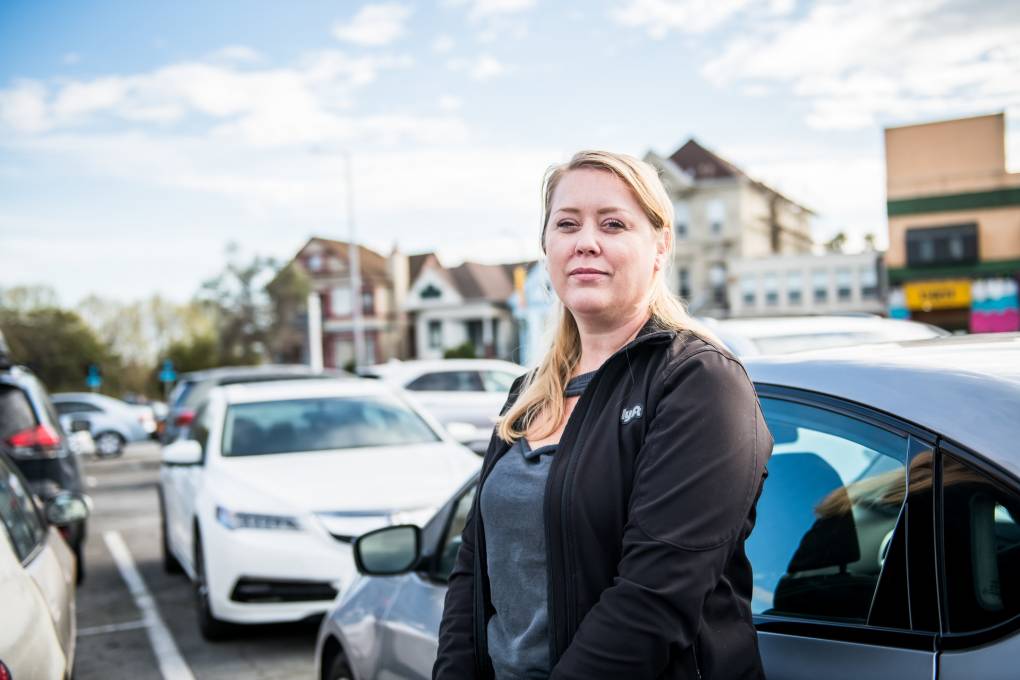
"caption": "Ride-hail driver Erica Mighetto outside her car in Oakland on March 10, 2020.",
"description": null,
"title": "RS41939_002_KQED_Oakland_RideHail_03102020_-qut",
"credit": "Beth LaBerge/KQED",
"status": "inherit",
"isLoading": false,
"fetchFailed": false
},
"news_11351505": {
"type": "attachments",
"id": "news_11351505",
"meta": {
"index": "attachments_1716263798",
"site": "news",
"id": "11351505",
"found": true
},
"parent": 11351499,
"imgSizes": {
"small": {
"file": "https://ww2.kqed.org/app/uploads/sites/10/2017/03/RS16541_IMG_0523-qut-520x347.jpg",
"width": 520,
"mimeType": "image/jpeg",
"height": 347
},
"twentyfourteen-full-width": {
"file": "https://ww2.kqed.org/app/uploads/sites/10/2017/03/RS16541_IMG_0523-qut-1038x576.jpg",
"width": 1038,
"mimeType": "image/jpeg",
"height": 576
},
"thumbnail": {
"file": "https://ww2.kqed.org/app/uploads/sites/10/2017/03/RS16541_IMG_0523-qut-160x107.jpg",
"width": 160,
"mimeType": "image/jpeg",
"height": 107
},
"fd-sm": {
"file": "https://ww2.kqed.org/app/uploads/sites/10/2017/03/RS16541_IMG_0523-qut-960x640.jpg",
"width": 960,
"mimeType": "image/jpeg",
"height": 640
},
"post-thumbnail": {
"file": "https://ww2.kqed.org/app/uploads/sites/10/2017/03/RS16541_IMG_0523-qut-672x372.jpg",
"width": 672,
"mimeType": "image/jpeg",
"height": 372
},
"xsmall": {
"file": "https://ww2.kqed.org/app/uploads/sites/10/2017/03/RS16541_IMG_0523-qut-375x250.jpg",
"width": 375,
"mimeType": "image/jpeg",
"height": 250
},
"kqedFullSize": {
"file": "https://ww2.kqed.org/app/uploads/sites/10/2017/03/RS16541_IMG_0523-qut.jpg",
"width": 1920,
"height": 1280
},
"large": {
"file": "https://ww2.kqed.org/app/uploads/sites/10/2017/03/RS16541_IMG_0523-qut-1020x680.jpg",
"width": 1020,
"mimeType": "image/jpeg",
"height": 680
},
"xlarge": {
"file": "https://ww2.kqed.org/app/uploads/sites/10/2017/03/RS16541_IMG_0523-qut-1180x787.jpg",
"width": 1180,
"mimeType": "image/jpeg",
"height": 787
},
"guest-author-50": {
"file": "https://ww2.kqed.org/app/uploads/sites/10/2017/03/RS16541_IMG_0523-qut-50x50.jpg",
"width": 50,
"mimeType": "image/jpeg",
"height": 50
},
"guest-author-96": {
"file": "https://ww2.kqed.org/app/uploads/sites/10/2017/03/RS16541_IMG_0523-qut-96x96.jpg",
"width": 96,
"mimeType": "image/jpeg",
"height": 96
},
"medium": {
"file": "https://ww2.kqed.org/app/uploads/sites/10/2017/03/RS16541_IMG_0523-qut-800x533.jpg",
"width": 800,
"mimeType": "image/jpeg",
"height": 533
},
"guest-author-64": {
"file": "https://ww2.kqed.org/app/uploads/sites/10/2017/03/RS16541_IMG_0523-qut-64x64.jpg",
"width": 64,
"mimeType": "image/jpeg",
"height": 64
},
"guest-author-32": {
"file": "https://ww2.kqed.org/app/uploads/sites/10/2017/03/RS16541_IMG_0523-qut-32x32.jpg",
"width": 32,
"mimeType": "image/jpeg",
"height": 32
},
"fd-lrg": {
"file": "https://ww2.kqed.org/app/uploads/sites/10/2017/03/RS16541_IMG_0523-qut-1920x1280.jpg",
"width": 1920,
"mimeType": "image/jpeg",
"height": 1280
},
"fd-med": {
"file": "https://ww2.kqed.org/app/uploads/sites/10/2017/03/RS16541_IMG_0523-qut-1180x787.jpg",
"width": 1180,
"mimeType": "image/jpeg",
"height": 787
},
"full-width": {
"file": "https://ww2.kqed.org/app/uploads/sites/10/2017/03/RS16541_IMG_0523-qut-1920x1280.jpg",
"width": 1920,
"mimeType": "image/jpeg",
"height": 1280
},
"detail": {
"file": "https://ww2.kqed.org/app/uploads/sites/10/2017/03/RS16541_IMG_0523-qut-150x150.jpg",
"width": 150,
"mimeType": "image/jpeg",
"height": 150
},
"guest-author-128": {
"file": "https://ww2.kqed.org/app/uploads/sites/10/2017/03/RS16541_IMG_0523-qut-128x128.jpg",
"width": 128,
"mimeType": "image/jpeg",
"height": 128
},
"xxsmall": {
"file": "https://ww2.kqed.org/app/uploads/sites/10/2017/03/RS16541_IMG_0523-qut-240x160.jpg",
"width": 240,
"mimeType": "image/jpeg",
"height": 160
}
},
"publishDate": 1489077823,
"modified": 1489077860,
"caption": "An Uber on the streets of San Francisco in August 2015.",
"description": null,
"title": "RS16541_IMG_0523-qut",
"credit": "Ericka Cruz Guevarra/KQED",
"status": "inherit",
"isLoading": false,
"fetchFailed": false
},
"news_11803468": {
"type": "attachments",
"id": "news_11803468",
"meta": {
"index": "attachments_1716263798",
"site": "news",
"id": "11803468",
"found": true
},
"parent": 11803400,
"imgSizes": {
"apple_news_ca_landscape_5_5": {
"file": "https://ww2.kqed.org/app/uploads/sites/10/2020/02/RS41024_002_KQED_TaxiDriversSFO_01302020_9899-qut-1044x783.jpg",
"width": 1044,
"mimeType": "image/jpeg",
"height": 783
},
"apple_news_ca_square_4_0": {
"file": "https://ww2.kqed.org/app/uploads/sites/10/2020/02/RS41024_002_KQED_TaxiDriversSFO_01302020_9899-qut-470x470.jpg",
"width": 470,
"mimeType": "image/jpeg",
"height": 470
},
"twentyfourteen-full-width": {
"file": "https://ww2.kqed.org/app/uploads/sites/10/2020/02/RS41024_002_KQED_TaxiDriversSFO_01302020_9899-qut-1038x576.jpg",
"width": 1038,
"mimeType": "image/jpeg",
"height": 576
},
"thumbnail": {
"file": "https://ww2.kqed.org/app/uploads/sites/10/2020/02/RS41024_002_KQED_TaxiDriversSFO_01302020_9899-qut-160x107.jpg",
"width": 160,
"mimeType": "image/jpeg",
"height": 107
},
"post-thumbnail": {
"file": "https://ww2.kqed.org/app/uploads/sites/10/2020/02/RS41024_002_KQED_TaxiDriversSFO_01302020_9899-qut-672x372.jpg",
"width": 672,
"mimeType": "image/jpeg",
"height": 372
},
"kqedFullSize": {
"file": "https://ww2.kqed.org/app/uploads/sites/10/2020/02/RS41024_002_KQED_TaxiDriversSFO_01302020_9899-qut.jpg",
"width": 1920,
"height": 1280
},
"apple_news_ca_landscape_4_7": {
"file": "https://ww2.kqed.org/app/uploads/sites/10/2020/02/RS41024_002_KQED_TaxiDriversSFO_01302020_9899-qut-632x474.jpg",
"width": 632,
"mimeType": "image/jpeg",
"height": 474
},
"large": {
"file": "https://ww2.kqed.org/app/uploads/sites/10/2020/02/RS41024_002_KQED_TaxiDriversSFO_01302020_9899-qut-1020x680.jpg",
"width": 1020,
"mimeType": "image/jpeg",
"height": 680
},
"apple_news_ca_landscape_4_0": {
"file": "https://ww2.kqed.org/app/uploads/sites/10/2020/02/RS41024_002_KQED_TaxiDriversSFO_01302020_9899-qut-536x402.jpg",
"width": 536,
"mimeType": "image/jpeg",
"height": 402
},
"apple_news_ca_portrait_12_9": {
"file": "https://ww2.kqed.org/app/uploads/sites/10/2020/02/RS41024_002_KQED_TaxiDriversSFO_01302020_9899-qut-1122x1280.jpg",
"width": 1122,
"mimeType": "image/jpeg",
"height": 1280
},
"medium": {
"file": "https://ww2.kqed.org/app/uploads/sites/10/2020/02/RS41024_002_KQED_TaxiDriversSFO_01302020_9899-qut-800x533.jpg",
"width": 800,
"mimeType": "image/jpeg",
"height": 533
},
"apple_news_ca_portrait_4_0": {
"file": "https://ww2.kqed.org/app/uploads/sites/10/2020/02/RS41024_002_KQED_TaxiDriversSFO_01302020_9899-qut-354x472.jpg",
"width": 354,
"mimeType": "image/jpeg",
"height": 472
},
"apple_news_ca_portrait_9_7": {
"file": "https://ww2.kqed.org/app/uploads/sites/10/2020/02/RS41024_002_KQED_TaxiDriversSFO_01302020_9899-qut-840x1120.jpg",
"width": 840,
"mimeType": "image/jpeg",
"height": 1120
},
"apple_news_ca_landscape_12_9": {
"file": "https://ww2.kqed.org/app/uploads/sites/10/2020/02/RS41024_002_KQED_TaxiDriversSFO_01302020_9899-qut-1832x1280.jpg",
"width": 1832,
"mimeType": "image/jpeg",
"height": 1280
},
"apple_news_ca_square_9_7": {
"file": "https://ww2.kqed.org/app/uploads/sites/10/2020/02/RS41024_002_KQED_TaxiDriversSFO_01302020_9899-qut-1104x1104.jpg",
"width": 1104,
"mimeType": "image/jpeg",
"height": 1104
},
"apple_news_ca_portrait_4_7": {
"file": "https://ww2.kqed.org/app/uploads/sites/10/2020/02/RS41024_002_KQED_TaxiDriversSFO_01302020_9899-qut-414x552.jpg",
"width": 414,
"mimeType": "image/jpeg",
"height": 552
},
"apple_news_ca_square_12_9": {
"file": "https://ww2.kqed.org/app/uploads/sites/10/2020/02/RS41024_002_KQED_TaxiDriversSFO_01302020_9899-qut-1472x1280.jpg",
"width": 1472,
"mimeType": "image/jpeg",
"height": 1280
},
"apple_news_ca_portrait_5_5": {
"file": "https://ww2.kqed.org/app/uploads/sites/10/2020/02/RS41024_002_KQED_TaxiDriversSFO_01302020_9899-qut-687x916.jpg",
"width": 687,
"mimeType": "image/jpeg",
"height": 916
},
"full-width": {
"file": "https://ww2.kqed.org/app/uploads/sites/10/2020/02/RS41024_002_KQED_TaxiDriversSFO_01302020_9899-qut-1920x1280.jpg",
"width": 1920,
"mimeType": "image/jpeg",
"height": 1280
},
"apple_news_ca_square_4_7": {
"file": "https://ww2.kqed.org/app/uploads/sites/10/2020/02/RS41024_002_KQED_TaxiDriversSFO_01302020_9899-qut-550x550.jpg",
"width": 550,
"mimeType": "image/jpeg",
"height": 550
},
"apple_news_ca_landscape_9_7": {
"file": "https://ww2.kqed.org/app/uploads/sites/10/2020/02/RS41024_002_KQED_TaxiDriversSFO_01302020_9899-qut-1376x1032.jpg",
"width": 1376,
"mimeType": "image/jpeg",
"height": 1032
},
"apple_news_ca_square_5_5": {
"file": "https://ww2.kqed.org/app/uploads/sites/10/2020/02/RS41024_002_KQED_TaxiDriversSFO_01302020_9899-qut-912x912.jpg",
"width": 912,
"mimeType": "image/jpeg",
"height": 912
}
},
"publishDate": 1582683097,
"modified": 1582683152,
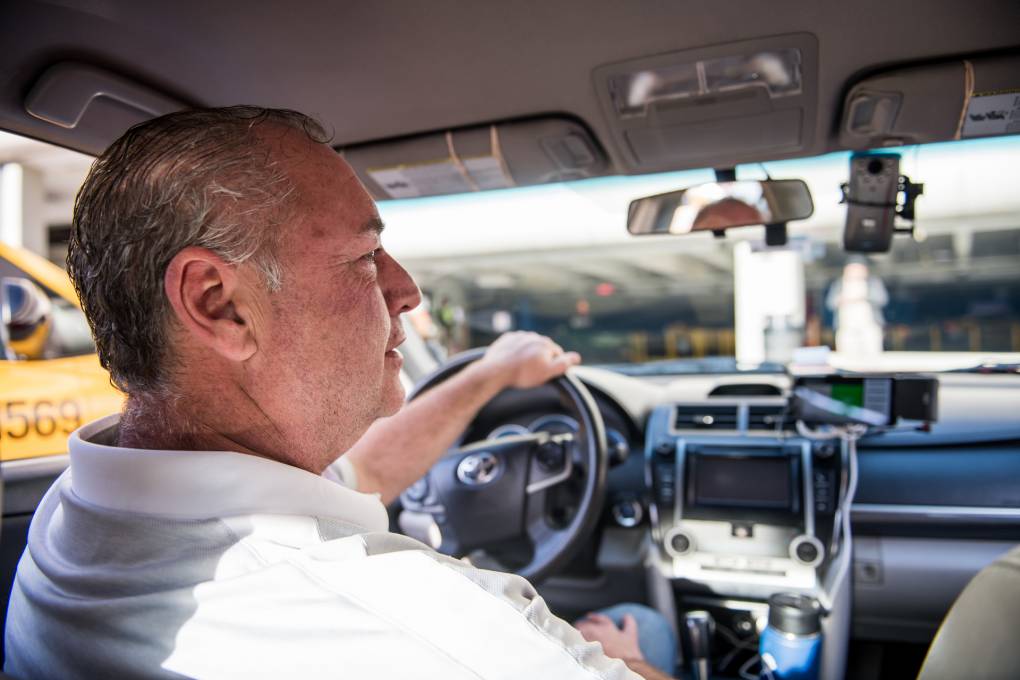
"caption": "Taxi driver Matt Sutter waits at the lower level of the short term parking garage at San Francisco International Airport (SFO) to pick up a fare on Jan. 30, 2020.",
"description": null,
"title": "RS41024_002_KQED_TaxiDriversSFO_01302020_9899-qut",
"credit": "Beth LaBerge/KQED",
"status": "inherit",
"isLoading": false,
"fetchFailed": false
},
"news_11802404": {
"type": "attachments",
"id": "news_11802404",
"meta": {
"index": "attachments_1716263798",
"site": "news",
"id": "11802404",
"found": true
},
"parent": 11801642,
"imgSizes": {
"apple_news_ca_square_4_0": {
"file": "https://ww2.kqed.org/app/uploads/sites/10/2020/02/Scooter-SJ-470x470.jpg",
"width": 470,
"mimeType": "image/jpeg",
"height": 470
},
"twentyfourteen-full-width": {
"file": "https://ww2.kqed.org/app/uploads/sites/10/2020/02/Scooter-SJ-1024x576.jpg",
"width": 1024,
"mimeType": "image/jpeg",
"height": 576
},
"thumbnail": {
"file": "https://ww2.kqed.org/app/uploads/sites/10/2020/02/Scooter-SJ-160x120.jpg",
"width": 160,
"mimeType": "image/jpeg",
"height": 120
},
"post-thumbnail": {
"file": "https://ww2.kqed.org/app/uploads/sites/10/2020/02/Scooter-SJ-672x372.jpg",
"width": 672,
"mimeType": "image/jpeg",
"height": 372
},
"kqedFullSize": {
"file": "https://ww2.kqed.org/app/uploads/sites/10/2020/02/Scooter-SJ.jpg",
"width": 1024,
"height": 768
},
"apple_news_ca_landscape_4_7": {
"file": "https://ww2.kqed.org/app/uploads/sites/10/2020/02/Scooter-SJ-632x474.jpg",
"width": 632,
"mimeType": "image/jpeg",
"height": 474
},
"large": {
"file": "https://ww2.kqed.org/app/uploads/sites/10/2020/02/Scooter-SJ-1020x765.jpg",
"width": 1020,
"mimeType": "image/jpeg",
"height": 765
},
"apple_news_ca_landscape_4_0": {
"file": "https://ww2.kqed.org/app/uploads/sites/10/2020/02/Scooter-SJ-536x402.jpg",
"width": 536,
"mimeType": "image/jpeg",
"height": 402
},
"medium": {
"file": "https://ww2.kqed.org/app/uploads/sites/10/2020/02/Scooter-SJ-800x600.jpg",
"width": 800,
"mimeType": "image/jpeg",
"height": 600
},
"apple_news_ca_portrait_4_0": {
"file": "https://ww2.kqed.org/app/uploads/sites/10/2020/02/Scooter-SJ-354x472.jpg",
"width": 354,
"mimeType": "image/jpeg",
"height": 472
},
"apple_news_ca_portrait_9_7": {
"file": "https://ww2.kqed.org/app/uploads/sites/10/2020/02/Scooter-SJ-840x768.jpg",
"width": 840,
"mimeType": "image/jpeg",
"height": 768
},
"apple_news_ca_portrait_4_7": {
"file": "https://ww2.kqed.org/app/uploads/sites/10/2020/02/Scooter-SJ-414x552.jpg",
"width": 414,
"mimeType": "image/jpeg",
"height": 552
},
"apple_news_ca_portrait_5_5": {
"file": "https://ww2.kqed.org/app/uploads/sites/10/2020/02/Scooter-SJ-687x768.jpg",
"width": 687,
"mimeType": "image/jpeg",
"height": 768
},
"apple_news_ca_square_4_7": {
"file": "https://ww2.kqed.org/app/uploads/sites/10/2020/02/Scooter-SJ-550x550.jpg",
"width": 550,
"mimeType": "image/jpeg",
"height": 550
},
"apple_news_ca_square_5_5": {
"file": "https://ww2.kqed.org/app/uploads/sites/10/2020/02/Scooter-SJ-912x768.jpg",
"width": 912,
"mimeType": "image/jpeg",
"height": 768
}
},
"publishDate": 1582141355,
"modified": 1582141382,
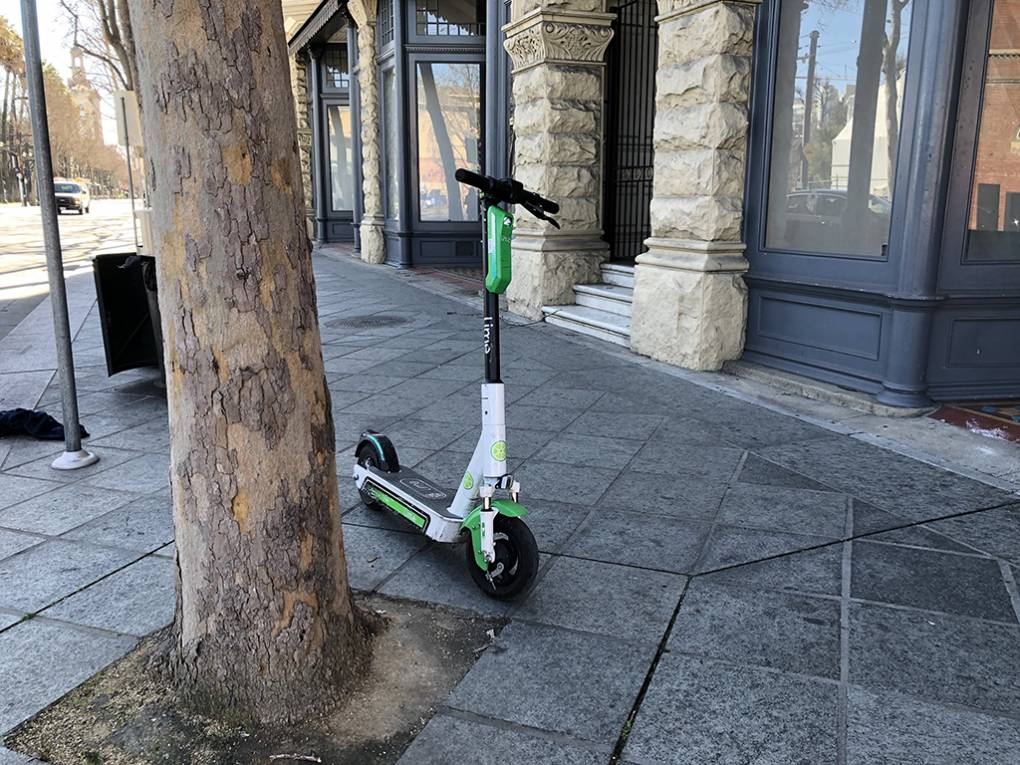
"caption": "A Lime scooter sits in the middle of a sidewalk in downtown San Jose. The city is working with e-scooter companies to keep scooters in bike lanes.",
"description": null,
"title": "Scooter-SJ",
"credit": "Adhiti Bandlamudi/KQED",
"status": "inherit",
"isLoading": false,
"fetchFailed": false
},
"news_11802225": {
"type": "attachments",
"id": "news_11802225",
"meta": {
"index": "attachments_1716263798",
"site": "news",
"id": "11802225",
"found": true
},
"parent": 11802205,
"imgSizes": {
"apple_news_ca_landscape_5_5": {
"file": "https://ww2.kqed.org/app/uploads/sites/10/2020/02/medallions_021820_final-1044x783.png",
"width": 1044,
"mimeType": "image/png",
"height": 783
},
"apple_news_ca_square_4_0": {
"file": "https://ww2.kqed.org/app/uploads/sites/10/2020/02/medallions_021820_final-470x470.png",
"width": 470,
"mimeType": "image/png",
"height": 470
},
"twentyfourteen-full-width": {
"file": "https://ww2.kqed.org/app/uploads/sites/10/2020/02/medallions_021820_final-1038x576.png",
"width": 1038,
"mimeType": "image/png",
"height": 576
},
"thumbnail": {
"file": "https://ww2.kqed.org/app/uploads/sites/10/2020/02/medallions_021820_final-160x109.png",
"width": 160,
"mimeType": "image/png",
"height": 109
},
"post-thumbnail": {
"file": "https://ww2.kqed.org/app/uploads/sites/10/2020/02/medallions_021820_final-672x372.png",
"width": 672,
"mimeType": "image/png",
"height": 372
},
"kqedFullSize": {
"file": "https://ww2.kqed.org/app/uploads/sites/10/2020/02/medallions_021820_final.png",
"width": 1920,
"height": 1303
},
"apple_news_ca_landscape_4_7": {
"file": "https://ww2.kqed.org/app/uploads/sites/10/2020/02/medallions_021820_final-632x474.png",
"width": 632,
"mimeType": "image/png",
"height": 474
},
"large": {
"file": "https://ww2.kqed.org/app/uploads/sites/10/2020/02/medallions_021820_final-1020x692.png",
"width": 1020,
"mimeType": "image/png",
"height": 692
},
"apple_news_ca_landscape_4_0": {
"file": "https://ww2.kqed.org/app/uploads/sites/10/2020/02/medallions_021820_final-536x402.png",
"width": 536,
"mimeType": "image/png",
"height": 402
},
"apple_news_ca_portrait_12_9": {
"file": "https://ww2.kqed.org/app/uploads/sites/10/2020/02/medallions_021820_final-1122x1303.png",
"width": 1122,
"mimeType": "image/png",
"height": 1303
},
"medium": {
"file": "https://ww2.kqed.org/app/uploads/sites/10/2020/02/medallions_021820_final-800x543.png",
"width": 800,
"mimeType": "image/png",
"height": 543
},
"apple_news_ca_portrait_4_0": {
"file": "https://ww2.kqed.org/app/uploads/sites/10/2020/02/medallions_021820_final-354x472.png",
"width": 354,
"mimeType": "image/png",
"height": 472
},
"apple_news_ca_portrait_9_7": {
"file": "https://ww2.kqed.org/app/uploads/sites/10/2020/02/medallions_021820_final-840x1120.png",
"width": 840,
"mimeType": "image/png",
"height": 1120
},
"apple_news_ca_landscape_12_9": {
"file": "https://ww2.kqed.org/app/uploads/sites/10/2020/02/medallions_021820_final-1832x1303.png",
"width": 1832,
"mimeType": "image/png",
"height": 1303
},
"apple_news_ca_square_9_7": {
"file": "https://ww2.kqed.org/app/uploads/sites/10/2020/02/medallions_021820_final-1104x1104.png",
"width": 1104,
"mimeType": "image/png",
"height": 1104
},
"apple_news_ca_portrait_4_7": {
"file": "https://ww2.kqed.org/app/uploads/sites/10/2020/02/medallions_021820_final-414x552.png",
"width": 414,
"mimeType": "image/png",
"height": 552
},
"apple_news_ca_square_12_9": {
"file": "https://ww2.kqed.org/app/uploads/sites/10/2020/02/medallions_021820_final-1472x1303.png",
"width": 1472,
"mimeType": "image/png",
"height": 1303
},
"apple_news_ca_portrait_5_5": {
"file": "https://ww2.kqed.org/app/uploads/sites/10/2020/02/medallions_021820_final-687x916.png",
"width": 687,
"mimeType": "image/png",
"height": 916
},
"full-width": {
"file": "https://ww2.kqed.org/app/uploads/sites/10/2020/02/medallions_021820_final-1920x1303.png",
"width": 1920,
"mimeType": "image/png",
"height": 1303
},
"apple_news_ca_square_4_7": {
"file": "https://ww2.kqed.org/app/uploads/sites/10/2020/02/medallions_021820_final-550x550.png",
"width": 550,
"mimeType": "image/png",
"height": 550
},
"apple_news_ca_landscape_9_7": {
"file": "https://ww2.kqed.org/app/uploads/sites/10/2020/02/medallions_021820_final-1376x1032.png",
"width": 1376,
"mimeType": "image/png",
"height": 1032
},
"apple_news_ca_square_5_5": {
"file": "https://ww2.kqed.org/app/uploads/sites/10/2020/02/medallions_021820_final-912x912.png",
"width": 912,
"mimeType": "image/png",
"height": 912
}
},
"publishDate": 1582070525,
"modified": 1582070561,
"caption": null,
"description": null,
"title": "medallions_021820_final",
"credit": null,
"status": "inherit",
"isLoading": false,
"fetchFailed": false
},
"news_11801368": {
"type": "attachments",
"id": "news_11801368",
"meta": {
"index": "attachments_1716263798",
"site": "news",
"id": "11801368",
"found": true
},
"parent": 11801032,
"imgSizes": {
"apple_news_ca_landscape_5_5": {
"file": "https://ww2.kqed.org/app/uploads/sites/10/2020/02/E-A-in-2020-1044x783.jpg",
"width": 1044,
"mimeType": "image/jpeg",
"height": 783
},
"apple_news_ca_square_4_0": {
"file": "https://ww2.kqed.org/app/uploads/sites/10/2020/02/E-A-in-2020-470x470.jpg",
"width": 470,
"mimeType": "image/jpeg",
"height": 470
},
"twentyfourteen-full-width": {
"file": "https://ww2.kqed.org/app/uploads/sites/10/2020/02/E-A-in-2020-1038x576.jpg",
"width": 1038,
"mimeType": "image/jpeg",
"height": 576
},
"thumbnail": {
"file": "https://ww2.kqed.org/app/uploads/sites/10/2020/02/E-A-in-2020-160x130.jpg",
"width": 160,
"mimeType": "image/jpeg",
"height": 130
},
"post-thumbnail": {
"file": "https://ww2.kqed.org/app/uploads/sites/10/2020/02/E-A-in-2020-672x372.jpg",
"width": 672,
"mimeType": "image/jpeg",
"height": 372
},
"kqedFullSize": {
"file": "https://ww2.kqed.org/app/uploads/sites/10/2020/02/E-A-in-2020.jpg",
"width": 1228,
"height": 996
},
"apple_news_ca_landscape_4_7": {
"file": "https://ww2.kqed.org/app/uploads/sites/10/2020/02/E-A-in-2020-632x474.jpg",
"width": 632,
"mimeType": "image/jpeg",
"height": 474
},
"large": {
"file": "https://ww2.kqed.org/app/uploads/sites/10/2020/02/E-A-in-2020-1020x827.jpg",
"width": 1020,
"mimeType": "image/jpeg",
"height": 827
},
"apple_news_ca_landscape_4_0": {
"file": "https://ww2.kqed.org/app/uploads/sites/10/2020/02/E-A-in-2020-536x402.jpg",
"width": 536,
"mimeType": "image/jpeg",
"height": 402
},
"apple_news_ca_portrait_12_9": {
"file": "https://ww2.kqed.org/app/uploads/sites/10/2020/02/E-A-in-2020-1122x996.jpg",
"width": 1122,
"mimeType": "image/jpeg",
"height": 996
},
"medium": {
"file": "https://ww2.kqed.org/app/uploads/sites/10/2020/02/E-A-in-2020-800x649.jpg",
"width": 800,
"mimeType": "image/jpeg",
"height": 649
},
"apple_news_ca_portrait_4_0": {
"file": "https://ww2.kqed.org/app/uploads/sites/10/2020/02/E-A-in-2020-354x472.jpg",
"width": 354,
"mimeType": "image/jpeg",
"height": 472
},
"apple_news_ca_portrait_9_7": {
"file": "https://ww2.kqed.org/app/uploads/sites/10/2020/02/E-A-in-2020-840x996.jpg",
"width": 840,
"mimeType": "image/jpeg",
"height": 996
},
"apple_news_ca_square_9_7": {
"file": "https://ww2.kqed.org/app/uploads/sites/10/2020/02/E-A-in-2020-1104x996.jpg",
"width": 1104,
"mimeType": "image/jpeg",
"height": 996
},
"apple_news_ca_portrait_4_7": {
"file": "https://ww2.kqed.org/app/uploads/sites/10/2020/02/E-A-in-2020-414x552.jpg",
"width": 414,
"mimeType": "image/jpeg",
"height": 552
},
"apple_news_ca_portrait_5_5": {
"file": "https://ww2.kqed.org/app/uploads/sites/10/2020/02/E-A-in-2020-687x916.jpg",
"width": 687,
"mimeType": "image/jpeg",
"height": 916
},
"apple_news_ca_square_4_7": {
"file": "https://ww2.kqed.org/app/uploads/sites/10/2020/02/E-A-in-2020-550x550.jpg",
"width": 550,
"mimeType": "image/jpeg",
"height": 550
},
"apple_news_ca_square_5_5": {
"file": "https://ww2.kqed.org/app/uploads/sites/10/2020/02/E-A-in-2020-912x912.jpg",
"width": 912,
"mimeType": "image/jpeg",
"height": 912
}
},
"publishDate": 1581547972,
"modified": 1581550648,
"caption": "In 2020, Aleah Fajardo and Eugenio Borgeson live together in Oakland.",
"description": null,
"title": "E+ A in 2020",
"credit": "Courtesy of Aleah Fajardo and Eugenio Borgeson",
"status": "inherit",
"isLoading": false,
"fetchFailed": false
}
},
"audioPlayerReducer": {
"postId": "stream_live",
"isPaused": true,
"isPlaying": false,
"pfsActive": false,
"pledgeModalIsOpen": true,
"playerDrawerIsOpen": false,
"liveAudioPlayStartedAt": 0,
"liveAudioPlayContext": ""
},
"authorsReducer": {
"mlam": {
"type": "authors",
"id": "244",
"meta": {
"index": "authors_1716337520",
"id": "244",
"found": true
},
"name": "Monica Lam",
"firstName": "Monica Z.",
"lastName": "Lam",
"slug": "mlam",
"email": "mlam@kqed.org",
"display_author_email": true,
"staff_mastheads": [
"news"
],
"title": "KQED Senior Producer",
"bio": "Monica is senior producer of the weekly current affairs program, \"KQED Newsroom.\" She's also served as senior editor of digital content at KQED. She likes to report and edit as well as produce video and take photos.\r\n\r\nBefore joining KQED, Monica worked at the Center for Investigative Reporting, where she examined conditions inside \u003cspan style=\"font-weight: 400;\">maximum security \u003c/span>prisons and abuse in state-run institutions for the developmentally disabled. Prior to that, she produced and directed \u003cem>Journey of the Bonesetter's Daughter,\u003c/em> a documentary that follows novelist Amy Tan as she creates an opera based on her family history.\r\n\r\nMonica's work has been honored with a duPont Award, five Emmys, regional and national Murrow Awards, and has been recognized by Investigative Reporters and Editors, the Society of Professional Journalists, Religion Newswriters Association and the San Francisco Peninsula Press Club. Monica studied urban studies at Stanford University and earned a master's in journalism at University of California at Berkeley. Follow her on twitter: @monicazlam",
"avatar": "https://secure.gravatar.com/avatar/018c474b2b71f43e0e6ca9b15a0ad36f?s=600&d=blank&r=g",
"twitter": "@monicazlam",
"facebook": null,
"instagram": null,
"linkedin": null,
"sites": [
{
"site": "arts",
"roles": [
"administrator"
]
},
{
"site": "news",
"roles": [
"editor"
]
},
{
"site": "trulyca",
"roles": [
"editor"
]
},
{
"site": "science",
"roles": [
"editor"
]
},
{
"site": "breakingnews",
"roles": [
"editor"
]
}
],
"headData": {
"title": "Monica Lam | KQED",
"description": "KQED Senior Producer",
"ogImgSrc": "https://secure.gravatar.com/avatar/018c474b2b71f43e0e6ca9b15a0ad36f?s=600&d=blank&r=g",
"twImgSrc": "https://secure.gravatar.com/avatar/018c474b2b71f43e0e6ca9b15a0ad36f?s=600&d=blank&r=g"
},
"isLoading": false,
"link": "/author/mlam"
},
"rachael-myrow": {
"type": "authors",
"id": "251",
"meta": {
"index": "authors_1716337520",
"id": "251",
"found": true
},
"name": "Rachael Myrow",
"firstName": "Rachael",
"lastName": "Myrow",
"slug": "rachael-myrow",
"email": "rmyrow@kqed.org",
"display_author_email": true,
"staff_mastheads": [
"news"
],
"title": "Senior Editor of KQED's Silicon Valley News Desk",
"bio": "• I write and edit stories about how Silicon Valley power and policies shape everyday life in California. I’m also passionate about making Bay Area history and culture more accessible to a broad public. • I’ve been a journalist for most of my life, starting in high school with The Franklin Press in Los Angeles, where I grew up. While earning my first degree in English at UC Berkeley, I got my start in public radio at KALX-FM. After completing a second degree in journalism at Cal, I landed my first professional job at Marketplace, then moved on to KPCC (now LAist), and then KQED, where I hosted The California Report for more than seven years. • My reporting has appeared on NPR, The World, WBUR’s \u003ci>Here & Now\u003c/i>, and the BBC. I also guest host for KQED’s \u003ci>Forum\u003c/i>, as well as the Commonwealth Club in San Francisco. • I speak periodically on media, democracy and technology issues, and do voiceover work for documentaries and educational video projects. • Outside of the studio, you'll find me hiking Bay Area trails and whipping up Insta-ready meals in my kitchen. • I do not accept gifts, money, or favors from anyone connected to my reporting, I don't pay people for information, and I do not support or donate to political causes. • I strive to treat the people I report on with fairness, honesty, and respect. I also recognize there are often multiple sides to a story and work to verify information through multiple sources and documentation. If I get something wrong, I correct it.",
"avatar": "https://secure.gravatar.com/avatar/3ed8a3c5f26025e4a805ba634cda8cd764906b97438a6d9ce216b044e340da4e?s=600&d=blank&r=g",
"twitter": "rachaelmyrow",
"bluesky": null,
"facebook": null,
"instagram": null,
"linkedin": "https://www.linkedin.com/in/rachaelmyrow/",
"sites": [
{
"site": "arts",
"roles": [
"administrator"
]
},
{
"site": "news",
"roles": [
"edit_others_posts",
"editor"
]
},
{
"site": "futureofyou",
"roles": [
"editor"
]
},
{
"site": "bayareabites",
"roles": [
"editor"
]
},
{
"site": "stateofhealth",
"roles": [
"editor"
]
},
{
"site": "science",
"roles": [
"editor"
]
},
{
"site": "food",
"roles": [
"editor"
]
},
{
"site": "forum",
"roles": [
"editor"
]
},
{
"site": "liveblog",
"roles": [
"author"
]
}
],
"headData": {
"title": "Rachael Myrow | KQED",
"description": "Senior Editor of KQED's Silicon Valley News Desk",
"ogImgSrc": "https://secure.gravatar.com/avatar/3ed8a3c5f26025e4a805ba634cda8cd764906b97438a6d9ce216b044e340da4e?s=600&d=blank&r=g",
"twImgSrc": "https://secure.gravatar.com/avatar/3ed8a3c5f26025e4a805ba634cda8cd764906b97438a6d9ce216b044e340da4e?s=600&d=blank&r=g"
},
"isLoading": false,
"link": "/author/rachael-myrow"
},
"samharnett": {
"type": "authors",
"id": "253",
"meta": {
"index": "authors_1716337520",
"id": "253",
"found": true
},
"name": "Sam Harnett",
"firstName": "Sam",
"lastName": "Harnett",
"slug": "samharnett",
"email": "samharnett@gmail.com",
"display_author_email": false,
"staff_mastheads": [],
"title": "KQED Contributor",
"bio": "Sam Harnett covered tech and work at KQED. He is the co-creator of \u003cem>\u003ca href=\"http://www.theworldaccordingtosound.org\">The World According to Sound\u003c/a>,\u003c/em> a 90-second podcast that features different sounds and the stories behind them.\r\n\r\nBefore coming to KQED, Sam worked as an independent reporter who contributed regularly to \u003cem>The California Report, Marketplace,\u003c/em> \u003cem>The World \u003c/em>and NPR.",
"avatar": "https://secure.gravatar.com/avatar/2538b972ac02f2b9546c7a6c59a0f3d0?s=600&d=blank&r=g",
"twitter": "Samwharnett",
"facebook": null,
"instagram": null,
"linkedin": null,
"sites": [
{
"site": "news",
"roles": [
"edit_others_posts",
"subscriber"
]
},
{
"site": "stateofhealth",
"roles": [
"author"
]
},
{
"site": "science",
"roles": [
"editor"
]
},
{
"site": "quest",
"roles": [
"subscriber"
]
}
],
"headData": {
"title": "Sam Harnett | KQED",
"description": "KQED Contributor",
"ogImgSrc": "https://secure.gravatar.com/avatar/2538b972ac02f2b9546c7a6c59a0f3d0?s=600&d=blank&r=g",
"twImgSrc": "https://secure.gravatar.com/avatar/2538b972ac02f2b9546c7a6c59a0f3d0?s=600&d=blank&r=g"
},
"isLoading": false,
"link": "/author/samharnett"
},
"markfiore": {
"type": "authors",
"id": "3236",
"meta": {
"index": "authors_1716337520",
"id": "3236",
"found": true
},
"name": "Mark Fiore",
"firstName": "Mark",
"lastName": "Fiore",
"slug": "markfiore",
"email": "mark@markfiore.com",
"display_author_email": false,
"staff_mastheads": [
"news"
],
"title": "KQED News Cartoonist",
"bio": "\u003ca href=\"http://www.MarkFiore.com\">MarkFiore.com\u003c/a> | \u003ca href=\"https://twitter.com/markfiore\">Follow on Twitter\u003c/a> | \u003ca href=\"https://www.facebook.com/pages/Mark-Fiore-Animated-Political-Cartoons/94451707396?ref=bookmarks\">Facebook\u003c/a> | \u003ca href=\"mailto:mark@markfiore.com\">email\u003c/a>\r\n\r\nPulitzer Prize-winner, Mark Fiore, who the Wall Street Journal has called “the undisputed guru of the form,” creates animated political cartoons in San Francisco, where his work has been featured regularly on the San Francisco Chronicle’s web site, SFGate.com. His work has appeared on Newsweek.com, Slate.com, CBSNews.com, MotherJones.com, DailyKos.com and NPR’s web site. Fiore’s political animation has appeared on CNN, Frontline, Bill Moyers Journal, Salon.com and cable and broadcast outlets across the globe.\r\n\r\nBeginning his professional life by drawing traditional political cartoons for newspapers, Fiore’s work appeared in publications ranging from the Washington Post to the Los Angeles Times. In the late 1990s, he began to experiment with animating political cartoons and, after a short stint at the San Jose Mercury News as their staff cartoonist, Fiore devoted all his energies to animation.\r\nGrowing up in California, Fiore also spent a good portion of his life in the backwoods of Idaho. It was this combination that shaped him politically. Mark majored in political science at Colorado College, where, in a perfect send-off for a cartoonist, he received his diploma in 1991 as commencement speaker Dick Cheney smiled approvingly.\r\nMark Fiore was awarded the Pulitzer Prize for political cartooning in 2010, a Robert F. Kennedy Journalism Award in 2004 and has twice received an Online Journalism Award for commentary from the Online News Association (2002, 2008). Fiore has received two awards for his work in new media from the National Cartoonists Society (2001, 2002), and in 2006 received The James Madison Freedom of Information Award from The Society of Professional Journalists.",
"avatar": "https://secure.gravatar.com/avatar/fc4e2a612b15b67bad0c6f0e1db4ca9b?s=600&d=blank&r=g",
"twitter": "MarkFiore",
"facebook": null,
"instagram": "https://www.instagram.com/markfiore/?hl=en",
"linkedin": null,
"sites": [
{
"site": "arts",
"roles": [
"contributor"
]
},
{
"site": "news",
"roles": [
"editor"
]
},
{
"site": "futureofyou",
"roles": [
"editor"
]
},
{
"site": "science",
"roles": [
"editor"
]
}
],
"headData": {
"title": "Mark Fiore | KQED",
"description": "KQED News Cartoonist",
"ogImgSrc": "https://secure.gravatar.com/avatar/fc4e2a612b15b67bad0c6f0e1db4ca9b?s=600&d=blank&r=g",
"twImgSrc": "https://secure.gravatar.com/avatar/fc4e2a612b15b67bad0c6f0e1db4ca9b?s=600&d=blank&r=g"
},
"isLoading": false,
"link": "/author/markfiore"
},
"ecruzguevarra": {
"type": "authors",
"id": "8654",
"meta": {
"index": "authors_1716337520",
"id": "8654",
"found": true
},
"name": "Ericka Cruz Guevarra",
"firstName": "Ericka",
"lastName": "Cruz Guevarra",
"slug": "ecruzguevarra",
"email": "ecruzguevarra@kqed.org",
"display_author_email": true,
"staff_mastheads": [
"news"
],
"title": "Producer, The Bay Podcast",
"bio": "Ericka Cruz Guevarra is host of \u003ca href=\"https://www.kqed.org/podcasts/thebay\">\u003cem>The Bay\u003c/em>\u003c/a> podcast at KQED. Before host, she was the show’s producer. Her work in that capacity includes a three-part reported series on policing in Vallejo, which won a 2020 excellence in journalism award from the Society of Professional Journalists. Ericka has worked as a breaking news reporter at Oregon Public Broadcasting, helped produce the Code Switch podcast, and was KQED’s inaugural Raul Ramirez Diversity Fund intern. She’s also an alumna of NPR’s Next Generation Radio program. Send her an email if you have strong feelings about whether Fairfield and Suisun City are the Bay. Ericka is represented by SAG-AFTRA.",
"avatar": "https://secure.gravatar.com/avatar/accefc1de4bafc7e234b69bcb9b6f6536c130fd84709bc3069ef11a78787e1bb?s=600&d=blank&r=g",
"twitter": "NotoriousECG",
"bluesky": null,
"facebook": null,
"instagram": null,
"linkedin": null,
"sites": [
{
"site": "arts",
"roles": [
"subscriber"
]
},
{
"site": "news",
"roles": [
"editor",
"manage_categories"
]
},
{
"site": "futureofyou",
"roles": [
"subscriber"
]
},
{
"site": "stateofhealth",
"roles": [
"subscriber"
]
},
{
"site": "science",
"roles": [
"editor"
]
},
{
"site": "forum",
"roles": [
"subscriber"
]
}
],
"headData": {
"title": "Ericka Cruz Guevarra | KQED",
"description": "Producer, The Bay Podcast",
"ogImgSrc": "https://secure.gravatar.com/avatar/accefc1de4bafc7e234b69bcb9b6f6536c130fd84709bc3069ef11a78787e1bb?s=600&d=blank&r=g",
"twImgSrc": "https://secure.gravatar.com/avatar/accefc1de4bafc7e234b69bcb9b6f6536c130fd84709bc3069ef11a78787e1bb?s=600&d=blank&r=g"
},
"isLoading": false,
"link": "/author/ecruzguevarra"
},
"mmedina": {
"type": "authors",
"id": "11528",
"meta": {
"index": "authors_1716337520",
"id": "11528",
"found": true
},
"name": "Marisol Medina-Cadena",
"firstName": "Marisol",
"lastName": "Medina-Cadena",
"slug": "mmedina",
"email": "mmedina@KQED.org",
"display_author_email": true,
"staff_mastheads": [],
"title": "Producer, Rightnowish Podcast",
"bio": "Marisol Medina-Cadena is a radio reporter and podcast producer. Before working at KQED, she produced for PBS member station, KCET, in Los Angeles. In 2017, Marisol won an Emmy Award for her work on the televised documentary, \u003cem>City Rising\u003c/em>, examining California's affordable housing crisis and the historical roots of gentrification.",
"avatar": "https://secure.gravatar.com/avatar/6c3db46a1cabb5e1fe9a365b5f4e681e?s=600&d=blank&r=g",
"twitter": "marisolreports",
"facebook": null,
"instagram": null,
"linkedin": null,
"sites": [
{
"site": "arts",
"roles": []
},
{
"site": "news",
"roles": [
"edit_others_posts"
]
}
],
"headData": {
"title": "Marisol Medina-Cadena | KQED",
"description": "Producer, Rightnowish Podcast",
"ogImgSrc": "https://secure.gravatar.com/avatar/6c3db46a1cabb5e1fe9a365b5f4e681e?s=600&d=blank&r=g",
"twImgSrc": "https://secure.gravatar.com/avatar/6c3db46a1cabb5e1fe9a365b5f4e681e?s=600&d=blank&r=g"
},
"isLoading": false,
"link": "/author/mmedina"
},
"amontecillo": {
"type": "authors",
"id": "11649",
"meta": {
"index": "authors_1716337520",
"id": "11649",
"found": true
},
"name": "Alan Montecillo",
"firstName": "Alan",
"lastName": "Montecillo",
"slug": "amontecillo",
"email": "amontecillo@kqed.org",
"display_author_email": false,
"staff_mastheads": [
"news"
],
"title": "KQED Contributor",
"bio": "Alan Montecillo is the senior editor of \u003cem>\u003ca href=\"http://kqed.org/thebay\">The Bay\u003c/a>, \u003c/em> KQED's local news podcast. Before moving to the Bay Area, he worked as a senior talk show producer for WILL in Champaign-Urbana, Illinois and at Oregon Public Broadcasting in Portland, Oregon. He has won journalism awards from the Society of Professional Journalists Northern California, the Public Media Journalists Association, The Signal Awards, and has also received a regional Edward R. Murrow award. Alan is a Filipino American from Hong Kong and a graduate of Reed College.",
"avatar": "https://secure.gravatar.com/avatar/268f53a2066899ea9efdd8a5900218b17c822d9862cbc9326cccec53ef41d349?s=600&d=blank&r=g",
"twitter": "alanmontecillo",
"bluesky": null,
"facebook": null,
"instagram": null,
"linkedin": null,
"sites": [
{
"site": "",
"roles": [
"editor"
]
},
{
"site": "news",
"roles": [
"editor",
"manage_categories"
]
}
],
"headData": {
"title": "Alan Montecillo | KQED",
"description": "KQED Contributor",
"ogImgSrc": "https://secure.gravatar.com/avatar/268f53a2066899ea9efdd8a5900218b17c822d9862cbc9326cccec53ef41d349?s=600&d=blank&r=g",
"twImgSrc": "https://secure.gravatar.com/avatar/268f53a2066899ea9efdd8a5900218b17c822d9862cbc9326cccec53ef41d349?s=600&d=blank&r=g"
},
"isLoading": false,
"link": "/author/amontecillo"
},
"blaberge": {
"type": "authors",
"id": "11667",
"meta": {
"index": "authors_1716337520",
"id": "11667",
"found": true
},
"name": "Beth LaBerge",
"firstName": "Beth",
"lastName": "LaBerge",
"slug": "blaberge",
"email": "blaberge@KQED.org",
"display_author_email": true,
"staff_mastheads": [
"news"
],
"title": "Photographer, News",
"bio": "Beth LaBerge is a visual journalist for \u003ca href=\"https://www.kqed.org/news\">KQED News\u003c/a>.",
"avatar": "https://secure.gravatar.com/avatar/ce49ecd7a1306685637b45a1f6f5dedfc4ae9481966eb596fea5160466dd6319?s=600&d=blank&r=g",
"twitter": null,
"bluesky": null,
"facebook": null,
"instagram": "https://www.instagram.com/bethlaberge/",
"linkedin": null,
"sites": [
{
"site": "arts",
"roles": [
"editor",
"manage_categories"
]
},
{
"site": "news",
"roles": [
"editor",
"edit_plugins",
"manage_categories"
]
},
{
"site": "science",
"roles": [
"editor",
"contributor",
"author",
"manage_categories"
]
},
{
"site": "perspectives",
"roles": [
"editor"
]
},
{
"site": "liveblog",
"roles": [
"editor"
]
}
],
"headData": {
"title": "Beth LaBerge | KQED",
"description": "Photographer, News",
"ogImgSrc": "https://secure.gravatar.com/avatar/ce49ecd7a1306685637b45a1f6f5dedfc4ae9481966eb596fea5160466dd6319?s=600&d=blank&r=g",
"twImgSrc": "https://secure.gravatar.com/avatar/ce49ecd7a1306685637b45a1f6f5dedfc4ae9481966eb596fea5160466dd6319?s=600&d=blank&r=g"
},
"isLoading": false,
"link": "/author/blaberge"
},
"abandlamudi": {
"type": "authors",
"id": "11672",
"meta": {
"index": "authors_1716337520",
"id": "11672",
"found": true
},
"name": "Adhiti Bandlamudi",
"firstName": "Adhiti",
"lastName": "Bandlamudi",
"slug": "abandlamudi",
"email": "abandlamudi@kqed.org",
"display_author_email": false,
"staff_mastheads": [
"news"
],
"title": "KQED Housing Reporter",
"bio": "Adhiti Bandlamudi reports for KQED's Housing desk. She focuses on how housing gets built across the Bay Area. Before joining KQED in 2020, she reported for WUNC in Durham, North Carolina, WABE in Atlanta, Georgia and Capital Public Radio in Sacramento. In 2017, she was awarded a Kroc Fellowship at NPR where she reported on everything from sprinkles to the Golden State Killer's arrest. When she's not reporting, she's baking new recipes in her kitchen or watching movies with friends and family. She's originally from Georgia and has strong opinions about Great British Bake Off.",
"avatar": "https://secure.gravatar.com/avatar/868129c8b257bb99a3500e2c86a65400?s=600&d=mm&r=g",
"twitter": "oddity_adhiti",
"facebook": null,
"instagram": null,
"linkedin": null,
"sites": [
{
"site": "arts",
"roles": [
"author"
]
},
{
"site": "news",
"roles": [
"editor"
]
},
{
"site": "liveblog",
"roles": [
"author"
]
}
],
"headData": {
"title": "Adhiti Bandlamudi | KQED",
"description": "KQED Housing Reporter",
"ogImgSrc": "https://secure.gravatar.com/avatar/868129c8b257bb99a3500e2c86a65400?s=600&d=mm&r=g",
"twImgSrc": "https://secure.gravatar.com/avatar/868129c8b257bb99a3500e2c86a65400?s=600&d=mm&r=g"
},
"isLoading": false,
"link": "/author/abandlamudi"
}
},
"pagesReducer": {
"news_tag_lyft": {
"type": "terms",
"id": "news_4524",
"meta": {
"index": "terms_1716263798",
"site": "news",
"id": "4524",
"score": 9.55587
},
"featImg": null,
"name": "Lyft",
"description": null,
"taxonomy": "tag",
"headData": {
"twImgId": null,
"twTitle": null,
"ogTitle": null,
"ogImgId": null,
"twDescription": null,
"description": null,
"title": "Lyft Archives | KQED News",
"ogDescription": null
},
"ttid": 4543,
"slug": "lyft",
"isLoading": false,
"title": "Lyft",
"pageMeta": {
"site": "news",
"WpPageTemplate": "page-topic-editorial",
"currentPage": 4
},
"blocks": [
{
"blockName": "kqed/post-list",
"attrs": {
"layout": "cardArticle2",
"query": "posts/news?tag=lyft",
"seeMore": false,
"paginated": true,
"page": 4
}
},
{
"blockName": "kqed/ad"
}
]
}
},
"pfsSessionReducer": {},
"postsReducer": {
"stream_live": {
"type": "live",
"id": "stream_live",
"audioUrl": "https://streams.kqed.org/kqedradio",
"title": "Live Stream",
"excerpt": "Live Stream information currently unavailable.",
"link": "/radio",
"featImg": "",
"label": {
"name": "KQED Live",
"link": "/"
}
},
"stream_kqedNewscast": {
"type": "posts",
"id": "stream_kqedNewscast",
"audioUrl": "https://www.kqed.org/.stream/anon/radio/RDnews/newscast.mp3?_=1",
"title": "KQED Newscast",
"featImg": "",
"label": {
"name": "88.5 FM",
"link": "/"
}
},
"news_11816098": {
"type": "posts",
"id": "news_11816098",
"meta": {
"index": "posts_1716263798",
"site": "news",
"id": "11816098",
"score": null,
"sort": [
1588898536000
]
},
"guestAuthors": [],
"slug": "silicon-valley-on-a-hiring-spree-during-coronavirus-pandemic-but-for-how-long",
"title": "Silicon Valley on a Hiring Spree During Coronavirus Pandemic, but for How Long?",
"publishDate": 1588898536,
"format": "audio",
"headTitle": "Silicon Valley on a Hiring Spree During Coronavirus Pandemic, but for How Long? | KQED",
"labelTerm": {},
"content": "\u003cp>The \u003ca href=\"https://www.cnbc.com/2020/05/07/us-weekly-jobless-claims.html\" target=\"_blank\" rel=\"noopener noreferrer\">latest unemployment data\u003c/a> show the national job market — and California’s, for that matter — in the toilet.\u003c/p>\n\u003cp>But in Silicon Valley, the job market isn’t quite so grim — not just despite the coronavirus pandemic, but perhaps because of it. Even as the rest of the economy tanks, these are reasonably good days to be hunting for a mid-level white collar job in web development or tech support. Think about it: We’re all online more than ever. We’re shopping on Amazon, watching live concerts on Facebook, storing ever more photos on Apple’s iCloud, and \u003ca href=\"https://trends.google.com/trends/story/US_cu_4Rjdh3ABAABMHM_en\" target=\"_blank\" rel=\"noopener noreferrer\">searching\u003c/a> for baking recipes on Google.\u003c/p>\n\u003cp>Collectively, \u003ca href=\"https://www.facebook.com/careers/jobs/?results_per_page=5&offices%5B0%5D=Fremont%2C%20CA&offices%5B1%5D=Los%20Angeles%2C%20CA&offices%5B2%5D=Menlo%20Park%2C%20CA&offices%5B3%5D=Mountain%20View%2C%20CA&offices%5B4%5D=Northridge%2C%20CA&offices%5B5%5D=San%20Francisco%2C%20CA&offices%5B6%5D=Santa%20Clara%2C%20CA&offices%5B7%5D=Sausalito%2C%20CA&offices%5B8%5D=Sunnyvale%2C%20CA\" target=\"_blank\" rel=\"noopener noreferrer\">Facebook\u003c/a>, \u003ca href=\"https://careers.microsoft.com/professionals/us/en/l-bayarea\" target=\"_blank\" rel=\"noopener noreferrer\">Microsoft\u003c/a>, \u003ca href=\"https://jobs.apple.com/en-us/search?location=united-states-USA+california-state953\" target=\"_blank\" rel=\"noopener noreferrer\">Apple\u003c/a>, \u003ca href=\"https://www.amazon.jobs/en/search?base_query=&loc_query=California&type=area&latitude=38.57944&longitude=-121.49085®ion=California&country=USA\" target=\"_blank\" rel=\"noopener noreferrer\">Amazon\u003c/a>, and \u003ca href=\"https://careers.google.com/jobs/results/?company=Google&company=Google%20Fiber&company=YouTube&employment_type=FULL_TIME&hl=en_US&jlo=en_US&location=California,%20USA&q=&sort_by=relevance&src=Online%2FHouse%20Ads%2FBKWS\" target=\"_blank\" rel=\"noopener noreferrer\">Alphabet\u003c/a> make up nearly \u003ca href=\"https://markets.businessinsider.com/news/stocks/nasdaq-composite-erases-2020-losses-strong-tech-earnings-stock-market-2020-4-1029178443\">40% of the market value\u003c/a> of the Nasdaq. Sure enough, all five tech titans are hiring by the hundreds, if not the thousands, in California alone. Facebook COO Sheryl Sandberg recently told CNBC that the Menlo Park-based social media giant plans to hire \u003ca href=\"https://www.cnbc.com/2020/04/02/sandberg-facebook-to-add-10000-new-workers-by-end-of-2020.html\" target=\"_blank\" rel=\"noopener noreferrer\">10,000 people\u003c/a> this year in product and engineering.\u003c/p>\n\u003ch3>Size Matters Now\u003c/h3>\n\u003cp>Experts say this particular economic downturn is favoring giants with the cash reserves to wait out a temporary revenue drop or who can pivot to expand in markets with more potential for profit.\u003c/p>\n\u003cfigure id=\"attachment_11816241\" class=\"wp-caption aligncenter\" style=\"max-width: 1056px\">\u003cimg loading=\"lazy\" decoding=\"async\" class=\"size-full wp-image-11816241\" src=\"https://ww2.kqed.org/app/uploads/sites/10/2020/05/Screen-Shot-2020-05-01-at-3.32.41-PM.png\" alt=\"Facebook CEO Mark Zuckerberg and his wife, Priscilla Chan, interviewed Stanford vaccine expert Dr. Bonnie Maldonado on Facebook Live on May 1, 2020. The event was not a riveting plug for the video streaming service but more than 35,000 people did try to watch.\" width=\"1056\" height=\"1030\" srcset=\"https://cdn.kqed.org/wp-content/uploads/sites/10/2020/05/Screen-Shot-2020-05-01-at-3.32.41-PM.png 1056w, https://cdn.kqed.org/wp-content/uploads/sites/10/2020/05/Screen-Shot-2020-05-01-at-3.32.41-PM-160x156.png 160w, https://cdn.kqed.org/wp-content/uploads/sites/10/2020/05/Screen-Shot-2020-05-01-at-3.32.41-PM-800x780.png 800w, https://cdn.kqed.org/wp-content/uploads/sites/10/2020/05/Screen-Shot-2020-05-01-at-3.32.41-PM-1020x995.png 1020w\" sizes=\"(max-width: 1056px) 100vw, 1056px\">\u003cfigcaption class=\"wp-caption-text\">Facebook CEO Mark Zuckerberg and his wife, Priscilla Chan, interviewed Stanford vaccine expert Dr. Bonnie Maldonado on Facebook Live on May 1, 2020. The event was not a riveting plug for the video streaming service, but more than 35,000 people did try to watch. \u003ccite>(Rachael Myrow/KQED)\u003c/cite>\u003c/figcaption>\u003c/figure>\n\u003cp>Take, for example, the online video market, which is exploding right now thanks to the pandemic. Facebook’s offerings in the market include Livestream, Messenger, and most recently, Messenger Rooms, which allows up to 50 people to chat at once.\u003c/p>\n\u003cp>[ad fullwidth]\u003c/p>\n\u003cp>Microsoft declined to comment for this story, but on LinkedIn, which the Seattle software giant owns, Microsoft listed nearly \u003ca href=\"https://www.linkedin.com/jobs/search/?keywords=Microsoft\" target=\"_blank\" rel=\"noopener noreferrer\">300,000 jobs\u003c/a> worldwide at the time of this article’s publication.\u003cbr>\n\u003ca href=\"https://www.amazon.jobs/en/\" target=\"_blank\" rel=\"noopener noreferrer\">Amazon\u003c/a> has hired 175,000 people in its fulfillment and delivery network just since March, but the media focus on its retail and warehouse operations often obscures the fact that the Seattle-based company also employs armies of software developers, technical project managers and the like. Amazon is looking for more than 3,000 people in California alone currently.\u003c/p>\n\u003cp>Beyond the biggest names in Silicon Valley, medium-sized tech employers are also looking to hire.\u003c/p>\n\u003cp>“While we have not increased our hiring in response to the COVID-19 pandemic, now more than ever, we remain committed to attracting top talent across key areas of our business,” wrote a spokeswoman for Genentech, the South San Francisco drugmaker owned by Roche. “So far this year, we have filled more than 1,600 positions and currently have over \u003ca href=\"https://www.gene.com/careers\" target=\"_blank\" rel=\"noopener noreferrer\">1,200 roles open\u003c/a> across many areas of our business, including research and development, manufacturing, sales and marketing and IT.”\u003c/p>\n\u003cp>According to a spokesman for \u003ca href=\"https://blogs.vmware.com/careers/2020/04/message-from-vmware-vp-of-talent-acquisition-on-hiring-and-supporting-our-community.html\" target=\"_blank\" rel=\"noopener noreferrer\">VMware\u003c/a>, the Palo Alto-based software company has more than 300 openings in California and more than 1,400 globally. VMware’s vice president of talent acquisition \u003ca href=\"https://blogs.vmware.com/careers/2020/04/message-from-vmware-vp-of-talent-acquisition-on-hiring-and-supporting-our-community.html\" target=\"_blank\" rel=\"noopener noreferrer\">wrote recently\u003c/a>, “Our hiring efforts are focused on supporting VMware’s five strategic priorities: App Modernization, Multi-Cloud, Virtual Cloud Network, Digital Workspace and Intrinsic Security.”\u003c/p>\n\u003cp>Santa Clara-based \u003ca href=\"https://jobs.intel.com/ListJobs/All\" target=\"_blank\" rel=\"noopener noreferrer\">Intel\u003c/a> has posted more than 700 jobs on its website, more than 70 of which are based here in California.\u003c/p>\n\u003ch2>It’s Not All Full-time or Stable Work\u003c/h2>\n\u003cp>For years, Silicon Valley’s biggest employers have hedged their hiring bets by splitting payroll between full-time employees and \u003ca href=\"https://www.kqed.org/news/11741371/two-tiered-caste-system-the-world-of-white-collar-contracting-in-silicon-valley\" target=\"_blank\" rel=\"noopener noreferrer\">contractors\u003c/a>.\u003c/p>\n\u003cfigure id=\"attachment_11816242\" class=\"wp-caption aligncenter\" style=\"max-width: 2029px\">\u003cimg loading=\"lazy\" decoding=\"async\" class=\"size-full wp-image-11816242\" src=\"https://ww2.kqed.org/app/uploads/sites/10/2020/05/Screen-Shot-2020-04-27-at-1.37.02-PM.jpeg\" alt=\"Shirley Deng of Hayward is in the market for a marketing job in Silicon Valley. She's getting call backs, but says she'd have an easier time of it if she was looking for a position on the techier side of tech.\" width=\"2029\" height=\"1108\" srcset=\"https://cdn.kqed.org/wp-content/uploads/sites/10/2020/05/Screen-Shot-2020-04-27-at-1.37.02-PM.jpeg 2029w, https://cdn.kqed.org/wp-content/uploads/sites/10/2020/05/Screen-Shot-2020-04-27-at-1.37.02-PM-160x87.jpeg 160w, https://cdn.kqed.org/wp-content/uploads/sites/10/2020/05/Screen-Shot-2020-04-27-at-1.37.02-PM-800x437.jpeg 800w, https://cdn.kqed.org/wp-content/uploads/sites/10/2020/05/Screen-Shot-2020-04-27-at-1.37.02-PM-1020x557.jpeg 1020w, https://cdn.kqed.org/wp-content/uploads/sites/10/2020/05/Screen-Shot-2020-04-27-at-1.37.02-PM-1920x1048.jpeg 1920w\" sizes=\"(max-width: 2029px) 100vw, 2029px\">\u003cfigcaption class=\"wp-caption-text\">Shirley Deng of Hayward is in the market for a marketing job in Silicon Valley. She’s getting call backs, but says she’d have an easier time of it if she was looking for a position on the techier side of tech. \u003ccite>(Rachael Myrow/KQED)\u003c/cite>\u003c/figcaption>\u003c/figure>\n\u003cp>Here are the top five hiring categories in the Bay Area over the past eight weeks on Santa Clara-based \u003ca href=\"https://www.upwork.com\" target=\"_blank\" rel=\"noopener noreferrer\">Upwork\u003c/a>, an employment platform for white collar gig work which posts more than 8,000 freelance jobs a day worldwide:\u003c/p>\n\u003cul>\n\u003cli>Web Development\u003c/li>\n\u003cli>Video Production\u003c/li>\n\u003cli>Graphics and Design\u003c/li>\n\u003cli>Web and Mobile Design\u003c/li>\n\u003cli>Technical Support\u003c/li>\n\u003c/ul>\n\u003cp>“We’re seeing a lot of activity around web development, around video production. Technical support is a big one. So there’s a lot of activity where, you know, people are young trying to deploy, install and maintain technical systems for their business,” said Hayden Brown, Upwork’s president and CEO.\u003c/p>\n\u003cp>Brown adds that, in 2020, it doesn’t make sense to draw an arbitrary line between Silicon Valley and the rest of the economy when it comes to tech.\u003c/p>\n\u003cp>“Increasingly, almost every company is becoming something of a digital business,” Brown said.\u003c/p>\n\u003cp>All of that said, your employment security depends in large part on the stability of the company you work for, as the pandemic appears to be most lethal to companies that were struggling before the onset of COVID-19.\u003c/p>\n\u003cp>Shirley Deng was laid off in April, when the Palo Alto-based, no-fee payday lender startup \u003ca href=\"https://www.earnin.com\" target=\"_blank\" rel=\"noopener noreferrer\">Earnin\u003c/a> gutted its marketing department.\u003c/p>\n\u003cp>“Stable is like a relative term,” Deng said ruefully.\u003c/p>\n\u003cp>Now, Deng would prefer to work for a bigger company. She owns a house in Hayward with her fiance, and he’s still working, but paying the mortgage could become a concern in about six months.\u003c/p>\n\u003cp>“A lot of good companies that I might want to work for or envision myself with are holding off on hiring now. Like tech companies have hiring freezes unless it’s a very technical role, where it’s like engineering or developer,” Deng said.\u003c/p>\n\u003cp>The numbers back up Deng’s assessment of the market. You can see who’s hiring and who’s letting people go at \u003ca href=\"http://layoffs.fyi/tracker\" target=\"_blank\" rel=\"noopener noreferrer\">Layoffs.fyi\u003c/a>, a tracker set up by \u003ca class=\"crunchbase-link\" href=\"https://crunchbase.com/person/roger-lee\" target=\"_blank\" rel=\"noopener noreferrer\" data-type=\"person\" data-entity=\"roger-lee\">Roger Lee, \u003c/a> the co-founder of \u003ca href=\"https://humaninterest.com/homepage/?utm_source=GOOGLEPS&utm_medium=SEM&utm_campaign=Brand%20-%20Human%20Interest%20Desktop&utm_content=417770811266&utm_term=human%20interest_p&utm_gclidid=EAIaIQobChMI7_T5ruSY6QIVB8NkCh1PHw7REAAYASAAEgL6NPD_BwE&gclid=EAIaIQobChMI7_T5ruSY6QIVB8NkCh1PHw7REAAYASAAEgL6NPD_BwE\">\u003cspan class=\"s1\">Human Interest\u003c/span>\u003c/a>, a company that helps other companies set up retirement accounts.\u003c/p>\n\u003cfigure id=\"attachment_11816236\" class=\"wp-caption aligncenter\" style=\"max-width: 2138px\">\u003cimg loading=\"lazy\" decoding=\"async\" class=\"size-full wp-image-11816236\" src=\"https://ww2.kqed.org/app/uploads/sites/10/2020/05/Screen-Shot-2020-05-05-at-8.23.08-AM.png\" alt=\"In the market for a job in Silicon Valley? You might have better luck at a large company, compared to a start up, as this May 5, 2020 screen shot from Layoffs.fyi indicates.\" width=\"2138\" height=\"1136\" srcset=\"https://cdn.kqed.org/wp-content/uploads/sites/10/2020/05/Screen-Shot-2020-05-05-at-8.23.08-AM.png 2138w, https://cdn.kqed.org/wp-content/uploads/sites/10/2020/05/Screen-Shot-2020-05-05-at-8.23.08-AM-160x85.png 160w, https://cdn.kqed.org/wp-content/uploads/sites/10/2020/05/Screen-Shot-2020-05-05-at-8.23.08-AM-800x425.png 800w, https://cdn.kqed.org/wp-content/uploads/sites/10/2020/05/Screen-Shot-2020-05-05-at-8.23.08-AM-1020x542.png 1020w, https://cdn.kqed.org/wp-content/uploads/sites/10/2020/05/Screen-Shot-2020-05-05-at-8.23.08-AM-1920x1020.png 1920w\" sizes=\"(max-width: 2138px) 100vw, 2138px\">\u003cfigcaption class=\"wp-caption-text\">In the market for a job in Silicon Valley? You might have better luck at a large company, compared to a startup, as this May 5, 2020 screen shot from Layoffs.fyi indicates. \u003ccite>(Rachael Myrow/KQED)\u003c/cite>\u003c/figcaption>\u003c/figure>\n\u003cp>Deng is confident about her prospects even as she’s sober about the need for the economy to take a hit to protect those most vulnerable to the coronavirus pandemic.\u003c/p>\n\u003cp>“I have a grandma who’s 97 this year and I would be heartbroken if she was exposed and had any complications due to [COVID-19]. My fiance also has a vulnerable immune system. So I understand why we’re staying home. But on the flip side, you know, as I’m job hunting, good companies that might have had positions that I wanted to apply to that are on hold,” Deng said.\u003c/p>\n\u003ch2>This Port in a Storm Might Not Last\u003c/h2>\n\u003cp>Skeptics worry that what we’re witnessing in Silicon Valley is a temporary uptick before bad times settle in.\u003c/p>\n\u003cp>“It certainly seems like an odd time to try purposely to hire new people. Why? Why not just wait?” asked Rachel Massaro, who directs research at the Silicon Valley Institute for Regional Studies at \u003ca href=\"https://jointventure.org/news-and-media/news-releases/1949-silicon-valley-unemployment-increased-to-3-1-in-earliest-response-to-covid-19\" target=\"_blank\" rel=\"noopener noreferrer\">Joint Venture Silicon Valley\u003c/a>.\u003c/p>\n\u003cp>According to the institute, Silicon Valley’s preliminary March unemployment rate of 3.1% represented a sharp increase over February’s rate, but it’s still significantly lower than in the summer of 2009, when unemployment peaked at 10.5%.\u003c/p>\n\u003cp>“It’s possible a lot of these data points, a lot of the indicators that we’re looking at, will have a lag time,” Massaro said. “In a few months, we’ll get a better understanding of the influence of the crisis.”\u003c/p>\n\u003cp>Right now, those Silicon Valley companies on the downswing — \u003ca href=\"https://www.kqed.org/coronavirusliveupdates/news/11816330/airbnb-laying-off-25-of-its-workforce-due-to-travel-decline\" target=\"_blank\" rel=\"noopener noreferrer\">Airbnb\u003c/a>, Eventbrite, Lyft and the like — are taking a hit because what they do is directly impacted by the pandemic. But as the economy as a whole sinks into recession, the current winners in Silicon Valley may not be able to sail above the fray for long.\u003c/p>\n\u003cp>[ad floatright]\u003c/p>\n\u003cp>“Tech is not a monolith,” said \u003ca href=\"https://www.ccsce.com/Steve_Levy.php\" target=\"_blank\" rel=\"noopener noreferrer\">Stephen Levy\u003c/a>, director and senior economist of the Center for Continuing Study of the California Economy in Palo Alto. “The group of people who are hiring is fairly narrow, and in some cases, short term.\u003c/p>\n\n",
"blocks": [],
"excerpt": "Amazon, Facebook, Microsoft, Apple and Alphabet are hiring tens of thousands of people — despite, or perhaps, because of the COVID-19 pandemic.",
"status": "publish",
"parent": 0,
"modified": 1729028541,
"stats": {
"hasAudio": false,
"hasVideo": false,
"hasChartOrMap": false,
"iframeSrcs": [],
"hasGoogleForm": false,
"hasGallery": false,
"hasHearkenModule": false,
"hasPolis": false,
"paragraphCount": 31,
"wordCount": 1436
},
"headData": {
"title": "Silicon Valley on a Hiring Spree During Coronavirus Pandemic, but for How Long? | KQED",
"description": "Amazon, Facebook, Microsoft, Apple and Alphabet are hiring tens of thousands of people — despite, or perhaps, because of the COVID-19 pandemic.",
"ogTitle": "",
"ogDescription": "",
"ogImgId": "",
"twTitle": "",
"twDescription": "",
"twImgId": "",
"schema": {
"@context": "https://schema.org",
"@type": "NewsArticle",
"headline": "Silicon Valley on a Hiring Spree During Coronavirus Pandemic, but for How Long?",
"datePublished": "2020-05-07T17:42:16-07:00",
"dateModified": "2024-10-15T14:42:21-07:00",
"image": "https://cdn.kqed.org/wp-content/uploads/2020/02/KQED-OG-Image@1x.png",
"isAccessibleForFree": "True",
"publisher": {
"@type": "NewsMediaOrganization",
"@id": "https://www.kqed.org/#organization",
"name": "KQED",
"logo": "https://cdn.kqed.org/wp-content/uploads/2020/02/KQED-OG-Image@1x.png",
"url": "https://www.kqed.org",
"sameAs": [
"https://www.facebook.com/KQED",
"https://twitter.com/KQED",
"https://www.instagram.com/kqed/",
"https://www.tiktok.com/@kqedofficial",
"https://www.linkedin.com/company/kqed",
"https://www.youtube.com/channel/UCeC0IOo7i1P_61zVUWbJ4nw"
]
}
}
},
"source": "coronavirus",
"sourceUrl": "https://www.kqed.org/coronavirus",
"audioUrl": "https://traffic.omny.fm/d/clips/0af137ef-751e-4b19-a055-aaef00d2d578/ffca7e9f-6831-41c5-bcaf-aaef00f5a073/be403111-19d9-4adc-a16e-abb401010034/audio.mp3",
"sticky": false,
"path": "/news/11816098/silicon-valley-on-a-hiring-spree-during-coronavirus-pandemic-but-for-how-long",
"audioTrackLength": null,
"parsedContent": [
{
"type": "contentString",
"content": "\u003cdiv class=\"post-body\">\u003cp>\u003cp>The \u003ca href=\"https://www.cnbc.com/2020/05/07/us-weekly-jobless-claims.html\" target=\"_blank\" rel=\"noopener noreferrer\">latest unemployment data\u003c/a> show the national job market — and California’s, for that matter — in the toilet.\u003c/p>\n\u003cp>But in Silicon Valley, the job market isn’t quite so grim — not just despite the coronavirus pandemic, but perhaps because of it. Even as the rest of the economy tanks, these are reasonably good days to be hunting for a mid-level white collar job in web development or tech support. Think about it: We’re all online more than ever. We’re shopping on Amazon, watching live concerts on Facebook, storing ever more photos on Apple’s iCloud, and \u003ca href=\"https://trends.google.com/trends/story/US_cu_4Rjdh3ABAABMHM_en\" target=\"_blank\" rel=\"noopener noreferrer\">searching\u003c/a> for baking recipes on Google.\u003c/p>\n\u003cp>Collectively, \u003ca href=\"https://www.facebook.com/careers/jobs/?results_per_page=5&offices%5B0%5D=Fremont%2C%20CA&offices%5B1%5D=Los%20Angeles%2C%20CA&offices%5B2%5D=Menlo%20Park%2C%20CA&offices%5B3%5D=Mountain%20View%2C%20CA&offices%5B4%5D=Northridge%2C%20CA&offices%5B5%5D=San%20Francisco%2C%20CA&offices%5B6%5D=Santa%20Clara%2C%20CA&offices%5B7%5D=Sausalito%2C%20CA&offices%5B8%5D=Sunnyvale%2C%20CA\" target=\"_blank\" rel=\"noopener noreferrer\">Facebook\u003c/a>, \u003ca href=\"https://careers.microsoft.com/professionals/us/en/l-bayarea\" target=\"_blank\" rel=\"noopener noreferrer\">Microsoft\u003c/a>, \u003ca href=\"https://jobs.apple.com/en-us/search?location=united-states-USA+california-state953\" target=\"_blank\" rel=\"noopener noreferrer\">Apple\u003c/a>, \u003ca href=\"https://www.amazon.jobs/en/search?base_query=&loc_query=California&type=area&latitude=38.57944&longitude=-121.49085®ion=California&country=USA\" target=\"_blank\" rel=\"noopener noreferrer\">Amazon\u003c/a>, and \u003ca href=\"https://careers.google.com/jobs/results/?company=Google&company=Google%20Fiber&company=YouTube&employment_type=FULL_TIME&hl=en_US&jlo=en_US&location=California,%20USA&q=&sort_by=relevance&src=Online%2FHouse%20Ads%2FBKWS\" target=\"_blank\" rel=\"noopener noreferrer\">Alphabet\u003c/a> make up nearly \u003ca href=\"https://markets.businessinsider.com/news/stocks/nasdaq-composite-erases-2020-losses-strong-tech-earnings-stock-market-2020-4-1029178443\">40% of the market value\u003c/a> of the Nasdaq. Sure enough, all five tech titans are hiring by the hundreds, if not the thousands, in California alone. Facebook COO Sheryl Sandberg recently told CNBC that the Menlo Park-based social media giant plans to hire \u003ca href=\"https://www.cnbc.com/2020/04/02/sandberg-facebook-to-add-10000-new-workers-by-end-of-2020.html\" target=\"_blank\" rel=\"noopener noreferrer\">10,000 people\u003c/a> this year in product and engineering.\u003c/p>\n\u003ch3>Size Matters Now\u003c/h3>\n\u003cp>Experts say this particular economic downturn is favoring giants with the cash reserves to wait out a temporary revenue drop or who can pivot to expand in markets with more potential for profit.\u003c/p>\n\u003cfigure id=\"attachment_11816241\" class=\"wp-caption aligncenter\" style=\"max-width: 1056px\">\u003cimg loading=\"lazy\" decoding=\"async\" class=\"size-full wp-image-11816241\" src=\"https://ww2.kqed.org/app/uploads/sites/10/2020/05/Screen-Shot-2020-05-01-at-3.32.41-PM.png\" alt=\"Facebook CEO Mark Zuckerberg and his wife, Priscilla Chan, interviewed Stanford vaccine expert Dr. Bonnie Maldonado on Facebook Live on May 1, 2020. The event was not a riveting plug for the video streaming service but more than 35,000 people did try to watch.\" width=\"1056\" height=\"1030\" srcset=\"https://cdn.kqed.org/wp-content/uploads/sites/10/2020/05/Screen-Shot-2020-05-01-at-3.32.41-PM.png 1056w, https://cdn.kqed.org/wp-content/uploads/sites/10/2020/05/Screen-Shot-2020-05-01-at-3.32.41-PM-160x156.png 160w, https://cdn.kqed.org/wp-content/uploads/sites/10/2020/05/Screen-Shot-2020-05-01-at-3.32.41-PM-800x780.png 800w, https://cdn.kqed.org/wp-content/uploads/sites/10/2020/05/Screen-Shot-2020-05-01-at-3.32.41-PM-1020x995.png 1020w\" sizes=\"(max-width: 1056px) 100vw, 1056px\">\u003cfigcaption class=\"wp-caption-text\">Facebook CEO Mark Zuckerberg and his wife, Priscilla Chan, interviewed Stanford vaccine expert Dr. Bonnie Maldonado on Facebook Live on May 1, 2020. The event was not a riveting plug for the video streaming service, but more than 35,000 people did try to watch. \u003ccite>(Rachael Myrow/KQED)\u003c/cite>\u003c/figcaption>\u003c/figure>\n\u003cp>Take, for example, the online video market, which is exploding right now thanks to the pandemic. Facebook’s offerings in the market include Livestream, Messenger, and most recently, Messenger Rooms, which allows up to 50 people to chat at once.\u003c/p>\n\u003cp>\u003c/p>\u003c/div>",
"attributes": {
"named": {},
"numeric": []
}
},
{
"type": "component",
"content": "",
"name": "ad",
"attributes": {
"named": {
"label": "fullwidth"
},
"numeric": [
"fullwidth"
]
}
},
{
"type": "contentString",
"content": "\u003cdiv class=\"post-body\">\u003cp>\u003c/p>\n\u003cp>Microsoft declined to comment for this story, but on LinkedIn, which the Seattle software giant owns, Microsoft listed nearly \u003ca href=\"https://www.linkedin.com/jobs/search/?keywords=Microsoft\" target=\"_blank\" rel=\"noopener noreferrer\">300,000 jobs\u003c/a> worldwide at the time of this article’s publication.\u003cbr>\n\u003ca href=\"https://www.amazon.jobs/en/\" target=\"_blank\" rel=\"noopener noreferrer\">Amazon\u003c/a> has hired 175,000 people in its fulfillment and delivery network just since March, but the media focus on its retail and warehouse operations often obscures the fact that the Seattle-based company also employs armies of software developers, technical project managers and the like. Amazon is looking for more than 3,000 people in California alone currently.\u003c/p>\n\u003cp>Beyond the biggest names in Silicon Valley, medium-sized tech employers are also looking to hire.\u003c/p>\n\u003cp>“While we have not increased our hiring in response to the COVID-19 pandemic, now more than ever, we remain committed to attracting top talent across key areas of our business,” wrote a spokeswoman for Genentech, the South San Francisco drugmaker owned by Roche. “So far this year, we have filled more than 1,600 positions and currently have over \u003ca href=\"https://www.gene.com/careers\" target=\"_blank\" rel=\"noopener noreferrer\">1,200 roles open\u003c/a> across many areas of our business, including research and development, manufacturing, sales and marketing and IT.”\u003c/p>\n\u003cp>According to a spokesman for \u003ca href=\"https://blogs.vmware.com/careers/2020/04/message-from-vmware-vp-of-talent-acquisition-on-hiring-and-supporting-our-community.html\" target=\"_blank\" rel=\"noopener noreferrer\">VMware\u003c/a>, the Palo Alto-based software company has more than 300 openings in California and more than 1,400 globally. VMware’s vice president of talent acquisition \u003ca href=\"https://blogs.vmware.com/careers/2020/04/message-from-vmware-vp-of-talent-acquisition-on-hiring-and-supporting-our-community.html\" target=\"_blank\" rel=\"noopener noreferrer\">wrote recently\u003c/a>, “Our hiring efforts are focused on supporting VMware’s five strategic priorities: App Modernization, Multi-Cloud, Virtual Cloud Network, Digital Workspace and Intrinsic Security.”\u003c/p>\n\u003cp>Santa Clara-based \u003ca href=\"https://jobs.intel.com/ListJobs/All\" target=\"_blank\" rel=\"noopener noreferrer\">Intel\u003c/a> has posted more than 700 jobs on its website, more than 70 of which are based here in California.\u003c/p>\n\u003ch2>It’s Not All Full-time or Stable Work\u003c/h2>\n\u003cp>For years, Silicon Valley’s biggest employers have hedged their hiring bets by splitting payroll between full-time employees and \u003ca href=\"https://www.kqed.org/news/11741371/two-tiered-caste-system-the-world-of-white-collar-contracting-in-silicon-valley\" target=\"_blank\" rel=\"noopener noreferrer\">contractors\u003c/a>.\u003c/p>\n\u003cfigure id=\"attachment_11816242\" class=\"wp-caption aligncenter\" style=\"max-width: 2029px\">\u003cimg loading=\"lazy\" decoding=\"async\" class=\"size-full wp-image-11816242\" src=\"https://ww2.kqed.org/app/uploads/sites/10/2020/05/Screen-Shot-2020-04-27-at-1.37.02-PM.jpeg\" alt=\"Shirley Deng of Hayward is in the market for a marketing job in Silicon Valley. She's getting call backs, but says she'd have an easier time of it if she was looking for a position on the techier side of tech.\" width=\"2029\" height=\"1108\" srcset=\"https://cdn.kqed.org/wp-content/uploads/sites/10/2020/05/Screen-Shot-2020-04-27-at-1.37.02-PM.jpeg 2029w, https://cdn.kqed.org/wp-content/uploads/sites/10/2020/05/Screen-Shot-2020-04-27-at-1.37.02-PM-160x87.jpeg 160w, https://cdn.kqed.org/wp-content/uploads/sites/10/2020/05/Screen-Shot-2020-04-27-at-1.37.02-PM-800x437.jpeg 800w, https://cdn.kqed.org/wp-content/uploads/sites/10/2020/05/Screen-Shot-2020-04-27-at-1.37.02-PM-1020x557.jpeg 1020w, https://cdn.kqed.org/wp-content/uploads/sites/10/2020/05/Screen-Shot-2020-04-27-at-1.37.02-PM-1920x1048.jpeg 1920w\" sizes=\"(max-width: 2029px) 100vw, 2029px\">\u003cfigcaption class=\"wp-caption-text\">Shirley Deng of Hayward is in the market for a marketing job in Silicon Valley. She’s getting call backs, but says she’d have an easier time of it if she was looking for a position on the techier side of tech. \u003ccite>(Rachael Myrow/KQED)\u003c/cite>\u003c/figcaption>\u003c/figure>\n\u003cp>Here are the top five hiring categories in the Bay Area over the past eight weeks on Santa Clara-based \u003ca href=\"https://www.upwork.com\" target=\"_blank\" rel=\"noopener noreferrer\">Upwork\u003c/a>, an employment platform for white collar gig work which posts more than 8,000 freelance jobs a day worldwide:\u003c/p>\n\u003cul>\n\u003cli>Web Development\u003c/li>\n\u003cli>Video Production\u003c/li>\n\u003cli>Graphics and Design\u003c/li>\n\u003cli>Web and Mobile Design\u003c/li>\n\u003cli>Technical Support\u003c/li>\n\u003c/ul>\n\u003cp>“We’re seeing a lot of activity around web development, around video production. Technical support is a big one. So there’s a lot of activity where, you know, people are young trying to deploy, install and maintain technical systems for their business,” said Hayden Brown, Upwork’s president and CEO.\u003c/p>\n\u003cp>Brown adds that, in 2020, it doesn’t make sense to draw an arbitrary line between Silicon Valley and the rest of the economy when it comes to tech.\u003c/p>\n\u003cp>“Increasingly, almost every company is becoming something of a digital business,” Brown said.\u003c/p>\n\u003cp>All of that said, your employment security depends in large part on the stability of the company you work for, as the pandemic appears to be most lethal to companies that were struggling before the onset of COVID-19.\u003c/p>\n\u003cp>Shirley Deng was laid off in April, when the Palo Alto-based, no-fee payday lender startup \u003ca href=\"https://www.earnin.com\" target=\"_blank\" rel=\"noopener noreferrer\">Earnin\u003c/a> gutted its marketing department.\u003c/p>\n\u003cp>“Stable is like a relative term,” Deng said ruefully.\u003c/p>\n\u003cp>Now, Deng would prefer to work for a bigger company. She owns a house in Hayward with her fiance, and he’s still working, but paying the mortgage could become a concern in about six months.\u003c/p>\n\u003cp>“A lot of good companies that I might want to work for or envision myself with are holding off on hiring now. Like tech companies have hiring freezes unless it’s a very technical role, where it’s like engineering or developer,” Deng said.\u003c/p>\n\u003cp>The numbers back up Deng’s assessment of the market. You can see who’s hiring and who’s letting people go at \u003ca href=\"http://layoffs.fyi/tracker\" target=\"_blank\" rel=\"noopener noreferrer\">Layoffs.fyi\u003c/a>, a tracker set up by \u003ca class=\"crunchbase-link\" href=\"https://crunchbase.com/person/roger-lee\" target=\"_blank\" rel=\"noopener noreferrer\" data-type=\"person\" data-entity=\"roger-lee\">Roger Lee, \u003c/a> the co-founder of \u003ca href=\"https://humaninterest.com/homepage/?utm_source=GOOGLEPS&utm_medium=SEM&utm_campaign=Brand%20-%20Human%20Interest%20Desktop&utm_content=417770811266&utm_term=human%20interest_p&utm_gclidid=EAIaIQobChMI7_T5ruSY6QIVB8NkCh1PHw7REAAYASAAEgL6NPD_BwE&gclid=EAIaIQobChMI7_T5ruSY6QIVB8NkCh1PHw7REAAYASAAEgL6NPD_BwE\">\u003cspan class=\"s1\">Human Interest\u003c/span>\u003c/a>, a company that helps other companies set up retirement accounts.\u003c/p>\n\u003cfigure id=\"attachment_11816236\" class=\"wp-caption aligncenter\" style=\"max-width: 2138px\">\u003cimg loading=\"lazy\" decoding=\"async\" class=\"size-full wp-image-11816236\" src=\"https://ww2.kqed.org/app/uploads/sites/10/2020/05/Screen-Shot-2020-05-05-at-8.23.08-AM.png\" alt=\"In the market for a job in Silicon Valley? You might have better luck at a large company, compared to a start up, as this May 5, 2020 screen shot from Layoffs.fyi indicates.\" width=\"2138\" height=\"1136\" srcset=\"https://cdn.kqed.org/wp-content/uploads/sites/10/2020/05/Screen-Shot-2020-05-05-at-8.23.08-AM.png 2138w, https://cdn.kqed.org/wp-content/uploads/sites/10/2020/05/Screen-Shot-2020-05-05-at-8.23.08-AM-160x85.png 160w, https://cdn.kqed.org/wp-content/uploads/sites/10/2020/05/Screen-Shot-2020-05-05-at-8.23.08-AM-800x425.png 800w, https://cdn.kqed.org/wp-content/uploads/sites/10/2020/05/Screen-Shot-2020-05-05-at-8.23.08-AM-1020x542.png 1020w, https://cdn.kqed.org/wp-content/uploads/sites/10/2020/05/Screen-Shot-2020-05-05-at-8.23.08-AM-1920x1020.png 1920w\" sizes=\"(max-width: 2138px) 100vw, 2138px\">\u003cfigcaption class=\"wp-caption-text\">In the market for a job in Silicon Valley? You might have better luck at a large company, compared to a startup, as this May 5, 2020 screen shot from Layoffs.fyi indicates. \u003ccite>(Rachael Myrow/KQED)\u003c/cite>\u003c/figcaption>\u003c/figure>\n\u003cp>Deng is confident about her prospects even as she’s sober about the need for the economy to take a hit to protect those most vulnerable to the coronavirus pandemic.\u003c/p>\n\u003cp>“I have a grandma who’s 97 this year and I would be heartbroken if she was exposed and had any complications due to [COVID-19]. My fiance also has a vulnerable immune system. So I understand why we’re staying home. But on the flip side, you know, as I’m job hunting, good companies that might have had positions that I wanted to apply to that are on hold,” Deng said.\u003c/p>\n\u003ch2>This Port in a Storm Might Not Last\u003c/h2>\n\u003cp>Skeptics worry that what we’re witnessing in Silicon Valley is a temporary uptick before bad times settle in.\u003c/p>\n\u003cp>“It certainly seems like an odd time to try purposely to hire new people. Why? Why not just wait?” asked Rachel Massaro, who directs research at the Silicon Valley Institute for Regional Studies at \u003ca href=\"https://jointventure.org/news-and-media/news-releases/1949-silicon-valley-unemployment-increased-to-3-1-in-earliest-response-to-covid-19\" target=\"_blank\" rel=\"noopener noreferrer\">Joint Venture Silicon Valley\u003c/a>.\u003c/p>\n\u003cp>According to the institute, Silicon Valley’s preliminary March unemployment rate of 3.1% represented a sharp increase over February’s rate, but it’s still significantly lower than in the summer of 2009, when unemployment peaked at 10.5%.\u003c/p>\n\u003cp>“It’s possible a lot of these data points, a lot of the indicators that we’re looking at, will have a lag time,” Massaro said. “In a few months, we’ll get a better understanding of the influence of the crisis.”\u003c/p>\n\u003cp>Right now, those Silicon Valley companies on the downswing — \u003ca href=\"https://www.kqed.org/coronavirusliveupdates/news/11816330/airbnb-laying-off-25-of-its-workforce-due-to-travel-decline\" target=\"_blank\" rel=\"noopener noreferrer\">Airbnb\u003c/a>, Eventbrite, Lyft and the like — are taking a hit because what they do is directly impacted by the pandemic. But as the economy as a whole sinks into recession, the current winners in Silicon Valley may not be able to sail above the fray for long.\u003c/p>\n\u003cp>\u003c/p>\u003c/div>",
"attributes": {
"named": {},
"numeric": []
}
},
{
"type": "component",
"content": "",
"name": "ad",
"attributes": {
"named": {
"label": "floatright"
},
"numeric": [
"floatright"
]
}
},
{
"type": "contentString",
"content": "\u003cdiv class=\"post-body\">\u003cp>\u003c/p>\n\u003cp>“Tech is not a monolith,” said \u003ca href=\"https://www.ccsce.com/Steve_Levy.php\" target=\"_blank\" rel=\"noopener noreferrer\">Stephen Levy\u003c/a>, director and senior economist of the Center for Continuing Study of the California Economy in Palo Alto. “The group of people who are hiring is fairly narrow, and in some cases, short term.\u003c/p>\n\n\u003c/div>\u003c/p>",
"attributes": {
"named": {},
"numeric": []
}
}
],
"link": "/news/11816098/silicon-valley-on-a-hiring-spree-during-coronavirus-pandemic-but-for-how-long",
"authors": [
"251"
],
"categories": [
"news_1758",
"news_8",
"news_248"
],
"tags": [
"news_1735",
"news_24027",
"news_1611",
"news_19182",
"news_27350",
"news_27504",
"news_21749",
"news_249",
"news_17994",
"news_93",
"news_4524",
"news_3952",
"news_2011",
"news_1631",
"news_631"
],
"featImg": "news_11817019",
"label": "source_news_11816098"
},
"news_11816410": {
"type": "posts",
"id": "news_11816410",
"meta": {
"index": "posts_1716263798",
"site": "news",
"id": "11816410",
"score": null,
"sort": [
1588724917000
]
},
"parent": 0,
"labelTerm": {
"site": "news",
"term": 18515
},
"blocks": [],
"publishDate": 1588724917,
"format": "standard",
"disqusTitle": "About Those 'Gig' Workers ...",
"title": "About Those 'Gig' Workers ...",
"headTitle": "Mark Fiore: Drawn to the Bay | KQED News",
"content": "\u003cp>In a case that strikes at the heart of the gig economy, California Attorney General Xavier Becerra and city attorneys from around the state \u003ca href=\"https://www.kqed.org/news/11816321/california-city-attorneys-sue-uber-and-lyft-over-worker-misclassification\">sued Uber and Lyft over their use of contractors\u003c/a>.\u003c/p>\n\u003cp>The ride-hailing technology companies have built their business model around treating drivers as contractors, or \"gig workers.\"\u003c/p>\n\u003cp>Uber and Lyft argue they don't have to abide by worker protections the same as if they employed hundreds of thousands of drivers.\u003c/p>\n\u003cp>Enter California's Assembly Bill 5 and the legal team headed by the state's attorney general.\u003c/p>\n\u003cp>This battle has been exacerbated by our cratering economy, which has left thousands of drivers with no income.\u003c/p>\n\u003cp>That social safety net suddenly seems a little more complicated when huge tech companies don't pay into the state's unemployment fund, no?\u003c/p>\n\u003cp>[ad fullwidth]\u003c/p>\n\u003cp>\u003c/p>\n",
"disqusIdentifier": "11816410 https://ww2.kqed.org/news/?p=11816410",
"disqusUrl": "https://ww2.kqed.org/news/2020/05/05/about-those-gig-workers/",
"stats": {
"hasVideo": false,
"hasChartOrMap": false,
"hasAudio": false,
"hasPolis": false,
"wordCount": 136,
"hasGoogleForm": false,
"hasGallery": false,
"hasHearkenModule": false,
"iframeSrcs": [],
"paragraphCount": 8
},
"modified": 1588796922,
"excerpt": "In a case that strikes at the heart of the gig economy, California Attorney General Xavier Becerra and city attorneys from around the state sued Uber and Lyft over their use of contractors. ",
"headData": {
"twImgId": "",
"twTitle": "",
"ogTitle": "",
"ogImgId": "",
"twDescription": "",
"description": "In a case that strikes at the heart of the gig economy, California Attorney General Xavier Becerra and city attorneys from around the state sued Uber and Lyft over their use of contractors. ",
"title": "About Those 'Gig' Workers ... | KQED",
"ogDescription": "",
"schema": {
"@context": "https://schema.org",
"@type": "NewsArticle",
"headline": "About Those 'Gig' Workers ...",
"datePublished": "2020-05-05T17:28:37-07:00",
"dateModified": "2020-05-06T13:28:42-07:00",
"image": "https://cdn.kqed.org/wp-content/uploads/2020/02/KQED-OG-Image@1x.png",
"isAccessibleForFree": "True",
"publisher": {
"@type": "NewsMediaOrganization",
"@id": "https://www.kqed.org/#organization",
"name": "KQED",
"logo": "https://cdn.kqed.org/wp-content/uploads/2020/02/KQED-OG-Image@1x.png",
"url": "https://www.kqed.org",
"sameAs": [
"https://www.facebook.com/KQED",
"https://twitter.com/KQED",
"https://www.instagram.com/kqed/",
"https://www.tiktok.com/@kqedofficial",
"https://www.linkedin.com/company/kqed",
"https://www.youtube.com/channel/UCeC0IOo7i1P_61zVUWbJ4nw"
]
}
}
},
"guestAuthors": [],
"slug": "about-those-gig-workers",
"status": "publish",
"path": "/news/11816410/about-those-gig-workers",
"audioTrackLength": null,
"parsedContent": [
{
"type": "contentString",
"content": "\u003cdiv class=\"post-body\">\u003cp>\u003cp>In a case that strikes at the heart of the gig economy, California Attorney General Xavier Becerra and city attorneys from around the state \u003ca href=\"https://www.kqed.org/news/11816321/california-city-attorneys-sue-uber-and-lyft-over-worker-misclassification\">sued Uber and Lyft over their use of contractors\u003c/a>.\u003c/p>\n\u003cp>The ride-hailing technology companies have built their business model around treating drivers as contractors, or \"gig workers.\"\u003c/p>\n\u003cp>Uber and Lyft argue they don't have to abide by worker protections the same as if they employed hundreds of thousands of drivers.\u003c/p>\n\u003cp>Enter California's Assembly Bill 5 and the legal team headed by the state's attorney general.\u003c/p>\n\u003cp>This battle has been exacerbated by our cratering economy, which has left thousands of drivers with no income.\u003c/p>\n\u003cp>That social safety net suddenly seems a little more complicated when huge tech companies don't pay into the state's unemployment fund, no?\u003c/p>\n\u003cp>\u003c/p>\u003c/div>",
"attributes": {
"named": {},
"numeric": []
}
},
{
"type": "component",
"content": "",
"name": "ad",
"attributes": {
"named": {
"label": "fullwidth"
},
"numeric": [
"fullwidth"
]
}
},
{
"type": "contentString",
"content": "\u003cdiv class=\"post-body\">\u003cp>\u003c/p>\n\u003cp>\u003c/p>\n\u003c/div>\u003c/p>",
"attributes": {
"named": {},
"numeric": []
}
}
],
"link": "/news/11816410/about-those-gig-workers",
"authors": [
"3236"
],
"series": [
"news_18515"
],
"categories": [
"news_1758",
"news_6188",
"news_13",
"news_248",
"news_1397"
],
"tags": [
"news_26117",
"news_17994",
"news_26585",
"news_4524",
"news_20949",
"news_23667",
"news_4756",
"news_4523",
"news_20378"
],
"featImg": "news_11816413",
"label": "news_18515"
},
"news_11816321": {
"type": "posts",
"id": "news_11816321",
"meta": {
"index": "posts_1716263798",
"site": "news",
"id": "11816321",
"score": null,
"sort": [
1588724252000
]
},
"guestAuthors": [],
"slug": "california-city-attorneys-sue-uber-and-lyft-over-worker-misclassification",
"title": "California, City Attorneys Sue Uber and Lyft Over Worker Misclassification",
"publishDate": 1588724252,
"format": "standard",
"headTitle": "California, City Attorneys Sue Uber and Lyft Over Worker Misclassification | KQED",
"labelTerm": {
"site": "news"
},
"content": "\u003cp>Since Uber and Lyft launched almost a decade ago, their drivers have lacked most basic worker protections, including a guaranteed minimum wage, overtime pay, workers’ compensation and unemployment insurance.\u003c/p>\n\u003cp>That’s because, from the onset, the two ride-hailing giants categorized drivers as independent contractors rather than employees, a tactic adopted by subsequent startups like DoorDash, Postmates and Instacart. It’s at the heart of the business model that fuels what is now called the “gig economy.”\u003c/p>\n\u003cp>And for years, drivers and other workers in the gig economy have been fighting to be recognized as employees and have pushed to get the backing of lawmakers.\u003c/p>\n\u003cp>On Tuesday, they scored a big victory.\u003c/p>\n\u003cp>California Attorney General Xavier Becerra, joined by city attorneys in San Francisco, Los Angeles, San Diego and other jurisdictions across the state, filed a lawsuit against Uber and Lyft over their use of contractors. The suit aims to force the two companies to recognize their workers as employees under the authority of Assembly Bill 5, \u003ca href=\"https://www.kqed.org/news/11773833/california-legislature-passes-ab-5-but-uber-says-it-might-refuse-to-follow-it\">a state law\u003c/a> that went into effect this year that significantly limits which workers can be classified as contractors.\u003c/p>\n\u003cp>[pullquote size=\"medium\" align=\"right\" citation=\"California Attorney General Xavier Becerra\"]‘Sometimes it takes a pandemic to shake us into realizing what [worker classification] really means and who suffers the consequences of it.’[/pullquote]In announcing the lawsuit, Becerra outlined its three goals: to stop misclassifying workers, assign penalties and seek restitution.\u003c/p>\n\u003cp>The litigation, he said, is based on the premise of “unfair competition” — which asserts that Uber and Lyft have an advantage over other businesses that are following the law and providing their workers with employee protections.\u003c/p>\n\u003cp>If the effort is successful, the two companies could be forced to pay a penalty of as much as $2,500 per driver, which would amount to billions of dollars.\u003c/p>\n\u003cp>“These companies are willing to take these workers’ labor as drivers,” Becerra said at a press conference Tuesday. “But they don’t want to accept the worker protections that should go with that work, as these employees should get.”\u003c/p>\n\u003cp>In a statement sent to KQED, Lyft said, “We are looking forward to working with the Attorney General and mayors across the state to bring all the benefits of California’s innovation economy to as many workers as possible.” Uber said it would contest the suit in court.\u003c/p>\n\u003cp>The lack of protections for Uber and Lyft drivers has come to a head in the current pandemic. Stay-at-home orders have left hundreds of thousands of ride-hail drivers in California with little to no work, forcing them to apply for unemployment benefits. But because of their status as contractors, they have never paid into the state’s unemployment fund. And that means \u003ca href=\"https://www.kqed.org/news/11812496/uber-and-lyft-arent-paying-for-drivers-unemployment-you-are-confirms-newsom\" rel=\"noopener\">the state is currently covering the cost\u003c/a>.\u003c/p>\n\u003cp>Becerra said the lawsuit has been in the works for months, but admits that the pandemic sped up the process. Of worker misclassification, he said, “Sometimes it takes a pandemic to shake us into realizing what that really means and who suffers the consequences of it.”\u003c/p>\n\u003cp>The lawsuit is another step in a years-long legal battle over gig worker classification in California, one that has involved the state’s Supreme Court, Legislature and now, its executive branch.\u003c/p>\n\u003cp>[ad fullwidth]\u003c/p>\n\u003cp>But workers have been arguing that they are employees, not contractors, since the inception of Uber and Lyft. For years, the companies have used arbitration clauses in their contracts to resolve any worker claims behind closed doors.\u003c/p>\n\u003cp>But in 2018, the state Supreme Court issued a ruling, known as “Dynamex,” making it harder for companies to classify their workers as contractors. AB 5 codified that ruling.\u003c/p>\n\u003cp>Since the law took effect in January, however, many gig companies have fought in court against the law’s application and continued to treat their workers as contractors.\u003c/p>\n\u003cp>Drivers like Al Aloudi, who works for Uber and Lyft in the Bay Area, are fed up with how long it has taken the government to recognize what he says has been hurting workers for nearly a decade. Soon after he began driving for Uber and Lyft in 2013, Aloudi began organizing other drivers.\u003c/p>\n\u003cp>[aside label=\"related coverage\" tag=\"ab-5\"]“We know always that Uber and Lyft don’t obey the law,” Aloudi said. “They move so fast. The government is always going slowly.”\u003c/p>\n\u003cp>Aloudi said he is happy that the state is finally taking action on AB 5, albeit five months after it became law. He hopes this lawsuit compels the companies to finally start paying for basic worker protections. But he said he’s also concerned it will get snared in the court system and drag on at a time when so many drivers desperately need protections and benefits.\u003c/p>\n\u003cp>“Uber and Lyft have a giant army of attorneys,” Aloudi said. “I worry this could last for months or years. … Maybe I won’t see AB 5 in my lifetime. But I hope my kids at least do.”\u003c/p>\n\u003cp>Becerra and city attorneys said they were more hopeful about a speedy resolution. And although no timeframe has yet been laid out, they are seeking an injunction to immediately halt worker misclassification. \u003ca href=\"https://www.sfcityattorney.org/wp-content/uploads/2020/05/2020-05-05-Complaint-Filed.pdf\">A full copy of the lawsuit is available here.\u003c/a>\u003c/p>\n\u003cp>Although the litigation only targets Uber and Lyft, city attorneys on Tuesday suggested it could impact the entire gig economy.\u003c/p>\n\u003cp>“This lawsuit is going to have a ripple effect that radiates out through the gig economy,” Los Angeles City Attorney Mike Feuer said.\u003c/p>\n\u003cp>“Often the language we use here gets kind of sanitized,” Feuer added. “Misclassification means cheating. We are here to assure that no company gets an unfair advantage, particularly at the expense of the workers they employ and the taxpayers on whom all of us rely.”\u003c/p>\n\u003cp>San Francisco City Attorney Dennis Herrera said he hoped the lawsuit would help curb a disturbing trend in businesses, particularly those in Silicon Valley.\u003c/p>\n\u003cp>“Hopefully we are going to bring an end … to the mindset that has developed over the last 10 years or so that you don’t have to ask permission, you just need to ask for forgiveness,” Herrera said. “Responsible business leaders know that there’s a way to conduct yourself and a way not to. Folks like us shouldn’t be forced to have to bring repetitive actions to make sure companies are adhering to the law and acting in a responsible way.”\u003c/p>\n\u003cp>[ad floatright]\u003c/p>\n",
"blocks": [],
"excerpt": "If the lawsuit is sucessful, Uber and Lyft could pay billions of dollars in penalties for not providing their drivers with benefits like overtime, workers' compensation and unemployment.",
"status": "publish",
"parent": 0,
"modified": 1729028544,
"stats": {
"hasAudio": false,
"hasVideo": false,
"hasChartOrMap": false,
"iframeSrcs": [],
"hasGoogleForm": false,
"hasGallery": false,
"hasHearkenModule": false,
"hasPolis": false,
"paragraphCount": 28,
"wordCount": 1117
},
"headData": {
"title": "California, City Attorneys Sue Uber and Lyft Over Worker Misclassification | KQED",
"description": "If the lawsuit is sucessful, Uber and Lyft could pay billions of dollars in penalties for not providing their drivers with benefits like overtime, workers' compensation and unemployment.",
"ogTitle": "",
"ogDescription": "",
"ogImgId": "",
"twTitle": "",
"twDescription": "",
"twImgId": "",
"schema": {
"@context": "https://schema.org",
"@type": "NewsArticle",
"headline": "California, City Attorneys Sue Uber and Lyft Over Worker Misclassification",
"datePublished": "2020-05-05T17:17:32-07:00",
"dateModified": "2024-10-15T14:42:24-07:00",
"image": "https://cdn.kqed.org/wp-content/uploads/2020/02/KQED-OG-Image@1x.png",
"isAccessibleForFree": "True",
"publisher": {
"@type": "NewsMediaOrganization",
"@id": "https://www.kqed.org/#organization",
"name": "KQED",
"logo": "https://cdn.kqed.org/wp-content/uploads/2020/02/KQED-OG-Image@1x.png",
"url": "https://www.kqed.org",
"sameAs": [
"https://www.facebook.com/KQED",
"https://twitter.com/KQED",
"https://www.instagram.com/kqed/",
"https://www.tiktok.com/@kqedofficial",
"https://www.linkedin.com/company/kqed",
"https://www.youtube.com/channel/UCeC0IOo7i1P_61zVUWbJ4nw"
]
}
}
},
"audioUrl": "https://traffic.omny.fm/d/clips/0af137ef-751e-4b19-a055-aaef00d2d578/ffca7e9f-6831-41c5-bcaf-aaef00f5a073/b99ce827-bd56-401f-91ef-abb3010cda57/audio.mp3",
"sticky": false,
"path": "/news/11816321/california-city-attorneys-sue-uber-and-lyft-over-worker-misclassification",
"audioTrackLength": null,
"parsedContent": [
{
"type": "contentString",
"content": "\u003cdiv class=\"post-body\">\u003cp>\u003cp>Since Uber and Lyft launched almost a decade ago, their drivers have lacked most basic worker protections, including a guaranteed minimum wage, overtime pay, workers’ compensation and unemployment insurance.\u003c/p>\n\u003cp>That’s because, from the onset, the two ride-hailing giants categorized drivers as independent contractors rather than employees, a tactic adopted by subsequent startups like DoorDash, Postmates and Instacart. It’s at the heart of the business model that fuels what is now called the “gig economy.”\u003c/p>\n\u003cp>And for years, drivers and other workers in the gig economy have been fighting to be recognized as employees and have pushed to get the backing of lawmakers.\u003c/p>\n\u003cp>On Tuesday, they scored a big victory.\u003c/p>\n\u003cp>California Attorney General Xavier Becerra, joined by city attorneys in San Francisco, Los Angeles, San Diego and other jurisdictions across the state, filed a lawsuit against Uber and Lyft over their use of contractors. The suit aims to force the two companies to recognize their workers as employees under the authority of Assembly Bill 5, \u003ca href=\"https://www.kqed.org/news/11773833/california-legislature-passes-ab-5-but-uber-says-it-might-refuse-to-follow-it\">a state law\u003c/a> that went into effect this year that significantly limits which workers can be classified as contractors.\u003c/p>\n\u003cp>\u003c/p>\u003c/div>",
"attributes": {
"named": {},
"numeric": []
}
},
{
"type": "component",
"content": "‘Sometimes it takes a pandemic to shake us into realizing what [worker classification] really means and who suffers the consequences of it.’",
"name": "pullquote",
"attributes": {
"named": {
"size": "medium",
"align": "right",
"citation": "California Attorney General Xavier Becerra",
"label": ""
},
"numeric": []
}
},
{
"type": "contentString",
"content": "\u003cdiv class=\"post-body\">\u003cp>In announcing the lawsuit, Becerra outlined its three goals: to stop misclassifying workers, assign penalties and seek restitution.\u003c/p>\n\u003cp>The litigation, he said, is based on the premise of “unfair competition” — which asserts that Uber and Lyft have an advantage over other businesses that are following the law and providing their workers with employee protections.\u003c/p>\n\u003cp>If the effort is successful, the two companies could be forced to pay a penalty of as much as $2,500 per driver, which would amount to billions of dollars.\u003c/p>\n\u003cp>“These companies are willing to take these workers’ labor as drivers,” Becerra said at a press conference Tuesday. “But they don’t want to accept the worker protections that should go with that work, as these employees should get.”\u003c/p>\n\u003cp>In a statement sent to KQED, Lyft said, “We are looking forward to working with the Attorney General and mayors across the state to bring all the benefits of California’s innovation economy to as many workers as possible.” Uber said it would contest the suit in court.\u003c/p>\n\u003cp>The lack of protections for Uber and Lyft drivers has come to a head in the current pandemic. Stay-at-home orders have left hundreds of thousands of ride-hail drivers in California with little to no work, forcing them to apply for unemployment benefits. But because of their status as contractors, they have never paid into the state’s unemployment fund. And that means \u003ca href=\"https://www.kqed.org/news/11812496/uber-and-lyft-arent-paying-for-drivers-unemployment-you-are-confirms-newsom\" rel=\"noopener\">the state is currently covering the cost\u003c/a>.\u003c/p>\n\u003cp>Becerra said the lawsuit has been in the works for months, but admits that the pandemic sped up the process. Of worker misclassification, he said, “Sometimes it takes a pandemic to shake us into realizing what that really means and who suffers the consequences of it.”\u003c/p>\n\u003cp>The lawsuit is another step in a years-long legal battle over gig worker classification in California, one that has involved the state’s Supreme Court, Legislature and now, its executive branch.\u003c/p>\n\u003cp>\u003c/p>\u003c/div>",
"attributes": {
"named": {},
"numeric": []
}
},
{
"type": "component",
"content": "",
"name": "ad",
"attributes": {
"named": {
"label": "fullwidth"
},
"numeric": [
"fullwidth"
]
}
},
{
"type": "contentString",
"content": "\u003cdiv class=\"post-body\">\u003cp>\u003c/p>\n\u003cp>But workers have been arguing that they are employees, not contractors, since the inception of Uber and Lyft. For years, the companies have used arbitration clauses in their contracts to resolve any worker claims behind closed doors.\u003c/p>\n\u003cp>But in 2018, the state Supreme Court issued a ruling, known as “Dynamex,” making it harder for companies to classify their workers as contractors. AB 5 codified that ruling.\u003c/p>\n\u003cp>Since the law took effect in January, however, many gig companies have fought in court against the law’s application and continued to treat their workers as contractors.\u003c/p>\n\u003cp>Drivers like Al Aloudi, who works for Uber and Lyft in the Bay Area, are fed up with how long it has taken the government to recognize what he says has been hurting workers for nearly a decade. Soon after he began driving for Uber and Lyft in 2013, Aloudi began organizing other drivers.\u003c/p>\n\u003cp>\u003c/p>\u003c/div>",
"attributes": {
"named": {},
"numeric": []
}
},
{
"type": "component",
"content": "",
"name": "aside",
"attributes": {
"named": {
"label": "related coverage ",
"tag": "ab-5"
},
"numeric": []
}
},
{
"type": "contentString",
"content": "\u003cdiv class=\"post-body\">\u003cp>“We know always that Uber and Lyft don’t obey the law,” Aloudi said. “They move so fast. The government is always going slowly.”\u003c/p>\n\u003cp>Aloudi said he is happy that the state is finally taking action on AB 5, albeit five months after it became law. He hopes this lawsuit compels the companies to finally start paying for basic worker protections. But he said he’s also concerned it will get snared in the court system and drag on at a time when so many drivers desperately need protections and benefits.\u003c/p>\n\u003cp>“Uber and Lyft have a giant army of attorneys,” Aloudi said. “I worry this could last for months or years. … Maybe I won’t see AB 5 in my lifetime. But I hope my kids at least do.”\u003c/p>\n\u003cp>Becerra and city attorneys said they were more hopeful about a speedy resolution. And although no timeframe has yet been laid out, they are seeking an injunction to immediately halt worker misclassification. \u003ca href=\"https://www.sfcityattorney.org/wp-content/uploads/2020/05/2020-05-05-Complaint-Filed.pdf\">A full copy of the lawsuit is available here.\u003c/a>\u003c/p>\n\u003cp>Although the litigation only targets Uber and Lyft, city attorneys on Tuesday suggested it could impact the entire gig economy.\u003c/p>\n\u003cp>“This lawsuit is going to have a ripple effect that radiates out through the gig economy,” Los Angeles City Attorney Mike Feuer said.\u003c/p>\n\u003cp>“Often the language we use here gets kind of sanitized,” Feuer added. “Misclassification means cheating. We are here to assure that no company gets an unfair advantage, particularly at the expense of the workers they employ and the taxpayers on whom all of us rely.”\u003c/p>\n\u003cp>San Francisco City Attorney Dennis Herrera said he hoped the lawsuit would help curb a disturbing trend in businesses, particularly those in Silicon Valley.\u003c/p>\n\u003cp>“Hopefully we are going to bring an end … to the mindset that has developed over the last 10 years or so that you don’t have to ask permission, you just need to ask for forgiveness,” Herrera said. “Responsible business leaders know that there’s a way to conduct yourself and a way not to. Folks like us shouldn’t be forced to have to bring repetitive actions to make sure companies are adhering to the law and acting in a responsible way.”\u003c/p>\n\u003cp>\u003c/p>\u003c/div>",
"attributes": {
"named": {},
"numeric": []
}
},
{
"type": "component",
"content": "",
"name": "ad",
"attributes": {
"named": {
"label": "floatright"
},
"numeric": [
"floatright"
]
}
},
{
"type": "contentString",
"content": "\u003cdiv class=\"post-body\">\u003cp>\u003c/p>\n\u003c/div>\u003c/p>",
"attributes": {
"named": {},
"numeric": []
}
}
],
"link": "/news/11816321/california-city-attorneys-sue-uber-and-lyft-over-worker-misclassification",
"authors": [
"253"
],
"categories": [
"news_1758",
"news_34551",
"news_6188",
"news_8",
"news_248",
"news_1397"
],
"tags": [
"news_26117",
"news_26512",
"news_27350",
"news_24822",
"news_17994",
"news_25039",
"news_19904",
"news_4524",
"news_1631",
"news_4523",
"news_4569"
],
"featImg": "news_11770515",
"label": "news"
},
"news_11816091": {
"type": "posts",
"id": "news_11816091",
"meta": {
"index": "posts_1716263798",
"site": "news",
"id": "11816091",
"score": null,
"sort": [
1588700061000
]
},
"guestAuthors": [],
"slug": "uber-and-lyft-officially-owe-california-unemployment-money-will-the-state-get-it-back",
"title": "Uber and Lyft Officially Owe California Unemployment Money. Will The State Get It Back?",
"publishDate": 1588700061,
"format": "audio",
"headTitle": "Uber and Lyft Officially Owe California Unemployment Money. Will The State Get It Back? | KQED",
"labelTerm": {
"site": "news"
},
"content": "\u003cp>After nearly two months of applications and appeals, some Uber and Lyft drivers are getting unemployment insurance. But Lyft and Uber have not paid a cent into the state’s unemployment fund because the gig companies have continued to classify their drivers as contractors. That means California is going to pay the bill.\u003c/p>\n\u003cp>Lyft and Uber have claimed to have over 500,000 drivers in California. Depending on how long the pandemic lasts, covering the tab on their unemployment could cost the state hundreds of millions or even more than a billion dollars.\u003c/p>\n\u003cp>Over the last few weeks, Uber and Lyft \u003ca href=\"https://www.kqed.org/news/11812496/uber-and-lyft-arent-paying-for-drivers-unemployment-you-are-confirms-newsom\">drivers have been getting conflicting advice about whether to apply for pandemic unemployment assistance (PUA) for independent contractors, or unemployment insurance (UI) for employees.\u003c/a>\u003c/p>\n\u003cp>PUA is funded by the federal government, while UI is a state program that employers pay into. Since there is no legal question over classification, getting PUA is less complicated, but UI offers almost certainly more money and potentially more long-term security.\u003c/p>\n\u003cp>Aside from the monetary implications, there’s a looming legal question. In January, California \u003ca href=\"https://www.kqed.org/news/11773942/the-gig-is-up-california-lawmakers-pass-protections-for-gig-workers\">Assembly Bill 5\u003c/a> became law, which makes it harder for companies to classify workers as contractors and avoid paying for things like workers’ compensation or unemployment insurance. But even with AB 5, Lyft and Uber have continued to classify their workers as contractors and avoid paying into the state’s unemployment fund.\u003c/p>\n\u003cp>[ad fullwidth]\u003c/p>\n\u003cp>Labor advocates worry that if drivers opt for PUA, which is a more straightforward process than getting UI, it will lend credence to the argument Uber and Lyft are making that their workers are indeed contractors, not employees.\u003c/p>\n\u003cp>Drivers are stuck in the middle of it all. It has been two months already with little to no work — and there’s no prospect of that changing anytime soon.\u003c/p>\n\u003ch3>\u003cstrong>Caught in the Middle\u003c/strong>\u003c/h3>\n\u003cp>Maia Wagle, a Los Angeles-based Lyft driver, has been trying to get unemployment insurance since early March.\u003c/p>\n\u003cp>She has filled out numerous online forms, sent in documents and called the agency multiple times a day. Late last week, she finally got a hold of someone at California’s Employment Development Department (EDD).\u003c/p>\n\u003cp>[pullquote size=\"medium\" align=\"right\" citation=\"Maia Wagle, a Los Angeles-based Lyft driver\"]‘What am I going to do? I have to pay rent. I have to pay bills. I am just swimming here. So I am just going to take the bone that I am thrown. ‘[/pullquote]\u003c/p>\n\u003cp>Wagle said the woman on the phone, after looking at her application, said, “Oh well you should just do PUA, it will be faster.”\u003c/p>\n\u003cp>Wagle disagreed. “I said, ‘No, like, I really do qualify for unemployment insurance under AB 5,’ ” she said.\u003c/p>\n\u003cp>Wagle went back and forth with the woman on the phone. “Then finally she says, ‘Listen, you want my advice, just apply for the PUA. It’s going to take time. What are you going to do? Are you going to get a lawyer, try to like fight your case for you?’ ”\u003c/p>\n\u003cp>There are numerous reasons drivers like Wagle want state unemployment insurance instead of PUA.\u003c/p>\n\u003cp>First, it’s almost certainly more money. UI is awarded based on gross income, how much total income you bring in before expenses. PUA is calculated on net earnings, what you earn after all expenses are deducted. In both case, higher earnings equal more benefits. Drivers have tons of expenses — gas, wear and tear on their car, phone bills — meaning their gross is much higher than their net earnings, which means they would earn more money through UI instead of PUA.\u003c/p>\n\u003cp>Second, there’s concern over how long the PUA funding will last compared to UI benefits. Both are set at 39 weeks right now, but it would be up to the federal government to extend PUA and up to California to extend UI. Drivers worry that if the pandemic continues, the federal government will be less likely than California to extend the assistance.\u003c/p>\n\u003cp>There’s also a question of who pays for the benefits. UI is covered in part by employers, and PUA money is coming from the federal government. Wagel considers herself a Lyft employee, so she says it is only fair that her employer pays some of the cost instead of federal tax payers. Since Lyft and Uber haven’t paid into the unemployment fund yet, the state would cover the costs, but it would be known that the companies owe California that money.\u003c/p>\n\u003cp>For these reasons, Wagel has been resisting the temptation of applying for PUA and fighting to get UI. But it’s been a hard fight.\u003c/p>\n\u003cp>Wagle desperately needs the money. She’s been without work for almost two months. And after all this time fighting to get UI, she’s worn down. The phone call with the woman at the EDD was the last straw.\u003c/p>\n\u003cp>“I just caved,” Wagle said. “As soon as I got off the phone with her I was like, aw fuck it. I am just going to go apply for this PUA. What am I going to do? I have to pay rent. I have to pay bills. I am just swimming here. So I am just going to take the bone that I am thrown. It’s still not right. It’s not right.”\u003c/p>\n\u003ch3>\u003cstrong>Persistence and Luck\u003c/strong>\u003c/h3>\n\u003cp>While Wagle finally settled for PUA, other drivers have actually gotten through and received UI. It has taken a lot of persistence, and what some drivers say feels like luck.\u003c/p>\n\u003cp>To get UI, a driver has to apply, get told they qualify for zero dollars because their employer did not report earnings or contribute to the fund, then appeal that finding, and finally go through an audit where they have to prove to a representative of the EDD how much they earned and that they should be classified as an employee, not a contractor.\u003c/p>\n\u003cp>Numerous drivers have posted on social media about getting UI. KQED spoke with one driver in Daly City who had gone through this whole process and who doesn’t want to use his name for fear of Uber kicking him off the app. He says his trick was not waiting for any kind of confirmation from the EDD, but instead filling out the online form and then sending a package with all of his documentation by certified mail.\u003c/p>\n\u003cp>He sent that package a month ago and then he says he just waited and prayed. Then, last week, he got a call from an EDD auditor. She asked him a few questions, and then said he was approved. He was watching online as fellow drivers were filling out online forms, being put on hold for hours when they called and getting nowhere. He said it seemed like a miracle that his claim went through.\u003c/p>\n\u003cp>The driver in Daly City says he is getting the max in state benefits: $450 a week. He is so happy to have finally gotten some income. He has a family of five to support. But he didn’t want to give up and settle for PUA instead of UI because he didn’t want federal taxpayers to contribute to his unemployment when Uber and Lyft weren’t.\u003c/p>\n\u003cp>“With the AB 5, we’re entitled to get the normal UI with the corporations of Uber-Lyft helping,” he said.\u003c/p>\n\u003ch3>\u003cstrong>Conflicting Advice\u003c/strong>\u003c/h3>\n\u003cp>A number of drivers KQED spoke with complained about getting conflicting information from the EDD, either by phone or on the website, about what to apply for and how. The EDD did not respond to a request for comment.\u003c/p>\n\u003cp>Carole Vigne is a senior staff attorney at Legal Aid at Work, a nonprofit that is helping drivers get UI. She says it is disappointing that a EDD representative would tell a driver to apply for PUA instead of UI.\u003c/p>\n\u003cp>“Under California law,” she said, “misclassified independent contractors or gig workers all should be on unemployment insurance.”\u003c/p>\n\u003cp>Vigne said while it is right for drivers to apply for UI, the state is losing money by covering Uber and Lyft’s bills.\u003c/p>\n\u003cp>“Eventually when this calms down,” Vigne said, “we anticipate that the state will go after these companies who haven’t paid into the fund, who haven’t been reporting earnings on behalf of workers so that the fund could be paid back.”\u003c/p>\n\u003ch3>\u003cstrong>Years of Legal Battle\u003c/strong>\u003c/h3>\n\u003cp>When the pandemic hit, Uber and Lyft had already been battling for years to continue classifying their workers as contractors. The companies had used the arbitration clauses in their contracts to settle countless legal disputes with workers over classification individually and behind closed doors.\u003c/p>\n\u003cp>[aside tag=\"ab5\" label=\"more on ab 5\"]\u003c/p>\n\u003cp>Then in 2018, the California Supreme Court issued \u003ca href=\"https://www.kqed.org/news/11718822/tech-labor-and-newsom-search-for-common-ground-on-the-future-of-gig-workers\">a landmark ruling\u003c/a> that made it much harder for companies to classify their workers as contractors. The state Legislature codified that ruling into law with AB 5. The bill’s author, Assemblywoman Lorena Gonzalez, D-San Diego, has repeatedly said gig companies classifying workers as contractors is exactly the kind of labor arrangements the law was designed to stop.\u003c/p>\n\u003cp>When AB 5 passed on Jan. 1, many drivers thought they would finally become employees and get protections like workers compensation, guaranteed minimum wage and unemployment insurance. But instead, Uber, Lyft and other gig companies continued doing business as usual.\u003c/p>\n\u003cp>Last fall, as soon as AB 5 garnered enough votes to pass, \u003ca href=\"https://www.sandiegouniontribune.com/business/retail/story/2019-09-13/instacart-not-uber-is-first-target-in-san-diego-gig-economy-lawsuit\">the city attorney in San Diego filed a lawsuit against Instacart\u003c/a>, but that case is still snarled in the legal system.\u003c/p>\n\u003cp>The state’s attorney general, Xavier Becerra, has been far more reticent. He has not publicly stated intent to pursue the gig companies on AB 5, and there has been no indication from Newsom’s office if he backs such a move. Newsom’s office did not provide a comment by the time of publication.\u003c/p>\n\u003cp>When AB 5 became law, gig companies braced for enforcement. In early February, a source inside Lyft told KQED in a conversation on background information for another story that they were surprised the state had not already come after them over AB 5.\u003c/p>\n\u003cp>Meanwhile, the gig companies have been collaborating to nullify the new law and continue classifying their workers as contractors. \u003ca href=\"https://www.sfchronicle.com/business/article/Uber-Lyft-DoorDash-campaign-for-ballot-15090479.php\">Several companies, including Uber, Lyft and DoorDash, have poured $110 million\u003c/a> into a ballot initiative that would exempt them from AB 5.\u003c/p>\n\u003cp>This was where everything stood in late February. Then the pandemic hit and brought on the scenario that labor advocates have been warning about for years: Business has plummeted. The hundreds of thousands of Uber and Lyft drivers in the state now have extremely limited or no work, and there’s no money for them in the state unemployment fund.\u003c/p>\n\u003ch3>\u003cstrong>An Appealing Case\u003c/strong>\u003c/h3>\n\u003cp>Every Lyft and Uber driver I have interviewed since January has asked me the same thing: If AB 5 is law, then why I am not an employee? And then the follow-up question is: Why hasn’t California started going after gig companies to sort this all out?\u003c/p>\n\u003cp>According to David Levine, a professor of law at UC Hastings, if you set aside issues about politics and power, there are two big legal reasons why the state may have been hesitant to go after Uber and Lyft. The first has to do with precedent and the second is legal resources.\u003c/p>\n\u003cp>Levine says there is a danger in the state attorney general or a local district attorney moving too fast and blowing the case. “If you are going to go up against companies this large, you have to do it the right way,” Levine said. “You don’t want a bad precedent because the litigation wasn’t handled correctly.”\u003c/p>\n\u003cp>[aside tag=\"coronavirus\" label=\"related coverage\"]\u003c/p>\n\u003cp>That gets to the second point: power. Levine said these companies are so large that they could intimidate anyone who is trying to take them to court. Uber and Lyft have billions of dollars in cash reserves to pay for legal fees. The companies could “unleash their assault troops of lawyers” and bury a state or local agency in paper, Levine said.\u003c/p>\n\u003cp>But that should not be a reason to hold back, Levine said. “The state’s AG has resources to do this,” he said, adding that government entities are often underfunded when it comes to battles with large corporations. “There’s nothing different here.”\u003c/p>\n\u003cp>While the pandemic could make organizing a big case difficult, Levine said the fact that California is directly paying unemployment for Uber and Lyft is incentivizing the state to sort this out. It also, he said, gives the state “a very appealing way” to frame the case: Why is California shelling out money to pay for drivers who are out of work, while Lyft and Uber haven’t paid a dime into the unemployment fund?\u003c/p>\n\u003cp>[ad floatright]\u003c/p>\n\u003cp>If the state doesn’t go after Uber and Lyft, it could be on the hook for a lot of money — money it doesn’t have, as California has already started borrowing money from the federal government to pay unemployment. It is approved to draw from the federal government as much as $10 billion by the end of July.\u003c/p>\n\n",
"blocks": [],
"excerpt": "By classifying workers as contractors, Uber and Lyft have avoided paying any money into California's unemployment fund.",
"status": "publish",
"parent": 0,
"modified": 1729028547,
"stats": {
"hasAudio": false,
"hasVideo": false,
"hasChartOrMap": false,
"iframeSrcs": [],
"hasGoogleForm": false,
"hasGallery": false,
"hasHearkenModule": false,
"hasPolis": false,
"paragraphCount": 50,
"wordCount": 2277
},
"headData": {
"title": "Uber and Lyft Officially Owe California Unemployment Money. Will The State Get It Back? | KQED",
"description": "By classifying workers as contractors, Uber and Lyft have avoided paying any money into California's unemployment fund.",
"ogTitle": "",
"ogDescription": "",
"ogImgId": "",
"twTitle": "",
"twDescription": "",
"twImgId": "",
"schema": {
"@context": "https://schema.org",
"@type": "NewsArticle",
"headline": "Uber and Lyft Officially Owe California Unemployment Money. Will The State Get It Back?",
"datePublished": "2020-05-05T10:34:21-07:00",
"dateModified": "2024-10-15T14:42:27-07:00",
"image": "https://cdn.kqed.org/wp-content/uploads/2020/02/KQED-OG-Image@1x.png",
"isAccessibleForFree": "True",
"publisher": {
"@type": "NewsMediaOrganization",
"@id": "https://www.kqed.org/#organization",
"name": "KQED",
"logo": "https://cdn.kqed.org/wp-content/uploads/2020/02/KQED-OG-Image@1x.png",
"url": "https://www.kqed.org",
"sameAs": [
"https://www.facebook.com/KQED",
"https://twitter.com/KQED",
"https://www.instagram.com/kqed/",
"https://www.tiktok.com/@kqedofficial",
"https://www.linkedin.com/company/kqed",
"https://www.youtube.com/channel/UCeC0IOo7i1P_61zVUWbJ4nw"
]
}
}
},
"audioUrl": "https://traffic.omny.fm/d/clips/0af137ef-751e-4b19-a055-aaef00d2d578/ffca7e9f-6831-41c5-bcaf-aaef00f5a073/72c44f17-74c5-4e56-aacd-abb10127d1db/audio.mp3",
"sticky": false,
"path": "/news/11816091/uber-and-lyft-officially-owe-california-unemployment-money-will-the-state-get-it-back",
"audioTrackLength": null,
"parsedContent": [
{
"type": "contentString",
"content": "\u003cdiv class=\"post-body\">\u003cp>\u003cp>After nearly two months of applications and appeals, some Uber and Lyft drivers are getting unemployment insurance. But Lyft and Uber have not paid a cent into the state’s unemployment fund because the gig companies have continued to classify their drivers as contractors. That means California is going to pay the bill.\u003c/p>\n\u003cp>Lyft and Uber have claimed to have over 500,000 drivers in California. Depending on how long the pandemic lasts, covering the tab on their unemployment could cost the state hundreds of millions or even more than a billion dollars.\u003c/p>\n\u003cp>Over the last few weeks, Uber and Lyft \u003ca href=\"https://www.kqed.org/news/11812496/uber-and-lyft-arent-paying-for-drivers-unemployment-you-are-confirms-newsom\">drivers have been getting conflicting advice about whether to apply for pandemic unemployment assistance (PUA) for independent contractors, or unemployment insurance (UI) for employees.\u003c/a>\u003c/p>\n\u003cp>PUA is funded by the federal government, while UI is a state program that employers pay into. Since there is no legal question over classification, getting PUA is less complicated, but UI offers almost certainly more money and potentially more long-term security.\u003c/p>\n\u003cp>Aside from the monetary implications, there’s a looming legal question. In January, California \u003ca href=\"https://www.kqed.org/news/11773942/the-gig-is-up-california-lawmakers-pass-protections-for-gig-workers\">Assembly Bill 5\u003c/a> became law, which makes it harder for companies to classify workers as contractors and avoid paying for things like workers’ compensation or unemployment insurance. But even with AB 5, Lyft and Uber have continued to classify their workers as contractors and avoid paying into the state’s unemployment fund.\u003c/p>\n\u003cp>\u003c/p>\u003c/div>",
"attributes": {
"named": {},
"numeric": []
}
},
{
"type": "component",
"content": "",
"name": "ad",
"attributes": {
"named": {
"label": "fullwidth"
},
"numeric": [
"fullwidth"
]
}
},
{
"type": "contentString",
"content": "\u003cdiv class=\"post-body\">\u003cp>\u003c/p>\n\u003cp>Labor advocates worry that if drivers opt for PUA, which is a more straightforward process than getting UI, it will lend credence to the argument Uber and Lyft are making that their workers are indeed contractors, not employees.\u003c/p>\n\u003cp>Drivers are stuck in the middle of it all. It has been two months already with little to no work — and there’s no prospect of that changing anytime soon.\u003c/p>\n\u003ch3>\u003cstrong>Caught in the Middle\u003c/strong>\u003c/h3>\n\u003cp>Maia Wagle, a Los Angeles-based Lyft driver, has been trying to get unemployment insurance since early March.\u003c/p>\n\u003cp>She has filled out numerous online forms, sent in documents and called the agency multiple times a day. Late last week, she finally got a hold of someone at California’s Employment Development Department (EDD).\u003c/p>\n\u003cp>\u003c/p>\u003c/div>",
"attributes": {
"named": {},
"numeric": []
}
},
{
"type": "component",
"content": "‘What am I going to do? I have to pay rent. I have to pay bills. I am just swimming here. So I am just going to take the bone that I am thrown. ‘",
"name": "pullquote",
"attributes": {
"named": {
"size": "medium",
"align": "right",
"citation": "Maia Wagle, a Los Angeles-based Lyft driver",
"label": ""
},
"numeric": []
}
},
{
"type": "contentString",
"content": "\u003cdiv class=\"post-body\">\u003cp>\u003c/p>\n\u003cp>Wagle said the woman on the phone, after looking at her application, said, “Oh well you should just do PUA, it will be faster.”\u003c/p>\n\u003cp>Wagle disagreed. “I said, ‘No, like, I really do qualify for unemployment insurance under AB 5,’ ” she said.\u003c/p>\n\u003cp>Wagle went back and forth with the woman on the phone. “Then finally she says, ‘Listen, you want my advice, just apply for the PUA. It’s going to take time. What are you going to do? Are you going to get a lawyer, try to like fight your case for you?’ ”\u003c/p>\n\u003cp>There are numerous reasons drivers like Wagle want state unemployment insurance instead of PUA.\u003c/p>\n\u003cp>First, it’s almost certainly more money. UI is awarded based on gross income, how much total income you bring in before expenses. PUA is calculated on net earnings, what you earn after all expenses are deducted. In both case, higher earnings equal more benefits. Drivers have tons of expenses — gas, wear and tear on their car, phone bills — meaning their gross is much higher than their net earnings, which means they would earn more money through UI instead of PUA.\u003c/p>\n\u003cp>Second, there’s concern over how long the PUA funding will last compared to UI benefits. Both are set at 39 weeks right now, but it would be up to the federal government to extend PUA and up to California to extend UI. Drivers worry that if the pandemic continues, the federal government will be less likely than California to extend the assistance.\u003c/p>\n\u003cp>There’s also a question of who pays for the benefits. UI is covered in part by employers, and PUA money is coming from the federal government. Wagel considers herself a Lyft employee, so she says it is only fair that her employer pays some of the cost instead of federal tax payers. Since Lyft and Uber haven’t paid into the unemployment fund yet, the state would cover the costs, but it would be known that the companies owe California that money.\u003c/p>\n\u003cp>For these reasons, Wagel has been resisting the temptation of applying for PUA and fighting to get UI. But it’s been a hard fight.\u003c/p>\n\u003cp>Wagle desperately needs the money. She’s been without work for almost two months. And after all this time fighting to get UI, she’s worn down. The phone call with the woman at the EDD was the last straw.\u003c/p>\n\u003cp>“I just caved,” Wagle said. “As soon as I got off the phone with her I was like, aw fuck it. I am just going to go apply for this PUA. What am I going to do? I have to pay rent. I have to pay bills. I am just swimming here. So I am just going to take the bone that I am thrown. It’s still not right. It’s not right.”\u003c/p>\n\u003ch3>\u003cstrong>Persistence and Luck\u003c/strong>\u003c/h3>\n\u003cp>While Wagle finally settled for PUA, other drivers have actually gotten through and received UI. It has taken a lot of persistence, and what some drivers say feels like luck.\u003c/p>\n\u003cp>To get UI, a driver has to apply, get told they qualify for zero dollars because their employer did not report earnings or contribute to the fund, then appeal that finding, and finally go through an audit where they have to prove to a representative of the EDD how much they earned and that they should be classified as an employee, not a contractor.\u003c/p>\n\u003cp>Numerous drivers have posted on social media about getting UI. KQED spoke with one driver in Daly City who had gone through this whole process and who doesn’t want to use his name for fear of Uber kicking him off the app. He says his trick was not waiting for any kind of confirmation from the EDD, but instead filling out the online form and then sending a package with all of his documentation by certified mail.\u003c/p>\n\u003cp>He sent that package a month ago and then he says he just waited and prayed. Then, last week, he got a call from an EDD auditor. She asked him a few questions, and then said he was approved. He was watching online as fellow drivers were filling out online forms, being put on hold for hours when they called and getting nowhere. He said it seemed like a miracle that his claim went through.\u003c/p>\n\u003cp>The driver in Daly City says he is getting the max in state benefits: $450 a week. He is so happy to have finally gotten some income. He has a family of five to support. But he didn’t want to give up and settle for PUA instead of UI because he didn’t want federal taxpayers to contribute to his unemployment when Uber and Lyft weren’t.\u003c/p>\n\u003cp>“With the AB 5, we’re entitled to get the normal UI with the corporations of Uber-Lyft helping,” he said.\u003c/p>\n\u003ch3>\u003cstrong>Conflicting Advice\u003c/strong>\u003c/h3>\n\u003cp>A number of drivers KQED spoke with complained about getting conflicting information from the EDD, either by phone or on the website, about what to apply for and how. The EDD did not respond to a request for comment.\u003c/p>\n\u003cp>Carole Vigne is a senior staff attorney at Legal Aid at Work, a nonprofit that is helping drivers get UI. She says it is disappointing that a EDD representative would tell a driver to apply for PUA instead of UI.\u003c/p>\n\u003cp>“Under California law,” she said, “misclassified independent contractors or gig workers all should be on unemployment insurance.”\u003c/p>\n\u003cp>Vigne said while it is right for drivers to apply for UI, the state is losing money by covering Uber and Lyft’s bills.\u003c/p>\n\u003cp>“Eventually when this calms down,” Vigne said, “we anticipate that the state will go after these companies who haven’t paid into the fund, who haven’t been reporting earnings on behalf of workers so that the fund could be paid back.”\u003c/p>\n\u003ch3>\u003cstrong>Years of Legal Battle\u003c/strong>\u003c/h3>\n\u003cp>When the pandemic hit, Uber and Lyft had already been battling for years to continue classifying their workers as contractors. The companies had used the arbitration clauses in their contracts to settle countless legal disputes with workers over classification individually and behind closed doors.\u003c/p>\n\u003cp>\u003c/p>\u003c/div>",
"attributes": {
"named": {},
"numeric": []
}
},
{
"type": "component",
"content": "",
"name": "aside",
"attributes": {
"named": {
"tag": "ab5",
"label": "more on ab 5 "
},
"numeric": []
}
},
{
"type": "contentString",
"content": "\u003cdiv class=\"post-body\">\u003cp>\u003c/p>\n\u003cp>Then in 2018, the California Supreme Court issued \u003ca href=\"https://www.kqed.org/news/11718822/tech-labor-and-newsom-search-for-common-ground-on-the-future-of-gig-workers\">a landmark ruling\u003c/a> that made it much harder for companies to classify their workers as contractors. The state Legislature codified that ruling into law with AB 5. The bill’s author, Assemblywoman Lorena Gonzalez, D-San Diego, has repeatedly said gig companies classifying workers as contractors is exactly the kind of labor arrangements the law was designed to stop.\u003c/p>\n\u003cp>When AB 5 passed on Jan. 1, many drivers thought they would finally become employees and get protections like workers compensation, guaranteed minimum wage and unemployment insurance. But instead, Uber, Lyft and other gig companies continued doing business as usual.\u003c/p>\n\u003cp>Last fall, as soon as AB 5 garnered enough votes to pass, \u003ca href=\"https://www.sandiegouniontribune.com/business/retail/story/2019-09-13/instacart-not-uber-is-first-target-in-san-diego-gig-economy-lawsuit\">the city attorney in San Diego filed a lawsuit against Instacart\u003c/a>, but that case is still snarled in the legal system.\u003c/p>\n\u003cp>The state’s attorney general, Xavier Becerra, has been far more reticent. He has not publicly stated intent to pursue the gig companies on AB 5, and there has been no indication from Newsom’s office if he backs such a move. Newsom’s office did not provide a comment by the time of publication.\u003c/p>\n\u003cp>When AB 5 became law, gig companies braced for enforcement. In early February, a source inside Lyft told KQED in a conversation on background information for another story that they were surprised the state had not already come after them over AB 5.\u003c/p>\n\u003cp>Meanwhile, the gig companies have been collaborating to nullify the new law and continue classifying their workers as contractors. \u003ca href=\"https://www.sfchronicle.com/business/article/Uber-Lyft-DoorDash-campaign-for-ballot-15090479.php\">Several companies, including Uber, Lyft and DoorDash, have poured $110 million\u003c/a> into a ballot initiative that would exempt them from AB 5.\u003c/p>\n\u003cp>This was where everything stood in late February. Then the pandemic hit and brought on the scenario that labor advocates have been warning about for years: Business has plummeted. The hundreds of thousands of Uber and Lyft drivers in the state now have extremely limited or no work, and there’s no money for them in the state unemployment fund.\u003c/p>\n\u003ch3>\u003cstrong>An Appealing Case\u003c/strong>\u003c/h3>\n\u003cp>Every Lyft and Uber driver I have interviewed since January has asked me the same thing: If AB 5 is law, then why I am not an employee? And then the follow-up question is: Why hasn’t California started going after gig companies to sort this all out?\u003c/p>\n\u003cp>According to David Levine, a professor of law at UC Hastings, if you set aside issues about politics and power, there are two big legal reasons why the state may have been hesitant to go after Uber and Lyft. The first has to do with precedent and the second is legal resources.\u003c/p>\n\u003cp>Levine says there is a danger in the state attorney general or a local district attorney moving too fast and blowing the case. “If you are going to go up against companies this large, you have to do it the right way,” Levine said. “You don’t want a bad precedent because the litigation wasn’t handled correctly.”\u003c/p>\n\u003cp>\u003c/p>\u003c/div>",
"attributes": {
"named": {},
"numeric": []
}
},
{
"type": "component",
"content": "",
"name": "aside",
"attributes": {
"named": {
"tag": "coronavirus",
"label": "related coverage "
},
"numeric": []
}
},
{
"type": "contentString",
"content": "\u003cdiv class=\"post-body\">\u003cp>\u003c/p>\n\u003cp>That gets to the second point: power. Levine said these companies are so large that they could intimidate anyone who is trying to take them to court. Uber and Lyft have billions of dollars in cash reserves to pay for legal fees. The companies could “unleash their assault troops of lawyers” and bury a state or local agency in paper, Levine said.\u003c/p>\n\u003cp>But that should not be a reason to hold back, Levine said. “The state’s AG has resources to do this,” he said, adding that government entities are often underfunded when it comes to battles with large corporations. “There’s nothing different here.”\u003c/p>\n\u003cp>While the pandemic could make organizing a big case difficult, Levine said the fact that California is directly paying unemployment for Uber and Lyft is incentivizing the state to sort this out. It also, he said, gives the state “a very appealing way” to frame the case: Why is California shelling out money to pay for drivers who are out of work, while Lyft and Uber haven’t paid a dime into the unemployment fund?\u003c/p>\n\u003cp>\u003c/p>\u003c/div>",
"attributes": {
"named": {},
"numeric": []
}
},
{
"type": "component",
"content": "",
"name": "ad",
"attributes": {
"named": {
"label": "floatright"
},
"numeric": [
"floatright"
]
}
},
{
"type": "contentString",
"content": "\u003cdiv class=\"post-body\">\u003cp>\u003c/p>\n\u003cp>If the state doesn’t go after Uber and Lyft, it could be on the hook for a lot of money — money it doesn’t have, as California has already started borrowing money from the federal government to pay unemployment. It is approved to draw from the federal government as much as $10 billion by the end of July.\u003c/p>\n\n\u003c/div>\u003c/p>",
"attributes": {
"named": {},
"numeric": []
}
}
],
"link": "/news/11816091/uber-and-lyft-officially-owe-california-unemployment-money-will-the-state-get-it-back",
"authors": [
"253"
],
"categories": [
"news_1758",
"news_6188",
"news_8",
"news_248"
],
"tags": [
"news_27350",
"news_17994",
"news_4524",
"news_27660",
"news_22800",
"news_1631",
"news_4523",
"news_631"
],
"featImg": "news_11816260",
"label": "news"
},
"news_11812496": {
"type": "posts",
"id": "news_11812496",
"meta": {
"index": "posts_1716263798",
"site": "news",
"id": "11812496",
"score": null,
"sort": [
1587006932000
]
},
"guestAuthors": [],
"slug": "uber-and-lyft-arent-paying-for-drivers-unemployment-you-are-confirms-newsom",
"title": "Uber and Lyft Aren’t Paying for Drivers’ Unemployment: You Are, Confirms Newsom",
"publishDate": 1587006932,
"format": "audio",
"headTitle": "Uber and Lyft Aren’t Paying for Drivers’ Unemployment: You Are, Confirms Newsom | KQED",
"labelTerm": {},
"content": "\u003cp>Gov. Gavin Newsom and the Employment Development Department are giving Uber, Lyft and other gig companies what they hoped for: unemployment coverage for drivers paid by federal taxpayers through the Coronavirus Aid, Relief and Economic Security (CARES) Act, instead of state unemployment funds.\u003c/p>\n\u003cp>Since the coronavirus hit, there has been mass confusion over how Lyft and Uber drivers, as well as other gig workers, might qualify for unemployment benefits — who should pay, and how they should file.\u003c/p>\n\u003cp>Julie Su, secretary of the California Labor and Workforce Development Agency, released a statement on April 14 saying that the department was creating a new website for independent contractors to apply for the federal Pandemic Unemployment Insurance (PUA). According to Su, the website is scheduled to open in two weeks and deliver PUA benefits in 24 to 48 hours.\u003c/p>\n\u003cp>In a press release on April 15, Newsom mentioned the new website for contractors and gig workers. He said, “Many Californians are one paycheck away from losing their homes or from being able to put food on their tables, and COVID-19 has only made these challenges worse. California is focused on getting relief dollars and unemployment assistance in the hands of those who need it as quickly as possible.”\u003c/p>\n\u003cp>The state’s decision to turn to federal PUA for California’s hundreds of thousands of gig workers means that these drivers will have assistance in the short-term as soon as the website is up. But it also means that the assistance will come from taxpayers instead of gig companies. And it could have implications for the future of gig workers in the Golden State and elsewhere.\u003c/p>\n\u003cp>[ad fullwidth]\u003c/p>\n\u003ch3>Contractors vs Employees\u003c/h3>\n\u003cp>Uber, Lyft and other gig companies have consistently, and controversially, classified their drivers as contractors. By doing so, companies have avoided paying into the state unemployment fund. If a company does not contribute to unemployment insurance, there is no money when an employee files a claim.\u003c/p>\n\u003cp>Assembly Bill 5 became law last January and made it much harder for gig companies to argue workers are contractors and not employees. Still, despite the new law, companies like Uber and Lyft have continued to classify workers as contractors, which has put them in a difficult spot during the pandemic.\u003c/p>\n\u003cp>As business has ground to a halt, drivers have turned to unemployment offices for help. But because their companies have not paid into the state unemployment insurance funds, drivers have been told they qualify for no money in unemployment.\u003c/p>\n\u003cp>[aside label=\"More Coronavirus Coverage\" tag=\"coronavirus\"]\u003c/p>\n\u003cp>Uber and other gig companies succeeded in getting the federal government to make its drivers eligible for PUA through the CARES Act. But, to get this money, the drivers have to be recognized as contractors, not employees.\u003c/p>\n\u003cp>That puts states like California, where there is a legal battle for drivers to be recognized as employees, in a difficult situation.\u003c/p>\n\u003cp>Since the beginning of the pandemic, the EDD, the department that disburses unemployment insurance, has encouraged anyone who believes they are misclassified as contractors to apply as employees.\u003c/p>\n\u003cp>But now, gig workers are being encouraged by the EDD and Newsom to go to a new website that will be up in two weeks to apply for aid as contractors. That means they are going to be receiving money from federal taxpayers instead of the state unemployment fund.\u003c/p>\n\u003cp>Labor advocates have said turning to federal taxpayers is the result of the state failing to hold companies accountable for years over the question of employee classification.\u003c/p>\n\u003cp>In a statement, the California Labor Federation said, “Gov. Newsom took action today to free up federal relief dollars for gig workers while asserting their rights as employees under California law, but it should never have come to this. All taxpayers are now on the hook as a result of these wealthy companies’ refusal to follow the law.”\u003c/p>\n\u003cp>Steve Smith, a representative for California Labor Federation, said he hopes the state can take legal action to recover the money Uber and Lyft should have been paying into unemployment funds.\u003c/p>\n\u003cp>“These companies are on the hook for unemployment insurance and paying back taxes. Nothing about that has changed,” Smith said. “We’re going to continue asking the state to aggressively pursue those back taxes.”\u003c/p>\n\u003ch3>The Uber Lobby: Pressing for Contractor Status\u003c/h3>\n\u003cp>Uber has been pressuring the EDD and the governor to stop telling gig workers to apply for unemployment as contractors.\u003c/p>\n\u003cp>Last week, Uber sent the governor’s office an email asking Newsom to alter how the state was considering drivers. It requested that the governor ask the EDD to change the language on their website.\u003c/p>\n\u003cp>KQED acquired a copy of that email. It says, in bold:\u003c/p>\n\u003cp>“Specifically, we ask that EDD remove the sentence ‘If you are a gig worker, you should list your gig employer as your last employer’ from its website. The EDD guidance that directs applicants to ‘list your gig employer as your last employer’ should be removed from the EDD website, and we ask that you work with EDD to do so immediately.”\u003c/p>\n\u003cp>Uber confirmed that it sent the email and plans to follow up with a formal letter. It also said, “Refusing to take advantage of the federally funded Pandemic Unemployment Assistance included in the Congressional Relief Package is not in the financial interest of drivers and delivery people, or the state of California.”\u003c/p>\n\u003cp>The EDD has not altered its website. But with the announcement of the new website for gig workers to apply for federal aid as contractors, the battle appears to have already been won in favor of Uber and other gig companies.\u003c/p>\n\u003ch3>\u003cstrong>Paying Back Unemployment in Other States\u003c/strong>\u003c/h3>\n\u003cp>Last year, the state of New Jersey sent Uber a bill for $650 million in unpaid unemployment insurance for its drivers. Given the number of drivers in California, the amount to cover unemployment payments would likely be in the billions of dollars.\u003c/p>\n\u003cp>[aside label=\"Related Stories\" tag=\"gig-workers\"]\u003c/p>\n\u003cp>UC Hastings law professor Veena Dubal says not only may California not recover all the money that taxpayers are fronting right now to pay insurance, but this decision could influence how gig workers are treated in the future.\u003c/p>\n\u003cp>Dubal recently sent \u003ca href=\"https://www.nelp.org/wp-content/uploads/Open-Letter-State-UI-Agencies-Uber-Lyft-Drivers-v2.pdf\">a letter to state unemployment insurance agencies across the country\u003c/a>, warning that categorizing drivers as contractors to get the federal PUA money was a coup for gig companies as it established a dangerous example.\u003c/p>\n\u003cp>“I’m worried it sets a cultural practice for state agencies to start thinking of these workers as contractors and rejecting unemployment insurance claims in the future,” Dubal said, “when really these workers are employees who should always be entitled to unemployment.”\u003c/p>\n\u003cp>While individual drivers are scrambling to make ends meet, Uber’s CEO, Dara Khosrowshahi, has said that the company has plenty of cash to make it through the coronavirus outbreak. In March, Khosrowshahi said the company had $10 billion in unrestricted cash to weather the pandemic.\u003c/p>\n\u003ch3>\u003cstrong>Living Paycheck to Paycheck\u003c/strong>\u003c/h3>\n\u003cp>While Uber may be able to ride out the pandemic, many drivers, like Kris John, won’t be able to make it very long without a source of income.\u003c/p>\n\u003cp>John has been without work for over a month. He filed for unemployment in early March. He says he was awarded zero dollars in unemployment. He says he feels like he’s called EDD offices over a thousand times, trying to get someone on the phone to help him sort this all out.\u003c/p>\n\u003cp>Legal Aid at Work, a non-profit legal services organization, suggests that drivers like John who have been denied unemployment or told they will get zero dollars, should appeal. \u003ca href=\"https://legalaidatwork.org/wp-content/uploads/2020/04/How-To_Wages-UI_Legal-Aid_2020-04-20.pdf\">They have posted instructions on how to do so online here.\u003c/a> The organization has also created\u003ca href=\"https://form.jotform.com/200797704844160\"> this form where drivers can request additional help\u003c/a>.\u003c/p>\n\u003cp>John can’t understand why state agencies weren’t more prepared, especially because AB 5 has been law for months.\u003c/p>\n\u003cp>“I’m really baffled that no one in the state of California for one second thought drivers might lose their jobs and have to file for unemployment,” he said.\u003c/p>\n\u003cp>John said California has already taken far too long getting money to gig workers like him. While he needs the money, he doesn’t think it’s fair for it to come from taxpayers instead of companies that have billions of dollars in cash reserves.\u003c/p>\n\u003cp>[ad floatright]\u003c/p>\n",
"blocks": [],
"excerpt": "Since the coronavirus hit, there has been mass confusion over how Lyft and Uber drivers, as well as other gig workers, might qualify for unemployment benefits — who should pay, and how they should file.",
"status": "publish",
"parent": 0,
"modified": 1729028565,
"stats": {
"hasAudio": false,
"hasVideo": false,
"hasChartOrMap": false,
"iframeSrcs": [],
"hasGoogleForm": false,
"hasGallery": false,
"hasHearkenModule": false,
"hasPolis": false,
"paragraphCount": 37,
"wordCount": 1426
},
"headData": {
"title": "Uber and Lyft Aren’t Paying for Drivers’ Unemployment: You Are, Confirms Newsom | KQED",
"description": "Since the coronavirus hit, there has been mass confusion over how Lyft and Uber drivers, as well as other gig workers, might qualify for unemployment benefits — who should pay, and how they should file.",
"ogTitle": "",
"ogDescription": "",
"ogImgId": "",
"twTitle": "",
"twDescription": "",
"twImgId": "",
"schema": {
"@context": "https://schema.org",
"@type": "NewsArticle",
"headline": "Uber and Lyft Aren’t Paying for Drivers’ Unemployment: You Are, Confirms Newsom",
"datePublished": "2020-04-15T20:15:32-07:00",
"dateModified": "2024-10-15T14:42:45-07:00",
"image": "https://cdn.kqed.org/wp-content/uploads/2020/02/KQED-OG-Image@1x.png",
"isAccessibleForFree": "True",
"publisher": {
"@type": "NewsMediaOrganization",
"@id": "https://www.kqed.org/#organization",
"name": "KQED",
"logo": "https://cdn.kqed.org/wp-content/uploads/2020/02/KQED-OG-Image@1x.png",
"url": "https://www.kqed.org",
"sameAs": [
"https://www.facebook.com/KQED",
"https://twitter.com/KQED",
"https://www.instagram.com/kqed/",
"https://www.tiktok.com/@kqedofficial",
"https://www.linkedin.com/company/kqed",
"https://www.youtube.com/channel/UCeC0IOo7i1P_61zVUWbJ4nw"
]
}
}
},
"source": "Coronavirus",
"sourceUrl": "https://www.kqed.org/coronavirus",
"audioUrl": "https://traffic.omny.fm/d/clips/0af137ef-751e-4b19-a055-aaef00d2d578/ffca7e9f-6831-41c5-bcaf-aaef00f5a073/6649969a-c765-4cad-9a0f-ab9f0107ff18/audio.mp3",
"sticky": false,
"path": "/news/11812496/uber-and-lyft-arent-paying-for-drivers-unemployment-you-are-confirms-newsom",
"audioTrackLength": null,
"parsedContent": [
{
"type": "contentString",
"content": "\u003cdiv class=\"post-body\">\u003cp>\u003cp>Gov. Gavin Newsom and the Employment Development Department are giving Uber, Lyft and other gig companies what they hoped for: unemployment coverage for drivers paid by federal taxpayers through the Coronavirus Aid, Relief and Economic Security (CARES) Act, instead of state unemployment funds.\u003c/p>\n\u003cp>Since the coronavirus hit, there has been mass confusion over how Lyft and Uber drivers, as well as other gig workers, might qualify for unemployment benefits — who should pay, and how they should file.\u003c/p>\n\u003cp>Julie Su, secretary of the California Labor and Workforce Development Agency, released a statement on April 14 saying that the department was creating a new website for independent contractors to apply for the federal Pandemic Unemployment Insurance (PUA). According to Su, the website is scheduled to open in two weeks and deliver PUA benefits in 24 to 48 hours.\u003c/p>\n\u003cp>In a press release on April 15, Newsom mentioned the new website for contractors and gig workers. He said, “Many Californians are one paycheck away from losing their homes or from being able to put food on their tables, and COVID-19 has only made these challenges worse. California is focused on getting relief dollars and unemployment assistance in the hands of those who need it as quickly as possible.”\u003c/p>\n\u003cp>The state’s decision to turn to federal PUA for California’s hundreds of thousands of gig workers means that these drivers will have assistance in the short-term as soon as the website is up. But it also means that the assistance will come from taxpayers instead of gig companies. And it could have implications for the future of gig workers in the Golden State and elsewhere.\u003c/p>\n\u003cp>\u003c/p>\u003c/div>",
"attributes": {
"named": {},
"numeric": []
}
},
{
"type": "component",
"content": "",
"name": "ad",
"attributes": {
"named": {
"label": "fullwidth"
},
"numeric": [
"fullwidth"
]
}
},
{
"type": "contentString",
"content": "\u003cdiv class=\"post-body\">\u003cp>\u003c/p>\n\u003ch3>Contractors vs Employees\u003c/h3>\n\u003cp>Uber, Lyft and other gig companies have consistently, and controversially, classified their drivers as contractors. By doing so, companies have avoided paying into the state unemployment fund. If a company does not contribute to unemployment insurance, there is no money when an employee files a claim.\u003c/p>\n\u003cp>Assembly Bill 5 became law last January and made it much harder for gig companies to argue workers are contractors and not employees. Still, despite the new law, companies like Uber and Lyft have continued to classify workers as contractors, which has put them in a difficult spot during the pandemic.\u003c/p>\n\u003cp>As business has ground to a halt, drivers have turned to unemployment offices for help. But because their companies have not paid into the state unemployment insurance funds, drivers have been told they qualify for no money in unemployment.\u003c/p>\n\u003cp>\u003c/p>\u003c/div>",
"attributes": {
"named": {},
"numeric": []
}
},
{
"type": "component",
"content": "",
"name": "aside",
"attributes": {
"named": {
"label": "More Coronavirus Coverage ",
"tag": "coronavirus"
},
"numeric": []
}
},
{
"type": "contentString",
"content": "\u003cdiv class=\"post-body\">\u003cp>\u003c/p>\n\u003cp>Uber and other gig companies succeeded in getting the federal government to make its drivers eligible for PUA through the CARES Act. But, to get this money, the drivers have to be recognized as contractors, not employees.\u003c/p>\n\u003cp>That puts states like California, where there is a legal battle for drivers to be recognized as employees, in a difficult situation.\u003c/p>\n\u003cp>Since the beginning of the pandemic, the EDD, the department that disburses unemployment insurance, has encouraged anyone who believes they are misclassified as contractors to apply as employees.\u003c/p>\n\u003cp>But now, gig workers are being encouraged by the EDD and Newsom to go to a new website that will be up in two weeks to apply for aid as contractors. That means they are going to be receiving money from federal taxpayers instead of the state unemployment fund.\u003c/p>\n\u003cp>Labor advocates have said turning to federal taxpayers is the result of the state failing to hold companies accountable for years over the question of employee classification.\u003c/p>\n\u003cp>In a statement, the California Labor Federation said, “Gov. Newsom took action today to free up federal relief dollars for gig workers while asserting their rights as employees under California law, but it should never have come to this. All taxpayers are now on the hook as a result of these wealthy companies’ refusal to follow the law.”\u003c/p>\n\u003cp>Steve Smith, a representative for California Labor Federation, said he hopes the state can take legal action to recover the money Uber and Lyft should have been paying into unemployment funds.\u003c/p>\n\u003cp>“These companies are on the hook for unemployment insurance and paying back taxes. Nothing about that has changed,” Smith said. “We’re going to continue asking the state to aggressively pursue those back taxes.”\u003c/p>\n\u003ch3>The Uber Lobby: Pressing for Contractor Status\u003c/h3>\n\u003cp>Uber has been pressuring the EDD and the governor to stop telling gig workers to apply for unemployment as contractors.\u003c/p>\n\u003cp>Last week, Uber sent the governor’s office an email asking Newsom to alter how the state was considering drivers. It requested that the governor ask the EDD to change the language on their website.\u003c/p>\n\u003cp>KQED acquired a copy of that email. It says, in bold:\u003c/p>\n\u003cp>“Specifically, we ask that EDD remove the sentence ‘If you are a gig worker, you should list your gig employer as your last employer’ from its website. The EDD guidance that directs applicants to ‘list your gig employer as your last employer’ should be removed from the EDD website, and we ask that you work with EDD to do so immediately.”\u003c/p>\n\u003cp>Uber confirmed that it sent the email and plans to follow up with a formal letter. It also said, “Refusing to take advantage of the federally funded Pandemic Unemployment Assistance included in the Congressional Relief Package is not in the financial interest of drivers and delivery people, or the state of California.”\u003c/p>\n\u003cp>The EDD has not altered its website. But with the announcement of the new website for gig workers to apply for federal aid as contractors, the battle appears to have already been won in favor of Uber and other gig companies.\u003c/p>\n\u003ch3>\u003cstrong>Paying Back Unemployment in Other States\u003c/strong>\u003c/h3>\n\u003cp>Last year, the state of New Jersey sent Uber a bill for $650 million in unpaid unemployment insurance for its drivers. Given the number of drivers in California, the amount to cover unemployment payments would likely be in the billions of dollars.\u003c/p>\n\u003cp>\u003c/p>\u003c/div>",
"attributes": {
"named": {},
"numeric": []
}
},
{
"type": "component",
"content": "",
"name": "aside",
"attributes": {
"named": {
"label": "Related Stories ",
"tag": "gig-workers"
},
"numeric": []
}
},
{
"type": "contentString",
"content": "\u003cdiv class=\"post-body\">\u003cp>\u003c/p>\n\u003cp>UC Hastings law professor Veena Dubal says not only may California not recover all the money that taxpayers are fronting right now to pay insurance, but this decision could influence how gig workers are treated in the future.\u003c/p>\n\u003cp>Dubal recently sent \u003ca href=\"https://www.nelp.org/wp-content/uploads/Open-Letter-State-UI-Agencies-Uber-Lyft-Drivers-v2.pdf\">a letter to state unemployment insurance agencies across the country\u003c/a>, warning that categorizing drivers as contractors to get the federal PUA money was a coup for gig companies as it established a dangerous example.\u003c/p>\n\u003cp>“I’m worried it sets a cultural practice for state agencies to start thinking of these workers as contractors and rejecting unemployment insurance claims in the future,” Dubal said, “when really these workers are employees who should always be entitled to unemployment.”\u003c/p>\n\u003cp>While individual drivers are scrambling to make ends meet, Uber’s CEO, Dara Khosrowshahi, has said that the company has plenty of cash to make it through the coronavirus outbreak. In March, Khosrowshahi said the company had $10 billion in unrestricted cash to weather the pandemic.\u003c/p>\n\u003ch3>\u003cstrong>Living Paycheck to Paycheck\u003c/strong>\u003c/h3>\n\u003cp>While Uber may be able to ride out the pandemic, many drivers, like Kris John, won’t be able to make it very long without a source of income.\u003c/p>\n\u003cp>John has been without work for over a month. He filed for unemployment in early March. He says he was awarded zero dollars in unemployment. He says he feels like he’s called EDD offices over a thousand times, trying to get someone on the phone to help him sort this all out.\u003c/p>\n\u003cp>Legal Aid at Work, a non-profit legal services organization, suggests that drivers like John who have been denied unemployment or told they will get zero dollars, should appeal. \u003ca href=\"https://legalaidatwork.org/wp-content/uploads/2020/04/How-To_Wages-UI_Legal-Aid_2020-04-20.pdf\">They have posted instructions on how to do so online here.\u003c/a> The organization has also created\u003ca href=\"https://form.jotform.com/200797704844160\"> this form where drivers can request additional help\u003c/a>.\u003c/p>\n\u003cp>John can’t understand why state agencies weren’t more prepared, especially because AB 5 has been law for months.\u003c/p>\n\u003cp>“I’m really baffled that no one in the state of California for one second thought drivers might lose their jobs and have to file for unemployment,” he said.\u003c/p>\n\u003cp>John said California has already taken far too long getting money to gig workers like him. While he needs the money, he doesn’t think it’s fair for it to come from taxpayers instead of companies that have billions of dollars in cash reserves.\u003c/p>\n\u003cp>\u003c/p>\u003c/div>",
"attributes": {
"named": {},
"numeric": []
}
},
{
"type": "component",
"content": "",
"name": "ad",
"attributes": {
"named": {
"label": "floatright"
},
"numeric": [
"floatright"
]
}
},
{
"type": "contentString",
"content": "\u003cdiv class=\"post-body\">\u003cp>\u003c/p>\n\u003c/div>\u003c/p>",
"attributes": {
"named": {},
"numeric": []
}
}
],
"link": "/news/11812496/uber-and-lyft-arent-paying-for-drivers-unemployment-you-are-confirms-newsom",
"authors": [
"253"
],
"programs": [
"news_72"
],
"categories": [
"news_8",
"news_33520",
"news_248"
],
"tags": [
"news_26117",
"news_27626",
"news_26585",
"news_4524",
"news_25675",
"news_1631"
],
"featImg": "news_11812574",
"label": "source_news_11812496"
},
"news_11810956": {
"type": "posts",
"id": "news_11810956",
"meta": {
"index": "posts_1716263798",
"site": "news",
"id": "11810956",
"score": null,
"sort": [
1586233839000
]
},
"parent": 0,
"labelTerm": {},
"blocks": [],
"publishDate": 1586233839,
"format": "standard",
"disqusTitle": "S.F. Janitors Protest Cuts to Work Hours During Coronavirus Shelter-in-Place",
"title": "S.F. Janitors Protest Cuts to Work Hours During Coronavirus Shelter-in-Place",
"headTitle": "The California Report | KQED News",
"content": "\u003cp>\u003cem>Updated April 7.\u003c/em>\u003c/p>\n\u003cp>Scores of janitors rallied in San Francisco Monday to protest abrupt cutbacks in their hours cleaning Lyft’s corporate headquarters during the coronavirus pandemic.\u003c/p>\n\u003cp>Citing the importance of their jobs — to clean and disinfect during the current public health crisis — the group blocked off Berry Street in front of Lyft’s headquarters and waved signs reading, “Essential does not equal exploited.”\u003c/p>\n\u003cp>Under the \u003ca href=\"https://www.kqed.org/news/11806988/sheltering-in-place-what-you-need-to-know\">state’s shelter-in-place orders,\u003c/a> janitorial workers are classified as essential in many situations. At the same time, businesses considered non-essential have had to shut down, while many that remain open have had to scale back on operations and staffing.\u003c/p>\n\u003cfigure id=\"attachment_11810967\" class=\"wp-caption alignnone\" style=\"max-width: 800px\">\u003cimg class=\"size-medium wp-image-11810967\" src=\"https://ww2.kqed.org/app/uploads/sites/10/2020/04/014_KQED_SanFrancisco_JanitorProtest_04062020-800x533.jpg\" alt='A protester holds a sign that reads, \"Justice for Janitors!\" outside of Lyft headquarters on April 6, 2020.' width=\"800\" height=\"533\" srcset=\"https://ww2.kqed.org/app/uploads/sites/10/2020/04/014_KQED_SanFrancisco_JanitorProtest_04062020-800x533.jpg 800w, https://ww2.kqed.org/app/uploads/sites/10/2020/04/014_KQED_SanFrancisco_JanitorProtest_04062020-160x107.jpg 160w, https://ww2.kqed.org/app/uploads/sites/10/2020/04/014_KQED_SanFrancisco_JanitorProtest_04062020-1020x680.jpg 1020w, https://ww2.kqed.org/app/uploads/sites/10/2020/04/014_KQED_SanFrancisco_JanitorProtest_04062020.jpg 1920w\" sizes=\"(max-width: 800px) 100vw, 800px\">\u003cfigcaption class=\"wp-caption-text\">A protester holds a sign that reads, \"Justice for Janitors!\" outside of Lyft headquarters on April 6, 2020. \u003ccite>(Beth LaBerge/KQED)\u003c/cite>\u003c/figcaption>\u003c/figure>\n\u003cp>Last month, 63 janitors who work for Service By Medallion, the janitorial employer that contracts with Lyft, were informed via text messages that they would only get two days of work per month in the coming months, said Victoria Ramirez, a representative with the union SEIU Local 87.\u003c/p>\n\u003cp>“What could you do with two days a month? You have rent, you have bills,” said Ramirez, whose union represents janitors throughout San Francisco. “Just because they gave us an extension to pay rent doesn't mean that we're not going to pay any rent.”\u003c/p>\n\u003cfigure id=\"attachment_11810963\" class=\"wp-caption alignnone\" style=\"max-width: 800px\">\u003cimg class=\"size-medium wp-image-11810963\" src=\"https://ww2.kqed.org/app/uploads/sites/10/2020/04/009_KQED_SanFrancisco_JanitorProtest_04062020-800x533.jpg\" alt=\"Janitors protest while maintaining a safe distance from one another outside of Lyft headquarters on April 6, 2020.\" width=\"800\" height=\"533\" srcset=\"https://ww2.kqed.org/app/uploads/sites/10/2020/04/009_KQED_SanFrancisco_JanitorProtest_04062020-800x533.jpg 800w, https://ww2.kqed.org/app/uploads/sites/10/2020/04/009_KQED_SanFrancisco_JanitorProtest_04062020-160x107.jpg 160w, https://ww2.kqed.org/app/uploads/sites/10/2020/04/009_KQED_SanFrancisco_JanitorProtest_04062020-1020x680.jpg 1020w, https://ww2.kqed.org/app/uploads/sites/10/2020/04/009_KQED_SanFrancisco_JanitorProtest_04062020.jpg 1920w\" sizes=\"(max-width: 800px) 100vw, 800px\">\u003cfigcaption class=\"wp-caption-text\">Janitors protest while maintaining a safe distance from one another outside of Lyft headquarters on April 6, 2020. \u003ccite>(Beth LaBerge/KQED)\u003c/cite>\u003c/figcaption>\u003c/figure>\n\u003cp>“We need food on our tables for our families,” she added.\u003c/p>\n\u003cp>Service By Medallion declined to comment, saying that they are still in negotiations with their staff.\u003c/p>\n\u003cp>In an official statement, Lyft said it supports the janitors and is committed to keeping as many people working as possible.\u003c/p>\n\u003cp>\"These are unprecedented times for everyone and in addition to supporting our local janitors, we are also working to support and subsidize the two million drivers on the platform who are also struggling and are the lifeblood of the company,\" Lyft said in an emailed statement.\u003c/p>\n\u003cp>At Monday’s rally, janitors and their supporters wore face masks and gloves and stood at least six-feet apart to observe social distancing guidelines. Many held signs reading, “They get a bail out, we get robbed,” referring to provisions in the recently enacted federal stimulus bill to support businesses and their workers.\u003c/p>\n\u003cp>[ad fullwidth]\u003c/p>\n\u003cfigure id=\"attachment_11811003\" class=\"wp-caption alignnone\" style=\"max-width: 800px\">\u003cimg class=\"size-medium wp-image-11811003\" src=\"https://ww2.kqed.org/app/uploads/sites/10/2020/04/019_KQED_SanFrancisco_JanitorProtest_04062020-800x533.jpg\" alt=\"SEIU President Olga Miranda speaks at a protest outside of Lyft headquarters on April 6, 2020.\" width=\"800\" height=\"533\" srcset=\"https://ww2.kqed.org/app/uploads/sites/10/2020/04/019_KQED_SanFrancisco_JanitorProtest_04062020-800x533.jpg 800w, https://ww2.kqed.org/app/uploads/sites/10/2020/04/019_KQED_SanFrancisco_JanitorProtest_04062020-160x107.jpg 160w, https://ww2.kqed.org/app/uploads/sites/10/2020/04/019_KQED_SanFrancisco_JanitorProtest_04062020-1020x680.jpg 1020w, https://ww2.kqed.org/app/uploads/sites/10/2020/04/019_KQED_SanFrancisco_JanitorProtest_04062020.jpg 1920w\" sizes=\"(max-width: 800px) 100vw, 800px\">\u003cfigcaption class=\"wp-caption-text\">SEIU President Olga Miranda speaks at a protest outside of Lyft headquarters on April 6, 2020. \u003ccite>(Beth LaBerge/KQED)\u003c/cite>\u003c/figcaption>\u003c/figure>\n\u003cp>“Our janitors, who are considered essential, are being left out in the cold,” said SEIU President Olga Miranda to the assembled crowd. “COVID-19 doesn’t understand that families have to pay the rent on the first of the month. COVID-19 doesn’t understand that I still have to feed my baby. … If I’m an essential worker and our janitors are essential workers, treat us as such.”\u003c/p>\n\u003cfigure id=\"attachment_11810962\" class=\"wp-caption alignnone\" style=\"max-width: 800px\">\u003cimg class=\"size-medium wp-image-11810962\" src=\"https://ww2.kqed.org/app/uploads/sites/10/2020/04/007_KQED_SanFrancisco_JanitorProtest_04062020-800x533.jpg\" alt=\"Madi Deonah, a janitor at 130 Kearny Street in San Francisco, protests alongside fellow janitors outside of Lyft headquarters on April 6, 2020.\" width=\"800\" height=\"533\" srcset=\"https://ww2.kqed.org/app/uploads/sites/10/2020/04/007_KQED_SanFrancisco_JanitorProtest_04062020-800x533.jpg 800w, https://ww2.kqed.org/app/uploads/sites/10/2020/04/007_KQED_SanFrancisco_JanitorProtest_04062020-160x107.jpg 160w, https://ww2.kqed.org/app/uploads/sites/10/2020/04/007_KQED_SanFrancisco_JanitorProtest_04062020-1020x680.jpg 1020w, https://ww2.kqed.org/app/uploads/sites/10/2020/04/007_KQED_SanFrancisco_JanitorProtest_04062020.jpg 1920w\" sizes=\"(max-width: 800px) 100vw, 800px\">\u003cfigcaption class=\"wp-caption-text\">Madi Deonah, a janitor at 130 Kearny Street in San Francisco, protests alongside fellow janitors outside of Lyft headquarters on April 6, 2020. \u003ccite>(Beth LaBerge/KQED)\u003c/cite>\u003c/figcaption>\u003c/figure>\n\u003cp>Over the weekend, the union announced that it had made temporary progress in negotiations for another group of janitors: Able Building Maintenance. The cleaning contractor for the Embarcadero Center, agreed to pay its workers to stay home for a week while negotiations continue, said T. Gray Albert, a spokesperson for SEIU.\u003c/p>\n\u003cp>\u003cem>KQED's Sara Hossaini contributed to this story.\u003c/em>\u003c/p>\n\u003cp>\u003cem>This story was updated to include an official statement from Lyft.\u003c/em>\u003c/p>\n\u003cp>\u003c/p>\n",
"disqusIdentifier": "11810956 https://ww2.kqed.org/news/?p=11810956",
"disqusUrl": "https://ww2.kqed.org/news/2020/04/06/s-f-janitors-protest-cuts-to-work-hours-during-coronavirus-shelter-in-place/",
"stats": {
"hasVideo": false,
"hasChartOrMap": false,
"hasAudio": false,
"hasPolis": false,
"wordCount": 601,
"hasGoogleForm": false,
"hasGallery": false,
"hasHearkenModule": false,
"iframeSrcs": [],
"paragraphCount": 17
},
"modified": 1586302178,
"excerpt": "Janitors who work for a contractor that cleans Lyft’s headquarters were told they would get only two days of work per month during the coronavirus pandemic, according to SEIU Local 87.",
"headData": {
"twImgId": "",
"twTitle": "",
"ogTitle": "",
"ogImgId": "",
"twDescription": "",
"description": "Janitors who work for a contractor that cleans Lyft’s headquarters were told they would get only two days of work per month during the coronavirus pandemic, according to SEIU Local 87.",
"title": "S.F. Janitors Protest Cuts to Work Hours During Coronavirus Shelter-in-Place | KQED",
"ogDescription": "",
"schema": {
"@context": "https://schema.org",
"@type": "NewsArticle",
"headline": "S.F. Janitors Protest Cuts to Work Hours During Coronavirus Shelter-in-Place",
"datePublished": "2020-04-06T21:30:39-07:00",
"dateModified": "2020-04-07T16:29:38-07:00",
"image": "https://cdn.kqed.org/wp-content/uploads/2020/02/KQED-OG-Image@1x.png",
"isAccessibleForFree": "True",
"publisher": {
"@type": "NewsMediaOrganization",
"@id": "https://www.kqed.org/#organization",
"name": "KQED",
"logo": "https://cdn.kqed.org/wp-content/uploads/2020/02/KQED-OG-Image@1x.png",
"url": "https://www.kqed.org",
"sameAs": [
"https://www.facebook.com/KQED",
"https://twitter.com/KQED",
"https://www.instagram.com/kqed/",
"https://www.tiktok.com/@kqedofficial",
"https://www.linkedin.com/company/kqed",
"https://www.youtube.com/channel/UCeC0IOo7i1P_61zVUWbJ4nw"
]
}
}
},
"guestAuthors": [],
"slug": "s-f-janitors-protest-cuts-to-work-hours-during-coronavirus-shelter-in-place",
"status": "publish",
"sourceUrl": "https://www.kqed.org/coronavirus",
"source": "Coronavirus",
"path": "/news/11810956/s-f-janitors-protest-cuts-to-work-hours-during-coronavirus-shelter-in-place",
"audioTrackLength": null,
"parsedContent": [
{
"type": "contentString",
"content": "\u003cdiv class=\"post-body\">\u003cp>\u003cp>\u003cem>Updated April 7.\u003c/em>\u003c/p>\n\u003cp>Scores of janitors rallied in San Francisco Monday to protest abrupt cutbacks in their hours cleaning Lyft’s corporate headquarters during the coronavirus pandemic.\u003c/p>\n\u003cp>Citing the importance of their jobs — to clean and disinfect during the current public health crisis — the group blocked off Berry Street in front of Lyft’s headquarters and waved signs reading, “Essential does not equal exploited.”\u003c/p>\n\u003cp>Under the \u003ca href=\"https://www.kqed.org/news/11806988/sheltering-in-place-what-you-need-to-know\">state’s shelter-in-place orders,\u003c/a> janitorial workers are classified as essential in many situations. At the same time, businesses considered non-essential have had to shut down, while many that remain open have had to scale back on operations and staffing.\u003c/p>\n\u003cfigure id=\"attachment_11810967\" class=\"wp-caption alignnone\" style=\"max-width: 800px\">\u003cimg class=\"size-medium wp-image-11810967\" src=\"https://ww2.kqed.org/app/uploads/sites/10/2020/04/014_KQED_SanFrancisco_JanitorProtest_04062020-800x533.jpg\" alt='A protester holds a sign that reads, \"Justice for Janitors!\" outside of Lyft headquarters on April 6, 2020.' width=\"800\" height=\"533\" srcset=\"https://ww2.kqed.org/app/uploads/sites/10/2020/04/014_KQED_SanFrancisco_JanitorProtest_04062020-800x533.jpg 800w, https://ww2.kqed.org/app/uploads/sites/10/2020/04/014_KQED_SanFrancisco_JanitorProtest_04062020-160x107.jpg 160w, https://ww2.kqed.org/app/uploads/sites/10/2020/04/014_KQED_SanFrancisco_JanitorProtest_04062020-1020x680.jpg 1020w, https://ww2.kqed.org/app/uploads/sites/10/2020/04/014_KQED_SanFrancisco_JanitorProtest_04062020.jpg 1920w\" sizes=\"(max-width: 800px) 100vw, 800px\">\u003cfigcaption class=\"wp-caption-text\">A protester holds a sign that reads, \"Justice for Janitors!\" outside of Lyft headquarters on April 6, 2020. \u003ccite>(Beth LaBerge/KQED)\u003c/cite>\u003c/figcaption>\u003c/figure>\n\u003cp>Last month, 63 janitors who work for Service By Medallion, the janitorial employer that contracts with Lyft, were informed via text messages that they would only get two days of work per month in the coming months, said Victoria Ramirez, a representative with the union SEIU Local 87.\u003c/p>\n\u003cp>“What could you do with two days a month? You have rent, you have bills,” said Ramirez, whose union represents janitors throughout San Francisco. “Just because they gave us an extension to pay rent doesn't mean that we're not going to pay any rent.”\u003c/p>\n\u003cfigure id=\"attachment_11810963\" class=\"wp-caption alignnone\" style=\"max-width: 800px\">\u003cimg class=\"size-medium wp-image-11810963\" src=\"https://ww2.kqed.org/app/uploads/sites/10/2020/04/009_KQED_SanFrancisco_JanitorProtest_04062020-800x533.jpg\" alt=\"Janitors protest while maintaining a safe distance from one another outside of Lyft headquarters on April 6, 2020.\" width=\"800\" height=\"533\" srcset=\"https://ww2.kqed.org/app/uploads/sites/10/2020/04/009_KQED_SanFrancisco_JanitorProtest_04062020-800x533.jpg 800w, https://ww2.kqed.org/app/uploads/sites/10/2020/04/009_KQED_SanFrancisco_JanitorProtest_04062020-160x107.jpg 160w, https://ww2.kqed.org/app/uploads/sites/10/2020/04/009_KQED_SanFrancisco_JanitorProtest_04062020-1020x680.jpg 1020w, https://ww2.kqed.org/app/uploads/sites/10/2020/04/009_KQED_SanFrancisco_JanitorProtest_04062020.jpg 1920w\" sizes=\"(max-width: 800px) 100vw, 800px\">\u003cfigcaption class=\"wp-caption-text\">Janitors protest while maintaining a safe distance from one another outside of Lyft headquarters on April 6, 2020. \u003ccite>(Beth LaBerge/KQED)\u003c/cite>\u003c/figcaption>\u003c/figure>\n\u003cp>“We need food on our tables for our families,” she added.\u003c/p>\n\u003cp>Service By Medallion declined to comment, saying that they are still in negotiations with their staff.\u003c/p>\n\u003cp>In an official statement, Lyft said it supports the janitors and is committed to keeping as many people working as possible.\u003c/p>\n\u003cp>\"These are unprecedented times for everyone and in addition to supporting our local janitors, we are also working to support and subsidize the two million drivers on the platform who are also struggling and are the lifeblood of the company,\" Lyft said in an emailed statement.\u003c/p>\n\u003cp>At Monday’s rally, janitors and their supporters wore face masks and gloves and stood at least six-feet apart to observe social distancing guidelines. Many held signs reading, “They get a bail out, we get robbed,” referring to provisions in the recently enacted federal stimulus bill to support businesses and their workers.\u003c/p>\n\u003cp>\u003c/p>\u003c/div>",
"attributes": {
"named": {},
"numeric": []
}
},
{
"type": "component",
"content": "",
"name": "ad",
"attributes": {
"named": {
"label": "fullwidth"
},
"numeric": [
"fullwidth"
]
}
},
{
"type": "contentString",
"content": "\u003cdiv class=\"post-body\">\u003cp>\u003c/p>\n\u003cfigure id=\"attachment_11811003\" class=\"wp-caption alignnone\" style=\"max-width: 800px\">\u003cimg class=\"size-medium wp-image-11811003\" src=\"https://ww2.kqed.org/app/uploads/sites/10/2020/04/019_KQED_SanFrancisco_JanitorProtest_04062020-800x533.jpg\" alt=\"SEIU President Olga Miranda speaks at a protest outside of Lyft headquarters on April 6, 2020.\" width=\"800\" height=\"533\" srcset=\"https://ww2.kqed.org/app/uploads/sites/10/2020/04/019_KQED_SanFrancisco_JanitorProtest_04062020-800x533.jpg 800w, https://ww2.kqed.org/app/uploads/sites/10/2020/04/019_KQED_SanFrancisco_JanitorProtest_04062020-160x107.jpg 160w, https://ww2.kqed.org/app/uploads/sites/10/2020/04/019_KQED_SanFrancisco_JanitorProtest_04062020-1020x680.jpg 1020w, https://ww2.kqed.org/app/uploads/sites/10/2020/04/019_KQED_SanFrancisco_JanitorProtest_04062020.jpg 1920w\" sizes=\"(max-width: 800px) 100vw, 800px\">\u003cfigcaption class=\"wp-caption-text\">SEIU President Olga Miranda speaks at a protest outside of Lyft headquarters on April 6, 2020. \u003ccite>(Beth LaBerge/KQED)\u003c/cite>\u003c/figcaption>\u003c/figure>\n\u003cp>“Our janitors, who are considered essential, are being left out in the cold,” said SEIU President Olga Miranda to the assembled crowd. “COVID-19 doesn’t understand that families have to pay the rent on the first of the month. COVID-19 doesn’t understand that I still have to feed my baby. … If I’m an essential worker and our janitors are essential workers, treat us as such.”\u003c/p>\n\u003cfigure id=\"attachment_11810962\" class=\"wp-caption alignnone\" style=\"max-width: 800px\">\u003cimg class=\"size-medium wp-image-11810962\" src=\"https://ww2.kqed.org/app/uploads/sites/10/2020/04/007_KQED_SanFrancisco_JanitorProtest_04062020-800x533.jpg\" alt=\"Madi Deonah, a janitor at 130 Kearny Street in San Francisco, protests alongside fellow janitors outside of Lyft headquarters on April 6, 2020.\" width=\"800\" height=\"533\" srcset=\"https://ww2.kqed.org/app/uploads/sites/10/2020/04/007_KQED_SanFrancisco_JanitorProtest_04062020-800x533.jpg 800w, https://ww2.kqed.org/app/uploads/sites/10/2020/04/007_KQED_SanFrancisco_JanitorProtest_04062020-160x107.jpg 160w, https://ww2.kqed.org/app/uploads/sites/10/2020/04/007_KQED_SanFrancisco_JanitorProtest_04062020-1020x680.jpg 1020w, https://ww2.kqed.org/app/uploads/sites/10/2020/04/007_KQED_SanFrancisco_JanitorProtest_04062020.jpg 1920w\" sizes=\"(max-width: 800px) 100vw, 800px\">\u003cfigcaption class=\"wp-caption-text\">Madi Deonah, a janitor at 130 Kearny Street in San Francisco, protests alongside fellow janitors outside of Lyft headquarters on April 6, 2020. \u003ccite>(Beth LaBerge/KQED)\u003c/cite>\u003c/figcaption>\u003c/figure>\n\u003cp>Over the weekend, the union announced that it had made temporary progress in negotiations for another group of janitors: Able Building Maintenance. The cleaning contractor for the Embarcadero Center, agreed to pay its workers to stay home for a week while negotiations continue, said T. Gray Albert, a spokesperson for SEIU.\u003c/p>\n\u003cp>\u003cem>KQED's Sara Hossaini contributed to this story.\u003c/em>\u003c/p>\n\u003cp>\u003cem>This story was updated to include an official statement from Lyft.\u003c/em>\u003c/p>\n\u003cp>\u003c/p>\n\u003c/div>\u003c/p>",
"attributes": {
"named": {},
"numeric": []
}
}
],
"link": "/news/11810956/s-f-janitors-protest-cuts-to-work-hours-during-coronavirus-shelter-in-place",
"authors": [
"244",
"11667"
],
"programs": [
"news_72"
],
"categories": [
"news_1758",
"news_457",
"news_8"
],
"tags": [
"news_27350",
"news_27504",
"news_27626",
"news_4524",
"news_214"
],
"featImg": "news_11810996",
"label": "source_news_11810956"
},
"news_11806175": {
"type": "posts",
"id": "news_11806175",
"meta": {
"index": "posts_1716263798",
"site": "news",
"id": "11806175",
"score": null,
"sort": [
1584051037000
]
},
"guestAuthors": [],
"slug": "coronavirus-poses-heightened-hardship-for-workers-who-cant-take-sick-leave-or-work-from-home",
"title": "For Workers Without Sick Leave, Coronavirus Threat Spurs Heightened Anxiety",
"publishDate": 1584051037,
"format": "standard",
"headTitle": "For Workers Without Sick Leave, Coronavirus Threat Spurs Heightened Anxiety | KQED",
"labelTerm": {},
"content": "\u003cp>Recently, business has been exceptionally slow for Erica Mighetto, who drives for Uber and Lyft in San Francisco. Even so, she’s still out there looking for passengers, and has taken steps to prepare for whatever rides do come along.\u003c/p>\n\u003cp>When she stops to pick me up in Glen Park earlier this week, Mighetto immediately rolls down the window before I get into her car and asks if I want her to put on a surgical mask.\u003c/p>\n\u003cp>Mighetto’s car is immaculate. There’s a lingering whiff of bleach from the disinfectant she has been religiously rubbing on the surfaces between passengers. Up front, behind the gear shift, she has a stack of pink surgical masks, which she said she received from a doctor at a hospital, who suggested she hand them out to any coughing passengers.\u003c/p>\n\u003cp>Late last week, she received messages from both Lyft and Uber telling her to keep her car clean and to stock up on hand sanitizer, which she found most stores had sold out of. A few days later, Lyft said it was providing sanitizer to drivers.\u003c/p>\n\u003cfigure id=\"attachment_11806430\" class=\"wp-caption alignnone\" style=\"max-width: 1920px\">\u003ca href=\"https://ww2.kqed.org/app/uploads/sites/10/2020/03/RS41943_006_KQED_Oakland_RideHail_03102020_6658-qut.jpg\">\u003cimg loading=\"lazy\" decoding=\"async\" class=\"size-full wp-image-11806430\" src=\"https://ww2.kqed.org/app/uploads/sites/10/2020/03/RS41943_006_KQED_Oakland_RideHail_03102020_6658-qut.jpg\" alt=\"\" width=\"1920\" height=\"1280\" srcset=\"https://cdn.kqed.org/wp-content/uploads/sites/10/2020/03/RS41943_006_KQED_Oakland_RideHail_03102020_6658-qut.jpg 1920w, https://cdn.kqed.org/wp-content/uploads/sites/10/2020/03/RS41943_006_KQED_Oakland_RideHail_03102020_6658-qut-160x107.jpg 160w, https://cdn.kqed.org/wp-content/uploads/sites/10/2020/03/RS41943_006_KQED_Oakland_RideHail_03102020_6658-qut-800x533.jpg 800w, https://cdn.kqed.org/wp-content/uploads/sites/10/2020/03/RS41943_006_KQED_Oakland_RideHail_03102020_6658-qut-1020x680.jpg 1020w\" sizes=\"(max-width: 1920px) 100vw, 1920px\">\u003c/a>\u003cfigcaption class=\"wp-caption-text\">Ride-hail driver Erica Mighetto disinfects the door handles of her car between rides. \u003ccite>(Beth LaBerge/KQED)\u003c/cite>\u003c/figcaption>\u003c/figure>\n\u003cp>The hospital doctor Mighetto consulted with said she should use a mask as well, but she remains hesitant to wear one when picking up passengers, concerned it will freak them out. Everyone is already on edge, she says.\u003c/p>\n\u003cp>Mighetto is scared, too. She doesn’t want to be on the road driving, which she thinks could be particularly dangerous for her.\u003c/p>\n\u003cp>“I have a heart condition called supraventricular tachycardia,” she tells me. “Ten years ago I had surgery, and I haven’t been monitored since then. I don’t have a primary care practitioner or a cardiologist.”\u003c/p>\n\u003cp>“It’s really nerve-wracking to be out here driving people around,” she adds.\u003c/p>\n\u003cp>But coronavirus fears aside, Mighetto has little choice but to continue driving this month; she needs the money.\u003c/p>\n\u003cp>[pullquote size='medium' align='right' citation=\"Erica Mighetto, ride-hail driver\"]‘I just have no choice whatsoever. I am running myself into financial despair.’[/pullquote]\u003c/p>\n\u003cp>Now in her late 30s, Mighetto used to work as an accountant in Sacramento. Driving for a ride-hailing service was never part of her game plan.\u003c/p>\n\u003cp>Mighetto hasn’t had a steady job since working at a property management firm three years ago. She says it started as a bookkeeping gig, but increasingly involved hounding tenants for money and issuing eviction notices. She started feeling sick about the work and eventually quit, she says, and took up driving for Lyft while looking for something more permanent. She never imagined she’d be working behind the wheel for this long.\u003c/p>\n\u003cp>Four months ago, Mighetto says her landlord kicked out all the tenants in her apartment building, offering a small buyout. Since then, she’s been staying on friends’ couches and renting rooms in hostels while searching for a permanent residence.\u003c/p>\n\u003cp>Right now, Mighetto is driving as many hours as she can with the hope of scraping together enough money for a new apartment. But it’s an uphill battle. Between her car payments and credit cards, she is $18,000 in debt. Sometimes, to save money after a night shift, she folds down her backseat, pulls out a pillow she keeps tucked in the spare tire cavity and sleeps in her car.\u003c/p>\n\u003cp>This is not the life Mighetto envisioned when she left her last job.\u003c/p>\n\u003cfigure id=\"attachment_11806429\" class=\"wp-caption alignnone\" style=\"max-width: 1920px\">\u003ca href=\"https://ww2.kqed.org/app/uploads/sites/10/2020/03/RS41942_005_KQED_Oakland_RideHail_03102020_-qut.jpg\">\u003cimg loading=\"lazy\" decoding=\"async\" class=\"size-full wp-image-11806429\" src=\"https://ww2.kqed.org/app/uploads/sites/10/2020/03/RS41942_005_KQED_Oakland_RideHail_03102020_-qut.jpg\" alt=\"\" width=\"1920\" height=\"1280\" srcset=\"https://cdn.kqed.org/wp-content/uploads/sites/10/2020/03/RS41942_005_KQED_Oakland_RideHail_03102020_-qut.jpg 1920w, https://cdn.kqed.org/wp-content/uploads/sites/10/2020/03/RS41942_005_KQED_Oakland_RideHail_03102020_-qut-160x107.jpg 160w, https://cdn.kqed.org/wp-content/uploads/sites/10/2020/03/RS41942_005_KQED_Oakland_RideHail_03102020_-qut-800x533.jpg 800w, https://cdn.kqed.org/wp-content/uploads/sites/10/2020/03/RS41942_005_KQED_Oakland_RideHail_03102020_-qut-1020x680.jpg 1020w\" sizes=\"(max-width: 1920px) 100vw, 1920px\">\u003c/a>\u003cfigcaption class=\"wp-caption-text\">Erica Mighetto on the job in Oakland. \u003ccite>(Beth LaBerge/KQED)\u003c/cite>\u003c/figcaption>\u003c/figure>\n\u003cp>“You just get sucked into it,” she says. “The bills stack up and the credit card debt mounts and you have to get that clutch and you have to get that battery and you go from a paycheck-to-paycheck basis to a cash-out-to-cash-out basis.”\u003c/p>\n\u003cp>Mighetto says she has an automatic phone payment coming up in two days that she currently doesn’t have enough money to cover, and she just received an email from her credit card company about an outstanding bill.\u003c/p>\n\u003cp>“I just have no choice whatsoever. I am running myself into financial despair,” she says, noting that the coronavirus has only made the situation tougher.\u003c/p>\n\u003cp>[aside label=\"related coverage\" tag=\"coronavirus\"]Earlier this week, Lyft and Uber \u003ca href=\"https://www.mercurynews.com/2020/03/09/uber-lyft-to-offer-paid-sick-leave-to-any-coronavirus-infected-driver/\">both announced\u003c/a> plans to provide up to 14 days of sick leave for their drivers, but only if they’ve been “diagnosed with the coronavirus” or have been ordered to self-quarantine. Neither company has stated how much drivers can get compensated. And because both companies are continuing to classify their drivers as contractors, none are guaranteed minimum wage, regardless of drops in ridership.\u003c/p>\n\u003cp>There are as many as 2.5 million Lyft and Uber drivers in the U.S., most of whom do not receive any paid time off. But this predicament is certainly not unique to gig workers, says Elise Gould, an economist with the left-leaning Economic Policy Institute, pointing to wider economic trends.\u003c/p>\n\u003cp>The U.S. is one of the only industrialized countries in the world that doesn’t require paid sick leave (South Korea is the other), and a huge contingent of U.S. workers don’t have adequate access to paid time off or the capability to work from home, Gould says. The less workers make, she notes, the greater the chance they lack these benefits.\u003c/p>\n\u003cp>To drive her point home, Gould points to \u003ca href=\"https://www.epi.org/publication/work-sick-or-lose-pay-the-high-cost-of-being-sick-when-you-dont-get-paid-sick-days/\">several data sets\u003c/a> based on figures from the federal Bureau of Labor Statistics showing that about 30% of all private sector workers in the U.S. have no access to paid sick days and only about 4% of workers have access to more than 14 paid sick days. Meanwhile, almost everyone in the top 10% has access to paid time off, while less than a third of the bottom 10% do.\u003c/p>\n\u003cp>“When you are thinking about the workers who are living paycheck-to-paycheck,” Gould says, “those are the ones least likely to work from home or have those paid sick days.” When a pandemic hits and consumption slows down, these workers are on the front lines of the economic shockwave, she notes.\u003c/p>\n\u003cp>The coronavirus is exposing this disparity of privilege between workers across the country, and the contrast is particularly stark in the Bay Area. Companies like Google and Facebook have told their office employees to work for home or take paid time off if they’re feeling sick. Lyft told its office employees to do the same. But if its drivers want to make money, they have no choice but to go out on the road whether or not they are afraid of getting sick or think they may be already.\u003c/p>\n\u003cp>And like many service workers without access to paid leave, gig drivers often go to work sick.\u003c/p>\n\u003cfigure id=\"attachment_11806431\" class=\"wp-caption alignnone\" style=\"max-width: 1920px\">\u003ca href=\"https://ww2.kqed.org/app/uploads/sites/10/2020/03/RS41936_006_KQED_Alameda_EdanAlva_03102020_-qut.jpg\">\u003cimg loading=\"lazy\" decoding=\"async\" class=\"size-full wp-image-11806431\" src=\"https://ww2.kqed.org/app/uploads/sites/10/2020/03/RS41936_006_KQED_Alameda_EdanAlva_03102020_-qut.jpg\" alt=\"\" width=\"1920\" height=\"1280\" srcset=\"https://cdn.kqed.org/wp-content/uploads/sites/10/2020/03/RS41936_006_KQED_Alameda_EdanAlva_03102020_-qut.jpg 1920w, https://cdn.kqed.org/wp-content/uploads/sites/10/2020/03/RS41936_006_KQED_Alameda_EdanAlva_03102020_-qut-160x107.jpg 160w, https://cdn.kqed.org/wp-content/uploads/sites/10/2020/03/RS41936_006_KQED_Alameda_EdanAlva_03102020_-qut-800x533.jpg 800w, https://cdn.kqed.org/wp-content/uploads/sites/10/2020/03/RS41936_006_KQED_Alameda_EdanAlva_03102020_-qut-1020x680.jpg 1020w\" sizes=\"(max-width: 1920px) 100vw, 1920px\">\u003c/a>\u003cfigcaption class=\"wp-caption-text\">Lyft driver Edan Alva in Alameda on March 10, 2020. \u003ccite>(Beth LaBerge/KQED)\u003c/cite>\u003c/figcaption>\u003c/figure>\n\u003cp>Just over a month ago, Uber driver Edan Alva was exhibiting flu-like symptoms. And while he tried to “power through” at first, he says he eventually had to take time off, unpaid.\u003c/p>\n\u003cp>“I stayed at home for nearly a week to recover,” Alva says, “which put me financially into a very bad situation.” He says he doesn’t need the coronavirus to underscore how precarious his financial situation is without paid time off.\u003c/p>\n\u003cp>“This is just one more illustration of why drivers should organize and unionize and directly negotiate with Lyft,” he says.\u003c/p>\n\u003cp>[ad fullwidth]\u003c/p>\n\u003cp>Both Lyft and Uber recently \u003ca href=\"https://www.uber.com/us/en/coronavirus/?_ga=2.36026087.699844506.1584045286-297668926.1584045286#drivers\">posted details\u003c/a> on their ongoing response to the coronavirus outbreak. Uber says it has already helped drivers in affected areas with its drivers fund, although it does not provide details on how many it’s supporting, or how much compensation they’ve received.\u003c/p>\n\u003cp>In the meantime, Erica Mighetto worries she’s going to run out of options.\u003c/p>\n\u003cp>“When people ask how you’re doing it always makes me cry because I appreciate the concern,” she says. “It’s lonely and it’s terrible and I made a promise to myself to at least acknowledge the people on the side of the road asking for money because I’m scared I could be that person.”\u003c/p>\n\u003cp>[ad floatright]\u003c/p>\n",
"blocks": [],
"excerpt": "The coronavirus outbreak has been uniquely challenging for the millions of low-wage service workers in the U.S. who don't have access to paid sick leave and can't work from home. \r\n",
"status": "publish",
"parent": 0,
"modified": 1729028599,
"stats": {
"hasAudio": false,
"hasVideo": false,
"hasChartOrMap": false,
"iframeSrcs": [],
"hasGoogleForm": false,
"hasGallery": false,
"hasHearkenModule": false,
"hasPolis": false,
"paragraphCount": 33,
"wordCount": 1420
},
"headData": {
"title": "For Workers Without Sick Leave, Coronavirus Threat Spurs Heightened Anxiety | KQED",
"description": "The coronavirus outbreak has been uniquely challenging for the millions of low-wage service workers in the U.S. who don't have access to paid sick leave and can't work from home. \r\n",
"ogTitle": "",
"ogDescription": "",
"ogImgId": "",
"twTitle": "",
"twDescription": "",
"twImgId": "",
"schema": {
"@context": "https://schema.org",
"@type": "NewsArticle",
"headline": "For Workers Without Sick Leave, Coronavirus Threat Spurs Heightened Anxiety",
"datePublished": "2020-03-12T15:10:37-07:00",
"dateModified": "2024-10-15T14:43:19-07:00",
"image": "https://cdn.kqed.org/wp-content/uploads/2020/02/KQED-OG-Image@1x.png",
"isAccessibleForFree": "True",
"publisher": {
"@type": "NewsMediaOrganization",
"@id": "https://www.kqed.org/#organization",
"name": "KQED",
"logo": "https://cdn.kqed.org/wp-content/uploads/2020/02/KQED-OG-Image@1x.png",
"url": "https://www.kqed.org",
"sameAs": [
"https://www.facebook.com/KQED",
"https://twitter.com/KQED",
"https://www.instagram.com/kqed/",
"https://www.tiktok.com/@kqedofficial",
"https://www.linkedin.com/company/kqed",
"https://www.youtube.com/channel/UCeC0IOo7i1P_61zVUWbJ4nw"
]
}
}
},
"source": "Coronavirus",
"sourceUrl": "https://www.kqed.org/coronavirus",
"audioUrl": "https://traffic.omny.fm/d/clips/0af137ef-751e-4b19-a055-aaef00d2d578/ffca7e9f-6831-41c5-bcaf-aaef00f5a073/1a4e2042-247a-4fdb-9b1d-ab7b0107079f/audio.mp3",
"sticky": false,
"path": "/news/11806175/coronavirus-poses-heightened-hardship-for-workers-who-cant-take-sick-leave-or-work-from-home",
"audioTrackLength": null,
"parsedContent": [
{
"type": "contentString",
"content": "\u003cdiv class=\"post-body\">\u003cp>\u003cp>Recently, business has been exceptionally slow for Erica Mighetto, who drives for Uber and Lyft in San Francisco. Even so, she’s still out there looking for passengers, and has taken steps to prepare for whatever rides do come along.\u003c/p>\n\u003cp>When she stops to pick me up in Glen Park earlier this week, Mighetto immediately rolls down the window before I get into her car and asks if I want her to put on a surgical mask.\u003c/p>\n\u003cp>Mighetto’s car is immaculate. There’s a lingering whiff of bleach from the disinfectant she has been religiously rubbing on the surfaces between passengers. Up front, behind the gear shift, she has a stack of pink surgical masks, which she said she received from a doctor at a hospital, who suggested she hand them out to any coughing passengers.\u003c/p>\n\u003cp>Late last week, she received messages from both Lyft and Uber telling her to keep her car clean and to stock up on hand sanitizer, which she found most stores had sold out of. A few days later, Lyft said it was providing sanitizer to drivers.\u003c/p>\n\u003cfigure id=\"attachment_11806430\" class=\"wp-caption alignnone\" style=\"max-width: 1920px\">\u003ca href=\"https://ww2.kqed.org/app/uploads/sites/10/2020/03/RS41943_006_KQED_Oakland_RideHail_03102020_6658-qut.jpg\">\u003cimg loading=\"lazy\" decoding=\"async\" class=\"size-full wp-image-11806430\" src=\"https://ww2.kqed.org/app/uploads/sites/10/2020/03/RS41943_006_KQED_Oakland_RideHail_03102020_6658-qut.jpg\" alt=\"\" width=\"1920\" height=\"1280\" srcset=\"https://cdn.kqed.org/wp-content/uploads/sites/10/2020/03/RS41943_006_KQED_Oakland_RideHail_03102020_6658-qut.jpg 1920w, https://cdn.kqed.org/wp-content/uploads/sites/10/2020/03/RS41943_006_KQED_Oakland_RideHail_03102020_6658-qut-160x107.jpg 160w, https://cdn.kqed.org/wp-content/uploads/sites/10/2020/03/RS41943_006_KQED_Oakland_RideHail_03102020_6658-qut-800x533.jpg 800w, https://cdn.kqed.org/wp-content/uploads/sites/10/2020/03/RS41943_006_KQED_Oakland_RideHail_03102020_6658-qut-1020x680.jpg 1020w\" sizes=\"(max-width: 1920px) 100vw, 1920px\">\u003c/a>\u003cfigcaption class=\"wp-caption-text\">Ride-hail driver Erica Mighetto disinfects the door handles of her car between rides. \u003ccite>(Beth LaBerge/KQED)\u003c/cite>\u003c/figcaption>\u003c/figure>\n\u003cp>The hospital doctor Mighetto consulted with said she should use a mask as well, but she remains hesitant to wear one when picking up passengers, concerned it will freak them out. Everyone is already on edge, she says.\u003c/p>\n\u003cp>Mighetto is scared, too. She doesn’t want to be on the road driving, which she thinks could be particularly dangerous for her.\u003c/p>\n\u003cp>“I have a heart condition called supraventricular tachycardia,” she tells me. “Ten years ago I had surgery, and I haven’t been monitored since then. I don’t have a primary care practitioner or a cardiologist.”\u003c/p>\n\u003cp>“It’s really nerve-wracking to be out here driving people around,” she adds.\u003c/p>\n\u003cp>But coronavirus fears aside, Mighetto has little choice but to continue driving this month; she needs the money.\u003c/p>\n\u003cp>\u003c/p>\u003c/div>",
"attributes": {
"named": {},
"numeric": []
}
},
{
"type": "component",
"content": "‘I just have no choice whatsoever. I am running myself into financial despair.’",
"name": "pullquote",
"attributes": {
"named": {
"size": "medium",
"align": "right",
"citation": "Erica Mighetto, ride-hail driver",
"label": ""
},
"numeric": []
}
},
{
"type": "contentString",
"content": "\u003cdiv class=\"post-body\">\u003cp>\u003c/p>\n\u003cp>Now in her late 30s, Mighetto used to work as an accountant in Sacramento. Driving for a ride-hailing service was never part of her game plan.\u003c/p>\n\u003cp>Mighetto hasn’t had a steady job since working at a property management firm three years ago. She says it started as a bookkeeping gig, but increasingly involved hounding tenants for money and issuing eviction notices. She started feeling sick about the work and eventually quit, she says, and took up driving for Lyft while looking for something more permanent. She never imagined she’d be working behind the wheel for this long.\u003c/p>\n\u003cp>Four months ago, Mighetto says her landlord kicked out all the tenants in her apartment building, offering a small buyout. Since then, she’s been staying on friends’ couches and renting rooms in hostels while searching for a permanent residence.\u003c/p>\n\u003cp>Right now, Mighetto is driving as many hours as she can with the hope of scraping together enough money for a new apartment. But it’s an uphill battle. Between her car payments and credit cards, she is $18,000 in debt. Sometimes, to save money after a night shift, she folds down her backseat, pulls out a pillow she keeps tucked in the spare tire cavity and sleeps in her car.\u003c/p>\n\u003cp>This is not the life Mighetto envisioned when she left her last job.\u003c/p>\n\u003cfigure id=\"attachment_11806429\" class=\"wp-caption alignnone\" style=\"max-width: 1920px\">\u003ca href=\"https://ww2.kqed.org/app/uploads/sites/10/2020/03/RS41942_005_KQED_Oakland_RideHail_03102020_-qut.jpg\">\u003cimg loading=\"lazy\" decoding=\"async\" class=\"size-full wp-image-11806429\" src=\"https://ww2.kqed.org/app/uploads/sites/10/2020/03/RS41942_005_KQED_Oakland_RideHail_03102020_-qut.jpg\" alt=\"\" width=\"1920\" height=\"1280\" srcset=\"https://cdn.kqed.org/wp-content/uploads/sites/10/2020/03/RS41942_005_KQED_Oakland_RideHail_03102020_-qut.jpg 1920w, https://cdn.kqed.org/wp-content/uploads/sites/10/2020/03/RS41942_005_KQED_Oakland_RideHail_03102020_-qut-160x107.jpg 160w, https://cdn.kqed.org/wp-content/uploads/sites/10/2020/03/RS41942_005_KQED_Oakland_RideHail_03102020_-qut-800x533.jpg 800w, https://cdn.kqed.org/wp-content/uploads/sites/10/2020/03/RS41942_005_KQED_Oakland_RideHail_03102020_-qut-1020x680.jpg 1020w\" sizes=\"(max-width: 1920px) 100vw, 1920px\">\u003c/a>\u003cfigcaption class=\"wp-caption-text\">Erica Mighetto on the job in Oakland. \u003ccite>(Beth LaBerge/KQED)\u003c/cite>\u003c/figcaption>\u003c/figure>\n\u003cp>“You just get sucked into it,” she says. “The bills stack up and the credit card debt mounts and you have to get that clutch and you have to get that battery and you go from a paycheck-to-paycheck basis to a cash-out-to-cash-out basis.”\u003c/p>\n\u003cp>Mighetto says she has an automatic phone payment coming up in two days that she currently doesn’t have enough money to cover, and she just received an email from her credit card company about an outstanding bill.\u003c/p>\n\u003cp>“I just have no choice whatsoever. I am running myself into financial despair,” she says, noting that the coronavirus has only made the situation tougher.\u003c/p>\n\u003cp>\u003c/p>\u003c/div>",
"attributes": {
"named": {},
"numeric": []
}
},
{
"type": "component",
"content": "",
"name": "aside",
"attributes": {
"named": {
"label": "related coverage ",
"tag": "coronavirus"
},
"numeric": []
}
},
{
"type": "contentString",
"content": "\u003cdiv class=\"post-body\">\u003cp>Earlier this week, Lyft and Uber \u003ca href=\"https://www.mercurynews.com/2020/03/09/uber-lyft-to-offer-paid-sick-leave-to-any-coronavirus-infected-driver/\">both announced\u003c/a> plans to provide up to 14 days of sick leave for their drivers, but only if they’ve been “diagnosed with the coronavirus” or have been ordered to self-quarantine. Neither company has stated how much drivers can get compensated. And because both companies are continuing to classify their drivers as contractors, none are guaranteed minimum wage, regardless of drops in ridership.\u003c/p>\n\u003cp>There are as many as 2.5 million Lyft and Uber drivers in the U.S., most of whom do not receive any paid time off. But this predicament is certainly not unique to gig workers, says Elise Gould, an economist with the left-leaning Economic Policy Institute, pointing to wider economic trends.\u003c/p>\n\u003cp>The U.S. is one of the only industrialized countries in the world that doesn’t require paid sick leave (South Korea is the other), and a huge contingent of U.S. workers don’t have adequate access to paid time off or the capability to work from home, Gould says. The less workers make, she notes, the greater the chance they lack these benefits.\u003c/p>\n\u003cp>To drive her point home, Gould points to \u003ca href=\"https://www.epi.org/publication/work-sick-or-lose-pay-the-high-cost-of-being-sick-when-you-dont-get-paid-sick-days/\">several data sets\u003c/a> based on figures from the federal Bureau of Labor Statistics showing that about 30% of all private sector workers in the U.S. have no access to paid sick days and only about 4% of workers have access to more than 14 paid sick days. Meanwhile, almost everyone in the top 10% has access to paid time off, while less than a third of the bottom 10% do.\u003c/p>\n\u003cp>“When you are thinking about the workers who are living paycheck-to-paycheck,” Gould says, “those are the ones least likely to work from home or have those paid sick days.” When a pandemic hits and consumption slows down, these workers are on the front lines of the economic shockwave, she notes.\u003c/p>\n\u003cp>The coronavirus is exposing this disparity of privilege between workers across the country, and the contrast is particularly stark in the Bay Area. Companies like Google and Facebook have told their office employees to work for home or take paid time off if they’re feeling sick. Lyft told its office employees to do the same. But if its drivers want to make money, they have no choice but to go out on the road whether or not they are afraid of getting sick or think they may be already.\u003c/p>\n\u003cp>And like many service workers without access to paid leave, gig drivers often go to work sick.\u003c/p>\n\u003cfigure id=\"attachment_11806431\" class=\"wp-caption alignnone\" style=\"max-width: 1920px\">\u003ca href=\"https://ww2.kqed.org/app/uploads/sites/10/2020/03/RS41936_006_KQED_Alameda_EdanAlva_03102020_-qut.jpg\">\u003cimg loading=\"lazy\" decoding=\"async\" class=\"size-full wp-image-11806431\" src=\"https://ww2.kqed.org/app/uploads/sites/10/2020/03/RS41936_006_KQED_Alameda_EdanAlva_03102020_-qut.jpg\" alt=\"\" width=\"1920\" height=\"1280\" srcset=\"https://cdn.kqed.org/wp-content/uploads/sites/10/2020/03/RS41936_006_KQED_Alameda_EdanAlva_03102020_-qut.jpg 1920w, https://cdn.kqed.org/wp-content/uploads/sites/10/2020/03/RS41936_006_KQED_Alameda_EdanAlva_03102020_-qut-160x107.jpg 160w, https://cdn.kqed.org/wp-content/uploads/sites/10/2020/03/RS41936_006_KQED_Alameda_EdanAlva_03102020_-qut-800x533.jpg 800w, https://cdn.kqed.org/wp-content/uploads/sites/10/2020/03/RS41936_006_KQED_Alameda_EdanAlva_03102020_-qut-1020x680.jpg 1020w\" sizes=\"(max-width: 1920px) 100vw, 1920px\">\u003c/a>\u003cfigcaption class=\"wp-caption-text\">Lyft driver Edan Alva in Alameda on March 10, 2020. \u003ccite>(Beth LaBerge/KQED)\u003c/cite>\u003c/figcaption>\u003c/figure>\n\u003cp>Just over a month ago, Uber driver Edan Alva was exhibiting flu-like symptoms. And while he tried to “power through” at first, he says he eventually had to take time off, unpaid.\u003c/p>\n\u003cp>“I stayed at home for nearly a week to recover,” Alva says, “which put me financially into a very bad situation.” He says he doesn’t need the coronavirus to underscore how precarious his financial situation is without paid time off.\u003c/p>\n\u003cp>“This is just one more illustration of why drivers should organize and unionize and directly negotiate with Lyft,” he says.\u003c/p>\n\u003cp>\u003c/p>\u003c/div>",
"attributes": {
"named": {},
"numeric": []
}
},
{
"type": "component",
"content": "",
"name": "ad",
"attributes": {
"named": {
"label": "fullwidth"
},
"numeric": [
"fullwidth"
]
}
},
{
"type": "contentString",
"content": "\u003cdiv class=\"post-body\">\u003cp>\u003c/p>\n\u003cp>Both Lyft and Uber recently \u003ca href=\"https://www.uber.com/us/en/coronavirus/?_ga=2.36026087.699844506.1584045286-297668926.1584045286#drivers\">posted details\u003c/a> on their ongoing response to the coronavirus outbreak. Uber says it has already helped drivers in affected areas with its drivers fund, although it does not provide details on how many it’s supporting, or how much compensation they’ve received.\u003c/p>\n\u003cp>In the meantime, Erica Mighetto worries she’s going to run out of options.\u003c/p>\n\u003cp>“When people ask how you’re doing it always makes me cry because I appreciate the concern,” she says. “It’s lonely and it’s terrible and I made a promise to myself to at least acknowledge the people on the side of the road asking for money because I’m scared I could be that person.”\u003c/p>\n\u003cp>\u003c/p>\u003c/div>",
"attributes": {
"named": {},
"numeric": []
}
},
{
"type": "component",
"content": "",
"name": "ad",
"attributes": {
"named": {
"label": "floatright"
},
"numeric": [
"floatright"
]
}
},
{
"type": "contentString",
"content": "\u003cdiv class=\"post-body\">\u003cp>\u003c/p>\n\u003c/div>\u003c/p>",
"attributes": {
"named": {},
"numeric": []
}
}
],
"link": "/news/11806175/coronavirus-poses-heightened-hardship-for-workers-who-cant-take-sick-leave-or-work-from-home",
"authors": [
"253"
],
"categories": [
"news_1758",
"news_457",
"news_34551",
"news_8",
"news_248"
],
"tags": [
"news_27350",
"news_19904",
"news_4524",
"news_6703",
"news_1631",
"news_4523"
],
"featImg": "news_11806437",
"label": "source_news_11806175"
},
"news_11806105": {
"type": "posts",
"id": "news_11806105",
"meta": {
"index": "posts_1716263798",
"site": "news",
"id": "11806105",
"score": null,
"sort": [
1583920855000
]
},
"guestAuthors": [],
"slug": "working-from-home-not-an-option-for-gig-workers",
"title": "Working From Home? Not an Option for Gig Workers",
"publishDate": 1583920855,
"format": "audio",
"headTitle": "Working From Home? Not an Option for Gig Workers | KQED",
"labelTerm": {},
"content": "\u003cp>Some companies, including some of the biggest tech giants in the Bay Area, are encouraging or even requiring their office employees to work from home amid fears of the coronavirus.\u003c/p>\n\u003cp>But that’s not an option for Uber and Lyft drivers or food delivery workers, who don’t get health benefits from their jobs. And that means they have to make a tough choice: Stay home when they feel sick, or go out and earn their income.\u003c/p>\n\u003cp>\u003cstrong>Guest:\u003c/strong> \u003ca href=\"https://twitter.com/nitashatiku\">Nitasha Tiku\u003c/a>, San Francisco-based tech culture reporter for The Washington Post\u003c/p>\n\u003cp>You can read \u003ca href=\"https://www.washingtonpost.com/people/nitasha-tiku/\">more of Nitasha’s reporting here.\u003c/a>\u003c/p>\n\u003cp>[ad fullwidth]\u003c/p>\u003cp>\u003c/p>\n",
"blocks": [],
"excerpt": "Lots of workers, including gig workers, can't work from home to stay safe during the coronavirus outbreak.",
"status": "publish",
"parent": 0,
"modified": 1740179039,
"stats": {
"hasAudio": false,
"hasVideo": false,
"hasChartOrMap": false,
"iframeSrcs": [],
"hasGoogleForm": false,
"hasGallery": false,
"hasHearkenModule": false,
"hasPolis": false,
"paragraphCount": 6,
"wordCount": 104
},
"headData": {
"title": "Working From Home? Not an Option for Gig Workers | KQED",
"description": "Lots of workers, including gig workers, can't work from home to stay safe during the coronavirus outbreak.",
"ogTitle": "",
"ogDescription": "",
"ogImgId": "",
"twTitle": "",
"twDescription": "",
"twImgId": "",
"schema": {
"@context": "https://schema.org",
"@type": "NewsArticle",
"headline": "Working From Home? Not an Option for Gig Workers",
"datePublished": "2020-03-11T03:00:55-07:00",
"dateModified": "2025-02-21T15:03:59-08:00",
"image": "https://cdn.kqed.org/wp-content/uploads/2020/02/KQED-OG-Image@1x.png",
"isAccessibleForFree": "True",
"publisher": {
"@type": "NewsMediaOrganization",
"@id": "https://www.kqed.org/#organization",
"name": "KQED",
"logo": "https://cdn.kqed.org/wp-content/uploads/2020/02/KQED-OG-Image@1x.png",
"url": "https://www.kqed.org",
"sameAs": [
"https://www.facebook.com/KQED",
"https://twitter.com/KQED",
"https://www.instagram.com/kqed/",
"https://www.tiktok.com/@kqedofficial",
"https://www.linkedin.com/company/kqed",
"https://www.youtube.com/channel/UCeC0IOo7i1P_61zVUWbJ4nw"
]
}
}
},
"source": "The Bay",
"sourceUrl": "https://www.kqed.org/news/tag/the-bay/",
"audioUrl": "https://www.kqed.org/.stream/anon/radio/thebay/2020/03/CoronavirusandSickLeave8mixdown.mp3",
"sticky": false,
"path": "/news/11806105/working-from-home-not-an-option-for-gig-workers",
"audioDuration": 784000,
"audioTrackLength": null,
"parsedContent": [
{
"type": "contentString",
"content": "\u003cdiv class=\"post-body\">\u003cp>\u003cp>Some companies, including some of the biggest tech giants in the Bay Area, are encouraging or even requiring their office employees to work from home amid fears of the coronavirus.\u003c/p>\n\u003cp>But that’s not an option for Uber and Lyft drivers or food delivery workers, who don’t get health benefits from their jobs. And that means they have to make a tough choice: Stay home when they feel sick, or go out and earn their income.\u003c/p>\n\u003cp>\u003cstrong>Guest:\u003c/strong> \u003ca href=\"https://twitter.com/nitashatiku\">Nitasha Tiku\u003c/a>, San Francisco-based tech culture reporter for The Washington Post\u003c/p>\n\u003cp>You can read \u003ca href=\"https://www.washingtonpost.com/people/nitasha-tiku/\">more of Nitasha’s reporting here.\u003c/a>\u003c/p>\n\u003cp>\u003c/p>\u003c/div>",
"attributes": {
"named": {},
"numeric": []
}
},
{
"type": "component",
"content": "",
"name": "ad",
"attributes": {
"named": {
"label": "fullwidth"
},
"numeric": [
"fullwidth"
]
}
},
{
"type": "contentString",
"content": "\u003cdiv class=\"post-body\">\u003cp>\u003c/p>\u003cp>\u003c/p>\n\u003c/div>\u003c/p>",
"attributes": {
"named": {},
"numeric": []
}
}
],
"link": "/news/11806105/working-from-home-not-an-option-for-gig-workers",
"authors": [
"8654",
"11528",
"11649"
],
"programs": [
"news_28779"
],
"categories": [
"news_8",
"news_33520"
],
"tags": [
"news_27350",
"news_4524",
"news_1631",
"news_22598",
"news_4523"
],
"featImg": "news_11351505",
"label": "source_news_11806105"
},
"news_11803400": {
"type": "posts",
"id": "news_11803400",
"meta": {
"index": "posts_1716263798",
"site": "news",
"id": "11803400",
"score": null,
"sort": [
1582753902000
]
},
"guestAuthors": [],
"slug": "sf-taxi-drivers-who-go-every-week-to-city-hall-buy-back-our-medallions",
"title": "SF Taxi Drivers Who Go Every Week to City Hall: 'Buy Back Our Medallions'",
"publishDate": 1582753902,
"format": "standard",
"headTitle": "SF Taxi Drivers Who Go Every Week to City Hall: ‘Buy Back Our Medallions’ | KQED",
"labelTerm": {},
"content": "\u003cp>Every Tuesday at around 3 p.m., taxi drivers start filing into San Francisco City Hall. On a recent week in February, Matt Sutter is the first one to arrive.\u003c/p>\n\u003cp>Sutter is wearing track pants and a large, faded, gray T-shirt with a Chevy logo. He’s a core member of the Tuesday crew.\u003c/p>\n\u003cp>This group of about 10 drivers has been coming to City Hall weekly for almost three years to speak in the public comment section of the Board of Supervisors meeting. They have one mission: to get the city to buy back their $250,000 taxi medallions.\u003c/p>\n\u003cp>The city started selling medallions to drivers back in 2010, around the same time as the appearance of Lyft and Uber. Now drivers are struggling to make minimum wage, let alone pay down the loans on their medallions. They’re being crushed by the debt. Some have even \u003ca href=\"https://www.kqed.org/news/11798851/s-f-taxi-drivers-say-the-medallion-crisis-is-killing-them-literally\">died of stress-related illnesses\u003c/a>.\u003c/p>\n\u003cfigure id=\"attachment_11803475\" class=\"wp-caption alignnone\" style=\"max-width: 1920px\">\u003cimg loading=\"lazy\" decoding=\"async\" class=\"size-full wp-image-11803475\" src=\"https://ww2.kqed.org/app/uploads/sites/10/2020/02/RS41225_002_KQED_TaxiDriversSFO_02062020_1610-qut.jpg\" alt=\"\" width=\"1920\" height=\"1280\" srcset=\"https://cdn.kqed.org/wp-content/uploads/sites/10/2020/02/RS41225_002_KQED_TaxiDriversSFO_02062020_1610-qut.jpg 1920w, https://cdn.kqed.org/wp-content/uploads/sites/10/2020/02/RS41225_002_KQED_TaxiDriversSFO_02062020_1610-qut-160x107.jpg 160w, https://cdn.kqed.org/wp-content/uploads/sites/10/2020/02/RS41225_002_KQED_TaxiDriversSFO_02062020_1610-qut-800x533.jpg 800w, https://cdn.kqed.org/wp-content/uploads/sites/10/2020/02/RS41225_002_KQED_TaxiDriversSFO_02062020_1610-qut-1020x680.jpg 1020w\" sizes=\"(max-width: 1920px) 100vw, 1920px\">\u003cfigcaption class=\"wp-caption-text\">Bhupinder Singh, a taxi driver for the past 20 years, at San Francisco International Airport on Feb. 6, 2020. He has driven from Chico to SFO for the past 8 years to find passengers. \u003ccite>(Beth LaBerge/KQED)\u003c/cite>\u003c/figcaption>\u003c/figure>\n\u003cp>At 4 p.m., the drivers enter City Hall. They walk under the building’s large central dome, past couples taking wedding photographs and up the long flight of stairs. At the top, they peak into the Board of Supervisors room.\u003c/p>\n\u003cp>It’s packed with people. That’s not good — a busy room means a long agenda, and that means drivers will wait hours for the public comment period.\u003c/p>\n\u003cp>[pullquote size=\"medium\" align=\"right\" citation=\"Matt Sutter, San Francisco taxi driver\"]‘I hope you make the right decision by giving us back our money. That’s hard-earned family money.’[/pullquote]\u003c/p>\n\u003cp>The drivers finally get their chance to speak around 6:30 p.m. Each driver has just two minutes at the microphone to tell their story. One by one, they approach the podium.\u003c/p>\n\u003cp>“I hope you make the right decision by giving us back our money,” Sutter tells them. “That’s hard-earned family money.”\u003c/p>\n\u003cp>Harjeet Gargaria, another driver, says, “I don’t know if it’s because I look different — I look black, brown or whatever — but no one want to help us.”\u003c/p>\n\u003cp>Namdev Sharma is next. He wears a neatly pressed shirt tucked into a pair of slacks. It’s the outfit he always wears on City Hall days. His English isn’t perfect, and he has a few pages of handwritten notes. He carefully puts them on the lectern. But once he starts, he doesn’t even look at them.\u003c/p>\n\u003cp>“You must not forget us,” he says. “It is unfair. You must think. You must heed our voice. You putted us to a dying situation. You have power to create destiny of us.”\u003c/p>\n\u003cfigure id=\"attachment_11803474\" class=\"wp-caption alignnone\" style=\"max-width: 1920px\">\u003cimg loading=\"lazy\" decoding=\"async\" class=\"size-full wp-image-11803474\" src=\"https://ww2.kqed.org/app/uploads/sites/10/2020/02/RS41047_033_KQED_TaxiDriversSFO_01302020_0097-qut.jpg\" alt=\"\" width=\"1920\" height=\"1280\" srcset=\"https://cdn.kqed.org/wp-content/uploads/sites/10/2020/02/RS41047_033_KQED_TaxiDriversSFO_01302020_0097-qut.jpg 1920w, https://cdn.kqed.org/wp-content/uploads/sites/10/2020/02/RS41047_033_KQED_TaxiDriversSFO_01302020_0097-qut-160x107.jpg 160w, https://cdn.kqed.org/wp-content/uploads/sites/10/2020/02/RS41047_033_KQED_TaxiDriversSFO_01302020_0097-qut-800x533.jpg 800w, https://cdn.kqed.org/wp-content/uploads/sites/10/2020/02/RS41047_033_KQED_TaxiDriversSFO_01302020_0097-qut-1020x680.jpg 1020w\" sizes=\"(max-width: 1920px) 100vw, 1920px\">\u003cfigcaption class=\"wp-caption-text\">Taxis fill the lower level of the short term parking garage as they wait to pick up passengers at San Francisco International Airport (SFO) on Jan. 30, 2020. \u003ccite>(Beth LaBerge/KQED)\u003c/cite>\u003c/figcaption>\u003c/figure>\n\u003cp>It’s estimated that it would take the city $160 million to buy back the medallions. New York City is already beginning a debt relief program for its drivers.\u003c/p>\n\u003cp>So, what could be done here in San Francisco?\u003c/p>\n\u003cp>First, there’s the San Francisco Municipal Transportation Agency. The agency could potentially issue a bond to buy back the medallions. It has had the power to do so since voters approved Proposition A in 2007, but the SFMTA isn’t currently pursuing this route. If it did, it would need approval from the Board of Supervisors.\u003c/p>\n\u003cp>Another option is for the supervisors to fund a buyback program from the city budget.\u003c/p>\n\u003cp>Supervisor Dean Preston says something needs to be done.\u003c/p>\n\u003cp>“I think the city definitely owes a debt to the cab drivers who played by the rules for years, and then find themselves in financial dire straits through no fault of their own,” Preston said.\u003c/p>\n\u003cp>Preston isn’t the first supervisor to speak up. For the last two years, Supervisor Sandra Lee Fewer has argued that the whole medallion system is broken.\u003c/p>\n\u003cp>At a public meeting last June, Fewer said, “I personally don’t see any way out except to actually blow up the whole thing and redesign the whole thing over again.”\u003c/p>\n\u003cp>She thinks San Francisco should come up with money to help the drivers out. “I just think the burden these people are living under is incredible,” she said.\u003c/p>\n\u003cfigure id=\"attachment_11803471\" class=\"wp-caption alignnone\" style=\"max-width: 1920px\">\u003cimg loading=\"lazy\" decoding=\"async\" class=\"size-full wp-image-11803471\" src=\"https://ww2.kqed.org/app/uploads/sites/10/2020/02/RS41226_003_KQED_TaxiDriversSFO_02062020_1631-qut.jpg\" alt=\"taxi driver\" width=\"1920\" height=\"1280\" srcset=\"https://cdn.kqed.org/wp-content/uploads/sites/10/2020/02/RS41226_003_KQED_TaxiDriversSFO_02062020_1631-qut.jpg 1920w, https://cdn.kqed.org/wp-content/uploads/sites/10/2020/02/RS41226_003_KQED_TaxiDriversSFO_02062020_1631-qut-160x107.jpg 160w, https://cdn.kqed.org/wp-content/uploads/sites/10/2020/02/RS41226_003_KQED_TaxiDriversSFO_02062020_1631-qut-800x533.jpg 800w, https://cdn.kqed.org/wp-content/uploads/sites/10/2020/02/RS41226_003_KQED_TaxiDriversSFO_02062020_1631-qut-1020x680.jpg 1020w\" sizes=\"(max-width: 1920px) 100vw, 1920px\">\u003cfigcaption class=\"wp-caption-text\">Taxi driver Ali Alikhani at San Francisco International Airport on Feb. 6, 2020. As of 11:45 a.m., he has only had one passenger since starting work at 7 a.m. that day. He said that being a taxi driver is not a healthy work situation — they often work over 12 hours. He said, “Workers in factories have protections for work conditions. Taxi drivers don’t have that. What kind of life is that? Is this America?” \u003ccite>(Beth LaBerge/KQED)\u003c/cite>\u003c/figcaption>\u003c/figure>\n\u003cp>Seven supervisors told KQED they support the city looking into debt relief. They include Preston, Fewer, Matt Haney, Aaron Peskin, Hillary Ronen, Catherine Stefani and Shamann Walton.\u003c/p>\n\u003cp>Supervisors Rafael Mandelman and Gordon Mar are undecided. Ahsha Safai and Norman Yee did not respond. Neither did Mayor London Breed.\u003c/p>\n\u003cp>[aside tag=\"taxi\" label=\"related coverage\"]\u003c/p>\n\u003cp>San Francisco mayors have played a significant role in the \u003ca href=\"https://www.kqed.org/news/11694401/san-francisco-made-millions-selling-taxi-medallions-now-drivers-are-paying-the-price\">medallion debt crisis\u003c/a>. In 2010, then-mayor Gavin Newsom directed the SFMTA to start selling the medallions. Then, Mayor Ed Lee abdicated responsibility for regulating Uber and Lyft to the state. Now, seven hundred drivers, mostly immigrants of color, are being crushed in an unlevel playing field, and Breed has been silent.\u003c/p>\n\u003cp>Breed has not responded to repeated requests from KQED for comment on this issue. These requests date back to when she first arrived in office in 2018. For this story, her press office said, “Due to Mayor Breed’s busy schedule, she does not have a statement on this matter at this time.”\u003c/p>\n\u003cp>When the Board of Supervisors meeting is finally over at nearly 7 p.m., it has gotten dark and cold outside. Some of the drivers have long night shifts ahead of them.\u003c/p>\n\u003cp>Matt Sutter says he doesn’t know if what the drivers said at this particular meeting is going to have an impact, but he says at least they can leave knowing that they went in and tried to do something.\u003c/p>\n\u003cp>If nothing changes, he says, they’ll be back next week. He asks, “What other option do we have?”\u003c/p>\n\u003cp>[ad fullwidth]\u003c/p>\n\u003cp>[ad floatright]\u003c/p>\n",
"blocks": [],
"excerpt": "The group of about 10 drivers has one goal: to get the city to buy back the $250,000 medallions it sold to almost 700 drivers.",
"status": "publish",
"parent": 0,
"modified": 1729028611,
"stats": {
"hasAudio": false,
"hasVideo": false,
"hasChartOrMap": false,
"iframeSrcs": [],
"hasGoogleForm": false,
"hasGallery": false,
"hasHearkenModule": false,
"hasPolis": false,
"paragraphCount": 31,
"wordCount": 1133
},
"headData": {
"title": "SF Taxi Drivers Who Go Every Week to City Hall: 'Buy Back Our Medallions' | KQED",
"description": "The group of about 10 drivers has one goal: to get the city to buy back the $250,000 medallions it sold to almost 700 drivers.",
"ogTitle": "",
"ogDescription": "",
"ogImgId": "",
"twTitle": "",
"twDescription": "",
"twImgId": "",
"schema": {
"@context": "https://schema.org",
"@type": "NewsArticle",
"headline": "SF Taxi Drivers Who Go Every Week to City Hall: 'Buy Back Our Medallions'",
"datePublished": "2020-02-26T13:51:42-08:00",
"dateModified": "2024-10-15T14:43:31-07:00",
"image": "https://cdn.kqed.org/wp-content/uploads/2020/02/KQED-OG-Image@1x.png",
"isAccessibleForFree": "True",
"publisher": {
"@type": "NewsMediaOrganization",
"@id": "https://www.kqed.org/#organization",
"name": "KQED",
"logo": "https://cdn.kqed.org/wp-content/uploads/2020/02/KQED-OG-Image@1x.png",
"url": "https://www.kqed.org",
"sameAs": [
"https://www.facebook.com/KQED",
"https://twitter.com/KQED",
"https://www.instagram.com/kqed/",
"https://www.tiktok.com/@kqedofficial",
"https://www.linkedin.com/company/kqed",
"https://www.youtube.com/channel/UCeC0IOo7i1P_61zVUWbJ4nw"
]
}
}
},
"source": "Food",
"sourceUrl": "https://www.kqed.org/food",
"sticky": false,
"path": "/news/11803400/sf-taxi-drivers-who-go-every-week-to-city-hall-buy-back-our-medallions",
"audioTrackLength": null,
"parsedContent": [
{
"type": "contentString",
"content": "\u003cdiv class=\"post-body\">\u003cp>\u003cp>Every Tuesday at around 3 p.m., taxi drivers start filing into San Francisco City Hall. On a recent week in February, Matt Sutter is the first one to arrive.\u003c/p>\n\u003cp>Sutter is wearing track pants and a large, faded, gray T-shirt with a Chevy logo. He’s a core member of the Tuesday crew.\u003c/p>\n\u003cp>This group of about 10 drivers has been coming to City Hall weekly for almost three years to speak in the public comment section of the Board of Supervisors meeting. They have one mission: to get the city to buy back their $250,000 taxi medallions.\u003c/p>\n\u003cp>The city started selling medallions to drivers back in 2010, around the same time as the appearance of Lyft and Uber. Now drivers are struggling to make minimum wage, let alone pay down the loans on their medallions. They’re being crushed by the debt. Some have even \u003ca href=\"https://www.kqed.org/news/11798851/s-f-taxi-drivers-say-the-medallion-crisis-is-killing-them-literally\">died of stress-related illnesses\u003c/a>.\u003c/p>\n\u003cfigure id=\"attachment_11803475\" class=\"wp-caption alignnone\" style=\"max-width: 1920px\">\u003cimg loading=\"lazy\" decoding=\"async\" class=\"size-full wp-image-11803475\" src=\"https://ww2.kqed.org/app/uploads/sites/10/2020/02/RS41225_002_KQED_TaxiDriversSFO_02062020_1610-qut.jpg\" alt=\"\" width=\"1920\" height=\"1280\" srcset=\"https://cdn.kqed.org/wp-content/uploads/sites/10/2020/02/RS41225_002_KQED_TaxiDriversSFO_02062020_1610-qut.jpg 1920w, https://cdn.kqed.org/wp-content/uploads/sites/10/2020/02/RS41225_002_KQED_TaxiDriversSFO_02062020_1610-qut-160x107.jpg 160w, https://cdn.kqed.org/wp-content/uploads/sites/10/2020/02/RS41225_002_KQED_TaxiDriversSFO_02062020_1610-qut-800x533.jpg 800w, https://cdn.kqed.org/wp-content/uploads/sites/10/2020/02/RS41225_002_KQED_TaxiDriversSFO_02062020_1610-qut-1020x680.jpg 1020w\" sizes=\"(max-width: 1920px) 100vw, 1920px\">\u003cfigcaption class=\"wp-caption-text\">Bhupinder Singh, a taxi driver for the past 20 years, at San Francisco International Airport on Feb. 6, 2020. He has driven from Chico to SFO for the past 8 years to find passengers. \u003ccite>(Beth LaBerge/KQED)\u003c/cite>\u003c/figcaption>\u003c/figure>\n\u003cp>At 4 p.m., the drivers enter City Hall. They walk under the building’s large central dome, past couples taking wedding photographs and up the long flight of stairs. At the top, they peak into the Board of Supervisors room.\u003c/p>\n\u003cp>It’s packed with people. That’s not good — a busy room means a long agenda, and that means drivers will wait hours for the public comment period.\u003c/p>\n\u003cp>\u003c/p>\u003c/div>",
"attributes": {
"named": {},
"numeric": []
}
},
{
"type": "component",
"content": "‘I hope you make the right decision by giving us back our money. That’s hard-earned family money.’",
"name": "pullquote",
"attributes": {
"named": {
"size": "medium",
"align": "right",
"citation": "Matt Sutter, San Francisco taxi driver",
"label": ""
},
"numeric": []
}
},
{
"type": "contentString",
"content": "\u003cdiv class=\"post-body\">\u003cp>\u003c/p>\n\u003cp>The drivers finally get their chance to speak around 6:30 p.m. Each driver has just two minutes at the microphone to tell their story. One by one, they approach the podium.\u003c/p>\n\u003cp>“I hope you make the right decision by giving us back our money,” Sutter tells them. “That’s hard-earned family money.”\u003c/p>\n\u003cp>Harjeet Gargaria, another driver, says, “I don’t know if it’s because I look different — I look black, brown or whatever — but no one want to help us.”\u003c/p>\n\u003cp>Namdev Sharma is next. He wears a neatly pressed shirt tucked into a pair of slacks. It’s the outfit he always wears on City Hall days. His English isn’t perfect, and he has a few pages of handwritten notes. He carefully puts them on the lectern. But once he starts, he doesn’t even look at them.\u003c/p>\n\u003cp>“You must not forget us,” he says. “It is unfair. You must think. You must heed our voice. You putted us to a dying situation. You have power to create destiny of us.”\u003c/p>\n\u003cfigure id=\"attachment_11803474\" class=\"wp-caption alignnone\" style=\"max-width: 1920px\">\u003cimg loading=\"lazy\" decoding=\"async\" class=\"size-full wp-image-11803474\" src=\"https://ww2.kqed.org/app/uploads/sites/10/2020/02/RS41047_033_KQED_TaxiDriversSFO_01302020_0097-qut.jpg\" alt=\"\" width=\"1920\" height=\"1280\" srcset=\"https://cdn.kqed.org/wp-content/uploads/sites/10/2020/02/RS41047_033_KQED_TaxiDriversSFO_01302020_0097-qut.jpg 1920w, https://cdn.kqed.org/wp-content/uploads/sites/10/2020/02/RS41047_033_KQED_TaxiDriversSFO_01302020_0097-qut-160x107.jpg 160w, https://cdn.kqed.org/wp-content/uploads/sites/10/2020/02/RS41047_033_KQED_TaxiDriversSFO_01302020_0097-qut-800x533.jpg 800w, https://cdn.kqed.org/wp-content/uploads/sites/10/2020/02/RS41047_033_KQED_TaxiDriversSFO_01302020_0097-qut-1020x680.jpg 1020w\" sizes=\"(max-width: 1920px) 100vw, 1920px\">\u003cfigcaption class=\"wp-caption-text\">Taxis fill the lower level of the short term parking garage as they wait to pick up passengers at San Francisco International Airport (SFO) on Jan. 30, 2020. \u003ccite>(Beth LaBerge/KQED)\u003c/cite>\u003c/figcaption>\u003c/figure>\n\u003cp>It’s estimated that it would take the city $160 million to buy back the medallions. New York City is already beginning a debt relief program for its drivers.\u003c/p>\n\u003cp>So, what could be done here in San Francisco?\u003c/p>\n\u003cp>First, there’s the San Francisco Municipal Transportation Agency. The agency could potentially issue a bond to buy back the medallions. It has had the power to do so since voters approved Proposition A in 2007, but the SFMTA isn’t currently pursuing this route. If it did, it would need approval from the Board of Supervisors.\u003c/p>\n\u003cp>Another option is for the supervisors to fund a buyback program from the city budget.\u003c/p>\n\u003cp>Supervisor Dean Preston says something needs to be done.\u003c/p>\n\u003cp>“I think the city definitely owes a debt to the cab drivers who played by the rules for years, and then find themselves in financial dire straits through no fault of their own,” Preston said.\u003c/p>\n\u003cp>Preston isn’t the first supervisor to speak up. For the last two years, Supervisor Sandra Lee Fewer has argued that the whole medallion system is broken.\u003c/p>\n\u003cp>At a public meeting last June, Fewer said, “I personally don’t see any way out except to actually blow up the whole thing and redesign the whole thing over again.”\u003c/p>\n\u003cp>She thinks San Francisco should come up with money to help the drivers out. “I just think the burden these people are living under is incredible,” she said.\u003c/p>\n\u003cfigure id=\"attachment_11803471\" class=\"wp-caption alignnone\" style=\"max-width: 1920px\">\u003cimg loading=\"lazy\" decoding=\"async\" class=\"size-full wp-image-11803471\" src=\"https://ww2.kqed.org/app/uploads/sites/10/2020/02/RS41226_003_KQED_TaxiDriversSFO_02062020_1631-qut.jpg\" alt=\"taxi driver\" width=\"1920\" height=\"1280\" srcset=\"https://cdn.kqed.org/wp-content/uploads/sites/10/2020/02/RS41226_003_KQED_TaxiDriversSFO_02062020_1631-qut.jpg 1920w, https://cdn.kqed.org/wp-content/uploads/sites/10/2020/02/RS41226_003_KQED_TaxiDriversSFO_02062020_1631-qut-160x107.jpg 160w, https://cdn.kqed.org/wp-content/uploads/sites/10/2020/02/RS41226_003_KQED_TaxiDriversSFO_02062020_1631-qut-800x533.jpg 800w, https://cdn.kqed.org/wp-content/uploads/sites/10/2020/02/RS41226_003_KQED_TaxiDriversSFO_02062020_1631-qut-1020x680.jpg 1020w\" sizes=\"(max-width: 1920px) 100vw, 1920px\">\u003cfigcaption class=\"wp-caption-text\">Taxi driver Ali Alikhani at San Francisco International Airport on Feb. 6, 2020. As of 11:45 a.m., he has only had one passenger since starting work at 7 a.m. that day. He said that being a taxi driver is not a healthy work situation — they often work over 12 hours. He said, “Workers in factories have protections for work conditions. Taxi drivers don’t have that. What kind of life is that? Is this America?” \u003ccite>(Beth LaBerge/KQED)\u003c/cite>\u003c/figcaption>\u003c/figure>\n\u003cp>Seven supervisors told KQED they support the city looking into debt relief. They include Preston, Fewer, Matt Haney, Aaron Peskin, Hillary Ronen, Catherine Stefani and Shamann Walton.\u003c/p>\n\u003cp>Supervisors Rafael Mandelman and Gordon Mar are undecided. Ahsha Safai and Norman Yee did not respond. Neither did Mayor London Breed.\u003c/p>\n\u003cp>\u003c/p>\u003c/div>",
"attributes": {
"named": {},
"numeric": []
}
},
{
"type": "component",
"content": "",
"name": "aside",
"attributes": {
"named": {
"tag": "taxi",
"label": "related coverage "
},
"numeric": []
}
},
{
"type": "contentString",
"content": "\u003cdiv class=\"post-body\">\u003cp>\u003c/p>\n\u003cp>San Francisco mayors have played a significant role in the \u003ca href=\"https://www.kqed.org/news/11694401/san-francisco-made-millions-selling-taxi-medallions-now-drivers-are-paying-the-price\">medallion debt crisis\u003c/a>. In 2010, then-mayor Gavin Newsom directed the SFMTA to start selling the medallions. Then, Mayor Ed Lee abdicated responsibility for regulating Uber and Lyft to the state. Now, seven hundred drivers, mostly immigrants of color, are being crushed in an unlevel playing field, and Breed has been silent.\u003c/p>\n\u003cp>Breed has not responded to repeated requests from KQED for comment on this issue. These requests date back to when she first arrived in office in 2018. For this story, her press office said, “Due to Mayor Breed’s busy schedule, she does not have a statement on this matter at this time.”\u003c/p>\n\u003cp>When the Board of Supervisors meeting is finally over at nearly 7 p.m., it has gotten dark and cold outside. Some of the drivers have long night shifts ahead of them.\u003c/p>\n\u003cp>Matt Sutter says he doesn’t know if what the drivers said at this particular meeting is going to have an impact, but he says at least they can leave knowing that they went in and tried to do something.\u003c/p>\n\u003cp>If nothing changes, he says, they’ll be back next week. He asks, “What other option do we have?”\u003c/p>\n\u003cp>\u003c/p>\u003c/div>",
"attributes": {
"named": {},
"numeric": []
}
},
{
"type": "component",
"content": "",
"name": "ad",
"attributes": {
"named": {
"label": "fullwidth"
},
"numeric": [
"fullwidth"
]
}
},
{
"type": "contentString",
"content": "\u003cdiv class=\"post-body\">\u003cp>\u003c/p>\n\u003cp>\u003c/p>\u003c/div>",
"attributes": {
"named": {},
"numeric": []
}
},
{
"type": "component",
"content": "",
"name": "ad",
"attributes": {
"named": {
"label": "floatright"
},
"numeric": [
"floatright"
]
}
},
{
"type": "contentString",
"content": "\u003cdiv class=\"post-body\">\u003cp>\u003c/p>\n\u003c/div>\u003c/p>",
"attributes": {
"named": {},
"numeric": []
}
}
],
"link": "/news/11803400/sf-taxi-drivers-who-go-every-week-to-city-hall-buy-back-our-medallions",
"authors": [
"253"
],
"programs": [
"news_72"
],
"categories": [
"news_8",
"news_33520",
"news_13",
"news_248",
"news_1397"
],
"tags": [
"news_27045",
"news_6931",
"news_4524",
"news_17968",
"news_22800",
"news_4940",
"news_1631",
"news_20517",
"news_4523"
],
"featImg": "news_11803468",
"label": "source_news_11803400"
},
"news_11801642": {
"type": "posts",
"id": "news_11801642",
"meta": {
"index": "posts_1716263798",
"site": "news",
"id": "11801642",
"score": null,
"sort": [
1582146010000
]
},
"guestAuthors": [],
"slug": "sick-of-scooters-zooming-on-your-sidewalks-keeping-them-off-isnt-so-easy",
"title": "Sick of Scooter Riders on Your Sidewalks? Keeping Them Off Isn’t So Easy",
"publishDate": 1582146010,
"format": "audio",
"headTitle": "Sick of Scooter Riders on Your Sidewalks? Keeping Them Off Isn’t So Easy | KQED",
"labelTerm": {
"term": 72,
"site": "news"
},
"content": "\u003cp>It’s probably a common sight during your commute — electric scooters zooming down or being abandoned on sidewalks. The \u003ca href=\"https://www.sanjoseca.gov/your-government/departments-offices/transportation/micro-mobility\" target=\"_blank\" rel=\"noopener noreferrer\">City of San Jose\u003c/a> wants to be the first in the world to keep electric scooters in the bike lane.\u003c/p>\n\u003cp>Simran Rakhra, a fourth-year student at San Jose State University, rides Lime scooters occasionally when she’s running late to class. She said she usually rides on whatever path is the fastest.\u003c/p>\n\u003cp>“Honestly, if there’s a bike lane, I usually go on the bike lane so that I’m not in the way of people,” Rakhra said. “But if there’s nobody there, I’m going to be on the sidewalk.”\u003c/p>\n\u003cp>[pullquote size='medium' align='right' citation='Sam Liccardo, San Jose Mayor']‘I can’t tell you what the technology is going to be or whether it’ll be a whole assortment of them. But we’re going to use that as a standard for the rest of the industry.’[/pullquote]\u003c/p>\n\u003cp>According to California \u003ca href=\"https://www.dmv.ca.gov/portal/dmv/detail/vr/scooters\" target=\"_blank\" rel=\"noopener noreferrer\">state law\u003c/a>, electric scooters are allowed on bike paths, lanes, or trails, but not on sidewalks. But enforcing the law is an entirely different beast to tackle. The City of San Jose took the problem to the scooter companies themselves.\u003c/p>\n\u003cp>San Jose Mayor Sam Liccardo said the city is working with several app-based scooter companies to keep riders in bike lanes — and off sidewalks — using technology.\u003c/p>\n\u003cp>“I can’t tell you what the technology is going to be or whether it’ll be a whole assortment of them,” Liccardo said. “But we’re going to use that as a standard for the rest of the industry.”\u003c/p>\n\u003cp>One technology most companies are using is geofencing. It uses a person’s location and creates boundaries that a user has to stay in — similar to how Google Maps creates a specific geographic perimeter for a person to get to his or her destination. If the person deviates from that path, the app knows and will reroute accordingly to get back within the boundary.\u003c/p>\n\u003cp>[ad fullwidth]\u003c/p>\n\u003cp>\u003ca href=\"https://www.li.me/en-us/home\" target=\"_blank\" rel=\"noopener noreferrer\">Lime\u003c/a> is using geofencing — and detection technology — in its proposed solution to the city.\u003c/p>\n\u003cp>“When you look at the surface of a road compared to the surface of a sidewalk, they feel very different,” Sam Kang, Lime’s government relations director, said. “Where the road will be bumpier and inconsistent, the sidewalk tends to be smoother and whatever grooves it has tends to be a lot more consistent because of the tiles … that most sidewalks has.”\u003c/p>\n\u003cp>[aside label=\"related content\" tag=\"scooters\"]Lime scooters detect those differences and can identify with 95 percent accuracy whether someone is riding on the sidewalk or the road. Riders who spend more than half of their journey on a sidewalk get a reminder on their phone that riding on the sidewalk is illegal.\u003c/p>\n\u003cp>“And for more habitual offenders, we can send them a more stern warning and we can experiment with different educational ways in which we can try to alter rider behavior,” Kang said.\u003c/p>\n\u003cp>\u003ca href=\"https://gruv.app\" target=\"_blank\" rel=\"noopener noreferrer\">Grüv\u003c/a>, another electric scooter company, plans to go a step further with their new software, according to co-founder Alex Nesic.\u003c/p>\n\u003cp>“Rather than simply informing riders of bad behavior with the hope of nudging them toward better behavior, our approach is designed to decrease the vehicle speed to five miles per hour on sidewalks in real-time while alerting the rider simultaneously of the reason why,” Nesic said.\u003c/p>\n\u003cp>Colin Heyne, a public information manager with the San Jose Department of Transportation, said he has yet to see a company in San Jose that incorporates all of the e-scooter safety technologies available — one that detects sidewalk riding and one that reduces an e-scooter’s speed when on the sidewalk.\u003c/p>\n\u003cp>“Our next step will be to limit deployment of the [scooter] devices in the area defined in our regulations until companies are ready to deploy devices that meet our regulatory requirements,” Heyne said.\u003c/p>\n\u003cp>The city hopes to eventually require companies to incorporate the safety technologies that will encourage riders to stay away from sidewalks.\u003c/p>\n\u003cp>Rakhra, the SJSU student, said she rides her scooter on the sidewalk because she doesn’t always feel safe riding on the road. As she stands on 2nd street in downtown San Jose, she said, “If I’m trying to cross here, there is no bike lane … so it just depends on where you’re at.”\u003c/p>\n\u003cp>\u003c/p>\n",
"blocks": [],
"excerpt": "Electronic scooter companies are working with San Jose to develop technologies that will improve safety for riders and pedestrians. ",
"status": "publish",
"parent": 0,
"modified": 1729028623,
"stats": {
"hasAudio": false,
"hasVideo": false,
"hasChartOrMap": false,
"iframeSrcs": [],
"hasGoogleForm": false,
"hasGallery": false,
"hasHearkenModule": false,
"hasPolis": false,
"paragraphCount": 20,
"wordCount": 780
},
"headData": {
"title": "Sick of Scooter Riders on Your Sidewalks? Keeping Them Off Isn’t So Easy | KQED",
"description": "Electronic scooter companies are working with San Jose to develop technologies that will improve safety for riders and pedestrians. ",
"ogTitle": "",
"ogDescription": "",
"ogImgId": "",
"twTitle": "",
"twDescription": "",
"twImgId": "",
"schema": {
"@context": "https://schema.org",
"@type": "NewsArticle",
"headline": "Sick of Scooter Riders on Your Sidewalks? Keeping Them Off Isn’t So Easy",
"datePublished": "2020-02-19T13:00:10-08:00",
"dateModified": "2024-10-15T14:43:43-07:00",
"image": "https://cdn.kqed.org/wp-content/uploads/2020/02/KQED-OG-Image@1x.png",
"isAccessibleForFree": "True",
"publisher": {
"@type": "NewsMediaOrganization",
"@id": "https://www.kqed.org/#organization",
"name": "KQED",
"logo": "https://cdn.kqed.org/wp-content/uploads/2020/02/KQED-OG-Image@1x.png",
"url": "https://www.kqed.org",
"sameAs": [
"https://www.facebook.com/KQED",
"https://twitter.com/KQED",
"https://www.instagram.com/kqed/",
"https://www.tiktok.com/@kqedofficial",
"https://www.linkedin.com/company/kqed",
"https://www.youtube.com/channel/UCeC0IOo7i1P_61zVUWbJ4nw"
]
}
}
},
"audioUrl": "https://traffic.omny.fm/d/clips/0af137ef-751e-4b19-a055-aaef00d2d578/ffca7e9f-6831-41c5-bcaf-aaef00f5a073/e84dcfb6-b632-4cd3-836d-ab5f013518ab/audio.mp3",
"sticky": false,
"audioTrackLength": 151,
"path": "/news/11801642/sick-of-scooters-zooming-on-your-sidewalks-keeping-them-off-isnt-so-easy",
"parsedContent": [
{
"type": "contentString",
"content": "\u003cdiv class=\"post-body\">\u003cp>\u003cp>It’s probably a common sight during your commute — electric scooters zooming down or being abandoned on sidewalks. The \u003ca href=\"https://www.sanjoseca.gov/your-government/departments-offices/transportation/micro-mobility\" target=\"_blank\" rel=\"noopener noreferrer\">City of San Jose\u003c/a> wants to be the first in the world to keep electric scooters in the bike lane.\u003c/p>\n\u003cp>Simran Rakhra, a fourth-year student at San Jose State University, rides Lime scooters occasionally when she’s running late to class. She said she usually rides on whatever path is the fastest.\u003c/p>\n\u003cp>“Honestly, if there’s a bike lane, I usually go on the bike lane so that I’m not in the way of people,” Rakhra said. “But if there’s nobody there, I’m going to be on the sidewalk.”\u003c/p>\n\u003cp>\u003c/p>\u003c/div>",
"attributes": {
"named": {},
"numeric": []
}
},
{
"type": "component",
"content": "‘I can’t tell you what the technology is going to be or whether it’ll be a whole assortment of them. But we’re going to use that as a standard for the rest of the industry.’",
"name": "pullquote",
"attributes": {
"named": {
"size": "medium",
"align": "right",
"citation": "Sam Liccardo, San Jose Mayor",
"label": ""
},
"numeric": []
}
},
{
"type": "contentString",
"content": "\u003cdiv class=\"post-body\">\u003cp>\u003c/p>\n\u003cp>According to California \u003ca href=\"https://www.dmv.ca.gov/portal/dmv/detail/vr/scooters\" target=\"_blank\" rel=\"noopener noreferrer\">state law\u003c/a>, electric scooters are allowed on bike paths, lanes, or trails, but not on sidewalks. But enforcing the law is an entirely different beast to tackle. The City of San Jose took the problem to the scooter companies themselves.\u003c/p>\n\u003cp>San Jose Mayor Sam Liccardo said the city is working with several app-based scooter companies to keep riders in bike lanes — and off sidewalks — using technology.\u003c/p>\n\u003cp>“I can’t tell you what the technology is going to be or whether it’ll be a whole assortment of them,” Liccardo said. “But we’re going to use that as a standard for the rest of the industry.”\u003c/p>\n\u003cp>One technology most companies are using is geofencing. It uses a person’s location and creates boundaries that a user has to stay in — similar to how Google Maps creates a specific geographic perimeter for a person to get to his or her destination. If the person deviates from that path, the app knows and will reroute accordingly to get back within the boundary.\u003c/p>\n\u003cp>\u003c/p>\u003c/div>",
"attributes": {
"named": {},
"numeric": []
}
},
{
"type": "component",
"content": "",
"name": "ad",
"attributes": {
"named": {
"label": "fullwidth"
},
"numeric": [
"fullwidth"
]
}
},
{
"type": "contentString",
"content": "\u003cdiv class=\"post-body\">\u003cp>\u003c/p>\n\u003cp>\u003ca href=\"https://www.li.me/en-us/home\" target=\"_blank\" rel=\"noopener noreferrer\">Lime\u003c/a> is using geofencing — and detection technology — in its proposed solution to the city.\u003c/p>\n\u003cp>“When you look at the surface of a road compared to the surface of a sidewalk, they feel very different,” Sam Kang, Lime’s government relations director, said. “Where the road will be bumpier and inconsistent, the sidewalk tends to be smoother and whatever grooves it has tends to be a lot more consistent because of the tiles … that most sidewalks has.”\u003c/p>\n\u003cp>\u003c/p>\u003c/div>",
"attributes": {
"named": {},
"numeric": []
}
},
{
"type": "component",
"content": "",
"name": "aside",
"attributes": {
"named": {
"label": "related content ",
"tag": "scooters"
},
"numeric": []
}
},
{
"type": "contentString",
"content": "\u003cdiv class=\"post-body\">\u003cp>Lime scooters detect those differences and can identify with 95 percent accuracy whether someone is riding on the sidewalk or the road. Riders who spend more than half of their journey on a sidewalk get a reminder on their phone that riding on the sidewalk is illegal.\u003c/p>\n\u003cp>“And for more habitual offenders, we can send them a more stern warning and we can experiment with different educational ways in which we can try to alter rider behavior,” Kang said.\u003c/p>\n\u003cp>\u003ca href=\"https://gruv.app\" target=\"_blank\" rel=\"noopener noreferrer\">Grüv\u003c/a>, another electric scooter company, plans to go a step further with their new software, according to co-founder Alex Nesic.\u003c/p>\n\u003cp>“Rather than simply informing riders of bad behavior with the hope of nudging them toward better behavior, our approach is designed to decrease the vehicle speed to five miles per hour on sidewalks in real-time while alerting the rider simultaneously of the reason why,” Nesic said.\u003c/p>\n\u003cp>Colin Heyne, a public information manager with the San Jose Department of Transportation, said he has yet to see a company in San Jose that incorporates all of the e-scooter safety technologies available — one that detects sidewalk riding and one that reduces an e-scooter’s speed when on the sidewalk.\u003c/p>\n\u003cp>“Our next step will be to limit deployment of the [scooter] devices in the area defined in our regulations until companies are ready to deploy devices that meet our regulatory requirements,” Heyne said.\u003c/p>\n\u003cp>The city hopes to eventually require companies to incorporate the safety technologies that will encourage riders to stay away from sidewalks.\u003c/p>\n\u003cp>Rakhra, the SJSU student, said she rides her scooter on the sidewalk because she doesn’t always feel safe riding on the road. As she stands on 2nd street in downtown San Jose, she said, “If I’m trying to cross here, there is no bike lane … so it just depends on where you’re at.”\u003c/p>\n\u003cp>\u003c/p>\n\u003c/div>\u003c/p>",
"attributes": {
"named": {},
"numeric": []
}
}
],
"link": "/news/11801642/sick-of-scooters-zooming-on-your-sidewalks-keeping-them-off-isnt-so-easy",
"authors": [
"11672"
],
"programs": [
"news_72"
],
"categories": [
"news_1758",
"news_8",
"news_33520",
"news_13",
"news_248"
],
"tags": [
"news_27510",
"news_4524",
"news_17968",
"news_6413",
"news_18541",
"news_5711",
"news_22983",
"news_1631",
"news_20517"
],
"featImg": "news_11802404",
"label": "news_72"
},
"news_11802205": {
"type": "posts",
"id": "news_11802205",
"meta": {
"index": "posts_1716263798",
"site": "news",
"id": "11802205",
"score": null,
"sort": [
1582074245000
]
},
"guestAuthors": [],
"slug": "that-sinking-feeling-2",
"title": "That Sinking Feeling ...",
"publishDate": 1582074245,
"format": "standard",
"headTitle": "That Sinking Feeling … | KQED",
"labelTerm": {
"term": 18515,
"site": "news"
},
"content": "\u003cp>San Francisco made millions of dollars selling taxi medallions a decade ago, but now drivers say the crushing debt burden is \u003ca href=\"http://bit.ly/fioretaximedallions\">literally killing them\u003c/a>.\u003c/p>\n\u003cp>Before the rise of Uber and Lyft, the city raked in \u003ca href=\"https://www.kqed.org/news/11802107/medallion-crisis-leaves-cab-drivers-with-overwhelming-debt\">around $64 million\u003c/a> selling drivers a license – or medallion – to operate a cab for $250,000 a piece.\u003c/p>\n\u003cp>Soon after, new app-based ride service companies got a welcome reception at City Hall and things started going rapidly downhill for medallion owners.\u003c/p>\n\u003cp>Now, hundreds of taxi drivers are stuck with huge debt payments and a dying business.\u003c/p>\n\u003cp>[ad fullwidth]\u003c/p>\n\u003cp>\u003c/p>\n",
"blocks": [],
"excerpt": "San Francisco made millions selling taxi medallions a decade ago, but now drivers say the crushing debt burden is literally killing them. ",
"status": "publish",
"parent": 0,
"modified": 1721106147,
"stats": {
"hasAudio": false,
"hasVideo": false,
"hasChartOrMap": false,
"iframeSrcs": [],
"hasGoogleForm": false,
"hasGallery": false,
"hasHearkenModule": false,
"hasPolis": false,
"paragraphCount": 6,
"wordCount": 96
},
"headData": {
"title": "That Sinking Feeling ... | KQED",
"description": "San Francisco made millions selling taxi medallions a decade ago, but now drivers say the crushing debt burden is literally killing them. ",
"ogTitle": "",
"ogDescription": "",
"ogImgId": "",
"twTitle": "",
"twDescription": "",
"twImgId": "",
"schema": {
"@context": "https://schema.org",
"@type": "NewsArticle",
"headline": "That Sinking Feeling ...",
"datePublished": "2020-02-18T17:04:05-08:00",
"dateModified": "2024-07-15T22:02:27-07:00",
"image": "https://cdn.kqed.org/wp-content/uploads/2020/02/KQED-OG-Image@1x.png",
"isAccessibleForFree": "True",
"publisher": {
"@type": "NewsMediaOrganization",
"@id": "https://www.kqed.org/#organization",
"name": "KQED",
"logo": "https://cdn.kqed.org/wp-content/uploads/2020/02/KQED-OG-Image@1x.png",
"url": "https://www.kqed.org",
"sameAs": [
"https://www.facebook.com/KQED",
"https://twitter.com/KQED",
"https://www.instagram.com/kqed/",
"https://www.tiktok.com/@kqedofficial",
"https://www.linkedin.com/company/kqed",
"https://www.youtube.com/channel/UCeC0IOo7i1P_61zVUWbJ4nw"
]
}
}
},
"sticky": false,
"path": "/news/11802205/that-sinking-feeling-2",
"audioTrackLength": null,
"parsedContent": [
{
"type": "contentString",
"content": "\u003cdiv class=\"post-body\">\u003cp>\u003cp>San Francisco made millions of dollars selling taxi medallions a decade ago, but now drivers say the crushing debt burden is \u003ca href=\"http://bit.ly/fioretaximedallions\">literally killing them\u003c/a>.\u003c/p>\n\u003cp>Before the rise of Uber and Lyft, the city raked in \u003ca href=\"https://www.kqed.org/news/11802107/medallion-crisis-leaves-cab-drivers-with-overwhelming-debt\">around $64 million\u003c/a> selling drivers a license – or medallion – to operate a cab for $250,000 a piece.\u003c/p>\n\u003cp>Soon after, new app-based ride service companies got a welcome reception at City Hall and things started going rapidly downhill for medallion owners.\u003c/p>\n\u003cp>Now, hundreds of taxi drivers are stuck with huge debt payments and a dying business.\u003c/p>\n\u003cp>\u003c/p>\u003c/div>",
"attributes": {
"named": {},
"numeric": []
}
},
{
"type": "component",
"content": "",
"name": "ad",
"attributes": {
"named": {
"label": "fullwidth"
},
"numeric": [
"fullwidth"
]
}
},
{
"type": "contentString",
"content": "\u003cdiv class=\"post-body\">\u003cp>\u003c/p>\n\u003cp>\u003c/p>\n\u003c/div>\u003c/p>",
"attributes": {
"named": {},
"numeric": []
}
}
],
"link": "/news/11802205/that-sinking-feeling-2",
"authors": [
"3236"
],
"series": [
"news_18515"
],
"categories": [
"news_1758",
"news_457",
"news_8",
"news_13",
"news_1397"
],
"tags": [
"news_4524",
"news_20949",
"news_17968",
"news_2024",
"news_20517",
"news_4523"
],
"featImg": "news_11802225",
"label": "news_18515"
},
"news_11801032": {
"type": "posts",
"id": "news_11801032",
"meta": {
"index": "posts_1716263798",
"site": "news",
"id": "11801032",
"score": null,
"sort": [
1581685311000
]
},
"guestAuthors": [],
"slug": "these-oakland-teachers-met-on-an-app-but-its-not-the-one-you-think",
"title": "These Oakland Teachers Met on an App — But It's Not the One You Think",
"publishDate": 1581685311,
"format": "standard",
"headTitle": "These Oakland Teachers Met on an App — But It’s Not the One You Think | KQED",
"labelTerm": {
"term": 72,
"site": "news"
},
"content": "\u003cp>Junior year of college, Aleah Fajardo was doing a lot — like, a lot, a lot: enrolled in a full course load, working for San Francisco State University’s newspaper and doing a photojournalism internship with the San Francisco Examiner. But bills still had to get paid.\u003c/p>\n\u003cp>“I didn’t have time for a regular job. I was like, I have a car, I’m in like one of the prime cities that people take Lyft so, I should just do that to help sustain myself through that semester or however long my internship was,” she said.\u003c/p>\n\u003cp>On one particular Saturday night, Aleah had a choice to make.\u003c/p>\n\u003cp>“I was like, damn, I can go out tonight and spend money that I do not have, or I can be an adult and save some money and make some money,” she said.\u003c/p>\n\u003cp>She got in her car and turned on the Lyft app.\u003c/p>\n\u003cp>[ad fullwidth]\u003c/p>\n\u003cp>Meanwhile, a group of friends in a San Francisco apartment were celebrating their friend’s birthday with Netflix, video games and booze.\u003c/p>\n\u003cp>“There was like a turning point in the night because about half of us were getting tired because we’d been drinking since 2 o’clock. And then the other half of us were like, ‘Man, what are we going to do next?’ ” said Eugenio Borgeson. “And my friend Adam, whose birthday [it was]. I don’t know what lit his fire, but he just got up and was like, ‘No, let’s go to a dancing bar!’ And we were like, ‘OK, OK!’ ”\u003c/p>\n\u003cp>Since there were 14 people that had to get transported to the club, three different Lyfts were in order.\u003c/p>\n\u003cp>Luckily for Eugenio, the birthday guy was looking out for him as the only single friend in the crew.\u003c/p>\n\u003cp>“He was looking at the phone all up to his face. He’s like, ‘Oh, my God. Eugenio! This Lyft driver is super cute.’ He’s like, ‘You’re riding in this car, Eugenio, you’re riding in this car.’ ”\u003c/p>\n\u003cp>When the driver rolled up, Eugenio’s friends made him sit shotgun so he could strike up a conversation with the cute driver.\u003c/p>\n\u003cp>And that cute driver just so happened to be Aleah.\u003c/p>\n\u003cp>“What up, y’all? Happy Saturday. I’m glad I’m getting you to your party!” she said.\u003c/p>\n\u003cp>Eugenio proceeded to ask her about how her day was going. Once they got past the small talk, the conversation started flowing.\u003c/p>\n\u003cp>[pullquote size=\"medium\" align=\"right\" citation=\"Eugenio Borgeson\"]‘Aleah seemed to care about a lot of things I cared about. And so we really were like connecting over that.’[/pullquote]\u003c/p>\n\u003cp>“His students were working on a documentary, and so I was just asking him about how’d [they] get these interviews,” she said. “I was really invested in that conversation.”\u003c/p>\n\u003cp>The interest was mutual.\u003c/p>\n\u003cp>“Aleah seemed to care about a lot of things I cared about. And so we really were like connecting over that,” Eugenio said. “We were just exchanging stories about how digital media is like a really powerful weapon for youth.”\u003c/p>\n\u003cp>But the conversation couldn’t go on for long. Eugenio and his crew had a club to dance in, and Aleah had to make more money picking up passengers.\u003c/p>\n\u003cp>“When we rolled up to the spot, my mind was going like a million miles a minute. My friends were making me feel nervous, they were pushing me and everything, saying, ‘Ask her for a number.’ In my head I was saying, ‘No, no,’ ” Eugenio said. “She probably has tons of guys ask her for a number. I do not want to be lumped into that. I want to be different.”\u003c/p>\n\u003cp>As Eugenio lingered, Aleah could sense the dreaded question: Can I have your number?\u003c/p>\n\u003cfigure id=\"attachment_11801374\" class=\"wp-caption alignnone\" style=\"max-width: 1244px\">\u003cimg loading=\"lazy\" decoding=\"async\" class=\"size-full wp-image-11801374\" src=\"https://ww2.kqed.org/app/uploads/sites/10/2020/02/E-A-in-2016.jpg\" alt=\"\" width=\"1244\" height=\"980\" srcset=\"https://cdn.kqed.org/wp-content/uploads/sites/10/2020/02/E-A-in-2016.jpg 1244w, https://cdn.kqed.org/wp-content/uploads/sites/10/2020/02/E-A-in-2016-160x126.jpg 160w, https://cdn.kqed.org/wp-content/uploads/sites/10/2020/02/E-A-in-2016-800x630.jpg 800w, https://cdn.kqed.org/wp-content/uploads/sites/10/2020/02/E-A-in-2016-1020x804.jpg 1020w\" sizes=\"(max-width: 1244px) 100vw, 1244px\">\u003cfigcaption class=\"wp-caption-text\">Aleah Fajardo and Eugiono Borgeson take a selfie the year they met, in 2016. \u003ccite>(Courtesy of Aleah Fajardo and Eugenio Borgeson)\u003c/cite>\u003c/figcaption>\u003c/figure>\n\u003cp>“I have had people when they would get off the car, they’d be like, ‘Hey, can I get your number,’ and umm, it was cool,” Aleah said. “But it also made me feel weird, because we just had a normal conversation and they kind of made our conversations sexualized in a way.”\u003c/p>\n\u003cp>Whenever that would happen, she’d give her number out, but wouldn’t actually text those guys back.\u003c/p>\n\u003cp>“I didn’t feel like their intentions were where I wanted them to be,” she said. “But Eugenio didn’t really make me feel that way. We were just kind of like having a great conversation and really like vibing with each other.”\u003c/p>\n\u003cp>After a couple of long, awkward seconds of lingering until his friends got out, Eugenio ditched the script and asked Aleah if he could give her his number. He wanted to continue their conversation over coffee or lunch sometime.\u003c/p>\n\u003cp>“Why don’t I offer her my number and have the ball be on her court, so she doesn’t feel pressure to give me hers,” he said. “If she wasn’t feeling it, then it’s like, all right, no harm, no foul, [she] doesn’t have to call me.”\u003c/p>\n\u003cp>Aleah was genuinely caught off guard by him offering his number, and she was into it.\u003c/p>\n\u003cp>“As she started to [drive away], I was thinking in my head, did I make the right decision?”\u003c/p>\n\u003cp>That evening when Aleah got home, she told her roommates about the cute guy she drove and their stimulating conversation. But she wasn’t sure if she should text him.\u003c/p>\n\u003cp>“Monday rolls around and I’m at work and I was like, ‘Oh, my God, she’s not going to text me. I made the wrong decision. Why didn’t I ask her for her number?’ ” Eugenio said.\u003c/p>\n\u003cp>Aleah was stressing, too — should she text him or not?\u003c/p>\n\u003cp>“When I finally get home from classes, I go to my roommate like, ‘Yo, tell me the truth. Should I text him?’ And she said, ‘Aleah, you have not shut up about him from the moment you got home on Saturday. Just text him, stop bugging me about it and text him.’ ”\u003c/p>\n\u003cp>So she did.\u003c/p>\n\u003cp>“When she did finally text me, it was such a huge relief,” Eugenio said. “I was just so scared she wasn’t going to at all. And I was just going to hate myself for it forever.”\u003c/p>\n\u003cp>That ride was nearly four years ago.\u003c/p>\n\u003cp>[ad floatright]\u003c/p>\n\u003cp>Today, Eugenio and Aleah live together in Oakland where they both teach at public high schools and continue to use art to empower their students.\u003c/p>\n\n",
"blocks": [],
"excerpt": "A modern-day love story began nearly four years ago when a ride-hail driver picked up her passenger in San Francisco — after that, the rest was history. ",
"status": "publish",
"parent": 0,
"modified": 1721149735,
"stats": {
"hasAudio": false,
"hasVideo": false,
"hasChartOrMap": false,
"iframeSrcs": [],
"hasGoogleForm": false,
"hasGallery": false,
"hasHearkenModule": false,
"hasPolis": false,
"paragraphCount": 38,
"wordCount": 1196
},
"headData": {
"title": "These Oakland Teachers Met on an App — But It's Not the One You Think | KQED",
"description": "A modern-day love story began nearly four years ago when a ride-hail driver picked up her passenger in San Francisco — after that, the rest was history. ",
"ogTitle": "",
"ogDescription": "",
"ogImgId": "",
"twTitle": "",
"twDescription": "",
"twImgId": "",
"schema": {
"@context": "https://schema.org",
"@type": "NewsArticle",
"headline": "These Oakland Teachers Met on an App — But It's Not the One You Think",
"datePublished": "2020-02-14T05:01:51-08:00",
"dateModified": "2024-07-16T10:08:55-07:00",
"image": "https://cdn.kqed.org/wp-content/uploads/2020/02/KQED-OG-Image@1x.png",
"isAccessibleForFree": "True",
"publisher": {
"@type": "NewsMediaOrganization",
"@id": "https://www.kqed.org/#organization",
"name": "KQED",
"logo": "https://cdn.kqed.org/wp-content/uploads/2020/02/KQED-OG-Image@1x.png",
"url": "https://www.kqed.org",
"sameAs": [
"https://www.facebook.com/KQED",
"https://twitter.com/KQED",
"https://www.instagram.com/kqed/",
"https://www.tiktok.com/@kqedofficial",
"https://www.linkedin.com/company/kqed",
"https://www.youtube.com/channel/UCeC0IOo7i1P_61zVUWbJ4nw"
]
}
}
},
"sticky": false,
"audioTrackLength": 395,
"path": "/news/11801032/these-oakland-teachers-met-on-an-app-but-its-not-the-one-you-think",
"audioUrl": "https://traffic.omny.fm/d/clips/0af137ef-751e-4b19-a055-aaef00d2d578/ffca7e9f-6831-41c5-bcaf-aaef00f5a073/ac03873c-0306-4d37-9142-ab6200026010/audio.mp3",
"audioDuration": 395000,
"parsedContent": [
{
"type": "contentString",
"content": "\u003cdiv class=\"post-body\">\u003cp>\u003cp>Junior year of college, Aleah Fajardo was doing a lot — like, a lot, a lot: enrolled in a full course load, working for San Francisco State University’s newspaper and doing a photojournalism internship with the San Francisco Examiner. But bills still had to get paid.\u003c/p>\n\u003cp>“I didn’t have time for a regular job. I was like, I have a car, I’m in like one of the prime cities that people take Lyft so, I should just do that to help sustain myself through that semester or however long my internship was,” she said.\u003c/p>\n\u003cp>On one particular Saturday night, Aleah had a choice to make.\u003c/p>\n\u003cp>“I was like, damn, I can go out tonight and spend money that I do not have, or I can be an adult and save some money and make some money,” she said.\u003c/p>\n\u003cp>She got in her car and turned on the Lyft app.\u003c/p>\n\u003cp>\u003c/p>\u003c/div>",
"attributes": {
"named": {},
"numeric": []
}
},
{
"type": "component",
"content": "",
"name": "ad",
"attributes": {
"named": {
"label": "fullwidth"
},
"numeric": [
"fullwidth"
]
}
},
{
"type": "contentString",
"content": "\u003cdiv class=\"post-body\">\u003cp>\u003c/p>\n\u003cp>Meanwhile, a group of friends in a San Francisco apartment were celebrating their friend’s birthday with Netflix, video games and booze.\u003c/p>\n\u003cp>“There was like a turning point in the night because about half of us were getting tired because we’d been drinking since 2 o’clock. And then the other half of us were like, ‘Man, what are we going to do next?’ ” said Eugenio Borgeson. “And my friend Adam, whose birthday [it was]. I don’t know what lit his fire, but he just got up and was like, ‘No, let’s go to a dancing bar!’ And we were like, ‘OK, OK!’ ”\u003c/p>\n\u003cp>Since there were 14 people that had to get transported to the club, three different Lyfts were in order.\u003c/p>\n\u003cp>Luckily for Eugenio, the birthday guy was looking out for him as the only single friend in the crew.\u003c/p>\n\u003cp>“He was looking at the phone all up to his face. He’s like, ‘Oh, my God. Eugenio! This Lyft driver is super cute.’ He’s like, ‘You’re riding in this car, Eugenio, you’re riding in this car.’ ”\u003c/p>\n\u003cp>When the driver rolled up, Eugenio’s friends made him sit shotgun so he could strike up a conversation with the cute driver.\u003c/p>\n\u003cp>And that cute driver just so happened to be Aleah.\u003c/p>\n\u003cp>“What up, y’all? Happy Saturday. I’m glad I’m getting you to your party!” she said.\u003c/p>\n\u003cp>Eugenio proceeded to ask her about how her day was going. Once they got past the small talk, the conversation started flowing.\u003c/p>\n\u003cp>\u003c/p>\u003c/div>",
"attributes": {
"named": {},
"numeric": []
}
},
{
"type": "component",
"content": "‘Aleah seemed to care about a lot of things I cared about. And so we really were like connecting over that.’",
"name": "pullquote",
"attributes": {
"named": {
"size": "medium",
"align": "right",
"citation": "Eugenio Borgeson",
"label": ""
},
"numeric": []
}
},
{
"type": "contentString",
"content": "\u003cdiv class=\"post-body\">\u003cp>\u003c/p>\n\u003cp>“His students were working on a documentary, and so I was just asking him about how’d [they] get these interviews,” she said. “I was really invested in that conversation.”\u003c/p>\n\u003cp>The interest was mutual.\u003c/p>\n\u003cp>“Aleah seemed to care about a lot of things I cared about. And so we really were like connecting over that,” Eugenio said. “We were just exchanging stories about how digital media is like a really powerful weapon for youth.”\u003c/p>\n\u003cp>But the conversation couldn’t go on for long. Eugenio and his crew had a club to dance in, and Aleah had to make more money picking up passengers.\u003c/p>\n\u003cp>“When we rolled up to the spot, my mind was going like a million miles a minute. My friends were making me feel nervous, they were pushing me and everything, saying, ‘Ask her for a number.’ In my head I was saying, ‘No, no,’ ” Eugenio said. “She probably has tons of guys ask her for a number. I do not want to be lumped into that. I want to be different.”\u003c/p>\n\u003cp>As Eugenio lingered, Aleah could sense the dreaded question: Can I have your number?\u003c/p>\n\u003cfigure id=\"attachment_11801374\" class=\"wp-caption alignnone\" style=\"max-width: 1244px\">\u003cimg loading=\"lazy\" decoding=\"async\" class=\"size-full wp-image-11801374\" src=\"https://ww2.kqed.org/app/uploads/sites/10/2020/02/E-A-in-2016.jpg\" alt=\"\" width=\"1244\" height=\"980\" srcset=\"https://cdn.kqed.org/wp-content/uploads/sites/10/2020/02/E-A-in-2016.jpg 1244w, https://cdn.kqed.org/wp-content/uploads/sites/10/2020/02/E-A-in-2016-160x126.jpg 160w, https://cdn.kqed.org/wp-content/uploads/sites/10/2020/02/E-A-in-2016-800x630.jpg 800w, https://cdn.kqed.org/wp-content/uploads/sites/10/2020/02/E-A-in-2016-1020x804.jpg 1020w\" sizes=\"(max-width: 1244px) 100vw, 1244px\">\u003cfigcaption class=\"wp-caption-text\">Aleah Fajardo and Eugiono Borgeson take a selfie the year they met, in 2016. \u003ccite>(Courtesy of Aleah Fajardo and Eugenio Borgeson)\u003c/cite>\u003c/figcaption>\u003c/figure>\n\u003cp>“I have had people when they would get off the car, they’d be like, ‘Hey, can I get your number,’ and umm, it was cool,” Aleah said. “But it also made me feel weird, because we just had a normal conversation and they kind of made our conversations sexualized in a way.”\u003c/p>\n\u003cp>Whenever that would happen, she’d give her number out, but wouldn’t actually text those guys back.\u003c/p>\n\u003cp>“I didn’t feel like their intentions were where I wanted them to be,” she said. “But Eugenio didn’t really make me feel that way. We were just kind of like having a great conversation and really like vibing with each other.”\u003c/p>\n\u003cp>After a couple of long, awkward seconds of lingering until his friends got out, Eugenio ditched the script and asked Aleah if he could give her his number. He wanted to continue their conversation over coffee or lunch sometime.\u003c/p>\n\u003cp>“Why don’t I offer her my number and have the ball be on her court, so she doesn’t feel pressure to give me hers,” he said. “If she wasn’t feeling it, then it’s like, all right, no harm, no foul, [she] doesn’t have to call me.”\u003c/p>\n\u003cp>Aleah was genuinely caught off guard by him offering his number, and she was into it.\u003c/p>\n\u003cp>“As she started to [drive away], I was thinking in my head, did I make the right decision?”\u003c/p>\n\u003cp>That evening when Aleah got home, she told her roommates about the cute guy she drove and their stimulating conversation. But she wasn’t sure if she should text him.\u003c/p>\n\u003cp>“Monday rolls around and I’m at work and I was like, ‘Oh, my God, she’s not going to text me. I made the wrong decision. Why didn’t I ask her for her number?’ ” Eugenio said.\u003c/p>\n\u003cp>Aleah was stressing, too — should she text him or not?\u003c/p>\n\u003cp>“When I finally get home from classes, I go to my roommate like, ‘Yo, tell me the truth. Should I text him?’ And she said, ‘Aleah, you have not shut up about him from the moment you got home on Saturday. Just text him, stop bugging me about it and text him.’ ”\u003c/p>\n\u003cp>So she did.\u003c/p>\n\u003cp>“When she did finally text me, it was such a huge relief,” Eugenio said. “I was just so scared she wasn’t going to at all. And I was just going to hate myself for it forever.”\u003c/p>\n\u003cp>That ride was nearly four years ago.\u003c/p>\n\u003cp>\u003c/p>\u003c/div>",
"attributes": {
"named": {},
"numeric": []
}
},
{
"type": "component",
"content": "",
"name": "ad",
"attributes": {
"named": {
"label": "floatright"
},
"numeric": [
"floatright"
]
}
},
{
"type": "contentString",
"content": "\u003cdiv class=\"post-body\">\u003cp>\u003c/p>\n\u003cp>Today, Eugenio and Aleah live together in Oakland where they both teach at public high schools and continue to use art to empower their students.\u003c/p>\n\n\u003c/div>\u003c/p>",
"attributes": {
"named": {},
"numeric": []
}
}
],
"link": "/news/11801032/these-oakland-teachers-met-on-an-app-but-its-not-the-one-you-think",
"authors": [
"11528"
],
"programs": [
"news_72"
],
"categories": [
"news_8",
"news_1397"
],
"tags": [
"news_20856",
"news_4524",
"news_3366",
"news_25020",
"news_25675",
"news_17041",
"news_2301"
],
"featImg": "news_11801368",
"label": "news_72"
}
},
"podcastsReducer": {
"isFetching": false,
"fetchFailed": false,
"hasFetched": false,
"podcasts": {}
},
"radioProgramsReducer": {
"isFetching": false,
"fetchFailed": false,
"hasFetched": false,
"radioPrograms": {}
},
"radioSearchSegmentsReducer": {},
"programsReducer": {
"all-things-considered": {
"id": "all-things-considered",
"title": "All Things Considered",
"info": "Every weekday, \u003cem>All Things Considered\u003c/em> hosts Robert Siegel, Audie Cornish, Ari Shapiro, and Kelly McEvers present the program's trademark mix of news, interviews, commentaries, reviews, and offbeat features. Michel Martin hosts on the weekends.",
"airtime": "MON-FRI 1pm-2pm, 4:30pm-6:30pm\u003cbr />SAT-SUN 5pm-6pm",
"imageSrc": "https://cdn.kqed.org/wp-content/uploads/2024/04/All-Things-Considered-Podcast-Tile-360x360-1.jpg",
"officialWebsiteLink": "https://www.npr.org/programs/all-things-considered/",
"meta": {
"site": "news",
"source": "npr"
},
"link": "/radio/program/all-things-considered"
},
"american-suburb-podcast": {
"id": "american-suburb-podcast",
"title": "American Suburb: The Podcast",
"tagline": "The flip side of gentrification, told through one town",
"info": "Gentrification is changing cities across America, forcing people from neighborhoods they have long called home. Call them the displaced. Now those priced out of the Bay Area are looking for a better life in an unlikely place. American Suburb follows this migration to one California town along the Delta, 45 miles from San Francisco. But is this once sleepy suburb ready for them?",
"imageSrc": "https://cdn.kqed.org/wp-content/uploads/2024/04/American-Suburb-Podcast-Tile-703x703-1.jpg",
"officialWebsiteLink": "/news/series/american-suburb-podcast",
"meta": {
"site": "news",
"source": "kqed",
"order": 19
},
"link": "/news/series/american-suburb-podcast/",
"subscribe": {
"npr": "https://rpb3r.app.goo.gl/RBrW",
"apple": "https://itunes.apple.com/WebObjects/MZStore.woa/wa/viewPodcast?mt=2&id=1287748328",
"tuneIn": "https://tunein.com/radio/American-Suburb-p1086805/",
"rss": "https://ww2.kqed.org/news/series/american-suburb-podcast/feed/podcast",
"google": "https://podcasts.google.com/feed/aHR0cHM6Ly9mZWVkcy5tZWdhcGhvbmUuZm0vS1FJTkMzMDExODgxNjA5"
}
},
"baycurious": {
"id": "baycurious",
"title": "Bay Curious",
"tagline": "Exploring the Bay Area, one question at a time",
"info": "KQED’s new podcast, Bay Curious, gets to the bottom of the mysteries — both profound and peculiar — that give the Bay Area its unique identity. And we’ll do it with your help! You ask the questions. You decide what Bay Curious investigates. And you join us on the journey to find the answers.",
"imageSrc": "https://cdn.kqed.org/wp-content/uploads/2024/04/Bay-Curious-Podcast-Tile-703x703-1.jpg",
"imageAlt": "KQED Bay Curious",
"officialWebsiteLink": "/news/series/baycurious",
"meta": {
"site": "news",
"source": "kqed",
"order": 3
},
"link": "/podcasts/baycurious",
"subscribe": {
"apple": "https://podcasts.apple.com/us/podcast/bay-curious/id1172473406",
"npr": "https://www.npr.org/podcasts/500557090/bay-curious",
"rss": "https://ww2.kqed.org/news/category/bay-curious-podcast/feed/podcast",
"amazon": "https://music.amazon.com/podcasts/9a90d476-aa04-455d-9a4c-0871ed6216d4/bay-curious",
"stitcher": "https://www.stitcher.com/podcast/kqed/bay-curious",
"spotify": "https://open.spotify.com/show/6O76IdmhixfijmhTZLIJ8k"
}
},
"bbc-world-service": {
"id": "bbc-world-service",
"title": "BBC World Service",
"info": "The day's top stories from BBC News compiled twice daily in the week, once at weekends.",
"airtime": "MON-FRI 9pm-10pm, TUE-FRI 1am-2am",
"imageSrc": "https://cdn.kqed.org/wp-content/uploads/2024/04/BBC-World-Service-Podcast-Tile-360x360-1.jpg",
"officialWebsiteLink": "https://www.bbc.co.uk/sounds/play/live:bbc_world_service",
"meta": {
"site": "news",
"source": "BBC World Service"
},
"link": "/radio/program/bbc-world-service",
"subscribe": {
"apple": "https://itunes.apple.com/us/podcast/global-news-podcast/id135067274?mt=2",
"tuneIn": "https://tunein.com/radio/BBC-World-Service-p455581/",
"rss": "https://podcasts.files.bbci.co.uk/p02nq0gn.rss"
}
},
"californiareport": {
"id": "californiareport",
"title": "The California Report",
"tagline": "California, day by day",
"info": "KQED’s statewide radio news program providing daily coverage of issues, trends and public policy decisions.",
"imageSrc": "https://cdn.kqed.org/wp-content/uploads/2024/04/The-California-Report-Podcast-Tile-703x703-1.jpg",
"imageAlt": "KQED The California Report",
"officialWebsiteLink": "/californiareport",
"meta": {
"site": "news",
"source": "kqed",
"order": 8
},
"link": "/californiareport",
"subscribe": {
"apple": "https://podcasts.apple.com/us/podcast/kqeds-the-california-report/id79681292",
"amazon": "https://music.amazon.com/podcasts/26099305-72af-4542-9dde-ac1807fe36d5/kqed-s-the-california-report",
"npr": "https://www.npr.org/podcasts/432285393/the-california-report",
"stitcher": "https://www.stitcher.com/podcast/kqedfm-kqeds-the-california-report-podcast-8838",
"rss": "https://ww2.kqed.org/news/tag/tcram/feed/podcast"
}
},
"californiareportmagazine": {
"id": "californiareportmagazine",
"title": "The California Report Magazine",
"tagline": "Your state, your stories",
"info": "Every week, The California Report Magazine takes you on a road trip for the ears: to visit the places and meet the people who make California unique. The in-depth storytelling podcast from the California Report.",
"airtime": "FRI 4:30pm-5pm, 6:30pm-7pm, 11pm-11:30pm",
"imageSrc": "https://cdn.kqed.org/wp-content/uploads/2024/04/The-California-Report-Magazine-Podcast-Tile-703x703-1.jpg",
"imageAlt": "KQED The California Report Magazine",
"officialWebsiteLink": "/californiareportmagazine",
"meta": {
"site": "news",
"source": "kqed",
"order": 10
},
"link": "/californiareportmagazine",
"subscribe": {
"apple": "https://podcasts.apple.com/us/podcast/the-california-report-magazine/id1314750545",
"google": "https://podcasts.google.com/feed/aHR0cHM6Ly9mZWVkcy5tZWdhcGhvbmUuZm0vS1FJTkM3NjkwNjk1OTAz",
"npr": "https://www.npr.org/podcasts/564733126/the-california-report-magazine",
"stitcher": "https://www.stitcher.com/podcast/kqed/the-california-report-magazine",
"rss": "https://ww2.kqed.org/news/tag/tcrmag/feed/podcast"
}
},
"city-arts": {
"id": "city-arts",
"title": "City Arts & Lectures",
"info": "A one-hour radio program to hear celebrated writers, artists and thinkers address contemporary ideas and values, often discussing the creative process. Please note: tapes or transcripts are not available",
"imageSrc": "https://ww2.kqed.org/radio/wp-content/uploads/sites/50/2018/05/cityartsandlecture-300x300.jpg",
"officialWebsiteLink": "https://www.cityarts.net/",
"airtime": "SUN 1pm-2pm, TUE 10pm, WED 1am",
"meta": {
"site": "news",
"source": "City Arts & Lectures"
},
"link": "https://www.cityarts.net",
"subscribe": {
"tuneIn": "https://tunein.com/radio/City-Arts-and-Lectures-p692/",
"rss": "https://www.cityarts.net/feed/"
}
},
"closealltabs": {
"id": "closealltabs",
"title": "Close All Tabs",
"tagline": "Your irreverent guide to the trends redefining our world",
"info": "Close All Tabs breaks down how digital culture shapes our world through thoughtful insights and irreverent humor.",
"imageSrc": "https://cdn.kqed.org/wp-content/uploads/2025/02/CAT_2_Tile-scaled.jpg",
"imageAlt": "KQED Close All Tabs",
"officialWebsiteLink": "/podcasts/closealltabs",
"meta": {
"site": "news",
"source": "kqed",
"order": 1
},
"link": "/podcasts/closealltabs",
"subscribe": {
"apple": "https://podcasts.apple.com/us/podcast/close-all-tabs/id214663465",
"rss": "https://feeds.megaphone.fm/KQINC6993880386",
"amazon": "https://music.amazon.com/podcasts/92d9d4ac-67a3-4eed-b10a-fb45d45b1ef2/close-all-tabs",
"spotify": "https://open.spotify.com/show/6LAJFHnGK1pYXYzv6SIol6?si=deb0cae19813417c"
}
},
"code-switch-life-kit": {
"id": "code-switch-life-kit",
"title": "Code Switch / Life Kit",
"info": "\u003cem>Code Switch\u003c/em>, which listeners will hear in the first part of the hour, has fearless and much-needed conversations about race. Hosted by journalists of color, the show tackles the subject of race head-on, exploring how it impacts every part of society — from politics and pop culture to history, sports and more.\u003cbr />\u003cbr />\u003cem>Life Kit\u003c/em>, which will be in the second part of the hour, guides you through spaces and feelings no one prepares you for — from finances to mental health, from workplace microaggressions to imposter syndrome, from relationships to parenting. The show features experts with real world experience and shares their knowledge. Because everyone needs a little help being human.\u003cbr />\u003cbr />\u003ca href=\"https://www.npr.org/podcasts/510312/codeswitch\">\u003cem>Code Switch\u003c/em> offical site and podcast\u003c/a>\u003cbr />\u003ca href=\"https://www.npr.org/lifekit\">\u003cem>Life Kit\u003c/em> offical site and podcast\u003c/a>\u003cbr />",
"airtime": "SUN 9pm-10pm",
"imageSrc": "https://cdn.kqed.org/wp-content/uploads/2024/04/Code-Switch-Life-Kit-Podcast-Tile-360x360-1.jpg",
"meta": {
"site": "radio",
"source": "npr"
},
"link": "/radio/program/code-switch-life-kit",
"subscribe": {
"apple": "https://podcasts.apple.com/podcast/1112190608?mt=2&at=11l79Y&ct=nprdirectory",
"google": "https://podcasts.google.com/feed/aHR0cHM6Ly93d3cubnByLm9yZy9yc3MvcG9kY2FzdC5waHA_aWQ9NTEwMzEy",
"spotify": "https://open.spotify.com/show/3bExJ9JQpkwNhoHvaIIuyV",
"rss": "https://feeds.npr.org/510312/podcast.xml"
}
},
"commonwealth-club": {
"id": "commonwealth-club",
"title": "Commonwealth Club of California Podcast",
"info": "The Commonwealth Club of California is the nation's oldest and largest public affairs forum. As a non-partisan forum, The Club brings to the public airwaves diverse viewpoints on important topics. The Club's weekly radio broadcast - the oldest in the U.S., dating back to 1924 - is carried across the nation on public radio stations and is now podcasting. Our website archive features audio of our recent programs, as well as selected speeches from our long and distinguished history. This podcast feed is usually updated twice a week and is always un-edited.",
"airtime": "THU 10pm, FRI 1am",
"imageSrc": "https://cdn.kqed.org/wp-content/uploads/2024/04/Commonwealth-Club-Podcast-Tile-360x360-1.jpg",
"officialWebsiteLink": "https://www.commonwealthclub.org/podcasts",
"meta": {
"site": "news",
"source": "Commonwealth Club of California"
},
"link": "/radio/program/commonwealth-club",
"subscribe": {
"apple": "https://itunes.apple.com/us/podcast/commonwealth-club-of-california-podcast/id976334034?mt=2",
"google": "https://podcasts.google.com/feed/aHR0cDovL3d3dy5jb21tb253ZWFsdGhjbHViLm9yZy9hdWRpby9wb2RjYXN0L3dlZWtseS54bWw",
"tuneIn": "https://tunein.com/radio/Commonwealth-Club-of-California-p1060/"
}
},
"forum": {
"id": "forum",
"title": "Forum",
"tagline": "The conversation starts here",
"info": "KQED’s live call-in program discussing local, state, national and international issues, as well as in-depth interviews.",
"airtime": "MON-FRI 9am-11am, 10pm-11pm",
"imageSrc": "https://cdn.kqed.org/wp-content/uploads/2024/04/Forum-Podcast-Tile-703x703-1.jpg",
"imageAlt": "KQED Forum with Mina Kim and Alexis Madrigal",
"officialWebsiteLink": "/forum",
"meta": {
"site": "news",
"source": "kqed",
"order": 9
},
"link": "/forum",
"subscribe": {
"apple": "https://podcasts.apple.com/us/podcast/kqeds-forum/id73329719",
"google": "https://podcasts.google.com/feed/aHR0cHM6Ly9mZWVkcy5tZWdhcGhvbmUuZm0vS1FJTkM5NTU3MzgxNjMz",
"npr": "https://www.npr.org/podcasts/432307980/forum",
"stitcher": "https://www.stitcher.com/podcast/kqedfm-kqeds-forum-podcast",
"rss": "https://feeds.megaphone.fm/KQINC9557381633"
}
},
"freakonomics-radio": {
"id": "freakonomics-radio",
"title": "Freakonomics Radio",
"info": "Freakonomics Radio is a one-hour award-winning podcast and public-radio project hosted by Stephen Dubner, with co-author Steve Levitt as a regular guest. It is produced in partnership with WNYC.",
"imageSrc": "https://ww2.kqed.org/news/wp-content/uploads/sites/10/2018/05/freakonomicsRadio.png",
"officialWebsiteLink": "http://freakonomics.com/",
"airtime": "SUN 1am-2am, SAT 3pm-4pm",
"meta": {
"site": "radio",
"source": "WNYC"
},
"link": "/radio/program/freakonomics-radio",
"subscribe": {
"npr": "https://rpb3r.app.goo.gl/4s8b",
"apple": "https://itunes.apple.com/us/podcast/freakonomics-radio/id354668519",
"tuneIn": "https://tunein.com/podcasts/WNYC-Podcasts/Freakonomics-Radio-p272293/",
"rss": "https://feeds.feedburner.com/freakonomicsradio"
}
},
"fresh-air": {
"id": "fresh-air",
"title": "Fresh Air",
"info": "Hosted by Terry Gross, \u003cem>Fresh Air from WHYY\u003c/em> is the Peabody Award-winning weekday magazine of contemporary arts and issues. One of public radio's most popular programs, Fresh Air features intimate conversations with today's biggest luminaries.",
"airtime": "MON-FRI 7pm-8pm",
"imageSrc": "https://cdn.kqed.org/wp-content/uploads/2024/04/Fresh-Air-Podcast-Tile-360x360-1.jpg",
"officialWebsiteLink": "https://www.npr.org/programs/fresh-air/",
"meta": {
"site": "radio",
"source": "npr"
},
"link": "/radio/program/fresh-air",
"subscribe": {
"npr": "https://rpb3r.app.goo.gl/4s8b",
"apple": "https://itunes.apple.com/WebObjects/MZStore.woa/wa/viewPodcast?s=143441&mt=2&id=214089682&at=11l79Y&ct=nprdirectory",
"tuneIn": "https://tunein.com/radio/Fresh-Air-p17/",
"rss": "https://feeds.npr.org/381444908/podcast.xml"
}
},
"here-and-now": {
"id": "here-and-now",
"title": "Here & Now",
"info": "A live production of NPR and WBUR Boston, in collaboration with stations across the country, Here & Now reflects the fluid world of news as it's happening in the middle of the day, with timely, in-depth news, interviews and conversation. Hosted by Robin Young, Jeremy Hobson and Tonya Mosley.",
"airtime": "MON-THU 11am-12pm",
"imageSrc": "https://cdn.kqed.org/wp-content/uploads/2024/04/Here-And-Now-Podcast-Tile-360x360-1.jpg",
"officialWebsiteLink": "http://www.wbur.org/hereandnow",
"meta": {
"site": "news",
"source": "npr"
},
"link": "/radio/program/here-and-now",
"subsdcribe": {
"apple": "https://itunes.apple.com/WebObjects/MZStore.woa/wa/viewPodcast?mt=2&id=426698661",
"tuneIn": "https://tunein.com/radio/Here--Now-p211/",
"rss": "https://feeds.npr.org/510051/podcast.xml"
}
},
"hidden-brain": {
"id": "hidden-brain",
"title": "Hidden Brain",
"info": "Shankar Vedantam uses science and storytelling to reveal the unconscious patterns that drive human behavior, shape our choices and direct our relationships.",
"imageSrc": "https://ww2.kqed.org/radio/wp-content/uploads/sites/50/2018/05/hiddenbrain.jpg",
"officialWebsiteLink": "https://www.npr.org/series/423302056/hidden-brain",
"airtime": "SUN 7pm-8pm",
"meta": {
"site": "news",
"source": "NPR"
},
"link": "/radio/program/hidden-brain",
"subscribe": {
"apple": "https://itunes.apple.com/us/podcast/hidden-brain/id1028908750?mt=2",
"tuneIn": "https://tunein.com/podcasts/Science-Podcasts/Hidden-Brain-p787503/",
"rss": "https://feeds.npr.org/510308/podcast.xml"
}
},
"how-i-built-this": {
"id": "how-i-built-this",
"title": "How I Built This with Guy Raz",
"info": "Guy Raz dives into the stories behind some of the world's best known companies. How I Built This weaves a narrative journey about innovators, entrepreneurs and idealists—and the movements they built.",
"imageSrc": "https://ww2.kqed.org/news/wp-content/uploads/sites/10/2018/05/howIBuiltThis.png",
"officialWebsiteLink": "https://www.npr.org/podcasts/510313/how-i-built-this",
"airtime": "SUN 7:30pm-8pm",
"meta": {
"site": "news",
"source": "npr"
},
"link": "/radio/program/how-i-built-this",
"subscribe": {
"npr": "https://rpb3r.app.goo.gl/3zxy",
"apple": "https://itunes.apple.com/us/podcast/how-i-built-this-with-guy-raz/id1150510297?mt=2",
"tuneIn": "https://tunein.com/podcasts/Arts--Culture-Podcasts/How-I-Built-This-p910896/",
"rss": "https://feeds.npr.org/510313/podcast.xml"
}
},
"hyphenacion": {
"id": "hyphenacion",
"title": "Hyphenación",
"tagline": "Where conversation and cultura meet",
"info": "What kind of no sabo word is Hyphenación? For us, it’s about living within a hyphenation. Like being a third-gen Mexican-American from the Texas border now living that Bay Area Chicano life. Like Xorje! Each week we bring together a couple of hyphenated Latinos to talk all about personal life choices: family, careers, relationships, belonging … everything is on the table. ",
"imageSrc": "https://cdn.kqed.org/wp-content/uploads/2025/03/Hyphenacion_FinalAssets_PodcastTile.png",
"imageAlt": "KQED Hyphenación",
"officialWebsiteLink": "/podcasts/hyphenacion",
"meta": {
"site": "news",
"source": "kqed",
"order": 15
},
"link": "/podcasts/hyphenacion",
"subscribe": {
"apple": "https://podcasts.apple.com/us/podcast/hyphenaci%C3%B3n/id1191591838",
"spotify": "https://open.spotify.com/show/2p3Fifq96nw9BPcmFdIq0o?si=39209f7b25774f38",
"youtube": "https://www.youtube.com/c/kqedarts",
"amazon": "https://music.amazon.com/podcasts/6c3dd23c-93fb-4aab-97ba-1725fa6315f1/hyphenaci%C3%B3n",
"rss": "https://feeds.megaphone.fm/KQINC2275451163"
}
},
"jerrybrown": {
"id": "jerrybrown",
"title": "The Political Mind of Jerry Brown",
"tagline": "Lessons from a lifetime in politics",
"info": "The Political Mind of Jerry Brown brings listeners the wisdom of the former Governor, Mayor, and presidential candidate. Scott Shafer interviewed Brown for more than 40 hours, covering the former governor's life and half-century in the political game – and Brown has some lessons he'd like to share. ",
"imageSrc": "https://cdn.kqed.org/wp-content/uploads/2024/04/The-Political-Mind-of-Jerry-Brown-Podcast-Tile-703x703-1.jpg",
"imageAlt": "KQED The Political Mind of Jerry Brown",
"officialWebsiteLink": "/podcasts/jerrybrown",
"meta": {
"site": "news",
"source": "kqed",
"order": 18
},
"link": "/podcasts/jerrybrown",
"subscribe": {
"npr": "https://www.npr.org/podcasts/790253322/the-political-mind-of-jerry-brown",
"apple": "https://itunes.apple.com/us/podcast/id1492194549",
"rss": "https://ww2.kqed.org/news/series/jerrybrown/feed/podcast/",
"tuneIn": "http://tun.in/pjGcK",
"stitcher": "https://www.stitcher.com/podcast/kqed/the-political-mind-of-jerry-brown",
"spotify": "https://open.spotify.com/show/54C1dmuyFyKMFttY6X2j6r?si=K8SgRCoISNK6ZbjpXrX5-w",
"amazon": "https://music.amazon.com/podcasts/44420f75-3b0e-4301-ab3b-16da6b09e543/the-political-mind-of-jerry-brown"
}
},
"latino-usa": {
"id": "latino-usa",
"title": "Latino USA",
"airtime": "MON 1am-2am, SUN 6pm-7pm",
"info": "Latino USA, the radio journal of news and culture, is the only national, English-language radio program produced from a Latino perspective.",
"imageSrc": "https://ww2.kqed.org/radio/wp-content/uploads/sites/50/2018/04/latinoUsa.jpg",
"officialWebsiteLink": "http://latinousa.org/",
"meta": {
"site": "news",
"source": "npr"
},
"link": "/radio/program/latino-usa",
"subscribe": {
"npr": "https://rpb3r.app.goo.gl/xtTd",
"apple": "https://itunes.apple.com/WebObjects/MZStore.woa/wa/viewPodcast?s=143441&mt=2&id=79681317&at=11l79Y&ct=nprdirectory",
"tuneIn": "https://tunein.com/radio/Latino-USA-p621/",
"rss": "https://feeds.npr.org/510016/podcast.xml"
}
},
"marketplace": {
"id": "marketplace",
"title": "Marketplace",
"info": "Our flagship program, helmed by Kai Ryssdal, examines what the day in money delivered, through stories, conversations, newsworthy numbers and more. Updated Monday through Friday at about 3:30 p.m. PT.",
"airtime": "MON-FRI 4pm-4:30pm, MON-WED 6:30pm-7pm",
"imageSrc": "https://cdn.kqed.org/wp-content/uploads/2024/04/Marketplace-Podcast-Tile-360x360-1.jpg",
"officialWebsiteLink": "https://www.marketplace.org/",
"meta": {
"site": "news",
"source": "American Public Media"
},
"link": "/radio/program/marketplace",
"subscribe": {
"apple": "https://itunes.apple.com/WebObjects/MZStore.woa/wa/viewPodcast?s=143441&mt=2&id=201853034&at=11l79Y&ct=nprdirectory",
"tuneIn": "https://tunein.com/radio/APM-Marketplace-p88/",
"rss": "https://feeds.publicradio.org/public_feeds/marketplace-pm/rss/rss"
}
},
"masters-of-scale": {
"id": "masters-of-scale",
"title": "Masters of Scale",
"info": "Masters of Scale is an original podcast in which LinkedIn co-founder and Greylock Partner Reid Hoffman sets out to describe and prove theories that explain how great entrepreneurs take their companies from zero to a gazillion in ingenious fashion.",
"airtime": "Every other Wednesday June 12 through October 16 at 8pm (repeats Thursdays at 2am)",
"imageSrc": "https://cdn.kqed.org/wp-content/uploads/2024/04/Masters-of-Scale-Podcast-Tile-360x360-1.jpg",
"officialWebsiteLink": "https://mastersofscale.com/",
"meta": {
"site": "radio",
"source": "WaitWhat"
},
"link": "/radio/program/masters-of-scale",
"subscribe": {
"apple": "http://mastersofscale.app.link/",
"rss": "https://rss.art19.com/masters-of-scale"
}
},
"mindshift": {
"id": "mindshift",
"title": "MindShift",
"tagline": "A podcast about the future of learning and how we raise our kids",
"info": "The MindShift podcast explores the innovations in education that are shaping how kids learn. Hosts Ki Sung and Katrina Schwartz introduce listeners to educators, researchers, parents and students who are developing effective ways to improve how kids learn. We cover topics like how fed-up administrators are developing surprising tactics to deal with classroom disruptions; how listening to podcasts are helping kids develop reading skills; the consequences of overparenting; and why interdisciplinary learning can engage students on all ends of the traditional achievement spectrum. This podcast is part of the MindShift education site, a division of KQED News. KQED is an NPR/PBS member station based in San Francisco. You can also visit the MindShift website for episodes and supplemental blog posts or tweet us \u003ca href=\"https://twitter.com/MindShiftKQED\">@MindShiftKQED\u003c/a> or visit us at \u003ca href=\"/mindshift\">MindShift.KQED.org\u003c/a>",
"imageSrc": "https://cdn.kqed.org/wp-content/uploads/2024/04/Mindshift-Podcast-Tile-703x703-1.jpg",
"imageAlt": "KQED MindShift: How We Will Learn",
"officialWebsiteLink": "/mindshift/",
"meta": {
"site": "news",
"source": "kqed",
"order": 12
},
"link": "/podcasts/mindshift",
"subscribe": {
"apple": "https://podcasts.apple.com/us/podcast/mindshift-podcast/id1078765985",
"google": "https://podcasts.google.com/feed/aHR0cHM6Ly9mZWVkcy5tZWdhcGhvbmUuZm0vS1FJTkM1NzY0NjAwNDI5",
"npr": "https://www.npr.org/podcasts/464615685/mind-shift-podcast",
"stitcher": "https://www.stitcher.com/podcast/kqed/stories-teachers-share",
"spotify": "https://open.spotify.com/show/0MxSpNYZKNprFLCl7eEtyx"
}
},
"morning-edition": {
"id": "morning-edition",
"title": "Morning Edition",
"info": "\u003cem>Morning Edition\u003c/em> takes listeners around the country and the world with multi-faceted stories and commentaries every weekday. Hosts Steve Inskeep, David Greene and Rachel Martin bring you the latest breaking news and features to prepare you for the day.",
"airtime": "MON-FRI 3am-9am",
"imageSrc": "https://cdn.kqed.org/wp-content/uploads/2024/04/Morning-Edition-Podcast-Tile-360x360-1.jpg",
"officialWebsiteLink": "https://www.npr.org/programs/morning-edition/",
"meta": {
"site": "news",
"source": "npr"
},
"link": "/radio/program/morning-edition"
},
"onourwatch": {
"id": "onourwatch",
"title": "On Our Watch",
"tagline": "Deeply-reported investigative journalism",
"info": "For decades, the process for how police police themselves has been inconsistent – if not opaque. In some states, like California, these proceedings were completely hidden. After a new police transparency law unsealed scores of internal affairs files, our reporters set out to examine these cases and the shadow world of police discipline. On Our Watch brings listeners into the rooms where officers are questioned and witnesses are interrogated to find out who this system is really protecting. Is it the officers, or the public they've sworn to serve?",
"imageSrc": "https://cdn.kqed.org/wp-content/uploads/2024/04/On-Our-Watch-Podcast-Tile-703x703-1.jpg",
"imageAlt": "On Our Watch from NPR and KQED",
"officialWebsiteLink": "/podcasts/onourwatch",
"meta": {
"site": "news",
"source": "kqed",
"order": 11
},
"link": "/podcasts/onourwatch",
"subscribe": {
"apple": "https://podcasts.apple.com/podcast/id1567098962",
"google": "https://podcasts.google.com/feed/aHR0cHM6Ly9mZWVkcy5ucHIub3JnLzUxMDM2MC9wb2RjYXN0LnhtbD9zYz1nb29nbGVwb2RjYXN0cw",
"npr": "https://rpb3r.app.goo.gl/onourwatch",
"spotify": "https://open.spotify.com/show/0OLWoyizopu6tY1XiuX70x",
"tuneIn": "https://tunein.com/radio/On-Our-Watch-p1436229/",
"stitcher": "https://www.stitcher.com/show/on-our-watch",
"rss": "https://feeds.npr.org/510360/podcast.xml"
}
},
"on-the-media": {
"id": "on-the-media",
"title": "On The Media",
"info": "Our weekly podcast explores how the media 'sausage' is made, casts an incisive eye on fluctuations in the marketplace of ideas, and examines threats to the freedom of information and expression in America and abroad. For one hour a week, the show tries to lift the veil from the process of \"making media,\" especially news media, because it's through that lens that we see the world and the world sees us",
"airtime": "SUN 2pm-3pm, MON 12am-1am",
"imageSrc": "https://ww2.kqed.org/radio/wp-content/uploads/sites/50/2018/04/onTheMedia.png",
"officialWebsiteLink": "https://www.wnycstudios.org/shows/otm",
"meta": {
"site": "news",
"source": "wnyc"
},
"link": "/radio/program/on-the-media",
"subscribe": {
"apple": "https://itunes.apple.com/us/podcast/on-the-media/id73330715?mt=2",
"tuneIn": "https://tunein.com/radio/On-the-Media-p69/",
"rss": "http://feeds.wnyc.org/onthemedia"
}
},
"pbs-newshour": {
"id": "pbs-newshour",
"title": "PBS NewsHour",
"info": "Analysis, background reports and updates from the PBS NewsHour putting today's news in context.",
"airtime": "MON-FRI 3pm-4pm",
"imageSrc": "https://cdn.kqed.org/wp-content/uploads/2024/04/PBS-News-Hour-Podcast-Tile-360x360-1.jpg",
"officialWebsiteLink": "https://www.pbs.org/newshour/",
"meta": {
"site": "news",
"source": "pbs"
},
"link": "/radio/program/pbs-newshour",
"subscribe": {
"apple": "https://itunes.apple.com/us/podcast/pbs-newshour-full-show/id394432287?mt=2",
"tuneIn": "https://tunein.com/radio/PBS-NewsHour---Full-Show-p425698/",
"rss": "https://www.pbs.org/newshour/feeds/rss/podcasts/show"
}
},
"perspectives": {
"id": "perspectives",
"title": "Perspectives",
"tagline": "KQED's series of daily listener commentaries since 1991",
"info": "KQED's series of daily listener commentaries since 1991.",
"imageSrc": "https://cdn.kqed.org/wp-content/uploads/2025/01/Perspectives_Tile_Final.jpg",
"imageAlt": "KQED Perspectives",
"officialWebsiteLink": "/perspectives/",
"meta": {
"site": "radio",
"source": "kqed",
"order": 14
},
"link": "/perspectives",
"subscribe": {
"apple": "https://podcasts.apple.com/us/podcast/id73801135",
"npr": "https://www.npr.org/podcasts/432309616/perspectives",
"rss": "https://ww2.kqed.org/perspectives/category/perspectives/feed/",
"google": "https://podcasts.google.com/feed/aHR0cHM6Ly93dzIua3FlZC5vcmcvcGVyc3BlY3RpdmVzL2NhdGVnb3J5L3BlcnNwZWN0aXZlcy9mZWVkLw"
}
},
"planet-money": {
"id": "planet-money",
"title": "Planet Money",
"info": "The economy explained. Imagine you could call up a friend and say, Meet me at the bar and tell me what's going on with the economy. Now imagine that's actually a fun evening.",
"airtime": "SUN 3pm-4pm",
"imageSrc": "https://ww2.kqed.org/radio/wp-content/uploads/sites/50/2018/04/planetmoney.jpg",
"officialWebsiteLink": "https://www.npr.org/sections/money/",
"meta": {
"site": "news",
"source": "npr"
},
"link": "/radio/program/planet-money",
"subscribe": {
"npr": "https://rpb3r.app.goo.gl/M4f5",
"apple": "https://itunes.apple.com/us/podcast/planet-money/id290783428?mt=2",
"tuneIn": "https://tunein.com/podcasts/Business--Economics-Podcasts/Planet-Money-p164680/",
"rss": "https://feeds.npr.org/510289/podcast.xml"
}
},
"politicalbreakdown": {
"id": "politicalbreakdown",
"title": "Political Breakdown",
"tagline": "Politics from a personal perspective",
"info": "Political Breakdown is a new series that explores the political intersection of California and the nation. Each week hosts Scott Shafer and Marisa Lagos are joined with a new special guest to unpack politics -- with personality — and offer an insider’s glimpse at how politics happens.",
"airtime": "THU 6:30pm-7pm",
"imageSrc": "https://cdn.kqed.org/wp-content/uploads/2024/04/Political-Breakdown-2024-Podcast-Tile-703x703-1.jpg",
"imageAlt": "KQED Political Breakdown",
"officialWebsiteLink": "/podcasts/politicalbreakdown",
"meta": {
"site": "radio",
"source": "kqed",
"order": 5
},
"link": "/podcasts/politicalbreakdown",
"subscribe": {
"apple": "https://podcasts.apple.com/us/podcast/political-breakdown/id1327641087",
"amazon": "https://music.amazon.com/podcasts/e0c2d153-ad36-4c8d-901d-f1da6a724824/political-breakdown",
"npr": "https://www.npr.org/podcasts/572155894/political-breakdown",
"stitcher": "https://www.stitcher.com/podcast/kqed/political-breakdown",
"spotify": "https://open.spotify.com/show/07RVyIjIdk2WDuVehvBMoN",
"rss": "https://ww2.kqed.org/news/tag/political-breakdown/feed/podcast"
}
},
"possible": {
"id": "possible",
"title": "Possible",
"info": "Possible is hosted by entrepreneur Reid Hoffman and writer Aria Finger. Together in Possible, Hoffman and Finger lead enlightening discussions about building a brighter collective future. The show features interviews with visionary guests like Trevor Noah, Sam Altman and Janette Sadik-Khan. Possible paints an optimistic portrait of the world we can create through science, policy, business, art and our shared humanity. It asks: What if everything goes right for once? How can we get there? Each episode also includes a short fiction story generated by advanced AI GPT-4, serving as a thought-provoking springboard to speculate how humanity could leverage technology for good.",
"airtime": "SUN 2pm",
"imageSrc": "https://cdn.kqed.org/wp-content/uploads/2024/04/Possible-Podcast-Tile-360x360-1.jpg",
"officialWebsiteLink": "https://www.possible.fm/",
"meta": {
"site": "news",
"source": "Possible"
},
"link": "/radio/program/possible",
"subscribe": {
"apple": "https://podcasts.apple.com/us/podcast/possible/id1677184070",
"spotify": "https://open.spotify.com/show/730YpdUSNlMyPQwNnyjp4k"
}
},
"pri-the-world": {
"id": "pri-the-world",
"title": "PRI's The World: Latest Edition",
"info": "Each weekday, host Marco Werman and his team of producers bring you the world's most interesting stories in an hour of radio that reminds us just how small our planet really is.",
"airtime": "MON-FRI 2pm-3pm",
"imageSrc": "https://cdn.kqed.org/wp-content/uploads/2024/04/The-World-Podcast-Tile-360x360-1.jpg",
"officialWebsiteLink": "https://www.pri.org/programs/the-world",
"meta": {
"site": "news",
"source": "PRI"
},
"link": "/radio/program/pri-the-world",
"subscribe": {
"apple": "https://itunes.apple.com/us/podcast/pris-the-world-latest-edition/id278196007?mt=2",
"tuneIn": "https://tunein.com/podcasts/News--Politics-Podcasts/PRIs-The-World-p24/",
"rss": "http://feeds.feedburner.com/pri/theworld"
}
},
"radiolab": {
"id": "radiolab",
"title": "Radiolab",
"info": "A two-time Peabody Award-winner, Radiolab is an investigation told through sounds and stories, and centered around one big idea. In the Radiolab world, information sounds like music and science and culture collide. Hosted by Jad Abumrad and Robert Krulwich, the show is designed for listeners who demand skepticism, but appreciate wonder. WNYC Studios is the producer of other leading podcasts including Freakonomics Radio, Death, Sex & Money, On the Media and many more.",
"airtime": "SUN 12am-1am, SAT 2pm-3pm",
"imageSrc": "https://ww2.kqed.org/radio/wp-content/uploads/sites/50/2018/04/radiolab1400.png",
"officialWebsiteLink": "https://www.wnycstudios.org/shows/radiolab/",
"meta": {
"site": "science",
"source": "WNYC"
},
"link": "/radio/program/radiolab",
"subscribe": {
"apple": "https://itunes.apple.com/us/podcast/radiolab/id152249110?mt=2",
"tuneIn": "https://tunein.com/radio/RadioLab-p68032/",
"rss": "https://feeds.wnyc.org/radiolab"
}
},
"reveal": {
"id": "reveal",
"title": "Reveal",
"info": "Created by The Center for Investigative Reporting and PRX, Reveal is public radios first one-hour weekly radio show and podcast dedicated to investigative reporting. Credible, fact based and without a partisan agenda, Reveal combines the power and artistry of driveway moment storytelling with data-rich reporting on critically important issues. The result is stories that inform and inspire, arming our listeners with information to right injustices, hold the powerful accountable and improve lives.Reveal is hosted by Al Letson and showcases the award-winning work of CIR and newsrooms large and small across the nation. In a radio and podcast market crowded with choices, Reveal focuses on important and often surprising stories that illuminate the world for our listeners.",
"airtime": "SAT 4pm-5pm",
"imageSrc": "https://ww2.kqed.org/radio/wp-content/uploads/sites/50/2018/04/reveal300px.png",
"officialWebsiteLink": "https://www.revealnews.org/episodes/",
"meta": {
"site": "news",
"source": "npr"
},
"link": "/radio/program/reveal",
"subscribe": {
"apple": "https://itunes.apple.com/us/podcast/reveal/id886009669",
"tuneIn": "https://tunein.com/radio/Reveal-p679597/",
"rss": "http://feeds.revealradio.org/revealpodcast"
}
},
"rightnowish": {
"id": "rightnowish",
"title": "Rightnowish",
"tagline": "Art is where you find it",
"info": "Rightnowish digs into life in the Bay Area right now… ish. Journalist Pendarvis Harshaw takes us to galleries painted on the sides of liquor stores in West Oakland. We'll dance in warehouses in the Bayview, make smoothies with kids in South Berkeley, and listen to classical music in a 1984 Cutlass Supreme in Richmond. Every week, Pen talks to movers and shakers about how the Bay Area shapes what they create, and how they shape the place we call home.",
"imageSrc": "https://cdn.kqed.org/wp-content/uploads/2024/04/Rightnowish-Podcast-Tile-500x500-1.jpg",
"imageAlt": "KQED Rightnowish with Pendarvis Harshaw",
"officialWebsiteLink": "/podcasts/rightnowish",
"meta": {
"site": "arts",
"source": "kqed",
"order": 16
},
"link": "/podcasts/rightnowish",
"subscribe": {
"npr": "https://www.npr.org/podcasts/721590300/rightnowish",
"rss": "https://ww2.kqed.org/arts/programs/rightnowish/feed/podcast",
"apple": "https://podcasts.apple.com/us/podcast/rightnowish/id1482187648",
"stitcher": "https://www.stitcher.com/podcast/kqed/rightnowish",
"google": "https://podcasts.google.com/feed/aHR0cHM6Ly9mZWVkcy5tZWdhcGhvbmUuZm0vS1FJTkMxMjU5MTY3NDc4",
"spotify": "https://open.spotify.com/show/7kEJuafTzTVan7B78ttz1I"
}
},
"science-friday": {
"id": "science-friday",
"title": "Science Friday",
"info": "Science Friday is a weekly science talk show, broadcast live over public radio stations nationwide. Each week, the show focuses on science topics that are in the news and tries to bring an educated, balanced discussion to bear on the scientific issues at hand. Panels of expert guests join host Ira Flatow, a veteran science journalist, to discuss science and to take questions from listeners during the call-in portion of the program.",
"airtime": "FRI 11am-1pm",
"imageSrc": "https://cdn.kqed.org/wp-content/uploads/2024/04/Science-Friday-Podcast-Tile-360x360-1.jpg",
"officialWebsiteLink": "https://www.wnycstudios.org/shows/science-friday",
"meta": {
"site": "news",
"source": "npr"
},
"link": "/radio/program/science-friday",
"subscribe": {
"apple": "https://itunes.apple.com/WebObjects/MZStore.woa/wa/viewPodcast?s=143441&mt=2&id=73329284&at=11l79Y&ct=nprdirectory",
"tuneIn": "https://tunein.com/radio/Science-Friday-p394/",
"rss": "http://feeds.wnyc.org/science-friday"
}
},
"snap-judgment": {
"id": "snap-judgment",
"title": "Snap Judgment",
"tagline": "Real stories with killer beats",
"info": "The Snap Judgment radio show and podcast mixes real stories with killer beats to produce cinematic, dramatic radio. Snap's musical brand of storytelling dares listeners to see the world through the eyes of another. This is storytelling... with a BEAT!! Snap first aired on public radio stations nationwide in July 2010. Today, Snap Judgment airs on over 450 public radio stations and is brought to the airwaves by KQED & PRX.",
"airtime": "SAT 1pm-2pm, 9pm-10pm",
"imageSrc": "https://cdn.kqed.org/wp-content/uploads/2024/05/Snap-Judgment-Podcast-Tile-703x703-1.jpg",
"imageAlt": "KQED Snap Judgment",
"officialWebsiteLink": "https://snapjudgment.org",
"meta": {
"site": "arts",
"source": "kqed",
"order": 4
},
"link": "https://snapjudgment.org",
"subscribe": {
"apple": "https://podcasts.apple.com/us/podcast/snap-judgment/id283657561",
"npr": "https://www.npr.org/podcasts/449018144/snap-judgment",
"stitcher": "https://www.pandora.com/podcast/snap-judgment/PC:241?source=stitcher-sunset",
"spotify": "https://open.spotify.com/show/3Cct7ZWmxHNAtLgBTqjC5v",
"rss": "https://snap.feed.snapjudgment.org/"
}
},
"soldout": {
"id": "soldout",
"title": "SOLD OUT: Rethinking Housing in America",
"tagline": "A new future for housing",
"info": "Sold Out: Rethinking Housing in America",
"imageSrc": "https://cdn.kqed.org/wp-content/uploads/2024/04/Sold-Out-Podcast-Tile-703x703-1.jpg",
"imageAlt": "KQED Sold Out: Rethinking Housing in America",
"officialWebsiteLink": "/podcasts/soldout",
"meta": {
"site": "news",
"source": "kqed",
"order": 13
},
"link": "/podcasts/soldout",
"subscribe": {
"npr": "https://www.npr.org/podcasts/911586047/s-o-l-d-o-u-t-a-new-future-for-housing",
"apple": "https://podcasts.apple.com/us/podcast/introducing-sold-out-rethinking-housing-in-america/id1531354937",
"rss": "https://feeds.megaphone.fm/soldout",
"spotify": "https://open.spotify.com/show/38dTBSk2ISFoPiyYNoKn1X",
"stitcher": "https://www.stitcher.com/podcast/kqed/sold-out-rethinking-housing-in-america",
"tunein": "https://tunein.com/radio/SOLD-OUT-Rethinking-Housing-in-America-p1365871/"
}
},
"spooked": {
"id": "spooked",
"title": "Spooked",
"tagline": "True-life supernatural stories",
"info": "",
"imageSrc": "https://cdn.kqed.org/wp-content/uploads/2024/10/Spooked-Podcast-Tile-703x703-1.jpg",
"imageAlt": "KQED Spooked",
"officialWebsiteLink": "https://spookedpodcast.org/",
"meta": {
"site": "news",
"source": "kqed",
"order": 7
},
"link": "https://spookedpodcast.org/",
"subscribe": {
"apple": "https://podcasts.apple.com/us/podcast/spooked/id1279361017",
"npr": "https://www.npr.org/podcasts/549547848/snap-judgment-presents-spooked",
"spotify": "https://open.spotify.com/show/76571Rfl3m7PLJQZKQIGCT",
"rss": "https://feeds.simplecast.com/TBotaapn"
}
},
"tech-nation": {
"id": "tech-nation",
"title": "Tech Nation Radio Podcast",
"info": "Tech Nation is a weekly public radio program, hosted by Dr. Moira Gunn. Founded in 1993, it has grown from a simple interview show to a multi-faceted production, featuring conversations with noted technology and science leaders, and a weekly science and technology-related commentary.",
"airtime": "FRI 10pm",
"imageSrc": "https://cdn.kqed.org/wp-content/uploads/2024/04/Tech-Nation-Radio-Podcast-Tile-360x360-1.jpg",
"officialWebsiteLink": "http://technation.podomatic.com/",
"meta": {
"site": "science",
"source": "Tech Nation Media"
},
"link": "/radio/program/tech-nation",
"subscribe": {
"rss": "https://technation.podomatic.com/rss2.xml"
}
},
"ted-radio-hour": {
"id": "ted-radio-hour",
"title": "TED Radio Hour",
"info": "The TED Radio Hour is a journey through fascinating ideas, astonishing inventions, fresh approaches to old problems, and new ways to think and create.",
"airtime": "SUN 3pm-4pm, SAT 10pm-11pm",
"imageSrc": "https://ww2.kqed.org/radio/wp-content/uploads/sites/50/2018/04/tedRadioHour.jpg",
"officialWebsiteLink": "https://www.npr.org/programs/ted-radio-hour/?showDate=2018-06-22",
"meta": {
"site": "news",
"source": "npr"
},
"link": "/radio/program/ted-radio-hour",
"subscribe": {
"npr": "https://rpb3r.app.goo.gl/8vsS",
"apple": "https://itunes.apple.com/WebObjects/MZStore.woa/wa/viewPodcast?s=143441&mt=2&id=523121474&at=11l79Y&ct=nprdirectory",
"tuneIn": "https://tunein.com/radio/TED-Radio-Hour-p418021/",
"rss": "https://feeds.npr.org/510298/podcast.xml"
}
},
"thebay": {
"id": "thebay",
"title": "The Bay",
"tagline": "Local news to keep you rooted",
"info": "Host Devin Katayama walks you through the biggest story of the day with reporters and newsmakers.",
"imageSrc": "https://cdn.kqed.org/wp-content/uploads/2024/04/The-Bay-Podcast-Tile-703x703-1.jpg",
"imageAlt": "KQED The Bay",
"officialWebsiteLink": "/podcasts/thebay",
"meta": {
"site": "radio",
"source": "kqed",
"order": 2
},
"link": "/podcasts/thebay",
"subscribe": {
"apple": "https://podcasts.apple.com/us/podcast/the-bay/id1350043452",
"amazon": "https://music.amazon.com/podcasts/d800ea4c-7a2c-42f2-b861-edaf78a5db0b/the-bay",
"npr": "https://www.npr.org/podcasts/586725995/the-bay",
"stitcher": "https://www.stitcher.com/podcast/kqed/the-bay",
"spotify": "https://open.spotify.com/show/4BIKBKIujizLHlIlBNaAqQ",
"rss": "https://feeds.megaphone.fm/KQINC8259786327"
}
},
"thelatest": {
"id": "thelatest",
"title": "The Latest",
"tagline": "Trusted local news in real time",
"info": "",
"imageSrc": "https://cdn.kqed.org/wp-content/uploads/2025/05/The-Latest-2025-Podcast-Tile-703x703-1.jpg",
"imageAlt": "KQED The Latest",
"officialWebsiteLink": "/thelatest",
"meta": {
"site": "news",
"source": "kqed",
"order": 6
},
"link": "/thelatest",
"subscribe": {
"apple": "https://podcasts.apple.com/us/podcast/the-latest-from-kqed/id1197721799",
"npr": "https://www.npr.org/podcasts/1257949365/the-latest-from-k-q-e-d",
"spotify": "https://open.spotify.com/show/5KIIXMgM9GTi5AepwOYvIZ?si=bd3053fec7244dba",
"rss": "https://feeds.megaphone.fm/KQINC9137121918"
}
},
"theleap": {
"id": "theleap",
"title": "The Leap",
"tagline": "What if you closed your eyes, and jumped?",
"info": "Stories about people making dramatic, risky changes, told by award-winning public radio reporter Judy Campbell.",
"imageSrc": "https://cdn.kqed.org/wp-content/uploads/2024/04/The-Leap-Podcast-Tile-703x703-1.jpg",
"imageAlt": "KQED The Leap",
"officialWebsiteLink": "/podcasts/theleap",
"meta": {
"site": "news",
"source": "kqed",
"order": 17
},
"link": "/podcasts/theleap",
"subscribe": {
"apple": "https://podcasts.apple.com/us/podcast/the-leap/id1046668171",
"npr": "https://www.npr.org/podcasts/447248267/the-leap",
"stitcher": "https://www.stitcher.com/podcast/kqed/the-leap",
"spotify": "https://open.spotify.com/show/3sSlVHHzU0ytLwuGs1SD1U",
"rss": "https://ww2.kqed.org/news/programs/the-leap/feed/podcast"
}
},
"the-moth-radio-hour": {
"id": "the-moth-radio-hour",
"title": "The Moth Radio Hour",
"info": "Since its launch in 1997, The Moth has presented thousands of true stories, told live and without notes, to standing-room-only crowds worldwide. Moth storytellers stand alone, under a spotlight, with only a microphone and a roomful of strangers. The storyteller and the audience embark on a high-wire act of shared experience which is both terrifying and exhilarating. Since 2008, The Moth podcast has featured many of our favorite stories told live on Moth stages around the country. For information on all of our programs and live events, visit themoth.org.",
"airtime": "SAT 8pm-9pm and SUN 11am-12pm",
"imageSrc": "https://ww2.kqed.org/radio/wp-content/uploads/sites/50/2018/04/theMoth.jpg",
"officialWebsiteLink": "https://themoth.org/",
"meta": {
"site": "arts",
"source": "prx"
},
"link": "/radio/program/the-moth-radio-hour",
"subscribe": {
"apple": "https://itunes.apple.com/us/podcast/the-moth-podcast/id275699983?mt=2",
"tuneIn": "https://tunein.com/radio/The-Moth-p273888/",
"rss": "http://feeds.themoth.org/themothpodcast"
}
},
"the-new-yorker-radio-hour": {
"id": "the-new-yorker-radio-hour",
"title": "The New Yorker Radio Hour",
"info": "The New Yorker Radio Hour is a weekly program presented by the magazine's editor, David Remnick, and produced by WNYC Studios and The New Yorker. Each episode features a diverse mix of interviews, profiles, storytelling, and an occasional burst of humor inspired by the magazine, and shaped by its writers, artists, and editors. This isn't a radio version of a magazine, but something all its own, reflecting the rich possibilities of audio storytelling and conversation. Theme music for the show was composed and performed by Merrill Garbus of tUnE-YArDs.",
"airtime": "SAT 10am-11am",
"imageSrc": "https://cdn.kqed.org/wp-content/uploads/2024/04/The-New-Yorker-Podcast-Tile-360x360-1.jpg",
"officialWebsiteLink": "https://www.wnycstudios.org/shows/tnyradiohour",
"meta": {
"site": "arts",
"source": "WNYC"
},
"link": "/radio/program/the-new-yorker-radio-hour",
"subscribe": {
"apple": "https://itunes.apple.com/us/podcast/id1050430296",
"tuneIn": "https://tunein.com/podcasts/WNYC-Podcasts/New-Yorker-Radio-Hour-p803804/",
"rss": "https://feeds.feedburner.com/newyorkerradiohour"
}
},
"the-sam-sanders-show": {
"id": "the-sam-sanders-show",
"title": "The Sam Sanders Show",
"info": "One of public radio's most dynamic voices, Sam Sanders helped launch The NPR Politics Podcast and hosted NPR's hit show It's Been A Minute. Now, the award-winning host returns with something brand new, The Sam Sanders Show. Every week, Sam Sanders and friends dig into the culture that shapes our lives: what's driving the biggest trends, how artists really think, and even the memes you can't stop scrolling past. Sam is beloved for his way of unpacking the world and bringing you up close to fresh currents and engaging conversations. The Sam Sanders Show is smart, funny and always a good time.",
"airtime": "FRI 12-1pm AND SAT 11am-12pm",
"imageSrc": "https://cdn.kqed.org/wp-content/uploads/2025/11/The-Sam-Sanders-Show-Podcast-Tile-400x400-1.jpg",
"officialWebsiteLink": "https://www.kcrw.com/shows/the-sam-sanders-show/latest",
"meta": {
"site": "arts",
"source": "KCRW"
},
"link": "https://www.kcrw.com/shows/the-sam-sanders-show/latest",
"subscribe": {
"rss": "https://feed.cdnstream1.com/zjb/feed/download/ac/28/59/ac28594c-e1d0-4231-8728-61865cdc80e8.xml"
}
},
"the-splendid-table": {
"id": "the-splendid-table",
"title": "The Splendid Table",
"info": "\u003cem>The Splendid Table\u003c/em> hosts our nation's conversations about cooking, sustainability and food culture.",
"imageSrc": "https://cdn.kqed.org/wp-content/uploads/2024/04/The-Splendid-Table-Podcast-Tile-360x360-1.jpg",
"officialWebsiteLink": "https://www.splendidtable.org/",
"airtime": "SUN 10-11 pm",
"meta": {
"site": "radio",
"source": "npr"
},
"link": "/radio/program/the-splendid-table"
},
"this-american-life": {
"id": "this-american-life",
"title": "This American Life",
"info": "This American Life is a weekly public radio show, heard by 2.2 million people on more than 500 stations. Another 2.5 million people download the weekly podcast. It is hosted by Ira Glass, produced in collaboration with Chicago Public Media, delivered to stations by PRX The Public Radio Exchange, and has won all of the major broadcasting awards.",
"airtime": "SAT 12pm-1pm, 7pm-8pm",
"imageSrc": "https://ww2.kqed.org/radio/wp-content/uploads/sites/50/2018/04/thisAmericanLife.png",
"officialWebsiteLink": "https://www.thisamericanlife.org/",
"meta": {
"site": "news",
"source": "wbez"
},
"link": "/radio/program/this-american-life",
"subscribe": {
"apple": "https://itunes.apple.com/WebObjects/MZStore.woa/wa/viewPodcast?s=143441&mt=2&id=201671138&at=11l79Y&ct=nprdirectory",
"rss": "https://www.thisamericanlife.org/podcast/rss.xml"
}
},
"tinydeskradio": {
"id": "tinydeskradio",
"title": "Tiny Desk Radio",
"info": "We're bringing the best of Tiny Desk to the airwaves, only on public radio.",
"airtime": "SUN 8pm and SAT 9pm",
"imageSrc": "https://cdn.kqed.org/wp-content/uploads/2025/04/300x300-For-Member-Station-Logo-Tiny-Desk-Radio-@2x.png",
"officialWebsiteLink": "https://www.npr.org/series/g-s1-52030/tiny-desk-radio",
"meta": {
"site": "news",
"source": "npr"
},
"link": "/radio/program/tinydeskradio",
"subscribe": {
"rss": "https://feeds.npr.org/g-s1-52030/rss.xml"
}
},
"wait-wait-dont-tell-me": {
"id": "wait-wait-dont-tell-me",
"title": "Wait Wait... Don't Tell Me!",
"info": "Peter Sagal and Bill Kurtis host the weekly NPR News quiz show alongside some of the best and brightest news and entertainment personalities.",
"airtime": "SUN 10am-11am, SAT 11am-12pm, SAT 6pm-7pm",
"imageSrc": "https://cdn.kqed.org/wp-content/uploads/2024/04/Wait-Wait-Podcast-Tile-300x300-1.jpg",
"officialWebsiteLink": "https://www.npr.org/programs/wait-wait-dont-tell-me/",
"meta": {
"site": "news",
"source": "npr"
},
"link": "/radio/program/wait-wait-dont-tell-me",
"subscribe": {
"npr": "https://rpb3r.app.goo.gl/Xogv",
"apple": "https://itunes.apple.com/WebObjects/MZStore.woa/wa/viewPodcast?s=143441&mt=2&id=121493804&at=11l79Y&ct=nprdirectory",
"tuneIn": "https://tunein.com/radio/Wait-Wait-Dont-Tell-Me-p46/",
"rss": "https://feeds.npr.org/344098539/podcast.xml"
}
},
"weekend-edition-saturday": {
"id": "weekend-edition-saturday",
"title": "Weekend Edition Saturday",
"info": "Weekend Edition Saturday wraps up the week's news and offers a mix of analysis and features on a wide range of topics, including arts, sports, entertainment, and human interest stories. The two-hour program is hosted by NPR's Peabody Award-winning Scott Simon.",
"airtime": "SAT 5am-10am",
"imageSrc": "https://cdn.kqed.org/wp-content/uploads/2024/04/Weekend-Edition-Podcast-Tile-360x360-1.jpg",
"officialWebsiteLink": "https://www.npr.org/programs/weekend-edition-saturday/",
"meta": {
"site": "news",
"source": "npr"
},
"link": "/radio/program/weekend-edition-saturday"
},
"weekend-edition-sunday": {
"id": "weekend-edition-sunday",
"title": "Weekend Edition Sunday",
"info": "Weekend Edition Sunday features interviews with newsmakers, artists, scientists, politicians, musicians, writers, theologians and historians. The program has covered news events from Nelson Mandela's 1990 release from a South African prison to the capture of Saddam Hussein.",
"airtime": "SUN 5am-10am",
"imageSrc": "https://cdn.kqed.org/wp-content/uploads/2024/04/Weekend-Edition-Podcast-Tile-360x360-1.jpg",
"officialWebsiteLink": "https://www.npr.org/programs/weekend-edition-sunday/",
"meta": {
"site": "news",
"source": "npr"
},
"link": "/radio/program/weekend-edition-sunday"
}
},
"racesReducer": {},
"racesGenElectionReducer": {},
"racesGenElection2026Reducer": {},
"radioSchedulesReducer": {},
"listsReducer": {
"posts/news?tag=lyft": {
"isFetching": false,
"latestQuery": {
"from": 36,
"size": 12
},
"vitalsOnly": false,
"totalRequested": 12,
"isLoading": false,
"isLoadingMore": true,
"total": {
"value": 163,
"relation": "eq"
},
"items": [
"news_11816098",
"news_11816410",
"news_11816321",
"news_11816091",
"news_11812496",
"news_11810956",
"news_11806175",
"news_11806105",
"news_11803400",
"news_11801642",
"news_11802205",
"news_11801032"
],
"complete": true
}
},
"recallGuideReducer": {
"intros": {},
"policy": {},
"candidates": {}
},
"savedArticleReducer": {
"articles": [],
"status": {}
},
"newslettersReducer": {
"isFetching": false,
"fetchFailed": false,
"hasFetched": false,
"newsletters": {},
"isSubscribing": false,
"isUnsubscribing": false,
"subscribedNewsletters": {}
},
"termsReducer": {
"about": {
"name": "About",
"type": "terms",
"id": "about",
"slug": "about",
"link": "/about",
"taxonomy": "site"
},
"arts": {
"name": "Arts & Culture",
"grouping": [
"arts",
"pop",
"trulyca"
],
"description": "KQED Arts provides daily in-depth coverage of the Bay Area's music, art, film, performing arts, literature and arts news, as well as cultural commentary and criticism.",
"type": "terms",
"id": "arts",
"slug": "arts",
"link": "/arts",
"taxonomy": "site"
},
"artschool": {
"name": "Art School",
"parent": "arts",
"type": "terms",
"id": "artschool",
"slug": "artschool",
"link": "/artschool",
"taxonomy": "site"
},
"bayareabites": {
"name": "KQED food",
"grouping": [
"food",
"bayareabites",
"checkplease"
],
"parent": "food",
"type": "terms",
"id": "bayareabites",
"slug": "bayareabites",
"link": "/food",
"taxonomy": "site"
},
"bayareahiphop": {
"name": "Bay Area Hiphop",
"type": "terms",
"id": "bayareahiphop",
"slug": "bayareahiphop",
"link": "/bayareahiphop",
"taxonomy": "site"
},
"campaign21": {
"name": "Campaign 21",
"type": "terms",
"id": "campaign21",
"slug": "campaign21",
"link": "/campaign21",
"taxonomy": "site"
},
"careers": {
"name": "Careers",
"type": "terms",
"id": "careers",
"slug": "careers",
"link": "/careers",
"taxonomy": "site"
},
"checkplease": {
"name": "KQED food",
"grouping": [
"food",
"bayareabites",
"checkplease"
],
"parent": "food",
"type": "terms",
"id": "checkplease",
"slug": "checkplease",
"link": "/food",
"taxonomy": "site"
},
"education": {
"name": "Education",
"grouping": [
"education"
],
"type": "terms",
"id": "education",
"slug": "education",
"link": "/education",
"taxonomy": "site"
},
"elections": {
"name": "Elections",
"type": "terms",
"id": "elections",
"slug": "elections",
"link": "/elections",
"taxonomy": "site"
},
"events": {
"name": "Events",
"type": "terms",
"id": "events",
"slug": "events",
"link": "/events",
"taxonomy": "site"
},
"event": {
"name": "Event",
"alias": "events",
"type": "terms",
"id": "event",
"slug": "event",
"link": "/event",
"taxonomy": "site"
},
"filmschoolshorts": {
"name": "Film School Shorts",
"type": "terms",
"id": "filmschoolshorts",
"slug": "filmschoolshorts",
"link": "/filmschoolshorts",
"taxonomy": "site"
},
"food": {
"name": "KQED food",
"grouping": [
"food",
"bayareabites",
"checkplease"
],
"type": "terms",
"id": "food",
"slug": "food",
"link": "/food",
"taxonomy": "site"
},
"forum": {
"name": "Forum",
"relatedContentQuery": "posts/forum?",
"parent": "news",
"type": "terms",
"id": "forum",
"slug": "forum",
"link": "/forum",
"taxonomy": "site"
},
"futureofyou": {
"name": "Future of You",
"grouping": [
"science",
"futureofyou"
],
"parent": "science",
"type": "terms",
"id": "futureofyou",
"slug": "futureofyou",
"link": "/futureofyou",
"taxonomy": "site"
},
"jpepinheart": {
"name": "KQED food",
"relatedContentQuery": "posts/food,bayareabites,checkplease",
"parent": "food",
"type": "terms",
"id": "jpepinheart",
"slug": "jpepinheart",
"link": "/food",
"taxonomy": "site"
},
"liveblog": {
"name": "Live Blog",
"type": "terms",
"id": "liveblog",
"slug": "liveblog",
"link": "/liveblog",
"taxonomy": "site"
},
"livetv": {
"name": "Live TV",
"parent": "tv",
"type": "terms",
"id": "livetv",
"slug": "livetv",
"link": "/livetv",
"taxonomy": "site"
},
"lowdown": {
"name": "The Lowdown",
"relatedContentQuery": "posts/lowdown?",
"parent": "news",
"type": "terms",
"id": "lowdown",
"slug": "lowdown",
"link": "/lowdown",
"taxonomy": "site"
},
"mindshift": {
"name": "Mindshift",
"parent": "news",
"description": "MindShift explores the future of education by highlighting the innovative – and sometimes counterintuitive – ways educators and parents are helping all children succeed.",
"type": "terms",
"id": "mindshift",
"slug": "mindshift",
"link": "/mindshift",
"taxonomy": "site"
},
"news": {
"name": "News",
"grouping": [
"news",
"forum"
],
"type": "terms",
"id": "news",
"slug": "news",
"link": "/news",
"taxonomy": "site"
},
"newsletters": {
"name": "newsletters",
"type": "terms",
"id": "newsletters",
"slug": "newsletters",
"link": "/newsletters",
"taxonomy": "site"
},
"perspectives": {
"name": "Perspectives",
"parent": "radio",
"type": "terms",
"id": "perspectives",
"slug": "perspectives",
"link": "/perspectives",
"taxonomy": "site"
},
"podcasts": {
"name": "Podcasts",
"type": "terms",
"id": "podcasts",
"slug": "podcasts",
"link": "/podcasts",
"taxonomy": "site"
},
"pop": {
"name": "Pop",
"parent": "arts",
"type": "terms",
"id": "pop",
"slug": "pop",
"link": "/pop",
"taxonomy": "site"
},
"pressroom": {
"name": "Pressroom",
"type": "terms",
"id": "pressroom",
"slug": "pressroom",
"link": "/pressroom",
"taxonomy": "site"
},
"quest": {
"name": "Quest",
"parent": "science",
"type": "terms",
"id": "quest",
"slug": "quest",
"link": "/quest",
"taxonomy": "site"
},
"radio": {
"name": "Radio",
"grouping": [
"forum",
"perspectives"
],
"description": "Listen to KQED Public Radio – home of Forum and The California Report – on 88.5 FM in San Francisco, 89.3 FM in Sacramento, 88.3 FM in Santa Rosa and 88.1 FM in Martinez.",
"type": "terms",
"id": "radio",
"slug": "radio",
"link": "/radio",
"taxonomy": "site"
},
"root": {
"name": "KQED",
"image": "https://ww2.kqed.org/app/uploads/2020/02/KQED-OG-Image@1x.png",
"imageWidth": 1200,
"imageHeight": 630,
"headData": {
"title": "KQED | News, Radio, Podcasts, TV | Public Media for Northern California",
"description": "KQED provides public radio, television, and independent reporting on issues that matter to the Bay Area. We’re the NPR and PBS member station for Northern California."
},
"type": "terms",
"id": "root",
"slug": "root",
"link": "/root",
"taxonomy": "site"
},
"science": {
"name": "Science",
"grouping": [
"science",
"futureofyou"
],
"description": "KQED Science brings you award-winning science and environment coverage from the Bay Area and beyond.",
"type": "terms",
"id": "science",
"slug": "science",
"link": "/science",
"taxonomy": "site"
},
"stateofhealth": {
"name": "State of Health",
"parent": "science",
"type": "terms",
"id": "stateofhealth",
"slug": "stateofhealth",
"link": "/stateofhealth",
"taxonomy": "site"
},
"support": {
"name": "Support",
"type": "terms",
"id": "support",
"slug": "support",
"link": "/support",
"taxonomy": "site"
},
"thedolist": {
"name": "The Do List",
"parent": "arts",
"type": "terms",
"id": "thedolist",
"slug": "thedolist",
"link": "/thedolist",
"taxonomy": "site"
},
"trulyca": {
"name": "Truly CA",
"grouping": [
"arts",
"pop",
"trulyca"
],
"parent": "arts",
"type": "terms",
"id": "trulyca",
"slug": "trulyca",
"link": "/trulyca",
"taxonomy": "site"
},
"tv": {
"name": "TV",
"type": "terms",
"id": "tv",
"slug": "tv",
"link": "/tv",
"taxonomy": "site"
},
"voterguide": {
"name": "Voter Guide",
"parent": "elections",
"alias": "elections",
"type": "terms",
"id": "voterguide",
"slug": "voterguide",
"link": "/voterguide",
"taxonomy": "site"
},
"guiaelectoral": {
"name": "Guia Electoral",
"parent": "elections",
"alias": "elections",
"type": "terms",
"id": "guiaelectoral",
"slug": "guiaelectoral",
"link": "/guiaelectoral",
"taxonomy": "site"
},
"news_tag_lyft": {
"isLoading": true
},
"news_4524": {
"type": "terms",
"id": "news_4524",
"meta": {
"index": "terms_1716263798",
"site": "news",
"id": "4524",
"found": true
},
"relationships": {},
"featImg": null,
"name": "Lyft",
"description": null,
"taxonomy": "tag",
"headData": {
"twImgId": null,
"twTitle": null,
"ogTitle": null,
"ogImgId": null,
"twDescription": null,
"description": null,
"title": "Lyft Archives | KQED News",
"ogDescription": null
},
"ttid": 4543,
"slug": "lyft",
"isLoading": false,
"link": "/news/tag/lyft"
},
"source_news_11816098": {
"type": "terms",
"id": "source_news_11816098",
"meta": {
"override": true
},
"name": "coronavirus",
"link": "https://www.kqed.org/coronavirus",
"isLoading": false
},
"source_news_11812496": {
"type": "terms",
"id": "source_news_11812496",
"meta": {
"override": true
},
"name": "Coronavirus",
"link": "https://www.kqed.org/coronavirus",
"isLoading": false
},
"source_news_11810956": {
"type": "terms",
"id": "source_news_11810956",
"meta": {
"override": true
},
"name": "Coronavirus",
"link": "https://www.kqed.org/coronavirus",
"isLoading": false
},
"source_news_11806175": {
"type": "terms",
"id": "source_news_11806175",
"meta": {
"override": true
},
"name": "Coronavirus",
"link": "https://www.kqed.org/coronavirus",
"isLoading": false
},
"source_news_11806105": {
"type": "terms",
"id": "source_news_11806105",
"meta": {
"override": true
},
"name": "The Bay",
"link": "https://www.kqed.org/news/tag/the-bay/",
"isLoading": false
},
"source_news_11803400": {
"type": "terms",
"id": "source_news_11803400",
"meta": {
"override": true
},
"name": "Food",
"link": "https://www.kqed.org/food",
"isLoading": false
},
"news_1758": {
"type": "terms",
"id": "news_1758",
"meta": {
"index": "terms_1716263798",
"site": "news",
"id": "1758",
"found": true
},
"relationships": {},
"featImg": null,
"name": "Economy",
"description": null,
"taxonomy": "category",
"headData": {
"twImgId": null,
"twTitle": null,
"ogTitle": null,
"ogImgId": null,
"twDescription": null,
"description": "Full coverage of the economy",
"title": "Economy Archives | KQED News",
"ogDescription": null
},
"ttid": 2648,
"slug": "economy",
"isLoading": false,
"link": "/news/category/economy"
},
"news_8": {
"type": "terms",
"id": "news_8",
"meta": {
"index": "terms_1716263798",
"site": "news",
"id": "8",
"found": true
},
"relationships": {},
"featImg": null,
"name": "News",
"description": null,
"taxonomy": "category",
"headData": {
"twImgId": null,
"twTitle": null,
"ogTitle": null,
"ogImgId": null,
"twDescription": null,
"description": null,
"title": "News Archives | KQED News",
"ogDescription": null
},
"ttid": 8,
"slug": "news",
"isLoading": false,
"link": "/news/category/news"
},
"news_248": {
"type": "terms",
"id": "news_248",
"meta": {
"index": "terms_1716263798",
"site": "news",
"id": "248",
"found": true
},
"relationships": {},
"featImg": null,
"name": "Technology",
"description": null,
"taxonomy": "category",
"headData": {
"twImgId": null,
"twTitle": null,
"ogTitle": null,
"ogImgId": null,
"twDescription": null,
"description": null,
"title": "Technology Archives | KQED News",
"ogDescription": null
},
"ttid": 256,
"slug": "technology",
"isLoading": false,
"link": "/news/category/technology"
},
"news_1735": {
"type": "terms",
"id": "news_1735",
"meta": {
"index": "terms_1716263798",
"site": "news",
"id": "1735",
"found": true
},
"relationships": {},
"featImg": null,
"name": "Airbnb",
"description": null,
"taxonomy": "tag",
"headData": {
"twImgId": null,
"twTitle": null,
"ogTitle": null,
"ogImgId": null,
"twDescription": null,
"description": null,
"title": "Airbnb Archives | KQED News",
"ogDescription": null
},
"ttid": 1747,
"slug": "airbnb",
"isLoading": false,
"link": "/news/tag/airbnb"
},
"news_24027": {
"type": "terms",
"id": "news_24027",
"meta": {
"index": "terms_1716263798",
"site": "news",
"id": "24027",
"found": true
},
"relationships": {},
"featImg": null,
"name": "Alphabet",
"description": null,
"taxonomy": "tag",
"headData": {
"twImgId": null,
"twTitle": null,
"ogTitle": null,
"ogImgId": null,
"twDescription": null,
"description": null,
"title": "Alphabet Archives | KQED News",
"ogDescription": null
},
"ttid": 24044,
"slug": "alphabet",
"isLoading": false,
"link": "/news/tag/alphabet"
},
"news_1611": {
"type": "terms",
"id": "news_1611",
"meta": {
"index": "terms_1716263798",
"site": "news",
"id": "1611",
"found": true
},
"relationships": {},
"featImg": null,
"name": "Amazon",
"description": null,
"taxonomy": "tag",
"headData": {
"twImgId": null,
"twTitle": null,
"ogTitle": null,
"ogImgId": null,
"twDescription": null,
"description": null,
"title": "Amazon Archives | KQED News",
"ogDescription": null
},
"ttid": 1623,
"slug": "amazon",
"isLoading": false,
"link": "/news/tag/amazon"
},
"news_19182": {
"type": "terms",
"id": "news_19182",
"meta": {
"index": "terms_1716263798",
"site": "news",
"id": "19182",
"found": true
},
"relationships": {},
"featImg": null,
"name": "Apple",
"description": null,
"taxonomy": "tag",
"headData": {
"twImgId": null,
"twTitle": null,
"ogTitle": null,
"ogImgId": null,
"twDescription": null,
"description": null,
"title": "Apple Archives | KQED News",
"ogDescription": null
},
"ttid": 19199,
"slug": "apple",
"isLoading": false,
"link": "/news/tag/apple"
},
"news_27350": {
"type": "terms",
"id": "news_27350",
"meta": {
"index": "terms_1716263798",
"site": "news",
"id": "27350",
"found": true
},
"relationships": {},
"featImg": null,
"name": "coronavirus",
"description": null,
"taxonomy": "tag",
"headData": {
"twImgId": null,
"twTitle": null,
"ogTitle": null,
"ogImgId": null,
"twDescription": null,
"description": null,
"title": "coronavirus Archives | KQED News",
"ogDescription": null
},
"ttid": 27367,
"slug": "coronavirus",
"isLoading": false,
"link": "/news/tag/coronavirus"
},
"news_27504": {
"type": "terms",
"id": "news_27504",
"meta": {
"index": "terms_1716263798",
"site": "news",
"id": "27504",
"found": true
},
"relationships": {},
"featImg": null,
"name": "covid-19",
"description": null,
"taxonomy": "tag",
"headData": {
"twImgId": null,
"twTitle": null,
"ogTitle": null,
"ogImgId": null,
"twDescription": null,
"description": null,
"title": "covid-19 Archives | KQED News",
"ogDescription": null
},
"ttid": 27521,
"slug": "covid-19",
"isLoading": false,
"link": "/news/tag/covid-19"
},
"news_21749": {
"type": "terms",
"id": "news_21749",
"meta": {
"index": "terms_1716263798",
"site": "news",
"id": "21749",
"found": true
},
"relationships": {},
"featImg": null,
"name": "employment",
"description": null,
"taxonomy": "tag",
"headData": {
"twImgId": null,
"twTitle": null,
"ogTitle": null,
"ogImgId": null,
"twDescription": null,
"description": null,
"title": "employment Archives | KQED News",
"ogDescription": null
},
"ttid": 21766,
"slug": "employment",
"isLoading": false,
"link": "/news/tag/employment"
},
"news_249": {
"type": "terms",
"id": "news_249",
"meta": {
"index": "terms_1716263798",
"site": "news",
"id": "249",
"found": true
},
"relationships": {},
"featImg": null,
"name": "Facebook",
"description": null,
"taxonomy": "tag",
"headData": {
"twImgId": null,
"twTitle": null,
"ogTitle": null,
"ogImgId": null,
"twDescription": null,
"description": null,
"title": "Facebook Archives | KQED News",
"ogDescription": null
},
"ttid": 257,
"slug": "facebook",
"isLoading": false,
"link": "/news/tag/facebook"
},
"news_17994": {
"type": "terms",
"id": "news_17994",
"meta": {
"index": "terms_1716263798",
"site": "news",
"id": "17994",
"found": true
},
"relationships": {},
"featImg": null,
"name": "gig economy",
"description": null,
"taxonomy": "tag",
"headData": {
"twImgId": null,
"twTitle": null,
"ogTitle": null,
"ogImgId": null,
"twDescription": null,
"description": null,
"title": "gig economy Archives | KQED News",
"ogDescription": null
},
"ttid": 18028,
"slug": "gig-economy",
"isLoading": false,
"link": "/news/tag/gig-economy"
},
"news_93": {
"type": "terms",
"id": "news_93",
"meta": {
"index": "terms_1716263798",
"site": "news",
"id": "93",
"found": true
},
"relationships": {},
"featImg": null,
"name": "Google",
"description": null,
"taxonomy": "tag",
"headData": {
"twImgId": null,
"twTitle": null,
"ogTitle": null,
"ogImgId": null,
"twDescription": null,
"description": null,
"title": "Google Archives | KQED News",
"ogDescription": null
},
"ttid": 96,
"slug": "google",
"isLoading": false,
"link": "/news/tag/google"
},
"news_3952": {
"type": "terms",
"id": "news_3952",
"meta": {
"index": "terms_1716263798",
"site": "news",
"id": "3952",
"found": true
},
"relationships": {},
"featImg": null,
"name": "Microsoft",
"description": null,
"taxonomy": "tag",
"headData": {
"twImgId": null,
"twTitle": null,
"ogTitle": null,
"ogImgId": null,
"twDescription": null,
"description": null,
"title": "Microsoft Archives | KQED News",
"ogDescription": null
},
"ttid": 3971,
"slug": "microsoft",
"isLoading": false,
"link": "/news/tag/microsoft"
},
"news_2011": {
"type": "terms",
"id": "news_2011",
"meta": {
"index": "terms_1716263798",
"site": "news",
"id": "2011",
"found": true
},
"relationships": {},
"featImg": null,
"name": "Rachael Myrow",
"description": null,
"taxonomy": "tag",
"headData": {
"twImgId": null,
"twTitle": null,
"ogTitle": null,
"ogImgId": null,
"twDescription": null,
"description": null,
"title": "Rachael Myrow Archives | KQED News",
"ogDescription": null
},
"ttid": 2026,
"slug": "rachael-myrow-2",
"isLoading": false,
"link": "/news/tag/rachael-myrow-2"
},
"news_1631": {
"type": "terms",
"id": "news_1631",
"meta": {
"index": "terms_1716263798",
"site": "news",
"id": "1631",
"found": true
},
"relationships": {},
"name": "Technology",
"slug": "technology",
"taxonomy": "tag",
"description": null,
"featImg": null,
"headData": {
"title": "Technology | KQED News",
"description": null,
"ogTitle": null,
"ogDescription": null,
"ogImgId": null,
"twTitle": null,
"twDescription": null,
"twImgId": null
},
"ttid": 1643,
"isLoading": false,
"link": "/news/tag/technology"
},
"news_631": {
"type": "terms",
"id": "news_631",
"meta": {
"index": "terms_1716263798",
"site": "news",
"id": "631",
"found": true
},
"relationships": {},
"featImg": null,
"name": "unemployment",
"description": null,
"taxonomy": "tag",
"headData": {
"twImgId": null,
"twTitle": null,
"ogTitle": null,
"ogImgId": null,
"twDescription": null,
"description": null,
"title": "unemployment Archives | KQED News",
"ogDescription": null
},
"ttid": 640,
"slug": "unemployment",
"isLoading": false,
"link": "/news/tag/unemployment"
},
"news_18515": {
"type": "terms",
"id": "news_18515",
"meta": {
"index": "terms_1716263798",
"site": "news",
"id": "18515",
"found": true
},
"relationships": {},
"featImg": "https://ww2.kqed.org/app/uploads/sites/10/2015/09/DrawnBayHeader.jpg",
"name": "Mark Fiore: Drawn to the Bay",
"description": "\"Mark Fiore: Drawn to the Bay\" is a look at the Bay Area through the eyes of a longtime local cartoonist. Sometimes current, sometimes quirky, always interesting and engaging, you can find Drawn to the Bay here and on KQED’s Facebook, Twitter and Instagram feeds Monday through Friday. Mark Fiore is a Pulitzer Prize-winning political animator and cartoonist who hatched in California before the Intertubes were even invented.\r\n",
"taxonomy": "series",
"headData": {
"twImgId": null,
"twTitle": null,
"ogTitle": null,
"ogImgId": null,
"twDescription": null,
"description": "\"Mark Fiore: Drawn to the Bay\" is a look at the Bay Area through the eyes of a longtime local cartoonist. Sometimes current, sometimes quirky, always interesting and engaging, you can find Drawn to the Bay here and on KQED’s Facebook, Twitter and Instagram feeds Monday through Friday. Mark Fiore is a Pulitzer Prize-winning political animator and cartoonist who hatched in California before the Intertubes were even invented.",
"title": "Mark Fiore: Drawn to the Bay Archives | KQED News",
"ogDescription": null
},
"ttid": 18549,
"slug": "mark-fiore-drawn-to-the-bay",
"isLoading": false,
"link": "/news/series/mark-fiore-drawn-to-the-bay"
},
"news_6188": {
"type": "terms",
"id": "news_6188",
"meta": {
"index": "terms_1716263798",
"site": "news",
"id": "6188",
"found": true
},
"relationships": {},
"featImg": null,
"name": "Law and Justice",
"description": null,
"taxonomy": "category",
"headData": {
"twImgId": null,
"twTitle": null,
"ogTitle": null,
"ogImgId": null,
"twDescription": null,
"description": null,
"title": "Law and Justice Archives | KQED News",
"ogDescription": null
},
"ttid": 6212,
"slug": "law-and-justice",
"isLoading": false,
"link": "/news/category/law-and-justice"
},
"news_13": {
"type": "terms",
"id": "news_13",
"meta": {
"index": "terms_1716263798",
"site": "news",
"id": "13",
"found": true
},
"relationships": {},
"name": "Politics",
"slug": "politics",
"taxonomy": "category",
"description": null,
"featImg": null,
"headData": {
"title": "Politics | KQED News",
"description": null,
"ogTitle": null,
"ogDescription": null,
"ogImgId": null,
"twTitle": null,
"twDescription": null,
"twImgId": null
},
"ttid": 13,
"isLoading": false,
"link": "/news/category/politics"
},
"news_1397": {
"type": "terms",
"id": "news_1397",
"meta": {
"index": "terms_1716263798",
"site": "news",
"id": "1397",
"found": true
},
"relationships": {},
"featImg": null,
"name": "Transportation",
"description": null,
"taxonomy": "category",
"headData": {
"twImgId": null,
"twTitle": null,
"ogTitle": null,
"ogImgId": null,
"twDescription": null,
"description": null,
"title": "Transportation Archives | KQED News",
"ogDescription": null
},
"ttid": 1409,
"slug": "transportation",
"isLoading": false,
"link": "/news/category/transportation"
},
"news_26117": {
"type": "terms",
"id": "news_26117",
"meta": {
"index": "terms_1716263798",
"site": "news",
"id": "26117",
"found": true
},
"relationships": {},
"name": "AB 5",
"slug": "ab-5",
"taxonomy": "tag",
"description": null,
"featImg": null,
"headData": {
"title": "AB 5 | KQED News",
"description": null,
"ogTitle": null,
"ogDescription": null,
"ogImgId": null,
"twTitle": null,
"twDescription": null,
"twImgId": null,
"metaRobotsNoIndex": "noindex"
},
"ttid": 26134,
"isLoading": false,
"link": "/news/tag/ab-5"
},
"news_26585": {
"type": "terms",
"id": "news_26585",
"meta": {
"index": "terms_1716263798",
"site": "news",
"id": "26585",
"found": true
},
"relationships": {},
"featImg": null,
"name": "gig workers",
"description": null,
"taxonomy": "tag",
"headData": {
"twImgId": null,
"twTitle": null,
"ogTitle": null,
"ogImgId": null,
"twDescription": null,
"description": null,
"title": "gig workers Archives | KQED News",
"ogDescription": null
},
"ttid": 26602,
"slug": "gig-workers",
"isLoading": false,
"link": "/news/tag/gig-workers"
},
"news_20949": {
"type": "terms",
"id": "news_20949",
"meta": {
"index": "terms_1716263798",
"site": "news",
"id": "20949",
"found": true
},
"relationships": {},
"featImg": null,
"name": "mark-fiore-drawn-to-the-bay-featured",
"description": null,
"taxonomy": "tag",
"headData": {
"twImgId": null,
"twTitle": null,
"ogTitle": null,
"ogImgId": null,
"twDescription": null,
"description": null,
"title": "mark-fiore-drawn-to-the-bay-featured Archives | KQED News",
"ogDescription": null
},
"ttid": 20966,
"slug": "mark-fiore-drawn-to-the-bay-featured",
"isLoading": false,
"link": "/news/tag/mark-fiore-drawn-to-the-bay-featured"
},
"news_23667": {
"type": "terms",
"id": "news_23667",
"meta": {
"index": "terms_1716263798",
"site": "news",
"id": "23667",
"found": true
},
"relationships": {},
"featImg": null,
"name": "ride-hailing",
"description": null,
"taxonomy": "tag",
"headData": {
"twImgId": null,
"twTitle": null,
"ogTitle": null,
"ogImgId": null,
"twDescription": null,
"description": null,
"title": "ride-hailing Archives | KQED News",
"ogDescription": null
},
"ttid": 23684,
"slug": "ride-hailing",
"isLoading": false,
"link": "/news/tag/ride-hailing"
},
"news_4756": {
"type": "terms",
"id": "news_4756",
"meta": {
"index": "terms_1716263798",
"site": "news",
"id": "4756",
"found": true
},
"relationships": {},
"featImg": null,
"name": "ride-sharing",
"description": null,
"taxonomy": "tag",
"headData": {
"twImgId": null,
"twTitle": null,
"ogTitle": null,
"ogImgId": null,
"twDescription": null,
"description": null,
"title": "ride-sharing Archives | KQED News",
"ogDescription": null
},
"ttid": 4775,
"slug": "ride-sharing",
"isLoading": false,
"link": "/news/tag/ride-sharing"
},
"news_4523": {
"type": "terms",
"id": "news_4523",
"meta": {
"index": "terms_1716263798",
"site": "news",
"id": "4523",
"found": true
},
"relationships": {},
"featImg": null,
"name": "Uber",
"description": null,
"taxonomy": "tag",
"headData": {
"twImgId": null,
"twTitle": null,
"ogTitle": null,
"ogImgId": null,
"twDescription": null,
"description": null,
"title": "Uber Archives | KQED News",
"ogDescription": null
},
"ttid": 4542,
"slug": "uber",
"isLoading": false,
"link": "/news/tag/uber"
},
"news_20378": {
"type": "terms",
"id": "news_20378",
"meta": {
"index": "terms_1716263798",
"site": "news",
"id": "20378",
"found": true
},
"relationships": {},
"featImg": null,
"name": "Xavier Becerra",
"description": null,
"taxonomy": "tag",
"headData": {
"twImgId": null,
"twTitle": null,
"ogTitle": null,
"ogImgId": null,
"twDescription": null,
"description": null,
"title": "Xavier Becerra Archives | KQED News",
"ogDescription": null
},
"ttid": 20395,
"slug": "xavier-becerra",
"isLoading": false,
"link": "/news/tag/xavier-becerra"
},
"news_34551": {
"type": "terms",
"id": "news_34551",
"meta": {
"index": "terms_1716263798",
"site": "news",
"id": "34551",
"found": true
},
"relationships": {},
"name": "Labor",
"slug": "labor",
"taxonomy": "category",
"description": "We examine worker safety, workplace regulation, employment trends and union organizing.",
"featImg": null,
"headData": {
"title": "Labor | KQED News",
"description": "We examine worker safety, workplace regulation, employment trends and union organizing.",
"ogTitle": null,
"ogDescription": null,
"ogImgId": null,
"twTitle": null,
"twDescription": null,
"twImgId": null
},
"ttid": 34568,
"isLoading": false,
"link": "/news/category/labor"
},
"news_26512": {
"type": "terms",
"id": "news_26512",
"meta": {
"index": "terms_1716263798",
"site": "news",
"id": "26512",
"found": true
},
"relationships": {},
"name": "AB5",
"slug": "ab5",
"taxonomy": "tag",
"description": null,
"featImg": null,
"headData": {
"title": "AB5 | KQED News",
"description": null,
"ogTitle": null,
"ogDescription": null,
"ogImgId": null,
"twTitle": null,
"twDescription": null,
"twImgId": null,
"metaRobotsNoIndex": "noindex"
},
"ttid": 26529,
"isLoading": false,
"link": "/news/tag/ab5"
},
"news_24822": {
"type": "terms",
"id": "news_24822",
"meta": {
"index": "terms_1716263798",
"site": "news",
"id": "24822",
"found": true
},
"relationships": {},
"featImg": null,
"name": "Dynamex",
"description": null,
"taxonomy": "tag",
"headData": {
"twImgId": null,
"twTitle": null,
"ogTitle": null,
"ogImgId": null,
"twDescription": null,
"description": null,
"title": "Dynamex Archives | KQED News",
"ogDescription": null
},
"ttid": 24839,
"slug": "dynamex",
"isLoading": false,
"link": "/news/tag/dynamex"
},
"news_25039": {
"type": "terms",
"id": "news_25039",
"meta": {
"index": "terms_1716263798",
"site": "news",
"id": "25039",
"found": true
},
"relationships": {},
"featImg": null,
"name": "Instacart",
"description": null,
"taxonomy": "tag",
"headData": {
"twImgId": null,
"twTitle": null,
"ogTitle": null,
"ogImgId": null,
"twDescription": null,
"description": null,
"title": "Instacart Archives | KQED News",
"ogDescription": null
},
"ttid": 25056,
"slug": "instacart",
"isLoading": false,
"link": "/news/tag/instacart"
},
"news_19904": {
"type": "terms",
"id": "news_19904",
"meta": {
"index": "terms_1716263798",
"site": "news",
"id": "19904",
"found": true
},
"relationships": {},
"name": "Labor",
"slug": "labor",
"taxonomy": "tag",
"description": null,
"featImg": null,
"headData": {
"title": "Labor | KQED News",
"description": null,
"ogTitle": null,
"ogDescription": null,
"ogImgId": null,
"twTitle": null,
"twDescription": null,
"twImgId": null
},
"ttid": 19921,
"isLoading": false,
"link": "/news/tag/labor"
},
"news_4569": {
"type": "terms",
"id": "news_4569",
"meta": {
"index": "terms_1716263798",
"site": "news",
"id": "4569",
"found": true
},
"relationships": {},
"featImg": null,
"name": "Workers",
"description": null,
"taxonomy": "tag",
"headData": {
"twImgId": null,
"twTitle": null,
"ogTitle": null,
"ogImgId": null,
"twDescription": null,
"description": null,
"title": "Workers Archives | KQED News",
"ogDescription": null
},
"ttid": 4588,
"slug": "workers",
"isLoading": false,
"link": "/news/tag/workers"
},
"news_27660": {
"type": "terms",
"id": "news_27660",
"meta": {
"index": "terms_1716263798",
"site": "news",
"id": "27660",
"found": true
},
"relationships": {},
"featImg": null,
"name": "pandemic",
"description": null,
"taxonomy": "tag",
"headData": {
"twImgId": null,
"twTitle": null,
"ogTitle": null,
"ogImgId": null,
"twDescription": null,
"description": null,
"title": "pandemic Archives | KQED News",
"ogDescription": null
},
"ttid": 27677,
"slug": "pandemic",
"isLoading": false,
"link": "/news/tag/pandemic"
},
"news_22800": {
"type": "terms",
"id": "news_22800",
"meta": {
"index": "terms_1716263798",
"site": "news",
"id": "22800",
"found": true
},
"relationships": {},
"featImg": null,
"name": "Sam Harnett",
"description": null,
"taxonomy": "tag",
"headData": {
"twImgId": null,
"twTitle": null,
"ogTitle": null,
"ogImgId": null,
"twDescription": null,
"description": null,
"title": "Sam Harnett Archives | KQED News",
"ogDescription": null
},
"ttid": 22817,
"slug": "sam-harnett",
"isLoading": false,
"link": "/news/tag/sam-harnett"
},
"news_72": {
"type": "terms",
"id": "news_72",
"meta": {
"index": "terms_1716263798",
"site": "news",
"id": "72",
"found": true
},
"relationships": {},
"featImg": "https://ww2.kqed.org/app/uploads/sites/10/2014/10/TCR-2-Logo-Web-Banners-03.png",
"name": "The California Report",
"description": null,
"taxonomy": "program",
"headData": {
"twImgId": null,
"twTitle": null,
"ogTitle": null,
"ogImgId": null,
"twDescription": null,
"description": null,
"title": "The California Report Archives | KQED News",
"ogDescription": null
},
"ttid": 6969,
"slug": "the-california-report",
"isLoading": false,
"link": "/news/program/the-california-report"
},
"news_33520": {
"type": "terms",
"id": "news_33520",
"meta": {
"index": "terms_1716263798",
"site": "news",
"id": "33520",
"found": true
},
"relationships": {},
"featImg": null,
"name": "Podcast",
"description": null,
"taxonomy": "category",
"headData": {
"twImgId": null,
"twTitle": null,
"ogTitle": null,
"ogImgId": null,
"twDescription": null,
"description": null,
"title": "Podcast Archives | KQED News",
"ogDescription": null
},
"ttid": 33537,
"slug": "podcast",
"isLoading": false,
"link": "/news/category/podcast"
},
"news_27626": {
"type": "terms",
"id": "news_27626",
"meta": {
"index": "terms_1716263798",
"site": "news",
"id": "27626",
"found": true
},
"relationships": {},
"featImg": null,
"name": "featured-news",
"description": null,
"taxonomy": "tag",
"headData": {
"twImgId": null,
"twTitle": null,
"ogTitle": null,
"ogImgId": null,
"twDescription": null,
"description": null,
"title": "featured-news Archives | KQED News",
"ogDescription": null
},
"ttid": 27643,
"slug": "featured-news",
"isLoading": false,
"link": "/news/tag/featured-news"
},
"news_25675": {
"type": "terms",
"id": "news_25675",
"meta": {
"index": "terms_1716263798",
"site": "news",
"id": "25675",
"found": true
},
"relationships": {},
"featImg": null,
"name": "rideshare",
"description": null,
"taxonomy": "tag",
"headData": {
"twImgId": null,
"twTitle": null,
"ogTitle": null,
"ogImgId": null,
"twDescription": null,
"description": null,
"title": "rideshare Archives | KQED News",
"ogDescription": null
},
"ttid": 25692,
"slug": "rideshare",
"isLoading": false,
"link": "/news/tag/rideshare"
},
"news_457": {
"type": "terms",
"id": "news_457",
"meta": {
"index": "terms_1716263798",
"site": "news",
"id": "457",
"found": true
},
"relationships": {},
"featImg": null,
"name": "Health",
"description": null,
"taxonomy": "category",
"headData": {
"twImgId": null,
"twTitle": null,
"ogTitle": null,
"ogImgId": null,
"twDescription": null,
"description": null,
"title": "Health Archives | KQED News",
"ogDescription": null
},
"ttid": 16998,
"slug": "health",
"isLoading": false,
"link": "/news/category/health"
},
"news_214": {
"type": "terms",
"id": "news_214",
"meta": {
"index": "terms_1716263798",
"site": "news",
"id": "214",
"found": true
},
"relationships": {},
"featImg": null,
"name": "SEIU",
"description": null,
"taxonomy": "tag",
"headData": {
"twImgId": null,
"twTitle": null,
"ogTitle": null,
"ogImgId": null,
"twDescription": null,
"description": null,
"title": "SEIU Archives | KQED News",
"ogDescription": null
},
"ttid": 222,
"slug": "seiu",
"isLoading": false,
"link": "/news/tag/seiu"
},
"news_6703": {
"type": "terms",
"id": "news_6703",
"meta": {
"index": "terms_1716263798",
"site": "news",
"id": "6703",
"found": true
},
"relationships": {},
"featImg": null,
"name": "Paid Sick Leave",
"description": null,
"taxonomy": "tag",
"headData": {
"twImgId": null,
"twTitle": null,
"ogTitle": null,
"ogImgId": null,
"twDescription": null,
"description": null,
"title": "Paid Sick Leave Archives | KQED News",
"ogDescription": null
},
"ttid": 6727,
"slug": "paid-sick-leave",
"isLoading": false,
"link": "/news/tag/paid-sick-leave"
},
"news_28779": {
"type": "terms",
"id": "news_28779",
"meta": {
"index": "terms_1716263798",
"site": "news",
"id": "28779",
"found": true
},
"relationships": {},
"featImg": null,
"name": "The Bay",
"description": null,
"taxonomy": "program",
"headData": {
"twImgId": null,
"twTitle": null,
"ogTitle": null,
"ogImgId": null,
"twDescription": null,
"description": "The Bay is a daily news and culture program from KQED that covers the latest headlines, trends, and stories that matter to the Bay Area.",
"title": "The Bay Area Archives | KQED",
"ogDescription": null
},
"ttid": 28796,
"slug": "the-bay",
"isLoading": false,
"link": "/news/program/the-bay"
},
"news_22598": {
"type": "terms",
"id": "news_22598",
"meta": {
"index": "terms_1716263798",
"site": "news",
"id": "22598",
"found": true
},
"relationships": {},
"featImg": null,
"name": "The Bay",
"description": "\u003cimg class=\"alignnone size-medium wp-image-11638190\" src=\"https://ww2.kqed.org/news/wp-content/uploads/sites/10/2018/02/TheBay_1200x6301.png\" alt=\"\" />\r\n\u003cbr/>\r\n\r\nEvery good story starts local. So that’s where we start. \u003ci>The Bay\u003c/i> is storytelling for daily news. KQED host Devin Katayama talks with reporters to help us make sense of what’s happening in the Bay Area. One story. One conversation. One idea.\r\n\r\n\u003cstrong>Subscribe to The Bay:\u003c/strong>\r\n\r\n\u003ca href=\"https://itunes.apple.com/us/podcast/the-bay/id1350043452?mt=2\">\u003cimg src=\"https://ww2.kqed.org/news/wp-content/uploads/sites/10/2018/01/Listen_on_Apple_Podcasts_sRGB_US-e1515635079510.png\" />\u003c/a>",
"taxonomy": "tag",
"headData": {
"twImgId": null,
"twTitle": null,
"ogTitle": null,
"ogImgId": null,
"twDescription": null,
"description": "Every good story starts local. So that’s where we start. The Bay is storytelling for daily news. KQED host Devin Katayama talks with reporters to help us make sense of what’s happening in the Bay Area. One story. One conversation. One idea. Subscribe to The Bay:",
"title": "The Bay Archives | KQED News",
"ogDescription": null
},
"ttid": 22615,
"slug": "the-bay",
"isLoading": false,
"link": "/news/tag/the-bay"
},
"news_27045": {
"type": "terms",
"id": "news_27045",
"meta": {
"index": "terms_1716263798",
"site": "news",
"id": "27045",
"found": true
},
"relationships": {},
"featImg": null,
"name": "Dean Preston",
"description": null,
"taxonomy": "tag",
"headData": {
"twImgId": null,
"twTitle": null,
"ogTitle": null,
"ogImgId": null,
"twDescription": null,
"description": null,
"title": "Dean Preston Archives | KQED News",
"ogDescription": null
},
"ttid": 27062,
"slug": "dean-preston",
"isLoading": false,
"link": "/news/tag/dean-preston"
},
"news_6931": {
"type": "terms",
"id": "news_6931",
"meta": {
"index": "terms_1716263798",
"site": "news",
"id": "6931",
"found": true
},
"relationships": {},
"featImg": null,
"name": "London Breed",
"description": null,
"taxonomy": "tag",
"headData": {
"twImgId": null,
"twTitle": null,
"ogTitle": null,
"ogImgId": null,
"twDescription": null,
"description": null,
"title": "London Breed Archives | KQED News",
"ogDescription": null
},
"ttid": 6955,
"slug": "london-breed",
"isLoading": false,
"link": "/news/tag/london-breed"
},
"news_17968": {
"type": "terms",
"id": "news_17968",
"meta": {
"index": "terms_1716263798",
"site": "news",
"id": "17968",
"found": true
},
"relationships": {},
"name": "Politics",
"slug": "politics",
"taxonomy": "tag",
"description": null,
"featImg": null,
"headData": {
"title": "Politics | KQED News",
"description": null,
"ogTitle": null,
"ogDescription": null,
"ogImgId": null,
"twTitle": null,
"twDescription": null,
"twImgId": null
},
"ttid": 18002,
"isLoading": false,
"link": "/news/tag/politics"
},
"news_4940": {
"type": "terms",
"id": "news_4940",
"meta": {
"index": "terms_1716263798",
"site": "news",
"id": "4940",
"found": true
},
"relationships": {},
"featImg": null,
"name": "San Francisco taxis",
"description": null,
"taxonomy": "tag",
"headData": {
"twImgId": null,
"twTitle": null,
"ogTitle": null,
"ogImgId": null,
"twDescription": null,
"description": null,
"title": "San Francisco taxis Archives | KQED News",
"ogDescription": null
},
"ttid": 4959,
"slug": "san-francisco-taxis",
"isLoading": false,
"link": "/news/tag/san-francisco-taxis"
},
"news_20517": {
"type": "terms",
"id": "news_20517",
"meta": {
"index": "terms_1716263798",
"site": "news",
"id": "20517",
"found": true
},
"relationships": {},
"featImg": null,
"name": "transportation",
"description": null,
"taxonomy": "tag",
"headData": {
"twImgId": null,
"twTitle": null,
"ogTitle": null,
"ogImgId": null,
"twDescription": null,
"description": null,
"title": "transportation Archives | KQED News",
"ogDescription": null
},
"ttid": 20534,
"slug": "transportation",
"isLoading": false,
"link": "/news/tag/transportation"
},
"news_27510": {
"type": "terms",
"id": "news_27510",
"meta": {
"index": "terms_1716263798",
"site": "news",
"id": "27510",
"found": true
},
"relationships": {},
"featImg": null,
"name": "Adhiti Bandlamudi",
"description": null,
"taxonomy": "tag",
"headData": {
"twImgId": null,
"twTitle": null,
"ogTitle": null,
"ogImgId": null,
"twDescription": null,
"description": null,
"title": "Adhiti Bandlamudi Archives | KQED News",
"ogDescription": null
},
"ttid": 27527,
"slug": "adhiti-bandlamudi",
"isLoading": false,
"link": "/news/tag/adhiti-bandlamudi"
},
"news_6413": {
"type": "terms",
"id": "news_6413",
"meta": {
"index": "terms_1716263798",
"site": "news",
"id": "6413",
"found": true
},
"relationships": {},
"featImg": null,
"name": "Sam Liccardo",
"description": null,
"taxonomy": "tag",
"headData": {
"twImgId": null,
"twTitle": null,
"ogTitle": null,
"ogImgId": null,
"twDescription": null,
"description": null,
"title": "Sam Liccardo Archives | KQED News",
"ogDescription": null
},
"ttid": 6437,
"slug": "sam-liccardo",
"isLoading": false,
"link": "/news/tag/sam-liccardo"
},
"news_18541": {
"type": "terms",
"id": "news_18541",
"meta": {
"index": "terms_1716263798",
"site": "news",
"id": "18541",
"found": true
},
"relationships": {},
"featImg": null,
"name": "San Jose",
"description": null,
"taxonomy": "tag",
"headData": {
"twImgId": null,
"twTitle": null,
"ogTitle": null,
"ogImgId": null,
"twDescription": null,
"description": null,
"title": "San Jose Archives | KQED News",
"ogDescription": null
},
"ttid": 91,
"slug": "san-jose",
"isLoading": false,
"link": "/news/tag/san-jose"
},
"news_5711": {
"type": "terms",
"id": "news_5711",
"meta": {
"index": "terms_1716263798",
"site": "news",
"id": "5711",
"found": true
},
"relationships": {},
"featImg": null,
"name": "San Jose State University",
"description": null,
"taxonomy": "tag",
"headData": {
"twImgId": null,
"twTitle": null,
"ogTitle": null,
"ogImgId": null,
"twDescription": null,
"description": null,
"title": "San Jose State University Archives | KQED News",
"ogDescription": null
},
"ttid": 5735,
"slug": "san-jose-state-university",
"isLoading": false,
"link": "/news/tag/san-jose-state-university"
},
"news_22983": {
"type": "terms",
"id": "news_22983",
"meta": {
"index": "terms_1716263798",
"site": "news",
"id": "22983",
"found": true
},
"relationships": {},
"featImg": null,
"name": "scooters",
"description": null,
"taxonomy": "tag",
"headData": {
"twImgId": null,
"twTitle": null,
"ogTitle": null,
"ogImgId": null,
"twDescription": null,
"description": null,
"title": "scooters Archives | KQED News",
"ogDescription": null
},
"ttid": 23000,
"slug": "scooters",
"isLoading": false,
"link": "/news/tag/scooters"
},
"news_2024": {
"type": "terms",
"id": "news_2024",
"meta": {
"index": "terms_1716263798",
"site": "news",
"id": "2024",
"found": true
},
"relationships": {},
"featImg": null,
"name": "taxis",
"description": null,
"taxonomy": "tag",
"headData": {
"twImgId": null,
"twTitle": null,
"ogTitle": null,
"ogImgId": null,
"twDescription": null,
"description": null,
"title": "taxis Archives | KQED News",
"ogDescription": null
},
"ttid": 2039,
"slug": "taxis",
"isLoading": false,
"link": "/news/tag/taxis"
},
"news_20856": {
"type": "terms",
"id": "news_20856",
"meta": {
"index": "terms_1716263798",
"site": "news",
"id": "20856",
"found": true
},
"relationships": {},
"featImg": null,
"name": "Love",
"description": null,
"taxonomy": "tag",
"headData": {
"twImgId": null,
"twTitle": null,
"ogTitle": null,
"ogImgId": null,
"twDescription": null,
"description": null,
"title": "Love Archives | KQED News",
"ogDescription": null
},
"ttid": 20873,
"slug": "love",
"isLoading": false,
"link": "/news/tag/love"
},
"news_3366": {
"type": "terms",
"id": "news_3366",
"meta": {
"index": "terms_1716263798",
"site": "news",
"id": "3366",
"found": true
},
"relationships": {},
"featImg": null,
"name": "OUSD",
"description": null,
"taxonomy": "tag",
"headData": {
"twImgId": null,
"twTitle": null,
"ogTitle": null,
"ogImgId": null,
"twDescription": null,
"description": null,
"title": "OUSD Archives | KQED News",
"ogDescription": null
},
"ttid": 3384,
"slug": "ousd",
"isLoading": false,
"link": "/news/tag/ousd"
},
"news_25020": {
"type": "terms",
"id": "news_25020",
"meta": {
"index": "terms_1716263798",
"site": "news",
"id": "25020",
"found": true
},
"relationships": {},
"featImg": null,
"name": "relationships",
"description": null,
"taxonomy": "tag",
"headData": {
"twImgId": null,
"twTitle": null,
"ogTitle": null,
"ogImgId": null,
"twDescription": null,
"description": null,
"title": "relationships Archives | KQED News",
"ogDescription": null
},
"ttid": 25037,
"slug": "relationships",
"isLoading": false,
"link": "/news/tag/relationships"
},
"news_17041": {
"type": "terms",
"id": "news_17041",
"meta": {
"index": "terms_1716263798",
"site": "news",
"id": "17041",
"found": true
},
"relationships": {},
"featImg": null,
"name": "the-california-report-featured",
"description": null,
"taxonomy": "tag",
"headData": {
"twImgId": null,
"twTitle": null,
"ogTitle": null,
"ogImgId": null,
"twDescription": null,
"description": null,
"title": "the-california-report-featured Archives | KQED News",
"ogDescription": null
},
"ttid": 17067,
"slug": "the-california-report-featured",
"isLoading": false,
"link": "/news/tag/the-california-report-featured"
},
"news_2301": {
"type": "terms",
"id": "news_2301",
"meta": {
"index": "terms_1716263798",
"site": "news",
"id": "2301",
"found": true
},
"relationships": {},
"featImg": null,
"name": "Valentine's Day",
"description": null,
"taxonomy": "tag",
"headData": {
"twImgId": null,
"twTitle": null,
"ogTitle": null,
"ogImgId": null,
"twDescription": null,
"description": null,
"title": "Valentine's Day Archives | KQED News",
"ogDescription": null
},
"ttid": 2316,
"slug": "valentines-day",
"isLoading": false,
"link": "/news/tag/valentines-day"
}
},
"userPermissionsReducer": {
"wpLoggedIn": false
},
"eventsReducer": {},
"fssReducer": {},
"tvDailyScheduleReducer": {},
"tvWeeklyScheduleReducer": {},
"tvPrimetimeScheduleReducer": {},
"tvMonthlyScheduleReducer": {},
"userAccountReducer": {
"user": {
"email": null,
"emailStatus": "EMAIL_UNVALIDATED",
"loggedStatus": "LOGGED_OUT",
"loggingChecked": false,
"articles": [],
"firstName": null,
"lastName": null,
"phoneNumber": null,
"fetchingMembership": false,
"membershipError": false,
"memberships": [
{
"id": null,
"startDate": null,
"firstName": null,
"lastName": null,
"familyNumber": null,
"memberNumber": null,
"memberSince": null,
"expirationDate": null,
"pfsEligible": false,
"isSustaining": false,
"membershipLevel": "Prospect",
"membershipStatus": "Non Member",
"lastGiftDate": null,
"renewalDate": null,
"lastDonationAmount": null
}
]
},
"authModal": {
"isOpen": false,
"view": "LANDING_VIEW"
},
"error": null
},
"youthMediaReducer": {},
"checkPleaseReducer": {
"filterData": {
"region": {
"key": "Restaurant Region",
"filters": [
"Any Region"
]
},
"cuisine": {
"key": "Restaurant Cuisine",
"filters": [
"Any Cuisine"
]
}
},
"restaurantDataById": {},
"restaurantIdsSorted": [],
"error": null
},
"userAgentReducer": {
"userAgent": "Mozilla/5.0 AppleWebKit/537.36 (KHTML, like Gecko; compatible; ClaudeBot/1.0; +claudebot@anthropic.com)",
"isBot": true
},
"requestOutcomesReducer": {
"notFound": []
}
}