window.__IS_SSR__=true
window.__INITIAL_STATE__={
"attachmentsReducer": {
"audio_0": {
"type": "attachments",
"id": "audio_0",
"imgSizes": {
"kqedFullSize": {
"file": "https://ww2.kqed.org/news/wp-content/themes/KQED-unified/img/audio_bgs/background0.jpg"
}
}
},
"audio_1": {
"type": "attachments",
"id": "audio_1",
"imgSizes": {
"kqedFullSize": {
"file": "https://ww2.kqed.org/news/wp-content/themes/KQED-unified/img/audio_bgs/background1.jpg"
}
}
},
"audio_2": {
"type": "attachments",
"id": "audio_2",
"imgSizes": {
"kqedFullSize": {
"file": "https://ww2.kqed.org/news/wp-content/themes/KQED-unified/img/audio_bgs/background2.jpg"
}
}
},
"audio_3": {
"type": "attachments",
"id": "audio_3",
"imgSizes": {
"kqedFullSize": {
"file": "https://ww2.kqed.org/news/wp-content/themes/KQED-unified/img/audio_bgs/background3.jpg"
}
}
},
"audio_4": {
"type": "attachments",
"id": "audio_4",
"imgSizes": {
"kqedFullSize": {
"file": "https://ww2.kqed.org/news/wp-content/themes/KQED-unified/img/audio_bgs/background4.jpg"
}
}
},
"placeholder": {
"type": "attachments",
"id": "placeholder",
"imgSizes": {
"thumbnail": {
"file": "https://cdn.kqed.org/wp-content/uploads/2024/12/KQED-Default-Image-816638274-2000x1333-1-160x107.jpg",
"width": 160,
"height": 107,
"mimeType": "image/jpeg"
},
"medium": {
"file": "https://cdn.kqed.org/wp-content/uploads/2024/12/KQED-Default-Image-816638274-2000x1333-1-800x533.jpg",
"width": 800,
"height": 533,
"mimeType": "image/jpeg"
},
"medium_large": {
"file": "https://cdn.kqed.org/wp-content/uploads/2024/12/KQED-Default-Image-816638274-2000x1333-1-768x512.jpg",
"width": 768,
"height": 512,
"mimeType": "image/jpeg"
},
"large": {
"file": "https://cdn.kqed.org/wp-content/uploads/2024/12/KQED-Default-Image-816638274-2000x1333-1-1020x680.jpg",
"width": 1020,
"height": 680,
"mimeType": "image/jpeg"
},
"1536x1536": {
"file": "https://cdn.kqed.org/wp-content/uploads/2024/12/KQED-Default-Image-816638274-2000x1333-1-1536x1024.jpg",
"width": 1536,
"height": 1024,
"mimeType": "image/jpeg"
},
"fd-lrg": {
"file": "https://cdn.kqed.org/wp-content/uploads/2024/12/KQED-Default-Image-816638274-2000x1333-1-1536x1024.jpg",
"width": 1536,
"height": 1024,
"mimeType": "image/jpeg"
},
"fd-med": {
"file": "https://cdn.kqed.org/wp-content/uploads/2024/12/KQED-Default-Image-816638274-2000x1333-1-1020x680.jpg",
"width": 1020,
"height": 680,
"mimeType": "image/jpeg"
},
"fd-sm": {
"file": "https://cdn.kqed.org/wp-content/uploads/2024/12/KQED-Default-Image-816638274-2000x1333-1-800x533.jpg",
"width": 800,
"height": 533,
"mimeType": "image/jpeg"
},
"post-thumbnail": {
"file": "https://cdn.kqed.org/wp-content/uploads/2024/12/KQED-Default-Image-816638274-2000x1333-1-672x372.jpg",
"width": 672,
"height": 372,
"mimeType": "image/jpeg"
},
"twentyfourteen-full-width": {
"file": "https://cdn.kqed.org/wp-content/uploads/2024/12/KQED-Default-Image-816638274-2000x1333-1-1038x576.jpg",
"width": 1038,
"height": 576,
"mimeType": "image/jpeg"
},
"xxsmall": {
"file": "https://cdn.kqed.org/wp-content/uploads/2024/12/KQED-Default-Image-816638274-2000x1333-1-160x107.jpg",
"width": 160,
"height": 107,
"mimeType": "image/jpeg"
},
"xsmall": {
"file": "https://cdn.kqed.org/wp-content/uploads/2024/12/KQED-Default-Image-816638274-2000x1333-1-672x372.jpg",
"width": 672,
"height": 372,
"mimeType": "image/jpeg"
},
"small": {
"file": "https://cdn.kqed.org/wp-content/uploads/2024/12/KQED-Default-Image-816638274-2000x1333-1-672x372.jpg",
"width": 672,
"height": 372,
"mimeType": "image/jpeg"
},
"xlarge": {
"file": "https://cdn.kqed.org/wp-content/uploads/2024/12/KQED-Default-Image-816638274-2000x1333-1-1020x680.jpg",
"width": 1020,
"height": 680,
"mimeType": "image/jpeg"
},
"full-width": {
"file": "https://cdn.kqed.org/wp-content/uploads/2024/12/KQED-Default-Image-816638274-2000x1333-1-1920x1280.jpg",
"width": 1920,
"height": 1280,
"mimeType": "image/jpeg"
},
"guest-author-32": {
"file": "https://cdn.kqed.org/wp-content/uploads/2025/01/KQED-Default-Image-816638274-1333x1333-1-160x160.jpg",
"width": 32,
"height": 32,
"mimeType": "image/jpeg"
},
"guest-author-50": {
"file": "https://cdn.kqed.org/wp-content/uploads/2025/01/KQED-Default-Image-816638274-1333x1333-1-160x160.jpg",
"width": 50,
"height": 50,
"mimeType": "image/jpeg"
},
"guest-author-64": {
"file": "https://cdn.kqed.org/wp-content/uploads/2025/01/KQED-Default-Image-816638274-1333x1333-1-160x160.jpg",
"width": 64,
"height": 64,
"mimeType": "image/jpeg"
},
"guest-author-96": {
"file": "https://cdn.kqed.org/wp-content/uploads/2025/01/KQED-Default-Image-816638274-1333x1333-1-160x160.jpg",
"width": 96,
"height": 96,
"mimeType": "image/jpeg"
},
"guest-author-128": {
"file": "https://cdn.kqed.org/wp-content/uploads/2025/01/KQED-Default-Image-816638274-1333x1333-1-160x160.jpg",
"width": 128,
"height": 128,
"mimeType": "image/jpeg"
},
"detail": {
"file": "https://cdn.kqed.org/wp-content/uploads/2025/01/KQED-Default-Image-816638274-1333x1333-1-160x160.jpg",
"width": 160,
"height": 160,
"mimeType": "image/jpeg"
},
"kqedFullSize": {
"file": "https://cdn.kqed.org/wp-content/uploads/2024/12/KQED-Default-Image-816638274-2000x1333-1.jpg",
"width": 2000,
"height": 1333
}
}
},
"news_11940306": {
"type": "attachments",
"id": "news_11940306",
"meta": {
"index": "attachments_1716263798",
"site": "news",
"id": "11940306",
"found": true
},
"parent": 11940252,
"imgSizes": {
"twentyfourteen-full-width": {
"file": "https://ww2.kqed.org/app/uploads/sites/10/2023/02/Arriaga-1038x576.jpg",
"width": 1038,
"mimeType": "image/jpeg",
"height": 576
},
"thumbnail": {
"file": "https://ww2.kqed.org/app/uploads/sites/10/2023/02/Arriaga-160x106.jpg",
"width": 160,
"mimeType": "image/jpeg",
"height": 106
},
"post-thumbnail": {
"file": "https://ww2.kqed.org/app/uploads/sites/10/2023/02/Arriaga-672x372.jpg",
"width": 672,
"mimeType": "image/jpeg",
"height": 372
},
"kqedFullSize": {
"file": "https://ww2.kqed.org/app/uploads/sites/10/2023/02/Arriaga.jpg",
"width": 1480,
"height": 984
},
"large": {
"file": "https://ww2.kqed.org/app/uploads/sites/10/2023/02/Arriaga-1020x678.jpg",
"width": 1020,
"mimeType": "image/jpeg",
"height": 678
},
"medium": {
"file": "https://ww2.kqed.org/app/uploads/sites/10/2023/02/Arriaga-800x532.jpg",
"width": 800,
"mimeType": "image/jpeg",
"height": 532
}
},
"publishDate": 1675744775,
"modified": 1675745461,
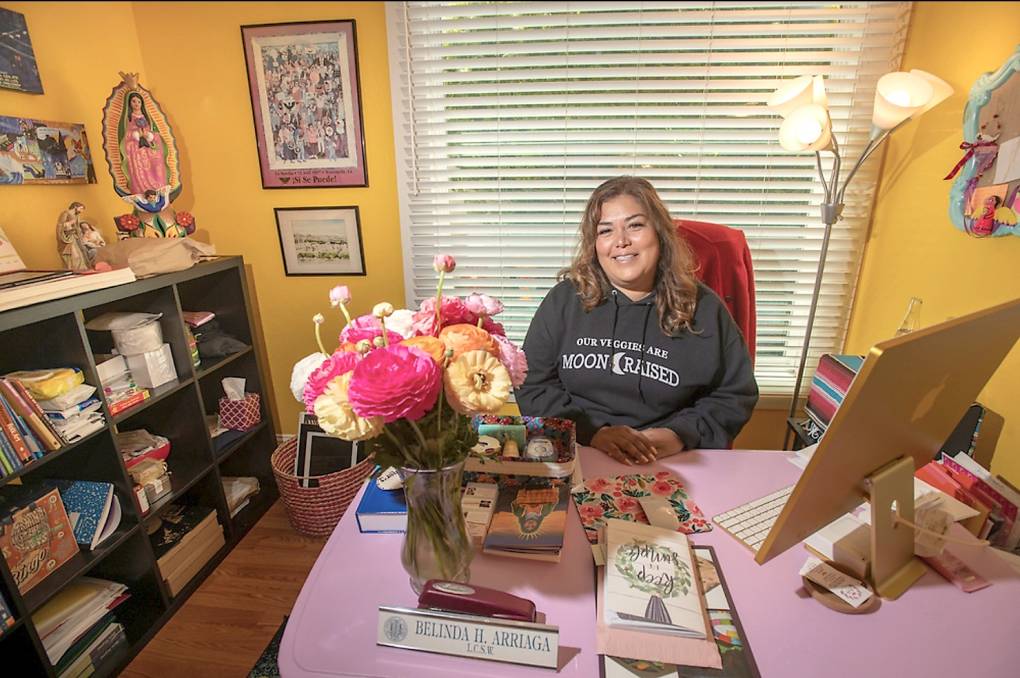
"caption": "Dr. Belinda Hernandez-Arriaga, founder and executive director of Ayudando Latinos a Soñar (ALAS), a nonprofit in Half Moon Bay that provides support services to the region's Latino farmworkers and their families. ",
"description": null,
"title": "Arriaga",
"credit": "Courtesy of ALAS",
"status": "inherit",
"altTag": "A woman sits behind a desk with a vase of flowers on it.",
"isLoading": false,
"fetchFailed": false
},
"news_11940019": {
"type": "attachments",
"id": "news_11940019",
"meta": {
"index": "attachments_1716263798",
"site": "news",
"id": "11940019",
"found": true
},
"title": "California Terra Gardens Mushroom Farm Mass Shooting",
"publishDate": 1675371144,
"status": "inherit",
"parent": 11940017,
"modified": 1706900985,
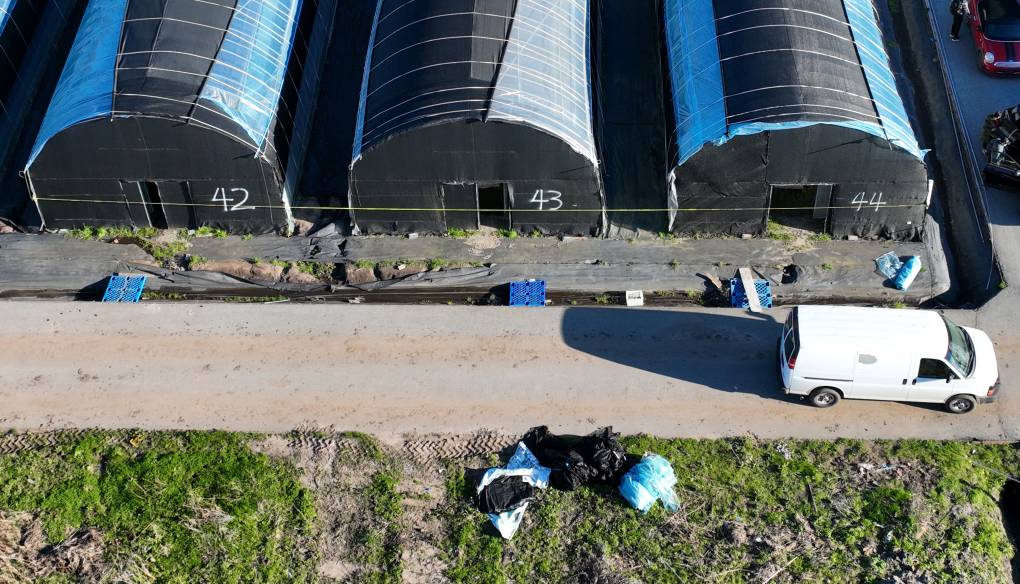
"caption": "Crime scene tape is seen from this drone view at the California Terra Gardens mushroom farm in Half Moon Bay on Wednesday, Jan. 25, 2023. Farm worker Chunli Zhao, 66, was booked on seven counts of murder after the Jan. 23 shooting. ",
"credit": "Jane Tyska/Digital First Media/East Bay Times via Getty Images",
"altTag": null,
"description": null,
"imgSizes": {
"medium": {
"file": "https://cdn.kqed.org/wp-content/uploads/sites/10/2023/02/GettyImages-1459869829-800x458.jpg",
"width": 800,
"height": 458,
"mimeType": "image/jpeg"
},
"large": {
"file": "https://cdn.kqed.org/wp-content/uploads/sites/10/2023/02/GettyImages-1459869829-1020x584.jpg",
"width": 1020,
"height": 584,
"mimeType": "image/jpeg"
},
"thumbnail": {
"file": "https://cdn.kqed.org/wp-content/uploads/sites/10/2023/02/GettyImages-1459869829-160x92.jpg",
"width": 160,
"height": 92,
"mimeType": "image/jpeg"
},
"1536x1536": {
"file": "https://cdn.kqed.org/wp-content/uploads/sites/10/2023/02/GettyImages-1459869829-1536x880.jpg",
"width": 1536,
"height": 880,
"mimeType": "image/jpeg"
},
"2048x2048": {
"file": "https://cdn.kqed.org/wp-content/uploads/sites/10/2023/02/GettyImages-1459869829-2048x1173.jpg",
"width": 2048,
"height": 1173,
"mimeType": "image/jpeg"
},
"post-thumbnail": {
"file": "https://cdn.kqed.org/wp-content/uploads/sites/10/2023/02/GettyImages-1459869829-672x372.jpg",
"width": 672,
"height": 372,
"mimeType": "image/jpeg"
},
"twentyfourteen-full-width": {
"file": "https://cdn.kqed.org/wp-content/uploads/sites/10/2023/02/GettyImages-1459869829-1038x576.jpg",
"width": 1038,
"height": 576,
"mimeType": "image/jpeg"
},
"full-width": {
"file": "https://cdn.kqed.org/wp-content/uploads/sites/10/2023/02/GettyImages-1459869829-1920x1100.jpg",
"width": 1920,
"height": 1100,
"mimeType": "image/jpeg"
},
"kqedFullSize": {
"file": "https://cdn.kqed.org/wp-content/uploads/sites/10/2023/02/GettyImages-1459869829-scaled-e1776791105481.jpg",
"width": 2000,
"height": 1145
}
},
"isLoading": false,
"fetchFailed": false
},
"news_11939606": {
"type": "attachments",
"id": "news_11939606",
"meta": {
"index": "attachments_1716263798",
"site": "news",
"id": "11939606",
"found": true
},
"parent": 11939603,
"imgSizes": {
"twentyfourteen-full-width": {
"file": "https://ww2.kqed.org/app/uploads/sites/10/2023/01/027_KQED_HMBMassShootingVigil_01272023-1038x576.jpg",
"width": 1038,
"mimeType": "image/jpeg",
"height": 576
},
"thumbnail": {
"file": "https://ww2.kqed.org/app/uploads/sites/10/2023/01/027_KQED_HMBMassShootingVigil_01272023-160x107.jpg",
"width": 160,
"mimeType": "image/jpeg",
"height": 107
},
"post-thumbnail": {
"file": "https://ww2.kqed.org/app/uploads/sites/10/2023/01/027_KQED_HMBMassShootingVigil_01272023-672x372.jpg",
"width": 672,
"mimeType": "image/jpeg",
"height": 372
},
"kqedFullSize": {
"file": "https://ww2.kqed.org/app/uploads/sites/10/2023/01/027_KQED_HMBMassShootingVigil_01272023.jpg",
"width": 1920,
"height": 1280
},
"large": {
"file": "https://ww2.kqed.org/app/uploads/sites/10/2023/01/027_KQED_HMBMassShootingVigil_01272023-1020x680.jpg",
"width": 1020,
"mimeType": "image/jpeg",
"height": 680
},
"1536x1536": {
"file": "https://ww2.kqed.org/app/uploads/sites/10/2023/01/027_KQED_HMBMassShootingVigil_01272023-1536x1024.jpg",
"width": 1536,
"mimeType": "image/jpeg",
"height": 1024
},
"medium": {
"file": "https://ww2.kqed.org/app/uploads/sites/10/2023/01/027_KQED_HMBMassShootingVigil_01272023-800x533.jpg",
"width": 800,
"mimeType": "image/jpeg",
"height": 533
}
},
"publishDate": 1674954124,
"modified": 1674954208,
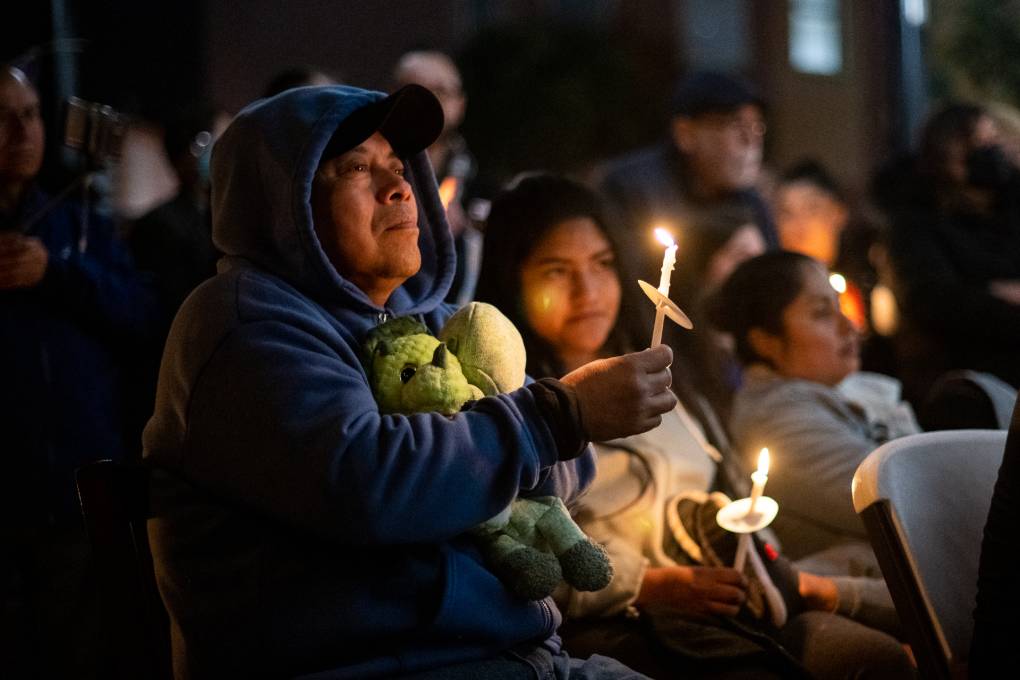
"caption": "Friends and family of the Half Moon Bay mass shooting victims listen to speakers during a vigil in Half Moon Bay on Jan. 27, 2023.",
"description": null,
"title": "027_KQED_HMBMassShootingVigil_01272023",
"credit": "Beth LaBerge/KQED",
"status": "inherit",
"altTag": "An Asian man in a blue jacket holds a candle as he looks up, with other mourners around him.",
"isLoading": false,
"fetchFailed": false
},
"news_11938995": {
"type": "attachments",
"id": "news_11938995",
"meta": {
"index": "attachments_1716263798",
"site": "news",
"id": "11938995",
"found": true
},
"parent": 11938972,
"imgSizes": {
"twentyfourteen-full-width": {
"file": "https://ww2.kqed.org/app/uploads/sites/10/2023/01/1000-2-1000x576.jpg",
"width": 1000,
"mimeType": "image/jpeg",
"height": 576
},
"thumbnail": {
"file": "https://ww2.kqed.org/app/uploads/sites/10/2023/01/1000-2-160x107.jpg",
"width": 160,
"mimeType": "image/jpeg",
"height": 107
},
"post-thumbnail": {
"file": "https://ww2.kqed.org/app/uploads/sites/10/2023/01/1000-2-672x372.jpg",
"width": 672,
"mimeType": "image/jpeg",
"height": 372
},
"kqedFullSize": {
"file": "https://ww2.kqed.org/app/uploads/sites/10/2023/01/1000-2.jpg",
"width": 1000,
"height": 667
},
"medium": {
"file": "https://ww2.kqed.org/app/uploads/sites/10/2023/01/1000-2-800x534.jpg",
"width": 800,
"mimeType": "image/jpeg",
"height": 534
}
},
"publishDate": 1674535460,
"modified": 1674535512,
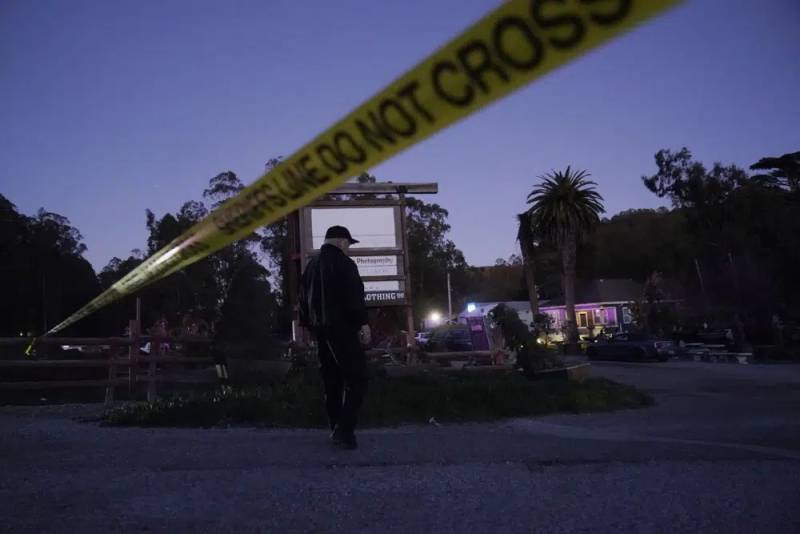
"caption": "Law enforcement cordon off one of the crime scenes in Half Moon Bay on Jan. 23, 2023. Seven people were killed in two related shootings, officials say, and the suspect is now in custody.",
"description": null,
"title": "1000 (2)",
"credit": "Jeff Chiu/AP",
"status": "inherit",
"altTag": null,
"isLoading": false,
"fetchFailed": false
},
"news_11930843": {
"type": "attachments",
"id": "news_11930843",
"meta": {
"index": "attachments_1716263798",
"site": "news",
"id": "11930843",
"found": true
},
"parent": 11930830,
"imgSizes": {
"twentyfourteen-full-width": {
"file": "https://ww2.kqed.org/app/uploads/sites/10/2022/11/IMG_9377-1038x576.jpg",
"width": 1038,
"mimeType": "image/jpeg",
"height": 576
},
"thumbnail": {
"file": "https://ww2.kqed.org/app/uploads/sites/10/2022/11/IMG_9377-160x113.jpg",
"width": 160,
"mimeType": "image/jpeg",
"height": 113
},
"post-thumbnail": {
"file": "https://ww2.kqed.org/app/uploads/sites/10/2022/11/IMG_9377-672x372.jpg",
"width": 672,
"mimeType": "image/jpeg",
"height": 372
},
"kqedFullSize": {
"file": "https://ww2.kqed.org/app/uploads/sites/10/2022/11/IMG_9377-scaled.jpg",
"width": 2560,
"height": 1801
},
"2048x2048": {
"file": "https://ww2.kqed.org/app/uploads/sites/10/2022/11/IMG_9377-2048x1441.jpg",
"width": 2048,
"mimeType": "image/jpeg",
"height": 1441
},
"large": {
"file": "https://ww2.kqed.org/app/uploads/sites/10/2022/11/IMG_9377-1020x718.jpg",
"width": 1020,
"mimeType": "image/jpeg",
"height": 718
},
"1536x1536": {
"file": "https://ww2.kqed.org/app/uploads/sites/10/2022/11/IMG_9377-1536x1081.jpg",
"width": 1536,
"mimeType": "image/jpeg",
"height": 1081
},
"full-width": {
"file": "https://ww2.kqed.org/app/uploads/sites/10/2022/11/IMG_9377-1920x1351.jpg",
"width": 1920,
"mimeType": "image/jpeg",
"height": 1351
},
"medium": {
"file": "https://ww2.kqed.org/app/uploads/sites/10/2022/11/IMG_9377-800x563.jpg",
"width": 800,
"mimeType": "image/jpeg",
"height": 563
}
},
"publishDate": 1667342733,
"modified": 1667343940,
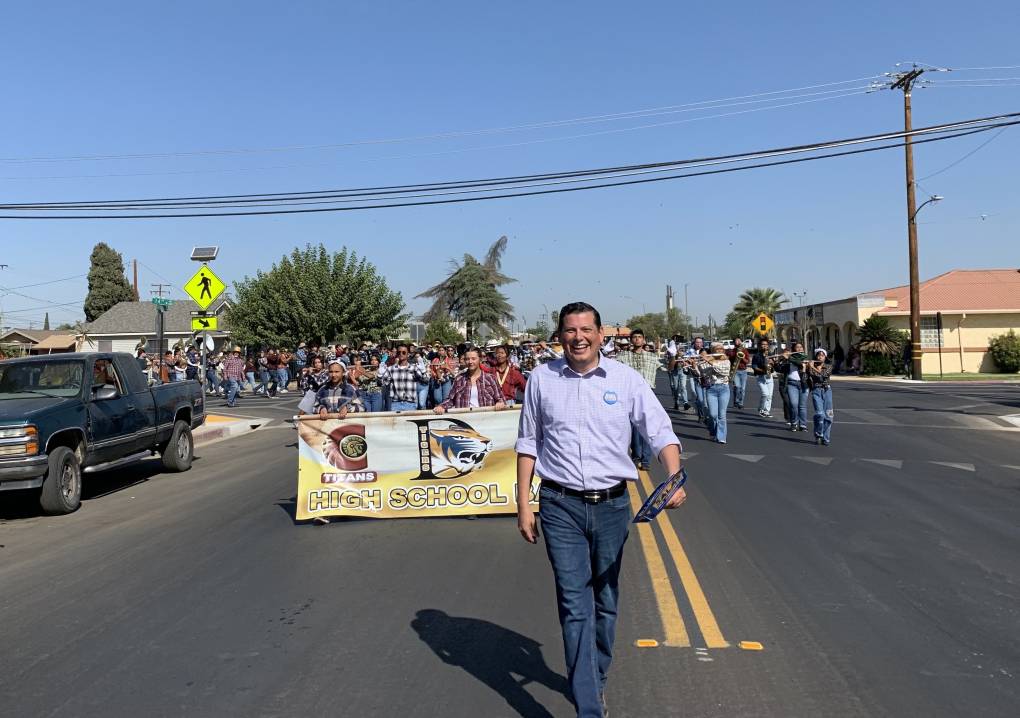
"caption": "Democratic Assemblymember Rudy Salas campaigns for Congress at the Harvest Holidays Parade in Delano on Oct. 8, 2022.",
"description": null,
"title": "IMG_9377",
"credit": "Marisa Lagos/KQED",
"status": "inherit",
"altTag": "A man walks in front of a parade of people on a wide street in front of a blue sky",
"isLoading": false,
"fetchFailed": false
},
"news_11923798": {
"type": "attachments",
"id": "news_11923798",
"meta": {
"index": "attachments_1716263798",
"site": "news",
"id": "11923798",
"found": true
},
"parent": 11923693,
"imgSizes": {
"twentyfourteen-full-width": {
"file": "https://ww2.kqed.org/app/uploads/sites/10/2022/08/077_KQED_UnitedFarmWorkersMarch_08242022-1038x576.jpg",
"width": 1038,
"mimeType": "image/jpeg",
"height": 576
},
"thumbnail": {
"file": "https://ww2.kqed.org/app/uploads/sites/10/2022/08/077_KQED_UnitedFarmWorkersMarch_08242022-160x107.jpg",
"width": 160,
"mimeType": "image/jpeg",
"height": 107
},
"post-thumbnail": {
"file": "https://ww2.kqed.org/app/uploads/sites/10/2022/08/077_KQED_UnitedFarmWorkersMarch_08242022-672x372.jpg",
"width": 672,
"mimeType": "image/jpeg",
"height": 372
},
"kqedFullSize": {
"file": "https://ww2.kqed.org/app/uploads/sites/10/2022/08/077_KQED_UnitedFarmWorkersMarch_08242022.jpg",
"width": 1920,
"height": 1278
},
"large": {
"file": "https://ww2.kqed.org/app/uploads/sites/10/2022/08/077_KQED_UnitedFarmWorkersMarch_08242022-1020x679.jpg",
"width": 1020,
"mimeType": "image/jpeg",
"height": 679
},
"1536x1536": {
"file": "https://ww2.kqed.org/app/uploads/sites/10/2022/08/077_KQED_UnitedFarmWorkersMarch_08242022-1536x1022.jpg",
"width": 1536,
"mimeType": "image/jpeg",
"height": 1022
},
"medium": {
"file": "https://ww2.kqed.org/app/uploads/sites/10/2022/08/077_KQED_UnitedFarmWorkersMarch_08242022-800x533.jpg",
"width": 800,
"mimeType": "image/jpeg",
"height": 533
}
},
"publishDate": 1661556619,
"modified": 1661794784,
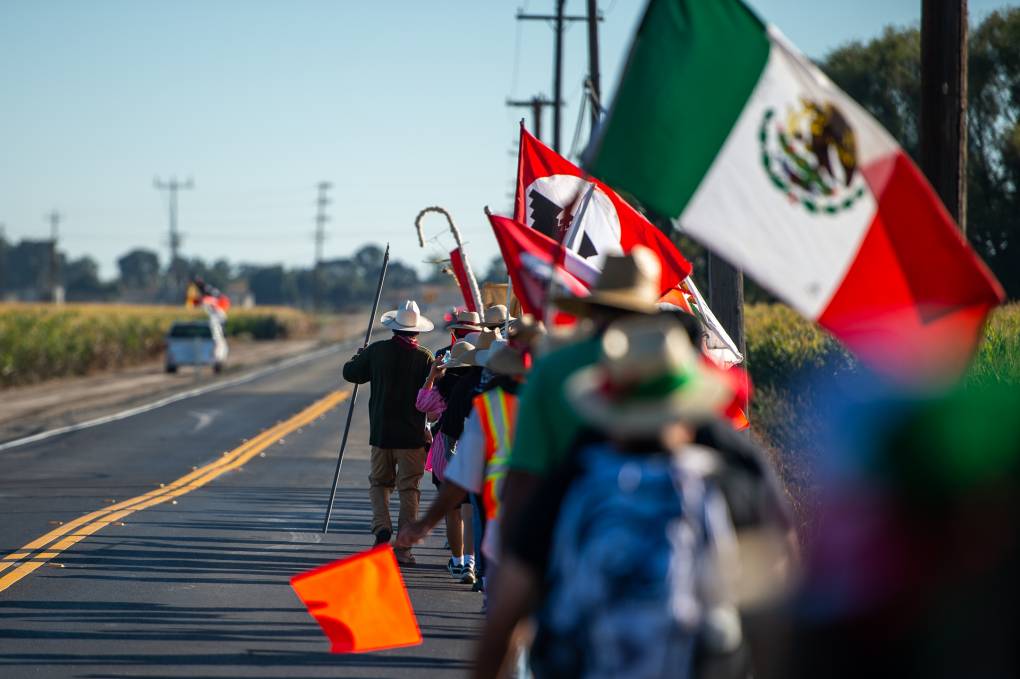
"caption": "Farmworkers and their supporters march through Walnut Grove on Day 22 of their 24-day 'March for the Governor's Signature' on Wednesday, to persuade Gov. Gavin Newsom to sign Assembly Bill 2183, the Agricultural Labor Relations Voting Choice Act. The march started in Delano and concluded 350 miles away in Sacramento on Friday.",
"description": null,
"title": "077_KQED_UnitedFarmWorkersMarch_08242022",
"credit": "Beth LaBerge/KQED",
"status": "inherit",
"altTag": "line of marchers carrying union flags and a mexican flag walk down a rural 2-lane highway in the hot sun",
"isLoading": false,
"fetchFailed": false
},
"news_11920659": {
"type": "attachments",
"id": "news_11920659",
"meta": {
"index": "attachments_1716263798",
"site": "news",
"id": "11920659",
"found": true
},
"parent": 11920632,
"imgSizes": {
"twentyfourteen-full-width": {
"file": "https://ww2.kqed.org/app/uploads/sites/10/2022/07/FarmerIrrigator-cropped-1038x576.jpg",
"width": 1038,
"mimeType": "image/jpeg",
"height": 576
},
"thumbnail": {
"file": "https://ww2.kqed.org/app/uploads/sites/10/2022/07/FarmerIrrigator-cropped-160x87.jpg",
"width": 160,
"mimeType": "image/jpeg",
"height": 87
},
"post-thumbnail": {
"file": "https://ww2.kqed.org/app/uploads/sites/10/2022/07/FarmerIrrigator-cropped-672x372.jpg",
"width": 672,
"mimeType": "image/jpeg",
"height": 372
},
"kqedFullSize": {
"file": "https://ww2.kqed.org/app/uploads/sites/10/2022/07/FarmerIrrigator-cropped.jpg",
"width": 1920,
"height": 1048
},
"large": {
"file": "https://ww2.kqed.org/app/uploads/sites/10/2022/07/FarmerIrrigator-cropped-1020x557.jpg",
"width": 1020,
"mimeType": "image/jpeg",
"height": 557
},
"1536x1536": {
"file": "https://ww2.kqed.org/app/uploads/sites/10/2022/07/FarmerIrrigator-cropped-1536x838.jpg",
"width": 1536,
"mimeType": "image/jpeg",
"height": 838
},
"medium": {
"file": "https://ww2.kqed.org/app/uploads/sites/10/2022/07/FarmerIrrigator-cropped-800x437.jpg",
"width": 800,
"mimeType": "image/jpeg",
"height": 437
}
},
"publishDate": 1658963862,
"modified": 1659034658,
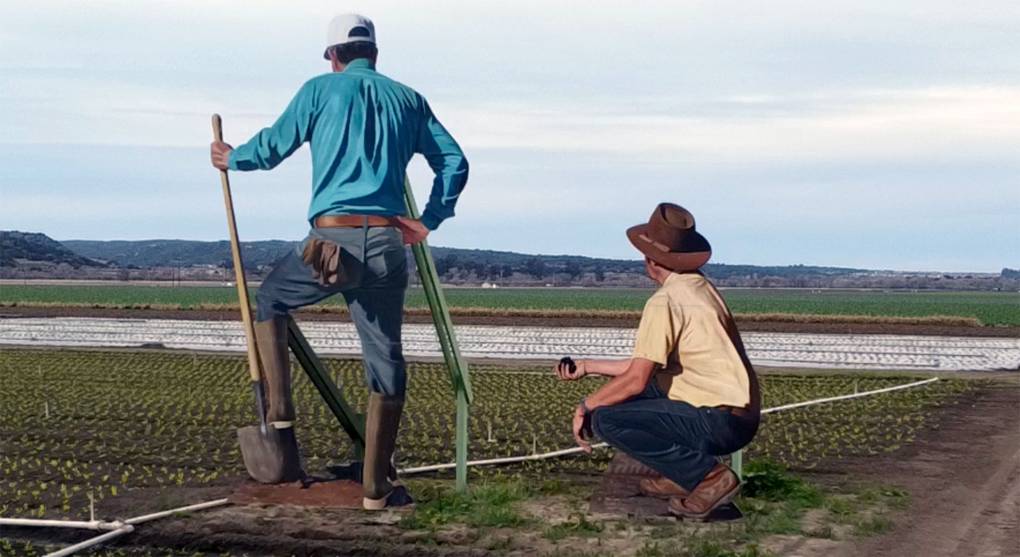
"caption": "Two of the 11 subjects in Cerney's \"Farmer & Irrigator\" installation at The Farm in Salinas. The two paintings are the most visible subjects that can be seen by drivers on Highway 68.",
"description": null,
"title": "FarmerIrrigator-cropped",
"credit": "Cesar Saldaña/KQED",
"status": "inherit",
"altTag": "Large paintings stand in a flat field. They depic two men in work clothes, one holds a shovel, the other a handful of dirt.",
"isLoading": false,
"fetchFailed": false
},
"news_11915847": {
"type": "attachments",
"id": "news_11915847",
"meta": {
"index": "attachments_1716263798",
"site": "news",
"id": "11915847",
"found": true
},
"parent": 11915841,
"imgSizes": {
"twentyfourteen-full-width": {
"file": "https://ww2.kqed.org/app/uploads/sites/10/2022/06/IMG_2110-1038x576.jpg",
"width": 1038,
"mimeType": "image/jpeg",
"height": 576
},
"thumbnail": {
"file": "https://ww2.kqed.org/app/uploads/sites/10/2022/06/IMG_2110-160x120.jpg",
"width": 160,
"mimeType": "image/jpeg",
"height": 120
},
"post-thumbnail": {
"file": "https://ww2.kqed.org/app/uploads/sites/10/2022/06/IMG_2110-672x372.jpg",
"width": 672,
"mimeType": "image/jpeg",
"height": 372
},
"kqedFullSize": {
"file": "https://ww2.kqed.org/app/uploads/sites/10/2022/06/IMG_2110-scaled.jpg",
"width": 2560,
"height": 1920
},
"2048x2048": {
"file": "https://ww2.kqed.org/app/uploads/sites/10/2022/06/IMG_2110-2048x1536.jpg",
"width": 2048,
"mimeType": "image/jpeg",
"height": 1536
},
"large": {
"file": "https://ww2.kqed.org/app/uploads/sites/10/2022/06/IMG_2110-1020x765.jpg",
"width": 1020,
"mimeType": "image/jpeg",
"height": 765
},
"1536x1536": {
"file": "https://ww2.kqed.org/app/uploads/sites/10/2022/06/IMG_2110-1536x1152.jpg",
"width": 1536,
"mimeType": "image/jpeg",
"height": 1152
},
"full-width": {
"file": "https://ww2.kqed.org/app/uploads/sites/10/2022/06/IMG_2110-1920x1440.jpg",
"width": 1920,
"mimeType": "image/jpeg",
"height": 1440
},
"medium": {
"file": "https://ww2.kqed.org/app/uploads/sites/10/2022/06/IMG_2110-800x600.jpg",
"width": 800,
"mimeType": "image/jpeg",
"height": 600
}
},
"publishDate": 1654194898,
"modified": 1654203164,
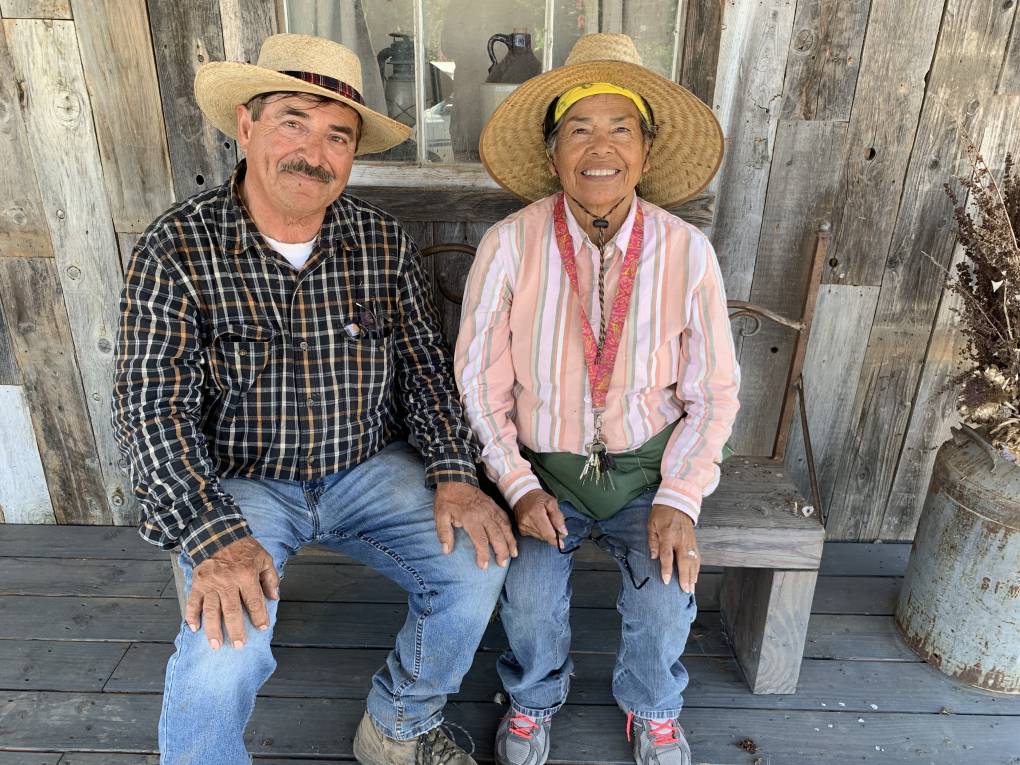
"caption": "Manuel and Olga Jimenez designed and created a 13-acre botanical garden to beautify their small town of Woodlake and help kids get interested in agriculture.",
"description": null,
"title": "IMG_2110",
"credit": "Alice Daniel/KVPR",
"status": "inherit",
"altTag": null,
"isLoading": false,
"fetchFailed": false
},
"news_11910130": {
"type": "attachments",
"id": "news_11910130",
"meta": {
"index": "attachments_1716263798",
"site": "news",
"id": "11910130",
"found": true
},
"parent": 11910083,
"imgSizes": {
"twentyfourteen-full-width": {
"file": "https://ww2.kqed.org/app/uploads/sites/10/2022/04/RS54926_025_KQED_CesarChavezDayUFWRally_03312022-qut-1038x576.jpg",
"width": 1038,
"mimeType": "image/jpeg",
"height": 576
},
"thumbnail": {
"file": "https://ww2.kqed.org/app/uploads/sites/10/2022/04/RS54926_025_KQED_CesarChavezDayUFWRally_03312022-qut-160x107.jpg",
"width": 160,
"mimeType": "image/jpeg",
"height": 107
},
"post-thumbnail": {
"file": "https://ww2.kqed.org/app/uploads/sites/10/2022/04/RS54926_025_KQED_CesarChavezDayUFWRally_03312022-qut-672x372.jpg",
"width": 672,
"mimeType": "image/jpeg",
"height": 372
},
"kqedFullSize": {
"file": "https://ww2.kqed.org/app/uploads/sites/10/2022/04/RS54926_025_KQED_CesarChavezDayUFWRally_03312022-qut.jpg",
"width": 1920,
"height": 1280
},
"large": {
"file": "https://ww2.kqed.org/app/uploads/sites/10/2022/04/RS54926_025_KQED_CesarChavezDayUFWRally_03312022-qut-1020x680.jpg",
"width": 1020,
"mimeType": "image/jpeg",
"height": 680
},
"1536x1536": {
"file": "https://ww2.kqed.org/app/uploads/sites/10/2022/04/RS54926_025_KQED_CesarChavezDayUFWRally_03312022-qut-1536x1024.jpg",
"width": 1536,
"mimeType": "image/jpeg",
"height": 1024
},
"medium": {
"file": "https://ww2.kqed.org/app/uploads/sites/10/2022/04/RS54926_025_KQED_CesarChavezDayUFWRally_03312022-qut-800x533.jpg",
"width": 800,
"mimeType": "image/jpeg",
"height": 533
}
},
"publishDate": 1648844091,
"modified": 1648856725,
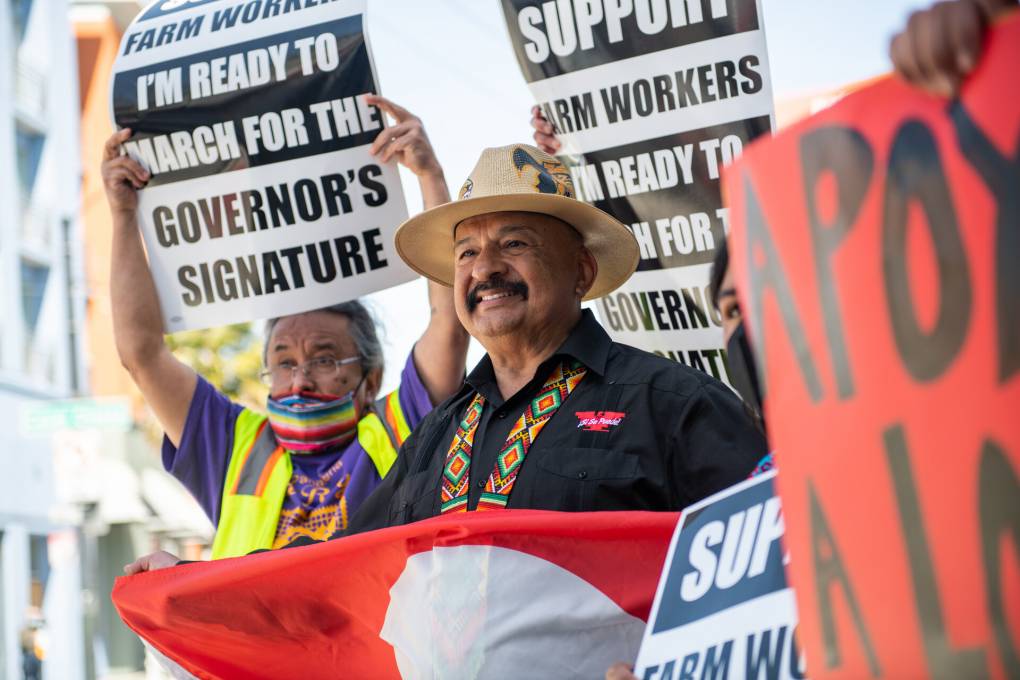
"caption": "Louie Gutierrez (left) and Roberto Hernandez rally in support of United Farm Workers on César Chávez Street in San Francisco on March 31, 2022, during a César Chávez Day demonstration calling on Gov. Gavin Newsom to sign a bill that would give farmworkers the option to vote by mail in union elections.",
"description": null,
"title": "RS54926_025_KQED_CesarChavezDayUFWRally_03312022-qut",
"credit": "Beth LaBerge/KQED",
"status": "inherit",
"altTag": "Smiling demonstrators, one wearing a straw fedora and colorful beaded necklace and the other a striped, multicolored facemask, hold signs reading 'I'm ready to march for the governor's signature.'",
"isLoading": false,
"fetchFailed": false
},
"news_11907199": {
"type": "attachments",
"id": "news_11907199",
"meta": {
"index": "attachments_1716263798",
"site": "news",
"id": "11907199",
"found": true
},
"parent": 11907155,
"imgSizes": {
"twentyfourteen-full-width": {
"file": "https://ww2.kqed.org/app/uploads/sites/10/2022/03/ExcludedWorkersRallySac-1038x576.jpg",
"width": 1038,
"mimeType": "image/jpeg",
"height": 576
},
"thumbnail": {
"file": "https://ww2.kqed.org/app/uploads/sites/10/2022/03/ExcludedWorkersRallySac-160x104.jpg",
"width": 160,
"mimeType": "image/jpeg",
"height": 104
},
"post-thumbnail": {
"file": "https://ww2.kqed.org/app/uploads/sites/10/2022/03/ExcludedWorkersRallySac-672x372.jpg",
"width": 672,
"mimeType": "image/jpeg",
"height": 372
},
"kqedFullSize": {
"file": "https://ww2.kqed.org/app/uploads/sites/10/2022/03/ExcludedWorkersRallySac.jpg",
"width": 1920,
"height": 1242
},
"large": {
"file": "https://ww2.kqed.org/app/uploads/sites/10/2022/03/ExcludedWorkersRallySac-1020x660.jpg",
"width": 1020,
"mimeType": "image/jpeg",
"height": 660
},
"1536x1536": {
"file": "https://ww2.kqed.org/app/uploads/sites/10/2022/03/ExcludedWorkersRallySac-1536x994.jpg",
"width": 1536,
"mimeType": "image/jpeg",
"height": 994
},
"medium": {
"file": "https://ww2.kqed.org/app/uploads/sites/10/2022/03/ExcludedWorkersRallySac-800x518.jpg",
"width": 800,
"mimeType": "image/jpeg",
"height": 518
}
},
"publishDate": 1646420431,
"modified": 1646421313,
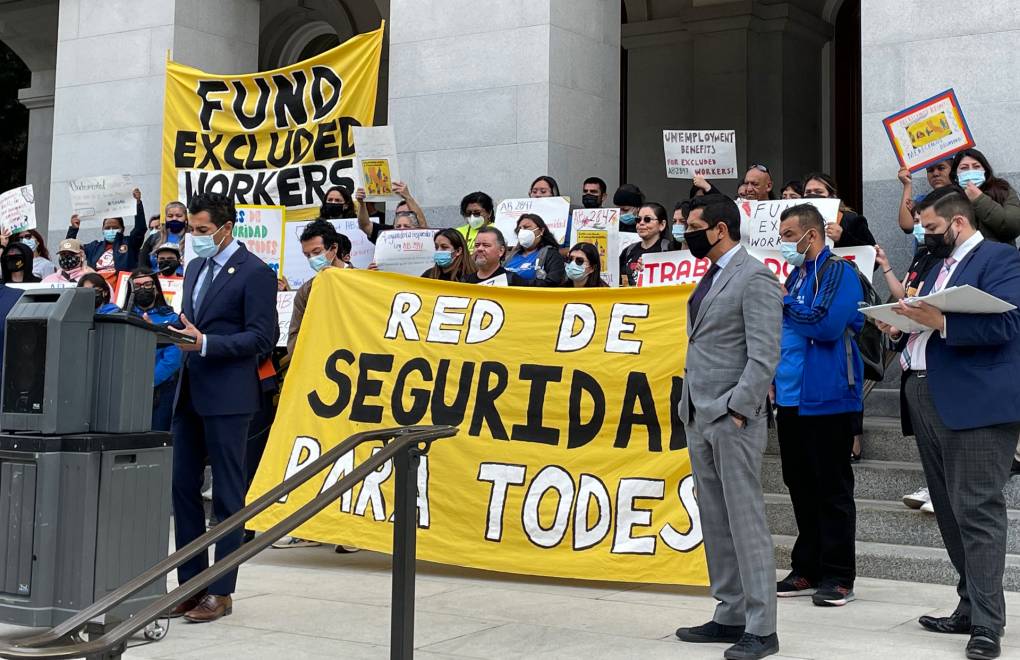
"caption": "Assemblymember Robert Rivas (left, at podium) speaks in support of AB 2847, which he coauthored, as supporters rally outside the state Capitol in Sacramento on March 3, 2022.",
"description": null,
"title": "ExcludedWorkersRallySac",
"credit": "Courtesy of Sumeet Bal, California Immigrant Policy Center",
"status": "inherit",
"altTag": "man in suit speaks at podium as ralliers hold bright yellow signs reading 'fund excluded workers'",
"isLoading": false,
"fetchFailed": false
},
"news_11904228": {
"type": "attachments",
"id": "news_11904228",
"meta": {
"index": "attachments_1716263798",
"site": "news",
"id": "11904228",
"found": true
},
"parent": 11903964,
"imgSizes": {
"twentyfourteen-full-width": {
"file": "https://ww2.kqed.org/app/uploads/sites/10/2022/02/image5PT-1038x576.jpeg",
"width": 1038,
"mimeType": "image/jpeg",
"height": 576
},
"thumbnail": {
"file": "https://ww2.kqed.org/app/uploads/sites/10/2022/02/image5PT-160x109.jpeg",
"width": 160,
"mimeType": "image/jpeg",
"height": 109
},
"post-thumbnail": {
"file": "https://ww2.kqed.org/app/uploads/sites/10/2022/02/image5PT-672x372.jpeg",
"width": 672,
"mimeType": "image/jpeg",
"height": 372
},
"kqedFullSize": {
"file": "https://ww2.kqed.org/app/uploads/sites/10/2022/02/image5PT.jpeg",
"width": 1170,
"height": 800
},
"large": {
"file": "https://ww2.kqed.org/app/uploads/sites/10/2022/02/image5PT-1020x697.jpeg",
"width": 1020,
"mimeType": "image/jpeg",
"height": 697
},
"medium": {
"file": "https://ww2.kqed.org/app/uploads/sites/10/2022/02/image5PT-800x547.jpeg",
"width": 800,
"mimeType": "image/jpeg",
"height": 547
}
},
"publishDate": 1644021945,
"modified": 1644022031,
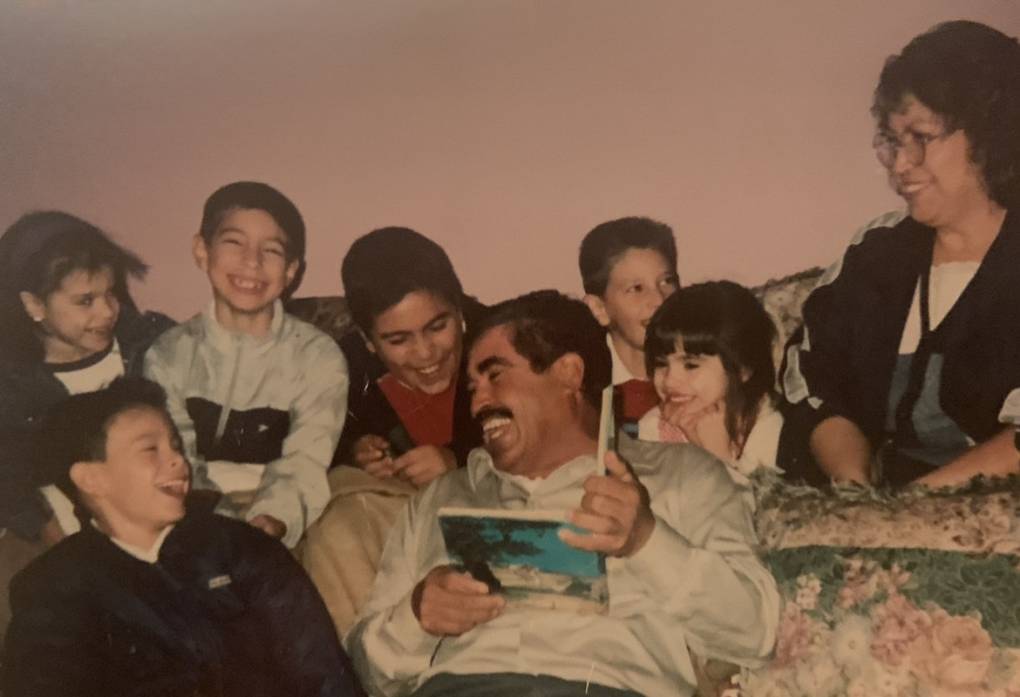
"caption": "Tomás Reyes Soto with his wife and grandchildren in their home in Madera in 2004. ",
"description": null,
"title": "image5PT",
"credit": "Courtesy Madi Bolaños",
"status": "inherit",
"altTag": "A man reading a book, surrounded by his wife and young grandchildren.",
"isLoading": false,
"fetchFailed": false
},
"news_11901393": {
"type": "attachments",
"id": "news_11901393",
"meta": {
"index": "attachments_1716263798",
"site": "news",
"id": "11901393",
"found": true
},
"parent": 11901390,
"imgSizes": {
"thumbnail": {
"file": "https://ww2.kqed.org/app/uploads/sites/10/2022/01/Erma-and-Jaime-Cortez-in-Potato-Field-San-Juan-Bautista-ca-1968-160x158.jpg",
"width": 160,
"mimeType": "image/jpeg",
"height": 158
},
"post-thumbnail": {
"file": "https://ww2.kqed.org/app/uploads/sites/10/2022/01/Erma-and-Jaime-Cortez-in-Potato-Field-San-Juan-Bautista-ca-1968-516x372.jpg",
"width": 516,
"mimeType": "image/jpeg",
"height": 372
},
"kqedFullSize": {
"file": "https://ww2.kqed.org/app/uploads/sites/10/2022/01/Erma-and-Jaime-Cortez-in-Potato-Field-San-Juan-Bautista-ca-1968.jpg",
"width": 516,
"height": 508
}
},
"publishDate": 1641940586,
"modified": 1642545577,
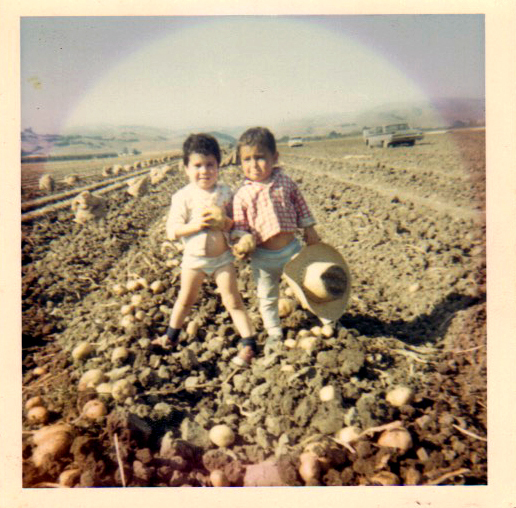
"caption": "Jaime Cortez (right) and his sister Erma in a potato field in San Juan Bautista in 1968.",
"description": "Two toddlers look at the camera as they stand in a potato field that has been overturned for harvesting, each one clutching a large potato. The child on the right also holds an adult-sized straw cowboy hat. ",
"title": "Erma and Jaime Cortez in Potato Field San Juan Bautista ca 1968",
"credit": "Courtesy Jaime Cortez",
"status": "inherit",
"altTag": "Two children are in a field with the child on the right holding a hat.",
"isLoading": false,
"fetchFailed": false
}
},
"audioPlayerReducer": {
"postId": "stream_live",
"isPaused": true,
"isPlaying": false,
"pfsActive": false,
"pledgeModalIsOpen": true,
"playerDrawerIsOpen": false,
"liveAudioPlayStartedAt": 0,
"liveAudioPlayContext": ""
},
"authorsReducer": {
"byline_news_11910083": {
"type": "authors",
"id": "byline_news_11910083",
"meta": {
"override": true
},
"slug": "byline_news_11910083",
"name": "\u003ca href=\"https://calmatters.org/author/melissa-montalvo/\">Melissa Montalvo\u003c/a>",
"isLoading": false
},
"gmarzorati": {
"type": "authors",
"id": "227",
"meta": {
"index": "authors_1716337520",
"id": "227",
"found": true
},
"name": "Guy Marzorati",
"firstName": "Guy",
"lastName": "Marzorati",
"slug": "gmarzorati",
"email": "gmarzorati@KQED.org",
"display_author_email": true,
"staff_mastheads": [
"news"
],
"title": "Correspondent",
"bio": "Guy Marzorati is a correspondent on KQED's California Politics and Government Desk, based in San Jose. A graduate of Santa Clara University, Guy joined KQED in 2013. He reports on state and local politics and produces KQED's digital voter guide.",
"avatar": "https://secure.gravatar.com/avatar/e7038b8dbfd55b104369b76b1cd0b9de?s=600&d=blank&r=g",
"twitter": "guymarzorati",
"facebook": null,
"instagram": null,
"linkedin": null,
"sites": [
{
"site": "",
"roles": [
"editor"
]
},
{
"site": "news",
"roles": [
"editor"
]
},
{
"site": "science",
"roles": [
"editor"
]
},
{
"site": "forum",
"roles": [
"editor"
]
},
{
"site": "elections",
"roles": [
"editor"
]
},
{
"site": "liveblog",
"roles": [
"editor"
]
}
],
"headData": {
"title": "Guy Marzorati | KQED",
"description": "Correspondent",
"ogImgSrc": "https://secure.gravatar.com/avatar/e7038b8dbfd55b104369b76b1cd0b9de?s=600&d=blank&r=g",
"twImgSrc": "https://secure.gravatar.com/avatar/e7038b8dbfd55b104369b76b1cd0b9de?s=600&d=blank&r=g"
},
"isLoading": false,
"link": "/author/gmarzorati"
},
"kqed": {
"type": "authors",
"id": "236",
"meta": {
"index": "authors_1716337520",
"id": "236",
"found": true
},
"name": "KQED News Staff",
"firstName": "KQED News Staff",
"lastName": null,
"slug": "kqed",
"email": "faq@kqed.org",
"display_author_email": false,
"staff_mastheads": [],
"title": null,
"bio": null,
"avatar": "https://secure.gravatar.com/avatar/ef0e801a68c4c54afa9180db14084167?s=600&d=blank&r=g",
"twitter": null,
"facebook": null,
"instagram": null,
"linkedin": null,
"sites": [
{
"site": "arts",
"roles": [
"contributor"
]
},
{
"site": "news",
"roles": [
"editor"
]
},
{
"site": "futureofyou",
"roles": [
"author"
]
}
],
"headData": {
"title": "KQED News Staff | KQED",
"description": null,
"ogImgSrc": "https://secure.gravatar.com/avatar/ef0e801a68c4c54afa9180db14084167?s=600&d=blank&r=g",
"twImgSrc": "https://secure.gravatar.com/avatar/ef0e801a68c4c54afa9180db14084167?s=600&d=blank&r=g"
},
"isLoading": false,
"link": "/author/kqed"
},
"mlagos": {
"type": "authors",
"id": "3239",
"meta": {
"index": "authors_1716337520",
"id": "3239",
"found": true
},
"name": "Marisa Lagos",
"firstName": "Marisa",
"lastName": "Lagos",
"slug": "mlagos",
"email": "mlagos@kqed.org",
"display_author_email": false,
"staff_mastheads": [
"news"
],
"title": "KQED Contributor",
"bio": "Marisa Lagos is a correspondent for KQED’s California Politics and Government Desk and co-hosts the award-winning show and podcast, Political Breakdown. At KQED, Lagos also conducts reporting, analysis and investigations into state, local and national politics for radio, TV, online and onstage. In 2022, she and co-host, Scott Shafer, moderated the only gubernatorial debate in California. In 2020, the \u003ci>Washington Post\u003c/i> named her one of the top political journalists in California; she was nominated for a Peabody and won several other awards for her work investigating the 2017 California wildfires. She has worked at the \u003ci>San Francisco Chronicle\u003c/i>, \u003ci>San Francisco Examiner\u003c/i> and \u003ci>Los Angeles Times\u003c/i>. A UC Santa Barbara graduate, she lives in San Francisco with her two sons and husband.",
"avatar": "https://secure.gravatar.com/avatar/a261a0d3696fc066871ef96b85b5e7d2?s=600&d=blank&r=g",
"twitter": "@mlagos",
"facebook": null,
"instagram": null,
"linkedin": null,
"sites": [
{
"site": "arts",
"roles": [
"author"
]
},
{
"site": "news",
"roles": [
"editor"
]
},
{
"site": "science",
"roles": [
"editor"
]
},
{
"site": "forum",
"roles": [
"author"
]
},
{
"site": "liveblog",
"roles": [
"author"
]
}
],
"headData": {
"title": "Marisa Lagos | KQED",
"description": "KQED Contributor",
"ogImgSrc": "https://secure.gravatar.com/avatar/a261a0d3696fc066871ef96b85b5e7d2?s=600&d=blank&r=g",
"twImgSrc": "https://secure.gravatar.com/avatar/a261a0d3696fc066871ef96b85b5e7d2?s=600&d=blank&r=g"
},
"isLoading": false,
"link": "/author/mlagos"
},
"afont": {
"type": "authors",
"id": "8637",
"meta": {
"index": "authors_1716337520",
"id": "8637",
"found": true
},
"name": "Amanda Font",
"firstName": "Amanda",
"lastName": "Font",
"slug": "afont",
"email": "afont@kqed.org",
"display_author_email": false,
"staff_mastheads": [],
"title": "KQED Contributor",
"bio": "Amanda Font is a producer on \u003cem>The Latest\u003c/em> podcast, and the host and co-producer of the series \u003cem>Audible Cosmos\u003c/em>. She has previously worked as a producer and reporter on the \u003cem>Bay Curious\u003c/em> podcast, and director of \u003cem>The California Report Magazine\u003c/em>. She grew up in the deserts of Southern California and moved north for the trees. Amanda earned a B.A. from the BECA program at San Francisco State, where she worked in the university's radio station. Amanda Font is represented by SAG-AFTRA.",
"avatar": "https://secure.gravatar.com/avatar/d9e81cf0117d5849b9cfb7ab4b1422f1?s=600&d=blank&r=g",
"twitter": null,
"facebook": null,
"instagram": null,
"linkedin": null,
"sites": [
{
"site": "news",
"roles": [
"add_users",
"create_users"
]
},
{
"site": "science",
"roles": []
},
{
"site": "forum",
"roles": [
"administrator"
]
},
{
"site": "perspectives",
"roles": [
"administrator"
]
},
{
"site": "radio",
"roles": [
"administrator"
]
}
],
"headData": {
"title": "Amanda Font | KQED",
"description": "KQED Contributor",
"ogImgSrc": "https://secure.gravatar.com/avatar/d9e81cf0117d5849b9cfb7ab4b1422f1?s=600&d=blank&r=g",
"twImgSrc": "https://secure.gravatar.com/avatar/d9e81cf0117d5849b9cfb7ab4b1422f1?s=600&d=blank&r=g"
},
"isLoading": false,
"link": "/author/afont"
},
"ecruzguevarra": {
"type": "authors",
"id": "8654",
"meta": {
"index": "authors_1716337520",
"id": "8654",
"found": true
},
"name": "Ericka Cruz Guevarra",
"firstName": "Ericka",
"lastName": "Cruz Guevarra",
"slug": "ecruzguevarra",
"email": "ecruzguevarra@kqed.org",
"display_author_email": true,
"staff_mastheads": [
"news"
],
"title": "Producer, The Bay Podcast",
"bio": "Ericka Cruz Guevarra is host of \u003ca href=\"https://www.kqed.org/podcasts/thebay\">\u003cem>The Bay\u003c/em>\u003c/a> podcast at KQED. Before host, she was the show’s producer. Her work in that capacity includes a three-part reported series on policing in Vallejo, which won a 2020 excellence in journalism award from the Society of Professional Journalists. Ericka has worked as a breaking news reporter at Oregon Public Broadcasting, helped produce the Code Switch podcast, and was KQED’s inaugural Raul Ramirez Diversity Fund intern. She’s also an alumna of NPR’s Next Generation Radio program. Send her an email if you have strong feelings about whether Fairfield and Suisun City are the Bay. Ericka is represented by SAG-AFTRA.",
"avatar": "https://secure.gravatar.com/avatar/25e5ab8d3d53fad2dcc7bb2b5c506b1a?s=600&d=blank&r=g",
"twitter": "NotoriousECG",
"facebook": null,
"instagram": null,
"linkedin": null,
"sites": [
{
"site": "arts",
"roles": [
"subscriber"
]
},
{
"site": "news",
"roles": [
"editor",
"manage_categories"
]
},
{
"site": "futureofyou",
"roles": [
"subscriber"
]
},
{
"site": "stateofhealth",
"roles": [
"subscriber"
]
},
{
"site": "science",
"roles": [
"editor"
]
},
{
"site": "forum",
"roles": [
"subscriber"
]
}
],
"headData": {
"title": "Ericka Cruz Guevarra | KQED",
"description": "Producer, The Bay Podcast",
"ogImgSrc": "https://secure.gravatar.com/avatar/25e5ab8d3d53fad2dcc7bb2b5c506b1a?s=600&d=blank&r=g",
"twImgSrc": "https://secure.gravatar.com/avatar/25e5ab8d3d53fad2dcc7bb2b5c506b1a?s=600&d=blank&r=g"
},
"isLoading": false,
"link": "/author/ecruzguevarra"
},
"fjhabvala": {
"type": "authors",
"id": "8659",
"meta": {
"index": "authors_1716337520",
"id": "8659",
"found": true
},
"name": "Farida Jhabvala Romero",
"firstName": "Farida",
"lastName": "Jhabvala Romero",
"slug": "fjhabvala",
"email": "fjhabvala@kqed.org",
"display_author_email": true,
"staff_mastheads": [
"news"
],
"title": "KQED Contributor",
"bio": "\u003cspan style=\"font-weight: 400;\">Farida Jhabvala Romero is a Labor Correspondent for KQED. She previously covered immigration. Farida was \u003ca href=\"https://www.ccnma.org/2022-most-influential-latina-journalists\">named\u003c/a> one of the 10 Most Influential Latina Journalists in California in 2022 by the California Chicano News Media Association. Her work has won awards from the Society of Professional Journalists (Northern California), as well as a national and regional Edward M. Murrow Award for the collaborative reporting projects “Dangerous Air” and “Graying California.” \u003c/span>\u003cspan style=\"font-weight: 400;\">Before joining KQED, Farida worked as a producer at Radio Bilingüe, a national public radio network. Farida earned her master’s degree in journalism from Stanford University.\u003c/span>",
"avatar": "https://secure.gravatar.com/avatar/c3ab27c5554b67b478f80971e515aa02?s=600&d=blank&r=g",
"twitter": "FaridaJhabvala",
"facebook": null,
"instagram": null,
"linkedin": "https://www.linkedin.com/in/faridajhabvala/",
"sites": [
{
"site": "news",
"roles": [
"editor"
]
},
{
"site": "stateofhealth",
"roles": [
"author"
]
}
],
"headData": {
"title": "Farida Jhabvala Romero | KQED",
"description": "KQED Contributor",
"ogImgSrc": "https://secure.gravatar.com/avatar/c3ab27c5554b67b478f80971e515aa02?s=600&d=blank&r=g",
"twImgSrc": "https://secure.gravatar.com/avatar/c3ab27c5554b67b478f80971e515aa02?s=600&d=blank&r=g"
},
"isLoading": false,
"link": "/author/fjhabvala"
},
"bwatt": {
"type": "authors",
"id": "11238",
"meta": {
"index": "authors_1716337520",
"id": "11238",
"found": true
},
"name": "Brian Watt",
"firstName": "Brian",
"lastName": "Watt",
"slug": "bwatt",
"email": "bwatt@KQED.org",
"display_author_email": false,
"staff_mastheads": [
"news"
],
"title": "Morning News Anchor",
"bio": "Brian Watt is KQED's morning radio news anchor. He joined the KQED News team in April of 2016. Prior to that, he worked as a Reporter for KPCC in Los Angeles and a producer at \u003cem>Marketplace.\u003c/em>\r\n\r\nDuring eight years at KPCC, Brian covered business and economics, and his work won several awards. In 2008, he won the Los Angeles Press Club’s first-place award for Business and Financial Reporting, Broadcast. He’s also received honorable mention and been first runner up for the Press Club’s Radio Journalist of the Year. He won two Golden Mike awards from the Radio and TV News Association of Southern California.\r\n\r\nBrian holds degrees in theater from Yale University and the Sorbonne, and has worked as an actor in France, Italy, Brazil, Hungary and . . . Hollywood. He appeared in a few television shows, including \u003cem>The West Wing, Judging Amy\u003c/em> and \u003cem>The District.\u003c/em>\r\n\r\nEmail: bwatt@KQED.org Twitter: @RadioBWatt",
"avatar": "https://secure.gravatar.com/avatar/55393ff57ed34e2be773ba4789dd6a19?s=600&d=blank&r=g",
"twitter": "@RadioBWatt",
"facebook": null,
"instagram": null,
"linkedin": null,
"sites": [
{
"site": "arts",
"roles": [
"contributor"
]
},
{
"site": "news",
"roles": [
"editor"
]
}
],
"headData": {
"title": "Brian Watt | KQED",
"description": "Morning News Anchor",
"ogImgSrc": "https://secure.gravatar.com/avatar/55393ff57ed34e2be773ba4789dd6a19?s=600&d=blank&r=g",
"twImgSrc": "https://secure.gravatar.com/avatar/55393ff57ed34e2be773ba4789dd6a19?s=600&d=blank&r=g"
},
"isLoading": false,
"link": "/author/bwatt"
},
"csaldana": {
"type": "authors",
"id": "11301",
"meta": {
"index": "authors_1716337520",
"id": "11301",
"found": true
},
"name": "Cesar Saldaña",
"firstName": "Cesar",
"lastName": "Saldaña",
"slug": "csaldana",
"email": "csaldana@kqed.org",
"display_author_email": false,
"staff_mastheads": [
"news"
],
"title": "KQED Contributor",
"bio": null,
"avatar": "https://secure.gravatar.com/avatar/04e89425007fe7102f750c79e76274bc?s=600&d=mm&r=g",
"twitter": null,
"facebook": null,
"instagram": null,
"linkedin": null,
"sites": [
{
"site": "news",
"roles": []
},
{
"site": "perspectives",
"roles": []
}
],
"headData": {
"title": "Cesar Saldaña | KQED",
"description": "KQED Contributor",
"ogImgSrc": "https://secure.gravatar.com/avatar/04e89425007fe7102f750c79e76274bc?s=600&d=mm&r=g",
"twImgSrc": "https://secure.gravatar.com/avatar/04e89425007fe7102f750c79e76274bc?s=600&d=mm&r=g"
},
"isLoading": false,
"link": "/author/csaldana"
},
"amontecillo": {
"type": "authors",
"id": "11649",
"meta": {
"index": "authors_1716337520",
"id": "11649",
"found": true
},
"name": "Alan Montecillo",
"firstName": "Alan",
"lastName": "Montecillo",
"slug": "amontecillo",
"email": "amontecillo@kqed.org",
"display_author_email": false,
"staff_mastheads": [
"news"
],
"title": "KQED Contributor",
"bio": "Alan Montecillo is the senior editor of \u003cem>\u003ca href=\"http://kqed.org/thebay\">The Bay\u003c/a>, \u003c/em> KQED's local news podcast. Before moving to the Bay Area, he worked as a senior talk show producer for WILL in Champaign-Urbana, Illinois and at Oregon Public Broadcasting in Portland, Oregon. He has won journalism awards from the Society of Professional Journalists Northern California, the Public Media Journalists Association, The Signal Awards, and has also received a regional Edward R. Murrow award. Alan is a Filipino American from Hong Kong and a graduate of Reed College.",
"avatar": "https://secure.gravatar.com/avatar/d5e4e7a76481969ccba76f4e2b5ccabc?s=600&d=blank&r=g",
"twitter": "alanmontecillo",
"facebook": null,
"instagram": null,
"linkedin": null,
"sites": [
{
"site": "",
"roles": [
"editor"
]
},
{
"site": "news",
"roles": [
"editor",
"manage_categories"
]
}
],
"headData": {
"title": "Alan Montecillo | KQED",
"description": "KQED Contributor",
"ogImgSrc": "https://secure.gravatar.com/avatar/d5e4e7a76481969ccba76f4e2b5ccabc?s=600&d=blank&r=g",
"twImgSrc": "https://secure.gravatar.com/avatar/d5e4e7a76481969ccba76f4e2b5ccabc?s=600&d=blank&r=g"
},
"isLoading": false,
"link": "/author/amontecillo"
},
"blaberge": {
"type": "authors",
"id": "11667",
"meta": {
"index": "authors_1716337520",
"id": "11667",
"found": true
},
"name": "Beth LaBerge",
"firstName": "Beth",
"lastName": "LaBerge",
"slug": "blaberge",
"email": "blaberge@KQED.org",
"display_author_email": true,
"staff_mastheads": [
"news"
],
"title": "Photographer, News",
"bio": "Beth LaBerge is a visual journalist for \u003ca href=\"https://www.kqed.org/news\">KQED News\u003c/a>.",
"avatar": "https://secure.gravatar.com/avatar/15e224cd55918d1876693b8280954875?s=600&d=blank&r=g",
"twitter": null,
"facebook": null,
"instagram": "https://www.instagram.com/bethlaberge/",
"linkedin": null,
"sites": [
{
"site": "arts",
"roles": [
"editor"
]
},
{
"site": "news",
"roles": [
"editor"
]
},
{
"site": "science",
"roles": [
"editor",
"contributor",
"author"
]
},
{
"site": "liveblog",
"roles": [
"editor"
]
}
],
"headData": {
"title": "Beth LaBerge | KQED",
"description": "Photographer, News",
"ogImgSrc": "https://secure.gravatar.com/avatar/15e224cd55918d1876693b8280954875?s=600&d=blank&r=g",
"twImgSrc": "https://secure.gravatar.com/avatar/15e224cd55918d1876693b8280954875?s=600&d=blank&r=g"
},
"isLoading": false,
"link": "/author/blaberge"
},
"ccabreralomeli": {
"type": "authors",
"id": "11708",
"meta": {
"index": "authors_1716337520",
"id": "11708",
"found": true
},
"name": "Carlos Cabrera-Lomelí",
"firstName": "Carlos",
"lastName": "Cabrera-Lomelí",
"slug": "ccabreralomeli",
"email": "ccabreralomeli@KQED.org",
"display_author_email": true,
"staff_mastheads": [
"news"
],
"title": "Community Reporter",
"bio": "Carlos Cabrera-Lomelí is a community reporter with KQED's digital engagement team. He also reports and co-produces for KQED's bilingual news hub KQED en Español. He grew up in San Francisco's Mission District and has previously worked with Univision, 48 Hills and REFORMA in Mexico City.",
"avatar": "https://secure.gravatar.com/avatar/e95ff80bb2eaf18a8f2af4dcf7ffb54b?s=600&d=mm&r=g",
"twitter": "@LomeliCabrera",
"facebook": null,
"instagram": null,
"linkedin": null,
"sites": [
{
"site": "arts",
"roles": [
"editor"
]
},
{
"site": "news",
"roles": [
"editor"
]
},
{
"site": "about",
"roles": [
"editor"
]
},
{
"site": "science",
"roles": [
"editor"
]
},
{
"site": "perspectives",
"roles": [
"editor"
]
},
{
"site": "elections",
"roles": [
"editor"
]
},
{
"site": "liveblog",
"roles": [
"contributor"
]
}
],
"headData": {
"title": "Carlos Cabrera-Lomelí | KQED",
"description": "Community Reporter",
"ogImgSrc": "https://secure.gravatar.com/avatar/e95ff80bb2eaf18a8f2af4dcf7ffb54b?s=600&d=mm&r=g",
"twImgSrc": "https://secure.gravatar.com/avatar/e95ff80bb2eaf18a8f2af4dcf7ffb54b?s=600&d=mm&r=g"
},
"isLoading": false,
"link": "/author/ccabreralomeli"
},
"agonzalez": {
"type": "authors",
"id": "11724",
"meta": {
"index": "authors_1716337520",
"id": "11724",
"found": true
},
"name": "Alexander Gonzalez",
"firstName": "Alexander",
"lastName": "Gonzalez",
"slug": "agonzalez",
"email": "AlexanderGonzalez@KQED.org",
"display_author_email": false,
"staff_mastheads": [
"news"
],
"title": "KQED Contributor",
"bio": null,
"avatar": "https://secure.gravatar.com/avatar/9e291ed34e154df4c662edf858b641d70b4859939bfe40be478408f9dfd057d2?s=600&d=blank&r=g",
"twitter": null,
"bluesky": null,
"facebook": null,
"instagram": null,
"linkedin": null,
"sites": [
{
"site": "arts",
"roles": [
"editor"
]
},
{
"site": "news",
"roles": [
"editor"
]
},
{
"site": "science",
"roles": [
"editor"
]
}
],
"headData": {
"title": "Alexander Gonzalez | KQED",
"description": "KQED Contributor",
"ogImgSrc": "https://secure.gravatar.com/avatar/9e291ed34e154df4c662edf858b641d70b4859939bfe40be478408f9dfd057d2?s=600&d=blank&r=g",
"twImgSrc": "https://secure.gravatar.com/avatar/9e291ed34e154df4c662edf858b641d70b4859939bfe40be478408f9dfd057d2?s=600&d=blank&r=g"
},
"isLoading": false,
"link": "/author/agonzalez"
},
"mesquinca": {
"type": "authors",
"id": "11802",
"meta": {
"index": "authors_1716337520",
"id": "11802",
"found": true
},
"name": "Maria Esquinca",
"firstName": "Maria",
"lastName": "Esquinca",
"slug": "mesquinca",
"email": "mesquinca@kqed.org",
"display_author_email": false,
"staff_mastheads": [],
"title": "Producer, The Bay",
"bio": "María Esquinca is a producer of The Bay. Before that, she was a New York Women’s Foundation IGNITE Fellow at Latino USA. She worked at Radio Bilingue where she covered the San Joaquin Valley. Maria has interned at WLRN, News 21, The New York Times Student Journalism Institute and at Crain’s Detroit Business as a Dow Jones News Fund Business Reporting Intern. She is an MFA graduate from the University of Miami. In 2017, she graduated from the Walter Cronkite School of Journalism and Mass Communication with a Master of Mass Communication. A fronteriza, she was born in Ciudad Juárez, Chihuahua, Mexico and grew up in El Paso, Texas.",
"avatar": "https://secure.gravatar.com/avatar/77cedba18aae91da775038ba06dcd8d0?s=600&d=blank&r=g",
"twitter": "@m_esquinca",
"facebook": null,
"instagram": null,
"linkedin": null,
"sites": [
{
"site": "news",
"roles": []
}
],
"headData": {
"title": "Maria Esquinca | KQED",
"description": "Producer, The Bay",
"ogImgSrc": "https://secure.gravatar.com/avatar/77cedba18aae91da775038ba06dcd8d0?s=600&d=blank&r=g",
"twImgSrc": "https://secure.gravatar.com/avatar/77cedba18aae91da775038ba06dcd8d0?s=600&d=blank&r=g"
},
"isLoading": false,
"link": "/author/mesquinca"
},
"mbolanos": {
"type": "authors",
"id": "11895",
"meta": {
"index": "authors_1716337520",
"id": "11895",
"found": true
},
"name": "Madi Bolaños",
"firstName": "Madi",
"lastName": "Bolaños",
"slug": "mbolanos",
"email": "mbolanos@kqed.org",
"display_author_email": false,
"staff_mastheads": [],
"title": "KQED Contributor",
"bio": null,
"avatar": "https://secure.gravatar.com/avatar/e6df5601c1f2d951e46a3fb42764330f?s=600&d=blank&r=g",
"twitter": null,
"bluesky": null,
"facebook": null,
"instagram": null,
"linkedin": null,
"sites": [
{
"site": "news",
"roles": [
"author"
]
}
],
"headData": {
"title": "Madi Bolaños | KQED",
"description": "KQED Contributor",
"ogImgSrc": "https://secure.gravatar.com/avatar/e6df5601c1f2d951e46a3fb42764330f?s=600&d=blank&r=g",
"twImgSrc": "https://secure.gravatar.com/avatar/e6df5601c1f2d951e46a3fb42764330f?s=600&d=blank&r=g"
},
"isLoading": false,
"link": "/author/mbolanos"
}
},
"pagesReducer": {
"news_tag_farmworkers": {
"type": "terms",
"id": "news_18269",
"meta": {
"index": "terms_1716263798",
"site": "news",
"id": "18269",
"score": 8.934682
},
"featImg": null,
"name": "farmworkers",
"description": null,
"taxonomy": "tag",
"headData": {
"twImgId": null,
"twTitle": null,
"ogTitle": null,
"ogImgId": null,
"twDescription": null,
"description": null,
"title": "farmworkers Archives | KQED News",
"ogDescription": null
},
"ttid": 18303,
"slug": "farmworkers",
"isLoading": false,
"title": "farmworkers",
"pageMeta": {
"site": "news",
"WpPageTemplate": "page-topic-editorial",
"currentPage": 7
},
"blocks": [
{
"blockName": "kqed/post-list",
"attrs": {
"layout": "cardArticle2",
"query": "posts/news?tag=farmworkers",
"seeMore": false,
"paginated": true,
"page": 7
}
},
{
"blockName": "kqed/ad"
}
]
}
},
"pfsSessionReducer": {},
"postsReducer": {
"stream_live": {
"type": "live",
"id": "stream_live",
"audioUrl": "https://streams.kqed.org/kqedradio",
"title": "Live Stream",
"excerpt": "Live Stream information currently unavailable.",
"link": "/radio",
"featImg": "",
"label": {
"name": "KQED Live",
"link": "/"
}
},
"stream_kqedNewscast": {
"type": "posts",
"id": "stream_kqedNewscast",
"audioUrl": "https://www.kqed.org/.stream/anon/radio/RDnews/newscast.mp3?_=1",
"title": "KQED Newscast",
"featImg": "",
"label": {
"name": "88.5 FM",
"link": "/"
}
},
"news_11940252": {
"type": "posts",
"id": "news_11940252",
"meta": {
"index": "posts_1716263798",
"site": "news",
"id": "11940252",
"score": null,
"sort": [
1675778455000
]
},
"guestAuthors": [],
"slug": "another-opportunity-to-fight-for-change-half-moon-bay-farmworker-advocate-to-attend-state-of-the-union",
"title": "'Another Opportunity to Fight for Change': Half Moon Bay Farmworker Advocate to Attend State of the Union",
"publishDate": 1675778455,
"format": "standard",
"headTitle": "‘Another Opportunity to Fight for Change’: Half Moon Bay Farmworker Advocate to Attend State of the Union | KQED",
"labelTerm": {
"site": "news"
},
"content": "\u003cp>A longtime advocate for Latino farmworkers and families in California’s coastal communities is heading to the U.S. Capitol this week to attend President Biden’s State of the Union address.\u003c/p>\n\u003cp>“I hope that my trip to Washington will be another opportunity to fight for change,” said Dr. Belinda Hernandez-Arriaga, founder and executive director of \u003ca href=\"https://www.alasdreams.com/\">Ayudando Latinos a Soñar (ALAS)\u003c/a>, a social services nonprofit based in Half Moon Bay, where \u003ca href=\"https://www.kqed.org/news/tag/half-moon-bay-shooting\">a gunman last month killed seven farmworkers\u003c/a> in what authorities believe was an incident of extreme workplace violence.[pullquote align=\"right\" size=\"medium\" citation=\"Dr. Belinda Hernandez-Arriaga, founder and executive director, Ayudando Latinos a Soñar\"]‘This tragedy brings to light the silence with which many have lived in … in these deplorable conditions with these inequitable wages and lack of health care.’[/pullquote]Hernandez-Arriaga, a mental health social worker and professor of counseling at the University of San Francisco, will be the guest on Tuesday night of U.S. Rep. Anna Eshoo, whose district includes Half Moon Bay.\u003c/p>\n\u003cp>“Her invitation, to me, really resonated with the opportunity to be able to push this conversation as a national agenda, to change the conditions for farmworkers across our country and at home,” said Hernandez-Arriaga, whose group has been working directly to support victims’ families in the aftermath of the Jan. 23 shooting rampage.\u003c/p>\n\u003cp>In advance of her trip, Hernandez-Arriaga spoke with KQED morning host Brian Watt about the urgent need to improve the working and living conditions of the largely underserved, overlooked communities she serves.\u003c/p>\n\u003cp>\u003cem>This interview has been edited for clarity and brevity.\u003c/em>\u003c/p>\n\u003cp>\u003cstrong>Since the shooting, ALAS has been working on the ground to give people critical services. What do they need now?\u003c/strong>\u003c/p>\n\u003cp>It’s such a hard question because of the pain that has been inflicted, the fear, the trauma. So many who have already been affected by trauma for so long are now left without answers, but really needing mental health support first and foremost. There’s so much that they need to share and to have safe spaces to do that.\u003c/p>\n\u003cp>They need the reassurance from our community leaders and our politicians that farmworker conditions will change. They need to know that there’s going to be a national response to improve the lives of farmworkers, their living conditions, their economic wages, their mental health, medical and so much more.\u003c/p>\n\u003cp>We are shaken at our core that this happened in our beautiful small pumpkin town community, where people come to see the Mavericks and cut Christmas trees and pumpkins.\u003c/p>\n\u003cp>\u003cstrong>Have people at the two farms where the shootings happened been able to return to work?\u003c/strong>\u003c/p>\n\u003cp>Some of them are trying to slowly find their way back to work. Others are paralyzed with fear, and others are confused and do not know what to do.\u003c/p>\n\u003cp>So ALAS has really been wrapping care around to say, you know, “We’re here to support you.” Our county leaders have been equally supportive and getting funding to them so that they can take the time they need to be able to process and heal through this journey.\u003c/p>\n\u003cp>\u003cstrong>Before the shooting, your organization was already trying to improve conditions for farmworkers in California, many of whom don’t have adequate access to housing and health care and earn very low wages. So what impact has this incident had? \u003c/strong>\u003c/p>\n\u003cp>We have been talking about the conditions of farmworkers for a long time, particularly during COVID, as we went out into the fields and saw how difficult it was for our farmworker community and heard from farmworker leaders across the state. So we’ve been actively on the ground advocating and pushing for better housing, highlighting the disparities that exist.\u003c/p>\n\u003cp>This tragedy brings to light the silence with which many have lived in … in these deplorable conditions with these inequitable wages and lack of health care. We are hoping that this response really turns the tide.\u003c/p>\n\u003cp>\u003cstrong>Is the lack of access to mental health care for farmworkers something you feel like people needed to know more about even before it took a shooting like this to bring it to light?\u003c/strong>\u003c/p>\n\u003cp>Absolutely. Our platform at ALAS is focused on mental health for Latino essential workers, for our farmworkers. It’s free, accessible and culturally centered.[aside label=\"related coverage\" tag=\"half-moon-bay\"]We recently did a study with Stanford to really understand what the emotional experiences of farmworkers are, because it’s talked about so little in the media. The study showed that what was really important to farmworkers was access to mental health care.\u003c/p>\n\u003cp>This was before the shooting, and it highlights even more the mental health care gap that is very real and that we need to address urgently in our communities across the state\u003c/p>\n\u003cp>\u003cstrong>It’s worth noting that joining you at President Biden’s State of the Union address is Brandon Tsay, who disarmed the gunman suspected of killing 11 people in Monterey Park. This seems like a pretty strong signal, as local, state and federal lawmakers continue to respond to gun violence in this country.\u003c/strong>\u003c/p>\n\u003cp>Absolutely. As a professional in mental health, I’ve been following so many of the different tragedies, and worried about the children and the individuals who have been impacted by gun violence for a long time.\u003c/p>\n\u003cp>I’ve been an advocate saying, “Please, the time is now to get gun reform.” We can’t turn our backs on what is happening. Lives are at stake. People are suffering. There is so much fear.\u003c/p>\n\u003cp>And never did I expect it was going to happen locally here in a farm that we work on, that our ALAS team goes to every week. Our team was there an hour before this shooting happened.\u003c/p>\n\u003cp>But no community is safe from gun violence. And now it’s hit our farmworker community.\u003c/p>\n\u003cp>We have to make a change for gun reform. We have to push for political intervention to say, “This is enough.”\u003c/p>\n\u003cp>[ad fullwidth]\u003c/p>\n\u003cp>\u003c/p>\n",
"blocks": [],
"excerpt": "Dr. Belinda Hernandez-Arriaga, a mental health social worker, will be US Rep. Anna Eshoo's guest at Tuesday's State of the Union address, just weeks after a mass shooting devastated the farmworker community she's served for nearly two decades.",
"status": "publish",
"parent": 0,
"modified": 1721146031,
"stats": {
"hasAudio": false,
"hasVideo": false,
"hasChartOrMap": false,
"iframeSrcs": [],
"hasGoogleForm": false,
"hasGallery": false,
"hasHearkenModule": false,
"hasPolis": false,
"paragraphCount": 26,
"wordCount": 1034
},
"headData": {
"title": "'Another Opportunity to Fight for Change': Half Moon Bay Farmworker Advocate to Attend State of the Union | KQED",
"description": "Dr. Belinda Hernandez-Arriaga, a mental health social worker, will be US Rep. Anna Eshoo's guest at Tuesday's State of the Union address, just weeks after a mass shooting devastated the farmworker community she's served for nearly two decades.",
"ogTitle": "",
"ogDescription": "",
"ogImgId": "",
"twTitle": "",
"twDescription": "",
"twImgId": "",
"schema": {
"@context": "https://schema.org",
"@type": "NewsArticle",
"headline": "'Another Opportunity to Fight for Change': Half Moon Bay Farmworker Advocate to Attend State of the Union",
"datePublished": "2023-02-07T06:00:55-08:00",
"dateModified": "2024-07-16T09:07:11-07:00",
"image": "https://cdn.kqed.org/wp-content/uploads/2020/02/KQED-OG-Image@1x.png",
"isAccessibleForFree": "True",
"publisher": {
"@type": "NewsMediaOrganization",
"@id": "https://www.kqed.org/#organization",
"name": "KQED",
"logo": "https://cdn.kqed.org/wp-content/uploads/2020/02/KQED-OG-Image@1x.png",
"url": "https://www.kqed.org",
"sameAs": [
"https://www.facebook.com/KQED",
"https://twitter.com/KQED",
"https://www.instagram.com/kqed/",
"https://www.tiktok.com/@kqedofficial",
"https://www.linkedin.com/company/kqed",
"https://www.youtube.com/channel/UCeC0IOo7i1P_61zVUWbJ4nw"
]
}
}
},
"audioUrl": "https://traffic.omny.fm/d/clips/0af137ef-751e-4b19-a055-aaef00d2d578/ffca7e9f-6831-41c5-bcaf-aaef00f5a073/29f84d8d-ea09-4c1f-9a5e-afa201489754/audio.mp3",
"sticky": false,
"excludeFromSiteSearch": "Include",
"articleAge": "0",
"path": "/news/11940252/another-opportunity-to-fight-for-change-half-moon-bay-farmworker-advocate-to-attend-state-of-the-union",
"audioTrackLength": null,
"parsedContent": [
{
"type": "contentString",
"content": "\u003cdiv class=\"post-body\">\u003cp>\u003cp>A longtime advocate for Latino farmworkers and families in California’s coastal communities is heading to the U.S. Capitol this week to attend President Biden’s State of the Union address.\u003c/p>\n\u003cp>“I hope that my trip to Washington will be another opportunity to fight for change,” said Dr. Belinda Hernandez-Arriaga, founder and executive director of \u003ca href=\"https://www.alasdreams.com/\">Ayudando Latinos a Soñar (ALAS)\u003c/a>, a social services nonprofit based in Half Moon Bay, where \u003ca href=\"https://www.kqed.org/news/tag/half-moon-bay-shooting\">a gunman last month killed seven farmworkers\u003c/a> in what authorities believe was an incident of extreme workplace violence.\u003c/p>\u003c/div>",
"attributes": {
"named": {},
"numeric": []
}
},
{
"type": "component",
"content": "‘This tragedy brings to light the silence with which many have lived in … in these deplorable conditions with these inequitable wages and lack of health care.’",
"name": "pullquote",
"attributes": {
"named": {
"align": "right",
"size": "medium",
"citation": "Dr. Belinda Hernandez-Arriaga, founder and executive director, Ayudando Latinos a Soñar",
"label": ""
},
"numeric": []
}
},
{
"type": "contentString",
"content": "\u003cdiv class=\"post-body\">\u003cp>Hernandez-Arriaga, a mental health social worker and professor of counseling at the University of San Francisco, will be the guest on Tuesday night of U.S. Rep. Anna Eshoo, whose district includes Half Moon Bay.\u003c/p>\n\u003cp>“Her invitation, to me, really resonated with the opportunity to be able to push this conversation as a national agenda, to change the conditions for farmworkers across our country and at home,” said Hernandez-Arriaga, whose group has been working directly to support victims’ families in the aftermath of the Jan. 23 shooting rampage.\u003c/p>\n\u003cp>In advance of her trip, Hernandez-Arriaga spoke with KQED morning host Brian Watt about the urgent need to improve the working and living conditions of the largely underserved, overlooked communities she serves.\u003c/p>\n\u003cp>\u003cem>This interview has been edited for clarity and brevity.\u003c/em>\u003c/p>\n\u003cp>\u003cstrong>Since the shooting, ALAS has been working on the ground to give people critical services. What do they need now?\u003c/strong>\u003c/p>\n\u003cp>It’s such a hard question because of the pain that has been inflicted, the fear, the trauma. So many who have already been affected by trauma for so long are now left without answers, but really needing mental health support first and foremost. There’s so much that they need to share and to have safe spaces to do that.\u003c/p>\n\u003cp>They need the reassurance from our community leaders and our politicians that farmworker conditions will change. They need to know that there’s going to be a national response to improve the lives of farmworkers, their living conditions, their economic wages, their mental health, medical and so much more.\u003c/p>\n\u003cp>We are shaken at our core that this happened in our beautiful small pumpkin town community, where people come to see the Mavericks and cut Christmas trees and pumpkins.\u003c/p>\n\u003cp>\u003cstrong>Have people at the two farms where the shootings happened been able to return to work?\u003c/strong>\u003c/p>\n\u003cp>Some of them are trying to slowly find their way back to work. Others are paralyzed with fear, and others are confused and do not know what to do.\u003c/p>\n\u003cp>So ALAS has really been wrapping care around to say, you know, “We’re here to support you.” Our county leaders have been equally supportive and getting funding to them so that they can take the time they need to be able to process and heal through this journey.\u003c/p>\n\u003cp>\u003cstrong>Before the shooting, your organization was already trying to improve conditions for farmworkers in California, many of whom don’t have adequate access to housing and health care and earn very low wages. So what impact has this incident had? \u003c/strong>\u003c/p>\n\u003cp>We have been talking about the conditions of farmworkers for a long time, particularly during COVID, as we went out into the fields and saw how difficult it was for our farmworker community and heard from farmworker leaders across the state. So we’ve been actively on the ground advocating and pushing for better housing, highlighting the disparities that exist.\u003c/p>\n\u003cp>This tragedy brings to light the silence with which many have lived in … in these deplorable conditions with these inequitable wages and lack of health care. We are hoping that this response really turns the tide.\u003c/p>\n\u003cp>\u003cstrong>Is the lack of access to mental health care for farmworkers something you feel like people needed to know more about even before it took a shooting like this to bring it to light?\u003c/strong>\u003c/p>\n\u003cp>Absolutely. Our platform at ALAS is focused on mental health for Latino essential workers, for our farmworkers. It’s free, accessible and culturally centered.\u003c/p>\u003c/div>",
"attributes": {
"named": {},
"numeric": []
}
},
{
"type": "component",
"content": "",
"name": "aside",
"attributes": {
"named": {
"label": "related coverage ",
"tag": "half-moon-bay"
},
"numeric": []
}
},
{
"type": "contentString",
"content": "\u003cdiv class=\"post-body\">\u003cp>We recently did a study with Stanford to really understand what the emotional experiences of farmworkers are, because it’s talked about so little in the media. The study showed that what was really important to farmworkers was access to mental health care.\u003c/p>\n\u003cp>This was before the shooting, and it highlights even more the mental health care gap that is very real and that we need to address urgently in our communities across the state\u003c/p>\n\u003cp>\u003cstrong>It’s worth noting that joining you at President Biden’s State of the Union address is Brandon Tsay, who disarmed the gunman suspected of killing 11 people in Monterey Park. This seems like a pretty strong signal, as local, state and federal lawmakers continue to respond to gun violence in this country.\u003c/strong>\u003c/p>\n\u003cp>Absolutely. As a professional in mental health, I’ve been following so many of the different tragedies, and worried about the children and the individuals who have been impacted by gun violence for a long time.\u003c/p>\n\u003cp>I’ve been an advocate saying, “Please, the time is now to get gun reform.” We can’t turn our backs on what is happening. Lives are at stake. People are suffering. There is so much fear.\u003c/p>\n\u003cp>And never did I expect it was going to happen locally here in a farm that we work on, that our ALAS team goes to every week. Our team was there an hour before this shooting happened.\u003c/p>\n\u003cp>But no community is safe from gun violence. And now it’s hit our farmworker community.\u003c/p>\n\u003cp>We have to make a change for gun reform. We have to push for political intervention to say, “This is enough.”\u003c/p>\n\u003cp>\u003c/p>\u003c/div>",
"attributes": {
"named": {},
"numeric": []
}
},
{
"type": "component",
"content": "",
"name": "ad",
"attributes": {
"named": {
"label": "fullwidth"
},
"numeric": [
"fullwidth"
]
}
},
{
"type": "contentString",
"content": "\u003cdiv class=\"post-body\">\u003cp>\u003c/p>\n\u003cp>\u003c/p>\n\u003c/div>\u003c/p>",
"attributes": {
"named": {},
"numeric": []
}
}
],
"link": "/news/11940252/another-opportunity-to-fight-for-change-half-moon-bay-farmworker-advocate-to-attend-state-of-the-union",
"authors": [
"11724",
"11238"
],
"categories": [
"news_8",
"news_13"
],
"tags": [
"news_18538",
"news_18269",
"news_27626",
"news_1164",
"news_32332",
"news_17968",
"news_716"
],
"featImg": "news_11940306",
"label": "news"
},
"news_11940017": {
"type": "posts",
"id": "news_11940017",
"meta": {
"index": "posts_1716263798",
"site": "news",
"id": "11940017",
"score": null,
"sort": [
1675422027000
]
},
"guestAuthors": [],
"slug": "under-the-radar-half-moon-bay-and-the-vulnerability-of-farmwork",
"title": "‘Under the Radar’: Half Moon Bay and the Vulnerability of Farmworkers",
"publishDate": 1675422027,
"format": "standard",
"headTitle": "‘Under the Radar’: Half Moon Bay and the Vulnerability of Farmworkers | KQED",
"labelTerm": {},
"content": "\u003cp>\u003cspan style=\"font-weight: 400\">The mass shooting last Monday in Half Moon Bay that left 7 farmworkers dead has brought renewed attention to the living conditions of California farmworkers. State and local officials say they plan to investigate potential wage theft and safety violations at the two farms.\u003c/span>\u003c/p>\n\u003cp>\u003cspan style=\"font-weight: 400\">But more broadly, the issues that this mass shooting highlighted are not new: farmworkers across California make very low wages, struggle to afford housing, and are vulnerable to exploitation. And looming over it all is the fact that a majority are undocumented immigrants, with less power than most Americans.\u003c/span>\u003c/p>\n\u003cp>\u003cb>Guest: \u003c/b>\u003cspan style=\"font-weight: 400\">Farida Jhavala Romero, KQED labor correspondent\u003c/span>\u003c/p>\n\u003cp>\u003c!-- iframe plugin v.4.3 wordpress.org/plugins/iframe/ -->\u003cbr>\n\u003ciframe loading=\"lazy\" frameborder=\"0\" height=\"200\" scrolling=\"no\" src=\"https://playlist.megaphone.fm/?e=KQINC6307599565\" width=\"100%\" class=\"iframe-class\">\u003c/iframe>\u003c/p>\n\u003cp>\u003ca href=\"http://bit.ly/3jFz6QL\" target=\"_blank\" rel=\"noopener\">\u003cem>Episode Transcript \u003c/em>\u003c/a>\u003c/p>\n\u003cp>[ad fullwidth]\u003c/p>\n\u003cp>\u003c/p>\n\u003cp>\u003cb>Links:\u003c/b>\u003c/p>\n\u003cul>\n\u003cli style=\"font-weight: 400\">\u003ca href=\"https://www.gofundme.com/f/half-moon-bay-victims-fund\">\u003cspan style=\"font-weight: 400\">Half Moon Bay Victims Fund\u003c/span>\u003c/a>\u003c/li>\n\u003cli style=\"font-weight: 400\">\u003ca href=\"https://www.kqed.org/news/11939470/deplorable-heartbreaking-officials-pledge-to-investigate-labor-conditions-at-mushroom-farms-targeted-in-half-moon-bay-shootings\">\u003cspan style=\"font-weight: 400\">‘Deplorable, Heartbreaking’: Officials Pledge to Investigate Labor Conditions at Mushroom Farms Targeted in Half Moon Bay Shootings\u003c/span>\u003c/a>\u003c/li>\n\u003cli style=\"font-weight: 400\">\u003ca href=\"https://www.kqed.org/about/17653/help-make-the-bay-even-better\">\u003cspan style=\"font-weight: 400\">The Bay Survey: \u003c/span>\u003c/a>\u003cspan style=\"font-weight: 400\">Help Make The Bay Better!\u003c/span>\u003c/li>\n\u003c/ul>\n\n",
"blocks": [],
"excerpt": "The mass shooting last Monday in Half Moon Bay that left 7 farmworkers dead has brought renewed attention to the living conditions of California farmworkers. ",
"status": "publish",
"parent": 0,
"modified": 1721145842,
"stats": {
"hasAudio": true,
"hasVideo": false,
"hasChartOrMap": false,
"iframeSrcs": [],
"hasGoogleForm": false,
"hasGallery": false,
"hasHearkenModule": false,
"hasPolis": false,
"paragraphCount": 8,
"wordCount": 138
},
"headData": {
"title": "‘Under the Radar’: Half Moon Bay and the Vulnerability of Farmworkers | KQED",
"description": "The mass shooting last Monday in Half Moon Bay that left 7 farmworkers dead has brought renewed attention to the living conditions of California farmworkers. ",
"ogTitle": "",
"ogDescription": "",
"ogImgId": "",
"twTitle": "",
"twDescription": "",
"twImgId": "",
"schema": {
"@context": "https://schema.org",
"@type": "NewsArticle",
"headline": "‘Under the Radar’: Half Moon Bay and the Vulnerability of Farmworkers",
"datePublished": "2023-02-03T03:00:27-08:00",
"dateModified": "2024-07-16T09:04:02-07:00",
"image": "https://cdn.kqed.org/wp-content/uploads/2020/02/KQED-OG-Image@1x.png",
"isAccessibleForFree": "True",
"publisher": {
"@type": "NewsMediaOrganization",
"@id": "https://www.kqed.org/#organization",
"name": "KQED",
"logo": "https://cdn.kqed.org/wp-content/uploads/2020/02/KQED-OG-Image@1x.png",
"url": "https://www.kqed.org",
"sameAs": [
"https://www.facebook.com/KQED",
"https://twitter.com/KQED",
"https://www.instagram.com/kqed/",
"https://www.tiktok.com/@kqedofficial",
"https://www.linkedin.com/company/kqed",
"https://www.youtube.com/channel/UCeC0IOo7i1P_61zVUWbJ4nw"
]
}
}
},
"source": "The Bay",
"sourceUrl": "https://www.kqed.org/podcasts/thebay",
"audioUrl": "https://www.podtrac.com/pts/redirect.mp3/chrt.fm/track/A511B8/traffic.megaphone.fm/KQINC6307599565.mp3?updated=1675382892",
"sticky": false,
"excludeFromSiteSearch": "Include",
"articleAge": "0",
"path": "/news/11940017/under-the-radar-half-moon-bay-and-the-vulnerability-of-farmwork",
"audioTrackLength": null,
"parsedContent": [
{
"type": "contentString",
"content": "\u003cdiv class=\"post-body\">\u003cp>\u003cp>\u003cspan style=\"font-weight: 400\">The mass shooting last Monday in Half Moon Bay that left 7 farmworkers dead has brought renewed attention to the living conditions of California farmworkers. State and local officials say they plan to investigate potential wage theft and safety violations at the two farms.\u003c/span>\u003c/p>\n\u003cp>\u003cspan style=\"font-weight: 400\">But more broadly, the issues that this mass shooting highlighted are not new: farmworkers across California make very low wages, struggle to afford housing, and are vulnerable to exploitation. And looming over it all is the fact that a majority are undocumented immigrants, with less power than most Americans.\u003c/span>\u003c/p>\n\u003cp>\u003cb>Guest: \u003c/b>\u003cspan style=\"font-weight: 400\">Farida Jhavala Romero, KQED labor correspondent\u003c/span>\u003c/p>\n\u003cp>\u003c!-- iframe plugin v.4.3 wordpress.org/plugins/iframe/ -->\u003cbr>\n\u003ciframe loading=\"lazy\" frameborder=\"0\" height=\"200\" scrolling=\"no\" src=\"https://playlist.megaphone.fm/?e=KQINC6307599565\" width=\"100%\" class=\"iframe-class\">\u003c/iframe>\u003c/p>\n\u003cp>\u003ca href=\"http://bit.ly/3jFz6QL\" target=\"_blank\" rel=\"noopener\">\u003cem>Episode Transcript \u003c/em>\u003c/a>\u003c/p>\n\u003cp>\u003c/p>\u003c/div>",
"attributes": {
"named": {},
"numeric": []
}
},
{
"type": "component",
"content": "",
"name": "ad",
"attributes": {
"named": {
"label": "fullwidth"
},
"numeric": [
"fullwidth"
]
}
},
{
"type": "contentString",
"content": "\u003cdiv class=\"post-body\">\u003cp>\u003c/p>\n\u003cp>\u003c/p>\n\u003cp>\u003cb>Links:\u003c/b>\u003c/p>\n\u003cul>\n\u003cli style=\"font-weight: 400\">\u003ca href=\"https://www.gofundme.com/f/half-moon-bay-victims-fund\">\u003cspan style=\"font-weight: 400\">Half Moon Bay Victims Fund\u003c/span>\u003c/a>\u003c/li>\n\u003cli style=\"font-weight: 400\">\u003ca href=\"https://www.kqed.org/news/11939470/deplorable-heartbreaking-officials-pledge-to-investigate-labor-conditions-at-mushroom-farms-targeted-in-half-moon-bay-shootings\">\u003cspan style=\"font-weight: 400\">‘Deplorable, Heartbreaking’: Officials Pledge to Investigate Labor Conditions at Mushroom Farms Targeted in Half Moon Bay Shootings\u003c/span>\u003c/a>\u003c/li>\n\u003cli style=\"font-weight: 400\">\u003ca href=\"https://www.kqed.org/about/17653/help-make-the-bay-even-better\">\u003cspan style=\"font-weight: 400\">The Bay Survey: \u003c/span>\u003c/a>\u003cspan style=\"font-weight: 400\">Help Make The Bay Better!\u003c/span>\u003c/li>\n\u003c/ul>\n\n\u003c/div>\u003c/p>",
"attributes": {
"named": {},
"numeric": []
}
}
],
"link": "/news/11940017/under-the-radar-half-moon-bay-and-the-vulnerability-of-farmwork",
"authors": [
"8654",
"8659",
"11802",
"11649"
],
"programs": [
"news_28779"
],
"categories": [
"news_8",
"news_33520"
],
"tags": [
"news_18269",
"news_32332",
"news_19904",
"news_23074",
"news_22598"
],
"featImg": "news_11940019",
"label": "source_news_11940017"
},
"news_11939603": {
"type": "posts",
"id": "news_11939603",
"meta": {
"index": "posts_1716263798",
"site": "news",
"id": "11939603",
"score": null,
"sort": [
1675004435000
]
},
"guestAuthors": [],
"slug": "days-after-mass-shooting-half-moon-bay-honor-victims-with-candlelight-vigil",
"title": "Days After Mass Shooting, Half Moon Bay Honors Victims With Candlelight Vigil",
"publishDate": 1675004435,
"format": "standard",
"headTitle": "Days After Mass Shooting, Half Moon Bay Honors Victims With Candlelight Vigil | KQED",
"labelTerm": {
"site": "news"
},
"content": "\u003cp>With the light of hundreds of candles and the sound of music, Half Moon Bay residents gathered Friday evening in Mac Dutra Park to honor the seven farmworkers \u003ca href=\"https://www.kqed.org/news/11938972/7-killed-in-monday-shooting-massacre-in-half-moon-bay\">who were killed in back-to-back shootings at two mushroom farms\u003c/a>, Concord Farms and California Terra Garden.\u003c/p>\n\u003cp>This was the biggest public gathering in the small coastal town since the shooting, an opportunity for family members and residents to process the tragedy and the turbulent days since then.\u003c/p>\n\u003cfigure id=\"attachment_11939613\" class=\"wp-caption alignnone\" style=\"max-width: 800px\">\u003cimg loading=\"lazy\" decoding=\"async\" class=\"size-medium wp-image-11939613\" src=\"https://ww2.kqed.org/app/uploads/sites/10/2023/01/005_KQED_HMBMassShootingVigil_01272023-800x533.jpg\" alt=\"A crowd of mourners look on in the early evening light.\" width=\"800\" height=\"533\" srcset=\"https://cdn.kqed.org/wp-content/uploads/sites/10/2023/01/005_KQED_HMBMassShootingVigil_01272023-800x533.jpg 800w, https://cdn.kqed.org/wp-content/uploads/sites/10/2023/01/005_KQED_HMBMassShootingVigil_01272023-1020x680.jpg 1020w, https://cdn.kqed.org/wp-content/uploads/sites/10/2023/01/005_KQED_HMBMassShootingVigil_01272023-160x107.jpg 160w, https://cdn.kqed.org/wp-content/uploads/sites/10/2023/01/005_KQED_HMBMassShootingVigil_01272023-1536x1024.jpg 1536w, https://cdn.kqed.org/wp-content/uploads/sites/10/2023/01/005_KQED_HMBMassShootingVigil_01272023.jpg 1920w\" sizes=\"(max-width: 800px) 100vw, 800px\">\u003cfigcaption class=\"wp-caption-text\">A group of mourners gather in Half Moon Bay at a vigil for victims of the Half Moon Bay mass shooting, on Jan. 27, 2023. \u003ccite>(Beth LaBerge/KQED)\u003c/cite>\u003c/figcaption>\u003c/figure>\n\u003cp>The farmworkers killed were Asian and Latino immigrants who lived at their work sites, as did children and other relatives. Yetao Bing, 43, Qizhong Cheng, 66, Zhishen Liu, 73, Jingzhi Lu, 64, José Romero Pérez, 38, Aixiang Zhang, 74, and Marciano Martínez Jiménez, 50, all worked in the region’s agricultural sector for years since their arrival in the US. Romero Pérez’s brother, Pedro, survived the attack and is now hospitalized.\u003c/p>\n\u003cp>Prosecutors have charged 66-year-old Chunli Zhao, who worked at one of the farms, \u003ca href=\"https://www.kqed.org/news/11938972/7-killed-in-monday-shooting-massacre-in-half-moon-bay\">with seven counts of murder and one count of attempted murder\u003c/a>.\u003c/p>\n\u003cfigure id=\"attachment_11939609\" class=\"wp-caption alignnone\" style=\"max-width: 800px\">\u003cimg loading=\"lazy\" decoding=\"async\" class=\"size-medium wp-image-11939609\" src=\"https://ww2.kqed.org/app/uploads/sites/10/2023/01/018_KQED_HMBMassShootingVigil_01272023-800x533.jpg\" alt=\"A woman and a young girl hold candles surrounded by other mourners.\" width=\"800\" height=\"533\" srcset=\"https://cdn.kqed.org/wp-content/uploads/sites/10/2023/01/018_KQED_HMBMassShootingVigil_01272023-800x533.jpg 800w, https://cdn.kqed.org/wp-content/uploads/sites/10/2023/01/018_KQED_HMBMassShootingVigil_01272023-1020x680.jpg 1020w, https://cdn.kqed.org/wp-content/uploads/sites/10/2023/01/018_KQED_HMBMassShootingVigil_01272023-160x107.jpg 160w, https://cdn.kqed.org/wp-content/uploads/sites/10/2023/01/018_KQED_HMBMassShootingVigil_01272023-1536x1024.jpg 1536w, https://cdn.kqed.org/wp-content/uploads/sites/10/2023/01/018_KQED_HMBMassShootingVigil_01272023.jpg 1920w\" sizes=\"(max-width: 800px) 100vw, 800px\">\u003cfigcaption class=\"wp-caption-text\">A group of mourners gather in Half Moon Bay at a vigil for victims of the Half Moon Bay mass shooting earlier in the week, on Jan. 27, 2023. \u003ccite>(Beth LaBerge/KQED)\u003c/cite>\u003c/figcaption>\u003c/figure>\n\u003cp>Standing next to an altar composed of hundreds of flowers brought by well-wishers, Servando Martínez, brother of Marciano Martínez Jiménez, thanked those gathered for their support and acknowledged the deep commitment his brother had to Half Moon Bay. “One of his greatest qualities was that he liked to help those around him,” he said in Spanish. “He really enjoyed getting involved in the community.”\u003c/p>\n\u003cfigure id=\"attachment_11939611\" class=\"wp-caption alignnone\" style=\"max-width: 800px\">\u003cimg loading=\"lazy\" decoding=\"async\" class=\"wp-image-11939611 size-medium\" src=\"https://ww2.kqed.org/app/uploads/sites/10/2023/01/010_KQED_HMBMassShootingVigil_01272023-800x533.jpg\" alt=\"A Latino man stands with eyes downcast, looking down with a mask on his face as a young Latino girl comforts him with her hand on his arm and flowers behind them.\" width=\"800\" height=\"533\" srcset=\"https://cdn.kqed.org/wp-content/uploads/sites/10/2023/01/010_KQED_HMBMassShootingVigil_01272023-800x533.jpg 800w, https://cdn.kqed.org/wp-content/uploads/sites/10/2023/01/010_KQED_HMBMassShootingVigil_01272023-1020x680.jpg 1020w, https://cdn.kqed.org/wp-content/uploads/sites/10/2023/01/010_KQED_HMBMassShootingVigil_01272023-160x107.jpg 160w, https://cdn.kqed.org/wp-content/uploads/sites/10/2023/01/010_KQED_HMBMassShootingVigil_01272023-1536x1024.jpg 1536w, https://cdn.kqed.org/wp-content/uploads/sites/10/2023/01/010_KQED_HMBMassShootingVigil_01272023.jpg 1920w\" sizes=\"(max-width: 800px) 100vw, 800px\">\u003cfigcaption class=\"wp-caption-text\">Servando Martínez Jiménez is comforted by his daughter Marisela Martínez-Maya after speaking about his brother Marciano Martínez Jiménez, who was killed in this week’s Half Moon Bay mass shootings, in a vigil for the victims in Half Moon Bay on Jan. 27, 2023. \u003ccite>(Beth LaBerge/KQED)\u003c/cite>\u003c/figcaption>\u003c/figure>\n\u003cp>In the 25 years that he lived in Half Moon Bay, Martínez Jiménez built many friendships within Half Moon Bay’s tight-knit immigrant population and volunteered for several community initiatives. “At this moment, Marciano is with my parents, taking care of them as he would take care of us,” Martínez added. “For me, my brother Marciano is not dead. He only took one more step to where we will all be one day. I ask God to forgive the person who took his life.”\u003cbr>\n[ad fullwidth]\u003cbr>\nJosé Romero Pérez lived in Half Moon Bay for a shorter period, a year and a half, but came with the hope of working to financially support his family in Mexico. In the Bay Area, he connected with his younger cousin, Renato Juárez Pérez, who shared his memories of Romero Pérez.\u003c/p>\n\u003cp>“I felt very safe having him here next to me. He helped me with everything, with any need that I had,” Juárez Pérez said, and added that Romero Pérez leaves behind a loving family, including a wife and children. “I feel so much pain because my cousin is no longer here,” he said.\u003c/p>\n\u003cfigure id=\"attachment_11939610\" class=\"wp-caption alignnone\" style=\"max-width: 800px\">\u003cimg loading=\"lazy\" decoding=\"async\" class=\"size-medium wp-image-11939610\" src=\"https://ww2.kqed.org/app/uploads/sites/10/2023/01/050_KQED_HMBMassShootingVigil_01272023-800x533.jpg\" alt=\"A Latino man speaks into a microphone as he reads from a sheet with flowers behind him.\" width=\"800\" height=\"533\" srcset=\"https://cdn.kqed.org/wp-content/uploads/sites/10/2023/01/050_KQED_HMBMassShootingVigil_01272023-800x533.jpg 800w, https://cdn.kqed.org/wp-content/uploads/sites/10/2023/01/050_KQED_HMBMassShootingVigil_01272023-1020x680.jpg 1020w, https://cdn.kqed.org/wp-content/uploads/sites/10/2023/01/050_KQED_HMBMassShootingVigil_01272023-160x107.jpg 160w, https://cdn.kqed.org/wp-content/uploads/sites/10/2023/01/050_KQED_HMBMassShootingVigil_01272023-1536x1024.jpg 1536w, https://cdn.kqed.org/wp-content/uploads/sites/10/2023/01/050_KQED_HMBMassShootingVigil_01272023.jpg 1920w\" sizes=\"(max-width: 800px) 100vw, 800px\">\u003cfigcaption class=\"wp-caption-text\">Renato Juárez Pérez speaks about his cousin José Romero Pérez during a vigil in honor of the victims of the Half Moon Bay mass shooting at Mac Dutra Park in Half Moon Bay on Jan. 27, 2023. \u003ccite>(Beth LaBerge/KQED)\u003c/cite>\u003c/figcaption>\u003c/figure>\n\u003cp>Even for those who did not know the farmworkers personally, their story and hope to find a better life in this country inspired strong emotions. María Maroa, who has lived for 15 years in Half Moon Bay, remembers breaking into tears when a friend called her on Monday afternoon to tell her what had happened.\u003c/p>\n\u003cp>“I never could have imagined something like this,” she said at the vigil. When she first moved to Half Moon Bay, Maroa also worked as a farmworker and says she was also motivated by the dream of working in the fields to eventually reach a better life.\u003c/p>\n\u003cfigure id=\"attachment_11939607\" class=\"wp-caption alignnone\" style=\"max-width: 800px\">\u003cimg loading=\"lazy\" decoding=\"async\" class=\"size-medium wp-image-11939607\" src=\"https://ww2.kqed.org/app/uploads/sites/10/2023/01/019_KQED_HMBMassShootingVigil_01272023-800x533.jpg\" alt=\"A crowd of mourners, all holding candles, look on in the early evening dark.\" width=\"800\" height=\"533\" srcset=\"https://cdn.kqed.org/wp-content/uploads/sites/10/2023/01/019_KQED_HMBMassShootingVigil_01272023-800x533.jpg 800w, https://cdn.kqed.org/wp-content/uploads/sites/10/2023/01/019_KQED_HMBMassShootingVigil_01272023-1020x680.jpg 1020w, https://cdn.kqed.org/wp-content/uploads/sites/10/2023/01/019_KQED_HMBMassShootingVigil_01272023-160x107.jpg 160w, https://cdn.kqed.org/wp-content/uploads/sites/10/2023/01/019_KQED_HMBMassShootingVigil_01272023-1536x1024.jpg 1536w, https://cdn.kqed.org/wp-content/uploads/sites/10/2023/01/019_KQED_HMBMassShootingVigil_01272023.jpg 1920w\" sizes=\"(max-width: 800px) 100vw, 800px\">\u003cfigcaption class=\"wp-caption-text\">Mourners gather in Half Moon Bay at a vigil for victims of the Half Moon Bay mass shooting earlier in the week, which left seven dead and one wounded, on Jan. 27, 2023. \u003ccite>(Beth LaBerge/KQED)\u003c/cite>\u003c/figcaption>\u003c/figure>\n\u003cp>She adds that the difficult conditions in which farmworkers live on many California farms are no secret and that it’s frustrating how difficult it is for these essential workers to find affordable housing. “As someone who has been a farmworker, I can say that this country eats thanks to our labor,” she said. “The lives and work of farmworkers must be respected and protected.”\u003c/p>\n\u003cp>Research has confirmed what farmworkers and labor advocates have been protesting for years. The average yearly wage in 2021 for an agricultural worker in California \u003ca href=\"https://www.bls.gov/oes/current/oes452092.htm\">was $31,770, or $15.28 an hour\u003c/a>, way below the $25.55 that researchers at MIT \u003ca href=\"https://livingwage.mit.edu/metros/41860\">say is a living wage for one adult with no children in the San Francisco-Oakland-Hayward metropolitan area\u003c/a>.\u003c/p>\n\u003cfigure id=\"attachment_11939616\" class=\"wp-caption alignnone\" style=\"max-width: 800px\">\u003cimg loading=\"lazy\" decoding=\"async\" class=\"size-medium wp-image-11939616\" src=\"https://ww2.kqed.org/app/uploads/sites/10/2023/01/028_KQED_HMBMassShootingVigil_01272023-800x533.jpg\" alt=\"A crowd of mourners sit with candles in their hands as they look up at the altar.\" width=\"800\" height=\"533\" srcset=\"https://cdn.kqed.org/wp-content/uploads/sites/10/2023/01/028_KQED_HMBMassShootingVigil_01272023-800x533.jpg 800w, https://cdn.kqed.org/wp-content/uploads/sites/10/2023/01/028_KQED_HMBMassShootingVigil_01272023-1020x680.jpg 1020w, https://cdn.kqed.org/wp-content/uploads/sites/10/2023/01/028_KQED_HMBMassShootingVigil_01272023-160x107.jpg 160w, https://cdn.kqed.org/wp-content/uploads/sites/10/2023/01/028_KQED_HMBMassShootingVigil_01272023-1536x1024.jpg 1536w, https://cdn.kqed.org/wp-content/uploads/sites/10/2023/01/028_KQED_HMBMassShootingVigil_01272023.jpg 1920w\" sizes=\"(max-width: 800px) 100vw, 800px\">\u003cfigcaption class=\"wp-caption-text\">Friends and family of the Half Moon Bay mass shooting victims listen to speakers during a vigil in Half Moon Bay on Jan. 27, 2023. \u003ccite>(Beth LaBerge/KQED)\u003c/cite>\u003c/figcaption>\u003c/figure>\n\u003cp>San Mateo County District Attorney Steve Wagstaffe \u003ca href=\"https://www.kqed.org/news/11939470/deplorable-heartbreaking-officials-pledge-to-investigate-labor-conditions-at-mushroom-farms-targeted-in-half-moon-bay-shootings\">has told KQED that his office will be investigating the two farms where the shootings happened for wage theft and safety violations\u003c/a> and could potentially prosecute the owners of the farms as well. “The workers were living in very, very poor conditions. Some were in very old trailers and others were living in shacks without running water or electricity,” he said.\u003c/p>\n\u003cp>At the vigil, Half Moon Bay Vice Mayor Joaquín Jiménez Ureña implored his colleagues to honor those killed by expanding affordable housing in the city to ensure that their relatives and fellow farmworkers can have better living conditions.\u003c/p>\n\u003cp>“Our farmworker community is crowded, barely making it with their income,” he said. “A prayer? Helps our spirit. A comfortable bed, helps our body. We need both.”\u003c/p>\n\u003cfigure id=\"attachment_11939615\" class=\"wp-caption alignnone\" style=\"max-width: 800px\">\u003cimg loading=\"lazy\" decoding=\"async\" class=\"size-medium wp-image-11939615\" src=\"https://ww2.kqed.org/app/uploads/sites/10/2023/01/035_KQED_HMBMassShootingVigil_01272023-800x533.jpg\" alt=\"A Latino man with glasses and a beard wearing a green scarf, jacket, and with a pony tail, speaks into a microphone.\" width=\"800\" height=\"533\" srcset=\"https://cdn.kqed.org/wp-content/uploads/sites/10/2023/01/035_KQED_HMBMassShootingVigil_01272023-800x533.jpg 800w, https://cdn.kqed.org/wp-content/uploads/sites/10/2023/01/035_KQED_HMBMassShootingVigil_01272023-1020x680.jpg 1020w, https://cdn.kqed.org/wp-content/uploads/sites/10/2023/01/035_KQED_HMBMassShootingVigil_01272023-160x107.jpg 160w, https://cdn.kqed.org/wp-content/uploads/sites/10/2023/01/035_KQED_HMBMassShootingVigil_01272023-1536x1024.jpg 1536w, https://cdn.kqed.org/wp-content/uploads/sites/10/2023/01/035_KQED_HMBMassShootingVigil_01272023.jpg 1920w\" sizes=\"(max-width: 800px) 100vw, 800px\">\u003cfigcaption class=\"wp-caption-text\">Half Moon Bay Vice Mayor Joaquín Jiménez Ureña speaks at a vigil for victims of the Half Moon Bay mass shooting in Half Moon Bay on Jan. 27, 2023. \u003ccite>(Beth LaBerge/KQED)\u003c/cite>\u003c/figcaption>\u003c/figure>\n\u003cfigure id=\"attachment_11939617\" class=\"wp-caption alignnone\" style=\"max-width: 800px\">\u003cimg loading=\"lazy\" decoding=\"async\" class=\"size-medium wp-image-11939617\" src=\"https://ww2.kqed.org/app/uploads/sites/10/2023/01/041_KQED_HMBMassShootingVigil_01272023-800x533.jpg\" alt=\"A man and a woman seen from behind as they look at an altar with flowers and candles.\" width=\"800\" height=\"533\" srcset=\"https://cdn.kqed.org/wp-content/uploads/sites/10/2023/01/041_KQED_HMBMassShootingVigil_01272023-800x533.jpg 800w, https://cdn.kqed.org/wp-content/uploads/sites/10/2023/01/041_KQED_HMBMassShootingVigil_01272023-1020x680.jpg 1020w, https://cdn.kqed.org/wp-content/uploads/sites/10/2023/01/041_KQED_HMBMassShootingVigil_01272023-160x107.jpg 160w, https://cdn.kqed.org/wp-content/uploads/sites/10/2023/01/041_KQED_HMBMassShootingVigil_01272023-1536x1024.jpg 1536w, https://cdn.kqed.org/wp-content/uploads/sites/10/2023/01/041_KQED_HMBMassShootingVigil_01272023.jpg 1920w\" sizes=\"(max-width: 800px) 100vw, 800px\">\u003cfigcaption class=\"wp-caption-text\">Mourners gather in front of a memorial for victims of a mass shooting in Half Moon Bay after a vigil in their honor at Mac Dutra Park in Half Moon Bay on Jan. 27, 2023. \u003ccite>(Beth LaBerge/KQED)\u003c/cite>\u003c/figcaption>\u003c/figure>\n\u003cp>\u003cb>\u003ci>Here are a few ways to help the families of the victims directly or the groups that are supporting their needs:\u003c/i>\u003c/b>\u003c/p>\n\u003cul>\n\u003cli>The family of José Romero Pérez has organized \u003ca href=\"https://www.gofundme.com/f/muucc-funeral-memorial-and-other-expenses\">a fundraiser to cover funeral expenses and to transport his body back to Oaxaca, Mexico\u003c/a>.\u003c/li>\n\u003cli>The family of Marciano Martínez Jiménez has organized \u003ca href=\"https://www.gofundme.com/f/5qqwra-funeral-memorial-and-other-expenses\">a fundraiser to cover funeral expenses and to transport his body back to Oaxaca, Mexico\u003c/a>.\u003c/li>\n\u003cli>Several AAPI nonprofit organizations, including the Asian Law Caucus and Stop AAPI Hate, have come together to create the \u003ca href=\"https://www.gofundme.com/f/half-moon-bay-victims-fund\">Half Moon Bay Victims Fund\u003c/a>.\u003c/li>\n\u003cli>\u003ca href=\"https://www.alasdreams.com/\">Ayudando Latinos a Soñar (ALAS)\u003c/a> is working directly with each of the farmworker families displaced by the shootings at their work sites to provide them with food, housing and counseling. You can \u003ca href=\"https://donorbox.org/hmb-strong-victims-fund\">donate to ALAS’s HMB Strong Fund here\u003c/a>.\u003c/li>\n\u003cli>\u003ca href=\"https://coastsidehope.org/\">Coastside Hope\u003c/a> is working with county officials to distribute financial relief to the families displaced by the shooting. You can\u003ca href=\"https://coastsidehope.networkforgood.com/\"> donate to Coastside Hope here\u003c/a>.\u003c/li>\n\u003c/ul>\n\u003cp>\u003cem>This story includes reporting from KQED’s Farida Jhabvala Romero and Sydney Johnson.\u003c/em>\u003c/p>\n\u003cp>[ad fullwidth]\u003c/p>\n\u003cp>[ad floatright]\u003c/p>\n",
"blocks": [],
"excerpt": "'The lives and work of farmworkers must be respected and protected': In the wake of the mass shooting that killed 7 farmworkers, Half Moon Bay residents gathered Friday to remember the victims and support their families.",
"status": "publish",
"parent": 0,
"modified": 1725922404,
"stats": {
"hasAudio": false,
"hasVideo": false,
"hasChartOrMap": false,
"iframeSrcs": [],
"hasGoogleForm": false,
"hasGallery": false,
"hasHearkenModule": false,
"hasPolis": false,
"paragraphCount": 18,
"wordCount": 1354
},
"headData": {
"title": "Days After Mass Shooting, Half Moon Bay Honors Victims With Candlelight Vigil | KQED",
"description": "'The lives and work of farmworkers must be respected and protected': In the wake of the mass shooting that killed 7 farmworkers, Half Moon Bay residents gathered Friday to remember the victims and support their families.",
"ogTitle": "",
"ogDescription": "",
"ogImgId": "",
"twTitle": "",
"twDescription": "",
"twImgId": "",
"schema": {
"@context": "https://schema.org",
"@type": "NewsArticle",
"headline": "Days After Mass Shooting, Half Moon Bay Honors Victims With Candlelight Vigil",
"datePublished": "2023-01-29T07:00:35-08:00",
"dateModified": "2024-09-09T15:53:24-07:00",
"image": "https://cdn.kqed.org/wp-content/uploads/2020/02/KQED-OG-Image@1x.png",
"isAccessibleForFree": "True",
"publisher": {
"@type": "NewsMediaOrganization",
"@id": "https://www.kqed.org/#organization",
"name": "KQED",
"logo": "https://cdn.kqed.org/wp-content/uploads/2020/02/KQED-OG-Image@1x.png",
"url": "https://www.kqed.org",
"sameAs": [
"https://www.facebook.com/KQED",
"https://twitter.com/KQED",
"https://www.instagram.com/kqed/",
"https://www.tiktok.com/@kqedofficial",
"https://www.linkedin.com/company/kqed",
"https://www.youtube.com/channel/UCeC0IOo7i1P_61zVUWbJ4nw"
]
}
}
},
"audioUrl": "https://traffic.omny.fm/d/clips/0af137ef-751e-4b19-a055-aaef00d2d578/ffca7e9f-6831-41c5-bcaf-aaef00f5a073/23ce7238-4a9b-423e-b53f-af9a017f7ff5/audio.mp3",
"sticky": false,
"excludeFromSiteSearch": "Include",
"articleAge": "0",
"path": "/news/11939603/days-after-mass-shooting-half-moon-bay-honor-victims-with-candlelight-vigil",
"audioTrackLength": null,
"parsedContent": [
{
"type": "contentString",
"content": "\u003cdiv class=\"post-body\">\u003cp>\u003cp>With the light of hundreds of candles and the sound of music, Half Moon Bay residents gathered Friday evening in Mac Dutra Park to honor the seven farmworkers \u003ca href=\"https://www.kqed.org/news/11938972/7-killed-in-monday-shooting-massacre-in-half-moon-bay\">who were killed in back-to-back shootings at two mushroom farms\u003c/a>, Concord Farms and California Terra Garden.\u003c/p>\n\u003cp>This was the biggest public gathering in the small coastal town since the shooting, an opportunity for family members and residents to process the tragedy and the turbulent days since then.\u003c/p>\n\u003cfigure id=\"attachment_11939613\" class=\"wp-caption alignnone\" style=\"max-width: 800px\">\u003cimg loading=\"lazy\" decoding=\"async\" class=\"size-medium wp-image-11939613\" src=\"https://ww2.kqed.org/app/uploads/sites/10/2023/01/005_KQED_HMBMassShootingVigil_01272023-800x533.jpg\" alt=\"A crowd of mourners look on in the early evening light.\" width=\"800\" height=\"533\" srcset=\"https://cdn.kqed.org/wp-content/uploads/sites/10/2023/01/005_KQED_HMBMassShootingVigil_01272023-800x533.jpg 800w, https://cdn.kqed.org/wp-content/uploads/sites/10/2023/01/005_KQED_HMBMassShootingVigil_01272023-1020x680.jpg 1020w, https://cdn.kqed.org/wp-content/uploads/sites/10/2023/01/005_KQED_HMBMassShootingVigil_01272023-160x107.jpg 160w, https://cdn.kqed.org/wp-content/uploads/sites/10/2023/01/005_KQED_HMBMassShootingVigil_01272023-1536x1024.jpg 1536w, https://cdn.kqed.org/wp-content/uploads/sites/10/2023/01/005_KQED_HMBMassShootingVigil_01272023.jpg 1920w\" sizes=\"(max-width: 800px) 100vw, 800px\">\u003cfigcaption class=\"wp-caption-text\">A group of mourners gather in Half Moon Bay at a vigil for victims of the Half Moon Bay mass shooting, on Jan. 27, 2023. \u003ccite>(Beth LaBerge/KQED)\u003c/cite>\u003c/figcaption>\u003c/figure>\n\u003cp>The farmworkers killed were Asian and Latino immigrants who lived at their work sites, as did children and other relatives. Yetao Bing, 43, Qizhong Cheng, 66, Zhishen Liu, 73, Jingzhi Lu, 64, José Romero Pérez, 38, Aixiang Zhang, 74, and Marciano Martínez Jiménez, 50, all worked in the region’s agricultural sector for years since their arrival in the US. Romero Pérez’s brother, Pedro, survived the attack and is now hospitalized.\u003c/p>\n\u003cp>Prosecutors have charged 66-year-old Chunli Zhao, who worked at one of the farms, \u003ca href=\"https://www.kqed.org/news/11938972/7-killed-in-monday-shooting-massacre-in-half-moon-bay\">with seven counts of murder and one count of attempted murder\u003c/a>.\u003c/p>\n\u003cfigure id=\"attachment_11939609\" class=\"wp-caption alignnone\" style=\"max-width: 800px\">\u003cimg loading=\"lazy\" decoding=\"async\" class=\"size-medium wp-image-11939609\" src=\"https://ww2.kqed.org/app/uploads/sites/10/2023/01/018_KQED_HMBMassShootingVigil_01272023-800x533.jpg\" alt=\"A woman and a young girl hold candles surrounded by other mourners.\" width=\"800\" height=\"533\" srcset=\"https://cdn.kqed.org/wp-content/uploads/sites/10/2023/01/018_KQED_HMBMassShootingVigil_01272023-800x533.jpg 800w, https://cdn.kqed.org/wp-content/uploads/sites/10/2023/01/018_KQED_HMBMassShootingVigil_01272023-1020x680.jpg 1020w, https://cdn.kqed.org/wp-content/uploads/sites/10/2023/01/018_KQED_HMBMassShootingVigil_01272023-160x107.jpg 160w, https://cdn.kqed.org/wp-content/uploads/sites/10/2023/01/018_KQED_HMBMassShootingVigil_01272023-1536x1024.jpg 1536w, https://cdn.kqed.org/wp-content/uploads/sites/10/2023/01/018_KQED_HMBMassShootingVigil_01272023.jpg 1920w\" sizes=\"(max-width: 800px) 100vw, 800px\">\u003cfigcaption class=\"wp-caption-text\">A group of mourners gather in Half Moon Bay at a vigil for victims of the Half Moon Bay mass shooting earlier in the week, on Jan. 27, 2023. \u003ccite>(Beth LaBerge/KQED)\u003c/cite>\u003c/figcaption>\u003c/figure>\n\u003cp>Standing next to an altar composed of hundreds of flowers brought by well-wishers, Servando Martínez, brother of Marciano Martínez Jiménez, thanked those gathered for their support and acknowledged the deep commitment his brother had to Half Moon Bay. “One of his greatest qualities was that he liked to help those around him,” he said in Spanish. “He really enjoyed getting involved in the community.”\u003c/p>\n\u003cfigure id=\"attachment_11939611\" class=\"wp-caption alignnone\" style=\"max-width: 800px\">\u003cimg loading=\"lazy\" decoding=\"async\" class=\"wp-image-11939611 size-medium\" src=\"https://ww2.kqed.org/app/uploads/sites/10/2023/01/010_KQED_HMBMassShootingVigil_01272023-800x533.jpg\" alt=\"A Latino man stands with eyes downcast, looking down with a mask on his face as a young Latino girl comforts him with her hand on his arm and flowers behind them.\" width=\"800\" height=\"533\" srcset=\"https://cdn.kqed.org/wp-content/uploads/sites/10/2023/01/010_KQED_HMBMassShootingVigil_01272023-800x533.jpg 800w, https://cdn.kqed.org/wp-content/uploads/sites/10/2023/01/010_KQED_HMBMassShootingVigil_01272023-1020x680.jpg 1020w, https://cdn.kqed.org/wp-content/uploads/sites/10/2023/01/010_KQED_HMBMassShootingVigil_01272023-160x107.jpg 160w, https://cdn.kqed.org/wp-content/uploads/sites/10/2023/01/010_KQED_HMBMassShootingVigil_01272023-1536x1024.jpg 1536w, https://cdn.kqed.org/wp-content/uploads/sites/10/2023/01/010_KQED_HMBMassShootingVigil_01272023.jpg 1920w\" sizes=\"(max-width: 800px) 100vw, 800px\">\u003cfigcaption class=\"wp-caption-text\">Servando Martínez Jiménez is comforted by his daughter Marisela Martínez-Maya after speaking about his brother Marciano Martínez Jiménez, who was killed in this week’s Half Moon Bay mass shootings, in a vigil for the victims in Half Moon Bay on Jan. 27, 2023. \u003ccite>(Beth LaBerge/KQED)\u003c/cite>\u003c/figcaption>\u003c/figure>\n\u003cp>In the 25 years that he lived in Half Moon Bay, Martínez Jiménez built many friendships within Half Moon Bay’s tight-knit immigrant population and volunteered for several community initiatives. “At this moment, Marciano is with my parents, taking care of them as he would take care of us,” Martínez added. “For me, my brother Marciano is not dead. He only took one more step to where we will all be one day. I ask God to forgive the person who took his life.”\u003cbr>\n\u003c/p>\u003c/div>",
"attributes": {
"named": {},
"numeric": []
}
},
{
"type": "component",
"content": "",
"name": "ad",
"attributes": {
"named": {
"label": "fullwidth"
},
"numeric": [
"fullwidth"
]
}
},
{
"type": "contentString",
"content": "\u003cdiv class=\"post-body\">\u003cp>\u003cbr>\nJosé Romero Pérez lived in Half Moon Bay for a shorter period, a year and a half, but came with the hope of working to financially support his family in Mexico. In the Bay Area, he connected with his younger cousin, Renato Juárez Pérez, who shared his memories of Romero Pérez.\u003c/p>\n\u003cp>“I felt very safe having him here next to me. He helped me with everything, with any need that I had,” Juárez Pérez said, and added that Romero Pérez leaves behind a loving family, including a wife and children. “I feel so much pain because my cousin is no longer here,” he said.\u003c/p>\n\u003cfigure id=\"attachment_11939610\" class=\"wp-caption alignnone\" style=\"max-width: 800px\">\u003cimg loading=\"lazy\" decoding=\"async\" class=\"size-medium wp-image-11939610\" src=\"https://ww2.kqed.org/app/uploads/sites/10/2023/01/050_KQED_HMBMassShootingVigil_01272023-800x533.jpg\" alt=\"A Latino man speaks into a microphone as he reads from a sheet with flowers behind him.\" width=\"800\" height=\"533\" srcset=\"https://cdn.kqed.org/wp-content/uploads/sites/10/2023/01/050_KQED_HMBMassShootingVigil_01272023-800x533.jpg 800w, https://cdn.kqed.org/wp-content/uploads/sites/10/2023/01/050_KQED_HMBMassShootingVigil_01272023-1020x680.jpg 1020w, https://cdn.kqed.org/wp-content/uploads/sites/10/2023/01/050_KQED_HMBMassShootingVigil_01272023-160x107.jpg 160w, https://cdn.kqed.org/wp-content/uploads/sites/10/2023/01/050_KQED_HMBMassShootingVigil_01272023-1536x1024.jpg 1536w, https://cdn.kqed.org/wp-content/uploads/sites/10/2023/01/050_KQED_HMBMassShootingVigil_01272023.jpg 1920w\" sizes=\"(max-width: 800px) 100vw, 800px\">\u003cfigcaption class=\"wp-caption-text\">Renato Juárez Pérez speaks about his cousin José Romero Pérez during a vigil in honor of the victims of the Half Moon Bay mass shooting at Mac Dutra Park in Half Moon Bay on Jan. 27, 2023. \u003ccite>(Beth LaBerge/KQED)\u003c/cite>\u003c/figcaption>\u003c/figure>\n\u003cp>Even for those who did not know the farmworkers personally, their story and hope to find a better life in this country inspired strong emotions. María Maroa, who has lived for 15 years in Half Moon Bay, remembers breaking into tears when a friend called her on Monday afternoon to tell her what had happened.\u003c/p>\n\u003cp>“I never could have imagined something like this,” she said at the vigil. When she first moved to Half Moon Bay, Maroa also worked as a farmworker and says she was also motivated by the dream of working in the fields to eventually reach a better life.\u003c/p>\n\u003cfigure id=\"attachment_11939607\" class=\"wp-caption alignnone\" style=\"max-width: 800px\">\u003cimg loading=\"lazy\" decoding=\"async\" class=\"size-medium wp-image-11939607\" src=\"https://ww2.kqed.org/app/uploads/sites/10/2023/01/019_KQED_HMBMassShootingVigil_01272023-800x533.jpg\" alt=\"A crowd of mourners, all holding candles, look on in the early evening dark.\" width=\"800\" height=\"533\" srcset=\"https://cdn.kqed.org/wp-content/uploads/sites/10/2023/01/019_KQED_HMBMassShootingVigil_01272023-800x533.jpg 800w, https://cdn.kqed.org/wp-content/uploads/sites/10/2023/01/019_KQED_HMBMassShootingVigil_01272023-1020x680.jpg 1020w, https://cdn.kqed.org/wp-content/uploads/sites/10/2023/01/019_KQED_HMBMassShootingVigil_01272023-160x107.jpg 160w, https://cdn.kqed.org/wp-content/uploads/sites/10/2023/01/019_KQED_HMBMassShootingVigil_01272023-1536x1024.jpg 1536w, https://cdn.kqed.org/wp-content/uploads/sites/10/2023/01/019_KQED_HMBMassShootingVigil_01272023.jpg 1920w\" sizes=\"(max-width: 800px) 100vw, 800px\">\u003cfigcaption class=\"wp-caption-text\">Mourners gather in Half Moon Bay at a vigil for victims of the Half Moon Bay mass shooting earlier in the week, which left seven dead and one wounded, on Jan. 27, 2023. \u003ccite>(Beth LaBerge/KQED)\u003c/cite>\u003c/figcaption>\u003c/figure>\n\u003cp>She adds that the difficult conditions in which farmworkers live on many California farms are no secret and that it’s frustrating how difficult it is for these essential workers to find affordable housing. “As someone who has been a farmworker, I can say that this country eats thanks to our labor,” she said. “The lives and work of farmworkers must be respected and protected.”\u003c/p>\n\u003cp>Research has confirmed what farmworkers and labor advocates have been protesting for years. The average yearly wage in 2021 for an agricultural worker in California \u003ca href=\"https://www.bls.gov/oes/current/oes452092.htm\">was $31,770, or $15.28 an hour\u003c/a>, way below the $25.55 that researchers at MIT \u003ca href=\"https://livingwage.mit.edu/metros/41860\">say is a living wage for one adult with no children in the San Francisco-Oakland-Hayward metropolitan area\u003c/a>.\u003c/p>\n\u003cfigure id=\"attachment_11939616\" class=\"wp-caption alignnone\" style=\"max-width: 800px\">\u003cimg loading=\"lazy\" decoding=\"async\" class=\"size-medium wp-image-11939616\" src=\"https://ww2.kqed.org/app/uploads/sites/10/2023/01/028_KQED_HMBMassShootingVigil_01272023-800x533.jpg\" alt=\"A crowd of mourners sit with candles in their hands as they look up at the altar.\" width=\"800\" height=\"533\" srcset=\"https://cdn.kqed.org/wp-content/uploads/sites/10/2023/01/028_KQED_HMBMassShootingVigil_01272023-800x533.jpg 800w, https://cdn.kqed.org/wp-content/uploads/sites/10/2023/01/028_KQED_HMBMassShootingVigil_01272023-1020x680.jpg 1020w, https://cdn.kqed.org/wp-content/uploads/sites/10/2023/01/028_KQED_HMBMassShootingVigil_01272023-160x107.jpg 160w, https://cdn.kqed.org/wp-content/uploads/sites/10/2023/01/028_KQED_HMBMassShootingVigil_01272023-1536x1024.jpg 1536w, https://cdn.kqed.org/wp-content/uploads/sites/10/2023/01/028_KQED_HMBMassShootingVigil_01272023.jpg 1920w\" sizes=\"(max-width: 800px) 100vw, 800px\">\u003cfigcaption class=\"wp-caption-text\">Friends and family of the Half Moon Bay mass shooting victims listen to speakers during a vigil in Half Moon Bay on Jan. 27, 2023. \u003ccite>(Beth LaBerge/KQED)\u003c/cite>\u003c/figcaption>\u003c/figure>\n\u003cp>San Mateo County District Attorney Steve Wagstaffe \u003ca href=\"https://www.kqed.org/news/11939470/deplorable-heartbreaking-officials-pledge-to-investigate-labor-conditions-at-mushroom-farms-targeted-in-half-moon-bay-shootings\">has told KQED that his office will be investigating the two farms where the shootings happened for wage theft and safety violations\u003c/a> and could potentially prosecute the owners of the farms as well. “The workers were living in very, very poor conditions. Some were in very old trailers and others were living in shacks without running water or electricity,” he said.\u003c/p>\n\u003cp>At the vigil, Half Moon Bay Vice Mayor Joaquín Jiménez Ureña implored his colleagues to honor those killed by expanding affordable housing in the city to ensure that their relatives and fellow farmworkers can have better living conditions.\u003c/p>\n\u003cp>“Our farmworker community is crowded, barely making it with their income,” he said. “A prayer? Helps our spirit. A comfortable bed, helps our body. We need both.”\u003c/p>\n\u003cfigure id=\"attachment_11939615\" class=\"wp-caption alignnone\" style=\"max-width: 800px\">\u003cimg loading=\"lazy\" decoding=\"async\" class=\"size-medium wp-image-11939615\" src=\"https://ww2.kqed.org/app/uploads/sites/10/2023/01/035_KQED_HMBMassShootingVigil_01272023-800x533.jpg\" alt=\"A Latino man with glasses and a beard wearing a green scarf, jacket, and with a pony tail, speaks into a microphone.\" width=\"800\" height=\"533\" srcset=\"https://cdn.kqed.org/wp-content/uploads/sites/10/2023/01/035_KQED_HMBMassShootingVigil_01272023-800x533.jpg 800w, https://cdn.kqed.org/wp-content/uploads/sites/10/2023/01/035_KQED_HMBMassShootingVigil_01272023-1020x680.jpg 1020w, https://cdn.kqed.org/wp-content/uploads/sites/10/2023/01/035_KQED_HMBMassShootingVigil_01272023-160x107.jpg 160w, https://cdn.kqed.org/wp-content/uploads/sites/10/2023/01/035_KQED_HMBMassShootingVigil_01272023-1536x1024.jpg 1536w, https://cdn.kqed.org/wp-content/uploads/sites/10/2023/01/035_KQED_HMBMassShootingVigil_01272023.jpg 1920w\" sizes=\"(max-width: 800px) 100vw, 800px\">\u003cfigcaption class=\"wp-caption-text\">Half Moon Bay Vice Mayor Joaquín Jiménez Ureña speaks at a vigil for victims of the Half Moon Bay mass shooting in Half Moon Bay on Jan. 27, 2023. \u003ccite>(Beth LaBerge/KQED)\u003c/cite>\u003c/figcaption>\u003c/figure>\n\u003cfigure id=\"attachment_11939617\" class=\"wp-caption alignnone\" style=\"max-width: 800px\">\u003cimg loading=\"lazy\" decoding=\"async\" class=\"size-medium wp-image-11939617\" src=\"https://ww2.kqed.org/app/uploads/sites/10/2023/01/041_KQED_HMBMassShootingVigil_01272023-800x533.jpg\" alt=\"A man and a woman seen from behind as they look at an altar with flowers and candles.\" width=\"800\" height=\"533\" srcset=\"https://cdn.kqed.org/wp-content/uploads/sites/10/2023/01/041_KQED_HMBMassShootingVigil_01272023-800x533.jpg 800w, https://cdn.kqed.org/wp-content/uploads/sites/10/2023/01/041_KQED_HMBMassShootingVigil_01272023-1020x680.jpg 1020w, https://cdn.kqed.org/wp-content/uploads/sites/10/2023/01/041_KQED_HMBMassShootingVigil_01272023-160x107.jpg 160w, https://cdn.kqed.org/wp-content/uploads/sites/10/2023/01/041_KQED_HMBMassShootingVigil_01272023-1536x1024.jpg 1536w, https://cdn.kqed.org/wp-content/uploads/sites/10/2023/01/041_KQED_HMBMassShootingVigil_01272023.jpg 1920w\" sizes=\"(max-width: 800px) 100vw, 800px\">\u003cfigcaption class=\"wp-caption-text\">Mourners gather in front of a memorial for victims of a mass shooting in Half Moon Bay after a vigil in their honor at Mac Dutra Park in Half Moon Bay on Jan. 27, 2023. \u003ccite>(Beth LaBerge/KQED)\u003c/cite>\u003c/figcaption>\u003c/figure>\n\u003cp>\u003cb>\u003ci>Here are a few ways to help the families of the victims directly or the groups that are supporting their needs:\u003c/i>\u003c/b>\u003c/p>\n\u003cul>\n\u003cli>The family of José Romero Pérez has organized \u003ca href=\"https://www.gofundme.com/f/muucc-funeral-memorial-and-other-expenses\">a fundraiser to cover funeral expenses and to transport his body back to Oaxaca, Mexico\u003c/a>.\u003c/li>\n\u003cli>The family of Marciano Martínez Jiménez has organized \u003ca href=\"https://www.gofundme.com/f/5qqwra-funeral-memorial-and-other-expenses\">a fundraiser to cover funeral expenses and to transport his body back to Oaxaca, Mexico\u003c/a>.\u003c/li>\n\u003cli>Several AAPI nonprofit organizations, including the Asian Law Caucus and Stop AAPI Hate, have come together to create the \u003ca href=\"https://www.gofundme.com/f/half-moon-bay-victims-fund\">Half Moon Bay Victims Fund\u003c/a>.\u003c/li>\n\u003cli>\u003ca href=\"https://www.alasdreams.com/\">Ayudando Latinos a Soñar (ALAS)\u003c/a> is working directly with each of the farmworker families displaced by the shootings at their work sites to provide them with food, housing and counseling. You can \u003ca href=\"https://donorbox.org/hmb-strong-victims-fund\">donate to ALAS’s HMB Strong Fund here\u003c/a>.\u003c/li>\n\u003cli>\u003ca href=\"https://coastsidehope.org/\">Coastside Hope\u003c/a> is working with county officials to distribute financial relief to the families displaced by the shooting. You can\u003ca href=\"https://coastsidehope.networkforgood.com/\"> donate to Coastside Hope here\u003c/a>.\u003c/li>\n\u003c/ul>\n\u003cp>\u003cem>This story includes reporting from KQED’s Farida Jhabvala Romero and Sydney Johnson.\u003c/em>\u003c/p>\n\u003cp>\u003c/p>\u003c/div>",
"attributes": {
"named": {},
"numeric": []
}
},
{
"type": "component",
"content": "",
"name": "ad",
"attributes": {
"named": {
"label": "fullwidth"
},
"numeric": [
"fullwidth"
]
}
},
{
"type": "contentString",
"content": "\u003cdiv class=\"post-body\">\u003cp>\u003c/p>\n\u003cp>\u003c/p>\u003c/div>",
"attributes": {
"named": {},
"numeric": []
}
},
{
"type": "component",
"content": "",
"name": "ad",
"attributes": {
"named": {
"label": "floatright"
},
"numeric": [
"floatright"
]
}
},
{
"type": "contentString",
"content": "\u003cdiv class=\"post-body\">\u003cp>\u003c/p>\n\u003c/div>\u003c/p>",
"attributes": {
"named": {},
"numeric": []
}
}
],
"link": "/news/11939603/days-after-mass-shooting-half-moon-bay-honor-victims-with-candlelight-vigil",
"authors": [
"11708",
"11667"
],
"categories": [
"news_6266",
"news_8"
],
"tags": [
"news_3921",
"news_18269",
"news_1164",
"news_32332",
"news_1775",
"news_23074"
],
"featImg": "news_11939606",
"label": "news"
},
"news_11939064": {
"type": "posts",
"id": "news_11939064",
"meta": {
"index": "posts_1716263798",
"site": "news",
"id": "11939064",
"score": null,
"sort": [
1674644440000
]
},
"parent": 0,
"labelTerm": {},
"blocks": [],
"publishDate": 1674644440,
"format": "audio",
"title": "7 Farmworkers Killed in Half Moon Bay Shooting",
"headTitle": "7 Farmworkers Killed in Half Moon Bay Shooting | KQED",
"content": "\u003cp>7 people were killed and 1 injured in a mass shooting in Half Moon Bay on Monday afternoon. The suspect, 66-year old Chunli Zhao, is in police custody. County Sheriff Christina Corpus says all evidence points to a workplace dispute.\u003c/p>\n\u003cp>Half Moon Bay, known both as a tourist destination and an agricultural community, is still recovering from the impact of the massive storms in the past few weeks. Law enforcement say the victims were Latino and Asian, and that some were migrant workers.\u003c/p>\n\u003cp>This shooting happened on the heels of the Monterey Park mass shooting, where 11 people were killed in the mostly-Asian suburban community on Saturday night. And later on Monday, 1 person was killed and 7 injured in a mass shooting in Oakland.\u003c/p>\n\u003cp>\u003cstrong>Guest: \u003c/strong>\u003ca href=\"https://twitter.com/GuyMarzorati\" target=\"_blank\" rel=\"noopener noreferrer\">Guy Marzorati\u003c/a>, KQED politics and government reporter/producer\u003c/p>\n\u003cp>\u003c!-- iframe plugin v.4.3 wordpress.org/plugins/iframe/ -->\u003cbr>\n\u003ciframe loading=\"lazy\" frameborder=\"0\" height=\"200\" scrolling=\"no\" src=\"https://playlist.megaphone.fm/?e=KQINC7248779646&light=true\" width=\"100%\" class=\"iframe-class\">\u003c/iframe>\u003c/p>\n\u003cp>[ad fullwidth]\u003c/p>\n\u003cp>\u003ca href=\"http://bit.ly/3HvW85I\" target=\"_blank\" rel=\"noopener\">\u003cem>Episode Transcript\u003c/em>\u003c/a>\u003c/p>\n\u003cp>\u003cstrong>Links:\u003c/strong>\u003c/p>\n\u003cul>\n\u003cli>\u003ca href=\"https://donorbox.org/hmb-strong-victims-fund\" target=\"_blank\" rel=\"noopener noreferrer\">Half Moon Bay Strong Victims Fund\u003c/a>\u003c/li>\n\u003c/ul>\n\u003cp>\u003c/p>\n\u003cp> \u003c/p>\n\n",
"stats": {
"hasVideo": false,
"hasChartOrMap": false,
"hasAudio": true,
"hasPolis": false,
"wordCount": 149,
"hasGoogleForm": false,
"hasGallery": false,
"hasHearkenModule": false,
"iframeSrcs": [],
"paragraphCount": 9
},
"modified": 1700682910,
"excerpt": "At least seven people were killed and one injured in a mass shooting in Half Moon Bay on Monday afternoon.",
"headData": {
"twImgId": "",
"twTitle": "",
"ogTitle": "",
"ogImgId": "",
"twDescription": "",
"description": "At least seven people were killed and one injured in a mass shooting in Half Moon Bay on Monday afternoon.",
"title": "7 Farmworkers Killed in Half Moon Bay Shooting | KQED",
"ogDescription": "",
"schema": {
"@context": "https://schema.org",
"@type": "NewsArticle",
"headline": "7 Farmworkers Killed in Half Moon Bay Shooting",
"datePublished": "2023-01-25T03:00:40-08:00",
"dateModified": "2023-11-22T11:55:10-08:00",
"image": "https://cdn.kqed.org/wp-content/uploads/2020/02/KQED-OG-Image@1x.png",
"isAccessibleForFree": "True",
"publisher": {
"@type": "NewsMediaOrganization",
"@id": "https://www.kqed.org/#organization",
"name": "KQED",
"logo": "https://cdn.kqed.org/wp-content/uploads/2020/02/KQED-OG-Image@1x.png",
"url": "https://www.kqed.org",
"sameAs": [
"https://www.facebook.com/KQED",
"https://twitter.com/KQED",
"https://www.instagram.com/kqed/",
"https://www.tiktok.com/@kqedofficial",
"https://www.linkedin.com/company/kqed",
"https://www.youtube.com/channel/UCeC0IOo7i1P_61zVUWbJ4nw"
]
}
}
},
"guestAuthors": [],
"slug": "at-least-7-killed-in-half-moon-bay-shooting",
"status": "publish",
"sourceUrl": "https://www.kqed.org/podcasts/thebay",
"audioUrl": "https://www.podtrac.com/pts/redirect.mp3/chrt.fm/track/A511B8/traffic.megaphone.fm/KQINC7248779646.mp3?updated=1674609324",
"excludeFromSiteSearch": "Include",
"source": "The Bay",
"articleAge": "0",
"path": "/news/11939064/at-least-7-killed-in-half-moon-bay-shooting",
"audioTrackLength": null,
"parsedContent": [
{
"type": "contentString",
"content": "\u003cdiv class=\"post-body\">\u003cp>\u003cp>7 people were killed and 1 injured in a mass shooting in Half Moon Bay on Monday afternoon. The suspect, 66-year old Chunli Zhao, is in police custody. County Sheriff Christina Corpus says all evidence points to a workplace dispute.\u003c/p>\n\u003cp>Half Moon Bay, known both as a tourist destination and an agricultural community, is still recovering from the impact of the massive storms in the past few weeks. Law enforcement say the victims were Latino and Asian, and that some were migrant workers.\u003c/p>\n\u003cp>This shooting happened on the heels of the Monterey Park mass shooting, where 11 people were killed in the mostly-Asian suburban community on Saturday night. And later on Monday, 1 person was killed and 7 injured in a mass shooting in Oakland.\u003c/p>\n\u003cp>\u003cstrong>Guest: \u003c/strong>\u003ca href=\"https://twitter.com/GuyMarzorati\" target=\"_blank\" rel=\"noopener noreferrer\">Guy Marzorati\u003c/a>, KQED politics and government reporter/producer\u003c/p>\n\u003cp>\u003c!-- iframe plugin v.4.3 wordpress.org/plugins/iframe/ -->\u003cbr>\n\u003ciframe loading=\"lazy\" frameborder=\"0\" height=\"200\" scrolling=\"no\" src=\"https://playlist.megaphone.fm/?e=KQINC7248779646&light=true\" width=\"100%\" class=\"iframe-class\">\u003c/iframe>\u003c/p>\n\u003cp>\u003c/p>\u003c/div>",
"attributes": {
"named": {},
"numeric": []
}
},
{
"type": "component",
"content": "",
"name": "ad",
"attributes": {
"named": {
"label": "fullwidth"
},
"numeric": [
"fullwidth"
]
}
},
{
"type": "contentString",
"content": "\u003cdiv class=\"post-body\">\u003cp>\u003c/p>\n\u003cp>\u003ca href=\"http://bit.ly/3HvW85I\" target=\"_blank\" rel=\"noopener\">\u003cem>Episode Transcript\u003c/em>\u003c/a>\u003c/p>\n\u003cp>\u003cstrong>Links:\u003c/strong>\u003c/p>\n\u003cul>\n\u003cli>\u003ca href=\"https://donorbox.org/hmb-strong-victims-fund\" target=\"_blank\" rel=\"noopener noreferrer\">Half Moon Bay Strong Victims Fund\u003c/a>\u003c/li>\n\u003c/ul>\n\u003cp>\u003c/p>\n\u003cp> \u003c/p>\n\n\u003c/div>\u003c/p>",
"attributes": {
"named": {},
"numeric": []
}
}
],
"link": "/news/11939064/at-least-7-killed-in-half-moon-bay-shooting",
"authors": [
"8654",
"11802",
"227",
"11649"
],
"programs": [
"news_28779"
],
"categories": [
"news_8",
"news_33520"
],
"tags": [
"news_18269",
"news_1164",
"news_32332",
"news_21721",
"news_22598"
],
"featImg": "news_11938995",
"label": "source_news_11939064"
},
"news_11930830": {
"type": "posts",
"id": "news_11930830",
"meta": {
"index": "posts_1716263798",
"site": "news",
"id": "11930830",
"score": null,
"sort": [
1667347841000
]
},
"guestAuthors": [],
"slug": "central-valley-congressional-candidates-vie-for-swing-latino-voters",
"title": "Central Valley Congressional Candidates Vie for Swing Latino Voters",
"publishDate": 1667347841,
"format": "standard",
"headTitle": "Central Valley Congressional Candidates Vie for Swing Latino Voters | KQED",
"labelTerm": {
"site": "news"
},
"content": "\u003cp>The farm town of Delano, California, is located about two and a half hours northeast of Los Angeles. It’s the birthplace of the farmworkers’ labor movement — and sits in the center of Congressional District 22.\u003c/p>\n\u003cp>This congressional seat is currently held by Republican David Valadao. But the district, on paper, is exactly the sort of pickup opportunity Democrats salivate over. Democratic voters outnumber registered Republicans by 17 points. Latinos make up 59% of the district’s residents.\u003c/p>\n\u003cp>[aside label=\"Related Stories\" postID=\"news_11929729,news_11843511\"]But gas prices are looming large in a district that covers a big swath of the Central Valley, including portions of Kern, Kings and Tulare counties — and part of the city of Bakersfield.\u003c/p>\n\u003cp>So if he has any hope of beating Valadao, a relatively moderate Republican, \u003ca href=\"https://www.kqed.org/news/11928579/swing-district-road-trip-with-will-rollins-and-rudy-salas\">Democratic Assemblymember Rudy Salas\u003c/a> knows he has to hustle.\u003c/p>\n\u003cp>On a recent Saturday morning in October, he was doing just that. It was already over 80 degrees, but Salas was taking turns chatting with parade-goers, then sprinting to catch up with his float in the annual Harvest Holidays Parade. His pitch to voters at this annual community event celebrating the harvest?\u003c/p>\n\u003cp>[ad fullwidth]\u003c/p>\n\u003cp>“Over the years, who’s been out in this community, who’s actually been doing and delivering for this community?” Salas asked, noting the work he’s done in the state Legislature to bring resources to the Central Valley.\u003c/p>\n\u003cp>“We’re in the city of Delano today, and I replaced one of the water wells so that people have safe drinking water here. I put more money into their schools so their kids have educational opportunities that they never had,” he said. “I think all the parents and the people recognize that and they see that work.”\u003c/p>\n\u003cp>Many of the parade watchers greeted Salas by name and said they’re supporting him. But turn on a TV, and the attack ads against Salas are unrelenting. Republicans are seeking to tie Salas to inflation and high gas prices — issues that are hitting residents hard in this largely rural region, where oil and agriculture are king.\u003c/p>\n\u003cp>One of those voters with money on his mind is 56-year-old Vince Ruiz, who was helping sell his mom’s art at a barbecue following the parade. Ruiz feels abandoned by the Democratic party on economic issues.\u003c/p>\n\u003cp>“My mom’s a Democrat, but I turned Republican because of their values,” he said. “Just regular economics, jobs and the economy. And then the deficit. The deficit is not even mentioned anymore.”\u003c/p>\n\u003cfigure id=\"attachment_11930849\" class=\"wp-caption aligncenter\" style=\"max-width: 800px\">\u003ca href=\"https://ww2.kqed.org/app/uploads/sites/10/2022/11/IMG_9380-scaled.jpg\">\u003cimg loading=\"lazy\" decoding=\"async\" class=\"size-medium wp-image-11930849\" src=\"https://ww2.kqed.org/app/uploads/sites/10/2022/11/IMG_9380-800x600.jpg\" alt=\"a Latino man greets a family sitting on a curb\" width=\"800\" height=\"600\" srcset=\"https://cdn.kqed.org/wp-content/uploads/sites/10/2022/11/IMG_9380-800x600.jpg 800w, https://cdn.kqed.org/wp-content/uploads/sites/10/2022/11/IMG_9380-1020x765.jpg 1020w, https://cdn.kqed.org/wp-content/uploads/sites/10/2022/11/IMG_9380-160x120.jpg 160w, https://cdn.kqed.org/wp-content/uploads/sites/10/2022/11/IMG_9380-1536x1152.jpg 1536w, https://cdn.kqed.org/wp-content/uploads/sites/10/2022/11/IMG_9380-2048x1536.jpg 2048w, https://cdn.kqed.org/wp-content/uploads/sites/10/2022/11/IMG_9380-1920x1440.jpg 1920w\" sizes=\"(max-width: 800px) 100vw, 800px\">\u003c/a>\u003cfigcaption class=\"wp-caption-text\">Democratic Assemblymember Rudy Salas greets a family during the Harvest Holidays Parade in Delano. \u003ccite>(Marisa Lagos/KQED)\u003c/cite>\u003c/figcaption>\u003c/figure>\n\u003cp>Latino voters, including Ruiz, could make the difference this midterm between Democrats maintaining control of Congress or Republicans seizing the gavel. And while the GOP has made inroads with some Latino voters — especially in states like Texas — California Latinos have not swung as far to the right in recent years.\u003c/p>\n\u003cp>That’s true for Pete Nevre, a 70-year-old Delano resident who was at the parade with his car club.\u003c/p>\n\u003cp>“It’s affecting all of us. You know, you can’t go to the store too much. You can’t go out to visit other folks in another town because the gas prices are too high,” he said.\u003c/p>\n\u003cp>But, he added, “I don’t blame Rudy Salas for the way it is. The gas prices are going up because of the oil industry, that’s why.”\u003c/p>\n\u003cp>Like Salas, Republican Valadao was born and raised in this district. Salas worked in the fields alongside his farmworker father; Valadao’s family owns a dairy farm. Valadao is relatively moderate, one of just 10 GOP House members who voted to impeach former President Trump after the Jan. 6 insurrection. But he’s also co-sponsor of legislation that would define life as beginning at conception, which would effectively ban abortion nationally if it became law.\u003c/p>\n\u003cp>And for some voters, like 84-year-old Pearl Rivera, inflation and gas prices aren’t the only issues driving their decision.\u003c/p>\n\u003cp>“I voted for Mr. Valadao before because I felt he was conscious of the farmworkers. But lately, the last few years, I think he’s kind of turned around. And I’m not happy with it,” said Rivera, who worked in the fields as a child and young adult.\u003c/p>\n\u003cfigure id=\"attachment_11930872\" class=\"wp-caption aligncenter\" style=\"max-width: 800px\">\u003ca href=\"https://ww2.kqed.org/app/uploads/sites/10/2022/11/GettyImages-1231769719.jpg\">\u003cimg loading=\"lazy\" decoding=\"async\" class=\"size-medium wp-image-11930872\" src=\"https://ww2.kqed.org/app/uploads/sites/10/2022/11/GettyImages-1231769719-800x534.jpg\" alt=\"a white man in a blues uit\" width=\"800\" height=\"534\" srcset=\"https://cdn.kqed.org/wp-content/uploads/sites/10/2022/11/GettyImages-1231769719-800x534.jpg 800w, https://cdn.kqed.org/wp-content/uploads/sites/10/2022/11/GettyImages-1231769719-1020x680.jpg 1020w, https://cdn.kqed.org/wp-content/uploads/sites/10/2022/11/GettyImages-1231769719-160x107.jpg 160w, https://cdn.kqed.org/wp-content/uploads/sites/10/2022/11/GettyImages-1231769719.jpg 1024w\" sizes=\"(max-width: 800px) 100vw, 800px\">\u003c/a>\u003cfigcaption class=\"wp-caption-text\">Rep. David Valadao speaks during a news conference with other House Republican members on immigration in Washington in 2021. Both he and Democratic Assemblymember Rudy Salas, his opponent for the 22nd Congressional District seat, appear to be campaigning as moderates to appeal to swing voters. \u003ccite>(Caroline Brehman/CQ-Roll Call, Inc via Getty Images)\u003c/cite>\u003c/figcaption>\u003c/figure>\n\u003cp>Valadao’s campaign did not respond to multiple requests for an interview. But Mike Madrid, longtime GOP consultant in California who focuses on the Latino vote, said both Salas and Valadao are doing something unique in this hyperpolarized political environment: They’re pitching themselves as moderates.\u003c/p>\n\u003cp>“The most interesting thing about that district is … probably more than any other [district] in the country, really, you’re seeing both candidates crash to the center,” he said.\u003c/p>\n\u003cp>That’s evident in Valadao’s impeachment vote and Salas’ record in the state Assembly — the Democrat has regularly broken with his party to vote with the oil industry, for example.\u003c/p>\n\u003cp>Madrid said those positions are in sharp contrast to districts where Democratic candidates are running against the oil industry and Republicans are embracing Trump and the Big Lie.\u003c/p>\n\u003cp>Madrid believes the majority of Latinos will go for Salas, but that may not be enough: This is a race that will be decided by a few points, so Democrats can’t afford to lose any of their base.\u003c/p>\n\u003cp>“[Republicans’] job is to find as many Hispanics on the margin to peel off, and hope that the Democrats can’t turn out more than they can peel off,” he said.\u003c/p>\n\u003cp>Delano Mayor Bryan Osorio agreed that this race will likely be decided by turnout. The 26-year-old is running for his second term and is supporting Salas.\u003c/p>\n\u003cp>[ad floatright]\u003c/p>\n\u003cp>“I think it’s going to be an interesting race to watch, but Delano is a majority Democratic town. Many of the small communities in Kern County are also majority Democrat,” he said. “The only barrier is that people don’t come out to vote on a consistent basis. And that’s what gives the Republicans the edge.”\u003c/p>\n\n",
"blocks": [],
"excerpt": "Gas prices and farmerworkers' rights loom large in the 22nd Congressional District, where Democratic Assemblymember Rudy Salas hopes to unseat Republican incumbent David Valadao.",
"status": "publish",
"parent": 0,
"modified": 1721135225,
"stats": {
"hasAudio": false,
"hasVideo": false,
"hasChartOrMap": false,
"iframeSrcs": [],
"hasGoogleForm": false,
"hasGallery": false,
"hasHearkenModule": false,
"hasPolis": false,
"paragraphCount": 27,
"wordCount": 1132
},
"headData": {
"title": "Central Valley Congressional Candidates Vie for Swing Latino Voters | KQED",
"description": "Gas prices and farmerworkers' rights loom large in the 22nd Congressional District, where Democratic Assemblymember Rudy Salas hopes to unseat Republican incumbent David Valadao.",
"ogTitle": "",
"ogDescription": "",
"ogImgId": "",
"twTitle": "",
"twDescription": "",
"twImgId": "",
"schema": {
"@context": "https://schema.org",
"@type": "NewsArticle",
"headline": "Central Valley Congressional Candidates Vie for Swing Latino Voters",
"datePublished": "2022-11-01T17:10:41-07:00",
"dateModified": "2024-07-16T06:07:05-07:00",
"image": "https://cdn.kqed.org/wp-content/uploads/2020/02/KQED-OG-Image@1x.png",
"isAccessibleForFree": "True",
"publisher": {
"@type": "NewsMediaOrganization",
"@id": "https://www.kqed.org/#organization",
"name": "KQED",
"logo": "https://cdn.kqed.org/wp-content/uploads/2020/02/KQED-OG-Image@1x.png",
"url": "https://www.kqed.org",
"sameAs": [
"https://www.facebook.com/KQED",
"https://twitter.com/KQED",
"https://www.instagram.com/kqed/",
"https://www.tiktok.com/@kqedofficial",
"https://www.linkedin.com/company/kqed",
"https://www.youtube.com/channel/UCeC0IOo7i1P_61zVUWbJ4nw"
]
}
}
},
"audioUrl": "https://traffic.omny.fm/d/clips/0af137ef-751e-4b19-a055-aaef00d2d578/ffca7e9f-6831-41c5-bcaf-aaef00f5a073/0f84e9ea-9bae-40db-ad9f-af3301060a33/audio.mp3",
"sticky": false,
"excludeFromSiteSearch": "Include",
"path": "/news/11930830/central-valley-congressional-candidates-vie-for-swing-latino-voters",
"audioTrackLength": null,
"parsedContent": [
{
"type": "contentString",
"content": "\u003cdiv class=\"post-body\">\u003cp>\u003cp>The farm town of Delano, California, is located about two and a half hours northeast of Los Angeles. It’s the birthplace of the farmworkers’ labor movement — and sits in the center of Congressional District 22.\u003c/p>\n\u003cp>This congressional seat is currently held by Republican David Valadao. But the district, on paper, is exactly the sort of pickup opportunity Democrats salivate over. Democratic voters outnumber registered Republicans by 17 points. Latinos make up 59% of the district’s residents.\u003c/p>\n\u003cp>\u003c/p>\u003c/div>",
"attributes": {
"named": {},
"numeric": []
}
},
{
"type": "component",
"content": "",
"name": "aside",
"attributes": {
"named": {
"label": "Related Stories ",
"postid": "news_11929729,news_11843511"
},
"numeric": []
}
},
{
"type": "contentString",
"content": "\u003cdiv class=\"post-body\">\u003cp>But gas prices are looming large in a district that covers a big swath of the Central Valley, including portions of Kern, Kings and Tulare counties — and part of the city of Bakersfield.\u003c/p>\n\u003cp>So if he has any hope of beating Valadao, a relatively moderate Republican, \u003ca href=\"https://www.kqed.org/news/11928579/swing-district-road-trip-with-will-rollins-and-rudy-salas\">Democratic Assemblymember Rudy Salas\u003c/a> knows he has to hustle.\u003c/p>\n\u003cp>On a recent Saturday morning in October, he was doing just that. It was already over 80 degrees, but Salas was taking turns chatting with parade-goers, then sprinting to catch up with his float in the annual Harvest Holidays Parade. His pitch to voters at this annual community event celebrating the harvest?\u003c/p>\n\u003cp>\u003c/p>\u003c/div>",
"attributes": {
"named": {},
"numeric": []
}
},
{
"type": "component",
"content": "",
"name": "ad",
"attributes": {
"named": {
"label": "fullwidth"
},
"numeric": [
"fullwidth"
]
}
},
{
"type": "contentString",
"content": "\u003cdiv class=\"post-body\">\u003cp>\u003c/p>\n\u003cp>“Over the years, who’s been out in this community, who’s actually been doing and delivering for this community?” Salas asked, noting the work he’s done in the state Legislature to bring resources to the Central Valley.\u003c/p>\n\u003cp>“We’re in the city of Delano today, and I replaced one of the water wells so that people have safe drinking water here. I put more money into their schools so their kids have educational opportunities that they never had,” he said. “I think all the parents and the people recognize that and they see that work.”\u003c/p>\n\u003cp>Many of the parade watchers greeted Salas by name and said they’re supporting him. But turn on a TV, and the attack ads against Salas are unrelenting. Republicans are seeking to tie Salas to inflation and high gas prices — issues that are hitting residents hard in this largely rural region, where oil and agriculture are king.\u003c/p>\n\u003cp>One of those voters with money on his mind is 56-year-old Vince Ruiz, who was helping sell his mom’s art at a barbecue following the parade. Ruiz feels abandoned by the Democratic party on economic issues.\u003c/p>\n\u003cp>“My mom’s a Democrat, but I turned Republican because of their values,” he said. “Just regular economics, jobs and the economy. And then the deficit. The deficit is not even mentioned anymore.”\u003c/p>\n\u003cfigure id=\"attachment_11930849\" class=\"wp-caption aligncenter\" style=\"max-width: 800px\">\u003ca href=\"https://ww2.kqed.org/app/uploads/sites/10/2022/11/IMG_9380-scaled.jpg\">\u003cimg loading=\"lazy\" decoding=\"async\" class=\"size-medium wp-image-11930849\" src=\"https://ww2.kqed.org/app/uploads/sites/10/2022/11/IMG_9380-800x600.jpg\" alt=\"a Latino man greets a family sitting on a curb\" width=\"800\" height=\"600\" srcset=\"https://cdn.kqed.org/wp-content/uploads/sites/10/2022/11/IMG_9380-800x600.jpg 800w, https://cdn.kqed.org/wp-content/uploads/sites/10/2022/11/IMG_9380-1020x765.jpg 1020w, https://cdn.kqed.org/wp-content/uploads/sites/10/2022/11/IMG_9380-160x120.jpg 160w, https://cdn.kqed.org/wp-content/uploads/sites/10/2022/11/IMG_9380-1536x1152.jpg 1536w, https://cdn.kqed.org/wp-content/uploads/sites/10/2022/11/IMG_9380-2048x1536.jpg 2048w, https://cdn.kqed.org/wp-content/uploads/sites/10/2022/11/IMG_9380-1920x1440.jpg 1920w\" sizes=\"(max-width: 800px) 100vw, 800px\">\u003c/a>\u003cfigcaption class=\"wp-caption-text\">Democratic Assemblymember Rudy Salas greets a family during the Harvest Holidays Parade in Delano. \u003ccite>(Marisa Lagos/KQED)\u003c/cite>\u003c/figcaption>\u003c/figure>\n\u003cp>Latino voters, including Ruiz, could make the difference this midterm between Democrats maintaining control of Congress or Republicans seizing the gavel. And while the GOP has made inroads with some Latino voters — especially in states like Texas — California Latinos have not swung as far to the right in recent years.\u003c/p>\n\u003cp>That’s true for Pete Nevre, a 70-year-old Delano resident who was at the parade with his car club.\u003c/p>\n\u003cp>“It’s affecting all of us. You know, you can’t go to the store too much. You can’t go out to visit other folks in another town because the gas prices are too high,” he said.\u003c/p>\n\u003cp>But, he added, “I don’t blame Rudy Salas for the way it is. The gas prices are going up because of the oil industry, that’s why.”\u003c/p>\n\u003cp>Like Salas, Republican Valadao was born and raised in this district. Salas worked in the fields alongside his farmworker father; Valadao’s family owns a dairy farm. Valadao is relatively moderate, one of just 10 GOP House members who voted to impeach former President Trump after the Jan. 6 insurrection. But he’s also co-sponsor of legislation that would define life as beginning at conception, which would effectively ban abortion nationally if it became law.\u003c/p>\n\u003cp>And for some voters, like 84-year-old Pearl Rivera, inflation and gas prices aren’t the only issues driving their decision.\u003c/p>\n\u003cp>“I voted for Mr. Valadao before because I felt he was conscious of the farmworkers. But lately, the last few years, I think he’s kind of turned around. And I’m not happy with it,” said Rivera, who worked in the fields as a child and young adult.\u003c/p>\n\u003cfigure id=\"attachment_11930872\" class=\"wp-caption aligncenter\" style=\"max-width: 800px\">\u003ca href=\"https://ww2.kqed.org/app/uploads/sites/10/2022/11/GettyImages-1231769719.jpg\">\u003cimg loading=\"lazy\" decoding=\"async\" class=\"size-medium wp-image-11930872\" src=\"https://ww2.kqed.org/app/uploads/sites/10/2022/11/GettyImages-1231769719-800x534.jpg\" alt=\"a white man in a blues uit\" width=\"800\" height=\"534\" srcset=\"https://cdn.kqed.org/wp-content/uploads/sites/10/2022/11/GettyImages-1231769719-800x534.jpg 800w, https://cdn.kqed.org/wp-content/uploads/sites/10/2022/11/GettyImages-1231769719-1020x680.jpg 1020w, https://cdn.kqed.org/wp-content/uploads/sites/10/2022/11/GettyImages-1231769719-160x107.jpg 160w, https://cdn.kqed.org/wp-content/uploads/sites/10/2022/11/GettyImages-1231769719.jpg 1024w\" sizes=\"(max-width: 800px) 100vw, 800px\">\u003c/a>\u003cfigcaption class=\"wp-caption-text\">Rep. David Valadao speaks during a news conference with other House Republican members on immigration in Washington in 2021. Both he and Democratic Assemblymember Rudy Salas, his opponent for the 22nd Congressional District seat, appear to be campaigning as moderates to appeal to swing voters. \u003ccite>(Caroline Brehman/CQ-Roll Call, Inc via Getty Images)\u003c/cite>\u003c/figcaption>\u003c/figure>\n\u003cp>Valadao’s campaign did not respond to multiple requests for an interview. But Mike Madrid, longtime GOP consultant in California who focuses on the Latino vote, said both Salas and Valadao are doing something unique in this hyperpolarized political environment: They’re pitching themselves as moderates.\u003c/p>\n\u003cp>“The most interesting thing about that district is … probably more than any other [district] in the country, really, you’re seeing both candidates crash to the center,” he said.\u003c/p>\n\u003cp>That’s evident in Valadao’s impeachment vote and Salas’ record in the state Assembly — the Democrat has regularly broken with his party to vote with the oil industry, for example.\u003c/p>\n\u003cp>Madrid said those positions are in sharp contrast to districts where Democratic candidates are running against the oil industry and Republicans are embracing Trump and the Big Lie.\u003c/p>\n\u003cp>Madrid believes the majority of Latinos will go for Salas, but that may not be enough: This is a race that will be decided by a few points, so Democrats can’t afford to lose any of their base.\u003c/p>\n\u003cp>“[Republicans’] job is to find as many Hispanics on the margin to peel off, and hope that the Democrats can’t turn out more than they can peel off,” he said.\u003c/p>\n\u003cp>Delano Mayor Bryan Osorio agreed that this race will likely be decided by turnout. The 26-year-old is running for his second term and is supporting Salas.\u003c/p>\n\u003cp>\u003c/p>\u003c/div>",
"attributes": {
"named": {},
"numeric": []
}
},
{
"type": "component",
"content": "",
"name": "ad",
"attributes": {
"named": {
"label": "floatright"
},
"numeric": [
"floatright"
]
}
},
{
"type": "contentString",
"content": "\u003cdiv class=\"post-body\">\u003cp>\u003c/p>\n\u003cp>“I think it’s going to be an interesting race to watch, but Delano is a majority Democratic town. Many of the small communities in Kern County are also majority Democrat,” he said. “The only barrier is that people don’t come out to vote on a consistent basis. And that’s what gives the Republicans the edge.”\u003c/p>\n\n\u003c/div>\u003c/p>",
"attributes": {
"named": {},
"numeric": []
}
}
],
"link": "/news/11930830/central-valley-congressional-candidates-vie-for-swing-latino-voters",
"authors": [
"3239"
],
"categories": [
"news_31795",
"news_8",
"news_13"
],
"tags": [
"news_311",
"news_20717",
"news_5968",
"news_18269",
"news_17968"
],
"featImg": "news_11930843",
"label": "news"
},
"news_11923693": {
"type": "posts",
"id": "news_11923693",
"meta": {
"index": "posts_1716263798",
"site": "news",
"id": "11923693",
"score": null,
"sort": [
1661559166000
]
},
"parent": 0,
"labelTerm": {
"site": "news"
},
"blocks": [],
"publishDate": 1661559166,
"format": "standard",
"disqusTitle": "Farmworkers' 24-Day March Culminates in Sacramento, Pressuring Newsom to Sign Union Bill",
"title": "Farmworkers' 24-Day March Culminates in Sacramento, Pressuring Newsom to Sign Union Bill",
"headTitle": "KQED News",
"content": "\u003cp>\u003cstrong>Update, 6 p.m. Friday: \u003c/strong>A broadly smiling California Gov. Gavin Newsom joined about two dozen jubilant, cheering farmworkers camped outside the state Capitol on Wednesday, September 28, to sign a measure aimed at helping farmworkers unionize.\u003c/p>\n\u003cp>Newsom initially announced his intention to veto the bill — one of the most contentious bills before the governor this year — but reversed course after President Joe Biden and Vice President Kamala Harris publicly backed it, pinning him in a difficult political position.\u003c/p>\n\u003cp>Newsom, however, approved the bill only after he, the United Farm Workers and the California Labor Federation agreed on \u003ca href=\"https://www.gov.ca.gov/wp-content/uploads/2022/09/9.28.22-clarifying-language.pdf?emrc=c31a79\">clarifying language\u003c/a> to be considered during \u003ca href=\"https://www.gov.ca.gov/wp-content/uploads/2022/09/9.28.22-letter-to-Governor.pdf?emrc=026267\">next year’s legislative session\u003c/a> to address his concerns around implementation and voting integrity.\u003c/p>\n\u003cp>The new law gives California farmworkers, who harvest much of the nation’s fruit and vegetables, new ways to vote in union elections beyond physical polling places on farm property. Proponents say that will help protect workers from union busting and other intimidation, while many farm owners say such a system lacks necessary safeguards to prevent fraud.\u003c/p>\n\u003cp>The agreement includes a cap on the number of unionization petitions over the next five years and will allow state regulators to better protect worker confidentiality and safety, Newsom's office said. It drops the option for workers to unionize through mail-in voting — as the UFW had pushed for — but allows for a “card check” election process, offering farmworkers a chance to vote from home in an effort to limit the chances of employer intimidation.\u003c/p>\n\u003cp>\u003cstrong>Original post, August 26: \u003c/strong>Thousands of farmworkers and their allies finished a march to California’s Capitol in Sacramento on Friday, completing the last leg of a 24-day journey that began 350 miles away in Delano. The United Farm Workers union designed the march to pressure Gov. Gavin Newsom to sign a bill that would give farmworkers the option to vote by mail in union elections, mirroring the way Californians vote for candidates for political office.\u003c/p>\n\u003cp>As state law currently stands, farmworkers must vote in union elections in person on sites owned by the growers that employ them.\u003c/p>\n\u003cp>“That creates a lot of intimidation. Many employers have security there, all the supervisors are there, and that doesn’t promote participation,” said United Farm Workers President Teresa Romero in an interview with KQED.\u003c/p>\n\u003cp>The Agricultural Labor Relations Voting Choice Act, \u003ca href=\"https://leginfo.legislature.ca.gov/faces/billTextClient.xhtml?bill_id=202120220AB2183\">Assembly Bill 2183\u003c/a>, would change that in-person voting requirement and would also prohibit growers from encouraging or discouraging union membership. Under the new bill, growers could also face fines of up to $25,000 for certain specific labor rights violations, and up to $10,000 for general labor rights violations.\u003c/p>\n\u003cp>But in a statement released hours before farmworkers were set to march the last mile to the Capitol, Newsom said he would not support the bill as it currently stands. The governor's office \u003ca href=\"https://www.fresnobee.com/news/politics-government/article264941129.html\">told The Fresno Bee that Newsom remains open to negotiations\u003c/a>.\u003c/p>\n\u003cp>Veronica Mota, one of the 19 farmworkers who braved triple-digit temperatures for the entire 24-day march, said she was sad to hear that news, but that she remained motivated.\u003c/p>\n\u003cp>“This is not going to take away my motivation to continue pushing for what is right,” Mota told KQED. “It doesn’t end here. It starts here.”\u003c/p>\n\u003cfigure id=\"attachment_11923836\" class=\"wp-caption aligncenter\" style=\"max-width: 1920px\">\u003cimg class=\"size-full wp-image-11923836\" src=\"https://ww2.kqed.org/app/uploads/sites/10/2022/08/RS58064_063_KQED_UnitedFarmWorkersMarch_08242022-qut.jpg\" alt=\"smiling woman holds red flag as she walks at front of line of marchers along rural road in the sunshine\" width=\"1920\" height=\"1280\" srcset=\"https://ww2.kqed.org/app/uploads/sites/10/2022/08/RS58064_063_KQED_UnitedFarmWorkersMarch_08242022-qut.jpg 1920w, https://ww2.kqed.org/app/uploads/sites/10/2022/08/RS58064_063_KQED_UnitedFarmWorkersMarch_08242022-qut-800x533.jpg 800w, https://ww2.kqed.org/app/uploads/sites/10/2022/08/RS58064_063_KQED_UnitedFarmWorkersMarch_08242022-qut-1020x680.jpg 1020w, https://ww2.kqed.org/app/uploads/sites/10/2022/08/RS58064_063_KQED_UnitedFarmWorkersMarch_08242022-qut-160x107.jpg 160w, https://ww2.kqed.org/app/uploads/sites/10/2022/08/RS58064_063_KQED_UnitedFarmWorkersMarch_08242022-qut-1536x1024.jpg 1536w\" sizes=\"(max-width: 1920px) 100vw, 1920px\">\u003cfigcaption class=\"wp-caption-text\">Izabella Gonzalez walks with her family during the United Farm Workers march leaving Walnut Grove on Day 22 of a 24-day 'March for the Governor's Signature' on Wednesday. \u003ccite>(Beth LaBerge/KQED)\u003c/cite>\u003c/figcaption>\u003c/figure>\n\u003cp>“Fifty-six years ago, César Chavez did this march to bring awareness to the issues of farmworkers,” Romero said.\u003c/p>\n\u003cp>“We thought it was important enough to recreate that march, so people and the consumers understand that farmworkers still need the rights that other workers have. We all eat because of their hard work.”\u003c/p>\n\u003cp>https://twitter.com/UFWupdates/status/1562326316786954240?ref_src=twsrc%5Etfw\u003c/p>\n\u003cp>[pullquote size=\"medium\" align=\"right\" citation=\"Flor Martinez Zaragoza, creator, @flowerinspanish\"]'It's blood, tears and sweat. It's what it takes to create change, bring awareness, be seen and be heard.'[/pullquote]\u003c/p>\n\u003cp>Lourdes Cardenas, a farmworker and union member, had been marching for days when KQED spoke with her in Spanish on Thursday morning.\u003c/p>\n\u003cp>“Even though our feet hurt, and our ankles hurt, it’s been a very strong [march]. We’re reaching for victory,” Cardenas said. “It would give us all better benefits, rights and equality. We’re people — we may have a lower salary, but we’re parents, we’re people.”\u003c/p>\n\u003cp>[ad fullwidth]\u003c/p>\n\u003cfigure id=\"attachment_11923841\" class=\"wp-caption aligncenter\" style=\"max-width: 1920px\">\u003cimg class=\"size-full wp-image-11923841\" src=\"https://ww2.kqed.org/app/uploads/sites/10/2022/08/RS58054_057_KQED_UnitedFarmWorkersMarch_08242022-qut.jpg\" alt=\"line of marchers walks down a rural highway\" width=\"1920\" height=\"1278\" srcset=\"https://ww2.kqed.org/app/uploads/sites/10/2022/08/RS58054_057_KQED_UnitedFarmWorkersMarch_08242022-qut.jpg 1920w, https://ww2.kqed.org/app/uploads/sites/10/2022/08/RS58054_057_KQED_UnitedFarmWorkersMarch_08242022-qut-800x533.jpg 800w, https://ww2.kqed.org/app/uploads/sites/10/2022/08/RS58054_057_KQED_UnitedFarmWorkersMarch_08242022-qut-1020x679.jpg 1020w, https://ww2.kqed.org/app/uploads/sites/10/2022/08/RS58054_057_KQED_UnitedFarmWorkersMarch_08242022-qut-160x107.jpg 160w, https://ww2.kqed.org/app/uploads/sites/10/2022/08/RS58054_057_KQED_UnitedFarmWorkersMarch_08242022-qut-1536x1022.jpg 1536w\" sizes=\"(max-width: 1920px) 100vw, 1920px\">\u003cfigcaption class=\"wp-caption-text\">Farmworkers and their supporters leave Walnut Grove on Day 22 of a 24-day 'March for the Governor’s Signature' on Wednesday. \u003ccite>(Beth LaBerge/KQED)\u003c/cite>\u003c/figcaption>\u003c/figure>\n\u003cp>[aside postID=arts_13918088 hero='https://ww2.kqed.org/app/uploads/sites/2/2022/08/RS58048_044_KQED_UnitedFarmWorkersMarch_08242022-qut-1020x680.jpg']\u003c/p>\n\u003cp>Before reaching Sacramento, the march attracted hundreds of people over the 24 days since it started in the Kern County city of Delano.\u003c/p>\n\u003cp>\u003ca href=\"https://www.kqed.org/arts/13918088/bay-area-chefs-united-farm-workers-march-al-pastor-papi\">Food vendors provided sopas, tacos and other cuisine\u003c/a> for marchers; \u003ca href=\"https://health.ucdavis.edu/cppn/news/headlines/medical-students-help-soothe-farmworkers-on-300-mile-trek/2022/08\">UC Davis medical students tended to blistered feet and swollen legs\u003c/a>; and children of farmworkers came to support their families.\u003c/p>\n\u003cp>Flor Martinez Zaragoza, a prominent activist on \u003ca href=\"https://www.instagram.com/flowerinspanish/?hl=en\">Instagram\u003c/a> and \u003ca href=\"https://www.tiktok.com/@flowerinspanish\">TikTok\u003c/a>, said social media has helped her spread the word to a younger generation.\u003c/p>\n\u003cfigure id=\"attachment_11923839\" class=\"wp-caption aligncenter\" style=\"max-width: 1920px\">\u003cimg class=\"size-full wp-image-11923839\" src=\"https://ww2.kqed.org/app/uploads/sites/10/2022/08/RS58020_017_KQED_UnitedFarmWorkersMarch_08242022-qut.jpg\" alt=\"smiling woman holds bright union flag against bright blue sky\" width=\"1920\" height=\"1280\" srcset=\"https://ww2.kqed.org/app/uploads/sites/10/2022/08/RS58020_017_KQED_UnitedFarmWorkersMarch_08242022-qut.jpg 1920w, https://ww2.kqed.org/app/uploads/sites/10/2022/08/RS58020_017_KQED_UnitedFarmWorkersMarch_08242022-qut-800x533.jpg 800w, https://ww2.kqed.org/app/uploads/sites/10/2022/08/RS58020_017_KQED_UnitedFarmWorkersMarch_08242022-qut-1020x680.jpg 1020w, https://ww2.kqed.org/app/uploads/sites/10/2022/08/RS58020_017_KQED_UnitedFarmWorkersMarch_08242022-qut-160x107.jpg 160w, https://ww2.kqed.org/app/uploads/sites/10/2022/08/RS58020_017_KQED_UnitedFarmWorkersMarch_08242022-qut-1536x1024.jpg 1536w\" sizes=\"(max-width: 1920px) 100vw, 1920px\">\u003cfigcaption class=\"wp-caption-text\">Flor Martinez Zaragoza walks with farmworkers and their supporters as they march through Walnut Grove on Day 22 of a 24-day 'March for the Governor’s Signature' on Wednesday. \u003ccite>(Beth LaBerge/KQED)\u003c/cite>\u003c/figcaption>\u003c/figure>\n\u003cp>“This march has definitely felt historic. It’s from the heart, it’s raw emotions. It's blood, tears and sweat. It’s what it takes to create change, bring awareness, be seen and be heard,” Martinez Zaragoza said.\u003c/p>\n\u003cp>“Social media is a tool that we have now, and I think it’s important that we utilize it to organize and be able to make an impact. The youth have their phones on them 24/7.”\u003c/p>\n\u003cfigure id=\"attachment_11923706\" class=\"wp-caption aligncenter\" style=\"max-width: 1920px\">\u003cimg class=\"size-full wp-image-11923706\" src=\"https://ww2.kqed.org/app/uploads/sites/10/2022/08/RS58051_049_KQED_UnitedFarmWorkersMarch_08242022-qut.jpg\" alt=\"line or marchers, one draped in union flag, walk away from the camera along a rural highway next to a river\" width=\"1920\" height=\"1280\" srcset=\"https://ww2.kqed.org/app/uploads/sites/10/2022/08/RS58051_049_KQED_UnitedFarmWorkersMarch_08242022-qut.jpg 1920w, https://ww2.kqed.org/app/uploads/sites/10/2022/08/RS58051_049_KQED_UnitedFarmWorkersMarch_08242022-qut-800x533.jpg 800w, https://ww2.kqed.org/app/uploads/sites/10/2022/08/RS58051_049_KQED_UnitedFarmWorkersMarch_08242022-qut-1020x680.jpg 1020w, https://ww2.kqed.org/app/uploads/sites/10/2022/08/RS58051_049_KQED_UnitedFarmWorkersMarch_08242022-qut-160x107.jpg 160w, https://ww2.kqed.org/app/uploads/sites/10/2022/08/RS58051_049_KQED_UnitedFarmWorkersMarch_08242022-qut-1536x1024.jpg 1536w\" sizes=\"(max-width: 1920px) 100vw, 1920px\">\u003cfigcaption class=\"wp-caption-text\">Farmworkers and their supporters march next to the Sacramento River as they pass through Walnut Grove on Day 22 of a 24-day 'March for the Governor’s Signature' on Wednesday. \u003ccite>(Beth LaBerge/KQED)\u003c/cite>\u003c/figcaption>\u003c/figure>\n\u003cp>Although the march has gained the support of thousands of people in person and even more online, there is still opposition.\u003c/p>\n\u003cp>Matthew Allen, \u003ca href=\"https://www.wga.com/blog/card-check-bill-ab-2183-heads-california-assembly-floor\">vice president of state government affairs for the Western Growers Association\u003c/a>, which represents family farmers in California, Arizona, Colorado and New Mexico, said the bill is “the latest attempt to undermine the secret ballot election process as established by the Agricultural Labor Relations Act.”[pullquote size=\"medium\" align=\"right\" citation=\"Teresa Romero, president, United Farm Workers\"]'It's been 330 miles. Our bodies hurt, our feet are blistered. We're exhausted, but our spirits are high.'[/pullquote]If Gov. Newsom does not eventually sign the bill, Romero said the UFW “will regroup and plan because we are not going to give up. This is something that is that important to us, that is that important to farmworkers.”\u003c/p>\n\u003cfigure id=\"attachment_11923831\" class=\"wp-caption aligncenter\" style=\"max-width: 1920px\">\u003cimg class=\"size-full wp-image-11923831\" src=\"https://ww2.kqed.org/app/uploads/sites/10/2022/08/RS58208_075_KQED_UnitedFarmWorkersMarch_08242022-qut.jpg\" alt=\"woman with long grey hair wearing hat and light by early morning sun speaks as others listen\" width=\"1920\" height=\"1278\" srcset=\"https://ww2.kqed.org/app/uploads/sites/10/2022/08/RS58208_075_KQED_UnitedFarmWorkersMarch_08242022-qut.jpg 1920w, https://ww2.kqed.org/app/uploads/sites/10/2022/08/RS58208_075_KQED_UnitedFarmWorkersMarch_08242022-qut-800x533.jpg 800w, https://ww2.kqed.org/app/uploads/sites/10/2022/08/RS58208_075_KQED_UnitedFarmWorkersMarch_08242022-qut-1020x679.jpg 1020w, https://ww2.kqed.org/app/uploads/sites/10/2022/08/RS58208_075_KQED_UnitedFarmWorkersMarch_08242022-qut-160x107.jpg 160w, https://ww2.kqed.org/app/uploads/sites/10/2022/08/RS58208_075_KQED_UnitedFarmWorkersMarch_08242022-qut-1536x1022.jpg 1536w\" sizes=\"(max-width: 1920px) 100vw, 1920px\">\u003cfigcaption class=\"wp-caption-text\">Teresa Romero, president of the United Farm Workers union, speaks to marchers in Walnut Grove before setting out on Day 22 of their 24-day 'March for the Governor’s Signature' on Wednesday. \u003ccite>(Beth LaBerge/KQED)\u003c/cite>\u003c/figcaption>\u003c/figure>\n\u003cp>When KQED spoke to Romero on Thursday, she was preparing to march 14 miles, the second-to-last leg of the campaign.\u003c/p>\n\u003cp>“It’s been 330 miles. Our bodies hurt, our feet are blistered,” Romero said. “We’re exhausted, but our spirits are high.”\u003c/p>\n\u003cp>\u003cem>This story includes reporting from KQED's Madi Bolaños and Don Thompson of The Associated Press.\u003c/em>\u003c/p>\n\u003cp>[ad floatright]\u003c/p>\n",
"disqusIdentifier": "11923693 https://ww2.kqed.org/news/?p=11923693",
"disqusUrl": "https://ww2.kqed.org/news/2022/08/26/farmworkers-24-day-march-culminates-in-sacramento-pressuring-newsom-to-sign-union-bill/",
"stats": {
"hasVideo": false,
"hasChartOrMap": false,
"hasAudio": false,
"hasPolis": false,
"wordCount": 1306,
"hasGoogleForm": false,
"hasGallery": false,
"hasHearkenModule": false,
"iframeSrcs": [],
"paragraphCount": 30
},
"modified": 1664578033,
"excerpt": "Farmworkers and their allies finished a march from Delano to Sacramento Friday, rallying behind a new bill that aims to provide increased labor protections. But Gov. Newsom said he won't support it in its current form.",
"headData": {
"twImgId": "",
"twTitle": "",
"ogTitle": "",
"ogImgId": "",
"twDescription": "",
"description": "Farmworkers and their allies finished a march from Delano to Sacramento Friday, rallying behind a new bill that aims to provide increased labor protections. But Gov. Newsom said he won't support it in its current form.",
"title": "Farmworkers' 24-Day March Culminates in Sacramento, Pressuring Newsom to Sign Union Bill | KQED",
"ogDescription": "",
"schema": {
"@context": "https://schema.org",
"@type": "NewsArticle",
"headline": "Farmworkers' 24-Day March Culminates in Sacramento, Pressuring Newsom to Sign Union Bill",
"datePublished": "2022-08-26T17:12:46-07:00",
"dateModified": "2022-09-30T15:47:13-07:00",
"image": "https://cdn.kqed.org/wp-content/uploads/2020/02/KQED-OG-Image@1x.png",
"isAccessibleForFree": "True",
"publisher": {
"@type": "NewsMediaOrganization",
"@id": "https://www.kqed.org/#organization",
"name": "KQED",
"logo": "https://cdn.kqed.org/wp-content/uploads/2020/02/KQED-OG-Image@1x.png",
"url": "https://www.kqed.org",
"sameAs": [
"https://www.facebook.com/KQED",
"https://twitter.com/KQED",
"https://www.instagram.com/kqed/",
"https://www.tiktok.com/@kqedofficial",
"https://www.linkedin.com/company/kqed",
"https://www.youtube.com/channel/UCeC0IOo7i1P_61zVUWbJ4nw"
]
}
}
},
"guestAuthors": [],
"slug": "farmworkers-24-day-march-culminates-in-sacramento-pressuring-newsom-to-sign-union-bill",
"status": "publish",
"excludeFromSiteSearch": "Include",
"path": "/news/11923693/farmworkers-24-day-march-culminates-in-sacramento-pressuring-newsom-to-sign-union-bill",
"audioTrackLength": null,
"parsedContent": [
{
"type": "contentString",
"content": "\u003cdiv class=\"post-body\">\u003cp>\u003cp>\u003cstrong>Update, 6 p.m. Friday: \u003c/strong>A broadly smiling California Gov. Gavin Newsom joined about two dozen jubilant, cheering farmworkers camped outside the state Capitol on Wednesday, September 28, to sign a measure aimed at helping farmworkers unionize.\u003c/p>\n\u003cp>Newsom initially announced his intention to veto the bill — one of the most contentious bills before the governor this year — but reversed course after President Joe Biden and Vice President Kamala Harris publicly backed it, pinning him in a difficult political position.\u003c/p>\n\u003cp>Newsom, however, approved the bill only after he, the United Farm Workers and the California Labor Federation agreed on \u003ca href=\"https://www.gov.ca.gov/wp-content/uploads/2022/09/9.28.22-clarifying-language.pdf?emrc=c31a79\">clarifying language\u003c/a> to be considered during \u003ca href=\"https://www.gov.ca.gov/wp-content/uploads/2022/09/9.28.22-letter-to-Governor.pdf?emrc=026267\">next year’s legislative session\u003c/a> to address his concerns around implementation and voting integrity.\u003c/p>\n\u003cp>The new law gives California farmworkers, who harvest much of the nation’s fruit and vegetables, new ways to vote in union elections beyond physical polling places on farm property. Proponents say that will help protect workers from union busting and other intimidation, while many farm owners say such a system lacks necessary safeguards to prevent fraud.\u003c/p>\n\u003cp>The agreement includes a cap on the number of unionization petitions over the next five years and will allow state regulators to better protect worker confidentiality and safety, Newsom's office said. It drops the option for workers to unionize through mail-in voting — as the UFW had pushed for — but allows for a “card check” election process, offering farmworkers a chance to vote from home in an effort to limit the chances of employer intimidation.\u003c/p>\n\u003cp>\u003cstrong>Original post, August 26: \u003c/strong>Thousands of farmworkers and their allies finished a march to California’s Capitol in Sacramento on Friday, completing the last leg of a 24-day journey that began 350 miles away in Delano. The United Farm Workers union designed the march to pressure Gov. Gavin Newsom to sign a bill that would give farmworkers the option to vote by mail in union elections, mirroring the way Californians vote for candidates for political office.\u003c/p>\n\u003cp>As state law currently stands, farmworkers must vote in union elections in person on sites owned by the growers that employ them.\u003c/p>\n\u003cp>“That creates a lot of intimidation. Many employers have security there, all the supervisors are there, and that doesn’t promote participation,” said United Farm Workers President Teresa Romero in an interview with KQED.\u003c/p>\n\u003cp>The Agricultural Labor Relations Voting Choice Act, \u003ca href=\"https://leginfo.legislature.ca.gov/faces/billTextClient.xhtml?bill_id=202120220AB2183\">Assembly Bill 2183\u003c/a>, would change that in-person voting requirement and would also prohibit growers from encouraging or discouraging union membership. Under the new bill, growers could also face fines of up to $25,000 for certain specific labor rights violations, and up to $10,000 for general labor rights violations.\u003c/p>\n\u003cp>But in a statement released hours before farmworkers were set to march the last mile to the Capitol, Newsom said he would not support the bill as it currently stands. The governor's office \u003ca href=\"https://www.fresnobee.com/news/politics-government/article264941129.html\">told The Fresno Bee that Newsom remains open to negotiations\u003c/a>.\u003c/p>\n\u003cp>Veronica Mota, one of the 19 farmworkers who braved triple-digit temperatures for the entire 24-day march, said she was sad to hear that news, but that she remained motivated.\u003c/p>\n\u003cp>“This is not going to take away my motivation to continue pushing for what is right,” Mota told KQED. “It doesn’t end here. It starts here.”\u003c/p>\n\u003cfigure id=\"attachment_11923836\" class=\"wp-caption aligncenter\" style=\"max-width: 1920px\">\u003cimg class=\"size-full wp-image-11923836\" src=\"https://ww2.kqed.org/app/uploads/sites/10/2022/08/RS58064_063_KQED_UnitedFarmWorkersMarch_08242022-qut.jpg\" alt=\"smiling woman holds red flag as she walks at front of line of marchers along rural road in the sunshine\" width=\"1920\" height=\"1280\" srcset=\"https://ww2.kqed.org/app/uploads/sites/10/2022/08/RS58064_063_KQED_UnitedFarmWorkersMarch_08242022-qut.jpg 1920w, https://ww2.kqed.org/app/uploads/sites/10/2022/08/RS58064_063_KQED_UnitedFarmWorkersMarch_08242022-qut-800x533.jpg 800w, https://ww2.kqed.org/app/uploads/sites/10/2022/08/RS58064_063_KQED_UnitedFarmWorkersMarch_08242022-qut-1020x680.jpg 1020w, https://ww2.kqed.org/app/uploads/sites/10/2022/08/RS58064_063_KQED_UnitedFarmWorkersMarch_08242022-qut-160x107.jpg 160w, https://ww2.kqed.org/app/uploads/sites/10/2022/08/RS58064_063_KQED_UnitedFarmWorkersMarch_08242022-qut-1536x1024.jpg 1536w\" sizes=\"(max-width: 1920px) 100vw, 1920px\">\u003cfigcaption class=\"wp-caption-text\">Izabella Gonzalez walks with her family during the United Farm Workers march leaving Walnut Grove on Day 22 of a 24-day 'March for the Governor's Signature' on Wednesday. \u003ccite>(Beth LaBerge/KQED)\u003c/cite>\u003c/figcaption>\u003c/figure>\n\u003cp>“Fifty-six years ago, César Chavez did this march to bring awareness to the issues of farmworkers,” Romero said.\u003c/p>\n\u003cp>“We thought it was important enough to recreate that march, so people and the consumers understand that farmworkers still need the rights that other workers have. We all eat because of their hard work.”\u003c/p>\u003c/p>\u003c/div>",
"attributes": {
"named": {},
"numeric": []
}
},
{
"type": "component",
"content": "",
"name": "singleTwitterStatus",
"attributes": {
"named": {
"id": "1562326316786954240"
},
"numeric": []
}
},
{
"type": "contentString",
"content": "\u003cdiv class=\"post-body\">\u003cp>\n\u003cp>\u003c/p>\u003c/div>",
"attributes": {
"named": {},
"numeric": []
}
},
{
"type": "component",
"content": "'It's blood, tears and sweat. It's what it takes to create change, bring awareness, be seen and be heard.'",
"name": "pullquote",
"attributes": {
"named": {
"size": "medium",
"align": "right",
"citation": "Flor Martinez Zaragoza, creator, @flowerinspanish",
"label": ""
},
"numeric": []
}
},
{
"type": "contentString",
"content": "\u003cdiv class=\"post-body\">\u003cp>\u003c/p>\n\u003cp>Lourdes Cardenas, a farmworker and union member, had been marching for days when KQED spoke with her in Spanish on Thursday morning.\u003c/p>\n\u003cp>“Even though our feet hurt, and our ankles hurt, it’s been a very strong [march]. We’re reaching for victory,” Cardenas said. “It would give us all better benefits, rights and equality. We’re people — we may have a lower salary, but we’re parents, we’re people.”\u003c/p>\n\u003cp>\u003c/p>\u003c/div>",
"attributes": {
"named": {},
"numeric": []
}
},
{
"type": "component",
"content": "",
"name": "ad",
"attributes": {
"named": {
"label": "fullwidth"
},
"numeric": [
"fullwidth"
]
}
},
{
"type": "contentString",
"content": "\u003cdiv class=\"post-body\">\u003cp>\u003c/p>\n\u003cfigure id=\"attachment_11923841\" class=\"wp-caption aligncenter\" style=\"max-width: 1920px\">\u003cimg class=\"size-full wp-image-11923841\" src=\"https://ww2.kqed.org/app/uploads/sites/10/2022/08/RS58054_057_KQED_UnitedFarmWorkersMarch_08242022-qut.jpg\" alt=\"line of marchers walks down a rural highway\" width=\"1920\" height=\"1278\" srcset=\"https://ww2.kqed.org/app/uploads/sites/10/2022/08/RS58054_057_KQED_UnitedFarmWorkersMarch_08242022-qut.jpg 1920w, https://ww2.kqed.org/app/uploads/sites/10/2022/08/RS58054_057_KQED_UnitedFarmWorkersMarch_08242022-qut-800x533.jpg 800w, https://ww2.kqed.org/app/uploads/sites/10/2022/08/RS58054_057_KQED_UnitedFarmWorkersMarch_08242022-qut-1020x679.jpg 1020w, https://ww2.kqed.org/app/uploads/sites/10/2022/08/RS58054_057_KQED_UnitedFarmWorkersMarch_08242022-qut-160x107.jpg 160w, https://ww2.kqed.org/app/uploads/sites/10/2022/08/RS58054_057_KQED_UnitedFarmWorkersMarch_08242022-qut-1536x1022.jpg 1536w\" sizes=\"(max-width: 1920px) 100vw, 1920px\">\u003cfigcaption class=\"wp-caption-text\">Farmworkers and their supporters leave Walnut Grove on Day 22 of a 24-day 'March for the Governor’s Signature' on Wednesday. \u003ccite>(Beth LaBerge/KQED)\u003c/cite>\u003c/figcaption>\u003c/figure>\n\u003cp>\u003c/p>\u003c/div>",
"attributes": {
"named": {},
"numeric": []
}
},
{
"type": "component",
"content": "",
"name": "aside",
"attributes": {
"named": {
"postid": "arts_13918088",
"hero": "https://ww2.kqed.org/app/uploads/sites/2/2022/08/RS58048_044_KQED_UnitedFarmWorkersMarch_08242022-qut-1020x680.jpg",
"label": ""
},
"numeric": []
}
},
{
"type": "contentString",
"content": "\u003cdiv class=\"post-body\">\u003cp>\u003c/p>\n\u003cp>Before reaching Sacramento, the march attracted hundreds of people over the 24 days since it started in the Kern County city of Delano.\u003c/p>\n\u003cp>\u003ca href=\"https://www.kqed.org/arts/13918088/bay-area-chefs-united-farm-workers-march-al-pastor-papi\">Food vendors provided sopas, tacos and other cuisine\u003c/a> for marchers; \u003ca href=\"https://health.ucdavis.edu/cppn/news/headlines/medical-students-help-soothe-farmworkers-on-300-mile-trek/2022/08\">UC Davis medical students tended to blistered feet and swollen legs\u003c/a>; and children of farmworkers came to support their families.\u003c/p>\n\u003cp>Flor Martinez Zaragoza, a prominent activist on \u003ca href=\"https://www.instagram.com/flowerinspanish/?hl=en\">Instagram\u003c/a> and \u003ca href=\"https://www.tiktok.com/@flowerinspanish\">TikTok\u003c/a>, said social media has helped her spread the word to a younger generation.\u003c/p>\n\u003cfigure id=\"attachment_11923839\" class=\"wp-caption aligncenter\" style=\"max-width: 1920px\">\u003cimg class=\"size-full wp-image-11923839\" src=\"https://ww2.kqed.org/app/uploads/sites/10/2022/08/RS58020_017_KQED_UnitedFarmWorkersMarch_08242022-qut.jpg\" alt=\"smiling woman holds bright union flag against bright blue sky\" width=\"1920\" height=\"1280\" srcset=\"https://ww2.kqed.org/app/uploads/sites/10/2022/08/RS58020_017_KQED_UnitedFarmWorkersMarch_08242022-qut.jpg 1920w, https://ww2.kqed.org/app/uploads/sites/10/2022/08/RS58020_017_KQED_UnitedFarmWorkersMarch_08242022-qut-800x533.jpg 800w, https://ww2.kqed.org/app/uploads/sites/10/2022/08/RS58020_017_KQED_UnitedFarmWorkersMarch_08242022-qut-1020x680.jpg 1020w, https://ww2.kqed.org/app/uploads/sites/10/2022/08/RS58020_017_KQED_UnitedFarmWorkersMarch_08242022-qut-160x107.jpg 160w, https://ww2.kqed.org/app/uploads/sites/10/2022/08/RS58020_017_KQED_UnitedFarmWorkersMarch_08242022-qut-1536x1024.jpg 1536w\" sizes=\"(max-width: 1920px) 100vw, 1920px\">\u003cfigcaption class=\"wp-caption-text\">Flor Martinez Zaragoza walks with farmworkers and their supporters as they march through Walnut Grove on Day 22 of a 24-day 'March for the Governor’s Signature' on Wednesday. \u003ccite>(Beth LaBerge/KQED)\u003c/cite>\u003c/figcaption>\u003c/figure>\n\u003cp>“This march has definitely felt historic. It’s from the heart, it’s raw emotions. It's blood, tears and sweat. It’s what it takes to create change, bring awareness, be seen and be heard,” Martinez Zaragoza said.\u003c/p>\n\u003cp>“Social media is a tool that we have now, and I think it’s important that we utilize it to organize and be able to make an impact. The youth have their phones on them 24/7.”\u003c/p>\n\u003cfigure id=\"attachment_11923706\" class=\"wp-caption aligncenter\" style=\"max-width: 1920px\">\u003cimg class=\"size-full wp-image-11923706\" src=\"https://ww2.kqed.org/app/uploads/sites/10/2022/08/RS58051_049_KQED_UnitedFarmWorkersMarch_08242022-qut.jpg\" alt=\"line or marchers, one draped in union flag, walk away from the camera along a rural highway next to a river\" width=\"1920\" height=\"1280\" srcset=\"https://ww2.kqed.org/app/uploads/sites/10/2022/08/RS58051_049_KQED_UnitedFarmWorkersMarch_08242022-qut.jpg 1920w, https://ww2.kqed.org/app/uploads/sites/10/2022/08/RS58051_049_KQED_UnitedFarmWorkersMarch_08242022-qut-800x533.jpg 800w, https://ww2.kqed.org/app/uploads/sites/10/2022/08/RS58051_049_KQED_UnitedFarmWorkersMarch_08242022-qut-1020x680.jpg 1020w, https://ww2.kqed.org/app/uploads/sites/10/2022/08/RS58051_049_KQED_UnitedFarmWorkersMarch_08242022-qut-160x107.jpg 160w, https://ww2.kqed.org/app/uploads/sites/10/2022/08/RS58051_049_KQED_UnitedFarmWorkersMarch_08242022-qut-1536x1024.jpg 1536w\" sizes=\"(max-width: 1920px) 100vw, 1920px\">\u003cfigcaption class=\"wp-caption-text\">Farmworkers and their supporters march next to the Sacramento River as they pass through Walnut Grove on Day 22 of a 24-day 'March for the Governor’s Signature' on Wednesday. \u003ccite>(Beth LaBerge/KQED)\u003c/cite>\u003c/figcaption>\u003c/figure>\n\u003cp>Although the march has gained the support of thousands of people in person and even more online, there is still opposition.\u003c/p>\n\u003cp>Matthew Allen, \u003ca href=\"https://www.wga.com/blog/card-check-bill-ab-2183-heads-california-assembly-floor\">vice president of state government affairs for the Western Growers Association\u003c/a>, which represents family farmers in California, Arizona, Colorado and New Mexico, said the bill is “the latest attempt to undermine the secret ballot election process as established by the Agricultural Labor Relations Act.”\u003c/p>\u003c/div>",
"attributes": {
"named": {},
"numeric": []
}
},
{
"type": "component",
"content": "'It's been 330 miles. Our bodies hurt, our feet are blistered. We're exhausted, but our spirits are high.'",
"name": "pullquote",
"attributes": {
"named": {
"size": "medium",
"align": "right",
"citation": "Teresa Romero, president, United Farm Workers",
"label": ""
},
"numeric": []
}
},
{
"type": "contentString",
"content": "\u003cdiv class=\"post-body\">\u003cp>If Gov. Newsom does not eventually sign the bill, Romero said the UFW “will regroup and plan because we are not going to give up. This is something that is that important to us, that is that important to farmworkers.”\u003c/p>\n\u003cfigure id=\"attachment_11923831\" class=\"wp-caption aligncenter\" style=\"max-width: 1920px\">\u003cimg class=\"size-full wp-image-11923831\" src=\"https://ww2.kqed.org/app/uploads/sites/10/2022/08/RS58208_075_KQED_UnitedFarmWorkersMarch_08242022-qut.jpg\" alt=\"woman with long grey hair wearing hat and light by early morning sun speaks as others listen\" width=\"1920\" height=\"1278\" srcset=\"https://ww2.kqed.org/app/uploads/sites/10/2022/08/RS58208_075_KQED_UnitedFarmWorkersMarch_08242022-qut.jpg 1920w, https://ww2.kqed.org/app/uploads/sites/10/2022/08/RS58208_075_KQED_UnitedFarmWorkersMarch_08242022-qut-800x533.jpg 800w, https://ww2.kqed.org/app/uploads/sites/10/2022/08/RS58208_075_KQED_UnitedFarmWorkersMarch_08242022-qut-1020x679.jpg 1020w, https://ww2.kqed.org/app/uploads/sites/10/2022/08/RS58208_075_KQED_UnitedFarmWorkersMarch_08242022-qut-160x107.jpg 160w, https://ww2.kqed.org/app/uploads/sites/10/2022/08/RS58208_075_KQED_UnitedFarmWorkersMarch_08242022-qut-1536x1022.jpg 1536w\" sizes=\"(max-width: 1920px) 100vw, 1920px\">\u003cfigcaption class=\"wp-caption-text\">Teresa Romero, president of the United Farm Workers union, speaks to marchers in Walnut Grove before setting out on Day 22 of their 24-day 'March for the Governor’s Signature' on Wednesday. \u003ccite>(Beth LaBerge/KQED)\u003c/cite>\u003c/figcaption>\u003c/figure>\n\u003cp>When KQED spoke to Romero on Thursday, she was preparing to march 14 miles, the second-to-last leg of the campaign.\u003c/p>\n\u003cp>“It’s been 330 miles. Our bodies hurt, our feet are blistered,” Romero said. “We’re exhausted, but our spirits are high.”\u003c/p>\n\u003cp>\u003cem>This story includes reporting from KQED's Madi Bolaños and Don Thompson of The Associated Press.\u003c/em>\u003c/p>\n\u003cp>\u003c/p>\u003c/div>",
"attributes": {
"named": {},
"numeric": []
}
},
{
"type": "component",
"content": "",
"name": "ad",
"attributes": {
"named": {
"label": "floatright"
},
"numeric": [
"floatright"
]
}
},
{
"type": "contentString",
"content": "\u003cdiv class=\"post-body\">\u003cp>\u003c/p>\n\u003c/div>\u003c/p>",
"attributes": {
"named": {},
"numeric": []
}
}
],
"link": "/news/11923693/farmworkers-24-day-march-culminates-in-sacramento-pressuring-newsom-to-sign-union-bill",
"authors": [
"11301"
],
"categories": [
"news_1169",
"news_8",
"news_13"
],
"tags": [
"news_18538",
"news_5968",
"news_18269",
"news_27626",
"news_16",
"news_19904",
"news_17968",
"news_95",
"news_884",
"news_1602"
],
"featImg": "news_11923798",
"label": "news"
},
"news_11920632": {
"type": "posts",
"id": "news_11920632",
"meta": {
"index": "posts_1716263798",
"site": "news",
"id": "11920632",
"score": null,
"sort": [
1659002402000
]
},
"guestAuthors": [],
"slug": "is-there-a-story-behind-those-giant-paintings-off-central-valley-highways-yes-and-its-fraught",
"title": "'It's Kind of a Weird Message': The Fraught Story Behind Those Giant Paintings Off Central Valley Highways",
"publishDate": 1659002402,
"format": "standard",
"headTitle": "‘It’s Kind of a Weird Message’: The Fraught Story Behind Those Giant Paintings Off Central Valley Highways | KQED",
"labelTerm": {},
"content": "\u003cp>California’s Central Valley boasts some beautiful landscapes, often missed by drivers bombing down I-5 between Northern and Southern California. But if you’ve ever driven to, say, Salinas or Carmel, you may have noticed some giant art along the way. Scattered throughout the area, off many different roads, are hundreds of brightly colored plywood cutout scenes of Americana.\u003c/p>\n\u003cp>Bay Curious listener Nick Loey drives these roads regularly and has often wondered about these giant art pieces — some of which are over 20 feet tall — sticking up in random fields in remote locations.\u003c/p>\n\u003cp>[baycuriouspodcastinfo]\u003c/p>\n\u003cp>“They have a very distinct style, sort of like pop art, that depict what seem to be farmworkers doing jobs in the field or sort of just posing with their pets or farm equipment,” Loey said. He wants to know “whether or not there’s some story behind that set of art. Is it an exposition for a specific artist? Is it a history piece that you’re supposed to admire and enjoy as you’re driving down the freeway, or is it something more?”\u003c/p>\n\u003cp>Answering Nick’s question took us into artist studios and farmworker communities. And like so many things, this art means different things depending on who you ask.\u003c/p>\n\u003ch2>“Farmer & Irrigator”\u003c/h2>\n\u003cp>If you’ve never seen these art pieces before, I can’t stress to you how large they are when you get up close to them. But driving by, the static cutouts almost feel interactive. From far away, it can look like figures crouched in the field or standing, surveying the day’s work. It’s only as drivers get closer that they realize the figures aren’t real people at all.\u003c/p>\n\u003cp>[ad fullwidth]\u003c/p>\n\u003cp>One of the most iconic of these giant artworks is “Farmer & Irrigator,” found in a field along Highway 68 in Salinas, near an agricultural education center called The Farm. It depicts two men facing away from the highway and toward the landscape. One is standing, leaning his foot on a shovel digging into the dirt, while the other kneels, a handful of dirt in hand, as he surveys the view. Closer to the road, an older man dressed in plaid and a straw hat holds two cabbages.\u003c/p>\n\u003cp>\u003ca href=\"https://www.johncerneymurals.com/index.html\">John Cerney, the artist behind “Farmer & Irrigator,”\u003c/a> along with about 150 other plywood cutout paintings of this style in California, worked in agriculture for close to seven years. He created the art as an homage to the farmworkers providing the country with fresh produce.\u003c/p>\n\u003cp>“My first job was picking strawberries when I was 15 years old,” Cerney said. “I know how hard the work is. They get up early and it’s a rough life. They’re still underpaid. They work hard and I was happy to get that first gig and elevate them and draw attention to them.”\u003c/p>\n\u003cp>The trouble is, many farmworkers living in these agricultural communities and driving by the art every day don’t feel the same way. That’s in large part because most of the figures are depicted with white or light-colored skin.\u003c/p>\n\u003cfigure id=\"attachment_11920662\" class=\"wp-caption aligncenter\" style=\"max-width: 1700px\">\u003cimg loading=\"lazy\" decoding=\"async\" class=\"size-full wp-image-11920662\" src=\"https://ww2.kqed.org/app/uploads/sites/10/2022/07/CabbageMan.jpg\" alt=\"A large painting of a man with a white mustache, hat and tan jacket stands near the edge of a field, next to the road. The man holds two cabbages with more at his feet.\" width=\"1700\" height=\"1600\" srcset=\"https://cdn.kqed.org/wp-content/uploads/sites/10/2022/07/CabbageMan.jpg 1700w, https://cdn.kqed.org/wp-content/uploads/sites/10/2022/07/CabbageMan-800x753.jpg 800w, https://cdn.kqed.org/wp-content/uploads/sites/10/2022/07/CabbageMan-1020x960.jpg 1020w, https://cdn.kqed.org/wp-content/uploads/sites/10/2022/07/CabbageMan-160x151.jpg 160w, https://cdn.kqed.org/wp-content/uploads/sites/10/2022/07/CabbageMan-1536x1446.jpg 1536w\" sizes=\"(max-width: 1700px) 100vw, 1700px\">\u003cfigcaption class=\"wp-caption-text\">One of the 11 subjects in Cerney’s “Farmer & Irrigator” installation. Closest to the road, the painting is often vandalized. \u003ccite>(Cesar Saldaña/KQED)\u003c/cite>\u003c/figcaption>\u003c/figure>\n\u003cp>“Yeah, for me, that represents the growers,” said Lauro Barajas, regional director for the \u003ca href=\"https://www.ufwfoundation.org/\">United Farm Workers\u003c/a> in Santa Cruz and Monterey counties. “It’s a nice painting, but it’s kind of a weird message.”\u003c/p>\n\u003cp>It has been almost 100 years since white farmers worked the land in Salinas, Barajas said. Today, immigrants, most of whom are from states in southern Mexico like Chiapas, Guerrero and Oaxaca, are the ones doing the backbreaking labor of producing food for the country. And they don’t see themselves represented in this artwork.[aside label='Farmworker Support Orgs' link1='https://farmworkerfamily.org,Center For Farmworker Families' link2='https://www.ufwfoundation.org,UFW Foundation']Although some of the subjects in Cerney’s installation are based on photographs of Latinos, the ones that are most easily seen by the public don’t appear to be. Some community members noted that farmworkers work hard to sustain their families and the country’s food supply with their labor, so it’s disheartening to see white or white-passing people take the credit in these highly visible art pieces.\u003c/p>\n\u003cp>“Since the inception of the UFW, when you do see farmworkers in art pieces, they are usually pretty positive,” said labor-rights activist Dolores Huerta, who co-founded the United Farmworkers (UFW) alongside Larry Itliong and César Chavez. Huerta drove by one of Cerney’s paintings recently.\u003c/p>\n\u003cp>“But they’re not farmworkers; they’re the farmers. They are the growers or the owners of the land, not the people that are actually doing the work,” Huerta said.\u003c/p>\n\u003cp>Cerney confirmed this, saying that the owner of the land commissioned “Farmer & Irrigator” in 1995, directing Cerney to paint himself and members of his family alongside the fieldworkers.\u003c/p>\n\u003ch2>The tensions of public art\u003c/h2>\n\u003cp>When I told Cerney that some members of the farmworker community don’t feel seen in the installation, he was saddened. He never intended to misrepresent the farmworking community and said that he is just trying to make a living as an artist, something that’s difficult to do nowadays. He uses the commissions he receives to subsidize the work he’s truly passionate about making.\u003c/p>\n\u003cfigure id=\"attachment_11920663\" class=\"wp-caption aligncenter\" style=\"max-width: 1076px\">\u003cimg loading=\"lazy\" decoding=\"async\" class=\"size-full wp-image-11920663\" src=\"https://ww2.kqed.org/app/uploads/sites/10/2022/07/Cerney.jpg\" alt=\"A middle aged man in a white long sleeved tee shirt and baseball hat poses near a fence. In a trick of perspective, it looks like a giant hand next to him holds a mirror with James' Dean's face reflected.\" width=\"1076\" height=\"878\" srcset=\"https://cdn.kqed.org/wp-content/uploads/sites/10/2022/07/Cerney.jpg 1076w, https://cdn.kqed.org/wp-content/uploads/sites/10/2022/07/Cerney-800x653.jpg 800w, https://cdn.kqed.org/wp-content/uploads/sites/10/2022/07/Cerney-1020x832.jpg 1020w, https://cdn.kqed.org/wp-content/uploads/sites/10/2022/07/Cerney-160x131.jpg 160w\" sizes=\"(max-width: 1076px) 100vw, 1076px\">\u003cfigcaption class=\"wp-caption-text\">Artist John Cerney standing near the entrance of his studio where he creates giant highway paintings. Cerney often paints portraits of American celebrities like Marilyn Monroe, James Dean and Aretha Franklin. \u003ccite>(Cesar Saldaña/KQED)\u003c/cite>\u003c/figcaption>\u003c/figure>\n\u003cp>“If it were left to myself — even though I grew up in this farming area and I worked in the (agriculture) industry myself for eight or nine years before I went to college — I wouldn’t have necessarily picked that,” he said. “It’s just that they asked me to do it, they were paying me, and I’m a hired gun. I did what they wanted.”\u003c/p>\n\u003cp>Nick Loey, who first asked about this art, wondered if they were part of a “history piece.” While not intended as such, in many ways they are a testament to the age-old discrepancy in power between landowners who are seen and laborers who are not.\u003c/p>\n\u003cp>Though Cerney’s intentions were good, the thing about public art is that once it’s out there, the artist ceases to be part of the equation. The work is no longer about intent, but rather about the impact it has on those viewing it.\u003c/p>\n\u003cp>[ad floatright]\u003c/p>\n\u003cp>[baycuriousquestion]\u003c/p>\n\n",
"blocks": [],
"excerpt": "Drive south down Highway 101 or 68, among others, and you'll likely see giant paintings depicting farm scenes and rural life. We find out what it's all about from the artist who made them famous and get reactions from people living and working in agricultural communities near them.",
"status": "publish",
"parent": 0,
"modified": 1721157139,
"stats": {
"hasAudio": false,
"hasVideo": false,
"hasChartOrMap": false,
"iframeSrcs": [],
"hasGoogleForm": false,
"hasGallery": false,
"hasHearkenModule": true,
"hasPolis": false,
"paragraphCount": 22,
"wordCount": 1167
},
"headData": {
"title": "'It's Kind of a Weird Message': The Fraught Story Behind Those Giant Paintings Off Central Valley Highways | KQED",
"description": "Drive south down Highway 101 or 68, among others, and you'll likely see giant paintings depicting farm scenes and rural life. We find out what it's all about from the artist who made them famous and get reactions from people living and working in agricultural communities near them.",
"ogTitle": "",
"ogDescription": "",
"ogImgId": "",
"twTitle": "",
"twDescription": "",
"twImgId": "",
"schema": {
"@context": "https://schema.org",
"@type": "NewsArticle",
"headline": "'It's Kind of a Weird Message': The Fraught Story Behind Those Giant Paintings Off Central Valley Highways",
"datePublished": "2022-07-28T03:00:02-07:00",
"dateModified": "2024-07-16T12:12:19-07:00",
"image": "https://cdn.kqed.org/wp-content/uploads/2020/02/KQED-OG-Image@1x.png",
"isAccessibleForFree": "True",
"publisher": {
"@type": "NewsMediaOrganization",
"@id": "https://www.kqed.org/#organization",
"name": "KQED",
"logo": "https://cdn.kqed.org/wp-content/uploads/2020/02/KQED-OG-Image@1x.png",
"url": "https://www.kqed.org",
"sameAs": [
"https://www.facebook.com/KQED",
"https://twitter.com/KQED",
"https://www.instagram.com/kqed/",
"https://www.tiktok.com/@kqedofficial",
"https://www.linkedin.com/company/kqed",
"https://www.youtube.com/channel/UCeC0IOo7i1P_61zVUWbJ4nw"
]
}
}
},
"source": "Bay Curious",
"sourceUrl": "https://www.kqed.org/podcasts/baycurious",
"audioUrl": "https://dcs.megaphone.fm/KQINC9144239897.mp3?key=0e228df4195cdf8e6e51b9c5a288a293",
"sticky": false,
"excludeFromSiteSearch": "Include",
"path": "/news/11920632/is-there-a-story-behind-those-giant-paintings-off-central-valley-highways-yes-and-its-fraught",
"audioTrackLength": null,
"parsedContent": [
{
"type": "contentString",
"content": "\u003cdiv class=\"post-body\">\u003cp>\u003cp>California’s Central Valley boasts some beautiful landscapes, often missed by drivers bombing down I-5 between Northern and Southern California. But if you’ve ever driven to, say, Salinas or Carmel, you may have noticed some giant art along the way. Scattered throughout the area, off many different roads, are hundreds of brightly colored plywood cutout scenes of Americana.\u003c/p>\n\u003cp>Bay Curious listener Nick Loey drives these roads regularly and has often wondered about these giant art pieces — some of which are over 20 feet tall — sticking up in random fields in remote locations.\u003c/p>\n\u003cp>\u003c/p>\u003cp>\u003caside class=\"alignleft utils-parseShortcode-shortcodes-__bayCuriousPodcastShortcode__bayCurious\">\u003cimg src=https://cdn.kqed.org/wp-content/uploads/2023/02/bayCuriousLogo.png alt=\"Bay Curious Podcast\" loading=\"lazy\" />\n \u003ca href=\"/news/series/baycurious\">Bay Curious\u003c/a> is a podcast that answers your questions about the Bay Area.\n Subscribe on \u003ca href=\"https://itunes.apple.com/us/podcast/bay-curious/id1172473406\" target=\"_blank\" rel=\"noopener noreferrer\">Apple Podcasts\u003c/a>,\n \u003ca href=\"http://www.npr.org/podcasts/500557090/bay-curious\" target=\"_blank\" rel=\"noopener noreferrer\">NPR One\u003c/a> or your favorite podcast platform.\u003c/aside>\u003c/p>\u003cp>\u003c/p>\n\u003cp>“They have a very distinct style, sort of like pop art, that depict what seem to be farmworkers doing jobs in the field or sort of just posing with their pets or farm equipment,” Loey said. He wants to know “whether or not there’s some story behind that set of art. Is it an exposition for a specific artist? Is it a history piece that you’re supposed to admire and enjoy as you’re driving down the freeway, or is it something more?”\u003c/p>\n\u003cp>Answering Nick’s question took us into artist studios and farmworker communities. And like so many things, this art means different things depending on who you ask.\u003c/p>\n\u003ch2>“Farmer & Irrigator”\u003c/h2>\n\u003cp>If you’ve never seen these art pieces before, I can’t stress to you how large they are when you get up close to them. But driving by, the static cutouts almost feel interactive. From far away, it can look like figures crouched in the field or standing, surveying the day’s work. It’s only as drivers get closer that they realize the figures aren’t real people at all.\u003c/p>\n\u003cp>\u003c/p>\u003c/div>",
"attributes": {
"named": {},
"numeric": []
}
},
{
"type": "component",
"content": "",
"name": "ad",
"attributes": {
"named": {
"label": "fullwidth"
},
"numeric": [
"fullwidth"
]
}
},
{
"type": "contentString",
"content": "\u003cdiv class=\"post-body\">\u003cp>\u003c/p>\n\u003cp>One of the most iconic of these giant artworks is “Farmer & Irrigator,” found in a field along Highway 68 in Salinas, near an agricultural education center called The Farm. It depicts two men facing away from the highway and toward the landscape. One is standing, leaning his foot on a shovel digging into the dirt, while the other kneels, a handful of dirt in hand, as he surveys the view. Closer to the road, an older man dressed in plaid and a straw hat holds two cabbages.\u003c/p>\n\u003cp>\u003ca href=\"https://www.johncerneymurals.com/index.html\">John Cerney, the artist behind “Farmer & Irrigator,”\u003c/a> along with about 150 other plywood cutout paintings of this style in California, worked in agriculture for close to seven years. He created the art as an homage to the farmworkers providing the country with fresh produce.\u003c/p>\n\u003cp>“My first job was picking strawberries when I was 15 years old,” Cerney said. “I know how hard the work is. They get up early and it’s a rough life. They’re still underpaid. They work hard and I was happy to get that first gig and elevate them and draw attention to them.”\u003c/p>\n\u003cp>The trouble is, many farmworkers living in these agricultural communities and driving by the art every day don’t feel the same way. That’s in large part because most of the figures are depicted with white or light-colored skin.\u003c/p>\n\u003cfigure id=\"attachment_11920662\" class=\"wp-caption aligncenter\" style=\"max-width: 1700px\">\u003cimg loading=\"lazy\" decoding=\"async\" class=\"size-full wp-image-11920662\" src=\"https://ww2.kqed.org/app/uploads/sites/10/2022/07/CabbageMan.jpg\" alt=\"A large painting of a man with a white mustache, hat and tan jacket stands near the edge of a field, next to the road. The man holds two cabbages with more at his feet.\" width=\"1700\" height=\"1600\" srcset=\"https://cdn.kqed.org/wp-content/uploads/sites/10/2022/07/CabbageMan.jpg 1700w, https://cdn.kqed.org/wp-content/uploads/sites/10/2022/07/CabbageMan-800x753.jpg 800w, https://cdn.kqed.org/wp-content/uploads/sites/10/2022/07/CabbageMan-1020x960.jpg 1020w, https://cdn.kqed.org/wp-content/uploads/sites/10/2022/07/CabbageMan-160x151.jpg 160w, https://cdn.kqed.org/wp-content/uploads/sites/10/2022/07/CabbageMan-1536x1446.jpg 1536w\" sizes=\"(max-width: 1700px) 100vw, 1700px\">\u003cfigcaption class=\"wp-caption-text\">One of the 11 subjects in Cerney’s “Farmer & Irrigator” installation. Closest to the road, the painting is often vandalized. \u003ccite>(Cesar Saldaña/KQED)\u003c/cite>\u003c/figcaption>\u003c/figure>\n\u003cp>“Yeah, for me, that represents the growers,” said Lauro Barajas, regional director for the \u003ca href=\"https://www.ufwfoundation.org/\">United Farm Workers\u003c/a> in Santa Cruz and Monterey counties. “It’s a nice painting, but it’s kind of a weird message.”\u003c/p>\n\u003cp>It has been almost 100 years since white farmers worked the land in Salinas, Barajas said. Today, immigrants, most of whom are from states in southern Mexico like Chiapas, Guerrero and Oaxaca, are the ones doing the backbreaking labor of producing food for the country. And they don’t see themselves represented in this artwork.\u003c/p>\u003c/div>",
"attributes": {
"named": {},
"numeric": []
}
},
{
"type": "component",
"content": "",
"name": "aside",
"attributes": {
"named": {
"label": "Farmworker Support Orgs ",
"link1": "https://farmworkerfamily.org,Center For Farmworker Families",
"link2": "https://www.ufwfoundation.org,UFW Foundation"
},
"numeric": []
}
},
{
"type": "contentString",
"content": "\u003cdiv class=\"post-body\">\u003cp>Although some of the subjects in Cerney’s installation are based on photographs of Latinos, the ones that are most easily seen by the public don’t appear to be. Some community members noted that farmworkers work hard to sustain their families and the country’s food supply with their labor, so it’s disheartening to see white or white-passing people take the credit in these highly visible art pieces.\u003c/p>\n\u003cp>“Since the inception of the UFW, when you do see farmworkers in art pieces, they are usually pretty positive,” said labor-rights activist Dolores Huerta, who co-founded the United Farmworkers (UFW) alongside Larry Itliong and César Chavez. Huerta drove by one of Cerney’s paintings recently.\u003c/p>\n\u003cp>“But they’re not farmworkers; they’re the farmers. They are the growers or the owners of the land, not the people that are actually doing the work,” Huerta said.\u003c/p>\n\u003cp>Cerney confirmed this, saying that the owner of the land commissioned “Farmer & Irrigator” in 1995, directing Cerney to paint himself and members of his family alongside the fieldworkers.\u003c/p>\n\u003ch2>The tensions of public art\u003c/h2>\n\u003cp>When I told Cerney that some members of the farmworker community don’t feel seen in the installation, he was saddened. He never intended to misrepresent the farmworking community and said that he is just trying to make a living as an artist, something that’s difficult to do nowadays. He uses the commissions he receives to subsidize the work he’s truly passionate about making.\u003c/p>\n\u003cfigure id=\"attachment_11920663\" class=\"wp-caption aligncenter\" style=\"max-width: 1076px\">\u003cimg loading=\"lazy\" decoding=\"async\" class=\"size-full wp-image-11920663\" src=\"https://ww2.kqed.org/app/uploads/sites/10/2022/07/Cerney.jpg\" alt=\"A middle aged man in a white long sleeved tee shirt and baseball hat poses near a fence. In a trick of perspective, it looks like a giant hand next to him holds a mirror with James' Dean's face reflected.\" width=\"1076\" height=\"878\" srcset=\"https://cdn.kqed.org/wp-content/uploads/sites/10/2022/07/Cerney.jpg 1076w, https://cdn.kqed.org/wp-content/uploads/sites/10/2022/07/Cerney-800x653.jpg 800w, https://cdn.kqed.org/wp-content/uploads/sites/10/2022/07/Cerney-1020x832.jpg 1020w, https://cdn.kqed.org/wp-content/uploads/sites/10/2022/07/Cerney-160x131.jpg 160w\" sizes=\"(max-width: 1076px) 100vw, 1076px\">\u003cfigcaption class=\"wp-caption-text\">Artist John Cerney standing near the entrance of his studio where he creates giant highway paintings. Cerney often paints portraits of American celebrities like Marilyn Monroe, James Dean and Aretha Franklin. \u003ccite>(Cesar Saldaña/KQED)\u003c/cite>\u003c/figcaption>\u003c/figure>\n\u003cp>“If it were left to myself — even though I grew up in this farming area and I worked in the (agriculture) industry myself for eight or nine years before I went to college — I wouldn’t have necessarily picked that,” he said. “It’s just that they asked me to do it, they were paying me, and I’m a hired gun. I did what they wanted.”\u003c/p>\n\u003cp>Nick Loey, who first asked about this art, wondered if they were part of a “history piece.” While not intended as such, in many ways they are a testament to the age-old discrepancy in power between landowners who are seen and laborers who are not.\u003c/p>\n\u003cp>Though Cerney’s intentions were good, the thing about public art is that once it’s out there, the artist ceases to be part of the equation. The work is no longer about intent, but rather about the impact it has on those viewing it.\u003c/p>\n\u003cp>\u003c/p>\u003c/div>",
"attributes": {
"named": {},
"numeric": []
}
},
{
"type": "component",
"content": "",
"name": "ad",
"attributes": {
"named": {
"label": "floatright"
},
"numeric": [
"floatright"
]
}
},
{
"type": "contentString",
"content": "\u003cdiv class=\"post-body\">\u003cp>\u003c/p>\n\u003cp>\u003c/p>\u003c/div>",
"attributes": {
"named": {},
"numeric": []
}
},
{
"type": "component",
"content": "",
"name": "baycuriousquestion",
"attributes": {
"named": {
"label": ""
},
"numeric": []
}
},
{
"type": "contentString",
"content": "\u003cdiv class=\"post-body\">\u003cp>\u003c/p>\n\n\u003c/div>\u003c/p>",
"attributes": {
"named": {},
"numeric": []
}
}
],
"link": "/news/11920632/is-there-a-story-behind-those-giant-paintings-off-central-valley-highways-yes-and-its-fraught",
"authors": [
"11301"
],
"programs": [
"news_33523"
],
"series": [
"news_17986"
],
"categories": [
"news_8",
"news_33520"
],
"tags": [
"news_19133",
"news_311",
"news_18269",
"news_4889"
],
"featImg": "news_11920659",
"label": "source_news_11920632"
},
"news_11915841": {
"type": "posts",
"id": "news_11915841",
"meta": {
"index": "posts_1716263798",
"site": "news",
"id": "11915841",
"score": null,
"sort": [
1654196407000
]
},
"guestAuthors": [],
"slug": "new-podcast-visits-central-valley-towns-celebrating-the-other-california",
"title": "New Podcast Visits Central Valley Towns, Celebrating 'The Other California'",
"publishDate": 1654196407,
"format": "standard",
"headTitle": "New Podcast Visits Central Valley Towns, Celebrating ‘The Other California’ | KQED",
"labelTerm": {},
"content": "\u003cp>\u003cem>\u003ca href=\"http://itunes.apple.com/us/podcast/the-california-report-magazine/id1314750545?mt=2\" target=\"_blank\" rel=\"noopener noreferrer\">Listen to this and more in-depth storytelling by subscribing to The California Report Magazine podcast.\u003c/a>\u003c/em>\u003c/p>\n\u003cp>To a lot of people outside our state, California is one of two places: L.A. or San Francisco. Hollywood or high tech. The beaches or the redwoods. And frankly, to a lot of Californians who live here, there’s a vast part of our state that people consider “drive-through” country: the San Joaquin Valley, which stretches from the Sierra Nevada to the Coastal range, from Stockton to Bakersfield. It’s a place that – culturally, politically, and geographically – could almost be its own state. It’s “\u003ca href=\"https://www.kvpr.org/podcast/the-other-california\">The Other California\u003c/a>.” That’s the name of a new podcast from our friends at KVPR that explores the richness of this region. Each episode takes listeners on a journey to visit a different small town. We chat with host Alice Daniel and reporter Kathleen Schock, and hear excerpts from the podcast, including a profile of an 87-year-old rodeo star, and a visit to the historically Black farmworker community of Fairmead.\u003c/p>\n\u003cp>[ad fullwidth]\u003c/p>\n\u003cp>\u003c/p>\n",
"blocks": [],
"excerpt": null,
"status": "publish",
"parent": 0,
"modified": 1728933399,
"stats": {
"hasAudio": false,
"hasVideo": false,
"hasChartOrMap": false,
"iframeSrcs": [],
"hasGoogleForm": false,
"hasGallery": false,
"hasHearkenModule": false,
"hasPolis": false,
"paragraphCount": 4,
"wordCount": 188
},
"headData": {
"title": "New Podcast Visits Central Valley Towns, Celebrating 'The Other California' | KQED",
"description": "Listen to this and more in-depth storytelling by subscribing to The California Report Magazine podcast. To a lot of people outside our state, California is one of two places: L.A. or San Francisco. Hollywood or high tech. The beaches or the redwoods. And frankly, to a lot of Californians who live here, there’s a vast part of our state that people consider “drive-through” country: the San Joaquin Valley, which stretches from the Sierra Nevada to the Coastal range, from Stockton to Bakersfield. It’s a place that – culturally, politically, and geographically – could almost be its own state. It’s “The",
"ogTitle": "",
"ogDescription": "",
"ogImgId": "",
"twTitle": "",
"twDescription": "",
"twImgId": "",
"schema": {
"@context": "https://schema.org",
"@type": "NewsArticle",
"headline": "New Podcast Visits Central Valley Towns, Celebrating 'The Other California'",
"datePublished": "2022-06-02T12:00:07-07:00",
"dateModified": "2024-10-14T12:16:39-07:00",
"image": "https://cdn.kqed.org/wp-content/uploads/2020/02/KQED-OG-Image@1x.png",
"isAccessibleForFree": "True",
"publisher": {
"@type": "NewsMediaOrganization",
"@id": "https://www.kqed.org/#organization",
"name": "KQED",
"logo": "https://cdn.kqed.org/wp-content/uploads/2020/02/KQED-OG-Image@1x.png",
"url": "https://www.kqed.org",
"sameAs": [
"https://www.facebook.com/KQED",
"https://twitter.com/KQED",
"https://www.instagram.com/kqed/",
"https://www.tiktok.com/@kqedofficial",
"https://www.linkedin.com/company/kqed",
"https://www.youtube.com/channel/UCeC0IOo7i1P_61zVUWbJ4nw"
]
}
}
},
"source": "The California Report Magazine",
"sourceUrl": "https://www.kqed.org/news/tag/tcrmag/ ",
"audioUrl": "https://www.podtrac.com/pts/redirect.mp3/traffic.megaphone.fm/KQINC1210054384.mp3?updated=1654205604",
"sticky": false,
"templateType": "standard",
"featuredImageType": "standard",
"excludeFromSiteSearch": "Include",
"path": "/news/11915841/new-podcast-visits-central-valley-towns-celebrating-the-other-california",
"audioTrackLength": null,
"parsedContent": [
{
"type": "contentString",
"content": "\u003cdiv class=\"post-body\">\u003cp>\u003cp>\u003cem>\u003ca href=\"http://itunes.apple.com/us/podcast/the-california-report-magazine/id1314750545?mt=2\" target=\"_blank\" rel=\"noopener noreferrer\">Listen to this and more in-depth storytelling by subscribing to The California Report Magazine podcast.\u003c/a>\u003c/em>\u003c/p>\n\u003cp>To a lot of people outside our state, California is one of two places: L.A. or San Francisco. Hollywood or high tech. The beaches or the redwoods. And frankly, to a lot of Californians who live here, there’s a vast part of our state that people consider “drive-through” country: the San Joaquin Valley, which stretches from the Sierra Nevada to the Coastal range, from Stockton to Bakersfield. It’s a place that – culturally, politically, and geographically – could almost be its own state. It’s “\u003ca href=\"https://www.kvpr.org/podcast/the-other-california\">The Other California\u003c/a>.” That’s the name of a new podcast from our friends at KVPR that explores the richness of this region. Each episode takes listeners on a journey to visit a different small town. We chat with host Alice Daniel and reporter Kathleen Schock, and hear excerpts from the podcast, including a profile of an 87-year-old rodeo star, and a visit to the historically Black farmworker community of Fairmead.\u003c/p>\n\u003cp>\u003c/p>\u003c/div>",
"attributes": {
"named": {},
"numeric": []
}
},
{
"type": "component",
"content": "",
"name": "ad",
"attributes": {
"named": {
"label": "fullwidth"
},
"numeric": [
"fullwidth"
]
}
},
{
"type": "contentString",
"content": "\u003cdiv class=\"post-body\">\u003cp>\u003c/p>\n\u003cp>\u003c/p>\n\u003c/div>\u003c/p>",
"attributes": {
"named": {},
"numeric": []
}
}
],
"link": "/news/11915841/new-podcast-visits-central-valley-towns-celebrating-the-other-california",
"authors": [
"236"
],
"programs": [
"news_72",
"news_26731"
],
"categories": [
"news_223",
"news_34167",
"news_457",
"news_6266",
"news_1169",
"news_33520"
],
"tags": [
"news_311",
"news_17725",
"news_18269",
"news_21216",
"news_27966",
"news_25409",
"news_2410",
"news_28426",
"news_6032",
"news_21603",
"news_312",
"news_29941"
],
"featImg": "news_11915847",
"label": "source_news_11915841"
},
"news_11910083": {
"type": "posts",
"id": "news_11910083",
"meta": {
"index": "posts_1716263798",
"site": "news",
"id": "11910083",
"score": null,
"sort": [
1648844999000
]
},
"parent": 0,
"labelTerm": {},
"blocks": [],
"publishDate": 1648844999,
"format": "standard",
"disqusTitle": "'Why Can't We Have the Same Rights?': Farmworkers Ask Newsom to Sign Bill Allowing Union Voting by Mail",
"title": "'Why Can't We Have the Same Rights?': Farmworkers Ask Newsom to Sign Bill Allowing Union Voting by Mail",
"headTitle": "CALmatters | KQED News",
"content": "\u003cp>On Thursday — César Chávez Day — a group of about 50 farmworkers, advocates and community members gathered in Fresno to march in honor of the late labor leader and to once again ask Gov. Gavin Newsom to sign a bill that would make it easier for farmworkers to vote in union elections.\u003c/p>\n\u003cp>“Farmworkers are asking what could be more important than meeting with farmworkers on César Chávez Day,” said Elizabeth Strater, director of strategic campaigns for the United Farm Workers, in a recent interview with The Bee. On Wednesday, Newsom’s office confirmed that he and his family were on vacation in Central and South America.\u003c/p>\n\u003cp>The march was part of a series of events organized by the UFW and its foundation in 13 rural and urban California cities — including San Francisco, San Jose and Berkeley — in which farmworkers gathered to raise awareness about the Agricultural Labor Relations Voting Choice Act, \u003ca href=\"https://leginfo.legislature.ca.gov/faces/billTextClient.xhtml?bill_id=202120220AB2183\">AB 2183\u003c/a>, a bill that would give farmworkers the option to vote by mail in union elections.\u003c/p>\n\u003cp>Among those marching in Fresno on Thursday were San Joaquin Valley elected officials: Santos Garcia, the mayor of Madera; and Jose Sigala, a councilmember from Tulare currently running for state Assembly for the 33rd District.\u003c/p>\n\u003cp>“I’m here to lend support to this legislation,” said Sigala. “Hopefully, the governor sees not only this action but the action across the state.”\u003c/p>\n\u003cfigure id=\"attachment_11910131\" class=\"wp-caption aligncenter\" style=\"max-width: 1920px\">\u003cimg class=\"wp-image-11910131 size-full\" src=\"https://ww2.kqed.org/app/uploads/sites/10/2022/04/RS54924_033_KQED_CesarChavezDayUFWRally_03312022-qut.jpg\" alt=\"A man and a woman in focus amid other demonstrators, slightly blurred, wear red facemasks reading 'Cesar Chavez' in black with the black UFW phoenix symbol, and hold signs black-and-white signs reading 'Support Farm Workers: I'm ready to march for the governor's signature.'\" width=\"1920\" height=\"1280\" srcset=\"https://ww2.kqed.org/app/uploads/sites/10/2022/04/RS54924_033_KQED_CesarChavezDayUFWRally_03312022-qut.jpg 1920w, https://ww2.kqed.org/app/uploads/sites/10/2022/04/RS54924_033_KQED_CesarChavezDayUFWRally_03312022-qut-800x533.jpg 800w, https://ww2.kqed.org/app/uploads/sites/10/2022/04/RS54924_033_KQED_CesarChavezDayUFWRally_03312022-qut-1020x680.jpg 1020w, https://ww2.kqed.org/app/uploads/sites/10/2022/04/RS54924_033_KQED_CesarChavezDayUFWRally_03312022-qut-160x107.jpg 160w, https://ww2.kqed.org/app/uploads/sites/10/2022/04/RS54924_033_KQED_CesarChavezDayUFWRally_03312022-qut-1536x1024.jpg 1536w\" sizes=\"(max-width: 1920px) 100vw, 1920px\">\u003cfigcaption class=\"wp-caption-text\">Augustin and Elvia Ramirez listen to speakers on Cesar Chavez Street in San Francisco on March 31, 2022, during a demonstration in support of a bill to allow farmworkers to vote by mail in union elections. \u003ccite>(Beth LaBerge/KQED)\u003c/cite>\u003c/figcaption>\u003c/figure>\n\u003cp>The coordinated marches took place less than a year after the \u003ca href=\"https://account.sacbee.com/paywall/subscriber-only?resume=254452908&intcid=ab_archive\">UFW organized a march to the French Laundry\u003c/a> — a reference to the pricey meal Newsom had with lobbyists as he asked other Californians to avoid mixed groups and indoor settings during the coronavirus pandemic — after Newsom vetoed an initial version of the bill, AB 616, last September.\u003c/p>\n\u003cp>[pullquote size=\"medium\" align=\"right\" citation=\"Lourdes Cardenas, farmworker and union member from Fresno\"]'[Newsom] asked for votes by mail. That's why he's still in office. Why can't we have the same rights?'[/pullquote]Labor leaders, Assemblymembers and farmworkers say they are hopeful that the governor will sign the legislation into law this year.\u003c/p>\n\u003cp>“I hope it passes,” said Anthony Arano, a Fresno-area resident who came out to support the march. “Latinos need to be heard. We’re part of this country, too.”\u003c/p>\n\u003ch2>Legislators 'hopeful' governor will sign bill\u003c/h2>\n\u003cp>Last year, Assemblymember Mark Stone, a Democrat from Santa Cruz, authored AB 616, \u003ca href=\"https://www.fresnobee.com/news/local/article257348102.html\">a bill that would allow California farmworkers to vote for a union by mail\u003c/a> instead of in-person secret ballot elections conducted on a grower’s property.\u003c/p>\n\u003cp>Farmworker advocates said farmworkers feel intimidated during union elections, which, under the state’s Agricultural Labor Relations Act, currently take place directly on growers’ property.\u003c/p>\n\u003cp>The bill is “pretty straightforward,” said Strater. “It’s to extend to farmworkers a more modernized, flexible choice when it comes to how they vote under union elections.”\u003c/p>\n\u003cp>Currently other nonagricultural unions covered by the National Labor Relations Act — the federal labor law that excludes farmworkers and domestic workers — already have alternative voting options during a union election.\u003c/p>\n\u003cp>[ad fullwidth]\u003c/p>\n\u003cp>Agriculture grower associations opposed the bill, and the California Chamber of Commerce included the legislation on its “job killer” list.\u003c/p>\n\u003cp>Union officials said they had been trying to meet with Newsom for months to discuss the bill prior to his veto and called the veto hypocritical since the governor was able to avoid recall in part due to the vote-by-mail option during the pandemic.\u003c/p>\n\u003cp>“He asked for votes by mail. That’s why he’s still in office,” said Lourdes Cardenas, a farmworker and union member from Fresno during Thursday’s march. “Why can’t we have the same rights?”\u003c/p>\n\u003cp>Legislators are confident that the bill will be signed this time around and have garnered even more support for the proposed legislation.\u003c/p>\n\u003cp>“This is something that the Legislature finds very important. We have a lot of co-authors. We’ve generated a lot of interest among legislators,” said Stone in an interview with The Bee on Tuesday.\u003c/p>\n\u003cfigure id=\"attachment_11910134\" class=\"wp-caption aligncenter\" style=\"max-width: 1920px\">\u003cimg class=\"wp-image-11910134 size-full\" src=\"https://ww2.kqed.org/app/uploads/sites/10/2022/04/RS54928_037_KQED_CesarChavezDayUFWRally_03312022-qut.jpg\" alt=\"Chesa Boudin, a white man with a trim beard and trim haircut with a receding hairline, wears a dark suit, light blue shirt, and blue tie, with a star-shaped lapel pin, and smiles slightly as he holds a sign reading 'Support Farm Workers: I'm ready to march for the governor's signature.' He walks alongside a man wearing a bright orange vest, a ball cap, and sunglasses who is also smiling. Many people around the two are smiling (and others are masked), and a man behind Boudin holds up a cellphone horizontally, as if he might be filming or photographing the DA.\" width=\"1920\" height=\"1280\" srcset=\"https://ww2.kqed.org/app/uploads/sites/10/2022/04/RS54928_037_KQED_CesarChavezDayUFWRally_03312022-qut.jpg 1920w, https://ww2.kqed.org/app/uploads/sites/10/2022/04/RS54928_037_KQED_CesarChavezDayUFWRally_03312022-qut-800x533.jpg 800w, https://ww2.kqed.org/app/uploads/sites/10/2022/04/RS54928_037_KQED_CesarChavezDayUFWRally_03312022-qut-1020x680.jpg 1020w, https://ww2.kqed.org/app/uploads/sites/10/2022/04/RS54928_037_KQED_CesarChavezDayUFWRally_03312022-qut-160x107.jpg 160w, https://ww2.kqed.org/app/uploads/sites/10/2022/04/RS54928_037_KQED_CesarChavezDayUFWRally_03312022-qut-1536x1024.jpg 1536w\" sizes=\"(max-width: 1920px) 100vw, 1920px\">\u003cfigcaption class=\"wp-caption-text\">San Francisco District Attorney Chesa Boudin (wearing tie) joins a demonstration in support of a bill to allow farmworkers to vote by mail in union elections on César Chávez Day on March 31, 2022. \u003ccite>(Beth LaBerge/KQED)\u003c/cite>\u003c/figcaption>\u003c/figure>\n\u003cp>Fifty legislators have co-signed this year’s version of the voting rights bill.\u003c/p>\n\u003cp>“I’m very hopeful that what we put on the governor’s desk this year, he’ll sign,” Stone said.\u003c/p>\n\u003cp>The proposed legislation would allow farmworkers to vote either in an all-mail election or a more traditional polling-place type of election.\u003c/p>\n\u003cp>Stone’s office and the UFW, who are co-sponsors of the bill, say they have been working with Newsom’s office on the suggested changes he detailed in his veto letter.\u003c/p>\n\u003ch2>Will the bill spur renewed UFW organizing?\u003c/h2>\n\u003cp>While Strater said she hopes that the legislation will spur more union election activity, critics of the union aren’t as confident.\u003c/p>\n\u003cp>[aside label='Related Coverage' tag='farmworkers']William Gould, an outspoken critic of the union who has served on state and federal labor relations boards, told The Bee in January that nobody is organizing the farmworkers.\u003c/p>\n\u003cp>“Even if this bill is reintroduced, I doubt that that’s going to change appreciably,” he said.\u003c/p>\n\u003cp>Last year, the Agricultural Labor Relations Board received only one request for union representation, from a cannabis farm in Southern California.\u003c/p>\n\u003cp>But Strater said that “with organizing work, there are no shortcuts.”\u003c/p>\n\u003cp>AB 2183 will “certainly empower” workers to come together, form committees, and organize themselves, said Strater, and it will “level the playing field between the workers and their employers.”\u003c/p>\n\u003cp>If passed, Strater said, the new bill will show farmworkers that the “final hurdle” of a union election vote “is not going to be so impossibly high.”\u003c/p>\n\u003cp>\u003cem>Melissa Montalvo is a reporter with The Fresno Bee and a Report for America corps member. This article is part of \u003ca href=\"https://calmatters.org/projects/the-california-divide/\">The California Divide\u003c/a>, a collaboration among newsrooms examining income inequity and economic survival in California.\u003c/em>\u003c/p>\n\u003cp>[ad floatright]\u003c/p>\n",
"disqusIdentifier": "11910083 https://ww2.kqed.org/news/?p=11910083",
"disqusUrl": "https://ww2.kqed.org/news/2022/04/01/why-cant-we-have-the-same-rights-farmworkers-ask-newsom-to-sign-bill-allowing-union-voting-by-mail/",
"stats": {
"hasVideo": false,
"hasChartOrMap": false,
"hasAudio": false,
"hasPolis": false,
"wordCount": 1110,
"hasGoogleForm": false,
"hasGallery": false,
"hasHearkenModule": false,
"iframeSrcs": [],
"paragraphCount": 31
},
"modified": 1648856727,
"excerpt": "Farmworkers and their supporters marched in 13 California cities Thursday, asking Gov. Gavin Newsom to sign a bill that would make voting easier in union elections.\r\n",
"headData": {
"twImgId": "",
"twTitle": "",
"ogTitle": "",
"ogImgId": "",
"twDescription": "",
"description": "Farmworkers and their supporters marched in 13 California cities Thursday, asking Gov. Gavin Newsom to sign a bill that would make voting easier in union elections.\r\n",
"title": "'Why Can't We Have the Same Rights?': Farmworkers Ask Newsom to Sign Bill Allowing Union Voting by Mail | KQED",
"ogDescription": "",
"schema": {
"@context": "https://schema.org",
"@type": "NewsArticle",
"headline": "'Why Can't We Have the Same Rights?': Farmworkers Ask Newsom to Sign Bill Allowing Union Voting by Mail",
"datePublished": "2022-04-01T13:29:59-07:00",
"dateModified": "2022-04-01T16:45:27-07:00",
"image": "https://cdn.kqed.org/wp-content/uploads/2020/02/KQED-OG-Image@1x.png",
"isAccessibleForFree": "True",
"publisher": {
"@type": "NewsMediaOrganization",
"@id": "https://www.kqed.org/#organization",
"name": "KQED",
"logo": "https://cdn.kqed.org/wp-content/uploads/2020/02/KQED-OG-Image@1x.png",
"url": "https://www.kqed.org",
"sameAs": [
"https://www.facebook.com/KQED",
"https://twitter.com/KQED",
"https://www.instagram.com/kqed/",
"https://www.tiktok.com/@kqedofficial",
"https://www.linkedin.com/company/kqed",
"https://www.youtube.com/channel/UCeC0IOo7i1P_61zVUWbJ4nw"
]
}
}
},
"guestAuthors": [],
"slug": "why-cant-we-have-the-same-rights-farmworkers-ask-newsom-to-sign-bill-allowing-union-voting-by-mail",
"status": "publish",
"sourceUrl": "https://calmatters.org/",
"nprByline": "\u003ca href=\"https://calmatters.org/author/melissa-montalvo/\">Melissa Montalvo\u003c/a>",
"excludeFromSiteSearch": "Include",
"source": "Calmatters",
"showOnAuthorArchivePages": "No",
"path": "/news/11910083/why-cant-we-have-the-same-rights-farmworkers-ask-newsom-to-sign-bill-allowing-union-voting-by-mail",
"audioTrackLength": null,
"parsedContent": [
{
"type": "contentString",
"content": "\u003cdiv class=\"post-body\">\u003cp>\u003cp>On Thursday — César Chávez Day — a group of about 50 farmworkers, advocates and community members gathered in Fresno to march in honor of the late labor leader and to once again ask Gov. Gavin Newsom to sign a bill that would make it easier for farmworkers to vote in union elections.\u003c/p>\n\u003cp>“Farmworkers are asking what could be more important than meeting with farmworkers on César Chávez Day,” said Elizabeth Strater, director of strategic campaigns for the United Farm Workers, in a recent interview with The Bee. On Wednesday, Newsom’s office confirmed that he and his family were on vacation in Central and South America.\u003c/p>\n\u003cp>The march was part of a series of events organized by the UFW and its foundation in 13 rural and urban California cities — including San Francisco, San Jose and Berkeley — in which farmworkers gathered to raise awareness about the Agricultural Labor Relations Voting Choice Act, \u003ca href=\"https://leginfo.legislature.ca.gov/faces/billTextClient.xhtml?bill_id=202120220AB2183\">AB 2183\u003c/a>, a bill that would give farmworkers the option to vote by mail in union elections.\u003c/p>\n\u003cp>Among those marching in Fresno on Thursday were San Joaquin Valley elected officials: Santos Garcia, the mayor of Madera; and Jose Sigala, a councilmember from Tulare currently running for state Assembly for the 33rd District.\u003c/p>\n\u003cp>“I’m here to lend support to this legislation,” said Sigala. “Hopefully, the governor sees not only this action but the action across the state.”\u003c/p>\n\u003cfigure id=\"attachment_11910131\" class=\"wp-caption aligncenter\" style=\"max-width: 1920px\">\u003cimg class=\"wp-image-11910131 size-full\" src=\"https://ww2.kqed.org/app/uploads/sites/10/2022/04/RS54924_033_KQED_CesarChavezDayUFWRally_03312022-qut.jpg\" alt=\"A man and a woman in focus amid other demonstrators, slightly blurred, wear red facemasks reading 'Cesar Chavez' in black with the black UFW phoenix symbol, and hold signs black-and-white signs reading 'Support Farm Workers: I'm ready to march for the governor's signature.'\" width=\"1920\" height=\"1280\" srcset=\"https://ww2.kqed.org/app/uploads/sites/10/2022/04/RS54924_033_KQED_CesarChavezDayUFWRally_03312022-qut.jpg 1920w, https://ww2.kqed.org/app/uploads/sites/10/2022/04/RS54924_033_KQED_CesarChavezDayUFWRally_03312022-qut-800x533.jpg 800w, https://ww2.kqed.org/app/uploads/sites/10/2022/04/RS54924_033_KQED_CesarChavezDayUFWRally_03312022-qut-1020x680.jpg 1020w, https://ww2.kqed.org/app/uploads/sites/10/2022/04/RS54924_033_KQED_CesarChavezDayUFWRally_03312022-qut-160x107.jpg 160w, https://ww2.kqed.org/app/uploads/sites/10/2022/04/RS54924_033_KQED_CesarChavezDayUFWRally_03312022-qut-1536x1024.jpg 1536w\" sizes=\"(max-width: 1920px) 100vw, 1920px\">\u003cfigcaption class=\"wp-caption-text\">Augustin and Elvia Ramirez listen to speakers on Cesar Chavez Street in San Francisco on March 31, 2022, during a demonstration in support of a bill to allow farmworkers to vote by mail in union elections. \u003ccite>(Beth LaBerge/KQED)\u003c/cite>\u003c/figcaption>\u003c/figure>\n\u003cp>The coordinated marches took place less than a year after the \u003ca href=\"https://account.sacbee.com/paywall/subscriber-only?resume=254452908&intcid=ab_archive\">UFW organized a march to the French Laundry\u003c/a> — a reference to the pricey meal Newsom had with lobbyists as he asked other Californians to avoid mixed groups and indoor settings during the coronavirus pandemic — after Newsom vetoed an initial version of the bill, AB 616, last September.\u003c/p>\n\u003cp>\u003c/p>\u003c/div>",
"attributes": {
"named": {},
"numeric": []
}
},
{
"type": "component",
"content": "'[Newsom] asked for votes by mail. That's why he's still in office. Why can't we have the same rights?'",
"name": "pullquote",
"attributes": {
"named": {
"size": "medium",
"align": "right",
"citation": "Lourdes Cardenas, farmworker and union member from Fresno",
"label": ""
},
"numeric": []
}
},
{
"type": "contentString",
"content": "\u003cdiv class=\"post-body\">\u003cp>Labor leaders, Assemblymembers and farmworkers say they are hopeful that the governor will sign the legislation into law this year.\u003c/p>\n\u003cp>“I hope it passes,” said Anthony Arano, a Fresno-area resident who came out to support the march. “Latinos need to be heard. We’re part of this country, too.”\u003c/p>\n\u003ch2>Legislators 'hopeful' governor will sign bill\u003c/h2>\n\u003cp>Last year, Assemblymember Mark Stone, a Democrat from Santa Cruz, authored AB 616, \u003ca href=\"https://www.fresnobee.com/news/local/article257348102.html\">a bill that would allow California farmworkers to vote for a union by mail\u003c/a> instead of in-person secret ballot elections conducted on a grower’s property.\u003c/p>\n\u003cp>Farmworker advocates said farmworkers feel intimidated during union elections, which, under the state’s Agricultural Labor Relations Act, currently take place directly on growers’ property.\u003c/p>\n\u003cp>The bill is “pretty straightforward,” said Strater. “It’s to extend to farmworkers a more modernized, flexible choice when it comes to how they vote under union elections.”\u003c/p>\n\u003cp>Currently other nonagricultural unions covered by the National Labor Relations Act — the federal labor law that excludes farmworkers and domestic workers — already have alternative voting options during a union election.\u003c/p>\n\u003cp>\u003c/p>\u003c/div>",
"attributes": {
"named": {},
"numeric": []
}
},
{
"type": "component",
"content": "",
"name": "ad",
"attributes": {
"named": {
"label": "fullwidth"
},
"numeric": [
"fullwidth"
]
}
},
{
"type": "contentString",
"content": "\u003cdiv class=\"post-body\">\u003cp>\u003c/p>\n\u003cp>Agriculture grower associations opposed the bill, and the California Chamber of Commerce included the legislation on its “job killer” list.\u003c/p>\n\u003cp>Union officials said they had been trying to meet with Newsom for months to discuss the bill prior to his veto and called the veto hypocritical since the governor was able to avoid recall in part due to the vote-by-mail option during the pandemic.\u003c/p>\n\u003cp>“He asked for votes by mail. That’s why he’s still in office,” said Lourdes Cardenas, a farmworker and union member from Fresno during Thursday’s march. “Why can’t we have the same rights?”\u003c/p>\n\u003cp>Legislators are confident that the bill will be signed this time around and have garnered even more support for the proposed legislation.\u003c/p>\n\u003cp>“This is something that the Legislature finds very important. We have a lot of co-authors. We’ve generated a lot of interest among legislators,” said Stone in an interview with The Bee on Tuesday.\u003c/p>\n\u003cfigure id=\"attachment_11910134\" class=\"wp-caption aligncenter\" style=\"max-width: 1920px\">\u003cimg class=\"wp-image-11910134 size-full\" src=\"https://ww2.kqed.org/app/uploads/sites/10/2022/04/RS54928_037_KQED_CesarChavezDayUFWRally_03312022-qut.jpg\" alt=\"Chesa Boudin, a white man with a trim beard and trim haircut with a receding hairline, wears a dark suit, light blue shirt, and blue tie, with a star-shaped lapel pin, and smiles slightly as he holds a sign reading 'Support Farm Workers: I'm ready to march for the governor's signature.' He walks alongside a man wearing a bright orange vest, a ball cap, and sunglasses who is also smiling. Many people around the two are smiling (and others are masked), and a man behind Boudin holds up a cellphone horizontally, as if he might be filming or photographing the DA.\" width=\"1920\" height=\"1280\" srcset=\"https://ww2.kqed.org/app/uploads/sites/10/2022/04/RS54928_037_KQED_CesarChavezDayUFWRally_03312022-qut.jpg 1920w, https://ww2.kqed.org/app/uploads/sites/10/2022/04/RS54928_037_KQED_CesarChavezDayUFWRally_03312022-qut-800x533.jpg 800w, https://ww2.kqed.org/app/uploads/sites/10/2022/04/RS54928_037_KQED_CesarChavezDayUFWRally_03312022-qut-1020x680.jpg 1020w, https://ww2.kqed.org/app/uploads/sites/10/2022/04/RS54928_037_KQED_CesarChavezDayUFWRally_03312022-qut-160x107.jpg 160w, https://ww2.kqed.org/app/uploads/sites/10/2022/04/RS54928_037_KQED_CesarChavezDayUFWRally_03312022-qut-1536x1024.jpg 1536w\" sizes=\"(max-width: 1920px) 100vw, 1920px\">\u003cfigcaption class=\"wp-caption-text\">San Francisco District Attorney Chesa Boudin (wearing tie) joins a demonstration in support of a bill to allow farmworkers to vote by mail in union elections on César Chávez Day on March 31, 2022. \u003ccite>(Beth LaBerge/KQED)\u003c/cite>\u003c/figcaption>\u003c/figure>\n\u003cp>Fifty legislators have co-signed this year’s version of the voting rights bill.\u003c/p>\n\u003cp>“I’m very hopeful that what we put on the governor’s desk this year, he’ll sign,” Stone said.\u003c/p>\n\u003cp>The proposed legislation would allow farmworkers to vote either in an all-mail election or a more traditional polling-place type of election.\u003c/p>\n\u003cp>Stone’s office and the UFW, who are co-sponsors of the bill, say they have been working with Newsom’s office on the suggested changes he detailed in his veto letter.\u003c/p>\n\u003ch2>Will the bill spur renewed UFW organizing?\u003c/h2>\n\u003cp>While Strater said she hopes that the legislation will spur more union election activity, critics of the union aren’t as confident.\u003c/p>\n\u003cp>\u003c/p>\u003c/div>",
"attributes": {
"named": {},
"numeric": []
}
},
{
"type": "component",
"content": "",
"name": "aside",
"attributes": {
"named": {
"label": "Related Coverage ",
"tag": "farmworkers"
},
"numeric": []
}
},
{
"type": "contentString",
"content": "\u003cdiv class=\"post-body\">\u003cp>William Gould, an outspoken critic of the union who has served on state and federal labor relations boards, told The Bee in January that nobody is organizing the farmworkers.\u003c/p>\n\u003cp>“Even if this bill is reintroduced, I doubt that that’s going to change appreciably,” he said.\u003c/p>\n\u003cp>Last year, the Agricultural Labor Relations Board received only one request for union representation, from a cannabis farm in Southern California.\u003c/p>\n\u003cp>But Strater said that “with organizing work, there are no shortcuts.”\u003c/p>\n\u003cp>AB 2183 will “certainly empower” workers to come together, form committees, and organize themselves, said Strater, and it will “level the playing field between the workers and their employers.”\u003c/p>\n\u003cp>If passed, Strater said, the new bill will show farmworkers that the “final hurdle” of a union election vote “is not going to be so impossibly high.”\u003c/p>\n\u003cp>\u003cem>Melissa Montalvo is a reporter with The Fresno Bee and a Report for America corps member. This article is part of \u003ca href=\"https://calmatters.org/projects/the-california-divide/\">The California Divide\u003c/a>, a collaboration among newsrooms examining income inequity and economic survival in California.\u003c/em>\u003c/p>\n\u003cp>\u003c/p>\u003c/div>",
"attributes": {
"named": {},
"numeric": []
}
},
{
"type": "component",
"content": "",
"name": "ad",
"attributes": {
"named": {
"label": "floatright"
},
"numeric": [
"floatright"
]
}
},
{
"type": "contentString",
"content": "\u003cdiv class=\"post-body\">\u003cp>\u003c/p>\n\u003c/div>\u003c/p>",
"attributes": {
"named": {},
"numeric": []
}
}
],
"link": "/news/11910083/why-cant-we-have-the-same-rights-farmworkers-ask-newsom-to-sign-bill-allowing-union-voting-by-mail",
"authors": [
"byline_news_11910083"
],
"categories": [
"news_1758",
"news_1169",
"news_8",
"news_13"
],
"tags": [
"news_18538",
"news_885",
"news_18269",
"news_16",
"news_19904",
"news_17968",
"news_884",
"news_1602"
],
"affiliates": [
"news_18481"
],
"featImg": "news_11910130",
"label": "source_news_11910083"
},
"news_11907155": {
"type": "posts",
"id": "news_11907155",
"meta": {
"index": "posts_1716263798",
"site": "news",
"id": "11907155",
"score": null,
"sort": [
1646421379000
]
},
"parent": 0,
"labelTerm": {
"site": "news",
"term": 72
},
"blocks": [],
"publishDate": 1646421379,
"format": "standard",
"disqusTitle": "California's Undocumented Workers Would Get Unemployment Benefits Under New Bill",
"title": "California's Undocumented Workers Would Get Unemployment Benefits Under New Bill",
"headTitle": "The California Report | KQED News",
"content": "\u003cp>Dozens of immigrant and worker rights advocates rallied in Sacramento on Thursday for the creation of a temporary wage replacement program for California's undocumented immigrants who become unemployed.\u003c/p>\n\u003cp>People without work permits are excluded from unemployment insurance benefits, even though they comprise a significant portion of the state’s labor force in key industries such as agriculture and construction.\u003c/p>\n\u003cp>As businesses closed during the pandemic, undocumented immigrants who lost their jobs were often left with no income to pay for rent and other basic needs. But they were ineligible for most federal public benefit programs and COVID-19 relief.\u003c/p>\n\u003cp>[pullquote size=\"medium\" align=\"right\" citation=\"Maria Venegas, indigenous Maya immigrant from Mexico\"]'I came to support this bill not just for me but for our community ... so we don’t go through the same crisis again of losing our jobs without having access to any unemployment benefits'[/pullquote]A \u003ca href=\"https://leginfo.legislature.ca.gov/faces/billTextClient.xhtml?bill_id=202120220AB2847\">new California bill\u003c/a> by Assemblymember Eduardo Garcia (D-Coachella) would create the first-ever pilot program to offer $300 per week for up to 20 weeks to workers who are ineligible for unemployment insurance benefits because they are undocumented.\u003c/p>\n\u003cp>“It's time for California to take the lead on this issue, upholding California's values and taking care of all Californians – not just some, but all Californians,” said Garcia, who represents a largely Latino district in eastern Riverside and Imperial counties.\u003c/p>\n\u003cp>“The Excluded Workers Pilot Program will rightfully provide unemployment benefits to workers who have earned them, but are ineligible due to their documentation status,” he said.\u003c/p>\n\u003cp>[ad fullwidth]\u003c/p>\n\u003cp>The proposal, AB 2847, would task the California Labor and Workforce Development Agency with administering the income assistance, which would be offered next year at a cost of $690 million.\u003c/p>\n\u003cp>The bill would also require the agency to recommend plans to establish a permanent unemployment insurance benefit program for undocumented Californians by Aug. 2024.\u003c/p>\n\u003cp>In California, people without lawful immigration status contribute an estimated $3 billion per year in local and state taxes, according to the nonprofit Institute on Taxation and Economic Policy.\u003c/p>\n\u003cfigure id=\"attachment_11907211\" class=\"wp-caption aligncenter\" style=\"max-width: 1920px\">\u003cimg class=\"size-full wp-image-11907211\" src=\"https://ww2.kqed.org/app/uploads/sites/10/2022/03/WorkersRallyBabyWithSign.jpg\" alt=\"baby in stroller with pacifier in her mouth holds sign\" width=\"1920\" height=\"1655\" srcset=\"https://ww2.kqed.org/app/uploads/sites/10/2022/03/WorkersRallyBabyWithSign.jpg 1920w, https://ww2.kqed.org/app/uploads/sites/10/2022/03/WorkersRallyBabyWithSign-800x690.jpg 800w, https://ww2.kqed.org/app/uploads/sites/10/2022/03/WorkersRallyBabyWithSign-1020x879.jpg 1020w, https://ww2.kqed.org/app/uploads/sites/10/2022/03/WorkersRallyBabyWithSign-160x138.jpg 160w, https://ww2.kqed.org/app/uploads/sites/10/2022/03/WorkersRallyBabyWithSign-1536x1324.jpg 1536w\" sizes=\"(max-width: 1920px) 100vw, 1920px\">\u003cfigcaption class=\"wp-caption-text\">Ayla Arroyo, 1, from Orange County holds a sign in Spanish that reads 'Safety Net for All Coalition,' at a rally at the state Capitol on March 3, 2022. A coalition of more than 100 California organizations is calling for unemployment benefits for undocumented workers. \u003ccite>(Courtesy of Sumeet Bal, California Immigrant Policy Center)\u003c/cite>\u003c/figcaption>\u003c/figure>\n\u003cp>Maria Venegas, one of the speakers at the Sacramento rally, said she lost her job at a restaurant in San Francisco early in the pandemic and remained unemployed for several months.\u003c/p>\n\u003cp>Venegas remembers having to explain to her two sons, ages 10 and 15, that they had run out of money to pay rent. The family relied on food banks to survive and was ultimately evicted, she said.\u003c/p>\n\u003cp>“I sacrificed so much to be able to support my children,” said Venegas, an indigenous Maya immigrant from Mexico. “I came to support this bill not just for me but for our community ... so we don’t go through the same crisis again of losing our jobs without having access to any unemployment benefits.”\u003c/p>\n\u003cp>[aside postID=news_11906868]More than 5.2 million Californians were either undocumented or lived in a household with an undocumented person in 2018, according to census data analyzed by researchers at the University of Southern California.\u003c/p>\n\u003cp>\u003c/p>\n",
"disqusIdentifier": "11907155 https://ww2.kqed.org/news/?p=11907155",
"disqusUrl": "https://ww2.kqed.org/news/2022/03/04/californias-undocumented-workers-would-get-unemployment-benefits-under-new-bill/",
"stats": {
"hasVideo": false,
"hasChartOrMap": false,
"hasAudio": false,
"hasPolis": false,
"wordCount": 565,
"hasGoogleForm": false,
"hasGallery": false,
"hasHearkenModule": false,
"iframeSrcs": [],
"paragraphCount": 15
},
"modified": 1648843247,
"excerpt": "The bill would create the first-ever pilot program to offer $300 per week for up to 20 weeks to workers who are ineligible for unemployment insurance benefits because of their immigration status.",
"headData": {
"twImgId": "",
"twTitle": "",
"ogTitle": "",
"ogImgId": "",
"twDescription": "",
"description": "The bill would create the first-ever pilot program to offer $300 per week for up to 20 weeks to workers who are ineligible for unemployment insurance benefits because of their immigration status.",
"title": "California's Undocumented Workers Would Get Unemployment Benefits Under New Bill | KQED",
"ogDescription": "",
"schema": {
"@context": "https://schema.org",
"@type": "NewsArticle",
"headline": "California's Undocumented Workers Would Get Unemployment Benefits Under New Bill",
"datePublished": "2022-03-04T11:16:19-08:00",
"dateModified": "2022-04-01T13:00:47-07:00",
"image": "https://cdn.kqed.org/wp-content/uploads/2020/02/KQED-OG-Image@1x.png",
"isAccessibleForFree": "True",
"publisher": {
"@type": "NewsMediaOrganization",
"@id": "https://www.kqed.org/#organization",
"name": "KQED",
"logo": "https://cdn.kqed.org/wp-content/uploads/2020/02/KQED-OG-Image@1x.png",
"url": "https://www.kqed.org",
"sameAs": [
"https://www.facebook.com/KQED",
"https://twitter.com/KQED",
"https://www.instagram.com/kqed/",
"https://www.tiktok.com/@kqedofficial",
"https://www.linkedin.com/company/kqed",
"https://www.youtube.com/channel/UCeC0IOo7i1P_61zVUWbJ4nw"
]
}
}
},
"guestAuthors": [],
"slug": "californias-undocumented-workers-would-get-unemployment-benefits-under-new-bill",
"status": "publish",
"audioUrl": "https://traffic.omny.fm/d/clips/0af137ef-751e-4b19-a055-aaef00d2d578/ffca7e9f-6831-4[…]f-aaef00f5a073/363cce14-9a2b-498d-86ae-ae4e014f7fd8/audio.mp3",
"excludeFromSiteSearch": "Include",
"path": "/news/11907155/californias-undocumented-workers-would-get-unemployment-benefits-under-new-bill",
"audioTrackLength": null,
"parsedContent": [
{
"type": "contentString",
"content": "\u003cdiv class=\"post-body\">\u003cp>\u003cp>Dozens of immigrant and worker rights advocates rallied in Sacramento on Thursday for the creation of a temporary wage replacement program for California's undocumented immigrants who become unemployed.\u003c/p>\n\u003cp>People without work permits are excluded from unemployment insurance benefits, even though they comprise a significant portion of the state’s labor force in key industries such as agriculture and construction.\u003c/p>\n\u003cp>As businesses closed during the pandemic, undocumented immigrants who lost their jobs were often left with no income to pay for rent and other basic needs. But they were ineligible for most federal public benefit programs and COVID-19 relief.\u003c/p>\n\u003cp>\u003c/p>\u003c/div>",
"attributes": {
"named": {},
"numeric": []
}
},
{
"type": "component",
"content": "'I came to support this bill not just for me but for our community ... so we don’t go through the same crisis again of losing our jobs without having access to any unemployment benefits'",
"name": "pullquote",
"attributes": {
"named": {
"size": "medium",
"align": "right",
"citation": "Maria Venegas, indigenous Maya immigrant from Mexico",
"label": ""
},
"numeric": []
}
},
{
"type": "contentString",
"content": "\u003cdiv class=\"post-body\">\u003cp>A \u003ca href=\"https://leginfo.legislature.ca.gov/faces/billTextClient.xhtml?bill_id=202120220AB2847\">new California bill\u003c/a> by Assemblymember Eduardo Garcia (D-Coachella) would create the first-ever pilot program to offer $300 per week for up to 20 weeks to workers who are ineligible for unemployment insurance benefits because they are undocumented.\u003c/p>\n\u003cp>“It's time for California to take the lead on this issue, upholding California's values and taking care of all Californians – not just some, but all Californians,” said Garcia, who represents a largely Latino district in eastern Riverside and Imperial counties.\u003c/p>\n\u003cp>“The Excluded Workers Pilot Program will rightfully provide unemployment benefits to workers who have earned them, but are ineligible due to their documentation status,” he said.\u003c/p>\n\u003cp>\u003c/p>\u003c/div>",
"attributes": {
"named": {},
"numeric": []
}
},
{
"type": "component",
"content": "",
"name": "ad",
"attributes": {
"named": {
"label": "fullwidth"
},
"numeric": [
"fullwidth"
]
}
},
{
"type": "contentString",
"content": "\u003cdiv class=\"post-body\">\u003cp>\u003c/p>\n\u003cp>The proposal, AB 2847, would task the California Labor and Workforce Development Agency with administering the income assistance, which would be offered next year at a cost of $690 million.\u003c/p>\n\u003cp>The bill would also require the agency to recommend plans to establish a permanent unemployment insurance benefit program for undocumented Californians by Aug. 2024.\u003c/p>\n\u003cp>In California, people without lawful immigration status contribute an estimated $3 billion per year in local and state taxes, according to the nonprofit Institute on Taxation and Economic Policy.\u003c/p>\n\u003cfigure id=\"attachment_11907211\" class=\"wp-caption aligncenter\" style=\"max-width: 1920px\">\u003cimg class=\"size-full wp-image-11907211\" src=\"https://ww2.kqed.org/app/uploads/sites/10/2022/03/WorkersRallyBabyWithSign.jpg\" alt=\"baby in stroller with pacifier in her mouth holds sign\" width=\"1920\" height=\"1655\" srcset=\"https://ww2.kqed.org/app/uploads/sites/10/2022/03/WorkersRallyBabyWithSign.jpg 1920w, https://ww2.kqed.org/app/uploads/sites/10/2022/03/WorkersRallyBabyWithSign-800x690.jpg 800w, https://ww2.kqed.org/app/uploads/sites/10/2022/03/WorkersRallyBabyWithSign-1020x879.jpg 1020w, https://ww2.kqed.org/app/uploads/sites/10/2022/03/WorkersRallyBabyWithSign-160x138.jpg 160w, https://ww2.kqed.org/app/uploads/sites/10/2022/03/WorkersRallyBabyWithSign-1536x1324.jpg 1536w\" sizes=\"(max-width: 1920px) 100vw, 1920px\">\u003cfigcaption class=\"wp-caption-text\">Ayla Arroyo, 1, from Orange County holds a sign in Spanish that reads 'Safety Net for All Coalition,' at a rally at the state Capitol on March 3, 2022. A coalition of more than 100 California organizations is calling for unemployment benefits for undocumented workers. \u003ccite>(Courtesy of Sumeet Bal, California Immigrant Policy Center)\u003c/cite>\u003c/figcaption>\u003c/figure>\n\u003cp>Maria Venegas, one of the speakers at the Sacramento rally, said she lost her job at a restaurant in San Francisco early in the pandemic and remained unemployed for several months.\u003c/p>\n\u003cp>Venegas remembers having to explain to her two sons, ages 10 and 15, that they had run out of money to pay rent. The family relied on food banks to survive and was ultimately evicted, she said.\u003c/p>\n\u003cp>“I sacrificed so much to be able to support my children,” said Venegas, an indigenous Maya immigrant from Mexico. “I came to support this bill not just for me but for our community ... so we don’t go through the same crisis again of losing our jobs without having access to any unemployment benefits.”\u003c/p>\n\u003cp>\u003c/p>\u003c/div>",
"attributes": {
"named": {},
"numeric": []
}
},
{
"type": "component",
"content": "",
"name": "aside",
"attributes": {
"named": {
"postid": "news_11906868",
"label": ""
},
"numeric": []
}
},
{
"type": "contentString",
"content": "\u003cdiv class=\"post-body\">\u003cp>More than 5.2 million Californians were either undocumented or lived in a household with an undocumented person in 2018, according to census data analyzed by researchers at the University of Southern California.\u003c/p>\n\u003cp>\u003c/p>\n\u003c/div>\u003c/p>",
"attributes": {
"named": {},
"numeric": []
}
}
],
"link": "/news/11907155/californias-undocumented-workers-would-get-unemployment-benefits-under-new-bill",
"authors": [
"8659"
],
"programs": [
"news_72"
],
"categories": [
"news_1169",
"news_8"
],
"tags": [
"news_18538",
"news_27698",
"news_18269",
"news_20202",
"news_19904",
"news_17968",
"news_244",
"news_30130"
],
"featImg": "news_11907199",
"label": "news_72"
},
"news_11903964": {
"type": "posts",
"id": "news_11903964",
"meta": {
"index": "posts_1716263798",
"site": "news",
"id": "11903964",
"score": null,
"sort": [
1644024602000
]
},
"guestAuthors": [],
"slug": "he-taught-me-what-unconditional-love-is-a-granddaughter-remembers-her-papi-tomas-lost-to-covid",
"title": "'He Taught Me What Unconditional Love Is': A Granddaughter Remembers Her Papi Tomás, Lost to COVID",
"publishDate": 1644024602,
"format": "standard",
"headTitle": "‘He Taught Me What Unconditional Love Is’: A Granddaughter Remembers Her Papi Tomás, Lost to COVID | KQED",
"labelTerm": {
"term": 26731,
"site": "news"
},
"content": "\u003cp>\u003cem>More than 80,000 Californians have died so far from COVID-19. \u003ca href=\"https://podcasts.apple.com/us/podcast/the-california-report-magazine/id1314750545?mt=2\">The California Report Magazine\u003c/a> has been honoring some of them with a series of tributes from loved ones. If you’d like to submit a remembrance, please \u003ca href=\"http://kqed.org/lost2covid\">fill out this form\u003c/a>.\u003c/em>\u003c/p>\n\u003cp>\u003cem>This tribute to Tomás Reyes Soto comes from his granddaughter Madi Bolaños, a radio reporter at KVPR, the local NPR station in Fresno.\u003c/em>\u003c/p>\n\u003cp>We all called my grandfather Papi Tomás. He died on Dec. 13, 2020, a week before his 69th birthday. In the year since his death, I’ve had a lot of time to think about his legacy and what his decisions meant for me and my future. I feel this extreme sense of gratitude to him. My Papi Tomás taught me the value of hard work, to have pride in my work, and that nothing was out of my reach.\u003c/p>\n\u003cfigure id=\"attachment_11903996\" class=\"wp-caption alignnone\" style=\"max-width: 800px\">\u003cimg loading=\"lazy\" decoding=\"async\" class=\"size-medium wp-image-11903996\" src=\"https://ww2.kqed.org/app/uploads/sites/10/2022/02/image1PT-800x1017.jpg\" alt=\"\" width=\"800\" height=\"1017\" srcset=\"https://cdn.kqed.org/wp-content/uploads/sites/10/2022/02/image1PT-800x1017.jpg 800w, https://cdn.kqed.org/wp-content/uploads/sites/10/2022/02/image1PT-1020x1297.jpg 1020w, https://cdn.kqed.org/wp-content/uploads/sites/10/2022/02/image1PT-160x203.jpg 160w, https://cdn.kqed.org/wp-content/uploads/sites/10/2022/02/image1PT.jpg 1125w\" sizes=\"(max-width: 800px) 100vw, 800px\">\u003cfigcaption class=\"wp-caption-text\">Tomás Reyes Soto with his grandchildren, Robert Murillo II (top left), Crishtian Ceja (top center), Judith Ceja (top right) and Madi Bolaños. \u003ccite>(Courtesy Madi Bolaños)\u003c/cite>\u003c/figcaption>\u003c/figure>\n\u003cp>Papi Tomás was born in Pueblo Nuevo, in the Mexican state of Durango, in 1951. When he was 12, he started traveling to the neighboring state of Sinaloa to work picking tomatoes. On one of his trips, when he was 16, he met my grandma, Elisa Aguilar Zepeda, who we call Mami Licha. She says he was very direct.\u003c/p>\n\u003cp>“He went up to me and said, ‘You’re going to be my wife, chaparrita,’” she told me in Spanish. “I told him, ‘You’re crazy.’ That Saturday, he sent a mariachi that played music from Northern Mexico.”\u003c/p>\n\u003cp>[ad fullwidth]\u003c/p>\n\u003cp>They married and had five kids together. Soon after, they moved to Mexicali, on the border with California. He was a taquero, making and selling tacos. My mom, Monica Reyes-Aguilar, says some of her favorite memories are helping him cut cabbage and tomatoes.\u003c/p>\n\u003cfigure id=\"attachment_11903999\" class=\"wp-caption alignright\" style=\"max-width: 288px\">\u003cimg loading=\"lazy\" decoding=\"async\" class=\"wp-image-11903999\" src=\"https://ww2.kqed.org/app/uploads/sites/10/2022/02/image4PT-800x768.jpg\" alt=\"An old, damaged photo of a man and a woman close together.\" width=\"288\" height=\"276\" srcset=\"https://cdn.kqed.org/wp-content/uploads/sites/10/2022/02/image4PT-800x768.jpg 800w, https://cdn.kqed.org/wp-content/uploads/sites/10/2022/02/image4PT-1020x979.jpg 1020w, https://cdn.kqed.org/wp-content/uploads/sites/10/2022/02/image4PT-160x154.jpg 160w, https://cdn.kqed.org/wp-content/uploads/sites/10/2022/02/image4PT.jpg 1170w\" sizes=\"(max-width: 288px) 100vw, 288px\">\u003cfigcaption class=\"wp-caption-text\">Tomás Reyes Soto and his wife, Elisa de Reyes in Mexicali, Mexico, in 1980. \u003ccite>(Courtesy Madi Bolaños)\u003c/cite>\u003c/figcaption>\u003c/figure>\n\u003cp>“I just remember he used to make the best tacos, the best flour tortillas, tacos with the best salsas,” she said. “He made really good spicy salsa. That was his thing.”\u003c/p>\n\u003cp>But Mami Licha said Papi Tomás always had bigger dreams to move to the United States. He never attended school as a child, and he didn’t want that for his kids. So in 1985, he took his wife and kids through the desert to cross the border.\u003c/p>\n\u003cp>“He had the idea that his children had to grow up in the United States and that they were going to be the best there,” Mami Licha told me. “He was always proud of their accomplishments. When our two oldest kids graduated from university, he cried so hard.”\u003c/p>\n\u003cp>Mami Licha says sometimes she felt like her kids loved their dad more than her, because she had to be the strict one. But my mom remembers her dad being even more strict than her mom, especially after he came home from a long day of work in the fields.\u003c/p>\n\u003cp>“We’d see the truck and we would run home, make sure that house was clean and everything was nice and tidy because Papi Tomás was coming,” my mom recalled.\u003c/p>\n\u003cp>He picked garlic, olives and oranges for 40 years. He enjoyed it. It was honest work, but he wanted his kids to strive for more.\u003c/p>\n\u003cp>“He would tell all of us, ‘You better pay attention in school or this will be your future,'” my mom said. “And I took it literally. I wanted to get straight A’s because I did not like working in the fields.”\u003c/p>\n\u003cp>Papi Tomás’s kids remember him as a tough-love kind of dad. But that changed when he became a grandfather. I was born when my mom was 20 years old. She was a single mother. Many people, including my grandpa, told her she was making the wrong decision by keeping me.\u003c/p>\n\u003cfigure id=\"attachment_11904003\" class=\"wp-caption aligncenter\" style=\"max-width: 800px\">\u003cimg loading=\"lazy\" decoding=\"async\" class=\"wp-image-11904003 size-medium\" src=\"https://ww2.kqed.org/app/uploads/sites/10/2022/02/image2PT-800x1057.jpg\" alt=\"An grandfather standing outside with his arm around his granddaughter.\" width=\"800\" height=\"1057\" srcset=\"https://cdn.kqed.org/wp-content/uploads/sites/10/2022/02/image2PT-800x1057.jpg 800w, https://cdn.kqed.org/wp-content/uploads/sites/10/2022/02/image2PT-1020x1348.jpg 1020w, https://cdn.kqed.org/wp-content/uploads/sites/10/2022/02/image2PT-160x211.jpg 160w, https://cdn.kqed.org/wp-content/uploads/sites/10/2022/02/image2PT-1162x1536.jpg 1162w, https://cdn.kqed.org/wp-content/uploads/sites/10/2022/02/image2PT.jpg 1170w\" sizes=\"(max-width: 800px) 100vw, 800px\">\u003cfigcaption class=\"wp-caption-text\">Tomás Reyes Soto and his granddaughter Madi Bolaños on her 23rd birthday. \u003ccite>(Courtesy Madi Bolaños)\u003c/cite>\u003c/figcaption>\u003c/figure>\n\u003cp>My mom says their relationship was contentious for the first year of my life. But she was determined to prove him wrong and everyone else who doubted her. She was going to be a successful single mom because her dad taught her to be hardworking and determined.\u003c/p>\n\u003cp>She got a job as a teller at a bank. Now she works as a lending consultant. And she owns a new home near the same fields where her dad took her to pick olives as a teenager. He would always say, “A chambear porque nacimos bonitos pero pobres!” (Translation: “Work hard because we were born good-looking but poor!”) She took that literally, too.\u003c/p>\n\u003cp>I was his fifth grandchild. Altogether, there were 15 of us.\u003c/p>\n\u003cp>[aside label=\"More stories from our 'Lost to COVID' series\" tag=\"lost-to-covid\"]“He’d start counting them,” Mami Licha remembered. “Every few years he’d say, ‘How many are there now?’ And he’d name them, but not by their actual names, by the nicknames he’d give them.”\u003c/p>\n\u003cp>He called one of his grandson’s “rábanito,” Spanish for radish, because he blushed easily. Another one was “nadador” (swimmer), because he was trying to swim in the tub at only 6 months old. I was his “Monicita Jr.” or his “Madi Yupi.”\u003c/p>\n\u003cp>As a kid, it was a great morning if he’d call and say, in Spanish, “Madi Yupi, do you want me to pick you up from school today?” I’d run out of my classroom and see him waiting for me in his pickup truck wearing his jeans, a button-up shirt, a hat and his signature mustache. He’d dye his mustache every few months when it started to turn gray.\u003c/p>\n\u003cp>At that time, he worked as a supervisor in the fields. After picking me up, he’d usually have to go back to work or run a few work-related errands. I remember on one of those days, we stopped at the gas station near his house and from inside his truck he called out to a woman on the street. He told her, “Be careful, immigration agents are driving around the neighborhood.” He was always looking out for his undocumented community.\u003c/p>\n\u003cp>I knew I could always count on my Papi Tomás. He taught me what unconditional love is. He was a second father to all of his grandchildren. He was even a father figure to his nephew and niece Grecia and Angel Mundaca, who didn’t have a present father.\u003c/p>\n\u003cfigure id=\"attachment_11903990\" class=\"wp-caption aligncenter\" style=\"max-width: 2560px\">\u003ca href=\"https://ww2.kqed.org/app/uploads/sites/10/2022/02/image7PT-scaled.jpg\">\u003cimg loading=\"lazy\" decoding=\"async\" class=\"wp-image-11903990 size-full\" src=\"https://ww2.kqed.org/app/uploads/sites/10/2022/02/image7PT-scaled.jpg\" alt=\"A man sits with his young granddaughter on his lap in a kitchen.\" width=\"2560\" height=\"1831\" srcset=\"https://cdn.kqed.org/wp-content/uploads/sites/10/2022/02/image7PT-scaled.jpg 2560w, https://cdn.kqed.org/wp-content/uploads/sites/10/2022/02/image7PT-800x572.jpg 800w, https://cdn.kqed.org/wp-content/uploads/sites/10/2022/02/image7PT-1020x729.jpg 1020w, https://cdn.kqed.org/wp-content/uploads/sites/10/2022/02/image7PT-160x114.jpg 160w, https://cdn.kqed.org/wp-content/uploads/sites/10/2022/02/image7PT-1536x1099.jpg 1536w, https://cdn.kqed.org/wp-content/uploads/sites/10/2022/02/image7PT-2048x1465.jpg 2048w, https://cdn.kqed.org/wp-content/uploads/sites/10/2022/02/image7PT-1920x1373.jpg 1920w\" sizes=\"(max-width: 2560px) 100vw, 2560px\">\u003c/a>\u003cfigcaption class=\"wp-caption-text\">Tomás Reyes Soto and his granddaughter Madi Bolaños in Fresno in 2003. \u003ccite>(Courtesy Madi Bolaños)\u003c/cite>\u003c/figcaption>\u003c/figure>\n\u003cp>In the last few years before his death, he spent the most time with his younger grandchildren Mario Olguin, 11, and Melanie Olguin, 17.\u003c/p>\n\u003cp>“I mean, if my mom or dad wasn’t there when I needed them, who would be there? My grandpa,” Mario Olguin told me. “He would always be there when I needed him.”\u003c/p>\n\u003cp>“He would always pick me up from school and he just wanted to hang out more with me and, like, get to know me better,” Melanie Olguin said. “He’d be like, ‘Oh, let’s go to eat.’ Oh, look at your belly, so tiny, so small. You look so skinny. Let’s go out to eat.’ All the time.”[pullquote align=\"right\" size=\"medium\" citation=\"Mario Olguin, one of Soto's 15 grandchildren\"]‘I mean, if my mom or dad wasn’t there when I needed them, who would be there? My grandpa. He would always be there when I needed him.’[/pullquote]His grandchildren were the joy of the second half of his life. But that time was also far from easy for him. He had high cholesterol, but he didn’t take it seriously until he had a heart attack at age 57. He underwent major heart surgeries shortly after. Then, at age 68, he was diagnosed with prostate cancer. In the final years of his life, he’d talk about his death like it was just around the corner. He’d tell us to make sure we took care of our grandma, our Mami Licha, after he died.\u003c/p>\n\u003cp>At the start of the pandemic, Papi Tomás took COVID-19 very seriously. He only left his house to go work in the fields. Then in late November 2020, Mami Licha contracted the virus while working as a housekeeper at a hospital. Papi Tomás took care of her. Then he contracted the virus, and so did my mom.\u003c/p>\n\u003cp>“My body was in a lot of pain and all I can think of is that I hope my dad is not in the same pain that I am going through,” my mom remembered. “And the next day when we learned that he had passed away, it was painful.”\u003c/p>\n\u003cp>He had been sick for a few days. My grandma tried convincing him to go to the hospital, but he told her he didn’t want to die alone. She tried to convince him that since she worked at the hospital, she would check in on him as often as she could. He still refused.\u003c/p>\n\u003cfigure id=\"attachment_11903992\" class=\"wp-caption aligncenter\" style=\"max-width: 800px\">\u003cimg loading=\"lazy\" decoding=\"async\" class=\"wp-image-11903992 size-medium\" src=\"https://ww2.kqed.org/app/uploads/sites/10/2022/02/image3PT-800x453.jpg\" alt=\"An older man with a mustache with his head next to his granddaughter.\" width=\"800\" height=\"453\" srcset=\"https://cdn.kqed.org/wp-content/uploads/sites/10/2022/02/image3PT-800x453.jpg 800w, https://cdn.kqed.org/wp-content/uploads/sites/10/2022/02/image3PT-1020x578.jpg 1020w, https://cdn.kqed.org/wp-content/uploads/sites/10/2022/02/image3PT-160x91.jpg 160w, https://cdn.kqed.org/wp-content/uploads/sites/10/2022/02/image3PT-1536x871.jpg 1536w, https://cdn.kqed.org/wp-content/uploads/sites/10/2022/02/image3PT-1920x1088.jpg 1920w, https://cdn.kqed.org/wp-content/uploads/sites/10/2022/02/image3PT.jpg 2036w\" sizes=\"(max-width: 800px) 100vw, 800px\">\u003cfigcaption class=\"wp-caption-text\">Tomás Reyes Soto (with his signature dyed mustache) and his granddaughter Melanie Olguin. \u003ccite>(Courtesy Madi Bolaños)\u003c/cite>\u003c/figcaption>\u003c/figure>\n\u003cp>My Mami Licha found him at home, lifeless, after returning from her night shift at the hospital. That morning, I remember waking up to a scream from across the house. My cousins had gotten the news. My mom, who had been bedridden for days, suddenly had the energy to get dressed. We all raced to the car, tears streaming down our faces as we made the 25-minute drive to my grandparents’ house. All his children and most of us grandchildren arrived shortly after hearing the news.\u003c/p>\n\u003cp>“We were parked right there outside the driveway,” Melanie remembered. “I remember my mom screaming really loud, ‘Oh, no, no, no, you’re lying!’ in Spanish. She was like, ‘You’re lying! He’s fine!’”\u003c/p>\n\u003cp>Tomás Reyes Soto died in his sleep, lying on his side with his hands clasped together in front of him. For my mom and me the grief is still very real.\u003c/p>\n\u003cp>“It’s still painful,” she told me. “You never want to go through that pain that your parents are gone, especially someone that you care for so much.”\u003c/p>\n\u003cp>A year before my grandpa died, I graduated college and got an internship in Washington, D.C. The day before I left, I went to visit him. I told him how grateful I was for his sacrifices, for the values he instilled in my mom and that she passed on to me. The values that allowed me to fly across the country to pursue my dream of becoming a reporter. We hugged and shared a few tears together.\u003c/p>\n\u003cp>Later that day, my mom told me Papi Tomás called her to tell her she did a good job raising me. I felt and still feel indebted to him and my mom for the sacrifices they made for me. I’m just happy I was able to tell him that before he passed away.\u003c/p>\n\u003cp>[ad floatright]\u003c/p>\n\u003cp>https://docs.google.com/forms/d/e/1FAIpQLSckOJOhLOFX1NkhVutxIrCJeo1LxJejpCRt4cyNWdgzeQRk1A/viewform?embedded=true\u003c/p>\n\n",
"blocks": [],
"excerpt": "My Papi Tomás taught me the value of hard work, to have pride in my work, and that nothing was out of my reach.",
"status": "publish",
"parent": 0,
"modified": 1721157826,
"stats": {
"hasAudio": false,
"hasVideo": false,
"hasChartOrMap": false,
"iframeSrcs": [],
"hasGoogleForm": true,
"hasGallery": false,
"hasHearkenModule": false,
"hasPolis": false,
"paragraphCount": 36,
"wordCount": 2032
},
"headData": {
"title": "'He Taught Me What Unconditional Love Is': A Granddaughter Remembers Her Papi Tomás, Lost to COVID | KQED",
"description": "My Papi Tomás taught me the value of hard work, to have pride in my work, and that nothing was out of my reach.",
"ogTitle": "",
"ogDescription": "",
"ogImgId": "",
"twTitle": "",
"twDescription": "",
"twImgId": "",
"schema": {
"@context": "https://schema.org",
"@type": "NewsArticle",
"headline": "'He Taught Me What Unconditional Love Is': A Granddaughter Remembers Her Papi Tomás, Lost to COVID",
"datePublished": "2022-02-04T17:30:02-08:00",
"dateModified": "2024-07-16T12:23:46-07:00",
"image": "https://cdn.kqed.org/wp-content/uploads/2020/02/KQED-OG-Image@1x.png",
"isAccessibleForFree": "True",
"publisher": {
"@type": "NewsMediaOrganization",
"@id": "https://www.kqed.org/#organization",
"name": "KQED",
"logo": "https://cdn.kqed.org/wp-content/uploads/2020/02/KQED-OG-Image@1x.png",
"url": "https://www.kqed.org",
"sameAs": [
"https://www.facebook.com/KQED",
"https://twitter.com/KQED",
"https://www.instagram.com/kqed/",
"https://www.tiktok.com/@kqedofficial",
"https://www.linkedin.com/company/kqed",
"https://www.youtube.com/channel/UCeC0IOo7i1P_61zVUWbJ4nw"
]
}
}
},
"audioUrl": "https://traffic.omny.fm/d/clips/0af137ef-751e-4b19-a055-aaef00d2d578/ffca7e9f-6831-41c5-bcaf-aaef00f5a073/8678f0e9-ce05-48eb-9f50-ae3201653a41/audio.mp3",
"sticky": false,
"excludeFromSiteSearch": "Include",
"showOnAuthorArchivePages": "No",
"articleAge": "0",
"path": "/news/11903964/he-taught-me-what-unconditional-love-is-a-granddaughter-remembers-her-papi-tomas-lost-to-covid",
"audioTrackLength": null,
"parsedContent": [
{
"type": "contentString",
"content": "\u003cdiv class=\"post-body\">\u003cp>\u003cp>\u003cem>More than 80,000 Californians have died so far from COVID-19. \u003ca href=\"https://podcasts.apple.com/us/podcast/the-california-report-magazine/id1314750545?mt=2\">The California Report Magazine\u003c/a> has been honoring some of them with a series of tributes from loved ones. If you’d like to submit a remembrance, please \u003ca href=\"http://kqed.org/lost2covid\">fill out this form\u003c/a>.\u003c/em>\u003c/p>\n\u003cp>\u003cem>This tribute to Tomás Reyes Soto comes from his granddaughter Madi Bolaños, a radio reporter at KVPR, the local NPR station in Fresno.\u003c/em>\u003c/p>\n\u003cp>We all called my grandfather Papi Tomás. He died on Dec. 13, 2020, a week before his 69th birthday. In the year since his death, I’ve had a lot of time to think about his legacy and what his decisions meant for me and my future. I feel this extreme sense of gratitude to him. My Papi Tomás taught me the value of hard work, to have pride in my work, and that nothing was out of my reach.\u003c/p>\n\u003cfigure id=\"attachment_11903996\" class=\"wp-caption alignnone\" style=\"max-width: 800px\">\u003cimg loading=\"lazy\" decoding=\"async\" class=\"size-medium wp-image-11903996\" src=\"https://ww2.kqed.org/app/uploads/sites/10/2022/02/image1PT-800x1017.jpg\" alt=\"\" width=\"800\" height=\"1017\" srcset=\"https://cdn.kqed.org/wp-content/uploads/sites/10/2022/02/image1PT-800x1017.jpg 800w, https://cdn.kqed.org/wp-content/uploads/sites/10/2022/02/image1PT-1020x1297.jpg 1020w, https://cdn.kqed.org/wp-content/uploads/sites/10/2022/02/image1PT-160x203.jpg 160w, https://cdn.kqed.org/wp-content/uploads/sites/10/2022/02/image1PT.jpg 1125w\" sizes=\"(max-width: 800px) 100vw, 800px\">\u003cfigcaption class=\"wp-caption-text\">Tomás Reyes Soto with his grandchildren, Robert Murillo II (top left), Crishtian Ceja (top center), Judith Ceja (top right) and Madi Bolaños. \u003ccite>(Courtesy Madi Bolaños)\u003c/cite>\u003c/figcaption>\u003c/figure>\n\u003cp>Papi Tomás was born in Pueblo Nuevo, in the Mexican state of Durango, in 1951. When he was 12, he started traveling to the neighboring state of Sinaloa to work picking tomatoes. On one of his trips, when he was 16, he met my grandma, Elisa Aguilar Zepeda, who we call Mami Licha. She says he was very direct.\u003c/p>\n\u003cp>“He went up to me and said, ‘You’re going to be my wife, chaparrita,’” she told me in Spanish. “I told him, ‘You’re crazy.’ That Saturday, he sent a mariachi that played music from Northern Mexico.”\u003c/p>\n\u003cp>\u003c/p>\u003c/div>",
"attributes": {
"named": {},
"numeric": []
}
},
{
"type": "component",
"content": "",
"name": "ad",
"attributes": {
"named": {
"label": "fullwidth"
},
"numeric": [
"fullwidth"
]
}
},
{
"type": "contentString",
"content": "\u003cdiv class=\"post-body\">\u003cp>\u003c/p>\n\u003cp>They married and had five kids together. Soon after, they moved to Mexicali, on the border with California. He was a taquero, making and selling tacos. My mom, Monica Reyes-Aguilar, says some of her favorite memories are helping him cut cabbage and tomatoes.\u003c/p>\n\u003cfigure id=\"attachment_11903999\" class=\"wp-caption alignright\" style=\"max-width: 288px\">\u003cimg loading=\"lazy\" decoding=\"async\" class=\"wp-image-11903999\" src=\"https://ww2.kqed.org/app/uploads/sites/10/2022/02/image4PT-800x768.jpg\" alt=\"An old, damaged photo of a man and a woman close together.\" width=\"288\" height=\"276\" srcset=\"https://cdn.kqed.org/wp-content/uploads/sites/10/2022/02/image4PT-800x768.jpg 800w, https://cdn.kqed.org/wp-content/uploads/sites/10/2022/02/image4PT-1020x979.jpg 1020w, https://cdn.kqed.org/wp-content/uploads/sites/10/2022/02/image4PT-160x154.jpg 160w, https://cdn.kqed.org/wp-content/uploads/sites/10/2022/02/image4PT.jpg 1170w\" sizes=\"(max-width: 288px) 100vw, 288px\">\u003cfigcaption class=\"wp-caption-text\">Tomás Reyes Soto and his wife, Elisa de Reyes in Mexicali, Mexico, in 1980. \u003ccite>(Courtesy Madi Bolaños)\u003c/cite>\u003c/figcaption>\u003c/figure>\n\u003cp>“I just remember he used to make the best tacos, the best flour tortillas, tacos with the best salsas,” she said. “He made really good spicy salsa. That was his thing.”\u003c/p>\n\u003cp>But Mami Licha said Papi Tomás always had bigger dreams to move to the United States. He never attended school as a child, and he didn’t want that for his kids. So in 1985, he took his wife and kids through the desert to cross the border.\u003c/p>\n\u003cp>“He had the idea that his children had to grow up in the United States and that they were going to be the best there,” Mami Licha told me. “He was always proud of their accomplishments. When our two oldest kids graduated from university, he cried so hard.”\u003c/p>\n\u003cp>Mami Licha says sometimes she felt like her kids loved their dad more than her, because she had to be the strict one. But my mom remembers her dad being even more strict than her mom, especially after he came home from a long day of work in the fields.\u003c/p>\n\u003cp>“We’d see the truck and we would run home, make sure that house was clean and everything was nice and tidy because Papi Tomás was coming,” my mom recalled.\u003c/p>\n\u003cp>He picked garlic, olives and oranges for 40 years. He enjoyed it. It was honest work, but he wanted his kids to strive for more.\u003c/p>\n\u003cp>“He would tell all of us, ‘You better pay attention in school or this will be your future,'” my mom said. “And I took it literally. I wanted to get straight A’s because I did not like working in the fields.”\u003c/p>\n\u003cp>Papi Tomás’s kids remember him as a tough-love kind of dad. But that changed when he became a grandfather. I was born when my mom was 20 years old. She was a single mother. Many people, including my grandpa, told her she was making the wrong decision by keeping me.\u003c/p>\n\u003cfigure id=\"attachment_11904003\" class=\"wp-caption aligncenter\" style=\"max-width: 800px\">\u003cimg loading=\"lazy\" decoding=\"async\" class=\"wp-image-11904003 size-medium\" src=\"https://ww2.kqed.org/app/uploads/sites/10/2022/02/image2PT-800x1057.jpg\" alt=\"An grandfather standing outside with his arm around his granddaughter.\" width=\"800\" height=\"1057\" srcset=\"https://cdn.kqed.org/wp-content/uploads/sites/10/2022/02/image2PT-800x1057.jpg 800w, https://cdn.kqed.org/wp-content/uploads/sites/10/2022/02/image2PT-1020x1348.jpg 1020w, https://cdn.kqed.org/wp-content/uploads/sites/10/2022/02/image2PT-160x211.jpg 160w, https://cdn.kqed.org/wp-content/uploads/sites/10/2022/02/image2PT-1162x1536.jpg 1162w, https://cdn.kqed.org/wp-content/uploads/sites/10/2022/02/image2PT.jpg 1170w\" sizes=\"(max-width: 800px) 100vw, 800px\">\u003cfigcaption class=\"wp-caption-text\">Tomás Reyes Soto and his granddaughter Madi Bolaños on her 23rd birthday. \u003ccite>(Courtesy Madi Bolaños)\u003c/cite>\u003c/figcaption>\u003c/figure>\n\u003cp>My mom says their relationship was contentious for the first year of my life. But she was determined to prove him wrong and everyone else who doubted her. She was going to be a successful single mom because her dad taught her to be hardworking and determined.\u003c/p>\n\u003cp>She got a job as a teller at a bank. Now she works as a lending consultant. And she owns a new home near the same fields where her dad took her to pick olives as a teenager. He would always say, “A chambear porque nacimos bonitos pero pobres!” (Translation: “Work hard because we were born good-looking but poor!”) She took that literally, too.\u003c/p>\n\u003cp>I was his fifth grandchild. Altogether, there were 15 of us.\u003c/p>\n\u003cp>\u003c/p>\u003c/div>",
"attributes": {
"named": {},
"numeric": []
}
},
{
"type": "component",
"content": "",
"name": "aside",
"attributes": {
"named": {
"label": "More stories from our 'Lost to COVID' series ",
"tag": "lost-to-covid"
},
"numeric": []
}
},
{
"type": "contentString",
"content": "\u003cdiv class=\"post-body\">\u003cp>“He’d start counting them,” Mami Licha remembered. “Every few years he’d say, ‘How many are there now?’ And he’d name them, but not by their actual names, by the nicknames he’d give them.”\u003c/p>\n\u003cp>He called one of his grandson’s “rábanito,” Spanish for radish, because he blushed easily. Another one was “nadador” (swimmer), because he was trying to swim in the tub at only 6 months old. I was his “Monicita Jr.” or his “Madi Yupi.”\u003c/p>\n\u003cp>As a kid, it was a great morning if he’d call and say, in Spanish, “Madi Yupi, do you want me to pick you up from school today?” I’d run out of my classroom and see him waiting for me in his pickup truck wearing his jeans, a button-up shirt, a hat and his signature mustache. He’d dye his mustache every few months when it started to turn gray.\u003c/p>\n\u003cp>At that time, he worked as a supervisor in the fields. After picking me up, he’d usually have to go back to work or run a few work-related errands. I remember on one of those days, we stopped at the gas station near his house and from inside his truck he called out to a woman on the street. He told her, “Be careful, immigration agents are driving around the neighborhood.” He was always looking out for his undocumented community.\u003c/p>\n\u003cp>I knew I could always count on my Papi Tomás. He taught me what unconditional love is. He was a second father to all of his grandchildren. He was even a father figure to his nephew and niece Grecia and Angel Mundaca, who didn’t have a present father.\u003c/p>\n\u003cfigure id=\"attachment_11903990\" class=\"wp-caption aligncenter\" style=\"max-width: 2560px\">\u003ca href=\"https://ww2.kqed.org/app/uploads/sites/10/2022/02/image7PT-scaled.jpg\">\u003cimg loading=\"lazy\" decoding=\"async\" class=\"wp-image-11903990 size-full\" src=\"https://ww2.kqed.org/app/uploads/sites/10/2022/02/image7PT-scaled.jpg\" alt=\"A man sits with his young granddaughter on his lap in a kitchen.\" width=\"2560\" height=\"1831\" srcset=\"https://cdn.kqed.org/wp-content/uploads/sites/10/2022/02/image7PT-scaled.jpg 2560w, https://cdn.kqed.org/wp-content/uploads/sites/10/2022/02/image7PT-800x572.jpg 800w, https://cdn.kqed.org/wp-content/uploads/sites/10/2022/02/image7PT-1020x729.jpg 1020w, https://cdn.kqed.org/wp-content/uploads/sites/10/2022/02/image7PT-160x114.jpg 160w, https://cdn.kqed.org/wp-content/uploads/sites/10/2022/02/image7PT-1536x1099.jpg 1536w, https://cdn.kqed.org/wp-content/uploads/sites/10/2022/02/image7PT-2048x1465.jpg 2048w, https://cdn.kqed.org/wp-content/uploads/sites/10/2022/02/image7PT-1920x1373.jpg 1920w\" sizes=\"(max-width: 2560px) 100vw, 2560px\">\u003c/a>\u003cfigcaption class=\"wp-caption-text\">Tomás Reyes Soto and his granddaughter Madi Bolaños in Fresno in 2003. \u003ccite>(Courtesy Madi Bolaños)\u003c/cite>\u003c/figcaption>\u003c/figure>\n\u003cp>In the last few years before his death, he spent the most time with his younger grandchildren Mario Olguin, 11, and Melanie Olguin, 17.\u003c/p>\n\u003cp>“I mean, if my mom or dad wasn’t there when I needed them, who would be there? My grandpa,” Mario Olguin told me. “He would always be there when I needed him.”\u003c/p>\n\u003cp>“He would always pick me up from school and he just wanted to hang out more with me and, like, get to know me better,” Melanie Olguin said. “He’d be like, ‘Oh, let’s go to eat.’ Oh, look at your belly, so tiny, so small. You look so skinny. Let’s go out to eat.’ All the time.”\u003c/p>\u003c/div>",
"attributes": {
"named": {},
"numeric": []
}
},
{
"type": "component",
"content": "‘I mean, if my mom or dad wasn’t there when I needed them, who would be there? My grandpa. He would always be there when I needed him.’",
"name": "pullquote",
"attributes": {
"named": {
"align": "right",
"size": "medium",
"citation": "Mario Olguin, one of Soto's 15 grandchildren",
"label": ""
},
"numeric": []
}
},
{
"type": "contentString",
"content": "\u003cdiv class=\"post-body\">\u003cp>His grandchildren were the joy of the second half of his life. But that time was also far from easy for him. He had high cholesterol, but he didn’t take it seriously until he had a heart attack at age 57. He underwent major heart surgeries shortly after. Then, at age 68, he was diagnosed with prostate cancer. In the final years of his life, he’d talk about his death like it was just around the corner. He’d tell us to make sure we took care of our grandma, our Mami Licha, after he died.\u003c/p>\n\u003cp>At the start of the pandemic, Papi Tomás took COVID-19 very seriously. He only left his house to go work in the fields. Then in late November 2020, Mami Licha contracted the virus while working as a housekeeper at a hospital. Papi Tomás took care of her. Then he contracted the virus, and so did my mom.\u003c/p>\n\u003cp>“My body was in a lot of pain and all I can think of is that I hope my dad is not in the same pain that I am going through,” my mom remembered. “And the next day when we learned that he had passed away, it was painful.”\u003c/p>\n\u003cp>He had been sick for a few days. My grandma tried convincing him to go to the hospital, but he told her he didn’t want to die alone. She tried to convince him that since she worked at the hospital, she would check in on him as often as she could. He still refused.\u003c/p>\n\u003cfigure id=\"attachment_11903992\" class=\"wp-caption aligncenter\" style=\"max-width: 800px\">\u003cimg loading=\"lazy\" decoding=\"async\" class=\"wp-image-11903992 size-medium\" src=\"https://ww2.kqed.org/app/uploads/sites/10/2022/02/image3PT-800x453.jpg\" alt=\"An older man with a mustache with his head next to his granddaughter.\" width=\"800\" height=\"453\" srcset=\"https://cdn.kqed.org/wp-content/uploads/sites/10/2022/02/image3PT-800x453.jpg 800w, https://cdn.kqed.org/wp-content/uploads/sites/10/2022/02/image3PT-1020x578.jpg 1020w, https://cdn.kqed.org/wp-content/uploads/sites/10/2022/02/image3PT-160x91.jpg 160w, https://cdn.kqed.org/wp-content/uploads/sites/10/2022/02/image3PT-1536x871.jpg 1536w, https://cdn.kqed.org/wp-content/uploads/sites/10/2022/02/image3PT-1920x1088.jpg 1920w, https://cdn.kqed.org/wp-content/uploads/sites/10/2022/02/image3PT.jpg 2036w\" sizes=\"(max-width: 800px) 100vw, 800px\">\u003cfigcaption class=\"wp-caption-text\">Tomás Reyes Soto (with his signature dyed mustache) and his granddaughter Melanie Olguin. \u003ccite>(Courtesy Madi Bolaños)\u003c/cite>\u003c/figcaption>\u003c/figure>\n\u003cp>My Mami Licha found him at home, lifeless, after returning from her night shift at the hospital. That morning, I remember waking up to a scream from across the house. My cousins had gotten the news. My mom, who had been bedridden for days, suddenly had the energy to get dressed. We all raced to the car, tears streaming down our faces as we made the 25-minute drive to my grandparents’ house. All his children and most of us grandchildren arrived shortly after hearing the news.\u003c/p>\n\u003cp>“We were parked right there outside the driveway,” Melanie remembered. “I remember my mom screaming really loud, ‘Oh, no, no, no, you’re lying!’ in Spanish. She was like, ‘You’re lying! He’s fine!’”\u003c/p>\n\u003cp>Tomás Reyes Soto died in his sleep, lying on his side with his hands clasped together in front of him. For my mom and me the grief is still very real.\u003c/p>\n\u003cp>“It’s still painful,” she told me. “You never want to go through that pain that your parents are gone, especially someone that you care for so much.”\u003c/p>\n\u003cp>A year before my grandpa died, I graduated college and got an internship in Washington, D.C. The day before I left, I went to visit him. I told him how grateful I was for his sacrifices, for the values he instilled in my mom and that she passed on to me. The values that allowed me to fly across the country to pursue my dream of becoming a reporter. We hugged and shared a few tears together.\u003c/p>\n\u003cp>Later that day, my mom told me Papi Tomás called her to tell her she did a good job raising me. I felt and still feel indebted to him and my mom for the sacrifices they made for me. I’m just happy I was able to tell him that before he passed away.\u003c/p>\n\u003cp>\u003c/p>\u003c/div>",
"attributes": {
"named": {},
"numeric": []
}
},
{
"type": "component",
"content": "",
"name": "ad",
"attributes": {
"named": {
"label": "floatright"
},
"numeric": [
"floatright"
]
}
},
{
"type": "contentString",
"content": "\u003cdiv class=\"post-body\">\u003cp>\u003c/p>\u003c/p>\u003cp>\u003cdiv class='utils-parseShortcode-shortcodes-__shortcodes__shortcodeWrapper'>\n \u003ciframe\n src='https://docs.google.com/forms/d/e/1FAIpQLSckOJOhLOFX1NkhVutxIrCJeo1LxJejpCRt4cyNWdgzeQRk1A/viewform?embedded=true?embedded=true'\n title='https://docs.google.com/forms/d/e/1FAIpQLSckOJOhLOFX1NkhVutxIrCJeo1LxJejpCRt4cyNWdgzeQRk1A/viewform?embedded=true'\n width='760' height='500'\n frameborder='0'\n marginheight='0' marginwidth='0'>\u003c/iframe>\u003c/div>\u003c/p>\u003cp>\n\u003c/div>\u003c/p>",
"attributes": {
"named": {},
"numeric": []
}
}
],
"link": "/news/11903964/he-taught-me-what-unconditional-love-is-a-granddaughter-remembers-her-papi-tomas-lost-to-covid",
"authors": [
"11895"
],
"programs": [
"news_72",
"news_26731"
],
"categories": [
"news_1169",
"news_8"
],
"tags": [
"news_311",
"news_27504",
"news_28005",
"news_18269",
"news_17708",
"news_28128",
"news_2403",
"news_1773"
],
"affiliates": [
"news_29969"
],
"featImg": "news_11904228",
"label": "news_26731"
},
"news_11901390": {
"type": "posts",
"id": "news_11901390",
"meta": {
"index": "posts_1716263798",
"site": "news",
"id": "11901390",
"score": null,
"sort": [
1642199551000
]
},
"guestAuthors": [],
"slug": "jaime-cortezs-world-of-humor-queerness-and-tenderness-in-a-farmworker-labor-camp",
"title": "Jaime Cortez's World of Humor, Queerness and Tenderness, in a Farmworker Labor Camp",
"publishDate": 1642199551,
"format": "standard",
"headTitle": "Jaime Cortez’s World of Humor, Queerness and Tenderness, in a Farmworker Labor Camp | KQED",
"labelTerm": {
"term": 26731,
"site": "news"
},
"content": "\u003cp>\u003cspan style=\"font-weight: 400\">\u003cem>\u003ca href=\"http://itunes.apple.com/us/podcast/the-california-report-magazine/id1314750545?mt=2\" target=\"_blank\" rel=\"noopener noreferrer\" data-stringify-link=\"http://itunes.apple.com/us/podcast/the-california-report-magazine/id1314750545?mt=2\" data-sk=\"tooltip_parent\" data-remove-tab-index=\"true\">Listen to this and more in-depth storytelling by subscribing to The California Report Magazine podcast.\u003c/a>\u003c/em>\u003c/span>\u003c/p>\n\u003cp>\u003cspan style=\"font-weight: 400\">In his debut collection, “Gordo,” artist and author \u003ca href=\"https://jaimecortez.org/page/1-About.html\">Jaime Cortez\u003c/a>\u003c/span>\u003cspan style=\"font-weight: 400\"> pens short stories set in the central coast farmworker camps he grew up in near Watsonville and San Juan Bautista. By the time he was 10, Jaime was a veteran of the annual garlic and potato harvests. The book, which he says is “semi-autobiographical,” is a journey of queer self-discovery and complex identities that don’t fit the usual stereotypes of Steinbeck country, with lots of humor blended in. Cortez recently spoke with California Report Magazine host Sasha Khokha about the new collection.\u003c/span>\u003c/p>\n\u003cp>\u003cem>\u003cspan style=\"font-weight: 400\">Excerpts from their interview are edited for brevity and clarity. \u003c/span>\u003c/em>[pullquote size=\"medium\" align=\"right\" citation=\"Jaime Cortez, artist and author\"]‘Without the humor, I think my story could easily sink into the realm of the abject: just the poverty, just the violence, just the pain, just the fear. I don’t think of my childhood, for all of its rigors, as abject. I just think of it as full. It was just the fullness of life, the horror of it, the hilarity of it, the heartbreak of it.’[/pullquote]\u003c/p>\n\u003ch3>On growing up in a farmworker labor camp\u003c/h3>\n\u003cp>When you’re a little kid, you only know what you know about where you grow up. So for me, growing up in the farmworker camp was a perfectly normal experience. I didn’t realize that was in any ways kind of unusual or out of the norm until I began attending school. Not realizing just how low-income we were, until we started getting out to school and into the surrounding community a bit more and realizing other people have indoor plumbing when they go to the toilet. Other people have telephones in their house. And those are things that we did not have in the farmworker camps at that time in the early ’70s. As I got older, I began to realize that we were pretty marginal, like not just because we were on the margins of town, out in the middle of the agricultural fields, but also we were socioeconomically marginal.\u003c/p>\n\u003cp>There was a sense of the camps being like small villages. People knew each other. We often worked side by side. Some of the families were there just temporarily for harvest season. Other families like mine or my grandparents’ family were there year-round doing the work that’s necessary to keep the farm and the ranch going throughout the year. So, it had a transitory quality to it in many ways, and it also had a real kind of a sense of community and connection.\u003c/p>\n\u003ch3>On growing up queer in rural California\u003c/h3>\n\u003cp>As I wrote the book, I was really thinking a lot about what it means to be a queer kid, but to not have language for that yet, not … to not understand what that means. The way I experienced it as a small child was just, I had feelings. I had attractions. I had a certain fascination with other boys in school, but I didn’t have a name for what was happening yet. As I moved further through elementary school, I quickly learned that queer was a “bad” thing. I learned that lesson pretty quickly. If that’s what you are, you are going to be ostracized, terrorized. But [at] the age that Gordo [is], the main character, who is my avatar, [he] doesn’t have language or a framework quite yet. He just has these feelings, and he just has this dawning understanding that being different can be really perilous.\u003c/p>\n\u003ch3>On the theme of machismo in the book and parallels with his own childhood\u003c/h3>\n\u003cp>Most of these stories are overwhelmingly based on real things that happened. My father [really] bought me boxing gear. Looking back on that gesture, I really felt a lot of compassion for my father in that moment because he grew up in a world where he lost his father when he was a very small child and had to go out and work in the world to support the family. From the time he was 4 or 5 years old, he was out selling newspapers by himself in Mexicali. He experienced the need to survive and to fight, to physically fight. So the way he understood the world was that the possibility [and risk] of physical combat was always present. So if you’re going to take care of your son, you need to have him be prepared for that. I think he looked at me and I was this kind of quiet, artistic, kind of shy kid, and he was thinking, I got to toughen this kid up.\u003c/p>\n\u003cp>So he bought this boxing gear. There’s a tragicomic element to that because it really shows the complete inability parents sometimes have to just really see their child for who they are, as opposed to seeing them for who you want them to be. It could not have been a less appropriate gift, because this child had no combativeness in him. Of course, the boy in his queerness, he’s unpacking all this boxing and wrestling gear, and the thing that really excites him is the jump rope because he’s a sissy boy and he likes jumping rope! A complete thwarting of the intention of the gift, which was to me where the tragic comedy of the whole story lies — when we get our wires crossed this way with each other.\u003c/p>\n\u003cfigure id=\"attachment_11901391\" class=\"wp-caption aligncenter\" style=\"max-width: 800px\">\u003ca href=\"https://ww2.kqed.org/app/uploads/sites/10/2022/01/Jaime-Cortez-author-pic-by-Mark-Smotroff-4-in.jpg\">\u003cimg loading=\"lazy\" decoding=\"async\" class=\"size-medium wp-image-11901391\" src=\"https://ww2.kqed.org/app/uploads/sites/10/2022/01/Jaime-Cortez-author-pic-by-Mark-Smotroff-4-in-800x1067.jpg\" alt=\"A man wearing glasses and navy blue shirt.\" width=\"800\" height=\"1067\" srcset=\"https://cdn.kqed.org/wp-content/uploads/sites/10/2022/01/Jaime-Cortez-author-pic-by-Mark-Smotroff-4-in-800x1067.jpg 800w, https://cdn.kqed.org/wp-content/uploads/sites/10/2022/01/Jaime-Cortez-author-pic-by-Mark-Smotroff-4-in-1020x1360.jpg 1020w, https://cdn.kqed.org/wp-content/uploads/sites/10/2022/01/Jaime-Cortez-author-pic-by-Mark-Smotroff-4-in-160x213.jpg 160w, https://cdn.kqed.org/wp-content/uploads/sites/10/2022/01/Jaime-Cortez-author-pic-by-Mark-Smotroff-4-in-1152x1536.jpg 1152w, https://cdn.kqed.org/wp-content/uploads/sites/10/2022/01/Jaime-Cortez-author-pic-by-Mark-Smotroff-4-in.jpg 1200w\" sizes=\"(max-width: 800px) 100vw, 800px\">\u003c/a>\u003cfigcaption class=\"wp-caption-text\">Jaime Cortez, author of the new short story collection ‘Gordo,’ set in a migrant farmworker camp in Watsonville in the 1970s. \u003ccite>(Mark Smotroff)\u003c/cite>\u003c/figcaption>\u003c/figure>\n\u003ch3>On the significance of Vicente Fernández’s song ‘Volver, Volver’ in the book\u003c/h3>\n\u003cp>Vicente Fernández often gets compared to Elvis Presley, but I don’t think that’s quite accurate. Because in some ways, Vicente Fernández was a situation where a pop idol became the embodiment of the nation. The only kind of comparable things that I could think of would be what Bob Marley is to Jamaica or what Edith Piaf was to France. And so that’s how big of a deal he was to Mexicans and to the immigrant communities and their children. He passed recently, and it was a momentous, momentous passing for the country.\u003c/p>\n\u003cp>That song “Volver, Volver” to me functions as the unofficial and true national anthem of Mexico. And it is a song that’s full of yearning and longing, and what in Portuguese is called “saudade,” that kind of longing for that which is passed. It’s about the desire to go back. And the impossibility of going back. And it’s tremendously sentimental. It is a classic tears-in-your-beer ranchera ballad. It’s so stirring to us. It’s the classic drinking song that, you know, people will get a bit hammered, they’ll put that on, and pretty soon everyone’s singing at the top of their lungs. Probably off-key, but with full of emotion and tears in their eyes. It’s something of great emotion [in the book]. It’s a song that gives everyone permission to have the fullness of their emotion and their tears. And that becomes especially significant for men and male characters.\u003c/p>\n\u003cfigure id=\"attachment_11901394\" class=\"wp-caption aligncenter\" style=\"max-width: 800px\">\u003ca href=\"https://ww2.kqed.org/app/uploads/sites/10/2022/01/Gordo-Cover-200-DPI.jpeg\">\u003cimg loading=\"lazy\" decoding=\"async\" class=\"size-medium wp-image-11901394\" src=\"https://ww2.kqed.org/app/uploads/sites/10/2022/01/Gordo-Cover-200-DPI-800x1180.jpeg\" alt='An illustration for a book cover with a small child wearing a knitted hat and necklace on one knee with the word \"Gordo\" across his chest.' width=\"800\" height=\"1180\" srcset=\"https://cdn.kqed.org/wp-content/uploads/sites/10/2022/01/Gordo-Cover-200-DPI-800x1180.jpeg 800w, https://cdn.kqed.org/wp-content/uploads/sites/10/2022/01/Gordo-Cover-200-DPI-1020x1504.jpeg 1020w, https://cdn.kqed.org/wp-content/uploads/sites/10/2022/01/Gordo-Cover-200-DPI-160x236.jpeg 160w, https://cdn.kqed.org/wp-content/uploads/sites/10/2022/01/Gordo-Cover-200-DPI-1042x1536.jpeg 1042w, https://cdn.kqed.org/wp-content/uploads/sites/10/2022/01/Gordo-Cover-200-DPI.jpeg 1108w\" sizes=\"(max-width: 800px) 100vw, 800px\">\u003c/a>\u003cfigcaption class=\"wp-caption-text\">Cover of the book ‘Gordo,’ a collection of short stories by Jaime Cortez.\u003c/figcaption>\u003c/figure>\n\u003ch3>On the importance of injecting humor into serious stories\u003c/h3>\n\u003cp>I grew up with funny people. My parents were funny. My grandparents were funny. It was a basic survival mechanism, to survive the rigors and really the horror, sometimes, of life. To be able to deploy that gallows humor, to kind of step back, take a breath and just laugh, if for no other reason than because you made it through and you’re still alive. I grew up around people who were constantly deploying humor as a way of dealing with the inevitable hardships, heartbreak and terror of life. Without the humor, I think my story could easily sink into the realm of the abject: just the poverty, just the violence, just the pain, just the fear. I don’t think of my childhood, for all of its rigors, as abject. I just think of it as full. It was just the fullness of life, the horror of it, the hilarity of it, the heartbreak of it. All of it needs to be able to sit in productive friction in these stories if they’re going to feel like the way I understand life to be. They sit together as a way of making it something that a reader can access, digest, connect to.\u003c/p>\n\u003cp>Also, I want my book to be a fun read, and the humor is absolutely core to that objective. It’s something I grew up with later on as an adult in the LGBT community. The deployment of humor is a relentless kind of thing. Gay men who I came up with politically and socially — they were so funny. Just funny, funny people. And so I honor all of that history I have with humor.\u003c/p>\n\u003cp>[ad fullwidth]\u003c/p>\n\u003cp>[ad floatright]\u003c/p>\n",
"blocks": [],
"excerpt": "'Gordo' is a journey of queer self-discovery that doesn't fit the usual stereotypes of Steinbeck country.",
"status": "publish",
"parent": 0,
"modified": 1721131959,
"stats": {
"hasAudio": false,
"hasVideo": false,
"hasChartOrMap": false,
"iframeSrcs": [],
"hasGoogleForm": false,
"hasGallery": false,
"hasHearkenModule": false,
"hasPolis": false,
"paragraphCount": 14,
"wordCount": 1582
},
"headData": {
"title": "Jaime Cortez's World of Humor, Queerness and Tenderness, in a Farmworker Labor Camp | KQED",
"description": "'Gordo' is a journey of queer self-discovery that doesn't fit the usual stereotypes of Steinbeck country.",
"ogTitle": "",
"ogDescription": "",
"ogImgId": "",
"twTitle": "",
"twDescription": "",
"twImgId": "",
"schema": {
"@context": "https://schema.org",
"@type": "NewsArticle",
"headline": "Jaime Cortez's World of Humor, Queerness and Tenderness, in a Farmworker Labor Camp",
"datePublished": "2022-01-14T14:32:31-08:00",
"dateModified": "2024-07-16T05:12:39-07:00",
"image": "https://cdn.kqed.org/wp-content/uploads/2020/02/KQED-OG-Image@1x.png",
"isAccessibleForFree": "True",
"publisher": {
"@type": "NewsMediaOrganization",
"@id": "https://www.kqed.org/#organization",
"name": "KQED",
"logo": "https://cdn.kqed.org/wp-content/uploads/2020/02/KQED-OG-Image@1x.png",
"url": "https://www.kqed.org",
"sameAs": [
"https://www.facebook.com/KQED",
"https://twitter.com/KQED",
"https://www.instagram.com/kqed/",
"https://www.tiktok.com/@kqedofficial",
"https://www.linkedin.com/company/kqed",
"https://www.youtube.com/channel/UCeC0IOo7i1P_61zVUWbJ4nw"
]
}
}
},
"audioUrl": "https://traffic.omny.fm/d/clips/0af137ef-751e-4b19-a055-aaef00d2d578/ffca7e9f-6831-41c5-bcaf-aaef00f5a073/21e388e1-5435-4ca7-b101-ae1d016fe5ee/audio.mp3",
"sticky": false,
"excludeFromSiteSearch": "Include",
"path": "/news/11901390/jaime-cortezs-world-of-humor-queerness-and-tenderness-in-a-farmworker-labor-camp",
"audioTrackLength": null,
"parsedContent": [
{
"type": "contentString",
"content": "\u003cdiv class=\"post-body\">\u003cp>\u003cp>\u003cspan style=\"font-weight: 400\">\u003cem>\u003ca href=\"http://itunes.apple.com/us/podcast/the-california-report-magazine/id1314750545?mt=2\" target=\"_blank\" rel=\"noopener noreferrer\" data-stringify-link=\"http://itunes.apple.com/us/podcast/the-california-report-magazine/id1314750545?mt=2\" data-sk=\"tooltip_parent\" data-remove-tab-index=\"true\">Listen to this and more in-depth storytelling by subscribing to The California Report Magazine podcast.\u003c/a>\u003c/em>\u003c/span>\u003c/p>\n\u003cp>\u003cspan style=\"font-weight: 400\">In his debut collection, “Gordo,” artist and author \u003ca href=\"https://jaimecortez.org/page/1-About.html\">Jaime Cortez\u003c/a>\u003c/span>\u003cspan style=\"font-weight: 400\"> pens short stories set in the central coast farmworker camps he grew up in near Watsonville and San Juan Bautista. By the time he was 10, Jaime was a veteran of the annual garlic and potato harvests. The book, which he says is “semi-autobiographical,” is a journey of queer self-discovery and complex identities that don’t fit the usual stereotypes of Steinbeck country, with lots of humor blended in. Cortez recently spoke with California Report Magazine host Sasha Khokha about the new collection.\u003c/span>\u003c/p>\n\u003cp>\u003cem>\u003cspan style=\"font-weight: 400\">Excerpts from their interview are edited for brevity and clarity. \u003c/span>\u003c/em>\u003c/p>\u003c/div>",
"attributes": {
"named": {},
"numeric": []
}
},
{
"type": "component",
"content": "‘Without the humor, I think my story could easily sink into the realm of the abject: just the poverty, just the violence, just the pain, just the fear. I don’t think of my childhood, for all of its rigors, as abject. I just think of it as full. It was just the fullness of life, the horror of it, the hilarity of it, the heartbreak of it.’",
"name": "pullquote",
"attributes": {
"named": {
"size": "medium",
"align": "right",
"citation": "Jaime Cortez, artist and author",
"label": ""
},
"numeric": []
}
},
{
"type": "contentString",
"content": "\u003cdiv class=\"post-body\">\u003cp>\u003c/p>\n\u003ch3>On growing up in a farmworker labor camp\u003c/h3>\n\u003cp>When you’re a little kid, you only know what you know about where you grow up. So for me, growing up in the farmworker camp was a perfectly normal experience. I didn’t realize that was in any ways kind of unusual or out of the norm until I began attending school. Not realizing just how low-income we were, until we started getting out to school and into the surrounding community a bit more and realizing other people have indoor plumbing when they go to the toilet. Other people have telephones in their house. And those are things that we did not have in the farmworker camps at that time in the early ’70s. As I got older, I began to realize that we were pretty marginal, like not just because we were on the margins of town, out in the middle of the agricultural fields, but also we were socioeconomically marginal.\u003c/p>\n\u003cp>There was a sense of the camps being like small villages. People knew each other. We often worked side by side. Some of the families were there just temporarily for harvest season. Other families like mine or my grandparents’ family were there year-round doing the work that’s necessary to keep the farm and the ranch going throughout the year. So, it had a transitory quality to it in many ways, and it also had a real kind of a sense of community and connection.\u003c/p>\n\u003ch3>On growing up queer in rural California\u003c/h3>\n\u003cp>As I wrote the book, I was really thinking a lot about what it means to be a queer kid, but to not have language for that yet, not … to not understand what that means. The way I experienced it as a small child was just, I had feelings. I had attractions. I had a certain fascination with other boys in school, but I didn’t have a name for what was happening yet. As I moved further through elementary school, I quickly learned that queer was a “bad” thing. I learned that lesson pretty quickly. If that’s what you are, you are going to be ostracized, terrorized. But [at] the age that Gordo [is], the main character, who is my avatar, [he] doesn’t have language or a framework quite yet. He just has these feelings, and he just has this dawning understanding that being different can be really perilous.\u003c/p>\n\u003ch3>On the theme of machismo in the book and parallels with his own childhood\u003c/h3>\n\u003cp>Most of these stories are overwhelmingly based on real things that happened. My father [really] bought me boxing gear. Looking back on that gesture, I really felt a lot of compassion for my father in that moment because he grew up in a world where he lost his father when he was a very small child and had to go out and work in the world to support the family. From the time he was 4 or 5 years old, he was out selling newspapers by himself in Mexicali. He experienced the need to survive and to fight, to physically fight. So the way he understood the world was that the possibility [and risk] of physical combat was always present. So if you’re going to take care of your son, you need to have him be prepared for that. I think he looked at me and I was this kind of quiet, artistic, kind of shy kid, and he was thinking, I got to toughen this kid up.\u003c/p>\n\u003cp>So he bought this boxing gear. There’s a tragicomic element to that because it really shows the complete inability parents sometimes have to just really see their child for who they are, as opposed to seeing them for who you want them to be. It could not have been a less appropriate gift, because this child had no combativeness in him. Of course, the boy in his queerness, he’s unpacking all this boxing and wrestling gear, and the thing that really excites him is the jump rope because he’s a sissy boy and he likes jumping rope! A complete thwarting of the intention of the gift, which was to me where the tragic comedy of the whole story lies — when we get our wires crossed this way with each other.\u003c/p>\n\u003cfigure id=\"attachment_11901391\" class=\"wp-caption aligncenter\" style=\"max-width: 800px\">\u003ca href=\"https://ww2.kqed.org/app/uploads/sites/10/2022/01/Jaime-Cortez-author-pic-by-Mark-Smotroff-4-in.jpg\">\u003cimg loading=\"lazy\" decoding=\"async\" class=\"size-medium wp-image-11901391\" src=\"https://ww2.kqed.org/app/uploads/sites/10/2022/01/Jaime-Cortez-author-pic-by-Mark-Smotroff-4-in-800x1067.jpg\" alt=\"A man wearing glasses and navy blue shirt.\" width=\"800\" height=\"1067\" srcset=\"https://cdn.kqed.org/wp-content/uploads/sites/10/2022/01/Jaime-Cortez-author-pic-by-Mark-Smotroff-4-in-800x1067.jpg 800w, https://cdn.kqed.org/wp-content/uploads/sites/10/2022/01/Jaime-Cortez-author-pic-by-Mark-Smotroff-4-in-1020x1360.jpg 1020w, https://cdn.kqed.org/wp-content/uploads/sites/10/2022/01/Jaime-Cortez-author-pic-by-Mark-Smotroff-4-in-160x213.jpg 160w, https://cdn.kqed.org/wp-content/uploads/sites/10/2022/01/Jaime-Cortez-author-pic-by-Mark-Smotroff-4-in-1152x1536.jpg 1152w, https://cdn.kqed.org/wp-content/uploads/sites/10/2022/01/Jaime-Cortez-author-pic-by-Mark-Smotroff-4-in.jpg 1200w\" sizes=\"(max-width: 800px) 100vw, 800px\">\u003c/a>\u003cfigcaption class=\"wp-caption-text\">Jaime Cortez, author of the new short story collection ‘Gordo,’ set in a migrant farmworker camp in Watsonville in the 1970s. \u003ccite>(Mark Smotroff)\u003c/cite>\u003c/figcaption>\u003c/figure>\n\u003ch3>On the significance of Vicente Fernández’s song ‘Volver, Volver’ in the book\u003c/h3>\n\u003cp>Vicente Fernández often gets compared to Elvis Presley, but I don’t think that’s quite accurate. Because in some ways, Vicente Fernández was a situation where a pop idol became the embodiment of the nation. The only kind of comparable things that I could think of would be what Bob Marley is to Jamaica or what Edith Piaf was to France. And so that’s how big of a deal he was to Mexicans and to the immigrant communities and their children. He passed recently, and it was a momentous, momentous passing for the country.\u003c/p>\n\u003cp>That song “Volver, Volver” to me functions as the unofficial and true national anthem of Mexico. And it is a song that’s full of yearning and longing, and what in Portuguese is called “saudade,” that kind of longing for that which is passed. It’s about the desire to go back. And the impossibility of going back. And it’s tremendously sentimental. It is a classic tears-in-your-beer ranchera ballad. It’s so stirring to us. It’s the classic drinking song that, you know, people will get a bit hammered, they’ll put that on, and pretty soon everyone’s singing at the top of their lungs. Probably off-key, but with full of emotion and tears in their eyes. It’s something of great emotion [in the book]. It’s a song that gives everyone permission to have the fullness of their emotion and their tears. And that becomes especially significant for men and male characters.\u003c/p>\n\u003cfigure id=\"attachment_11901394\" class=\"wp-caption aligncenter\" style=\"max-width: 800px\">\u003ca href=\"https://ww2.kqed.org/app/uploads/sites/10/2022/01/Gordo-Cover-200-DPI.jpeg\">\u003cimg loading=\"lazy\" decoding=\"async\" class=\"size-medium wp-image-11901394\" src=\"https://ww2.kqed.org/app/uploads/sites/10/2022/01/Gordo-Cover-200-DPI-800x1180.jpeg\" alt='An illustration for a book cover with a small child wearing a knitted hat and necklace on one knee with the word \"Gordo\" across his chest.' width=\"800\" height=\"1180\" srcset=\"https://cdn.kqed.org/wp-content/uploads/sites/10/2022/01/Gordo-Cover-200-DPI-800x1180.jpeg 800w, https://cdn.kqed.org/wp-content/uploads/sites/10/2022/01/Gordo-Cover-200-DPI-1020x1504.jpeg 1020w, https://cdn.kqed.org/wp-content/uploads/sites/10/2022/01/Gordo-Cover-200-DPI-160x236.jpeg 160w, https://cdn.kqed.org/wp-content/uploads/sites/10/2022/01/Gordo-Cover-200-DPI-1042x1536.jpeg 1042w, https://cdn.kqed.org/wp-content/uploads/sites/10/2022/01/Gordo-Cover-200-DPI.jpeg 1108w\" sizes=\"(max-width: 800px) 100vw, 800px\">\u003c/a>\u003cfigcaption class=\"wp-caption-text\">Cover of the book ‘Gordo,’ a collection of short stories by Jaime Cortez.\u003c/figcaption>\u003c/figure>\n\u003ch3>On the importance of injecting humor into serious stories\u003c/h3>\n\u003cp>I grew up with funny people. My parents were funny. My grandparents were funny. It was a basic survival mechanism, to survive the rigors and really the horror, sometimes, of life. To be able to deploy that gallows humor, to kind of step back, take a breath and just laugh, if for no other reason than because you made it through and you’re still alive. I grew up around people who were constantly deploying humor as a way of dealing with the inevitable hardships, heartbreak and terror of life. Without the humor, I think my story could easily sink into the realm of the abject: just the poverty, just the violence, just the pain, just the fear. I don’t think of my childhood, for all of its rigors, as abject. I just think of it as full. It was just the fullness of life, the horror of it, the hilarity of it, the heartbreak of it. All of it needs to be able to sit in productive friction in these stories if they’re going to feel like the way I understand life to be. They sit together as a way of making it something that a reader can access, digest, connect to.\u003c/p>\n\u003cp>Also, I want my book to be a fun read, and the humor is absolutely core to that objective. It’s something I grew up with later on as an adult in the LGBT community. The deployment of humor is a relentless kind of thing. Gay men who I came up with politically and socially — they were so funny. Just funny, funny people. And so I honor all of that history I have with humor.\u003c/p>\n\u003cp>\u003c/p>\u003c/div>",
"attributes": {
"named": {},
"numeric": []
}
},
{
"type": "component",
"content": "",
"name": "ad",
"attributes": {
"named": {
"label": "fullwidth"
},
"numeric": [
"fullwidth"
]
}
},
{
"type": "contentString",
"content": "\u003cdiv class=\"post-body\">\u003cp>\u003c/p>\n\u003cp>\u003c/p>\u003c/div>",
"attributes": {
"named": {},
"numeric": []
}
},
{
"type": "component",
"content": "",
"name": "ad",
"attributes": {
"named": {
"label": "floatright"
},
"numeric": [
"floatright"
]
}
},
{
"type": "contentString",
"content": "\u003cdiv class=\"post-body\">\u003cp>\u003c/p>\n\u003c/div>\u003c/p>",
"attributes": {
"named": {},
"numeric": []
}
}
],
"link": "/news/11901390/jaime-cortezs-world-of-humor-queerness-and-tenderness-in-a-farmworker-labor-camp",
"authors": [
"8637"
],
"programs": [
"news_72",
"news_26731"
],
"categories": [
"news_29992",
"news_8"
],
"tags": [
"news_18880",
"news_29278",
"news_18269",
"news_25409",
"news_20004",
"news_20035"
],
"featImg": "news_11901393",
"label": "news_26731"
}
},
"podcastsReducer": {
"isFetching": false,
"fetchFailed": false,
"hasFetched": false,
"podcasts": {}
},
"radioProgramsReducer": {
"isFetching": false,
"fetchFailed": false,
"hasFetched": false,
"radioPrograms": {}
},
"programsReducer": {
"all-things-considered": {
"id": "all-things-considered",
"title": "All Things Considered",
"info": "Every weekday, \u003cem>All Things Considered\u003c/em> hosts Robert Siegel, Audie Cornish, Ari Shapiro, and Kelly McEvers present the program's trademark mix of news, interviews, commentaries, reviews, and offbeat features. Michel Martin hosts on the weekends.",
"airtime": "MON-FRI 1pm-2pm, 4:30pm-6:30pm\u003cbr />SAT-SUN 5pm-6pm",
"imageSrc": "https://cdn.kqed.org/wp-content/uploads/2024/04/All-Things-Considered-Podcast-Tile-360x360-1.jpg",
"officialWebsiteLink": "https://www.npr.org/programs/all-things-considered/",
"meta": {
"site": "news",
"source": "npr"
},
"link": "/radio/program/all-things-considered"
},
"american-suburb-podcast": {
"id": "american-suburb-podcast",
"title": "American Suburb: The Podcast",
"tagline": "The flip side of gentrification, told through one town",
"info": "Gentrification is changing cities across America, forcing people from neighborhoods they have long called home. Call them the displaced. Now those priced out of the Bay Area are looking for a better life in an unlikely place. American Suburb follows this migration to one California town along the Delta, 45 miles from San Francisco. But is this once sleepy suburb ready for them?",
"imageSrc": "https://cdn.kqed.org/wp-content/uploads/2024/04/American-Suburb-Podcast-Tile-703x703-1.jpg",
"officialWebsiteLink": "/news/series/american-suburb-podcast",
"meta": {
"site": "news",
"source": "kqed",
"order": 19
},
"link": "/news/series/american-suburb-podcast/",
"subscribe": {
"npr": "https://rpb3r.app.goo.gl/RBrW",
"apple": "https://itunes.apple.com/WebObjects/MZStore.woa/wa/viewPodcast?mt=2&id=1287748328",
"tuneIn": "https://tunein.com/radio/American-Suburb-p1086805/",
"rss": "https://ww2.kqed.org/news/series/american-suburb-podcast/feed/podcast",
"google": "https://podcasts.google.com/feed/aHR0cHM6Ly9mZWVkcy5tZWdhcGhvbmUuZm0vS1FJTkMzMDExODgxNjA5"
}
},
"baycurious": {
"id": "baycurious",
"title": "Bay Curious",
"tagline": "Exploring the Bay Area, one question at a time",
"info": "KQED’s new podcast, Bay Curious, gets to the bottom of the mysteries — both profound and peculiar — that give the Bay Area its unique identity. And we’ll do it with your help! You ask the questions. You decide what Bay Curious investigates. And you join us on the journey to find the answers.",
"imageSrc": "https://cdn.kqed.org/wp-content/uploads/2024/04/Bay-Curious-Podcast-Tile-703x703-1.jpg",
"imageAlt": "KQED Bay Curious",
"officialWebsiteLink": "/news/series/baycurious",
"meta": {
"site": "news",
"source": "kqed",
"order": 3
},
"link": "/podcasts/baycurious",
"subscribe": {
"apple": "https://podcasts.apple.com/us/podcast/bay-curious/id1172473406",
"npr": "https://www.npr.org/podcasts/500557090/bay-curious",
"rss": "https://ww2.kqed.org/news/category/bay-curious-podcast/feed/podcast",
"amazon": "https://music.amazon.com/podcasts/9a90d476-aa04-455d-9a4c-0871ed6216d4/bay-curious",
"stitcher": "https://www.stitcher.com/podcast/kqed/bay-curious",
"spotify": "https://open.spotify.com/show/6O76IdmhixfijmhTZLIJ8k"
}
},
"bbc-world-service": {
"id": "bbc-world-service",
"title": "BBC World Service",
"info": "The day's top stories from BBC News compiled twice daily in the week, once at weekends.",
"airtime": "MON-FRI 9pm-10pm, TUE-FRI 1am-2am",
"imageSrc": "https://cdn.kqed.org/wp-content/uploads/2024/04/BBC-World-Service-Podcast-Tile-360x360-1.jpg",
"officialWebsiteLink": "https://www.bbc.co.uk/sounds/play/live:bbc_world_service",
"meta": {
"site": "news",
"source": "BBC World Service"
},
"link": "/radio/program/bbc-world-service",
"subscribe": {
"apple": "https://itunes.apple.com/us/podcast/global-news-podcast/id135067274?mt=2",
"tuneIn": "https://tunein.com/radio/BBC-World-Service-p455581/",
"rss": "https://podcasts.files.bbci.co.uk/p02nq0gn.rss"
}
},
"californiareport": {
"id": "californiareport",
"title": "The California Report",
"tagline": "California, day by day",
"info": "KQED’s statewide radio news program providing daily coverage of issues, trends and public policy decisions.",
"imageSrc": "https://cdn.kqed.org/wp-content/uploads/2024/04/The-California-Report-Podcast-Tile-703x703-1.jpg",
"imageAlt": "KQED The California Report",
"officialWebsiteLink": "/californiareport",
"meta": {
"site": "news",
"source": "kqed",
"order": 8
},
"link": "/californiareport",
"subscribe": {
"apple": "https://podcasts.apple.com/us/podcast/kqeds-the-california-report/id79681292",
"amazon": "https://music.amazon.com/podcasts/26099305-72af-4542-9dde-ac1807fe36d5/kqed-s-the-california-report",
"npr": "https://www.npr.org/podcasts/432285393/the-california-report",
"stitcher": "https://www.stitcher.com/podcast/kqedfm-kqeds-the-california-report-podcast-8838",
"rss": "https://ww2.kqed.org/news/tag/tcram/feed/podcast"
}
},
"californiareportmagazine": {
"id": "californiareportmagazine",
"title": "The California Report Magazine",
"tagline": "Your state, your stories",
"info": "Every week, The California Report Magazine takes you on a road trip for the ears: to visit the places and meet the people who make California unique. The in-depth storytelling podcast from the California Report.",
"airtime": "FRI 4:30pm-5pm, 6:30pm-7pm, 11pm-11:30pm",
"imageSrc": "https://cdn.kqed.org/wp-content/uploads/2024/04/The-California-Report-Magazine-Podcast-Tile-703x703-1.jpg",
"imageAlt": "KQED The California Report Magazine",
"officialWebsiteLink": "/californiareportmagazine",
"meta": {
"site": "news",
"source": "kqed",
"order": 10
},
"link": "/californiareportmagazine",
"subscribe": {
"apple": "https://podcasts.apple.com/us/podcast/the-california-report-magazine/id1314750545",
"google": "https://podcasts.google.com/feed/aHR0cHM6Ly9mZWVkcy5tZWdhcGhvbmUuZm0vS1FJTkM3NjkwNjk1OTAz",
"npr": "https://www.npr.org/podcasts/564733126/the-california-report-magazine",
"stitcher": "https://www.stitcher.com/podcast/kqed/the-california-report-magazine",
"rss": "https://ww2.kqed.org/news/tag/tcrmag/feed/podcast"
}
},
"city-arts": {
"id": "city-arts",
"title": "City Arts & Lectures",
"info": "A one-hour radio program to hear celebrated writers, artists and thinkers address contemporary ideas and values, often discussing the creative process. Please note: tapes or transcripts are not available",
"imageSrc": "https://ww2.kqed.org/radio/wp-content/uploads/sites/50/2018/05/cityartsandlecture-300x300.jpg",
"officialWebsiteLink": "https://www.cityarts.net/",
"airtime": "SUN 1pm-2pm, TUE 10pm, WED 1am",
"meta": {
"site": "news",
"source": "City Arts & Lectures"
},
"link": "https://www.cityarts.net",
"subscribe": {
"tuneIn": "https://tunein.com/radio/City-Arts-and-Lectures-p692/",
"rss": "https://www.cityarts.net/feed/"
}
},
"closealltabs": {
"id": "closealltabs",
"title": "Close All Tabs",
"tagline": "Your irreverent guide to the trends redefining our world",
"info": "Close All Tabs breaks down how digital culture shapes our world through thoughtful insights and irreverent humor.",
"imageSrc": "https://cdn.kqed.org/wp-content/uploads/2025/02/CAT_2_Tile-scaled.jpg",
"imageAlt": "KQED Close All Tabs",
"officialWebsiteLink": "/podcasts/closealltabs",
"meta": {
"site": "news",
"source": "kqed",
"order": 1
},
"link": "/podcasts/closealltabs",
"subscribe": {
"apple": "https://podcasts.apple.com/us/podcast/close-all-tabs/id214663465",
"rss": "https://feeds.megaphone.fm/KQINC6993880386",
"amazon": "https://music.amazon.com/podcasts/92d9d4ac-67a3-4eed-b10a-fb45d45b1ef2/close-all-tabs",
"spotify": "https://open.spotify.com/show/6LAJFHnGK1pYXYzv6SIol6?si=deb0cae19813417c"
}
},
"code-switch-life-kit": {
"id": "code-switch-life-kit",
"title": "Code Switch / Life Kit",
"info": "\u003cem>Code Switch\u003c/em>, which listeners will hear in the first part of the hour, has fearless and much-needed conversations about race. Hosted by journalists of color, the show tackles the subject of race head-on, exploring how it impacts every part of society — from politics and pop culture to history, sports and more.\u003cbr />\u003cbr />\u003cem>Life Kit\u003c/em>, which will be in the second part of the hour, guides you through spaces and feelings no one prepares you for — from finances to mental health, from workplace microaggressions to imposter syndrome, from relationships to parenting. The show features experts with real world experience and shares their knowledge. Because everyone needs a little help being human.\u003cbr />\u003cbr />\u003ca href=\"https://www.npr.org/podcasts/510312/codeswitch\">\u003cem>Code Switch\u003c/em> offical site and podcast\u003c/a>\u003cbr />\u003ca href=\"https://www.npr.org/lifekit\">\u003cem>Life Kit\u003c/em> offical site and podcast\u003c/a>\u003cbr />",
"airtime": "SUN 9pm-10pm",
"imageSrc": "https://cdn.kqed.org/wp-content/uploads/2024/04/Code-Switch-Life-Kit-Podcast-Tile-360x360-1.jpg",
"meta": {
"site": "radio",
"source": "npr"
},
"link": "/radio/program/code-switch-life-kit",
"subscribe": {
"apple": "https://podcasts.apple.com/podcast/1112190608?mt=2&at=11l79Y&ct=nprdirectory",
"google": "https://podcasts.google.com/feed/aHR0cHM6Ly93d3cubnByLm9yZy9yc3MvcG9kY2FzdC5waHA_aWQ9NTEwMzEy",
"spotify": "https://open.spotify.com/show/3bExJ9JQpkwNhoHvaIIuyV",
"rss": "https://feeds.npr.org/510312/podcast.xml"
}
},
"commonwealth-club": {
"id": "commonwealth-club",
"title": "Commonwealth Club of California Podcast",
"info": "The Commonwealth Club of California is the nation's oldest and largest public affairs forum. As a non-partisan forum, The Club brings to the public airwaves diverse viewpoints on important topics. The Club's weekly radio broadcast - the oldest in the U.S., dating back to 1924 - is carried across the nation on public radio stations and is now podcasting. Our website archive features audio of our recent programs, as well as selected speeches from our long and distinguished history. This podcast feed is usually updated twice a week and is always un-edited.",
"airtime": "THU 10pm, FRI 1am",
"imageSrc": "https://cdn.kqed.org/wp-content/uploads/2024/04/Commonwealth-Club-Podcast-Tile-360x360-1.jpg",
"officialWebsiteLink": "https://www.commonwealthclub.org/podcasts",
"meta": {
"site": "news",
"source": "Commonwealth Club of California"
},
"link": "/radio/program/commonwealth-club",
"subscribe": {
"apple": "https://itunes.apple.com/us/podcast/commonwealth-club-of-california-podcast/id976334034?mt=2",
"google": "https://podcasts.google.com/feed/aHR0cDovL3d3dy5jb21tb253ZWFsdGhjbHViLm9yZy9hdWRpby9wb2RjYXN0L3dlZWtseS54bWw",
"tuneIn": "https://tunein.com/radio/Commonwealth-Club-of-California-p1060/"
}
},
"forum": {
"id": "forum",
"title": "Forum",
"tagline": "The conversation starts here",
"info": "KQED’s live call-in program discussing local, state, national and international issues, as well as in-depth interviews.",
"airtime": "MON-FRI 9am-11am, 10pm-11pm",
"imageSrc": "https://cdn.kqed.org/wp-content/uploads/2024/04/Forum-Podcast-Tile-703x703-1.jpg",
"imageAlt": "KQED Forum with Mina Kim and Alexis Madrigal",
"officialWebsiteLink": "/forum",
"meta": {
"site": "news",
"source": "kqed",
"order": 9
},
"link": "/forum",
"subscribe": {
"apple": "https://podcasts.apple.com/us/podcast/kqeds-forum/id73329719",
"google": "https://podcasts.google.com/feed/aHR0cHM6Ly9mZWVkcy5tZWdhcGhvbmUuZm0vS1FJTkM5NTU3MzgxNjMz",
"npr": "https://www.npr.org/podcasts/432307980/forum",
"stitcher": "https://www.stitcher.com/podcast/kqedfm-kqeds-forum-podcast",
"rss": "https://feeds.megaphone.fm/KQINC9557381633"
}
},
"freakonomics-radio": {
"id": "freakonomics-radio",
"title": "Freakonomics Radio",
"info": "Freakonomics Radio is a one-hour award-winning podcast and public-radio project hosted by Stephen Dubner, with co-author Steve Levitt as a regular guest. It is produced in partnership with WNYC.",
"imageSrc": "https://ww2.kqed.org/news/wp-content/uploads/sites/10/2018/05/freakonomicsRadio.png",
"officialWebsiteLink": "http://freakonomics.com/",
"airtime": "SUN 1am-2am, SAT 3pm-4pm",
"meta": {
"site": "radio",
"source": "WNYC"
},
"link": "/radio/program/freakonomics-radio",
"subscribe": {
"npr": "https://rpb3r.app.goo.gl/4s8b",
"apple": "https://itunes.apple.com/us/podcast/freakonomics-radio/id354668519",
"tuneIn": "https://tunein.com/podcasts/WNYC-Podcasts/Freakonomics-Radio-p272293/",
"rss": "https://feeds.feedburner.com/freakonomicsradio"
}
},
"fresh-air": {
"id": "fresh-air",
"title": "Fresh Air",
"info": "Hosted by Terry Gross, \u003cem>Fresh Air from WHYY\u003c/em> is the Peabody Award-winning weekday magazine of contemporary arts and issues. One of public radio's most popular programs, Fresh Air features intimate conversations with today's biggest luminaries.",
"airtime": "MON-FRI 7pm-8pm",
"imageSrc": "https://cdn.kqed.org/wp-content/uploads/2024/04/Fresh-Air-Podcast-Tile-360x360-1.jpg",
"officialWebsiteLink": "https://www.npr.org/programs/fresh-air/",
"meta": {
"site": "radio",
"source": "npr"
},
"link": "/radio/program/fresh-air",
"subscribe": {
"npr": "https://rpb3r.app.goo.gl/4s8b",
"apple": "https://itunes.apple.com/WebObjects/MZStore.woa/wa/viewPodcast?s=143441&mt=2&id=214089682&at=11l79Y&ct=nprdirectory",
"tuneIn": "https://tunein.com/radio/Fresh-Air-p17/",
"rss": "https://feeds.npr.org/381444908/podcast.xml"
}
},
"here-and-now": {
"id": "here-and-now",
"title": "Here & Now",
"info": "A live production of NPR and WBUR Boston, in collaboration with stations across the country, Here & Now reflects the fluid world of news as it's happening in the middle of the day, with timely, in-depth news, interviews and conversation. Hosted by Robin Young, Jeremy Hobson and Tonya Mosley.",
"airtime": "MON-THU 11am-12pm",
"imageSrc": "https://cdn.kqed.org/wp-content/uploads/2024/04/Here-And-Now-Podcast-Tile-360x360-1.jpg",
"officialWebsiteLink": "http://www.wbur.org/hereandnow",
"meta": {
"site": "news",
"source": "npr"
},
"link": "/radio/program/here-and-now",
"subsdcribe": {
"apple": "https://itunes.apple.com/WebObjects/MZStore.woa/wa/viewPodcast?mt=2&id=426698661",
"tuneIn": "https://tunein.com/radio/Here--Now-p211/",
"rss": "https://feeds.npr.org/510051/podcast.xml"
}
},
"hidden-brain": {
"id": "hidden-brain",
"title": "Hidden Brain",
"info": "Shankar Vedantam uses science and storytelling to reveal the unconscious patterns that drive human behavior, shape our choices and direct our relationships.",
"imageSrc": "https://ww2.kqed.org/radio/wp-content/uploads/sites/50/2018/05/hiddenbrain.jpg",
"officialWebsiteLink": "https://www.npr.org/series/423302056/hidden-brain",
"airtime": "SUN 7pm-8pm",
"meta": {
"site": "news",
"source": "NPR"
},
"link": "/radio/program/hidden-brain",
"subscribe": {
"apple": "https://itunes.apple.com/us/podcast/hidden-brain/id1028908750?mt=2",
"tuneIn": "https://tunein.com/podcasts/Science-Podcasts/Hidden-Brain-p787503/",
"rss": "https://feeds.npr.org/510308/podcast.xml"
}
},
"how-i-built-this": {
"id": "how-i-built-this",
"title": "How I Built This with Guy Raz",
"info": "Guy Raz dives into the stories behind some of the world's best known companies. How I Built This weaves a narrative journey about innovators, entrepreneurs and idealists—and the movements they built.",
"imageSrc": "https://ww2.kqed.org/news/wp-content/uploads/sites/10/2018/05/howIBuiltThis.png",
"officialWebsiteLink": "https://www.npr.org/podcasts/510313/how-i-built-this",
"airtime": "SUN 7:30pm-8pm",
"meta": {
"site": "news",
"source": "npr"
},
"link": "/radio/program/how-i-built-this",
"subscribe": {
"npr": "https://rpb3r.app.goo.gl/3zxy",
"apple": "https://itunes.apple.com/us/podcast/how-i-built-this-with-guy-raz/id1150510297?mt=2",
"tuneIn": "https://tunein.com/podcasts/Arts--Culture-Podcasts/How-I-Built-This-p910896/",
"rss": "https://feeds.npr.org/510313/podcast.xml"
}
},
"hyphenacion": {
"id": "hyphenacion",
"title": "Hyphenación",
"tagline": "Where conversation and cultura meet",
"info": "What kind of no sabo word is Hyphenación? For us, it’s about living within a hyphenation. Like being a third-gen Mexican-American from the Texas border now living that Bay Area Chicano life. Like Xorje! Each week we bring together a couple of hyphenated Latinos to talk all about personal life choices: family, careers, relationships, belonging … everything is on the table. ",
"imageSrc": "https://cdn.kqed.org/wp-content/uploads/2025/03/Hyphenacion_FinalAssets_PodcastTile.png",
"imageAlt": "KQED Hyphenación",
"officialWebsiteLink": "/podcasts/hyphenacion",
"meta": {
"site": "news",
"source": "kqed",
"order": 15
},
"link": "/podcasts/hyphenacion",
"subscribe": {
"apple": "https://podcasts.apple.com/us/podcast/hyphenaci%C3%B3n/id1191591838",
"spotify": "https://open.spotify.com/show/2p3Fifq96nw9BPcmFdIq0o?si=39209f7b25774f38",
"youtube": "https://www.youtube.com/c/kqedarts",
"amazon": "https://music.amazon.com/podcasts/6c3dd23c-93fb-4aab-97ba-1725fa6315f1/hyphenaci%C3%B3n",
"rss": "https://feeds.megaphone.fm/KQINC2275451163"
}
},
"jerrybrown": {
"id": "jerrybrown",
"title": "The Political Mind of Jerry Brown",
"tagline": "Lessons from a lifetime in politics",
"info": "The Political Mind of Jerry Brown brings listeners the wisdom of the former Governor, Mayor, and presidential candidate. Scott Shafer interviewed Brown for more than 40 hours, covering the former governor's life and half-century in the political game – and Brown has some lessons he'd like to share. ",
"imageSrc": "https://cdn.kqed.org/wp-content/uploads/2024/04/The-Political-Mind-of-Jerry-Brown-Podcast-Tile-703x703-1.jpg",
"imageAlt": "KQED The Political Mind of Jerry Brown",
"officialWebsiteLink": "/podcasts/jerrybrown",
"meta": {
"site": "news",
"source": "kqed",
"order": 18
},
"link": "/podcasts/jerrybrown",
"subscribe": {
"npr": "https://www.npr.org/podcasts/790253322/the-political-mind-of-jerry-brown",
"apple": "https://itunes.apple.com/us/podcast/id1492194549",
"rss": "https://ww2.kqed.org/news/series/jerrybrown/feed/podcast/",
"tuneIn": "http://tun.in/pjGcK",
"stitcher": "https://www.stitcher.com/podcast/kqed/the-political-mind-of-jerry-brown",
"spotify": "https://open.spotify.com/show/54C1dmuyFyKMFttY6X2j6r?si=K8SgRCoISNK6ZbjpXrX5-w",
"amazon": "https://music.amazon.com/podcasts/44420f75-3b0e-4301-ab3b-16da6b09e543/the-political-mind-of-jerry-brown"
}
},
"latino-usa": {
"id": "latino-usa",
"title": "Latino USA",
"airtime": "MON 1am-2am, SUN 6pm-7pm",
"info": "Latino USA, the radio journal of news and culture, is the only national, English-language radio program produced from a Latino perspective.",
"imageSrc": "https://ww2.kqed.org/radio/wp-content/uploads/sites/50/2018/04/latinoUsa.jpg",
"officialWebsiteLink": "http://latinousa.org/",
"meta": {
"site": "news",
"source": "npr"
},
"link": "/radio/program/latino-usa",
"subscribe": {
"npr": "https://rpb3r.app.goo.gl/xtTd",
"apple": "https://itunes.apple.com/WebObjects/MZStore.woa/wa/viewPodcast?s=143441&mt=2&id=79681317&at=11l79Y&ct=nprdirectory",
"tuneIn": "https://tunein.com/radio/Latino-USA-p621/",
"rss": "https://feeds.npr.org/510016/podcast.xml"
}
},
"marketplace": {
"id": "marketplace",
"title": "Marketplace",
"info": "Our flagship program, helmed by Kai Ryssdal, examines what the day in money delivered, through stories, conversations, newsworthy numbers and more. Updated Monday through Friday at about 3:30 p.m. PT.",
"airtime": "MON-FRI 4pm-4:30pm, MON-WED 6:30pm-7pm",
"imageSrc": "https://cdn.kqed.org/wp-content/uploads/2024/04/Marketplace-Podcast-Tile-360x360-1.jpg",
"officialWebsiteLink": "https://www.marketplace.org/",
"meta": {
"site": "news",
"source": "American Public Media"
},
"link": "/radio/program/marketplace",
"subscribe": {
"apple": "https://itunes.apple.com/WebObjects/MZStore.woa/wa/viewPodcast?s=143441&mt=2&id=201853034&at=11l79Y&ct=nprdirectory",
"tuneIn": "https://tunein.com/radio/APM-Marketplace-p88/",
"rss": "https://feeds.publicradio.org/public_feeds/marketplace-pm/rss/rss"
}
},
"masters-of-scale": {
"id": "masters-of-scale",
"title": "Masters of Scale",
"info": "Masters of Scale is an original podcast in which LinkedIn co-founder and Greylock Partner Reid Hoffman sets out to describe and prove theories that explain how great entrepreneurs take their companies from zero to a gazillion in ingenious fashion.",
"airtime": "Every other Wednesday June 12 through October 16 at 8pm (repeats Thursdays at 2am)",
"imageSrc": "https://cdn.kqed.org/wp-content/uploads/2024/04/Masters-of-Scale-Podcast-Tile-360x360-1.jpg",
"officialWebsiteLink": "https://mastersofscale.com/",
"meta": {
"site": "radio",
"source": "WaitWhat"
},
"link": "/radio/program/masters-of-scale",
"subscribe": {
"apple": "http://mastersofscale.app.link/",
"rss": "https://rss.art19.com/masters-of-scale"
}
},
"mindshift": {
"id": "mindshift",
"title": "MindShift",
"tagline": "A podcast about the future of learning and how we raise our kids",
"info": "The MindShift podcast explores the innovations in education that are shaping how kids learn. Hosts Ki Sung and Katrina Schwartz introduce listeners to educators, researchers, parents and students who are developing effective ways to improve how kids learn. We cover topics like how fed-up administrators are developing surprising tactics to deal with classroom disruptions; how listening to podcasts are helping kids develop reading skills; the consequences of overparenting; and why interdisciplinary learning can engage students on all ends of the traditional achievement spectrum. This podcast is part of the MindShift education site, a division of KQED News. KQED is an NPR/PBS member station based in San Francisco. You can also visit the MindShift website for episodes and supplemental blog posts or tweet us \u003ca href=\"https://twitter.com/MindShiftKQED\">@MindShiftKQED\u003c/a> or visit us at \u003ca href=\"/mindshift\">MindShift.KQED.org\u003c/a>",
"imageSrc": "https://cdn.kqed.org/wp-content/uploads/2024/04/Mindshift-Podcast-Tile-703x703-1.jpg",
"imageAlt": "KQED MindShift: How We Will Learn",
"officialWebsiteLink": "/mindshift/",
"meta": {
"site": "news",
"source": "kqed",
"order": 12
},
"link": "/podcasts/mindshift",
"subscribe": {
"apple": "https://podcasts.apple.com/us/podcast/mindshift-podcast/id1078765985",
"google": "https://podcasts.google.com/feed/aHR0cHM6Ly9mZWVkcy5tZWdhcGhvbmUuZm0vS1FJTkM1NzY0NjAwNDI5",
"npr": "https://www.npr.org/podcasts/464615685/mind-shift-podcast",
"stitcher": "https://www.stitcher.com/podcast/kqed/stories-teachers-share",
"spotify": "https://open.spotify.com/show/0MxSpNYZKNprFLCl7eEtyx"
}
},
"morning-edition": {
"id": "morning-edition",
"title": "Morning Edition",
"info": "\u003cem>Morning Edition\u003c/em> takes listeners around the country and the world with multi-faceted stories and commentaries every weekday. Hosts Steve Inskeep, David Greene and Rachel Martin bring you the latest breaking news and features to prepare you for the day.",
"airtime": "MON-FRI 3am-9am",
"imageSrc": "https://cdn.kqed.org/wp-content/uploads/2024/04/Morning-Edition-Podcast-Tile-360x360-1.jpg",
"officialWebsiteLink": "https://www.npr.org/programs/morning-edition/",
"meta": {
"site": "news",
"source": "npr"
},
"link": "/radio/program/morning-edition"
},
"onourwatch": {
"id": "onourwatch",
"title": "On Our Watch",
"tagline": "Deeply-reported investigative journalism",
"info": "For decades, the process for how police police themselves has been inconsistent – if not opaque. In some states, like California, these proceedings were completely hidden. After a new police transparency law unsealed scores of internal affairs files, our reporters set out to examine these cases and the shadow world of police discipline. On Our Watch brings listeners into the rooms where officers are questioned and witnesses are interrogated to find out who this system is really protecting. Is it the officers, or the public they've sworn to serve?",
"imageSrc": "https://cdn.kqed.org/wp-content/uploads/2024/04/On-Our-Watch-Podcast-Tile-703x703-1.jpg",
"imageAlt": "On Our Watch from NPR and KQED",
"officialWebsiteLink": "/podcasts/onourwatch",
"meta": {
"site": "news",
"source": "kqed",
"order": 11
},
"link": "/podcasts/onourwatch",
"subscribe": {
"apple": "https://podcasts.apple.com/podcast/id1567098962",
"google": "https://podcasts.google.com/feed/aHR0cHM6Ly9mZWVkcy5ucHIub3JnLzUxMDM2MC9wb2RjYXN0LnhtbD9zYz1nb29nbGVwb2RjYXN0cw",
"npr": "https://rpb3r.app.goo.gl/onourwatch",
"spotify": "https://open.spotify.com/show/0OLWoyizopu6tY1XiuX70x",
"tuneIn": "https://tunein.com/radio/On-Our-Watch-p1436229/",
"stitcher": "https://www.stitcher.com/show/on-our-watch",
"rss": "https://feeds.npr.org/510360/podcast.xml"
}
},
"on-the-media": {
"id": "on-the-media",
"title": "On The Media",
"info": "Our weekly podcast explores how the media 'sausage' is made, casts an incisive eye on fluctuations in the marketplace of ideas, and examines threats to the freedom of information and expression in America and abroad. For one hour a week, the show tries to lift the veil from the process of \"making media,\" especially news media, because it's through that lens that we see the world and the world sees us",
"airtime": "SUN 2pm-3pm, MON 12am-1am",
"imageSrc": "https://ww2.kqed.org/radio/wp-content/uploads/sites/50/2018/04/onTheMedia.png",
"officialWebsiteLink": "https://www.wnycstudios.org/shows/otm",
"meta": {
"site": "news",
"source": "wnyc"
},
"link": "/radio/program/on-the-media",
"subscribe": {
"apple": "https://itunes.apple.com/us/podcast/on-the-media/id73330715?mt=2",
"tuneIn": "https://tunein.com/radio/On-the-Media-p69/",
"rss": "http://feeds.wnyc.org/onthemedia"
}
},
"pbs-newshour": {
"id": "pbs-newshour",
"title": "PBS NewsHour",
"info": "Analysis, background reports and updates from the PBS NewsHour putting today's news in context.",
"airtime": "MON-FRI 3pm-4pm",
"imageSrc": "https://cdn.kqed.org/wp-content/uploads/2024/04/PBS-News-Hour-Podcast-Tile-360x360-1.jpg",
"officialWebsiteLink": "https://www.pbs.org/newshour/",
"meta": {
"site": "news",
"source": "pbs"
},
"link": "/radio/program/pbs-newshour",
"subscribe": {
"apple": "https://itunes.apple.com/us/podcast/pbs-newshour-full-show/id394432287?mt=2",
"tuneIn": "https://tunein.com/radio/PBS-NewsHour---Full-Show-p425698/",
"rss": "https://www.pbs.org/newshour/feeds/rss/podcasts/show"
}
},
"perspectives": {
"id": "perspectives",
"title": "Perspectives",
"tagline": "KQED's series of daily listener commentaries since 1991",
"info": "KQED's series of daily listener commentaries since 1991.",
"imageSrc": "https://cdn.kqed.org/wp-content/uploads/2025/01/Perspectives_Tile_Final.jpg",
"imageAlt": "KQED Perspectives",
"officialWebsiteLink": "/perspectives/",
"meta": {
"site": "radio",
"source": "kqed",
"order": 14
},
"link": "/perspectives",
"subscribe": {
"apple": "https://podcasts.apple.com/us/podcast/id73801135",
"npr": "https://www.npr.org/podcasts/432309616/perspectives",
"rss": "https://ww2.kqed.org/perspectives/category/perspectives/feed/",
"google": "https://podcasts.google.com/feed/aHR0cHM6Ly93dzIua3FlZC5vcmcvcGVyc3BlY3RpdmVzL2NhdGVnb3J5L3BlcnNwZWN0aXZlcy9mZWVkLw"
}
},
"planet-money": {
"id": "planet-money",
"title": "Planet Money",
"info": "The economy explained. Imagine you could call up a friend and say, Meet me at the bar and tell me what's going on with the economy. Now imagine that's actually a fun evening.",
"airtime": "SUN 3pm-4pm",
"imageSrc": "https://ww2.kqed.org/radio/wp-content/uploads/sites/50/2018/04/planetmoney.jpg",
"officialWebsiteLink": "https://www.npr.org/sections/money/",
"meta": {
"site": "news",
"source": "npr"
},
"link": "/radio/program/planet-money",
"subscribe": {
"npr": "https://rpb3r.app.goo.gl/M4f5",
"apple": "https://itunes.apple.com/us/podcast/planet-money/id290783428?mt=2",
"tuneIn": "https://tunein.com/podcasts/Business--Economics-Podcasts/Planet-Money-p164680/",
"rss": "https://feeds.npr.org/510289/podcast.xml"
}
},
"politicalbreakdown": {
"id": "politicalbreakdown",
"title": "Political Breakdown",
"tagline": "Politics from a personal perspective",
"info": "Political Breakdown is a new series that explores the political intersection of California and the nation. Each week hosts Scott Shafer and Marisa Lagos are joined with a new special guest to unpack politics -- with personality — and offer an insider’s glimpse at how politics happens.",
"airtime": "THU 6:30pm-7pm",
"imageSrc": "https://cdn.kqed.org/wp-content/uploads/2024/04/Political-Breakdown-2024-Podcast-Tile-703x703-1.jpg",
"imageAlt": "KQED Political Breakdown",
"officialWebsiteLink": "/podcasts/politicalbreakdown",
"meta": {
"site": "radio",
"source": "kqed",
"order": 5
},
"link": "/podcasts/politicalbreakdown",
"subscribe": {
"apple": "https://podcasts.apple.com/us/podcast/political-breakdown/id1327641087",
"amazon": "https://music.amazon.com/podcasts/e0c2d153-ad36-4c8d-901d-f1da6a724824/political-breakdown",
"npr": "https://www.npr.org/podcasts/572155894/political-breakdown",
"stitcher": "https://www.stitcher.com/podcast/kqed/political-breakdown",
"spotify": "https://open.spotify.com/show/07RVyIjIdk2WDuVehvBMoN",
"rss": "https://ww2.kqed.org/news/tag/political-breakdown/feed/podcast"
}
},
"possible": {
"id": "possible",
"title": "Possible",
"info": "Possible is hosted by entrepreneur Reid Hoffman and writer Aria Finger. Together in Possible, Hoffman and Finger lead enlightening discussions about building a brighter collective future. The show features interviews with visionary guests like Trevor Noah, Sam Altman and Janette Sadik-Khan. Possible paints an optimistic portrait of the world we can create through science, policy, business, art and our shared humanity. It asks: What if everything goes right for once? How can we get there? Each episode also includes a short fiction story generated by advanced AI GPT-4, serving as a thought-provoking springboard to speculate how humanity could leverage technology for good.",
"airtime": "SUN 2pm",
"imageSrc": "https://cdn.kqed.org/wp-content/uploads/2024/04/Possible-Podcast-Tile-360x360-1.jpg",
"officialWebsiteLink": "https://www.possible.fm/",
"meta": {
"site": "news",
"source": "Possible"
},
"link": "/radio/program/possible",
"subscribe": {
"apple": "https://podcasts.apple.com/us/podcast/possible/id1677184070",
"spotify": "https://open.spotify.com/show/730YpdUSNlMyPQwNnyjp4k"
}
},
"pri-the-world": {
"id": "pri-the-world",
"title": "PRI's The World: Latest Edition",
"info": "Each weekday, host Marco Werman and his team of producers bring you the world's most interesting stories in an hour of radio that reminds us just how small our planet really is.",
"airtime": "MON-FRI 2pm-3pm",
"imageSrc": "https://cdn.kqed.org/wp-content/uploads/2024/04/The-World-Podcast-Tile-360x360-1.jpg",
"officialWebsiteLink": "https://www.pri.org/programs/the-world",
"meta": {
"site": "news",
"source": "PRI"
},
"link": "/radio/program/pri-the-world",
"subscribe": {
"apple": "https://itunes.apple.com/us/podcast/pris-the-world-latest-edition/id278196007?mt=2",
"tuneIn": "https://tunein.com/podcasts/News--Politics-Podcasts/PRIs-The-World-p24/",
"rss": "http://feeds.feedburner.com/pri/theworld"
}
},
"radiolab": {
"id": "radiolab",
"title": "Radiolab",
"info": "A two-time Peabody Award-winner, Radiolab is an investigation told through sounds and stories, and centered around one big idea. In the Radiolab world, information sounds like music and science and culture collide. Hosted by Jad Abumrad and Robert Krulwich, the show is designed for listeners who demand skepticism, but appreciate wonder. WNYC Studios is the producer of other leading podcasts including Freakonomics Radio, Death, Sex & Money, On the Media and many more.",
"airtime": "SUN 12am-1am, SAT 2pm-3pm",
"imageSrc": "https://ww2.kqed.org/radio/wp-content/uploads/sites/50/2018/04/radiolab1400.png",
"officialWebsiteLink": "https://www.wnycstudios.org/shows/radiolab/",
"meta": {
"site": "science",
"source": "WNYC"
},
"link": "/radio/program/radiolab",
"subscribe": {
"apple": "https://itunes.apple.com/us/podcast/radiolab/id152249110?mt=2",
"tuneIn": "https://tunein.com/radio/RadioLab-p68032/",
"rss": "https://feeds.wnyc.org/radiolab"
}
},
"reveal": {
"id": "reveal",
"title": "Reveal",
"info": "Created by The Center for Investigative Reporting and PRX, Reveal is public radios first one-hour weekly radio show and podcast dedicated to investigative reporting. Credible, fact based and without a partisan agenda, Reveal combines the power and artistry of driveway moment storytelling with data-rich reporting on critically important issues. The result is stories that inform and inspire, arming our listeners with information to right injustices, hold the powerful accountable and improve lives.Reveal is hosted by Al Letson and showcases the award-winning work of CIR and newsrooms large and small across the nation. In a radio and podcast market crowded with choices, Reveal focuses on important and often surprising stories that illuminate the world for our listeners.",
"airtime": "SAT 4pm-5pm",
"imageSrc": "https://ww2.kqed.org/radio/wp-content/uploads/sites/50/2018/04/reveal300px.png",
"officialWebsiteLink": "https://www.revealnews.org/episodes/",
"meta": {
"site": "news",
"source": "npr"
},
"link": "/radio/program/reveal",
"subscribe": {
"apple": "https://itunes.apple.com/us/podcast/reveal/id886009669",
"tuneIn": "https://tunein.com/radio/Reveal-p679597/",
"rss": "http://feeds.revealradio.org/revealpodcast"
}
},
"rightnowish": {
"id": "rightnowish",
"title": "Rightnowish",
"tagline": "Art is where you find it",
"info": "Rightnowish digs into life in the Bay Area right now… ish. Journalist Pendarvis Harshaw takes us to galleries painted on the sides of liquor stores in West Oakland. We'll dance in warehouses in the Bayview, make smoothies with kids in South Berkeley, and listen to classical music in a 1984 Cutlass Supreme in Richmond. Every week, Pen talks to movers and shakers about how the Bay Area shapes what they create, and how they shape the place we call home.",
"imageSrc": "https://cdn.kqed.org/wp-content/uploads/2024/04/Rightnowish-Podcast-Tile-500x500-1.jpg",
"imageAlt": "KQED Rightnowish with Pendarvis Harshaw",
"officialWebsiteLink": "/podcasts/rightnowish",
"meta": {
"site": "arts",
"source": "kqed",
"order": 16
},
"link": "/podcasts/rightnowish",
"subscribe": {
"npr": "https://www.npr.org/podcasts/721590300/rightnowish",
"rss": "https://ww2.kqed.org/arts/programs/rightnowish/feed/podcast",
"apple": "https://podcasts.apple.com/us/podcast/rightnowish/id1482187648",
"stitcher": "https://www.stitcher.com/podcast/kqed/rightnowish",
"google": "https://podcasts.google.com/feed/aHR0cHM6Ly9mZWVkcy5tZWdhcGhvbmUuZm0vS1FJTkMxMjU5MTY3NDc4",
"spotify": "https://open.spotify.com/show/7kEJuafTzTVan7B78ttz1I"
}
},
"science-friday": {
"id": "science-friday",
"title": "Science Friday",
"info": "Science Friday is a weekly science talk show, broadcast live over public radio stations nationwide. Each week, the show focuses on science topics that are in the news and tries to bring an educated, balanced discussion to bear on the scientific issues at hand. Panels of expert guests join host Ira Flatow, a veteran science journalist, to discuss science and to take questions from listeners during the call-in portion of the program.",
"airtime": "FRI 11am-1pm",
"imageSrc": "https://cdn.kqed.org/wp-content/uploads/2024/04/Science-Friday-Podcast-Tile-360x360-1.jpg",
"officialWebsiteLink": "https://www.wnycstudios.org/shows/science-friday",
"meta": {
"site": "news",
"source": "npr"
},
"link": "/radio/program/science-friday",
"subscribe": {
"apple": "https://itunes.apple.com/WebObjects/MZStore.woa/wa/viewPodcast?s=143441&mt=2&id=73329284&at=11l79Y&ct=nprdirectory",
"tuneIn": "https://tunein.com/radio/Science-Friday-p394/",
"rss": "http://feeds.wnyc.org/science-friday"
}
},
"snap-judgment": {
"id": "snap-judgment",
"title": "Snap Judgment",
"tagline": "Real stories with killer beats",
"info": "The Snap Judgment radio show and podcast mixes real stories with killer beats to produce cinematic, dramatic radio. Snap's musical brand of storytelling dares listeners to see the world through the eyes of another. This is storytelling... with a BEAT!! Snap first aired on public radio stations nationwide in July 2010. Today, Snap Judgment airs on over 450 public radio stations and is brought to the airwaves by KQED & PRX.",
"airtime": "SAT 1pm-2pm, 9pm-10pm",
"imageSrc": "https://cdn.kqed.org/wp-content/uploads/2024/05/Snap-Judgment-Podcast-Tile-703x703-1.jpg",
"imageAlt": "KQED Snap Judgment",
"officialWebsiteLink": "https://snapjudgment.org",
"meta": {
"site": "arts",
"source": "kqed",
"order": 4
},
"link": "https://snapjudgment.org",
"subscribe": {
"apple": "https://podcasts.apple.com/us/podcast/snap-judgment/id283657561",
"npr": "https://www.npr.org/podcasts/449018144/snap-judgment",
"stitcher": "https://www.pandora.com/podcast/snap-judgment/PC:241?source=stitcher-sunset",
"spotify": "https://open.spotify.com/show/3Cct7ZWmxHNAtLgBTqjC5v",
"rss": "https://snap.feed.snapjudgment.org/"
}
},
"soldout": {
"id": "soldout",
"title": "SOLD OUT: Rethinking Housing in America",
"tagline": "A new future for housing",
"info": "Sold Out: Rethinking Housing in America",
"imageSrc": "https://cdn.kqed.org/wp-content/uploads/2024/04/Sold-Out-Podcast-Tile-703x703-1.jpg",
"imageAlt": "KQED Sold Out: Rethinking Housing in America",
"officialWebsiteLink": "/podcasts/soldout",
"meta": {
"site": "news",
"source": "kqed",
"order": 13
},
"link": "/podcasts/soldout",
"subscribe": {
"npr": "https://www.npr.org/podcasts/911586047/s-o-l-d-o-u-t-a-new-future-for-housing",
"apple": "https://podcasts.apple.com/us/podcast/introducing-sold-out-rethinking-housing-in-america/id1531354937",
"rss": "https://feeds.megaphone.fm/soldout",
"spotify": "https://open.spotify.com/show/38dTBSk2ISFoPiyYNoKn1X",
"stitcher": "https://www.stitcher.com/podcast/kqed/sold-out-rethinking-housing-in-america",
"tunein": "https://tunein.com/radio/SOLD-OUT-Rethinking-Housing-in-America-p1365871/"
}
},
"spooked": {
"id": "spooked",
"title": "Spooked",
"tagline": "True-life supernatural stories",
"info": "",
"imageSrc": "https://cdn.kqed.org/wp-content/uploads/2024/10/Spooked-Podcast-Tile-703x703-1.jpg",
"imageAlt": "KQED Spooked",
"officialWebsiteLink": "https://spookedpodcast.org/",
"meta": {
"site": "news",
"source": "kqed",
"order": 7
},
"link": "https://spookedpodcast.org/",
"subscribe": {
"apple": "https://podcasts.apple.com/us/podcast/spooked/id1279361017",
"npr": "https://www.npr.org/podcasts/549547848/snap-judgment-presents-spooked",
"spotify": "https://open.spotify.com/show/76571Rfl3m7PLJQZKQIGCT",
"rss": "https://feeds.simplecast.com/TBotaapn"
}
},
"tech-nation": {
"id": "tech-nation",
"title": "Tech Nation Radio Podcast",
"info": "Tech Nation is a weekly public radio program, hosted by Dr. Moira Gunn. Founded in 1993, it has grown from a simple interview show to a multi-faceted production, featuring conversations with noted technology and science leaders, and a weekly science and technology-related commentary.",
"airtime": "FRI 10pm",
"imageSrc": "https://cdn.kqed.org/wp-content/uploads/2024/04/Tech-Nation-Radio-Podcast-Tile-360x360-1.jpg",
"officialWebsiteLink": "http://technation.podomatic.com/",
"meta": {
"site": "science",
"source": "Tech Nation Media"
},
"link": "/radio/program/tech-nation",
"subscribe": {
"rss": "https://technation.podomatic.com/rss2.xml"
}
},
"ted-radio-hour": {
"id": "ted-radio-hour",
"title": "TED Radio Hour",
"info": "The TED Radio Hour is a journey through fascinating ideas, astonishing inventions, fresh approaches to old problems, and new ways to think and create.",
"airtime": "SUN 3pm-4pm, SAT 10pm-11pm",
"imageSrc": "https://ww2.kqed.org/radio/wp-content/uploads/sites/50/2018/04/tedRadioHour.jpg",
"officialWebsiteLink": "https://www.npr.org/programs/ted-radio-hour/?showDate=2018-06-22",
"meta": {
"site": "news",
"source": "npr"
},
"link": "/radio/program/ted-radio-hour",
"subscribe": {
"npr": "https://rpb3r.app.goo.gl/8vsS",
"apple": "https://itunes.apple.com/WebObjects/MZStore.woa/wa/viewPodcast?s=143441&mt=2&id=523121474&at=11l79Y&ct=nprdirectory",
"tuneIn": "https://tunein.com/radio/TED-Radio-Hour-p418021/",
"rss": "https://feeds.npr.org/510298/podcast.xml"
}
},
"thebay": {
"id": "thebay",
"title": "The Bay",
"tagline": "Local news to keep you rooted",
"info": "Host Devin Katayama walks you through the biggest story of the day with reporters and newsmakers.",
"imageSrc": "https://cdn.kqed.org/wp-content/uploads/2024/04/The-Bay-Podcast-Tile-703x703-1.jpg",
"imageAlt": "KQED The Bay",
"officialWebsiteLink": "/podcasts/thebay",
"meta": {
"site": "radio",
"source": "kqed",
"order": 2
},
"link": "/podcasts/thebay",
"subscribe": {
"apple": "https://podcasts.apple.com/us/podcast/the-bay/id1350043452",
"amazon": "https://music.amazon.com/podcasts/d800ea4c-7a2c-42f2-b861-edaf78a5db0b/the-bay",
"npr": "https://www.npr.org/podcasts/586725995/the-bay",
"stitcher": "https://www.stitcher.com/podcast/kqed/the-bay",
"spotify": "https://open.spotify.com/show/4BIKBKIujizLHlIlBNaAqQ",
"rss": "https://feeds.megaphone.fm/KQINC8259786327"
}
},
"thelatest": {
"id": "thelatest",
"title": "The Latest",
"tagline": "Trusted local news in real time",
"info": "",
"imageSrc": "https://cdn.kqed.org/wp-content/uploads/2025/05/The-Latest-2025-Podcast-Tile-703x703-1.jpg",
"imageAlt": "KQED The Latest",
"officialWebsiteLink": "/thelatest",
"meta": {
"site": "news",
"source": "kqed",
"order": 6
},
"link": "/thelatest",
"subscribe": {
"apple": "https://podcasts.apple.com/us/podcast/the-latest-from-kqed/id1197721799",
"npr": "https://www.npr.org/podcasts/1257949365/the-latest-from-k-q-e-d",
"spotify": "https://open.spotify.com/show/5KIIXMgM9GTi5AepwOYvIZ?si=bd3053fec7244dba",
"rss": "https://feeds.megaphone.fm/KQINC9137121918"
}
},
"theleap": {
"id": "theleap",
"title": "The Leap",
"tagline": "What if you closed your eyes, and jumped?",
"info": "Stories about people making dramatic, risky changes, told by award-winning public radio reporter Judy Campbell.",
"imageSrc": "https://cdn.kqed.org/wp-content/uploads/2024/04/The-Leap-Podcast-Tile-703x703-1.jpg",
"imageAlt": "KQED The Leap",
"officialWebsiteLink": "/podcasts/theleap",
"meta": {
"site": "news",
"source": "kqed",
"order": 17
},
"link": "/podcasts/theleap",
"subscribe": {
"apple": "https://podcasts.apple.com/us/podcast/the-leap/id1046668171",
"npr": "https://www.npr.org/podcasts/447248267/the-leap",
"stitcher": "https://www.stitcher.com/podcast/kqed/the-leap",
"spotify": "https://open.spotify.com/show/3sSlVHHzU0ytLwuGs1SD1U",
"rss": "https://ww2.kqed.org/news/programs/the-leap/feed/podcast"
}
},
"the-moth-radio-hour": {
"id": "the-moth-radio-hour",
"title": "The Moth Radio Hour",
"info": "Since its launch in 1997, The Moth has presented thousands of true stories, told live and without notes, to standing-room-only crowds worldwide. Moth storytellers stand alone, under a spotlight, with only a microphone and a roomful of strangers. The storyteller and the audience embark on a high-wire act of shared experience which is both terrifying and exhilarating. Since 2008, The Moth podcast has featured many of our favorite stories told live on Moth stages around the country. For information on all of our programs and live events, visit themoth.org.",
"airtime": "SAT 8pm-9pm and SUN 11am-12pm",
"imageSrc": "https://ww2.kqed.org/radio/wp-content/uploads/sites/50/2018/04/theMoth.jpg",
"officialWebsiteLink": "https://themoth.org/",
"meta": {
"site": "arts",
"source": "prx"
},
"link": "/radio/program/the-moth-radio-hour",
"subscribe": {
"apple": "https://itunes.apple.com/us/podcast/the-moth-podcast/id275699983?mt=2",
"tuneIn": "https://tunein.com/radio/The-Moth-p273888/",
"rss": "http://feeds.themoth.org/themothpodcast"
}
},
"the-new-yorker-radio-hour": {
"id": "the-new-yorker-radio-hour",
"title": "The New Yorker Radio Hour",
"info": "The New Yorker Radio Hour is a weekly program presented by the magazine's editor, David Remnick, and produced by WNYC Studios and The New Yorker. Each episode features a diverse mix of interviews, profiles, storytelling, and an occasional burst of humor inspired by the magazine, and shaped by its writers, artists, and editors. This isn't a radio version of a magazine, but something all its own, reflecting the rich possibilities of audio storytelling and conversation. Theme music for the show was composed and performed by Merrill Garbus of tUnE-YArDs.",
"airtime": "SAT 10am-11am",
"imageSrc": "https://cdn.kqed.org/wp-content/uploads/2024/04/The-New-Yorker-Podcast-Tile-360x360-1.jpg",
"officialWebsiteLink": "https://www.wnycstudios.org/shows/tnyradiohour",
"meta": {
"site": "arts",
"source": "WNYC"
},
"link": "/radio/program/the-new-yorker-radio-hour",
"subscribe": {
"apple": "https://itunes.apple.com/us/podcast/id1050430296",
"tuneIn": "https://tunein.com/podcasts/WNYC-Podcasts/New-Yorker-Radio-Hour-p803804/",
"rss": "https://feeds.feedburner.com/newyorkerradiohour"
}
},
"the-sam-sanders-show": {
"id": "the-sam-sanders-show",
"title": "The Sam Sanders Show",
"info": "One of public radio's most dynamic voices, Sam Sanders helped launch The NPR Politics Podcast and hosted NPR's hit show It's Been A Minute. Now, the award-winning host returns with something brand new, The Sam Sanders Show. Every week, Sam Sanders and friends dig into the culture that shapes our lives: what's driving the biggest trends, how artists really think, and even the memes you can't stop scrolling past. Sam is beloved for his way of unpacking the world and bringing you up close to fresh currents and engaging conversations. The Sam Sanders Show is smart, funny and always a good time.",
"airtime": "FRI 12-1pm AND SAT 11am-12pm",
"imageSrc": "https://cdn.kqed.org/wp-content/uploads/2025/11/The-Sam-Sanders-Show-Podcast-Tile-400x400-1.jpg",
"officialWebsiteLink": "https://www.kcrw.com/shows/the-sam-sanders-show/latest",
"meta": {
"site": "arts",
"source": "KCRW"
},
"link": "https://www.kcrw.com/shows/the-sam-sanders-show/latest",
"subscribe": {
"rss": "https://feed.cdnstream1.com/zjb/feed/download/ac/28/59/ac28594c-e1d0-4231-8728-61865cdc80e8.xml"
}
},
"the-splendid-table": {
"id": "the-splendid-table",
"title": "The Splendid Table",
"info": "\u003cem>The Splendid Table\u003c/em> hosts our nation's conversations about cooking, sustainability and food culture.",
"imageSrc": "https://cdn.kqed.org/wp-content/uploads/2024/04/The-Splendid-Table-Podcast-Tile-360x360-1.jpg",
"officialWebsiteLink": "https://www.splendidtable.org/",
"airtime": "SUN 10-11 pm",
"meta": {
"site": "radio",
"source": "npr"
},
"link": "/radio/program/the-splendid-table"
},
"this-american-life": {
"id": "this-american-life",
"title": "This American Life",
"info": "This American Life is a weekly public radio show, heard by 2.2 million people on more than 500 stations. Another 2.5 million people download the weekly podcast. It is hosted by Ira Glass, produced in collaboration with Chicago Public Media, delivered to stations by PRX The Public Radio Exchange, and has won all of the major broadcasting awards.",
"airtime": "SAT 12pm-1pm, 7pm-8pm",
"imageSrc": "https://ww2.kqed.org/radio/wp-content/uploads/sites/50/2018/04/thisAmericanLife.png",
"officialWebsiteLink": "https://www.thisamericanlife.org/",
"meta": {
"site": "news",
"source": "wbez"
},
"link": "/radio/program/this-american-life",
"subscribe": {
"apple": "https://itunes.apple.com/WebObjects/MZStore.woa/wa/viewPodcast?s=143441&mt=2&id=201671138&at=11l79Y&ct=nprdirectory",
"rss": "https://www.thisamericanlife.org/podcast/rss.xml"
}
},
"tinydeskradio": {
"id": "tinydeskradio",
"title": "Tiny Desk Radio",
"info": "We're bringing the best of Tiny Desk to the airwaves, only on public radio.",
"airtime": "SUN 8pm and SAT 9pm",
"imageSrc": "https://cdn.kqed.org/wp-content/uploads/2025/04/300x300-For-Member-Station-Logo-Tiny-Desk-Radio-@2x.png",
"officialWebsiteLink": "https://www.npr.org/series/g-s1-52030/tiny-desk-radio",
"meta": {
"site": "news",
"source": "npr"
},
"link": "/radio/program/tinydeskradio",
"subscribe": {
"rss": "https://feeds.npr.org/g-s1-52030/rss.xml"
}
},
"wait-wait-dont-tell-me": {
"id": "wait-wait-dont-tell-me",
"title": "Wait Wait... Don't Tell Me!",
"info": "Peter Sagal and Bill Kurtis host the weekly NPR News quiz show alongside some of the best and brightest news and entertainment personalities.",
"airtime": "SUN 10am-11am, SAT 11am-12pm, SAT 6pm-7pm",
"imageSrc": "https://cdn.kqed.org/wp-content/uploads/2024/04/Wait-Wait-Podcast-Tile-300x300-1.jpg",
"officialWebsiteLink": "https://www.npr.org/programs/wait-wait-dont-tell-me/",
"meta": {
"site": "news",
"source": "npr"
},
"link": "/radio/program/wait-wait-dont-tell-me",
"subscribe": {
"npr": "https://rpb3r.app.goo.gl/Xogv",
"apple": "https://itunes.apple.com/WebObjects/MZStore.woa/wa/viewPodcast?s=143441&mt=2&id=121493804&at=11l79Y&ct=nprdirectory",
"tuneIn": "https://tunein.com/radio/Wait-Wait-Dont-Tell-Me-p46/",
"rss": "https://feeds.npr.org/344098539/podcast.xml"
}
},
"weekend-edition-saturday": {
"id": "weekend-edition-saturday",
"title": "Weekend Edition Saturday",
"info": "Weekend Edition Saturday wraps up the week's news and offers a mix of analysis and features on a wide range of topics, including arts, sports, entertainment, and human interest stories. The two-hour program is hosted by NPR's Peabody Award-winning Scott Simon.",
"airtime": "SAT 5am-10am",
"imageSrc": "https://cdn.kqed.org/wp-content/uploads/2024/04/Weekend-Edition-Podcast-Tile-360x360-1.jpg",
"officialWebsiteLink": "https://www.npr.org/programs/weekend-edition-saturday/",
"meta": {
"site": "news",
"source": "npr"
},
"link": "/radio/program/weekend-edition-saturday"
},
"weekend-edition-sunday": {
"id": "weekend-edition-sunday",
"title": "Weekend Edition Sunday",
"info": "Weekend Edition Sunday features interviews with newsmakers, artists, scientists, politicians, musicians, writers, theologians and historians. The program has covered news events from Nelson Mandela's 1990 release from a South African prison to the capture of Saddam Hussein.",
"airtime": "SUN 5am-10am",
"imageSrc": "https://cdn.kqed.org/wp-content/uploads/2024/04/Weekend-Edition-Podcast-Tile-360x360-1.jpg",
"officialWebsiteLink": "https://www.npr.org/programs/weekend-edition-sunday/",
"meta": {
"site": "news",
"source": "npr"
},
"link": "/radio/program/weekend-edition-sunday"
}
},
"racesReducer": {},
"racesGenElectionReducer": {},
"racesGenElection2026Reducer": {},
"radioSchedulesReducer": {},
"listsReducer": {
"posts/news?tag=farmworkers": {
"isFetching": false,
"latestQuery": {
"from": 72,
"size": 12
},
"vitalsOnly": false,
"totalRequested": 12,
"isLoading": false,
"isLoadingMore": true,
"total": {
"value": 155,
"relation": "eq"
},
"items": [
"news_11940252",
"news_11940017",
"news_11939603",
"news_11939064",
"news_11930830",
"news_11923693",
"news_11920632",
"news_11915841",
"news_11910083",
"news_11907155",
"news_11903964",
"news_11901390"
],
"complete": true
}
},
"recallGuideReducer": {
"intros": {},
"policy": {},
"candidates": {}
},
"savedArticleReducer": {
"articles": [],
"status": {}
},
"newslettersReducer": {
"isFetching": false,
"fetchFailed": false,
"hasFetched": false,
"newsletters": {},
"isSubscribing": false,
"isUnsubscribing": false,
"subscribedNewsletters": {}
},
"termsReducer": {
"about": {
"name": "About",
"type": "terms",
"id": "about",
"slug": "about",
"link": "/about",
"taxonomy": "site"
},
"arts": {
"name": "Arts & Culture",
"grouping": [
"arts",
"pop",
"trulyca"
],
"description": "KQED Arts provides daily in-depth coverage of the Bay Area's music, art, film, performing arts, literature and arts news, as well as cultural commentary and criticism.",
"type": "terms",
"id": "arts",
"slug": "arts",
"link": "/arts",
"taxonomy": "site"
},
"artschool": {
"name": "Art School",
"parent": "arts",
"type": "terms",
"id": "artschool",
"slug": "artschool",
"link": "/artschool",
"taxonomy": "site"
},
"bayareabites": {
"name": "KQED food",
"grouping": [
"food",
"bayareabites",
"checkplease"
],
"parent": "food",
"type": "terms",
"id": "bayareabites",
"slug": "bayareabites",
"link": "/food",
"taxonomy": "site"
},
"bayareahiphop": {
"name": "Bay Area Hiphop",
"type": "terms",
"id": "bayareahiphop",
"slug": "bayareahiphop",
"link": "/bayareahiphop",
"taxonomy": "site"
},
"campaign21": {
"name": "Campaign 21",
"type": "terms",
"id": "campaign21",
"slug": "campaign21",
"link": "/campaign21",
"taxonomy": "site"
},
"careers": {
"name": "Careers",
"type": "terms",
"id": "careers",
"slug": "careers",
"link": "/careers",
"taxonomy": "site"
},
"checkplease": {
"name": "KQED food",
"grouping": [
"food",
"bayareabites",
"checkplease"
],
"parent": "food",
"type": "terms",
"id": "checkplease",
"slug": "checkplease",
"link": "/food",
"taxonomy": "site"
},
"education": {
"name": "Education",
"grouping": [
"education"
],
"type": "terms",
"id": "education",
"slug": "education",
"link": "/education",
"taxonomy": "site"
},
"elections": {
"name": "Elections",
"type": "terms",
"id": "elections",
"slug": "elections",
"link": "/elections",
"taxonomy": "site"
},
"events": {
"name": "Events",
"type": "terms",
"id": "events",
"slug": "events",
"link": "/events",
"taxonomy": "site"
},
"event": {
"name": "Event",
"alias": "events",
"type": "terms",
"id": "event",
"slug": "event",
"link": "/event",
"taxonomy": "site"
},
"filmschoolshorts": {
"name": "Film School Shorts",
"type": "terms",
"id": "filmschoolshorts",
"slug": "filmschoolshorts",
"link": "/filmschoolshorts",
"taxonomy": "site"
},
"food": {
"name": "KQED food",
"grouping": [
"food",
"bayareabites",
"checkplease"
],
"type": "terms",
"id": "food",
"slug": "food",
"link": "/food",
"taxonomy": "site"
},
"forum": {
"name": "Forum",
"relatedContentQuery": "posts/forum?",
"parent": "news",
"type": "terms",
"id": "forum",
"slug": "forum",
"link": "/forum",
"taxonomy": "site"
},
"futureofyou": {
"name": "Future of You",
"grouping": [
"science",
"futureofyou"
],
"parent": "science",
"type": "terms",
"id": "futureofyou",
"slug": "futureofyou",
"link": "/futureofyou",
"taxonomy": "site"
},
"jpepinheart": {
"name": "KQED food",
"relatedContentQuery": "posts/food,bayareabites,checkplease",
"parent": "food",
"type": "terms",
"id": "jpepinheart",
"slug": "jpepinheart",
"link": "/food",
"taxonomy": "site"
},
"liveblog": {
"name": "Live Blog",
"type": "terms",
"id": "liveblog",
"slug": "liveblog",
"link": "/liveblog",
"taxonomy": "site"
},
"livetv": {
"name": "Live TV",
"parent": "tv",
"type": "terms",
"id": "livetv",
"slug": "livetv",
"link": "/livetv",
"taxonomy": "site"
},
"lowdown": {
"name": "The Lowdown",
"relatedContentQuery": "posts/lowdown?",
"parent": "news",
"type": "terms",
"id": "lowdown",
"slug": "lowdown",
"link": "/lowdown",
"taxonomy": "site"
},
"mindshift": {
"name": "Mindshift",
"parent": "news",
"description": "MindShift explores the future of education by highlighting the innovative – and sometimes counterintuitive – ways educators and parents are helping all children succeed.",
"type": "terms",
"id": "mindshift",
"slug": "mindshift",
"link": "/mindshift",
"taxonomy": "site"
},
"news": {
"name": "News",
"grouping": [
"news",
"forum"
],
"type": "terms",
"id": "news",
"slug": "news",
"link": "/news",
"taxonomy": "site"
},
"newsletters": {
"name": "newsletters",
"type": "terms",
"id": "newsletters",
"slug": "newsletters",
"link": "/newsletters",
"taxonomy": "site"
},
"perspectives": {
"name": "Perspectives",
"parent": "radio",
"type": "terms",
"id": "perspectives",
"slug": "perspectives",
"link": "/perspectives",
"taxonomy": "site"
},
"podcasts": {
"name": "Podcasts",
"type": "terms",
"id": "podcasts",
"slug": "podcasts",
"link": "/podcasts",
"taxonomy": "site"
},
"pop": {
"name": "Pop",
"parent": "arts",
"type": "terms",
"id": "pop",
"slug": "pop",
"link": "/pop",
"taxonomy": "site"
},
"pressroom": {
"name": "Pressroom",
"type": "terms",
"id": "pressroom",
"slug": "pressroom",
"link": "/pressroom",
"taxonomy": "site"
},
"quest": {
"name": "Quest",
"parent": "science",
"type": "terms",
"id": "quest",
"slug": "quest",
"link": "/quest",
"taxonomy": "site"
},
"radio": {
"name": "Radio",
"grouping": [
"forum",
"perspectives"
],
"description": "Listen to KQED Public Radio – home of Forum and The California Report – on 88.5 FM in San Francisco, 89.3 FM in Sacramento, 88.3 FM in Santa Rosa and 88.1 FM in Martinez.",
"type": "terms",
"id": "radio",
"slug": "radio",
"link": "/radio",
"taxonomy": "site"
},
"root": {
"name": "KQED",
"image": "https://ww2.kqed.org/app/uploads/2020/02/KQED-OG-Image@1x.png",
"imageWidth": 1200,
"imageHeight": 630,
"headData": {
"title": "KQED | News, Radio, Podcasts, TV | Public Media for Northern California",
"description": "KQED provides public radio, television, and independent reporting on issues that matter to the Bay Area. We’re the NPR and PBS member station for Northern California."
},
"type": "terms",
"id": "root",
"slug": "root",
"link": "/root",
"taxonomy": "site"
},
"science": {
"name": "Science",
"grouping": [
"science",
"futureofyou"
],
"description": "KQED Science brings you award-winning science and environment coverage from the Bay Area and beyond.",
"type": "terms",
"id": "science",
"slug": "science",
"link": "/science",
"taxonomy": "site"
},
"stateofhealth": {
"name": "State of Health",
"parent": "science",
"type": "terms",
"id": "stateofhealth",
"slug": "stateofhealth",
"link": "/stateofhealth",
"taxonomy": "site"
},
"support": {
"name": "Support",
"type": "terms",
"id": "support",
"slug": "support",
"link": "/support",
"taxonomy": "site"
},
"thedolist": {
"name": "The Do List",
"parent": "arts",
"type": "terms",
"id": "thedolist",
"slug": "thedolist",
"link": "/thedolist",
"taxonomy": "site"
},
"trulyca": {
"name": "Truly CA",
"grouping": [
"arts",
"pop",
"trulyca"
],
"parent": "arts",
"type": "terms",
"id": "trulyca",
"slug": "trulyca",
"link": "/trulyca",
"taxonomy": "site"
},
"tv": {
"name": "TV",
"type": "terms",
"id": "tv",
"slug": "tv",
"link": "/tv",
"taxonomy": "site"
},
"voterguide": {
"name": "Voter Guide",
"parent": "elections",
"alias": "elections",
"type": "terms",
"id": "voterguide",
"slug": "voterguide",
"link": "/voterguide",
"taxonomy": "site"
},
"guiaelectoral": {
"name": "Guia Electoral",
"parent": "elections",
"alias": "elections",
"type": "terms",
"id": "guiaelectoral",
"slug": "guiaelectoral",
"link": "/guiaelectoral",
"taxonomy": "site"
},
"news_tag_farmworkers": {
"isLoading": true
},
"news_18269": {
"type": "terms",
"id": "news_18269",
"meta": {
"index": "terms_1716263798",
"site": "news",
"id": "18269",
"found": true
},
"relationships": {},
"featImg": null,
"name": "farmworkers",
"description": null,
"taxonomy": "tag",
"headData": {
"twImgId": null,
"twTitle": null,
"ogTitle": null,
"ogImgId": null,
"twDescription": null,
"description": null,
"title": "farmworkers Archives | KQED News",
"ogDescription": null
},
"ttid": 18303,
"slug": "farmworkers",
"isLoading": false,
"link": "/news/tag/farmworkers"
},
"source_news_11940017": {
"type": "terms",
"id": "source_news_11940017",
"meta": {
"override": true
},
"name": "The Bay",
"link": "https://www.kqed.org/podcasts/thebay",
"isLoading": false
},
"source_news_11939064": {
"type": "terms",
"id": "source_news_11939064",
"meta": {
"override": true
},
"name": "The Bay",
"link": "https://www.kqed.org/podcasts/thebay",
"isLoading": false
},
"source_news_11920632": {
"type": "terms",
"id": "source_news_11920632",
"meta": {
"override": true
},
"name": "Bay Curious",
"link": "https://www.kqed.org/podcasts/baycurious",
"isLoading": false
},
"source_news_11915841": {
"type": "terms",
"id": "source_news_11915841",
"meta": {
"override": true
},
"name": "The California Report Magazine",
"link": "https://www.kqed.org/news/tag/tcrmag/ ",
"isLoading": false
},
"source_news_11910083": {
"type": "terms",
"id": "source_news_11910083",
"meta": {
"override": true
},
"name": "Calmatters",
"link": "https://calmatters.org/",
"isLoading": false
},
"news_8": {
"type": "terms",
"id": "news_8",
"meta": {
"index": "terms_1716263798",
"site": "news",
"id": "8",
"found": true
},
"relationships": {},
"featImg": null,
"name": "News",
"description": null,
"taxonomy": "category",
"headData": {
"twImgId": null,
"twTitle": null,
"ogTitle": null,
"ogImgId": null,
"twDescription": null,
"description": null,
"title": "News Archives | KQED News",
"ogDescription": null
},
"ttid": 8,
"slug": "news",
"isLoading": false,
"link": "/news/category/news"
},
"news_13": {
"type": "terms",
"id": "news_13",
"meta": {
"index": "terms_1716263798",
"site": "news",
"id": "13",
"found": true
},
"relationships": {},
"name": "Politics",
"slug": "politics",
"taxonomy": "category",
"description": null,
"featImg": null,
"headData": {
"title": "Politics | KQED News",
"description": null,
"ogTitle": null,
"ogDescription": null,
"ogImgId": null,
"twTitle": null,
"twDescription": null,
"twImgId": null
},
"ttid": 13,
"isLoading": false,
"link": "/news/category/politics"
},
"news_18538": {
"type": "terms",
"id": "news_18538",
"meta": {
"index": "terms_1716263798",
"site": "news",
"id": "18538",
"found": true
},
"relationships": {},
"featImg": null,
"name": "California",
"description": null,
"taxonomy": "tag",
"headData": {
"twImgId": null,
"twTitle": null,
"ogTitle": null,
"ogImgId": null,
"twDescription": null,
"description": null,
"title": "California Archives | KQED News",
"ogDescription": null
},
"ttid": 31,
"slug": "california",
"isLoading": false,
"link": "/news/tag/california"
},
"news_27626": {
"type": "terms",
"id": "news_27626",
"meta": {
"index": "terms_1716263798",
"site": "news",
"id": "27626",
"found": true
},
"relationships": {},
"featImg": null,
"name": "featured-news",
"description": null,
"taxonomy": "tag",
"headData": {
"twImgId": null,
"twTitle": null,
"ogTitle": null,
"ogImgId": null,
"twDescription": null,
"description": null,
"title": "featured-news Archives | KQED News",
"ogDescription": null
},
"ttid": 27643,
"slug": "featured-news",
"isLoading": false,
"link": "/news/tag/featured-news"
},
"news_1164": {
"type": "terms",
"id": "news_1164",
"meta": {
"index": "terms_1716263798",
"site": "news",
"id": "1164",
"found": true
},
"relationships": {},
"featImg": null,
"name": "Half Moon Bay",
"description": null,
"taxonomy": "tag",
"headData": {
"twImgId": null,
"twTitle": null,
"ogTitle": null,
"ogImgId": null,
"twDescription": null,
"description": null,
"title": "Half Moon Bay Archives | KQED News",
"ogDescription": null
},
"ttid": 1175,
"slug": "half-moon-bay",
"isLoading": false,
"link": "/news/tag/half-moon-bay"
},
"news_32332": {
"type": "terms",
"id": "news_32332",
"meta": {
"index": "terms_1716263798",
"site": "news",
"id": "32332",
"found": true
},
"relationships": {},
"featImg": null,
"name": "half moon bay shooting",
"description": null,
"taxonomy": "tag",
"headData": {
"twImgId": null,
"twTitle": null,
"ogTitle": null,
"ogImgId": null,
"twDescription": null,
"description": null,
"title": "half moon bay shooting Archives | KQED News",
"ogDescription": null
},
"ttid": 32349,
"slug": "half-moon-bay-shooting",
"isLoading": false,
"link": "/news/tag/half-moon-bay-shooting"
},
"news_17968": {
"type": "terms",
"id": "news_17968",
"meta": {
"index": "terms_1716263798",
"site": "news",
"id": "17968",
"found": true
},
"relationships": {},
"name": "Politics",
"slug": "politics",
"taxonomy": "tag",
"description": null,
"featImg": null,
"headData": {
"title": "Politics | KQED News",
"description": null,
"ogTitle": null,
"ogDescription": null,
"ogImgId": null,
"twTitle": null,
"twDescription": null,
"twImgId": null
},
"ttid": 18002,
"isLoading": false,
"link": "/news/tag/politics"
},
"news_716": {
"type": "terms",
"id": "news_716",
"meta": {
"index": "terms_1716263798",
"site": "news",
"id": "716",
"found": true
},
"relationships": {},
"featImg": null,
"name": "State of the Union",
"description": null,
"taxonomy": "tag",
"headData": {
"twImgId": null,
"twTitle": null,
"ogTitle": null,
"ogImgId": null,
"twDescription": null,
"description": null,
"title": "State of the Union Archives | KQED News",
"ogDescription": null
},
"ttid": 725,
"slug": "state-of-the-union",
"isLoading": false,
"link": "/news/tag/state-of-the-union"
},
"news_28779": {
"type": "terms",
"id": "news_28779",
"meta": {
"index": "terms_1716263798",
"site": "news",
"id": "28779",
"found": true
},
"relationships": {},
"featImg": null,
"name": "The Bay",
"description": null,
"taxonomy": "program",
"headData": {
"twImgId": null,
"twTitle": null,
"ogTitle": null,
"ogImgId": null,
"twDescription": null,
"description": "The Bay is a daily news and culture program from KQED that covers the latest headlines, trends, and stories that matter to the Bay Area.",
"title": "The Bay Area Archives | KQED",
"ogDescription": null
},
"ttid": 28796,
"slug": "the-bay",
"isLoading": false,
"link": "/news/program/the-bay"
},
"news_33520": {
"type": "terms",
"id": "news_33520",
"meta": {
"index": "terms_1716263798",
"site": "news",
"id": "33520",
"found": true
},
"relationships": {},
"featImg": null,
"name": "Podcast",
"description": null,
"taxonomy": "category",
"headData": {
"twImgId": null,
"twTitle": null,
"ogTitle": null,
"ogImgId": null,
"twDescription": null,
"description": null,
"title": "Podcast Archives | KQED News",
"ogDescription": null
},
"ttid": 33537,
"slug": "podcast",
"isLoading": false,
"link": "/news/category/podcast"
},
"news_19904": {
"type": "terms",
"id": "news_19904",
"meta": {
"index": "terms_1716263798",
"site": "news",
"id": "19904",
"found": true
},
"relationships": {},
"name": "Labor",
"slug": "labor",
"taxonomy": "tag",
"description": null,
"featImg": null,
"headData": {
"title": "Labor | KQED News",
"description": null,
"ogTitle": null,
"ogDescription": null,
"ogImgId": null,
"twTitle": null,
"twDescription": null,
"twImgId": null
},
"ttid": 19921,
"isLoading": false,
"link": "/news/tag/labor"
},
"news_23074": {
"type": "terms",
"id": "news_23074",
"meta": {
"index": "terms_1716263798",
"site": "news",
"id": "23074",
"found": true
},
"relationships": {},
"featImg": null,
"name": "shootings",
"description": null,
"taxonomy": "tag",
"headData": {
"twImgId": null,
"twTitle": null,
"ogTitle": null,
"ogImgId": null,
"twDescription": null,
"description": null,
"title": "shootings Archives | KQED News",
"ogDescription": null
},
"ttid": 23091,
"slug": "shootings",
"isLoading": false,
"link": "/news/tag/shootings"
},
"news_22598": {
"type": "terms",
"id": "news_22598",
"meta": {
"index": "terms_1716263798",
"site": "news",
"id": "22598",
"found": true
},
"relationships": {},
"featImg": null,
"name": "The Bay",
"description": "\u003cimg class=\"alignnone size-medium wp-image-11638190\" src=\"https://ww2.kqed.org/news/wp-content/uploads/sites/10/2018/02/TheBay_1200x6301.png\" alt=\"\" />\r\n\u003cbr/>\r\n\r\nEvery good story starts local. So that’s where we start. \u003ci>The Bay\u003c/i> is storytelling for daily news. KQED host Devin Katayama talks with reporters to help us make sense of what’s happening in the Bay Area. One story. One conversation. One idea.\r\n\r\n\u003cstrong>Subscribe to The Bay:\u003c/strong>\r\n\r\n\u003ca href=\"https://itunes.apple.com/us/podcast/the-bay/id1350043452?mt=2\">\u003cimg src=\"https://ww2.kqed.org/news/wp-content/uploads/sites/10/2018/01/Listen_on_Apple_Podcasts_sRGB_US-e1515635079510.png\" />\u003c/a>",
"taxonomy": "tag",
"headData": {
"twImgId": null,
"twTitle": null,
"ogTitle": null,
"ogImgId": null,
"twDescription": null,
"description": "Every good story starts local. So that’s where we start. The Bay is storytelling for daily news. KQED host Devin Katayama talks with reporters to help us make sense of what’s happening in the Bay Area. One story. One conversation. One idea. Subscribe to The Bay:",
"title": "The Bay Archives | KQED News",
"ogDescription": null
},
"ttid": 22615,
"slug": "the-bay",
"isLoading": false,
"link": "/news/tag/the-bay"
},
"news_6266": {
"type": "terms",
"id": "news_6266",
"meta": {
"index": "terms_1716263798",
"site": "news",
"id": "6266",
"found": true
},
"relationships": {},
"featImg": null,
"name": "Housing",
"description": null,
"taxonomy": "category",
"headData": {
"twImgId": null,
"twTitle": null,
"ogTitle": null,
"ogImgId": null,
"twDescription": null,
"description": null,
"title": "Housing Archives | KQED News",
"ogDescription": null
},
"ttid": 6290,
"slug": "housing",
"isLoading": false,
"link": "/news/category/housing"
},
"news_3921": {
"type": "terms",
"id": "news_3921",
"meta": {
"index": "terms_1716263798",
"site": "news",
"id": "3921",
"found": true
},
"relationships": {},
"featImg": null,
"name": "affordable housing",
"description": null,
"taxonomy": "tag",
"headData": {
"twImgId": null,
"twTitle": null,
"ogTitle": null,
"ogImgId": null,
"twDescription": null,
"description": null,
"title": "affordable housing Archives | KQED News",
"ogDescription": null
},
"ttid": 3940,
"slug": "affordable-housing",
"isLoading": false,
"link": "/news/tag/affordable-housing"
},
"news_1775": {
"type": "terms",
"id": "news_1775",
"meta": {
"index": "terms_1716263798",
"site": "news",
"id": "1775",
"found": true
},
"relationships": {},
"featImg": null,
"name": "housing",
"description": null,
"taxonomy": "tag",
"headData": {
"twImgId": null,
"twTitle": null,
"ogTitle": null,
"ogImgId": null,
"twDescription": null,
"description": null,
"title": "housing Archives | KQED News",
"ogDescription": null
},
"ttid": 1790,
"slug": "housing",
"isLoading": false,
"link": "/news/tag/housing"
},
"news_21721": {
"type": "terms",
"id": "news_21721",
"meta": {
"index": "terms_1716263798",
"site": "news",
"id": "21721",
"found": true
},
"relationships": {},
"featImg": null,
"name": "mass shooting",
"description": null,
"taxonomy": "tag",
"headData": {
"twImgId": null,
"twTitle": null,
"ogTitle": null,
"ogImgId": null,
"twDescription": null,
"description": null,
"title": "mass shooting Archives | KQED News",
"ogDescription": null
},
"ttid": 21738,
"slug": "mass-shooting",
"isLoading": false,
"link": "/news/tag/mass-shooting"
},
"news_31795": {
"type": "terms",
"id": "news_31795",
"meta": {
"index": "terms_1716263798",
"site": "news",
"id": "31795",
"found": true
},
"relationships": {},
"featImg": null,
"name": "California",
"description": null,
"taxonomy": "category",
"headData": {
"twImgId": null,
"twTitle": null,
"ogTitle": null,
"ogImgId": null,
"twDescription": null,
"description": null,
"title": "California Archives | KQED News",
"ogDescription": null
},
"ttid": 31812,
"slug": "california",
"isLoading": false,
"link": "/news/category/california"
},
"news_311": {
"type": "terms",
"id": "news_311",
"meta": {
"index": "terms_1716263798",
"site": "news",
"id": "311",
"found": true
},
"relationships": {},
"featImg": null,
"name": "Central Valley",
"description": null,
"taxonomy": "tag",
"headData": {
"twImgId": null,
"twTitle": null,
"ogTitle": null,
"ogImgId": null,
"twDescription": null,
"description": null,
"title": "Central Valley Archives | KQED News",
"ogDescription": null
},
"ttid": 319,
"slug": "central-valley",
"isLoading": false,
"link": "/news/tag/central-valley"
},
"news_20717": {
"type": "terms",
"id": "news_20717",
"meta": {
"index": "terms_1716263798",
"site": "news",
"id": "20717",
"found": true
},
"relationships": {},
"featImg": null,
"name": "David Valadao",
"description": null,
"taxonomy": "tag",
"headData": {
"twImgId": null,
"twTitle": null,
"ogTitle": null,
"ogImgId": null,
"twDescription": null,
"description": null,
"title": "David Valadao Archives | KQED News",
"ogDescription": null
},
"ttid": 20734,
"slug": "david-valadao",
"isLoading": false,
"link": "/news/tag/david-valadao"
},
"news_5968": {
"type": "terms",
"id": "news_5968",
"meta": {
"index": "terms_1716263798",
"site": "news",
"id": "5968",
"found": true
},
"relationships": {},
"featImg": null,
"name": "Delano",
"description": null,
"taxonomy": "tag",
"headData": {
"twImgId": null,
"twTitle": null,
"ogTitle": null,
"ogImgId": null,
"twDescription": null,
"description": null,
"title": "Delano Archives | KQED News",
"ogDescription": null
},
"ttid": 5992,
"slug": "delano",
"isLoading": false,
"link": "/news/tag/delano"
},
"news_1169": {
"type": "terms",
"id": "news_1169",
"meta": {
"index": "terms_1716263798",
"site": "news",
"id": "1169",
"found": true
},
"relationships": {},
"featImg": null,
"name": "Immigration",
"description": null,
"taxonomy": "category",
"headData": {
"twImgId": null,
"twTitle": null,
"ogTitle": null,
"ogImgId": null,
"twDescription": null,
"description": null,
"title": "Immigration Archives | KQED News",
"ogDescription": null
},
"ttid": 1180,
"slug": "immigration",
"isLoading": false,
"link": "/news/category/immigration"
},
"news_16": {
"type": "terms",
"id": "news_16",
"meta": {
"index": "terms_1716263798",
"site": "news",
"id": "16",
"found": true
},
"relationships": {},
"featImg": null,
"name": "Gavin Newsom",
"description": null,
"taxonomy": "tag",
"headData": {
"twImgId": null,
"twTitle": null,
"ogTitle": null,
"ogImgId": null,
"twDescription": null,
"description": null,
"title": "Gavin Newsom Archives | KQED News",
"ogDescription": null
},
"ttid": 16,
"slug": "gavin-newsom",
"isLoading": false,
"link": "/news/tag/gavin-newsom"
},
"news_95": {
"type": "terms",
"id": "news_95",
"meta": {
"index": "terms_1716263798",
"site": "news",
"id": "95",
"found": true
},
"relationships": {},
"featImg": null,
"name": "Sacramento",
"description": null,
"taxonomy": "tag",
"headData": {
"twImgId": null,
"twTitle": null,
"ogTitle": null,
"ogImgId": null,
"twDescription": null,
"description": null,
"title": "Sacramento Archives | KQED News",
"ogDescription": null
},
"ttid": 411,
"slug": "sacramento",
"isLoading": false,
"link": "/news/tag/sacramento"
},
"news_884": {
"type": "terms",
"id": "news_884",
"meta": {
"index": "terms_1716263798",
"site": "news",
"id": "884",
"found": true
},
"relationships": {},
"featImg": null,
"name": "UFW",
"description": null,
"taxonomy": "tag",
"headData": {
"twImgId": null,
"twTitle": null,
"ogTitle": null,
"ogImgId": null,
"twDescription": null,
"description": null,
"title": "UFW Archives | KQED News",
"ogDescription": null
},
"ttid": 894,
"slug": "ufw",
"isLoading": false,
"link": "/news/tag/ufw"
},
"news_1602": {
"type": "terms",
"id": "news_1602",
"meta": {
"index": "terms_1716263798",
"site": "news",
"id": "1602",
"found": true
},
"relationships": {},
"featImg": null,
"name": "united farm workers",
"description": null,
"taxonomy": "tag",
"headData": {
"twImgId": null,
"twTitle": null,
"ogTitle": null,
"ogImgId": null,
"twDescription": null,
"description": null,
"title": "united farm workers Archives | KQED News",
"ogDescription": null
},
"ttid": 1614,
"slug": "united-farm-workers",
"isLoading": false,
"link": "/news/tag/united-farm-workers"
},
"news_33523": {
"type": "terms",
"id": "news_33523",
"meta": {
"index": "terms_1716263798",
"site": "news",
"id": "33523",
"found": true
},
"relationships": {},
"featImg": null,
"name": "Bay Curious",
"description": null,
"taxonomy": "program",
"headData": {
"twImgId": null,
"twTitle": null,
"ogTitle": null,
"ogImgId": null,
"twDescription": null,
"description": null,
"title": "Bay Curious Archives | KQED News",
"ogDescription": null
},
"ttid": 33540,
"slug": "bay-curious",
"isLoading": false,
"link": "/news/program/bay-curious"
},
"news_17986": {
"type": "terms",
"id": "news_17986",
"meta": {
"index": "terms_1716263798",
"site": "news",
"id": "17986",
"found": true
},
"relationships": {},
"featImg": "https://ww2.kqed.org/app/uploads/sites/10/2016/11/BayCuriousLogoFinal01-e1493662037229.png",
"name": "Bay Curious",
"description": "\u003ch2>A podcast exploring the Bay Area one question at a time\u003c/h2>\r\n\r\n\u003caside>\r\n\u003cdiv style=\"width: 100%; padding-right: 20px;\">\r\n\r\nKQED’s \u003cstrong>Bay Curious\u003c/strong> gets to the bottom of the mysteries — both profound and peculiar — that give the Bay Area its unique identity. And we’ll do it with your help! You ask the questions. You decide what Bay Curious investigates. And you join us on the journey to find the answers.\r\n\u003cbr />\r\n\u003cspan class=\"alignleft\">\u003ca href=\"https://itunes.apple.com/us/podcast/id1172473406\">\u003cimg width=\"75px\" src=\"https://ww2.kqed.org/news/wp-content/uploads/sites/10/2016/11/DownloadOniTunes_100x100.png\">\u003c/a> \u003ca href=\"https://goo.gl/app/playmusic?ibi=com.google.PlayMusic&isi=691797987&ius=googleplaymusic&link=https://play.google.com/music/m/Ipi2mc5aqfen4nr2daayiziiyuy?t%3DBay_Curious\">\u003cimg width=\"75px\" src=\"https://ww2.kqed.org/news/wp-content/uploads/sites/10/2016/11/Google_Play_100x100.png\">\u003c/a>\u003c/span>\u003c/div>\r\n\u003c/aside> \r\n\u003ch2>What's your question?\u003c/h2>\r\n\u003cdiv id=\"huxq6\" class=\"curiosity-module\" data-pym-src=\"//modules.wearehearken.com/kqed/curiosity_modules/133\">\u003c/div>\r\n\u003cscript src=\"//assets.wearehearken.com/production/thirdparty/p.m.js\">\u003c/script>\r\n\u003ch2>Bay Curious monthly newsletter\u003c/h2>\r\nWe're launching it soon! \u003ca href=\"https://docs.google.com/forms/d/e/1FAIpQLSdEtzbyNbSQkRHCCAkKhoGiAl3Bd0zWxhk0ZseJ1KH_o_ZDjQ/viewform\" target=\"_blank\">Sign up\u003c/a> so you don't miss it when it drops.\r\n",
"taxonomy": "series",
"headData": {
"twImgId": null,
"twTitle": null,
"ogTitle": null,
"ogImgId": null,
"twDescription": null,
"description": "A podcast exploring the Bay Area one question at a time KQED’s Bay Curious gets to the bottom of the mysteries — both profound and peculiar — that give the Bay Area its unique identity. And we’ll do it with your help! You ask the questions. You decide what Bay Curious investigates. And you join us on the journey to find the answers. What's your question? Bay Curious monthly newsletter We're launching it soon! Sign up so you don't miss it when it drops.",
"title": "Bay Curious Archives | KQED News",
"ogDescription": null
},
"ttid": 18020,
"slug": "baycurious",
"isLoading": false,
"link": "/news/series/baycurious"
},
"news_19133": {
"type": "terms",
"id": "news_19133",
"meta": {
"index": "terms_1716263798",
"site": "news",
"id": "19133",
"found": true
},
"relationships": {},
"featImg": null,
"name": "Arts",
"description": null,
"taxonomy": "tag",
"headData": {
"twImgId": null,
"twTitle": null,
"ogTitle": null,
"ogImgId": null,
"twDescription": null,
"description": null,
"title": "Arts Archives | KQED News",
"ogDescription": null
},
"ttid": 19150,
"slug": "arts",
"isLoading": false,
"link": "/news/tag/arts"
},
"news_4889": {
"type": "terms",
"id": "news_4889",
"meta": {
"index": "terms_1716263798",
"site": "news",
"id": "4889",
"found": true
},
"relationships": {},
"featImg": null,
"name": "Salinas",
"description": null,
"taxonomy": "tag",
"headData": {
"twImgId": null,
"twTitle": null,
"ogTitle": null,
"ogImgId": null,
"twDescription": null,
"description": null,
"title": "Salinas Archives | KQED News",
"ogDescription": null
},
"ttid": 4908,
"slug": "salinas",
"isLoading": false,
"link": "/news/tag/salinas"
},
"news_72": {
"type": "terms",
"id": "news_72",
"meta": {
"index": "terms_1716263798",
"site": "news",
"id": "72",
"found": true
},
"relationships": {},
"featImg": "https://ww2.kqed.org/app/uploads/sites/10/2014/10/TCR-2-Logo-Web-Banners-03.png",
"name": "The California Report",
"description": null,
"taxonomy": "program",
"headData": {
"twImgId": null,
"twTitle": null,
"ogTitle": null,
"ogImgId": null,
"twDescription": null,
"description": null,
"title": "The California Report Archives | KQED News",
"ogDescription": null
},
"ttid": 6969,
"slug": "the-california-report",
"isLoading": false,
"link": "/news/program/the-california-report"
},
"news_26731": {
"type": "terms",
"id": "news_26731",
"meta": {
"index": "terms_1716263798",
"site": "news",
"id": "26731",
"found": true
},
"relationships": {},
"featImg": null,
"name": "The California Report Magazine",
"description": null,
"taxonomy": "program",
"headData": {
"twImgId": null,
"twTitle": null,
"ogTitle": null,
"ogImgId": null,
"twDescription": null,
"description": null,
"title": "The California Report Magazine Archives | KQED News",
"ogDescription": null
},
"ttid": 26748,
"slug": "the-california-report-magazine",
"isLoading": false,
"link": "/news/program/the-california-report-magazine"
},
"news_223": {
"type": "terms",
"id": "news_223",
"meta": {
"index": "terms_1716263798",
"site": "news",
"id": "223",
"found": true
},
"relationships": {},
"featImg": null,
"name": "Arts and Culture",
"description": null,
"taxonomy": "category",
"headData": {
"twImgId": null,
"twTitle": null,
"ogTitle": null,
"ogImgId": null,
"twDescription": null,
"description": null,
"title": "Arts and Culture Archives | KQED News",
"ogDescription": null
},
"ttid": 231,
"slug": "arts-and-culture",
"isLoading": false,
"link": "/news/category/arts-and-culture"
},
"news_34167": {
"type": "terms",
"id": "news_34167",
"meta": {
"index": "terms_1716263798",
"site": "news",
"id": "34167",
"found": true
},
"relationships": {},
"name": "Criminal Justice",
"slug": "criminal-justice",
"taxonomy": "category",
"description": null,
"featImg": null,
"headData": {
"title": "Criminal Justice Archives | KQED News",
"description": null,
"ogTitle": null,
"ogDescription": null,
"ogImgId": null,
"twTitle": null,
"twDescription": null,
"twImgId": null
},
"ttid": 34184,
"isLoading": false,
"link": "/news/category/criminal-justice"
},
"news_457": {
"type": "terms",
"id": "news_457",
"meta": {
"index": "terms_1716263798",
"site": "news",
"id": "457",
"found": true
},
"relationships": {},
"featImg": null,
"name": "Health",
"description": null,
"taxonomy": "category",
"headData": {
"twImgId": null,
"twTitle": null,
"ogTitle": null,
"ogImgId": null,
"twDescription": null,
"description": null,
"title": "Health Archives | KQED News",
"ogDescription": null
},
"ttid": 16998,
"slug": "health",
"isLoading": false,
"link": "/news/category/health"
},
"news_17725": {
"type": "terms",
"id": "news_17725",
"meta": {
"index": "terms_1716263798",
"site": "news",
"id": "17725",
"found": true
},
"relationships": {},
"featImg": null,
"name": "criminal justice",
"description": null,
"taxonomy": "tag",
"headData": {
"twImgId": null,
"twTitle": null,
"ogTitle": null,
"ogImgId": null,
"twDescription": null,
"description": null,
"title": "criminal justice Archives | KQED News",
"ogDescription": null
},
"ttid": 17759,
"slug": "criminal-justice",
"isLoading": false,
"link": "/news/tag/criminal-justice"
},
"news_21216": {
"type": "terms",
"id": "news_21216",
"meta": {
"index": "terms_1716263798",
"site": "news",
"id": "21216",
"found": true
},
"relationships": {},
"featImg": null,
"name": "Fresno County",
"description": null,
"taxonomy": "tag",
"headData": {
"twImgId": null,
"twTitle": null,
"ogTitle": null,
"ogImgId": null,
"twDescription": null,
"description": null,
"title": "Fresno County Archives | KQED News",
"ogDescription": null
},
"ttid": 21233,
"slug": "fresno-county",
"isLoading": false,
"link": "/news/tag/fresno-county"
},
"news_27966": {
"type": "terms",
"id": "news_27966",
"meta": {
"index": "terms_1716263798",
"site": "news",
"id": "27966",
"found": true
},
"relationships": {},
"featImg": null,
"name": "indigenous",
"description": null,
"taxonomy": "tag",
"headData": {
"twImgId": null,
"twTitle": null,
"ogTitle": null,
"ogImgId": null,
"twDescription": null,
"description": null,
"title": "indigenous Archives | KQED News",
"ogDescription": null
},
"ttid": 27983,
"slug": "indigenous",
"isLoading": false,
"link": "/news/tag/indigenous"
},
"news_25409": {
"type": "terms",
"id": "news_25409",
"meta": {
"index": "terms_1716263798",
"site": "news",
"id": "25409",
"found": true
},
"relationships": {},
"featImg": null,
"name": "Latinx",
"description": null,
"taxonomy": "tag",
"headData": {
"twImgId": null,
"twTitle": null,
"ogTitle": null,
"ogImgId": null,
"twDescription": null,
"description": null,
"title": "Latinx Archives | KQED News",
"ogDescription": null
},
"ttid": 25426,
"slug": "latinx",
"isLoading": false,
"link": "/news/tag/latinx"
},
"news_2410": {
"type": "terms",
"id": "news_2410",
"meta": {
"index": "terms_1716263798",
"site": "news",
"id": "2410",
"found": true
},
"relationships": {},
"featImg": null,
"name": "Madera County",
"description": null,
"taxonomy": "tag",
"headData": {
"twImgId": null,
"twTitle": null,
"ogTitle": null,
"ogImgId": null,
"twDescription": null,
"description": null,
"title": "Madera County Archives | KQED News",
"ogDescription": null
},
"ttid": 2425,
"slug": "madera-county",
"isLoading": false,
"link": "/news/tag/madera-county"
},
"news_28426": {
"type": "terms",
"id": "news_28426",
"meta": {
"index": "terms_1716263798",
"site": "news",
"id": "28426",
"found": true
},
"relationships": {},
"featImg": null,
"name": "podcast",
"description": null,
"taxonomy": "tag",
"headData": {
"twImgId": null,
"twTitle": null,
"ogTitle": null,
"ogImgId": null,
"twDescription": null,
"description": null,
"title": "podcast Archives | KQED News",
"ogDescription": null
},
"ttid": 28443,
"slug": "podcast",
"isLoading": false,
"link": "/news/tag/podcast"
},
"news_6032": {
"type": "terms",
"id": "news_6032",
"meta": {
"index": "terms_1716263798",
"site": "news",
"id": "6032",
"found": true
},
"relationships": {},
"featImg": null,
"name": "rodeo",
"description": null,
"taxonomy": "tag",
"headData": {
"twImgId": null,
"twTitle": null,
"ogTitle": null,
"ogImgId": null,
"twDescription": null,
"description": null,
"title": "rodeo Archives | KQED News",
"ogDescription": null
},
"ttid": 6056,
"slug": "rodeo",
"isLoading": false,
"link": "/news/tag/rodeo"
},
"news_21603": {
"type": "terms",
"id": "news_21603",
"meta": {
"index": "terms_1716263798",
"site": "news",
"id": "21603",
"found": true
},
"relationships": {},
"featImg": null,
"name": "rural California",
"description": null,
"taxonomy": "tag",
"headData": {
"twImgId": null,
"twTitle": null,
"ogTitle": null,
"ogImgId": null,
"twDescription": null,
"description": null,
"title": "rural California Archives | KQED News",
"ogDescription": null
},
"ttid": 21620,
"slug": "rural-california",
"isLoading": false,
"link": "/news/tag/rural-california"
},
"news_312": {
"type": "terms",
"id": "news_312",
"meta": {
"index": "terms_1716263798",
"site": "news",
"id": "312",
"found": true
},
"relationships": {},
"featImg": null,
"name": "San Joaquin Valley",
"description": null,
"taxonomy": "tag",
"headData": {
"twImgId": null,
"twTitle": null,
"ogTitle": null,
"ogImgId": null,
"twDescription": null,
"description": null,
"title": "San Joaquin Valley Archives | KQED News",
"ogDescription": null
},
"ttid": 320,
"slug": "san-joaquin-valley",
"isLoading": false,
"link": "/news/tag/san-joaquin-valley"
},
"news_29941": {
"type": "terms",
"id": "news_29941",
"meta": {
"index": "terms_1716263798",
"site": "news",
"id": "29941",
"found": true
},
"relationships": {},
"featImg": null,
"name": "Tulare County",
"description": null,
"taxonomy": "tag",
"headData": {
"twImgId": null,
"twTitle": null,
"ogTitle": null,
"ogImgId": null,
"twDescription": null,
"description": null,
"title": "Tulare County Archives | KQED News",
"ogDescription": null
},
"ttid": 29958,
"slug": "tulare-county",
"isLoading": false,
"link": "/news/tag/tulare-county"
},
"news_1758": {
"type": "terms",
"id": "news_1758",
"meta": {
"index": "terms_1716263798",
"site": "news",
"id": "1758",
"found": true
},
"relationships": {},
"featImg": null,
"name": "Economy",
"description": null,
"taxonomy": "category",
"headData": {
"twImgId": null,
"twTitle": null,
"ogTitle": null,
"ogImgId": null,
"twDescription": null,
"description": "Full coverage of the economy",
"title": "Economy Archives | KQED News",
"ogDescription": null
},
"ttid": 2648,
"slug": "economy",
"isLoading": false,
"link": "/news/category/economy"
},
"news_885": {
"type": "terms",
"id": "news_885",
"meta": {
"index": "terms_1716263798",
"site": "news",
"id": "885",
"found": true
},
"relationships": {},
"featImg": null,
"name": "Cesar Chavez",
"description": null,
"taxonomy": "tag",
"headData": {
"twImgId": null,
"twTitle": null,
"ogTitle": null,
"ogImgId": null,
"twDescription": null,
"description": null,
"title": "Cesar Chavez Archives | KQED News",
"ogDescription": null
},
"ttid": 895,
"slug": "cesar-chavez",
"isLoading": false,
"link": "/news/tag/cesar-chavez"
},
"news_18481": {
"type": "terms",
"id": "news_18481",
"meta": {
"index": "terms_1716263798",
"site": "news",
"id": "18481",
"found": true
},
"relationships": {},
"featImg": null,
"name": "CALmatters",
"description": null,
"taxonomy": "affiliate",
"headData": {
"twImgId": null,
"twTitle": null,
"ogTitle": null,
"ogImgId": null,
"twDescription": null,
"description": null,
"title": "CALmatters Archives | KQED Arts",
"ogDescription": null
},
"ttid": 18515,
"slug": "calmatters",
"isLoading": false,
"link": "/news/affiliate/calmatters"
},
"news_27698": {
"type": "terms",
"id": "news_27698",
"meta": {
"index": "terms_1716263798",
"site": "news",
"id": "27698",
"found": true
},
"relationships": {},
"featImg": null,
"name": "essential workers",
"description": null,
"taxonomy": "tag",
"headData": {
"twImgId": null,
"twTitle": null,
"ogTitle": null,
"ogImgId": null,
"twDescription": null,
"description": null,
"title": "essential workers Archives | KQED News",
"ogDescription": null
},
"ttid": 27715,
"slug": "essential-workers",
"isLoading": false,
"link": "/news/tag/essential-workers"
},
"news_20202": {
"type": "terms",
"id": "news_20202",
"meta": {
"index": "terms_1716263798",
"site": "news",
"id": "20202",
"found": true
},
"relationships": {},
"featImg": null,
"name": "immigration",
"description": null,
"taxonomy": "tag",
"headData": {
"twImgId": null,
"twTitle": null,
"ogTitle": null,
"ogImgId": null,
"twDescription": null,
"description": null,
"title": "immigration Archives | KQED News",
"ogDescription": null
},
"ttid": 20219,
"slug": "immigration",
"isLoading": false,
"link": "/news/tag/immigration"
},
"news_244": {
"type": "terms",
"id": "news_244",
"meta": {
"index": "terms_1716263798",
"site": "news",
"id": "244",
"found": true
},
"relationships": {},
"featImg": null,
"name": "undocumented immigrants",
"description": null,
"taxonomy": "tag",
"headData": {
"twImgId": null,
"twTitle": null,
"ogTitle": null,
"ogImgId": null,
"twDescription": null,
"description": null,
"title": "undocumented immigrants Archives | KQED News",
"ogDescription": null
},
"ttid": 252,
"slug": "undocumented-immigrants",
"isLoading": false,
"link": "/news/tag/undocumented-immigrants"
},
"news_30130": {
"type": "terms",
"id": "news_30130",
"meta": {
"index": "terms_1716263798",
"site": "news",
"id": "30130",
"found": true
},
"relationships": {},
"featImg": null,
"name": "unemployment benefits",
"description": null,
"taxonomy": "tag",
"headData": {
"twImgId": null,
"twTitle": null,
"ogTitle": null,
"ogImgId": null,
"twDescription": null,
"description": null,
"title": "unemployment benefits Archives | KQED News",
"ogDescription": null
},
"ttid": 30147,
"slug": "unemployment-benefits",
"isLoading": false,
"link": "/news/tag/unemployment-benefits"
},
"news_27504": {
"type": "terms",
"id": "news_27504",
"meta": {
"index": "terms_1716263798",
"site": "news",
"id": "27504",
"found": true
},
"relationships": {},
"featImg": null,
"name": "covid-19",
"description": null,
"taxonomy": "tag",
"headData": {
"twImgId": null,
"twTitle": null,
"ogTitle": null,
"ogImgId": null,
"twDescription": null,
"description": null,
"title": "covid-19 Archives | KQED News",
"ogDescription": null
},
"ttid": 27521,
"slug": "covid-19",
"isLoading": false,
"link": "/news/tag/covid-19"
},
"news_28005": {
"type": "terms",
"id": "news_28005",
"meta": {
"index": "terms_1716263798",
"site": "news",
"id": "28005",
"found": true
},
"relationships": {},
"featImg": null,
"name": "covid-19 deaths",
"description": null,
"taxonomy": "tag",
"headData": {
"twImgId": null,
"twTitle": null,
"ogTitle": null,
"ogImgId": null,
"twDescription": null,
"description": null,
"title": "covid-19 deaths Archives | KQED News",
"ogDescription": null
},
"ttid": 28022,
"slug": "covid-19-deaths",
"isLoading": false,
"link": "/news/tag/covid-19-deaths"
},
"news_17708": {
"type": "terms",
"id": "news_17708",
"meta": {
"index": "terms_1716263798",
"site": "news",
"id": "17708",
"found": true
},
"relationships": {},
"featImg": null,
"name": "immigrants",
"description": null,
"taxonomy": "tag",
"headData": {
"twImgId": null,
"twTitle": null,
"ogTitle": null,
"ogImgId": null,
"twDescription": null,
"description": null,
"title": "immigrants Archives | KQED News",
"ogDescription": null
},
"ttid": 17742,
"slug": "immigrants",
"isLoading": false,
"link": "/news/tag/immigrants"
},
"news_28128": {
"type": "terms",
"id": "news_28128",
"meta": {
"index": "terms_1716263798",
"site": "news",
"id": "28128",
"found": true
},
"relationships": {},
"name": "mexicali",
"slug": "mexicali",
"taxonomy": "tag",
"description": null,
"featImg": null,
"headData": {
"title": "mexicali | KQED News",
"description": null,
"ogTitle": null,
"ogDescription": null,
"ogImgId": null,
"twTitle": null,
"twDescription": null,
"twImgId": null,
"metaRobotsNoIndex": "noindex"
},
"ttid": 28145,
"isLoading": false,
"link": "/news/tag/mexicali"
},
"news_2403": {
"type": "terms",
"id": "news_2403",
"meta": {
"index": "terms_1716263798",
"site": "news",
"id": "2403",
"found": true
},
"relationships": {},
"featImg": null,
"name": "Mexico",
"description": null,
"taxonomy": "tag",
"headData": {
"twImgId": null,
"twTitle": null,
"ogTitle": null,
"ogImgId": null,
"twDescription": null,
"description": null,
"title": "Mexico Archives | KQED News",
"ogDescription": null
},
"ttid": 2418,
"slug": "mexico",
"isLoading": false,
"link": "/news/tag/mexico"
},
"news_1773": {
"type": "terms",
"id": "news_1773",
"meta": {
"index": "terms_1716263798",
"site": "news",
"id": "1773",
"found": true
},
"relationships": {},
"featImg": null,
"name": "obituary",
"description": null,
"taxonomy": "tag",
"headData": {
"twImgId": null,
"twTitle": null,
"ogTitle": null,
"ogImgId": null,
"twDescription": null,
"description": null,
"title": "obituary Archives | KQED News",
"ogDescription": null
},
"ttid": 1788,
"slug": "obituary",
"isLoading": false,
"link": "/news/tag/obituary"
},
"news_29969": {
"type": "terms",
"id": "news_29969",
"meta": {
"index": "terms_1716263798",
"site": "news",
"id": "29969",
"found": true
},
"relationships": {},
"featImg": null,
"name": "KVPR",
"description": null,
"taxonomy": "affiliate",
"headData": {
"twImgId": null,
"twTitle": null,
"ogTitle": null,
"ogImgId": null,
"twDescription": null,
"description": null,
"title": "KVPR Archives | KQED Arts",
"ogDescription": null
},
"ttid": 29986,
"slug": "kvpr",
"isLoading": false,
"link": "/news/affiliate/kvpr"
},
"news_29992": {
"type": "terms",
"id": "news_29992",
"meta": {
"index": "terms_1716263798",
"site": "news",
"id": "29992",
"found": true
},
"relationships": {},
"featImg": null,
"name": "Arts",
"description": null,
"taxonomy": "category",
"headData": {
"twImgId": null,
"twTitle": null,
"ogTitle": null,
"ogImgId": null,
"twDescription": null,
"description": null,
"title": "Arts Archives | KQED News",
"ogDescription": null
},
"ttid": 30009,
"slug": "arts",
"isLoading": false,
"link": "/news/category/arts"
},
"news_18880": {
"type": "terms",
"id": "news_18880",
"meta": {
"index": "terms_1716263798",
"site": "news",
"id": "18880",
"found": true
},
"relationships": {},
"featImg": null,
"name": "books",
"description": null,
"taxonomy": "tag",
"headData": {
"twImgId": null,
"twTitle": null,
"ogTitle": null,
"ogImgId": null,
"twDescription": null,
"description": null,
"title": "books Archives | KQED News",
"ogDescription": null
},
"ttid": 18897,
"slug": "books",
"isLoading": false,
"link": "/news/tag/books"
},
"news_29278": {
"type": "terms",
"id": "news_29278",
"meta": {
"index": "terms_1716263798",
"site": "news",
"id": "29278",
"found": true
},
"relationships": {},
"featImg": null,
"name": "Central Coast",
"description": null,
"taxonomy": "tag",
"headData": {
"twImgId": null,
"twTitle": null,
"ogTitle": null,
"ogImgId": null,
"twDescription": null,
"description": null,
"title": "Central Coast Archives | KQED News",
"ogDescription": null
},
"ttid": 29295,
"slug": "central-coast",
"isLoading": false,
"link": "/news/tag/central-coast"
},
"news_20004": {
"type": "terms",
"id": "news_20004",
"meta": {
"index": "terms_1716263798",
"site": "news",
"id": "20004",
"found": true
},
"relationships": {},
"featImg": null,
"name": "LGBTQ",
"description": null,
"taxonomy": "tag",
"headData": {
"twImgId": null,
"twTitle": null,
"ogTitle": null,
"ogImgId": null,
"twDescription": null,
"description": null,
"title": "LGBTQ Archives | KQED News",
"ogDescription": null
},
"ttid": 20021,
"slug": "lgbtq",
"isLoading": false,
"link": "/news/tag/lgbtq"
},
"news_20035": {
"type": "terms",
"id": "news_20035",
"meta": {
"index": "terms_1716263798",
"site": "news",
"id": "20035",
"found": true
},
"relationships": {},
"featImg": null,
"name": "Watsonville",
"description": null,
"taxonomy": "tag",
"headData": {
"twImgId": null,
"twTitle": null,
"ogTitle": null,
"ogImgId": null,
"twDescription": null,
"description": null,
"title": "Watsonville Archives | KQED News",
"ogDescription": null
},
"ttid": 20052,
"slug": "watsonville",
"isLoading": false,
"link": "/news/tag/watsonville"
}
},
"userPermissionsReducer": {
"wpLoggedIn": false
},
"eventsReducer": {},
"fssReducer": {},
"tvDailyScheduleReducer": {},
"tvWeeklyScheduleReducer": {},
"tvPrimetimeScheduleReducer": {},
"tvMonthlyScheduleReducer": {},
"userAccountReducer": {
"user": {
"email": null,
"emailStatus": "EMAIL_UNVALIDATED",
"loggedStatus": "LOGGED_OUT",
"loggingChecked": false,
"articles": [],
"firstName": null,
"lastName": null,
"phoneNumber": null,
"fetchingMembership": false,
"membershipError": false,
"memberships": [
{
"id": null,
"startDate": null,
"firstName": null,
"lastName": null,
"familyNumber": null,
"memberNumber": null,
"memberSince": null,
"expirationDate": null,
"pfsEligible": false,
"isSustaining": false,
"membershipLevel": "Prospect",
"membershipStatus": "Non Member",
"lastGiftDate": null,
"renewalDate": null,
"lastDonationAmount": null
}
]
},
"authModal": {
"isOpen": false,
"view": "LANDING_VIEW"
},
"error": null
},
"youthMediaReducer": {},
"checkPleaseReducer": {
"filterData": {
"region": {
"key": "Restaurant Region",
"filters": [
"Any Region"
]
},
"cuisine": {
"key": "Restaurant Cuisine",
"filters": [
"Any Cuisine"
]
}
},
"restaurantDataById": {},
"restaurantIdsSorted": [],
"error": null
},
"userAgentReducer": {
"userAgent": "Mozilla/5.0 AppleWebKit/537.36 (KHTML, like Gecko; compatible; ClaudeBot/1.0; +claudebot@anthropic.com)",
"isBot": true
}
}