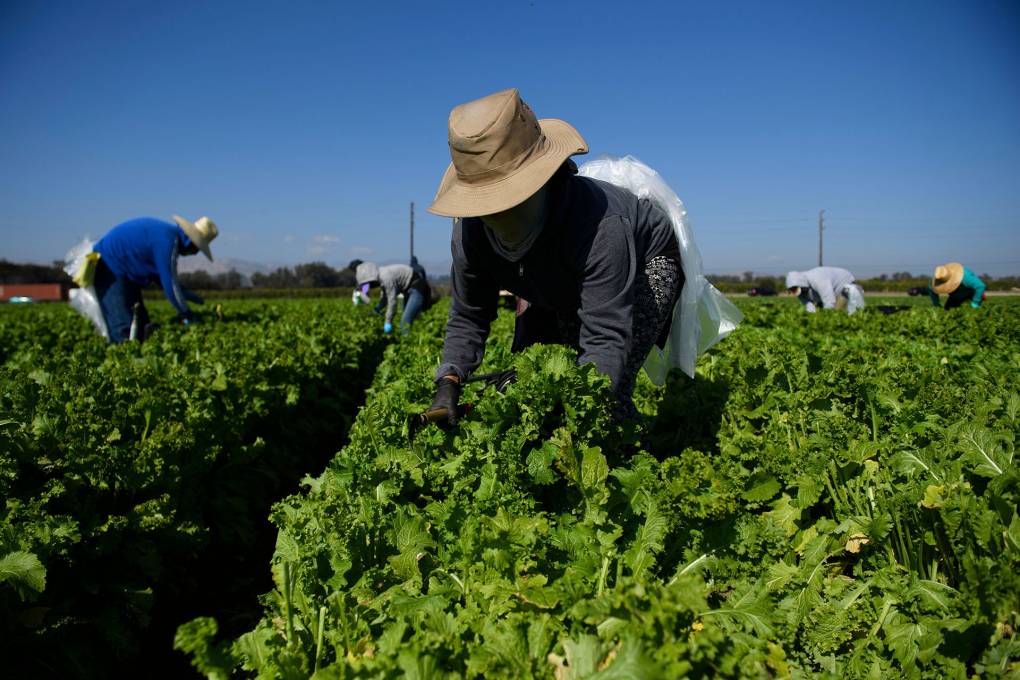
window.__IS_SSR__=true
window.__INITIAL_STATE__={
"attachmentsReducer": {
"audio_0": {
"type": "attachments",
"id": "audio_0",
"imgSizes": {
"kqedFullSize": {
"file": "https://ww2.kqed.org/news/wp-content/themes/KQED-unified/img/audio_bgs/background0.jpg"
}
}
},
"audio_1": {
"type": "attachments",
"id": "audio_1",
"imgSizes": {
"kqedFullSize": {
"file": "https://ww2.kqed.org/news/wp-content/themes/KQED-unified/img/audio_bgs/background1.jpg"
}
}
},
"audio_2": {
"type": "attachments",
"id": "audio_2",
"imgSizes": {
"kqedFullSize": {
"file": "https://ww2.kqed.org/news/wp-content/themes/KQED-unified/img/audio_bgs/background2.jpg"
}
}
},
"audio_3": {
"type": "attachments",
"id": "audio_3",
"imgSizes": {
"kqedFullSize": {
"file": "https://ww2.kqed.org/news/wp-content/themes/KQED-unified/img/audio_bgs/background3.jpg"
}
}
},
"audio_4": {
"type": "attachments",
"id": "audio_4",
"imgSizes": {
"kqedFullSize": {
"file": "https://ww2.kqed.org/news/wp-content/themes/KQED-unified/img/audio_bgs/background4.jpg"
}
}
},
"placeholder": {
"type": "attachments",
"id": "placeholder",
"imgSizes": {
"thumbnail": {
"file": "https://cdn.kqed.org/wp-content/uploads/2024/12/KQED-Default-Image-816638274-2000x1333-1-160x107.jpg",
"width": 160,
"height": 107,
"mimeType": "image/jpeg"
},
"medium": {
"file": "https://cdn.kqed.org/wp-content/uploads/2024/12/KQED-Default-Image-816638274-2000x1333-1-800x533.jpg",
"width": 800,
"height": 533,
"mimeType": "image/jpeg"
},
"medium_large": {
"file": "https://cdn.kqed.org/wp-content/uploads/2024/12/KQED-Default-Image-816638274-2000x1333-1-768x512.jpg",
"width": 768,
"height": 512,
"mimeType": "image/jpeg"
},
"large": {
"file": "https://cdn.kqed.org/wp-content/uploads/2024/12/KQED-Default-Image-816638274-2000x1333-1-1020x680.jpg",
"width": 1020,
"height": 680,
"mimeType": "image/jpeg"
},
"1536x1536": {
"file": "https://cdn.kqed.org/wp-content/uploads/2024/12/KQED-Default-Image-816638274-2000x1333-1-1536x1024.jpg",
"width": 1536,
"height": 1024,
"mimeType": "image/jpeg"
},
"fd-lrg": {
"file": "https://cdn.kqed.org/wp-content/uploads/2024/12/KQED-Default-Image-816638274-2000x1333-1-1536x1024.jpg",
"width": 1536,
"height": 1024,
"mimeType": "image/jpeg"
},
"fd-med": {
"file": "https://cdn.kqed.org/wp-content/uploads/2024/12/KQED-Default-Image-816638274-2000x1333-1-1020x680.jpg",
"width": 1020,
"height": 680,
"mimeType": "image/jpeg"
},
"fd-sm": {
"file": "https://cdn.kqed.org/wp-content/uploads/2024/12/KQED-Default-Image-816638274-2000x1333-1-800x533.jpg",
"width": 800,
"height": 533,
"mimeType": "image/jpeg"
},
"post-thumbnail": {
"file": "https://cdn.kqed.org/wp-content/uploads/2024/12/KQED-Default-Image-816638274-2000x1333-1-672x372.jpg",
"width": 672,
"height": 372,
"mimeType": "image/jpeg"
},
"twentyfourteen-full-width": {
"file": "https://cdn.kqed.org/wp-content/uploads/2024/12/KQED-Default-Image-816638274-2000x1333-1-1038x576.jpg",
"width": 1038,
"height": 576,
"mimeType": "image/jpeg"
},
"xxsmall": {
"file": "https://cdn.kqed.org/wp-content/uploads/2024/12/KQED-Default-Image-816638274-2000x1333-1-160x107.jpg",
"width": 160,
"height": 107,
"mimeType": "image/jpeg"
},
"xsmall": {
"file": "https://cdn.kqed.org/wp-content/uploads/2024/12/KQED-Default-Image-816638274-2000x1333-1-672x372.jpg",
"width": 672,
"height": 372,
"mimeType": "image/jpeg"
},
"small": {
"file": "https://cdn.kqed.org/wp-content/uploads/2024/12/KQED-Default-Image-816638274-2000x1333-1-672x372.jpg",
"width": 672,
"height": 372,
"mimeType": "image/jpeg"
},
"xlarge": {
"file": "https://cdn.kqed.org/wp-content/uploads/2024/12/KQED-Default-Image-816638274-2000x1333-1-1020x680.jpg",
"width": 1020,
"height": 680,
"mimeType": "image/jpeg"
},
"full-width": {
"file": "https://cdn.kqed.org/wp-content/uploads/2024/12/KQED-Default-Image-816638274-2000x1333-1-1920x1280.jpg",
"width": 1920,
"height": 1280,
"mimeType": "image/jpeg"
},
"guest-author-32": {
"file": "https://cdn.kqed.org/wp-content/uploads/2025/01/KQED-Default-Image-816638274-1333x1333-1-160x160.jpg",
"width": 32,
"height": 32,
"mimeType": "image/jpeg"
},
"guest-author-50": {
"file": "https://cdn.kqed.org/wp-content/uploads/2025/01/KQED-Default-Image-816638274-1333x1333-1-160x160.jpg",
"width": 50,
"height": 50,
"mimeType": "image/jpeg"
},
"guest-author-64": {
"file": "https://cdn.kqed.org/wp-content/uploads/2025/01/KQED-Default-Image-816638274-1333x1333-1-160x160.jpg",
"width": 64,
"height": 64,
"mimeType": "image/jpeg"
},
"guest-author-96": {
"file": "https://cdn.kqed.org/wp-content/uploads/2025/01/KQED-Default-Image-816638274-1333x1333-1-160x160.jpg",
"width": 96,
"height": 96,
"mimeType": "image/jpeg"
},
"guest-author-128": {
"file": "https://cdn.kqed.org/wp-content/uploads/2025/01/KQED-Default-Image-816638274-1333x1333-1-160x160.jpg",
"width": 128,
"height": 128,
"mimeType": "image/jpeg"
},
"detail": {
"file": "https://cdn.kqed.org/wp-content/uploads/2025/01/KQED-Default-Image-816638274-1333x1333-1-160x160.jpg",
"width": 160,
"height": 160,
"mimeType": "image/jpeg"
},
"kqedFullSize": {
"file": "https://cdn.kqed.org/wp-content/uploads/2024/12/KQED-Default-Image-816638274-2000x1333-1.jpg",
"width": 2000,
"height": 1333
}
}
},
"news_11898123": {
"type": "attachments",
"id": "news_11898123",
"meta": {
"index": "attachments_1716263798",
"site": "news",
"id": "11898123",
"found": true
},
"parent": 11898120,
"imgSizes": {
"twentyfourteen-full-width": {
"file": "https://ww2.kqed.org/app/uploads/sites/10/2021/12/RS52776_GettyImages-1236173113-qut-1038x576.jpg",
"width": 1038,
"mimeType": "image/jpeg",
"height": 576
},
"thumbnail": {
"file": "https://ww2.kqed.org/app/uploads/sites/10/2021/12/RS52776_GettyImages-1236173113-qut-160x99.jpg",
"width": 160,
"mimeType": "image/jpeg",
"height": 99
},
"post-thumbnail": {
"file": "https://ww2.kqed.org/app/uploads/sites/10/2021/12/RS52776_GettyImages-1236173113-qut-672x372.jpg",
"width": 672,
"mimeType": "image/jpeg",
"height": 372
},
"kqedFullSize": {
"file": "https://ww2.kqed.org/app/uploads/sites/10/2021/12/RS52776_GettyImages-1236173113-qut.jpg",
"width": 1920,
"height": 1185
},
"large": {
"file": "https://ww2.kqed.org/app/uploads/sites/10/2021/12/RS52776_GettyImages-1236173113-qut-1020x630.jpg",
"width": 1020,
"mimeType": "image/jpeg",
"height": 630
},
"1536x1536": {
"file": "https://ww2.kqed.org/app/uploads/sites/10/2021/12/RS52776_GettyImages-1236173113-qut-1536x948.jpg",
"width": 1536,
"mimeType": "image/jpeg",
"height": 948
},
"medium": {
"file": "https://ww2.kqed.org/app/uploads/sites/10/2021/12/RS52776_GettyImages-1236173113-qut-800x494.jpg",
"width": 800,
"mimeType": "image/jpeg",
"height": 494
}
},
"publishDate": 1638728304,
"modified": 1638832471,
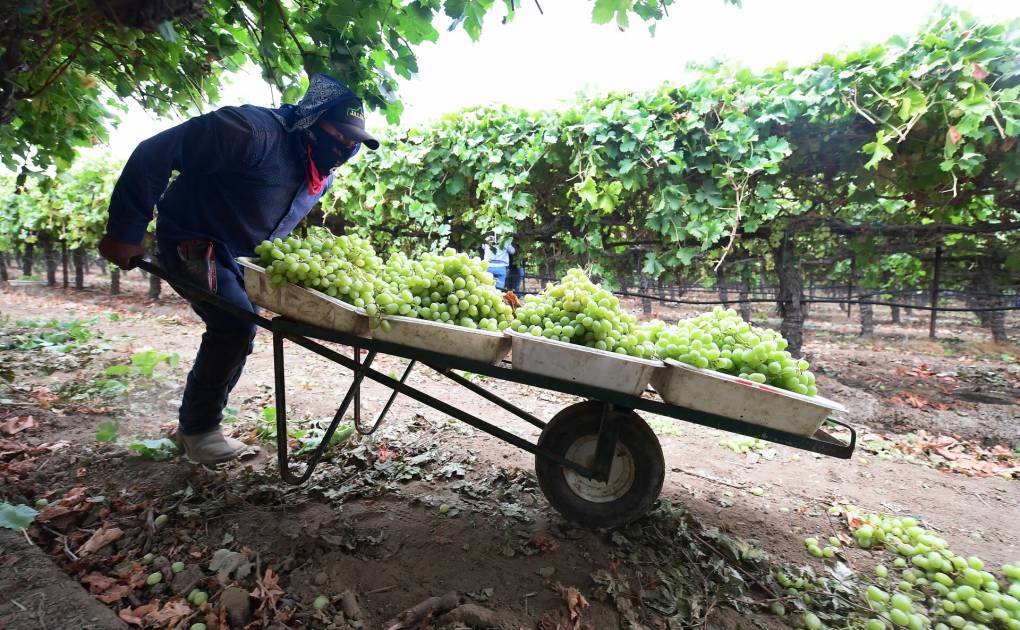
"caption": "A farmworker transports grapes on Oct. 4, 2021, in the Kern County town of Lamont, where record heat has fueled drought and wildfires. ",
"description": null,
"title": "UN-CLIMATE-COP26-US-AGRICULTURE",
"credit": "Frederic J. Brown/AFP via Getty Images",
"status": "inherit",
"altTag": "A person is steering a cart loaded with bright green grapes in the midst of rows of grapevines.",
"isLoading": false,
"fetchFailed": false
},
"news_11897794": {
"type": "attachments",
"id": "news_11897794",
"meta": {
"index": "attachments_1716263798",
"site": "news",
"id": "11897794",
"found": true
},
"parent": 11897789,
"imgSizes": {
"twentyfourteen-full-width": {
"file": "https://ww2.kqed.org/app/uploads/sites/10/2021/12/Smoke-Protections-Main-1038x576.jpg",
"width": 1038,
"mimeType": "image/jpeg",
"height": 576
},
"thumbnail": {
"file": "https://ww2.kqed.org/app/uploads/sites/10/2021/12/Smoke-Protections-Main-160x102.jpg",
"width": 160,
"mimeType": "image/jpeg",
"height": 102
},
"post-thumbnail": {
"file": "https://ww2.kqed.org/app/uploads/sites/10/2021/12/Smoke-Protections-Main-672x372.jpg",
"width": 672,
"mimeType": "image/jpeg",
"height": 372
},
"kqedFullSize": {
"file": "https://ww2.kqed.org/app/uploads/sites/10/2021/12/Smoke-Protections-Main.jpg",
"width": 1920,
"height": 1228
},
"large": {
"file": "https://ww2.kqed.org/app/uploads/sites/10/2021/12/Smoke-Protections-Main-1020x652.jpg",
"width": 1020,
"mimeType": "image/jpeg",
"height": 652
},
"1536x1536": {
"file": "https://ww2.kqed.org/app/uploads/sites/10/2021/12/Smoke-Protections-Main-1536x982.jpg",
"width": 1536,
"mimeType": "image/jpeg",
"height": 982
},
"medium": {
"file": "https://ww2.kqed.org/app/uploads/sites/10/2021/12/Smoke-Protections-Main-800x512.jpg",
"width": 800,
"mimeType": "image/jpeg",
"height": 512
}
},
"publishDate": 1638390355,
"modified": 1638411790,
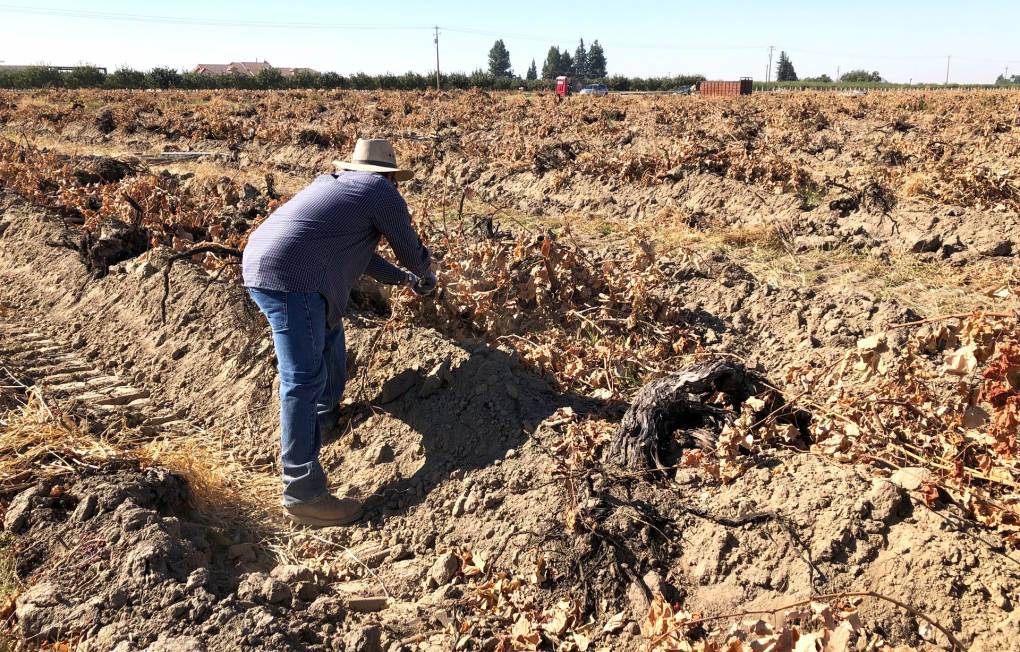
"caption": "A worker pulls dry grapevines from a field in Fresno County on Oct. 13, 2021. He labored regular shifts in thick smoke the week before, he said, but was not provided with an N95 mask, moved indoors or offered any of the protections required by the state.",
"description": "A worker pulls dry grapevines from a field in Fresno County on Oct 13, 2021. He labored regular shifts in thick smoke the week before, he said, but was not provided an N95 mask, moved indoors or offered any of the protections required by the state.",
"title": "Smoke-Protections-Main",
"credit": "Farida Jhabvala Romero/KQED",
"status": "inherit",
"altTag": "Beneath a bright sun, a man wearing a light purple long-sleeved shirt, jeans, work boots, and a wide-brimmed hat stands in a dried tractor rut and leans over as he pulls at dry grapevines. The entire field around him is brown and dry, with a line of trees visible in the distance.",
"isLoading": false,
"fetchFailed": false
},
"news_11886313": {
"type": "attachments",
"id": "news_11886313",
"meta": {
"index": "attachments_1716263798",
"site": "news",
"id": "11886313",
"found": true
},
"parent": 11886307,
"imgSizes": {
"twentyfourteen-full-width": {
"file": "https://ww2.kqed.org/app/uploads/sites/10/2021/08/healthy_082521_final-1038x576.png",
"width": 1038,
"mimeType": "image/png",
"height": 576
},
"thumbnail": {
"file": "https://ww2.kqed.org/app/uploads/sites/10/2021/08/healthy_082521_final-160x113.png",
"width": 160,
"mimeType": "image/png",
"height": 113
},
"post-thumbnail": {
"file": "https://ww2.kqed.org/app/uploads/sites/10/2021/08/healthy_082521_final-672x372.png",
"width": 672,
"mimeType": "image/png",
"height": 372
},
"kqedFullSize": {
"file": "https://ww2.kqed.org/app/uploads/sites/10/2021/08/healthy_082521_final.png",
"width": 1920,
"height": 1355
},
"large": {
"file": "https://ww2.kqed.org/app/uploads/sites/10/2021/08/healthy_082521_final-1020x720.png",
"width": 1020,
"mimeType": "image/png",
"height": 720
},
"1536x1536": {
"file": "https://ww2.kqed.org/app/uploads/sites/10/2021/08/healthy_082521_final-1536x1084.png",
"width": 1536,
"mimeType": "image/png",
"height": 1084
},
"medium": {
"file": "https://ww2.kqed.org/app/uploads/sites/10/2021/08/healthy_082521_final-800x565.png",
"width": 800,
"mimeType": "image/png",
"height": 565
}
},
"publishDate": 1629926098,
"modified": 1629938237,
"caption": null,
"description": null,
"title": "healthy_082521_final",
"credit": null,
"status": "inherit",
"altTag": "In a cartoon, fruits and vegetables are labeled healthy and nutritious but a hot smoky field is deadly and dangerous.",
"isLoading": false,
"fetchFailed": false
},
"news_11886035": {
"type": "attachments",
"id": "news_11886035",
"meta": {
"index": "attachments_1716263798",
"site": "news",
"id": "11886035",
"found": true
},
"parent": 11886029,
"imgSizes": {
"twentyfourteen-full-width": {
"file": "https://ww2.kqed.org/app/uploads/sites/10/2021/08/1-feature-image-1038x576.jpeg",
"width": 1038,
"mimeType": "image/jpeg",
"height": 576
},
"thumbnail": {
"file": "https://ww2.kqed.org/app/uploads/sites/10/2021/08/1-feature-image-160x107.jpeg",
"width": 160,
"mimeType": "image/jpeg",
"height": 107
},
"post-thumbnail": {
"file": "https://ww2.kqed.org/app/uploads/sites/10/2021/08/1-feature-image-672x372.jpeg",
"width": 672,
"mimeType": "image/jpeg",
"height": 372
},
"kqedFullSize": {
"file": "https://ww2.kqed.org/app/uploads/sites/10/2021/08/1-feature-image.jpeg",
"width": 1170,
"height": 780
},
"large": {
"file": "https://ww2.kqed.org/app/uploads/sites/10/2021/08/1-feature-image-1020x680.jpeg",
"width": 1020,
"mimeType": "image/jpeg",
"height": 680
},
"medium": {
"file": "https://ww2.kqed.org/app/uploads/sites/10/2021/08/1-feature-image-800x533.jpeg",
"width": 800,
"mimeType": "image/jpeg",
"height": 533
}
},
"publishDate": 1629751548,
"modified": 1629751577,
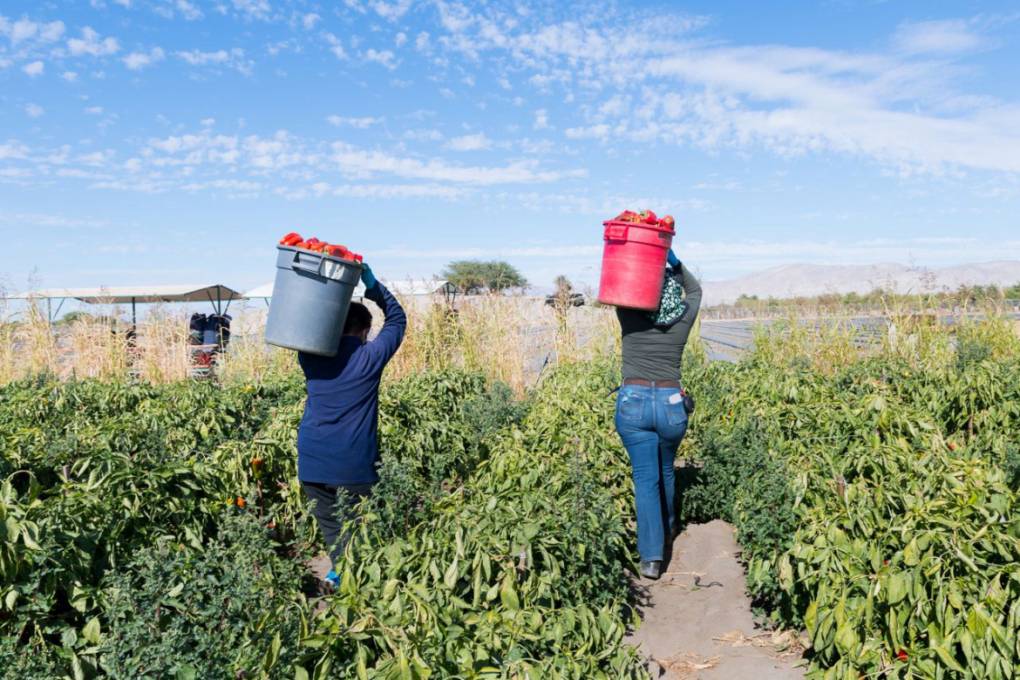
"caption": "Farmworkers work at a bell pepper farm in the Coachella Valley, one of the largest agricultural regions in the nation, in February 2021.",
"description": null,
"title": "1-feature-image",
"credit": "Heidi de Marco/KHN",
"status": "inherit",
"altTag": "Farmworkers work at a bell pepper farm in the Coachella Valley, one of the largest agricultural regions in the nation, in February 2021.",
"isLoading": false,
"fetchFailed": false
},
"news_11884113": {
"type": "attachments",
"id": "news_11884113",
"meta": {
"index": "attachments_1716263798",
"site": "news",
"id": "11884113",
"found": true
},
"parent": 11884106,
"imgSizes": {
"twentyfourteen-full-width": {
"file": "https://ww2.kqed.org/app/uploads/sites/10/2021/08/GirlsMural-1440x1052-1-1038x576.jpg",
"width": 1038,
"mimeType": "image/jpeg",
"height": 576
},
"thumbnail": {
"file": "https://ww2.kqed.org/app/uploads/sites/10/2021/08/GirlsMural-1440x1052-1-160x117.jpg",
"width": 160,
"mimeType": "image/jpeg",
"height": 117
},
"post-thumbnail": {
"file": "https://ww2.kqed.org/app/uploads/sites/10/2021/08/GirlsMural-1440x1052-1-672x372.jpg",
"width": 672,
"mimeType": "image/jpeg",
"height": 372
},
"kqedFullSize": {
"file": "https://ww2.kqed.org/app/uploads/sites/10/2021/08/GirlsMural-1440x1052-1.jpg",
"width": 1440,
"height": 1052
},
"large": {
"file": "https://ww2.kqed.org/app/uploads/sites/10/2021/08/GirlsMural-1440x1052-1-1020x745.jpg",
"width": 1020,
"mimeType": "image/jpeg",
"height": 745
},
"medium": {
"file": "https://ww2.kqed.org/app/uploads/sites/10/2021/08/GirlsMural-1440x1052-1-800x584.jpg",
"width": 800,
"mimeType": "image/jpeg",
"height": 584
}
},
"publishDate": 1628270099,
"modified": 1628270167,
"caption": "Anhelica Perez, Melanie Retuda and Larissa Portillo (L-R) in front of a mural in downtown Delano featuring Philip Vera Cruz, Cesar Chavez and Larry Itliong. ",
"description": null,
"title": "GirlsMural-1440x1052",
"credit": "Lisa Morehouse/KQED",
"status": "inherit",
"altTag": null,
"isLoading": false,
"fetchFailed": false
},
"news_11879940": {
"type": "attachments",
"id": "news_11879940",
"meta": {
"index": "attachments_1716263798",
"site": "news",
"id": "11879940",
"found": true
},
"parent": 11879912,
"imgSizes": {
"twentyfourteen-full-width": {
"file": "https://ww2.kqed.org/app/uploads/sites/10/2021/06/ACTA_ContraCovid_Madera124-1038x576.jpg",
"width": 1038,
"mimeType": "image/jpeg",
"height": 576
},
"thumbnail": {
"file": "https://ww2.kqed.org/app/uploads/sites/10/2021/06/ACTA_ContraCovid_Madera124-160x111.jpg",
"width": 160,
"mimeType": "image/jpeg",
"height": 111
},
"post-thumbnail": {
"file": "https://ww2.kqed.org/app/uploads/sites/10/2021/06/ACTA_ContraCovid_Madera124-672x372.jpg",
"width": 672,
"mimeType": "image/jpeg",
"height": 372
},
"kqedFullSize": {
"file": "https://ww2.kqed.org/app/uploads/sites/10/2021/06/ACTA_ContraCovid_Madera124.jpg",
"width": 2000,
"height": 1385
},
"large": {
"file": "https://ww2.kqed.org/app/uploads/sites/10/2021/06/ACTA_ContraCovid_Madera124-1020x706.jpg",
"width": 1020,
"mimeType": "image/jpeg",
"height": 706
},
"1536x1536": {
"file": "https://ww2.kqed.org/app/uploads/sites/10/2021/06/ACTA_ContraCovid_Madera124-1536x1064.jpg",
"width": 1536,
"mimeType": "image/jpeg",
"height": 1064
},
"full-width": {
"file": "https://ww2.kqed.org/app/uploads/sites/10/2021/06/ACTA_ContraCovid_Madera124-1920x1330.jpg",
"width": 1920,
"mimeType": "image/jpeg",
"height": 1330
},
"medium": {
"file": "https://ww2.kqed.org/app/uploads/sites/10/2021/06/ACTA_ContraCovid_Madera124-800x554.jpg",
"width": 800,
"mimeType": "image/jpeg",
"height": 554
}
},
"publishDate": 1625079730,
"modified": 1625250988,
"caption": "Juan Felipe Herrera and his former students performing for an ACTAVANDO Contra COVID event at the Madera Flea Market on June 13, 2021.",
"description": "Juan Felipe Herrera and his former students performing for an ACTAVANDO Contra COVID event at the Madera Flea Market on June 13, 2021.",
"title": "ACTA_ContraCovid_Madera124",
"credit": "Courtesy of Jenn Emerling/ACTA",
"status": "inherit",
"altTag": "A group of artists, all dressed in colorful gear, pose for a photo.",
"isLoading": false,
"fetchFailed": false
},
"news_11879270": {
"type": "attachments",
"id": "news_11879270",
"meta": {
"index": "attachments_1716263798",
"site": "news",
"id": "11879270",
"found": true
},
"parent": 11879266,
"imgSizes": {
"twentyfourteen-full-width": {
"file": "https://ww2.kqed.org/app/uploads/sites/10/2021/06/TODEChallway-1038x576.jpg",
"width": 1038,
"mimeType": "image/jpeg",
"height": 576
},
"thumbnail": {
"file": "https://ww2.kqed.org/app/uploads/sites/10/2021/06/TODEChallway-160x111.jpg",
"width": 160,
"mimeType": "image/jpeg",
"height": 111
},
"post-thumbnail": {
"file": "https://ww2.kqed.org/app/uploads/sites/10/2021/06/TODEChallway-672x372.jpg",
"width": 672,
"mimeType": "image/jpeg",
"height": 372
},
"kqedFullSize": {
"file": "https://ww2.kqed.org/app/uploads/sites/10/2021/06/TODEChallway.jpg",
"width": 1920,
"height": 1331
},
"large": {
"file": "https://ww2.kqed.org/app/uploads/sites/10/2021/06/TODEChallway-1020x707.jpg",
"width": 1020,
"mimeType": "image/jpeg",
"height": 707
},
"1536x1536": {
"file": "https://ww2.kqed.org/app/uploads/sites/10/2021/06/TODEChallway-1536x1065.jpg",
"width": 1536,
"mimeType": "image/jpeg",
"height": 1065
},
"medium": {
"file": "https://ww2.kqed.org/app/uploads/sites/10/2021/06/TODEChallway-800x555.jpg",
"width": 800,
"mimeType": "image/jpeg",
"height": 555
}
},
"publishDate": 1624579492,
"modified": 1624580612,
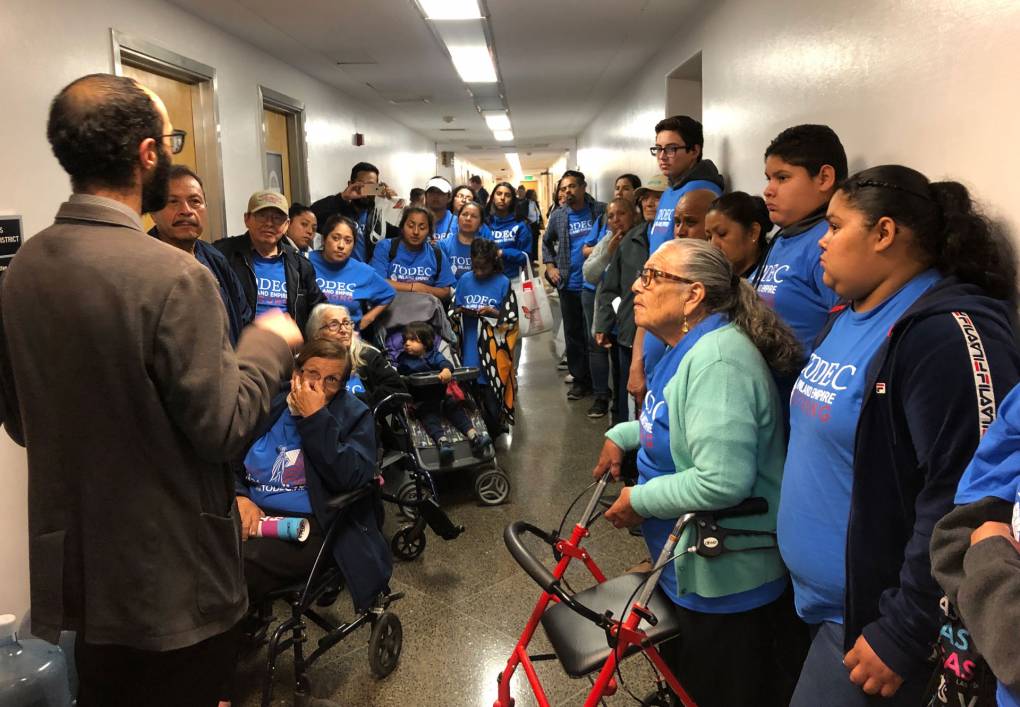
"caption": "Members of TODEC, a legal center and immigrant justice organization, listen to a staffer with Assemblymember Eloise Reyes' office in Sacramento in 2019. The group traveled to the Capitol to advocate for Medi-Cal expansion to undocumented seniors.",
"description": "Members of TODEC, a legal center and immigrant justice organization, listen to a staffer with Assemblymember Eloise Reyes' office in Sacramento in 2019. The group traveled to the Capitol to advocate for Medi-Cal expansion to undocumented seniors.",
"title": "TODEChallway",
"credit": "Courtesy TODEC",
"status": "inherit",
"altTag": null,
"isLoading": false,
"fetchFailed": false
},
"news_11878990": {
"type": "attachments",
"id": "news_11878990",
"meta": {
"index": "attachments_1716263798",
"site": "news",
"id": "11878990",
"found": true
},
"parent": 11878989,
"imgSizes": {
"thumbnail": {
"file": "https://ww2.kqed.org/app/uploads/sites/10/2021/06/gettyimages-1231093862_wide-4195c57f825738c502a8a11e343c9df96ca71caf-160x90.jpg",
"width": 160,
"mimeType": "image/jpeg",
"height": 90
},
"post-thumbnail": {
"file": "https://ww2.kqed.org/app/uploads/sites/10/2021/06/gettyimages-1231093862_wide-4195c57f825738c502a8a11e343c9df96ca71caf-672x372.jpg",
"width": 672,
"mimeType": "image/jpeg",
"height": 372
},
"kqedFullSize": {
"file": "https://ww2.kqed.org/app/uploads/sites/10/2021/06/gettyimages-1231093862_wide-4195c57f825738c502a8a11e343c9df96ca71caf.jpg",
"width": 1024,
"height": 576
},
"large": {
"file": "https://ww2.kqed.org/app/uploads/sites/10/2021/06/gettyimages-1231093862_wide-4195c57f825738c502a8a11e343c9df96ca71caf-1020x574.jpg",
"width": 1020,
"mimeType": "image/jpeg",
"height": 574
},
"medium": {
"file": "https://ww2.kqed.org/app/uploads/sites/10/2021/06/gettyimages-1231093862_wide-4195c57f825738c502a8a11e343c9df96ca71caf-800x450.jpg",
"width": 800,
"mimeType": "image/jpeg",
"height": 450
}
},
"publishDate": 1624465271,
"modified": 1690220476,
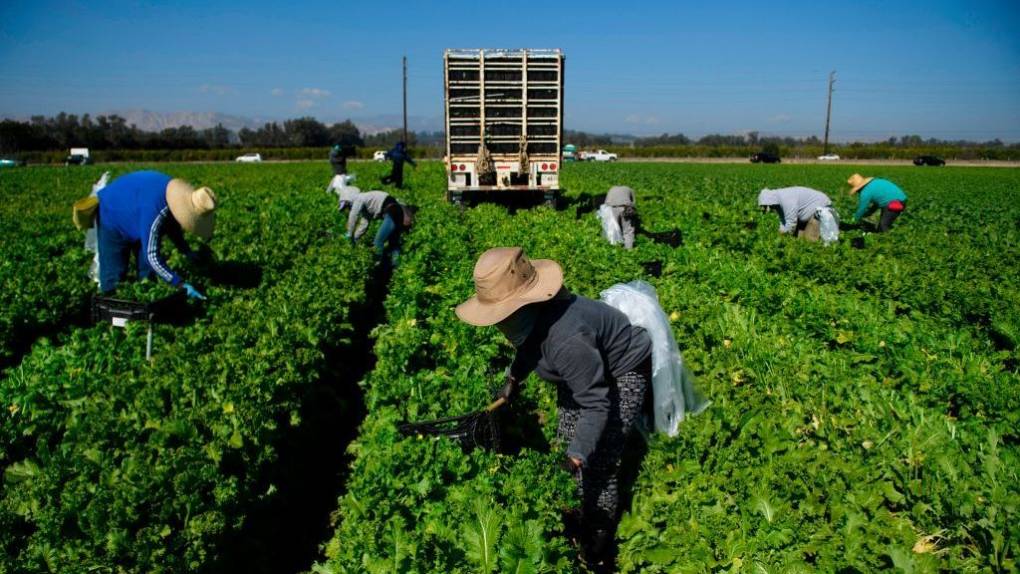
"caption": "Farmworkers harvest curly mustard in a field on Feb. 10, 2021 in Ventura County. ",
"description": "Farmworkers harvest curly mustard in a field on Feb. 10 in Ventura County. The Supreme Court handed the farmworkers union a loss Wednesday in a ruling about union organizers' access to farm property.",
"title": "Farmworkers harvest curly mustard in a field on Feb. 10 in Ventura County, Calif. The Supreme Court handed the farmworkers union a loss Wednesday in a ruling about union organizers' access to farm property.",
"credit": "Patrick T. Fallon/AFP via Getty Images",
"status": "inherit",
"altTag": "People bent over in a large field filled with rows of vegetables with a large vehicle in the background.",
"isLoading": false,
"fetchFailed": false
},
"news_11878242": {
"type": "attachments",
"id": "news_11878242",
"meta": {
"index": "attachments_1716263798",
"site": "news",
"id": "11878242",
"found": true
},
"parent": 11878212,
"imgSizes": {
"twentyfourteen-full-width": {
"file": "https://ww2.kqed.org/app/uploads/sites/10/2021/06/Grad-Coachella-photoshoot-main-1038x576.jpg",
"width": 1038,
"mimeType": "image/jpeg",
"height": 576
},
"thumbnail": {
"file": "https://ww2.kqed.org/app/uploads/sites/10/2021/06/Grad-Coachella-photoshoot-main-160x124.jpg",
"width": 160,
"mimeType": "image/jpeg",
"height": 124
},
"post-thumbnail": {
"file": "https://ww2.kqed.org/app/uploads/sites/10/2021/06/Grad-Coachella-photoshoot-main-672x372.jpg",
"width": 672,
"mimeType": "image/jpeg",
"height": 372
},
"kqedFullSize": {
"file": "https://ww2.kqed.org/app/uploads/sites/10/2021/06/Grad-Coachella-photoshoot-main.jpg",
"width": 1920,
"height": 1490
},
"large": {
"file": "https://ww2.kqed.org/app/uploads/sites/10/2021/06/Grad-Coachella-photoshoot-main-1020x792.jpg",
"width": 1020,
"mimeType": "image/jpeg",
"height": 792
},
"1536x1536": {
"file": "https://ww2.kqed.org/app/uploads/sites/10/2021/06/Grad-Coachella-photoshoot-main-1536x1192.jpg",
"width": 1536,
"mimeType": "image/jpeg",
"height": 1192
},
"medium": {
"file": "https://ww2.kqed.org/app/uploads/sites/10/2021/06/Grad-Coachella-photoshoot-main-800x621.jpg",
"width": 800,
"mimeType": "image/jpeg",
"height": 621
}
},
"publishDate": 1623872074,
"modified": 1623884817,
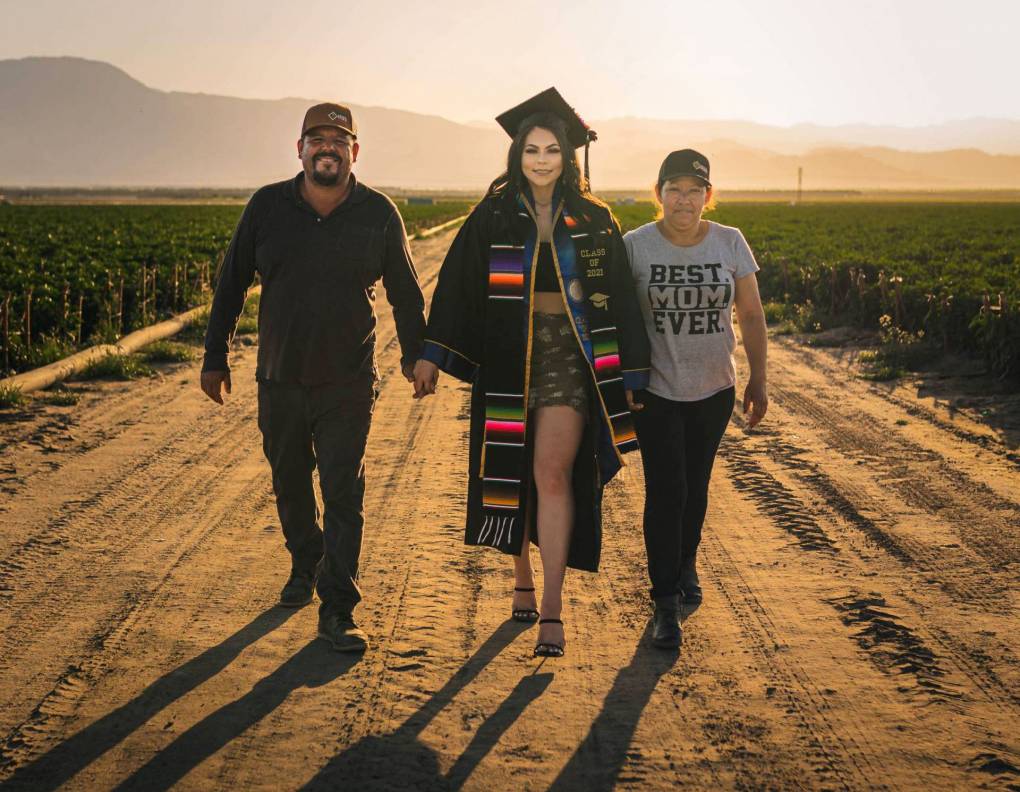
"caption": "Jennifer Rocha says this is her favorite photo in the series because her parents' faces reflect the 'joy and pride' they feel having three daughters with college degrees.",
"description": "Jennifer Rocha says this is her favorite photo in the series because her parents' faces reflect the \"joy and pride\" they feel having three daughters with college degrees.",
"title": "Grad-Coachella-photoshoot-main",
"credit": "Branden Rodriguez/Instagram @branden.shoots",
"status": "inherit",
"altTag": null,
"isLoading": false,
"fetchFailed": false
},
"news_11866138": {
"type": "attachments",
"id": "news_11866138",
"meta": {
"index": "attachments_1716263798",
"site": "news",
"id": "11866138",
"found": true
},
"parent": 11863423,
"imgSizes": {
"twentyfourteen-full-width": {
"file": "https://ww2.kqed.org/app/uploads/sites/10/2021/03/04-2-1038x576.jpg",
"width": 1038,
"mimeType": "image/jpeg",
"height": 576
},
"thumbnail": {
"file": "https://ww2.kqed.org/app/uploads/sites/10/2021/03/04-2-160x107.jpg",
"width": 160,
"mimeType": "image/jpeg",
"height": 107
},
"post-thumbnail": {
"file": "https://ww2.kqed.org/app/uploads/sites/10/2021/03/04-2-672x372.jpg",
"width": 672,
"mimeType": "image/jpeg",
"height": 372
},
"kqedFullSize": {
"file": "https://ww2.kqed.org/app/uploads/sites/10/2021/03/04-2-scaled.jpg",
"width": 2560,
"height": 1718
},
"2048x2048": {
"file": "https://ww2.kqed.org/app/uploads/sites/10/2021/03/04-2-2048x1374.jpg",
"width": 2048,
"mimeType": "image/jpeg",
"height": 1374
},
"large": {
"file": "https://ww2.kqed.org/app/uploads/sites/10/2021/03/04-2-1020x685.jpg",
"width": 1020,
"mimeType": "image/jpeg",
"height": 685
},
"1536x1536": {
"file": "https://ww2.kqed.org/app/uploads/sites/10/2021/03/04-2-1536x1031.jpg",
"width": 1536,
"mimeType": "image/jpeg",
"height": 1031
},
"full-width": {
"file": "https://ww2.kqed.org/app/uploads/sites/10/2021/03/04-2-1920x1289.jpg",
"width": 1920,
"mimeType": "image/jpeg",
"height": 1289
},
"medium": {
"file": "https://ww2.kqed.org/app/uploads/sites/10/2021/03/04-2-800x537.jpg",
"width": 800,
"mimeType": "image/jpeg",
"height": 537
}
},
"publishDate": 1616543285,
"modified": 1616798682,
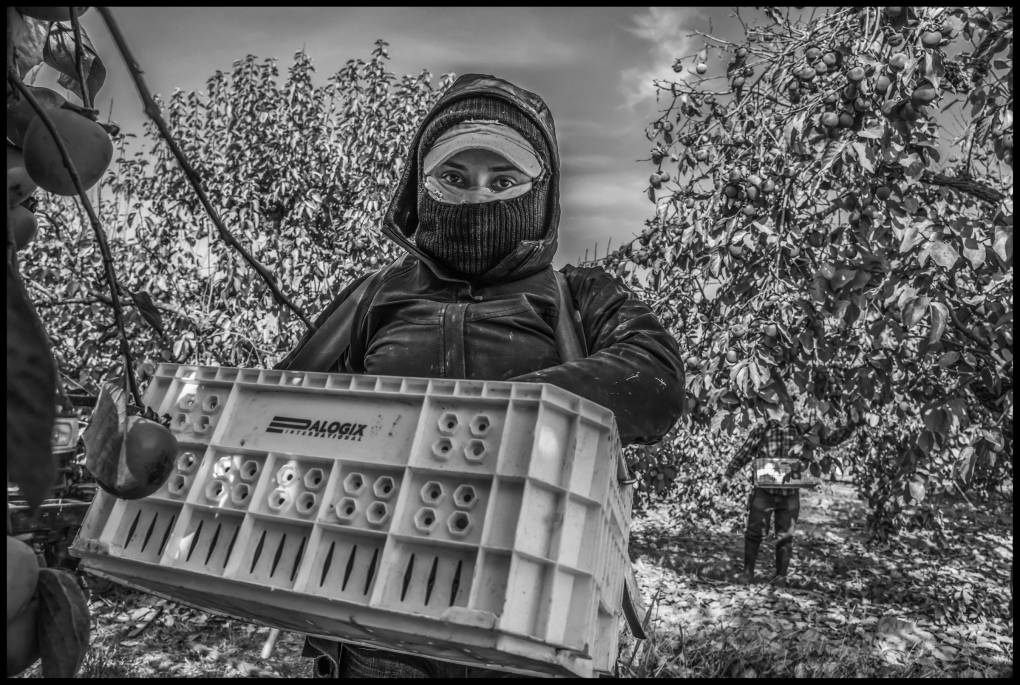
"caption": "Maria Madrigal picks persimmons in a field near Poplar in the San Joaquin Valley, in a crew of Mexican immigrants. Many workers wear face masks or bandanas as a protection against spreading the coronavirus.",
"description": "Maria Madrigal picks persimmons in a field near Poplar, in the San Joaquin Valley, in a crew of Mexican immigrants. Many workers wear facemasks or bandannas as a protection against spreading the coronavirus.",
"title": "Farmworkers pick persimmons in a San Joaquin Valley grove",
"credit": "David Bacon",
"status": "inherit",
"altTag": null,
"isLoading": false,
"fetchFailed": false
},
"news_11866534": {
"type": "attachments",
"id": "news_11866534",
"meta": {
"index": "attachments_1716263798",
"site": "news",
"id": "11866534",
"found": true
},
"parent": 11866519,
"imgSizes": {
"twentyfourteen-full-width": {
"file": "https://ww2.kqed.org/app/uploads/sites/10/2021/03/RS48095_Carrillo-2-qut-1038x576.jpg",
"width": 1038,
"mimeType": "image/jpeg",
"height": 576
},
"thumbnail": {
"file": "https://ww2.kqed.org/app/uploads/sites/10/2021/03/RS48095_Carrillo-2-qut-160x107.jpg",
"width": 160,
"mimeType": "image/jpeg",
"height": 107
},
"post-thumbnail": {
"file": "https://ww2.kqed.org/app/uploads/sites/10/2021/03/RS48095_Carrillo-2-qut-672x372.jpg",
"width": 672,
"mimeType": "image/jpeg",
"height": 372
},
"kqedFullSize": {
"file": "https://ww2.kqed.org/app/uploads/sites/10/2021/03/RS48095_Carrillo-2-qut.jpg",
"width": 1920,
"height": 1280
},
"large": {
"file": "https://ww2.kqed.org/app/uploads/sites/10/2021/03/RS48095_Carrillo-2-qut-1020x680.jpg",
"width": 1020,
"mimeType": "image/jpeg",
"height": 680
},
"1536x1536": {
"file": "https://ww2.kqed.org/app/uploads/sites/10/2021/03/RS48095_Carrillo-2-qut-1536x1024.jpg",
"width": 1536,
"mimeType": "image/jpeg",
"height": 1024
},
"medium": {
"file": "https://ww2.kqed.org/app/uploads/sites/10/2021/03/RS48095_Carrillo-2-qut-800x533.jpg",
"width": 800,
"mimeType": "image/jpeg",
"height": 533
}
},
"publishDate": 1616712271,
"modified": 1616721206,
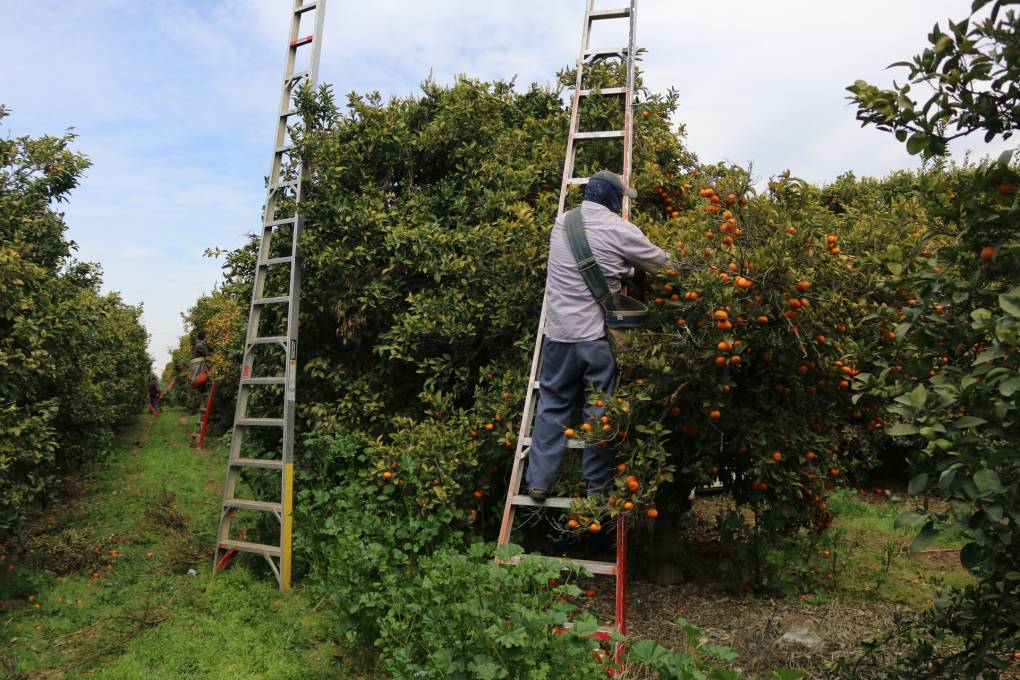
"caption": "Yoni Carrillo harvests mandarins in an orchard west of Fresno. He and thousands of other undocumented farmworkers could gain legal status under the Farm Workforce Modernization Act, a bill recently approved by the U.S. House of Representatives.",
"description": "Yoni Carrillo harvests mandarins in an orchard west of Fresno. He and thousands of other undocumented farmworkers could gain legal status under the Farm Workforce Modernization Act, a bill recently approved by the U.S. House of Representatives.",
"title": "RS48095_Carrillo 2-qut",
"credit": "Alex Hall/KQED",
"status": "inherit",
"altTag": null,
"isLoading": false,
"fetchFailed": false
},
"news_11865862": {
"type": "attachments",
"id": "news_11865862",
"meta": {
"index": "attachments_1716263798",
"site": "news",
"id": "11865862",
"found": true
},
"parent": 11865846,
"imgSizes": {
"twentyfourteen-full-width": {
"file": "https://ww2.kqed.org/app/uploads/sites/10/2021/03/GettyImages-1231093703-1038x576.jpg",
"width": 1038,
"mimeType": "image/jpeg",
"height": 576
},
"thumbnail": {
"file": "https://ww2.kqed.org/app/uploads/sites/10/2021/03/GettyImages-1231093703-160x107.jpg",
"width": 160,
"mimeType": "image/jpeg",
"height": 107
},
"post-thumbnail": {
"file": "https://ww2.kqed.org/app/uploads/sites/10/2021/03/GettyImages-1231093703-672x372.jpg",
"width": 672,
"mimeType": "image/jpeg",
"height": 372
},
"kqedFullSize": {
"file": "https://ww2.kqed.org/app/uploads/sites/10/2021/03/GettyImages-1231093703.jpg",
"width": 1920,
"height": 1280
},
"large": {
"file": "https://ww2.kqed.org/app/uploads/sites/10/2021/03/GettyImages-1231093703-1020x680.jpg",
"width": 1020,
"mimeType": "image/jpeg",
"height": 680
},
"1536x1536": {
"file": "https://ww2.kqed.org/app/uploads/sites/10/2021/03/GettyImages-1231093703-1536x1024.jpg",
"width": 1536,
"mimeType": "image/jpeg",
"height": 1024
},
"medium": {
"file": "https://ww2.kqed.org/app/uploads/sites/10/2021/03/GettyImages-1231093703-800x533.jpg",
"width": 800,
"mimeType": "image/jpeg",
"height": 533
}
},
"publishDate": 1616433730,
"modified": 1616434162,
"caption": "Farmworkers seen harvesting in a field. California's agricultural growers are challenging a state law that gives union organizers a limited right of access to farms so they can seek support from workers. Growers contend the law authorizes a mass trespass on the growers' private property.",
"description": "Farmworkers seen harvesting in a field. California's agricultural growers are challenging a state law that gives union organizers a limited right of access to farms so they can seek support from workers. Growers contend the law authorizes a mass trespass on the growers' private property.",
"title": "US-VIRUS-HEALTH-FOOD-AGRICULTURE",
"credit": "Patrick T. Fallon/Getty Images",
"status": "inherit",
"altTag": null,
"isLoading": false,
"fetchFailed": false
}
},
"audioPlayerReducer": {
"postId": "stream_live",
"isPaused": true,
"isPlaying": false,
"pfsActive": false,
"pledgeModalIsOpen": true,
"playerDrawerIsOpen": false,
"liveAudioPlayStartedAt": 0,
"liveAudioPlayContext": ""
},
"authorsReducer": {
"byline_news_11898120": {
"type": "authors",
"id": "byline_news_11898120",
"meta": {
"override": true
},
"slug": "byline_news_11898120",
"name": "Melissa Montalvo",
"isLoading": false
},
"byline_news_11886029": {
"type": "authors",
"id": "byline_news_11886029",
"meta": {
"override": true
},
"slug": "byline_news_11886029",
"name": "Miranda Green, Heidi de Marco",
"isLoading": false
},
"byline_news_11878989": {
"type": "authors",
"id": "byline_news_11878989",
"meta": {
"override": true
},
"slug": "byline_news_11878989",
"name": "Nina Totenberg and Eric Singerman",
"isLoading": false
},
"byline_news_11878212": {
"type": "authors",
"id": "byline_news_11878212",
"meta": {
"override": true
},
"slug": "byline_news_11878212",
"name": "\u003ca href=\"https://www.npr.org/people/527855988/vanessa-romo\">Vanessa Romo\u003c/a>",
"isLoading": false
},
"byline_news_11865846": {
"type": "authors",
"id": "byline_news_11865846",
"meta": {
"override": true
},
"slug": "byline_news_11865846",
"name": "\u003ca href=\"https://www.npr.org/people/2101289/nina-totenberg\">Nina Totenberg\u003c/a>",
"isLoading": false
},
"kqed": {
"type": "authors",
"id": "236",
"meta": {
"index": "authors_1716337520",
"id": "236",
"found": true
},
"name": "KQED News Staff",
"firstName": "KQED News Staff",
"lastName": null,
"slug": "kqed",
"email": "faq@kqed.org",
"display_author_email": false,
"staff_mastheads": [],
"title": null,
"bio": null,
"avatar": "https://secure.gravatar.com/avatar/ef0e801a68c4c54afa9180db14084167?s=600&d=blank&r=g",
"twitter": null,
"facebook": null,
"instagram": null,
"linkedin": null,
"sites": [
{
"site": "arts",
"roles": [
"contributor"
]
},
{
"site": "news",
"roles": [
"editor"
]
},
{
"site": "futureofyou",
"roles": [
"author"
]
}
],
"headData": {
"title": "KQED News Staff | KQED",
"description": null,
"ogImgSrc": "https://secure.gravatar.com/avatar/ef0e801a68c4c54afa9180db14084167?s=600&d=blank&r=g",
"twImgSrc": "https://secure.gravatar.com/avatar/ef0e801a68c4c54afa9180db14084167?s=600&d=blank&r=g"
},
"isLoading": false,
"link": "/author/kqed"
},
"markfiore": {
"type": "authors",
"id": "3236",
"meta": {
"index": "authors_1716337520",
"id": "3236",
"found": true
},
"name": "Mark Fiore",
"firstName": "Mark",
"lastName": "Fiore",
"slug": "markfiore",
"email": "mark@markfiore.com",
"display_author_email": false,
"staff_mastheads": [
"news"
],
"title": "KQED News Cartoonist",
"bio": "\u003ca href=\"http://www.MarkFiore.com\">MarkFiore.com\u003c/a> | \u003ca href=\"https://twitter.com/markfiore\">Follow on Twitter\u003c/a> | \u003ca href=\"https://www.facebook.com/pages/Mark-Fiore-Animated-Political-Cartoons/94451707396?ref=bookmarks\">Facebook\u003c/a> | \u003ca href=\"mailto:mark@markfiore.com\">email\u003c/a>\r\n\r\nPulitzer Prize-winner, Mark Fiore, who the Wall Street Journal has called “the undisputed guru of the form,” creates animated political cartoons in San Francisco, where his work has been featured regularly on the San Francisco Chronicle’s web site, SFGate.com. His work has appeared on Newsweek.com, Slate.com, CBSNews.com, MotherJones.com, DailyKos.com and NPR’s web site. Fiore’s political animation has appeared on CNN, Frontline, Bill Moyers Journal, Salon.com and cable and broadcast outlets across the globe.\r\n\r\nBeginning his professional life by drawing traditional political cartoons for newspapers, Fiore’s work appeared in publications ranging from the Washington Post to the Los Angeles Times. In the late 1990s, he began to experiment with animating political cartoons and, after a short stint at the San Jose Mercury News as their staff cartoonist, Fiore devoted all his energies to animation.\r\nGrowing up in California, Fiore also spent a good portion of his life in the backwoods of Idaho. It was this combination that shaped him politically. Mark majored in political science at Colorado College, where, in a perfect send-off for a cartoonist, he received his diploma in 1991 as commencement speaker Dick Cheney smiled approvingly.\r\nMark Fiore was awarded the Pulitzer Prize for political cartooning in 2010, a Robert F. Kennedy Journalism Award in 2004 and has twice received an Online Journalism Award for commentary from the Online News Association (2002, 2008). Fiore has received two awards for his work in new media from the National Cartoonists Society (2001, 2002), and in 2006 received The James Madison Freedom of Information Award from The Society of Professional Journalists.",
"avatar": "https://secure.gravatar.com/avatar/fc4e2a612b15b67bad0c6f0e1db4ca9b?s=600&d=blank&r=g",
"twitter": "MarkFiore",
"facebook": null,
"instagram": "https://www.instagram.com/markfiore/?hl=en",
"linkedin": null,
"sites": [
{
"site": "arts",
"roles": [
"contributor"
]
},
{
"site": "news",
"roles": [
"editor"
]
},
{
"site": "futureofyou",
"roles": [
"editor"
]
},
{
"site": "science",
"roles": [
"editor"
]
}
],
"headData": {
"title": "Mark Fiore | KQED",
"description": "KQED News Cartoonist",
"ogImgSrc": "https://secure.gravatar.com/avatar/fc4e2a612b15b67bad0c6f0e1db4ca9b?s=600&d=blank&r=g",
"twImgSrc": "https://secure.gravatar.com/avatar/fc4e2a612b15b67bad0c6f0e1db4ca9b?s=600&d=blank&r=g"
},
"isLoading": false,
"link": "/author/markfiore"
},
"fjhabvala": {
"type": "authors",
"id": "8659",
"meta": {
"index": "authors_1716337520",
"id": "8659",
"found": true
},
"name": "Farida Jhabvala Romero",
"firstName": "Farida",
"lastName": "Jhabvala Romero",
"slug": "fjhabvala",
"email": "fjhabvala@kqed.org",
"display_author_email": true,
"staff_mastheads": [
"news"
],
"title": "KQED Contributor",
"bio": "\u003cspan style=\"font-weight: 400;\">Farida Jhabvala Romero is a Labor Correspondent for KQED. She previously covered immigration. Farida was \u003ca href=\"https://www.ccnma.org/2022-most-influential-latina-journalists\">named\u003c/a> one of the 10 Most Influential Latina Journalists in California in 2022 by the California Chicano News Media Association. Her work has won awards from the Society of Professional Journalists (Northern California), as well as a national and regional Edward M. Murrow Award for the collaborative reporting projects “Dangerous Air” and “Graying California.” \u003c/span>\u003cspan style=\"font-weight: 400;\">Before joining KQED, Farida worked as a producer at Radio Bilingüe, a national public radio network. Farida earned her master’s degree in journalism from Stanford University.\u003c/span>",
"avatar": "https://secure.gravatar.com/avatar/c3ab27c5554b67b478f80971e515aa02?s=600&d=blank&r=g",
"twitter": "FaridaJhabvala",
"facebook": null,
"instagram": null,
"linkedin": "https://www.linkedin.com/in/faridajhabvala/",
"sites": [
{
"site": "news",
"roles": [
"editor"
]
},
{
"site": "stateofhealth",
"roles": [
"author"
]
}
],
"headData": {
"title": "Farida Jhabvala Romero | KQED",
"description": "KQED Contributor",
"ogImgSrc": "https://secure.gravatar.com/avatar/c3ab27c5554b67b478f80971e515aa02?s=600&d=blank&r=g",
"twImgSrc": "https://secure.gravatar.com/avatar/c3ab27c5554b67b478f80971e515aa02?s=600&d=blank&r=g"
},
"isLoading": false,
"link": "/author/fjhabvala"
},
"ahall": {
"type": "authors",
"id": "11490",
"meta": {
"index": "authors_1716337520",
"id": "11490",
"found": true
},
"name": "Alex Hall",
"firstName": "Alex",
"lastName": "Hall",
"slug": "ahall",
"email": "ahall@kqed.org",
"display_author_email": false,
"staff_mastheads": [
"news"
],
"title": "KQED Enterprise & Accountability Reporter",
"bio": "Alex Hall is KQED's Enterprise and Accountability Reporter. She previously covered the Central Valley for five years from KQED's bureau in Fresno. Before joining KQED, Alex was an investigative reporting fellow at Wisconsin Public Radio and the Wisconsin Center for Investigative Journalism. She has also worked as a bilingual producer for NPR's investigative unit and freelance video producer for Reuters TV on the Latin America desk. She got her start in journalism in South America, where she worked as a radio producer and Spanish-English translator for CNN Chile. Her documentary and investigation into the series of deadly COVID-19 outbreaks at Foster Farms won a national Edward R. Murrow award and was named an Investigative Reporters & Editors award finalist. Alex's reporting for Reveal on the Wisconsin dairy industry's reliance on undocumented immigrant labor was made into a film, Los Lecheros, which won a regional Edward R. Murrow award for best news documentary.",
"avatar": "https://secure.gravatar.com/avatar/defcbeb88b0bf591ff9af41f22644051?s=600&d=blank&r=g",
"twitter": "@chalexhall",
"facebook": null,
"instagram": null,
"linkedin": null,
"sites": [
{
"site": "news",
"roles": [
"editor"
]
},
{
"site": "liveblog",
"roles": [
"author"
]
}
],
"headData": {
"title": "Alex Hall | KQED",
"description": "KQED Enterprise & Accountability Reporter",
"ogImgSrc": "https://secure.gravatar.com/avatar/defcbeb88b0bf591ff9af41f22644051?s=600&d=blank&r=g",
"twImgSrc": "https://secure.gravatar.com/avatar/defcbeb88b0bf591ff9af41f22644051?s=600&d=blank&r=g"
},
"isLoading": false,
"link": "/author/ahall"
},
"harzate": {
"type": "authors",
"id": "11727",
"meta": {
"index": "authors_1716337520",
"id": "11727",
"found": true
},
"name": "Héctor Alejandro Arzate",
"firstName": "Héctor Alejandro",
"lastName": "Arzate",
"slug": "harzate",
"email": "harzate@kqed.org",
"display_author_email": false,
"staff_mastheads": [],
"title": "KQED Contributor",
"bio": null,
"avatar": "https://secure.gravatar.com/avatar/23c72c3afa19f2c6801c5db997a908d8?s=600&d=blank&r=g",
"twitter": null,
"facebook": null,
"instagram": null,
"linkedin": null,
"sites": [
{
"site": "news",
"roles": [
"author"
]
}
],
"headData": {
"title": "Héctor Alejandro Arzate | KQED",
"description": "KQED Contributor",
"ogImgSrc": "https://secure.gravatar.com/avatar/23c72c3afa19f2c6801c5db997a908d8?s=600&d=blank&r=g",
"twImgSrc": "https://secure.gravatar.com/avatar/23c72c3afa19f2c6801c5db997a908d8?s=600&d=blank&r=g"
},
"isLoading": false,
"link": "/author/harzate"
}
},
"pagesReducer": {
"news_tag_farmworkers": {
"type": "terms",
"id": "news_18269",
"meta": {
"index": "terms_1716263798",
"site": "news",
"id": "18269",
"score": 8.934682
},
"featImg": null,
"name": "farmworkers",
"description": null,
"taxonomy": "tag",
"headData": {
"twImgId": null,
"twTitle": null,
"ogTitle": null,
"ogImgId": null,
"twDescription": null,
"description": null,
"title": "farmworkers Archives | KQED News",
"ogDescription": null
},
"ttid": 18303,
"slug": "farmworkers",
"isLoading": false,
"title": "farmworkers",
"pageMeta": {
"site": "news",
"WpPageTemplate": "page-topic-editorial",
"currentPage": 8
},
"blocks": [
{
"blockName": "kqed/post-list",
"attrs": {
"layout": "cardArticle2",
"query": "posts/news?tag=farmworkers",
"seeMore": false,
"paginated": true,
"page": 8
}
},
{
"blockName": "kqed/ad"
}
]
}
},
"pfsSessionReducer": {},
"postsReducer": {
"stream_live": {
"type": "live",
"id": "stream_live",
"audioUrl": "https://streams.kqed.org/kqedradio",
"title": "Live Stream",
"excerpt": "Live Stream information currently unavailable.",
"link": "/radio",
"featImg": "",
"label": {
"name": "KQED Live",
"link": "/"
}
},
"stream_kqedNewscast": {
"type": "posts",
"id": "stream_kqedNewscast",
"audioUrl": "https://www.kqed.org/.stream/anon/radio/RDnews/newscast.mp3?_=1",
"title": "KQED Newscast",
"featImg": "",
"label": {
"name": "88.5 FM",
"link": "/"
}
},
"news_11898120": {
"type": "posts",
"id": "news_11898120",
"meta": {
"index": "posts_1716263798",
"site": "news",
"id": "11898120",
"score": null,
"sort": [
1638738139000
]
},
"guestAuthors": [],
"slug": "thousands-of-farmworkers-will-get-a-raise-thanks-to-a-lawsuit",
"title": "Thousands of Farmworkers Will Get a Raise Thanks to a Lawsuit",
"publishDate": 1638738139,
"format": "standard",
"headTitle": "Thousands of Farmworkers Will Get a Raise Thanks to a Lawsuit | KQED",
"labelTerm": {},
"content": "\u003cp>\u003cem>Leer en \u003c/em>\u003ca href=\"https://calmatters.org/calmatters-en-espanol/2021/12/miles-de-trabajadores-agricolas-obtendran-aumentos-salariales-gracias-a-una-demanda/\" target=\"_blank\" rel=\"noopener noreferrer\">\u003cem>español\u003c/em>\u003c/a>\u003cem>.\u003c/em>\u003c/p>\n\u003cp>Tens of thousands of California’s guest and U.S. farmworkers will see pay increases in 2022, which advocates say comes thanks to a lawsuit to stop a Trump-era wage freeze.\u003c/p>\n\u003cp>The wage increase is based on findings from the \u003ca href=\"https://downloads.usda.library.cornell.edu/usda-esmis/files/x920fw89s/p5548t195/qb98ng22n/fmla1121.pdf\" target=\"_blank\" rel=\"noopener noreferrer\">USDA’s annual survey on farm labor\u003c/a>, released Nov. 24. The findings are used to determine the pay rate for temporary, seasonal agricultural workers employed through the H-2A program.\u003c/p>\n\u003cp>The increase was in jeopardy because of a wage freeze proposed under former President Donald Trump that aimed to help farmers, many of whom lost profits due to the impact of the shutdowns in early 2020. Farmworker advocates sued the Department of Agriculture over the proposal and secured an injunction to stop it.[aside tag=\"farmworker, labor\" label=\"More Related Stories\"]\u003c/p>\n\u003cp>“We are pleased that the federal court overturned the Trump Administration’s regulation that would have frozen wages for U.S. and foreign farmworkers at employers that use the H-2A agricultural guestworker program,” said Bruce Goldstein, president of Farmworker Justice in Washington, D.C., in an email statement to The Fresno Bee.\u003c/p>\n\u003ch3>Advocates credit lawsuit for wage increase\u003c/h3>\n\u003cp>Starting in April 2020, the Trump administration announced that it was \u003ca href=\"https://www.npr.org/2020/04/10/832076074/white-house-seeks-to-lower-farmworker-pay-to-help-agriculture-industry\" target=\"_blank\" rel=\"noopener noreferrer\">considering reduced wages for guest farmworkers\u003c/a> as a way to help farmers who saw their businesses disrupted during the pandemic shutdown.\u003c/p>\n\u003cp>Then, in November 2020, the administration formally announced the freeze, which was \u003ca href=\"https://www.usda.gov/media/press-releases/2020/11/02/secretary-perdue-statement-dols-h2a-wage-rule\" target=\"_blank\" rel=\"noopener noreferrer\">celebrated by top agricultural officials\u003c/a>.\u003c/p>\n\u003cp>The \u003ca href=\"https://www.federalregister.gov/documents/2020/11/05/2020-24544/adverse-effect-wage-rate-methodology-for-the-temporary-employment-of-h-2a-nonimmigrants-in-non-range?utm_campaign=subscription+mailing+list&utm_source=federalregister.gov&utm_medium=email\">ruling would have locked in the 2019 minimum wage\u003c/a> that employers must pay foreign agricultural workers with H-2A visas and was estimated to save farmers and growers an estimated $1.6 billion in labor costs over 10 years.\u003c/p>\n\u003cp>Advocates said the wage freeze was unfair since farmworkers, who were declared essential workers during the pandemic, were putting their lives on the line to work. Growers said the wage freeze was essential to keep farms operating and grocery stores stocked as the pandemic shutdowns disrupted the food supply chain.\u003c/p>\n\u003cp>But Farmworker Justice and its co-counsel, on behalf of the United Farm Workers union and the UFW Foundation, won an injunction in late December to stop the freeze, arguing that farmworkers already lived on low incomes. The group has been \u003ca href=\"https://www.farmworkerjustice.org/resource/no-way-to-treat-a-guest-why-the-h-2a-agricultural-visa-program-fails-u-s-and-foreign-workers/\" target=\"_blank\" rel=\"noopener noreferrer\">critical of the H-2A program\u003c/a>, saying the program fails both U.S. and foreign workers.\u003c/p>\n\u003cp>In a related case, the UFW and the UFW Foundation \u003ca href=\"https://www.fresnobee.com/news/local/article246463960.html#storylink=cpy\" target=\"_blank\" rel=\"noopener noreferrer\">sued the Department of Agriculture\u003c/a> last fall to reverse a Sept. 30 order from the USDA halting the government’s collection of farmworker data that helps determine wages and eligibility for family assistance programs. The union argued that wages for guest workers would drop sharply without the data collection, because the Department of Labor would not have data to establish new wage rates other than state minimum wages.\u003c/p>\n\u003ch3>How much of a pay increase will California’s guest workers get?\u003c/h3>\n\u003cp>The exact number of farmworkers who will see wage increases is estimated to be in the tens of thousands. However, something called the adverse effect wage rate, or AEWR, applies to both H-2A workers and U.S. workers at employers that use the H-2A program, said Goldstein.\u003c/p>\n\u003cp>In California, \u003ca href=\"https://www.dol.gov/sites/dolgov/files/ETA/oflc/pdfs/H-2A_Selected_Statistics_FY2021_Q4.pdf\">there are over 30,000 certified H-2A positions\u003c/a>, according to data from the Department of Labor, which accounts for over 10.2% of all total certified H-2A positions countrywide.[ad fullwidth]\u003c/p>\n\u003cp>The USDA farm labor survey includes the average wages for crop and livestock workers surveyed in that region in the prior year, also known as the adverse effect wage rate. According to Farmworker Justice, the H-2A minimum wage rates for 2022 will increase on average nationally by about 6% from the 2021 rates.\u003c/p>\n\u003cp>Employers that hire H-2A workers must pay a state-specific minimum wage, which may not be lower than the AEWR. In California, the pay rate for H-2A workers was $14.77 in 2020 and $16.05 in 2021. In 2022, the state’s H-2A workers will see a $2.74 hourly jump from the 2020 rate for an hourly pay of $17.51.\u003c/p>\n\u003cp>\u003cem>Melissa Montalvo is a reporter with The Fresno Bee and a Report for America corps member. This article is part of \u003ca href=\"https://calmatters.org/projects/the-california-divide/\" target=\"_blank\" rel=\"noopener noreferrer\">California Divide\u003c/a>, a collaboration among newsrooms examining income inequity and economic survival in California.\u003c/em>\u003c/p>\n\u003cp>\u003c/p>\n",
"blocks": [],
"excerpt": "Guest farmworkers will see pay increases in 2022 thanks to a lawsuit to stop a Trump-era wage freeze. Trump proposed the freeze in an attempt to help farmers who lost profits and fallowed land during the pandemic shutdowns in 2020. But farmworker advocates sued the Department of Agriculture to stop the freeze from taking effect.",
"status": "publish",
"parent": 0,
"modified": 1721130294,
"stats": {
"hasAudio": false,
"hasVideo": false,
"hasChartOrMap": false,
"iframeSrcs": [],
"hasGoogleForm": false,
"hasGallery": false,
"hasHearkenModule": false,
"hasPolis": false,
"paragraphCount": 17,
"wordCount": 730
},
"headData": {
"title": "Thousands of Farmworkers Will Get a Raise Thanks to a Lawsuit | KQED",
"description": "Guest farmworkers will see pay increases in 2022 thanks to a lawsuit to stop a Trump-era wage freeze. Trump proposed the freeze in an attempt to help farmers who lost profits and fallowed land during the pandemic shutdowns in 2020. But farmworker advocates sued the Department of Agriculture to stop the freeze from taking effect.",
"ogTitle": "",
"ogDescription": "",
"ogImgId": "",
"twTitle": "",
"twDescription": "",
"twImgId": "",
"schema": {
"@context": "https://schema.org",
"@type": "NewsArticle",
"headline": "Thousands of Farmworkers Will Get a Raise Thanks to a Lawsuit",
"datePublished": "2021-12-05T13:02:19-08:00",
"dateModified": "2024-07-16T04:44:54-07:00",
"image": "https://cdn.kqed.org/wp-content/uploads/2020/02/KQED-OG-Image@1x.png",
"isAccessibleForFree": "True",
"publisher": {
"@type": "NewsMediaOrganization",
"@id": "https://www.kqed.org/#organization",
"name": "KQED",
"logo": "https://cdn.kqed.org/wp-content/uploads/2020/02/KQED-OG-Image@1x.png",
"url": "https://www.kqed.org",
"sameAs": [
"https://www.facebook.com/KQED",
"https://twitter.com/KQED",
"https://www.instagram.com/kqed/",
"https://www.tiktok.com/@kqedofficial",
"https://www.linkedin.com/company/kqed",
"https://www.youtube.com/channel/UCeC0IOo7i1P_61zVUWbJ4nw"
]
}
}
},
"source": "Calmatters",
"sourceUrl": "https://calmatters.org/",
"sticky": false,
"nprByline": "Melissa Montalvo",
"excludeFromSiteSearch": "Include",
"showOnAuthorArchivePages": "No",
"path": "/news/11898120/thousands-of-farmworkers-will-get-a-raise-thanks-to-a-lawsuit",
"audioTrackLength": null,
"parsedContent": [
{
"type": "contentString",
"content": "\u003cdiv class=\"post-body\">\u003cp>\u003cp>\u003cem>Leer en \u003c/em>\u003ca href=\"https://calmatters.org/calmatters-en-espanol/2021/12/miles-de-trabajadores-agricolas-obtendran-aumentos-salariales-gracias-a-una-demanda/\" target=\"_blank\" rel=\"noopener noreferrer\">\u003cem>español\u003c/em>\u003c/a>\u003cem>.\u003c/em>\u003c/p>\n\u003cp>Tens of thousands of California’s guest and U.S. farmworkers will see pay increases in 2022, which advocates say comes thanks to a lawsuit to stop a Trump-era wage freeze.\u003c/p>\n\u003cp>The wage increase is based on findings from the \u003ca href=\"https://downloads.usda.library.cornell.edu/usda-esmis/files/x920fw89s/p5548t195/qb98ng22n/fmla1121.pdf\" target=\"_blank\" rel=\"noopener noreferrer\">USDA’s annual survey on farm labor\u003c/a>, released Nov. 24. The findings are used to determine the pay rate for temporary, seasonal agricultural workers employed through the H-2A program.\u003c/p>\n\u003cp>The increase was in jeopardy because of a wage freeze proposed under former President Donald Trump that aimed to help farmers, many of whom lost profits due to the impact of the shutdowns in early 2020. Farmworker advocates sued the Department of Agriculture over the proposal and secured an injunction to stop it.\u003c/p>\u003c/div>",
"attributes": {
"named": {},
"numeric": []
}
},
{
"type": "component",
"content": "",
"name": "aside",
"attributes": {
"named": {
"tag": "farmworker, labor",
"label": "More Related Stories "
},
"numeric": []
}
},
{
"type": "contentString",
"content": "\u003cdiv class=\"post-body\">\u003cp>\u003c/p>\n\u003cp>“We are pleased that the federal court overturned the Trump Administration’s regulation that would have frozen wages for U.S. and foreign farmworkers at employers that use the H-2A agricultural guestworker program,” said Bruce Goldstein, president of Farmworker Justice in Washington, D.C., in an email statement to The Fresno Bee.\u003c/p>\n\u003ch3>Advocates credit lawsuit for wage increase\u003c/h3>\n\u003cp>Starting in April 2020, the Trump administration announced that it was \u003ca href=\"https://www.npr.org/2020/04/10/832076074/white-house-seeks-to-lower-farmworker-pay-to-help-agriculture-industry\" target=\"_blank\" rel=\"noopener noreferrer\">considering reduced wages for guest farmworkers\u003c/a> as a way to help farmers who saw their businesses disrupted during the pandemic shutdown.\u003c/p>\n\u003cp>Then, in November 2020, the administration formally announced the freeze, which was \u003ca href=\"https://www.usda.gov/media/press-releases/2020/11/02/secretary-perdue-statement-dols-h2a-wage-rule\" target=\"_blank\" rel=\"noopener noreferrer\">celebrated by top agricultural officials\u003c/a>.\u003c/p>\n\u003cp>The \u003ca href=\"https://www.federalregister.gov/documents/2020/11/05/2020-24544/adverse-effect-wage-rate-methodology-for-the-temporary-employment-of-h-2a-nonimmigrants-in-non-range?utm_campaign=subscription+mailing+list&utm_source=federalregister.gov&utm_medium=email\">ruling would have locked in the 2019 minimum wage\u003c/a> that employers must pay foreign agricultural workers with H-2A visas and was estimated to save farmers and growers an estimated $1.6 billion in labor costs over 10 years.\u003c/p>\n\u003cp>Advocates said the wage freeze was unfair since farmworkers, who were declared essential workers during the pandemic, were putting their lives on the line to work. Growers said the wage freeze was essential to keep farms operating and grocery stores stocked as the pandemic shutdowns disrupted the food supply chain.\u003c/p>\n\u003cp>But Farmworker Justice and its co-counsel, on behalf of the United Farm Workers union and the UFW Foundation, won an injunction in late December to stop the freeze, arguing that farmworkers already lived on low incomes. The group has been \u003ca href=\"https://www.farmworkerjustice.org/resource/no-way-to-treat-a-guest-why-the-h-2a-agricultural-visa-program-fails-u-s-and-foreign-workers/\" target=\"_blank\" rel=\"noopener noreferrer\">critical of the H-2A program\u003c/a>, saying the program fails both U.S. and foreign workers.\u003c/p>\n\u003cp>In a related case, the UFW and the UFW Foundation \u003ca href=\"https://www.fresnobee.com/news/local/article246463960.html#storylink=cpy\" target=\"_blank\" rel=\"noopener noreferrer\">sued the Department of Agriculture\u003c/a> last fall to reverse a Sept. 30 order from the USDA halting the government’s collection of farmworker data that helps determine wages and eligibility for family assistance programs. The union argued that wages for guest workers would drop sharply without the data collection, because the Department of Labor would not have data to establish new wage rates other than state minimum wages.\u003c/p>\n\u003ch3>How much of a pay increase will California’s guest workers get?\u003c/h3>\n\u003cp>The exact number of farmworkers who will see wage increases is estimated to be in the tens of thousands. However, something called the adverse effect wage rate, or AEWR, applies to both H-2A workers and U.S. workers at employers that use the H-2A program, said Goldstein.\u003c/p>\n\u003cp>In California, \u003ca href=\"https://www.dol.gov/sites/dolgov/files/ETA/oflc/pdfs/H-2A_Selected_Statistics_FY2021_Q4.pdf\">there are over 30,000 certified H-2A positions\u003c/a>, according to data from the Department of Labor, which accounts for over 10.2% of all total certified H-2A positions countrywide.\u003c/p>\u003c/div>",
"attributes": {
"named": {},
"numeric": []
}
},
{
"type": "component",
"content": "",
"name": "ad",
"attributes": {
"named": {
"label": "fullwidth"
},
"numeric": [
"fullwidth"
]
}
},
{
"type": "contentString",
"content": "\u003cdiv class=\"post-body\">\u003cp>\u003c/p>\n\u003cp>The USDA farm labor survey includes the average wages for crop and livestock workers surveyed in that region in the prior year, also known as the adverse effect wage rate. According to Farmworker Justice, the H-2A minimum wage rates for 2022 will increase on average nationally by about 6% from the 2021 rates.\u003c/p>\n\u003cp>Employers that hire H-2A workers must pay a state-specific minimum wage, which may not be lower than the AEWR. In California, the pay rate for H-2A workers was $14.77 in 2020 and $16.05 in 2021. In 2022, the state’s H-2A workers will see a $2.74 hourly jump from the 2020 rate for an hourly pay of $17.51.\u003c/p>\n\u003cp>\u003cem>Melissa Montalvo is a reporter with The Fresno Bee and a Report for America corps member. This article is part of \u003ca href=\"https://calmatters.org/projects/the-california-divide/\" target=\"_blank\" rel=\"noopener noreferrer\">California Divide\u003c/a>, a collaboration among newsrooms examining income inequity and economic survival in California.\u003c/em>\u003c/p>\n\u003cp>\u003c/p>\n\u003c/div>\u003c/p>",
"attributes": {
"named": {},
"numeric": []
}
}
],
"link": "/news/11898120/thousands-of-farmworkers-will-get-a-raise-thanks-to-a-lawsuit",
"authors": [
"byline_news_11898120"
],
"categories": [
"news_1758",
"news_6188",
"news_8"
],
"tags": [
"news_22772",
"news_21405",
"news_18269",
"news_884"
],
"featImg": "news_11898123",
"label": "source_news_11898120"
},
"news_11897789": {
"type": "posts",
"id": "news_11897789",
"meta": {
"index": "posts_1716263798",
"site": "news",
"id": "11897789",
"score": null,
"sort": [
1638453706000
]
},
"parent": 0,
"labelTerm": {},
"blocks": [],
"publishDate": 1638453706,
"format": "image",
"disqusTitle": "California Failed to Protect Outdoor Workers from Wildfire Smoke Under Biden's New OSHA Chief",
"title": "California Failed to Protect Outdoor Workers from Wildfire Smoke Under Biden's New OSHA Chief",
"headTitle": "The California Report | KQED News",
"content": "\u003cp>President Joe Biden’s pick to lead the nation’s worker health and safety efforts largely failed in his previous job to enforce protections for California outdoor workers exposed to toxic wildfire smoke. That’s according to an investigation by KQED and The California Newsroom.\u003c/p>\n\u003cp>As the state faced its largest wildfire seasons on record, \u003ca href=\"https://www.dir.ca.gov/title8/5141_1.html\">employers were required to take steps to prevent millions of outdoor workers from breathing harmful levels of smoke\u003c/a> — such as by providing N95 masks or moving them indoors on days with unhealthy air.\u003c/p>\n\u003cp>But under the leadership of Douglas Parker, who joined the Biden administration last month, the California agency tasked with enforcing the smoke regulations rarely penalized employers for breaking the rules.\u003c/p>\n\u003cp>\u003ca href=\"https://www.labormarketinfo.edd.ca.gov/data/industry-employment-and-unemployment-rates-for-counties.html\">Nearly 4 million Californians labor in agriculture, construction, utilities and other industries with outdoor jobs\u003c/a>, an analysis of state employment figures shows. Parker led the California Division of Occupational Health and Safety, known as Cal/OSHA, as it cited employers just 11 times in the more than two years between July 2019, when the smoke protections went into effect, and October 5, 2021, according to data provided by the agency.\u003c/p>\n\u003cp>Last month Parker joined the Biden administration to lead OSHA at the federal level, as assistant secretary for the U.S. Department of Labor.\u003c/p>\n\u003cp>In interviews and advocate surveys, vulnerable workers in the state’s $60 billion agricultural industry reported they labored in heavy smoke without any of the required safeguards, pointing to a potentially widespread problem of employers not following the first-in-the-nation requirements.\u003c/p>\n\u003cp>\u003cimg class=\"alignright size-full wp-image-11897839\" src=\"https://ww2.kqed.org/app/uploads/sites/10/2021/12/workers_citations-3.png\" alt=\"\" width=\"1434\" height=\"968\" srcset=\"https://ww2.kqed.org/app/uploads/sites/10/2021/12/workers_citations-3.png 1434w, https://ww2.kqed.org/app/uploads/sites/10/2021/12/workers_citations-3-800x540.png 800w, https://ww2.kqed.org/app/uploads/sites/10/2021/12/workers_citations-3-1020x689.png 1020w, https://ww2.kqed.org/app/uploads/sites/10/2021/12/workers_citations-3-160x108.png 160w\" sizes=\"(max-width: 1434px) 100vw, 1434px\">\u003c/p>\n\u003cp>The smoke “affects me on my chest, and I get a very hoarse voice and a lot of cough,” said Alejandra Beltran, 44, who harvested raisins in Fresno County during this year’s wildfire season.\u003c/p>\n\u003cp>[ad fullwidth]\u003c/p>\n\u003cp>As she browsed boxes of groceries at a food bank in the small town of Biola, Beltran said she had never heard of the regulations that are meant to protect her, despite a provision mandating that employers educate workers about the health risks of breathing wildfire smoke “in a language and manner readily understandable by employees.” Beltran said she also was never offered an N95 mask, or other protections required by the smoke regulations.\u003c/p>\n\u003ch3>'We have to do a better job'\u003c/h3>\n\u003cp>In an interview, state Assemblymember Robert Rivas (D-Salinas), chair of the Assembly Agriculture Committee, called the state’s enforcement to date “disappointing.”\u003c/p>\n\u003cp>“Eleven violations is obviously a very low number, but it's certainly, in my opinion, not a true reflection of potential issues that are out there,” he said. “We have to do a better job.”\u003c/p>\n\u003cp>Rivas proposed a bill that would have stepped up enforcement by establishing dedicated Cal/OSHA “strike teams” of inspectors that would be deployed to agricultural worksites on days with unhealthy air. \u003ca href=\"https://leginfo.legislature.ca.gov/faces/billVersionsCompareClient.xhtml?bill_id=202120220AB73&cversion=20210AB7399INT\">It was gutted in August after generating opposition from Gov. Gavin Newsom’s administration\u003c/a>, according to documents viewed by The California Newsroom and people close to the negotiations.\u003c/p>\n\u003cp>The documents show the California Labor and Workforce Development Agency, which oversees Cal/OSHA, requesting amendments to the bill, including deleting the “strike teams” provision. Rivas ultimately agreed to take it out.\u003c/p>\n\u003cp>“Having a mechanism of enforcement is incredibly important,” said Rivas, who grew up in a farmworker family. “My effort here was not trying to penalize growers in any way or the agricultural industry, but it was to achieve a level of accountability.”\u003c/p>\n\u003cfigure id=\"attachment_11897803\" class=\"wp-caption alignright\" style=\"max-width: 800px\">\u003cimg class=\"wp-image-11897803 size-full\" src=\"https://ww2.kqed.org/app/uploads/sites/10/2021/12/DougParker.jpg\" alt=\"A professional head shot of a smiling, middle-aged White man with medium-short brown hair, a gray suit jacket, pink shirt, and darker pink tie.\" width=\"800\" height=\"848\" srcset=\"https://ww2.kqed.org/app/uploads/sites/10/2021/12/DougParker.jpg 800w, https://ww2.kqed.org/app/uploads/sites/10/2021/12/DougParker-160x170.jpg 160w\" sizes=\"(max-width: 800px) 100vw, 800px\">\u003cfigcaption class=\"wp-caption-text\">President Joe Biden recently appointed Douglas L. Parker, former chief of Cal/OSHA, as assistant secretary for the U.S. Department of Labor. Parker was sworn in Nov. 3, 2021. \u003ccite>(Courtesy U.S. Department of Labor)\u003c/cite>\u003c/figcaption>\u003c/figure>\n\u003cp>Spokespeople for the Labor and Workforce Development Agency and Newsom’s press office did not respond to multiple inquiries. In an email, Parker alluded to his new position in the Biden administration and declined to comment, saying he wanted “the chance to study more about what has been happening outside of California.” He referred our inquiry back to Cal/OSHA.\u003c/p>\n\u003cp>The agency’s acting chief, Danielle 'Dan' Lucido, defended Cal/OSHA’s record.\u003c/p>\n\u003cp>“We are a leader in providing worker protection, including against smoke,” she said. “We care very much about enforcement of this regulation.”\u003c/p>\n\u003cp>It was Parker himself who petitioned Cal/OSHA to create the protections. In December 2018, prior to his tenure at the agency, Parker joined with labor advocates, \u003ca href=\"https://www.documentcloud.org/documents/21120192-petition-573\">writing\u003c/a> that “an emergency standard needs to be put in place as soon as possible, since wildfires are now occurring during many months of the year.”\u003c/p>\n\u003ch3>Little outreach, few complaints, fewer inspections\u003c/h3>\n\u003cp>Breathing dangerous particulate matter in wildfire smoke can cause eye and throat irritation, persistent coughing, wheezing or difficulty breathing. Exposure to so-called PM 2.5 also can lead to more serious health problems, such as reduced lung function, heart failure and early death.\u003c/p>\n\u003cp>A September investigation by \u003ca href=\"https://www.kqed.org/news/11890211/dangerous-air-as-california-burns-america-breathes-toxic-smoke\">The California Newsroom linked the rise of wildfire smoke to sharp increases in hospitalizations for heart and lung conditions in the state\u003c/a>. It also found a dramatic rise in prescriptions for the asthma medication albuterol as the number of “smoke days” increased.\u003c/p>\n\u003cp>[aside postID=news_11890211 hero='https://ww2.kqed.org/app/uploads/sites/10/2021/09/Leadphoto-1038x576.png']Beltran and other farmworkers in Fresno County told KQED and The California Newsroom their employers never mentioned the required protections against smoke.\u003c/p>\n\u003cp>“Some things they just like to keep to themselves,” said Beltran, the mother of six children. “And obviously we are the ones put at risk.”\u003c/p>\n\u003cp>The experience of Beltran and other farmworkers who labor outside expose a Catch-22 scenario on the enforcement of the wildfire smoke regulations.\u003c/p>\n\u003cfigure id=\"attachment_11897805\" class=\"wp-caption aligncenter\" style=\"max-width: 1920px\">\u003cimg class=\"wp-image-11897805 size-full\" src=\"https://ww2.kqed.org/app/uploads/sites/10/2021/12/Alejandra-Beltran.jpg\" alt=\"A light-complected woman with long blond hair looks frankly at the camera, her right elbow propped on top of a car, her head tipped to her right. She wears a white mask that covers her face from nose to chin, a teal and white sweatshirt, and a dark blue jacket. Beyond her and beneath a leafy tree, a couple other parked cars are visible, and beyond a chain link fence lies a field with brown dirt and bright green leafy crops.\" width=\"1920\" height=\"1280\" srcset=\"https://ww2.kqed.org/app/uploads/sites/10/2021/12/Alejandra-Beltran.jpg 1920w, https://ww2.kqed.org/app/uploads/sites/10/2021/12/Alejandra-Beltran-800x533.jpg 800w, https://ww2.kqed.org/app/uploads/sites/10/2021/12/Alejandra-Beltran-1020x680.jpg 1020w, https://ww2.kqed.org/app/uploads/sites/10/2021/12/Alejandra-Beltran-160x107.jpg 160w, https://ww2.kqed.org/app/uploads/sites/10/2021/12/Alejandra-Beltran-1536x1024.jpg 1536w\" sizes=\"(max-width: 1920px) 100vw, 1920px\">\u003cfigcaption class=\"wp-caption-text\">Farmworker Alejandra Beltran, 44, leans on her truck near vineyards in Biola, California, on Oct. 13, 2021. Beltran said she worked outdoors in heavy smoke conditions as recently as Oct. 4 and 5, but wasn’t aware of the required worker protections. \u003ccite>(Farida Jhabvala Romero/KQED)\u003c/cite>\u003c/figcaption>\u003c/figure>\n\u003cp>Without strike teams of inspectors in the field, Cal/OSHA typically only shows up to worksites following a complaint. But the lack of awareness about required protections and workers opting to not report problems because they fear retaliation means Cal/OSHA has carried out very few inspections.\u003c/p>\n\u003cp>The agency received only 221 complaints related to wildfire smoke and visited worksites for just 26 employers between July 2019 and October 5, 2021, the data shows.\u003c/p>\n\u003cp>\u003cimg class=\"alignright size-full wp-image-11897872\" src=\"https://ww2.kqed.org/app/uploads/sites/10/2021/12/AQITable.jpg\" alt=\"\" width=\"1240\" height=\"1446\" srcset=\"https://ww2.kqed.org/app/uploads/sites/10/2021/12/AQITable.jpg 1240w, https://ww2.kqed.org/app/uploads/sites/10/2021/12/AQITable-800x933.jpg 800w, https://ww2.kqed.org/app/uploads/sites/10/2021/12/AQITable-1020x1189.jpg 1020w, https://ww2.kqed.org/app/uploads/sites/10/2021/12/AQITable-160x187.jpg 160w\" sizes=\"(max-width: 1240px) 100vw, 1240px\">\u003c/p>\n\u003cp>Lucido said the small number of inspections did not indicate a problem. “Whenever we are put on notice through a complaint, we do what we're supposed to do and roll out to investigate, if there’s a serious complaint,” she said.\u003c/p>\n\u003cp>The agency responded to most of the rest of those complaints by sending a letter to employers, asking them to respond to concerns in writing. Observers say that rarely leads to fines.\u003c/p>\n\u003cp>[pullquote size=\"medium\" align=\"right\" citation=\"Nayamin Martinez, executive director of the Central California Environmental Justice Network\"]'I always find it very ironic when the agencies brag, 'Oh, we have more stringent rules [than] the entire nation.' Well, those rules are out there. But if you don't enforce them, then there's nothing good out of them.'[/pullquote]The California Farm Bureau Federation, the state’s largest agricultural trade group, has been working tirelessly to ensure agricultural employers know about the rules and to help them comply, a representative said.\u003c/p>\n\u003cp>“Having workers who are not healthy is not a very good way to get the work done,” said Bryan Little, who directs human resources policy for the federation. He has led many trainings on wildfire smoke regulations for the organization’s 33,000 members, he said.\u003c/p>\n\u003cp>“The people that I've talked to certainly leave me with the impression that they're trying very hard to make sure that they get their compliance issues right,” said Little.\u003c/p>\n\u003cp>But workers’ statements to KQED and The California Newsroom coincide with the findings of a recent survey of more than 300 agricultural workers in the San Joaquin Valley conducted by the nonprofit Central California Environmental Justice Network.\u003c/p>\n\u003cp>“The rule is not working,” said Nayamin Martinez, the network’s executive director. “I always find it very ironic when the agencies brag, ‘Oh, we have more stringent rules [than] the entire nation.’ Well, those rules are out there. But if you don’t enforce them, then there's nothing good out of them.”\u003c/p>\n\u003cp>Nearly 60% of farmworkers surveyed in Fresno, Kern, Kings, Madera and Tulare counties said that their employers did not provide N95 masks or that they did not know what N95s were. About 45% reported they were not aware of California’s wildfire smoke protections, said Martinez, whose small nonprofit developed wallet cards in Spanish to educate workers about the rules.\u003c/p>\n\u003cp>Industries where workers labor outdoors — such as agriculture, construction and landscaping — depend on a significant proportion of undocumented workers who are especially fearful of retaliation if they report problems. These workers may also face language and other barriers that make it more difficult to alert Cal/OSHA about conditions at their worksites, said Anne Katten, who directs the California Rural Legal Assistance Foundation’s pesticide and work safety project.\u003c/p>\n\u003cp>“There needs to be much more outreach and it needs to be linguistically and culturally appropriate for workers,” said Katten, who joined Parker in petitioning Cal/OSHA for the protections. “It needs to be more high-profile. There needs to be a real, proactive program of having public service announcements and information.”\u003c/p>\n\u003cp>Martinez suspects many small employers, especially Spanish-speaking farm labor contractors, also are unaware of the regulations. Others have difficulty monitoring the air quality index, or AQI, as prominent air quality websites are in English only, she said.\u003c/p>\n\u003cp>Only two agricultural employers were issued fines by Cal/OSHA inspectors for failing to provide enough respirators or effective training to employees exposed to wildfire smoke, agency data shows.\u003c/p>\n\u003ch3>Cal/OSHA's troubled history\u003c/h3>\n\u003cp>The paltry enforcement of the state smoke standard is just the latest example of the agency being slow to act on regulations that respond to crises made worse by climate change.\u003c/p>\n\u003cp>In 2015, \u003ca href=\"https://www.latimes.com/business/la-fi-cal-osha-farm-workers-20150612-story.html\">Cal/OSHA settled a lawsuit brought by five farmworkers and the United Farm Workers union\u003c/a> that accused the agency of neglecting its duty to enforce a 2005 law that protects outdoor workers from excessive heat. Farmworkers had died from heat-related illnesses while on the job.\u003c/p>\n\u003cp>The agency agreed to increase its scrutiny of workplaces during high-heat months, and also \u003ca href=\"https://www.dir.ca.gov/DIRNews/2021/2021-61.html\">waged a massive education campaign about the protections\u003c/a>, which require employers to provide basics like access to fresh water and shade, said Kevin Riley, who directs UCLA’s Labor Occupational Safety and Health Program.\u003c/p>\n\u003cp>The result said, Martinez, are radio announcements about the heat standard broadcast in multiple languages. “You can see billboards everywhere,” she said. “Compared to that, I didn’t see as much education, public education about the wildfire rule.”\u003c/p>\n\u003cp>[aside postID=news_11886628 hero='https://ww2.kqed.org/app/uploads/sites/10/2021/08/RS50596_019_SanFrancisco_HeatWaveImpacts_08062021-qut-1020x680.jpg']Meanwhile, Cal/OSHA also struggled with staffing shortages that worsened during the pandemic. The \u003ca href=\"https://www.kqed.org/news/11875988/minimal-to-non-existent-safety-inspector-shortage-worsened-in-pandemic-leaving-california-workers-vulnerable\">vacancy rate for inspectors statewide reached 26% in February\u003c/a>, according to Cal/OSHA, but the agency was able to hire dozens of safety engineers and industrial hygienists. \u003ca href=\"https://www.dir.ca.gov/dosh/DOSH-Recruitment-Hiring.html\">Its vacancy rate for those positions is now just 16%.\u003c/a> Still, the agency has been overwhelmed by COVID-19 related complaints, say labor advocates, and cut down on in-person visits to worksites for months.\u003c/p>\n\u003cp>Lucido, the current head of Cal/OSHA, acknowledged that the pandemic undercut the agency’s ability to increase awareness about the rule, but pushed back against the notion that enforcing the wildfire smoke protections is not a priority for the agency.\u003c/p>\n\u003cp>“We are determined to enforce this regulation and educate workers about their rights,” she said. “Having the pandemic in play for a year and a half of this new regulation impacted our ability to create materials and do other things that we would have wanted to do to engage in outreach.”\u003c/p>\n\u003cp>In the last six months, the agency has posted \u003ca href=\"https://www.dir.ca.gov/dosh/worker-health-and-safety-in-wildfire-regions.html\">videos\u003c/a> and other training materials on its website about the regulations in Spanish and English and met with community-based organizations that can help workers file complaints, she added. But there has been no massive public outreach campaign.\u003c/p>\n\u003ch3>One worker's story\u003c/h3>\n\u003cp>California’s wildfire smoke requirements for employers are activated only when outdoor workers may be exposed to wildfire smoke and the \u003ca href=\"https://www.airnow.gov/\">air quality index\u003c/a> for PM 2.5 reaches 151 or above, which the federal Environmental Protection Agency deems “unhealthy.” At that level, employers must offer workers N95 masks or make changes to reduce workers’ exposure to the smoke. Wearing N95 masks is compulsory when the AQI hits 500 or more, a level rarely reached during even the worst wildfires and 200 points higher than the standard for “hazardous” set by the federal government.\u003c/p>\n\u003cp>Out of the \u003ca href=\"https://www.nass.usda.gov/Statistics_by_State/California/Publications/AgComm/2019/CAC_2019_actual_final.pdf\">top 10 agricultural counties in the state\u003c/a>, most of which lie in the San Joaquin Valley, Fresno has experienced the most wildfire season days with an AQI greater than 150, according to an analysis by KQED and The California Newsroom of \u003ca href=\"https://www.epa.gov/outdoor-air-quality-data/air-data-daily-air-quality-tracker\">EPA historical air quality data\u003c/a>. Since the smoke rule went into effect, Fresno has seen a total of 45 “unhealthy” air days during peak wildfire season.\u003c/p>\n\u003cfigure id=\"attachment_11897816\" class=\"wp-caption aligncenter\" style=\"max-width: 1114px\">\u003cimg class=\"wp-image-11897816 size-full\" src=\"https://ww2.kqed.org/app/uploads/sites/10/2021/12/Smoke-Fresno-Oct-5-NOAA.jpg\" alt=\"A map of Northern California counties, outlined in white, with a red overlay in the middle, with a U around the central area in orange, then a U of yellow around that, and finally green outside the yellow on the left, where the ocean is.\" width=\"1114\" height=\"620\" srcset=\"https://ww2.kqed.org/app/uploads/sites/10/2021/12/Smoke-Fresno-Oct-5-NOAA.jpg 1114w, https://ww2.kqed.org/app/uploads/sites/10/2021/12/Smoke-Fresno-Oct-5-NOAA-800x445.jpg 800w, https://ww2.kqed.org/app/uploads/sites/10/2021/12/Smoke-Fresno-Oct-5-NOAA-1020x568.jpg 1020w, https://ww2.kqed.org/app/uploads/sites/10/2021/12/Smoke-Fresno-Oct-5-NOAA-160x89.jpg 160w\" sizes=\"(max-width: 1114px) 100vw, 1114px\">\u003cfigcaption class=\"wp-caption-text\">An analysis of satellite images by the National Oceanic and Atmospheric Administration shows that heavy smoke inundated Fresno and other parts of the San Joaquin Valley on Oct. 5, 2021, including fields where farmworkers interviewed by KQED and The California Report said they labored that day. Most of the smoke emanated from the KNP Complex Fire that was raging in nearby Sequoia National Park. \u003ccite>(Courtesy NOAA)\u003c/cite>\u003c/figcaption>\u003c/figure>\n\u003cp>On one of those days, Oct. 5, 2021, a 33-year-old immigrant from Mexico said he worked a regular shift pulling dry grapevines from the soil by a Fresno highway. The AQI hovered around 160 in the county, according to the EPA, while federal satellite images showed intense smoke blanketing the field where he worked.\u003c/p>\n\u003cp>“The smoke was really thick, you could really feel it,” said the worker, who has labored in the U.S. for 15 years, in Spanish. “My throat hurt that day.”\u003c/p>\n\u003cp>But his employer, a farm labor contractor that he identified as Can II Ag Mgt. Inc., has never offered training or N95 masks on smoky days, he said. A large banner for the company was tied to a portable toilet in the field where he toiled.\u003c/p>\n\u003cp>“At work they haven’t given us masks at all,” said the worker, who was surprised to learn about the safeguards. “They’ve never given us classes on what to do when there’s a lot of pollution because of the smoke.”\u003c/p>\n\u003cp>KQED is withholding the man’s name because he fears retaliation from his employer and, \u003ca href=\"https://www.dol.gov/agencies/eta/national-agricultural-workers-survey/research/data-tables\">like more than 40% of agricultural workers in the state, is undocumented\u003c/a>. A second farmworker who said he also was employed by Can II Ag Mgt., which is based in Kerman, provided similar testimony.\u003c/p>\n\u003cfigure id=\"attachment_11897819\" class=\"wp-caption aligncenter\" style=\"max-width: 1920px\">\u003cimg class=\"wp-image-11897819 size-full\" src=\"https://ww2.kqed.org/app/uploads/sites/10/2021/12/Can-II-sign.jpg\" alt=\"Backlit by bright sun on a four-wheeled extended trailer are a red portable toilet with a hand-washing station on the left and an olive-colored company sign nearly the height of the toilet and three times as long on the right. The trailer sits on a dirt road beside a field.\" width=\"1920\" height=\"1194\" srcset=\"https://ww2.kqed.org/app/uploads/sites/10/2021/12/Can-II-sign.jpg 1920w, https://ww2.kqed.org/app/uploads/sites/10/2021/12/Can-II-sign-800x498.jpg 800w, https://ww2.kqed.org/app/uploads/sites/10/2021/12/Can-II-sign-1020x634.jpg 1020w, https://ww2.kqed.org/app/uploads/sites/10/2021/12/Can-II-sign-160x100.jpg 160w, https://ww2.kqed.org/app/uploads/sites/10/2021/12/Can-II-sign-1536x955.jpg 1536w\" sizes=\"(max-width: 1920px) 100vw, 1920px\">\u003cfigcaption class=\"wp-caption-text\">A banner for Can II Ag Mgt. stands next to a portable toilet at a field in Fresno County where farmworkers said the company failed to offer them N95 masks or other required protections during heavy smoke days. \u003ccite>(Farida Jhabvala Romero/KQED)\u003c/cite>\u003c/figcaption>\u003c/figure>\n\u003cp>Several attempts to reach Guillermo Cantu, Can II Ag Mgt.’s chief executive officer according to California corporate filings, were unsuccessful. But his wife and co-worker, Angie Garcia, said they were aware of the wildfire smoke rule and referred questions to their attorney.\u003c/p>\n\u003cp>“We provide everything necessary to use while they are working,” she said.\u003c/p>\n\u003cp>The company’s attorney, Anthony Raimondo, denied the allegations made by farmworkers, but declined to provide evidence that Can II Ag Mgt. had taken any steps to reduce workers’ exposure to wildfire smoke.\u003c/p>\n\u003cp>“The company is in compliance with all the rules of the state of California. We deny the allegations 100%,” said Raimondo, president of Raimondo & Associates in the city of Fresno. “These are uncorroborated, unsubstantiated statements. And there’ll be no further comment.”\u003c/p>\n\u003cp>The data provided by Cal/OSHA show no workers filed a complaint against this company.\u003c/p>\n\u003cp>\u003cem>Farida Jhabvala Romero is a reporter for KQED in San Francisco. She produced this investigation for The California Newsroom. Aaron Glantz, senior investigations editor for the newsroom, edited this story with managing editor Adriene Hill. It was edited by David Marks and copy edited by Jenny Pritchett of KQED.\u003c/em>\u003c/p>\n\u003cp>\u003cem>The California Newsroom is a collaboration of NPR, 17 public radio stations across the state, from San Diego to the Oregon border, and CalMatters.\u003c/em>\u003c/p>\n\u003cp>[ad floatright]\u003c/p>\n",
"disqusIdentifier": "11897789 https://ww2.kqed.org/news/?p=11897789",
"disqusUrl": "https://ww2.kqed.org/news/2021/12/02/california-largely-failed-to-enforce-worker-smoke-protections-under-bidens-new-osha-pick/",
"stats": {
"hasVideo": false,
"hasChartOrMap": false,
"hasAudio": false,
"hasPolis": false,
"wordCount": 2868,
"hasGoogleForm": false,
"hasGallery": false,
"hasHearkenModule": false,
"iframeSrcs": [],
"paragraphCount": 62
},
"modified": 1662486721,
"excerpt": "The state rarely penalized employers for breaking the rules under Douglas Parker, who now leads the federal agency charged with ensuring worker safety, according to an investigation by KQED and The California Newsroom.",
"headData": {
"twImgId": "",
"twTitle": "",
"ogTitle": "",
"ogImgId": "",
"twDescription": "",
"description": "The state rarely penalized employers for breaking the rules under Douglas Parker, who now leads the federal agency charged with ensuring worker safety, according to an investigation by KQED and The California Newsroom.",
"title": "California Failed to Protect Outdoor Workers from Wildfire Smoke Under Biden's New OSHA Chief | KQED",
"ogDescription": "",
"schema": {
"@context": "https://schema.org",
"@type": "NewsArticle",
"headline": "California Failed to Protect Outdoor Workers from Wildfire Smoke Under Biden's New OSHA Chief",
"datePublished": "2021-12-02T06:01:46-08:00",
"dateModified": "2022-09-06T10:52:01-07:00",
"image": "https://cdn.kqed.org/wp-content/uploads/2020/02/KQED-OG-Image@1x.png",
"isAccessibleForFree": "True",
"publisher": {
"@type": "NewsMediaOrganization",
"@id": "https://www.kqed.org/#organization",
"name": "KQED",
"logo": "https://cdn.kqed.org/wp-content/uploads/2020/02/KQED-OG-Image@1x.png",
"url": "https://www.kqed.org",
"sameAs": [
"https://www.facebook.com/KQED",
"https://twitter.com/KQED",
"https://www.instagram.com/kqed/",
"https://www.tiktok.com/@kqedofficial",
"https://www.linkedin.com/company/kqed",
"https://www.youtube.com/channel/UCeC0IOo7i1P_61zVUWbJ4nw"
]
}
}
},
"guestAuthors": [],
"slug": "california-largely-failed-to-enforce-worker-smoke-protections-under-bidens-new-osha-pick",
"status": "publish",
"audioUrl": "https://traffic.omny.fm/d/clips/0af137ef-751e-4b19-a055-aaef00d2d578/ffca7e9f-6831-41c5-bcaf-aaef00f5a073/1ffd184b-3feb-44cf-9079-adf201017d42/audio.mp3",
"excludeFromSiteSearch": "Include",
"source": "California Newsroom",
"path": "/news/11897789/california-largely-failed-to-enforce-worker-smoke-protections-under-bidens-new-osha-pick",
"audioTrackLength": null,
"parsedContent": [
{
"type": "contentString",
"content": "\u003cdiv class=\"post-body\">\u003cp>\u003cp>President Joe Biden’s pick to lead the nation’s worker health and safety efforts largely failed in his previous job to enforce protections for California outdoor workers exposed to toxic wildfire smoke. That’s according to an investigation by KQED and The California Newsroom.\u003c/p>\n\u003cp>As the state faced its largest wildfire seasons on record, \u003ca href=\"https://www.dir.ca.gov/title8/5141_1.html\">employers were required to take steps to prevent millions of outdoor workers from breathing harmful levels of smoke\u003c/a> — such as by providing N95 masks or moving them indoors on days with unhealthy air.\u003c/p>\n\u003cp>But under the leadership of Douglas Parker, who joined the Biden administration last month, the California agency tasked with enforcing the smoke regulations rarely penalized employers for breaking the rules.\u003c/p>\n\u003cp>\u003ca href=\"https://www.labormarketinfo.edd.ca.gov/data/industry-employment-and-unemployment-rates-for-counties.html\">Nearly 4 million Californians labor in agriculture, construction, utilities and other industries with outdoor jobs\u003c/a>, an analysis of state employment figures shows. Parker led the California Division of Occupational Health and Safety, known as Cal/OSHA, as it cited employers just 11 times in the more than two years between July 2019, when the smoke protections went into effect, and October 5, 2021, according to data provided by the agency.\u003c/p>\n\u003cp>Last month Parker joined the Biden administration to lead OSHA at the federal level, as assistant secretary for the U.S. Department of Labor.\u003c/p>\n\u003cp>In interviews and advocate surveys, vulnerable workers in the state’s $60 billion agricultural industry reported they labored in heavy smoke without any of the required safeguards, pointing to a potentially widespread problem of employers not following the first-in-the-nation requirements.\u003c/p>\n\u003cp>\u003cimg class=\"alignright size-full wp-image-11897839\" src=\"https://ww2.kqed.org/app/uploads/sites/10/2021/12/workers_citations-3.png\" alt=\"\" width=\"1434\" height=\"968\" srcset=\"https://ww2.kqed.org/app/uploads/sites/10/2021/12/workers_citations-3.png 1434w, https://ww2.kqed.org/app/uploads/sites/10/2021/12/workers_citations-3-800x540.png 800w, https://ww2.kqed.org/app/uploads/sites/10/2021/12/workers_citations-3-1020x689.png 1020w, https://ww2.kqed.org/app/uploads/sites/10/2021/12/workers_citations-3-160x108.png 160w\" sizes=\"(max-width: 1434px) 100vw, 1434px\">\u003c/p>\n\u003cp>The smoke “affects me on my chest, and I get a very hoarse voice and a lot of cough,” said Alejandra Beltran, 44, who harvested raisins in Fresno County during this year’s wildfire season.\u003c/p>\n\u003cp>\u003c/p>\u003c/div>",
"attributes": {
"named": {},
"numeric": []
}
},
{
"type": "component",
"content": "",
"name": "ad",
"attributes": {
"named": {
"label": "fullwidth"
},
"numeric": [
"fullwidth"
]
}
},
{
"type": "contentString",
"content": "\u003cdiv class=\"post-body\">\u003cp>\u003c/p>\n\u003cp>As she browsed boxes of groceries at a food bank in the small town of Biola, Beltran said she had never heard of the regulations that are meant to protect her, despite a provision mandating that employers educate workers about the health risks of breathing wildfire smoke “in a language and manner readily understandable by employees.” Beltran said she also was never offered an N95 mask, or other protections required by the smoke regulations.\u003c/p>\n\u003ch3>'We have to do a better job'\u003c/h3>\n\u003cp>In an interview, state Assemblymember Robert Rivas (D-Salinas), chair of the Assembly Agriculture Committee, called the state’s enforcement to date “disappointing.”\u003c/p>\n\u003cp>“Eleven violations is obviously a very low number, but it's certainly, in my opinion, not a true reflection of potential issues that are out there,” he said. “We have to do a better job.”\u003c/p>\n\u003cp>Rivas proposed a bill that would have stepped up enforcement by establishing dedicated Cal/OSHA “strike teams” of inspectors that would be deployed to agricultural worksites on days with unhealthy air. \u003ca href=\"https://leginfo.legislature.ca.gov/faces/billVersionsCompareClient.xhtml?bill_id=202120220AB73&cversion=20210AB7399INT\">It was gutted in August after generating opposition from Gov. Gavin Newsom’s administration\u003c/a>, according to documents viewed by The California Newsroom and people close to the negotiations.\u003c/p>\n\u003cp>The documents show the California Labor and Workforce Development Agency, which oversees Cal/OSHA, requesting amendments to the bill, including deleting the “strike teams” provision. Rivas ultimately agreed to take it out.\u003c/p>\n\u003cp>“Having a mechanism of enforcement is incredibly important,” said Rivas, who grew up in a farmworker family. “My effort here was not trying to penalize growers in any way or the agricultural industry, but it was to achieve a level of accountability.”\u003c/p>\n\u003cfigure id=\"attachment_11897803\" class=\"wp-caption alignright\" style=\"max-width: 800px\">\u003cimg class=\"wp-image-11897803 size-full\" src=\"https://ww2.kqed.org/app/uploads/sites/10/2021/12/DougParker.jpg\" alt=\"A professional head shot of a smiling, middle-aged White man with medium-short brown hair, a gray suit jacket, pink shirt, and darker pink tie.\" width=\"800\" height=\"848\" srcset=\"https://ww2.kqed.org/app/uploads/sites/10/2021/12/DougParker.jpg 800w, https://ww2.kqed.org/app/uploads/sites/10/2021/12/DougParker-160x170.jpg 160w\" sizes=\"(max-width: 800px) 100vw, 800px\">\u003cfigcaption class=\"wp-caption-text\">President Joe Biden recently appointed Douglas L. Parker, former chief of Cal/OSHA, as assistant secretary for the U.S. Department of Labor. Parker was sworn in Nov. 3, 2021. \u003ccite>(Courtesy U.S. Department of Labor)\u003c/cite>\u003c/figcaption>\u003c/figure>\n\u003cp>Spokespeople for the Labor and Workforce Development Agency and Newsom’s press office did not respond to multiple inquiries. In an email, Parker alluded to his new position in the Biden administration and declined to comment, saying he wanted “the chance to study more about what has been happening outside of California.” He referred our inquiry back to Cal/OSHA.\u003c/p>\n\u003cp>The agency’s acting chief, Danielle 'Dan' Lucido, defended Cal/OSHA’s record.\u003c/p>\n\u003cp>“We are a leader in providing worker protection, including against smoke,” she said. “We care very much about enforcement of this regulation.”\u003c/p>\n\u003cp>It was Parker himself who petitioned Cal/OSHA to create the protections. In December 2018, prior to his tenure at the agency, Parker joined with labor advocates, \u003ca href=\"https://www.documentcloud.org/documents/21120192-petition-573\">writing\u003c/a> that “an emergency standard needs to be put in place as soon as possible, since wildfires are now occurring during many months of the year.”\u003c/p>\n\u003ch3>Little outreach, few complaints, fewer inspections\u003c/h3>\n\u003cp>Breathing dangerous particulate matter in wildfire smoke can cause eye and throat irritation, persistent coughing, wheezing or difficulty breathing. Exposure to so-called PM 2.5 also can lead to more serious health problems, such as reduced lung function, heart failure and early death.\u003c/p>\n\u003cp>A September investigation by \u003ca href=\"https://www.kqed.org/news/11890211/dangerous-air-as-california-burns-america-breathes-toxic-smoke\">The California Newsroom linked the rise of wildfire smoke to sharp increases in hospitalizations for heart and lung conditions in the state\u003c/a>. It also found a dramatic rise in prescriptions for the asthma medication albuterol as the number of “smoke days” increased.\u003c/p>\n\u003cp>\u003c/p>\u003c/div>",
"attributes": {
"named": {},
"numeric": []
}
},
{
"type": "component",
"content": "",
"name": "aside",
"attributes": {
"named": {
"postid": "news_11890211",
"hero": "https://ww2.kqed.org/app/uploads/sites/10/2021/09/Leadphoto-1038x576.png",
"label": ""
},
"numeric": []
}
},
{
"type": "contentString",
"content": "\u003cdiv class=\"post-body\">\u003cp>Beltran and other farmworkers in Fresno County told KQED and The California Newsroom their employers never mentioned the required protections against smoke.\u003c/p>\n\u003cp>“Some things they just like to keep to themselves,” said Beltran, the mother of six children. “And obviously we are the ones put at risk.”\u003c/p>\n\u003cp>The experience of Beltran and other farmworkers who labor outside expose a Catch-22 scenario on the enforcement of the wildfire smoke regulations.\u003c/p>\n\u003cfigure id=\"attachment_11897805\" class=\"wp-caption aligncenter\" style=\"max-width: 1920px\">\u003cimg class=\"wp-image-11897805 size-full\" src=\"https://ww2.kqed.org/app/uploads/sites/10/2021/12/Alejandra-Beltran.jpg\" alt=\"A light-complected woman with long blond hair looks frankly at the camera, her right elbow propped on top of a car, her head tipped to her right. She wears a white mask that covers her face from nose to chin, a teal and white sweatshirt, and a dark blue jacket. Beyond her and beneath a leafy tree, a couple other parked cars are visible, and beyond a chain link fence lies a field with brown dirt and bright green leafy crops.\" width=\"1920\" height=\"1280\" srcset=\"https://ww2.kqed.org/app/uploads/sites/10/2021/12/Alejandra-Beltran.jpg 1920w, https://ww2.kqed.org/app/uploads/sites/10/2021/12/Alejandra-Beltran-800x533.jpg 800w, https://ww2.kqed.org/app/uploads/sites/10/2021/12/Alejandra-Beltran-1020x680.jpg 1020w, https://ww2.kqed.org/app/uploads/sites/10/2021/12/Alejandra-Beltran-160x107.jpg 160w, https://ww2.kqed.org/app/uploads/sites/10/2021/12/Alejandra-Beltran-1536x1024.jpg 1536w\" sizes=\"(max-width: 1920px) 100vw, 1920px\">\u003cfigcaption class=\"wp-caption-text\">Farmworker Alejandra Beltran, 44, leans on her truck near vineyards in Biola, California, on Oct. 13, 2021. Beltran said she worked outdoors in heavy smoke conditions as recently as Oct. 4 and 5, but wasn’t aware of the required worker protections. \u003ccite>(Farida Jhabvala Romero/KQED)\u003c/cite>\u003c/figcaption>\u003c/figure>\n\u003cp>Without strike teams of inspectors in the field, Cal/OSHA typically only shows up to worksites following a complaint. But the lack of awareness about required protections and workers opting to not report problems because they fear retaliation means Cal/OSHA has carried out very few inspections.\u003c/p>\n\u003cp>The agency received only 221 complaints related to wildfire smoke and visited worksites for just 26 employers between July 2019 and October 5, 2021, the data shows.\u003c/p>\n\u003cp>\u003cimg class=\"alignright size-full wp-image-11897872\" src=\"https://ww2.kqed.org/app/uploads/sites/10/2021/12/AQITable.jpg\" alt=\"\" width=\"1240\" height=\"1446\" srcset=\"https://ww2.kqed.org/app/uploads/sites/10/2021/12/AQITable.jpg 1240w, https://ww2.kqed.org/app/uploads/sites/10/2021/12/AQITable-800x933.jpg 800w, https://ww2.kqed.org/app/uploads/sites/10/2021/12/AQITable-1020x1189.jpg 1020w, https://ww2.kqed.org/app/uploads/sites/10/2021/12/AQITable-160x187.jpg 160w\" sizes=\"(max-width: 1240px) 100vw, 1240px\">\u003c/p>\n\u003cp>Lucido said the small number of inspections did not indicate a problem. “Whenever we are put on notice through a complaint, we do what we're supposed to do and roll out to investigate, if there’s a serious complaint,” she said.\u003c/p>\n\u003cp>The agency responded to most of the rest of those complaints by sending a letter to employers, asking them to respond to concerns in writing. Observers say that rarely leads to fines.\u003c/p>\n\u003cp>\u003c/p>\u003c/div>",
"attributes": {
"named": {},
"numeric": []
}
},
{
"type": "component",
"content": "'I always find it very ironic when the agencies brag, 'Oh, we have more stringent rules [than] the entire nation.' Well, those rules are out there. But if you don't enforce them, then there's nothing good out of them.'",
"name": "pullquote",
"attributes": {
"named": {
"size": "medium",
"align": "right",
"citation": "Nayamin Martinez, executive director of the Central California Environmental Justice Network",
"label": ""
},
"numeric": []
}
},
{
"type": "contentString",
"content": "\u003cdiv class=\"post-body\">\u003cp>The California Farm Bureau Federation, the state’s largest agricultural trade group, has been working tirelessly to ensure agricultural employers know about the rules and to help them comply, a representative said.\u003c/p>\n\u003cp>“Having workers who are not healthy is not a very good way to get the work done,” said Bryan Little, who directs human resources policy for the federation. He has led many trainings on wildfire smoke regulations for the organization’s 33,000 members, he said.\u003c/p>\n\u003cp>“The people that I've talked to certainly leave me with the impression that they're trying very hard to make sure that they get their compliance issues right,” said Little.\u003c/p>\n\u003cp>But workers’ statements to KQED and The California Newsroom coincide with the findings of a recent survey of more than 300 agricultural workers in the San Joaquin Valley conducted by the nonprofit Central California Environmental Justice Network.\u003c/p>\n\u003cp>“The rule is not working,” said Nayamin Martinez, the network’s executive director. “I always find it very ironic when the agencies brag, ‘Oh, we have more stringent rules [than] the entire nation.’ Well, those rules are out there. But if you don’t enforce them, then there's nothing good out of them.”\u003c/p>\n\u003cp>Nearly 60% of farmworkers surveyed in Fresno, Kern, Kings, Madera and Tulare counties said that their employers did not provide N95 masks or that they did not know what N95s were. About 45% reported they were not aware of California’s wildfire smoke protections, said Martinez, whose small nonprofit developed wallet cards in Spanish to educate workers about the rules.\u003c/p>\n\u003cp>Industries where workers labor outdoors — such as agriculture, construction and landscaping — depend on a significant proportion of undocumented workers who are especially fearful of retaliation if they report problems. These workers may also face language and other barriers that make it more difficult to alert Cal/OSHA about conditions at their worksites, said Anne Katten, who directs the California Rural Legal Assistance Foundation’s pesticide and work safety project.\u003c/p>\n\u003cp>“There needs to be much more outreach and it needs to be linguistically and culturally appropriate for workers,” said Katten, who joined Parker in petitioning Cal/OSHA for the protections. “It needs to be more high-profile. There needs to be a real, proactive program of having public service announcements and information.”\u003c/p>\n\u003cp>Martinez suspects many small employers, especially Spanish-speaking farm labor contractors, also are unaware of the regulations. Others have difficulty monitoring the air quality index, or AQI, as prominent air quality websites are in English only, she said.\u003c/p>\n\u003cp>Only two agricultural employers were issued fines by Cal/OSHA inspectors for failing to provide enough respirators or effective training to employees exposed to wildfire smoke, agency data shows.\u003c/p>\n\u003ch3>Cal/OSHA's troubled history\u003c/h3>\n\u003cp>The paltry enforcement of the state smoke standard is just the latest example of the agency being slow to act on regulations that respond to crises made worse by climate change.\u003c/p>\n\u003cp>In 2015, \u003ca href=\"https://www.latimes.com/business/la-fi-cal-osha-farm-workers-20150612-story.html\">Cal/OSHA settled a lawsuit brought by five farmworkers and the United Farm Workers union\u003c/a> that accused the agency of neglecting its duty to enforce a 2005 law that protects outdoor workers from excessive heat. Farmworkers had died from heat-related illnesses while on the job.\u003c/p>\n\u003cp>The agency agreed to increase its scrutiny of workplaces during high-heat months, and also \u003ca href=\"https://www.dir.ca.gov/DIRNews/2021/2021-61.html\">waged a massive education campaign about the protections\u003c/a>, which require employers to provide basics like access to fresh water and shade, said Kevin Riley, who directs UCLA’s Labor Occupational Safety and Health Program.\u003c/p>\n\u003cp>The result said, Martinez, are radio announcements about the heat standard broadcast in multiple languages. “You can see billboards everywhere,” she said. “Compared to that, I didn’t see as much education, public education about the wildfire rule.”\u003c/p>\n\u003cp>\u003c/p>\u003c/div>",
"attributes": {
"named": {},
"numeric": []
}
},
{
"type": "component",
"content": "",
"name": "aside",
"attributes": {
"named": {
"postid": "news_11886628",
"hero": "https://ww2.kqed.org/app/uploads/sites/10/2021/08/RS50596_019_SanFrancisco_HeatWaveImpacts_08062021-qut-1020x680.jpg",
"label": ""
},
"numeric": []
}
},
{
"type": "contentString",
"content": "\u003cdiv class=\"post-body\">\u003cp>Meanwhile, Cal/OSHA also struggled with staffing shortages that worsened during the pandemic. The \u003ca href=\"https://www.kqed.org/news/11875988/minimal-to-non-existent-safety-inspector-shortage-worsened-in-pandemic-leaving-california-workers-vulnerable\">vacancy rate for inspectors statewide reached 26% in February\u003c/a>, according to Cal/OSHA, but the agency was able to hire dozens of safety engineers and industrial hygienists. \u003ca href=\"https://www.dir.ca.gov/dosh/DOSH-Recruitment-Hiring.html\">Its vacancy rate for those positions is now just 16%.\u003c/a> Still, the agency has been overwhelmed by COVID-19 related complaints, say labor advocates, and cut down on in-person visits to worksites for months.\u003c/p>\n\u003cp>Lucido, the current head of Cal/OSHA, acknowledged that the pandemic undercut the agency’s ability to increase awareness about the rule, but pushed back against the notion that enforcing the wildfire smoke protections is not a priority for the agency.\u003c/p>\n\u003cp>“We are determined to enforce this regulation and educate workers about their rights,” she said. “Having the pandemic in play for a year and a half of this new regulation impacted our ability to create materials and do other things that we would have wanted to do to engage in outreach.”\u003c/p>\n\u003cp>In the last six months, the agency has posted \u003ca href=\"https://www.dir.ca.gov/dosh/worker-health-and-safety-in-wildfire-regions.html\">videos\u003c/a> and other training materials on its website about the regulations in Spanish and English and met with community-based organizations that can help workers file complaints, she added. But there has been no massive public outreach campaign.\u003c/p>\n\u003ch3>One worker's story\u003c/h3>\n\u003cp>California’s wildfire smoke requirements for employers are activated only when outdoor workers may be exposed to wildfire smoke and the \u003ca href=\"https://www.airnow.gov/\">air quality index\u003c/a> for PM 2.5 reaches 151 or above, which the federal Environmental Protection Agency deems “unhealthy.” At that level, employers must offer workers N95 masks or make changes to reduce workers’ exposure to the smoke. Wearing N95 masks is compulsory when the AQI hits 500 or more, a level rarely reached during even the worst wildfires and 200 points higher than the standard for “hazardous” set by the federal government.\u003c/p>\n\u003cp>Out of the \u003ca href=\"https://www.nass.usda.gov/Statistics_by_State/California/Publications/AgComm/2019/CAC_2019_actual_final.pdf\">top 10 agricultural counties in the state\u003c/a>, most of which lie in the San Joaquin Valley, Fresno has experienced the most wildfire season days with an AQI greater than 150, according to an analysis by KQED and The California Newsroom of \u003ca href=\"https://www.epa.gov/outdoor-air-quality-data/air-data-daily-air-quality-tracker\">EPA historical air quality data\u003c/a>. Since the smoke rule went into effect, Fresno has seen a total of 45 “unhealthy” air days during peak wildfire season.\u003c/p>\n\u003cfigure id=\"attachment_11897816\" class=\"wp-caption aligncenter\" style=\"max-width: 1114px\">\u003cimg class=\"wp-image-11897816 size-full\" src=\"https://ww2.kqed.org/app/uploads/sites/10/2021/12/Smoke-Fresno-Oct-5-NOAA.jpg\" alt=\"A map of Northern California counties, outlined in white, with a red overlay in the middle, with a U around the central area in orange, then a U of yellow around that, and finally green outside the yellow on the left, where the ocean is.\" width=\"1114\" height=\"620\" srcset=\"https://ww2.kqed.org/app/uploads/sites/10/2021/12/Smoke-Fresno-Oct-5-NOAA.jpg 1114w, https://ww2.kqed.org/app/uploads/sites/10/2021/12/Smoke-Fresno-Oct-5-NOAA-800x445.jpg 800w, https://ww2.kqed.org/app/uploads/sites/10/2021/12/Smoke-Fresno-Oct-5-NOAA-1020x568.jpg 1020w, https://ww2.kqed.org/app/uploads/sites/10/2021/12/Smoke-Fresno-Oct-5-NOAA-160x89.jpg 160w\" sizes=\"(max-width: 1114px) 100vw, 1114px\">\u003cfigcaption class=\"wp-caption-text\">An analysis of satellite images by the National Oceanic and Atmospheric Administration shows that heavy smoke inundated Fresno and other parts of the San Joaquin Valley on Oct. 5, 2021, including fields where farmworkers interviewed by KQED and The California Report said they labored that day. Most of the smoke emanated from the KNP Complex Fire that was raging in nearby Sequoia National Park. \u003ccite>(Courtesy NOAA)\u003c/cite>\u003c/figcaption>\u003c/figure>\n\u003cp>On one of those days, Oct. 5, 2021, a 33-year-old immigrant from Mexico said he worked a regular shift pulling dry grapevines from the soil by a Fresno highway. The AQI hovered around 160 in the county, according to the EPA, while federal satellite images showed intense smoke blanketing the field where he worked.\u003c/p>\n\u003cp>“The smoke was really thick, you could really feel it,” said the worker, who has labored in the U.S. for 15 years, in Spanish. “My throat hurt that day.”\u003c/p>\n\u003cp>But his employer, a farm labor contractor that he identified as Can II Ag Mgt. Inc., has never offered training or N95 masks on smoky days, he said. A large banner for the company was tied to a portable toilet in the field where he toiled.\u003c/p>\n\u003cp>“At work they haven’t given us masks at all,” said the worker, who was surprised to learn about the safeguards. “They’ve never given us classes on what to do when there’s a lot of pollution because of the smoke.”\u003c/p>\n\u003cp>KQED is withholding the man’s name because he fears retaliation from his employer and, \u003ca href=\"https://www.dol.gov/agencies/eta/national-agricultural-workers-survey/research/data-tables\">like more than 40% of agricultural workers in the state, is undocumented\u003c/a>. A second farmworker who said he also was employed by Can II Ag Mgt., which is based in Kerman, provided similar testimony.\u003c/p>\n\u003cfigure id=\"attachment_11897819\" class=\"wp-caption aligncenter\" style=\"max-width: 1920px\">\u003cimg class=\"wp-image-11897819 size-full\" src=\"https://ww2.kqed.org/app/uploads/sites/10/2021/12/Can-II-sign.jpg\" alt=\"Backlit by bright sun on a four-wheeled extended trailer are a red portable toilet with a hand-washing station on the left and an olive-colored company sign nearly the height of the toilet and three times as long on the right. The trailer sits on a dirt road beside a field.\" width=\"1920\" height=\"1194\" srcset=\"https://ww2.kqed.org/app/uploads/sites/10/2021/12/Can-II-sign.jpg 1920w, https://ww2.kqed.org/app/uploads/sites/10/2021/12/Can-II-sign-800x498.jpg 800w, https://ww2.kqed.org/app/uploads/sites/10/2021/12/Can-II-sign-1020x634.jpg 1020w, https://ww2.kqed.org/app/uploads/sites/10/2021/12/Can-II-sign-160x100.jpg 160w, https://ww2.kqed.org/app/uploads/sites/10/2021/12/Can-II-sign-1536x955.jpg 1536w\" sizes=\"(max-width: 1920px) 100vw, 1920px\">\u003cfigcaption class=\"wp-caption-text\">A banner for Can II Ag Mgt. stands next to a portable toilet at a field in Fresno County where farmworkers said the company failed to offer them N95 masks or other required protections during heavy smoke days. \u003ccite>(Farida Jhabvala Romero/KQED)\u003c/cite>\u003c/figcaption>\u003c/figure>\n\u003cp>Several attempts to reach Guillermo Cantu, Can II Ag Mgt.’s chief executive officer according to California corporate filings, were unsuccessful. But his wife and co-worker, Angie Garcia, said they were aware of the wildfire smoke rule and referred questions to their attorney.\u003c/p>\n\u003cp>“We provide everything necessary to use while they are working,” she said.\u003c/p>\n\u003cp>The company’s attorney, Anthony Raimondo, denied the allegations made by farmworkers, but declined to provide evidence that Can II Ag Mgt. had taken any steps to reduce workers’ exposure to wildfire smoke.\u003c/p>\n\u003cp>“The company is in compliance with all the rules of the state of California. We deny the allegations 100%,” said Raimondo, president of Raimondo & Associates in the city of Fresno. “These are uncorroborated, unsubstantiated statements. And there’ll be no further comment.”\u003c/p>\n\u003cp>The data provided by Cal/OSHA show no workers filed a complaint against this company.\u003c/p>\n\u003cp>\u003cem>Farida Jhabvala Romero is a reporter for KQED in San Francisco. She produced this investigation for The California Newsroom. Aaron Glantz, senior investigations editor for the newsroom, edited this story with managing editor Adriene Hill. It was edited by David Marks and copy edited by Jenny Pritchett of KQED.\u003c/em>\u003c/p>\n\u003cp>\u003cem>The California Newsroom is a collaboration of NPR, 17 public radio stations across the state, from San Diego to the Oregon border, and CalMatters.\u003c/em>\u003c/p>\n\u003cp>\u003c/p>\u003c/div>",
"attributes": {
"named": {},
"numeric": []
}
},
{
"type": "component",
"content": "",
"name": "ad",
"attributes": {
"named": {
"label": "floatright"
},
"numeric": [
"floatright"
]
}
},
{
"type": "contentString",
"content": "\u003cdiv class=\"post-body\">\u003cp>\u003c/p>\n\u003c/div>\u003c/p>",
"attributes": {
"named": {},
"numeric": []
}
}
],
"link": "/news/11897789/california-largely-failed-to-enforce-worker-smoke-protections-under-bidens-new-osha-pick",
"authors": [
"8659"
],
"programs": [
"news_72"
],
"categories": [
"news_19906",
"news_457",
"news_8",
"news_13",
"news_356"
],
"tags": [
"news_6145",
"news_18538",
"news_5043",
"news_18269",
"news_27626",
"news_28199",
"news_19904",
"news_25409",
"news_2936",
"news_29851"
],
"featImg": "news_11897794",
"label": "source_news_11897789"
},
"news_11886307": {
"type": "posts",
"id": "news_11886307",
"meta": {
"index": "posts_1716263798",
"site": "news",
"id": "11886307",
"score": null,
"sort": [
1629926837000
]
},
"guestAuthors": [],
"slug": "truth-in-advertising",
"title": "Truth in Advertising",
"publishDate": 1629926837,
"format": "aside",
"headTitle": "Truth in Advertising | KQED",
"labelTerm": {},
"content": "\u003cp>\u003ca href=\"https://ww2.kqed.org/app/uploads/sites/10/2021/08/healthy_082521_final.png\">\u003cimg loading=\"lazy\" decoding=\"async\" class=\"alignnone size-full wp-image-11886313\" src=\"https://ww2.kqed.org/app/uploads/sites/10/2021/08/healthy_082521_final.png\" alt='A Mark Fiore cartoon showing bright fruits and vegetables, captioned, \"healthy and nutritious!\" Next we see farmworkers in a hot smoky field captioned, \"deadly and dangerous.\" There is small type below the field that reads, \"farm work in the era of climate change may cause heat exhaustion, heat stroke, smoke inhalation and/or death.\"' width=\"1920\" height=\"1355\" srcset=\"https://cdn.kqed.org/wp-content/uploads/sites/10/2021/08/healthy_082521_final.png 1920w, https://cdn.kqed.org/wp-content/uploads/sites/10/2021/08/healthy_082521_final-800x565.png 800w, https://cdn.kqed.org/wp-content/uploads/sites/10/2021/08/healthy_082521_final-1020x720.png 1020w, https://cdn.kqed.org/wp-content/uploads/sites/10/2021/08/healthy_082521_final-160x113.png 160w, https://cdn.kqed.org/wp-content/uploads/sites/10/2021/08/healthy_082521_final-1536x1084.png 1536w\" sizes=\"(max-width: 1920px) 100vw, 1920px\">\u003c/a>Amid heat waves, wildfires and thick smoke, farmworkers who grow our food are among those \u003ca href=\"https://bit.ly/fioreclimatefarmworkers\">most affected\u003c/a> by climate change.\u003c/p>\n\u003cp>While California has some of the richest farmland, on most days this time of year, all you have to do is look out your window to realize the state is experiencing global warming firsthand.\u003c/p>\n\u003cp>The people picking our food don’t have to look out the window.\u003c/p>\n\u003cp>They’re already outside, working hard in the smoke and extreme heat … and suffering the health effects of it.\u003c/p>\n\u003cp>[ad fullwidth]\u003c/p>\n\u003cp>\u003c/p>\n",
"blocks": [],
"excerpt": "Amid heat waves, wildfires and thick smoke, farmworkers who grow our food are among those most affected by climate change.",
"status": "publish",
"parent": 0,
"modified": 1726004075,
"stats": {
"hasAudio": false,
"hasVideo": false,
"hasChartOrMap": false,
"iframeSrcs": [],
"hasGoogleForm": false,
"hasGallery": false,
"hasHearkenModule": false,
"hasPolis": false,
"paragraphCount": 6,
"wordCount": 91
},
"headData": {
"title": "Truth in Advertising | KQED",
"description": "Amid heat waves, wildfires and thick smoke, farmworkers who grow our food are among those most affected by climate change.",
"ogTitle": "",
"ogDescription": "",
"ogImgId": "",
"twTitle": "",
"twDescription": "",
"twImgId": "",
"schema": {
"@context": "https://schema.org",
"@type": "NewsArticle",
"headline": "Truth in Advertising",
"datePublished": "2021-08-25T14:27:17-07:00",
"dateModified": "2024-09-10T14:34:35-07:00",
"image": "https://cdn.kqed.org/wp-content/uploads/2020/02/KQED-OG-Image@1x.png",
"isAccessibleForFree": "True",
"publisher": {
"@type": "NewsMediaOrganization",
"@id": "https://www.kqed.org/#organization",
"name": "KQED",
"logo": "https://cdn.kqed.org/wp-content/uploads/2020/02/KQED-OG-Image@1x.png",
"url": "https://www.kqed.org",
"sameAs": [
"https://www.facebook.com/KQED",
"https://twitter.com/KQED",
"https://www.instagram.com/kqed/",
"https://www.tiktok.com/@kqedofficial",
"https://www.linkedin.com/company/kqed",
"https://www.youtube.com/channel/UCeC0IOo7i1P_61zVUWbJ4nw"
]
}
}
},
"source": "Food",
"sourceUrl": "/food/",
"sticky": false,
"path": "/news/11886307/truth-in-advertising",
"audioTrackLength": null,
"parsedContent": [
{
"type": "contentString",
"content": "\u003cdiv class=\"post-body\">\u003cp>\u003cp>\u003ca href=\"https://ww2.kqed.org/app/uploads/sites/10/2021/08/healthy_082521_final.png\">\u003cimg loading=\"lazy\" decoding=\"async\" class=\"alignnone size-full wp-image-11886313\" src=\"https://ww2.kqed.org/app/uploads/sites/10/2021/08/healthy_082521_final.png\" alt='A Mark Fiore cartoon showing bright fruits and vegetables, captioned, \"healthy and nutritious!\" Next we see farmworkers in a hot smoky field captioned, \"deadly and dangerous.\" There is small type below the field that reads, \"farm work in the era of climate change may cause heat exhaustion, heat stroke, smoke inhalation and/or death.\"' width=\"1920\" height=\"1355\" srcset=\"https://cdn.kqed.org/wp-content/uploads/sites/10/2021/08/healthy_082521_final.png 1920w, https://cdn.kqed.org/wp-content/uploads/sites/10/2021/08/healthy_082521_final-800x565.png 800w, https://cdn.kqed.org/wp-content/uploads/sites/10/2021/08/healthy_082521_final-1020x720.png 1020w, https://cdn.kqed.org/wp-content/uploads/sites/10/2021/08/healthy_082521_final-160x113.png 160w, https://cdn.kqed.org/wp-content/uploads/sites/10/2021/08/healthy_082521_final-1536x1084.png 1536w\" sizes=\"(max-width: 1920px) 100vw, 1920px\">\u003c/a>Amid heat waves, wildfires and thick smoke, farmworkers who grow our food are among those \u003ca href=\"https://bit.ly/fioreclimatefarmworkers\">most affected\u003c/a> by climate change.\u003c/p>\n\u003cp>While California has some of the richest farmland, on most days this time of year, all you have to do is look out your window to realize the state is experiencing global warming firsthand.\u003c/p>\n\u003cp>The people picking our food don’t have to look out the window.\u003c/p>\n\u003cp>They’re already outside, working hard in the smoke and extreme heat … and suffering the health effects of it.\u003c/p>\n\u003cp>\u003c/p>\u003c/div>",
"attributes": {
"named": {},
"numeric": []
}
},
{
"type": "component",
"content": "",
"name": "ad",
"attributes": {
"named": {
"label": "fullwidth"
},
"numeric": [
"fullwidth"
]
}
},
{
"type": "contentString",
"content": "\u003cdiv class=\"post-body\">\u003cp>\u003c/p>\n\u003cp>\u003c/p>\n\u003c/div>\u003c/p>",
"attributes": {
"named": {},
"numeric": []
}
}
],
"link": "/news/11886307/truth-in-advertising",
"authors": [
"3236"
],
"series": [
"news_18515"
],
"categories": [
"news_34165",
"news_19906",
"news_24114",
"news_457"
],
"tags": [
"news_4092",
"news_255",
"news_18269",
"news_328",
"news_20949",
"news_4463"
],
"featImg": "news_11886313",
"label": "source_news_11886307"
},
"news_11886029": {
"type": "posts",
"id": "news_11886029",
"meta": {
"index": "posts_1716263798",
"site": "news",
"id": "11886029",
"score": null,
"sort": [
1629760371000
]
},
"guestAuthors": [],
"slug": "on-the-front-lines-of-climate-change-heat-brings-health-risks-for-californias-farmworkers",
"title": "On the Front Lines of Climate Change: Heat Brings Health Risks for California's Farmworkers",
"publishDate": 1629760371,
"format": "standard",
"headTitle": "On the Front Lines of Climate Change: Heat Brings Health Risks for California’s Farmworkers | KQED",
"labelTerm": {},
"content": "\u003cp>Leoncio Antonio Trejo Galdamez, 58, died in his son’s arms on June 29 after spending the day laying irrigation pipes in California’s Coachella Valley. News of his death reverberated through the largely Latino community near the Mexican and Arizona borders — another casualty in a dangerous business.\u003c/p>\n\u003cp>“Farmworkers are at the front lines of climate change. And, in some instances, we’re seeing a perfect storm battering our workers: COVID-19, wildfire smoke and heat,” said Leydy Rangel, a spokesperson for the United Farm Workers Foundation.[pullquote size=\"medium\" align=\"right\" citation=\"Dr. Andrew Kassinove, emergency department physician at JFK Memorial Hospital in Indio\"]‘If we start seeing above 120 degrees in any regular capacity, we’re really in uncharted territory. The human body is not designed to exist in that kind of heat.’[/pullquote]\u003c/p>\n\u003cp>For workers like Trejo Galdamez, whose jobs depend on outdoor work, a few degrees can mean the difference between life and death. Farmworkers here wear long shirts, thick jeans, heavy boots and wide-brimmed hats to guard against the heat. Even so, ambulances are frequently called to the fields, and heat-related illness appears to be increasing in the area.\u003c/p>\n\u003cp>“The heat feels awful,” said Jaime Isidoro, 36. “You start to work, you start to sweat, and the shirt underneath gets drenched.”\u003c/p>\n\u003cfigure id=\"attachment_11886036\" class=\"wp-caption alignnone\" style=\"max-width: 800px\">\u003cimg loading=\"lazy\" decoding=\"async\" class=\"size-medium wp-image-11886036\" src=\"https://ww2.kqed.org/app/uploads/sites/10/2021/08/farmworker-heat-1-800x534.jpeg\" alt=\"Farmworker Jaime Isidoro has been working in the California fields since he migrated from Puebla, Mexico, in 2000. Isidoro says that most farmworkers wear a thin shirt underneath their clothes to combat the heat. “You start to work, you start to sweat, and the shirt underneath gets drenched and you kind of feel refreshed when you’re bathed in sweat.” \" width=\"800\" height=\"534\" srcset=\"https://cdn.kqed.org/wp-content/uploads/sites/10/2021/08/farmworker-heat-1-800x534.jpeg 800w, https://cdn.kqed.org/wp-content/uploads/sites/10/2021/08/farmworker-heat-1-1020x681.jpeg 1020w, https://cdn.kqed.org/wp-content/uploads/sites/10/2021/08/farmworker-heat-1-160x107.jpeg 160w, https://cdn.kqed.org/wp-content/uploads/sites/10/2021/08/farmworker-heat-1.jpeg 1350w\" sizes=\"(max-width: 800px) 100vw, 800px\">\u003cfigcaption class=\"wp-caption-text\">Farmworker Jaime Isidoro has been working in the California fields since he migrated from Puebla, Mexico, in 2000. Isidoro says that most farmworkers wear a thin shirt underneath their clothes to combat the heat. ‘You start to work, you start to sweat, and the shirt underneath gets drenched and you kind of feel refreshed when you’re bathed in sweat.’ \u003ccite>(Heidi de Marco/KHN)\u003c/cite>\u003c/figcaption>\u003c/figure>\n\u003cp>Born in Puebla, Mexico, Isidoro has been picking crops for two decades in the Coachella Valley. The region has one of the country’s longest growing seasons, providing most of America’s winter vegetables. It’s also home to hundreds of date farms, which thrive in the hot, dry climate.\u003c/p>\n\u003cp>Heat is a given here.\u003c/p>\n\u003cp>“A few years ago, my head started hurting. I started to get chills. I went to the clinic and they gave me a couple of shots,” said Isidoro. “They told me it was a heatstroke. You don’t know the symptoms. I didn’t know it was that until I had it.”\u003c/p>\n\u003cfigure id=\"attachment_11886037\" class=\"wp-caption alignnone\" style=\"max-width: 800px\">\u003cimg loading=\"lazy\" decoding=\"async\" class=\"size-medium wp-image-11886037\" src=\"https://ww2.kqed.org/app/uploads/sites/10/2021/08/farmworker-heat-4-800x534.jpeg\" alt=\"\" width=\"800\" height=\"534\" srcset=\"https://cdn.kqed.org/wp-content/uploads/sites/10/2021/08/farmworker-heat-4-800x534.jpeg 800w, https://cdn.kqed.org/wp-content/uploads/sites/10/2021/08/farmworker-heat-4-1020x681.jpeg 1020w, https://cdn.kqed.org/wp-content/uploads/sites/10/2021/08/farmworker-heat-4-160x107.jpeg 160w, https://cdn.kqed.org/wp-content/uploads/sites/10/2021/08/farmworker-heat-4.jpeg 1270w\" sizes=\"(max-width: 800px) 100vw, 800px\">\u003cfigcaption class=\"wp-caption-text\">Jaime Isidoro plants fruit trees in his backyard during his time off and says he has noticed the summers getting hotter every year. ‘This is the first time this guava tree bore fruit,’ he says. ‘I was expecting a good crop, but the heat is too high and it’s burning the fruit.’ \u003ccite>(Heidi de Marco/KHN)\u003c/cite>\u003c/figcaption>\u003c/figure>\n\u003cp>And the temperatures are getting more extreme.\u003c/p>\n\u003cp>On Aug. 4, three of the desert communities in the region surpassed their daily recorded highs, hitting 122 degrees in Palm Springs and Thermal, and 120 in Indio. Thermal set a record for its hottest temperature ever for August at 121 degrees. California registered its hottest June and July.\u003c/p>\n\u003cp>Heat is the leading weather-related cause of death in the United States: Heat stress killed 815 U.S. workers and seriously injured more than 70,000 workers from 1992 through 2017, according to the Bureau of Labor Statistics. In California, heat-related emergency room visits increased by 35% from 2005 to 2015, the latest year for which data was readily available, with disproportionate increases among Black, Latino and Asian American communities.\u003c/p>\n\u003cp>Medical staffers in the Coachella Valley say they’ve treated a rising number of patients suffering from heat exhaustion or heatstroke in recent years. In 2018 California saw 6,152 emergency room visits due to heat-related illness. Riverside County, which includes Coachella, Indio and Palm Springs, has among the highest rates of heat-related ER visits in the state.\u003c/p>\n\u003cp>“If we start seeing above 120 degrees in any regular capacity, we’re really in uncharted territory. The human body is not designed to exist in that kind of heat,” said Dr. Andrew Kassinove, emergency department physician and chief of staff at JFK Memorial Hospital in Indio.[ad fullwidth]\u003c/p>\n\u003cp>The hospital regularly treats people who work outside for heat exhaustion, characterized by nausea, lightheadedness, fatigue, muscle cramping and dizziness. Less frequently they see heatstroke, a more dangerous condition whose symptoms include headache, confusion, vomiting, rapid heart rate, fainting and a failure to sweat.\u003c/p>\n\u003cp>JFK Memorial has treated 129 heat-related cases already this year, compared with 85 in all of 2020 and 75 in 2019, said hospital spokesperson Todd Burke. [aside postID=news_11866519,news_11878212]\u003c/p>\n\u003cp>“Core body temperatures that are really elevated require lifesaving measures to treat them,” Kassinove said. As temperatures rise above the typical human temperature of 98.6 degrees Fahrenheit, the body struggles to dissipate the heat.\u003c/p>\n\u003cp>California has some of the strictest worker protections for heat exhaustion. A standard adopted by occupational safety officials in 2006 was the first in the country to apply to all outdoor jobs, mandating companies to provide workers with adequate shade, downtime and water. After a historic heat wave hit the Pacific Northwest this June, Oregon and Washington adopted similar protections. Some members of Congress have introduced a similar bill and want the Labor Department to establish federal standards.\u003c/p>\n\u003cfigure id=\"attachment_11886039\" class=\"wp-caption alignnone\" style=\"max-width: 800px\">\u003cimg loading=\"lazy\" decoding=\"async\" class=\"size-medium wp-image-11886039\" src=\"https://ww2.kqed.org/app/uploads/sites/10/2021/08/farmworker-heat-5-800x534.jpeg\" alt=\"Aguileo Rangel Rojas, originally from Guanajuato, Mexico, has been working as a farmworker in Coachella since 2004. \" width=\"800\" height=\"534\" srcset=\"https://cdn.kqed.org/wp-content/uploads/sites/10/2021/08/farmworker-heat-5-800x534.jpeg 800w, https://cdn.kqed.org/wp-content/uploads/sites/10/2021/08/farmworker-heat-5-1020x681.jpeg 1020w, https://cdn.kqed.org/wp-content/uploads/sites/10/2021/08/farmworker-heat-5-160x107.jpeg 160w, https://cdn.kqed.org/wp-content/uploads/sites/10/2021/08/farmworker-heat-5.jpeg 1350w\" sizes=\"(max-width: 800px) 100vw, 800px\">\u003cfigcaption class=\"wp-caption-text\">Aguileo Rangel Rojas, originally from Guanajuato, Mexico, has been working as a farmworker in Coachella since 2004. \u003ccite>(Heidi de Marco/KHN)\u003c/cite>\u003c/figcaption>\u003c/figure>\n\u003cp>But workers’ rights groups say the rules are not always enforced. And farmworkers, who are desperate for the money and often get paid per piece during harvests, often overlook their own safety, they say.\u003c/p>\n\u003cp>“Farmworkers are less likely to file complaints,” said the UFW’s Rangel. With no federal assistance during the pandemic, “they had no option. They had to keep showing up to work if they wanted to feed their family.”\u003c/p>\n\u003cp>Latinos, who represent the majority of California farmworkers, are as a group more likely to have conditions that can be exacerbated by the heat, like high blood pressure and kidney disease.\u003c/p>\n\u003cp>Health workers stress the importance of hydration and urge the workers to consume less dehydrating soda, coffee and alcohol, said nurse practitioner Jose Banuelos at Coachella’s Central Neighborhood Health Foundation. “You can’t change your job if your job is outside. But I tell people to wear sunscreen and a protective coating.”\u003c/p>\n\u003cp>The heat may also affect a patient’s use of medicines. Antipsychotics and antidepressants, for example, can reduce thirst and thus cause dehydration, as do diuretics, sometimes taken for swelling.\u003c/p>\n\u003cp>Isidoro, who said he’s looking for other jobs, often sees fellow workers struggling in the fields. If they feel faint, they can sit in the shade, or jump in a nearby truck for air conditioning — or call 911 if symptoms persist. But it’s a point of pride not to show the heat is getting to you, he said — and calls to slow down are often met with snickers.\u003c/p>\n\u003cp>Around Bakersfield, during the summer and fall harvest of table grapes, ambulances are a regular sight, Isidoro said. “Daily you would hear, ‘Here comes the ambulance’ or ‘So-and-so left early because he felt ill.’”\u003c/p>\n\u003cfigure id=\"attachment_11886040\" class=\"wp-caption alignnone\" style=\"max-width: 770px\">\u003cimg loading=\"lazy\" decoding=\"async\" class=\"size-full wp-image-11886040\" src=\"https://ww2.kqed.org/app/uploads/sites/10/2021/08/farmworker-heat-6.jpeg\" alt=\"Rangel Rojas lives in a trailer home with his wife in Thermal, California. He says working during such high heat is “indescribable.” At age 15, his son suffered heatstroke picking grapes in Bakersfield and spent 15 days in the hospital. \" width=\"770\" height=\"513\" srcset=\"https://cdn.kqed.org/wp-content/uploads/sites/10/2021/08/farmworker-heat-6.jpeg 770w, https://cdn.kqed.org/wp-content/uploads/sites/10/2021/08/farmworker-heat-6-160x107.jpeg 160w\" sizes=\"(max-width: 770px) 100vw, 770px\">\u003cfigcaption class=\"wp-caption-text\">Aguileo Rangel Rojas lives in a trailer home with his wife in Thermal, California. He says working during such high heat is ‘indescribable.’ At age 15, his son suffered heatstroke picking grapes in Bakersfield and spent 15 days in the hospital. \u003ccite>(Heidi de Marco/KHN)\u003c/cite>\u003c/figcaption>\u003c/figure>\n\u003cp>But many workers ignore the warning signs, said Aguileo Rangel Rojas, another farmworker: “They are OK risking their health, not thinking about it, to make sure they can make a wage.”\u003c/p>\n\u003cp>Rangel Rojas knows the risks all too well. In 2005, his then-15-year-old son, Cruz, suffered heatstroke while picking grapes. He spent 15 days in the hospital and the family wasn’t sure he would survive. His father teared up at the memory.\u003c/p>\n\u003cp>“We didn’t have money. We didn’t speak English. Without cars. Without anything,” he said. “We didn’t know our rights. It can rip your heart out.”\u003c/p>\n\u003cp>Cruz stopped picking after that and went back to high school; he’s now a UFW employee. His father, now 53, still works in the fields with his wife.\u003c/p>\n\u003cp>In August, Rangel Rojas began working nights, when temperatures go down to the low 80s. But even without extreme heat, there are risks. Evaporation from the crops hangs thick in the air, creating humidity that can bring on thunderstorms and flash floods. Lightning flashed around him while he was out cutting celery on a tractor on a recent predawn morning.\u003c/p>\n\u003cp>“We can get hit by lightning at any moment and we could all die,” he said. “There should be an instance when it’s raining and the bosses have us stop working, but they don’t. We don’t have the luxury of sitting behind a desk.”\u003c/p>\n\u003cp>\u003cem>This story was produced by \u003ca href=\"https://khn.org/\" target=\"_blank\" rel=\"noopener noreferrer\">Kaiser Health News\u003c/a>, which publishes \u003ca href=\"http://www.californiahealthline.org/\" target=\"_blank\" rel=\"noopener noreferrer\">California Healthline\u003c/a>, an editorially independent service of the \u003ca href=\"http://www.chcf.org/\" target=\"_blank\" rel=\"noopener noreferrer\">California Health Care Foundation\u003c/a>.\u003c/em>\u003c/p>\n\u003cp>[ad floatright]\u003c/p>\n",
"blocks": [],
"excerpt": "Workers who harvest crops ranging from grapes to cauliflower in the Coachella Valley are accustomed to temperatures well over 100 degrees. This summer the thermometer has already hit 122.",
"status": "publish",
"parent": 0,
"modified": 1726006234,
"stats": {
"hasAudio": false,
"hasVideo": false,
"hasChartOrMap": false,
"iframeSrcs": [],
"hasGoogleForm": false,
"hasGallery": false,
"hasHearkenModule": false,
"hasPolis": false,
"paragraphCount": 31,
"wordCount": 1570
},
"headData": {
"title": "On the Front Lines of Climate Change: Heat Brings Health Risks for California's Farmworkers | KQED",
"description": "Workers who harvest crops ranging from grapes to cauliflower in the Coachella Valley are accustomed to temperatures well over 100 degrees. This summer the thermometer has already hit 122.",
"ogTitle": "",
"ogDescription": "",
"ogImgId": "",
"twTitle": "",
"twDescription": "",
"twImgId": "",
"schema": {
"@context": "https://schema.org",
"@type": "NewsArticle",
"headline": "On the Front Lines of Climate Change: Heat Brings Health Risks for California's Farmworkers",
"datePublished": "2021-08-23T16:12:51-07:00",
"dateModified": "2024-09-10T15:10:34-07:00",
"image": "https://cdn.kqed.org/wp-content/uploads/2020/02/KQED-OG-Image@1x.png",
"isAccessibleForFree": "True",
"publisher": {
"@type": "NewsMediaOrganization",
"@id": "https://www.kqed.org/#organization",
"name": "KQED",
"logo": "https://cdn.kqed.org/wp-content/uploads/2020/02/KQED-OG-Image@1x.png",
"url": "https://www.kqed.org",
"sameAs": [
"https://www.facebook.com/KQED",
"https://twitter.com/KQED",
"https://www.instagram.com/kqed/",
"https://www.tiktok.com/@kqedofficial",
"https://www.linkedin.com/company/kqed",
"https://www.youtube.com/channel/UCeC0IOo7i1P_61zVUWbJ4nw"
]
}
}
},
"source": "Kaiser Health News",
"sourceUrl": "https://khn.org/",
"sticky": false,
"nprByline": "Miranda Green, Heidi de Marco",
"path": "/news/11886029/on-the-front-lines-of-climate-change-heat-brings-health-risks-for-californias-farmworkers",
"audioTrackLength": null,
"parsedContent": [
{
"type": "contentString",
"content": "\u003cdiv class=\"post-body\">\u003cp>\u003cp>Leoncio Antonio Trejo Galdamez, 58, died in his son’s arms on June 29 after spending the day laying irrigation pipes in California’s Coachella Valley. News of his death reverberated through the largely Latino community near the Mexican and Arizona borders — another casualty in a dangerous business.\u003c/p>\n\u003cp>“Farmworkers are at the front lines of climate change. And, in some instances, we’re seeing a perfect storm battering our workers: COVID-19, wildfire smoke and heat,” said Leydy Rangel, a spokesperson for the United Farm Workers Foundation.\u003c/p>\u003c/div>",
"attributes": {
"named": {},
"numeric": []
}
},
{
"type": "component",
"content": "‘If we start seeing above 120 degrees in any regular capacity, we’re really in uncharted territory. The human body is not designed to exist in that kind of heat.’",
"name": "pullquote",
"attributes": {
"named": {
"size": "medium",
"align": "right",
"citation": "Dr. Andrew Kassinove, emergency department physician at JFK Memorial Hospital in Indio",
"label": ""
},
"numeric": []
}
},
{
"type": "contentString",
"content": "\u003cdiv class=\"post-body\">\u003cp>\u003c/p>\n\u003cp>For workers like Trejo Galdamez, whose jobs depend on outdoor work, a few degrees can mean the difference between life and death. Farmworkers here wear long shirts, thick jeans, heavy boots and wide-brimmed hats to guard against the heat. Even so, ambulances are frequently called to the fields, and heat-related illness appears to be increasing in the area.\u003c/p>\n\u003cp>“The heat feels awful,” said Jaime Isidoro, 36. “You start to work, you start to sweat, and the shirt underneath gets drenched.”\u003c/p>\n\u003cfigure id=\"attachment_11886036\" class=\"wp-caption alignnone\" style=\"max-width: 800px\">\u003cimg loading=\"lazy\" decoding=\"async\" class=\"size-medium wp-image-11886036\" src=\"https://ww2.kqed.org/app/uploads/sites/10/2021/08/farmworker-heat-1-800x534.jpeg\" alt=\"Farmworker Jaime Isidoro has been working in the California fields since he migrated from Puebla, Mexico, in 2000. Isidoro says that most farmworkers wear a thin shirt underneath their clothes to combat the heat. “You start to work, you start to sweat, and the shirt underneath gets drenched and you kind of feel refreshed when you’re bathed in sweat.” \" width=\"800\" height=\"534\" srcset=\"https://cdn.kqed.org/wp-content/uploads/sites/10/2021/08/farmworker-heat-1-800x534.jpeg 800w, https://cdn.kqed.org/wp-content/uploads/sites/10/2021/08/farmworker-heat-1-1020x681.jpeg 1020w, https://cdn.kqed.org/wp-content/uploads/sites/10/2021/08/farmworker-heat-1-160x107.jpeg 160w, https://cdn.kqed.org/wp-content/uploads/sites/10/2021/08/farmworker-heat-1.jpeg 1350w\" sizes=\"(max-width: 800px) 100vw, 800px\">\u003cfigcaption class=\"wp-caption-text\">Farmworker Jaime Isidoro has been working in the California fields since he migrated from Puebla, Mexico, in 2000. Isidoro says that most farmworkers wear a thin shirt underneath their clothes to combat the heat. ‘You start to work, you start to sweat, and the shirt underneath gets drenched and you kind of feel refreshed when you’re bathed in sweat.’ \u003ccite>(Heidi de Marco/KHN)\u003c/cite>\u003c/figcaption>\u003c/figure>\n\u003cp>Born in Puebla, Mexico, Isidoro has been picking crops for two decades in the Coachella Valley. The region has one of the country’s longest growing seasons, providing most of America’s winter vegetables. It’s also home to hundreds of date farms, which thrive in the hot, dry climate.\u003c/p>\n\u003cp>Heat is a given here.\u003c/p>\n\u003cp>“A few years ago, my head started hurting. I started to get chills. I went to the clinic and they gave me a couple of shots,” said Isidoro. “They told me it was a heatstroke. You don’t know the symptoms. I didn’t know it was that until I had it.”\u003c/p>\n\u003cfigure id=\"attachment_11886037\" class=\"wp-caption alignnone\" style=\"max-width: 800px\">\u003cimg loading=\"lazy\" decoding=\"async\" class=\"size-medium wp-image-11886037\" src=\"https://ww2.kqed.org/app/uploads/sites/10/2021/08/farmworker-heat-4-800x534.jpeg\" alt=\"\" width=\"800\" height=\"534\" srcset=\"https://cdn.kqed.org/wp-content/uploads/sites/10/2021/08/farmworker-heat-4-800x534.jpeg 800w, https://cdn.kqed.org/wp-content/uploads/sites/10/2021/08/farmworker-heat-4-1020x681.jpeg 1020w, https://cdn.kqed.org/wp-content/uploads/sites/10/2021/08/farmworker-heat-4-160x107.jpeg 160w, https://cdn.kqed.org/wp-content/uploads/sites/10/2021/08/farmworker-heat-4.jpeg 1270w\" sizes=\"(max-width: 800px) 100vw, 800px\">\u003cfigcaption class=\"wp-caption-text\">Jaime Isidoro plants fruit trees in his backyard during his time off and says he has noticed the summers getting hotter every year. ‘This is the first time this guava tree bore fruit,’ he says. ‘I was expecting a good crop, but the heat is too high and it’s burning the fruit.’ \u003ccite>(Heidi de Marco/KHN)\u003c/cite>\u003c/figcaption>\u003c/figure>\n\u003cp>And the temperatures are getting more extreme.\u003c/p>\n\u003cp>On Aug. 4, three of the desert communities in the region surpassed their daily recorded highs, hitting 122 degrees in Palm Springs and Thermal, and 120 in Indio. Thermal set a record for its hottest temperature ever for August at 121 degrees. California registered its hottest June and July.\u003c/p>\n\u003cp>Heat is the leading weather-related cause of death in the United States: Heat stress killed 815 U.S. workers and seriously injured more than 70,000 workers from 1992 through 2017, according to the Bureau of Labor Statistics. In California, heat-related emergency room visits increased by 35% from 2005 to 2015, the latest year for which data was readily available, with disproportionate increases among Black, Latino and Asian American communities.\u003c/p>\n\u003cp>Medical staffers in the Coachella Valley say they’ve treated a rising number of patients suffering from heat exhaustion or heatstroke in recent years. In 2018 California saw 6,152 emergency room visits due to heat-related illness. Riverside County, which includes Coachella, Indio and Palm Springs, has among the highest rates of heat-related ER visits in the state.\u003c/p>\n\u003cp>“If we start seeing above 120 degrees in any regular capacity, we’re really in uncharted territory. The human body is not designed to exist in that kind of heat,” said Dr. Andrew Kassinove, emergency department physician and chief of staff at JFK Memorial Hospital in Indio.\u003c/p>\u003c/div>",
"attributes": {
"named": {},
"numeric": []
}
},
{
"type": "component",
"content": "",
"name": "ad",
"attributes": {
"named": {
"label": "fullwidth"
},
"numeric": [
"fullwidth"
]
}
},
{
"type": "contentString",
"content": "\u003cdiv class=\"post-body\">\u003cp>\u003c/p>\n\u003cp>The hospital regularly treats people who work outside for heat exhaustion, characterized by nausea, lightheadedness, fatigue, muscle cramping and dizziness. Less frequently they see heatstroke, a more dangerous condition whose symptoms include headache, confusion, vomiting, rapid heart rate, fainting and a failure to sweat.\u003c/p>\n\u003cp>JFK Memorial has treated 129 heat-related cases already this year, compared with 85 in all of 2020 and 75 in 2019, said hospital spokesperson Todd Burke. \u003c/p>\u003c/div>",
"attributes": {
"named": {},
"numeric": []
}
},
{
"type": "component",
"content": "",
"name": "aside",
"attributes": {
"named": {
"postid": "news_11866519,news_11878212",
"label": ""
},
"numeric": []
}
},
{
"type": "contentString",
"content": "\u003cdiv class=\"post-body\">\u003cp>\u003c/p>\n\u003cp>“Core body temperatures that are really elevated require lifesaving measures to treat them,” Kassinove said. As temperatures rise above the typical human temperature of 98.6 degrees Fahrenheit, the body struggles to dissipate the heat.\u003c/p>\n\u003cp>California has some of the strictest worker protections for heat exhaustion. A standard adopted by occupational safety officials in 2006 was the first in the country to apply to all outdoor jobs, mandating companies to provide workers with adequate shade, downtime and water. After a historic heat wave hit the Pacific Northwest this June, Oregon and Washington adopted similar protections. Some members of Congress have introduced a similar bill and want the Labor Department to establish federal standards.\u003c/p>\n\u003cfigure id=\"attachment_11886039\" class=\"wp-caption alignnone\" style=\"max-width: 800px\">\u003cimg loading=\"lazy\" decoding=\"async\" class=\"size-medium wp-image-11886039\" src=\"https://ww2.kqed.org/app/uploads/sites/10/2021/08/farmworker-heat-5-800x534.jpeg\" alt=\"Aguileo Rangel Rojas, originally from Guanajuato, Mexico, has been working as a farmworker in Coachella since 2004. \" width=\"800\" height=\"534\" srcset=\"https://cdn.kqed.org/wp-content/uploads/sites/10/2021/08/farmworker-heat-5-800x534.jpeg 800w, https://cdn.kqed.org/wp-content/uploads/sites/10/2021/08/farmworker-heat-5-1020x681.jpeg 1020w, https://cdn.kqed.org/wp-content/uploads/sites/10/2021/08/farmworker-heat-5-160x107.jpeg 160w, https://cdn.kqed.org/wp-content/uploads/sites/10/2021/08/farmworker-heat-5.jpeg 1350w\" sizes=\"(max-width: 800px) 100vw, 800px\">\u003cfigcaption class=\"wp-caption-text\">Aguileo Rangel Rojas, originally from Guanajuato, Mexico, has been working as a farmworker in Coachella since 2004. \u003ccite>(Heidi de Marco/KHN)\u003c/cite>\u003c/figcaption>\u003c/figure>\n\u003cp>But workers’ rights groups say the rules are not always enforced. And farmworkers, who are desperate for the money and often get paid per piece during harvests, often overlook their own safety, they say.\u003c/p>\n\u003cp>“Farmworkers are less likely to file complaints,” said the UFW’s Rangel. With no federal assistance during the pandemic, “they had no option. They had to keep showing up to work if they wanted to feed their family.”\u003c/p>\n\u003cp>Latinos, who represent the majority of California farmworkers, are as a group more likely to have conditions that can be exacerbated by the heat, like high blood pressure and kidney disease.\u003c/p>\n\u003cp>Health workers stress the importance of hydration and urge the workers to consume less dehydrating soda, coffee and alcohol, said nurse practitioner Jose Banuelos at Coachella’s Central Neighborhood Health Foundation. “You can’t change your job if your job is outside. But I tell people to wear sunscreen and a protective coating.”\u003c/p>\n\u003cp>The heat may also affect a patient’s use of medicines. Antipsychotics and antidepressants, for example, can reduce thirst and thus cause dehydration, as do diuretics, sometimes taken for swelling.\u003c/p>\n\u003cp>Isidoro, who said he’s looking for other jobs, often sees fellow workers struggling in the fields. If they feel faint, they can sit in the shade, or jump in a nearby truck for air conditioning — or call 911 if symptoms persist. But it’s a point of pride not to show the heat is getting to you, he said — and calls to slow down are often met with snickers.\u003c/p>\n\u003cp>Around Bakersfield, during the summer and fall harvest of table grapes, ambulances are a regular sight, Isidoro said. “Daily you would hear, ‘Here comes the ambulance’ or ‘So-and-so left early because he felt ill.’”\u003c/p>\n\u003cfigure id=\"attachment_11886040\" class=\"wp-caption alignnone\" style=\"max-width: 770px\">\u003cimg loading=\"lazy\" decoding=\"async\" class=\"size-full wp-image-11886040\" src=\"https://ww2.kqed.org/app/uploads/sites/10/2021/08/farmworker-heat-6.jpeg\" alt=\"Rangel Rojas lives in a trailer home with his wife in Thermal, California. He says working during such high heat is “indescribable.” At age 15, his son suffered heatstroke picking grapes in Bakersfield and spent 15 days in the hospital. \" width=\"770\" height=\"513\" srcset=\"https://cdn.kqed.org/wp-content/uploads/sites/10/2021/08/farmworker-heat-6.jpeg 770w, https://cdn.kqed.org/wp-content/uploads/sites/10/2021/08/farmworker-heat-6-160x107.jpeg 160w\" sizes=\"(max-width: 770px) 100vw, 770px\">\u003cfigcaption class=\"wp-caption-text\">Aguileo Rangel Rojas lives in a trailer home with his wife in Thermal, California. He says working during such high heat is ‘indescribable.’ At age 15, his son suffered heatstroke picking grapes in Bakersfield and spent 15 days in the hospital. \u003ccite>(Heidi de Marco/KHN)\u003c/cite>\u003c/figcaption>\u003c/figure>\n\u003cp>But many workers ignore the warning signs, said Aguileo Rangel Rojas, another farmworker: “They are OK risking their health, not thinking about it, to make sure they can make a wage.”\u003c/p>\n\u003cp>Rangel Rojas knows the risks all too well. In 2005, his then-15-year-old son, Cruz, suffered heatstroke while picking grapes. He spent 15 days in the hospital and the family wasn’t sure he would survive. His father teared up at the memory.\u003c/p>\n\u003cp>“We didn’t have money. We didn’t speak English. Without cars. Without anything,” he said. “We didn’t know our rights. It can rip your heart out.”\u003c/p>\n\u003cp>Cruz stopped picking after that and went back to high school; he’s now a UFW employee. His father, now 53, still works in the fields with his wife.\u003c/p>\n\u003cp>In August, Rangel Rojas began working nights, when temperatures go down to the low 80s. But even without extreme heat, there are risks. Evaporation from the crops hangs thick in the air, creating humidity that can bring on thunderstorms and flash floods. Lightning flashed around him while he was out cutting celery on a tractor on a recent predawn morning.\u003c/p>\n\u003cp>“We can get hit by lightning at any moment and we could all die,” he said. “There should be an instance when it’s raining and the bosses have us stop working, but they don’t. We don’t have the luxury of sitting behind a desk.”\u003c/p>\n\u003cp>\u003cem>This story was produced by \u003ca href=\"https://khn.org/\" target=\"_blank\" rel=\"noopener noreferrer\">Kaiser Health News\u003c/a>, which publishes \u003ca href=\"http://www.californiahealthline.org/\" target=\"_blank\" rel=\"noopener noreferrer\">California Healthline\u003c/a>, an editorially independent service of the \u003ca href=\"http://www.chcf.org/\" target=\"_blank\" rel=\"noopener noreferrer\">California Health Care Foundation\u003c/a>.\u003c/em>\u003c/p>\n\u003cp>\u003c/p>\u003c/div>",
"attributes": {
"named": {},
"numeric": []
}
},
{
"type": "component",
"content": "",
"name": "ad",
"attributes": {
"named": {
"label": "floatright"
},
"numeric": [
"floatright"
]
}
},
{
"type": "contentString",
"content": "\u003cdiv class=\"post-body\">\u003cp>\u003c/p>\n\u003c/div>\u003c/p>",
"attributes": {
"named": {},
"numeric": []
}
}
],
"link": "/news/11886029/on-the-front-lines-of-climate-change-heat-brings-health-risks-for-californias-farmworkers",
"authors": [
"byline_news_11886029"
],
"categories": [
"news_34165",
"news_19906",
"news_24114",
"news_457",
"news_8"
],
"tags": [
"news_4092",
"news_19204",
"news_255",
"news_18269",
"news_333",
"news_18543",
"news_6387"
],
"featImg": "news_11886035",
"label": "source_news_11886029"
},
"news_11884106": {
"type": "posts",
"id": "news_11884106",
"meta": {
"index": "posts_1716263798",
"site": "news",
"id": "11884106",
"score": null,
"sort": [
1628292783000
]
},
"guestAuthors": [],
"slug": "california-history-you-probably-didnt-learn-in-school",
"title": "California History You Probably Didn't Learn in School",
"publishDate": 1628292783,
"format": "standard",
"headTitle": "California History You Probably Didn’t Learn in School | KQED",
"labelTerm": {},
"content": "\u003cp>\u003cem>\u003ca href=\"http://itunes.apple.com/us/podcast/the-california-report-magazine/id1314750545?mt=2\" target=\"_blank\" rel=\"noopener noreferrer\">Listen to this and more in-depth storytelling by subscribing to The California Report Magazine podcast.\u003c/a>\u003c/em>\u003c/p>\n\u003cp>\u003cem>\u003cspan style=\"font-weight: 400\">Right now there are debates going on across the country about history: who gets to write and tell our stories, and who gets left out. This week, we feature some of our favorite California \u003c/span>\u003cspan style=\"font-weight: 400\">history stories from The California Report Magazine archive. They explore some of the historical injustices against immigrants and communities of color in our state, but they also highlight acts of courage and resilience \u003c/span>\u003cspan style=\"font-weight: 400\">you might not have learned about in history class.\u003c/span>\u003c/em>\u003c/p>\n\u003ch2 class=\"routes-Site-routes-Post-components-Post-components-PostTitle-___PostTitle__title\">\u003ca href=\"https://www.kqed.org/news/10666155/50-years-later-the-forgotten-origins-of-the-historic-delano-grape-strike\">The Forgotten Filipino-Americans Who Led the ’65 Delano Grape Strike\u003c/a>\u003c/h2>\n\u003cp>Today, grapes in the grocery store don’t seem that controversial. But back in 1965, a historic strike in California’s Central Valley vineyards set in motion the most significant campaign in modern labor history: the farmworker movement. While the United Farm Workers and Cesar Chavez are widely known for running the Delano Grape Strike and prompting an international boycott of table grapes, the contributions of Filipino workers and labor leader Larry Itliong are often overlooked. But without them the UFW wouldn’t exist. Reporter Lisa Morehouse brought us this story in 2015.\u003c/p>\n\u003ch2 class=\"routes-Site-routes-Post-components-Post-components-PostTitle-___PostTitle__title\">\u003ca href=\"https://www.kqed.org/news/11691765/breaking-the-silence-on-angel-islands-immigration-station\">Breaking the Silence on Angel Island’s Immigration Station\u003c/a>\u003c/h2>\n\u003cp>Angel Island State Park is just a short ferry ride away from San Francisco’s wharf. Most visitors make the trip to bike, picnic and catch a stunning glimpse of the Golden Gate Bridge. But hidden in plain sight is a remnant of a time when California wasn’t so welcoming to immigrants. It’s a historic landmark that many Bay Area residents and visitors don’t realize exists on the scenic island: \u003cspan style=\"font-weight: 400\">one of the oldest immigration detention facilities in the nation. Marisol Medina-Cadena visited Angel Island for this story in 2018. \u003c/span>\u003c/p>\n\u003ch2 class=\"routes-Site-routes-Post-components-Post-components-PostTitle-___PostTitle__title\">\u003ca href=\"https://www.kqed.org/news/11832103/the-forgotten-occupation-of-catalina-island\">The Occupation of Catalina Island\u003c/a>\u003c/h2>\n\u003cp>\u003cspan style=\"font-weight: 400\">And now we’re going to head to another island — one activists occupied nearly 50 years ago in an effort to reclaim it. In August 1972, a Chicano rights group called the Brown Berets camped out on \u003c/span>\u003cspan style=\"font-weight: 400\">Catalina Island\u003c/span>\u003cspan style=\"font-weight: 400\"> for three weeks. They were demanding that unused land be turned into housing. Reporter Ariella Markowitz grew up on Catalina, but she only learned about this part of the island’s history when she brought us this story last summer.\u003c/span>\u003c/p>\n\u003cp>[ad fullwidth]\u003c/p>\n\u003cp>\u003c/p>\n",
"blocks": [],
"excerpt": "Exploring some of California's forgotten histories of resistance, from Catalina Island to Delano. ",
"status": "publish",
"parent": 0,
"modified": 1721157609,
"stats": {
"hasAudio": false,
"hasVideo": false,
"hasChartOrMap": false,
"iframeSrcs": [],
"hasGoogleForm": false,
"hasGallery": false,
"hasHearkenModule": false,
"hasPolis": false,
"paragraphCount": 7,
"wordCount": 402
},
"headData": {
"title": "California History You Probably Didn't Learn in School | KQED",
"description": "Exploring some of California's forgotten histories of resistance, from Catalina Island to Delano. ",
"ogTitle": "",
"ogDescription": "",
"ogImgId": "",
"twTitle": "",
"twDescription": "",
"twImgId": "",
"schema": {
"@context": "https://schema.org",
"@type": "NewsArticle",
"headline": "California History You Probably Didn't Learn in School",
"datePublished": "2021-08-06T16:33:03-07:00",
"dateModified": "2024-07-16T12:20:09-07:00",
"image": "https://cdn.kqed.org/wp-content/uploads/2020/02/KQED-OG-Image@1x.png",
"isAccessibleForFree": "True",
"publisher": {
"@type": "NewsMediaOrganization",
"@id": "https://www.kqed.org/#organization",
"name": "KQED",
"logo": "https://cdn.kqed.org/wp-content/uploads/2020/02/KQED-OG-Image@1x.png",
"url": "https://www.kqed.org",
"sameAs": [
"https://www.facebook.com/KQED",
"https://twitter.com/KQED",
"https://www.instagram.com/kqed/",
"https://www.tiktok.com/@kqedofficial",
"https://www.linkedin.com/company/kqed",
"https://www.youtube.com/channel/UCeC0IOo7i1P_61zVUWbJ4nw"
]
}
}
},
"source": "The California Report Magazine",
"sourceUrl": "https://www.kqed.org/news/tag/tcrmag/",
"audioUrl": "https://www.podtrac.com/pts/redirect.mp3/traffic.megaphone.fm/KQINC2326728337.mp3?updated=1628279128",
"sticky": false,
"path": "/news/11884106/california-history-you-probably-didnt-learn-in-school",
"audioTrackLength": null,
"parsedContent": [
{
"type": "contentString",
"content": "\u003cdiv class=\"post-body\">\u003cp>\u003cp>\u003cem>\u003ca href=\"http://itunes.apple.com/us/podcast/the-california-report-magazine/id1314750545?mt=2\" target=\"_blank\" rel=\"noopener noreferrer\">Listen to this and more in-depth storytelling by subscribing to The California Report Magazine podcast.\u003c/a>\u003c/em>\u003c/p>\n\u003cp>\u003cem>\u003cspan style=\"font-weight: 400\">Right now there are debates going on across the country about history: who gets to write and tell our stories, and who gets left out. This week, we feature some of our favorite California \u003c/span>\u003cspan style=\"font-weight: 400\">history stories from The California Report Magazine archive. They explore some of the historical injustices against immigrants and communities of color in our state, but they also highlight acts of courage and resilience \u003c/span>\u003cspan style=\"font-weight: 400\">you might not have learned about in history class.\u003c/span>\u003c/em>\u003c/p>\n\u003ch2 class=\"routes-Site-routes-Post-components-Post-components-PostTitle-___PostTitle__title\">\u003ca href=\"https://www.kqed.org/news/10666155/50-years-later-the-forgotten-origins-of-the-historic-delano-grape-strike\">The Forgotten Filipino-Americans Who Led the ’65 Delano Grape Strike\u003c/a>\u003c/h2>\n\u003cp>Today, grapes in the grocery store don’t seem that controversial. But back in 1965, a historic strike in California’s Central Valley vineyards set in motion the most significant campaign in modern labor history: the farmworker movement. While the United Farm Workers and Cesar Chavez are widely known for running the Delano Grape Strike and prompting an international boycott of table grapes, the contributions of Filipino workers and labor leader Larry Itliong are often overlooked. But without them the UFW wouldn’t exist. Reporter Lisa Morehouse brought us this story in 2015.\u003c/p>\n\u003ch2 class=\"routes-Site-routes-Post-components-Post-components-PostTitle-___PostTitle__title\">\u003ca href=\"https://www.kqed.org/news/11691765/breaking-the-silence-on-angel-islands-immigration-station\">Breaking the Silence on Angel Island’s Immigration Station\u003c/a>\u003c/h2>\n\u003cp>Angel Island State Park is just a short ferry ride away from San Francisco’s wharf. Most visitors make the trip to bike, picnic and catch a stunning glimpse of the Golden Gate Bridge. But hidden in plain sight is a remnant of a time when California wasn’t so welcoming to immigrants. It’s a historic landmark that many Bay Area residents and visitors don’t realize exists on the scenic island: \u003cspan style=\"font-weight: 400\">one of the oldest immigration detention facilities in the nation. Marisol Medina-Cadena visited Angel Island for this story in 2018. \u003c/span>\u003c/p>\n\u003ch2 class=\"routes-Site-routes-Post-components-Post-components-PostTitle-___PostTitle__title\">\u003ca href=\"https://www.kqed.org/news/11832103/the-forgotten-occupation-of-catalina-island\">The Occupation of Catalina Island\u003c/a>\u003c/h2>\n\u003cp>\u003cspan style=\"font-weight: 400\">And now we’re going to head to another island — one activists occupied nearly 50 years ago in an effort to reclaim it. In August 1972, a Chicano rights group called the Brown Berets camped out on \u003c/span>\u003cspan style=\"font-weight: 400\">Catalina Island\u003c/span>\u003cspan style=\"font-weight: 400\"> for three weeks. They were demanding that unused land be turned into housing. Reporter Ariella Markowitz grew up on Catalina, but she only learned about this part of the island’s history when she brought us this story last summer.\u003c/span>\u003c/p>\n\u003cp>\u003c/p>\u003c/div>",
"attributes": {
"named": {},
"numeric": []
}
},
{
"type": "component",
"content": "",
"name": "ad",
"attributes": {
"named": {
"label": "fullwidth"
},
"numeric": [
"fullwidth"
]
}
},
{
"type": "contentString",
"content": "\u003cdiv class=\"post-body\">\u003cp>\u003c/p>\n\u003cp>\u003c/p>\n\u003c/div>\u003c/p>",
"attributes": {
"named": {},
"numeric": []
}
}
],
"link": "/news/11884106/california-history-you-probably-didnt-learn-in-school",
"authors": [
"236"
],
"programs": [
"news_72",
"news_26731"
],
"categories": [
"news_1169",
"news_8"
],
"tags": [
"news_28025",
"news_18538",
"news_20397",
"news_18269",
"news_20202"
],
"featImg": "news_11884113",
"label": "source_news_11884106"
},
"news_11879912": {
"type": "posts",
"id": "news_11879912",
"meta": {
"index": "posts_1716263798",
"site": "news",
"id": "11879912",
"score": null,
"sort": [
1625252448000
]
},
"guestAuthors": [],
"slug": "come-on-papi-la-vacuna-a-new-arts-campaign-aims-to-boost-vaccination-rates-in-san-joaquin-valley",
"title": "'Come on Papi, La Vacuna!': A New Arts Campaign Aims to Boost Vaccination Rates in San Joaquin Valley",
"publishDate": 1625252448,
"format": "standard",
"headTitle": "‘Come on Papi, La Vacuna!’: A New Arts Campaign Aims to Boost Vaccination Rates in San Joaquin Valley | KQED",
"labelTerm": {},
"content": "\u003cp>“Together, so many years,” writes \u003ca href=\"https://www.kqed.org/news/10683695/californias-juan-felipe-herrera-inaugurates-term-as-u-s-poet-laureate\">Juan Felipe Herrera, former U.S. poet laureate\u003c/a>, in his recent poem “\u003ca href=\"https://actaonline.org/wp-content/uploads/2021/06/Tantos-An%CC%83os-Juntos_Bilingual.pdf\">Tantos Años Juntos\u003c/a>,” created to encourage farmworkers to get vaccinated.\u003c/p>\n\u003cp>“I do not want you to leave my side.”\u003c/p>\n\u003cp>Herrera has performed this poem at events throughout the Central Valley as part of a new cultural campaign called ACTAvando Contra COVID that is bringing songs, poems and radio dramas to farmworkers and other Spanish-speaking audiences. It’s a collaboration between the \u003ca href=\"http://actaonline.org\">Alliance for California Traditional Arts\u003c/a> (ACTA) and \u003ca href=\"http://radiobilingue.org/en/\">Radio Bilingüe\u003c/a>, the national Latino public radio network.\u003c/p>\n\u003cp>“Take the vaccine, I do not want you to leave my side,” the poem continues. “Nothing is stronger than our family and our love.”\u003c/p>\n\u003cfigure id=\"attachment_11879938\" class=\"wp-caption alignnone\" style=\"max-width: 2560px\">\u003cimg loading=\"lazy\" decoding=\"async\" class=\"wp-image-11879938 size-full\" src=\"https://ww2.kqed.org/app/uploads/sites/10/2021/06/ACTA_ContraCovid_Madera018-scaled.jpg\" alt=\"A person wearing a hat reads a poem and smiles in an open-air space.\" width=\"2560\" height=\"1680\" srcset=\"https://cdn.kqed.org/wp-content/uploads/sites/10/2021/06/ACTA_ContraCovid_Madera018-scaled.jpg 2560w, https://cdn.kqed.org/wp-content/uploads/sites/10/2021/06/ACTA_ContraCovid_Madera018-800x525.jpg 800w, https://cdn.kqed.org/wp-content/uploads/sites/10/2021/06/ACTA_ContraCovid_Madera018-1020x669.jpg 1020w, https://cdn.kqed.org/wp-content/uploads/sites/10/2021/06/ACTA_ContraCovid_Madera018-160x105.jpg 160w, https://cdn.kqed.org/wp-content/uploads/sites/10/2021/06/ACTA_ContraCovid_Madera018-1536x1008.jpg 1536w, https://cdn.kqed.org/wp-content/uploads/sites/10/2021/06/ACTA_ContraCovid_Madera018-2048x1344.jpg 2048w, https://cdn.kqed.org/wp-content/uploads/sites/10/2021/06/ACTA_ContraCovid_Madera018-1920x1260.jpg 1920w\" sizes=\"(max-width: 2560px) 100vw, 2560px\">\u003cfigcaption class=\"wp-caption-text\">Juan Felipe Herrera, former poet laureate of the United States, performs with Los Originarios del Plan at the Madera Flea Market on June 13, 2021. \u003ccite>(Courtesy of Jenn Emerling/ACTA.)\u003c/cite>\u003c/figcaption>\u003c/figure>\n\u003cp>Since the beginning of the pandemic, farmworkers throughout the Central Valley have been \u003ca href=\"https://www.cirsinc.org/phocadownload/farmworker_vulnerability_covid-19_research-report_final_villarejo_07-26-2020.pdf\">hard hit by COVID infections\u003c/a>.\u003c/p>\n\u003cp>“The farmworkers had to be out there,” said Hugo Morales, executive director and co-founder of Radio Bilingüe. “Because they had to eat, they had to feed their families. They had to earn an income. \u003cspan style=\"font-weight: 400\">Many of them are undocumented, so there was essentially no assistance for them.”\u003c/span>\u003c/p>\n\u003cp>[pullquote align=\"right\" size=\"medium\" citation=\"Hugo Morales, Radio Bilingüe\"]‘The farmworkers had to be out there … because they had to eat, they had to feed their families. They had to earn an income.’[/pullquote]But the vaccination rate among farmworkers still lags far behind the rest of the state.\u003c/p>\n\u003cp>Nearly\u003ca href=\"https://covid19.ca.gov/vaccination-progress-data/\"> 60% of \u003c/a>Californians are fully vaccinated, but health experts warn that some regions, like the San Joaquin Valley, still have dramatically low vaccination rates. In Kings County, for example, \u003ca href=\"https://covid19.ca.gov/vaccination-progress-data/\">nearly three-quarters of Latino residents have yet to get a shot.\u003c/a>\u003c/p>\n\u003cp>One of the key challenges for boosting vaccinations rates has been the spread of misinformation on social media platforms.\u003c/p>\n\u003cp>Morales explains that the historic mistreatment of migrant workers has led to a mistrust of Western medicine — like when migrants who arrived as part of the Bracero program in the 1950s and 1960s were \u003ca href=\"https://thebraceroprogram.weebly.com/dehumanization.html\">sprayed with DDT.\u003c/a>\u003c/p>\n\u003cp>[aside postID=\"news_10341616\" hero=\"https://ww2.kqed.org/app/uploads/sites/10/2014/09/morenocrop1.jpeg\"]“Unfortunately, [misinformation] plays on the fears,” he said. “There’s a history there that is very concrete.”\u003c/p>\n\u003cp>But Morales and the other organizers of the campaign hope that art can help address these concerns.\u003c/p>\n\u003cp>Along with Herrera, ACTA has commissioned other celebrated artists, like Carmencristina Moreno, known as the \u003ca href=\"https://www.kqed.org/news/10341616/the-chicana-first-lady-of-song\">Chicana First Lady of Song\u003c/a>, who has written original works encouraging vulnerable communities like farmworkers to stay safe by utilizing face masks, washing their hands and getting vaccinated.\u003c/p>\n\u003cp>https://youtu.be/9GFBkDwh9rY\u003c/p>\n\u003cp>The campaign is also relying on musicians with deep ties to the immigrant community, like Leonel Mendoza Acevedo. His acoustic string ensemble, \u003ca href=\"https://www.facebook.com/pages/category/Musician-Band/Originarios-del-Plan-149320349234548/\">Los Originarios del Plan,\u003c/a> has roots in the Mexican state of Michoacán.\u003c/p>\n\u003cp>“When we talked about what kind of song would they compose for this, Leonel immediately said, ‘We should we should use the form of a Valona,’ ” said Amy Kitchener, ACTA’s executive director. “It’s like lyric poetry, for expressing social concerns.”\u003c/p>\n\u003cfigure id=\"attachment_11879939\" class=\"wp-caption alignnone\" style=\"max-width: 2560px\">\u003cimg loading=\"lazy\" decoding=\"async\" class=\"wp-image-11879939 size-full\" src=\"https://ww2.kqed.org/app/uploads/sites/10/2021/06/ACTA_ContraCovid_Madera029-scaled.jpg\" alt=\"A band, including a pair of violinists, a harpist and a guitarist, perform on a stage.\" width=\"2560\" height=\"1693\" srcset=\"https://cdn.kqed.org/wp-content/uploads/sites/10/2021/06/ACTA_ContraCovid_Madera029-scaled.jpg 2560w, https://cdn.kqed.org/wp-content/uploads/sites/10/2021/06/ACTA_ContraCovid_Madera029-800x529.jpg 800w, https://cdn.kqed.org/wp-content/uploads/sites/10/2021/06/ACTA_ContraCovid_Madera029-1020x675.jpg 1020w, https://cdn.kqed.org/wp-content/uploads/sites/10/2021/06/ACTA_ContraCovid_Madera029-160x106.jpg 160w, https://cdn.kqed.org/wp-content/uploads/sites/10/2021/06/ACTA_ContraCovid_Madera029-1536x1016.jpg 1536w, https://cdn.kqed.org/wp-content/uploads/sites/10/2021/06/ACTA_ContraCovid_Madera029-2048x1354.jpg 2048w, https://cdn.kqed.org/wp-content/uploads/sites/10/2021/06/ACTA_ContraCovid_Madera029-1920x1270.jpg 1920w\" sizes=\"(max-width: 2560px) 100vw, 2560px\">\u003cfigcaption class=\"wp-caption-text\">Los Originarios del Plan perform at the Madera Flea Market on June 13, 2021. \u003ccite>(Courtesy of Jenn Emerling/ACTA.)\u003c/cite>\u003c/figcaption>\u003c/figure>\n\u003cp>Mendoza thought it was really important to use the very traditional form from his area because it was a way to call his community into action. “When people hear the Valona, they know I’m talking to them,” he said.\u003c/p>\n\u003cp>“We were all hit by the pandemic, with the death of two good friends,” added Mendoza. “We know how important it is to get vaccinated and we don’t want any more deaths. The longer it takes for us to all get vaccinated, death may be waiting for us around the corner.”\u003c/p>\n\u003cp>https://www.youtube.com/watch?v=dUR9R09a6wM\u003c/p>\n\u003cp>Meanwhile, artists like \u003ca href=\"https://www.facebook.com/Gruporecreacion\">Grupo Recreación Musical\u003c/a> are increasing messaging to Spanish and Mixteco-speaking communities by writing and composing songs in both languages.\u003c/p>\n\u003cp>“One of the communities that is most vulnerable to this pandemic has been the Indigenous community,” said Morales, a Mixteco immigrant himself who pioneered radio programming in Indigenous languages spoken in Mexico.\u003c/p>\n\u003cp>“Those that are dying under the age of 50 are often Mexican-Americans and Indigenous people,” he said. “So it’s not over for the essential workers.”\u003c/p>\n\u003cfigure id=\"attachment_11879937\" class=\"wp-caption alignnone\" style=\"max-width: 2000px\">\u003cimg loading=\"lazy\" decoding=\"async\" class=\"wp-image-11879937 size-full\" src=\"https://ww2.kqed.org/app/uploads/sites/10/2021/06/ACTA_ContraCovid_Madera014.jpg\" alt=\"A small child gets tested for COVID-19 by a nurse.\" width=\"2000\" height=\"1363\" srcset=\"https://cdn.kqed.org/wp-content/uploads/sites/10/2021/06/ACTA_ContraCovid_Madera014.jpg 2000w, https://cdn.kqed.org/wp-content/uploads/sites/10/2021/06/ACTA_ContraCovid_Madera014-800x545.jpg 800w, https://cdn.kqed.org/wp-content/uploads/sites/10/2021/06/ACTA_ContraCovid_Madera014-1020x695.jpg 1020w, https://cdn.kqed.org/wp-content/uploads/sites/10/2021/06/ACTA_ContraCovid_Madera014-160x109.jpg 160w, https://cdn.kqed.org/wp-content/uploads/sites/10/2021/06/ACTA_ContraCovid_Madera014-1536x1047.jpg 1536w, https://cdn.kqed.org/wp-content/uploads/sites/10/2021/06/ACTA_ContraCovid_Madera014-1920x1308.jpg 1920w\" sizes=\"(max-width: 2000px) 100vw, 2000px\">\u003cfigcaption class=\"wp-caption-text\">A child being tested for COVID-19 during an ACTAvando Contra COVID event at the Madera Flea Market on June 13, 2021. Visitors could get tested and sign up for vaccines while musicians played. \u003ccite>(Courtesy of Jenn Emerling/ACTA.)\u003c/cite>\u003c/figcaption>\u003c/figure>\n\u003cp>Radio drama is another tool artists are using to to get the word out.\u003c/p>\n\u003cp>Former Poet Laureate Herrera wrote and directed “¡Vacúnate Prudencio!,” a radio drama inspired by a weekly radio-comedy program from the 1930s called “La Familia Feliz” in Ciudad Juárez.\u003c/p>\n\u003cp>[aside postID=\"news_10683695\" hero=\"https://ww2.kqed.org/app/uploads/sites/10/2015/09/Herrera-1440x1080.jpg\"]“The style is similar to Teatro Campesino, and farmworkers’ theater,” said Herrera. “A beautiful form, because it is so familiar, funny, exaggerated and real all at the same time.”\u003c/p>\n\u003cp>“It’s for the people. With all our love. The actors are from the San Joaquin Valley, my former students. It is an embrace for our communities.”\u003c/p>\n\u003cp>The story follows Prudencio, a father and husband who refuses to get vaccinated out of pride.\u003c/p>\n\u003cp>“He’s fairly sure that he’s so strong,” Kitchener from ACTA explained. “He’s strong like iron and like a tree, like he’s not going to need the vaccine. So his son in middle school comes in and starts to urge him [to get vaccinated] based on his information.”\u003c/p>\n\u003cp>“Come on papi, la vacuna! Just a shot in the arm and a cool mask, dad,” says Prudencio’s son in the story. “Tenemos que usarla, papi.”\u003c/p>\n\u003cp>[ad fullwidth]\u003c/p>\n\u003cp>\u003c/p>\n",
"blocks": [],
"excerpt": "San Joaquin Valley musicians and poets launch a new campaign to push farmworkers to get the vaccine.",
"status": "publish",
"parent": 0,
"modified": 1721150596,
"stats": {
"hasAudio": false,
"hasVideo": true,
"hasChartOrMap": false,
"iframeSrcs": [],
"hasGoogleForm": false,
"hasGallery": false,
"hasHearkenModule": false,
"hasPolis": false,
"paragraphCount": 29,
"wordCount": 1079
},
"headData": {
"title": "'Come on Papi, La Vacuna!': A New Arts Campaign Aims to Boost Vaccination Rates in San Joaquin Valley | KQED",
"description": "San Joaquin Valley musicians and poets launch a new campaign to push farmworkers to get the vaccine.",
"ogTitle": "",
"ogDescription": "",
"ogImgId": "",
"twTitle": "",
"twDescription": "",
"twImgId": "",
"schema": {
"@context": "https://schema.org",
"@type": "NewsArticle",
"headline": "'Come on Papi, La Vacuna!': A New Arts Campaign Aims to Boost Vaccination Rates in San Joaquin Valley",
"datePublished": "2021-07-02T12:00:48-07:00",
"dateModified": "2024-07-16T10:23:16-07:00",
"image": "https://cdn.kqed.org/wp-content/uploads/2020/02/KQED-OG-Image@1x.png",
"isAccessibleForFree": "True",
"publisher": {
"@type": "NewsMediaOrganization",
"@id": "https://www.kqed.org/#organization",
"name": "KQED",
"logo": "https://cdn.kqed.org/wp-content/uploads/2020/02/KQED-OG-Image@1x.png",
"url": "https://www.kqed.org",
"sameAs": [
"https://www.facebook.com/KQED",
"https://twitter.com/KQED",
"https://www.instagram.com/kqed/",
"https://www.tiktok.com/@kqedofficial",
"https://www.linkedin.com/company/kqed",
"https://www.youtube.com/channel/UCeC0IOo7i1P_61zVUWbJ4nw"
]
}
}
},
"source": "The California Report Magazine",
"sourceUrl": "https://www.kqed.org/news/program/the-california-report-magazine",
"audioUrl": "https://traffic.omny.fm/d/clips/0af137ef-751e-4b19-a055-aaef00d2d578/ffca7e9f-6831-41c5-bcaf-aaef00f5a073/6d9715c5-bf18-46db-bac8-ad59017fd409/audio.mp3",
"sticky": false,
"path": "/news/11879912/come-on-papi-la-vacuna-a-new-arts-campaign-aims-to-boost-vaccination-rates-in-san-joaquin-valley",
"audioTrackLength": null,
"parsedContent": [
{
"type": "contentString",
"content": "\u003cdiv class=\"post-body\">\u003cp>\u003cp>“Together, so many years,” writes \u003ca href=\"https://www.kqed.org/news/10683695/californias-juan-felipe-herrera-inaugurates-term-as-u-s-poet-laureate\">Juan Felipe Herrera, former U.S. poet laureate\u003c/a>, in his recent poem “\u003ca href=\"https://actaonline.org/wp-content/uploads/2021/06/Tantos-An%CC%83os-Juntos_Bilingual.pdf\">Tantos Años Juntos\u003c/a>,” created to encourage farmworkers to get vaccinated.\u003c/p>\n\u003cp>“I do not want you to leave my side.”\u003c/p>\n\u003cp>Herrera has performed this poem at events throughout the Central Valley as part of a new cultural campaign called ACTAvando Contra COVID that is bringing songs, poems and radio dramas to farmworkers and other Spanish-speaking audiences. It’s a collaboration between the \u003ca href=\"http://actaonline.org\">Alliance for California Traditional Arts\u003c/a> (ACTA) and \u003ca href=\"http://radiobilingue.org/en/\">Radio Bilingüe\u003c/a>, the national Latino public radio network.\u003c/p>\n\u003cp>“Take the vaccine, I do not want you to leave my side,” the poem continues. “Nothing is stronger than our family and our love.”\u003c/p>\n\u003cfigure id=\"attachment_11879938\" class=\"wp-caption alignnone\" style=\"max-width: 2560px\">\u003cimg loading=\"lazy\" decoding=\"async\" class=\"wp-image-11879938 size-full\" src=\"https://ww2.kqed.org/app/uploads/sites/10/2021/06/ACTA_ContraCovid_Madera018-scaled.jpg\" alt=\"A person wearing a hat reads a poem and smiles in an open-air space.\" width=\"2560\" height=\"1680\" srcset=\"https://cdn.kqed.org/wp-content/uploads/sites/10/2021/06/ACTA_ContraCovid_Madera018-scaled.jpg 2560w, https://cdn.kqed.org/wp-content/uploads/sites/10/2021/06/ACTA_ContraCovid_Madera018-800x525.jpg 800w, https://cdn.kqed.org/wp-content/uploads/sites/10/2021/06/ACTA_ContraCovid_Madera018-1020x669.jpg 1020w, https://cdn.kqed.org/wp-content/uploads/sites/10/2021/06/ACTA_ContraCovid_Madera018-160x105.jpg 160w, https://cdn.kqed.org/wp-content/uploads/sites/10/2021/06/ACTA_ContraCovid_Madera018-1536x1008.jpg 1536w, https://cdn.kqed.org/wp-content/uploads/sites/10/2021/06/ACTA_ContraCovid_Madera018-2048x1344.jpg 2048w, https://cdn.kqed.org/wp-content/uploads/sites/10/2021/06/ACTA_ContraCovid_Madera018-1920x1260.jpg 1920w\" sizes=\"(max-width: 2560px) 100vw, 2560px\">\u003cfigcaption class=\"wp-caption-text\">Juan Felipe Herrera, former poet laureate of the United States, performs with Los Originarios del Plan at the Madera Flea Market on June 13, 2021. \u003ccite>(Courtesy of Jenn Emerling/ACTA.)\u003c/cite>\u003c/figcaption>\u003c/figure>\n\u003cp>Since the beginning of the pandemic, farmworkers throughout the Central Valley have been \u003ca href=\"https://www.cirsinc.org/phocadownload/farmworker_vulnerability_covid-19_research-report_final_villarejo_07-26-2020.pdf\">hard hit by COVID infections\u003c/a>.\u003c/p>\n\u003cp>“The farmworkers had to be out there,” said Hugo Morales, executive director and co-founder of Radio Bilingüe. “Because they had to eat, they had to feed their families. They had to earn an income. \u003cspan style=\"font-weight: 400\">Many of them are undocumented, so there was essentially no assistance for them.”\u003c/span>\u003c/p>\n\u003cp>\u003c/p>\u003c/div>",
"attributes": {
"named": {},
"numeric": []
}
},
{
"type": "component",
"content": "‘The farmworkers had to be out there … because they had to eat, they had to feed their families. They had to earn an income.’",
"name": "pullquote",
"attributes": {
"named": {
"align": "right",
"size": "medium",
"citation": "Hugo Morales, Radio Bilingüe",
"label": ""
},
"numeric": []
}
},
{
"type": "contentString",
"content": "\u003cdiv class=\"post-body\">\u003cp>But the vaccination rate among farmworkers still lags far behind the rest of the state.\u003c/p>\n\u003cp>Nearly\u003ca href=\"https://covid19.ca.gov/vaccination-progress-data/\"> 60% of \u003c/a>Californians are fully vaccinated, but health experts warn that some regions, like the San Joaquin Valley, still have dramatically low vaccination rates. In Kings County, for example, \u003ca href=\"https://covid19.ca.gov/vaccination-progress-data/\">nearly three-quarters of Latino residents have yet to get a shot.\u003c/a>\u003c/p>\n\u003cp>One of the key challenges for boosting vaccinations rates has been the spread of misinformation on social media platforms.\u003c/p>\n\u003cp>Morales explains that the historic mistreatment of migrant workers has led to a mistrust of Western medicine — like when migrants who arrived as part of the Bracero program in the 1950s and 1960s were \u003ca href=\"https://thebraceroprogram.weebly.com/dehumanization.html\">sprayed with DDT.\u003c/a>\u003c/p>\n\u003cp>\u003c/p>\u003c/div>",
"attributes": {
"named": {},
"numeric": []
}
},
{
"type": "component",
"content": "",
"name": "aside",
"attributes": {
"named": {
"postid": "news_10341616",
"hero": "https://ww2.kqed.org/app/uploads/sites/10/2014/09/morenocrop1.jpeg",
"label": ""
},
"numeric": []
}
},
{
"type": "contentString",
"content": "\u003cdiv class=\"post-body\">\u003cp>“Unfortunately, [misinformation] plays on the fears,” he said. “There’s a history there that is very concrete.”\u003c/p>\n\u003cp>But Morales and the other organizers of the campaign hope that art can help address these concerns.\u003c/p>\n\u003cp>Along with Herrera, ACTA has commissioned other celebrated artists, like Carmencristina Moreno, known as the \u003ca href=\"https://www.kqed.org/news/10341616/the-chicana-first-lady-of-song\">Chicana First Lady of Song\u003c/a>, who has written original works encouraging vulnerable communities like farmworkers to stay safe by utilizing face masks, washing their hands and getting vaccinated.\u003c/p>\u003c/p>\u003cp>\u003cspan class='utils-parseShortcode-shortcodes-__youtubeShortcode__embedYoutube'>\n \u003cspan class='utils-parseShortcode-shortcodes-__youtubeShortcode__embedYoutubeInside'>\n \u003ciframe\n loading='lazy'\n class='utils-parseShortcode-shortcodes-__youtubeShortcode__youtubePlayer'\n type='text/html'\n src='//www.youtube.com/embed/9GFBkDwh9rY'\n title='//www.youtube.com/embed/9GFBkDwh9rY'\n allowfullscreen='true'\n style='border:0;'>\u003c/iframe>\n \u003c/span>\n \u003c/span>\u003c/p>\u003cp>\u003cp>The campaign is also relying on musicians with deep ties to the immigrant community, like Leonel Mendoza Acevedo. His acoustic string ensemble, \u003ca href=\"https://www.facebook.com/pages/category/Musician-Band/Originarios-del-Plan-149320349234548/\">Los Originarios del Plan,\u003c/a> has roots in the Mexican state of Michoacán.\u003c/p>\n\u003cp>“When we talked about what kind of song would they compose for this, Leonel immediately said, ‘We should we should use the form of a Valona,’ ” said Amy Kitchener, ACTA’s executive director. “It’s like lyric poetry, for expressing social concerns.”\u003c/p>\n\u003cfigure id=\"attachment_11879939\" class=\"wp-caption alignnone\" style=\"max-width: 2560px\">\u003cimg loading=\"lazy\" decoding=\"async\" class=\"wp-image-11879939 size-full\" src=\"https://ww2.kqed.org/app/uploads/sites/10/2021/06/ACTA_ContraCovid_Madera029-scaled.jpg\" alt=\"A band, including a pair of violinists, a harpist and a guitarist, perform on a stage.\" width=\"2560\" height=\"1693\" srcset=\"https://cdn.kqed.org/wp-content/uploads/sites/10/2021/06/ACTA_ContraCovid_Madera029-scaled.jpg 2560w, https://cdn.kqed.org/wp-content/uploads/sites/10/2021/06/ACTA_ContraCovid_Madera029-800x529.jpg 800w, https://cdn.kqed.org/wp-content/uploads/sites/10/2021/06/ACTA_ContraCovid_Madera029-1020x675.jpg 1020w, https://cdn.kqed.org/wp-content/uploads/sites/10/2021/06/ACTA_ContraCovid_Madera029-160x106.jpg 160w, https://cdn.kqed.org/wp-content/uploads/sites/10/2021/06/ACTA_ContraCovid_Madera029-1536x1016.jpg 1536w, https://cdn.kqed.org/wp-content/uploads/sites/10/2021/06/ACTA_ContraCovid_Madera029-2048x1354.jpg 2048w, https://cdn.kqed.org/wp-content/uploads/sites/10/2021/06/ACTA_ContraCovid_Madera029-1920x1270.jpg 1920w\" sizes=\"(max-width: 2560px) 100vw, 2560px\">\u003cfigcaption class=\"wp-caption-text\">Los Originarios del Plan perform at the Madera Flea Market on June 13, 2021. \u003ccite>(Courtesy of Jenn Emerling/ACTA.)\u003c/cite>\u003c/figcaption>\u003c/figure>\n\u003cp>Mendoza thought it was really important to use the very traditional form from his area because it was a way to call his community into action. “When people hear the Valona, they know I’m talking to them,” he said.\u003c/p>\n\u003cp>“We were all hit by the pandemic, with the death of two good friends,” added Mendoza. “We know how important it is to get vaccinated and we don’t want any more deaths. The longer it takes for us to all get vaccinated, death may be waiting for us around the corner.”\u003c/p>\u003c/p>\u003cp>\u003cspan class='utils-parseShortcode-shortcodes-__youtubeShortcode__embedYoutube'>\n \u003cspan class='utils-parseShortcode-shortcodes-__youtubeShortcode__embedYoutubeInside'>\n \u003ciframe\n loading='lazy'\n class='utils-parseShortcode-shortcodes-__youtubeShortcode__youtubePlayer'\n type='text/html'\n src='//www.youtube.com/embed/dUR9R09a6wM'\n title='//www.youtube.com/embed/dUR9R09a6wM'\n allowfullscreen='true'\n style='border:0;'>\u003c/iframe>\n \u003c/span>\n \u003c/span>\u003c/p>\u003cp>\u003cp>Meanwhile, artists like \u003ca href=\"https://www.facebook.com/Gruporecreacion\">Grupo Recreación Musical\u003c/a> are increasing messaging to Spanish and Mixteco-speaking communities by writing and composing songs in both languages.\u003c/p>\n\u003cp>“One of the communities that is most vulnerable to this pandemic has been the Indigenous community,” said Morales, a Mixteco immigrant himself who pioneered radio programming in Indigenous languages spoken in Mexico.\u003c/p>\n\u003cp>“Those that are dying under the age of 50 are often Mexican-Americans and Indigenous people,” he said. “So it’s not over for the essential workers.”\u003c/p>\n\u003cfigure id=\"attachment_11879937\" class=\"wp-caption alignnone\" style=\"max-width: 2000px\">\u003cimg loading=\"lazy\" decoding=\"async\" class=\"wp-image-11879937 size-full\" src=\"https://ww2.kqed.org/app/uploads/sites/10/2021/06/ACTA_ContraCovid_Madera014.jpg\" alt=\"A small child gets tested for COVID-19 by a nurse.\" width=\"2000\" height=\"1363\" srcset=\"https://cdn.kqed.org/wp-content/uploads/sites/10/2021/06/ACTA_ContraCovid_Madera014.jpg 2000w, https://cdn.kqed.org/wp-content/uploads/sites/10/2021/06/ACTA_ContraCovid_Madera014-800x545.jpg 800w, https://cdn.kqed.org/wp-content/uploads/sites/10/2021/06/ACTA_ContraCovid_Madera014-1020x695.jpg 1020w, https://cdn.kqed.org/wp-content/uploads/sites/10/2021/06/ACTA_ContraCovid_Madera014-160x109.jpg 160w, https://cdn.kqed.org/wp-content/uploads/sites/10/2021/06/ACTA_ContraCovid_Madera014-1536x1047.jpg 1536w, https://cdn.kqed.org/wp-content/uploads/sites/10/2021/06/ACTA_ContraCovid_Madera014-1920x1308.jpg 1920w\" sizes=\"(max-width: 2000px) 100vw, 2000px\">\u003cfigcaption class=\"wp-caption-text\">A child being tested for COVID-19 during an ACTAvando Contra COVID event at the Madera Flea Market on June 13, 2021. Visitors could get tested and sign up for vaccines while musicians played. \u003ccite>(Courtesy of Jenn Emerling/ACTA.)\u003c/cite>\u003c/figcaption>\u003c/figure>\n\u003cp>Radio drama is another tool artists are using to to get the word out.\u003c/p>\n\u003cp>Former Poet Laureate Herrera wrote and directed “¡Vacúnate Prudencio!,” a radio drama inspired by a weekly radio-comedy program from the 1930s called “La Familia Feliz” in Ciudad Juárez.\u003c/p>\n\u003cp>\u003c/p>\u003c/div>",
"attributes": {
"named": {},
"numeric": []
}
},
{
"type": "component",
"content": "",
"name": "aside",
"attributes": {
"named": {
"postid": "news_10683695",
"hero": "https://ww2.kqed.org/app/uploads/sites/10/2015/09/Herrera-1440x1080.jpg",
"label": ""
},
"numeric": []
}
},
{
"type": "contentString",
"content": "\u003cdiv class=\"post-body\">\u003cp>“The style is similar to Teatro Campesino, and farmworkers’ theater,” said Herrera. “A beautiful form, because it is so familiar, funny, exaggerated and real all at the same time.”\u003c/p>\n\u003cp>“It’s for the people. With all our love. The actors are from the San Joaquin Valley, my former students. It is an embrace for our communities.”\u003c/p>\n\u003cp>The story follows Prudencio, a father and husband who refuses to get vaccinated out of pride.\u003c/p>\n\u003cp>“He’s fairly sure that he’s so strong,” Kitchener from ACTA explained. “He’s strong like iron and like a tree, like he’s not going to need the vaccine. So his son in middle school comes in and starts to urge him [to get vaccinated] based on his information.”\u003c/p>\n\u003cp>“Come on papi, la vacuna! Just a shot in the arm and a cool mask, dad,” says Prudencio’s son in the story. “Tenemos que usarla, papi.”\u003c/p>\n\u003cp>\u003c/p>\u003c/div>",
"attributes": {
"named": {},
"numeric": []
}
},
{
"type": "component",
"content": "",
"name": "ad",
"attributes": {
"named": {
"label": "fullwidth"
},
"numeric": [
"fullwidth"
]
}
},
{
"type": "contentString",
"content": "\u003cdiv class=\"post-body\">\u003cp>\u003c/p>\n\u003cp>\u003c/p>\n\u003c/div>\u003c/p>",
"attributes": {
"named": {},
"numeric": []
}
}
],
"link": "/news/11879912/come-on-papi-la-vacuna-a-new-arts-campaign-aims-to-boost-vaccination-rates-in-san-joaquin-valley",
"authors": [
"11727"
],
"programs": [
"news_72",
"news_26731"
],
"categories": [
"news_223",
"news_8"
],
"tags": [
"news_19133",
"news_28519",
"news_311",
"news_18269",
"news_1425",
"news_1222",
"news_312"
],
"featImg": "news_11879940",
"label": "source_news_11879912"
},
"news_11879266": {
"type": "posts",
"id": "news_11879266",
"meta": {
"index": "posts_1716263798",
"site": "news",
"id": "11879266",
"score": null,
"sort": [
1624608115000
]
},
"guestAuthors": [],
"slug": "california-poised-to-offer-public-health-care-to-undocumented-elders-in-historic-moment",
"title": "California Poised to Offer Public Health Care to Undocumented Elders in 'Historic Moment'",
"publishDate": 1624608115,
"format": "standard",
"headTitle": "California Poised to Offer Public Health Care to Undocumented Elders in ‘Historic Moment’ | KQED",
"labelTerm": {
"site": "news"
},
"content": "\u003cp>Laura, 76, has not seen a doctor for years.\u003c/p>\n\u003cp>The former farmworker, who did not want her last name used because of her immigration status, said she is losing her eyesight and her feet are often swollen and in pain.\u003c/p>\n\u003cp>A grandmother, Laura also suffers from headaches and shortness of breath, months after she became seriously ill with COVID-19 during the winter surge. Through it all, she has relied on home remedies and not sought medical care because she lacks health insurance, she said, in Spanish.\u003c/p>\n\u003cp>“I don’t have any money. And at my age, there’s no work,” said Laura, who picked watermelon, zucchini, pumpkin and other crops for more than 20 years in fields in Southern California.\u003c/p>\n\u003cp>But Laura may soon get access to the medical services she desperately needs, at little or no cost.\u003c/p>\n\u003cp>California is on the verge of a historic step to offer public health insurance to low-income undocumented older adults — a population that has been particularly vulnerable during the COVID-19 pandemic but left out of federal assistance programs and other safety nets.\u003c/p>\n\u003cp>Gov. Gavin Newsom and legislative leaders are expected to announce an expansion to the Medi-Cal program in the coming days as part of a final deal on the state budget, according to advocates and legislative aides.\u003c/p>\n\u003cp>[ad fullwidth]\u003c/p>\n\u003cp>The most recent negotiations in Sacramento have centered on the lower age limit for those who will be newly eligible: 50 and older, as lawmakers have previously proposed; 60 and older, as Newsom offered; or somewhere in between.\u003c/p>\n\u003cp>“We are as certain as we can be that there will be something that comes into the final budget,” said Sarah Dar, who directs health and public benefits policy at the California Immigrant Policy Center. “And it’s really just a matter of ‘What’s the age they land on?‘”\u003c/p>\n\u003cp>[pullquote size=\"medium\" align=\"right\" citation=\"Luz Gallegos, director of TODEC, a legal center and immigrant justice organization\"]‘California continues to step up and defend all Californians, especially those who are most vulnerable, who don’t have any access to safety nets, but who contribute to our state economy, have been paying taxes… and have seen nothing in return.’[/pullquote]\u003c/p>\n\u003cp>In 2014, then-state Sen. Ricardo Lara introduced the first (unsuccessful) \u003ca href=\"https://leginfo.legislature.ca.gov/faces/billAnalysisClient.xhtml?bill_id=201320140SB1005\">bill\u003c/a> to make undocumented immigrants eligible for public health coverage.\u003c/p>\n\u003cp>Since then, California has enrolled undocumented children in full-scope Medi-Cal, offering free or low-cost preventative care, doctor visits, prescriptions, dental care, vision care and other services. Last year, the state became the first in the nation to offer health coverage to undocumented young adults through age 25.\u003c/p>\n\u003cp>But more than 1.3 million undocumented Californians are projected to lack health insurance next year, remaining the largest uninsured group in the state, according to a \u003ca href=\"https://laborcenter.berkeley.edu/undocumented-californians-projected-to-remain-the-largest-group-of-uninsured-in-the-state-in-2022/\">report\u003c/a> by the UC Berkeley Labor Center.\u003c/p>\n\u003cp>Estimates vary, but depending on the final age cutoff that Newsom and legislative leaders decide for this year’s budget, roughly 80,000 to more than 200,000 undocumented Californians could gain access to Medi-Cal, including many who have worked essential jobs that are key to the state’s economy.\u003c/p>\n\u003cp>Immigrant and health advocates who have pushed California for years to extend health coverage to undocumented immigrants savored the realization that finally, older adults will most likely be eligible for coverage.\u003c/p>\n\u003cp>“At last, justice does prevail. We are in a historic moment as Californians,” said Luz Gallegos, the executive director of TODEC, a legal center and immigrant justice organization in the Inland Empire and Coachella Valley.\u003c/p>\n\u003cp>“California continues to step up and defend all Californians, especially those who are most vulnerable, who don’t have any access to safety nets, but who contribute to our state economy, have been paying taxes … and have seen nothing in return,” she added.\u003c/p>\n\u003cfigure id=\"attachment_11879325\" class=\"wp-caption aligncenter\" style=\"max-width: 1242px\">\u003cimg loading=\"lazy\" decoding=\"async\" class=\"size-full wp-image-11879325\" src=\"https://ww2.kqed.org/app/uploads/sites/10/2021/06/Gallegos.jpg\" alt=\"\" width=\"1242\" height=\"806\" srcset=\"https://cdn.kqed.org/wp-content/uploads/sites/10/2021/06/Gallegos.jpg 1242w, https://cdn.kqed.org/wp-content/uploads/sites/10/2021/06/Gallegos-800x519.jpg 800w, https://cdn.kqed.org/wp-content/uploads/sites/10/2021/06/Gallegos-1020x662.jpg 1020w, https://cdn.kqed.org/wp-content/uploads/sites/10/2021/06/Gallegos-160x104.jpg 160w\" sizes=\"auto, (max-width: 1242px) 100vw, 1242px\">\u003cfigcaption class=\"wp-caption-text\">Luz Gallegos works on COVID-19 vaccine outreach for farmworkers in Thermal, Calif. this spring. \u003ccite>(Courtesy TODEC)\u003c/cite>\u003c/figcaption>\u003c/figure>\n\u003cp>The governor’s budget \u003ca href=\"http://www.ebudget.ca.gov/2021-22/pdf/Revised/BudgetSummary/HealthandHumanServices.pdf\">revision\u003c/a> from May includes nearly $860 million in annual state funds to expand Medi-Cal to low-income undocumented adults age 60 and older, with some of that funding available next year. The Legislature’s \u003ca href=\"https://abgt.assembly.ca.gov/sites/abgt.assembly.ca.gov/files/Floor%20Report%20of%20the%202021-22%20Budget%20-%20%28June%2011%2C%202021%20Version%29.pdf\">proposal\u003c/a> dedicates $1.3 billion in annual funds to cover undocumented adults age 50 and older once the program is fully established.\u003c/p>\n\u003cp>[aside label='Related Coverage' tag='undocumented-immigrants']Gallegos, who was born in the U.S. to farmworker immigrant parents, said this likely win is personal for her. In recent years, her undocumented uncle died from cancer, she said, after he delayed seeking medical care because he was uninsured. During the pandemic, farmworkers she knows died from COVID-19 while several others became ill with the virus.\u003c/p>\n\u003cp>“We honor their lives by continuing the struggle so we don’t see no more lives taken away from our communities,” said Gallegos, her voice breaking.\u003c/p>\n\u003cp>Currently, low-income undocumented immigrants who are 26 and older are eligible for limited Medi-Cal, which only covers health care emergencies or prenatal care if they are pregnant. Undocumented immigrants are excluded from the Affordable Care Act, and cannot purchase coverage through Covered California, the state’s ACA health exchange.\u003c/p>\n\u003cp>If they are not insured by an employer or able to purchase a private plan, they must generally rely on county health programs, which vary greatly throughout the state.\u003c/p>\n\u003cp>Last year, Gov. Newsom \u003ca href=\"https://www.kqed.org/news/11814885/as-pandemic-batters-californias-economy-plan-to-insure-undocumented-seniors-in-doubt\">proposed\u003c/a> offering full-scope Medi-Cal to undocumented seniors age 65 and older. But the plan didn’t go through, as the state projected a severe economic downturn and tax losses in the billions of dollars.\u003c/p>\n\u003cp>But the financial picture for California is starkly different this year, with the state logging an eye-popping budget surplus of \u003ca href=\"https://www.kqed.org/news/11874125/californias-historic-budget-surplus-is-it-76-billion-or-38-billion\">$76 billion\u003c/a>. In addition, the pandemic highlighted how “interconnected” public health really is, with all of us having to think about whether people around us wore masks, stood far enough apart, or were vaccinated, said Dar, with the California Immigrant Policy Center.\u003c/p>\n\u003cp>“And so to give health care access to this community would mean a healthier and stronger state for all Californians,” said Dar. “Increased productivity, better health outcomes, better public health.”\u003c/p>\n\u003cp>Some opponents have argued that funds to provide health coverage to undocumented people would be better spent on other needs, such as helping struggling U.S. citizens afford their own health insurance.\u003c/p>\n\u003cp>About two in three Californians support the idea of providing health coverage to undocumented immigrants, according to a \u003ca href=\"https://www.ppic.org/wp-content/uploads/ppic-statewide-survey-californians-and-their-government-march-2021.pdf\">recent survey\u003c/a> by the Public Policy Institute of California. But many Republicans oppose it, with nearly eight in 10 saying that they are not in favor.\u003c/p>\n\u003cp>This year, Illinois became the \u003ca href=\"https://www.povertylaw.org/article/health-coverage-available-to-undocumented-seniors-in-illinois/#:~:text=Fortunately%2C%20Illinois%20has%20become%20the,citizens%20age%2065%20or%20older.\">first state\u003c/a> to extend health insurance to undocumented seniors age 65 and older.\u003c/p>\n\u003cp>Former farmworker Laura hopes she will gain access to health coverage — and low-cost medical care — in California, where she has lived since the late 1980s, most recently in Riverside county.\u003c/p>\n\u003cp>“It would help me a lot to go to the doctor and get my eyes checked out,” Laura said. “It would be the best.”\u003c/p>\n\u003cp>[ad floatright]\u003c/p>\n",
"blocks": [],
"excerpt": "Gov. Newsom and legislative leaders are expected to announce an expansion to Medi-Cal in coming days as part of a final deal on the state budget, according to advocates and legislative aides.",
"status": "publish",
"parent": 0,
"modified": 1739493723,
"stats": {
"hasAudio": false,
"hasVideo": false,
"hasChartOrMap": false,
"iframeSrcs": [],
"hasGoogleForm": false,
"hasGallery": false,
"hasHearkenModule": false,
"hasPolis": false,
"paragraphCount": 32,
"wordCount": 1213
},
"headData": {
"title": "California Poised to Offer Public Health Care to Undocumented Elders in 'Historic Moment' | KQED",
"description": "Gov. Newsom and legislative leaders are expected to announce an expansion to Medi-Cal in coming days as part of a final deal on the state budget, according to advocates and legislative aides.",
"ogTitle": "",
"ogDescription": "",
"ogImgId": "",
"twTitle": "",
"twDescription": "",
"twImgId": "",
"schema": {
"@context": "https://schema.org",
"@type": "NewsArticle",
"headline": "California Poised to Offer Public Health Care to Undocumented Elders in 'Historic Moment'",
"datePublished": "2021-06-25T01:01:55-07:00",
"dateModified": "2025-02-13T16:42:03-08:00",
"image": "https://cdn.kqed.org/wp-content/uploads/2020/02/KQED-OG-Image@1x.png",
"isAccessibleForFree": "True",
"publisher": {
"@type": "NewsMediaOrganization",
"@id": "https://www.kqed.org/#organization",
"name": "KQED",
"logo": "https://cdn.kqed.org/wp-content/uploads/2020/02/KQED-OG-Image@1x.png",
"url": "https://www.kqed.org",
"sameAs": [
"https://www.facebook.com/KQED",
"https://twitter.com/KQED",
"https://www.instagram.com/kqed/",
"https://www.tiktok.com/@kqedofficial",
"https://www.linkedin.com/company/kqed",
"https://www.youtube.com/channel/UCeC0IOo7i1P_61zVUWbJ4nw"
]
}
}
},
"audioUrl": "https://traffic.omny.fm/d/clips/0af137ef-751e-4b19-a055-aaef00d2d578/ffca7e9f-6831-41c5-bcaf-aaef00f5a073/6b9ff4f7-cdd8-4da3-874c-ad52010f7700/audio.mp3",
"sticky": false,
"path": "/news/11879266/california-poised-to-offer-public-health-care-to-undocumented-elders-in-historic-moment",
"audioTrackLength": null,
"parsedContent": [
{
"type": "contentString",
"content": "\u003cdiv class=\"post-body\">\u003cp>\u003cp>Laura, 76, has not seen a doctor for years.\u003c/p>\n\u003cp>The former farmworker, who did not want her last name used because of her immigration status, said she is losing her eyesight and her feet are often swollen and in pain.\u003c/p>\n\u003cp>A grandmother, Laura also suffers from headaches and shortness of breath, months after she became seriously ill with COVID-19 during the winter surge. Through it all, she has relied on home remedies and not sought medical care because she lacks health insurance, she said, in Spanish.\u003c/p>\n\u003cp>“I don’t have any money. And at my age, there’s no work,” said Laura, who picked watermelon, zucchini, pumpkin and other crops for more than 20 years in fields in Southern California.\u003c/p>\n\u003cp>But Laura may soon get access to the medical services she desperately needs, at little or no cost.\u003c/p>\n\u003cp>California is on the verge of a historic step to offer public health insurance to low-income undocumented older adults — a population that has been particularly vulnerable during the COVID-19 pandemic but left out of federal assistance programs and other safety nets.\u003c/p>\n\u003cp>Gov. Gavin Newsom and legislative leaders are expected to announce an expansion to the Medi-Cal program in the coming days as part of a final deal on the state budget, according to advocates and legislative aides.\u003c/p>\n\u003cp>\u003c/p>\u003c/div>",
"attributes": {
"named": {},
"numeric": []
}
},
{
"type": "component",
"content": "",
"name": "ad",
"attributes": {
"named": {
"label": "fullwidth"
},
"numeric": [
"fullwidth"
]
}
},
{
"type": "contentString",
"content": "\u003cdiv class=\"post-body\">\u003cp>\u003c/p>\n\u003cp>The most recent negotiations in Sacramento have centered on the lower age limit for those who will be newly eligible: 50 and older, as lawmakers have previously proposed; 60 and older, as Newsom offered; or somewhere in between.\u003c/p>\n\u003cp>“We are as certain as we can be that there will be something that comes into the final budget,” said Sarah Dar, who directs health and public benefits policy at the California Immigrant Policy Center. “And it’s really just a matter of ‘What’s the age they land on?‘”\u003c/p>\n\u003cp>\u003c/p>\u003c/div>",
"attributes": {
"named": {},
"numeric": []
}
},
{
"type": "component",
"content": "‘California continues to step up and defend all Californians, especially those who are most vulnerable, who don’t have any access to safety nets, but who contribute to our state economy, have been paying taxes… and have seen nothing in return.’",
"name": "pullquote",
"attributes": {
"named": {
"size": "medium",
"align": "right",
"citation": "Luz Gallegos, director of TODEC, a legal center and immigrant justice organization",
"label": ""
},
"numeric": []
}
},
{
"type": "contentString",
"content": "\u003cdiv class=\"post-body\">\u003cp>\u003c/p>\n\u003cp>In 2014, then-state Sen. Ricardo Lara introduced the first (unsuccessful) \u003ca href=\"https://leginfo.legislature.ca.gov/faces/billAnalysisClient.xhtml?bill_id=201320140SB1005\">bill\u003c/a> to make undocumented immigrants eligible for public health coverage.\u003c/p>\n\u003cp>Since then, California has enrolled undocumented children in full-scope Medi-Cal, offering free or low-cost preventative care, doctor visits, prescriptions, dental care, vision care and other services. Last year, the state became the first in the nation to offer health coverage to undocumented young adults through age 25.\u003c/p>\n\u003cp>But more than 1.3 million undocumented Californians are projected to lack health insurance next year, remaining the largest uninsured group in the state, according to a \u003ca href=\"https://laborcenter.berkeley.edu/undocumented-californians-projected-to-remain-the-largest-group-of-uninsured-in-the-state-in-2022/\">report\u003c/a> by the UC Berkeley Labor Center.\u003c/p>\n\u003cp>Estimates vary, but depending on the final age cutoff that Newsom and legislative leaders decide for this year’s budget, roughly 80,000 to more than 200,000 undocumented Californians could gain access to Medi-Cal, including many who have worked essential jobs that are key to the state’s economy.\u003c/p>\n\u003cp>Immigrant and health advocates who have pushed California for years to extend health coverage to undocumented immigrants savored the realization that finally, older adults will most likely be eligible for coverage.\u003c/p>\n\u003cp>“At last, justice does prevail. We are in a historic moment as Californians,” said Luz Gallegos, the executive director of TODEC, a legal center and immigrant justice organization in the Inland Empire and Coachella Valley.\u003c/p>\n\u003cp>“California continues to step up and defend all Californians, especially those who are most vulnerable, who don’t have any access to safety nets, but who contribute to our state economy, have been paying taxes … and have seen nothing in return,” she added.\u003c/p>\n\u003cfigure id=\"attachment_11879325\" class=\"wp-caption aligncenter\" style=\"max-width: 1242px\">\u003cimg loading=\"lazy\" decoding=\"async\" class=\"size-full wp-image-11879325\" src=\"https://ww2.kqed.org/app/uploads/sites/10/2021/06/Gallegos.jpg\" alt=\"\" width=\"1242\" height=\"806\" srcset=\"https://cdn.kqed.org/wp-content/uploads/sites/10/2021/06/Gallegos.jpg 1242w, https://cdn.kqed.org/wp-content/uploads/sites/10/2021/06/Gallegos-800x519.jpg 800w, https://cdn.kqed.org/wp-content/uploads/sites/10/2021/06/Gallegos-1020x662.jpg 1020w, https://cdn.kqed.org/wp-content/uploads/sites/10/2021/06/Gallegos-160x104.jpg 160w\" sizes=\"auto, (max-width: 1242px) 100vw, 1242px\">\u003cfigcaption class=\"wp-caption-text\">Luz Gallegos works on COVID-19 vaccine outreach for farmworkers in Thermal, Calif. this spring. \u003ccite>(Courtesy TODEC)\u003c/cite>\u003c/figcaption>\u003c/figure>\n\u003cp>The governor’s budget \u003ca href=\"http://www.ebudget.ca.gov/2021-22/pdf/Revised/BudgetSummary/HealthandHumanServices.pdf\">revision\u003c/a> from May includes nearly $860 million in annual state funds to expand Medi-Cal to low-income undocumented adults age 60 and older, with some of that funding available next year. The Legislature’s \u003ca href=\"https://abgt.assembly.ca.gov/sites/abgt.assembly.ca.gov/files/Floor%20Report%20of%20the%202021-22%20Budget%20-%20%28June%2011%2C%202021%20Version%29.pdf\">proposal\u003c/a> dedicates $1.3 billion in annual funds to cover undocumented adults age 50 and older once the program is fully established.\u003c/p>\n\u003cp>\u003c/p>\u003c/div>",
"attributes": {
"named": {},
"numeric": []
}
},
{
"type": "component",
"content": "",
"name": "aside",
"attributes": {
"named": {
"label": "Related Coverage ",
"tag": "undocumented-immigrants"
},
"numeric": []
}
},
{
"type": "contentString",
"content": "\u003cdiv class=\"post-body\">\u003cp>Gallegos, who was born in the U.S. to farmworker immigrant parents, said this likely win is personal for her. In recent years, her undocumented uncle died from cancer, she said, after he delayed seeking medical care because he was uninsured. During the pandemic, farmworkers she knows died from COVID-19 while several others became ill with the virus.\u003c/p>\n\u003cp>“We honor their lives by continuing the struggle so we don’t see no more lives taken away from our communities,” said Gallegos, her voice breaking.\u003c/p>\n\u003cp>Currently, low-income undocumented immigrants who are 26 and older are eligible for limited Medi-Cal, which only covers health care emergencies or prenatal care if they are pregnant. Undocumented immigrants are excluded from the Affordable Care Act, and cannot purchase coverage through Covered California, the state’s ACA health exchange.\u003c/p>\n\u003cp>If they are not insured by an employer or able to purchase a private plan, they must generally rely on county health programs, which vary greatly throughout the state.\u003c/p>\n\u003cp>Last year, Gov. Newsom \u003ca href=\"https://www.kqed.org/news/11814885/as-pandemic-batters-californias-economy-plan-to-insure-undocumented-seniors-in-doubt\">proposed\u003c/a> offering full-scope Medi-Cal to undocumented seniors age 65 and older. But the plan didn’t go through, as the state projected a severe economic downturn and tax losses in the billions of dollars.\u003c/p>\n\u003cp>But the financial picture for California is starkly different this year, with the state logging an eye-popping budget surplus of \u003ca href=\"https://www.kqed.org/news/11874125/californias-historic-budget-surplus-is-it-76-billion-or-38-billion\">$76 billion\u003c/a>. In addition, the pandemic highlighted how “interconnected” public health really is, with all of us having to think about whether people around us wore masks, stood far enough apart, or were vaccinated, said Dar, with the California Immigrant Policy Center.\u003c/p>\n\u003cp>“And so to give health care access to this community would mean a healthier and stronger state for all Californians,” said Dar. “Increased productivity, better health outcomes, better public health.”\u003c/p>\n\u003cp>Some opponents have argued that funds to provide health coverage to undocumented people would be better spent on other needs, such as helping struggling U.S. citizens afford their own health insurance.\u003c/p>\n\u003cp>About two in three Californians support the idea of providing health coverage to undocumented immigrants, according to a \u003ca href=\"https://www.ppic.org/wp-content/uploads/ppic-statewide-survey-californians-and-their-government-march-2021.pdf\">recent survey\u003c/a> by the Public Policy Institute of California. But many Republicans oppose it, with nearly eight in 10 saying that they are not in favor.\u003c/p>\n\u003cp>This year, Illinois became the \u003ca href=\"https://www.povertylaw.org/article/health-coverage-available-to-undocumented-seniors-in-illinois/#:~:text=Fortunately%2C%20Illinois%20has%20become%20the,citizens%20age%2065%20or%20older.\">first state\u003c/a> to extend health insurance to undocumented seniors age 65 and older.\u003c/p>\n\u003cp>Former farmworker Laura hopes she will gain access to health coverage — and low-cost medical care — in California, where she has lived since the late 1980s, most recently in Riverside county.\u003c/p>\n\u003cp>“It would help me a lot to go to the doctor and get my eyes checked out,” Laura said. “It would be the best.”\u003c/p>\n\u003cp>\u003c/p>\u003c/div>",
"attributes": {
"named": {},
"numeric": []
}
},
{
"type": "component",
"content": "",
"name": "ad",
"attributes": {
"named": {
"label": "floatright"
},
"numeric": [
"floatright"
]
}
},
{
"type": "contentString",
"content": "\u003cdiv class=\"post-body\">\u003cp>\u003c/p>\n\u003c/div>\u003c/p>",
"attributes": {
"named": {},
"numeric": []
}
}
],
"link": "/news/11879266/california-poised-to-offer-public-health-care-to-undocumented-elders-in-historic-moment",
"authors": [
"8659"
],
"categories": [
"news_457",
"news_1169",
"news_34551",
"news_8",
"news_13"
],
"tags": [
"news_18538",
"news_27350",
"news_18269",
"news_27626",
"news_18543",
"news_20202",
"news_19904",
"news_2605",
"news_2081",
"news_244"
],
"featImg": "news_11879270",
"label": "news"
},
"news_11878989": {
"type": "posts",
"id": "news_11878989",
"meta": {
"index": "posts_1716263798",
"site": "news",
"id": "11878989",
"score": null,
"sort": [
1624467269000
]
},
"parent": 0,
"labelTerm": {},
"blocks": [],
"publishDate": 1624467269,
"format": "standard",
"disqusTitle": "Supreme Court Rejects Union Access to California Farms in Blow to Organized Labor",
"title": "Supreme Court Rejects Union Access to California Farms in Blow to Organized Labor",
"headTitle": "KQED News",
"content": "\u003cp>The Supreme Court on Wednesday tightened the leash on union representatives and their ability to organize farmworkers in California and elsewhere. \u003c/p>\n\u003cp>At issue in the case was a California law that allows union organizers to enter farms to speak to workers during non-working hours – before and after work, as well as during lunch – for a set a number of days each year.\u003c/p>\n\u003cp>By a 6-3 vote along ideological lines, the court \u003ca href=\"https://www.documentcloud.org/documents/20971158-cedar-point-nursery-et-al-v-hassid\">ruled\u003c/a> that the law – enacted nearly 50 years ago after a campaign by famed organizer Cesar Chavez – unconstitutionally appropriates private land by allowing organizers to go on farm property to drum up union support.\u003c/p>\n\u003cp>The decision is a potentially mortal blow that threatens the very existence of the farmworkers union. However, the ruling stopped short of upending other laws that allow government officials to enter private property to inspect and enforce health and safety rules that cover everything from restaurants to toxic chemical sites.\u003c/p>\n\u003cp>The court's decision on Wednesday was only the latest in a series of decisions that have aimed directly at the heart of organized labor in the United States. \u003c/p>\n\u003cp>[ad fullwidth]\u003c/p>\n\u003cp>Most recently, in 2018, the court hamstrung public-sector unions' efforts to raise money for collective bargaining. In that decision, the court by a 5-4 vote overturned a 40-year precedent that had allowed unions to collect limited \"fair share\" fees from workers not in the union but who benefited from the terms of the contract that the union negotiated. \u003c/p>\n\u003cp>The case decided by the court on Wednesday began in 2015 at Cedar Point Nursery, near the Oregon border. The nursery's owner, Mike Fahner, claimed that union organizers entered the farm at 5 a.m. one morning, without the required notice, and began harassing his workers with bullhorns. The general counsel for the United Farm Workers, Mario Martinez, countered that the people with bullhorns were striking workers, not union organizers. \u003c/p>\n\u003cp>[aside label='More Labor Coverage' tag='labor']When Cedar Point filed a complaint with the California Agricultural Labor Relations Board, the board found no illegal behavior and dismissed the complaint. Cedar Point, joined by another California grower, appealed all the way to the Supreme Court, arguing they should be able to exclude organizers from their farms.\u003c/p>\n\u003cp>The court's decision could be disastrous for unions in general, but especially those that represent low-income workers. \u003c/p>\n\u003cp>The growers asserted that unions should have no problem organizing workers in the era of the internet. But many of the workers at Cedar Point don't own smartphones and don't have internet access. \u003c/p>\n\u003cp>\u003c/p>\n\u003cp>What's more, many speak Spanish or indigenous languages and live scattered throughout the area, in motels, labor camps or with friends and family, often moving after just a few weeks when the seasonal harvest is over. \u003c/p>\n\u003cdiv class=\"fullattribution\">Copyright 2021 NPR. To see more, visit \u003ca href=\"https://www.npr.org\">NPR.org\u003c/a>.\u003cimg src=\"https://www.google-analytics.com/__utm.gif?utmac=UA-5828686-4&utmdt=In+A+Narrow+Ruling%2C+Supreme+Court+Hands+Farmworkers+Union+A+Loss&utme=8(APIKey)9(MDAxOTAwOTE4MDEyMTkxMDAzNjczZDljZA004)\">\u003c/div>\n\n",
"disqusIdentifier": "11878989 https://ww2.kqed.org/news/?p=11878989",
"disqusUrl": "https://ww2.kqed.org/news/2021/06/23/supreme-court-rejects-union-access-to-california-farms-in-blow-to-organized-labor/",
"stats": {
"hasVideo": false,
"hasChartOrMap": false,
"hasAudio": false,
"hasPolis": false,
"wordCount": 480,
"hasGoogleForm": false,
"hasGallery": false,
"hasHearkenModule": false,
"iframeSrcs": [],
"paragraphCount": 13
},
"modified": 1624471194,
"excerpt": "The decision, which strikes down one of Cesar Chavez's longstanding victories, is a potentially mortal blow that threatens the very existence of the farmworkers union.",
"headData": {
"twImgId": "",
"twTitle": "",
"ogTitle": "",
"ogImgId": "",
"twDescription": "",
"description": "The decision, which strikes down one of Cesar Chavez's longstanding victories, is a potentially mortal blow that threatens the very existence of the farmworkers union.",
"title": "Supreme Court Rejects Union Access to California Farms in Blow to Organized Labor | KQED",
"ogDescription": "",
"schema": {
"@context": "https://schema.org",
"@type": "NewsArticle",
"headline": "Supreme Court Rejects Union Access to California Farms in Blow to Organized Labor",
"datePublished": "2021-06-23T09:54:29-07:00",
"dateModified": "2021-06-23T10:59:54-07:00",
"image": "https://cdn.kqed.org/wp-content/uploads/2020/02/KQED-OG-Image@1x.png",
"isAccessibleForFree": "True",
"publisher": {
"@type": "NewsMediaOrganization",
"@id": "https://www.kqed.org/#organization",
"name": "KQED",
"logo": "https://cdn.kqed.org/wp-content/uploads/2020/02/KQED-OG-Image@1x.png",
"url": "https://www.kqed.org",
"sameAs": [
"https://www.facebook.com/KQED",
"https://twitter.com/KQED",
"https://www.instagram.com/kqed/",
"https://www.tiktok.com/@kqedofficial",
"https://www.linkedin.com/company/kqed",
"https://www.youtube.com/channel/UCeC0IOo7i1P_61zVUWbJ4nw"
]
}
}
},
"guestAuthors": [],
"slug": "supreme-court-rejects-union-access-to-california-farms-in-blow-to-organized-labor",
"status": "publish",
"sourceUrl": "https://www.npr.org/",
"nprApiLink": "http://api.npr.org/query?id=1000129827&apiKey=MDAxOTAwOTE4MDEyMTkxMDAzNjczZDljZA004",
"nprByline": "Nina Totenberg and Eric Singerman",
"nprStoryDate": "Wed, 23 Jun 2021 11:04:56 -0400",
"nprLastModifiedDate": "Wed, 23 Jun 2021 11:38:21 -0400",
"nprHtmlLink": "https://www.npr.org/2021/06/23/1000129827/in-a-narrow-ruling-supreme-court-hands-farmworkers-union-a-loss?ft=nprml&f=1000129827",
"nprImageAgency": "AFP via Getty Images",
"nprImageCredit": "Patrick T. Fallon",
"source": "NPR",
"nprStoryId": "1000129827",
"nprRetrievedStory": "1",
"nprPubDate": "Wed, 23 Jun 2021 11:38:00 -0400",
"path": "/news/11878989/supreme-court-rejects-union-access-to-california-farms-in-blow-to-organized-labor",
"audioTrackLength": null,
"parsedContent": [
{
"type": "contentString",
"content": "\u003cdiv class=\"post-body\">\u003cp>\u003cp>The Supreme Court on Wednesday tightened the leash on union representatives and their ability to organize farmworkers in California and elsewhere. \u003c/p>\n\u003cp>At issue in the case was a California law that allows union organizers to enter farms to speak to workers during non-working hours – before and after work, as well as during lunch – for a set a number of days each year.\u003c/p>\n\u003cp>By a 6-3 vote along ideological lines, the court \u003ca href=\"https://www.documentcloud.org/documents/20971158-cedar-point-nursery-et-al-v-hassid\">ruled\u003c/a> that the law – enacted nearly 50 years ago after a campaign by famed organizer Cesar Chavez – unconstitutionally appropriates private land by allowing organizers to go on farm property to drum up union support.\u003c/p>\n\u003cp>The decision is a potentially mortal blow that threatens the very existence of the farmworkers union. However, the ruling stopped short of upending other laws that allow government officials to enter private property to inspect and enforce health and safety rules that cover everything from restaurants to toxic chemical sites.\u003c/p>\n\u003cp>The court's decision on Wednesday was only the latest in a series of decisions that have aimed directly at the heart of organized labor in the United States. \u003c/p>\n\u003cp>\u003c/p>\u003c/div>",
"attributes": {
"named": {},
"numeric": []
}
},
{
"type": "component",
"content": "",
"name": "ad",
"attributes": {
"named": {
"label": "fullwidth"
},
"numeric": [
"fullwidth"
]
}
},
{
"type": "contentString",
"content": "\u003cdiv class=\"post-body\">\u003cp>\u003c/p>\n\u003cp>Most recently, in 2018, the court hamstrung public-sector unions' efforts to raise money for collective bargaining. In that decision, the court by a 5-4 vote overturned a 40-year precedent that had allowed unions to collect limited \"fair share\" fees from workers not in the union but who benefited from the terms of the contract that the union negotiated. \u003c/p>\n\u003cp>The case decided by the court on Wednesday began in 2015 at Cedar Point Nursery, near the Oregon border. The nursery's owner, Mike Fahner, claimed that union organizers entered the farm at 5 a.m. one morning, without the required notice, and began harassing his workers with bullhorns. The general counsel for the United Farm Workers, Mario Martinez, countered that the people with bullhorns were striking workers, not union organizers. \u003c/p>\n\u003cp>\u003c/p>\u003c/div>",
"attributes": {
"named": {},
"numeric": []
}
},
{
"type": "component",
"content": "",
"name": "aside",
"attributes": {
"named": {
"label": "More Labor Coverage ",
"tag": "labor"
},
"numeric": []
}
},
{
"type": "contentString",
"content": "\u003cdiv class=\"post-body\">\u003cp>When Cedar Point filed a complaint with the California Agricultural Labor Relations Board, the board found no illegal behavior and dismissed the complaint. Cedar Point, joined by another California grower, appealed all the way to the Supreme Court, arguing they should be able to exclude organizers from their farms.\u003c/p>\n\u003cp>The court's decision could be disastrous for unions in general, but especially those that represent low-income workers. \u003c/p>\n\u003cp>The growers asserted that unions should have no problem organizing workers in the era of the internet. But many of the workers at Cedar Point don't own smartphones and don't have internet access. \u003c/p>\n\u003cp>\u003c/p>\n\u003cp>What's more, many speak Spanish or indigenous languages and live scattered throughout the area, in motels, labor camps or with friends and family, often moving after just a few weeks when the seasonal harvest is over. \u003c/p>\n\u003cdiv class=\"fullattribution\">Copyright 2021 NPR. To see more, visit \u003ca href=\"https://www.npr.org\">NPR.org\u003c/a>.\u003cimg src=\"https://www.google-analytics.com/__utm.gif?utmac=UA-5828686-4&utmdt=In+A+Narrow+Ruling%2C+Supreme+Court+Hands+Farmworkers+Union+A+Loss&utme=8(APIKey)9(MDAxOTAwOTE4MDEyMTkxMDAzNjczZDljZA004)\">\u003c/div>\n\n\u003c/div>\u003c/p>",
"attributes": {
"named": {},
"numeric": []
}
}
],
"link": "/news/11878989/supreme-court-rejects-union-access-to-california-farms-in-blow-to-organized-labor",
"authors": [
"byline_news_11878989"
],
"categories": [
"news_1758",
"news_6188",
"news_8",
"news_13"
],
"tags": [
"news_18538",
"news_885",
"news_18269",
"news_19904",
"news_20482",
"news_17968",
"news_1172",
"news_794",
"news_1602"
],
"featImg": "news_11878990",
"label": "source_news_11878989"
},
"news_11878212": {
"type": "posts",
"id": "news_11878212",
"meta": {
"index": "posts_1716263798",
"site": "news",
"id": "11878212",
"score": null,
"sort": [
1623879952000
]
},
"parent": 0,
"labelTerm": {},
"blocks": [],
"publishDate": 1623879952,
"format": "standard",
"disqusTitle": "'Never Forget Where You Come From': California College Grad Honors Her Farmworker Parents With a Photo Shoot in the Fields",
"title": "'Never Forget Where You Come From': California College Grad Honors Her Farmworker Parents With a Photo Shoot in the Fields",
"headTitle": "KQED News",
"content": "\u003cp>Jennifer Rocha wanted to hear the rustle of her black graduation gown against the bell pepper bushes in the hot Coachella farm fields. She wanted to see the hem float above the dirt paths that she and her parents have spent years walking as a family while plucking heavy gallons of perfectly ripe fruits and vegetables that end up in America's grocery stores.\u003c/p>\n\u003cp>That's why she decided to take her college graduation photos in the same fields where she has worked with her parents since she was in high school.\u003c/p>\n\u003cp>\"I'm proud that that's where I come from,\" says Rocha, who graduated from UC San Diego on Saturday. \"It's a huge part of who I am.\"\u003c/p>\n\u003cp>\"The whole reason I wanted to go back to the fields with my parents is because I wouldn't have the degree and the diploma if it wasn't for them. They sacrificed their backs, their sweat, their early mornings, late afternoons, working cold winters, hot summers just to give me and my sisters an education.\"\u003c/p>\n\u003cfigure id=\"attachment_11878214\" class=\"wp-caption aligncenter\" style=\"max-width: 1920px\">\u003cimg src=\"https://ww2.kqed.org/app/uploads/sites/10/2021/06/copy-of-img_1425-1-_custom-3d9bb8e9094f81c7d43aa1dded4d7870adfe997d-scaled-e1623870926504.jpg\" alt=\"\" width=\"1920\" height=\"2501\" class=\"size-full wp-image-11878214\">\u003cfigcaption class=\"wp-caption-text\">Rocha began working in the fields in Coachella when she was a junior in high school. She continued the exhausting work through college. \u003ccite>(Branden Rodriguez/Instagram @branden.shoots)\u003c/cite>\u003c/figcaption>\u003c/figure>\n\u003cp>The stunning pictures, in which she's in heels wearing full graduation regalia and picking veggies alongside her parents dressed in \"regular field picking work clothes,\" have struck a chord across social media, going viral over the past couple of days. But Rocha says it's the feedback from other children of immigrants who have reaped the rewards of having their parents do back-breaking work so they can succeed that she cherishes the most.\u003c/p>\n\u003cp>\"I really think that's why people like them so much,\" she says after a short pause.\u003c/p>\n\u003cp>[ad fullwidth]\u003c/p>\n\u003ch3>'They Just Didn't Have Those Options'\u003c/h3>\n\u003cp>Rocha began working in the fields when she was a junior in high school. Her mom and dad, Angelica Maria and Jose Juan Rocha, had both labored in the fields of Michoacán, Mexico, as young children before emigrating to the U.S. And when they arrived, they put aside dreams of becoming doctors or taking up other professional careers, Rocha recalls. \u003c/p>\n\u003cp>\"They just didn't have those options,\" she says. Instead, they returned to the fields.\u003c/p>\n\u003cp>\"And when we were older they started taking us so we could learn a lesson about the value of higher education,\" she says.\u003c/p>\n\u003cfigure id=\"attachment_11878215\" class=\"wp-caption aligncenter\" style=\"max-width: 1920px\">\u003cimg src=\"https://ww2.kqed.org/app/uploads/sites/10/2021/06/copy-of-img_1402-01cc392505097215fbc8efeee1945948aebfc84a-scaled-e1623871027477.jpg\" alt=\"\" width=\"1920\" height=\"1440\" class=\"size-full wp-image-11878215\">\u003cfigcaption class=\"wp-caption-text\">Jennifer Rocha picks bell peppers alongside her parents, Angelica Maria and Jose Juan Rocha, shortly before graduating from UC San Diego last week. \u003ccite>(Branden Rodriguez/Instagram @branden.shoots)\u003c/cite>\u003c/figcaption>\u003c/figure>\n\u003cp>The message was simple: \"If you don't pursue a higher education, this is where you're going to end up. And the only way for you to learn is for us to take you for you to experience it.\"\u003c/p>\n\u003cp>That meant juggling school and cross-country practice with overnight shifts, Rocha says.\u003c/p>\n\u003ch3>'Basically Doing Three Jobs at the Same Time'\u003c/h3>\n\u003cp>\"I would get out of cross-country practice at around 2 p.m. and then my dad would pick me up and I would get home, change, eat something and then go right to work overnight because during that time we were planting strawberries overnight.\" The whole family would get home sometime between 2 and 3 a.m., she says, giving her enough time to \"shower, nap and then wake up like around 5:30 a.m. to get ready for school because I had to catch the city bus or else I was going to miss it.\"\u003c/p>\n\u003cp>She continued the work through college even when she got a job with campus security. During winter, spring and summer breaks she would join her parents, hunching over different crops and hoisting as many barrels as she could manage onto her shoulders from the field to a sorting table for eight hours a day.\u003c/p>\n\u003cp>\"And then once I got the other job as a cadet [with the Beverly Hills Police Department], I was basically doing three jobs at the same time,\" she says, laughing.\u003c/p>\n\u003cfigure id=\"attachment_11878216\" class=\"wp-caption aligncenter\" style=\"max-width: 1705px\">\u003cimg src=\"https://ww2.kqed.org/app/uploads/sites/10/2021/06/copy-of-img_1382_custom-c412142c06a1d715294a7a7534da45388fd53ac8-scaled.jpg\" alt=\"\" width=\"1705\" height=\"2560\" class=\"size-full wp-image-11878216\" srcset=\"https://ww2.kqed.org/app/uploads/sites/10/2021/06/copy-of-img_1382_custom-c412142c06a1d715294a7a7534da45388fd53ac8-scaled.jpg 1705w, https://ww2.kqed.org/app/uploads/sites/10/2021/06/copy-of-img_1382_custom-c412142c06a1d715294a7a7534da45388fd53ac8-800x1201.jpg 800w, https://ww2.kqed.org/app/uploads/sites/10/2021/06/copy-of-img_1382_custom-c412142c06a1d715294a7a7534da45388fd53ac8-1020x1532.jpg 1020w, https://ww2.kqed.org/app/uploads/sites/10/2021/06/copy-of-img_1382_custom-c412142c06a1d715294a7a7534da45388fd53ac8-160x240.jpg 160w, https://ww2.kqed.org/app/uploads/sites/10/2021/06/copy-of-img_1382_custom-c412142c06a1d715294a7a7534da45388fd53ac8-1023x1536.jpg 1023w, https://ww2.kqed.org/app/uploads/sites/10/2021/06/copy-of-img_1382_custom-c412142c06a1d715294a7a7534da45388fd53ac8-1364x2048.jpg 1364w, https://ww2.kqed.org/app/uploads/sites/10/2021/06/copy-of-img_1382_custom-c412142c06a1d715294a7a7534da45388fd53ac8-1920x2883.jpg 1920w\" sizes=\"(max-width: 1705px) 100vw, 1705px\">\u003cfigcaption class=\"wp-caption-text\">Rocha, who majored in sociology with an emphasis in law and society, is working in law enforcement and hopes to be a chief someday. \u003ccite>(Branden Rodriguez/Instagram @branden.shoots)\u003c/cite>\u003c/figcaption>\u003c/figure>\n\u003cp>The photos, she says, show the world in which she is just one of the hard-working, smart people like her parents who are often invisible but can be relied on every day to do the nation's most menial and low-paying jobs.\u003c/p>\n\u003cp>\"So I want you to recognize not just them, but also all the other migrant workers that we tend to forget about.\"\u003c/p>\n\u003cp>Rocha says she hopes that anyone who's been moved by the photos will have a new perspective the next time they shop for food.\u003c/p>\n\u003cp>\"When people go to the grocery store, [they] just grab vegetables and food without really putting thought into it,\" she says, sounding frustrated. \"They don't think, there are people that are drastically working hard and in hazardous conditions just to make sure that we have these foods accessible.\"\u003c/p>\n\u003cfigure id=\"attachment_11878213\" class=\"wp-caption aligncenter\" style=\"max-width: 1920px\">\u003cimg src=\"https://ww2.kqed.org/app/uploads/sites/10/2021/06/copy-of-img_1381-7c355421359b6278495179485c44bd243a12e005-scaled-e1623870675757.jpg\" alt=\"\" width=\"1920\" height=\"1440\" class=\"size-full wp-image-11878213\">\u003cfigcaption class=\"wp-caption-text\">When relaying why she chose the farm fields for her college graduation photo shoot, Jennifer Rocha explained it's because that's where her parents 'sacrificed their backs, their sweat, their early mornings, late afternoons, working cold winters, hot summers just to give me and my sisters an education.' \u003ccite>(Branden Rodriguez/Instagram @branden.shoots)\u003c/cite>\u003c/figcaption>\u003c/figure>\n\u003cp>Her favorite picture of the series is one in which she's flanked by her parents walking down a dirt path – the lead photo at the top of this story.\u003c/p>\n\u003cp>At the time, she says, she couldn't see exactly what her parents were doing as the photographer snapped away. But when she caught a glimpse of their smiling faces, she says, \"It's just a joy and pride that they feel that now they have three girls with degrees.\"\u003c/p>\n\u003cp>\"It just made me feel like, 'Wow, I just made you guys proud.' \"\u003c/p>\n\u003cp>Rocha, who majored in sociology with an emphasis in law and society, is already pursuing her dream career in law enforcement. She hopes to be a chief someday.\u003c/p>\n\u003cp>She says she'll take this moment in the limelight to encourage other young Latinos to hustle and set clear goals for themselves regardless of circumstances.\u003c/p>\n\u003cp>\"It's not impossible,\" she says. \"Just because your parents work in domestic labor jobs doesn't mean that you aren't going to be successful. It's going to be hard, but everything is possible. And never forget where you come from.\" \u003c/p>\n\u003cdiv class=\"fullattribution\">Copyright 2021 NPR. To see more, visit \u003ca href=\"https://www.npr.org\">NPR.org\u003c/a>.\u003cimg src=\"https://www.google-analytics.com/__utm.gif?utmac=UA-5828686-4&utmdt=A+College+Grad+Honored+Her+Parents+With+A+Photo+Shoot+In+The+Fields+Where+They+Worked&utme=8(APIKey)9(MDAxOTAwOTE4MDEyMTkxMDAzNjczZDljZA004)\">\u003c/div>\n\u003cp>[ad floatright]\u003c/p>\n",
"disqusIdentifier": "11878212 https://ww2.kqed.org/news/?p=11878212",
"disqusUrl": "https://ww2.kqed.org/news/2021/06/16/never-forget-where-you-come-from-california-college-grad-honors-her-farmworker-parents-with-a-photo-shoot-in-the-fields/",
"stats": {
"hasVideo": false,
"hasChartOrMap": false,
"hasAudio": false,
"hasPolis": false,
"wordCount": 1103,
"hasGoogleForm": false,
"hasGallery": false,
"hasHearkenModule": false,
"iframeSrcs": [],
"paragraphCount": 26
},
"modified": 1623884825,
"excerpt": "'The whole reason I wanted to go back to the fields with my parents is because I wouldn't have the degree and the diploma if it wasn't for them,' says Jennifer Rocha, recent graduate of UC San Diego.",
"headData": {
"twImgId": "",
"twTitle": "",
"ogTitle": "",
"ogImgId": "",
"twDescription": "",
"description": "'The whole reason I wanted to go back to the fields with my parents is because I wouldn't have the degree and the diploma if it wasn't for them,' says Jennifer Rocha, recent graduate of UC San Diego.",
"title": "'Never Forget Where You Come From': California College Grad Honors Her Farmworker Parents With a Photo Shoot in the Fields | KQED",
"ogDescription": "",
"schema": {
"@context": "https://schema.org",
"@type": "NewsArticle",
"headline": "'Never Forget Where You Come From': California College Grad Honors Her Farmworker Parents With a Photo Shoot in the Fields",
"datePublished": "2021-06-16T14:45:52-07:00",
"dateModified": "2021-06-16T16:07:05-07:00",
"image": "https://cdn.kqed.org/wp-content/uploads/2020/02/KQED-OG-Image@1x.png",
"isAccessibleForFree": "True",
"publisher": {
"@type": "NewsMediaOrganization",
"@id": "https://www.kqed.org/#organization",
"name": "KQED",
"logo": "https://cdn.kqed.org/wp-content/uploads/2020/02/KQED-OG-Image@1x.png",
"url": "https://www.kqed.org",
"sameAs": [
"https://www.facebook.com/KQED",
"https://twitter.com/KQED",
"https://www.instagram.com/kqed/",
"https://www.tiktok.com/@kqedofficial",
"https://www.linkedin.com/company/kqed",
"https://www.youtube.com/channel/UCeC0IOo7i1P_61zVUWbJ4nw"
]
}
}
},
"guestAuthors": [],
"slug": "never-forget-where-you-come-from-california-college-grad-honors-her-farmworker-parents-with-a-photo-shoot-in-the-fields",
"status": "publish",
"sourceUrl": "https://www.npr.org/",
"nprApiLink": "http://api.npr.org/query?id=1006986601&apiKey=MDAxOTAwOTE4MDEyMTkxMDAzNjczZDljZA004",
"nprByline": "\u003ca href=\"https://www.npr.org/people/527855988/vanessa-romo\">Vanessa Romo\u003c/a>",
"nprStoryDate": "Wed, 16 Jun 2021 07:00:00 -0400",
"nprLastModifiedDate": "Wed, 16 Jun 2021 08:55:58 -0400",
"nprHtmlLink": "https://www.npr.org/2021/06/16/1006986601/a-college-grad-honored-her-parents-with-a-photoshoot-in-the-fields-where-they-wo?ft=nprml&f=1006986601",
"nprImageAgency": "Instagram @branden.shoots",
"nprImageCredit": "Branden Rodriguez",
"source": "NPR",
"nprStoryId": "1006986601",
"nprRetrievedStory": "1",
"nprPubDate": "Wed, 16 Jun 2021 08:55:00 -0400",
"path": "/news/11878212/never-forget-where-you-come-from-california-college-grad-honors-her-farmworker-parents-with-a-photo-shoot-in-the-fields",
"audioTrackLength": null,
"parsedContent": [
{
"type": "contentString",
"content": "\u003cdiv class=\"post-body\">\u003cp>\u003cp>Jennifer Rocha wanted to hear the rustle of her black graduation gown against the bell pepper bushes in the hot Coachella farm fields. She wanted to see the hem float above the dirt paths that she and her parents have spent years walking as a family while plucking heavy gallons of perfectly ripe fruits and vegetables that end up in America's grocery stores.\u003c/p>\n\u003cp>That's why she decided to take her college graduation photos in the same fields where she has worked with her parents since she was in high school.\u003c/p>\n\u003cp>\"I'm proud that that's where I come from,\" says Rocha, who graduated from UC San Diego on Saturday. \"It's a huge part of who I am.\"\u003c/p>\n\u003cp>\"The whole reason I wanted to go back to the fields with my parents is because I wouldn't have the degree and the diploma if it wasn't for them. They sacrificed their backs, their sweat, their early mornings, late afternoons, working cold winters, hot summers just to give me and my sisters an education.\"\u003c/p>\n\u003cfigure id=\"attachment_11878214\" class=\"wp-caption aligncenter\" style=\"max-width: 1920px\">\u003cimg src=\"https://ww2.kqed.org/app/uploads/sites/10/2021/06/copy-of-img_1425-1-_custom-3d9bb8e9094f81c7d43aa1dded4d7870adfe997d-scaled-e1623870926504.jpg\" alt=\"\" width=\"1920\" height=\"2501\" class=\"size-full wp-image-11878214\">\u003cfigcaption class=\"wp-caption-text\">Rocha began working in the fields in Coachella when she was a junior in high school. She continued the exhausting work through college. \u003ccite>(Branden Rodriguez/Instagram @branden.shoots)\u003c/cite>\u003c/figcaption>\u003c/figure>\n\u003cp>The stunning pictures, in which she's in heels wearing full graduation regalia and picking veggies alongside her parents dressed in \"regular field picking work clothes,\" have struck a chord across social media, going viral over the past couple of days. But Rocha says it's the feedback from other children of immigrants who have reaped the rewards of having their parents do back-breaking work so they can succeed that she cherishes the most.\u003c/p>\n\u003cp>\"I really think that's why people like them so much,\" she says after a short pause.\u003c/p>\n\u003cp>\u003c/p>\u003c/div>",
"attributes": {
"named": {},
"numeric": []
}
},
{
"type": "component",
"content": "",
"name": "ad",
"attributes": {
"named": {
"label": "fullwidth"
},
"numeric": [
"fullwidth"
]
}
},
{
"type": "contentString",
"content": "\u003cdiv class=\"post-body\">\u003cp>\u003c/p>\n\u003ch3>'They Just Didn't Have Those Options'\u003c/h3>\n\u003cp>Rocha began working in the fields when she was a junior in high school. Her mom and dad, Angelica Maria and Jose Juan Rocha, had both labored in the fields of Michoacán, Mexico, as young children before emigrating to the U.S. And when they arrived, they put aside dreams of becoming doctors or taking up other professional careers, Rocha recalls. \u003c/p>\n\u003cp>\"They just didn't have those options,\" she says. Instead, they returned to the fields.\u003c/p>\n\u003cp>\"And when we were older they started taking us so we could learn a lesson about the value of higher education,\" she says.\u003c/p>\n\u003cfigure id=\"attachment_11878215\" class=\"wp-caption aligncenter\" style=\"max-width: 1920px\">\u003cimg src=\"https://ww2.kqed.org/app/uploads/sites/10/2021/06/copy-of-img_1402-01cc392505097215fbc8efeee1945948aebfc84a-scaled-e1623871027477.jpg\" alt=\"\" width=\"1920\" height=\"1440\" class=\"size-full wp-image-11878215\">\u003cfigcaption class=\"wp-caption-text\">Jennifer Rocha picks bell peppers alongside her parents, Angelica Maria and Jose Juan Rocha, shortly before graduating from UC San Diego last week. \u003ccite>(Branden Rodriguez/Instagram @branden.shoots)\u003c/cite>\u003c/figcaption>\u003c/figure>\n\u003cp>The message was simple: \"If you don't pursue a higher education, this is where you're going to end up. And the only way for you to learn is for us to take you for you to experience it.\"\u003c/p>\n\u003cp>That meant juggling school and cross-country practice with overnight shifts, Rocha says.\u003c/p>\n\u003ch3>'Basically Doing Three Jobs at the Same Time'\u003c/h3>\n\u003cp>\"I would get out of cross-country practice at around 2 p.m. and then my dad would pick me up and I would get home, change, eat something and then go right to work overnight because during that time we were planting strawberries overnight.\" The whole family would get home sometime between 2 and 3 a.m., she says, giving her enough time to \"shower, nap and then wake up like around 5:30 a.m. to get ready for school because I had to catch the city bus or else I was going to miss it.\"\u003c/p>\n\u003cp>She continued the work through college even when she got a job with campus security. During winter, spring and summer breaks she would join her parents, hunching over different crops and hoisting as many barrels as she could manage onto her shoulders from the field to a sorting table for eight hours a day.\u003c/p>\n\u003cp>\"And then once I got the other job as a cadet [with the Beverly Hills Police Department], I was basically doing three jobs at the same time,\" she says, laughing.\u003c/p>\n\u003cfigure id=\"attachment_11878216\" class=\"wp-caption aligncenter\" style=\"max-width: 1705px\">\u003cimg src=\"https://ww2.kqed.org/app/uploads/sites/10/2021/06/copy-of-img_1382_custom-c412142c06a1d715294a7a7534da45388fd53ac8-scaled.jpg\" alt=\"\" width=\"1705\" height=\"2560\" class=\"size-full wp-image-11878216\" srcset=\"https://ww2.kqed.org/app/uploads/sites/10/2021/06/copy-of-img_1382_custom-c412142c06a1d715294a7a7534da45388fd53ac8-scaled.jpg 1705w, https://ww2.kqed.org/app/uploads/sites/10/2021/06/copy-of-img_1382_custom-c412142c06a1d715294a7a7534da45388fd53ac8-800x1201.jpg 800w, https://ww2.kqed.org/app/uploads/sites/10/2021/06/copy-of-img_1382_custom-c412142c06a1d715294a7a7534da45388fd53ac8-1020x1532.jpg 1020w, https://ww2.kqed.org/app/uploads/sites/10/2021/06/copy-of-img_1382_custom-c412142c06a1d715294a7a7534da45388fd53ac8-160x240.jpg 160w, https://ww2.kqed.org/app/uploads/sites/10/2021/06/copy-of-img_1382_custom-c412142c06a1d715294a7a7534da45388fd53ac8-1023x1536.jpg 1023w, https://ww2.kqed.org/app/uploads/sites/10/2021/06/copy-of-img_1382_custom-c412142c06a1d715294a7a7534da45388fd53ac8-1364x2048.jpg 1364w, https://ww2.kqed.org/app/uploads/sites/10/2021/06/copy-of-img_1382_custom-c412142c06a1d715294a7a7534da45388fd53ac8-1920x2883.jpg 1920w\" sizes=\"(max-width: 1705px) 100vw, 1705px\">\u003cfigcaption class=\"wp-caption-text\">Rocha, who majored in sociology with an emphasis in law and society, is working in law enforcement and hopes to be a chief someday. \u003ccite>(Branden Rodriguez/Instagram @branden.shoots)\u003c/cite>\u003c/figcaption>\u003c/figure>\n\u003cp>The photos, she says, show the world in which she is just one of the hard-working, smart people like her parents who are often invisible but can be relied on every day to do the nation's most menial and low-paying jobs.\u003c/p>\n\u003cp>\"So I want you to recognize not just them, but also all the other migrant workers that we tend to forget about.\"\u003c/p>\n\u003cp>Rocha says she hopes that anyone who's been moved by the photos will have a new perspective the next time they shop for food.\u003c/p>\n\u003cp>\"When people go to the grocery store, [they] just grab vegetables and food without really putting thought into it,\" she says, sounding frustrated. \"They don't think, there are people that are drastically working hard and in hazardous conditions just to make sure that we have these foods accessible.\"\u003c/p>\n\u003cfigure id=\"attachment_11878213\" class=\"wp-caption aligncenter\" style=\"max-width: 1920px\">\u003cimg src=\"https://ww2.kqed.org/app/uploads/sites/10/2021/06/copy-of-img_1381-7c355421359b6278495179485c44bd243a12e005-scaled-e1623870675757.jpg\" alt=\"\" width=\"1920\" height=\"1440\" class=\"size-full wp-image-11878213\">\u003cfigcaption class=\"wp-caption-text\">When relaying why she chose the farm fields for her college graduation photo shoot, Jennifer Rocha explained it's because that's where her parents 'sacrificed their backs, their sweat, their early mornings, late afternoons, working cold winters, hot summers just to give me and my sisters an education.' \u003ccite>(Branden Rodriguez/Instagram @branden.shoots)\u003c/cite>\u003c/figcaption>\u003c/figure>\n\u003cp>Her favorite picture of the series is one in which she's flanked by her parents walking down a dirt path – the lead photo at the top of this story.\u003c/p>\n\u003cp>At the time, she says, she couldn't see exactly what her parents were doing as the photographer snapped away. But when she caught a glimpse of their smiling faces, she says, \"It's just a joy and pride that they feel that now they have three girls with degrees.\"\u003c/p>\n\u003cp>\"It just made me feel like, 'Wow, I just made you guys proud.' \"\u003c/p>\n\u003cp>Rocha, who majored in sociology with an emphasis in law and society, is already pursuing her dream career in law enforcement. She hopes to be a chief someday.\u003c/p>\n\u003cp>She says she'll take this moment in the limelight to encourage other young Latinos to hustle and set clear goals for themselves regardless of circumstances.\u003c/p>\n\u003cp>\"It's not impossible,\" she says. \"Just because your parents work in domestic labor jobs doesn't mean that you aren't going to be successful. It's going to be hard, but everything is possible. And never forget where you come from.\" \u003c/p>\n\u003cdiv class=\"fullattribution\">Copyright 2021 NPR. To see more, visit \u003ca href=\"https://www.npr.org\">NPR.org\u003c/a>.\u003cimg src=\"https://www.google-analytics.com/__utm.gif?utmac=UA-5828686-4&utmdt=A+College+Grad+Honored+Her+Parents+With+A+Photo+Shoot+In+The+Fields+Where+They+Worked&utme=8(APIKey)9(MDAxOTAwOTE4MDEyMTkxMDAzNjczZDljZA004)\">\u003c/div>\n\u003cp>\u003c/p>\u003c/div>",
"attributes": {
"named": {},
"numeric": []
}
},
{
"type": "component",
"content": "",
"name": "ad",
"attributes": {
"named": {
"label": "floatright"
},
"numeric": [
"floatright"
]
}
},
{
"type": "contentString",
"content": "\u003cdiv class=\"post-body\">\u003cp>\u003c/p>\n\u003c/div>\u003c/p>",
"attributes": {
"named": {},
"numeric": []
}
}
],
"link": "/news/11878212/never-forget-where-you-come-from-california-college-grad-honors-her-farmworker-parents-with-a-photo-shoot-in-the-fields",
"authors": [
"byline_news_11878212"
],
"categories": [
"news_1758",
"news_18540",
"news_8"
],
"tags": [
"news_18538",
"news_23000",
"news_20000",
"news_18085",
"news_22810",
"news_18269"
],
"featImg": "news_11878242",
"label": "source_news_11878212"
},
"news_11863423": {
"type": "posts",
"id": "news_11863423",
"meta": {
"index": "posts_1716263798",
"site": "news",
"id": "11863423",
"score": null,
"sort": [
1616796026000
]
},
"parent": 0,
"labelTerm": {
"site": "news",
"term": 26731
},
"blocks": [],
"publishDate": 1616796026,
"format": "audio",
"disqusTitle": "‘Everybody’s Hoping to See You at Their Door’: Lila Downs Honors Essential Workers Through Song",
"title": "‘Everybody’s Hoping to See You at Their Door’: Lila Downs Honors Essential Workers Through Song",
"headTitle": "The California Report Magazine | KQED News",
"content": "\u003cp>It's been more than a year since the pandemic began. And while some Californians are looking back at a year of working from home and ordering groceries online, essential workers are marking a year of risking their lives to stock grocery shelves, work in restaurant kitchens or to harvest crops. And COVID-19 has taken an especially heavy toll on migrant farmworkers in the state.\u003c/p>\n\u003cp>\"This time has been more difficult,\" says Nicolasa González, an Indigenous Mixteca farmworker who lives in Fresno. \"We need to protect ourselves, but some of my co-workers have gotten sick.\"\u003c/p>\n\u003cp>Like González, musician Lila Downs has Indigenous roots in the Mexican state of Oaxaca. She's released a new song to honor essential workers called “Dark Eyes.\" The lyrics reflect on people locked inside their homes who are \"waiting for the dark eyes outside\" to deliver food and packages, saying \"everybody's hoping to see you at their door.\"\u003c/p>\n\u003cp>https://www.youtube.com/watch?v=bdC2gE3SNWw\u003c/p>\n\u003cp>“You see the harsh way that sometimes people are treated in the U.S.,” Downs \u003ca href=\"https://www.npr.org/2021/01/20/958437186/lila-downs-new-song-is-about-indigenous-workers-invisible-labor\">told NPR in a recent interview\u003c/a>. “There still is a lot of discrimination and racism, and it's a difficult thing to face, especially when they are the people who are providing our food.”\u003c/p>\n\u003cp>[ad fullwidth]\u003c/p>\n\u003cp>Proceeds from the song will benefit the \u003ca href=\"https://www.centrobinacional.org\">Centro Binacional para el Desarrollo Indígena Oaxaqueño\u003c/a> (CBDIO), a nonprofit based in Fresno that advocates for Indigenous migrant communities living throughout the Central Valley and Central Coast.\u003c/p>\n\u003cp>Sarait Martinez, CBDIO's executive director, says Indigenous immigrants from Oaxaca are crucial to the agriculture industry and keeping California fed.\u003c/p>\n\u003cp>“It’s not a coincidence that [Indigenous people] work in agriculture, because we know how to take care of the land and produce our food,” says Martinez, who is Zapoteca. “It’s because of [farmworkers] that we continue to have food on our tables.”\u003c/p>\n\u003cfigure id=\"attachment_11866139\" class=\"wp-caption aligncenter\" style=\"max-width: 800px\">\u003cimg class=\"size-medium wp-image-11866139\" src=\"https://ww2.kqed.org/app/uploads/sites/10/2021/03/03-800x537.jpg\" alt=\"\" width=\"800\" height=\"537\" srcset=\"https://ww2.kqed.org/app/uploads/sites/10/2021/03/03-800x537.jpg 800w, https://ww2.kqed.org/app/uploads/sites/10/2021/03/03-1020x685.jpg 1020w, https://ww2.kqed.org/app/uploads/sites/10/2021/03/03-160x107.jpg 160w, https://ww2.kqed.org/app/uploads/sites/10/2021/03/03-1536x1031.jpg 1536w, https://ww2.kqed.org/app/uploads/sites/10/2021/03/03-2048x1374.jpg 2048w, https://ww2.kqed.org/app/uploads/sites/10/2021/03/03-1920x1289.jpg 1920w\" sizes=\"(max-width: 800px) 100vw, 800px\">\u003cfigcaption class=\"wp-caption-text\">Manuel Ortiz’s hands show a lifetime of work. Ortiz came to the U.S. from Mexico as a bracero in the late 1950s, and spent decades working on farms in California and Washington. \u003ccite>(David Bacon)\u003c/cite>\u003c/figcaption>\u003c/figure>\n\u003cp>Still, farmworkers like González worry about getting sick on the job and losing wages as a result.\u003c/p>\n\u003cp>\"If that happens to me, how will I make enough to pay rent?\" says González, who harvests bell peppers and table grapes each season.\u003c/p>\n\u003cp>According to a \u003ca href=\"https://www.cirsinc.org/phocadownload/farmworker_vulnerability_covid-19_research-report_final_villarejo_07-26-2020.pdf\">study last year by the California Institute for Rural Studies\u003c/a>, agricultural workers in Monterey County were infected by COVID-19 at rates three times higher than non-agricultural workers. Meanwhile, \u003ca href=\"https://cerch.berkeley.edu/sites/default/files/ucb_csvs_white_paper_12_01_20_final_compressed.pdf\">a study from UC Berkeley\u003c/a> that followed 1,091 participants in the Salinas Valley found that farmworkers with lower levels of education or who spoke an Indigenous language had a higher test positivity rate of 23% for COVID-19.\u003c/p>\n\u003cp>Martinez says that language accessibility is key to keeping people safe. Proceeds from the song have helped CBDIO provide workers with information on testing and vaccine sites, in Indigenous languages like Zapoteco and Mixteco.\u003c/p>\n\u003cfigure id=\"attachment_11866140\" class=\"wp-caption alignnone\" style=\"max-width: 800px\">\u003cimg class=\"size-medium wp-image-11866140\" src=\"https://ww2.kqed.org/app/uploads/sites/10/2021/03/02-800x537.jpg\" alt=\"\" width=\"800\" height=\"537\" srcset=\"https://ww2.kqed.org/app/uploads/sites/10/2021/03/02-800x537.jpg 800w, https://ww2.kqed.org/app/uploads/sites/10/2021/03/02-1020x685.jpg 1020w, https://ww2.kqed.org/app/uploads/sites/10/2021/03/02-160x107.jpg 160w, https://ww2.kqed.org/app/uploads/sites/10/2021/03/02-1536x1031.jpg 1536w, https://ww2.kqed.org/app/uploads/sites/10/2021/03/02-2048x1374.jpg 2048w, https://ww2.kqed.org/app/uploads/sites/10/2021/03/02-1920x1289.jpg 1920w\" sizes=\"(max-width: 800px) 100vw, 800px\">\u003cfigcaption class=\"wp-caption-text\">A farmworker named Petra tosses the pluots into a bag held on her shoulders by a harness. When the bag is full, it can weigh 40 to 50 pounds. In July, the temperature rises to over 105 degrees. It seems counterintuitive, but farmworkers dress in multiple layers of clothing because it provides insulation from the heat. \u003ccite>(David Bacon)\u003c/cite>\u003c/figcaption>\u003c/figure>\n\u003cp>“When you think of farmworkers, you think of folks that speak Spanish,\" Martinez said. \"But Indigenous farmworkers have very different linguistic and cultural needs that we keep forgetting about. The song really helps us to bring visibility to our work.”\u003c/p>\n\u003cp>Martinez attributes the high COVID-19 rates for farmworkers to factors like substandard housing, a lack of reliable transportation and the exploitation of undocumented workers.\u003c/p>\n\u003cp>“I’m really hoping that as we go through the pandemic, we reflect on [working conditions],” Martinez says. “And really paint not only us as farmworkers as heroes, but [also people who deserve] respect and dignity. And that that translates into adequate policies that ensure that we have a living wage for farmworkers and full labor rights at the workplace.”\u003c/p>\n\u003cfigure id=\"attachment_11866141\" class=\"wp-caption alignnone\" style=\"max-width: 800px\">\u003cimg class=\"size-medium wp-image-11866141\" src=\"https://ww2.kqed.org/app/uploads/sites/10/2021/03/01-800x537.jpg\" alt=\"\" width=\"800\" height=\"537\" srcset=\"https://ww2.kqed.org/app/uploads/sites/10/2021/03/01-800x537.jpg 800w, https://ww2.kqed.org/app/uploads/sites/10/2021/03/01-1020x685.jpg 1020w, https://ww2.kqed.org/app/uploads/sites/10/2021/03/01-160x107.jpg 160w, https://ww2.kqed.org/app/uploads/sites/10/2021/03/01-1536x1031.jpg 1536w, https://ww2.kqed.org/app/uploads/sites/10/2021/03/01-2048x1374.jpg 2048w, https://ww2.kqed.org/app/uploads/sites/10/2021/03/01-1920x1289.jpg 1920w\" sizes=\"(max-width: 800px) 100vw, 800px\">\u003cfigcaption class=\"wp-caption-text\">Erika, a farmworker in Tulare County, California, carries her ladder from one row of pluot trees to the next. The ladder weighs about 30 pounds. \u003ccite>(David Bacon)\u003c/cite>\u003c/figcaption>\u003c/figure>\n\u003cp>With the help of proceeds from \"Dark Eyes,\" and a partnership with local counties, the CBDIO has provided some essential workers with direct financial relief checks of $500 each.\u003c/p>\n\u003cp>Martinez says that some families are using the money to cover hours lost from work if they need to quarantine or to support their kids' expenses during virtual school.\u003c/p>\n\u003cp>For González, who pays about $600 for rent each month, the fund has put food on the table during the offseason.\u003c/p>\n\u003cp>\u003c/p>\n\u003cp>\"I was able to pay rent and buy food, that what's helped me the most,\" González says. \"God bless them for supporting us and helping us.\"\u003c/p>\n\n",
"disqusIdentifier": "11863423 https://ww2.kqed.org/news/?p=11863423",
"disqusUrl": "https://ww2.kqed.org/news/2021/03/26/everybodys-hoping-to-see-you-at-their-door-lila-downs-song-honors-essential-workers/",
"stats": {
"hasVideo": true,
"hasChartOrMap": false,
"hasAudio": false,
"hasPolis": false,
"wordCount": 849,
"hasGoogleForm": false,
"hasGallery": false,
"hasHearkenModule": false,
"iframeSrcs": [],
"paragraphCount": 20
},
"modified": 1616798686,
"excerpt": "The lyrics reflect on people locked inside their home 'waiting for the dark eyes outside their door' to deliver food and packages. Proceeds from the song go to Indigenous farmworkers impacted by the pandemic. ",
"headData": {
"twImgId": "",
"twTitle": "",
"ogTitle": "",
"ogImgId": "",
"twDescription": "",
"description": "The lyrics reflect on people locked inside their home 'waiting for the dark eyes outside their door' to deliver food and packages. Proceeds from the song go to Indigenous farmworkers impacted by the pandemic. ",
"title": "‘Everybody’s Hoping to See You at Their Door’: Lila Downs Honors Essential Workers Through Song | KQED",
"ogDescription": "",
"schema": {
"@context": "https://schema.org",
"@type": "NewsArticle",
"headline": "‘Everybody’s Hoping to See You at Their Door’: Lila Downs Honors Essential Workers Through Song",
"datePublished": "2021-03-26T15:00:26-07:00",
"dateModified": "2021-03-26T15:44:46-07:00",
"image": "https://cdn.kqed.org/wp-content/uploads/2020/02/KQED-OG-Image@1x.png",
"isAccessibleForFree": "True",
"publisher": {
"@type": "NewsMediaOrganization",
"@id": "https://www.kqed.org/#organization",
"name": "KQED",
"logo": "https://cdn.kqed.org/wp-content/uploads/2020/02/KQED-OG-Image@1x.png",
"url": "https://www.kqed.org",
"sameAs": [
"https://www.facebook.com/KQED",
"https://twitter.com/KQED",
"https://www.instagram.com/kqed/",
"https://www.tiktok.com/@kqedofficial",
"https://www.linkedin.com/company/kqed",
"https://www.youtube.com/channel/UCeC0IOo7i1P_61zVUWbJ4nw"
]
}
}
},
"guestAuthors": [],
"slug": "everybodys-hoping-to-see-you-at-their-door-lila-downs-song-honors-essential-workers",
"status": "publish",
"audioUrl": "https://traffic.omny.fm/d/clips/0af137ef-751e-4b19-a055-aaef00d2d578/ffca7e9f-6831-4[…]f-aaef00f5a073/69d91d5b-195e-4ecb-822d-acf70135cd98/audio.mp3",
"path": "/news/11863423/everybodys-hoping-to-see-you-at-their-door-lila-downs-song-honors-essential-workers",
"audioTrackLength": null,
"parsedContent": [
{
"type": "contentString",
"content": "\u003cdiv class=\"post-body\">\u003cp>\u003cp>It's been more than a year since the pandemic began. And while some Californians are looking back at a year of working from home and ordering groceries online, essential workers are marking a year of risking their lives to stock grocery shelves, work in restaurant kitchens or to harvest crops. And COVID-19 has taken an especially heavy toll on migrant farmworkers in the state.\u003c/p>\n\u003cp>\"This time has been more difficult,\" says Nicolasa González, an Indigenous Mixteca farmworker who lives in Fresno. \"We need to protect ourselves, but some of my co-workers have gotten sick.\"\u003c/p>\n\u003cp>Like González, musician Lila Downs has Indigenous roots in the Mexican state of Oaxaca. She's released a new song to honor essential workers called “Dark Eyes.\" The lyrics reflect on people locked inside their homes who are \"waiting for the dark eyes outside\" to deliver food and packages, saying \"everybody's hoping to see you at their door.\"\u003c/p>\u003c/p>\u003cp>\u003cspan class='utils-parseShortcode-shortcodes-__youtubeShortcode__embedYoutube'>\n \u003cspan class='utils-parseShortcode-shortcodes-__youtubeShortcode__embedYoutubeInside'>\n \u003ciframe\n loading='lazy'\n class='utils-parseShortcode-shortcodes-__youtubeShortcode__youtubePlayer'\n type='text/html'\n src='//www.youtube.com/embed/bdC2gE3SNWw'\n title='//www.youtube.com/embed/bdC2gE3SNWw'\n allowfullscreen='true'\n style='border:0;'>\u003c/iframe>\n \u003c/span>\n \u003c/span>\u003c/p>\u003cp>\u003cp>“You see the harsh way that sometimes people are treated in the U.S.,” Downs \u003ca href=\"https://www.npr.org/2021/01/20/958437186/lila-downs-new-song-is-about-indigenous-workers-invisible-labor\">told NPR in a recent interview\u003c/a>. “There still is a lot of discrimination and racism, and it's a difficult thing to face, especially when they are the people who are providing our food.”\u003c/p>\n\u003cp>\u003c/p>\u003c/div>",
"attributes": {
"named": {},
"numeric": []
}
},
{
"type": "component",
"content": "",
"name": "ad",
"attributes": {
"named": {
"label": "fullwidth"
},
"numeric": [
"fullwidth"
]
}
},
{
"type": "contentString",
"content": "\u003cdiv class=\"post-body\">\u003cp>\u003c/p>\n\u003cp>Proceeds from the song will benefit the \u003ca href=\"https://www.centrobinacional.org\">Centro Binacional para el Desarrollo Indígena Oaxaqueño\u003c/a> (CBDIO), a nonprofit based in Fresno that advocates for Indigenous migrant communities living throughout the Central Valley and Central Coast.\u003c/p>\n\u003cp>Sarait Martinez, CBDIO's executive director, says Indigenous immigrants from Oaxaca are crucial to the agriculture industry and keeping California fed.\u003c/p>\n\u003cp>“It’s not a coincidence that [Indigenous people] work in agriculture, because we know how to take care of the land and produce our food,” says Martinez, who is Zapoteca. “It’s because of [farmworkers] that we continue to have food on our tables.”\u003c/p>\n\u003cfigure id=\"attachment_11866139\" class=\"wp-caption aligncenter\" style=\"max-width: 800px\">\u003cimg class=\"size-medium wp-image-11866139\" src=\"https://ww2.kqed.org/app/uploads/sites/10/2021/03/03-800x537.jpg\" alt=\"\" width=\"800\" height=\"537\" srcset=\"https://ww2.kqed.org/app/uploads/sites/10/2021/03/03-800x537.jpg 800w, https://ww2.kqed.org/app/uploads/sites/10/2021/03/03-1020x685.jpg 1020w, https://ww2.kqed.org/app/uploads/sites/10/2021/03/03-160x107.jpg 160w, https://ww2.kqed.org/app/uploads/sites/10/2021/03/03-1536x1031.jpg 1536w, https://ww2.kqed.org/app/uploads/sites/10/2021/03/03-2048x1374.jpg 2048w, https://ww2.kqed.org/app/uploads/sites/10/2021/03/03-1920x1289.jpg 1920w\" sizes=\"(max-width: 800px) 100vw, 800px\">\u003cfigcaption class=\"wp-caption-text\">Manuel Ortiz’s hands show a lifetime of work. Ortiz came to the U.S. from Mexico as a bracero in the late 1950s, and spent decades working on farms in California and Washington. \u003ccite>(David Bacon)\u003c/cite>\u003c/figcaption>\u003c/figure>\n\u003cp>Still, farmworkers like González worry about getting sick on the job and losing wages as a result.\u003c/p>\n\u003cp>\"If that happens to me, how will I make enough to pay rent?\" says González, who harvests bell peppers and table grapes each season.\u003c/p>\n\u003cp>According to a \u003ca href=\"https://www.cirsinc.org/phocadownload/farmworker_vulnerability_covid-19_research-report_final_villarejo_07-26-2020.pdf\">study last year by the California Institute for Rural Studies\u003c/a>, agricultural workers in Monterey County were infected by COVID-19 at rates three times higher than non-agricultural workers. Meanwhile, \u003ca href=\"https://cerch.berkeley.edu/sites/default/files/ucb_csvs_white_paper_12_01_20_final_compressed.pdf\">a study from UC Berkeley\u003c/a> that followed 1,091 participants in the Salinas Valley found that farmworkers with lower levels of education or who spoke an Indigenous language had a higher test positivity rate of 23% for COVID-19.\u003c/p>\n\u003cp>Martinez says that language accessibility is key to keeping people safe. Proceeds from the song have helped CBDIO provide workers with information on testing and vaccine sites, in Indigenous languages like Zapoteco and Mixteco.\u003c/p>\n\u003cfigure id=\"attachment_11866140\" class=\"wp-caption alignnone\" style=\"max-width: 800px\">\u003cimg class=\"size-medium wp-image-11866140\" src=\"https://ww2.kqed.org/app/uploads/sites/10/2021/03/02-800x537.jpg\" alt=\"\" width=\"800\" height=\"537\" srcset=\"https://ww2.kqed.org/app/uploads/sites/10/2021/03/02-800x537.jpg 800w, https://ww2.kqed.org/app/uploads/sites/10/2021/03/02-1020x685.jpg 1020w, https://ww2.kqed.org/app/uploads/sites/10/2021/03/02-160x107.jpg 160w, https://ww2.kqed.org/app/uploads/sites/10/2021/03/02-1536x1031.jpg 1536w, https://ww2.kqed.org/app/uploads/sites/10/2021/03/02-2048x1374.jpg 2048w, https://ww2.kqed.org/app/uploads/sites/10/2021/03/02-1920x1289.jpg 1920w\" sizes=\"(max-width: 800px) 100vw, 800px\">\u003cfigcaption class=\"wp-caption-text\">A farmworker named Petra tosses the pluots into a bag held on her shoulders by a harness. When the bag is full, it can weigh 40 to 50 pounds. In July, the temperature rises to over 105 degrees. It seems counterintuitive, but farmworkers dress in multiple layers of clothing because it provides insulation from the heat. \u003ccite>(David Bacon)\u003c/cite>\u003c/figcaption>\u003c/figure>\n\u003cp>“When you think of farmworkers, you think of folks that speak Spanish,\" Martinez said. \"But Indigenous farmworkers have very different linguistic and cultural needs that we keep forgetting about. The song really helps us to bring visibility to our work.”\u003c/p>\n\u003cp>Martinez attributes the high COVID-19 rates for farmworkers to factors like substandard housing, a lack of reliable transportation and the exploitation of undocumented workers.\u003c/p>\n\u003cp>“I’m really hoping that as we go through the pandemic, we reflect on [working conditions],” Martinez says. “And really paint not only us as farmworkers as heroes, but [also people who deserve] respect and dignity. And that that translates into adequate policies that ensure that we have a living wage for farmworkers and full labor rights at the workplace.”\u003c/p>\n\u003cfigure id=\"attachment_11866141\" class=\"wp-caption alignnone\" style=\"max-width: 800px\">\u003cimg class=\"size-medium wp-image-11866141\" src=\"https://ww2.kqed.org/app/uploads/sites/10/2021/03/01-800x537.jpg\" alt=\"\" width=\"800\" height=\"537\" srcset=\"https://ww2.kqed.org/app/uploads/sites/10/2021/03/01-800x537.jpg 800w, https://ww2.kqed.org/app/uploads/sites/10/2021/03/01-1020x685.jpg 1020w, https://ww2.kqed.org/app/uploads/sites/10/2021/03/01-160x107.jpg 160w, https://ww2.kqed.org/app/uploads/sites/10/2021/03/01-1536x1031.jpg 1536w, https://ww2.kqed.org/app/uploads/sites/10/2021/03/01-2048x1374.jpg 2048w, https://ww2.kqed.org/app/uploads/sites/10/2021/03/01-1920x1289.jpg 1920w\" sizes=\"(max-width: 800px) 100vw, 800px\">\u003cfigcaption class=\"wp-caption-text\">Erika, a farmworker in Tulare County, California, carries her ladder from one row of pluot trees to the next. The ladder weighs about 30 pounds. \u003ccite>(David Bacon)\u003c/cite>\u003c/figcaption>\u003c/figure>\n\u003cp>With the help of proceeds from \"Dark Eyes,\" and a partnership with local counties, the CBDIO has provided some essential workers with direct financial relief checks of $500 each.\u003c/p>\n\u003cp>Martinez says that some families are using the money to cover hours lost from work if they need to quarantine or to support their kids' expenses during virtual school.\u003c/p>\n\u003cp>For González, who pays about $600 for rent each month, the fund has put food on the table during the offseason.\u003c/p>\n\u003cp>\u003c/p>\n\u003cp>\"I was able to pay rent and buy food, that what's helped me the most,\" González says. \"God bless them for supporting us and helping us.\"\u003c/p>\n\n\u003c/div>\u003c/p>",
"attributes": {
"named": {},
"numeric": []
}
}
],
"link": "/news/11863423/everybodys-hoping-to-see-you-at-their-door-lila-downs-song-honors-essential-workers",
"authors": [
"11727"
],
"programs": [
"news_72",
"news_26731"
],
"categories": [
"news_223",
"news_24114",
"news_457",
"news_1169",
"news_8"
],
"tags": [
"news_19133",
"news_29278",
"news_311",
"news_18269",
"news_37",
"news_27966",
"news_29282",
"news_23121",
"news_29283",
"news_2403",
"news_29280",
"news_1425",
"news_29279",
"news_29281"
],
"featImg": "news_11866138",
"label": "news_26731"
},
"news_11866519": {
"type": "posts",
"id": "news_11866519",
"meta": {
"index": "posts_1716263798",
"site": "news",
"id": "11866519",
"score": null,
"sort": [
1616767283000
]
},
"parent": 0,
"labelTerm": {
"site": "news",
"term": 72
},
"blocks": [],
"publishDate": 1616767283,
"format": "audio",
"disqusTitle": "Nearly Half a Million California Farmworkers Could Gain Legal Status Under New Bill",
"title": "Nearly Half a Million California Farmworkers Could Gain Legal Status Under New Bill",
"headTitle": "The California Report | KQED News",
"content": "\u003cp>On a recent afternoon in a citrus orchard west of Fresno, 34-year-old Yoni Carrillo used clippers to swiftly cut mandarins from a branch and drop them into a large canvas bag strapped to his waist. Other workers climbed ladders to reach higher fruit and made conversation between the treetops.\u003c/p>\n\u003cp>“The truth is, we all need (legal status). Because now with the pandemic, we can’t shelter at home,” Carrillo said. “Who does the work? We do.”\u003c/p>\n\u003cp>For every large plastic bin he can fill with mandarins, Carrillo will make $53. He and the other workers are out in the orchard, or in another field, nearly every day, he said. [pullquote size='medium' align='right' citation='Yoni Carrillo']'If we shelter in place, the crop goes to waste. Who harvests it? The food, the vegetables ... who is going to put it on the table, if not us?'[/pullquote]\u003c/p>\n\u003cp>“We don’t stop unless it rains,” Carrillo said. “If we shelter in place, the crop goes to waste. Who harvests it? The food, the vegetables ... who is going to put it on the table, if not us?”\u003c/p>\n\u003cp>Carrillo has worked on U.S. farms, without legal status, for five years, he said. Another man nearby said he has worked in the country for 18 years. When asked about a bill to grant legal status to undocumented farmworkers, Carrillo said the law should already exist.\u003c/p>\n\u003cp>“I don’t know why they are delaying,” he said. “It’s not just in California. In every state you see immigrant farmworkers.”\u003c/p>\n\u003cp>Under a bipartisan bill now headed to the Senate, more than a million \u003ca href=\"https://www.ers.usda.gov/topics/farm-economy/farm-labor/#size\">undocumented farmworkers\u003c/a> like Carrillo, almost half a million in California, could gain legal status in the U.S. — and, eventually, a path to citizenship.\u003c/p>\n\u003cp>The \u003ca href=\"https://www.congress.gov/bill/117th-congress/house-bill/1603\">Farm Workforce Modernization Act\u003c/a> passed in the U.S. House of Representatives last week — with 30 Republicans joining and all but one Democrat voting yes. It’s the latest attempt in a decades-long effort to stabilize the agricultural workforce.\u003c/p>\n\u003cfigure id=\"attachment_11866535\" class=\"wp-caption alignnone\" style=\"max-width: 1920px\">\u003cimg class=\"wp-image-11866535 size-full\" src=\"https://ww2.kqed.org/app/uploads/sites/10/2021/03/RS48100_Box-1-qut.jpg\" alt=\"\" width=\"1920\" height=\"1280\" srcset=\"https://ww2.kqed.org/app/uploads/sites/10/2021/03/RS48100_Box-1-qut.jpg 1920w, https://ww2.kqed.org/app/uploads/sites/10/2021/03/RS48100_Box-1-qut-800x533.jpg 800w, https://ww2.kqed.org/app/uploads/sites/10/2021/03/RS48100_Box-1-qut-1020x680.jpg 1020w, https://ww2.kqed.org/app/uploads/sites/10/2021/03/RS48100_Box-1-qut-160x107.jpg 160w, https://ww2.kqed.org/app/uploads/sites/10/2021/03/RS48100_Box-1-qut-1536x1024.jpg 1536w\" sizes=\"(max-width: 1920px) 100vw, 1920px\">\u003cfigcaption class=\"wp-caption-text\">For every large plastic bin he can fill with mandarins, Carrillo will make $53, he said. (Alex Hall/KQED)\u003c/figcaption>\u003c/figure>\n\u003cp>Under the bill, farmworkers who have lived in the U.S. without authorization and worked in agriculture for years, could qualify for green cards. The legislation would also reform the visa program for agricultural \u003ca href=\"https://www.dol.gov/agencies/eta/foreign-labor/programs/h-2a\">guest workers\u003c/a> and eventually require all agricultural employers to use \u003ca href=\"https://www.e-verify.gov/\">E-Verify\u003c/a>, an electronic system for checking authorization to work in the U.S., when hiring.\u003c/p>\n\u003cp>Compared to other immigration bills in Congress, the Farm Workforce Modernization bill has significant support from Republicans. By contrast, the American Dream and Promise Act, which would create a path to citizenship for undocumented immigrants brought to the U.S. as children, passed in the House on the same day with support from just nine Republican representatives.\u003c/p>\n\u003cp>But the farm workforce bill still faces an uphill battle. Democratic Sen. Michael Bennet of Colorado and Republican Sen. Mike Crapo of Idaho are expected to introduce a companion bill in the Senate soon. But they’ll need support from at least nine other Republican senators to avoid a filibuster and move the legislation forward. [aside tag=\"farmworkers\" label=\"more coverage\"]\u003c/p>\n\u003cp>Hundreds of farm labor and agricultural businesses \u003ca href=\"https://newhouse.house.gov/sites/newhouse.house.gov/files/Letter%20of%20Support%20for%20Farm%20Workforce%20Modernization%20Act%20.pdf\">have backed\u003c/a> the legislation. Many consider the bill to be an overdue compromise necessary for keeping the country’s farms running and eliminating the fear of deportation for workers and their employers. Backers include Farmworker Justice and the United Farm Workers union, in addition to numerous county and state farm bureaus, including that of California — the country’s leading producer of milk, fruits, nuts and vegetables.\u003c/p>\n\u003cp>“It really is the first agriculture immigration comprehensive reform bill to come out of the House in over 30 years,” said Jamie Johansson, president of the California Farm Bureau Federation. “So we’re excited that first and foremost it takes care of our existing workforce but also begins the work on a future flow program for those labor needs that agriculture’s going to need in the future.” [ad fullwidth]\u003c/p>\n\u003ch3>\u003cstrong>'We Have to Make Sure It’s Something That Functions for Our Farmers'\u003c/strong>\u003c/h3>\n\u003cp>Democrats supporting the bill have highlighted the importance of farmworkers, even those who lack legal status, as essential workers in the past year.\u003c/p>\n\u003cp>During debate on the House floor last week, California Democratic Rep. Zoe Lofgren, who introduced the bill, pointed out how throughout the pandemic Americans were still able to find food at the grocery store.\u003c/p>\n\u003cp>“And for that, we need to thank the farmers of this country, but we also need to thank the farmworkers of this country — a majority of whom are undocumented, a majority of whom have been here more than 10 years,” Lofgren said.\u003c/p>\n\u003cp>Some Republicans argued that the bill would only encourage more migrants to come to the U.S.\u003c/p>\n\u003cp>“Now we have a piece of legislation that says just come work on a farm and we’re gonna give you amnesty!” said Republican U.S. Rep. Jody Hice of Georgia. “1.5 million people are going to become citizens for working minimal time on farms.”\u003c/p>\n\u003cp>In fact, only people already working in agriculture would qualify for legal status under the bill. To be eligible for citizenship, they’d need to remain in agriculture for a number of years.\u003c/p>\n\u003cp>“Making sure that people actually understand what’s a part of the bill is the most important part of getting support for it,” said Republican Congressman David Valadao, who represents California’s 21st District, not far from the citrus grove where Carrillo was working. Valadao is a key co-sponsor of the bill who’s working to bring other Republicans on board — specifically, senators from large agriculture-producing states.\u003c/p>\n\u003cp>“There’s a lot of states with Republican senators that have a lot of ag. I mean you’ve got Florida, you’ve got South Carolina, you’ve got North Carolina,” Valadao said.\u003c/p>\n\u003cfigure id=\"attachment_11866561\" class=\"wp-caption aligncenter\" style=\"max-width: 1914px\">\u003cimg class=\"wp-image-11866561 size-full\" src=\"https://ww2.kqed.org/app/uploads/sites/10/2021/03/RS48121_Lofgren-qut.jpg\" alt=\"\" width=\"1914\" height=\"1022\" srcset=\"https://ww2.kqed.org/app/uploads/sites/10/2021/03/RS48121_Lofgren-qut.jpg 1914w, https://ww2.kqed.org/app/uploads/sites/10/2021/03/RS48121_Lofgren-qut-800x427.jpg 800w, https://ww2.kqed.org/app/uploads/sites/10/2021/03/RS48121_Lofgren-qut-1020x545.jpg 1020w, https://ww2.kqed.org/app/uploads/sites/10/2021/03/RS48121_Lofgren-qut-160x85.jpg 160w, https://ww2.kqed.org/app/uploads/sites/10/2021/03/RS48121_Lofgren-qut-1536x820.jpg 1536w\" sizes=\"(max-width: 1914px) 100vw, 1914px\">\u003cfigcaption class=\"wp-caption-text\">California Democratic Congresswoman Zoe Lofgren, who introduced the Farm Workforce Modernization Act, delivers comments during debate over the bill on the floor of the U.S. House of Representatives. (C-SPAN)\u003c/figcaption>\u003c/figure>\n\u003cp>Under the bill, farmworkers who have worked on U.S. farms for \u003ca href=\"https://www.congress.gov/bill/117th-congress/house-bill/1603/text#HDE84527D71D3470D8159CF0778D46B83\">at least six months\u003c/a> over the past two years could apply for “Certified Agricultural Worker” status, a 5.5-year work permit that could be extended.\u003c/p>\n\u003cp>Workers’ spouses and children could also obtain legal status, and workers could leave the country to travel home.\u003c/p>\n\u003cp>Farmworkers who have lived, unauthorized, in the U.S. for at least 10 years would be eligible for a green card if they continued working on farms for another four. Those with less than 10 years work history would need to put in eight more years in agriculture to get a green card.\u003c/p>\n\u003cp>The bill also seeks to streamline the H-2A guest worker visa, a program that’s long been criticized by growers as too expensive and burdensome. Under the proposal, employers would apply to hire guest workers through an online system, and a certain number of H-2A visas would be available for workers to fill year-round jobs, such as those in the dairy industry. [pullquote size='medium' align='right' citation='Allison Crittenden, director of congressional relations for the American Farm Bureau Federation']'We cannot achieve a lasting solution without addressing both the seasonal and year-round needs of all agriculture.'[/pullquote]\u003c/p>\n\u003cp>The U.S. Department of Homeland Security would also pilot a program allowing H-2A workers to look for work on a different farm after finishing their first contract, rather than requiring them to leave the country.\u003c/p>\n\u003cp>Valadao said he hopes the Senate can adjust the bill to make the H-2A visa program even more business-friendly.\u003c/p>\n\u003cp>“Especially when you come to smaller farms, they don’t have the ability to hire the office personnel needed to get through the regulatory process of hiring H-2A folks,” Valadao said. “You also have some of the regulations when it comes to housing, transportation. We have to make sure it’s something that functions for our farmers.\u003c/p>\n\u003cp>\"The whole H-2A component, they do modernize it a little bit in this bill. I don’t believe it goes far enough and I hope that in the Senate that there are some Republicans that will help make that more doable for our farming community,” Valadao said.\u003c/p>\n\u003cfigure id=\"attachment_11866616\" class=\"wp-caption aligncenter\" style=\"max-width: 1920px\">\u003cimg class=\"wp-image-11866616 size-full\" src=\"https://ww2.kqed.org/app/uploads/sites/10/2021/03/RS48097_Workers-2-qut-1.jpg\" alt=\"\" width=\"1920\" height=\"1280\" srcset=\"https://ww2.kqed.org/app/uploads/sites/10/2021/03/RS48097_Workers-2-qut-1.jpg 1920w, https://ww2.kqed.org/app/uploads/sites/10/2021/03/RS48097_Workers-2-qut-1-800x533.jpg 800w, https://ww2.kqed.org/app/uploads/sites/10/2021/03/RS48097_Workers-2-qut-1-1020x680.jpg 1020w, https://ww2.kqed.org/app/uploads/sites/10/2021/03/RS48097_Workers-2-qut-1-160x107.jpg 160w, https://ww2.kqed.org/app/uploads/sites/10/2021/03/RS48097_Workers-2-qut-1-1536x1024.jpg 1536w\" sizes=\"(max-width: 1920px) 100vw, 1920px\">\u003cfigcaption class=\"wp-caption-text\">A mandarin orchard west of Fresno. \u003ccite>(Alex Hall/KQED)\u003c/cite>\u003c/figcaption>\u003c/figure>\n\u003ch3>\u003cstrong>'It Eliminates the Fear'\u003c/strong>\u003c/h3>\n\u003cp>Despite support from farm labor and business groups, the bill has critics on both sides.\u003c/p>\n\u003cp>The American Farm Bureau Federation has raised concerns the bill won't allow enough guest workers for year-round jobs. Under the bill, a maximum of 20,000 H-2A visas for year-round employment would be granted to workers each year for the first three years. Half would be reserved for dairy farms.\u003c/p>\n\u003cp>“We cannot achieve a lasting solution without addressing both the seasonal and year-round needs of all agriculture,” said Allison Crittenden, director of congressional relations for the American Farm Bureau Federation. “We already experience a labor shortage, and unfortunately, the FWMA cap on year-round visas would limit program access for growers with employment needs after the cap is met.”\u003c/p>\n\u003cp>Some employer advocates also fear the required wage rate for guest workers will be too high for farmers to remain competitive.\u003cbr>\nMeanwhile, some labor groups say the bill doesn’t go far enough to protect workers.\u003c/p>\n\u003cp>Ildi Carlisle-Cummins, executive director of the California Institute for Rural Studies, called the bill “problematic.” [aside tag=\"immigration\" label=\"more immigration coverage\"]\u003c/p>\n\u003cp>“It forces existing workers to work a very long [eight] years (in a physically demanding industry) before citizenship is an option and it trades away rights for farmworkers who are here in exchange for the rights of future workers who will be imported through the H-2A program,” Carlisle-Cummins said. “Farmworkers who feed us all deserve much better immigration reform.”\u003c/p>\n\u003cp>For Pat Ricchiuti, a third-generation Central Valley farmer of olives, grapes and fruit and nut trees, the bill makes sense because it allows growers to legalize their existing workforce.\u003c/p>\n\u003cp>“The reality is there aren’t many people that will actually do the labor that’s required in agriculture,” Ricchiuti said.\u003c/p>\n\u003cp>Ricchiuti now uses E-verify, after he got caught employing undocumented workers, so he knows all of his workers are legally employed. But he says many other farmers in the Central Valley would benefit from the legalization bill.\u003c/p>\n\u003cp>“It eliminates the fear for them to not have a workforce,” he said. “They want to do the right thing ... for their workers. We depend on each other. We work side by side. I would not have them do something I wouldn’t do myself.”\u003c/p>\n\u003cp>[ad floatright]\u003c/p>\n",
"disqusIdentifier": "11866519 https://ww2.kqed.org/news/?p=11866519",
"disqusUrl": "https://ww2.kqed.org/news/2021/03/26/nearly-half-a-million-california-farmworkers-could-gain-legal-status-under-new-bill/",
"stats": {
"hasVideo": false,
"hasChartOrMap": false,
"hasAudio": false,
"hasPolis": false,
"wordCount": 1871,
"hasGoogleForm": false,
"hasGallery": false,
"hasHearkenModule": false,
"iframeSrcs": [],
"paragraphCount": 40
},
"modified": 1616788351,
"excerpt": "The bill creates a path to permanent residency for workers and their families and aims to improve a guest worker visa program that’s been long criticized as too expensive and cumbersome for agricultural employers.",
"headData": {
"twImgId": "",
"twTitle": "",
"ogTitle": "",
"ogImgId": "",
"twDescription": "",
"description": "The bill creates a path to permanent residency for workers and their families and aims to improve a guest worker visa program that’s been long criticized as too expensive and cumbersome for agricultural employers.",
"title": "Nearly Half a Million California Farmworkers Could Gain Legal Status Under New Bill | KQED",
"ogDescription": "",
"schema": {
"@context": "https://schema.org",
"@type": "NewsArticle",
"headline": "Nearly Half a Million California Farmworkers Could Gain Legal Status Under New Bill",
"datePublished": "2021-03-26T07:01:23-07:00",
"dateModified": "2021-03-26T12:52:31-07:00",
"image": "https://cdn.kqed.org/wp-content/uploads/2020/02/KQED-OG-Image@1x.png",
"isAccessibleForFree": "True",
"publisher": {
"@type": "NewsMediaOrganization",
"@id": "https://www.kqed.org/#organization",
"name": "KQED",
"logo": "https://cdn.kqed.org/wp-content/uploads/2020/02/KQED-OG-Image@1x.png",
"url": "https://www.kqed.org",
"sameAs": [
"https://www.facebook.com/KQED",
"https://twitter.com/KQED",
"https://www.instagram.com/kqed/",
"https://www.tiktok.com/@kqedofficial",
"https://www.linkedin.com/company/kqed",
"https://www.youtube.com/channel/UCeC0IOo7i1P_61zVUWbJ4nw"
]
}
}
},
"guestAuthors": [],
"slug": "nearly-half-a-million-california-farmworkers-could-gain-legal-status-under-new-bill",
"status": "publish",
"audioUrl": "https://traffic.omny.fm/d/clips/0af137ef-751e-4b19-a055-aaef00d2d578/ffca7e9f-6831-41c5-bcaf-aaef00f5a073/9bcf91ac-f7b0-4f21-88bf-acf60106a805/audio.mp3",
"path": "/news/11866519/nearly-half-a-million-california-farmworkers-could-gain-legal-status-under-new-bill",
"audioDuration": 263000,
"audioTrackLength": null,
"parsedContent": [
{
"type": "contentString",
"content": "\u003cdiv class=\"post-body\">\u003cp>\u003cp>On a recent afternoon in a citrus orchard west of Fresno, 34-year-old Yoni Carrillo used clippers to swiftly cut mandarins from a branch and drop them into a large canvas bag strapped to his waist. Other workers climbed ladders to reach higher fruit and made conversation between the treetops.\u003c/p>\n\u003cp>“The truth is, we all need (legal status). Because now with the pandemic, we can’t shelter at home,” Carrillo said. “Who does the work? We do.”\u003c/p>\n\u003cp>For every large plastic bin he can fill with mandarins, Carrillo will make $53. He and the other workers are out in the orchard, or in another field, nearly every day, he said. \u003c/p>\u003c/div>",
"attributes": {
"named": {},
"numeric": []
}
},
{
"type": "component",
"content": "'If we shelter in place, the crop goes to waste. Who harvests it? The food, the vegetables ... who is going to put it on the table, if not us?'",
"name": "pullquote",
"attributes": {
"named": {
"size": "medium",
"align": "right",
"citation": "Yoni Carrillo",
"label": ""
},
"numeric": []
}
},
{
"type": "contentString",
"content": "\u003cdiv class=\"post-body\">\u003cp>\u003c/p>\n\u003cp>“We don’t stop unless it rains,” Carrillo said. “If we shelter in place, the crop goes to waste. Who harvests it? The food, the vegetables ... who is going to put it on the table, if not us?”\u003c/p>\n\u003cp>Carrillo has worked on U.S. farms, without legal status, for five years, he said. Another man nearby said he has worked in the country for 18 years. When asked about a bill to grant legal status to undocumented farmworkers, Carrillo said the law should already exist.\u003c/p>\n\u003cp>“I don’t know why they are delaying,” he said. “It’s not just in California. In every state you see immigrant farmworkers.”\u003c/p>\n\u003cp>Under a bipartisan bill now headed to the Senate, more than a million \u003ca href=\"https://www.ers.usda.gov/topics/farm-economy/farm-labor/#size\">undocumented farmworkers\u003c/a> like Carrillo, almost half a million in California, could gain legal status in the U.S. — and, eventually, a path to citizenship.\u003c/p>\n\u003cp>The \u003ca href=\"https://www.congress.gov/bill/117th-congress/house-bill/1603\">Farm Workforce Modernization Act\u003c/a> passed in the U.S. House of Representatives last week — with 30 Republicans joining and all but one Democrat voting yes. It’s the latest attempt in a decades-long effort to stabilize the agricultural workforce.\u003c/p>\n\u003cfigure id=\"attachment_11866535\" class=\"wp-caption alignnone\" style=\"max-width: 1920px\">\u003cimg class=\"wp-image-11866535 size-full\" src=\"https://ww2.kqed.org/app/uploads/sites/10/2021/03/RS48100_Box-1-qut.jpg\" alt=\"\" width=\"1920\" height=\"1280\" srcset=\"https://ww2.kqed.org/app/uploads/sites/10/2021/03/RS48100_Box-1-qut.jpg 1920w, https://ww2.kqed.org/app/uploads/sites/10/2021/03/RS48100_Box-1-qut-800x533.jpg 800w, https://ww2.kqed.org/app/uploads/sites/10/2021/03/RS48100_Box-1-qut-1020x680.jpg 1020w, https://ww2.kqed.org/app/uploads/sites/10/2021/03/RS48100_Box-1-qut-160x107.jpg 160w, https://ww2.kqed.org/app/uploads/sites/10/2021/03/RS48100_Box-1-qut-1536x1024.jpg 1536w\" sizes=\"(max-width: 1920px) 100vw, 1920px\">\u003cfigcaption class=\"wp-caption-text\">For every large plastic bin he can fill with mandarins, Carrillo will make $53, he said. (Alex Hall/KQED)\u003c/figcaption>\u003c/figure>\n\u003cp>Under the bill, farmworkers who have lived in the U.S. without authorization and worked in agriculture for years, could qualify for green cards. The legislation would also reform the visa program for agricultural \u003ca href=\"https://www.dol.gov/agencies/eta/foreign-labor/programs/h-2a\">guest workers\u003c/a> and eventually require all agricultural employers to use \u003ca href=\"https://www.e-verify.gov/\">E-Verify\u003c/a>, an electronic system for checking authorization to work in the U.S., when hiring.\u003c/p>\n\u003cp>Compared to other immigration bills in Congress, the Farm Workforce Modernization bill has significant support from Republicans. By contrast, the American Dream and Promise Act, which would create a path to citizenship for undocumented immigrants brought to the U.S. as children, passed in the House on the same day with support from just nine Republican representatives.\u003c/p>\n\u003cp>But the farm workforce bill still faces an uphill battle. Democratic Sen. Michael Bennet of Colorado and Republican Sen. Mike Crapo of Idaho are expected to introduce a companion bill in the Senate soon. But they’ll need support from at least nine other Republican senators to avoid a filibuster and move the legislation forward. \u003c/p>\u003c/div>",
"attributes": {
"named": {},
"numeric": []
}
},
{
"type": "component",
"content": "",
"name": "aside",
"attributes": {
"named": {
"tag": "farmworkers",
"label": "more coverage "
},
"numeric": []
}
},
{
"type": "contentString",
"content": "\u003cdiv class=\"post-body\">\u003cp>\u003c/p>\n\u003cp>Hundreds of farm labor and agricultural businesses \u003ca href=\"https://newhouse.house.gov/sites/newhouse.house.gov/files/Letter%20of%20Support%20for%20Farm%20Workforce%20Modernization%20Act%20.pdf\">have backed\u003c/a> the legislation. Many consider the bill to be an overdue compromise necessary for keeping the country’s farms running and eliminating the fear of deportation for workers and their employers. Backers include Farmworker Justice and the United Farm Workers union, in addition to numerous county and state farm bureaus, including that of California — the country’s leading producer of milk, fruits, nuts and vegetables.\u003c/p>\n\u003cp>“It really is the first agriculture immigration comprehensive reform bill to come out of the House in over 30 years,” said Jamie Johansson, president of the California Farm Bureau Federation. “So we’re excited that first and foremost it takes care of our existing workforce but also begins the work on a future flow program for those labor needs that agriculture’s going to need in the future.” \u003c/p>\u003c/div>",
"attributes": {
"named": {},
"numeric": []
}
},
{
"type": "component",
"content": "",
"name": "ad",
"attributes": {
"named": {
"label": "fullwidth"
},
"numeric": [
"fullwidth"
]
}
},
{
"type": "contentString",
"content": "\u003cdiv class=\"post-body\">\u003cp>\u003c/p>\n\u003ch3>\u003cstrong>'We Have to Make Sure It’s Something That Functions for Our Farmers'\u003c/strong>\u003c/h3>\n\u003cp>Democrats supporting the bill have highlighted the importance of farmworkers, even those who lack legal status, as essential workers in the past year.\u003c/p>\n\u003cp>During debate on the House floor last week, California Democratic Rep. Zoe Lofgren, who introduced the bill, pointed out how throughout the pandemic Americans were still able to find food at the grocery store.\u003c/p>\n\u003cp>“And for that, we need to thank the farmers of this country, but we also need to thank the farmworkers of this country — a majority of whom are undocumented, a majority of whom have been here more than 10 years,” Lofgren said.\u003c/p>\n\u003cp>Some Republicans argued that the bill would only encourage more migrants to come to the U.S.\u003c/p>\n\u003cp>“Now we have a piece of legislation that says just come work on a farm and we’re gonna give you amnesty!” said Republican U.S. Rep. Jody Hice of Georgia. “1.5 million people are going to become citizens for working minimal time on farms.”\u003c/p>\n\u003cp>In fact, only people already working in agriculture would qualify for legal status under the bill. To be eligible for citizenship, they’d need to remain in agriculture for a number of years.\u003c/p>\n\u003cp>“Making sure that people actually understand what’s a part of the bill is the most important part of getting support for it,” said Republican Congressman David Valadao, who represents California’s 21st District, not far from the citrus grove where Carrillo was working. Valadao is a key co-sponsor of the bill who’s working to bring other Republicans on board — specifically, senators from large agriculture-producing states.\u003c/p>\n\u003cp>“There’s a lot of states with Republican senators that have a lot of ag. I mean you’ve got Florida, you’ve got South Carolina, you’ve got North Carolina,” Valadao said.\u003c/p>\n\u003cfigure id=\"attachment_11866561\" class=\"wp-caption aligncenter\" style=\"max-width: 1914px\">\u003cimg class=\"wp-image-11866561 size-full\" src=\"https://ww2.kqed.org/app/uploads/sites/10/2021/03/RS48121_Lofgren-qut.jpg\" alt=\"\" width=\"1914\" height=\"1022\" srcset=\"https://ww2.kqed.org/app/uploads/sites/10/2021/03/RS48121_Lofgren-qut.jpg 1914w, https://ww2.kqed.org/app/uploads/sites/10/2021/03/RS48121_Lofgren-qut-800x427.jpg 800w, https://ww2.kqed.org/app/uploads/sites/10/2021/03/RS48121_Lofgren-qut-1020x545.jpg 1020w, https://ww2.kqed.org/app/uploads/sites/10/2021/03/RS48121_Lofgren-qut-160x85.jpg 160w, https://ww2.kqed.org/app/uploads/sites/10/2021/03/RS48121_Lofgren-qut-1536x820.jpg 1536w\" sizes=\"(max-width: 1914px) 100vw, 1914px\">\u003cfigcaption class=\"wp-caption-text\">California Democratic Congresswoman Zoe Lofgren, who introduced the Farm Workforce Modernization Act, delivers comments during debate over the bill on the floor of the U.S. House of Representatives. (C-SPAN)\u003c/figcaption>\u003c/figure>\n\u003cp>Under the bill, farmworkers who have worked on U.S. farms for \u003ca href=\"https://www.congress.gov/bill/117th-congress/house-bill/1603/text#HDE84527D71D3470D8159CF0778D46B83\">at least six months\u003c/a> over the past two years could apply for “Certified Agricultural Worker” status, a 5.5-year work permit that could be extended.\u003c/p>\n\u003cp>Workers’ spouses and children could also obtain legal status, and workers could leave the country to travel home.\u003c/p>\n\u003cp>Farmworkers who have lived, unauthorized, in the U.S. for at least 10 years would be eligible for a green card if they continued working on farms for another four. Those with less than 10 years work history would need to put in eight more years in agriculture to get a green card.\u003c/p>\n\u003cp>The bill also seeks to streamline the H-2A guest worker visa, a program that’s long been criticized by growers as too expensive and burdensome. Under the proposal, employers would apply to hire guest workers through an online system, and a certain number of H-2A visas would be available for workers to fill year-round jobs, such as those in the dairy industry. \u003c/p>\u003c/div>",
"attributes": {
"named": {},
"numeric": []
}
},
{
"type": "component",
"content": "'We cannot achieve a lasting solution without addressing both the seasonal and year-round needs of all agriculture.'",
"name": "pullquote",
"attributes": {
"named": {
"size": "medium",
"align": "right",
"citation": "Allison Crittenden, director of congressional relations for the American Farm Bureau Federation",
"label": ""
},
"numeric": []
}
},
{
"type": "contentString",
"content": "\u003cdiv class=\"post-body\">\u003cp>\u003c/p>\n\u003cp>The U.S. Department of Homeland Security would also pilot a program allowing H-2A workers to look for work on a different farm after finishing their first contract, rather than requiring them to leave the country.\u003c/p>\n\u003cp>Valadao said he hopes the Senate can adjust the bill to make the H-2A visa program even more business-friendly.\u003c/p>\n\u003cp>“Especially when you come to smaller farms, they don’t have the ability to hire the office personnel needed to get through the regulatory process of hiring H-2A folks,” Valadao said. “You also have some of the regulations when it comes to housing, transportation. We have to make sure it’s something that functions for our farmers.\u003c/p>\n\u003cp>\"The whole H-2A component, they do modernize it a little bit in this bill. I don’t believe it goes far enough and I hope that in the Senate that there are some Republicans that will help make that more doable for our farming community,” Valadao said.\u003c/p>\n\u003cfigure id=\"attachment_11866616\" class=\"wp-caption aligncenter\" style=\"max-width: 1920px\">\u003cimg class=\"wp-image-11866616 size-full\" src=\"https://ww2.kqed.org/app/uploads/sites/10/2021/03/RS48097_Workers-2-qut-1.jpg\" alt=\"\" width=\"1920\" height=\"1280\" srcset=\"https://ww2.kqed.org/app/uploads/sites/10/2021/03/RS48097_Workers-2-qut-1.jpg 1920w, https://ww2.kqed.org/app/uploads/sites/10/2021/03/RS48097_Workers-2-qut-1-800x533.jpg 800w, https://ww2.kqed.org/app/uploads/sites/10/2021/03/RS48097_Workers-2-qut-1-1020x680.jpg 1020w, https://ww2.kqed.org/app/uploads/sites/10/2021/03/RS48097_Workers-2-qut-1-160x107.jpg 160w, https://ww2.kqed.org/app/uploads/sites/10/2021/03/RS48097_Workers-2-qut-1-1536x1024.jpg 1536w\" sizes=\"(max-width: 1920px) 100vw, 1920px\">\u003cfigcaption class=\"wp-caption-text\">A mandarin orchard west of Fresno. \u003ccite>(Alex Hall/KQED)\u003c/cite>\u003c/figcaption>\u003c/figure>\n\u003ch3>\u003cstrong>'It Eliminates the Fear'\u003c/strong>\u003c/h3>\n\u003cp>Despite support from farm labor and business groups, the bill has critics on both sides.\u003c/p>\n\u003cp>The American Farm Bureau Federation has raised concerns the bill won't allow enough guest workers for year-round jobs. Under the bill, a maximum of 20,000 H-2A visas for year-round employment would be granted to workers each year for the first three years. Half would be reserved for dairy farms.\u003c/p>\n\u003cp>“We cannot achieve a lasting solution without addressing both the seasonal and year-round needs of all agriculture,” said Allison Crittenden, director of congressional relations for the American Farm Bureau Federation. “We already experience a labor shortage, and unfortunately, the FWMA cap on year-round visas would limit program access for growers with employment needs after the cap is met.”\u003c/p>\n\u003cp>Some employer advocates also fear the required wage rate for guest workers will be too high for farmers to remain competitive.\u003cbr>\nMeanwhile, some labor groups say the bill doesn’t go far enough to protect workers.\u003c/p>\n\u003cp>Ildi Carlisle-Cummins, executive director of the California Institute for Rural Studies, called the bill “problematic.” \u003c/p>\u003c/div>",
"attributes": {
"named": {},
"numeric": []
}
},
{
"type": "component",
"content": "",
"name": "aside",
"attributes": {
"named": {
"tag": "immigration",
"label": "more immigration coverage "
},
"numeric": []
}
},
{
"type": "contentString",
"content": "\u003cdiv class=\"post-body\">\u003cp>\u003c/p>\n\u003cp>“It forces existing workers to work a very long [eight] years (in a physically demanding industry) before citizenship is an option and it trades away rights for farmworkers who are here in exchange for the rights of future workers who will be imported through the H-2A program,” Carlisle-Cummins said. “Farmworkers who feed us all deserve much better immigration reform.”\u003c/p>\n\u003cp>For Pat Ricchiuti, a third-generation Central Valley farmer of olives, grapes and fruit and nut trees, the bill makes sense because it allows growers to legalize their existing workforce.\u003c/p>\n\u003cp>“The reality is there aren’t many people that will actually do the labor that’s required in agriculture,” Ricchiuti said.\u003c/p>\n\u003cp>Ricchiuti now uses E-verify, after he got caught employing undocumented workers, so he knows all of his workers are legally employed. But he says many other farmers in the Central Valley would benefit from the legalization bill.\u003c/p>\n\u003cp>“It eliminates the fear for them to not have a workforce,” he said. “They want to do the right thing ... for their workers. We depend on each other. We work side by side. I would not have them do something I wouldn’t do myself.”\u003c/p>\n\u003cp>\u003c/p>\u003c/div>",
"attributes": {
"named": {},
"numeric": []
}
},
{
"type": "component",
"content": "",
"name": "ad",
"attributes": {
"named": {
"label": "floatright"
},
"numeric": [
"floatright"
]
}
},
{
"type": "contentString",
"content": "\u003cdiv class=\"post-body\">\u003cp>\u003c/p>\n\u003c/div>\u003c/p>",
"attributes": {
"named": {},
"numeric": []
}
}
],
"link": "/news/11866519/nearly-half-a-million-california-farmworkers-could-gain-legal-status-under-new-bill",
"authors": [
"11490"
],
"programs": [
"news_72"
],
"categories": [
"news_1169",
"news_8"
],
"tags": [
"news_4092",
"news_311",
"news_18269",
"news_20202"
],
"featImg": "news_11866534",
"label": "news_72"
},
"news_11865846": {
"type": "posts",
"id": "news_11865846",
"meta": {
"index": "posts_1716263798",
"site": "news",
"id": "11865846",
"score": null,
"sort": [
1616444955000
]
},
"parent": 0,
"labelTerm": {},
"blocks": [],
"publishDate": 1616444955,
"format": "standard",
"title": "High-Stakes Supreme Court Case Is an Existential Threat for Farmworkers Union",
"headTitle": "High-Stakes Supreme Court Case Is an Existential Threat for Farmworkers Union | KQED",
"content": "\u003cp>California’s agricultural growers square off against the farmworkers union at the Supreme Court on Monday over a nearly half-century-old law stemming from the work of famed union organizer Cesar Chavez. The law, enacted in 1975, allows union organizers limited access to farms so they can seek support from workers in forming a union.\u003c/p>\n\u003cp>The growers challenging the law contend that California, by giving union organizers a limited right of access to farms, is authorizing a mass trespass on the growers’ private property. And that, they argue, is an unconstitutional taking of their property.\u003c/p>\n\u003cp>[pullquote size=\"medium\" align=\"right\" citation=\" Mike Fahner, Cedar Point Nursery owner-president\"]‘With social media — Facebook, Snapchat, WhatsApp — you can communicate with people around the world, effectively without having to have access to a person’s private property and place of business.’[/pullquote]Property owners, they argue, have the right to exclude whomever they want. Either organizers should be barred from their land, they contend, or the state should pay the growers “just compensation.”\u003c/p>\n\u003cp>The case before the court began in 2015 at Cedar Point Nursery near the Oregon border. Strawberry grower Mike Fahner calls what happened “an ambush.”\u003c/p>\n\u003cp>\u003ca href=\"https://www.youtube.com/watch?v=mrXKV1W12T8&t=1s\">In a widely circulated video\u003c/a>, he said union organizers, without giving the required notice, showed up with bullhorns, harassing his workers. “If this were to happen in any other industry, in any other state, the people would would be expecting to be arrested and and taken away in handcuffs,” Fahner said.\u003c/p>\n\u003cp>United Farm Workers general counsel Mario Martinez says that account is “absolutely false.” He says people seen on the video circulated by Fahner and his lawyers are not union organizers but Cedar Point workers “going out on strike.”\u003c/p>\n\u003cp>The California Agricultural Labor Relations Board investigated the events at the Cedar Point Nursery, concluded the UFW had not violated the law and dismissed the grower’s complaint. After that Cedar Point went to court, appealing all the way up to the Supreme Court.\u003c/p>\n\u003cp>[pullquote size=\"medium\" align=\"right\" citation=\"Mario Martinez, United Farm Workers general counsel\"]’Most of these workers do not know of the existence of their rights to organize and form a union.’[/pullquote]For the union, the case is an existential threat. Farmworkers in California are seasonal, typically working for several employers during the course of the year. They arrive in town in time for the local harvest, live in motels, labor camps or with friends or relatives, then move on when the crop is picked. In practice that means organizers can gather signatures for a union election only during the relatively short harvest time at a particular site.\u003c/p>\n\u003cp>Because of these and other farm-specific conditions, under California’s labor regulations, union organizers are permitted to meet with workers an hour before and after work and at lunchtime — all on the grower’s property — for limited periods during the year. Specifically, organizers are permitted on site during those specified hours, for 30 days, four times a year.\u003c/p>\n\u003cp>Fahner contends that California’s agricultural labor law is a relic of the past.\u003c/p>\n\u003cp>“This law, in today’s world, is no longer necessary. With social media — Facebook, Snapchat, WhatsApp — you can communicate with people around the world, effectively without having to have access to a person’s private property and place of business,” he says.\u003c/p>\n\u003cp>The union’s Martinez calls that argument “nonsense,” noting that most in the migrant workforce are undocumented, indigenous people who don’t speak English, have little education and don’t have modern smartphones with access to the internet or Wi-Fi.\u003c/p>\n\u003cp>[aside tag=\"farmworkers\" label=\"More farmworkers coverage\"]Most importantly, he asserts, “most of these workers do not know of the existence of their rights to organize and form a union. So in the UFW’s experience, it’s critically important to have face-to-face communications with these workers.”\u003c/p>\n\u003cp>This is not the first time California’s labor law has reached the Supreme Court.\u003c/p>\n\u003cp>In 1976, the California Supreme Court ruled against a similar challenge from the growers, and the U.S. Supreme Court declined to take up the case. But now, with a far more conservative high court in place, the growers are trying again, and it is significant that the justices agreed this time to hear the case.\u003c/p>\n\u003cp>Also significant is the fact that the Trump administration sided with the growers in asking the high court to take on the case. Last month, however, the Biden administration informed the justices that the government was withdrawing the previous administration’s brief.\u003c/p>\n\u003cp>“It is therefore the position of the United States, in line with this Court’s cases, that the California regulation — like the authorization of temporary entry by government officials for law enforcement, inspection, and similar purposes — does not constitute a per se taking” of private property.\u003c/p>\n\u003cp>\u003cspan style=\"font-weight: 400\">[ad fullwidth]\u003c/span>\u003c/p>\n\u003cp>“That position,” wrote acting Solicitor General Elizabeth Prelogar, “accords with the United States’ view — which the government has repeatedly articulated in this Court and lower courts” over the years.\u003c/p>\n\u003cp>It was a dignified version of a blunt message.\u003c/p>\n\u003cp>If the newly energized conservative Supreme Court majority agrees with the growers, the decision could have profound consequences for other laws — laws allowing health and safety inspectors at every level of government to enter businesses to examine how meat is butchered, whether mines are safe, how toxic chemicals are stored, whether businesses are in compliance with fire and building codes, nursing homes and hospitals are taking proper care of their patients, and on and on.\u003c/p>\n\u003cp>In short, a decision in favor of the the growers, arguably, could undermine many of those laws aimed at protecting not just farmworkers, but the American public.\u003c/p>\n\u003cp>A decision in the case is expected by summer.\u003c/p>\n\u003cdiv class=\"fullattribution\">Copyright 2021 NPR. To see more, visit https://www.npr.org.\u003cimg decoding=\"async\" src=\"https://www.google-analytics.com/__utm.gif?utmac=UA-5828686-4&utmdt=High-Stakes+Supreme+Court+Clash+Between+Growers%2C+Farmworkers+Could+Blow+Up+Other+Laws&utme=8(APIKey)9(MDAxOTAwOTE4MDEyMTkxMDAzNjczZDljZA004)\">\u003c/div>\n\u003cp>\u003c/p>\n",
"stats": {
"hasVideo": false,
"hasChartOrMap": false,
"hasAudio": false,
"hasPolis": false,
"wordCount": 1018,
"hasGoogleForm": false,
"hasGallery": false,
"hasHearkenModule": false,
"iframeSrcs": [],
"paragraphCount": 24
},
"modified": 1701974800,
"excerpt": "At issue is a 1975 California law that allows union organizers limited access to farms so they can seek support from workers in forming a union.",
"headData": {
"twImgId": "",
"twTitle": "",
"ogTitle": "",
"ogImgId": "",
"twDescription": "",
"description": "At issue is a 1975 California law that allows union organizers limited access to farms so they can seek support from workers in forming a union.",
"title": "High-Stakes Supreme Court Case Is an Existential Threat for Farmworkers Union | KQED",
"ogDescription": "",
"schema": {
"@context": "https://schema.org",
"@type": "NewsArticle",
"headline": "High-Stakes Supreme Court Case Is an Existential Threat for Farmworkers Union",
"datePublished": "2021-03-22T13:29:15-07:00",
"dateModified": "2023-12-07T10:46:40-08:00",
"image": "https://cdn.kqed.org/wp-content/uploads/2020/02/KQED-OG-Image@1x.png",
"isAccessibleForFree": "True",
"publisher": {
"@type": "NewsMediaOrganization",
"@id": "https://www.kqed.org/#organization",
"name": "KQED",
"logo": "https://cdn.kqed.org/wp-content/uploads/2020/02/KQED-OG-Image@1x.png",
"url": "https://www.kqed.org",
"sameAs": [
"https://www.facebook.com/KQED",
"https://twitter.com/KQED",
"https://www.instagram.com/kqed/",
"https://www.tiktok.com/@kqedofficial",
"https://www.linkedin.com/company/kqed",
"https://www.youtube.com/channel/UCeC0IOo7i1P_61zVUWbJ4nw"
]
}
}
},
"guestAuthors": [],
"slug": "high-stakes-supreme-court-case-is-an-existential-threat-for-farmworkers-union",
"status": "publish",
"nprApiLink": "http://api.npr.org/query?id=979548829&apiKey=MDAxOTAwOTE4MDEyMTkxMDAzNjczZDljZA004",
"nprStoryDate": "Mon, 22 Mar 2021 05:00:00 -0400",
"nprLastModifiedDate": "Mon, 22 Mar 2021 07:29:35 -0400",
"nprHtmlLink": "https://www.npr.org/2021/03/22/979548829/high-stakes-supreme-court-clash-between-growers-farmworkers-could-blow-up-other-?ft=nprml&f=979548829",
"nprAudio": "https://ondemand.npr.org/anon.npr-mp3/npr/me/2021/03/20210322_me_high-stakes_supreme_court_clash_between_growers_farmworkers_could_blow_up_other_laws.mp3?orgId=1&topicId=1070&d=284&p=3&story=979548829&ft=nprml&f=979548829",
"nprImageAgency": "AP",
"source": "NPR",
"nprAudioM3u": "http://api.npr.org/m3u/1979886163-5c7545.m3u?orgId=1&topicId=1070&d=284&p=3&story=979548829&ft=nprml&f=979548829",
"nprStoryId": "979548829",
"sourceUrl": "https://www.npr.org/",
"nprByline": "\u003ca href=\"https://www.npr.org/people/2101289/nina-totenberg\">Nina Totenberg\u003c/a>",
"sticky": false,
"nprImageCredit": "Carolyn Kaster",
"nprRetrievedStory": "1",
"nprPubDate": "Mon, 22 Mar 2021 07:52:00 -0400",
"path": "/news/11865846/high-stakes-supreme-court-case-is-an-existential-threat-for-farmworkers-union",
"audioUrl": "https://ondemand.npr.org/anon.npr-mp3/npr/me/2021/03/20210322_me_high-stakes_supreme_court_clash_between_growers_farmworkers_could_blow_up_other_laws.mp3?orgId=1&topicId=1070&d=284&p=3&story=979548829&ft=nprml&f=979548829",
"audioTrackLength": null,
"parsedContent": [
{
"type": "contentString",
"content": "\u003cdiv class=\"post-body\">\u003cp>\u003cp>California’s agricultural growers square off against the farmworkers union at the Supreme Court on Monday over a nearly half-century-old law stemming from the work of famed union organizer Cesar Chavez. The law, enacted in 1975, allows union organizers limited access to farms so they can seek support from workers in forming a union.\u003c/p>\n\u003cp>The growers challenging the law contend that California, by giving union organizers a limited right of access to farms, is authorizing a mass trespass on the growers’ private property. And that, they argue, is an unconstitutional taking of their property.\u003c/p>\n\u003cp>\u003c/p>\u003c/div>",
"attributes": {
"named": {},
"numeric": []
}
},
{
"type": "component",
"content": "‘With social media — Facebook, Snapchat, WhatsApp — you can communicate with people around the world, effectively without having to have access to a person’s private property and place of business.’",
"name": "pullquote",
"attributes": {
"named": {
"size": "medium",
"align": "right",
"citation": " Mike Fahner, Cedar Point Nursery owner-president",
"label": ""
},
"numeric": []
}
},
{
"type": "contentString",
"content": "\u003cdiv class=\"post-body\">\u003cp>Property owners, they argue, have the right to exclude whomever they want. Either organizers should be barred from their land, they contend, or the state should pay the growers “just compensation.”\u003c/p>\n\u003cp>The case before the court began in 2015 at Cedar Point Nursery near the Oregon border. Strawberry grower Mike Fahner calls what happened “an ambush.”\u003c/p>\n\u003cp>\u003ca href=\"https://www.youtube.com/watch?v=mrXKV1W12T8&t=1s\">In a widely circulated video\u003c/a>, he said union organizers, without giving the required notice, showed up with bullhorns, harassing his workers. “If this were to happen in any other industry, in any other state, the people would would be expecting to be arrested and and taken away in handcuffs,” Fahner said.\u003c/p>\n\u003cp>United Farm Workers general counsel Mario Martinez says that account is “absolutely false.” He says people seen on the video circulated by Fahner and his lawyers are not union organizers but Cedar Point workers “going out on strike.”\u003c/p>\n\u003cp>The California Agricultural Labor Relations Board investigated the events at the Cedar Point Nursery, concluded the UFW had not violated the law and dismissed the grower’s complaint. After that Cedar Point went to court, appealing all the way up to the Supreme Court.\u003c/p>\n\u003cp>\u003c/p>\u003c/div>",
"attributes": {
"named": {},
"numeric": []
}
},
{
"type": "component",
"content": "’Most of these workers do not know of the existence of their rights to organize and form a union.’",
"name": "pullquote",
"attributes": {
"named": {
"size": "medium",
"align": "right",
"citation": "Mario Martinez, United Farm Workers general counsel",
"label": ""
},
"numeric": []
}
},
{
"type": "contentString",
"content": "\u003cdiv class=\"post-body\">\u003cp>For the union, the case is an existential threat. Farmworkers in California are seasonal, typically working for several employers during the course of the year. They arrive in town in time for the local harvest, live in motels, labor camps or with friends or relatives, then move on when the crop is picked. In practice that means organizers can gather signatures for a union election only during the relatively short harvest time at a particular site.\u003c/p>\n\u003cp>Because of these and other farm-specific conditions, under California’s labor regulations, union organizers are permitted to meet with workers an hour before and after work and at lunchtime — all on the grower’s property — for limited periods during the year. Specifically, organizers are permitted on site during those specified hours, for 30 days, four times a year.\u003c/p>\n\u003cp>Fahner contends that California’s agricultural labor law is a relic of the past.\u003c/p>\n\u003cp>“This law, in today’s world, is no longer necessary. With social media — Facebook, Snapchat, WhatsApp — you can communicate with people around the world, effectively without having to have access to a person’s private property and place of business,” he says.\u003c/p>\n\u003cp>The union’s Martinez calls that argument “nonsense,” noting that most in the migrant workforce are undocumented, indigenous people who don’t speak English, have little education and don’t have modern smartphones with access to the internet or Wi-Fi.\u003c/p>\n\u003cp>\u003c/p>\u003c/div>",
"attributes": {
"named": {},
"numeric": []
}
},
{
"type": "component",
"content": "",
"name": "aside",
"attributes": {
"named": {
"tag": "farmworkers",
"label": "More farmworkers coverage "
},
"numeric": []
}
},
{
"type": "contentString",
"content": "\u003cdiv class=\"post-body\">\u003cp>Most importantly, he asserts, “most of these workers do not know of the existence of their rights to organize and form a union. So in the UFW’s experience, it’s critically important to have face-to-face communications with these workers.”\u003c/p>\n\u003cp>This is not the first time California’s labor law has reached the Supreme Court.\u003c/p>\n\u003cp>In 1976, the California Supreme Court ruled against a similar challenge from the growers, and the U.S. Supreme Court declined to take up the case. But now, with a far more conservative high court in place, the growers are trying again, and it is significant that the justices agreed this time to hear the case.\u003c/p>\n\u003cp>Also significant is the fact that the Trump administration sided with the growers in asking the high court to take on the case. Last month, however, the Biden administration informed the justices that the government was withdrawing the previous administration’s brief.\u003c/p>\n\u003cp>“It is therefore the position of the United States, in line with this Court’s cases, that the California regulation — like the authorization of temporary entry by government officials for law enforcement, inspection, and similar purposes — does not constitute a per se taking” of private property.\u003c/p>\n\u003cp>\u003cspan style=\"font-weight: 400\">\u003c/p>\u003c/div>",
"attributes": {
"named": {},
"numeric": []
}
},
{
"type": "component",
"content": "",
"name": "ad",
"attributes": {
"named": {
"label": "fullwidth"
},
"numeric": [
"fullwidth"
]
}
},
{
"type": "contentString",
"content": "\u003cdiv class=\"post-body\">\u003cp>\u003c/span>\u003c/p>\n\u003cp>“That position,” wrote acting Solicitor General Elizabeth Prelogar, “accords with the United States’ view — which the government has repeatedly articulated in this Court and lower courts” over the years.\u003c/p>\n\u003cp>It was a dignified version of a blunt message.\u003c/p>\n\u003cp>If the newly energized conservative Supreme Court majority agrees with the growers, the decision could have profound consequences for other laws — laws allowing health and safety inspectors at every level of government to enter businesses to examine how meat is butchered, whether mines are safe, how toxic chemicals are stored, whether businesses are in compliance with fire and building codes, nursing homes and hospitals are taking proper care of their patients, and on and on.\u003c/p>\n\u003cp>In short, a decision in favor of the the growers, arguably, could undermine many of those laws aimed at protecting not just farmworkers, but the American public.\u003c/p>\n\u003cp>A decision in the case is expected by summer.\u003c/p>\n\u003cdiv class=\"fullattribution\">Copyright 2021 NPR. To see more, visit https://www.npr.org.\u003cimg decoding=\"async\" src=\"https://www.google-analytics.com/__utm.gif?utmac=UA-5828686-4&utmdt=High-Stakes+Supreme+Court+Clash+Between+Growers%2C+Farmworkers+Could+Blow+Up+Other+Laws&utme=8(APIKey)9(MDAxOTAwOTE4MDEyMTkxMDAzNjczZDljZA004)\">\u003c/div>\n\u003cp>\u003c/p>\n\u003c/div>\u003c/p>",
"attributes": {
"named": {},
"numeric": []
}
}
],
"link": "/news/11865846/high-stakes-supreme-court-case-is-an-existential-threat-for-farmworkers-union",
"authors": [
"byline_news_11865846"
],
"categories": [
"news_6188",
"news_8",
"news_13"
],
"tags": [
"news_26800",
"news_18269",
"news_1602"
],
"featImg": "news_11865862",
"label": "source_news_11865846"
}
},
"podcastsReducer": {
"isFetching": false,
"fetchFailed": false,
"hasFetched": false,
"podcasts": {}
},
"radioProgramsReducer": {
"isFetching": false,
"fetchFailed": false,
"hasFetched": false,
"radioPrograms": {}
},
"programsReducer": {
"all-things-considered": {
"id": "all-things-considered",
"title": "All Things Considered",
"info": "Every weekday, \u003cem>All Things Considered\u003c/em> hosts Robert Siegel, Audie Cornish, Ari Shapiro, and Kelly McEvers present the program's trademark mix of news, interviews, commentaries, reviews, and offbeat features. Michel Martin hosts on the weekends.",
"airtime": "MON-FRI 1pm-2pm, 4:30pm-6:30pm\u003cbr />SAT-SUN 5pm-6pm",
"imageSrc": "https://cdn.kqed.org/wp-content/uploads/2024/04/All-Things-Considered-Podcast-Tile-360x360-1.jpg",
"officialWebsiteLink": "https://www.npr.org/programs/all-things-considered/",
"meta": {
"site": "news",
"source": "npr"
},
"link": "/radio/program/all-things-considered"
},
"american-suburb-podcast": {
"id": "american-suburb-podcast",
"title": "American Suburb: The Podcast",
"tagline": "The flip side of gentrification, told through one town",
"info": "Gentrification is changing cities across America, forcing people from neighborhoods they have long called home. Call them the displaced. Now those priced out of the Bay Area are looking for a better life in an unlikely place. American Suburb follows this migration to one California town along the Delta, 45 miles from San Francisco. But is this once sleepy suburb ready for them?",
"imageSrc": "https://cdn.kqed.org/wp-content/uploads/2024/04/American-Suburb-Podcast-Tile-703x703-1.jpg",
"officialWebsiteLink": "/news/series/american-suburb-podcast",
"meta": {
"site": "news",
"source": "kqed",
"order": 19
},
"link": "/news/series/american-suburb-podcast/",
"subscribe": {
"npr": "https://rpb3r.app.goo.gl/RBrW",
"apple": "https://itunes.apple.com/WebObjects/MZStore.woa/wa/viewPodcast?mt=2&id=1287748328",
"tuneIn": "https://tunein.com/radio/American-Suburb-p1086805/",
"rss": "https://ww2.kqed.org/news/series/american-suburb-podcast/feed/podcast",
"google": "https://podcasts.google.com/feed/aHR0cHM6Ly9mZWVkcy5tZWdhcGhvbmUuZm0vS1FJTkMzMDExODgxNjA5"
}
},
"baycurious": {
"id": "baycurious",
"title": "Bay Curious",
"tagline": "Exploring the Bay Area, one question at a time",
"info": "KQED’s new podcast, Bay Curious, gets to the bottom of the mysteries — both profound and peculiar — that give the Bay Area its unique identity. And we’ll do it with your help! You ask the questions. You decide what Bay Curious investigates. And you join us on the journey to find the answers.",
"imageSrc": "https://cdn.kqed.org/wp-content/uploads/2024/04/Bay-Curious-Podcast-Tile-703x703-1.jpg",
"imageAlt": "KQED Bay Curious",
"officialWebsiteLink": "/news/series/baycurious",
"meta": {
"site": "news",
"source": "kqed",
"order": 3
},
"link": "/podcasts/baycurious",
"subscribe": {
"apple": "https://podcasts.apple.com/us/podcast/bay-curious/id1172473406",
"npr": "https://www.npr.org/podcasts/500557090/bay-curious",
"rss": "https://ww2.kqed.org/news/category/bay-curious-podcast/feed/podcast",
"amazon": "https://music.amazon.com/podcasts/9a90d476-aa04-455d-9a4c-0871ed6216d4/bay-curious",
"stitcher": "https://www.stitcher.com/podcast/kqed/bay-curious",
"spotify": "https://open.spotify.com/show/6O76IdmhixfijmhTZLIJ8k"
}
},
"bbc-world-service": {
"id": "bbc-world-service",
"title": "BBC World Service",
"info": "The day's top stories from BBC News compiled twice daily in the week, once at weekends.",
"airtime": "MON-FRI 9pm-10pm, TUE-FRI 1am-2am",
"imageSrc": "https://cdn.kqed.org/wp-content/uploads/2024/04/BBC-World-Service-Podcast-Tile-360x360-1.jpg",
"officialWebsiteLink": "https://www.bbc.co.uk/sounds/play/live:bbc_world_service",
"meta": {
"site": "news",
"source": "BBC World Service"
},
"link": "/radio/program/bbc-world-service",
"subscribe": {
"apple": "https://itunes.apple.com/us/podcast/global-news-podcast/id135067274?mt=2",
"tuneIn": "https://tunein.com/radio/BBC-World-Service-p455581/",
"rss": "https://podcasts.files.bbci.co.uk/p02nq0gn.rss"
}
},
"californiareport": {
"id": "californiareport",
"title": "The California Report",
"tagline": "California, day by day",
"info": "KQED’s statewide radio news program providing daily coverage of issues, trends and public policy decisions.",
"imageSrc": "https://cdn.kqed.org/wp-content/uploads/2024/04/The-California-Report-Podcast-Tile-703x703-1.jpg",
"imageAlt": "KQED The California Report",
"officialWebsiteLink": "/californiareport",
"meta": {
"site": "news",
"source": "kqed",
"order": 8
},
"link": "/californiareport",
"subscribe": {
"apple": "https://podcasts.apple.com/us/podcast/kqeds-the-california-report/id79681292",
"amazon": "https://music.amazon.com/podcasts/26099305-72af-4542-9dde-ac1807fe36d5/kqed-s-the-california-report",
"npr": "https://www.npr.org/podcasts/432285393/the-california-report",
"stitcher": "https://www.stitcher.com/podcast/kqedfm-kqeds-the-california-report-podcast-8838",
"rss": "https://ww2.kqed.org/news/tag/tcram/feed/podcast"
}
},
"californiareportmagazine": {
"id": "californiareportmagazine",
"title": "The California Report Magazine",
"tagline": "Your state, your stories",
"info": "Every week, The California Report Magazine takes you on a road trip for the ears: to visit the places and meet the people who make California unique. The in-depth storytelling podcast from the California Report.",
"airtime": "FRI 4:30pm-5pm, 6:30pm-7pm, 11pm-11:30pm",
"imageSrc": "https://cdn.kqed.org/wp-content/uploads/2024/04/The-California-Report-Magazine-Podcast-Tile-703x703-1.jpg",
"imageAlt": "KQED The California Report Magazine",
"officialWebsiteLink": "/californiareportmagazine",
"meta": {
"site": "news",
"source": "kqed",
"order": 10
},
"link": "/californiareportmagazine",
"subscribe": {
"apple": "https://podcasts.apple.com/us/podcast/the-california-report-magazine/id1314750545",
"google": "https://podcasts.google.com/feed/aHR0cHM6Ly9mZWVkcy5tZWdhcGhvbmUuZm0vS1FJTkM3NjkwNjk1OTAz",
"npr": "https://www.npr.org/podcasts/564733126/the-california-report-magazine",
"stitcher": "https://www.stitcher.com/podcast/kqed/the-california-report-magazine",
"rss": "https://ww2.kqed.org/news/tag/tcrmag/feed/podcast"
}
},
"city-arts": {
"id": "city-arts",
"title": "City Arts & Lectures",
"info": "A one-hour radio program to hear celebrated writers, artists and thinkers address contemporary ideas and values, often discussing the creative process. Please note: tapes or transcripts are not available",
"imageSrc": "https://ww2.kqed.org/radio/wp-content/uploads/sites/50/2018/05/cityartsandlecture-300x300.jpg",
"officialWebsiteLink": "https://www.cityarts.net/",
"airtime": "SUN 1pm-2pm, TUE 10pm, WED 1am",
"meta": {
"site": "news",
"source": "City Arts & Lectures"
},
"link": "https://www.cityarts.net",
"subscribe": {
"tuneIn": "https://tunein.com/radio/City-Arts-and-Lectures-p692/",
"rss": "https://www.cityarts.net/feed/"
}
},
"closealltabs": {
"id": "closealltabs",
"title": "Close All Tabs",
"tagline": "Your irreverent guide to the trends redefining our world",
"info": "Close All Tabs breaks down how digital culture shapes our world through thoughtful insights and irreverent humor.",
"imageSrc": "https://cdn.kqed.org/wp-content/uploads/2025/02/CAT_2_Tile-scaled.jpg",
"imageAlt": "KQED Close All Tabs",
"officialWebsiteLink": "/podcasts/closealltabs",
"meta": {
"site": "news",
"source": "kqed",
"order": 1
},
"link": "/podcasts/closealltabs",
"subscribe": {
"apple": "https://podcasts.apple.com/us/podcast/close-all-tabs/id214663465",
"rss": "https://feeds.megaphone.fm/KQINC6993880386",
"amazon": "https://music.amazon.com/podcasts/92d9d4ac-67a3-4eed-b10a-fb45d45b1ef2/close-all-tabs",
"spotify": "https://open.spotify.com/show/6LAJFHnGK1pYXYzv6SIol6?si=deb0cae19813417c"
}
},
"code-switch-life-kit": {
"id": "code-switch-life-kit",
"title": "Code Switch / Life Kit",
"info": "\u003cem>Code Switch\u003c/em>, which listeners will hear in the first part of the hour, has fearless and much-needed conversations about race. Hosted by journalists of color, the show tackles the subject of race head-on, exploring how it impacts every part of society — from politics and pop culture to history, sports and more.\u003cbr />\u003cbr />\u003cem>Life Kit\u003c/em>, which will be in the second part of the hour, guides you through spaces and feelings no one prepares you for — from finances to mental health, from workplace microaggressions to imposter syndrome, from relationships to parenting. The show features experts with real world experience and shares their knowledge. Because everyone needs a little help being human.\u003cbr />\u003cbr />\u003ca href=\"https://www.npr.org/podcasts/510312/codeswitch\">\u003cem>Code Switch\u003c/em> offical site and podcast\u003c/a>\u003cbr />\u003ca href=\"https://www.npr.org/lifekit\">\u003cem>Life Kit\u003c/em> offical site and podcast\u003c/a>\u003cbr />",
"airtime": "SUN 9pm-10pm",
"imageSrc": "https://cdn.kqed.org/wp-content/uploads/2024/04/Code-Switch-Life-Kit-Podcast-Tile-360x360-1.jpg",
"meta": {
"site": "radio",
"source": "npr"
},
"link": "/radio/program/code-switch-life-kit",
"subscribe": {
"apple": "https://podcasts.apple.com/podcast/1112190608?mt=2&at=11l79Y&ct=nprdirectory",
"google": "https://podcasts.google.com/feed/aHR0cHM6Ly93d3cubnByLm9yZy9yc3MvcG9kY2FzdC5waHA_aWQ9NTEwMzEy",
"spotify": "https://open.spotify.com/show/3bExJ9JQpkwNhoHvaIIuyV",
"rss": "https://feeds.npr.org/510312/podcast.xml"
}
},
"commonwealth-club": {
"id": "commonwealth-club",
"title": "Commonwealth Club of California Podcast",
"info": "The Commonwealth Club of California is the nation's oldest and largest public affairs forum. As a non-partisan forum, The Club brings to the public airwaves diverse viewpoints on important topics. The Club's weekly radio broadcast - the oldest in the U.S., dating back to 1924 - is carried across the nation on public radio stations and is now podcasting. Our website archive features audio of our recent programs, as well as selected speeches from our long and distinguished history. This podcast feed is usually updated twice a week and is always un-edited.",
"airtime": "THU 10pm, FRI 1am",
"imageSrc": "https://cdn.kqed.org/wp-content/uploads/2024/04/Commonwealth-Club-Podcast-Tile-360x360-1.jpg",
"officialWebsiteLink": "https://www.commonwealthclub.org/podcasts",
"meta": {
"site": "news",
"source": "Commonwealth Club of California"
},
"link": "/radio/program/commonwealth-club",
"subscribe": {
"apple": "https://itunes.apple.com/us/podcast/commonwealth-club-of-california-podcast/id976334034?mt=2",
"google": "https://podcasts.google.com/feed/aHR0cDovL3d3dy5jb21tb253ZWFsdGhjbHViLm9yZy9hdWRpby9wb2RjYXN0L3dlZWtseS54bWw",
"tuneIn": "https://tunein.com/radio/Commonwealth-Club-of-California-p1060/"
}
},
"forum": {
"id": "forum",
"title": "Forum",
"tagline": "The conversation starts here",
"info": "KQED’s live call-in program discussing local, state, national and international issues, as well as in-depth interviews.",
"airtime": "MON-FRI 9am-11am, 10pm-11pm",
"imageSrc": "https://cdn.kqed.org/wp-content/uploads/2024/04/Forum-Podcast-Tile-703x703-1.jpg",
"imageAlt": "KQED Forum with Mina Kim and Alexis Madrigal",
"officialWebsiteLink": "/forum",
"meta": {
"site": "news",
"source": "kqed",
"order": 9
},
"link": "/forum",
"subscribe": {
"apple": "https://podcasts.apple.com/us/podcast/kqeds-forum/id73329719",
"google": "https://podcasts.google.com/feed/aHR0cHM6Ly9mZWVkcy5tZWdhcGhvbmUuZm0vS1FJTkM5NTU3MzgxNjMz",
"npr": "https://www.npr.org/podcasts/432307980/forum",
"stitcher": "https://www.stitcher.com/podcast/kqedfm-kqeds-forum-podcast",
"rss": "https://feeds.megaphone.fm/KQINC9557381633"
}
},
"freakonomics-radio": {
"id": "freakonomics-radio",
"title": "Freakonomics Radio",
"info": "Freakonomics Radio is a one-hour award-winning podcast and public-radio project hosted by Stephen Dubner, with co-author Steve Levitt as a regular guest. It is produced in partnership with WNYC.",
"imageSrc": "https://ww2.kqed.org/news/wp-content/uploads/sites/10/2018/05/freakonomicsRadio.png",
"officialWebsiteLink": "http://freakonomics.com/",
"airtime": "SUN 1am-2am, SAT 3pm-4pm",
"meta": {
"site": "radio",
"source": "WNYC"
},
"link": "/radio/program/freakonomics-radio",
"subscribe": {
"npr": "https://rpb3r.app.goo.gl/4s8b",
"apple": "https://itunes.apple.com/us/podcast/freakonomics-radio/id354668519",
"tuneIn": "https://tunein.com/podcasts/WNYC-Podcasts/Freakonomics-Radio-p272293/",
"rss": "https://feeds.feedburner.com/freakonomicsradio"
}
},
"fresh-air": {
"id": "fresh-air",
"title": "Fresh Air",
"info": "Hosted by Terry Gross, \u003cem>Fresh Air from WHYY\u003c/em> is the Peabody Award-winning weekday magazine of contemporary arts and issues. One of public radio's most popular programs, Fresh Air features intimate conversations with today's biggest luminaries.",
"airtime": "MON-FRI 7pm-8pm",
"imageSrc": "https://cdn.kqed.org/wp-content/uploads/2024/04/Fresh-Air-Podcast-Tile-360x360-1.jpg",
"officialWebsiteLink": "https://www.npr.org/programs/fresh-air/",
"meta": {
"site": "radio",
"source": "npr"
},
"link": "/radio/program/fresh-air",
"subscribe": {
"npr": "https://rpb3r.app.goo.gl/4s8b",
"apple": "https://itunes.apple.com/WebObjects/MZStore.woa/wa/viewPodcast?s=143441&mt=2&id=214089682&at=11l79Y&ct=nprdirectory",
"tuneIn": "https://tunein.com/radio/Fresh-Air-p17/",
"rss": "https://feeds.npr.org/381444908/podcast.xml"
}
},
"here-and-now": {
"id": "here-and-now",
"title": "Here & Now",
"info": "A live production of NPR and WBUR Boston, in collaboration with stations across the country, Here & Now reflects the fluid world of news as it's happening in the middle of the day, with timely, in-depth news, interviews and conversation. Hosted by Robin Young, Jeremy Hobson and Tonya Mosley.",
"airtime": "MON-THU 11am-12pm",
"imageSrc": "https://cdn.kqed.org/wp-content/uploads/2024/04/Here-And-Now-Podcast-Tile-360x360-1.jpg",
"officialWebsiteLink": "http://www.wbur.org/hereandnow",
"meta": {
"site": "news",
"source": "npr"
},
"link": "/radio/program/here-and-now",
"subsdcribe": {
"apple": "https://itunes.apple.com/WebObjects/MZStore.woa/wa/viewPodcast?mt=2&id=426698661",
"tuneIn": "https://tunein.com/radio/Here--Now-p211/",
"rss": "https://feeds.npr.org/510051/podcast.xml"
}
},
"hidden-brain": {
"id": "hidden-brain",
"title": "Hidden Brain",
"info": "Shankar Vedantam uses science and storytelling to reveal the unconscious patterns that drive human behavior, shape our choices and direct our relationships.",
"imageSrc": "https://ww2.kqed.org/radio/wp-content/uploads/sites/50/2018/05/hiddenbrain.jpg",
"officialWebsiteLink": "https://www.npr.org/series/423302056/hidden-brain",
"airtime": "SUN 7pm-8pm",
"meta": {
"site": "news",
"source": "NPR"
},
"link": "/radio/program/hidden-brain",
"subscribe": {
"apple": "https://itunes.apple.com/us/podcast/hidden-brain/id1028908750?mt=2",
"tuneIn": "https://tunein.com/podcasts/Science-Podcasts/Hidden-Brain-p787503/",
"rss": "https://feeds.npr.org/510308/podcast.xml"
}
},
"how-i-built-this": {
"id": "how-i-built-this",
"title": "How I Built This with Guy Raz",
"info": "Guy Raz dives into the stories behind some of the world's best known companies. How I Built This weaves a narrative journey about innovators, entrepreneurs and idealists—and the movements they built.",
"imageSrc": "https://ww2.kqed.org/news/wp-content/uploads/sites/10/2018/05/howIBuiltThis.png",
"officialWebsiteLink": "https://www.npr.org/podcasts/510313/how-i-built-this",
"airtime": "SUN 7:30pm-8pm",
"meta": {
"site": "news",
"source": "npr"
},
"link": "/radio/program/how-i-built-this",
"subscribe": {
"npr": "https://rpb3r.app.goo.gl/3zxy",
"apple": "https://itunes.apple.com/us/podcast/how-i-built-this-with-guy-raz/id1150510297?mt=2",
"tuneIn": "https://tunein.com/podcasts/Arts--Culture-Podcasts/How-I-Built-This-p910896/",
"rss": "https://feeds.npr.org/510313/podcast.xml"
}
},
"hyphenacion": {
"id": "hyphenacion",
"title": "Hyphenación",
"tagline": "Where conversation and cultura meet",
"info": "What kind of no sabo word is Hyphenación? For us, it’s about living within a hyphenation. Like being a third-gen Mexican-American from the Texas border now living that Bay Area Chicano life. Like Xorje! Each week we bring together a couple of hyphenated Latinos to talk all about personal life choices: family, careers, relationships, belonging … everything is on the table. ",
"imageSrc": "https://cdn.kqed.org/wp-content/uploads/2025/03/Hyphenacion_FinalAssets_PodcastTile.png",
"imageAlt": "KQED Hyphenación",
"officialWebsiteLink": "/podcasts/hyphenacion",
"meta": {
"site": "news",
"source": "kqed",
"order": 15
},
"link": "/podcasts/hyphenacion",
"subscribe": {
"apple": "https://podcasts.apple.com/us/podcast/hyphenaci%C3%B3n/id1191591838",
"spotify": "https://open.spotify.com/show/2p3Fifq96nw9BPcmFdIq0o?si=39209f7b25774f38",
"youtube": "https://www.youtube.com/c/kqedarts",
"amazon": "https://music.amazon.com/podcasts/6c3dd23c-93fb-4aab-97ba-1725fa6315f1/hyphenaci%C3%B3n",
"rss": "https://feeds.megaphone.fm/KQINC2275451163"
}
},
"jerrybrown": {
"id": "jerrybrown",
"title": "The Political Mind of Jerry Brown",
"tagline": "Lessons from a lifetime in politics",
"info": "The Political Mind of Jerry Brown brings listeners the wisdom of the former Governor, Mayor, and presidential candidate. Scott Shafer interviewed Brown for more than 40 hours, covering the former governor's life and half-century in the political game – and Brown has some lessons he'd like to share. ",
"imageSrc": "https://cdn.kqed.org/wp-content/uploads/2024/04/The-Political-Mind-of-Jerry-Brown-Podcast-Tile-703x703-1.jpg",
"imageAlt": "KQED The Political Mind of Jerry Brown",
"officialWebsiteLink": "/podcasts/jerrybrown",
"meta": {
"site": "news",
"source": "kqed",
"order": 18
},
"link": "/podcasts/jerrybrown",
"subscribe": {
"npr": "https://www.npr.org/podcasts/790253322/the-political-mind-of-jerry-brown",
"apple": "https://itunes.apple.com/us/podcast/id1492194549",
"rss": "https://ww2.kqed.org/news/series/jerrybrown/feed/podcast/",
"tuneIn": "http://tun.in/pjGcK",
"stitcher": "https://www.stitcher.com/podcast/kqed/the-political-mind-of-jerry-brown",
"spotify": "https://open.spotify.com/show/54C1dmuyFyKMFttY6X2j6r?si=K8SgRCoISNK6ZbjpXrX5-w",
"amazon": "https://music.amazon.com/podcasts/44420f75-3b0e-4301-ab3b-16da6b09e543/the-political-mind-of-jerry-brown"
}
},
"latino-usa": {
"id": "latino-usa",
"title": "Latino USA",
"airtime": "MON 1am-2am, SUN 6pm-7pm",
"info": "Latino USA, the radio journal of news and culture, is the only national, English-language radio program produced from a Latino perspective.",
"imageSrc": "https://ww2.kqed.org/radio/wp-content/uploads/sites/50/2018/04/latinoUsa.jpg",
"officialWebsiteLink": "http://latinousa.org/",
"meta": {
"site": "news",
"source": "npr"
},
"link": "/radio/program/latino-usa",
"subscribe": {
"npr": "https://rpb3r.app.goo.gl/xtTd",
"apple": "https://itunes.apple.com/WebObjects/MZStore.woa/wa/viewPodcast?s=143441&mt=2&id=79681317&at=11l79Y&ct=nprdirectory",
"tuneIn": "https://tunein.com/radio/Latino-USA-p621/",
"rss": "https://feeds.npr.org/510016/podcast.xml"
}
},
"marketplace": {
"id": "marketplace",
"title": "Marketplace",
"info": "Our flagship program, helmed by Kai Ryssdal, examines what the day in money delivered, through stories, conversations, newsworthy numbers and more. Updated Monday through Friday at about 3:30 p.m. PT.",
"airtime": "MON-FRI 4pm-4:30pm, MON-WED 6:30pm-7pm",
"imageSrc": "https://cdn.kqed.org/wp-content/uploads/2024/04/Marketplace-Podcast-Tile-360x360-1.jpg",
"officialWebsiteLink": "https://www.marketplace.org/",
"meta": {
"site": "news",
"source": "American Public Media"
},
"link": "/radio/program/marketplace",
"subscribe": {
"apple": "https://itunes.apple.com/WebObjects/MZStore.woa/wa/viewPodcast?s=143441&mt=2&id=201853034&at=11l79Y&ct=nprdirectory",
"tuneIn": "https://tunein.com/radio/APM-Marketplace-p88/",
"rss": "https://feeds.publicradio.org/public_feeds/marketplace-pm/rss/rss"
}
},
"masters-of-scale": {
"id": "masters-of-scale",
"title": "Masters of Scale",
"info": "Masters of Scale is an original podcast in which LinkedIn co-founder and Greylock Partner Reid Hoffman sets out to describe and prove theories that explain how great entrepreneurs take their companies from zero to a gazillion in ingenious fashion.",
"airtime": "Every other Wednesday June 12 through October 16 at 8pm (repeats Thursdays at 2am)",
"imageSrc": "https://cdn.kqed.org/wp-content/uploads/2024/04/Masters-of-Scale-Podcast-Tile-360x360-1.jpg",
"officialWebsiteLink": "https://mastersofscale.com/",
"meta": {
"site": "radio",
"source": "WaitWhat"
},
"link": "/radio/program/masters-of-scale",
"subscribe": {
"apple": "http://mastersofscale.app.link/",
"rss": "https://rss.art19.com/masters-of-scale"
}
},
"mindshift": {
"id": "mindshift",
"title": "MindShift",
"tagline": "A podcast about the future of learning and how we raise our kids",
"info": "The MindShift podcast explores the innovations in education that are shaping how kids learn. Hosts Ki Sung and Katrina Schwartz introduce listeners to educators, researchers, parents and students who are developing effective ways to improve how kids learn. We cover topics like how fed-up administrators are developing surprising tactics to deal with classroom disruptions; how listening to podcasts are helping kids develop reading skills; the consequences of overparenting; and why interdisciplinary learning can engage students on all ends of the traditional achievement spectrum. This podcast is part of the MindShift education site, a division of KQED News. KQED is an NPR/PBS member station based in San Francisco. You can also visit the MindShift website for episodes and supplemental blog posts or tweet us \u003ca href=\"https://twitter.com/MindShiftKQED\">@MindShiftKQED\u003c/a> or visit us at \u003ca href=\"/mindshift\">MindShift.KQED.org\u003c/a>",
"imageSrc": "https://cdn.kqed.org/wp-content/uploads/2024/04/Mindshift-Podcast-Tile-703x703-1.jpg",
"imageAlt": "KQED MindShift: How We Will Learn",
"officialWebsiteLink": "/mindshift/",
"meta": {
"site": "news",
"source": "kqed",
"order": 12
},
"link": "/podcasts/mindshift",
"subscribe": {
"apple": "https://podcasts.apple.com/us/podcast/mindshift-podcast/id1078765985",
"google": "https://podcasts.google.com/feed/aHR0cHM6Ly9mZWVkcy5tZWdhcGhvbmUuZm0vS1FJTkM1NzY0NjAwNDI5",
"npr": "https://www.npr.org/podcasts/464615685/mind-shift-podcast",
"stitcher": "https://www.stitcher.com/podcast/kqed/stories-teachers-share",
"spotify": "https://open.spotify.com/show/0MxSpNYZKNprFLCl7eEtyx"
}
},
"morning-edition": {
"id": "morning-edition",
"title": "Morning Edition",
"info": "\u003cem>Morning Edition\u003c/em> takes listeners around the country and the world with multi-faceted stories and commentaries every weekday. Hosts Steve Inskeep, David Greene and Rachel Martin bring you the latest breaking news and features to prepare you for the day.",
"airtime": "MON-FRI 3am-9am",
"imageSrc": "https://cdn.kqed.org/wp-content/uploads/2024/04/Morning-Edition-Podcast-Tile-360x360-1.jpg",
"officialWebsiteLink": "https://www.npr.org/programs/morning-edition/",
"meta": {
"site": "news",
"source": "npr"
},
"link": "/radio/program/morning-edition"
},
"onourwatch": {
"id": "onourwatch",
"title": "On Our Watch",
"tagline": "Deeply-reported investigative journalism",
"info": "For decades, the process for how police police themselves has been inconsistent – if not opaque. In some states, like California, these proceedings were completely hidden. After a new police transparency law unsealed scores of internal affairs files, our reporters set out to examine these cases and the shadow world of police discipline. On Our Watch brings listeners into the rooms where officers are questioned and witnesses are interrogated to find out who this system is really protecting. Is it the officers, or the public they've sworn to serve?",
"imageSrc": "https://cdn.kqed.org/wp-content/uploads/2024/04/On-Our-Watch-Podcast-Tile-703x703-1.jpg",
"imageAlt": "On Our Watch from NPR and KQED",
"officialWebsiteLink": "/podcasts/onourwatch",
"meta": {
"site": "news",
"source": "kqed",
"order": 11
},
"link": "/podcasts/onourwatch",
"subscribe": {
"apple": "https://podcasts.apple.com/podcast/id1567098962",
"google": "https://podcasts.google.com/feed/aHR0cHM6Ly9mZWVkcy5ucHIub3JnLzUxMDM2MC9wb2RjYXN0LnhtbD9zYz1nb29nbGVwb2RjYXN0cw",
"npr": "https://rpb3r.app.goo.gl/onourwatch",
"spotify": "https://open.spotify.com/show/0OLWoyizopu6tY1XiuX70x",
"tuneIn": "https://tunein.com/radio/On-Our-Watch-p1436229/",
"stitcher": "https://www.stitcher.com/show/on-our-watch",
"rss": "https://feeds.npr.org/510360/podcast.xml"
}
},
"on-the-media": {
"id": "on-the-media",
"title": "On The Media",
"info": "Our weekly podcast explores how the media 'sausage' is made, casts an incisive eye on fluctuations in the marketplace of ideas, and examines threats to the freedom of information and expression in America and abroad. For one hour a week, the show tries to lift the veil from the process of \"making media,\" especially news media, because it's through that lens that we see the world and the world sees us",
"airtime": "SUN 2pm-3pm, MON 12am-1am",
"imageSrc": "https://ww2.kqed.org/radio/wp-content/uploads/sites/50/2018/04/onTheMedia.png",
"officialWebsiteLink": "https://www.wnycstudios.org/shows/otm",
"meta": {
"site": "news",
"source": "wnyc"
},
"link": "/radio/program/on-the-media",
"subscribe": {
"apple": "https://itunes.apple.com/us/podcast/on-the-media/id73330715?mt=2",
"tuneIn": "https://tunein.com/radio/On-the-Media-p69/",
"rss": "http://feeds.wnyc.org/onthemedia"
}
},
"pbs-newshour": {
"id": "pbs-newshour",
"title": "PBS NewsHour",
"info": "Analysis, background reports and updates from the PBS NewsHour putting today's news in context.",
"airtime": "MON-FRI 3pm-4pm",
"imageSrc": "https://cdn.kqed.org/wp-content/uploads/2024/04/PBS-News-Hour-Podcast-Tile-360x360-1.jpg",
"officialWebsiteLink": "https://www.pbs.org/newshour/",
"meta": {
"site": "news",
"source": "pbs"
},
"link": "/radio/program/pbs-newshour",
"subscribe": {
"apple": "https://itunes.apple.com/us/podcast/pbs-newshour-full-show/id394432287?mt=2",
"tuneIn": "https://tunein.com/radio/PBS-NewsHour---Full-Show-p425698/",
"rss": "https://www.pbs.org/newshour/feeds/rss/podcasts/show"
}
},
"perspectives": {
"id": "perspectives",
"title": "Perspectives",
"tagline": "KQED's series of daily listener commentaries since 1991",
"info": "KQED's series of daily listener commentaries since 1991.",
"imageSrc": "https://cdn.kqed.org/wp-content/uploads/2025/01/Perspectives_Tile_Final.jpg",
"imageAlt": "KQED Perspectives",
"officialWebsiteLink": "/perspectives/",
"meta": {
"site": "radio",
"source": "kqed",
"order": 14
},
"link": "/perspectives",
"subscribe": {
"apple": "https://podcasts.apple.com/us/podcast/id73801135",
"npr": "https://www.npr.org/podcasts/432309616/perspectives",
"rss": "https://ww2.kqed.org/perspectives/category/perspectives/feed/",
"google": "https://podcasts.google.com/feed/aHR0cHM6Ly93dzIua3FlZC5vcmcvcGVyc3BlY3RpdmVzL2NhdGVnb3J5L3BlcnNwZWN0aXZlcy9mZWVkLw"
}
},
"planet-money": {
"id": "planet-money",
"title": "Planet Money",
"info": "The economy explained. Imagine you could call up a friend and say, Meet me at the bar and tell me what's going on with the economy. Now imagine that's actually a fun evening.",
"airtime": "SUN 3pm-4pm",
"imageSrc": "https://ww2.kqed.org/radio/wp-content/uploads/sites/50/2018/04/planetmoney.jpg",
"officialWebsiteLink": "https://www.npr.org/sections/money/",
"meta": {
"site": "news",
"source": "npr"
},
"link": "/radio/program/planet-money",
"subscribe": {
"npr": "https://rpb3r.app.goo.gl/M4f5",
"apple": "https://itunes.apple.com/us/podcast/planet-money/id290783428?mt=2",
"tuneIn": "https://tunein.com/podcasts/Business--Economics-Podcasts/Planet-Money-p164680/",
"rss": "https://feeds.npr.org/510289/podcast.xml"
}
},
"politicalbreakdown": {
"id": "politicalbreakdown",
"title": "Political Breakdown",
"tagline": "Politics from a personal perspective",
"info": "Political Breakdown is a new series that explores the political intersection of California and the nation. Each week hosts Scott Shafer and Marisa Lagos are joined with a new special guest to unpack politics -- with personality — and offer an insider’s glimpse at how politics happens.",
"airtime": "THU 6:30pm-7pm",
"imageSrc": "https://cdn.kqed.org/wp-content/uploads/2024/04/Political-Breakdown-2024-Podcast-Tile-703x703-1.jpg",
"imageAlt": "KQED Political Breakdown",
"officialWebsiteLink": "/podcasts/politicalbreakdown",
"meta": {
"site": "radio",
"source": "kqed",
"order": 5
},
"link": "/podcasts/politicalbreakdown",
"subscribe": {
"apple": "https://podcasts.apple.com/us/podcast/political-breakdown/id1327641087",
"amazon": "https://music.amazon.com/podcasts/e0c2d153-ad36-4c8d-901d-f1da6a724824/political-breakdown",
"npr": "https://www.npr.org/podcasts/572155894/political-breakdown",
"stitcher": "https://www.stitcher.com/podcast/kqed/political-breakdown",
"spotify": "https://open.spotify.com/show/07RVyIjIdk2WDuVehvBMoN",
"rss": "https://ww2.kqed.org/news/tag/political-breakdown/feed/podcast"
}
},
"possible": {
"id": "possible",
"title": "Possible",
"info": "Possible is hosted by entrepreneur Reid Hoffman and writer Aria Finger. Together in Possible, Hoffman and Finger lead enlightening discussions about building a brighter collective future. The show features interviews with visionary guests like Trevor Noah, Sam Altman and Janette Sadik-Khan. Possible paints an optimistic portrait of the world we can create through science, policy, business, art and our shared humanity. It asks: What if everything goes right for once? How can we get there? Each episode also includes a short fiction story generated by advanced AI GPT-4, serving as a thought-provoking springboard to speculate how humanity could leverage technology for good.",
"airtime": "SUN 2pm",
"imageSrc": "https://cdn.kqed.org/wp-content/uploads/2024/04/Possible-Podcast-Tile-360x360-1.jpg",
"officialWebsiteLink": "https://www.possible.fm/",
"meta": {
"site": "news",
"source": "Possible"
},
"link": "/radio/program/possible",
"subscribe": {
"apple": "https://podcasts.apple.com/us/podcast/possible/id1677184070",
"spotify": "https://open.spotify.com/show/730YpdUSNlMyPQwNnyjp4k"
}
},
"pri-the-world": {
"id": "pri-the-world",
"title": "PRI's The World: Latest Edition",
"info": "Each weekday, host Marco Werman and his team of producers bring you the world's most interesting stories in an hour of radio that reminds us just how small our planet really is.",
"airtime": "MON-FRI 2pm-3pm",
"imageSrc": "https://cdn.kqed.org/wp-content/uploads/2024/04/The-World-Podcast-Tile-360x360-1.jpg",
"officialWebsiteLink": "https://www.pri.org/programs/the-world",
"meta": {
"site": "news",
"source": "PRI"
},
"link": "/radio/program/pri-the-world",
"subscribe": {
"apple": "https://itunes.apple.com/us/podcast/pris-the-world-latest-edition/id278196007?mt=2",
"tuneIn": "https://tunein.com/podcasts/News--Politics-Podcasts/PRIs-The-World-p24/",
"rss": "http://feeds.feedburner.com/pri/theworld"
}
},
"radiolab": {
"id": "radiolab",
"title": "Radiolab",
"info": "A two-time Peabody Award-winner, Radiolab is an investigation told through sounds and stories, and centered around one big idea. In the Radiolab world, information sounds like music and science and culture collide. Hosted by Jad Abumrad and Robert Krulwich, the show is designed for listeners who demand skepticism, but appreciate wonder. WNYC Studios is the producer of other leading podcasts including Freakonomics Radio, Death, Sex & Money, On the Media and many more.",
"airtime": "SUN 12am-1am, SAT 2pm-3pm",
"imageSrc": "https://ww2.kqed.org/radio/wp-content/uploads/sites/50/2018/04/radiolab1400.png",
"officialWebsiteLink": "https://www.wnycstudios.org/shows/radiolab/",
"meta": {
"site": "science",
"source": "WNYC"
},
"link": "/radio/program/radiolab",
"subscribe": {
"apple": "https://itunes.apple.com/us/podcast/radiolab/id152249110?mt=2",
"tuneIn": "https://tunein.com/radio/RadioLab-p68032/",
"rss": "https://feeds.wnyc.org/radiolab"
}
},
"reveal": {
"id": "reveal",
"title": "Reveal",
"info": "Created by The Center for Investigative Reporting and PRX, Reveal is public radios first one-hour weekly radio show and podcast dedicated to investigative reporting. Credible, fact based and without a partisan agenda, Reveal combines the power and artistry of driveway moment storytelling with data-rich reporting on critically important issues. The result is stories that inform and inspire, arming our listeners with information to right injustices, hold the powerful accountable and improve lives.Reveal is hosted by Al Letson and showcases the award-winning work of CIR and newsrooms large and small across the nation. In a radio and podcast market crowded with choices, Reveal focuses on important and often surprising stories that illuminate the world for our listeners.",
"airtime": "SAT 4pm-5pm",
"imageSrc": "https://ww2.kqed.org/radio/wp-content/uploads/sites/50/2018/04/reveal300px.png",
"officialWebsiteLink": "https://www.revealnews.org/episodes/",
"meta": {
"site": "news",
"source": "npr"
},
"link": "/radio/program/reveal",
"subscribe": {
"apple": "https://itunes.apple.com/us/podcast/reveal/id886009669",
"tuneIn": "https://tunein.com/radio/Reveal-p679597/",
"rss": "http://feeds.revealradio.org/revealpodcast"
}
},
"rightnowish": {
"id": "rightnowish",
"title": "Rightnowish",
"tagline": "Art is where you find it",
"info": "Rightnowish digs into life in the Bay Area right now… ish. Journalist Pendarvis Harshaw takes us to galleries painted on the sides of liquor stores in West Oakland. We'll dance in warehouses in the Bayview, make smoothies with kids in South Berkeley, and listen to classical music in a 1984 Cutlass Supreme in Richmond. Every week, Pen talks to movers and shakers about how the Bay Area shapes what they create, and how they shape the place we call home.",
"imageSrc": "https://cdn.kqed.org/wp-content/uploads/2024/04/Rightnowish-Podcast-Tile-500x500-1.jpg",
"imageAlt": "KQED Rightnowish with Pendarvis Harshaw",
"officialWebsiteLink": "/podcasts/rightnowish",
"meta": {
"site": "arts",
"source": "kqed",
"order": 16
},
"link": "/podcasts/rightnowish",
"subscribe": {
"npr": "https://www.npr.org/podcasts/721590300/rightnowish",
"rss": "https://ww2.kqed.org/arts/programs/rightnowish/feed/podcast",
"apple": "https://podcasts.apple.com/us/podcast/rightnowish/id1482187648",
"stitcher": "https://www.stitcher.com/podcast/kqed/rightnowish",
"google": "https://podcasts.google.com/feed/aHR0cHM6Ly9mZWVkcy5tZWdhcGhvbmUuZm0vS1FJTkMxMjU5MTY3NDc4",
"spotify": "https://open.spotify.com/show/7kEJuafTzTVan7B78ttz1I"
}
},
"science-friday": {
"id": "science-friday",
"title": "Science Friday",
"info": "Science Friday is a weekly science talk show, broadcast live over public radio stations nationwide. Each week, the show focuses on science topics that are in the news and tries to bring an educated, balanced discussion to bear on the scientific issues at hand. Panels of expert guests join host Ira Flatow, a veteran science journalist, to discuss science and to take questions from listeners during the call-in portion of the program.",
"airtime": "FRI 11am-1pm",
"imageSrc": "https://cdn.kqed.org/wp-content/uploads/2024/04/Science-Friday-Podcast-Tile-360x360-1.jpg",
"officialWebsiteLink": "https://www.wnycstudios.org/shows/science-friday",
"meta": {
"site": "news",
"source": "npr"
},
"link": "/radio/program/science-friday",
"subscribe": {
"apple": "https://itunes.apple.com/WebObjects/MZStore.woa/wa/viewPodcast?s=143441&mt=2&id=73329284&at=11l79Y&ct=nprdirectory",
"tuneIn": "https://tunein.com/radio/Science-Friday-p394/",
"rss": "http://feeds.wnyc.org/science-friday"
}
},
"snap-judgment": {
"id": "snap-judgment",
"title": "Snap Judgment",
"tagline": "Real stories with killer beats",
"info": "The Snap Judgment radio show and podcast mixes real stories with killer beats to produce cinematic, dramatic radio. Snap's musical brand of storytelling dares listeners to see the world through the eyes of another. This is storytelling... with a BEAT!! Snap first aired on public radio stations nationwide in July 2010. Today, Snap Judgment airs on over 450 public radio stations and is brought to the airwaves by KQED & PRX.",
"airtime": "SAT 1pm-2pm, 9pm-10pm",
"imageSrc": "https://cdn.kqed.org/wp-content/uploads/2024/05/Snap-Judgment-Podcast-Tile-703x703-1.jpg",
"imageAlt": "KQED Snap Judgment",
"officialWebsiteLink": "https://snapjudgment.org",
"meta": {
"site": "arts",
"source": "kqed",
"order": 4
},
"link": "https://snapjudgment.org",
"subscribe": {
"apple": "https://podcasts.apple.com/us/podcast/snap-judgment/id283657561",
"npr": "https://www.npr.org/podcasts/449018144/snap-judgment",
"stitcher": "https://www.pandora.com/podcast/snap-judgment/PC:241?source=stitcher-sunset",
"spotify": "https://open.spotify.com/show/3Cct7ZWmxHNAtLgBTqjC5v",
"rss": "https://snap.feed.snapjudgment.org/"
}
},
"soldout": {
"id": "soldout",
"title": "SOLD OUT: Rethinking Housing in America",
"tagline": "A new future for housing",
"info": "Sold Out: Rethinking Housing in America",
"imageSrc": "https://cdn.kqed.org/wp-content/uploads/2024/04/Sold-Out-Podcast-Tile-703x703-1.jpg",
"imageAlt": "KQED Sold Out: Rethinking Housing in America",
"officialWebsiteLink": "/podcasts/soldout",
"meta": {
"site": "news",
"source": "kqed",
"order": 13
},
"link": "/podcasts/soldout",
"subscribe": {
"npr": "https://www.npr.org/podcasts/911586047/s-o-l-d-o-u-t-a-new-future-for-housing",
"apple": "https://podcasts.apple.com/us/podcast/introducing-sold-out-rethinking-housing-in-america/id1531354937",
"rss": "https://feeds.megaphone.fm/soldout",
"spotify": "https://open.spotify.com/show/38dTBSk2ISFoPiyYNoKn1X",
"stitcher": "https://www.stitcher.com/podcast/kqed/sold-out-rethinking-housing-in-america",
"tunein": "https://tunein.com/radio/SOLD-OUT-Rethinking-Housing-in-America-p1365871/"
}
},
"spooked": {
"id": "spooked",
"title": "Spooked",
"tagline": "True-life supernatural stories",
"info": "",
"imageSrc": "https://cdn.kqed.org/wp-content/uploads/2024/10/Spooked-Podcast-Tile-703x703-1.jpg",
"imageAlt": "KQED Spooked",
"officialWebsiteLink": "https://spookedpodcast.org/",
"meta": {
"site": "news",
"source": "kqed",
"order": 7
},
"link": "https://spookedpodcast.org/",
"subscribe": {
"apple": "https://podcasts.apple.com/us/podcast/spooked/id1279361017",
"npr": "https://www.npr.org/podcasts/549547848/snap-judgment-presents-spooked",
"spotify": "https://open.spotify.com/show/76571Rfl3m7PLJQZKQIGCT",
"rss": "https://feeds.simplecast.com/TBotaapn"
}
},
"tech-nation": {
"id": "tech-nation",
"title": "Tech Nation Radio Podcast",
"info": "Tech Nation is a weekly public radio program, hosted by Dr. Moira Gunn. Founded in 1993, it has grown from a simple interview show to a multi-faceted production, featuring conversations with noted technology and science leaders, and a weekly science and technology-related commentary.",
"airtime": "FRI 10pm",
"imageSrc": "https://cdn.kqed.org/wp-content/uploads/2024/04/Tech-Nation-Radio-Podcast-Tile-360x360-1.jpg",
"officialWebsiteLink": "http://technation.podomatic.com/",
"meta": {
"site": "science",
"source": "Tech Nation Media"
},
"link": "/radio/program/tech-nation",
"subscribe": {
"rss": "https://technation.podomatic.com/rss2.xml"
}
},
"ted-radio-hour": {
"id": "ted-radio-hour",
"title": "TED Radio Hour",
"info": "The TED Radio Hour is a journey through fascinating ideas, astonishing inventions, fresh approaches to old problems, and new ways to think and create.",
"airtime": "SUN 3pm-4pm, SAT 10pm-11pm",
"imageSrc": "https://ww2.kqed.org/radio/wp-content/uploads/sites/50/2018/04/tedRadioHour.jpg",
"officialWebsiteLink": "https://www.npr.org/programs/ted-radio-hour/?showDate=2018-06-22",
"meta": {
"site": "news",
"source": "npr"
},
"link": "/radio/program/ted-radio-hour",
"subscribe": {
"npr": "https://rpb3r.app.goo.gl/8vsS",
"apple": "https://itunes.apple.com/WebObjects/MZStore.woa/wa/viewPodcast?s=143441&mt=2&id=523121474&at=11l79Y&ct=nprdirectory",
"tuneIn": "https://tunein.com/radio/TED-Radio-Hour-p418021/",
"rss": "https://feeds.npr.org/510298/podcast.xml"
}
},
"thebay": {
"id": "thebay",
"title": "The Bay",
"tagline": "Local news to keep you rooted",
"info": "Host Devin Katayama walks you through the biggest story of the day with reporters and newsmakers.",
"imageSrc": "https://cdn.kqed.org/wp-content/uploads/2024/04/The-Bay-Podcast-Tile-703x703-1.jpg",
"imageAlt": "KQED The Bay",
"officialWebsiteLink": "/podcasts/thebay",
"meta": {
"site": "radio",
"source": "kqed",
"order": 2
},
"link": "/podcasts/thebay",
"subscribe": {
"apple": "https://podcasts.apple.com/us/podcast/the-bay/id1350043452",
"amazon": "https://music.amazon.com/podcasts/d800ea4c-7a2c-42f2-b861-edaf78a5db0b/the-bay",
"npr": "https://www.npr.org/podcasts/586725995/the-bay",
"stitcher": "https://www.stitcher.com/podcast/kqed/the-bay",
"spotify": "https://open.spotify.com/show/4BIKBKIujizLHlIlBNaAqQ",
"rss": "https://feeds.megaphone.fm/KQINC8259786327"
}
},
"thelatest": {
"id": "thelatest",
"title": "The Latest",
"tagline": "Trusted local news in real time",
"info": "",
"imageSrc": "https://cdn.kqed.org/wp-content/uploads/2025/05/The-Latest-2025-Podcast-Tile-703x703-1.jpg",
"imageAlt": "KQED The Latest",
"officialWebsiteLink": "/thelatest",
"meta": {
"site": "news",
"source": "kqed",
"order": 6
},
"link": "/thelatest",
"subscribe": {
"apple": "https://podcasts.apple.com/us/podcast/the-latest-from-kqed/id1197721799",
"npr": "https://www.npr.org/podcasts/1257949365/the-latest-from-k-q-e-d",
"spotify": "https://open.spotify.com/show/5KIIXMgM9GTi5AepwOYvIZ?si=bd3053fec7244dba",
"rss": "https://feeds.megaphone.fm/KQINC9137121918"
}
},
"theleap": {
"id": "theleap",
"title": "The Leap",
"tagline": "What if you closed your eyes, and jumped?",
"info": "Stories about people making dramatic, risky changes, told by award-winning public radio reporter Judy Campbell.",
"imageSrc": "https://cdn.kqed.org/wp-content/uploads/2024/04/The-Leap-Podcast-Tile-703x703-1.jpg",
"imageAlt": "KQED The Leap",
"officialWebsiteLink": "/podcasts/theleap",
"meta": {
"site": "news",
"source": "kqed",
"order": 17
},
"link": "/podcasts/theleap",
"subscribe": {
"apple": "https://podcasts.apple.com/us/podcast/the-leap/id1046668171",
"npr": "https://www.npr.org/podcasts/447248267/the-leap",
"stitcher": "https://www.stitcher.com/podcast/kqed/the-leap",
"spotify": "https://open.spotify.com/show/3sSlVHHzU0ytLwuGs1SD1U",
"rss": "https://ww2.kqed.org/news/programs/the-leap/feed/podcast"
}
},
"the-moth-radio-hour": {
"id": "the-moth-radio-hour",
"title": "The Moth Radio Hour",
"info": "Since its launch in 1997, The Moth has presented thousands of true stories, told live and without notes, to standing-room-only crowds worldwide. Moth storytellers stand alone, under a spotlight, with only a microphone and a roomful of strangers. The storyteller and the audience embark on a high-wire act of shared experience which is both terrifying and exhilarating. Since 2008, The Moth podcast has featured many of our favorite stories told live on Moth stages around the country. For information on all of our programs and live events, visit themoth.org.",
"airtime": "SAT 8pm-9pm and SUN 11am-12pm",
"imageSrc": "https://ww2.kqed.org/radio/wp-content/uploads/sites/50/2018/04/theMoth.jpg",
"officialWebsiteLink": "https://themoth.org/",
"meta": {
"site": "arts",
"source": "prx"
},
"link": "/radio/program/the-moth-radio-hour",
"subscribe": {
"apple": "https://itunes.apple.com/us/podcast/the-moth-podcast/id275699983?mt=2",
"tuneIn": "https://tunein.com/radio/The-Moth-p273888/",
"rss": "http://feeds.themoth.org/themothpodcast"
}
},
"the-new-yorker-radio-hour": {
"id": "the-new-yorker-radio-hour",
"title": "The New Yorker Radio Hour",
"info": "The New Yorker Radio Hour is a weekly program presented by the magazine's editor, David Remnick, and produced by WNYC Studios and The New Yorker. Each episode features a diverse mix of interviews, profiles, storytelling, and an occasional burst of humor inspired by the magazine, and shaped by its writers, artists, and editors. This isn't a radio version of a magazine, but something all its own, reflecting the rich possibilities of audio storytelling and conversation. Theme music for the show was composed and performed by Merrill Garbus of tUnE-YArDs.",
"airtime": "SAT 10am-11am",
"imageSrc": "https://cdn.kqed.org/wp-content/uploads/2024/04/The-New-Yorker-Podcast-Tile-360x360-1.jpg",
"officialWebsiteLink": "https://www.wnycstudios.org/shows/tnyradiohour",
"meta": {
"site": "arts",
"source": "WNYC"
},
"link": "/radio/program/the-new-yorker-radio-hour",
"subscribe": {
"apple": "https://itunes.apple.com/us/podcast/id1050430296",
"tuneIn": "https://tunein.com/podcasts/WNYC-Podcasts/New-Yorker-Radio-Hour-p803804/",
"rss": "https://feeds.feedburner.com/newyorkerradiohour"
}
},
"the-sam-sanders-show": {
"id": "the-sam-sanders-show",
"title": "The Sam Sanders Show",
"info": "One of public radio's most dynamic voices, Sam Sanders helped launch The NPR Politics Podcast and hosted NPR's hit show It's Been A Minute. Now, the award-winning host returns with something brand new, The Sam Sanders Show. Every week, Sam Sanders and friends dig into the culture that shapes our lives: what's driving the biggest trends, how artists really think, and even the memes you can't stop scrolling past. Sam is beloved for his way of unpacking the world and bringing you up close to fresh currents and engaging conversations. The Sam Sanders Show is smart, funny and always a good time.",
"airtime": "FRI 12-1pm AND SAT 11am-12pm",
"imageSrc": "https://cdn.kqed.org/wp-content/uploads/2025/11/The-Sam-Sanders-Show-Podcast-Tile-400x400-1.jpg",
"officialWebsiteLink": "https://www.kcrw.com/shows/the-sam-sanders-show/latest",
"meta": {
"site": "arts",
"source": "KCRW"
},
"link": "https://www.kcrw.com/shows/the-sam-sanders-show/latest",
"subscribe": {
"rss": "https://feed.cdnstream1.com/zjb/feed/download/ac/28/59/ac28594c-e1d0-4231-8728-61865cdc80e8.xml"
}
},
"the-splendid-table": {
"id": "the-splendid-table",
"title": "The Splendid Table",
"info": "\u003cem>The Splendid Table\u003c/em> hosts our nation's conversations about cooking, sustainability and food culture.",
"imageSrc": "https://cdn.kqed.org/wp-content/uploads/2024/04/The-Splendid-Table-Podcast-Tile-360x360-1.jpg",
"officialWebsiteLink": "https://www.splendidtable.org/",
"airtime": "SUN 10-11 pm",
"meta": {
"site": "radio",
"source": "npr"
},
"link": "/radio/program/the-splendid-table"
},
"this-american-life": {
"id": "this-american-life",
"title": "This American Life",
"info": "This American Life is a weekly public radio show, heard by 2.2 million people on more than 500 stations. Another 2.5 million people download the weekly podcast. It is hosted by Ira Glass, produced in collaboration with Chicago Public Media, delivered to stations by PRX The Public Radio Exchange, and has won all of the major broadcasting awards.",
"airtime": "SAT 12pm-1pm, 7pm-8pm",
"imageSrc": "https://ww2.kqed.org/radio/wp-content/uploads/sites/50/2018/04/thisAmericanLife.png",
"officialWebsiteLink": "https://www.thisamericanlife.org/",
"meta": {
"site": "news",
"source": "wbez"
},
"link": "/radio/program/this-american-life",
"subscribe": {
"apple": "https://itunes.apple.com/WebObjects/MZStore.woa/wa/viewPodcast?s=143441&mt=2&id=201671138&at=11l79Y&ct=nprdirectory",
"rss": "https://www.thisamericanlife.org/podcast/rss.xml"
}
},
"tinydeskradio": {
"id": "tinydeskradio",
"title": "Tiny Desk Radio",
"info": "We're bringing the best of Tiny Desk to the airwaves, only on public radio.",
"airtime": "SUN 8pm and SAT 9pm",
"imageSrc": "https://cdn.kqed.org/wp-content/uploads/2025/04/300x300-For-Member-Station-Logo-Tiny-Desk-Radio-@2x.png",
"officialWebsiteLink": "https://www.npr.org/series/g-s1-52030/tiny-desk-radio",
"meta": {
"site": "news",
"source": "npr"
},
"link": "/radio/program/tinydeskradio",
"subscribe": {
"rss": "https://feeds.npr.org/g-s1-52030/rss.xml"
}
},
"wait-wait-dont-tell-me": {
"id": "wait-wait-dont-tell-me",
"title": "Wait Wait... Don't Tell Me!",
"info": "Peter Sagal and Bill Kurtis host the weekly NPR News quiz show alongside some of the best and brightest news and entertainment personalities.",
"airtime": "SUN 10am-11am, SAT 11am-12pm, SAT 6pm-7pm",
"imageSrc": "https://cdn.kqed.org/wp-content/uploads/2024/04/Wait-Wait-Podcast-Tile-300x300-1.jpg",
"officialWebsiteLink": "https://www.npr.org/programs/wait-wait-dont-tell-me/",
"meta": {
"site": "news",
"source": "npr"
},
"link": "/radio/program/wait-wait-dont-tell-me",
"subscribe": {
"npr": "https://rpb3r.app.goo.gl/Xogv",
"apple": "https://itunes.apple.com/WebObjects/MZStore.woa/wa/viewPodcast?s=143441&mt=2&id=121493804&at=11l79Y&ct=nprdirectory",
"tuneIn": "https://tunein.com/radio/Wait-Wait-Dont-Tell-Me-p46/",
"rss": "https://feeds.npr.org/344098539/podcast.xml"
}
},
"weekend-edition-saturday": {
"id": "weekend-edition-saturday",
"title": "Weekend Edition Saturday",
"info": "Weekend Edition Saturday wraps up the week's news and offers a mix of analysis and features on a wide range of topics, including arts, sports, entertainment, and human interest stories. The two-hour program is hosted by NPR's Peabody Award-winning Scott Simon.",
"airtime": "SAT 5am-10am",
"imageSrc": "https://cdn.kqed.org/wp-content/uploads/2024/04/Weekend-Edition-Podcast-Tile-360x360-1.jpg",
"officialWebsiteLink": "https://www.npr.org/programs/weekend-edition-saturday/",
"meta": {
"site": "news",
"source": "npr"
},
"link": "/radio/program/weekend-edition-saturday"
},
"weekend-edition-sunday": {
"id": "weekend-edition-sunday",
"title": "Weekend Edition Sunday",
"info": "Weekend Edition Sunday features interviews with newsmakers, artists, scientists, politicians, musicians, writers, theologians and historians. The program has covered news events from Nelson Mandela's 1990 release from a South African prison to the capture of Saddam Hussein.",
"airtime": "SUN 5am-10am",
"imageSrc": "https://cdn.kqed.org/wp-content/uploads/2024/04/Weekend-Edition-Podcast-Tile-360x360-1.jpg",
"officialWebsiteLink": "https://www.npr.org/programs/weekend-edition-sunday/",
"meta": {
"site": "news",
"source": "npr"
},
"link": "/radio/program/weekend-edition-sunday"
}
},
"racesReducer": {},
"racesGenElectionReducer": {},
"racesGenElection2026Reducer": {},
"radioSchedulesReducer": {},
"listsReducer": {
"posts/news?tag=farmworkers": {
"isFetching": false,
"latestQuery": {
"from": 84,
"size": 12
},
"vitalsOnly": false,
"totalRequested": 12,
"isLoading": false,
"isLoadingMore": true,
"total": {
"value": 155,
"relation": "eq"
},
"items": [
"news_11898120",
"news_11897789",
"news_11886307",
"news_11886029",
"news_11884106",
"news_11879912",
"news_11879266",
"news_11878989",
"news_11878212",
"news_11863423",
"news_11866519",
"news_11865846"
],
"complete": true
}
},
"recallGuideReducer": {
"intros": {},
"policy": {},
"candidates": {}
},
"savedArticleReducer": {
"articles": [],
"status": {}
},
"newslettersReducer": {
"isFetching": false,
"fetchFailed": false,
"hasFetched": false,
"newsletters": {},
"isSubscribing": false,
"isUnsubscribing": false,
"subscribedNewsletters": {}
},
"termsReducer": {
"about": {
"name": "About",
"type": "terms",
"id": "about",
"slug": "about",
"link": "/about",
"taxonomy": "site"
},
"arts": {
"name": "Arts & Culture",
"grouping": [
"arts",
"pop",
"trulyca"
],
"description": "KQED Arts provides daily in-depth coverage of the Bay Area's music, art, film, performing arts, literature and arts news, as well as cultural commentary and criticism.",
"type": "terms",
"id": "arts",
"slug": "arts",
"link": "/arts",
"taxonomy": "site"
},
"artschool": {
"name": "Art School",
"parent": "arts",
"type": "terms",
"id": "artschool",
"slug": "artschool",
"link": "/artschool",
"taxonomy": "site"
},
"bayareabites": {
"name": "KQED food",
"grouping": [
"food",
"bayareabites",
"checkplease"
],
"parent": "food",
"type": "terms",
"id": "bayareabites",
"slug": "bayareabites",
"link": "/food",
"taxonomy": "site"
},
"bayareahiphop": {
"name": "Bay Area Hiphop",
"type": "terms",
"id": "bayareahiphop",
"slug": "bayareahiphop",
"link": "/bayareahiphop",
"taxonomy": "site"
},
"campaign21": {
"name": "Campaign 21",
"type": "terms",
"id": "campaign21",
"slug": "campaign21",
"link": "/campaign21",
"taxonomy": "site"
},
"careers": {
"name": "Careers",
"type": "terms",
"id": "careers",
"slug": "careers",
"link": "/careers",
"taxonomy": "site"
},
"checkplease": {
"name": "KQED food",
"grouping": [
"food",
"bayareabites",
"checkplease"
],
"parent": "food",
"type": "terms",
"id": "checkplease",
"slug": "checkplease",
"link": "/food",
"taxonomy": "site"
},
"education": {
"name": "Education",
"grouping": [
"education"
],
"type": "terms",
"id": "education",
"slug": "education",
"link": "/education",
"taxonomy": "site"
},
"elections": {
"name": "Elections",
"type": "terms",
"id": "elections",
"slug": "elections",
"link": "/elections",
"taxonomy": "site"
},
"events": {
"name": "Events",
"type": "terms",
"id": "events",
"slug": "events",
"link": "/events",
"taxonomy": "site"
},
"event": {
"name": "Event",
"alias": "events",
"type": "terms",
"id": "event",
"slug": "event",
"link": "/event",
"taxonomy": "site"
},
"filmschoolshorts": {
"name": "Film School Shorts",
"type": "terms",
"id": "filmschoolshorts",
"slug": "filmschoolshorts",
"link": "/filmschoolshorts",
"taxonomy": "site"
},
"food": {
"name": "KQED food",
"grouping": [
"food",
"bayareabites",
"checkplease"
],
"type": "terms",
"id": "food",
"slug": "food",
"link": "/food",
"taxonomy": "site"
},
"forum": {
"name": "Forum",
"relatedContentQuery": "posts/forum?",
"parent": "news",
"type": "terms",
"id": "forum",
"slug": "forum",
"link": "/forum",
"taxonomy": "site"
},
"futureofyou": {
"name": "Future of You",
"grouping": [
"science",
"futureofyou"
],
"parent": "science",
"type": "terms",
"id": "futureofyou",
"slug": "futureofyou",
"link": "/futureofyou",
"taxonomy": "site"
},
"jpepinheart": {
"name": "KQED food",
"relatedContentQuery": "posts/food,bayareabites,checkplease",
"parent": "food",
"type": "terms",
"id": "jpepinheart",
"slug": "jpepinheart",
"link": "/food",
"taxonomy": "site"
},
"liveblog": {
"name": "Live Blog",
"type": "terms",
"id": "liveblog",
"slug": "liveblog",
"link": "/liveblog",
"taxonomy": "site"
},
"livetv": {
"name": "Live TV",
"parent": "tv",
"type": "terms",
"id": "livetv",
"slug": "livetv",
"link": "/livetv",
"taxonomy": "site"
},
"lowdown": {
"name": "The Lowdown",
"relatedContentQuery": "posts/lowdown?",
"parent": "news",
"type": "terms",
"id": "lowdown",
"slug": "lowdown",
"link": "/lowdown",
"taxonomy": "site"
},
"mindshift": {
"name": "Mindshift",
"parent": "news",
"description": "MindShift explores the future of education by highlighting the innovative – and sometimes counterintuitive – ways educators and parents are helping all children succeed.",
"type": "terms",
"id": "mindshift",
"slug": "mindshift",
"link": "/mindshift",
"taxonomy": "site"
},
"news": {
"name": "News",
"grouping": [
"news",
"forum"
],
"type": "terms",
"id": "news",
"slug": "news",
"link": "/news",
"taxonomy": "site"
},
"newsletters": {
"name": "newsletters",
"type": "terms",
"id": "newsletters",
"slug": "newsletters",
"link": "/newsletters",
"taxonomy": "site"
},
"perspectives": {
"name": "Perspectives",
"parent": "radio",
"type": "terms",
"id": "perspectives",
"slug": "perspectives",
"link": "/perspectives",
"taxonomy": "site"
},
"podcasts": {
"name": "Podcasts",
"type": "terms",
"id": "podcasts",
"slug": "podcasts",
"link": "/podcasts",
"taxonomy": "site"
},
"pop": {
"name": "Pop",
"parent": "arts",
"type": "terms",
"id": "pop",
"slug": "pop",
"link": "/pop",
"taxonomy": "site"
},
"pressroom": {
"name": "Pressroom",
"type": "terms",
"id": "pressroom",
"slug": "pressroom",
"link": "/pressroom",
"taxonomy": "site"
},
"quest": {
"name": "Quest",
"parent": "science",
"type": "terms",
"id": "quest",
"slug": "quest",
"link": "/quest",
"taxonomy": "site"
},
"radio": {
"name": "Radio",
"grouping": [
"forum",
"perspectives"
],
"description": "Listen to KQED Public Radio – home of Forum and The California Report – on 88.5 FM in San Francisco, 89.3 FM in Sacramento, 88.3 FM in Santa Rosa and 88.1 FM in Martinez.",
"type": "terms",
"id": "radio",
"slug": "radio",
"link": "/radio",
"taxonomy": "site"
},
"root": {
"name": "KQED",
"image": "https://ww2.kqed.org/app/uploads/2020/02/KQED-OG-Image@1x.png",
"imageWidth": 1200,
"imageHeight": 630,
"headData": {
"title": "KQED | News, Radio, Podcasts, TV | Public Media for Northern California",
"description": "KQED provides public radio, television, and independent reporting on issues that matter to the Bay Area. We’re the NPR and PBS member station for Northern California."
},
"type": "terms",
"id": "root",
"slug": "root",
"link": "/root",
"taxonomy": "site"
},
"science": {
"name": "Science",
"grouping": [
"science",
"futureofyou"
],
"description": "KQED Science brings you award-winning science and environment coverage from the Bay Area and beyond.",
"type": "terms",
"id": "science",
"slug": "science",
"link": "/science",
"taxonomy": "site"
},
"stateofhealth": {
"name": "State of Health",
"parent": "science",
"type": "terms",
"id": "stateofhealth",
"slug": "stateofhealth",
"link": "/stateofhealth",
"taxonomy": "site"
},
"support": {
"name": "Support",
"type": "terms",
"id": "support",
"slug": "support",
"link": "/support",
"taxonomy": "site"
},
"thedolist": {
"name": "The Do List",
"parent": "arts",
"type": "terms",
"id": "thedolist",
"slug": "thedolist",
"link": "/thedolist",
"taxonomy": "site"
},
"trulyca": {
"name": "Truly CA",
"grouping": [
"arts",
"pop",
"trulyca"
],
"parent": "arts",
"type": "terms",
"id": "trulyca",
"slug": "trulyca",
"link": "/trulyca",
"taxonomy": "site"
},
"tv": {
"name": "TV",
"type": "terms",
"id": "tv",
"slug": "tv",
"link": "/tv",
"taxonomy": "site"
},
"voterguide": {
"name": "Voter Guide",
"parent": "elections",
"alias": "elections",
"type": "terms",
"id": "voterguide",
"slug": "voterguide",
"link": "/voterguide",
"taxonomy": "site"
},
"guiaelectoral": {
"name": "Guia Electoral",
"parent": "elections",
"alias": "elections",
"type": "terms",
"id": "guiaelectoral",
"slug": "guiaelectoral",
"link": "/guiaelectoral",
"taxonomy": "site"
},
"news_tag_farmworkers": {
"isLoading": true
},
"news_18269": {
"type": "terms",
"id": "news_18269",
"meta": {
"index": "terms_1716263798",
"site": "news",
"id": "18269",
"found": true
},
"relationships": {},
"featImg": null,
"name": "farmworkers",
"description": null,
"taxonomy": "tag",
"headData": {
"twImgId": null,
"twTitle": null,
"ogTitle": null,
"ogImgId": null,
"twDescription": null,
"description": null,
"title": "farmworkers Archives | KQED News",
"ogDescription": null
},
"ttid": 18303,
"slug": "farmworkers",
"isLoading": false,
"link": "/news/tag/farmworkers"
},
"source_news_11898120": {
"type": "terms",
"id": "source_news_11898120",
"meta": {
"override": true
},
"name": "Calmatters",
"link": "https://calmatters.org/",
"isLoading": false
},
"source_news_11897789": {
"type": "terms",
"id": "source_news_11897789",
"meta": {
"override": true
},
"name": "California Newsroom",
"isLoading": false
},
"source_news_11886307": {
"type": "terms",
"id": "source_news_11886307",
"meta": {
"override": true
},
"name": "Food",
"link": "/food/",
"isLoading": false
},
"source_news_11886029": {
"type": "terms",
"id": "source_news_11886029",
"meta": {
"override": true
},
"name": "Kaiser Health News",
"link": "https://khn.org/",
"isLoading": false
},
"source_news_11884106": {
"type": "terms",
"id": "source_news_11884106",
"meta": {
"override": true
},
"name": "The California Report Magazine",
"link": "https://www.kqed.org/news/tag/tcrmag/",
"isLoading": false
},
"source_news_11879912": {
"type": "terms",
"id": "source_news_11879912",
"meta": {
"override": true
},
"name": "The California Report Magazine",
"link": "https://www.kqed.org/news/program/the-california-report-magazine",
"isLoading": false
},
"source_news_11878989": {
"type": "terms",
"id": "source_news_11878989",
"meta": {
"override": true
},
"name": "NPR",
"link": "https://www.npr.org/",
"isLoading": false
},
"source_news_11878212": {
"type": "terms",
"id": "source_news_11878212",
"meta": {
"override": true
},
"name": "NPR",
"link": "https://www.npr.org/",
"isLoading": false
},
"source_news_11865846": {
"type": "terms",
"id": "source_news_11865846",
"meta": {
"override": true
},
"name": "NPR",
"link": "https://www.npr.org/",
"isLoading": false
},
"news_1758": {
"type": "terms",
"id": "news_1758",
"meta": {
"index": "terms_1716263798",
"site": "news",
"id": "1758",
"found": true
},
"relationships": {},
"featImg": null,
"name": "Economy",
"description": null,
"taxonomy": "category",
"headData": {
"twImgId": null,
"twTitle": null,
"ogTitle": null,
"ogImgId": null,
"twDescription": null,
"description": "Full coverage of the economy",
"title": "Economy Archives | KQED News",
"ogDescription": null
},
"ttid": 2648,
"slug": "economy",
"isLoading": false,
"link": "/news/category/economy"
},
"news_6188": {
"type": "terms",
"id": "news_6188",
"meta": {
"index": "terms_1716263798",
"site": "news",
"id": "6188",
"found": true
},
"relationships": {},
"featImg": null,
"name": "Law and Justice",
"description": null,
"taxonomy": "category",
"headData": {
"twImgId": null,
"twTitle": null,
"ogTitle": null,
"ogImgId": null,
"twDescription": null,
"description": null,
"title": "Law and Justice Archives | KQED News",
"ogDescription": null
},
"ttid": 6212,
"slug": "law-and-justice",
"isLoading": false,
"link": "/news/category/law-and-justice"
},
"news_8": {
"type": "terms",
"id": "news_8",
"meta": {
"index": "terms_1716263798",
"site": "news",
"id": "8",
"found": true
},
"relationships": {},
"featImg": null,
"name": "News",
"description": null,
"taxonomy": "category",
"headData": {
"twImgId": null,
"twTitle": null,
"ogTitle": null,
"ogImgId": null,
"twDescription": null,
"description": null,
"title": "News Archives | KQED News",
"ogDescription": null
},
"ttid": 8,
"slug": "news",
"isLoading": false,
"link": "/news/category/news"
},
"news_22772": {
"type": "terms",
"id": "news_22772",
"meta": {
"index": "terms_1716263798",
"site": "news",
"id": "22772",
"found": true
},
"relationships": {},
"featImg": null,
"name": "CALmatters",
"description": null,
"taxonomy": "tag",
"headData": {
"twImgId": null,
"twTitle": null,
"ogTitle": null,
"ogImgId": null,
"twDescription": null,
"description": null,
"title": "CALmatters Archives | KQED News",
"ogDescription": null
},
"ttid": 22789,
"slug": "calmatters",
"isLoading": false,
"link": "/news/tag/calmatters"
},
"news_21405": {
"type": "terms",
"id": "news_21405",
"meta": {
"index": "terms_1716263798",
"site": "news",
"id": "21405",
"found": true
},
"relationships": {},
"featImg": null,
"name": "equity",
"description": null,
"taxonomy": "tag",
"headData": {
"twImgId": null,
"twTitle": null,
"ogTitle": null,
"ogImgId": null,
"twDescription": null,
"description": null,
"title": "equity Archives | KQED News",
"ogDescription": null
},
"ttid": 21422,
"slug": "equity",
"isLoading": false,
"link": "/news/tag/equity"
},
"news_884": {
"type": "terms",
"id": "news_884",
"meta": {
"index": "terms_1716263798",
"site": "news",
"id": "884",
"found": true
},
"relationships": {},
"featImg": null,
"name": "UFW",
"description": null,
"taxonomy": "tag",
"headData": {
"twImgId": null,
"twTitle": null,
"ogTitle": null,
"ogImgId": null,
"twDescription": null,
"description": null,
"title": "UFW Archives | KQED News",
"ogDescription": null
},
"ttid": 894,
"slug": "ufw",
"isLoading": false,
"link": "/news/tag/ufw"
},
"news_72": {
"type": "terms",
"id": "news_72",
"meta": {
"index": "terms_1716263798",
"site": "news",
"id": "72",
"found": true
},
"relationships": {},
"featImg": "https://ww2.kqed.org/app/uploads/sites/10/2014/10/TCR-2-Logo-Web-Banners-03.png",
"name": "The California Report",
"description": null,
"taxonomy": "program",
"headData": {
"twImgId": null,
"twTitle": null,
"ogTitle": null,
"ogImgId": null,
"twDescription": null,
"description": null,
"title": "The California Report Archives | KQED News",
"ogDescription": null
},
"ttid": 6969,
"slug": "the-california-report",
"isLoading": false,
"link": "/news/program/the-california-report"
},
"news_19906": {
"type": "terms",
"id": "news_19906",
"meta": {
"index": "terms_1716263798",
"site": "news",
"id": "19906",
"found": true
},
"relationships": {},
"featImg": null,
"name": "Environment",
"description": null,
"taxonomy": "category",
"headData": {
"twImgId": null,
"twTitle": null,
"ogTitle": null,
"ogImgId": null,
"twDescription": null,
"description": null,
"title": "Environment Archives | KQED News",
"ogDescription": null
},
"ttid": 19923,
"slug": "environment",
"isLoading": false,
"link": "/news/category/environment"
},
"news_457": {
"type": "terms",
"id": "news_457",
"meta": {
"index": "terms_1716263798",
"site": "news",
"id": "457",
"found": true
},
"relationships": {},
"featImg": null,
"name": "Health",
"description": null,
"taxonomy": "category",
"headData": {
"twImgId": null,
"twTitle": null,
"ogTitle": null,
"ogImgId": null,
"twDescription": null,
"description": null,
"title": "Health Archives | KQED News",
"ogDescription": null
},
"ttid": 16998,
"slug": "health",
"isLoading": false,
"link": "/news/category/health"
},
"news_13": {
"type": "terms",
"id": "news_13",
"meta": {
"index": "terms_1716263798",
"site": "news",
"id": "13",
"found": true
},
"relationships": {},
"name": "Politics",
"slug": "politics",
"taxonomy": "category",
"description": null,
"featImg": null,
"headData": {
"title": "Politics | KQED News",
"description": null,
"ogTitle": null,
"ogDescription": null,
"ogImgId": null,
"twTitle": null,
"twDescription": null,
"twImgId": null
},
"ttid": 13,
"isLoading": false,
"link": "/news/category/politics"
},
"news_356": {
"type": "terms",
"id": "news_356",
"meta": {
"index": "terms_1716263798",
"site": "news",
"id": "356",
"found": true
},
"relationships": {},
"featImg": null,
"name": "Science",
"description": null,
"taxonomy": "category",
"headData": {
"twImgId": null,
"twTitle": null,
"ogTitle": null,
"ogImgId": null,
"twDescription": null,
"description": null,
"title": "Science Archives | KQED News",
"ogDescription": null
},
"ttid": 364,
"slug": "science",
"isLoading": false,
"link": "/news/category/science"
},
"news_6145": {
"type": "terms",
"id": "news_6145",
"meta": {
"index": "terms_1716263798",
"site": "news",
"id": "6145",
"found": true
},
"relationships": {},
"featImg": null,
"name": "Cal-OSHA",
"description": null,
"taxonomy": "tag",
"headData": {
"twImgId": null,
"twTitle": null,
"ogTitle": null,
"ogImgId": null,
"twDescription": null,
"description": null,
"title": "Cal-OSHA Archives | KQED News",
"ogDescription": null
},
"ttid": 6169,
"slug": "cal-osha",
"isLoading": false,
"link": "/news/tag/cal-osha"
},
"news_18538": {
"type": "terms",
"id": "news_18538",
"meta": {
"index": "terms_1716263798",
"site": "news",
"id": "18538",
"found": true
},
"relationships": {},
"featImg": null,
"name": "California",
"description": null,
"taxonomy": "tag",
"headData": {
"twImgId": null,
"twTitle": null,
"ogTitle": null,
"ogImgId": null,
"twDescription": null,
"description": null,
"title": "California Archives | KQED News",
"ogDescription": null
},
"ttid": 31,
"slug": "california",
"isLoading": false,
"link": "/news/tag/california"
},
"news_5043": {
"type": "terms",
"id": "news_5043",
"meta": {
"index": "terms_1716263798",
"site": "news",
"id": "5043",
"found": true
},
"relationships": {},
"featImg": null,
"name": "CalOSHA",
"description": null,
"taxonomy": "tag",
"headData": {
"twImgId": null,
"twTitle": null,
"ogTitle": null,
"ogImgId": null,
"twDescription": null,
"description": null,
"title": "CalOSHA Archives | KQED News",
"ogDescription": null
},
"ttid": 5063,
"slug": "calosha",
"isLoading": false,
"link": "/news/tag/calosha"
},
"news_27626": {
"type": "terms",
"id": "news_27626",
"meta": {
"index": "terms_1716263798",
"site": "news",
"id": "27626",
"found": true
},
"relationships": {},
"featImg": null,
"name": "featured-news",
"description": null,
"taxonomy": "tag",
"headData": {
"twImgId": null,
"twTitle": null,
"ogTitle": null,
"ogImgId": null,
"twDescription": null,
"description": null,
"title": "featured-news Archives | KQED News",
"ogDescription": null
},
"ttid": 27643,
"slug": "featured-news",
"isLoading": false,
"link": "/news/tag/featured-news"
},
"news_28199": {
"type": "terms",
"id": "news_28199",
"meta": {
"index": "terms_1716263798",
"site": "news",
"id": "28199",
"found": true
},
"relationships": {},
"featImg": null,
"name": "featured-science",
"description": null,
"taxonomy": "tag",
"headData": {
"twImgId": null,
"twTitle": null,
"ogTitle": null,
"ogImgId": null,
"twDescription": null,
"description": null,
"title": "featured-science Archives | KQED News",
"ogDescription": null
},
"ttid": 28216,
"slug": "featured-science",
"isLoading": false,
"link": "/news/tag/featured-science"
},
"news_19904": {
"type": "terms",
"id": "news_19904",
"meta": {
"index": "terms_1716263798",
"site": "news",
"id": "19904",
"found": true
},
"relationships": {},
"name": "Labor",
"slug": "labor",
"taxonomy": "tag",
"description": null,
"featImg": null,
"headData": {
"title": "Labor | KQED News",
"description": null,
"ogTitle": null,
"ogDescription": null,
"ogImgId": null,
"twTitle": null,
"twDescription": null,
"twImgId": null
},
"ttid": 19921,
"isLoading": false,
"link": "/news/tag/labor"
},
"news_25409": {
"type": "terms",
"id": "news_25409",
"meta": {
"index": "terms_1716263798",
"site": "news",
"id": "25409",
"found": true
},
"relationships": {},
"featImg": null,
"name": "Latinx",
"description": null,
"taxonomy": "tag",
"headData": {
"twImgId": null,
"twTitle": null,
"ogTitle": null,
"ogImgId": null,
"twDescription": null,
"description": null,
"title": "Latinx Archives | KQED News",
"ogDescription": null
},
"ttid": 25426,
"slug": "latinx",
"isLoading": false,
"link": "/news/tag/latinx"
},
"news_2936": {
"type": "terms",
"id": "news_2936",
"meta": {
"index": "terms_1716263798",
"site": "news",
"id": "2936",
"found": true
},
"relationships": {},
"featImg": null,
"name": "smoke",
"description": null,
"taxonomy": "tag",
"headData": {
"twImgId": null,
"twTitle": null,
"ogTitle": null,
"ogImgId": null,
"twDescription": null,
"description": null,
"title": "smoke Archives | KQED News",
"ogDescription": null
},
"ttid": 2954,
"slug": "smoke",
"isLoading": false,
"link": "/news/tag/smoke"
},
"news_29851": {
"type": "terms",
"id": "news_29851",
"meta": {
"index": "terms_1716263798",
"site": "news",
"id": "29851",
"found": true
},
"relationships": {},
"featImg": null,
"name": "wildfire smoke",
"description": null,
"taxonomy": "tag",
"headData": {
"twImgId": null,
"twTitle": null,
"ogTitle": null,
"ogImgId": null,
"twDescription": null,
"description": null,
"title": "wildfire smoke Archives | KQED News",
"ogDescription": null
},
"ttid": 29868,
"slug": "wildfire-smoke",
"isLoading": false,
"link": "/news/tag/wildfire-smoke"
},
"news_18515": {
"type": "terms",
"id": "news_18515",
"meta": {
"index": "terms_1716263798",
"site": "news",
"id": "18515",
"found": true
},
"relationships": {},
"featImg": "https://ww2.kqed.org/app/uploads/sites/10/2015/09/DrawnBayHeader.jpg",
"name": "Mark Fiore: Drawn to the Bay",
"description": "\"Mark Fiore: Drawn to the Bay\" is a look at the Bay Area through the eyes of a longtime local cartoonist. Sometimes current, sometimes quirky, always interesting and engaging, you can find Drawn to the Bay here and on KQED’s Facebook, Twitter and Instagram feeds Monday through Friday. Mark Fiore is a Pulitzer Prize-winning political animator and cartoonist who hatched in California before the Intertubes were even invented.\r\n",
"taxonomy": "series",
"headData": {
"twImgId": null,
"twTitle": null,
"ogTitle": null,
"ogImgId": null,
"twDescription": null,
"description": "\"Mark Fiore: Drawn to the Bay\" is a look at the Bay Area through the eyes of a longtime local cartoonist. Sometimes current, sometimes quirky, always interesting and engaging, you can find Drawn to the Bay here and on KQED’s Facebook, Twitter and Instagram feeds Monday through Friday. Mark Fiore is a Pulitzer Prize-winning political animator and cartoonist who hatched in California before the Intertubes were even invented.",
"title": "Mark Fiore: Drawn to the Bay Archives | KQED News",
"ogDescription": null
},
"ttid": 18549,
"slug": "mark-fiore-drawn-to-the-bay",
"isLoading": false,
"link": "/news/series/mark-fiore-drawn-to-the-bay"
},
"news_34165": {
"type": "terms",
"id": "news_34165",
"meta": {
"index": "terms_1716263798",
"site": "news",
"id": "34165",
"found": true
},
"relationships": {},
"name": "Climate",
"slug": "climate",
"taxonomy": "category",
"description": null,
"featImg": null,
"headData": {
"title": "Climate Archives | KQED News",
"description": null,
"ogTitle": null,
"ogDescription": null,
"ogImgId": null,
"twTitle": null,
"twDescription": null,
"twImgId": null
},
"ttid": 34182,
"isLoading": false,
"link": "/news/category/climate"
},
"news_24114": {
"type": "terms",
"id": "news_24114",
"meta": {
"index": "terms_1716263798",
"site": "news",
"id": "24114",
"found": true
},
"relationships": {},
"featImg": null,
"name": "Food",
"description": null,
"taxonomy": "category",
"headData": {
"twImgId": null,
"twTitle": null,
"ogTitle": null,
"ogImgId": null,
"twDescription": null,
"description": null,
"title": "Food Archives | KQED News",
"ogDescription": null
},
"ttid": 24131,
"slug": "food",
"isLoading": false,
"link": "/news/category/food"
},
"news_4092": {
"type": "terms",
"id": "news_4092",
"meta": {
"index": "terms_1716263798",
"site": "news",
"id": "4092",
"found": true
},
"relationships": {},
"featImg": null,
"name": "agriculture",
"description": null,
"taxonomy": "tag",
"headData": {
"twImgId": null,
"twTitle": null,
"ogTitle": null,
"ogImgId": null,
"twDescription": null,
"description": null,
"title": "agriculture Archives | KQED News",
"ogDescription": null
},
"ttid": 4111,
"slug": "agriculture-2",
"isLoading": false,
"link": "/news/tag/agriculture-2"
},
"news_255": {
"type": "terms",
"id": "news_255",
"meta": {
"index": "terms_1716263798",
"site": "news",
"id": "255",
"found": true
},
"relationships": {},
"featImg": null,
"name": "climate change",
"description": null,
"taxonomy": "tag",
"headData": {
"twImgId": null,
"twTitle": null,
"ogTitle": null,
"ogImgId": null,
"twDescription": null,
"description": null,
"title": "climate change Archives | KQED News",
"ogDescription": null
},
"ttid": 263,
"slug": "climate-change",
"isLoading": false,
"link": "/news/tag/climate-change"
},
"news_328": {
"type": "terms",
"id": "news_328",
"meta": {
"index": "terms_1716263798",
"site": "news",
"id": "328",
"found": true
},
"relationships": {},
"featImg": null,
"name": "global warming",
"description": null,
"taxonomy": "tag",
"headData": {
"twImgId": null,
"twTitle": null,
"ogTitle": null,
"ogImgId": null,
"twDescription": null,
"description": null,
"title": "global warming Archives | KQED News",
"ogDescription": null
},
"ttid": 336,
"slug": "global-warming",
"isLoading": false,
"link": "/news/tag/global-warming"
},
"news_20949": {
"type": "terms",
"id": "news_20949",
"meta": {
"index": "terms_1716263798",
"site": "news",
"id": "20949",
"found": true
},
"relationships": {},
"featImg": null,
"name": "mark-fiore-drawn-to-the-bay-featured",
"description": null,
"taxonomy": "tag",
"headData": {
"twImgId": null,
"twTitle": null,
"ogTitle": null,
"ogImgId": null,
"twDescription": null,
"description": null,
"title": "mark-fiore-drawn-to-the-bay-featured Archives | KQED News",
"ogDescription": null
},
"ttid": 20966,
"slug": "mark-fiore-drawn-to-the-bay-featured",
"isLoading": false,
"link": "/news/tag/mark-fiore-drawn-to-the-bay-featured"
},
"news_4463": {
"type": "terms",
"id": "news_4463",
"meta": {
"index": "terms_1716263798",
"site": "news",
"id": "4463",
"found": true
},
"relationships": {},
"featImg": null,
"name": "wildfires",
"description": null,
"taxonomy": "tag",
"headData": {
"twImgId": null,
"twTitle": null,
"ogTitle": null,
"ogImgId": null,
"twDescription": null,
"description": null,
"title": "wildfires Archives | KQED News",
"ogDescription": null
},
"ttid": 4482,
"slug": "wildfires",
"isLoading": false,
"link": "/news/tag/wildfires"
},
"news_19204": {
"type": "terms",
"id": "news_19204",
"meta": {
"index": "terms_1716263798",
"site": "news",
"id": "19204",
"found": true
},
"relationships": {},
"featImg": null,
"name": "climate",
"description": null,
"taxonomy": "tag",
"headData": {
"twImgId": null,
"twTitle": null,
"ogTitle": null,
"ogImgId": null,
"twDescription": null,
"description": null,
"title": "climate Archives | KQED News",
"ogDescription": null
},
"ttid": 19221,
"slug": "climate",
"isLoading": false,
"link": "/news/tag/climate"
},
"news_333": {
"type": "terms",
"id": "news_333",
"meta": {
"index": "terms_1716263798",
"site": "news",
"id": "333",
"found": true
},
"relationships": {},
"featImg": null,
"name": "Food",
"description": null,
"taxonomy": "tag",
"headData": {
"twImgId": null,
"twTitle": null,
"ogTitle": null,
"ogImgId": null,
"twDescription": null,
"description": null,
"title": "Food Archives | KQED News",
"ogDescription": null
},
"ttid": 341,
"slug": "food",
"isLoading": false,
"link": "/news/tag/food"
},
"news_18543": {
"type": "terms",
"id": "news_18543",
"meta": {
"index": "terms_1716263798",
"site": "news",
"id": "18543",
"found": true
},
"relationships": {},
"featImg": null,
"name": "Health",
"description": null,
"taxonomy": "tag",
"headData": {
"twImgId": null,
"twTitle": null,
"ogTitle": null,
"ogImgId": null,
"twDescription": null,
"description": null,
"title": "Health Archives | KQED News",
"ogDescription": null
},
"ttid": 466,
"slug": "health",
"isLoading": false,
"link": "/news/tag/health"
},
"news_6387": {
"type": "terms",
"id": "news_6387",
"meta": {
"index": "terms_1716263798",
"site": "news",
"id": "6387",
"found": true
},
"relationships": {},
"featImg": null,
"name": "work",
"description": null,
"taxonomy": "tag",
"headData": {
"twImgId": null,
"twTitle": null,
"ogTitle": null,
"ogImgId": null,
"twDescription": null,
"description": null,
"title": "work Archives | KQED News",
"ogDescription": null
},
"ttid": 6411,
"slug": "work",
"isLoading": false,
"link": "/news/tag/work"
},
"news_26731": {
"type": "terms",
"id": "news_26731",
"meta": {
"index": "terms_1716263798",
"site": "news",
"id": "26731",
"found": true
},
"relationships": {},
"featImg": null,
"name": "The California Report Magazine",
"description": null,
"taxonomy": "program",
"headData": {
"twImgId": null,
"twTitle": null,
"ogTitle": null,
"ogImgId": null,
"twDescription": null,
"description": null,
"title": "The California Report Magazine Archives | KQED News",
"ogDescription": null
},
"ttid": 26748,
"slug": "the-california-report-magazine",
"isLoading": false,
"link": "/news/program/the-california-report-magazine"
},
"news_1169": {
"type": "terms",
"id": "news_1169",
"meta": {
"index": "terms_1716263798",
"site": "news",
"id": "1169",
"found": true
},
"relationships": {},
"featImg": null,
"name": "Immigration",
"description": null,
"taxonomy": "category",
"headData": {
"twImgId": null,
"twTitle": null,
"ogTitle": null,
"ogImgId": null,
"twDescription": null,
"description": null,
"title": "Immigration Archives | KQED News",
"ogDescription": null
},
"ttid": 1180,
"slug": "immigration",
"isLoading": false,
"link": "/news/category/immigration"
},
"news_28025": {
"type": "terms",
"id": "news_28025",
"meta": {
"index": "terms_1716263798",
"site": "news",
"id": "28025",
"found": true
},
"relationships": {},
"featImg": null,
"name": "Angel Island",
"description": null,
"taxonomy": "tag",
"headData": {
"twImgId": null,
"twTitle": null,
"ogTitle": null,
"ogImgId": null,
"twDescription": null,
"description": null,
"title": "Angel Island Archives | KQED News",
"ogDescription": null
},
"ttid": 28042,
"slug": "angel-island",
"isLoading": false,
"link": "/news/tag/angel-island"
},
"news_20397": {
"type": "terms",
"id": "news_20397",
"meta": {
"index": "terms_1716263798",
"site": "news",
"id": "20397",
"found": true
},
"relationships": {},
"featImg": null,
"name": "California history",
"description": null,
"taxonomy": "tag",
"headData": {
"twImgId": null,
"twTitle": null,
"ogTitle": null,
"ogImgId": null,
"twDescription": null,
"description": null,
"title": "California history Archives | KQED News",
"ogDescription": null
},
"ttid": 20414,
"slug": "california-history",
"isLoading": false,
"link": "/news/tag/california-history"
},
"news_20202": {
"type": "terms",
"id": "news_20202",
"meta": {
"index": "terms_1716263798",
"site": "news",
"id": "20202",
"found": true
},
"relationships": {},
"featImg": null,
"name": "immigration",
"description": null,
"taxonomy": "tag",
"headData": {
"twImgId": null,
"twTitle": null,
"ogTitle": null,
"ogImgId": null,
"twDescription": null,
"description": null,
"title": "immigration Archives | KQED News",
"ogDescription": null
},
"ttid": 20219,
"slug": "immigration",
"isLoading": false,
"link": "/news/tag/immigration"
},
"news_223": {
"type": "terms",
"id": "news_223",
"meta": {
"index": "terms_1716263798",
"site": "news",
"id": "223",
"found": true
},
"relationships": {},
"featImg": null,
"name": "Arts and Culture",
"description": null,
"taxonomy": "category",
"headData": {
"twImgId": null,
"twTitle": null,
"ogTitle": null,
"ogImgId": null,
"twDescription": null,
"description": null,
"title": "Arts and Culture Archives | KQED News",
"ogDescription": null
},
"ttid": 231,
"slug": "arts-and-culture",
"isLoading": false,
"link": "/news/category/arts-and-culture"
},
"news_19133": {
"type": "terms",
"id": "news_19133",
"meta": {
"index": "terms_1716263798",
"site": "news",
"id": "19133",
"found": true
},
"relationships": {},
"featImg": null,
"name": "Arts",
"description": null,
"taxonomy": "tag",
"headData": {
"twImgId": null,
"twTitle": null,
"ogTitle": null,
"ogImgId": null,
"twDescription": null,
"description": null,
"title": "Arts Archives | KQED News",
"ogDescription": null
},
"ttid": 19150,
"slug": "arts",
"isLoading": false,
"link": "/news/tag/arts"
},
"news_28519": {
"type": "terms",
"id": "news_28519",
"meta": {
"index": "terms_1716263798",
"site": "news",
"id": "28519",
"found": true
},
"relationships": {},
"featImg": null,
"name": "California Report Magazine",
"description": null,
"taxonomy": "tag",
"headData": {
"twImgId": null,
"twTitle": null,
"ogTitle": null,
"ogImgId": null,
"twDescription": null,
"description": null,
"title": "California Report Magazine Archives | KQED News",
"ogDescription": null
},
"ttid": 28536,
"slug": "california-report-magazine",
"isLoading": false,
"link": "/news/tag/california-report-magazine"
},
"news_311": {
"type": "terms",
"id": "news_311",
"meta": {
"index": "terms_1716263798",
"site": "news",
"id": "311",
"found": true
},
"relationships": {},
"featImg": null,
"name": "Central Valley",
"description": null,
"taxonomy": "tag",
"headData": {
"twImgId": null,
"twTitle": null,
"ogTitle": null,
"ogImgId": null,
"twDescription": null,
"description": null,
"title": "Central Valley Archives | KQED News",
"ogDescription": null
},
"ttid": 319,
"slug": "central-valley",
"isLoading": false,
"link": "/news/tag/central-valley"
},
"news_1425": {
"type": "terms",
"id": "news_1425",
"meta": {
"index": "terms_1716263798",
"site": "news",
"id": "1425",
"found": true
},
"relationships": {},
"featImg": null,
"name": "music",
"description": null,
"taxonomy": "tag",
"headData": {
"twImgId": null,
"twTitle": null,
"ogTitle": null,
"ogImgId": null,
"twDescription": null,
"description": null,
"title": "music Archives | KQED News",
"ogDescription": null
},
"ttid": 1437,
"slug": "music",
"isLoading": false,
"link": "/news/tag/music"
},
"news_1222": {
"type": "terms",
"id": "news_1222",
"meta": {
"index": "terms_1716263798",
"site": "news",
"id": "1222",
"found": true
},
"relationships": {},
"featImg": null,
"name": "poetry",
"description": null,
"taxonomy": "tag",
"headData": {
"twImgId": null,
"twTitle": null,
"ogTitle": null,
"ogImgId": null,
"twDescription": null,
"description": null,
"title": "poetry Archives | KQED News",
"ogDescription": null
},
"ttid": 1234,
"slug": "poetry",
"isLoading": false,
"link": "/news/tag/poetry"
},
"news_312": {
"type": "terms",
"id": "news_312",
"meta": {
"index": "terms_1716263798",
"site": "news",
"id": "312",
"found": true
},
"relationships": {},
"featImg": null,
"name": "San Joaquin Valley",
"description": null,
"taxonomy": "tag",
"headData": {
"twImgId": null,
"twTitle": null,
"ogTitle": null,
"ogImgId": null,
"twDescription": null,
"description": null,
"title": "San Joaquin Valley Archives | KQED News",
"ogDescription": null
},
"ttid": 320,
"slug": "san-joaquin-valley",
"isLoading": false,
"link": "/news/tag/san-joaquin-valley"
},
"news_34551": {
"type": "terms",
"id": "news_34551",
"meta": {
"index": "terms_1716263798",
"site": "news",
"id": "34551",
"found": true
},
"relationships": {},
"name": "Labor",
"slug": "labor",
"taxonomy": "category",
"description": "We examine worker safety, workplace regulation, employment trends and union organizing.",
"featImg": null,
"headData": {
"title": "Labor | KQED News",
"description": "We examine worker safety, workplace regulation, employment trends and union organizing.",
"ogTitle": null,
"ogDescription": null,
"ogImgId": null,
"twTitle": null,
"twDescription": null,
"twImgId": null
},
"ttid": 34568,
"isLoading": false,
"link": "/news/category/labor"
},
"news_27350": {
"type": "terms",
"id": "news_27350",
"meta": {
"index": "terms_1716263798",
"site": "news",
"id": "27350",
"found": true
},
"relationships": {},
"featImg": null,
"name": "coronavirus",
"description": null,
"taxonomy": "tag",
"headData": {
"twImgId": null,
"twTitle": null,
"ogTitle": null,
"ogImgId": null,
"twDescription": null,
"description": null,
"title": "coronavirus Archives | KQED News",
"ogDescription": null
},
"ttid": 27367,
"slug": "coronavirus",
"isLoading": false,
"link": "/news/tag/coronavirus"
},
"news_2605": {
"type": "terms",
"id": "news_2605",
"meta": {
"index": "terms_1716263798",
"site": "news",
"id": "2605",
"found": true
},
"relationships": {},
"featImg": null,
"name": "Medi-Cal",
"description": null,
"taxonomy": "tag",
"headData": {
"twImgId": null,
"twTitle": null,
"ogTitle": null,
"ogImgId": null,
"twDescription": null,
"description": null,
"title": "Medi-Cal Archives | KQED News",
"ogDescription": null
},
"ttid": 2621,
"slug": "medi-cal",
"isLoading": false,
"link": "/news/tag/medi-cal"
},
"news_2081": {
"type": "terms",
"id": "news_2081",
"meta": {
"index": "terms_1716263798",
"site": "news",
"id": "2081",
"found": true
},
"relationships": {},
"featImg": null,
"name": "Seniors",
"description": null,
"taxonomy": "tag",
"headData": {
"twImgId": null,
"twTitle": null,
"ogTitle": null,
"ogImgId": null,
"twDescription": null,
"description": null,
"title": "Seniors Archives | KQED News",
"ogDescription": null
},
"ttid": 2096,
"slug": "seniors",
"isLoading": false,
"link": "/news/tag/seniors"
},
"news_244": {
"type": "terms",
"id": "news_244",
"meta": {
"index": "terms_1716263798",
"site": "news",
"id": "244",
"found": true
},
"relationships": {},
"featImg": null,
"name": "undocumented immigrants",
"description": null,
"taxonomy": "tag",
"headData": {
"twImgId": null,
"twTitle": null,
"ogTitle": null,
"ogImgId": null,
"twDescription": null,
"description": null,
"title": "undocumented immigrants Archives | KQED News",
"ogDescription": null
},
"ttid": 252,
"slug": "undocumented-immigrants",
"isLoading": false,
"link": "/news/tag/undocumented-immigrants"
},
"news_885": {
"type": "terms",
"id": "news_885",
"meta": {
"index": "terms_1716263798",
"site": "news",
"id": "885",
"found": true
},
"relationships": {},
"featImg": null,
"name": "Cesar Chavez",
"description": null,
"taxonomy": "tag",
"headData": {
"twImgId": null,
"twTitle": null,
"ogTitle": null,
"ogImgId": null,
"twDescription": null,
"description": null,
"title": "Cesar Chavez Archives | KQED News",
"ogDescription": null
},
"ttid": 895,
"slug": "cesar-chavez",
"isLoading": false,
"link": "/news/tag/cesar-chavez"
},
"news_20482": {
"type": "terms",
"id": "news_20482",
"meta": {
"index": "terms_1716263798",
"site": "news",
"id": "20482",
"found": true
},
"relationships": {},
"featImg": null,
"name": "labor unions",
"description": null,
"taxonomy": "tag",
"headData": {
"twImgId": null,
"twTitle": null,
"ogTitle": null,
"ogImgId": null,
"twDescription": null,
"description": null,
"title": "labor unions Archives | KQED News",
"ogDescription": null
},
"ttid": 20499,
"slug": "labor-unions",
"isLoading": false,
"link": "/news/tag/labor-unions"
},
"news_17968": {
"type": "terms",
"id": "news_17968",
"meta": {
"index": "terms_1716263798",
"site": "news",
"id": "17968",
"found": true
},
"relationships": {},
"name": "Politics",
"slug": "politics",
"taxonomy": "tag",
"description": null,
"featImg": null,
"headData": {
"title": "Politics | KQED News",
"description": null,
"ogTitle": null,
"ogDescription": null,
"ogImgId": null,
"twTitle": null,
"twDescription": null,
"twImgId": null
},
"ttid": 18002,
"isLoading": false,
"link": "/news/tag/politics"
},
"news_1172": {
"type": "terms",
"id": "news_1172",
"meta": {
"index": "terms_1716263798",
"site": "news",
"id": "1172",
"found": true
},
"relationships": {},
"featImg": null,
"name": "U.S. Supreme Court",
"description": null,
"taxonomy": "tag",
"headData": {
"twImgId": null,
"twTitle": null,
"ogTitle": null,
"ogImgId": null,
"twDescription": null,
"description": null,
"title": "U.S. Supreme Court Archives | KQED News",
"ogDescription": null
},
"ttid": 1183,
"slug": "u-s-supreme-court",
"isLoading": false,
"link": "/news/tag/u-s-supreme-court"
},
"news_794": {
"type": "terms",
"id": "news_794",
"meta": {
"index": "terms_1716263798",
"site": "news",
"id": "794",
"found": true
},
"relationships": {},
"name": "Unions",
"slug": "unions",
"taxonomy": "tag",
"description": null,
"featImg": null,
"headData": {
"title": "Unions | KQED News",
"description": null,
"ogTitle": null,
"ogDescription": null,
"ogImgId": null,
"twTitle": null,
"twDescription": null,
"twImgId": null
},
"ttid": 804,
"isLoading": false,
"link": "/news/tag/unions"
},
"news_1602": {
"type": "terms",
"id": "news_1602",
"meta": {
"index": "terms_1716263798",
"site": "news",
"id": "1602",
"found": true
},
"relationships": {},
"featImg": null,
"name": "united farm workers",
"description": null,
"taxonomy": "tag",
"headData": {
"twImgId": null,
"twTitle": null,
"ogTitle": null,
"ogImgId": null,
"twDescription": null,
"description": null,
"title": "united farm workers Archives | KQED News",
"ogDescription": null
},
"ttid": 1614,
"slug": "united-farm-workers",
"isLoading": false,
"link": "/news/tag/united-farm-workers"
},
"news_18540": {
"type": "terms",
"id": "news_18540",
"meta": {
"index": "terms_1716263798",
"site": "news",
"id": "18540",
"found": true
},
"relationships": {},
"featImg": null,
"name": "Education",
"description": null,
"taxonomy": "category",
"headData": {
"twImgId": null,
"twTitle": null,
"ogTitle": null,
"ogImgId": null,
"twDescription": null,
"description": null,
"title": "Education Archives | KQED News",
"ogDescription": null
},
"ttid": 2595,
"slug": "education",
"isLoading": false,
"link": "/news/category/education"
},
"news_23000": {
"type": "terms",
"id": "news_23000",
"meta": {
"index": "terms_1716263798",
"site": "news",
"id": "23000",
"found": true
},
"relationships": {},
"featImg": null,
"name": "Coachella",
"description": null,
"taxonomy": "tag",
"headData": {
"twImgId": null,
"twTitle": null,
"ogTitle": null,
"ogImgId": null,
"twDescription": null,
"description": null,
"title": "Coachella Archives | KQED News",
"ogDescription": null
},
"ttid": 23017,
"slug": "coachella",
"isLoading": false,
"link": "/news/tag/coachella"
},
"news_20000": {
"type": "terms",
"id": "news_20000",
"meta": {
"index": "terms_1716263798",
"site": "news",
"id": "20000",
"found": true
},
"relationships": {},
"featImg": null,
"name": "coachella valley",
"description": null,
"taxonomy": "tag",
"headData": {
"twImgId": null,
"twTitle": null,
"ogTitle": null,
"ogImgId": null,
"twDescription": null,
"description": null,
"title": "coachella valley Archives | KQED News",
"ogDescription": null
},
"ttid": 20017,
"slug": "coachella-valley",
"isLoading": false,
"link": "/news/tag/coachella-valley"
},
"news_18085": {
"type": "terms",
"id": "news_18085",
"meta": {
"index": "terms_1716263798",
"site": "news",
"id": "18085",
"found": true
},
"relationships": {},
"name": "College",
"slug": "college",
"taxonomy": "tag",
"description": null,
"featImg": null,
"headData": {
"title": "College | KQED News",
"description": null,
"ogTitle": null,
"ogDescription": null,
"ogImgId": null,
"twTitle": null,
"twDescription": null,
"twImgId": null
},
"ttid": 18119,
"isLoading": false,
"link": "/news/tag/college"
},
"news_22810": {
"type": "terms",
"id": "news_22810",
"meta": {
"index": "terms_1716263798",
"site": "news",
"id": "22810",
"found": true
},
"relationships": {},
"featImg": null,
"name": "college access",
"description": null,
"taxonomy": "tag",
"headData": {
"twImgId": null,
"twTitle": null,
"ogTitle": null,
"ogImgId": null,
"twDescription": null,
"description": null,
"title": "college access Archives | KQED News",
"ogDescription": null
},
"ttid": 22827,
"slug": "college-access",
"isLoading": false,
"link": "/news/tag/college-access"
},
"news_29278": {
"type": "terms",
"id": "news_29278",
"meta": {
"index": "terms_1716263798",
"site": "news",
"id": "29278",
"found": true
},
"relationships": {},
"featImg": null,
"name": "Central Coast",
"description": null,
"taxonomy": "tag",
"headData": {
"twImgId": null,
"twTitle": null,
"ogTitle": null,
"ogImgId": null,
"twDescription": null,
"description": null,
"title": "Central Coast Archives | KQED News",
"ogDescription": null
},
"ttid": 29295,
"slug": "central-coast",
"isLoading": false,
"link": "/news/tag/central-coast"
},
"news_37": {
"type": "terms",
"id": "news_37",
"meta": {
"index": "terms_1716263798",
"site": "news",
"id": "37",
"found": true
},
"relationships": {},
"featImg": null,
"name": "Fresno",
"description": null,
"taxonomy": "tag",
"headData": {
"twImgId": null,
"twTitle": null,
"ogTitle": null,
"ogImgId": null,
"twDescription": null,
"description": null,
"title": "Fresno Archives | KQED News",
"ogDescription": null
},
"ttid": 37,
"slug": "fresno",
"isLoading": false,
"link": "/news/tag/fresno"
},
"news_27966": {
"type": "terms",
"id": "news_27966",
"meta": {
"index": "terms_1716263798",
"site": "news",
"id": "27966",
"found": true
},
"relationships": {},
"featImg": null,
"name": "indigenous",
"description": null,
"taxonomy": "tag",
"headData": {
"twImgId": null,
"twTitle": null,
"ogTitle": null,
"ogImgId": null,
"twDescription": null,
"description": null,
"title": "indigenous Archives | KQED News",
"ogDescription": null
},
"ttid": 27983,
"slug": "indigenous",
"isLoading": false,
"link": "/news/tag/indigenous"
},
"news_23121": {
"type": "terms",
"id": "news_23121",
"meta": {
"index": "terms_1716263798",
"site": "news",
"id": "23121",
"found": true
},
"relationships": {},
"featImg": null,
"name": "Mexican Americans",
"description": null,
"taxonomy": "tag",
"headData": {
"twImgId": null,
"twTitle": null,
"ogTitle": null,
"ogImgId": null,
"twDescription": null,
"description": null,
"title": "Mexican Americans Archives | KQED News",
"ogDescription": null
},
"ttid": 23138,
"slug": "mexican-americans",
"isLoading": false,
"link": "/news/tag/mexican-americans"
},
"news_29283": {
"type": "terms",
"id": "news_29283",
"meta": {
"index": "terms_1716263798",
"site": "news",
"id": "29283",
"found": true
},
"relationships": {},
"featImg": null,
"name": "Mexican music",
"description": null,
"taxonomy": "tag",
"headData": {
"twImgId": null,
"twTitle": null,
"ogTitle": null,
"ogImgId": null,
"twDescription": null,
"description": null,
"title": "Mexican music Archives | KQED News",
"ogDescription": null
},
"ttid": 29300,
"slug": "mexican-music",
"isLoading": false,
"link": "/news/tag/mexican-music"
},
"news_2403": {
"type": "terms",
"id": "news_2403",
"meta": {
"index": "terms_1716263798",
"site": "news",
"id": "2403",
"found": true
},
"relationships": {},
"featImg": null,
"name": "Mexico",
"description": null,
"taxonomy": "tag",
"headData": {
"twImgId": null,
"twTitle": null,
"ogTitle": null,
"ogImgId": null,
"twDescription": null,
"description": null,
"title": "Mexico Archives | KQED News",
"ogDescription": null
},
"ttid": 2418,
"slug": "mexico",
"isLoading": false,
"link": "/news/tag/mexico"
},
"news_26800": {
"type": "terms",
"id": "news_26800",
"meta": {
"index": "terms_1716263798",
"site": "news",
"id": "26800",
"found": true
},
"relationships": {},
"featImg": null,
"name": "farm workers",
"description": null,
"taxonomy": "tag",
"headData": {
"twImgId": null,
"twTitle": null,
"ogTitle": null,
"ogImgId": null,
"twDescription": null,
"description": null,
"title": "farm workers Archives | KQED News",
"ogDescription": null
},
"ttid": 26817,
"slug": "farm-workers",
"isLoading": false,
"link": "/news/tag/farm-workers"
}
},
"userPermissionsReducer": {
"wpLoggedIn": false
},
"eventsReducer": {},
"fssReducer": {},
"tvDailyScheduleReducer": {},
"tvWeeklyScheduleReducer": {},
"tvPrimetimeScheduleReducer": {},
"tvMonthlyScheduleReducer": {},
"userAccountReducer": {
"user": {
"email": null,
"emailStatus": "EMAIL_UNVALIDATED",
"loggedStatus": "LOGGED_OUT",
"loggingChecked": false,
"articles": [],
"firstName": null,
"lastName": null,
"phoneNumber": null,
"fetchingMembership": false,
"membershipError": false,
"memberships": [
{
"id": null,
"startDate": null,
"firstName": null,
"lastName": null,
"familyNumber": null,
"memberNumber": null,
"memberSince": null,
"expirationDate": null,
"pfsEligible": false,
"isSustaining": false,
"membershipLevel": "Prospect",
"membershipStatus": "Non Member",
"lastGiftDate": null,
"renewalDate": null,
"lastDonationAmount": null
}
]
},
"authModal": {
"isOpen": false,
"view": "LANDING_VIEW"
},
"error": null
},
"youthMediaReducer": {},
"checkPleaseReducer": {
"filterData": {
"region": {
"key": "Restaurant Region",
"filters": [
"Any Region"
]
},
"cuisine": {
"key": "Restaurant Cuisine",
"filters": [
"Any Cuisine"
]
}
},
"restaurantDataById": {},
"restaurantIdsSorted": [],
"error": null
},
"userAgentReducer": {
"userAgent": "Mozilla/5.0 AppleWebKit/537.36 (KHTML, like Gecko; compatible; ClaudeBot/1.0; +claudebot@anthropic.com)",
"isBot": true
}
}