window.__IS_SSR__=true
window.__INITIAL_STATE__={
"attachmentsReducer": {
"audio_0": {
"type": "attachments",
"id": "audio_0",
"imgSizes": {
"kqedFullSize": {
"file": "https://ww2.kqed.org/news/wp-content/themes/KQED-unified/img/audio_bgs/background0.jpg"
}
}
},
"audio_1": {
"type": "attachments",
"id": "audio_1",
"imgSizes": {
"kqedFullSize": {
"file": "https://ww2.kqed.org/news/wp-content/themes/KQED-unified/img/audio_bgs/background1.jpg"
}
}
},
"audio_2": {
"type": "attachments",
"id": "audio_2",
"imgSizes": {
"kqedFullSize": {
"file": "https://ww2.kqed.org/news/wp-content/themes/KQED-unified/img/audio_bgs/background2.jpg"
}
}
},
"audio_3": {
"type": "attachments",
"id": "audio_3",
"imgSizes": {
"kqedFullSize": {
"file": "https://ww2.kqed.org/news/wp-content/themes/KQED-unified/img/audio_bgs/background3.jpg"
}
}
},
"audio_4": {
"type": "attachments",
"id": "audio_4",
"imgSizes": {
"kqedFullSize": {
"file": "https://ww2.kqed.org/news/wp-content/themes/KQED-unified/img/audio_bgs/background4.jpg"
}
}
},
"placeholder": {
"type": "attachments",
"id": "placeholder",
"imgSizes": {
"thumbnail": {
"file": "https://cdn.kqed.org/wp-content/uploads/2024/12/KQED-Default-Image-816638274-2000x1333-1-160x107.jpg",
"width": 160,
"height": 107,
"mimeType": "image/jpeg"
},
"medium": {
"file": "https://cdn.kqed.org/wp-content/uploads/2024/12/KQED-Default-Image-816638274-2000x1333-1-800x533.jpg",
"width": 800,
"height": 533,
"mimeType": "image/jpeg"
},
"medium_large": {
"file": "https://cdn.kqed.org/wp-content/uploads/2024/12/KQED-Default-Image-816638274-2000x1333-1-768x512.jpg",
"width": 768,
"height": 512,
"mimeType": "image/jpeg"
},
"large": {
"file": "https://cdn.kqed.org/wp-content/uploads/2024/12/KQED-Default-Image-816638274-2000x1333-1-1020x680.jpg",
"width": 1020,
"height": 680,
"mimeType": "image/jpeg"
},
"1536x1536": {
"file": "https://cdn.kqed.org/wp-content/uploads/2024/12/KQED-Default-Image-816638274-2000x1333-1-1536x1024.jpg",
"width": 1536,
"height": 1024,
"mimeType": "image/jpeg"
},
"fd-lrg": {
"file": "https://cdn.kqed.org/wp-content/uploads/2024/12/KQED-Default-Image-816638274-2000x1333-1-1536x1024.jpg",
"width": 1536,
"height": 1024,
"mimeType": "image/jpeg"
},
"fd-med": {
"file": "https://cdn.kqed.org/wp-content/uploads/2024/12/KQED-Default-Image-816638274-2000x1333-1-1020x680.jpg",
"width": 1020,
"height": 680,
"mimeType": "image/jpeg"
},
"fd-sm": {
"file": "https://cdn.kqed.org/wp-content/uploads/2024/12/KQED-Default-Image-816638274-2000x1333-1-800x533.jpg",
"width": 800,
"height": 533,
"mimeType": "image/jpeg"
},
"post-thumbnail": {
"file": "https://cdn.kqed.org/wp-content/uploads/2024/12/KQED-Default-Image-816638274-2000x1333-1-672x372.jpg",
"width": 672,
"height": 372,
"mimeType": "image/jpeg"
},
"twentyfourteen-full-width": {
"file": "https://cdn.kqed.org/wp-content/uploads/2024/12/KQED-Default-Image-816638274-2000x1333-1-1038x576.jpg",
"width": 1038,
"height": 576,
"mimeType": "image/jpeg"
},
"xxsmall": {
"file": "https://cdn.kqed.org/wp-content/uploads/2024/12/KQED-Default-Image-816638274-2000x1333-1-160x107.jpg",
"width": 160,
"height": 107,
"mimeType": "image/jpeg"
},
"xsmall": {
"file": "https://cdn.kqed.org/wp-content/uploads/2024/12/KQED-Default-Image-816638274-2000x1333-1-672x372.jpg",
"width": 672,
"height": 372,
"mimeType": "image/jpeg"
},
"small": {
"file": "https://cdn.kqed.org/wp-content/uploads/2024/12/KQED-Default-Image-816638274-2000x1333-1-672x372.jpg",
"width": 672,
"height": 372,
"mimeType": "image/jpeg"
},
"xlarge": {
"file": "https://cdn.kqed.org/wp-content/uploads/2024/12/KQED-Default-Image-816638274-2000x1333-1-1020x680.jpg",
"width": 1020,
"height": 680,
"mimeType": "image/jpeg"
},
"full-width": {
"file": "https://cdn.kqed.org/wp-content/uploads/2024/12/KQED-Default-Image-816638274-2000x1333-1-1920x1280.jpg",
"width": 1920,
"height": 1280,
"mimeType": "image/jpeg"
},
"guest-author-32": {
"file": "https://cdn.kqed.org/wp-content/uploads/2025/01/KQED-Default-Image-816638274-1333x1333-1-160x160.jpg",
"width": 32,
"height": 32,
"mimeType": "image/jpeg"
},
"guest-author-50": {
"file": "https://cdn.kqed.org/wp-content/uploads/2025/01/KQED-Default-Image-816638274-1333x1333-1-160x160.jpg",
"width": 50,
"height": 50,
"mimeType": "image/jpeg"
},
"guest-author-64": {
"file": "https://cdn.kqed.org/wp-content/uploads/2025/01/KQED-Default-Image-816638274-1333x1333-1-160x160.jpg",
"width": 64,
"height": 64,
"mimeType": "image/jpeg"
},
"guest-author-96": {
"file": "https://cdn.kqed.org/wp-content/uploads/2025/01/KQED-Default-Image-816638274-1333x1333-1-160x160.jpg",
"width": 96,
"height": 96,
"mimeType": "image/jpeg"
},
"guest-author-128": {
"file": "https://cdn.kqed.org/wp-content/uploads/2025/01/KQED-Default-Image-816638274-1333x1333-1-160x160.jpg",
"width": 128,
"height": 128,
"mimeType": "image/jpeg"
},
"detail": {
"file": "https://cdn.kqed.org/wp-content/uploads/2025/01/KQED-Default-Image-816638274-1333x1333-1-160x160.jpg",
"width": 160,
"height": 160,
"mimeType": "image/jpeg"
},
"kqedFullSize": {
"file": "https://cdn.kqed.org/wp-content/uploads/2024/12/KQED-Default-Image-816638274-2000x1333-1.jpg",
"width": 2000,
"height": 1333
}
}
},
"news_11872569": {
"type": "attachments",
"id": "news_11872569",
"meta": {
"index": "attachments_1716263798",
"site": "news",
"id": "11872569",
"found": true
},
"parent": 11872568,
"imgSizes": {
"twentyfourteen-full-width": {
"file": "https://ww2.kqed.org/app/uploads/sites/10/2021/05/ap_21026043518934-f8eeb92d954b92afc177aea6d3de3f55b5528ad2-1038x576.jpg",
"width": 1038,
"mimeType": "image/jpeg",
"height": 576
},
"thumbnail": {
"file": "https://ww2.kqed.org/app/uploads/sites/10/2021/05/ap_21026043518934-f8eeb92d954b92afc177aea6d3de3f55b5528ad2-160x120.jpg",
"width": 160,
"mimeType": "image/jpeg",
"height": 120
},
"post-thumbnail": {
"file": "https://ww2.kqed.org/app/uploads/sites/10/2021/05/ap_21026043518934-f8eeb92d954b92afc177aea6d3de3f55b5528ad2-672x372.jpg",
"width": 672,
"mimeType": "image/jpeg",
"height": 372
},
"kqedFullSize": {
"file": "https://ww2.kqed.org/app/uploads/sites/10/2021/05/ap_21026043518934-f8eeb92d954b92afc177aea6d3de3f55b5528ad2-scaled-e1620336171424.jpg",
"width": 1920,
"height": 1437
},
"2048x2048": {
"file": "https://ww2.kqed.org/app/uploads/sites/10/2021/05/ap_21026043518934-f8eeb92d954b92afc177aea6d3de3f55b5528ad2-2048x1533.jpg",
"width": 2048,
"mimeType": "image/jpeg",
"height": 1533
},
"large": {
"file": "https://ww2.kqed.org/app/uploads/sites/10/2021/05/ap_21026043518934-f8eeb92d954b92afc177aea6d3de3f55b5528ad2-1020x763.jpg",
"width": 1020,
"mimeType": "image/jpeg",
"height": 763
},
"1536x1536": {
"file": "https://ww2.kqed.org/app/uploads/sites/10/2021/05/ap_21026043518934-f8eeb92d954b92afc177aea6d3de3f55b5528ad2-1536x1150.jpg",
"width": 1536,
"mimeType": "image/jpeg",
"height": 1150
},
"full-width": {
"file": "https://ww2.kqed.org/app/uploads/sites/10/2021/05/ap_21026043518934-f8eeb92d954b92afc177aea6d3de3f55b5528ad2-1920x1437.jpg",
"width": 1920,
"mimeType": "image/jpeg",
"height": 1437
},
"medium": {
"file": "https://ww2.kqed.org/app/uploads/sites/10/2021/05/ap_21026043518934-f8eeb92d954b92afc177aea6d3de3f55b5528ad2-800x599.jpg",
"width": 800,
"mimeType": "image/jpeg",
"height": 599
}
},
"publishDate": 1620331134,
"modified": 1620336374,
"caption": "Demonstrators calling for lawmakers and Gov. Gavin Newsom to pass rent forgiveness and stronger eviction protections legislation, gather in front of the Capitol in Sacramento on Jan. 25, 2021.",
"description": "Demonstrators calling for lawmakers and Gov. Gavin Newsom to pass rent forgiveness and stronger eviction protections legislation, gather in front of the Capitol in Sacramento on Jan. 25, 2021.",
"title": "Protesters call for stronger eviction protections in January in Sacramento, Calif. A federal appeals court will now decide whether to scrap a federal eviction moratorium from the CDC. Housing groups say renters need more time to qualify for and get rental assistance money.",
"credit": "Rich Pedroncelli/AP",
"status": "inherit",
"altTag": "Demonstrators hold signs that read \"Evictions = Death\" in front of the Capitol in Sacramento.",
"isLoading": false,
"fetchFailed": false
},
"news_11871869": {
"type": "attachments",
"id": "news_11871869",
"meta": {
"index": "attachments_1716263798",
"site": "news",
"id": "11871869",
"found": true
},
"parent": 11871848,
"imgSizes": {
"twentyfourteen-full-width": {
"file": "https://ww2.kqed.org/app/uploads/sites/10/2021/04/RS46899_002_SanJose_AntiEvictionProtest_01272021-qut-1038x576.jpeg",
"width": 1038,
"mimeType": "image/jpeg",
"height": 576
},
"thumbnail": {
"file": "https://ww2.kqed.org/app/uploads/sites/10/2021/04/RS46899_002_SanJose_AntiEvictionProtest_01272021-qut-160x107.jpeg",
"width": 160,
"mimeType": "image/jpeg",
"height": 107
},
"post-thumbnail": {
"file": "https://ww2.kqed.org/app/uploads/sites/10/2021/04/RS46899_002_SanJose_AntiEvictionProtest_01272021-qut-672x372.jpeg",
"width": 672,
"mimeType": "image/jpeg",
"height": 372
},
"kqedFullSize": {
"file": "https://ww2.kqed.org/app/uploads/sites/10/2021/04/RS46899_002_SanJose_AntiEvictionProtest_01272021-qut.jpeg",
"width": 1920,
"height": 1280
},
"large": {
"file": "https://ww2.kqed.org/app/uploads/sites/10/2021/04/RS46899_002_SanJose_AntiEvictionProtest_01272021-qut-1020x680.jpeg",
"width": 1020,
"mimeType": "image/jpeg",
"height": 680
},
"1536x1536": {
"file": "https://ww2.kqed.org/app/uploads/sites/10/2021/04/RS46899_002_SanJose_AntiEvictionProtest_01272021-qut-1536x1024.jpeg",
"width": 1536,
"mimeType": "image/jpeg",
"height": 1024
},
"medium": {
"file": "https://ww2.kqed.org/app/uploads/sites/10/2021/04/RS46899_002_SanJose_AntiEvictionProtest_01272021-qut-800x533.jpeg",
"width": 800,
"mimeType": "image/jpeg",
"height": 533
}
},
"publishDate": 1619813315,
"modified": 1619813341,
"caption": "Cynthia Fong, from Housing Rights San Francisco, wears a mask that says, 'Cancel Rent, Cancel Debt' in front of the Santa Clara Superior Court in San Jose on Jan. 27, 2021.",
"description": null,
"title": "RS46899_002_SanJose_AntiEvictionProtest_01272021-qut",
"credit": "Beth LaBerge/KQED",
"status": "inherit",
"altTag": null,
"isLoading": false,
"fetchFailed": false
},
"news_11866383": {
"type": "attachments",
"id": "news_11866383",
"meta": {
"index": "attachments_1716263798",
"site": "news",
"id": "11866383",
"found": true
},
"parent": 11866357,
"imgSizes": {
"twentyfourteen-full-width": {
"file": "https://ww2.kqed.org/app/uploads/sites/10/2021/03/RS46906_010_SanJose_AntiEvictionProtest_01272021-qut-1-1038x576.jpg",
"width": 1038,
"mimeType": "image/jpeg",
"height": 576
},
"thumbnail": {
"file": "https://ww2.kqed.org/app/uploads/sites/10/2021/03/RS46906_010_SanJose_AntiEvictionProtest_01272021-qut-1-160x107.jpg",
"width": 160,
"mimeType": "image/jpeg",
"height": 107
},
"post-thumbnail": {
"file": "https://ww2.kqed.org/app/uploads/sites/10/2021/03/RS46906_010_SanJose_AntiEvictionProtest_01272021-qut-1-672x372.jpg",
"width": 672,
"mimeType": "image/jpeg",
"height": 372
},
"kqedFullSize": {
"file": "https://ww2.kqed.org/app/uploads/sites/10/2021/03/RS46906_010_SanJose_AntiEvictionProtest_01272021-qut-1.jpg",
"width": 1920,
"height": 1280
},
"large": {
"file": "https://ww2.kqed.org/app/uploads/sites/10/2021/03/RS46906_010_SanJose_AntiEvictionProtest_01272021-qut-1-1020x680.jpg",
"width": 1020,
"mimeType": "image/jpeg",
"height": 680
},
"1536x1536": {
"file": "https://ww2.kqed.org/app/uploads/sites/10/2021/03/RS46906_010_SanJose_AntiEvictionProtest_01272021-qut-1-1536x1024.jpg",
"width": 1536,
"mimeType": "image/jpeg",
"height": 1024
},
"medium": {
"file": "https://ww2.kqed.org/app/uploads/sites/10/2021/03/RS46906_010_SanJose_AntiEvictionProtest_01272021-qut-1-800x533.jpg",
"width": 800,
"mimeType": "image/jpeg",
"height": 533
}
},
"publishDate": 1616632953,
"modified": 1648216481,
"caption": null,
"description": "An anti-eviction protester stands in front of Santa Clara County Superior Court on Jan. 27, 2021, during a demonstration calling for stronger statewide eviction protections. Eviction rates in Richmond have been higher than in many other cities in the Bay Area, likely in part to less stringent eviction protections in Contra Costa County.",
"title": "RS46906_010_SanJose_AntiEvictionProtest_01272021-qut",
"credit": "Beth LaBerge/KQED",
"status": "inherit",
"altTag": null,
"isLoading": false,
"fetchFailed": false
},
"news_11874922": {
"type": "attachments",
"id": "news_11874922",
"meta": {
"index": "attachments_1716263798",
"site": "news",
"id": "11874922",
"found": true
},
"parent": 11861500,
"imgSizes": {
"thumbnail": {
"file": "https://ww2.kqed.org/app/uploads/sites/10/2021/02/soldout-tunein-656x336-2021-160x82.jpg",
"width": 160,
"mimeType": "image/jpeg",
"height": 82
},
"kqedFullSize": {
"file": "https://ww2.kqed.org/app/uploads/sites/10/2021/02/soldout-tunein-656x336-2021.jpg",
"width": 656,
"height": 336
}
},
"publishDate": 1621728496,
"modified": 1621728502,
"caption": null,
"description": null,
"title": "soldout-tunein-656x336-2021",
"credit": null,
"status": "inherit",
"altTag": "Sold Out: Rethinking Housing in America Logo with illustration of houses and tent encampment",
"isLoading": false,
"fetchFailed": false
},
"news_11860783": {
"type": "attachments",
"id": "news_11860783",
"meta": {
"index": "attachments_1716263798",
"site": "news",
"id": "11860783",
"found": true
},
"parent": 11860656,
"imgSizes": {
"apple_news_ca_landscape_5_5": {
"file": "https://ww2.kqed.org/app/uploads/sites/10/2021/02/Image-from-iOS-19-1044x783.jpg",
"width": 1044,
"mimeType": "image/jpeg",
"height": 783
},
"apple_news_ca_square_4_0": {
"file": "https://ww2.kqed.org/app/uploads/sites/10/2021/02/Image-from-iOS-19-470x470.jpg",
"width": 470,
"mimeType": "image/jpeg",
"height": 470
},
"twentyfourteen-full-width": {
"file": "https://ww2.kqed.org/app/uploads/sites/10/2021/02/Image-from-iOS-19-1038x576.jpg",
"width": 1038,
"mimeType": "image/jpeg",
"height": 576
},
"thumbnail": {
"file": "https://ww2.kqed.org/app/uploads/sites/10/2021/02/Image-from-iOS-19-160x107.jpg",
"width": 160,
"mimeType": "image/jpeg",
"height": 107
},
"post-thumbnail": {
"file": "https://ww2.kqed.org/app/uploads/sites/10/2021/02/Image-from-iOS-19-672x372.jpg",
"width": 672,
"mimeType": "image/jpeg",
"height": 372
},
"kqedFullSize": {
"file": "https://ww2.kqed.org/app/uploads/sites/10/2021/02/Image-from-iOS-19.jpg",
"width": 1223,
"height": 815
},
"apple_news_ca_landscape_4_7": {
"file": "https://ww2.kqed.org/app/uploads/sites/10/2021/02/Image-from-iOS-19-632x474.jpg",
"width": 632,
"mimeType": "image/jpeg",
"height": 474
},
"large": {
"file": "https://ww2.kqed.org/app/uploads/sites/10/2021/02/Image-from-iOS-19-1020x680.jpg",
"width": 1020,
"mimeType": "image/jpeg",
"height": 680
},
"apple_news_ca_landscape_4_0": {
"file": "https://ww2.kqed.org/app/uploads/sites/10/2021/02/Image-from-iOS-19-536x402.jpg",
"width": 536,
"mimeType": "image/jpeg",
"height": 402
},
"apple_news_ca_portrait_12_9": {
"file": "https://ww2.kqed.org/app/uploads/sites/10/2021/02/Image-from-iOS-19-1122x815.jpg",
"width": 1122,
"mimeType": "image/jpeg",
"height": 815
},
"medium": {
"file": "https://ww2.kqed.org/app/uploads/sites/10/2021/02/Image-from-iOS-19-800x533.jpg",
"width": 800,
"mimeType": "image/jpeg",
"height": 533
},
"apple_news_ca_portrait_4_0": {
"file": "https://ww2.kqed.org/app/uploads/sites/10/2021/02/Image-from-iOS-19-354x472.jpg",
"width": 354,
"mimeType": "image/jpeg",
"height": 472
},
"apple_news_ca_portrait_9_7": {
"file": "https://ww2.kqed.org/app/uploads/sites/10/2021/02/Image-from-iOS-19-840x815.jpg",
"width": 840,
"mimeType": "image/jpeg",
"height": 815
},
"apple_news_ca_square_9_7": {
"file": "https://ww2.kqed.org/app/uploads/sites/10/2021/02/Image-from-iOS-19-1104x815.jpg",
"width": 1104,
"mimeType": "image/jpeg",
"height": 815
},
"apple_news_ca_portrait_4_7": {
"file": "https://ww2.kqed.org/app/uploads/sites/10/2021/02/Image-from-iOS-19-414x552.jpg",
"width": 414,
"mimeType": "image/jpeg",
"height": 552
},
"apple_news_ca_portrait_5_5": {
"file": "https://ww2.kqed.org/app/uploads/sites/10/2021/02/Image-from-iOS-19-687x815.jpg",
"width": 687,
"mimeType": "image/jpeg",
"height": 815
},
"apple_news_ca_square_4_7": {
"file": "https://ww2.kqed.org/app/uploads/sites/10/2021/02/Image-from-iOS-19-550x550.jpg",
"width": 550,
"mimeType": "image/jpeg",
"height": 550
},
"apple_news_ca_square_5_5": {
"file": "https://ww2.kqed.org/app/uploads/sites/10/2021/02/Image-from-iOS-19-912x815.jpg",
"width": 912,
"mimeType": "image/jpeg",
"height": 815
}
},
"publishDate": 1613603731,
"modified": 1613605826,
"caption": "Contra Costa County evicted 135 people between the beginning of the pandemic and the end of 2020, the second-highest number of evictions across the Bay Area. That’s according to a KQED analysis of sheriff lockouts that was cited in the council member’s report.",
"description": "Contra Costa County evicted 135 people between the beginning of the pandemic and the end of 2020, the second highest number of evictions across the Bay Area. That’s according to a KQED analysis of sheriff lockouts that was cited in the councilmember’s report.",
"title": "Image from iOS (19)",
"credit": "Beth LaBerge/KQED",
"status": "inherit",
"altTag": "Derrick Sanderlin protesting in front of the Santa Clara Superior Court in San Jose on Jan. 27, 2021.",
"isLoading": false,
"fetchFailed": false
},
"news_11857801": {
"type": "attachments",
"id": "news_11857801",
"meta": {
"index": "attachments_1716263798",
"site": "news",
"id": "11857801",
"found": true
},
"parent": 11857736,
"imgSizes": {
"apple_news_ca_landscape_5_5": {
"file": "https://ww2.kqed.org/app/uploads/sites/10/2021/02/RS46921_030_SanJose_AntiEvictionProtest_01272021-qut-1044x783.jpg",
"width": 1044,
"mimeType": "image/jpeg",
"height": 783
},
"apple_news_ca_square_4_0": {
"file": "https://ww2.kqed.org/app/uploads/sites/10/2021/02/RS46921_030_SanJose_AntiEvictionProtest_01272021-qut-470x470.jpg",
"width": 470,
"mimeType": "image/jpeg",
"height": 470
},
"twentyfourteen-full-width": {
"file": "https://ww2.kqed.org/app/uploads/sites/10/2021/02/RS46921_030_SanJose_AntiEvictionProtest_01272021-qut-1038x576.jpg",
"width": 1038,
"mimeType": "image/jpeg",
"height": 576
},
"thumbnail": {
"file": "https://ww2.kqed.org/app/uploads/sites/10/2021/02/RS46921_030_SanJose_AntiEvictionProtest_01272021-qut-160x107.jpg",
"width": 160,
"mimeType": "image/jpeg",
"height": 107
},
"post-thumbnail": {
"file": "https://ww2.kqed.org/app/uploads/sites/10/2021/02/RS46921_030_SanJose_AntiEvictionProtest_01272021-qut-672x372.jpg",
"width": 672,
"mimeType": "image/jpeg",
"height": 372
},
"kqedFullSize": {
"file": "https://ww2.kqed.org/app/uploads/sites/10/2021/02/RS46921_030_SanJose_AntiEvictionProtest_01272021-qut.jpg",
"width": 1920,
"height": 1280
},
"apple_news_ca_landscape_4_7": {
"file": "https://ww2.kqed.org/app/uploads/sites/10/2021/02/RS46921_030_SanJose_AntiEvictionProtest_01272021-qut-632x474.jpg",
"width": 632,
"mimeType": "image/jpeg",
"height": 474
},
"large": {
"file": "https://ww2.kqed.org/app/uploads/sites/10/2021/02/RS46921_030_SanJose_AntiEvictionProtest_01272021-qut-1020x680.jpg",
"width": 1020,
"mimeType": "image/jpeg",
"height": 680
},
"apple_news_ca_landscape_4_0": {
"file": "https://ww2.kqed.org/app/uploads/sites/10/2021/02/RS46921_030_SanJose_AntiEvictionProtest_01272021-qut-536x402.jpg",
"width": 536,
"mimeType": "image/jpeg",
"height": 402
},
"apple_news_ca_portrait_12_9": {
"file": "https://ww2.kqed.org/app/uploads/sites/10/2021/02/RS46921_030_SanJose_AntiEvictionProtest_01272021-qut-1122x1280.jpg",
"width": 1122,
"mimeType": "image/jpeg",
"height": 1280
},
"medium": {
"file": "https://ww2.kqed.org/app/uploads/sites/10/2021/02/RS46921_030_SanJose_AntiEvictionProtest_01272021-qut-800x533.jpg",
"width": 800,
"mimeType": "image/jpeg",
"height": 533
},
"apple_news_ca_portrait_4_0": {
"file": "https://ww2.kqed.org/app/uploads/sites/10/2021/02/RS46921_030_SanJose_AntiEvictionProtest_01272021-qut-354x472.jpg",
"width": 354,
"mimeType": "image/jpeg",
"height": 472
},
"apple_news_ca_portrait_9_7": {
"file": "https://ww2.kqed.org/app/uploads/sites/10/2021/02/RS46921_030_SanJose_AntiEvictionProtest_01272021-qut-840x1120.jpg",
"width": 840,
"mimeType": "image/jpeg",
"height": 1120
},
"apple_news_ca_landscape_12_9": {
"file": "https://ww2.kqed.org/app/uploads/sites/10/2021/02/RS46921_030_SanJose_AntiEvictionProtest_01272021-qut-1832x1280.jpg",
"width": 1832,
"mimeType": "image/jpeg",
"height": 1280
},
"apple_news_ca_square_9_7": {
"file": "https://ww2.kqed.org/app/uploads/sites/10/2021/02/RS46921_030_SanJose_AntiEvictionProtest_01272021-qut-1104x1104.jpg",
"width": 1104,
"mimeType": "image/jpeg",
"height": 1104
},
"1536x1536": {
"file": "https://ww2.kqed.org/app/uploads/sites/10/2021/02/RS46921_030_SanJose_AntiEvictionProtest_01272021-qut-1536x1024.jpg",
"width": 1536,
"mimeType": "image/jpeg",
"height": 1024
},
"apple_news_ca_portrait_4_7": {
"file": "https://ww2.kqed.org/app/uploads/sites/10/2021/02/RS46921_030_SanJose_AntiEvictionProtest_01272021-qut-414x552.jpg",
"width": 414,
"mimeType": "image/jpeg",
"height": 552
},
"apple_news_ca_square_12_9": {
"file": "https://ww2.kqed.org/app/uploads/sites/10/2021/02/RS46921_030_SanJose_AntiEvictionProtest_01272021-qut-1472x1280.jpg",
"width": 1472,
"mimeType": "image/jpeg",
"height": 1280
},
"apple_news_ca_portrait_5_5": {
"file": "https://ww2.kqed.org/app/uploads/sites/10/2021/02/RS46921_030_SanJose_AntiEvictionProtest_01272021-qut-687x916.jpg",
"width": 687,
"mimeType": "image/jpeg",
"height": 916
},
"apple_news_ca_square_4_7": {
"file": "https://ww2.kqed.org/app/uploads/sites/10/2021/02/RS46921_030_SanJose_AntiEvictionProtest_01272021-qut-550x550.jpg",
"width": 550,
"mimeType": "image/jpeg",
"height": 550
},
"apple_news_ca_landscape_9_7": {
"file": "https://ww2.kqed.org/app/uploads/sites/10/2021/02/RS46921_030_SanJose_AntiEvictionProtest_01272021-qut-1376x1032.jpg",
"width": 1376,
"mimeType": "image/jpeg",
"height": 1032
},
"apple_news_ca_square_5_5": {
"file": "https://ww2.kqed.org/app/uploads/sites/10/2021/02/RS46921_030_SanJose_AntiEvictionProtest_01272021-qut-912x912.jpg",
"width": 912,
"mimeType": "image/jpeg",
"height": 912
}
},
"publishDate": 1611966179,
"modified": 1611966277,
"caption": "Derrick Sanderlin holds a sign during an anti-eviction protest while sheriff's deputies line-up in front of the Santa Clara Superior Court in San Jose on Jan. 27, 2021.",
"description": null,
"title": "RS46921_030_SanJose_AntiEvictionProtest_01272021-qut",
"credit": "Beth LaBerge",
"status": "inherit",
"altTag": null,
"isLoading": false,
"fetchFailed": false
},
"news_11857696": {
"type": "attachments",
"id": "news_11857696",
"meta": {
"index": "attachments_1716263798",
"site": "news",
"id": "11857696",
"found": true
},
"parent": 11857659,
"imgSizes": {
"apple_news_ca_square_4_0": {
"file": "https://ww2.kqed.org/app/uploads/sites/10/2021/01/GettyImages-1211479742-470x470.jpg",
"width": 470,
"mimeType": "image/jpeg",
"height": 470
},
"twentyfourteen-full-width": {
"file": "https://ww2.kqed.org/app/uploads/sites/10/2021/01/GettyImages-1211479742-1024x576.jpg",
"width": 1024,
"mimeType": "image/jpeg",
"height": 576
},
"thumbnail": {
"file": "https://ww2.kqed.org/app/uploads/sites/10/2021/01/GettyImages-1211479742-160x106.jpg",
"width": 160,
"mimeType": "image/jpeg",
"height": 106
},
"post-thumbnail": {
"file": "https://ww2.kqed.org/app/uploads/sites/10/2021/01/GettyImages-1211479742-672x372.jpg",
"width": 672,
"mimeType": "image/jpeg",
"height": 372
},
"kqedFullSize": {
"file": "https://ww2.kqed.org/app/uploads/sites/10/2021/01/GettyImages-1211479742.jpg",
"width": 1024,
"height": 679
},
"apple_news_ca_landscape_4_7": {
"file": "https://ww2.kqed.org/app/uploads/sites/10/2021/01/GettyImages-1211479742-632x474.jpg",
"width": 632,
"mimeType": "image/jpeg",
"height": 474
},
"large": {
"file": "https://ww2.kqed.org/app/uploads/sites/10/2021/01/GettyImages-1211479742-1020x676.jpg",
"width": 1020,
"mimeType": "image/jpeg",
"height": 676
},
"apple_news_ca_landscape_4_0": {
"file": "https://ww2.kqed.org/app/uploads/sites/10/2021/01/GettyImages-1211479742-536x402.jpg",
"width": 536,
"mimeType": "image/jpeg",
"height": 402
},
"medium": {
"file": "https://ww2.kqed.org/app/uploads/sites/10/2021/01/GettyImages-1211479742-800x530.jpg",
"width": 800,
"mimeType": "image/jpeg",
"height": 530
},
"apple_news_ca_portrait_4_0": {
"file": "https://ww2.kqed.org/app/uploads/sites/10/2021/01/GettyImages-1211479742-354x472.jpg",
"width": 354,
"mimeType": "image/jpeg",
"height": 472
},
"apple_news_ca_portrait_9_7": {
"file": "https://ww2.kqed.org/app/uploads/sites/10/2021/01/GettyImages-1211479742-840x679.jpg",
"width": 840,
"mimeType": "image/jpeg",
"height": 679
},
"apple_news_ca_portrait_4_7": {
"file": "https://ww2.kqed.org/app/uploads/sites/10/2021/01/GettyImages-1211479742-414x552.jpg",
"width": 414,
"mimeType": "image/jpeg",
"height": 552
},
"apple_news_ca_portrait_5_5": {
"file": "https://ww2.kqed.org/app/uploads/sites/10/2021/01/GettyImages-1211479742-687x679.jpg",
"width": 687,
"mimeType": "image/jpeg",
"height": 679
},
"apple_news_ca_square_4_7": {
"file": "https://ww2.kqed.org/app/uploads/sites/10/2021/01/GettyImages-1211479742-550x550.jpg",
"width": 550,
"mimeType": "image/jpeg",
"height": 550
},
"apple_news_ca_square_5_5": {
"file": "https://ww2.kqed.org/app/uploads/sites/10/2021/01/GettyImages-1211479742-912x679.jpg",
"width": 912,
"mimeType": "image/jpeg",
"height": 679
}
},
"publishDate": 1611950877,
"modified": 1611951988,
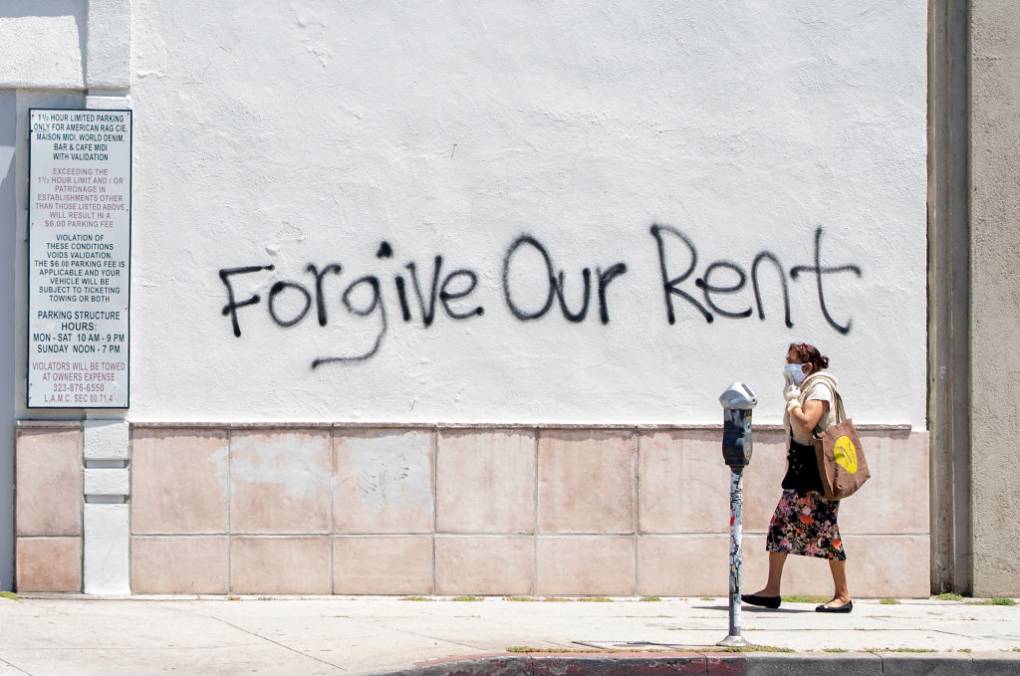
"caption": "A woman wearing a mask walks past a wall in Los Angeles on May 1, 2020 with a graffiti message demanding rent forgiveness.",
"description": null,
"title": "us-health-virus-epidemic-transport-diplomacy-politics-pandemic",
"credit": "Valerie Macon/AFP via Getty Images",
"status": "inherit",
"altTag": null,
"isLoading": false,
"fetchFailed": false
},
"news_11850681": {
"type": "attachments",
"id": "news_11850681",
"meta": {
"index": "attachments_1716263798",
"site": "news",
"id": "11850681",
"found": true
},
"parent": 11850646,
"imgSizes": {
"apple_news_ca_landscape_5_5": {
"file": "https://ww2.kqed.org/app/uploads/sites/10/2020/12/RS46311_031_KQED_SanFrancisco_COVIDShutdown_12062020-qut-1044x783.jpg",
"width": 1044,
"mimeType": "image/jpeg",
"height": 783
},
"apple_news_ca_square_4_0": {
"file": "https://ww2.kqed.org/app/uploads/sites/10/2020/12/RS46311_031_KQED_SanFrancisco_COVIDShutdown_12062020-qut-470x470.jpg",
"width": 470,
"mimeType": "image/jpeg",
"height": 470
},
"twentyfourteen-full-width": {
"file": "https://ww2.kqed.org/app/uploads/sites/10/2020/12/RS46311_031_KQED_SanFrancisco_COVIDShutdown_12062020-qut-1038x576.jpg",
"width": 1038,
"mimeType": "image/jpeg",
"height": 576
},
"thumbnail": {
"file": "https://ww2.kqed.org/app/uploads/sites/10/2020/12/RS46311_031_KQED_SanFrancisco_COVIDShutdown_12062020-qut-160x107.jpg",
"width": 160,
"mimeType": "image/jpeg",
"height": 107
},
"post-thumbnail": {
"file": "https://ww2.kqed.org/app/uploads/sites/10/2020/12/RS46311_031_KQED_SanFrancisco_COVIDShutdown_12062020-qut-672x372.jpg",
"width": 672,
"mimeType": "image/jpeg",
"height": 372
},
"kqedFullSize": {
"file": "https://ww2.kqed.org/app/uploads/sites/10/2020/12/RS46311_031_KQED_SanFrancisco_COVIDShutdown_12062020-qut.jpg",
"width": 1920,
"height": 1280
},
"apple_news_ca_landscape_4_7": {
"file": "https://ww2.kqed.org/app/uploads/sites/10/2020/12/RS46311_031_KQED_SanFrancisco_COVIDShutdown_12062020-qut-632x474.jpg",
"width": 632,
"mimeType": "image/jpeg",
"height": 474
},
"large": {
"file": "https://ww2.kqed.org/app/uploads/sites/10/2020/12/RS46311_031_KQED_SanFrancisco_COVIDShutdown_12062020-qut-1020x680.jpg",
"width": 1020,
"mimeType": "image/jpeg",
"height": 680
},
"apple_news_ca_landscape_4_0": {
"file": "https://ww2.kqed.org/app/uploads/sites/10/2020/12/RS46311_031_KQED_SanFrancisco_COVIDShutdown_12062020-qut-536x402.jpg",
"width": 536,
"mimeType": "image/jpeg",
"height": 402
},
"apple_news_ca_portrait_12_9": {
"file": "https://ww2.kqed.org/app/uploads/sites/10/2020/12/RS46311_031_KQED_SanFrancisco_COVIDShutdown_12062020-qut-1122x1280.jpg",
"width": 1122,
"mimeType": "image/jpeg",
"height": 1280
},
"medium": {
"file": "https://ww2.kqed.org/app/uploads/sites/10/2020/12/RS46311_031_KQED_SanFrancisco_COVIDShutdown_12062020-qut-800x533.jpg",
"width": 800,
"mimeType": "image/jpeg",
"height": 533
},
"apple_news_ca_portrait_4_0": {
"file": "https://ww2.kqed.org/app/uploads/sites/10/2020/12/RS46311_031_KQED_SanFrancisco_COVIDShutdown_12062020-qut-354x472.jpg",
"width": 354,
"mimeType": "image/jpeg",
"height": 472
},
"apple_news_ca_portrait_9_7": {
"file": "https://ww2.kqed.org/app/uploads/sites/10/2020/12/RS46311_031_KQED_SanFrancisco_COVIDShutdown_12062020-qut-840x1120.jpg",
"width": 840,
"mimeType": "image/jpeg",
"height": 1120
},
"apple_news_ca_landscape_12_9": {
"file": "https://ww2.kqed.org/app/uploads/sites/10/2020/12/RS46311_031_KQED_SanFrancisco_COVIDShutdown_12062020-qut-1832x1280.jpg",
"width": 1832,
"mimeType": "image/jpeg",
"height": 1280
},
"apple_news_ca_square_9_7": {
"file": "https://ww2.kqed.org/app/uploads/sites/10/2020/12/RS46311_031_KQED_SanFrancisco_COVIDShutdown_12062020-qut-1104x1104.jpg",
"width": 1104,
"mimeType": "image/jpeg",
"height": 1104
},
"1536x1536": {
"file": "https://ww2.kqed.org/app/uploads/sites/10/2020/12/RS46311_031_KQED_SanFrancisco_COVIDShutdown_12062020-qut-1536x1024.jpg",
"width": 1536,
"mimeType": "image/jpeg",
"height": 1024
},
"apple_news_ca_portrait_4_7": {
"file": "https://ww2.kqed.org/app/uploads/sites/10/2020/12/RS46311_031_KQED_SanFrancisco_COVIDShutdown_12062020-qut-414x552.jpg",
"width": 414,
"mimeType": "image/jpeg",
"height": 552
},
"apple_news_ca_square_12_9": {
"file": "https://ww2.kqed.org/app/uploads/sites/10/2020/12/RS46311_031_KQED_SanFrancisco_COVIDShutdown_12062020-qut-1472x1280.jpg",
"width": 1472,
"mimeType": "image/jpeg",
"height": 1280
},
"apple_news_ca_portrait_5_5": {
"file": "https://ww2.kqed.org/app/uploads/sites/10/2020/12/RS46311_031_KQED_SanFrancisco_COVIDShutdown_12062020-qut-687x916.jpg",
"width": 687,
"mimeType": "image/jpeg",
"height": 916
},
"apple_news_ca_square_4_7": {
"file": "https://ww2.kqed.org/app/uploads/sites/10/2020/12/RS46311_031_KQED_SanFrancisco_COVIDShutdown_12062020-qut-550x550.jpg",
"width": 550,
"mimeType": "image/jpeg",
"height": 550
},
"apple_news_ca_landscape_9_7": {
"file": "https://ww2.kqed.org/app/uploads/sites/10/2020/12/RS46311_031_KQED_SanFrancisco_COVIDShutdown_12062020-qut-1376x1032.jpg",
"width": 1376,
"mimeType": "image/jpeg",
"height": 1032
},
"apple_news_ca_square_5_5": {
"file": "https://ww2.kqed.org/app/uploads/sites/10/2020/12/RS46311_031_KQED_SanFrancisco_COVIDShutdown_12062020-qut-912x912.jpg",
"width": 912,
"mimeType": "image/jpeg",
"height": 912
}
},
"publishDate": 1607644424,
"modified": 1607994322,
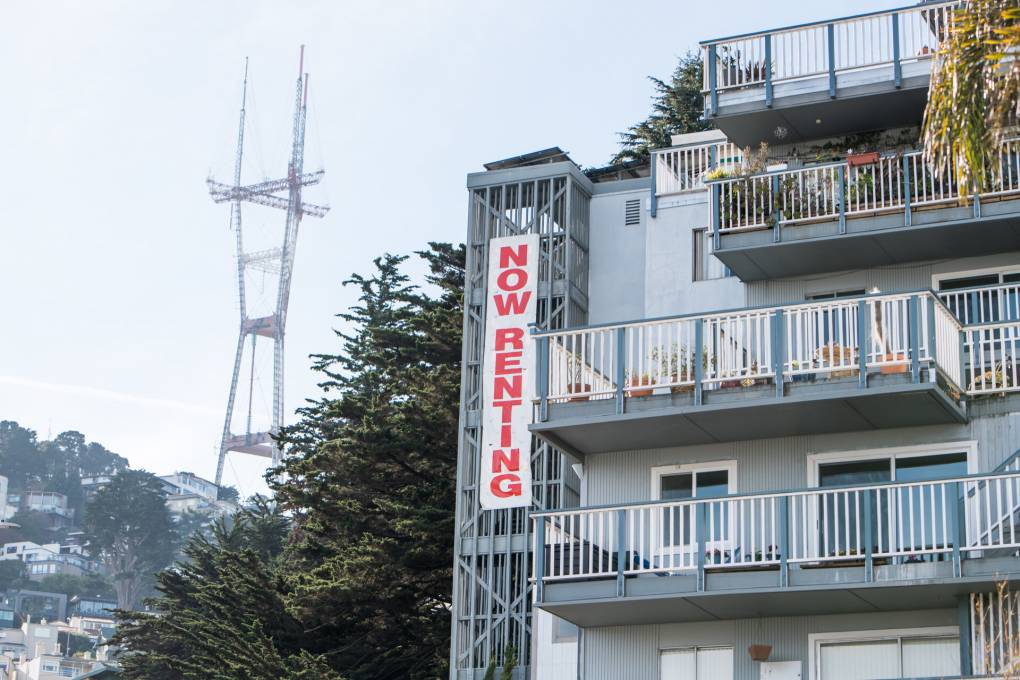
"caption": "A 'Now Renting' sign on an apartment building on Market Street in San Francisco on Dec. 6, 2020.",
"description": null,
"title": "RS46311_031_KQED_SanFrancisco_COVIDShutdown_12062020-qut",
"credit": "Beth LaBerge/KQED",
"status": "inherit",
"altTag": null,
"isLoading": false,
"fetchFailed": false
},
"news_11850166": {
"type": "attachments",
"id": "news_11850166",
"meta": {
"index": "attachments_1716263798",
"site": "news",
"id": "11850166",
"found": true
},
"parent": 11850145,
"imgSizes": {
"apple_news_ca_landscape_5_5": {
"file": "https://ww2.kqed.org/app/uploads/sites/10/2020/12/RS42473_007_KQED_SanFrancisco_RentStrike_03312020-qut-1044x783.jpg",
"width": 1044,
"mimeType": "image/jpeg",
"height": 783
},
"apple_news_ca_square_4_0": {
"file": "https://ww2.kqed.org/app/uploads/sites/10/2020/12/RS42473_007_KQED_SanFrancisco_RentStrike_03312020-qut-470x470.jpg",
"width": 470,
"mimeType": "image/jpeg",
"height": 470
},
"twentyfourteen-full-width": {
"file": "https://ww2.kqed.org/app/uploads/sites/10/2020/12/RS42473_007_KQED_SanFrancisco_RentStrike_03312020-qut-1038x576.jpg",
"width": 1038,
"mimeType": "image/jpeg",
"height": 576
},
"thumbnail": {
"file": "https://ww2.kqed.org/app/uploads/sites/10/2020/12/RS42473_007_KQED_SanFrancisco_RentStrike_03312020-qut-160x107.jpg",
"width": 160,
"mimeType": "image/jpeg",
"height": 107
},
"post-thumbnail": {
"file": "https://ww2.kqed.org/app/uploads/sites/10/2020/12/RS42473_007_KQED_SanFrancisco_RentStrike_03312020-qut-672x372.jpg",
"width": 672,
"mimeType": "image/jpeg",
"height": 372
},
"kqedFullSize": {
"file": "https://ww2.kqed.org/app/uploads/sites/10/2020/12/RS42473_007_KQED_SanFrancisco_RentStrike_03312020-qut.jpg",
"width": 1920,
"height": 1280
},
"apple_news_ca_landscape_4_7": {
"file": "https://ww2.kqed.org/app/uploads/sites/10/2020/12/RS42473_007_KQED_SanFrancisco_RentStrike_03312020-qut-632x474.jpg",
"width": 632,
"mimeType": "image/jpeg",
"height": 474
},
"large": {
"file": "https://ww2.kqed.org/app/uploads/sites/10/2020/12/RS42473_007_KQED_SanFrancisco_RentStrike_03312020-qut-1020x680.jpg",
"width": 1020,
"mimeType": "image/jpeg",
"height": 680
},
"apple_news_ca_landscape_4_0": {
"file": "https://ww2.kqed.org/app/uploads/sites/10/2020/12/RS42473_007_KQED_SanFrancisco_RentStrike_03312020-qut-536x402.jpg",
"width": 536,
"mimeType": "image/jpeg",
"height": 402
},
"apple_news_ca_portrait_12_9": {
"file": "https://ww2.kqed.org/app/uploads/sites/10/2020/12/RS42473_007_KQED_SanFrancisco_RentStrike_03312020-qut-1122x1280.jpg",
"width": 1122,
"mimeType": "image/jpeg",
"height": 1280
},
"medium": {
"file": "https://ww2.kqed.org/app/uploads/sites/10/2020/12/RS42473_007_KQED_SanFrancisco_RentStrike_03312020-qut-800x533.jpg",
"width": 800,
"mimeType": "image/jpeg",
"height": 533
},
"apple_news_ca_portrait_4_0": {
"file": "https://ww2.kqed.org/app/uploads/sites/10/2020/12/RS42473_007_KQED_SanFrancisco_RentStrike_03312020-qut-354x472.jpg",
"width": 354,
"mimeType": "image/jpeg",
"height": 472
},
"apple_news_ca_portrait_9_7": {
"file": "https://ww2.kqed.org/app/uploads/sites/10/2020/12/RS42473_007_KQED_SanFrancisco_RentStrike_03312020-qut-840x1120.jpg",
"width": 840,
"mimeType": "image/jpeg",
"height": 1120
},
"apple_news_ca_landscape_12_9": {
"file": "https://ww2.kqed.org/app/uploads/sites/10/2020/12/RS42473_007_KQED_SanFrancisco_RentStrike_03312020-qut-1832x1280.jpg",
"width": 1832,
"mimeType": "image/jpeg",
"height": 1280
},
"apple_news_ca_square_9_7": {
"file": "https://ww2.kqed.org/app/uploads/sites/10/2020/12/RS42473_007_KQED_SanFrancisco_RentStrike_03312020-qut-1104x1104.jpg",
"width": 1104,
"mimeType": "image/jpeg",
"height": 1104
},
"1536x1536": {
"file": "https://ww2.kqed.org/app/uploads/sites/10/2020/12/RS42473_007_KQED_SanFrancisco_RentStrike_03312020-qut-1536x1024.jpg",
"width": 1536,
"mimeType": "image/jpeg",
"height": 1024
},
"apple_news_ca_portrait_4_7": {
"file": "https://ww2.kqed.org/app/uploads/sites/10/2020/12/RS42473_007_KQED_SanFrancisco_RentStrike_03312020-qut-414x552.jpg",
"width": 414,
"mimeType": "image/jpeg",
"height": 552
},
"apple_news_ca_square_12_9": {
"file": "https://ww2.kqed.org/app/uploads/sites/10/2020/12/RS42473_007_KQED_SanFrancisco_RentStrike_03312020-qut-1472x1280.jpg",
"width": 1472,
"mimeType": "image/jpeg",
"height": 1280
},
"apple_news_ca_portrait_5_5": {
"file": "https://ww2.kqed.org/app/uploads/sites/10/2020/12/RS42473_007_KQED_SanFrancisco_RentStrike_03312020-qut-687x916.jpg",
"width": 687,
"mimeType": "image/jpeg",
"height": 916
},
"apple_news_ca_square_4_7": {
"file": "https://ww2.kqed.org/app/uploads/sites/10/2020/12/RS42473_007_KQED_SanFrancisco_RentStrike_03312020-qut-550x550.jpg",
"width": 550,
"mimeType": "image/jpeg",
"height": 550
},
"apple_news_ca_landscape_9_7": {
"file": "https://ww2.kqed.org/app/uploads/sites/10/2020/12/RS42473_007_KQED_SanFrancisco_RentStrike_03312020-qut-1376x1032.jpg",
"width": 1376,
"mimeType": "image/jpeg",
"height": 1032
},
"apple_news_ca_square_5_5": {
"file": "https://ww2.kqed.org/app/uploads/sites/10/2020/12/RS42473_007_KQED_SanFrancisco_RentStrike_03312020-qut-912x912.jpg",
"width": 912,
"mimeType": "image/jpeg",
"height": 912
}
},
"publishDate": 1607390993,
"modified": 1664324333,
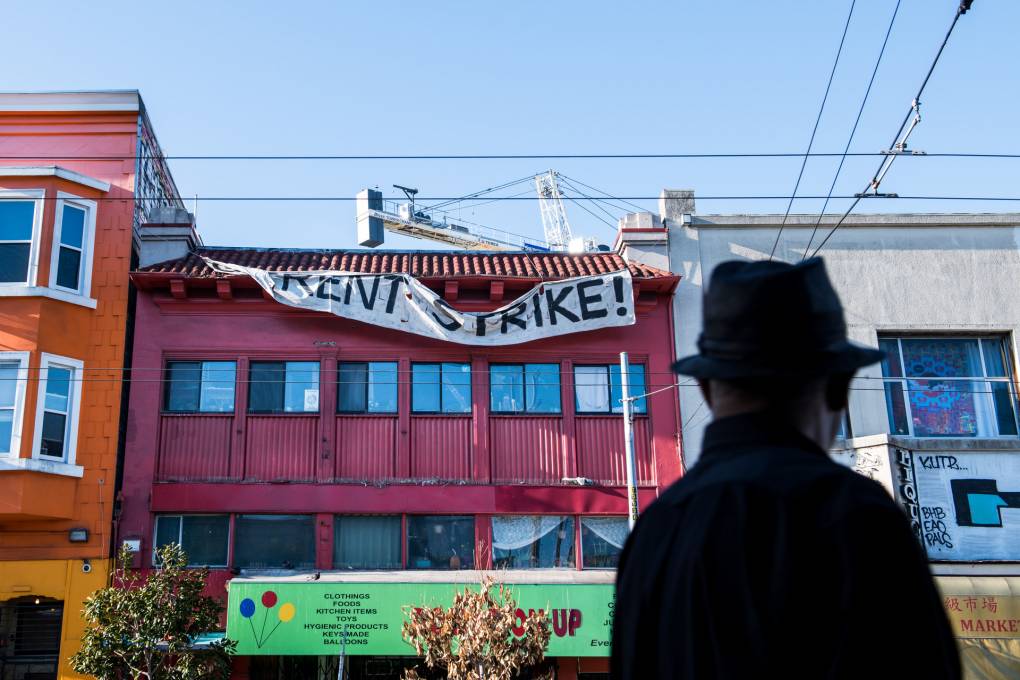
"caption": "A man walks past a 'Rent Strike!' sign in the Mission District on March 31, 2020.",
"description": null,
"title": "RS42473_007_KQED_SanFrancisco_RentStrike_03312020-qut",
"credit": "Beth LaBerge/KQED",
"status": "inherit",
"altTag": "A banner on a building says 'Rent Strike!'",
"isLoading": false,
"fetchFailed": false
},
"news_11846803": {
"type": "attachments",
"id": "news_11846803",
"meta": {
"index": "attachments_1716263798",
"site": "news",
"id": "11846803",
"found": true
},
"parent": 11846796,
"imgSizes": {
"apple_news_ca_landscape_5_5": {
"file": "https://ww2.kqed.org/app/uploads/sites/10/2020/11/RS44777_060_KQED_Japantown_Businesses_09022020-1044x783.jpg",
"width": 1044,
"mimeType": "image/jpeg",
"height": 783
},
"apple_news_ca_square_4_0": {
"file": "https://ww2.kqed.org/app/uploads/sites/10/2020/11/RS44777_060_KQED_Japantown_Businesses_09022020-470x470.jpg",
"width": 470,
"mimeType": "image/jpeg",
"height": 470
},
"twentyfourteen-full-width": {
"file": "https://ww2.kqed.org/app/uploads/sites/10/2020/11/RS44777_060_KQED_Japantown_Businesses_09022020-1038x576.jpg",
"width": 1038,
"mimeType": "image/jpeg",
"height": 576
},
"thumbnail": {
"file": "https://ww2.kqed.org/app/uploads/sites/10/2020/11/RS44777_060_KQED_Japantown_Businesses_09022020-160x107.jpg",
"width": 160,
"mimeType": "image/jpeg",
"height": 107
},
"post-thumbnail": {
"file": "https://ww2.kqed.org/app/uploads/sites/10/2020/11/RS44777_060_KQED_Japantown_Businesses_09022020-672x372.jpg",
"width": 672,
"mimeType": "image/jpeg",
"height": 372
},
"kqedFullSize": {
"file": "https://ww2.kqed.org/app/uploads/sites/10/2020/11/RS44777_060_KQED_Japantown_Businesses_09022020-scaled.jpg",
"width": 2560,
"height": 1707
},
"2048x2048": {
"file": "https://ww2.kqed.org/app/uploads/sites/10/2020/11/RS44777_060_KQED_Japantown_Businesses_09022020-2048x1365.jpg",
"width": 2048,
"mimeType": "image/jpeg",
"height": 1365
},
"apple_news_ca_landscape_4_7": {
"file": "https://ww2.kqed.org/app/uploads/sites/10/2020/11/RS44777_060_KQED_Japantown_Businesses_09022020-632x474.jpg",
"width": 632,
"mimeType": "image/jpeg",
"height": 474
},
"large": {
"file": "https://ww2.kqed.org/app/uploads/sites/10/2020/11/RS44777_060_KQED_Japantown_Businesses_09022020-1020x680.jpg",
"width": 1020,
"mimeType": "image/jpeg",
"height": 680
},
"apple_news_ca_landscape_4_0": {
"file": "https://ww2.kqed.org/app/uploads/sites/10/2020/11/RS44777_060_KQED_Japantown_Businesses_09022020-536x402.jpg",
"width": 536,
"mimeType": "image/jpeg",
"height": 402
},
"apple_news_ca_portrait_12_9": {
"file": "https://ww2.kqed.org/app/uploads/sites/10/2020/11/RS44777_060_KQED_Japantown_Businesses_09022020-1122x1496.jpg",
"width": 1122,
"mimeType": "image/jpeg",
"height": 1496
},
"medium": {
"file": "https://ww2.kqed.org/app/uploads/sites/10/2020/11/RS44777_060_KQED_Japantown_Businesses_09022020-800x533.jpg",
"width": 800,
"mimeType": "image/jpeg",
"height": 533
},
"apple_news_ca_portrait_4_0": {
"file": "https://ww2.kqed.org/app/uploads/sites/10/2020/11/RS44777_060_KQED_Japantown_Businesses_09022020-354x472.jpg",
"width": 354,
"mimeType": "image/jpeg",
"height": 472
},
"apple_news_ca_portrait_9_7": {
"file": "https://ww2.kqed.org/app/uploads/sites/10/2020/11/RS44777_060_KQED_Japantown_Businesses_09022020-840x1120.jpg",
"width": 840,
"mimeType": "image/jpeg",
"height": 1120
},
"apple_news_ca_landscape_12_9": {
"file": "https://ww2.kqed.org/app/uploads/sites/10/2020/11/RS44777_060_KQED_Japantown_Businesses_09022020-1832x1374.jpg",
"width": 1832,
"mimeType": "image/jpeg",
"height": 1374
},
"apple_news_ca_square_9_7": {
"file": "https://ww2.kqed.org/app/uploads/sites/10/2020/11/RS44777_060_KQED_Japantown_Businesses_09022020-1104x1104.jpg",
"width": 1104,
"mimeType": "image/jpeg",
"height": 1104
},
"1536x1536": {
"file": "https://ww2.kqed.org/app/uploads/sites/10/2020/11/RS44777_060_KQED_Japantown_Businesses_09022020-1536x1024.jpg",
"width": 1536,
"mimeType": "image/jpeg",
"height": 1024
},
"apple_news_ca_portrait_4_7": {
"file": "https://ww2.kqed.org/app/uploads/sites/10/2020/11/RS44777_060_KQED_Japantown_Businesses_09022020-414x552.jpg",
"width": 414,
"mimeType": "image/jpeg",
"height": 552
},
"apple_news_ca_square_12_9": {
"file": "https://ww2.kqed.org/app/uploads/sites/10/2020/11/RS44777_060_KQED_Japantown_Businesses_09022020-1472x1472.jpg",
"width": 1472,
"mimeType": "image/jpeg",
"height": 1472
},
"apple_news_ca_portrait_5_5": {
"file": "https://ww2.kqed.org/app/uploads/sites/10/2020/11/RS44777_060_KQED_Japantown_Businesses_09022020-687x916.jpg",
"width": 687,
"mimeType": "image/jpeg",
"height": 916
},
"full-width": {
"file": "https://ww2.kqed.org/app/uploads/sites/10/2020/11/RS44777_060_KQED_Japantown_Businesses_09022020-1920x1280.jpg",
"width": 1920,
"mimeType": "image/jpeg",
"height": 1280
},
"apple_news_ca_square_4_7": {
"file": "https://ww2.kqed.org/app/uploads/sites/10/2020/11/RS44777_060_KQED_Japantown_Businesses_09022020-550x550.jpg",
"width": 550,
"mimeType": "image/jpeg",
"height": 550
},
"apple_news_ca_landscape_9_7": {
"file": "https://ww2.kqed.org/app/uploads/sites/10/2020/11/RS44777_060_KQED_Japantown_Businesses_09022020-1376x1032.jpg",
"width": 1376,
"mimeType": "image/jpeg",
"height": 1032
},
"apple_news_ca_square_5_5": {
"file": "https://ww2.kqed.org/app/uploads/sites/10/2020/11/RS44777_060_KQED_Japantown_Businesses_09022020-912x912.jpg",
"width": 912,
"mimeType": "image/jpeg",
"height": 912
}
},
"publishDate": 1604990491,
"modified": 1605029801,
"caption": "Xiao Feng brings out an order at the Matcha Cafe Maiko at the Japan Center West Mall on Sep. 2, 2020.",
"description": "Xiao Feng brings out an order at the Matcha Cafe Maiko at the Japan Center West Mall on Sep. 2, 2020.",
"title": "RS44777_060_KQED_Japantown_Businesses_09022020",
"credit": "Beth LaBerge/KQED",
"status": "inherit",
"isLoading": false,
"fetchFailed": false
},
"news_11837554": {
"type": "attachments",
"id": "news_11837554",
"meta": {
"index": "attachments_1716263798",
"site": "news",
"id": "11837554",
"found": true
},
"parent": 11837511,
"imgSizes": {
"apple_news_ca_landscape_5_5": {
"file": "https://ww2.kqed.org/app/uploads/sites/10/2020/09/RS44728_006_KQED_Chinatown_Businesses_09022020-qut-1044x783.jpg",
"width": 1044,
"mimeType": "image/jpeg",
"height": 783
},
"apple_news_ca_square_4_0": {
"file": "https://ww2.kqed.org/app/uploads/sites/10/2020/09/RS44728_006_KQED_Chinatown_Businesses_09022020-qut-470x470.jpg",
"width": 470,
"mimeType": "image/jpeg",
"height": 470
},
"twentyfourteen-full-width": {
"file": "https://ww2.kqed.org/app/uploads/sites/10/2020/09/RS44728_006_KQED_Chinatown_Businesses_09022020-qut-1038x576.jpg",
"width": 1038,
"mimeType": "image/jpeg",
"height": 576
},
"thumbnail": {
"file": "https://ww2.kqed.org/app/uploads/sites/10/2020/09/RS44728_006_KQED_Chinatown_Businesses_09022020-qut-160x107.jpg",
"width": 160,
"mimeType": "image/jpeg",
"height": 107
},
"post-thumbnail": {
"file": "https://ww2.kqed.org/app/uploads/sites/10/2020/09/RS44728_006_KQED_Chinatown_Businesses_09022020-qut-672x372.jpg",
"width": 672,
"mimeType": "image/jpeg",
"height": 372
},
"kqedFullSize": {
"file": "https://ww2.kqed.org/app/uploads/sites/10/2020/09/RS44728_006_KQED_Chinatown_Businesses_09022020-qut.jpg",
"width": 1920,
"height": 1280
},
"apple_news_ca_landscape_4_7": {
"file": "https://ww2.kqed.org/app/uploads/sites/10/2020/09/RS44728_006_KQED_Chinatown_Businesses_09022020-qut-632x474.jpg",
"width": 632,
"mimeType": "image/jpeg",
"height": 474
},
"large": {
"file": "https://ww2.kqed.org/app/uploads/sites/10/2020/09/RS44728_006_KQED_Chinatown_Businesses_09022020-qut-1020x680.jpg",
"width": 1020,
"mimeType": "image/jpeg",
"height": 680
},
"apple_news_ca_landscape_4_0": {
"file": "https://ww2.kqed.org/app/uploads/sites/10/2020/09/RS44728_006_KQED_Chinatown_Businesses_09022020-qut-536x402.jpg",
"width": 536,
"mimeType": "image/jpeg",
"height": 402
},
"apple_news_ca_portrait_12_9": {
"file": "https://ww2.kqed.org/app/uploads/sites/10/2020/09/RS44728_006_KQED_Chinatown_Businesses_09022020-qut-1122x1280.jpg",
"width": 1122,
"mimeType": "image/jpeg",
"height": 1280
},
"medium": {
"file": "https://ww2.kqed.org/app/uploads/sites/10/2020/09/RS44728_006_KQED_Chinatown_Businesses_09022020-qut-800x533.jpg",
"width": 800,
"mimeType": "image/jpeg",
"height": 533
},
"apple_news_ca_portrait_4_0": {
"file": "https://ww2.kqed.org/app/uploads/sites/10/2020/09/RS44728_006_KQED_Chinatown_Businesses_09022020-qut-354x472.jpg",
"width": 354,
"mimeType": "image/jpeg",
"height": 472
},
"apple_news_ca_portrait_9_7": {
"file": "https://ww2.kqed.org/app/uploads/sites/10/2020/09/RS44728_006_KQED_Chinatown_Businesses_09022020-qut-840x1120.jpg",
"width": 840,
"mimeType": "image/jpeg",
"height": 1120
},
"apple_news_ca_landscape_12_9": {
"file": "https://ww2.kqed.org/app/uploads/sites/10/2020/09/RS44728_006_KQED_Chinatown_Businesses_09022020-qut-1832x1280.jpg",
"width": 1832,
"mimeType": "image/jpeg",
"height": 1280
},
"apple_news_ca_square_9_7": {
"file": "https://ww2.kqed.org/app/uploads/sites/10/2020/09/RS44728_006_KQED_Chinatown_Businesses_09022020-qut-1104x1104.jpg",
"width": 1104,
"mimeType": "image/jpeg",
"height": 1104
},
"1536x1536": {
"file": "https://ww2.kqed.org/app/uploads/sites/10/2020/09/RS44728_006_KQED_Chinatown_Businesses_09022020-qut-1536x1024.jpg",
"width": 1536,
"mimeType": "image/jpeg",
"height": 1024
},
"apple_news_ca_portrait_4_7": {
"file": "https://ww2.kqed.org/app/uploads/sites/10/2020/09/RS44728_006_KQED_Chinatown_Businesses_09022020-qut-414x552.jpg",
"width": 414,
"mimeType": "image/jpeg",
"height": 552
},
"apple_news_ca_square_12_9": {
"file": "https://ww2.kqed.org/app/uploads/sites/10/2020/09/RS44728_006_KQED_Chinatown_Businesses_09022020-qut-1472x1280.jpg",
"width": 1472,
"mimeType": "image/jpeg",
"height": 1280
},
"apple_news_ca_portrait_5_5": {
"file": "https://ww2.kqed.org/app/uploads/sites/10/2020/09/RS44728_006_KQED_Chinatown_Businesses_09022020-qut-687x916.jpg",
"width": 687,
"mimeType": "image/jpeg",
"height": 916
},
"apple_news_ca_square_4_7": {
"file": "https://ww2.kqed.org/app/uploads/sites/10/2020/09/RS44728_006_KQED_Chinatown_Businesses_09022020-qut-550x550.jpg",
"width": 550,
"mimeType": "image/jpeg",
"height": 550
},
"apple_news_ca_landscape_9_7": {
"file": "https://ww2.kqed.org/app/uploads/sites/10/2020/09/RS44728_006_KQED_Chinatown_Businesses_09022020-qut-1376x1032.jpg",
"width": 1376,
"mimeType": "image/jpeg",
"height": 1032
},
"apple_news_ca_square_5_5": {
"file": "https://ww2.kqed.org/app/uploads/sites/10/2020/09/RS44728_006_KQED_Chinatown_Businesses_09022020-qut-912x912.jpg",
"width": 912,
"mimeType": "image/jpeg",
"height": 912
}
},
"publishDate": 1599850698,
"modified": 1599864231,
"caption": "Tilly Tsang (L) and her daughter Chelsea Hung (R), owners of Washington Bakery and Restaurant in San Francisco's Chinatown on Sept. 2, 2020.",
"description": null,
"title": "RS44728_006_KQED_Chinatown_Businesses_09022020-qut",
"credit": "Beth LaBerge/KQED",
"status": "inherit",
"isLoading": false,
"fetchFailed": false
},
"news_11489888": {
"type": "attachments",
"id": "news_11489888",
"meta": {
"index": "attachments_1716263798",
"site": "news",
"id": "11489888",
"found": true
},
"parent": 11489497,
"imgSizes": {
"small": {
"file": "https://ww2.kqed.org/app/uploads/sites/10/2017/06/RS25439_20170515_StateCapitol_Assemblymember_DavidChiu_credit_BertJohnson-1-qut-520x347.jpg",
"width": 520,
"mimeType": "image/jpeg",
"height": 347
},
"twentyfourteen-full-width": {
"file": "https://ww2.kqed.org/app/uploads/sites/10/2017/06/RS25439_20170515_StateCapitol_Assemblymember_DavidChiu_credit_BertJohnson-1-qut-1038x576.jpg",
"width": 1038,
"mimeType": "image/jpeg",
"height": 576
},
"thumbnail": {
"file": "https://ww2.kqed.org/app/uploads/sites/10/2017/06/RS25439_20170515_StateCapitol_Assemblymember_DavidChiu_credit_BertJohnson-1-qut-160x107.jpg",
"width": 160,
"mimeType": "image/jpeg",
"height": 107
},
"fd-sm": {
"file": "https://ww2.kqed.org/app/uploads/sites/10/2017/06/RS25439_20170515_StateCapitol_Assemblymember_DavidChiu_credit_BertJohnson-1-qut-960x640.jpg",
"width": 960,
"mimeType": "image/jpeg",
"height": 640
},
"post-thumbnail": {
"file": "https://ww2.kqed.org/app/uploads/sites/10/2017/06/RS25439_20170515_StateCapitol_Assemblymember_DavidChiu_credit_BertJohnson-1-qut-672x372.jpg",
"width": 672,
"mimeType": "image/jpeg",
"height": 372
},
"xsmall": {
"file": "https://ww2.kqed.org/app/uploads/sites/10/2017/06/RS25439_20170515_StateCapitol_Assemblymember_DavidChiu_credit_BertJohnson-1-qut-375x250.jpg",
"width": 375,
"mimeType": "image/jpeg",
"height": 250
},
"kqedFullSize": {
"file": "https://ww2.kqed.org/app/uploads/sites/10/2017/06/RS25439_20170515_StateCapitol_Assemblymember_DavidChiu_credit_BertJohnson-1-qut.jpg",
"width": 1920,
"height": 1280
},
"large": {
"file": "https://ww2.kqed.org/app/uploads/sites/10/2017/06/RS25439_20170515_StateCapitol_Assemblymember_DavidChiu_credit_BertJohnson-1-qut-1020x680.jpg",
"width": 1020,
"mimeType": "image/jpeg",
"height": 680
},
"xlarge": {
"file": "https://ww2.kqed.org/app/uploads/sites/10/2017/06/RS25439_20170515_StateCapitol_Assemblymember_DavidChiu_credit_BertJohnson-1-qut-1180x787.jpg",
"width": 1180,
"mimeType": "image/jpeg",
"height": 787
},
"guest-author-50": {
"file": "https://ww2.kqed.org/app/uploads/sites/10/2017/06/RS25439_20170515_StateCapitol_Assemblymember_DavidChiu_credit_BertJohnson-1-qut-50x50.jpg",
"width": 50,
"mimeType": "image/jpeg",
"height": 50
},
"guest-author-96": {
"file": "https://ww2.kqed.org/app/uploads/sites/10/2017/06/RS25439_20170515_StateCapitol_Assemblymember_DavidChiu_credit_BertJohnson-1-qut-96x96.jpg",
"width": 96,
"mimeType": "image/jpeg",
"height": 96
},
"medium": {
"file": "https://ww2.kqed.org/app/uploads/sites/10/2017/06/RS25439_20170515_StateCapitol_Assemblymember_DavidChiu_credit_BertJohnson-1-qut-800x533.jpg",
"width": 800,
"mimeType": "image/jpeg",
"height": 533
},
"guest-author-64": {
"file": "https://ww2.kqed.org/app/uploads/sites/10/2017/06/RS25439_20170515_StateCapitol_Assemblymember_DavidChiu_credit_BertJohnson-1-qut-64x64.jpg",
"width": 64,
"mimeType": "image/jpeg",
"height": 64
},
"guest-author-32": {
"file": "https://ww2.kqed.org/app/uploads/sites/10/2017/06/RS25439_20170515_StateCapitol_Assemblymember_DavidChiu_credit_BertJohnson-1-qut-32x32.jpg",
"width": 32,
"mimeType": "image/jpeg",
"height": 32
},
"fd-lrg": {
"file": "https://ww2.kqed.org/app/uploads/sites/10/2017/06/RS25439_20170515_StateCapitol_Assemblymember_DavidChiu_credit_BertJohnson-1-qut-1920x1280.jpg",
"width": 1920,
"mimeType": "image/jpeg",
"height": 1280
},
"fd-med": {
"file": "https://ww2.kqed.org/app/uploads/sites/10/2017/06/RS25439_20170515_StateCapitol_Assemblymember_DavidChiu_credit_BertJohnson-1-qut-1180x787.jpg",
"width": 1180,
"mimeType": "image/jpeg",
"height": 787
},
"full-width": {
"file": "https://ww2.kqed.org/app/uploads/sites/10/2017/06/RS25439_20170515_StateCapitol_Assemblymember_DavidChiu_credit_BertJohnson-1-qut-1920x1280.jpg",
"width": 1920,
"mimeType": "image/jpeg",
"height": 1280
},
"detail": {
"file": "https://ww2.kqed.org/app/uploads/sites/10/2017/06/RS25439_20170515_StateCapitol_Assemblymember_DavidChiu_credit_BertJohnson-1-qut-150x150.jpg",
"width": 150,
"mimeType": "image/jpeg",
"height": 150
},
"guest-author-128": {
"file": "https://ww2.kqed.org/app/uploads/sites/10/2017/06/RS25439_20170515_StateCapitol_Assemblymember_DavidChiu_credit_BertJohnson-1-qut-128x128.jpg",
"width": 128,
"mimeType": "image/jpeg",
"height": 128
},
"xxsmall": {
"file": "https://ww2.kqed.org/app/uploads/sites/10/2017/06/RS25439_20170515_StateCapitol_Assemblymember_DavidChiu_credit_BertJohnson-1-qut-240x160.jpg",
"width": 240,
"mimeType": "image/jpeg",
"height": 160
}
},
"publishDate": 1496373999,
"modified": 1598990800,
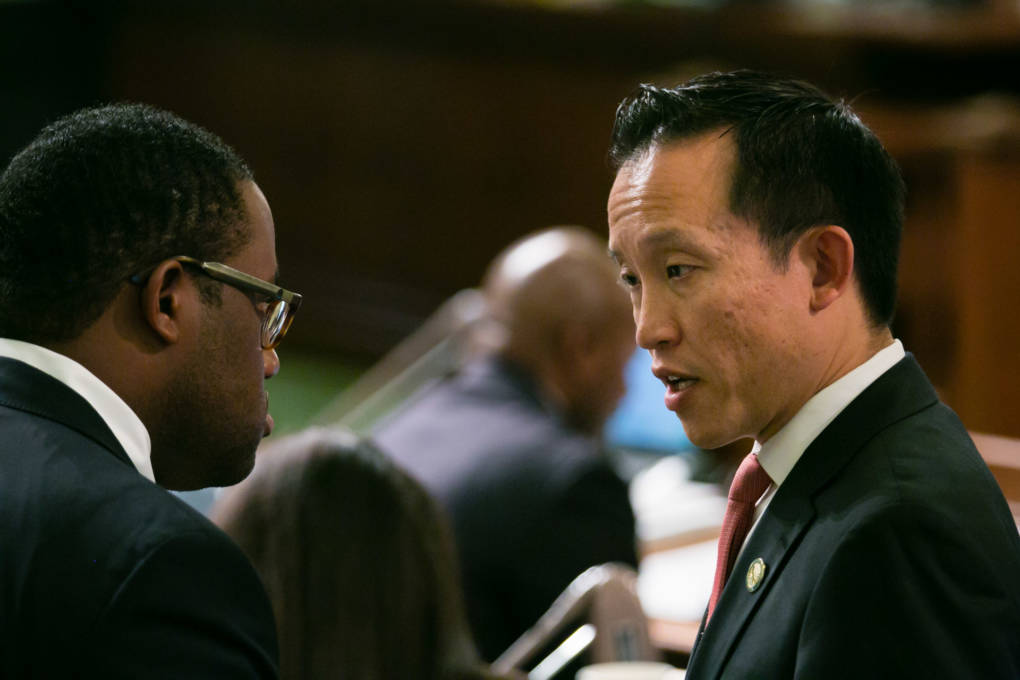
"caption": "Assemblyman David Chiu, D-San Francisco, (right) authored a state bill that would ban evictions for missing rent across California.",
"description": null,
"title": "David Chiu",
"credit": "Bert Johnson/KQED",
"status": "inherit",
"isLoading": false,
"fetchFailed": false
}
},
"audioPlayerReducer": {
"postId": "stream_live",
"isPaused": true,
"isPlaying": false,
"pfsActive": false,
"pledgeModalIsOpen": true,
"playerDrawerIsOpen": false,
"liveAudioPlayStartedAt": 0,
"liveAudioPlayContext": ""
},
"authorsReducer": {
"byline_news_11871848": {
"type": "authors",
"id": "byline_news_11871848",
"meta": {
"override": true
},
"slug": "byline_news_11871848",
"name": "Nigel Duara ",
"isLoading": false
},
"kqednewsstaffandwires": {
"type": "authors",
"id": "237",
"meta": {
"index": "authors_1716337520",
"id": "237",
"found": true
},
"name": "KQED News Staff and Wires",
"firstName": "KQED News Staff and Wires",
"lastName": null,
"slug": "kqednewsstaffandwires",
"email": "onlinenewsstaff@kqed.org",
"display_author_email": false,
"staff_mastheads": [],
"title": null,
"bio": null,
"avatar": "https://secure.gravatar.com/avatar/72295af8ebbfbd19a4948f5271285664?s=600&d=blank&r=g",
"twitter": null,
"facebook": null,
"instagram": null,
"linkedin": null,
"sites": [
{
"site": "arts",
"roles": [
"contributor"
]
},
{
"site": "news",
"roles": [
"contributor"
]
},
{
"site": "lowdown",
"roles": [
"author"
]
},
{
"site": "stateofhealth",
"roles": [
"contributor"
]
},
{
"site": "food",
"roles": [
"author"
]
}
],
"headData": {
"title": "KQED News Staff and Wires | KQED",
"description": null,
"ogImgSrc": "https://secure.gravatar.com/avatar/72295af8ebbfbd19a4948f5271285664?s=600&d=blank&r=g",
"twImgSrc": "https://secure.gravatar.com/avatar/72295af8ebbfbd19a4948f5271285664?s=600&d=blank&r=g"
},
"isLoading": false,
"link": "/author/kqednewsstaffandwires"
},
"dkatayama": {
"type": "authors",
"id": "7240",
"meta": {
"index": "authors_1716337520",
"id": "7240",
"found": true
},
"name": "Devin Katayama",
"firstName": "Devin",
"lastName": "Katayama",
"slug": "dkatayama",
"email": "dkatayama@kqed.org",
"display_author_email": true,
"staff_mastheads": [
"news"
],
"title": "Editor of Talent and Development",
"bio": "Devin Katayama is former Editor of Talent and Development for KQED. He supported our internship program and on-call staff by looking for equitable opportunities to improve the newsroom.\r\n\r\nHe previously hosted The Bay and American Suburb podcasts from KQED News. Prior to returning to the Bay Area in 2015, Devin was the education reporter for WFPL in Louisville and worked as a producer with radio stations in Chicago and Portland, OR. His work has appeared on NPR’s \u003cem>Morning Edition, All Things Considered, The Takeaway\u003c/em> and \u003cem>Here and Now.\u003c/em>\r\n\r\nDevin earned his MA in Journalism from Columbia College Chicago, where he was a Follett Fellow and the recipient of the 2011 Studs Terkel Community Media Workshop Scholarship for his story on Chicago's homeless youth. He won WBUR's 2014 Daniel Schorr award and a regional RTNDA Edward R. Murrow Award for his documentary \"At Risk\" that looked at issues facing some of Louisville's students. Devin has also received numerous local awards from the Associated Press and the Society of Professional Journalists.",
"avatar": "https://secure.gravatar.com/avatar/d0d2978a31002fb2de107921a8e18405?s=600&d=blank&r=g",
"twitter": "RadioDevin",
"facebook": null,
"instagram": null,
"linkedin": null,
"sites": [
{
"site": "arts",
"roles": []
},
{
"site": "news",
"roles": [
"author"
]
},
{
"site": "stateofhealth",
"roles": [
"author"
]
},
{
"site": "forum",
"roles": [
"editor"
]
},
{
"site": "perspectives",
"roles": [
"editor"
]
}
],
"headData": {
"title": "Devin Katayama | KQED",
"description": "Editor of Talent and Development",
"ogImgSrc": "https://secure.gravatar.com/avatar/d0d2978a31002fb2de107921a8e18405?s=600&d=blank&r=g",
"twImgSrc": "https://secure.gravatar.com/avatar/d0d2978a31002fb2de107921a8e18405?s=600&d=blank&r=g"
},
"isLoading": false,
"link": "/author/dkatayama"
},
"clei": {
"type": "authors",
"id": "8617",
"meta": {
"index": "authors_1716337520",
"id": "8617",
"found": true
},
"name": "Cecilia Lei",
"firstName": "Cecilia",
"lastName": "Lei",
"slug": "clei",
"email": "clei@KQED.org",
"display_author_email": false,
"staff_mastheads": [],
"title": "KQED Contributor",
"bio": "Cecilia Lei is an on-call host and producer for KQED News and Podcasts. Previously, she was the executive producer and host of the San Francisco Chronicle's daily news podcast, 'Fifth and Mission'. Cecilia is a graduate of UC Berkeley’s Graduate School of Journalism and the former president of the Asian American Journalists Association San Francisco Bay Area chapter.",
"avatar": "https://secure.gravatar.com/avatar/40975f1f88fccf628ee537bf6ffc2af8?s=600&d=blank&r=g",
"twitter": null,
"facebook": null,
"instagram": null,
"linkedin": null,
"sites": [
{
"site": "arts",
"roles": [
"contributor"
]
},
{
"site": "news",
"roles": [
"author",
"read_private_posts"
]
},
{
"site": "about",
"roles": [
"editor"
]
}
],
"headData": {
"title": "Cecilia Lei | KQED",
"description": "KQED Contributor",
"ogImgSrc": "https://secure.gravatar.com/avatar/40975f1f88fccf628ee537bf6ffc2af8?s=600&d=blank&r=g",
"twImgSrc": "https://secure.gravatar.com/avatar/40975f1f88fccf628ee537bf6ffc2af8?s=600&d=blank&r=g"
},
"isLoading": false,
"link": "/author/clei"
},
"ecruzguevarra": {
"type": "authors",
"id": "8654",
"meta": {
"index": "authors_1716337520",
"id": "8654",
"found": true
},
"name": "Ericka Cruz Guevarra",
"firstName": "Ericka",
"lastName": "Cruz Guevarra",
"slug": "ecruzguevarra",
"email": "ecruzguevarra@kqed.org",
"display_author_email": true,
"staff_mastheads": [
"news"
],
"title": "Producer, The Bay Podcast",
"bio": "Ericka Cruz Guevarra is host of \u003ca href=\"https://www.kqed.org/podcasts/thebay\">\u003cem>The Bay\u003c/em>\u003c/a> podcast at KQED. Before host, she was the show’s producer. Her work in that capacity includes a three-part reported series on policing in Vallejo, which won a 2020 excellence in journalism award from the Society of Professional Journalists. Ericka has worked as a breaking news reporter at Oregon Public Broadcasting, helped produce the Code Switch podcast, and was KQED’s inaugural Raul Ramirez Diversity Fund intern. She’s also an alumna of NPR’s Next Generation Radio program. Send her an email if you have strong feelings about whether Fairfield and Suisun City are the Bay. Ericka is represented by SAG-AFTRA.",
"avatar": "https://secure.gravatar.com/avatar/accefc1de4bafc7e234b69bcb9b6f6536c130fd84709bc3069ef11a78787e1bb?s=600&d=blank&r=g",
"twitter": "NotoriousECG",
"bluesky": null,
"facebook": null,
"instagram": null,
"linkedin": null,
"sites": [
{
"site": "arts",
"roles": [
"subscriber"
]
},
{
"site": "news",
"roles": [
"editor",
"manage_categories"
]
},
{
"site": "futureofyou",
"roles": [
"subscriber"
]
},
{
"site": "stateofhealth",
"roles": [
"subscriber"
]
},
{
"site": "science",
"roles": [
"editor"
]
},
{
"site": "forum",
"roles": [
"subscriber"
]
}
],
"headData": {
"title": "Ericka Cruz Guevarra | KQED",
"description": "Producer, The Bay Podcast",
"ogImgSrc": "https://secure.gravatar.com/avatar/accefc1de4bafc7e234b69bcb9b6f6536c130fd84709bc3069ef11a78787e1bb?s=600&d=blank&r=g",
"twImgSrc": "https://secure.gravatar.com/avatar/accefc1de4bafc7e234b69bcb9b6f6536c130fd84709bc3069ef11a78787e1bb?s=600&d=blank&r=g"
},
"isLoading": false,
"link": "/author/ecruzguevarra"
},
"kmoghadam": {
"type": "authors",
"id": "11637",
"meta": {
"index": "authors_1716337520",
"id": "11637",
"found": true
},
"name": "Kyana Moghadam",
"firstName": "Kyana",
"lastName": "Moghadam",
"slug": "kmoghadam",
"email": "kmoghadam@kqed.org",
"display_author_email": false,
"staff_mastheads": [
"news"
],
"title": "Senior Producer ",
"bio": "Kyana Moghadam is a senior producer at KQED. Prior to joining KQED, she was an audio producer and editor with Al Jazeera, Jetty Studios, VOX Media, Democracy Now!, and Global Press.",
"avatar": "https://secure.gravatar.com/avatar/cdbd6cb0b9e99deaa9eb618abdba56f265d374a2c614710aebeb4e58decbc5f0?s=600&d=blank&r=g",
"twitter": null,
"bluesky": null,
"facebook": null,
"instagram": null,
"linkedin": "https://www.linkedin.com/in/kyanamoghadam/",
"sites": [
{
"site": "",
"roles": [
"editor"
]
},
{
"site": "arts",
"roles": [
"editor"
]
},
{
"site": "news",
"roles": [
"administrator"
]
},
{
"site": "pop",
"roles": [
"editor"
]
},
{
"site": "about",
"roles": [
"editor"
]
},
{
"site": "forum",
"roles": [
"editor"
]
},
{
"site": "perspectives",
"roles": [
"editor"
]
},
{
"site": "podcasts",
"roles": [
"administrator"
]
}
],
"headData": {
"title": "Kyana Moghadam | KQED",
"description": "Senior Producer ",
"ogImgSrc": "https://secure.gravatar.com/avatar/cdbd6cb0b9e99deaa9eb618abdba56f265d374a2c614710aebeb4e58decbc5f0?s=600&d=blank&r=g",
"twImgSrc": "https://secure.gravatar.com/avatar/cdbd6cb0b9e99deaa9eb618abdba56f265d374a2c614710aebeb4e58decbc5f0?s=600&d=blank&r=g"
},
"isLoading": false,
"link": "/author/kmoghadam"
},
"amontecillo": {
"type": "authors",
"id": "11649",
"meta": {
"index": "authors_1716337520",
"id": "11649",
"found": true
},
"name": "Alan Montecillo",
"firstName": "Alan",
"lastName": "Montecillo",
"slug": "amontecillo",
"email": "amontecillo@kqed.org",
"display_author_email": false,
"staff_mastheads": [
"news"
],
"title": "KQED Contributor",
"bio": "Alan Montecillo is the senior editor of \u003cem>\u003ca href=\"http://kqed.org/thebay\">The Bay\u003c/a>, \u003c/em> KQED's local news podcast. Before moving to the Bay Area, he worked as a senior talk show producer for WILL in Champaign-Urbana, Illinois and at Oregon Public Broadcasting in Portland, Oregon. He has won journalism awards from the Society of Professional Journalists Northern California, the Public Media Journalists Association, The Signal Awards, and has also received a regional Edward R. Murrow award. Alan is a Filipino American from Hong Kong and a graduate of Reed College.",
"avatar": "https://secure.gravatar.com/avatar/268f53a2066899ea9efdd8a5900218b17c822d9862cbc9326cccec53ef41d349?s=600&d=blank&r=g",
"twitter": "alanmontecillo",
"bluesky": null,
"facebook": null,
"instagram": null,
"linkedin": null,
"sites": [
{
"site": "",
"roles": [
"editor"
]
},
{
"site": "news",
"roles": [
"editor",
"manage_categories"
]
}
],
"headData": {
"title": "Alan Montecillo | KQED",
"description": "KQED Contributor",
"ogImgSrc": "https://secure.gravatar.com/avatar/268f53a2066899ea9efdd8a5900218b17c822d9862cbc9326cccec53ef41d349?s=600&d=blank&r=g",
"twImgSrc": "https://secure.gravatar.com/avatar/268f53a2066899ea9efdd8a5900218b17c822d9862cbc9326cccec53ef41d349?s=600&d=blank&r=g"
},
"isLoading": false,
"link": "/author/amontecillo"
},
"msolomon": {
"type": "authors",
"id": "11651",
"meta": {
"index": "authors_1716337520",
"id": "11651",
"found": true
},
"name": "Molly Solomon",
"firstName": "Molly",
"lastName": "Solomon",
"slug": "msolomon",
"email": "msolomon@KQED.org",
"display_author_email": false,
"staff_mastheads": [
"news"
],
"title": "Senior Editor",
"bio": "Molly Solomon is the senior editor of KQED's California Politics and Government Desk. Previously, she was the station's editor-at-large, with a focus on editing early childhood education, politics, and criminal justice. Before that, she managed and edited statewide election coverage for The California Newsroom, a collaboration of local public radio stations, CalMatters and NPR. Molly joined KQED in 2019 to launch the station’s housing affordability desk, where she reported on homelessness, evictions and is the co-host of KQED’s housing podcast, SOLD OUT: Rethinking Housing in America. Before that, she was the Southwest Washington Bureau Chief for Oregon Public Broadcasting and a reporter at Hawaii Public Radio. Her stories have aired on NPR’s \u003cem>Morning Edition\u003c/em>, \u003cem>All Things Considered\u003c/em>, \u003cem>Here & Now\u003c/em>, \u003cem>Science Friday\u003c/em> and \u003cem>Marketplace\u003c/em>. Molly's award-winning reporting has been honored by the Best of the West, Edward R. Murrow awards, Society of Professional Journalists, National Headliner Awards, and the Asian American Journalists Association. Born and raised in Berkeley, Molly is a big fan of burritos and her scruffy terrier, Ollie.",
"avatar": "https://secure.gravatar.com/avatar/9ad9794616923d81c9a79897161545bd?s=600&d=blank&r=g",
"twitter": "solomonout",
"facebook": null,
"instagram": null,
"linkedin": null,
"sites": [
{
"site": "news",
"roles": [
"editor"
]
},
{
"site": "science",
"roles": [
"editor"
]
}
],
"headData": {
"title": "Molly Solomon | KQED",
"description": "Senior Editor",
"ogImgSrc": "https://secure.gravatar.com/avatar/9ad9794616923d81c9a79897161545bd?s=600&d=blank&r=g",
"twImgSrc": "https://secure.gravatar.com/avatar/9ad9794616923d81c9a79897161545bd?s=600&d=blank&r=g"
},
"isLoading": false,
"link": "/author/msolomon"
},
"jrodriguez": {
"type": "authors",
"id": "11690",
"meta": {
"index": "authors_1716337520",
"id": "11690",
"found": true
},
"name": "Joe Fitzgerald Rodriguez",
"firstName": "Joe",
"lastName": "Fitzgerald Rodriguez",
"slug": "jrodriguez",
"email": "jrodriguez@kqed.org",
"display_author_email": true,
"staff_mastheads": [
"news"
],
"title": "Reporter and Producer",
"bio": "Joe Fitzgerald Rodriguez is a reporter and digital producer for KQED covering politics. Joe most recently wrote for the \u003cem>San Francisco Examiner\u003c/em> as a political columnist covering The City. He was raised in San Francisco and has spent his reporting career in his beloved, foggy, city by the bay. Joe was 12-years-old when he conducted his first interview in journalism, grilling former San Francisco Mayor Willie Brown for the Marina Middle School newspaper, \u003cem>The Penguin Press, \u003c/em>and he continues to report on the San Francisco Bay Area to this day.",
"avatar": "https://secure.gravatar.com/avatar/2247beb0564c1e9c62228d5649d2edac?s=600&d=blank&r=g",
"twitter": "FitztheReporter",
"facebook": null,
"instagram": "https://www.instagram.com/fitzthereporter/",
"linkedin": null,
"sites": [
{
"site": "",
"roles": [
"editor"
]
},
{
"site": "arts",
"roles": [
"editor"
]
},
{
"site": "news",
"roles": [
"editor"
]
},
{
"site": "science",
"roles": [
"editor"
]
},
{
"site": "elections",
"roles": [
"editor"
]
},
{
"site": "liveblog",
"roles": [
"editor"
]
}
],
"headData": {
"title": "Joe Fitzgerald Rodriguez | KQED",
"description": "Reporter and Producer",
"ogImgSrc": "https://secure.gravatar.com/avatar/2247beb0564c1e9c62228d5649d2edac?s=600&d=blank&r=g",
"twImgSrc": "https://secure.gravatar.com/avatar/2247beb0564c1e9c62228d5649d2edac?s=600&d=blank&r=g"
},
"isLoading": false,
"link": "/author/jrodriguez"
}
},
"pagesReducer": {
"news_tag_eviction-moratorium": {
"type": "terms",
"id": "news_27701",
"meta": {
"index": "terms_1716263798",
"site": "news",
"id": "27701",
"score": 10.404648
},
"featImg": null,
"name": "eviction moratorium",
"description": null,
"taxonomy": "tag",
"headData": {
"twImgId": null,
"twTitle": null,
"ogTitle": null,
"ogImgId": null,
"twDescription": null,
"description": null,
"title": "eviction moratorium Archives | KQED News",
"ogDescription": null
},
"ttid": 27718,
"slug": "eviction-moratorium",
"isLoading": false,
"title": "eviction moratorium",
"pageMeta": {
"site": "news",
"WpPageTemplate": "page-topic-editorial",
"currentPage": 3
},
"blocks": [
{
"blockName": "kqed/post-list",
"attrs": {
"layout": "cardArticle2",
"query": "posts/news?tag=eviction-moratorium",
"seeMore": false,
"paginated": true,
"page": 3
}
},
{
"blockName": "kqed/ad"
}
]
}
},
"pfsSessionReducer": {},
"postsReducer": {
"stream_live": {
"type": "live",
"id": "stream_live",
"audioUrl": "https://streams.kqed.org/kqedradio",
"title": "Live Stream",
"excerpt": "Live Stream information currently unavailable.",
"link": "/radio",
"featImg": "",
"label": {
"name": "KQED Live",
"link": "/"
}
},
"stream_kqedNewscast": {
"type": "posts",
"id": "stream_kqedNewscast",
"audioUrl": "https://www.kqed.org/.stream/anon/radio/RDnews/newscast.mp3?_=1",
"title": "KQED Newscast",
"featImg": "",
"label": {
"name": "88.5 FM",
"link": "/"
}
},
"news_11872568": {
"type": "posts",
"id": "news_11872568",
"meta": {
"index": "posts_1716263798",
"site": "news",
"id": "11872568",
"score": null,
"sort": [
1620336446000
]
},
"parent": 0,
"labelTerm": {
"site": "news",
"term": 72
},
"blocks": [],
"publishDate": 1620336446,
"format": "standard",
"disqusTitle": "California Eviction Moratorium Stays, Even as Judge Strikes Down Federal Ruling",
"title": "California Eviction Moratorium Stays, Even as Judge Strikes Down Federal Ruling",
"headTitle": "The California Report | KQED News",
"content": "\u003cp>A federal judge has issued a sweeping ruling that would revoke a pandemic eviction moratorium put in place by the Centers for Disease Control and Prevention, \u003ca href=\"https://www.justice.gov/opa/pr/justice-department-issues-statement-announcing-decision-appeal-alabama-association-realtors-v\">a decision the Justice Department is appealing\u003c/a> on behalf of the CDC.\u003c/p>\n\u003cp>The ruling could have huge ramifications on millions of tenants struggling to pay rent during the pandemic, but it doesn’t directly impact \u003ca href=\"https://www.kqed.org/news/11857659/newsom-signs-bills-to-extend-statewide-eviction-protections-use-2-6-billion-to-cover-unpaid-rent\">states like California that have passed their own moratoriums\u003c/a>.\u003c/p>\n\u003cp>\"This ruling is focused on the agency's authority at the federal level and doesn't say anything about what a state has its powers to do over eviction,\" said Shamus Roller, executive director of the San Francisco-based \u003ca href=\"https://www.nhlp.org/\">National Housing Law Project\u003c/a>.[aside postID=\"news_11864513\"]\u003c/p>\n\u003cp>In California, \u003ca href=\"https://www.kqed.org/news/11857659/newsom-signs-bills-to-extend-statewide-eviction-protections-use-2-6-billion-to-cover-unpaid-rent\">a statewide moratorium in place until the end of June\u003c/a> prevents anyone with a pandemic-related hardship from being evicted for nonpayment of rent.\u003c/p>\n\u003cp>Some local cities and counties — like Oakland and San Francisco — go even further, where nearly all evictions are on hold unless there’s a health and safety risk, or if the landlord pulls the rental off the market.\u003c/p>\n\u003cp>\"It has no impact on either state or local eviction moratoriums in California. Those remain and are no less legally sound because of this ruling,\" Roller said.\u003c/p>\n\u003cp>The case was brought by the Alabama Association of Realtors, which argued that the CDC doesn't have the power to tell landlords they can't evict people during a pandemic. The judge agreed.\u003c/p>\n\u003cp>\"It is the role of the political branches, and not the courts, to assess the merits of policy measures designed to combat the spread of disease, even during a global pandemic,\" Judge Dabney Friedrich of the U.S. District Court for the District of Columbia wrote in her ruling.\u003cspan style=\"font-weight: 400;\">[aside postID=\"news_11867087\"]\u003c/span>\u003c/p>\n\u003cp>\"The question for the Court is a narrow one: Does the Public Health Service Act grant the CDC the legal authority to impose a nationwide eviction moratorium? It does not.\"\u003c/p>\n\u003cp>That act empowers the CDC to make and enforce regulations that it judges are necessary to prevent \"the introduction, transmission, or spread of communicable diseases.\" But the judge said in this case the CDC overreached.\u003c/p>\n\u003cp>There have been several rulings on the matter with conflicting decisions. This latest one goes further than any of them by moving to strike down the eviction moratorium nationwide.\u003c/p>\n\u003cp>[ad fullwidth]\u003c/p>\n\u003cp>But the U.S. Court of Appeals for the District of Columbia Circuit could now issue a stay, which would keep the CDC's eviction protections in place, for now.\u003c/p>\n\u003cp>\"My hope is that the D.C. Circuit Court will quickly issue a stay, and this ruling will not have effect,\" said Roller.\u003c/p>\n\u003cp>\"The underlying ruling in this case is pretty weak, in my opinion,\" Roller said. \"Congress in December extended the CDC order. So clearly Congress thinks that the CDC has this authority.\"\u003cspan style=\"font-weight: 400;\">[aside postID=\"news_11862122\"]\u003c/span>\u003c/p>\n\u003cp>But Roller said it's unclear whether the appeals court will issue a stay and which way the appellate decision may go. He said the Trump administration appointed many conservative federal judges who he suspects could rule against the government exerting this kind of power — telling landlords not to evict tenants during a public health emergency.\u003c/p>\n\u003cp>\"It'll be a three-judge panel that will review this,\" Roller said. \"It will depend greatly on which three judges get selected.\"\u003c/p>\n\u003cp>Meanwhile, the plaintiff in this latest case, the Alabama Association of Realtors, said it's pleased by the ruling.\u003c/p>\n\u003cp>The group's CEO, Jeremy Walker, said, \"The ruling will bring much needed relief to struggling mom-and-pop housing providers across the country.\" He said the economy is growing again and getting back on its feet.\u003c/p>\n\u003cp>\"Our focus is now on the implementation of emergency rental assistance to support tenants who continue to suffer from the effects of the pandemic as soon as possible,\" Walker said.\u003c/p>\n\u003cp>The U.S. Census Bureau says nearly 7 million Americans are still behind on rent. And while Congress has authorized about $50 billion in rental assistance money, the vast majority of it hasn't reached the people who need it yet.\u003c/p>\n\u003cp>So housing groups say that without the CDC order in place, many families will get evicted who might otherwise have avoided it. They worry these families could wind up homeless, just because they lost work during the worst pandemic in a century.\u003c/p>\n\u003cp>\u003cem>This story includes reporting from NPR's Chris Arnold and KQED's Molly Solomon.\u003c/em>\u003c/p>\n\u003cdiv class=\"fullattribution\">Copyright 2021 NPR. To see more, visit https://www.npr.org.\u003cimg src=\"https://www.google-analytics.com/__utm.gif?utmac=UA-5828686-4&utmdt=Judge+Strikes+Down+Federal+Eviction+Moratorium%2C+Setting+Up+High-Stakes+Appeal&utme=8(APIKey)9(MDAxOTAwOTE4MDEyMTkxMDAzNjczZDljZA004)\">\u003c/div>\n\u003cp>\u003c/p>\n",
"disqusIdentifier": "11872568 https://ww2.kqed.org/news/?p=11872568",
"disqusUrl": "https://ww2.kqed.org/news/2021/05/06/california-eviction-moratorium-stays-even-as-judge-strikes-down-federal-ruling/",
"stats": {
"hasVideo": false,
"hasChartOrMap": false,
"hasAudio": false,
"hasPolis": false,
"wordCount": 754,
"hasGoogleForm": false,
"hasGallery": false,
"hasHearkenModule": false,
"iframeSrcs": [],
"paragraphCount": 24
},
"modified": 1620336446,
"excerpt": "A federal judge has ruled the Centers for Disease Control and Prevention overstepped its authority by issuing a nationwide moratorium on evictions. The fate of millions of renters rests on appeal.",
"headData": {
"twImgId": "",
"twTitle": "",
"ogTitle": "",
"ogImgId": "",
"twDescription": "",
"description": "A federal judge has ruled the Centers for Disease Control and Prevention overstepped its authority by issuing a nationwide moratorium on evictions. The fate of millions of renters rests on appeal.",
"title": "California Eviction Moratorium Stays, Even as Judge Strikes Down Federal Ruling | KQED",
"ogDescription": "",
"schema": {
"@context": "https://schema.org",
"@type": "NewsArticle",
"headline": "California Eviction Moratorium Stays, Even as Judge Strikes Down Federal Ruling",
"datePublished": "2021-05-06T14:27:26-07:00",
"dateModified": "2021-05-06T14:27:26-07:00",
"image": "https://cdn.kqed.org/wp-content/uploads/2020/02/KQED-OG-Image@1x.png",
"isAccessibleForFree": "True",
"publisher": {
"@type": "NewsMediaOrganization",
"@id": "https://www.kqed.org/#organization",
"name": "KQED",
"logo": "https://cdn.kqed.org/wp-content/uploads/2020/02/KQED-OG-Image@1x.png",
"url": "https://www.kqed.org",
"sameAs": [
"https://www.facebook.com/KQED",
"https://twitter.com/KQED",
"https://www.instagram.com/kqed/",
"https://www.tiktok.com/@kqedofficial",
"https://www.linkedin.com/company/kqed",
"https://www.youtube.com/channel/UCeC0IOo7i1P_61zVUWbJ4nw"
]
}
}
},
"guestAuthors": [],
"slug": "california-eviction-moratorium-stays-even-as-judge-strikes-down-federal-ruling",
"status": "publish",
"nprApiLink": "http://api.npr.org/query?id=993973765&apiKey=MDAxOTAwOTE4MDEyMTkxMDAzNjczZDljZA004",
"audioUrl": "https://traffic.omny.fm/d/clips/0af137ef-751e-4b19-a055-aaef00d2d578/ffca7e9f-6831-4[…]f-aaef00f5a073/19fa3a99-c421-45a0-8ca9-ad20010bf86c/audio.mp3",
"nprStoryDate": "Wed, 05 May 2021 17:29:00 -0400",
"nprLastModifiedDate": "Thu, 06 May 2021 06:20:15 -0400",
"nprHtmlLink": "https://www.npr.org/2021/05/05/993973765/judge-strikes-down-federal-eviction-moratorium-setting-up-high-stakes-appeal?ft=nprml&f=993973765",
"nprAudio": "https://ondemand.npr.org/anon.npr-mp3/npr/me/2021/05/20210506_me_judge_strikes_down_federal_eviction_moratorium_setting_up_high-stakes_appeal.mp3?orgId=1&topicId=1017&d=237&p=3&story=993973765&ft=nprml&f=993973765",
"nprImageAgency": "AP",
"nprImageCredit": "Rich Pedroncelli",
"nprAudioM3u": "http://api.npr.org/m3u/1994145547-c35a4f.m3u?orgId=1&topicId=1017&d=237&p=3&story=993973765&ft=nprml&f=993973765",
"nprStoryId": "993973765",
"nprRetrievedStory": "1",
"nprPubDate": "Thu, 06 May 2021 08:12:00 -0400",
"path": "/news/11872568/california-eviction-moratorium-stays-even-as-judge-strikes-down-federal-ruling",
"audioTrackLength": null,
"parsedContent": [
{
"type": "contentString",
"content": "\u003cdiv class=\"post-body\">\u003cp>\u003cp>A federal judge has issued a sweeping ruling that would revoke a pandemic eviction moratorium put in place by the Centers for Disease Control and Prevention, \u003ca href=\"https://www.justice.gov/opa/pr/justice-department-issues-statement-announcing-decision-appeal-alabama-association-realtors-v\">a decision the Justice Department is appealing\u003c/a> on behalf of the CDC.\u003c/p>\n\u003cp>The ruling could have huge ramifications on millions of tenants struggling to pay rent during the pandemic, but it doesn’t directly impact \u003ca href=\"https://www.kqed.org/news/11857659/newsom-signs-bills-to-extend-statewide-eviction-protections-use-2-6-billion-to-cover-unpaid-rent\">states like California that have passed their own moratoriums\u003c/a>.\u003c/p>\n\u003cp>\"This ruling is focused on the agency's authority at the federal level and doesn't say anything about what a state has its powers to do over eviction,\" said Shamus Roller, executive director of the San Francisco-based \u003ca href=\"https://www.nhlp.org/\">National Housing Law Project\u003c/a>.\u003c/p>\u003c/div>",
"attributes": {
"named": {},
"numeric": []
}
},
{
"type": "component",
"content": "",
"name": "aside",
"attributes": {
"named": {
"postid": "news_11864513",
"label": ""
},
"numeric": []
}
},
{
"type": "contentString",
"content": "\u003cdiv class=\"post-body\">\u003cp>\u003c/p>\n\u003cp>In California, \u003ca href=\"https://www.kqed.org/news/11857659/newsom-signs-bills-to-extend-statewide-eviction-protections-use-2-6-billion-to-cover-unpaid-rent\">a statewide moratorium in place until the end of June\u003c/a> prevents anyone with a pandemic-related hardship from being evicted for nonpayment of rent.\u003c/p>\n\u003cp>Some local cities and counties — like Oakland and San Francisco — go even further, where nearly all evictions are on hold unless there’s a health and safety risk, or if the landlord pulls the rental off the market.\u003c/p>\n\u003cp>\"It has no impact on either state or local eviction moratoriums in California. Those remain and are no less legally sound because of this ruling,\" Roller said.\u003c/p>\n\u003cp>The case was brought by the Alabama Association of Realtors, which argued that the CDC doesn't have the power to tell landlords they can't evict people during a pandemic. The judge agreed.\u003c/p>\n\u003cp>\"It is the role of the political branches, and not the courts, to assess the merits of policy measures designed to combat the spread of disease, even during a global pandemic,\" Judge Dabney Friedrich of the U.S. District Court for the District of Columbia wrote in her ruling.\u003cspan style=\"font-weight: 400;\">\u003c/p>\u003c/div>",
"attributes": {
"named": {},
"numeric": []
}
},
{
"type": "component",
"content": "",
"name": "aside",
"attributes": {
"named": {
"postid": "news_11867087",
"label": ""
},
"numeric": []
}
},
{
"type": "contentString",
"content": "\u003cdiv class=\"post-body\">\u003cp>\u003c/span>\u003c/p>\n\u003cp>\"The question for the Court is a narrow one: Does the Public Health Service Act grant the CDC the legal authority to impose a nationwide eviction moratorium? It does not.\"\u003c/p>\n\u003cp>That act empowers the CDC to make and enforce regulations that it judges are necessary to prevent \"the introduction, transmission, or spread of communicable diseases.\" But the judge said in this case the CDC overreached.\u003c/p>\n\u003cp>There have been several rulings on the matter with conflicting decisions. This latest one goes further than any of them by moving to strike down the eviction moratorium nationwide.\u003c/p>\n\u003cp>\u003c/p>\u003c/div>",
"attributes": {
"named": {},
"numeric": []
}
},
{
"type": "component",
"content": "",
"name": "ad",
"attributes": {
"named": {
"label": "fullwidth"
},
"numeric": [
"fullwidth"
]
}
},
{
"type": "contentString",
"content": "\u003cdiv class=\"post-body\">\u003cp>\u003c/p>\n\u003cp>But the U.S. Court of Appeals for the District of Columbia Circuit could now issue a stay, which would keep the CDC's eviction protections in place, for now.\u003c/p>\n\u003cp>\"My hope is that the D.C. Circuit Court will quickly issue a stay, and this ruling will not have effect,\" said Roller.\u003c/p>\n\u003cp>\"The underlying ruling in this case is pretty weak, in my opinion,\" Roller said. \"Congress in December extended the CDC order. So clearly Congress thinks that the CDC has this authority.\"\u003cspan style=\"font-weight: 400;\">\u003c/p>\u003c/div>",
"attributes": {
"named": {},
"numeric": []
}
},
{
"type": "component",
"content": "",
"name": "aside",
"attributes": {
"named": {
"postid": "news_11862122",
"label": ""
},
"numeric": []
}
},
{
"type": "contentString",
"content": "\u003cdiv class=\"post-body\">\u003cp>\u003c/span>\u003c/p>\n\u003cp>But Roller said it's unclear whether the appeals court will issue a stay and which way the appellate decision may go. He said the Trump administration appointed many conservative federal judges who he suspects could rule against the government exerting this kind of power — telling landlords not to evict tenants during a public health emergency.\u003c/p>\n\u003cp>\"It'll be a three-judge panel that will review this,\" Roller said. \"It will depend greatly on which three judges get selected.\"\u003c/p>\n\u003cp>Meanwhile, the plaintiff in this latest case, the Alabama Association of Realtors, said it's pleased by the ruling.\u003c/p>\n\u003cp>The group's CEO, Jeremy Walker, said, \"The ruling will bring much needed relief to struggling mom-and-pop housing providers across the country.\" He said the economy is growing again and getting back on its feet.\u003c/p>\n\u003cp>\"Our focus is now on the implementation of emergency rental assistance to support tenants who continue to suffer from the effects of the pandemic as soon as possible,\" Walker said.\u003c/p>\n\u003cp>The U.S. Census Bureau says nearly 7 million Americans are still behind on rent. And while Congress has authorized about $50 billion in rental assistance money, the vast majority of it hasn't reached the people who need it yet.\u003c/p>\n\u003cp>So housing groups say that without the CDC order in place, many families will get evicted who might otherwise have avoided it. They worry these families could wind up homeless, just because they lost work during the worst pandemic in a century.\u003c/p>\n\u003cp>\u003cem>This story includes reporting from NPR's Chris Arnold and KQED's Molly Solomon.\u003c/em>\u003c/p>\n\u003cdiv class=\"fullattribution\">Copyright 2021 NPR. To see more, visit https://www.npr.org.\u003cimg src=\"https://www.google-analytics.com/__utm.gif?utmac=UA-5828686-4&utmdt=Judge+Strikes+Down+Federal+Eviction+Moratorium%2C+Setting+Up+High-Stakes+Appeal&utme=8(APIKey)9(MDAxOTAwOTE4MDEyMTkxMDAzNjczZDljZA004)\">\u003c/div>\n\u003cp>\u003c/p>\n\u003c/div>\u003c/p>",
"attributes": {
"named": {},
"numeric": []
}
}
],
"link": "/news/11872568/california-eviction-moratorium-stays-even-as-judge-strikes-down-federal-ruling",
"authors": [
"237"
],
"programs": [
"news_72"
],
"categories": [
"news_6266",
"news_8",
"news_13"
],
"tags": [
"news_3921",
"news_27350",
"news_27504",
"news_21883",
"news_27701",
"news_1775",
"news_20967"
],
"featImg": "news_11872569",
"label": "news_72"
},
"news_11871848": {
"type": "posts",
"id": "news_11871848",
"meta": {
"index": "posts_1716263798",
"site": "news",
"id": "11871848",
"score": null,
"sort": [
1619816468000
]
},
"guestAuthors": [],
"slug": "housing-advocates-push-sacramento-to-extend-eviction-moratorium",
"title": "Housing Advocates Push Sacramento to Extend Eviction Moratorium",
"publishDate": 1619816468,
"format": "standard",
"headTitle": "Housing Advocates Push Sacramento to Extend Eviction Moratorium | KQED",
"labelTerm": {},
"content": "\u003cp>With two months to go before a statewide eviction moratorium expired in January, lawmakers, lobbyists and the governor’s staff were already deep into negotiations on an extension. They reached it \u003ca href=\"https://calmatters.org/california-divide/2021/01/california-extends-eviction-moratorium-through-june/\" target=\"_blank\" rel=\"noopener noreferrer\">just days before the deadline\u003c/a>, providing six more months of a ban on eviction.\u003c/p>\n\u003cp>Now, with two months left before that \u003ca href=\"https://leginfo.legislature.ca.gov/faces/billNavClient.xhtml?bill_id=202120220SB91\" target=\"_blank\" rel=\"noopener noreferrer\">extension itself expires on June 30\u003c/a>, there is no proposed legislation on giving renters more time before the moratorium ends, and lawmakers expressed uncertainty that there would be.\u003c/p>\n\u003cp>“It remains to be seen if there’s appetite in Sacramento to extend the protections past June 30,” said David Chiu, a San Francisco Democrat who wrote the original eviction moratorium legislation. “But I don’t think any of my colleagues have an interest in seeing a wave of mass evictions.”\u003c/p>\n\u003cp>On Wednesday, a group of local-level elected officials, renters and tenant advocates called for an extension of the moratorium, either through legislative action or executive fiat, and a change to the elements of the law that still allow landlords to evict tenants for reasons other than failing to pay their rent. [pullquote size=\"large\" align=\"right\" citation=\"Carroll Fife, Oakland City Councilmember\"]‘If we don’t get this right, we will struggle for generations to come.’[/pullquote]\u003c/p>\n\u003cp>“If we don’t get this right, we will struggle for generations to come,” said Carroll Fife, a member of the Oakland City Council.\u003c/p>\n\u003cp>[ad fullwidth]\u003c/p>\n\u003cp>One of the tenants’ primary objections was a major victory for their opponents, landlord advocacy groups, in the last round of negotiations: the state’s preemption of local eviction moratoriums that went further than the state’s deadline, like those \u003ca href=\"https://www.lamayor.org/mayor-garcetti-orders-new-restrictions-evictions-announces-indefinite-moratorium-water-and-power\" target=\"_blank\" rel=\"noopener noreferrer\">in the city of Los Angeles\u003c/a> or Alameda County early in the pandemic.\u003c/p>\n\u003cp>Dean Preston of the San Francisco Board of Supervisors urged Gov. Gavin Newsom and legislators to allow cities and counties to set their own eviction moratoriums, as long as they went beyond what the state already made law.\u003c/p>\n\u003cp>“Don’t get in our way,” Preston said. “If you lack the spine to stand up to the real estate industry, you will have to live with that reality, but the minimum you can do is get out of the damn way.”\u003c/p>\n\u003cp>A spokesperson for Assembly Speaker Anthony Rendon, D-Lakewood, declined to comment.\u003c/p>\n\u003cfigure id=\"attachment_11871852\" class=\"wp-caption alignnone\" style=\"max-width: 800px\">\u003cimg loading=\"lazy\" decoding=\"async\" class=\"size-medium wp-image-11871852\" src=\"https://ww2.kqed.org/app/uploads/sites/10/2021/04/012921_EvictionVigil_AW_sized_06-800x533.jpeg\" alt=\"Housing activists and rent strikers participate in a vigil for tenants who they say will not be covered by Gov. Gavin Newsom’s rent relief plan at the Elihu M. Harris, State of California office building in Oakland on Jan. 29, 2021. \" width=\"800\" height=\"533\" srcset=\"https://cdn.kqed.org/wp-content/uploads/sites/10/2021/04/012921_EvictionVigil_AW_sized_06-800x533.jpeg 800w, https://cdn.kqed.org/wp-content/uploads/sites/10/2021/04/012921_EvictionVigil_AW_sized_06-1020x680.jpeg 1020w, https://cdn.kqed.org/wp-content/uploads/sites/10/2021/04/012921_EvictionVigil_AW_sized_06-160x107.jpeg 160w, https://cdn.kqed.org/wp-content/uploads/sites/10/2021/04/012921_EvictionVigil_AW_sized_06-1536x1024.jpeg 1536w, https://cdn.kqed.org/wp-content/uploads/sites/10/2021/04/012921_EvictionVigil_AW_sized_06.jpeg 1568w\" sizes=\"auto, (max-width: 800px) 100vw, 800px\">\u003cfigcaption class=\"wp-caption-text\">Housing activists and rent strikers participate in a vigil for tenants who they say will not be covered by Gov. Gavin Newsom’s rent relief plan at the Elihu M. Harris, State of California office building in Oakland on Jan. 29, 2021. \u003ccite>(Anne Wernikoff/CalMatters)\u003c/cite>\u003c/figcaption>\u003c/figure>\n\u003cp>The California Apartment Association, the state’s most powerful landlord lobbying group, is reviewing the need for another extension, but its chief lobbyist, Debra Carlton, said current legislation doesn’t account for tenants who refuse to apply for rental relief or those who don’t qualify for relief but still don’t pay rent.\u003c/p>\n\u003cp>“Housing providers who need help are slipping through the cracks because of issues with the current law,” Carlton said. “CAA will continue to evaluate whether an extension is necessary.” [aside tag=\"rent, housing\" label=\"More Related Stories\"]\u003c/p>\n\u003cp>Anya Svanoe, communications director for the Alliance of Californians for Community Empowerment Action, said the changes tenant advocates are calling for would likely come from amendments to the budget, which needs to be passed by June 15.\u003c/p>\n\u003cp>Activists and tenants also argued that some of the eviction protections instituted during the pandemic should be made permanent, especially a measure in Senate Bill 91 giving tenants 15 days to respond to an eviction notice. The previous range was three to five days.\u003c/p>\n\u003cp>CalMatters found the state’s plan to funnel \u003ca href=\"https://calmatters.org/housing/2021/04/california-rent-relief-tenants/\" target=\"_blank\" rel=\"noopener noreferrer\">$2.6 billion in federal funding\u003c/a> into rent relief, as laid out in SB 91, has had mixed results. The state has received a total of 150,000 applications, and processed just more than 50,000 of them. More federal money is on the way.\u003c/p>\n\u003cp>“We are not seeing the level of participation in the rent relief program to warrant ending all protections on June 30,” Chiu said.\u003c/p>\n\u003cp>Activists and tenants also called for measures that failed to gain traction in the last round of negotiations, such as a total cancellation of rental debt and protections from credit agencies that will use rental debt to lower tenants’ credit scores.\u003c/p>\n\u003cp>“Renters are seen as transient, unreliable,” said Daniel Lee, a Culver City councilmember. “But while it’s the people who flip houses who only live there for four or five years, it’s the renters who stay.”\u003c/p>\n\u003cp>\u003c/p>\n\u003cp>\u003cem>This article is part of the \u003ca href=\"https://calmatters.org/projects/california-divide/?\" target=\"_blank\" rel=\"noopener noreferrer\">California Divide\u003c/a>, a collaboration among newsrooms examining income inequality and economic survival in California.\u003c/em>\u003c/p>\n\n",
"blocks": [],
"excerpt": "With two months left before California’s eviction moratorium ends June 30, political momentum isn’t on the side of tenants for an extension.",
"status": "publish",
"parent": 0,
"modified": 1738785464,
"stats": {
"hasAudio": false,
"hasVideo": false,
"hasChartOrMap": false,
"iframeSrcs": [],
"hasGoogleForm": false,
"hasGallery": false,
"hasHearkenModule": false,
"hasPolis": false,
"paragraphCount": 20,
"wordCount": 811
},
"headData": {
"title": "Housing Advocates Push Sacramento to Extend Eviction Moratorium | KQED",
"description": "With two months left before California’s eviction moratorium ends June 30, political momentum isn’t on the side of tenants for an extension.",
"ogTitle": "",
"ogDescription": "",
"ogImgId": "",
"twTitle": "",
"twDescription": "",
"twImgId": "",
"schema": {
"@context": "https://schema.org",
"@type": "NewsArticle",
"headline": "Housing Advocates Push Sacramento to Extend Eviction Moratorium",
"datePublished": "2021-04-30T14:01:08-07:00",
"dateModified": "2025-02-05T11:57:44-08:00",
"image": "https://cdn.kqed.org/wp-content/uploads/2020/02/KQED-OG-Image@1x.png",
"isAccessibleForFree": "True",
"publisher": {
"@type": "NewsMediaOrganization",
"@id": "https://www.kqed.org/#organization",
"name": "KQED",
"logo": "https://cdn.kqed.org/wp-content/uploads/2020/02/KQED-OG-Image@1x.png",
"url": "https://www.kqed.org",
"sameAs": [
"https://www.facebook.com/KQED",
"https://twitter.com/KQED",
"https://www.instagram.com/kqed/",
"https://www.tiktok.com/@kqedofficial",
"https://www.linkedin.com/company/kqed",
"https://www.youtube.com/channel/UCeC0IOo7i1P_61zVUWbJ4nw"
]
}
}
},
"source": "Calmatters",
"sourceUrl": "https://calmatters.org/",
"sticky": false,
"nprByline": "Nigel Duara ",
"path": "/news/11871848/housing-advocates-push-sacramento-to-extend-eviction-moratorium",
"audioTrackLength": null,
"parsedContent": [
{
"type": "contentString",
"content": "\u003cdiv class=\"post-body\">\u003cp>\u003cp>With two months to go before a statewide eviction moratorium expired in January, lawmakers, lobbyists and the governor’s staff were already deep into negotiations on an extension. They reached it \u003ca href=\"https://calmatters.org/california-divide/2021/01/california-extends-eviction-moratorium-through-june/\" target=\"_blank\" rel=\"noopener noreferrer\">just days before the deadline\u003c/a>, providing six more months of a ban on eviction.\u003c/p>\n\u003cp>Now, with two months left before that \u003ca href=\"https://leginfo.legislature.ca.gov/faces/billNavClient.xhtml?bill_id=202120220SB91\" target=\"_blank\" rel=\"noopener noreferrer\">extension itself expires on June 30\u003c/a>, there is no proposed legislation on giving renters more time before the moratorium ends, and lawmakers expressed uncertainty that there would be.\u003c/p>\n\u003cp>“It remains to be seen if there’s appetite in Sacramento to extend the protections past June 30,” said David Chiu, a San Francisco Democrat who wrote the original eviction moratorium legislation. “But I don’t think any of my colleagues have an interest in seeing a wave of mass evictions.”\u003c/p>\n\u003cp>On Wednesday, a group of local-level elected officials, renters and tenant advocates called for an extension of the moratorium, either through legislative action or executive fiat, and a change to the elements of the law that still allow landlords to evict tenants for reasons other than failing to pay their rent. \u003c/p>\u003c/div>",
"attributes": {
"named": {},
"numeric": []
}
},
{
"type": "component",
"content": "‘If we don’t get this right, we will struggle for generations to come.’",
"name": "pullquote",
"attributes": {
"named": {
"size": "large",
"align": "right",
"citation": "Carroll Fife, Oakland City Councilmember",
"label": ""
},
"numeric": []
}
},
{
"type": "contentString",
"content": "\u003cdiv class=\"post-body\">\u003cp>\u003c/p>\n\u003cp>“If we don’t get this right, we will struggle for generations to come,” said Carroll Fife, a member of the Oakland City Council.\u003c/p>\n\u003cp>\u003c/p>\u003c/div>",
"attributes": {
"named": {},
"numeric": []
}
},
{
"type": "component",
"content": "",
"name": "ad",
"attributes": {
"named": {
"label": "fullwidth"
},
"numeric": [
"fullwidth"
]
}
},
{
"type": "contentString",
"content": "\u003cdiv class=\"post-body\">\u003cp>\u003c/p>\n\u003cp>One of the tenants’ primary objections was a major victory for their opponents, landlord advocacy groups, in the last round of negotiations: the state’s preemption of local eviction moratoriums that went further than the state’s deadline, like those \u003ca href=\"https://www.lamayor.org/mayor-garcetti-orders-new-restrictions-evictions-announces-indefinite-moratorium-water-and-power\" target=\"_blank\" rel=\"noopener noreferrer\">in the city of Los Angeles\u003c/a> or Alameda County early in the pandemic.\u003c/p>\n\u003cp>Dean Preston of the San Francisco Board of Supervisors urged Gov. Gavin Newsom and legislators to allow cities and counties to set their own eviction moratoriums, as long as they went beyond what the state already made law.\u003c/p>\n\u003cp>“Don’t get in our way,” Preston said. “If you lack the spine to stand up to the real estate industry, you will have to live with that reality, but the minimum you can do is get out of the damn way.”\u003c/p>\n\u003cp>A spokesperson for Assembly Speaker Anthony Rendon, D-Lakewood, declined to comment.\u003c/p>\n\u003cfigure id=\"attachment_11871852\" class=\"wp-caption alignnone\" style=\"max-width: 800px\">\u003cimg loading=\"lazy\" decoding=\"async\" class=\"size-medium wp-image-11871852\" src=\"https://ww2.kqed.org/app/uploads/sites/10/2021/04/012921_EvictionVigil_AW_sized_06-800x533.jpeg\" alt=\"Housing activists and rent strikers participate in a vigil for tenants who they say will not be covered by Gov. Gavin Newsom’s rent relief plan at the Elihu M. Harris, State of California office building in Oakland on Jan. 29, 2021. \" width=\"800\" height=\"533\" srcset=\"https://cdn.kqed.org/wp-content/uploads/sites/10/2021/04/012921_EvictionVigil_AW_sized_06-800x533.jpeg 800w, https://cdn.kqed.org/wp-content/uploads/sites/10/2021/04/012921_EvictionVigil_AW_sized_06-1020x680.jpeg 1020w, https://cdn.kqed.org/wp-content/uploads/sites/10/2021/04/012921_EvictionVigil_AW_sized_06-160x107.jpeg 160w, https://cdn.kqed.org/wp-content/uploads/sites/10/2021/04/012921_EvictionVigil_AW_sized_06-1536x1024.jpeg 1536w, https://cdn.kqed.org/wp-content/uploads/sites/10/2021/04/012921_EvictionVigil_AW_sized_06.jpeg 1568w\" sizes=\"auto, (max-width: 800px) 100vw, 800px\">\u003cfigcaption class=\"wp-caption-text\">Housing activists and rent strikers participate in a vigil for tenants who they say will not be covered by Gov. Gavin Newsom’s rent relief plan at the Elihu M. Harris, State of California office building in Oakland on Jan. 29, 2021. \u003ccite>(Anne Wernikoff/CalMatters)\u003c/cite>\u003c/figcaption>\u003c/figure>\n\u003cp>The California Apartment Association, the state’s most powerful landlord lobbying group, is reviewing the need for another extension, but its chief lobbyist, Debra Carlton, said current legislation doesn’t account for tenants who refuse to apply for rental relief or those who don’t qualify for relief but still don’t pay rent.\u003c/p>\n\u003cp>“Housing providers who need help are slipping through the cracks because of issues with the current law,” Carlton said. “CAA will continue to evaluate whether an extension is necessary.” \u003c/p>\u003c/div>",
"attributes": {
"named": {},
"numeric": []
}
},
{
"type": "component",
"content": "",
"name": "aside",
"attributes": {
"named": {
"tag": "rent, housing",
"label": "More Related Stories "
},
"numeric": []
}
},
{
"type": "contentString",
"content": "\u003cdiv class=\"post-body\">\u003cp>\u003c/p>\n\u003cp>Anya Svanoe, communications director for the Alliance of Californians for Community Empowerment Action, said the changes tenant advocates are calling for would likely come from amendments to the budget, which needs to be passed by June 15.\u003c/p>\n\u003cp>Activists and tenants also argued that some of the eviction protections instituted during the pandemic should be made permanent, especially a measure in Senate Bill 91 giving tenants 15 days to respond to an eviction notice. The previous range was three to five days.\u003c/p>\n\u003cp>CalMatters found the state’s plan to funnel \u003ca href=\"https://calmatters.org/housing/2021/04/california-rent-relief-tenants/\" target=\"_blank\" rel=\"noopener noreferrer\">$2.6 billion in federal funding\u003c/a> into rent relief, as laid out in SB 91, has had mixed results. The state has received a total of 150,000 applications, and processed just more than 50,000 of them. More federal money is on the way.\u003c/p>\n\u003cp>“We are not seeing the level of participation in the rent relief program to warrant ending all protections on June 30,” Chiu said.\u003c/p>\n\u003cp>Activists and tenants also called for measures that failed to gain traction in the last round of negotiations, such as a total cancellation of rental debt and protections from credit agencies that will use rental debt to lower tenants’ credit scores.\u003c/p>\n\u003cp>“Renters are seen as transient, unreliable,” said Daniel Lee, a Culver City councilmember. “But while it’s the people who flip houses who only live there for four or five years, it’s the renters who stay.”\u003c/p>\n\u003cp>\u003c/p>\n\u003cp>\u003cem>This article is part of the \u003ca href=\"https://calmatters.org/projects/california-divide/?\" target=\"_blank\" rel=\"noopener noreferrer\">California Divide\u003c/a>, a collaboration among newsrooms examining income inequality and economic survival in California.\u003c/em>\u003c/p>\n\n\u003c/div>\u003c/p>",
"attributes": {
"named": {},
"numeric": []
}
}
],
"link": "/news/11871848/housing-advocates-push-sacramento-to-extend-eviction-moratorium",
"authors": [
"byline_news_11871848"
],
"categories": [
"news_1758",
"news_6266",
"news_8",
"news_13"
],
"tags": [
"news_18538",
"news_21405",
"news_21883",
"news_27701",
"news_1775",
"news_20967"
],
"featImg": "news_11871869",
"label": "source_news_11871848"
},
"news_11866357": {
"type": "posts",
"id": "news_11866357",
"meta": {
"index": "posts_1716263798",
"site": "news",
"id": "11866357",
"score": null,
"sort": [
1616633127000
]
},
"guestAuthors": [],
"slug": "richmond-passes-emergency-tenant-protections-blocking-most-evictions-for-remainder-of-pandemic",
"title": "Richmond Passes Emergency Tenant Protections, Blocking Most Evictions for Rest of Pandemic",
"publishDate": 1616633127,
"format": "standard",
"headTitle": "Richmond Passes Emergency Tenant Protections, Blocking Most Evictions for Rest of Pandemic | KQED",
"labelTerm": {
"site": "news"
},
"content": "\u003cp>The Richmond City Council on Tuesday night passed emergency tenant protections to keep more renters safe from being evicted during the pandemic.\u003c/p>\n\u003cp>Approved by a 5-2 vote, the new rules go into effect immediately, prohibiting landlords from evicting Richmond tenants unless there is an imminent health and safety concern or if a property is being taken off the rental market. The local protections don’t cover nonpayment of rent cases between March 1, 2020 and June 30, 2021, which are covered by the \u003ca href=\"https://www.kqed.org/news/11857659/newsom-signs-bills-to-extend-statewide-eviction-protections-use-2-6-billion-to-cover-unpaid-rent\">state’s eviction moratorium\u003c/a>.\u003c/p>\n\u003cp>The council heard hours of passionate debate from renters and tenant advocates pleading for stronger protections, as well as from struggling landlords who pushed back on stricter rules.\u003c/p>\n\u003cp>“What’s going to be the impact on landlords when tenants are saying, ‘Hey, we can’t pay the rent and you can’t evict us?’ ” said Jeanne Llewellyn, a landlord who rents out a Richmond fourplex. “Landlords, especially small mom-and-pop ones like me are living on the edge of bankruptcy.”\u003c/p>\n\u003cp>Councilmember Gayle McLaughlin co-authored the ordinance, citing Richmond’s \u003ca href=\"https://www.kqed.org/news/11860656/high-number-of-evictions-prompts-richmond-to-consider-stronger-protections\">high rates of evictions and notices of termination\u003c/a> as compared to those in many other Bay Area cities, likely because neighboring counties issued stronger eviction protections earlier in the pandemic.\u003c/p>\n\u003cp>[ad fullwidth]\u003c/p>\n\u003cp>“The situation we’re in is very dire,” said McLaughlin. “We need to protect people in a really intensified way, given the pandemic and given the economic challenges that our community faces.”\u003c/p>\n\u003cp>The ordinance cites \u003ca href=\"https://www.kqed.org/news/11856817/more-than-500-bay-area-residents-have-been-evicted-during-the-pandemic-despite-protections\">a KQED analysis of sheriff lockouts\u003c/a> that found the rate of evictions in Richmond was 118.2 per 100,000 renter households, significantly higher than in nearby Oakland, which had an eviction rate of 4.2 per 100,000 renter households.\u003c/p>\n\u003cp>“It has been difficult to watch the gross disparity in protections between the city of Richmond and the 14 other cities that we serve,” said Anne Tamiko Omura, executive director of the Eviction Defense Center.\u003c/p>\n\u003cp>[aside label=\"related coverage\" tag=\"evictions\"]“The vast majority of these families are African American and Latino. There are children in these households, disabled people in these households,” she added.\u003c/p>\n\u003cp>Vice Mayor Demnlus Johnson III, who voted for the ordinance, said county and state moratoriums don’t go far enough and called on the city to lift up its residents who are struggling to stay housed.\u003c/p>\n\u003cp>“It’s ridiculous and it’s embarrassing,” he said. “I understand that people need that money, but at the same time, we are in the middle of a global pandemic.”\u003c/p>\n\u003cp>Mayor Tom Butt and Councilmember Nathaniel Bates cast the two votes against the ordinance, saying that more information needs to be gathered to explain the number of eviction cases in the city and the reasons for them. Butt said he also felt the new rules put an additional burden on the city’s property owners.\u003c/p>\n\u003cp>“Landlords didn’t cause the pandemic and they didn’t cause the housing crisis. They’re just like the rest of us,” Butt said.\u003c/p>\n\u003cp>Other council members said they sympathized with those concerns and urged landlords who have not been able to collect full rent from tenants impacted by the pandemic to \u003ca href=\"https://www.kqed.org/news/11864513/rent-relief-in-california-how-to-apply-and-what-you-could-get\">apply to the state’s new rental assistance program\u003c/a>.\u003c/p>\n\u003cp>\u003c/p>\n\u003cp>The new eviction protections remain in effect until 60 days after pandemic emergency measures have been lifted.\u003c/p>\n\n",
"blocks": [],
"excerpt": "The new rules go into effect immediately, prohibiting landlords from evicting Richmond tenants unless there is an imminent health and safety concern or if a property is being taken off the rental market.",
"status": "publish",
"parent": 0,
"modified": 1721128922,
"stats": {
"hasAudio": false,
"hasVideo": false,
"hasChartOrMap": false,
"iframeSrcs": [],
"hasGoogleForm": false,
"hasGallery": false,
"hasHearkenModule": false,
"hasPolis": false,
"paragraphCount": 17,
"wordCount": 586
},
"headData": {
"title": "Richmond Passes Emergency Tenant Protections, Blocking Most Evictions for Rest of Pandemic | KQED",
"description": "The new rules go into effect immediately, prohibiting landlords from evicting Richmond tenants unless there is an imminent health and safety concern or if a property is being taken off the rental market.",
"ogTitle": "",
"ogDescription": "",
"ogImgId": "",
"twTitle": "",
"twDescription": "",
"twImgId": "",
"schema": {
"@context": "https://schema.org",
"@type": "NewsArticle",
"headline": "Richmond Passes Emergency Tenant Protections, Blocking Most Evictions for Rest of Pandemic",
"datePublished": "2021-03-24T17:45:27-07:00",
"dateModified": "2024-07-16T04:22:02-07:00",
"image": "https://cdn.kqed.org/wp-content/uploads/2020/02/KQED-OG-Image@1x.png",
"isAccessibleForFree": "True",
"publisher": {
"@type": "NewsMediaOrganization",
"@id": "https://www.kqed.org/#organization",
"name": "KQED",
"logo": "https://cdn.kqed.org/wp-content/uploads/2020/02/KQED-OG-Image@1x.png",
"url": "https://www.kqed.org",
"sameAs": [
"https://www.facebook.com/KQED",
"https://twitter.com/KQED",
"https://www.instagram.com/kqed/",
"https://www.tiktok.com/@kqedofficial",
"https://www.linkedin.com/company/kqed",
"https://www.youtube.com/channel/UCeC0IOo7i1P_61zVUWbJ4nw"
]
}
}
},
"audioUrl": "https://www.kqed.org/.stream/anon/radio/RDnews/2021/03/SolomonRichmondEvictions20210324.mp3",
"sticky": false,
"path": "/news/11866357/richmond-passes-emergency-tenant-protections-blocking-most-evictions-for-remainder-of-pandemic",
"audioTrackLength": null,
"parsedContent": [
{
"type": "contentString",
"content": "\u003cdiv class=\"post-body\">\u003cp>\u003cp>The Richmond City Council on Tuesday night passed emergency tenant protections to keep more renters safe from being evicted during the pandemic.\u003c/p>\n\u003cp>Approved by a 5-2 vote, the new rules go into effect immediately, prohibiting landlords from evicting Richmond tenants unless there is an imminent health and safety concern or if a property is being taken off the rental market. The local protections don’t cover nonpayment of rent cases between March 1, 2020 and June 30, 2021, which are covered by the \u003ca href=\"https://www.kqed.org/news/11857659/newsom-signs-bills-to-extend-statewide-eviction-protections-use-2-6-billion-to-cover-unpaid-rent\">state’s eviction moratorium\u003c/a>.\u003c/p>\n\u003cp>The council heard hours of passionate debate from renters and tenant advocates pleading for stronger protections, as well as from struggling landlords who pushed back on stricter rules.\u003c/p>\n\u003cp>“What’s going to be the impact on landlords when tenants are saying, ‘Hey, we can’t pay the rent and you can’t evict us?’ ” said Jeanne Llewellyn, a landlord who rents out a Richmond fourplex. “Landlords, especially small mom-and-pop ones like me are living on the edge of bankruptcy.”\u003c/p>\n\u003cp>Councilmember Gayle McLaughlin co-authored the ordinance, citing Richmond’s \u003ca href=\"https://www.kqed.org/news/11860656/high-number-of-evictions-prompts-richmond-to-consider-stronger-protections\">high rates of evictions and notices of termination\u003c/a> as compared to those in many other Bay Area cities, likely because neighboring counties issued stronger eviction protections earlier in the pandemic.\u003c/p>\n\u003cp>\u003c/p>\u003c/div>",
"attributes": {
"named": {},
"numeric": []
}
},
{
"type": "component",
"content": "",
"name": "ad",
"attributes": {
"named": {
"label": "fullwidth"
},
"numeric": [
"fullwidth"
]
}
},
{
"type": "contentString",
"content": "\u003cdiv class=\"post-body\">\u003cp>\u003c/p>\n\u003cp>“The situation we’re in is very dire,” said McLaughlin. “We need to protect people in a really intensified way, given the pandemic and given the economic challenges that our community faces.”\u003c/p>\n\u003cp>The ordinance cites \u003ca href=\"https://www.kqed.org/news/11856817/more-than-500-bay-area-residents-have-been-evicted-during-the-pandemic-despite-protections\">a KQED analysis of sheriff lockouts\u003c/a> that found the rate of evictions in Richmond was 118.2 per 100,000 renter households, significantly higher than in nearby Oakland, which had an eviction rate of 4.2 per 100,000 renter households.\u003c/p>\n\u003cp>“It has been difficult to watch the gross disparity in protections between the city of Richmond and the 14 other cities that we serve,” said Anne Tamiko Omura, executive director of the Eviction Defense Center.\u003c/p>\n\u003cp>\u003c/p>\u003c/div>",
"attributes": {
"named": {},
"numeric": []
}
},
{
"type": "component",
"content": "",
"name": "aside",
"attributes": {
"named": {
"label": "related coverage ",
"tag": "evictions"
},
"numeric": []
}
},
{
"type": "contentString",
"content": "\u003cdiv class=\"post-body\">\u003cp>“The vast majority of these families are African American and Latino. There are children in these households, disabled people in these households,” she added.\u003c/p>\n\u003cp>Vice Mayor Demnlus Johnson III, who voted for the ordinance, said county and state moratoriums don’t go far enough and called on the city to lift up its residents who are struggling to stay housed.\u003c/p>\n\u003cp>“It’s ridiculous and it’s embarrassing,” he said. “I understand that people need that money, but at the same time, we are in the middle of a global pandemic.”\u003c/p>\n\u003cp>Mayor Tom Butt and Councilmember Nathaniel Bates cast the two votes against the ordinance, saying that more information needs to be gathered to explain the number of eviction cases in the city and the reasons for them. Butt said he also felt the new rules put an additional burden on the city’s property owners.\u003c/p>\n\u003cp>“Landlords didn’t cause the pandemic and they didn’t cause the housing crisis. They’re just like the rest of us,” Butt said.\u003c/p>\n\u003cp>Other council members said they sympathized with those concerns and urged landlords who have not been able to collect full rent from tenants impacted by the pandemic to \u003ca href=\"https://www.kqed.org/news/11864513/rent-relief-in-california-how-to-apply-and-what-you-could-get\">apply to the state’s new rental assistance program\u003c/a>.\u003c/p>\n\u003cp>\u003c/p>\n\u003cp>The new eviction protections remain in effect until 60 days after pandemic emergency measures have been lifted.\u003c/p>\n\n\u003c/div>\u003c/p>",
"attributes": {
"named": {},
"numeric": []
}
}
],
"link": "/news/11866357/richmond-passes-emergency-tenant-protections-blocking-most-evictions-for-remainder-of-pandemic",
"authors": [
"11651"
],
"categories": [
"news_8"
],
"tags": [
"news_27701",
"news_18372",
"news_17968",
"news_579"
],
"featImg": "news_11866383",
"label": "news"
},
"news_11862075": {
"type": "posts",
"id": "news_11862075",
"meta": {
"index": "posts_1716263798",
"site": "news",
"id": "11862075",
"score": null,
"sort": [
1614337211000
]
},
"parent": 0,
"labelTerm": {},
"blocks": [],
"publishDate": 1614337211,
"format": "audio",
"title": "The Hosts of ‘SOLD OUT: Rethinking Housing in America’ Update Us on the Housing Crisis",
"headTitle": "The Hosts of ‘SOLD OUT: Rethinking Housing in America’ Update Us on the Housing Crisis | KQED",
"content": "\u003cp>\u003cspan style=\"font-weight: 400\">Last fall, KQED launched a new, five-part podcast about possible solutions to the housing crisis. It’s called \u003ca href=\"https://www.kqed.org/podcasts/soldout\">SOLD OUT: Rethinking Housing in America\u003c/a>, hosted by housing reporters \u003ca href=\"https://twitter.com/e_baldi?lang=en\">Erin Baldassari\u003c/a> and \u003ca href=\"https://twitter.com/solomonout\">Molly Solomon.\u003c/a>\u003c/span>\u003c/p>\n\u003cp>\u003cspan style=\"font-weight: 400\">Since then, Erin and Molly have also received lots of questions and comments from listeners who are curious about what’s happened on the housing front since the podcast dropped. \u003c/span>\u003c/p>\n\u003cp>\u003cspan style=\"font-weight: 400\">Today, we wanted to pass it off to them. Whether you’ve listened to SOLD OUT or not, this is a timely conversation about a subject that affects all of us.\u003c/span>\u003c/p>\n\u003cp>Read the episode transcript \u003ca href=\"https://drive.google.com/file/d/1iUyW38fOMvoDE5Rb0tkcsAPA7__-X-N5/view?usp=sharing\" target=\"_blank\" rel=\"noopener noreferrer\">here\u003c/a>.\u003c/p>\n\u003cp>[ad fullwidth]\u003c/p>\u003cp>\u003c/p>\n",
"stats": {
"hasVideo": false,
"hasChartOrMap": false,
"hasAudio": false,
"hasPolis": false,
"wordCount": 107,
"hasGoogleForm": false,
"hasGallery": false,
"hasHearkenModule": false,
"iframeSrcs": [],
"paragraphCount": 6
},
"modified": 1700693506,
"excerpt": null,
"headData": {
"twImgId": "",
"twTitle": "",
"ogTitle": "",
"ogImgId": "",
"twDescription": "",
"description": "KQED’s podcast "SOLD OUT: Rethinking Housing in America" examines housing affordability by zeroing in on the epicenter of the crisis — California.",
"socialDescription": "KQED’s podcast "SOLD OUT: Rethinking Housing in America" examines housing affordability by zeroing in on the epicenter of the crisis — California.",
"title": "The Hosts of ‘SOLD OUT: Rethinking Housing in America’ Update Us on the Housing Crisis | KQED",
"ogDescription": "",
"schema": {
"@context": "https://schema.org",
"@type": "NewsArticle",
"headline": "The Hosts of ‘SOLD OUT: Rethinking Housing in America’ Update Us on the Housing Crisis",
"datePublished": "2021-02-26T03:00:11-08:00",
"dateModified": "2023-11-22T14:51:46-08:00",
"image": "https://cdn.kqed.org/wp-content/uploads/2020/02/KQED-OG-Image@1x.png",
"isAccessibleForFree": "True",
"publisher": {
"@type": "NewsMediaOrganization",
"@id": "https://www.kqed.org/#organization",
"name": "KQED",
"logo": "https://cdn.kqed.org/wp-content/uploads/2020/02/KQED-OG-Image@1x.png",
"url": "https://www.kqed.org",
"sameAs": [
"https://www.facebook.com/KQED",
"https://twitter.com/KQED",
"https://www.instagram.com/kqed/",
"https://www.tiktok.com/@kqedofficial",
"https://www.linkedin.com/company/kqed",
"https://www.youtube.com/channel/UCeC0IOo7i1P_61zVUWbJ4nw"
]
}
}
},
"guestAuthors": [],
"slug": "the-hosts-of-sold-out-update-us-on-the-housing-crisis",
"status": "publish",
"sourceUrl": "https://www.kqed.org/podcasts/thebay",
"audioUrl": "https://www.podtrac.com/pts/redirect.mp3/traffic.megaphone.fm/KQINC6803966528.mp3?updated=1614277204",
"source": "The Bay",
"path": "/news/11862075/the-hosts-of-sold-out-update-us-on-the-housing-crisis",
"audioTrackLength": null,
"parsedContent": [
{
"type": "contentString",
"content": "\u003cdiv class=\"post-body\">\u003cp>\u003cp>\u003cspan style=\"font-weight: 400\">Last fall, KQED launched a new, five-part podcast about possible solutions to the housing crisis. It’s called \u003ca href=\"https://www.kqed.org/podcasts/soldout\">SOLD OUT: Rethinking Housing in America\u003c/a>, hosted by housing reporters \u003ca href=\"https://twitter.com/e_baldi?lang=en\">Erin Baldassari\u003c/a> and \u003ca href=\"https://twitter.com/solomonout\">Molly Solomon.\u003c/a>\u003c/span>\u003c/p>\n\u003cp>\u003cspan style=\"font-weight: 400\">Since then, Erin and Molly have also received lots of questions and comments from listeners who are curious about what’s happened on the housing front since the podcast dropped. \u003c/span>\u003c/p>\n\u003cp>\u003cspan style=\"font-weight: 400\">Today, we wanted to pass it off to them. Whether you’ve listened to SOLD OUT or not, this is a timely conversation about a subject that affects all of us.\u003c/span>\u003c/p>\n\u003cp>Read the episode transcript \u003ca href=\"https://drive.google.com/file/d/1iUyW38fOMvoDE5Rb0tkcsAPA7__-X-N5/view?usp=sharing\" target=\"_blank\" rel=\"noopener noreferrer\">here\u003c/a>.\u003c/p>\n\u003cp>\u003c/p>\u003c/div>",
"attributes": {
"named": {},
"numeric": []
}
},
{
"type": "component",
"content": "",
"name": "ad",
"attributes": {
"named": {
"label": "fullwidth"
},
"numeric": [
"fullwidth"
]
}
},
{
"type": "contentString",
"content": "\u003cdiv class=\"post-body\">\u003cp>\u003c/p>\u003cp>\u003c/p>\n\u003c/div>\u003c/p>",
"attributes": {
"named": {},
"numeric": []
}
}
],
"link": "/news/11862075/the-hosts-of-sold-out-update-us-on-the-housing-crisis",
"authors": [
"7240"
],
"programs": [
"news_28779"
],
"categories": [
"news_8",
"news_33520"
],
"tags": [
"news_24805",
"news_27701",
"news_22598"
],
"featImg": "news_11874922",
"label": "source_news_11862075"
},
"news_11860656": {
"type": "posts",
"id": "news_11860656",
"meta": {
"index": "posts_1716263798",
"site": "news",
"id": "11860656",
"score": null,
"sort": [
1613604434000
]
},
"parent": 0,
"labelTerm": {
"site": "news"
},
"blocks": [],
"publishDate": 1613604434,
"format": "standard",
"disqusTitle": "High Number of Evictions Prompts Richmond to Consider Stronger Protections",
"title": "High Number of Evictions Prompts Richmond to Consider Stronger Protections",
"headTitle": "KQED News",
"content": "\u003cp>More renters in Richmond may soon be protected from evictions after the City Council on Tuesday approved directing city staff to draft stronger eviction protections for tenants during the pandemic.\u003c/p>\n\u003cp>\"We feel the urgency of now, that we have to take action. So what we want to do is fill the gaps. This is the best scenario that we can do and we want to do the best scenario,\" said Richmond City Council member Gayle McLaughlin, who introduced the item.\u003c/p>\n\u003cp>[pullquote size='medium' align='right' citation='Richmond City Council member Gayle McLaughlin']'We feel the urgency of now, that we have to take action. So what we want to do is fill the gaps. This is the best scenario that we can do and we want to do the best scenario.'[/pullquote]\u003c/p>\n\u003cp>Despite statewide protections that prevent tenants from eviction for nonpayment of rent if they claim a financial hardship, evictions are still happening, including in the city of Richmond. Contra Costa County evicted 135 people between the beginning of the pandemic and the end of 2020, the second-highest number of evictions across the Bay Area. That’s according to \u003ca href=\"https://www.kqed.org/news/11856817/more-than-500-bay-area-residents-have-been-evicted-during-the-pandemic-despite-protections\">a KQED analysis of sheriff lockouts\u003c/a> that was cited in the council member’s report.\u003c/p>\n\u003cp>“They are another community that didn't pass strong protections. And so as a result, many of their community members did get evicted. I think this is a way to try and close those loopholes,” said Leah Simon-Weisberg, a tenant rights attorney and legal director for the Alliance of Californians for Community Empowerment.\u003c/p>\n\u003cp>Richmond city attorneys are now working on drafting an eviction protection ordinance modeled after San Francisco and Alameda counties, which have seen the fewest evictions in the region. Tenant groups attribute the low eviction numbers to the local moratoriums, which have halted nearly all evictions, except for health and safety cases or if a rental is being taken off the market.\u003c/p>\n\u003cp>Richmond does not currently have a local moratorium in place, and earlier eviction protections expired last September. Renters remain vulnerable to eviction for lease violations, no-fault evictions or rent debt that predated the pandemic. [ad fullwidth]\u003c/p>\n\u003cp>“Without robust COVID-19 eviction protections, Richmond residential tenants will continue to be at risk of eviction during the pandemic and inequity and instability will grow,” Richmond City Council members McLaughlin and Melvin Willis \u003ca href=\"http://sireweb.ci.richmond.ca.us/sirepub/cache/2/jygrqgsrrlx5hsxukuagmlj3/61431802172021043907639.PDF\">wrote in a memo\u003c/a> supporting the issue. “Adding additional tenant protections will prevent displacement, reduce the transmission of COVID-19 and promote the stability and the health and safety of the residents and businesses of Richmond.” [aside tag=\"eviction-moratorium,rent\" label=\"more coverage\"]\u003c/p>\n\u003cp>Some tenants' attorneys say a blanket eviction ban is necessary to prevent further housing insecurity or homelessness.\u003c/p>\n\u003cp>“We don’t want to put more families out on the street right now,” said Anne Tamiko Omura, executive director of the Eviction Defense Center, which offers legal services to tenants in Alameda and parts of Contra Costa counties. She said 98% of her clients in Richmond facing eviction are people of color, and are mostly Black and Latino families.\u003c/p>\n\u003cp>At Tuesday's meeting, Tamiko Omura urged the Richmond City Council to consider pausing unlawful detainers and sheriff lockouts from going forward while the coronavirus pandemic is still a threat.\u003c/p>\n\u003cp>“We are begging you,\" she said. \"If Richmond doesn't do anything, we're just going to continue to see more of the same: predominantly low-income people of color being pushed into homelessness.”\u003c/p>\n\u003cp>Council member Eduardo Martinez suggested including additional protections for property owners who have not received rent and may be at risk of foreclosure.\u003c/p>\n\u003cp>\"This is an issue that's much larger than just tenants,\" Martinez said.\u003c/p>\n\u003cp>Richmond Mayor Tom Butt cast the only no vote, arguing that the city’s rent control and the state eviction protections already do enough to shield tenants.\u003c/p>\n\u003cp>\u003c/p>\n",
"disqusIdentifier": "11860656 https://ww2.kqed.org/news/?p=11860656",
"disqusUrl": "https://ww2.kqed.org/news/2021/02/17/high-number-of-evictions-prompts-richmond-to-consider-stronger-protections/",
"stats": {
"hasVideo": false,
"hasChartOrMap": false,
"hasAudio": false,
"hasPolis": false,
"wordCount": 657,
"hasGoogleForm": false,
"hasGallery": false,
"hasHearkenModule": false,
"iframeSrcs": [],
"paragraphCount": 16
},
"modified": 1613608768,
"excerpt": "Despite statewide protections that prevent tenants from eviction for nonpayment of rent if they claim a financial hardship, evictions are still happening, including in the city of Richmond.",
"headData": {
"twImgId": "",
"twTitle": "",
"ogTitle": "",
"ogImgId": "",
"twDescription": "",
"description": "Despite statewide protections that prevent tenants from eviction for nonpayment of rent if they claim a financial hardship, evictions are still happening, including in the city of Richmond.",
"title": "High Number of Evictions Prompts Richmond to Consider Stronger Protections | KQED",
"ogDescription": "",
"schema": {
"@context": "https://schema.org",
"@type": "NewsArticle",
"headline": "High Number of Evictions Prompts Richmond to Consider Stronger Protections",
"datePublished": "2021-02-17T15:27:14-08:00",
"dateModified": "2021-02-17T16:39:28-08:00",
"image": "https://cdn.kqed.org/wp-content/uploads/2020/02/KQED-OG-Image@1x.png",
"isAccessibleForFree": "True",
"publisher": {
"@type": "NewsMediaOrganization",
"@id": "https://www.kqed.org/#organization",
"name": "KQED",
"logo": "https://cdn.kqed.org/wp-content/uploads/2020/02/KQED-OG-Image@1x.png",
"url": "https://www.kqed.org",
"sameAs": [
"https://www.facebook.com/KQED",
"https://twitter.com/KQED",
"https://www.instagram.com/kqed/",
"https://www.tiktok.com/@kqedofficial",
"https://www.linkedin.com/company/kqed",
"https://www.youtube.com/channel/UCeC0IOo7i1P_61zVUWbJ4nw"
]
}
}
},
"guestAuthors": [],
"slug": "high-number-of-evictions-prompts-richmond-to-consider-stronger-protections",
"status": "publish",
"path": "/news/11860656/high-number-of-evictions-prompts-richmond-to-consider-stronger-protections",
"audioTrackLength": null,
"parsedContent": [
{
"type": "contentString",
"content": "\u003cdiv class=\"post-body\">\u003cp>\u003cp>More renters in Richmond may soon be protected from evictions after the City Council on Tuesday approved directing city staff to draft stronger eviction protections for tenants during the pandemic.\u003c/p>\n\u003cp>\"We feel the urgency of now, that we have to take action. So what we want to do is fill the gaps. This is the best scenario that we can do and we want to do the best scenario,\" said Richmond City Council member Gayle McLaughlin, who introduced the item.\u003c/p>\n\u003cp>\u003c/p>\u003c/div>",
"attributes": {
"named": {},
"numeric": []
}
},
{
"type": "component",
"content": "'We feel the urgency of now, that we have to take action. So what we want to do is fill the gaps. This is the best scenario that we can do and we want to do the best scenario.'",
"name": "pullquote",
"attributes": {
"named": {
"size": "medium",
"align": "right",
"citation": "Richmond City Council member Gayle McLaughlin",
"label": ""
},
"numeric": []
}
},
{
"type": "contentString",
"content": "\u003cdiv class=\"post-body\">\u003cp>\u003c/p>\n\u003cp>Despite statewide protections that prevent tenants from eviction for nonpayment of rent if they claim a financial hardship, evictions are still happening, including in the city of Richmond. Contra Costa County evicted 135 people between the beginning of the pandemic and the end of 2020, the second-highest number of evictions across the Bay Area. That’s according to \u003ca href=\"https://www.kqed.org/news/11856817/more-than-500-bay-area-residents-have-been-evicted-during-the-pandemic-despite-protections\">a KQED analysis of sheriff lockouts\u003c/a> that was cited in the council member’s report.\u003c/p>\n\u003cp>“They are another community that didn't pass strong protections. And so as a result, many of their community members did get evicted. I think this is a way to try and close those loopholes,” said Leah Simon-Weisberg, a tenant rights attorney and legal director for the Alliance of Californians for Community Empowerment.\u003c/p>\n\u003cp>Richmond city attorneys are now working on drafting an eviction protection ordinance modeled after San Francisco and Alameda counties, which have seen the fewest evictions in the region. Tenant groups attribute the low eviction numbers to the local moratoriums, which have halted nearly all evictions, except for health and safety cases or if a rental is being taken off the market.\u003c/p>\n\u003cp>Richmond does not currently have a local moratorium in place, and earlier eviction protections expired last September. Renters remain vulnerable to eviction for lease violations, no-fault evictions or rent debt that predated the pandemic. \u003c/p>\u003c/div>",
"attributes": {
"named": {},
"numeric": []
}
},
{
"type": "component",
"content": "",
"name": "ad",
"attributes": {
"named": {
"label": "fullwidth"
},
"numeric": [
"fullwidth"
]
}
},
{
"type": "contentString",
"content": "\u003cdiv class=\"post-body\">\u003cp>\u003c/p>\n\u003cp>“Without robust COVID-19 eviction protections, Richmond residential tenants will continue to be at risk of eviction during the pandemic and inequity and instability will grow,” Richmond City Council members McLaughlin and Melvin Willis \u003ca href=\"http://sireweb.ci.richmond.ca.us/sirepub/cache/2/jygrqgsrrlx5hsxukuagmlj3/61431802172021043907639.PDF\">wrote in a memo\u003c/a> supporting the issue. “Adding additional tenant protections will prevent displacement, reduce the transmission of COVID-19 and promote the stability and the health and safety of the residents and businesses of Richmond.” \u003c/p>\u003c/div>",
"attributes": {
"named": {},
"numeric": []
}
},
{
"type": "component",
"content": "",
"name": "aside",
"attributes": {
"named": {
"tag": "eviction-moratorium,rent",
"label": "more coverage "
},
"numeric": []
}
},
{
"type": "contentString",
"content": "\u003cdiv class=\"post-body\">\u003cp>\u003c/p>\n\u003cp>Some tenants' attorneys say a blanket eviction ban is necessary to prevent further housing insecurity or homelessness.\u003c/p>\n\u003cp>“We don’t want to put more families out on the street right now,” said Anne Tamiko Omura, executive director of the Eviction Defense Center, which offers legal services to tenants in Alameda and parts of Contra Costa counties. She said 98% of her clients in Richmond facing eviction are people of color, and are mostly Black and Latino families.\u003c/p>\n\u003cp>At Tuesday's meeting, Tamiko Omura urged the Richmond City Council to consider pausing unlawful detainers and sheriff lockouts from going forward while the coronavirus pandemic is still a threat.\u003c/p>\n\u003cp>“We are begging you,\" she said. \"If Richmond doesn't do anything, we're just going to continue to see more of the same: predominantly low-income people of color being pushed into homelessness.”\u003c/p>\n\u003cp>Council member Eduardo Martinez suggested including additional protections for property owners who have not received rent and may be at risk of foreclosure.\u003c/p>\n\u003cp>\"This is an issue that's much larger than just tenants,\" Martinez said.\u003c/p>\n\u003cp>Richmond Mayor Tom Butt cast the only no vote, arguing that the city’s rent control and the state eviction protections already do enough to shield tenants.\u003c/p>\n\u003cp>\u003c/p>\n\u003c/div>\u003c/p>",
"attributes": {
"named": {},
"numeric": []
}
}
],
"link": "/news/11860656/high-number-of-evictions-prompts-richmond-to-consider-stronger-protections",
"authors": [
"11651"
],
"categories": [
"news_6266",
"news_8"
],
"tags": [
"news_27350",
"news_27504",
"news_27701",
"news_1775",
"news_20967",
"news_579"
],
"featImg": "news_11860783",
"label": "news"
},
"news_11857736": {
"type": "posts",
"id": "news_11857736",
"meta": {
"index": "posts_1716263798",
"site": "news",
"id": "11857736",
"score": null,
"sort": [
1612177232000
]
},
"guestAuthors": [],
"slug": "are-you-really-protected-from-evictions-depends-on-your-local-government",
"title": "Are You Really Protected From Evictions? Depends on Your Local Government",
"publishDate": 1612177232,
"format": "audio",
"headTitle": "Are You Really Protected From Evictions? Depends on Your Local Government | KQED",
"labelTerm": {
"term": 28779,
"site": "news"
},
"content": "\u003cp>It’s easy to think that California’s eviction moratorium means people can expect to remain in their homes during the economic crisis and global pandemic.\u003c/p>\n\u003cp>But a \u003ca href=\"https://www.kqed.org/news/11856817/more-than-500-bay-area-residents-have-been-evicted-during-the-pandemic-despite-protections#share\">KQED investigation found\u003c/a> that hundreds of evictions are still taking place across the Bay Area, to mostly Black and brown renters. So why hasn’t the state’s eviction moratorium stopped evictions from happening? And why is it worse in some counties than others? What your local governments are doing is a large part of the answer.\u003c/p>\n\u003cp>Guest: \u003ca href=\"https://twitter.com/solomonout\">Molly Solomon\u003c/a>, KQED housing reporter\u003c/p>\n\u003cp>Episode transcript \u003ca href=\"http://bit.ly/3r9MdrC\">here\u003c/a>.\u003c/p>\n\u003cp>\u003c!-- iframe plugin v.4.3 wordpress.org/plugins/iframe/ -->\u003cbr>\n\u003ciframe loading=\"lazy\" frameborder=\"0\" height=\"200\" scrolling=\"no\" src=\"https://playlist.megaphone.fm?e=KQINC1535042740&light=true\" width=\"100%\" class=\"iframe-class\">\u003c/iframe>\u003c/p>\n\u003cp>[ad fullwidth]\u003c/p>\n\u003cp>\u003c/p>\n\u003cp>\u003cem>Are you facing issues with housing during the pandemic? \u003ca href=\"https://www.kqed.org/news/11856817/more-than-500-bay-area-residents-have-been-evicted-during-the-pandemic-despite-protections#share\">Share your story with us here.\u003c/a>\u003c/em>\u003c/p>\n\n",
"blocks": [],
"excerpt": null,
"status": "publish",
"parent": 0,
"modified": 1725922752,
"stats": {
"hasAudio": true,
"hasVideo": false,
"hasChartOrMap": false,
"iframeSrcs": [],
"hasGoogleForm": false,
"hasGallery": false,
"hasHearkenModule": false,
"hasPolis": false,
"paragraphCount": 8,
"wordCount": 115
},
"headData": {
"title": "Are You Really Protected From Evictions? Depends on Your Local Government | KQED",
"description": "It’s easy to think that California’s eviction moratorium means people can expect to remain in their homes during the economic crisis and global pandemic. But a KQED investigation found that hundreds of evictions are still taking place across the Bay Area, to mostly Black and brown renters. So why hasn’t the state’s eviction moratorium stopped evictions from happening? And why is it worse in some counties than others? What your local governments are doing is a large part of the answer. Guest: Molly Solomon, KQED housing reporter Episode transcript here. Are you facing issues with housing during the pandemic? Share",
"ogTitle": "",
"ogDescription": "",
"ogImgId": "",
"twTitle": "",
"twDescription": "",
"twImgId": "",
"schema": {
"@context": "https://schema.org",
"@type": "NewsArticle",
"headline": "Are You Really Protected From Evictions? Depends on Your Local Government",
"datePublished": "2021-02-01T03:00:32-08:00",
"dateModified": "2024-09-09T15:59:12-07:00",
"image": "https://cdn.kqed.org/wp-content/uploads/2020/02/KQED-OG-Image@1x.png",
"isAccessibleForFree": "True",
"publisher": {
"@type": "NewsMediaOrganization",
"@id": "https://www.kqed.org/#organization",
"name": "KQED",
"logo": "https://cdn.kqed.org/wp-content/uploads/2020/02/KQED-OG-Image@1x.png",
"url": "https://www.kqed.org",
"sameAs": [
"https://www.facebook.com/KQED",
"https://twitter.com/KQED",
"https://www.instagram.com/kqed/",
"https://www.tiktok.com/@kqedofficial",
"https://www.linkedin.com/company/kqed",
"https://www.youtube.com/channel/UCeC0IOo7i1P_61zVUWbJ4nw"
]
}
}
},
"audioUrl": "https://www.podtrac.com/pts/redirect.mp3/traffic.megaphone.fm/KQINC1535042740.mp3",
"sticky": false,
"path": "/news/11857736/are-you-really-protected-from-evictions-depends-on-your-local-government",
"audioTrackLength": null,
"parsedContent": [
{
"type": "contentString",
"content": "\u003cdiv class=\"post-body\">\u003cp>\u003cp>It’s easy to think that California’s eviction moratorium means people can expect to remain in their homes during the economic crisis and global pandemic.\u003c/p>\n\u003cp>But a \u003ca href=\"https://www.kqed.org/news/11856817/more-than-500-bay-area-residents-have-been-evicted-during-the-pandemic-despite-protections#share\">KQED investigation found\u003c/a> that hundreds of evictions are still taking place across the Bay Area, to mostly Black and brown renters. So why hasn’t the state’s eviction moratorium stopped evictions from happening? And why is it worse in some counties than others? What your local governments are doing is a large part of the answer.\u003c/p>\n\u003cp>Guest: \u003ca href=\"https://twitter.com/solomonout\">Molly Solomon\u003c/a>, KQED housing reporter\u003c/p>\n\u003cp>Episode transcript \u003ca href=\"http://bit.ly/3r9MdrC\">here\u003c/a>.\u003c/p>\n\u003cp>\u003c!-- iframe plugin v.4.3 wordpress.org/plugins/iframe/ -->\u003cbr>\n\u003ciframe loading=\"lazy\" frameborder=\"0\" height=\"200\" scrolling=\"no\" src=\"https://playlist.megaphone.fm?e=KQINC1535042740&light=true\" width=\"100%\" class=\"iframe-class\">\u003c/iframe>\u003c/p>\n\u003cp>\u003c/p>\u003c/div>",
"attributes": {
"named": {},
"numeric": []
}
},
{
"type": "component",
"content": "",
"name": "ad",
"attributes": {
"named": {
"label": "fullwidth"
},
"numeric": [
"fullwidth"
]
}
},
{
"type": "contentString",
"content": "\u003cdiv class=\"post-body\">\u003cp>\u003c/p>\n\u003cp>\u003c/p>\n\u003cp>\u003cem>Are you facing issues with housing during the pandemic? \u003ca href=\"https://www.kqed.org/news/11856817/more-than-500-bay-area-residents-have-been-evicted-during-the-pandemic-despite-protections#share\">Share your story with us here.\u003c/a>\u003c/em>\u003c/p>\n\n\u003c/div>\u003c/p>",
"attributes": {
"named": {},
"numeric": []
}
}
],
"link": "/news/11857736/are-you-really-protected-from-evictions-depends-on-your-local-government",
"authors": [
"7240",
"11651",
"8654",
"11637",
"11649"
],
"programs": [
"news_28779"
],
"categories": [
"news_6266",
"news_8",
"news_33520"
],
"tags": [
"news_27701",
"news_27626",
"news_1775",
"news_22598"
],
"featImg": "news_11857801",
"label": "news_28779"
},
"news_11857659": {
"type": "posts",
"id": "news_11857659",
"meta": {
"index": "posts_1716263798",
"site": "news",
"id": "11857659",
"score": null,
"sort": [
1611951337000
]
},
"parent": 0,
"labelTerm": {
"site": "news"
},
"blocks": [],
"publishDate": 1611951337,
"format": "standard",
"disqusTitle": "Newsom Signs Legislation to Extend Statewide Eviction Protections Through June",
"title": "Newsom Signs Legislation to Extend Statewide Eviction Protections Through June",
"headTitle": "KQED News",
"content": "\u003cp>Gov. Gavin Newsom signed emergency legislation on Friday to extend California's eviction moratorium through the end of June.\u003c/p>\n\u003cp>The state can now also use $2.6 billion in federal stimulus money to pay off up to 80% of some tenants' unpaid rent — but only if landlords agree to forgive the remaining 20%.\u003c/p>\n\u003cp>\u003ca href=\"https://leginfo.legislature.ca.gov/faces/billTextClient.xhtml?bill_id=202120220SB91\">Senate Bill 91\u003c/a>, which Newsom helped negotiate with the state's top lawmakers, is California's first major attempt to clear unpaid rents that have piled up during the pandemic, resulting from millions of people losing their jobs because of government-ordered business closures.[pullquote align=\"right\" size=\"medium\" citation=\"Toni Atkins, state Senate Pro Tempore\"]'We are painfully aware of the plight that California families are facing as they struggle to pay their rent or mortgages at no fault of their own because of the pandemic that we are in.'[/pullquote]“The issue of evictions, the issue of this moment and the economic anxiety that so many people are struggling and suffering through, \u003cem>is the issue\u003c/em>, and we have not lost sight of that,” Newsom said Friday before signing the pair of bills. “This is a significant moment. Not only extending protections that were due to expire this Sunday ... but also providing mercy relief: $2.6 billion, drawing down those federal supports.”\u003c/p>\n\u003cp>But the move is risky because of two big unknowns: Is $2.6 billion enough to cover all of the unpaid rent in the state, and how many landlords will take the deal? If landlords refuse the deal, the state would pay off only 25% of tenants' unpaid rent to make sure they qualify for eviction protections.\u003c/p>\n\u003cp>No one knows for sure how much unpaid rent there is in California, the nation's most populous state, with nearly 40 million people. Estimates range from a high of $3.6 billion — from the advocacy group Housing NOW! California — to a low of $400 million from the nonpartisan Legislative Analyst's Office.\u003c/p>\n\u003cp>Last year, Newsom signed a law that banned tenants from being evicted for not paying their rent during the coronavirus, but only if they paid at least 25% of what they owed after Sept. 1. The move prevented what many feared would be an “eviction tsunami,\" but still required tenants to repay their debts, empowering landlords to take them to court to recoup their money.\u003c/p>\n\u003cp>Those protections would have expired on Monday. SB 91 extends those protections through at least June 30 — retaining the 25% minimum requirement — while also giving landlords and tenants the opportunity for a clean slate.\u003c/p>\n\u003cp>https://twitter.com/GavinNewsom/status/1355221268891459585\u003c/p>\n\u003cp>“We are painfully aware of the plight that California families are facing as they struggle to pay their rent or mortgages at no fault of their own because of the pandemic that we are in,” said state Senate President Pro Tem Toni Atkins, D-San Diego. “So today we help Californians keep a roof over their head and keep their heads above water.”\u003c/p>\n\u003cp>Newsom administration officials say California is so far the only state using federal stimulus dollars to entice landlords to forgive debt.\u003c/p>\n\u003cp>The legislation goes beyond protections enacted in New York last month that freeze evictions and certain foreclosures for two months, or until May 1 for renters who assert that they've faced hardship from the coronavirus pandemic. The measure also requires a statewide multilingual call center, in part to help landlords and tenants in vulnerable communities who lack internet access.\u003c/p>\n\u003cp>But some housing advocacy groups worry that California's legislation gives too much power to landlords and shouldn't be voluntary. If landlords refuse the deal, the state only pays off 25% of a tenants' debt — enough to ensure they could not be evicted.\u003c/p>\n\u003cp>[ad fullwidth]\u003c/p>\n\u003cp>That is “a troubling power imbalance,” said Assemblyman David Chiu, D-San Francisco, among many objecting to that provision.\u003c/p>\n\u003cp>“This is not a perfect deal,” said Chiu, who heads the Assembly housing committee, said Thursday as he and Democratic Assembly Speaker Anthony Rendon noted lawmakers must do more to fill the gaps before the new protections expire in June. Yet, “At this deadliest of moments in the pandemic, we can’t have tenants pushed out into the streets,” with the current protections set to expire this weekend.\u003c/p>\n\u003cp>“While this new law will help many landlords and tenants, we are worried about the most vulnerable tenants who maybe have landlords that have been wanting to get them out and now are going to be missing out on protections because of the shortcomings of this new law,” said Francisco Dueñas, executive director of Housing NOW! California. “It's really going to be up to the goodwill of the landlords to decide whether their tenants get the rent relief. We really feel that's going to obviously leave out a lot of folks.”\u003c/p>\n\u003cp>Tenants' advocates also point out that the bill still allows evictions for reasons beside falling behind on rent, such as lease violations or nuisance claims, which they fear some landlords will take advantage of.\u003c/p>\n\u003cp>In the Bay Area, \u003ca href=\"https://www.kqed.org/news/11857277/protesters-block-san-jose-courthouse-in-demand-for-stronger-state-eviction-protections\">there were at least 527 evictions\u003c/a> between the start of the statewide coronavirus lockdown on March 19 and the end of 2020, according to data from sheriffs’ offices in the nine counties.\u003c/p>\n\u003cp>Some groups representing landlords, while welcoming the relief, also voiced concerns with the specific terms of the legislation.\u003c/p>\n\u003cp>[aside label=\"related coverage\" tag=\"evictions\"]“Getting dollars to landlords is imperative. Many landlords have not received rent in over a year and some owners are on the brink of losing their homes,” Debra Carlton, a lobbyist for the California Apartment Association, said in an email. “What is not covered in the legislation are those situations where the tenants do not cooperate. ... We are asking the state to help owners in those situations with both policy and dollars.”\u003c/p>\n\u003cp>The legislation had rare bipartisan support, passing 71-1 in the 80-member Assembly and 34-0 in the 40-member Senate with some Republicans not voting.\u003c/p>\n\u003cp>“This isn’t perfect ... but we are in a desperate time right now,” said Assemblyman Devon Mathis, R-Visalia, though he and other Republicans said they remain concerned that there will be bureaucratic complications over administering the program.\u003c/p>\n\u003cp>“We ask Gov. Newsom to please not screw this one up, too,” Mathis said, referencing ongoing delays and billions of dollars in fraud in allocating pandemic unemployment benefits.\u003c/p>\n\u003cp>The federal money includes $1.5 billion sent to the state and another $1.1 billion sent to some cities and counties.\u003c/p>\n\u003cp>The money could also be used to pay for unpaid utility bills. A survey by the State Water Resources Control Board found 1.6 million residential water customers, or 12% of all households, have unpaid bills amounting to $1 billion.\u003c/p>\n\u003cp>\u003cem>This story includes reporting from KQED's Molly Solomon and Erin Baldassari, and the Associated Press.\u003c/em>\u003c/p>\n\u003cp>[ad floatright]\u003c/p>\n",
"disqusIdentifier": "11857659 https://ww2.kqed.org/news/?p=11857659",
"disqusUrl": "https://ww2.kqed.org/news/2021/01/29/newsom-signs-bills-to-extend-statewide-eviction-protections-use-2-6-billion-to-cover-unpaid-rent/",
"stats": {
"hasVideo": false,
"hasChartOrMap": false,
"hasAudio": false,
"hasPolis": false,
"wordCount": 1182,
"hasGoogleForm": false,
"hasGallery": false,
"hasHearkenModule": false,
"iframeSrcs": [],
"paragraphCount": 26
},
"modified": 1611972209,
"excerpt": "Under SB 91, the state can now also use $2.6 billion in federal stimulus money to pay off up to 80% of some tenants' unpaid rent — but only if landlords agree to forgive the remaining 20%. ",
"headData": {
"twImgId": "",
"twTitle": "",
"ogTitle": "",
"ogImgId": "",
"twDescription": "",
"description": "Under SB 91, the state can now also use $2.6 billion in federal stimulus money to pay off up to 80% of some tenants' unpaid rent — but only if landlords agree to forgive the remaining 20%. ",
"title": "Newsom Signs Legislation to Extend Statewide Eviction Protections Through June | KQED",
"ogDescription": "",
"schema": {
"@context": "https://schema.org",
"@type": "NewsArticle",
"headline": "Newsom Signs Legislation to Extend Statewide Eviction Protections Through June",
"datePublished": "2021-01-29T12:15:37-08:00",
"dateModified": "2021-01-29T18:03:29-08:00",
"image": "https://cdn.kqed.org/wp-content/uploads/2020/02/KQED-OG-Image@1x.png",
"isAccessibleForFree": "True",
"publisher": {
"@type": "NewsMediaOrganization",
"@id": "https://www.kqed.org/#organization",
"name": "KQED",
"logo": "https://cdn.kqed.org/wp-content/uploads/2020/02/KQED-OG-Image@1x.png",
"url": "https://www.kqed.org",
"sameAs": [
"https://www.facebook.com/KQED",
"https://twitter.com/KQED",
"https://www.instagram.com/kqed/",
"https://www.tiktok.com/@kqedofficial",
"https://www.linkedin.com/company/kqed",
"https://www.youtube.com/channel/UCeC0IOo7i1P_61zVUWbJ4nw"
]
}
}
},
"guestAuthors": [],
"slug": "newsom-signs-bills-to-extend-statewide-eviction-protections-use-2-6-billion-to-cover-unpaid-rent",
"status": "publish",
"audioUrl": "https://www.kqed.org/.stream/anon/radio/RDnews/2021/01/SilerSolomonEmergencyHousingExtension2Way.mp3",
"path": "/news/11857659/newsom-signs-bills-to-extend-statewide-eviction-protections-use-2-6-billion-to-cover-unpaid-rent",
"audioTrackLength": null,
"parsedContent": [
{
"type": "contentString",
"content": "\u003cdiv class=\"post-body\">\u003cp>\u003cp>Gov. Gavin Newsom signed emergency legislation on Friday to extend California's eviction moratorium through the end of June.\u003c/p>\n\u003cp>The state can now also use $2.6 billion in federal stimulus money to pay off up to 80% of some tenants' unpaid rent — but only if landlords agree to forgive the remaining 20%.\u003c/p>\n\u003cp>\u003ca href=\"https://leginfo.legislature.ca.gov/faces/billTextClient.xhtml?bill_id=202120220SB91\">Senate Bill 91\u003c/a>, which Newsom helped negotiate with the state's top lawmakers, is California's first major attempt to clear unpaid rents that have piled up during the pandemic, resulting from millions of people losing their jobs because of government-ordered business closures.\u003c/p>\u003c/div>",
"attributes": {
"named": {},
"numeric": []
}
},
{
"type": "component",
"content": "'We are painfully aware of the plight that California families are facing as they struggle to pay their rent or mortgages at no fault of their own because of the pandemic that we are in.'",
"name": "pullquote",
"attributes": {
"named": {
"align": "right",
"size": "medium",
"citation": "Toni Atkins, state Senate Pro Tempore",
"label": ""
},
"numeric": []
}
},
{
"type": "contentString",
"content": "\u003cdiv class=\"post-body\">\u003cp>“The issue of evictions, the issue of this moment and the economic anxiety that so many people are struggling and suffering through, \u003cem>is the issue\u003c/em>, and we have not lost sight of that,” Newsom said Friday before signing the pair of bills. “This is a significant moment. Not only extending protections that were due to expire this Sunday ... but also providing mercy relief: $2.6 billion, drawing down those federal supports.”\u003c/p>\n\u003cp>But the move is risky because of two big unknowns: Is $2.6 billion enough to cover all of the unpaid rent in the state, and how many landlords will take the deal? If landlords refuse the deal, the state would pay off only 25% of tenants' unpaid rent to make sure they qualify for eviction protections.\u003c/p>\n\u003cp>No one knows for sure how much unpaid rent there is in California, the nation's most populous state, with nearly 40 million people. Estimates range from a high of $3.6 billion — from the advocacy group Housing NOW! California — to a low of $400 million from the nonpartisan Legislative Analyst's Office.\u003c/p>\n\u003cp>Last year, Newsom signed a law that banned tenants from being evicted for not paying their rent during the coronavirus, but only if they paid at least 25% of what they owed after Sept. 1. The move prevented what many feared would be an “eviction tsunami,\" but still required tenants to repay their debts, empowering landlords to take them to court to recoup their money.\u003c/p>\n\u003cp>Those protections would have expired on Monday. SB 91 extends those protections through at least June 30 — retaining the 25% minimum requirement — while also giving landlords and tenants the opportunity for a clean slate.\u003c/p>\u003c/p>\u003c/div>",
"attributes": {
"named": {},
"numeric": []
}
},
{
"type": "component",
"content": "",
"name": "singleTwitterStatus",
"attributes": {
"named": {
"id": "1355221268891459585"
},
"numeric": []
}
},
{
"type": "contentString",
"content": "\u003cdiv class=\"post-body\">\u003cp>\n\u003cp>“We are painfully aware of the plight that California families are facing as they struggle to pay their rent or mortgages at no fault of their own because of the pandemic that we are in,” said state Senate President Pro Tem Toni Atkins, D-San Diego. “So today we help Californians keep a roof over their head and keep their heads above water.”\u003c/p>\n\u003cp>Newsom administration officials say California is so far the only state using federal stimulus dollars to entice landlords to forgive debt.\u003c/p>\n\u003cp>The legislation goes beyond protections enacted in New York last month that freeze evictions and certain foreclosures for two months, or until May 1 for renters who assert that they've faced hardship from the coronavirus pandemic. The measure also requires a statewide multilingual call center, in part to help landlords and tenants in vulnerable communities who lack internet access.\u003c/p>\n\u003cp>But some housing advocacy groups worry that California's legislation gives too much power to landlords and shouldn't be voluntary. If landlords refuse the deal, the state only pays off 25% of a tenants' debt — enough to ensure they could not be evicted.\u003c/p>\n\u003cp>\u003c/p>\u003c/div>",
"attributes": {
"named": {},
"numeric": []
}
},
{
"type": "component",
"content": "",
"name": "ad",
"attributes": {
"named": {
"label": "fullwidth"
},
"numeric": [
"fullwidth"
]
}
},
{
"type": "contentString",
"content": "\u003cdiv class=\"post-body\">\u003cp>\u003c/p>\n\u003cp>That is “a troubling power imbalance,” said Assemblyman David Chiu, D-San Francisco, among many objecting to that provision.\u003c/p>\n\u003cp>“This is not a perfect deal,” said Chiu, who heads the Assembly housing committee, said Thursday as he and Democratic Assembly Speaker Anthony Rendon noted lawmakers must do more to fill the gaps before the new protections expire in June. Yet, “At this deadliest of moments in the pandemic, we can’t have tenants pushed out into the streets,” with the current protections set to expire this weekend.\u003c/p>\n\u003cp>“While this new law will help many landlords and tenants, we are worried about the most vulnerable tenants who maybe have landlords that have been wanting to get them out and now are going to be missing out on protections because of the shortcomings of this new law,” said Francisco Dueñas, executive director of Housing NOW! California. “It's really going to be up to the goodwill of the landlords to decide whether their tenants get the rent relief. We really feel that's going to obviously leave out a lot of folks.”\u003c/p>\n\u003cp>Tenants' advocates also point out that the bill still allows evictions for reasons beside falling behind on rent, such as lease violations or nuisance claims, which they fear some landlords will take advantage of.\u003c/p>\n\u003cp>In the Bay Area, \u003ca href=\"https://www.kqed.org/news/11857277/protesters-block-san-jose-courthouse-in-demand-for-stronger-state-eviction-protections\">there were at least 527 evictions\u003c/a> between the start of the statewide coronavirus lockdown on March 19 and the end of 2020, according to data from sheriffs’ offices in the nine counties.\u003c/p>\n\u003cp>Some groups representing landlords, while welcoming the relief, also voiced concerns with the specific terms of the legislation.\u003c/p>\n\u003cp>\u003c/p>\u003c/div>",
"attributes": {
"named": {},
"numeric": []
}
},
{
"type": "component",
"content": "",
"name": "aside",
"attributes": {
"named": {
"label": "related coverage ",
"tag": "evictions"
},
"numeric": []
}
},
{
"type": "contentString",
"content": "\u003cdiv class=\"post-body\">\u003cp>“Getting dollars to landlords is imperative. Many landlords have not received rent in over a year and some owners are on the brink of losing their homes,” Debra Carlton, a lobbyist for the California Apartment Association, said in an email. “What is not covered in the legislation are those situations where the tenants do not cooperate. ... We are asking the state to help owners in those situations with both policy and dollars.”\u003c/p>\n\u003cp>The legislation had rare bipartisan support, passing 71-1 in the 80-member Assembly and 34-0 in the 40-member Senate with some Republicans not voting.\u003c/p>\n\u003cp>“This isn’t perfect ... but we are in a desperate time right now,” said Assemblyman Devon Mathis, R-Visalia, though he and other Republicans said they remain concerned that there will be bureaucratic complications over administering the program.\u003c/p>\n\u003cp>“We ask Gov. Newsom to please not screw this one up, too,” Mathis said, referencing ongoing delays and billions of dollars in fraud in allocating pandemic unemployment benefits.\u003c/p>\n\u003cp>The federal money includes $1.5 billion sent to the state and another $1.1 billion sent to some cities and counties.\u003c/p>\n\u003cp>The money could also be used to pay for unpaid utility bills. A survey by the State Water Resources Control Board found 1.6 million residential water customers, or 12% of all households, have unpaid bills amounting to $1 billion.\u003c/p>\n\u003cp>\u003cem>This story includes reporting from KQED's Molly Solomon and Erin Baldassari, and the Associated Press.\u003c/em>\u003c/p>\n\u003cp>\u003c/p>\u003c/div>",
"attributes": {
"named": {},
"numeric": []
}
},
{
"type": "component",
"content": "",
"name": "ad",
"attributes": {
"named": {
"label": "floatright"
},
"numeric": [
"floatright"
]
}
},
{
"type": "contentString",
"content": "\u003cdiv class=\"post-body\">\u003cp>\u003c/p>\n\u003c/div>\u003c/p>",
"attributes": {
"named": {},
"numeric": []
}
}
],
"link": "/news/11857659/newsom-signs-bills-to-extend-statewide-eviction-protections-use-2-6-billion-to-cover-unpaid-rent",
"authors": [
"237"
],
"categories": [
"news_6266",
"news_8"
],
"tags": [
"news_27701",
"news_18372",
"news_27626",
"news_16",
"news_1775"
],
"featImg": "news_11857696",
"label": "news"
},
"news_11850646": {
"type": "posts",
"id": "news_11850646",
"meta": {
"index": "posts_1716263798",
"site": "news",
"id": "11850646",
"score": null,
"sort": [
1607991492000
]
},
"guestAuthors": [],
"slug": "how-to-negotiate-a-rent-reduction-during-the-pandemic",
"title": "How to Negotiate a Rent Reduction During the Pandemic",
"publishDate": 1607991492,
"format": "audio",
"headTitle": "How to Negotiate a Rent Reduction During the Pandemic | KQED",
"labelTerm": {
"site": "news"
},
"content": "\u003cp>\u003cem>Updated Jan. 26, 2021\u003c/em>\u003c/p>\n\u003cp>\u003ca href=\"https://www.kqed.org/news/11851195/como-negociar-una-disminucion-de-renta-con-su-arrendatario-durante-la-pandemia\">\u003cem>Leer en español\u003c/em>\u003c/a>\u003c/p>\n\u003cp>\u003cem>Don’t have time to read the whole guide? Here’s a quick breakdown. Click on the links below to skip to a specific section:\u003c/em>\u003c/p>\n\u003cul>\n\u003cli>\u003ca href=\"#research\">Research the rent in your neighborhood to compare prices\u003c/a>\u003c/li>\n\u003cli>\u003ca href=\"#negotiate\">Make sure to negotiate in writing (i.e., no “handshake” deals)\u003c/a>\u003c/li>\n\u003cli>\u003ca href=\"#consider\">Consider recruiting your fellow tenants to join you in asking for a rent decrease\u003c/a>\u003c/li>\n\u003cli>\u003ca href=\"#offer\">Offer to pay a lump sum — or leave — if your landlord will forgive a portion of your back rent\u003c/a>\u003c/li>\n\u003cli>\u003ca href=\"#petition\">If your landlord is breaking the lease, petition your local rent board or take it to court\u003c/a>\u003c/li>\n\u003c/ul>\n\u003cp>Rent was already \u003cem>too damn high\u003c/em>, and then the pandemic hit.\u003c/p>\n\u003cp>Between layoffs, furloughs and a shrinking economy, scores of tenants in California have come to dread the first day of every month.\u003c/p>\n\u003cp>[pullquote align=\"right\" size=\"medium\" citation=\"Fred Sherburn-Zimmer, tenants' rights advocate\"]‘I think it would be foolish for any tenant not to ask for their rent to be lowered right now.’[/pullquote]\u003c/p>\n\u003cp>About 8% of adults in California are considered “housing insecure” right now, according to an ongoing \u003ca href=\"https://www.census.gov/data-tools/demo/hhp/#/?measures=HIR&mapAreaSelector=msa&barChartAreaSelector=msa&s_state=00006&s_metro=41860\">U.S. Census survey\u003c/a>. That’s more than 1.1 million people who are “not current” on rent or mortgage payments. And roughly 126,000 of them live in San Francisco, Oakland and Berkeley.\u003c/p>\n\u003cp>While state and federal rules are temporarily protecting some tenants from being evicted – on Jan. 25, Gov. Gavin Newsom \u003ca href=\"https://www.kqed.org/coronavirusliveupdates/news/11856932/california-plans-to-extend-eviction-protections-through-june\">announced an agreement\u003c/a> to extend California’s current eviction protections through the end of June, 2021 – many still face the question of how to pay rent now or in the coming months.\u003c/p>\n\u003cp>With them in mind, KQED talked to seasoned\u003ca href=\"https://www.tobenerlaw.com/\"> tenants’ rights attorney Joseph Tobener\u003c/a>, longtime Los Angeles landlord Mike Werner and \u003ca href=\"http://hrcsf.org/\">Housing Rights Committee of San Francisco\u003c/a> Executive Director Fred Sherburn-Zimmer for their advice on how best to negotiate down rent.\u003c/p>\n\u003cp>“I think it would be foolish for any tenant not to ask for their rent to be lowered right now,” Sherburn-Zimmer said.\u003cbr>\n\u003ca id=\"research\">\u003c/a>\u003c/p>\n\u003ch3>Research Rent in Your Neighborhood\u003c/h3>\n\u003cp>When it comes to negotiating your rent, it’s important to do your homework about comparative rents in your area.\u003c/p>\n\u003cp>While there has been a lot of \u003ca href=\"https://www.bloomberg.com/news/articles/2020-12-08/san-francisco-apartment-rents-drop-35-as-tech-embraces-remote-work-during-covid\">noise in the news about tech workers fleeing the Bay Area and causing rents to fall\u003c/a> — sometimes by as much as 35% — that data only tells half the story, Tobener said.\u003c/p>\n\u003cp>“Here’s the biggest misconception people have right now: that housing is scarce and rent is dropping,” he said. “That’s not universally true.”\u003c/p>\n\u003cp>Instead, he said, vacancies are often concentrated in “those sky-rise apartments” in places like downtown San Francisco. Plummeting rents in a city’s pricey urban cores can make it look like rent is dropping more than it is in, say, San Francisco’s more moderately priced Sunset District.\u003c/p>\n\u003cp>So Tobener recommends carefully surveying the local rental market when preparing to negotiate with your landlord.\u003c/p>\n\u003cp>You can look up local rents by ZIP codes \u003ca href=\"https://www.zillow.com/san-francisco-ca-94118/rentals/1-1_beds/1.0-_baths/?searchQueryState=%7B%22pagination%22%3A%7B%7D%2C%22mapBounds%22%3A%7B%22west%22%3A-122.48343922206726%2C%22east%22%3A-122.43794895717468%2C%22south%22%3A37.765702637187104%2C%22north%22%3A37.79575453329095%7D%2C%22regionSelection%22%3A%5B%7B%22regionId%22%3A97572%2C%22regionType%22%3A7%7D%5D%2C%22isMapVisible%22%3Atrue%2C%22filterState%22%3A%7B%22fsba%22%3A%7B%22value%22%3Afalse%7D%2C%22fsbo%22%3A%7B%22value%22%3Afalse%7D%2C%22nc%22%3A%7B%22value%22%3Afalse%7D%2C%22fore%22%3A%7B%22value%22%3Afalse%7D%2C%22cmsn%22%3A%7B%22value%22%3Afalse%7D%2C%22auc%22%3A%7B%22value%22%3Afalse%7D%2C%22pmf%22%3A%7B%22value%22%3Afalse%7D%2C%22pf%22%3A%7B%22value%22%3Afalse%7D%2C%22fr%22%3A%7B%22value%22%3Atrue%7D%2C%22ah%22%3A%7B%22value%22%3Atrue%7D%2C%22beds%22%3A%7B%22min%22%3A1%2C%22max%22%3A1%7D%2C%22baths%22%3A%7B%22min%22%3A1%7D%7D%2C%22isListVisible%22%3Atrue%2C%22mapZoom%22%3A14%7D\">on Zillow,\u003c/a> among other online services.\u003c/p>\n\u003cp>Werner, the Los Angeles landlord, said to make sure when looking up comparison prices to consider various factors. One of his tenants, for instance, lived in a luxury one-bedroom unit overlooking a beach, but “they compared it to an apartment blocks away that looked down onto an alley. Not all one-bedrooms, even on the same block, are created equal,” he said.\u003c/p>\n\u003cp>Most tenants make the mistake of only mentioning their personal hardships, Tobener said. And that is rarely persuasive, at least at first.\u003c/p>\n\u003cp>“The tenant needs to be ready to talk from a landlord’s perspective,” Tobener said, which starts by knowing the cold, hard numbers.\u003cbr>\n\u003ca id=\"negotiate\">\u003c/a>\u003c/p>\n\u003ch3>Negotiate in Writing\u003c/h3>\n\u003cp>One of the most common mistakes Sherburn-Zimmer sees is for a tenant to accept a landlord’s rent-break offer verbally, only to have the landlord subsequently waffle on the specifics of the deal.\u003c/p>\n\u003cp>“Get everything in writing,” Sherburn-Zimmer said.\u003c/p>\n\u003cp>If you do make a deal verbally, it can help to send a follow-up email saying something like, ” ‘We talked on the phone yesterday. Thanks for agreeing to A, B and C!’ If you don’t do that afterward, it doesn’t matter what you agree to,” Sherburn-Zimmer said.\u003c/p>\n\u003cp>There are other frequent mistakes, too, like signing agreements that are too complicated to understand without a lawyer, feeling pressure to agree to something right away or simply packing up and leaving without exhausting all rental protection options.\u003c/p>\n\u003cp>It’s also good to start the negotiation process early, as it can take months.\u003c/p>\n\u003cp>Additionally, Werner, the landlord, recommends keeping the negotiations cordial if possible, remembering that many landlords are facing mounting losses themselves.\u003c/p>\n\u003cp>[aside label=\"related coverage\" tag=\"housing\"]Werner, for instance, said as more people are staying at home during the day, his trash and water bills are rising. He’s also down roughly $100,000 in rent because of tenants who haven’t been able to pay since the pandemic started.\u003c/p>\n\u003cp>“If a tenant really has a need and can say ‘I have a need, because …’ that’s really helpful versus ‘You have to do this for me,’ ” Werner said. “It opens it up to a partnership and trying to approach things, instead of this brinkmanship.”\u003c/p>\n\u003cp>And though the potential legal challenges of negotiating a rent decrease may seem daunting, you may want to do the initial negotiating yourself before calling in a lawyer, said Tobener (who, yes, \u003cem>is a lawyer\u003c/em>). In fact, bringing in the legal big guns may sour talks with your landlord, he said.\u003c/p>\n\u003cp>“It’s about the relationship. Getting an attorney right away erodes that relationship,” Tobener said.\u003c/p>\n\u003cp>But once you have your deal all set, that’s when an attorney or tenants’ rights group may come in handy. “Any of the tenants’ groups can look over that final letter you make in your negotiations and make sure all the legal things have T’s crossed and I’s dotted,” Sherburn-Zimmer said.\u003c/p>\n\u003cp>You can find a long list of tenants’ rights organizations \u003ca href=\"https://www.tenantstogether.org/member-organizations-0\">here at Tenants Together\u003c/a>. Another group, \u003ca href=\"https://baylegal.org/what-we-do/stability/\">Bay Area Legal Aid\u003c/a>, has offices across the region.\u003cbr>\n\u003ca id=\"consider\">\u003c/a>\u003c/p>\n\u003ch3>Don’t Go It Alone — Organize\u003c/h3>\n\u003cp>If you live in a multi-unit building, organizing with your neighbors can be an effective path to successfully negotiating a rent decrease.\u003c/p>\n\u003cp>“Even the wealthiest people in your building who moved in and pay $4,000 a month in rent may have lost work, too. It’s worth putting a note under everyone’s door,” Sherburn-Zimmer said.\u003c/p>\n\u003cp>“I think collective proposals work very well, everyone in the building asking for a 10% or a 20% reduction,” Sherburn-Zimmer said. That can mean organizing a building-wide rent payment postponement, or even a rent strike.\u003cbr>\n[ad fullwidth]\u003cbr>\n“It’s like going into your boss’ office and asking for a raise versus forming a union and asking for a raise collectively,” Sherburn-Zimmer said. “You have so much more leverage and somewhat more protection.”\u003c/p>\n\u003cp>Shimmy Li shares a San Francisco apartment with two friends in the South of Market neighborhood. After the pandemic hit, both of his roommates were struggling to pay rent — one was unemployed, the other got hit with a significant pay cut and ended up moving out before the lease was up.\u003c/p>\n\u003cp>After talking with other tenants in the building, Li learned his household wasn’t alone. Three neighbors in another unit had all been laid off because of the pandemic. “It was just a pretty dire situation,” he said.\u003c/p>\n\u003cp>In June, Li and his fellow tenants decided to collectively approach their landlord and ask for a rent reduction. They sent an email and explained their financial situation, and the landlord agreed to a 15% reduction for one year. That brought the monthly rent of Li’s three-bedroom apartment down to $3,400 a month.\u003c/p>\n\u003cp>“We all felt really energized. All of us learned a lot about being able to ask collectively,” Li said.\u003c/p>\n\u003cp>But Werner cautioned that tenants should only consider attempting this a last resort, as it may make a landlord feel under attack and lawyer-up.\u003c/p>\n\u003cp>“It would escalate the crap out of it,” Werner said.\u003c/p>\n\u003cp>But, as Li experienced firsthand, sometimes it works.\u003cbr>\n\u003ca id=\"offer\">\u003c/a>\u003c/p>\n\u003ch3>Promise to Pay, Promise to Leave\u003c/h3>\n\u003cp>You may not need to go as far as a rent strike, however, if you negotiate the right numbers.\u003c/p>\n\u003cp>One tactic Sherburn-Zimmer has seen tenants successfully employ is paying lump sums in exchange for forgiving some rent debt. If you can save some money and pay thousands of dollars of owed rent in one fell swoop, Sherburn-Zimmer said, you may be able to convince the landlord to forgive part of your debt.\u003c/p>\n\u003cp>But how do you save that money? “Sometimes those tenants do some rent withholding, due to COVID, until they settle some of the back debt,” Sherburn-Zimmer suggested.\u003c/p>\n\u003cp>Werner, who owns four properties in West Hollywood, agreed. But he cautioned that proportionality matters.\u003c/p>\n\u003cp>If a tenant asks to pay $1,000 on $10,000 in back rent and have the rest forgiven, “the answer is ‘no,’ ” Werner said. But if a tenant offers to pay $7,500 on $10,000 owed rent and have the rest forgiven, then, “we’ll move forward. How could you not do that?”\u003c/p>\n\u003cp>And it’s at that point that describing some of your pandemic-related financial hardships can help — that is, if you describe a legitimate and concrete inability to pay.\u003c/p>\n\u003cp>“The reality is, if I’m not going to be able to pay the rent, you’re not going to be able to collect it,” Tobener said.\u003c/p>\n\u003cp>Another last-ditch tactic for negotiations: Promise to leave in exchange for a rent break.\u003c/p>\n\u003cp>“If you agree to X rent for the next six months, the landlord gets possession” at an agreed-upon date, Tobener said.\u003c/p>\n\u003cp>That agreement can be especially attractive to a landlord. Eviction protections have some landlords spooked that they’ll \u003cem>never\u003c/em> be able to collect back rent, even though the law says they’re entitled to do so.[pullquote align=\"right\" size=\"medium\" citation=\"Joseph Tobener, tenants' rights lawyer\"]‘The tenant needs to be ready to talk from a landlord’s perspective.’[/pullquote]I’d think what’s more important, or equally important, to a landlord is getting paid. It’s security,” Werner said.\u003cbr>\n\u003ca id=\"petition\">\u003c/a>\u003c/p>\n\u003ch3>Play Hardball\u003c/h3>\n\u003cp>Now, should none of the above work, there are a handful of other tactics in the more confrontational realm that tenants can try. But, Tobener warns, doing so can lead to a rapid deterioration of the landlord-tenant relationship.\u003c/p>\n\u003cp>One of those methods is threatening to demand a jury trial, should a landlord try to evict. Because the capacity of local courts has been significantly limited due to the pandemic, there is likely to be a “huge” backlog of cases, which can play in a tenant’s favor, Tobener said.\u003c/p>\n\u003cp>“If a tenant keeps demanding a jury trial, the landlord is still not going to see their day in court,” he said. “You can drag it out, drag it out.”\u003c/p>\n\u003cp>Since KQED interviewed Tobener, a recent state budget proposal \u003ca href=\"https://www.latimes.com/homeless-housing/story/2021-01-20/california-eviction-cases-slated-to-double-covid-19\">included additional funds\u003c/a> to help courts handle a potential wave of eviction cases.\u003c/p>\n\u003cp>Landlords are well aware tenants can drag out eviction proceedings and other legal issues, Werner said. He once experienced that himself when trying to evict a tenant with a violent dog, ultimately offering her a buyout after she refused to leave, he said.\u003c/p>\n\u003cp>Tenants can also try looking for ways in which landlords are either breaking their lease agreements, such as limiting housing services (like heat) or \u003ca href=\"https://www.tenantlawgroupsf.com/blog/2018/may/understanding-the-implied-covenant-of-quiet-enjo/\">breaching the “covenant of quiet enjoyment” \u003c/a>by failing to address certain noisy nuisances.\u003c/p>\n\u003cp>Werner warned, though, that you can’t just break your own window and say the landlord failed to tend to the upkeep of your apartment.\u003c/p>\n\u003cp>When considering if a landlord has breached your lease or failed to repair something they should have, “you throw it all at them” and itemize it, Tobener said. “No heat might be worth $100 a month,” he said, while losing yard access due to construction or lack of maintenance might be worth more.\u003c/p>\n\u003cp>Sherburn-Zimmer agreed. “Send a letter to the landlord to remind them this is a big issue. Say under COVID, the access to the yard is a big hardship. The rent board will eventually give you a court date, and an administrative judge will rule on it.”\u003c/p>\n\u003cp>Even if they don’t give you a rent break, Sherburn-Zimmer said, “it will freak your landlord out so much it’ll make them take care of the yard in the next week.”\u003c/p>\n\u003cp>\u003cem>KQED housing reporter Molly Solomon contributed to this report. \u003c/em>\u003c/p>\n\u003cp>[ad floatright]\u003c/p>\n",
"blocks": [],
"excerpt": "Suggestions from a landlord, a tenants' advocate and a housing lawyer on how to negotiate a break on your California rent during these difficult times. ",
"status": "publish",
"parent": 0,
"modified": 1738786049,
"stats": {
"hasAudio": false,
"hasVideo": false,
"hasChartOrMap": false,
"iframeSrcs": [],
"hasGoogleForm": false,
"hasGallery": false,
"hasHearkenModule": false,
"hasPolis": false,
"paragraphCount": 63,
"wordCount": 2259
},
"headData": {
"title": "How to Negotiate a Rent Reduction During the Pandemic | KQED",
"description": "Suggestions from a landlord, a tenants' advocate and a housing lawyer on how to negotiate a break on your California rent during these difficult times. ",
"ogTitle": "",
"ogDescription": "",
"ogImgId": "",
"twTitle": "",
"twDescription": "",
"twImgId": "",
"schema": {
"@context": "https://schema.org",
"@type": "NewsArticle",
"headline": "How to Negotiate a Rent Reduction During the Pandemic",
"datePublished": "2020-12-14T16:18:12-08:00",
"dateModified": "2025-02-05T12:07:29-08:00",
"image": "https://cdn.kqed.org/wp-content/uploads/2020/02/KQED-OG-Image@1x.png",
"isAccessibleForFree": "True",
"publisher": {
"@type": "NewsMediaOrganization",
"@id": "https://www.kqed.org/#organization",
"name": "KQED",
"logo": "https://cdn.kqed.org/wp-content/uploads/2020/02/KQED-OG-Image@1x.png",
"url": "https://www.kqed.org",
"sameAs": [
"https://www.facebook.com/KQED",
"https://twitter.com/KQED",
"https://www.instagram.com/kqed/",
"https://www.tiktok.com/@kqedofficial",
"https://www.linkedin.com/company/kqed",
"https://www.youtube.com/channel/UCeC0IOo7i1P_61zVUWbJ4nw"
]
}
}
},
"audioUrl": "https://traffic.omny.fm/d/clips/0af137ef-751e-4b19-a055-aaef00d2d578/ffca7e9f-6831-4[…]f-aaef00f5a073/4a8504e6-2d18-4f69-a0ab-ac95012a656e/audio.mp3",
"sticky": false,
"path": "/news/11850646/how-to-negotiate-a-rent-reduction-during-the-pandemic",
"audioTrackLength": null,
"parsedContent": [
{
"type": "contentString",
"content": "\u003cdiv class=\"post-body\">\u003cp>\u003cp>\u003cem>Updated Jan. 26, 2021\u003c/em>\u003c/p>\n\u003cp>\u003ca href=\"https://www.kqed.org/news/11851195/como-negociar-una-disminucion-de-renta-con-su-arrendatario-durante-la-pandemia\">\u003cem>Leer en español\u003c/em>\u003c/a>\u003c/p>\n\u003cp>\u003cem>Don’t have time to read the whole guide? Here’s a quick breakdown. Click on the links below to skip to a specific section:\u003c/em>\u003c/p>\n\u003cul>\n\u003cli>\u003ca href=\"#research\">Research the rent in your neighborhood to compare prices\u003c/a>\u003c/li>\n\u003cli>\u003ca href=\"#negotiate\">Make sure to negotiate in writing (i.e., no “handshake” deals)\u003c/a>\u003c/li>\n\u003cli>\u003ca href=\"#consider\">Consider recruiting your fellow tenants to join you in asking for a rent decrease\u003c/a>\u003c/li>\n\u003cli>\u003ca href=\"#offer\">Offer to pay a lump sum — or leave — if your landlord will forgive a portion of your back rent\u003c/a>\u003c/li>\n\u003cli>\u003ca href=\"#petition\">If your landlord is breaking the lease, petition your local rent board or take it to court\u003c/a>\u003c/li>\n\u003c/ul>\n\u003cp>Rent was already \u003cem>too damn high\u003c/em>, and then the pandemic hit.\u003c/p>\n\u003cp>Between layoffs, furloughs and a shrinking economy, scores of tenants in California have come to dread the first day of every month.\u003c/p>\n\u003cp>\u003c/p>\u003c/div>",
"attributes": {
"named": {},
"numeric": []
}
},
{
"type": "component",
"content": "‘I think it would be foolish for any tenant not to ask for their rent to be lowered right now.’",
"name": "pullquote",
"attributes": {
"named": {
"align": "right",
"size": "medium",
"citation": "Fred Sherburn-Zimmer, tenants' rights advocate",
"label": ""
},
"numeric": []
}
},
{
"type": "contentString",
"content": "\u003cdiv class=\"post-body\">\u003cp>\u003c/p>\n\u003cp>About 8% of adults in California are considered “housing insecure” right now, according to an ongoing \u003ca href=\"https://www.census.gov/data-tools/demo/hhp/#/?measures=HIR&mapAreaSelector=msa&barChartAreaSelector=msa&s_state=00006&s_metro=41860\">U.S. Census survey\u003c/a>. That’s more than 1.1 million people who are “not current” on rent or mortgage payments. And roughly 126,000 of them live in San Francisco, Oakland and Berkeley.\u003c/p>\n\u003cp>While state and federal rules are temporarily protecting some tenants from being evicted – on Jan. 25, Gov. Gavin Newsom \u003ca href=\"https://www.kqed.org/coronavirusliveupdates/news/11856932/california-plans-to-extend-eviction-protections-through-june\">announced an agreement\u003c/a> to extend California’s current eviction protections through the end of June, 2021 – many still face the question of how to pay rent now or in the coming months.\u003c/p>\n\u003cp>With them in mind, KQED talked to seasoned\u003ca href=\"https://www.tobenerlaw.com/\"> tenants’ rights attorney Joseph Tobener\u003c/a>, longtime Los Angeles landlord Mike Werner and \u003ca href=\"http://hrcsf.org/\">Housing Rights Committee of San Francisco\u003c/a> Executive Director Fred Sherburn-Zimmer for their advice on how best to negotiate down rent.\u003c/p>\n\u003cp>“I think it would be foolish for any tenant not to ask for their rent to be lowered right now,” Sherburn-Zimmer said.\u003cbr>\n\u003ca id=\"research\">\u003c/a>\u003c/p>\n\u003ch3>Research Rent in Your Neighborhood\u003c/h3>\n\u003cp>When it comes to negotiating your rent, it’s important to do your homework about comparative rents in your area.\u003c/p>\n\u003cp>While there has been a lot of \u003ca href=\"https://www.bloomberg.com/news/articles/2020-12-08/san-francisco-apartment-rents-drop-35-as-tech-embraces-remote-work-during-covid\">noise in the news about tech workers fleeing the Bay Area and causing rents to fall\u003c/a> — sometimes by as much as 35% — that data only tells half the story, Tobener said.\u003c/p>\n\u003cp>“Here’s the biggest misconception people have right now: that housing is scarce and rent is dropping,” he said. “That’s not universally true.”\u003c/p>\n\u003cp>Instead, he said, vacancies are often concentrated in “those sky-rise apartments” in places like downtown San Francisco. Plummeting rents in a city’s pricey urban cores can make it look like rent is dropping more than it is in, say, San Francisco’s more moderately priced Sunset District.\u003c/p>\n\u003cp>So Tobener recommends carefully surveying the local rental market when preparing to negotiate with your landlord.\u003c/p>\n\u003cp>You can look up local rents by ZIP codes \u003ca href=\"https://www.zillow.com/san-francisco-ca-94118/rentals/1-1_beds/1.0-_baths/?searchQueryState=%7B%22pagination%22%3A%7B%7D%2C%22mapBounds%22%3A%7B%22west%22%3A-122.48343922206726%2C%22east%22%3A-122.43794895717468%2C%22south%22%3A37.765702637187104%2C%22north%22%3A37.79575453329095%7D%2C%22regionSelection%22%3A%5B%7B%22regionId%22%3A97572%2C%22regionType%22%3A7%7D%5D%2C%22isMapVisible%22%3Atrue%2C%22filterState%22%3A%7B%22fsba%22%3A%7B%22value%22%3Afalse%7D%2C%22fsbo%22%3A%7B%22value%22%3Afalse%7D%2C%22nc%22%3A%7B%22value%22%3Afalse%7D%2C%22fore%22%3A%7B%22value%22%3Afalse%7D%2C%22cmsn%22%3A%7B%22value%22%3Afalse%7D%2C%22auc%22%3A%7B%22value%22%3Afalse%7D%2C%22pmf%22%3A%7B%22value%22%3Afalse%7D%2C%22pf%22%3A%7B%22value%22%3Afalse%7D%2C%22fr%22%3A%7B%22value%22%3Atrue%7D%2C%22ah%22%3A%7B%22value%22%3Atrue%7D%2C%22beds%22%3A%7B%22min%22%3A1%2C%22max%22%3A1%7D%2C%22baths%22%3A%7B%22min%22%3A1%7D%7D%2C%22isListVisible%22%3Atrue%2C%22mapZoom%22%3A14%7D\">on Zillow,\u003c/a> among other online services.\u003c/p>\n\u003cp>Werner, the Los Angeles landlord, said to make sure when looking up comparison prices to consider various factors. One of his tenants, for instance, lived in a luxury one-bedroom unit overlooking a beach, but “they compared it to an apartment blocks away that looked down onto an alley. Not all one-bedrooms, even on the same block, are created equal,” he said.\u003c/p>\n\u003cp>Most tenants make the mistake of only mentioning their personal hardships, Tobener said. And that is rarely persuasive, at least at first.\u003c/p>\n\u003cp>“The tenant needs to be ready to talk from a landlord’s perspective,” Tobener said, which starts by knowing the cold, hard numbers.\u003cbr>\n\u003ca id=\"negotiate\">\u003c/a>\u003c/p>\n\u003ch3>Negotiate in Writing\u003c/h3>\n\u003cp>One of the most common mistakes Sherburn-Zimmer sees is for a tenant to accept a landlord’s rent-break offer verbally, only to have the landlord subsequently waffle on the specifics of the deal.\u003c/p>\n\u003cp>“Get everything in writing,” Sherburn-Zimmer said.\u003c/p>\n\u003cp>If you do make a deal verbally, it can help to send a follow-up email saying something like, ” ‘We talked on the phone yesterday. Thanks for agreeing to A, B and C!’ If you don’t do that afterward, it doesn’t matter what you agree to,” Sherburn-Zimmer said.\u003c/p>\n\u003cp>There are other frequent mistakes, too, like signing agreements that are too complicated to understand without a lawyer, feeling pressure to agree to something right away or simply packing up and leaving without exhausting all rental protection options.\u003c/p>\n\u003cp>It’s also good to start the negotiation process early, as it can take months.\u003c/p>\n\u003cp>Additionally, Werner, the landlord, recommends keeping the negotiations cordial if possible, remembering that many landlords are facing mounting losses themselves.\u003c/p>\n\u003cp>\u003c/p>\u003c/div>",
"attributes": {
"named": {},
"numeric": []
}
},
{
"type": "component",
"content": "",
"name": "aside",
"attributes": {
"named": {
"label": "related coverage ",
"tag": "housing"
},
"numeric": []
}
},
{
"type": "contentString",
"content": "\u003cdiv class=\"post-body\">\u003cp>Werner, for instance, said as more people are staying at home during the day, his trash and water bills are rising. He’s also down roughly $100,000 in rent because of tenants who haven’t been able to pay since the pandemic started.\u003c/p>\n\u003cp>“If a tenant really has a need and can say ‘I have a need, because …’ that’s really helpful versus ‘You have to do this for me,’ ” Werner said. “It opens it up to a partnership and trying to approach things, instead of this brinkmanship.”\u003c/p>\n\u003cp>And though the potential legal challenges of negotiating a rent decrease may seem daunting, you may want to do the initial negotiating yourself before calling in a lawyer, said Tobener (who, yes, \u003cem>is a lawyer\u003c/em>). In fact, bringing in the legal big guns may sour talks with your landlord, he said.\u003c/p>\n\u003cp>“It’s about the relationship. Getting an attorney right away erodes that relationship,” Tobener said.\u003c/p>\n\u003cp>But once you have your deal all set, that’s when an attorney or tenants’ rights group may come in handy. “Any of the tenants’ groups can look over that final letter you make in your negotiations and make sure all the legal things have T’s crossed and I’s dotted,” Sherburn-Zimmer said.\u003c/p>\n\u003cp>You can find a long list of tenants’ rights organizations \u003ca href=\"https://www.tenantstogether.org/member-organizations-0\">here at Tenants Together\u003c/a>. Another group, \u003ca href=\"https://baylegal.org/what-we-do/stability/\">Bay Area Legal Aid\u003c/a>, has offices across the region.\u003cbr>\n\u003ca id=\"consider\">\u003c/a>\u003c/p>\n\u003ch3>Don’t Go It Alone — Organize\u003c/h3>\n\u003cp>If you live in a multi-unit building, organizing with your neighbors can be an effective path to successfully negotiating a rent decrease.\u003c/p>\n\u003cp>“Even the wealthiest people in your building who moved in and pay $4,000 a month in rent may have lost work, too. It’s worth putting a note under everyone’s door,” Sherburn-Zimmer said.\u003c/p>\n\u003cp>“I think collective proposals work very well, everyone in the building asking for a 10% or a 20% reduction,” Sherburn-Zimmer said. That can mean organizing a building-wide rent payment postponement, or even a rent strike.\u003cbr>\n\u003c/p>\u003c/div>",
"attributes": {
"named": {},
"numeric": []
}
},
{
"type": "component",
"content": "",
"name": "ad",
"attributes": {
"named": {
"label": "fullwidth"
},
"numeric": [
"fullwidth"
]
}
},
{
"type": "contentString",
"content": "\u003cdiv class=\"post-body\">\u003cp>\u003cbr>\n“It’s like going into your boss’ office and asking for a raise versus forming a union and asking for a raise collectively,” Sherburn-Zimmer said. “You have so much more leverage and somewhat more protection.”\u003c/p>\n\u003cp>Shimmy Li shares a San Francisco apartment with two friends in the South of Market neighborhood. After the pandemic hit, both of his roommates were struggling to pay rent — one was unemployed, the other got hit with a significant pay cut and ended up moving out before the lease was up.\u003c/p>\n\u003cp>After talking with other tenants in the building, Li learned his household wasn’t alone. Three neighbors in another unit had all been laid off because of the pandemic. “It was just a pretty dire situation,” he said.\u003c/p>\n\u003cp>In June, Li and his fellow tenants decided to collectively approach their landlord and ask for a rent reduction. They sent an email and explained their financial situation, and the landlord agreed to a 15% reduction for one year. That brought the monthly rent of Li’s three-bedroom apartment down to $3,400 a month.\u003c/p>\n\u003cp>“We all felt really energized. All of us learned a lot about being able to ask collectively,” Li said.\u003c/p>\n\u003cp>But Werner cautioned that tenants should only consider attempting this a last resort, as it may make a landlord feel under attack and lawyer-up.\u003c/p>\n\u003cp>“It would escalate the crap out of it,” Werner said.\u003c/p>\n\u003cp>But, as Li experienced firsthand, sometimes it works.\u003cbr>\n\u003ca id=\"offer\">\u003c/a>\u003c/p>\n\u003ch3>Promise to Pay, Promise to Leave\u003c/h3>\n\u003cp>You may not need to go as far as a rent strike, however, if you negotiate the right numbers.\u003c/p>\n\u003cp>One tactic Sherburn-Zimmer has seen tenants successfully employ is paying lump sums in exchange for forgiving some rent debt. If you can save some money and pay thousands of dollars of owed rent in one fell swoop, Sherburn-Zimmer said, you may be able to convince the landlord to forgive part of your debt.\u003c/p>\n\u003cp>But how do you save that money? “Sometimes those tenants do some rent withholding, due to COVID, until they settle some of the back debt,” Sherburn-Zimmer suggested.\u003c/p>\n\u003cp>Werner, who owns four properties in West Hollywood, agreed. But he cautioned that proportionality matters.\u003c/p>\n\u003cp>If a tenant asks to pay $1,000 on $10,000 in back rent and have the rest forgiven, “the answer is ‘no,’ ” Werner said. But if a tenant offers to pay $7,500 on $10,000 owed rent and have the rest forgiven, then, “we’ll move forward. How could you not do that?”\u003c/p>\n\u003cp>And it’s at that point that describing some of your pandemic-related financial hardships can help — that is, if you describe a legitimate and concrete inability to pay.\u003c/p>\n\u003cp>“The reality is, if I’m not going to be able to pay the rent, you’re not going to be able to collect it,” Tobener said.\u003c/p>\n\u003cp>Another last-ditch tactic for negotiations: Promise to leave in exchange for a rent break.\u003c/p>\n\u003cp>“If you agree to X rent for the next six months, the landlord gets possession” at an agreed-upon date, Tobener said.\u003c/p>\n\u003cp>That agreement can be especially attractive to a landlord. Eviction protections have some landlords spooked that they’ll \u003cem>never\u003c/em> be able to collect back rent, even though the law says they’re entitled to do so.\u003c/p>\u003c/div>",
"attributes": {
"named": {},
"numeric": []
}
},
{
"type": "component",
"content": "‘The tenant needs to be ready to talk from a landlord’s perspective.’",
"name": "pullquote",
"attributes": {
"named": {
"align": "right",
"size": "medium",
"citation": "Joseph Tobener, tenants' rights lawyer",
"label": ""
},
"numeric": []
}
},
{
"type": "contentString",
"content": "\u003cdiv class=\"post-body\">\u003cp>I’d think what’s more important, or equally important, to a landlord is getting paid. It’s security,” Werner said.\u003cbr>\n\u003ca id=\"petition\">\u003c/a>\u003c/p>\n\u003ch3>Play Hardball\u003c/h3>\n\u003cp>Now, should none of the above work, there are a handful of other tactics in the more confrontational realm that tenants can try. But, Tobener warns, doing so can lead to a rapid deterioration of the landlord-tenant relationship.\u003c/p>\n\u003cp>One of those methods is threatening to demand a jury trial, should a landlord try to evict. Because the capacity of local courts has been significantly limited due to the pandemic, there is likely to be a “huge” backlog of cases, which can play in a tenant’s favor, Tobener said.\u003c/p>\n\u003cp>“If a tenant keeps demanding a jury trial, the landlord is still not going to see their day in court,” he said. “You can drag it out, drag it out.”\u003c/p>\n\u003cp>Since KQED interviewed Tobener, a recent state budget proposal \u003ca href=\"https://www.latimes.com/homeless-housing/story/2021-01-20/california-eviction-cases-slated-to-double-covid-19\">included additional funds\u003c/a> to help courts handle a potential wave of eviction cases.\u003c/p>\n\u003cp>Landlords are well aware tenants can drag out eviction proceedings and other legal issues, Werner said. He once experienced that himself when trying to evict a tenant with a violent dog, ultimately offering her a buyout after she refused to leave, he said.\u003c/p>\n\u003cp>Tenants can also try looking for ways in which landlords are either breaking their lease agreements, such as limiting housing services (like heat) or \u003ca href=\"https://www.tenantlawgroupsf.com/blog/2018/may/understanding-the-implied-covenant-of-quiet-enjo/\">breaching the “covenant of quiet enjoyment” \u003c/a>by failing to address certain noisy nuisances.\u003c/p>\n\u003cp>Werner warned, though, that you can’t just break your own window and say the landlord failed to tend to the upkeep of your apartment.\u003c/p>\n\u003cp>When considering if a landlord has breached your lease or failed to repair something they should have, “you throw it all at them” and itemize it, Tobener said. “No heat might be worth $100 a month,” he said, while losing yard access due to construction or lack of maintenance might be worth more.\u003c/p>\n\u003cp>Sherburn-Zimmer agreed. “Send a letter to the landlord to remind them this is a big issue. Say under COVID, the access to the yard is a big hardship. The rent board will eventually give you a court date, and an administrative judge will rule on it.”\u003c/p>\n\u003cp>Even if they don’t give you a rent break, Sherburn-Zimmer said, “it will freak your landlord out so much it’ll make them take care of the yard in the next week.”\u003c/p>\n\u003cp>\u003cem>KQED housing reporter Molly Solomon contributed to this report. \u003c/em>\u003c/p>\n\u003cp>\u003c/p>\u003c/div>",
"attributes": {
"named": {},
"numeric": []
}
},
{
"type": "component",
"content": "",
"name": "ad",
"attributes": {
"named": {
"label": "floatright"
},
"numeric": [
"floatright"
]
}
},
{
"type": "contentString",
"content": "\u003cdiv class=\"post-body\">\u003cp>\u003c/p>\n\u003c/div>\u003c/p>",
"attributes": {
"named": {},
"numeric": []
}
}
],
"link": "/news/11850646/how-to-negotiate-a-rent-reduction-during-the-pandemic",
"authors": [
"11690"
],
"categories": [
"news_6266",
"news_8"
],
"tags": [
"news_29029",
"news_29028",
"news_27701",
"news_18372",
"news_27626",
"news_1775",
"news_20967",
"news_27707"
],
"featImg": "news_11850681",
"label": "news"
},
"news_11850145": {
"type": "posts",
"id": "news_11850145",
"meta": {
"index": "posts_1716263798",
"site": "news",
"id": "11850145",
"score": null,
"sort": [
1607447621000
]
},
"parent": 0,
"labelTerm": {
"site": "news"
},
"blocks": [],
"publishDate": 1607447621,
"format": "audio",
"disqusTitle": "With Looming Threat of Evictions, California Bill Would Extend Renter Protections Through 2021",
"title": "With Looming Threat of Evictions, California Bill Would Extend Renter Protections Through 2021",
"headTitle": "KQED News",
"content": "\u003cp>With eviction protections set to expire in the coming months, California lawmakers have introduced legislation that aims to keep renters across the state housed through next year.\u003c/p>\n\u003cp>Assemblymember David Chiu, D-San Francisco, introduced a bill on Monday that would extend Assembly Bill 3088, \u003ca href=\"https://www.kqed.org/news/11836164/statewide-eviction-protections-approved-by-state-lawmakers-but-tenant-groups-still-fear-eviction-wave\">statewide eviction protections that lawmakers passed earlier this year\u003c/a>, which bars landlords from evicting tenants for nonpayment of rent because of the pandemic. A second bill would create a rent relief plan for tenants, landlords and affordable housing developers.\u003c/p>\n\u003cp>“There’s not a lot that we know. But what we do know for sure is the pandemic is not over,” Chiu said. “People are still unemployed. People still can't pay the rent.”\u003c/p>\n\u003cp>[aside tag=\"housing\" label=\"more coverage\"]\u003c/p>\n\u003cp>Right now, renters who have lost income due to the pandemic are shielded from eviction as long as they continue to pay 25% of their monthly rent. But that is set to expire on Jan. 31. Tenant advocates fear if those protections are lifted, a wave of evictions could displace renters who have already been slammed financially by the pandemic. Over 2 million renter households in California reported “little to no confidence” in their ability to pay next month’s rent, according to the latest \u003ca href=\"https://www.census.gov/data/tables/2020/demo/hhp/hhp19.html\">Household Pulse Survey \u003c/a>from the U.S. Census Bureau.\u003c/p>\n\u003cp>“If tens of thousands of folks are forced from their homes, COVID-19 will be much more likely to spread and have devastating consequences. And we can't allow that to be our fate,” Chiu said.\u003c/p>\n\u003cp>Kristina Soriano and Jonas Di Gregorio said extended renter protections can’t come soon enough. The couple live in San Francisco and both lost their jobs during the pandemic. Di Gregorio was a restaurant server and had a second job working in retail. Soriano taught music at an afterschool program in Berkeley.\u003c/p>\n\u003cp>“It's very stressful. Just the unknowing of it,” Soriano said. [ad fullwidth]\u003c/p>\n\u003cp>The couple have mostly gotten by from Zoom piano lessons she’s picked up and from dipping into savings.\u003c/p>\n\u003cp>“Our savings — we don’t don't know exactly how much they will last. So it's very uncertain,” Di Gregorio added.\u003c/p>\n\u003cp>Because of AB 3088, Soriano and Di Gregorio cannot be evicted from their San Francisco studio as long as they keep paying 25% of their monthly rent. But the rest of the money will come due eventually. Any rent they miss between March 1 and Aug. 31 will be converted into civil debt, which landlords could sue tenants to recover in small claims court, but could not use as a reason for eviction.\u003c/p>\n\u003cp>[pullquote size='medium' align='right' citation='Assemblymember David Chiu']'If tens of thousands of folks are forced from their homes, COVID-19 will be much more likely to spread and have devastating consequences. And we can't allow that to be our fate,'[/pullquote]\u003c/p>\n\u003cp>Debra Carlton, executive vice president of state government affairs for the California Apartment Association, argues the Legislature should take a more incremental approach, rather than extend the protections for the rest of next year.\u003c/p>\n\u003cp>“Small landlords can’t wait that long,” Carlton said. “Unless the state or federal government provides some dollars for rent payments, it’ll be a real problem to go into 2021.”\u003c/p>\n\u003cp>Chiu said his second bill is a work in progress but aims to get relief into the hands of renters and landlords, who already face mounting debts. California renters could owe $1.7 billion in back rent by the end of this year, according to the \u003ca href=\"https://www.philadelphiafed.org/-/media/frbp/assets/community-development/reports/household-rental-debt-during-covid-19.pdf\">Federal Reserve Bank of Philadelphia\u003c/a>.\u003c/p>\n\u003cp>“We have to have a very critical conversation about how we're going to deal with the debt crisis, the potential foreclosure crisis that we're facing as a result of many months of renters being unable to to make the rent in California,” said Brian Augusta, the legislative advocate for the California Rural Legal Assistance Foundation.\u003c/p>\n\u003cp>Lawmakers will have to work quickly. The Legislature isn’t set to reconvene until after the new year. They’ll have just the month of January to strike a deal between property owners and tenant advocates. In order to go into effect immediately, it would need to pass with a two-thirds majority vote.\u003c/p>\n\u003cp>But California legislators say the state can’t fund rent relief on its own. They’re also pinning their hopes on the federal government and the possibility of another stimulus package.\u003c/p>\n\u003cp>\u003c/p>\n",
"disqusIdentifier": "11850145 https://ww2.kqed.org/news/?p=11850145",
"disqusUrl": "https://ww2.kqed.org/news/2020/12/08/with-looming-threat-of-evictions-california-bill-would-extend-renter-protections-through-2021/",
"stats": {
"hasVideo": false,
"hasChartOrMap": false,
"hasAudio": false,
"hasPolis": false,
"wordCount": 766,
"hasGoogleForm": false,
"hasGallery": false,
"hasHearkenModule": false,
"iframeSrcs": [],
"paragraphCount": 19
},
"modified": 1607473334,
"excerpt": "Assemblymember David Chiu introduced a bill on Monday that would extend AB 3088, barring landlords from evicting tenants for nonpayment of rent because of the pandemic. A second bill would create a rent relief plan for tenants, landlords and affordable housing developers.",
"headData": {
"twImgId": "",
"twTitle": "",
"ogTitle": "",
"ogImgId": "",
"twDescription": "",
"description": "Assemblymember David Chiu introduced a bill on Monday that would extend AB 3088, barring landlords from evicting tenants for nonpayment of rent because of the pandemic. A second bill would create a rent relief plan for tenants, landlords and affordable housing developers.",
"title": "With Looming Threat of Evictions, California Bill Would Extend Renter Protections Through 2021 | KQED",
"ogDescription": "",
"schema": {
"@context": "https://schema.org",
"@type": "NewsArticle",
"headline": "With Looming Threat of Evictions, California Bill Would Extend Renter Protections Through 2021",
"datePublished": "2020-12-08T09:13:41-08:00",
"dateModified": "2020-12-08T16:22:14-08:00",
"image": "https://cdn.kqed.org/wp-content/uploads/2020/02/KQED-OG-Image@1x.png",
"isAccessibleForFree": "True",
"publisher": {
"@type": "NewsMediaOrganization",
"@id": "https://www.kqed.org/#organization",
"name": "KQED",
"logo": "https://cdn.kqed.org/wp-content/uploads/2020/02/KQED-OG-Image@1x.png",
"url": "https://www.kqed.org",
"sameAs": [
"https://www.facebook.com/KQED",
"https://twitter.com/KQED",
"https://www.instagram.com/kqed/",
"https://www.tiktok.com/@kqedofficial",
"https://www.linkedin.com/company/kqed",
"https://www.youtube.com/channel/UCeC0IOo7i1P_61zVUWbJ4nw"
]
}
}
},
"guestAuthors": [],
"slug": "with-looming-threat-of-evictions-california-bill-would-extend-renter-protections-through-2021",
"status": "publish",
"audioUrl": "https://traffic.omny.fm/d/clips/0af137ef-751e-4b19-a055-aaef00d2d578/ffca7e9f-6831-41c5-bcaf-aaef00f5a073/90c5b1fa-3105-4655-8564-ac8a011a5799/audio.mp3",
"path": "/news/11850145/with-looming-threat-of-evictions-california-bill-would-extend-renter-protections-through-2021",
"audioTrackLength": null,
"parsedContent": [
{
"type": "contentString",
"content": "\u003cdiv class=\"post-body\">\u003cp>\u003cp>With eviction protections set to expire in the coming months, California lawmakers have introduced legislation that aims to keep renters across the state housed through next year.\u003c/p>\n\u003cp>Assemblymember David Chiu, D-San Francisco, introduced a bill on Monday that would extend Assembly Bill 3088, \u003ca href=\"https://www.kqed.org/news/11836164/statewide-eviction-protections-approved-by-state-lawmakers-but-tenant-groups-still-fear-eviction-wave\">statewide eviction protections that lawmakers passed earlier this year\u003c/a>, which bars landlords from evicting tenants for nonpayment of rent because of the pandemic. A second bill would create a rent relief plan for tenants, landlords and affordable housing developers.\u003c/p>\n\u003cp>“There’s not a lot that we know. But what we do know for sure is the pandemic is not over,” Chiu said. “People are still unemployed. People still can't pay the rent.”\u003c/p>\n\u003cp>\u003c/p>\u003c/div>",
"attributes": {
"named": {},
"numeric": []
}
},
{
"type": "component",
"content": "",
"name": "aside",
"attributes": {
"named": {
"tag": "housing",
"label": "more coverage "
},
"numeric": []
}
},
{
"type": "contentString",
"content": "\u003cdiv class=\"post-body\">\u003cp>\u003c/p>\n\u003cp>Right now, renters who have lost income due to the pandemic are shielded from eviction as long as they continue to pay 25% of their monthly rent. But that is set to expire on Jan. 31. Tenant advocates fear if those protections are lifted, a wave of evictions could displace renters who have already been slammed financially by the pandemic. Over 2 million renter households in California reported “little to no confidence” in their ability to pay next month’s rent, according to the latest \u003ca href=\"https://www.census.gov/data/tables/2020/demo/hhp/hhp19.html\">Household Pulse Survey \u003c/a>from the U.S. Census Bureau.\u003c/p>\n\u003cp>“If tens of thousands of folks are forced from their homes, COVID-19 will be much more likely to spread and have devastating consequences. And we can't allow that to be our fate,” Chiu said.\u003c/p>\n\u003cp>Kristina Soriano and Jonas Di Gregorio said extended renter protections can’t come soon enough. The couple live in San Francisco and both lost their jobs during the pandemic. Di Gregorio was a restaurant server and had a second job working in retail. Soriano taught music at an afterschool program in Berkeley.\u003c/p>\n\u003cp>“It's very stressful. Just the unknowing of it,” Soriano said. \u003c/p>\u003c/div>",
"attributes": {
"named": {},
"numeric": []
}
},
{
"type": "component",
"content": "",
"name": "ad",
"attributes": {
"named": {
"label": "fullwidth"
},
"numeric": [
"fullwidth"
]
}
},
{
"type": "contentString",
"content": "\u003cdiv class=\"post-body\">\u003cp>\u003c/p>\n\u003cp>The couple have mostly gotten by from Zoom piano lessons she’s picked up and from dipping into savings.\u003c/p>\n\u003cp>“Our savings — we don’t don't know exactly how much they will last. So it's very uncertain,” Di Gregorio added.\u003c/p>\n\u003cp>Because of AB 3088, Soriano and Di Gregorio cannot be evicted from their San Francisco studio as long as they keep paying 25% of their monthly rent. But the rest of the money will come due eventually. Any rent they miss between March 1 and Aug. 31 will be converted into civil debt, which landlords could sue tenants to recover in small claims court, but could not use as a reason for eviction.\u003c/p>\n\u003cp>\u003c/p>\u003c/div>",
"attributes": {
"named": {},
"numeric": []
}
},
{
"type": "component",
"content": "'If tens of thousands of folks are forced from their homes, COVID-19 will be much more likely to spread and have devastating consequences. And we can't allow that to be our fate,'",
"name": "pullquote",
"attributes": {
"named": {
"size": "medium",
"align": "right",
"citation": "Assemblymember David Chiu",
"label": ""
},
"numeric": []
}
},
{
"type": "contentString",
"content": "\u003cdiv class=\"post-body\">\u003cp>\u003c/p>\n\u003cp>Debra Carlton, executive vice president of state government affairs for the California Apartment Association, argues the Legislature should take a more incremental approach, rather than extend the protections for the rest of next year.\u003c/p>\n\u003cp>“Small landlords can’t wait that long,” Carlton said. “Unless the state or federal government provides some dollars for rent payments, it’ll be a real problem to go into 2021.”\u003c/p>\n\u003cp>Chiu said his second bill is a work in progress but aims to get relief into the hands of renters and landlords, who already face mounting debts. California renters could owe $1.7 billion in back rent by the end of this year, according to the \u003ca href=\"https://www.philadelphiafed.org/-/media/frbp/assets/community-development/reports/household-rental-debt-during-covid-19.pdf\">Federal Reserve Bank of Philadelphia\u003c/a>.\u003c/p>\n\u003cp>“We have to have a very critical conversation about how we're going to deal with the debt crisis, the potential foreclosure crisis that we're facing as a result of many months of renters being unable to to make the rent in California,” said Brian Augusta, the legislative advocate for the California Rural Legal Assistance Foundation.\u003c/p>\n\u003cp>Lawmakers will have to work quickly. The Legislature isn’t set to reconvene until after the new year. They’ll have just the month of January to strike a deal between property owners and tenant advocates. In order to go into effect immediately, it would need to pass with a two-thirds majority vote.\u003c/p>\n\u003cp>But California legislators say the state can’t fund rent relief on its own. They’re also pinning their hopes on the federal government and the possibility of another stimulus package.\u003c/p>\n\u003cp>\u003c/p>\n\u003c/div>\u003c/p>",
"attributes": {
"named": {},
"numeric": []
}
}
],
"link": "/news/11850145/with-looming-threat-of-evictions-california-bill-would-extend-renter-protections-through-2021",
"authors": [
"11651"
],
"categories": [
"news_6266",
"news_8",
"news_13"
],
"tags": [
"news_24805",
"news_21883",
"news_27701",
"news_27626",
"news_1775",
"news_20967",
"news_27707"
],
"featImg": "news_11850166",
"label": "news"
},
"news_11846796": {
"type": "posts",
"id": "news_11846796",
"meta": {
"index": "posts_1716263798",
"site": "news",
"id": "11846796",
"score": null,
"sort": [
1605036493000
]
},
"parent": 0,
"labelTerm": {
"site": "news"
},
"blocks": [],
"publishDate": 1605036493,
"format": "standard",
"disqusTitle": "Could a New SF Commercial Eviction Ordinance Save Japantown?",
"title": "Could a New SF Commercial Eviction Ordinance Save Japantown?",
"headTitle": "KQED News",
"content": "\u003cp>\u003cstrong>Update, 10:35 p.m., Tuesday: \u003c/strong>San Francisco's Board of Supervisors voted unanimously to pass the commercial eviction ordinance. The sponsors of the legislation are: Supervisors Aaron Peskin, Dean Preston, Gordon Mar, Shamann Walton, Ahsha Safaí, Hillary Ronen, Rafael Mandelman, Matt Haney, Sandra Lee Fewer and Norman Yee.\u003c/p>\n\u003cp>\u003cstrong>Original post: \u003c/strong>\u003cbr>\nOn Tuesday, San Francisco’s Board of Supervisors will vote on an ordinance that would extend the city’s existing commercial eviction moratorium through March 31, 2021, and provide a pathway for rent repayment negotiations between landlords and struggling business owners who continue to face tremendous revenue losses and growing debt during the coronavirus pandemic.\u003c/p>\n\u003cp>The proposed ordinance would be the city’s most robust lifeline yet for small business owners across the city, providing long-term tenant protections for retail businesses, including legacy mom-and-pop shops that community members say are the heartbeat of \u003ca href=\"https://www.kqed.org/news/11837511/whats-lost-in-bay-area-asian-culture-when-sf-eviction-moratorium-ends\">San Francisco’s beloved Asian cultural districts and neighborhoods\u003c/a>.\u003c/p>\n\u003cp>[pullquote size=\"medium\" align=\"right\" citation=\"Supervisor Aaron Peskin\"]'We as lawmakers have an imperative ... to make this a matter of law, to allow these businesses that are the backbone of our economy to make it through the pandemic.'[/pullquote]\u003c/p>\n\u003cp>The vote comes on the heels of high anxieties for some San Francisco communities of color, in particular in Japantown where the fate of dozens of beloved businesses inside the Japan Center mall are in the hands of only two corporate landlords.\u003c/p>\n\u003cp>\u003ca href=\"https://www.kqed.org/news/11837511/whats-lost-in-bay-area-asian-culture-when-sf-eviction-moratorium-ends\">As KQED reported in September\u003c/a>, attempts by business owners to negotiate a rent repayment structure with the landlords — including for the months when businesses were inoperable during the COVID-19 shutdown — have gone unanswered. Additionally, the landlords have \u003ca href=\"https://sf.eater.com/21524071/japantown-japan-center-restaurants-sf-rent-negotiations-takara-kui-shin-bo\">started to demand full and immediate repayment\u003c/a> from tenants, heightening eviction concerns that have galvanized community members, including generations of Bay Area Japanese Americans.\u003c/p>\n\u003cp>The new \u003ca href=\"https://sfgov.legistar.com/View.ashx?M=F&ID=8907760&GUID=3F229F31-6F83-4709-85DD-BCCAF6CC3D6E\">ordinance\u003c/a>, sponsored by Supervisors Aaron Peskin, Dean Preston and Ahsha Safaí, would match the timing of the state’s current commercial eviction moratorium. Gov. Gavin Newsom has extended that statewide moratorium, which allows local jurisdictions to continue banning evictions of commercial tenants affected by the pandemic, until March 31.\u003c/p>\n\u003cp>[aside postID=news_11837511 hero='https://ww2.kqed.org/app/uploads/sites/10/2020/09/RS44728_006_KQED_Chinatown_Businesses_09022020-qut-1020x680.jpg']The city’s \u003ca href=\"https://oewd.org/sites/default/files/Documents/Guidance%20Temporary%20Moratorium%20on%20Commercial%20Evictions_v10.29.2020%20expires%2011.30.20.pdf\">current moratorium\u003c/a>, which has been extended by a series of monthly mayoral executive orders since the start of COVID-19-related shutdowns, is set to expire on Nov. 30.\u003c/p>\n\u003cp>Chris Chin, owner of \u003ca href=\"https://www.matchacafe-maiko.com/eng/store/index.html?country=usa®ion=ca&target=ca-sanfran\">Matcha Cafe Maiko\u003c/a>, is hoping the ordinance will pass so that he knows how to chart the territory ahead. He has three store locations in San Francisco, including in Chinatown and Japantown, and has had to lay off about 75% of his full-time employees. The popular cafe, which serves authentic Japanese desserts and treats, has suffered a 70% drop in business.\u003c/p>\n\u003cp>“Right now it's really helped that we haven't paid any rent yet, but I know it's all gonna come down,” Chin said. He says it’s been a slow climb back as the city has gradually progressed in reopening, but the months of unpaid rent loom. “We're going to have to pay it all back.”\u003c/p>\n\u003cfigure id=\"attachment_11846799\" class=\"wp-caption aligncenter\" style=\"max-width: 800px\">\u003cimg class=\"size-medium wp-image-11846799\" src=\"https://ww2.kqed.org/app/uploads/sites/10/2020/11/RS44780_063_KQED_Japantown_Businesses_09022020-800x533.jpg\" alt=\"\" width=\"800\" height=\"533\" srcset=\"https://ww2.kqed.org/app/uploads/sites/10/2020/11/RS44780_063_KQED_Japantown_Businesses_09022020-800x533.jpg 800w, https://ww2.kqed.org/app/uploads/sites/10/2020/11/RS44780_063_KQED_Japantown_Businesses_09022020-1020x680.jpg 1020w, https://ww2.kqed.org/app/uploads/sites/10/2020/11/RS44780_063_KQED_Japantown_Businesses_09022020-160x107.jpg 160w, https://ww2.kqed.org/app/uploads/sites/10/2020/11/RS44780_063_KQED_Japantown_Businesses_09022020-1536x1024.jpg 1536w, https://ww2.kqed.org/app/uploads/sites/10/2020/11/RS44780_063_KQED_Japantown_Businesses_09022020-2048x1365.jpg 2048w, https://ww2.kqed.org/app/uploads/sites/10/2020/11/RS44780_063_KQED_Japantown_Businesses_09022020-1920x1280.jpg 1920w\" sizes=\"(max-width: 800px) 100vw, 800px\">\u003cfigcaption class=\"wp-caption-text\">The Japantown Peace Plaza outside of Japan Center mall, which houses specialty Japanese shops, including legacy businesses that have been around for decades. \u003ccite>(Beth LaBerge/KQED)\u003c/cite>\u003c/figcaption>\u003c/figure>\n\u003cp>The new ordinance pays particular attention to the hardships of San Francisco’s most vulnerable small businesses that have annual gross receipts that are equal to or less than $25 million based on 2019 figures.\u003c/p>\n\u003cp>The legislation has a tiered repayment approach: of top priority are commercial tenants that employ fewer than 10 full-time employees. If eligible, these \"Tier 1\" tenants would have up to 24 months after the statewide eviction moratorium’s end to pay back any unpaid rent, without facing the threat of eviction. They would also have the opportunity to terminate their leases early without penalty. Businesses that have between 10 and 24 employees would have 18 months to pay back unpaid rent, those that have between 25 and 49 employees would have one year and those that employ 50 or more would have until the moratorium’s expiration date.\u003c/p>\n\u003cp>Supervisor Peskin, during a Land Use and Transportation Committee meeting on Monday, said that about 80% of businesses in San Francisco employ fewer than 10 people, making this proposed ordinance broadly impactful across the city. He added that an estimated 164,000 people in San Francisco are employed by small businesses, according to his office’s calculations.\u003c/p>\n\u003cp>“We as lawmakers have an imperative, actually, to make this a matter of law, to allow these businesses that are the backbone of our economy to make it through the pandemic,” Peskin said during the meeting.\u003c/p>\n\u003cp>[ad fullwidth]\u003c/p>\n\u003cp>Excluded from the ordinance’s protections are for-profit tenants in office spaces; the legislation is engineered to help retail businesses that don’t have the benefit of being able to operate remotely.\u003c/p>\n\u003cp>Real estate attorney Allan Low of San Francisco-based law firm Perkins Coie is helping to represent the 41 tenants inside Japan Center Mall. He also helped advise the legislation, and said that \u003ca href=\"https://oewd.org/sites/default/files/Documents/Guidance%20Temporary%20Moratorium%20on%20Commercial%20Evictions_v10.29.2020%20expires%2011.30.20.pdf\">the current moratorium\u003c/a> hasn’t addressed the issue of mounting unpaid rent, which is why the new ordinance’s proposed repayment structure is especially significant.\u003c/p>\n\u003cp>“The mayor's order really relied on the good faith of the two parties to work out their deals, or to resolve their disputes,” said Low, who emphasized that hasn’t been largely the case. To address this, the ordinance functions “kind of like the guard rails on either side of the road, where hopefully you could meet somewhere in the middle of the road.”\u003c/p>\n\u003cp>Low said many commercial landlords across the city are not coming to the negotiating table at all, which has left business owners — like Chin of Matcha Cafe Maiko — riddled with the anxiety of enormous debt, a burden that becomes heavier with each passing month.\u003c/p>\n\u003cp>“I'm not asking to not pay at all,” Chin said. “I don't know what's happening. The landlord is not really saying anything to us and we're just kinda hanging in the air right now ... they just send us the bills that say, ‘OK, this is how much you owe now, so make payments.’ OK, but how are we going to work this out?”\u003c/p>\n\u003cfigure id=\"attachment_11846801\" class=\"wp-caption aligncenter\" style=\"max-width: 800px\">\u003cimg class=\"size-medium wp-image-11846801\" src=\"https://ww2.kqed.org/app/uploads/sites/10/2020/11/RS44774_057_KQED_Japantown_Businesses_09022020-qut-800x533.jpg\" alt=\"Naoya Morishita, the store manager, works at the Kinokuniya Book Store in the Japan Center West Mall on Sep. 2, 2020.\" width=\"800\" height=\"533\" srcset=\"https://ww2.kqed.org/app/uploads/sites/10/2020/11/RS44774_057_KQED_Japantown_Businesses_09022020-qut-800x533.jpg 800w, https://ww2.kqed.org/app/uploads/sites/10/2020/11/RS44774_057_KQED_Japantown_Businesses_09022020-qut-1020x680.jpg 1020w, https://ww2.kqed.org/app/uploads/sites/10/2020/11/RS44774_057_KQED_Japantown_Businesses_09022020-qut-160x107.jpg 160w, https://ww2.kqed.org/app/uploads/sites/10/2020/11/RS44774_057_KQED_Japantown_Businesses_09022020-qut-1536x1024.jpg 1536w, https://ww2.kqed.org/app/uploads/sites/10/2020/11/RS44774_057_KQED_Japantown_Businesses_09022020-qut.jpg 1920w\" sizes=\"(max-width: 800px) 100vw, 800px\">\u003cfigcaption class=\"wp-caption-text\">Naoya Morishita, the store manager, works at the Kinokuniya Book Store in the Japan Center West Mall on Sep. 2, 2020. \u003ccite>(Beth LaBerge/KQED)\u003c/cite>\u003c/figcaption>\u003c/figure>\n\u003cp>Supervisor Peskin adds that the ordinance addresses this problem head-on by providing a starting point for negotiations between landlords and tenants, in particular by giving leverage to small businesses.\u003c/p>\n\u003cp>Community members say leverage is desperately needed in Japantown’s Japan Center mall. Dozens of public comments were submitted in hearings ahead of Tuesday’s vote, as well as many emails, from generations of Bay Area residents who expressed their treasured memories of San Francisco’s Japantown and the cultural significance it plays in their lives. The neighborhood is one of only three remaining Japantowns in the entire country.\u003c/p>\n\u003cp>To date, conversations with Japan Center’s two corporate landlords — Kinokuniya Bookstores of America and 3D Investments — have mostly stalled or been ignored: monthly invoices continue to be delivered to tenants and attempts by legal representation to negotiate rent repayment have gone unanswered. And now, demands for full and immediate repayment of all outstanding rent and charges have started, according to \u003ca href=\"https://sf.eater.com/21524071/japantown-japan-center-restaurants-sf-rent-negotiations-takara-kui-shin-bo\">a recent report from Eater SF\u003c/a>. Requests for comment from both Kinokuniya Bookstores of America and 3D Investments have not yet been returned.\u003c/p>\n\u003cp>Low said business slowdown has resulted in his clients losing massive amounts of money each month, ranging from $5,000 to $20,000 per month. A particular point of contention are high common area maintenance (CAM) fees that have skyrocketed exponentially for many of the tenants over the years, and are included in the monthly outstanding invoices. According to Low, 3D Investments has already begun efforts to try to evict one Japan Center tenant.\u003c/p>\n\u003cp>Low acknowledged that many landlords are hurting during the pandemic as well. He noted that the ordinance also offers protections for some commercial property owners: those who own less than 25,000 square feet in San Francisco, for example, can apply for a waiver demonstrating significant financial hardship and move forward with eviction for non-payment by tenants.\u003c/p>\n\u003cp>He hopes, though, that the ordinance will highlight the necessity of keeping tenants in place, especially for larger landlords like Kinokuniya and 3D Investments. The survival of San Francisco’s Japantown, which was established centuries ago, depends on it: “It should incentivize landlords to realize that there’s not a line of tenants that are lined up to take the space,” he said, noting the deep uncertainty of economic recovery ahead without additional federal aid yet in sight. “Let’s try to work with the people that are already there.”\u003c/p>\n\u003cp>[ad floatright]\u003c/p>\n",
"disqusIdentifier": "11846796 https://ww2.kqed.org/news/?p=11846796",
"disqusUrl": "https://ww2.kqed.org/news/2020/11/10/could-a-new-sf-commercial-eviction-ordinance-save-japantown/",
"stats": {
"hasVideo": false,
"hasChartOrMap": false,
"hasAudio": false,
"hasPolis": false,
"wordCount": 1541,
"hasGoogleForm": false,
"hasGallery": false,
"hasHearkenModule": false,
"iframeSrcs": [],
"paragraphCount": 27
},
"modified": 1605078107,
"excerpt": "It would be the city’s most robust lifeline yet for legacy mom-and-pop shops that are the heartbeat of San Francisco’s beloved Asian cultural districts.",
"headData": {
"twImgId": "",
"twTitle": "",
"ogTitle": "",
"ogImgId": "",
"twDescription": "",
"description": "It would be the city’s most robust lifeline yet for legacy mom-and-pop shops that are the heartbeat of San Francisco’s beloved Asian cultural districts.",
"title": "Could a New SF Commercial Eviction Ordinance Save Japantown? | KQED",
"ogDescription": "",
"schema": {
"@context": "https://schema.org",
"@type": "NewsArticle",
"headline": "Could a New SF Commercial Eviction Ordinance Save Japantown?",
"datePublished": "2020-11-10T11:28:13-08:00",
"dateModified": "2020-11-10T23:01:47-08:00",
"image": "https://cdn.kqed.org/wp-content/uploads/2020/02/KQED-OG-Image@1x.png",
"isAccessibleForFree": "True",
"publisher": {
"@type": "NewsMediaOrganization",
"@id": "https://www.kqed.org/#organization",
"name": "KQED",
"logo": "https://cdn.kqed.org/wp-content/uploads/2020/02/KQED-OG-Image@1x.png",
"url": "https://www.kqed.org",
"sameAs": [
"https://www.facebook.com/KQED",
"https://twitter.com/KQED",
"https://www.instagram.com/kqed/",
"https://www.tiktok.com/@kqedofficial",
"https://www.linkedin.com/company/kqed",
"https://www.youtube.com/channel/UCeC0IOo7i1P_61zVUWbJ4nw"
]
}
}
},
"guestAuthors": [],
"slug": "could-a-new-sf-commercial-eviction-ordinance-save-japantown",
"status": "publish",
"path": "/news/11846796/could-a-new-sf-commercial-eviction-ordinance-save-japantown",
"audioTrackLength": null,
"parsedContent": [
{
"type": "contentString",
"content": "\u003cdiv class=\"post-body\">\u003cp>\u003cp>\u003cstrong>Update, 10:35 p.m., Tuesday: \u003c/strong>San Francisco's Board of Supervisors voted unanimously to pass the commercial eviction ordinance. The sponsors of the legislation are: Supervisors Aaron Peskin, Dean Preston, Gordon Mar, Shamann Walton, Ahsha Safaí, Hillary Ronen, Rafael Mandelman, Matt Haney, Sandra Lee Fewer and Norman Yee.\u003c/p>\n\u003cp>\u003cstrong>Original post: \u003c/strong>\u003cbr>\nOn Tuesday, San Francisco’s Board of Supervisors will vote on an ordinance that would extend the city’s existing commercial eviction moratorium through March 31, 2021, and provide a pathway for rent repayment negotiations between landlords and struggling business owners who continue to face tremendous revenue losses and growing debt during the coronavirus pandemic.\u003c/p>\n\u003cp>The proposed ordinance would be the city’s most robust lifeline yet for small business owners across the city, providing long-term tenant protections for retail businesses, including legacy mom-and-pop shops that community members say are the heartbeat of \u003ca href=\"https://www.kqed.org/news/11837511/whats-lost-in-bay-area-asian-culture-when-sf-eviction-moratorium-ends\">San Francisco’s beloved Asian cultural districts and neighborhoods\u003c/a>.\u003c/p>\n\u003cp>\u003c/p>\u003c/div>",
"attributes": {
"named": {},
"numeric": []
}
},
{
"type": "component",
"content": "'We as lawmakers have an imperative ... to make this a matter of law, to allow these businesses that are the backbone of our economy to make it through the pandemic.'",
"name": "pullquote",
"attributes": {
"named": {
"size": "medium",
"align": "right",
"citation": "Supervisor Aaron Peskin",
"label": ""
},
"numeric": []
}
},
{
"type": "contentString",
"content": "\u003cdiv class=\"post-body\">\u003cp>\u003c/p>\n\u003cp>The vote comes on the heels of high anxieties for some San Francisco communities of color, in particular in Japantown where the fate of dozens of beloved businesses inside the Japan Center mall are in the hands of only two corporate landlords.\u003c/p>\n\u003cp>\u003ca href=\"https://www.kqed.org/news/11837511/whats-lost-in-bay-area-asian-culture-when-sf-eviction-moratorium-ends\">As KQED reported in September\u003c/a>, attempts by business owners to negotiate a rent repayment structure with the landlords — including for the months when businesses were inoperable during the COVID-19 shutdown — have gone unanswered. Additionally, the landlords have \u003ca href=\"https://sf.eater.com/21524071/japantown-japan-center-restaurants-sf-rent-negotiations-takara-kui-shin-bo\">started to demand full and immediate repayment\u003c/a> from tenants, heightening eviction concerns that have galvanized community members, including generations of Bay Area Japanese Americans.\u003c/p>\n\u003cp>The new \u003ca href=\"https://sfgov.legistar.com/View.ashx?M=F&ID=8907760&GUID=3F229F31-6F83-4709-85DD-BCCAF6CC3D6E\">ordinance\u003c/a>, sponsored by Supervisors Aaron Peskin, Dean Preston and Ahsha Safaí, would match the timing of the state’s current commercial eviction moratorium. Gov. Gavin Newsom has extended that statewide moratorium, which allows local jurisdictions to continue banning evictions of commercial tenants affected by the pandemic, until March 31.\u003c/p>\n\u003cp>\u003c/p>\u003c/div>",
"attributes": {
"named": {},
"numeric": []
}
},
{
"type": "component",
"content": "",
"name": "aside",
"attributes": {
"named": {
"postid": "news_11837511",
"hero": "https://ww2.kqed.org/app/uploads/sites/10/2020/09/RS44728_006_KQED_Chinatown_Businesses_09022020-qut-1020x680.jpg",
"label": ""
},
"numeric": []
}
},
{
"type": "contentString",
"content": "\u003cdiv class=\"post-body\">\u003cp>The city’s \u003ca href=\"https://oewd.org/sites/default/files/Documents/Guidance%20Temporary%20Moratorium%20on%20Commercial%20Evictions_v10.29.2020%20expires%2011.30.20.pdf\">current moratorium\u003c/a>, which has been extended by a series of monthly mayoral executive orders since the start of COVID-19-related shutdowns, is set to expire on Nov. 30.\u003c/p>\n\u003cp>Chris Chin, owner of \u003ca href=\"https://www.matchacafe-maiko.com/eng/store/index.html?country=usa®ion=ca&target=ca-sanfran\">Matcha Cafe Maiko\u003c/a>, is hoping the ordinance will pass so that he knows how to chart the territory ahead. He has three store locations in San Francisco, including in Chinatown and Japantown, and has had to lay off about 75% of his full-time employees. The popular cafe, which serves authentic Japanese desserts and treats, has suffered a 70% drop in business.\u003c/p>\n\u003cp>“Right now it's really helped that we haven't paid any rent yet, but I know it's all gonna come down,” Chin said. He says it’s been a slow climb back as the city has gradually progressed in reopening, but the months of unpaid rent loom. “We're going to have to pay it all back.”\u003c/p>\n\u003cfigure id=\"attachment_11846799\" class=\"wp-caption aligncenter\" style=\"max-width: 800px\">\u003cimg class=\"size-medium wp-image-11846799\" src=\"https://ww2.kqed.org/app/uploads/sites/10/2020/11/RS44780_063_KQED_Japantown_Businesses_09022020-800x533.jpg\" alt=\"\" width=\"800\" height=\"533\" srcset=\"https://ww2.kqed.org/app/uploads/sites/10/2020/11/RS44780_063_KQED_Japantown_Businesses_09022020-800x533.jpg 800w, https://ww2.kqed.org/app/uploads/sites/10/2020/11/RS44780_063_KQED_Japantown_Businesses_09022020-1020x680.jpg 1020w, https://ww2.kqed.org/app/uploads/sites/10/2020/11/RS44780_063_KQED_Japantown_Businesses_09022020-160x107.jpg 160w, https://ww2.kqed.org/app/uploads/sites/10/2020/11/RS44780_063_KQED_Japantown_Businesses_09022020-1536x1024.jpg 1536w, https://ww2.kqed.org/app/uploads/sites/10/2020/11/RS44780_063_KQED_Japantown_Businesses_09022020-2048x1365.jpg 2048w, https://ww2.kqed.org/app/uploads/sites/10/2020/11/RS44780_063_KQED_Japantown_Businesses_09022020-1920x1280.jpg 1920w\" sizes=\"(max-width: 800px) 100vw, 800px\">\u003cfigcaption class=\"wp-caption-text\">The Japantown Peace Plaza outside of Japan Center mall, which houses specialty Japanese shops, including legacy businesses that have been around for decades. \u003ccite>(Beth LaBerge/KQED)\u003c/cite>\u003c/figcaption>\u003c/figure>\n\u003cp>The new ordinance pays particular attention to the hardships of San Francisco’s most vulnerable small businesses that have annual gross receipts that are equal to or less than $25 million based on 2019 figures.\u003c/p>\n\u003cp>The legislation has a tiered repayment approach: of top priority are commercial tenants that employ fewer than 10 full-time employees. If eligible, these \"Tier 1\" tenants would have up to 24 months after the statewide eviction moratorium’s end to pay back any unpaid rent, without facing the threat of eviction. They would also have the opportunity to terminate their leases early without penalty. Businesses that have between 10 and 24 employees would have 18 months to pay back unpaid rent, those that have between 25 and 49 employees would have one year and those that employ 50 or more would have until the moratorium’s expiration date.\u003c/p>\n\u003cp>Supervisor Peskin, during a Land Use and Transportation Committee meeting on Monday, said that about 80% of businesses in San Francisco employ fewer than 10 people, making this proposed ordinance broadly impactful across the city. He added that an estimated 164,000 people in San Francisco are employed by small businesses, according to his office’s calculations.\u003c/p>\n\u003cp>“We as lawmakers have an imperative, actually, to make this a matter of law, to allow these businesses that are the backbone of our economy to make it through the pandemic,” Peskin said during the meeting.\u003c/p>\n\u003cp>\u003c/p>\u003c/div>",
"attributes": {
"named": {},
"numeric": []
}
},
{
"type": "component",
"content": "",
"name": "ad",
"attributes": {
"named": {
"label": "fullwidth"
},
"numeric": [
"fullwidth"
]
}
},
{
"type": "contentString",
"content": "\u003cdiv class=\"post-body\">\u003cp>\u003c/p>\n\u003cp>Excluded from the ordinance’s protections are for-profit tenants in office spaces; the legislation is engineered to help retail businesses that don’t have the benefit of being able to operate remotely.\u003c/p>\n\u003cp>Real estate attorney Allan Low of San Francisco-based law firm Perkins Coie is helping to represent the 41 tenants inside Japan Center Mall. He also helped advise the legislation, and said that \u003ca href=\"https://oewd.org/sites/default/files/Documents/Guidance%20Temporary%20Moratorium%20on%20Commercial%20Evictions_v10.29.2020%20expires%2011.30.20.pdf\">the current moratorium\u003c/a> hasn’t addressed the issue of mounting unpaid rent, which is why the new ordinance’s proposed repayment structure is especially significant.\u003c/p>\n\u003cp>“The mayor's order really relied on the good faith of the two parties to work out their deals, or to resolve their disputes,” said Low, who emphasized that hasn’t been largely the case. To address this, the ordinance functions “kind of like the guard rails on either side of the road, where hopefully you could meet somewhere in the middle of the road.”\u003c/p>\n\u003cp>Low said many commercial landlords across the city are not coming to the negotiating table at all, which has left business owners — like Chin of Matcha Cafe Maiko — riddled with the anxiety of enormous debt, a burden that becomes heavier with each passing month.\u003c/p>\n\u003cp>“I'm not asking to not pay at all,” Chin said. “I don't know what's happening. The landlord is not really saying anything to us and we're just kinda hanging in the air right now ... they just send us the bills that say, ‘OK, this is how much you owe now, so make payments.’ OK, but how are we going to work this out?”\u003c/p>\n\u003cfigure id=\"attachment_11846801\" class=\"wp-caption aligncenter\" style=\"max-width: 800px\">\u003cimg class=\"size-medium wp-image-11846801\" src=\"https://ww2.kqed.org/app/uploads/sites/10/2020/11/RS44774_057_KQED_Japantown_Businesses_09022020-qut-800x533.jpg\" alt=\"Naoya Morishita, the store manager, works at the Kinokuniya Book Store in the Japan Center West Mall on Sep. 2, 2020.\" width=\"800\" height=\"533\" srcset=\"https://ww2.kqed.org/app/uploads/sites/10/2020/11/RS44774_057_KQED_Japantown_Businesses_09022020-qut-800x533.jpg 800w, https://ww2.kqed.org/app/uploads/sites/10/2020/11/RS44774_057_KQED_Japantown_Businesses_09022020-qut-1020x680.jpg 1020w, https://ww2.kqed.org/app/uploads/sites/10/2020/11/RS44774_057_KQED_Japantown_Businesses_09022020-qut-160x107.jpg 160w, https://ww2.kqed.org/app/uploads/sites/10/2020/11/RS44774_057_KQED_Japantown_Businesses_09022020-qut-1536x1024.jpg 1536w, https://ww2.kqed.org/app/uploads/sites/10/2020/11/RS44774_057_KQED_Japantown_Businesses_09022020-qut.jpg 1920w\" sizes=\"(max-width: 800px) 100vw, 800px\">\u003cfigcaption class=\"wp-caption-text\">Naoya Morishita, the store manager, works at the Kinokuniya Book Store in the Japan Center West Mall on Sep. 2, 2020. \u003ccite>(Beth LaBerge/KQED)\u003c/cite>\u003c/figcaption>\u003c/figure>\n\u003cp>Supervisor Peskin adds that the ordinance addresses this problem head-on by providing a starting point for negotiations between landlords and tenants, in particular by giving leverage to small businesses.\u003c/p>\n\u003cp>Community members say leverage is desperately needed in Japantown’s Japan Center mall. Dozens of public comments were submitted in hearings ahead of Tuesday’s vote, as well as many emails, from generations of Bay Area residents who expressed their treasured memories of San Francisco’s Japantown and the cultural significance it plays in their lives. The neighborhood is one of only three remaining Japantowns in the entire country.\u003c/p>\n\u003cp>To date, conversations with Japan Center’s two corporate landlords — Kinokuniya Bookstores of America and 3D Investments — have mostly stalled or been ignored: monthly invoices continue to be delivered to tenants and attempts by legal representation to negotiate rent repayment have gone unanswered. And now, demands for full and immediate repayment of all outstanding rent and charges have started, according to \u003ca href=\"https://sf.eater.com/21524071/japantown-japan-center-restaurants-sf-rent-negotiations-takara-kui-shin-bo\">a recent report from Eater SF\u003c/a>. Requests for comment from both Kinokuniya Bookstores of America and 3D Investments have not yet been returned.\u003c/p>\n\u003cp>Low said business slowdown has resulted in his clients losing massive amounts of money each month, ranging from $5,000 to $20,000 per month. A particular point of contention are high common area maintenance (CAM) fees that have skyrocketed exponentially for many of the tenants over the years, and are included in the monthly outstanding invoices. According to Low, 3D Investments has already begun efforts to try to evict one Japan Center tenant.\u003c/p>\n\u003cp>Low acknowledged that many landlords are hurting during the pandemic as well. He noted that the ordinance also offers protections for some commercial property owners: those who own less than 25,000 square feet in San Francisco, for example, can apply for a waiver demonstrating significant financial hardship and move forward with eviction for non-payment by tenants.\u003c/p>\n\u003cp>He hopes, though, that the ordinance will highlight the necessity of keeping tenants in place, especially for larger landlords like Kinokuniya and 3D Investments. The survival of San Francisco’s Japantown, which was established centuries ago, depends on it: “It should incentivize landlords to realize that there’s not a line of tenants that are lined up to take the space,” he said, noting the deep uncertainty of economic recovery ahead without additional federal aid yet in sight. “Let’s try to work with the people that are already there.”\u003c/p>\n\u003cp>\u003c/p>\u003c/div>",
"attributes": {
"named": {},
"numeric": []
}
},
{
"type": "component",
"content": "",
"name": "ad",
"attributes": {
"named": {
"label": "floatright"
},
"numeric": [
"floatright"
]
}
},
{
"type": "contentString",
"content": "\u003cdiv class=\"post-body\">\u003cp>\u003c/p>\n\u003c/div>\u003c/p>",
"attributes": {
"named": {},
"numeric": []
}
}
],
"link": "/news/11846796/could-a-new-sf-commercial-eviction-ordinance-save-japantown",
"authors": [
"8617"
],
"categories": [
"news_1758",
"news_24114",
"news_6266",
"news_8",
"news_13"
],
"tags": [
"news_195",
"news_28255",
"news_27350",
"news_27504",
"news_27045",
"news_21883",
"news_27701",
"news_27626",
"news_23056",
"news_38"
],
"featImg": "news_11846803",
"label": "news"
},
"news_11837511": {
"type": "posts",
"id": "news_11837511",
"meta": {
"index": "posts_1716263798",
"site": "news",
"id": "11837511",
"score": null,
"sort": [
1599863617000
]
},
"parent": 0,
"labelTerm": {
"site": "news"
},
"blocks": [],
"publishDate": 1599863617,
"format": "standard",
"disqusTitle": "What’s Lost in Bay Area Asian Culture When SF Eviction Moratorium Ends?",
"title": "What’s Lost in Bay Area Asian Culture When SF Eviction Moratorium Ends?",
"headTitle": "KQED News",
"content": "\u003cp>\u003cem>This report contains a clarification.\u003c/em>\u003c/p>\n\u003cp>\u003cstrong>Update, 4:10 p.m., Sept. 29:\u003c/strong> After extending San Francisco's commercial eviction moratorium earlier this month until Sept. 30, Mayor London Breed has now extended the moratorium for another 60 days, until Nov. 30, 2020.\u003c/p>\n\u003cp>\u003cstrong>Original post:\u003c/strong>\u003cbr>\nBefore the pandemic, Tilly Tsang, owner of Washington Bakery and Restaurant in San Francisco’s Chinatown, says breakfast was always the busiest. Each morning, a rotation of regular customers would enter the restaurant, order their usual – sometimes a bun or a pastry from the bakery counter – and sit down to survey who else from the neighborhood was around.\u003c/p>\n\u003cp>“A lot of people, mostly older people, come every day to sit down and just have a cup of coffee, or a cup of \u003ci>lai chai,\u003c/i>” Tsang said. “They just want to see if they know anybody so they can chat, chat, chat.”\u003c/p>\n\u003cp>\u003ci>Lai chai,\u003c/i> or milk tea, is one of the many Hong Kong staples that Tsang has offered at her restaurant, a local favorite, for over two decades, along with their beloved baked pork chop rice plates and salt and pepper chicken wings. Her loyal customers include Chinatown residents who live in single-room occupancy hotels (SROs). They treat Tsang’s restaurant, and other immigrant and family-owned businesses, as an essential place to catch up and socialize with one another because many of their cramped buildings lack common areas.\u003c/p>\n\u003cp>[ad fullwidth]\u003c/p>\n\u003cp>But since the COVID-19 pandemic, small business owners like Tsang are facing the devastating reality that many will not survive. Tens of thousands have already permanently closed in the United States, and it is uncertain when another round of federal government assistance will arrive. Aid from the federal Paycheck Protection Program has largely run out for those who could get it.\u003c/p>\n\u003cp>Eviction moratoriums have prevented more San Francisco businesses from folding, but the city’s \u003ca href=\"https://oewd.org/sites/default/files/Documents/Guidance%20Temporary%20Moratorium%20on%20Commercial%20Evictions_v8.12.2020%20expires%209.14.20.pdf\">commercial eviction moratorium\u003c/a> ends on Sept. 14. That means commercial tenants will have until Monday to pay back missed rent payments – which for many add up to six months rent – or else landlords can start evicting them as early as October. Locals fear that once commercial evictions begin, those who depend on the businesses for jobs, culture and community will be displaced, and the cultural landscape of San Francisco will be irreparably harmed.\u003c/p>\n\u003cp>Real estate attorney \u003ca href=\"https://www.perkinscoie.com/en/professionals/allan-e-low.html\">Allan Low\u003c/a> is working pro bono to assist small business owners in the city’s Asian cultural districts. He says without immediate steps on both the federal and local level to address the threat of permanent closures, “We’re going to be faced with a tidal wave of evictions, bankruptcies and retail landscapes that are just going to be completely obliterated.”\u003c/p>\n\u003cp>He says that could mean devastation to neighborhoods that have largely defined San Francisco’s unique culture, including Chinatown, Japantown and the city’s newest cultural district, SOMA Pilipinas.\u003c/p>\n\u003cp>The ripple effects will hit the larger Bay Area Asian Pacific Islander American population that depend on these hubs for a sense of belonging, essential services and cultural empowerment – especially in a region that has already faced rapid gentrification and demographic shifts.\u003c/p>\n\u003ch3>In Chinatown: Holding Space for One Another\u003c/h3>\n\u003cp>Unlike its more affluent neighbors in Russian Hill and North Beach, Chinatown has been able to stave off years of housing and development pressures thanks to its strong community, tenant organizing and zoning restrictions.\u003c/p>\n\u003cp>District 3 Supervisor Aaron Peskin says the neighborhood has benefited from its “incredibly rich fabric of community-based organizations” such as the \u003ca href=\"https://www.chinatowncdc.org/\">Chinatown Community Development Center (CCDC)\u003c/a>. The nonprofit housing organization quickly leapt into action at the start of the pandemic with its short-term \u003ca href=\"https://www.kqed.org/news/11816116/chinatown-housing-group-feeds-vulnerable-sro-tenants-by-reviving-legacy-restaurants\">Feed + Fuel Chinatown program\u003c/a>. The program immediately mobilized Chinatown restaurants to feed vulnerable SRO restaurants and the elderly. It allowed restaurant owners to hire back laid off employees and pay rents, but it ended in mid-July.\u003c/p>\n\u003cfigure id=\"attachment_11837566\" class=\"wp-caption alignnone\" style=\"max-width: 1920px\">\u003cimg class=\"size-full wp-image-11837566\" src=\"https://ww2.kqed.org/app/uploads/sites/10/2020/09/RS44732_010_KQED_Chinatown_Businesses_09022020-qut.jpg\" alt=\"\" width=\"1920\" height=\"1280\" srcset=\"https://ww2.kqed.org/app/uploads/sites/10/2020/09/RS44732_010_KQED_Chinatown_Businesses_09022020-qut.jpg 1920w, https://ww2.kqed.org/app/uploads/sites/10/2020/09/RS44732_010_KQED_Chinatown_Businesses_09022020-qut-800x533.jpg 800w, https://ww2.kqed.org/app/uploads/sites/10/2020/09/RS44732_010_KQED_Chinatown_Businesses_09022020-qut-1020x680.jpg 1020w, https://ww2.kqed.org/app/uploads/sites/10/2020/09/RS44732_010_KQED_Chinatown_Businesses_09022020-qut-160x107.jpg 160w, https://ww2.kqed.org/app/uploads/sites/10/2020/09/RS44732_010_KQED_Chinatown_Businesses_09022020-qut-1536x1024.jpg 1536w\" sizes=\"(max-width: 1920px) 100vw, 1920px\">\u003cfigcaption class=\"wp-caption-text\">Chelsea Hung works to package meals for a Chinatown Community Development Center program that provides meal delivery for for seniors and residents in local SROs or public housing during COVID-19, at the Washington Bakery and Restaurant in San Francisco's Chinatown on Sept. 2, 2020. \u003ccite>(Beth LaBerge/KQED)\u003c/cite>\u003c/figcaption>\u003c/figure>\n\u003cp>Some restaurants, like Tsang’s, are still participating in a similar effort through the city’s \u003ca href=\"https://www.sfhsa.org/services/health-food/groceries-and-meals/great-plates-delivered-meal-program\">Great Plates program\u003c/a>, but most say they are only generating about 25% of their regular revenue, a CCDC restaurant survey revealed. Nearly 60% of restaurant jobs have been eliminated and less than a quarter of the Chinatown restaurants surveyed say they can maintain their businesses; the rest are either unsure, barely surviving or have only months left to stay open.\u003c/p>\n\u003cp>Even though shelter-in-place orders were announced in mid-March, the painful drop in business started in January for Frank Chui, co-owner of the Hang Ah Tea Room.\u003c/p>\n\u003cp>“It was a fall-off-the-cliff kind of decline,” he said. “It wasn’t slow. It was immediately – boom, within a week, 70% to 90% drop, like no business.”\u003c/p>\n\u003cp>Bay Area APIA businesses, not just in Chinatown, were hit first – as early as December 2019 – because of rising xenophobia and anti-Asian discrimination, which motivated \u003ca href=\"https://www.kqed.org/news/11803203/pelosi-lunches-in-sf-chinatown-lending-support-to-businesses-amid-coronavirus-fears\">politicians to encourage patronage of Chinatown businesses\u003c/a> before San Francisco issued its shelter-in-place orders.[pullquote size=\"medium\" align=\"right\" citation=\"Chelsea Hung, Washington Bakery & Restaurant\"]'It becomes this domino effect ... It’s not just the loss of a business, it’s the loss of a whole community.'[/pullquote]\u003c/p>\n\u003cp>Chui says the closure of Hang Ah Tea Room, which was established in 1920, would mean the permanent loss of an important piece of San Francisco Chinatown and American history: “It’s the first dim sum house in America.” Chui acquired the restaurant in 2014 and had hopes of celebrating its 100th anniversary this year.\u003c/p>\n\u003cp>Owning the restaurant was an opportunity for Chui to help protect part of Chinatown’s legacy; the restaurant has generations of customers that make visiting Hang Ah Tea Room an annual tradition. But the challenges of COVID-19 has forced him to cut more than half of his staff – all recent immigrants who live in Chinatown. Chui says they have all been able to collect unemployment benefits after the layoffs.\u003c/p>\n\u003cp>At Tsang’s \u003ca href=\"https://www.wbrsf.com/\">Washington Bakery and Restaurant\u003c/a>, some employees have stayed on for decades. Keeping the restaurant in the family is a priority for Tsang and her daughter Chelsea Hung. Hung moved back from New York in 2018 after working in tech to help out with the restaurant because she couldn’t bear the thought of letting the business go when her mother contemplated retiring a couple years ago.\u003c/p>\n\u003cp>“I think it's up to our generation to pay it forward and continue the community we grew up in,” Hung said. “It's more than the restaurant, but also for the community.”\u003c/p>\n\u003cp>She explains that the businesses are intricately linked to a unique commercial ecosystem that helps make Chinatown a complete neighborhood: “We use a lot of local vendors, and if we had to shut down those vendors would be affected, too,” Hung said. “It becomes this domino effect. ... It’s not just the loss of a business, it’s the loss of a whole community.”\u003c/p>\n\u003cfigure id=\"attachment_11837560\" class=\"wp-caption alignnone\" style=\"max-width: 1920px\">\u003cimg class=\"size-full wp-image-11837560\" src=\"https://ww2.kqed.org/app/uploads/sites/10/2020/09/RS44703_029_KQED_Chinatown_Businesses_08302020-qut.jpg\" alt=\"\" width=\"1920\" height=\"1278\" srcset=\"https://ww2.kqed.org/app/uploads/sites/10/2020/09/RS44703_029_KQED_Chinatown_Businesses_08302020-qut.jpg 1920w, https://ww2.kqed.org/app/uploads/sites/10/2020/09/RS44703_029_KQED_Chinatown_Businesses_08302020-qut-800x533.jpg 800w, https://ww2.kqed.org/app/uploads/sites/10/2020/09/RS44703_029_KQED_Chinatown_Businesses_08302020-qut-1020x679.jpg 1020w, https://ww2.kqed.org/app/uploads/sites/10/2020/09/RS44703_029_KQED_Chinatown_Businesses_08302020-qut-160x107.jpg 160w, https://ww2.kqed.org/app/uploads/sites/10/2020/09/RS44703_029_KQED_Chinatown_Businesses_08302020-qut-1536x1022.jpg 1536w\" sizes=\"(max-width: 1920px) 100vw, 1920px\">\u003cfigcaption class=\"wp-caption-text\">As apart of the 'Shared Spaces' program, sections of Grant Avenue in San Francisco's Chinatown are temporarily closed to traffic on Aug. 30, 2020. The street closure, every Saturday and Sunday from 8 a.m. to 9 p.m, allows pedestrians more space and restaurants to open for outdoor dining.\u003c/figcaption>\u003c/figure>\n\u003cp>The city is trying to help struggling Chinatown businesses by encouraging restaurants to participate in outdoor dining. While the city’s \u003ca href=\"https://sf.gov/shared-spaces\">Shared Spaces program \u003c/a>had already shut down a stretch of Grant Street – the corridor of Chinatown most known for its tourist souvenir shops – for outdoor dining, it has primarily been utilized by outside visitors and tourists who have slowly begun to return to Chinatown. Hoping to loop in more restaurants, especially ones that serve locals, CCDC and the Chinese Chamber of Commerce started providing grants and technical assistance to merchants, such as securing barricades to partition an outdoor dining area.\u003c/p>\n\u003cp>Hung says the program has helped Washington Cafe and Restaurant, and the effort has slowly welcomed back their usual regulars who have happily found an outdoor alternative for the morning \u003ci>lai chai\u003c/i>. “They’re happy about that but they’re also facing their own challenges of how to social distance, but also be active and still live their life,” she explained.\u003c/p>\n\u003cp>Though Hung says their landlord, who also owns a business in Chinatown, has accommodated delayed rent payments for now, she still has to pay several months’ in full, and it’s an anxiety-inducing reality that is sinking in for businesses across the city as the eviction moratorium is scheduled to end on Sept. 14.\u003c/p>\n\u003cfigure id=\"attachment_11837567\" class=\"wp-caption alignnone\" style=\"max-width: 1920px\">\u003cimg class=\"size-full wp-image-11837567\" src=\"https://ww2.kqed.org/app/uploads/sites/10/2020/09/RS44739_017_KQED_Chinatown_Businesses_09022020-qut.jpg\" alt=\"\" width=\"1920\" height=\"1280\" srcset=\"https://ww2.kqed.org/app/uploads/sites/10/2020/09/RS44739_017_KQED_Chinatown_Businesses_09022020-qut.jpg 1920w, https://ww2.kqed.org/app/uploads/sites/10/2020/09/RS44739_017_KQED_Chinatown_Businesses_09022020-qut-800x533.jpg 800w, https://ww2.kqed.org/app/uploads/sites/10/2020/09/RS44739_017_KQED_Chinatown_Businesses_09022020-qut-1020x680.jpg 1020w, https://ww2.kqed.org/app/uploads/sites/10/2020/09/RS44739_017_KQED_Chinatown_Businesses_09022020-qut-160x107.jpg 160w, https://ww2.kqed.org/app/uploads/sites/10/2020/09/RS44739_017_KQED_Chinatown_Businesses_09022020-qut-1536x1024.jpg 1536w\" sizes=\"(max-width: 1920px) 100vw, 1920px\">\u003cfigcaption class=\"wp-caption-text\">Jade Zhu takes orders at outdoor tables at the Washington Bakery and Restaurant in San Francisco's Chinatown on Sept. 2, 2020.\u003c/figcaption>\u003c/figure>\n\u003ch3>In Japantown: Two Landlords Determine the Fate of Dozens\u003c/h3>\n\u003cp>While the threat of commercial evictions in Chinatown is imminent, it may be blunted by the fact that building ownership in the neighborhood is more diversified compared to others. Supervisor Peskin says that because many of its buildings are owned by family associations, for example, that are not “entirely motivated by money and rent,” he believes businesses in other neighborhoods face a graver risk of permanently closing.\u003c/p>\n\u003cp>One such neighborhood is Japantown where the fate of dozens of small businesses in the East and West sides of the Japan Center mall – the cultural district’s main commercial center – is in the hands of just two landlords.\u003c/p>\n\u003cfigure id=\"attachment_11837573\" class=\"wp-caption alignnone\" style=\"max-width: 1920px\">\u003cimg class=\"size-full wp-image-11837573\" src=\"https://ww2.kqed.org/app/uploads/sites/10/2020/09/RS44780_063_KQED_Japantown_Businesses_09022020-qut.jpg\" alt=\"\" width=\"1920\" height=\"1280\" srcset=\"https://ww2.kqed.org/app/uploads/sites/10/2020/09/RS44780_063_KQED_Japantown_Businesses_09022020-qut.jpg 1920w, https://ww2.kqed.org/app/uploads/sites/10/2020/09/RS44780_063_KQED_Japantown_Businesses_09022020-qut-800x533.jpg 800w, https://ww2.kqed.org/app/uploads/sites/10/2020/09/RS44780_063_KQED_Japantown_Businesses_09022020-qut-1020x680.jpg 1020w, https://ww2.kqed.org/app/uploads/sites/10/2020/09/RS44780_063_KQED_Japantown_Businesses_09022020-qut-160x107.jpg 160w, https://ww2.kqed.org/app/uploads/sites/10/2020/09/RS44780_063_KQED_Japantown_Businesses_09022020-qut-1536x1024.jpg 1536w\" sizes=\"(max-width: 1920px) 100vw, 1920px\">\u003cfigcaption class=\"wp-caption-text\">The Japntown Peace Plaza on Sept. 2, 2020. \u003ccite>(Beth LaBerge/KQED)\u003c/cite>\u003c/figcaption>\u003c/figure>\n\u003cp>Since the start of the pandemic, the closure of the two-building indoor mall has severely impacted the more than 50 businesses inside, which are a mix of mom-and-pop shops and restaurants.\u003c/p>\n\u003cp>In addition to the rent, businesses must pay the common area maintenance fees that have more than doubled for some tenants since a turnover in property management in 2018. Adding to tenants’ woes has been the total lack of response to requests for future rent relief structure on the part of one particular landlord, Kinokuniya Bookstores of America, which makes negotiating a deal impossible, says Diane Matsuda, a staff attorney with \u003ca href=\"https://www.apilegaloutreach.org/\">Asian Pacific Islander Legal Outreach (APILO)\u003c/a>, a nonprofit organization.\u003c/p>\n\u003cp>“The biggest challenge here is that you have two really big mega landlords and those mega landlords control a lot of the cultural and economic hub of Japantown,” Matsuda says. “Should they not want to negotiate or have any kind of rent abatement ... you’re really talking about us losing literally a whole ethnic community that has been here since the start of the 19th century.\u003c/p>\n\u003cp>Matsuda and Low, who is also fighting for Chinatown business owners, have been representing nearly 40 Japan Center tenants in total, many of whom are native Japanese speakers with limited English proficiency.\u003c/p>\n\u003cp>“They don't have to just be the quiet Americans that I think the property manager wants them to be,” Matsuda said.\u003c/p>\n\u003cfigure id=\"attachment_11837577\" class=\"wp-caption alignnone\" style=\"max-width: 1920px\">\u003cimg class=\"size-full wp-image-11837577\" src=\"https://ww2.kqed.org/app/uploads/sites/10/2020/09/RS44765_046_KQED_Japantown_Businesses_09022020-qut.jpg\" alt=\"\" width=\"1920\" height=\"1280\" srcset=\"https://ww2.kqed.org/app/uploads/sites/10/2020/09/RS44765_046_KQED_Japantown_Businesses_09022020-qut.jpg 1920w, https://ww2.kqed.org/app/uploads/sites/10/2020/09/RS44765_046_KQED_Japantown_Businesses_09022020-qut-800x533.jpg 800w, https://ww2.kqed.org/app/uploads/sites/10/2020/09/RS44765_046_KQED_Japantown_Businesses_09022020-qut-1020x680.jpg 1020w, https://ww2.kqed.org/app/uploads/sites/10/2020/09/RS44765_046_KQED_Japantown_Businesses_09022020-qut-160x107.jpg 160w, https://ww2.kqed.org/app/uploads/sites/10/2020/09/RS44765_046_KQED_Japantown_Businesses_09022020-qut-1536x1024.jpg 1536w\" sizes=\"(max-width: 1920px) 100vw, 1920px\">\u003cfigcaption class=\"wp-caption-text\">The Japan Center East Mall on Sept. 2, 2020. \u003ccite>(Beth LaBerge/KQED)\u003c/cite>\u003c/figcaption>\u003c/figure>\n\u003cp>One such tenant is Ryan Kimura, who owns Pika Pika on the Kinokuniya side of the mall. Since 2006, \u003ca href=\"https://www.pikapikasf.com/\">Pika Pika\u003c/a> has been a specialty store that features \u003ci>purikura\u003c/i>, or Japanese sticker photo booths, which is often frequented by young teens and families. The photos are a popular Japanese phenomenon that Kimura wanted to bring to the U.S. after living in Japan for several years. It’s an in-person and unique social experience that has made it impossible for the business to reopen during the pandemic. Despite no revenue, Pika Pika continues to receive monthly invoices for rent and services, according to Kimura, who says he and his family are now leaning towards closing up the 14-year-old shop for good.\u003c/p>\n\u003cp>Many of the businesses, like Pika Pika, highlight unique aspects of Japanese culture, from gardening knowledge to selling products that would otherwise only be found in Japan. For the tenants, the business of sharing Japanese culture and traditions is a deeply personal passion – one that now stands to be lost if rent negotiations do not take place.\u003c/p>\n\u003cp>Before the pandemic, a coalition of Japantown mall tenants expressed their concerns over high common-area maintenance charges that dramatically increased since Davis Property Management took over management of the Kinokuniya Building in 2018. Kimura and Matsuda say some of the tenants have seen over a 100% increase in the fees and that some are paying more in these charges than in rent itself.[pullquote size=\"medium\" align=\"right\" citation=\"Diane Matsuda, Asian Pacific Islander Legal Outreach\"]'You’re really talking about us losing literally a whole ethnic community that has been here since the start of the 19th century.'[/pullquote]\u003c/p>\n\u003cp>“This has caused a lot of friction within our mall and a lot of tenants are upset about it and the lack of transparency,” says Kimura. “We send multiple emails, letters to our property managers and landlords and have heard nothing back.”\u003c/p>\n\u003cp>Attempts to reach Kinokuniya’s attorneys for this story were unsuccessful, but Kirsten Fletcher, the building’s property manager wrote that “it is difficult all around,” and cites that the building owner also owns over 50 stores in the Americas alone. “Rent is contracted and due by the tenants, no one is making money,” Fletcher replied in an email.\u003c/p>\n\u003cp>Fletcher also notes that one month of deferred rent was offered to Kinokuniya tenants earlier in the pandemic.\u003c/p>\n\u003cp>Establishing and securing the commercial and retail district of Japantown is an effort that dates back more than a century, starting from when Japanese immigrants settled into the area after the 1906 earthquake. It grew into a thriving community that spanned about 40 blocks during its heyday until Executive Order 9066 during World War II swept Japanese citizens and Japanese Americans into internment camps.\u003c/p>\n\u003cp>Since then, through years of economic development, buildings have been razed and the neighborhood has been reduced into only a commercial district. It’s why protecting the mom-and-pop shops in Japantown is an effort to preserve the cultural heart of the wider Bay Area Japanese American community, many of whom come into San Francisco to convene and continue important traditions. Japantown is less residential than Chinatown but it serves as a focal point for key community events and festivals, including local basketball league games, the annual Cherry Blossom and Obon Festivals and gatherings at the Japanese Buddhist church in the neighborhood.\u003c/p>\n\u003cfigure id=\"attachment_11837572\" class=\"wp-caption alignnone\" style=\"max-width: 1920px\">\u003cimg class=\"size-full wp-image-11837572\" src=\"https://ww2.kqed.org/app/uploads/sites/10/2020/09/RS44778_061_KQED_Japantown_Businesses_09022020-qut-1.jpg\" alt=\"\" width=\"1920\" height=\"1280\" srcset=\"https://ww2.kqed.org/app/uploads/sites/10/2020/09/RS44778_061_KQED_Japantown_Businesses_09022020-qut-1.jpg 1920w, https://ww2.kqed.org/app/uploads/sites/10/2020/09/RS44778_061_KQED_Japantown_Businesses_09022020-qut-1-800x533.jpg 800w, https://ww2.kqed.org/app/uploads/sites/10/2020/09/RS44778_061_KQED_Japantown_Businesses_09022020-qut-1-1020x680.jpg 1020w, https://ww2.kqed.org/app/uploads/sites/10/2020/09/RS44778_061_KQED_Japantown_Businesses_09022020-qut-1-160x107.jpg 160w, https://ww2.kqed.org/app/uploads/sites/10/2020/09/RS44778_061_KQED_Japantown_Businesses_09022020-qut-1-1536x1024.jpg 1536w\" sizes=\"(max-width: 1920px) 100vw, 1920px\">\u003cfigcaption class=\"wp-caption-text\">Xiao Feng brings out an order at the Matcha Cafe Maiko at the Japan Center West Mall on Sept. 2, 2020. \u003ccite>(Beth LaBerge/KQED)\u003c/cite>\u003c/figcaption>\u003c/figure>\n\u003cp>Kristy Wang, a community planning policy director with the\u003ca href=\"https://www.spur.org/\"> San Francisco Bay Area Planning and Urban Research Association (SPUR)\u003c/a> adds that keeping businesses alive in these neighborhoods is essential in preserving a cultural home base for communities, even if they move away.\u003c/p>\n\u003cp>She cites the exodus of San Francisco’s Black population as an example: “So many people have had to move out or decided to move out. And if you lose those businesses, then you lose a place to go back to even.”\u003c/p>\n\u003cp>Low says attempts to reach out to Kinokuniya’s property manager and attorneys have gone unanswered, and he’s afraid that once the commercial eviction moratorium is lifted on Monday, many of these businesses won’t make it.\u003c/p>\n\u003cp>“Our existing commercial eviction moratorium was based on the assumption that this pandemic would only last six months ... it was a very short-term reaction,” Low said. “I think we relied too much on the good faith that landlords and tenants can work out their own problems and what we’re rapidly realizing is this is not the case.”\u003c/p>\n\u003cp>As it stands now, the \u003ca href=\"https://sf.gov/check-if-your-business-qualifies-eviction-moratorium\">commercial eviction moratorium\u003c/a> states that if commercial tenants have not paid all outstanding rent after six months, landlords are able to evict them for non-payment.\u003c/p>\n\u003cp>Low has drafted an ordinance – and is in talks with Supervisor Peskin, as well as District 5 Supervisor Dean Preston, whose jurisdiction includes Japantown – that would extend the existing moratorium as well as add more weight to its enforcement.\u003c/p>\n\u003cp>Though the timeline of when this may happen is still unclear, Peskin says he hopes to arrive at a solution that will be “legally sound.”\u003c/p>\n\u003cp>Low adds, however, that an extension of the moratorium still won’t be enough. “The moratorium is fine just for stalling the evictions,\" he says. \"You have to get to the underlying problem, which is not only stopping the evictions or addressing evictions, but somehow addressing the money.\"\u003c/p>\n\u003ch3>In SOMA Pilipinas: Incubating Survival Strategies\u003c/h3>\n\u003cp>Another population in San Francisco that is acutely familiar with being forced to relocate is the Filipino American population.\u003c/p>\n\u003cp>\u003ca href=\"https://www.somapilipinas.org/\">SOMA Pilipinas\u003c/a> was formed in 2016 in part to encourage entrepreneurship among Filipino Americans in a Filipino-dedicated business corridor and reclaim space in a city that has repeatedly displaced them.\u003c/p>\n\u003cfigure id=\"attachment_11837569\" class=\"wp-caption alignnone\" style=\"max-width: 1920px\">\u003cimg class=\"size-full wp-image-11837569\" src=\"https://ww2.kqed.org/app/uploads/sites/10/2020/09/RS44754_033_KQED_SOMAPilipinas_Businesses_09022020-qut.jpg\" alt=\"\" width=\"1920\" height=\"1280\" srcset=\"https://ww2.kqed.org/app/uploads/sites/10/2020/09/RS44754_033_KQED_SOMAPilipinas_Businesses_09022020-qut.jpg 1920w, https://ww2.kqed.org/app/uploads/sites/10/2020/09/RS44754_033_KQED_SOMAPilipinas_Businesses_09022020-qut-800x533.jpg 800w, https://ww2.kqed.org/app/uploads/sites/10/2020/09/RS44754_033_KQED_SOMAPilipinas_Businesses_09022020-qut-1020x680.jpg 1020w, https://ww2.kqed.org/app/uploads/sites/10/2020/09/RS44754_033_KQED_SOMAPilipinas_Businesses_09022020-qut-160x107.jpg 160w, https://ww2.kqed.org/app/uploads/sites/10/2020/09/RS44754_033_KQED_SOMAPilipinas_Businesses_09022020-qut-1536x1024.jpg 1536w\" sizes=\"(max-width: 1920px) 100vw, 1920px\">\u003cfigcaption class=\"wp-caption-text\">A mural on the Bayanihan Community Center in the SOMA Pilipinas neighborhood in San Francisco on Sept. 2, 2020. \u003ccite>(Beth LaBerge/KQED)\u003c/cite>\u003c/figcaption>\u003c/figure>\n\u003cp>There had been a 10-block radius neighborhood dubbed “Manilatown” on Kearny Street in the 1920s established by Filipino migrant farmworkers. But as urban renewal and development sought to grow the city’s Financial District, Filipinos were slowly pushed out of the area. \u003ca href=\"https://twitter.com/NotoriousECG/status/1290829342059016193\">The tension came to a head in 1977\u003c/a>, when the International Hotel, or I-Hotel, a residential building for Filipino immigrants, faced eviction threats, which led to large protests and coalition building with other groups, including Chinese and Japanese American activists.\u003c/p>\n\u003cp>Eventually, I-Hotel evictions took place and shifted Filipino immigrants to the SOMA district, where they opened up businesses and established storefronts. But they then faced additional mass displacement during the development of Yerba Buena and Moscone centers.\u003c/p>\n\u003cp>“SOMA Pilipinas is kind of a great hope of ‘we can finally write the narratives that we always wanted,’ ” said Desi Danganan, executive director of \u003ca href=\"https://kultivatelabs.com/\">Kultivate Labs\u003c/a>, a nonprofit arts and economic development organization, who helped spearhead the district.\u003c/p>\n\u003cp>“All of these past struggles led up to this momentous opportunity to develop our community in one of the most wealthiest progressive cities in the world,” said Danganan. Since its establishment and before the pandemic, SOMA Pilipinas had 18 businesses in the neighborhood – its main corridor is on Mission Street between Fifth and Seventh streets – and many of its owners are younger Filipino entrepreneurs and artists. The district has since lost four businesses due to the economic challenges of the coronavirus.\u003c/p>\n\u003cfigure id=\"attachment_11837568\" class=\"wp-caption alignnone\" style=\"max-width: 1920px\">\u003cimg class=\"size-full wp-image-11837568\" src=\"https://ww2.kqed.org/app/uploads/sites/10/2020/09/RS44753_031_KQED_SOMAPilipinas_Businesses_09022020-qut.jpg\" alt=\"\" width=\"1920\" height=\"1280\" srcset=\"https://ww2.kqed.org/app/uploads/sites/10/2020/09/RS44753_031_KQED_SOMAPilipinas_Businesses_09022020-qut.jpg 1920w, https://ww2.kqed.org/app/uploads/sites/10/2020/09/RS44753_031_KQED_SOMAPilipinas_Businesses_09022020-qut-800x533.jpg 800w, https://ww2.kqed.org/app/uploads/sites/10/2020/09/RS44753_031_KQED_SOMAPilipinas_Businesses_09022020-qut-1020x680.jpg 1020w, https://ww2.kqed.org/app/uploads/sites/10/2020/09/RS44753_031_KQED_SOMAPilipinas_Businesses_09022020-qut-160x107.jpg 160w, https://ww2.kqed.org/app/uploads/sites/10/2020/09/RS44753_031_KQED_SOMAPilipinas_Businesses_09022020-qut-1536x1024.jpg 1536w\" sizes=\"(max-width: 1920px) 100vw, 1920px\">\u003cfigcaption class=\"wp-caption-text\">A person rides a bike by a mural on Bindlestiff, a Filipinx black box theater on 6th Street in the SOMA Pilipinas neighborhood in San Francisco on Sept. 2, 2020. \u003ccite>(Beth LaBerge/KQED)\u003c/cite>\u003c/figcaption>\u003c/figure>\n\u003cp>In a survey conducted a few months ago, more than half of the food and retail businesses in SOMA Pilipinas have lost more than 90% of their revenue, largely attributed to the lack of foot traffic from employees in nearby office buildings, including the Twitter headquarters. Nearly 70% of the businesses say they only had a handful of months left to stay afloat.\u003c/p>\n\u003cp>The impact on SOMA Pilipinas may mean a serious hurdle for new Filipino entrepreneurs who saw the new business district as a source of cultural empowerment. With a background in entrepreneurship and business marketing, Danganan says he realized early on that establishing an economic footprint would be critical in creating a cultural space for the Filipino community.\u003c/p>\n\u003cp>“Access to capital and mentorship was the biggest barrier to entry into doing business in the south of market, or SOMA Pilipinas,” he said. Through Kultivate Labs, Danganan and his team function as an incubator to help kickstart Filipino businesses.\u003c/p>\n\u003cp>One such business owner is Hü Gamit, a 27-year-old San Francisco native who followed in the footsteps of his late grandfather, Papay, who once owned The Gamit Barbershop on 6th Street. He grew up in his grandfather’s shop, which he says was a safe space for Filipino immigrants, and watched him bond with the local community. He established his own barber shop, \u003ca href=\"https://www.youbyhu.com/\">Yoü by Hü\u003c/a>, on Sixth Street in August 2019 and says it provided an opportunity to continue a family and cultural legacy – he frequently runs into SOMA community members who remember his grandfather fondly – and empower himself to contribute something new for the larger SOMA community.\u003c/p>\n\u003cp>“The one thing I'm most proud of is I've turned myself into a business. Like, I am the business,” Gamit said. “My space on Sixth Street, that's my place, that's like my home court.” He says it’s especially meaningful as someone who was born and raised in the city who has witnessed the power shifts and dynamics of gentrification.\u003c/p>\n\u003cp>But dreams of entrepreneurs like Gamit have been thwarted by the coronavirus, which has kept him from opening his shop since March.\u003c/p>\n\u003cp>Some food businesses in the neighborhood have been able to survive by \u003ca href=\"https://www.kqed.org/news/11815455/struggling-fil-am-restaurants-are-helping-feed-frontline-filipino-health-workers\">feeding front-line Filipino health workers\u003c/a>, an initiative designed by Kultivate Labs. But Reina Montenegro, owner of \u003ca href=\"https://www.nicksonmission.com/\">Nick’s on Mission\u003c/a>, a Filipino vegan restaurant, feels the urgency to pivot in order to survive.\u003c/p>\n\u003cp>A former caterer, Montenegro has turned to building her online presence, hosting cooking classes and preparing meal prep packages, to adapt during the uncertainty. While her landlord has accommodated late payments, she says the stack of unpaid bills, rent and other costs is growing to a point where she may have to rethink her entire business structure, and not return to the brick-and-mortar model at all.\u003c/p>\n\u003cfigure id=\"attachment_11837570\" class=\"wp-caption alignnone\" style=\"max-width: 1920px\">\u003cimg class=\"size-full wp-image-11837570\" src=\"https://ww2.kqed.org/app/uploads/sites/10/2020/09/RS44756_035_KQED_SOMAPilipinas_Businesses_09022020-qut.jpg\" alt=\"\" width=\"1920\" height=\"1280\" srcset=\"https://ww2.kqed.org/app/uploads/sites/10/2020/09/RS44756_035_KQED_SOMAPilipinas_Businesses_09022020-qut.jpg 1920w, https://ww2.kqed.org/app/uploads/sites/10/2020/09/RS44756_035_KQED_SOMAPilipinas_Businesses_09022020-qut-800x533.jpg 800w, https://ww2.kqed.org/app/uploads/sites/10/2020/09/RS44756_035_KQED_SOMAPilipinas_Businesses_09022020-qut-1020x680.jpg 1020w, https://ww2.kqed.org/app/uploads/sites/10/2020/09/RS44756_035_KQED_SOMAPilipinas_Businesses_09022020-qut-160x107.jpg 160w, https://ww2.kqed.org/app/uploads/sites/10/2020/09/RS44756_035_KQED_SOMAPilipinas_Businesses_09022020-qut-1536x1024.jpg 1536w\" sizes=\"(max-width: 1920px) 100vw, 1920px\">\u003cfigcaption class=\"wp-caption-text\">Rita's Catering & Eatery serving Filipino cuisine from a food truck in the SOMA Pilipinas neighborhood in San Francisco on Sept. 2, 2020.\u003c/figcaption>\u003c/figure>\n\u003cp>Through grants and support from city politicians, Danganan said San Francisco has been largely supportive of SOMA Pilipinas and hopes that the city continues to incorporate equity in every decision.\u003c/p>\n\u003cp>While he continues to triage support for the SOMA Pilipinas businesses that continue to face devastating uncertainty, Danganan says he’s always willing to place a bet on culture, especially in San Francisco: “It's like hardware and software. Hardware is just like any kind of city infrastructure and software is the culture. And that's what we have here.”\u003c/p>\n\u003cp>He recognizes, though, that the survival of cultural neighborhoods will boil down to each community’s ability to take care of itself. Danganan holds the incredible political savvy of Chinatown, cultivated by decades of activism and organizing by community leaders and activists, as an example.\u003c/p>\n\u003cp>“We’re heavily supported by our city government, as they should, but at some point, our community’s going to have to come together and support ourselves. It’s the only way to push us forward.”\u003c/p>\n\u003cp>[ad floatright]\u003c/p>\n\u003cp>\u003cem>Sept. 15: Davis Property Management, the property management company for the Kinokuniya tenants of Japan Center, offered one month of deferred rent earlier in the pandemic. The story has been edited to include this response.\u003c/em>\u003c/p>\n\n",
"disqusIdentifier": "11837511 https://ww2.kqed.org/news/?p=11837511",
"disqusUrl": "https://ww2.kqed.org/news/2020/09/11/whats-lost-in-bay-area-asian-culture-when-sf-eviction-moratorium-ends/",
"stats": {
"hasVideo": false,
"hasChartOrMap": false,
"hasAudio": false,
"hasPolis": false,
"wordCount": 3969,
"hasGoogleForm": false,
"hasGallery": false,
"hasHearkenModule": false,
"iframeSrcs": [],
"paragraphCount": 68
},
"modified": 1601421893,
"excerpt": "If a commercial eviction moratorium isn’t extended, the damage to business owners could ripple out across the Bay Area and permanently alter hubs for Asian American culture in Chinatown, Japantown and SOMA Pilipinas. ",
"headData": {
"twImgId": "",
"twTitle": "",
"ogTitle": "",
"ogImgId": "",
"twDescription": "",
"description": "If a commercial eviction moratorium isn’t extended, the damage to business owners could ripple out across the Bay Area and permanently alter hubs for Asian American culture in Chinatown, Japantown and SOMA Pilipinas. ",
"title": "What’s Lost in Bay Area Asian Culture When SF Eviction Moratorium Ends? | KQED",
"ogDescription": "",
"schema": {
"@context": "https://schema.org",
"@type": "NewsArticle",
"headline": "What’s Lost in Bay Area Asian Culture When SF Eviction Moratorium Ends?",
"datePublished": "2020-09-11T15:33:37-07:00",
"dateModified": "2020-09-29T16:24:53-07:00",
"image": "https://cdn.kqed.org/wp-content/uploads/2020/02/KQED-OG-Image@1x.png",
"isAccessibleForFree": "True",
"publisher": {
"@type": "NewsMediaOrganization",
"@id": "https://www.kqed.org/#organization",
"name": "KQED",
"logo": "https://cdn.kqed.org/wp-content/uploads/2020/02/KQED-OG-Image@1x.png",
"url": "https://www.kqed.org",
"sameAs": [
"https://www.facebook.com/KQED",
"https://twitter.com/KQED",
"https://www.instagram.com/kqed/",
"https://www.tiktok.com/@kqedofficial",
"https://www.linkedin.com/company/kqed",
"https://www.youtube.com/channel/UCeC0IOo7i1P_61zVUWbJ4nw"
]
}
}
},
"guestAuthors": [],
"slug": "whats-lost-in-bay-area-asian-culture-when-sf-eviction-moratorium-ends",
"status": "publish",
"subhead": "If a commercial eviction moratorium isn’t extended by Monday, the damage to business owners will ripple out across the Bay Area",
"path": "/news/11837511/whats-lost-in-bay-area-asian-culture-when-sf-eviction-moratorium-ends",
"audioTrackLength": null,
"parsedContent": [
{
"type": "contentString",
"content": "\u003cdiv class=\"post-body\">\u003cp>\u003cp>\u003cem>This report contains a clarification.\u003c/em>\u003c/p>\n\u003cp>\u003cstrong>Update, 4:10 p.m., Sept. 29:\u003c/strong> After extending San Francisco's commercial eviction moratorium earlier this month until Sept. 30, Mayor London Breed has now extended the moratorium for another 60 days, until Nov. 30, 2020.\u003c/p>\n\u003cp>\u003cstrong>Original post:\u003c/strong>\u003cbr>\nBefore the pandemic, Tilly Tsang, owner of Washington Bakery and Restaurant in San Francisco’s Chinatown, says breakfast was always the busiest. Each morning, a rotation of regular customers would enter the restaurant, order their usual – sometimes a bun or a pastry from the bakery counter – and sit down to survey who else from the neighborhood was around.\u003c/p>\n\u003cp>“A lot of people, mostly older people, come every day to sit down and just have a cup of coffee, or a cup of \u003ci>lai chai,\u003c/i>” Tsang said. “They just want to see if they know anybody so they can chat, chat, chat.”\u003c/p>\n\u003cp>\u003ci>Lai chai,\u003c/i> or milk tea, is one of the many Hong Kong staples that Tsang has offered at her restaurant, a local favorite, for over two decades, along with their beloved baked pork chop rice plates and salt and pepper chicken wings. Her loyal customers include Chinatown residents who live in single-room occupancy hotels (SROs). They treat Tsang’s restaurant, and other immigrant and family-owned businesses, as an essential place to catch up and socialize with one another because many of their cramped buildings lack common areas.\u003c/p>\n\u003cp>\u003c/p>\u003c/div>",
"attributes": {
"named": {},
"numeric": []
}
},
{
"type": "component",
"content": "",
"name": "ad",
"attributes": {
"named": {
"label": "fullwidth"
},
"numeric": [
"fullwidth"
]
}
},
{
"type": "contentString",
"content": "\u003cdiv class=\"post-body\">\u003cp>\u003c/p>\n\u003cp>But since the COVID-19 pandemic, small business owners like Tsang are facing the devastating reality that many will not survive. Tens of thousands have already permanently closed in the United States, and it is uncertain when another round of federal government assistance will arrive. Aid from the federal Paycheck Protection Program has largely run out for those who could get it.\u003c/p>\n\u003cp>Eviction moratoriums have prevented more San Francisco businesses from folding, but the city’s \u003ca href=\"https://oewd.org/sites/default/files/Documents/Guidance%20Temporary%20Moratorium%20on%20Commercial%20Evictions_v8.12.2020%20expires%209.14.20.pdf\">commercial eviction moratorium\u003c/a> ends on Sept. 14. That means commercial tenants will have until Monday to pay back missed rent payments – which for many add up to six months rent – or else landlords can start evicting them as early as October. Locals fear that once commercial evictions begin, those who depend on the businesses for jobs, culture and community will be displaced, and the cultural landscape of San Francisco will be irreparably harmed.\u003c/p>\n\u003cp>Real estate attorney \u003ca href=\"https://www.perkinscoie.com/en/professionals/allan-e-low.html\">Allan Low\u003c/a> is working pro bono to assist small business owners in the city’s Asian cultural districts. He says without immediate steps on both the federal and local level to address the threat of permanent closures, “We’re going to be faced with a tidal wave of evictions, bankruptcies and retail landscapes that are just going to be completely obliterated.”\u003c/p>\n\u003cp>He says that could mean devastation to neighborhoods that have largely defined San Francisco’s unique culture, including Chinatown, Japantown and the city’s newest cultural district, SOMA Pilipinas.\u003c/p>\n\u003cp>The ripple effects will hit the larger Bay Area Asian Pacific Islander American population that depend on these hubs for a sense of belonging, essential services and cultural empowerment – especially in a region that has already faced rapid gentrification and demographic shifts.\u003c/p>\n\u003ch3>In Chinatown: Holding Space for One Another\u003c/h3>\n\u003cp>Unlike its more affluent neighbors in Russian Hill and North Beach, Chinatown has been able to stave off years of housing and development pressures thanks to its strong community, tenant organizing and zoning restrictions.\u003c/p>\n\u003cp>District 3 Supervisor Aaron Peskin says the neighborhood has benefited from its “incredibly rich fabric of community-based organizations” such as the \u003ca href=\"https://www.chinatowncdc.org/\">Chinatown Community Development Center (CCDC)\u003c/a>. The nonprofit housing organization quickly leapt into action at the start of the pandemic with its short-term \u003ca href=\"https://www.kqed.org/news/11816116/chinatown-housing-group-feeds-vulnerable-sro-tenants-by-reviving-legacy-restaurants\">Feed + Fuel Chinatown program\u003c/a>. The program immediately mobilized Chinatown restaurants to feed vulnerable SRO restaurants and the elderly. It allowed restaurant owners to hire back laid off employees and pay rents, but it ended in mid-July.\u003c/p>\n\u003cfigure id=\"attachment_11837566\" class=\"wp-caption alignnone\" style=\"max-width: 1920px\">\u003cimg class=\"size-full wp-image-11837566\" src=\"https://ww2.kqed.org/app/uploads/sites/10/2020/09/RS44732_010_KQED_Chinatown_Businesses_09022020-qut.jpg\" alt=\"\" width=\"1920\" height=\"1280\" srcset=\"https://ww2.kqed.org/app/uploads/sites/10/2020/09/RS44732_010_KQED_Chinatown_Businesses_09022020-qut.jpg 1920w, https://ww2.kqed.org/app/uploads/sites/10/2020/09/RS44732_010_KQED_Chinatown_Businesses_09022020-qut-800x533.jpg 800w, https://ww2.kqed.org/app/uploads/sites/10/2020/09/RS44732_010_KQED_Chinatown_Businesses_09022020-qut-1020x680.jpg 1020w, https://ww2.kqed.org/app/uploads/sites/10/2020/09/RS44732_010_KQED_Chinatown_Businesses_09022020-qut-160x107.jpg 160w, https://ww2.kqed.org/app/uploads/sites/10/2020/09/RS44732_010_KQED_Chinatown_Businesses_09022020-qut-1536x1024.jpg 1536w\" sizes=\"(max-width: 1920px) 100vw, 1920px\">\u003cfigcaption class=\"wp-caption-text\">Chelsea Hung works to package meals for a Chinatown Community Development Center program that provides meal delivery for for seniors and residents in local SROs or public housing during COVID-19, at the Washington Bakery and Restaurant in San Francisco's Chinatown on Sept. 2, 2020. \u003ccite>(Beth LaBerge/KQED)\u003c/cite>\u003c/figcaption>\u003c/figure>\n\u003cp>Some restaurants, like Tsang’s, are still participating in a similar effort through the city’s \u003ca href=\"https://www.sfhsa.org/services/health-food/groceries-and-meals/great-plates-delivered-meal-program\">Great Plates program\u003c/a>, but most say they are only generating about 25% of their regular revenue, a CCDC restaurant survey revealed. Nearly 60% of restaurant jobs have been eliminated and less than a quarter of the Chinatown restaurants surveyed say they can maintain their businesses; the rest are either unsure, barely surviving or have only months left to stay open.\u003c/p>\n\u003cp>Even though shelter-in-place orders were announced in mid-March, the painful drop in business started in January for Frank Chui, co-owner of the Hang Ah Tea Room.\u003c/p>\n\u003cp>“It was a fall-off-the-cliff kind of decline,” he said. “It wasn’t slow. It was immediately – boom, within a week, 70% to 90% drop, like no business.”\u003c/p>\n\u003cp>Bay Area APIA businesses, not just in Chinatown, were hit first – as early as December 2019 – because of rising xenophobia and anti-Asian discrimination, which motivated \u003ca href=\"https://www.kqed.org/news/11803203/pelosi-lunches-in-sf-chinatown-lending-support-to-businesses-amid-coronavirus-fears\">politicians to encourage patronage of Chinatown businesses\u003c/a> before San Francisco issued its shelter-in-place orders.\u003c/p>\u003c/div>",
"attributes": {
"named": {},
"numeric": []
}
},
{
"type": "component",
"content": "'It becomes this domino effect ... It’s not just the loss of a business, it’s the loss of a whole community.'",
"name": "pullquote",
"attributes": {
"named": {
"size": "medium",
"align": "right",
"citation": "Chelsea Hung, Washington Bakery & Restaurant",
"label": ""
},
"numeric": []
}
},
{
"type": "contentString",
"content": "\u003cdiv class=\"post-body\">\u003cp>\u003c/p>\n\u003cp>Chui says the closure of Hang Ah Tea Room, which was established in 1920, would mean the permanent loss of an important piece of San Francisco Chinatown and American history: “It’s the first dim sum house in America.” Chui acquired the restaurant in 2014 and had hopes of celebrating its 100th anniversary this year.\u003c/p>\n\u003cp>Owning the restaurant was an opportunity for Chui to help protect part of Chinatown’s legacy; the restaurant has generations of customers that make visiting Hang Ah Tea Room an annual tradition. But the challenges of COVID-19 has forced him to cut more than half of his staff – all recent immigrants who live in Chinatown. Chui says they have all been able to collect unemployment benefits after the layoffs.\u003c/p>\n\u003cp>At Tsang’s \u003ca href=\"https://www.wbrsf.com/\">Washington Bakery and Restaurant\u003c/a>, some employees have stayed on for decades. Keeping the restaurant in the family is a priority for Tsang and her daughter Chelsea Hung. Hung moved back from New York in 2018 after working in tech to help out with the restaurant because she couldn’t bear the thought of letting the business go when her mother contemplated retiring a couple years ago.\u003c/p>\n\u003cp>“I think it's up to our generation to pay it forward and continue the community we grew up in,” Hung said. “It's more than the restaurant, but also for the community.”\u003c/p>\n\u003cp>She explains that the businesses are intricately linked to a unique commercial ecosystem that helps make Chinatown a complete neighborhood: “We use a lot of local vendors, and if we had to shut down those vendors would be affected, too,” Hung said. “It becomes this domino effect. ... It’s not just the loss of a business, it’s the loss of a whole community.”\u003c/p>\n\u003cfigure id=\"attachment_11837560\" class=\"wp-caption alignnone\" style=\"max-width: 1920px\">\u003cimg class=\"size-full wp-image-11837560\" src=\"https://ww2.kqed.org/app/uploads/sites/10/2020/09/RS44703_029_KQED_Chinatown_Businesses_08302020-qut.jpg\" alt=\"\" width=\"1920\" height=\"1278\" srcset=\"https://ww2.kqed.org/app/uploads/sites/10/2020/09/RS44703_029_KQED_Chinatown_Businesses_08302020-qut.jpg 1920w, https://ww2.kqed.org/app/uploads/sites/10/2020/09/RS44703_029_KQED_Chinatown_Businesses_08302020-qut-800x533.jpg 800w, https://ww2.kqed.org/app/uploads/sites/10/2020/09/RS44703_029_KQED_Chinatown_Businesses_08302020-qut-1020x679.jpg 1020w, https://ww2.kqed.org/app/uploads/sites/10/2020/09/RS44703_029_KQED_Chinatown_Businesses_08302020-qut-160x107.jpg 160w, https://ww2.kqed.org/app/uploads/sites/10/2020/09/RS44703_029_KQED_Chinatown_Businesses_08302020-qut-1536x1022.jpg 1536w\" sizes=\"(max-width: 1920px) 100vw, 1920px\">\u003cfigcaption class=\"wp-caption-text\">As apart of the 'Shared Spaces' program, sections of Grant Avenue in San Francisco's Chinatown are temporarily closed to traffic on Aug. 30, 2020. The street closure, every Saturday and Sunday from 8 a.m. to 9 p.m, allows pedestrians more space and restaurants to open for outdoor dining.\u003c/figcaption>\u003c/figure>\n\u003cp>The city is trying to help struggling Chinatown businesses by encouraging restaurants to participate in outdoor dining. While the city’s \u003ca href=\"https://sf.gov/shared-spaces\">Shared Spaces program \u003c/a>had already shut down a stretch of Grant Street – the corridor of Chinatown most known for its tourist souvenir shops – for outdoor dining, it has primarily been utilized by outside visitors and tourists who have slowly begun to return to Chinatown. Hoping to loop in more restaurants, especially ones that serve locals, CCDC and the Chinese Chamber of Commerce started providing grants and technical assistance to merchants, such as securing barricades to partition an outdoor dining area.\u003c/p>\n\u003cp>Hung says the program has helped Washington Cafe and Restaurant, and the effort has slowly welcomed back their usual regulars who have happily found an outdoor alternative for the morning \u003ci>lai chai\u003c/i>. “They’re happy about that but they’re also facing their own challenges of how to social distance, but also be active and still live their life,” she explained.\u003c/p>\n\u003cp>Though Hung says their landlord, who also owns a business in Chinatown, has accommodated delayed rent payments for now, she still has to pay several months’ in full, and it’s an anxiety-inducing reality that is sinking in for businesses across the city as the eviction moratorium is scheduled to end on Sept. 14.\u003c/p>\n\u003cfigure id=\"attachment_11837567\" class=\"wp-caption alignnone\" style=\"max-width: 1920px\">\u003cimg class=\"size-full wp-image-11837567\" src=\"https://ww2.kqed.org/app/uploads/sites/10/2020/09/RS44739_017_KQED_Chinatown_Businesses_09022020-qut.jpg\" alt=\"\" width=\"1920\" height=\"1280\" srcset=\"https://ww2.kqed.org/app/uploads/sites/10/2020/09/RS44739_017_KQED_Chinatown_Businesses_09022020-qut.jpg 1920w, https://ww2.kqed.org/app/uploads/sites/10/2020/09/RS44739_017_KQED_Chinatown_Businesses_09022020-qut-800x533.jpg 800w, https://ww2.kqed.org/app/uploads/sites/10/2020/09/RS44739_017_KQED_Chinatown_Businesses_09022020-qut-1020x680.jpg 1020w, https://ww2.kqed.org/app/uploads/sites/10/2020/09/RS44739_017_KQED_Chinatown_Businesses_09022020-qut-160x107.jpg 160w, https://ww2.kqed.org/app/uploads/sites/10/2020/09/RS44739_017_KQED_Chinatown_Businesses_09022020-qut-1536x1024.jpg 1536w\" sizes=\"(max-width: 1920px) 100vw, 1920px\">\u003cfigcaption class=\"wp-caption-text\">Jade Zhu takes orders at outdoor tables at the Washington Bakery and Restaurant in San Francisco's Chinatown on Sept. 2, 2020.\u003c/figcaption>\u003c/figure>\n\u003ch3>In Japantown: Two Landlords Determine the Fate of Dozens\u003c/h3>\n\u003cp>While the threat of commercial evictions in Chinatown is imminent, it may be blunted by the fact that building ownership in the neighborhood is more diversified compared to others. Supervisor Peskin says that because many of its buildings are owned by family associations, for example, that are not “entirely motivated by money and rent,” he believes businesses in other neighborhoods face a graver risk of permanently closing.\u003c/p>\n\u003cp>One such neighborhood is Japantown where the fate of dozens of small businesses in the East and West sides of the Japan Center mall – the cultural district’s main commercial center – is in the hands of just two landlords.\u003c/p>\n\u003cfigure id=\"attachment_11837573\" class=\"wp-caption alignnone\" style=\"max-width: 1920px\">\u003cimg class=\"size-full wp-image-11837573\" src=\"https://ww2.kqed.org/app/uploads/sites/10/2020/09/RS44780_063_KQED_Japantown_Businesses_09022020-qut.jpg\" alt=\"\" width=\"1920\" height=\"1280\" srcset=\"https://ww2.kqed.org/app/uploads/sites/10/2020/09/RS44780_063_KQED_Japantown_Businesses_09022020-qut.jpg 1920w, https://ww2.kqed.org/app/uploads/sites/10/2020/09/RS44780_063_KQED_Japantown_Businesses_09022020-qut-800x533.jpg 800w, https://ww2.kqed.org/app/uploads/sites/10/2020/09/RS44780_063_KQED_Japantown_Businesses_09022020-qut-1020x680.jpg 1020w, https://ww2.kqed.org/app/uploads/sites/10/2020/09/RS44780_063_KQED_Japantown_Businesses_09022020-qut-160x107.jpg 160w, https://ww2.kqed.org/app/uploads/sites/10/2020/09/RS44780_063_KQED_Japantown_Businesses_09022020-qut-1536x1024.jpg 1536w\" sizes=\"(max-width: 1920px) 100vw, 1920px\">\u003cfigcaption class=\"wp-caption-text\">The Japntown Peace Plaza on Sept. 2, 2020. \u003ccite>(Beth LaBerge/KQED)\u003c/cite>\u003c/figcaption>\u003c/figure>\n\u003cp>Since the start of the pandemic, the closure of the two-building indoor mall has severely impacted the more than 50 businesses inside, which are a mix of mom-and-pop shops and restaurants.\u003c/p>\n\u003cp>In addition to the rent, businesses must pay the common area maintenance fees that have more than doubled for some tenants since a turnover in property management in 2018. Adding to tenants’ woes has been the total lack of response to requests for future rent relief structure on the part of one particular landlord, Kinokuniya Bookstores of America, which makes negotiating a deal impossible, says Diane Matsuda, a staff attorney with \u003ca href=\"https://www.apilegaloutreach.org/\">Asian Pacific Islander Legal Outreach (APILO)\u003c/a>, a nonprofit organization.\u003c/p>\n\u003cp>“The biggest challenge here is that you have two really big mega landlords and those mega landlords control a lot of the cultural and economic hub of Japantown,” Matsuda says. “Should they not want to negotiate or have any kind of rent abatement ... you’re really talking about us losing literally a whole ethnic community that has been here since the start of the 19th century.\u003c/p>\n\u003cp>Matsuda and Low, who is also fighting for Chinatown business owners, have been representing nearly 40 Japan Center tenants in total, many of whom are native Japanese speakers with limited English proficiency.\u003c/p>\n\u003cp>“They don't have to just be the quiet Americans that I think the property manager wants them to be,” Matsuda said.\u003c/p>\n\u003cfigure id=\"attachment_11837577\" class=\"wp-caption alignnone\" style=\"max-width: 1920px\">\u003cimg class=\"size-full wp-image-11837577\" src=\"https://ww2.kqed.org/app/uploads/sites/10/2020/09/RS44765_046_KQED_Japantown_Businesses_09022020-qut.jpg\" alt=\"\" width=\"1920\" height=\"1280\" srcset=\"https://ww2.kqed.org/app/uploads/sites/10/2020/09/RS44765_046_KQED_Japantown_Businesses_09022020-qut.jpg 1920w, https://ww2.kqed.org/app/uploads/sites/10/2020/09/RS44765_046_KQED_Japantown_Businesses_09022020-qut-800x533.jpg 800w, https://ww2.kqed.org/app/uploads/sites/10/2020/09/RS44765_046_KQED_Japantown_Businesses_09022020-qut-1020x680.jpg 1020w, https://ww2.kqed.org/app/uploads/sites/10/2020/09/RS44765_046_KQED_Japantown_Businesses_09022020-qut-160x107.jpg 160w, https://ww2.kqed.org/app/uploads/sites/10/2020/09/RS44765_046_KQED_Japantown_Businesses_09022020-qut-1536x1024.jpg 1536w\" sizes=\"(max-width: 1920px) 100vw, 1920px\">\u003cfigcaption class=\"wp-caption-text\">The Japan Center East Mall on Sept. 2, 2020. \u003ccite>(Beth LaBerge/KQED)\u003c/cite>\u003c/figcaption>\u003c/figure>\n\u003cp>One such tenant is Ryan Kimura, who owns Pika Pika on the Kinokuniya side of the mall. Since 2006, \u003ca href=\"https://www.pikapikasf.com/\">Pika Pika\u003c/a> has been a specialty store that features \u003ci>purikura\u003c/i>, or Japanese sticker photo booths, which is often frequented by young teens and families. The photos are a popular Japanese phenomenon that Kimura wanted to bring to the U.S. after living in Japan for several years. It’s an in-person and unique social experience that has made it impossible for the business to reopen during the pandemic. Despite no revenue, Pika Pika continues to receive monthly invoices for rent and services, according to Kimura, who says he and his family are now leaning towards closing up the 14-year-old shop for good.\u003c/p>\n\u003cp>Many of the businesses, like Pika Pika, highlight unique aspects of Japanese culture, from gardening knowledge to selling products that would otherwise only be found in Japan. For the tenants, the business of sharing Japanese culture and traditions is a deeply personal passion – one that now stands to be lost if rent negotiations do not take place.\u003c/p>\n\u003cp>Before the pandemic, a coalition of Japantown mall tenants expressed their concerns over high common-area maintenance charges that dramatically increased since Davis Property Management took over management of the Kinokuniya Building in 2018. Kimura and Matsuda say some of the tenants have seen over a 100% increase in the fees and that some are paying more in these charges than in rent itself.\u003c/p>\u003c/div>",
"attributes": {
"named": {},
"numeric": []
}
},
{
"type": "component",
"content": "'You’re really talking about us losing literally a whole ethnic community that has been here since the start of the 19th century.'",
"name": "pullquote",
"attributes": {
"named": {
"size": "medium",
"align": "right",
"citation": "Diane Matsuda, Asian Pacific Islander Legal Outreach",
"label": ""
},
"numeric": []
}
},
{
"type": "contentString",
"content": "\u003cdiv class=\"post-body\">\u003cp>\u003c/p>\n\u003cp>“This has caused a lot of friction within our mall and a lot of tenants are upset about it and the lack of transparency,” says Kimura. “We send multiple emails, letters to our property managers and landlords and have heard nothing back.”\u003c/p>\n\u003cp>Attempts to reach Kinokuniya’s attorneys for this story were unsuccessful, but Kirsten Fletcher, the building’s property manager wrote that “it is difficult all around,” and cites that the building owner also owns over 50 stores in the Americas alone. “Rent is contracted and due by the tenants, no one is making money,” Fletcher replied in an email.\u003c/p>\n\u003cp>Fletcher also notes that one month of deferred rent was offered to Kinokuniya tenants earlier in the pandemic.\u003c/p>\n\u003cp>Establishing and securing the commercial and retail district of Japantown is an effort that dates back more than a century, starting from when Japanese immigrants settled into the area after the 1906 earthquake. It grew into a thriving community that spanned about 40 blocks during its heyday until Executive Order 9066 during World War II swept Japanese citizens and Japanese Americans into internment camps.\u003c/p>\n\u003cp>Since then, through years of economic development, buildings have been razed and the neighborhood has been reduced into only a commercial district. It’s why protecting the mom-and-pop shops in Japantown is an effort to preserve the cultural heart of the wider Bay Area Japanese American community, many of whom come into San Francisco to convene and continue important traditions. Japantown is less residential than Chinatown but it serves as a focal point for key community events and festivals, including local basketball league games, the annual Cherry Blossom and Obon Festivals and gatherings at the Japanese Buddhist church in the neighborhood.\u003c/p>\n\u003cfigure id=\"attachment_11837572\" class=\"wp-caption alignnone\" style=\"max-width: 1920px\">\u003cimg class=\"size-full wp-image-11837572\" src=\"https://ww2.kqed.org/app/uploads/sites/10/2020/09/RS44778_061_KQED_Japantown_Businesses_09022020-qut-1.jpg\" alt=\"\" width=\"1920\" height=\"1280\" srcset=\"https://ww2.kqed.org/app/uploads/sites/10/2020/09/RS44778_061_KQED_Japantown_Businesses_09022020-qut-1.jpg 1920w, https://ww2.kqed.org/app/uploads/sites/10/2020/09/RS44778_061_KQED_Japantown_Businesses_09022020-qut-1-800x533.jpg 800w, https://ww2.kqed.org/app/uploads/sites/10/2020/09/RS44778_061_KQED_Japantown_Businesses_09022020-qut-1-1020x680.jpg 1020w, https://ww2.kqed.org/app/uploads/sites/10/2020/09/RS44778_061_KQED_Japantown_Businesses_09022020-qut-1-160x107.jpg 160w, https://ww2.kqed.org/app/uploads/sites/10/2020/09/RS44778_061_KQED_Japantown_Businesses_09022020-qut-1-1536x1024.jpg 1536w\" sizes=\"(max-width: 1920px) 100vw, 1920px\">\u003cfigcaption class=\"wp-caption-text\">Xiao Feng brings out an order at the Matcha Cafe Maiko at the Japan Center West Mall on Sept. 2, 2020. \u003ccite>(Beth LaBerge/KQED)\u003c/cite>\u003c/figcaption>\u003c/figure>\n\u003cp>Kristy Wang, a community planning policy director with the\u003ca href=\"https://www.spur.org/\"> San Francisco Bay Area Planning and Urban Research Association (SPUR)\u003c/a> adds that keeping businesses alive in these neighborhoods is essential in preserving a cultural home base for communities, even if they move away.\u003c/p>\n\u003cp>She cites the exodus of San Francisco’s Black population as an example: “So many people have had to move out or decided to move out. And if you lose those businesses, then you lose a place to go back to even.”\u003c/p>\n\u003cp>Low says attempts to reach out to Kinokuniya’s property manager and attorneys have gone unanswered, and he’s afraid that once the commercial eviction moratorium is lifted on Monday, many of these businesses won’t make it.\u003c/p>\n\u003cp>“Our existing commercial eviction moratorium was based on the assumption that this pandemic would only last six months ... it was a very short-term reaction,” Low said. “I think we relied too much on the good faith that landlords and tenants can work out their own problems and what we’re rapidly realizing is this is not the case.”\u003c/p>\n\u003cp>As it stands now, the \u003ca href=\"https://sf.gov/check-if-your-business-qualifies-eviction-moratorium\">commercial eviction moratorium\u003c/a> states that if commercial tenants have not paid all outstanding rent after six months, landlords are able to evict them for non-payment.\u003c/p>\n\u003cp>Low has drafted an ordinance – and is in talks with Supervisor Peskin, as well as District 5 Supervisor Dean Preston, whose jurisdiction includes Japantown – that would extend the existing moratorium as well as add more weight to its enforcement.\u003c/p>\n\u003cp>Though the timeline of when this may happen is still unclear, Peskin says he hopes to arrive at a solution that will be “legally sound.”\u003c/p>\n\u003cp>Low adds, however, that an extension of the moratorium still won’t be enough. “The moratorium is fine just for stalling the evictions,\" he says. \"You have to get to the underlying problem, which is not only stopping the evictions or addressing evictions, but somehow addressing the money.\"\u003c/p>\n\u003ch3>In SOMA Pilipinas: Incubating Survival Strategies\u003c/h3>\n\u003cp>Another population in San Francisco that is acutely familiar with being forced to relocate is the Filipino American population.\u003c/p>\n\u003cp>\u003ca href=\"https://www.somapilipinas.org/\">SOMA Pilipinas\u003c/a> was formed in 2016 in part to encourage entrepreneurship among Filipino Americans in a Filipino-dedicated business corridor and reclaim space in a city that has repeatedly displaced them.\u003c/p>\n\u003cfigure id=\"attachment_11837569\" class=\"wp-caption alignnone\" style=\"max-width: 1920px\">\u003cimg class=\"size-full wp-image-11837569\" src=\"https://ww2.kqed.org/app/uploads/sites/10/2020/09/RS44754_033_KQED_SOMAPilipinas_Businesses_09022020-qut.jpg\" alt=\"\" width=\"1920\" height=\"1280\" srcset=\"https://ww2.kqed.org/app/uploads/sites/10/2020/09/RS44754_033_KQED_SOMAPilipinas_Businesses_09022020-qut.jpg 1920w, https://ww2.kqed.org/app/uploads/sites/10/2020/09/RS44754_033_KQED_SOMAPilipinas_Businesses_09022020-qut-800x533.jpg 800w, https://ww2.kqed.org/app/uploads/sites/10/2020/09/RS44754_033_KQED_SOMAPilipinas_Businesses_09022020-qut-1020x680.jpg 1020w, https://ww2.kqed.org/app/uploads/sites/10/2020/09/RS44754_033_KQED_SOMAPilipinas_Businesses_09022020-qut-160x107.jpg 160w, https://ww2.kqed.org/app/uploads/sites/10/2020/09/RS44754_033_KQED_SOMAPilipinas_Businesses_09022020-qut-1536x1024.jpg 1536w\" sizes=\"(max-width: 1920px) 100vw, 1920px\">\u003cfigcaption class=\"wp-caption-text\">A mural on the Bayanihan Community Center in the SOMA Pilipinas neighborhood in San Francisco on Sept. 2, 2020. \u003ccite>(Beth LaBerge/KQED)\u003c/cite>\u003c/figcaption>\u003c/figure>\n\u003cp>There had been a 10-block radius neighborhood dubbed “Manilatown” on Kearny Street in the 1920s established by Filipino migrant farmworkers. But as urban renewal and development sought to grow the city’s Financial District, Filipinos were slowly pushed out of the area. \u003ca href=\"https://twitter.com/NotoriousECG/status/1290829342059016193\">The tension came to a head in 1977\u003c/a>, when the International Hotel, or I-Hotel, a residential building for Filipino immigrants, faced eviction threats, which led to large protests and coalition building with other groups, including Chinese and Japanese American activists.\u003c/p>\n\u003cp>Eventually, I-Hotel evictions took place and shifted Filipino immigrants to the SOMA district, where they opened up businesses and established storefronts. But they then faced additional mass displacement during the development of Yerba Buena and Moscone centers.\u003c/p>\n\u003cp>“SOMA Pilipinas is kind of a great hope of ‘we can finally write the narratives that we always wanted,’ ” said Desi Danganan, executive director of \u003ca href=\"https://kultivatelabs.com/\">Kultivate Labs\u003c/a>, a nonprofit arts and economic development organization, who helped spearhead the district.\u003c/p>\n\u003cp>“All of these past struggles led up to this momentous opportunity to develop our community in one of the most wealthiest progressive cities in the world,” said Danganan. Since its establishment and before the pandemic, SOMA Pilipinas had 18 businesses in the neighborhood – its main corridor is on Mission Street between Fifth and Seventh streets – and many of its owners are younger Filipino entrepreneurs and artists. The district has since lost four businesses due to the economic challenges of the coronavirus.\u003c/p>\n\u003cfigure id=\"attachment_11837568\" class=\"wp-caption alignnone\" style=\"max-width: 1920px\">\u003cimg class=\"size-full wp-image-11837568\" src=\"https://ww2.kqed.org/app/uploads/sites/10/2020/09/RS44753_031_KQED_SOMAPilipinas_Businesses_09022020-qut.jpg\" alt=\"\" width=\"1920\" height=\"1280\" srcset=\"https://ww2.kqed.org/app/uploads/sites/10/2020/09/RS44753_031_KQED_SOMAPilipinas_Businesses_09022020-qut.jpg 1920w, https://ww2.kqed.org/app/uploads/sites/10/2020/09/RS44753_031_KQED_SOMAPilipinas_Businesses_09022020-qut-800x533.jpg 800w, https://ww2.kqed.org/app/uploads/sites/10/2020/09/RS44753_031_KQED_SOMAPilipinas_Businesses_09022020-qut-1020x680.jpg 1020w, https://ww2.kqed.org/app/uploads/sites/10/2020/09/RS44753_031_KQED_SOMAPilipinas_Businesses_09022020-qut-160x107.jpg 160w, https://ww2.kqed.org/app/uploads/sites/10/2020/09/RS44753_031_KQED_SOMAPilipinas_Businesses_09022020-qut-1536x1024.jpg 1536w\" sizes=\"(max-width: 1920px) 100vw, 1920px\">\u003cfigcaption class=\"wp-caption-text\">A person rides a bike by a mural on Bindlestiff, a Filipinx black box theater on 6th Street in the SOMA Pilipinas neighborhood in San Francisco on Sept. 2, 2020. \u003ccite>(Beth LaBerge/KQED)\u003c/cite>\u003c/figcaption>\u003c/figure>\n\u003cp>In a survey conducted a few months ago, more than half of the food and retail businesses in SOMA Pilipinas have lost more than 90% of their revenue, largely attributed to the lack of foot traffic from employees in nearby office buildings, including the Twitter headquarters. Nearly 70% of the businesses say they only had a handful of months left to stay afloat.\u003c/p>\n\u003cp>The impact on SOMA Pilipinas may mean a serious hurdle for new Filipino entrepreneurs who saw the new business district as a source of cultural empowerment. With a background in entrepreneurship and business marketing, Danganan says he realized early on that establishing an economic footprint would be critical in creating a cultural space for the Filipino community.\u003c/p>\n\u003cp>“Access to capital and mentorship was the biggest barrier to entry into doing business in the south of market, or SOMA Pilipinas,” he said. Through Kultivate Labs, Danganan and his team function as an incubator to help kickstart Filipino businesses.\u003c/p>\n\u003cp>One such business owner is Hü Gamit, a 27-year-old San Francisco native who followed in the footsteps of his late grandfather, Papay, who once owned The Gamit Barbershop on 6th Street. He grew up in his grandfather’s shop, which he says was a safe space for Filipino immigrants, and watched him bond with the local community. He established his own barber shop, \u003ca href=\"https://www.youbyhu.com/\">Yoü by Hü\u003c/a>, on Sixth Street in August 2019 and says it provided an opportunity to continue a family and cultural legacy – he frequently runs into SOMA community members who remember his grandfather fondly – and empower himself to contribute something new for the larger SOMA community.\u003c/p>\n\u003cp>“The one thing I'm most proud of is I've turned myself into a business. Like, I am the business,” Gamit said. “My space on Sixth Street, that's my place, that's like my home court.” He says it’s especially meaningful as someone who was born and raised in the city who has witnessed the power shifts and dynamics of gentrification.\u003c/p>\n\u003cp>But dreams of entrepreneurs like Gamit have been thwarted by the coronavirus, which has kept him from opening his shop since March.\u003c/p>\n\u003cp>Some food businesses in the neighborhood have been able to survive by \u003ca href=\"https://www.kqed.org/news/11815455/struggling-fil-am-restaurants-are-helping-feed-frontline-filipino-health-workers\">feeding front-line Filipino health workers\u003c/a>, an initiative designed by Kultivate Labs. But Reina Montenegro, owner of \u003ca href=\"https://www.nicksonmission.com/\">Nick’s on Mission\u003c/a>, a Filipino vegan restaurant, feels the urgency to pivot in order to survive.\u003c/p>\n\u003cp>A former caterer, Montenegro has turned to building her online presence, hosting cooking classes and preparing meal prep packages, to adapt during the uncertainty. While her landlord has accommodated late payments, she says the stack of unpaid bills, rent and other costs is growing to a point where she may have to rethink her entire business structure, and not return to the brick-and-mortar model at all.\u003c/p>\n\u003cfigure id=\"attachment_11837570\" class=\"wp-caption alignnone\" style=\"max-width: 1920px\">\u003cimg class=\"size-full wp-image-11837570\" src=\"https://ww2.kqed.org/app/uploads/sites/10/2020/09/RS44756_035_KQED_SOMAPilipinas_Businesses_09022020-qut.jpg\" alt=\"\" width=\"1920\" height=\"1280\" srcset=\"https://ww2.kqed.org/app/uploads/sites/10/2020/09/RS44756_035_KQED_SOMAPilipinas_Businesses_09022020-qut.jpg 1920w, https://ww2.kqed.org/app/uploads/sites/10/2020/09/RS44756_035_KQED_SOMAPilipinas_Businesses_09022020-qut-800x533.jpg 800w, https://ww2.kqed.org/app/uploads/sites/10/2020/09/RS44756_035_KQED_SOMAPilipinas_Businesses_09022020-qut-1020x680.jpg 1020w, https://ww2.kqed.org/app/uploads/sites/10/2020/09/RS44756_035_KQED_SOMAPilipinas_Businesses_09022020-qut-160x107.jpg 160w, https://ww2.kqed.org/app/uploads/sites/10/2020/09/RS44756_035_KQED_SOMAPilipinas_Businesses_09022020-qut-1536x1024.jpg 1536w\" sizes=\"(max-width: 1920px) 100vw, 1920px\">\u003cfigcaption class=\"wp-caption-text\">Rita's Catering & Eatery serving Filipino cuisine from a food truck in the SOMA Pilipinas neighborhood in San Francisco on Sept. 2, 2020.\u003c/figcaption>\u003c/figure>\n\u003cp>Through grants and support from city politicians, Danganan said San Francisco has been largely supportive of SOMA Pilipinas and hopes that the city continues to incorporate equity in every decision.\u003c/p>\n\u003cp>While he continues to triage support for the SOMA Pilipinas businesses that continue to face devastating uncertainty, Danganan says he’s always willing to place a bet on culture, especially in San Francisco: “It's like hardware and software. Hardware is just like any kind of city infrastructure and software is the culture. And that's what we have here.”\u003c/p>\n\u003cp>He recognizes, though, that the survival of cultural neighborhoods will boil down to each community’s ability to take care of itself. Danganan holds the incredible political savvy of Chinatown, cultivated by decades of activism and organizing by community leaders and activists, as an example.\u003c/p>\n\u003cp>“We’re heavily supported by our city government, as they should, but at some point, our community’s going to have to come together and support ourselves. It’s the only way to push us forward.”\u003c/p>\n\u003cp>\u003c/p>\u003c/div>",
"attributes": {
"named": {},
"numeric": []
}
},
{
"type": "component",
"content": "",
"name": "ad",
"attributes": {
"named": {
"label": "floatright"
},
"numeric": [
"floatright"
]
}
},
{
"type": "contentString",
"content": "\u003cdiv class=\"post-body\">\u003cp>\u003c/p>\n\u003cp>\u003cem>Sept. 15: Davis Property Management, the property management company for the Kinokuniya tenants of Japan Center, offered one month of deferred rent earlier in the pandemic. The story has been edited to include this response.\u003c/em>\u003c/p>\n\n\u003c/div>\u003c/p>",
"attributes": {
"named": {},
"numeric": []
}
}
],
"link": "/news/11837511/whats-lost-in-bay-area-asian-culture-when-sf-eviction-moratorium-ends",
"authors": [
"8617"
],
"categories": [
"news_223",
"news_8"
],
"tags": [
"news_24788",
"news_393",
"news_27701",
"news_17708",
"news_23056",
"news_38",
"news_6142",
"news_20920",
"news_6544"
],
"featImg": "news_11837554",
"label": "news"
},
"news_11836164": {
"type": "posts",
"id": "news_11836164",
"meta": {
"index": "posts_1716263798",
"site": "news",
"id": "11836164",
"score": null,
"sort": [
1598936243000
]
},
"guestAuthors": [],
"slug": "statewide-eviction-protections-approved-by-state-lawmakers-but-tenant-groups-still-fear-eviction-wave",
"title": "Statewide Eviction Protections Approved by State Lawmakers, but Tenant Groups Still Fear Eviction Wave",
"publishDate": 1598936243,
"format": "standard",
"headTitle": "Statewide Eviction Protections Approved by State Lawmakers, but Tenant Groups Still Fear Eviction Wave | KQED",
"labelTerm": {
"site": "news"
},
"content": "\u003cp>Lawmakers voted to approve statewide eviction protections Monday night, barring landlords from evicting tenants if they miss paying rent because of the pandemic.\u003c/p>\n\u003cp>Millions of Calfornia tenants who have faced pandemic-related hardship may be protected by this bill.\u003c/p>\n\u003cp>The vote came right under the wire, as Monday was the last day for the Legislature to approve bills for this year’s session.\u003c/p>\n\u003cp>Later that night, \u003ca href=\"https://twitter.com/GavinNewsom/status/1300689174530383872\">Gov. Gavin Newsom signed Assembly Bill 3088\u003c/a>, also known as the COVID-19 Tenant Relief Act of 2020, into law. The speed of his signature was no surprise — it was not only a bill passed with urgency, but he helped broker the compromise behind it.\u003c/p>\n\u003cp>How the bill functions, in theory, is straightforward: If a landlord moves to evict a tenant for not paying rent, a tenant can claim they are financially impacted by the pandemic and be shielded from eviction.\u003c/p>\n\u003cp>[ad fullwidth]\u003c/p>\n\u003cp>But how the bill functions in practice is \u003cem>complicated\u003c/em>, and tenants advocacy groups argue that many more would have been saved from eviction, and from potential homelessness, if the bill’s language were streamlined, simpler and stronger.\u003c/p>\n\u003cp>https://twitter.com/uhshanti/status/1299149669562347522\u003c/p>\n\u003cp>Surveys, including those conducted by the U.S. Census Bureau, have shown Black and Latinx renters overwhelmingly would bear the brunt of evictions.\u003c/p>\n\u003cp>Many still fear a wave of evictions is imminent.\u003c/p>\n\u003cp>Even lawmakers voting to approve the tenant relief act publicly said it wouldn’t protect enough renters or do enough to relieve small-time property owners facing foreclosure.\u003c/p>\n\u003cp>“By no stretch of the imagination is the end-all-be-all” solution, said state Sen. Steven Bradford, D-Gardena, during a floor vote for the bill Monday. But he begrudgingly backed the bill, he said, because “this protects tenants hurt by COVID-19 without writing a blank check.”\u003c/p>\n\u003cp>One of the bill’s key authors, Assemblymember David Chiu, D-San Francisco, responded to those criticisms.\u003c/p>\n\u003cp>“I will be the first to say this bill is far from perfect,” Chiu said in an Assembly housing committee Monday night. He also said many of the tenant protections “I first fought for” in his previous eviction moratorium bill “are not in this bill.”\u003c/p>\n\u003cp>But, he added, “we cannot allow evictions to resume while we are still in the middle of a pandemic.”\u003c/p>\n\u003cp>\u003ca href=\"https://www.kqed.org/news/11835565/newsom-announces-new-statewide-eviction-moratorium-but-major-concessions-may-threaten-tenants\">As KQED previously noted\u003c/a>, here are the main provisions of the COVID-19 Tenant Relief Act of 2020:\u003c/p>\n\u003cul>\n\u003cli>\u003cstrong>Full protections:\u003c/strong> Any rent missed between March 1 and Aug. 31 will be converted to civil debt. This means landlords can take tenants to small claims court for any missed rent — but they can’t evict you for not paying it.\u003c/li>\n\u003cli>\u003cstrong>Protections with a caveat:\u003c/strong> Rents missed between Sept. 1 and Jan. 31 are a different story, however. Tenants \u003cem>must pay\u003c/em> 25% of rent within that period or else they’ll be open to eviction. The remaining 75% of their rent is treated as a civil debt, just like the provision for missed rent from between March 1 and Aug. 31.\u003c/li>\n\u003cli>\u003cstrong>More time:\u003c/strong> Also under the new law, the usual three-day notice to evict that landlords post – mandatory before they go through the court process to evict a tenant – is now a 15-day-notice.\u003c/li>\n\u003cli>\u003cstrong>How to file:\u003c/strong> Once a landlord has posted a 15-day notice, a tenant can file with their landlord that they have a pandemic-related hardship.\u003c/li>\n\u003c/ul>\n\u003cp>While tenants advocates hoped for a true statewide eviction moratorium, what eventually emerged were eviction protections targeted at more narrow situations — chiefly, rent nonpayment.\u003c/p>\n\u003cp>\u003ca href=\"https://medium.com/@acceaction/open-letter-to-gavin-newsom-on-the-covid-housing-crisis-76c72452f724\">In an open letter to Newsom\u003c/a>, The Alliance of Californians for Community Empowerment, a housing advocacy group, argued the tenant relief act should ban \u003cem>all kinds \u003c/em>of evictions, forgive unpaid rent for tenants who cannot afford it and should have established a landlord relief fund.\u003c/p>\n\u003cp>Many of the bill’s key concessions came after pressure from the California Apartment Association, which represents landlords. The banking industry also forced the removal of mortgage forbearance provisions, which were at one time included in the bill to help property owners who may be suffering because their renters are falling behind.\u003c/p>\n\u003cp>https://twitter.com/caanet/status/1260357427758653440\u003c/p>\n\u003cp>During a housing committee hearing of the Assembly, one lawmaker who helped negotiate the tenant relief act, Assemblymember Monique Limón, D-Santa Barbara, called the bill the “only vehicle” to help renters in the face of its opposition, as imperfect as it is.\u003c/p>\n\u003cp>“We either have inaction, which means millions of individuals could be left without a home,” she said, “or we vote on a measure that requires we continue the dialogue, but does help a portion of those millions of individuals.”\u003c/p>\n\u003cp>Key concessions during negotiations on eviction protections include:\u003c/p>\n\u003cul>\n\u003cli>\u003cstrong>Perjury:\u003c/strong> Under the new version of the bill, tenants must swear under penalty of perjury that they are enduring a pandemic-related hardship. Tenant advocates are worried that may scare off undocumented immigrants and other vulnerable populations from filing for those protections in the first place.\u003c/li>\n\u003cli>\u003cstrong>Means-testing:\u003c/strong> If a tenant earns 130% of a county’s area median income or higher, a landlord can ask for them to produce \u003cem>proof \u003c/em>of a pandemic-related financial hardship, like a layoff or wage-reduction notice from an employer.\u003c/li>\n\u003cli>\u003cstrong>No more eviction moratoriums:\u003c/strong> Eviction moratoriums previously passed by cities and counties will be grandfathered in, but they won’t be able to pass any extensions specifically for evictions regarding nonpayment of rent. While some of them are stronger than the state’s provisions, some are set to expire after 30 days.\u003c/li>\n\u003cli>\u003cstrong>Courts:\u003c/strong> Courts will face a tighter time frame, too. They’ll have until just Oct. 5 to begin processing evictions for nonpayment of rent in non-COVID-19 cases, though sources familiar with the negotiations suggest courts may find themselves scrambling to ramp up staff in time.\u003c/li>\n\u003cli>\u003cstrong>Property owners:\u003c/strong> Mortgage forbearance is now out of the picture. Under pressure from groups representing small property owners, Chiu had amended AB 1436 to allow property owners — even non-landlords — to make late mortgage payments. Under pressure from the banking industry, that’s now gone.\u003c/li>\n\u003c/ul>\n\u003cp>The bill’s protections largely sunset on Feb. 1. State Sen. Anna Caballero, D-Salinas, was a key negotiator on the tenant relief act. She also acknowledged the bill’s shortcomings Monday, but said a working group of stakeholders will soon meet to study the bill’s effects.\u003c/p>\n\u003cp>The outcome of that group’s work could help lawmakers craft stronger tenant and property owner protections when the Legislature reconvenes next year.\u003c/p>\n\u003cp>[ad floatright]\u003c/p>\n\u003cp>“If we all had a crystal ball we’d look at it and know when the pandemic was going to end,” Caballero said. Instead, she said, “after this bill is signed, our work still continues.”\u003c/p>\n\n",
"blocks": [],
"excerpt": "California lawmakers voted to approve a statewide eviction moratorium Monday night, barring landlords from evicting tenants if they miss paying rent. Critics say it falls short of a true eviction moratorium.",
"status": "publish",
"parent": 0,
"modified": 1722644570,
"stats": {
"hasAudio": false,
"hasVideo": false,
"hasChartOrMap": false,
"iframeSrcs": [],
"hasGoogleForm": false,
"hasGallery": false,
"hasHearkenModule": false,
"hasPolis": false,
"paragraphCount": 25,
"wordCount": 1180
},
"headData": {
"title": "Statewide Eviction Protections Approved by State Lawmakers, but Tenant Groups Still Fear Eviction Wave | KQED",
"description": "California lawmakers voted to approve a statewide eviction moratorium Monday night, barring landlords from evicting tenants if they miss paying rent. Critics say it falls short of a true eviction moratorium.",
"ogTitle": "",
"ogDescription": "",
"ogImgId": "",
"twTitle": "",
"twDescription": "",
"twImgId": "",
"schema": {
"@context": "https://schema.org",
"@type": "NewsArticle",
"headline": "Statewide Eviction Protections Approved by State Lawmakers, but Tenant Groups Still Fear Eviction Wave",
"datePublished": "2020-08-31T21:57:23-07:00",
"dateModified": "2024-08-02T17:22:50-07:00",
"image": "https://cdn.kqed.org/wp-content/uploads/2020/02/KQED-OG-Image@1x.png",
"isAccessibleForFree": "True",
"publisher": {
"@type": "NewsMediaOrganization",
"@id": "https://www.kqed.org/#organization",
"name": "KQED",
"logo": "https://cdn.kqed.org/wp-content/uploads/2020/02/KQED-OG-Image@1x.png",
"url": "https://www.kqed.org",
"sameAs": [
"https://www.facebook.com/KQED",
"https://twitter.com/KQED",
"https://www.instagram.com/kqed/",
"https://www.tiktok.com/@kqedofficial",
"https://www.linkedin.com/company/kqed",
"https://www.youtube.com/channel/UCeC0IOo7i1P_61zVUWbJ4nw"
]
}
}
},
"sticky": false,
"path": "/news/11836164/statewide-eviction-protections-approved-by-state-lawmakers-but-tenant-groups-still-fear-eviction-wave",
"audioTrackLength": null,
"parsedContent": [
{
"type": "contentString",
"content": "\u003cdiv class=\"post-body\">\u003cp>\u003cp>Lawmakers voted to approve statewide eviction protections Monday night, barring landlords from evicting tenants if they miss paying rent because of the pandemic.\u003c/p>\n\u003cp>Millions of Calfornia tenants who have faced pandemic-related hardship may be protected by this bill.\u003c/p>\n\u003cp>The vote came right under the wire, as Monday was the last day for the Legislature to approve bills for this year’s session.\u003c/p>\n\u003cp>Later that night, \u003ca href=\"https://twitter.com/GavinNewsom/status/1300689174530383872\">Gov. Gavin Newsom signed Assembly Bill 3088\u003c/a>, also known as the COVID-19 Tenant Relief Act of 2020, into law. The speed of his signature was no surprise — it was not only a bill passed with urgency, but he helped broker the compromise behind it.\u003c/p>\n\u003cp>How the bill functions, in theory, is straightforward: If a landlord moves to evict a tenant for not paying rent, a tenant can claim they are financially impacted by the pandemic and be shielded from eviction.\u003c/p>\n\u003cp>\u003c/p>\u003c/div>",
"attributes": {
"named": {},
"numeric": []
}
},
{
"type": "component",
"content": "",
"name": "ad",
"attributes": {
"named": {
"label": "fullwidth"
},
"numeric": [
"fullwidth"
]
}
},
{
"type": "contentString",
"content": "\u003cdiv class=\"post-body\">\u003cp>\u003c/p>\n\u003cp>But how the bill functions in practice is \u003cem>complicated\u003c/em>, and tenants advocacy groups argue that many more would have been saved from eviction, and from potential homelessness, if the bill’s language were streamlined, simpler and stronger.\u003c/p>\u003c/p>\u003c/div>",
"attributes": {
"named": {},
"numeric": []
}
},
{
"type": "component",
"content": "",
"name": "singleTwitterStatus",
"attributes": {
"named": {
"id": "1299149669562347522"
},
"numeric": []
}
},
{
"type": "contentString",
"content": "\u003cdiv class=\"post-body\">\u003cp>\n\u003cp>Surveys, including those conducted by the U.S. Census Bureau, have shown Black and Latinx renters overwhelmingly would bear the brunt of evictions.\u003c/p>\n\u003cp>Many still fear a wave of evictions is imminent.\u003c/p>\n\u003cp>Even lawmakers voting to approve the tenant relief act publicly said it wouldn’t protect enough renters or do enough to relieve small-time property owners facing foreclosure.\u003c/p>\n\u003cp>“By no stretch of the imagination is the end-all-be-all” solution, said state Sen. Steven Bradford, D-Gardena, during a floor vote for the bill Monday. But he begrudgingly backed the bill, he said, because “this protects tenants hurt by COVID-19 without writing a blank check.”\u003c/p>\n\u003cp>One of the bill’s key authors, Assemblymember David Chiu, D-San Francisco, responded to those criticisms.\u003c/p>\n\u003cp>“I will be the first to say this bill is far from perfect,” Chiu said in an Assembly housing committee Monday night. He also said many of the tenant protections “I first fought for” in his previous eviction moratorium bill “are not in this bill.”\u003c/p>\n\u003cp>But, he added, “we cannot allow evictions to resume while we are still in the middle of a pandemic.”\u003c/p>\n\u003cp>\u003ca href=\"https://www.kqed.org/news/11835565/newsom-announces-new-statewide-eviction-moratorium-but-major-concessions-may-threaten-tenants\">As KQED previously noted\u003c/a>, here are the main provisions of the COVID-19 Tenant Relief Act of 2020:\u003c/p>\n\u003cul>\n\u003cli>\u003cstrong>Full protections:\u003c/strong> Any rent missed between March 1 and Aug. 31 will be converted to civil debt. This means landlords can take tenants to small claims court for any missed rent — but they can’t evict you for not paying it.\u003c/li>\n\u003cli>\u003cstrong>Protections with a caveat:\u003c/strong> Rents missed between Sept. 1 and Jan. 31 are a different story, however. Tenants \u003cem>must pay\u003c/em> 25% of rent within that period or else they’ll be open to eviction. The remaining 75% of their rent is treated as a civil debt, just like the provision for missed rent from between March 1 and Aug. 31.\u003c/li>\n\u003cli>\u003cstrong>More time:\u003c/strong> Also under the new law, the usual three-day notice to evict that landlords post – mandatory before they go through the court process to evict a tenant – is now a 15-day-notice.\u003c/li>\n\u003cli>\u003cstrong>How to file:\u003c/strong> Once a landlord has posted a 15-day notice, a tenant can file with their landlord that they have a pandemic-related hardship.\u003c/li>\n\u003c/ul>\n\u003cp>While tenants advocates hoped for a true statewide eviction moratorium, what eventually emerged were eviction protections targeted at more narrow situations — chiefly, rent nonpayment.\u003c/p>\n\u003cp>\u003ca href=\"https://medium.com/@acceaction/open-letter-to-gavin-newsom-on-the-covid-housing-crisis-76c72452f724\">In an open letter to Newsom\u003c/a>, The Alliance of Californians for Community Empowerment, a housing advocacy group, argued the tenant relief act should ban \u003cem>all kinds \u003c/em>of evictions, forgive unpaid rent for tenants who cannot afford it and should have established a landlord relief fund.\u003c/p>\n\u003cp>Many of the bill’s key concessions came after pressure from the California Apartment Association, which represents landlords. The banking industry also forced the removal of mortgage forbearance provisions, which were at one time included in the bill to help property owners who may be suffering because their renters are falling behind.\u003c/p>\u003c/p>\u003c/div>",
"attributes": {
"named": {},
"numeric": []
}
},
{
"type": "component",
"content": "",
"name": "singleTwitterStatus",
"attributes": {
"named": {
"id": "1260357427758653440"
},
"numeric": []
}
},
{
"type": "contentString",
"content": "\u003cdiv class=\"post-body\">\u003cp>\n\u003cp>During a housing committee hearing of the Assembly, one lawmaker who helped negotiate the tenant relief act, Assemblymember Monique Limón, D-Santa Barbara, called the bill the “only vehicle” to help renters in the face of its opposition, as imperfect as it is.\u003c/p>\n\u003cp>“We either have inaction, which means millions of individuals could be left without a home,” she said, “or we vote on a measure that requires we continue the dialogue, but does help a portion of those millions of individuals.”\u003c/p>\n\u003cp>Key concessions during negotiations on eviction protections include:\u003c/p>\n\u003cul>\n\u003cli>\u003cstrong>Perjury:\u003c/strong> Under the new version of the bill, tenants must swear under penalty of perjury that they are enduring a pandemic-related hardship. Tenant advocates are worried that may scare off undocumented immigrants and other vulnerable populations from filing for those protections in the first place.\u003c/li>\n\u003cli>\u003cstrong>Means-testing:\u003c/strong> If a tenant earns 130% of a county’s area median income or higher, a landlord can ask for them to produce \u003cem>proof \u003c/em>of a pandemic-related financial hardship, like a layoff or wage-reduction notice from an employer.\u003c/li>\n\u003cli>\u003cstrong>No more eviction moratoriums:\u003c/strong> Eviction moratoriums previously passed by cities and counties will be grandfathered in, but they won’t be able to pass any extensions specifically for evictions regarding nonpayment of rent. While some of them are stronger than the state’s provisions, some are set to expire after 30 days.\u003c/li>\n\u003cli>\u003cstrong>Courts:\u003c/strong> Courts will face a tighter time frame, too. They’ll have until just Oct. 5 to begin processing evictions for nonpayment of rent in non-COVID-19 cases, though sources familiar with the negotiations suggest courts may find themselves scrambling to ramp up staff in time.\u003c/li>\n\u003cli>\u003cstrong>Property owners:\u003c/strong> Mortgage forbearance is now out of the picture. Under pressure from groups representing small property owners, Chiu had amended AB 1436 to allow property owners — even non-landlords — to make late mortgage payments. Under pressure from the banking industry, that’s now gone.\u003c/li>\n\u003c/ul>\n\u003cp>The bill’s protections largely sunset on Feb. 1. State Sen. Anna Caballero, D-Salinas, was a key negotiator on the tenant relief act. She also acknowledged the bill’s shortcomings Monday, but said a working group of stakeholders will soon meet to study the bill’s effects.\u003c/p>\n\u003cp>The outcome of that group’s work could help lawmakers craft stronger tenant and property owner protections when the Legislature reconvenes next year.\u003c/p>\n\u003cp>\u003c/p>\u003c/div>",
"attributes": {
"named": {},
"numeric": []
}
},
{
"type": "component",
"content": "",
"name": "ad",
"attributes": {
"named": {
"label": "floatright"
},
"numeric": [
"floatright"
]
}
},
{
"type": "contentString",
"content": "\u003cdiv class=\"post-body\">\u003cp>\u003c/p>\n\u003cp>“If we all had a crystal ball we’d look at it and know when the pandemic was going to end,” Caballero said. Instead, she said, “after this bill is signed, our work still continues.”\u003c/p>\n\n\u003c/div>\u003c/p>",
"attributes": {
"named": {},
"numeric": []
}
}
],
"link": "/news/11836164/statewide-eviction-protections-approved-by-state-lawmakers-but-tenant-groups-still-fear-eviction-wave",
"authors": [
"11690"
],
"categories": [
"news_8"
],
"tags": [
"news_2704",
"news_27701",
"news_18372",
"news_16"
],
"featImg": "news_11489888",
"label": "news"
}
},
"podcastsReducer": {
"isFetching": false,
"fetchFailed": false,
"hasFetched": false,
"podcasts": {}
},
"radioProgramsReducer": {
"isFetching": false,
"fetchFailed": false,
"hasFetched": false,
"radioPrograms": {}
},
"radioSearchSegmentsReducer": {},
"programsReducer": {
"all-things-considered": {
"id": "all-things-considered",
"title": "All Things Considered",
"info": "Every weekday, \u003cem>All Things Considered\u003c/em> hosts Robert Siegel, Audie Cornish, Ari Shapiro, and Kelly McEvers present the program's trademark mix of news, interviews, commentaries, reviews, and offbeat features. Michel Martin hosts on the weekends.",
"airtime": "MON-FRI 1pm-2pm, 4:30pm-6:30pm\u003cbr />SAT-SUN 5pm-6pm",
"imageSrc": "https://cdn.kqed.org/wp-content/uploads/2024/04/All-Things-Considered-Podcast-Tile-360x360-1.jpg",
"officialWebsiteLink": "https://www.npr.org/programs/all-things-considered/",
"meta": {
"site": "news",
"source": "npr"
},
"link": "/radio/program/all-things-considered"
},
"american-suburb-podcast": {
"id": "american-suburb-podcast",
"title": "American Suburb: The Podcast",
"tagline": "The flip side of gentrification, told through one town",
"info": "Gentrification is changing cities across America, forcing people from neighborhoods they have long called home. Call them the displaced. Now those priced out of the Bay Area are looking for a better life in an unlikely place. American Suburb follows this migration to one California town along the Delta, 45 miles from San Francisco. But is this once sleepy suburb ready for them?",
"imageSrc": "https://cdn.kqed.org/wp-content/uploads/2024/04/American-Suburb-Podcast-Tile-703x703-1.jpg",
"officialWebsiteLink": "/news/series/american-suburb-podcast",
"meta": {
"site": "news",
"source": "kqed",
"order": 19
},
"link": "/news/series/american-suburb-podcast/",
"subscribe": {
"npr": "https://rpb3r.app.goo.gl/RBrW",
"apple": "https://itunes.apple.com/WebObjects/MZStore.woa/wa/viewPodcast?mt=2&id=1287748328",
"tuneIn": "https://tunein.com/radio/American-Suburb-p1086805/",
"rss": "https://ww2.kqed.org/news/series/american-suburb-podcast/feed/podcast",
"google": "https://podcasts.google.com/feed/aHR0cHM6Ly9mZWVkcy5tZWdhcGhvbmUuZm0vS1FJTkMzMDExODgxNjA5"
}
},
"baycurious": {
"id": "baycurious",
"title": "Bay Curious",
"tagline": "Exploring the Bay Area, one question at a time",
"info": "KQED’s new podcast, Bay Curious, gets to the bottom of the mysteries — both profound and peculiar — that give the Bay Area its unique identity. And we’ll do it with your help! You ask the questions. You decide what Bay Curious investigates. And you join us on the journey to find the answers.",
"imageSrc": "https://cdn.kqed.org/wp-content/uploads/2024/04/Bay-Curious-Podcast-Tile-703x703-1.jpg",
"imageAlt": "KQED Bay Curious",
"officialWebsiteLink": "/news/series/baycurious",
"meta": {
"site": "news",
"source": "kqed",
"order": 3
},
"link": "/podcasts/baycurious",
"subscribe": {
"apple": "https://podcasts.apple.com/us/podcast/bay-curious/id1172473406",
"npr": "https://www.npr.org/podcasts/500557090/bay-curious",
"rss": "https://ww2.kqed.org/news/category/bay-curious-podcast/feed/podcast",
"amazon": "https://music.amazon.com/podcasts/9a90d476-aa04-455d-9a4c-0871ed6216d4/bay-curious",
"stitcher": "https://www.stitcher.com/podcast/kqed/bay-curious",
"spotify": "https://open.spotify.com/show/6O76IdmhixfijmhTZLIJ8k"
}
},
"bbc-world-service": {
"id": "bbc-world-service",
"title": "BBC World Service",
"info": "The day's top stories from BBC News compiled twice daily in the week, once at weekends.",
"airtime": "MON-FRI 9pm-10pm, TUE-FRI 1am-2am",
"imageSrc": "https://cdn.kqed.org/wp-content/uploads/2024/04/BBC-World-Service-Podcast-Tile-360x360-1.jpg",
"officialWebsiteLink": "https://www.bbc.co.uk/sounds/play/live:bbc_world_service",
"meta": {
"site": "news",
"source": "BBC World Service"
},
"link": "/radio/program/bbc-world-service",
"subscribe": {
"apple": "https://itunes.apple.com/us/podcast/global-news-podcast/id135067274?mt=2",
"tuneIn": "https://tunein.com/radio/BBC-World-Service-p455581/",
"rss": "https://podcasts.files.bbci.co.uk/p02nq0gn.rss"
}
},
"californiareport": {
"id": "californiareport",
"title": "The California Report",
"tagline": "California, day by day",
"info": "KQED’s statewide radio news program providing daily coverage of issues, trends and public policy decisions.",
"imageSrc": "https://cdn.kqed.org/wp-content/uploads/2024/04/The-California-Report-Podcast-Tile-703x703-1.jpg",
"imageAlt": "KQED The California Report",
"officialWebsiteLink": "/californiareport",
"meta": {
"site": "news",
"source": "kqed",
"order": 8
},
"link": "/californiareport",
"subscribe": {
"apple": "https://podcasts.apple.com/us/podcast/kqeds-the-california-report/id79681292",
"amazon": "https://music.amazon.com/podcasts/26099305-72af-4542-9dde-ac1807fe36d5/kqed-s-the-california-report",
"npr": "https://www.npr.org/podcasts/432285393/the-california-report",
"stitcher": "https://www.stitcher.com/podcast/kqedfm-kqeds-the-california-report-podcast-8838",
"rss": "https://ww2.kqed.org/news/tag/tcram/feed/podcast"
}
},
"californiareportmagazine": {
"id": "californiareportmagazine",
"title": "The California Report Magazine",
"tagline": "Your state, your stories",
"info": "Every week, The California Report Magazine takes you on a road trip for the ears: to visit the places and meet the people who make California unique. The in-depth storytelling podcast from the California Report.",
"airtime": "FRI 4:30pm-5pm, 6:30pm-7pm, 11pm-11:30pm",
"imageSrc": "https://cdn.kqed.org/wp-content/uploads/2024/04/The-California-Report-Magazine-Podcast-Tile-703x703-1.jpg",
"imageAlt": "KQED The California Report Magazine",
"officialWebsiteLink": "/californiareportmagazine",
"meta": {
"site": "news",
"source": "kqed",
"order": 10
},
"link": "/californiareportmagazine",
"subscribe": {
"apple": "https://podcasts.apple.com/us/podcast/the-california-report-magazine/id1314750545",
"google": "https://podcasts.google.com/feed/aHR0cHM6Ly9mZWVkcy5tZWdhcGhvbmUuZm0vS1FJTkM3NjkwNjk1OTAz",
"npr": "https://www.npr.org/podcasts/564733126/the-california-report-magazine",
"stitcher": "https://www.stitcher.com/podcast/kqed/the-california-report-magazine",
"rss": "https://ww2.kqed.org/news/tag/tcrmag/feed/podcast"
}
},
"city-arts": {
"id": "city-arts",
"title": "City Arts & Lectures",
"info": "A one-hour radio program to hear celebrated writers, artists and thinkers address contemporary ideas and values, often discussing the creative process. Please note: tapes or transcripts are not available",
"imageSrc": "https://ww2.kqed.org/radio/wp-content/uploads/sites/50/2018/05/cityartsandlecture-300x300.jpg",
"officialWebsiteLink": "https://www.cityarts.net/",
"airtime": "SUN 1pm-2pm, TUE 10pm, WED 1am",
"meta": {
"site": "news",
"source": "City Arts & Lectures"
},
"link": "https://www.cityarts.net",
"subscribe": {
"tuneIn": "https://tunein.com/radio/City-Arts-and-Lectures-p692/",
"rss": "https://www.cityarts.net/feed/"
}
},
"closealltabs": {
"id": "closealltabs",
"title": "Close All Tabs",
"tagline": "Your irreverent guide to the trends redefining our world",
"info": "Close All Tabs breaks down how digital culture shapes our world through thoughtful insights and irreverent humor.",
"imageSrc": "https://cdn.kqed.org/wp-content/uploads/2025/02/CAT_2_Tile-scaled.jpg",
"imageAlt": "KQED Close All Tabs",
"officialWebsiteLink": "/podcasts/closealltabs",
"meta": {
"site": "news",
"source": "kqed",
"order": 1
},
"link": "/podcasts/closealltabs",
"subscribe": {
"apple": "https://podcasts.apple.com/us/podcast/close-all-tabs/id214663465",
"rss": "https://feeds.megaphone.fm/KQINC6993880386",
"amazon": "https://music.amazon.com/podcasts/92d9d4ac-67a3-4eed-b10a-fb45d45b1ef2/close-all-tabs",
"spotify": "https://open.spotify.com/show/6LAJFHnGK1pYXYzv6SIol6?si=deb0cae19813417c"
}
},
"code-switch-life-kit": {
"id": "code-switch-life-kit",
"title": "Code Switch / Life Kit",
"info": "\u003cem>Code Switch\u003c/em>, which listeners will hear in the first part of the hour, has fearless and much-needed conversations about race. Hosted by journalists of color, the show tackles the subject of race head-on, exploring how it impacts every part of society — from politics and pop culture to history, sports and more.\u003cbr />\u003cbr />\u003cem>Life Kit\u003c/em>, which will be in the second part of the hour, guides you through spaces and feelings no one prepares you for — from finances to mental health, from workplace microaggressions to imposter syndrome, from relationships to parenting. The show features experts with real world experience and shares their knowledge. Because everyone needs a little help being human.\u003cbr />\u003cbr />\u003ca href=\"https://www.npr.org/podcasts/510312/codeswitch\">\u003cem>Code Switch\u003c/em> offical site and podcast\u003c/a>\u003cbr />\u003ca href=\"https://www.npr.org/lifekit\">\u003cem>Life Kit\u003c/em> offical site and podcast\u003c/a>\u003cbr />",
"airtime": "SUN 9pm-10pm",
"imageSrc": "https://cdn.kqed.org/wp-content/uploads/2024/04/Code-Switch-Life-Kit-Podcast-Tile-360x360-1.jpg",
"meta": {
"site": "radio",
"source": "npr"
},
"link": "/radio/program/code-switch-life-kit",
"subscribe": {
"apple": "https://podcasts.apple.com/podcast/1112190608?mt=2&at=11l79Y&ct=nprdirectory",
"google": "https://podcasts.google.com/feed/aHR0cHM6Ly93d3cubnByLm9yZy9yc3MvcG9kY2FzdC5waHA_aWQ9NTEwMzEy",
"spotify": "https://open.spotify.com/show/3bExJ9JQpkwNhoHvaIIuyV",
"rss": "https://feeds.npr.org/510312/podcast.xml"
}
},
"commonwealth-club": {
"id": "commonwealth-club",
"title": "Commonwealth Club of California Podcast",
"info": "The Commonwealth Club of California is the nation's oldest and largest public affairs forum. As a non-partisan forum, The Club brings to the public airwaves diverse viewpoints on important topics. The Club's weekly radio broadcast - the oldest in the U.S., dating back to 1924 - is carried across the nation on public radio stations and is now podcasting. Our website archive features audio of our recent programs, as well as selected speeches from our long and distinguished history. This podcast feed is usually updated twice a week and is always un-edited.",
"airtime": "THU 10pm, FRI 1am",
"imageSrc": "https://cdn.kqed.org/wp-content/uploads/2024/04/Commonwealth-Club-Podcast-Tile-360x360-1.jpg",
"officialWebsiteLink": "https://www.commonwealthclub.org/podcasts",
"meta": {
"site": "news",
"source": "Commonwealth Club of California"
},
"link": "/radio/program/commonwealth-club",
"subscribe": {
"apple": "https://itunes.apple.com/us/podcast/commonwealth-club-of-california-podcast/id976334034?mt=2",
"google": "https://podcasts.google.com/feed/aHR0cDovL3d3dy5jb21tb253ZWFsdGhjbHViLm9yZy9hdWRpby9wb2RjYXN0L3dlZWtseS54bWw",
"tuneIn": "https://tunein.com/radio/Commonwealth-Club-of-California-p1060/"
}
},
"forum": {
"id": "forum",
"title": "Forum",
"tagline": "The conversation starts here",
"info": "KQED’s live call-in program discussing local, state, national and international issues, as well as in-depth interviews.",
"airtime": "MON-FRI 9am-11am, 10pm-11pm",
"imageSrc": "https://cdn.kqed.org/wp-content/uploads/2024/04/Forum-Podcast-Tile-703x703-1.jpg",
"imageAlt": "KQED Forum with Mina Kim and Alexis Madrigal",
"officialWebsiteLink": "/forum",
"meta": {
"site": "news",
"source": "kqed",
"order": 9
},
"link": "/forum",
"subscribe": {
"apple": "https://podcasts.apple.com/us/podcast/kqeds-forum/id73329719",
"google": "https://podcasts.google.com/feed/aHR0cHM6Ly9mZWVkcy5tZWdhcGhvbmUuZm0vS1FJTkM5NTU3MzgxNjMz",
"npr": "https://www.npr.org/podcasts/432307980/forum",
"stitcher": "https://www.stitcher.com/podcast/kqedfm-kqeds-forum-podcast",
"rss": "https://feeds.megaphone.fm/KQINC9557381633"
}
},
"freakonomics-radio": {
"id": "freakonomics-radio",
"title": "Freakonomics Radio",
"info": "Freakonomics Radio is a one-hour award-winning podcast and public-radio project hosted by Stephen Dubner, with co-author Steve Levitt as a regular guest. It is produced in partnership with WNYC.",
"imageSrc": "https://ww2.kqed.org/news/wp-content/uploads/sites/10/2018/05/freakonomicsRadio.png",
"officialWebsiteLink": "http://freakonomics.com/",
"airtime": "SUN 1am-2am, SAT 3pm-4pm",
"meta": {
"site": "radio",
"source": "WNYC"
},
"link": "/radio/program/freakonomics-radio",
"subscribe": {
"npr": "https://rpb3r.app.goo.gl/4s8b",
"apple": "https://itunes.apple.com/us/podcast/freakonomics-radio/id354668519",
"tuneIn": "https://tunein.com/podcasts/WNYC-Podcasts/Freakonomics-Radio-p272293/",
"rss": "https://feeds.feedburner.com/freakonomicsradio"
}
},
"fresh-air": {
"id": "fresh-air",
"title": "Fresh Air",
"info": "Hosted by Terry Gross, \u003cem>Fresh Air from WHYY\u003c/em> is the Peabody Award-winning weekday magazine of contemporary arts and issues. One of public radio's most popular programs, Fresh Air features intimate conversations with today's biggest luminaries.",
"airtime": "MON-FRI 7pm-8pm",
"imageSrc": "https://cdn.kqed.org/wp-content/uploads/2024/04/Fresh-Air-Podcast-Tile-360x360-1.jpg",
"officialWebsiteLink": "https://www.npr.org/programs/fresh-air/",
"meta": {
"site": "radio",
"source": "npr"
},
"link": "/radio/program/fresh-air",
"subscribe": {
"npr": "https://rpb3r.app.goo.gl/4s8b",
"apple": "https://itunes.apple.com/WebObjects/MZStore.woa/wa/viewPodcast?s=143441&mt=2&id=214089682&at=11l79Y&ct=nprdirectory",
"tuneIn": "https://tunein.com/radio/Fresh-Air-p17/",
"rss": "https://feeds.npr.org/381444908/podcast.xml"
}
},
"here-and-now": {
"id": "here-and-now",
"title": "Here & Now",
"info": "A live production of NPR and WBUR Boston, in collaboration with stations across the country, Here & Now reflects the fluid world of news as it's happening in the middle of the day, with timely, in-depth news, interviews and conversation. Hosted by Robin Young, Jeremy Hobson and Tonya Mosley.",
"airtime": "MON-THU 11am-12pm",
"imageSrc": "https://cdn.kqed.org/wp-content/uploads/2024/04/Here-And-Now-Podcast-Tile-360x360-1.jpg",
"officialWebsiteLink": "http://www.wbur.org/hereandnow",
"meta": {
"site": "news",
"source": "npr"
},
"link": "/radio/program/here-and-now",
"subsdcribe": {
"apple": "https://itunes.apple.com/WebObjects/MZStore.woa/wa/viewPodcast?mt=2&id=426698661",
"tuneIn": "https://tunein.com/radio/Here--Now-p211/",
"rss": "https://feeds.npr.org/510051/podcast.xml"
}
},
"hidden-brain": {
"id": "hidden-brain",
"title": "Hidden Brain",
"info": "Shankar Vedantam uses science and storytelling to reveal the unconscious patterns that drive human behavior, shape our choices and direct our relationships.",
"imageSrc": "https://ww2.kqed.org/radio/wp-content/uploads/sites/50/2018/05/hiddenbrain.jpg",
"officialWebsiteLink": "https://www.npr.org/series/423302056/hidden-brain",
"airtime": "SUN 7pm-8pm",
"meta": {
"site": "news",
"source": "NPR"
},
"link": "/radio/program/hidden-brain",
"subscribe": {
"apple": "https://itunes.apple.com/us/podcast/hidden-brain/id1028908750?mt=2",
"tuneIn": "https://tunein.com/podcasts/Science-Podcasts/Hidden-Brain-p787503/",
"rss": "https://feeds.npr.org/510308/podcast.xml"
}
},
"how-i-built-this": {
"id": "how-i-built-this",
"title": "How I Built This with Guy Raz",
"info": "Guy Raz dives into the stories behind some of the world's best known companies. How I Built This weaves a narrative journey about innovators, entrepreneurs and idealists—and the movements they built.",
"imageSrc": "https://ww2.kqed.org/news/wp-content/uploads/sites/10/2018/05/howIBuiltThis.png",
"officialWebsiteLink": "https://www.npr.org/podcasts/510313/how-i-built-this",
"airtime": "SUN 7:30pm-8pm",
"meta": {
"site": "news",
"source": "npr"
},
"link": "/radio/program/how-i-built-this",
"subscribe": {
"npr": "https://rpb3r.app.goo.gl/3zxy",
"apple": "https://itunes.apple.com/us/podcast/how-i-built-this-with-guy-raz/id1150510297?mt=2",
"tuneIn": "https://tunein.com/podcasts/Arts--Culture-Podcasts/How-I-Built-This-p910896/",
"rss": "https://feeds.npr.org/510313/podcast.xml"
}
},
"hyphenacion": {
"id": "hyphenacion",
"title": "Hyphenación",
"tagline": "Where conversation and cultura meet",
"info": "What kind of no sabo word is Hyphenación? For us, it’s about living within a hyphenation. Like being a third-gen Mexican-American from the Texas border now living that Bay Area Chicano life. Like Xorje! Each week we bring together a couple of hyphenated Latinos to talk all about personal life choices: family, careers, relationships, belonging … everything is on the table. ",
"imageSrc": "https://cdn.kqed.org/wp-content/uploads/2025/03/Hyphenacion_FinalAssets_PodcastTile.png",
"imageAlt": "KQED Hyphenación",
"officialWebsiteLink": "/podcasts/hyphenacion",
"meta": {
"site": "news",
"source": "kqed",
"order": 15
},
"link": "/podcasts/hyphenacion",
"subscribe": {
"apple": "https://podcasts.apple.com/us/podcast/hyphenaci%C3%B3n/id1191591838",
"spotify": "https://open.spotify.com/show/2p3Fifq96nw9BPcmFdIq0o?si=39209f7b25774f38",
"youtube": "https://www.youtube.com/c/kqedarts",
"amazon": "https://music.amazon.com/podcasts/6c3dd23c-93fb-4aab-97ba-1725fa6315f1/hyphenaci%C3%B3n",
"rss": "https://feeds.megaphone.fm/KQINC2275451163"
}
},
"jerrybrown": {
"id": "jerrybrown",
"title": "The Political Mind of Jerry Brown",
"tagline": "Lessons from a lifetime in politics",
"info": "The Political Mind of Jerry Brown brings listeners the wisdom of the former Governor, Mayor, and presidential candidate. Scott Shafer interviewed Brown for more than 40 hours, covering the former governor's life and half-century in the political game – and Brown has some lessons he'd like to share. ",
"imageSrc": "https://cdn.kqed.org/wp-content/uploads/2024/04/The-Political-Mind-of-Jerry-Brown-Podcast-Tile-703x703-1.jpg",
"imageAlt": "KQED The Political Mind of Jerry Brown",
"officialWebsiteLink": "/podcasts/jerrybrown",
"meta": {
"site": "news",
"source": "kqed",
"order": 18
},
"link": "/podcasts/jerrybrown",
"subscribe": {
"npr": "https://www.npr.org/podcasts/790253322/the-political-mind-of-jerry-brown",
"apple": "https://itunes.apple.com/us/podcast/id1492194549",
"rss": "https://ww2.kqed.org/news/series/jerrybrown/feed/podcast/",
"tuneIn": "http://tun.in/pjGcK",
"stitcher": "https://www.stitcher.com/podcast/kqed/the-political-mind-of-jerry-brown",
"spotify": "https://open.spotify.com/show/54C1dmuyFyKMFttY6X2j6r?si=K8SgRCoISNK6ZbjpXrX5-w",
"amazon": "https://music.amazon.com/podcasts/44420f75-3b0e-4301-ab3b-16da6b09e543/the-political-mind-of-jerry-brown"
}
},
"latino-usa": {
"id": "latino-usa",
"title": "Latino USA",
"airtime": "MON 1am-2am, SUN 6pm-7pm",
"info": "Latino USA, the radio journal of news and culture, is the only national, English-language radio program produced from a Latino perspective.",
"imageSrc": "https://ww2.kqed.org/radio/wp-content/uploads/sites/50/2018/04/latinoUsa.jpg",
"officialWebsiteLink": "http://latinousa.org/",
"meta": {
"site": "news",
"source": "npr"
},
"link": "/radio/program/latino-usa",
"subscribe": {
"npr": "https://rpb3r.app.goo.gl/xtTd",
"apple": "https://itunes.apple.com/WebObjects/MZStore.woa/wa/viewPodcast?s=143441&mt=2&id=79681317&at=11l79Y&ct=nprdirectory",
"tuneIn": "https://tunein.com/radio/Latino-USA-p621/",
"rss": "https://feeds.npr.org/510016/podcast.xml"
}
},
"marketplace": {
"id": "marketplace",
"title": "Marketplace",
"info": "Our flagship program, helmed by Kai Ryssdal, examines what the day in money delivered, through stories, conversations, newsworthy numbers and more. Updated Monday through Friday at about 3:30 p.m. PT.",
"airtime": "MON-FRI 4pm-4:30pm, MON-WED 6:30pm-7pm",
"imageSrc": "https://cdn.kqed.org/wp-content/uploads/2024/04/Marketplace-Podcast-Tile-360x360-1.jpg",
"officialWebsiteLink": "https://www.marketplace.org/",
"meta": {
"site": "news",
"source": "American Public Media"
},
"link": "/radio/program/marketplace",
"subscribe": {
"apple": "https://itunes.apple.com/WebObjects/MZStore.woa/wa/viewPodcast?s=143441&mt=2&id=201853034&at=11l79Y&ct=nprdirectory",
"tuneIn": "https://tunein.com/radio/APM-Marketplace-p88/",
"rss": "https://feeds.publicradio.org/public_feeds/marketplace-pm/rss/rss"
}
},
"masters-of-scale": {
"id": "masters-of-scale",
"title": "Masters of Scale",
"info": "Masters of Scale is an original podcast in which LinkedIn co-founder and Greylock Partner Reid Hoffman sets out to describe and prove theories that explain how great entrepreneurs take their companies from zero to a gazillion in ingenious fashion.",
"airtime": "Every other Wednesday June 12 through October 16 at 8pm (repeats Thursdays at 2am)",
"imageSrc": "https://cdn.kqed.org/wp-content/uploads/2024/04/Masters-of-Scale-Podcast-Tile-360x360-1.jpg",
"officialWebsiteLink": "https://mastersofscale.com/",
"meta": {
"site": "radio",
"source": "WaitWhat"
},
"link": "/radio/program/masters-of-scale",
"subscribe": {
"apple": "http://mastersofscale.app.link/",
"rss": "https://rss.art19.com/masters-of-scale"
}
},
"mindshift": {
"id": "mindshift",
"title": "MindShift",
"tagline": "A podcast about the future of learning and how we raise our kids",
"info": "The MindShift podcast explores the innovations in education that are shaping how kids learn. Hosts Ki Sung and Katrina Schwartz introduce listeners to educators, researchers, parents and students who are developing effective ways to improve how kids learn. We cover topics like how fed-up administrators are developing surprising tactics to deal with classroom disruptions; how listening to podcasts are helping kids develop reading skills; the consequences of overparenting; and why interdisciplinary learning can engage students on all ends of the traditional achievement spectrum. This podcast is part of the MindShift education site, a division of KQED News. KQED is an NPR/PBS member station based in San Francisco. You can also visit the MindShift website for episodes and supplemental blog posts or tweet us \u003ca href=\"https://twitter.com/MindShiftKQED\">@MindShiftKQED\u003c/a> or visit us at \u003ca href=\"/mindshift\">MindShift.KQED.org\u003c/a>",
"imageSrc": "https://cdn.kqed.org/wp-content/uploads/2024/04/Mindshift-Podcast-Tile-703x703-1.jpg",
"imageAlt": "KQED MindShift: How We Will Learn",
"officialWebsiteLink": "/mindshift/",
"meta": {
"site": "news",
"source": "kqed",
"order": 12
},
"link": "/podcasts/mindshift",
"subscribe": {
"apple": "https://podcasts.apple.com/us/podcast/mindshift-podcast/id1078765985",
"google": "https://podcasts.google.com/feed/aHR0cHM6Ly9mZWVkcy5tZWdhcGhvbmUuZm0vS1FJTkM1NzY0NjAwNDI5",
"npr": "https://www.npr.org/podcasts/464615685/mind-shift-podcast",
"stitcher": "https://www.stitcher.com/podcast/kqed/stories-teachers-share",
"spotify": "https://open.spotify.com/show/0MxSpNYZKNprFLCl7eEtyx"
}
},
"morning-edition": {
"id": "morning-edition",
"title": "Morning Edition",
"info": "\u003cem>Morning Edition\u003c/em> takes listeners around the country and the world with multi-faceted stories and commentaries every weekday. Hosts Steve Inskeep, David Greene and Rachel Martin bring you the latest breaking news and features to prepare you for the day.",
"airtime": "MON-FRI 3am-9am",
"imageSrc": "https://cdn.kqed.org/wp-content/uploads/2024/04/Morning-Edition-Podcast-Tile-360x360-1.jpg",
"officialWebsiteLink": "https://www.npr.org/programs/morning-edition/",
"meta": {
"site": "news",
"source": "npr"
},
"link": "/radio/program/morning-edition"
},
"onourwatch": {
"id": "onourwatch",
"title": "On Our Watch",
"tagline": "Deeply-reported investigative journalism",
"info": "For decades, the process for how police police themselves has been inconsistent – if not opaque. In some states, like California, these proceedings were completely hidden. After a new police transparency law unsealed scores of internal affairs files, our reporters set out to examine these cases and the shadow world of police discipline. On Our Watch brings listeners into the rooms where officers are questioned and witnesses are interrogated to find out who this system is really protecting. Is it the officers, or the public they've sworn to serve?",
"imageSrc": "https://cdn.kqed.org/wp-content/uploads/2024/04/On-Our-Watch-Podcast-Tile-703x703-1.jpg",
"imageAlt": "On Our Watch from NPR and KQED",
"officialWebsiteLink": "/podcasts/onourwatch",
"meta": {
"site": "news",
"source": "kqed",
"order": 11
},
"link": "/podcasts/onourwatch",
"subscribe": {
"apple": "https://podcasts.apple.com/podcast/id1567098962",
"google": "https://podcasts.google.com/feed/aHR0cHM6Ly9mZWVkcy5ucHIub3JnLzUxMDM2MC9wb2RjYXN0LnhtbD9zYz1nb29nbGVwb2RjYXN0cw",
"npr": "https://rpb3r.app.goo.gl/onourwatch",
"spotify": "https://open.spotify.com/show/0OLWoyizopu6tY1XiuX70x",
"tuneIn": "https://tunein.com/radio/On-Our-Watch-p1436229/",
"stitcher": "https://www.stitcher.com/show/on-our-watch",
"rss": "https://feeds.npr.org/510360/podcast.xml"
}
},
"on-the-media": {
"id": "on-the-media",
"title": "On The Media",
"info": "Our weekly podcast explores how the media 'sausage' is made, casts an incisive eye on fluctuations in the marketplace of ideas, and examines threats to the freedom of information and expression in America and abroad. For one hour a week, the show tries to lift the veil from the process of \"making media,\" especially news media, because it's through that lens that we see the world and the world sees us",
"airtime": "SUN 2pm-3pm, MON 12am-1am",
"imageSrc": "https://ww2.kqed.org/radio/wp-content/uploads/sites/50/2018/04/onTheMedia.png",
"officialWebsiteLink": "https://www.wnycstudios.org/shows/otm",
"meta": {
"site": "news",
"source": "wnyc"
},
"link": "/radio/program/on-the-media",
"subscribe": {
"apple": "https://itunes.apple.com/us/podcast/on-the-media/id73330715?mt=2",
"tuneIn": "https://tunein.com/radio/On-the-Media-p69/",
"rss": "http://feeds.wnyc.org/onthemedia"
}
},
"pbs-newshour": {
"id": "pbs-newshour",
"title": "PBS NewsHour",
"info": "Analysis, background reports and updates from the PBS NewsHour putting today's news in context.",
"airtime": "MON-FRI 3pm-4pm",
"imageSrc": "https://cdn.kqed.org/wp-content/uploads/2024/04/PBS-News-Hour-Podcast-Tile-360x360-1.jpg",
"officialWebsiteLink": "https://www.pbs.org/newshour/",
"meta": {
"site": "news",
"source": "pbs"
},
"link": "/radio/program/pbs-newshour",
"subscribe": {
"apple": "https://itunes.apple.com/us/podcast/pbs-newshour-full-show/id394432287?mt=2",
"tuneIn": "https://tunein.com/radio/PBS-NewsHour---Full-Show-p425698/",
"rss": "https://www.pbs.org/newshour/feeds/rss/podcasts/show"
}
},
"perspectives": {
"id": "perspectives",
"title": "Perspectives",
"tagline": "KQED's series of daily listener commentaries since 1991",
"info": "KQED's series of daily listener commentaries since 1991.",
"imageSrc": "https://cdn.kqed.org/wp-content/uploads/2025/01/Perspectives_Tile_Final.jpg",
"imageAlt": "KQED Perspectives",
"officialWebsiteLink": "/perspectives/",
"meta": {
"site": "radio",
"source": "kqed",
"order": 14
},
"link": "/perspectives",
"subscribe": {
"apple": "https://podcasts.apple.com/us/podcast/id73801135",
"npr": "https://www.npr.org/podcasts/432309616/perspectives",
"rss": "https://ww2.kqed.org/perspectives/category/perspectives/feed/",
"google": "https://podcasts.google.com/feed/aHR0cHM6Ly93dzIua3FlZC5vcmcvcGVyc3BlY3RpdmVzL2NhdGVnb3J5L3BlcnNwZWN0aXZlcy9mZWVkLw"
}
},
"planet-money": {
"id": "planet-money",
"title": "Planet Money",
"info": "The economy explained. Imagine you could call up a friend and say, Meet me at the bar and tell me what's going on with the economy. Now imagine that's actually a fun evening.",
"airtime": "SUN 3pm-4pm",
"imageSrc": "https://ww2.kqed.org/radio/wp-content/uploads/sites/50/2018/04/planetmoney.jpg",
"officialWebsiteLink": "https://www.npr.org/sections/money/",
"meta": {
"site": "news",
"source": "npr"
},
"link": "/radio/program/planet-money",
"subscribe": {
"npr": "https://rpb3r.app.goo.gl/M4f5",
"apple": "https://itunes.apple.com/us/podcast/planet-money/id290783428?mt=2",
"tuneIn": "https://tunein.com/podcasts/Business--Economics-Podcasts/Planet-Money-p164680/",
"rss": "https://feeds.npr.org/510289/podcast.xml"
}
},
"politicalbreakdown": {
"id": "politicalbreakdown",
"title": "Political Breakdown",
"tagline": "Politics from a personal perspective",
"info": "Political Breakdown is a new series that explores the political intersection of California and the nation. Each week hosts Scott Shafer and Marisa Lagos are joined with a new special guest to unpack politics -- with personality — and offer an insider’s glimpse at how politics happens.",
"airtime": "THU 6:30pm-7pm",
"imageSrc": "https://cdn.kqed.org/wp-content/uploads/2024/04/Political-Breakdown-2024-Podcast-Tile-703x703-1.jpg",
"imageAlt": "KQED Political Breakdown",
"officialWebsiteLink": "/podcasts/politicalbreakdown",
"meta": {
"site": "radio",
"source": "kqed",
"order": 5
},
"link": "/podcasts/politicalbreakdown",
"subscribe": {
"apple": "https://podcasts.apple.com/us/podcast/political-breakdown/id1327641087",
"amazon": "https://music.amazon.com/podcasts/e0c2d153-ad36-4c8d-901d-f1da6a724824/political-breakdown",
"npr": "https://www.npr.org/podcasts/572155894/political-breakdown",
"stitcher": "https://www.stitcher.com/podcast/kqed/political-breakdown",
"spotify": "https://open.spotify.com/show/07RVyIjIdk2WDuVehvBMoN",
"rss": "https://ww2.kqed.org/news/tag/political-breakdown/feed/podcast"
}
},
"possible": {
"id": "possible",
"title": "Possible",
"info": "Possible is hosted by entrepreneur Reid Hoffman and writer Aria Finger. Together in Possible, Hoffman and Finger lead enlightening discussions about building a brighter collective future. The show features interviews with visionary guests like Trevor Noah, Sam Altman and Janette Sadik-Khan. Possible paints an optimistic portrait of the world we can create through science, policy, business, art and our shared humanity. It asks: What if everything goes right for once? How can we get there? Each episode also includes a short fiction story generated by advanced AI GPT-4, serving as a thought-provoking springboard to speculate how humanity could leverage technology for good.",
"airtime": "SUN 2pm",
"imageSrc": "https://cdn.kqed.org/wp-content/uploads/2024/04/Possible-Podcast-Tile-360x360-1.jpg",
"officialWebsiteLink": "https://www.possible.fm/",
"meta": {
"site": "news",
"source": "Possible"
},
"link": "/radio/program/possible",
"subscribe": {
"apple": "https://podcasts.apple.com/us/podcast/possible/id1677184070",
"spotify": "https://open.spotify.com/show/730YpdUSNlMyPQwNnyjp4k"
}
},
"pri-the-world": {
"id": "pri-the-world",
"title": "PRI's The World: Latest Edition",
"info": "Each weekday, host Marco Werman and his team of producers bring you the world's most interesting stories in an hour of radio that reminds us just how small our planet really is.",
"airtime": "MON-FRI 2pm-3pm",
"imageSrc": "https://cdn.kqed.org/wp-content/uploads/2024/04/The-World-Podcast-Tile-360x360-1.jpg",
"officialWebsiteLink": "https://www.pri.org/programs/the-world",
"meta": {
"site": "news",
"source": "PRI"
},
"link": "/radio/program/pri-the-world",
"subscribe": {
"apple": "https://itunes.apple.com/us/podcast/pris-the-world-latest-edition/id278196007?mt=2",
"tuneIn": "https://tunein.com/podcasts/News--Politics-Podcasts/PRIs-The-World-p24/",
"rss": "http://feeds.feedburner.com/pri/theworld"
}
},
"radiolab": {
"id": "radiolab",
"title": "Radiolab",
"info": "A two-time Peabody Award-winner, Radiolab is an investigation told through sounds and stories, and centered around one big idea. In the Radiolab world, information sounds like music and science and culture collide. Hosted by Jad Abumrad and Robert Krulwich, the show is designed for listeners who demand skepticism, but appreciate wonder. WNYC Studios is the producer of other leading podcasts including Freakonomics Radio, Death, Sex & Money, On the Media and many more.",
"airtime": "SUN 12am-1am, SAT 2pm-3pm",
"imageSrc": "https://ww2.kqed.org/radio/wp-content/uploads/sites/50/2018/04/radiolab1400.png",
"officialWebsiteLink": "https://www.wnycstudios.org/shows/radiolab/",
"meta": {
"site": "science",
"source": "WNYC"
},
"link": "/radio/program/radiolab",
"subscribe": {
"apple": "https://itunes.apple.com/us/podcast/radiolab/id152249110?mt=2",
"tuneIn": "https://tunein.com/radio/RadioLab-p68032/",
"rss": "https://feeds.wnyc.org/radiolab"
}
},
"reveal": {
"id": "reveal",
"title": "Reveal",
"info": "Created by The Center for Investigative Reporting and PRX, Reveal is public radios first one-hour weekly radio show and podcast dedicated to investigative reporting. Credible, fact based and without a partisan agenda, Reveal combines the power and artistry of driveway moment storytelling with data-rich reporting on critically important issues. The result is stories that inform and inspire, arming our listeners with information to right injustices, hold the powerful accountable and improve lives.Reveal is hosted by Al Letson and showcases the award-winning work of CIR and newsrooms large and small across the nation. In a radio and podcast market crowded with choices, Reveal focuses on important and often surprising stories that illuminate the world for our listeners.",
"airtime": "SAT 4pm-5pm",
"imageSrc": "https://ww2.kqed.org/radio/wp-content/uploads/sites/50/2018/04/reveal300px.png",
"officialWebsiteLink": "https://www.revealnews.org/episodes/",
"meta": {
"site": "news",
"source": "npr"
},
"link": "/radio/program/reveal",
"subscribe": {
"apple": "https://itunes.apple.com/us/podcast/reveal/id886009669",
"tuneIn": "https://tunein.com/radio/Reveal-p679597/",
"rss": "http://feeds.revealradio.org/revealpodcast"
}
},
"rightnowish": {
"id": "rightnowish",
"title": "Rightnowish",
"tagline": "Art is where you find it",
"info": "Rightnowish digs into life in the Bay Area right now… ish. Journalist Pendarvis Harshaw takes us to galleries painted on the sides of liquor stores in West Oakland. We'll dance in warehouses in the Bayview, make smoothies with kids in South Berkeley, and listen to classical music in a 1984 Cutlass Supreme in Richmond. Every week, Pen talks to movers and shakers about how the Bay Area shapes what they create, and how they shape the place we call home.",
"imageSrc": "https://cdn.kqed.org/wp-content/uploads/2024/04/Rightnowish-Podcast-Tile-500x500-1.jpg",
"imageAlt": "KQED Rightnowish with Pendarvis Harshaw",
"officialWebsiteLink": "/podcasts/rightnowish",
"meta": {
"site": "arts",
"source": "kqed",
"order": 16
},
"link": "/podcasts/rightnowish",
"subscribe": {
"npr": "https://www.npr.org/podcasts/721590300/rightnowish",
"rss": "https://ww2.kqed.org/arts/programs/rightnowish/feed/podcast",
"apple": "https://podcasts.apple.com/us/podcast/rightnowish/id1482187648",
"stitcher": "https://www.stitcher.com/podcast/kqed/rightnowish",
"google": "https://podcasts.google.com/feed/aHR0cHM6Ly9mZWVkcy5tZWdhcGhvbmUuZm0vS1FJTkMxMjU5MTY3NDc4",
"spotify": "https://open.spotify.com/show/7kEJuafTzTVan7B78ttz1I"
}
},
"science-friday": {
"id": "science-friday",
"title": "Science Friday",
"info": "Science Friday is a weekly science talk show, broadcast live over public radio stations nationwide. Each week, the show focuses on science topics that are in the news and tries to bring an educated, balanced discussion to bear on the scientific issues at hand. Panels of expert guests join host Ira Flatow, a veteran science journalist, to discuss science and to take questions from listeners during the call-in portion of the program.",
"airtime": "FRI 11am-1pm",
"imageSrc": "https://cdn.kqed.org/wp-content/uploads/2024/04/Science-Friday-Podcast-Tile-360x360-1.jpg",
"officialWebsiteLink": "https://www.wnycstudios.org/shows/science-friday",
"meta": {
"site": "news",
"source": "npr"
},
"link": "/radio/program/science-friday",
"subscribe": {
"apple": "https://itunes.apple.com/WebObjects/MZStore.woa/wa/viewPodcast?s=143441&mt=2&id=73329284&at=11l79Y&ct=nprdirectory",
"tuneIn": "https://tunein.com/radio/Science-Friday-p394/",
"rss": "http://feeds.wnyc.org/science-friday"
}
},
"snap-judgment": {
"id": "snap-judgment",
"title": "Snap Judgment",
"tagline": "Real stories with killer beats",
"info": "The Snap Judgment radio show and podcast mixes real stories with killer beats to produce cinematic, dramatic radio. Snap's musical brand of storytelling dares listeners to see the world through the eyes of another. This is storytelling... with a BEAT!! Snap first aired on public radio stations nationwide in July 2010. Today, Snap Judgment airs on over 450 public radio stations and is brought to the airwaves by KQED & PRX.",
"airtime": "SAT 1pm-2pm, 9pm-10pm",
"imageSrc": "https://cdn.kqed.org/wp-content/uploads/2024/05/Snap-Judgment-Podcast-Tile-703x703-1.jpg",
"imageAlt": "KQED Snap Judgment",
"officialWebsiteLink": "https://snapjudgment.org",
"meta": {
"site": "arts",
"source": "kqed",
"order": 4
},
"link": "https://snapjudgment.org",
"subscribe": {
"apple": "https://podcasts.apple.com/us/podcast/snap-judgment/id283657561",
"npr": "https://www.npr.org/podcasts/449018144/snap-judgment",
"stitcher": "https://www.pandora.com/podcast/snap-judgment/PC:241?source=stitcher-sunset",
"spotify": "https://open.spotify.com/show/3Cct7ZWmxHNAtLgBTqjC5v",
"rss": "https://snap.feed.snapjudgment.org/"
}
},
"soldout": {
"id": "soldout",
"title": "SOLD OUT: Rethinking Housing in America",
"tagline": "A new future for housing",
"info": "Sold Out: Rethinking Housing in America",
"imageSrc": "https://cdn.kqed.org/wp-content/uploads/2024/04/Sold-Out-Podcast-Tile-703x703-1.jpg",
"imageAlt": "KQED Sold Out: Rethinking Housing in America",
"officialWebsiteLink": "/podcasts/soldout",
"meta": {
"site": "news",
"source": "kqed",
"order": 13
},
"link": "/podcasts/soldout",
"subscribe": {
"npr": "https://www.npr.org/podcasts/911586047/s-o-l-d-o-u-t-a-new-future-for-housing",
"apple": "https://podcasts.apple.com/us/podcast/introducing-sold-out-rethinking-housing-in-america/id1531354937",
"rss": "https://feeds.megaphone.fm/soldout",
"spotify": "https://open.spotify.com/show/38dTBSk2ISFoPiyYNoKn1X",
"stitcher": "https://www.stitcher.com/podcast/kqed/sold-out-rethinking-housing-in-america",
"tunein": "https://tunein.com/radio/SOLD-OUT-Rethinking-Housing-in-America-p1365871/"
}
},
"spooked": {
"id": "spooked",
"title": "Spooked",
"tagline": "True-life supernatural stories",
"info": "",
"imageSrc": "https://cdn.kqed.org/wp-content/uploads/2024/10/Spooked-Podcast-Tile-703x703-1.jpg",
"imageAlt": "KQED Spooked",
"officialWebsiteLink": "https://spookedpodcast.org/",
"meta": {
"site": "news",
"source": "kqed",
"order": 7
},
"link": "https://spookedpodcast.org/",
"subscribe": {
"apple": "https://podcasts.apple.com/us/podcast/spooked/id1279361017",
"npr": "https://www.npr.org/podcasts/549547848/snap-judgment-presents-spooked",
"spotify": "https://open.spotify.com/show/76571Rfl3m7PLJQZKQIGCT",
"rss": "https://feeds.simplecast.com/TBotaapn"
}
},
"tech-nation": {
"id": "tech-nation",
"title": "Tech Nation Radio Podcast",
"info": "Tech Nation is a weekly public radio program, hosted by Dr. Moira Gunn. Founded in 1993, it has grown from a simple interview show to a multi-faceted production, featuring conversations with noted technology and science leaders, and a weekly science and technology-related commentary.",
"airtime": "FRI 10pm",
"imageSrc": "https://cdn.kqed.org/wp-content/uploads/2024/04/Tech-Nation-Radio-Podcast-Tile-360x360-1.jpg",
"officialWebsiteLink": "http://technation.podomatic.com/",
"meta": {
"site": "science",
"source": "Tech Nation Media"
},
"link": "/radio/program/tech-nation",
"subscribe": {
"rss": "https://technation.podomatic.com/rss2.xml"
}
},
"ted-radio-hour": {
"id": "ted-radio-hour",
"title": "TED Radio Hour",
"info": "The TED Radio Hour is a journey through fascinating ideas, astonishing inventions, fresh approaches to old problems, and new ways to think and create.",
"airtime": "SUN 3pm-4pm, SAT 10pm-11pm",
"imageSrc": "https://ww2.kqed.org/radio/wp-content/uploads/sites/50/2018/04/tedRadioHour.jpg",
"officialWebsiteLink": "https://www.npr.org/programs/ted-radio-hour/?showDate=2018-06-22",
"meta": {
"site": "news",
"source": "npr"
},
"link": "/radio/program/ted-radio-hour",
"subscribe": {
"npr": "https://rpb3r.app.goo.gl/8vsS",
"apple": "https://itunes.apple.com/WebObjects/MZStore.woa/wa/viewPodcast?s=143441&mt=2&id=523121474&at=11l79Y&ct=nprdirectory",
"tuneIn": "https://tunein.com/radio/TED-Radio-Hour-p418021/",
"rss": "https://feeds.npr.org/510298/podcast.xml"
}
},
"thebay": {
"id": "thebay",
"title": "The Bay",
"tagline": "Local news to keep you rooted",
"info": "Host Devin Katayama walks you through the biggest story of the day with reporters and newsmakers.",
"imageSrc": "https://cdn.kqed.org/wp-content/uploads/2024/04/The-Bay-Podcast-Tile-703x703-1.jpg",
"imageAlt": "KQED The Bay",
"officialWebsiteLink": "/podcasts/thebay",
"meta": {
"site": "radio",
"source": "kqed",
"order": 2
},
"link": "/podcasts/thebay",
"subscribe": {
"apple": "https://podcasts.apple.com/us/podcast/the-bay/id1350043452",
"amazon": "https://music.amazon.com/podcasts/d800ea4c-7a2c-42f2-b861-edaf78a5db0b/the-bay",
"npr": "https://www.npr.org/podcasts/586725995/the-bay",
"stitcher": "https://www.stitcher.com/podcast/kqed/the-bay",
"spotify": "https://open.spotify.com/show/4BIKBKIujizLHlIlBNaAqQ",
"rss": "https://feeds.megaphone.fm/KQINC8259786327"
}
},
"thelatest": {
"id": "thelatest",
"title": "The Latest",
"tagline": "Trusted local news in real time",
"info": "",
"imageSrc": "https://cdn.kqed.org/wp-content/uploads/2025/05/The-Latest-2025-Podcast-Tile-703x703-1.jpg",
"imageAlt": "KQED The Latest",
"officialWebsiteLink": "/thelatest",
"meta": {
"site": "news",
"source": "kqed",
"order": 6
},
"link": "/thelatest",
"subscribe": {
"apple": "https://podcasts.apple.com/us/podcast/the-latest-from-kqed/id1197721799",
"npr": "https://www.npr.org/podcasts/1257949365/the-latest-from-k-q-e-d",
"spotify": "https://open.spotify.com/show/5KIIXMgM9GTi5AepwOYvIZ?si=bd3053fec7244dba",
"rss": "https://feeds.megaphone.fm/KQINC9137121918"
}
},
"theleap": {
"id": "theleap",
"title": "The Leap",
"tagline": "What if you closed your eyes, and jumped?",
"info": "Stories about people making dramatic, risky changes, told by award-winning public radio reporter Judy Campbell.",
"imageSrc": "https://cdn.kqed.org/wp-content/uploads/2024/04/The-Leap-Podcast-Tile-703x703-1.jpg",
"imageAlt": "KQED The Leap",
"officialWebsiteLink": "/podcasts/theleap",
"meta": {
"site": "news",
"source": "kqed",
"order": 17
},
"link": "/podcasts/theleap",
"subscribe": {
"apple": "https://podcasts.apple.com/us/podcast/the-leap/id1046668171",
"npr": "https://www.npr.org/podcasts/447248267/the-leap",
"stitcher": "https://www.stitcher.com/podcast/kqed/the-leap",
"spotify": "https://open.spotify.com/show/3sSlVHHzU0ytLwuGs1SD1U",
"rss": "https://ww2.kqed.org/news/programs/the-leap/feed/podcast"
}
},
"the-moth-radio-hour": {
"id": "the-moth-radio-hour",
"title": "The Moth Radio Hour",
"info": "Since its launch in 1997, The Moth has presented thousands of true stories, told live and without notes, to standing-room-only crowds worldwide. Moth storytellers stand alone, under a spotlight, with only a microphone and a roomful of strangers. The storyteller and the audience embark on a high-wire act of shared experience which is both terrifying and exhilarating. Since 2008, The Moth podcast has featured many of our favorite stories told live on Moth stages around the country. For information on all of our programs and live events, visit themoth.org.",
"airtime": "SAT 8pm-9pm and SUN 11am-12pm",
"imageSrc": "https://ww2.kqed.org/radio/wp-content/uploads/sites/50/2018/04/theMoth.jpg",
"officialWebsiteLink": "https://themoth.org/",
"meta": {
"site": "arts",
"source": "prx"
},
"link": "/radio/program/the-moth-radio-hour",
"subscribe": {
"apple": "https://itunes.apple.com/us/podcast/the-moth-podcast/id275699983?mt=2",
"tuneIn": "https://tunein.com/radio/The-Moth-p273888/",
"rss": "http://feeds.themoth.org/themothpodcast"
}
},
"the-new-yorker-radio-hour": {
"id": "the-new-yorker-radio-hour",
"title": "The New Yorker Radio Hour",
"info": "The New Yorker Radio Hour is a weekly program presented by the magazine's editor, David Remnick, and produced by WNYC Studios and The New Yorker. Each episode features a diverse mix of interviews, profiles, storytelling, and an occasional burst of humor inspired by the magazine, and shaped by its writers, artists, and editors. This isn't a radio version of a magazine, but something all its own, reflecting the rich possibilities of audio storytelling and conversation. Theme music for the show was composed and performed by Merrill Garbus of tUnE-YArDs.",
"airtime": "SAT 10am-11am",
"imageSrc": "https://cdn.kqed.org/wp-content/uploads/2024/04/The-New-Yorker-Podcast-Tile-360x360-1.jpg",
"officialWebsiteLink": "https://www.wnycstudios.org/shows/tnyradiohour",
"meta": {
"site": "arts",
"source": "WNYC"
},
"link": "/radio/program/the-new-yorker-radio-hour",
"subscribe": {
"apple": "https://itunes.apple.com/us/podcast/id1050430296",
"tuneIn": "https://tunein.com/podcasts/WNYC-Podcasts/New-Yorker-Radio-Hour-p803804/",
"rss": "https://feeds.feedburner.com/newyorkerradiohour"
}
},
"the-sam-sanders-show": {
"id": "the-sam-sanders-show",
"title": "The Sam Sanders Show",
"info": "One of public radio's most dynamic voices, Sam Sanders helped launch The NPR Politics Podcast and hosted NPR's hit show It's Been A Minute. Now, the award-winning host returns with something brand new, The Sam Sanders Show. Every week, Sam Sanders and friends dig into the culture that shapes our lives: what's driving the biggest trends, how artists really think, and even the memes you can't stop scrolling past. Sam is beloved for his way of unpacking the world and bringing you up close to fresh currents and engaging conversations. The Sam Sanders Show is smart, funny and always a good time.",
"airtime": "FRI 12-1pm AND SAT 11am-12pm",
"imageSrc": "https://cdn.kqed.org/wp-content/uploads/2025/11/The-Sam-Sanders-Show-Podcast-Tile-400x400-1.jpg",
"officialWebsiteLink": "https://www.kcrw.com/shows/the-sam-sanders-show/latest",
"meta": {
"site": "arts",
"source": "KCRW"
},
"link": "https://www.kcrw.com/shows/the-sam-sanders-show/latest",
"subscribe": {
"rss": "https://feed.cdnstream1.com/zjb/feed/download/ac/28/59/ac28594c-e1d0-4231-8728-61865cdc80e8.xml"
}
},
"the-splendid-table": {
"id": "the-splendid-table",
"title": "The Splendid Table",
"info": "\u003cem>The Splendid Table\u003c/em> hosts our nation's conversations about cooking, sustainability and food culture.",
"imageSrc": "https://cdn.kqed.org/wp-content/uploads/2024/04/The-Splendid-Table-Podcast-Tile-360x360-1.jpg",
"officialWebsiteLink": "https://www.splendidtable.org/",
"airtime": "SUN 10-11 pm",
"meta": {
"site": "radio",
"source": "npr"
},
"link": "/radio/program/the-splendid-table"
},
"this-american-life": {
"id": "this-american-life",
"title": "This American Life",
"info": "This American Life is a weekly public radio show, heard by 2.2 million people on more than 500 stations. Another 2.5 million people download the weekly podcast. It is hosted by Ira Glass, produced in collaboration with Chicago Public Media, delivered to stations by PRX The Public Radio Exchange, and has won all of the major broadcasting awards.",
"airtime": "SAT 12pm-1pm, 7pm-8pm",
"imageSrc": "https://ww2.kqed.org/radio/wp-content/uploads/sites/50/2018/04/thisAmericanLife.png",
"officialWebsiteLink": "https://www.thisamericanlife.org/",
"meta": {
"site": "news",
"source": "wbez"
},
"link": "/radio/program/this-american-life",
"subscribe": {
"apple": "https://itunes.apple.com/WebObjects/MZStore.woa/wa/viewPodcast?s=143441&mt=2&id=201671138&at=11l79Y&ct=nprdirectory",
"rss": "https://www.thisamericanlife.org/podcast/rss.xml"
}
},
"tinydeskradio": {
"id": "tinydeskradio",
"title": "Tiny Desk Radio",
"info": "We're bringing the best of Tiny Desk to the airwaves, only on public radio.",
"airtime": "SUN 8pm and SAT 9pm",
"imageSrc": "https://cdn.kqed.org/wp-content/uploads/2025/04/300x300-For-Member-Station-Logo-Tiny-Desk-Radio-@2x.png",
"officialWebsiteLink": "https://www.npr.org/series/g-s1-52030/tiny-desk-radio",
"meta": {
"site": "news",
"source": "npr"
},
"link": "/radio/program/tinydeskradio",
"subscribe": {
"rss": "https://feeds.npr.org/g-s1-52030/rss.xml"
}
},
"wait-wait-dont-tell-me": {
"id": "wait-wait-dont-tell-me",
"title": "Wait Wait... Don't Tell Me!",
"info": "Peter Sagal and Bill Kurtis host the weekly NPR News quiz show alongside some of the best and brightest news and entertainment personalities.",
"airtime": "SUN 10am-11am, SAT 11am-12pm, SAT 6pm-7pm",
"imageSrc": "https://cdn.kqed.org/wp-content/uploads/2024/04/Wait-Wait-Podcast-Tile-300x300-1.jpg",
"officialWebsiteLink": "https://www.npr.org/programs/wait-wait-dont-tell-me/",
"meta": {
"site": "news",
"source": "npr"
},
"link": "/radio/program/wait-wait-dont-tell-me",
"subscribe": {
"npr": "https://rpb3r.app.goo.gl/Xogv",
"apple": "https://itunes.apple.com/WebObjects/MZStore.woa/wa/viewPodcast?s=143441&mt=2&id=121493804&at=11l79Y&ct=nprdirectory",
"tuneIn": "https://tunein.com/radio/Wait-Wait-Dont-Tell-Me-p46/",
"rss": "https://feeds.npr.org/344098539/podcast.xml"
}
},
"weekend-edition-saturday": {
"id": "weekend-edition-saturday",
"title": "Weekend Edition Saturday",
"info": "Weekend Edition Saturday wraps up the week's news and offers a mix of analysis and features on a wide range of topics, including arts, sports, entertainment, and human interest stories. The two-hour program is hosted by NPR's Peabody Award-winning Scott Simon.",
"airtime": "SAT 5am-10am",
"imageSrc": "https://cdn.kqed.org/wp-content/uploads/2024/04/Weekend-Edition-Podcast-Tile-360x360-1.jpg",
"officialWebsiteLink": "https://www.npr.org/programs/weekend-edition-saturday/",
"meta": {
"site": "news",
"source": "npr"
},
"link": "/radio/program/weekend-edition-saturday"
},
"weekend-edition-sunday": {
"id": "weekend-edition-sunday",
"title": "Weekend Edition Sunday",
"info": "Weekend Edition Sunday features interviews with newsmakers, artists, scientists, politicians, musicians, writers, theologians and historians. The program has covered news events from Nelson Mandela's 1990 release from a South African prison to the capture of Saddam Hussein.",
"airtime": "SUN 5am-10am",
"imageSrc": "https://cdn.kqed.org/wp-content/uploads/2024/04/Weekend-Edition-Podcast-Tile-360x360-1.jpg",
"officialWebsiteLink": "https://www.npr.org/programs/weekend-edition-sunday/",
"meta": {
"site": "news",
"source": "npr"
},
"link": "/radio/program/weekend-edition-sunday"
}
},
"racesReducer": {},
"racesGenElectionReducer": {},
"racesGenElection2026Reducer": {},
"racesGenElection2026PresidentialReducer": {},
"radioSchedulesReducer": {},
"listsReducer": {
"posts/news?tag=eviction-moratorium": {
"isFetching": false,
"latestQuery": {
"from": 24,
"size": 12
},
"vitalsOnly": false,
"totalRequested": 12,
"isLoading": false,
"isLoadingMore": true,
"total": {
"value": 52,
"relation": "eq"
},
"items": [
"news_11872568",
"news_11871848",
"news_11866357",
"news_11862075",
"news_11860656",
"news_11857736",
"news_11857659",
"news_11850646",
"news_11850145",
"news_11846796",
"news_11837511",
"news_11836164"
],
"complete": true
}
},
"recallGuideReducer": {
"intros": {},
"policy": {},
"candidates": {}
},
"savedArticleReducer": {
"articles": [],
"status": {}
},
"newslettersReducer": {
"isFetching": false,
"fetchFailed": false,
"hasFetched": false,
"newsletters": {},
"isSubscribing": false,
"isUnsubscribing": false,
"subscribedNewsletters": {}
},
"termsReducer": {
"about": {
"name": "About",
"type": "terms",
"id": "about",
"slug": "about",
"link": "/about",
"taxonomy": "site"
},
"arts": {
"name": "Arts & Culture",
"grouping": [
"arts",
"pop",
"trulyca"
],
"description": "KQED Arts provides daily in-depth coverage of the Bay Area's music, art, film, performing arts, literature and arts news, as well as cultural commentary and criticism.",
"type": "terms",
"id": "arts",
"slug": "arts",
"link": "/arts",
"taxonomy": "site"
},
"artschool": {
"name": "Art School",
"parent": "arts",
"type": "terms",
"id": "artschool",
"slug": "artschool",
"link": "/artschool",
"taxonomy": "site"
},
"bayareabites": {
"name": "KQED food",
"grouping": [
"food",
"bayareabites",
"checkplease"
],
"parent": "food",
"type": "terms",
"id": "bayareabites",
"slug": "bayareabites",
"link": "/food",
"taxonomy": "site"
},
"bayareahiphop": {
"name": "Bay Area Hiphop",
"type": "terms",
"id": "bayareahiphop",
"slug": "bayareahiphop",
"link": "/bayareahiphop",
"taxonomy": "site"
},
"campaign21": {
"name": "Campaign 21",
"type": "terms",
"id": "campaign21",
"slug": "campaign21",
"link": "/campaign21",
"taxonomy": "site"
},
"careers": {
"name": "Careers",
"type": "terms",
"id": "careers",
"slug": "careers",
"link": "/careers",
"taxonomy": "site"
},
"checkplease": {
"name": "KQED food",
"grouping": [
"food",
"bayareabites",
"checkplease"
],
"parent": "food",
"type": "terms",
"id": "checkplease",
"slug": "checkplease",
"link": "/food",
"taxonomy": "site"
},
"education": {
"name": "Education",
"grouping": [
"education"
],
"type": "terms",
"id": "education",
"slug": "education",
"link": "/education",
"taxonomy": "site"
},
"elections": {
"name": "Elections",
"type": "terms",
"id": "elections",
"slug": "elections",
"link": "/elections",
"taxonomy": "site"
},
"events": {
"name": "Events",
"type": "terms",
"id": "events",
"slug": "events",
"link": "/events",
"taxonomy": "site"
},
"event": {
"name": "Event",
"alias": "events",
"type": "terms",
"id": "event",
"slug": "event",
"link": "/event",
"taxonomy": "site"
},
"filmschoolshorts": {
"name": "Film School Shorts",
"type": "terms",
"id": "filmschoolshorts",
"slug": "filmschoolshorts",
"link": "/filmschoolshorts",
"taxonomy": "site"
},
"food": {
"name": "KQED food",
"grouping": [
"food",
"bayareabites",
"checkplease"
],
"type": "terms",
"id": "food",
"slug": "food",
"link": "/food",
"taxonomy": "site"
},
"forum": {
"name": "Forum",
"relatedContentQuery": "posts/forum?",
"parent": "news",
"type": "terms",
"id": "forum",
"slug": "forum",
"link": "/forum",
"taxonomy": "site"
},
"futureofyou": {
"name": "Future of You",
"grouping": [
"science",
"futureofyou"
],
"parent": "science",
"type": "terms",
"id": "futureofyou",
"slug": "futureofyou",
"link": "/futureofyou",
"taxonomy": "site"
},
"jpepinheart": {
"name": "KQED food",
"relatedContentQuery": "posts/food,bayareabites,checkplease",
"parent": "food",
"type": "terms",
"id": "jpepinheart",
"slug": "jpepinheart",
"link": "/food",
"taxonomy": "site"
},
"liveblog": {
"name": "Live Blog",
"type": "terms",
"id": "liveblog",
"slug": "liveblog",
"link": "/liveblog",
"taxonomy": "site"
},
"livetv": {
"name": "Live TV",
"parent": "tv",
"type": "terms",
"id": "livetv",
"slug": "livetv",
"link": "/livetv",
"taxonomy": "site"
},
"lowdown": {
"name": "The Lowdown",
"relatedContentQuery": "posts/lowdown?",
"parent": "news",
"type": "terms",
"id": "lowdown",
"slug": "lowdown",
"link": "/lowdown",
"taxonomy": "site"
},
"mindshift": {
"name": "Mindshift",
"parent": "news",
"description": "MindShift explores the future of education by highlighting the innovative – and sometimes counterintuitive – ways educators and parents are helping all children succeed.",
"type": "terms",
"id": "mindshift",
"slug": "mindshift",
"link": "/mindshift",
"taxonomy": "site"
},
"news": {
"name": "News",
"grouping": [
"news",
"forum"
],
"type": "terms",
"id": "news",
"slug": "news",
"link": "/news",
"taxonomy": "site"
},
"newsletters": {
"name": "newsletters",
"type": "terms",
"id": "newsletters",
"slug": "newsletters",
"link": "/newsletters",
"taxonomy": "site"
},
"perspectives": {
"name": "Perspectives",
"parent": "radio",
"type": "terms",
"id": "perspectives",
"slug": "perspectives",
"link": "/perspectives",
"taxonomy": "site"
},
"podcasts": {
"name": "Podcasts",
"type": "terms",
"id": "podcasts",
"slug": "podcasts",
"link": "/podcasts",
"taxonomy": "site"
},
"pop": {
"name": "Pop",
"parent": "arts",
"type": "terms",
"id": "pop",
"slug": "pop",
"link": "/pop",
"taxonomy": "site"
},
"pressroom": {
"name": "Pressroom",
"type": "terms",
"id": "pressroom",
"slug": "pressroom",
"link": "/pressroom",
"taxonomy": "site"
},
"quest": {
"name": "Quest",
"parent": "science",
"type": "terms",
"id": "quest",
"slug": "quest",
"link": "/quest",
"taxonomy": "site"
},
"radio": {
"name": "Radio",
"grouping": [
"forum",
"perspectives"
],
"description": "Listen to KQED Public Radio – home of Forum and The California Report – on 88.5 FM in San Francisco, 89.3 FM in Sacramento, 88.3 FM in Santa Rosa and 88.1 FM in Martinez.",
"type": "terms",
"id": "radio",
"slug": "radio",
"link": "/radio",
"taxonomy": "site"
},
"root": {
"name": "KQED",
"image": "https://ww2.kqed.org/app/uploads/2020/02/KQED-OG-Image@1x.png",
"imageWidth": 1200,
"imageHeight": 630,
"headData": {
"title": "KQED | News, Radio, Podcasts, TV | Public Media for Northern California",
"description": "KQED provides public radio, television, and independent reporting on issues that matter to the Bay Area. We’re the NPR and PBS member station for Northern California."
},
"type": "terms",
"id": "root",
"slug": "root",
"link": "/root",
"taxonomy": "site"
},
"science": {
"name": "Science",
"grouping": [
"science",
"futureofyou"
],
"description": "KQED Science brings you award-winning science and environment coverage from the Bay Area and beyond.",
"type": "terms",
"id": "science",
"slug": "science",
"link": "/science",
"taxonomy": "site"
},
"stateofhealth": {
"name": "State of Health",
"parent": "science",
"type": "terms",
"id": "stateofhealth",
"slug": "stateofhealth",
"link": "/stateofhealth",
"taxonomy": "site"
},
"support": {
"name": "Support",
"type": "terms",
"id": "support",
"slug": "support",
"link": "/support",
"taxonomy": "site"
},
"thedolist": {
"name": "The Do List",
"parent": "arts",
"type": "terms",
"id": "thedolist",
"slug": "thedolist",
"link": "/thedolist",
"taxonomy": "site"
},
"trulyca": {
"name": "Truly CA",
"grouping": [
"arts",
"pop",
"trulyca"
],
"parent": "arts",
"type": "terms",
"id": "trulyca",
"slug": "trulyca",
"link": "/trulyca",
"taxonomy": "site"
},
"tv": {
"name": "TV",
"type": "terms",
"id": "tv",
"slug": "tv",
"link": "/tv",
"taxonomy": "site"
},
"voterguide": {
"name": "Voter Guide",
"parent": "elections",
"alias": "elections",
"type": "terms",
"id": "voterguide",
"slug": "voterguide",
"link": "/voterguide",
"taxonomy": "site"
},
"guiaelectoral": {
"name": "Guia Electoral",
"parent": "elections",
"alias": "elections",
"type": "terms",
"id": "guiaelectoral",
"slug": "guiaelectoral",
"link": "/guiaelectoral",
"taxonomy": "site"
},
"news_tag_eviction-moratorium": {
"isLoading": true
},
"news_27701": {
"type": "terms",
"id": "news_27701",
"meta": {
"index": "terms_1716263798",
"site": "news",
"id": "27701",
"found": true
},
"relationships": {},
"featImg": null,
"name": "eviction moratorium",
"description": null,
"taxonomy": "tag",
"headData": {
"twImgId": null,
"twTitle": null,
"ogTitle": null,
"ogImgId": null,
"twDescription": null,
"description": null,
"title": "eviction moratorium Archives | KQED News",
"ogDescription": null
},
"ttid": 27718,
"slug": "eviction-moratorium",
"isLoading": false,
"link": "/news/tag/eviction-moratorium"
},
"source_news_11871848": {
"type": "terms",
"id": "source_news_11871848",
"meta": {
"override": true
},
"name": "Calmatters",
"link": "https://calmatters.org/",
"isLoading": false
},
"source_news_11862075": {
"type": "terms",
"id": "source_news_11862075",
"meta": {
"override": true
},
"name": "The Bay",
"link": "https://www.kqed.org/podcasts/thebay",
"isLoading": false
},
"news_72": {
"type": "terms",
"id": "news_72",
"meta": {
"index": "terms_1716263798",
"site": "news",
"id": "72",
"found": true
},
"relationships": {},
"featImg": "https://ww2.kqed.org/app/uploads/sites/10/2014/10/TCR-2-Logo-Web-Banners-03.png",
"name": "The California Report",
"description": null,
"taxonomy": "program",
"headData": {
"twImgId": null,
"twTitle": null,
"ogTitle": null,
"ogImgId": null,
"twDescription": null,
"description": null,
"title": "The California Report Archives | KQED News",
"ogDescription": null
},
"ttid": 6969,
"slug": "the-california-report",
"isLoading": false,
"link": "/news/program/the-california-report"
},
"news_6266": {
"type": "terms",
"id": "news_6266",
"meta": {
"index": "terms_1716263798",
"site": "news",
"id": "6266",
"found": true
},
"relationships": {},
"featImg": null,
"name": "Housing",
"description": null,
"taxonomy": "category",
"headData": {
"twImgId": null,
"twTitle": null,
"ogTitle": null,
"ogImgId": null,
"twDescription": null,
"description": null,
"title": "Housing Archives | KQED News",
"ogDescription": null
},
"ttid": 6290,
"slug": "housing",
"isLoading": false,
"link": "/news/category/housing"
},
"news_8": {
"type": "terms",
"id": "news_8",
"meta": {
"index": "terms_1716263798",
"site": "news",
"id": "8",
"found": true
},
"relationships": {},
"featImg": null,
"name": "News",
"description": null,
"taxonomy": "category",
"headData": {
"twImgId": null,
"twTitle": null,
"ogTitle": null,
"ogImgId": null,
"twDescription": null,
"description": null,
"title": "News Archives | KQED News",
"ogDescription": null
},
"ttid": 8,
"slug": "news",
"isLoading": false,
"link": "/news/category/news"
},
"news_13": {
"type": "terms",
"id": "news_13",
"meta": {
"index": "terms_1716263798",
"site": "news",
"id": "13",
"found": true
},
"relationships": {},
"name": "Politics",
"slug": "politics",
"taxonomy": "category",
"description": null,
"featImg": null,
"headData": {
"title": "Politics | KQED News",
"description": null,
"ogTitle": null,
"ogDescription": null,
"ogImgId": null,
"twTitle": null,
"twDescription": null,
"twImgId": null
},
"ttid": 13,
"isLoading": false,
"link": "/news/category/politics"
},
"news_3921": {
"type": "terms",
"id": "news_3921",
"meta": {
"index": "terms_1716263798",
"site": "news",
"id": "3921",
"found": true
},
"relationships": {},
"featImg": null,
"name": "affordable housing",
"description": null,
"taxonomy": "tag",
"headData": {
"twImgId": null,
"twTitle": null,
"ogTitle": null,
"ogImgId": null,
"twDescription": null,
"description": null,
"title": "affordable housing Archives | KQED News",
"ogDescription": null
},
"ttid": 3940,
"slug": "affordable-housing",
"isLoading": false,
"link": "/news/tag/affordable-housing"
},
"news_27350": {
"type": "terms",
"id": "news_27350",
"meta": {
"index": "terms_1716263798",
"site": "news",
"id": "27350",
"found": true
},
"relationships": {},
"featImg": null,
"name": "coronavirus",
"description": null,
"taxonomy": "tag",
"headData": {
"twImgId": null,
"twTitle": null,
"ogTitle": null,
"ogImgId": null,
"twDescription": null,
"description": null,
"title": "coronavirus Archives | KQED News",
"ogDescription": null
},
"ttid": 27367,
"slug": "coronavirus",
"isLoading": false,
"link": "/news/tag/coronavirus"
},
"news_27504": {
"type": "terms",
"id": "news_27504",
"meta": {
"index": "terms_1716263798",
"site": "news",
"id": "27504",
"found": true
},
"relationships": {},
"featImg": null,
"name": "covid-19",
"description": null,
"taxonomy": "tag",
"headData": {
"twImgId": null,
"twTitle": null,
"ogTitle": null,
"ogImgId": null,
"twDescription": null,
"description": null,
"title": "covid-19 Archives | KQED News",
"ogDescription": null
},
"ttid": 27521,
"slug": "covid-19",
"isLoading": false,
"link": "/news/tag/covid-19"
},
"news_21883": {
"type": "terms",
"id": "news_21883",
"meta": {
"index": "terms_1716263798",
"site": "news",
"id": "21883",
"found": true
},
"relationships": {},
"featImg": null,
"name": "eviction",
"description": null,
"taxonomy": "tag",
"headData": {
"twImgId": null,
"twTitle": null,
"ogTitle": null,
"ogImgId": null,
"twDescription": null,
"description": null,
"title": "eviction Archives | KQED News",
"ogDescription": null
},
"ttid": 21900,
"slug": "eviction",
"isLoading": false,
"link": "/news/tag/eviction"
},
"news_1775": {
"type": "terms",
"id": "news_1775",
"meta": {
"index": "terms_1716263798",
"site": "news",
"id": "1775",
"found": true
},
"relationships": {},
"featImg": null,
"name": "housing",
"description": null,
"taxonomy": "tag",
"headData": {
"twImgId": null,
"twTitle": null,
"ogTitle": null,
"ogImgId": null,
"twDescription": null,
"description": null,
"title": "housing Archives | KQED News",
"ogDescription": null
},
"ttid": 1790,
"slug": "housing",
"isLoading": false,
"link": "/news/tag/housing"
},
"news_20967": {
"type": "terms",
"id": "news_20967",
"meta": {
"index": "terms_1716263798",
"site": "news",
"id": "20967",
"found": true
},
"relationships": {},
"featImg": null,
"name": "Rent",
"description": null,
"taxonomy": "tag",
"headData": {
"twImgId": null,
"twTitle": null,
"ogTitle": null,
"ogImgId": null,
"twDescription": null,
"description": null,
"title": "Rent Archives | KQED News",
"ogDescription": null
},
"ttid": 20984,
"slug": "rent",
"isLoading": false,
"link": "/news/tag/rent"
},
"news_1758": {
"type": "terms",
"id": "news_1758",
"meta": {
"index": "terms_1716263798",
"site": "news",
"id": "1758",
"found": true
},
"relationships": {},
"featImg": null,
"name": "Economy",
"description": null,
"taxonomy": "category",
"headData": {
"twImgId": null,
"twTitle": null,
"ogTitle": null,
"ogImgId": null,
"twDescription": null,
"description": "Full coverage of the economy",
"title": "Economy Archives | KQED News",
"ogDescription": null
},
"ttid": 2648,
"slug": "economy",
"isLoading": false,
"link": "/news/category/economy"
},
"news_18538": {
"type": "terms",
"id": "news_18538",
"meta": {
"index": "terms_1716263798",
"site": "news",
"id": "18538",
"found": true
},
"relationships": {},
"featImg": null,
"name": "California",
"description": null,
"taxonomy": "tag",
"headData": {
"twImgId": null,
"twTitle": null,
"ogTitle": null,
"ogImgId": null,
"twDescription": null,
"description": null,
"title": "California Archives | KQED News",
"ogDescription": null
},
"ttid": 31,
"slug": "california",
"isLoading": false,
"link": "/news/tag/california"
},
"news_21405": {
"type": "terms",
"id": "news_21405",
"meta": {
"index": "terms_1716263798",
"site": "news",
"id": "21405",
"found": true
},
"relationships": {},
"featImg": null,
"name": "equity",
"description": null,
"taxonomy": "tag",
"headData": {
"twImgId": null,
"twTitle": null,
"ogTitle": null,
"ogImgId": null,
"twDescription": null,
"description": null,
"title": "equity Archives | KQED News",
"ogDescription": null
},
"ttid": 21422,
"slug": "equity",
"isLoading": false,
"link": "/news/tag/equity"
},
"news_18372": {
"type": "terms",
"id": "news_18372",
"meta": {
"index": "terms_1716263798",
"site": "news",
"id": "18372",
"found": true
},
"relationships": {},
"featImg": null,
"name": "evictions",
"description": null,
"taxonomy": "tag",
"headData": {
"twImgId": null,
"twTitle": null,
"ogTitle": null,
"ogImgId": null,
"twDescription": null,
"description": null,
"title": "evictions Archives | KQED News",
"ogDescription": null
},
"ttid": 18406,
"slug": "evictions",
"isLoading": false,
"link": "/news/tag/evictions"
},
"news_17968": {
"type": "terms",
"id": "news_17968",
"meta": {
"index": "terms_1716263798",
"site": "news",
"id": "17968",
"found": true
},
"relationships": {},
"name": "Politics",
"slug": "politics",
"taxonomy": "tag",
"description": null,
"featImg": null,
"headData": {
"title": "Politics | KQED News",
"description": null,
"ogTitle": null,
"ogDescription": null,
"ogImgId": null,
"twTitle": null,
"twDescription": null,
"twImgId": null
},
"ttid": 18002,
"isLoading": false,
"link": "/news/tag/politics"
},
"news_579": {
"type": "terms",
"id": "news_579",
"meta": {
"index": "terms_1716263798",
"site": "news",
"id": "579",
"found": true
},
"relationships": {},
"featImg": null,
"name": "Richmond",
"description": null,
"taxonomy": "tag",
"headData": {
"twImgId": null,
"twTitle": null,
"ogTitle": null,
"ogImgId": null,
"twDescription": null,
"description": null,
"title": "Richmond Archives | KQED News",
"ogDescription": null
},
"ttid": 2717,
"slug": "richmond",
"isLoading": false,
"link": "/news/tag/richmond"
},
"news_28779": {
"type": "terms",
"id": "news_28779",
"meta": {
"index": "terms_1716263798",
"site": "news",
"id": "28779",
"found": true
},
"relationships": {},
"featImg": null,
"name": "The Bay",
"description": null,
"taxonomy": "program",
"headData": {
"twImgId": null,
"twTitle": null,
"ogTitle": null,
"ogImgId": null,
"twDescription": null,
"description": "The Bay is a daily news and culture program from KQED that covers the latest headlines, trends, and stories that matter to the Bay Area.",
"title": "The Bay Area Archives | KQED",
"ogDescription": null
},
"ttid": 28796,
"slug": "the-bay",
"isLoading": false,
"link": "/news/program/the-bay"
},
"news_33520": {
"type": "terms",
"id": "news_33520",
"meta": {
"index": "terms_1716263798",
"site": "news",
"id": "33520",
"found": true
},
"relationships": {},
"featImg": null,
"name": "Podcast",
"description": null,
"taxonomy": "category",
"headData": {
"twImgId": null,
"twTitle": null,
"ogTitle": null,
"ogImgId": null,
"twDescription": null,
"description": null,
"title": "Podcast Archives | KQED News",
"ogDescription": null
},
"ttid": 33537,
"slug": "podcast",
"isLoading": false,
"link": "/news/category/podcast"
},
"news_24805": {
"type": "terms",
"id": "news_24805",
"meta": {
"index": "terms_1716263798",
"site": "news",
"id": "24805",
"found": true
},
"relationships": {},
"featImg": null,
"name": "affordable housing crisis",
"description": null,
"taxonomy": "tag",
"headData": {
"twImgId": null,
"twTitle": null,
"ogTitle": null,
"ogImgId": null,
"twDescription": null,
"description": null,
"title": "affordable housing crisis Archives | KQED News",
"ogDescription": null
},
"ttid": 24822,
"slug": "affordable-housing-crisis",
"isLoading": false,
"link": "/news/tag/affordable-housing-crisis"
},
"news_22598": {
"type": "terms",
"id": "news_22598",
"meta": {
"index": "terms_1716263798",
"site": "news",
"id": "22598",
"found": true
},
"relationships": {},
"featImg": null,
"name": "The Bay",
"description": "\u003cimg class=\"alignnone size-medium wp-image-11638190\" src=\"https://ww2.kqed.org/news/wp-content/uploads/sites/10/2018/02/TheBay_1200x6301.png\" alt=\"\" />\r\n\u003cbr/>\r\n\r\nEvery good story starts local. So that’s where we start. \u003ci>The Bay\u003c/i> is storytelling for daily news. KQED host Devin Katayama talks with reporters to help us make sense of what’s happening in the Bay Area. One story. One conversation. One idea.\r\n\r\n\u003cstrong>Subscribe to The Bay:\u003c/strong>\r\n\r\n\u003ca href=\"https://itunes.apple.com/us/podcast/the-bay/id1350043452?mt=2\">\u003cimg src=\"https://ww2.kqed.org/news/wp-content/uploads/sites/10/2018/01/Listen_on_Apple_Podcasts_sRGB_US-e1515635079510.png\" />\u003c/a>",
"taxonomy": "tag",
"headData": {
"twImgId": null,
"twTitle": null,
"ogTitle": null,
"ogImgId": null,
"twDescription": null,
"description": "Every good story starts local. So that’s where we start. The Bay is storytelling for daily news. KQED host Devin Katayama talks with reporters to help us make sense of what’s happening in the Bay Area. One story. One conversation. One idea. Subscribe to The Bay:",
"title": "The Bay Archives | KQED News",
"ogDescription": null
},
"ttid": 22615,
"slug": "the-bay",
"isLoading": false,
"link": "/news/tag/the-bay"
},
"news_27626": {
"type": "terms",
"id": "news_27626",
"meta": {
"index": "terms_1716263798",
"site": "news",
"id": "27626",
"found": true
},
"relationships": {},
"featImg": null,
"name": "featured-news",
"description": null,
"taxonomy": "tag",
"headData": {
"twImgId": null,
"twTitle": null,
"ogTitle": null,
"ogImgId": null,
"twDescription": null,
"description": null,
"title": "featured-news Archives | KQED News",
"ogDescription": null
},
"ttid": 27643,
"slug": "featured-news",
"isLoading": false,
"link": "/news/tag/featured-news"
},
"news_16": {
"type": "terms",
"id": "news_16",
"meta": {
"index": "terms_1716263798",
"site": "news",
"id": "16",
"found": true
},
"relationships": {},
"featImg": null,
"name": "Gavin Newsom",
"description": null,
"taxonomy": "tag",
"headData": {
"twImgId": null,
"twTitle": null,
"ogTitle": null,
"ogImgId": null,
"twDescription": null,
"description": null,
"title": "Gavin Newsom Archives | KQED News",
"ogDescription": null
},
"ttid": 16,
"slug": "gavin-newsom",
"isLoading": false,
"link": "/news/tag/gavin-newsom"
},
"news_29029": {
"type": "terms",
"id": "news_29029",
"meta": {
"index": "terms_1716263798",
"site": "news",
"id": "29029",
"found": true
},
"relationships": {},
"featImg": null,
"name": "Coronavirus Resources and Explainers",
"description": null,
"taxonomy": "tag",
"headData": {
"twImgId": null,
"twTitle": null,
"ogTitle": null,
"ogImgId": null,
"twDescription": null,
"description": null,
"title": "Coronavirus Resources and Explainers Archives | KQED News",
"ogDescription": null
},
"ttid": 29046,
"slug": "coronavirus-resources-and-explainers",
"isLoading": false,
"link": "/news/tag/coronavirus-resources-and-explainers"
},
"news_29028": {
"type": "terms",
"id": "news_29028",
"meta": {
"index": "terms_1716263798",
"site": "news",
"id": "29028",
"found": true
},
"relationships": {},
"featImg": null,
"name": "Coronavirus-Explainers-and-Resources",
"description": null,
"taxonomy": "tag",
"headData": {
"twImgId": null,
"twTitle": null,
"ogTitle": null,
"ogImgId": null,
"twDescription": null,
"description": null,
"title": "Coronavirus-Explainers-and-Resources Archives | KQED News",
"ogDescription": null
},
"ttid": 29045,
"slug": "coronavirus-explainers-and-resources",
"isLoading": false,
"link": "/news/tag/coronavirus-explainers-and-resources"
},
"news_27707": {
"type": "terms",
"id": "news_27707",
"meta": {
"index": "terms_1716263798",
"site": "news",
"id": "27707",
"found": true
},
"relationships": {},
"featImg": null,
"name": "tenants",
"description": null,
"taxonomy": "tag",
"headData": {
"twImgId": null,
"twTitle": null,
"ogTitle": null,
"ogImgId": null,
"twDescription": null,
"description": null,
"title": "tenants Archives | KQED News",
"ogDescription": null
},
"ttid": 27724,
"slug": "tenants",
"isLoading": false,
"link": "/news/tag/tenants"
},
"news_24114": {
"type": "terms",
"id": "news_24114",
"meta": {
"index": "terms_1716263798",
"site": "news",
"id": "24114",
"found": true
},
"relationships": {},
"featImg": null,
"name": "Food",
"description": null,
"taxonomy": "category",
"headData": {
"twImgId": null,
"twTitle": null,
"ogTitle": null,
"ogImgId": null,
"twDescription": null,
"description": null,
"title": "Food Archives | KQED News",
"ogDescription": null
},
"ttid": 24131,
"slug": "food",
"isLoading": false,
"link": "/news/category/food"
},
"news_195": {
"type": "terms",
"id": "news_195",
"meta": {
"index": "terms_1716263798",
"site": "news",
"id": "195",
"found": true
},
"relationships": {},
"featImg": null,
"name": "Aaron Peskin",
"description": null,
"taxonomy": "tag",
"headData": {
"twImgId": null,
"twTitle": null,
"ogTitle": null,
"ogImgId": null,
"twDescription": null,
"description": null,
"title": "Aaron Peskin Archives | KQED News",
"ogDescription": null
},
"ttid": 203,
"slug": "aaron-peskin",
"isLoading": false,
"link": "/news/tag/aaron-peskin"
},
"news_28255": {
"type": "terms",
"id": "news_28255",
"meta": {
"index": "terms_1716263798",
"site": "news",
"id": "28255",
"found": true
},
"relationships": {},
"featImg": null,
"name": "Ahsha Safai",
"description": null,
"taxonomy": "tag",
"headData": {
"twImgId": null,
"twTitle": null,
"ogTitle": null,
"ogImgId": null,
"twDescription": null,
"description": null,
"title": "Ahsha Safai Archives | KQED News",
"ogDescription": null
},
"ttid": 28272,
"slug": "ahsha-safai",
"isLoading": false,
"link": "/news/tag/ahsha-safai"
},
"news_27045": {
"type": "terms",
"id": "news_27045",
"meta": {
"index": "terms_1716263798",
"site": "news",
"id": "27045",
"found": true
},
"relationships": {},
"featImg": null,
"name": "Dean Preston",
"description": null,
"taxonomy": "tag",
"headData": {
"twImgId": null,
"twTitle": null,
"ogTitle": null,
"ogImgId": null,
"twDescription": null,
"description": null,
"title": "Dean Preston Archives | KQED News",
"ogDescription": null
},
"ttid": 27062,
"slug": "dean-preston",
"isLoading": false,
"link": "/news/tag/dean-preston"
},
"news_23056": {
"type": "terms",
"id": "news_23056",
"meta": {
"index": "terms_1716263798",
"site": "news",
"id": "23056",
"found": true
},
"relationships": {},
"featImg": null,
"name": "japantown",
"description": null,
"taxonomy": "tag",
"headData": {
"twImgId": null,
"twTitle": null,
"ogTitle": null,
"ogImgId": null,
"twDescription": null,
"description": null,
"title": "japantown Archives | KQED News",
"ogDescription": null
},
"ttid": 23073,
"slug": "japantown",
"isLoading": false,
"link": "/news/tag/japantown"
},
"news_38": {
"type": "terms",
"id": "news_38",
"meta": {
"index": "terms_1716263798",
"site": "news",
"id": "38",
"found": true
},
"relationships": {},
"featImg": null,
"name": "San Francisco",
"description": null,
"taxonomy": "tag",
"headData": {
"twImgId": null,
"twTitle": null,
"ogTitle": null,
"ogImgId": null,
"twDescription": null,
"description": null,
"title": "San Francisco Archives | KQED News",
"ogDescription": null
},
"ttid": 58,
"slug": "san-francisco",
"isLoading": false,
"link": "/news/tag/san-francisco"
},
"news_223": {
"type": "terms",
"id": "news_223",
"meta": {
"index": "terms_1716263798",
"site": "news",
"id": "223",
"found": true
},
"relationships": {},
"featImg": null,
"name": "Arts and Culture",
"description": null,
"taxonomy": "category",
"headData": {
"twImgId": null,
"twTitle": null,
"ogTitle": null,
"ogImgId": null,
"twDescription": null,
"description": null,
"title": "Arts and Culture Archives | KQED News",
"ogDescription": null
},
"ttid": 231,
"slug": "arts-and-culture",
"isLoading": false,
"link": "/news/category/arts-and-culture"
},
"news_24788": {
"type": "terms",
"id": "news_24788",
"meta": {
"index": "terms_1716263798",
"site": "news",
"id": "24788",
"found": true
},
"relationships": {},
"featImg": null,
"name": "Asian American",
"description": null,
"taxonomy": "tag",
"headData": {
"twImgId": null,
"twTitle": null,
"ogTitle": null,
"ogImgId": null,
"twDescription": null,
"description": null,
"title": "Asian American Archives | KQED News",
"ogDescription": null
},
"ttid": 24805,
"slug": "asian-american",
"isLoading": false,
"link": "/news/tag/asian-american"
},
"news_393": {
"type": "terms",
"id": "news_393",
"meta": {
"index": "terms_1716263798",
"site": "news",
"id": "393",
"found": true
},
"relationships": {},
"featImg": null,
"name": "Chinatown",
"description": null,
"taxonomy": "tag",
"headData": {
"twImgId": null,
"twTitle": null,
"ogTitle": null,
"ogImgId": null,
"twDescription": null,
"description": null,
"title": "Chinatown Archives | KQED News",
"ogDescription": null
},
"ttid": 401,
"slug": "chinatown",
"isLoading": false,
"link": "/news/tag/chinatown"
},
"news_17708": {
"type": "terms",
"id": "news_17708",
"meta": {
"index": "terms_1716263798",
"site": "news",
"id": "17708",
"found": true
},
"relationships": {},
"featImg": null,
"name": "immigrants",
"description": null,
"taxonomy": "tag",
"headData": {
"twImgId": null,
"twTitle": null,
"ogTitle": null,
"ogImgId": null,
"twDescription": null,
"description": null,
"title": "immigrants Archives | KQED News",
"ogDescription": null
},
"ttid": 17742,
"slug": "immigrants",
"isLoading": false,
"link": "/news/tag/immigrants"
},
"news_6142": {
"type": "terms",
"id": "news_6142",
"meta": {
"index": "terms_1716263798",
"site": "news",
"id": "6142",
"found": true
},
"relationships": {},
"featImg": null,
"name": "San Francisco evictions",
"description": null,
"taxonomy": "tag",
"headData": {
"twImgId": null,
"twTitle": null,
"ogTitle": null,
"ogImgId": null,
"twDescription": null,
"description": null,
"title": "San Francisco evictions Archives | KQED News",
"ogDescription": null
},
"ttid": 6166,
"slug": "san-francisco-evictions",
"isLoading": false,
"link": "/news/tag/san-francisco-evictions"
},
"news_20920": {
"type": "terms",
"id": "news_20920",
"meta": {
"index": "terms_1716263798",
"site": "news",
"id": "20920",
"found": true
},
"relationships": {},
"featImg": null,
"name": "small business",
"description": null,
"taxonomy": "tag",
"headData": {
"twImgId": null,
"twTitle": null,
"ogTitle": null,
"ogImgId": null,
"twDescription": null,
"description": null,
"title": "small business Archives | KQED News",
"ogDescription": null
},
"ttid": 20937,
"slug": "small-business",
"isLoading": false,
"link": "/news/tag/small-business"
},
"news_6544": {
"type": "terms",
"id": "news_6544",
"meta": {
"index": "terms_1716263798",
"site": "news",
"id": "6544",
"found": true
},
"relationships": {},
"featImg": null,
"name": "SOMA",
"description": null,
"taxonomy": "tag",
"headData": {
"twImgId": null,
"twTitle": null,
"ogTitle": null,
"ogImgId": null,
"twDescription": null,
"description": null,
"title": "SOMA Archives | KQED News",
"ogDescription": null
},
"ttid": 6568,
"slug": "soma",
"isLoading": false,
"link": "/news/tag/soma"
},
"news_2704": {
"type": "terms",
"id": "news_2704",
"meta": {
"index": "terms_1716263798",
"site": "news",
"id": "2704",
"found": true
},
"relationships": {},
"featImg": null,
"name": "California Legislature",
"description": null,
"taxonomy": "tag",
"headData": {
"twImgId": null,
"twTitle": null,
"ogTitle": null,
"ogImgId": null,
"twDescription": null,
"description": null,
"title": "California Legislature Archives | KQED News",
"ogDescription": null
},
"ttid": 2722,
"slug": "california-legislature",
"isLoading": false,
"link": "/news/tag/california-legislature"
}
},
"userPermissionsReducer": {
"wpLoggedIn": false
},
"eventsReducer": {},
"fssReducer": {},
"tvDailyScheduleReducer": {},
"tvWeeklyScheduleReducer": {},
"tvPrimetimeScheduleReducer": {},
"tvMonthlyScheduleReducer": {},
"userAccountReducer": {
"user": {
"email": null,
"emailStatus": "EMAIL_UNVALIDATED",
"loggedStatus": "LOGGED_OUT",
"loggingChecked": false,
"articles": [],
"firstName": null,
"lastName": null,
"phoneNumber": null,
"fetchingMembership": false,
"membershipError": false,
"memberships": [
{
"id": null,
"startDate": null,
"firstName": null,
"lastName": null,
"familyNumber": null,
"memberNumber": null,
"memberSince": null,
"expirationDate": null,
"pfsEligible": false,
"isSustaining": false,
"membershipLevel": "Prospect",
"membershipStatus": "Non Member",
"lastGiftDate": null,
"renewalDate": null,
"lastDonationAmount": null
}
]
},
"authModal": {
"isOpen": false,
"view": "LANDING_VIEW"
},
"error": null
},
"youthMediaReducer": {},
"checkPleaseReducer": {
"filterData": {
"region": {
"key": "Restaurant Region",
"filters": [
"Any Region"
]
},
"cuisine": {
"key": "Restaurant Cuisine",
"filters": [
"Any Cuisine"
]
}
},
"restaurantDataById": {},
"restaurantIdsSorted": [],
"error": null
},
"userAgentReducer": {
"userAgent": "Mozilla/5.0 AppleWebKit/537.36 (KHTML, like Gecko; compatible; ClaudeBot/1.0; +claudebot@anthropic.com)",
"isBot": true
},
"requestOutcomesReducer": {
"notFound": []
}
}