window.__IS_SSR__=true
window.__INITIAL_STATE__={
"attachmentsReducer": {
"audio_0": {
"type": "attachments",
"id": "audio_0",
"imgSizes": {
"kqedFullSize": {
"file": "https://ww2.kqed.org/news/wp-content/themes/KQED-unified/img/audio_bgs/background0.jpg"
}
}
},
"audio_1": {
"type": "attachments",
"id": "audio_1",
"imgSizes": {
"kqedFullSize": {
"file": "https://ww2.kqed.org/news/wp-content/themes/KQED-unified/img/audio_bgs/background1.jpg"
}
}
},
"audio_2": {
"type": "attachments",
"id": "audio_2",
"imgSizes": {
"kqedFullSize": {
"file": "https://ww2.kqed.org/news/wp-content/themes/KQED-unified/img/audio_bgs/background2.jpg"
}
}
},
"audio_3": {
"type": "attachments",
"id": "audio_3",
"imgSizes": {
"kqedFullSize": {
"file": "https://ww2.kqed.org/news/wp-content/themes/KQED-unified/img/audio_bgs/background3.jpg"
}
}
},
"audio_4": {
"type": "attachments",
"id": "audio_4",
"imgSizes": {
"kqedFullSize": {
"file": "https://ww2.kqed.org/news/wp-content/themes/KQED-unified/img/audio_bgs/background4.jpg"
}
}
},
"placeholder": {
"type": "attachments",
"id": "placeholder",
"imgSizes": {
"thumbnail": {
"file": "https://cdn.kqed.org/wp-content/uploads/2024/12/KQED-Default-Image-816638274-2000x1333-1-160x107.jpg",
"width": 160,
"height": 107,
"mimeType": "image/jpeg"
},
"medium": {
"file": "https://cdn.kqed.org/wp-content/uploads/2024/12/KQED-Default-Image-816638274-2000x1333-1-800x533.jpg",
"width": 800,
"height": 533,
"mimeType": "image/jpeg"
},
"medium_large": {
"file": "https://cdn.kqed.org/wp-content/uploads/2024/12/KQED-Default-Image-816638274-2000x1333-1-768x512.jpg",
"width": 768,
"height": 512,
"mimeType": "image/jpeg"
},
"large": {
"file": "https://cdn.kqed.org/wp-content/uploads/2024/12/KQED-Default-Image-816638274-2000x1333-1-1020x680.jpg",
"width": 1020,
"height": 680,
"mimeType": "image/jpeg"
},
"1536x1536": {
"file": "https://cdn.kqed.org/wp-content/uploads/2024/12/KQED-Default-Image-816638274-2000x1333-1-1536x1024.jpg",
"width": 1536,
"height": 1024,
"mimeType": "image/jpeg"
},
"fd-lrg": {
"file": "https://cdn.kqed.org/wp-content/uploads/2024/12/KQED-Default-Image-816638274-2000x1333-1-1536x1024.jpg",
"width": 1536,
"height": 1024,
"mimeType": "image/jpeg"
},
"fd-med": {
"file": "https://cdn.kqed.org/wp-content/uploads/2024/12/KQED-Default-Image-816638274-2000x1333-1-1020x680.jpg",
"width": 1020,
"height": 680,
"mimeType": "image/jpeg"
},
"fd-sm": {
"file": "https://cdn.kqed.org/wp-content/uploads/2024/12/KQED-Default-Image-816638274-2000x1333-1-800x533.jpg",
"width": 800,
"height": 533,
"mimeType": "image/jpeg"
},
"post-thumbnail": {
"file": "https://cdn.kqed.org/wp-content/uploads/2024/12/KQED-Default-Image-816638274-2000x1333-1-672x372.jpg",
"width": 672,
"height": 372,
"mimeType": "image/jpeg"
},
"twentyfourteen-full-width": {
"file": "https://cdn.kqed.org/wp-content/uploads/2024/12/KQED-Default-Image-816638274-2000x1333-1-1038x576.jpg",
"width": 1038,
"height": 576,
"mimeType": "image/jpeg"
},
"xxsmall": {
"file": "https://cdn.kqed.org/wp-content/uploads/2024/12/KQED-Default-Image-816638274-2000x1333-1-160x107.jpg",
"width": 160,
"height": 107,
"mimeType": "image/jpeg"
},
"xsmall": {
"file": "https://cdn.kqed.org/wp-content/uploads/2024/12/KQED-Default-Image-816638274-2000x1333-1-672x372.jpg",
"width": 672,
"height": 372,
"mimeType": "image/jpeg"
},
"small": {
"file": "https://cdn.kqed.org/wp-content/uploads/2024/12/KQED-Default-Image-816638274-2000x1333-1-672x372.jpg",
"width": 672,
"height": 372,
"mimeType": "image/jpeg"
},
"xlarge": {
"file": "https://cdn.kqed.org/wp-content/uploads/2024/12/KQED-Default-Image-816638274-2000x1333-1-1020x680.jpg",
"width": 1020,
"height": 680,
"mimeType": "image/jpeg"
},
"full-width": {
"file": "https://cdn.kqed.org/wp-content/uploads/2024/12/KQED-Default-Image-816638274-2000x1333-1-1920x1280.jpg",
"width": 1920,
"height": 1280,
"mimeType": "image/jpeg"
},
"guest-author-32": {
"file": "https://cdn.kqed.org/wp-content/uploads/2025/01/KQED-Default-Image-816638274-1333x1333-1-160x160.jpg",
"width": 32,
"height": 32,
"mimeType": "image/jpeg"
},
"guest-author-50": {
"file": "https://cdn.kqed.org/wp-content/uploads/2025/01/KQED-Default-Image-816638274-1333x1333-1-160x160.jpg",
"width": 50,
"height": 50,
"mimeType": "image/jpeg"
},
"guest-author-64": {
"file": "https://cdn.kqed.org/wp-content/uploads/2025/01/KQED-Default-Image-816638274-1333x1333-1-160x160.jpg",
"width": 64,
"height": 64,
"mimeType": "image/jpeg"
},
"guest-author-96": {
"file": "https://cdn.kqed.org/wp-content/uploads/2025/01/KQED-Default-Image-816638274-1333x1333-1-160x160.jpg",
"width": 96,
"height": 96,
"mimeType": "image/jpeg"
},
"guest-author-128": {
"file": "https://cdn.kqed.org/wp-content/uploads/2025/01/KQED-Default-Image-816638274-1333x1333-1-160x160.jpg",
"width": 128,
"height": 128,
"mimeType": "image/jpeg"
},
"detail": {
"file": "https://cdn.kqed.org/wp-content/uploads/2025/01/KQED-Default-Image-816638274-1333x1333-1-160x160.jpg",
"width": 160,
"height": 160,
"mimeType": "image/jpeg"
},
"kqedFullSize": {
"file": "https://cdn.kqed.org/wp-content/uploads/2024/12/KQED-Default-Image-816638274-2000x1333-1.jpg",
"width": 2000,
"height": 1333
}
}
},
"news_11909042": {
"type": "attachments",
"id": "news_11909042",
"meta": {
"index": "attachments_1716263798",
"site": "news",
"id": "11909042",
"found": true
},
"parent": 11909035,
"imgSizes": {
"twentyfourteen-full-width": {
"file": "https://ww2.kqed.org/app/uploads/sites/10/2022/03/lateefahsimon161005-1038x576.jpg",
"width": 1038,
"mimeType": "image/jpeg",
"height": 576
},
"thumbnail": {
"file": "https://ww2.kqed.org/app/uploads/sites/10/2022/03/lateefahsimon161005-160x120.jpg",
"width": 160,
"mimeType": "image/jpeg",
"height": 120
},
"post-thumbnail": {
"file": "https://ww2.kqed.org/app/uploads/sites/10/2022/03/lateefahsimon161005-672x372.jpg",
"width": 672,
"mimeType": "image/jpeg",
"height": 372
},
"kqedFullSize": {
"file": "https://ww2.kqed.org/app/uploads/sites/10/2022/03/lateefahsimon161005.jpg",
"width": 1920,
"height": 1440
},
"large": {
"file": "https://ww2.kqed.org/app/uploads/sites/10/2022/03/lateefahsimon161005-1020x765.jpg",
"width": 1020,
"mimeType": "image/jpeg",
"height": 765
},
"1536x1536": {
"file": "https://ww2.kqed.org/app/uploads/sites/10/2022/03/lateefahsimon161005-1536x1152.jpg",
"width": 1536,
"mimeType": "image/jpeg",
"height": 1152
},
"medium": {
"file": "https://ww2.kqed.org/app/uploads/sites/10/2022/03/lateefahsimon161005-800x600.jpg",
"width": 800,
"mimeType": "image/jpeg",
"height": 600
}
},
"publishDate": 1648069009,
"modified": 1648087496,
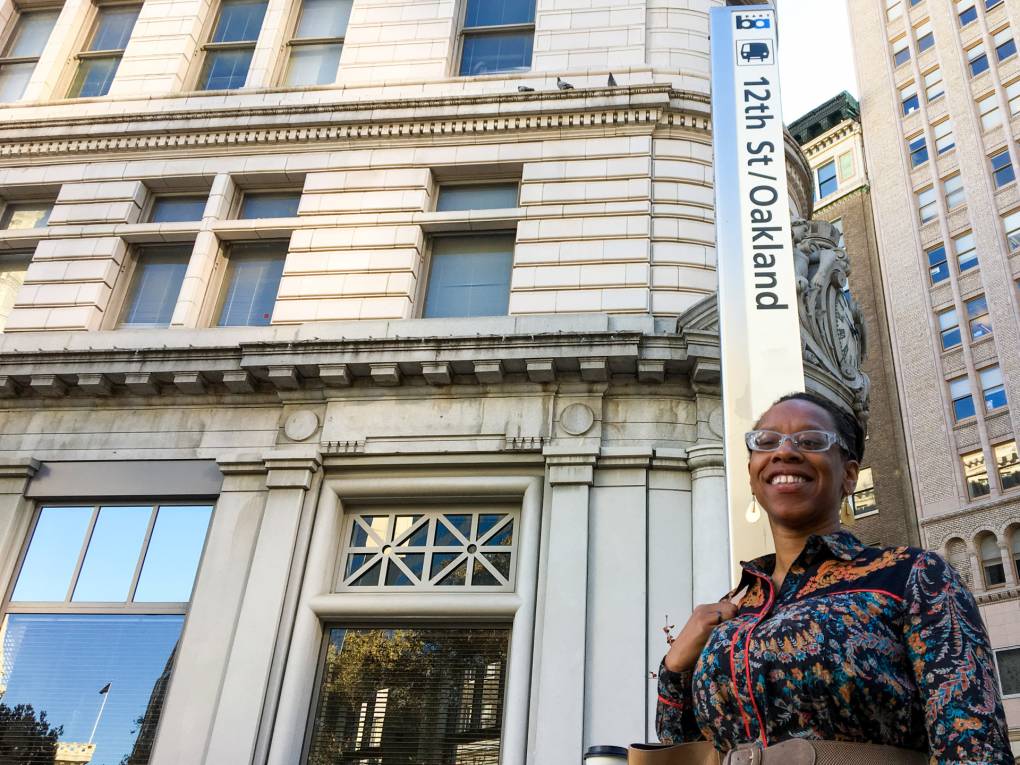
"caption": "Lateefah Simon in Oakland during her 2016 campaign for the BART board of directors, on Oct. 5, 2016. ",
"description": null,
"title": "Lateefah Simon",
"credit": "Dan Brekke/KQED",
"status": "inherit",
"altTag": "Lateefah Simon stands next to sign for BARTs 12th Street/Oakland statoin.",
"isLoading": false,
"fetchFailed": false
},
"news_11904554": {
"type": "attachments",
"id": "news_11904554",
"meta": {
"index": "attachments_1716263798",
"site": "news",
"id": "11904554",
"found": true
},
"parent": 11904449,
"imgSizes": {
"twentyfourteen-full-width": {
"file": "https://ww2.kqed.org/app/uploads/sites/10/2022/02/51736828813_614b70b3f6_k-1038x576.jpg",
"width": 1038,
"mimeType": "image/jpeg",
"height": 576
},
"thumbnail": {
"file": "https://ww2.kqed.org/app/uploads/sites/10/2022/02/51736828813_614b70b3f6_k-160x127.jpg",
"width": 160,
"mimeType": "image/jpeg",
"height": 127
},
"post-thumbnail": {
"file": "https://ww2.kqed.org/app/uploads/sites/10/2022/02/51736828813_614b70b3f6_k-672x372.jpg",
"width": 672,
"mimeType": "image/jpeg",
"height": 372
},
"kqedFullSize": {
"file": "https://ww2.kqed.org/app/uploads/sites/10/2022/02/51736828813_614b70b3f6_k-e1644435950461.jpg",
"width": 1920,
"height": 1523
},
"large": {
"file": "https://ww2.kqed.org/app/uploads/sites/10/2022/02/51736828813_614b70b3f6_k-1020x809.jpg",
"width": 1020,
"mimeType": "image/jpeg",
"height": 809
},
"1536x1536": {
"file": "https://ww2.kqed.org/app/uploads/sites/10/2022/02/51736828813_614b70b3f6_k-1536x1219.jpg",
"width": 1536,
"mimeType": "image/jpeg",
"height": 1219
},
"full-width": {
"file": "https://ww2.kqed.org/app/uploads/sites/10/2022/02/51736828813_614b70b3f6_k-1920x1523.jpg",
"width": 1920,
"mimeType": "image/jpeg",
"height": 1523
},
"medium": {
"file": "https://ww2.kqed.org/app/uploads/sites/10/2022/02/51736828813_614b70b3f6_k-800x635.jpg",
"width": 800,
"mimeType": "image/jpeg",
"height": 635
}
},
"publishDate": 1644372508,
"modified": 1644439111,
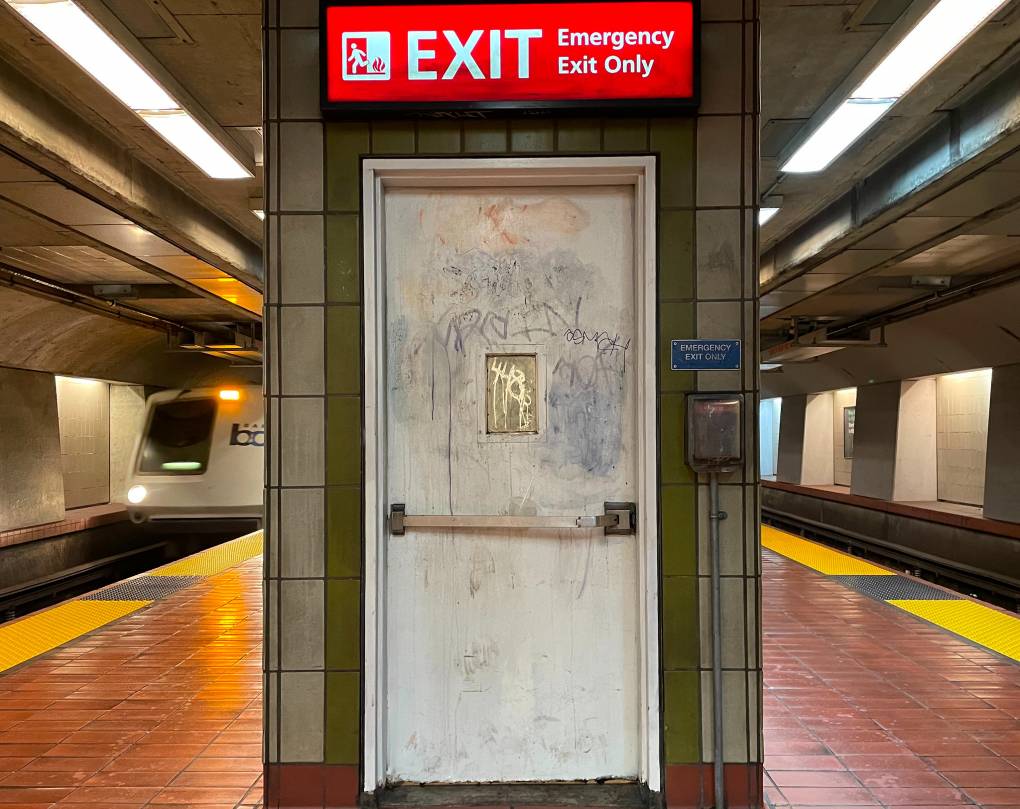
"caption": "An emergency exit on the platform of BART's 16th Street/Mission Station in San Francisco, on Dec. 9, 2021.",
"description": null,
"title": "BART Emergency Exit",
"credit": "Dan Brekke/KQED",
"status": "inherit",
"altTag": "An emergency exit as BART's 16th Street/Mission station in San Francisco.",
"isLoading": false,
"fetchFailed": false
},
"news_11902897": {
"type": "attachments",
"id": "news_11902897",
"meta": {
"index": "attachments_1716263798",
"site": "news",
"id": "11902897",
"found": true
},
"parent": 11902873,
"imgSizes": {
"twentyfourteen-full-width": {
"file": "https://ww2.kqed.org/app/uploads/sites/10/2022/01/23753286105_6c93115f9f_k-1038x576.jpg",
"width": 1038,
"mimeType": "image/jpeg",
"height": 576
},
"thumbnail": {
"file": "https://ww2.kqed.org/app/uploads/sites/10/2022/01/23753286105_6c93115f9f_k-160x107.jpg",
"width": 160,
"mimeType": "image/jpeg",
"height": 107
},
"post-thumbnail": {
"file": "https://ww2.kqed.org/app/uploads/sites/10/2022/01/23753286105_6c93115f9f_k-672x372.jpg",
"width": 672,
"mimeType": "image/jpeg",
"height": 372
},
"kqedFullSize": {
"file": "https://ww2.kqed.org/app/uploads/sites/10/2022/01/23753286105_6c93115f9f_k.jpg",
"width": 2047,
"height": 1365
},
"large": {
"file": "https://ww2.kqed.org/app/uploads/sites/10/2022/01/23753286105_6c93115f9f_k-1020x680.jpg",
"width": 1020,
"mimeType": "image/jpeg",
"height": 680
},
"1536x1536": {
"file": "https://ww2.kqed.org/app/uploads/sites/10/2022/01/23753286105_6c93115f9f_k-1536x1024.jpg",
"width": 1536,
"mimeType": "image/jpeg",
"height": 1024
},
"full-width": {
"file": "https://ww2.kqed.org/app/uploads/sites/10/2022/01/23753286105_6c93115f9f_k-1920x1280.jpg",
"width": 1920,
"mimeType": "image/jpeg",
"height": 1280
},
"medium": {
"file": "https://ww2.kqed.org/app/uploads/sites/10/2022/01/23753286105_6c93115f9f_k-800x533.jpg",
"width": 800,
"mimeType": "image/jpeg",
"height": 533
}
},
"publishDate": 1643303554,
"modified": 1643402320,
"caption": "Isn't staying in great? Cozy up this weekend with this sound-rich Bay Curious playlist.",
"description": null,
"title": "23753286105_6c93115f9f_k",
"credit": "Daniel Foster/flickr",
"status": "inherit",
"altTag": "A man in a blue collared shirt laying down and adjusting his headphones.",
"isLoading": false,
"fetchFailed": false
},
"news_11684488": {
"type": "attachments",
"id": "news_11684488",
"meta": {
"index": "attachments_1716263798",
"site": "news",
"id": "11684488",
"found": true
},
"parent": 11684478,
"imgSizes": {
"small": {
"file": "https://ww2.kqed.org/app/uploads/sites/10/2018/08/RS7013_175333538-520x348.jpg",
"width": 520,
"mimeType": "image/jpeg",
"height": 348
},
"twentyfourteen-full-width": {
"file": "https://ww2.kqed.org/app/uploads/sites/10/2018/08/RS7013_175333538-1038x576.jpg",
"width": 1038,
"mimeType": "image/jpeg",
"height": 576
},
"thumbnail": {
"file": "https://ww2.kqed.org/app/uploads/sites/10/2018/08/RS7013_175333538-160x107.jpg",
"width": 160,
"mimeType": "image/jpeg",
"height": 107
},
"fd-sm": {
"file": "https://ww2.kqed.org/app/uploads/sites/10/2018/08/RS7013_175333538-960x642.jpg",
"width": 960,
"mimeType": "image/jpeg",
"height": 642
},
"post-thumbnail": {
"file": "https://ww2.kqed.org/app/uploads/sites/10/2018/08/RS7013_175333538-672x372.jpg",
"width": 672,
"mimeType": "image/jpeg",
"height": 372
},
"xsmall": {
"file": "https://ww2.kqed.org/app/uploads/sites/10/2018/08/RS7013_175333538-375x251.jpg",
"width": 375,
"mimeType": "image/jpeg",
"height": 251
},
"kqedFullSize": {
"file": "https://ww2.kqed.org/app/uploads/sites/10/2018/08/RS7013_175333538-e1634255281256.jpg",
"width": 1920,
"height": 1284
},
"large": {
"file": "https://ww2.kqed.org/app/uploads/sites/10/2018/08/RS7013_175333538-1020x682.jpg",
"width": 1020,
"mimeType": "image/jpeg",
"height": 682
},
"xlarge": {
"file": "https://ww2.kqed.org/app/uploads/sites/10/2018/08/RS7013_175333538-1180x789.jpg",
"width": 1180,
"mimeType": "image/jpeg",
"height": 789
},
"complete_open_graph": {
"file": "https://ww2.kqed.org/app/uploads/sites/10/2018/08/RS7013_175333538-1200x803.jpg",
"width": 1200,
"mimeType": "image/jpeg",
"height": 803
},
"guest-author-50": {
"file": "https://ww2.kqed.org/app/uploads/sites/10/2018/08/RS7013_175333538-50x50.jpg",
"width": 50,
"mimeType": "image/jpeg",
"height": 50
},
"guest-author-96": {
"file": "https://ww2.kqed.org/app/uploads/sites/10/2018/08/RS7013_175333538-96x96.jpg",
"width": 96,
"mimeType": "image/jpeg",
"height": 96
},
"medium": {
"file": "https://ww2.kqed.org/app/uploads/sites/10/2018/08/RS7013_175333538-800x535.jpg",
"width": 800,
"mimeType": "image/jpeg",
"height": 535
},
"guest-author-64": {
"file": "https://ww2.kqed.org/app/uploads/sites/10/2018/08/RS7013_175333538-64x64.jpg",
"width": 64,
"mimeType": "image/jpeg",
"height": 64
},
"guest-author-32": {
"file": "https://ww2.kqed.org/app/uploads/sites/10/2018/08/RS7013_175333538-32x32.jpg",
"width": 32,
"mimeType": "image/jpeg",
"height": 32
},
"fd-lrg": {
"file": "https://ww2.kqed.org/app/uploads/sites/10/2018/08/RS7013_175333538-1920x1284.jpg",
"width": 1920,
"mimeType": "image/jpeg",
"height": 1284
},
"fd-med": {
"file": "https://ww2.kqed.org/app/uploads/sites/10/2018/08/RS7013_175333538-1180x789.jpg",
"width": 1180,
"mimeType": "image/jpeg",
"height": 789
},
"full-width": {
"file": "https://ww2.kqed.org/app/uploads/sites/10/2018/08/RS7013_175333538-1920x1284.jpg",
"width": 1920,
"mimeType": "image/jpeg",
"height": 1284
},
"detail": {
"file": "https://ww2.kqed.org/app/uploads/sites/10/2018/08/RS7013_175333538-150x150.jpg",
"width": 150,
"mimeType": "image/jpeg",
"height": 150
},
"guest-author-128": {
"file": "https://ww2.kqed.org/app/uploads/sites/10/2018/08/RS7013_175333538-128x128.jpg",
"width": 128,
"mimeType": "image/jpeg",
"height": 128
},
"xxsmall": {
"file": "https://ww2.kqed.org/app/uploads/sites/10/2018/08/RS7013_175333538-240x161.jpg",
"width": 240,
"mimeType": "image/jpeg",
"height": 161
}
},
"publishDate": 1533250091,
"modified": 1634257757,
"caption": "A BART train pulls away from Rockridge Station in Oakland.",
"description": null,
"title": "Bay Area Transportation Workers Strike Looms Ahead Of Monday Deadline",
"credit": "Justin Sullivan/Getty Images",
"status": "inherit",
"altTag": "A BART Train in Oakland.",
"isLoading": false,
"fetchFailed": false
},
"news_11883912": {
"type": "attachments",
"id": "news_11883912",
"meta": {
"index": "attachments_1716263798",
"site": "news",
"id": "11883912",
"found": true
},
"title": "Elevator Attendant__MJA_04062021",
"publishDate": 1628194778,
"status": "inherit",
"parent": 11883908,
"modified": 1628195076,
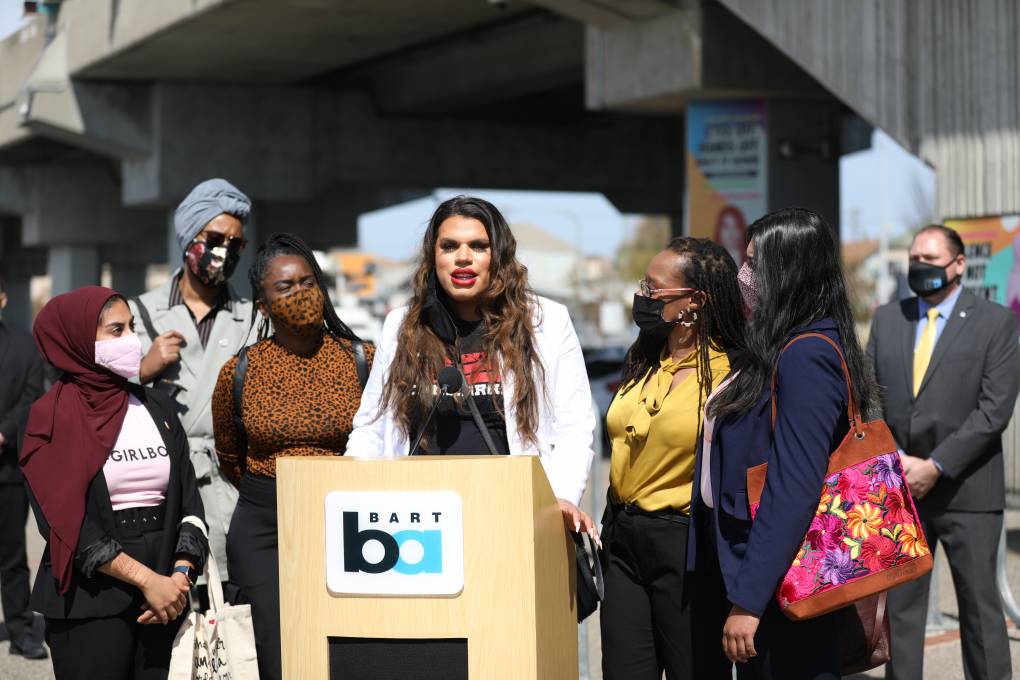
"caption": "Santana Tapia, with the Not One More Girl campaign and co-founder of Fluid Coffee and Events\n(center) at the launch of BART's Not One More Girl Campaign.",
"credit": "Maria J. Avila/BART",
"altTag": null,
"description": null,
"imgSizes": {
"medium": {
"file": "https://cdn.kqed.org/wp-content/uploads/sites/10/2021/08/Not-One-More-Girl-_53_MJA_04022021-800x533.jpg",
"width": 800,
"height": 533,
"mimeType": "image/jpeg"
},
"large": {
"file": "https://cdn.kqed.org/wp-content/uploads/sites/10/2021/08/Not-One-More-Girl-_53_MJA_04022021-1020x680.jpg",
"width": 1020,
"height": 680,
"mimeType": "image/jpeg"
},
"thumbnail": {
"file": "https://cdn.kqed.org/wp-content/uploads/sites/10/2021/08/Not-One-More-Girl-_53_MJA_04022021-160x107.jpg",
"width": 160,
"height": 107,
"mimeType": "image/jpeg"
},
"1536x1536": {
"file": "https://cdn.kqed.org/wp-content/uploads/sites/10/2021/08/Not-One-More-Girl-_53_MJA_04022021-1536x1024.jpg",
"width": 1536,
"height": 1024,
"mimeType": "image/jpeg"
},
"2048x2048": {
"file": "https://cdn.kqed.org/wp-content/uploads/sites/10/2021/08/Not-One-More-Girl-_53_MJA_04022021-2048x1365.jpg",
"width": 2048,
"height": 1365,
"mimeType": "image/jpeg"
},
"post-thumbnail": {
"file": "https://cdn.kqed.org/wp-content/uploads/sites/10/2021/08/Not-One-More-Girl-_53_MJA_04022021-672x372.jpg",
"width": 672,
"height": 372,
"mimeType": "image/jpeg"
},
"twentyfourteen-full-width": {
"file": "https://cdn.kqed.org/wp-content/uploads/sites/10/2021/08/Not-One-More-Girl-_53_MJA_04022021-1038x576.jpg",
"width": 1038,
"height": 576,
"mimeType": "image/jpeg"
},
"full-width": {
"file": "https://cdn.kqed.org/wp-content/uploads/sites/10/2021/08/Not-One-More-Girl-_53_MJA_04022021-1920x1280.jpg",
"width": 1920,
"height": 1280,
"mimeType": "image/jpeg"
},
"kqedFullSize": {
"file": "https://cdn.kqed.org/wp-content/uploads/sites/10/2021/08/Not-One-More-Girl-_53_MJA_04022021-scaled-e1753208640930.jpg",
"width": 2000,
"height": 1334
}
},
"isLoading": false,
"fetchFailed": false
},
"news_11879731": {
"type": "attachments",
"id": "news_11879731",
"meta": {
"index": "attachments_1716263798",
"site": "news",
"id": "11879731",
"found": true
},
"parent": 11879717,
"imgSizes": {
"twentyfourteen-full-width": {
"file": "https://ww2.kqed.org/app/uploads/sites/10/2021/06/RS49568_014_SanJose_FleaMarket_05262021-qut-1-1038x576.jpg",
"width": 1038,
"mimeType": "image/jpeg",
"height": 576
},
"thumbnail": {
"file": "https://ww2.kqed.org/app/uploads/sites/10/2021/06/RS49568_014_SanJose_FleaMarket_05262021-qut-1-160x107.jpg",
"width": 160,
"mimeType": "image/jpeg",
"height": 107
},
"post-thumbnail": {
"file": "https://ww2.kqed.org/app/uploads/sites/10/2021/06/RS49568_014_SanJose_FleaMarket_05262021-qut-1-672x372.jpg",
"width": 672,
"mimeType": "image/jpeg",
"height": 372
},
"kqedFullSize": {
"file": "https://ww2.kqed.org/app/uploads/sites/10/2021/06/RS49568_014_SanJose_FleaMarket_05262021-qut-1.jpg",
"width": 1920,
"height": 1280
},
"large": {
"file": "https://ww2.kqed.org/app/uploads/sites/10/2021/06/RS49568_014_SanJose_FleaMarket_05262021-qut-1-1020x680.jpg",
"width": 1020,
"mimeType": "image/jpeg",
"height": 680
},
"1536x1536": {
"file": "https://ww2.kqed.org/app/uploads/sites/10/2021/06/RS49568_014_SanJose_FleaMarket_05262021-qut-1-1536x1024.jpg",
"width": 1536,
"mimeType": "image/jpeg",
"height": 1024
},
"medium": {
"file": "https://ww2.kqed.org/app/uploads/sites/10/2021/06/RS49568_014_SanJose_FleaMarket_05262021-qut-1-800x533.jpg",
"width": 800,
"mimeType": "image/jpeg",
"height": 533
}
},
"publishDate": 1624993611,
"modified": 1625012203,
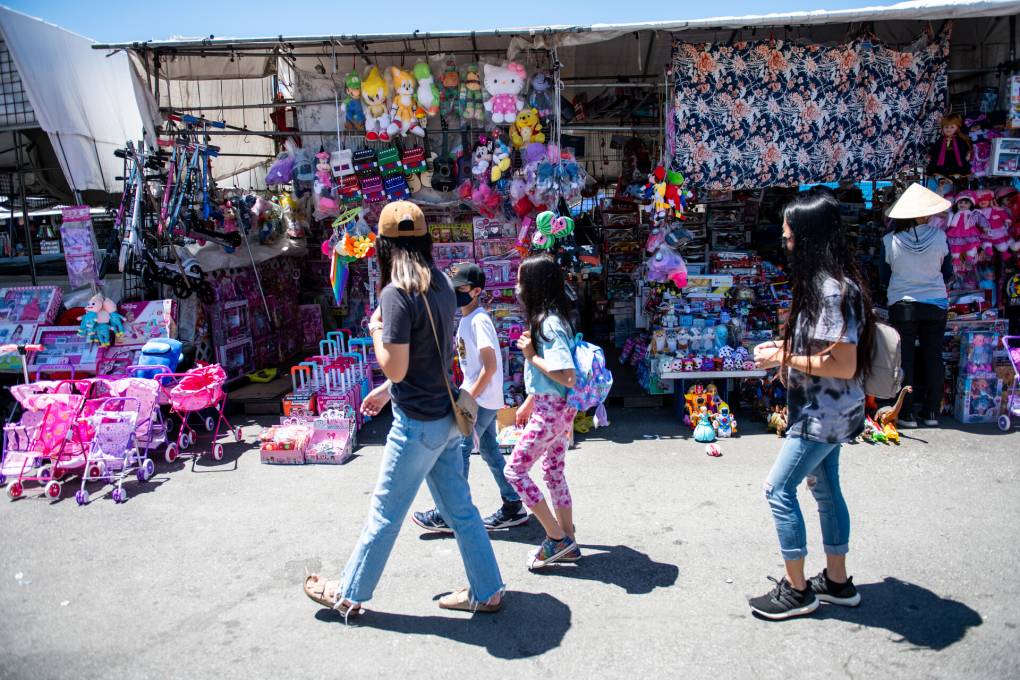
"caption": "A family walks past a stall selling toys at the San Jose Flea Market on May 26, 2021. On Tuesday, the City Council approved a plan to rezone the 60-acre property after its owners and vendors reached a deal.",
"description": "A family walks past a stall selling toys at the San Jose Flea Market on May 26, 2021.",
"title": "RS49568_014_SanJose_FleaMarket_05262021-qut (1)",
"credit": "Beth LaBerge/KQED",
"status": "inherit",
"altTag": null,
"isLoading": false,
"fetchFailed": false
},
"news_11878778": {
"type": "attachments",
"id": "news_11878778",
"meta": {
"index": "attachments_1716263798",
"site": "news",
"id": "11878778",
"found": true
},
"parent": 11878548,
"imgSizes": {
"twentyfourteen-full-width": {
"file": "https://ww2.kqed.org/app/uploads/sites/10/2021/06/20210528_134048-1038x576.jpg",
"width": 1038,
"mimeType": "image/jpeg",
"height": 576
},
"thumbnail": {
"file": "https://ww2.kqed.org/app/uploads/sites/10/2021/06/20210528_134048-160x107.jpg",
"width": 160,
"mimeType": "image/jpeg",
"height": 107
},
"post-thumbnail": {
"file": "https://ww2.kqed.org/app/uploads/sites/10/2021/06/20210528_134048-672x372.jpg",
"width": 672,
"mimeType": "image/jpeg",
"height": 372
},
"kqedFullSize": {
"file": "https://ww2.kqed.org/app/uploads/sites/10/2021/06/20210528_134048-scaled.jpg",
"width": 2560,
"height": 1710
},
"2048x2048": {
"file": "https://ww2.kqed.org/app/uploads/sites/10/2021/06/20210528_134048-2048x1368.jpg",
"width": 2048,
"mimeType": "image/jpeg",
"height": 1368
},
"large": {
"file": "https://ww2.kqed.org/app/uploads/sites/10/2021/06/20210528_134048-1020x681.jpg",
"width": 1020,
"mimeType": "image/jpeg",
"height": 681
},
"1536x1536": {
"file": "https://ww2.kqed.org/app/uploads/sites/10/2021/06/20210528_134048-1536x1026.jpg",
"width": 1536,
"mimeType": "image/jpeg",
"height": 1026
},
"full-width": {
"file": "https://ww2.kqed.org/app/uploads/sites/10/2021/06/20210528_134048-1920x1282.jpg",
"width": 1920,
"mimeType": "image/jpeg",
"height": 1282
},
"medium": {
"file": "https://ww2.kqed.org/app/uploads/sites/10/2021/06/20210528_134048-800x534.jpg",
"width": 800,
"mimeType": "image/jpeg",
"height": 534
}
},
"publishDate": 1624301829,
"modified": 1624558764,
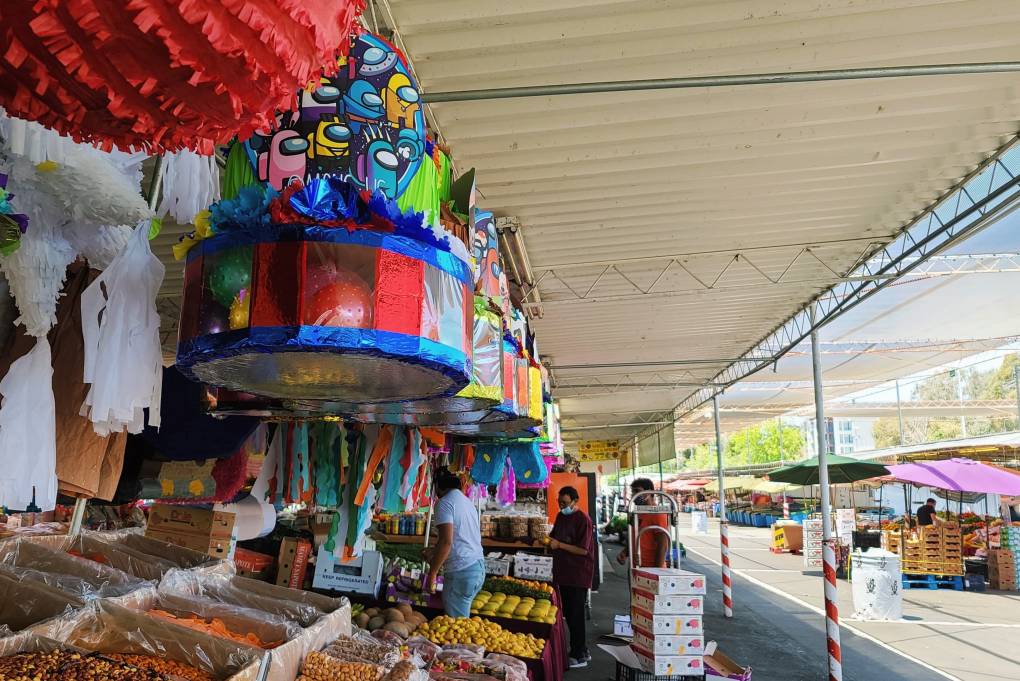
"caption": "A stall at the San Jose Flea Market on May 28, 2021 that sells piñatas, dry fruit, nuts, sweets and other snacks. La Pulga, as the outdoor market is known in Spanish, is home to hundreds of vendors. Many of them would likely be displaced if the property's owners get the go-ahead from the city to build a major new development on the site.",
"description": "A stall at the San Jose Flea Market that sells piñatas, dry fruit, nuts, sweets and other snacks on May 28, 2021. The San Jose Flea Market, or La Pulga as it's known in Spanish, is an outdoor market that sits on roughly 60 acres of land and is home to hundreds of of outdoor stalls that sell everything from furniture to vegetables to clothing.",
"title": "20210528_134048",
"credit": "Carlos Cabrera-Lomelí/KQED",
"status": "inherit",
"altTag": "A piñata stand, with piñatas all around, next to a fruit and vegetable stand, some workers are visible moving boxes in the background.",
"isLoading": false,
"fetchFailed": false
},
"news_11787963": {
"type": "attachments",
"id": "news_11787963",
"meta": {
"index": "attachments_1716263798",
"site": "news",
"id": "11787963",
"found": true
},
"parent": 11787959,
"imgSizes": {
"apple_news_ca_landscape_5_5": {
"file": "https://ww2.kqed.org/app/uploads/sites/10/2019/11/RS6995_175333536-1044x783.jpg",
"width": 1044,
"mimeType": "image/jpeg",
"height": 783
},
"apple_news_ca_square_4_0": {
"file": "https://ww2.kqed.org/app/uploads/sites/10/2019/11/RS6995_175333536-470x470.jpg",
"width": 470,
"mimeType": "image/jpeg",
"height": 470
},
"twentyfourteen-full-width": {
"file": "https://ww2.kqed.org/app/uploads/sites/10/2019/11/RS6995_175333536-1038x576.jpg",
"width": 1038,
"mimeType": "image/jpeg",
"height": 576
},
"thumbnail": {
"file": "https://ww2.kqed.org/app/uploads/sites/10/2019/11/RS6995_175333536-160x112.jpg",
"width": 160,
"mimeType": "image/jpeg",
"height": 112
},
"post-thumbnail": {
"file": "https://ww2.kqed.org/app/uploads/sites/10/2019/11/RS6995_175333536-672x372.jpg",
"width": 672,
"mimeType": "image/jpeg",
"height": 372
},
"kqedFullSize": {
"file": "https://ww2.kqed.org/app/uploads/sites/10/2019/11/RS6995_175333536.jpg",
"width": 3000,
"height": 2108
},
"apple_news_ca_landscape_4_7": {
"file": "https://ww2.kqed.org/app/uploads/sites/10/2019/11/RS6995_175333536-632x474.jpg",
"width": 632,
"mimeType": "image/jpeg",
"height": 474
},
"large": {
"file": "https://ww2.kqed.org/app/uploads/sites/10/2019/11/RS6995_175333536-1020x717.jpg",
"width": 1020,
"mimeType": "image/jpeg",
"height": 717
},
"complete_open_graph": {
"file": "https://ww2.kqed.org/app/uploads/sites/10/2019/11/RS6995_175333536-1200x843.jpg",
"width": 1200,
"mimeType": "image/jpeg",
"height": 843
},
"apple_news_ca_landscape_4_0": {
"file": "https://ww2.kqed.org/app/uploads/sites/10/2019/11/RS6995_175333536-536x402.jpg",
"width": 536,
"mimeType": "image/jpeg",
"height": 402
},
"apple_news_ca_portrait_12_9": {
"file": "https://ww2.kqed.org/app/uploads/sites/10/2019/11/RS6995_175333536-1122x1496.jpg",
"width": 1122,
"mimeType": "image/jpeg",
"height": 1496
},
"medium": {
"file": "https://ww2.kqed.org/app/uploads/sites/10/2019/11/RS6995_175333536-800x562.jpg",
"width": 800,
"mimeType": "image/jpeg",
"height": 562
},
"apple_news_ca_portrait_4_0": {
"file": "https://ww2.kqed.org/app/uploads/sites/10/2019/11/RS6995_175333536-354x472.jpg",
"width": 354,
"mimeType": "image/jpeg",
"height": 472
},
"apple_news_ca_portrait_9_7": {
"file": "https://ww2.kqed.org/app/uploads/sites/10/2019/11/RS6995_175333536-840x1120.jpg",
"width": 840,
"mimeType": "image/jpeg",
"height": 1120
},
"apple_news_ca_landscape_12_9": {
"file": "https://ww2.kqed.org/app/uploads/sites/10/2019/11/RS6995_175333536-1832x1374.jpg",
"width": 1832,
"mimeType": "image/jpeg",
"height": 1374
},
"apple_news_ca_square_9_7": {
"file": "https://ww2.kqed.org/app/uploads/sites/10/2019/11/RS6995_175333536-1104x1104.jpg",
"width": 1104,
"mimeType": "image/jpeg",
"height": 1104
},
"apple_news_ca_portrait_4_7": {
"file": "https://ww2.kqed.org/app/uploads/sites/10/2019/11/RS6995_175333536-414x552.jpg",
"width": 414,
"mimeType": "image/jpeg",
"height": 552
},
"apple_news_ca_square_12_9": {
"file": "https://ww2.kqed.org/app/uploads/sites/10/2019/11/RS6995_175333536-1472x1472.jpg",
"width": 1472,
"mimeType": "image/jpeg",
"height": 1472
},
"apple_news_ca_portrait_5_5": {
"file": "https://ww2.kqed.org/app/uploads/sites/10/2019/11/RS6995_175333536-687x916.jpg",
"width": 687,
"mimeType": "image/jpeg",
"height": 916
},
"full-width": {
"file": "https://ww2.kqed.org/app/uploads/sites/10/2019/11/RS6995_175333536-1920x1349.jpg",
"width": 1920,
"mimeType": "image/jpeg",
"height": 1349
},
"apple_news_ca_square_4_7": {
"file": "https://ww2.kqed.org/app/uploads/sites/10/2019/11/RS6995_175333536-550x550.jpg",
"width": 550,
"mimeType": "image/jpeg",
"height": 550
},
"apple_news_ca_landscape_9_7": {
"file": "https://ww2.kqed.org/app/uploads/sites/10/2019/11/RS6995_175333536-1376x1032.jpg",
"width": 1376,
"mimeType": "image/jpeg",
"height": 1032
},
"apple_news_ca_square_5_5": {
"file": "https://ww2.kqed.org/app/uploads/sites/10/2019/11/RS6995_175333536-912x912.jpg",
"width": 912,
"mimeType": "image/jpeg",
"height": 912
}
},
"publishDate": 1574373705,
"modified": 1619742164,
"caption": "Before the COVID-19 pandemic, an estimated 400,000 people rode BART each day. In the early days of the pandemic, that number plummeted to as low as 23,000. ",
"description": null,
"title": "Bay Area Transportation Workers Strike Looms Ahead Of Monday Deadline",
"credit": "Justin Sullivan/Getty Images",
"status": "inherit",
"altTag": null,
"isLoading": false,
"fetchFailed": false
},
"news_11845752": {
"type": "attachments",
"id": "news_11845752",
"meta": {
"index": "attachments_1716263798",
"site": "news",
"id": "11845752",
"found": true
},
"parent": 11845616,
"imgSizes": {
"apple_news_ca_landscape_5_5": {
"file": "https://ww2.kqed.org/app/uploads/sites/10/2020/11/bartcars_danbrekke-1044x783.jpg",
"width": 1044,
"mimeType": "image/jpeg",
"height": 783
},
"apple_news_ca_square_4_0": {
"file": "https://ww2.kqed.org/app/uploads/sites/10/2020/11/bartcars_danbrekke-470x470.jpg",
"width": 470,
"mimeType": "image/jpeg",
"height": 470
},
"twentyfourteen-full-width": {
"file": "https://ww2.kqed.org/app/uploads/sites/10/2020/11/bartcars_danbrekke-1038x576.jpg",
"width": 1038,
"mimeType": "image/jpeg",
"height": 576
},
"thumbnail": {
"file": "https://ww2.kqed.org/app/uploads/sites/10/2020/11/bartcars_danbrekke-160x107.jpg",
"width": 160,
"mimeType": "image/jpeg",
"height": 107
},
"post-thumbnail": {
"file": "https://ww2.kqed.org/app/uploads/sites/10/2020/11/bartcars_danbrekke-672x372.jpg",
"width": 672,
"mimeType": "image/jpeg",
"height": 372
},
"kqedFullSize": {
"file": "https://ww2.kqed.org/app/uploads/sites/10/2020/11/bartcars_danbrekke.jpg",
"width": 1920,
"height": 1280
},
"apple_news_ca_landscape_4_7": {
"file": "https://ww2.kqed.org/app/uploads/sites/10/2020/11/bartcars_danbrekke-632x474.jpg",
"width": 632,
"mimeType": "image/jpeg",
"height": 474
},
"large": {
"file": "https://ww2.kqed.org/app/uploads/sites/10/2020/11/bartcars_danbrekke-1020x680.jpg",
"width": 1020,
"mimeType": "image/jpeg",
"height": 680
},
"apple_news_ca_landscape_4_0": {
"file": "https://ww2.kqed.org/app/uploads/sites/10/2020/11/bartcars_danbrekke-536x402.jpg",
"width": 536,
"mimeType": "image/jpeg",
"height": 402
},
"apple_news_ca_portrait_12_9": {
"file": "https://ww2.kqed.org/app/uploads/sites/10/2020/11/bartcars_danbrekke-1122x1280.jpg",
"width": 1122,
"mimeType": "image/jpeg",
"height": 1280
},
"medium": {
"file": "https://ww2.kqed.org/app/uploads/sites/10/2020/11/bartcars_danbrekke-800x533.jpg",
"width": 800,
"mimeType": "image/jpeg",
"height": 533
},
"apple_news_ca_portrait_4_0": {
"file": "https://ww2.kqed.org/app/uploads/sites/10/2020/11/bartcars_danbrekke-354x472.jpg",
"width": 354,
"mimeType": "image/jpeg",
"height": 472
},
"apple_news_ca_portrait_9_7": {
"file": "https://ww2.kqed.org/app/uploads/sites/10/2020/11/bartcars_danbrekke-840x1120.jpg",
"width": 840,
"mimeType": "image/jpeg",
"height": 1120
},
"apple_news_ca_landscape_12_9": {
"file": "https://ww2.kqed.org/app/uploads/sites/10/2020/11/bartcars_danbrekke-1832x1280.jpg",
"width": 1832,
"mimeType": "image/jpeg",
"height": 1280
},
"apple_news_ca_square_9_7": {
"file": "https://ww2.kqed.org/app/uploads/sites/10/2020/11/bartcars_danbrekke-1104x1104.jpg",
"width": 1104,
"mimeType": "image/jpeg",
"height": 1104
},
"1536x1536": {
"file": "https://ww2.kqed.org/app/uploads/sites/10/2020/11/bartcars_danbrekke-1536x1024.jpg",
"width": 1536,
"mimeType": "image/jpeg",
"height": 1024
},
"apple_news_ca_portrait_4_7": {
"file": "https://ww2.kqed.org/app/uploads/sites/10/2020/11/bartcars_danbrekke-414x552.jpg",
"width": 414,
"mimeType": "image/jpeg",
"height": 552
},
"apple_news_ca_square_12_9": {
"file": "https://ww2.kqed.org/app/uploads/sites/10/2020/11/bartcars_danbrekke-1472x1280.jpg",
"width": 1472,
"mimeType": "image/jpeg",
"height": 1280
},
"apple_news_ca_portrait_5_5": {
"file": "https://ww2.kqed.org/app/uploads/sites/10/2020/11/bartcars_danbrekke-687x916.jpg",
"width": 687,
"mimeType": "image/jpeg",
"height": 916
},
"apple_news_ca_square_4_7": {
"file": "https://ww2.kqed.org/app/uploads/sites/10/2020/11/bartcars_danbrekke-550x550.jpg",
"width": 550,
"mimeType": "image/jpeg",
"height": 550
},
"apple_news_ca_landscape_9_7": {
"file": "https://ww2.kqed.org/app/uploads/sites/10/2020/11/bartcars_danbrekke-1376x1032.jpg",
"width": 1376,
"mimeType": "image/jpeg",
"height": 1032
},
"apple_news_ca_square_5_5": {
"file": "https://ww2.kqed.org/app/uploads/sites/10/2020/11/bartcars_danbrekke-912x912.jpg",
"width": 912,
"mimeType": "image/jpeg",
"height": 912
}
},
"publishDate": 1604536771,
"modified": 1609535714,
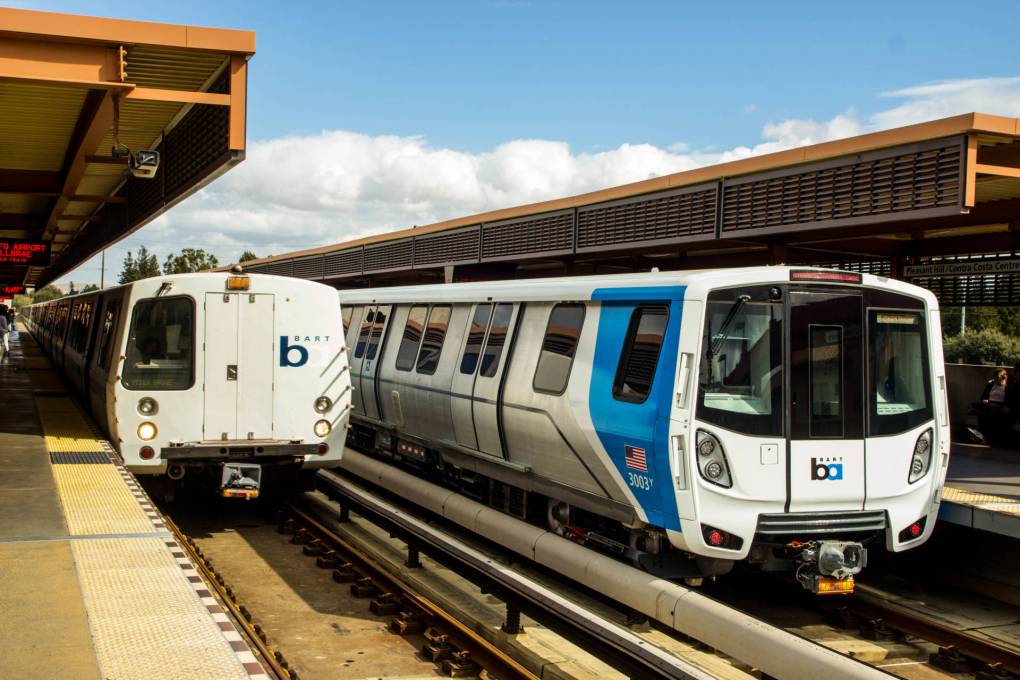
"caption": "A car from BART's 'Fleet of the Future' (right) alongside one of the transit agency's old cars at Pleasant Hill Station in October 2016.",
"description": "A car from BART's 'Fleet of the Future' (right) alongside one of the transit agency's old cars at Pleasant Hill Station in October 2016.",
"title": "bartcars_danbrekke",
"credit": "Dan Brekke/KQED",
"status": "inherit",
"altTag": "\"\"",
"isLoading": false,
"fetchFailed": false
},
"news_11861173": {
"type": "attachments",
"id": "news_11861173",
"meta": {
"index": "attachments_1716263798",
"site": "news",
"id": "11861173",
"found": true
},
"parent": 11861149,
"imgSizes": {
"apple_news_ca_landscape_5_5": {
"file": "https://ww2.kqed.org/app/uploads/sites/10/2021/02/RS37617_Image-from-iOS-49-qut-1044x783.jpg",
"width": 1044,
"mimeType": "image/jpeg",
"height": 783
},
"apple_news_ca_square_4_0": {
"file": "https://ww2.kqed.org/app/uploads/sites/10/2021/02/RS37617_Image-from-iOS-49-qut-470x470.jpg",
"width": 470,
"mimeType": "image/jpeg",
"height": 470
},
"twentyfourteen-full-width": {
"file": "https://ww2.kqed.org/app/uploads/sites/10/2021/02/RS37617_Image-from-iOS-49-qut-1038x576.jpg",
"width": 1038,
"mimeType": "image/jpeg",
"height": 576
},
"thumbnail": {
"file": "https://ww2.kqed.org/app/uploads/sites/10/2021/02/RS37617_Image-from-iOS-49-qut-160x120.jpg",
"width": 160,
"mimeType": "image/jpeg",
"height": 120
},
"post-thumbnail": {
"file": "https://ww2.kqed.org/app/uploads/sites/10/2021/02/RS37617_Image-from-iOS-49-qut-672x372.jpg",
"width": 672,
"mimeType": "image/jpeg",
"height": 372
},
"kqedFullSize": {
"file": "https://ww2.kqed.org/app/uploads/sites/10/2021/02/RS37617_Image-from-iOS-49-qut.jpg",
"width": 1920,
"height": 1440
},
"apple_news_ca_landscape_4_7": {
"file": "https://ww2.kqed.org/app/uploads/sites/10/2021/02/RS37617_Image-from-iOS-49-qut-632x474.jpg",
"width": 632,
"mimeType": "image/jpeg",
"height": 474
},
"large": {
"file": "https://ww2.kqed.org/app/uploads/sites/10/2021/02/RS37617_Image-from-iOS-49-qut-1020x765.jpg",
"width": 1020,
"mimeType": "image/jpeg",
"height": 765
},
"apple_news_ca_landscape_4_0": {
"file": "https://ww2.kqed.org/app/uploads/sites/10/2021/02/RS37617_Image-from-iOS-49-qut-536x402.jpg",
"width": 536,
"mimeType": "image/jpeg",
"height": 402
},
"apple_news_ca_portrait_12_9": {
"file": "https://ww2.kqed.org/app/uploads/sites/10/2021/02/RS37617_Image-from-iOS-49-qut-1122x1440.jpg",
"width": 1122,
"mimeType": "image/jpeg",
"height": 1440
},
"medium": {
"file": "https://ww2.kqed.org/app/uploads/sites/10/2021/02/RS37617_Image-from-iOS-49-qut-800x600.jpg",
"width": 800,
"mimeType": "image/jpeg",
"height": 600
},
"apple_news_ca_portrait_4_0": {
"file": "https://ww2.kqed.org/app/uploads/sites/10/2021/02/RS37617_Image-from-iOS-49-qut-354x472.jpg",
"width": 354,
"mimeType": "image/jpeg",
"height": 472
},
"apple_news_ca_portrait_9_7": {
"file": "https://ww2.kqed.org/app/uploads/sites/10/2021/02/RS37617_Image-from-iOS-49-qut-840x1120.jpg",
"width": 840,
"mimeType": "image/jpeg",
"height": 1120
},
"apple_news_ca_landscape_12_9": {
"file": "https://ww2.kqed.org/app/uploads/sites/10/2021/02/RS37617_Image-from-iOS-49-qut-1832x1374.jpg",
"width": 1832,
"mimeType": "image/jpeg",
"height": 1374
},
"apple_news_ca_square_9_7": {
"file": "https://ww2.kqed.org/app/uploads/sites/10/2021/02/RS37617_Image-from-iOS-49-qut-1104x1104.jpg",
"width": 1104,
"mimeType": "image/jpeg",
"height": 1104
},
"1536x1536": {
"file": "https://ww2.kqed.org/app/uploads/sites/10/2021/02/RS37617_Image-from-iOS-49-qut-1536x1152.jpg",
"width": 1536,
"mimeType": "image/jpeg",
"height": 1152
},
"apple_news_ca_portrait_4_7": {
"file": "https://ww2.kqed.org/app/uploads/sites/10/2021/02/RS37617_Image-from-iOS-49-qut-414x552.jpg",
"width": 414,
"mimeType": "image/jpeg",
"height": 552
},
"apple_news_ca_square_12_9": {
"file": "https://ww2.kqed.org/app/uploads/sites/10/2021/02/RS37617_Image-from-iOS-49-qut-1472x1440.jpg",
"width": 1472,
"mimeType": "image/jpeg",
"height": 1440
},
"apple_news_ca_portrait_5_5": {
"file": "https://ww2.kqed.org/app/uploads/sites/10/2021/02/RS37617_Image-from-iOS-49-qut-687x916.jpg",
"width": 687,
"mimeType": "image/jpeg",
"height": 916
},
"apple_news_ca_square_4_7": {
"file": "https://ww2.kqed.org/app/uploads/sites/10/2021/02/RS37617_Image-from-iOS-49-qut-550x550.jpg",
"width": 550,
"mimeType": "image/jpeg",
"height": 550
},
"apple_news_ca_landscape_9_7": {
"file": "https://ww2.kqed.org/app/uploads/sites/10/2021/02/RS37617_Image-from-iOS-49-qut-1376x1032.jpg",
"width": 1376,
"mimeType": "image/jpeg",
"height": 1032
},
"apple_news_ca_square_5_5": {
"file": "https://ww2.kqed.org/app/uploads/sites/10/2021/02/RS37617_Image-from-iOS-49-qut-912x912.jpg",
"width": 912,
"mimeType": "image/jpeg",
"height": 912
}
},
"publishDate": 1613761645,
"modified": 1613761806,
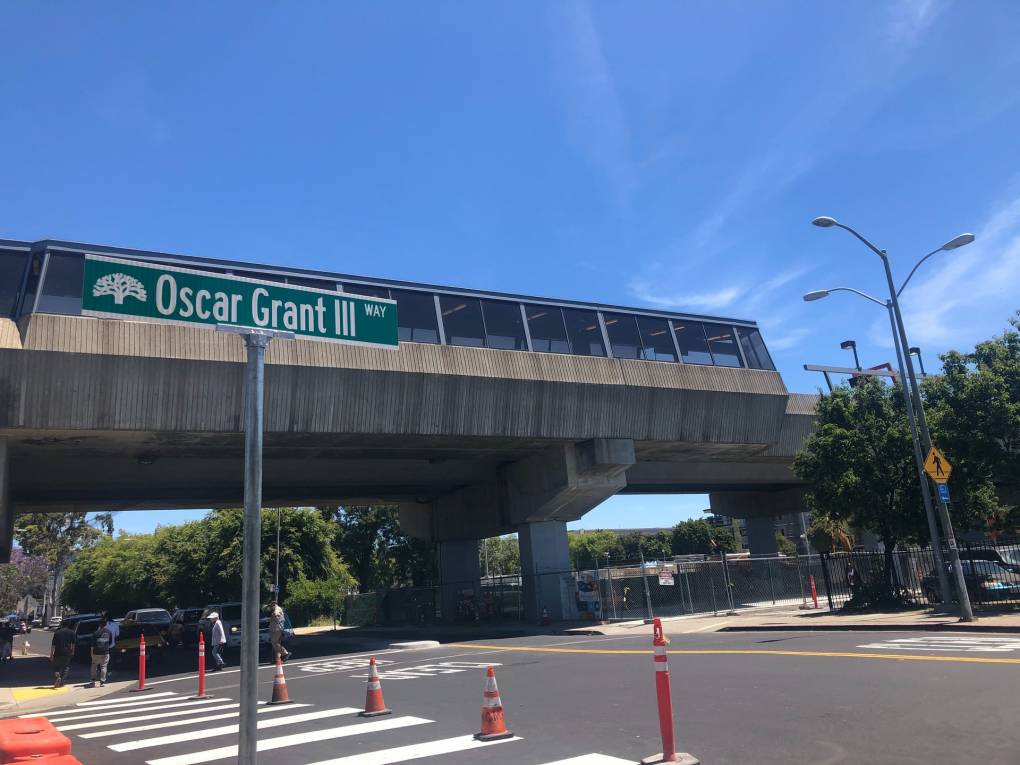
"caption": "BART named a short street near Fruitvale Station after Oscar Grant in 2019.",
"description": "BART named a short street near Fruitvale Station after Oscar Grant in 2019.",
"title": "RS37617_Image from iOS (49)-qut",
"credit": "Sonja Hutson/KQED",
"status": "inherit",
"altTag": null,
"isLoading": false,
"fetchFailed": false
},
"news_11854857": {
"type": "attachments",
"id": "news_11854857",
"meta": {
"index": "attachments_1716263798",
"site": "news",
"id": "11854857",
"found": true
},
"parent": 11854829,
"imgSizes": {
"apple_news_ca_landscape_5_5": {
"file": "https://ww2.kqed.org/app/uploads/sites/10/2021/01/Oscar-Grant-Mural-1044x783.jpg",
"width": 1044,
"mimeType": "image/jpeg",
"height": 783
},
"apple_news_ca_square_4_0": {
"file": "https://ww2.kqed.org/app/uploads/sites/10/2021/01/Oscar-Grant-Mural-470x470.jpg",
"width": 470,
"mimeType": "image/jpeg",
"height": 470
},
"twentyfourteen-full-width": {
"file": "https://ww2.kqed.org/app/uploads/sites/10/2021/01/Oscar-Grant-Mural-1038x576.jpg",
"width": 1038,
"mimeType": "image/jpeg",
"height": 576
},
"thumbnail": {
"file": "https://ww2.kqed.org/app/uploads/sites/10/2021/01/Oscar-Grant-Mural-160x116.jpg",
"width": 160,
"mimeType": "image/jpeg",
"height": 116
},
"post-thumbnail": {
"file": "https://ww2.kqed.org/app/uploads/sites/10/2021/01/Oscar-Grant-Mural-672x372.jpg",
"width": 672,
"mimeType": "image/jpeg",
"height": 372
},
"kqedFullSize": {
"file": "https://ww2.kqed.org/app/uploads/sites/10/2021/01/Oscar-Grant-Mural.jpg",
"width": 1920,
"height": 1394
},
"apple_news_ca_landscape_4_7": {
"file": "https://ww2.kqed.org/app/uploads/sites/10/2021/01/Oscar-Grant-Mural-632x474.jpg",
"width": 632,
"mimeType": "image/jpeg",
"height": 474
},
"large": {
"file": "https://ww2.kqed.org/app/uploads/sites/10/2021/01/Oscar-Grant-Mural-1020x741.jpg",
"width": 1020,
"mimeType": "image/jpeg",
"height": 741
},
"apple_news_ca_landscape_4_0": {
"file": "https://ww2.kqed.org/app/uploads/sites/10/2021/01/Oscar-Grant-Mural-536x402.jpg",
"width": 536,
"mimeType": "image/jpeg",
"height": 402
},
"apple_news_ca_portrait_12_9": {
"file": "https://ww2.kqed.org/app/uploads/sites/10/2021/01/Oscar-Grant-Mural-1122x1394.jpg",
"width": 1122,
"mimeType": "image/jpeg",
"height": 1394
},
"medium": {
"file": "https://ww2.kqed.org/app/uploads/sites/10/2021/01/Oscar-Grant-Mural-800x581.jpg",
"width": 800,
"mimeType": "image/jpeg",
"height": 581
},
"apple_news_ca_portrait_4_0": {
"file": "https://ww2.kqed.org/app/uploads/sites/10/2021/01/Oscar-Grant-Mural-354x472.jpg",
"width": 354,
"mimeType": "image/jpeg",
"height": 472
},
"apple_news_ca_portrait_9_7": {
"file": "https://ww2.kqed.org/app/uploads/sites/10/2021/01/Oscar-Grant-Mural-840x1120.jpg",
"width": 840,
"mimeType": "image/jpeg",
"height": 1120
},
"apple_news_ca_landscape_12_9": {
"file": "https://ww2.kqed.org/app/uploads/sites/10/2021/01/Oscar-Grant-Mural-1832x1374.jpg",
"width": 1832,
"mimeType": "image/jpeg",
"height": 1374
},
"apple_news_ca_square_9_7": {
"file": "https://ww2.kqed.org/app/uploads/sites/10/2021/01/Oscar-Grant-Mural-1104x1104.jpg",
"width": 1104,
"mimeType": "image/jpeg",
"height": 1104
},
"1536x1536": {
"file": "https://ww2.kqed.org/app/uploads/sites/10/2021/01/Oscar-Grant-Mural-1536x1115.jpg",
"width": 1536,
"mimeType": "image/jpeg",
"height": 1115
},
"apple_news_ca_portrait_4_7": {
"file": "https://ww2.kqed.org/app/uploads/sites/10/2021/01/Oscar-Grant-Mural-414x552.jpg",
"width": 414,
"mimeType": "image/jpeg",
"height": 552
},
"apple_news_ca_square_12_9": {
"file": "https://ww2.kqed.org/app/uploads/sites/10/2021/01/Oscar-Grant-Mural-1472x1394.jpg",
"width": 1472,
"mimeType": "image/jpeg",
"height": 1394
},
"apple_news_ca_portrait_5_5": {
"file": "https://ww2.kqed.org/app/uploads/sites/10/2021/01/Oscar-Grant-Mural-687x916.jpg",
"width": 687,
"mimeType": "image/jpeg",
"height": 916
},
"apple_news_ca_square_4_7": {
"file": "https://ww2.kqed.org/app/uploads/sites/10/2021/01/Oscar-Grant-Mural-550x550.jpg",
"width": 550,
"mimeType": "image/jpeg",
"height": 550
},
"apple_news_ca_landscape_9_7": {
"file": "https://ww2.kqed.org/app/uploads/sites/10/2021/01/Oscar-Grant-Mural-1376x1032.jpg",
"width": 1376,
"mimeType": "image/jpeg",
"height": 1032
},
"apple_news_ca_square_5_5": {
"file": "https://ww2.kqed.org/app/uploads/sites/10/2021/01/Oscar-Grant-Mural-912x912.jpg",
"width": 912,
"mimeType": "image/jpeg",
"height": 912
}
},
"publishDate": 1610414421,
"modified": 1610414615,
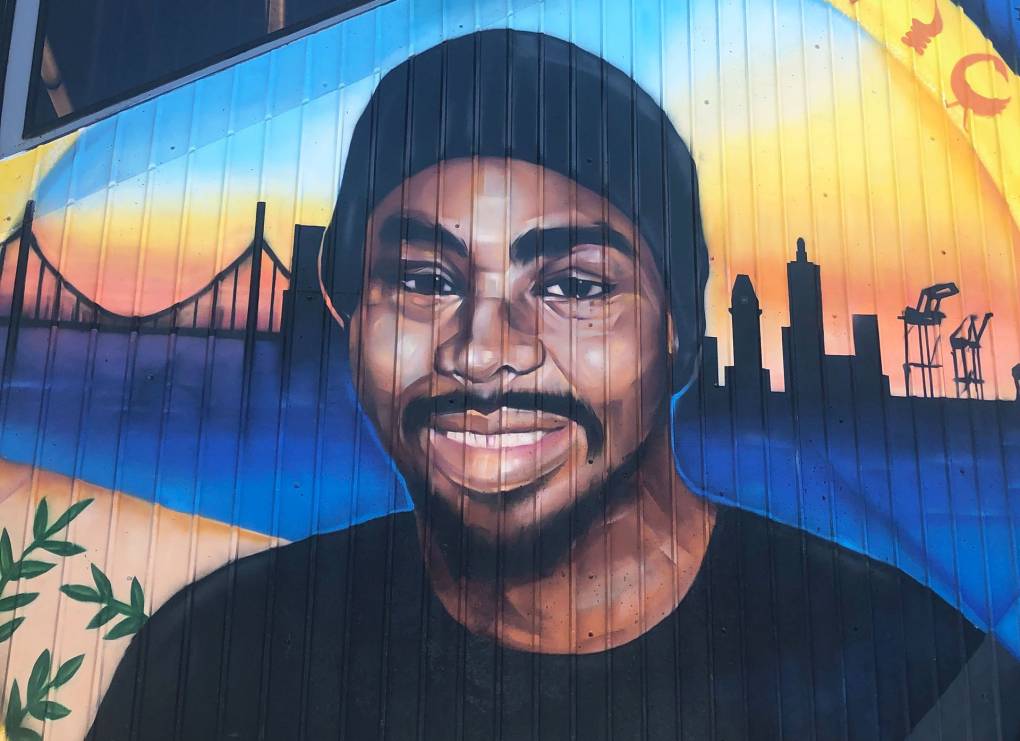
"caption": "A mural of Oscar Grant outside BART's Fruitvale Station, where Grant was fatally shot as he lay face-down on the platform by a former BART police officer on Jan. 1, 2009.",
"description": "A mural of Oscar Grant outside BART's Fruitvale Station, where Grant was fatally shot as he lay face-down on the platform by a former BART police officer on Jan. 1, 2009.",
"title": "Oscar-Grant-Mural",
"credit": "Sonja Hutson/KQED",
"status": "inherit",
"altTag": "Oscar Grant mural",
"isLoading": false,
"fetchFailed": false
}
},
"audioPlayerReducer": {
"postId": "stream_live",
"isPaused": true,
"isPlaying": false,
"pfsActive": false,
"pledgeModalIsOpen": true,
"playerDrawerIsOpen": false,
"liveAudioPlayStartedAt": 0,
"liveAudioPlayContext": ""
},
"authorsReducer": {
"danbrekke": {
"type": "authors",
"id": "222",
"meta": {
"index": "authors_1716337520",
"id": "222",
"found": true
},
"name": "Dan Brekke",
"firstName": "Dan",
"lastName": "Brekke",
"slug": "danbrekke",
"email": "dbrekke@kqed.org",
"display_author_email": true,
"staff_mastheads": [
"news",
"science"
],
"title": "KQED Editor and Reporter",
"bio": "Dan Brekke is a reporter and editor for KQED News, responsible for coverage of topics ranging from California water issues to the Bay Area's transportation challenges. In a newsroom career that began in Chicago in 1972, Dan has worked for \u003cem>The San Francisco Examiner,\u003c/em> Wired and TechTV and has been published in The New York Times, The New York Times Magazine, Business 2.0, Salon and elsewhere.\r\n\r\nSince joining KQED in 2007, Dan has reported, edited and produced both radio and online features and breaking news pieces. He has shared as both editor and reporter in four Society of Professional Journalists Norcal Excellence in Journalism awards and one Edward R. Murrow regional award. He was chosen for a spring 2017 residency at the Mesa Refuge to advance his research on California salmon.\r\n\r\nEmail Dan at: \u003ca href=\"mailto:dbrekke@kqed.org\">dbrekke@kqed.org\u003c/a>\r\n\r\n\u003cstrong>Twitter:\u003c/strong> \u003ca href=\"https://twitter.com/danbrekke\" rel=\"noopener noreferrer\">twitter.com/danbrekke\u003c/a>\r\n\u003cstrong>Facebook:\u003c/strong> \u003ca href=\"https://www.facebook.com/danbrekke\" rel=\"noopener noreferrer\">www.facebook.com/danbrekke\u003c/a>\r\n\u003cstrong>LinkedIn:\u003c/strong> \u003ca href=\"https://www.linkedin.com/in/danbrekke\" rel=\"noopener noreferrer\">www.linkedin.com/in/danbrekke\u003c/a>",
"avatar": "https://secure.gravatar.com/avatar/8f1f0d2a978fb3b23426c922c7e2af558fa36905b49c4ce76a97dc3c72d27226?s=600&d=mm&r=g",
"twitter": "danbrekke",
"bluesky": null,
"facebook": null,
"instagram": "https://www.instagram.com/dan.brekke/",
"linkedin": "https://www.linkedin.com/in/danbrekke/",
"sites": [
{
"site": "news",
"roles": [
"administrator",
"create_posts"
]
},
{
"site": "stateofhealth",
"roles": [
"editor"
]
},
{
"site": "science",
"roles": [
"editor"
]
},
{
"site": "quest",
"roles": [
"contributor"
]
},
{
"site": "food",
"roles": [
"contributor"
]
},
{
"site": "forum",
"roles": [
"contributor"
]
},
{
"site": "elections",
"roles": [
"editor"
]
},
{
"site": "liveblog",
"roles": [
"editor"
]
}
],
"headData": {
"title": "Dan Brekke | KQED",
"description": "KQED Editor and Reporter",
"ogImgSrc": "https://secure.gravatar.com/avatar/8f1f0d2a978fb3b23426c922c7e2af558fa36905b49c4ce76a97dc3c72d27226?s=600&d=mm&r=g",
"twImgSrc": "https://secure.gravatar.com/avatar/8f1f0d2a978fb3b23426c922c7e2af558fa36905b49c4ce76a97dc3c72d27226?s=600&d=mm&r=g"
},
"isLoading": false,
"link": "/author/danbrekke"
},
"kqednewsstaffandwires": {
"type": "authors",
"id": "237",
"meta": {
"index": "authors_1716337520",
"id": "237",
"found": true
},
"name": "KQED News Staff and Wires",
"firstName": "KQED News Staff and Wires",
"lastName": null,
"slug": "kqednewsstaffandwires",
"email": "onlinenewsstaff@kqed.org",
"display_author_email": false,
"staff_mastheads": [],
"title": null,
"bio": null,
"avatar": "https://secure.gravatar.com/avatar/72295af8ebbfbd19a4948f5271285664?s=600&d=blank&r=g",
"twitter": null,
"facebook": null,
"instagram": null,
"linkedin": null,
"sites": [
{
"site": "arts",
"roles": [
"contributor"
]
},
{
"site": "news",
"roles": [
"contributor"
]
},
{
"site": "lowdown",
"roles": [
"author"
]
},
{
"site": "stateofhealth",
"roles": [
"contributor"
]
},
{
"site": "food",
"roles": [
"author"
]
}
],
"headData": {
"title": "KQED News Staff and Wires | KQED",
"description": null,
"ogImgSrc": "https://secure.gravatar.com/avatar/72295af8ebbfbd19a4948f5271285664?s=600&d=blank&r=g",
"twImgSrc": "https://secure.gravatar.com/avatar/72295af8ebbfbd19a4948f5271285664?s=600&d=blank&r=g"
},
"isLoading": false,
"link": "/author/kqednewsstaffandwires"
},
"aemslie": {
"type": "authors",
"id": "3206",
"meta": {
"index": "authors_1716337520",
"id": "3206",
"found": true
},
"name": "Alex Emslie",
"firstName": "Alex",
"lastName": "Emslie",
"slug": "aemslie",
"email": "aemslie@kqed.org",
"display_author_email": true,
"staff_mastheads": [
"news"
],
"title": "KQED Senior Editor",
"bio": "Alex Emslie is senior editor of talent and development at KQED, where he manages dozens of early career journalists and oversees news department internships.\r\n\r\nHe is a former carpenter and proud graduate of City College of San Francisco and San Francisco State University, where he studied journalism and criminal justice before joining KQED in 2013.\r\n\r\nAlex produced investigative journalism focused on \u003ca href=\"https://www.kqed.org/news/11667594/the-trials-of-marvin-mutch-video\">criminal justice\u003c/a> and policing for most of a decade. He has broken major stories about \u003ca href=\"https://www.kqed.org/news/135682/amid-a-series-of-vallejo-police-shootings-one-officers-name-stands-out\">police use of deadly force\u003c/a>, \u003ca href=\"https://www.kqed.org/news/10454955/racist-texts-prompt-sfpd-internal-investigation\">officer misconduct\u003c/a> and \u003ca href=\"https://www.kqed.org/news/11712239/terrorist-or-troll-judge-to-weigh-whether-oakland-man-really-intended-to-attack-bay-area\">other\u003c/a> \u003ca href=\"https://www.kqed.org/news/11221414/hayward-paid-159000-to-husband-of-retired-police-chief-documents-show\">high\u003c/a>-\u003ca href=\"https://www.kqed.org/news/10622762/the-forgotten-tracking-two-homicides-in-san-francisco-public-housing\">profile\u003c/a> \u003ca href=\"https://www.kqed.org/news/11624516/federal-agency-promoted-ranger-just-months-after-his-gun-was-stolen-and-used-in-steinle-killing\">cases\u003c/a>. He co-founded the \u003ca href=\"https://projects.scpr.org/california-reporting-project/\">California Reporting Project\u003c/a> in 2019 to obtain and report on previously confidential police internal investigations. The effort produced well over 100 original stories and changed the course of multiple criminal cases.\r\n\r\nHis work has been recognized with numerous journalism awards, including a national Edward R. Murrow award for several years of \u003ca href=\"https://www.kqed.org/news/11688481/sfpd-officers-in-mario-woods-case-recount-shooting-in-newly-filed-depositions\">reporting\u003c/a> on the San Francisco Police shooting of Mario Woods. His \u003ca href=\"https://www.kqed.org/news/147854/half-of-those-killed-by-san-francisco-police-are-mentally-ill\">reporting\u003c/a> on police killings of people in psychiatric crisis was cited in amicus briefs before the U.S. Supreme Court.\r\n\r\nAlex now enjoys mentoring the next generation of journalists at KQED.",
"avatar": "https://secure.gravatar.com/avatar/e691e65209f20e9da202bd730ead5663?s=600&d=blank&r=g",
"twitter": "SFNewsReporter",
"facebook": null,
"instagram": null,
"linkedin": null,
"sites": [
{
"site": "arts",
"roles": [
"editor"
]
},
{
"site": "news",
"roles": [
"editor"
]
},
{
"site": "mindshift",
"roles": [
"editor"
]
},
{
"site": "stateofhealth",
"roles": [
"editor"
]
},
{
"site": "science",
"roles": [
"administrator"
]
}
],
"headData": {
"title": "Alex Emslie | KQED",
"description": "KQED Senior Editor",
"ogImgSrc": "https://secure.gravatar.com/avatar/e691e65209f20e9da202bd730ead5663?s=600&d=blank&r=g",
"twImgSrc": "https://secure.gravatar.com/avatar/e691e65209f20e9da202bd730ead5663?s=600&d=blank&r=g"
},
"isLoading": false,
"link": "/author/aemslie"
},
"sdirks": {
"type": "authors",
"id": "7239",
"meta": {
"index": "authors_1716337520",
"id": "7239",
"found": true
},
"name": "Sandhya Dirks",
"firstName": "Sandhya",
"lastName": "Dirks",
"slug": "sdirks",
"email": "sdirks@kqed.org",
"display_author_email": true,
"staff_mastheads": [],
"title": null,
"bio": "Sandhya Dirks was the race and equity reporter at KQED. She approaches race and equity not as a beat, but as a fundamental lens for all investigative and explanatory reporting.\r\n\r\nSandhya covered policing, housing, social justice movements, and the shifting demographics of cities and suburbs.\r\n\r\nShe was the creator and co-host of the podcast American Suburb, about the transformation of suburbia into the most diverse space in American life. She was the editor for Truth Be Told, an advice show for and by people of color. \r\n\r\nHer stories about race, space, and belonging were part of KQED's So Well Spoken project, which won RNDTA's Kaleidoscope award, honoring outstanding achievements in the coverage of diversity.\r\n\r\nPrior to joining KQED in 2015, Sandhya covered the 2012 presidential election from the swing state of Iowa for Iowa Public Radio. At KPBS in San Diego, she broke the story of a sexual harassment scandal that led to the mayor's resignation.\r\n\r\nShe got her start in radio working on documentaries about Oakland that investigated the high drop-out rate in public schools and mistrust between the police and the community.\r\n\r\nSandhya lives in Oakland and believes all stories are stories about power.",
"avatar": "https://secure.gravatar.com/avatar/c0247cb15929cd4c197672fd73d45300?s=600&d=blank&r=g",
"twitter": "audiosand",
"facebook": null,
"instagram": null,
"linkedin": null,
"sites": [
{
"site": "news",
"roles": [
"subscriber"
]
},
{
"site": "stateofhealth",
"roles": [
"author"
]
}
],
"headData": {
"title": "Sandhya Dirks | KQED",
"description": null,
"ogImgSrc": "https://secure.gravatar.com/avatar/c0247cb15929cd4c197672fd73d45300?s=600&d=blank&r=g",
"twImgSrc": "https://secure.gravatar.com/avatar/c0247cb15929cd4c197672fd73d45300?s=600&d=blank&r=g"
},
"isLoading": false,
"link": "/author/sdirks"
},
"dkatayama": {
"type": "authors",
"id": "7240",
"meta": {
"index": "authors_1716337520",
"id": "7240",
"found": true
},
"name": "Devin Katayama",
"firstName": "Devin",
"lastName": "Katayama",
"slug": "dkatayama",
"email": "dkatayama@kqed.org",
"display_author_email": true,
"staff_mastheads": [
"news"
],
"title": "Editor of Talent and Development",
"bio": "Devin Katayama is former Editor of Talent and Development for KQED. He supported our internship program and on-call staff by looking for equitable opportunities to improve the newsroom.\r\n\r\nHe previously hosted The Bay and American Suburb podcasts from KQED News. Prior to returning to the Bay Area in 2015, Devin was the education reporter for WFPL in Louisville and worked as a producer with radio stations in Chicago and Portland, OR. His work has appeared on NPR’s \u003cem>Morning Edition, All Things Considered, The Takeaway\u003c/em> and \u003cem>Here and Now.\u003c/em>\r\n\r\nDevin earned his MA in Journalism from Columbia College Chicago, where he was a Follett Fellow and the recipient of the 2011 Studs Terkel Community Media Workshop Scholarship for his story on Chicago's homeless youth. He won WBUR's 2014 Daniel Schorr award and a regional RTNDA Edward R. Murrow Award for his documentary \"At Risk\" that looked at issues facing some of Louisville's students. Devin has also received numerous local awards from the Associated Press and the Society of Professional Journalists.",
"avatar": "https://secure.gravatar.com/avatar/d0d2978a31002fb2de107921a8e18405?s=600&d=blank&r=g",
"twitter": "RadioDevin",
"facebook": null,
"instagram": null,
"linkedin": null,
"sites": [
{
"site": "arts",
"roles": []
},
{
"site": "news",
"roles": [
"author"
]
},
{
"site": "stateofhealth",
"roles": [
"author"
]
},
{
"site": "forum",
"roles": [
"editor"
]
},
{
"site": "perspectives",
"roles": [
"editor"
]
}
],
"headData": {
"title": "Devin Katayama | KQED",
"description": "Editor of Talent and Development",
"ogImgSrc": "https://secure.gravatar.com/avatar/d0d2978a31002fb2de107921a8e18405?s=600&d=blank&r=g",
"twImgSrc": "https://secure.gravatar.com/avatar/d0d2978a31002fb2de107921a8e18405?s=600&d=blank&r=g"
},
"isLoading": false,
"link": "/author/dkatayama"
},
"ecruzguevarra": {
"type": "authors",
"id": "8654",
"meta": {
"index": "authors_1716337520",
"id": "8654",
"found": true
},
"name": "Ericka Cruz Guevarra",
"firstName": "Ericka",
"lastName": "Cruz Guevarra",
"slug": "ecruzguevarra",
"email": "ecruzguevarra@kqed.org",
"display_author_email": true,
"staff_mastheads": [
"news"
],
"title": "Producer, The Bay Podcast",
"bio": "Ericka Cruz Guevarra is host of \u003ca href=\"https://www.kqed.org/podcasts/thebay\">\u003cem>The Bay\u003c/em>\u003c/a> podcast at KQED. Before host, she was the show’s producer. Her work in that capacity includes a three-part reported series on policing in Vallejo, which won a 2020 excellence in journalism award from the Society of Professional Journalists. Ericka has worked as a breaking news reporter at Oregon Public Broadcasting, helped produce the Code Switch podcast, and was KQED’s inaugural Raul Ramirez Diversity Fund intern. She’s also an alumna of NPR’s Next Generation Radio program. Send her an email if you have strong feelings about whether Fairfield and Suisun City are the Bay. Ericka is represented by SAG-AFTRA.",
"avatar": "https://secure.gravatar.com/avatar/accefc1de4bafc7e234b69bcb9b6f6536c130fd84709bc3069ef11a78787e1bb?s=600&d=blank&r=g",
"twitter": "NotoriousECG",
"bluesky": null,
"facebook": null,
"instagram": null,
"linkedin": null,
"sites": [
{
"site": "arts",
"roles": [
"subscriber"
]
},
{
"site": "news",
"roles": [
"editor",
"manage_categories"
]
},
{
"site": "futureofyou",
"roles": [
"subscriber"
]
},
{
"site": "stateofhealth",
"roles": [
"subscriber"
]
},
{
"site": "science",
"roles": [
"editor"
]
},
{
"site": "forum",
"roles": [
"subscriber"
]
}
],
"headData": {
"title": "Ericka Cruz Guevarra | KQED",
"description": "Producer, The Bay Podcast",
"ogImgSrc": "https://secure.gravatar.com/avatar/accefc1de4bafc7e234b69bcb9b6f6536c130fd84709bc3069ef11a78787e1bb?s=600&d=blank&r=g",
"twImgSrc": "https://secure.gravatar.com/avatar/accefc1de4bafc7e234b69bcb9b6f6536c130fd84709bc3069ef11a78787e1bb?s=600&d=blank&r=g"
},
"isLoading": false,
"link": "/author/ecruzguevarra"
},
"slewis": {
"type": "authors",
"id": "8676",
"meta": {
"index": "authors_1716337520",
"id": "8676",
"found": true
},
"name": "Sukey Lewis",
"firstName": "Sukey",
"lastName": "Lewis",
"slug": "slewis",
"email": "slewis@kqed.org",
"display_author_email": true,
"staff_mastheads": [
"news"
],
"title": "KQED Contributor",
"bio": "Sukey Lewis is a criminal justice reporter and host of \u003cem>On Our Watch\u003c/em>, a new podcast from NPR and KQED about the shadow world of police discipline. In 2018, she co-founded the California Reporting Project, a coalition of newsrooms across the state focused on obtaining previously sealed internal affairs records from law enforcement. In addition to her reporting on police accountability, Sukey has investigated the bail bonds industry, California's wildfires and the high cost of prison phone calls. Sukey earned a master's degree in journalism from the University of California at Berkeley. Send news tips to slewis@kqed.org.",
"avatar": "https://secure.gravatar.com/avatar/03fd6b21024f99d8b0a1966654586de7?s=600&d=blank&r=g",
"twitter": "SukeyLewis",
"facebook": null,
"instagram": null,
"linkedin": null,
"sites": [
{
"site": "news",
"roles": [
"author",
"edit_others_posts"
]
}
],
"headData": {
"title": "Sukey Lewis | KQED",
"description": "KQED Contributor",
"ogImgSrc": "https://secure.gravatar.com/avatar/03fd6b21024f99d8b0a1966654586de7?s=600&d=blank&r=g",
"twImgSrc": "https://secure.gravatar.com/avatar/03fd6b21024f99d8b0a1966654586de7?s=600&d=blank&r=g"
},
"isLoading": false,
"link": "/author/slewis"
},
"mwiley": {
"type": "authors",
"id": "11526",
"meta": {
"index": "authors_1716337520",
"id": "11526",
"found": true
},
"name": "Michelle Wiley",
"firstName": "Michelle",
"lastName": "Wiley",
"slug": "mwiley",
"email": "mwiley@KQED.org",
"display_author_email": true,
"staff_mastheads": [],
"title": null,
"bio": "Michelle Wiley was the senior editor of weekends.",
"avatar": "https://secure.gravatar.com/avatar/3b897d82a09e8587e8e73fa69fbcc635?s=600&d=blank&r=g",
"twitter": "michelleewiley",
"facebook": null,
"instagram": null,
"linkedin": null,
"sites": [
{
"site": "",
"roles": [
"editor"
]
},
{
"site": "arts",
"roles": [
"editor"
]
},
{
"site": "news",
"roles": [
"subscriber"
]
},
{
"site": "lowdown",
"roles": [
"editor"
]
},
{
"site": "science",
"roles": [
"editor"
]
},
{
"site": "podcasts",
"roles": [
"editor"
]
}
],
"headData": {
"title": "Michelle Wiley | KQED",
"description": null,
"ogImgSrc": "https://secure.gravatar.com/avatar/3b897d82a09e8587e8e73fa69fbcc635?s=600&d=blank&r=g",
"twImgSrc": "https://secure.gravatar.com/avatar/3b897d82a09e8587e8e73fa69fbcc635?s=600&d=blank&r=g"
},
"isLoading": false,
"link": "/author/mwiley"
},
"amontecillo": {
"type": "authors",
"id": "11649",
"meta": {
"index": "authors_1716337520",
"id": "11649",
"found": true
},
"name": "Alan Montecillo",
"firstName": "Alan",
"lastName": "Montecillo",
"slug": "amontecillo",
"email": "amontecillo@kqed.org",
"display_author_email": false,
"staff_mastheads": [
"news"
],
"title": "KQED Contributor",
"bio": "Alan Montecillo is the senior editor of \u003cem>\u003ca href=\"http://kqed.org/thebay\">The Bay\u003c/a>, \u003c/em> KQED's local news podcast. Before moving to the Bay Area, he worked as a senior talk show producer for WILL in Champaign-Urbana, Illinois and at Oregon Public Broadcasting in Portland, Oregon. He has won journalism awards from the Society of Professional Journalists Northern California, the Public Media Journalists Association, The Signal Awards, and has also received a regional Edward R. Murrow award. Alan is a Filipino American from Hong Kong and a graduate of Reed College.",
"avatar": "https://secure.gravatar.com/avatar/268f53a2066899ea9efdd8a5900218b17c822d9862cbc9326cccec53ef41d349?s=600&d=blank&r=g",
"twitter": "alanmontecillo",
"bluesky": null,
"facebook": null,
"instagram": null,
"linkedin": null,
"sites": [
{
"site": "",
"roles": [
"editor"
]
},
{
"site": "news",
"roles": [
"editor",
"manage_categories"
]
}
],
"headData": {
"title": "Alan Montecillo | KQED",
"description": "KQED Contributor",
"ogImgSrc": "https://secure.gravatar.com/avatar/268f53a2066899ea9efdd8a5900218b17c822d9862cbc9326cccec53ef41d349?s=600&d=blank&r=g",
"twImgSrc": "https://secure.gravatar.com/avatar/268f53a2066899ea9efdd8a5900218b17c822d9862cbc9326cccec53ef41d349?s=600&d=blank&r=g"
},
"isLoading": false,
"link": "/author/amontecillo"
},
"abandlamudi": {
"type": "authors",
"id": "11672",
"meta": {
"index": "authors_1716337520",
"id": "11672",
"found": true
},
"name": "Adhiti Bandlamudi",
"firstName": "Adhiti",
"lastName": "Bandlamudi",
"slug": "abandlamudi",
"email": "abandlamudi@kqed.org",
"display_author_email": false,
"staff_mastheads": [
"news"
],
"title": "KQED Housing Reporter",
"bio": "Adhiti Bandlamudi reports for KQED's Housing desk. She focuses on how housing gets built across the Bay Area. Before joining KQED in 2020, she reported for WUNC in Durham, North Carolina, WABE in Atlanta, Georgia and Capital Public Radio in Sacramento. In 2017, she was awarded a Kroc Fellowship at NPR where she reported on everything from sprinkles to the Golden State Killer's arrest. When she's not reporting, she's baking new recipes in her kitchen or watching movies with friends and family. She's originally from Georgia and has strong opinions about Great British Bake Off.",
"avatar": "https://secure.gravatar.com/avatar/868129c8b257bb99a3500e2c86a65400?s=600&d=mm&r=g",
"twitter": "oddity_adhiti",
"facebook": null,
"instagram": null,
"linkedin": null,
"sites": [
{
"site": "arts",
"roles": [
"author"
]
},
{
"site": "news",
"roles": [
"editor"
]
},
{
"site": "liveblog",
"roles": [
"author"
]
}
],
"headData": {
"title": "Adhiti Bandlamudi | KQED",
"description": "KQED Housing Reporter",
"ogImgSrc": "https://secure.gravatar.com/avatar/868129c8b257bb99a3500e2c86a65400?s=600&d=mm&r=g",
"twImgSrc": "https://secure.gravatar.com/avatar/868129c8b257bb99a3500e2c86a65400?s=600&d=mm&r=g"
},
"isLoading": false,
"link": "/author/abandlamudi"
},
"ccabreralomeli": {
"type": "authors",
"id": "11708",
"meta": {
"index": "authors_1716337520",
"id": "11708",
"found": true
},
"name": "Carlos Cabrera-Lomelí",
"firstName": "Carlos",
"lastName": "Cabrera-Lomelí",
"slug": "ccabreralomeli",
"email": "ccabreralomeli@KQED.org",
"display_author_email": true,
"staff_mastheads": [
"news"
],
"title": "Community Reporter",
"bio": "Carlos Cabrera-Lomelí is a community reporter with KQED's digital engagement team. He also reports and co-produces for KQED's bilingual news hub KQED en Español. He grew up in San Francisco's Mission District and has previously worked with Univision, 48 Hills and REFORMA in Mexico City.",
"avatar": "https://secure.gravatar.com/avatar/c309be9665e484f887b818c89e273ecc673004f426f36b24d00a4d813a2e0518?s=600&d=blank&r=g",
"twitter": "@LomeliCabrera",
"bluesky": null,
"facebook": null,
"instagram": null,
"linkedin": null,
"sites": [
{
"site": "arts",
"roles": [
"editor"
]
},
{
"site": "news",
"roles": [
"editor"
]
},
{
"site": "about",
"roles": [
"editor"
]
},
{
"site": "science",
"roles": [
"editor"
]
},
{
"site": "perspectives",
"roles": [
"editor"
]
},
{
"site": "elections",
"roles": [
"editor"
]
},
{
"site": "liveblog",
"roles": [
"contributor"
]
}
],
"headData": {
"title": "Carlos Cabrera-Lomelí | KQED",
"description": "Community Reporter",
"ogImgSrc": "https://secure.gravatar.com/avatar/c309be9665e484f887b818c89e273ecc673004f426f36b24d00a4d813a2e0518?s=600&d=blank&r=g",
"twImgSrc": "https://secure.gravatar.com/avatar/c309be9665e484f887b818c89e273ecc673004f426f36b24d00a4d813a2e0518?s=600&d=blank&r=g"
},
"isLoading": false,
"link": "/author/ccabreralomeli"
},
"naldana": {
"type": "authors",
"id": "11793",
"meta": {
"index": "authors_1716337520",
"id": "11793",
"found": true
},
"name": "Natalia Aldana",
"firstName": "Natalia",
"lastName": "Aldana",
"slug": "naldana",
"email": "naldana@kqed.org",
"display_author_email": false,
"staff_mastheads": [],
"title": "KQED Producer",
"bio": "Natalia Aldana is the senior engagement producer for KQED podcasts.",
"avatar": "https://secure.gravatar.com/avatar/c784d8a94359b38cc84991c1a7a565b2?s=600&d=blank&r=g",
"twitter": null,
"facebook": null,
"instagram": null,
"linkedin": null,
"sites": [
{
"site": "news",
"roles": [
"editor"
]
}
],
"headData": {
"title": "Natalia Aldana | KQED",
"description": "KQED Producer",
"ogImgSrc": "https://secure.gravatar.com/avatar/c784d8a94359b38cc84991c1a7a565b2?s=600&d=blank&r=g",
"twImgSrc": "https://secure.gravatar.com/avatar/c784d8a94359b38cc84991c1a7a565b2?s=600&d=blank&r=g"
},
"isLoading": false,
"link": "/author/naldana"
},
"mesquinca": {
"type": "authors",
"id": "11802",
"meta": {
"index": "authors_1716337520",
"id": "11802",
"found": true
},
"name": "Maria Esquinca",
"firstName": "Maria",
"lastName": "Esquinca",
"slug": "mesquinca",
"email": "mesquinca@kqed.org",
"display_author_email": false,
"staff_mastheads": [],
"title": "Producer, The Bay",
"bio": "María Esquinca is a producer of The Bay. Before that, she was a New York Women’s Foundation IGNITE Fellow at Latino USA. She worked at Radio Bilingue where she covered the San Joaquin Valley. Maria has interned at WLRN, News 21, The New York Times Student Journalism Institute and at Crain’s Detroit Business as a Dow Jones News Fund Business Reporting Intern. She is an MFA graduate from the University of Miami. In 2017, she graduated from the Walter Cronkite School of Journalism and Mass Communication with a Master of Mass Communication. A fronteriza, she was born in Ciudad Juárez, Chihuahua, Mexico and grew up in El Paso, Texas.",
"avatar": "https://secure.gravatar.com/avatar/77cedba18aae91da775038ba06dcd8d0?s=600&d=blank&r=g",
"twitter": "@m_esquinca",
"facebook": null,
"instagram": null,
"linkedin": null,
"sites": [
{
"site": "news",
"roles": []
}
],
"headData": {
"title": "Maria Esquinca | KQED",
"description": "Producer, The Bay",
"ogImgSrc": "https://secure.gravatar.com/avatar/77cedba18aae91da775038ba06dcd8d0?s=600&d=blank&r=g",
"twImgSrc": "https://secure.gravatar.com/avatar/77cedba18aae91da775038ba06dcd8d0?s=600&d=blank&r=g"
},
"isLoading": false,
"link": "/author/mesquinca"
}
},
"pagesReducer": {
"news_tag_bart": {
"type": "terms",
"id": "news_269",
"meta": {
"index": "terms_1716263798",
"site": "news",
"id": "269",
"score": 8.558313
},
"featImg": null,
"name": "BART",
"description": null,
"taxonomy": "tag",
"headData": {
"twImgId": null,
"twTitle": null,
"ogTitle": null,
"ogImgId": null,
"twDescription": null,
"description": null,
"title": "BART Archives | KQED News",
"ogDescription": null
},
"ttid": 277,
"slug": "bart",
"isLoading": false,
"title": "BART",
"pageMeta": {
"site": "news",
"WpPageTemplate": "page-topic-editorial",
"currentPage": 11
},
"blocks": [
{
"blockName": "kqed/post-list",
"attrs": {
"layout": "cardArticle2",
"query": "posts/news?tag=bart",
"seeMore": false,
"paginated": true,
"page": 11
}
},
{
"blockName": "kqed/ad"
}
]
}
},
"pfsSessionReducer": {},
"postsReducer": {
"stream_live": {
"type": "live",
"id": "stream_live",
"audioUrl": "https://streams.kqed.org/kqedradio",
"title": "Live Stream",
"excerpt": "Live Stream information currently unavailable.",
"link": "/radio",
"featImg": "",
"label": {
"name": "KQED Live",
"link": "/"
}
},
"stream_kqedNewscast": {
"type": "posts",
"id": "stream_kqedNewscast",
"audioUrl": "https://www.kqed.org/.stream/anon/radio/RDnews/newscast.mp3?_=1",
"title": "KQED Newscast",
"featImg": "",
"label": {
"name": "88.5 FM",
"link": "/"
}
},
"news_11909719": {
"type": "posts",
"id": "news_11909719",
"meta": {
"index": "posts_1716263798",
"site": "news",
"id": "11909719",
"score": null,
"sort": [
1648634447000
]
},
"guestAuthors": [],
"slug": "how-bart-removed-and-then-reinstated-director-lateefah-simon",
"title": "How BART Removed — and Then Reinstated — Director Lateefah Simon",
"publishDate": 1648634447,
"format": "audio",
"headTitle": "How BART Removed — and Then Reinstated — Director Lateefah Simon | KQED",
"labelTerm": {},
"content": "\u003cp>\u003cspan style=\"font-weight: 400\">It’s been a weird month for BART’s Board of Directors. In the span of just 2 weeks, the agency removed — and then reinstated — Director Lateefah Simon.\u003c/span>\u003c/p>\n\u003cp>\u003cspan style=\"font-weight: 400\">A Black, legally blind, regular BART rider, Director Simon was initially removed over a mix-up with her home address, which is barely 300 feet outside her district. This abrupt decision sparked a huge outcry from constituents, who suddenly couldn’t reach the person they elected.\u003c/span>\u003c/p>\n\u003cp>\u003cspan style=\"font-weight: 400\">Now Director Simon is back on the board, but there are still lots of unanswered questions about how any of this happened in the first place. And Director Simon has said she is committed to keeping her seat.\u003c/span>\u003c/p>\n\u003cp>\u003ca href=\"https://bit.ly/3tXo5gc\" target=\"_blank\" rel=\"noopener noreferrer\">\u003cem>Episode Transcript\u003c/em>\u003c/a>\u003c/p>\n\u003cp>\u003cb>Guest: \u003c/b>\u003cspan style=\"font-weight: 400\">\u003ca href=\"https://twitter.com/danbrekke\">Dan Brekke\u003c/a>, KQED editor and reporter \u003c/span>\u003c/p>\n\u003cdiv class=\"card card--enclosed grey\">\n\u003cp id=\"embed-code\" class=\"inconsolata\">\n\u003c!-- iframe plugin v.4.3 wordpress.org/plugins/iframe/ -->\u003cbr>\n\u003ciframe loading=\"lazy\" frameborder=\"0\" height=\"200\" scrolling=\"no\" src=\"https://playlist.megaphone.fm?e=KQINC5979457314&light=true\" width=\"100%\" class=\"iframe-class\">\u003c/iframe>\n\u003c/p>\n\u003c/div>\n\u003cp>[ad fullwidth]\u003c/p>\u003cp>\u003c/p>\n",
"blocks": [],
"excerpt": null,
"status": "publish",
"parent": 0,
"modified": 1721126025,
"stats": {
"hasAudio": true,
"hasVideo": false,
"hasChartOrMap": false,
"iframeSrcs": [],
"hasGoogleForm": false,
"hasGallery": false,
"hasHearkenModule": false,
"hasPolis": false,
"paragraphCount": 7,
"wordCount": 129
},
"headData": {
"title": "How BART Removed — and Then Reinstated — Director Lateefah Simon | KQED",
"description": "It’s been a weird month for BART’s Board of Directors. In the span of just 2 weeks, the agency removed — and then reinstated — Director Lateefah Simon. A Black, legally blind, regular BART rider, Director Simon was initially removed over a mix-up with her home address, which is barely 300 feet outside her district.",
"ogTitle": "",
"ogDescription": "",
"ogImgId": "",
"twTitle": "",
"twDescription": "",
"twImgId": "",
"schema": {
"@context": "https://schema.org",
"@type": "NewsArticle",
"headline": "How BART Removed — and Then Reinstated — Director Lateefah Simon",
"datePublished": "2022-03-30T03:00:47-07:00",
"dateModified": "2024-07-16T03:33:45-07:00",
"image": "https://cdn.kqed.org/wp-content/uploads/2020/02/KQED-OG-Image@1x.png",
"isAccessibleForFree": "True",
"publisher": {
"@type": "NewsMediaOrganization",
"@id": "https://www.kqed.org/#organization",
"name": "KQED",
"logo": "https://cdn.kqed.org/wp-content/uploads/2020/02/KQED-OG-Image@1x.png",
"url": "https://www.kqed.org",
"sameAs": [
"https://www.facebook.com/KQED",
"https://twitter.com/KQED",
"https://www.instagram.com/kqed/",
"https://www.tiktok.com/@kqedofficial",
"https://www.linkedin.com/company/kqed",
"https://www.youtube.com/channel/UCeC0IOo7i1P_61zVUWbJ4nw"
]
}
}
},
"source": "The Bay",
"sourceUrl": "https://www.kqed.org/podcasts/thebay",
"audioUrl": "https://www.podtrac.com/pts/redirect.mp3/traffic.megaphone.fm/KQINC5979457314.mp3?updated=1648594944",
"sticky": false,
"excludeFromSiteSearch": "Include",
"path": "/news/11909719/how-bart-removed-and-then-reinstated-director-lateefah-simon",
"audioTrackLength": null,
"parsedContent": [
{
"type": "contentString",
"content": "\u003cdiv class=\"post-body\">\u003cp>\u003cp>\u003cspan style=\"font-weight: 400\">It’s been a weird month for BART’s Board of Directors. In the span of just 2 weeks, the agency removed — and then reinstated — Director Lateefah Simon.\u003c/span>\u003c/p>\n\u003cp>\u003cspan style=\"font-weight: 400\">A Black, legally blind, regular BART rider, Director Simon was initially removed over a mix-up with her home address, which is barely 300 feet outside her district. This abrupt decision sparked a huge outcry from constituents, who suddenly couldn’t reach the person they elected.\u003c/span>\u003c/p>\n\u003cp>\u003cspan style=\"font-weight: 400\">Now Director Simon is back on the board, but there are still lots of unanswered questions about how any of this happened in the first place. And Director Simon has said she is committed to keeping her seat.\u003c/span>\u003c/p>\n\u003cp>\u003ca href=\"https://bit.ly/3tXo5gc\" target=\"_blank\" rel=\"noopener noreferrer\">\u003cem>Episode Transcript\u003c/em>\u003c/a>\u003c/p>\n\u003cp>\u003cb>Guest: \u003c/b>\u003cspan style=\"font-weight: 400\">\u003ca href=\"https://twitter.com/danbrekke\">Dan Brekke\u003c/a>, KQED editor and reporter \u003c/span>\u003c/p>\n\u003cdiv class=\"card card--enclosed grey\">\n\u003cp id=\"embed-code\" class=\"inconsolata\">\n\u003c!-- iframe plugin v.4.3 wordpress.org/plugins/iframe/ -->\u003cbr>\n\u003ciframe loading=\"lazy\" frameborder=\"0\" height=\"200\" scrolling=\"no\" src=\"https://playlist.megaphone.fm?e=KQINC5979457314&light=true\" width=\"100%\" class=\"iframe-class\">\u003c/iframe>\n\u003c/p>\n\u003c/div>\n\u003cp>\u003c/p>\u003c/div>",
"attributes": {
"named": {},
"numeric": []
}
},
{
"type": "component",
"content": "",
"name": "ad",
"attributes": {
"named": {
"label": "fullwidth"
},
"numeric": [
"fullwidth"
]
}
},
{
"type": "contentString",
"content": "\u003cdiv class=\"post-body\">\u003cp>\u003c/p>\u003cp>\u003c/p>\n\u003c/div>\u003c/p>",
"attributes": {
"named": {},
"numeric": []
}
}
],
"link": "/news/11909719/how-bart-removed-and-then-reinstated-director-lateefah-simon",
"authors": [
"8654",
"222",
"11802",
"11649"
],
"programs": [
"news_28779"
],
"categories": [
"news_8",
"news_33520"
],
"tags": [
"news_269",
"news_1528",
"news_22598"
],
"featImg": "news_11909042",
"label": "source_news_11909719"
},
"news_11909035": {
"type": "posts",
"id": "news_11909035",
"meta": {
"index": "posts_1716263798",
"site": "news",
"id": "11909035",
"score": null,
"sort": [
1648074711000
]
},
"guestAuthors": [],
"slug": "bart-reverses-course-says-lateefah-simon-remains-on-board-of-directors",
"title": "BART Reverses Course, Says Lateefah Simon Remains on Board of Directors",
"publishDate": 1648074711,
"format": "standard",
"headTitle": "BART Reverses Course, Says Lateefah Simon Remains on Board of Directors | KQED",
"labelTerm": {
"site": "news"
},
"content": "\u003cp>BART has reversed course on its \u003ca href=\"https://www.bart.gov/news/articles/2022/news20220310\">abrupt decision\u003c/a> earlier this month to remove Director Lateefah Simon from her seat on the agency’s elected board.\u003c/p>\n\u003cp>\u003ca href=\"https://www.bart.gov/news/articles/2022/news20220323\" target=\"_blank\" rel=\"noopener noreferrer\">BART announced Wednesday\u003c/a> that, after conferring with outside legal counsel, its staff lacked authority to remove Simon from the board after determining she had moved to an Oakland address just steps outside her district.\u003c/p>\n\u003cp>The transit agency now says that only its elected board of directors or a court can declare a seat vacant and that Simon continues to represent BART’s District 7, which currently includes western Contra Costa County and slivers of Alameda County and San Francisco.\u003c/p>\n\u003cp>In an interview, Simon emphasized that she only made the move from her former home in Richmond to an apartment building adjacent to Oakland’s MacArthur BART station after agency staff assured her she remained inside the district.[pullquote size=\"medium\" align=\"right\" citation=\"Lateefah Simon, BART director of District 7\"]‘I’m a sworn and duly elected official. … They disconnected my phone and my email, and they took down my picture and sent a press release out and eulogized me at a BART meeting with no due process.’[/pullquote]\u003c/p>\n\u003cp>“When I moved here, I want to be clear, I talked to BART staff,” Simon said. “We have documentation. Now we know I live 300 feet from the line — a block.”\u003c/p>\n\u003cp>Simon said she and her 10-year-old daughter moved to Oakland after receiving death threats connected to her work on police accountability. She was first elected to BART’s board of directors in 2016 and served as the board’s president in 2020.\u003c/p>\n\u003cp>“I was told I needed to be in a secure space,” she said.\u003c/p>\n\u003cp>She credited the change in BART’s position to support from other members of the board of directors and what she called the “extremely aggressive” efforts of her legal team.\u003c/p>\n\u003cp>Immediately after BART’s March 10 announcement that Simon had been removed from the board, fellow directors Janice Li and Bevan Dufty appealed to agency management to seek outside legal advice.\u003c/p>\n\u003cp>https://twitter.com/BevanDufty/status/1502418720529928193\u003c/p>\n\u003cp>“I was unlawfully pushed out of the seat by a staff person,” Simon said. “I’m a sworn and duly elected official. … They disconnected my phone and my email, and they took down my picture and sent a press release out and eulogized me at a BART meeting with no due process.”\u003c/p>\n\u003cp>Still to be determined is how the board of directors will resolve the issue. Earlier this month, the directors approved a new electoral map for its nine districts. Reapportionment occurs once a decade following the U.S. census.[aside postID=\"news_11904449\" label=\"Related Post\"]Simon’s current residence is inside the redrawn District 7. Under state law, though, newly reapportioned legislative districts generally don’t take effect until the election following adoption of new maps.\u003c/p>\n\u003cp>There are other complications to using the new map, too, including the fact that other board members could find themselves living outside their redrawn districts.\u003c/p>\n\u003cp>Asked whether she might be required to move again to stay on the board, Simon said, “I don’t know. My lawyers have assured me that they’re going to continue to be in conversation with the outside legal team that BART had to hire.”\u003c/p>\n\u003cp>Simon is the BART board’s only Black member. Legally blind, she is the rare board member who relies on BART service and uses it daily.\u003c/p>\n\u003cp>“I don’t think I was pushed out because I was Black,” Simon said. “But I know because I’m Black, because I’m a disabled woman, because I’m a mama and I use that system every day, it’s all the more reason I need to fight to keep my seat.”\u003c/p>\n\u003cp>In the agency’s statement, BART General Manager Robert Powers and board President Rebecca Saltzman apologized to Simon “for the way this has played out.”\u003c/p>\n\u003cp>“This has been a very difficult situation, especially for Director Simon who moved her family for safety reasons and to live steps away from the transit system she relies on for transportation and that she proudly represents,” the statement said.\u003c/p>\n\u003cp>[ad fullwidth]\u003c/p>\n\u003cp>\u003c/p>\n",
"blocks": [],
"excerpt": "The transit agency says its staff lacked legal authority to remove the East Bay board member after questions arose about whether she had moved outside her district. ",
"status": "publish",
"parent": 0,
"modified": 1721126032,
"stats": {
"hasAudio": false,
"hasVideo": false,
"hasChartOrMap": false,
"iframeSrcs": [],
"hasGoogleForm": false,
"hasGallery": false,
"hasHearkenModule": false,
"hasPolis": false,
"paragraphCount": 19,
"wordCount": 739
},
"headData": {
"title": "BART Reverses Course, Says Lateefah Simon Remains on Board of Directors | KQED",
"description": "The transit agency says its staff lacked legal authority to remove the East Bay board member after questions arose about whether she had moved outside her district. ",
"ogTitle": "",
"ogDescription": "",
"ogImgId": "",
"twTitle": "",
"twDescription": "",
"twImgId": "",
"schema": {
"@context": "https://schema.org",
"@type": "NewsArticle",
"headline": "BART Reverses Course, Says Lateefah Simon Remains on Board of Directors",
"datePublished": "2022-03-23T15:31:51-07:00",
"dateModified": "2024-07-16T03:33:52-07:00",
"image": "https://cdn.kqed.org/wp-content/uploads/2020/02/KQED-OG-Image@1x.png",
"isAccessibleForFree": "True",
"publisher": {
"@type": "NewsMediaOrganization",
"@id": "https://www.kqed.org/#organization",
"name": "KQED",
"logo": "https://cdn.kqed.org/wp-content/uploads/2020/02/KQED-OG-Image@1x.png",
"url": "https://www.kqed.org",
"sameAs": [
"https://www.facebook.com/KQED",
"https://twitter.com/KQED",
"https://www.instagram.com/kqed/",
"https://www.tiktok.com/@kqedofficial",
"https://www.linkedin.com/company/kqed",
"https://www.youtube.com/channel/UCeC0IOo7i1P_61zVUWbJ4nw"
]
}
}
},
"sticky": false,
"excludeFromSiteSearch": "Include",
"path": "/news/11909035/bart-reverses-course-says-lateefah-simon-remains-on-board-of-directors",
"audioTrackLength": null,
"parsedContent": [
{
"type": "contentString",
"content": "\u003cdiv class=\"post-body\">\u003cp>\u003cp>BART has reversed course on its \u003ca href=\"https://www.bart.gov/news/articles/2022/news20220310\">abrupt decision\u003c/a> earlier this month to remove Director Lateefah Simon from her seat on the agency’s elected board.\u003c/p>\n\u003cp>\u003ca href=\"https://www.bart.gov/news/articles/2022/news20220323\" target=\"_blank\" rel=\"noopener noreferrer\">BART announced Wednesday\u003c/a> that, after conferring with outside legal counsel, its staff lacked authority to remove Simon from the board after determining she had moved to an Oakland address just steps outside her district.\u003c/p>\n\u003cp>The transit agency now says that only its elected board of directors or a court can declare a seat vacant and that Simon continues to represent BART’s District 7, which currently includes western Contra Costa County and slivers of Alameda County and San Francisco.\u003c/p>\n\u003cp>In an interview, Simon emphasized that she only made the move from her former home in Richmond to an apartment building adjacent to Oakland’s MacArthur BART station after agency staff assured her she remained inside the district.\u003c/p>\u003c/div>",
"attributes": {
"named": {},
"numeric": []
}
},
{
"type": "component",
"content": "‘I’m a sworn and duly elected official. … They disconnected my phone and my email, and they took down my picture and sent a press release out and eulogized me at a BART meeting with no due process.’",
"name": "pullquote",
"attributes": {
"named": {
"size": "medium",
"align": "right",
"citation": "Lateefah Simon, BART director of District 7",
"label": ""
},
"numeric": []
}
},
{
"type": "contentString",
"content": "\u003cdiv class=\"post-body\">\u003cp>\u003c/p>\n\u003cp>“When I moved here, I want to be clear, I talked to BART staff,” Simon said. “We have documentation. Now we know I live 300 feet from the line — a block.”\u003c/p>\n\u003cp>Simon said she and her 10-year-old daughter moved to Oakland after receiving death threats connected to her work on police accountability. She was first elected to BART’s board of directors in 2016 and served as the board’s president in 2020.\u003c/p>\n\u003cp>“I was told I needed to be in a secure space,” she said.\u003c/p>\n\u003cp>She credited the change in BART’s position to support from other members of the board of directors and what she called the “extremely aggressive” efforts of her legal team.\u003c/p>\n\u003cp>Immediately after BART’s March 10 announcement that Simon had been removed from the board, fellow directors Janice Li and Bevan Dufty appealed to agency management to seek outside legal advice.\u003c/p>\u003c/p>\u003c/div>",
"attributes": {
"named": {},
"numeric": []
}
},
{
"type": "component",
"content": "",
"name": "singleTwitterStatus",
"attributes": {
"named": {
"id": "1502418720529928193"
},
"numeric": []
}
},
{
"type": "contentString",
"content": "\u003cdiv class=\"post-body\">\u003cp>\n\u003cp>“I was unlawfully pushed out of the seat by a staff person,” Simon said. “I’m a sworn and duly elected official. … They disconnected my phone and my email, and they took down my picture and sent a press release out and eulogized me at a BART meeting with no due process.”\u003c/p>\n\u003cp>Still to be determined is how the board of directors will resolve the issue. Earlier this month, the directors approved a new electoral map for its nine districts. Reapportionment occurs once a decade following the U.S. census.\u003c/p>\u003c/div>",
"attributes": {
"named": {},
"numeric": []
}
},
{
"type": "component",
"content": "",
"name": "aside",
"attributes": {
"named": {
"postid": "news_11904449",
"label": "Related Post "
},
"numeric": []
}
},
{
"type": "contentString",
"content": "\u003cdiv class=\"post-body\">\u003cp>Simon’s current residence is inside the redrawn District 7. Under state law, though, newly reapportioned legislative districts generally don’t take effect until the election following adoption of new maps.\u003c/p>\n\u003cp>There are other complications to using the new map, too, including the fact that other board members could find themselves living outside their redrawn districts.\u003c/p>\n\u003cp>Asked whether she might be required to move again to stay on the board, Simon said, “I don’t know. My lawyers have assured me that they’re going to continue to be in conversation with the outside legal team that BART had to hire.”\u003c/p>\n\u003cp>Simon is the BART board’s only Black member. Legally blind, she is the rare board member who relies on BART service and uses it daily.\u003c/p>\n\u003cp>“I don’t think I was pushed out because I was Black,” Simon said. “But I know because I’m Black, because I’m a disabled woman, because I’m a mama and I use that system every day, it’s all the more reason I need to fight to keep my seat.”\u003c/p>\n\u003cp>In the agency’s statement, BART General Manager Robert Powers and board President Rebecca Saltzman apologized to Simon “for the way this has played out.”\u003c/p>\n\u003cp>“This has been a very difficult situation, especially for Director Simon who moved her family for safety reasons and to live steps away from the transit system she relies on for transportation and that she proudly represents,” the statement said.\u003c/p>\n\u003cp>\u003c/p>\u003c/div>",
"attributes": {
"named": {},
"numeric": []
}
},
{
"type": "component",
"content": "",
"name": "ad",
"attributes": {
"named": {
"label": "fullwidth"
},
"numeric": [
"fullwidth"
]
}
},
{
"type": "contentString",
"content": "\u003cdiv class=\"post-body\">\u003cp>\u003c/p>\n\u003cp>\u003c/p>\n\u003c/div>\u003c/p>",
"attributes": {
"named": {},
"numeric": []
}
}
],
"link": "/news/11909035/bart-reverses-course-says-lateefah-simon-remains-on-board-of-directors",
"authors": [
"222"
],
"categories": [
"news_8",
"news_13"
],
"tags": [
"news_269",
"news_28057"
],
"featImg": "news_11909042",
"label": "news"
},
"news_11904449": {
"type": "posts",
"id": "news_11904449",
"meta": {
"index": "posts_1716263798",
"site": "news",
"id": "11904449",
"score": null,
"sort": [
1644436077000
]
},
"guestAuthors": [],
"slug": "transit-breakdown-literally-barts-big-budget-trouble-anemic-ridership-and-whether-the-normal-commute-will-ever-return",
"title": "Transit Breakdown (Literally): BART's Big Budget Trouble, Anemic Ridership and Whether the 'Normal' Commute Will Ever Return",
"publishDate": 1644436077,
"format": "standard",
"headTitle": "Transit Breakdown (Literally): BART’s Big Budget Trouble, Anemic Ridership and Whether the ‘Normal’ Commute Will Ever Return | KQED",
"labelTerm": {
"site": "news"
},
"content": "\u003cp>\u003cem>Updated 8:30 a.m. Thursday, Feb. 10, 2022\u003c/em>\u003c/p>\n\u003cp>[dropcap]A[/dropcap]s far as we know, the coronavirus can’t get inside the machinery of a train or bus or ferry boat and actually shut them down. But it might as well be able to. By disrupting the world of work and our travel routines, COVID-19 in all its endless variants is proving to be an affliction from which it will take public transportation years and years to recover.\u003c/p>\n\u003cp>The latest example of the malady — you could call it “long transit COVID” — will be on display Thursday and Friday when BART will give the world a glimpse of what its bleak fiscal future holds. Some details, and related transit developments:\u003c/p>\n\u003ch2>Will ridership (and revenues and budgets) ever return to ‘normal’?\u003c/h2>\n\u003cp>The BART board of directors will hear \u003ca href=\"https://s3.documentcloud.org/documents/21199224/bart-fiscal-outlook-february-2022-presentation.pdf\">a presentation Thursday\u003c/a> showing that due in large part to the continued very slow return of ridership, the district will exhaust federal emergency funding over the next two fiscal years.\u003c/p>\n\u003cp>Going forward, BART doesn’t see ridership numbers recovering to pre-pandemic levels for many years. Under its best-case projection, that won’t happen until 2029-30. The “base case” budget assumption — midway between the worst-case and best-case scenarios — doesn’t forecast that happening within the next decade, period, even with the addition of new service to downtown San Jose sometime around 2030. In terms of budget forecasts, BART staff says that without some major new revenue sources, the agency will begin running a deficit sometime in the first half of 2024.\u003c/p>\n\u003ch2>Search for transit cash\u003c/h2>\n\u003cfigure id=\"attachment_11900732\" class=\"wp-caption aligncenter\" style=\"max-width: 1024px\">\u003ca href=\"https://ww2.kqed.org/app/uploads/sites/10/2022/01/GettyImages-2576287.jpg\">\u003cimg loading=\"lazy\" decoding=\"async\" class=\"wp-image-11900732 size-full\" src=\"https://ww2.kqed.org/app/uploads/sites/10/2022/01/GettyImages-2576287.jpg\" alt=\"A large white building seen from a distance with trees and people around the outside.\" width=\"1024\" height=\"667\" srcset=\"https://cdn.kqed.org/wp-content/uploads/sites/10/2022/01/GettyImages-2576287.jpg 1024w, https://cdn.kqed.org/wp-content/uploads/sites/10/2022/01/GettyImages-2576287-800x521.jpg 800w, https://cdn.kqed.org/wp-content/uploads/sites/10/2022/01/GettyImages-2576287-1020x664.jpg 1020w, https://cdn.kqed.org/wp-content/uploads/sites/10/2022/01/GettyImages-2576287-160x104.jpg 160w\" sizes=\"(max-width: 1024px) 100vw, 1024px\">\u003c/a>\u003cfigcaption class=\"wp-caption-text\">The California state Capitol building. \u003ccite>(David Paul Morris/Getty Images)\u003c/cite>\u003c/figcaption>\u003c/figure>\n\u003cp>Near term, BART and other transit agencies are looking for more bailouts like the repeated cash infusions they’ve received from the federal government over the past two years. California, for instance, has a big general fund surplus, and BART and other operators hope the Newsom administration and state Legislature can be persuaded to provide additional resources.\u003c/p>\n\u003cp>[ad fullwidth]\u003c/p>\n\u003cp>In the longer term, a handful of Bay Area agencies, including BART and the Metropolitan Transportation Commission, have started making noise about a 2024 ballot measure that would include some form of tax to sustain regional transit long into the future. But Bay Area voters seem hostile to the idea. Recent polling shows more than \u003ca href=\"https://mtc.ca.gov/sites/default/files/documents/2021-12/Metropolitan_Transportation_Commission_Listening_Session_Packet.pdf\">60% of voters think “taxes are high enough”\u003c/a> and would “vote against any tax increase.” At the same time, public transportation ranked last among 11 issues likely voters were asked about, with only 22% ranking it a “very high” priority. In fact, a former incarnation of this idea, a “mega-measure” known as \u003ca href=\"https://fasterbayarea.org/\" target=\"_blank\" rel=\"noreferrer noopener\">FASTER Bay Area\u003c/a>, would have raised $100 billion or more over the next couple of decades, but was scrubbed from the 2020 ballot after failing to attract widespread support.\u003c/p>\n\u003ch2>BART ridership is anemic\u003c/h2>\n\u003cfigure id=\"attachment_11895999\" class=\"wp-caption aligncenter\" style=\"max-width: 2560px\">\u003ca href=\"https://ww2.kqed.org/app/uploads/sites/10/2021/11/GettyImages-1217663387-scaled.jpg\">\u003cimg loading=\"lazy\" decoding=\"async\" class=\"size-full wp-image-11895999\" src=\"https://ww2.kqed.org/app/uploads/sites/10/2021/11/GettyImages-1217663387-scaled.jpg\" alt=\"The BART passenger wears a facemask and is the only passenger visible within the train.\" width=\"2560\" height=\"1706\" srcset=\"https://cdn.kqed.org/wp-content/uploads/sites/10/2021/11/GettyImages-1217663387-scaled.jpg 2560w, https://cdn.kqed.org/wp-content/uploads/sites/10/2021/11/GettyImages-1217663387-800x533.jpg 800w, https://cdn.kqed.org/wp-content/uploads/sites/10/2021/11/GettyImages-1217663387-1020x680.jpg 1020w, https://cdn.kqed.org/wp-content/uploads/sites/10/2021/11/GettyImages-1217663387-160x107.jpg 160w, https://cdn.kqed.org/wp-content/uploads/sites/10/2021/11/GettyImages-1217663387-1536x1024.jpg 1536w, https://cdn.kqed.org/wp-content/uploads/sites/10/2021/11/GettyImages-1217663387-2048x1365.jpg 2048w, https://cdn.kqed.org/wp-content/uploads/sites/10/2021/11/GettyImages-1217663387-1920x1280.jpg 1920w\" sizes=\"(max-width: 2560px) 100vw, 2560px\">\u003c/a>\u003cfigcaption class=\"wp-caption-text\">A BART passenger rides in an empty train car on April 8, 2020, in San Francisco. At the start of the pandemic, BART announced that it would slash daily service as ridership dramatically dropped due to the COVID-19 shelter-in-place order. \u003ccite>(Justin Sullivan/Getty Images)\u003c/cite>\u003c/figcaption>\u003c/figure>\n\u003cp>In January, overall BART ridership was down 76% from its pre-pandemic baseline. And the recent month-to-month trend is even more depressing, with January ridership down 18% from December, and December ridership down 4% from November.\u003c/p>\n\u003cp>Part of the initial drop was probably due to December’s continually wet weather. BART is also attributing the sharp January decline to the omicron surge. If you’re looking for a sliver of good news, BART ridership is looking like it’s bouncing back from its recent nadir.\u003c/p>\n\u003ch2>But all transit ridership is anemic\u003c/h2>\n\u003cfigure id=\"attachment_11904525\" class=\"wp-caption aligncenter\" style=\"max-width: 1240px\">\u003ca href=\"https://ww2.kqed.org/app/uploads/sites/10/2022/02/200316-coronavirus-san-francisco-se-613p.jpeg\">\u003cimg loading=\"lazy\" decoding=\"async\" class=\"wp-image-11904525 size-full\" src=\"https://ww2.kqed.org/app/uploads/sites/10/2022/02/200316-coronavirus-san-francisco-se-613p.jpeg\" alt=\"A largely empty wide, hilly San Francisco street with cable car tracks.\" width=\"1240\" height=\"802\" srcset=\"https://cdn.kqed.org/wp-content/uploads/sites/10/2022/02/200316-coronavirus-san-francisco-se-613p.jpeg 1240w, https://cdn.kqed.org/wp-content/uploads/sites/10/2022/02/200316-coronavirus-san-francisco-se-613p-800x517.jpeg 800w, https://cdn.kqed.org/wp-content/uploads/sites/10/2022/02/200316-coronavirus-san-francisco-se-613p-1020x660.jpeg 1020w, https://cdn.kqed.org/wp-content/uploads/sites/10/2022/02/200316-coronavirus-san-francisco-se-613p-160x103.jpeg 160w\" sizes=\"(max-width: 1240px) 100vw, 1240px\">\u003c/a>\u003cfigcaption class=\"wp-caption-text\">Few pedestrians walk along Powell Street during commute hours in San Francisco on March 16, 2020, at the onset of the coronavirus pandemic. \u003ccite>(Justin Sullivan/Getty Images)\u003c/cite>\u003c/figcaption>\u003c/figure>\n\u003cp>Companies continuing to delay a return to the office — \u003cem>really \u003c/em>returning to the office — is the long-term issue suppressing ridership and one that doesn’t seem likely to change in the foreseeable future. In the Bay Area Council’s \u003ca href=\"https://public.flourish.studio/story/1114459/\" target=\"_blank\" rel=\"noopener noreferrer\">January employer survey\u003c/a>, more than two-thirds of respondents said they expected their workers will be on site three days per week or fewer “once the pandemic is behind us.”\u003c/p>\n\u003cp>\u003ca href=\"https://www.bayareacouncil.org/transportation/survey-fewer-days-at-the-office-more-traffic/\" target=\"_blank\" rel=\"noopener noreferrer\">An earlier council analysis\u003c/a> said that could mean a lasting cut of 1.1 million daily commute trips region-wide.\u003c/p>\n\u003ch2>Muni: ‘Expect extended waits and likely crowding’\u003c/h2>\n\u003cfigure id=\"attachment_11894599\" class=\"wp-caption aligncenter\" style=\"max-width: 1024px\">\u003ca href=\"https://ww2.kqed.org/app/uploads/sites/10/2021/11/GettyImages-1217248287.jpg\">\u003cimg loading=\"lazy\" decoding=\"async\" class=\"size-full wp-image-11894599\" src=\"https://ww2.kqed.org/app/uploads/sites/10/2021/11/GettyImages-1217248287.jpg\" alt=\"People wear masks as they wait in a bus shelter as a red and gray bus pulls up.\" width=\"1024\" height=\"661\" srcset=\"https://cdn.kqed.org/wp-content/uploads/sites/10/2021/11/GettyImages-1217248287.jpg 1024w, https://cdn.kqed.org/wp-content/uploads/sites/10/2021/11/GettyImages-1217248287-800x516.jpg 800w, https://cdn.kqed.org/wp-content/uploads/sites/10/2021/11/GettyImages-1217248287-1020x658.jpg 1020w, https://cdn.kqed.org/wp-content/uploads/sites/10/2021/11/GettyImages-1217248287-160x103.jpg 160w\" sizes=\"(max-width: 1024px) 100vw, 1024px\">\u003c/a>\u003cfigcaption class=\"wp-caption-text\">People wear masks as they wait in a shelter for a San Francisco MUNI bus on April 6, 2020. \u003ccite>(Justin Sullivan/Getty Images)\u003c/cite>\u003c/figcaption>\u003c/figure>\n\u003cp>The Bay Area’s busiest transit system began experiencing staff shortages early in the omicron surge, and the problem has intensified in the last couple of weeks amid Lunar New Year celebrations. In its daily rider alerts, the agency has recently named as many as 30 lines (of 50 or so that are currently running) that would experience “extended waits and likely crowding.”\u003c/p>\n\u003cp>The staffing shortages are due to “regular old sick calls,” according to agency spokesperson Erica Kato, who said the agency is attempting to fill schedule gaps by offering overtime to operators. And just how many sick calls is Muni getting, and how many bus and train runs are being missed? On Monday of last week, it reported 355 sick calls, with 268 “open” runs — scheduled runs for which no operator was available. Last Tuesday it was 259 sick calls and 220 open runs.\u003c/p>\n\u003ch2>A new and improved CEQA exemption for transportation projects\u003c/h2>\n\u003cfigure id=\"attachment_11904532\" class=\"wp-caption aligncenter\" style=\"max-width: 800px\">\u003ca href=\"https://ww2.kqed.org/app/uploads/sites/10/2022/02/04Project-Management-SVBX-copy-2.jpeg\">\u003cimg loading=\"lazy\" decoding=\"async\" class=\"wp-image-11904532 size-full\" src=\"https://ww2.kqed.org/app/uploads/sites/10/2022/02/04Project-Management-SVBX-copy-2.jpeg\" alt=\"A large underground transit construction site\" width=\"800\" height=\"600\" srcset=\"https://cdn.kqed.org/wp-content/uploads/sites/10/2022/02/04Project-Management-SVBX-copy-2.jpeg 800w, https://cdn.kqed.org/wp-content/uploads/sites/10/2022/02/04Project-Management-SVBX-copy-2-160x120.jpeg 160w\" sizes=\"(max-width: 800px) 100vw, 800px\">\u003c/a>\u003cfigcaption class=\"wp-caption-text\">Construction on the BART Silicon Valley Berryessa extension. \u003ccite>(Courtesy of Transmetrics)\u003c/cite>\u003c/figcaption>\u003c/figure>\n\u003cp>San Francisco state Sen. Scott Wiener’s \u003ca href=\"https://leginfo.legislature.ca.gov/faces/billNavClient.xhtml?bill_id=202120220SB922\" target=\"_blank\" rel=\"noopener noreferrer\">SB 922\u003c/a> is a follow-up to his \u003ca href=\"https://leginfo.legislature.ca.gov/faces/billNavClient.xhtml?bill_id=201920200SB288\" target=\"_blank\" rel=\"noopener noreferrer\">SB 288\u003c/a>, legislation that succeeded in speeding up transit and bike projects by making most of them exempt from review under the California Environmental Quality Act.\u003c/p>\n\u003cp>Under SB 288, the exemption ends next Jan. 1; the new bill would make the exemption permanent and expand its scope to new pedestrian projects — think programs like “slow streets” in San Francisco and Oakland, bus-only freeway lanes (under discussion, but still far from reality, on the Bay Bridge) and new carpool lanes on city streets. The bill would also extend the exemption to projects in non-urbanized areas and require a new equity analysis for exempted transit projects slated for areas with a high potential for community displacement.\u003c/p>\n\u003ch2>Caltrain ‘governance’ struggle drags on\u003c/h2>\n\u003cfigure id=\"attachment_11254007\" class=\"wp-caption aligncenter\" style=\"max-width: 1920px\">\u003ca href=\"https://ww2.kqed.org/app/uploads/sites/10/2017/01/31909760916_d88814d339_o-e1483581327477.jpg\">\u003cimg loading=\"lazy\" decoding=\"async\" class=\"size-full wp-image-11254007\" src=\"https://ww2.kqed.org/app/uploads/sites/10/2017/01/31909760916_d88814d339_o-e1483581327477.jpg\" alt=\"The side of a Caltrain train as it enters a station.\" width=\"1920\" height=\"1440\">\u003c/a>\u003cfigcaption class=\"wp-caption-text\">Caltrain cars at San Jose’s Diridon Station, Dec. 28, 2016. \u003ccite>(Dan Brekke/KQED)\u003c/cite>\u003c/figcaption>\u003c/figure>\n\u003cp>The saga continues.\u003c/p>\n\u003cp>An ad hoc committee of the Peninsula Corridor Joint Powers Board, aka the Caltrain board, is working with a March 3 deadline to produce an agreement that will resolve outstanding governance issues. One sticking point: San Mateo County’s recent announcement that it will require a $15.2 million payment as part of settling the governance dispute. That sum, along with $19.6 million from the Metropolitan Transportation Commission, would finally settle a debt incurred by San Francisco and Santa Clara counties when San Mateo fronted the cash for buying Caltrain’s right-of-way from Southern Pacific more than three decades ago.\u003c/p>\n\u003cp>Another sticking point: how a more independent Caltrain will share staff with SamTrans, which has managed the railroad since its long-ago acquisition. Meantime, Caltrain’s ridership in December was down 82% from pre-pandemic levels, and the agency is looking for $410 million to finish its electrification project.\u003c/p>\n\u003ch2>In court next week\u003c/h2>\n\u003cp>The Amalgamated Transit Union and the Biden administration’s Department of Transportation face off in a Sacramento courtroom next Thursday (Feb. 17) over the DOT’s plan, announced abruptly in late October, to block release of emergency operating funds to BART, AC Transit and other agencies because of an ongoing dispute over a 2013 California law that limits pension benefits for newly hired union workers.\u003c/p>\n\u003cp>U.S. District Judge Kimberly Mueller granted a preliminary injunction to the state in late December that cleared the way for release of emergency funds. At stake now is whether the DOT may block future funding.\u003c/p>\n\u003cp>[ad floatright]\u003c/p>\n",
"blocks": [],
"excerpt": "By disrupting the world of work and our travel routines, COVID-19 in all its endless variants is proving to be an affliction from which it will take public transportation years and years to recover.",
"status": "publish",
"parent": 0,
"modified": 1721132339,
"stats": {
"hasAudio": false,
"hasVideo": false,
"hasChartOrMap": false,
"iframeSrcs": [],
"hasGoogleForm": false,
"hasGallery": false,
"hasHearkenModule": false,
"hasPolis": false,
"paragraphCount": 22,
"wordCount": 1404
},
"headData": {
"title": "Transit Breakdown (Literally): BART's Big Budget Trouble, Anemic Ridership and Whether the 'Normal' Commute Will Ever Return | KQED",
"description": "By disrupting the world of work and our travel routines, COVID-19 in all its endless variants is proving to be an affliction from which it will take public transportation years and years to recover.",
"ogTitle": "",
"ogDescription": "",
"ogImgId": "",
"twTitle": "",
"twDescription": "",
"twImgId": "",
"schema": {
"@context": "https://schema.org",
"@type": "NewsArticle",
"headline": "Transit Breakdown (Literally): BART's Big Budget Trouble, Anemic Ridership and Whether the 'Normal' Commute Will Ever Return",
"datePublished": "2022-02-09T11:47:57-08:00",
"dateModified": "2024-07-16T05:18:59-07:00",
"image": "https://cdn.kqed.org/wp-content/uploads/2020/02/KQED-OG-Image@1x.png",
"isAccessibleForFree": "True",
"publisher": {
"@type": "NewsMediaOrganization",
"@id": "https://www.kqed.org/#organization",
"name": "KQED",
"logo": "https://cdn.kqed.org/wp-content/uploads/2020/02/KQED-OG-Image@1x.png",
"url": "https://www.kqed.org",
"sameAs": [
"https://www.facebook.com/KQED",
"https://twitter.com/KQED",
"https://www.instagram.com/kqed/",
"https://www.tiktok.com/@kqedofficial",
"https://www.linkedin.com/company/kqed",
"https://www.youtube.com/channel/UCeC0IOo7i1P_61zVUWbJ4nw"
]
}
}
},
"sticky": false,
"excludeFromSiteSearch": "Include",
"path": "/news/11904449/transit-breakdown-literally-barts-big-budget-trouble-anemic-ridership-and-whether-the-normal-commute-will-ever-return",
"audioTrackLength": null,
"parsedContent": [
{
"type": "contentString",
"content": "\u003cdiv class=\"post-body\">\u003cp>\u003cp>\u003cem>Updated 8:30 a.m. Thursday, Feb. 10, 2022\u003c/em>\u003c/p>\n\u003cp>\u003c/p>\u003cp>\u003cspan class=\"utils-parseShortcode-shortcodes-__dropcapShortcode__dropcap\">A\u003c/span>\u003c/p>\u003cp>s far as we know, the coronavirus can’t get inside the machinery of a train or bus or ferry boat and actually shut them down. But it might as well be able to. By disrupting the world of work and our travel routines, COVID-19 in all its endless variants is proving to be an affliction from which it will take public transportation years and years to recover.\u003c/p>\n\u003cp>The latest example of the malady — you could call it “long transit COVID” — will be on display Thursday and Friday when BART will give the world a glimpse of what its bleak fiscal future holds. Some details, and related transit developments:\u003c/p>\n\u003ch2>Will ridership (and revenues and budgets) ever return to ‘normal’?\u003c/h2>\n\u003cp>The BART board of directors will hear \u003ca href=\"https://s3.documentcloud.org/documents/21199224/bart-fiscal-outlook-february-2022-presentation.pdf\">a presentation Thursday\u003c/a> showing that due in large part to the continued very slow return of ridership, the district will exhaust federal emergency funding over the next two fiscal years.\u003c/p>\n\u003cp>Going forward, BART doesn’t see ridership numbers recovering to pre-pandemic levels for many years. Under its best-case projection, that won’t happen until 2029-30. The “base case” budget assumption — midway between the worst-case and best-case scenarios — doesn’t forecast that happening within the next decade, period, even with the addition of new service to downtown San Jose sometime around 2030. In terms of budget forecasts, BART staff says that without some major new revenue sources, the agency will begin running a deficit sometime in the first half of 2024.\u003c/p>\n\u003ch2>Search for transit cash\u003c/h2>\n\u003cfigure id=\"attachment_11900732\" class=\"wp-caption aligncenter\" style=\"max-width: 1024px\">\u003ca href=\"https://ww2.kqed.org/app/uploads/sites/10/2022/01/GettyImages-2576287.jpg\">\u003cimg loading=\"lazy\" decoding=\"async\" class=\"wp-image-11900732 size-full\" src=\"https://ww2.kqed.org/app/uploads/sites/10/2022/01/GettyImages-2576287.jpg\" alt=\"A large white building seen from a distance with trees and people around the outside.\" width=\"1024\" height=\"667\" srcset=\"https://cdn.kqed.org/wp-content/uploads/sites/10/2022/01/GettyImages-2576287.jpg 1024w, https://cdn.kqed.org/wp-content/uploads/sites/10/2022/01/GettyImages-2576287-800x521.jpg 800w, https://cdn.kqed.org/wp-content/uploads/sites/10/2022/01/GettyImages-2576287-1020x664.jpg 1020w, https://cdn.kqed.org/wp-content/uploads/sites/10/2022/01/GettyImages-2576287-160x104.jpg 160w\" sizes=\"(max-width: 1024px) 100vw, 1024px\">\u003c/a>\u003cfigcaption class=\"wp-caption-text\">The California state Capitol building. \u003ccite>(David Paul Morris/Getty Images)\u003c/cite>\u003c/figcaption>\u003c/figure>\n\u003cp>Near term, BART and other transit agencies are looking for more bailouts like the repeated cash infusions they’ve received from the federal government over the past two years. California, for instance, has a big general fund surplus, and BART and other operators hope the Newsom administration and state Legislature can be persuaded to provide additional resources.\u003c/p>\n\u003cp>\u003c/p>\u003c/div>",
"attributes": {
"named": {},
"numeric": []
}
},
{
"type": "component",
"content": "",
"name": "ad",
"attributes": {
"named": {
"label": "fullwidth"
},
"numeric": [
"fullwidth"
]
}
},
{
"type": "contentString",
"content": "\u003cdiv class=\"post-body\">\u003cp>\u003c/p>\n\u003cp>In the longer term, a handful of Bay Area agencies, including BART and the Metropolitan Transportation Commission, have started making noise about a 2024 ballot measure that would include some form of tax to sustain regional transit long into the future. But Bay Area voters seem hostile to the idea. Recent polling shows more than \u003ca href=\"https://mtc.ca.gov/sites/default/files/documents/2021-12/Metropolitan_Transportation_Commission_Listening_Session_Packet.pdf\">60% of voters think “taxes are high enough”\u003c/a> and would “vote against any tax increase.” At the same time, public transportation ranked last among 11 issues likely voters were asked about, with only 22% ranking it a “very high” priority. In fact, a former incarnation of this idea, a “mega-measure” known as \u003ca href=\"https://fasterbayarea.org/\" target=\"_blank\" rel=\"noreferrer noopener\">FASTER Bay Area\u003c/a>, would have raised $100 billion or more over the next couple of decades, but was scrubbed from the 2020 ballot after failing to attract widespread support.\u003c/p>\n\u003ch2>BART ridership is anemic\u003c/h2>\n\u003cfigure id=\"attachment_11895999\" class=\"wp-caption aligncenter\" style=\"max-width: 2560px\">\u003ca href=\"https://ww2.kqed.org/app/uploads/sites/10/2021/11/GettyImages-1217663387-scaled.jpg\">\u003cimg loading=\"lazy\" decoding=\"async\" class=\"size-full wp-image-11895999\" src=\"https://ww2.kqed.org/app/uploads/sites/10/2021/11/GettyImages-1217663387-scaled.jpg\" alt=\"The BART passenger wears a facemask and is the only passenger visible within the train.\" width=\"2560\" height=\"1706\" srcset=\"https://cdn.kqed.org/wp-content/uploads/sites/10/2021/11/GettyImages-1217663387-scaled.jpg 2560w, https://cdn.kqed.org/wp-content/uploads/sites/10/2021/11/GettyImages-1217663387-800x533.jpg 800w, https://cdn.kqed.org/wp-content/uploads/sites/10/2021/11/GettyImages-1217663387-1020x680.jpg 1020w, https://cdn.kqed.org/wp-content/uploads/sites/10/2021/11/GettyImages-1217663387-160x107.jpg 160w, https://cdn.kqed.org/wp-content/uploads/sites/10/2021/11/GettyImages-1217663387-1536x1024.jpg 1536w, https://cdn.kqed.org/wp-content/uploads/sites/10/2021/11/GettyImages-1217663387-2048x1365.jpg 2048w, https://cdn.kqed.org/wp-content/uploads/sites/10/2021/11/GettyImages-1217663387-1920x1280.jpg 1920w\" sizes=\"(max-width: 2560px) 100vw, 2560px\">\u003c/a>\u003cfigcaption class=\"wp-caption-text\">A BART passenger rides in an empty train car on April 8, 2020, in San Francisco. At the start of the pandemic, BART announced that it would slash daily service as ridership dramatically dropped due to the COVID-19 shelter-in-place order. \u003ccite>(Justin Sullivan/Getty Images)\u003c/cite>\u003c/figcaption>\u003c/figure>\n\u003cp>In January, overall BART ridership was down 76% from its pre-pandemic baseline. And the recent month-to-month trend is even more depressing, with January ridership down 18% from December, and December ridership down 4% from November.\u003c/p>\n\u003cp>Part of the initial drop was probably due to December’s continually wet weather. BART is also attributing the sharp January decline to the omicron surge. If you’re looking for a sliver of good news, BART ridership is looking like it’s bouncing back from its recent nadir.\u003c/p>\n\u003ch2>But all transit ridership is anemic\u003c/h2>\n\u003cfigure id=\"attachment_11904525\" class=\"wp-caption aligncenter\" style=\"max-width: 1240px\">\u003ca href=\"https://ww2.kqed.org/app/uploads/sites/10/2022/02/200316-coronavirus-san-francisco-se-613p.jpeg\">\u003cimg loading=\"lazy\" decoding=\"async\" class=\"wp-image-11904525 size-full\" src=\"https://ww2.kqed.org/app/uploads/sites/10/2022/02/200316-coronavirus-san-francisco-se-613p.jpeg\" alt=\"A largely empty wide, hilly San Francisco street with cable car tracks.\" width=\"1240\" height=\"802\" srcset=\"https://cdn.kqed.org/wp-content/uploads/sites/10/2022/02/200316-coronavirus-san-francisco-se-613p.jpeg 1240w, https://cdn.kqed.org/wp-content/uploads/sites/10/2022/02/200316-coronavirus-san-francisco-se-613p-800x517.jpeg 800w, https://cdn.kqed.org/wp-content/uploads/sites/10/2022/02/200316-coronavirus-san-francisco-se-613p-1020x660.jpeg 1020w, https://cdn.kqed.org/wp-content/uploads/sites/10/2022/02/200316-coronavirus-san-francisco-se-613p-160x103.jpeg 160w\" sizes=\"(max-width: 1240px) 100vw, 1240px\">\u003c/a>\u003cfigcaption class=\"wp-caption-text\">Few pedestrians walk along Powell Street during commute hours in San Francisco on March 16, 2020, at the onset of the coronavirus pandemic. \u003ccite>(Justin Sullivan/Getty Images)\u003c/cite>\u003c/figcaption>\u003c/figure>\n\u003cp>Companies continuing to delay a return to the office — \u003cem>really \u003c/em>returning to the office — is the long-term issue suppressing ridership and one that doesn’t seem likely to change in the foreseeable future. In the Bay Area Council’s \u003ca href=\"https://public.flourish.studio/story/1114459/\" target=\"_blank\" rel=\"noopener noreferrer\">January employer survey\u003c/a>, more than two-thirds of respondents said they expected their workers will be on site three days per week or fewer “once the pandemic is behind us.”\u003c/p>\n\u003cp>\u003ca href=\"https://www.bayareacouncil.org/transportation/survey-fewer-days-at-the-office-more-traffic/\" target=\"_blank\" rel=\"noopener noreferrer\">An earlier council analysis\u003c/a> said that could mean a lasting cut of 1.1 million daily commute trips region-wide.\u003c/p>\n\u003ch2>Muni: ‘Expect extended waits and likely crowding’\u003c/h2>\n\u003cfigure id=\"attachment_11894599\" class=\"wp-caption aligncenter\" style=\"max-width: 1024px\">\u003ca href=\"https://ww2.kqed.org/app/uploads/sites/10/2021/11/GettyImages-1217248287.jpg\">\u003cimg loading=\"lazy\" decoding=\"async\" class=\"size-full wp-image-11894599\" src=\"https://ww2.kqed.org/app/uploads/sites/10/2021/11/GettyImages-1217248287.jpg\" alt=\"People wear masks as they wait in a bus shelter as a red and gray bus pulls up.\" width=\"1024\" height=\"661\" srcset=\"https://cdn.kqed.org/wp-content/uploads/sites/10/2021/11/GettyImages-1217248287.jpg 1024w, https://cdn.kqed.org/wp-content/uploads/sites/10/2021/11/GettyImages-1217248287-800x516.jpg 800w, https://cdn.kqed.org/wp-content/uploads/sites/10/2021/11/GettyImages-1217248287-1020x658.jpg 1020w, https://cdn.kqed.org/wp-content/uploads/sites/10/2021/11/GettyImages-1217248287-160x103.jpg 160w\" sizes=\"(max-width: 1024px) 100vw, 1024px\">\u003c/a>\u003cfigcaption class=\"wp-caption-text\">People wear masks as they wait in a shelter for a San Francisco MUNI bus on April 6, 2020. \u003ccite>(Justin Sullivan/Getty Images)\u003c/cite>\u003c/figcaption>\u003c/figure>\n\u003cp>The Bay Area’s busiest transit system began experiencing staff shortages early in the omicron surge, and the problem has intensified in the last couple of weeks amid Lunar New Year celebrations. In its daily rider alerts, the agency has recently named as many as 30 lines (of 50 or so that are currently running) that would experience “extended waits and likely crowding.”\u003c/p>\n\u003cp>The staffing shortages are due to “regular old sick calls,” according to agency spokesperson Erica Kato, who said the agency is attempting to fill schedule gaps by offering overtime to operators. And just how many sick calls is Muni getting, and how many bus and train runs are being missed? On Monday of last week, it reported 355 sick calls, with 268 “open” runs — scheduled runs for which no operator was available. Last Tuesday it was 259 sick calls and 220 open runs.\u003c/p>\n\u003ch2>A new and improved CEQA exemption for transportation projects\u003c/h2>\n\u003cfigure id=\"attachment_11904532\" class=\"wp-caption aligncenter\" style=\"max-width: 800px\">\u003ca href=\"https://ww2.kqed.org/app/uploads/sites/10/2022/02/04Project-Management-SVBX-copy-2.jpeg\">\u003cimg loading=\"lazy\" decoding=\"async\" class=\"wp-image-11904532 size-full\" src=\"https://ww2.kqed.org/app/uploads/sites/10/2022/02/04Project-Management-SVBX-copy-2.jpeg\" alt=\"A large underground transit construction site\" width=\"800\" height=\"600\" srcset=\"https://cdn.kqed.org/wp-content/uploads/sites/10/2022/02/04Project-Management-SVBX-copy-2.jpeg 800w, https://cdn.kqed.org/wp-content/uploads/sites/10/2022/02/04Project-Management-SVBX-copy-2-160x120.jpeg 160w\" sizes=\"(max-width: 800px) 100vw, 800px\">\u003c/a>\u003cfigcaption class=\"wp-caption-text\">Construction on the BART Silicon Valley Berryessa extension. \u003ccite>(Courtesy of Transmetrics)\u003c/cite>\u003c/figcaption>\u003c/figure>\n\u003cp>San Francisco state Sen. Scott Wiener’s \u003ca href=\"https://leginfo.legislature.ca.gov/faces/billNavClient.xhtml?bill_id=202120220SB922\" target=\"_blank\" rel=\"noopener noreferrer\">SB 922\u003c/a> is a follow-up to his \u003ca href=\"https://leginfo.legislature.ca.gov/faces/billNavClient.xhtml?bill_id=201920200SB288\" target=\"_blank\" rel=\"noopener noreferrer\">SB 288\u003c/a>, legislation that succeeded in speeding up transit and bike projects by making most of them exempt from review under the California Environmental Quality Act.\u003c/p>\n\u003cp>Under SB 288, the exemption ends next Jan. 1; the new bill would make the exemption permanent and expand its scope to new pedestrian projects — think programs like “slow streets” in San Francisco and Oakland, bus-only freeway lanes (under discussion, but still far from reality, on the Bay Bridge) and new carpool lanes on city streets. The bill would also extend the exemption to projects in non-urbanized areas and require a new equity analysis for exempted transit projects slated for areas with a high potential for community displacement.\u003c/p>\n\u003ch2>Caltrain ‘governance’ struggle drags on\u003c/h2>\n\u003cfigure id=\"attachment_11254007\" class=\"wp-caption aligncenter\" style=\"max-width: 1920px\">\u003ca href=\"https://ww2.kqed.org/app/uploads/sites/10/2017/01/31909760916_d88814d339_o-e1483581327477.jpg\">\u003cimg loading=\"lazy\" decoding=\"async\" class=\"size-full wp-image-11254007\" src=\"https://ww2.kqed.org/app/uploads/sites/10/2017/01/31909760916_d88814d339_o-e1483581327477.jpg\" alt=\"The side of a Caltrain train as it enters a station.\" width=\"1920\" height=\"1440\">\u003c/a>\u003cfigcaption class=\"wp-caption-text\">Caltrain cars at San Jose’s Diridon Station, Dec. 28, 2016. \u003ccite>(Dan Brekke/KQED)\u003c/cite>\u003c/figcaption>\u003c/figure>\n\u003cp>The saga continues.\u003c/p>\n\u003cp>An ad hoc committee of the Peninsula Corridor Joint Powers Board, aka the Caltrain board, is working with a March 3 deadline to produce an agreement that will resolve outstanding governance issues. One sticking point: San Mateo County’s recent announcement that it will require a $15.2 million payment as part of settling the governance dispute. That sum, along with $19.6 million from the Metropolitan Transportation Commission, would finally settle a debt incurred by San Francisco and Santa Clara counties when San Mateo fronted the cash for buying Caltrain’s right-of-way from Southern Pacific more than three decades ago.\u003c/p>\n\u003cp>Another sticking point: how a more independent Caltrain will share staff with SamTrans, which has managed the railroad since its long-ago acquisition. Meantime, Caltrain’s ridership in December was down 82% from pre-pandemic levels, and the agency is looking for $410 million to finish its electrification project.\u003c/p>\n\u003ch2>In court next week\u003c/h2>\n\u003cp>The Amalgamated Transit Union and the Biden administration’s Department of Transportation face off in a Sacramento courtroom next Thursday (Feb. 17) over the DOT’s plan, announced abruptly in late October, to block release of emergency operating funds to BART, AC Transit and other agencies because of an ongoing dispute over a 2013 California law that limits pension benefits for newly hired union workers.\u003c/p>\n\u003cp>U.S. District Judge Kimberly Mueller granted a preliminary injunction to the state in late December that cleared the way for release of emergency funds. At stake now is whether the DOT may block future funding.\u003c/p>\n\u003cp>\u003c/p>\u003c/div>",
"attributes": {
"named": {},
"numeric": []
}
},
{
"type": "component",
"content": "",
"name": "ad",
"attributes": {
"named": {
"label": "floatright"
},
"numeric": [
"floatright"
]
}
},
{
"type": "contentString",
"content": "\u003cdiv class=\"post-body\">\u003cp>\u003c/p>\n\u003c/div>\u003c/p>",
"attributes": {
"named": {},
"numeric": []
}
}
],
"link": "/news/11904449/transit-breakdown-literally-barts-big-budget-trouble-anemic-ridership-and-whether-the-normal-commute-will-ever-return",
"authors": [
"222"
],
"categories": [
"news_8",
"news_1397"
],
"tags": [
"news_269",
"news_510",
"news_4248",
"news_27504",
"news_20008",
"news_320",
"news_1217",
"news_1334",
"news_2684",
"news_20517"
],
"featImg": "news_11904554",
"label": "news"
},
"news_11902873": {
"type": "posts",
"id": "news_11902873",
"meta": {
"index": "posts_1716263798",
"site": "news",
"id": "11902873",
"score": null,
"sort": [
1643386504000
]
},
"guestAuthors": [],
"slug": "the-sounds-of-california-from-the-comfort-of-your-couch",
"title": "The Sounds of the Bay Area: Escape With 8 Sonic Stories",
"publishDate": 1643386504,
"format": "standard",
"headTitle": "The Sounds of the Bay Area: Escape With 8 Sonic Stories | KQED",
"labelTerm": {
"term": 17986,
"site": "news"
},
"content": "\u003cp>\u003ci>\u003cspan style=\"font-weight: 400\">Screech! Chirp, chirp. Bwwwwaaaaaa. Hyphy!\u003c/span>\u003c/i>\u003c/p>\n\u003cp>\u003cspan style=\"font-weight: 400\">The sounds of California are eclectic, and here at \u003ca href=\"https://www.kqed.org/podcasts/baycurious\">Bay Curious\u003c/a>, we’re pretty big fans of noise. So we dug through the Bay Curious archives to celebrate the soundtrack of the Golden State, from the sounds that guide us home, to the people who brighten up our day.\u003c/span>\u003c/p>\n\u003cp>\u003cspan style=\"font-weight: 400\">This is your excuse to stay in bed, snuggle deeper into your couch, and join Bay Curious on a truly immersive experience for your ears. So put on your headphones, follow along on our Spotify playlist below, settle in and turn up the volume.\u003c/span>\u003c/p>\n\u003cp>\u003c!-- iframe plugin v.4.3 wordpress.org/plugins/iframe/ -->\u003cbr>\n\u003ciframe loading=\"lazy\" src=\"https://open.spotify.com/embed/playlist/3pnC5RuL20oLb74k2FoMt4?utm_source=generator\" width=\"100%\" height=\"380\" frameborder=\"0\" allowfullscreen allow=\"autoplay; clipboard-write; encrypted-media; fullscreen; picture-in-picture\" scrolling=\"yes\" class=\"iframe-class\">\u003c/iframe>\u003c/p>\n\u003col>\n\u003cli style=\"font-weight: 400\">\n\u003ch3>\u003ca href=\"https://www.kqed.org/news/11030282/why-are-bart-trains-so-loud\">\u003cstrong>Why are BART trains so loud?\u003c/strong>\u003cspan style=\"font-weight: 400\">\u003cbr>\n\u003c/span>\u003c/a>\u003c/h3>\n\u003cfigure id=\"attachment_11425097\" class=\"wp-caption alignnone\" style=\"max-width: 800px\">\u003cimg loading=\"lazy\" decoding=\"async\" class=\"size-medium wp-image-11425097\" src=\"https://ww2.kqed.org/app/uploads/sites/10/2017/04/BartColiseum-800x510.jpg\" alt=\"A BART train at Oakland's Coliseum station, where 40 to 60 youths took over a train car and robbed and beat passengers.\" width=\"800\" height=\"510\" srcset=\"https://cdn.kqed.org/wp-content/uploads/sites/10/2017/04/BartColiseum-800x510.jpg 800w, https://cdn.kqed.org/wp-content/uploads/sites/10/2017/04/BartColiseum-160x102.jpg 160w, https://cdn.kqed.org/wp-content/uploads/sites/10/2017/04/BartColiseum-1020x650.jpg 1020w, https://cdn.kqed.org/wp-content/uploads/sites/10/2017/04/BartColiseum.jpg 1920w, https://cdn.kqed.org/wp-content/uploads/sites/10/2017/04/BartColiseum-1180x752.jpg 1180w, https://cdn.kqed.org/wp-content/uploads/sites/10/2017/04/BartColiseum-960x612.jpg 960w, https://cdn.kqed.org/wp-content/uploads/sites/10/2017/04/BartColiseum-240x153.jpg 240w, https://cdn.kqed.org/wp-content/uploads/sites/10/2017/04/BartColiseum-375x239.jpg 375w, https://cdn.kqed.org/wp-content/uploads/sites/10/2017/04/BartColiseum-520x332.jpg 520w\" sizes=\"(max-width: 800px) 100vw, 800px\">\u003cfigcaption class=\"wp-caption-text\">A BART train at Oakland’s Coliseum station. \u003ccite>(Paul Sullivan/Flickr)\u003c/cite>\u003c/figcaption>\u003c/figure>\n\u003cp>\u003cspan style=\"font-weight: 400\">The Bay Area is full of sounds. But one sound, in particular, stood out to Bay Curious listener Eric Bauer: “Why does BART scream like a banshee?” he so vividly asked us. Eric’s no stranger to trains — he rode them all the time when he lived in Chicago. To figure out what makes the noises of our subway system so unique, we visited BART’s repair shop to ask the experts.\u003c/span>\u003c/p>\u003c/li>\n\u003cli style=\"font-weight: 400\">\n\u003ch3>\u003ca href=\"https://www.kqed.org/news/11881696/how-hyphy-came-to-define-bay-area-hip-hop\">\u003cstrong>‘It’s pure energy’: How hyphy came to define Bay Area hip-hop\u003c/strong>\u003cspan style=\"font-weight: 400\">\u003cbr>\n\u003c/span>\u003c/a>\u003c/h3>\n\u003cfigure id=\"attachment_11882075\" class=\"wp-caption alignnone\" style=\"max-width: 800px\">\u003cimg loading=\"lazy\" decoding=\"async\" class=\"size-medium wp-image-11882075\" src=\"https://ww2.kqed.org/app/uploads/sites/10/2021/07/E-40.DeFremery-800x535.jpg\" alt=\"\" width=\"800\" height=\"535\" srcset=\"https://cdn.kqed.org/wp-content/uploads/sites/10/2021/07/E-40.DeFremery-800x535.jpg 800w, https://cdn.kqed.org/wp-content/uploads/sites/10/2021/07/E-40.DeFremery-1020x682.jpg 1020w, https://cdn.kqed.org/wp-content/uploads/sites/10/2021/07/E-40.DeFremery-160x107.jpg 160w, https://cdn.kqed.org/wp-content/uploads/sites/10/2021/07/E-40.DeFremery-1536x1026.jpg 1536w, https://cdn.kqed.org/wp-content/uploads/sites/10/2021/07/E-40.DeFremery.jpg 1920w\" sizes=\"(max-width: 800px) 100vw, 800px\">\u003cfigcaption class=\"wp-caption-text\">E-40 at DeFremery Park in West Oakland, Oct. 12, 2018. \u003ccite>(Pendarvis Harshaw/KQED)\u003c/cite>\u003c/figcaption>\u003c/figure>\n\u003cp>\u003cspan style=\"font-weight: 400\">Welcome to perhaps the most energizing history lesson you’ll ever have: how the hyphy movement created a distinctly Bay Area sound. We’re joined by Pendarvis Harshaw, host of \u003c/span>\u003ca href=\"https://www.kqed.org/podcasts/rightnowish\">\u003cspan style=\"font-weight: 400\">KQED’s Rightnowish podcast\u003c/span>\u003c/a>\u003cspan style=\"font-weight: 400\">, to answer Bay Curious listener Lauren Tankeh’s question on how hyphy music started, and what the movement represented for Bay culture. Requirements for this episode: “Gig,” not just dance, to the hyperactive up-tempo beats while you learn about the pioneers and legacy of this hip-hop subgenre.\u003c/span>\u003c/p>\u003c/li>\n\u003cli style=\"font-weight: 400\">\n\u003ch3>\u003ca href=\"https://www.kqed.org/news/11272504/foghorns-who-presses-the-play-button\">\u003cstrong>Foghorns: Who presses the play button?\u003c/strong>\u003cspan style=\"font-weight: 400\">\u003cbr>\n\u003c/span>\u003c/a>\u003c/h3>\n\u003cfigure id=\"attachment_11272505\" class=\"wp-caption alignnone\" style=\"max-width: 800px\">\u003cimg loading=\"lazy\" decoding=\"async\" class=\"size-medium wp-image-11272505\" src=\"https://ww2.kqed.org/app/uploads/sites/10/2017/01/RS23445_161219_GGFoghorns_bhs07-qut-800x533.jpg\" alt=\"This Golden Gate Bridge fog horn points west on the concrete base of the bridge's south tower, guiding ships safely in the fog.\" width=\"800\" height=\"533\" srcset=\"https://cdn.kqed.org/wp-content/uploads/sites/10/2017/01/RS23445_161219_GGFoghorns_bhs07-qut-800x533.jpg 800w, https://cdn.kqed.org/wp-content/uploads/sites/10/2017/01/RS23445_161219_GGFoghorns_bhs07-qut-160x107.jpg 160w, https://cdn.kqed.org/wp-content/uploads/sites/10/2017/01/RS23445_161219_GGFoghorns_bhs07-qut-1020x680.jpg 1020w, https://cdn.kqed.org/wp-content/uploads/sites/10/2017/01/RS23445_161219_GGFoghorns_bhs07-qut.jpg 1920w, https://cdn.kqed.org/wp-content/uploads/sites/10/2017/01/RS23445_161219_GGFoghorns_bhs07-qut-1180x787.jpg 1180w, https://cdn.kqed.org/wp-content/uploads/sites/10/2017/01/RS23445_161219_GGFoghorns_bhs07-qut-960x640.jpg 960w, https://cdn.kqed.org/wp-content/uploads/sites/10/2017/01/RS23445_161219_GGFoghorns_bhs07-qut-240x160.jpg 240w, https://cdn.kqed.org/wp-content/uploads/sites/10/2017/01/RS23445_161219_GGFoghorns_bhs07-qut-375x250.jpg 375w, https://cdn.kqed.org/wp-content/uploads/sites/10/2017/01/RS23445_161219_GGFoghorns_bhs07-qut-520x347.jpg 520w\" sizes=\"(max-width: 800px) 100vw, 800px\">\u003cfigcaption class=\"wp-caption-text\">This Golden Gate Bridge foghorn points west on the concrete base of the bridge’s south tower, guiding ships safely in the fog. \u003ccite>(Brittany Hosea-Small/KQED)\u003c/cite>\u003c/figcaption>\u003c/figure>\n\u003cp>Depending on where you live in the Bay Area, the sight of fog can also mean hearing foghorns. After Bay Curious listeners Andy MacKinnon and Jen Liu moved from San Francisco’s SOMA district to the Sunset, they realized foghorns were becoming a constant part of their lives — for better or for worse. They had so many questions for us, such as:\u003c/p>\n\u003cp>1. Where are these foghorns?\u003cbr>\n2. How many of them are there?\u003cbr>\n3. Why do we still use them despite technology like radar and GPS?\u003cbr>\n4. Who, or what, turns them on?\u003c/p>\n\u003cp>We went out into the fog to help Andy and Jen get some much-needed answers.\u003c/p>\u003c/li>\n\u003cli style=\"font-weight: 400\">\n\u003ch3>\u003ca href=\"https://www.kqed.org/news/11719871/why-the-myth-of-the-san-francisco-accent-persists\">\u003cstrong>Why does the myth of the ‘San Francisco accent’ persist?\u003c/strong>\u003cspan style=\"font-weight: 400\">\u003cbr>\n\u003c/span>\u003c/a>\u003c/h3>\n\u003cfigure id=\"attachment_11720643\" class=\"wp-caption alignnone\" style=\"max-width: 800px\">\u003cimg loading=\"lazy\" decoding=\"async\" class=\"size-medium wp-image-11720643\" src=\"https://ww2.kqed.org/app/uploads/sites/10/2019/01/BayCurious_opt1-800x450.jpg\" alt=\"\" width=\"800\" height=\"450\" srcset=\"https://cdn.kqed.org/wp-content/uploads/sites/10/2019/01/BayCurious_opt1-800x450.jpg 800w, https://cdn.kqed.org/wp-content/uploads/sites/10/2019/01/BayCurious_opt1-160x90.jpg 160w, https://cdn.kqed.org/wp-content/uploads/sites/10/2019/01/BayCurious_opt1-1020x574.jpg 1020w, https://cdn.kqed.org/wp-content/uploads/sites/10/2019/01/BayCurious_opt1-1200x675.jpg 1200w, https://cdn.kqed.org/wp-content/uploads/sites/10/2019/01/BayCurious_opt1.jpg 1920w\" sizes=\"(max-width: 800px) 100vw, 800px\">\u003cfigcaption class=\"wp-caption-text\">An accent is different from a word choice. It’s about how a word is pronounced. \u003ccite>(Kelly Heigert/KQED)\u003c/cite>\u003c/figcaption>\u003c/figure>\n\u003cp>\u003cspan style=\"font-weight: 400\">“Is there such a thing as a San Francisco accent?” That’s what Bay Curious listener Jonathan Morton wanted to know. When you think of New Yorkers, Bostonians or Texans, you might have a pretty good idea of a general accent, down to the rhythms and tones. But that gets harder to do with San Franciscans. In this episode, we dive deep into accents, the myth of the “Mission brogue,” and how naming just one accent in San Francisco actually says more about who has political power than how people speak.\u003c/span>\u003c/p>\u003c/li>\n\u003cli style=\"font-weight: 400\">\n\u003ch3>\u003ca href=\"https://www.kqed.org/news/11795009/why-do-some-crosswalks-make-a-machine-gun-sound\">\u003cstrong>Why do some crosswalks make a machine-gun sound?\u003c/strong>\u003cspan style=\"font-weight: 400\">\u003cbr>\n\u003c/span>\u003c/a>\u003c/h3>\n\u003cfigure id=\"attachment_11795015\" class=\"wp-caption alignnone\" style=\"max-width: 800px\">\u003cimg loading=\"lazy\" decoding=\"async\" class=\"size-medium wp-image-11795015\" src=\"https://ww2.kqed.org/app/uploads/sites/10/2020/01/1024px-PedestrianSignalPushButton-800x530.jpg\" alt=\"\" width=\"800\" height=\"530\" srcset=\"https://cdn.kqed.org/wp-content/uploads/sites/10/2020/01/1024px-PedestrianSignalPushButton-800x530.jpg 800w, https://cdn.kqed.org/wp-content/uploads/sites/10/2020/01/1024px-PedestrianSignalPushButton-160x106.jpg 160w, https://cdn.kqed.org/wp-content/uploads/sites/10/2020/01/1024px-PedestrianSignalPushButton-1020x675.jpg 1020w, https://cdn.kqed.org/wp-content/uploads/sites/10/2020/01/1024px-PedestrianSignalPushButton.jpg 1024w\" sizes=\"(max-width: 800px) 100vw, 800px\">\u003cfigcaption class=\"wp-caption-text\">Many of the accessible pedestrian signals in San Francisco look like this. \u003ccite>(Raysonho @ Open Grid Scheduler/Grid Engine)\u003c/cite>\u003c/figcaption>\u003c/figure>\n\u003cp>\u003cspan style=\"font-weight: 400\">The official name for the sound is the rapid tick. But one Bay Curious listener asked why so many crosswalks in the Bay Area sound like a “machine gun,” as opposed to the more commonplace cuckoo-chirp signals. Find out how the rapid tick was designed and how it’s meant to ensure accessibility for all pedestrians.\u003c/span>\u003c/p>\u003c/li>\n\u003cli style=\"font-weight: 400\">\n\u003ch3>\u003ca href=\"https://www.kqed.org/news/11825401/how-urban-renewal-decimated-the-fillmore-district-and-took-jazz-with-it\">\u003cstrong>Why is San Francisco’s Fillmore District no longer the ‘Harlem of the West’?\u003c/strong>\u003cspan style=\"font-weight: 400\">\u003cbr>\n\u003c/span>\u003c/a>\u003c/h3>\n\u003cfigure id=\"attachment_11825842\" class=\"wp-caption alignnone\" style=\"max-width: 497px\">\u003cimg loading=\"lazy\" decoding=\"async\" class=\"size-full wp-image-11825842\" src=\"https://ww2.kqed.org/app/uploads/sites/10/2020/06/RS43798_MOR-0681-qut.jpg\" alt=\"\" width=\"497\" height=\"400\" srcset=\"https://cdn.kqed.org/wp-content/uploads/sites/10/2020/06/RS43798_MOR-0681-qut.jpg 497w, https://cdn.kqed.org/wp-content/uploads/sites/10/2020/06/RS43798_MOR-0681-qut-160x129.jpg 160w\" sizes=\"(max-width: 497px) 100vw, 497px\">\u003cfigcaption class=\"wp-caption-text\">Jazz musician Dizzy Gillespie with San Francisco Mayor George Christopher in 1957. \u003ccite>(San Francisco History Center, San Francisco Public Library)\u003c/cite>\u003c/figcaption>\u003c/figure>\n\u003cp>\u003cspan style=\"font-weight: 400\">If you were walking down San Francisco’s Fillmore Street in the 1950s, chances are you might have run into any number of stars, from Billie Holiday to Ella Fitzgerald and Thelonious Monk. The Fillmore was known as the “Harlem of the West” for fostering a booming jazz scene and a vibrant Black community. “It was just magic,” said \u003c/span>\u003ca href=\"http://marystallingsjazz.com/\">\u003cspan style=\"font-weight: 400\">jazz singer Mary Stallings\u003c/span>\u003c/a>\u003cspan style=\"font-weight: 400\">. These days, however, the Fillmore isn’t booming like it once was. In this story, which won a public voting round, we explore how the Fillmore came to be a cultural center, and why that ultimately changed.\u003c/span>\u003c/p>\u003c/li>\n\u003cli style=\"font-weight: 400\">\n\u003ch3>\u003ca href=\"https://www.kqed.org/news/11185731/where-did-the-wild-parrots-of-san-francisco-come-from\">\u003cstrong>Where did the wild parrots of San Francisco come from?\u003c/strong>\u003cspan style=\"font-weight: 400\">\u003cbr>\n\u003c/span>\u003c/a>\u003c/h3>\n\u003cfigure id=\"attachment_11187393\" class=\"wp-caption alignnone\" style=\"max-width: 800px\">\u003cimg loading=\"lazy\" decoding=\"async\" class=\"size-medium wp-image-11187393\" src=\"https://ww2.kqed.org/app/uploads/sites/10/2016/11/2924064112_df11d9e7ec_o-800x532.jpg\" alt=\"The parrots have been spotted from the Embarcadero, all the way down to Sunnyvale.\" width=\"800\" height=\"532\" srcset=\"https://cdn.kqed.org/wp-content/uploads/sites/10/2016/11/2924064112_df11d9e7ec_o-800x532.jpg 800w, https://cdn.kqed.org/wp-content/uploads/sites/10/2016/11/2924064112_df11d9e7ec_o-160x106.jpg 160w, https://cdn.kqed.org/wp-content/uploads/sites/10/2016/11/2924064112_df11d9e7ec_o-1020x678.jpg 1020w, https://cdn.kqed.org/wp-content/uploads/sites/10/2016/11/2924064112_df11d9e7ec_o-1920x1277.jpg 1920w, https://cdn.kqed.org/wp-content/uploads/sites/10/2016/11/2924064112_df11d9e7ec_o-1180x785.jpg 1180w, https://cdn.kqed.org/wp-content/uploads/sites/10/2016/11/2924064112_df11d9e7ec_o-960x638.jpg 960w, https://cdn.kqed.org/wp-content/uploads/sites/10/2016/11/2924064112_df11d9e7ec_o-240x160.jpg 240w, https://cdn.kqed.org/wp-content/uploads/sites/10/2016/11/2924064112_df11d9e7ec_o-375x249.jpg 375w, https://cdn.kqed.org/wp-content/uploads/sites/10/2016/11/2924064112_df11d9e7ec_o-520x346.jpg 520w\" sizes=\"(max-width: 800px) 100vw, 800px\">\u003cfigcaption class=\"wp-caption-text\">The famous parrots of San Francisco’s Telegraph Hill. \u003ccite>(Patrick Buechner/KQED)\u003c/cite>\u003c/figcaption>\u003c/figure>\n\u003cp>They can be found from the Ferry Building in San Francisco all the way south to Sunnyvale, but you’ll likely \u003cem>hear\u003c/em> the cherry-headed conures before you \u003cem>see\u003c/em> them. Wild parrots are not what you would expect to find atop Bay Area trees and traffic signals, and Bay Curious listener Colleen McClowry wanted to know how they became Bay residents. “I think they’re probably not native to the city. But I’m interested to know how they got there,” Colleen asked. There are a lot of theories, and we start in San Francisco’s Telegraph Hill to learn more about these colorful cuties.\u003c/p>\u003c/li>\n\u003cli style=\"font-weight: 400\">\n\u003ch3>\u003cstrong>\u003ca href=\"https://www.kqed.org/news/11755398/whats-it-like-to-navigate-the-bay-area-while-blind\">What’s it like to navigate the Bay Area while blind?\u003c/a>\u003c/strong>\u003c/h3>\n\u003cfigure id=\"attachment_11755401\" class=\"wp-caption alignnone\" style=\"max-width: 800px\">\u003cimg loading=\"lazy\" decoding=\"async\" class=\"size-medium wp-image-11755401\" src=\"https://ww2.kqed.org/app/uploads/sites/10/2019/06/LH18BlindAmbition-154-800x534.jpg\" alt=\"Bryan Bashin, CEO of LightHouse for the Blind and Visually Impaired, stands at a varnished wood podium in a blue suit, speaking at a gala put on for his organization.\" width=\"800\" height=\"534\" srcset=\"https://cdn.kqed.org/wp-content/uploads/sites/10/2019/06/LH18BlindAmbition-154-800x534.jpg 800w, https://cdn.kqed.org/wp-content/uploads/sites/10/2019/06/LH18BlindAmbition-154-160x107.jpg 160w, https://cdn.kqed.org/wp-content/uploads/sites/10/2019/06/LH18BlindAmbition-154.jpg 1000w\" sizes=\"(max-width: 800px) 100vw, 800px\">\u003cfigcaption class=\"wp-caption-text\">Bryan Bashin, CEO of LightHouse for the Blind and Visually Impaired, stands at a varnished wood lectern in a blue suit, speaking at a gala for the organization. \u003ccite>(Courtesy of LightHouse for the Blind)\u003c/cite>\u003c/figcaption>\u003c/figure>\n\u003cp>This episode is a little different from most Bay Curious episodes. For this sonic experience, we’re joined by Sam Harnett and Chris Hoff, hosts of the podcast, \u003ca href=\"http://www.theworldaccordingtosound.org/\">“The World According to Sound,”\u003c/a> as they get a sense of what it’s like to navigate a chaotic city while blind. They’re guided by \u003cspan style=\"font-weight: 400\">Bryan Bashin, CEO of LightHouse for the Blind and Visually Impaired, on his morning commute.\u003c/span>\u003c/p>\u003c/li>\n\u003c/ol>\n\u003cp>[ad fullwidth]\u003c/p>\u003cp>[ad floatright]\u003c/p>\n",
"blocks": [],
"excerpt": null,
"status": "publish",
"parent": 0,
"modified": 1721132154,
"stats": {
"hasAudio": false,
"hasVideo": false,
"hasChartOrMap": false,
"iframeSrcs": [],
"hasGoogleForm": false,
"hasGallery": false,
"hasHearkenModule": false,
"hasPolis": false,
"paragraphCount": 16,
"wordCount": 1075
},
"headData": {
"title": "The Sounds of the Bay Area: Escape With 8 Sonic Stories | KQED",
"description": "Screech! Chirp, chirp. Bwwwwaaaaaa. Hyphy! The sounds of California are eclectic, and here at Bay Curious, we’re pretty big fans of noise. So we dug through the Bay Curious archives to celebrate the soundtrack of the Golden State, from the sounds that guide us home, to the people who brighten up our day. This is",
"ogTitle": "",
"ogDescription": "",
"ogImgId": "",
"twTitle": "",
"twDescription": "",
"twImgId": "",
"schema": {
"@context": "https://schema.org",
"@type": "NewsArticle",
"headline": "The Sounds of the Bay Area: Escape With 8 Sonic Stories",
"datePublished": "2022-01-28T08:15:04-08:00",
"dateModified": "2024-07-16T05:15:54-07:00",
"image": "https://cdn.kqed.org/wp-content/uploads/2020/02/KQED-OG-Image@1x.png",
"isAccessibleForFree": "True",
"publisher": {
"@type": "NewsMediaOrganization",
"@id": "https://www.kqed.org/#organization",
"name": "KQED",
"logo": "https://cdn.kqed.org/wp-content/uploads/2020/02/KQED-OG-Image@1x.png",
"url": "https://www.kqed.org",
"sameAs": [
"https://www.facebook.com/KQED",
"https://twitter.com/KQED",
"https://www.instagram.com/kqed/",
"https://www.tiktok.com/@kqedofficial",
"https://www.linkedin.com/company/kqed",
"https://www.youtube.com/channel/UCeC0IOo7i1P_61zVUWbJ4nw"
]
}
}
},
"sticky": false,
"excludeFromSiteSearch": "Include",
"path": "/news/11902873/the-sounds-of-california-from-the-comfort-of-your-couch",
"audioTrackLength": null,
"parsedContent": [
{
"type": "contentString",
"content": "\u003cdiv class=\"post-body\">\u003cp>\u003cp>\u003ci>\u003cspan style=\"font-weight: 400\">Screech! Chirp, chirp. Bwwwwaaaaaa. Hyphy!\u003c/span>\u003c/i>\u003c/p>\n\u003cp>\u003cspan style=\"font-weight: 400\">The sounds of California are eclectic, and here at \u003ca href=\"https://www.kqed.org/podcasts/baycurious\">Bay Curious\u003c/a>, we’re pretty big fans of noise. So we dug through the Bay Curious archives to celebrate the soundtrack of the Golden State, from the sounds that guide us home, to the people who brighten up our day.\u003c/span>\u003c/p>\n\u003cp>\u003cspan style=\"font-weight: 400\">This is your excuse to stay in bed, snuggle deeper into your couch, and join Bay Curious on a truly immersive experience for your ears. So put on your headphones, follow along on our Spotify playlist below, settle in and turn up the volume.\u003c/span>\u003c/p>\n\u003cp>\u003c!-- iframe plugin v.4.3 wordpress.org/plugins/iframe/ -->\u003cbr>\n\u003ciframe loading=\"lazy\" src=\"https://open.spotify.com/embed/playlist/3pnC5RuL20oLb74k2FoMt4?utm_source=generator\" width=\"100%\" height=\"380\" frameborder=\"0\" allowfullscreen allow=\"autoplay; clipboard-write; encrypted-media; fullscreen; picture-in-picture\" scrolling=\"yes\" class=\"iframe-class\">\u003c/iframe>\u003c/p>\n\u003col>\n\u003cli style=\"font-weight: 400\">\n\u003ch3>\u003ca href=\"https://www.kqed.org/news/11030282/why-are-bart-trains-so-loud\">\u003cstrong>Why are BART trains so loud?\u003c/strong>\u003cspan style=\"font-weight: 400\">\u003cbr>\n\u003c/span>\u003c/a>\u003c/h3>\n\u003cfigure id=\"attachment_11425097\" class=\"wp-caption alignnone\" style=\"max-width: 800px\">\u003cimg loading=\"lazy\" decoding=\"async\" class=\"size-medium wp-image-11425097\" src=\"https://ww2.kqed.org/app/uploads/sites/10/2017/04/BartColiseum-800x510.jpg\" alt=\"A BART train at Oakland's Coliseum station, where 40 to 60 youths took over a train car and robbed and beat passengers.\" width=\"800\" height=\"510\" srcset=\"https://cdn.kqed.org/wp-content/uploads/sites/10/2017/04/BartColiseum-800x510.jpg 800w, https://cdn.kqed.org/wp-content/uploads/sites/10/2017/04/BartColiseum-160x102.jpg 160w, https://cdn.kqed.org/wp-content/uploads/sites/10/2017/04/BartColiseum-1020x650.jpg 1020w, https://cdn.kqed.org/wp-content/uploads/sites/10/2017/04/BartColiseum.jpg 1920w, https://cdn.kqed.org/wp-content/uploads/sites/10/2017/04/BartColiseum-1180x752.jpg 1180w, https://cdn.kqed.org/wp-content/uploads/sites/10/2017/04/BartColiseum-960x612.jpg 960w, https://cdn.kqed.org/wp-content/uploads/sites/10/2017/04/BartColiseum-240x153.jpg 240w, https://cdn.kqed.org/wp-content/uploads/sites/10/2017/04/BartColiseum-375x239.jpg 375w, https://cdn.kqed.org/wp-content/uploads/sites/10/2017/04/BartColiseum-520x332.jpg 520w\" sizes=\"(max-width: 800px) 100vw, 800px\">\u003cfigcaption class=\"wp-caption-text\">A BART train at Oakland’s Coliseum station. \u003ccite>(Paul Sullivan/Flickr)\u003c/cite>\u003c/figcaption>\u003c/figure>\n\u003cp>\u003cspan style=\"font-weight: 400\">The Bay Area is full of sounds. But one sound, in particular, stood out to Bay Curious listener Eric Bauer: “Why does BART scream like a banshee?” he so vividly asked us. Eric’s no stranger to trains — he rode them all the time when he lived in Chicago. To figure out what makes the noises of our subway system so unique, we visited BART’s repair shop to ask the experts.\u003c/span>\u003c/p>\u003c/li>\n\u003cli style=\"font-weight: 400\">\n\u003ch3>\u003ca href=\"https://www.kqed.org/news/11881696/how-hyphy-came-to-define-bay-area-hip-hop\">\u003cstrong>‘It’s pure energy’: How hyphy came to define Bay Area hip-hop\u003c/strong>\u003cspan style=\"font-weight: 400\">\u003cbr>\n\u003c/span>\u003c/a>\u003c/h3>\n\u003cfigure id=\"attachment_11882075\" class=\"wp-caption alignnone\" style=\"max-width: 800px\">\u003cimg loading=\"lazy\" decoding=\"async\" class=\"size-medium wp-image-11882075\" src=\"https://ww2.kqed.org/app/uploads/sites/10/2021/07/E-40.DeFremery-800x535.jpg\" alt=\"\" width=\"800\" height=\"535\" srcset=\"https://cdn.kqed.org/wp-content/uploads/sites/10/2021/07/E-40.DeFremery-800x535.jpg 800w, https://cdn.kqed.org/wp-content/uploads/sites/10/2021/07/E-40.DeFremery-1020x682.jpg 1020w, https://cdn.kqed.org/wp-content/uploads/sites/10/2021/07/E-40.DeFremery-160x107.jpg 160w, https://cdn.kqed.org/wp-content/uploads/sites/10/2021/07/E-40.DeFremery-1536x1026.jpg 1536w, https://cdn.kqed.org/wp-content/uploads/sites/10/2021/07/E-40.DeFremery.jpg 1920w\" sizes=\"(max-width: 800px) 100vw, 800px\">\u003cfigcaption class=\"wp-caption-text\">E-40 at DeFremery Park in West Oakland, Oct. 12, 2018. \u003ccite>(Pendarvis Harshaw/KQED)\u003c/cite>\u003c/figcaption>\u003c/figure>\n\u003cp>\u003cspan style=\"font-weight: 400\">Welcome to perhaps the most energizing history lesson you’ll ever have: how the hyphy movement created a distinctly Bay Area sound. We’re joined by Pendarvis Harshaw, host of \u003c/span>\u003ca href=\"https://www.kqed.org/podcasts/rightnowish\">\u003cspan style=\"font-weight: 400\">KQED’s Rightnowish podcast\u003c/span>\u003c/a>\u003cspan style=\"font-weight: 400\">, to answer Bay Curious listener Lauren Tankeh’s question on how hyphy music started, and what the movement represented for Bay culture. Requirements for this episode: “Gig,” not just dance, to the hyperactive up-tempo beats while you learn about the pioneers and legacy of this hip-hop subgenre.\u003c/span>\u003c/p>\u003c/li>\n\u003cli style=\"font-weight: 400\">\n\u003ch3>\u003ca href=\"https://www.kqed.org/news/11272504/foghorns-who-presses-the-play-button\">\u003cstrong>Foghorns: Who presses the play button?\u003c/strong>\u003cspan style=\"font-weight: 400\">\u003cbr>\n\u003c/span>\u003c/a>\u003c/h3>\n\u003cfigure id=\"attachment_11272505\" class=\"wp-caption alignnone\" style=\"max-width: 800px\">\u003cimg loading=\"lazy\" decoding=\"async\" class=\"size-medium wp-image-11272505\" src=\"https://ww2.kqed.org/app/uploads/sites/10/2017/01/RS23445_161219_GGFoghorns_bhs07-qut-800x533.jpg\" alt=\"This Golden Gate Bridge fog horn points west on the concrete base of the bridge's south tower, guiding ships safely in the fog.\" width=\"800\" height=\"533\" srcset=\"https://cdn.kqed.org/wp-content/uploads/sites/10/2017/01/RS23445_161219_GGFoghorns_bhs07-qut-800x533.jpg 800w, https://cdn.kqed.org/wp-content/uploads/sites/10/2017/01/RS23445_161219_GGFoghorns_bhs07-qut-160x107.jpg 160w, https://cdn.kqed.org/wp-content/uploads/sites/10/2017/01/RS23445_161219_GGFoghorns_bhs07-qut-1020x680.jpg 1020w, https://cdn.kqed.org/wp-content/uploads/sites/10/2017/01/RS23445_161219_GGFoghorns_bhs07-qut.jpg 1920w, https://cdn.kqed.org/wp-content/uploads/sites/10/2017/01/RS23445_161219_GGFoghorns_bhs07-qut-1180x787.jpg 1180w, https://cdn.kqed.org/wp-content/uploads/sites/10/2017/01/RS23445_161219_GGFoghorns_bhs07-qut-960x640.jpg 960w, https://cdn.kqed.org/wp-content/uploads/sites/10/2017/01/RS23445_161219_GGFoghorns_bhs07-qut-240x160.jpg 240w, https://cdn.kqed.org/wp-content/uploads/sites/10/2017/01/RS23445_161219_GGFoghorns_bhs07-qut-375x250.jpg 375w, https://cdn.kqed.org/wp-content/uploads/sites/10/2017/01/RS23445_161219_GGFoghorns_bhs07-qut-520x347.jpg 520w\" sizes=\"(max-width: 800px) 100vw, 800px\">\u003cfigcaption class=\"wp-caption-text\">This Golden Gate Bridge foghorn points west on the concrete base of the bridge’s south tower, guiding ships safely in the fog. \u003ccite>(Brittany Hosea-Small/KQED)\u003c/cite>\u003c/figcaption>\u003c/figure>\n\u003cp>Depending on where you live in the Bay Area, the sight of fog can also mean hearing foghorns. After Bay Curious listeners Andy MacKinnon and Jen Liu moved from San Francisco’s SOMA district to the Sunset, they realized foghorns were becoming a constant part of their lives — for better or for worse. They had so many questions for us, such as:\u003c/p>\n\u003cp>1. Where are these foghorns?\u003cbr>\n2. How many of them are there?\u003cbr>\n3. Why do we still use them despite technology like radar and GPS?\u003cbr>\n4. Who, or what, turns them on?\u003c/p>\n\u003cp>We went out into the fog to help Andy and Jen get some much-needed answers.\u003c/p>\u003c/li>\n\u003cli style=\"font-weight: 400\">\n\u003ch3>\u003ca href=\"https://www.kqed.org/news/11719871/why-the-myth-of-the-san-francisco-accent-persists\">\u003cstrong>Why does the myth of the ‘San Francisco accent’ persist?\u003c/strong>\u003cspan style=\"font-weight: 400\">\u003cbr>\n\u003c/span>\u003c/a>\u003c/h3>\n\u003cfigure id=\"attachment_11720643\" class=\"wp-caption alignnone\" style=\"max-width: 800px\">\u003cimg loading=\"lazy\" decoding=\"async\" class=\"size-medium wp-image-11720643\" src=\"https://ww2.kqed.org/app/uploads/sites/10/2019/01/BayCurious_opt1-800x450.jpg\" alt=\"\" width=\"800\" height=\"450\" srcset=\"https://cdn.kqed.org/wp-content/uploads/sites/10/2019/01/BayCurious_opt1-800x450.jpg 800w, https://cdn.kqed.org/wp-content/uploads/sites/10/2019/01/BayCurious_opt1-160x90.jpg 160w, https://cdn.kqed.org/wp-content/uploads/sites/10/2019/01/BayCurious_opt1-1020x574.jpg 1020w, https://cdn.kqed.org/wp-content/uploads/sites/10/2019/01/BayCurious_opt1-1200x675.jpg 1200w, https://cdn.kqed.org/wp-content/uploads/sites/10/2019/01/BayCurious_opt1.jpg 1920w\" sizes=\"(max-width: 800px) 100vw, 800px\">\u003cfigcaption class=\"wp-caption-text\">An accent is different from a word choice. It’s about how a word is pronounced. \u003ccite>(Kelly Heigert/KQED)\u003c/cite>\u003c/figcaption>\u003c/figure>\n\u003cp>\u003cspan style=\"font-weight: 400\">“Is there such a thing as a San Francisco accent?” That’s what Bay Curious listener Jonathan Morton wanted to know. When you think of New Yorkers, Bostonians or Texans, you might have a pretty good idea of a general accent, down to the rhythms and tones. But that gets harder to do with San Franciscans. In this episode, we dive deep into accents, the myth of the “Mission brogue,” and how naming just one accent in San Francisco actually says more about who has political power than how people speak.\u003c/span>\u003c/p>\u003c/li>\n\u003cli style=\"font-weight: 400\">\n\u003ch3>\u003ca href=\"https://www.kqed.org/news/11795009/why-do-some-crosswalks-make-a-machine-gun-sound\">\u003cstrong>Why do some crosswalks make a machine-gun sound?\u003c/strong>\u003cspan style=\"font-weight: 400\">\u003cbr>\n\u003c/span>\u003c/a>\u003c/h3>\n\u003cfigure id=\"attachment_11795015\" class=\"wp-caption alignnone\" style=\"max-width: 800px\">\u003cimg loading=\"lazy\" decoding=\"async\" class=\"size-medium wp-image-11795015\" src=\"https://ww2.kqed.org/app/uploads/sites/10/2020/01/1024px-PedestrianSignalPushButton-800x530.jpg\" alt=\"\" width=\"800\" height=\"530\" srcset=\"https://cdn.kqed.org/wp-content/uploads/sites/10/2020/01/1024px-PedestrianSignalPushButton-800x530.jpg 800w, https://cdn.kqed.org/wp-content/uploads/sites/10/2020/01/1024px-PedestrianSignalPushButton-160x106.jpg 160w, https://cdn.kqed.org/wp-content/uploads/sites/10/2020/01/1024px-PedestrianSignalPushButton-1020x675.jpg 1020w, https://cdn.kqed.org/wp-content/uploads/sites/10/2020/01/1024px-PedestrianSignalPushButton.jpg 1024w\" sizes=\"(max-width: 800px) 100vw, 800px\">\u003cfigcaption class=\"wp-caption-text\">Many of the accessible pedestrian signals in San Francisco look like this. \u003ccite>(Raysonho @ Open Grid Scheduler/Grid Engine)\u003c/cite>\u003c/figcaption>\u003c/figure>\n\u003cp>\u003cspan style=\"font-weight: 400\">The official name for the sound is the rapid tick. But one Bay Curious listener asked why so many crosswalks in the Bay Area sound like a “machine gun,” as opposed to the more commonplace cuckoo-chirp signals. Find out how the rapid tick was designed and how it’s meant to ensure accessibility for all pedestrians.\u003c/span>\u003c/p>\u003c/li>\n\u003cli style=\"font-weight: 400\">\n\u003ch3>\u003ca href=\"https://www.kqed.org/news/11825401/how-urban-renewal-decimated-the-fillmore-district-and-took-jazz-with-it\">\u003cstrong>Why is San Francisco’s Fillmore District no longer the ‘Harlem of the West’?\u003c/strong>\u003cspan style=\"font-weight: 400\">\u003cbr>\n\u003c/span>\u003c/a>\u003c/h3>\n\u003cfigure id=\"attachment_11825842\" class=\"wp-caption alignnone\" style=\"max-width: 497px\">\u003cimg loading=\"lazy\" decoding=\"async\" class=\"size-full wp-image-11825842\" src=\"https://ww2.kqed.org/app/uploads/sites/10/2020/06/RS43798_MOR-0681-qut.jpg\" alt=\"\" width=\"497\" height=\"400\" srcset=\"https://cdn.kqed.org/wp-content/uploads/sites/10/2020/06/RS43798_MOR-0681-qut.jpg 497w, https://cdn.kqed.org/wp-content/uploads/sites/10/2020/06/RS43798_MOR-0681-qut-160x129.jpg 160w\" sizes=\"(max-width: 497px) 100vw, 497px\">\u003cfigcaption class=\"wp-caption-text\">Jazz musician Dizzy Gillespie with San Francisco Mayor George Christopher in 1957. \u003ccite>(San Francisco History Center, San Francisco Public Library)\u003c/cite>\u003c/figcaption>\u003c/figure>\n\u003cp>\u003cspan style=\"font-weight: 400\">If you were walking down San Francisco’s Fillmore Street in the 1950s, chances are you might have run into any number of stars, from Billie Holiday to Ella Fitzgerald and Thelonious Monk. The Fillmore was known as the “Harlem of the West” for fostering a booming jazz scene and a vibrant Black community. “It was just magic,” said \u003c/span>\u003ca href=\"http://marystallingsjazz.com/\">\u003cspan style=\"font-weight: 400\">jazz singer Mary Stallings\u003c/span>\u003c/a>\u003cspan style=\"font-weight: 400\">. These days, however, the Fillmore isn’t booming like it once was. In this story, which won a public voting round, we explore how the Fillmore came to be a cultural center, and why that ultimately changed.\u003c/span>\u003c/p>\u003c/li>\n\u003cli style=\"font-weight: 400\">\n\u003ch3>\u003ca href=\"https://www.kqed.org/news/11185731/where-did-the-wild-parrots-of-san-francisco-come-from\">\u003cstrong>Where did the wild parrots of San Francisco come from?\u003c/strong>\u003cspan style=\"font-weight: 400\">\u003cbr>\n\u003c/span>\u003c/a>\u003c/h3>\n\u003cfigure id=\"attachment_11187393\" class=\"wp-caption alignnone\" style=\"max-width: 800px\">\u003cimg loading=\"lazy\" decoding=\"async\" class=\"size-medium wp-image-11187393\" src=\"https://ww2.kqed.org/app/uploads/sites/10/2016/11/2924064112_df11d9e7ec_o-800x532.jpg\" alt=\"The parrots have been spotted from the Embarcadero, all the way down to Sunnyvale.\" width=\"800\" height=\"532\" srcset=\"https://cdn.kqed.org/wp-content/uploads/sites/10/2016/11/2924064112_df11d9e7ec_o-800x532.jpg 800w, https://cdn.kqed.org/wp-content/uploads/sites/10/2016/11/2924064112_df11d9e7ec_o-160x106.jpg 160w, https://cdn.kqed.org/wp-content/uploads/sites/10/2016/11/2924064112_df11d9e7ec_o-1020x678.jpg 1020w, https://cdn.kqed.org/wp-content/uploads/sites/10/2016/11/2924064112_df11d9e7ec_o-1920x1277.jpg 1920w, https://cdn.kqed.org/wp-content/uploads/sites/10/2016/11/2924064112_df11d9e7ec_o-1180x785.jpg 1180w, https://cdn.kqed.org/wp-content/uploads/sites/10/2016/11/2924064112_df11d9e7ec_o-960x638.jpg 960w, https://cdn.kqed.org/wp-content/uploads/sites/10/2016/11/2924064112_df11d9e7ec_o-240x160.jpg 240w, https://cdn.kqed.org/wp-content/uploads/sites/10/2016/11/2924064112_df11d9e7ec_o-375x249.jpg 375w, https://cdn.kqed.org/wp-content/uploads/sites/10/2016/11/2924064112_df11d9e7ec_o-520x346.jpg 520w\" sizes=\"(max-width: 800px) 100vw, 800px\">\u003cfigcaption class=\"wp-caption-text\">The famous parrots of San Francisco’s Telegraph Hill. \u003ccite>(Patrick Buechner/KQED)\u003c/cite>\u003c/figcaption>\u003c/figure>\n\u003cp>They can be found from the Ferry Building in San Francisco all the way south to Sunnyvale, but you’ll likely \u003cem>hear\u003c/em> the cherry-headed conures before you \u003cem>see\u003c/em> them. Wild parrots are not what you would expect to find atop Bay Area trees and traffic signals, and Bay Curious listener Colleen McClowry wanted to know how they became Bay residents. “I think they’re probably not native to the city. But I’m interested to know how they got there,” Colleen asked. There are a lot of theories, and we start in San Francisco’s Telegraph Hill to learn more about these colorful cuties.\u003c/p>\u003c/li>\n\u003cli style=\"font-weight: 400\">\n\u003ch3>\u003cstrong>\u003ca href=\"https://www.kqed.org/news/11755398/whats-it-like-to-navigate-the-bay-area-while-blind\">What’s it like to navigate the Bay Area while blind?\u003c/a>\u003c/strong>\u003c/h3>\n\u003cfigure id=\"attachment_11755401\" class=\"wp-caption alignnone\" style=\"max-width: 800px\">\u003cimg loading=\"lazy\" decoding=\"async\" class=\"size-medium wp-image-11755401\" src=\"https://ww2.kqed.org/app/uploads/sites/10/2019/06/LH18BlindAmbition-154-800x534.jpg\" alt=\"Bryan Bashin, CEO of LightHouse for the Blind and Visually Impaired, stands at a varnished wood podium in a blue suit, speaking at a gala put on for his organization.\" width=\"800\" height=\"534\" srcset=\"https://cdn.kqed.org/wp-content/uploads/sites/10/2019/06/LH18BlindAmbition-154-800x534.jpg 800w, https://cdn.kqed.org/wp-content/uploads/sites/10/2019/06/LH18BlindAmbition-154-160x107.jpg 160w, https://cdn.kqed.org/wp-content/uploads/sites/10/2019/06/LH18BlindAmbition-154.jpg 1000w\" sizes=\"(max-width: 800px) 100vw, 800px\">\u003cfigcaption class=\"wp-caption-text\">Bryan Bashin, CEO of LightHouse for the Blind and Visually Impaired, stands at a varnished wood lectern in a blue suit, speaking at a gala for the organization. \u003ccite>(Courtesy of LightHouse for the Blind)\u003c/cite>\u003c/figcaption>\u003c/figure>\n\u003cp>This episode is a little different from most Bay Curious episodes. For this sonic experience, we’re joined by Sam Harnett and Chris Hoff, hosts of the podcast, \u003ca href=\"http://www.theworldaccordingtosound.org/\">“The World According to Sound,”\u003c/a> as they get a sense of what it’s like to navigate a chaotic city while blind. They’re guided by \u003cspan style=\"font-weight: 400\">Bryan Bashin, CEO of LightHouse for the Blind and Visually Impaired, on his morning commute.\u003c/span>\u003c/p>\u003c/li>\n\u003c/ol>\n\u003cp>\u003c/p>\u003c/div>",
"attributes": {
"named": {},
"numeric": []
}
},
{
"type": "component",
"content": "",
"name": "ad",
"attributes": {
"named": {
"label": "fullwidth"
},
"numeric": [
"fullwidth"
]
}
},
{
"type": "contentString",
"content": "\u003cdiv class=\"post-body\">\u003cp>\u003c/p>\u003cp>\u003c/p>\u003c/div>",
"attributes": {
"named": {},
"numeric": []
}
},
{
"type": "component",
"content": "",
"name": "ad",
"attributes": {
"named": {
"label": "floatright"
},
"numeric": [
"floatright"
]
}
},
{
"type": "contentString",
"content": "\u003cdiv class=\"post-body\">\u003cp>\u003c/p>\n\u003c/div>\u003c/p>",
"attributes": {
"named": {},
"numeric": []
}
}
],
"link": "/news/11902873/the-sounds-of-california-from-the-comfort-of-your-couch",
"authors": [
"11793"
],
"series": [
"news_17986"
],
"categories": [
"news_8"
],
"tags": [
"news_18132",
"news_19133",
"news_269",
"news_1386",
"news_18426",
"news_2426",
"news_22210",
"news_20691",
"news_28946",
"news_38",
"news_519"
],
"featImg": "news_11902897",
"label": "news_17986"
},
"news_11892332": {
"type": "posts",
"id": "news_11892332",
"meta": {
"index": "posts_1716263798",
"site": "news",
"id": "11892332",
"score": null,
"sort": [
1634257612000
]
},
"parent": 0,
"labelTerm": {
"site": "news"
},
"blocks": [],
"publishDate": 1634257612,
"format": "standard",
"disqusTitle": "BART Board OKs Policy Requiring Workers to Get COVID Shots by Mid-December",
"title": "BART Board OKs Policy Requiring Workers to Get COVID Shots by Mid-December",
"headTitle": "KQED News",
"content": "\u003cp>BART's Board of Directors approved a policy Thursday that will require transit agency employees to be vaccinated against COVID-19 by mid-December.\u003c/p>\n\u003cp>The policy — sponsored by board members Rebecca Saltzman, Lateefah Simon, Bevan Dufty and Janice Li — directs BART General Manager Robert Powers to negotiate details of the vaccination requirement with the agency's labor unions.\u003c/p>\n\u003cp>\"By adopting this policy today, nobody is getting fired tomorrow,\" Li said during Thursday's meeting, following the board's 8-1 vote in favor of the measure. \"No one is being forced to get the vaccine, but this policy states that being vaccinated is a condition of employment.\"\u003c/p>\n\u003cp>[pullquote align=\"right\" size=\"medium\" citation=\"Janice Li, BART board member\"]'No one is being forced to get the vaccine, but this policy states that being vaccinated is a condition of employment.'[/pullquote]As it currently stands, the policy would cover all employees and board members except those who qualify for exemptions on medical or religious grounds. The measure would also apply to contractors whose employees work on BART property.\u003c/p>\n\u003cp>BART says 833 of its roughly 4,000 employees, or 21% of the workforce, have not yet received COVID-19 shots. Saltzman, who represents a transit district that includes parts of Berkeley and Oakland, said last week that unvaccinated transit workers pose a threat to the health of their colleagues and to riders, and could jeopardize the agency's ability to run reliable train service.\u003c/p>\n\u003cp>Simon, whose district encompasses slices of Contra Costa, Alameda and San Francisco counties, said passing the policy would send a strong message to BART employees and patrons.\u003c/p>\n\u003cp>\"I need them to know, and also the women and men and children connected to our employee circle, that we're doing everything possible to prevent preventable death and hospitalization,\" Simon said at Thursday's board meeting.\u003c/p>\n\u003cp>But a number of public commenters at the meeting, including several who identified themselves as BART police officers, as well as the leader of one of the transit agency's biggest unions, voiced opposition to the policy.\u003c/p>\n\u003cp>John Arantes, president of the BART chapter of SEIU Local 1021, which represents mechanics and custodians, praised the agency for the wide range of measures it has taken to protect workers and riders during the pandemic — including making vaccines available at its larger work sites. But he said the new policy infringes on workers' rights.\u003c/p>\n\u003cp>\"It would be a shame to now take the extreme position to mandate that the workforce be vaccinated and force them to make the choice between losing their jobs or give up their right to freedom of choice,\" Arantes said.\u003c/p>\n\u003cp>He urged the agency to consider other alternatives, including requiring testing for unvaccinated workers. Without such a choice, he said, \"I am very concerned with the district's ability to continue to provide safe service for our patrons.\"\u003c/p>\n\u003cp>The policy approved Thursday does not include an option for frequent testing for those who decline to get vaccinated.\u003c/p>\n\u003cp>Contra Costa board member Debora Allen, who cast the only \"no\" vote on the policy, said she took issue with that lack of flexibility, and argued that the agency should not infringe on its employees' medical decisions.\u003c/p>\n\u003cp>Allen added that she got fully vaccinated this summer after initially being skeptical that the vaccine's protection would be more robust than the antibodies she acquired from contracting the virus.\u003c/p>\n\u003cp>\"I think each person should have the right to research and make their own medical decisions as I did without threats from their employer of losing their job,\" she said. \"So I come down on the side of every person making their own choice as to these medical treatments.\"\u003c/p>\n\u003cp>[aside label=\"related coverage\" tag=\"bart\"]Board President Mark Foley, who represents Antioch and eastern Contra Costa, said he empathizes with those who are hesitant to get the COVID vaccine, noting that he opposed some vaccinations for \"more than a decade\" after his then-1-year-old daughter was diagnosed with autism.\u003c/p>\n\u003cp>But Foley said he and his daughter are now fully vaccinated against COVID-19, adding that he \"allowed science to lead\" in deciding to also have his daughter receive her other scheduled vaccinations when she entered high school.\u003c/p>\n\u003cp>\"I can see where people come from,\" he said. \"I understand. Coming from that perspective, I had doubts, I had concerns. But I also allowed myself to be guided by experts. And I was not the expert, Google was not the expert, fake news was not the expert.\"\u003c/p>\n\u003cp>Foley noted that while there is no testing option in the current policy, it also does not prevent the introduction of such a component during bargaining discussions with Powers and BART's labor unions.\u003c/p>\n\u003cp>\"This policy allows for labor to negotiate over how to protect their members. ... It puts the power in the labor leaders' hands and the general manager to craft a document that helps us move forward,\" he said. \"So I'm going to put my faith in their hands that they can come up with something that meets their needs.\"\u003c/p>\n\u003cp>The BART board vote comes a day after the AC Transit Board of Directors deadlocked, 3-3, on a proposal to require employees to get vaccinated. The agency has said fewer than half of its operators have gotten COVID-19 shots.\u003c/p>\n\u003cp>In San Francisco, Muni employees are included in a policy requiring all city workers to be fully vaccinated by Nov. 1, or face termination. The city's Municipal Transportation Agency said earlier this month that 640 of its employees had either still not been vaccinated or had failed to report their vaccination status.\u003c/p>\n\u003cp>The mass firing of unvaccinated workers would likely force sharp reductions in Muni service, the agency warned.\u003c/p>\n\u003cp>\u003cem>This story includes reporting from KQED's Dan Brekke and Bay City News.\u003c/em>\u003cbr>\n[ad fullwidth]\u003c/p>\n\u003cp>\u003c/p>\n",
"disqusIdentifier": "11892332 https://ww2.kqed.org/news/?p=11892332",
"disqusUrl": "https://ww2.kqed.org/news/2021/10/14/bart-board-oks-policy-requiring-workers-to-get-covid-shots-by-mid-december/",
"stats": {
"hasVideo": false,
"hasChartOrMap": false,
"hasAudio": false,
"hasPolis": false,
"wordCount": 972,
"hasGoogleForm": false,
"hasGallery": false,
"hasHearkenModule": false,
"iframeSrcs": [],
"paragraphCount": 25
},
"modified": 1634258574,
"excerpt": "The board directed its general manager to negotiate details of a new vaccination requirement with the district's labor unions, some of whom have declared opposition to the policy. ",
"headData": {
"twImgId": "",
"twTitle": "",
"ogTitle": "",
"ogImgId": "",
"twDescription": "",
"description": "The board directed its general manager to negotiate details of a new vaccination requirement with the district's labor unions, some of whom have declared opposition to the policy. ",
"title": "BART Board OKs Policy Requiring Workers to Get COVID Shots by Mid-December | KQED",
"ogDescription": "",
"schema": {
"@context": "https://schema.org",
"@type": "NewsArticle",
"headline": "BART Board OKs Policy Requiring Workers to Get COVID Shots by Mid-December",
"datePublished": "2021-10-14T17:26:52-07:00",
"dateModified": "2021-10-14T17:42:54-07:00",
"image": "https://cdn.kqed.org/wp-content/uploads/2020/02/KQED-OG-Image@1x.png",
"isAccessibleForFree": "True",
"publisher": {
"@type": "NewsMediaOrganization",
"@id": "https://www.kqed.org/#organization",
"name": "KQED",
"logo": "https://cdn.kqed.org/wp-content/uploads/2020/02/KQED-OG-Image@1x.png",
"url": "https://www.kqed.org",
"sameAs": [
"https://www.facebook.com/KQED",
"https://twitter.com/KQED",
"https://www.instagram.com/kqed/",
"https://www.tiktok.com/@kqedofficial",
"https://www.linkedin.com/company/kqed",
"https://www.youtube.com/channel/UCeC0IOo7i1P_61zVUWbJ4nw"
]
}
}
},
"guestAuthors": [],
"slug": "bart-board-oks-policy-requiring-workers-to-get-covid-shots-by-mid-december",
"status": "publish",
"path": "/news/11892332/bart-board-oks-policy-requiring-workers-to-get-covid-shots-by-mid-december",
"audioTrackLength": null,
"parsedContent": [
{
"type": "contentString",
"content": "\u003cdiv class=\"post-body\">\u003cp>\u003cp>BART's Board of Directors approved a policy Thursday that will require transit agency employees to be vaccinated against COVID-19 by mid-December.\u003c/p>\n\u003cp>The policy — sponsored by board members Rebecca Saltzman, Lateefah Simon, Bevan Dufty and Janice Li — directs BART General Manager Robert Powers to negotiate details of the vaccination requirement with the agency's labor unions.\u003c/p>\n\u003cp>\"By adopting this policy today, nobody is getting fired tomorrow,\" Li said during Thursday's meeting, following the board's 8-1 vote in favor of the measure. \"No one is being forced to get the vaccine, but this policy states that being vaccinated is a condition of employment.\"\u003c/p>\n\u003cp>\u003c/p>\u003c/div>",
"attributes": {
"named": {},
"numeric": []
}
},
{
"type": "component",
"content": "'No one is being forced to get the vaccine, but this policy states that being vaccinated is a condition of employment.'",
"name": "pullquote",
"attributes": {
"named": {
"align": "right",
"size": "medium",
"citation": "Janice Li, BART board member",
"label": ""
},
"numeric": []
}
},
{
"type": "contentString",
"content": "\u003cdiv class=\"post-body\">\u003cp>As it currently stands, the policy would cover all employees and board members except those who qualify for exemptions on medical or religious grounds. The measure would also apply to contractors whose employees work on BART property.\u003c/p>\n\u003cp>BART says 833 of its roughly 4,000 employees, or 21% of the workforce, have not yet received COVID-19 shots. Saltzman, who represents a transit district that includes parts of Berkeley and Oakland, said last week that unvaccinated transit workers pose a threat to the health of their colleagues and to riders, and could jeopardize the agency's ability to run reliable train service.\u003c/p>\n\u003cp>Simon, whose district encompasses slices of Contra Costa, Alameda and San Francisco counties, said passing the policy would send a strong message to BART employees and patrons.\u003c/p>\n\u003cp>\"I need them to know, and also the women and men and children connected to our employee circle, that we're doing everything possible to prevent preventable death and hospitalization,\" Simon said at Thursday's board meeting.\u003c/p>\n\u003cp>But a number of public commenters at the meeting, including several who identified themselves as BART police officers, as well as the leader of one of the transit agency's biggest unions, voiced opposition to the policy.\u003c/p>\n\u003cp>John Arantes, president of the BART chapter of SEIU Local 1021, which represents mechanics and custodians, praised the agency for the wide range of measures it has taken to protect workers and riders during the pandemic — including making vaccines available at its larger work sites. But he said the new policy infringes on workers' rights.\u003c/p>\n\u003cp>\"It would be a shame to now take the extreme position to mandate that the workforce be vaccinated and force them to make the choice between losing their jobs or give up their right to freedom of choice,\" Arantes said.\u003c/p>\n\u003cp>He urged the agency to consider other alternatives, including requiring testing for unvaccinated workers. Without such a choice, he said, \"I am very concerned with the district's ability to continue to provide safe service for our patrons.\"\u003c/p>\n\u003cp>The policy approved Thursday does not include an option for frequent testing for those who decline to get vaccinated.\u003c/p>\n\u003cp>Contra Costa board member Debora Allen, who cast the only \"no\" vote on the policy, said she took issue with that lack of flexibility, and argued that the agency should not infringe on its employees' medical decisions.\u003c/p>\n\u003cp>Allen added that she got fully vaccinated this summer after initially being skeptical that the vaccine's protection would be more robust than the antibodies she acquired from contracting the virus.\u003c/p>\n\u003cp>\"I think each person should have the right to research and make their own medical decisions as I did without threats from their employer of losing their job,\" she said. \"So I come down on the side of every person making their own choice as to these medical treatments.\"\u003c/p>\n\u003cp>\u003c/p>\u003c/div>",
"attributes": {
"named": {},
"numeric": []
}
},
{
"type": "component",
"content": "",
"name": "aside",
"attributes": {
"named": {
"label": "related coverage ",
"tag": "bart"
},
"numeric": []
}
},
{
"type": "contentString",
"content": "\u003cdiv class=\"post-body\">\u003cp>Board President Mark Foley, who represents Antioch and eastern Contra Costa, said he empathizes with those who are hesitant to get the COVID vaccine, noting that he opposed some vaccinations for \"more than a decade\" after his then-1-year-old daughter was diagnosed with autism.\u003c/p>\n\u003cp>But Foley said he and his daughter are now fully vaccinated against COVID-19, adding that he \"allowed science to lead\" in deciding to also have his daughter receive her other scheduled vaccinations when she entered high school.\u003c/p>\n\u003cp>\"I can see where people come from,\" he said. \"I understand. Coming from that perspective, I had doubts, I had concerns. But I also allowed myself to be guided by experts. And I was not the expert, Google was not the expert, fake news was not the expert.\"\u003c/p>\n\u003cp>Foley noted that while there is no testing option in the current policy, it also does not prevent the introduction of such a component during bargaining discussions with Powers and BART's labor unions.\u003c/p>\n\u003cp>\"This policy allows for labor to negotiate over how to protect their members. ... It puts the power in the labor leaders' hands and the general manager to craft a document that helps us move forward,\" he said. \"So I'm going to put my faith in their hands that they can come up with something that meets their needs.\"\u003c/p>\n\u003cp>The BART board vote comes a day after the AC Transit Board of Directors deadlocked, 3-3, on a proposal to require employees to get vaccinated. The agency has said fewer than half of its operators have gotten COVID-19 shots.\u003c/p>\n\u003cp>In San Francisco, Muni employees are included in a policy requiring all city workers to be fully vaccinated by Nov. 1, or face termination. The city's Municipal Transportation Agency said earlier this month that 640 of its employees had either still not been vaccinated or had failed to report their vaccination status.\u003c/p>\n\u003cp>The mass firing of unvaccinated workers would likely force sharp reductions in Muni service, the agency warned.\u003c/p>\n\u003cp>\u003cem>This story includes reporting from KQED's Dan Brekke and Bay City News.\u003c/em>\u003cbr>\n\u003c/p>\u003c/div>",
"attributes": {
"named": {},
"numeric": []
}
},
{
"type": "component",
"content": "",
"name": "ad",
"attributes": {
"named": {
"label": "fullwidth"
},
"numeric": [
"fullwidth"
]
}
},
{
"type": "contentString",
"content": "\u003cdiv class=\"post-body\">\u003cp>\u003c/p>\n\u003cp>\u003c/p>\n\u003c/div>\u003c/p>",
"attributes": {
"named": {},
"numeric": []
}
}
],
"link": "/news/11892332/bart-board-oks-policy-requiring-workers-to-get-covid-shots-by-mid-december",
"authors": [
"237"
],
"categories": [
"news_457",
"news_8",
"news_1397"
],
"tags": [
"news_269",
"news_28801",
"news_27504",
"news_1764"
],
"featImg": "news_11684488",
"label": "news"
},
"news_11883908": {
"type": "posts",
"id": "news_11883908",
"meta": {
"index": "posts_1716263798",
"site": "news",
"id": "11883908",
"score": null,
"sort": [
1628244034000
]
},
"parent": 0,
"labelTerm": {},
"blocks": [],
"publishDate": 1628244034,
"format": "audio",
"title": "The Youth Making BART Safer for Women and Girls as Service Increases",
"headTitle": "The Youth Making BART Safer for Women and Girls as Service Increases | KQED",
"content": "\u003cp>\u003cspan style=\"font-weight: 400\">Even before the pandemic, public transit did not feel safe to many women and girls. That’s why the #NotOneMoreGirl initiative was launched and spearheaded by Bay Area youth — and they’ve already helped create changes at BART.\u003cbr>\n\u003c/span>\u003c/p>\n\u003cp>\u003cspan style=\"font-weight: 400\">As service resumes at near pre-pandemic hours, advocates say keeping vulnerable people safe is more important than ever.\u003c/span>\u003c/p>\n\u003cp>\u003cb>Guests:\u003c/b>\u003cspan style=\"font-weight: 400\"> Haleema Bharoocha, senior advocacy manager at \u003ca href=\"https://www.alliance4girls.org/\">Alliance for Girls\u003c/a> and Santana Tapia, with the #NotOneMoreGirl campaign and co-founder of Fluid Coffee and Events\u003cbr>\n\u003c/span>\u003c/p>\n\u003cp id=\"embed-code\" class=\"inconsolata\">\n\u003c!-- iframe plugin v.4.3 wordpress.org/plugins/iframe/ -->\u003cbr>\n\u003ciframe loading=\"lazy\" frameborder=\"0\" height=\"200\" scrolling=\"no\" src=\"https://playlist.megaphone.fm?e=KQINC4285863326\" width=\"100%\" class=\"iframe-class\">\u003c/iframe>\u003c/p>\n\u003cp>Read the episode transcript \u003ca href=\"https://bit.ly/3yx65Je\" target=\"_blank\" rel=\"noopener noreferrer\">here\u003c/a>.\u003c/p>\n\u003cp>[ad fullwidth]\u003c/p>\n\u003cp>\u003cem>\u003ca href=\"https://www.bart.gov/guide/safety/gbv/intervention\">Click here to watch\u003c/a> the bystander intervention training video produced by the \u003ca href=\"https://www.bart.gov/guide/safety/gbv/campaign\">Not One More Girl Campaign. \u003c/a>\u003c/em>\u003c/p>\n\u003cp>\u003c/p>\n\u003cp>\u003ci>\u003cspan style=\"font-weight: 400\">Follow \u003c/span>\u003c/i>\u003ca href=\"https://www.kqed.org/news/tag/the-bay\">\u003ci>\u003cspan style=\"font-weight: 400\">The Bay\u003c/span>\u003c/i>\u003c/a>\u003ci>\u003cspan style=\"font-weight: 400\"> to hear more local Bay Area stories like this one. New episodes are released Monday, Wednesday and Friday at 3 a.m. Find The Bay on \u003c/span>\u003c/i>\u003ca href=\"https://podcasts.apple.com/us/podcast/the-bay/id1350043452?mt=2\">\u003ci>\u003cspan style=\"font-weight: 400\">Apple Podcasts\u003c/span>\u003c/i>\u003c/a>\u003ci>\u003cspan style=\"font-weight: 400\">, \u003c/span>\u003c/i>\u003ca href=\"https://open.spotify.com/show/4BIKBKIujizLHlIlBNaAqQ\">\u003ci>\u003cspan style=\"font-weight: 400\">Spotify\u003c/span>\u003c/i>\u003c/a>\u003ci>\u003cspan style=\"font-weight: 400\">, \u003c/span>\u003c/i>\u003ca href=\"https://www.stitcher.com/podcast/kqed/the-bay\">\u003ci>\u003cspan style=\"font-weight: 400\">Stitcher\u003c/span>\u003c/i>\u003c/a>\u003ci>\u003cspan style=\"font-weight: 400\">, NPR One or via \u003c/span>\u003c/i>\u003ca href=\"https://www.amazon.com/KQED-The-Bay-Flash-Briefing/dp/B07H6YYV23\">\u003ci>\u003cspan style=\"font-weight: 400\">Alexa\u003c/span>\u003c/i>\u003c/a>\u003cspan style=\"font-weight: 400\">. \u003c/span>\u003c/p>\n\n",
"stats": {
"hasVideo": false,
"hasChartOrMap": false,
"hasAudio": true,
"hasPolis": false,
"wordCount": 150,
"hasGoogleForm": false,
"hasGallery": false,
"hasHearkenModule": false,
"iframeSrcs": [],
"paragraphCount": 8
},
"modified": 1700692745,
"excerpt": null,
"headData": {
"twImgId": "",
"twTitle": "",
"ogTitle": "",
"ogImgId": "",
"twDescription": "",
"description": "Even before the pandemic, public transit did not feel safe to many women and girls. That’s why the #NotOneMoreGirl initiative was launched and spearheaded by Bay Area youth — and they've already helped create changes at BART. As service resumes at near pre-pandemic hours, advocates say keeping vulnerable people safe is more important than ever.",
"title": "The Youth Making BART Safer for Women and Girls as Service Increases | KQED",
"ogDescription": "",
"schema": {
"@context": "https://schema.org",
"@type": "NewsArticle",
"headline": "The Youth Making BART Safer for Women and Girls as Service Increases",
"datePublished": "2021-08-06T03:00:34-07:00",
"dateModified": "2023-11-22T14:39:05-08:00",
"image": "https://cdn.kqed.org/wp-content/uploads/2020/02/KQED-OG-Image@1x.png",
"isAccessibleForFree": "True",
"publisher": {
"@type": "NewsMediaOrganization",
"@id": "https://www.kqed.org/#organization",
"name": "KQED",
"logo": "https://cdn.kqed.org/wp-content/uploads/2020/02/KQED-OG-Image@1x.png",
"url": "https://www.kqed.org",
"sameAs": [
"https://www.facebook.com/KQED",
"https://twitter.com/KQED",
"https://www.instagram.com/kqed/",
"https://www.tiktok.com/@kqedofficial",
"https://www.linkedin.com/company/kqed",
"https://www.youtube.com/channel/UCeC0IOo7i1P_61zVUWbJ4nw"
]
}
}
},
"guestAuthors": [],
"slug": "the-youth-making-bart-safer-for-women-and-girls-as-service-resumes",
"status": "publish",
"sourceUrl": "https://www.kqed.org/podcasts/thebay",
"audioUrl": "https://www.podtrac.com/pts/redirect.mp3/traffic.megaphone.fm/KQINC4285863326.mp3?updated=1628204739",
"source": "The Bay",
"path": "/news/11883908/the-youth-making-bart-safer-for-women-and-girls-as-service-resumes",
"audioTrackLength": null,
"parsedContent": [
{
"type": "contentString",
"content": "\u003cdiv class=\"post-body\">\u003cp>\u003cp>\u003cspan style=\"font-weight: 400\">Even before the pandemic, public transit did not feel safe to many women and girls. That’s why the #NotOneMoreGirl initiative was launched and spearheaded by Bay Area youth — and they’ve already helped create changes at BART.\u003cbr>\n\u003c/span>\u003c/p>\n\u003cp>\u003cspan style=\"font-weight: 400\">As service resumes at near pre-pandemic hours, advocates say keeping vulnerable people safe is more important than ever.\u003c/span>\u003c/p>\n\u003cp>\u003cb>Guests:\u003c/b>\u003cspan style=\"font-weight: 400\"> Haleema Bharoocha, senior advocacy manager at \u003ca href=\"https://www.alliance4girls.org/\">Alliance for Girls\u003c/a> and Santana Tapia, with the #NotOneMoreGirl campaign and co-founder of Fluid Coffee and Events\u003cbr>\n\u003c/span>\u003c/p>\n\u003cp id=\"embed-code\" class=\"inconsolata\">\n\u003c!-- iframe plugin v.4.3 wordpress.org/plugins/iframe/ -->\u003cbr>\n\u003ciframe loading=\"lazy\" frameborder=\"0\" height=\"200\" scrolling=\"no\" src=\"https://playlist.megaphone.fm?e=KQINC4285863326\" width=\"100%\" class=\"iframe-class\">\u003c/iframe>\u003c/p>\n\u003cp>Read the episode transcript \u003ca href=\"https://bit.ly/3yx65Je\" target=\"_blank\" rel=\"noopener noreferrer\">here\u003c/a>.\u003c/p>\n\u003cp>\u003c/p>\u003c/div>",
"attributes": {
"named": {},
"numeric": []
}
},
{
"type": "component",
"content": "",
"name": "ad",
"attributes": {
"named": {
"label": "fullwidth"
},
"numeric": [
"fullwidth"
]
}
},
{
"type": "contentString",
"content": "\u003cdiv class=\"post-body\">\u003cp>\u003c/p>\n\u003cp>\u003cem>\u003ca href=\"https://www.bart.gov/guide/safety/gbv/intervention\">Click here to watch\u003c/a> the bystander intervention training video produced by the \u003ca href=\"https://www.bart.gov/guide/safety/gbv/campaign\">Not One More Girl Campaign. \u003c/a>\u003c/em>\u003c/p>\n\u003cp>\u003c/p>\n\u003cp>\u003ci>\u003cspan style=\"font-weight: 400\">Follow \u003c/span>\u003c/i>\u003ca href=\"https://www.kqed.org/news/tag/the-bay\">\u003ci>\u003cspan style=\"font-weight: 400\">The Bay\u003c/span>\u003c/i>\u003c/a>\u003ci>\u003cspan style=\"font-weight: 400\"> to hear more local Bay Area stories like this one. New episodes are released Monday, Wednesday and Friday at 3 a.m. Find The Bay on \u003c/span>\u003c/i>\u003ca href=\"https://podcasts.apple.com/us/podcast/the-bay/id1350043452?mt=2\">\u003ci>\u003cspan style=\"font-weight: 400\">Apple Podcasts\u003c/span>\u003c/i>\u003c/a>\u003ci>\u003cspan style=\"font-weight: 400\">, \u003c/span>\u003c/i>\u003ca href=\"https://open.spotify.com/show/4BIKBKIujizLHlIlBNaAqQ\">\u003ci>\u003cspan style=\"font-weight: 400\">Spotify\u003c/span>\u003c/i>\u003c/a>\u003ci>\u003cspan style=\"font-weight: 400\">, \u003c/span>\u003c/i>\u003ca href=\"https://www.stitcher.com/podcast/kqed/the-bay\">\u003ci>\u003cspan style=\"font-weight: 400\">Stitcher\u003c/span>\u003c/i>\u003c/a>\u003ci>\u003cspan style=\"font-weight: 400\">, NPR One or via \u003c/span>\u003c/i>\u003ca href=\"https://www.amazon.com/KQED-The-Bay-Flash-Briefing/dp/B07H6YYV23\">\u003ci>\u003cspan style=\"font-weight: 400\">Alexa\u003c/span>\u003c/i>\u003c/a>\u003cspan style=\"font-weight: 400\">. \u003c/span>\u003c/p>\n\n\u003c/div>\u003c/p>",
"attributes": {
"named": {},
"numeric": []
}
}
],
"link": "/news/11883908/the-youth-making-bart-safer-for-women-and-girls-as-service-resumes",
"authors": [
"7240",
"8654",
"11649"
],
"programs": [
"news_28779"
],
"categories": [
"news_8",
"news_33520"
],
"tags": [
"news_269",
"news_29546",
"news_22598"
],
"featImg": "news_11883912",
"label": "source_news_11883908"
},
"news_11879717": {
"type": "posts",
"id": "news_11879717",
"meta": {
"index": "posts_1716263798",
"site": "news",
"id": "11879717",
"score": null,
"sort": [
1625020193000
]
},
"guestAuthors": [],
"slug": "san-jose-approves-plan-to-radically-transform-flea-market-site",
"title": "San Jose Approves Plan to Radically Transform Flea Market Site",
"publishDate": 1625020193,
"format": "standard",
"headTitle": "San Jose Approves Plan to Radically Transform Flea Market Site | KQED",
"labelTerm": {
"site": "news"
},
"content": "\u003cp>\u003cem>Updated 6:30 p.m. Wednesday\u003c/em>\u003c/p>\n\u003cp>In a unanimous vote, the San Jose City Council on Tuesday approved a plan to rezone the 60 acres where the city’s decades-old flea market, one of the biggest in the state, now stands.\u003c/p>\n\u003cp>The decision comes after six days of tense negotiations between the owners of the property, who want to develop the area into a living and commercial complex, and leaders of La Pulga — as the San Jose Flea Market is known in Spanish — who for months have fought to prevent the displacement of hundreds of small businesses.\u003c/p>\n\u003cp>“We didn’t get the whole cake that we wanted, but we got a slice and we’re at the table now. That’s what we’ve been fighting for,” Roberto González, president of the Berryessa Flea Market Vendors Association, said Tuesday after the council’s vote.\u003c/p>\n\u003cp>[pullquote align=\"right\" size=\"medium\" citation=\"Roberto González, BFVA president\"]‘Whenever there is an issue, we have to band together, fight together and make sure that our input is sought after.’[/pullquote] A main concern, he said, was the lack of input from vendors in the process of deciding what the new development would look like.\u003c/p>\n\u003cp>[ad fullwidth]\u003c/p>\n\u003cp>“We got a whole lot farther than where we were six months ago, when we were going to get a kick in the butt and a ‘see you later,’ González said. “Whenever there is an issue, we have to band together, fight together and make sure that our input is sought after.”\u003c/p>\n\u003cp>The city’s approval of the rezoning plan comes after a surprise last-minute offer from the Bumb family, the long-time owners of the property, of a $5 million vendor-support fund. The market has been operating on the family’s property since 1960.\u003c/p>\n\u003cp>Erik Schoennauer, a land-use consultant who represents the family, noted in a statement that the new offer is twice as much as what was originally put on the table earlier this month.\u003c/p>\n\u003cp>Like the previous offer, the new deal sets aside 5 acres of the development for an “urban market” that would house some but not all of the businesses in the current marketplace, which sprawls across 18 acres.\u003c/p>\n\u003cp>[aside label=\"related coverage\" tag=\"la-pulga\"]“We have also agreed to offer six-month rent agreements to any existing vendor who wants to opt in,” Schoennauer said in his statement.\u003c/p>\n\u003cp>These guarantees strike a different tone from what Schoennauer said last week, when he warned wavering city officials that any delay in the vote would force property owners to revert to an earlier development plan that did not include any space for vendors.\u003c/p>\n\u003cp>Despite the threat, councilmembers approved a continuance, delaying the vote by a week to allow for further negotiations.\u003c/p>\n\u003cp>“We were extremely afraid that being the 98% of the way there, we would potentially lose that agreement with those extra six days,” said Lam Nguyen, a spokesperson for Councilmember David Cohen, who represents District 4, where La Pulga is located. “We at least didn’t feel at the moment that the 2% was worth it.”\u003c/p>\n\u003cp>With little time left to spare, the owners agreed to restart negotiations with the BFVA and several city officials, including Cohen, who by the end of the week had ironed out the details of a new deal.\u003c/p>\n\u003cp>In addition to the $5 million allowance, the agreement guarantees that vendors can stay where they are for three years, before construction begins. The deal also establishes an advisory committee made up of vendors, city officials and the property owners, to manage the $5 million transition fund and provide guidance on the design of the new 5-acre market site.\u003c/p>\n\u003cp>However, the agreement still requires that the flea market make way for the proposed development, dubbed the Berryessa BART Urban Village, which includes 3 million square feet of office and retail space, and some 3,400 housing units.\u003c/p>\n\u003cp>“Everybody has memories in La Pulga,” said Councilmember Magdalena Carrasco, who worked with the vendors during the negotiations and ultimately voted in favor of Tuesday’s plan, even while acknowledging it would irrevocably change the iconic South Bay space. “No matter how we change it, it’s going to be painful.”\u003c/p>\n\u003cp>The additional concessions from the owners give Carrasco hope that vendors will have significant input in the future design and governance of the new market site.\u003c/p>\n\u003cp>“We were able to get some these things across the finish line, not exactly everything that we wanted, but it at least is a beginning,” she said.\u003c/p>\n\u003cfigure id=\"attachment_11878757\" class=\"wp-caption alignnone\" style=\"max-width: 2560px\">\u003cimg loading=\"lazy\" decoding=\"async\" class=\"size-full wp-image-11878757\" src=\"https://ww2.kqed.org/app/uploads/sites/10/2021/06/Image-from-iOS-1-1-scaled.jpg\" alt=\"A stand at the San Jose Flea Market full of nuts, candies and sweets of many textures and colors.\" width=\"2560\" height=\"1707\" srcset=\"https://cdn.kqed.org/wp-content/uploads/sites/10/2021/06/Image-from-iOS-1-1-scaled.jpg 2560w, https://cdn.kqed.org/wp-content/uploads/sites/10/2021/06/Image-from-iOS-1-1-800x533.jpg 800w, https://cdn.kqed.org/wp-content/uploads/sites/10/2021/06/Image-from-iOS-1-1-1020x680.jpg 1020w, https://cdn.kqed.org/wp-content/uploads/sites/10/2021/06/Image-from-iOS-1-1-160x107.jpg 160w, https://cdn.kqed.org/wp-content/uploads/sites/10/2021/06/Image-from-iOS-1-1-1536x1024.jpg 1536w, https://cdn.kqed.org/wp-content/uploads/sites/10/2021/06/Image-from-iOS-1-1-2048x1366.jpg 2048w, https://cdn.kqed.org/wp-content/uploads/sites/10/2021/06/Image-from-iOS-1-1-1920x1280.jpg 1920w\" sizes=\"auto, (max-width: 2560px) 100vw, 2560px\">\u003cfigcaption class=\"wp-caption-text\">A stall at the San Jose Flea Market that sells dry fruit, nuts, sweets and other snacks. \u003ccite>(Adhiti Bandlamudi/KQED)\u003c/cite>\u003c/figcaption>\u003c/figure>\n\u003cp>For many vendors, some of whom worked at the flea market for decades, this is a bittersweet moment.\u003c/p>\n\u003cp>[pullquote align=\"right\" size=\"medium\" citation=\"Cayetano Araújo, La Pulga vendor\"]‘The prosperity and progress of La Pulga must go hand in hand with that of its vendors.’[/pullquote]Cayetano Araújo, 65, has sold dry fruits, peanuts and other snacks at his stall for 30 years, and feels frustrated that La Pulga’s winding rows of stalls and wide spaces will disappear in several years.\u003c/p>\n\u003cp>“The prosperity and progress of La Pulga must go hand in hand with that of its vendors,” Araújo said in Spanish.\u003c/p>\n\u003cp>He hopes vendors in the new market will be able to successfully run their own businesses without the fear of being displaced.\u003c/p>\n\u003cp>“Our fight is to save our businesses and to have a space where we have dignity,” he said, adding that he and other vendors will continue to organize until they have “freedom to lead the market and independence to keep working.”\u003c/p>\n\u003cp>“These were our requests yesterday,” Araújo said. “Today they are our demands.”\u003c/p>\n\u003cp>\u003c/p>\n\u003cp>\u003cem>This post was updated to include that Councilmember David Cohen represents District 4 of San Jose, not District 3 as the previous version stated.\u003c/em>\u003c/p>\n\n",
"blocks": [],
"excerpt": "Leaders of La Pulga, as the market is known in Spanish, have fought for months against the redevelopment plan, which they fear could displace hundreds of small businesses.",
"status": "publish",
"parent": 0,
"modified": 1767830212,
"stats": {
"hasAudio": false,
"hasVideo": false,
"hasChartOrMap": false,
"iframeSrcs": [],
"hasGoogleForm": false,
"hasGallery": false,
"hasHearkenModule": false,
"hasPolis": false,
"paragraphCount": 28,
"wordCount": 1043
},
"headData": {
"title": "San Jose Approves Plan to Radically Transform Flea Market Site | KQED",
"description": "Leaders of La Pulga, as the market is known in Spanish, have fought for months against the redevelopment plan, which they fear could displace hundreds of small businesses.",
"ogTitle": "",
"ogDescription": "",
"ogImgId": "",
"twTitle": "",
"twDescription": "",
"twImgId": "",
"schema": {
"@context": "https://schema.org",
"@type": "NewsArticle",
"headline": "San Jose Approves Plan to Radically Transform Flea Market Site",
"datePublished": "2021-06-29T19:29:53-07:00",
"dateModified": "2026-01-07T15:56:52-08:00",
"image": "https://cdn.kqed.org/wp-content/uploads/2020/02/KQED-OG-Image@1x.png",
"isAccessibleForFree": "True",
"publisher": {
"@type": "NewsMediaOrganization",
"@id": "https://www.kqed.org/#organization",
"name": "KQED",
"logo": "https://cdn.kqed.org/wp-content/uploads/2020/02/KQED-OG-Image@1x.png",
"url": "https://www.kqed.org",
"sameAs": [
"https://www.facebook.com/KQED",
"https://twitter.com/KQED",
"https://www.instagram.com/kqed/",
"https://www.tiktok.com/@kqedofficial",
"https://www.linkedin.com/company/kqed",
"https://www.youtube.com/channel/UCeC0IOo7i1P_61zVUWbJ4nw"
]
}
}
},
"primaryCategory": {
"termId": 8,
"slug": "news",
"name": "News"
},
"sticky": false,
"templateType": "standard",
"featuredImageType": "standard",
"excludeFromSiteSearch": "Include",
"articleAge": "0",
"path": "/news/11879717/san-jose-approves-plan-to-radically-transform-flea-market-site",
"audioTrackLength": null,
"parsedContent": [
{
"type": "contentString",
"content": "\u003cdiv class=\"post-body\">\u003cp>\u003cp>\u003cem>Updated 6:30 p.m. Wednesday\u003c/em>\u003c/p>\n\u003cp>In a unanimous vote, the San Jose City Council on Tuesday approved a plan to rezone the 60 acres where the city’s decades-old flea market, one of the biggest in the state, now stands.\u003c/p>\n\u003cp>The decision comes after six days of tense negotiations between the owners of the property, who want to develop the area into a living and commercial complex, and leaders of La Pulga — as the San Jose Flea Market is known in Spanish — who for months have fought to prevent the displacement of hundreds of small businesses.\u003c/p>\n\u003cp>“We didn’t get the whole cake that we wanted, but we got a slice and we’re at the table now. That’s what we’ve been fighting for,” Roberto González, president of the Berryessa Flea Market Vendors Association, said Tuesday after the council’s vote.\u003c/p>\n\u003cp>\u003c/p>\u003c/div>",
"attributes": {
"named": {},
"numeric": []
}
},
{
"type": "component",
"content": "‘Whenever there is an issue, we have to band together, fight together and make sure that our input is sought after.’",
"name": "pullquote",
"attributes": {
"named": {
"align": "right",
"size": "medium",
"citation": "Roberto González, BFVA president",
"label": ""
},
"numeric": []
}
},
{
"type": "contentString",
"content": "\u003cdiv class=\"post-body\">\u003cp> A main concern, he said, was the lack of input from vendors in the process of deciding what the new development would look like.\u003c/p>\n\u003cp>\u003c/p>\u003c/div>",
"attributes": {
"named": {},
"numeric": []
}
},
{
"type": "component",
"content": "",
"name": "ad",
"attributes": {
"named": {
"label": "fullwidth"
},
"numeric": [
"fullwidth"
]
}
},
{
"type": "contentString",
"content": "\u003cdiv class=\"post-body\">\u003cp>\u003c/p>\n\u003cp>“We got a whole lot farther than where we were six months ago, when we were going to get a kick in the butt and a ‘see you later,’ González said. “Whenever there is an issue, we have to band together, fight together and make sure that our input is sought after.”\u003c/p>\n\u003cp>The city’s approval of the rezoning plan comes after a surprise last-minute offer from the Bumb family, the long-time owners of the property, of a $5 million vendor-support fund. The market has been operating on the family’s property since 1960.\u003c/p>\n\u003cp>Erik Schoennauer, a land-use consultant who represents the family, noted in a statement that the new offer is twice as much as what was originally put on the table earlier this month.\u003c/p>\n\u003cp>Like the previous offer, the new deal sets aside 5 acres of the development for an “urban market” that would house some but not all of the businesses in the current marketplace, which sprawls across 18 acres.\u003c/p>\n\u003cp>\u003c/p>\u003c/div>",
"attributes": {
"named": {},
"numeric": []
}
},
{
"type": "component",
"content": "",
"name": "aside",
"attributes": {
"named": {
"label": "related coverage ",
"tag": "la-pulga"
},
"numeric": []
}
},
{
"type": "contentString",
"content": "\u003cdiv class=\"post-body\">\u003cp>“We have also agreed to offer six-month rent agreements to any existing vendor who wants to opt in,” Schoennauer said in his statement.\u003c/p>\n\u003cp>These guarantees strike a different tone from what Schoennauer said last week, when he warned wavering city officials that any delay in the vote would force property owners to revert to an earlier development plan that did not include any space for vendors.\u003c/p>\n\u003cp>Despite the threat, councilmembers approved a continuance, delaying the vote by a week to allow for further negotiations.\u003c/p>\n\u003cp>“We were extremely afraid that being the 98% of the way there, we would potentially lose that agreement with those extra six days,” said Lam Nguyen, a spokesperson for Councilmember David Cohen, who represents District 4, where La Pulga is located. “We at least didn’t feel at the moment that the 2% was worth it.”\u003c/p>\n\u003cp>With little time left to spare, the owners agreed to restart negotiations with the BFVA and several city officials, including Cohen, who by the end of the week had ironed out the details of a new deal.\u003c/p>\n\u003cp>In addition to the $5 million allowance, the agreement guarantees that vendors can stay where they are for three years, before construction begins. The deal also establishes an advisory committee made up of vendors, city officials and the property owners, to manage the $5 million transition fund and provide guidance on the design of the new 5-acre market site.\u003c/p>\n\u003cp>However, the agreement still requires that the flea market make way for the proposed development, dubbed the Berryessa BART Urban Village, which includes 3 million square feet of office and retail space, and some 3,400 housing units.\u003c/p>\n\u003cp>“Everybody has memories in La Pulga,” said Councilmember Magdalena Carrasco, who worked with the vendors during the negotiations and ultimately voted in favor of Tuesday’s plan, even while acknowledging it would irrevocably change the iconic South Bay space. “No matter how we change it, it’s going to be painful.”\u003c/p>\n\u003cp>The additional concessions from the owners give Carrasco hope that vendors will have significant input in the future design and governance of the new market site.\u003c/p>\n\u003cp>“We were able to get some these things across the finish line, not exactly everything that we wanted, but it at least is a beginning,” she said.\u003c/p>\n\u003cfigure id=\"attachment_11878757\" class=\"wp-caption alignnone\" style=\"max-width: 2560px\">\u003cimg loading=\"lazy\" decoding=\"async\" class=\"size-full wp-image-11878757\" src=\"https://ww2.kqed.org/app/uploads/sites/10/2021/06/Image-from-iOS-1-1-scaled.jpg\" alt=\"A stand at the San Jose Flea Market full of nuts, candies and sweets of many textures and colors.\" width=\"2560\" height=\"1707\" srcset=\"https://cdn.kqed.org/wp-content/uploads/sites/10/2021/06/Image-from-iOS-1-1-scaled.jpg 2560w, https://cdn.kqed.org/wp-content/uploads/sites/10/2021/06/Image-from-iOS-1-1-800x533.jpg 800w, https://cdn.kqed.org/wp-content/uploads/sites/10/2021/06/Image-from-iOS-1-1-1020x680.jpg 1020w, https://cdn.kqed.org/wp-content/uploads/sites/10/2021/06/Image-from-iOS-1-1-160x107.jpg 160w, https://cdn.kqed.org/wp-content/uploads/sites/10/2021/06/Image-from-iOS-1-1-1536x1024.jpg 1536w, https://cdn.kqed.org/wp-content/uploads/sites/10/2021/06/Image-from-iOS-1-1-2048x1366.jpg 2048w, https://cdn.kqed.org/wp-content/uploads/sites/10/2021/06/Image-from-iOS-1-1-1920x1280.jpg 1920w\" sizes=\"auto, (max-width: 2560px) 100vw, 2560px\">\u003cfigcaption class=\"wp-caption-text\">A stall at the San Jose Flea Market that sells dry fruit, nuts, sweets and other snacks. \u003ccite>(Adhiti Bandlamudi/KQED)\u003c/cite>\u003c/figcaption>\u003c/figure>\n\u003cp>For many vendors, some of whom worked at the flea market for decades, this is a bittersweet moment.\u003c/p>\n\u003cp>\u003c/p>\u003c/div>",
"attributes": {
"named": {},
"numeric": []
}
},
{
"type": "component",
"content": "‘The prosperity and progress of La Pulga must go hand in hand with that of its vendors.’",
"name": "pullquote",
"attributes": {
"named": {
"align": "right",
"size": "medium",
"citation": "Cayetano Araújo, La Pulga vendor",
"label": ""
},
"numeric": []
}
},
{
"type": "contentString",
"content": "\u003cdiv class=\"post-body\">\u003cp>Cayetano Araújo, 65, has sold dry fruits, peanuts and other snacks at his stall for 30 years, and feels frustrated that La Pulga’s winding rows of stalls and wide spaces will disappear in several years.\u003c/p>\n\u003cp>“The prosperity and progress of La Pulga must go hand in hand with that of its vendors,” Araújo said in Spanish.\u003c/p>\n\u003cp>He hopes vendors in the new market will be able to successfully run their own businesses without the fear of being displaced.\u003c/p>\n\u003cp>“Our fight is to save our businesses and to have a space where we have dignity,” he said, adding that he and other vendors will continue to organize until they have “freedom to lead the market and independence to keep working.”\u003c/p>\n\u003cp>“These were our requests yesterday,” Araújo said. “Today they are our demands.”\u003c/p>\n\u003cp>\u003c/p>\n\u003cp>\u003cem>This post was updated to include that Councilmember David Cohen represents District 4 of San Jose, not District 3 as the previous version stated.\u003c/em>\u003c/p>\n\n\u003c/div>\u003c/p>",
"attributes": {
"named": {},
"numeric": []
}
}
],
"link": "/news/11879717/san-jose-approves-plan-to-radically-transform-flea-market-site",
"authors": [
"11708",
"11672"
],
"categories": [
"news_1758",
"news_8"
],
"tags": [
"news_269",
"news_4613",
"news_29596",
"news_18541",
"news_29632",
"news_25372"
],
"featImg": "news_11879731",
"label": "news"
},
"news_11878548": {
"type": "posts",
"id": "news_11878548",
"meta": {
"index": "posts_1716263798",
"site": "news",
"id": "11878548",
"score": null,
"sort": [
1624536008000
]
},
"guestAuthors": [],
"slug": "san-jose-flea-market-leaders-end-hunger-strike-but-future-of-la-pulga-still-hangs-in-the-balance",
"title": "San Jose Flea Market Leaders End Hunger Strike, But Future of La Pulga Still Hangs in the Balance",
"publishDate": 1624536008,
"format": "audio",
"headTitle": "San Jose Flea Market Leaders End Hunger Strike, But Future of La Pulga Still Hangs in the Balance | KQED",
"labelTerm": {
"site": "news"
},
"content": "\u003cp>With a piece of bread, Roberto González, Mariana Mejía and Kaled Escobedo Vega broke their hunger strike on Wednesday afternoon, standing victoriously in front of San Jose City Hall.\u003c/p>\n\u003cp>They hadn’t eaten since early Monday morning.[pullquote align=\"right\" size=\"medium\" citation=\"Ana Vázquez, a La Pulga vendor\"]‘At our age, it’s not easy finding a new job. It will be really difficult to get through this, for me and for so many others that depend on the flea market.’[/pullquote]“¡Sí se pudo! ¡Sí se puede!” they cheered as they chewed their first bites.\u003c/p>\n\u003cp>The celebratory breaking of bread came after the San Jose City Council on Wednesday agreed to a weeklong postponement of a vote on whether to allow the rezoning of a 60-acre site in the northern part of the city where a storied, sprawling outdoor flea market has operated for more than 70 years.\u003c/p>\n\u003cp>Hundreds of small businesses run stalls at the San Jose Flea Market, or La Pulga, as it’s known in Spanish. But the proposed development, dubbed the Berryessa BART Urban Village, which would be built next to the city’s new and only BART station, would radically alter the property — and the market — to make way for more than 3 million square feet of office and retail space, and some 3,400 housing units.\u003c/p>\n\u003cp>[ad fullwidth]The hunger strike was organized by the Berryessa Flea Market Vendors Association (BFVA), a group created late last year in opposition to the proposed development. While its leaders initially demanded the vote be delayed by 90 days, González, the group’s president and a vendor at the market, said the extra week is enough time to reach a new deal.\u003c/p>\n\u003cp>“This was a great victory for us today,” he said. “The struggle is not over. We will continue on till we find those securities and those assurances for every single vendor and for all of our small businesses.”\u003c/p>\n\u003cp>The landowners’ proposal includes a concession of five acres for a new “urban market” set aside for La Pulga vendors. But that would shrink the flea market to less than a third of its current size, falling far short of accommodating the majority of its vendors. And the construction process alone could displace vendors for years.\u003c/p>\n\u003cfigure id=\"attachment_11878773\" class=\"wp-caption aligncenter\" style=\"max-width: 1920px\">\u003cimg loading=\"lazy\" decoding=\"async\" class=\"wp-image-11878773 size-full\" src=\"https://ww2.kqed.org/app/uploads/sites/10/2021/06/637577159581730000.jpg\" alt=\"The concept map created by the both the developers and owners of the Flea Market site that shows what the property could look like with an urban village if San Jose approves its rezoning request. The Berryessa/North San Jose BART station is visible on the upper part of the map.\" width=\"1920\" height=\"1279\" srcset=\"https://cdn.kqed.org/wp-content/uploads/sites/10/2021/06/637577159581730000.jpg 1920w, https://cdn.kqed.org/wp-content/uploads/sites/10/2021/06/637577159581730000-800x533.jpg 800w, https://cdn.kqed.org/wp-content/uploads/sites/10/2021/06/637577159581730000-1020x679.jpg 1020w, https://cdn.kqed.org/wp-content/uploads/sites/10/2021/06/637577159581730000-160x107.jpg 160w, https://cdn.kqed.org/wp-content/uploads/sites/10/2021/06/637577159581730000-1536x1023.jpg 1536w\" sizes=\"auto, (max-width: 1920px) 100vw, 1920px\">\u003cfigcaption class=\"wp-caption-text\">A concept map of the proposed new development, which would abut the Berryessa/North San Jose BART station. \u003ccite>(Courtesy of the city of San Jose)\u003c/cite>\u003c/figcaption>\u003c/figure>\n\u003cp>While the Bumb family, which has owned the land for generations, offered $2 million earlier this month toward a fund to support vendors if the rezoning plan is approved, vendors point out that once this amount is divided among hundreds of business owners and their employees, each person would receive about $4,000 — not nearly enough to make it through multiple months without any additional income.\u003c/p>\n\u003cp>“We let the city know that these plans were insufficient for the most part,” González explained. “We need direct involvement with the community and with the vendors to find a good solution to this issue.”\u003c/p>\n\u003cp>The BFVA later responded with its own set of demands, including five-year leases for all vendors and $2 million for an extensive third-party analysis to determine how the market could sustainably operate in the future and where it could potentially relocate.\u003c/p>\n\u003cp>But at Wednesday’s council meeting, Erik Schoennauer, a land-use consultant who represents the Bumb family, warned council members that if they delayed the vote, his clients would take everything they’re currently offering off the table.\u003c/p>\n\u003cp>“Either approve the urban village plan and the new project that is before you or we move forward and develop the project that’s already approved,” Schoennauer told councilmembers, referring to a previous rezoning plan authorized in 2007 that includes no vendor space or affordable housing units.\u003c/p>\n\u003cp>“Any delay, any denial, and we simply build [that] project,” he added.\u003c/p>\n\u003cp>Although some city leaders, including Mayor Sam Liccardo, have signaled the city has too much to lose if the Bumb family pulls out on its current proposal, others aren’t buying the threat.\u003c/p>\n\u003cp>“I think it’s absolutely posturing,” said Councilmember Raul Peralez after voting Wednesday in favor of the continuance. “I don’t think they’re going to walk away at all. There’s a lot at stake for them as well and I think we will come to an agreement next week.”\u003c/p>\n\u003ch3>‘Something I’m Proud of’\u003c/h3>\n\u003cp>On a recent day at La Pulga, rows of piñatas hang over the entrance to Ana Vázquez’s stall, gently greeting visitors with a tap on their heads. She carefully sets down a clay pot, painted and glazed with leaves, flowers and geometric designs, next to a jar full of almond-powder candy.\u003c/p>\n\u003cp>For more than 30 years, Vázquez has taken care of her stall, one of the roughly 750 that make up the the flea market, among the biggest swap meets in California.\u003c/p>\n\u003cp>“People from all over come to find goods here, like clay jugs or candy,” Vázquez said in Spanish, noting that many of the items in her stall can only be found in Mexico and Central America.\u003c/p>\n\u003cp>“I have clients who send dulce de leche all the way to their children who now live in New York,” she said, referring to the popular Latin American dessert made of sweetened condensed milk. “This is something I’m proud of. It makes me proud when I hear folks say, ‘Let’s go to the tiendita.’ ”\u003c/p>\n\u003cfigure id=\"attachment_11878759\" class=\"wp-caption aligncenter\" style=\"max-width: 1920px\">\u003cimg loading=\"lazy\" decoding=\"async\" class=\"wp-image-11878759\" src=\"https://ww2.kqed.org/app/uploads/sites/10/2021/06/Image-from-iOS-2-1-scaled.jpg\" alt=\"Ana Vázquez, a merchant at the San Jose Flea Market, stands next to her stall.\" width=\"1920\" height=\"1280\" srcset=\"https://cdn.kqed.org/wp-content/uploads/sites/10/2021/06/Image-from-iOS-2-1-scaled.jpg 2560w, https://cdn.kqed.org/wp-content/uploads/sites/10/2021/06/Image-from-iOS-2-1-800x533.jpg 800w, https://cdn.kqed.org/wp-content/uploads/sites/10/2021/06/Image-from-iOS-2-1-1020x680.jpg 1020w, https://cdn.kqed.org/wp-content/uploads/sites/10/2021/06/Image-from-iOS-2-1-160x107.jpg 160w, https://cdn.kqed.org/wp-content/uploads/sites/10/2021/06/Image-from-iOS-2-1-1536x1024.jpg 1536w, https://cdn.kqed.org/wp-content/uploads/sites/10/2021/06/Image-from-iOS-2-1-2048x1365.jpg 2048w, https://cdn.kqed.org/wp-content/uploads/sites/10/2021/06/Image-from-iOS-2-1-1920x1280.jpg 1920w\" sizes=\"auto, (max-width: 1920px) 100vw, 1920px\">\u003cfigcaption class=\"wp-caption-text\">Ana Vázquez, a merchant at the San Jose Flea Market, stands next to her stall on May 28, 2021, where she and her family have sold sweets, craftwork and other artisan goods from Mexico and Central America for more than 30 years. \u003ccite>(Adhiti Bandlamudi/KQED)\u003c/cite>\u003c/figcaption>\u003c/figure>\n\u003cp>La Pulga first opened up in 1960, when farms crisscrossed the northern part of the city. La Pulga, as the market is also known in Spanish, had plenty of space to expand.\u003c/p>\n\u003cp>But northern San Jose is no longer the agricultural area it once was.\u003c/p>\n\u003cp>Urban villages and condominium developments have popped up where orchards once stood. Almost every 15 minutes, BART trains roll into the Berryessa/North San Jose station, which opened up in June 2020. The arrival of BART into the city seemed to mark a new chapter in San Jose’s transformation into a major metropolitan hub.\u003c/p>\n\u003cp>For a while now, Vázquez has feared that the flea market would be surrounded, and eventually replaced, by luxury condominium developments, pushing out hundreds of businesses.\u003c/p>\n\u003cp>“Our only income comes from here,” said Vazquez, pointing to her stall. “At our age, it’s not easy finding a new job. It will be really difficult to get through this, for me and for so many others that depend on the flea market.”\u003c/p>\n\u003cfigure id=\"attachment_11878762\" class=\"wp-caption aligncenter\" style=\"max-width: 1920px\">\u003cimg loading=\"lazy\" decoding=\"async\" class=\"wp-image-11878762\" src=\"https://ww2.kqed.org/app/uploads/sites/10/2021/06/20210528_143919-scaled.jpg\" alt=\"Chau Nguyen stands next to her stall covered in the luggage bags and backpacks she sells.\" width=\"1920\" height=\"1282\" srcset=\"https://cdn.kqed.org/wp-content/uploads/sites/10/2021/06/20210528_143919-scaled.jpg 2560w, https://cdn.kqed.org/wp-content/uploads/sites/10/2021/06/20210528_143919-800x534.jpg 800w, https://cdn.kqed.org/wp-content/uploads/sites/10/2021/06/20210528_143919-1020x681.jpg 1020w, https://cdn.kqed.org/wp-content/uploads/sites/10/2021/06/20210528_143919-160x107.jpg 160w, https://cdn.kqed.org/wp-content/uploads/sites/10/2021/06/20210528_143919-1536x1025.jpg 1536w, https://cdn.kqed.org/wp-content/uploads/sites/10/2021/06/20210528_143919-2048x1367.jpg 2048w, https://cdn.kqed.org/wp-content/uploads/sites/10/2021/06/20210528_143919-1920x1282.jpg 1920w\" sizes=\"auto, (max-width: 1920px) 100vw, 1920px\">\u003cfigcaption class=\"wp-caption-text\">Chau Nguyen stands in front of her luggage and backpack stall at La Pulga on May 28, 2021. She has worked here for 28 years, starting her stall just a few months after she arrived in the U.S. \u003ccite>(Carlos Cabrera-Lomelí/KQED)\u003c/cite>\u003c/figcaption>\u003c/figure>\n\u003cp>Chau Nguyen, 70, has sold luggage and handbags at her stall at La Pulga since 1993, starting the business just a few months after arriving in the U.S. from Vietnam. If the flea market closes during construction of the new development, or if her stall isn’t included in the proposed smaller market, she doesn’t know what she’ll do to make ends meet.\u003c/p>\n\u003cp>“It’s my job,” she said. “Even though I’m over 70 years old … I still like to work.”\u003c/p>\n\u003cp>Nguyen doesn’t receive Social Security benefits, so whatever she earns from her business is what keeps her and husband afloat. She also has family still in Vietnam that she tries to send money to when she can.\u003c/p>\n\u003cp>La Pulga vendors have formed networks across the Bay Area of suppliers and other small businesses who depend on the flea market, even if they don’t work there themselves.\u003c/p>\n\u003cfigure id=\"attachment_11878769\" class=\"wp-caption aligncenter\" style=\"max-width: 1920px\">\u003cimg loading=\"lazy\" decoding=\"async\" class=\"wp-image-11878769\" src=\"https://ww2.kqed.org/app/uploads/sites/10/2021/06/20210528_145400-scaled.jpg\" alt=\"Mario Davila stands in front of his stall that is covered in jerseys of different soccer teams in all different sizes. They hang next to him, on top of him, all around him.\" width=\"1920\" height=\"1282\" srcset=\"https://cdn.kqed.org/wp-content/uploads/sites/10/2021/06/20210528_145400-scaled.jpg 2560w, https://cdn.kqed.org/wp-content/uploads/sites/10/2021/06/20210528_145400-800x534.jpg 800w, https://cdn.kqed.org/wp-content/uploads/sites/10/2021/06/20210528_145400-1020x681.jpg 1020w, https://cdn.kqed.org/wp-content/uploads/sites/10/2021/06/20210528_145400-160x107.jpg 160w, https://cdn.kqed.org/wp-content/uploads/sites/10/2021/06/20210528_145400-1536x1026.jpg 1536w, https://cdn.kqed.org/wp-content/uploads/sites/10/2021/06/20210528_145400-2048x1367.jpg 2048w, https://cdn.kqed.org/wp-content/uploads/sites/10/2021/06/20210528_145400-1920x1282.jpg 1920w\" sizes=\"auto, (max-width: 1920px) 100vw, 1920px\">\u003cfigcaption class=\"wp-caption-text\">With family in Peru that depend on him financially, Mario Davila — seen here on May 28, 2021 — has a lot at stake in the future of La Pulga. He’s owned his sporting goods business for over a decade and has recently joined other merchants to demand the city delay its vote on whether to rezone the property. \u003ccite>(Carlos Cabrera-Lomelí/KQED)\u003c/cite>\u003c/figcaption>\u003c/figure>\n\u003cp>Mario Davila, 50, loves soccer, perhaps as much as he loves being at La Pulga. He’s worked there for 21 years, and for him, it’s irreplaceable. “We want people to come and spend their Sunday here, for them to find food, have fun,” he said.\u003c/p>\n\u003cp>[pullquote align=\"right\" size=\"medium\" citation=\"Cayetano Araújo, a La Pulga vendor\"]‘We are not opposed to [the developers’] plans but we’re against not being included in the plans.’[/pullquote]Davila supports his family in Peru with his earnings, and for him, like other vendors at the market, the stakes of the pending land-use decision are high. “It’s not easy finding a job outside,” he said. “We’re not a burden to anyone.”\u003c/p>\n\u003cp>[aside label=\"related coverage\" tag=\"la-pulga\"]Cayetano Araújo, 65, who sells dry fruits, peanuts and other snacks at La Pulga, says that if his business doesn’t survive the market’s transformation, it will be more than just his family who are impacted.\u003c/p>\n\u003cp>“Behind me there are my suppliers. Those are three different families,” he said in Spanish.\u003c/p>\n\u003cp>“We are not opposed to [the developers’] plans but we’re against not being included in the plans,” he added, contending that the perspective of vendors has never really been taken into consideration during the years-long process.\u003c/p>\n\u003cp>Even if all the vendors can squeeze inside the proposed smaller market space, Araújo says it would change the essence of La Pulga, a place where visitors are encouraged to move around freely through the massive market.\u003c/p>\n\u003cp>“So many families come to stroll around with their kids. This is a flea market for relaxing and moving around, amusement, strolling around, enjoying a snack, a beverage, all of that,” he said. “This tradition of 80 or so years would be lost in one moment.”\u003c/p>\n\u003cfigure id=\"attachment_11878767\" class=\"wp-caption aligncenter\" style=\"max-width: 1920px\">\u003cimg loading=\"lazy\" decoding=\"async\" class=\"wp-image-11878767 size-full\" src=\"https://ww2.kqed.org/app/uploads/sites/10/2021/06/RS49561_007_SanJose_FleaMarket_05262021-qut.jpg\" alt=\"Cayetano Araújo speaks with a customer that is wearing a cowboy hat at his stall on Wednesday, May 26, 2021.\" width=\"1920\" height=\"1280\" srcset=\"https://cdn.kqed.org/wp-content/uploads/sites/10/2021/06/RS49561_007_SanJose_FleaMarket_05262021-qut.jpg 1920w, https://cdn.kqed.org/wp-content/uploads/sites/10/2021/06/RS49561_007_SanJose_FleaMarket_05262021-qut-800x533.jpg 800w, https://cdn.kqed.org/wp-content/uploads/sites/10/2021/06/RS49561_007_SanJose_FleaMarket_05262021-qut-1020x680.jpg 1020w, https://cdn.kqed.org/wp-content/uploads/sites/10/2021/06/RS49561_007_SanJose_FleaMarket_05262021-qut-160x107.jpg 160w, https://cdn.kqed.org/wp-content/uploads/sites/10/2021/06/RS49561_007_SanJose_FleaMarket_05262021-qut-1536x1024.jpg 1536w\" sizes=\"auto, (max-width: 1920px) 100vw, 1920px\">\u003cfigcaption class=\"wp-caption-text\">Cayetano Araújo speaks with a customer at his dried fruit and snack stall on May 26, 2021 at La Pulga. \u003ccite>(Beth LaBerge/KQED)\u003c/cite>\u003c/figcaption>\u003c/figure>\n\u003ch3>Two Possible Futures for San Jose\u003c/h3>\n\u003cp>But the sprawl exemplified by La Pulga and the surrounding area has increasingly fallen out of favor with San Jose officials.\u003c/p>\n\u003cp>In 2011, the city adopted its master plan, \u003ca href=\"https://www.sanjoseca.gov/home/showpublisheddocument/22359/637394795874170000\">Envision San Jose 2040\u003c/a>, that encourages the development of higher-density, mixed-use urban villages built near transportation sites, with the goal of reducing traffic congestion and carbon emissions and increasing housing supply near the city center.\u003c/p>\n\u003cp>The plan prioritizes development in northern San Jose, specifically the Berryessa area, where the new BART station was built.\u003c/p>\n\u003cp>“Having a transit hub at the end-of-the-line BART station … getting a dense urban village there is important,” said David Cohen, a San Jose city councilmember for District 4, which includes the area in question. He voted against Wednesday’s continuance.\u003c/p>\n\u003cp>“Building transit-oriented development is the only way that we can sustain our Bay Area environment for the future,” Cohen said.\u003c/p>\n\u003cp>Vignesh Swaminathan, a South Bay native and civil engineer who heads Crossroad Labs, a consulting firm, says San Jose has to choose between fully embracing transit-oriented development or seeing the city continue to sprawl.\u003c/p>\n\u003cp>“Already in San Jose, people are driving two to four hours just to get to work because of financial displacement,” he said.\u003c/p>\n\u003cp>“If we don’t build densely and decide that we’re going to build a development a few blocks away [from the BART station], then that extra 10-15 minutes to walk from the BART station to that development will be the decision factor for someone not to take BART,” Swaminathan said.\u003c/p>\n\u003cp>But he acknowledges that while these strategies are meant to reduce congestion and sprawl, they may also inadvertently end up hurting some residents and businesses.\u003c/p>\n\u003cp>“That’s why the flea market is such a complex issue,” he said. “It’s following all the best practices that the city and agencies have been trying to do to try and plan properly. But for the folks who are trying to fight gentrification, fight displacement and accommodate culture, it’s not enough for what we need.”\u003c/p>\n\u003cp>[ad floatright]\u003c/p>\n",
"blocks": [],
"excerpt": "The San Jose City Council on Wednesday moved to postpone its vote, for a week, on whether to approve a proposed major development, dubbed the Berryessa BART Urban Village, on a large site where the city's huge famed flea market has long operated.\r\n\r\n",
"status": "publish",
"parent": 0,
"modified": 1767830196,
"stats": {
"hasAudio": false,
"hasVideo": false,
"hasChartOrMap": false,
"iframeSrcs": [],
"hasGoogleForm": false,
"hasGallery": false,
"hasHearkenModule": false,
"hasPolis": false,
"paragraphCount": 46,
"wordCount": 2218
},
"headData": {
"title": "San Jose Flea Market Leaders End Hunger Strike, But Future of La Pulga Still Hangs in the Balance | KQED",
"description": "The San Jose City Council on Wednesday moved to postpone its vote, for a week, on whether to approve a proposed major development, dubbed the Berryessa BART Urban Village, on a large site where the city's huge famed flea market has long operated.\r\n\r\n",
"ogTitle": "",
"ogDescription": "",
"ogImgId": "",
"twTitle": "",
"twDescription": "",
"twImgId": "",
"schema": {
"@context": "https://schema.org",
"@type": "NewsArticle",
"headline": "San Jose Flea Market Leaders End Hunger Strike, But Future of La Pulga Still Hangs in the Balance",
"datePublished": "2021-06-24T05:00:08-07:00",
"dateModified": "2026-01-07T15:56:36-08:00",
"image": "https://cdn.kqed.org/wp-content/uploads/2020/02/KQED-OG-Image@1x.png",
"isAccessibleForFree": "True",
"publisher": {
"@type": "NewsMediaOrganization",
"@id": "https://www.kqed.org/#organization",
"name": "KQED",
"logo": "https://cdn.kqed.org/wp-content/uploads/2020/02/KQED-OG-Image@1x.png",
"url": "https://www.kqed.org",
"sameAs": [
"https://www.facebook.com/KQED",
"https://twitter.com/KQED",
"https://www.instagram.com/kqed/",
"https://www.tiktok.com/@kqedofficial",
"https://www.linkedin.com/company/kqed",
"https://www.youtube.com/channel/UCeC0IOo7i1P_61zVUWbJ4nw"
]
}
}
},
"primaryCategory": {
"termId": 8,
"slug": "news",
"name": "News"
},
"audioUrl": "https://traffic.omny.fm/d/clips/0af137ef-751e-4b19-a055-aaef00d2d578/ffca7e9f-6831-4[…]f-aaef00f5a073/dff9a416-2299-455d-b823-ad49011f25eb/audio.mp3",
"sticky": false,
"templateType": "standard",
"featuredImageType": "standard",
"excludeFromSiteSearch": "Include",
"articleAge": "0",
"path": "/news/11878548/san-jose-flea-market-leaders-end-hunger-strike-but-future-of-la-pulga-still-hangs-in-the-balance",
"audioTrackLength": null,
"parsedContent": [
{
"type": "contentString",
"content": "\u003cdiv class=\"post-body\">\u003cp>\u003cp>With a piece of bread, Roberto González, Mariana Mejía and Kaled Escobedo Vega broke their hunger strike on Wednesday afternoon, standing victoriously in front of San Jose City Hall.\u003c/p>\n\u003cp>They hadn’t eaten since early Monday morning.\u003c/p>\u003c/div>",
"attributes": {
"named": {},
"numeric": []
}
},
{
"type": "component",
"content": "‘At our age, it’s not easy finding a new job. It will be really difficult to get through this, for me and for so many others that depend on the flea market.’",
"name": "pullquote",
"attributes": {
"named": {
"align": "right",
"size": "medium",
"citation": "Ana Vázquez, a La Pulga vendor",
"label": ""
},
"numeric": []
}
},
{
"type": "contentString",
"content": "\u003cdiv class=\"post-body\">\u003cp>“¡Sí se pudo! ¡Sí se puede!” they cheered as they chewed their first bites.\u003c/p>\n\u003cp>The celebratory breaking of bread came after the San Jose City Council on Wednesday agreed to a weeklong postponement of a vote on whether to allow the rezoning of a 60-acre site in the northern part of the city where a storied, sprawling outdoor flea market has operated for more than 70 years.\u003c/p>\n\u003cp>Hundreds of small businesses run stalls at the San Jose Flea Market, or La Pulga, as it’s known in Spanish. But the proposed development, dubbed the Berryessa BART Urban Village, which would be built next to the city’s new and only BART station, would radically alter the property — and the market — to make way for more than 3 million square feet of office and retail space, and some 3,400 housing units.\u003c/p>\n\u003cp>\u003c/p>\u003c/div>",
"attributes": {
"named": {},
"numeric": []
}
},
{
"type": "component",
"content": "",
"name": "ad",
"attributes": {
"named": {
"label": "fullwidth"
},
"numeric": [
"fullwidth"
]
}
},
{
"type": "contentString",
"content": "\u003cdiv class=\"post-body\">\u003cp>The hunger strike was organized by the Berryessa Flea Market Vendors Association (BFVA), a group created late last year in opposition to the proposed development. While its leaders initially demanded the vote be delayed by 90 days, González, the group’s president and a vendor at the market, said the extra week is enough time to reach a new deal.\u003c/p>\n\u003cp>“This was a great victory for us today,” he said. “The struggle is not over. We will continue on till we find those securities and those assurances for every single vendor and for all of our small businesses.”\u003c/p>\n\u003cp>The landowners’ proposal includes a concession of five acres for a new “urban market” set aside for La Pulga vendors. But that would shrink the flea market to less than a third of its current size, falling far short of accommodating the majority of its vendors. And the construction process alone could displace vendors for years.\u003c/p>\n\u003cfigure id=\"attachment_11878773\" class=\"wp-caption aligncenter\" style=\"max-width: 1920px\">\u003cimg loading=\"lazy\" decoding=\"async\" class=\"wp-image-11878773 size-full\" src=\"https://ww2.kqed.org/app/uploads/sites/10/2021/06/637577159581730000.jpg\" alt=\"The concept map created by the both the developers and owners of the Flea Market site that shows what the property could look like with an urban village if San Jose approves its rezoning request. The Berryessa/North San Jose BART station is visible on the upper part of the map.\" width=\"1920\" height=\"1279\" srcset=\"https://cdn.kqed.org/wp-content/uploads/sites/10/2021/06/637577159581730000.jpg 1920w, https://cdn.kqed.org/wp-content/uploads/sites/10/2021/06/637577159581730000-800x533.jpg 800w, https://cdn.kqed.org/wp-content/uploads/sites/10/2021/06/637577159581730000-1020x679.jpg 1020w, https://cdn.kqed.org/wp-content/uploads/sites/10/2021/06/637577159581730000-160x107.jpg 160w, https://cdn.kqed.org/wp-content/uploads/sites/10/2021/06/637577159581730000-1536x1023.jpg 1536w\" sizes=\"auto, (max-width: 1920px) 100vw, 1920px\">\u003cfigcaption class=\"wp-caption-text\">A concept map of the proposed new development, which would abut the Berryessa/North San Jose BART station. \u003ccite>(Courtesy of the city of San Jose)\u003c/cite>\u003c/figcaption>\u003c/figure>\n\u003cp>While the Bumb family, which has owned the land for generations, offered $2 million earlier this month toward a fund to support vendors if the rezoning plan is approved, vendors point out that once this amount is divided among hundreds of business owners and their employees, each person would receive about $4,000 — not nearly enough to make it through multiple months without any additional income.\u003c/p>\n\u003cp>“We let the city know that these plans were insufficient for the most part,” González explained. “We need direct involvement with the community and with the vendors to find a good solution to this issue.”\u003c/p>\n\u003cp>The BFVA later responded with its own set of demands, including five-year leases for all vendors and $2 million for an extensive third-party analysis to determine how the market could sustainably operate in the future and where it could potentially relocate.\u003c/p>\n\u003cp>But at Wednesday’s council meeting, Erik Schoennauer, a land-use consultant who represents the Bumb family, warned council members that if they delayed the vote, his clients would take everything they’re currently offering off the table.\u003c/p>\n\u003cp>“Either approve the urban village plan and the new project that is before you or we move forward and develop the project that’s already approved,” Schoennauer told councilmembers, referring to a previous rezoning plan authorized in 2007 that includes no vendor space or affordable housing units.\u003c/p>\n\u003cp>“Any delay, any denial, and we simply build [that] project,” he added.\u003c/p>\n\u003cp>Although some city leaders, including Mayor Sam Liccardo, have signaled the city has too much to lose if the Bumb family pulls out on its current proposal, others aren’t buying the threat.\u003c/p>\n\u003cp>“I think it’s absolutely posturing,” said Councilmember Raul Peralez after voting Wednesday in favor of the continuance. “I don’t think they’re going to walk away at all. There’s a lot at stake for them as well and I think we will come to an agreement next week.”\u003c/p>\n\u003ch3>‘Something I’m Proud of’\u003c/h3>\n\u003cp>On a recent day at La Pulga, rows of piñatas hang over the entrance to Ana Vázquez’s stall, gently greeting visitors with a tap on their heads. She carefully sets down a clay pot, painted and glazed with leaves, flowers and geometric designs, next to a jar full of almond-powder candy.\u003c/p>\n\u003cp>For more than 30 years, Vázquez has taken care of her stall, one of the roughly 750 that make up the the flea market, among the biggest swap meets in California.\u003c/p>\n\u003cp>“People from all over come to find goods here, like clay jugs or candy,” Vázquez said in Spanish, noting that many of the items in her stall can only be found in Mexico and Central America.\u003c/p>\n\u003cp>“I have clients who send dulce de leche all the way to their children who now live in New York,” she said, referring to the popular Latin American dessert made of sweetened condensed milk. “This is something I’m proud of. It makes me proud when I hear folks say, ‘Let’s go to the tiendita.’ ”\u003c/p>\n\u003cfigure id=\"attachment_11878759\" class=\"wp-caption aligncenter\" style=\"max-width: 1920px\">\u003cimg loading=\"lazy\" decoding=\"async\" class=\"wp-image-11878759\" src=\"https://ww2.kqed.org/app/uploads/sites/10/2021/06/Image-from-iOS-2-1-scaled.jpg\" alt=\"Ana Vázquez, a merchant at the San Jose Flea Market, stands next to her stall.\" width=\"1920\" height=\"1280\" srcset=\"https://cdn.kqed.org/wp-content/uploads/sites/10/2021/06/Image-from-iOS-2-1-scaled.jpg 2560w, https://cdn.kqed.org/wp-content/uploads/sites/10/2021/06/Image-from-iOS-2-1-800x533.jpg 800w, https://cdn.kqed.org/wp-content/uploads/sites/10/2021/06/Image-from-iOS-2-1-1020x680.jpg 1020w, https://cdn.kqed.org/wp-content/uploads/sites/10/2021/06/Image-from-iOS-2-1-160x107.jpg 160w, https://cdn.kqed.org/wp-content/uploads/sites/10/2021/06/Image-from-iOS-2-1-1536x1024.jpg 1536w, https://cdn.kqed.org/wp-content/uploads/sites/10/2021/06/Image-from-iOS-2-1-2048x1365.jpg 2048w, https://cdn.kqed.org/wp-content/uploads/sites/10/2021/06/Image-from-iOS-2-1-1920x1280.jpg 1920w\" sizes=\"auto, (max-width: 1920px) 100vw, 1920px\">\u003cfigcaption class=\"wp-caption-text\">Ana Vázquez, a merchant at the San Jose Flea Market, stands next to her stall on May 28, 2021, where she and her family have sold sweets, craftwork and other artisan goods from Mexico and Central America for more than 30 years. \u003ccite>(Adhiti Bandlamudi/KQED)\u003c/cite>\u003c/figcaption>\u003c/figure>\n\u003cp>La Pulga first opened up in 1960, when farms crisscrossed the northern part of the city. La Pulga, as the market is also known in Spanish, had plenty of space to expand.\u003c/p>\n\u003cp>But northern San Jose is no longer the agricultural area it once was.\u003c/p>\n\u003cp>Urban villages and condominium developments have popped up where orchards once stood. Almost every 15 minutes, BART trains roll into the Berryessa/North San Jose station, which opened up in June 2020. The arrival of BART into the city seemed to mark a new chapter in San Jose’s transformation into a major metropolitan hub.\u003c/p>\n\u003cp>For a while now, Vázquez has feared that the flea market would be surrounded, and eventually replaced, by luxury condominium developments, pushing out hundreds of businesses.\u003c/p>\n\u003cp>“Our only income comes from here,” said Vazquez, pointing to her stall. “At our age, it’s not easy finding a new job. It will be really difficult to get through this, for me and for so many others that depend on the flea market.”\u003c/p>\n\u003cfigure id=\"attachment_11878762\" class=\"wp-caption aligncenter\" style=\"max-width: 1920px\">\u003cimg loading=\"lazy\" decoding=\"async\" class=\"wp-image-11878762\" src=\"https://ww2.kqed.org/app/uploads/sites/10/2021/06/20210528_143919-scaled.jpg\" alt=\"Chau Nguyen stands next to her stall covered in the luggage bags and backpacks she sells.\" width=\"1920\" height=\"1282\" srcset=\"https://cdn.kqed.org/wp-content/uploads/sites/10/2021/06/20210528_143919-scaled.jpg 2560w, https://cdn.kqed.org/wp-content/uploads/sites/10/2021/06/20210528_143919-800x534.jpg 800w, https://cdn.kqed.org/wp-content/uploads/sites/10/2021/06/20210528_143919-1020x681.jpg 1020w, https://cdn.kqed.org/wp-content/uploads/sites/10/2021/06/20210528_143919-160x107.jpg 160w, https://cdn.kqed.org/wp-content/uploads/sites/10/2021/06/20210528_143919-1536x1025.jpg 1536w, https://cdn.kqed.org/wp-content/uploads/sites/10/2021/06/20210528_143919-2048x1367.jpg 2048w, https://cdn.kqed.org/wp-content/uploads/sites/10/2021/06/20210528_143919-1920x1282.jpg 1920w\" sizes=\"auto, (max-width: 1920px) 100vw, 1920px\">\u003cfigcaption class=\"wp-caption-text\">Chau Nguyen stands in front of her luggage and backpack stall at La Pulga on May 28, 2021. She has worked here for 28 years, starting her stall just a few months after she arrived in the U.S. \u003ccite>(Carlos Cabrera-Lomelí/KQED)\u003c/cite>\u003c/figcaption>\u003c/figure>\n\u003cp>Chau Nguyen, 70, has sold luggage and handbags at her stall at La Pulga since 1993, starting the business just a few months after arriving in the U.S. from Vietnam. If the flea market closes during construction of the new development, or if her stall isn’t included in the proposed smaller market, she doesn’t know what she’ll do to make ends meet.\u003c/p>\n\u003cp>“It’s my job,” she said. “Even though I’m over 70 years old … I still like to work.”\u003c/p>\n\u003cp>Nguyen doesn’t receive Social Security benefits, so whatever she earns from her business is what keeps her and husband afloat. She also has family still in Vietnam that she tries to send money to when she can.\u003c/p>\n\u003cp>La Pulga vendors have formed networks across the Bay Area of suppliers and other small businesses who depend on the flea market, even if they don’t work there themselves.\u003c/p>\n\u003cfigure id=\"attachment_11878769\" class=\"wp-caption aligncenter\" style=\"max-width: 1920px\">\u003cimg loading=\"lazy\" decoding=\"async\" class=\"wp-image-11878769\" src=\"https://ww2.kqed.org/app/uploads/sites/10/2021/06/20210528_145400-scaled.jpg\" alt=\"Mario Davila stands in front of his stall that is covered in jerseys of different soccer teams in all different sizes. They hang next to him, on top of him, all around him.\" width=\"1920\" height=\"1282\" srcset=\"https://cdn.kqed.org/wp-content/uploads/sites/10/2021/06/20210528_145400-scaled.jpg 2560w, https://cdn.kqed.org/wp-content/uploads/sites/10/2021/06/20210528_145400-800x534.jpg 800w, https://cdn.kqed.org/wp-content/uploads/sites/10/2021/06/20210528_145400-1020x681.jpg 1020w, https://cdn.kqed.org/wp-content/uploads/sites/10/2021/06/20210528_145400-160x107.jpg 160w, https://cdn.kqed.org/wp-content/uploads/sites/10/2021/06/20210528_145400-1536x1026.jpg 1536w, https://cdn.kqed.org/wp-content/uploads/sites/10/2021/06/20210528_145400-2048x1367.jpg 2048w, https://cdn.kqed.org/wp-content/uploads/sites/10/2021/06/20210528_145400-1920x1282.jpg 1920w\" sizes=\"auto, (max-width: 1920px) 100vw, 1920px\">\u003cfigcaption class=\"wp-caption-text\">With family in Peru that depend on him financially, Mario Davila — seen here on May 28, 2021 — has a lot at stake in the future of La Pulga. He’s owned his sporting goods business for over a decade and has recently joined other merchants to demand the city delay its vote on whether to rezone the property. \u003ccite>(Carlos Cabrera-Lomelí/KQED)\u003c/cite>\u003c/figcaption>\u003c/figure>\n\u003cp>Mario Davila, 50, loves soccer, perhaps as much as he loves being at La Pulga. He’s worked there for 21 years, and for him, it’s irreplaceable. “We want people to come and spend their Sunday here, for them to find food, have fun,” he said.\u003c/p>\n\u003cp>\u003c/p>\u003c/div>",
"attributes": {
"named": {},
"numeric": []
}
},
{
"type": "component",
"content": "‘We are not opposed to [the developers’] plans but we’re against not being included in the plans.’",
"name": "pullquote",
"attributes": {
"named": {
"align": "right",
"size": "medium",
"citation": "Cayetano Araújo, a La Pulga vendor",
"label": ""
},
"numeric": []
}
},
{
"type": "contentString",
"content": "\u003cdiv class=\"post-body\">\u003cp>Davila supports his family in Peru with his earnings, and for him, like other vendors at the market, the stakes of the pending land-use decision are high. “It’s not easy finding a job outside,” he said. “We’re not a burden to anyone.”\u003c/p>\n\u003cp>\u003c/p>\u003c/div>",
"attributes": {
"named": {},
"numeric": []
}
},
{
"type": "component",
"content": "",
"name": "aside",
"attributes": {
"named": {
"label": "related coverage ",
"tag": "la-pulga"
},
"numeric": []
}
},
{
"type": "contentString",
"content": "\u003cdiv class=\"post-body\">\u003cp>Cayetano Araújo, 65, who sells dry fruits, peanuts and other snacks at La Pulga, says that if his business doesn’t survive the market’s transformation, it will be more than just his family who are impacted.\u003c/p>\n\u003cp>“Behind me there are my suppliers. Those are three different families,” he said in Spanish.\u003c/p>\n\u003cp>“We are not opposed to [the developers’] plans but we’re against not being included in the plans,” he added, contending that the perspective of vendors has never really been taken into consideration during the years-long process.\u003c/p>\n\u003cp>Even if all the vendors can squeeze inside the proposed smaller market space, Araújo says it would change the essence of La Pulga, a place where visitors are encouraged to move around freely through the massive market.\u003c/p>\n\u003cp>“So many families come to stroll around with their kids. This is a flea market for relaxing and moving around, amusement, strolling around, enjoying a snack, a beverage, all of that,” he said. “This tradition of 80 or so years would be lost in one moment.”\u003c/p>\n\u003cfigure id=\"attachment_11878767\" class=\"wp-caption aligncenter\" style=\"max-width: 1920px\">\u003cimg loading=\"lazy\" decoding=\"async\" class=\"wp-image-11878767 size-full\" src=\"https://ww2.kqed.org/app/uploads/sites/10/2021/06/RS49561_007_SanJose_FleaMarket_05262021-qut.jpg\" alt=\"Cayetano Araújo speaks with a customer that is wearing a cowboy hat at his stall on Wednesday, May 26, 2021.\" width=\"1920\" height=\"1280\" srcset=\"https://cdn.kqed.org/wp-content/uploads/sites/10/2021/06/RS49561_007_SanJose_FleaMarket_05262021-qut.jpg 1920w, https://cdn.kqed.org/wp-content/uploads/sites/10/2021/06/RS49561_007_SanJose_FleaMarket_05262021-qut-800x533.jpg 800w, https://cdn.kqed.org/wp-content/uploads/sites/10/2021/06/RS49561_007_SanJose_FleaMarket_05262021-qut-1020x680.jpg 1020w, https://cdn.kqed.org/wp-content/uploads/sites/10/2021/06/RS49561_007_SanJose_FleaMarket_05262021-qut-160x107.jpg 160w, https://cdn.kqed.org/wp-content/uploads/sites/10/2021/06/RS49561_007_SanJose_FleaMarket_05262021-qut-1536x1024.jpg 1536w\" sizes=\"auto, (max-width: 1920px) 100vw, 1920px\">\u003cfigcaption class=\"wp-caption-text\">Cayetano Araújo speaks with a customer at his dried fruit and snack stall on May 26, 2021 at La Pulga. \u003ccite>(Beth LaBerge/KQED)\u003c/cite>\u003c/figcaption>\u003c/figure>\n\u003ch3>Two Possible Futures for San Jose\u003c/h3>\n\u003cp>But the sprawl exemplified by La Pulga and the surrounding area has increasingly fallen out of favor with San Jose officials.\u003c/p>\n\u003cp>In 2011, the city adopted its master plan, \u003ca href=\"https://www.sanjoseca.gov/home/showpublisheddocument/22359/637394795874170000\">Envision San Jose 2040\u003c/a>, that encourages the development of higher-density, mixed-use urban villages built near transportation sites, with the goal of reducing traffic congestion and carbon emissions and increasing housing supply near the city center.\u003c/p>\n\u003cp>The plan prioritizes development in northern San Jose, specifically the Berryessa area, where the new BART station was built.\u003c/p>\n\u003cp>“Having a transit hub at the end-of-the-line BART station … getting a dense urban village there is important,” said David Cohen, a San Jose city councilmember for District 4, which includes the area in question. He voted against Wednesday’s continuance.\u003c/p>\n\u003cp>“Building transit-oriented development is the only way that we can sustain our Bay Area environment for the future,” Cohen said.\u003c/p>\n\u003cp>Vignesh Swaminathan, a South Bay native and civil engineer who heads Crossroad Labs, a consulting firm, says San Jose has to choose between fully embracing transit-oriented development or seeing the city continue to sprawl.\u003c/p>\n\u003cp>“Already in San Jose, people are driving two to four hours just to get to work because of financial displacement,” he said.\u003c/p>\n\u003cp>“If we don’t build densely and decide that we’re going to build a development a few blocks away [from the BART station], then that extra 10-15 minutes to walk from the BART station to that development will be the decision factor for someone not to take BART,” Swaminathan said.\u003c/p>\n\u003cp>But he acknowledges that while these strategies are meant to reduce congestion and sprawl, they may also inadvertently end up hurting some residents and businesses.\u003c/p>\n\u003cp>“That’s why the flea market is such a complex issue,” he said. “It’s following all the best practices that the city and agencies have been trying to do to try and plan properly. But for the folks who are trying to fight gentrification, fight displacement and accommodate culture, it’s not enough for what we need.”\u003c/p>\n\u003cp>\u003c/p>\u003c/div>",
"attributes": {
"named": {},
"numeric": []
}
},
{
"type": "component",
"content": "",
"name": "ad",
"attributes": {
"named": {
"label": "floatright"
},
"numeric": [
"floatright"
]
}
},
{
"type": "contentString",
"content": "\u003cdiv class=\"post-body\">\u003cp>\u003c/p>\n\u003c/div>\u003c/p>",
"attributes": {
"named": {},
"numeric": []
}
}
],
"link": "/news/11878548/san-jose-flea-market-leaders-end-hunger-strike-but-future-of-la-pulga-still-hangs-in-the-balance",
"authors": [
"11672",
"11708"
],
"categories": [
"news_8"
],
"tags": [
"news_269",
"news_27626",
"news_4613",
"news_29596",
"news_18541",
"news_25372"
],
"featImg": "news_11878778",
"label": "news"
},
"news_11871694": {
"type": "posts",
"id": "news_11871694",
"meta": {
"index": "posts_1716263798",
"site": "news",
"id": "11871694",
"score": null,
"sort": [
1619776834000
]
},
"parent": 0,
"labelTerm": {},
"blocks": [],
"publishDate": 1619776834,
"format": "audio",
"title": "What’s Next for Public Transit in the Bay Area?",
"headTitle": "What’s Next for Public Transit in the Bay Area? | KQED",
"content": "\u003cp>Bay Area transit agencies lost huge numbers of riders during the pandemic — and with it, enormous amounts of revenue. Federal money has saved them from big layoffs and service cuts. But as the region reopens and more people get vaccinated, public transit leaders still need to convince riders it’s safe and worth the trip.\u003c/p>\n\u003cp>\u003cb>Guest\u003c/b>: \u003ca href=\"https://twitter.com/danbrekke\">Dan Brekke\u003c/a>, KQED editor and reporter\u003c/p>\n\u003cp>Episode transcript \u003ca href=\"https://bit.ly/3e9dMhj\">here\u003c/a>.\u003c/p>\n\u003cp>\u003ci>Subscribe to \u003c/i>\u003ca href=\"https://www.kqed.org/news/tag/the-bay\">\u003ci>The Bay\u003c/i>\u003c/a>\u003ci> to hear more local Bay Area stories like this one. New episodes are released Monday, Wednesday and Friday at 3 a.m. Find The Bay on \u003c/i>\u003ca href=\"https://podcasts.apple.com/us/podcast/the-bay/id1350043452?mt=2\">\u003ci>Apple Podcasts\u003c/i>\u003c/a>\u003ci>, \u003c/i>\u003ca href=\"https://open.spotify.com/show/4BIKBKIujizLHlIlBNaAqQ\">\u003ci>Spotify\u003c/i>\u003c/a>\u003ci>, \u003c/i>\u003ca href=\"https://www.stitcher.com/podcast/kqed/the-bay\">\u003ci>Stitcher\u003c/i>\u003c/a>\u003ci>, NPR One or via \u003c/i>\u003ca href=\"https://www.amazon.com/KQED-The-Bay-Flash-Briefing/dp/B07H6YYV23\">\u003ci>Alexa\u003c/i>\u003c/a>.\u003c/p>\n\u003cp id=\"embed-code\" class=\"inconsolata\">\n\u003c!-- iframe plugin v.4.3 wordpress.org/plugins/iframe/ -->\u003cbr>\n\u003ciframe loading=\"lazy\" frameborder=\"0\" height=\"200\" scrolling=\"no\" src=\"https://playlist.megaphone.fm?e=KQINC3395737159\" width=\"100%\" class=\"iframe-class\">\u003c/iframe>\u003c/p>\n\u003cp>[ad fullwidth]\u003c/p>\u003cp>\u003c/p>\n",
"stats": {
"hasVideo": false,
"hasChartOrMap": false,
"hasAudio": true,
"hasPolis": false,
"wordCount": 108,
"hasGoogleForm": false,
"hasGallery": false,
"hasHearkenModule": false,
"iframeSrcs": [],
"paragraphCount": 6
},
"modified": 1700692968,
"excerpt": null,
"headData": {
"twImgId": "",
"twTitle": "",
"ogTitle": "",
"ogImgId": "",
"twDescription": "",
"description": "Bay Area transit agencies lost huge numbers of riders during the pandemic — and with it, enormous amounts of revenue. Federal money has saved them from big layoffs and service cuts. But as the region reopens and more people get vaccinated, public transit leaders still need to convince riders it’s safe and worth the trip.",
"title": "What’s Next for Public Transit in the Bay Area? | KQED",
"ogDescription": "",
"schema": {
"@context": "https://schema.org",
"@type": "NewsArticle",
"headline": "What’s Next for Public Transit in the Bay Area?",
"datePublished": "2021-04-30T03:00:34-07:00",
"dateModified": "2023-11-22T14:42:48-08:00",
"image": "https://cdn.kqed.org/wp-content/uploads/2020/02/KQED-OG-Image@1x.png",
"isAccessibleForFree": "True",
"publisher": {
"@type": "NewsMediaOrganization",
"@id": "https://www.kqed.org/#organization",
"name": "KQED",
"logo": "https://cdn.kqed.org/wp-content/uploads/2020/02/KQED-OG-Image@1x.png",
"url": "https://www.kqed.org",
"sameAs": [
"https://www.facebook.com/KQED",
"https://twitter.com/KQED",
"https://www.instagram.com/kqed/",
"https://www.tiktok.com/@kqedofficial",
"https://www.linkedin.com/company/kqed",
"https://www.youtube.com/channel/UCeC0IOo7i1P_61zVUWbJ4nw"
]
}
}
},
"guestAuthors": [],
"slug": "whats-next-for-public-transit-in-the-bay",
"status": "publish",
"sourceUrl": "https://www.kqed.org/podcasts/thebay",
"audioUrl": "https://www.podtrac.com/pts/redirect.mp3/traffic.megaphone.fm/KQINC3395737159.mp3",
"source": "The Bay",
"path": "/news/11871694/whats-next-for-public-transit-in-the-bay",
"audioTrackLength": null,
"parsedContent": [
{
"type": "contentString",
"content": "\u003cdiv class=\"post-body\">\u003cp>\u003cp>Bay Area transit agencies lost huge numbers of riders during the pandemic — and with it, enormous amounts of revenue. Federal money has saved them from big layoffs and service cuts. But as the region reopens and more people get vaccinated, public transit leaders still need to convince riders it’s safe and worth the trip.\u003c/p>\n\u003cp>\u003cb>Guest\u003c/b>: \u003ca href=\"https://twitter.com/danbrekke\">Dan Brekke\u003c/a>, KQED editor and reporter\u003c/p>\n\u003cp>Episode transcript \u003ca href=\"https://bit.ly/3e9dMhj\">here\u003c/a>.\u003c/p>\n\u003cp>\u003ci>Subscribe to \u003c/i>\u003ca href=\"https://www.kqed.org/news/tag/the-bay\">\u003ci>The Bay\u003c/i>\u003c/a>\u003ci> to hear more local Bay Area stories like this one. New episodes are released Monday, Wednesday and Friday at 3 a.m. Find The Bay on \u003c/i>\u003ca href=\"https://podcasts.apple.com/us/podcast/the-bay/id1350043452?mt=2\">\u003ci>Apple Podcasts\u003c/i>\u003c/a>\u003ci>, \u003c/i>\u003ca href=\"https://open.spotify.com/show/4BIKBKIujizLHlIlBNaAqQ\">\u003ci>Spotify\u003c/i>\u003c/a>\u003ci>, \u003c/i>\u003ca href=\"https://www.stitcher.com/podcast/kqed/the-bay\">\u003ci>Stitcher\u003c/i>\u003c/a>\u003ci>, NPR One or via \u003c/i>\u003ca href=\"https://www.amazon.com/KQED-The-Bay-Flash-Briefing/dp/B07H6YYV23\">\u003ci>Alexa\u003c/i>\u003c/a>.\u003c/p>\n\u003cp id=\"embed-code\" class=\"inconsolata\">\n\u003c!-- iframe plugin v.4.3 wordpress.org/plugins/iframe/ -->\u003cbr>\n\u003ciframe loading=\"lazy\" frameborder=\"0\" height=\"200\" scrolling=\"no\" src=\"https://playlist.megaphone.fm?e=KQINC3395737159\" width=\"100%\" class=\"iframe-class\">\u003c/iframe>\u003c/p>\n\u003cp>\u003c/p>\u003c/div>",
"attributes": {
"named": {},
"numeric": []
}
},
{
"type": "component",
"content": "",
"name": "ad",
"attributes": {
"named": {
"label": "fullwidth"
},
"numeric": [
"fullwidth"
]
}
},
{
"type": "contentString",
"content": "\u003cdiv class=\"post-body\">\u003cp>\u003c/p>\u003cp>\u003c/p>\n\u003c/div>\u003c/p>",
"attributes": {
"named": {},
"numeric": []
}
}
],
"link": "/news/11871694/whats-next-for-public-transit-in-the-bay",
"authors": [
"7240",
"222",
"8654",
"11649"
],
"programs": [
"news_28779"
],
"categories": [
"news_8",
"news_33520"
],
"tags": [
"news_269",
"news_320",
"news_22598",
"news_2684",
"news_20517"
],
"featImg": "news_11787963",
"label": "source_news_11871694"
},
"news_11864357": {
"type": "posts",
"id": "news_11864357",
"meta": {
"index": "posts_1716263798",
"site": "news",
"id": "11864357",
"score": null,
"sort": [
1615507860000
]
},
"parent": 0,
"labelTerm": {
"site": "news"
},
"blocks": [],
"publishDate": 1615507860,
"format": "standard",
"disqusTitle": "Here's How to Find a Free Ride on Transit to Bay Area Vaccine Sites",
"title": "Here's How to Find a Free Ride on Transit to Bay Area Vaccine Sites",
"headTitle": "KQED News",
"content": "\u003cp>A half-dozen Bay Area transit agencies are stepping up an effort to make it easier for people to use public transportation to get to and from major COVID-19 vaccination sites across the region.\u003c/p>\n\u003cp>The agencies — AC Transit, BART, Golden Gate Transit and Ferry, San Francisco Muni, SamTrans and Santa Clara County's VTA — launched \u003ca href=\"http://www.healthytransitplan.com/vaccination-sites/\" target=\"_blank\" rel=\"noopener noreferrer\">a one-page web guide\u003c/a> Thursday on how to use the services to get to vaccine appointments.\u003c/p>\n\u003cp>All six of the agencies are offering free rides to passengers who have proof they're on their way to or from getting a COVID-19 shot — either a vaccination card or other appointment verification with the current date.\u003c/p>\n\u003cp>The guide is part of the \u003ca href=\"http://www.healthytransitplan.com/\" target=\"_blank\" rel=\"noopener noreferrer\">Bay Area Healthy Transit Plan\u003c/a> website, a portal that details measures that more than two dozen agencies across the region have taken to make riding safe during the pandemic.\u003c/p>\n\u003cp>It's an old story at this point, but it bears repeating: Transit patronage is down, about 70% for Muni and AC Transit, 88% for BART, and 95% for Caltrain and the Golden Gate and San Francisco Bay ferry systems, among other big declines.\u003c/p>\n\u003cp>\u003cem>—\u003ca href=\"https://twitter.com/danbrekke\">Dan Brekke\u003c/a>\u003c/em>\u003c/p>\n",
"disqusIdentifier": "11864357 https://ww2.kqed.org/news/?p=11864357",
"disqusUrl": "https://ww2.kqed.org/news/2021/03/11/heres-how-to-find-a-free-ride-on-transit-to-bay-area-vaccine-sites/",
"stats": {
"hasVideo": false,
"hasChartOrMap": false,
"hasAudio": false,
"hasPolis": false,
"wordCount": 193,
"hasGoogleForm": false,
"hasGallery": false,
"hasHearkenModule": false,
"iframeSrcs": [],
"paragraphCount": 6
},
"modified": 1615509121,
"excerpt": "A half-dozen agencies, including BART and Muni, create a one-stop guide for those trying to get to vaccine appointments on public transit. ",
"headData": {
"twImgId": "",
"twTitle": "",
"ogTitle": "",
"ogImgId": "",
"twDescription": "",
"description": "A half-dozen agencies, including BART and Muni, create a one-stop guide for those trying to get to vaccine appointments on public transit. ",
"title": "Here's How to Find a Free Ride on Transit to Bay Area Vaccine Sites | KQED",
"ogDescription": "",
"schema": {
"@context": "https://schema.org",
"@type": "NewsArticle",
"headline": "Here's How to Find a Free Ride on Transit to Bay Area Vaccine Sites",
"datePublished": "2021-03-11T16:11:00-08:00",
"dateModified": "2021-03-11T16:32:01-08:00",
"image": "https://cdn.kqed.org/wp-content/uploads/2020/02/KQED-OG-Image@1x.png",
"isAccessibleForFree": "True",
"publisher": {
"@type": "NewsMediaOrganization",
"@id": "https://www.kqed.org/#organization",
"name": "KQED",
"logo": "https://cdn.kqed.org/wp-content/uploads/2020/02/KQED-OG-Image@1x.png",
"url": "https://www.kqed.org",
"sameAs": [
"https://www.facebook.com/KQED",
"https://twitter.com/KQED",
"https://www.instagram.com/kqed/",
"https://www.tiktok.com/@kqedofficial",
"https://www.linkedin.com/company/kqed",
"https://www.youtube.com/channel/UCeC0IOo7i1P_61zVUWbJ4nw"
]
}
}
},
"guestAuthors": [],
"slug": "heres-how-to-find-a-free-ride-on-transit-to-bay-area-vaccine-sites",
"status": "publish",
"justInHeadline": "Here's how to find a free transit ride to Bay Area vaccine sites",
"path": "/news/11864357/heres-how-to-find-a-free-ride-on-transit-to-bay-area-vaccine-sites",
"redirect": {
"type": "internal",
"url": "/coronavirusliveupdates/news/11864357/heres-how-to-find-a-free-ride-on-transit-to-bay-area-vaccine-sites"
},
"audioTrackLength": null,
"parsedContent": [
{
"type": "contentString",
"content": "\u003cdiv class=\"post-body\">\u003cp>\u003cp>A half-dozen Bay Area transit agencies are stepping up an effort to make it easier for people to use public transportation to get to and from major COVID-19 vaccination sites across the region.\u003c/p>\n\u003cp>The agencies — AC Transit, BART, Golden Gate Transit and Ferry, San Francisco Muni, SamTrans and Santa Clara County's VTA — launched \u003ca href=\"http://www.healthytransitplan.com/vaccination-sites/\" target=\"_blank\" rel=\"noopener noreferrer\">a one-page web guide\u003c/a> Thursday on how to use the services to get to vaccine appointments.\u003c/p>\n\u003cp>All six of the agencies are offering free rides to passengers who have proof they're on their way to or from getting a COVID-19 shot — either a vaccination card or other appointment verification with the current date.\u003c/p>\n\u003cp>The guide is part of the \u003ca href=\"http://www.healthytransitplan.com/\" target=\"_blank\" rel=\"noopener noreferrer\">Bay Area Healthy Transit Plan\u003c/a> website, a portal that details measures that more than two dozen agencies across the region have taken to make riding safe during the pandemic.\u003c/p>\n\u003cp>It's an old story at this point, but it bears repeating: Transit patronage is down, about 70% for Muni and AC Transit, 88% for BART, and 95% for Caltrain and the Golden Gate and San Francisco Bay ferry systems, among other big declines.\u003c/p>\n\u003cp>\u003cem>—\u003ca href=\"https://twitter.com/danbrekke\">Dan Brekke\u003c/a>\u003c/em>\u003c/p>\n\u003c/div>\u003c/p>",
"attributes": {
"named": {},
"numeric": []
}
}
],
"link": "/coronavirusliveupdates/news/11864357/heres-how-to-find-a-free-ride-on-transit-to-bay-area-vaccine-sites",
"authors": [
"222"
],
"categories": [
"news_27809",
"news_1397"
],
"tags": [
"news_2505",
"news_269",
"news_27504",
"news_27741",
"news_319"
],
"featImg": "news_11845752",
"label": "news"
},
"news_11861149": {
"type": "posts",
"id": "news_11861149",
"meta": {
"index": "posts_1716263798",
"site": "news",
"id": "11861149",
"score": null,
"sort": [
1613771527000
]
},
"guestAuthors": [],
"slug": "kqed-sues-bart-for-records-on-oscar-grant-shooting-and-other-police-killings",
"title": "KQED Sues BART for Records on Oscar Grant Shooting and Other Police Killings",
"publishDate": 1613771527,
"format": "standard",
"headTitle": "KQED Sues BART for Records on Oscar Grant Shooting and Other Police Killings | KQED",
"labelTerm": {
"site": "news"
},
"content": "\u003cp>\u003cem>Updated 2:30 p.m. Friday\u003c/em>\u003c/p>\n\u003cp>KQED is suing BART for records of the agency’s internal investigations of several police killings, including the January 2009 homicide of \u003ca href=\"https://www.kqed.org/news/tag/oscar-grant\" target=\"_blank\" rel=\"noopener noreferrer\">Oscar Grant\u003c/a> at the hands of a BART police officer.\u003c/p>\n\u003cp>The \u003ca href=\"https://beta.documentcloud.org/documents/20489067-kqed-v-bart-verified-petition-for-writ-of-mandate-2192021\" target=\"_blank\" rel=\"noopener noreferrer\">lawsuit\u003c/a>, filed Friday in Alameda County Superior Court, comes after a two-year effort and scores of emails from KQED seeking to get BART to fully comply with California’s \u003ca href=\"https://www.kqed.org/news/11714576/lines-drawn-in-fight-over-historic-unsealing-of-police-records\" target=\"_blank\" rel=\"noopener noreferrer\">landmark police transparency law\u003c/a>.\u003c/p>\n\u003cp>“BART has produced only a modest subset of the records” KQED has requested, the suit says. “It also has wholly failed to produce any of its own responsive audio or video records, and to date has never said when the agency intends to comply with the law and complete its release.”\u003c/p>\n\u003cp>BART spokesperson Alicia Trost said in a written statement Friday afternoon that although the agency had not seen the lawsuit, “BART has in good faith turned over documents responsive to SB 1421 and communicated that process with stakeholders throughout.”\u003c/p>\n\u003cp>[ad fullwidth]\u003c/p>\n\u003cp>KQED filed the public records requests as part of the \u003ca href=\"https://projects.scpr.org/california-reporting-project/\" target=\"_blank\" rel=\"noopener noreferrer\">California Reporting Project\u003c/a>, a coalition of 40 news organizations working collaboratively to obtain similar files throughout the state.\u003c/p>\n\u003cp>More than 12 years after Grant’s death, his family still wonders what details of the shooting have still not been released by BART.\u003c/p>\n\u003cp>“It’s a lingering heartache,” Grant’s uncle, Cephus Johnson, said in a recent interview. Johnson was instrumental in pushing for passage of Senate Bill 1421, the state’s “Right to Know Act,” which went into effect on Jan. 1, 2019.[aside postID=\"news_11854829,news_11823616,news_11717416\" label=\"Oscar Grant\" heroLink=\"https://www.kqed.org/news/tag/oscar-grant\" target=\"_blank\"]\u003c/p>\n\u003cp>Responding to news organization requests in April 2019, BART released a decade-old report on the Grant case produced by a law firm hired to investigate the shooting. The document \u003ca href=\"https://www.kqed.org/news/11744106/bart-releases-report-with-new-details-of-officers-roles-in-oscar-grant-killing\" target=\"_blank\" rel=\"noopener noreferrer\">disclosed new details\u003c/a> in a case that had rocked the Bay Area, led to a criminal homicide conviction of a BART officer and triggered widespread protests against police violence that were a forerunner of the Black Lives Matter movement.\u003c/p>\n\u003cp>The report cast doubt on former BART Police Officer Johannes Mehserle’s account of the shooting at his murder trial in Los Angeles: that he had intended to draw his Taser, not his service firearm, before shooting Grant in the back as he lay face down on a Fruitvale BART Station platform on Jan. 1, 2009.\u003c/p>\n\u003cp>The \u003ca href=\"https://www.documentcloud.org/documents/5984249-OSCAR-GRANT-IA09A002-Final-Report-Internal/\" target=\"_blank\" rel=\"noopener noreferrer\">report\u003c/a> also found that the “willful and reckless conduct” of another former officer, Anthony Pirone, “started a cascade of events that ultimately led to the shooting.” Among other findings, the document said Pirone lied repeatedly to investigators, that he punched Grant and kneed him in the face without provocation and that he used a racial epithet during the confrontation with Grant and other men he had detained.\u003c/p>\n\u003cp>“They [BART] knew this all that time,” Johnson said. “If they knew this for the past 11 years, then all the other details of what we don’t know … they will not tell us unless they’re forced to.”\u003c/p>\n\u003cp>The report released in 2019 references many more files related to the Grant shooting that have never been made public, including audio files of dozens of interviews with witnesses and responding officers, including Pirone.\u003c/p>\n\u003cp>“The videotaped killing of Oscar Grant shocked our society and forced us to confront police violence in a new way,” said Ethan Toven-Lindsey, KQED’s executive editor of news. “And yet, law enforcement agencies including BART’s police force continue to block access to documents that are of critical public interest.”\u003c/p>\n\u003cp>Alameda County District Attorney Nancy O’Malley announced in October that her office was \u003ca href=\"https://www.kqed.org/news/11841062/alameda-da-reopens-investigation-into-oscar-grant-killing-nearly-12-years-later\" target=\"_blank\" rel=\"noopener noreferrer\">reopening the criminal investigation\u003c/a> into Grant’s death, prompted by his family’s requests that prosecutors reinvestigate charges against Pirone. She \u003ca href=\"https://www.kqed.org/news/11854829/crying-out-for-justice-oscar-grants-family-vows-to-keep-fighting-after-da-declines-to-file-new-charges\" target=\"_blank\" rel=\"noopener noreferrer\">closed the investigation\u003c/a> three months later, citing a staff finding that there were insufficient legal grounds to charge Pirone as an accomplice to the killing.\u003c/p>\n\u003cp>Grant’s family has vowed to keep pushing for charges. A DA’s spokesperson recently declined interview requests, citing ongoing discussions about the case.\u003c/p>\n\u003cp>Earlier this month, BART released 26 more documents related to the case. Those included an analysis of Pirone’s shifting testimony about the incident, which formed the basis for a dishonesty finding against him.[aside postID=\"news_11744106,news_11734848,news_11840500\" hero=\"https://ww2.kqed.org/news/wp-content/uploads/sites/10/2019/08/Police-Art_1.gif\" heroLink=\"https://www.kqed.org/news/tag/police-records\" target=\"_blank\"]The analysis said Pirone’s accounts called into question “his justification for deciding to arrest Grant for a 148 PC (resisting arrest) charge, a decision that led directly to the failed effort to arrest Grant and thence to the shooting.”\u003c/p>\n\u003cp>BART spokesperson Trost said Friday that the only files related to the Oscar Grant case yet to be released are audio files, which have yet to be prepared. However, analysis of the documents already provided indicates the existence of additional written records, including transcripts and disciplinary documents.\u003c/p>\n\u003cp>To date, no audio files from the Grant investigation or multimedia from any of seven additional serious use-of-force and misconduct cases have been disclosed.\u003c/p>\n\u003cp>In fact, attorneys for the agency informed KQED on Jan. 22 that BART was only then seeking a contractor to redact audio and video files.\u003c/p>\n\u003cp>“Since SB 1421 was enacted we have been seeking an acceptable and affordable way to accomplish extensive, legally required, redaction of very large amounts of audio and visual files,” Trost said, noting that work can be labor intensive. “However, we are committed to finding a solution and hope to report progress on this front soon.”\u003c/p>\n\u003cp>BART has produced almost no information on two other fatal police shootings in recent years, and provided dubious grounds for withholding those records.\u003c/p>\n\u003cp>The agency said recently that it had only a few police reports on the \u003ca href=\"https://www.kqed.org/news/124089/draft-bart-officer-shot-and-killed-while-serving-warrant-in-dublin\" target=\"_blank\" rel=\"noopener noreferrer\">2014 shooting death\u003c/a> of BART Police Sgt. Thomas Smith, who was killed when fellow Detective Michael Maes mistook him for an armed suspect during a search of a home in Dublin. BART’s own investigation into the shooting remained paused — for six years — due to “pending litigation,” according to the agency’s Jan. 22 response.\u003c/p>\n\u003cp>But BART had previously indicated that it completed an internal investigation in early 2015. Former BART Police Chief Kenton Rainey \u003ca href=\"https://www.kqed.org/news/137625/bart-police-officer-cleared-in-friendly-fire-killing-in-dublin\" target=\"_blank\" rel=\"noopener noreferrer\">said publicly\u003c/a> in mid-2014 that BART would “move forward with concluding its internal investigation of the tragedy.” And the agency \u003ca href=\"https://www.eastbaytimes.com/2016/11/18/bart-to-pay-family-of-officer-shot-killed-in-friendly-fire-3-1-million-settlement/\" target=\"_blank\" rel=\"noopener noreferrer\">settled\u003c/a> a lawsuit brought by Smith’s family in 2018.\u003c/p>\n\u003cp>BART did not respond to requests for clarification on these points, but simply repeated that “no findings or conclusions are available for that investigation.”\u003c/p>\n\u003cp>The agency has similarly argued that it has no internal investigative records related to Officer Joseph Mateu’s fatal shooting of Sahleem Tindle in 2018 because “the investigation remains tolled due to ongoing litigation.”\u003c/p>\n\u003cp>“This is the most excruciating pain and heartache that any family can go through,” Johnson said. “The idea of just knowing what happened becomes so critical in your understanding of how to begin to heal from such devastation.”\u003c/p>\n\u003cp>[documentcloud url=\"https://beta.documentcloud.org/documents/20489067-kqed-v-bart-verified-petition-for-writ-of-mandate-2192021\" responsive=true text=false]\u003c/p>\n\u003cp>\u003cem>This report was updated to include comments from BART spokesperson Alicia Trost.\u003c/em>\u003c/p>\n\u003cp>\u003cem>KQED’s Sandhya Dirks contributed to this report.\u003c/em>\u003c/p>\n\u003cp>[ad floatright]\u003c/p>\n\u003cp>\u003ca href=\"https://projects.scpr.org/california-reporting-project/\">\u003cimg loading=\"lazy\" decoding=\"async\" class=\"alignleft size-thumbnail wp-image-11786993\" src=\"https://ww2.kqed.org/app/uploads/sites/10/2019/11/crp-alt-logo-1-160x155.png\" alt=\"\" width=\"160\" height=\"155\" srcset=\"https://cdn.kqed.org/wp-content/uploads/sites/10/2019/11/crp-alt-logo-1-160x155.png 160w, https://cdn.kqed.org/wp-content/uploads/sites/10/2019/11/crp-alt-logo-1-800x777.png 800w, https://cdn.kqed.org/wp-content/uploads/sites/10/2019/11/crp-alt-logo-1-1020x990.png 1020w, https://cdn.kqed.org/wp-content/uploads/sites/10/2019/11/crp-alt-logo-1.png 1030w\" sizes=\"(max-width: 160px) 100vw, 160px\">\u003c/a>\u003cem>This story was produced by the \u003ca href=\"https://projects.scpr.org/california-reporting-project/\" target=\"_blank\" rel=\"noopener noreferrer\">California Reporting Project\u003c/a>, a coalition of 40 news organizations across the state. The project was formed in 2018 to request and report on previously secret records of police misconduct and use of force in California.\u003c/em>\u003c/p>\n\n",
"blocks": [],
"excerpt": "Over two years after a landmark police transparency law took effect, BART has yet to produce all its internal records on several high-profile shootings, including the 2009 slaying of Oscar Grant.",
"status": "publish",
"parent": 0,
"modified": 1721124703,
"stats": {
"hasAudio": false,
"hasVideo": false,
"hasChartOrMap": false,
"iframeSrcs": [],
"hasGoogleForm": false,
"hasGallery": false,
"hasHearkenModule": false,
"hasPolis": false,
"paragraphCount": 33,
"wordCount": 1328
},
"headData": {
"title": "KQED Sues BART for Records on Oscar Grant Shooting and Other Police Killings | KQED",
"description": "Over two years after a landmark police transparency law took effect, BART has yet to produce all its internal records on several high-profile shootings, including the 2009 slaying of Oscar Grant.",
"ogTitle": "",
"ogDescription": "",
"ogImgId": "",
"twTitle": "",
"twDescription": "",
"twImgId": "",
"schema": {
"@context": "https://schema.org",
"@type": "NewsArticle",
"headline": "KQED Sues BART for Records on Oscar Grant Shooting and Other Police Killings",
"datePublished": "2021-02-19T13:52:07-08:00",
"dateModified": "2024-07-16T03:11:43-07:00",
"image": "https://cdn.kqed.org/wp-content/uploads/2020/02/KQED-OG-Image@1x.png",
"isAccessibleForFree": "True",
"publisher": {
"@type": "NewsMediaOrganization",
"@id": "https://www.kqed.org/#organization",
"name": "KQED",
"logo": "https://cdn.kqed.org/wp-content/uploads/2020/02/KQED-OG-Image@1x.png",
"url": "https://www.kqed.org",
"sameAs": [
"https://www.facebook.com/KQED",
"https://twitter.com/KQED",
"https://www.instagram.com/kqed/",
"https://www.tiktok.com/@kqedofficial",
"https://www.linkedin.com/company/kqed",
"https://www.youtube.com/channel/UCeC0IOo7i1P_61zVUWbJ4nw"
]
}
}
},
"sticky": false,
"path": "/news/11861149/kqed-sues-bart-for-records-on-oscar-grant-shooting-and-other-police-killings",
"audioTrackLength": null,
"parsedContent": [
{
"type": "contentString",
"content": "\u003cdiv class=\"post-body\">\u003cp>\u003cp>\u003cem>Updated 2:30 p.m. Friday\u003c/em>\u003c/p>\n\u003cp>KQED is suing BART for records of the agency’s internal investigations of several police killings, including the January 2009 homicide of \u003ca href=\"https://www.kqed.org/news/tag/oscar-grant\" target=\"_blank\" rel=\"noopener noreferrer\">Oscar Grant\u003c/a> at the hands of a BART police officer.\u003c/p>\n\u003cp>The \u003ca href=\"https://beta.documentcloud.org/documents/20489067-kqed-v-bart-verified-petition-for-writ-of-mandate-2192021\" target=\"_blank\" rel=\"noopener noreferrer\">lawsuit\u003c/a>, filed Friday in Alameda County Superior Court, comes after a two-year effort and scores of emails from KQED seeking to get BART to fully comply with California’s \u003ca href=\"https://www.kqed.org/news/11714576/lines-drawn-in-fight-over-historic-unsealing-of-police-records\" target=\"_blank\" rel=\"noopener noreferrer\">landmark police transparency law\u003c/a>.\u003c/p>\n\u003cp>“BART has produced only a modest subset of the records” KQED has requested, the suit says. “It also has wholly failed to produce any of its own responsive audio or video records, and to date has never said when the agency intends to comply with the law and complete its release.”\u003c/p>\n\u003cp>BART spokesperson Alicia Trost said in a written statement Friday afternoon that although the agency had not seen the lawsuit, “BART has in good faith turned over documents responsive to SB 1421 and communicated that process with stakeholders throughout.”\u003c/p>\n\u003cp>\u003c/p>\u003c/div>",
"attributes": {
"named": {},
"numeric": []
}
},
{
"type": "component",
"content": "",
"name": "ad",
"attributes": {
"named": {
"label": "fullwidth"
},
"numeric": [
"fullwidth"
]
}
},
{
"type": "contentString",
"content": "\u003cdiv class=\"post-body\">\u003cp>\u003c/p>\n\u003cp>KQED filed the public records requests as part of the \u003ca href=\"https://projects.scpr.org/california-reporting-project/\" target=\"_blank\" rel=\"noopener noreferrer\">California Reporting Project\u003c/a>, a coalition of 40 news organizations working collaboratively to obtain similar files throughout the state.\u003c/p>\n\u003cp>More than 12 years after Grant’s death, his family still wonders what details of the shooting have still not been released by BART.\u003c/p>\n\u003cp>“It’s a lingering heartache,” Grant’s uncle, Cephus Johnson, said in a recent interview. Johnson was instrumental in pushing for passage of Senate Bill 1421, the state’s “Right to Know Act,” which went into effect on Jan. 1, 2019.\u003c/p>\u003c/div>",
"attributes": {
"named": {},
"numeric": []
}
},
{
"type": "component",
"content": "",
"name": "aside",
"attributes": {
"named": {
"postid": "news_11854829,news_11823616,news_11717416",
"label": "Oscar Grant ",
"herolink": "https://www.kqed.org/news/tag/oscar-grant",
"target": "_blank"
},
"numeric": []
}
},
{
"type": "contentString",
"content": "\u003cdiv class=\"post-body\">\u003cp>\u003c/p>\n\u003cp>Responding to news organization requests in April 2019, BART released a decade-old report on the Grant case produced by a law firm hired to investigate the shooting. The document \u003ca href=\"https://www.kqed.org/news/11744106/bart-releases-report-with-new-details-of-officers-roles-in-oscar-grant-killing\" target=\"_blank\" rel=\"noopener noreferrer\">disclosed new details\u003c/a> in a case that had rocked the Bay Area, led to a criminal homicide conviction of a BART officer and triggered widespread protests against police violence that were a forerunner of the Black Lives Matter movement.\u003c/p>\n\u003cp>The report cast doubt on former BART Police Officer Johannes Mehserle’s account of the shooting at his murder trial in Los Angeles: that he had intended to draw his Taser, not his service firearm, before shooting Grant in the back as he lay face down on a Fruitvale BART Station platform on Jan. 1, 2009.\u003c/p>\n\u003cp>The \u003ca href=\"https://www.documentcloud.org/documents/5984249-OSCAR-GRANT-IA09A002-Final-Report-Internal/\" target=\"_blank\" rel=\"noopener noreferrer\">report\u003c/a> also found that the “willful and reckless conduct” of another former officer, Anthony Pirone, “started a cascade of events that ultimately led to the shooting.” Among other findings, the document said Pirone lied repeatedly to investigators, that he punched Grant and kneed him in the face without provocation and that he used a racial epithet during the confrontation with Grant and other men he had detained.\u003c/p>\n\u003cp>“They [BART] knew this all that time,” Johnson said. “If they knew this for the past 11 years, then all the other details of what we don’t know … they will not tell us unless they’re forced to.”\u003c/p>\n\u003cp>The report released in 2019 references many more files related to the Grant shooting that have never been made public, including audio files of dozens of interviews with witnesses and responding officers, including Pirone.\u003c/p>\n\u003cp>“The videotaped killing of Oscar Grant shocked our society and forced us to confront police violence in a new way,” said Ethan Toven-Lindsey, KQED’s executive editor of news. “And yet, law enforcement agencies including BART’s police force continue to block access to documents that are of critical public interest.”\u003c/p>\n\u003cp>Alameda County District Attorney Nancy O’Malley announced in October that her office was \u003ca href=\"https://www.kqed.org/news/11841062/alameda-da-reopens-investigation-into-oscar-grant-killing-nearly-12-years-later\" target=\"_blank\" rel=\"noopener noreferrer\">reopening the criminal investigation\u003c/a> into Grant’s death, prompted by his family’s requests that prosecutors reinvestigate charges against Pirone. She \u003ca href=\"https://www.kqed.org/news/11854829/crying-out-for-justice-oscar-grants-family-vows-to-keep-fighting-after-da-declines-to-file-new-charges\" target=\"_blank\" rel=\"noopener noreferrer\">closed the investigation\u003c/a> three months later, citing a staff finding that there were insufficient legal grounds to charge Pirone as an accomplice to the killing.\u003c/p>\n\u003cp>Grant’s family has vowed to keep pushing for charges. A DA’s spokesperson recently declined interview requests, citing ongoing discussions about the case.\u003c/p>\n\u003cp>Earlier this month, BART released 26 more documents related to the case. Those included an analysis of Pirone’s shifting testimony about the incident, which formed the basis for a dishonesty finding against him.\u003c/p>\u003c/div>",
"attributes": {
"named": {},
"numeric": []
}
},
{
"type": "component",
"content": "",
"name": "aside",
"attributes": {
"named": {
"postid": "news_11744106,news_11734848,news_11840500",
"hero": "https://ww2.kqed.org/news/wp-content/uploads/sites/10/2019/08/Police-Art_1.gif",
"herolink": "https://www.kqed.org/news/tag/police-records",
"target": "_blank",
"label": ""
},
"numeric": []
}
},
{
"type": "contentString",
"content": "\u003cdiv class=\"post-body\">\u003cp>The analysis said Pirone’s accounts called into question “his justification for deciding to arrest Grant for a 148 PC (resisting arrest) charge, a decision that led directly to the failed effort to arrest Grant and thence to the shooting.”\u003c/p>\n\u003cp>BART spokesperson Trost said Friday that the only files related to the Oscar Grant case yet to be released are audio files, which have yet to be prepared. However, analysis of the documents already provided indicates the existence of additional written records, including transcripts and disciplinary documents.\u003c/p>\n\u003cp>To date, no audio files from the Grant investigation or multimedia from any of seven additional serious use-of-force and misconduct cases have been disclosed.\u003c/p>\n\u003cp>In fact, attorneys for the agency informed KQED on Jan. 22 that BART was only then seeking a contractor to redact audio and video files.\u003c/p>\n\u003cp>“Since SB 1421 was enacted we have been seeking an acceptable and affordable way to accomplish extensive, legally required, redaction of very large amounts of audio and visual files,” Trost said, noting that work can be labor intensive. “However, we are committed to finding a solution and hope to report progress on this front soon.”\u003c/p>\n\u003cp>BART has produced almost no information on two other fatal police shootings in recent years, and provided dubious grounds for withholding those records.\u003c/p>\n\u003cp>The agency said recently that it had only a few police reports on the \u003ca href=\"https://www.kqed.org/news/124089/draft-bart-officer-shot-and-killed-while-serving-warrant-in-dublin\" target=\"_blank\" rel=\"noopener noreferrer\">2014 shooting death\u003c/a> of BART Police Sgt. Thomas Smith, who was killed when fellow Detective Michael Maes mistook him for an armed suspect during a search of a home in Dublin. BART’s own investigation into the shooting remained paused — for six years — due to “pending litigation,” according to the agency’s Jan. 22 response.\u003c/p>\n\u003cp>But BART had previously indicated that it completed an internal investigation in early 2015. Former BART Police Chief Kenton Rainey \u003ca href=\"https://www.kqed.org/news/137625/bart-police-officer-cleared-in-friendly-fire-killing-in-dublin\" target=\"_blank\" rel=\"noopener noreferrer\">said publicly\u003c/a> in mid-2014 that BART would “move forward with concluding its internal investigation of the tragedy.” And the agency \u003ca href=\"https://www.eastbaytimes.com/2016/11/18/bart-to-pay-family-of-officer-shot-killed-in-friendly-fire-3-1-million-settlement/\" target=\"_blank\" rel=\"noopener noreferrer\">settled\u003c/a> a lawsuit brought by Smith’s family in 2018.\u003c/p>\n\u003cp>BART did not respond to requests for clarification on these points, but simply repeated that “no findings or conclusions are available for that investigation.”\u003c/p>\n\u003cp>The agency has similarly argued that it has no internal investigative records related to Officer Joseph Mateu’s fatal shooting of Sahleem Tindle in 2018 because “the investigation remains tolled due to ongoing litigation.”\u003c/p>\n\u003cp>“This is the most excruciating pain and heartache that any family can go through,” Johnson said. “The idea of just knowing what happened becomes so critical in your understanding of how to begin to heal from such devastation.”\u003c/p>\n\u003cp>\u003c/p>\u003c/div>",
"attributes": {
"named": {},
"numeric": []
}
},
{
"type": "component",
"content": "",
"name": "documentcloud",
"attributes": {
"named": {
"url": "https://beta.documentcloud.org/documents/20489067-kqed-v-bart-verified-petition-for-writ-of-mandate-2192021",
"responsive": "true",
"text": "false",
"label": ""
},
"numeric": []
}
},
{
"type": "contentString",
"content": "\u003cdiv class=\"post-body\">\u003cp>\u003c/p>\n\u003cp>\u003cem>This report was updated to include comments from BART spokesperson Alicia Trost.\u003c/em>\u003c/p>\n\u003cp>\u003cem>KQED’s Sandhya Dirks contributed to this report.\u003c/em>\u003c/p>\n\u003cp>\u003c/p>\u003c/div>",
"attributes": {
"named": {},
"numeric": []
}
},
{
"type": "component",
"content": "",
"name": "ad",
"attributes": {
"named": {
"label": "floatright"
},
"numeric": [
"floatright"
]
}
},
{
"type": "contentString",
"content": "\u003cdiv class=\"post-body\">\u003cp>\u003c/p>\n\u003cp>\u003ca href=\"https://projects.scpr.org/california-reporting-project/\">\u003cimg loading=\"lazy\" decoding=\"async\" class=\"alignleft size-thumbnail wp-image-11786993\" src=\"https://ww2.kqed.org/app/uploads/sites/10/2019/11/crp-alt-logo-1-160x155.png\" alt=\"\" width=\"160\" height=\"155\" srcset=\"https://cdn.kqed.org/wp-content/uploads/sites/10/2019/11/crp-alt-logo-1-160x155.png 160w, https://cdn.kqed.org/wp-content/uploads/sites/10/2019/11/crp-alt-logo-1-800x777.png 800w, https://cdn.kqed.org/wp-content/uploads/sites/10/2019/11/crp-alt-logo-1-1020x990.png 1020w, https://cdn.kqed.org/wp-content/uploads/sites/10/2019/11/crp-alt-logo-1.png 1030w\" sizes=\"(max-width: 160px) 100vw, 160px\">\u003c/a>\u003cem>This story was produced by the \u003ca href=\"https://projects.scpr.org/california-reporting-project/\" target=\"_blank\" rel=\"noopener noreferrer\">California Reporting Project\u003c/a>, a coalition of 40 news organizations across the state. The project was formed in 2018 to request and report on previously secret records of police misconduct and use of force in California.\u003c/em>\u003c/p>\n\n\u003c/div>\u003c/p>",
"attributes": {
"named": {},
"numeric": []
}
}
],
"link": "/news/11861149/kqed-sues-bart-for-records-on-oscar-grant-shooting-and-other-police-killings",
"authors": [
"3206",
"8676"
],
"categories": [
"news_6188",
"news_8"
],
"tags": [
"news_28634",
"news_269",
"news_1528",
"news_18538",
"news_4540",
"news_17725",
"news_147",
"news_24767",
"news_22639"
],
"featImg": "news_11861173",
"label": "news"
},
"news_11854829": {
"type": "posts",
"id": "news_11854829",
"meta": {
"index": "posts_1716263798",
"site": "news",
"id": "11854829",
"score": null,
"sort": [
1610419689000
]
},
"guestAuthors": [],
"slug": "crying-out-for-justice-oscar-grants-family-vows-to-keep-fighting-after-da-declines-to-file-new-charges",
"title": "'Crying Out for Justice': Oscar Grant's Family Vows to Keep Fighting After DA Declines to File New Charges",
"publishDate": 1610419689,
"format": "standard",
"headTitle": "‘Crying Out for Justice’: Oscar Grant’s Family Vows to Keep Fighting After DA Declines to File New Charges | KQED",
"labelTerm": {
"site": "news"
},
"content": "\u003cp>Alameda County District Attorney Nancy O’Malley announced Monday that her office will not file any charges against former BART Police Officer Anthony Pirone for his role in events leading up to the killing of Oscar Grant in 2009.\u003c/p>\n\u003cp>The DA’s decision came three months after O’Malley’s office \u003ca href=\"https://www.kqed.org/news/11841062/alameda-da-reopens-investigation-into-oscar-grant-killing-nearly-12-years-later\">announced the reopening of its investigation\u003c/a> into the case.\u003c/p>\n\u003cp>“My heart hurts on today, because 12 years I’ve been crying out for justice for my son,” said Rev. Wanda Johnson, Grant’s mother, in a press conference Monday. “Let the district attorney do what is right and charge him for the acts that he committed that led up to my son’s death.”\u003c/p>\n\u003cp>The 22-year-old Grant was shot in the back as he lay face-down by former BART Police Officer Johannes Mehserle at Oakland’s Fruitvale Station in the early morning hours of New Year’s Day, 2009. Mehserle was convicted of involuntary manslaughter in 2010, after claiming he had meant to reach for a Taser instead of his firearm — a claim investigators disputed in a 94-page report \u003ca href=\"https://www.kqed.org/news/11744106/bart-releases-report-with-new-details-of-officers-roles-in-oscar-grant-killing\">released in May 2019\u003c/a> under terms of Senate Bill 1421, California’s police transparency law.\u003c/p>\n\u003cp>That report, completed by independent investigators hired by BART in July 2009, also laid much of the responsibility for the shooting on Pirone, saying that his aggression and use of a racist slur “started a cascade of events that ultimately led to the shooting.”\u003c/p>\n\u003cp>[pullquote size=\"medium\" align=\"right\" citation=\"Rev. Wanda Johnson, Oscar Grant's mother\"]‘I’m asking for him to be charged for his actions leading up to my son’s death.’[/pullquote]“I want to say to you that when you sleep on tonight and you think about why we’re standing here — why I’m standing here — it’s because my son laid on the cold concrete with that officer Pirone’s knee in his neck,” Johnson said. “And he continued to say he couldn’t breathe. My son’s head was smashed against the wall and he was kicked and he was punched. And the officer, Pirone, still walks around free today.”\u003c/p>\n\u003cp>According to witnesses, Pirone was “very agitated” and “crazy” at the scene, shouting profanity-laced orders as he rushed onto the platform to respond to reports of a fight on a train. He used a racial epithet multiple times while pinning Grant on the ground, but later said he was only repeating what Grant said to him.\u003c/p>\n\u003cp>In the wake of the report, Grant’s family is calling for a felony murder charge against Pirone\u003c/p>\n\u003cfigure id=\"attachment_11639715\" class=\"wp-caption aligncenter\" style=\"max-width: 1920px\">\u003cimg loading=\"lazy\" decoding=\"async\" class=\"size-full wp-image-11639715\" src=\"https://ww2.kqed.org/app/uploads/sites/10/2018/01/RS3302_granttrial051111-e1514764868889.jpg\" alt=\"\" width=\"1920\" height=\"1348\" />\u003cfigcaption class=\"wp-caption-text\">Rev. Wanda Johnson is comforted by supporters outside the Los Angeles Superior Court in July 2010 after the involuntary manslaughter verdict against former BART Police Officer Johannes Mehserle, who was charged in the death of her son, Oscar Grant. \u003ccite>(MARK RALSTON/AFP/Getty Images)\u003c/cite>\u003c/figcaption>\u003c/figure>\n\u003cp>“It can’t be hard to see that he was treated not human-ly. It couldn’t be hard to hear that a racial epithet was used against him. And if you or I used those against someone, and a crime was committed, we would definitely be charged with the hate crime,” Johnson said. “So I’m not asking anything different than what our United States Constitution says or what our laws say. I’m asking for him to be charged for his actions leading up to my son’s death.”\u003c/p>\n\u003cp>In a \u003ca href=\"https://www.youtube.com/watch?v=QvHxPQg_rsU\">video\u003c/a> released Monday, O’Malley said she reopened the case in October after Grant’s family contacted her, asking her to reexamine Pirone’s involvement.\u003c/p>\n\u003cp>While condemning Pirone’s actions, O’Malley said that “while Pirone’s overly aggressive conduct contributed to the chaotic nature of what transpired on the BART platform,” he cannot be charged with aiding and abetting in the killing.\u003c/p>\n\u003cp>[aside postID='news_11717416' hero='https://ww2.kqed.org/wp-content/uploads/sites/10/2019/01/JusticeforOscarGrant-1020x726.jpg' target='_blank']In the \u003ca href=\"https://www.alcoda.org/newsroom/files/Report-on-Officer-Pirone.pdf\">16-page report\u003c/a> on the decision Monday, investigators state that Pirone cannot be charged with murder because “There is no evidence that Pirone personally caused Mr. Grant’s death.”\u003c/p>\n\u003cp>O’Malley also said Pirone could not be charged with aiding and abetting a murder, because he did not know beforehand that Mehserle was going to shoot Grant. And murder is the only charge where the statute of limitations have not run out.\u003c/p>\n\u003cp>“Pirone did not kill Oscar Grant. He could not legally aid and abet in the crime of involuntary manslaughter of Oscar Grant. Even if the law recognized that theory, which it does not, Pirone could only be found guilty of involuntary manslaughter. The Statute of Limitations has long ago expired and charges could not now be filed,” the report said.\u003c/p>\n\u003cp>The decision also cites a recent \u003ca href=\"https://law.justia.com/cases/california/court-of-appeal/2019/e069088a.html\">California Supreme Court decision\u003c/a>, saying in the report that “a non-killer participant in a crime cannot be held vicariously liable for any death that results from that crime” unless the participant knew beforehand that death would likely occur and “with a knowing and willful disregard of the likelihood that death would occur.”\u003c/p>\n\u003cp>Grant’s family and their attorneys plan to keep meeting with O’Malley and pressing for criminal charges.\u003c/p>\n\u003cp>“We want you to know that the fight still goes on. We’ve been standing at these banks, as you know, for the last 12 years and we’re not going anywhere,” said Cephus “Uncle Bobby X” Johnson, Grant’s uncle.\u003c/p>\n\u003cp>“Tony Pirone committed murder on that platform and he should be charged with felony murder,” he said. “He violated Oscar Grant’s civil rights. And we know he should be held accountable for those wrongful acts.”\u003c/p>\n\u003cp>\u003cem>KQED reporter Alex Emslie contributed to this report. Bay City News contributed to this report. \u003c/em>\u003c/p>\n",
"blocks": [],
"excerpt": "Alameda County DA Nancy O'Malley said while a former BART police officer's 'overly aggressive conduct contributed to the chaotic nature of what transpired,' he cannot be charged with aiding and abetting in the 2009 killing of Oscar Grant.",
"status": "publish",
"parent": 0,
"modified": 1721128372,
"stats": {
"hasAudio": false,
"hasVideo": false,
"hasChartOrMap": false,
"iframeSrcs": [],
"hasGoogleForm": false,
"hasGallery": false,
"hasHearkenModule": false,
"hasPolis": false,
"paragraphCount": 19,
"wordCount": 1020
},
"headData": {
"title": "'Crying Out for Justice': Oscar Grant's Family Vows to Keep Fighting After DA Declines to File New Charges | KQED",
"description": "Alameda County DA Nancy O'Malley said while a former BART police officer's 'overly aggressive conduct contributed to the chaotic nature of what transpired,' he cannot be charged with aiding and abetting in the 2009 killing of Oscar Grant.",
"ogTitle": "",
"ogDescription": "",
"ogImgId": "",
"twTitle": "",
"twDescription": "",
"twImgId": "",
"schema": {
"@context": "https://schema.org",
"@type": "NewsArticle",
"headline": "'Crying Out for Justice': Oscar Grant's Family Vows to Keep Fighting After DA Declines to File New Charges",
"datePublished": "2021-01-11T18:48:09-08:00",
"dateModified": "2024-07-16T04:12:52-07:00",
"image": "https://cdn.kqed.org/wp-content/uploads/2020/02/KQED-OG-Image@1x.png",
"isAccessibleForFree": "True",
"publisher": {
"@type": "NewsMediaOrganization",
"@id": "https://www.kqed.org/#organization",
"name": "KQED",
"logo": "https://cdn.kqed.org/wp-content/uploads/2020/02/KQED-OG-Image@1x.png",
"url": "https://www.kqed.org",
"sameAs": [
"https://www.facebook.com/KQED",
"https://twitter.com/KQED",
"https://www.instagram.com/kqed/",
"https://www.tiktok.com/@kqedofficial",
"https://www.linkedin.com/company/kqed",
"https://www.youtube.com/channel/UCeC0IOo7i1P_61zVUWbJ4nw"
]
}
}
},
"sticky": false,
"path": "/news/11854829/crying-out-for-justice-oscar-grants-family-vows-to-keep-fighting-after-da-declines-to-file-new-charges",
"audioTrackLength": null,
"parsedContent": [
{
"type": "contentString",
"content": "\u003cdiv class=\"post-body\">\u003cp>\u003cp>Alameda County District Attorney Nancy O’Malley announced Monday that her office will not file any charges against former BART Police Officer Anthony Pirone for his role in events leading up to the killing of Oscar Grant in 2009.\u003c/p>\n\u003cp>The DA’s decision came three months after O’Malley’s office \u003ca href=\"https://www.kqed.org/news/11841062/alameda-da-reopens-investigation-into-oscar-grant-killing-nearly-12-years-later\">announced the reopening of its investigation\u003c/a> into the case.\u003c/p>\n\u003cp>“My heart hurts on today, because 12 years I’ve been crying out for justice for my son,” said Rev. Wanda Johnson, Grant’s mother, in a press conference Monday. “Let the district attorney do what is right and charge him for the acts that he committed that led up to my son’s death.”\u003c/p>\n\u003cp>The 22-year-old Grant was shot in the back as he lay face-down by former BART Police Officer Johannes Mehserle at Oakland’s Fruitvale Station in the early morning hours of New Year’s Day, 2009. Mehserle was convicted of involuntary manslaughter in 2010, after claiming he had meant to reach for a Taser instead of his firearm — a claim investigators disputed in a 94-page report \u003ca href=\"https://www.kqed.org/news/11744106/bart-releases-report-with-new-details-of-officers-roles-in-oscar-grant-killing\">released in May 2019\u003c/a> under terms of Senate Bill 1421, California’s police transparency law.\u003c/p>\n\u003cp>That report, completed by independent investigators hired by BART in July 2009, also laid much of the responsibility for the shooting on Pirone, saying that his aggression and use of a racist slur “started a cascade of events that ultimately led to the shooting.”\u003c/p>\n\u003cp>\u003c/p>\u003c/div>",
"attributes": {
"named": {},
"numeric": []
}
},
{
"type": "component",
"content": "‘I’m asking for him to be charged for his actions leading up to my son’s death.’",
"name": "pullquote",
"attributes": {
"named": {
"size": "medium",
"align": "right",
"citation": "Rev. Wanda Johnson, Oscar Grant's mother",
"label": ""
},
"numeric": []
}
},
{
"type": "contentString",
"content": "\u003cdiv class=\"post-body\">\u003cp>“I want to say to you that when you sleep on tonight and you think about why we’re standing here — why I’m standing here — it’s because my son laid on the cold concrete with that officer Pirone’s knee in his neck,” Johnson said. “And he continued to say he couldn’t breathe. My son’s head was smashed against the wall and he was kicked and he was punched. And the officer, Pirone, still walks around free today.”\u003c/p>\n\u003cp>According to witnesses, Pirone was “very agitated” and “crazy” at the scene, shouting profanity-laced orders as he rushed onto the platform to respond to reports of a fight on a train. He used a racial epithet multiple times while pinning Grant on the ground, but later said he was only repeating what Grant said to him.\u003c/p>\n\u003cp>In the wake of the report, Grant’s family is calling for a felony murder charge against Pirone\u003c/p>\n\u003cfigure id=\"attachment_11639715\" class=\"wp-caption aligncenter\" style=\"max-width: 1920px\">\u003cimg loading=\"lazy\" decoding=\"async\" class=\"size-full wp-image-11639715\" src=\"https://ww2.kqed.org/app/uploads/sites/10/2018/01/RS3302_granttrial051111-e1514764868889.jpg\" alt=\"\" width=\"1920\" height=\"1348\" />\u003cfigcaption class=\"wp-caption-text\">Rev. Wanda Johnson is comforted by supporters outside the Los Angeles Superior Court in July 2010 after the involuntary manslaughter verdict against former BART Police Officer Johannes Mehserle, who was charged in the death of her son, Oscar Grant. \u003ccite>(MARK RALSTON/AFP/Getty Images)\u003c/cite>\u003c/figcaption>\u003c/figure>\n\u003cp>“It can’t be hard to see that he was treated not human-ly. It couldn’t be hard to hear that a racial epithet was used against him. And if you or I used those against someone, and a crime was committed, we would definitely be charged with the hate crime,” Johnson said. “So I’m not asking anything different than what our United States Constitution says or what our laws say. I’m asking for him to be charged for his actions leading up to my son’s death.”\u003c/p>\n\u003cp>In a \u003ca href=\"https://www.youtube.com/watch?v=QvHxPQg_rsU\">video\u003c/a> released Monday, O’Malley said she reopened the case in October after Grant’s family contacted her, asking her to reexamine Pirone’s involvement.\u003c/p>\n\u003cp>While condemning Pirone’s actions, O’Malley said that “while Pirone’s overly aggressive conduct contributed to the chaotic nature of what transpired on the BART platform,” he cannot be charged with aiding and abetting in the killing.\u003c/p>\n\u003cp>\u003c/p>\u003c/div>",
"attributes": {
"named": {},
"numeric": []
}
},
{
"type": "component",
"content": "",
"name": "aside",
"attributes": {
"named": {
"postid": "news_11717416",
"hero": "https://ww2.kqed.org/wp-content/uploads/sites/10/2019/01/JusticeforOscarGrant-1020x726.jpg",
"target": "_blank",
"label": ""
},
"numeric": []
}
},
{
"type": "contentString",
"content": "\u003cdiv class=\"post-body\">\u003cp>In the \u003ca href=\"https://www.alcoda.org/newsroom/files/Report-on-Officer-Pirone.pdf\">16-page report\u003c/a> on the decision Monday, investigators state that Pirone cannot be charged with murder because “There is no evidence that Pirone personally caused Mr. Grant’s death.”\u003c/p>\n\u003cp>O’Malley also said Pirone could not be charged with aiding and abetting a murder, because he did not know beforehand that Mehserle was going to shoot Grant. And murder is the only charge where the statute of limitations have not run out.\u003c/p>\n\u003cp>“Pirone did not kill Oscar Grant. He could not legally aid and abet in the crime of involuntary manslaughter of Oscar Grant. Even if the law recognized that theory, which it does not, Pirone could only be found guilty of involuntary manslaughter. The Statute of Limitations has long ago expired and charges could not now be filed,” the report said.\u003c/p>\n\u003cp>The decision also cites a recent \u003ca href=\"https://law.justia.com/cases/california/court-of-appeal/2019/e069088a.html\">California Supreme Court decision\u003c/a>, saying in the report that “a non-killer participant in a crime cannot be held vicariously liable for any death that results from that crime” unless the participant knew beforehand that death would likely occur and “with a knowing and willful disregard of the likelihood that death would occur.”\u003c/p>\n\u003cp>Grant’s family and their attorneys plan to keep meeting with O’Malley and pressing for criminal charges.\u003c/p>\n\u003cp>“We want you to know that the fight still goes on. We’ve been standing at these banks, as you know, for the last 12 years and we’re not going anywhere,” said Cephus “Uncle Bobby X” Johnson, Grant’s uncle.\u003c/p>\n\u003cp>“Tony Pirone committed murder on that platform and he should be charged with felony murder,” he said. “He violated Oscar Grant’s civil rights. And we know he should be held accountable for those wrongful acts.”\u003c/p>\n\u003cp>\u003cem>KQED reporter Alex Emslie contributed to this report. Bay City News contributed to this report. \u003c/em>\u003c/p>\n\u003c/div>\u003c/p>",
"attributes": {
"named": {},
"numeric": []
}
}
],
"link": "/news/11854829/crying-out-for-justice-oscar-grants-family-vows-to-keep-fighting-after-da-declines-to-file-new-charges",
"authors": [
"11526",
"7239"
],
"categories": [
"news_6188",
"news_8"
],
"tags": [
"news_28634",
"news_269",
"news_1528",
"news_155",
"news_29021",
"news_147",
"news_28089",
"news_4379",
"news_20219",
"news_19216"
],
"featImg": "news_11854857",
"label": "news"
}
},
"podcastsReducer": {
"isFetching": false,
"fetchFailed": false,
"hasFetched": false,
"podcasts": {}
},
"radioProgramsReducer": {
"isFetching": false,
"fetchFailed": false,
"hasFetched": false,
"radioPrograms": {}
},
"radioSearchSegmentsReducer": {},
"programsReducer": {
"all-things-considered": {
"id": "all-things-considered",
"title": "All Things Considered",
"info": "Every weekday, \u003cem>All Things Considered\u003c/em> hosts Robert Siegel, Audie Cornish, Ari Shapiro, and Kelly McEvers present the program's trademark mix of news, interviews, commentaries, reviews, and offbeat features. Michel Martin hosts on the weekends.",
"airtime": "MON-FRI 1pm-2pm, 4:30pm-6:30pm\u003cbr />SAT-SUN 5pm-6pm",
"imageSrc": "https://cdn.kqed.org/wp-content/uploads/2024/04/All-Things-Considered-Podcast-Tile-360x360-1.jpg",
"officialWebsiteLink": "https://www.npr.org/programs/all-things-considered/",
"meta": {
"site": "news",
"source": "npr"
},
"link": "/radio/program/all-things-considered"
},
"american-suburb-podcast": {
"id": "american-suburb-podcast",
"title": "American Suburb: The Podcast",
"tagline": "The flip side of gentrification, told through one town",
"info": "Gentrification is changing cities across America, forcing people from neighborhoods they have long called home. Call them the displaced. Now those priced out of the Bay Area are looking for a better life in an unlikely place. American Suburb follows this migration to one California town along the Delta, 45 miles from San Francisco. But is this once sleepy suburb ready for them?",
"imageSrc": "https://cdn.kqed.org/wp-content/uploads/2024/04/American-Suburb-Podcast-Tile-703x703-1.jpg",
"officialWebsiteLink": "/news/series/american-suburb-podcast",
"meta": {
"site": "news",
"source": "kqed",
"order": 19
},
"link": "/news/series/american-suburb-podcast/",
"subscribe": {
"npr": "https://rpb3r.app.goo.gl/RBrW",
"apple": "https://itunes.apple.com/WebObjects/MZStore.woa/wa/viewPodcast?mt=2&id=1287748328",
"tuneIn": "https://tunein.com/radio/American-Suburb-p1086805/",
"rss": "https://ww2.kqed.org/news/series/american-suburb-podcast/feed/podcast",
"google": "https://podcasts.google.com/feed/aHR0cHM6Ly9mZWVkcy5tZWdhcGhvbmUuZm0vS1FJTkMzMDExODgxNjA5"
}
},
"baycurious": {
"id": "baycurious",
"title": "Bay Curious",
"tagline": "Exploring the Bay Area, one question at a time",
"info": "KQED’s new podcast, Bay Curious, gets to the bottom of the mysteries — both profound and peculiar — that give the Bay Area its unique identity. And we’ll do it with your help! You ask the questions. You decide what Bay Curious investigates. And you join us on the journey to find the answers.",
"imageSrc": "https://cdn.kqed.org/wp-content/uploads/2024/04/Bay-Curious-Podcast-Tile-703x703-1.jpg",
"imageAlt": "KQED Bay Curious",
"officialWebsiteLink": "/news/series/baycurious",
"meta": {
"site": "news",
"source": "kqed",
"order": 3
},
"link": "/podcasts/baycurious",
"subscribe": {
"apple": "https://podcasts.apple.com/us/podcast/bay-curious/id1172473406",
"npr": "https://www.npr.org/podcasts/500557090/bay-curious",
"rss": "https://ww2.kqed.org/news/category/bay-curious-podcast/feed/podcast",
"amazon": "https://music.amazon.com/podcasts/9a90d476-aa04-455d-9a4c-0871ed6216d4/bay-curious",
"stitcher": "https://www.stitcher.com/podcast/kqed/bay-curious",
"spotify": "https://open.spotify.com/show/6O76IdmhixfijmhTZLIJ8k"
}
},
"bbc-world-service": {
"id": "bbc-world-service",
"title": "BBC World Service",
"info": "The day's top stories from BBC News compiled twice daily in the week, once at weekends.",
"airtime": "MON-FRI 9pm-10pm, TUE-FRI 1am-2am",
"imageSrc": "https://cdn.kqed.org/wp-content/uploads/2024/04/BBC-World-Service-Podcast-Tile-360x360-1.jpg",
"officialWebsiteLink": "https://www.bbc.co.uk/sounds/play/live:bbc_world_service",
"meta": {
"site": "news",
"source": "BBC World Service"
},
"link": "/radio/program/bbc-world-service",
"subscribe": {
"apple": "https://itunes.apple.com/us/podcast/global-news-podcast/id135067274?mt=2",
"tuneIn": "https://tunein.com/radio/BBC-World-Service-p455581/",
"rss": "https://podcasts.files.bbci.co.uk/p02nq0gn.rss"
}
},
"californiareport": {
"id": "californiareport",
"title": "The California Report",
"tagline": "California, day by day",
"info": "KQED’s statewide radio news program providing daily coverage of issues, trends and public policy decisions.",
"imageSrc": "https://cdn.kqed.org/wp-content/uploads/2024/04/The-California-Report-Podcast-Tile-703x703-1.jpg",
"imageAlt": "KQED The California Report",
"officialWebsiteLink": "/californiareport",
"meta": {
"site": "news",
"source": "kqed",
"order": 8
},
"link": "/californiareport",
"subscribe": {
"apple": "https://podcasts.apple.com/us/podcast/kqeds-the-california-report/id79681292",
"amazon": "https://music.amazon.com/podcasts/26099305-72af-4542-9dde-ac1807fe36d5/kqed-s-the-california-report",
"npr": "https://www.npr.org/podcasts/432285393/the-california-report",
"stitcher": "https://www.stitcher.com/podcast/kqedfm-kqeds-the-california-report-podcast-8838",
"rss": "https://ww2.kqed.org/news/tag/tcram/feed/podcast"
}
},
"californiareportmagazine": {
"id": "californiareportmagazine",
"title": "The California Report Magazine",
"tagline": "Your state, your stories",
"info": "Every week, The California Report Magazine takes you on a road trip for the ears: to visit the places and meet the people who make California unique. The in-depth storytelling podcast from the California Report.",
"airtime": "FRI 4:30pm-5pm, 6:30pm-7pm, 11pm-11:30pm",
"imageSrc": "https://cdn.kqed.org/wp-content/uploads/2024/04/The-California-Report-Magazine-Podcast-Tile-703x703-1.jpg",
"imageAlt": "KQED The California Report Magazine",
"officialWebsiteLink": "/californiareportmagazine",
"meta": {
"site": "news",
"source": "kqed",
"order": 10
},
"link": "/californiareportmagazine",
"subscribe": {
"apple": "https://podcasts.apple.com/us/podcast/the-california-report-magazine/id1314750545",
"google": "https://podcasts.google.com/feed/aHR0cHM6Ly9mZWVkcy5tZWdhcGhvbmUuZm0vS1FJTkM3NjkwNjk1OTAz",
"npr": "https://www.npr.org/podcasts/564733126/the-california-report-magazine",
"stitcher": "https://www.stitcher.com/podcast/kqed/the-california-report-magazine",
"rss": "https://ww2.kqed.org/news/tag/tcrmag/feed/podcast"
}
},
"city-arts": {
"id": "city-arts",
"title": "City Arts & Lectures",
"info": "A one-hour radio program to hear celebrated writers, artists and thinkers address contemporary ideas and values, often discussing the creative process. Please note: tapes or transcripts are not available",
"imageSrc": "https://ww2.kqed.org/radio/wp-content/uploads/sites/50/2018/05/cityartsandlecture-300x300.jpg",
"officialWebsiteLink": "https://www.cityarts.net/",
"airtime": "SUN 1pm-2pm, TUE 10pm, WED 1am",
"meta": {
"site": "news",
"source": "City Arts & Lectures"
},
"link": "https://www.cityarts.net",
"subscribe": {
"tuneIn": "https://tunein.com/radio/City-Arts-and-Lectures-p692/",
"rss": "https://www.cityarts.net/feed/"
}
},
"closealltabs": {
"id": "closealltabs",
"title": "Close All Tabs",
"tagline": "Your irreverent guide to the trends redefining our world",
"info": "Close All Tabs breaks down how digital culture shapes our world through thoughtful insights and irreverent humor.",
"imageSrc": "https://cdn.kqed.org/wp-content/uploads/2025/02/CAT_2_Tile-scaled.jpg",
"imageAlt": "KQED Close All Tabs",
"officialWebsiteLink": "/podcasts/closealltabs",
"meta": {
"site": "news",
"source": "kqed",
"order": 1
},
"link": "/podcasts/closealltabs",
"subscribe": {
"apple": "https://podcasts.apple.com/us/podcast/close-all-tabs/id214663465",
"rss": "https://feeds.megaphone.fm/KQINC6993880386",
"amazon": "https://music.amazon.com/podcasts/92d9d4ac-67a3-4eed-b10a-fb45d45b1ef2/close-all-tabs",
"spotify": "https://open.spotify.com/show/6LAJFHnGK1pYXYzv6SIol6?si=deb0cae19813417c"
}
},
"code-switch-life-kit": {
"id": "code-switch-life-kit",
"title": "Code Switch / Life Kit",
"info": "\u003cem>Code Switch\u003c/em>, which listeners will hear in the first part of the hour, has fearless and much-needed conversations about race. Hosted by journalists of color, the show tackles the subject of race head-on, exploring how it impacts every part of society — from politics and pop culture to history, sports and more.\u003cbr />\u003cbr />\u003cem>Life Kit\u003c/em>, which will be in the second part of the hour, guides you through spaces and feelings no one prepares you for — from finances to mental health, from workplace microaggressions to imposter syndrome, from relationships to parenting. The show features experts with real world experience and shares their knowledge. Because everyone needs a little help being human.\u003cbr />\u003cbr />\u003ca href=\"https://www.npr.org/podcasts/510312/codeswitch\">\u003cem>Code Switch\u003c/em> offical site and podcast\u003c/a>\u003cbr />\u003ca href=\"https://www.npr.org/lifekit\">\u003cem>Life Kit\u003c/em> offical site and podcast\u003c/a>\u003cbr />",
"airtime": "SUN 9pm-10pm",
"imageSrc": "https://cdn.kqed.org/wp-content/uploads/2024/04/Code-Switch-Life-Kit-Podcast-Tile-360x360-1.jpg",
"meta": {
"site": "radio",
"source": "npr"
},
"link": "/radio/program/code-switch-life-kit",
"subscribe": {
"apple": "https://podcasts.apple.com/podcast/1112190608?mt=2&at=11l79Y&ct=nprdirectory",
"google": "https://podcasts.google.com/feed/aHR0cHM6Ly93d3cubnByLm9yZy9yc3MvcG9kY2FzdC5waHA_aWQ9NTEwMzEy",
"spotify": "https://open.spotify.com/show/3bExJ9JQpkwNhoHvaIIuyV",
"rss": "https://feeds.npr.org/510312/podcast.xml"
}
},
"commonwealth-club": {
"id": "commonwealth-club",
"title": "Commonwealth Club of California Podcast",
"info": "The Commonwealth Club of California is the nation's oldest and largest public affairs forum. As a non-partisan forum, The Club brings to the public airwaves diverse viewpoints on important topics. The Club's weekly radio broadcast - the oldest in the U.S., dating back to 1924 - is carried across the nation on public radio stations and is now podcasting. Our website archive features audio of our recent programs, as well as selected speeches from our long and distinguished history. This podcast feed is usually updated twice a week and is always un-edited.",
"airtime": "THU 10pm, FRI 1am",
"imageSrc": "https://cdn.kqed.org/wp-content/uploads/2024/04/Commonwealth-Club-Podcast-Tile-360x360-1.jpg",
"officialWebsiteLink": "https://www.commonwealthclub.org/podcasts",
"meta": {
"site": "news",
"source": "Commonwealth Club of California"
},
"link": "/radio/program/commonwealth-club",
"subscribe": {
"apple": "https://itunes.apple.com/us/podcast/commonwealth-club-of-california-podcast/id976334034?mt=2",
"google": "https://podcasts.google.com/feed/aHR0cDovL3d3dy5jb21tb253ZWFsdGhjbHViLm9yZy9hdWRpby9wb2RjYXN0L3dlZWtseS54bWw",
"tuneIn": "https://tunein.com/radio/Commonwealth-Club-of-California-p1060/"
}
},
"forum": {
"id": "forum",
"title": "Forum",
"tagline": "The conversation starts here",
"info": "KQED’s live call-in program discussing local, state, national and international issues, as well as in-depth interviews.",
"airtime": "MON-FRI 9am-11am, 10pm-11pm",
"imageSrc": "https://cdn.kqed.org/wp-content/uploads/2024/04/Forum-Podcast-Tile-703x703-1.jpg",
"imageAlt": "KQED Forum with Mina Kim and Alexis Madrigal",
"officialWebsiteLink": "/forum",
"meta": {
"site": "news",
"source": "kqed",
"order": 9
},
"link": "/forum",
"subscribe": {
"apple": "https://podcasts.apple.com/us/podcast/kqeds-forum/id73329719",
"google": "https://podcasts.google.com/feed/aHR0cHM6Ly9mZWVkcy5tZWdhcGhvbmUuZm0vS1FJTkM5NTU3MzgxNjMz",
"npr": "https://www.npr.org/podcasts/432307980/forum",
"stitcher": "https://www.stitcher.com/podcast/kqedfm-kqeds-forum-podcast",
"rss": "https://feeds.megaphone.fm/KQINC9557381633"
}
},
"freakonomics-radio": {
"id": "freakonomics-radio",
"title": "Freakonomics Radio",
"info": "Freakonomics Radio is a one-hour award-winning podcast and public-radio project hosted by Stephen Dubner, with co-author Steve Levitt as a regular guest. It is produced in partnership with WNYC.",
"imageSrc": "https://ww2.kqed.org/news/wp-content/uploads/sites/10/2018/05/freakonomicsRadio.png",
"officialWebsiteLink": "http://freakonomics.com/",
"airtime": "SUN 1am-2am, SAT 3pm-4pm",
"meta": {
"site": "radio",
"source": "WNYC"
},
"link": "/radio/program/freakonomics-radio",
"subscribe": {
"npr": "https://rpb3r.app.goo.gl/4s8b",
"apple": "https://itunes.apple.com/us/podcast/freakonomics-radio/id354668519",
"tuneIn": "https://tunein.com/podcasts/WNYC-Podcasts/Freakonomics-Radio-p272293/",
"rss": "https://feeds.feedburner.com/freakonomicsradio"
}
},
"fresh-air": {
"id": "fresh-air",
"title": "Fresh Air",
"info": "Hosted by Terry Gross, \u003cem>Fresh Air from WHYY\u003c/em> is the Peabody Award-winning weekday magazine of contemporary arts and issues. One of public radio's most popular programs, Fresh Air features intimate conversations with today's biggest luminaries.",
"airtime": "MON-FRI 7pm-8pm",
"imageSrc": "https://cdn.kqed.org/wp-content/uploads/2024/04/Fresh-Air-Podcast-Tile-360x360-1.jpg",
"officialWebsiteLink": "https://www.npr.org/programs/fresh-air/",
"meta": {
"site": "radio",
"source": "npr"
},
"link": "/radio/program/fresh-air",
"subscribe": {
"npr": "https://rpb3r.app.goo.gl/4s8b",
"apple": "https://itunes.apple.com/WebObjects/MZStore.woa/wa/viewPodcast?s=143441&mt=2&id=214089682&at=11l79Y&ct=nprdirectory",
"tuneIn": "https://tunein.com/radio/Fresh-Air-p17/",
"rss": "https://feeds.npr.org/381444908/podcast.xml"
}
},
"here-and-now": {
"id": "here-and-now",
"title": "Here & Now",
"info": "A live production of NPR and WBUR Boston, in collaboration with stations across the country, Here & Now reflects the fluid world of news as it's happening in the middle of the day, with timely, in-depth news, interviews and conversation. Hosted by Robin Young, Jeremy Hobson and Tonya Mosley.",
"airtime": "MON-THU 11am-12pm",
"imageSrc": "https://cdn.kqed.org/wp-content/uploads/2024/04/Here-And-Now-Podcast-Tile-360x360-1.jpg",
"officialWebsiteLink": "http://www.wbur.org/hereandnow",
"meta": {
"site": "news",
"source": "npr"
},
"link": "/radio/program/here-and-now",
"subsdcribe": {
"apple": "https://itunes.apple.com/WebObjects/MZStore.woa/wa/viewPodcast?mt=2&id=426698661",
"tuneIn": "https://tunein.com/radio/Here--Now-p211/",
"rss": "https://feeds.npr.org/510051/podcast.xml"
}
},
"hidden-brain": {
"id": "hidden-brain",
"title": "Hidden Brain",
"info": "Shankar Vedantam uses science and storytelling to reveal the unconscious patterns that drive human behavior, shape our choices and direct our relationships.",
"imageSrc": "https://ww2.kqed.org/radio/wp-content/uploads/sites/50/2018/05/hiddenbrain.jpg",
"officialWebsiteLink": "https://www.npr.org/series/423302056/hidden-brain",
"airtime": "SUN 7pm-8pm",
"meta": {
"site": "news",
"source": "NPR"
},
"link": "/radio/program/hidden-brain",
"subscribe": {
"apple": "https://itunes.apple.com/us/podcast/hidden-brain/id1028908750?mt=2",
"tuneIn": "https://tunein.com/podcasts/Science-Podcasts/Hidden-Brain-p787503/",
"rss": "https://feeds.npr.org/510308/podcast.xml"
}
},
"how-i-built-this": {
"id": "how-i-built-this",
"title": "How I Built This with Guy Raz",
"info": "Guy Raz dives into the stories behind some of the world's best known companies. How I Built This weaves a narrative journey about innovators, entrepreneurs and idealists—and the movements they built.",
"imageSrc": "https://ww2.kqed.org/news/wp-content/uploads/sites/10/2018/05/howIBuiltThis.png",
"officialWebsiteLink": "https://www.npr.org/podcasts/510313/how-i-built-this",
"airtime": "SUN 7:30pm-8pm",
"meta": {
"site": "news",
"source": "npr"
},
"link": "/radio/program/how-i-built-this",
"subscribe": {
"npr": "https://rpb3r.app.goo.gl/3zxy",
"apple": "https://itunes.apple.com/us/podcast/how-i-built-this-with-guy-raz/id1150510297?mt=2",
"tuneIn": "https://tunein.com/podcasts/Arts--Culture-Podcasts/How-I-Built-This-p910896/",
"rss": "https://feeds.npr.org/510313/podcast.xml"
}
},
"hyphenacion": {
"id": "hyphenacion",
"title": "Hyphenación",
"tagline": "Where conversation and cultura meet",
"info": "What kind of no sabo word is Hyphenación? For us, it’s about living within a hyphenation. Like being a third-gen Mexican-American from the Texas border now living that Bay Area Chicano life. Like Xorje! Each week we bring together a couple of hyphenated Latinos to talk all about personal life choices: family, careers, relationships, belonging … everything is on the table. ",
"imageSrc": "https://cdn.kqed.org/wp-content/uploads/2025/03/Hyphenacion_FinalAssets_PodcastTile.png",
"imageAlt": "KQED Hyphenación",
"officialWebsiteLink": "/podcasts/hyphenacion",
"meta": {
"site": "news",
"source": "kqed",
"order": 15
},
"link": "/podcasts/hyphenacion",
"subscribe": {
"apple": "https://podcasts.apple.com/us/podcast/hyphenaci%C3%B3n/id1191591838",
"spotify": "https://open.spotify.com/show/2p3Fifq96nw9BPcmFdIq0o?si=39209f7b25774f38",
"youtube": "https://www.youtube.com/c/kqedarts",
"amazon": "https://music.amazon.com/podcasts/6c3dd23c-93fb-4aab-97ba-1725fa6315f1/hyphenaci%C3%B3n",
"rss": "https://feeds.megaphone.fm/KQINC2275451163"
}
},
"jerrybrown": {
"id": "jerrybrown",
"title": "The Political Mind of Jerry Brown",
"tagline": "Lessons from a lifetime in politics",
"info": "The Political Mind of Jerry Brown brings listeners the wisdom of the former Governor, Mayor, and presidential candidate. Scott Shafer interviewed Brown for more than 40 hours, covering the former governor's life and half-century in the political game – and Brown has some lessons he'd like to share. ",
"imageSrc": "https://cdn.kqed.org/wp-content/uploads/2024/04/The-Political-Mind-of-Jerry-Brown-Podcast-Tile-703x703-1.jpg",
"imageAlt": "KQED The Political Mind of Jerry Brown",
"officialWebsiteLink": "/podcasts/jerrybrown",
"meta": {
"site": "news",
"source": "kqed",
"order": 18
},
"link": "/podcasts/jerrybrown",
"subscribe": {
"npr": "https://www.npr.org/podcasts/790253322/the-political-mind-of-jerry-brown",
"apple": "https://itunes.apple.com/us/podcast/id1492194549",
"rss": "https://ww2.kqed.org/news/series/jerrybrown/feed/podcast/",
"tuneIn": "http://tun.in/pjGcK",
"stitcher": "https://www.stitcher.com/podcast/kqed/the-political-mind-of-jerry-brown",
"spotify": "https://open.spotify.com/show/54C1dmuyFyKMFttY6X2j6r?si=K8SgRCoISNK6ZbjpXrX5-w",
"amazon": "https://music.amazon.com/podcasts/44420f75-3b0e-4301-ab3b-16da6b09e543/the-political-mind-of-jerry-brown"
}
},
"latino-usa": {
"id": "latino-usa",
"title": "Latino USA",
"airtime": "MON 1am-2am, SUN 6pm-7pm",
"info": "Latino USA, the radio journal of news and culture, is the only national, English-language radio program produced from a Latino perspective.",
"imageSrc": "https://ww2.kqed.org/radio/wp-content/uploads/sites/50/2018/04/latinoUsa.jpg",
"officialWebsiteLink": "http://latinousa.org/",
"meta": {
"site": "news",
"source": "npr"
},
"link": "/radio/program/latino-usa",
"subscribe": {
"npr": "https://rpb3r.app.goo.gl/xtTd",
"apple": "https://itunes.apple.com/WebObjects/MZStore.woa/wa/viewPodcast?s=143441&mt=2&id=79681317&at=11l79Y&ct=nprdirectory",
"tuneIn": "https://tunein.com/radio/Latino-USA-p621/",
"rss": "https://feeds.npr.org/510016/podcast.xml"
}
},
"marketplace": {
"id": "marketplace",
"title": "Marketplace",
"info": "Our flagship program, helmed by Kai Ryssdal, examines what the day in money delivered, through stories, conversations, newsworthy numbers and more. Updated Monday through Friday at about 3:30 p.m. PT.",
"airtime": "MON-FRI 4pm-4:30pm, MON-WED 6:30pm-7pm",
"imageSrc": "https://cdn.kqed.org/wp-content/uploads/2024/04/Marketplace-Podcast-Tile-360x360-1.jpg",
"officialWebsiteLink": "https://www.marketplace.org/",
"meta": {
"site": "news",
"source": "American Public Media"
},
"link": "/radio/program/marketplace",
"subscribe": {
"apple": "https://itunes.apple.com/WebObjects/MZStore.woa/wa/viewPodcast?s=143441&mt=2&id=201853034&at=11l79Y&ct=nprdirectory",
"tuneIn": "https://tunein.com/radio/APM-Marketplace-p88/",
"rss": "https://feeds.publicradio.org/public_feeds/marketplace-pm/rss/rss"
}
},
"masters-of-scale": {
"id": "masters-of-scale",
"title": "Masters of Scale",
"info": "Masters of Scale is an original podcast in which LinkedIn co-founder and Greylock Partner Reid Hoffman sets out to describe and prove theories that explain how great entrepreneurs take their companies from zero to a gazillion in ingenious fashion.",
"airtime": "Every other Wednesday June 12 through October 16 at 8pm (repeats Thursdays at 2am)",
"imageSrc": "https://cdn.kqed.org/wp-content/uploads/2024/04/Masters-of-Scale-Podcast-Tile-360x360-1.jpg",
"officialWebsiteLink": "https://mastersofscale.com/",
"meta": {
"site": "radio",
"source": "WaitWhat"
},
"link": "/radio/program/masters-of-scale",
"subscribe": {
"apple": "http://mastersofscale.app.link/",
"rss": "https://rss.art19.com/masters-of-scale"
}
},
"mindshift": {
"id": "mindshift",
"title": "MindShift",
"tagline": "A podcast about the future of learning and how we raise our kids",
"info": "The MindShift podcast explores the innovations in education that are shaping how kids learn. Hosts Ki Sung and Katrina Schwartz introduce listeners to educators, researchers, parents and students who are developing effective ways to improve how kids learn. We cover topics like how fed-up administrators are developing surprising tactics to deal with classroom disruptions; how listening to podcasts are helping kids develop reading skills; the consequences of overparenting; and why interdisciplinary learning can engage students on all ends of the traditional achievement spectrum. This podcast is part of the MindShift education site, a division of KQED News. KQED is an NPR/PBS member station based in San Francisco. You can also visit the MindShift website for episodes and supplemental blog posts or tweet us \u003ca href=\"https://twitter.com/MindShiftKQED\">@MindShiftKQED\u003c/a> or visit us at \u003ca href=\"/mindshift\">MindShift.KQED.org\u003c/a>",
"imageSrc": "https://cdn.kqed.org/wp-content/uploads/2024/04/Mindshift-Podcast-Tile-703x703-1.jpg",
"imageAlt": "KQED MindShift: How We Will Learn",
"officialWebsiteLink": "/mindshift/",
"meta": {
"site": "news",
"source": "kqed",
"order": 12
},
"link": "/podcasts/mindshift",
"subscribe": {
"apple": "https://podcasts.apple.com/us/podcast/mindshift-podcast/id1078765985",
"google": "https://podcasts.google.com/feed/aHR0cHM6Ly9mZWVkcy5tZWdhcGhvbmUuZm0vS1FJTkM1NzY0NjAwNDI5",
"npr": "https://www.npr.org/podcasts/464615685/mind-shift-podcast",
"stitcher": "https://www.stitcher.com/podcast/kqed/stories-teachers-share",
"spotify": "https://open.spotify.com/show/0MxSpNYZKNprFLCl7eEtyx"
}
},
"morning-edition": {
"id": "morning-edition",
"title": "Morning Edition",
"info": "\u003cem>Morning Edition\u003c/em> takes listeners around the country and the world with multi-faceted stories and commentaries every weekday. Hosts Steve Inskeep, David Greene and Rachel Martin bring you the latest breaking news and features to prepare you for the day.",
"airtime": "MON-FRI 3am-9am",
"imageSrc": "https://cdn.kqed.org/wp-content/uploads/2024/04/Morning-Edition-Podcast-Tile-360x360-1.jpg",
"officialWebsiteLink": "https://www.npr.org/programs/morning-edition/",
"meta": {
"site": "news",
"source": "npr"
},
"link": "/radio/program/morning-edition"
},
"onourwatch": {
"id": "onourwatch",
"title": "On Our Watch",
"tagline": "Deeply-reported investigative journalism",
"info": "For decades, the process for how police police themselves has been inconsistent – if not opaque. In some states, like California, these proceedings were completely hidden. After a new police transparency law unsealed scores of internal affairs files, our reporters set out to examine these cases and the shadow world of police discipline. On Our Watch brings listeners into the rooms where officers are questioned and witnesses are interrogated to find out who this system is really protecting. Is it the officers, or the public they've sworn to serve?",
"imageSrc": "https://cdn.kqed.org/wp-content/uploads/2024/04/On-Our-Watch-Podcast-Tile-703x703-1.jpg",
"imageAlt": "On Our Watch from NPR and KQED",
"officialWebsiteLink": "/podcasts/onourwatch",
"meta": {
"site": "news",
"source": "kqed",
"order": 11
},
"link": "/podcasts/onourwatch",
"subscribe": {
"apple": "https://podcasts.apple.com/podcast/id1567098962",
"google": "https://podcasts.google.com/feed/aHR0cHM6Ly9mZWVkcy5ucHIub3JnLzUxMDM2MC9wb2RjYXN0LnhtbD9zYz1nb29nbGVwb2RjYXN0cw",
"npr": "https://rpb3r.app.goo.gl/onourwatch",
"spotify": "https://open.spotify.com/show/0OLWoyizopu6tY1XiuX70x",
"tuneIn": "https://tunein.com/radio/On-Our-Watch-p1436229/",
"stitcher": "https://www.stitcher.com/show/on-our-watch",
"rss": "https://feeds.npr.org/510360/podcast.xml"
}
},
"on-the-media": {
"id": "on-the-media",
"title": "On The Media",
"info": "Our weekly podcast explores how the media 'sausage' is made, casts an incisive eye on fluctuations in the marketplace of ideas, and examines threats to the freedom of information and expression in America and abroad. For one hour a week, the show tries to lift the veil from the process of \"making media,\" especially news media, because it's through that lens that we see the world and the world sees us",
"airtime": "SUN 2pm-3pm, MON 12am-1am",
"imageSrc": "https://ww2.kqed.org/radio/wp-content/uploads/sites/50/2018/04/onTheMedia.png",
"officialWebsiteLink": "https://www.wnycstudios.org/shows/otm",
"meta": {
"site": "news",
"source": "wnyc"
},
"link": "/radio/program/on-the-media",
"subscribe": {
"apple": "https://itunes.apple.com/us/podcast/on-the-media/id73330715?mt=2",
"tuneIn": "https://tunein.com/radio/On-the-Media-p69/",
"rss": "http://feeds.wnyc.org/onthemedia"
}
},
"pbs-newshour": {
"id": "pbs-newshour",
"title": "PBS NewsHour",
"info": "Analysis, background reports and updates from the PBS NewsHour putting today's news in context.",
"airtime": "MON-FRI 3pm-4pm",
"imageSrc": "https://cdn.kqed.org/wp-content/uploads/2024/04/PBS-News-Hour-Podcast-Tile-360x360-1.jpg",
"officialWebsiteLink": "https://www.pbs.org/newshour/",
"meta": {
"site": "news",
"source": "pbs"
},
"link": "/radio/program/pbs-newshour",
"subscribe": {
"apple": "https://itunes.apple.com/us/podcast/pbs-newshour-full-show/id394432287?mt=2",
"tuneIn": "https://tunein.com/radio/PBS-NewsHour---Full-Show-p425698/",
"rss": "https://www.pbs.org/newshour/feeds/rss/podcasts/show"
}
},
"perspectives": {
"id": "perspectives",
"title": "Perspectives",
"tagline": "KQED's series of daily listener commentaries since 1991",
"info": "KQED's series of daily listener commentaries since 1991.",
"imageSrc": "https://cdn.kqed.org/wp-content/uploads/2025/01/Perspectives_Tile_Final.jpg",
"imageAlt": "KQED Perspectives",
"officialWebsiteLink": "/perspectives/",
"meta": {
"site": "radio",
"source": "kqed",
"order": 14
},
"link": "/perspectives",
"subscribe": {
"apple": "https://podcasts.apple.com/us/podcast/id73801135",
"npr": "https://www.npr.org/podcasts/432309616/perspectives",
"rss": "https://ww2.kqed.org/perspectives/category/perspectives/feed/",
"google": "https://podcasts.google.com/feed/aHR0cHM6Ly93dzIua3FlZC5vcmcvcGVyc3BlY3RpdmVzL2NhdGVnb3J5L3BlcnNwZWN0aXZlcy9mZWVkLw"
}
},
"planet-money": {
"id": "planet-money",
"title": "Planet Money",
"info": "The economy explained. Imagine you could call up a friend and say, Meet me at the bar and tell me what's going on with the economy. Now imagine that's actually a fun evening.",
"airtime": "SUN 3pm-4pm",
"imageSrc": "https://ww2.kqed.org/radio/wp-content/uploads/sites/50/2018/04/planetmoney.jpg",
"officialWebsiteLink": "https://www.npr.org/sections/money/",
"meta": {
"site": "news",
"source": "npr"
},
"link": "/radio/program/planet-money",
"subscribe": {
"npr": "https://rpb3r.app.goo.gl/M4f5",
"apple": "https://itunes.apple.com/us/podcast/planet-money/id290783428?mt=2",
"tuneIn": "https://tunein.com/podcasts/Business--Economics-Podcasts/Planet-Money-p164680/",
"rss": "https://feeds.npr.org/510289/podcast.xml"
}
},
"politicalbreakdown": {
"id": "politicalbreakdown",
"title": "Political Breakdown",
"tagline": "Politics from a personal perspective",
"info": "Political Breakdown is a new series that explores the political intersection of California and the nation. Each week hosts Scott Shafer and Marisa Lagos are joined with a new special guest to unpack politics -- with personality — and offer an insider’s glimpse at how politics happens.",
"airtime": "THU 6:30pm-7pm",
"imageSrc": "https://cdn.kqed.org/wp-content/uploads/2024/04/Political-Breakdown-2024-Podcast-Tile-703x703-1.jpg",
"imageAlt": "KQED Political Breakdown",
"officialWebsiteLink": "/podcasts/politicalbreakdown",
"meta": {
"site": "radio",
"source": "kqed",
"order": 5
},
"link": "/podcasts/politicalbreakdown",
"subscribe": {
"apple": "https://podcasts.apple.com/us/podcast/political-breakdown/id1327641087",
"amazon": "https://music.amazon.com/podcasts/e0c2d153-ad36-4c8d-901d-f1da6a724824/political-breakdown",
"npr": "https://www.npr.org/podcasts/572155894/political-breakdown",
"stitcher": "https://www.stitcher.com/podcast/kqed/political-breakdown",
"spotify": "https://open.spotify.com/show/07RVyIjIdk2WDuVehvBMoN",
"rss": "https://ww2.kqed.org/news/tag/political-breakdown/feed/podcast"
}
},
"possible": {
"id": "possible",
"title": "Possible",
"info": "Possible is hosted by entrepreneur Reid Hoffman and writer Aria Finger. Together in Possible, Hoffman and Finger lead enlightening discussions about building a brighter collective future. The show features interviews with visionary guests like Trevor Noah, Sam Altman and Janette Sadik-Khan. Possible paints an optimistic portrait of the world we can create through science, policy, business, art and our shared humanity. It asks: What if everything goes right for once? How can we get there? Each episode also includes a short fiction story generated by advanced AI GPT-4, serving as a thought-provoking springboard to speculate how humanity could leverage technology for good.",
"airtime": "SUN 2pm",
"imageSrc": "https://cdn.kqed.org/wp-content/uploads/2024/04/Possible-Podcast-Tile-360x360-1.jpg",
"officialWebsiteLink": "https://www.possible.fm/",
"meta": {
"site": "news",
"source": "Possible"
},
"link": "/radio/program/possible",
"subscribe": {
"apple": "https://podcasts.apple.com/us/podcast/possible/id1677184070",
"spotify": "https://open.spotify.com/show/730YpdUSNlMyPQwNnyjp4k"
}
},
"pri-the-world": {
"id": "pri-the-world",
"title": "PRI's The World: Latest Edition",
"info": "Each weekday, host Marco Werman and his team of producers bring you the world's most interesting stories in an hour of radio that reminds us just how small our planet really is.",
"airtime": "MON-FRI 2pm-3pm",
"imageSrc": "https://cdn.kqed.org/wp-content/uploads/2024/04/The-World-Podcast-Tile-360x360-1.jpg",
"officialWebsiteLink": "https://www.pri.org/programs/the-world",
"meta": {
"site": "news",
"source": "PRI"
},
"link": "/radio/program/pri-the-world",
"subscribe": {
"apple": "https://itunes.apple.com/us/podcast/pris-the-world-latest-edition/id278196007?mt=2",
"tuneIn": "https://tunein.com/podcasts/News--Politics-Podcasts/PRIs-The-World-p24/",
"rss": "http://feeds.feedburner.com/pri/theworld"
}
},
"radiolab": {
"id": "radiolab",
"title": "Radiolab",
"info": "A two-time Peabody Award-winner, Radiolab is an investigation told through sounds and stories, and centered around one big idea. In the Radiolab world, information sounds like music and science and culture collide. Hosted by Jad Abumrad and Robert Krulwich, the show is designed for listeners who demand skepticism, but appreciate wonder. WNYC Studios is the producer of other leading podcasts including Freakonomics Radio, Death, Sex & Money, On the Media and many more.",
"airtime": "SUN 12am-1am, SAT 2pm-3pm",
"imageSrc": "https://ww2.kqed.org/radio/wp-content/uploads/sites/50/2018/04/radiolab1400.png",
"officialWebsiteLink": "https://www.wnycstudios.org/shows/radiolab/",
"meta": {
"site": "science",
"source": "WNYC"
},
"link": "/radio/program/radiolab",
"subscribe": {
"apple": "https://itunes.apple.com/us/podcast/radiolab/id152249110?mt=2",
"tuneIn": "https://tunein.com/radio/RadioLab-p68032/",
"rss": "https://feeds.wnyc.org/radiolab"
}
},
"reveal": {
"id": "reveal",
"title": "Reveal",
"info": "Created by The Center for Investigative Reporting and PRX, Reveal is public radios first one-hour weekly radio show and podcast dedicated to investigative reporting. Credible, fact based and without a partisan agenda, Reveal combines the power and artistry of driveway moment storytelling with data-rich reporting on critically important issues. The result is stories that inform and inspire, arming our listeners with information to right injustices, hold the powerful accountable and improve lives.Reveal is hosted by Al Letson and showcases the award-winning work of CIR and newsrooms large and small across the nation. In a radio and podcast market crowded with choices, Reveal focuses on important and often surprising stories that illuminate the world for our listeners.",
"airtime": "SAT 4pm-5pm",
"imageSrc": "https://ww2.kqed.org/radio/wp-content/uploads/sites/50/2018/04/reveal300px.png",
"officialWebsiteLink": "https://www.revealnews.org/episodes/",
"meta": {
"site": "news",
"source": "npr"
},
"link": "/radio/program/reveal",
"subscribe": {
"apple": "https://itunes.apple.com/us/podcast/reveal/id886009669",
"tuneIn": "https://tunein.com/radio/Reveal-p679597/",
"rss": "http://feeds.revealradio.org/revealpodcast"
}
},
"rightnowish": {
"id": "rightnowish",
"title": "Rightnowish",
"tagline": "Art is where you find it",
"info": "Rightnowish digs into life in the Bay Area right now… ish. Journalist Pendarvis Harshaw takes us to galleries painted on the sides of liquor stores in West Oakland. We'll dance in warehouses in the Bayview, make smoothies with kids in South Berkeley, and listen to classical music in a 1984 Cutlass Supreme in Richmond. Every week, Pen talks to movers and shakers about how the Bay Area shapes what they create, and how they shape the place we call home.",
"imageSrc": "https://cdn.kqed.org/wp-content/uploads/2024/04/Rightnowish-Podcast-Tile-500x500-1.jpg",
"imageAlt": "KQED Rightnowish with Pendarvis Harshaw",
"officialWebsiteLink": "/podcasts/rightnowish",
"meta": {
"site": "arts",
"source": "kqed",
"order": 16
},
"link": "/podcasts/rightnowish",
"subscribe": {
"npr": "https://www.npr.org/podcasts/721590300/rightnowish",
"rss": "https://ww2.kqed.org/arts/programs/rightnowish/feed/podcast",
"apple": "https://podcasts.apple.com/us/podcast/rightnowish/id1482187648",
"stitcher": "https://www.stitcher.com/podcast/kqed/rightnowish",
"google": "https://podcasts.google.com/feed/aHR0cHM6Ly9mZWVkcy5tZWdhcGhvbmUuZm0vS1FJTkMxMjU5MTY3NDc4",
"spotify": "https://open.spotify.com/show/7kEJuafTzTVan7B78ttz1I"
}
},
"science-friday": {
"id": "science-friday",
"title": "Science Friday",
"info": "Science Friday is a weekly science talk show, broadcast live over public radio stations nationwide. Each week, the show focuses on science topics that are in the news and tries to bring an educated, balanced discussion to bear on the scientific issues at hand. Panels of expert guests join host Ira Flatow, a veteran science journalist, to discuss science and to take questions from listeners during the call-in portion of the program.",
"airtime": "FRI 11am-1pm",
"imageSrc": "https://cdn.kqed.org/wp-content/uploads/2024/04/Science-Friday-Podcast-Tile-360x360-1.jpg",
"officialWebsiteLink": "https://www.wnycstudios.org/shows/science-friday",
"meta": {
"site": "news",
"source": "npr"
},
"link": "/radio/program/science-friday",
"subscribe": {
"apple": "https://itunes.apple.com/WebObjects/MZStore.woa/wa/viewPodcast?s=143441&mt=2&id=73329284&at=11l79Y&ct=nprdirectory",
"tuneIn": "https://tunein.com/radio/Science-Friday-p394/",
"rss": "http://feeds.wnyc.org/science-friday"
}
},
"snap-judgment": {
"id": "snap-judgment",
"title": "Snap Judgment",
"tagline": "Real stories with killer beats",
"info": "The Snap Judgment radio show and podcast mixes real stories with killer beats to produce cinematic, dramatic radio. Snap's musical brand of storytelling dares listeners to see the world through the eyes of another. This is storytelling... with a BEAT!! Snap first aired on public radio stations nationwide in July 2010. Today, Snap Judgment airs on over 450 public radio stations and is brought to the airwaves by KQED & PRX.",
"airtime": "SAT 1pm-2pm, 9pm-10pm",
"imageSrc": "https://cdn.kqed.org/wp-content/uploads/2024/05/Snap-Judgment-Podcast-Tile-703x703-1.jpg",
"imageAlt": "KQED Snap Judgment",
"officialWebsiteLink": "https://snapjudgment.org",
"meta": {
"site": "arts",
"source": "kqed",
"order": 4
},
"link": "https://snapjudgment.org",
"subscribe": {
"apple": "https://podcasts.apple.com/us/podcast/snap-judgment/id283657561",
"npr": "https://www.npr.org/podcasts/449018144/snap-judgment",
"stitcher": "https://www.pandora.com/podcast/snap-judgment/PC:241?source=stitcher-sunset",
"spotify": "https://open.spotify.com/show/3Cct7ZWmxHNAtLgBTqjC5v",
"rss": "https://snap.feed.snapjudgment.org/"
}
},
"soldout": {
"id": "soldout",
"title": "SOLD OUT: Rethinking Housing in America",
"tagline": "A new future for housing",
"info": "Sold Out: Rethinking Housing in America",
"imageSrc": "https://cdn.kqed.org/wp-content/uploads/2024/04/Sold-Out-Podcast-Tile-703x703-1.jpg",
"imageAlt": "KQED Sold Out: Rethinking Housing in America",
"officialWebsiteLink": "/podcasts/soldout",
"meta": {
"site": "news",
"source": "kqed",
"order": 13
},
"link": "/podcasts/soldout",
"subscribe": {
"npr": "https://www.npr.org/podcasts/911586047/s-o-l-d-o-u-t-a-new-future-for-housing",
"apple": "https://podcasts.apple.com/us/podcast/introducing-sold-out-rethinking-housing-in-america/id1531354937",
"rss": "https://feeds.megaphone.fm/soldout",
"spotify": "https://open.spotify.com/show/38dTBSk2ISFoPiyYNoKn1X",
"stitcher": "https://www.stitcher.com/podcast/kqed/sold-out-rethinking-housing-in-america",
"tunein": "https://tunein.com/radio/SOLD-OUT-Rethinking-Housing-in-America-p1365871/"
}
},
"spooked": {
"id": "spooked",
"title": "Spooked",
"tagline": "True-life supernatural stories",
"info": "",
"imageSrc": "https://cdn.kqed.org/wp-content/uploads/2024/10/Spooked-Podcast-Tile-703x703-1.jpg",
"imageAlt": "KQED Spooked",
"officialWebsiteLink": "https://spookedpodcast.org/",
"meta": {
"site": "news",
"source": "kqed",
"order": 7
},
"link": "https://spookedpodcast.org/",
"subscribe": {
"apple": "https://podcasts.apple.com/us/podcast/spooked/id1279361017",
"npr": "https://www.npr.org/podcasts/549547848/snap-judgment-presents-spooked",
"spotify": "https://open.spotify.com/show/76571Rfl3m7PLJQZKQIGCT",
"rss": "https://feeds.simplecast.com/TBotaapn"
}
},
"tech-nation": {
"id": "tech-nation",
"title": "Tech Nation Radio Podcast",
"info": "Tech Nation is a weekly public radio program, hosted by Dr. Moira Gunn. Founded in 1993, it has grown from a simple interview show to a multi-faceted production, featuring conversations with noted technology and science leaders, and a weekly science and technology-related commentary.",
"airtime": "FRI 10pm",
"imageSrc": "https://cdn.kqed.org/wp-content/uploads/2024/04/Tech-Nation-Radio-Podcast-Tile-360x360-1.jpg",
"officialWebsiteLink": "http://technation.podomatic.com/",
"meta": {
"site": "science",
"source": "Tech Nation Media"
},
"link": "/radio/program/tech-nation",
"subscribe": {
"rss": "https://technation.podomatic.com/rss2.xml"
}
},
"ted-radio-hour": {
"id": "ted-radio-hour",
"title": "TED Radio Hour",
"info": "The TED Radio Hour is a journey through fascinating ideas, astonishing inventions, fresh approaches to old problems, and new ways to think and create.",
"airtime": "SUN 3pm-4pm, SAT 10pm-11pm",
"imageSrc": "https://ww2.kqed.org/radio/wp-content/uploads/sites/50/2018/04/tedRadioHour.jpg",
"officialWebsiteLink": "https://www.npr.org/programs/ted-radio-hour/?showDate=2018-06-22",
"meta": {
"site": "news",
"source": "npr"
},
"link": "/radio/program/ted-radio-hour",
"subscribe": {
"npr": "https://rpb3r.app.goo.gl/8vsS",
"apple": "https://itunes.apple.com/WebObjects/MZStore.woa/wa/viewPodcast?s=143441&mt=2&id=523121474&at=11l79Y&ct=nprdirectory",
"tuneIn": "https://tunein.com/radio/TED-Radio-Hour-p418021/",
"rss": "https://feeds.npr.org/510298/podcast.xml"
}
},
"thebay": {
"id": "thebay",
"title": "The Bay",
"tagline": "Local news to keep you rooted",
"info": "Host Devin Katayama walks you through the biggest story of the day with reporters and newsmakers.",
"imageSrc": "https://cdn.kqed.org/wp-content/uploads/2024/04/The-Bay-Podcast-Tile-703x703-1.jpg",
"imageAlt": "KQED The Bay",
"officialWebsiteLink": "/podcasts/thebay",
"meta": {
"site": "radio",
"source": "kqed",
"order": 2
},
"link": "/podcasts/thebay",
"subscribe": {
"apple": "https://podcasts.apple.com/us/podcast/the-bay/id1350043452",
"amazon": "https://music.amazon.com/podcasts/d800ea4c-7a2c-42f2-b861-edaf78a5db0b/the-bay",
"npr": "https://www.npr.org/podcasts/586725995/the-bay",
"stitcher": "https://www.stitcher.com/podcast/kqed/the-bay",
"spotify": "https://open.spotify.com/show/4BIKBKIujizLHlIlBNaAqQ",
"rss": "https://feeds.megaphone.fm/KQINC8259786327"
}
},
"thelatest": {
"id": "thelatest",
"title": "The Latest",
"tagline": "Trusted local news in real time",
"info": "",
"imageSrc": "https://cdn.kqed.org/wp-content/uploads/2025/05/The-Latest-2025-Podcast-Tile-703x703-1.jpg",
"imageAlt": "KQED The Latest",
"officialWebsiteLink": "/thelatest",
"meta": {
"site": "news",
"source": "kqed",
"order": 6
},
"link": "/thelatest",
"subscribe": {
"apple": "https://podcasts.apple.com/us/podcast/the-latest-from-kqed/id1197721799",
"npr": "https://www.npr.org/podcasts/1257949365/the-latest-from-k-q-e-d",
"spotify": "https://open.spotify.com/show/5KIIXMgM9GTi5AepwOYvIZ?si=bd3053fec7244dba",
"rss": "https://feeds.megaphone.fm/KQINC9137121918"
}
},
"theleap": {
"id": "theleap",
"title": "The Leap",
"tagline": "What if you closed your eyes, and jumped?",
"info": "Stories about people making dramatic, risky changes, told by award-winning public radio reporter Judy Campbell.",
"imageSrc": "https://cdn.kqed.org/wp-content/uploads/2024/04/The-Leap-Podcast-Tile-703x703-1.jpg",
"imageAlt": "KQED The Leap",
"officialWebsiteLink": "/podcasts/theleap",
"meta": {
"site": "news",
"source": "kqed",
"order": 17
},
"link": "/podcasts/theleap",
"subscribe": {
"apple": "https://podcasts.apple.com/us/podcast/the-leap/id1046668171",
"npr": "https://www.npr.org/podcasts/447248267/the-leap",
"stitcher": "https://www.stitcher.com/podcast/kqed/the-leap",
"spotify": "https://open.spotify.com/show/3sSlVHHzU0ytLwuGs1SD1U",
"rss": "https://ww2.kqed.org/news/programs/the-leap/feed/podcast"
}
},
"the-moth-radio-hour": {
"id": "the-moth-radio-hour",
"title": "The Moth Radio Hour",
"info": "Since its launch in 1997, The Moth has presented thousands of true stories, told live and without notes, to standing-room-only crowds worldwide. Moth storytellers stand alone, under a spotlight, with only a microphone and a roomful of strangers. The storyteller and the audience embark on a high-wire act of shared experience which is both terrifying and exhilarating. Since 2008, The Moth podcast has featured many of our favorite stories told live on Moth stages around the country. For information on all of our programs and live events, visit themoth.org.",
"airtime": "SAT 8pm-9pm and SUN 11am-12pm",
"imageSrc": "https://ww2.kqed.org/radio/wp-content/uploads/sites/50/2018/04/theMoth.jpg",
"officialWebsiteLink": "https://themoth.org/",
"meta": {
"site": "arts",
"source": "prx"
},
"link": "/radio/program/the-moth-radio-hour",
"subscribe": {
"apple": "https://itunes.apple.com/us/podcast/the-moth-podcast/id275699983?mt=2",
"tuneIn": "https://tunein.com/radio/The-Moth-p273888/",
"rss": "http://feeds.themoth.org/themothpodcast"
}
},
"the-new-yorker-radio-hour": {
"id": "the-new-yorker-radio-hour",
"title": "The New Yorker Radio Hour",
"info": "The New Yorker Radio Hour is a weekly program presented by the magazine's editor, David Remnick, and produced by WNYC Studios and The New Yorker. Each episode features a diverse mix of interviews, profiles, storytelling, and an occasional burst of humor inspired by the magazine, and shaped by its writers, artists, and editors. This isn't a radio version of a magazine, but something all its own, reflecting the rich possibilities of audio storytelling and conversation. Theme music for the show was composed and performed by Merrill Garbus of tUnE-YArDs.",
"airtime": "SAT 10am-11am",
"imageSrc": "https://cdn.kqed.org/wp-content/uploads/2024/04/The-New-Yorker-Podcast-Tile-360x360-1.jpg",
"officialWebsiteLink": "https://www.wnycstudios.org/shows/tnyradiohour",
"meta": {
"site": "arts",
"source": "WNYC"
},
"link": "/radio/program/the-new-yorker-radio-hour",
"subscribe": {
"apple": "https://itunes.apple.com/us/podcast/id1050430296",
"tuneIn": "https://tunein.com/podcasts/WNYC-Podcasts/New-Yorker-Radio-Hour-p803804/",
"rss": "https://feeds.feedburner.com/newyorkerradiohour"
}
},
"the-sam-sanders-show": {
"id": "the-sam-sanders-show",
"title": "The Sam Sanders Show",
"info": "One of public radio's most dynamic voices, Sam Sanders helped launch The NPR Politics Podcast and hosted NPR's hit show It's Been A Minute. Now, the award-winning host returns with something brand new, The Sam Sanders Show. Every week, Sam Sanders and friends dig into the culture that shapes our lives: what's driving the biggest trends, how artists really think, and even the memes you can't stop scrolling past. Sam is beloved for his way of unpacking the world and bringing you up close to fresh currents and engaging conversations. The Sam Sanders Show is smart, funny and always a good time.",
"airtime": "FRI 12-1pm AND SAT 11am-12pm",
"imageSrc": "https://cdn.kqed.org/wp-content/uploads/2025/11/The-Sam-Sanders-Show-Podcast-Tile-400x400-1.jpg",
"officialWebsiteLink": "https://www.kcrw.com/shows/the-sam-sanders-show/latest",
"meta": {
"site": "arts",
"source": "KCRW"
},
"link": "https://www.kcrw.com/shows/the-sam-sanders-show/latest",
"subscribe": {
"rss": "https://feed.cdnstream1.com/zjb/feed/download/ac/28/59/ac28594c-e1d0-4231-8728-61865cdc80e8.xml"
}
},
"the-splendid-table": {
"id": "the-splendid-table",
"title": "The Splendid Table",
"info": "\u003cem>The Splendid Table\u003c/em> hosts our nation's conversations about cooking, sustainability and food culture.",
"imageSrc": "https://cdn.kqed.org/wp-content/uploads/2024/04/The-Splendid-Table-Podcast-Tile-360x360-1.jpg",
"officialWebsiteLink": "https://www.splendidtable.org/",
"airtime": "SUN 10-11 pm",
"meta": {
"site": "radio",
"source": "npr"
},
"link": "/radio/program/the-splendid-table"
},
"this-american-life": {
"id": "this-american-life",
"title": "This American Life",
"info": "This American Life is a weekly public radio show, heard by 2.2 million people on more than 500 stations. Another 2.5 million people download the weekly podcast. It is hosted by Ira Glass, produced in collaboration with Chicago Public Media, delivered to stations by PRX The Public Radio Exchange, and has won all of the major broadcasting awards.",
"airtime": "SAT 12pm-1pm, 7pm-8pm",
"imageSrc": "https://ww2.kqed.org/radio/wp-content/uploads/sites/50/2018/04/thisAmericanLife.png",
"officialWebsiteLink": "https://www.thisamericanlife.org/",
"meta": {
"site": "news",
"source": "wbez"
},
"link": "/radio/program/this-american-life",
"subscribe": {
"apple": "https://itunes.apple.com/WebObjects/MZStore.woa/wa/viewPodcast?s=143441&mt=2&id=201671138&at=11l79Y&ct=nprdirectory",
"rss": "https://www.thisamericanlife.org/podcast/rss.xml"
}
},
"tinydeskradio": {
"id": "tinydeskradio",
"title": "Tiny Desk Radio",
"info": "We're bringing the best of Tiny Desk to the airwaves, only on public radio.",
"airtime": "SUN 8pm and SAT 9pm",
"imageSrc": "https://cdn.kqed.org/wp-content/uploads/2025/04/300x300-For-Member-Station-Logo-Tiny-Desk-Radio-@2x.png",
"officialWebsiteLink": "https://www.npr.org/series/g-s1-52030/tiny-desk-radio",
"meta": {
"site": "news",
"source": "npr"
},
"link": "/radio/program/tinydeskradio",
"subscribe": {
"rss": "https://feeds.npr.org/g-s1-52030/rss.xml"
}
},
"wait-wait-dont-tell-me": {
"id": "wait-wait-dont-tell-me",
"title": "Wait Wait... Don't Tell Me!",
"info": "Peter Sagal and Bill Kurtis host the weekly NPR News quiz show alongside some of the best and brightest news and entertainment personalities.",
"airtime": "SUN 10am-11am, SAT 11am-12pm, SAT 6pm-7pm",
"imageSrc": "https://cdn.kqed.org/wp-content/uploads/2024/04/Wait-Wait-Podcast-Tile-300x300-1.jpg",
"officialWebsiteLink": "https://www.npr.org/programs/wait-wait-dont-tell-me/",
"meta": {
"site": "news",
"source": "npr"
},
"link": "/radio/program/wait-wait-dont-tell-me",
"subscribe": {
"npr": "https://rpb3r.app.goo.gl/Xogv",
"apple": "https://itunes.apple.com/WebObjects/MZStore.woa/wa/viewPodcast?s=143441&mt=2&id=121493804&at=11l79Y&ct=nprdirectory",
"tuneIn": "https://tunein.com/radio/Wait-Wait-Dont-Tell-Me-p46/",
"rss": "https://feeds.npr.org/344098539/podcast.xml"
}
},
"weekend-edition-saturday": {
"id": "weekend-edition-saturday",
"title": "Weekend Edition Saturday",
"info": "Weekend Edition Saturday wraps up the week's news and offers a mix of analysis and features on a wide range of topics, including arts, sports, entertainment, and human interest stories. The two-hour program is hosted by NPR's Peabody Award-winning Scott Simon.",
"airtime": "SAT 5am-10am",
"imageSrc": "https://cdn.kqed.org/wp-content/uploads/2024/04/Weekend-Edition-Podcast-Tile-360x360-1.jpg",
"officialWebsiteLink": "https://www.npr.org/programs/weekend-edition-saturday/",
"meta": {
"site": "news",
"source": "npr"
},
"link": "/radio/program/weekend-edition-saturday"
},
"weekend-edition-sunday": {
"id": "weekend-edition-sunday",
"title": "Weekend Edition Sunday",
"info": "Weekend Edition Sunday features interviews with newsmakers, artists, scientists, politicians, musicians, writers, theologians and historians. The program has covered news events from Nelson Mandela's 1990 release from a South African prison to the capture of Saddam Hussein.",
"airtime": "SUN 5am-10am",
"imageSrc": "https://cdn.kqed.org/wp-content/uploads/2024/04/Weekend-Edition-Podcast-Tile-360x360-1.jpg",
"officialWebsiteLink": "https://www.npr.org/programs/weekend-edition-sunday/",
"meta": {
"site": "news",
"source": "npr"
},
"link": "/radio/program/weekend-edition-sunday"
}
},
"racesReducer": {},
"racesGenElectionReducer": {},
"racesGenElection2026Reducer": {},
"racesGenElection2026PresidentialReducer": {},
"radioSchedulesReducer": {},
"listsReducer": {
"posts/news?tag=bart": {
"isFetching": false,
"latestQuery": {
"from": 120,
"size": 12
},
"vitalsOnly": false,
"totalRequested": 12,
"isLoading": false,
"isLoadingMore": true,
"total": {
"value": 481,
"relation": "eq"
},
"items": [
"news_11909719",
"news_11909035",
"news_11904449",
"news_11902873",
"news_11892332",
"news_11883908",
"news_11879717",
"news_11878548",
"news_11871694",
"news_11864357",
"news_11861149",
"news_11854829"
],
"complete": true
}
},
"recallGuideReducer": {
"intros": {},
"policy": {},
"candidates": {}
},
"savedArticleReducer": {
"articles": [],
"status": {}
},
"newslettersReducer": {
"isFetching": false,
"fetchFailed": false,
"hasFetched": false,
"newsletters": {},
"isSubscribing": false,
"isUnsubscribing": false,
"subscribedNewsletters": {}
},
"termsReducer": {
"about": {
"name": "About",
"type": "terms",
"id": "about",
"slug": "about",
"link": "/about",
"taxonomy": "site"
},
"arts": {
"name": "Arts & Culture",
"grouping": [
"arts",
"pop",
"trulyca"
],
"description": "KQED Arts provides daily in-depth coverage of the Bay Area's music, art, film, performing arts, literature and arts news, as well as cultural commentary and criticism.",
"type": "terms",
"id": "arts",
"slug": "arts",
"link": "/arts",
"taxonomy": "site"
},
"artschool": {
"name": "Art School",
"parent": "arts",
"type": "terms",
"id": "artschool",
"slug": "artschool",
"link": "/artschool",
"taxonomy": "site"
},
"bayareabites": {
"name": "KQED food",
"grouping": [
"food",
"bayareabites",
"checkplease"
],
"parent": "food",
"type": "terms",
"id": "bayareabites",
"slug": "bayareabites",
"link": "/food",
"taxonomy": "site"
},
"bayareahiphop": {
"name": "Bay Area Hiphop",
"type": "terms",
"id": "bayareahiphop",
"slug": "bayareahiphop",
"link": "/bayareahiphop",
"taxonomy": "site"
},
"campaign21": {
"name": "Campaign 21",
"type": "terms",
"id": "campaign21",
"slug": "campaign21",
"link": "/campaign21",
"taxonomy": "site"
},
"careers": {
"name": "Careers",
"type": "terms",
"id": "careers",
"slug": "careers",
"link": "/careers",
"taxonomy": "site"
},
"checkplease": {
"name": "KQED food",
"grouping": [
"food",
"bayareabites",
"checkplease"
],
"parent": "food",
"type": "terms",
"id": "checkplease",
"slug": "checkplease",
"link": "/food",
"taxonomy": "site"
},
"education": {
"name": "Education",
"grouping": [
"education"
],
"type": "terms",
"id": "education",
"slug": "education",
"link": "/education",
"taxonomy": "site"
},
"elections": {
"name": "Elections",
"type": "terms",
"id": "elections",
"slug": "elections",
"link": "/elections",
"taxonomy": "site"
},
"events": {
"name": "Events",
"type": "terms",
"id": "events",
"slug": "events",
"link": "/events",
"taxonomy": "site"
},
"event": {
"name": "Event",
"alias": "events",
"type": "terms",
"id": "event",
"slug": "event",
"link": "/event",
"taxonomy": "site"
},
"filmschoolshorts": {
"name": "Film School Shorts",
"type": "terms",
"id": "filmschoolshorts",
"slug": "filmschoolshorts",
"link": "/filmschoolshorts",
"taxonomy": "site"
},
"food": {
"name": "KQED food",
"grouping": [
"food",
"bayareabites",
"checkplease"
],
"type": "terms",
"id": "food",
"slug": "food",
"link": "/food",
"taxonomy": "site"
},
"forum": {
"name": "Forum",
"relatedContentQuery": "posts/forum?",
"parent": "news",
"type": "terms",
"id": "forum",
"slug": "forum",
"link": "/forum",
"taxonomy": "site"
},
"futureofyou": {
"name": "Future of You",
"grouping": [
"science",
"futureofyou"
],
"parent": "science",
"type": "terms",
"id": "futureofyou",
"slug": "futureofyou",
"link": "/futureofyou",
"taxonomy": "site"
},
"jpepinheart": {
"name": "KQED food",
"relatedContentQuery": "posts/food,bayareabites,checkplease",
"parent": "food",
"type": "terms",
"id": "jpepinheart",
"slug": "jpepinheart",
"link": "/food",
"taxonomy": "site"
},
"liveblog": {
"name": "Live Blog",
"type": "terms",
"id": "liveblog",
"slug": "liveblog",
"link": "/liveblog",
"taxonomy": "site"
},
"livetv": {
"name": "Live TV",
"parent": "tv",
"type": "terms",
"id": "livetv",
"slug": "livetv",
"link": "/livetv",
"taxonomy": "site"
},
"lowdown": {
"name": "The Lowdown",
"relatedContentQuery": "posts/lowdown?",
"parent": "news",
"type": "terms",
"id": "lowdown",
"slug": "lowdown",
"link": "/lowdown",
"taxonomy": "site"
},
"mindshift": {
"name": "Mindshift",
"parent": "news",
"description": "MindShift explores the future of education by highlighting the innovative – and sometimes counterintuitive – ways educators and parents are helping all children succeed.",
"type": "terms",
"id": "mindshift",
"slug": "mindshift",
"link": "/mindshift",
"taxonomy": "site"
},
"news": {
"name": "News",
"grouping": [
"news",
"forum"
],
"type": "terms",
"id": "news",
"slug": "news",
"link": "/news",
"taxonomy": "site"
},
"newsletters": {
"name": "newsletters",
"type": "terms",
"id": "newsletters",
"slug": "newsletters",
"link": "/newsletters",
"taxonomy": "site"
},
"perspectives": {
"name": "Perspectives",
"parent": "radio",
"type": "terms",
"id": "perspectives",
"slug": "perspectives",
"link": "/perspectives",
"taxonomy": "site"
},
"podcasts": {
"name": "Podcasts",
"type": "terms",
"id": "podcasts",
"slug": "podcasts",
"link": "/podcasts",
"taxonomy": "site"
},
"pop": {
"name": "Pop",
"parent": "arts",
"type": "terms",
"id": "pop",
"slug": "pop",
"link": "/pop",
"taxonomy": "site"
},
"pressroom": {
"name": "Pressroom",
"type": "terms",
"id": "pressroom",
"slug": "pressroom",
"link": "/pressroom",
"taxonomy": "site"
},
"quest": {
"name": "Quest",
"parent": "science",
"type": "terms",
"id": "quest",
"slug": "quest",
"link": "/quest",
"taxonomy": "site"
},
"radio": {
"name": "Radio",
"grouping": [
"forum",
"perspectives"
],
"description": "Listen to KQED Public Radio – home of Forum and The California Report – on 88.5 FM in San Francisco, 89.3 FM in Sacramento, 88.3 FM in Santa Rosa and 88.1 FM in Martinez.",
"type": "terms",
"id": "radio",
"slug": "radio",
"link": "/radio",
"taxonomy": "site"
},
"root": {
"name": "KQED",
"image": "https://ww2.kqed.org/app/uploads/2020/02/KQED-OG-Image@1x.png",
"imageWidth": 1200,
"imageHeight": 630,
"headData": {
"title": "KQED | News, Radio, Podcasts, TV | Public Media for Northern California",
"description": "KQED provides public radio, television, and independent reporting on issues that matter to the Bay Area. We’re the NPR and PBS member station for Northern California."
},
"type": "terms",
"id": "root",
"slug": "root",
"link": "/root",
"taxonomy": "site"
},
"science": {
"name": "Science",
"grouping": [
"science",
"futureofyou"
],
"description": "KQED Science brings you award-winning science and environment coverage from the Bay Area and beyond.",
"type": "terms",
"id": "science",
"slug": "science",
"link": "/science",
"taxonomy": "site"
},
"stateofhealth": {
"name": "State of Health",
"parent": "science",
"type": "terms",
"id": "stateofhealth",
"slug": "stateofhealth",
"link": "/stateofhealth",
"taxonomy": "site"
},
"support": {
"name": "Support",
"type": "terms",
"id": "support",
"slug": "support",
"link": "/support",
"taxonomy": "site"
},
"thedolist": {
"name": "The Do List",
"parent": "arts",
"type": "terms",
"id": "thedolist",
"slug": "thedolist",
"link": "/thedolist",
"taxonomy": "site"
},
"trulyca": {
"name": "Truly CA",
"grouping": [
"arts",
"pop",
"trulyca"
],
"parent": "arts",
"type": "terms",
"id": "trulyca",
"slug": "trulyca",
"link": "/trulyca",
"taxonomy": "site"
},
"tv": {
"name": "TV",
"type": "terms",
"id": "tv",
"slug": "tv",
"link": "/tv",
"taxonomy": "site"
},
"voterguide": {
"name": "Voter Guide",
"parent": "elections",
"alias": "elections",
"type": "terms",
"id": "voterguide",
"slug": "voterguide",
"link": "/voterguide",
"taxonomy": "site"
},
"guiaelectoral": {
"name": "Guia Electoral",
"parent": "elections",
"alias": "elections",
"type": "terms",
"id": "guiaelectoral",
"slug": "guiaelectoral",
"link": "/guiaelectoral",
"taxonomy": "site"
},
"news_tag_bart": {
"isLoading": true
},
"news_269": {
"type": "terms",
"id": "news_269",
"meta": {
"index": "terms_1716263798",
"site": "news",
"id": "269",
"found": true
},
"relationships": {},
"featImg": null,
"name": "BART",
"description": null,
"taxonomy": "tag",
"headData": {
"twImgId": null,
"twTitle": null,
"ogTitle": null,
"ogImgId": null,
"twDescription": null,
"description": null,
"title": "BART Archives | KQED News",
"ogDescription": null
},
"ttid": 277,
"slug": "bart",
"isLoading": false,
"link": "/news/tag/bart"
},
"source_news_11909719": {
"type": "terms",
"id": "source_news_11909719",
"meta": {
"override": true
},
"name": "The Bay",
"link": "https://www.kqed.org/podcasts/thebay",
"isLoading": false
},
"source_news_11883908": {
"type": "terms",
"id": "source_news_11883908",
"meta": {
"override": true
},
"name": "The Bay",
"link": "https://www.kqed.org/podcasts/thebay",
"isLoading": false
},
"source_news_11871694": {
"type": "terms",
"id": "source_news_11871694",
"meta": {
"override": true
},
"name": "The Bay",
"link": "https://www.kqed.org/podcasts/thebay",
"isLoading": false
},
"news_28779": {
"type": "terms",
"id": "news_28779",
"meta": {
"index": "terms_1716263798",
"site": "news",
"id": "28779",
"found": true
},
"relationships": {},
"featImg": null,
"name": "The Bay",
"description": null,
"taxonomy": "program",
"headData": {
"twImgId": null,
"twTitle": null,
"ogTitle": null,
"ogImgId": null,
"twDescription": null,
"description": "The Bay is a daily news and culture program from KQED that covers the latest headlines, trends, and stories that matter to the Bay Area.",
"title": "The Bay Area Archives | KQED",
"ogDescription": null
},
"ttid": 28796,
"slug": "the-bay",
"isLoading": false,
"link": "/news/program/the-bay"
},
"news_8": {
"type": "terms",
"id": "news_8",
"meta": {
"index": "terms_1716263798",
"site": "news",
"id": "8",
"found": true
},
"relationships": {},
"featImg": null,
"name": "News",
"description": null,
"taxonomy": "category",
"headData": {
"twImgId": null,
"twTitle": null,
"ogTitle": null,
"ogImgId": null,
"twDescription": null,
"description": null,
"title": "News Archives | KQED News",
"ogDescription": null
},
"ttid": 8,
"slug": "news",
"isLoading": false,
"link": "/news/category/news"
},
"news_33520": {
"type": "terms",
"id": "news_33520",
"meta": {
"index": "terms_1716263798",
"site": "news",
"id": "33520",
"found": true
},
"relationships": {},
"featImg": null,
"name": "Podcast",
"description": null,
"taxonomy": "category",
"headData": {
"twImgId": null,
"twTitle": null,
"ogTitle": null,
"ogImgId": null,
"twDescription": null,
"description": null,
"title": "Podcast Archives | KQED News",
"ogDescription": null
},
"ttid": 33537,
"slug": "podcast",
"isLoading": false,
"link": "/news/category/podcast"
},
"news_1528": {
"type": "terms",
"id": "news_1528",
"meta": {
"index": "terms_1716263798",
"site": "news",
"id": "1528",
"found": true
},
"relationships": {},
"featImg": null,
"name": "BART police",
"description": null,
"taxonomy": "tag",
"headData": {
"twImgId": null,
"twTitle": null,
"ogTitle": null,
"ogImgId": null,
"twDescription": null,
"description": null,
"title": "BART police Archives | KQED News",
"ogDescription": null
},
"ttid": 1540,
"slug": "bart-police",
"isLoading": false,
"link": "/news/tag/bart-police"
},
"news_22598": {
"type": "terms",
"id": "news_22598",
"meta": {
"index": "terms_1716263798",
"site": "news",
"id": "22598",
"found": true
},
"relationships": {},
"featImg": null,
"name": "The Bay",
"description": "\u003cimg class=\"alignnone size-medium wp-image-11638190\" src=\"https://ww2.kqed.org/news/wp-content/uploads/sites/10/2018/02/TheBay_1200x6301.png\" alt=\"\" />\r\n\u003cbr/>\r\n\r\nEvery good story starts local. So that’s where we start. \u003ci>The Bay\u003c/i> is storytelling for daily news. KQED host Devin Katayama talks with reporters to help us make sense of what’s happening in the Bay Area. One story. One conversation. One idea.\r\n\r\n\u003cstrong>Subscribe to The Bay:\u003c/strong>\r\n\r\n\u003ca href=\"https://itunes.apple.com/us/podcast/the-bay/id1350043452?mt=2\">\u003cimg src=\"https://ww2.kqed.org/news/wp-content/uploads/sites/10/2018/01/Listen_on_Apple_Podcasts_sRGB_US-e1515635079510.png\" />\u003c/a>",
"taxonomy": "tag",
"headData": {
"twImgId": null,
"twTitle": null,
"ogTitle": null,
"ogImgId": null,
"twDescription": null,
"description": "Every good story starts local. So that’s where we start. The Bay is storytelling for daily news. KQED host Devin Katayama talks with reporters to help us make sense of what’s happening in the Bay Area. One story. One conversation. One idea. Subscribe to The Bay:",
"title": "The Bay Archives | KQED News",
"ogDescription": null
},
"ttid": 22615,
"slug": "the-bay",
"isLoading": false,
"link": "/news/tag/the-bay"
},
"news_13": {
"type": "terms",
"id": "news_13",
"meta": {
"index": "terms_1716263798",
"site": "news",
"id": "13",
"found": true
},
"relationships": {},
"name": "Politics",
"slug": "politics",
"taxonomy": "category",
"description": null,
"featImg": null,
"headData": {
"title": "Politics | KQED News",
"description": null,
"ogTitle": null,
"ogDescription": null,
"ogImgId": null,
"twTitle": null,
"twDescription": null,
"twImgId": null
},
"ttid": 13,
"isLoading": false,
"link": "/news/category/politics"
},
"news_28057": {
"type": "terms",
"id": "news_28057",
"meta": {
"index": "terms_1716263798",
"site": "news",
"id": "28057",
"found": true
},
"relationships": {},
"featImg": null,
"name": "Lateefah Simon",
"description": null,
"taxonomy": "tag",
"headData": {
"twImgId": null,
"twTitle": null,
"ogTitle": null,
"ogImgId": null,
"twDescription": null,
"description": null,
"title": "Lateefah Simon Archives | KQED News",
"ogDescription": null
},
"ttid": 28074,
"slug": "lateefah-simon",
"isLoading": false,
"link": "/news/tag/lateefah-simon"
},
"news_1397": {
"type": "terms",
"id": "news_1397",
"meta": {
"index": "terms_1716263798",
"site": "news",
"id": "1397",
"found": true
},
"relationships": {},
"featImg": null,
"name": "Transportation",
"description": null,
"taxonomy": "category",
"headData": {
"twImgId": null,
"twTitle": null,
"ogTitle": null,
"ogImgId": null,
"twDescription": null,
"description": null,
"title": "Transportation Archives | KQED News",
"ogDescription": null
},
"ttid": 1409,
"slug": "transportation",
"isLoading": false,
"link": "/news/category/transportation"
},
"news_510": {
"type": "terms",
"id": "news_510",
"meta": {
"index": "terms_1716263798",
"site": "news",
"id": "510",
"found": true
},
"relationships": {},
"featImg": null,
"name": "Caltrain",
"description": null,
"taxonomy": "tag",
"headData": {
"twImgId": null,
"twTitle": null,
"ogTitle": null,
"ogImgId": null,
"twDescription": null,
"description": null,
"title": "Caltrain Archives | KQED News",
"ogDescription": null
},
"ttid": 519,
"slug": "caltrain",
"isLoading": false,
"link": "/news/tag/caltrain"
},
"news_4248": {
"type": "terms",
"id": "news_4248",
"meta": {
"index": "terms_1716263798",
"site": "news",
"id": "4248",
"found": true
},
"relationships": {},
"featImg": null,
"name": "ceqa",
"description": null,
"taxonomy": "tag",
"headData": {
"twImgId": null,
"twTitle": null,
"ogTitle": null,
"ogImgId": null,
"twDescription": null,
"description": null,
"title": "ceqa Archives | KQED News",
"ogDescription": null
},
"ttid": 4267,
"slug": "ceqa",
"isLoading": false,
"link": "/news/tag/ceqa"
},
"news_27504": {
"type": "terms",
"id": "news_27504",
"meta": {
"index": "terms_1716263798",
"site": "news",
"id": "27504",
"found": true
},
"relationships": {},
"featImg": null,
"name": "covid-19",
"description": null,
"taxonomy": "tag",
"headData": {
"twImgId": null,
"twTitle": null,
"ogTitle": null,
"ogImgId": null,
"twDescription": null,
"description": null,
"title": "covid-19 Archives | KQED News",
"ogDescription": null
},
"ttid": 27521,
"slug": "covid-19",
"isLoading": false,
"link": "/news/tag/covid-19"
},
"news_20008": {
"type": "terms",
"id": "news_20008",
"meta": {
"index": "terms_1716263798",
"site": "news",
"id": "20008",
"found": true
},
"relationships": {},
"featImg": null,
"name": "Metropolitan Transportation Commission",
"description": null,
"taxonomy": "tag",
"headData": {
"twImgId": null,
"twTitle": null,
"ogTitle": null,
"ogImgId": null,
"twDescription": null,
"description": null,
"title": "Metropolitan Transportation Commission Archives | KQED News",
"ogDescription": null
},
"ttid": 20025,
"slug": "metropolitan-transportation-commission",
"isLoading": false,
"link": "/news/tag/metropolitan-transportation-commission"
},
"news_320": {
"type": "terms",
"id": "news_320",
"meta": {
"index": "terms_1716263798",
"site": "news",
"id": "320",
"found": true
},
"relationships": {},
"featImg": null,
"name": "Muni",
"description": null,
"taxonomy": "tag",
"headData": {
"twImgId": null,
"twTitle": null,
"ogTitle": null,
"ogImgId": null,
"twDescription": null,
"description": null,
"title": "Muni Archives | KQED News",
"ogDescription": null
},
"ttid": 328,
"slug": "muni",
"isLoading": false,
"link": "/news/tag/muni"
},
"news_1217": {
"type": "terms",
"id": "news_1217",
"meta": {
"index": "terms_1716263798",
"site": "news",
"id": "1217",
"found": true
},
"relationships": {},
"featImg": null,
"name": "Scott Wiener",
"description": null,
"taxonomy": "tag",
"headData": {
"twImgId": null,
"twTitle": null,
"ogTitle": null,
"ogImgId": null,
"twDescription": null,
"description": null,
"title": "Scott Wiener Archives | KQED News",
"ogDescription": null
},
"ttid": 1229,
"slug": "scott-wiener",
"isLoading": false,
"link": "/news/tag/scott-wiener"
},
"news_1334": {
"type": "terms",
"id": "news_1334",
"meta": {
"index": "terms_1716263798",
"site": "news",
"id": "1334",
"found": true
},
"relationships": {},
"featImg": null,
"name": "SFMTA",
"description": null,
"taxonomy": "tag",
"headData": {
"twImgId": null,
"twTitle": null,
"ogTitle": null,
"ogImgId": null,
"twDescription": null,
"description": null,
"title": "SFMTA Archives | KQED News",
"ogDescription": null
},
"ttid": 1346,
"slug": "sfmta",
"isLoading": false,
"link": "/news/tag/sfmta"
},
"news_2684": {
"type": "terms",
"id": "news_2684",
"meta": {
"index": "terms_1716263798",
"site": "news",
"id": "2684",
"found": true
},
"relationships": {},
"featImg": null,
"name": "transit",
"description": null,
"taxonomy": "tag",
"headData": {
"twImgId": null,
"twTitle": null,
"ogTitle": null,
"ogImgId": null,
"twDescription": null,
"description": null,
"title": "transit Archives | KQED News",
"ogDescription": null
},
"ttid": 2701,
"slug": "transit",
"isLoading": false,
"link": "/news/tag/transit"
},
"news_20517": {
"type": "terms",
"id": "news_20517",
"meta": {
"index": "terms_1716263798",
"site": "news",
"id": "20517",
"found": true
},
"relationships": {},
"featImg": null,
"name": "transportation",
"description": null,
"taxonomy": "tag",
"headData": {
"twImgId": null,
"twTitle": null,
"ogTitle": null,
"ogImgId": null,
"twDescription": null,
"description": null,
"title": "transportation Archives | KQED News",
"ogDescription": null
},
"ttid": 20534,
"slug": "transportation",
"isLoading": false,
"link": "/news/tag/transportation"
},
"news_17986": {
"type": "terms",
"id": "news_17986",
"meta": {
"index": "terms_1716263798",
"site": "news",
"id": "17986",
"found": true
},
"relationships": {},
"featImg": "https://ww2.kqed.org/app/uploads/sites/10/2016/11/BayCuriousLogoFinal01-e1493662037229.png",
"name": "Bay Curious",
"description": "\u003ch2>A podcast exploring the Bay Area one question at a time\u003c/h2>\r\n\r\n\u003caside>\r\n\u003cdiv style=\"width: 100%; padding-right: 20px;\">\r\n\r\nKQED’s \u003cstrong>Bay Curious\u003c/strong> gets to the bottom of the mysteries — both profound and peculiar — that give the Bay Area its unique identity. And we’ll do it with your help! You ask the questions. You decide what Bay Curious investigates. And you join us on the journey to find the answers.\r\n\u003cbr />\r\n\u003cspan class=\"alignleft\">\u003ca href=\"https://itunes.apple.com/us/podcast/id1172473406\">\u003cimg width=\"75px\" src=\"https://ww2.kqed.org/news/wp-content/uploads/sites/10/2016/11/DownloadOniTunes_100x100.png\">\u003c/a> \u003ca href=\"https://goo.gl/app/playmusic?ibi=com.google.PlayMusic&isi=691797987&ius=googleplaymusic&link=https://play.google.com/music/m/Ipi2mc5aqfen4nr2daayiziiyuy?t%3DBay_Curious\">\u003cimg width=\"75px\" src=\"https://ww2.kqed.org/news/wp-content/uploads/sites/10/2016/11/Google_Play_100x100.png\">\u003c/a>\u003c/span>\u003c/div>\r\n\u003c/aside> \r\n\u003ch2>What's your question?\u003c/h2>\r\n\u003cdiv id=\"huxq6\" class=\"curiosity-module\" data-pym-src=\"//modules.wearehearken.com/kqed/curiosity_modules/133\">\u003c/div>\r\n\u003cscript src=\"//assets.wearehearken.com/production/thirdparty/p.m.js\">\u003c/script>\r\n\u003ch2>Bay Curious monthly newsletter\u003c/h2>\r\nWe're launching it soon! \u003ca href=\"https://docs.google.com/forms/d/e/1FAIpQLSdEtzbyNbSQkRHCCAkKhoGiAl3Bd0zWxhk0ZseJ1KH_o_ZDjQ/viewform\" target=\"_blank\">Sign up\u003c/a> so you don't miss it when it drops.\r\n",
"taxonomy": "series",
"headData": {
"twImgId": null,
"twTitle": null,
"ogTitle": null,
"ogImgId": null,
"twDescription": null,
"description": "A podcast exploring the Bay Area one question at a time KQED’s Bay Curious gets to the bottom of the mysteries — both profound and peculiar — that give the Bay Area its unique identity. And we’ll do it with your help! You ask the questions. You decide what Bay Curious investigates. And you join us on the journey to find the answers. What's your question? Bay Curious monthly newsletter We're launching it soon! Sign up so you don't miss it when it drops.",
"title": "Bay Curious Archives | KQED News",
"ogDescription": null
},
"ttid": 18020,
"slug": "baycurious",
"isLoading": false,
"link": "/news/series/baycurious"
},
"news_18132": {
"type": "terms",
"id": "news_18132",
"meta": {
"index": "terms_1716263798",
"site": "news",
"id": "18132",
"found": true
},
"relationships": {},
"featImg": null,
"name": "animals",
"description": null,
"taxonomy": "tag",
"headData": {
"twImgId": null,
"twTitle": null,
"ogTitle": null,
"ogImgId": null,
"twDescription": null,
"description": null,
"title": "animals Archives | KQED News",
"ogDescription": null
},
"ttid": 18166,
"slug": "animals",
"isLoading": false,
"link": "/news/tag/animals"
},
"news_19133": {
"type": "terms",
"id": "news_19133",
"meta": {
"index": "terms_1716263798",
"site": "news",
"id": "19133",
"found": true
},
"relationships": {},
"featImg": null,
"name": "Arts",
"description": null,
"taxonomy": "tag",
"headData": {
"twImgId": null,
"twTitle": null,
"ogTitle": null,
"ogImgId": null,
"twDescription": null,
"description": null,
"title": "Arts Archives | KQED News",
"ogDescription": null
},
"ttid": 19150,
"slug": "arts",
"isLoading": false,
"link": "/news/tag/arts"
},
"news_1386": {
"type": "terms",
"id": "news_1386",
"meta": {
"index": "terms_1716263798",
"site": "news",
"id": "1386",
"found": true
},
"relationships": {},
"featImg": null,
"name": "Bay Area",
"description": null,
"taxonomy": "tag",
"headData": {
"twImgId": null,
"twTitle": null,
"ogTitle": null,
"ogImgId": null,
"twDescription": null,
"description": null,
"title": "Bay Area Archives | KQED News",
"ogDescription": null
},
"ttid": 1398,
"slug": "bay-area",
"isLoading": false,
"link": "/news/tag/bay-area"
},
"news_18426": {
"type": "terms",
"id": "news_18426",
"meta": {
"index": "terms_1716263798",
"site": "news",
"id": "18426",
"found": true
},
"relationships": {},
"featImg": null,
"name": "Bay Curious",
"description": null,
"taxonomy": "tag",
"headData": {
"twImgId": null,
"twTitle": null,
"ogTitle": null,
"ogImgId": null,
"twDescription": null,
"description": null,
"title": "Bay Curious Archives | KQED News",
"ogDescription": null
},
"ttid": 18460,
"slug": "bay-curious",
"isLoading": false,
"link": "/news/tag/bay-curious"
},
"news_2426": {
"type": "terms",
"id": "news_2426",
"meta": {
"index": "terms_1716263798",
"site": "news",
"id": "2426",
"found": true
},
"relationships": {},
"featImg": null,
"name": "birds",
"description": null,
"taxonomy": "tag",
"headData": {
"twImgId": null,
"twTitle": null,
"ogTitle": null,
"ogImgId": null,
"twDescription": null,
"description": null,
"title": "birds Archives | KQED News",
"ogDescription": null
},
"ttid": 2441,
"slug": "birds",
"isLoading": false,
"link": "/news/tag/birds"
},
"news_22210": {
"type": "terms",
"id": "news_22210",
"meta": {
"index": "terms_1716263798",
"site": "news",
"id": "22210",
"found": true
},
"relationships": {},
"featImg": null,
"name": "Fillmore District",
"description": null,
"taxonomy": "tag",
"headData": {
"twImgId": null,
"twTitle": null,
"ogTitle": null,
"ogImgId": null,
"twDescription": null,
"description": null,
"title": "Fillmore District Archives | KQED News",
"ogDescription": null
},
"ttid": 22227,
"slug": "fillmore-district",
"isLoading": false,
"link": "/news/tag/fillmore-district"
},
"news_20691": {
"type": "terms",
"id": "news_20691",
"meta": {
"index": "terms_1716263798",
"site": "news",
"id": "20691",
"found": true
},
"relationships": {},
"featImg": null,
"name": "LightHouse for the Blind and Visually Impaired",
"description": null,
"taxonomy": "tag",
"headData": {
"twImgId": null,
"twTitle": null,
"ogTitle": null,
"ogImgId": null,
"twDescription": null,
"description": null,
"title": "LightHouse for the Blind and Visually Impaired Archives | KQED News",
"ogDescription": null
},
"ttid": 20708,
"slug": "lighthouse-for-the-blind-and-visually-impaired",
"isLoading": false,
"link": "/news/tag/lighthouse-for-the-blind-and-visually-impaired"
},
"news_28946": {
"type": "terms",
"id": "news_28946",
"meta": {
"index": "terms_1716263798",
"site": "news",
"id": "28946",
"found": true
},
"relationships": {},
"name": "rightnowish",
"slug": "rightnowish",
"taxonomy": "tag",
"description": null,
"featImg": null,
"headData": {
"title": "rightnowish | KQED News",
"description": null,
"ogTitle": null,
"ogDescription": null,
"ogImgId": null,
"twTitle": null,
"twDescription": null,
"twImgId": null,
"metaRobotsNoIndex": "noindex"
},
"ttid": 28963,
"isLoading": false,
"link": "/news/tag/rightnowish"
},
"news_38": {
"type": "terms",
"id": "news_38",
"meta": {
"index": "terms_1716263798",
"site": "news",
"id": "38",
"found": true
},
"relationships": {},
"featImg": null,
"name": "San Francisco",
"description": null,
"taxonomy": "tag",
"headData": {
"twImgId": null,
"twTitle": null,
"ogTitle": null,
"ogImgId": null,
"twDescription": null,
"description": null,
"title": "San Francisco Archives | KQED News",
"ogDescription": null
},
"ttid": 58,
"slug": "san-francisco",
"isLoading": false,
"link": "/news/tag/san-francisco"
},
"news_519": {
"type": "terms",
"id": "news_519",
"meta": {
"index": "terms_1716263798",
"site": "news",
"id": "519",
"found": true
},
"relationships": {},
"featImg": null,
"name": "the Mission",
"description": null,
"taxonomy": "tag",
"headData": {
"twImgId": null,
"twTitle": null,
"ogTitle": null,
"ogImgId": null,
"twDescription": null,
"description": null,
"title": "the Mission Archives | KQED News",
"ogDescription": null
},
"ttid": 528,
"slug": "the-mission",
"isLoading": false,
"link": "/news/tag/the-mission"
},
"news_457": {
"type": "terms",
"id": "news_457",
"meta": {
"index": "terms_1716263798",
"site": "news",
"id": "457",
"found": true
},
"relationships": {},
"featImg": null,
"name": "Health",
"description": null,
"taxonomy": "category",
"headData": {
"twImgId": null,
"twTitle": null,
"ogTitle": null,
"ogImgId": null,
"twDescription": null,
"description": null,
"title": "Health Archives | KQED News",
"ogDescription": null
},
"ttid": 16998,
"slug": "health",
"isLoading": false,
"link": "/news/category/health"
},
"news_28801": {
"type": "terms",
"id": "news_28801",
"meta": {
"index": "terms_1716263798",
"site": "news",
"id": "28801",
"found": true
},
"relationships": {},
"name": "COVID vaccines",
"slug": "covid-vaccines",
"taxonomy": "tag",
"description": null,
"featImg": null,
"headData": {
"title": "COVID vaccines | KQED News",
"description": null,
"ogTitle": null,
"ogDescription": null,
"ogImgId": null,
"twTitle": null,
"twDescription": null,
"twImgId": null
},
"ttid": 28818,
"isLoading": false,
"link": "/news/tag/covid-vaccines"
},
"news_1764": {
"type": "terms",
"id": "news_1764",
"meta": {
"index": "terms_1716263798",
"site": "news",
"id": "1764",
"found": true
},
"relationships": {},
"featImg": null,
"name": "public transit",
"description": null,
"taxonomy": "tag",
"headData": {
"twImgId": null,
"twTitle": null,
"ogTitle": null,
"ogImgId": null,
"twDescription": null,
"description": null,
"title": "public transit Archives | KQED News",
"ogDescription": null
},
"ttid": 1777,
"slug": "public-transit",
"isLoading": false,
"link": "/news/tag/public-transit"
},
"news_29546": {
"type": "terms",
"id": "news_29546",
"meta": {
"index": "terms_1716263798",
"site": "news",
"id": "29546",
"found": true
},
"relationships": {},
"featImg": null,
"name": "Covid 19 Pandemic",
"description": null,
"taxonomy": "tag",
"headData": {
"twImgId": null,
"twTitle": null,
"ogTitle": null,
"ogImgId": null,
"twDescription": null,
"description": null,
"title": "Covid 19 Pandemic Archives | KQED News",
"ogDescription": null
},
"ttid": 29563,
"slug": "covid-19-pandemic",
"isLoading": false,
"link": "/news/tag/covid-19-pandemic"
},
"news_1758": {
"type": "terms",
"id": "news_1758",
"meta": {
"index": "terms_1716263798",
"site": "news",
"id": "1758",
"found": true
},
"relationships": {},
"featImg": null,
"name": "Economy",
"description": null,
"taxonomy": "category",
"headData": {
"twImgId": null,
"twTitle": null,
"ogTitle": null,
"ogImgId": null,
"twDescription": null,
"description": "Full coverage of the economy",
"title": "Economy Archives | KQED News",
"ogDescription": null
},
"ttid": 2648,
"slug": "economy",
"isLoading": false,
"link": "/news/category/economy"
},
"news_4613": {
"type": "terms",
"id": "news_4613",
"meta": {
"index": "terms_1716263798",
"site": "news",
"id": "4613",
"found": true
},
"relationships": {},
"featImg": null,
"name": "gentrification",
"description": null,
"taxonomy": "tag",
"headData": {
"twImgId": null,
"twTitle": null,
"ogTitle": null,
"ogImgId": null,
"twDescription": null,
"description": null,
"title": "gentrification Archives | KQED News",
"ogDescription": null
},
"ttid": 4632,
"slug": "gentrification",
"isLoading": false,
"link": "/news/tag/gentrification"
},
"news_29596": {
"type": "terms",
"id": "news_29596",
"meta": {
"index": "terms_1716263798",
"site": "news",
"id": "29596",
"found": true
},
"relationships": {},
"featImg": null,
"name": "la pulga",
"description": null,
"taxonomy": "tag",
"headData": {
"twImgId": null,
"twTitle": null,
"ogTitle": null,
"ogImgId": null,
"twDescription": null,
"description": null,
"title": "la pulga Archives | KQED News",
"ogDescription": null
},
"ttid": 29613,
"slug": "la-pulga",
"isLoading": false,
"link": "/news/tag/la-pulga"
},
"news_18541": {
"type": "terms",
"id": "news_18541",
"meta": {
"index": "terms_1716263798",
"site": "news",
"id": "18541",
"found": true
},
"relationships": {},
"featImg": null,
"name": "San Jose",
"description": null,
"taxonomy": "tag",
"headData": {
"twImgId": null,
"twTitle": null,
"ogTitle": null,
"ogImgId": null,
"twDescription": null,
"description": null,
"title": "San Jose Archives | KQED News",
"ogDescription": null
},
"ttid": 91,
"slug": "san-jose",
"isLoading": false,
"link": "/news/tag/san-jose"
},
"news_29632": {
"type": "terms",
"id": "news_29632",
"meta": {
"index": "terms_1716263798",
"site": "news",
"id": "29632",
"found": true
},
"relationships": {},
"name": "san jose flea market",
"slug": "san-jose-flea-market",
"taxonomy": "tag",
"description": null,
"featImg": null,
"headData": {
"title": "san jose flea market | KQED News",
"description": null,
"ogTitle": null,
"ogDescription": null,
"ogImgId": null,
"twTitle": null,
"twDescription": null,
"twImgId": null,
"metaRobotsNoIndex": "noindex"
},
"ttid": 29649,
"isLoading": false,
"link": "/news/tag/san-jose-flea-market"
},
"news_25372": {
"type": "terms",
"id": "news_25372",
"meta": {
"index": "terms_1716263798",
"site": "news",
"id": "25372",
"found": true
},
"relationships": {},
"featImg": null,
"name": "zoning",
"description": null,
"taxonomy": "tag",
"headData": {
"twImgId": null,
"twTitle": null,
"ogTitle": null,
"ogImgId": null,
"twDescription": null,
"description": null,
"title": "zoning Archives | KQED News",
"ogDescription": null
},
"ttid": 25389,
"slug": "zoning",
"isLoading": false,
"link": "/news/tag/zoning"
},
"news_27626": {
"type": "terms",
"id": "news_27626",
"meta": {
"index": "terms_1716263798",
"site": "news",
"id": "27626",
"found": true
},
"relationships": {},
"featImg": null,
"name": "featured-news",
"description": null,
"taxonomy": "tag",
"headData": {
"twImgId": null,
"twTitle": null,
"ogTitle": null,
"ogImgId": null,
"twDescription": null,
"description": null,
"title": "featured-news Archives | KQED News",
"ogDescription": null
},
"ttid": 27643,
"slug": "featured-news",
"isLoading": false,
"link": "/news/tag/featured-news"
},
"news_27809": {
"type": "terms",
"id": "news_27809",
"meta": {
"index": "terms_1716263798",
"site": "news",
"id": "27809",
"found": true
},
"relationships": {},
"featImg": null,
"name": "Live Updates",
"description": null,
"taxonomy": "category",
"headData": {
"twImgId": null,
"twTitle": null,
"ogTitle": null,
"ogImgId": null,
"twDescription": null,
"description": null,
"title": "Live Updates Archives | KQED News",
"ogDescription": null
},
"ttid": 27826,
"slug": "live-updates",
"isLoading": false,
"link": "/news/category/live-updates"
},
"news_2505": {
"type": "terms",
"id": "news_2505",
"meta": {
"index": "terms_1716263798",
"site": "news",
"id": "2505",
"found": true
},
"relationships": {},
"featImg": null,
"name": "AC Transit",
"description": null,
"taxonomy": "tag",
"headData": {
"twImgId": null,
"twTitle": null,
"ogTitle": null,
"ogImgId": null,
"twDescription": null,
"description": null,
"title": "AC Transit Archives | KQED News",
"ogDescription": null
},
"ttid": 2520,
"slug": "ac-transit",
"isLoading": false,
"link": "/news/tag/ac-transit"
},
"news_27741": {
"type": "terms",
"id": "news_27741",
"meta": {
"index": "terms_1716263798",
"site": "news",
"id": "27741",
"found": true
},
"relationships": {},
"featImg": null,
"name": "liveupdates",
"description": null,
"taxonomy": "tag",
"headData": {
"twImgId": null,
"twTitle": null,
"ogTitle": null,
"ogImgId": null,
"twDescription": null,
"description": null,
"title": "liveupdates Archives | KQED News",
"ogDescription": null
},
"ttid": 27758,
"slug": "liveupdates",
"isLoading": false,
"link": "/news/tag/liveupdates"
},
"news_319": {
"type": "terms",
"id": "news_319",
"meta": {
"index": "terms_1716263798",
"site": "news",
"id": "319",
"found": true
},
"relationships": {},
"featImg": null,
"name": "San Francisco Muni",
"description": null,
"taxonomy": "tag",
"headData": {
"twImgId": null,
"twTitle": null,
"ogTitle": null,
"ogImgId": null,
"twDescription": null,
"description": null,
"title": "San Francisco Muni Archives | KQED News",
"ogDescription": null
},
"ttid": 327,
"slug": "san-francisco-muni",
"isLoading": false,
"link": "/news/tag/san-francisco-muni"
},
"news_6188": {
"type": "terms",
"id": "news_6188",
"meta": {
"index": "terms_1716263798",
"site": "news",
"id": "6188",
"found": true
},
"relationships": {},
"featImg": null,
"name": "Law and Justice",
"description": null,
"taxonomy": "category",
"headData": {
"twImgId": null,
"twTitle": null,
"ogTitle": null,
"ogImgId": null,
"twDescription": null,
"description": null,
"title": "Law and Justice Archives | KQED News",
"ogDescription": null
},
"ttid": 6212,
"slug": "law-and-justice",
"isLoading": false,
"link": "/news/category/law-and-justice"
},
"news_28634": {
"type": "terms",
"id": "news_28634",
"meta": {
"index": "terms_1716263798",
"site": "news",
"id": "28634",
"found": true
},
"relationships": {},
"featImg": null,
"name": "Anthony Pirone",
"description": null,
"taxonomy": "tag",
"headData": {
"twImgId": null,
"twTitle": null,
"ogTitle": null,
"ogImgId": null,
"twDescription": null,
"description": null,
"title": "Anthony Pirone Archives | KQED News",
"ogDescription": null
},
"ttid": 28651,
"slug": "anthony-pirone",
"isLoading": false,
"link": "/news/tag/anthony-pirone"
},
"news_18538": {
"type": "terms",
"id": "news_18538",
"meta": {
"index": "terms_1716263798",
"site": "news",
"id": "18538",
"found": true
},
"relationships": {},
"featImg": null,
"name": "California",
"description": null,
"taxonomy": "tag",
"headData": {
"twImgId": null,
"twTitle": null,
"ogTitle": null,
"ogImgId": null,
"twDescription": null,
"description": null,
"title": "California Archives | KQED News",
"ogDescription": null
},
"ttid": 31,
"slug": "california",
"isLoading": false,
"link": "/news/tag/california"
},
"news_4540": {
"type": "terms",
"id": "news_4540",
"meta": {
"index": "terms_1716263798",
"site": "news",
"id": "4540",
"found": true
},
"relationships": {},
"featImg": null,
"name": "California Public Records Act",
"description": null,
"taxonomy": "tag",
"headData": {
"twImgId": null,
"twTitle": null,
"ogTitle": null,
"ogImgId": null,
"twDescription": null,
"description": null,
"title": "California Public Records Act Archives | KQED News",
"ogDescription": null
},
"ttid": 4559,
"slug": "california-public-records-act",
"isLoading": false,
"link": "/news/tag/california-public-records-act"
},
"news_17725": {
"type": "terms",
"id": "news_17725",
"meta": {
"index": "terms_1716263798",
"site": "news",
"id": "17725",
"found": true
},
"relationships": {},
"featImg": null,
"name": "criminal justice",
"description": null,
"taxonomy": "tag",
"headData": {
"twImgId": null,
"twTitle": null,
"ogTitle": null,
"ogImgId": null,
"twDescription": null,
"description": null,
"title": "criminal justice Archives | KQED News",
"ogDescription": null
},
"ttid": 17759,
"slug": "criminal-justice",
"isLoading": false,
"link": "/news/tag/criminal-justice"
},
"news_147": {
"type": "terms",
"id": "news_147",
"meta": {
"index": "terms_1716263798",
"site": "news",
"id": "147",
"found": true
},
"relationships": {},
"featImg": null,
"name": "Oscar Grant",
"description": null,
"taxonomy": "tag",
"headData": {
"twImgId": null,
"twTitle": null,
"ogTitle": null,
"ogImgId": null,
"twDescription": null,
"description": null,
"title": "Oscar Grant Archives | KQED News",
"ogDescription": null
},
"ttid": 153,
"slug": "oscar-grant",
"isLoading": false,
"link": "/news/tag/oscar-grant"
},
"news_24767": {
"type": "terms",
"id": "news_24767",
"meta": {
"index": "terms_1716263798",
"site": "news",
"id": "24767",
"found": true
},
"relationships": {},
"featImg": null,
"name": "police records",
"description": null,
"taxonomy": "tag",
"headData": {
"twImgId": null,
"twTitle": null,
"ogTitle": null,
"ogImgId": null,
"twDescription": null,
"description": null,
"title": "police records Archives | KQED News",
"ogDescription": null
},
"ttid": 24784,
"slug": "police-records",
"isLoading": false,
"link": "/news/tag/police-records"
},
"news_22639": {
"type": "terms",
"id": "news_22639",
"meta": {
"index": "terms_1716263798",
"site": "news",
"id": "22639",
"found": true
},
"relationships": {},
"name": "Sahleem Tindle",
"slug": "sahleem-tindle",
"taxonomy": "tag",
"description": null,
"featImg": null,
"headData": {
"title": "Sahleem Tindle | KQED News",
"description": null,
"ogTitle": null,
"ogDescription": null,
"ogImgId": null,
"twTitle": null,
"twDescription": null,
"twImgId": null,
"metaRobotsNoIndex": "noindex"
},
"ttid": 22656,
"isLoading": false,
"link": "/news/tag/sahleem-tindle"
},
"news_155": {
"type": "terms",
"id": "news_155",
"meta": {
"index": "terms_1716263798",
"site": "news",
"id": "155",
"found": true
},
"relationships": {},
"featImg": null,
"name": "Johannes Mehserle",
"description": null,
"taxonomy": "tag",
"headData": {
"twImgId": null,
"twTitle": null,
"ogTitle": null,
"ogImgId": null,
"twDescription": null,
"description": null,
"title": "Johannes Mehserle Archives | KQED News",
"ogDescription": null
},
"ttid": 162,
"slug": "johannes-mehserle",
"isLoading": false,
"link": "/news/tag/johannes-mehserle"
},
"news_29021": {
"type": "terms",
"id": "news_29021",
"meta": {
"index": "terms_1716263798",
"site": "news",
"id": "29021",
"found": true
},
"relationships": {},
"featImg": null,
"name": "nancy o'malley",
"description": null,
"taxonomy": "tag",
"headData": {
"twImgId": null,
"twTitle": null,
"ogTitle": null,
"ogImgId": null,
"twDescription": null,
"description": null,
"title": "nancy o'malley Archives | KQED News",
"ogDescription": null
},
"ttid": 29038,
"slug": "nancy-omalley",
"isLoading": false,
"link": "/news/tag/nancy-omalley"
},
"news_28089": {
"type": "terms",
"id": "news_28089",
"meta": {
"index": "terms_1716263798",
"site": "news",
"id": "28089",
"found": true
},
"relationships": {},
"featImg": null,
"name": "police killings",
"description": null,
"taxonomy": "tag",
"headData": {
"twImgId": null,
"twTitle": null,
"ogTitle": null,
"ogImgId": null,
"twDescription": null,
"description": null,
"title": "police killings Archives | KQED News",
"ogDescription": null
},
"ttid": 28106,
"slug": "police-killings",
"isLoading": false,
"link": "/news/tag/police-killings"
},
"news_4379": {
"type": "terms",
"id": "news_4379",
"meta": {
"index": "terms_1716263798",
"site": "news",
"id": "4379",
"found": true
},
"relationships": {},
"featImg": null,
"name": "police shootings",
"description": null,
"taxonomy": "tag",
"headData": {
"twImgId": null,
"twTitle": null,
"ogTitle": null,
"ogImgId": null,
"twDescription": null,
"description": null,
"title": "police shootings Archives | KQED News",
"ogDescription": null
},
"ttid": 4398,
"slug": "police-shootings",
"isLoading": false,
"link": "/news/tag/police-shootings"
},
"news_20219": {
"type": "terms",
"id": "news_20219",
"meta": {
"index": "terms_1716263798",
"site": "news",
"id": "20219",
"found": true
},
"relationships": {},
"featImg": null,
"name": "race",
"description": null,
"taxonomy": "tag",
"headData": {
"twImgId": null,
"twTitle": null,
"ogTitle": null,
"ogImgId": null,
"twDescription": null,
"description": null,
"title": "race Archives | KQED News",
"ogDescription": null
},
"ttid": 20236,
"slug": "race",
"isLoading": false,
"link": "/news/tag/race"
},
"news_19216": {
"type": "terms",
"id": "news_19216",
"meta": {
"index": "terms_1716263798",
"site": "news",
"id": "19216",
"found": true
},
"relationships": {},
"featImg": null,
"name": "racism",
"description": null,
"taxonomy": "tag",
"headData": {
"twImgId": null,
"twTitle": null,
"ogTitle": null,
"ogImgId": null,
"twDescription": null,
"description": null,
"title": "racism Archives | KQED News",
"ogDescription": null
},
"ttid": 19233,
"slug": "racism",
"isLoading": false,
"link": "/news/tag/racism"
}
},
"userPermissionsReducer": {
"wpLoggedIn": false
},
"eventsReducer": {},
"fssReducer": {},
"tvDailyScheduleReducer": {},
"tvWeeklyScheduleReducer": {},
"tvPrimetimeScheduleReducer": {},
"tvMonthlyScheduleReducer": {},
"userAccountReducer": {
"user": {
"email": null,
"emailStatus": "EMAIL_UNVALIDATED",
"loggedStatus": "LOGGED_OUT",
"loggingChecked": false,
"articles": [],
"firstName": null,
"lastName": null,
"phoneNumber": null,
"fetchingMembership": false,
"membershipError": false,
"memberships": [
{
"id": null,
"startDate": null,
"firstName": null,
"lastName": null,
"familyNumber": null,
"memberNumber": null,
"memberSince": null,
"expirationDate": null,
"pfsEligible": false,
"isSustaining": false,
"membershipLevel": "Prospect",
"membershipStatus": "Non Member",
"lastGiftDate": null,
"renewalDate": null,
"lastDonationAmount": null
}
]
},
"authModal": {
"isOpen": false,
"view": "LANDING_VIEW"
},
"error": null
},
"youthMediaReducer": {},
"checkPleaseReducer": {
"filterData": {
"region": {
"key": "Restaurant Region",
"filters": [
"Any Region"
]
},
"cuisine": {
"key": "Restaurant Cuisine",
"filters": [
"Any Cuisine"
]
}
},
"restaurantDataById": {},
"restaurantIdsSorted": [],
"error": null
},
"userAgentReducer": {
"userAgent": "Mozilla/5.0 AppleWebKit/537.36 (KHTML, like Gecko; compatible; ClaudeBot/1.0; +claudebot@anthropic.com)",
"isBot": true
},
"requestOutcomesReducer": {
"notFound": []
}
}