window.__IS_SSR__=true
window.__INITIAL_STATE__={
"attachmentsReducer": {
"audio_0": {
"type": "attachments",
"id": "audio_0",
"imgSizes": {
"kqedFullSize": {
"file": "https://ww2.kqed.org/news/wp-content/themes/KQED-unified/img/audio_bgs/background0.jpg"
}
}
},
"audio_1": {
"type": "attachments",
"id": "audio_1",
"imgSizes": {
"kqedFullSize": {
"file": "https://ww2.kqed.org/news/wp-content/themes/KQED-unified/img/audio_bgs/background1.jpg"
}
}
},
"audio_2": {
"type": "attachments",
"id": "audio_2",
"imgSizes": {
"kqedFullSize": {
"file": "https://ww2.kqed.org/news/wp-content/themes/KQED-unified/img/audio_bgs/background2.jpg"
}
}
},
"audio_3": {
"type": "attachments",
"id": "audio_3",
"imgSizes": {
"kqedFullSize": {
"file": "https://ww2.kqed.org/news/wp-content/themes/KQED-unified/img/audio_bgs/background3.jpg"
}
}
},
"audio_4": {
"type": "attachments",
"id": "audio_4",
"imgSizes": {
"kqedFullSize": {
"file": "https://ww2.kqed.org/news/wp-content/themes/KQED-unified/img/audio_bgs/background4.jpg"
}
}
},
"placeholder": {
"type": "attachments",
"id": "placeholder",
"imgSizes": {
"thumbnail": {
"file": "https://cdn.kqed.org/wp-content/uploads/2024/12/KQED-Default-Image-816638274-2000x1333-1-160x107.jpg",
"width": 160,
"height": 107,
"mimeType": "image/jpeg"
},
"medium": {
"file": "https://cdn.kqed.org/wp-content/uploads/2024/12/KQED-Default-Image-816638274-2000x1333-1-800x533.jpg",
"width": 800,
"height": 533,
"mimeType": "image/jpeg"
},
"medium_large": {
"file": "https://cdn.kqed.org/wp-content/uploads/2024/12/KQED-Default-Image-816638274-2000x1333-1-768x512.jpg",
"width": 768,
"height": 512,
"mimeType": "image/jpeg"
},
"large": {
"file": "https://cdn.kqed.org/wp-content/uploads/2024/12/KQED-Default-Image-816638274-2000x1333-1-1020x680.jpg",
"width": 1020,
"height": 680,
"mimeType": "image/jpeg"
},
"1536x1536": {
"file": "https://cdn.kqed.org/wp-content/uploads/2024/12/KQED-Default-Image-816638274-2000x1333-1-1536x1024.jpg",
"width": 1536,
"height": 1024,
"mimeType": "image/jpeg"
},
"fd-lrg": {
"file": "https://cdn.kqed.org/wp-content/uploads/2024/12/KQED-Default-Image-816638274-2000x1333-1-1536x1024.jpg",
"width": 1536,
"height": 1024,
"mimeType": "image/jpeg"
},
"fd-med": {
"file": "https://cdn.kqed.org/wp-content/uploads/2024/12/KQED-Default-Image-816638274-2000x1333-1-1020x680.jpg",
"width": 1020,
"height": 680,
"mimeType": "image/jpeg"
},
"fd-sm": {
"file": "https://cdn.kqed.org/wp-content/uploads/2024/12/KQED-Default-Image-816638274-2000x1333-1-800x533.jpg",
"width": 800,
"height": 533,
"mimeType": "image/jpeg"
},
"post-thumbnail": {
"file": "https://cdn.kqed.org/wp-content/uploads/2024/12/KQED-Default-Image-816638274-2000x1333-1-672x372.jpg",
"width": 672,
"height": 372,
"mimeType": "image/jpeg"
},
"twentyfourteen-full-width": {
"file": "https://cdn.kqed.org/wp-content/uploads/2024/12/KQED-Default-Image-816638274-2000x1333-1-1038x576.jpg",
"width": 1038,
"height": 576,
"mimeType": "image/jpeg"
},
"xxsmall": {
"file": "https://cdn.kqed.org/wp-content/uploads/2024/12/KQED-Default-Image-816638274-2000x1333-1-160x107.jpg",
"width": 160,
"height": 107,
"mimeType": "image/jpeg"
},
"xsmall": {
"file": "https://cdn.kqed.org/wp-content/uploads/2024/12/KQED-Default-Image-816638274-2000x1333-1-672x372.jpg",
"width": 672,
"height": 372,
"mimeType": "image/jpeg"
},
"small": {
"file": "https://cdn.kqed.org/wp-content/uploads/2024/12/KQED-Default-Image-816638274-2000x1333-1-672x372.jpg",
"width": 672,
"height": 372,
"mimeType": "image/jpeg"
},
"xlarge": {
"file": "https://cdn.kqed.org/wp-content/uploads/2024/12/KQED-Default-Image-816638274-2000x1333-1-1020x680.jpg",
"width": 1020,
"height": 680,
"mimeType": "image/jpeg"
},
"full-width": {
"file": "https://cdn.kqed.org/wp-content/uploads/2024/12/KQED-Default-Image-816638274-2000x1333-1-1920x1280.jpg",
"width": 1920,
"height": 1280,
"mimeType": "image/jpeg"
},
"guest-author-32": {
"file": "https://cdn.kqed.org/wp-content/uploads/2025/01/KQED-Default-Image-816638274-1333x1333-1-160x160.jpg",
"width": 32,
"height": 32,
"mimeType": "image/jpeg"
},
"guest-author-50": {
"file": "https://cdn.kqed.org/wp-content/uploads/2025/01/KQED-Default-Image-816638274-1333x1333-1-160x160.jpg",
"width": 50,
"height": 50,
"mimeType": "image/jpeg"
},
"guest-author-64": {
"file": "https://cdn.kqed.org/wp-content/uploads/2025/01/KQED-Default-Image-816638274-1333x1333-1-160x160.jpg",
"width": 64,
"height": 64,
"mimeType": "image/jpeg"
},
"guest-author-96": {
"file": "https://cdn.kqed.org/wp-content/uploads/2025/01/KQED-Default-Image-816638274-1333x1333-1-160x160.jpg",
"width": 96,
"height": 96,
"mimeType": "image/jpeg"
},
"guest-author-128": {
"file": "https://cdn.kqed.org/wp-content/uploads/2025/01/KQED-Default-Image-816638274-1333x1333-1-160x160.jpg",
"width": 128,
"height": 128,
"mimeType": "image/jpeg"
},
"detail": {
"file": "https://cdn.kqed.org/wp-content/uploads/2025/01/KQED-Default-Image-816638274-1333x1333-1-160x160.jpg",
"width": 160,
"height": 160,
"mimeType": "image/jpeg"
},
"kqedFullSize": {
"file": "https://cdn.kqed.org/wp-content/uploads/2024/12/KQED-Default-Image-816638274-2000x1333-1.jpg",
"width": 2000,
"height": 1333
}
}
},
"news_11941203": {
"type": "attachments",
"id": "news_11941203",
"meta": {
"index": "attachments_1716263798",
"site": "news",
"id": "11941203",
"found": true
},
"parent": 11941191,
"imgSizes": {
"twentyfourteen-full-width": {
"file": "https://ww2.kqed.org/app/uploads/sites/10/2023/02/GettyImages-1298460702-1024x576.jpg",
"width": 1024,
"mimeType": "image/jpeg",
"height": 576
},
"thumbnail": {
"file": "https://ww2.kqed.org/app/uploads/sites/10/2023/02/GettyImages-1298460702-160x107.jpg",
"width": 160,
"mimeType": "image/jpeg",
"height": 107
},
"post-thumbnail": {
"file": "https://ww2.kqed.org/app/uploads/sites/10/2023/02/GettyImages-1298460702-672x372.jpg",
"width": 672,
"mimeType": "image/jpeg",
"height": 372
},
"kqedFullSize": {
"file": "https://ww2.kqed.org/app/uploads/sites/10/2023/02/GettyImages-1298460702.jpg",
"width": 1024,
"height": 683
},
"large": {
"file": "https://ww2.kqed.org/app/uploads/sites/10/2023/02/GettyImages-1298460702-1020x680.jpg",
"width": 1020,
"mimeType": "image/jpeg",
"height": 680
},
"medium": {
"file": "https://ww2.kqed.org/app/uploads/sites/10/2023/02/GettyImages-1298460702-800x534.jpg",
"width": 800,
"mimeType": "image/jpeg",
"height": 534
}
},
"publishDate": 1676573338,
"modified": 1677009696,
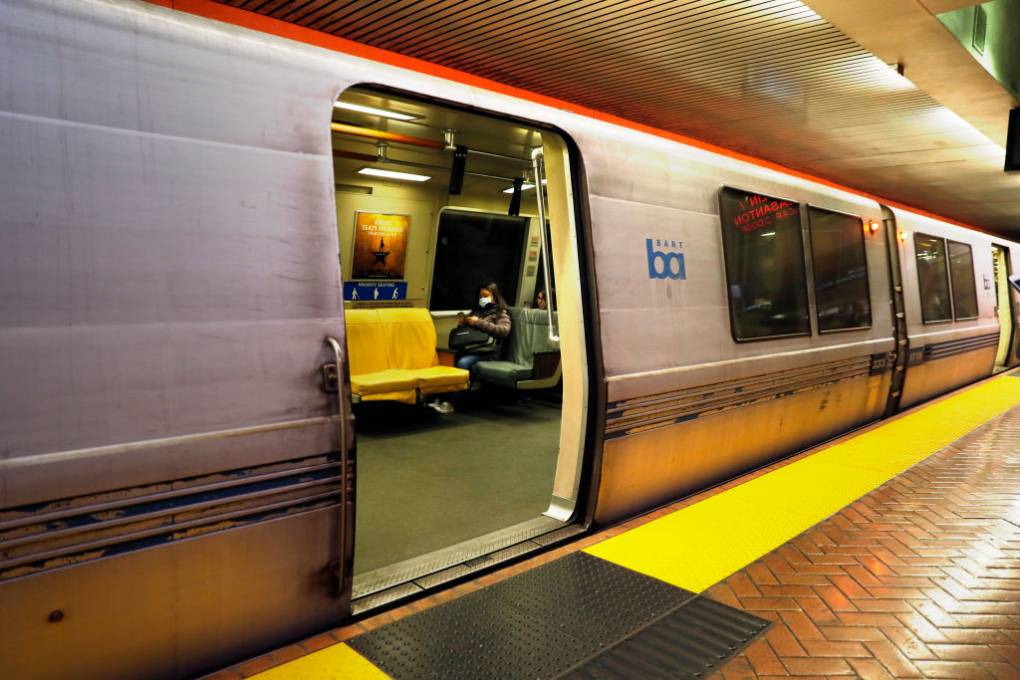
"caption": "A partially filled train readies to leave the BART Powell Street station in San Francisco, on Feb. 11, 2020.",
"description": null,
"title": "A partially filled train readies to leave BART Powell Street station in San Francisco, Calif., on Tuesday, February 11, 2020.",
"credit": "Scott Strazzante/San Francisco Chronicle via Getty Images",
"status": "inherit",
"altTag": "A BART train at a platform with sliding doors open and a passenger sitting inside.",
"isLoading": false,
"fetchFailed": false
},
"news_11939072": {
"type": "attachments",
"id": "news_11939072",
"meta": {
"index": "attachments_1716263798",
"site": "news",
"id": "11939072",
"found": true
},
"parent": 11939071,
"imgSizes": {
"twentyfourteen-full-width": {
"file": "https://ww2.kqed.org/app/uploads/sites/10/2023/01/Screenshot-2023-01-24-at-4.06.42-PM-1038x576.png",
"width": 1038,
"mimeType": "image/png",
"height": 576
},
"thumbnail": {
"file": "https://ww2.kqed.org/app/uploads/sites/10/2023/01/Screenshot-2023-01-24-at-4.06.42-PM-160x108.png",
"width": 160,
"mimeType": "image/png",
"height": 108
},
"post-thumbnail": {
"file": "https://ww2.kqed.org/app/uploads/sites/10/2023/01/Screenshot-2023-01-24-at-4.06.42-PM-672x372.png",
"width": 672,
"mimeType": "image/png",
"height": 372
},
"kqedFullSize": {
"file": "https://ww2.kqed.org/app/uploads/sites/10/2023/01/Screenshot-2023-01-24-at-4.06.42-PM.png",
"width": 2318,
"height": 1566
},
"2048x2048": {
"file": "https://ww2.kqed.org/app/uploads/sites/10/2023/01/Screenshot-2023-01-24-at-4.06.42-PM-2048x1384.png",
"width": 2048,
"mimeType": "image/png",
"height": 1384
},
"large": {
"file": "https://ww2.kqed.org/app/uploads/sites/10/2023/01/Screenshot-2023-01-24-at-4.06.42-PM-1020x689.png",
"width": 1020,
"mimeType": "image/png",
"height": 689
},
"1536x1536": {
"file": "https://ww2.kqed.org/app/uploads/sites/10/2023/01/Screenshot-2023-01-24-at-4.06.42-PM-1536x1038.png",
"width": 1536,
"mimeType": "image/png",
"height": 1038
},
"full-width": {
"file": "https://ww2.kqed.org/app/uploads/sites/10/2023/01/Screenshot-2023-01-24-at-4.06.42-PM-1920x1297.png",
"width": 1920,
"mimeType": "image/png",
"height": 1297
},
"medium": {
"file": "https://ww2.kqed.org/app/uploads/sites/10/2023/01/Screenshot-2023-01-24-at-4.06.42-PM-800x540.png",
"width": 800,
"mimeType": "image/png",
"height": 540
}
},
"publishDate": 1674605269,
"modified": 1674688145,
"caption": "John McPartland, a member of the BART board of directors, speaks via Zoom at the body's Jan. 12, 2023, meeting. He is facing censure for telling staff members at the meeting that their work on the agency's racial equity initiative is 'cotton-pickin' inspirational.'",
"description": null,
"title": "BART-McPartland",
"credit": "Courtesy of BART",
"status": "inherit",
"altTag": "A screenshot of BART board member John McPartland participating via Zoom in board meeting.",
"isLoading": false,
"fetchFailed": false
},
"news_11932694": {
"type": "attachments",
"id": "news_11932694",
"meta": {
"index": "attachments_1716263798",
"site": "news",
"id": "11932694",
"found": true
},
"title": "Rockridge-BART-cropped",
"publishDate": 1668796508,
"status": "inherit",
"parent": 11932690,
"modified": 1746835406,
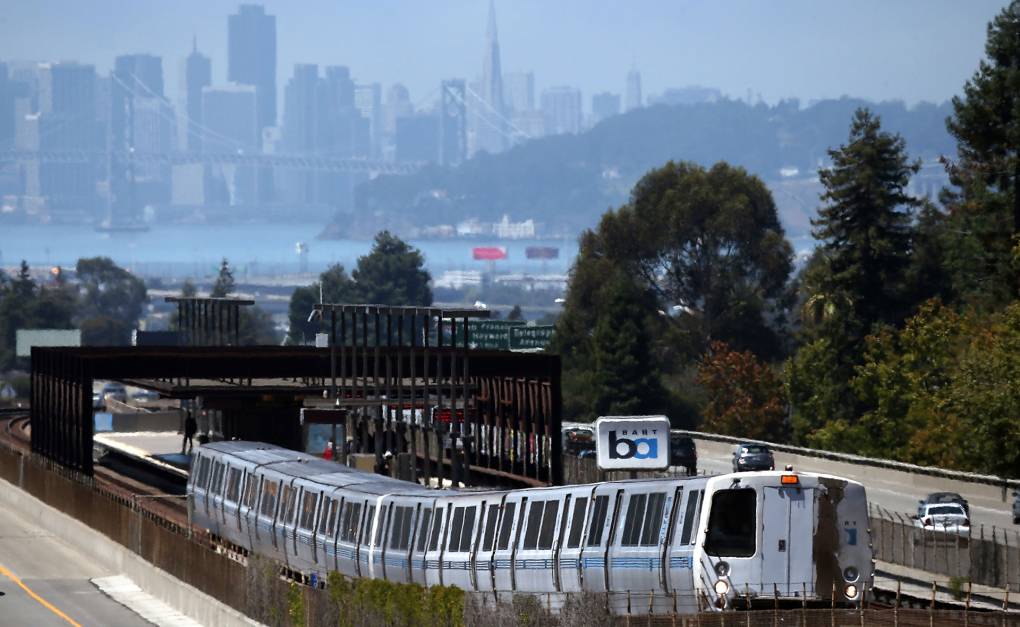
"caption": "A Bay Area Rapid Transit (BART) train pulls away from Oakland's Rockridge station on Aug. 2, 2013.",
"credit": "Justin Sullivan/Getty Images",
"altTag": "A BART train pulls out of an above-ground station. Cars whiz by alongside and the city of San Francisco looms in the background.",
"description": null,
"imgSizes": {
"medium": {
"file": "https://cdn.kqed.org/wp-content/uploads/sites/10/2022/11/Rockridge-BART-cropped-800x492.jpg",
"width": 800,
"height": 492,
"mimeType": "image/jpeg"
},
"large": {
"file": "https://cdn.kqed.org/wp-content/uploads/sites/10/2022/11/Rockridge-BART-cropped-1020x627.jpg",
"width": 1020,
"height": 627,
"mimeType": "image/jpeg"
},
"thumbnail": {
"file": "https://cdn.kqed.org/wp-content/uploads/sites/10/2022/11/Rockridge-BART-cropped-160x98.jpg",
"width": 160,
"height": 98,
"mimeType": "image/jpeg"
},
"1536x1536": {
"file": "https://cdn.kqed.org/wp-content/uploads/sites/10/2022/11/Rockridge-BART-cropped-1536x944.jpg",
"width": 1536,
"height": 944,
"mimeType": "image/jpeg"
},
"post-thumbnail": {
"file": "https://cdn.kqed.org/wp-content/uploads/sites/10/2022/11/Rockridge-BART-cropped-672x372.jpg",
"width": 672,
"height": 372,
"mimeType": "image/jpeg"
},
"twentyfourteen-full-width": {
"file": "https://cdn.kqed.org/wp-content/uploads/sites/10/2022/11/Rockridge-BART-cropped-1038x576.jpg",
"width": 1038,
"height": 576,
"mimeType": "image/jpeg"
},
"kqedFullSize": {
"file": "https://cdn.kqed.org/wp-content/uploads/sites/10/2022/11/Rockridge-BART-cropped.jpg",
"width": 1920,
"height": 1180
}
},
"isLoading": false,
"fetchFailed": false
},
"news_11928949": {
"type": "attachments",
"id": "news_11928949",
"meta": {
"index": "attachments_1716263798",
"site": "news",
"id": "11928949",
"found": true
},
"parent": 11928638,
"imgSizes": {
"twentyfourteen-full-width": {
"file": "https://ww2.kqed.org/app/uploads/sites/10/2022/10/RS59379_DSC03118-qut-1038x576.jpg",
"width": 1038,
"mimeType": "image/jpeg",
"height": 576
},
"thumbnail": {
"file": "https://ww2.kqed.org/app/uploads/sites/10/2022/10/RS59379_DSC03118-qut-160x107.jpg",
"width": 160,
"mimeType": "image/jpeg",
"height": 107
},
"post-thumbnail": {
"file": "https://ww2.kqed.org/app/uploads/sites/10/2022/10/RS59379_DSC03118-qut-672x372.jpg",
"width": 672,
"mimeType": "image/jpeg",
"height": 372
},
"kqedFullSize": {
"file": "https://ww2.kqed.org/app/uploads/sites/10/2022/10/RS59379_DSC03118-qut.jpg",
"width": 1920,
"height": 1280
},
"large": {
"file": "https://ww2.kqed.org/app/uploads/sites/10/2022/10/RS59379_DSC03118-qut-1020x680.jpg",
"width": 1020,
"mimeType": "image/jpeg",
"height": 680
},
"1536x1536": {
"file": "https://ww2.kqed.org/app/uploads/sites/10/2022/10/RS59379_DSC03118-qut-1536x1024.jpg",
"width": 1536,
"mimeType": "image/jpeg",
"height": 1024
},
"medium": {
"file": "https://ww2.kqed.org/app/uploads/sites/10/2022/10/RS59379_DSC03118-qut-800x533.jpg",
"width": 800,
"mimeType": "image/jpeg",
"height": 533
}
},
"publishDate": 1665775754,
"modified": 1665775978,
"caption": "Khaled Almaghafi at his store, Bee Healthy Honey Shop, in Oakland. Almaghafi is paid to remove bees from BART stations, and keeps the bees and honey he finds. ",
"description": null,
"title": "RS59379_DSC03118-qut",
"credit": "Aryk Copley/KQED",
"status": "inherit",
"altTag": "a smiling Middle Eastern man in a white shirt stands in front of a honeycomb-shaped shelf",
"isLoading": false,
"fetchFailed": false
},
"news_11883912": {
"type": "attachments",
"id": "news_11883912",
"meta": {
"index": "attachments_1716263798",
"site": "news",
"id": "11883912",
"found": true
},
"title": "Elevator Attendant__MJA_04062021",
"publishDate": 1628194778,
"status": "inherit",
"parent": 11883908,
"modified": 1628195076,
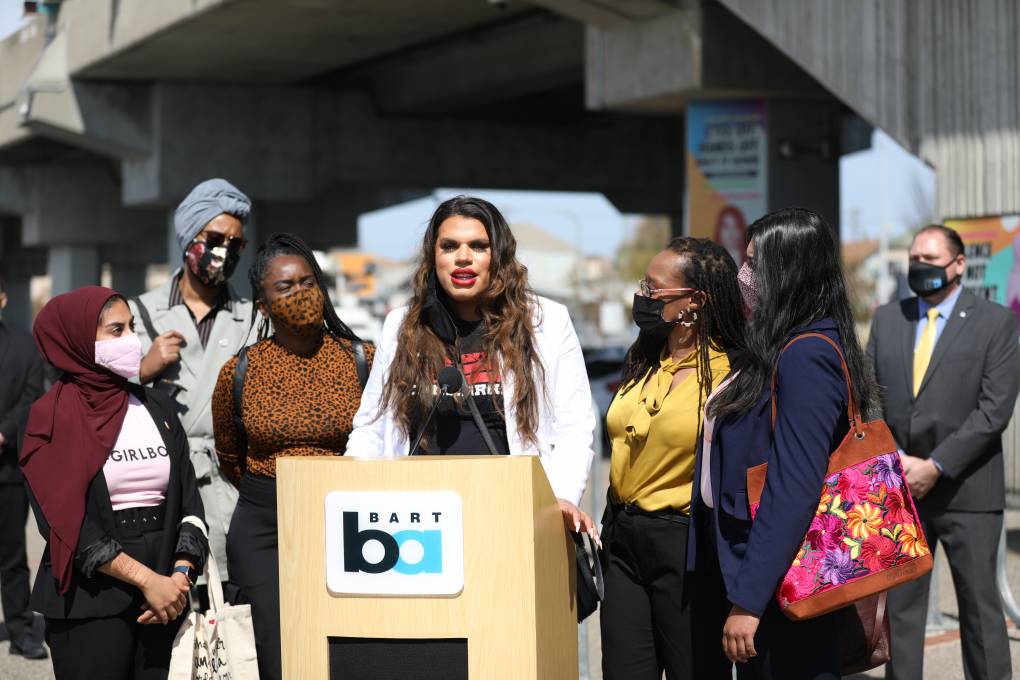
"caption": "Santana Tapia, with the Not One More Girl campaign and co-founder of Fluid Coffee and Events\n(center) at the launch of BART's Not One More Girl Campaign.",
"credit": "Maria J. Avila/BART",
"altTag": null,
"description": null,
"imgSizes": {
"medium": {
"file": "https://cdn.kqed.org/wp-content/uploads/sites/10/2021/08/Not-One-More-Girl-_53_MJA_04022021-800x533.jpg",
"width": 800,
"height": 533,
"mimeType": "image/jpeg"
},
"large": {
"file": "https://cdn.kqed.org/wp-content/uploads/sites/10/2021/08/Not-One-More-Girl-_53_MJA_04022021-1020x680.jpg",
"width": 1020,
"height": 680,
"mimeType": "image/jpeg"
},
"thumbnail": {
"file": "https://cdn.kqed.org/wp-content/uploads/sites/10/2021/08/Not-One-More-Girl-_53_MJA_04022021-160x107.jpg",
"width": 160,
"height": 107,
"mimeType": "image/jpeg"
},
"1536x1536": {
"file": "https://cdn.kqed.org/wp-content/uploads/sites/10/2021/08/Not-One-More-Girl-_53_MJA_04022021-1536x1024.jpg",
"width": 1536,
"height": 1024,
"mimeType": "image/jpeg"
},
"2048x2048": {
"file": "https://cdn.kqed.org/wp-content/uploads/sites/10/2021/08/Not-One-More-Girl-_53_MJA_04022021-2048x1365.jpg",
"width": 2048,
"height": 1365,
"mimeType": "image/jpeg"
},
"post-thumbnail": {
"file": "https://cdn.kqed.org/wp-content/uploads/sites/10/2021/08/Not-One-More-Girl-_53_MJA_04022021-672x372.jpg",
"width": 672,
"height": 372,
"mimeType": "image/jpeg"
},
"twentyfourteen-full-width": {
"file": "https://cdn.kqed.org/wp-content/uploads/sites/10/2021/08/Not-One-More-Girl-_53_MJA_04022021-1038x576.jpg",
"width": 1038,
"height": 576,
"mimeType": "image/jpeg"
},
"full-width": {
"file": "https://cdn.kqed.org/wp-content/uploads/sites/10/2021/08/Not-One-More-Girl-_53_MJA_04022021-1920x1280.jpg",
"width": 1920,
"height": 1280,
"mimeType": "image/jpeg"
},
"kqedFullSize": {
"file": "https://cdn.kqed.org/wp-content/uploads/sites/10/2021/08/Not-One-More-Girl-_53_MJA_04022021-scaled-e1753208640930.jpg",
"width": 2000,
"height": 1334
}
},
"isLoading": false,
"fetchFailed": false
},
"news_11924031": {
"type": "attachments",
"id": "news_11924031",
"meta": {
"index": "attachments_1716263798",
"site": "news",
"id": "11924031",
"found": true
},
"parent": 11923972,
"imgSizes": {
"twentyfourteen-full-width": {
"file": "https://ww2.kqed.org/app/uploads/sites/10/2022/08/RS6027_bart-strike20130804-1038x576.jpg",
"width": 1038,
"mimeType": "image/jpeg",
"height": 576
},
"thumbnail": {
"file": "https://ww2.kqed.org/app/uploads/sites/10/2022/08/RS6027_bart-strike20130804-160x108.jpg",
"width": 160,
"mimeType": "image/jpeg",
"height": 108
},
"post-thumbnail": {
"file": "https://ww2.kqed.org/app/uploads/sites/10/2022/08/RS6027_bart-strike20130804-672x372.jpg",
"width": 672,
"mimeType": "image/jpeg",
"height": 372
},
"kqedFullSize": {
"file": "https://ww2.kqed.org/app/uploads/sites/10/2022/08/RS6027_bart-strike20130804-scaled.jpg",
"width": 2560,
"height": 1727
},
"2048x2048": {
"file": "https://ww2.kqed.org/app/uploads/sites/10/2022/08/RS6027_bart-strike20130804-2048x1382.jpg",
"width": 2048,
"mimeType": "image/jpeg",
"height": 1382
},
"large": {
"file": "https://ww2.kqed.org/app/uploads/sites/10/2022/08/RS6027_bart-strike20130804-1020x688.jpg",
"width": 1020,
"mimeType": "image/jpeg",
"height": 688
},
"1536x1536": {
"file": "https://ww2.kqed.org/app/uploads/sites/10/2022/08/RS6027_bart-strike20130804-1536x1036.jpg",
"width": 1536,
"mimeType": "image/jpeg",
"height": 1036
},
"full-width": {
"file": "https://ww2.kqed.org/app/uploads/sites/10/2022/08/RS6027_bart-strike20130804-1920x1295.jpg",
"width": 1920,
"mimeType": "image/jpeg",
"height": 1295
},
"medium": {
"file": "https://ww2.kqed.org/app/uploads/sites/10/2022/08/RS6027_bart-strike20130804-800x540.jpg",
"width": 800,
"mimeType": "image/jpeg",
"height": 540
}
},
"publishDate": 1661818238,
"modified": 1661881097,
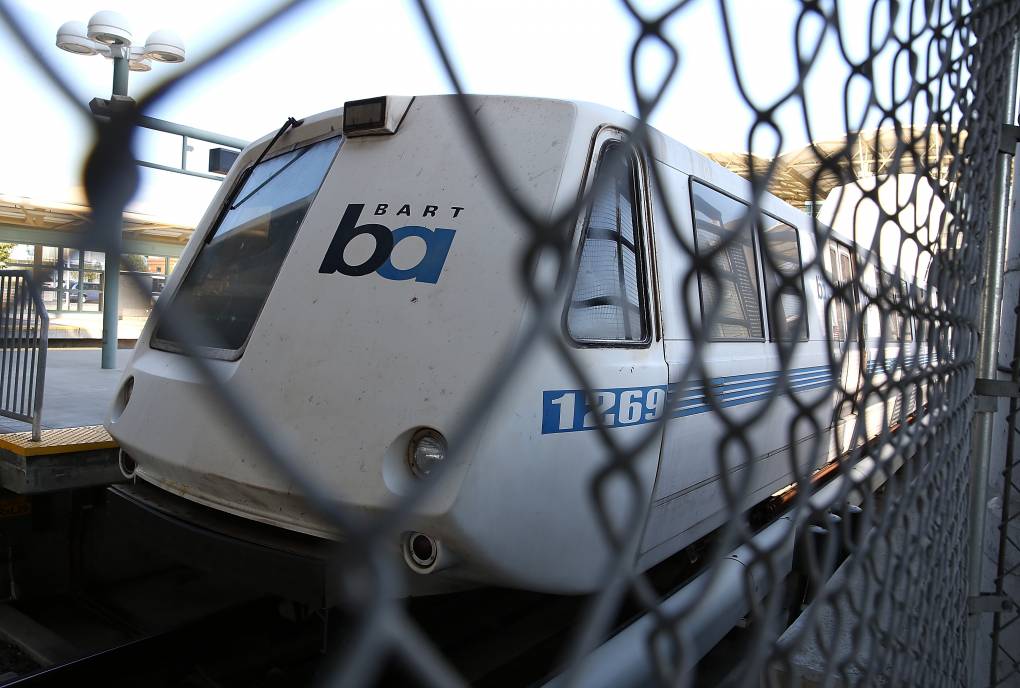
"caption": "A Bay Area Rapid Transit (BART) train sits idle at the Millbrae station on July 3, 2013, in Millbrae.",
"description": null,
"title": "Bay Area Transit Workers Go On Strike",
"credit": "Justin Sullivan/Getty Images",
"status": "inherit",
"altTag": "A BART train seen through a fence.",
"isLoading": false,
"fetchFailed": false
},
"news_11911714": {
"type": "attachments",
"id": "news_11911714",
"meta": {
"index": "attachments_1716263798",
"site": "news",
"id": "11911714",
"found": true
},
"parent": 11911549,
"imgSizes": {
"twentyfourteen-full-width": {
"file": "https://ww2.kqed.org/app/uploads/sites/10/2022/04/RS42061_055_KQED_SanFrancisco_Coronavirus_03132020_7513-qut-1038x576.jpg",
"width": 1038,
"mimeType": "image/jpeg",
"height": 576
},
"thumbnail": {
"file": "https://ww2.kqed.org/app/uploads/sites/10/2022/04/RS42061_055_KQED_SanFrancisco_Coronavirus_03132020_7513-qut-160x107.jpg",
"width": 160,
"mimeType": "image/jpeg",
"height": 107
},
"post-thumbnail": {
"file": "https://ww2.kqed.org/app/uploads/sites/10/2022/04/RS42061_055_KQED_SanFrancisco_Coronavirus_03132020_7513-qut-672x372.jpg",
"width": 672,
"mimeType": "image/jpeg",
"height": 372
},
"kqedFullSize": {
"file": "https://ww2.kqed.org/app/uploads/sites/10/2022/04/RS42061_055_KQED_SanFrancisco_Coronavirus_03132020_7513-qut.jpg",
"width": 1920,
"height": 1280
},
"large": {
"file": "https://ww2.kqed.org/app/uploads/sites/10/2022/04/RS42061_055_KQED_SanFrancisco_Coronavirus_03132020_7513-qut-1020x680.jpg",
"width": 1020,
"mimeType": "image/jpeg",
"height": 680
},
"1536x1536": {
"file": "https://ww2.kqed.org/app/uploads/sites/10/2022/04/RS42061_055_KQED_SanFrancisco_Coronavirus_03132020_7513-qut-1536x1024.jpg",
"width": 1536,
"mimeType": "image/jpeg",
"height": 1024
},
"medium": {
"file": "https://ww2.kqed.org/app/uploads/sites/10/2022/04/RS42061_055_KQED_SanFrancisco_Coronavirus_03132020_7513-qut-800x533.jpg",
"width": 800,
"mimeType": "image/jpeg",
"height": 533
}
},
"publishDate": 1650484222,
"modified": 1650505799,
"caption": "Commuters at the Montgomery BART station in San Francisco.",
"description": null,
"title": "RS42061_055_KQED_SanFrancisco_Coronavirus_03132020_7513-qut",
"credit": "Beth LaBerge/KQED",
"status": "inherit",
"altTag": "A bank of BART turnstiles under bright strip lighting in a BART station, with people photographed from the back approaching the turnstiles.",
"isLoading": false,
"fetchFailed": false
},
"news_11920098": {
"type": "attachments",
"id": "news_11920098",
"meta": {
"index": "attachments_1716263798",
"site": "news",
"id": "11920098",
"found": true
},
"parent": 11920097,
"imgSizes": {
"twentyfourteen-full-width": {
"file": "https://ww2.kqed.org/app/uploads/sites/10/2022/07/image-from-ios-9-b51d64abb5990b2234ce8c18ddab5fa9abdebfbe-1038x576.jpg",
"width": 1038,
"mimeType": "image/jpeg",
"height": 576
},
"thumbnail": {
"file": "https://ww2.kqed.org/app/uploads/sites/10/2022/07/image-from-ios-9-b51d64abb5990b2234ce8c18ddab5fa9abdebfbe-160x120.jpg",
"width": 160,
"mimeType": "image/jpeg",
"height": 120
},
"post-thumbnail": {
"file": "https://ww2.kqed.org/app/uploads/sites/10/2022/07/image-from-ios-9-b51d64abb5990b2234ce8c18ddab5fa9abdebfbe-672x372.jpg",
"width": 672,
"mimeType": "image/jpeg",
"height": 372
},
"kqedFullSize": {
"file": "https://ww2.kqed.org/app/uploads/sites/10/2022/07/image-from-ios-9-b51d64abb5990b2234ce8c18ddab5fa9abdebfbe-scaled.jpg",
"width": 2560,
"height": 1920
},
"2048x2048": {
"file": "https://ww2.kqed.org/app/uploads/sites/10/2022/07/image-from-ios-9-b51d64abb5990b2234ce8c18ddab5fa9abdebfbe-2048x1536.jpg",
"width": 2048,
"mimeType": "image/jpeg",
"height": 1536
},
"large": {
"file": "https://ww2.kqed.org/app/uploads/sites/10/2022/07/image-from-ios-9-b51d64abb5990b2234ce8c18ddab5fa9abdebfbe-1020x765.jpg",
"width": 1020,
"mimeType": "image/jpeg",
"height": 765
},
"1536x1536": {
"file": "https://ww2.kqed.org/app/uploads/sites/10/2022/07/image-from-ios-9-b51d64abb5990b2234ce8c18ddab5fa9abdebfbe-1536x1152.jpg",
"width": 1536,
"mimeType": "image/jpeg",
"height": 1152
},
"full-width": {
"file": "https://ww2.kqed.org/app/uploads/sites/10/2022/07/image-from-ios-9-b51d64abb5990b2234ce8c18ddab5fa9abdebfbe-1920x1440.jpg",
"width": 1920,
"mimeType": "image/jpeg",
"height": 1440
},
"medium": {
"file": "https://ww2.kqed.org/app/uploads/sites/10/2022/07/image-from-ios-9-b51d64abb5990b2234ce8c18ddab5fa9abdebfbe-800x600.jpg",
"width": 800,
"mimeType": "image/jpeg",
"height": 600
}
},
"publishDate": 1658422226,
"modified": 1658423951,
"caption": "Falcolner Ricky Ortiz poses with Pac-Man, a Harris's hawk, at the El Cerrito del Norte BART station in El Cerrito.",
"description": null,
"title": "Falcolner Ricky Ortiz poses with Pac-Man, a Harris's hawk, at the El Cerrito del Norte BART station in El Cerrito, Calif.",
"credit": "Raquel Maria Dillon/NPR",
"status": "inherit",
"altTag": "A man wearing a hat and beige shirt has a bird on his left arm.",
"isLoading": false,
"fetchFailed": false
},
"news_11916850": {
"type": "attachments",
"id": "news_11916850",
"meta": {
"index": "attachments_1716263798",
"site": "news",
"id": "11916850",
"found": true
},
"parent": 11916729,
"imgSizes": {
"twentyfourteen-full-width": {
"file": "https://ww2.kqed.org/app/uploads/sites/10/2022/06/RS56053_20220402_SJFleaMarket_RamosWhites-07-2-qut-1038x576.jpg",
"width": 1038,
"mimeType": "image/jpeg",
"height": 576
},
"thumbnail": {
"file": "https://ww2.kqed.org/app/uploads/sites/10/2022/06/RS56053_20220402_SJFleaMarket_RamosWhites-07-2-qut-160x107.jpg",
"width": 160,
"mimeType": "image/jpeg",
"height": 107
},
"post-thumbnail": {
"file": "https://ww2.kqed.org/app/uploads/sites/10/2022/06/RS56053_20220402_SJFleaMarket_RamosWhites-07-2-qut-672x372.jpg",
"width": 672,
"mimeType": "image/jpeg",
"height": 372
},
"kqedFullSize": {
"file": "https://ww2.kqed.org/app/uploads/sites/10/2022/06/RS56053_20220402_SJFleaMarket_RamosWhites-07-2-qut.jpg",
"width": 1920,
"height": 1280
},
"large": {
"file": "https://ww2.kqed.org/app/uploads/sites/10/2022/06/RS56053_20220402_SJFleaMarket_RamosWhites-07-2-qut-1020x680.jpg",
"width": 1020,
"mimeType": "image/jpeg",
"height": 680
},
"1536x1536": {
"file": "https://ww2.kqed.org/app/uploads/sites/10/2022/06/RS56053_20220402_SJFleaMarket_RamosWhites-07-2-qut-1536x1024.jpg",
"width": 1536,
"mimeType": "image/jpeg",
"height": 1024
},
"medium": {
"file": "https://ww2.kqed.org/app/uploads/sites/10/2022/06/RS56053_20220402_SJFleaMarket_RamosWhites-07-2-qut-800x533.jpg",
"width": 800,
"mimeType": "image/jpeg",
"height": 533
}
},
"publishDate": 1654903337,
"modified": 1655152356,
"caption": "Katrina Ramos White closes up the vending stall she runs with her husband on April 2, 2022. Ramos White took over the family business in 2020 after her parents retired.",
"description": null,
"title": "RS56053_20220402_SJFleaMarket_RamosWhites-07-2-qut",
"credit": "Amaya Edwards/KQED",
"status": "inherit",
"altTag": null,
"isLoading": false,
"fetchFailed": false
},
"news_11912926": {
"type": "attachments",
"id": "news_11912926",
"meta": {
"index": "attachments_1716263798",
"site": "news",
"id": "11912926",
"found": true
},
"parent": 11912919,
"imgSizes": {
"twentyfourteen-full-width": {
"file": "https://ww2.kqed.org/app/uploads/sites/10/2022/05/routemap_050222_final-1038x576.png",
"width": 1038,
"mimeType": "image/png",
"height": 576
},
"thumbnail": {
"file": "https://ww2.kqed.org/app/uploads/sites/10/2022/05/routemap_050222_final-160x114.png",
"width": 160,
"mimeType": "image/png",
"height": 114
},
"post-thumbnail": {
"file": "https://ww2.kqed.org/app/uploads/sites/10/2022/05/routemap_050222_final-672x372.png",
"width": 672,
"mimeType": "image/png",
"height": 372
},
"kqedFullSize": {
"file": "https://ww2.kqed.org/app/uploads/sites/10/2022/05/routemap_050222_final.png",
"width": 1920,
"height": 1362
},
"large": {
"file": "https://ww2.kqed.org/app/uploads/sites/10/2022/05/routemap_050222_final-1020x724.png",
"width": 1020,
"mimeType": "image/png",
"height": 724
},
"1536x1536": {
"file": "https://ww2.kqed.org/app/uploads/sites/10/2022/05/routemap_050222_final-1536x1090.png",
"width": 1536,
"mimeType": "image/png",
"height": 1090
},
"medium": {
"file": "https://ww2.kqed.org/app/uploads/sites/10/2022/05/routemap_050222_final-800x568.png",
"width": 800,
"mimeType": "image/png",
"height": 568
}
},
"publishDate": 1651527459,
"modified": 1651527657,
"caption": null,
"description": null,
"title": "routemap_050222_final",
"credit": null,
"status": "inherit",
"altTag": "Cartoon: a BART system route map with colorful, tangled lines is titled, \"route map for face masking.\" The lines are labeled, \"BART, CA Dept. of Public Health, CDC, judicial system and right-wing activists.\"",
"isLoading": false,
"fetchFailed": false
},
"news_11912009": {
"type": "attachments",
"id": "news_11912009",
"meta": {
"index": "attachments_1716263798",
"site": "news",
"id": "11912009",
"found": true
},
"parent": 11911992,
"imgSizes": {
"twentyfourteen-full-width": {
"file": "https://ww2.kqed.org/app/uploads/sites/10/2022/04/GettyImages-1237045095-1024x576.jpg",
"width": 1024,
"mimeType": "image/jpeg",
"height": 576
},
"thumbnail": {
"file": "https://ww2.kqed.org/app/uploads/sites/10/2022/04/GettyImages-1237045095-160x101.jpg",
"width": 160,
"mimeType": "image/jpeg",
"height": 101
},
"post-thumbnail": {
"file": "https://ww2.kqed.org/app/uploads/sites/10/2022/04/GettyImages-1237045095-672x372.jpg",
"width": 672,
"mimeType": "image/jpeg",
"height": 372
},
"kqedFullSize": {
"file": "https://ww2.kqed.org/app/uploads/sites/10/2022/04/GettyImages-1237045095.jpg",
"width": 1024,
"height": 649
},
"large": {
"file": "https://ww2.kqed.org/app/uploads/sites/10/2022/04/GettyImages-1237045095-1020x646.jpg",
"width": 1020,
"mimeType": "image/jpeg",
"height": 646
},
"medium": {
"file": "https://ww2.kqed.org/app/uploads/sites/10/2022/04/GettyImages-1237045095-800x507.jpg",
"width": 800,
"mimeType": "image/jpeg",
"height": 507
}
},
"publishDate": 1650662840,
"modified": 1650662879,
"caption": "Burton High School senior AmBrianna Daniels rides the MUNI bus to attend a college prep program after school in San Francisco, California Wednesday October 20, 2021. ",
"description": null,
"title": "Coronavirus Pandemic 2021",
"credit": "Photo by Melina Mara/The Washington Post via Getty Images",
"status": "inherit",
"altTag": "Student waiting inside a bus with mask",
"isLoading": false,
"fetchFailed": false
},
"news_11902363": {
"type": "attachments",
"id": "news_11902363",
"meta": {
"index": "attachments_1716263798",
"site": "news",
"id": "11902363",
"found": true
},
"parent": 11902253,
"imgSizes": {
"twentyfourteen-full-width": {
"file": "https://ww2.kqed.org/app/uploads/sites/10/2022/01/RS53245_015_Berkeley_SassyOutwaterWright_01202022-qut-1038x576.jpg",
"width": 1038,
"mimeType": "image/jpeg",
"height": 576
},
"thumbnail": {
"file": "https://ww2.kqed.org/app/uploads/sites/10/2022/01/RS53245_015_Berkeley_SassyOutwaterWright_01202022-qut-160x107.jpg",
"width": 160,
"mimeType": "image/jpeg",
"height": 107
},
"post-thumbnail": {
"file": "https://ww2.kqed.org/app/uploads/sites/10/2022/01/RS53245_015_Berkeley_SassyOutwaterWright_01202022-qut-672x372.jpg",
"width": 672,
"mimeType": "image/jpeg",
"height": 372
},
"kqedFullSize": {
"file": "https://ww2.kqed.org/app/uploads/sites/10/2022/01/RS53245_015_Berkeley_SassyOutwaterWright_01202022-qut.jpg",
"width": 1920,
"height": 1280
},
"large": {
"file": "https://ww2.kqed.org/app/uploads/sites/10/2022/01/RS53245_015_Berkeley_SassyOutwaterWright_01202022-qut-1020x680.jpg",
"width": 1020,
"mimeType": "image/jpeg",
"height": 680
},
"1536x1536": {
"file": "https://ww2.kqed.org/app/uploads/sites/10/2022/01/RS53245_015_Berkeley_SassyOutwaterWright_01202022-qut-1536x1024.jpg",
"width": 1536,
"mimeType": "image/jpeg",
"height": 1024
},
"medium": {
"file": "https://ww2.kqed.org/app/uploads/sites/10/2022/01/RS53245_015_Berkeley_SassyOutwaterWright_01202022-qut-800x533.jpg",
"width": 800,
"mimeType": "image/jpeg",
"height": 533
}
},
"publishDate": 1642803161,
"modified": 1642803209,
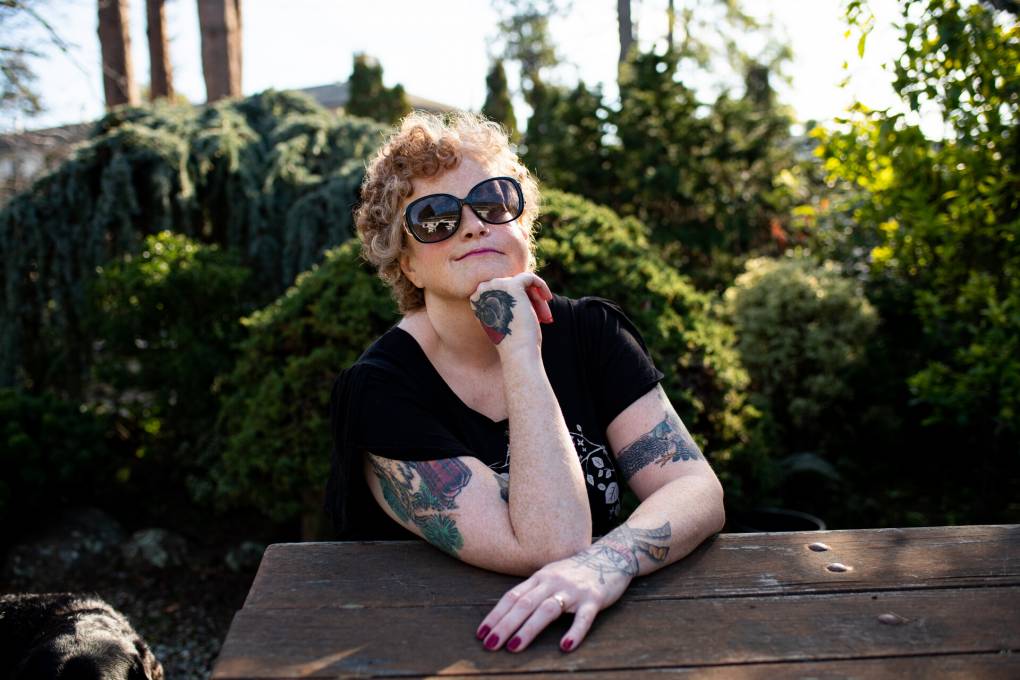
"caption": "Sassy Outwater-Wright sits at a picnic table in her backyard in Berkeley on Jan. 20, 2022.",
"description": null,
"title": "RS53245_015_Berkeley_SassyOutwaterWright_01202022-qut",
"credit": "Beth LaBerge/KQED",
"status": "inherit",
"altTag": "A woman with tattoos and dark glasses sits at a table in a garden.",
"isLoading": false,
"fetchFailed": false
}
},
"audioPlayerReducer": {
"postId": "stream_live",
"isPaused": true,
"isPlaying": false,
"pfsActive": false,
"pledgeModalIsOpen": true,
"playerDrawerIsOpen": false,
"liveAudioPlayStartedAt": 0,
"liveAudioPlayContext": ""
},
"authorsReducer": {
"byline_news_11928638": {
"type": "authors",
"id": "byline_news_11928638",
"meta": {
"override": true
},
"slug": "byline_news_11928638",
"name": "Anaïs-Ophelia Lino",
"isLoading": false
},
"byline_news_11920097": {
"type": "authors",
"id": "byline_news_11920097",
"meta": {
"override": true
},
"slug": "byline_news_11920097",
"name": "Rachel Treisman",
"isLoading": false
},
"byline_news_11911992": {
"type": "authors",
"id": "byline_news_11911992",
"meta": {
"override": true
},
"slug": "byline_news_11911992",
"name": "Will Stone and Maria Godoy",
"isLoading": false
},
"danbrekke": {
"type": "authors",
"id": "222",
"meta": {
"index": "authors_1716337520",
"id": "222",
"found": true
},
"name": "Dan Brekke",
"firstName": "Dan",
"lastName": "Brekke",
"slug": "danbrekke",
"email": "dbrekke@kqed.org",
"display_author_email": true,
"staff_mastheads": [
"news",
"science"
],
"title": "KQED Editor and Reporter",
"bio": "Dan Brekke is a reporter and editor for KQED News, responsible for coverage of topics ranging from California water issues to the Bay Area's transportation challenges. In a newsroom career that began in Chicago in 1972, Dan has worked for \u003cem>The San Francisco Examiner,\u003c/em> Wired and TechTV and has been published in The New York Times, The New York Times Magazine, Business 2.0, Salon and elsewhere.\r\n\r\nSince joining KQED in 2007, Dan has reported, edited and produced both radio and online features and breaking news pieces. He has shared as both editor and reporter in four Society of Professional Journalists Norcal Excellence in Journalism awards and one Edward R. Murrow regional award. He was chosen for a spring 2017 residency at the Mesa Refuge to advance his research on California salmon.\r\n\r\nEmail Dan at: \u003ca href=\"mailto:dbrekke@kqed.org\">dbrekke@kqed.org\u003c/a>\r\n\r\n\u003cstrong>Twitter:\u003c/strong> \u003ca href=\"https://twitter.com/danbrekke\" rel=\"noopener noreferrer\">twitter.com/danbrekke\u003c/a>\r\n\u003cstrong>Facebook:\u003c/strong> \u003ca href=\"https://www.facebook.com/danbrekke\" rel=\"noopener noreferrer\">www.facebook.com/danbrekke\u003c/a>\r\n\u003cstrong>LinkedIn:\u003c/strong> \u003ca href=\"https://www.linkedin.com/in/danbrekke\" rel=\"noopener noreferrer\">www.linkedin.com/in/danbrekke\u003c/a>",
"avatar": "https://secure.gravatar.com/avatar/8f1f0d2a978fb3b23426c922c7e2af558fa36905b49c4ce76a97dc3c72d27226?s=600&d=mm&r=g",
"twitter": "danbrekke",
"bluesky": null,
"facebook": null,
"instagram": "https://www.instagram.com/dan.brekke/",
"linkedin": "https://www.linkedin.com/in/danbrekke/",
"sites": [
{
"site": "news",
"roles": [
"administrator",
"create_posts"
]
},
{
"site": "stateofhealth",
"roles": [
"editor"
]
},
{
"site": "science",
"roles": [
"editor"
]
},
{
"site": "quest",
"roles": [
"contributor"
]
},
{
"site": "food",
"roles": [
"contributor"
]
},
{
"site": "forum",
"roles": [
"contributor"
]
},
{
"site": "elections",
"roles": [
"editor"
]
},
{
"site": "liveblog",
"roles": [
"editor"
]
}
],
"headData": {
"title": "Dan Brekke | KQED",
"description": "KQED Editor and Reporter",
"ogImgSrc": "https://secure.gravatar.com/avatar/8f1f0d2a978fb3b23426c922c7e2af558fa36905b49c4ce76a97dc3c72d27226?s=600&d=mm&r=g",
"twImgSrc": "https://secure.gravatar.com/avatar/8f1f0d2a978fb3b23426c922c7e2af558fa36905b49c4ce76a97dc3c72d27226?s=600&d=mm&r=g"
},
"isLoading": false,
"link": "/author/danbrekke"
},
"markfiore": {
"type": "authors",
"id": "3236",
"meta": {
"index": "authors_1716337520",
"id": "3236",
"found": true
},
"name": "Mark Fiore",
"firstName": "Mark",
"lastName": "Fiore",
"slug": "markfiore",
"email": "mark@markfiore.com",
"display_author_email": false,
"staff_mastheads": [
"news"
],
"title": "KQED News Cartoonist",
"bio": "\u003ca href=\"http://www.MarkFiore.com\">MarkFiore.com\u003c/a> | \u003ca href=\"https://twitter.com/markfiore\">Follow on Twitter\u003c/a> | \u003ca href=\"https://www.facebook.com/pages/Mark-Fiore-Animated-Political-Cartoons/94451707396?ref=bookmarks\">Facebook\u003c/a> | \u003ca href=\"mailto:mark@markfiore.com\">email\u003c/a>\r\n\r\nPulitzer Prize-winner, Mark Fiore, who the Wall Street Journal has called “the undisputed guru of the form,” creates animated political cartoons in San Francisco, where his work has been featured regularly on the San Francisco Chronicle’s web site, SFGate.com. His work has appeared on Newsweek.com, Slate.com, CBSNews.com, MotherJones.com, DailyKos.com and NPR’s web site. Fiore’s political animation has appeared on CNN, Frontline, Bill Moyers Journal, Salon.com and cable and broadcast outlets across the globe.\r\n\r\nBeginning his professional life by drawing traditional political cartoons for newspapers, Fiore’s work appeared in publications ranging from the Washington Post to the Los Angeles Times. In the late 1990s, he began to experiment with animating political cartoons and, after a short stint at the San Jose Mercury News as their staff cartoonist, Fiore devoted all his energies to animation.\r\nGrowing up in California, Fiore also spent a good portion of his life in the backwoods of Idaho. It was this combination that shaped him politically. Mark majored in political science at Colorado College, where, in a perfect send-off for a cartoonist, he received his diploma in 1991 as commencement speaker Dick Cheney smiled approvingly.\r\nMark Fiore was awarded the Pulitzer Prize for political cartooning in 2010, a Robert F. Kennedy Journalism Award in 2004 and has twice received an Online Journalism Award for commentary from the Online News Association (2002, 2008). Fiore has received two awards for his work in new media from the National Cartoonists Society (2001, 2002), and in 2006 received The James Madison Freedom of Information Award from The Society of Professional Journalists.",
"avatar": "https://secure.gravatar.com/avatar/fc4e2a612b15b67bad0c6f0e1db4ca9b?s=600&d=blank&r=g",
"twitter": "MarkFiore",
"facebook": null,
"instagram": "https://www.instagram.com/markfiore/?hl=en",
"linkedin": null,
"sites": [
{
"site": "arts",
"roles": [
"contributor"
]
},
{
"site": "news",
"roles": [
"editor"
]
},
{
"site": "futureofyou",
"roles": [
"editor"
]
},
{
"site": "science",
"roles": [
"editor"
]
}
],
"headData": {
"title": "Mark Fiore | KQED",
"description": "KQED News Cartoonist",
"ogImgSrc": "https://secure.gravatar.com/avatar/fc4e2a612b15b67bad0c6f0e1db4ca9b?s=600&d=blank&r=g",
"twImgSrc": "https://secure.gravatar.com/avatar/fc4e2a612b15b67bad0c6f0e1db4ca9b?s=600&d=blank&r=g"
},
"isLoading": false,
"link": "/author/markfiore"
},
"carlysevern": {
"type": "authors",
"id": "3243",
"meta": {
"index": "authors_1716337520",
"id": "3243",
"found": true
},
"name": "Carly Severn",
"firstName": "Carly",
"lastName": "Severn",
"slug": "carlysevern",
"email": "csevern@kqed.org",
"display_author_email": false,
"staff_mastheads": [
"news"
],
"title": "Senior Editor, Audience News ",
"bio": "Carly is KQED's Senior Editor of Audience News on the Digital News team, and has reported for the California Report Magazine, Bay Curious and KQED Arts. She's formerly the host of \u003ca href=\"http://ww2.kqed.org/pop/category/the-cooler/\" rel=\"noopener noreferrer\">The Cooler\u003c/a> podcast.",
"avatar": "https://secure.gravatar.com/avatar/54037bf5c128fe678f0ef26cec97a93f2e7f220a22d7285703328f12c42c1b1d?s=600&d=blank&r=g",
"twitter": "teacupinthebay",
"bluesky": null,
"facebook": null,
"instagram": null,
"linkedin": null,
"sites": [
{
"site": "",
"roles": [
"editor"
]
},
{
"site": "arts",
"roles": [
"editor"
]
},
{
"site": "news",
"roles": [
"administrator"
]
},
{
"site": "pop",
"roles": [
"editor"
]
},
{
"site": "futureofyou",
"roles": [
"editor"
]
},
{
"site": "about",
"roles": [
"administrator"
]
},
{
"site": "mindshift",
"roles": [
"editor"
]
},
{
"site": "bayareabites",
"roles": [
"editor"
]
},
{
"site": "stateofhealth",
"roles": [
"editor"
]
},
{
"site": "science",
"roles": [
"editor"
]
},
{
"site": "food",
"roles": [
"contributor"
]
},
{
"site": "forum",
"roles": [
"editor"
]
},
{
"site": "perspectives",
"roles": [
"administrator"
]
},
{
"site": "liveblog",
"roles": [
"editor"
]
}
],
"headData": {
"title": "Carly Severn | KQED",
"description": "Senior Editor, Audience News ",
"ogImgSrc": "https://secure.gravatar.com/avatar/54037bf5c128fe678f0ef26cec97a93f2e7f220a22d7285703328f12c42c1b1d?s=600&d=blank&r=g",
"twImgSrc": "https://secure.gravatar.com/avatar/54037bf5c128fe678f0ef26cec97a93f2e7f220a22d7285703328f12c42c1b1d?s=600&d=blank&r=g"
},
"isLoading": false,
"link": "/author/carlysevern"
},
"dkatayama": {
"type": "authors",
"id": "7240",
"meta": {
"index": "authors_1716337520",
"id": "7240",
"found": true
},
"name": "Devin Katayama",
"firstName": "Devin",
"lastName": "Katayama",
"slug": "dkatayama",
"email": "dkatayama@kqed.org",
"display_author_email": true,
"staff_mastheads": [
"news"
],
"title": "Editor of Talent and Development",
"bio": "Devin Katayama is former Editor of Talent and Development for KQED. He supported our internship program and on-call staff by looking for equitable opportunities to improve the newsroom.\r\n\r\nHe previously hosted The Bay and American Suburb podcasts from KQED News. Prior to returning to the Bay Area in 2015, Devin was the education reporter for WFPL in Louisville and worked as a producer with radio stations in Chicago and Portland, OR. His work has appeared on NPR’s \u003cem>Morning Edition, All Things Considered, The Takeaway\u003c/em> and \u003cem>Here and Now.\u003c/em>\r\n\r\nDevin earned his MA in Journalism from Columbia College Chicago, where he was a Follett Fellow and the recipient of the 2011 Studs Terkel Community Media Workshop Scholarship for his story on Chicago's homeless youth. He won WBUR's 2014 Daniel Schorr award and a regional RTNDA Edward R. Murrow Award for his documentary \"At Risk\" that looked at issues facing some of Louisville's students. Devin has also received numerous local awards from the Associated Press and the Society of Professional Journalists.",
"avatar": "https://secure.gravatar.com/avatar/d0d2978a31002fb2de107921a8e18405?s=600&d=blank&r=g",
"twitter": "RadioDevin",
"facebook": null,
"instagram": null,
"linkedin": null,
"sites": [
{
"site": "arts",
"roles": []
},
{
"site": "news",
"roles": [
"author"
]
},
{
"site": "stateofhealth",
"roles": [
"author"
]
},
{
"site": "forum",
"roles": [
"editor"
]
},
{
"site": "perspectives",
"roles": [
"editor"
]
}
],
"headData": {
"title": "Devin Katayama | KQED",
"description": "Editor of Talent and Development",
"ogImgSrc": "https://secure.gravatar.com/avatar/d0d2978a31002fb2de107921a8e18405?s=600&d=blank&r=g",
"twImgSrc": "https://secure.gravatar.com/avatar/d0d2978a31002fb2de107921a8e18405?s=600&d=blank&r=g"
},
"isLoading": false,
"link": "/author/dkatayama"
},
"ecruzguevarra": {
"type": "authors",
"id": "8654",
"meta": {
"index": "authors_1716337520",
"id": "8654",
"found": true
},
"name": "Ericka Cruz Guevarra",
"firstName": "Ericka",
"lastName": "Cruz Guevarra",
"slug": "ecruzguevarra",
"email": "ecruzguevarra@kqed.org",
"display_author_email": true,
"staff_mastheads": [
"news"
],
"title": "Producer, The Bay Podcast",
"bio": "Ericka Cruz Guevarra is host of \u003ca href=\"https://www.kqed.org/podcasts/thebay\">\u003cem>The Bay\u003c/em>\u003c/a> podcast at KQED. Before host, she was the show’s producer. Her work in that capacity includes a three-part reported series on policing in Vallejo, which won a 2020 excellence in journalism award from the Society of Professional Journalists. Ericka has worked as a breaking news reporter at Oregon Public Broadcasting, helped produce the Code Switch podcast, and was KQED’s inaugural Raul Ramirez Diversity Fund intern. She’s also an alumna of NPR’s Next Generation Radio program. Send her an email if you have strong feelings about whether Fairfield and Suisun City are the Bay. Ericka is represented by SAG-AFTRA.",
"avatar": "https://secure.gravatar.com/avatar/accefc1de4bafc7e234b69bcb9b6f6536c130fd84709bc3069ef11a78787e1bb?s=600&d=blank&r=g",
"twitter": "NotoriousECG",
"bluesky": null,
"facebook": null,
"instagram": null,
"linkedin": null,
"sites": [
{
"site": "arts",
"roles": [
"subscriber"
]
},
{
"site": "news",
"roles": [
"editor",
"manage_categories"
]
},
{
"site": "futureofyou",
"roles": [
"subscriber"
]
},
{
"site": "stateofhealth",
"roles": [
"subscriber"
]
},
{
"site": "science",
"roles": [
"editor"
]
},
{
"site": "forum",
"roles": [
"subscriber"
]
}
],
"headData": {
"title": "Ericka Cruz Guevarra | KQED",
"description": "Producer, The Bay Podcast",
"ogImgSrc": "https://secure.gravatar.com/avatar/accefc1de4bafc7e234b69bcb9b6f6536c130fd84709bc3069ef11a78787e1bb?s=600&d=blank&r=g",
"twImgSrc": "https://secure.gravatar.com/avatar/accefc1de4bafc7e234b69bcb9b6f6536c130fd84709bc3069ef11a78787e1bb?s=600&d=blank&r=g"
},
"isLoading": false,
"link": "/author/ecruzguevarra"
},
"lesleymcclurg": {
"type": "authors",
"id": "11229",
"meta": {
"index": "authors_1716337520",
"id": "11229",
"found": true
},
"name": "Lesley McClurg",
"firstName": "Lesley",
"lastName": "McClurg",
"slug": "lesleymcclurg",
"email": "lmcclurg@KQED.org",
"display_author_email": false,
"staff_mastheads": [
"news",
"science"
],
"title": "KQED Health Correspondent",
"bio": "Lesley McClurg is a health correspondent and fill-in host whose work is regularly rebroadcast on NPR and PBS programs. She’s earned multiple regional Emmy awards, a national and a regional Edward R. Murrow award, and was named Best Beat Reporter by the Association of Health Care Journalists. The Society of Professional Journalists has recognized her work several times, and the Society of Environmental Journalists spotlighted her coverage of California’s historic drought.\r\n\r\nBefore joining KQED in 2016, Lesley covered food and sustainability for Capital Public Radio, environmental issues for Colorado Public Radio, and reported for KUOW and KCTS 9 in Seattle. Away from the newsroom, she loves skiing with her daughter, mountain biking with her partner, and playing with Ollie, the family’s goldendoodle. On deadline, she runs almost entirely on chocolate chips.\r\n\r\n ",
"avatar": "https://secure.gravatar.com/avatar/bab49e972ea10c774fe0f5e29dba1722b158f7c0d58a360923d1389d380b2978?s=600&d=blank&r=g",
"twitter": "lesleywmcclurg",
"bluesky": null,
"facebook": null,
"instagram": null,
"linkedin": null,
"sites": [
{
"site": "arts",
"roles": [
"author"
]
},
{
"site": "news",
"roles": [
"editor"
]
},
{
"site": "futureofyou",
"roles": [
"editor"
]
},
{
"site": "stateofhealth",
"roles": [
"author"
]
},
{
"site": "science",
"roles": [
"editor"
]
},
{
"site": "quest",
"roles": [
"subscriber"
]
},
{
"site": "forum",
"roles": [
"administrator"
]
},
{
"site": "liveblog",
"roles": [
"author"
]
}
],
"headData": {
"title": "Lesley McClurg | KQED",
"description": "KQED Health Correspondent",
"ogImgSrc": "https://secure.gravatar.com/avatar/bab49e972ea10c774fe0f5e29dba1722b158f7c0d58a360923d1389d380b2978?s=600&d=blank&r=g",
"twImgSrc": "https://secure.gravatar.com/avatar/bab49e972ea10c774fe0f5e29dba1722b158f7c0d58a360923d1389d380b2978?s=600&d=blank&r=g"
},
"isLoading": false,
"link": "/author/lesleymcclurg"
},
"amontecillo": {
"type": "authors",
"id": "11649",
"meta": {
"index": "authors_1716337520",
"id": "11649",
"found": true
},
"name": "Alan Montecillo",
"firstName": "Alan",
"lastName": "Montecillo",
"slug": "amontecillo",
"email": "amontecillo@kqed.org",
"display_author_email": false,
"staff_mastheads": [
"news"
],
"title": "KQED Contributor",
"bio": "Alan Montecillo is the senior editor of \u003cem>\u003ca href=\"http://kqed.org/thebay\">The Bay\u003c/a>, \u003c/em> KQED's local news podcast. Before moving to the Bay Area, he worked as a senior talk show producer for WILL in Champaign-Urbana, Illinois and at Oregon Public Broadcasting in Portland, Oregon. He has won journalism awards from the Society of Professional Journalists Northern California, the Public Media Journalists Association, The Signal Awards, and has also received a regional Edward R. Murrow award. Alan is a Filipino American from Hong Kong and a graduate of Reed College.",
"avatar": "https://secure.gravatar.com/avatar/268f53a2066899ea9efdd8a5900218b17c822d9862cbc9326cccec53ef41d349?s=600&d=blank&r=g",
"twitter": "alanmontecillo",
"bluesky": null,
"facebook": null,
"instagram": null,
"linkedin": null,
"sites": [
{
"site": "",
"roles": [
"editor"
]
},
{
"site": "news",
"roles": [
"editor",
"manage_categories"
]
}
],
"headData": {
"title": "Alan Montecillo | KQED",
"description": "KQED Contributor",
"ogImgSrc": "https://secure.gravatar.com/avatar/268f53a2066899ea9efdd8a5900218b17c822d9862cbc9326cccec53ef41d349?s=600&d=blank&r=g",
"twImgSrc": "https://secure.gravatar.com/avatar/268f53a2066899ea9efdd8a5900218b17c822d9862cbc9326cccec53ef41d349?s=600&d=blank&r=g"
},
"isLoading": false,
"link": "/author/amontecillo"
},
"abandlamudi": {
"type": "authors",
"id": "11672",
"meta": {
"index": "authors_1716337520",
"id": "11672",
"found": true
},
"name": "Adhiti Bandlamudi",
"firstName": "Adhiti",
"lastName": "Bandlamudi",
"slug": "abandlamudi",
"email": "abandlamudi@kqed.org",
"display_author_email": false,
"staff_mastheads": [
"news"
],
"title": "KQED Housing Reporter",
"bio": "Adhiti Bandlamudi reports for KQED's Housing desk. She focuses on how housing gets built across the Bay Area. Before joining KQED in 2020, she reported for WUNC in Durham, North Carolina, WABE in Atlanta, Georgia and Capital Public Radio in Sacramento. In 2017, she was awarded a Kroc Fellowship at NPR where she reported on everything from sprinkles to the Golden State Killer's arrest. When she's not reporting, she's baking new recipes in her kitchen or watching movies with friends and family. She's originally from Georgia and has strong opinions about Great British Bake Off.",
"avatar": "https://secure.gravatar.com/avatar/868129c8b257bb99a3500e2c86a65400?s=600&d=mm&r=g",
"twitter": "oddity_adhiti",
"facebook": null,
"instagram": null,
"linkedin": null,
"sites": [
{
"site": "arts",
"roles": [
"author"
]
},
{
"site": "news",
"roles": [
"editor"
]
},
{
"site": "liveblog",
"roles": [
"author"
]
}
],
"headData": {
"title": "Adhiti Bandlamudi | KQED",
"description": "KQED Housing Reporter",
"ogImgSrc": "https://secure.gravatar.com/avatar/868129c8b257bb99a3500e2c86a65400?s=600&d=mm&r=g",
"twImgSrc": "https://secure.gravatar.com/avatar/868129c8b257bb99a3500e2c86a65400?s=600&d=mm&r=g"
},
"isLoading": false,
"link": "/author/abandlamudi"
},
"ccabreralomeli": {
"type": "authors",
"id": "11708",
"meta": {
"index": "authors_1716337520",
"id": "11708",
"found": true
},
"name": "Carlos Cabrera-Lomelí",
"firstName": "Carlos",
"lastName": "Cabrera-Lomelí",
"slug": "ccabreralomeli",
"email": "ccabreralomeli@KQED.org",
"display_author_email": true,
"staff_mastheads": [
"news"
],
"title": "Community Reporter",
"bio": "Carlos Cabrera-Lomelí is a community reporter with KQED's digital engagement team. He also reports and co-produces for KQED's bilingual news hub KQED en Español. He grew up in San Francisco's Mission District and has previously worked with Univision, 48 Hills and REFORMA in Mexico City.",
"avatar": "https://secure.gravatar.com/avatar/c309be9665e484f887b818c89e273ecc673004f426f36b24d00a4d813a2e0518?s=600&d=blank&r=g",
"twitter": "@LomeliCabrera",
"bluesky": null,
"facebook": null,
"instagram": null,
"linkedin": null,
"sites": [
{
"site": "arts",
"roles": [
"editor"
]
},
{
"site": "news",
"roles": [
"editor"
]
},
{
"site": "about",
"roles": [
"editor"
]
},
{
"site": "science",
"roles": [
"editor"
]
},
{
"site": "perspectives",
"roles": [
"editor"
]
},
{
"site": "elections",
"roles": [
"editor"
]
},
{
"site": "liveblog",
"roles": [
"contributor"
]
}
],
"headData": {
"title": "Carlos Cabrera-Lomelí | KQED",
"description": "Community Reporter",
"ogImgSrc": "https://secure.gravatar.com/avatar/c309be9665e484f887b818c89e273ecc673004f426f36b24d00a4d813a2e0518?s=600&d=blank&r=g",
"twImgSrc": "https://secure.gravatar.com/avatar/c309be9665e484f887b818c89e273ecc673004f426f36b24d00a4d813a2e0518?s=600&d=blank&r=g"
},
"isLoading": false,
"link": "/author/ccabreralomeli"
}
},
"pagesReducer": {
"news_tag_bart": {
"type": "terms",
"id": "news_269",
"meta": {
"index": "terms_1716263798",
"site": "news",
"id": "269",
"score": 8.558294
},
"featImg": null,
"name": "BART",
"description": null,
"taxonomy": "tag",
"headData": {
"twImgId": null,
"twTitle": null,
"ogTitle": null,
"ogImgId": null,
"twDescription": null,
"description": null,
"title": "BART Archives | KQED News",
"ogDescription": null
},
"ttid": 277,
"slug": "bart",
"isLoading": false,
"title": "BART",
"pageMeta": {
"site": "news",
"WpPageTemplate": "page-topic-editorial",
"currentPage": 10
},
"blocks": [
{
"blockName": "kqed/post-list",
"attrs": {
"layout": "cardArticle2",
"query": "posts/news?tag=bart",
"seeMore": false,
"paginated": true,
"page": 10
}
},
{
"blockName": "kqed/ad"
}
]
}
},
"pfsSessionReducer": {},
"postsReducer": {
"stream_live": {
"type": "live",
"id": "stream_live",
"audioUrl": "https://streams.kqed.org/kqedradio",
"title": "Live Stream",
"excerpt": "Live Stream information currently unavailable.",
"link": "/radio",
"featImg": "",
"label": {
"name": "KQED Live",
"link": "/"
}
},
"stream_kqedNewscast": {
"type": "posts",
"id": "stream_kqedNewscast",
"audioUrl": "https://www.kqed.org/.stream/anon/radio/RDnews/newscast.mp3?_=1",
"title": "KQED Newscast",
"featImg": "",
"label": {
"name": "88.5 FM",
"link": "/"
}
},
"news_11941191": {
"type": "posts",
"id": "news_11941191",
"meta": {
"index": "posts_1716263798",
"site": "news",
"id": "11941191",
"score": null,
"sort": [
1676576099000
]
},
"parent": 0,
"labelTerm": {
"site": "news"
},
"blocks": [],
"publishDate": 1676576099,
"format": "standard",
"title": "BART to Pay $9.15 Million to Settle Case of Man Dragged by Train",
"headTitle": "KQED News",
"content": "\u003cp>BART has agreed to the costliest legal settlement in its half-century history in a case involving a passenger who was severely injured when he was shut in a train door and dragged along a platform in downtown San Francisco.\u003c/p>\n\u003cp>The agreement, negotiated late last year and made public Wednesday, means the transit agency will pay $9.15 million to David Nelson, 61, a San Francisco resident critically injured in the incident at the Powell Street station on Feb. 11, 2021.\u003c/p>\n\u003cp>\u003ca href=\"https://s3.documentcloud.org/documents/23684741/07880856.pdf\">Nelson's lawsuit (PDF)\u003c/a> said he was getting off a train at the station, and struggling with his belongings, when the incident occurred.\u003c/p>\n\u003cp>Nelson's attorney, John Sweeney of Beverly Hills, said his client had removed his bike from the car first, then gone back to get a bag and other items that remained aboard.\u003c/p>\n\u003cp>Eventually, Nelson found himself standing in the door as it began to close, Sweeney said.\u003c/p>\n\u003cp>\"His trench coat got caught in the closing door,\" Sweeney said. Nelson was dragged along the platform, with his leg caught between the platform and the car as the rapidly accelerating train departed the station.[pullquote align=\"right\" size=\"medium\" citation=\"John Sweeney, attorney for David Nelson\"]'There are several fail-safe mechanisms in place so that this kind of thing would not happen ... Only after [the train operator's] done his look-back can he push the button to close the door.'[/pullquote]Nelson's leg injuries were so extreme that doctors needed to amputate the limb above the knee.\u003c/p>\n\u003cp>The most egregious part of the incident, Sweeney said, was that the BART operator had received an automated notification that there was an obstruction in the door before he started the train.\u003c/p>\n\u003cp>\"There are several fail-safe mechanisms in place so that this kind of thing would not happen,\" he said, including an audible alarm if something is preventing a door from closing.\u003c/p>\n\u003cp>\"The trains cannot start without the operator sticking their heads out the window and doing a look-back and making sure that there's no door obstruction and no one standing on the safety strip\" along the platform, Sweeney said. \"Only after he's done his look-back can he push the button to close the door.\"\u003c/p>\n\u003cp>In the February 2021 incident, Sweeney said, the operator \"pushed the button before Mr. Nelson had fully gotten off the train. His excuse in the deposition was that he just didn't see him, even though there was an audible alarm.\"\u003c/p>\n\u003cp>Sweeney said that in agreeing to the settlement, BART did not admit liability in the case. In response to questions, BART confirmed the amount of the settlement but offered no further statement.\u003c/p>\n\u003cp>The $9.15 million settlement is BART's largest-ever payout in a legal case.\u003c/p>\n\u003cp>In 2020, a federal jury ordered the agency to pay $7.2 million in \u003ca href=\"https://www.sfchronicle.com/crime/article/BART-officer-cleared-in-West-Oakland-shooting-of-13330146.php\">the death of Sahleem Tindle\u003c/a>, the victim of a 2018 BART police shooting in West Oakland.\u003c/p>\n\u003cp>BART settled a pair of lawsuits brought by the family of Oscar Grant, whom a BART officer \u003ca href=\"https://www.npr.org/2021/06/23/1009486885/on-our-watch-litigation-reveals-new-details-in-police-shooting-of-oscar-grant\">shot to death at Oakland's Fruitvale station\u003c/a> on New Year's Day 2009, for a total of nearly $3 million.\u003c/p>\n\u003cp>In 2016, the district agreed to pay $3.1 million \u003ca href=\"https://www.eastbaytimes.com/2016/11/18/bart-to-pay-family-of-officer-shot-killed-in-friendly-fire-3-1-million-settlement/\">to settle a wrongful death lawsuit\u003c/a> involving BART Police Sgt. Thomas Smith, who was fatally wounded by a fellow officer while executing a search warrant in 2014.\u003c/p>\n\u003cp>The agency paid $1.35 million in a lawsuit brought by Megan Sheehan, who was seriously injured when \u003ca href=\"https://www.kqed.org/news/11734848/bart-officer-was-reprimanded-for-account-of-takedown-in-which-woman-was-severely-injured\">a BART police officer slammed her face-first\u003c/a> into a floor at Santa Rita Jail in March 2014.\u003c/p>\n\u003cp>[ad fullwidth]\u003c/p>\n\u003cp>\u003c/p>\n",
"stats": {
"hasVideo": false,
"hasChartOrMap": false,
"hasAudio": false,
"hasPolis": false,
"wordCount": 603,
"hasGoogleForm": false,
"hasGallery": false,
"hasHearkenModule": false,
"iframeSrcs": [],
"paragraphCount": 18
},
"modified": 1677009702,
"excerpt": "The transit agency did not admit liability in the case involving a train operator who shut doors on a passenger who suffered life-threatening injuries when he was dragged along the platform at the Powell Street station.",
"headData": {
"twImgId": "",
"twTitle": "",
"ogTitle": "",
"ogImgId": "",
"twDescription": "",
"description": "The transit agency did not admit liability in the case involving a train operator who shut doors on a passenger who suffered life-threatening injuries when he was dragged along the platform at the Powell Street station.",
"title": "BART to Pay $9.15 Million to Settle Case of Man Dragged by Train | KQED",
"ogDescription": "",
"schema": {
"@context": "https://schema.org",
"@type": "NewsArticle",
"headline": "BART to Pay $9.15 Million to Settle Case of Man Dragged by Train",
"datePublished": "2023-02-16T11:34:59-08:00",
"dateModified": "2023-02-21T12:01:42-08:00",
"image": "https://cdn.kqed.org/wp-content/uploads/2020/02/KQED-OG-Image@1x.png",
"isAccessibleForFree": "True",
"publisher": {
"@type": "NewsMediaOrganization",
"@id": "https://www.kqed.org/#organization",
"name": "KQED",
"logo": "https://cdn.kqed.org/wp-content/uploads/2020/02/KQED-OG-Image@1x.png",
"url": "https://www.kqed.org",
"sameAs": [
"https://www.facebook.com/KQED",
"https://twitter.com/KQED",
"https://www.instagram.com/kqed/",
"https://www.tiktok.com/@kqedofficial",
"https://www.linkedin.com/company/kqed",
"https://www.youtube.com/channel/UCeC0IOo7i1P_61zVUWbJ4nw"
]
}
}
},
"guestAuthors": [],
"slug": "bart-to-pay-9-15-million-to-settle-case-of-man-dragged-by-train",
"status": "publish",
"excludeFromSiteSearch": "Include",
"articleAge": "0",
"path": "/news/11941191/bart-to-pay-9-15-million-to-settle-case-of-man-dragged-by-train",
"audioTrackLength": null,
"parsedContent": [
{
"type": "contentString",
"content": "\u003cdiv class=\"post-body\">\u003cp>\u003cp>BART has agreed to the costliest legal settlement in its half-century history in a case involving a passenger who was severely injured when he was shut in a train door and dragged along a platform in downtown San Francisco.\u003c/p>\n\u003cp>The agreement, negotiated late last year and made public Wednesday, means the transit agency will pay $9.15 million to David Nelson, 61, a San Francisco resident critically injured in the incident at the Powell Street station on Feb. 11, 2021.\u003c/p>\n\u003cp>\u003ca href=\"https://s3.documentcloud.org/documents/23684741/07880856.pdf\">Nelson's lawsuit (PDF)\u003c/a> said he was getting off a train at the station, and struggling with his belongings, when the incident occurred.\u003c/p>\n\u003cp>Nelson's attorney, John Sweeney of Beverly Hills, said his client had removed his bike from the car first, then gone back to get a bag and other items that remained aboard.\u003c/p>\n\u003cp>Eventually, Nelson found himself standing in the door as it began to close, Sweeney said.\u003c/p>\n\u003cp>\"His trench coat got caught in the closing door,\" Sweeney said. Nelson was dragged along the platform, with his leg caught between the platform and the car as the rapidly accelerating train departed the station.\u003c/p>\u003c/div>",
"attributes": {
"named": {},
"numeric": []
}
},
{
"type": "component",
"content": "'There are several fail-safe mechanisms in place so that this kind of thing would not happen ... Only after [the train operator's] done his look-back can he push the button to close the door.'",
"name": "pullquote",
"attributes": {
"named": {
"align": "right",
"size": "medium",
"citation": "John Sweeney, attorney for David Nelson",
"label": ""
},
"numeric": []
}
},
{
"type": "contentString",
"content": "\u003cdiv class=\"post-body\">\u003cp>Nelson's leg injuries were so extreme that doctors needed to amputate the limb above the knee.\u003c/p>\n\u003cp>The most egregious part of the incident, Sweeney said, was that the BART operator had received an automated notification that there was an obstruction in the door before he started the train.\u003c/p>\n\u003cp>\"There are several fail-safe mechanisms in place so that this kind of thing would not happen,\" he said, including an audible alarm if something is preventing a door from closing.\u003c/p>\n\u003cp>\"The trains cannot start without the operator sticking their heads out the window and doing a look-back and making sure that there's no door obstruction and no one standing on the safety strip\" along the platform, Sweeney said. \"Only after he's done his look-back can he push the button to close the door.\"\u003c/p>\n\u003cp>In the February 2021 incident, Sweeney said, the operator \"pushed the button before Mr. Nelson had fully gotten off the train. His excuse in the deposition was that he just didn't see him, even though there was an audible alarm.\"\u003c/p>\n\u003cp>Sweeney said that in agreeing to the settlement, BART did not admit liability in the case. In response to questions, BART confirmed the amount of the settlement but offered no further statement.\u003c/p>\n\u003cp>The $9.15 million settlement is BART's largest-ever payout in a legal case.\u003c/p>\n\u003cp>In 2020, a federal jury ordered the agency to pay $7.2 million in \u003ca href=\"https://www.sfchronicle.com/crime/article/BART-officer-cleared-in-West-Oakland-shooting-of-13330146.php\">the death of Sahleem Tindle\u003c/a>, the victim of a 2018 BART police shooting in West Oakland.\u003c/p>\n\u003cp>BART settled a pair of lawsuits brought by the family of Oscar Grant, whom a BART officer \u003ca href=\"https://www.npr.org/2021/06/23/1009486885/on-our-watch-litigation-reveals-new-details-in-police-shooting-of-oscar-grant\">shot to death at Oakland's Fruitvale station\u003c/a> on New Year's Day 2009, for a total of nearly $3 million.\u003c/p>\n\u003cp>In 2016, the district agreed to pay $3.1 million \u003ca href=\"https://www.eastbaytimes.com/2016/11/18/bart-to-pay-family-of-officer-shot-killed-in-friendly-fire-3-1-million-settlement/\">to settle a wrongful death lawsuit\u003c/a> involving BART Police Sgt. Thomas Smith, who was fatally wounded by a fellow officer while executing a search warrant in 2014.\u003c/p>\n\u003cp>The agency paid $1.35 million in a lawsuit brought by Megan Sheehan, who was seriously injured when \u003ca href=\"https://www.kqed.org/news/11734848/bart-officer-was-reprimanded-for-account-of-takedown-in-which-woman-was-severely-injured\">a BART police officer slammed her face-first\u003c/a> into a floor at Santa Rita Jail in March 2014.\u003c/p>\n\u003cp>\u003c/p>\u003c/div>",
"attributes": {
"named": {},
"numeric": []
}
},
{
"type": "component",
"content": "",
"name": "ad",
"attributes": {
"named": {
"label": "fullwidth"
},
"numeric": [
"fullwidth"
]
}
},
{
"type": "contentString",
"content": "\u003cdiv class=\"post-body\">\u003cp>\u003c/p>\n\u003cp>\u003c/p>\n\u003c/div>\u003c/p>",
"attributes": {
"named": {},
"numeric": []
}
}
],
"link": "/news/11941191/bart-to-pay-9-15-million-to-settle-case-of-man-dragged-by-train",
"authors": [
"222"
],
"categories": [
"news_8",
"news_1397"
],
"tags": [
"news_269",
"news_21891",
"news_2684"
],
"featImg": "news_11941203",
"label": "news"
},
"news_11939071": {
"type": "posts",
"id": "news_11939071",
"meta": {
"index": "posts_1716263798",
"site": "news",
"id": "11939071",
"score": null,
"sort": [
1674688700000
]
},
"guestAuthors": [],
"slug": "bart-board-member-faces-censure-for-racially-offensive-comment",
"title": "BART Board Censures Member for Racist Comment",
"publishDate": 1674688700,
"format": "standard",
"headTitle": "BART Board Censures Member for Racist Comment | KQED",
"labelTerm": {
"site": "news"
},
"content": "\u003cp>\u003cstrong>Updated 1:45 p.m. Thursday, Jan. 26:\u003c/strong> The BART Board of Directors voted to censure member John McPartland for using a racist expression during a meeting earlier this month.\u003c/p>\n\u003cp>McPartland told three Black staff members at a meeting Jan. 12 that their work on BART’s ongoing racial equity initiative was “cotton-pickin’ inspirational.”\u003c/p>\n\u003cp>McPartland, who is white, apologized to the board and staff members Thursday and acknowledged that his “clumsy and inappropriate” words were “offensive and racially insensitive.”\u003c/p>\n\u003cp>Javier Pruitt Hill, one of the three BART employees whose work McPartland commented about on Jan. 12, said during public comment, “Director McPartland, your apology is acknowledged, now it’s time for action.”\u003c/p>\n\u003cp>Pruitt Hill, who works in BART’s Office of Civil Rights, said McPartland’s comment “embarrassed me, disrespected me and emasculated me in public.”\u003c/p>\n\u003cp>He challenged the board of directors to amend its code of conduct to include provisions on racial equity, social justice and anti-racism and to provide for recalls of board members who violate those provisions.\u003c/p>\n\u003cp>Lateefah Simon, the board’s only Black member, acknowledged McPartland’s apology but said public servants must live up to a higher standard in addressing racism.\u003c/p>\n\u003cp>“If we are going to stand up and run for office or be an appointee of any public office, it is not only our duty to understand the matters in front of us, it is our deep duty to understand, love, research and honor the communities we serve,” Simon said. “And, as the apology was read today, begin to make amends.”\u003c/p>\n\u003cp>The board voted six to two to approve Board President Janet Li’s motion to formally censure McPartland and remove him from all committee assignments.\u003c/p>\n\u003cp>\u003cstrong>Original post:\u003c/strong> The BART Board of Directors will consider a measure Thursday to censure a member who used a racist expression during a meeting earlier this month.\u003c/p>\n\u003cp>The measure, introduced by board President Janice Li of San Francisco, is in response to Alameda County member John McPartland’s use of the term “cotton-pickin'” while addressing several staff members at the board’s Jan. 12 meeting.\u003c/p>\n\u003cp>McPartland, who is white, was speaking approvingly of a presentation three Black staff members had just made on BART’s ongoing \u003ca href=\"https://s3.documentcloud.org/documents/23586198/update-on-racial-equity-initiatives-presentation.pdf\">racial equity initiative (PDF)\u003c/a>. One of those presenting was Maceo Wiggins, chief of the agency’s Office of Civil Rights. [pullquote size=\"medium\" align=\"right\" citation=\"Janice Li, president, BART Board of Directors\"]‘We are public officials, we are elected leaders, and we run a district. The bar is set higher for folks like us.’[/pullquote]\u003c/p>\n\u003cp>“I have been looking at these kinds of reports forever and a blue moon,” McPartland said from his Castro Valley home via Zoom. “And despite my relationship with Maceo that goes back — oh my goodness, two decades — I’ve got to tell you that, as opposed to trying to figure out which way to go and based on the data we’re looking at, I find the work that Maceo is doing right now to be so cotton-pickin’ inspirational.”\u003c/p>\n\u003cp>McPartland ended by congratulating Wiggins on “magnificent work” and added, “I look forward to being part of it in any way I can.”\u003c/p>\n\u003cp>\u003ci data-stringify-type=\"italic\">The following video contains offensive content.\u003c/i>\u003c/p>\n\u003cp>https://youtu.be/Yooc2KDD6Hs?t=308\u003c/p>\n\u003cp>Seven of the other eight board members were in the meeting room at BART’s downtown Oakland headquarters; board member Debora Allen of Contra Costa County was also attending remotely. None of the directors responded immediately to McPartland’s comment, though a brief exclamation was audible immediately after he uttered the phrase “cotton-pickin’.”\u003c/p>\n\u003cp>“You’re not going to be able to air the words I said, but it was along the lines of, ‘I can’t believe this,'” San Francisco board member Bevan Dufty said last week.\u003c/p>\n\u003cp>The expression McPartland used is \u003ca href=\"https://www.reddit.com/r/AskHistorians/comments/rapry3/comment/hnn0i96/?utm_source=reddit&utm_medium=web2x&context=3\">considered racist\u003c/a> and one that denigrates Black Americans, who endured forced labor in Southern cotton fields as enslaved workers and later as part of the coercive sharecropping system.\u003c/p>\n\u003cp>The Jan. 12 comment prompted Li to put forward a “\u003ca href=\"https://s3.documentcloud.org/documents/23586052/consideration-of-action-memo.pdf\">consideration of action (PDF)\u003c/a>” against McPartland. The motion says McPartland violated provisions in the BART board \u003ca href=\"https://www.bart.gov/sites/default/files/docs/08-08-13%20Board%20of%20Directors%20CofC.pdf\">code of conduct (PDF)\u003c/a> that require members to treat the public, staff and each other with respect and to refrain from publicly attacking or disparaging staff or members of the public.\u003c/p>\n\u003cp>Li said she feels McPartland, first elected to the BART board in 2008, had no ill intent. But, she added, this was not the first time he had made racially offensive comments during board meetings.\u003c/p>\n\u003cp>“We are public officials, we are elected leaders, and we run a district,” Li said. “The bar is set higher for folks like us. And when this is a pattern of behavior, I think that we can’t just say, ‘Oh, but he doesn’t mean any ill will, it’s fine, we’ll just pull him aside and let him know.'”\u003c/p>\n\u003cp>In 2019, McPartland drew criticism for a patronizing comment made to Abre’ Conner, a Black attorney for the ACLU of Northern California, who had addressed the board during a discussion of whether BART could ban panhandling.\u003c/p>\n\u003cp>“I didn’t catch the name of the young African American lady,” McPartland said. “Very articulate. … If you’re a law student, you’re doing great. If not, you should consider it.”\u003c/p>\n\u003cp>Informed that Conner was an attorney, he chuckled and said, “Already a lawyer? OK. … Doing great.”\u003c/p>\n\u003cp>During a June 2020 board discussion, \u003ca href=\"https://www.kqed.org/news/11826287/bart-director-says-hes-distressed-by-villainization-of-police-and-of-robert-e-lee\">McPartland complained about the removal of monuments commemorating leaders of the Confederacy\u003c/a>. He focused on one in Richmond, Virginia, celebrating Gen. Robert E. Lee, a slaveholder who betrayed his oath to defend the U.S. Constitution by resigning from the Army to lead Confederate forces in the Civil War.\u003c/p>\n\u003cp>“Robert E. Lee was an exemplary general who was a West Point graduate,” McPartland said. “The United States military tried to make him the commander in chief of the Army, and he turned them down, not because of racism, but because of family — the priorities that we have are God, family and country — and he ended up becoming a general that ended up simply doing his job, and he’s being villainized.”\u003c/p>\n\u003cp>During that 2020 meeting, Dufty persuaded McPartland to “walk back” his comments about Lee and the Confederate memorials. In an interview after the Jan. 12 comment, Dufty said he considers McPartland a friend but that his words “would not pass muster in any way, shape or form.”\u003c/p>\n\u003cp>Dufty said he regretted not addressing McPartland’s remark in the moment, saying he realized the words were traumatizing for BART staff members. “I have my own apology to make,” he said. “I’m not going to dance around it.”\u003c/p>\n\u003cp>Li said one factor that made McPartland’s recent comment different from earlier episodes was the fact that it was directed toward BART staff members.\u003c/p>\n\u003cp>[ad fullwidth]\u003c/p>\n\u003cp>“He used those words during a staff presentation and was giving his comments in response to work that staff has done,” Li said. She said that after McPartland’s comment, staff members “were clearly very traumatized and impacted by his use of racist words.” She said that it’s important for BART to “wholly and fully and directly” address what happened.\u003c/p>\n\u003cp>Doing that will “give the district and the general public the confidence that we saw it, we acknowledged it, we’re taking action, and we’re moving on, because BART is here to run trains,” she said.\u003c/p>\n\u003cp>McPartland did not respond to a request for comment for this story. He said in a report published by The San Francisco Standard last week that \u003ca href=\"https://sfstandard.com/transportation/bart-director-apologizes-for-using-racist-language/\">he was mortified and intends to offer a public apology\u003c/a> for his Jan. 12 statement.\u003c/p>\n\u003cp>[ad fullwidth]\u003c/p>\n\u003cp>[ad floatright]\u003c/p>\n",
"blocks": [],
"excerpt": "The board took action against longtime member John McPartland for what one called 'a pattern' of offensive remarks.",
"status": "publish",
"parent": 0,
"modified": 1721155805,
"stats": {
"hasAudio": false,
"hasVideo": false,
"hasChartOrMap": false,
"iframeSrcs": [],
"hasGoogleForm": false,
"hasGallery": false,
"hasHearkenModule": false,
"hasPolis": false,
"paragraphCount": 35,
"wordCount": 1391
},
"headData": {
"title": "BART Board Censures Member for Racist Comment | KQED",
"description": "The board took action against longtime member John McPartland for what one called 'a pattern' of offensive remarks.",
"ogTitle": "",
"ogDescription": "",
"ogImgId": "",
"twTitle": "",
"twDescription": "",
"twImgId": "",
"schema": {
"@context": "https://schema.org",
"@type": "NewsArticle",
"headline": "BART Board Censures Member for Racist Comment",
"datePublished": "2023-01-25T15:18:20-08:00",
"dateModified": "2024-07-16T11:50:05-07:00",
"image": "https://cdn.kqed.org/wp-content/uploads/2020/02/KQED-OG-Image@1x.png",
"isAccessibleForFree": "True",
"publisher": {
"@type": "NewsMediaOrganization",
"@id": "https://www.kqed.org/#organization",
"name": "KQED",
"logo": "https://cdn.kqed.org/wp-content/uploads/2020/02/KQED-OG-Image@1x.png",
"url": "https://www.kqed.org",
"sameAs": [
"https://www.facebook.com/KQED",
"https://twitter.com/KQED",
"https://www.instagram.com/kqed/",
"https://www.tiktok.com/@kqedofficial",
"https://www.linkedin.com/company/kqed",
"https://www.youtube.com/channel/UCeC0IOo7i1P_61zVUWbJ4nw"
]
}
}
},
"sticky": false,
"excludeFromSiteSearch": "Include",
"articleAge": "0",
"path": "/news/11939071/bart-board-member-faces-censure-for-racially-offensive-comment",
"audioTrackLength": null,
"parsedContent": [
{
"type": "contentString",
"content": "\u003cdiv class=\"post-body\">\u003cp>\u003cp>\u003cstrong>Updated 1:45 p.m. Thursday, Jan. 26:\u003c/strong> The BART Board of Directors voted to censure member John McPartland for using a racist expression during a meeting earlier this month.\u003c/p>\n\u003cp>McPartland told three Black staff members at a meeting Jan. 12 that their work on BART’s ongoing racial equity initiative was “cotton-pickin’ inspirational.”\u003c/p>\n\u003cp>McPartland, who is white, apologized to the board and staff members Thursday and acknowledged that his “clumsy and inappropriate” words were “offensive and racially insensitive.”\u003c/p>\n\u003cp>Javier Pruitt Hill, one of the three BART employees whose work McPartland commented about on Jan. 12, said during public comment, “Director McPartland, your apology is acknowledged, now it’s time for action.”\u003c/p>\n\u003cp>Pruitt Hill, who works in BART’s Office of Civil Rights, said McPartland’s comment “embarrassed me, disrespected me and emasculated me in public.”\u003c/p>\n\u003cp>He challenged the board of directors to amend its code of conduct to include provisions on racial equity, social justice and anti-racism and to provide for recalls of board members who violate those provisions.\u003c/p>\n\u003cp>Lateefah Simon, the board’s only Black member, acknowledged McPartland’s apology but said public servants must live up to a higher standard in addressing racism.\u003c/p>\n\u003cp>“If we are going to stand up and run for office or be an appointee of any public office, it is not only our duty to understand the matters in front of us, it is our deep duty to understand, love, research and honor the communities we serve,” Simon said. “And, as the apology was read today, begin to make amends.”\u003c/p>\n\u003cp>The board voted six to two to approve Board President Janet Li’s motion to formally censure McPartland and remove him from all committee assignments.\u003c/p>\n\u003cp>\u003cstrong>Original post:\u003c/strong> The BART Board of Directors will consider a measure Thursday to censure a member who used a racist expression during a meeting earlier this month.\u003c/p>\n\u003cp>The measure, introduced by board President Janice Li of San Francisco, is in response to Alameda County member John McPartland’s use of the term “cotton-pickin'” while addressing several staff members at the board’s Jan. 12 meeting.\u003c/p>\n\u003cp>McPartland, who is white, was speaking approvingly of a presentation three Black staff members had just made on BART’s ongoing \u003ca href=\"https://s3.documentcloud.org/documents/23586198/update-on-racial-equity-initiatives-presentation.pdf\">racial equity initiative (PDF)\u003c/a>. One of those presenting was Maceo Wiggins, chief of the agency’s Office of Civil Rights. \u003c/p>\u003c/div>",
"attributes": {
"named": {},
"numeric": []
}
},
{
"type": "component",
"content": "‘We are public officials, we are elected leaders, and we run a district. The bar is set higher for folks like us.’",
"name": "pullquote",
"attributes": {
"named": {
"size": "medium",
"align": "right",
"citation": "Janice Li, president, BART Board of Directors",
"label": ""
},
"numeric": []
}
},
{
"type": "contentString",
"content": "\u003cdiv class=\"post-body\">\u003cp>\u003c/p>\n\u003cp>“I have been looking at these kinds of reports forever and a blue moon,” McPartland said from his Castro Valley home via Zoom. “And despite my relationship with Maceo that goes back — oh my goodness, two decades — I’ve got to tell you that, as opposed to trying to figure out which way to go and based on the data we’re looking at, I find the work that Maceo is doing right now to be so cotton-pickin’ inspirational.”\u003c/p>\n\u003cp>McPartland ended by congratulating Wiggins on “magnificent work” and added, “I look forward to being part of it in any way I can.”\u003c/p>\n\u003cp>\u003ci data-stringify-type=\"italic\">The following video contains offensive content.\u003c/i>\u003c/p>\u003c/p>\u003cp>\u003cspan class='utils-parseShortcode-shortcodes-__youtubeShortcode__embedYoutube'>\n \u003cspan class='utils-parseShortcode-shortcodes-__youtubeShortcode__embedYoutubeInside'>\n \u003ciframe\n loading='lazy'\n class='utils-parseShortcode-shortcodes-__youtubeShortcode__youtubePlayer'\n type='text/html'\n src='//www.youtube.com/embed/Yooc2KDD6Hs'\n title='//www.youtube.com/embed/Yooc2KDD6Hs'\n allowfullscreen='true'\n style='border:0;'>\u003c/iframe>\n \u003c/span>\n \u003c/span>\u003c/p>\u003cp>\u003cp>Seven of the other eight board members were in the meeting room at BART’s downtown Oakland headquarters; board member Debora Allen of Contra Costa County was also attending remotely. None of the directors responded immediately to McPartland’s comment, though a brief exclamation was audible immediately after he uttered the phrase “cotton-pickin’.”\u003c/p>\n\u003cp>“You’re not going to be able to air the words I said, but it was along the lines of, ‘I can’t believe this,'” San Francisco board member Bevan Dufty said last week.\u003c/p>\n\u003cp>The expression McPartland used is \u003ca href=\"https://www.reddit.com/r/AskHistorians/comments/rapry3/comment/hnn0i96/?utm_source=reddit&utm_medium=web2x&context=3\">considered racist\u003c/a> and one that denigrates Black Americans, who endured forced labor in Southern cotton fields as enslaved workers and later as part of the coercive sharecropping system.\u003c/p>\n\u003cp>The Jan. 12 comment prompted Li to put forward a “\u003ca href=\"https://s3.documentcloud.org/documents/23586052/consideration-of-action-memo.pdf\">consideration of action (PDF)\u003c/a>” against McPartland. The motion says McPartland violated provisions in the BART board \u003ca href=\"https://www.bart.gov/sites/default/files/docs/08-08-13%20Board%20of%20Directors%20CofC.pdf\">code of conduct (PDF)\u003c/a> that require members to treat the public, staff and each other with respect and to refrain from publicly attacking or disparaging staff or members of the public.\u003c/p>\n\u003cp>Li said she feels McPartland, first elected to the BART board in 2008, had no ill intent. But, she added, this was not the first time he had made racially offensive comments during board meetings.\u003c/p>\n\u003cp>“We are public officials, we are elected leaders, and we run a district,” Li said. “The bar is set higher for folks like us. And when this is a pattern of behavior, I think that we can’t just say, ‘Oh, but he doesn’t mean any ill will, it’s fine, we’ll just pull him aside and let him know.'”\u003c/p>\n\u003cp>In 2019, McPartland drew criticism for a patronizing comment made to Abre’ Conner, a Black attorney for the ACLU of Northern California, who had addressed the board during a discussion of whether BART could ban panhandling.\u003c/p>\n\u003cp>“I didn’t catch the name of the young African American lady,” McPartland said. “Very articulate. … If you’re a law student, you’re doing great. If not, you should consider it.”\u003c/p>\n\u003cp>Informed that Conner was an attorney, he chuckled and said, “Already a lawyer? OK. … Doing great.”\u003c/p>\n\u003cp>During a June 2020 board discussion, \u003ca href=\"https://www.kqed.org/news/11826287/bart-director-says-hes-distressed-by-villainization-of-police-and-of-robert-e-lee\">McPartland complained about the removal of monuments commemorating leaders of the Confederacy\u003c/a>. He focused on one in Richmond, Virginia, celebrating Gen. Robert E. Lee, a slaveholder who betrayed his oath to defend the U.S. Constitution by resigning from the Army to lead Confederate forces in the Civil War.\u003c/p>\n\u003cp>“Robert E. Lee was an exemplary general who was a West Point graduate,” McPartland said. “The United States military tried to make him the commander in chief of the Army, and he turned them down, not because of racism, but because of family — the priorities that we have are God, family and country — and he ended up becoming a general that ended up simply doing his job, and he’s being villainized.”\u003c/p>\n\u003cp>During that 2020 meeting, Dufty persuaded McPartland to “walk back” his comments about Lee and the Confederate memorials. In an interview after the Jan. 12 comment, Dufty said he considers McPartland a friend but that his words “would not pass muster in any way, shape or form.”\u003c/p>\n\u003cp>Dufty said he regretted not addressing McPartland’s remark in the moment, saying he realized the words were traumatizing for BART staff members. “I have my own apology to make,” he said. “I’m not going to dance around it.”\u003c/p>\n\u003cp>Li said one factor that made McPartland’s recent comment different from earlier episodes was the fact that it was directed toward BART staff members.\u003c/p>\n\u003cp>\u003c/p>\u003c/div>",
"attributes": {
"named": {},
"numeric": []
}
},
{
"type": "component",
"content": "",
"name": "ad",
"attributes": {
"named": {
"label": "fullwidth"
},
"numeric": [
"fullwidth"
]
}
},
{
"type": "contentString",
"content": "\u003cdiv class=\"post-body\">\u003cp>\u003c/p>\n\u003cp>“He used those words during a staff presentation and was giving his comments in response to work that staff has done,” Li said. She said that after McPartland’s comment, staff members “were clearly very traumatized and impacted by his use of racist words.” She said that it’s important for BART to “wholly and fully and directly” address what happened.\u003c/p>\n\u003cp>Doing that will “give the district and the general public the confidence that we saw it, we acknowledged it, we’re taking action, and we’re moving on, because BART is here to run trains,” she said.\u003c/p>\n\u003cp>McPartland did not respond to a request for comment for this story. He said in a report published by The San Francisco Standard last week that \u003ca href=\"https://sfstandard.com/transportation/bart-director-apologizes-for-using-racist-language/\">he was mortified and intends to offer a public apology\u003c/a> for his Jan. 12 statement.\u003c/p>\n\u003cp>\u003c/p>\u003c/div>",
"attributes": {
"named": {},
"numeric": []
}
},
{
"type": "component",
"content": "",
"name": "ad",
"attributes": {
"named": {
"label": "fullwidth"
},
"numeric": [
"fullwidth"
]
}
},
{
"type": "contentString",
"content": "\u003cdiv class=\"post-body\">\u003cp>\u003c/p>\n\u003cp>\u003c/p>\u003c/div>",
"attributes": {
"named": {},
"numeric": []
}
},
{
"type": "component",
"content": "",
"name": "ad",
"attributes": {
"named": {
"label": "floatright"
},
"numeric": [
"floatright"
]
}
},
{
"type": "contentString",
"content": "\u003cdiv class=\"post-body\">\u003cp>\u003c/p>\n\u003c/div>\u003c/p>",
"attributes": {
"named": {},
"numeric": []
}
}
],
"link": "/news/11939071/bart-board-member-faces-censure-for-racially-offensive-comment",
"authors": [
"222"
],
"categories": [
"news_8",
"news_1397"
],
"tags": [
"news_269"
],
"featImg": "news_11939072",
"label": "news"
},
"news_11932690": {
"type": "posts",
"id": "news_11932690",
"meta": {
"index": "posts_1716263798",
"site": "news",
"id": "11932690",
"score": null,
"sort": [
1669035719000
]
},
"parent": 0,
"labelTerm": {},
"blocks": [],
"publishDate": 1669035719,
"format": "standard",
"title": "Why Doesn't BART Go More Places?",
"headTitle": "Why Doesn’t BART Go More Places? | KQED",
"content": "\u003cp>\u003ca href=\"https://bit.ly/3AlGTIB\">\u003cem>Read a transcript of this episode here.\u003c/em>\u003c/a>\u003c/p>\n\u003cp>UC Berkeley doctoral candidate Ziad Shafi has lived in several parts of the U.S. and in Europe. In Washington, D.C., he was impressed with the metro system, which took him most places he wanted to go. Same thing in many European cities. So, when he moved to the Bay Area and started riding BART, he was a little confused. Look at any BART map and you’ll see lines converging from Contra Costa and Alameda counties on a single corridor through the Transbay Tube across San Francisco and down the Peninsula to San Francisco International Airport and Millbrae.\u003c/p>\n\u003cp>“Metros and subways in European cities tend to be spread out, hitting every city corner,” Ziad said. “Why do four of the five BART lines (red, yellow, green, blue) go all the way from West Oakland to Daly City? It seems like a mistake.”\u003c/p>\n\u003cp>Ziad submitted his question to Bay Curious and it won \u003ca href=\"https://www.kqed.org/podcasts/baycurious/\">a voting round\u003c/a>, so a lot of people have been wondering why BART was designed this way.\u003c/p>\n\u003cp>[baycuriouspodcastinfo]\u003c/p>\n\u003cp>Of course, what one person sees as a mistake can be another’s very deliberate strategy. And in this case, BART’s route is the product of what public officials, business interests and planners in the 1950s thought a rapid transit system should be. They planned BART as a system with a single main line on its route down to the Peninsula. (Yes, BART was originally envisioned as a system that would also run west through northern and parts of western San Francisco to the Golden Gate Bridge and beyond, but that plan died in 1962 when Marin County officials opted out of the system.)\u003c/p>\n\u003cp>[ad fullwidth]\u003c/p>\n\u003cp>The growing dominance of the automobile — and the massive highway construction that went along with it — lay behind the choice of a main line system whose central mission was to get commuters and shoppers from outlying areas to and from downtown San Francisco and Oakland.\u003c/p>\n\u003cp>A \u003ca href=\"https://s3.documentcloud.org/documents/23314106/redundancy-in-public-transit-1980-adler-chapter-ix.pdf\">1955 status report (PDF)\u003c/a> prepared for the commission overseeing BART planning argued that the only way a regional rapid transit system would persuade drivers to get out of their cars was if service was fast, frequent and comfortable. Patronage would depend on having widely spaced stations, each with a huge parking lot or easy bus access.\u003c/p>\n\u003cp>[aside label=\"More Bay Curious BART Episodes\" link1=\"https://podcasts.apple.com/us/podcast/why-are-bart-trains-so-loud/id1172473406?i=1000392016987&ign-itscg=30200S&ign-itsct=podcast_box,Why Are BART Trains So Loud?\" link2=\"https://podcasts.apple.com/us/podcast/youre-really-really-curious-about-bart/id1172473406?i=1000464113096&ign-itscg=30200S&ign-itsct=podcast_box,You're Really Really Curious About BART\"]Planners contrasted that with what they termed a “neighborhood system,” one that would be within walking distance of most Bay Area homes, and which would require lots of train lines and lots of stops. While that kind of service might be accessible, the frequency of stops and longer waits between trains would mean it was slower — and thus unlikely to woo drivers who were believed to value speed and personal convenience above all.\u003c/p>\n\u003cp>“The foregoing considerations compel in our minds a recommendation for a main line, trunk system, even without taking into account its much lower capital and operating costs as compared to a neighborhood system,” the 1955 memo said.\u003c/p>\n\u003cfigure id=\"attachment_11932714\" class=\"wp-caption alignnone\" style=\"max-width: 800px\">\u003ca href=\"https://ww2.kqed.org/app/uploads/sites/10/2022/11/GettyImages-1318535223-scaled.jpg\">\u003cimg decoding=\"async\" loading=\"lazy\" class=\"size-medium wp-image-11932714\" src=\"https://ww2.kqed.org/app/uploads/sites/10/2022/11/GettyImages-1318535223-800x997.jpg\" alt=\"A 1970 aerial view of freeway and rapid transit construction in Oakland, California.\" width=\"800\" height=\"997\" srcset=\"https://ww2.kqed.org/app/uploads/sites/10/2022/11/GettyImages-1318535223-800x997.jpg 800w, https://ww2.kqed.org/app/uploads/sites/10/2022/11/GettyImages-1318535223-1020x1271.jpg 1020w, https://ww2.kqed.org/app/uploads/sites/10/2022/11/GettyImages-1318535223-160x199.jpg 160w, https://ww2.kqed.org/app/uploads/sites/10/2022/11/GettyImages-1318535223-1233x1536.jpg 1233w, https://ww2.kqed.org/app/uploads/sites/10/2022/11/GettyImages-1318535223-1644x2048.jpg 1644w, https://ww2.kqed.org/app/uploads/sites/10/2022/11/GettyImages-1318535223-1920x2392.jpg 1920w\" sizes=\"(max-width: 800px) 100vw, 800px\">\u003c/a>\u003cfigcaption class=\"wp-caption-text\">Aerial view of the Grove-Shafter Freeway and Bay Area Rapid Transit MacArthur Station construction on Aug. 29, 1970, in Oakland. \u003ccite>(Russ Reed, from plane flown by Warren Boggess/MediaNews Group-Oakland Tribune via Getty Images)\u003c/cite>\u003c/figcaption>\u003c/figure>\n\u003cp>Now, one shouldn’t forget that there was — and is — transit that ties into BART on both sides of the bay. In San Francisco, we’re talking about Muni, mostly. And in the East Bay, we’re talking about AC Transit. If you add those network maps to the rather skeletal BART system, transit looks much more robust — though yes, you’re required to jump from one operator to another to get to your destination.\u003c/p>\n\u003cp>There are a couple of important historical notes to touch upon regarding Muni and the possibility of more rapid transit in San Francisco.\u003c/p>\n\u003ch2>San Francisco rejects new subway lines\u003c/h2>\n\u003cp>City officials had started touting the possibility of citywide subway service as far back as the first decade of the 20th century. Those initiatives were moved to the back burner several times — by “no” votes from the electorate, World War II and, later, by the belief that with BART on the way, such a system might be redundant. The last serious attempt to turn that idea into reality came in 1966.\u003c/p>\n\u003cp>Proposition B on the city’s November ballot that year included a $96.5 million bond issue that would help pay for construction of three new rapid transit subways across the city. The new routes — one to the Richmond District, one to the Sunset, one to the San Francisco State neighborhood by way of Twin Peaks — would take advantage of BART’s two-level subway tunnel under Market Street and make it possible to reach downtown in 20 minutes from anywhere along the line.\u003c/p>\n\u003cp>The measure, which would require tax increases, needed a two-thirds vote to pass. It garnered only a 57% “yes” vote. The plan was never revived.\u003c/p>\n\u003cfigure id=\"attachment_11932710\" class=\"wp-caption alignnone\" style=\"max-width: 800px\">\u003ca href=\"https://ww2.kqed.org/app/uploads/sites/10/2022/11/Screen-Shot-2022-11-17-at-3.35.12-PM.png\">\u003cimg decoding=\"async\" loading=\"lazy\" class=\"size-medium wp-image-11932710\" src=\"https://ww2.kqed.org/app/uploads/sites/10/2022/11/Screen-Shot-2022-11-17-at-3.35.12-PM-800x613.png\" alt=\"A 1966 newspaper map showing proposed routes for San Francisco rapid transit.\" width=\"800\" height=\"613\" srcset=\"https://ww2.kqed.org/app/uploads/sites/10/2022/11/Screen-Shot-2022-11-17-at-3.35.12-PM-800x613.png 800w, https://ww2.kqed.org/app/uploads/sites/10/2022/11/Screen-Shot-2022-11-17-at-3.35.12-PM-1020x782.png 1020w, https://ww2.kqed.org/app/uploads/sites/10/2022/11/Screen-Shot-2022-11-17-at-3.35.12-PM-160x123.png 160w, https://ww2.kqed.org/app/uploads/sites/10/2022/11/Screen-Shot-2022-11-17-at-3.35.12-PM-1536x1177.png 1536w, https://ww2.kqed.org/app/uploads/sites/10/2022/11/Screen-Shot-2022-11-17-at-3.35.12-PM.png 1730w\" sizes=\"(max-width: 800px) 100vw, 800px\">\u003c/a>\u003cfigcaption class=\"wp-caption-text\">A map the San Francisco Examiner printed just before the November 1966 vote on a bond issue to fund a Muni rapid transit network in San Francisco. The caption read: “Here’s a look at the overall transit plan showing the six major high-speed subways and bus lines. Routes 1, 4 and 6 would be financed by Proposition B. Passage of Proposition B at the Nov. 8 elections qualify the Muni for federal aid to build No. 2 and No. 2. BART is building No. 5.” \u003ccite>(San Francisco Examiner via Newspapers.com)\u003c/cite>\u003c/figcaption>\u003c/figure>\n\u003cp>Jason Henderson, a San Francisco State University professor of geography who has written extensively on the city’s transportation politics, said in his 2013 book “\u003ca href=\"https://geog.sfsu.edu/publication/street-fight-politics-mobility-san-francisco\">Street Fight\u003c/a>” that the measure failed for a variety of reasons: a distaste for higher taxes and fear that the new subways would spur unwanted dense development. Voters were unconvinced the new transit plan, which would scrap the existing J, K, L, M and N streetcar lines, would be an improvement on Muni’s existing network. Henderson wrote:\u003c/p>\n\u003cblockquote>\u003cp>“Some neighborhood groups were opposed to the proposal because the plan included restructuring of the bus routes so that the buses fed into the rapid transit trunk lines. … Passengers’ actual travel times would be higher with the transfer and restructuring of routes. The transit plan of 1966 discontinued almost all electric trolley bus service, replacing it with a diesel bus fleet. Some neighborhood groups opposed the proposal on these grounds because in San Francisco, with its many hills, diesel buses performed especially poorly and were extremely noisy compared to electric buses.”\u003c/p>\u003c/blockquote>\n\u003cp>But that’s the past. Is a denser, more efficient transit system — the kind our question-asker Ziad talked about — in our future?\u003c/p>\n\u003cp>In an interview with Bay Curious, Henderson said that in order to “decarbonize” rapidly enough to head off the worst effects of climate change, staggering levels of new investment will be necessary to build a regional rail system and interim systems like busways where it might be too expensive or time-consuming to build train lines.\u003c/p>\n\u003cp>“In Northern California, we’re a region that should be tied together by a train system that rivals or exceeds the freeway system we have,” Henderson said. “I think we could spend the next generation building that. And yes, it would cost hundreds of billions of dollars, but that’s what we’ve got to spend to address the climate issue.”\u003c/p>\n\u003ch2>Making current system more efficient\u003c/h2>\n\u003cp>A regional rail system is coming — eventually. BART and other agencies are working on \u003ca href=\"https://link21program.org/en\">Link21\u003c/a>, an effort to refine a plan for a second transbay rail crossing, and building out improved train service for the “megaregion” stretching to Sacramento and the northern San Joaquin Valley.\u003c/p>\n\u003cfigure id=\"attachment_11932707\" class=\"wp-caption alignnone\" style=\"max-width: 800px\">\u003ca href=\"https://ww2.kqed.org/app/uploads/sites/10/2022/11/Capitol-Corridor-Alviso.jpeg\">\u003cimg decoding=\"async\" loading=\"lazy\" class=\"size-medium wp-image-11932707\" src=\"https://ww2.kqed.org/app/uploads/sites/10/2022/11/Capitol-Corridor-Alviso-800x533.jpeg\" alt=\"A passenger train reflected in a trackside puddle at sunset.\" width=\"800\" height=\"533\" srcset=\"https://ww2.kqed.org/app/uploads/sites/10/2022/11/Capitol-Corridor-Alviso-800x533.jpeg 800w, https://ww2.kqed.org/app/uploads/sites/10/2022/11/Capitol-Corridor-Alviso-1020x680.jpeg 1020w, https://ww2.kqed.org/app/uploads/sites/10/2022/11/Capitol-Corridor-Alviso-160x107.jpeg 160w, https://ww2.kqed.org/app/uploads/sites/10/2022/11/Capitol-Corridor-Alviso-1536x1024.jpeg 1536w, https://ww2.kqed.org/app/uploads/sites/10/2022/11/Capitol-Corridor-Alviso-1920x1280.jpeg 1920w, https://ww2.kqed.org/app/uploads/sites/10/2022/11/Capitol-Corridor-Alviso.jpeg 2000w\" sizes=\"(max-width: 800px) 100vw, 800px\">\u003c/a>\u003cfigcaption class=\"wp-caption-text\">Amtrak California’s Capitol Corridor — seen here at Alviso on the south end of San Francisco Bay — is among the partners in the Link21 program to create improved regional rail service. \u003ccite>(Max Camden/Link21-BART)\u003c/cite>\u003c/figcaption>\u003c/figure>\n\u003cp>But like other big transportation projects in our region — \u003ca href=\"https://omny.fm/shows/kqed-segmented-audio/san-franciscos-central-subway-opens-for-limited-se\" target=\"_blank\" rel=\"noreferrer noopener\">San Francisco’s Central Subway\u003c/a>, BART’s planned extension through downtown San José to Santa Clara, the planned extension of Caltrain to the Salesforce Transit Center, among others — a second transbay crossing promises to be not only expensive, but very slow in moving from plan to reality. Link21’s estimated date for completion is 2039.\u003c/p>\n\u003cp>Given the urgency of climate change and the role that clean transportation can play in providing a solution, Henderson is one of many people impatient to see progress.\u003c/p>\n\u003cp>“We gotta move fast,” he said. “We’ve got to be scaling up and rolling this stuff out this decade and in the early part of the ’30s if we’re gonna really seriously take on this climate issue. And we need to be inspiring the rest of the country.”\u003c/p>\n\u003cp>[ad floatright]\u003c/p>\n\u003cp>[baycuriousquestion]\u003c/p>\n\n",
"stats": {
"hasVideo": false,
"hasChartOrMap": false,
"hasAudio": false,
"hasPolis": false,
"wordCount": 1596,
"hasGoogleForm": false,
"hasGallery": false,
"hasHearkenModule": true,
"iframeSrcs": [],
"paragraphCount": 27
},
"modified": 1700531939,
"excerpt": "The Bay Area Rapid Transit System (BART) was designed from the beginning to be a 'trunk line' that would bring commuters and shoppers into Oakland and San Francisco from the suburbs.",
"headData": {
"twImgId": "",
"twTitle": "",
"ogTitle": "",
"ogImgId": "",
"twDescription": "",
"description": "The Bay Area Rapid Transit System (BART) was designed from the beginning to be a 'trunk line' that would bring commuters and shoppers into Oakland and San Francisco from the suburbs.",
"title": "Why Doesn't BART Go More Places? | KQED",
"ogDescription": "",
"schema": {
"@context": "https://schema.org",
"@type": "NewsArticle",
"headline": "Why Doesn't BART Go More Places?",
"datePublished": "2022-11-21T05:01:59-08:00",
"dateModified": "2023-11-20T17:58:59-08:00",
"image": "https://cdn.kqed.org/wp-content/uploads/2020/02/KQED-OG-Image@1x.png",
"isAccessibleForFree": "True",
"publisher": {
"@type": "NewsMediaOrganization",
"@id": "https://www.kqed.org/#organization",
"name": "KQED",
"logo": "https://cdn.kqed.org/wp-content/uploads/2020/02/KQED-OG-Image@1x.png",
"url": "https://www.kqed.org",
"sameAs": [
"https://www.facebook.com/KQED",
"https://twitter.com/KQED",
"https://www.instagram.com/kqed/",
"https://www.tiktok.com/@kqedofficial",
"https://www.linkedin.com/company/kqed",
"https://www.youtube.com/channel/UCeC0IOo7i1P_61zVUWbJ4nw"
]
}
}
},
"guestAuthors": [],
"slug": "why-doesnt-bart-go-more-places",
"status": "publish",
"sourceUrl": "https://www.kqed.org/podcasts/baycurious",
"audioUrl": "https://www.podtrac.com/pts/redirect.mp3/traffic.megaphone.fm/KQINC6753928462.mp3?updated=1668636444",
"excludeFromSiteSearch": "Include",
"source": "Bay Curious",
"path": "/news/11932690/why-doesnt-bart-go-more-places",
"audioTrackLength": null,
"parsedContent": [
{
"type": "contentString",
"content": "\u003cdiv class=\"post-body\">\u003cp>\u003cp>\u003ca href=\"https://bit.ly/3AlGTIB\">\u003cem>Read a transcript of this episode here.\u003c/em>\u003c/a>\u003c/p>\n\u003cp>UC Berkeley doctoral candidate Ziad Shafi has lived in several parts of the U.S. and in Europe. In Washington, D.C., he was impressed with the metro system, which took him most places he wanted to go. Same thing in many European cities. So, when he moved to the Bay Area and started riding BART, he was a little confused. Look at any BART map and you’ll see lines converging from Contra Costa and Alameda counties on a single corridor through the Transbay Tube across San Francisco and down the Peninsula to San Francisco International Airport and Millbrae.\u003c/p>\n\u003cp>“Metros and subways in European cities tend to be spread out, hitting every city corner,” Ziad said. “Why do four of the five BART lines (red, yellow, green, blue) go all the way from West Oakland to Daly City? It seems like a mistake.”\u003c/p>\n\u003cp>Ziad submitted his question to Bay Curious and it won \u003ca href=\"https://www.kqed.org/podcasts/baycurious/\">a voting round\u003c/a>, so a lot of people have been wondering why BART was designed this way.\u003c/p>\n\u003cp>\u003c/p>\u003cp>\u003caside class=\"alignleft utils-parseShortcode-shortcodes-__bayCuriousPodcastShortcode__bayCurious\">\u003cimg src=https://cdn.kqed.org/wp-content/uploads/2023/02/bayCuriousLogo.png alt=\"Bay Curious Podcast\" loading=\"lazy\" />\n \u003ca href=\"/news/series/baycurious\">Bay Curious\u003c/a> is a podcast that answers your questions about the Bay Area.\n Subscribe on \u003ca href=\"https://itunes.apple.com/us/podcast/bay-curious/id1172473406\" target=\"_blank\" rel=\"noopener noreferrer\">Apple Podcasts\u003c/a>,\n \u003ca href=\"http://www.npr.org/podcasts/500557090/bay-curious\" target=\"_blank\" rel=\"noopener noreferrer\">NPR One\u003c/a> or your favorite podcast platform.\u003c/aside>\u003c/p>\u003cp>\u003c/p>\n\u003cp>Of course, what one person sees as a mistake can be another’s very deliberate strategy. And in this case, BART’s route is the product of what public officials, business interests and planners in the 1950s thought a rapid transit system should be. They planned BART as a system with a single main line on its route down to the Peninsula. (Yes, BART was originally envisioned as a system that would also run west through northern and parts of western San Francisco to the Golden Gate Bridge and beyond, but that plan died in 1962 when Marin County officials opted out of the system.)\u003c/p>\n\u003cp>\u003c/p>\u003c/div>",
"attributes": {
"named": {},
"numeric": []
}
},
{
"type": "component",
"content": "",
"name": "ad",
"attributes": {
"named": {
"label": "fullwidth"
},
"numeric": [
"fullwidth"
]
}
},
{
"type": "contentString",
"content": "\u003cdiv class=\"post-body\">\u003cp>\u003c/p>\n\u003cp>The growing dominance of the automobile — and the massive highway construction that went along with it — lay behind the choice of a main line system whose central mission was to get commuters and shoppers from outlying areas to and from downtown San Francisco and Oakland.\u003c/p>\n\u003cp>A \u003ca href=\"https://s3.documentcloud.org/documents/23314106/redundancy-in-public-transit-1980-adler-chapter-ix.pdf\">1955 status report (PDF)\u003c/a> prepared for the commission overseeing BART planning argued that the only way a regional rapid transit system would persuade drivers to get out of their cars was if service was fast, frequent and comfortable. Patronage would depend on having widely spaced stations, each with a huge parking lot or easy bus access.\u003c/p>\n\u003cp>\u003c/p>\u003c/div>",
"attributes": {
"named": {},
"numeric": []
}
},
{
"type": "component",
"content": "",
"name": "aside",
"attributes": {
"named": {
"label": "More Bay Curious BART Episodes ",
"link1": "https://podcasts.apple.com/us/podcast/why-are-bart-trains-so-loud/id1172473406?i=1000392016987&ign-itscg=30200S&ign-itsct=podcast_box,Why Are BART Trains So Loud?",
"link2": "https://podcasts.apple.com/us/podcast/youre-really-really-curious-about-bart/id1172473406?i=1000464113096&ign-itscg=30200S&ign-itsct=podcast_box,You're Really Really Curious About BART"
},
"numeric": []
}
},
{
"type": "contentString",
"content": "\u003cdiv class=\"post-body\">\u003cp>Planners contrasted that with what they termed a “neighborhood system,” one that would be within walking distance of most Bay Area homes, and which would require lots of train lines and lots of stops. While that kind of service might be accessible, the frequency of stops and longer waits between trains would mean it was slower — and thus unlikely to woo drivers who were believed to value speed and personal convenience above all.\u003c/p>\n\u003cp>“The foregoing considerations compel in our minds a recommendation for a main line, trunk system, even without taking into account its much lower capital and operating costs as compared to a neighborhood system,” the 1955 memo said.\u003c/p>\n\u003cfigure id=\"attachment_11932714\" class=\"wp-caption alignnone\" style=\"max-width: 800px\">\u003ca href=\"https://ww2.kqed.org/app/uploads/sites/10/2022/11/GettyImages-1318535223-scaled.jpg\">\u003cimg decoding=\"async\" loading=\"lazy\" class=\"size-medium wp-image-11932714\" src=\"https://ww2.kqed.org/app/uploads/sites/10/2022/11/GettyImages-1318535223-800x997.jpg\" alt=\"A 1970 aerial view of freeway and rapid transit construction in Oakland, California.\" width=\"800\" height=\"997\" srcset=\"https://ww2.kqed.org/app/uploads/sites/10/2022/11/GettyImages-1318535223-800x997.jpg 800w, https://ww2.kqed.org/app/uploads/sites/10/2022/11/GettyImages-1318535223-1020x1271.jpg 1020w, https://ww2.kqed.org/app/uploads/sites/10/2022/11/GettyImages-1318535223-160x199.jpg 160w, https://ww2.kqed.org/app/uploads/sites/10/2022/11/GettyImages-1318535223-1233x1536.jpg 1233w, https://ww2.kqed.org/app/uploads/sites/10/2022/11/GettyImages-1318535223-1644x2048.jpg 1644w, https://ww2.kqed.org/app/uploads/sites/10/2022/11/GettyImages-1318535223-1920x2392.jpg 1920w\" sizes=\"(max-width: 800px) 100vw, 800px\">\u003c/a>\u003cfigcaption class=\"wp-caption-text\">Aerial view of the Grove-Shafter Freeway and Bay Area Rapid Transit MacArthur Station construction on Aug. 29, 1970, in Oakland. \u003ccite>(Russ Reed, from plane flown by Warren Boggess/MediaNews Group-Oakland Tribune via Getty Images)\u003c/cite>\u003c/figcaption>\u003c/figure>\n\u003cp>Now, one shouldn’t forget that there was — and is — transit that ties into BART on both sides of the bay. In San Francisco, we’re talking about Muni, mostly. And in the East Bay, we’re talking about AC Transit. If you add those network maps to the rather skeletal BART system, transit looks much more robust — though yes, you’re required to jump from one operator to another to get to your destination.\u003c/p>\n\u003cp>There are a couple of important historical notes to touch upon regarding Muni and the possibility of more rapid transit in San Francisco.\u003c/p>\n\u003ch2>San Francisco rejects new subway lines\u003c/h2>\n\u003cp>City officials had started touting the possibility of citywide subway service as far back as the first decade of the 20th century. Those initiatives were moved to the back burner several times — by “no” votes from the electorate, World War II and, later, by the belief that with BART on the way, such a system might be redundant. The last serious attempt to turn that idea into reality came in 1966.\u003c/p>\n\u003cp>Proposition B on the city’s November ballot that year included a $96.5 million bond issue that would help pay for construction of three new rapid transit subways across the city. The new routes — one to the Richmond District, one to the Sunset, one to the San Francisco State neighborhood by way of Twin Peaks — would take advantage of BART’s two-level subway tunnel under Market Street and make it possible to reach downtown in 20 minutes from anywhere along the line.\u003c/p>\n\u003cp>The measure, which would require tax increases, needed a two-thirds vote to pass. It garnered only a 57% “yes” vote. The plan was never revived.\u003c/p>\n\u003cfigure id=\"attachment_11932710\" class=\"wp-caption alignnone\" style=\"max-width: 800px\">\u003ca href=\"https://ww2.kqed.org/app/uploads/sites/10/2022/11/Screen-Shot-2022-11-17-at-3.35.12-PM.png\">\u003cimg decoding=\"async\" loading=\"lazy\" class=\"size-medium wp-image-11932710\" src=\"https://ww2.kqed.org/app/uploads/sites/10/2022/11/Screen-Shot-2022-11-17-at-3.35.12-PM-800x613.png\" alt=\"A 1966 newspaper map showing proposed routes for San Francisco rapid transit.\" width=\"800\" height=\"613\" srcset=\"https://ww2.kqed.org/app/uploads/sites/10/2022/11/Screen-Shot-2022-11-17-at-3.35.12-PM-800x613.png 800w, https://ww2.kqed.org/app/uploads/sites/10/2022/11/Screen-Shot-2022-11-17-at-3.35.12-PM-1020x782.png 1020w, https://ww2.kqed.org/app/uploads/sites/10/2022/11/Screen-Shot-2022-11-17-at-3.35.12-PM-160x123.png 160w, https://ww2.kqed.org/app/uploads/sites/10/2022/11/Screen-Shot-2022-11-17-at-3.35.12-PM-1536x1177.png 1536w, https://ww2.kqed.org/app/uploads/sites/10/2022/11/Screen-Shot-2022-11-17-at-3.35.12-PM.png 1730w\" sizes=\"(max-width: 800px) 100vw, 800px\">\u003c/a>\u003cfigcaption class=\"wp-caption-text\">A map the San Francisco Examiner printed just before the November 1966 vote on a bond issue to fund a Muni rapid transit network in San Francisco. The caption read: “Here’s a look at the overall transit plan showing the six major high-speed subways and bus lines. Routes 1, 4 and 6 would be financed by Proposition B. Passage of Proposition B at the Nov. 8 elections qualify the Muni for federal aid to build No. 2 and No. 2. BART is building No. 5.” \u003ccite>(San Francisco Examiner via Newspapers.com)\u003c/cite>\u003c/figcaption>\u003c/figure>\n\u003cp>Jason Henderson, a San Francisco State University professor of geography who has written extensively on the city’s transportation politics, said in his 2013 book “\u003ca href=\"https://geog.sfsu.edu/publication/street-fight-politics-mobility-san-francisco\">Street Fight\u003c/a>” that the measure failed for a variety of reasons: a distaste for higher taxes and fear that the new subways would spur unwanted dense development. Voters were unconvinced the new transit plan, which would scrap the existing J, K, L, M and N streetcar lines, would be an improvement on Muni’s existing network. Henderson wrote:\u003c/p>\n\u003cblockquote>\u003cp>“Some neighborhood groups were opposed to the proposal because the plan included restructuring of the bus routes so that the buses fed into the rapid transit trunk lines. … Passengers’ actual travel times would be higher with the transfer and restructuring of routes. The transit plan of 1966 discontinued almost all electric trolley bus service, replacing it with a diesel bus fleet. Some neighborhood groups opposed the proposal on these grounds because in San Francisco, with its many hills, diesel buses performed especially poorly and were extremely noisy compared to electric buses.”\u003c/p>\u003c/blockquote>\n\u003cp>But that’s the past. Is a denser, more efficient transit system — the kind our question-asker Ziad talked about — in our future?\u003c/p>\n\u003cp>In an interview with Bay Curious, Henderson said that in order to “decarbonize” rapidly enough to head off the worst effects of climate change, staggering levels of new investment will be necessary to build a regional rail system and interim systems like busways where it might be too expensive or time-consuming to build train lines.\u003c/p>\n\u003cp>“In Northern California, we’re a region that should be tied together by a train system that rivals or exceeds the freeway system we have,” Henderson said. “I think we could spend the next generation building that. And yes, it would cost hundreds of billions of dollars, but that’s what we’ve got to spend to address the climate issue.”\u003c/p>\n\u003ch2>Making current system more efficient\u003c/h2>\n\u003cp>A regional rail system is coming — eventually. BART and other agencies are working on \u003ca href=\"https://link21program.org/en\">Link21\u003c/a>, an effort to refine a plan for a second transbay rail crossing, and building out improved train service for the “megaregion” stretching to Sacramento and the northern San Joaquin Valley.\u003c/p>\n\u003cfigure id=\"attachment_11932707\" class=\"wp-caption alignnone\" style=\"max-width: 800px\">\u003ca href=\"https://ww2.kqed.org/app/uploads/sites/10/2022/11/Capitol-Corridor-Alviso.jpeg\">\u003cimg decoding=\"async\" loading=\"lazy\" class=\"size-medium wp-image-11932707\" src=\"https://ww2.kqed.org/app/uploads/sites/10/2022/11/Capitol-Corridor-Alviso-800x533.jpeg\" alt=\"A passenger train reflected in a trackside puddle at sunset.\" width=\"800\" height=\"533\" srcset=\"https://ww2.kqed.org/app/uploads/sites/10/2022/11/Capitol-Corridor-Alviso-800x533.jpeg 800w, https://ww2.kqed.org/app/uploads/sites/10/2022/11/Capitol-Corridor-Alviso-1020x680.jpeg 1020w, https://ww2.kqed.org/app/uploads/sites/10/2022/11/Capitol-Corridor-Alviso-160x107.jpeg 160w, https://ww2.kqed.org/app/uploads/sites/10/2022/11/Capitol-Corridor-Alviso-1536x1024.jpeg 1536w, https://ww2.kqed.org/app/uploads/sites/10/2022/11/Capitol-Corridor-Alviso-1920x1280.jpeg 1920w, https://ww2.kqed.org/app/uploads/sites/10/2022/11/Capitol-Corridor-Alviso.jpeg 2000w\" sizes=\"(max-width: 800px) 100vw, 800px\">\u003c/a>\u003cfigcaption class=\"wp-caption-text\">Amtrak California’s Capitol Corridor — seen here at Alviso on the south end of San Francisco Bay — is among the partners in the Link21 program to create improved regional rail service. \u003ccite>(Max Camden/Link21-BART)\u003c/cite>\u003c/figcaption>\u003c/figure>\n\u003cp>But like other big transportation projects in our region — \u003ca href=\"https://omny.fm/shows/kqed-segmented-audio/san-franciscos-central-subway-opens-for-limited-se\" target=\"_blank\" rel=\"noreferrer noopener\">San Francisco’s Central Subway\u003c/a>, BART’s planned extension through downtown San José to Santa Clara, the planned extension of Caltrain to the Salesforce Transit Center, among others — a second transbay crossing promises to be not only expensive, but very slow in moving from plan to reality. Link21’s estimated date for completion is 2039.\u003c/p>\n\u003cp>Given the urgency of climate change and the role that clean transportation can play in providing a solution, Henderson is one of many people impatient to see progress.\u003c/p>\n\u003cp>“We gotta move fast,” he said. “We’ve got to be scaling up and rolling this stuff out this decade and in the early part of the ’30s if we’re gonna really seriously take on this climate issue. And we need to be inspiring the rest of the country.”\u003c/p>\n\u003cp>\u003c/p>\u003c/div>",
"attributes": {
"named": {},
"numeric": []
}
},
{
"type": "component",
"content": "",
"name": "ad",
"attributes": {
"named": {
"label": "floatright"
},
"numeric": [
"floatright"
]
}
},
{
"type": "contentString",
"content": "\u003cdiv class=\"post-body\">\u003cp>\u003c/p>\n\u003cp>\u003c/p>\u003c/div>",
"attributes": {
"named": {},
"numeric": []
}
},
{
"type": "component",
"content": "",
"name": "baycuriousquestion",
"attributes": {
"named": {
"label": ""
},
"numeric": []
}
},
{
"type": "contentString",
"content": "\u003cdiv class=\"post-body\">\u003cp>\u003c/p>\n\n\u003c/div>\u003c/p>",
"attributes": {
"named": {},
"numeric": []
}
}
],
"link": "/news/11932690/why-doesnt-bart-go-more-places",
"authors": [
"222"
],
"programs": [
"news_33523"
],
"series": [
"news_17986"
],
"categories": [
"news_28250",
"news_8",
"news_33520",
"news_1397"
],
"tags": [
"news_269",
"news_3631",
"news_1764"
],
"featImg": "news_11932694",
"label": "source_news_11932690"
},
"news_11928638": {
"type": "posts",
"id": "news_11928638",
"meta": {
"index": "posts_1716263798",
"site": "news",
"id": "11928638",
"score": null,
"sort": [
1665777569000
]
},
"parent": 0,
"labelTerm": {
"site": "news"
},
"blocks": [],
"publishDate": 1665777569,
"format": "standard",
"disqusTitle": "A Sweet Deal: This Oakland Beekeeper Rescues Bees From BART — Then Sells the Honey",
"title": "A Sweet Deal: This Oakland Beekeeper Rescues Bees From BART — Then Sells the Honey",
"headTitle": "KQED News",
"content": "\u003cp>You wouldn’t think BART assisted the plant life cycle in any way, yet the agency has found itself helping local honeybees — an insect that’s key to growing crops — through relocation instead of extermination.\u003c/p>\n\u003cp>[aside postID=\"science_1979834\" label=\"Related Post\"]When beehives are found in stations and on other BART property, they’re considered a potential hazard to workers and riders, and the agency has to remove them. BART Facilities Superintendent Glen Eddy said it’s an ongoing concern.\u003c/p>\n\u003cp>\"We get reports of beehives in some weird spots in the BART system,” Eddy said. “They’ve been in our train yards and even on the electrified third rail that powers our trains.”\u003c/p>\n\u003cfigure id=\"attachment_11928735\" class=\"wp-caption aligncenter\" style=\"max-width: 800px\">\u003ca href=\"https://ww2.kqed.org/app/uploads/sites/10/2022/10/RS59304_BART_Beekeeper_001-qut-1.jpg\">\u003cimg class=\"size-medium wp-image-11928735\" src=\"https://ww2.kqed.org/app/uploads/sites/10/2022/10/RS59304_BART_Beekeeper_001-qut-1-800x534.jpg\" alt=\"A man wearing a white bee suit holds on to the side of a forklift.\" width=\"800\" height=\"534\" srcset=\"https://ww2.kqed.org/app/uploads/sites/10/2022/10/RS59304_BART_Beekeeper_001-qut-1-800x534.jpg 800w, https://ww2.kqed.org/app/uploads/sites/10/2022/10/RS59304_BART_Beekeeper_001-qut-1-1020x681.jpg 1020w, https://ww2.kqed.org/app/uploads/sites/10/2022/10/RS59304_BART_Beekeeper_001-qut-1-160x107.jpg 160w, https://ww2.kqed.org/app/uploads/sites/10/2022/10/RS59304_BART_Beekeeper_001-qut-1-1536x1026.jpg 1536w, https://ww2.kqed.org/app/uploads/sites/10/2022/10/RS59304_BART_Beekeeper_001-qut-1.jpg 1920w\" sizes=\"(max-width: 800px) 100vw, 800px\">\u003c/a>\u003cfigcaption class=\"wp-caption-text\">Khaled Almaghafi stands in a bucket lift to check on the location of a beehive at the El Cerrito del Norte BART station Wednesday, Oct. 12, 2022. Almaghafi is the local beekeeper BART has tasked for the last five years with removing the hives and safely relocating their increasingly vulnerable insect inhabitants — while also getting some good honey out of the deal. \u003ccite>(Marlena Sloss/KQED)\u003c/cite>\u003c/figcaption>\u003c/figure>\n\u003cp>The number of hives varies throughout the year, but hives are found most often in spring, with hives being reported almost daily.\u003c/p>\n\u003cp>That’s when Khaled Almaghafi gets the call.\u003c/p>\n\u003cp>Almaghafi is the local beekeeper BART has tasked for the last five years with removing the hives and safely relocating their increasingly vulnerable insect inhabitants — while also getting some good honey out of the deal.\u003c/p>\n\u003cfigure id=\"attachment_11928958\" class=\"wp-caption aligncenter\" style=\"max-width: 800px\">\u003ca href=\"https://ww2.kqed.org/app/uploads/sites/10/2022/10/RS59367_DSC01432-qut.jpg\">\u003cimg class=\"size-medium wp-image-11928958\" src=\"https://ww2.kqed.org/app/uploads/sites/10/2022/10/RS59367_DSC01432-qut-800x533.jpg\" alt=\"a license plate that reads 'Bees 2' and a bumper sticker that reads 'beekeepers are real honey'\" width=\"800\" height=\"533\" srcset=\"https://ww2.kqed.org/app/uploads/sites/10/2022/10/RS59367_DSC01432-qut-800x533.jpg 800w, https://ww2.kqed.org/app/uploads/sites/10/2022/10/RS59367_DSC01432-qut-1020x680.jpg 1020w, https://ww2.kqed.org/app/uploads/sites/10/2022/10/RS59367_DSC01432-qut-160x107.jpg 160w, https://ww2.kqed.org/app/uploads/sites/10/2022/10/RS59367_DSC01432-qut-1536x1024.jpg 1536w, https://ww2.kqed.org/app/uploads/sites/10/2022/10/RS59367_DSC01432-qut.jpg 1920w\" sizes=\"(max-width: 800px) 100vw, 800px\">\u003c/a>\u003cfigcaption class=\"wp-caption-text\">Khaled Almaghafi's car. The Oakland beekeeper has a special arrangement with BART in which he removes hives from stations and keeps the bees and honey he finds. \u003ccite>(Aryk Copley/KQED)\u003c/cite>\u003c/figcaption>\u003c/figure>\n\u003cp>“BART came along and said, ‘Do you remove bees alive?’ I said, ‘Of course I do,’” said Almaghafi, who has tended bees in the Bay Area for nearly three decades, and now takes care of, and harvests from, over a hundred beehives that he keeps in Oakland and Richmond. Almaghafi is paid per job and keeps the bees and honey he finds.\u003c/p>\n\u003cp>For years, he’s been selling local honey, beeswax candles and honey-based remedies from his store in Oakland on Telegraph Avenue. Jars of honey are proudly displayed on honeycomb-shaped shelves that line the windows and walls.\u003c/p>\n\u003cfigure id=\"attachment_11928950\" class=\"wp-caption aligncenter\" style=\"max-width: 800px\">\u003ca href=\"https://ww2.kqed.org/app/uploads/sites/10/2022/10/RS59383_DSC03172-qut.jpg\">\u003cimg class=\"size-medium wp-image-11928950\" src=\"https://ww2.kqed.org/app/uploads/sites/10/2022/10/RS59383_DSC03172-qut-800x533.jpg\" alt=\"a man stands in front of a storefront with honeycomb and honey products\" width=\"800\" height=\"533\" srcset=\"https://ww2.kqed.org/app/uploads/sites/10/2022/10/RS59383_DSC03172-qut-800x533.jpg 800w, https://ww2.kqed.org/app/uploads/sites/10/2022/10/RS59383_DSC03172-qut-1020x680.jpg 1020w, https://ww2.kqed.org/app/uploads/sites/10/2022/10/RS59383_DSC03172-qut-160x107.jpg 160w, https://ww2.kqed.org/app/uploads/sites/10/2022/10/RS59383_DSC03172-qut-1536x1024.jpg 1536w, https://ww2.kqed.org/app/uploads/sites/10/2022/10/RS59383_DSC03172-qut.jpg 1920w\" sizes=\"(max-width: 800px) 100vw, 800px\">\u003c/a>\u003cfigcaption class=\"wp-caption-text\">Khaled Almaghafi in front of his Oakland store, Bee Healthy Honey Shop. \u003ccite>(Aryk Copley/KQED)\u003c/cite>\u003c/figcaption>\u003c/figure>\n\u003cp>Behind the counter, there’s a photo of Almaghafi covered in bees from jaw to chest. He said it was taken at a beekeeping conference in Oregon, where he was one of the few men brave enough to wear a bee beard.\u003c/p>\n\u003cp>BART found Almaghafi after an extensive search of service providers who could safely remove bees.[pullquote size=\"medium\" align=\"right\" citation=\"Khaled Almaghafi, beekeeper\"]'You have to be very calm, not be afraid of them. When you're afraid of bees, you start producing a pheromone and the bees smell it.'[/pullquote]“He's thorough and sometimes he has to go to a site multiple times,” Eddy said in an emailed statement. “Safely removing the bees is the right thing to do for the environment so it's great we can work with Khaled to make that happen.”\u003c/p>\n\u003cp>Almaghafi has removed over 50 hives from BART property, he says, accounting for as many as 50,000 bees.\u003c/p>\n\u003cfigure id=\"attachment_11928734\" class=\"wp-caption aligncenter\" style=\"max-width: 800px\">\u003ca href=\"https://ww2.kqed.org/app/uploads/sites/10/2022/10/RS59308_BART_Beekeeper_005-qut.jpg\">\u003cimg class=\"size-medium wp-image-11928734\" src=\"https://ww2.kqed.org/app/uploads/sites/10/2022/10/RS59308_BART_Beekeeper_005-qut-800x534.jpg\" alt=\"A man stands in a forklift outside a building.\" width=\"800\" height=\"534\" srcset=\"https://ww2.kqed.org/app/uploads/sites/10/2022/10/RS59308_BART_Beekeeper_005-qut-800x534.jpg 800w, https://ww2.kqed.org/app/uploads/sites/10/2022/10/RS59308_BART_Beekeeper_005-qut-1020x681.jpg 1020w, https://ww2.kqed.org/app/uploads/sites/10/2022/10/RS59308_BART_Beekeeper_005-qut-160x107.jpg 160w, https://ww2.kqed.org/app/uploads/sites/10/2022/10/RS59308_BART_Beekeeper_005-qut-1536x1026.jpg 1536w, https://ww2.kqed.org/app/uploads/sites/10/2022/10/RS59308_BART_Beekeeper_005-qut.jpg 1920w\" sizes=\"(max-width: 800px) 100vw, 800px\">\u003c/a>\u003cfigcaption class=\"wp-caption-text\">Khaled Almaghafi stands in a bucket lift to check on the location of a beehive at the El Cerrito del Norte BART station in El Cerrito on Wednesday, Oct. 12, 2022. \u003ccite>(Marlena Sloss/KQED)\u003c/cite>\u003c/figcaption>\u003c/figure>\n\u003cp>He says the high, hollow concrete ceilings of many BART stations make for ideal locations for bees to build their hives. But the difficult access for humans means it can often take hours to remove a single hive, he says, especially when doing so requires taking down a stucco wall to remove all the honeycomb to ensure the bees don’t come back.\u003c/p>\n\u003cp>“You have to be very calm, not be afraid of them,” he said, explaining how he uses a balm smoke that calms the bees before he opens their hive. “When you’re afraid of bees, you start producing a pheromone and the bees smell it.”\u003c/p>\n\u003cp>Almaghafi then extracts the bees with a gentle vacuum and seals them in a bucket to transport them to one of his sites.\u003c/p>\n\u003cp>“They are important, you know,” he said. “If it wasn't for them, we would probably be starving. No fruit, pollination.”\u003c/p>\n\u003cfigure id=\"attachment_11928954\" class=\"wp-caption aligncenter\" style=\"max-width: 800px\">\u003ca href=\"https://ww2.kqed.org/app/uploads/sites/10/2022/10/RS59378_DSC01497-qut.jpg\">\u003cimg class=\"size-medium wp-image-11928954\" src=\"https://ww2.kqed.org/app/uploads/sites/10/2022/10/RS59378_DSC01497-qut-800x533.jpg\" alt=\"a beekeeper tends to his bees at his home apiary\" width=\"800\" height=\"533\" srcset=\"https://ww2.kqed.org/app/uploads/sites/10/2022/10/RS59378_DSC01497-qut-800x533.jpg 800w, https://ww2.kqed.org/app/uploads/sites/10/2022/10/RS59378_DSC01497-qut-1020x680.jpg 1020w, https://ww2.kqed.org/app/uploads/sites/10/2022/10/RS59378_DSC01497-qut-160x107.jpg 160w, https://ww2.kqed.org/app/uploads/sites/10/2022/10/RS59378_DSC01497-qut-1536x1024.jpg 1536w, https://ww2.kqed.org/app/uploads/sites/10/2022/10/RS59378_DSC01497-qut.jpg 1920w\" sizes=\"(max-width: 800px) 100vw, 800px\">\u003c/a>\u003cfigcaption class=\"wp-caption-text\">Khaled Almaghafi tends his apiary on the roof of his home in Oakland on Oct. 13, 2022. \u003ccite>(Aryk Copley/KQED)\u003c/cite>\u003c/figcaption>\u003c/figure>\n\u003cp>Almaghafi was born and raised in Yemen in a community where he says it was common for residents to keep hives in their yards. When he was 5, he began learning beekeeping from his father.\u003c/p>\n\u003cp>“From that age I started having a sort of relationship with bees,” Almaghafi said. “[It’s become] a habit for me to be around them, and for them to be around me. We’ve been friends [ever] since.”\u003c/p>\n\u003cp>When Almaghafi emigrated here with his family in the 1980s, he hoped to pursue a degree in apiology — the study of bees — at UC Davis, but the tuition costs were too high, and he instead continued beekeeping as a hobby before apprenticing with a local beekeeper and then eventually starting his own business.\u003c/p>\n\u003cfigure id=\"attachment_11928956\" class=\"wp-caption aligncenter\" style=\"max-width: 800px\">\u003ca href=\"https://ww2.kqed.org/app/uploads/sites/10/2022/10/RS59373_DSC01465-qut.jpg\">\u003cimg class=\"size-medium wp-image-11928956\" src=\"https://ww2.kqed.org/app/uploads/sites/10/2022/10/RS59373_DSC01465-qut-800x533.jpg\" alt=\"a close-up of bees\" width=\"800\" height=\"533\" srcset=\"https://ww2.kqed.org/app/uploads/sites/10/2022/10/RS59373_DSC01465-qut-800x533.jpg 800w, https://ww2.kqed.org/app/uploads/sites/10/2022/10/RS59373_DSC01465-qut-1020x680.jpg 1020w, https://ww2.kqed.org/app/uploads/sites/10/2022/10/RS59373_DSC01465-qut-160x107.jpg 160w, https://ww2.kqed.org/app/uploads/sites/10/2022/10/RS59373_DSC01465-qut-1536x1024.jpg 1536w, https://ww2.kqed.org/app/uploads/sites/10/2022/10/RS59373_DSC01465-qut.jpg 1920w\" sizes=\"(max-width: 800px) 100vw, 800px\">\u003c/a>\u003cfigcaption class=\"wp-caption-text\">Bees in Khaled Almaghafi's apiary in Oakland. \u003ccite>(Aryk Copley/KQED)\u003c/cite>\u003c/figcaption>\u003c/figure>\n\u003cp>In Muslim culture, bees have a special significance, he notes. They’re featured prominently in the Quran, and represent healing, wisdom and industry. He also says they’ve taught him patience.\u003c/p>\n\u003cp>“They don’t ask you to pay them a salary or anything,” Almaghafi said, noting his deep admiration for their incredible work ethic. “They just work, work, work and they benefit us, for nothing in return.”\u003c/p>\n\u003cp>[ad fullwidth]\u003c/p>\n\u003cp>\u003c/p>\n",
"disqusIdentifier": "11928638 https://ww2.kqed.org/news/?p=11928638",
"disqusUrl": "https://ww2.kqed.org/news/2022/10/14/a-sweet-deal-this-oakland-beekeeper-rescues-bees-from-bart-then-sells-the-honey/",
"stats": {
"hasVideo": false,
"hasChartOrMap": false,
"hasAudio": false,
"hasPolis": false,
"wordCount": 1010,
"hasGoogleForm": false,
"hasGallery": false,
"hasHearkenModule": false,
"iframeSrcs": [],
"paragraphCount": 22
},
"modified": 1665778727,
"excerpt": "When beehives are found in stations and on other BART property, they're considered a potential hazard to workers and riders, and the agency has to remove them. That's when local beekeeper Khaled Almaghafi gets the call.",
"headData": {
"twImgId": "",
"twTitle": "",
"ogTitle": "",
"ogImgId": "",
"twDescription": "",
"description": "When beehives are found in stations and on other BART property, they're considered a potential hazard to workers and riders, and the agency has to remove them. That's when local beekeeper Khaled Almaghafi gets the call.",
"title": "A Sweet Deal: This Oakland Beekeeper Rescues Bees From BART — Then Sells the Honey | KQED",
"ogDescription": "",
"schema": {
"@context": "https://schema.org",
"@type": "NewsArticle",
"headline": "A Sweet Deal: This Oakland Beekeeper Rescues Bees From BART — Then Sells the Honey",
"datePublished": "2022-10-14T12:59:29-07:00",
"dateModified": "2022-10-14T13:18:47-07:00",
"image": "https://cdn.kqed.org/wp-content/uploads/2020/02/KQED-OG-Image@1x.png",
"isAccessibleForFree": "True",
"publisher": {
"@type": "NewsMediaOrganization",
"@id": "https://www.kqed.org/#organization",
"name": "KQED",
"logo": "https://cdn.kqed.org/wp-content/uploads/2020/02/KQED-OG-Image@1x.png",
"url": "https://www.kqed.org",
"sameAs": [
"https://www.facebook.com/KQED",
"https://twitter.com/KQED",
"https://www.instagram.com/kqed/",
"https://www.tiktok.com/@kqedofficial",
"https://www.linkedin.com/company/kqed",
"https://www.youtube.com/channel/UCeC0IOo7i1P_61zVUWbJ4nw"
]
}
}
},
"guestAuthors": [],
"slug": "a-sweet-deal-this-oakland-beekeeper-rescues-bees-from-bart-then-sells-the-honey",
"status": "publish",
"nprByline": "Anaïs-Ophelia Lino",
"excludeFromSiteSearch": "Include",
"showOnAuthorArchivePages": "No",
"path": "/news/11928638/a-sweet-deal-this-oakland-beekeeper-rescues-bees-from-bart-then-sells-the-honey",
"audioTrackLength": null,
"parsedContent": [
{
"type": "contentString",
"content": "\u003cdiv class=\"post-body\">\u003cp>\u003cp>You wouldn’t think BART assisted the plant life cycle in any way, yet the agency has found itself helping local honeybees — an insect that’s key to growing crops — through relocation instead of extermination.\u003c/p>\n\u003cp>\u003c/p>\u003c/div>",
"attributes": {
"named": {},
"numeric": []
}
},
{
"type": "component",
"content": "",
"name": "aside",
"attributes": {
"named": {
"postid": "science_1979834",
"label": "Related Post "
},
"numeric": []
}
},
{
"type": "contentString",
"content": "\u003cdiv class=\"post-body\">\u003cp>When beehives are found in stations and on other BART property, they’re considered a potential hazard to workers and riders, and the agency has to remove them. BART Facilities Superintendent Glen Eddy said it’s an ongoing concern.\u003c/p>\n\u003cp>\"We get reports of beehives in some weird spots in the BART system,” Eddy said. “They’ve been in our train yards and even on the electrified third rail that powers our trains.”\u003c/p>\n\u003cfigure id=\"attachment_11928735\" class=\"wp-caption aligncenter\" style=\"max-width: 800px\">\u003ca href=\"https://ww2.kqed.org/app/uploads/sites/10/2022/10/RS59304_BART_Beekeeper_001-qut-1.jpg\">\u003cimg class=\"size-medium wp-image-11928735\" src=\"https://ww2.kqed.org/app/uploads/sites/10/2022/10/RS59304_BART_Beekeeper_001-qut-1-800x534.jpg\" alt=\"A man wearing a white bee suit holds on to the side of a forklift.\" width=\"800\" height=\"534\" srcset=\"https://ww2.kqed.org/app/uploads/sites/10/2022/10/RS59304_BART_Beekeeper_001-qut-1-800x534.jpg 800w, https://ww2.kqed.org/app/uploads/sites/10/2022/10/RS59304_BART_Beekeeper_001-qut-1-1020x681.jpg 1020w, https://ww2.kqed.org/app/uploads/sites/10/2022/10/RS59304_BART_Beekeeper_001-qut-1-160x107.jpg 160w, https://ww2.kqed.org/app/uploads/sites/10/2022/10/RS59304_BART_Beekeeper_001-qut-1-1536x1026.jpg 1536w, https://ww2.kqed.org/app/uploads/sites/10/2022/10/RS59304_BART_Beekeeper_001-qut-1.jpg 1920w\" sizes=\"(max-width: 800px) 100vw, 800px\">\u003c/a>\u003cfigcaption class=\"wp-caption-text\">Khaled Almaghafi stands in a bucket lift to check on the location of a beehive at the El Cerrito del Norte BART station Wednesday, Oct. 12, 2022. Almaghafi is the local beekeeper BART has tasked for the last five years with removing the hives and safely relocating their increasingly vulnerable insect inhabitants — while also getting some good honey out of the deal. \u003ccite>(Marlena Sloss/KQED)\u003c/cite>\u003c/figcaption>\u003c/figure>\n\u003cp>The number of hives varies throughout the year, but hives are found most often in spring, with hives being reported almost daily.\u003c/p>\n\u003cp>That’s when Khaled Almaghafi gets the call.\u003c/p>\n\u003cp>Almaghafi is the local beekeeper BART has tasked for the last five years with removing the hives and safely relocating their increasingly vulnerable insect inhabitants — while also getting some good honey out of the deal.\u003c/p>\n\u003cfigure id=\"attachment_11928958\" class=\"wp-caption aligncenter\" style=\"max-width: 800px\">\u003ca href=\"https://ww2.kqed.org/app/uploads/sites/10/2022/10/RS59367_DSC01432-qut.jpg\">\u003cimg class=\"size-medium wp-image-11928958\" src=\"https://ww2.kqed.org/app/uploads/sites/10/2022/10/RS59367_DSC01432-qut-800x533.jpg\" alt=\"a license plate that reads 'Bees 2' and a bumper sticker that reads 'beekeepers are real honey'\" width=\"800\" height=\"533\" srcset=\"https://ww2.kqed.org/app/uploads/sites/10/2022/10/RS59367_DSC01432-qut-800x533.jpg 800w, https://ww2.kqed.org/app/uploads/sites/10/2022/10/RS59367_DSC01432-qut-1020x680.jpg 1020w, https://ww2.kqed.org/app/uploads/sites/10/2022/10/RS59367_DSC01432-qut-160x107.jpg 160w, https://ww2.kqed.org/app/uploads/sites/10/2022/10/RS59367_DSC01432-qut-1536x1024.jpg 1536w, https://ww2.kqed.org/app/uploads/sites/10/2022/10/RS59367_DSC01432-qut.jpg 1920w\" sizes=\"(max-width: 800px) 100vw, 800px\">\u003c/a>\u003cfigcaption class=\"wp-caption-text\">Khaled Almaghafi's car. The Oakland beekeeper has a special arrangement with BART in which he removes hives from stations and keeps the bees and honey he finds. \u003ccite>(Aryk Copley/KQED)\u003c/cite>\u003c/figcaption>\u003c/figure>\n\u003cp>“BART came along and said, ‘Do you remove bees alive?’ I said, ‘Of course I do,’” said Almaghafi, who has tended bees in the Bay Area for nearly three decades, and now takes care of, and harvests from, over a hundred beehives that he keeps in Oakland and Richmond. Almaghafi is paid per job and keeps the bees and honey he finds.\u003c/p>\n\u003cp>For years, he’s been selling local honey, beeswax candles and honey-based remedies from his store in Oakland on Telegraph Avenue. Jars of honey are proudly displayed on honeycomb-shaped shelves that line the windows and walls.\u003c/p>\n\u003cfigure id=\"attachment_11928950\" class=\"wp-caption aligncenter\" style=\"max-width: 800px\">\u003ca href=\"https://ww2.kqed.org/app/uploads/sites/10/2022/10/RS59383_DSC03172-qut.jpg\">\u003cimg class=\"size-medium wp-image-11928950\" src=\"https://ww2.kqed.org/app/uploads/sites/10/2022/10/RS59383_DSC03172-qut-800x533.jpg\" alt=\"a man stands in front of a storefront with honeycomb and honey products\" width=\"800\" height=\"533\" srcset=\"https://ww2.kqed.org/app/uploads/sites/10/2022/10/RS59383_DSC03172-qut-800x533.jpg 800w, https://ww2.kqed.org/app/uploads/sites/10/2022/10/RS59383_DSC03172-qut-1020x680.jpg 1020w, https://ww2.kqed.org/app/uploads/sites/10/2022/10/RS59383_DSC03172-qut-160x107.jpg 160w, https://ww2.kqed.org/app/uploads/sites/10/2022/10/RS59383_DSC03172-qut-1536x1024.jpg 1536w, https://ww2.kqed.org/app/uploads/sites/10/2022/10/RS59383_DSC03172-qut.jpg 1920w\" sizes=\"(max-width: 800px) 100vw, 800px\">\u003c/a>\u003cfigcaption class=\"wp-caption-text\">Khaled Almaghafi in front of his Oakland store, Bee Healthy Honey Shop. \u003ccite>(Aryk Copley/KQED)\u003c/cite>\u003c/figcaption>\u003c/figure>\n\u003cp>Behind the counter, there’s a photo of Almaghafi covered in bees from jaw to chest. He said it was taken at a beekeeping conference in Oregon, where he was one of the few men brave enough to wear a bee beard.\u003c/p>\n\u003cp>BART found Almaghafi after an extensive search of service providers who could safely remove bees.\u003c/p>\u003c/div>",
"attributes": {
"named": {},
"numeric": []
}
},
{
"type": "component",
"content": "'You have to be very calm, not be afraid of them. When you're afraid of bees, you start producing a pheromone and the bees smell it.'",
"name": "pullquote",
"attributes": {
"named": {
"size": "medium",
"align": "right",
"citation": "Khaled Almaghafi, beekeeper",
"label": ""
},
"numeric": []
}
},
{
"type": "contentString",
"content": "\u003cdiv class=\"post-body\">\u003cp>“He's thorough and sometimes he has to go to a site multiple times,” Eddy said in an emailed statement. “Safely removing the bees is the right thing to do for the environment so it's great we can work with Khaled to make that happen.”\u003c/p>\n\u003cp>Almaghafi has removed over 50 hives from BART property, he says, accounting for as many as 50,000 bees.\u003c/p>\n\u003cfigure id=\"attachment_11928734\" class=\"wp-caption aligncenter\" style=\"max-width: 800px\">\u003ca href=\"https://ww2.kqed.org/app/uploads/sites/10/2022/10/RS59308_BART_Beekeeper_005-qut.jpg\">\u003cimg class=\"size-medium wp-image-11928734\" src=\"https://ww2.kqed.org/app/uploads/sites/10/2022/10/RS59308_BART_Beekeeper_005-qut-800x534.jpg\" alt=\"A man stands in a forklift outside a building.\" width=\"800\" height=\"534\" srcset=\"https://ww2.kqed.org/app/uploads/sites/10/2022/10/RS59308_BART_Beekeeper_005-qut-800x534.jpg 800w, https://ww2.kqed.org/app/uploads/sites/10/2022/10/RS59308_BART_Beekeeper_005-qut-1020x681.jpg 1020w, https://ww2.kqed.org/app/uploads/sites/10/2022/10/RS59308_BART_Beekeeper_005-qut-160x107.jpg 160w, https://ww2.kqed.org/app/uploads/sites/10/2022/10/RS59308_BART_Beekeeper_005-qut-1536x1026.jpg 1536w, https://ww2.kqed.org/app/uploads/sites/10/2022/10/RS59308_BART_Beekeeper_005-qut.jpg 1920w\" sizes=\"(max-width: 800px) 100vw, 800px\">\u003c/a>\u003cfigcaption class=\"wp-caption-text\">Khaled Almaghafi stands in a bucket lift to check on the location of a beehive at the El Cerrito del Norte BART station in El Cerrito on Wednesday, Oct. 12, 2022. \u003ccite>(Marlena Sloss/KQED)\u003c/cite>\u003c/figcaption>\u003c/figure>\n\u003cp>He says the high, hollow concrete ceilings of many BART stations make for ideal locations for bees to build their hives. But the difficult access for humans means it can often take hours to remove a single hive, he says, especially when doing so requires taking down a stucco wall to remove all the honeycomb to ensure the bees don’t come back.\u003c/p>\n\u003cp>“You have to be very calm, not be afraid of them,” he said, explaining how he uses a balm smoke that calms the bees before he opens their hive. “When you’re afraid of bees, you start producing a pheromone and the bees smell it.”\u003c/p>\n\u003cp>Almaghafi then extracts the bees with a gentle vacuum and seals them in a bucket to transport them to one of his sites.\u003c/p>\n\u003cp>“They are important, you know,” he said. “If it wasn't for them, we would probably be starving. No fruit, pollination.”\u003c/p>\n\u003cfigure id=\"attachment_11928954\" class=\"wp-caption aligncenter\" style=\"max-width: 800px\">\u003ca href=\"https://ww2.kqed.org/app/uploads/sites/10/2022/10/RS59378_DSC01497-qut.jpg\">\u003cimg class=\"size-medium wp-image-11928954\" src=\"https://ww2.kqed.org/app/uploads/sites/10/2022/10/RS59378_DSC01497-qut-800x533.jpg\" alt=\"a beekeeper tends to his bees at his home apiary\" width=\"800\" height=\"533\" srcset=\"https://ww2.kqed.org/app/uploads/sites/10/2022/10/RS59378_DSC01497-qut-800x533.jpg 800w, https://ww2.kqed.org/app/uploads/sites/10/2022/10/RS59378_DSC01497-qut-1020x680.jpg 1020w, https://ww2.kqed.org/app/uploads/sites/10/2022/10/RS59378_DSC01497-qut-160x107.jpg 160w, https://ww2.kqed.org/app/uploads/sites/10/2022/10/RS59378_DSC01497-qut-1536x1024.jpg 1536w, https://ww2.kqed.org/app/uploads/sites/10/2022/10/RS59378_DSC01497-qut.jpg 1920w\" sizes=\"(max-width: 800px) 100vw, 800px\">\u003c/a>\u003cfigcaption class=\"wp-caption-text\">Khaled Almaghafi tends his apiary on the roof of his home in Oakland on Oct. 13, 2022. \u003ccite>(Aryk Copley/KQED)\u003c/cite>\u003c/figcaption>\u003c/figure>\n\u003cp>Almaghafi was born and raised in Yemen in a community where he says it was common for residents to keep hives in their yards. When he was 5, he began learning beekeeping from his father.\u003c/p>\n\u003cp>“From that age I started having a sort of relationship with bees,” Almaghafi said. “[It’s become] a habit for me to be around them, and for them to be around me. We’ve been friends [ever] since.”\u003c/p>\n\u003cp>When Almaghafi emigrated here with his family in the 1980s, he hoped to pursue a degree in apiology — the study of bees — at UC Davis, but the tuition costs were too high, and he instead continued beekeeping as a hobby before apprenticing with a local beekeeper and then eventually starting his own business.\u003c/p>\n\u003cfigure id=\"attachment_11928956\" class=\"wp-caption aligncenter\" style=\"max-width: 800px\">\u003ca href=\"https://ww2.kqed.org/app/uploads/sites/10/2022/10/RS59373_DSC01465-qut.jpg\">\u003cimg class=\"size-medium wp-image-11928956\" src=\"https://ww2.kqed.org/app/uploads/sites/10/2022/10/RS59373_DSC01465-qut-800x533.jpg\" alt=\"a close-up of bees\" width=\"800\" height=\"533\" srcset=\"https://ww2.kqed.org/app/uploads/sites/10/2022/10/RS59373_DSC01465-qut-800x533.jpg 800w, https://ww2.kqed.org/app/uploads/sites/10/2022/10/RS59373_DSC01465-qut-1020x680.jpg 1020w, https://ww2.kqed.org/app/uploads/sites/10/2022/10/RS59373_DSC01465-qut-160x107.jpg 160w, https://ww2.kqed.org/app/uploads/sites/10/2022/10/RS59373_DSC01465-qut-1536x1024.jpg 1536w, https://ww2.kqed.org/app/uploads/sites/10/2022/10/RS59373_DSC01465-qut.jpg 1920w\" sizes=\"(max-width: 800px) 100vw, 800px\">\u003c/a>\u003cfigcaption class=\"wp-caption-text\">Bees in Khaled Almaghafi's apiary in Oakland. \u003ccite>(Aryk Copley/KQED)\u003c/cite>\u003c/figcaption>\u003c/figure>\n\u003cp>In Muslim culture, bees have a special significance, he notes. They’re featured prominently in the Quran, and represent healing, wisdom and industry. He also says they’ve taught him patience.\u003c/p>\n\u003cp>“They don’t ask you to pay them a salary or anything,” Almaghafi said, noting his deep admiration for their incredible work ethic. “They just work, work, work and they benefit us, for nothing in return.”\u003c/p>\n\u003cp>\u003c/p>\u003c/div>",
"attributes": {
"named": {},
"numeric": []
}
},
{
"type": "component",
"content": "",
"name": "ad",
"attributes": {
"named": {
"label": "fullwidth"
},
"numeric": [
"fullwidth"
]
}
},
{
"type": "contentString",
"content": "\u003cdiv class=\"post-body\">\u003cp>\u003c/p>\n\u003cp>\u003c/p>\n\u003c/div>\u003c/p>",
"attributes": {
"named": {},
"numeric": []
}
}
],
"link": "/news/11928638/a-sweet-deal-this-oakland-beekeeper-rescues-bees-from-bart-then-sells-the-honey",
"authors": [
"byline_news_11928638"
],
"categories": [
"news_8"
],
"tags": [
"news_269",
"news_31822",
"news_31817",
"news_31818"
],
"featImg": "news_11928949",
"label": "news"
},
"news_11926505": {
"type": "posts",
"id": "news_11926505",
"meta": {
"index": "posts_1716263798",
"site": "news",
"id": "11926505",
"score": null,
"sort": [
1663927242000
]
},
"parent": 0,
"labelTerm": {},
"blocks": [],
"publishDate": 1663927242,
"format": "audio",
"title": "Pushing to Make BART Safer for Women and Girls",
"headTitle": "Pushing to Make BART Safer for Women and Girls | KQED",
"content": "\u003cp>\u003cspan style=\"font-weight: 400\">The Not One More Girl campaign launched in 2020 after a survey of Bay Area youth found that women and girls feared for their safety when using public transportation. Spearheaded by youth, the campaign outlined ways to make BART safer. More than a year since we first aired this episode, the BART board amended its code of conduct to explicitly prohibit sexual harassment. \u003c/span>\u003c/p>\n\u003cp>\u003cspan style=\"font-weight: 400\">\u003cstrong>Guests:\u003c/strong> \u003cstrong>Haleema Bharoocha\u003c/strong>, senior advocacy manager at \u003c/span>\u003ca href=\"https://www.alliance4girls.org/\">\u003cspan style=\"font-weight: 400\">Alliance for Girls\u003c/span>\u003c/a>\u003cspan style=\"font-weight: 400\"> and \u003cstrong>Santana Tapia\u003c/strong>, with the #NotOneMoreGirl campaign and co-founder of Fluid Coffee and Event\u003c/span>\u003c/p>\n\u003cp>\u003cem>This episode first aired on \u003ca href=\"https://www.kqed.org/news/11883908/the-youth-making-bart-safer-for-women-and-girls-as-service-resumes\">Aug. 6, 2021.\u003c/a>\u003c/em>\u003c/p>\n\u003cdiv class=\"card card--enclosed grey\">\n\u003cp id=\"embed-code\" class=\"inconsolata\">\n\u003c!-- iframe plugin v.4.3 wordpress.org/plugins/iframe/ -->\u003cbr>\n\u003ciframe loading=\"lazy\" frameborder=\"0\" height=\"200\" scrolling=\"no\" src=\"https://playlist.megaphone.fm?e=KQINC8393279517&light=true\" width=\"100%\" class=\"iframe-class\">\u003c/iframe>\n\u003c/p>\n\u003c/div>\n\u003cp>\u003cem>Your support makes KQED podcasts possible. You can show your love by going to \u003ca href=\"https://kqed.org/donate/podcasts\" target=\"_blank\" rel=\"noopener noreferrer\">\u003cspan class=\"s1\">https://kqed.org/donate/podcasts.\u003c/span>\u003c/a>\u003c/em>\u003c/p>\n\u003cp>[ad fullwidth]\u003c/p>\u003cp>\u003c/p>\n",
"stats": {
"hasVideo": false,
"hasChartOrMap": false,
"hasAudio": true,
"hasPolis": false,
"wordCount": 120,
"hasGoogleForm": false,
"hasGallery": false,
"hasHearkenModule": false,
"iframeSrcs": [],
"paragraphCount": 6
},
"modified": 1700690316,
"excerpt": null,
"headData": {
"twImgId": "",
"twTitle": "",
"ogTitle": "",
"ogImgId": "",
"twDescription": "",
"description": "The Not One More Girl campaign launched in 2020 after a survey of Bay Area youth found that women and girls feared for their safety when using public transportation. Spearheaded by youth, the campaign outlined ways to make BART safer. More than a year since we first aired this episode, the BART board amended its",
"title": "Pushing to Make BART Safer for Women and Girls | KQED",
"ogDescription": "",
"schema": {
"@context": "https://schema.org",
"@type": "NewsArticle",
"headline": "Pushing to Make BART Safer for Women and Girls",
"datePublished": "2022-09-23T03:00:42-07:00",
"dateModified": "2023-11-22T13:58:36-08:00",
"image": "https://cdn.kqed.org/wp-content/uploads/2020/02/KQED-OG-Image@1x.png",
"isAccessibleForFree": "True",
"publisher": {
"@type": "NewsMediaOrganization",
"@id": "https://www.kqed.org/#organization",
"name": "KQED",
"logo": "https://cdn.kqed.org/wp-content/uploads/2020/02/KQED-OG-Image@1x.png",
"url": "https://www.kqed.org",
"sameAs": [
"https://www.facebook.com/KQED",
"https://twitter.com/KQED",
"https://www.instagram.com/kqed/",
"https://www.tiktok.com/@kqedofficial",
"https://www.linkedin.com/company/kqed",
"https://www.youtube.com/channel/UCeC0IOo7i1P_61zVUWbJ4nw"
]
}
}
},
"guestAuthors": [],
"slug": "bart-not-one-more-girl",
"status": "publish",
"sourceUrl": "https://www.kqed.org/podcasts/thebay",
"audioUrl": "https://www.podtrac.com/pts/redirect.mp3/traffic.megaphone.fm/KQINC8393279517.mp3?updated=1663890072",
"excludeFromSiteSearch": "Include",
"source": "The Bay",
"path": "/news/11926505/bart-not-one-more-girl",
"audioTrackLength": null,
"parsedContent": [
{
"type": "contentString",
"content": "\u003cdiv class=\"post-body\">\u003cp>\u003cp>\u003cspan style=\"font-weight: 400\">The Not One More Girl campaign launched in 2020 after a survey of Bay Area youth found that women and girls feared for their safety when using public transportation. Spearheaded by youth, the campaign outlined ways to make BART safer. More than a year since we first aired this episode, the BART board amended its code of conduct to explicitly prohibit sexual harassment. \u003c/span>\u003c/p>\n\u003cp>\u003cspan style=\"font-weight: 400\">\u003cstrong>Guests:\u003c/strong> \u003cstrong>Haleema Bharoocha\u003c/strong>, senior advocacy manager at \u003c/span>\u003ca href=\"https://www.alliance4girls.org/\">\u003cspan style=\"font-weight: 400\">Alliance for Girls\u003c/span>\u003c/a>\u003cspan style=\"font-weight: 400\"> and \u003cstrong>Santana Tapia\u003c/strong>, with the #NotOneMoreGirl campaign and co-founder of Fluid Coffee and Event\u003c/span>\u003c/p>\n\u003cp>\u003cem>This episode first aired on \u003ca href=\"https://www.kqed.org/news/11883908/the-youth-making-bart-safer-for-women-and-girls-as-service-resumes\">Aug. 6, 2021.\u003c/a>\u003c/em>\u003c/p>\n\u003cdiv class=\"card card--enclosed grey\">\n\u003cp id=\"embed-code\" class=\"inconsolata\">\n\u003c!-- iframe plugin v.4.3 wordpress.org/plugins/iframe/ -->\u003cbr>\n\u003ciframe loading=\"lazy\" frameborder=\"0\" height=\"200\" scrolling=\"no\" src=\"https://playlist.megaphone.fm?e=KQINC8393279517&light=true\" width=\"100%\" class=\"iframe-class\">\u003c/iframe>\n\u003c/p>\n\u003c/div>\n\u003cp>\u003cem>Your support makes KQED podcasts possible. You can show your love by going to \u003ca href=\"https://kqed.org/donate/podcasts\" target=\"_blank\" rel=\"noopener noreferrer\">\u003cspan class=\"s1\">https://kqed.org/donate/podcasts.\u003c/span>\u003c/a>\u003c/em>\u003c/p>\n\u003cp>\u003c/p>\u003c/div>",
"attributes": {
"named": {},
"numeric": []
}
},
{
"type": "component",
"content": "",
"name": "ad",
"attributes": {
"named": {
"label": "fullwidth"
},
"numeric": [
"fullwidth"
]
}
},
{
"type": "contentString",
"content": "\u003cdiv class=\"post-body\">\u003cp>\u003c/p>\u003cp>\u003c/p>\n\u003c/div>\u003c/p>",
"attributes": {
"named": {},
"numeric": []
}
}
],
"link": "/news/11926505/bart-not-one-more-girl",
"authors": [
"8654",
"7240",
"11649"
],
"programs": [
"news_28779"
],
"categories": [
"news_8",
"news_33520"
],
"tags": [
"news_269",
"news_2838",
"news_22598",
"news_98"
],
"featImg": "news_11883912",
"label": "source_news_11926505"
},
"news_11923972": {
"type": "posts",
"id": "news_11923972",
"meta": {
"index": "posts_1716263798",
"site": "news",
"id": "11923972",
"score": null,
"sort": [
1661878349000
]
},
"guestAuthors": [],
"slug": "all-bart-fares-50-off-in-september-for-50th-anniversary",
"title": "All BART Fares 50% Off in September for 50th Anniversary",
"publishDate": 1661878349,
"format": "standard",
"headTitle": "All BART Fares 50% Off in September for 50th Anniversary | KQED",
"labelTerm": {
"site": "news"
},
"content": "\u003cp>During the month of September, all fares on BART will be discounted by 50%.\u003c/p>\n\u003cp>The promotion is to celebrate the 50th anniversary of BART, which came into service on Sept. 11, 1972.\u003c/p>\n\u003cp>The reduced ticket price for your journey will be automatically reflected when you swipe in and out of BART turnstiles using a Clipper card, meaning you don’t have to take any action to sign up for the discount.[pullquote size=\"medium\" align=\"right\" citation=\"Chris Filippi, BART spokesperson\"]‘Every once in a while, to do something like this for a month, to show appreciation for our riders who have really been through so much over the last couple of years of the pandemic, we think the cost is worth it for a short-term, one-month discount.’[/pullquote]\u003c/p>\n\u003cp>“Anybody who’s using Clipper automatically will get the discount every time they go through the fare gates,” says BART spokesperson Chris Filippi.\u003c/p>\n\u003ch2>How to get 50% off BART during September\u003c/h2>\n\u003cp>The discounted September fares are only available with the use of a Clipper card. If you purchase a paper ticket, you won’t see the 50% discount.\u003c/p>\n\u003cp>BART’s details of the September promotion say that \u003ca href=\"https://www.bart.gov/news/articles/2022/news20220811\">Clipper is currently offering free Clipper cards\u003c/a> when you add a new card in Apple Wallet or Google Pay. You can also \u003ca href=\"https://www.clippercard.com/ClipperWeb/get.html\">order a Clipper card online at clippercard.com\u003c/a> free of charge, and set up the card for automatic reloading. If you want to buy a Clipper card in person from a vending machine in a BART station, the one-time fee is $3.\u003c/p>\n\u003cp>If you already get discounted BART fares, BART says the September 50% fare discount is “stackable” with other Clipper discounts. These existing discounts include fare reductions that are available to youth, seniors, disabled riders and lower-income adult riders, including Regional Transit Connection, Clipper Start, and Gator Pass riders.\u003c/p>\n\u003cp>This means that if you have, say, a youth Clipper card (available for BART riders age 5 to 18), which regularly gets you 50% off your BART journeys, you’ll get another 50% off your usual discounted prices during September.\u003c/p>\n\u003ch3>After a rocky two years, an anniversary\u003c/h3>\n\u003cp>This is the second time that BART has implemented a month-long price reduction, after the first 50%-off promotion in September 2021. Filippi says that while BART ridership experienced “a bit of a jump” during those weeks, “it was hard to directly attribute that to the discount” and that the 2022 repeat of the promotion is more about celebrating the 50th anniversary of BART than attempting to meaningfully boost rider numbers.\u003c/p>\n\u003cp>“We want to thank our riders for riding us for all these many years, and if we get a bump in ridership, then that’s a bonus,” he says.\u003c/p>\n\u003cp>As for the repeat September timing, “certainly the anniversary is the main thing, because we launched service in September of 1972,” says Filippi. “But the other thing is, it’s really well timed with many students going back to school.”\u003c/p>\n\u003cp>The outbreak of \u003ca href=\"https://www.kqed.org/news/11904449/transit-breakdown-literally-barts-big-budget-trouble-anemic-ridership-and-whether-the-normal-commute-will-ever-return\">the COVID pandemic hit BART’s ridership — and its budget — hard\u003c/a>, an issue it shared with \u003ca href=\"https://www.kqed.org/news/11824758/how-coronavirus-is-affecting-public-transit-and-what-that-means-for-you\">other Bay Area transit agencies including Muni\u003c/a>.\u003c/p>\n\u003cp>While weekly BART ridership has been steadily climbing, it remains far below pre-pandemic levels, when weekly ridership was frequently over 2 million.\u003c/p>\n\u003cp>Big events, like San Francisco Pride, periodically boost BART ridership. \u003ca href=\"https://www.kqed.org/news/11917451/alive-again-fans-celebrate-warriors-nba-championship-victory\">The Golden State Warriors’ victory parade on June 20\u003c/a> gave the agency its highest ridership day since March 2020, before the pandemic.\u003c/p>\n\u003cp>While some Bay Area companies have continued to encourage (or enforce) a return to the office, the sheer number of people still working remotely means that BART’s commuter numbers remain affected. Filippi says that BART officials are in communication with Bay Area business leaders “to get the message out to those commuters through their businesses that BART is a great option for them to get back to the office when that’s something that they have to do.”\u003c/p>\n\u003cp>“We know for many folks, they’ve not ridden on a train for more than two years,” says Filippi. “We want them to know that we’ve hired additional cleaners, that we’ve hired additional safety personnel, and that we’ve improved our schedule. We’ve added service from where we were during the pandemic.”[aside postID=\"news_11920097,news_11923790,news_11911549\" label=\"Related Posts\"]\u003ca href=\"https://www.kron4.com/news/bay-area/shooting-stabbing-mark-violent-weekend-on-bart/\">Safety on and around BART has been of particular concern\u003c/a> in the last week. On Friday, \u003ca href=\"https://www.sfgate.com/bayarea/article/One-man-injured-in-a-shooting-on-a-BART-train-in-17401216.php\">a man was shot on a Daly City-bound BART train at the Fruitvale station\u003c/a>, leading to the temporary closure of the Lake Merritt station. On Sunday, \u003ca href=\"https://www.sfgate.com/bayarea/article/Man-fatally-stabbed-at-BART-station-plaza-in-SF-17404035.php\">another man died from his injuries in the 24th Street station in San Francisco\u003c/a>, after being stabbed in the plaza above.\u003c/p>\n\u003cp>Would BART consider extending this fare reduction beyond September and the agency’s 50th anniversary celebrations?\u003c/p>\n\u003cp>“I never say never, but I would say it’s unlikely because [BART] relies so much on fares for its funding,” says Filippi. “So for us, it really is a significant cost.\u003c/p>\n\u003cp>“Every once in a while, to do something like this for a month, to show appreciation for our riders who have really been through so much over the last couple of years of the pandemic, we think the cost is worth it for a short-term, one-month discount,” says Filippi.\u003c/p>\n\u003cp>[ad fullwidth]\u003c/p>\n\u003cp>\u003c/p>\n",
"blocks": [],
"excerpt": "During the month of September, all fares on BART will be discounted by 50% as a promotion to celebrate the 50th anniversary of the rapid transit system, which came into service on Sept. 11, 1972.",
"status": "publish",
"parent": 0,
"modified": 1721134413,
"stats": {
"hasAudio": false,
"hasVideo": false,
"hasChartOrMap": false,
"iframeSrcs": [],
"hasGoogleForm": false,
"hasGallery": false,
"hasHearkenModule": false,
"hasPolis": false,
"paragraphCount": 21,
"wordCount": 935
},
"headData": {
"title": "All BART Fares 50% Off in September for 50th Anniversary | KQED",
"description": "During the month of September, all fares on BART will be discounted by 50% as a promotion to celebrate the 50th anniversary of the rapid transit system, which came into service on Sept. 11, 1972.",
"ogTitle": "",
"ogDescription": "",
"ogImgId": "",
"twTitle": "",
"twDescription": "",
"twImgId": "",
"schema": {
"@context": "https://schema.org",
"@type": "NewsArticle",
"headline": "All BART Fares 50% Off in September for 50th Anniversary",
"datePublished": "2022-08-30T09:52:29-07:00",
"dateModified": "2024-07-16T05:53:33-07:00",
"image": "https://cdn.kqed.org/wp-content/uploads/2020/02/KQED-OG-Image@1x.png",
"isAccessibleForFree": "True",
"publisher": {
"@type": "NewsMediaOrganization",
"@id": "https://www.kqed.org/#organization",
"name": "KQED",
"logo": "https://cdn.kqed.org/wp-content/uploads/2020/02/KQED-OG-Image@1x.png",
"url": "https://www.kqed.org",
"sameAs": [
"https://www.facebook.com/KQED",
"https://twitter.com/KQED",
"https://www.instagram.com/kqed/",
"https://www.tiktok.com/@kqedofficial",
"https://www.linkedin.com/company/kqed",
"https://www.youtube.com/channel/UCeC0IOo7i1P_61zVUWbJ4nw"
]
}
}
},
"sticky": false,
"excludeFromSiteSearch": "Include",
"path": "/news/11923972/all-bart-fares-50-off-in-september-for-50th-anniversary",
"audioTrackLength": null,
"parsedContent": [
{
"type": "contentString",
"content": "\u003cdiv class=\"post-body\">\u003cp>\u003cp>During the month of September, all fares on BART will be discounted by 50%.\u003c/p>\n\u003cp>The promotion is to celebrate the 50th anniversary of BART, which came into service on Sept. 11, 1972.\u003c/p>\n\u003cp>The reduced ticket price for your journey will be automatically reflected when you swipe in and out of BART turnstiles using a Clipper card, meaning you don’t have to take any action to sign up for the discount.\u003c/p>\u003c/div>",
"attributes": {
"named": {},
"numeric": []
}
},
{
"type": "component",
"content": "‘Every once in a while, to do something like this for a month, to show appreciation for our riders who have really been through so much over the last couple of years of the pandemic, we think the cost is worth it for a short-term, one-month discount.’",
"name": "pullquote",
"attributes": {
"named": {
"size": "medium",
"align": "right",
"citation": "Chris Filippi, BART spokesperson",
"label": ""
},
"numeric": []
}
},
{
"type": "contentString",
"content": "\u003cdiv class=\"post-body\">\u003cp>\u003c/p>\n\u003cp>“Anybody who’s using Clipper automatically will get the discount every time they go through the fare gates,” says BART spokesperson Chris Filippi.\u003c/p>\n\u003ch2>How to get 50% off BART during September\u003c/h2>\n\u003cp>The discounted September fares are only available with the use of a Clipper card. If you purchase a paper ticket, you won’t see the 50% discount.\u003c/p>\n\u003cp>BART’s details of the September promotion say that \u003ca href=\"https://www.bart.gov/news/articles/2022/news20220811\">Clipper is currently offering free Clipper cards\u003c/a> when you add a new card in Apple Wallet or Google Pay. You can also \u003ca href=\"https://www.clippercard.com/ClipperWeb/get.html\">order a Clipper card online at clippercard.com\u003c/a> free of charge, and set up the card for automatic reloading. If you want to buy a Clipper card in person from a vending machine in a BART station, the one-time fee is $3.\u003c/p>\n\u003cp>If you already get discounted BART fares, BART says the September 50% fare discount is “stackable” with other Clipper discounts. These existing discounts include fare reductions that are available to youth, seniors, disabled riders and lower-income adult riders, including Regional Transit Connection, Clipper Start, and Gator Pass riders.\u003c/p>\n\u003cp>This means that if you have, say, a youth Clipper card (available for BART riders age 5 to 18), which regularly gets you 50% off your BART journeys, you’ll get another 50% off your usual discounted prices during September.\u003c/p>\n\u003ch3>After a rocky two years, an anniversary\u003c/h3>\n\u003cp>This is the second time that BART has implemented a month-long price reduction, after the first 50%-off promotion in September 2021. Filippi says that while BART ridership experienced “a bit of a jump” during those weeks, “it was hard to directly attribute that to the discount” and that the 2022 repeat of the promotion is more about celebrating the 50th anniversary of BART than attempting to meaningfully boost rider numbers.\u003c/p>\n\u003cp>“We want to thank our riders for riding us for all these many years, and if we get a bump in ridership, then that’s a bonus,” he says.\u003c/p>\n\u003cp>As for the repeat September timing, “certainly the anniversary is the main thing, because we launched service in September of 1972,” says Filippi. “But the other thing is, it’s really well timed with many students going back to school.”\u003c/p>\n\u003cp>The outbreak of \u003ca href=\"https://www.kqed.org/news/11904449/transit-breakdown-literally-barts-big-budget-trouble-anemic-ridership-and-whether-the-normal-commute-will-ever-return\">the COVID pandemic hit BART’s ridership — and its budget — hard\u003c/a>, an issue it shared with \u003ca href=\"https://www.kqed.org/news/11824758/how-coronavirus-is-affecting-public-transit-and-what-that-means-for-you\">other Bay Area transit agencies including Muni\u003c/a>.\u003c/p>\n\u003cp>While weekly BART ridership has been steadily climbing, it remains far below pre-pandemic levels, when weekly ridership was frequently over 2 million.\u003c/p>\n\u003cp>Big events, like San Francisco Pride, periodically boost BART ridership. \u003ca href=\"https://www.kqed.org/news/11917451/alive-again-fans-celebrate-warriors-nba-championship-victory\">The Golden State Warriors’ victory parade on June 20\u003c/a> gave the agency its highest ridership day since March 2020, before the pandemic.\u003c/p>\n\u003cp>While some Bay Area companies have continued to encourage (or enforce) a return to the office, the sheer number of people still working remotely means that BART’s commuter numbers remain affected. Filippi says that BART officials are in communication with Bay Area business leaders “to get the message out to those commuters through their businesses that BART is a great option for them to get back to the office when that’s something that they have to do.”\u003c/p>\n\u003cp>“We know for many folks, they’ve not ridden on a train for more than two years,” says Filippi. “We want them to know that we’ve hired additional cleaners, that we’ve hired additional safety personnel, and that we’ve improved our schedule. We’ve added service from where we were during the pandemic.”\u003c/p>\u003c/div>",
"attributes": {
"named": {},
"numeric": []
}
},
{
"type": "component",
"content": "",
"name": "aside",
"attributes": {
"named": {
"postid": "news_11920097,news_11923790,news_11911549",
"label": "Related Posts "
},
"numeric": []
}
},
{
"type": "contentString",
"content": "\u003cdiv class=\"post-body\">\u003cp>\u003ca href=\"https://www.kron4.com/news/bay-area/shooting-stabbing-mark-violent-weekend-on-bart/\">Safety on and around BART has been of particular concern\u003c/a> in the last week. On Friday, \u003ca href=\"https://www.sfgate.com/bayarea/article/One-man-injured-in-a-shooting-on-a-BART-train-in-17401216.php\">a man was shot on a Daly City-bound BART train at the Fruitvale station\u003c/a>, leading to the temporary closure of the Lake Merritt station. On Sunday, \u003ca href=\"https://www.sfgate.com/bayarea/article/Man-fatally-stabbed-at-BART-station-plaza-in-SF-17404035.php\">another man died from his injuries in the 24th Street station in San Francisco\u003c/a>, after being stabbed in the plaza above.\u003c/p>\n\u003cp>Would BART consider extending this fare reduction beyond September and the agency’s 50th anniversary celebrations?\u003c/p>\n\u003cp>“I never say never, but I would say it’s unlikely because [BART] relies so much on fares for its funding,” says Filippi. “So for us, it really is a significant cost.\u003c/p>\n\u003cp>“Every once in a while, to do something like this for a month, to show appreciation for our riders who have really been through so much over the last couple of years of the pandemic, we think the cost is worth it for a short-term, one-month discount,” says Filippi.\u003c/p>\n\u003cp>\u003c/p>\u003c/div>",
"attributes": {
"named": {},
"numeric": []
}
},
{
"type": "component",
"content": "",
"name": "ad",
"attributes": {
"named": {
"label": "fullwidth"
},
"numeric": [
"fullwidth"
]
}
},
{
"type": "contentString",
"content": "\u003cdiv class=\"post-body\">\u003cp>\u003c/p>\n\u003cp>\u003c/p>\n\u003c/div>\u003c/p>",
"attributes": {
"named": {},
"numeric": []
}
}
],
"link": "/news/11923972/all-bart-fares-50-off-in-september-for-50th-anniversary",
"authors": [
"3243"
],
"categories": [
"news_8"
],
"tags": [
"news_269",
"news_31530",
"news_27626"
],
"featImg": "news_11924031",
"label": "news"
},
"news_11911549": {
"type": "posts",
"id": "news_11911549",
"meta": {
"index": "posts_1716263798",
"site": "news",
"id": "11911549",
"score": null,
"sort": [
1659126658000
]
},
"guestAuthors": [],
"slug": "mask-mandate-bart-bay-area-transit",
"title": "BART's Mask Mandate Reinstated — Which Other Bay Area Transit Agencies Still Require Masks?",
"publishDate": 1659126658,
"format": "image",
"headTitle": "BART’s Mask Mandate Reinstated — Which Other Bay Area Transit Agencies Still Require Masks? | KQED",
"labelTerm": {
"site": "news"
},
"content": "\u003cp>\u003cem>Stay up to date on the latest developments on mask mandates in the Bay Area with our daily newsletter. \u003ca href=\"https://www.kqed.org/newsletters\">Sign up for the News Daily here.\u003c/a>\u003c/em>\u003c/p>\n\u003cp>\u003cem>Updated 2:45 p.m. Friday, July 29\u003c/em>\u003c/p>\n\u003cp>The BART board of directors approved a resolution Thursday night reinstating a mask requirement on the transit system effective immediately.\u003c/p>\n\u003cp>After a federal judge in Florida struck down an order from the Centers for Disease Control and Prevention requiring masks on public transit nationwide, BART broke ranks with most other operators in late April and adopted its own mask mandate. The agency allowed that requirement, which was incorporated into its customer code of conduct, to lapse on July 18.\u003c/p>\n\u003cul>\n\u003cli>\u003cstrong>Skip to: \u003ca href=\"#maskmandate\">What your local Bay Area transit agency says about masks\u003c/a>\u003c/strong>\u003c/li>\n\u003c/ul>\n\u003cp>Board member Bevan Dufty proposed renewing the mandate because of the highly contagious nature of the currently dominant coronavirus variant.\u003c/p>\n\u003cp>“I think COVID is at its most transmissible right now, and I think our responsibility is to stay the course and to ensure our riders, many of whom are immunocompromised, are safe and feel welcome in our system,” Dufty said.\u003c/p>\n\u003cp>Pushback came from board members Robert Raburn of Oakland and Debora Allen of Clayton. Raburn argued that mask mandates are not supported by current guidance from health authorities. Allen questioned the wisdom and effectiveness of having BART police enforce a mandate.\u003c/p>\n\u003cp>After hearing public comment, the board agreed to reinstate the mask requirement through Oct. 1 by a vote of 7-2. The board will consider extending the mandate further at its Sept. 22 meeting.\u003c/p>\n\u003cp>AC Transit is the only other major Bay Area transit agency currently requiring riders to wear masks.\u003c/p>\n\u003cp>https://twitter.com/SFBART/status/1552835835069755393\u003c/p>\n\u003ch2>\u003cstrong>Masks on transit: How we got here\u003c/strong>\u003c/h2>\n\u003cp>Federal agencies imposed a mask mandate for passengers on most modes of transportation at the outset of the pandemic. And following guidance from the U.S. Centers for Disease Control and Prevention (CDC), the Transportation Security Administration (TSA) extended nationwide mask requirements on planes, buses, trains and ferries through May 3, 2022.\u003c/p>\n\u003cp>But on April 18, a federal judge in Florida \u003ca href=\"https://www.kqed.org/news/11911526/tsa-will-no-longer-enforce-travel-mask-mandate-after-federal-judge-strikes-it-down\">struck down the CDC mask mandate\u003c/a>. A few hours later, the TSA announced it would no longer enforce mask rules inside airports and airplanes and on public transportation.\u003c/p>\n\u003cp>This ruling meant private and public transportation agencies could drop their own mask mandates.\u003c/p>\n\u003cp>Most major airlines, along with the San Francisco, Oakland and San Jose international airports, now have made masks optional. Rideshare giants \u003ca href=\"https://www.uber.com/us/en/safety/\">Uber\u003c/a> and \u003ca href=\"https://www.lyft.com/blog/posts/update-to-lyfts-health-safety-guidelines\">Lyft\u003c/a> also have dropped their masking requirements for passengers and drivers. And private bus companies, like \u003ca href=\"https://twitter.com/FlixBus_USA/status/1516446461671714820\">FlixBus\u003c/a> and \u003ca href=\"https://twitter.com/megabus/status/1516415898168532992\">Megabus\u003c/a>, have followed suit.\u003c/p>\n\u003ch2>BART and AC Transit are the only Bay Area public transit agencies that currently require face masks\u003c/h2>\n\u003cp>Several Bay Area transit agencies — including Caltrain and Muni — initially retained their mask rules after the TSA announcement.\u003c/p>\n\u003cp>But on April 20, the California Department of Public Health (CDPH) announced that \u003ca href=\"https://www.cdph.ca.gov/Programs/CID/DCDC/Pages/COVID-19/guidance-for-face-coverings.aspx\">the state’s mask requirements for public transit — and transportation hubs, like stations — also \u003c/a>\u003ca href=\"https://www.cdph.ca.gov/Programs/CID/DCDC/Pages/COVID-19/guidance-for-face-coverings.aspx\">were \u003c/a>\u003ca href=\"https://www.cdph.ca.gov/Programs/CID/DCDC/Pages/COVID-19/guidance-for-face-coverings.aspx\"> terminated\u003c/a> “effective immediately.” The statement nonetheless still “strongly” recommended that California residents keep wearing their masks in these settings.\u003c/p>\n\u003cp>\u003ca href=\"#maskmandate\">Every Bay Area public transit agency subsequently dropped their mask requirements\u003c/a> for riders following the state’s announcement. However, AC Transit, which operates in both Alameda and Contra Costa counties, announced June 2 that its passengers would once again be required to wear face masks.\u003c/p>\n\u003cp>Could we see more agencies or regions reintroducing their own mask rules for public transit — regardless of \u003ca href=\"https://www.npr.org/2022/04/20/1093927926/mask-mandate-appeal-doj\">the Justice Department’s own appeal against the original decision by the Florida judge\u003c/a>? Right now, it’s unclear. CDC officials declined to comment on the status of that appeal, and \u003ca href=\"https://apnews.com/article/covid-science-travel-health-business-3b819aa097b4e642a97d39f606924203\">The Associated Press reports that DOJ officials did not immediately respond\u003c/a> to a request for information.\u003c/p>\n\u003cp>On April 22, \u003ca href=\"https://abc7.com/los-angeles-county-masks-mandate-bring-back-face-public-transit/11779646/\">Los Angeles County independently introduced a new health order that once again requires masks\u003c/a> on all public transit within the county. LA County Public Health Director Dr. Barbara Ferrer cited the CDC’s continued guidance that masking on public transit remains a key way of preventing the spread of COVID.\u003c/p>\n\u003cp>In the meantime, remember: Regardless of whether a transit agency has dropped its mask requirement, you can always choose to keep wearing your mask in whichever setting you please. NPR has \u003ca href=\"https://www.npr.org/sections/goatsandsoda/2022/02/25/1083046757/coronavirus-faq-im-a-one-way-masker-what-strategy-will-give-me-optimal-protectio\">tips on figuring out whether wearing a mask when others around you are not (aka “one-way masking”) is the right call\u003c/a>.\u003c/p>\n\u003ch2>\u003ca id=\"maskmandate\">\u003c/a>Face mask requirements of all Bay Area transit agencies\u003c/h2>\n\u003ch2>\u003cstrong>BART\u003c/strong>\u003c/h2>\n\u003cp>\u003cstrong>Are masks required on BART?\u003c/strong> \u003cem>Yes.\u003c/em>\u003c/p>\n\u003cp>The rapid transit system, which serves five Bay Area counties, now requires riders to wear masks in all its facilities beyond the fare gates. This includes any waiting areas, platforms and trains.\u003c/p>\n\u003cp>https://twitter.com/SFBART/status/1552835835069755393\u003c/p>\n\u003cp>BART riders are required to wear face masks when waiting at a station and when riding a train. The rule is set to expire Oct. 1. The BART board of directors will review the mask requirement at a meeting on Sept. 22.\u003c/p>\n\u003ch2>\u003cstrong>Caltrain\u003c/strong>\u003c/h2>\n\u003cp>\u003cstrong>Are masks required on Caltrain?\u003c/strong> \u003cem>No.\u003c/em>\u003c/p>\n\u003cp>Caltrain updated riders Wednesday afternoon that it will no longer require face masks on trains. The agency \u003ca href=\"https://twitter.com/Caltrain/status/1516926371573866496\">stated on Twitter that while its mandate has ended\u003c/a>, “guests can and are strongly encouraged to continue wearing them.”\u003c/p>\n\u003ch2>\u003cstrong>AC Transit\u003c/strong>\u003c/h2>\n\u003cp>\u003cstrong>Are masks required on AC Transit?\u003c/strong> \u003cem>Yes.\u003c/em>\u003c/p>\n\u003cp>AC Transit, which serves both Alameda and Contra Costa counties, brought back its mandate in June. \u003ca href=\"https://www.actransit.org/mask-mandate-policy-restored-june-2022\">Wearing a face mask is required whenever riding an AC Transit bus.\u003c/a>\u003c/p>\n\u003cp>Agency officials stressed that the return of the mandate is due to the recent spike in new COVID-19 cases in Alameda County.\u003c/p>\n\u003cfigure id=\"attachment_11911715\" class=\"wp-caption alignnone\" style=\"max-width: 1920px\">\u003cimg loading=\"lazy\" decoding=\"async\" class=\"size-full wp-image-11911715\" src=\"https://ww2.kqed.org/app/uploads/sites/10/2022/04/RS41958_008_KQED_PublicTransit_03102020_6529-qut.jpg\" alt=\"\" width=\"1920\" height=\"1280\" srcset=\"https://cdn.kqed.org/wp-content/uploads/sites/10/2022/04/RS41958_008_KQED_PublicTransit_03102020_6529-qut.jpg 1920w, https://cdn.kqed.org/wp-content/uploads/sites/10/2022/04/RS41958_008_KQED_PublicTransit_03102020_6529-qut-800x533.jpg 800w, https://cdn.kqed.org/wp-content/uploads/sites/10/2022/04/RS41958_008_KQED_PublicTransit_03102020_6529-qut-1020x680.jpg 1020w, https://cdn.kqed.org/wp-content/uploads/sites/10/2022/04/RS41958_008_KQED_PublicTransit_03102020_6529-qut-160x107.jpg 160w, https://cdn.kqed.org/wp-content/uploads/sites/10/2022/04/RS41958_008_KQED_PublicTransit_03102020_6529-qut-1536x1024.jpg 1536w\" sizes=\"(max-width: 1920px) 100vw, 1920px\">\u003cfigcaption class=\"wp-caption-text\">Passengers on the F Muni car in San Francisco. \u003ccite>(Beth LaBerge/KQED)\u003c/cite>\u003c/figcaption>\u003c/figure>\n\u003ch2>\u003cstrong>Muni\u003c/strong>\u003c/h2>\n\u003cp>\u003cstrong>Are masks required on Muni?\u003c/strong> \u003cem>No.\u003c/em>\u003c/p>\n\u003cp>The San Francisco Municipal Transportation Agency, which operates Muni, is still “strongly recommending” that people who ride Muni continue to wear a mask. The agency emphasizes what it called “excellent air flow” on its vehicles, noting that “the Muni fleet HVAC systems turn the air over once every minute.”\u003c/p>\n\u003ch2>\u003cstrong>VTA (Santa Clara Valley Transportation Authority)\u003c/strong>\u003c/h2>\n\u003cp>\u003cstrong>Are masks required on VTA?\u003c/strong> \u003cem>No.\u003c/em>\u003c/p>\n\u003cp>Santa Clara County’s public transit agency is still “strongly recommending” passengers wear masks.\u003c/p>\n\u003ch2>\u003cstrong>SamTrans\u003c/strong>\u003c/h2>\n\u003cp>\u003cstrong>Are masks required on SamTrans?\u003c/strong> \u003cem>No.\u003c/em>\u003c/p>\n\u003cp>San Mateo County’s public transit system says masks are not required but are still “strongly encouraged.”\u003c/p>\n\u003ch2>\u003cstrong>Golden Gate Transit\u003c/strong>\u003c/h2>\n\u003cp>\u003cstrong>Are masks required on Golden Gate Transit?\u003c/strong> \u003cem>No.\u003c/em>\u003c/p>\n\u003cp>\u003cimg loading=\"lazy\" decoding=\"async\" class=\"size-full wp-image-11911716\" style=\"font-weight: bold;background-color: transparent;color: #767676\" src=\"https://ww2.kqed.org/app/uploads/sites/10/2022/04/RS42256_030_KQED_SanFrancisco_Mission_03202020_9678-qut.jpg\" alt=\"\" width=\"1920\" height=\"1280\" srcset=\"https://cdn.kqed.org/wp-content/uploads/sites/10/2022/04/RS42256_030_KQED_SanFrancisco_Mission_03202020_9678-qut.jpg 1920w, https://cdn.kqed.org/wp-content/uploads/sites/10/2022/04/RS42256_030_KQED_SanFrancisco_Mission_03202020_9678-qut-800x533.jpg 800w, https://cdn.kqed.org/wp-content/uploads/sites/10/2022/04/RS42256_030_KQED_SanFrancisco_Mission_03202020_9678-qut-1020x680.jpg 1020w, https://cdn.kqed.org/wp-content/uploads/sites/10/2022/04/RS42256_030_KQED_SanFrancisco_Mission_03202020_9678-qut-160x107.jpg 160w, https://cdn.kqed.org/wp-content/uploads/sites/10/2022/04/RS42256_030_KQED_SanFrancisco_Mission_03202020_9678-qut-1536x1024.jpg 1536w\" sizes=\"(max-width: 1920px) 100vw, 1920px\">\u003c/p>\n\u003cp>A bank of BART turnstiles at 24th Street Station.\u003c/p>\n\u003ch2>\u003cstrong>SMART\u003c/strong>\u003c/h2>\n\u003cp>\u003cstrong>Are masks required on SMART?\u003c/strong> \u003cem>No.\u003c/em>\u003c/p>\n\u003ch2>\u003cstrong>Santa Cruz METRO\u003c/strong>\u003c/h2>\n\u003cp>\u003cstrong>Are masks required on Santa Cruz METRO?\u003c/strong> \u003cem>No — but this only applies to vaccinated people.\u003c/em>\u003c/p>\n\u003cp>Santa Cruz METRO — which serves both Santa Cruz and Santa Clara counties — announced on Tuesday it will no longer require individuals fully vaccinated for COVID-19 to wear face masks in agency vehicles and transit centers.\u003c/p>\n\u003cp>Unvaccinated passengers are still required to wear face masks on Santa Cruz METRO.\u003c/p>\n\u003cp>[ad fullwidth]\u003c/p>\n\u003ch2>\u003cstrong>San Francisco Bay Ferry\u003c/strong>\u003c/h2>\n\u003cp>\u003cstrong>Are masks required on the San Francisco Bay Ferry?\u003c/strong> \u003cem>No.\u003c/em>\u003c/p>\n\u003cp>The Bay Area Water Emergency Transportation Authority, which oversees the Bay Ferry network, says masks are still “strongly recommended,” though not required. The agency also urges patrons: “Be kind to fellow ferry passengers whether they choose to wear a mask or not.”\u003c/p>\n\u003cp>\u003cem>This story contains reporting by KQED’s Carly Severn and the Associated Press.\u003c/em>\u003c/p>\n\u003cp>[ad floatright]\u003c/p>\n",
"blocks": [],
"excerpt": "Now that the federal travel mask mandate has been removed, what's your local Bay Area transit agency enforcing? From BART to Muni and Caltrain, check our list.",
"status": "publish",
"parent": 0,
"modified": 1721110515,
"stats": {
"hasAudio": false,
"hasVideo": false,
"hasChartOrMap": false,
"iframeSrcs": [],
"hasGoogleForm": false,
"hasGallery": false,
"hasHearkenModule": false,
"hasPolis": false,
"paragraphCount": 45,
"wordCount": 1260
},
"headData": {
"title": "BART's Mask Mandate Reinstated — Which Other Bay Area Transit Agencies Still Require Masks? | KQED",
"description": "Now that the federal travel mask mandate has been removed, what's your local Bay Area transit agency enforcing? From BART to Muni and Caltrain, check our list.",
"ogTitle": "BART's Mask Mandate Reinstated — What Other Bay Area Transit Agencies Still Require Masks?",
"ogDescription": "",
"ogImgId": "",
"twTitle": "BART's Mask Mandate Reinstated — What Other Bay Area Transit Agencies Still Require Masks?",
"twDescription": "",
"twImgId": "",
"schema": {
"@context": "https://schema.org",
"@type": "NewsArticle",
"headline": "BART's Mask Mandate Reinstated — Which Other Bay Area Transit Agencies Still Require Masks?",
"datePublished": "2022-07-29T13:30:58-07:00",
"dateModified": "2024-07-15T23:15:15-07:00",
"image": "https://cdn.kqed.org/wp-content/uploads/2020/02/KQED-OG-Image@1x.png",
"isAccessibleForFree": "True",
"publisher": {
"@type": "NewsMediaOrganization",
"@id": "https://www.kqed.org/#organization",
"name": "KQED",
"logo": "https://cdn.kqed.org/wp-content/uploads/2020/02/KQED-OG-Image@1x.png",
"url": "https://www.kqed.org",
"sameAs": [
"https://www.facebook.com/KQED",
"https://twitter.com/KQED",
"https://www.instagram.com/kqed/",
"https://www.tiktok.com/@kqedofficial",
"https://www.linkedin.com/company/kqed",
"https://www.youtube.com/channel/UCeC0IOo7i1P_61zVUWbJ4nw"
]
}
}
},
"sticky": false,
"excludeFromSiteSearch": "Include",
"path": "/news/11911549/mask-mandate-bart-bay-area-transit",
"audioTrackLength": null,
"parsedContent": [
{
"type": "contentString",
"content": "\u003cdiv class=\"post-body\">\u003cp>\u003cp>\u003cem>Stay up to date on the latest developments on mask mandates in the Bay Area with our daily newsletter. \u003ca href=\"https://www.kqed.org/newsletters\">Sign up for the News Daily here.\u003c/a>\u003c/em>\u003c/p>\n\u003cp>\u003cem>Updated 2:45 p.m. Friday, July 29\u003c/em>\u003c/p>\n\u003cp>The BART board of directors approved a resolution Thursday night reinstating a mask requirement on the transit system effective immediately.\u003c/p>\n\u003cp>After a federal judge in Florida struck down an order from the Centers for Disease Control and Prevention requiring masks on public transit nationwide, BART broke ranks with most other operators in late April and adopted its own mask mandate. The agency allowed that requirement, which was incorporated into its customer code of conduct, to lapse on July 18.\u003c/p>\n\u003cul>\n\u003cli>\u003cstrong>Skip to: \u003ca href=\"#maskmandate\">What your local Bay Area transit agency says about masks\u003c/a>\u003c/strong>\u003c/li>\n\u003c/ul>\n\u003cp>Board member Bevan Dufty proposed renewing the mandate because of the highly contagious nature of the currently dominant coronavirus variant.\u003c/p>\n\u003cp>“I think COVID is at its most transmissible right now, and I think our responsibility is to stay the course and to ensure our riders, many of whom are immunocompromised, are safe and feel welcome in our system,” Dufty said.\u003c/p>\n\u003cp>Pushback came from board members Robert Raburn of Oakland and Debora Allen of Clayton. Raburn argued that mask mandates are not supported by current guidance from health authorities. Allen questioned the wisdom and effectiveness of having BART police enforce a mandate.\u003c/p>\n\u003cp>After hearing public comment, the board agreed to reinstate the mask requirement through Oct. 1 by a vote of 7-2. The board will consider extending the mandate further at its Sept. 22 meeting.\u003c/p>\n\u003cp>AC Transit is the only other major Bay Area transit agency currently requiring riders to wear masks.\u003c/p>\u003c/p>\u003c/div>",
"attributes": {
"named": {},
"numeric": []
}
},
{
"type": "component",
"content": "",
"name": "singleTwitterStatus",
"attributes": {
"named": {
"id": "1552835835069755393"
},
"numeric": []
}
},
{
"type": "contentString",
"content": "\u003cdiv class=\"post-body\">\u003cp>\n\u003ch2>\u003cstrong>Masks on transit: How we got here\u003c/strong>\u003c/h2>\n\u003cp>Federal agencies imposed a mask mandate for passengers on most modes of transportation at the outset of the pandemic. And following guidance from the U.S. Centers for Disease Control and Prevention (CDC), the Transportation Security Administration (TSA) extended nationwide mask requirements on planes, buses, trains and ferries through May 3, 2022.\u003c/p>\n\u003cp>But on April 18, a federal judge in Florida \u003ca href=\"https://www.kqed.org/news/11911526/tsa-will-no-longer-enforce-travel-mask-mandate-after-federal-judge-strikes-it-down\">struck down the CDC mask mandate\u003c/a>. A few hours later, the TSA announced it would no longer enforce mask rules inside airports and airplanes and on public transportation.\u003c/p>\n\u003cp>This ruling meant private and public transportation agencies could drop their own mask mandates.\u003c/p>\n\u003cp>Most major airlines, along with the San Francisco, Oakland and San Jose international airports, now have made masks optional. Rideshare giants \u003ca href=\"https://www.uber.com/us/en/safety/\">Uber\u003c/a> and \u003ca href=\"https://www.lyft.com/blog/posts/update-to-lyfts-health-safety-guidelines\">Lyft\u003c/a> also have dropped their masking requirements for passengers and drivers. And private bus companies, like \u003ca href=\"https://twitter.com/FlixBus_USA/status/1516446461671714820\">FlixBus\u003c/a> and \u003ca href=\"https://twitter.com/megabus/status/1516415898168532992\">Megabus\u003c/a>, have followed suit.\u003c/p>\n\u003ch2>BART and AC Transit are the only Bay Area public transit agencies that currently require face masks\u003c/h2>\n\u003cp>Several Bay Area transit agencies — including Caltrain and Muni — initially retained their mask rules after the TSA announcement.\u003c/p>\n\u003cp>But on April 20, the California Department of Public Health (CDPH) announced that \u003ca href=\"https://www.cdph.ca.gov/Programs/CID/DCDC/Pages/COVID-19/guidance-for-face-coverings.aspx\">the state’s mask requirements for public transit — and transportation hubs, like stations — also \u003c/a>\u003ca href=\"https://www.cdph.ca.gov/Programs/CID/DCDC/Pages/COVID-19/guidance-for-face-coverings.aspx\">were \u003c/a>\u003ca href=\"https://www.cdph.ca.gov/Programs/CID/DCDC/Pages/COVID-19/guidance-for-face-coverings.aspx\"> terminated\u003c/a> “effective immediately.” The statement nonetheless still “strongly” recommended that California residents keep wearing their masks in these settings.\u003c/p>\n\u003cp>\u003ca href=\"#maskmandate\">Every Bay Area public transit agency subsequently dropped their mask requirements\u003c/a> for riders following the state’s announcement. However, AC Transit, which operates in both Alameda and Contra Costa counties, announced June 2 that its passengers would once again be required to wear face masks.\u003c/p>\n\u003cp>Could we see more agencies or regions reintroducing their own mask rules for public transit — regardless of \u003ca href=\"https://www.npr.org/2022/04/20/1093927926/mask-mandate-appeal-doj\">the Justice Department’s own appeal against the original decision by the Florida judge\u003c/a>? Right now, it’s unclear. CDC officials declined to comment on the status of that appeal, and \u003ca href=\"https://apnews.com/article/covid-science-travel-health-business-3b819aa097b4e642a97d39f606924203\">The Associated Press reports that DOJ officials did not immediately respond\u003c/a> to a request for information.\u003c/p>\n\u003cp>On April 22, \u003ca href=\"https://abc7.com/los-angeles-county-masks-mandate-bring-back-face-public-transit/11779646/\">Los Angeles County independently introduced a new health order that once again requires masks\u003c/a> on all public transit within the county. LA County Public Health Director Dr. Barbara Ferrer cited the CDC’s continued guidance that masking on public transit remains a key way of preventing the spread of COVID.\u003c/p>\n\u003cp>In the meantime, remember: Regardless of whether a transit agency has dropped its mask requirement, you can always choose to keep wearing your mask in whichever setting you please. NPR has \u003ca href=\"https://www.npr.org/sections/goatsandsoda/2022/02/25/1083046757/coronavirus-faq-im-a-one-way-masker-what-strategy-will-give-me-optimal-protectio\">tips on figuring out whether wearing a mask when others around you are not (aka “one-way masking”) is the right call\u003c/a>.\u003c/p>\n\u003ch2>\u003ca id=\"maskmandate\">\u003c/a>Face mask requirements of all Bay Area transit agencies\u003c/h2>\n\u003ch2>\u003cstrong>BART\u003c/strong>\u003c/h2>\n\u003cp>\u003cstrong>Are masks required on BART?\u003c/strong> \u003cem>Yes.\u003c/em>\u003c/p>\n\u003cp>The rapid transit system, which serves five Bay Area counties, now requires riders to wear masks in all its facilities beyond the fare gates. This includes any waiting areas, platforms and trains.\u003c/p>\u003c/p>\u003c/div>",
"attributes": {
"named": {},
"numeric": []
}
},
{
"type": "component",
"content": "",
"name": "singleTwitterStatus",
"attributes": {
"named": {
"id": "1552835835069755393"
},
"numeric": []
}
},
{
"type": "contentString",
"content": "\u003cdiv class=\"post-body\">\u003cp>\n\u003cp>BART riders are required to wear face masks when waiting at a station and when riding a train. The rule is set to expire Oct. 1. The BART board of directors will review the mask requirement at a meeting on Sept. 22.\u003c/p>\n\u003ch2>\u003cstrong>Caltrain\u003c/strong>\u003c/h2>\n\u003cp>\u003cstrong>Are masks required on Caltrain?\u003c/strong> \u003cem>No.\u003c/em>\u003c/p>\n\u003cp>Caltrain updated riders Wednesday afternoon that it will no longer require face masks on trains. The agency \u003ca href=\"https://twitter.com/Caltrain/status/1516926371573866496\">stated on Twitter that while its mandate has ended\u003c/a>, “guests can and are strongly encouraged to continue wearing them.”\u003c/p>\n\u003ch2>\u003cstrong>AC Transit\u003c/strong>\u003c/h2>\n\u003cp>\u003cstrong>Are masks required on AC Transit?\u003c/strong> \u003cem>Yes.\u003c/em>\u003c/p>\n\u003cp>AC Transit, which serves both Alameda and Contra Costa counties, brought back its mandate in June. \u003ca href=\"https://www.actransit.org/mask-mandate-policy-restored-june-2022\">Wearing a face mask is required whenever riding an AC Transit bus.\u003c/a>\u003c/p>\n\u003cp>Agency officials stressed that the return of the mandate is due to the recent spike in new COVID-19 cases in Alameda County.\u003c/p>\n\u003cfigure id=\"attachment_11911715\" class=\"wp-caption alignnone\" style=\"max-width: 1920px\">\u003cimg loading=\"lazy\" decoding=\"async\" class=\"size-full wp-image-11911715\" src=\"https://ww2.kqed.org/app/uploads/sites/10/2022/04/RS41958_008_KQED_PublicTransit_03102020_6529-qut.jpg\" alt=\"\" width=\"1920\" height=\"1280\" srcset=\"https://cdn.kqed.org/wp-content/uploads/sites/10/2022/04/RS41958_008_KQED_PublicTransit_03102020_6529-qut.jpg 1920w, https://cdn.kqed.org/wp-content/uploads/sites/10/2022/04/RS41958_008_KQED_PublicTransit_03102020_6529-qut-800x533.jpg 800w, https://cdn.kqed.org/wp-content/uploads/sites/10/2022/04/RS41958_008_KQED_PublicTransit_03102020_6529-qut-1020x680.jpg 1020w, https://cdn.kqed.org/wp-content/uploads/sites/10/2022/04/RS41958_008_KQED_PublicTransit_03102020_6529-qut-160x107.jpg 160w, https://cdn.kqed.org/wp-content/uploads/sites/10/2022/04/RS41958_008_KQED_PublicTransit_03102020_6529-qut-1536x1024.jpg 1536w\" sizes=\"(max-width: 1920px) 100vw, 1920px\">\u003cfigcaption class=\"wp-caption-text\">Passengers on the F Muni car in San Francisco. \u003ccite>(Beth LaBerge/KQED)\u003c/cite>\u003c/figcaption>\u003c/figure>\n\u003ch2>\u003cstrong>Muni\u003c/strong>\u003c/h2>\n\u003cp>\u003cstrong>Are masks required on Muni?\u003c/strong> \u003cem>No.\u003c/em>\u003c/p>\n\u003cp>The San Francisco Municipal Transportation Agency, which operates Muni, is still “strongly recommending” that people who ride Muni continue to wear a mask. The agency emphasizes what it called “excellent air flow” on its vehicles, noting that “the Muni fleet HVAC systems turn the air over once every minute.”\u003c/p>\n\u003ch2>\u003cstrong>VTA (Santa Clara Valley Transportation Authority)\u003c/strong>\u003c/h2>\n\u003cp>\u003cstrong>Are masks required on VTA?\u003c/strong> \u003cem>No.\u003c/em>\u003c/p>\n\u003cp>Santa Clara County’s public transit agency is still “strongly recommending” passengers wear masks.\u003c/p>\n\u003ch2>\u003cstrong>SamTrans\u003c/strong>\u003c/h2>\n\u003cp>\u003cstrong>Are masks required on SamTrans?\u003c/strong> \u003cem>No.\u003c/em>\u003c/p>\n\u003cp>San Mateo County’s public transit system says masks are not required but are still “strongly encouraged.”\u003c/p>\n\u003ch2>\u003cstrong>Golden Gate Transit\u003c/strong>\u003c/h2>\n\u003cp>\u003cstrong>Are masks required on Golden Gate Transit?\u003c/strong> \u003cem>No.\u003c/em>\u003c/p>\n\u003cp>\u003cimg loading=\"lazy\" decoding=\"async\" class=\"size-full wp-image-11911716\" style=\"font-weight: bold;background-color: transparent;color: #767676\" src=\"https://ww2.kqed.org/app/uploads/sites/10/2022/04/RS42256_030_KQED_SanFrancisco_Mission_03202020_9678-qut.jpg\" alt=\"\" width=\"1920\" height=\"1280\" srcset=\"https://cdn.kqed.org/wp-content/uploads/sites/10/2022/04/RS42256_030_KQED_SanFrancisco_Mission_03202020_9678-qut.jpg 1920w, https://cdn.kqed.org/wp-content/uploads/sites/10/2022/04/RS42256_030_KQED_SanFrancisco_Mission_03202020_9678-qut-800x533.jpg 800w, https://cdn.kqed.org/wp-content/uploads/sites/10/2022/04/RS42256_030_KQED_SanFrancisco_Mission_03202020_9678-qut-1020x680.jpg 1020w, https://cdn.kqed.org/wp-content/uploads/sites/10/2022/04/RS42256_030_KQED_SanFrancisco_Mission_03202020_9678-qut-160x107.jpg 160w, https://cdn.kqed.org/wp-content/uploads/sites/10/2022/04/RS42256_030_KQED_SanFrancisco_Mission_03202020_9678-qut-1536x1024.jpg 1536w\" sizes=\"(max-width: 1920px) 100vw, 1920px\">\u003c/p>\n\u003cp>A bank of BART turnstiles at 24th Street Station.\u003c/p>\n\u003ch2>\u003cstrong>SMART\u003c/strong>\u003c/h2>\n\u003cp>\u003cstrong>Are masks required on SMART?\u003c/strong> \u003cem>No.\u003c/em>\u003c/p>\n\u003ch2>\u003cstrong>Santa Cruz METRO\u003c/strong>\u003c/h2>\n\u003cp>\u003cstrong>Are masks required on Santa Cruz METRO?\u003c/strong> \u003cem>No — but this only applies to vaccinated people.\u003c/em>\u003c/p>\n\u003cp>Santa Cruz METRO — which serves both Santa Cruz and Santa Clara counties — announced on Tuesday it will no longer require individuals fully vaccinated for COVID-19 to wear face masks in agency vehicles and transit centers.\u003c/p>\n\u003cp>Unvaccinated passengers are still required to wear face masks on Santa Cruz METRO.\u003c/p>\n\u003cp>\u003c/p>\u003c/div>",
"attributes": {
"named": {},
"numeric": []
}
},
{
"type": "component",
"content": "",
"name": "ad",
"attributes": {
"named": {
"label": "fullwidth"
},
"numeric": [
"fullwidth"
]
}
},
{
"type": "contentString",
"content": "\u003cdiv class=\"post-body\">\u003cp>\u003c/p>\n\u003ch2>\u003cstrong>San Francisco Bay Ferry\u003c/strong>\u003c/h2>\n\u003cp>\u003cstrong>Are masks required on the San Francisco Bay Ferry?\u003c/strong> \u003cem>No.\u003c/em>\u003c/p>\n\u003cp>The Bay Area Water Emergency Transportation Authority, which oversees the Bay Ferry network, says masks are still “strongly recommended,” though not required. The agency also urges patrons: “Be kind to fellow ferry passengers whether they choose to wear a mask or not.”\u003c/p>\n\u003cp>\u003cem>This story contains reporting by KQED’s Carly Severn and the Associated Press.\u003c/em>\u003c/p>\n\u003cp>\u003c/p>\u003c/div>",
"attributes": {
"named": {},
"numeric": []
}
},
{
"type": "component",
"content": "",
"name": "ad",
"attributes": {
"named": {
"label": "floatright"
},
"numeric": [
"floatright"
]
}
},
{
"type": "contentString",
"content": "\u003cdiv class=\"post-body\">\u003cp>\u003c/p>\n\u003c/div>\u003c/p>",
"attributes": {
"named": {},
"numeric": []
}
}
],
"link": "/news/11911549/mask-mandate-bart-bay-area-transit",
"authors": [
"11708",
"222"
],
"categories": [
"news_457",
"news_28250",
"news_8",
"news_1397"
],
"tags": [
"news_2505",
"news_269",
"news_510",
"news_2493",
"news_21010",
"news_320",
"news_1764",
"news_1533",
"news_3636",
"news_20887",
"news_20517",
"news_20675"
],
"featImg": "news_11911714",
"label": "news"
},
"news_11920097": {
"type": "posts",
"id": "news_11920097",
"meta": {
"index": "posts_1716263798",
"site": "news",
"id": "11920097",
"score": null,
"sort": [
1658426425000
]
},
"parent": 0,
"labelTerm": {},
"blocks": [],
"publishDate": 1658426425,
"format": "standard",
"disqusTitle": "The Key to This BART Station's Pigeon Problem? A Hawk Named Pac-Man",
"title": "The Key to This BART Station's Pigeon Problem? A Hawk Named Pac-Man",
"headTitle": "KQED News",
"content": "\u003cdiv class=\"storyMajorUpdateDate\">\u003cstrong>Updated July 21, 2022 at 5:05 AM PT\u003c/strong>\u003c/div>\n\u003cdiv>\u003c/div>\n\u003cp>An El Cerrito BART station has turned to an unlikely hero to try to solve its pigeon problem: Pac-Man.\u003c/p>\n\u003cp>No, not the perpetually hungry video game character. This Pac-Man is a roughly 6-year-old, 1.5-pound, quail-loving Harris's hawk, a uniquely social bird of prey native to the American Southwest.\u003c/p>\n\u003cp>He and his handler work for a pest abatement company called Falcon Force, which BART hired in late May to help scatter pesky pigeons away from its El Cerrito del Norte station.\u003c/p>\n\u003cp>\"Pretty much wherever you could perch, there was a pigeon,\" falconer Ricky Ortiz says of the scene when the duo first got started.[pullquote size=\"medium\" align=\"right\" citation=\"Vahe Alaverdian, Falcon Force owner\"]'Because of their social nature, they are the perfect and most adaptable species to take on this kind of relationship that we have with these birds — in tight places, in public, with noises [and] trains coming and going and so on and so forth.’[/pullquote]\u003c/p>\n\u003cp>Like many other public transit hubs, the station's oasis of nesting ledges, signs, platforms and piping conduits makes it a perfect environment for pigeons to thrive, explains Falcon Force owner Vahe Alaverdian. And they can raise up to six clutches (with two babies each) per year, which adds up fast.\u003c/p>\n\u003cp>It's not just that the pigeons and their droppings are an eyesore — they're also health hazards, since they could be carrying bacteria or parasites.\u003c/p>\n\u003cp>\u003ca href=\"https://www.bart.gov/news/articles/2022/news20220630\">BART says\u003c/a> it has tried plenty of pigeon-removal tactics over the years, from installing bird-repellent spikes and netting to bringing in owl statues and experimenting with noise. BART spokesperson Chris Filippi explains that the station set out to explore yet another option in response to concerns raised by riders, many of whom were returning to trains for the first time since the pandemic.\u003c/p>\n\u003cp>And so far, Pac-Man appears to be acing the challenge with flying colors. The three eight-hour days that he and Ortiz spend at the largely open-air station each week have already made a noticeable difference.\u003c/p>\n\u003cp>Ortiz says after the first week or so he saw about half as many pigeons, and at this point, he and Pac-Man are mostly just making the rounds to deal with the few that still \"like to come in and out.\"\u003c/p>\n\u003cp>\"What we have here is a really new approach that's only been around for a couple of months now, and it's been highly effective,\" Filippi says. \"We're really impressed with the impact it's having.\"\u003c/p>\n\u003ch2>The name of the game is startling pigeons\u003c/h2>\n\u003cp>So what exactly is Pac-Man doing, if not gobbling up row after row of pigeons?\u003c/p>\n\u003cp>The raptor's job is to prevent pigeons from nesting in that particular area — and because of nature's predator-prey relationship, that doesn't take much work.\u003c/p>\n\u003cp>Ortiz explains that because pigeons are innately fearful when they sense predators nearby, Pac-Man's mere presence is enough to scare them away in most cases. But he does sometimes chase after them, in which case \"they learn really quick that it's not a safe place to hang out.\"\u003c/p>\n\u003cp>\"It just becomes a hostile environment for the pigeons to exist there, coexist there, with a native hawk,\" Alaverdian says. \"So they just basically go across the street into the other parking lot and find the docks and so on to continue life ... without getting harmed.\"\u003c/p>\n\u003cp>Alaverdian, a master falconer who's been in the business for years, explains that incidents do sometimes happen in this line of work. After all, a predator won't be motivated to chase a species if it knows it won't be able to eat its catch. But Falcon Force trains its birds to come back at the call of a whistle, in exchange for a tidbit of something like quail or rabbit.\u003c/p>\n\u003cp>This way, the falcons won't come into direct contact with potentially disease-borne pigeons, and the pests — who are considered an invasive species and not regulated — can live to see another day.\u003c/p>\n\u003ch2>Not all hawks are qualified for the job\u003c/h2>\n\u003cp>Pac-Man wears a GPS transmitter in case he wanders off, as required by state law, but Ortiz says he's never had to use it. That came as a bit of surprise, since he had expected Pac-Man might initially be a little thrown off by the sounds of trains coming and going.\u003c/p>\n\u003cp>Instead, Ortiz says, he was \"real steady right off the bat.\"\u003c/p>\n\u003cp>Both he and Alaverdian attribute that to the nature of his species. Harris's hawks are the only social species of raptor, hunting and feeding together akin to wolves. That makes them great birds for this type of task.\u003c/p>\n\u003cp>\"Because of their social nature, they are the perfect and most adaptable species to take on this kind of relationship that we have with these birds — in tight places, in public, with noises [and] trains coming and going and so on and so forth,\" Alaverdian adds.\u003c/p>\n\u003cp>And it's not just that they're not easily phased by their environment. Ortiz also believes that the species' social nature makes for better relationships with their handlers.\u003c/p>\n\u003cp>\"Some birds are kind of just aloof, but I haven't met a Harris's hawk yet that hasn't had some kind of bond with their falconer,\" he says.\u003c/p>\n\u003cp>Different species have different strengths, and Alaverdian says he acquires a lot of his birds secondhand as retired or dismissed falconry birds who didn't exactly suit their owners' needs. That was the case for Pac-Man, who was originally obtained by another falconer to hunt jackrabbits but wasn't equipped for the job because of his relatively small size.\u003c/p>\n\u003cp>So Pac-Man arrived at Falcon Force having been calmed down in captivity already, and designated a perfect bird to intimidate smaller avians. Alaverdian says that also means he's not interested in anything on the ground — so Chihuahua-toting BART riders don't need to worry (though owners, be warned: dogs freak Pac-Man out, so he might scream at them).\u003c/p>\n\u003ch2>Pac-Man is becoming a household name\u003c/h2>\n\u003cp>But commuters aren't exactly concerned about Pac-Man. In fact, as Ortiz puts it, he's become something of a local celebrity.\u003c/p>\n\u003cp>\"A lot of people are excited because they don't get to see a bird of prey up close,\" he says. \"They're usually pretty interested and have the usual questions.\"\u003c/p>\n\u003cp>Most people just want to get as close as they can and take a good look at the bird. But some fans are especially devoted.\u003c/p>\n\u003cp>Ortiz says he saw one person skip three consecutive trains in order to check Pac-Man out, and another made the trip all the way from the Monterrey area just to see him.\u003c/p>\n\u003cp>While Ortiz was chatting with NPR, a man came over to see whether the bird he had spotted on the platform was in fact a Harris's hawk. Tim Gibson explained that he loves birds and uses binoculars to study them in the wild.\u003c/p>\n\u003cp>\"Beautiful, beautiful bird,\" he said. \"I'm sorry to bother you guys, I just had to see him.\"\u003c/p>\n\u003cp>Gibson has noticed the area's pigeon problem, and thinks this is a promising solution. He adds: \"We just have to stay out of the way.\"\u003c/p>\n\u003cp>\u003cem>This audio for this story was produced by Ben Abrams and edited by Raquel Maria Dillon. \u003c/em>\u003c/p>\n\u003cdiv class=\"fullattribution\">Copyright 2022 NPR. To see more, visit https://www.npr.org.\u003cimg src=\"https://www.google-analytics.com/__utm.gif?utmac=UA-5828686-4&utmdt=The+key+to+this+California+train+station%27s+pigeon+problem%3F+A+hawk+named+Pac-Man&utme=8(APIKey)9(MDAxOTAwOTE4MDEyMTkxMDAzNjczZDljZA004)\">\u003c/div>\n\u003cp>[ad fullwidth]\u003c/p>\n\u003cp>[ad floatright]\u003c/p>\n",
"disqusIdentifier": "11920097 https://ww2.kqed.org/news/?p=11920097",
"disqusUrl": "https://ww2.kqed.org/news/2022/07/21/the-key-to-this-california-train-stations-pigeon-problem-a-hawk-named-pac-man/",
"stats": {
"hasVideo": false,
"hasChartOrMap": false,
"hasAudio": false,
"hasPolis": false,
"wordCount": 1276,
"hasGoogleForm": false,
"hasGallery": false,
"hasHearkenModule": false,
"iframeSrcs": [],
"paragraphCount": 34
},
"modified": 1658428899,
"excerpt": "The El Cerrito del Norte BART station had a nasty problem: pigeon poop. The solution: A trained hawk scares the pigeons away. Commuters now treat the hawk and his handler like celebrities.",
"headData": {
"twImgId": "",
"twTitle": "",
"ogTitle": "",
"ogImgId": "",
"twDescription": "",
"description": "The El Cerrito del Norte BART station had a nasty problem: pigeon poop. The solution: A trained hawk scares the pigeons away. Commuters now treat the hawk and his handler like celebrities.",
"title": "The Key to This BART Station's Pigeon Problem? A Hawk Named Pac-Man | KQED",
"ogDescription": "",
"schema": {
"@context": "https://schema.org",
"@type": "NewsArticle",
"headline": "The Key to This BART Station's Pigeon Problem? A Hawk Named Pac-Man",
"datePublished": "2022-07-21T11:00:25-07:00",
"dateModified": "2022-07-21T11:41:39-07:00",
"image": "https://cdn.kqed.org/wp-content/uploads/2020/02/KQED-OG-Image@1x.png",
"isAccessibleForFree": "True",
"publisher": {
"@type": "NewsMediaOrganization",
"@id": "https://www.kqed.org/#organization",
"name": "KQED",
"logo": "https://cdn.kqed.org/wp-content/uploads/2020/02/KQED-OG-Image@1x.png",
"url": "https://www.kqed.org",
"sameAs": [
"https://www.facebook.com/KQED",
"https://twitter.com/KQED",
"https://www.instagram.com/kqed/",
"https://www.tiktok.com/@kqedofficial",
"https://www.linkedin.com/company/kqed",
"https://www.youtube.com/channel/UCeC0IOo7i1P_61zVUWbJ4nw"
]
}
}
},
"guestAuthors": [],
"slug": "the-key-to-this-california-train-stations-pigeon-problem-a-hawk-named-pac-man",
"status": "publish",
"nprApiLink": "http://api.npr.org/query?id=1112219559&apiKey=MDAxOTAwOTE4MDEyMTkxMDAzNjczZDljZA004",
"nprStoryDate": "Tue, 19 Jul 2022 05:06:51 -0400",
"excludeFromSiteSearch": "Include",
"nprLastModifiedDate": "Thu, 21 Jul 2022 09:22:45 -0400",
"nprHtmlLink": "https://www.npr.org/2022/07/19/1112219559/california-bart-station-hawk-pigeons?ft=nprml&f=1112219559",
"nprAudio": "https://ondemand.npr.org/anon.npr-mp3/npr/me/2022/07/20220719_me_light_rail_hawk.mp3?orgId=1&topicId=1132&d=106&p=3&story=1112219559&ft=nprml&f=1112219559",
"nprImageAgency": "NPR",
"source": "NPR",
"nprAudioM3u": "http://api.npr.org/m3u/11112219560-b995e8.m3u?orgId=1&topicId=1132&d=106&p=3&story=1112219559&ft=nprml&f=1112219559",
"nprStoryId": "1112219559",
"sourceUrl": "https://www.npr.org/",
"nprByline": "Rachel Treisman",
"nprImageCredit": "Raquel Maria Dillon",
"showOnAuthorArchivePages": "No",
"nprRetrievedStory": "1",
"nprPubDate": "Thu, 21 Jul 2022 09:22:00 -0400",
"path": "/news/11920097/the-key-to-this-california-train-stations-pigeon-problem-a-hawk-named-pac-man",
"audioUrl": "https://ondemand.npr.org/anon.npr-mp3/npr/me/2022/07/20220719_me_light_rail_hawk.mp3?orgId=1&topicId=1132&d=106&p=3&story=1112219559&ft=nprml&f=1112219559",
"audioTrackLength": null,
"parsedContent": [
{
"type": "contentString",
"content": "\u003cdiv class=\"post-body\">\u003cp>\u003cdiv class=\"storyMajorUpdateDate\">\u003cstrong>Updated July 21, 2022 at 5:05 AM PT\u003c/strong>\u003c/div>\n\u003cdiv>\u003c/div>\n\u003cp>An El Cerrito BART station has turned to an unlikely hero to try to solve its pigeon problem: Pac-Man.\u003c/p>\n\u003cp>No, not the perpetually hungry video game character. This Pac-Man is a roughly 6-year-old, 1.5-pound, quail-loving Harris's hawk, a uniquely social bird of prey native to the American Southwest.\u003c/p>\n\u003cp>He and his handler work for a pest abatement company called Falcon Force, which BART hired in late May to help scatter pesky pigeons away from its El Cerrito del Norte station.\u003c/p>\n\u003cp>\"Pretty much wherever you could perch, there was a pigeon,\" falconer Ricky Ortiz says of the scene when the duo first got started.\u003c/p>\u003c/div>",
"attributes": {
"named": {},
"numeric": []
}
},
{
"type": "component",
"content": "'Because of their social nature, they are the perfect and most adaptable species to take on this kind of relationship that we have with these birds — in tight places, in public, with noises [and] trains coming and going and so on and so forth.’",
"name": "pullquote",
"attributes": {
"named": {
"size": "medium",
"align": "right",
"citation": "Vahe Alaverdian, Falcon Force owner",
"label": ""
},
"numeric": []
}
},
{
"type": "contentString",
"content": "\u003cdiv class=\"post-body\">\u003cp>\u003c/p>\n\u003cp>Like many other public transit hubs, the station's oasis of nesting ledges, signs, platforms and piping conduits makes it a perfect environment for pigeons to thrive, explains Falcon Force owner Vahe Alaverdian. And they can raise up to six clutches (with two babies each) per year, which adds up fast.\u003c/p>\n\u003cp>It's not just that the pigeons and their droppings are an eyesore — they're also health hazards, since they could be carrying bacteria or parasites.\u003c/p>\n\u003cp>\u003ca href=\"https://www.bart.gov/news/articles/2022/news20220630\">BART says\u003c/a> it has tried plenty of pigeon-removal tactics over the years, from installing bird-repellent spikes and netting to bringing in owl statues and experimenting with noise. BART spokesperson Chris Filippi explains that the station set out to explore yet another option in response to concerns raised by riders, many of whom were returning to trains for the first time since the pandemic.\u003c/p>\n\u003cp>And so far, Pac-Man appears to be acing the challenge with flying colors. The three eight-hour days that he and Ortiz spend at the largely open-air station each week have already made a noticeable difference.\u003c/p>\n\u003cp>Ortiz says after the first week or so he saw about half as many pigeons, and at this point, he and Pac-Man are mostly just making the rounds to deal with the few that still \"like to come in and out.\"\u003c/p>\n\u003cp>\"What we have here is a really new approach that's only been around for a couple of months now, and it's been highly effective,\" Filippi says. \"We're really impressed with the impact it's having.\"\u003c/p>\n\u003ch2>The name of the game is startling pigeons\u003c/h2>\n\u003cp>So what exactly is Pac-Man doing, if not gobbling up row after row of pigeons?\u003c/p>\n\u003cp>The raptor's job is to prevent pigeons from nesting in that particular area — and because of nature's predator-prey relationship, that doesn't take much work.\u003c/p>\n\u003cp>Ortiz explains that because pigeons are innately fearful when they sense predators nearby, Pac-Man's mere presence is enough to scare them away in most cases. But he does sometimes chase after them, in which case \"they learn really quick that it's not a safe place to hang out.\"\u003c/p>\n\u003cp>\"It just becomes a hostile environment for the pigeons to exist there, coexist there, with a native hawk,\" Alaverdian says. \"So they just basically go across the street into the other parking lot and find the docks and so on to continue life ... without getting harmed.\"\u003c/p>\n\u003cp>Alaverdian, a master falconer who's been in the business for years, explains that incidents do sometimes happen in this line of work. After all, a predator won't be motivated to chase a species if it knows it won't be able to eat its catch. But Falcon Force trains its birds to come back at the call of a whistle, in exchange for a tidbit of something like quail or rabbit.\u003c/p>\n\u003cp>This way, the falcons won't come into direct contact with potentially disease-borne pigeons, and the pests — who are considered an invasive species and not regulated — can live to see another day.\u003c/p>\n\u003ch2>Not all hawks are qualified for the job\u003c/h2>\n\u003cp>Pac-Man wears a GPS transmitter in case he wanders off, as required by state law, but Ortiz says he's never had to use it. That came as a bit of surprise, since he had expected Pac-Man might initially be a little thrown off by the sounds of trains coming and going.\u003c/p>\n\u003cp>Instead, Ortiz says, he was \"real steady right off the bat.\"\u003c/p>\n\u003cp>Both he and Alaverdian attribute that to the nature of his species. Harris's hawks are the only social species of raptor, hunting and feeding together akin to wolves. That makes them great birds for this type of task.\u003c/p>\n\u003cp>\"Because of their social nature, they are the perfect and most adaptable species to take on this kind of relationship that we have with these birds — in tight places, in public, with noises [and] trains coming and going and so on and so forth,\" Alaverdian adds.\u003c/p>\n\u003cp>And it's not just that they're not easily phased by their environment. Ortiz also believes that the species' social nature makes for better relationships with their handlers.\u003c/p>\n\u003cp>\"Some birds are kind of just aloof, but I haven't met a Harris's hawk yet that hasn't had some kind of bond with their falconer,\" he says.\u003c/p>\n\u003cp>Different species have different strengths, and Alaverdian says he acquires a lot of his birds secondhand as retired or dismissed falconry birds who didn't exactly suit their owners' needs. That was the case for Pac-Man, who was originally obtained by another falconer to hunt jackrabbits but wasn't equipped for the job because of his relatively small size.\u003c/p>\n\u003cp>So Pac-Man arrived at Falcon Force having been calmed down in captivity already, and designated a perfect bird to intimidate smaller avians. Alaverdian says that also means he's not interested in anything on the ground — so Chihuahua-toting BART riders don't need to worry (though owners, be warned: dogs freak Pac-Man out, so he might scream at them).\u003c/p>\n\u003ch2>Pac-Man is becoming a household name\u003c/h2>\n\u003cp>But commuters aren't exactly concerned about Pac-Man. In fact, as Ortiz puts it, he's become something of a local celebrity.\u003c/p>\n\u003cp>\"A lot of people are excited because they don't get to see a bird of prey up close,\" he says. \"They're usually pretty interested and have the usual questions.\"\u003c/p>\n\u003cp>Most people just want to get as close as they can and take a good look at the bird. But some fans are especially devoted.\u003c/p>\n\u003cp>Ortiz says he saw one person skip three consecutive trains in order to check Pac-Man out, and another made the trip all the way from the Monterrey area just to see him.\u003c/p>\n\u003cp>While Ortiz was chatting with NPR, a man came over to see whether the bird he had spotted on the platform was in fact a Harris's hawk. Tim Gibson explained that he loves birds and uses binoculars to study them in the wild.\u003c/p>\n\u003cp>\"Beautiful, beautiful bird,\" he said. \"I'm sorry to bother you guys, I just had to see him.\"\u003c/p>\n\u003cp>Gibson has noticed the area's pigeon problem, and thinks this is a promising solution. He adds: \"We just have to stay out of the way.\"\u003c/p>\n\u003cp>\u003cem>This audio for this story was produced by Ben Abrams and edited by Raquel Maria Dillon. \u003c/em>\u003c/p>\n\u003cdiv class=\"fullattribution\">Copyright 2022 NPR. To see more, visit https://www.npr.org.\u003cimg src=\"https://www.google-analytics.com/__utm.gif?utmac=UA-5828686-4&utmdt=The+key+to+this+California+train+station%27s+pigeon+problem%3F+A+hawk+named+Pac-Man&utme=8(APIKey)9(MDAxOTAwOTE4MDEyMTkxMDAzNjczZDljZA004)\">\u003c/div>\n\u003cp>\u003c/p>\u003c/div>",
"attributes": {
"named": {},
"numeric": []
}
},
{
"type": "component",
"content": "",
"name": "ad",
"attributes": {
"named": {
"label": "fullwidth"
},
"numeric": [
"fullwidth"
]
}
},
{
"type": "contentString",
"content": "\u003cdiv class=\"post-body\">\u003cp>\u003c/p>\n\u003cp>\u003c/p>\u003c/div>",
"attributes": {
"named": {},
"numeric": []
}
},
{
"type": "component",
"content": "",
"name": "ad",
"attributes": {
"named": {
"label": "floatright"
},
"numeric": [
"floatright"
]
}
},
{
"type": "contentString",
"content": "\u003cdiv class=\"post-body\">\u003cp>\u003c/p>\n\u003c/div>\u003c/p>",
"attributes": {
"named": {},
"numeric": []
}
}
],
"link": "/news/11920097/the-key-to-this-california-train-stations-pigeon-problem-a-hawk-named-pac-man",
"authors": [
"byline_news_11920097"
],
"categories": [
"news_8"
],
"tags": [
"news_269",
"news_31350",
"news_31351",
"news_31349",
"news_31348"
],
"featImg": "news_11920098",
"label": "source_news_11920097"
},
"news_11916729": {
"type": "posts",
"id": "news_11916729",
"meta": {
"index": "posts_1716263798",
"site": "news",
"id": "11916729",
"score": null,
"sort": [
1655035282000
]
},
"guestAuthors": [],
"slug": "my-roots-are-at-the-flea-market-as-la-pulga-closure-looms-over-vendors-one-san-jose-family-weighs-the-future",
"title": "'My Roots Are at the Flea Market': As La Pulga Closure Looms Over Vendors, One San José Family Weighs the Future",
"publishDate": 1655035282,
"format": "audio",
"headTitle": "‘My Roots Are at the Flea Market’: As La Pulga Closure Looms Over Vendors, One San José Family Weighs the Future | KQED",
"labelTerm": {
"site": "news"
},
"content": "\u003cp>Katrina Ramos White pulls open the gate of the stall that houses her family’s toy business.\u003c/p>\n\u003cp>It’s 8 a.m. on a Saturday at San José’s Berryessa Flea Market and dozens of other businesses are already up and running at this swap meet — one of the biggest in the country.\u003c/p>\n\u003cp>Ramos White and her husband, Russ White, quickly set up their stall: assembling several tables where they place rows of colorful toys of all sizes, plush figurines, board games and bright backpacks all over the stall and winding up mechanical toys so kids walking by can play with them.\u003c/p>\n\u003cp>\u003c!-- iframe plugin v.4.3 wordpress.org/plugins/iframe/ -->\u003cbr>\n\u003ciframe loading=\"lazy\" frameborder=\"0\" height=\"200\" scrolling=\"no\" src=\"https://playlist.megaphone.fm?e=KQINC8709579774\" width=\"100%\" class=\"iframe-class\">\u003c/iframe>\u003c/p>\n\u003cp>Ramos White’s parents, Kim and Tony Ramos, opened up the stand in 1984 and worked there on the weekends for extra income. Monday through Friday, they both worked at Texas Instruments.\u003c/p>\n\u003cp>Ramos White and her siblings grew up running around the dozens of aisles of La Pulga, as the 61-year-old market is also known, making friends with the kids of other vendors. Their stall, one of more than 700 that make up the market, is now run by Katrina and Russ, who operate it on the weekends and work full-time tech jobs during the week.\u003c/p>\n\u003cfigure class=\"wp-caption alignnone\" style=\"max-width: 2046px\">\u003cimg loading=\"lazy\" decoding=\"async\" class=\"size-full wp-image-11916752\" src=\"https://ww2.kqed.org/app/uploads/sites/10/2022/06/Image-from-iOS-2.jpg\" alt=\"\" width=\"2046\" height=\"1363\" srcset=\"https://cdn.kqed.org/wp-content/uploads/sites/10/2022/06/Image-from-iOS-2.jpg 2046w, https://cdn.kqed.org/wp-content/uploads/sites/10/2022/06/Image-from-iOS-2-800x533.jpg 800w, https://cdn.kqed.org/wp-content/uploads/sites/10/2022/06/Image-from-iOS-2-1020x680.jpg 1020w, https://cdn.kqed.org/wp-content/uploads/sites/10/2022/06/Image-from-iOS-2-160x107.jpg 160w, https://cdn.kqed.org/wp-content/uploads/sites/10/2022/06/Image-from-iOS-2-1536x1023.jpg 1536w, https://cdn.kqed.org/wp-content/uploads/sites/10/2022/06/Image-from-iOS-2-1920x1279.jpg 1920w\" sizes=\"auto, (max-width: 2046px) 100vw, 2046px\">\u003cfigcaption class=\"wp-caption-text\">Katrina Ramos White and her husband, Russ White, pose for a portrait outside their home in San José. The couple is part of a younger generation of San José residents who entered the tech industry to have financial stability — but still have to work several jobs to get close to achieving their dream of owning their own home.\u003c/figcaption>\u003c/figure>\n\u003cp>“The flea market is one of those places where you can still see the same vendors’ faces, you can get a bag of roasted peanuts,” Ramos White said. “It’s those little parts of what made up San José’s energy.”\u003c/p>\n\u003cp>But La Pulga is only a couple years away from closing down and restructuring itself within the new Berryessa BART Urban Village — construction of which is set to begin in the summer of 2024. San José officials and members of the Bumb family, which owns the 60 acres of land the flea market sits on, have repeatedly told vendors that \u003ca href=\"https://sanjosespotlight.com/san-jose-berryessa-flea-market-fees-frustrate-vendors/\">the market won’t close forever\u003c/a>, but instead will shrink to a space of just 5 acres. Office buildings, condominiums and new shops will be built on the remaining space.\u003c/p>\n\u003cp>[pullquote align=\"right\" size=\"medium\" citation=\"Katrina Ramos White, flea market vendor\"]‘The flea market is one of those places where you can still see the same vendors’ faces … it’s those little parts of what made up San José’s energy.’[/pullquote]City officials \u003ca href=\"https://www.sanjoseca.gov/your-government/departments/planning-building-code-enforcement/planning-division/citywide-planning/urban-villages/urban-village-plans-under-development/berryessa-bart\">approved this plan last summer\u003c/a>, but since then, property developers have not provided much information on how hundreds of stalls — which provide an extensive range of goods including furniture, produce, crafts and clothing — will fit inside the much smaller space. This leaves many vendors feeling they have no other choice but to develop their own exit strategies if their business is not included in the transition.\u003c/p>\n\u003cp>Ramos White is part of a younger generation of San José residents who grew up at the market and are now employed in the tech industry — balancing two sides of San José. “It just feels like Big Tech is coming in and steamrolling all the little people out,” she said, “which is hard to say because I work in Big Tech. But my roots are at the flea market.”\u003c/p>\n\u003cfigure id=\"attachment_11916753\" class=\"wp-caption aligncenter\" style=\"max-width: 2047px\">\u003cimg loading=\"lazy\" decoding=\"async\" class=\"size-full wp-image-11916753\" src=\"https://ww2.kqed.org/app/uploads/sites/10/2022/06/Image-from-iOS-12.jpg\" alt=\"Katrina Ramos White and Russell White stand inside their stall moving metal hangers around and hanging plush figurines. They are surrounded by toys of many shapes, sizes and colors.\" width=\"2047\" height=\"1364\" srcset=\"https://cdn.kqed.org/wp-content/uploads/sites/10/2022/06/Image-from-iOS-12.jpg 2047w, https://cdn.kqed.org/wp-content/uploads/sites/10/2022/06/Image-from-iOS-12-800x533.jpg 800w, https://cdn.kqed.org/wp-content/uploads/sites/10/2022/06/Image-from-iOS-12-1020x680.jpg 1020w, https://cdn.kqed.org/wp-content/uploads/sites/10/2022/06/Image-from-iOS-12-160x107.jpg 160w, https://cdn.kqed.org/wp-content/uploads/sites/10/2022/06/Image-from-iOS-12-1536x1023.jpg 1536w, https://cdn.kqed.org/wp-content/uploads/sites/10/2022/06/Image-from-iOS-12-1920x1279.jpg 1920w\" sizes=\"auto, (max-width: 2047px) 100vw, 2047px\">\u003cfigcaption class=\"wp-caption-text\">Ramos White and her siblings grew up running around the dozens of aisles of La Pulga, while their parents worked at the toy stall. Her parents, Kim and Tony Ramos, are now retired. They worked for decades at the flea market on the weekends at the same time they had full-time jobs during weekdays. \u003ccite>(Amaya Edwards/KQED)\u003c/cite>\u003c/figcaption>\u003c/figure>\n\u003ch2>\u003cstrong>A safety net\u003c/strong>\u003c/h2>\n\u003cp>When Kim and Tony Ramos retired at the start of 2020 from both their full-time jobs and the flea market, they gave their children the option of either continuing to run their stall until La Pulga eventually closes, or close it before then, and sell off the inventory. Ramos White wasn’t ready to say goodbye to the stall, so she and her husband have kept the family business open — at least, for now.\u003c/p>\n\u003cp>“This is something that we could do for the next few years, especially with the end kind of nearing,” Ramos White said.\u003c/p>\n\u003cp>[aside postID=\"arts_13905374\" hero=\"https://ww2.kqed.org/app/uploads/sites/2/2021/10/006_SanJose_BerryessaFleaMarket_10222021-1920x1280.jpg\"]Ramos White is a community product manager at MyHealthTeam, a social networking app for people who have similar chronic illnesses to cultivate communities. White works in marketing for Dripto, a new cryptocurrency company. Both are in their late 20s, and they want to start a family in a home of their own.\u003c/p>\n\u003cp>The couple currently lives at home with Ramos White’s parents, just a few miles away from the flea market. By working at both their full-time jobs and at La Pulga on the weekends, they are saving as much as they can to afford buying a house of their own someday — but when they drive around San José today, a future there feels unattainable.\u003c/p>\n\u003cfigure id=\"attachment_11916754\" class=\"wp-caption aligncenter\" style=\"max-width: 2048px\">\u003cimg loading=\"lazy\" decoding=\"async\" class=\"size-full wp-image-11916754\" src=\"https://ww2.kqed.org/app/uploads/sites/10/2022/06/Image-from-iOS-3.jpg\" alt=\"\" width=\"2048\" height=\"1366\" srcset=\"https://cdn.kqed.org/wp-content/uploads/sites/10/2022/06/Image-from-iOS-3.jpg 2048w, https://cdn.kqed.org/wp-content/uploads/sites/10/2022/06/Image-from-iOS-3-800x534.jpg 800w, https://cdn.kqed.org/wp-content/uploads/sites/10/2022/06/Image-from-iOS-3-1020x680.jpg 1020w, https://cdn.kqed.org/wp-content/uploads/sites/10/2022/06/Image-from-iOS-3-160x107.jpg 160w, https://cdn.kqed.org/wp-content/uploads/sites/10/2022/06/Image-from-iOS-3-1536x1025.jpg 1536w, https://cdn.kqed.org/wp-content/uploads/sites/10/2022/06/Image-from-iOS-3-1920x1281.jpg 1920w\" sizes=\"auto, (max-width: 2048px) 100vw, 2048px\">\u003cfigcaption class=\"wp-caption-text\">Kim and Tony Ramos (front) have seen many of their children leave the Bay Area due to the high cost of living. ‘I don’t have any little grandkids around me anymore, like I used to,’ Kim Ramos said. \u003ccite>(Amaya Edwards/KQED)\u003c/cite>\u003c/figcaption>\u003c/figure>\n\u003cp>“Right down the street from where I grew up, these luxury condos and townhouses are popping up,” Ramos White said. “My husband and I, who make a decent amount, still wouldn’t be able to afford a one-bedroom apartment. I always dreamed about living in the same neighborhood, sending my kids to the same schools I went to. That’s not a reality unless we want to just live with my parents.”\u003c/p>\n\u003cp>In 2021, only 32% of potential first-time home buyers could afford a median-priced home in Santa Clara County, \u003ca href=\"https://jointventure.org/download-the-2022-index#:~:text=Download%20the%202022%20Silicon%20Valley%20Index&text=Updated%20annually%2C%20it%20is%20a,for%20leadership%20and%20decision%20making\">according to an annual report from Joint Venture Silicon Valley\u003c/a>, a think tank organization based in the South Bay. Over the past few years, Ramos White’s older siblings have moved out of California to find cheaper real estate. Now the family gets together a few times a year, as opposed to every night when everyone was living in the Bay Area. It’s been hard for her mom, Kim, to adjust to.\u003c/p>\n\u003cp>“I don’t have any little grandkids around me anymore, like I used to,” Kim Ramos said. “I used to look forward to getting out of work and going to pick up the two little ones and bring them home.”\u003c/p>\n\u003cp>[pullquote align=\"right\" size=\"medium\" citation=\"Katrina Ramos White, flea market vendor\"]‘I always dreamed about living in the same neighborhood, sending my kids to the same schools I went to. That’s not a reality unless we want to just live with my parents.’[/pullquote]It would have been impossible for Kim and Tony Ramos to buy their own home and raise their kids without the income from their toy stall, said Tony. The stall served as a sort of safety net that helped smooth over rough patches when their weekday jobs cut back on hours or expenses went up.\u003c/p>\n\u003cp>“I went to San José State. My older brother and older sister went to San José State, and the flea market paid for all of that,” Ramos White said. “Especially during the recession in 2008. My mom always says that the flea market really kept our family afloat.”\u003c/p>\n\u003cp>Kim and Tony are now enjoying retirement after decades of working every weekend at the toy stall. They are happy that Ramos White and her siblings went to college and have stable jobs, but realize their family’s relationship with the flea market is different from that of other families who solely rely on the flea market to pay the bills.\u003c/p>\n\u003cp>“We see people who are totally dependent on the flea market and it’s a different kind of scenario [for them],” said Tony. “There is no way out. They are hurting, but for us, we’re maintaining it [for] those times that Silicon Valley is up and down.”\u003c/p>\n\u003cfigure id=\"attachment_11916758\" class=\"wp-caption aligncenter\" style=\"max-width: 2048px\">\u003cimg loading=\"lazy\" decoding=\"async\" class=\"size-full wp-image-11916758\" src=\"https://ww2.kqed.org/app/uploads/sites/10/2022/06/Image-from-iOS-21.jpg\" alt=\"\" width=\"2048\" height=\"1366\" srcset=\"https://cdn.kqed.org/wp-content/uploads/sites/10/2022/06/Image-from-iOS-21.jpg 2048w, https://cdn.kqed.org/wp-content/uploads/sites/10/2022/06/Image-from-iOS-21-800x534.jpg 800w, https://cdn.kqed.org/wp-content/uploads/sites/10/2022/06/Image-from-iOS-21-1020x680.jpg 1020w, https://cdn.kqed.org/wp-content/uploads/sites/10/2022/06/Image-from-iOS-21-160x107.jpg 160w, https://cdn.kqed.org/wp-content/uploads/sites/10/2022/06/Image-from-iOS-21-1536x1025.jpg 1536w, https://cdn.kqed.org/wp-content/uploads/sites/10/2022/06/Image-from-iOS-21-1920x1281.jpg 1920w\" sizes=\"auto, (max-width: 2048px) 100vw, 2048px\">\u003cfigcaption class=\"wp-caption-text\">When the end of the day draws near, Katrina and Russ begin to pack up their stall, including hundreds of toys. Russ worries that a lot of the original essence of La Pulga will be lost if it becomes a digital marketplace. ‘How many vendors at the flea market are going to be selling their fruits online?’ he asks. \u003ccite>(Amaya Edwards/KQED)\u003c/cite>\u003c/figcaption>\u003c/figure>\n\u003ch2>\u003cstrong>An online flea market? It’s just not the same\u003c/strong>\u003c/h2>\n\u003cp>The Bumb family and the city of San José have been negotiating about how to downsize the flea market since 2007. That’s when the city voted to rezone the land as a “mixed-use transit village,” surrounding the new BART station, which opened last year.\u003c/p>\n\u003cp>At the start of 2020, a group of vendors formed the \u003ca href=\"https://www.facebook.com/berryessafleamarketvendorsassociation\">Berryessa Flea Market Vendor Association\u003c/a>, a nonprofit that has \u003ca href=\"https://www.kqed.org/news/11878548/san-jose-flea-market-leaders-end-hunger-strike-but-future-of-la-pulga-still-hangs-in-the-balance\">organized extensively to ensure that no vendors are displaced\u003c/a> as the Berryessa BART Urban Village is developed. City officials have been trying to work with vendors to potentially move their small businesses to an online marketplace, in case they do not have a spot in the reimagined indoor marketplace within the Urban Village.\u003c/p>\n\u003cp>[aside postID=\"news_11879717\" hero=\"https://ww2.kqed.org/app/uploads/sites/10/2021/06/RS49568_014_SanJose_FleaMarket_05262021-qut-1-1020x680.jpg\"]While a few vendors are embracing the shift to a digital marketplace, many lament what will be lost when the sights, sounds, smells and conversations that can be enjoyed in a huge, bustling flea market give way to something much smaller, much more sedate, sandwiched inside a mixed-use development.\u003c/p>\n\u003cp>“How many vendors at the flea market are going to be selling their fruits online?” asked White. “People will literally drive two hours from home to go to the San José flea market. [Closing it] will forever change things.”\u003c/p>\n\u003cp>Unlike his wife, White didn’t grow up going to the flea market each weekend; he started working at the toy stall as an adult. In his time working at the stall, he’s learned how other vendors and customers barter and haggle, skills that he believes give swap meets their character and energy — and that can’t be easily substituted online.\u003c/p>\n\u003cp>La Pulga is a place where so many immigrant families and their children come together to make their dreams of financial stability a reality, Ramos White said. Waking up at dawn, knowing how to pull in customers, haggling to never lose a sale and staying past sunset to clean up — that’s the hustle culture that she says defines the energy of both the market and the families that have made it into a San José landmark.\u003c/p>\n\u003cp>[aside label='More Stories from the South Bay' tag='san-jose']“Being children of immigrants, we know that they came to this country to give us a better life and everything that we do was built on their backs,” she said. “If you need to make money, you need to make money.”\u003c/p>\n\u003cp>She’s inherited this mentality from her parents, but has also incorporated what she’s learned from her own experiences at La Pulga. As she and Russ prepare for potentially letting go of their stall in a couple years, they’re not letting go of their dream of buying a home.\u003c/p>\n\u003cp>She says that the hundreds of families who work at the flea market are going to keep hustling to survive in the Bay Area, with or without La Pulga. “People’s backs are going to be up against the wall and they are going to make it happen because that’s all we know how to do,” she said.\u003c/p>\n\u003cp>[ad fullwidth]\u003c/p>\n\u003cp>[ad floatright]\u003c/p>\n",
"blocks": [],
"excerpt": "In two years, San José's Berryessa Flea Market, or La Pulga, will transform into an 'urban village,' potentially displacing hundreds of vendors. Here's how one family that's sold there for decades is preparing.",
"status": "publish",
"parent": 0,
"modified": 1767830249,
"stats": {
"hasAudio": true,
"hasVideo": false,
"hasChartOrMap": false,
"iframeSrcs": [],
"hasGoogleForm": false,
"hasGallery": false,
"hasHearkenModule": false,
"hasPolis": false,
"paragraphCount": 32,
"wordCount": 2077
},
"headData": {
"title": "'My Roots Are at the Flea Market': As La Pulga Closure Looms Over Vendors, One San José Family Weighs the Future | KQED",
"description": "In two years, San José's Berryessa Flea Market, or La Pulga, will transform into an 'urban village,' potentially displacing hundreds of vendors. Here's how one family that's sold there for decades is preparing.",
"ogTitle": "",
"ogDescription": "",
"ogImgId": "",
"twTitle": "",
"twDescription": "",
"twImgId": "",
"schema": {
"@context": "https://schema.org",
"@type": "NewsArticle",
"headline": "'My Roots Are at the Flea Market': As La Pulga Closure Looms Over Vendors, One San José Family Weighs the Future",
"datePublished": "2022-06-12T05:01:22-07:00",
"dateModified": "2026-01-07T15:57:29-08:00",
"image": "https://cdn.kqed.org/wp-content/uploads/2020/02/KQED-OG-Image@1x.png",
"isAccessibleForFree": "True",
"publisher": {
"@type": "NewsMediaOrganization",
"@id": "https://www.kqed.org/#organization",
"name": "KQED",
"logo": "https://cdn.kqed.org/wp-content/uploads/2020/02/KQED-OG-Image@1x.png",
"url": "https://www.kqed.org",
"sameAs": [
"https://www.facebook.com/KQED",
"https://twitter.com/KQED",
"https://www.instagram.com/kqed/",
"https://www.tiktok.com/@kqedofficial",
"https://www.linkedin.com/company/kqed",
"https://www.youtube.com/channel/UCeC0IOo7i1P_61zVUWbJ4nw"
]
}
}
},
"primaryCategory": {
"termId": 8,
"slug": "news",
"name": "News"
},
"audioUrl": "https://www.podtrac.com/pts/redirect.mp3/traffic.megaphone.fm/KQINC8709579774.mp3?updated=1651611820",
"sticky": false,
"templateType": "standard",
"featuredImageType": "standard",
"excludeFromSiteSearch": "Include",
"articleAge": "0",
"path": "/news/11916729/my-roots-are-at-the-flea-market-as-la-pulga-closure-looms-over-vendors-one-san-jose-family-weighs-the-future",
"audioTrackLength": null,
"parsedContent": [
{
"type": "contentString",
"content": "\u003cdiv class=\"post-body\">\u003cp>\u003cp>Katrina Ramos White pulls open the gate of the stall that houses her family’s toy business.\u003c/p>\n\u003cp>It’s 8 a.m. on a Saturday at San José’s Berryessa Flea Market and dozens of other businesses are already up and running at this swap meet — one of the biggest in the country.\u003c/p>\n\u003cp>Ramos White and her husband, Russ White, quickly set up their stall: assembling several tables where they place rows of colorful toys of all sizes, plush figurines, board games and bright backpacks all over the stall and winding up mechanical toys so kids walking by can play with them.\u003c/p>\n\u003cp>\u003c!-- iframe plugin v.4.3 wordpress.org/plugins/iframe/ -->\u003cbr>\n\u003ciframe loading=\"lazy\" frameborder=\"0\" height=\"200\" scrolling=\"no\" src=\"https://playlist.megaphone.fm?e=KQINC8709579774\" width=\"100%\" class=\"iframe-class\">\u003c/iframe>\u003c/p>\n\u003cp>Ramos White’s parents, Kim and Tony Ramos, opened up the stand in 1984 and worked there on the weekends for extra income. Monday through Friday, they both worked at Texas Instruments.\u003c/p>\n\u003cp>Ramos White and her siblings grew up running around the dozens of aisles of La Pulga, as the 61-year-old market is also known, making friends with the kids of other vendors. Their stall, one of more than 700 that make up the market, is now run by Katrina and Russ, who operate it on the weekends and work full-time tech jobs during the week.\u003c/p>\n\u003cfigure class=\"wp-caption alignnone\" style=\"max-width: 2046px\">\u003cimg loading=\"lazy\" decoding=\"async\" class=\"size-full wp-image-11916752\" src=\"https://ww2.kqed.org/app/uploads/sites/10/2022/06/Image-from-iOS-2.jpg\" alt=\"\" width=\"2046\" height=\"1363\" srcset=\"https://cdn.kqed.org/wp-content/uploads/sites/10/2022/06/Image-from-iOS-2.jpg 2046w, https://cdn.kqed.org/wp-content/uploads/sites/10/2022/06/Image-from-iOS-2-800x533.jpg 800w, https://cdn.kqed.org/wp-content/uploads/sites/10/2022/06/Image-from-iOS-2-1020x680.jpg 1020w, https://cdn.kqed.org/wp-content/uploads/sites/10/2022/06/Image-from-iOS-2-160x107.jpg 160w, https://cdn.kqed.org/wp-content/uploads/sites/10/2022/06/Image-from-iOS-2-1536x1023.jpg 1536w, https://cdn.kqed.org/wp-content/uploads/sites/10/2022/06/Image-from-iOS-2-1920x1279.jpg 1920w\" sizes=\"auto, (max-width: 2046px) 100vw, 2046px\">\u003cfigcaption class=\"wp-caption-text\">Katrina Ramos White and her husband, Russ White, pose for a portrait outside their home in San José. The couple is part of a younger generation of San José residents who entered the tech industry to have financial stability — but still have to work several jobs to get close to achieving their dream of owning their own home.\u003c/figcaption>\u003c/figure>\n\u003cp>“The flea market is one of those places where you can still see the same vendors’ faces, you can get a bag of roasted peanuts,” Ramos White said. “It’s those little parts of what made up San José’s energy.”\u003c/p>\n\u003cp>But La Pulga is only a couple years away from closing down and restructuring itself within the new Berryessa BART Urban Village — construction of which is set to begin in the summer of 2024. San José officials and members of the Bumb family, which owns the 60 acres of land the flea market sits on, have repeatedly told vendors that \u003ca href=\"https://sanjosespotlight.com/san-jose-berryessa-flea-market-fees-frustrate-vendors/\">the market won’t close forever\u003c/a>, but instead will shrink to a space of just 5 acres. Office buildings, condominiums and new shops will be built on the remaining space.\u003c/p>\n\u003cp>\u003c/p>\u003c/div>",
"attributes": {
"named": {},
"numeric": []
}
},
{
"type": "component",
"content": "‘The flea market is one of those places where you can still see the same vendors’ faces … it’s those little parts of what made up San José’s energy.’",
"name": "pullquote",
"attributes": {
"named": {
"align": "right",
"size": "medium",
"citation": "Katrina Ramos White, flea market vendor",
"label": ""
},
"numeric": []
}
},
{
"type": "contentString",
"content": "\u003cdiv class=\"post-body\">\u003cp>City officials \u003ca href=\"https://www.sanjoseca.gov/your-government/departments/planning-building-code-enforcement/planning-division/citywide-planning/urban-villages/urban-village-plans-under-development/berryessa-bart\">approved this plan last summer\u003c/a>, but since then, property developers have not provided much information on how hundreds of stalls — which provide an extensive range of goods including furniture, produce, crafts and clothing — will fit inside the much smaller space. This leaves many vendors feeling they have no other choice but to develop their own exit strategies if their business is not included in the transition.\u003c/p>\n\u003cp>Ramos White is part of a younger generation of San José residents who grew up at the market and are now employed in the tech industry — balancing two sides of San José. “It just feels like Big Tech is coming in and steamrolling all the little people out,” she said, “which is hard to say because I work in Big Tech. But my roots are at the flea market.”\u003c/p>\n\u003cfigure id=\"attachment_11916753\" class=\"wp-caption aligncenter\" style=\"max-width: 2047px\">\u003cimg loading=\"lazy\" decoding=\"async\" class=\"size-full wp-image-11916753\" src=\"https://ww2.kqed.org/app/uploads/sites/10/2022/06/Image-from-iOS-12.jpg\" alt=\"Katrina Ramos White and Russell White stand inside their stall moving metal hangers around and hanging plush figurines. They are surrounded by toys of many shapes, sizes and colors.\" width=\"2047\" height=\"1364\" srcset=\"https://cdn.kqed.org/wp-content/uploads/sites/10/2022/06/Image-from-iOS-12.jpg 2047w, https://cdn.kqed.org/wp-content/uploads/sites/10/2022/06/Image-from-iOS-12-800x533.jpg 800w, https://cdn.kqed.org/wp-content/uploads/sites/10/2022/06/Image-from-iOS-12-1020x680.jpg 1020w, https://cdn.kqed.org/wp-content/uploads/sites/10/2022/06/Image-from-iOS-12-160x107.jpg 160w, https://cdn.kqed.org/wp-content/uploads/sites/10/2022/06/Image-from-iOS-12-1536x1023.jpg 1536w, https://cdn.kqed.org/wp-content/uploads/sites/10/2022/06/Image-from-iOS-12-1920x1279.jpg 1920w\" sizes=\"auto, (max-width: 2047px) 100vw, 2047px\">\u003cfigcaption class=\"wp-caption-text\">Ramos White and her siblings grew up running around the dozens of aisles of La Pulga, while their parents worked at the toy stall. Her parents, Kim and Tony Ramos, are now retired. They worked for decades at the flea market on the weekends at the same time they had full-time jobs during weekdays. \u003ccite>(Amaya Edwards/KQED)\u003c/cite>\u003c/figcaption>\u003c/figure>\n\u003ch2>\u003cstrong>A safety net\u003c/strong>\u003c/h2>\n\u003cp>When Kim and Tony Ramos retired at the start of 2020 from both their full-time jobs and the flea market, they gave their children the option of either continuing to run their stall until La Pulga eventually closes, or close it before then, and sell off the inventory. Ramos White wasn’t ready to say goodbye to the stall, so she and her husband have kept the family business open — at least, for now.\u003c/p>\n\u003cp>“This is something that we could do for the next few years, especially with the end kind of nearing,” Ramos White said.\u003c/p>\n\u003cp>\u003c/p>\u003c/div>",
"attributes": {
"named": {},
"numeric": []
}
},
{
"type": "component",
"content": "",
"name": "aside",
"attributes": {
"named": {
"postid": "arts_13905374",
"hero": "https://ww2.kqed.org/app/uploads/sites/2/2021/10/006_SanJose_BerryessaFleaMarket_10222021-1920x1280.jpg",
"label": ""
},
"numeric": []
}
},
{
"type": "contentString",
"content": "\u003cdiv class=\"post-body\">\u003cp>Ramos White is a community product manager at MyHealthTeam, a social networking app for people who have similar chronic illnesses to cultivate communities. White works in marketing for Dripto, a new cryptocurrency company. Both are in their late 20s, and they want to start a family in a home of their own.\u003c/p>\n\u003cp>The couple currently lives at home with Ramos White’s parents, just a few miles away from the flea market. By working at both their full-time jobs and at La Pulga on the weekends, they are saving as much as they can to afford buying a house of their own someday — but when they drive around San José today, a future there feels unattainable.\u003c/p>\n\u003cfigure id=\"attachment_11916754\" class=\"wp-caption aligncenter\" style=\"max-width: 2048px\">\u003cimg loading=\"lazy\" decoding=\"async\" class=\"size-full wp-image-11916754\" src=\"https://ww2.kqed.org/app/uploads/sites/10/2022/06/Image-from-iOS-3.jpg\" alt=\"\" width=\"2048\" height=\"1366\" srcset=\"https://cdn.kqed.org/wp-content/uploads/sites/10/2022/06/Image-from-iOS-3.jpg 2048w, https://cdn.kqed.org/wp-content/uploads/sites/10/2022/06/Image-from-iOS-3-800x534.jpg 800w, https://cdn.kqed.org/wp-content/uploads/sites/10/2022/06/Image-from-iOS-3-1020x680.jpg 1020w, https://cdn.kqed.org/wp-content/uploads/sites/10/2022/06/Image-from-iOS-3-160x107.jpg 160w, https://cdn.kqed.org/wp-content/uploads/sites/10/2022/06/Image-from-iOS-3-1536x1025.jpg 1536w, https://cdn.kqed.org/wp-content/uploads/sites/10/2022/06/Image-from-iOS-3-1920x1281.jpg 1920w\" sizes=\"auto, (max-width: 2048px) 100vw, 2048px\">\u003cfigcaption class=\"wp-caption-text\">Kim and Tony Ramos (front) have seen many of their children leave the Bay Area due to the high cost of living. ‘I don’t have any little grandkids around me anymore, like I used to,’ Kim Ramos said. \u003ccite>(Amaya Edwards/KQED)\u003c/cite>\u003c/figcaption>\u003c/figure>\n\u003cp>“Right down the street from where I grew up, these luxury condos and townhouses are popping up,” Ramos White said. “My husband and I, who make a decent amount, still wouldn’t be able to afford a one-bedroom apartment. I always dreamed about living in the same neighborhood, sending my kids to the same schools I went to. That’s not a reality unless we want to just live with my parents.”\u003c/p>\n\u003cp>In 2021, only 32% of potential first-time home buyers could afford a median-priced home in Santa Clara County, \u003ca href=\"https://jointventure.org/download-the-2022-index#:~:text=Download%20the%202022%20Silicon%20Valley%20Index&text=Updated%20annually%2C%20it%20is%20a,for%20leadership%20and%20decision%20making\">according to an annual report from Joint Venture Silicon Valley\u003c/a>, a think tank organization based in the South Bay. Over the past few years, Ramos White’s older siblings have moved out of California to find cheaper real estate. Now the family gets together a few times a year, as opposed to every night when everyone was living in the Bay Area. It’s been hard for her mom, Kim, to adjust to.\u003c/p>\n\u003cp>“I don’t have any little grandkids around me anymore, like I used to,” Kim Ramos said. “I used to look forward to getting out of work and going to pick up the two little ones and bring them home.”\u003c/p>\n\u003cp>\u003c/p>\u003c/div>",
"attributes": {
"named": {},
"numeric": []
}
},
{
"type": "component",
"content": "‘I always dreamed about living in the same neighborhood, sending my kids to the same schools I went to. That’s not a reality unless we want to just live with my parents.’",
"name": "pullquote",
"attributes": {
"named": {
"align": "right",
"size": "medium",
"citation": "Katrina Ramos White, flea market vendor",
"label": ""
},
"numeric": []
}
},
{
"type": "contentString",
"content": "\u003cdiv class=\"post-body\">\u003cp>It would have been impossible for Kim and Tony Ramos to buy their own home and raise their kids without the income from their toy stall, said Tony. The stall served as a sort of safety net that helped smooth over rough patches when their weekday jobs cut back on hours or expenses went up.\u003c/p>\n\u003cp>“I went to San José State. My older brother and older sister went to San José State, and the flea market paid for all of that,” Ramos White said. “Especially during the recession in 2008. My mom always says that the flea market really kept our family afloat.”\u003c/p>\n\u003cp>Kim and Tony are now enjoying retirement after decades of working every weekend at the toy stall. They are happy that Ramos White and her siblings went to college and have stable jobs, but realize their family’s relationship with the flea market is different from that of other families who solely rely on the flea market to pay the bills.\u003c/p>\n\u003cp>“We see people who are totally dependent on the flea market and it’s a different kind of scenario [for them],” said Tony. “There is no way out. They are hurting, but for us, we’re maintaining it [for] those times that Silicon Valley is up and down.”\u003c/p>\n\u003cfigure id=\"attachment_11916758\" class=\"wp-caption aligncenter\" style=\"max-width: 2048px\">\u003cimg loading=\"lazy\" decoding=\"async\" class=\"size-full wp-image-11916758\" src=\"https://ww2.kqed.org/app/uploads/sites/10/2022/06/Image-from-iOS-21.jpg\" alt=\"\" width=\"2048\" height=\"1366\" srcset=\"https://cdn.kqed.org/wp-content/uploads/sites/10/2022/06/Image-from-iOS-21.jpg 2048w, https://cdn.kqed.org/wp-content/uploads/sites/10/2022/06/Image-from-iOS-21-800x534.jpg 800w, https://cdn.kqed.org/wp-content/uploads/sites/10/2022/06/Image-from-iOS-21-1020x680.jpg 1020w, https://cdn.kqed.org/wp-content/uploads/sites/10/2022/06/Image-from-iOS-21-160x107.jpg 160w, https://cdn.kqed.org/wp-content/uploads/sites/10/2022/06/Image-from-iOS-21-1536x1025.jpg 1536w, https://cdn.kqed.org/wp-content/uploads/sites/10/2022/06/Image-from-iOS-21-1920x1281.jpg 1920w\" sizes=\"auto, (max-width: 2048px) 100vw, 2048px\">\u003cfigcaption class=\"wp-caption-text\">When the end of the day draws near, Katrina and Russ begin to pack up their stall, including hundreds of toys. Russ worries that a lot of the original essence of La Pulga will be lost if it becomes a digital marketplace. ‘How many vendors at the flea market are going to be selling their fruits online?’ he asks. \u003ccite>(Amaya Edwards/KQED)\u003c/cite>\u003c/figcaption>\u003c/figure>\n\u003ch2>\u003cstrong>An online flea market? It’s just not the same\u003c/strong>\u003c/h2>\n\u003cp>The Bumb family and the city of San José have been negotiating about how to downsize the flea market since 2007. That’s when the city voted to rezone the land as a “mixed-use transit village,” surrounding the new BART station, which opened last year.\u003c/p>\n\u003cp>At the start of 2020, a group of vendors formed the \u003ca href=\"https://www.facebook.com/berryessafleamarketvendorsassociation\">Berryessa Flea Market Vendor Association\u003c/a>, a nonprofit that has \u003ca href=\"https://www.kqed.org/news/11878548/san-jose-flea-market-leaders-end-hunger-strike-but-future-of-la-pulga-still-hangs-in-the-balance\">organized extensively to ensure that no vendors are displaced\u003c/a> as the Berryessa BART Urban Village is developed. City officials have been trying to work with vendors to potentially move their small businesses to an online marketplace, in case they do not have a spot in the reimagined indoor marketplace within the Urban Village.\u003c/p>\n\u003cp>\u003c/p>\u003c/div>",
"attributes": {
"named": {},
"numeric": []
}
},
{
"type": "component",
"content": "",
"name": "aside",
"attributes": {
"named": {
"postid": "news_11879717",
"hero": "https://ww2.kqed.org/app/uploads/sites/10/2021/06/RS49568_014_SanJose_FleaMarket_05262021-qut-1-1020x680.jpg",
"label": ""
},
"numeric": []
}
},
{
"type": "contentString",
"content": "\u003cdiv class=\"post-body\">\u003cp>While a few vendors are embracing the shift to a digital marketplace, many lament what will be lost when the sights, sounds, smells and conversations that can be enjoyed in a huge, bustling flea market give way to something much smaller, much more sedate, sandwiched inside a mixed-use development.\u003c/p>\n\u003cp>“How many vendors at the flea market are going to be selling their fruits online?” asked White. “People will literally drive two hours from home to go to the San José flea market. [Closing it] will forever change things.”\u003c/p>\n\u003cp>Unlike his wife, White didn’t grow up going to the flea market each weekend; he started working at the toy stall as an adult. In his time working at the stall, he’s learned how other vendors and customers barter and haggle, skills that he believes give swap meets their character and energy — and that can’t be easily substituted online.\u003c/p>\n\u003cp>La Pulga is a place where so many immigrant families and their children come together to make their dreams of financial stability a reality, Ramos White said. Waking up at dawn, knowing how to pull in customers, haggling to never lose a sale and staying past sunset to clean up — that’s the hustle culture that she says defines the energy of both the market and the families that have made it into a San José landmark.\u003c/p>\n\u003cp>\u003c/p>\u003c/div>",
"attributes": {
"named": {},
"numeric": []
}
},
{
"type": "component",
"content": "",
"name": "aside",
"attributes": {
"named": {
"label": "More Stories from the South Bay ",
"tag": "san-jose"
},
"numeric": []
}
},
{
"type": "contentString",
"content": "\u003cdiv class=\"post-body\">\u003cp>“Being children of immigrants, we know that they came to this country to give us a better life and everything that we do was built on their backs,” she said. “If you need to make money, you need to make money.”\u003c/p>\n\u003cp>She’s inherited this mentality from her parents, but has also incorporated what she’s learned from her own experiences at La Pulga. As she and Russ prepare for potentially letting go of their stall in a couple years, they’re not letting go of their dream of buying a home.\u003c/p>\n\u003cp>She says that the hundreds of families who work at the flea market are going to keep hustling to survive in the Bay Area, with or without La Pulga. “People’s backs are going to be up against the wall and they are going to make it happen because that’s all we know how to do,” she said.\u003c/p>\n\u003cp>\u003c/p>\u003c/div>",
"attributes": {
"named": {},
"numeric": []
}
},
{
"type": "component",
"content": "",
"name": "ad",
"attributes": {
"named": {
"label": "fullwidth"
},
"numeric": [
"fullwidth"
]
}
},
{
"type": "contentString",
"content": "\u003cdiv class=\"post-body\">\u003cp>\u003c/p>\n\u003cp>\u003c/p>\u003c/div>",
"attributes": {
"named": {},
"numeric": []
}
},
{
"type": "component",
"content": "",
"name": "ad",
"attributes": {
"named": {
"label": "floatright"
},
"numeric": [
"floatright"
]
}
},
{
"type": "contentString",
"content": "\u003cdiv class=\"post-body\">\u003cp>\u003c/p>\n\u003c/div>\u003c/p>",
"attributes": {
"named": {},
"numeric": []
}
}
],
"link": "/news/11916729/my-roots-are-at-the-flea-market-as-la-pulga-closure-looms-over-vendors-one-san-jose-family-weighs-the-future",
"authors": [
"11708",
"11672"
],
"categories": [
"news_223",
"news_6266",
"news_28250",
"news_8"
],
"tags": [
"news_3921",
"news_269",
"news_20519",
"news_21405",
"news_23333",
"news_27626",
"news_4613",
"news_1775",
"news_29596",
"news_25409",
"news_18541",
"news_29632",
"news_21285"
],
"featImg": "news_11916850",
"label": "news"
},
"news_11912919": {
"type": "posts",
"id": "news_11912919",
"meta": {
"index": "posts_1716263798",
"site": "news",
"id": "11912919",
"score": null,
"sort": [
1651528666000
]
},
"guestAuthors": [],
"slug": "re-requiring-face-masks",
"title": "Re-Requiring Face Masks",
"publishDate": 1651528666,
"format": "aside",
"headTitle": "Re-Requiring Face Masks | KQED",
"labelTerm": {
"term": 18515,
"site": "news"
},
"content": "\u003cp>\u003ca href=\"https://ww2.kqed.org/app/uploads/sites/10/2022/05/routemap_050222_final.png\">\u003cimg loading=\"lazy\" decoding=\"async\" class=\"alignnone size-full wp-image-11912926\" src=\"https://ww2.kqed.org/app/uploads/sites/10/2022/05/routemap_050222_final.png\" alt='Cartoon: a BART system route map with colorful, tangled lines is titled, \"route map for face masking.\" The lines are labeled, \"BART, CA Dept. of Public Health, CDC, judicial system and right-wing activists.\"' width=\"1920\" height=\"1362\" srcset=\"https://cdn.kqed.org/wp-content/uploads/sites/10/2022/05/routemap_050222_final.png 1920w, https://cdn.kqed.org/wp-content/uploads/sites/10/2022/05/routemap_050222_final-800x568.png 800w, https://cdn.kqed.org/wp-content/uploads/sites/10/2022/05/routemap_050222_final-1020x724.png 1020w, https://cdn.kqed.org/wp-content/uploads/sites/10/2022/05/routemap_050222_final-160x114.png 160w, https://cdn.kqed.org/wp-content/uploads/sites/10/2022/05/routemap_050222_final-1536x1090.png 1536w\" sizes=\"(max-width: 1920px) 100vw, 1920px\">\u003c/a>\u003c/p>\n\u003cp>BART reinstated a face mask mandate last week, making it \u003ca href=\"https://bit.ly/fioremaskslifted\">the only transit agency in the Bay Area to require masking\u003c/a>.\u003c/p>\n\u003cp>This is just the latest example of \u003ca href=\"https://www.kqed.org/news/11817126/yes-its-confusing\">our nation’s patchwork approach\u003c/a> to handling a public health crisis that has killed nearly a million people.\u003c/p>\n\u003cp>It appears that pandemic response in the United States has been handed over to \u003ca href=\"https://www.kqed.org/news/11911566/politicizing-public-health-decisions-again\">a right-wing advocacy group and an inexperienced Trump-appointed federal judge\u003c/a>.\u003c/p>\n\u003cp>Beyond the fare gates in the BART system, however, face masks are still required … for now.\u003c/p>\n\u003cp>[ad fullwidth]\u003c/p>\n\u003cp>\u003c/p>\n",
"blocks": [],
"excerpt": "BART reinstated a face mask mandate last week, making it the only transit agency in the Bay Area to require masking.",
"status": "publish",
"parent": 0,
"modified": 1726005735,
"stats": {
"hasAudio": false,
"hasVideo": false,
"hasChartOrMap": false,
"iframeSrcs": [],
"hasGoogleForm": false,
"hasGallery": false,
"hasHearkenModule": false,
"hasPolis": false,
"paragraphCount": 7,
"wordCount": 92
},
"headData": {
"title": "Re-Requiring Face Masks | KQED",
"description": "BART reinstated a face mask mandate last week, making it the only transit agency in the Bay Area to require masking.",
"ogTitle": "",
"ogDescription": "",
"ogImgId": "",
"twTitle": "",
"twDescription": "",
"twImgId": "",
"schema": {
"@context": "https://schema.org",
"@type": "NewsArticle",
"headline": "Re-Requiring Face Masks",
"datePublished": "2022-05-02T14:57:46-07:00",
"dateModified": "2024-09-10T15:02:15-07:00",
"image": "https://cdn.kqed.org/wp-content/uploads/2020/02/KQED-OG-Image@1x.png",
"isAccessibleForFree": "True",
"publisher": {
"@type": "NewsMediaOrganization",
"@id": "https://www.kqed.org/#organization",
"name": "KQED",
"logo": "https://cdn.kqed.org/wp-content/uploads/2020/02/KQED-OG-Image@1x.png",
"url": "https://www.kqed.org",
"sameAs": [
"https://www.facebook.com/KQED",
"https://twitter.com/KQED",
"https://www.instagram.com/kqed/",
"https://www.tiktok.com/@kqedofficial",
"https://www.linkedin.com/company/kqed",
"https://www.youtube.com/channel/UCeC0IOo7i1P_61zVUWbJ4nw"
]
}
}
},
"sticky": false,
"excludeFromSiteSearch": "Include",
"path": "/news/11912919/re-requiring-face-masks",
"audioTrackLength": null,
"parsedContent": [
{
"type": "contentString",
"content": "\u003cdiv class=\"post-body\">\u003cp>\u003cp>\u003ca href=\"https://ww2.kqed.org/app/uploads/sites/10/2022/05/routemap_050222_final.png\">\u003cimg loading=\"lazy\" decoding=\"async\" class=\"alignnone size-full wp-image-11912926\" src=\"https://ww2.kqed.org/app/uploads/sites/10/2022/05/routemap_050222_final.png\" alt='Cartoon: a BART system route map with colorful, tangled lines is titled, \"route map for face masking.\" The lines are labeled, \"BART, CA Dept. of Public Health, CDC, judicial system and right-wing activists.\"' width=\"1920\" height=\"1362\" srcset=\"https://cdn.kqed.org/wp-content/uploads/sites/10/2022/05/routemap_050222_final.png 1920w, https://cdn.kqed.org/wp-content/uploads/sites/10/2022/05/routemap_050222_final-800x568.png 800w, https://cdn.kqed.org/wp-content/uploads/sites/10/2022/05/routemap_050222_final-1020x724.png 1020w, https://cdn.kqed.org/wp-content/uploads/sites/10/2022/05/routemap_050222_final-160x114.png 160w, https://cdn.kqed.org/wp-content/uploads/sites/10/2022/05/routemap_050222_final-1536x1090.png 1536w\" sizes=\"(max-width: 1920px) 100vw, 1920px\">\u003c/a>\u003c/p>\n\u003cp>BART reinstated a face mask mandate last week, making it \u003ca href=\"https://bit.ly/fioremaskslifted\">the only transit agency in the Bay Area to require masking\u003c/a>.\u003c/p>\n\u003cp>This is just the latest example of \u003ca href=\"https://www.kqed.org/news/11817126/yes-its-confusing\">our nation’s patchwork approach\u003c/a> to handling a public health crisis that has killed nearly a million people.\u003c/p>\n\u003cp>It appears that pandemic response in the United States has been handed over to \u003ca href=\"https://www.kqed.org/news/11911566/politicizing-public-health-decisions-again\">a right-wing advocacy group and an inexperienced Trump-appointed federal judge\u003c/a>.\u003c/p>\n\u003cp>Beyond the fare gates in the BART system, however, face masks are still required … for now.\u003c/p>\n\u003cp>\u003c/p>\u003c/div>",
"attributes": {
"named": {},
"numeric": []
}
},
{
"type": "component",
"content": "",
"name": "ad",
"attributes": {
"named": {
"label": "fullwidth"
},
"numeric": [
"fullwidth"
]
}
},
{
"type": "contentString",
"content": "\u003cdiv class=\"post-body\">\u003cp>\u003c/p>\n\u003cp>\u003c/p>\n\u003c/div>\u003c/p>",
"attributes": {
"named": {},
"numeric": []
}
}
],
"link": "/news/11912919/re-requiring-face-masks",
"authors": [
"3236"
],
"series": [
"news_18515"
],
"categories": [
"news_457",
"news_8",
"news_1397"
],
"tags": [
"news_269",
"news_27350",
"news_27504",
"news_27804",
"news_18543",
"news_20949",
"news_27660"
],
"featImg": "news_11912926",
"label": "news_18515"
},
"news_11911992": {
"type": "posts",
"id": "news_11911992",
"meta": {
"index": "posts_1716263798",
"site": "news",
"id": "11911992",
"score": null,
"sort": [
1650663010000
]
},
"guestAuthors": [],
"slug": "heres-why-you-might-still-want-to-wear-masks-on-public-transport",
"title": "Here's Why You Might Still Want to Wear Masks on Public Transport",
"publishDate": 1650663010,
"format": "standard",
"headTitle": "Here’s Why You Might Still Want to Wear Masks on Public Transport | KQED",
"labelTerm": {},
"content": "\u003cp>Just how likely are you to pick up a case of COVID-19 on that upcoming flight, bus commute or train ride?\u003c/p>\n\u003cp>This is what many Americans are trying to gauge after a Florida judge’s ruling halted the federal requirement to wear a mask on most forms of public transit.\u003c/p>\n\u003cp>The Biden administration is appealing the court’s decision, but for now masking has become entirely optional for U.S. travelers – leaving them to decide how risky travel is for themselves.\u003c/p>\n\u003cp>“This was a legal decision — not a scientific decision,” says \u003ca href=\"https://www.unmc.edu/pathology/faculty/bios/santarpia.html\">Joshua Santarpia\u003c/a>, a microbiologist at the University of Nebraska Medical Center who studies aerosol transmission of disease. “People should not take this as a sign that something has magically changed overnight.”\u003c/p>\n\u003cp>Infectious disease experts tell NPR they generally plan to keep covering their faces regardless of what the rules are. It’s not as though all public transit poses the \u003cem>same \u003c/em>risk, though. Scientists say certain forms of transportation are more worrisome than others, and different legs of a journey can also present different risks.\u003c/p>\n\u003cp>[ad fullwidth]\u003c/p>\n\u003cp>[aside postID='news_11909026' label='Finding a Free COVID Test Without Insurance Just Got Harder. Here's How to Get One']\u003c/p>\n\u003cp>“It’s very important to distinguish travel as a continuum,” says \u003ca href=\"https://www.astmh.org/blog/november-2021/2021-elected-officers\">Dr. David Freedman\u003c/a>, president-elect of the American Society of Tropical Medicine and Hygiene.\u003c/p>\n\u003cp>Wherever you go, pay attention to how many passengers there are, how close together they are, and how well the air is moving through the space. Understanding these differences can guide your own personal decisions about what risks you can and cannot afford to take.\u003c/p>\n\u003ch3>Airplanes can be safe spaces, but there’s a catch\u003c/h3>\n\u003cp>It may seem counterintuitive, but flying in a small, enclosed metal tube can actually be safer from a COVID standpoint than many other indoor activities like eating in restaurants, or going to stores.\u003c/p>\n\u003cp>“It’s considerably better than those spaces,” says Santarpia. In fact, the air gets exchanged every few minutes in airplane cabins like those of the Boeing 767s and 777s — even putting them ahead of the standards for operating rooms.\u003c/p>\n\u003cp>This means that tiny respiratory particles, or aerosols, that can carry the virus get sucked away quite quickly. Santarpia has \u003ca href=\"https://journals.plos.org/plosone/article?id=10.1371/journal.pone.0246916\">actually studied\u003c/a> this by sampling air while a plane is in flight.\u003c/p>\n\u003cp>“The particles are not dispersed widely in the cabin, so your exposure level to people, even in your immediate area by aerosols alone, is not particularly high,” he says.\u003c/p>\n\u003cp>This finding is supported by \u003ca href=\"https://www.ustranscom.mil/cmd/docs/TRANSCOM%20Report%20Final.pdf\">other\u003c/a> research, including a \u003ca href=\"https://www.canada.ca/en/public-health/services/diseases/2019-novel-coronavirus-infection/canadas-reponse/summaries-recent-evidence/evidence-risk-covid-19-transmission-flight-update-3.html\">review of the evidence\u003c/a> undertaken by Canada’s health agency and updated in November 2021, which concluded that “the risk of infection during a flight is low.”\u003c/p>\n\u003cp>Freedman, who also reviewed \u003ca href=\"https://www.ncbi.nlm.nih.gov/pmc/articles/PMC7543400/\">the evidence\u003c/a> of in-flight transmission in late 2020, says major outbreaks are “relatively uncommon” and that they tended to happen on the flights without masking requirements.\u003c/p>\n\u003cp>“The number of flights with larger outbreaks did seem to go down once there was universal masking,” says Freedman; however, he notes it’s hard to truly quantify the risk because these studies are challenging to do.\u003c/p>\n\u003cp>Still, this lines up with an \u003ca href=\"https://cdn1.sph.harvard.edu/wp-content/uploads/sites/2443/2020/10/Phase-I-Report-Highlights.pdf\">assessment \u003c/a>by Harvard researchers that also found, when people wear masks, flying can be safer than going to the grocery store.\u003c/p>\n\u003ch3>Danger areas when flying\u003c/h3>\n\u003cp>Air travel would be fairly safe if passengers were magically transported into their seats mid-flight, wore a well-fitted mask and stayed put during the entire flight.\u003c/p>\n\u003cp>Of course, we all know this is a fantasy.\u003c/p>\n\u003cp>“It’s not just the airplane — airports are a nightmare,” says Freedman. “Airports have done very little to change any of their procedures at all.”\u003c/p>\n\u003cp>There are innumerable opportunities to catch the virus while hauling your luggage from the curb through security and onto the plane, among a crowd of other travelers.\u003c/p>\n\u003cp>And even once you’re onboard, the risk can be higher while the plane is taxiing or sitting on the runway, because the ventilation systems may not be fully running, says Freedman.\u003c/p>\n\u003cp>Boeing says its guidance to airlines is to keep the air flow system turned on with HEPA filters and air circulating at all times while passengers are on board, but several experts \u003ca href=\"https://twitter.com/j_g_allen/status/1517086886963167232?ref_src=twsrc%5Etfw\">have pointed out\u003c/a> this \u003ca href=\"https://www.ncbi.nlm.nih.gov/pmc/articles/PMC8932639/\">doesn’t\u003c/a> always happen.\u003c/p>\n\u003cp>Even on the flight, you can still be at risk if you’re seated close to someone who’s infected and unmasked. Research generally \u003ca href=\"https://pubmed.ncbi.nlm.nih.gov/35331931/\">shows\u003c/a> that people seated within two to three rows from an infected person are at the highest risk of catching the virus, says Freedman. But even people seated farther away can \u003ca href=\"https://www.ncbi.nlm.nih.gov/pmc/articles/PMC7706937/\">be infected\u003c/a> according to some studies.\u003c/p>\n\u003cp>Given all of this, Santarpia recommends continuing to wear a high-quality respirator, like an N95 or K95, when flying and while in the airport.\u003c/p>\n\u003cp>Even if cases are generally low where you live, air travel could expose you to people from other regions where more virus might be circulating. And remember: the longer the flight, the greater the risk.\u003c/p>\n\u003ch3>Buses and subways: Risk for you and those around you\u003c/h3>\n\u003cp>Data from the subway systems in New York City and San Francisco show they have good ventilation, says Linsey Marr, an airborne disease transmission researcher at Virginia Tech.\u003c/p>\n\u003cp>But even that isn’t enough to prevent transmission in a situation where riders are packed tightly together in each other’s faces.\u003c/p>\n\u003cp>Marr says if a subway car is crowded, she’s keeping her mask on. But if there’s “fewer than 10 people on a train, I probably wouldn’t.”\u003c/p>\n\u003cp>Several experts said ventilation is more of a concern on city buses, where “you’re really breathing in what almost everyone else is breathing out,” says \u003ca href=\"https://me.engin.umich.edu/people/faculty/jesse-capecelatro/\">Jesse Capecelatro\u003c/a>, an assistant professor of mechanical and aerospace engineering at the University of Michigan who studies the flow physics of particles and droplets.\u003c/p>\n\u003cp>Capecelatro has researched how \u003ca href=\"https://www.ncbi.nlm.nih.gov/pmc/articles/PMC7976046/\">air flow affects disease transmission on urban buses\u003c/a>. “What we found was if the windows are closed, due to the recirculation of the air in the bus, whatever someone breathes out, in about 45 seconds, everyone in the bus is breathing in a portion of that,” he says.\u003c/p>\n\u003cp>He and his colleagues published models, using data from earlier in the pandemic, that showed when everyone on a bus is wearing a high-quality mask – assuming they’re wearing it without big gaps around the nose and mouth – that dramatically reduces transmission risks. If no one was wearing a mask, and there was a highly contagious person on board, the modelling found that under certain conditions, about half the passengers on the bus could potentially get infected within 15 minutes.\u003c/p>\n\u003cp>He says opening windows on a bus can make a big difference, but that’s not always possible.\u003c/p>\n\u003cp>The fact that buses tend to have less ventilation than other means of public transportation raises real equity concerns, says \u003ca href=\"https://sph.umd.edu/people/neil-j-sehgal\">Neil Sehgal\u003c/a>, an assistant professor of health policy at the University of Maryland School of Public Health.\u003c/p>\n\u003cp>\u003cstrong>“\u003c/strong>Hispanic and Black people are more than twice as likely to take public transit than white people, and people with lower incomes are also disproportionately more likely to take public transit than people with higher incomes,” he says.\u003c/p>\n\u003cp>Seghal says the end of mask mandates on buses means that people with fewer options for safer travel are now facing increased risk – including people who are medically vulnerable. For instance, people with cancer might need to ride a bus to their chemotherapy or oncology appointments.\u003c/p>\n\u003cp>“We’ve increased the level of risk for these people without consideration that their risk tolerance may not be the same as ours,” he says.\u003c/p>\n\u003ch3>Cabs and ride-sharing: Get some air in there\u003c/h3>\n\u003cp>If you’ve ever been in a passenger car with a smoker, you know that the cabin will quickly fill up with smoke when the windows are up. (Some people call this hotboxing, with cigarettes and ahem, other substances.) Infectious aerosols behave like smoke, so in an enclosed car, they’re also going to build up quickly.\u003c/p>\n\u003cp>When you consider the fact that ride-share drivers are picking up different passengers all day long, it’s hard to predict what kinds of viral particles you might be breathing.\u003c/p>\n\u003cp>So if you’re in a cab or ride-sharing vehicle, \u003ca href=\"https://www.science.org/doi/10.1126/sciadv.abe0166\">research has found\u003c/a> that your best bet to is to open the windows all the way to clear the air and lower your risk of transmission. If you’re cruising along at a good clip, “partially open windows also do a lot more than you might think,” says \u003ca href=\"https://www.physics.umass.edu/people/varghese-mathai\">Varghese Mathai\u003c/a>, an assistant professor of physics at the University of Massachusetts, Amherst, who has studied aerosol transmission in passenger car cabins.\u003c/p>\n\u003cp>\u003ca href=\"https://www.ncbi.nlm.nih.gov/pmc/articles/PMC8939464/\">His research has found that when you’re stuck in traffic\u003c/a>, in addition to opening windows, turning the AC on at full blast will allow for more air circulation.\u003c/p>\n\u003cp>And remember, shorter rides are better. “The longer the time you spend [in the car], the more aerosols you risk inhaling,” Mathai notes.\u003c/p>\n\u003cp>[ad floatright]\u003c/p>\n\u003cp>Mathai says his research was inspired in part by his own use of ride-sharing services, and he plans to keep on masking.\u003c/p>\n\u003cdiv class=\"fullattribution\">Copyright 2022 NPR. To see more, visit https://www.npr.org.\u003cimg decoding=\"async\" src=\"https://www.google-analytics.com/__utm.gif?utmac=UA-5828686-4&utmdt=Here%27s+why+you+might+still+want+to+wear+masks+on+public+transport&utme=8(APIKey)9(MDAxOTAwOTE4MDEyMTkxMDAzNjczZDljZA004)\">\u003c/div>\n\n",
"blocks": [],
"excerpt": "Sure, you don't have to wear a mask on airplanes, buses and ride shares anymore, but you still might want to depending on the circumstances. Here's what experts say about the risks.",
"status": "publish",
"parent": 0,
"modified": 1721120142,
"stats": {
"hasAudio": false,
"hasVideo": false,
"hasChartOrMap": false,
"iframeSrcs": [],
"hasGoogleForm": false,
"hasGallery": false,
"hasHearkenModule": false,
"hasPolis": false,
"paragraphCount": 44,
"wordCount": 1601
},
"headData": {
"title": "Here's Why You Might Still Want to Wear Masks on Public Transport | KQED",
"description": "Sure, you don't have to wear a mask on airplanes, buses and ride shares anymore, but you still might want to depending on the circumstances. Here's what experts say about the risks.",
"ogTitle": "",
"ogDescription": "",
"ogImgId": "",
"twTitle": "",
"twDescription": "",
"twImgId": "",
"schema": {
"@context": "https://schema.org",
"@type": "NewsArticle",
"headline": "Here's Why You Might Still Want to Wear Masks on Public Transport",
"datePublished": "2022-04-22T14:30:10-07:00",
"dateModified": "2024-07-16T01:55:42-07:00",
"image": "https://cdn.kqed.org/wp-content/uploads/2020/02/KQED-OG-Image@1x.png",
"isAccessibleForFree": "True",
"publisher": {
"@type": "NewsMediaOrganization",
"@id": "https://www.kqed.org/#organization",
"name": "KQED",
"logo": "https://cdn.kqed.org/wp-content/uploads/2020/02/KQED-OG-Image@1x.png",
"url": "https://www.kqed.org",
"sameAs": [
"https://www.facebook.com/KQED",
"https://twitter.com/KQED",
"https://www.instagram.com/kqed/",
"https://www.tiktok.com/@kqedofficial",
"https://www.linkedin.com/company/kqed",
"https://www.youtube.com/channel/UCeC0IOo7i1P_61zVUWbJ4nw"
]
}
}
},
"source": "NPR",
"sticky": false,
"nprByline": "Will Stone and Maria Godoy",
"nprStoryId": "1094183597",
"nprApiLink": "http://api.npr.org/query?id=1094183597&apiKey=MDAxOTAwOTE4MDEyMTkxMDAzNjczZDljZA004",
"nprHtmlLink": "https://www.npr.org/sections/health-shots/2022/04/22/1094183597/travel-mask-mandate-risk?ft=nprml&f=1094183597",
"nprRetrievedStory": "1",
"nprPubDate": "Fri, 22 Apr 2022 10:33:00 -0400",
"nprStoryDate": "Fri, 22 Apr 2022 05:01:05 -0400",
"nprLastModifiedDate": "Fri, 22 Apr 2022 10:33:27 -0400",
"excludeFromSiteSearch": "Include",
"showOnAuthorArchivePages": "No",
"path": "/news/11911992/heres-why-you-might-still-want-to-wear-masks-on-public-transport",
"audioTrackLength": null,
"parsedContent": [
{
"type": "contentString",
"content": "\u003cdiv class=\"post-body\">\u003cp>\u003cp>Just how likely are you to pick up a case of COVID-19 on that upcoming flight, bus commute or train ride?\u003c/p>\n\u003cp>This is what many Americans are trying to gauge after a Florida judge’s ruling halted the federal requirement to wear a mask on most forms of public transit.\u003c/p>\n\u003cp>The Biden administration is appealing the court’s decision, but for now masking has become entirely optional for U.S. travelers – leaving them to decide how risky travel is for themselves.\u003c/p>\n\u003cp>“This was a legal decision — not a scientific decision,” says \u003ca href=\"https://www.unmc.edu/pathology/faculty/bios/santarpia.html\">Joshua Santarpia\u003c/a>, a microbiologist at the University of Nebraska Medical Center who studies aerosol transmission of disease. “People should not take this as a sign that something has magically changed overnight.”\u003c/p>\n\u003cp>Infectious disease experts tell NPR they generally plan to keep covering their faces regardless of what the rules are. It’s not as though all public transit poses the \u003cem>same \u003c/em>risk, though. Scientists say certain forms of transportation are more worrisome than others, and different legs of a journey can also present different risks.\u003c/p>\n\u003cp>\u003c/p>\u003c/div>",
"attributes": {
"named": {},
"numeric": []
}
},
{
"type": "component",
"content": "",
"name": "ad",
"attributes": {
"named": {
"label": "fullwidth"
},
"numeric": [
"fullwidth"
]
}
},
{
"type": "contentString",
"content": "\u003cdiv class=\"post-body\">\u003cp>\u003c/p>\n\u003cp>\u003c/p>\u003c/div>",
"attributes": {
"named": {},
"numeric": []
}
},
{
"type": "component",
"content": "",
"name": "aside",
"attributes": {
"named": {
"postid": "news_11909026",
"label": "label='Finding a Free COVID Test Without Insurance Just Got Harder. Here's How to Get One'"
},
"numeric": [
"label='Finding",
"a",
"Free",
"COVID",
"Test",
"Without",
"Insurance",
"Just",
"Got",
"Harder.",
"Here's",
"How",
"to",
"Get",
"One'"
]
}
},
{
"type": "contentString",
"content": "\u003cdiv class=\"post-body\">\u003cp>\u003c/p>\n\u003cp>“It’s very important to distinguish travel as a continuum,” says \u003ca href=\"https://www.astmh.org/blog/november-2021/2021-elected-officers\">Dr. David Freedman\u003c/a>, president-elect of the American Society of Tropical Medicine and Hygiene.\u003c/p>\n\u003cp>Wherever you go, pay attention to how many passengers there are, how close together they are, and how well the air is moving through the space. Understanding these differences can guide your own personal decisions about what risks you can and cannot afford to take.\u003c/p>\n\u003ch3>Airplanes can be safe spaces, but there’s a catch\u003c/h3>\n\u003cp>It may seem counterintuitive, but flying in a small, enclosed metal tube can actually be safer from a COVID standpoint than many other indoor activities like eating in restaurants, or going to stores.\u003c/p>\n\u003cp>“It’s considerably better than those spaces,” says Santarpia. In fact, the air gets exchanged every few minutes in airplane cabins like those of the Boeing 767s and 777s — even putting them ahead of the standards for operating rooms.\u003c/p>\n\u003cp>This means that tiny respiratory particles, or aerosols, that can carry the virus get sucked away quite quickly. Santarpia has \u003ca href=\"https://journals.plos.org/plosone/article?id=10.1371/journal.pone.0246916\">actually studied\u003c/a> this by sampling air while a plane is in flight.\u003c/p>\n\u003cp>“The particles are not dispersed widely in the cabin, so your exposure level to people, even in your immediate area by aerosols alone, is not particularly high,” he says.\u003c/p>\n\u003cp>This finding is supported by \u003ca href=\"https://www.ustranscom.mil/cmd/docs/TRANSCOM%20Report%20Final.pdf\">other\u003c/a> research, including a \u003ca href=\"https://www.canada.ca/en/public-health/services/diseases/2019-novel-coronavirus-infection/canadas-reponse/summaries-recent-evidence/evidence-risk-covid-19-transmission-flight-update-3.html\">review of the evidence\u003c/a> undertaken by Canada’s health agency and updated in November 2021, which concluded that “the risk of infection during a flight is low.”\u003c/p>\n\u003cp>Freedman, who also reviewed \u003ca href=\"https://www.ncbi.nlm.nih.gov/pmc/articles/PMC7543400/\">the evidence\u003c/a> of in-flight transmission in late 2020, says major outbreaks are “relatively uncommon” and that they tended to happen on the flights without masking requirements.\u003c/p>\n\u003cp>“The number of flights with larger outbreaks did seem to go down once there was universal masking,” says Freedman; however, he notes it’s hard to truly quantify the risk because these studies are challenging to do.\u003c/p>\n\u003cp>Still, this lines up with an \u003ca href=\"https://cdn1.sph.harvard.edu/wp-content/uploads/sites/2443/2020/10/Phase-I-Report-Highlights.pdf\">assessment \u003c/a>by Harvard researchers that also found, when people wear masks, flying can be safer than going to the grocery store.\u003c/p>\n\u003ch3>Danger areas when flying\u003c/h3>\n\u003cp>Air travel would be fairly safe if passengers were magically transported into their seats mid-flight, wore a well-fitted mask and stayed put during the entire flight.\u003c/p>\n\u003cp>Of course, we all know this is a fantasy.\u003c/p>\n\u003cp>“It’s not just the airplane — airports are a nightmare,” says Freedman. “Airports have done very little to change any of their procedures at all.”\u003c/p>\n\u003cp>There are innumerable opportunities to catch the virus while hauling your luggage from the curb through security and onto the plane, among a crowd of other travelers.\u003c/p>\n\u003cp>And even once you’re onboard, the risk can be higher while the plane is taxiing or sitting on the runway, because the ventilation systems may not be fully running, says Freedman.\u003c/p>\n\u003cp>Boeing says its guidance to airlines is to keep the air flow system turned on with HEPA filters and air circulating at all times while passengers are on board, but several experts \u003ca href=\"https://twitter.com/j_g_allen/status/1517086886963167232?ref_src=twsrc%5Etfw\">have pointed out\u003c/a> this \u003ca href=\"https://www.ncbi.nlm.nih.gov/pmc/articles/PMC8932639/\">doesn’t\u003c/a> always happen.\u003c/p>\n\u003cp>Even on the flight, you can still be at risk if you’re seated close to someone who’s infected and unmasked. Research generally \u003ca href=\"https://pubmed.ncbi.nlm.nih.gov/35331931/\">shows\u003c/a> that people seated within two to three rows from an infected person are at the highest risk of catching the virus, says Freedman. But even people seated farther away can \u003ca href=\"https://www.ncbi.nlm.nih.gov/pmc/articles/PMC7706937/\">be infected\u003c/a> according to some studies.\u003c/p>\n\u003cp>Given all of this, Santarpia recommends continuing to wear a high-quality respirator, like an N95 or K95, when flying and while in the airport.\u003c/p>\n\u003cp>Even if cases are generally low where you live, air travel could expose you to people from other regions where more virus might be circulating. And remember: the longer the flight, the greater the risk.\u003c/p>\n\u003ch3>Buses and subways: Risk for you and those around you\u003c/h3>\n\u003cp>Data from the subway systems in New York City and San Francisco show they have good ventilation, says Linsey Marr, an airborne disease transmission researcher at Virginia Tech.\u003c/p>\n\u003cp>But even that isn’t enough to prevent transmission in a situation where riders are packed tightly together in each other’s faces.\u003c/p>\n\u003cp>Marr says if a subway car is crowded, she’s keeping her mask on. But if there’s “fewer than 10 people on a train, I probably wouldn’t.”\u003c/p>\n\u003cp>Several experts said ventilation is more of a concern on city buses, where “you’re really breathing in what almost everyone else is breathing out,” says \u003ca href=\"https://me.engin.umich.edu/people/faculty/jesse-capecelatro/\">Jesse Capecelatro\u003c/a>, an assistant professor of mechanical and aerospace engineering at the University of Michigan who studies the flow physics of particles and droplets.\u003c/p>\n\u003cp>Capecelatro has researched how \u003ca href=\"https://www.ncbi.nlm.nih.gov/pmc/articles/PMC7976046/\">air flow affects disease transmission on urban buses\u003c/a>. “What we found was if the windows are closed, due to the recirculation of the air in the bus, whatever someone breathes out, in about 45 seconds, everyone in the bus is breathing in a portion of that,” he says.\u003c/p>\n\u003cp>He and his colleagues published models, using data from earlier in the pandemic, that showed when everyone on a bus is wearing a high-quality mask – assuming they’re wearing it without big gaps around the nose and mouth – that dramatically reduces transmission risks. If no one was wearing a mask, and there was a highly contagious person on board, the modelling found that under certain conditions, about half the passengers on the bus could potentially get infected within 15 minutes.\u003c/p>\n\u003cp>He says opening windows on a bus can make a big difference, but that’s not always possible.\u003c/p>\n\u003cp>The fact that buses tend to have less ventilation than other means of public transportation raises real equity concerns, says \u003ca href=\"https://sph.umd.edu/people/neil-j-sehgal\">Neil Sehgal\u003c/a>, an assistant professor of health policy at the University of Maryland School of Public Health.\u003c/p>\n\u003cp>\u003cstrong>“\u003c/strong>Hispanic and Black people are more than twice as likely to take public transit than white people, and people with lower incomes are also disproportionately more likely to take public transit than people with higher incomes,” he says.\u003c/p>\n\u003cp>Seghal says the end of mask mandates on buses means that people with fewer options for safer travel are now facing increased risk – including people who are medically vulnerable. For instance, people with cancer might need to ride a bus to their chemotherapy or oncology appointments.\u003c/p>\n\u003cp>“We’ve increased the level of risk for these people without consideration that their risk tolerance may not be the same as ours,” he says.\u003c/p>\n\u003ch3>Cabs and ride-sharing: Get some air in there\u003c/h3>\n\u003cp>If you’ve ever been in a passenger car with a smoker, you know that the cabin will quickly fill up with smoke when the windows are up. (Some people call this hotboxing, with cigarettes and ahem, other substances.) Infectious aerosols behave like smoke, so in an enclosed car, they’re also going to build up quickly.\u003c/p>\n\u003cp>When you consider the fact that ride-share drivers are picking up different passengers all day long, it’s hard to predict what kinds of viral particles you might be breathing.\u003c/p>\n\u003cp>So if you’re in a cab or ride-sharing vehicle, \u003ca href=\"https://www.science.org/doi/10.1126/sciadv.abe0166\">research has found\u003c/a> that your best bet to is to open the windows all the way to clear the air and lower your risk of transmission. If you’re cruising along at a good clip, “partially open windows also do a lot more than you might think,” says \u003ca href=\"https://www.physics.umass.edu/people/varghese-mathai\">Varghese Mathai\u003c/a>, an assistant professor of physics at the University of Massachusetts, Amherst, who has studied aerosol transmission in passenger car cabins.\u003c/p>\n\u003cp>\u003ca href=\"https://www.ncbi.nlm.nih.gov/pmc/articles/PMC8939464/\">His research has found that when you’re stuck in traffic\u003c/a>, in addition to opening windows, turning the AC on at full blast will allow for more air circulation.\u003c/p>\n\u003cp>And remember, shorter rides are better. “The longer the time you spend [in the car], the more aerosols you risk inhaling,” Mathai notes.\u003c/p>\n\u003cp>\u003c/p>\u003c/div>",
"attributes": {
"named": {},
"numeric": []
}
},
{
"type": "component",
"content": "",
"name": "ad",
"attributes": {
"named": {
"label": "floatright"
},
"numeric": [
"floatright"
]
}
},
{
"type": "contentString",
"content": "\u003cdiv class=\"post-body\">\u003cp>\u003c/p>\n\u003cp>Mathai says his research was inspired in part by his own use of ride-sharing services, and he plans to keep on masking.\u003c/p>\n\u003cdiv class=\"fullattribution\">Copyright 2022 NPR. To see more, visit https://www.npr.org.\u003cimg decoding=\"async\" src=\"https://www.google-analytics.com/__utm.gif?utmac=UA-5828686-4&utmdt=Here%27s+why+you+might+still+want+to+wear+masks+on+public+transport&utme=8(APIKey)9(MDAxOTAwOTE4MDEyMTkxMDAzNjczZDljZA004)\">\u003c/div>\n\n\u003c/div>\u003c/p>",
"attributes": {
"named": {},
"numeric": []
}
}
],
"link": "/news/11911992/heres-why-you-might-still-want-to-wear-masks-on-public-transport",
"authors": [
"byline_news_11911992"
],
"categories": [
"news_8"
],
"tags": [
"news_21043",
"news_269",
"news_27350",
"news_27504",
"news_320",
"news_25675"
],
"featImg": "news_11912009",
"label": "source_news_11911992"
},
"news_11911849": {
"type": "posts",
"id": "news_11911849",
"meta": {
"index": "posts_1716263798",
"site": "news",
"id": "11911849",
"score": null,
"sort": [
1650621647000
]
},
"parent": 0,
"labelTerm": {
"site": "news",
"term": 28779
},
"blocks": [],
"publishDate": 1650621647,
"format": "audio",
"title": "Masks Are Optional. But Not For the Medically Vulnerable.",
"headTitle": "Masks Are Optional. But Not For the Medically Vulnerable. | KQED",
"content": "\u003cp>\u003cspan style=\"font-weight: 400\">A federal judge in Florida ruled on Monday that the federal mask mandate was unlawful. Hours later, the Transportation Security Administration lifted mask rules inside airports, airplanes and on public transportation.\u003c/span>\u003c/p>\n\u003cp>\u003cspan style=\"font-weight: 400\">Transportation agencies around the Bay soon followed suit, raising concerns among disability rights and medically vulnerable communities. \u003c/span>\u003c/p>\n\u003cp>\u003cspan style=\"font-weight: 400\">In light of the recent changes to public mask mandates, we revisit an episode we aired in January. Two years into the pandemic, as restrictions loosened disabled, immunocompromised, and medically vulnerable people feared that their health would be further jeopardized.\u003c/span>\u003c/p>\n\u003cp>\u003cspan style=\"font-weight: 400\">Guest: \u003ca href=\"https://twitter.com/lesleywmcclurg\">Lesley McClurg\u003c/a>, KQED health reporter\u003c/span>\u003c/p>\n\u003cp>\u003c!-- iframe plugin v.4.3 wordpress.org/plugins/iframe/ -->\u003cbr>\n\u003ciframe loading=\"lazy\" frameborder=\"0\" height=\"200\" scrolling=\"no\" src=\"https://playlist.megaphone.fm?e=KQINC3113777065\" width=\"100%\" class=\"iframe-class\">\u003c/iframe>\u003c/p>\n\u003cp>[ad fullwidth]\u003c/p>\n\u003cp>\u003c/p>\n\u003cp>\u003ci>\u003cspan style=\"font-weight: 400\">This episode\u003c/span>\u003c/i>\u003ca href=\"https://www.kqed.org/news/11902639/what-itll-take-to-make-a-covid-endemic-world-safe-for-the-medically-vulnerable\">\u003ci>\u003cspan style=\"font-weight: 400\"> first aired \u003c/span>\u003c/i>\u003c/a>\u003ci>\u003cspan style=\"font-weight: 400\">January 26, 2022\u003c/span>\u003c/i>\u003c/p>\n\n",
"stats": {
"hasVideo": false,
"hasChartOrMap": false,
"hasAudio": true,
"hasPolis": false,
"wordCount": 104,
"hasGoogleForm": false,
"hasGallery": false,
"hasHearkenModule": false,
"iframeSrcs": [],
"paragraphCount": 8
},
"modified": 1700690636,
"excerpt": "Following the explosive allegation this week, SF District Attorney Chesa Boudin called for local and state legislation to prohibit the practice. ",
"headData": {
"twImgId": "",
"twTitle": "",
"ogTitle": "",
"ogImgId": "",
"twDescription": "",
"description": "Following the explosive allegation this week, SF District Attorney Chesa Boudin called for local and state legislation to prohibit the practice. ",
"title": "Masks Are Optional. But Not For the Medically Vulnerable. | KQED",
"ogDescription": "",
"schema": {
"@context": "https://schema.org",
"@type": "NewsArticle",
"headline": "Masks Are Optional. But Not For the Medically Vulnerable.",
"datePublished": "2022-04-22T03:00:47-07:00",
"dateModified": "2023-11-22T14:03:56-08:00",
"image": "https://cdn.kqed.org/wp-content/uploads/2020/02/KQED-OG-Image@1x.png",
"isAccessibleForFree": "True",
"publisher": {
"@type": "NewsMediaOrganization",
"@id": "https://www.kqed.org/#organization",
"name": "KQED",
"logo": "https://cdn.kqed.org/wp-content/uploads/2020/02/KQED-OG-Image@1x.png",
"url": "https://www.kqed.org",
"sameAs": [
"https://www.facebook.com/KQED",
"https://twitter.com/KQED",
"https://www.instagram.com/kqed/",
"https://www.tiktok.com/@kqedofficial",
"https://www.linkedin.com/company/kqed",
"https://www.youtube.com/channel/UCeC0IOo7i1P_61zVUWbJ4nw"
]
}
}
},
"guestAuthors": [],
"slug": "masks-are-optional-but-not-for-the-medically-vulnerable",
"status": "publish",
"audioUrl": "https://www.podtrac.com/pts/redirect.mp3/traffic.megaphone.fm/KQINC3113777065.mp3?updated=1650575565",
"excludeFromSiteSearch": "Include",
"path": "/news/11911849/masks-are-optional-but-not-for-the-medically-vulnerable",
"audioTrackLength": null,
"parsedContent": [
{
"type": "contentString",
"content": "\u003cdiv class=\"post-body\">\u003cp>\u003cp>\u003cspan style=\"font-weight: 400\">A federal judge in Florida ruled on Monday that the federal mask mandate was unlawful. Hours later, the Transportation Security Administration lifted mask rules inside airports, airplanes and on public transportation.\u003c/span>\u003c/p>\n\u003cp>\u003cspan style=\"font-weight: 400\">Transportation agencies around the Bay soon followed suit, raising concerns among disability rights and medically vulnerable communities. \u003c/span>\u003c/p>\n\u003cp>\u003cspan style=\"font-weight: 400\">In light of the recent changes to public mask mandates, we revisit an episode we aired in January. Two years into the pandemic, as restrictions loosened disabled, immunocompromised, and medically vulnerable people feared that their health would be further jeopardized.\u003c/span>\u003c/p>\n\u003cp>\u003cspan style=\"font-weight: 400\">Guest: \u003ca href=\"https://twitter.com/lesleywmcclurg\">Lesley McClurg\u003c/a>, KQED health reporter\u003c/span>\u003c/p>\n\u003cp>\u003c!-- iframe plugin v.4.3 wordpress.org/plugins/iframe/ -->\u003cbr>\n\u003ciframe loading=\"lazy\" frameborder=\"0\" height=\"200\" scrolling=\"no\" src=\"https://playlist.megaphone.fm?e=KQINC3113777065\" width=\"100%\" class=\"iframe-class\">\u003c/iframe>\u003c/p>\n\u003cp>\u003c/p>\u003c/div>",
"attributes": {
"named": {},
"numeric": []
}
},
{
"type": "component",
"content": "",
"name": "ad",
"attributes": {
"named": {
"label": "fullwidth"
},
"numeric": [
"fullwidth"
]
}
},
{
"type": "contentString",
"content": "\u003cdiv class=\"post-body\">\u003cp>\u003c/p>\n\u003cp>\u003c/p>\n\u003cp>\u003ci>\u003cspan style=\"font-weight: 400\">This episode\u003c/span>\u003c/i>\u003ca href=\"https://www.kqed.org/news/11902639/what-itll-take-to-make-a-covid-endemic-world-safe-for-the-medically-vulnerable\">\u003ci>\u003cspan style=\"font-weight: 400\"> first aired \u003c/span>\u003c/i>\u003c/a>\u003ci>\u003cspan style=\"font-weight: 400\">January 26, 2022\u003c/span>\u003c/i>\u003c/p>\n\n\u003c/div>\u003c/p>",
"attributes": {
"named": {},
"numeric": []
}
}
],
"link": "/news/11911849/masks-are-optional-but-not-for-the-medically-vulnerable",
"authors": [
"8654",
"11229",
"11649"
],
"programs": [
"news_28779"
],
"categories": [
"news_8",
"news_33520"
],
"tags": [
"news_269",
"news_29660",
"news_29535",
"news_320",
"news_1533",
"news_22598"
],
"featImg": "news_11902363",
"label": "news_28779"
}
},
"podcastsReducer": {
"isFetching": false,
"fetchFailed": false,
"hasFetched": false,
"podcasts": {}
},
"radioProgramsReducer": {
"isFetching": false,
"fetchFailed": false,
"hasFetched": false,
"radioPrograms": {}
},
"radioSearchSegmentsReducer": {},
"programsReducer": {
"all-things-considered": {
"id": "all-things-considered",
"title": "All Things Considered",
"info": "Every weekday, \u003cem>All Things Considered\u003c/em> hosts Robert Siegel, Audie Cornish, Ari Shapiro, and Kelly McEvers present the program's trademark mix of news, interviews, commentaries, reviews, and offbeat features. Michel Martin hosts on the weekends.",
"airtime": "MON-FRI 1pm-2pm, 4:30pm-6:30pm\u003cbr />SAT-SUN 5pm-6pm",
"imageSrc": "https://cdn.kqed.org/wp-content/uploads/2024/04/All-Things-Considered-Podcast-Tile-360x360-1.jpg",
"officialWebsiteLink": "https://www.npr.org/programs/all-things-considered/",
"meta": {
"site": "news",
"source": "npr"
},
"link": "/radio/program/all-things-considered"
},
"american-suburb-podcast": {
"id": "american-suburb-podcast",
"title": "American Suburb: The Podcast",
"tagline": "The flip side of gentrification, told through one town",
"info": "Gentrification is changing cities across America, forcing people from neighborhoods they have long called home. Call them the displaced. Now those priced out of the Bay Area are looking for a better life in an unlikely place. American Suburb follows this migration to one California town along the Delta, 45 miles from San Francisco. But is this once sleepy suburb ready for them?",
"imageSrc": "https://cdn.kqed.org/wp-content/uploads/2024/04/American-Suburb-Podcast-Tile-703x703-1.jpg",
"officialWebsiteLink": "/news/series/american-suburb-podcast",
"meta": {
"site": "news",
"source": "kqed",
"order": 19
},
"link": "/news/series/american-suburb-podcast/",
"subscribe": {
"npr": "https://rpb3r.app.goo.gl/RBrW",
"apple": "https://itunes.apple.com/WebObjects/MZStore.woa/wa/viewPodcast?mt=2&id=1287748328",
"tuneIn": "https://tunein.com/radio/American-Suburb-p1086805/",
"rss": "https://ww2.kqed.org/news/series/american-suburb-podcast/feed/podcast",
"google": "https://podcasts.google.com/feed/aHR0cHM6Ly9mZWVkcy5tZWdhcGhvbmUuZm0vS1FJTkMzMDExODgxNjA5"
}
},
"baycurious": {
"id": "baycurious",
"title": "Bay Curious",
"tagline": "Exploring the Bay Area, one question at a time",
"info": "KQED’s new podcast, Bay Curious, gets to the bottom of the mysteries — both profound and peculiar — that give the Bay Area its unique identity. And we’ll do it with your help! You ask the questions. You decide what Bay Curious investigates. And you join us on the journey to find the answers.",
"imageSrc": "https://cdn.kqed.org/wp-content/uploads/2024/04/Bay-Curious-Podcast-Tile-703x703-1.jpg",
"imageAlt": "KQED Bay Curious",
"officialWebsiteLink": "/news/series/baycurious",
"meta": {
"site": "news",
"source": "kqed",
"order": 3
},
"link": "/podcasts/baycurious",
"subscribe": {
"apple": "https://podcasts.apple.com/us/podcast/bay-curious/id1172473406",
"npr": "https://www.npr.org/podcasts/500557090/bay-curious",
"rss": "https://ww2.kqed.org/news/category/bay-curious-podcast/feed/podcast",
"amazon": "https://music.amazon.com/podcasts/9a90d476-aa04-455d-9a4c-0871ed6216d4/bay-curious",
"stitcher": "https://www.stitcher.com/podcast/kqed/bay-curious",
"spotify": "https://open.spotify.com/show/6O76IdmhixfijmhTZLIJ8k"
}
},
"bbc-world-service": {
"id": "bbc-world-service",
"title": "BBC World Service",
"info": "The day's top stories from BBC News compiled twice daily in the week, once at weekends.",
"airtime": "MON-FRI 9pm-10pm, TUE-FRI 1am-2am",
"imageSrc": "https://cdn.kqed.org/wp-content/uploads/2024/04/BBC-World-Service-Podcast-Tile-360x360-1.jpg",
"officialWebsiteLink": "https://www.bbc.co.uk/sounds/play/live:bbc_world_service",
"meta": {
"site": "news",
"source": "BBC World Service"
},
"link": "/radio/program/bbc-world-service",
"subscribe": {
"apple": "https://itunes.apple.com/us/podcast/global-news-podcast/id135067274?mt=2",
"tuneIn": "https://tunein.com/radio/BBC-World-Service-p455581/",
"rss": "https://podcasts.files.bbci.co.uk/p02nq0gn.rss"
}
},
"californiareport": {
"id": "californiareport",
"title": "The California Report",
"tagline": "California, day by day",
"info": "KQED’s statewide radio news program providing daily coverage of issues, trends and public policy decisions.",
"imageSrc": "https://cdn.kqed.org/wp-content/uploads/2024/04/The-California-Report-Podcast-Tile-703x703-1.jpg",
"imageAlt": "KQED The California Report",
"officialWebsiteLink": "/californiareport",
"meta": {
"site": "news",
"source": "kqed",
"order": 8
},
"link": "/californiareport",
"subscribe": {
"apple": "https://podcasts.apple.com/us/podcast/kqeds-the-california-report/id79681292",
"amazon": "https://music.amazon.com/podcasts/26099305-72af-4542-9dde-ac1807fe36d5/kqed-s-the-california-report",
"npr": "https://www.npr.org/podcasts/432285393/the-california-report",
"stitcher": "https://www.stitcher.com/podcast/kqedfm-kqeds-the-california-report-podcast-8838",
"rss": "https://ww2.kqed.org/news/tag/tcram/feed/podcast"
}
},
"californiareportmagazine": {
"id": "californiareportmagazine",
"title": "The California Report Magazine",
"tagline": "Your state, your stories",
"info": "Every week, The California Report Magazine takes you on a road trip for the ears: to visit the places and meet the people who make California unique. The in-depth storytelling podcast from the California Report.",
"airtime": "FRI 4:30pm-5pm, 6:30pm-7pm, 11pm-11:30pm",
"imageSrc": "https://cdn.kqed.org/wp-content/uploads/2024/04/The-California-Report-Magazine-Podcast-Tile-703x703-1.jpg",
"imageAlt": "KQED The California Report Magazine",
"officialWebsiteLink": "/californiareportmagazine",
"meta": {
"site": "news",
"source": "kqed",
"order": 10
},
"link": "/californiareportmagazine",
"subscribe": {
"apple": "https://podcasts.apple.com/us/podcast/the-california-report-magazine/id1314750545",
"google": "https://podcasts.google.com/feed/aHR0cHM6Ly9mZWVkcy5tZWdhcGhvbmUuZm0vS1FJTkM3NjkwNjk1OTAz",
"npr": "https://www.npr.org/podcasts/564733126/the-california-report-magazine",
"stitcher": "https://www.stitcher.com/podcast/kqed/the-california-report-magazine",
"rss": "https://ww2.kqed.org/news/tag/tcrmag/feed/podcast"
}
},
"city-arts": {
"id": "city-arts",
"title": "City Arts & Lectures",
"info": "A one-hour radio program to hear celebrated writers, artists and thinkers address contemporary ideas and values, often discussing the creative process. Please note: tapes or transcripts are not available",
"imageSrc": "https://ww2.kqed.org/radio/wp-content/uploads/sites/50/2018/05/cityartsandlecture-300x300.jpg",
"officialWebsiteLink": "https://www.cityarts.net/",
"airtime": "SUN 1pm-2pm, TUE 10pm, WED 1am",
"meta": {
"site": "news",
"source": "City Arts & Lectures"
},
"link": "https://www.cityarts.net",
"subscribe": {
"tuneIn": "https://tunein.com/radio/City-Arts-and-Lectures-p692/",
"rss": "https://www.cityarts.net/feed/"
}
},
"closealltabs": {
"id": "closealltabs",
"title": "Close All Tabs",
"tagline": "Your irreverent guide to the trends redefining our world",
"info": "Close All Tabs breaks down how digital culture shapes our world through thoughtful insights and irreverent humor.",
"imageSrc": "https://cdn.kqed.org/wp-content/uploads/2025/02/CAT_2_Tile-scaled.jpg",
"imageAlt": "KQED Close All Tabs",
"officialWebsiteLink": "/podcasts/closealltabs",
"meta": {
"site": "news",
"source": "kqed",
"order": 1
},
"link": "/podcasts/closealltabs",
"subscribe": {
"apple": "https://podcasts.apple.com/us/podcast/close-all-tabs/id214663465",
"rss": "https://feeds.megaphone.fm/KQINC6993880386",
"amazon": "https://music.amazon.com/podcasts/92d9d4ac-67a3-4eed-b10a-fb45d45b1ef2/close-all-tabs",
"spotify": "https://open.spotify.com/show/6LAJFHnGK1pYXYzv6SIol6?si=deb0cae19813417c"
}
},
"code-switch-life-kit": {
"id": "code-switch-life-kit",
"title": "Code Switch / Life Kit",
"info": "\u003cem>Code Switch\u003c/em>, which listeners will hear in the first part of the hour, has fearless and much-needed conversations about race. Hosted by journalists of color, the show tackles the subject of race head-on, exploring how it impacts every part of society — from politics and pop culture to history, sports and more.\u003cbr />\u003cbr />\u003cem>Life Kit\u003c/em>, which will be in the second part of the hour, guides you through spaces and feelings no one prepares you for — from finances to mental health, from workplace microaggressions to imposter syndrome, from relationships to parenting. The show features experts with real world experience and shares their knowledge. Because everyone needs a little help being human.\u003cbr />\u003cbr />\u003ca href=\"https://www.npr.org/podcasts/510312/codeswitch\">\u003cem>Code Switch\u003c/em> offical site and podcast\u003c/a>\u003cbr />\u003ca href=\"https://www.npr.org/lifekit\">\u003cem>Life Kit\u003c/em> offical site and podcast\u003c/a>\u003cbr />",
"airtime": "SUN 9pm-10pm",
"imageSrc": "https://cdn.kqed.org/wp-content/uploads/2024/04/Code-Switch-Life-Kit-Podcast-Tile-360x360-1.jpg",
"meta": {
"site": "radio",
"source": "npr"
},
"link": "/radio/program/code-switch-life-kit",
"subscribe": {
"apple": "https://podcasts.apple.com/podcast/1112190608?mt=2&at=11l79Y&ct=nprdirectory",
"google": "https://podcasts.google.com/feed/aHR0cHM6Ly93d3cubnByLm9yZy9yc3MvcG9kY2FzdC5waHA_aWQ9NTEwMzEy",
"spotify": "https://open.spotify.com/show/3bExJ9JQpkwNhoHvaIIuyV",
"rss": "https://feeds.npr.org/510312/podcast.xml"
}
},
"commonwealth-club": {
"id": "commonwealth-club",
"title": "Commonwealth Club of California Podcast",
"info": "The Commonwealth Club of California is the nation's oldest and largest public affairs forum. As a non-partisan forum, The Club brings to the public airwaves diverse viewpoints on important topics. The Club's weekly radio broadcast - the oldest in the U.S., dating back to 1924 - is carried across the nation on public radio stations and is now podcasting. Our website archive features audio of our recent programs, as well as selected speeches from our long and distinguished history. This podcast feed is usually updated twice a week and is always un-edited.",
"airtime": "THU 10pm, FRI 1am",
"imageSrc": "https://cdn.kqed.org/wp-content/uploads/2024/04/Commonwealth-Club-Podcast-Tile-360x360-1.jpg",
"officialWebsiteLink": "https://www.commonwealthclub.org/podcasts",
"meta": {
"site": "news",
"source": "Commonwealth Club of California"
},
"link": "/radio/program/commonwealth-club",
"subscribe": {
"apple": "https://itunes.apple.com/us/podcast/commonwealth-club-of-california-podcast/id976334034?mt=2",
"google": "https://podcasts.google.com/feed/aHR0cDovL3d3dy5jb21tb253ZWFsdGhjbHViLm9yZy9hdWRpby9wb2RjYXN0L3dlZWtseS54bWw",
"tuneIn": "https://tunein.com/radio/Commonwealth-Club-of-California-p1060/"
}
},
"forum": {
"id": "forum",
"title": "Forum",
"tagline": "The conversation starts here",
"info": "KQED’s live call-in program discussing local, state, national and international issues, as well as in-depth interviews.",
"airtime": "MON-FRI 9am-11am, 10pm-11pm",
"imageSrc": "https://cdn.kqed.org/wp-content/uploads/2024/04/Forum-Podcast-Tile-703x703-1.jpg",
"imageAlt": "KQED Forum with Mina Kim and Alexis Madrigal",
"officialWebsiteLink": "/forum",
"meta": {
"site": "news",
"source": "kqed",
"order": 9
},
"link": "/forum",
"subscribe": {
"apple": "https://podcasts.apple.com/us/podcast/kqeds-forum/id73329719",
"google": "https://podcasts.google.com/feed/aHR0cHM6Ly9mZWVkcy5tZWdhcGhvbmUuZm0vS1FJTkM5NTU3MzgxNjMz",
"npr": "https://www.npr.org/podcasts/432307980/forum",
"stitcher": "https://www.stitcher.com/podcast/kqedfm-kqeds-forum-podcast",
"rss": "https://feeds.megaphone.fm/KQINC9557381633"
}
},
"freakonomics-radio": {
"id": "freakonomics-radio",
"title": "Freakonomics Radio",
"info": "Freakonomics Radio is a one-hour award-winning podcast and public-radio project hosted by Stephen Dubner, with co-author Steve Levitt as a regular guest. It is produced in partnership with WNYC.",
"imageSrc": "https://ww2.kqed.org/news/wp-content/uploads/sites/10/2018/05/freakonomicsRadio.png",
"officialWebsiteLink": "http://freakonomics.com/",
"airtime": "SUN 1am-2am, SAT 3pm-4pm",
"meta": {
"site": "radio",
"source": "WNYC"
},
"link": "/radio/program/freakonomics-radio",
"subscribe": {
"npr": "https://rpb3r.app.goo.gl/4s8b",
"apple": "https://itunes.apple.com/us/podcast/freakonomics-radio/id354668519",
"tuneIn": "https://tunein.com/podcasts/WNYC-Podcasts/Freakonomics-Radio-p272293/",
"rss": "https://feeds.feedburner.com/freakonomicsradio"
}
},
"fresh-air": {
"id": "fresh-air",
"title": "Fresh Air",
"info": "Hosted by Terry Gross, \u003cem>Fresh Air from WHYY\u003c/em> is the Peabody Award-winning weekday magazine of contemporary arts and issues. One of public radio's most popular programs, Fresh Air features intimate conversations with today's biggest luminaries.",
"airtime": "MON-FRI 7pm-8pm",
"imageSrc": "https://cdn.kqed.org/wp-content/uploads/2024/04/Fresh-Air-Podcast-Tile-360x360-1.jpg",
"officialWebsiteLink": "https://www.npr.org/programs/fresh-air/",
"meta": {
"site": "radio",
"source": "npr"
},
"link": "/radio/program/fresh-air",
"subscribe": {
"npr": "https://rpb3r.app.goo.gl/4s8b",
"apple": "https://itunes.apple.com/WebObjects/MZStore.woa/wa/viewPodcast?s=143441&mt=2&id=214089682&at=11l79Y&ct=nprdirectory",
"tuneIn": "https://tunein.com/radio/Fresh-Air-p17/",
"rss": "https://feeds.npr.org/381444908/podcast.xml"
}
},
"here-and-now": {
"id": "here-and-now",
"title": "Here & Now",
"info": "A live production of NPR and WBUR Boston, in collaboration with stations across the country, Here & Now reflects the fluid world of news as it's happening in the middle of the day, with timely, in-depth news, interviews and conversation. Hosted by Robin Young, Jeremy Hobson and Tonya Mosley.",
"airtime": "MON-THU 11am-12pm",
"imageSrc": "https://cdn.kqed.org/wp-content/uploads/2024/04/Here-And-Now-Podcast-Tile-360x360-1.jpg",
"officialWebsiteLink": "http://www.wbur.org/hereandnow",
"meta": {
"site": "news",
"source": "npr"
},
"link": "/radio/program/here-and-now",
"subsdcribe": {
"apple": "https://itunes.apple.com/WebObjects/MZStore.woa/wa/viewPodcast?mt=2&id=426698661",
"tuneIn": "https://tunein.com/radio/Here--Now-p211/",
"rss": "https://feeds.npr.org/510051/podcast.xml"
}
},
"hidden-brain": {
"id": "hidden-brain",
"title": "Hidden Brain",
"info": "Shankar Vedantam uses science and storytelling to reveal the unconscious patterns that drive human behavior, shape our choices and direct our relationships.",
"imageSrc": "https://ww2.kqed.org/radio/wp-content/uploads/sites/50/2018/05/hiddenbrain.jpg",
"officialWebsiteLink": "https://www.npr.org/series/423302056/hidden-brain",
"airtime": "SUN 7pm-8pm",
"meta": {
"site": "news",
"source": "NPR"
},
"link": "/radio/program/hidden-brain",
"subscribe": {
"apple": "https://itunes.apple.com/us/podcast/hidden-brain/id1028908750?mt=2",
"tuneIn": "https://tunein.com/podcasts/Science-Podcasts/Hidden-Brain-p787503/",
"rss": "https://feeds.npr.org/510308/podcast.xml"
}
},
"how-i-built-this": {
"id": "how-i-built-this",
"title": "How I Built This with Guy Raz",
"info": "Guy Raz dives into the stories behind some of the world's best known companies. How I Built This weaves a narrative journey about innovators, entrepreneurs and idealists—and the movements they built.",
"imageSrc": "https://ww2.kqed.org/news/wp-content/uploads/sites/10/2018/05/howIBuiltThis.png",
"officialWebsiteLink": "https://www.npr.org/podcasts/510313/how-i-built-this",
"airtime": "SUN 7:30pm-8pm",
"meta": {
"site": "news",
"source": "npr"
},
"link": "/radio/program/how-i-built-this",
"subscribe": {
"npr": "https://rpb3r.app.goo.gl/3zxy",
"apple": "https://itunes.apple.com/us/podcast/how-i-built-this-with-guy-raz/id1150510297?mt=2",
"tuneIn": "https://tunein.com/podcasts/Arts--Culture-Podcasts/How-I-Built-This-p910896/",
"rss": "https://feeds.npr.org/510313/podcast.xml"
}
},
"hyphenacion": {
"id": "hyphenacion",
"title": "Hyphenación",
"tagline": "Where conversation and cultura meet",
"info": "What kind of no sabo word is Hyphenación? For us, it’s about living within a hyphenation. Like being a third-gen Mexican-American from the Texas border now living that Bay Area Chicano life. Like Xorje! Each week we bring together a couple of hyphenated Latinos to talk all about personal life choices: family, careers, relationships, belonging … everything is on the table. ",
"imageSrc": "https://cdn.kqed.org/wp-content/uploads/2025/03/Hyphenacion_FinalAssets_PodcastTile.png",
"imageAlt": "KQED Hyphenación",
"officialWebsiteLink": "/podcasts/hyphenacion",
"meta": {
"site": "news",
"source": "kqed",
"order": 15
},
"link": "/podcasts/hyphenacion",
"subscribe": {
"apple": "https://podcasts.apple.com/us/podcast/hyphenaci%C3%B3n/id1191591838",
"spotify": "https://open.spotify.com/show/2p3Fifq96nw9BPcmFdIq0o?si=39209f7b25774f38",
"youtube": "https://www.youtube.com/c/kqedarts",
"amazon": "https://music.amazon.com/podcasts/6c3dd23c-93fb-4aab-97ba-1725fa6315f1/hyphenaci%C3%B3n",
"rss": "https://feeds.megaphone.fm/KQINC2275451163"
}
},
"jerrybrown": {
"id": "jerrybrown",
"title": "The Political Mind of Jerry Brown",
"tagline": "Lessons from a lifetime in politics",
"info": "The Political Mind of Jerry Brown brings listeners the wisdom of the former Governor, Mayor, and presidential candidate. Scott Shafer interviewed Brown for more than 40 hours, covering the former governor's life and half-century in the political game – and Brown has some lessons he'd like to share. ",
"imageSrc": "https://cdn.kqed.org/wp-content/uploads/2024/04/The-Political-Mind-of-Jerry-Brown-Podcast-Tile-703x703-1.jpg",
"imageAlt": "KQED The Political Mind of Jerry Brown",
"officialWebsiteLink": "/podcasts/jerrybrown",
"meta": {
"site": "news",
"source": "kqed",
"order": 18
},
"link": "/podcasts/jerrybrown",
"subscribe": {
"npr": "https://www.npr.org/podcasts/790253322/the-political-mind-of-jerry-brown",
"apple": "https://itunes.apple.com/us/podcast/id1492194549",
"rss": "https://ww2.kqed.org/news/series/jerrybrown/feed/podcast/",
"tuneIn": "http://tun.in/pjGcK",
"stitcher": "https://www.stitcher.com/podcast/kqed/the-political-mind-of-jerry-brown",
"spotify": "https://open.spotify.com/show/54C1dmuyFyKMFttY6X2j6r?si=K8SgRCoISNK6ZbjpXrX5-w",
"amazon": "https://music.amazon.com/podcasts/44420f75-3b0e-4301-ab3b-16da6b09e543/the-political-mind-of-jerry-brown"
}
},
"latino-usa": {
"id": "latino-usa",
"title": "Latino USA",
"airtime": "MON 1am-2am, SUN 6pm-7pm",
"info": "Latino USA, the radio journal of news and culture, is the only national, English-language radio program produced from a Latino perspective.",
"imageSrc": "https://ww2.kqed.org/radio/wp-content/uploads/sites/50/2018/04/latinoUsa.jpg",
"officialWebsiteLink": "http://latinousa.org/",
"meta": {
"site": "news",
"source": "npr"
},
"link": "/radio/program/latino-usa",
"subscribe": {
"npr": "https://rpb3r.app.goo.gl/xtTd",
"apple": "https://itunes.apple.com/WebObjects/MZStore.woa/wa/viewPodcast?s=143441&mt=2&id=79681317&at=11l79Y&ct=nprdirectory",
"tuneIn": "https://tunein.com/radio/Latino-USA-p621/",
"rss": "https://feeds.npr.org/510016/podcast.xml"
}
},
"marketplace": {
"id": "marketplace",
"title": "Marketplace",
"info": "Our flagship program, helmed by Kai Ryssdal, examines what the day in money delivered, through stories, conversations, newsworthy numbers and more. Updated Monday through Friday at about 3:30 p.m. PT.",
"airtime": "MON-FRI 4pm-4:30pm, MON-WED 6:30pm-7pm",
"imageSrc": "https://cdn.kqed.org/wp-content/uploads/2024/04/Marketplace-Podcast-Tile-360x360-1.jpg",
"officialWebsiteLink": "https://www.marketplace.org/",
"meta": {
"site": "news",
"source": "American Public Media"
},
"link": "/radio/program/marketplace",
"subscribe": {
"apple": "https://itunes.apple.com/WebObjects/MZStore.woa/wa/viewPodcast?s=143441&mt=2&id=201853034&at=11l79Y&ct=nprdirectory",
"tuneIn": "https://tunein.com/radio/APM-Marketplace-p88/",
"rss": "https://feeds.publicradio.org/public_feeds/marketplace-pm/rss/rss"
}
},
"masters-of-scale": {
"id": "masters-of-scale",
"title": "Masters of Scale",
"info": "Masters of Scale is an original podcast in which LinkedIn co-founder and Greylock Partner Reid Hoffman sets out to describe and prove theories that explain how great entrepreneurs take their companies from zero to a gazillion in ingenious fashion.",
"airtime": "Every other Wednesday June 12 through October 16 at 8pm (repeats Thursdays at 2am)",
"imageSrc": "https://cdn.kqed.org/wp-content/uploads/2024/04/Masters-of-Scale-Podcast-Tile-360x360-1.jpg",
"officialWebsiteLink": "https://mastersofscale.com/",
"meta": {
"site": "radio",
"source": "WaitWhat"
},
"link": "/radio/program/masters-of-scale",
"subscribe": {
"apple": "http://mastersofscale.app.link/",
"rss": "https://rss.art19.com/masters-of-scale"
}
},
"mindshift": {
"id": "mindshift",
"title": "MindShift",
"tagline": "A podcast about the future of learning and how we raise our kids",
"info": "The MindShift podcast explores the innovations in education that are shaping how kids learn. Hosts Ki Sung and Katrina Schwartz introduce listeners to educators, researchers, parents and students who are developing effective ways to improve how kids learn. We cover topics like how fed-up administrators are developing surprising tactics to deal with classroom disruptions; how listening to podcasts are helping kids develop reading skills; the consequences of overparenting; and why interdisciplinary learning can engage students on all ends of the traditional achievement spectrum. This podcast is part of the MindShift education site, a division of KQED News. KQED is an NPR/PBS member station based in San Francisco. You can also visit the MindShift website for episodes and supplemental blog posts or tweet us \u003ca href=\"https://twitter.com/MindShiftKQED\">@MindShiftKQED\u003c/a> or visit us at \u003ca href=\"/mindshift\">MindShift.KQED.org\u003c/a>",
"imageSrc": "https://cdn.kqed.org/wp-content/uploads/2024/04/Mindshift-Podcast-Tile-703x703-1.jpg",
"imageAlt": "KQED MindShift: How We Will Learn",
"officialWebsiteLink": "/mindshift/",
"meta": {
"site": "news",
"source": "kqed",
"order": 12
},
"link": "/podcasts/mindshift",
"subscribe": {
"apple": "https://podcasts.apple.com/us/podcast/mindshift-podcast/id1078765985",
"google": "https://podcasts.google.com/feed/aHR0cHM6Ly9mZWVkcy5tZWdhcGhvbmUuZm0vS1FJTkM1NzY0NjAwNDI5",
"npr": "https://www.npr.org/podcasts/464615685/mind-shift-podcast",
"stitcher": "https://www.stitcher.com/podcast/kqed/stories-teachers-share",
"spotify": "https://open.spotify.com/show/0MxSpNYZKNprFLCl7eEtyx"
}
},
"morning-edition": {
"id": "morning-edition",
"title": "Morning Edition",
"info": "\u003cem>Morning Edition\u003c/em> takes listeners around the country and the world with multi-faceted stories and commentaries every weekday. Hosts Steve Inskeep, David Greene and Rachel Martin bring you the latest breaking news and features to prepare you for the day.",
"airtime": "MON-FRI 3am-9am",
"imageSrc": "https://cdn.kqed.org/wp-content/uploads/2024/04/Morning-Edition-Podcast-Tile-360x360-1.jpg",
"officialWebsiteLink": "https://www.npr.org/programs/morning-edition/",
"meta": {
"site": "news",
"source": "npr"
},
"link": "/radio/program/morning-edition"
},
"onourwatch": {
"id": "onourwatch",
"title": "On Our Watch",
"tagline": "Deeply-reported investigative journalism",
"info": "For decades, the process for how police police themselves has been inconsistent – if not opaque. In some states, like California, these proceedings were completely hidden. After a new police transparency law unsealed scores of internal affairs files, our reporters set out to examine these cases and the shadow world of police discipline. On Our Watch brings listeners into the rooms where officers are questioned and witnesses are interrogated to find out who this system is really protecting. Is it the officers, or the public they've sworn to serve?",
"imageSrc": "https://cdn.kqed.org/wp-content/uploads/2024/04/On-Our-Watch-Podcast-Tile-703x703-1.jpg",
"imageAlt": "On Our Watch from NPR and KQED",
"officialWebsiteLink": "/podcasts/onourwatch",
"meta": {
"site": "news",
"source": "kqed",
"order": 11
},
"link": "/podcasts/onourwatch",
"subscribe": {
"apple": "https://podcasts.apple.com/podcast/id1567098962",
"google": "https://podcasts.google.com/feed/aHR0cHM6Ly9mZWVkcy5ucHIub3JnLzUxMDM2MC9wb2RjYXN0LnhtbD9zYz1nb29nbGVwb2RjYXN0cw",
"npr": "https://rpb3r.app.goo.gl/onourwatch",
"spotify": "https://open.spotify.com/show/0OLWoyizopu6tY1XiuX70x",
"tuneIn": "https://tunein.com/radio/On-Our-Watch-p1436229/",
"stitcher": "https://www.stitcher.com/show/on-our-watch",
"rss": "https://feeds.npr.org/510360/podcast.xml"
}
},
"on-the-media": {
"id": "on-the-media",
"title": "On The Media",
"info": "Our weekly podcast explores how the media 'sausage' is made, casts an incisive eye on fluctuations in the marketplace of ideas, and examines threats to the freedom of information and expression in America and abroad. For one hour a week, the show tries to lift the veil from the process of \"making media,\" especially news media, because it's through that lens that we see the world and the world sees us",
"airtime": "SUN 2pm-3pm, MON 12am-1am",
"imageSrc": "https://ww2.kqed.org/radio/wp-content/uploads/sites/50/2018/04/onTheMedia.png",
"officialWebsiteLink": "https://www.wnycstudios.org/shows/otm",
"meta": {
"site": "news",
"source": "wnyc"
},
"link": "/radio/program/on-the-media",
"subscribe": {
"apple": "https://itunes.apple.com/us/podcast/on-the-media/id73330715?mt=2",
"tuneIn": "https://tunein.com/radio/On-the-Media-p69/",
"rss": "http://feeds.wnyc.org/onthemedia"
}
},
"pbs-newshour": {
"id": "pbs-newshour",
"title": "PBS NewsHour",
"info": "Analysis, background reports and updates from the PBS NewsHour putting today's news in context.",
"airtime": "MON-FRI 3pm-4pm",
"imageSrc": "https://cdn.kqed.org/wp-content/uploads/2024/04/PBS-News-Hour-Podcast-Tile-360x360-1.jpg",
"officialWebsiteLink": "https://www.pbs.org/newshour/",
"meta": {
"site": "news",
"source": "pbs"
},
"link": "/radio/program/pbs-newshour",
"subscribe": {
"apple": "https://itunes.apple.com/us/podcast/pbs-newshour-full-show/id394432287?mt=2",
"tuneIn": "https://tunein.com/radio/PBS-NewsHour---Full-Show-p425698/",
"rss": "https://www.pbs.org/newshour/feeds/rss/podcasts/show"
}
},
"perspectives": {
"id": "perspectives",
"title": "Perspectives",
"tagline": "KQED's series of daily listener commentaries since 1991",
"info": "KQED's series of daily listener commentaries since 1991.",
"imageSrc": "https://cdn.kqed.org/wp-content/uploads/2025/01/Perspectives_Tile_Final.jpg",
"imageAlt": "KQED Perspectives",
"officialWebsiteLink": "/perspectives/",
"meta": {
"site": "radio",
"source": "kqed",
"order": 14
},
"link": "/perspectives",
"subscribe": {
"apple": "https://podcasts.apple.com/us/podcast/id73801135",
"npr": "https://www.npr.org/podcasts/432309616/perspectives",
"rss": "https://ww2.kqed.org/perspectives/category/perspectives/feed/",
"google": "https://podcasts.google.com/feed/aHR0cHM6Ly93dzIua3FlZC5vcmcvcGVyc3BlY3RpdmVzL2NhdGVnb3J5L3BlcnNwZWN0aXZlcy9mZWVkLw"
}
},
"planet-money": {
"id": "planet-money",
"title": "Planet Money",
"info": "The economy explained. Imagine you could call up a friend and say, Meet me at the bar and tell me what's going on with the economy. Now imagine that's actually a fun evening.",
"airtime": "SUN 3pm-4pm",
"imageSrc": "https://ww2.kqed.org/radio/wp-content/uploads/sites/50/2018/04/planetmoney.jpg",
"officialWebsiteLink": "https://www.npr.org/sections/money/",
"meta": {
"site": "news",
"source": "npr"
},
"link": "/radio/program/planet-money",
"subscribe": {
"npr": "https://rpb3r.app.goo.gl/M4f5",
"apple": "https://itunes.apple.com/us/podcast/planet-money/id290783428?mt=2",
"tuneIn": "https://tunein.com/podcasts/Business--Economics-Podcasts/Planet-Money-p164680/",
"rss": "https://feeds.npr.org/510289/podcast.xml"
}
},
"politicalbreakdown": {
"id": "politicalbreakdown",
"title": "Political Breakdown",
"tagline": "Politics from a personal perspective",
"info": "Political Breakdown is a new series that explores the political intersection of California and the nation. Each week hosts Scott Shafer and Marisa Lagos are joined with a new special guest to unpack politics -- with personality — and offer an insider’s glimpse at how politics happens.",
"airtime": "THU 6:30pm-7pm",
"imageSrc": "https://cdn.kqed.org/wp-content/uploads/2024/04/Political-Breakdown-2024-Podcast-Tile-703x703-1.jpg",
"imageAlt": "KQED Political Breakdown",
"officialWebsiteLink": "/podcasts/politicalbreakdown",
"meta": {
"site": "radio",
"source": "kqed",
"order": 5
},
"link": "/podcasts/politicalbreakdown",
"subscribe": {
"apple": "https://podcasts.apple.com/us/podcast/political-breakdown/id1327641087",
"amazon": "https://music.amazon.com/podcasts/e0c2d153-ad36-4c8d-901d-f1da6a724824/political-breakdown",
"npr": "https://www.npr.org/podcasts/572155894/political-breakdown",
"stitcher": "https://www.stitcher.com/podcast/kqed/political-breakdown",
"spotify": "https://open.spotify.com/show/07RVyIjIdk2WDuVehvBMoN",
"rss": "https://ww2.kqed.org/news/tag/political-breakdown/feed/podcast"
}
},
"possible": {
"id": "possible",
"title": "Possible",
"info": "Possible is hosted by entrepreneur Reid Hoffman and writer Aria Finger. Together in Possible, Hoffman and Finger lead enlightening discussions about building a brighter collective future. The show features interviews with visionary guests like Trevor Noah, Sam Altman and Janette Sadik-Khan. Possible paints an optimistic portrait of the world we can create through science, policy, business, art and our shared humanity. It asks: What if everything goes right for once? How can we get there? Each episode also includes a short fiction story generated by advanced AI GPT-4, serving as a thought-provoking springboard to speculate how humanity could leverage technology for good.",
"airtime": "SUN 2pm",
"imageSrc": "https://cdn.kqed.org/wp-content/uploads/2024/04/Possible-Podcast-Tile-360x360-1.jpg",
"officialWebsiteLink": "https://www.possible.fm/",
"meta": {
"site": "news",
"source": "Possible"
},
"link": "/radio/program/possible",
"subscribe": {
"apple": "https://podcasts.apple.com/us/podcast/possible/id1677184070",
"spotify": "https://open.spotify.com/show/730YpdUSNlMyPQwNnyjp4k"
}
},
"pri-the-world": {
"id": "pri-the-world",
"title": "PRI's The World: Latest Edition",
"info": "Each weekday, host Marco Werman and his team of producers bring you the world's most interesting stories in an hour of radio that reminds us just how small our planet really is.",
"airtime": "MON-FRI 2pm-3pm",
"imageSrc": "https://cdn.kqed.org/wp-content/uploads/2024/04/The-World-Podcast-Tile-360x360-1.jpg",
"officialWebsiteLink": "https://www.pri.org/programs/the-world",
"meta": {
"site": "news",
"source": "PRI"
},
"link": "/radio/program/pri-the-world",
"subscribe": {
"apple": "https://itunes.apple.com/us/podcast/pris-the-world-latest-edition/id278196007?mt=2",
"tuneIn": "https://tunein.com/podcasts/News--Politics-Podcasts/PRIs-The-World-p24/",
"rss": "http://feeds.feedburner.com/pri/theworld"
}
},
"radiolab": {
"id": "radiolab",
"title": "Radiolab",
"info": "A two-time Peabody Award-winner, Radiolab is an investigation told through sounds and stories, and centered around one big idea. In the Radiolab world, information sounds like music and science and culture collide. Hosted by Jad Abumrad and Robert Krulwich, the show is designed for listeners who demand skepticism, but appreciate wonder. WNYC Studios is the producer of other leading podcasts including Freakonomics Radio, Death, Sex & Money, On the Media and many more.",
"airtime": "SUN 12am-1am, SAT 2pm-3pm",
"imageSrc": "https://ww2.kqed.org/radio/wp-content/uploads/sites/50/2018/04/radiolab1400.png",
"officialWebsiteLink": "https://www.wnycstudios.org/shows/radiolab/",
"meta": {
"site": "science",
"source": "WNYC"
},
"link": "/radio/program/radiolab",
"subscribe": {
"apple": "https://itunes.apple.com/us/podcast/radiolab/id152249110?mt=2",
"tuneIn": "https://tunein.com/radio/RadioLab-p68032/",
"rss": "https://feeds.wnyc.org/radiolab"
}
},
"reveal": {
"id": "reveal",
"title": "Reveal",
"info": "Created by The Center for Investigative Reporting and PRX, Reveal is public radios first one-hour weekly radio show and podcast dedicated to investigative reporting. Credible, fact based and without a partisan agenda, Reveal combines the power and artistry of driveway moment storytelling with data-rich reporting on critically important issues. The result is stories that inform and inspire, arming our listeners with information to right injustices, hold the powerful accountable and improve lives.Reveal is hosted by Al Letson and showcases the award-winning work of CIR and newsrooms large and small across the nation. In a radio and podcast market crowded with choices, Reveal focuses on important and often surprising stories that illuminate the world for our listeners.",
"airtime": "SAT 4pm-5pm",
"imageSrc": "https://ww2.kqed.org/radio/wp-content/uploads/sites/50/2018/04/reveal300px.png",
"officialWebsiteLink": "https://www.revealnews.org/episodes/",
"meta": {
"site": "news",
"source": "npr"
},
"link": "/radio/program/reveal",
"subscribe": {
"apple": "https://itunes.apple.com/us/podcast/reveal/id886009669",
"tuneIn": "https://tunein.com/radio/Reveal-p679597/",
"rss": "http://feeds.revealradio.org/revealpodcast"
}
},
"rightnowish": {
"id": "rightnowish",
"title": "Rightnowish",
"tagline": "Art is where you find it",
"info": "Rightnowish digs into life in the Bay Area right now… ish. Journalist Pendarvis Harshaw takes us to galleries painted on the sides of liquor stores in West Oakland. We'll dance in warehouses in the Bayview, make smoothies with kids in South Berkeley, and listen to classical music in a 1984 Cutlass Supreme in Richmond. Every week, Pen talks to movers and shakers about how the Bay Area shapes what they create, and how they shape the place we call home.",
"imageSrc": "https://cdn.kqed.org/wp-content/uploads/2024/04/Rightnowish-Podcast-Tile-500x500-1.jpg",
"imageAlt": "KQED Rightnowish with Pendarvis Harshaw",
"officialWebsiteLink": "/podcasts/rightnowish",
"meta": {
"site": "arts",
"source": "kqed",
"order": 16
},
"link": "/podcasts/rightnowish",
"subscribe": {
"npr": "https://www.npr.org/podcasts/721590300/rightnowish",
"rss": "https://ww2.kqed.org/arts/programs/rightnowish/feed/podcast",
"apple": "https://podcasts.apple.com/us/podcast/rightnowish/id1482187648",
"stitcher": "https://www.stitcher.com/podcast/kqed/rightnowish",
"google": "https://podcasts.google.com/feed/aHR0cHM6Ly9mZWVkcy5tZWdhcGhvbmUuZm0vS1FJTkMxMjU5MTY3NDc4",
"spotify": "https://open.spotify.com/show/7kEJuafTzTVan7B78ttz1I"
}
},
"science-friday": {
"id": "science-friday",
"title": "Science Friday",
"info": "Science Friday is a weekly science talk show, broadcast live over public radio stations nationwide. Each week, the show focuses on science topics that are in the news and tries to bring an educated, balanced discussion to bear on the scientific issues at hand. Panels of expert guests join host Ira Flatow, a veteran science journalist, to discuss science and to take questions from listeners during the call-in portion of the program.",
"airtime": "FRI 11am-1pm",
"imageSrc": "https://cdn.kqed.org/wp-content/uploads/2024/04/Science-Friday-Podcast-Tile-360x360-1.jpg",
"officialWebsiteLink": "https://www.wnycstudios.org/shows/science-friday",
"meta": {
"site": "news",
"source": "npr"
},
"link": "/radio/program/science-friday",
"subscribe": {
"apple": "https://itunes.apple.com/WebObjects/MZStore.woa/wa/viewPodcast?s=143441&mt=2&id=73329284&at=11l79Y&ct=nprdirectory",
"tuneIn": "https://tunein.com/radio/Science-Friday-p394/",
"rss": "http://feeds.wnyc.org/science-friday"
}
},
"snap-judgment": {
"id": "snap-judgment",
"title": "Snap Judgment",
"tagline": "Real stories with killer beats",
"info": "The Snap Judgment radio show and podcast mixes real stories with killer beats to produce cinematic, dramatic radio. Snap's musical brand of storytelling dares listeners to see the world through the eyes of another. This is storytelling... with a BEAT!! Snap first aired on public radio stations nationwide in July 2010. Today, Snap Judgment airs on over 450 public radio stations and is brought to the airwaves by KQED & PRX.",
"airtime": "SAT 1pm-2pm, 9pm-10pm",
"imageSrc": "https://cdn.kqed.org/wp-content/uploads/2024/05/Snap-Judgment-Podcast-Tile-703x703-1.jpg",
"imageAlt": "KQED Snap Judgment",
"officialWebsiteLink": "https://snapjudgment.org",
"meta": {
"site": "arts",
"source": "kqed",
"order": 4
},
"link": "https://snapjudgment.org",
"subscribe": {
"apple": "https://podcasts.apple.com/us/podcast/snap-judgment/id283657561",
"npr": "https://www.npr.org/podcasts/449018144/snap-judgment",
"stitcher": "https://www.pandora.com/podcast/snap-judgment/PC:241?source=stitcher-sunset",
"spotify": "https://open.spotify.com/show/3Cct7ZWmxHNAtLgBTqjC5v",
"rss": "https://snap.feed.snapjudgment.org/"
}
},
"soldout": {
"id": "soldout",
"title": "SOLD OUT: Rethinking Housing in America",
"tagline": "A new future for housing",
"info": "Sold Out: Rethinking Housing in America",
"imageSrc": "https://cdn.kqed.org/wp-content/uploads/2024/04/Sold-Out-Podcast-Tile-703x703-1.jpg",
"imageAlt": "KQED Sold Out: Rethinking Housing in America",
"officialWebsiteLink": "/podcasts/soldout",
"meta": {
"site": "news",
"source": "kqed",
"order": 13
},
"link": "/podcasts/soldout",
"subscribe": {
"npr": "https://www.npr.org/podcasts/911586047/s-o-l-d-o-u-t-a-new-future-for-housing",
"apple": "https://podcasts.apple.com/us/podcast/introducing-sold-out-rethinking-housing-in-america/id1531354937",
"rss": "https://feeds.megaphone.fm/soldout",
"spotify": "https://open.spotify.com/show/38dTBSk2ISFoPiyYNoKn1X",
"stitcher": "https://www.stitcher.com/podcast/kqed/sold-out-rethinking-housing-in-america",
"tunein": "https://tunein.com/radio/SOLD-OUT-Rethinking-Housing-in-America-p1365871/"
}
},
"spooked": {
"id": "spooked",
"title": "Spooked",
"tagline": "True-life supernatural stories",
"info": "",
"imageSrc": "https://cdn.kqed.org/wp-content/uploads/2024/10/Spooked-Podcast-Tile-703x703-1.jpg",
"imageAlt": "KQED Spooked",
"officialWebsiteLink": "https://spookedpodcast.org/",
"meta": {
"site": "news",
"source": "kqed",
"order": 7
},
"link": "https://spookedpodcast.org/",
"subscribe": {
"apple": "https://podcasts.apple.com/us/podcast/spooked/id1279361017",
"npr": "https://www.npr.org/podcasts/549547848/snap-judgment-presents-spooked",
"spotify": "https://open.spotify.com/show/76571Rfl3m7PLJQZKQIGCT",
"rss": "https://feeds.simplecast.com/TBotaapn"
}
},
"tech-nation": {
"id": "tech-nation",
"title": "Tech Nation Radio Podcast",
"info": "Tech Nation is a weekly public radio program, hosted by Dr. Moira Gunn. Founded in 1993, it has grown from a simple interview show to a multi-faceted production, featuring conversations with noted technology and science leaders, and a weekly science and technology-related commentary.",
"airtime": "FRI 10pm",
"imageSrc": "https://cdn.kqed.org/wp-content/uploads/2024/04/Tech-Nation-Radio-Podcast-Tile-360x360-1.jpg",
"officialWebsiteLink": "http://technation.podomatic.com/",
"meta": {
"site": "science",
"source": "Tech Nation Media"
},
"link": "/radio/program/tech-nation",
"subscribe": {
"rss": "https://technation.podomatic.com/rss2.xml"
}
},
"ted-radio-hour": {
"id": "ted-radio-hour",
"title": "TED Radio Hour",
"info": "The TED Radio Hour is a journey through fascinating ideas, astonishing inventions, fresh approaches to old problems, and new ways to think and create.",
"airtime": "SUN 3pm-4pm, SAT 10pm-11pm",
"imageSrc": "https://ww2.kqed.org/radio/wp-content/uploads/sites/50/2018/04/tedRadioHour.jpg",
"officialWebsiteLink": "https://www.npr.org/programs/ted-radio-hour/?showDate=2018-06-22",
"meta": {
"site": "news",
"source": "npr"
},
"link": "/radio/program/ted-radio-hour",
"subscribe": {
"npr": "https://rpb3r.app.goo.gl/8vsS",
"apple": "https://itunes.apple.com/WebObjects/MZStore.woa/wa/viewPodcast?s=143441&mt=2&id=523121474&at=11l79Y&ct=nprdirectory",
"tuneIn": "https://tunein.com/radio/TED-Radio-Hour-p418021/",
"rss": "https://feeds.npr.org/510298/podcast.xml"
}
},
"thebay": {
"id": "thebay",
"title": "The Bay",
"tagline": "Local news to keep you rooted",
"info": "Host Devin Katayama walks you through the biggest story of the day with reporters and newsmakers.",
"imageSrc": "https://cdn.kqed.org/wp-content/uploads/2024/04/The-Bay-Podcast-Tile-703x703-1.jpg",
"imageAlt": "KQED The Bay",
"officialWebsiteLink": "/podcasts/thebay",
"meta": {
"site": "radio",
"source": "kqed",
"order": 2
},
"link": "/podcasts/thebay",
"subscribe": {
"apple": "https://podcasts.apple.com/us/podcast/the-bay/id1350043452",
"amazon": "https://music.amazon.com/podcasts/d800ea4c-7a2c-42f2-b861-edaf78a5db0b/the-bay",
"npr": "https://www.npr.org/podcasts/586725995/the-bay",
"stitcher": "https://www.stitcher.com/podcast/kqed/the-bay",
"spotify": "https://open.spotify.com/show/4BIKBKIujizLHlIlBNaAqQ",
"rss": "https://feeds.megaphone.fm/KQINC8259786327"
}
},
"thelatest": {
"id": "thelatest",
"title": "The Latest",
"tagline": "Trusted local news in real time",
"info": "",
"imageSrc": "https://cdn.kqed.org/wp-content/uploads/2025/05/The-Latest-2025-Podcast-Tile-703x703-1.jpg",
"imageAlt": "KQED The Latest",
"officialWebsiteLink": "/thelatest",
"meta": {
"site": "news",
"source": "kqed",
"order": 6
},
"link": "/thelatest",
"subscribe": {
"apple": "https://podcasts.apple.com/us/podcast/the-latest-from-kqed/id1197721799",
"npr": "https://www.npr.org/podcasts/1257949365/the-latest-from-k-q-e-d",
"spotify": "https://open.spotify.com/show/5KIIXMgM9GTi5AepwOYvIZ?si=bd3053fec7244dba",
"rss": "https://feeds.megaphone.fm/KQINC9137121918"
}
},
"theleap": {
"id": "theleap",
"title": "The Leap",
"tagline": "What if you closed your eyes, and jumped?",
"info": "Stories about people making dramatic, risky changes, told by award-winning public radio reporter Judy Campbell.",
"imageSrc": "https://cdn.kqed.org/wp-content/uploads/2024/04/The-Leap-Podcast-Tile-703x703-1.jpg",
"imageAlt": "KQED The Leap",
"officialWebsiteLink": "/podcasts/theleap",
"meta": {
"site": "news",
"source": "kqed",
"order": 17
},
"link": "/podcasts/theleap",
"subscribe": {
"apple": "https://podcasts.apple.com/us/podcast/the-leap/id1046668171",
"npr": "https://www.npr.org/podcasts/447248267/the-leap",
"stitcher": "https://www.stitcher.com/podcast/kqed/the-leap",
"spotify": "https://open.spotify.com/show/3sSlVHHzU0ytLwuGs1SD1U",
"rss": "https://ww2.kqed.org/news/programs/the-leap/feed/podcast"
}
},
"the-moth-radio-hour": {
"id": "the-moth-radio-hour",
"title": "The Moth Radio Hour",
"info": "Since its launch in 1997, The Moth has presented thousands of true stories, told live and without notes, to standing-room-only crowds worldwide. Moth storytellers stand alone, under a spotlight, with only a microphone and a roomful of strangers. The storyteller and the audience embark on a high-wire act of shared experience which is both terrifying and exhilarating. Since 2008, The Moth podcast has featured many of our favorite stories told live on Moth stages around the country. For information on all of our programs and live events, visit themoth.org.",
"airtime": "SAT 8pm-9pm and SUN 11am-12pm",
"imageSrc": "https://ww2.kqed.org/radio/wp-content/uploads/sites/50/2018/04/theMoth.jpg",
"officialWebsiteLink": "https://themoth.org/",
"meta": {
"site": "arts",
"source": "prx"
},
"link": "/radio/program/the-moth-radio-hour",
"subscribe": {
"apple": "https://itunes.apple.com/us/podcast/the-moth-podcast/id275699983?mt=2",
"tuneIn": "https://tunein.com/radio/The-Moth-p273888/",
"rss": "http://feeds.themoth.org/themothpodcast"
}
},
"the-new-yorker-radio-hour": {
"id": "the-new-yorker-radio-hour",
"title": "The New Yorker Radio Hour",
"info": "The New Yorker Radio Hour is a weekly program presented by the magazine's editor, David Remnick, and produced by WNYC Studios and The New Yorker. Each episode features a diverse mix of interviews, profiles, storytelling, and an occasional burst of humor inspired by the magazine, and shaped by its writers, artists, and editors. This isn't a radio version of a magazine, but something all its own, reflecting the rich possibilities of audio storytelling and conversation. Theme music for the show was composed and performed by Merrill Garbus of tUnE-YArDs.",
"airtime": "SAT 10am-11am",
"imageSrc": "https://cdn.kqed.org/wp-content/uploads/2024/04/The-New-Yorker-Podcast-Tile-360x360-1.jpg",
"officialWebsiteLink": "https://www.wnycstudios.org/shows/tnyradiohour",
"meta": {
"site": "arts",
"source": "WNYC"
},
"link": "/radio/program/the-new-yorker-radio-hour",
"subscribe": {
"apple": "https://itunes.apple.com/us/podcast/id1050430296",
"tuneIn": "https://tunein.com/podcasts/WNYC-Podcasts/New-Yorker-Radio-Hour-p803804/",
"rss": "https://feeds.feedburner.com/newyorkerradiohour"
}
},
"the-sam-sanders-show": {
"id": "the-sam-sanders-show",
"title": "The Sam Sanders Show",
"info": "One of public radio's most dynamic voices, Sam Sanders helped launch The NPR Politics Podcast and hosted NPR's hit show It's Been A Minute. Now, the award-winning host returns with something brand new, The Sam Sanders Show. Every week, Sam Sanders and friends dig into the culture that shapes our lives: what's driving the biggest trends, how artists really think, and even the memes you can't stop scrolling past. Sam is beloved for his way of unpacking the world and bringing you up close to fresh currents and engaging conversations. The Sam Sanders Show is smart, funny and always a good time.",
"airtime": "FRI 12-1pm AND SAT 11am-12pm",
"imageSrc": "https://cdn.kqed.org/wp-content/uploads/2025/11/The-Sam-Sanders-Show-Podcast-Tile-400x400-1.jpg",
"officialWebsiteLink": "https://www.kcrw.com/shows/the-sam-sanders-show/latest",
"meta": {
"site": "arts",
"source": "KCRW"
},
"link": "https://www.kcrw.com/shows/the-sam-sanders-show/latest",
"subscribe": {
"rss": "https://feed.cdnstream1.com/zjb/feed/download/ac/28/59/ac28594c-e1d0-4231-8728-61865cdc80e8.xml"
}
},
"the-splendid-table": {
"id": "the-splendid-table",
"title": "The Splendid Table",
"info": "\u003cem>The Splendid Table\u003c/em> hosts our nation's conversations about cooking, sustainability and food culture.",
"imageSrc": "https://cdn.kqed.org/wp-content/uploads/2024/04/The-Splendid-Table-Podcast-Tile-360x360-1.jpg",
"officialWebsiteLink": "https://www.splendidtable.org/",
"airtime": "SUN 10-11 pm",
"meta": {
"site": "radio",
"source": "npr"
},
"link": "/radio/program/the-splendid-table"
},
"this-american-life": {
"id": "this-american-life",
"title": "This American Life",
"info": "This American Life is a weekly public radio show, heard by 2.2 million people on more than 500 stations. Another 2.5 million people download the weekly podcast. It is hosted by Ira Glass, produced in collaboration with Chicago Public Media, delivered to stations by PRX The Public Radio Exchange, and has won all of the major broadcasting awards.",
"airtime": "SAT 12pm-1pm, 7pm-8pm",
"imageSrc": "https://ww2.kqed.org/radio/wp-content/uploads/sites/50/2018/04/thisAmericanLife.png",
"officialWebsiteLink": "https://www.thisamericanlife.org/",
"meta": {
"site": "news",
"source": "wbez"
},
"link": "/radio/program/this-american-life",
"subscribe": {
"apple": "https://itunes.apple.com/WebObjects/MZStore.woa/wa/viewPodcast?s=143441&mt=2&id=201671138&at=11l79Y&ct=nprdirectory",
"rss": "https://www.thisamericanlife.org/podcast/rss.xml"
}
},
"tinydeskradio": {
"id": "tinydeskradio",
"title": "Tiny Desk Radio",
"info": "We're bringing the best of Tiny Desk to the airwaves, only on public radio.",
"airtime": "SUN 8pm and SAT 9pm",
"imageSrc": "https://cdn.kqed.org/wp-content/uploads/2025/04/300x300-For-Member-Station-Logo-Tiny-Desk-Radio-@2x.png",
"officialWebsiteLink": "https://www.npr.org/series/g-s1-52030/tiny-desk-radio",
"meta": {
"site": "news",
"source": "npr"
},
"link": "/radio/program/tinydeskradio",
"subscribe": {
"rss": "https://feeds.npr.org/g-s1-52030/rss.xml"
}
},
"wait-wait-dont-tell-me": {
"id": "wait-wait-dont-tell-me",
"title": "Wait Wait... Don't Tell Me!",
"info": "Peter Sagal and Bill Kurtis host the weekly NPR News quiz show alongside some of the best and brightest news and entertainment personalities.",
"airtime": "SUN 10am-11am, SAT 11am-12pm, SAT 6pm-7pm",
"imageSrc": "https://cdn.kqed.org/wp-content/uploads/2024/04/Wait-Wait-Podcast-Tile-300x300-1.jpg",
"officialWebsiteLink": "https://www.npr.org/programs/wait-wait-dont-tell-me/",
"meta": {
"site": "news",
"source": "npr"
},
"link": "/radio/program/wait-wait-dont-tell-me",
"subscribe": {
"npr": "https://rpb3r.app.goo.gl/Xogv",
"apple": "https://itunes.apple.com/WebObjects/MZStore.woa/wa/viewPodcast?s=143441&mt=2&id=121493804&at=11l79Y&ct=nprdirectory",
"tuneIn": "https://tunein.com/radio/Wait-Wait-Dont-Tell-Me-p46/",
"rss": "https://feeds.npr.org/344098539/podcast.xml"
}
},
"weekend-edition-saturday": {
"id": "weekend-edition-saturday",
"title": "Weekend Edition Saturday",
"info": "Weekend Edition Saturday wraps up the week's news and offers a mix of analysis and features on a wide range of topics, including arts, sports, entertainment, and human interest stories. The two-hour program is hosted by NPR's Peabody Award-winning Scott Simon.",
"airtime": "SAT 5am-10am",
"imageSrc": "https://cdn.kqed.org/wp-content/uploads/2024/04/Weekend-Edition-Podcast-Tile-360x360-1.jpg",
"officialWebsiteLink": "https://www.npr.org/programs/weekend-edition-saturday/",
"meta": {
"site": "news",
"source": "npr"
},
"link": "/radio/program/weekend-edition-saturday"
},
"weekend-edition-sunday": {
"id": "weekend-edition-sunday",
"title": "Weekend Edition Sunday",
"info": "Weekend Edition Sunday features interviews with newsmakers, artists, scientists, politicians, musicians, writers, theologians and historians. The program has covered news events from Nelson Mandela's 1990 release from a South African prison to the capture of Saddam Hussein.",
"airtime": "SUN 5am-10am",
"imageSrc": "https://cdn.kqed.org/wp-content/uploads/2024/04/Weekend-Edition-Podcast-Tile-360x360-1.jpg",
"officialWebsiteLink": "https://www.npr.org/programs/weekend-edition-sunday/",
"meta": {
"site": "news",
"source": "npr"
},
"link": "/radio/program/weekend-edition-sunday"
}
},
"racesReducer": {},
"racesGenElectionReducer": {},
"racesGenElection2026Reducer": {},
"racesGenElection2026PresidentialReducer": {},
"radioSchedulesReducer": {},
"listsReducer": {
"posts/news?tag=bart": {
"isFetching": false,
"latestQuery": {
"from": 108,
"size": 12
},
"vitalsOnly": false,
"totalRequested": 12,
"isLoading": false,
"isLoadingMore": true,
"total": {
"value": 481,
"relation": "eq"
},
"items": [
"news_11941191",
"news_11939071",
"news_11932690",
"news_11928638",
"news_11926505",
"news_11923972",
"news_11911549",
"news_11920097",
"news_11916729",
"news_11912919",
"news_11911992",
"news_11911849"
],
"complete": true
}
},
"recallGuideReducer": {
"intros": {},
"policy": {},
"candidates": {}
},
"savedArticleReducer": {
"articles": [],
"status": {}
},
"newslettersReducer": {
"isFetching": false,
"fetchFailed": false,
"hasFetched": false,
"newsletters": {},
"isSubscribing": false,
"isUnsubscribing": false,
"subscribedNewsletters": {}
},
"termsReducer": {
"about": {
"name": "About",
"type": "terms",
"id": "about",
"slug": "about",
"link": "/about",
"taxonomy": "site"
},
"arts": {
"name": "Arts & Culture",
"grouping": [
"arts",
"pop",
"trulyca"
],
"description": "KQED Arts provides daily in-depth coverage of the Bay Area's music, art, film, performing arts, literature and arts news, as well as cultural commentary and criticism.",
"type": "terms",
"id": "arts",
"slug": "arts",
"link": "/arts",
"taxonomy": "site"
},
"artschool": {
"name": "Art School",
"parent": "arts",
"type": "terms",
"id": "artschool",
"slug": "artschool",
"link": "/artschool",
"taxonomy": "site"
},
"bayareabites": {
"name": "KQED food",
"grouping": [
"food",
"bayareabites",
"checkplease"
],
"parent": "food",
"type": "terms",
"id": "bayareabites",
"slug": "bayareabites",
"link": "/food",
"taxonomy": "site"
},
"bayareahiphop": {
"name": "Bay Area Hiphop",
"type": "terms",
"id": "bayareahiphop",
"slug": "bayareahiphop",
"link": "/bayareahiphop",
"taxonomy": "site"
},
"campaign21": {
"name": "Campaign 21",
"type": "terms",
"id": "campaign21",
"slug": "campaign21",
"link": "/campaign21",
"taxonomy": "site"
},
"careers": {
"name": "Careers",
"type": "terms",
"id": "careers",
"slug": "careers",
"link": "/careers",
"taxonomy": "site"
},
"checkplease": {
"name": "KQED food",
"grouping": [
"food",
"bayareabites",
"checkplease"
],
"parent": "food",
"type": "terms",
"id": "checkplease",
"slug": "checkplease",
"link": "/food",
"taxonomy": "site"
},
"education": {
"name": "Education",
"grouping": [
"education"
],
"type": "terms",
"id": "education",
"slug": "education",
"link": "/education",
"taxonomy": "site"
},
"elections": {
"name": "Elections",
"type": "terms",
"id": "elections",
"slug": "elections",
"link": "/elections",
"taxonomy": "site"
},
"events": {
"name": "Events",
"type": "terms",
"id": "events",
"slug": "events",
"link": "/events",
"taxonomy": "site"
},
"event": {
"name": "Event",
"alias": "events",
"type": "terms",
"id": "event",
"slug": "event",
"link": "/event",
"taxonomy": "site"
},
"filmschoolshorts": {
"name": "Film School Shorts",
"type": "terms",
"id": "filmschoolshorts",
"slug": "filmschoolshorts",
"link": "/filmschoolshorts",
"taxonomy": "site"
},
"food": {
"name": "KQED food",
"grouping": [
"food",
"bayareabites",
"checkplease"
],
"type": "terms",
"id": "food",
"slug": "food",
"link": "/food",
"taxonomy": "site"
},
"forum": {
"name": "Forum",
"relatedContentQuery": "posts/forum?",
"parent": "news",
"type": "terms",
"id": "forum",
"slug": "forum",
"link": "/forum",
"taxonomy": "site"
},
"futureofyou": {
"name": "Future of You",
"grouping": [
"science",
"futureofyou"
],
"parent": "science",
"type": "terms",
"id": "futureofyou",
"slug": "futureofyou",
"link": "/futureofyou",
"taxonomy": "site"
},
"jpepinheart": {
"name": "KQED food",
"relatedContentQuery": "posts/food,bayareabites,checkplease",
"parent": "food",
"type": "terms",
"id": "jpepinheart",
"slug": "jpepinheart",
"link": "/food",
"taxonomy": "site"
},
"liveblog": {
"name": "Live Blog",
"type": "terms",
"id": "liveblog",
"slug": "liveblog",
"link": "/liveblog",
"taxonomy": "site"
},
"livetv": {
"name": "Live TV",
"parent": "tv",
"type": "terms",
"id": "livetv",
"slug": "livetv",
"link": "/livetv",
"taxonomy": "site"
},
"lowdown": {
"name": "The Lowdown",
"relatedContentQuery": "posts/lowdown?",
"parent": "news",
"type": "terms",
"id": "lowdown",
"slug": "lowdown",
"link": "/lowdown",
"taxonomy": "site"
},
"mindshift": {
"name": "Mindshift",
"parent": "news",
"description": "MindShift explores the future of education by highlighting the innovative – and sometimes counterintuitive – ways educators and parents are helping all children succeed.",
"type": "terms",
"id": "mindshift",
"slug": "mindshift",
"link": "/mindshift",
"taxonomy": "site"
},
"news": {
"name": "News",
"grouping": [
"news",
"forum"
],
"type": "terms",
"id": "news",
"slug": "news",
"link": "/news",
"taxonomy": "site"
},
"newsletters": {
"name": "newsletters",
"type": "terms",
"id": "newsletters",
"slug": "newsletters",
"link": "/newsletters",
"taxonomy": "site"
},
"perspectives": {
"name": "Perspectives",
"parent": "radio",
"type": "terms",
"id": "perspectives",
"slug": "perspectives",
"link": "/perspectives",
"taxonomy": "site"
},
"podcasts": {
"name": "Podcasts",
"type": "terms",
"id": "podcasts",
"slug": "podcasts",
"link": "/podcasts",
"taxonomy": "site"
},
"pop": {
"name": "Pop",
"parent": "arts",
"type": "terms",
"id": "pop",
"slug": "pop",
"link": "/pop",
"taxonomy": "site"
},
"pressroom": {
"name": "Pressroom",
"type": "terms",
"id": "pressroom",
"slug": "pressroom",
"link": "/pressroom",
"taxonomy": "site"
},
"quest": {
"name": "Quest",
"parent": "science",
"type": "terms",
"id": "quest",
"slug": "quest",
"link": "/quest",
"taxonomy": "site"
},
"radio": {
"name": "Radio",
"grouping": [
"forum",
"perspectives"
],
"description": "Listen to KQED Public Radio – home of Forum and The California Report – on 88.5 FM in San Francisco, 89.3 FM in Sacramento, 88.3 FM in Santa Rosa and 88.1 FM in Martinez.",
"type": "terms",
"id": "radio",
"slug": "radio",
"link": "/radio",
"taxonomy": "site"
},
"root": {
"name": "KQED",
"image": "https://ww2.kqed.org/app/uploads/2020/02/KQED-OG-Image@1x.png",
"imageWidth": 1200,
"imageHeight": 630,
"headData": {
"title": "KQED | News, Radio, Podcasts, TV | Public Media for Northern California",
"description": "KQED provides public radio, television, and independent reporting on issues that matter to the Bay Area. We’re the NPR and PBS member station for Northern California."
},
"type": "terms",
"id": "root",
"slug": "root",
"link": "/root",
"taxonomy": "site"
},
"science": {
"name": "Science",
"grouping": [
"science",
"futureofyou"
],
"description": "KQED Science brings you award-winning science and environment coverage from the Bay Area and beyond.",
"type": "terms",
"id": "science",
"slug": "science",
"link": "/science",
"taxonomy": "site"
},
"stateofhealth": {
"name": "State of Health",
"parent": "science",
"type": "terms",
"id": "stateofhealth",
"slug": "stateofhealth",
"link": "/stateofhealth",
"taxonomy": "site"
},
"support": {
"name": "Support",
"type": "terms",
"id": "support",
"slug": "support",
"link": "/support",
"taxonomy": "site"
},
"thedolist": {
"name": "The Do List",
"parent": "arts",
"type": "terms",
"id": "thedolist",
"slug": "thedolist",
"link": "/thedolist",
"taxonomy": "site"
},
"trulyca": {
"name": "Truly CA",
"grouping": [
"arts",
"pop",
"trulyca"
],
"parent": "arts",
"type": "terms",
"id": "trulyca",
"slug": "trulyca",
"link": "/trulyca",
"taxonomy": "site"
},
"tv": {
"name": "TV",
"type": "terms",
"id": "tv",
"slug": "tv",
"link": "/tv",
"taxonomy": "site"
},
"voterguide": {
"name": "Voter Guide",
"parent": "elections",
"alias": "elections",
"type": "terms",
"id": "voterguide",
"slug": "voterguide",
"link": "/voterguide",
"taxonomy": "site"
},
"guiaelectoral": {
"name": "Guia Electoral",
"parent": "elections",
"alias": "elections",
"type": "terms",
"id": "guiaelectoral",
"slug": "guiaelectoral",
"link": "/guiaelectoral",
"taxonomy": "site"
},
"news_tag_bart": {
"isLoading": true
},
"news_269": {
"type": "terms",
"id": "news_269",
"meta": {
"index": "terms_1716263798",
"site": "news",
"id": "269",
"found": true
},
"relationships": {},
"featImg": null,
"name": "BART",
"description": null,
"taxonomy": "tag",
"headData": {
"twImgId": null,
"twTitle": null,
"ogTitle": null,
"ogImgId": null,
"twDescription": null,
"description": null,
"title": "BART Archives | KQED News",
"ogDescription": null
},
"ttid": 277,
"slug": "bart",
"isLoading": false,
"link": "/news/tag/bart"
},
"source_news_11932690": {
"type": "terms",
"id": "source_news_11932690",
"meta": {
"override": true
},
"name": "Bay Curious",
"link": "https://www.kqed.org/podcasts/baycurious",
"isLoading": false
},
"source_news_11926505": {
"type": "terms",
"id": "source_news_11926505",
"meta": {
"override": true
},
"name": "The Bay",
"link": "https://www.kqed.org/podcasts/thebay",
"isLoading": false
},
"source_news_11920097": {
"type": "terms",
"id": "source_news_11920097",
"meta": {
"override": true
},
"name": "NPR",
"link": "https://www.npr.org/",
"isLoading": false
},
"source_news_11911992": {
"type": "terms",
"id": "source_news_11911992",
"meta": {
"override": true
},
"name": "NPR",
"isLoading": false
},
"news_8": {
"type": "terms",
"id": "news_8",
"meta": {
"index": "terms_1716263798",
"site": "news",
"id": "8",
"found": true
},
"relationships": {},
"featImg": null,
"name": "News",
"description": null,
"taxonomy": "category",
"headData": {
"twImgId": null,
"twTitle": null,
"ogTitle": null,
"ogImgId": null,
"twDescription": null,
"description": null,
"title": "News Archives | KQED News",
"ogDescription": null
},
"ttid": 8,
"slug": "news",
"isLoading": false,
"link": "/news/category/news"
},
"news_1397": {
"type": "terms",
"id": "news_1397",
"meta": {
"index": "terms_1716263798",
"site": "news",
"id": "1397",
"found": true
},
"relationships": {},
"featImg": null,
"name": "Transportation",
"description": null,
"taxonomy": "category",
"headData": {
"twImgId": null,
"twTitle": null,
"ogTitle": null,
"ogImgId": null,
"twDescription": null,
"description": null,
"title": "Transportation Archives | KQED News",
"ogDescription": null
},
"ttid": 1409,
"slug": "transportation",
"isLoading": false,
"link": "/news/category/transportation"
},
"news_21891": {
"type": "terms",
"id": "news_21891",
"meta": {
"index": "terms_1716263798",
"site": "news",
"id": "21891",
"found": true
},
"relationships": {},
"featImg": null,
"name": "lawsuits",
"description": null,
"taxonomy": "tag",
"headData": {
"twImgId": null,
"twTitle": null,
"ogTitle": null,
"ogImgId": null,
"twDescription": null,
"description": null,
"title": "lawsuits Archives | KQED News",
"ogDescription": null
},
"ttid": 21908,
"slug": "lawsuits",
"isLoading": false,
"link": "/news/tag/lawsuits"
},
"news_2684": {
"type": "terms",
"id": "news_2684",
"meta": {
"index": "terms_1716263798",
"site": "news",
"id": "2684",
"found": true
},
"relationships": {},
"featImg": null,
"name": "transit",
"description": null,
"taxonomy": "tag",
"headData": {
"twImgId": null,
"twTitle": null,
"ogTitle": null,
"ogImgId": null,
"twDescription": null,
"description": null,
"title": "transit Archives | KQED News",
"ogDescription": null
},
"ttid": 2701,
"slug": "transit",
"isLoading": false,
"link": "/news/tag/transit"
},
"news_33523": {
"type": "terms",
"id": "news_33523",
"meta": {
"index": "terms_1716263798",
"site": "news",
"id": "33523",
"found": true
},
"relationships": {},
"featImg": null,
"name": "Bay Curious",
"description": null,
"taxonomy": "program",
"headData": {
"twImgId": null,
"twTitle": null,
"ogTitle": null,
"ogImgId": null,
"twDescription": null,
"description": null,
"title": "Bay Curious Archives | KQED News",
"ogDescription": null
},
"ttid": 33540,
"slug": "bay-curious",
"isLoading": false,
"link": "/news/program/bay-curious"
},
"news_17986": {
"type": "terms",
"id": "news_17986",
"meta": {
"index": "terms_1716263798",
"site": "news",
"id": "17986",
"found": true
},
"relationships": {},
"featImg": "https://ww2.kqed.org/app/uploads/sites/10/2016/11/BayCuriousLogoFinal01-e1493662037229.png",
"name": "Bay Curious",
"description": "\u003ch2>A podcast exploring the Bay Area one question at a time\u003c/h2>\r\n\r\n\u003caside>\r\n\u003cdiv style=\"width: 100%; padding-right: 20px;\">\r\n\r\nKQED’s \u003cstrong>Bay Curious\u003c/strong> gets to the bottom of the mysteries — both profound and peculiar — that give the Bay Area its unique identity. And we’ll do it with your help! You ask the questions. You decide what Bay Curious investigates. And you join us on the journey to find the answers.\r\n\u003cbr />\r\n\u003cspan class=\"alignleft\">\u003ca href=\"https://itunes.apple.com/us/podcast/id1172473406\">\u003cimg width=\"75px\" src=\"https://ww2.kqed.org/news/wp-content/uploads/sites/10/2016/11/DownloadOniTunes_100x100.png\">\u003c/a> \u003ca href=\"https://goo.gl/app/playmusic?ibi=com.google.PlayMusic&isi=691797987&ius=googleplaymusic&link=https://play.google.com/music/m/Ipi2mc5aqfen4nr2daayiziiyuy?t%3DBay_Curious\">\u003cimg width=\"75px\" src=\"https://ww2.kqed.org/news/wp-content/uploads/sites/10/2016/11/Google_Play_100x100.png\">\u003c/a>\u003c/span>\u003c/div>\r\n\u003c/aside> \r\n\u003ch2>What's your question?\u003c/h2>\r\n\u003cdiv id=\"huxq6\" class=\"curiosity-module\" data-pym-src=\"//modules.wearehearken.com/kqed/curiosity_modules/133\">\u003c/div>\r\n\u003cscript src=\"//assets.wearehearken.com/production/thirdparty/p.m.js\">\u003c/script>\r\n\u003ch2>Bay Curious monthly newsletter\u003c/h2>\r\nWe're launching it soon! \u003ca href=\"https://docs.google.com/forms/d/e/1FAIpQLSdEtzbyNbSQkRHCCAkKhoGiAl3Bd0zWxhk0ZseJ1KH_o_ZDjQ/viewform\" target=\"_blank\">Sign up\u003c/a> so you don't miss it when it drops.\r\n",
"taxonomy": "series",
"headData": {
"twImgId": null,
"twTitle": null,
"ogTitle": null,
"ogImgId": null,
"twDescription": null,
"description": "A podcast exploring the Bay Area one question at a time KQED’s Bay Curious gets to the bottom of the mysteries — both profound and peculiar — that give the Bay Area its unique identity. And we’ll do it with your help! You ask the questions. You decide what Bay Curious investigates. And you join us on the journey to find the answers. What's your question? Bay Curious monthly newsletter We're launching it soon! Sign up so you don't miss it when it drops.",
"title": "Bay Curious Archives | KQED News",
"ogDescription": null
},
"ttid": 18020,
"slug": "baycurious",
"isLoading": false,
"link": "/news/series/baycurious"
},
"news_28250": {
"type": "terms",
"id": "news_28250",
"meta": {
"index": "terms_1716263798",
"site": "news",
"id": "28250",
"found": true
},
"relationships": {},
"featImg": null,
"name": "Local",
"description": null,
"taxonomy": "category",
"headData": {
"twImgId": null,
"twTitle": null,
"ogTitle": null,
"ogImgId": null,
"twDescription": null,
"description": null,
"title": "Local Archives | KQED News",
"ogDescription": null
},
"ttid": 28267,
"slug": "local",
"isLoading": false,
"link": "/news/category/local"
},
"news_33520": {
"type": "terms",
"id": "news_33520",
"meta": {
"index": "terms_1716263798",
"site": "news",
"id": "33520",
"found": true
},
"relationships": {},
"featImg": null,
"name": "Podcast",
"description": null,
"taxonomy": "category",
"headData": {
"twImgId": null,
"twTitle": null,
"ogTitle": null,
"ogImgId": null,
"twDescription": null,
"description": null,
"title": "Podcast Archives | KQED News",
"ogDescription": null
},
"ttid": 33537,
"slug": "podcast",
"isLoading": false,
"link": "/news/category/podcast"
},
"news_3631": {
"type": "terms",
"id": "news_3631",
"meta": {
"index": "terms_1716263798",
"site": "news",
"id": "3631",
"found": true
},
"relationships": {},
"featImg": null,
"name": "Bay Area History",
"description": null,
"taxonomy": "tag",
"headData": {
"twImgId": null,
"twTitle": null,
"ogTitle": null,
"ogImgId": null,
"twDescription": null,
"description": null,
"title": "Bay Area History Archives | KQED News",
"ogDescription": null
},
"ttid": 3649,
"slug": "bay-area-history",
"isLoading": false,
"link": "/news/tag/bay-area-history"
},
"news_1764": {
"type": "terms",
"id": "news_1764",
"meta": {
"index": "terms_1716263798",
"site": "news",
"id": "1764",
"found": true
},
"relationships": {},
"featImg": null,
"name": "public transit",
"description": null,
"taxonomy": "tag",
"headData": {
"twImgId": null,
"twTitle": null,
"ogTitle": null,
"ogImgId": null,
"twDescription": null,
"description": null,
"title": "public transit Archives | KQED News",
"ogDescription": null
},
"ttid": 1777,
"slug": "public-transit",
"isLoading": false,
"link": "/news/tag/public-transit"
},
"news_28779": {
"type": "terms",
"id": "news_28779",
"meta": {
"index": "terms_1716263798",
"site": "news",
"id": "28779",
"found": true
},
"relationships": {},
"featImg": null,
"name": "The Bay",
"description": null,
"taxonomy": "program",
"headData": {
"twImgId": null,
"twTitle": null,
"ogTitle": null,
"ogImgId": null,
"twDescription": null,
"description": "The Bay is a daily news and culture program from KQED that covers the latest headlines, trends, and stories that matter to the Bay Area.",
"title": "The Bay Area Archives | KQED",
"ogDescription": null
},
"ttid": 28796,
"slug": "the-bay",
"isLoading": false,
"link": "/news/program/the-bay"
},
"news_2838": {
"type": "terms",
"id": "news_2838",
"meta": {
"index": "terms_1716263798",
"site": "news",
"id": "2838",
"found": true
},
"relationships": {},
"featImg": null,
"name": "sexual harassment",
"description": null,
"taxonomy": "tag",
"headData": {
"twImgId": null,
"twTitle": null,
"ogTitle": null,
"ogImgId": null,
"twDescription": null,
"description": null,
"title": "sexual harassment Archives | KQED News",
"ogDescription": null
},
"ttid": 2856,
"slug": "sexual-harassment",
"isLoading": false,
"link": "/news/tag/sexual-harassment"
},
"news_22598": {
"type": "terms",
"id": "news_22598",
"meta": {
"index": "terms_1716263798",
"site": "news",
"id": "22598",
"found": true
},
"relationships": {},
"featImg": null,
"name": "The Bay",
"description": "\u003cimg class=\"alignnone size-medium wp-image-11638190\" src=\"https://ww2.kqed.org/news/wp-content/uploads/sites/10/2018/02/TheBay_1200x6301.png\" alt=\"\" />\r\n\u003cbr/>\r\n\r\nEvery good story starts local. So that’s where we start. \u003ci>The Bay\u003c/i> is storytelling for daily news. KQED host Devin Katayama talks with reporters to help us make sense of what’s happening in the Bay Area. One story. One conversation. One idea.\r\n\r\n\u003cstrong>Subscribe to The Bay:\u003c/strong>\r\n\r\n\u003ca href=\"https://itunes.apple.com/us/podcast/the-bay/id1350043452?mt=2\">\u003cimg src=\"https://ww2.kqed.org/news/wp-content/uploads/sites/10/2018/01/Listen_on_Apple_Podcasts_sRGB_US-e1515635079510.png\" />\u003c/a>",
"taxonomy": "tag",
"headData": {
"twImgId": null,
"twTitle": null,
"ogTitle": null,
"ogImgId": null,
"twDescription": null,
"description": "Every good story starts local. So that’s where we start. The Bay is storytelling for daily news. KQED host Devin Katayama talks with reporters to help us make sense of what’s happening in the Bay Area. One story. One conversation. One idea. Subscribe to The Bay:",
"title": "The Bay Archives | KQED News",
"ogDescription": null
},
"ttid": 22615,
"slug": "the-bay",
"isLoading": false,
"link": "/news/tag/the-bay"
},
"news_98": {
"type": "terms",
"id": "news_98",
"meta": {
"index": "terms_1716263798",
"site": "news",
"id": "98",
"found": true
},
"relationships": {},
"featImg": null,
"name": "Youth",
"description": null,
"taxonomy": "tag",
"headData": {
"twImgId": null,
"twTitle": null,
"ogTitle": null,
"ogImgId": null,
"twDescription": null,
"description": null,
"title": "Youth Archives | KQED News",
"ogDescription": null
},
"ttid": 101,
"slug": "youth",
"isLoading": false,
"link": "/news/tag/youth"
},
"news_31530": {
"type": "terms",
"id": "news_31530",
"meta": {
"index": "terms_1716263798",
"site": "news",
"id": "31530",
"found": true
},
"relationships": {},
"featImg": null,
"name": "BART fares",
"description": null,
"taxonomy": "tag",
"headData": {
"twImgId": null,
"twTitle": null,
"ogTitle": null,
"ogImgId": null,
"twDescription": null,
"description": null,
"title": "BART fares Archives | KQED News",
"ogDescription": null
},
"ttid": 31547,
"slug": "bart-fares",
"isLoading": false,
"link": "/news/tag/bart-fares"
},
"news_27626": {
"type": "terms",
"id": "news_27626",
"meta": {
"index": "terms_1716263798",
"site": "news",
"id": "27626",
"found": true
},
"relationships": {},
"featImg": null,
"name": "featured-news",
"description": null,
"taxonomy": "tag",
"headData": {
"twImgId": null,
"twTitle": null,
"ogTitle": null,
"ogImgId": null,
"twDescription": null,
"description": null,
"title": "featured-news Archives | KQED News",
"ogDescription": null
},
"ttid": 27643,
"slug": "featured-news",
"isLoading": false,
"link": "/news/tag/featured-news"
},
"news_457": {
"type": "terms",
"id": "news_457",
"meta": {
"index": "terms_1716263798",
"site": "news",
"id": "457",
"found": true
},
"relationships": {},
"featImg": null,
"name": "Health",
"description": null,
"taxonomy": "category",
"headData": {
"twImgId": null,
"twTitle": null,
"ogTitle": null,
"ogImgId": null,
"twDescription": null,
"description": null,
"title": "Health Archives | KQED News",
"ogDescription": null
},
"ttid": 16998,
"slug": "health",
"isLoading": false,
"link": "/news/category/health"
},
"news_2505": {
"type": "terms",
"id": "news_2505",
"meta": {
"index": "terms_1716263798",
"site": "news",
"id": "2505",
"found": true
},
"relationships": {},
"featImg": null,
"name": "AC Transit",
"description": null,
"taxonomy": "tag",
"headData": {
"twImgId": null,
"twTitle": null,
"ogTitle": null,
"ogImgId": null,
"twDescription": null,
"description": null,
"title": "AC Transit Archives | KQED News",
"ogDescription": null
},
"ttid": 2520,
"slug": "ac-transit",
"isLoading": false,
"link": "/news/tag/ac-transit"
},
"news_510": {
"type": "terms",
"id": "news_510",
"meta": {
"index": "terms_1716263798",
"site": "news",
"id": "510",
"found": true
},
"relationships": {},
"featImg": null,
"name": "Caltrain",
"description": null,
"taxonomy": "tag",
"headData": {
"twImgId": null,
"twTitle": null,
"ogTitle": null,
"ogImgId": null,
"twDescription": null,
"description": null,
"title": "Caltrain Archives | KQED News",
"ogDescription": null
},
"ttid": 519,
"slug": "caltrain",
"isLoading": false,
"link": "/news/tag/caltrain"
},
"news_2493": {
"type": "terms",
"id": "news_2493",
"meta": {
"index": "terms_1716263798",
"site": "news",
"id": "2493",
"found": true
},
"relationships": {},
"name": "Golden Gate Ferry",
"slug": "golden-gate-ferry",
"taxonomy": "tag",
"description": null,
"featImg": null,
"headData": {
"title": "Golden Gate Ferry | KQED News",
"description": null,
"ogTitle": null,
"ogDescription": null,
"ogImgId": null,
"twTitle": null,
"twDescription": null,
"twImgId": null,
"metaRobotsNoIndex": "noindex"
},
"ttid": 2508,
"isLoading": false,
"link": "/news/tag/golden-gate-ferry"
},
"news_21010": {
"type": "terms",
"id": "news_21010",
"meta": {
"index": "terms_1716263798",
"site": "news",
"id": "21010",
"found": true
},
"relationships": {},
"name": "Golden Gate Transit",
"slug": "golden-gate-transit",
"taxonomy": "tag",
"description": null,
"featImg": null,
"headData": {
"title": "Golden Gate Transit | KQED News",
"description": null,
"ogTitle": null,
"ogDescription": null,
"ogImgId": null,
"twTitle": null,
"twDescription": null,
"twImgId": null,
"metaRobotsNoIndex": "noindex"
},
"ttid": 21027,
"isLoading": false,
"link": "/news/tag/golden-gate-transit"
},
"news_320": {
"type": "terms",
"id": "news_320",
"meta": {
"index": "terms_1716263798",
"site": "news",
"id": "320",
"found": true
},
"relationships": {},
"featImg": null,
"name": "Muni",
"description": null,
"taxonomy": "tag",
"headData": {
"twImgId": null,
"twTitle": null,
"ogTitle": null,
"ogImgId": null,
"twDescription": null,
"description": null,
"title": "Muni Archives | KQED News",
"ogDescription": null
},
"ttid": 328,
"slug": "muni",
"isLoading": false,
"link": "/news/tag/muni"
},
"news_1533": {
"type": "terms",
"id": "news_1533",
"meta": {
"index": "terms_1716263798",
"site": "news",
"id": "1533",
"found": true
},
"relationships": {},
"featImg": null,
"name": "public transportation",
"description": null,
"taxonomy": "tag",
"headData": {
"twImgId": null,
"twTitle": null,
"ogTitle": null,
"ogImgId": null,
"twDescription": null,
"description": null,
"title": "public transportation Archives | KQED News",
"ogDescription": null
},
"ttid": 1545,
"slug": "public-transportation",
"isLoading": false,
"link": "/news/tag/public-transportation"
},
"news_3636": {
"type": "terms",
"id": "news_3636",
"meta": {
"index": "terms_1716263798",
"site": "news",
"id": "3636",
"found": true
},
"relationships": {},
"featImg": null,
"name": "samtrans",
"description": null,
"taxonomy": "tag",
"headData": {
"twImgId": null,
"twTitle": null,
"ogTitle": null,
"ogImgId": null,
"twDescription": null,
"description": null,
"title": "samtrans Archives | KQED News",
"ogDescription": null
},
"ttid": 3654,
"slug": "samtrans",
"isLoading": false,
"link": "/news/tag/samtrans"
},
"news_20887": {
"type": "terms",
"id": "news_20887",
"meta": {
"index": "terms_1716263798",
"site": "news",
"id": "20887",
"found": true
},
"relationships": {},
"featImg": null,
"name": "San Francisco Bay Ferry",
"description": null,
"taxonomy": "tag",
"headData": {
"twImgId": null,
"twTitle": null,
"ogTitle": null,
"ogImgId": null,
"twDescription": null,
"description": null,
"title": "San Francisco Bay Ferry Archives | KQED News",
"ogDescription": null
},
"ttid": 20904,
"slug": "san-francisco-bay-ferry",
"isLoading": false,
"link": "/news/tag/san-francisco-bay-ferry"
},
"news_20517": {
"type": "terms",
"id": "news_20517",
"meta": {
"index": "terms_1716263798",
"site": "news",
"id": "20517",
"found": true
},
"relationships": {},
"featImg": null,
"name": "transportation",
"description": null,
"taxonomy": "tag",
"headData": {
"twImgId": null,
"twTitle": null,
"ogTitle": null,
"ogImgId": null,
"twDescription": null,
"description": null,
"title": "transportation Archives | KQED News",
"ogDescription": null
},
"ttid": 20534,
"slug": "transportation",
"isLoading": false,
"link": "/news/tag/transportation"
},
"news_20675": {
"type": "terms",
"id": "news_20675",
"meta": {
"index": "terms_1716263798",
"site": "news",
"id": "20675",
"found": true
},
"relationships": {},
"featImg": null,
"name": "VTA",
"description": null,
"taxonomy": "tag",
"headData": {
"twImgId": null,
"twTitle": null,
"ogTitle": null,
"ogImgId": null,
"twDescription": null,
"description": null,
"title": "VTA Archives | KQED News",
"ogDescription": null
},
"ttid": 20692,
"slug": "vta",
"isLoading": false,
"link": "/news/tag/vta"
},
"news_223": {
"type": "terms",
"id": "news_223",
"meta": {
"index": "terms_1716263798",
"site": "news",
"id": "223",
"found": true
},
"relationships": {},
"featImg": null,
"name": "Arts and Culture",
"description": null,
"taxonomy": "category",
"headData": {
"twImgId": null,
"twTitle": null,
"ogTitle": null,
"ogImgId": null,
"twDescription": null,
"description": null,
"title": "Arts and Culture Archives | KQED News",
"ogDescription": null
},
"ttid": 231,
"slug": "arts-and-culture",
"isLoading": false,
"link": "/news/category/arts-and-culture"
},
"news_6266": {
"type": "terms",
"id": "news_6266",
"meta": {
"index": "terms_1716263798",
"site": "news",
"id": "6266",
"found": true
},
"relationships": {},
"featImg": null,
"name": "Housing",
"description": null,
"taxonomy": "category",
"headData": {
"twImgId": null,
"twTitle": null,
"ogTitle": null,
"ogImgId": null,
"twDescription": null,
"description": null,
"title": "Housing Archives | KQED News",
"ogDescription": null
},
"ttid": 6290,
"slug": "housing",
"isLoading": false,
"link": "/news/category/housing"
},
"news_3921": {
"type": "terms",
"id": "news_3921",
"meta": {
"index": "terms_1716263798",
"site": "news",
"id": "3921",
"found": true
},
"relationships": {},
"featImg": null,
"name": "affordable housing",
"description": null,
"taxonomy": "tag",
"headData": {
"twImgId": null,
"twTitle": null,
"ogTitle": null,
"ogImgId": null,
"twDescription": null,
"description": null,
"title": "affordable housing Archives | KQED News",
"ogDescription": null
},
"ttid": 3940,
"slug": "affordable-housing",
"isLoading": false,
"link": "/news/tag/affordable-housing"
},
"news_20519": {
"type": "terms",
"id": "news_20519",
"meta": {
"index": "terms_1716263798",
"site": "news",
"id": "20519",
"found": true
},
"relationships": {},
"featImg": null,
"name": "displacement",
"description": null,
"taxonomy": "tag",
"headData": {
"twImgId": null,
"twTitle": null,
"ogTitle": null,
"ogImgId": null,
"twDescription": null,
"description": null,
"title": "displacement Archives | KQED News",
"ogDescription": null
},
"ttid": 20536,
"slug": "displacement",
"isLoading": false,
"link": "/news/tag/displacement"
},
"news_21405": {
"type": "terms",
"id": "news_21405",
"meta": {
"index": "terms_1716263798",
"site": "news",
"id": "21405",
"found": true
},
"relationships": {},
"featImg": null,
"name": "equity",
"description": null,
"taxonomy": "tag",
"headData": {
"twImgId": null,
"twTitle": null,
"ogTitle": null,
"ogImgId": null,
"twDescription": null,
"description": null,
"title": "equity Archives | KQED News",
"ogDescription": null
},
"ttid": 21422,
"slug": "equity",
"isLoading": false,
"link": "/news/tag/equity"
},
"news_23333": {
"type": "terms",
"id": "news_23333",
"meta": {
"index": "terms_1716263798",
"site": "news",
"id": "23333",
"found": true
},
"relationships": {},
"featImg": null,
"name": "families",
"description": null,
"taxonomy": "tag",
"headData": {
"twImgId": null,
"twTitle": null,
"ogTitle": null,
"ogImgId": null,
"twDescription": null,
"description": null,
"title": "families Archives | KQED News",
"ogDescription": null
},
"ttid": 23350,
"slug": "families",
"isLoading": false,
"link": "/news/tag/families"
},
"news_4613": {
"type": "terms",
"id": "news_4613",
"meta": {
"index": "terms_1716263798",
"site": "news",
"id": "4613",
"found": true
},
"relationships": {},
"featImg": null,
"name": "gentrification",
"description": null,
"taxonomy": "tag",
"headData": {
"twImgId": null,
"twTitle": null,
"ogTitle": null,
"ogImgId": null,
"twDescription": null,
"description": null,
"title": "gentrification Archives | KQED News",
"ogDescription": null
},
"ttid": 4632,
"slug": "gentrification",
"isLoading": false,
"link": "/news/tag/gentrification"
},
"news_1775": {
"type": "terms",
"id": "news_1775",
"meta": {
"index": "terms_1716263798",
"site": "news",
"id": "1775",
"found": true
},
"relationships": {},
"featImg": null,
"name": "housing",
"description": null,
"taxonomy": "tag",
"headData": {
"twImgId": null,
"twTitle": null,
"ogTitle": null,
"ogImgId": null,
"twDescription": null,
"description": null,
"title": "housing Archives | KQED News",
"ogDescription": null
},
"ttid": 1790,
"slug": "housing",
"isLoading": false,
"link": "/news/tag/housing"
},
"news_29596": {
"type": "terms",
"id": "news_29596",
"meta": {
"index": "terms_1716263798",
"site": "news",
"id": "29596",
"found": true
},
"relationships": {},
"featImg": null,
"name": "la pulga",
"description": null,
"taxonomy": "tag",
"headData": {
"twImgId": null,
"twTitle": null,
"ogTitle": null,
"ogImgId": null,
"twDescription": null,
"description": null,
"title": "la pulga Archives | KQED News",
"ogDescription": null
},
"ttid": 29613,
"slug": "la-pulga",
"isLoading": false,
"link": "/news/tag/la-pulga"
},
"news_25409": {
"type": "terms",
"id": "news_25409",
"meta": {
"index": "terms_1716263798",
"site": "news",
"id": "25409",
"found": true
},
"relationships": {},
"featImg": null,
"name": "Latinx",
"description": null,
"taxonomy": "tag",
"headData": {
"twImgId": null,
"twTitle": null,
"ogTitle": null,
"ogImgId": null,
"twDescription": null,
"description": null,
"title": "Latinx Archives | KQED News",
"ogDescription": null
},
"ttid": 25426,
"slug": "latinx",
"isLoading": false,
"link": "/news/tag/latinx"
},
"news_18541": {
"type": "terms",
"id": "news_18541",
"meta": {
"index": "terms_1716263798",
"site": "news",
"id": "18541",
"found": true
},
"relationships": {},
"featImg": null,
"name": "San Jose",
"description": null,
"taxonomy": "tag",
"headData": {
"twImgId": null,
"twTitle": null,
"ogTitle": null,
"ogImgId": null,
"twDescription": null,
"description": null,
"title": "San Jose Archives | KQED News",
"ogDescription": null
},
"ttid": 91,
"slug": "san-jose",
"isLoading": false,
"link": "/news/tag/san-jose"
},
"news_29632": {
"type": "terms",
"id": "news_29632",
"meta": {
"index": "terms_1716263798",
"site": "news",
"id": "29632",
"found": true
},
"relationships": {},
"name": "san jose flea market",
"slug": "san-jose-flea-market",
"taxonomy": "tag",
"description": null,
"featImg": null,
"headData": {
"title": "san jose flea market | KQED News",
"description": null,
"ogTitle": null,
"ogDescription": null,
"ogImgId": null,
"twTitle": null,
"twDescription": null,
"twImgId": null,
"metaRobotsNoIndex": "noindex"
},
"ttid": 29649,
"isLoading": false,
"link": "/news/tag/san-jose-flea-market"
},
"news_21285": {
"type": "terms",
"id": "news_21285",
"meta": {
"index": "terms_1716263798",
"site": "news",
"id": "21285",
"found": true
},
"relationships": {},
"featImg": null,
"name": "South Bay",
"description": null,
"taxonomy": "tag",
"headData": {
"twImgId": null,
"twTitle": null,
"ogTitle": null,
"ogImgId": null,
"twDescription": null,
"description": null,
"title": "South Bay Archives | KQED News",
"ogDescription": null
},
"ttid": 21302,
"slug": "south-bay",
"isLoading": false,
"link": "/news/tag/south-bay"
},
"news_18515": {
"type": "terms",
"id": "news_18515",
"meta": {
"index": "terms_1716263798",
"site": "news",
"id": "18515",
"found": true
},
"relationships": {},
"featImg": "https://ww2.kqed.org/app/uploads/sites/10/2015/09/DrawnBayHeader.jpg",
"name": "Mark Fiore: Drawn to the Bay",
"description": "\"Mark Fiore: Drawn to the Bay\" is a look at the Bay Area through the eyes of a longtime local cartoonist. Sometimes current, sometimes quirky, always interesting and engaging, you can find Drawn to the Bay here and on KQED’s Facebook, Twitter and Instagram feeds Monday through Friday. Mark Fiore is a Pulitzer Prize-winning political animator and cartoonist who hatched in California before the Intertubes were even invented.\r\n",
"taxonomy": "series",
"headData": {
"twImgId": null,
"twTitle": null,
"ogTitle": null,
"ogImgId": null,
"twDescription": null,
"description": "\"Mark Fiore: Drawn to the Bay\" is a look at the Bay Area through the eyes of a longtime local cartoonist. Sometimes current, sometimes quirky, always interesting and engaging, you can find Drawn to the Bay here and on KQED’s Facebook, Twitter and Instagram feeds Monday through Friday. Mark Fiore is a Pulitzer Prize-winning political animator and cartoonist who hatched in California before the Intertubes were even invented.",
"title": "Mark Fiore: Drawn to the Bay Archives | KQED News",
"ogDescription": null
},
"ttid": 18549,
"slug": "mark-fiore-drawn-to-the-bay",
"isLoading": false,
"link": "/news/series/mark-fiore-drawn-to-the-bay"
},
"news_27350": {
"type": "terms",
"id": "news_27350",
"meta": {
"index": "terms_1716263798",
"site": "news",
"id": "27350",
"found": true
},
"relationships": {},
"featImg": null,
"name": "coronavirus",
"description": null,
"taxonomy": "tag",
"headData": {
"twImgId": null,
"twTitle": null,
"ogTitle": null,
"ogImgId": null,
"twDescription": null,
"description": null,
"title": "coronavirus Archives | KQED News",
"ogDescription": null
},
"ttid": 27367,
"slug": "coronavirus",
"isLoading": false,
"link": "/news/tag/coronavirus"
},
"news_27504": {
"type": "terms",
"id": "news_27504",
"meta": {
"index": "terms_1716263798",
"site": "news",
"id": "27504",
"found": true
},
"relationships": {},
"featImg": null,
"name": "covid-19",
"description": null,
"taxonomy": "tag",
"headData": {
"twImgId": null,
"twTitle": null,
"ogTitle": null,
"ogImgId": null,
"twDescription": null,
"description": null,
"title": "covid-19 Archives | KQED News",
"ogDescription": null
},
"ttid": 27521,
"slug": "covid-19",
"isLoading": false,
"link": "/news/tag/covid-19"
},
"news_27804": {
"type": "terms",
"id": "news_27804",
"meta": {
"index": "terms_1716263798",
"site": "news",
"id": "27804",
"found": true
},
"relationships": {},
"featImg": null,
"name": "face masks",
"description": null,
"taxonomy": "tag",
"headData": {
"twImgId": null,
"twTitle": null,
"ogTitle": null,
"ogImgId": null,
"twDescription": null,
"description": null,
"title": "face masks Archives | KQED News",
"ogDescription": null
},
"ttid": 27821,
"slug": "face-masks",
"isLoading": false,
"link": "/news/tag/face-masks"
},
"news_18543": {
"type": "terms",
"id": "news_18543",
"meta": {
"index": "terms_1716263798",
"site": "news",
"id": "18543",
"found": true
},
"relationships": {},
"featImg": null,
"name": "Health",
"description": null,
"taxonomy": "tag",
"headData": {
"twImgId": null,
"twTitle": null,
"ogTitle": null,
"ogImgId": null,
"twDescription": null,
"description": null,
"title": "Health Archives | KQED News",
"ogDescription": null
},
"ttid": 466,
"slug": "health",
"isLoading": false,
"link": "/news/tag/health"
},
"news_20949": {
"type": "terms",
"id": "news_20949",
"meta": {
"index": "terms_1716263798",
"site": "news",
"id": "20949",
"found": true
},
"relationships": {},
"featImg": null,
"name": "mark-fiore-drawn-to-the-bay-featured",
"description": null,
"taxonomy": "tag",
"headData": {
"twImgId": null,
"twTitle": null,
"ogTitle": null,
"ogImgId": null,
"twDescription": null,
"description": null,
"title": "mark-fiore-drawn-to-the-bay-featured Archives | KQED News",
"ogDescription": null
},
"ttid": 20966,
"slug": "mark-fiore-drawn-to-the-bay-featured",
"isLoading": false,
"link": "/news/tag/mark-fiore-drawn-to-the-bay-featured"
},
"news_27660": {
"type": "terms",
"id": "news_27660",
"meta": {
"index": "terms_1716263798",
"site": "news",
"id": "27660",
"found": true
},
"relationships": {},
"featImg": null,
"name": "pandemic",
"description": null,
"taxonomy": "tag",
"headData": {
"twImgId": null,
"twTitle": null,
"ogTitle": null,
"ogImgId": null,
"twDescription": null,
"description": null,
"title": "pandemic Archives | KQED News",
"ogDescription": null
},
"ttid": 27677,
"slug": "pandemic",
"isLoading": false,
"link": "/news/tag/pandemic"
},
"news_21043": {
"type": "terms",
"id": "news_21043",
"meta": {
"index": "terms_1716263798",
"site": "news",
"id": "21043",
"found": true
},
"relationships": {},
"featImg": null,
"name": "aviation",
"description": null,
"taxonomy": "tag",
"headData": {
"twImgId": null,
"twTitle": null,
"ogTitle": null,
"ogImgId": null,
"twDescription": null,
"description": null,
"title": "aviation Archives | KQED News",
"ogDescription": null
},
"ttid": 21060,
"slug": "aviation",
"isLoading": false,
"link": "/news/tag/aviation"
},
"news_25675": {
"type": "terms",
"id": "news_25675",
"meta": {
"index": "terms_1716263798",
"site": "news",
"id": "25675",
"found": true
},
"relationships": {},
"featImg": null,
"name": "rideshare",
"description": null,
"taxonomy": "tag",
"headData": {
"twImgId": null,
"twTitle": null,
"ogTitle": null,
"ogImgId": null,
"twDescription": null,
"description": null,
"title": "rideshare Archives | KQED News",
"ogDescription": null
},
"ttid": 25692,
"slug": "rideshare",
"isLoading": false,
"link": "/news/tag/rideshare"
},
"news_29660": {
"type": "terms",
"id": "news_29660",
"meta": {
"index": "terms_1716263798",
"site": "news",
"id": "29660",
"found": true
},
"relationships": {},
"featImg": null,
"name": "face mask",
"description": null,
"taxonomy": "tag",
"headData": {
"twImgId": null,
"twTitle": null,
"ogTitle": null,
"ogImgId": null,
"twDescription": null,
"description": null,
"title": "face mask Archives | KQED News",
"ogDescription": null
},
"ttid": 29677,
"slug": "face-mask",
"isLoading": false,
"link": "/news/tag/face-mask"
},
"news_29535": {
"type": "terms",
"id": "news_29535",
"meta": {
"index": "terms_1716263798",
"site": "news",
"id": "29535",
"found": true
},
"relationships": {},
"featImg": null,
"name": "mask mandate",
"description": null,
"taxonomy": "tag",
"headData": {
"twImgId": null,
"twTitle": null,
"ogTitle": null,
"ogImgId": null,
"twDescription": null,
"description": null,
"title": "mask mandate Archives | KQED News",
"ogDescription": null
},
"ttid": 29552,
"slug": "mask-mandate",
"isLoading": false,
"link": "/news/tag/mask-mandate"
}
},
"userPermissionsReducer": {
"wpLoggedIn": false
},
"eventsReducer": {},
"fssReducer": {},
"tvDailyScheduleReducer": {},
"tvWeeklyScheduleReducer": {},
"tvPrimetimeScheduleReducer": {},
"tvMonthlyScheduleReducer": {},
"userAccountReducer": {
"user": {
"email": null,
"emailStatus": "EMAIL_UNVALIDATED",
"loggedStatus": "LOGGED_OUT",
"loggingChecked": false,
"articles": [],
"firstName": null,
"lastName": null,
"phoneNumber": null,
"fetchingMembership": false,
"membershipError": false,
"memberships": [
{
"id": null,
"startDate": null,
"firstName": null,
"lastName": null,
"familyNumber": null,
"memberNumber": null,
"memberSince": null,
"expirationDate": null,
"pfsEligible": false,
"isSustaining": false,
"membershipLevel": "Prospect",
"membershipStatus": "Non Member",
"lastGiftDate": null,
"renewalDate": null,
"lastDonationAmount": null
}
]
},
"authModal": {
"isOpen": false,
"view": "LANDING_VIEW"
},
"error": null
},
"youthMediaReducer": {},
"checkPleaseReducer": {
"filterData": {
"region": {
"key": "Restaurant Region",
"filters": [
"Any Region"
]
},
"cuisine": {
"key": "Restaurant Cuisine",
"filters": [
"Any Cuisine"
]
}
},
"restaurantDataById": {},
"restaurantIdsSorted": [],
"error": null
},
"userAgentReducer": {
"userAgent": "Mozilla/5.0 AppleWebKit/537.36 (KHTML, like Gecko; compatible; ClaudeBot/1.0; +claudebot@anthropic.com)",
"isBot": true
},
"requestOutcomesReducer": {
"notFound": []
}
}