window.__IS_SSR__=true
window.__INITIAL_STATE__={
"attachmentsReducer": {
"audio_0": {
"type": "attachments",
"id": "audio_0",
"imgSizes": {
"kqedFullSize": {
"file": "https://ww2.kqed.org/news/wp-content/themes/KQED-unified/img/audio_bgs/background0.jpg"
}
}
},
"audio_1": {
"type": "attachments",
"id": "audio_1",
"imgSizes": {
"kqedFullSize": {
"file": "https://ww2.kqed.org/news/wp-content/themes/KQED-unified/img/audio_bgs/background1.jpg"
}
}
},
"audio_2": {
"type": "attachments",
"id": "audio_2",
"imgSizes": {
"kqedFullSize": {
"file": "https://ww2.kqed.org/news/wp-content/themes/KQED-unified/img/audio_bgs/background2.jpg"
}
}
},
"audio_3": {
"type": "attachments",
"id": "audio_3",
"imgSizes": {
"kqedFullSize": {
"file": "https://ww2.kqed.org/news/wp-content/themes/KQED-unified/img/audio_bgs/background3.jpg"
}
}
},
"audio_4": {
"type": "attachments",
"id": "audio_4",
"imgSizes": {
"kqedFullSize": {
"file": "https://ww2.kqed.org/news/wp-content/themes/KQED-unified/img/audio_bgs/background4.jpg"
}
}
},
"placeholder": {
"type": "attachments",
"id": "placeholder",
"imgSizes": {
"thumbnail": {
"file": "https://cdn.kqed.org/wp-content/uploads/2024/12/KQED-Default-Image-816638274-2000x1333-1-160x107.jpg",
"width": 160,
"height": 107,
"mimeType": "image/jpeg"
},
"medium": {
"file": "https://cdn.kqed.org/wp-content/uploads/2024/12/KQED-Default-Image-816638274-2000x1333-1-800x533.jpg",
"width": 800,
"height": 533,
"mimeType": "image/jpeg"
},
"medium_large": {
"file": "https://cdn.kqed.org/wp-content/uploads/2024/12/KQED-Default-Image-816638274-2000x1333-1-768x512.jpg",
"width": 768,
"height": 512,
"mimeType": "image/jpeg"
},
"large": {
"file": "https://cdn.kqed.org/wp-content/uploads/2024/12/KQED-Default-Image-816638274-2000x1333-1-1020x680.jpg",
"width": 1020,
"height": 680,
"mimeType": "image/jpeg"
},
"1536x1536": {
"file": "https://cdn.kqed.org/wp-content/uploads/2024/12/KQED-Default-Image-816638274-2000x1333-1-1536x1024.jpg",
"width": 1536,
"height": 1024,
"mimeType": "image/jpeg"
},
"fd-lrg": {
"file": "https://cdn.kqed.org/wp-content/uploads/2024/12/KQED-Default-Image-816638274-2000x1333-1-1536x1024.jpg",
"width": 1536,
"height": 1024,
"mimeType": "image/jpeg"
},
"fd-med": {
"file": "https://cdn.kqed.org/wp-content/uploads/2024/12/KQED-Default-Image-816638274-2000x1333-1-1020x680.jpg",
"width": 1020,
"height": 680,
"mimeType": "image/jpeg"
},
"fd-sm": {
"file": "https://cdn.kqed.org/wp-content/uploads/2024/12/KQED-Default-Image-816638274-2000x1333-1-800x533.jpg",
"width": 800,
"height": 533,
"mimeType": "image/jpeg"
},
"post-thumbnail": {
"file": "https://cdn.kqed.org/wp-content/uploads/2024/12/KQED-Default-Image-816638274-2000x1333-1-672x372.jpg",
"width": 672,
"height": 372,
"mimeType": "image/jpeg"
},
"twentyfourteen-full-width": {
"file": "https://cdn.kqed.org/wp-content/uploads/2024/12/KQED-Default-Image-816638274-2000x1333-1-1038x576.jpg",
"width": 1038,
"height": 576,
"mimeType": "image/jpeg"
},
"xxsmall": {
"file": "https://cdn.kqed.org/wp-content/uploads/2024/12/KQED-Default-Image-816638274-2000x1333-1-160x107.jpg",
"width": 160,
"height": 107,
"mimeType": "image/jpeg"
},
"xsmall": {
"file": "https://cdn.kqed.org/wp-content/uploads/2024/12/KQED-Default-Image-816638274-2000x1333-1-672x372.jpg",
"width": 672,
"height": 372,
"mimeType": "image/jpeg"
},
"small": {
"file": "https://cdn.kqed.org/wp-content/uploads/2024/12/KQED-Default-Image-816638274-2000x1333-1-672x372.jpg",
"width": 672,
"height": 372,
"mimeType": "image/jpeg"
},
"xlarge": {
"file": "https://cdn.kqed.org/wp-content/uploads/2024/12/KQED-Default-Image-816638274-2000x1333-1-1020x680.jpg",
"width": 1020,
"height": 680,
"mimeType": "image/jpeg"
},
"full-width": {
"file": "https://cdn.kqed.org/wp-content/uploads/2024/12/KQED-Default-Image-816638274-2000x1333-1-1920x1280.jpg",
"width": 1920,
"height": 1280,
"mimeType": "image/jpeg"
},
"guest-author-32": {
"file": "https://cdn.kqed.org/wp-content/uploads/2025/01/KQED-Default-Image-816638274-1333x1333-1-160x160.jpg",
"width": 32,
"height": 32,
"mimeType": "image/jpeg"
},
"guest-author-50": {
"file": "https://cdn.kqed.org/wp-content/uploads/2025/01/KQED-Default-Image-816638274-1333x1333-1-160x160.jpg",
"width": 50,
"height": 50,
"mimeType": "image/jpeg"
},
"guest-author-64": {
"file": "https://cdn.kqed.org/wp-content/uploads/2025/01/KQED-Default-Image-816638274-1333x1333-1-160x160.jpg",
"width": 64,
"height": 64,
"mimeType": "image/jpeg"
},
"guest-author-96": {
"file": "https://cdn.kqed.org/wp-content/uploads/2025/01/KQED-Default-Image-816638274-1333x1333-1-160x160.jpg",
"width": 96,
"height": 96,
"mimeType": "image/jpeg"
},
"guest-author-128": {
"file": "https://cdn.kqed.org/wp-content/uploads/2025/01/KQED-Default-Image-816638274-1333x1333-1-160x160.jpg",
"width": 128,
"height": 128,
"mimeType": "image/jpeg"
},
"detail": {
"file": "https://cdn.kqed.org/wp-content/uploads/2025/01/KQED-Default-Image-816638274-1333x1333-1-160x160.jpg",
"width": 160,
"height": 160,
"mimeType": "image/jpeg"
},
"kqedFullSize": {
"file": "https://cdn.kqed.org/wp-content/uploads/2024/12/KQED-Default-Image-816638274-2000x1333-1.jpg",
"width": 2000,
"height": 1333
}
}
},
"news_11894481": {
"type": "attachments",
"id": "news_11894481",
"meta": {
"index": "attachments_1716263798",
"site": "news",
"id": "11894481",
"found": true
},
"parent": 11894472,
"imgSizes": {
"twentyfourteen-full-width": {
"file": "https://ww2.kqed.org/app/uploads/sites/10/2021/10/Ziad_Reslan-1038x576.jpg",
"width": 1038,
"mimeType": "image/jpeg",
"height": 576
},
"thumbnail": {
"file": "https://ww2.kqed.org/app/uploads/sites/10/2021/10/Ziad_Reslan-160x119.jpg",
"width": 160,
"mimeType": "image/jpeg",
"height": 119
},
"post-thumbnail": {
"file": "https://ww2.kqed.org/app/uploads/sites/10/2021/10/Ziad_Reslan-672x372.jpg",
"width": 672,
"mimeType": "image/jpeg",
"height": 372
},
"kqedFullSize": {
"file": "https://ww2.kqed.org/app/uploads/sites/10/2021/10/Ziad_Reslan.jpg",
"width": 2028,
"height": 1510
},
"large": {
"file": "https://ww2.kqed.org/app/uploads/sites/10/2021/10/Ziad_Reslan-1020x759.jpg",
"width": 1020,
"mimeType": "image/jpeg",
"height": 759
},
"1536x1536": {
"file": "https://ww2.kqed.org/app/uploads/sites/10/2021/10/Ziad_Reslan-1536x1144.jpg",
"width": 1536,
"mimeType": "image/jpeg",
"height": 1144
},
"full-width": {
"file": "https://ww2.kqed.org/app/uploads/sites/10/2021/10/Ziad_Reslan-1920x1430.jpg",
"width": 1920,
"mimeType": "image/jpeg",
"height": 1430
},
"medium": {
"file": "https://ww2.kqed.org/app/uploads/sites/10/2021/10/Ziad_Reslan-800x596.jpg",
"width": 800,
"mimeType": "image/jpeg",
"height": 596
}
},
"publishDate": 1635703950,
"modified": 1635801194,
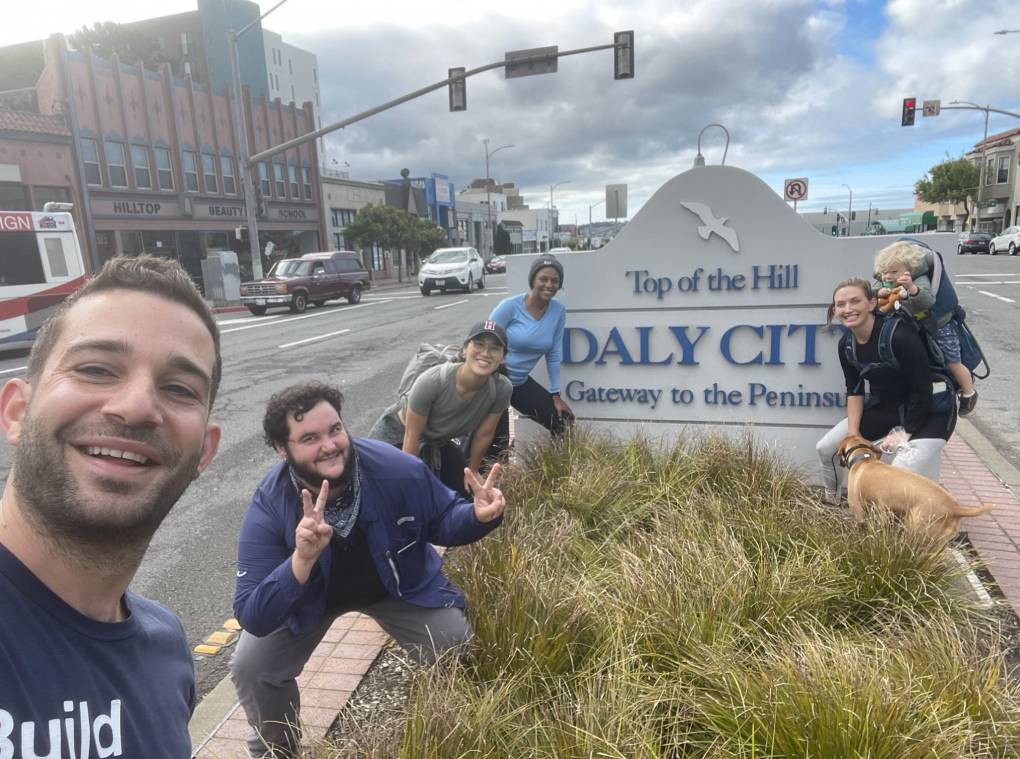
"caption": "Ziad Reslan along with supporters reached Daly City around 11 a.m. on Sunday, October 31, 2021. Reslan is walking nearly 40 miles from San Francisco to Mountain View to raise funds for LGBTQ+ refugees. ",
"description": null,
"title": "Ziad_Reslan",
"credit": "Photo courtesy of Ziad Reslan",
"status": "inherit",
"altTag": "Five people look joyous and somewhat tired while standing next to a sign that says \"Daly City: Gateway to the Peninsula\"",
"isLoading": false,
"fetchFailed": false
},
"news_11890506": {
"type": "attachments",
"id": "news_11890506",
"meta": {
"index": "attachments_1716263798",
"site": "news",
"id": "11890506",
"found": true
},
"parent": 11890467,
"imgSizes": {
"twentyfourteen-full-width": {
"file": "https://ww2.kqed.org/app/uploads/sites/10/2021/09/019_EastBay_JFCSAfghanResettlement_09102021-1038x576.jpg",
"width": 1038,
"mimeType": "image/jpeg",
"height": 576
},
"thumbnail": {
"file": "https://ww2.kqed.org/app/uploads/sites/10/2021/09/019_EastBay_JFCSAfghanResettlement_09102021-160x107.jpg",
"width": 160,
"mimeType": "image/jpeg",
"height": 107
},
"post-thumbnail": {
"file": "https://ww2.kqed.org/app/uploads/sites/10/2021/09/019_EastBay_JFCSAfghanResettlement_09102021-672x372.jpg",
"width": 672,
"mimeType": "image/jpeg",
"height": 372
},
"kqedFullSize": {
"file": "https://ww2.kqed.org/app/uploads/sites/10/2021/09/019_EastBay_JFCSAfghanResettlement_09102021.jpg",
"width": 1920,
"height": 1280
},
"large": {
"file": "https://ww2.kqed.org/app/uploads/sites/10/2021/09/019_EastBay_JFCSAfghanResettlement_09102021-1020x680.jpg",
"width": 1020,
"mimeType": "image/jpeg",
"height": 680
},
"1536x1536": {
"file": "https://ww2.kqed.org/app/uploads/sites/10/2021/09/019_EastBay_JFCSAfghanResettlement_09102021-1536x1024.jpg",
"width": 1536,
"mimeType": "image/jpeg",
"height": 1024
},
"medium": {
"file": "https://ww2.kqed.org/app/uploads/sites/10/2021/09/019_EastBay_JFCSAfghanResettlement_09102021-800x533.jpg",
"width": 800,
"mimeType": "image/jpeg",
"height": 533
}
},
"publishDate": 1632958779,
"modified": 1633029430,
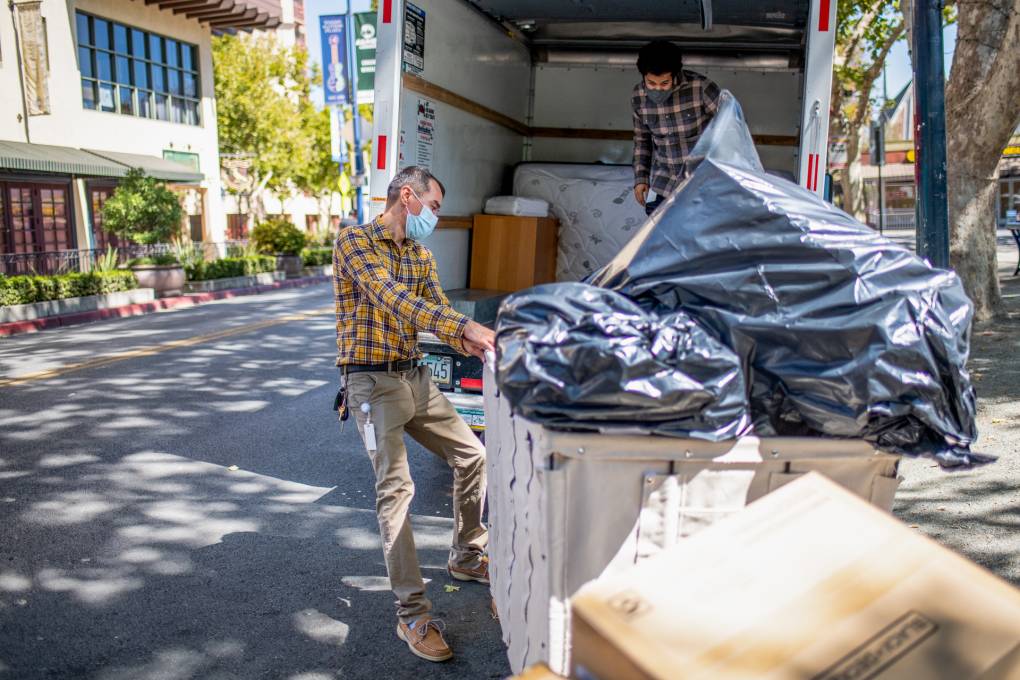
"caption": "Ashraf Hussain (L) and Walid Aziz from Jewish Family and Community Services East Bay bring household goods from the organization's offices in Concord to a family who recently arrived from Afghanistan, on Sept. 10, 2021.",
"description": null,
"title": "019_EastBay_JFCSAfghanResettlement_09102021",
"credit": "Beth LaBerge/KQED",
"status": "inherit",
"altTag": "Two men, one inside the back of a truck and one on the street, unload large black garbage bags into a large rolling laundry cart.",
"isLoading": false,
"fetchFailed": false
},
"news_11889415": {
"type": "attachments",
"id": "news_11889415",
"meta": {
"index": "attachments_1716263798",
"site": "news",
"id": "11889415",
"found": true
},
"parent": 11889414,
"imgSizes": {
"twentyfourteen-full-width": {
"file": "https://ww2.kqed.org/app/uploads/sites/10/2021/09/RS49465_031_Oakland_NAACPGeorgeFloyd_05252021-1038x576.jpg",
"width": 1038,
"mimeType": "image/jpeg",
"height": 576
},
"thumbnail": {
"file": "https://ww2.kqed.org/app/uploads/sites/10/2021/09/RS49465_031_Oakland_NAACPGeorgeFloyd_05252021-160x106.jpg",
"width": 160,
"mimeType": "image/jpeg",
"height": 106
},
"post-thumbnail": {
"file": "https://ww2.kqed.org/app/uploads/sites/10/2021/09/RS49465_031_Oakland_NAACPGeorgeFloyd_05252021-672x372.jpg",
"width": 672,
"mimeType": "image/jpeg",
"height": 372
},
"kqedFullSize": {
"file": "https://ww2.kqed.org/app/uploads/sites/10/2021/09/RS49465_031_Oakland_NAACPGeorgeFloyd_05252021-scaled.jpg",
"width": 2560,
"height": 1704
},
"2048x2048": {
"file": "https://ww2.kqed.org/app/uploads/sites/10/2021/09/RS49465_031_Oakland_NAACPGeorgeFloyd_05252021-2048x1363.jpg",
"width": 2048,
"mimeType": "image/jpeg",
"height": 1363
},
"large": {
"file": "https://ww2.kqed.org/app/uploads/sites/10/2021/09/RS49465_031_Oakland_NAACPGeorgeFloyd_05252021-1020x679.jpg",
"width": 1020,
"mimeType": "image/jpeg",
"height": 679
},
"1536x1536": {
"file": "https://ww2.kqed.org/app/uploads/sites/10/2021/09/RS49465_031_Oakland_NAACPGeorgeFloyd_05252021-1536x1022.jpg",
"width": 1536,
"mimeType": "image/jpeg",
"height": 1022
},
"full-width": {
"file": "https://ww2.kqed.org/app/uploads/sites/10/2021/09/RS49465_031_Oakland_NAACPGeorgeFloyd_05252021-1920x1278.jpg",
"width": 1920,
"mimeType": "image/jpeg",
"height": 1278
},
"medium": {
"file": "https://ww2.kqed.org/app/uploads/sites/10/2021/09/RS49465_031_Oakland_NAACPGeorgeFloyd_05252021-800x532.jpg",
"width": 800,
"mimeType": "image/jpeg",
"height": 532
}
},
"publishDate": 1632325050,
"modified": 1677008186,
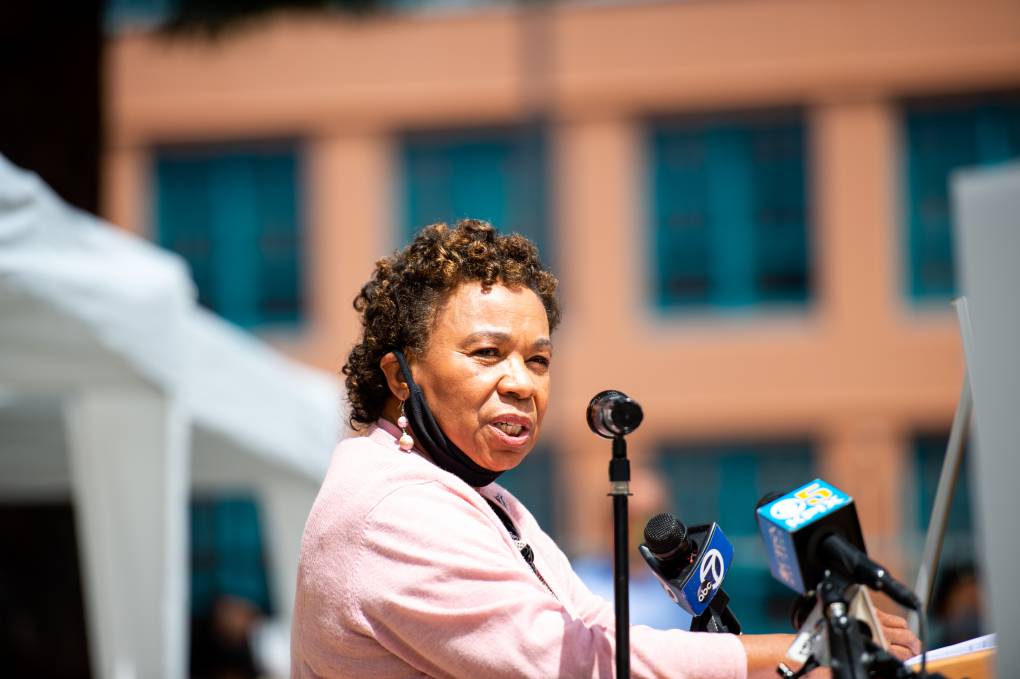
"caption": "US Rep. Barbara Lee speaks during a remembrance event to pay tribute to George Floyd held by the Oakland NAACP at Youth UpRising in Oakland on May 25, 2021.",
"description": null,
"title": "RS49465_031_Oakland_NAACPGeorgeFloyd_05252021",
"credit": "Beth LaBerge/KQED",
"status": "inherit",
"altTag": "Barbara Lee speaks in front of news microphones, wearing a light pink shirt with a mask under her chin.",
"isLoading": false,
"fetchFailed": false
},
"news_11888018": {
"type": "attachments",
"id": "news_11888018",
"meta": {
"index": "attachments_1716263798",
"site": "news",
"id": "11888018",
"found": true
},
"parent": 11887630,
"imgSizes": {
"twentyfourteen-full-width": {
"file": "https://ww2.kqed.org/app/uploads/sites/10/2021/09/RS51406_021_Fremont_MaiwandMarket_08272021-qut-1038x576.jpg",
"width": 1038,
"mimeType": "image/jpeg",
"height": 576
},
"thumbnail": {
"file": "https://ww2.kqed.org/app/uploads/sites/10/2021/09/RS51406_021_Fremont_MaiwandMarket_08272021-qut-160x107.jpg",
"width": 160,
"mimeType": "image/jpeg",
"height": 107
},
"post-thumbnail": {
"file": "https://ww2.kqed.org/app/uploads/sites/10/2021/09/RS51406_021_Fremont_MaiwandMarket_08272021-qut-672x372.jpg",
"width": 672,
"mimeType": "image/jpeg",
"height": 372
},
"kqedFullSize": {
"file": "https://ww2.kqed.org/app/uploads/sites/10/2021/09/RS51406_021_Fremont_MaiwandMarket_08272021-qut.jpg",
"width": 1920,
"height": 1280
},
"large": {
"file": "https://ww2.kqed.org/app/uploads/sites/10/2021/09/RS51406_021_Fremont_MaiwandMarket_08272021-qut-1020x680.jpg",
"width": 1020,
"mimeType": "image/jpeg",
"height": 680
},
"1536x1536": {
"file": "https://ww2.kqed.org/app/uploads/sites/10/2021/09/RS51406_021_Fremont_MaiwandMarket_08272021-qut-1536x1024.jpg",
"width": 1536,
"mimeType": "image/jpeg",
"height": 1024
},
"medium": {
"file": "https://ww2.kqed.org/app/uploads/sites/10/2021/09/RS51406_021_Fremont_MaiwandMarket_08272021-qut-800x533.jpg",
"width": 800,
"mimeType": "image/jpeg",
"height": 533
}
},
"publishDate": 1631299404,
"modified": 1631308919,
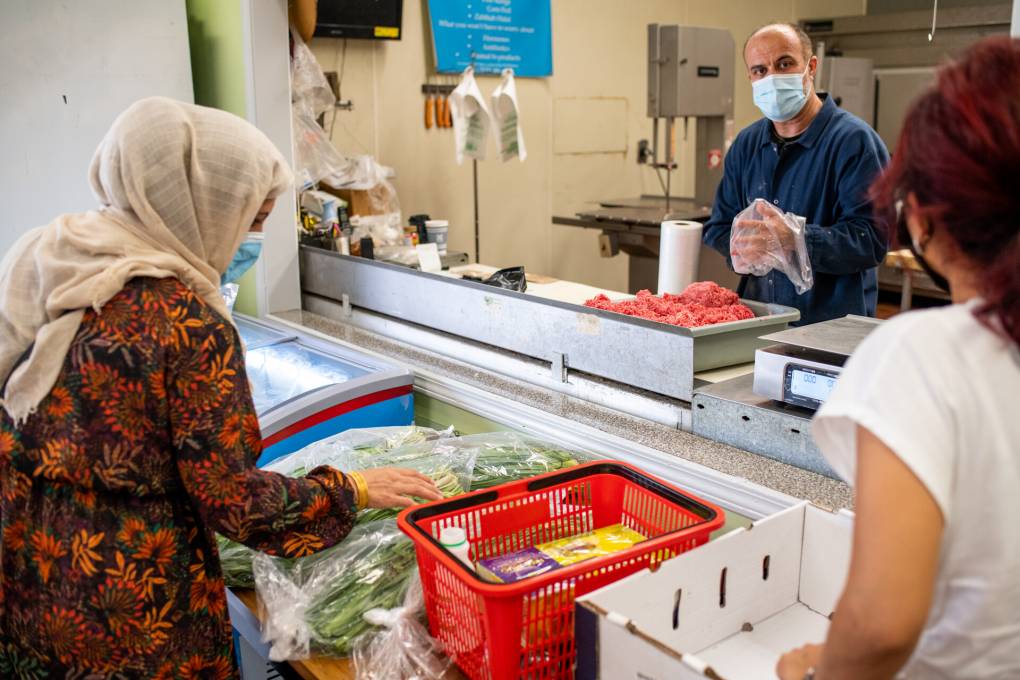
"caption": "A butcher helps customers at Maiwand Market in Fremont — a staple for many in the Afghan community — on Aug. 27, 2021.",
"description": "A butcher helps customers at Maiwand Market in Fremont – a staple for many in the Afghan community – on Aug. 27, 2021.",
"title": "RS51406_021_Fremont_MaiwandMarket_08272021-qut",
"credit": "Beth LaBerge/KQED",
"status": "inherit",
"altTag": null,
"isLoading": false,
"fetchFailed": false
},
"news_11887274": {
"type": "attachments",
"id": "news_11887274",
"meta": {
"index": "attachments_1716263798",
"site": "news",
"id": "11887274",
"found": true
},
"parent": 11887273,
"imgSizes": {
"twentyfourteen-full-width": {
"file": "https://ww2.kqed.org/app/uploads/sites/10/2021/09/ap21235373894167-edit_custom-e2cdf587be4a6ade2cb01de06f4a7d35c7b7f202-1038x576.jpg",
"width": 1038,
"mimeType": "image/jpeg",
"height": 576
},
"thumbnail": {
"file": "https://ww2.kqed.org/app/uploads/sites/10/2021/09/ap21235373894167-edit_custom-e2cdf587be4a6ade2cb01de06f4a7d35c7b7f202-160x90.jpg",
"width": 160,
"mimeType": "image/jpeg",
"height": 90
},
"post-thumbnail": {
"file": "https://ww2.kqed.org/app/uploads/sites/10/2021/09/ap21235373894167-edit_custom-e2cdf587be4a6ade2cb01de06f4a7d35c7b7f202-672x372.jpg",
"width": 672,
"mimeType": "image/jpeg",
"height": 372
},
"kqedFullSize": {
"file": "https://ww2.kqed.org/app/uploads/sites/10/2021/09/ap21235373894167-edit_custom-e2cdf587be4a6ade2cb01de06f4a7d35c7b7f202-scaled.jpg",
"width": 2560,
"height": 1438
},
"2048x2048": {
"file": "https://ww2.kqed.org/app/uploads/sites/10/2021/09/ap21235373894167-edit_custom-e2cdf587be4a6ade2cb01de06f4a7d35c7b7f202-2048x1150.jpg",
"width": 2048,
"mimeType": "image/jpeg",
"height": 1150
},
"large": {
"file": "https://ww2.kqed.org/app/uploads/sites/10/2021/09/ap21235373894167-edit_custom-e2cdf587be4a6ade2cb01de06f4a7d35c7b7f202-1020x573.jpg",
"width": 1020,
"mimeType": "image/jpeg",
"height": 573
},
"1536x1536": {
"file": "https://ww2.kqed.org/app/uploads/sites/10/2021/09/ap21235373894167-edit_custom-e2cdf587be4a6ade2cb01de06f4a7d35c7b7f202-1536x863.jpg",
"width": 1536,
"mimeType": "image/jpeg",
"height": 863
},
"full-width": {
"file": "https://ww2.kqed.org/app/uploads/sites/10/2021/09/ap21235373894167-edit_custom-e2cdf587be4a6ade2cb01de06f4a7d35c7b7f202-1920x1078.jpg",
"width": 1920,
"mimeType": "image/jpeg",
"height": 1078
},
"medium": {
"file": "https://ww2.kqed.org/app/uploads/sites/10/2021/09/ap21235373894167-edit_custom-e2cdf587be4a6ade2cb01de06f4a7d35c7b7f202-800x449.jpg",
"width": 800,
"mimeType": "image/jpeg",
"height": 449
}
},
"publishDate": 1630529263,
"modified": 1630530035,
"caption": "A U.S. Air Force air crew prepares to load evacuees aboard a C-17 aircraft at Hamid Karzai International Airport in Kabul, Afghanistan, on Aug. 31. Several public school students from Sacramento remain in Afghanistan since the U.S. evacuation ended.",
"description": "A U.S. Air Force air crew prepares to load evacuees aboard a C-17 aircraft at Hamid Karzai International Airport in Kabul, Afghanistan, on Aug. 31. Several public school students from Sacramento remain in Afghanistan since the U.S. evacuation ended.",
"title": "A U.S. Air Force air crew prepares to load evacuees aboard a C-17 aircraft at Hamid Karzai International Airport in Kabul, Afghanistan, on Aug. 31. Several public school students from Sacramento, Calif., remain in Afghanistan since the U.S. evacuation ended.",
"credit": "Senior Airman Taylor Crul/U.S. Air Force via AP",
"status": "inherit",
"altTag": "line of evacuees at night wait to board a plane, backlight by far off light",
"isLoading": false,
"fetchFailed": false
},
"news_11886750": {
"type": "attachments",
"id": "news_11886750",
"meta": {
"index": "attachments_1716263798",
"site": "news",
"id": "11886750",
"found": true
},
"parent": 11886733,
"imgSizes": {
"twentyfourteen-full-width": {
"file": "https://ww2.kqed.org/app/uploads/sites/10/2021/08/Afghan_rally_sf-1038x576.jpg",
"width": 1038,
"mimeType": "image/jpeg",
"height": 576
},
"thumbnail": {
"file": "https://ww2.kqed.org/app/uploads/sites/10/2021/08/Afghan_rally_sf-160x90.jpg",
"width": 160,
"mimeType": "image/jpeg",
"height": 90
},
"post-thumbnail": {
"file": "https://ww2.kqed.org/app/uploads/sites/10/2021/08/Afghan_rally_sf-672x372.jpg",
"width": 672,
"mimeType": "image/jpeg",
"height": 372
},
"kqedFullSize": {
"file": "https://ww2.kqed.org/app/uploads/sites/10/2021/08/Afghan_rally_sf-scaled.jpg",
"width": 2560,
"height": 1440
},
"2048x2048": {
"file": "https://ww2.kqed.org/app/uploads/sites/10/2021/08/Afghan_rally_sf-2048x1152.jpg",
"width": 2048,
"mimeType": "image/jpeg",
"height": 1152
},
"large": {
"file": "https://ww2.kqed.org/app/uploads/sites/10/2021/08/Afghan_rally_sf-1020x574.jpg",
"width": 1020,
"mimeType": "image/jpeg",
"height": 574
},
"1536x1536": {
"file": "https://ww2.kqed.org/app/uploads/sites/10/2021/08/Afghan_rally_sf-1536x864.jpg",
"width": 1536,
"mimeType": "image/jpeg",
"height": 864
},
"full-width": {
"file": "https://ww2.kqed.org/app/uploads/sites/10/2021/08/Afghan_rally_sf-1920x1080.jpg",
"width": 1920,
"mimeType": "image/jpeg",
"height": 1080
},
"medium": {
"file": "https://ww2.kqed.org/app/uploads/sites/10/2021/08/Afghan_rally_sf-800x450.jpg",
"width": 800,
"mimeType": "image/jpeg",
"height": 450
}
},
"publishDate": 1630186981,
"modified": 1630364629,
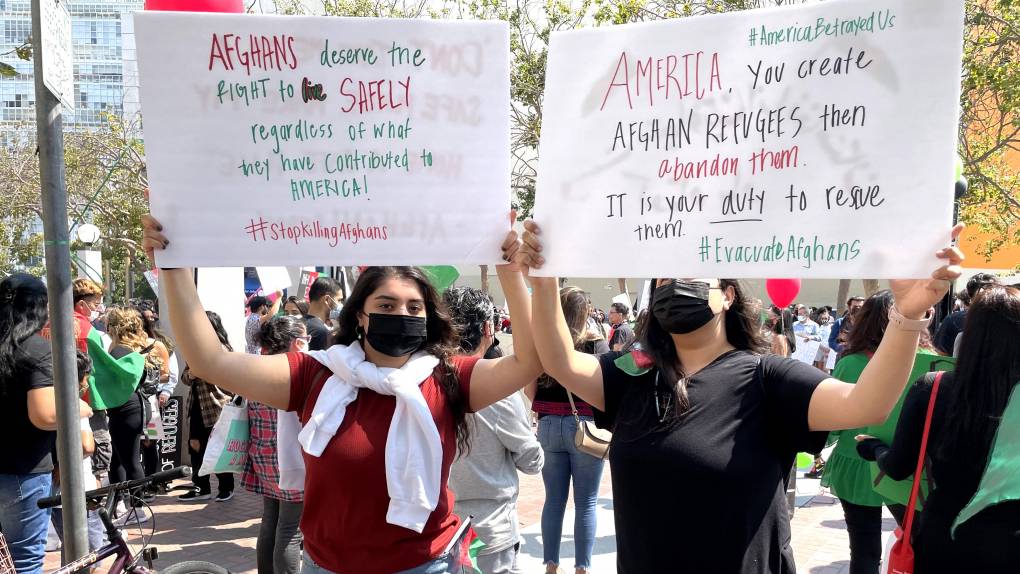
"caption": "Sisters Nialb and Nahila Habib drove two hours from Roseville to attend the San Francisco protest to support Afghans.",
"description": "Sisters Nialb and Nahila Habib drove two hours from Roseville to attend the San Francisco protest to support Afghans.",
"title": "Afghan_rally_sf",
"credit": "Annelise Finney/KQED",
"status": "inherit",
"altTag": "Two women holding protest signs on behalf of Afghan people",
"isLoading": false,
"fetchFailed": false
},
"news_11886487": {
"type": "attachments",
"id": "news_11886487",
"meta": {
"index": "attachments_1716263798",
"site": "news",
"id": "11886487",
"found": true
},
"parent": 11886476,
"imgSizes": {
"twentyfourteen-full-width": {
"file": "https://ww2.kqed.org/app/uploads/sites/10/2021/08/thinkglobally_082621_final-1038x576.png",
"width": 1038,
"mimeType": "image/png",
"height": 576
},
"thumbnail": {
"file": "https://ww2.kqed.org/app/uploads/sites/10/2021/08/thinkglobally_082621_final-160x108.png",
"width": 160,
"mimeType": "image/png",
"height": 108
},
"post-thumbnail": {
"file": "https://ww2.kqed.org/app/uploads/sites/10/2021/08/thinkglobally_082621_final-672x372.png",
"width": 672,
"mimeType": "image/png",
"height": 372
},
"kqedFullSize": {
"file": "https://ww2.kqed.org/app/uploads/sites/10/2021/08/thinkglobally_082621_final.png",
"width": 1920,
"height": 1293
},
"large": {
"file": "https://ww2.kqed.org/app/uploads/sites/10/2021/08/thinkglobally_082621_final-1020x687.png",
"width": 1020,
"mimeType": "image/png",
"height": 687
},
"1536x1536": {
"file": "https://ww2.kqed.org/app/uploads/sites/10/2021/08/thinkglobally_082621_final-1536x1034.png",
"width": 1536,
"mimeType": "image/png",
"height": 1034
},
"medium": {
"file": "https://ww2.kqed.org/app/uploads/sites/10/2021/08/thinkglobally_082621_final-800x539.png",
"width": 800,
"mimeType": "image/png",
"height": 539
}
},
"publishDate": 1630015941,
"modified": 1630024308,
"caption": null,
"description": null,
"title": "thinkglobally_082621_final",
"credit": null,
"status": "inherit",
"altTag": "Cartoon shows a woman with open arms welcoming an Afghan refugee family. Text reads “Think globally, help a refugee locally.”",
"isLoading": false,
"fetchFailed": false
},
"news_11886502": {
"type": "attachments",
"id": "news_11886502",
"meta": {
"index": "attachments_1716263798",
"site": "news",
"id": "11886502",
"found": true
},
"parent": 11885170,
"imgSizes": {
"twentyfourteen-full-width": {
"file": "https://ww2.kqed.org/app/uploads/sites/10/2021/08/RS51188_GettyImages-1336534302-qut-1038x576.jpg",
"width": 1038,
"mimeType": "image/jpeg",
"height": 576
},
"thumbnail": {
"file": "https://ww2.kqed.org/app/uploads/sites/10/2021/08/RS51188_GettyImages-1336534302-qut-160x107.jpg",
"width": 160,
"mimeType": "image/jpeg",
"height": 107
},
"post-thumbnail": {
"file": "https://ww2.kqed.org/app/uploads/sites/10/2021/08/RS51188_GettyImages-1336534302-qut-672x372.jpg",
"width": 672,
"mimeType": "image/jpeg",
"height": 372
},
"kqedFullSize": {
"file": "https://ww2.kqed.org/app/uploads/sites/10/2021/08/RS51188_GettyImages-1336534302-qut.jpg",
"width": 1920,
"height": 1281
},
"large": {
"file": "https://ww2.kqed.org/app/uploads/sites/10/2021/08/RS51188_GettyImages-1336534302-qut-1020x681.jpg",
"width": 1020,
"mimeType": "image/jpeg",
"height": 681
},
"1536x1536": {
"file": "https://ww2.kqed.org/app/uploads/sites/10/2021/08/RS51188_GettyImages-1336534302-qut-1536x1025.jpg",
"width": 1536,
"mimeType": "image/jpeg",
"height": 1025
},
"medium": {
"file": "https://ww2.kqed.org/app/uploads/sites/10/2021/08/RS51188_GettyImages-1336534302-qut-800x534.jpg",
"width": 800,
"mimeType": "image/jpeg",
"height": 534
}
},
"publishDate": 1630018215,
"modified": 1630021848,
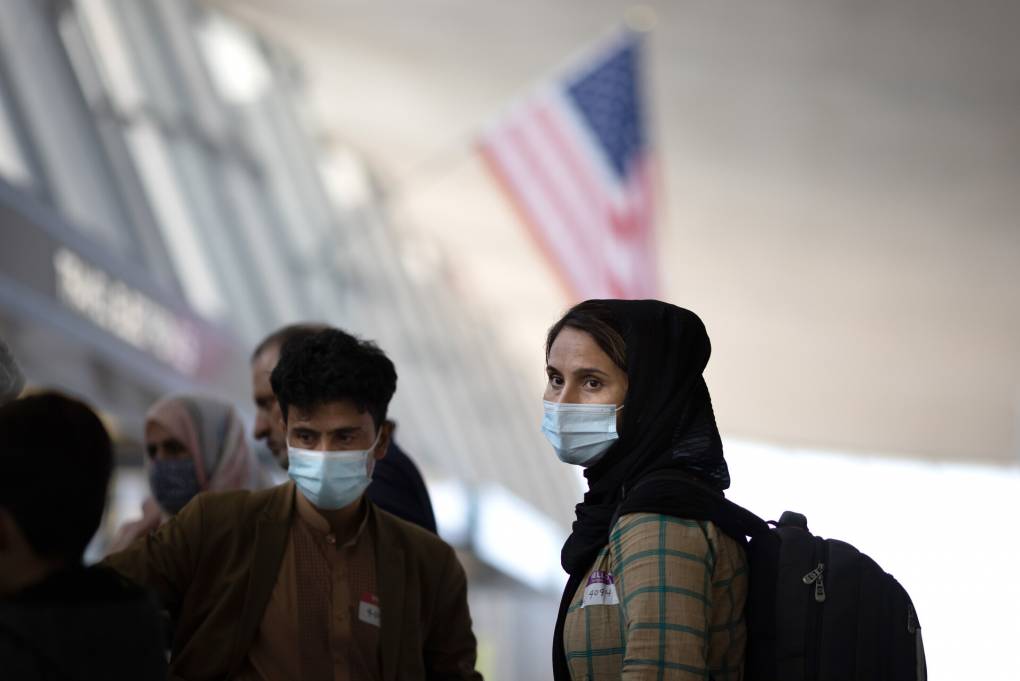
"caption": "Refugees evacuated from Kabul wait to board a bus at Dulles International Airport that will take them to a refugee processing center on Aug. 26, 2021 in Dulles, Virginia.",
"description": "Refugees evacuated from Kabul wait to board a bus at Dulles International Airport that will take them to a refugee processing center on Aug. 26, 2021 in Dulles, Virginia.",
"title": "Afghan Refugees Arrive At Dulles Airport Outside Nation's Capital",
"credit": "Win McNamee/Getty Images",
"status": "inherit",
"altTag": "refugees wear masks, head scarves and backpacks inside US airport",
"isLoading": false,
"fetchFailed": false
},
"news_11885927": {
"type": "attachments",
"id": "news_11885927",
"meta": {
"index": "attachments_1716263798",
"site": "news",
"id": "11885927",
"found": true
},
"parent": 11885908,
"imgSizes": {
"twentyfourteen-full-width": {
"file": "https://ww2.kqed.org/app/uploads/sites/10/2021/08/Demonstrators-Marching-East-on-Thorton-Ave-copy-1038x576.jpg",
"width": 1038,
"mimeType": "image/jpeg",
"height": 576
},
"thumbnail": {
"file": "https://ww2.kqed.org/app/uploads/sites/10/2021/08/Demonstrators-Marching-East-on-Thorton-Ave-copy-160x90.jpg",
"width": 160,
"mimeType": "image/jpeg",
"height": 90
},
"post-thumbnail": {
"file": "https://ww2.kqed.org/app/uploads/sites/10/2021/08/Demonstrators-Marching-East-on-Thorton-Ave-copy-672x372.jpg",
"width": 672,
"mimeType": "image/jpeg",
"height": 372
},
"kqedFullSize": {
"file": "https://ww2.kqed.org/app/uploads/sites/10/2021/08/Demonstrators-Marching-East-on-Thorton-Ave-copy-scaled.jpg",
"width": 2560,
"height": 1440
},
"2048x2048": {
"file": "https://ww2.kqed.org/app/uploads/sites/10/2021/08/Demonstrators-Marching-East-on-Thorton-Ave-copy-2048x1152.jpg",
"width": 2048,
"mimeType": "image/jpeg",
"height": 1152
},
"large": {
"file": "https://ww2.kqed.org/app/uploads/sites/10/2021/08/Demonstrators-Marching-East-on-Thorton-Ave-copy-1020x574.jpg",
"width": 1020,
"mimeType": "image/jpeg",
"height": 574
},
"1536x1536": {
"file": "https://ww2.kqed.org/app/uploads/sites/10/2021/08/Demonstrators-Marching-East-on-Thorton-Ave-copy-1536x864.jpg",
"width": 1536,
"mimeType": "image/jpeg",
"height": 864
},
"full-width": {
"file": "https://ww2.kqed.org/app/uploads/sites/10/2021/08/Demonstrators-Marching-East-on-Thorton-Ave-copy-1920x1080.jpg",
"width": 1920,
"mimeType": "image/jpeg",
"height": 1080
},
"medium": {
"file": "https://ww2.kqed.org/app/uploads/sites/10/2021/08/Demonstrators-Marching-East-on-Thorton-Ave-copy-800x450.jpg",
"width": 800,
"mimeType": "image/jpeg",
"height": 450
}
},
"publishDate": 1629642733,
"modified": 1629759586,
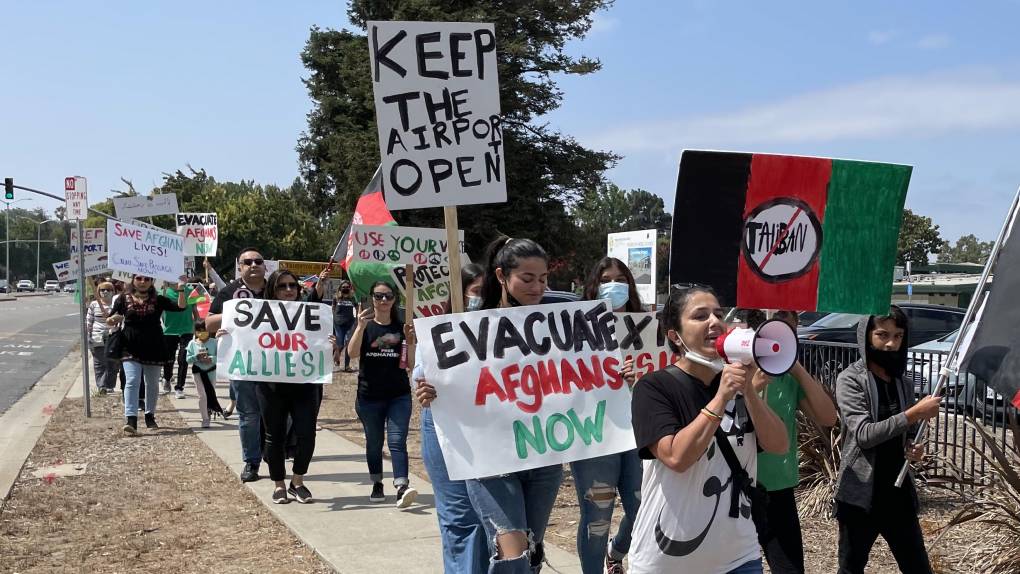
"caption": "A group of 50-70 people marched in Fremont on Saturday, Aug. 21, 2021. ",
"description": null,
"title": "Demonstrators Marching East on Thorton Ave copy",
"credit": "Annelise Finney/KQED",
"status": "inherit",
"altTag": "People with signs such as \"keep the airport open\" marching in Fremont on August 21.",
"isLoading": false,
"fetchFailed": false
},
"news_11885293": {
"type": "attachments",
"id": "news_11885293",
"meta": {
"index": "attachments_1716263798",
"site": "news",
"id": "11885293",
"found": true
},
"parent": 11885286,
"imgSizes": {
"twentyfourteen-full-width": {
"file": "https://ww2.kqed.org/app/uploads/sites/10/2021/08/helparefugee_081621_final-1038x576.png",
"width": 1038,
"mimeType": "image/png",
"height": 576
},
"thumbnail": {
"file": "https://ww2.kqed.org/app/uploads/sites/10/2021/08/helparefugee_081621_final-160x120.png",
"width": 160,
"mimeType": "image/png",
"height": 120
},
"post-thumbnail": {
"file": "https://ww2.kqed.org/app/uploads/sites/10/2021/08/helparefugee_081621_final-672x372.png",
"width": 672,
"mimeType": "image/png",
"height": 372
},
"kqedFullSize": {
"file": "https://ww2.kqed.org/app/uploads/sites/10/2021/08/helparefugee_081621_final.png",
"width": 1920,
"height": 1434
},
"large": {
"file": "https://ww2.kqed.org/app/uploads/sites/10/2021/08/helparefugee_081621_final-1020x762.png",
"width": 1020,
"mimeType": "image/png",
"height": 762
},
"1536x1536": {
"file": "https://ww2.kqed.org/app/uploads/sites/10/2021/08/helparefugee_081621_final-1536x1147.png",
"width": 1536,
"mimeType": "image/png",
"height": 1147
},
"medium": {
"file": "https://ww2.kqed.org/app/uploads/sites/10/2021/08/helparefugee_081621_final-800x598.png",
"width": 800,
"mimeType": "image/png",
"height": 598
}
},
"publishDate": 1629149633,
"modified": 1629149693,
"caption": null,
"description": null,
"title": "helparefugee_081621_final",
"credit": null,
"status": "inherit",
"altTag": "A Mark Fiore cartoon badge that shows a worried refugee family in the center with text around the circular badge that reads, \"don't let the Taliban keep winning, help a refugee now!\"",
"isLoading": false,
"fetchFailed": false
},
"news_11749315": {
"type": "attachments",
"id": "news_11749315",
"meta": {
"index": "attachments_1716263798",
"site": "news",
"id": "11749315",
"found": true
},
"parent": 11749134,
"imgSizes": {
"apple_news_ca_landscape_5_5": {
"file": "https://ww2.kqed.org/app/uploads/sites/10/2019/05/05222019_John-Walker-Lindh-American-Taliban-Marin-County-qut-1044x783.jpg",
"width": 1044,
"mimeType": "image/jpeg",
"height": 783
},
"apple_news_ca_square_4_0": {
"file": "https://ww2.kqed.org/app/uploads/sites/10/2019/05/05222019_John-Walker-Lindh-American-Taliban-Marin-County-qut-470x470.jpg",
"width": 470,
"mimeType": "image/jpeg",
"height": 470
},
"twentyfourteen-full-width": {
"file": "https://ww2.kqed.org/app/uploads/sites/10/2019/05/05222019_John-Walker-Lindh-American-Taliban-Marin-County-qut-1038x576.jpg",
"width": 1038,
"mimeType": "image/jpeg",
"height": 576
},
"thumbnail": {
"file": "https://ww2.kqed.org/app/uploads/sites/10/2019/05/05222019_John-Walker-Lindh-American-Taliban-Marin-County-qut-160x120.jpg",
"width": 160,
"mimeType": "image/jpeg",
"height": 120
},
"post-thumbnail": {
"file": "https://ww2.kqed.org/app/uploads/sites/10/2019/05/05222019_John-Walker-Lindh-American-Taliban-Marin-County-qut-672x372.jpg",
"width": 672,
"mimeType": "image/jpeg",
"height": 372
},
"kqedFullSize": {
"file": "https://ww2.kqed.org/app/uploads/sites/10/2019/05/05222019_John-Walker-Lindh-American-Taliban-Marin-County-qut.jpg",
"width": 1920,
"height": 1440
},
"apple_news_ca_landscape_4_7": {
"file": "https://ww2.kqed.org/app/uploads/sites/10/2019/05/05222019_John-Walker-Lindh-American-Taliban-Marin-County-qut-632x474.jpg",
"width": 632,
"mimeType": "image/jpeg",
"height": 474
},
"large": {
"file": "https://ww2.kqed.org/app/uploads/sites/10/2019/05/05222019_John-Walker-Lindh-American-Taliban-Marin-County-qut-1020x765.jpg",
"width": 1020,
"mimeType": "image/jpeg",
"height": 765
},
"complete_open_graph": {
"file": "https://ww2.kqed.org/app/uploads/sites/10/2019/05/05222019_John-Walker-Lindh-American-Taliban-Marin-County-qut-1200x900.jpg",
"width": 1200,
"mimeType": "image/jpeg",
"height": 900
},
"apple_news_ca_landscape_4_0": {
"file": "https://ww2.kqed.org/app/uploads/sites/10/2019/05/05222019_John-Walker-Lindh-American-Taliban-Marin-County-qut-536x402.jpg",
"width": 536,
"mimeType": "image/jpeg",
"height": 402
},
"apple_news_ca_portrait_12_9": {
"file": "https://ww2.kqed.org/app/uploads/sites/10/2019/05/05222019_John-Walker-Lindh-American-Taliban-Marin-County-qut-1122x1440.jpg",
"width": 1122,
"mimeType": "image/jpeg",
"height": 1440
},
"medium": {
"file": "https://ww2.kqed.org/app/uploads/sites/10/2019/05/05222019_John-Walker-Lindh-American-Taliban-Marin-County-qut-800x600.jpg",
"width": 800,
"mimeType": "image/jpeg",
"height": 600
},
"apple_news_ca_portrait_4_0": {
"file": "https://ww2.kqed.org/app/uploads/sites/10/2019/05/05222019_John-Walker-Lindh-American-Taliban-Marin-County-qut-354x472.jpg",
"width": 354,
"mimeType": "image/jpeg",
"height": 472
},
"apple_news_ca_portrait_9_7": {
"file": "https://ww2.kqed.org/app/uploads/sites/10/2019/05/05222019_John-Walker-Lindh-American-Taliban-Marin-County-qut-840x1120.jpg",
"width": 840,
"mimeType": "image/jpeg",
"height": 1120
},
"apple_news_ca_landscape_12_9": {
"file": "https://ww2.kqed.org/app/uploads/sites/10/2019/05/05222019_John-Walker-Lindh-American-Taliban-Marin-County-qut-1832x1374.jpg",
"width": 1832,
"mimeType": "image/jpeg",
"height": 1374
},
"apple_news_ca_square_9_7": {
"file": "https://ww2.kqed.org/app/uploads/sites/10/2019/05/05222019_John-Walker-Lindh-American-Taliban-Marin-County-qut-1104x1104.jpg",
"width": 1104,
"mimeType": "image/jpeg",
"height": 1104
},
"apple_news_ca_portrait_4_7": {
"file": "https://ww2.kqed.org/app/uploads/sites/10/2019/05/05222019_John-Walker-Lindh-American-Taliban-Marin-County-qut-414x552.jpg",
"width": 414,
"mimeType": "image/jpeg",
"height": 552
},
"apple_news_ca_square_12_9": {
"file": "https://ww2.kqed.org/app/uploads/sites/10/2019/05/05222019_John-Walker-Lindh-American-Taliban-Marin-County-qut-1472x1440.jpg",
"width": 1472,
"mimeType": "image/jpeg",
"height": 1440
},
"apple_news_ca_portrait_5_5": {
"file": "https://ww2.kqed.org/app/uploads/sites/10/2019/05/05222019_John-Walker-Lindh-American-Taliban-Marin-County-qut-687x916.jpg",
"width": 687,
"mimeType": "image/jpeg",
"height": 916
},
"full-width": {
"file": "https://ww2.kqed.org/app/uploads/sites/10/2019/05/05222019_John-Walker-Lindh-American-Taliban-Marin-County-qut-1920x1440.jpg",
"width": 1920,
"mimeType": "image/jpeg",
"height": 1440
},
"apple_news_ca_square_4_7": {
"file": "https://ww2.kqed.org/app/uploads/sites/10/2019/05/05222019_John-Walker-Lindh-American-Taliban-Marin-County-qut-550x550.jpg",
"width": 550,
"mimeType": "image/jpeg",
"height": 550
},
"apple_news_ca_landscape_9_7": {
"file": "https://ww2.kqed.org/app/uploads/sites/10/2019/05/05222019_John-Walker-Lindh-American-Taliban-Marin-County-qut-1376x1032.jpg",
"width": 1376,
"mimeType": "image/jpeg",
"height": 1032
},
"apple_news_ca_square_5_5": {
"file": "https://ww2.kqed.org/app/uploads/sites/10/2019/05/05222019_John-Walker-Lindh-American-Taliban-Marin-County-qut-912x912.jpg",
"width": 912,
"mimeType": "image/jpeg",
"height": 912
}
},
"publishDate": 1558567371,
"modified": 1558569929,
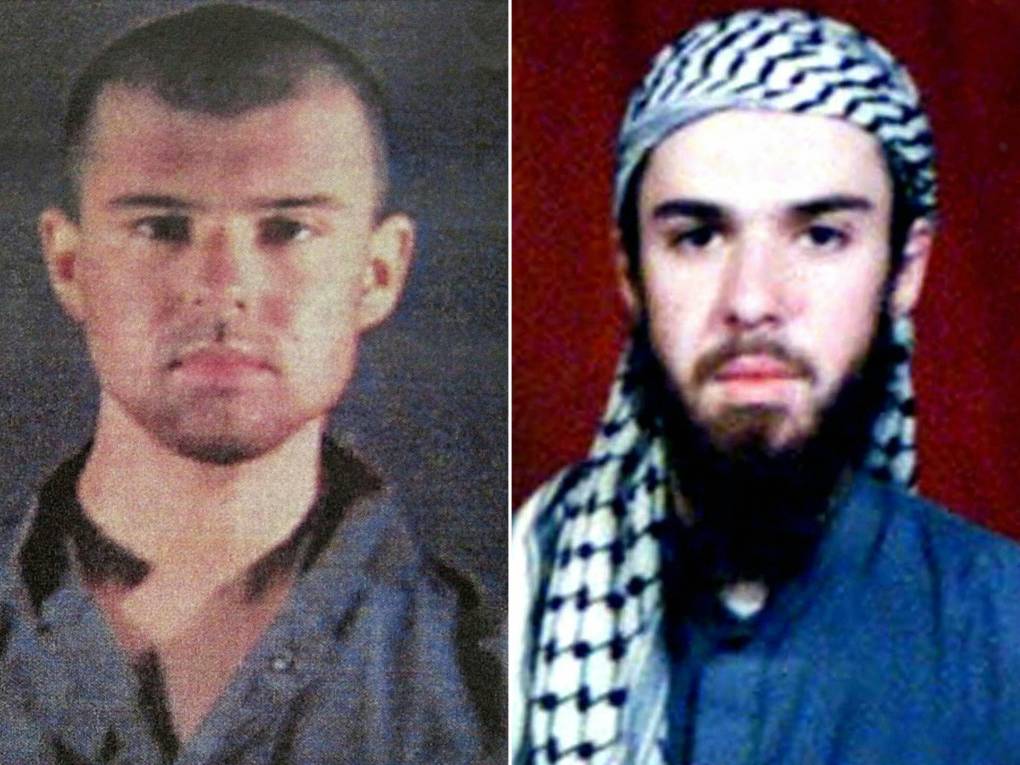
"caption": "This combination of pictures created on April 17, 2019, shows at left a police file photo made available February 6, 2002, of the \"American Taliban\" John Walker Lindh, and at right a Feb. 11, 2002, photograph of him as seen from the records of the Arabia Hassani Kalan Surani Bannu madrassa (religious school) in Pakistan's northwestern city of Bannu.",
"description": "This combination of pictures created on April 17, 2019, shows at left a police file photo made available February 6, 2002 of the \"American Taliban\" John Walker Lindh and at right a February 11, 2002, photograph of him as seen from the records of the Arabia Hassani Kalan Surani Bannu madrassa (religious school) in Pakistan's northwestern city of Bannu.",
"title": "AFGHANISTAN_John Walker LINDH_American Taliban_Marin County",
"credit": "TARIQ MAHMOOD/AFP/Getty Images",
"status": "inherit",
"isLoading": false,
"fetchFailed": false
},
"news_11719429": {
"type": "attachments",
"id": "news_11719429",
"meta": {
"index": "attachments_1716263798",
"site": "news",
"id": "11719429",
"found": true
},
"parent": 11719402,
"imgSizes": {
"twentyfourteen-full-width": {
"file": "https://ww2.kqed.org/app/uploads/sites/10/2019/01/9d62021d-penpals_011819_final-1038x576.jpg",
"width": 1038,
"mimeType": "image/jpeg",
"height": 576
},
"thumbnail": {
"file": "https://ww2.kqed.org/app/uploads/sites/10/2019/01/9d62021d-penpals_011819_final-160x114.jpg",
"width": 160,
"mimeType": "image/jpeg",
"height": 114
},
"post-thumbnail": {
"file": "https://ww2.kqed.org/app/uploads/sites/10/2019/01/9d62021d-penpals_011819_final-672x372.jpg",
"width": 672,
"mimeType": "image/jpeg",
"height": 372
},
"kqedFullSize": {
"file": "https://ww2.kqed.org/app/uploads/sites/10/2019/01/9d62021d-penpals_011819_final.jpg",
"width": 1920,
"height": 1363
},
"large": {
"file": "https://ww2.kqed.org/app/uploads/sites/10/2019/01/9d62021d-penpals_011819_final-1020x724.jpg",
"width": 1020,
"mimeType": "image/jpeg",
"height": 724
},
"complete_open_graph": {
"file": "https://ww2.kqed.org/app/uploads/sites/10/2019/01/9d62021d-penpals_011819_final-1200x852.jpg",
"width": 1200,
"mimeType": "image/jpeg",
"height": 852
},
"guest-author-50": {
"file": "https://ww2.kqed.org/app/uploads/sites/10/2019/01/9d62021d-penpals_011819_final-50x50.jpg",
"width": 50,
"mimeType": "image/jpeg",
"height": 50
},
"guest-author-96": {
"file": "https://ww2.kqed.org/app/uploads/sites/10/2019/01/9d62021d-penpals_011819_final-96x96.jpg",
"width": 96,
"mimeType": "image/jpeg",
"height": 96
},
"medium": {
"file": "https://ww2.kqed.org/app/uploads/sites/10/2019/01/9d62021d-penpals_011819_final-800x568.jpg",
"width": 800,
"mimeType": "image/jpeg",
"height": 568
},
"guest-author-64": {
"file": "https://ww2.kqed.org/app/uploads/sites/10/2019/01/9d62021d-penpals_011819_final-64x64.jpg",
"width": 64,
"mimeType": "image/jpeg",
"height": 64
},
"guest-author-32": {
"file": "https://ww2.kqed.org/app/uploads/sites/10/2019/01/9d62021d-penpals_011819_final-32x32.jpg",
"width": 32,
"mimeType": "image/jpeg",
"height": 32
},
"full-width": {
"file": "https://ww2.kqed.org/app/uploads/sites/10/2019/01/9d62021d-penpals_011819_final-1920x1363.jpg",
"width": 1920,
"mimeType": "image/jpeg",
"height": 1363
},
"detail": {
"file": "https://ww2.kqed.org/app/uploads/sites/10/2019/01/9d62021d-penpals_011819_final-150x150.jpg",
"width": 150,
"mimeType": "image/jpeg",
"height": 150
},
"guest-author-128": {
"file": "https://ww2.kqed.org/app/uploads/sites/10/2019/01/9d62021d-penpals_011819_final-128x128.jpg",
"width": 128,
"mimeType": "image/jpeg",
"height": 128
}
},
"publishDate": 1547853852,
"modified": 1547853884,
"caption": null,
"description": null,
"title": "penpals_011819_final",
"credit": null,
"status": "inherit",
"isLoading": false,
"fetchFailed": false
}
},
"audioPlayerReducer": {
"postId": "stream_live",
"isPaused": true,
"isPlaying": false,
"pfsActive": false,
"pledgeModalIsOpen": true,
"playerDrawerIsOpen": false,
"liveAudioPlayStartedAt": 0,
"liveAudioPlayContext": ""
},
"authorsReducer": {
"byline_news_11887273": {
"type": "authors",
"id": "byline_news_11887273",
"meta": {
"override": true
},
"slug": "byline_news_11887273",
"name": "\u003ca href=\"https://www.npr.org/people/1015466926/deepa-shivaram\">Deepa Shivaram\u003c/a>",
"isLoading": false
},
"byline_news_11749134": {
"type": "authors",
"id": "byline_news_11749134",
"meta": {
"override": true
},
"slug": "byline_news_11749134",
"name": "\u003cstrong>Associated Press\u003c/strong>",
"isLoading": false
},
"tychehendricks": {
"type": "authors",
"id": "259",
"meta": {
"index": "authors_1716337520",
"id": "259",
"found": true
},
"name": "Tyche Hendricks",
"firstName": "Tyche",
"lastName": "Hendricks",
"slug": "tychehendricks",
"email": "thendricks@kqed.org",
"display_author_email": true,
"staff_mastheads": [
"news"
],
"title": "KQED Senior Editor, Immigration",
"bio": "\u003cspan style=\"font-weight: 400;\">Tyche Hendricks is KQED’s senior editor for immigration, leading coverage of the policy and politics that affect California’s immigrant communities. Her work for KQED’s radio and online audiences is also carried on NPR and other national outlets. She has been recognized with awards from the Radio and Television News Directors Association, the Society for Professional Journalists; the Education Writers Association; the Best of the West and the National Federation of Community Broadcasters. Before joining KQED in 2010, Tyche spent more than a dozen years as a newspaper reporter, notably at the \u003c/span>\u003ci>\u003cspan style=\"font-weight: 400;\">San Francisco Chronicle\u003c/span>\u003c/i>\u003cspan style=\"font-weight: 400;\">. At different times she has covered criminal justice, government and politics and urban planning. Tyche has taught in the MFA Creative Writing program at the University of San Francisco and at UC Berkeley’s Graduate School of Journalism, where she was co-director of a national immigration symposium for professional journalists. She is the author of \u003c/span>\u003ci>\u003cspan style=\"font-weight: 400;\">The Wind Doesn't Need a Passport: Stories from the U.S.-Mexico Borderlands\u003c/span>\u003c/i>\u003cspan style=\"font-weight: 400;\"> (University of California Press). \u003c/span>",
"avatar": "https://secure.gravatar.com/avatar/b8ee458e2731c2d43df86882ce17267e?s=600&d=blank&r=g",
"twitter": "tychehendricks",
"facebook": null,
"instagram": null,
"linkedin": null,
"sites": [
{
"site": "news",
"roles": [
"editor"
]
},
{
"site": "stateofhealth",
"roles": [
"editor"
]
}
],
"headData": {
"title": "Tyche Hendricks | KQED",
"description": "KQED Senior Editor, Immigration",
"ogImgSrc": "https://secure.gravatar.com/avatar/b8ee458e2731c2d43df86882ce17267e?s=600&d=blank&r=g",
"twImgSrc": "https://secure.gravatar.com/avatar/b8ee458e2731c2d43df86882ce17267e?s=600&d=blank&r=g"
},
"isLoading": false,
"link": "/author/tychehendricks"
},
"shossaini": {
"type": "authors",
"id": "3214",
"meta": {
"index": "authors_1716337520",
"id": "3214",
"found": true
},
"name": "Sara Hossaini",
"firstName": "Sara",
"lastName": "Hossaini",
"slug": "shossaini",
"email": "shossaini@kqed.org",
"display_author_email": true,
"staff_mastheads": [
"news"
],
"title": "KQED Reporter",
"bio": "Sara Hossaini came to general assignment reporting at KQED in 2013 after two winters reporting at Wyoming Public Radio. She holds a bachelor's degree in broadcast journalism from the University of Nebraska-Lincoln. Her radio romance began after a bitter breakup with documentary film (Ok, maybe it's still complicated). Her first simultaneous jobs in San Francisco were as Associate Producer on a PBS film series through the Center for Asian American Media and as a butler. She likes to trot, plot and make things with her hands.",
"avatar": "https://secure.gravatar.com/avatar/060e9f56b9554e17942e89f413242774?s=600&d=blank&r=g",
"twitter": "mshossaini",
"facebook": null,
"instagram": null,
"linkedin": null,
"sites": [
{
"site": "news",
"roles": [
"author"
]
},
{
"site": "stateofhealth",
"roles": [
"author"
]
}
],
"headData": {
"title": "Sara Hossaini | KQED",
"description": "KQED Reporter",
"ogImgSrc": "https://secure.gravatar.com/avatar/060e9f56b9554e17942e89f413242774?s=600&d=blank&r=g",
"twImgSrc": "https://secure.gravatar.com/avatar/060e9f56b9554e17942e89f413242774?s=600&d=blank&r=g"
},
"isLoading": false,
"link": "/author/shossaini"
},
"markfiore": {
"type": "authors",
"id": "3236",
"meta": {
"index": "authors_1716337520",
"id": "3236",
"found": true
},
"name": "Mark Fiore",
"firstName": "Mark",
"lastName": "Fiore",
"slug": "markfiore",
"email": "mark@markfiore.com",
"display_author_email": false,
"staff_mastheads": [
"news"
],
"title": "KQED News Cartoonist",
"bio": "\u003ca href=\"http://www.MarkFiore.com\">MarkFiore.com\u003c/a> | \u003ca href=\"https://twitter.com/markfiore\">Follow on Twitter\u003c/a> | \u003ca href=\"https://www.facebook.com/pages/Mark-Fiore-Animated-Political-Cartoons/94451707396?ref=bookmarks\">Facebook\u003c/a> | \u003ca href=\"mailto:mark@markfiore.com\">email\u003c/a>\r\n\r\nPulitzer Prize-winner, Mark Fiore, who the Wall Street Journal has called “the undisputed guru of the form,” creates animated political cartoons in San Francisco, where his work has been featured regularly on the San Francisco Chronicle’s web site, SFGate.com. His work has appeared on Newsweek.com, Slate.com, CBSNews.com, MotherJones.com, DailyKos.com and NPR’s web site. Fiore’s political animation has appeared on CNN, Frontline, Bill Moyers Journal, Salon.com and cable and broadcast outlets across the globe.\r\n\r\nBeginning his professional life by drawing traditional political cartoons for newspapers, Fiore’s work appeared in publications ranging from the Washington Post to the Los Angeles Times. In the late 1990s, he began to experiment with animating political cartoons and, after a short stint at the San Jose Mercury News as their staff cartoonist, Fiore devoted all his energies to animation.\r\nGrowing up in California, Fiore also spent a good portion of his life in the backwoods of Idaho. It was this combination that shaped him politically. Mark majored in political science at Colorado College, where, in a perfect send-off for a cartoonist, he received his diploma in 1991 as commencement speaker Dick Cheney smiled approvingly.\r\nMark Fiore was awarded the Pulitzer Prize for political cartooning in 2010, a Robert F. Kennedy Journalism Award in 2004 and has twice received an Online Journalism Award for commentary from the Online News Association (2002, 2008). Fiore has received two awards for his work in new media from the National Cartoonists Society (2001, 2002), and in 2006 received The James Madison Freedom of Information Award from The Society of Professional Journalists.",
"avatar": "https://secure.gravatar.com/avatar/fc4e2a612b15b67bad0c6f0e1db4ca9b?s=600&d=blank&r=g",
"twitter": "MarkFiore",
"facebook": null,
"instagram": "https://www.instagram.com/markfiore/?hl=en",
"linkedin": null,
"sites": [
{
"site": "arts",
"roles": [
"contributor"
]
},
{
"site": "news",
"roles": [
"editor"
]
},
{
"site": "futureofyou",
"roles": [
"editor"
]
},
{
"site": "science",
"roles": [
"editor"
]
}
],
"headData": {
"title": "Mark Fiore | KQED",
"description": "KQED News Cartoonist",
"ogImgSrc": "https://secure.gravatar.com/avatar/fc4e2a612b15b67bad0c6f0e1db4ca9b?s=600&d=blank&r=g",
"twImgSrc": "https://secure.gravatar.com/avatar/fc4e2a612b15b67bad0c6f0e1db4ca9b?s=600&d=blank&r=g"
},
"isLoading": false,
"link": "/author/markfiore"
},
"bwatt": {
"type": "authors",
"id": "11238",
"meta": {
"index": "authors_1716337520",
"id": "11238",
"found": true
},
"name": "Brian Watt",
"firstName": "Brian",
"lastName": "Watt",
"slug": "bwatt",
"email": "bwatt@KQED.org",
"display_author_email": false,
"staff_mastheads": [
"news"
],
"title": "Morning News Anchor",
"bio": "Brian Watt is KQED's morning radio news anchor. He joined the KQED News team in April of 2016. Prior to that, he worked as a Reporter for KPCC in Los Angeles and a producer at \u003cem>Marketplace.\u003c/em>\r\n\r\nDuring eight years at KPCC, Brian covered business and economics, and his work won several awards. In 2008, he won the Los Angeles Press Club’s first-place award for Business and Financial Reporting, Broadcast. He’s also received honorable mention and been first runner up for the Press Club’s Radio Journalist of the Year. He won two Golden Mike awards from the Radio and TV News Association of Southern California.\r\n\r\nBrian holds degrees in theater from Yale University and the Sorbonne, and has worked as an actor in France, Italy, Brazil, Hungary and . . . Hollywood. He appeared in a few television shows, including \u003cem>The West Wing, Judging Amy\u003c/em> and \u003cem>The District.\u003c/em>\r\n\r\nEmail: bwatt@KQED.org Twitter: @RadioBWatt",
"avatar": "https://secure.gravatar.com/avatar/55393ff57ed34e2be773ba4789dd6a19?s=600&d=blank&r=g",
"twitter": "@RadioBWatt",
"facebook": null,
"instagram": null,
"linkedin": null,
"sites": [
{
"site": "arts",
"roles": [
"contributor"
]
},
{
"site": "news",
"roles": [
"editor"
]
}
],
"headData": {
"title": "Brian Watt | KQED",
"description": "Morning News Anchor",
"ogImgSrc": "https://secure.gravatar.com/avatar/55393ff57ed34e2be773ba4789dd6a19?s=600&d=blank&r=g",
"twImgSrc": "https://secure.gravatar.com/avatar/55393ff57ed34e2be773ba4789dd6a19?s=600&d=blank&r=g"
},
"isLoading": false,
"link": "/author/bwatt"
},
"lsarah": {
"type": "authors",
"id": "11626",
"meta": {
"index": "authors_1716337520",
"id": "11626",
"found": true
},
"name": "Lakshmi Sarah",
"firstName": "Lakshmi",
"lastName": "Sarah",
"slug": "lsarah",
"email": "lsarah@kqed.org",
"display_author_email": false,
"staff_mastheads": [],
"title": "Digital Producer",
"bio": "Lakshmi Sarah is an educator, author and journalist with a focus on innovative storytelling. She has worked with newspapers, radio and magazines from Ahmedabad, India to Los Angeles, California. She has written and produced for Die Zeit, Global Voices, AJ+, KQED, Fusion Media Group and the New York Times.",
"avatar": "https://secure.gravatar.com/avatar/652dcaecd8b28826fc17a8b2d6bb4e93?s=600&d=blank&r=g",
"twitter": "lakitalki",
"facebook": null,
"instagram": "https://www.instagram.com/laki.talki/",
"linkedin": "https://www.linkedin.com/in/lakisarah/",
"sites": [
{
"site": "arts",
"roles": []
},
{
"site": "news",
"roles": []
},
{
"site": "bayareabites",
"roles": []
},
{
"site": "science",
"roles": []
}
],
"headData": {
"title": "Lakshmi Sarah | KQED",
"description": "Digital Producer",
"ogImgSrc": "https://secure.gravatar.com/avatar/652dcaecd8b28826fc17a8b2d6bb4e93?s=600&d=blank&r=g",
"twImgSrc": "https://secure.gravatar.com/avatar/652dcaecd8b28826fc17a8b2d6bb4e93?s=600&d=blank&r=g"
},
"isLoading": false,
"link": "/author/lsarah"
},
"amadrigal": {
"type": "authors",
"id": "11757",
"meta": {
"index": "authors_1716337520",
"id": "11757",
"found": true
},
"name": "Alexis Madrigal",
"firstName": "Alexis",
"lastName": "Madrigal",
"slug": "amadrigal",
"email": "amadrigal@kqed.org",
"display_author_email": true,
"staff_mastheads": [],
"title": "Co-Host Forum",
"bio": "Alexis Madrigal is the co-host of Forum. He is also a contributing writer at \u003cem>The Atlantic \u003c/em>and the co-founder of the COVID Tracking Project. He's the creator of the podcast, \u003cem>Containers\u003c/em>, and has been a staff writer at \u003cem>Wired. \u003c/em>He was a visiting scholar at UC Berkeley's Information School, and is working on a book about Oakland and the Bay Area's revolutionary ideas.",
"avatar": "https://secure.gravatar.com/avatar/ffeee1fe99a3e31957381f377ca63502bdcc0c3dbccaaa701e579a10aa0c5e1f?s=600&d=blank&r=g",
"twitter": "alexismadrigal",
"bluesky": null,
"facebook": null,
"instagram": null,
"linkedin": null,
"sites": [
{
"site": "arts",
"roles": [
"editor"
]
},
{
"site": "news",
"roles": [
"editor"
]
},
{
"site": "forum",
"roles": [
"editor"
]
}
],
"headData": {
"title": "Alexis Madrigal | KQED",
"description": "Co-Host Forum",
"ogImgSrc": "https://secure.gravatar.com/avatar/ffeee1fe99a3e31957381f377ca63502bdcc0c3dbccaaa701e579a10aa0c5e1f?s=600&d=blank&r=g",
"twImgSrc": "https://secure.gravatar.com/avatar/ffeee1fe99a3e31957381f377ca63502bdcc0c3dbccaaa701e579a10aa0c5e1f?s=600&d=blank&r=g"
},
"isLoading": false,
"link": "/author/amadrigal"
},
"mjacksonretondo": {
"type": "authors",
"id": "11759",
"meta": {
"index": "authors_1716337520",
"id": "11759",
"found": true
},
"name": "Marlena Jackson-Retondo",
"firstName": "Marlena",
"lastName": "Jackson-Retondo",
"slug": "mjacksonretondo",
"email": "mjacksonretondo@kqed.org",
"display_author_email": false,
"staff_mastheads": [],
"title": "Engagement Producer",
"bio": "Marlena Jackson-Retondo is the engagement producer for KQED's \u003cem>Forum \u003c/em>and \u003cem>Mindshift\u003c/em>. Prior to joining the team in 2022, Marlena was an intern with the KQED Digital News Engagement team. She grew up in the Bay Area.\u003cem> \u003c/em>",
"avatar": "https://secure.gravatar.com/avatar/94ab429312e9a676559e31d1894130df?s=600&d=blank&r=g",
"twitter": null,
"facebook": null,
"instagram": null,
"linkedin": null,
"sites": [
{
"site": "arts",
"roles": [
"editor"
]
},
{
"site": "news",
"roles": [
"contributor"
]
},
{
"site": "mindshift",
"roles": [
"editor"
]
},
{
"site": "forum",
"roles": [
"editor"
]
}
],
"headData": {
"title": "Marlena Jackson-Retondo | KQED",
"description": "Engagement Producer",
"ogImgSrc": "https://secure.gravatar.com/avatar/94ab429312e9a676559e31d1894130df?s=600&d=blank&r=g",
"twImgSrc": "https://secure.gravatar.com/avatar/94ab429312e9a676559e31d1894130df?s=600&d=blank&r=g"
},
"isLoading": false,
"link": "/author/mjacksonretondo"
},
"afinney": {
"type": "authors",
"id": "11772",
"meta": {
"index": "authors_1716337520",
"id": "11772",
"found": true
},
"name": "Annelise Finney",
"firstName": "Annelise",
"lastName": "Finney",
"slug": "afinney",
"email": "afinney@kqed.org",
"display_author_email": true,
"staff_mastheads": [
"news"
],
"title": "Reporter",
"bio": "Annelise reports on reparations in California and East Bay politics. She co-produced the Sunday Music Drop, a limited-term radio series featuring Bay Area musicians that aired between Sept 2022 and Oct 2024. She joined KQED in 2021 as a general assignment reporter and is an alumna of KALW's Audio Academy. She was born and raised in the East Bay. She is currently away from KQED completing a year-long reporting project in Berlin, Germany as a Alexander Von Humboldt German Chancellor Fellow.",
"avatar": "https://secure.gravatar.com/avatar/5fded66cae47704cdfc5021cde0f3aa4?s=600&d=blank&r=g",
"twitter": null,
"facebook": null,
"instagram": null,
"linkedin": null,
"sites": [
{
"site": "news",
"roles": [
"editor"
]
},
{
"site": "liveblog",
"roles": [
"author"
]
}
],
"headData": {
"title": "Annelise Finney | KQED",
"description": "Reporter",
"ogImgSrc": "https://secure.gravatar.com/avatar/5fded66cae47704cdfc5021cde0f3aa4?s=600&d=blank&r=g",
"twImgSrc": "https://secure.gravatar.com/avatar/5fded66cae47704cdfc5021cde0f3aa4?s=600&d=blank&r=g"
},
"isLoading": false,
"link": "/author/afinney"
}
},
"pagesReducer": {
"news_tag_afghanistan": {
"type": "terms",
"id": "news_19537",
"meta": {
"index": "terms_1716263798",
"site": "news",
"id": "19537",
"score": 9.304556
},
"featImg": null,
"name": "Afghanistan",
"description": null,
"taxonomy": "tag",
"headData": {
"twImgId": null,
"twTitle": null,
"ogTitle": null,
"ogImgId": null,
"twDescription": null,
"description": null,
"title": "Afghanistan Archives | KQED News",
"ogDescription": null
},
"ttid": 19554,
"slug": "afghanistan",
"isLoading": false,
"title": "Afghanistan",
"pageMeta": {
"site": "news",
"WpPageTemplate": "page-topic-editorial",
"currentPage": 2
},
"blocks": [
{
"blockName": "kqed/post-list",
"attrs": {
"layout": "cardArticle2",
"query": "posts/news?tag=afghanistan",
"seeMore": false,
"paginated": true,
"page": 2
}
},
{
"blockName": "kqed/ad"
}
]
}
},
"pfsSessionReducer": {},
"postsReducer": {
"stream_live": {
"type": "live",
"id": "stream_live",
"audioUrl": "https://streams.kqed.org/kqedradio",
"title": "Live Stream",
"excerpt": "Live Stream information currently unavailable.",
"link": "/radio",
"featImg": "",
"label": {
"name": "KQED Live",
"link": "/"
}
},
"stream_kqedNewscast": {
"type": "posts",
"id": "stream_kqedNewscast",
"audioUrl": "https://www.kqed.org/.stream/anon/radio/RDnews/newscast.mp3?_=1",
"title": "KQED Newscast",
"featImg": "",
"label": {
"name": "88.5 FM",
"link": "/"
}
},
"news_11894472": {
"type": "posts",
"id": "news_11894472",
"meta": {
"index": "posts_1716263798",
"site": "news",
"id": "11894472",
"score": null,
"sort": [
1635709634000
]
},
"guestAuthors": [],
"slug": "walking-from-san-francisco-to-mountain-view-as-an-ode-to-lgbtq-afghans-and-refugees",
"title": "SF Resident Walks 40 Miles as an 'Ode' to LGBTQ+ Afghans and Refugees",
"publishDate": 1635709634,
"format": "audio",
"headTitle": "SF Resident Walks 40 Miles as an ‘Ode’ to LGBTQ+ Afghans and Refugees | KQED",
"labelTerm": {
"site": "news"
},
"content": "\u003cp>Starting at 8 a.m. on Sunday, Oct. 31, Ziad Reslan began walking nearly 40 miles from San Francisco to Mountain View to raise money for LGBTQ+ Afghans and refugees who have been affected by the Taliban’s takeover in Afghanistan two months ago.\u003c/p>\n\u003cp>Despite a coalition of U.S. troops and their allies airlifting over 100,000 people out of Afghanistan in August, many Afghans who identify as LGBTQ+ were unable to flee and remain in the country fearing persecution.\u003c/p>\n\u003cp>“Of all the bad news we’ve gotten over the last two years, nothing has been harder to hear than what happened in Afghanistan,” Reslan said.\u003c/p>\n\u003cp>According to a \u003ca href=\"https://williamsinstitute.law.ucla.edu/wp-content/uploads/Asylum-LGBT-Claims-Mar-2021.pdf\" target=\"_blank\" rel=\"noopener noreferrer\">March 2021 report by the Williams Institute at UCLA School of Law\u003c/a>, consensual same-sex conduct is criminalized in as many as 69 countries, and when people are convicted, at least 10 countries still use the death penalty.\u003c/p>\n\u003cp>Reslan, who grew up in Beirut with a Syrian father and Lebanese mother, came to the U.S. at age 17. As an out gay man, he said he’s been thinking of the LGBTQ+ refugees whose experiences have been much harder, “with so many countries criminalizing their very existence.” His walk he said, is an “ode” to the many miles refugees must cross every day to get to safety. [pullquote size=\"medium\" align=\"right\" citation=\"Ziad Reslan, San Francisco resident walking to Mountain View\"]‘We complain about traffic. We complain about staying on 101, but people who don’t have a choice have to run from their country and have to walk many, many, many more miles just to get to safety.’[/pullquote]\u003c/p>\n\u003cp>“Being a gay Arab man who grew up in the Middle East, I honestly cannot think of a better place to be out and gay than San Francisco,” Reslan said. For him, it’s this dichotomy that prompted him to bring attention to the many members of the LGBTQ+ community around the world who don’t enjoy the same freedoms.\u003c/p>\n\u003cp>For many tech workers and Googlers like Reslan, the commute along the peninsula to Mountain View is a familiar journey. “We complain about traffic. We complain about staying on 101, but people who don’t have a choice have to run from their country and have to walk many, many, many more miles just to get to safety,” Reslan said.\u003c/p>\n\u003cp>The idea started just 10 days ago, but already he’s raised over $3,500 through his \u003ca href=\"https://www.gofundme.com/f/walking-for-lgbtqplus-refugees\" target=\"_blank\" rel=\"noopener noreferrer\">GoFundMe\u003c/a> campaign and $22,000 internally through Google matching grants. All proceeds will go to a San Francisco-based organization called \u003ca class=\"c-link\" href=\"https://www.rainbow-street.org/\" target=\"_blank\" rel=\"noopener noreferrer\" data-stringify-link=\"https://www.rainbow-street.org/\" data-sk=\"tooltip_parent\" data-remove-tab-index=\"true\">Rainbow Street\u003c/a> that works specifically with LGBTQ+ refugees from the Middle East and North Africa.\u003c/p>\n\u003cp>“We as an organization envision a world where queer people everywhere can live with dignity,” said Alex Sayde, who is on the board of the organization. Rainbow Street partners with activists and care providers in the region to provide immediate and long-term solutions for queer and trans people “experiencing persecution or disenfranchisement,” he said.\u003c/p>\n\u003cp>“Usually we work with people who are in crisis or those who face immediate danger,” he added.\u003c/p>\n\u003cp>Though Rainbow Street doesn’t have staff on the ground in Afghanistan, they have received requests for assistance from those fleeing Afghanistan, Sayde said. And while he noted that there are many organizations focusing on migration assistance and resettlement, one of the reasons Rainbow Street exists is to fill the gap in providing support for those “first steps when a queer person in the region is in crisis,” he said. “Many people will eventually need to speak to a lawyer if they want to migrate, but that first night they may not even know where to find a lawyer.” Sayde will join Reslan for part of the walk. [aside tag=\"refugee, afghanistan\" label=\"More Related Stories\"]Reslan’s walk comes in the wake of efforts by the \u003ca href=\"https://www.hrc.org/\" target=\"_blank\" rel=\"noopener noreferrer\">Human Rights Campaign\u003c/a> to bring attention to the plight of Afghans following the Taliban’s takeover. At the end of October HRC, along with several other human rights organizations, \u003ca href=\"https://www.hrc.org/press-releases/human-rights-campaign-and-national-advocacy-partners-galvanize-10-000-supporters-urging-biden-harris-administration-to-protect-lgbtqi-afghans\" target=\"_blank\" rel=\"noopener noreferrer\">presented the Biden-Harris administration with 10,500 signatures on a petition\u003c/a> urging the adoption of a \u003ca href=\"https://hrc-prod-requests.s3-us-west-2.amazonaws.com/LGBTQI-Afghan-Refugee-Letter.pdf\" target=\"_blank\" rel=\"noopener noreferrer\">10-point action\u003c/a> plan on behalf of LGBTQ+ Afghans.\u003c/p>\n\u003cp>The first point asks the administration to prioritize the evacuation and resettlement of “vulnerable refugee populations, including LGBTQI people” and ensure that short stays in other countries are temporary by speeding up the refugee process. Thousands of Afghan refugees are \u003ca href=\"https://www.vox.com/22728486/afghanistan-evacuation-us-military-bases-refugee-resettlement-fort-bliss-fort-pickett\" target=\"_blank\" rel=\"noopener noreferrer\">still on U.S. military bases\u003c/a>. The U.S. has also recently begun rolling out \u003ca href=\"https://www.state.gov/launch-of-the-sponsor-circle-program-for-afghans/\" target=\"_blank\" rel=\"noopener noreferrer\">new forms of sponsorship\u003c/a> allowing communities to sponsor Afghans through a new program called \u003ca href=\"https://www.sponsorcircles.org/\" target=\"_blank\" rel=\"noopener noreferrer\">sponsor circles\u003c/a>.\u003c/p>\n\u003cp>In San Francisco, Reslan said the most important thing for him is “just to think for one day of how hard it is to be an asylum seeker, how hard it is to be a refugee.” Through his walk, he’s hoping to reconnect with where he’s from and “celebrate the freedoms we have here,” he said.\u003c/p>\n\u003cp>The journey for Reslan, and roughly 10 others who will be joining him at different times along the way, is expected to take at least 12 hours. He’s hoping to be done shortly after 9 p.m. on Sunday.[ad fullwidth]\u003c/p>\n\u003cp>\u003c/p>\n",
"blocks": [],
"excerpt": "Starting at 8 a.m., Ziad Reslan, a San Francisco-based Google employee began walking nearly 40 miles from San Francisco to Mountain View to raise awareness and money for LGBTQ+ Afghans and refugees in the Middle East and North Africa.",
"status": "publish",
"parent": 0,
"modified": 1721158058,
"stats": {
"hasAudio": false,
"hasVideo": false,
"hasChartOrMap": false,
"iframeSrcs": [],
"hasGoogleForm": false,
"hasGallery": false,
"hasHearkenModule": false,
"hasPolis": false,
"paragraphCount": 15,
"wordCount": 919
},
"headData": {
"title": "SF Resident Walks 40 Miles as an 'Ode' to LGBTQ+ Afghans and Refugees | KQED",
"description": "Starting at 8 a.m., Ziad Reslan, a San Francisco-based Google employee began walking nearly 40 miles from San Francisco to Mountain View to raise awareness and money for LGBTQ+ Afghans and refugees in the Middle East and North Africa.",
"ogTitle": "",
"ogDescription": "",
"ogImgId": "",
"twTitle": "",
"twDescription": "",
"twImgId": "",
"schema": {
"@context": "https://schema.org",
"@type": "NewsArticle",
"headline": "SF Resident Walks 40 Miles as an 'Ode' to LGBTQ+ Afghans and Refugees",
"datePublished": "2021-10-31T12:47:14-07:00",
"dateModified": "2024-07-16T12:27:38-07:00",
"image": "https://cdn.kqed.org/wp-content/uploads/2020/02/KQED-OG-Image@1x.png",
"isAccessibleForFree": "True",
"publisher": {
"@type": "NewsMediaOrganization",
"@id": "https://www.kqed.org/#organization",
"name": "KQED",
"logo": "https://cdn.kqed.org/wp-content/uploads/2020/02/KQED-OG-Image@1x.png",
"url": "https://www.kqed.org",
"sameAs": [
"https://www.facebook.com/KQED",
"https://twitter.com/KQED",
"https://www.instagram.com/kqed/",
"https://www.tiktok.com/@kqedofficial",
"https://www.linkedin.com/company/kqed",
"https://www.youtube.com/channel/UCeC0IOo7i1P_61zVUWbJ4nw"
]
}
}
},
"audioUrl": "https://www.kqed.org/.stream/anon/radio/RDnews/2021/11/SarahLGBTQWalking.mp3",
"sticky": false,
"excludeFromSiteSearch": "Include",
"path": "/news/11894472/walking-from-san-francisco-to-mountain-view-as-an-ode-to-lgbtq-afghans-and-refugees",
"audioTrackLength": null,
"parsedContent": [
{
"type": "contentString",
"content": "\u003cdiv class=\"post-body\">\u003cp>\u003cp>Starting at 8 a.m. on Sunday, Oct. 31, Ziad Reslan began walking nearly 40 miles from San Francisco to Mountain View to raise money for LGBTQ+ Afghans and refugees who have been affected by the Taliban’s takeover in Afghanistan two months ago.\u003c/p>\n\u003cp>Despite a coalition of U.S. troops and their allies airlifting over 100,000 people out of Afghanistan in August, many Afghans who identify as LGBTQ+ were unable to flee and remain in the country fearing persecution.\u003c/p>\n\u003cp>“Of all the bad news we’ve gotten over the last two years, nothing has been harder to hear than what happened in Afghanistan,” Reslan said.\u003c/p>\n\u003cp>According to a \u003ca href=\"https://williamsinstitute.law.ucla.edu/wp-content/uploads/Asylum-LGBT-Claims-Mar-2021.pdf\" target=\"_blank\" rel=\"noopener noreferrer\">March 2021 report by the Williams Institute at UCLA School of Law\u003c/a>, consensual same-sex conduct is criminalized in as many as 69 countries, and when people are convicted, at least 10 countries still use the death penalty.\u003c/p>\n\u003cp>Reslan, who grew up in Beirut with a Syrian father and Lebanese mother, came to the U.S. at age 17. As an out gay man, he said he’s been thinking of the LGBTQ+ refugees whose experiences have been much harder, “with so many countries criminalizing their very existence.” His walk he said, is an “ode” to the many miles refugees must cross every day to get to safety. \u003c/p>\u003c/div>",
"attributes": {
"named": {},
"numeric": []
}
},
{
"type": "component",
"content": "‘We complain about traffic. We complain about staying on 101, but people who don’t have a choice have to run from their country and have to walk many, many, many more miles just to get to safety.’",
"name": "pullquote",
"attributes": {
"named": {
"size": "medium",
"align": "right",
"citation": "Ziad Reslan, San Francisco resident walking to Mountain View",
"label": ""
},
"numeric": []
}
},
{
"type": "contentString",
"content": "\u003cdiv class=\"post-body\">\u003cp>\u003c/p>\n\u003cp>“Being a gay Arab man who grew up in the Middle East, I honestly cannot think of a better place to be out and gay than San Francisco,” Reslan said. For him, it’s this dichotomy that prompted him to bring attention to the many members of the LGBTQ+ community around the world who don’t enjoy the same freedoms.\u003c/p>\n\u003cp>For many tech workers and Googlers like Reslan, the commute along the peninsula to Mountain View is a familiar journey. “We complain about traffic. We complain about staying on 101, but people who don’t have a choice have to run from their country and have to walk many, many, many more miles just to get to safety,” Reslan said.\u003c/p>\n\u003cp>The idea started just 10 days ago, but already he’s raised over $3,500 through his \u003ca href=\"https://www.gofundme.com/f/walking-for-lgbtqplus-refugees\" target=\"_blank\" rel=\"noopener noreferrer\">GoFundMe\u003c/a> campaign and $22,000 internally through Google matching grants. All proceeds will go to a San Francisco-based organization called \u003ca class=\"c-link\" href=\"https://www.rainbow-street.org/\" target=\"_blank\" rel=\"noopener noreferrer\" data-stringify-link=\"https://www.rainbow-street.org/\" data-sk=\"tooltip_parent\" data-remove-tab-index=\"true\">Rainbow Street\u003c/a> that works specifically with LGBTQ+ refugees from the Middle East and North Africa.\u003c/p>\n\u003cp>“We as an organization envision a world where queer people everywhere can live with dignity,” said Alex Sayde, who is on the board of the organization. Rainbow Street partners with activists and care providers in the region to provide immediate and long-term solutions for queer and trans people “experiencing persecution or disenfranchisement,” he said.\u003c/p>\n\u003cp>“Usually we work with people who are in crisis or those who face immediate danger,” he added.\u003c/p>\n\u003cp>Though Rainbow Street doesn’t have staff on the ground in Afghanistan, they have received requests for assistance from those fleeing Afghanistan, Sayde said. And while he noted that there are many organizations focusing on migration assistance and resettlement, one of the reasons Rainbow Street exists is to fill the gap in providing support for those “first steps when a queer person in the region is in crisis,” he said. “Many people will eventually need to speak to a lawyer if they want to migrate, but that first night they may not even know where to find a lawyer.” Sayde will join Reslan for part of the walk. \u003c/p>\u003c/div>",
"attributes": {
"named": {},
"numeric": []
}
},
{
"type": "component",
"content": "",
"name": "aside",
"attributes": {
"named": {
"tag": "refugee, afghanistan",
"label": "More Related Stories "
},
"numeric": []
}
},
{
"type": "contentString",
"content": "\u003cdiv class=\"post-body\">\u003cp>Reslan’s walk comes in the wake of efforts by the \u003ca href=\"https://www.hrc.org/\" target=\"_blank\" rel=\"noopener noreferrer\">Human Rights Campaign\u003c/a> to bring attention to the plight of Afghans following the Taliban’s takeover. At the end of October HRC, along with several other human rights organizations, \u003ca href=\"https://www.hrc.org/press-releases/human-rights-campaign-and-national-advocacy-partners-galvanize-10-000-supporters-urging-biden-harris-administration-to-protect-lgbtqi-afghans\" target=\"_blank\" rel=\"noopener noreferrer\">presented the Biden-Harris administration with 10,500 signatures on a petition\u003c/a> urging the adoption of a \u003ca href=\"https://hrc-prod-requests.s3-us-west-2.amazonaws.com/LGBTQI-Afghan-Refugee-Letter.pdf\" target=\"_blank\" rel=\"noopener noreferrer\">10-point action\u003c/a> plan on behalf of LGBTQ+ Afghans.\u003c/p>\n\u003cp>The first point asks the administration to prioritize the evacuation and resettlement of “vulnerable refugee populations, including LGBTQI people” and ensure that short stays in other countries are temporary by speeding up the refugee process. Thousands of Afghan refugees are \u003ca href=\"https://www.vox.com/22728486/afghanistan-evacuation-us-military-bases-refugee-resettlement-fort-bliss-fort-pickett\" target=\"_blank\" rel=\"noopener noreferrer\">still on U.S. military bases\u003c/a>. The U.S. has also recently begun rolling out \u003ca href=\"https://www.state.gov/launch-of-the-sponsor-circle-program-for-afghans/\" target=\"_blank\" rel=\"noopener noreferrer\">new forms of sponsorship\u003c/a> allowing communities to sponsor Afghans through a new program called \u003ca href=\"https://www.sponsorcircles.org/\" target=\"_blank\" rel=\"noopener noreferrer\">sponsor circles\u003c/a>.\u003c/p>\n\u003cp>In San Francisco, Reslan said the most important thing for him is “just to think for one day of how hard it is to be an asylum seeker, how hard it is to be a refugee.” Through his walk, he’s hoping to reconnect with where he’s from and “celebrate the freedoms we have here,” he said.\u003c/p>\n\u003cp>The journey for Reslan, and roughly 10 others who will be joining him at different times along the way, is expected to take at least 12 hours. He’s hoping to be done shortly after 9 p.m. on Sunday.\u003c/p>\u003c/div>",
"attributes": {
"named": {},
"numeric": []
}
},
{
"type": "component",
"content": "",
"name": "ad",
"attributes": {
"named": {
"label": "fullwidth"
},
"numeric": [
"fullwidth"
]
}
},
{
"type": "contentString",
"content": "\u003cdiv class=\"post-body\">\u003cp>\u003c/p>\n\u003cp>\u003c/p>\n\u003c/div>\u003c/p>",
"attributes": {
"named": {},
"numeric": []
}
}
],
"link": "/news/11894472/walking-from-san-francisco-to-mountain-view-as-an-ode-to-lgbtq-afghans-and-refugees",
"authors": [
"11626"
],
"categories": [
"news_1169",
"news_6188",
"news_28250",
"news_8"
],
"tags": [
"news_19537",
"news_23087",
"news_20004",
"news_20463"
],
"featImg": "news_11894481",
"label": "news"
},
"news_11890467": {
"type": "posts",
"id": "news_11890467",
"meta": {
"index": "posts_1716263798",
"site": "news",
"id": "11890467",
"score": null,
"sort": [
1633006831000
]
},
"parent": 0,
"labelTerm": {
"site": "news"
},
"blocks": [],
"publishDate": 1633006831,
"format": "audio",
"disqusTitle": "'I Know Exactly What You Feel': Bay Area Afghans Work Overtime to Welcome New Refugees",
"title": "'I Know Exactly What You Feel': Bay Area Afghans Work Overtime to Welcome New Refugees",
"headTitle": "KQED News",
"content": "\u003cp>On a recent morning at the Concord office of \u003ca href=\"https://jfcs-eastbay.org/urgent-afghan-evacuation/\">Jewish Family and Community Services East Bay\u003c/a>, staff members filled an enormous laundry cart with basic supplies for a new household — a family of seven, just arrived from Afghanistan. They loaded up new pillows, sheets, comforters, towel sets, pots and pans, and a microwave oven still in the box.\u003c/p>\n\u003cp>As he helped wheel the cart to an elevator and out to the street, the father of the family looked bleary. He said they had gotten on a flight out of Kabul on Aug. 27, the day after a suicide bombing at the airport killed at least 175, and then spent over a week in transit.\u003c/p>\n\u003cp>The man said he had worked for U.S. Army Special Forces as an interpreter, and asked not to be identified because he feared the Taliban could harm his relatives back home if they knew he had left the country.\u003c/p>\n\u003cp>The man, his wife and their five children are among at least 2,000 Afghan evacuees who have arrived in California since July — most coming to the Bay Area and Sacramento. The East Bay office of JFCS has resettled 137.\u003c/p>\n\u003cp>And as the new arrivals begin to put the pieces of their lives together, the established Afghan community here is stepping up to help. It turns out Afghans who call Northern California home know a lot about what the newcomers are going through.\u003c/p>\n\u003cp>“We’re helping them, the same as if they were our family or our friends,” said Ashraf Hussain, the JFCS case manager who pushed the cart to the curb. “I feel so happy when I’m helping.”\u003c/p>\n\u003cfigure id=\"attachment_11890515\" class=\"wp-caption aligncenter\" style=\"max-width: 800px\">\u003cimg class=\"wp-image-11890515 size-medium\" src=\"https://ww2.kqed.org/app/uploads/sites/10/2021/09/012_EastBay_JFCSAfghanResettlement_09102021-800x533.jpg\" alt=\"A man wearing a mask pulls against a doorframe to help himself pull a massive laundry cart on wheels laden with items in black garbage bags through it.\" width=\"800\" height=\"533\" srcset=\"https://ww2.kqed.org/app/uploads/sites/10/2021/09/012_EastBay_JFCSAfghanResettlement_09102021-800x533.jpg 800w, https://ww2.kqed.org/app/uploads/sites/10/2021/09/012_EastBay_JFCSAfghanResettlement_09102021-1020x680.jpg 1020w, https://ww2.kqed.org/app/uploads/sites/10/2021/09/012_EastBay_JFCSAfghanResettlement_09102021-160x107.jpg 160w, https://ww2.kqed.org/app/uploads/sites/10/2021/09/012_EastBay_JFCSAfghanResettlement_09102021-1536x1024.jpg 1536w, https://ww2.kqed.org/app/uploads/sites/10/2021/09/012_EastBay_JFCSAfghanResettlement_09102021.jpg 1920w\" sizes=\"(max-width: 800px) 100vw, 800px\">\u003cfigcaption class=\"wp-caption-text\">Walid Aziz (L) and Ashraf Hussain from Jewish Family and Community Services East Bay bring household goods from the organization's offices in Concord on Sept. 10, 2021, to a family who recently arrived from Afghanistan. \u003ccite>(Beth LaBerge/KQED)\u003c/cite>\u003c/figcaption>\u003c/figure>\n\u003cp>Hussain loaded the bedding and kitchenware into a U-Haul, along with donated mattresses and furniture. He says when he arrived from Afghanistan in 2017, he did not get connected with a resettlement agency and had to fend for himself. Now, he wants his clients to have an easier path.\u003c/p>\n\u003cp>Hussain also was a U.S. Army interpreter. And, like this new family, he arrived on a \u003ca href=\"https://travel.state.gov/content/travel/en/us-visas/immigrate/special-immg-visa-afghans-employed-us-gov.html\">special immigrant visa\u003c/a>, which qualifies recipients for refugee benefits. Hussain’s job is to help this new family apply for food stamps and Medi-Cal, find housing in the costly Bay Area and enroll the kids in school.\u003c/p>\n\u003ch3>Establishing stability for families fleeing chaos\u003c/h3>\n\u003cp>Typically, Afghans airlifted out of Kabul were flown to Qatar and then to U.S. military bases in Germany, Italy or Uganda, says Fouzia Azizi, JFCS's director of refugee services. From there they travel to bases in the U.S. where they get medical screenings, coronavirus vaccinations and paperwork processed. Jewish Family and Community Services estimates that there are currently more than 53,000 Afghan evacuees at military bases in the U.S. and at least another 12,000 who will eventually arrive here.\u003c/p>\n\u003cp>Azizi says all the practical help Hussain and other staff members provide is the first step to establishing stability for families who have fled chaos.\u003c/p>\n\u003cfigure id=\"attachment_11890505\" class=\"wp-caption aligncenter\" style=\"max-width: 800px\">\u003cimg class=\"wp-image-11890505 size-medium\" src=\"https://ww2.kqed.org/app/uploads/sites/10/2021/09/020_EastBay_JFCSAfghanResettlement_09102021-800x533.jpg\" alt=\"Two women and a man sit at a table in a conference room, two with papers in front of them and one on a laptop. On the wall is a large framed print of a bouquet in a vase.\" width=\"800\" height=\"533\" srcset=\"https://ww2.kqed.org/app/uploads/sites/10/2021/09/020_EastBay_JFCSAfghanResettlement_09102021-800x533.jpg 800w, https://ww2.kqed.org/app/uploads/sites/10/2021/09/020_EastBay_JFCSAfghanResettlement_09102021-1020x680.jpg 1020w, https://ww2.kqed.org/app/uploads/sites/10/2021/09/020_EastBay_JFCSAfghanResettlement_09102021-160x107.jpg 160w, https://ww2.kqed.org/app/uploads/sites/10/2021/09/020_EastBay_JFCSAfghanResettlement_09102021-1536x1024.jpg 1536w, https://ww2.kqed.org/app/uploads/sites/10/2021/09/020_EastBay_JFCSAfghanResettlement_09102021.jpg 1920w\" sizes=\"(max-width: 800px) 100vw, 800px\">\u003cfigcaption class=\"wp-caption-text\">Fouzia Azizi (R), director of refugee services, meets with her team at Jewish Family and Community Services East Bay in Concord on Sept. 10, 2021. \u003ccite>(Beth LaBerge/KQED)\u003c/cite>\u003c/figcaption>\u003c/figure>\n\u003cp>“There's trauma involved. There’s fear involved. And the anxiety level is so high,” she said. “Folks that are getting here, they are extremely overwhelmed due to the long process. ... And also, they left their loved ones at home.”\u003c/p>\n\u003cp>But the new arrivals need more than beds and kitchenware. They need a sense of connection and emotional support, she says.\u003c/p>\n\u003cp>[aside postID=\"news_11887630,news_11889134,news_11885170\" label=\"Related Posts\"]\u003c/p>\n\u003cp>“To be in touch with somebody that has a similar culture and also went through a similar experience,” she said. “It's a huge difference when you come and you have community members.”\u003c/p>\n\u003cp>Her staff at Jewish Family and Community Services works with refugees from Guatemala, Burma, Eritrea and elsewhere around the globe. But many case managers in the agency’s Concord office are Afghans who came to the Bay Area over the past four decades of war and upheaval in their homeland.\u003c/p>\n\u003cp>Azizi herself knows firsthand what these new families are feeling. She was a refugee once, too, fleeing Afghanistan with her family in 1994.\u003c/p>\n\u003cp>“The Islamic regime came to power and my house was put on fire. We left our house in the middle of the night,” she said. “And when I see my clients, and sometimes they are trying to explain their situation, I just say, ‘You don't need to tell me. I have been there ... And I know exactly what you feel.’”\u003c/p>\n\u003ch3>Afghan diaspora steps up to support new arrivals\u003c/h3>\n\u003cp>It’s not just refugee resettlement agencies that are reaching out to help the new arrivals. Across the Bay Area’s Afghan diaspora, community groups are raising money and organizing volunteers. And the cities of \u003ca href=\"https://www.fremont.gov/4058/Afghan-Refugee-Help\">Fremont\u003c/a> and \u003ca href=\"https://hayward-ca.gov/residents/equity-inclusion/afghan-relief-and-assistance-efforts\">Hayward\u003c/a>, home to long-established Afghan communities, are collecting donations and coordinating legal aid and other services.\u003c/p>\n\u003cp>“A lot of the Afghans that have been working with me have slept very little in the last couple of weeks,” said Aisha Wahab, a Hayward city councilmember who is the daughter of Afghan refugees.\u003c/p>\n\u003cp>[pullquote size=\"medium\" align=\"right\" citation=\"Aisha Wahab, Hayward city councilmember\"]'Kids bounce back pretty quickly. The concern that a lot of us tend to have is with the women. Women still have to be under these rigid cultural norms. ... They may not be able to potentially get a job or they may not have been educated even in Afghanistan. So the acclimation for Afghan women coming to the U.S. is going to be far more important and far more difficult than for pretty much anybody else.'[/pullquote]\u003c/p>\n\u003cp>She says she’s seeing dozens of young Afghan Americans like herself taking time off from their jobs to pitch in.\u003c/p>\n\u003cp>“I have a friend who right now is volunteering with the \u003ca href=\"https://www.afghancoalition.org/\">Afghan Coalition\u003c/a>. She is taking a solid month off. I have another friend who took two months off providing mental health services and translation,” Wahab said. “You have a lot of these young Afghans who have been deeply affected by their parents’ story ... and are saying that we are going to ease the arrival.”\u003c/p>\n\u003cp>Many of the Afghans now arriving on special immigrant visas are here because they worked for the U.S. And Wahab says that means many men, at least, already speak English, but their wives and children may not.\u003c/p>\n\u003cp>“Kids bounce back pretty quickly. The concern that a lot of us tend to have is with the women,” she said. “Women still have to be under these rigid cultural norms. ... They may not be able to potentially get a job or they may not have been educated even in Afghanistan. So the acclimation for Afghan women coming to the U.S. is going to be far more important and far more difficult than for pretty much anybody else.”\u003c/p>\n\u003ch3>Assisting new refugees by drawing on personal displacement experiences\u003c/h3>\n\u003cp>When Nazia Gabar arrived in the Bay Area in 2017 with her husband and baby, she did speak English. She was a professional woman who had worked for the U.S. government in Kabul. But the transition was still tough.\u003c/p>\n\u003cp>One morning earlier this month, Gabar perched on the sofa in her small, tidy apartment in a San Leandro housing development right beside the freeway and talked about those early days.\u003c/p>\n\u003cfigure id=\"attachment_11890528\" class=\"wp-caption aligncenter\" style=\"max-width: 800px\">\u003cimg class=\"wp-image-11890528 size-medium\" src=\"https://ww2.kqed.org/app/uploads/sites/10/2021/09/004_SanLeandro_GabarFamily_09082021-800x533.jpg\" alt=\"A woman wearing an orange salwar kameez and black hijab sits at a kitchen table typing on a laptop. A boy, age 4, sits right behind her on the chair.\" width=\"800\" height=\"533\" srcset=\"https://ww2.kqed.org/app/uploads/sites/10/2021/09/004_SanLeandro_GabarFamily_09082021-800x533.jpg 800w, https://ww2.kqed.org/app/uploads/sites/10/2021/09/004_SanLeandro_GabarFamily_09082021-1020x680.jpg 1020w, https://ww2.kqed.org/app/uploads/sites/10/2021/09/004_SanLeandro_GabarFamily_09082021-160x107.jpg 160w, https://ww2.kqed.org/app/uploads/sites/10/2021/09/004_SanLeandro_GabarFamily_09082021-1536x1024.jpg 1536w, https://ww2.kqed.org/app/uploads/sites/10/2021/09/004_SanLeandro_GabarFamily_09082021.jpg 1920w\" sizes=\"(max-width: 800px) 100vw, 800px\">\u003cfigcaption class=\"wp-caption-text\">While Nazia Gabar teaches English classes to women from Afghanistan who have resettled in the United States, one of her sons sits behind her at their home in San Leandro on Sept. 8, 2021. \u003ccite>(Beth LaBerge/KQED)\u003c/cite>\u003c/figcaption>\u003c/figure>\n\u003cp>“At first it's very difficult to adapt to a new culture, a new environment, new people,” she said. “At that time when we came, we were very stressful about everything because there was no home and no jobs. We didn't have any money and the rent was very high.”\u003c/p>\n\u003cp>Fortunately, some friends from Kabul had made the move a couple of years earlier and helped them get established. Gabar says even Afghans they had barely met were generous, offering rides and sharing suggestions about where to find a job or an apartment.\u003c/p>\n\u003cp>Now, Gabar works part time as a bookkeeper and teaches English classes to other Afghan women for Refugee & Immigrant Transitions, a San Francisco-based nonprofit.\u003c/p>\n\u003cp>While her husband, Hassam Gabar, played with their two little boys, age 2 and 4, Gabar set up her laptop at the kitchen table and started her first Zoom class of the day. She composed a short dialogue about how to make a doctor’s appointment and then asked the students to take turns playing the roles of patient and receptionist.\u003c/p>\n\u003cp>Before the pandemic, the classes met in the Gabars’ living room. A dozen or so women from the neighborhood gathered around the whiteboard, and they brought their children, too. Gabar says it helped break the isolation — for her students and herself.\u003c/p>\n\u003cp>“The women were happy. They were meeting and talking to each other and the kids were playing,” she said. “We were supporting each other. Sometimes they were sharing their stories. We were talking about all that while learning English.”\u003c/p>\n\u003cp>With so many Afghan refugees arriving now, Gabar says she has been asked to take on more classes. She says she’ll try to fit them in, for the women’s sake.\u003c/p>\n\u003cfigure id=\"attachment_11890507\" class=\"wp-caption aligncenter\" style=\"max-width: 800px\">\u003cimg class=\"wp-image-11890507 size-medium\" src=\"https://ww2.kqed.org/app/uploads/sites/10/2021/09/015_SanLeandro_GabarFamily_09082021-800x533.jpg\" alt=\"Outside a curtained sliding glass door, a man holds a 2-year-old, as a 4-year-old moves toward the door as if to join them.\" width=\"800\" height=\"533\" srcset=\"https://ww2.kqed.org/app/uploads/sites/10/2021/09/015_SanLeandro_GabarFamily_09082021-800x533.jpg 800w, https://ww2.kqed.org/app/uploads/sites/10/2021/09/015_SanLeandro_GabarFamily_09082021-1020x680.jpg 1020w, https://ww2.kqed.org/app/uploads/sites/10/2021/09/015_SanLeandro_GabarFamily_09082021-160x107.jpg 160w, https://ww2.kqed.org/app/uploads/sites/10/2021/09/015_SanLeandro_GabarFamily_09082021-1536x1024.jpg 1536w, https://ww2.kqed.org/app/uploads/sites/10/2021/09/015_SanLeandro_GabarFamily_09082021.jpg 1920w\" sizes=\"(max-width: 800px) 100vw, 800px\">\u003cfigcaption class=\"wp-caption-text\">While Nazia Gabar teaches English classes to women from Afghanistan who have resettled in the United States, her husband Hassam plays with their two children at their home in San Leandro on Sept. 8, 2021. \u003ccite>(Beth LaBerge/KQED)\u003c/cite>\u003c/figcaption>\u003c/figure>\n\u003cp>“Afghan woman, they always have headaches because they are away from their families,” she said. “We are used to living in a full, big family, with siblings and parents, everyone. But then when you come here, you are just alone with your husband and your husband goes to work and you are all day alone at home. They get depression.”\u003c/p>\n\u003cp>Mastering English is a kind of cure, Gabar says, because it offers these refugee women independence — the chance to drive, work and connect with the wider world.\u003c/p>\n\u003cp>In recent months, Hassam has been able to mind the kids while she teaches, because he’s been out of work. In Afghanistan, he worked in finance. When he got here, he drove for Uber, worked as a security guard and studied automotive engineering.\u003c/p>\n\u003cp>This month, though, he landed a job with a refugee agency. He says it’s not what he was expecting to do, but it’s actually very familiar — because he came of age in a United Nations refugee camp in Pakistan.\u003c/p>\n\u003cp>[pullquote size=\"medium\" align=\"right\" citation=\"Fouzia Azizi, Jewish Family and Community Services East Bay's director of refugee services\"]'It gave me energy every day when I woke up to see that I have the power to help humans, disregard if they are Afghans or not. But right now, there's a crisis in Afghanistan and our clients happen to be Afghans.'[/pullquote]\u003c/p>\n\u003cp>“This work is actually the work I grew up with,” he said. “My father was working with the UNHCR [United Nations High Commissioner for Refugees], in children’s rights, community education and health. So I observed how he worked. He was doing the same thing that people do in refugee organizations here.”\u003c/p>\n\u003cp>For the Gabars, assisting new refugees draws on what they’ve learned through their own displacement experience. And it’s a way of paying forward the help they got from more established Afghans when they were newcomers to the Bay Area a few years ago.\u003c/p>\n\u003ch3>'I have the power to help humans'\u003c/h3>\n\u003cp>Pausing to reflect in her office at Jewish Family and Community Services, Azizi said watching the news last month as Kabul fell to the Taliban brought back the pain she felt 27 years earlier when her own family fled the Taliban.\u003c/p>\n\u003cp>“When Kabul collapsed, that night and the nights after that, I was getting nightmares,” Azizi said. “The hurt is so deep, it's deep to my core. The disappointment level was so high that I felt numb.”\u003c/p>\n\u003cp>What has kept her going?\u003c/p>\n\u003cfigure id=\"attachment_11890500\" class=\"wp-caption aligncenter\" style=\"max-width: 800px\">\u003cimg class=\"wp-image-11890500 size-medium\" src=\"https://ww2.kqed.org/app/uploads/sites/10/2021/09/031_EastBay_JFCSAfghanResettlement_09102021-800x533.jpg\" alt=\"A woman stands right next to a window, which shines light on a painting of a hillside.\" width=\"800\" height=\"533\" srcset=\"https://ww2.kqed.org/app/uploads/sites/10/2021/09/031_EastBay_JFCSAfghanResettlement_09102021-800x533.jpg 800w, https://ww2.kqed.org/app/uploads/sites/10/2021/09/031_EastBay_JFCSAfghanResettlement_09102021-1020x680.jpg 1020w, https://ww2.kqed.org/app/uploads/sites/10/2021/09/031_EastBay_JFCSAfghanResettlement_09102021-160x107.jpg 160w, https://ww2.kqed.org/app/uploads/sites/10/2021/09/031_EastBay_JFCSAfghanResettlement_09102021-1536x1024.jpg 1536w, https://ww2.kqed.org/app/uploads/sites/10/2021/09/031_EastBay_JFCSAfghanResettlement_09102021.jpg 1920w\" sizes=\"(max-width: 800px) 100vw, 800px\">\u003cfigcaption class=\"wp-caption-text\">Fouzia Azizi, director of refugee services, holds artwork from Afghanistan in her office at the Jewish Family and Community Services of the East Bay in Concord on Sept. 10, 2021. \u003ccite>(Beth LaBerge/KQED)\u003c/cite>\u003c/figcaption>\u003c/figure>\n\u003cp>“It gave me energy every day when I woke up to see that I have the power to help humans, disregard if they are Afghans or not. But right now, there’s a crisis in Afghanistan and our clients happen to be Afghans,” she said.\u003c/p>\n\u003cp>Being a refugee is a journey, said Azizi, regardless of what country a person has fled. The fact that so many of her staff were themselves forced to leave their homes, she believes, is a strength because they can serve as models for the newcomers.\u003c/p>\n\u003cp>“It gives them the hope that, ‘Oh, they are refugees as well ... and now they are in a position to be able to help us,’” she said. “When there’s a hope, the healing process is a possibility.”\u003c/p>\n\u003cp>[ad fullwidth]\u003c/p>\n\u003cp>[ad floatright]\u003c/p>\n",
"disqusIdentifier": "11890467 https://ww2.kqed.org/news/?p=11890467",
"disqusUrl": "https://ww2.kqed.org/news/2021/09/30/i-know-exactly-what-you-feel-bay-area-afghans-work-overtime-to-welcome-new-refugees/",
"stats": {
"hasVideo": false,
"hasChartOrMap": false,
"hasAudio": false,
"hasPolis": false,
"wordCount": 2305,
"hasGoogleForm": false,
"hasGallery": false,
"hasHearkenModule": false,
"iframeSrcs": [],
"paragraphCount": 48
},
"modified": 1634576010,
"excerpt": "As hundreds of Afghan evacuees reach Northern California and begin putting the pieces of their lives together, the established Afghan community here is stepping up to help, drawing on their own experiences of displacement and resilience.",
"headData": {
"twImgId": "",
"twTitle": "",
"ogTitle": "",
"ogImgId": "",
"twDescription": "",
"description": "As hundreds of Afghan evacuees reach Northern California and begin putting the pieces of their lives together, the established Afghan community here is stepping up to help, drawing on their own experiences of displacement and resilience.",
"title": "'I Know Exactly What You Feel': Bay Area Afghans Work Overtime to Welcome New Refugees | KQED",
"ogDescription": "",
"schema": {
"@context": "https://schema.org",
"@type": "NewsArticle",
"headline": "'I Know Exactly What You Feel': Bay Area Afghans Work Overtime to Welcome New Refugees",
"datePublished": "2021-09-30T06:00:31-07:00",
"dateModified": "2021-10-18T09:53:30-07:00",
"image": "https://cdn.kqed.org/wp-content/uploads/2020/02/KQED-OG-Image@1x.png",
"isAccessibleForFree": "True",
"publisher": {
"@type": "NewsMediaOrganization",
"@id": "https://www.kqed.org/#organization",
"name": "KQED",
"logo": "https://cdn.kqed.org/wp-content/uploads/2020/02/KQED-OG-Image@1x.png",
"url": "https://www.kqed.org",
"sameAs": [
"https://www.facebook.com/KQED",
"https://twitter.com/KQED",
"https://www.instagram.com/kqed/",
"https://www.tiktok.com/@kqedofficial",
"https://www.linkedin.com/company/kqed",
"https://www.youtube.com/channel/UCeC0IOo7i1P_61zVUWbJ4nw"
]
}
}
},
"guestAuthors": [],
"slug": "i-know-exactly-what-you-feel-bay-area-afghans-work-overtime-to-welcome-new-refugees",
"status": "publish",
"audioUrl": "https://omny.fm/shows/kqed-segmented-audio/bay-area-afghan-community-helps-newly-arrived-evac.mp3",
"path": "/news/11890467/i-know-exactly-what-you-feel-bay-area-afghans-work-overtime-to-welcome-new-refugees",
"audioTrackLength": null,
"parsedContent": [
{
"type": "contentString",
"content": "\u003cdiv class=\"post-body\">\u003cp>\u003cp>On a recent morning at the Concord office of \u003ca href=\"https://jfcs-eastbay.org/urgent-afghan-evacuation/\">Jewish Family and Community Services East Bay\u003c/a>, staff members filled an enormous laundry cart with basic supplies for a new household — a family of seven, just arrived from Afghanistan. They loaded up new pillows, sheets, comforters, towel sets, pots and pans, and a microwave oven still in the box.\u003c/p>\n\u003cp>As he helped wheel the cart to an elevator and out to the street, the father of the family looked bleary. He said they had gotten on a flight out of Kabul on Aug. 27, the day after a suicide bombing at the airport killed at least 175, and then spent over a week in transit.\u003c/p>\n\u003cp>The man said he had worked for U.S. Army Special Forces as an interpreter, and asked not to be identified because he feared the Taliban could harm his relatives back home if they knew he had left the country.\u003c/p>\n\u003cp>The man, his wife and their five children are among at least 2,000 Afghan evacuees who have arrived in California since July — most coming to the Bay Area and Sacramento. The East Bay office of JFCS has resettled 137.\u003c/p>\n\u003cp>And as the new arrivals begin to put the pieces of their lives together, the established Afghan community here is stepping up to help. It turns out Afghans who call Northern California home know a lot about what the newcomers are going through.\u003c/p>\n\u003cp>“We’re helping them, the same as if they were our family or our friends,” said Ashraf Hussain, the JFCS case manager who pushed the cart to the curb. “I feel so happy when I’m helping.”\u003c/p>\n\u003cfigure id=\"attachment_11890515\" class=\"wp-caption aligncenter\" style=\"max-width: 800px\">\u003cimg class=\"wp-image-11890515 size-medium\" src=\"https://ww2.kqed.org/app/uploads/sites/10/2021/09/012_EastBay_JFCSAfghanResettlement_09102021-800x533.jpg\" alt=\"A man wearing a mask pulls against a doorframe to help himself pull a massive laundry cart on wheels laden with items in black garbage bags through it.\" width=\"800\" height=\"533\" srcset=\"https://ww2.kqed.org/app/uploads/sites/10/2021/09/012_EastBay_JFCSAfghanResettlement_09102021-800x533.jpg 800w, https://ww2.kqed.org/app/uploads/sites/10/2021/09/012_EastBay_JFCSAfghanResettlement_09102021-1020x680.jpg 1020w, https://ww2.kqed.org/app/uploads/sites/10/2021/09/012_EastBay_JFCSAfghanResettlement_09102021-160x107.jpg 160w, https://ww2.kqed.org/app/uploads/sites/10/2021/09/012_EastBay_JFCSAfghanResettlement_09102021-1536x1024.jpg 1536w, https://ww2.kqed.org/app/uploads/sites/10/2021/09/012_EastBay_JFCSAfghanResettlement_09102021.jpg 1920w\" sizes=\"(max-width: 800px) 100vw, 800px\">\u003cfigcaption class=\"wp-caption-text\">Walid Aziz (L) and Ashraf Hussain from Jewish Family and Community Services East Bay bring household goods from the organization's offices in Concord on Sept. 10, 2021, to a family who recently arrived from Afghanistan. \u003ccite>(Beth LaBerge/KQED)\u003c/cite>\u003c/figcaption>\u003c/figure>\n\u003cp>Hussain loaded the bedding and kitchenware into a U-Haul, along with donated mattresses and furniture. He says when he arrived from Afghanistan in 2017, he did not get connected with a resettlement agency and had to fend for himself. Now, he wants his clients to have an easier path.\u003c/p>\n\u003cp>Hussain also was a U.S. Army interpreter. And, like this new family, he arrived on a \u003ca href=\"https://travel.state.gov/content/travel/en/us-visas/immigrate/special-immg-visa-afghans-employed-us-gov.html\">special immigrant visa\u003c/a>, which qualifies recipients for refugee benefits. Hussain’s job is to help this new family apply for food stamps and Medi-Cal, find housing in the costly Bay Area and enroll the kids in school.\u003c/p>\n\u003ch3>Establishing stability for families fleeing chaos\u003c/h3>\n\u003cp>Typically, Afghans airlifted out of Kabul were flown to Qatar and then to U.S. military bases in Germany, Italy or Uganda, says Fouzia Azizi, JFCS's director of refugee services. From there they travel to bases in the U.S. where they get medical screenings, coronavirus vaccinations and paperwork processed. Jewish Family and Community Services estimates that there are currently more than 53,000 Afghan evacuees at military bases in the U.S. and at least another 12,000 who will eventually arrive here.\u003c/p>\n\u003cp>Azizi says all the practical help Hussain and other staff members provide is the first step to establishing stability for families who have fled chaos.\u003c/p>\n\u003cfigure id=\"attachment_11890505\" class=\"wp-caption aligncenter\" style=\"max-width: 800px\">\u003cimg class=\"wp-image-11890505 size-medium\" src=\"https://ww2.kqed.org/app/uploads/sites/10/2021/09/020_EastBay_JFCSAfghanResettlement_09102021-800x533.jpg\" alt=\"Two women and a man sit at a table in a conference room, two with papers in front of them and one on a laptop. On the wall is a large framed print of a bouquet in a vase.\" width=\"800\" height=\"533\" srcset=\"https://ww2.kqed.org/app/uploads/sites/10/2021/09/020_EastBay_JFCSAfghanResettlement_09102021-800x533.jpg 800w, https://ww2.kqed.org/app/uploads/sites/10/2021/09/020_EastBay_JFCSAfghanResettlement_09102021-1020x680.jpg 1020w, https://ww2.kqed.org/app/uploads/sites/10/2021/09/020_EastBay_JFCSAfghanResettlement_09102021-160x107.jpg 160w, https://ww2.kqed.org/app/uploads/sites/10/2021/09/020_EastBay_JFCSAfghanResettlement_09102021-1536x1024.jpg 1536w, https://ww2.kqed.org/app/uploads/sites/10/2021/09/020_EastBay_JFCSAfghanResettlement_09102021.jpg 1920w\" sizes=\"(max-width: 800px) 100vw, 800px\">\u003cfigcaption class=\"wp-caption-text\">Fouzia Azizi (R), director of refugee services, meets with her team at Jewish Family and Community Services East Bay in Concord on Sept. 10, 2021. \u003ccite>(Beth LaBerge/KQED)\u003c/cite>\u003c/figcaption>\u003c/figure>\n\u003cp>“There's trauma involved. There’s fear involved. And the anxiety level is so high,” she said. “Folks that are getting here, they are extremely overwhelmed due to the long process. ... And also, they left their loved ones at home.”\u003c/p>\n\u003cp>But the new arrivals need more than beds and kitchenware. They need a sense of connection and emotional support, she says.\u003c/p>\n\u003cp>\u003c/p>\u003c/div>",
"attributes": {
"named": {},
"numeric": []
}
},
{
"type": "component",
"content": "",
"name": "aside",
"attributes": {
"named": {
"postid": "news_11887630,news_11889134,news_11885170",
"label": "Related Posts "
},
"numeric": []
}
},
{
"type": "contentString",
"content": "\u003cdiv class=\"post-body\">\u003cp>\u003c/p>\n\u003cp>“To be in touch with somebody that has a similar culture and also went through a similar experience,” she said. “It's a huge difference when you come and you have community members.”\u003c/p>\n\u003cp>Her staff at Jewish Family and Community Services works with refugees from Guatemala, Burma, Eritrea and elsewhere around the globe. But many case managers in the agency’s Concord office are Afghans who came to the Bay Area over the past four decades of war and upheaval in their homeland.\u003c/p>\n\u003cp>Azizi herself knows firsthand what these new families are feeling. She was a refugee once, too, fleeing Afghanistan with her family in 1994.\u003c/p>\n\u003cp>“The Islamic regime came to power and my house was put on fire. We left our house in the middle of the night,” she said. “And when I see my clients, and sometimes they are trying to explain their situation, I just say, ‘You don't need to tell me. I have been there ... And I know exactly what you feel.’”\u003c/p>\n\u003ch3>Afghan diaspora steps up to support new arrivals\u003c/h3>\n\u003cp>It’s not just refugee resettlement agencies that are reaching out to help the new arrivals. Across the Bay Area’s Afghan diaspora, community groups are raising money and organizing volunteers. And the cities of \u003ca href=\"https://www.fremont.gov/4058/Afghan-Refugee-Help\">Fremont\u003c/a> and \u003ca href=\"https://hayward-ca.gov/residents/equity-inclusion/afghan-relief-and-assistance-efforts\">Hayward\u003c/a>, home to long-established Afghan communities, are collecting donations and coordinating legal aid and other services.\u003c/p>\n\u003cp>“A lot of the Afghans that have been working with me have slept very little in the last couple of weeks,” said Aisha Wahab, a Hayward city councilmember who is the daughter of Afghan refugees.\u003c/p>\n\u003cp>\u003c/p>\u003c/div>",
"attributes": {
"named": {},
"numeric": []
}
},
{
"type": "component",
"content": "'Kids bounce back pretty quickly. The concern that a lot of us tend to have is with the women. Women still have to be under these rigid cultural norms. ... They may not be able to potentially get a job or they may not have been educated even in Afghanistan. So the acclimation for Afghan women coming to the U.S. is going to be far more important and far more difficult than for pretty much anybody else.'",
"name": "pullquote",
"attributes": {
"named": {
"size": "medium",
"align": "right",
"citation": "Aisha Wahab, Hayward city councilmember",
"label": ""
},
"numeric": []
}
},
{
"type": "contentString",
"content": "\u003cdiv class=\"post-body\">\u003cp>\u003c/p>\n\u003cp>She says she’s seeing dozens of young Afghan Americans like herself taking time off from their jobs to pitch in.\u003c/p>\n\u003cp>“I have a friend who right now is volunteering with the \u003ca href=\"https://www.afghancoalition.org/\">Afghan Coalition\u003c/a>. She is taking a solid month off. I have another friend who took two months off providing mental health services and translation,” Wahab said. “You have a lot of these young Afghans who have been deeply affected by their parents’ story ... and are saying that we are going to ease the arrival.”\u003c/p>\n\u003cp>Many of the Afghans now arriving on special immigrant visas are here because they worked for the U.S. And Wahab says that means many men, at least, already speak English, but their wives and children may not.\u003c/p>\n\u003cp>“Kids bounce back pretty quickly. The concern that a lot of us tend to have is with the women,” she said. “Women still have to be under these rigid cultural norms. ... They may not be able to potentially get a job or they may not have been educated even in Afghanistan. So the acclimation for Afghan women coming to the U.S. is going to be far more important and far more difficult than for pretty much anybody else.”\u003c/p>\n\u003ch3>Assisting new refugees by drawing on personal displacement experiences\u003c/h3>\n\u003cp>When Nazia Gabar arrived in the Bay Area in 2017 with her husband and baby, she did speak English. She was a professional woman who had worked for the U.S. government in Kabul. But the transition was still tough.\u003c/p>\n\u003cp>One morning earlier this month, Gabar perched on the sofa in her small, tidy apartment in a San Leandro housing development right beside the freeway and talked about those early days.\u003c/p>\n\u003cfigure id=\"attachment_11890528\" class=\"wp-caption aligncenter\" style=\"max-width: 800px\">\u003cimg class=\"wp-image-11890528 size-medium\" src=\"https://ww2.kqed.org/app/uploads/sites/10/2021/09/004_SanLeandro_GabarFamily_09082021-800x533.jpg\" alt=\"A woman wearing an orange salwar kameez and black hijab sits at a kitchen table typing on a laptop. A boy, age 4, sits right behind her on the chair.\" width=\"800\" height=\"533\" srcset=\"https://ww2.kqed.org/app/uploads/sites/10/2021/09/004_SanLeandro_GabarFamily_09082021-800x533.jpg 800w, https://ww2.kqed.org/app/uploads/sites/10/2021/09/004_SanLeandro_GabarFamily_09082021-1020x680.jpg 1020w, https://ww2.kqed.org/app/uploads/sites/10/2021/09/004_SanLeandro_GabarFamily_09082021-160x107.jpg 160w, https://ww2.kqed.org/app/uploads/sites/10/2021/09/004_SanLeandro_GabarFamily_09082021-1536x1024.jpg 1536w, https://ww2.kqed.org/app/uploads/sites/10/2021/09/004_SanLeandro_GabarFamily_09082021.jpg 1920w\" sizes=\"(max-width: 800px) 100vw, 800px\">\u003cfigcaption class=\"wp-caption-text\">While Nazia Gabar teaches English classes to women from Afghanistan who have resettled in the United States, one of her sons sits behind her at their home in San Leandro on Sept. 8, 2021. \u003ccite>(Beth LaBerge/KQED)\u003c/cite>\u003c/figcaption>\u003c/figure>\n\u003cp>“At first it's very difficult to adapt to a new culture, a new environment, new people,” she said. “At that time when we came, we were very stressful about everything because there was no home and no jobs. We didn't have any money and the rent was very high.”\u003c/p>\n\u003cp>Fortunately, some friends from Kabul had made the move a couple of years earlier and helped them get established. Gabar says even Afghans they had barely met were generous, offering rides and sharing suggestions about where to find a job or an apartment.\u003c/p>\n\u003cp>Now, Gabar works part time as a bookkeeper and teaches English classes to other Afghan women for Refugee & Immigrant Transitions, a San Francisco-based nonprofit.\u003c/p>\n\u003cp>While her husband, Hassam Gabar, played with their two little boys, age 2 and 4, Gabar set up her laptop at the kitchen table and started her first Zoom class of the day. She composed a short dialogue about how to make a doctor’s appointment and then asked the students to take turns playing the roles of patient and receptionist.\u003c/p>\n\u003cp>Before the pandemic, the classes met in the Gabars’ living room. A dozen or so women from the neighborhood gathered around the whiteboard, and they brought their children, too. Gabar says it helped break the isolation — for her students and herself.\u003c/p>\n\u003cp>“The women were happy. They were meeting and talking to each other and the kids were playing,” she said. “We were supporting each other. Sometimes they were sharing their stories. We were talking about all that while learning English.”\u003c/p>\n\u003cp>With so many Afghan refugees arriving now, Gabar says she has been asked to take on more classes. She says she’ll try to fit them in, for the women’s sake.\u003c/p>\n\u003cfigure id=\"attachment_11890507\" class=\"wp-caption aligncenter\" style=\"max-width: 800px\">\u003cimg class=\"wp-image-11890507 size-medium\" src=\"https://ww2.kqed.org/app/uploads/sites/10/2021/09/015_SanLeandro_GabarFamily_09082021-800x533.jpg\" alt=\"Outside a curtained sliding glass door, a man holds a 2-year-old, as a 4-year-old moves toward the door as if to join them.\" width=\"800\" height=\"533\" srcset=\"https://ww2.kqed.org/app/uploads/sites/10/2021/09/015_SanLeandro_GabarFamily_09082021-800x533.jpg 800w, https://ww2.kqed.org/app/uploads/sites/10/2021/09/015_SanLeandro_GabarFamily_09082021-1020x680.jpg 1020w, https://ww2.kqed.org/app/uploads/sites/10/2021/09/015_SanLeandro_GabarFamily_09082021-160x107.jpg 160w, https://ww2.kqed.org/app/uploads/sites/10/2021/09/015_SanLeandro_GabarFamily_09082021-1536x1024.jpg 1536w, https://ww2.kqed.org/app/uploads/sites/10/2021/09/015_SanLeandro_GabarFamily_09082021.jpg 1920w\" sizes=\"(max-width: 800px) 100vw, 800px\">\u003cfigcaption class=\"wp-caption-text\">While Nazia Gabar teaches English classes to women from Afghanistan who have resettled in the United States, her husband Hassam plays with their two children at their home in San Leandro on Sept. 8, 2021. \u003ccite>(Beth LaBerge/KQED)\u003c/cite>\u003c/figcaption>\u003c/figure>\n\u003cp>“Afghan woman, they always have headaches because they are away from their families,” she said. “We are used to living in a full, big family, with siblings and parents, everyone. But then when you come here, you are just alone with your husband and your husband goes to work and you are all day alone at home. They get depression.”\u003c/p>\n\u003cp>Mastering English is a kind of cure, Gabar says, because it offers these refugee women independence — the chance to drive, work and connect with the wider world.\u003c/p>\n\u003cp>In recent months, Hassam has been able to mind the kids while she teaches, because he’s been out of work. In Afghanistan, he worked in finance. When he got here, he drove for Uber, worked as a security guard and studied automotive engineering.\u003c/p>\n\u003cp>This month, though, he landed a job with a refugee agency. He says it’s not what he was expecting to do, but it’s actually very familiar — because he came of age in a United Nations refugee camp in Pakistan.\u003c/p>\n\u003cp>\u003c/p>\u003c/div>",
"attributes": {
"named": {},
"numeric": []
}
},
{
"type": "component",
"content": "'It gave me energy every day when I woke up to see that I have the power to help humans, disregard if they are Afghans or not. But right now, there's a crisis in Afghanistan and our clients happen to be Afghans.'",
"name": "pullquote",
"attributes": {
"named": {
"size": "medium",
"align": "right",
"citation": "Fouzia Azizi, Jewish Family and Community Services East Bay's director of refugee services",
"label": ""
},
"numeric": []
}
},
{
"type": "contentString",
"content": "\u003cdiv class=\"post-body\">\u003cp>\u003c/p>\n\u003cp>“This work is actually the work I grew up with,” he said. “My father was working with the UNHCR [United Nations High Commissioner for Refugees], in children’s rights, community education and health. So I observed how he worked. He was doing the same thing that people do in refugee organizations here.”\u003c/p>\n\u003cp>For the Gabars, assisting new refugees draws on what they’ve learned through their own displacement experience. And it’s a way of paying forward the help they got from more established Afghans when they were newcomers to the Bay Area a few years ago.\u003c/p>\n\u003ch3>'I have the power to help humans'\u003c/h3>\n\u003cp>Pausing to reflect in her office at Jewish Family and Community Services, Azizi said watching the news last month as Kabul fell to the Taliban brought back the pain she felt 27 years earlier when her own family fled the Taliban.\u003c/p>\n\u003cp>“When Kabul collapsed, that night and the nights after that, I was getting nightmares,” Azizi said. “The hurt is so deep, it's deep to my core. The disappointment level was so high that I felt numb.”\u003c/p>\n\u003cp>What has kept her going?\u003c/p>\n\u003cfigure id=\"attachment_11890500\" class=\"wp-caption aligncenter\" style=\"max-width: 800px\">\u003cimg class=\"wp-image-11890500 size-medium\" src=\"https://ww2.kqed.org/app/uploads/sites/10/2021/09/031_EastBay_JFCSAfghanResettlement_09102021-800x533.jpg\" alt=\"A woman stands right next to a window, which shines light on a painting of a hillside.\" width=\"800\" height=\"533\" srcset=\"https://ww2.kqed.org/app/uploads/sites/10/2021/09/031_EastBay_JFCSAfghanResettlement_09102021-800x533.jpg 800w, https://ww2.kqed.org/app/uploads/sites/10/2021/09/031_EastBay_JFCSAfghanResettlement_09102021-1020x680.jpg 1020w, https://ww2.kqed.org/app/uploads/sites/10/2021/09/031_EastBay_JFCSAfghanResettlement_09102021-160x107.jpg 160w, https://ww2.kqed.org/app/uploads/sites/10/2021/09/031_EastBay_JFCSAfghanResettlement_09102021-1536x1024.jpg 1536w, https://ww2.kqed.org/app/uploads/sites/10/2021/09/031_EastBay_JFCSAfghanResettlement_09102021.jpg 1920w\" sizes=\"(max-width: 800px) 100vw, 800px\">\u003cfigcaption class=\"wp-caption-text\">Fouzia Azizi, director of refugee services, holds artwork from Afghanistan in her office at the Jewish Family and Community Services of the East Bay in Concord on Sept. 10, 2021. \u003ccite>(Beth LaBerge/KQED)\u003c/cite>\u003c/figcaption>\u003c/figure>\n\u003cp>“It gave me energy every day when I woke up to see that I have the power to help humans, disregard if they are Afghans or not. But right now, there’s a crisis in Afghanistan and our clients happen to be Afghans,” she said.\u003c/p>\n\u003cp>Being a refugee is a journey, said Azizi, regardless of what country a person has fled. The fact that so many of her staff were themselves forced to leave their homes, she believes, is a strength because they can serve as models for the newcomers.\u003c/p>\n\u003cp>“It gives them the hope that, ‘Oh, they are refugees as well ... and now they are in a position to be able to help us,’” she said. “When there’s a hope, the healing process is a possibility.”\u003c/p>\n\u003cp>\u003c/p>\u003c/div>",
"attributes": {
"named": {},
"numeric": []
}
},
{
"type": "component",
"content": "",
"name": "ad",
"attributes": {
"named": {
"label": "fullwidth"
},
"numeric": [
"fullwidth"
]
}
},
{
"type": "contentString",
"content": "\u003cdiv class=\"post-body\">\u003cp>\u003c/p>\n\u003cp>\u003c/p>\u003c/div>",
"attributes": {
"named": {},
"numeric": []
}
},
{
"type": "component",
"content": "",
"name": "ad",
"attributes": {
"named": {
"label": "floatright"
},
"numeric": [
"floatright"
]
}
},
{
"type": "contentString",
"content": "\u003cdiv class=\"post-body\">\u003cp>\u003c/p>\n\u003c/div>\u003c/p>",
"attributes": {
"named": {},
"numeric": []
}
}
],
"link": "/news/11890467/i-know-exactly-what-you-feel-bay-area-afghans-work-overtime-to-welcome-new-refugees",
"authors": [
"259"
],
"categories": [
"news_1169",
"news_8"
],
"tags": [
"news_29803",
"news_19537",
"news_27626",
"news_20202",
"news_29961",
"news_19006"
],
"featImg": "news_11890506",
"label": "news"
},
"news_11889414": {
"type": "posts",
"id": "news_11889414",
"meta": {
"index": "posts_1716263798",
"site": "news",
"id": "11889414",
"score": null,
"sort": [
1632873386000
]
},
"parent": 0,
"labelTerm": {
"site": "news"
},
"blocks": [],
"publishDate": 1632873386,
"format": "standard",
"disqusTitle": "'I Hope I'm Making a Contribution': Rep. Barbara Lee on Her Life in Congress",
"title": "'I Hope I'm Making a Contribution': Rep. Barbara Lee on Her Life in Congress",
"headTitle": "KQED News",
"content": "\u003cp>California’s 13th Congressional District Representative Barbara Lee was the sole member of Congress to vote against the authorization of the war in Afghanistan 20 years ago.\u003c/p>\n\u003cp>It's a moment that features heavily in director \u003ca href=\"https://www.kqed.org/forum/2010101885337/rep-barbara-lee-on-afghanistan-and-a-life-of-speaking-truth-to-power\">Abby Ginzberg's new documentary \"Barbara Lee: Truth to Power,\"\u003c/a> which examines Lee's life and work as a Bay Area representative whose career in Congress has spanned 23 years, and which centers the conversation on Lee’s resolve to stand in opposition to her colleagues during a time of national crisis.\u003c/p>\n\u003cp>\u003ca href=\"https://www.kqed.org/forum/2010101885337/rep-barbara-lee-on-afghanistan-and-a-life-of-speaking-truth-to-power\">Lee and Ginzberg recently joined Alexis Madrigal on KQED Forum\u003c/a> to talk about her storied career in Congress, her early days at Mills College and her thoughts on the latest developments in Afghanistan, two decades after her news-making vote. Read on for the highlights of their conversation.\u003c/p>\n\u003ch3>Growing up amid segregation in Texas\u003c/h3>\n\u003cp>Born in 1946, Lee grew up in segregated El Paso, Texas, down the street from \u003ca href=\"https://www.npr.org/2018/06/09/618280396/how-a-black-detective-infiltrated-the-kkk\">Ron Stallworth, who went on to write \"Black Klansman\" \u003c/a>— his autobiography detailing his experiences infiltrating the Ku Klux Klan — and who still lives in the area.\u003c/p>\n\u003cp>Lee attended Catholic schools — the only schools in the area that would allow Black students to attend at the time. As the only Black Girl Scout in her town, she was invited by her non-Black cohorts to attend events at the historic Plaza Theatre. However, Black people were only allowed in the balcony — a degrading experience that deterred Lee and many other Black community members from going.\u003c/p>\n\u003cp>The first movie Lee ever saw at the Plaza Theatre was \u003ca href=\"https://www.kqed.org/pop/105052/spike-lee-checks-under-the-hood-in-the-blistering-blackkklansman\">Spike Lee’s 2018 film adaptation of Stallworth's “BlacKkKlansman.”\u003c/a> The experience was, in Lee’s words, \"remarkable,\" and one that she wished her \"mother had been there\" for.\u003c/p>\n\u003cp>Somewhat unsurprisingly, Lee wants Ginzberg’s documentary to play at the Plaza Theatre in the near future.\u003c/p>\n\u003cfigure id=\"attachment_11843387\" class=\"wp-caption alignnone\" style=\"max-width: 800px\">\u003cimg class=\"wp-image-11843387 size-medium\" src=\"https://ww2.kqed.org/app/uploads/sites/10/2020/10/RS33588_1112018_AW_GetOutTheVote_04-qut-800x533.jpg\" alt=\"Rep. Barbara Lee during a speech in front of a podium and microphone. She has a hand raised and is wearing a blue shirt.\" width=\"800\" height=\"533\" srcset=\"https://ww2.kqed.org/app/uploads/sites/10/2020/10/RS33588_1112018_AW_GetOutTheVote_04-qut-800x533.jpg 800w, https://ww2.kqed.org/app/uploads/sites/10/2020/10/RS33588_1112018_AW_GetOutTheVote_04-qut-1020x680.jpg 1020w, https://ww2.kqed.org/app/uploads/sites/10/2020/10/RS33588_1112018_AW_GetOutTheVote_04-qut-160x107.jpg 160w, https://ww2.kqed.org/app/uploads/sites/10/2020/10/RS33588_1112018_AW_GetOutTheVote_04-qut-1536x1024.jpg 1536w, https://ww2.kqed.org/app/uploads/sites/10/2020/10/RS33588_1112018_AW_GetOutTheVote_04-qut.jpg 1920w\" sizes=\"(max-width: 800px) 100vw, 800px\">\u003cfigcaption class=\"wp-caption-text\">Rep. Barbara Lee speaks at an election event in Berkeley on Oct. 27, 2018. \u003ccite>(Anne Wernikoff/KQED)\u003c/cite>\u003c/figcaption>\u003c/figure>\n\u003ch3>‘The right thing to do’\u003c/h3>\n\u003cp>A trained social worker, Lee was able to, as Ginzberg put it, \"find her moral center\" during a time of \"patriotic warmongering\" immediately following 9/11.\u003c/p>\n\u003cp>\"She understood what \u003ca href=\"https://www.wnycstudios.org/podcasts/radiolab/episodes/60-words\">that 60-word resolution\u003c/a> was going to lead us to,\" said Ginzberg. As the filmmaker sees it, it was Lee’s ability to set aside \"national fervor\" that made her \"the one person in Congress who was able to do it.\"\u003c/p>\n\u003cp>It was after \u003ca href=\"https://www.pbs.org/newshour/nation/remember-july-dec01-remember_09-14\">Rev. Nathan Baxter spoke at the Sept. 14, 2001, National Prayer Service\u003c/a> that Lee made the decision to vote against a U.S. military intervention in Afghanistan. It was, said Lee, \"a decision that did not come lightly.\"\u003c/p>\n\u003cp>In fact, this choice jeopardized her seat in Congress. \"There are moments when you have to say, 'I'm risking everything because this is the right thing to do,'\" said Lee.\u003c/p>\n\u003cp>When asked for her opinions on \u003ca href=\"https://www.nytimes.com/2021/08/31/us/politics/biden-defends-afghanistan-withdrawal.html\">President Biden’s recent choice to withdraw the U.S. military from Afghanistan\u003c/a>, Lee maintains that \"he absolutely made the right call.\" She was, however, quick to critique the U.S. presence in Afghanistan, stating that \"there is no military solution in Afghanistan.\"\u003c/p>\n\u003cp>\"I believe we should have withdrawn many, many years ago when President Obama was in office,\" Lee said.\u003c/p>\n\u003cp>As the daughter of a retired lieutenant colonel who was a veteran of both World War II and the Korean War, Lee understands that \"the dislocation and the violence and the trauma and the sadness that people have experienced over the last 20 years\" is not easily fixed \u003cspan style=\"font-weight: 400\">—\u003c/span> in either the U.S. or in Afghanistan.\u003c/p>\n\u003cp>Lee is a chair of the subcommittee that funds the U.S. effort to withdraw from Afghanistan. This group’s focus, she says, is now on humanitarian assistance and diplomatic development assistance and an investment in nonmilitary strategies to provide security for women, and advocate for women’s education.\u003c/p>\n\u003cp>[ad fullwidth]\u003c/p>\n\u003ch3>Audience questions: Mills College and Palestine\u003c/h3>\n\u003cp>Lee shared her experience as a single mother attending classes at Oakland's Mills College. \"I took my children to college with me,\" she said. \"They sat through classes with me.\" It was at Mills where Lee had her first introduction to longtime mentor Shirley Chisholm, in the only government course she enrolled in during her time there.\u003c/p>\n\u003cp>When asked by a KQED Forum caller about \u003ca href=\"https://www.kqed.org/news/11888178/mills-college-to-merge-with-northeastern-university-after-months-long-court-battle\">the future of Mills College amid the news of its upcoming merger with Northeastern University\u003c/a>, Lee stressed the importance for continued educational options for single mothers, saying that \"there are very few academic environments that are conducive\" to pursuing a degree for women raising children alone.\u003c/p>\n\u003cp>Lee was also asked by a caller to justify her endorsement of a military aid package for Israel.\u003c/p>\n\u003cp>As a member of Congress who advocates for a two-state solution, \u003ca href=\"https://www.kqed.org/forum/2010101885337/rep-barbara-lee-on-afghanistan-and-a-life-of-speaking-truth-to-power\">Lee spoke about the complications of taking a more balanced approach\u003c/a> to new humanitarian aid efforts toward Palestine. But \"I don't think there are any members of Congress who have been more pro-Palestinian, in terms of justice for the Palestinian people and children, than myself,\" said Lee.\u003c/p>\n\u003cp>Even as Ginzberg's new documentary looking back on her life is released, Lee said she is focused on her future both inside and outside of politics. Emphasizing \"that there is life after Congress,\" Lee said that she wants to \"continue serving. I love my job.\"\u003c/p>\n\u003cp>\"I love working for the people. I hope I'm making a contribution and helping my constituents,\" she said.\u003c/p>\n\u003cp>\u003c/p>\n",
"disqusIdentifier": "11889414 https://ww2.kqed.org/news/?p=11889414",
"disqusUrl": "https://ww2.kqed.org/news/2021/09/28/i-hope-im-making-a-contribution-rep-barbara-lee-on-her-life-in-congress/",
"stats": {
"hasVideo": false,
"hasChartOrMap": false,
"hasAudio": false,
"hasPolis": false,
"wordCount": 927,
"hasGoogleForm": false,
"hasGallery": false,
"hasHearkenModule": false,
"iframeSrcs": [],
"paragraphCount": 23
},
"modified": 1632876902,
"excerpt": "As a new documentary about her life and work is released, Bay Area Rep. Barbara Lee talked to KQED's Forum about her career in Congress.",
"headData": {
"twImgId": "",
"twTitle": "",
"ogTitle": "",
"ogImgId": "",
"twDescription": "",
"description": "As a new documentary about her life and work is released, Bay Area Rep. Barbara Lee talked to KQED's Forum about her career in Congress.",
"title": "'I Hope I'm Making a Contribution': Rep. Barbara Lee on Her Life in Congress | KQED",
"ogDescription": "",
"schema": {
"@context": "https://schema.org",
"@type": "NewsArticle",
"headline": "'I Hope I'm Making a Contribution': Rep. Barbara Lee on Her Life in Congress",
"datePublished": "2021-09-28T16:56:26-07:00",
"dateModified": "2021-09-28T17:55:02-07:00",
"image": "https://cdn.kqed.org/wp-content/uploads/2020/02/KQED-OG-Image@1x.png",
"isAccessibleForFree": "True",
"publisher": {
"@type": "NewsMediaOrganization",
"@id": "https://www.kqed.org/#organization",
"name": "KQED",
"logo": "https://cdn.kqed.org/wp-content/uploads/2020/02/KQED-OG-Image@1x.png",
"url": "https://www.kqed.org",
"sameAs": [
"https://www.facebook.com/KQED",
"https://twitter.com/KQED",
"https://www.instagram.com/kqed/",
"https://www.tiktok.com/@kqedofficial",
"https://www.linkedin.com/company/kqed",
"https://www.youtube.com/channel/UCeC0IOo7i1P_61zVUWbJ4nw"
]
}
}
},
"guestAuthors": [],
"slug": "i-hope-im-making-a-contribution-rep-barbara-lee-on-her-life-in-congress",
"status": "publish",
"path": "/news/11889414/i-hope-im-making-a-contribution-rep-barbara-lee-on-her-life-in-congress",
"audioTrackLength": null,
"parsedContent": [
{
"type": "contentString",
"content": "\u003cdiv class=\"post-body\">\u003cp>\u003cp>California’s 13th Congressional District Representative Barbara Lee was the sole member of Congress to vote against the authorization of the war in Afghanistan 20 years ago.\u003c/p>\n\u003cp>It's a moment that features heavily in director \u003ca href=\"https://www.kqed.org/forum/2010101885337/rep-barbara-lee-on-afghanistan-and-a-life-of-speaking-truth-to-power\">Abby Ginzberg's new documentary \"Barbara Lee: Truth to Power,\"\u003c/a> which examines Lee's life and work as a Bay Area representative whose career in Congress has spanned 23 years, and which centers the conversation on Lee’s resolve to stand in opposition to her colleagues during a time of national crisis.\u003c/p>\n\u003cp>\u003ca href=\"https://www.kqed.org/forum/2010101885337/rep-barbara-lee-on-afghanistan-and-a-life-of-speaking-truth-to-power\">Lee and Ginzberg recently joined Alexis Madrigal on KQED Forum\u003c/a> to talk about her storied career in Congress, her early days at Mills College and her thoughts on the latest developments in Afghanistan, two decades after her news-making vote. Read on for the highlights of their conversation.\u003c/p>\n\u003ch3>Growing up amid segregation in Texas\u003c/h3>\n\u003cp>Born in 1946, Lee grew up in segregated El Paso, Texas, down the street from \u003ca href=\"https://www.npr.org/2018/06/09/618280396/how-a-black-detective-infiltrated-the-kkk\">Ron Stallworth, who went on to write \"Black Klansman\" \u003c/a>— his autobiography detailing his experiences infiltrating the Ku Klux Klan — and who still lives in the area.\u003c/p>\n\u003cp>Lee attended Catholic schools — the only schools in the area that would allow Black students to attend at the time. As the only Black Girl Scout in her town, she was invited by her non-Black cohorts to attend events at the historic Plaza Theatre. However, Black people were only allowed in the balcony — a degrading experience that deterred Lee and many other Black community members from going.\u003c/p>\n\u003cp>The first movie Lee ever saw at the Plaza Theatre was \u003ca href=\"https://www.kqed.org/pop/105052/spike-lee-checks-under-the-hood-in-the-blistering-blackkklansman\">Spike Lee’s 2018 film adaptation of Stallworth's “BlacKkKlansman.”\u003c/a> The experience was, in Lee’s words, \"remarkable,\" and one that she wished her \"mother had been there\" for.\u003c/p>\n\u003cp>Somewhat unsurprisingly, Lee wants Ginzberg’s documentary to play at the Plaza Theatre in the near future.\u003c/p>\n\u003cfigure id=\"attachment_11843387\" class=\"wp-caption alignnone\" style=\"max-width: 800px\">\u003cimg class=\"wp-image-11843387 size-medium\" src=\"https://ww2.kqed.org/app/uploads/sites/10/2020/10/RS33588_1112018_AW_GetOutTheVote_04-qut-800x533.jpg\" alt=\"Rep. Barbara Lee during a speech in front of a podium and microphone. She has a hand raised and is wearing a blue shirt.\" width=\"800\" height=\"533\" srcset=\"https://ww2.kqed.org/app/uploads/sites/10/2020/10/RS33588_1112018_AW_GetOutTheVote_04-qut-800x533.jpg 800w, https://ww2.kqed.org/app/uploads/sites/10/2020/10/RS33588_1112018_AW_GetOutTheVote_04-qut-1020x680.jpg 1020w, https://ww2.kqed.org/app/uploads/sites/10/2020/10/RS33588_1112018_AW_GetOutTheVote_04-qut-160x107.jpg 160w, https://ww2.kqed.org/app/uploads/sites/10/2020/10/RS33588_1112018_AW_GetOutTheVote_04-qut-1536x1024.jpg 1536w, https://ww2.kqed.org/app/uploads/sites/10/2020/10/RS33588_1112018_AW_GetOutTheVote_04-qut.jpg 1920w\" sizes=\"(max-width: 800px) 100vw, 800px\">\u003cfigcaption class=\"wp-caption-text\">Rep. Barbara Lee speaks at an election event in Berkeley on Oct. 27, 2018. \u003ccite>(Anne Wernikoff/KQED)\u003c/cite>\u003c/figcaption>\u003c/figure>\n\u003ch3>‘The right thing to do’\u003c/h3>\n\u003cp>A trained social worker, Lee was able to, as Ginzberg put it, \"find her moral center\" during a time of \"patriotic warmongering\" immediately following 9/11.\u003c/p>\n\u003cp>\"She understood what \u003ca href=\"https://www.wnycstudios.org/podcasts/radiolab/episodes/60-words\">that 60-word resolution\u003c/a> was going to lead us to,\" said Ginzberg. As the filmmaker sees it, it was Lee’s ability to set aside \"national fervor\" that made her \"the one person in Congress who was able to do it.\"\u003c/p>\n\u003cp>It was after \u003ca href=\"https://www.pbs.org/newshour/nation/remember-july-dec01-remember_09-14\">Rev. Nathan Baxter spoke at the Sept. 14, 2001, National Prayer Service\u003c/a> that Lee made the decision to vote against a U.S. military intervention in Afghanistan. It was, said Lee, \"a decision that did not come lightly.\"\u003c/p>\n\u003cp>In fact, this choice jeopardized her seat in Congress. \"There are moments when you have to say, 'I'm risking everything because this is the right thing to do,'\" said Lee.\u003c/p>\n\u003cp>When asked for her opinions on \u003ca href=\"https://www.nytimes.com/2021/08/31/us/politics/biden-defends-afghanistan-withdrawal.html\">President Biden’s recent choice to withdraw the U.S. military from Afghanistan\u003c/a>, Lee maintains that \"he absolutely made the right call.\" She was, however, quick to critique the U.S. presence in Afghanistan, stating that \"there is no military solution in Afghanistan.\"\u003c/p>\n\u003cp>\"I believe we should have withdrawn many, many years ago when President Obama was in office,\" Lee said.\u003c/p>\n\u003cp>As the daughter of a retired lieutenant colonel who was a veteran of both World War II and the Korean War, Lee understands that \"the dislocation and the violence and the trauma and the sadness that people have experienced over the last 20 years\" is not easily fixed \u003cspan style=\"font-weight: 400\">—\u003c/span> in either the U.S. or in Afghanistan.\u003c/p>\n\u003cp>Lee is a chair of the subcommittee that funds the U.S. effort to withdraw from Afghanistan. This group’s focus, she says, is now on humanitarian assistance and diplomatic development assistance and an investment in nonmilitary strategies to provide security for women, and advocate for women’s education.\u003c/p>\n\u003cp>\u003c/p>\u003c/div>",
"attributes": {
"named": {},
"numeric": []
}
},
{
"type": "component",
"content": "",
"name": "ad",
"attributes": {
"named": {
"label": "fullwidth"
},
"numeric": [
"fullwidth"
]
}
},
{
"type": "contentString",
"content": "\u003cdiv class=\"post-body\">\u003cp>\u003c/p>\n\u003ch3>Audience questions: Mills College and Palestine\u003c/h3>\n\u003cp>Lee shared her experience as a single mother attending classes at Oakland's Mills College. \"I took my children to college with me,\" she said. \"They sat through classes with me.\" It was at Mills where Lee had her first introduction to longtime mentor Shirley Chisholm, in the only government course she enrolled in during her time there.\u003c/p>\n\u003cp>When asked by a KQED Forum caller about \u003ca href=\"https://www.kqed.org/news/11888178/mills-college-to-merge-with-northeastern-university-after-months-long-court-battle\">the future of Mills College amid the news of its upcoming merger with Northeastern University\u003c/a>, Lee stressed the importance for continued educational options for single mothers, saying that \"there are very few academic environments that are conducive\" to pursuing a degree for women raising children alone.\u003c/p>\n\u003cp>Lee was also asked by a caller to justify her endorsement of a military aid package for Israel.\u003c/p>\n\u003cp>As a member of Congress who advocates for a two-state solution, \u003ca href=\"https://www.kqed.org/forum/2010101885337/rep-barbara-lee-on-afghanistan-and-a-life-of-speaking-truth-to-power\">Lee spoke about the complications of taking a more balanced approach\u003c/a> to new humanitarian aid efforts toward Palestine. But \"I don't think there are any members of Congress who have been more pro-Palestinian, in terms of justice for the Palestinian people and children, than myself,\" said Lee.\u003c/p>\n\u003cp>Even as Ginzberg's new documentary looking back on her life is released, Lee said she is focused on her future both inside and outside of politics. Emphasizing \"that there is life after Congress,\" Lee said that she wants to \"continue serving. I love my job.\"\u003c/p>\n\u003cp>\"I love working for the people. I hope I'm making a contribution and helping my constituents,\" she said.\u003c/p>\n\u003cp>\u003c/p>\n\u003c/div>\u003c/p>",
"attributes": {
"named": {},
"numeric": []
}
}
],
"link": "/news/11889414/i-hope-im-making-a-contribution-rep-barbara-lee-on-her-life-in-congress",
"authors": [
"11759",
"11757"
],
"categories": [
"news_8"
],
"tags": [
"news_19537",
"news_22185",
"news_20149"
],
"featImg": "news_11889415",
"label": "news"
},
"news_11887630": {
"type": "posts",
"id": "news_11887630",
"meta": {
"index": "posts_1716263798",
"site": "news",
"id": "11887630",
"score": null,
"sort": [
1631303288000
]
},
"guestAuthors": [],
"slug": "welcome-to-america-afghan-arrivals-greeted-by-the-bay-area-and-its-high-cost-of-living",
"title": "'Welcome to America': Afghan Arrivals Greeted by the Bay Area – and Its High Cost of Living",
"publishDate": 1631303288,
"format": "standard",
"headTitle": "‘Welcome to America’: Afghan Arrivals Greeted by the Bay Area – and Its High Cost of Living | KQED",
"labelTerm": {
"site": "news"
},
"content": "\u003cp>“Welcome to America!” That’s how Mohammad, a special immigrant visa (SIV) holder, remembers being greeted upon his arrival in the Bay Area from Kabul, Afghanistan, in December 2020.\u003c/p>\n\u003cp>He fondly recalls the volunteers and others from \u003ca href=\"https://jfcs-eastbay.org/\" target=\"_blank\" rel=\"noopener noreferrer\">Jewish Family & Community Services, East Bay\u003c/a> who first greeted him when he arrived.\u003c/p>\n\u003cp>“I will always remember that,” he says. “My kids remember and ask, ‘Where is that lady?’ ” It was one of the volunteers from JFCS who first welcomed him and his family to the Bay Area.\u003c/p>\n\u003cp>In the wake of the Taliban \u003ca href=\"https://www.npr.org/2021/08/16/1028117811/taliban-takeover-kabul-what-we-know\" target=\"_blank\" rel=\"noopener noreferrer\">takeover of Kabul in mid-August\u003c/a>, JFCS has resettled 77 Afghans in the East Bay – about as many people as it typically resettles in six months. JFCS said in a recent \u003ca href=\"https://jfcs-eastbay.org/urgent-afghan-evacuation/\">update\u003c/a> that it expects September to be about the same. The organization has received an outpouring of community support for Afghan refugees in the form of volunteers, with 2,800 people in the Bay Area signing up to support resettlement efforts, from greeting families at the airport to connecting families to needed services – everything that goes into creating a new life in a new place.\u003c/p>\n\u003cp>[pullquote size=\"medium\" align=\"right\" citation=\"Mohammad, SIV holder now living in Concord\"]‘We should not forget Afghanistan and those who work shoulder to shoulder for democracy, for human rights.’[/pullquote]Mohammad, whose name KQED has changed due to fears of violence against his family still in Afghanistan, is now based in Concord with his wife, a former teacher, and their three kids. Prior to coming to the U.S., he worked as a technical advisor for an international organization doing development work in Afghanistan.\u003c/p>\n\u003cp>“We worked a lot to build our country,” he told KQED. “We struggled to develop it.”\u003c/p>\n\u003cp>But in the last year, Mohammad said the security situation was very bad. His organization was attacked and he was stopped several times and asked who he worked for. While he says he might have been able to continue working, Mohammad wanted to provide a better life for his kids.\u003c/p>\n\u003cp>“I decided to immigrate here. We are now happy that at least my kids will have a bright future,” he said.\u003c/p>\n\u003cp>[ad fullwidth]\u003c/p>\n\u003cp>He’s been working as a paralegal for a Fremont-based law firm assisting with immigrant asylum cases. He wanted to volunteer his services for other organizations that might need his help, but since his commute is 1.5 hours each way, he doesn’t have time.\u003c/p>\n\u003cp>Mohammad said he never would’ve imagined what has happened in Afghanistan. “A lot of people are left behind, and they need to have humanitarian aid,” he said – even “before the Taliban took over, the country was in a humanitarian crisis.”\u003c/p>\n\u003cp>“We should not forget Afghanistan and those who work shoulder to shoulder for democracy, for human rights,” Mohammad added.\u003c/p>\n\u003cp>For some Afghan refugees who arrived in California and the Bay Area prior to 2021, the adjustment was difficult, but not extremely unmanageable. For those arriving now – some with only the clothes they were wearing when they left – the trauma of waiting at the Kabul airport for hours amid a crumbling country and seeing violence take place in front of their children’s eyes makes the transition more challenging.\u003c/p>\n\u003cfigure id=\"attachment_11888021\" class=\"wp-caption aligncenter\" style=\"max-width: 1920px\">\u003cimg loading=\"lazy\" decoding=\"async\" class=\"size-full wp-image-11888021\" src=\"https://ww2.kqed.org/app/uploads/sites/10/2021/09/RS51403_018_Fremont_MaiwandMarket_08272021-qut.jpg\" alt=\"two men wearing masks talk in Afghan market in Fremont\" width=\"1920\" height=\"1280\" srcset=\"https://cdn.kqed.org/wp-content/uploads/sites/10/2021/09/RS51403_018_Fremont_MaiwandMarket_08272021-qut.jpg 1920w, https://cdn.kqed.org/wp-content/uploads/sites/10/2021/09/RS51403_018_Fremont_MaiwandMarket_08272021-qut-800x533.jpg 800w, https://cdn.kqed.org/wp-content/uploads/sites/10/2021/09/RS51403_018_Fremont_MaiwandMarket_08272021-qut-1020x680.jpg 1020w, https://cdn.kqed.org/wp-content/uploads/sites/10/2021/09/RS51403_018_Fremont_MaiwandMarket_08272021-qut-160x107.jpg 160w, https://cdn.kqed.org/wp-content/uploads/sites/10/2021/09/RS51403_018_Fremont_MaiwandMarket_08272021-qut-1536x1024.jpg 1536w\" sizes=\"(max-width: 1920px) 100vw, 1920px\">\u003cfigcaption class=\"wp-caption-text\">‘I sit here sometimes, and I look at my daughter and I’m like, man, how lucky are we to be here? And then I look at all those people, all the kids bleeding, crying … Like as a parent, you have no choice but to feel their pain, you know?’ said Kais (left) in Fremont, on Aug. 27, 2021, a day after a bomb blast killed over 100 people in Kabul. Kais runs Maiwand Market, a staple for many in the Afghan community. \u003ccite>(Beth LaBerge/KQED)\u003c/cite>\u003c/figcaption>\u003c/figure>\n\u003cp>\u003ca href=\"https://www.reftrans.org/\" target=\"_blank\" rel=\"noopener noreferrer\">Refugee & Immigrant Transitions\u003c/a>, an Oakland-based nonprofit, is “preparing for the arrival of hundreds of vulnerable Afghans as part of an emergency evacuation effort,” according to a \u003ca href=\"https://www.reftrans.org/publications-and-media/2021/8/19/stand-with-the-people-of-afghanistan#statement-from-rit-board-chair-malikyar-sills-\" target=\"_blank\" rel=\"noopener noreferrer\">statement from RIT Board Chair Malaak Malikyar Sills\u003c/a>, who fled Afghanistan at age 5.\u003c/p>\n\u003cp>While RIT normally focuses on what they call “post-resettlement” — everything after the first few months – they’re expecting to ramp up efforts to be able to welcome additional newcomers and support other Bay Area resettlement organizations. RIT will offer resettlement support in collaboration with the International Rescue Committee and JFCS. They’ll work to help families access necessary health services and public benefits, providing assistance with registering for school as well as post-resettlement support in the form of \u003ca href=\"https://www.reftrans.org/education\" target=\"_blank\" rel=\"noopener noreferrer\">education\u003c/a> and family engagement through field trips and support groups.\u003c/p>\n\u003cp>Some evacuees qualified for a visa under the \u003ca href=\"https://travel.state.gov/content/travel/en/us-visas/immigrate/special-immg-visa-afghans-employed-us-gov.html\" target=\"_blank\" rel=\"noopener noreferrer\">special immigrant visa\u003c/a> category — established in 2008 initially for Iraqi and Afghan translators and interpreters, but expanded in 2014 to include those employed on behalf of the U.S. government in Afghanistan. Others are arriving in the early stages of the visa application or via the \u003ca href=\"https://www.uscis.gov/humanitarian/humanitarian-or-significant-public-benefit-parole-for-individuals-outside-the-united-states\" target=\"_blank\" rel=\"noopener noreferrer\">humanitarian parole program\u003c/a>, which means they may need legal assistance in addition to support for basic needs since humanitarian parolees are \u003ca href=\"https://refugees.org/uscri-snapshot-humanitarian-parole-for-afghan-evacuees/\" target=\"_blank\" rel=\"noopener noreferrer\">ineligible for food assistance services like the Supplemental Nutrition Assistance Program, or SNAP\u003c/a>.\u003c/p>\n\u003cp>[aside postID=news_11885170 hero=\"https://ww2.kqed.org/app/uploads/sites/10/2021/08/RS51188_GettyImages-1336534302-qut-1020x681.jpg\"]In \u003ca href=\"https://www.dhs.gov/news/2021/09/03/secretary-mayorkas-delivers-remarks-operation-allies-welcome\" target=\"_blank\" rel=\"noopener noreferrer\">a Sept. 3 address\u003c/a>, Department of Homeland Security Secretary Alejandro N. Mayorkas said Afghan evacuees include “U.S. citizens, lawful permanent residents, special immigrant visa holders, individuals who have assisted the United States in Afghanistan, and all other vulnerable Afghans, such as journalists and vulnerable women and girls.”\u003c/p>\n\u003cp>Mayorkas said in the past few weeks that roughly 120,000 people have been evacuated from Kabul. “We have a moral imperative to protect them, to support those who have supported this nation,” he said.\u003c/p>\n\u003ch3>A sense of home\u003c/h3>\n\u003cp>For some Afghan families who may be used to a multigenerational family structure in which parents, kids and grandparents often live together, community is at the heart of a sense of home.\u003c/p>\n\u003cp>Also at the center of home is food. And for newly arrived Afghans, some East Bay cities offer both a sense of extended support within the already established Afghan community as well as access to Afghan food staples – like the homemade bread and halal meat from Fremont’s Maiwand Market.\u003c/p>\n\u003cp>Esmatullah Asadullah and his family, including his parents and three sisters, came to the Bay Area last year after first being placed in Louisville, Kentucky, with the help of the \u003ca href=\"https://www.rescue.org/topic/refugees-america\" target=\"_blank\" rel=\"noopener noreferrer\">International Rescue Committee\u003c/a>. “There were only 50 [Afghan] families,” he said. Asadullah, 20, said the IRC helped their family for around three to four months. They decided to move to San Jose to be among a larger Afghan community in 2020.\u003c/p>\n\u003cfigure id=\"attachment_11888019\" class=\"wp-caption aligncenter\" style=\"max-width: 1920px\">\u003cimg loading=\"lazy\" decoding=\"async\" class=\"size-full wp-image-11888019\" src=\"https://ww2.kqed.org/app/uploads/sites/10/2021/09/RS51392_006_Fremont_MaiwandMarket_08272021-qut.jpg\" alt=\"\" width=\"1920\" height=\"1280\" srcset=\"https://cdn.kqed.org/wp-content/uploads/sites/10/2021/09/RS51392_006_Fremont_MaiwandMarket_08272021-qut.jpg 1920w, https://cdn.kqed.org/wp-content/uploads/sites/10/2021/09/RS51392_006_Fremont_MaiwandMarket_08272021-qut-800x533.jpg 800w, https://cdn.kqed.org/wp-content/uploads/sites/10/2021/09/RS51392_006_Fremont_MaiwandMarket_08272021-qut-1020x680.jpg 1020w, https://cdn.kqed.org/wp-content/uploads/sites/10/2021/09/RS51392_006_Fremont_MaiwandMarket_08272021-qut-160x107.jpg 160w, https://cdn.kqed.org/wp-content/uploads/sites/10/2021/09/RS51392_006_Fremont_MaiwandMarket_08272021-qut-1536x1024.jpg 1536w\" sizes=\"(max-width: 1920px) 100vw, 1920px\">\u003cfigcaption class=\"wp-caption-text\">Esmatullah Asadullah’s father buys Afghan bread made at Maiwand Market in Fremont on Aug. 27, 2021. \u003ccite>(Beth LaBerge/KQED)\u003c/cite>\u003c/figcaption>\u003c/figure>\n\u003cp>“One of my mom’s friends lives here, and she really liked it,” Asadullah said. He’s now working for Tesla and going to school in San Jose. Watching what’s happening in Afghanistan from afar, he said, is difficult: “Like as an Afghan … it’s hard — it’s like all [of] Afghanistan is like my family.”\u003c/p>\n\u003cp>For others who are arriving more recently, the challenges are more complex.\u003c/p>\n\u003ch3>Housing costs ‘a constant challenge and shock’\u003c/h3>\n\u003cp>JFCS says housing is the biggest challenge in their resettlement efforts, since many property managers are reluctant to rent to new arrivals without a standard rental history or credit score.\u003c/p>\n\u003cp>“The high cost of housing is a constant challenge and shock for incoming refugees,” said Holly Taines White, director of development and community engagement at JFCS. “Finding an affordable, safe, appropriate place to live — especially one that is somewhat nearby family and friends – is one of the things JFCS assists with the most.”\u003c/p>\n\u003cp>She shared one example of how challenging the search can be for someone who has recently arrived: A family found a relatively affordable apartment for $2,500 per month in Walnut Creek — but the property manager required they show income of five times the monthly rent.\u003c/p>\n\u003cp>“That is not something that a newly arrived family can do,” White said. “In cases like this, we provide a lot of advocacy, trying to help property managers understand the situations that our clients are in.” They’re also matching families with community members who are willing to serve as co-signers on the lease.\u003c/p>\n\u003cp>[aside postID=news_11885908 hero='https://ww2.kqed.org/app/uploads/sites/10/2021/08/Demonstrators-Marching-East-on-Thorton-Ave-copy-1020x574.jpg']Christopher Cambises, \u003ca href=\"https://www.sanjoseca.gov/your-government/departments-offices/office-of-the-city-manager/racial-equity/immigrant-affairs/afghanistan-refugee-resources\" target=\"_blank\" rel=\"noopener noreferrer\">immigrant affairs manager at the Office of Racial Equity\u003c/a> for the city of San Jose, helps ensure refugees and immigrants are welcomed and able to connect to services in the city.\u003c/p>\n\u003cp>“Right now a major need is housing, and everyone recognizes that housing is a challenge in Silicon Valley, in California as a whole,” he said.\u003c/p>\n\u003cp>Beyond housing, there’s a need for everything else that comes with starting a new life in a new country — getting kids into schools, getting connected to mental health resources, and basic furniture and household goods.\u003c/p>\n\u003cp>Cambises, himself an immigrant from the United Kingdom, said there’s a shared sense of belonging amid displacement. “This is a city that has an extremely long history of welcoming refugees from around the world and fostering that sense of community belonging for new arrivals,” he said. “We’re tied together by a shared sense of displacement, relocation and resettlement.”\u003c/p>\n\u003ch3>From California to Afghanistan, and back\u003c/h3>\n\u003cp>“When I think about refugee resettlement, I think about housing,” said Shawn VanDiver, founder of the \u003ca href=\"https://www.trumanproject.org/index.html\" target=\"_blank\" rel=\"noopener noreferrer\">Truman National Security Project\u003c/a> San Diego chapter.\u003c/p>\n\u003cp>“We have a major housing crisis here,” VanDiver said. “But also California is a welcoming place.”\u003c/p>\n\u003cp>VanDiver, a 12-year Navy veteran, said he wants to make sure Afghans, specifically those who served the U.S., are welcomed. One of the people he worked with on civic engagement projects is a former Afghan interpreter named Lucky.\u003c/p>\n\u003cp>Lucky, a nickname given to him because he survived two improvised explosive device blasts (he prefers this name, for fear of what the Taliban might do to his family still in Afghanistan), received his SIV in 2016 after working as an interpreter for the U.S. for nearly 10 years. He now has a green card. Lucky had been living in San Diego for the past several years, but went back to Afghanistan in May to see his aging mother and to help her with care. While visiting his mother in the hospital, his brother told him the Taliban were attempting to take their village. Around Aug. 13, he went to help. Without enough people or ammunition to support the village, he said they had to surrender.\u003c/p>\n\u003cp>“I was stuck there,” Lucky said. He ended up pretending to be a truck driver to make his way back to Kabul, and then spent 12 hours at the airport, waiting for a flight with his wife and their 4-year-old and 7-month-old children.\u003c/p>\n\u003cp>In part, with the assistance of \u003ca href=\"https://afghanevac.org/\" target=\"_blank\" rel=\"noopener noreferrer\">Afghan Evac\u003c/a>, a San Diego-based initiative started by veterans, Lucky arrived back in the U.S. at the end of August.\u003c/p>\n\u003cp>“My kids, they just can’t sleep,” he said. “They have nightmares. … My daughter, she’s not letting me go. She’s still scared, she thinks she’s still in Afghanistan, and there’s going to be bombing.”\u003c/p>\n\u003cp>Lucky told KQED he was planning to move to Texas to be closer to family and because the cost of living is high in California.\u003c/p>\n\u003ch3>\u003cstrong>Bay Area organizations assisting with refugee services\u003c/strong>\u003c/h3>\n\u003cul>\n\u003cli>\u003ca href=\"https://jfcs-eastbay.org/\" target=\"_blank\" rel=\"noopener noreferrer\">Jewish Family & Community Services, East Bay\u003c/a>\u003c/li>\n\u003cli>\u003ca href=\"https://www.reftrans.org/\" target=\"_blank\" rel=\"noopener noreferrer\">Refugee & Immigrant Transitions\u003c/a>\u003c/li>\n\u003cli>\u003ca href=\"https://www.rescue.org/topic/refugees-america\" target=\"_blank\" rel=\"noopener noreferrer\">International Rescue Committee\u003c/a>\u003c/li>\n\u003c/ul>\n\u003cp>[ad floatright]\u003c/p>\n",
"blocks": [],
"excerpt": "Refugees arriving in the East Bay find support in Afghan communities here — but housing costs are a huge challenge they and the resettlement organizations working to help them face.",
"status": "publish",
"parent": 0,
"modified": 1721110369,
"stats": {
"hasAudio": false,
"hasVideo": false,
"hasChartOrMap": false,
"iframeSrcs": [],
"hasGoogleForm": false,
"hasGallery": false,
"hasHearkenModule": false,
"hasPolis": false,
"paragraphCount": 40,
"wordCount": 2051
},
"headData": {
"title": "'Welcome to America': Afghan Arrivals Greeted by the Bay Area – and Its High Cost of Living | KQED",
"description": "Refugees arriving in the East Bay find support in Afghan communities here — but housing costs are a huge challenge they and the resettlement organizations working to help them face.",
"ogTitle": "",
"ogDescription": "",
"ogImgId": "",
"twTitle": "",
"twDescription": "",
"twImgId": "",
"schema": {
"@context": "https://schema.org",
"@type": "NewsArticle",
"headline": "'Welcome to America': Afghan Arrivals Greeted by the Bay Area – and Its High Cost of Living",
"datePublished": "2021-09-10T12:48:08-07:00",
"dateModified": "2024-07-15T23:12:49-07:00",
"image": "https://cdn.kqed.org/wp-content/uploads/2020/02/KQED-OG-Image@1x.png",
"isAccessibleForFree": "True",
"publisher": {
"@type": "NewsMediaOrganization",
"@id": "https://www.kqed.org/#organization",
"name": "KQED",
"logo": "https://cdn.kqed.org/wp-content/uploads/2020/02/KQED-OG-Image@1x.png",
"url": "https://www.kqed.org",
"sameAs": [
"https://www.facebook.com/KQED",
"https://twitter.com/KQED",
"https://www.instagram.com/kqed/",
"https://www.tiktok.com/@kqedofficial",
"https://www.linkedin.com/company/kqed",
"https://www.youtube.com/channel/UCeC0IOo7i1P_61zVUWbJ4nw"
]
}
}
},
"sticky": false,
"path": "/news/11887630/welcome-to-america-afghan-arrivals-greeted-by-the-bay-area-and-its-high-cost-of-living",
"audioTrackLength": null,
"parsedContent": [
{
"type": "contentString",
"content": "\u003cdiv class=\"post-body\">\u003cp>\u003cp>“Welcome to America!” That’s how Mohammad, a special immigrant visa (SIV) holder, remembers being greeted upon his arrival in the Bay Area from Kabul, Afghanistan, in December 2020.\u003c/p>\n\u003cp>He fondly recalls the volunteers and others from \u003ca href=\"https://jfcs-eastbay.org/\" target=\"_blank\" rel=\"noopener noreferrer\">Jewish Family & Community Services, East Bay\u003c/a> who first greeted him when he arrived.\u003c/p>\n\u003cp>“I will always remember that,” he says. “My kids remember and ask, ‘Where is that lady?’ ” It was one of the volunteers from JFCS who first welcomed him and his family to the Bay Area.\u003c/p>\n\u003cp>In the wake of the Taliban \u003ca href=\"https://www.npr.org/2021/08/16/1028117811/taliban-takeover-kabul-what-we-know\" target=\"_blank\" rel=\"noopener noreferrer\">takeover of Kabul in mid-August\u003c/a>, JFCS has resettled 77 Afghans in the East Bay – about as many people as it typically resettles in six months. JFCS said in a recent \u003ca href=\"https://jfcs-eastbay.org/urgent-afghan-evacuation/\">update\u003c/a> that it expects September to be about the same. The organization has received an outpouring of community support for Afghan refugees in the form of volunteers, with 2,800 people in the Bay Area signing up to support resettlement efforts, from greeting families at the airport to connecting families to needed services – everything that goes into creating a new life in a new place.\u003c/p>\n\u003cp>\u003c/p>\u003c/div>",
"attributes": {
"named": {},
"numeric": []
}
},
{
"type": "component",
"content": "‘We should not forget Afghanistan and those who work shoulder to shoulder for democracy, for human rights.’",
"name": "pullquote",
"attributes": {
"named": {
"size": "medium",
"align": "right",
"citation": "Mohammad, SIV holder now living in Concord",
"label": ""
},
"numeric": []
}
},
{
"type": "contentString",
"content": "\u003cdiv class=\"post-body\">\u003cp>Mohammad, whose name KQED has changed due to fears of violence against his family still in Afghanistan, is now based in Concord with his wife, a former teacher, and their three kids. Prior to coming to the U.S., he worked as a technical advisor for an international organization doing development work in Afghanistan.\u003c/p>\n\u003cp>“We worked a lot to build our country,” he told KQED. “We struggled to develop it.”\u003c/p>\n\u003cp>But in the last year, Mohammad said the security situation was very bad. His organization was attacked and he was stopped several times and asked who he worked for. While he says he might have been able to continue working, Mohammad wanted to provide a better life for his kids.\u003c/p>\n\u003cp>“I decided to immigrate here. We are now happy that at least my kids will have a bright future,” he said.\u003c/p>\n\u003cp>\u003c/p>\u003c/div>",
"attributes": {
"named": {},
"numeric": []
}
},
{
"type": "component",
"content": "",
"name": "ad",
"attributes": {
"named": {
"label": "fullwidth"
},
"numeric": [
"fullwidth"
]
}
},
{
"type": "contentString",
"content": "\u003cdiv class=\"post-body\">\u003cp>\u003c/p>\n\u003cp>He’s been working as a paralegal for a Fremont-based law firm assisting with immigrant asylum cases. He wanted to volunteer his services for other organizations that might need his help, but since his commute is 1.5 hours each way, he doesn’t have time.\u003c/p>\n\u003cp>Mohammad said he never would’ve imagined what has happened in Afghanistan. “A lot of people are left behind, and they need to have humanitarian aid,” he said – even “before the Taliban took over, the country was in a humanitarian crisis.”\u003c/p>\n\u003cp>“We should not forget Afghanistan and those who work shoulder to shoulder for democracy, for human rights,” Mohammad added.\u003c/p>\n\u003cp>For some Afghan refugees who arrived in California and the Bay Area prior to 2021, the adjustment was difficult, but not extremely unmanageable. For those arriving now – some with only the clothes they were wearing when they left – the trauma of waiting at the Kabul airport for hours amid a crumbling country and seeing violence take place in front of their children’s eyes makes the transition more challenging.\u003c/p>\n\u003cfigure id=\"attachment_11888021\" class=\"wp-caption aligncenter\" style=\"max-width: 1920px\">\u003cimg loading=\"lazy\" decoding=\"async\" class=\"size-full wp-image-11888021\" src=\"https://ww2.kqed.org/app/uploads/sites/10/2021/09/RS51403_018_Fremont_MaiwandMarket_08272021-qut.jpg\" alt=\"two men wearing masks talk in Afghan market in Fremont\" width=\"1920\" height=\"1280\" srcset=\"https://cdn.kqed.org/wp-content/uploads/sites/10/2021/09/RS51403_018_Fremont_MaiwandMarket_08272021-qut.jpg 1920w, https://cdn.kqed.org/wp-content/uploads/sites/10/2021/09/RS51403_018_Fremont_MaiwandMarket_08272021-qut-800x533.jpg 800w, https://cdn.kqed.org/wp-content/uploads/sites/10/2021/09/RS51403_018_Fremont_MaiwandMarket_08272021-qut-1020x680.jpg 1020w, https://cdn.kqed.org/wp-content/uploads/sites/10/2021/09/RS51403_018_Fremont_MaiwandMarket_08272021-qut-160x107.jpg 160w, https://cdn.kqed.org/wp-content/uploads/sites/10/2021/09/RS51403_018_Fremont_MaiwandMarket_08272021-qut-1536x1024.jpg 1536w\" sizes=\"(max-width: 1920px) 100vw, 1920px\">\u003cfigcaption class=\"wp-caption-text\">‘I sit here sometimes, and I look at my daughter and I’m like, man, how lucky are we to be here? And then I look at all those people, all the kids bleeding, crying … Like as a parent, you have no choice but to feel their pain, you know?’ said Kais (left) in Fremont, on Aug. 27, 2021, a day after a bomb blast killed over 100 people in Kabul. Kais runs Maiwand Market, a staple for many in the Afghan community. \u003ccite>(Beth LaBerge/KQED)\u003c/cite>\u003c/figcaption>\u003c/figure>\n\u003cp>\u003ca href=\"https://www.reftrans.org/\" target=\"_blank\" rel=\"noopener noreferrer\">Refugee & Immigrant Transitions\u003c/a>, an Oakland-based nonprofit, is “preparing for the arrival of hundreds of vulnerable Afghans as part of an emergency evacuation effort,” according to a \u003ca href=\"https://www.reftrans.org/publications-and-media/2021/8/19/stand-with-the-people-of-afghanistan#statement-from-rit-board-chair-malikyar-sills-\" target=\"_blank\" rel=\"noopener noreferrer\">statement from RIT Board Chair Malaak Malikyar Sills\u003c/a>, who fled Afghanistan at age 5.\u003c/p>\n\u003cp>While RIT normally focuses on what they call “post-resettlement” — everything after the first few months – they’re expecting to ramp up efforts to be able to welcome additional newcomers and support other Bay Area resettlement organizations. RIT will offer resettlement support in collaboration with the International Rescue Committee and JFCS. They’ll work to help families access necessary health services and public benefits, providing assistance with registering for school as well as post-resettlement support in the form of \u003ca href=\"https://www.reftrans.org/education\" target=\"_blank\" rel=\"noopener noreferrer\">education\u003c/a> and family engagement through field trips and support groups.\u003c/p>\n\u003cp>Some evacuees qualified for a visa under the \u003ca href=\"https://travel.state.gov/content/travel/en/us-visas/immigrate/special-immg-visa-afghans-employed-us-gov.html\" target=\"_blank\" rel=\"noopener noreferrer\">special immigrant visa\u003c/a> category — established in 2008 initially for Iraqi and Afghan translators and interpreters, but expanded in 2014 to include those employed on behalf of the U.S. government in Afghanistan. Others are arriving in the early stages of the visa application or via the \u003ca href=\"https://www.uscis.gov/humanitarian/humanitarian-or-significant-public-benefit-parole-for-individuals-outside-the-united-states\" target=\"_blank\" rel=\"noopener noreferrer\">humanitarian parole program\u003c/a>, which means they may need legal assistance in addition to support for basic needs since humanitarian parolees are \u003ca href=\"https://refugees.org/uscri-snapshot-humanitarian-parole-for-afghan-evacuees/\" target=\"_blank\" rel=\"noopener noreferrer\">ineligible for food assistance services like the Supplemental Nutrition Assistance Program, or SNAP\u003c/a>.\u003c/p>\n\u003cp>\u003c/p>\u003c/div>",
"attributes": {
"named": {},
"numeric": []
}
},
{
"type": "component",
"content": "",
"name": "aside",
"attributes": {
"named": {
"postid": "news_11885170",
"hero": "https://ww2.kqed.org/app/uploads/sites/10/2021/08/RS51188_GettyImages-1336534302-qut-1020x681.jpg",
"label": ""
},
"numeric": []
}
},
{
"type": "contentString",
"content": "\u003cdiv class=\"post-body\">\u003cp>In \u003ca href=\"https://www.dhs.gov/news/2021/09/03/secretary-mayorkas-delivers-remarks-operation-allies-welcome\" target=\"_blank\" rel=\"noopener noreferrer\">a Sept. 3 address\u003c/a>, Department of Homeland Security Secretary Alejandro N. Mayorkas said Afghan evacuees include “U.S. citizens, lawful permanent residents, special immigrant visa holders, individuals who have assisted the United States in Afghanistan, and all other vulnerable Afghans, such as journalists and vulnerable women and girls.”\u003c/p>\n\u003cp>Mayorkas said in the past few weeks that roughly 120,000 people have been evacuated from Kabul. “We have a moral imperative to protect them, to support those who have supported this nation,” he said.\u003c/p>\n\u003ch3>A sense of home\u003c/h3>\n\u003cp>For some Afghan families who may be used to a multigenerational family structure in which parents, kids and grandparents often live together, community is at the heart of a sense of home.\u003c/p>\n\u003cp>Also at the center of home is food. And for newly arrived Afghans, some East Bay cities offer both a sense of extended support within the already established Afghan community as well as access to Afghan food staples – like the homemade bread and halal meat from Fremont’s Maiwand Market.\u003c/p>\n\u003cp>Esmatullah Asadullah and his family, including his parents and three sisters, came to the Bay Area last year after first being placed in Louisville, Kentucky, with the help of the \u003ca href=\"https://www.rescue.org/topic/refugees-america\" target=\"_blank\" rel=\"noopener noreferrer\">International Rescue Committee\u003c/a>. “There were only 50 [Afghan] families,” he said. Asadullah, 20, said the IRC helped their family for around three to four months. They decided to move to San Jose to be among a larger Afghan community in 2020.\u003c/p>\n\u003cfigure id=\"attachment_11888019\" class=\"wp-caption aligncenter\" style=\"max-width: 1920px\">\u003cimg loading=\"lazy\" decoding=\"async\" class=\"size-full wp-image-11888019\" src=\"https://ww2.kqed.org/app/uploads/sites/10/2021/09/RS51392_006_Fremont_MaiwandMarket_08272021-qut.jpg\" alt=\"\" width=\"1920\" height=\"1280\" srcset=\"https://cdn.kqed.org/wp-content/uploads/sites/10/2021/09/RS51392_006_Fremont_MaiwandMarket_08272021-qut.jpg 1920w, https://cdn.kqed.org/wp-content/uploads/sites/10/2021/09/RS51392_006_Fremont_MaiwandMarket_08272021-qut-800x533.jpg 800w, https://cdn.kqed.org/wp-content/uploads/sites/10/2021/09/RS51392_006_Fremont_MaiwandMarket_08272021-qut-1020x680.jpg 1020w, https://cdn.kqed.org/wp-content/uploads/sites/10/2021/09/RS51392_006_Fremont_MaiwandMarket_08272021-qut-160x107.jpg 160w, https://cdn.kqed.org/wp-content/uploads/sites/10/2021/09/RS51392_006_Fremont_MaiwandMarket_08272021-qut-1536x1024.jpg 1536w\" sizes=\"(max-width: 1920px) 100vw, 1920px\">\u003cfigcaption class=\"wp-caption-text\">Esmatullah Asadullah’s father buys Afghan bread made at Maiwand Market in Fremont on Aug. 27, 2021. \u003ccite>(Beth LaBerge/KQED)\u003c/cite>\u003c/figcaption>\u003c/figure>\n\u003cp>“One of my mom’s friends lives here, and she really liked it,” Asadullah said. He’s now working for Tesla and going to school in San Jose. Watching what’s happening in Afghanistan from afar, he said, is difficult: “Like as an Afghan … it’s hard — it’s like all [of] Afghanistan is like my family.”\u003c/p>\n\u003cp>For others who are arriving more recently, the challenges are more complex.\u003c/p>\n\u003ch3>Housing costs ‘a constant challenge and shock’\u003c/h3>\n\u003cp>JFCS says housing is the biggest challenge in their resettlement efforts, since many property managers are reluctant to rent to new arrivals without a standard rental history or credit score.\u003c/p>\n\u003cp>“The high cost of housing is a constant challenge and shock for incoming refugees,” said Holly Taines White, director of development and community engagement at JFCS. “Finding an affordable, safe, appropriate place to live — especially one that is somewhat nearby family and friends – is one of the things JFCS assists with the most.”\u003c/p>\n\u003cp>She shared one example of how challenging the search can be for someone who has recently arrived: A family found a relatively affordable apartment for $2,500 per month in Walnut Creek — but the property manager required they show income of five times the monthly rent.\u003c/p>\n\u003cp>“That is not something that a newly arrived family can do,” White said. “In cases like this, we provide a lot of advocacy, trying to help property managers understand the situations that our clients are in.” They’re also matching families with community members who are willing to serve as co-signers on the lease.\u003c/p>\n\u003cp>\u003c/p>\u003c/div>",
"attributes": {
"named": {},
"numeric": []
}
},
{
"type": "component",
"content": "",
"name": "aside",
"attributes": {
"named": {
"postid": "news_11885908",
"hero": "https://ww2.kqed.org/app/uploads/sites/10/2021/08/Demonstrators-Marching-East-on-Thorton-Ave-copy-1020x574.jpg",
"label": ""
},
"numeric": []
}
},
{
"type": "contentString",
"content": "\u003cdiv class=\"post-body\">\u003cp>Christopher Cambises, \u003ca href=\"https://www.sanjoseca.gov/your-government/departments-offices/office-of-the-city-manager/racial-equity/immigrant-affairs/afghanistan-refugee-resources\" target=\"_blank\" rel=\"noopener noreferrer\">immigrant affairs manager at the Office of Racial Equity\u003c/a> for the city of San Jose, helps ensure refugees and immigrants are welcomed and able to connect to services in the city.\u003c/p>\n\u003cp>“Right now a major need is housing, and everyone recognizes that housing is a challenge in Silicon Valley, in California as a whole,” he said.\u003c/p>\n\u003cp>Beyond housing, there’s a need for everything else that comes with starting a new life in a new country — getting kids into schools, getting connected to mental health resources, and basic furniture and household goods.\u003c/p>\n\u003cp>Cambises, himself an immigrant from the United Kingdom, said there’s a shared sense of belonging amid displacement. “This is a city that has an extremely long history of welcoming refugees from around the world and fostering that sense of community belonging for new arrivals,” he said. “We’re tied together by a shared sense of displacement, relocation and resettlement.”\u003c/p>\n\u003ch3>From California to Afghanistan, and back\u003c/h3>\n\u003cp>“When I think about refugee resettlement, I think about housing,” said Shawn VanDiver, founder of the \u003ca href=\"https://www.trumanproject.org/index.html\" target=\"_blank\" rel=\"noopener noreferrer\">Truman National Security Project\u003c/a> San Diego chapter.\u003c/p>\n\u003cp>“We have a major housing crisis here,” VanDiver said. “But also California is a welcoming place.”\u003c/p>\n\u003cp>VanDiver, a 12-year Navy veteran, said he wants to make sure Afghans, specifically those who served the U.S., are welcomed. One of the people he worked with on civic engagement projects is a former Afghan interpreter named Lucky.\u003c/p>\n\u003cp>Lucky, a nickname given to him because he survived two improvised explosive device blasts (he prefers this name, for fear of what the Taliban might do to his family still in Afghanistan), received his SIV in 2016 after working as an interpreter for the U.S. for nearly 10 years. He now has a green card. Lucky had been living in San Diego for the past several years, but went back to Afghanistan in May to see his aging mother and to help her with care. While visiting his mother in the hospital, his brother told him the Taliban were attempting to take their village. Around Aug. 13, he went to help. Without enough people or ammunition to support the village, he said they had to surrender.\u003c/p>\n\u003cp>“I was stuck there,” Lucky said. He ended up pretending to be a truck driver to make his way back to Kabul, and then spent 12 hours at the airport, waiting for a flight with his wife and their 4-year-old and 7-month-old children.\u003c/p>\n\u003cp>In part, with the assistance of \u003ca href=\"https://afghanevac.org/\" target=\"_blank\" rel=\"noopener noreferrer\">Afghan Evac\u003c/a>, a San Diego-based initiative started by veterans, Lucky arrived back in the U.S. at the end of August.\u003c/p>\n\u003cp>“My kids, they just can’t sleep,” he said. “They have nightmares. … My daughter, she’s not letting me go. She’s still scared, she thinks she’s still in Afghanistan, and there’s going to be bombing.”\u003c/p>\n\u003cp>Lucky told KQED he was planning to move to Texas to be closer to family and because the cost of living is high in California.\u003c/p>\n\u003ch3>\u003cstrong>Bay Area organizations assisting with refugee services\u003c/strong>\u003c/h3>\n\u003cul>\n\u003cli>\u003ca href=\"https://jfcs-eastbay.org/\" target=\"_blank\" rel=\"noopener noreferrer\">Jewish Family & Community Services, East Bay\u003c/a>\u003c/li>\n\u003cli>\u003ca href=\"https://www.reftrans.org/\" target=\"_blank\" rel=\"noopener noreferrer\">Refugee & Immigrant Transitions\u003c/a>\u003c/li>\n\u003cli>\u003ca href=\"https://www.rescue.org/topic/refugees-america\" target=\"_blank\" rel=\"noopener noreferrer\">International Rescue Committee\u003c/a>\u003c/li>\n\u003c/ul>\n\u003cp>\u003c/p>\u003c/div>",
"attributes": {
"named": {},
"numeric": []
}
},
{
"type": "component",
"content": "",
"name": "ad",
"attributes": {
"named": {
"label": "floatright"
},
"numeric": [
"floatright"
]
}
},
{
"type": "contentString",
"content": "\u003cdiv class=\"post-body\">\u003cp>\u003c/p>\n\u003c/div>\u003c/p>",
"attributes": {
"named": {},
"numeric": []
}
}
],
"link": "/news/11887630/welcome-to-america-afghan-arrivals-greeted-by-the-bay-area-and-its-high-cost-of-living",
"authors": [
"11626"
],
"categories": [
"news_6266",
"news_1169",
"news_28250",
"news_8"
],
"tags": [
"news_29800",
"news_19537",
"news_66",
"news_20202",
"news_25296",
"news_20463",
"news_18541"
],
"featImg": "news_11888018",
"label": "news"
},
"news_11887273": {
"type": "posts",
"id": "news_11887273",
"meta": {
"index": "posts_1716263798",
"site": "news",
"id": "11887273",
"score": null,
"sort": [
1630530571000
]
},
"parent": 0,
"labelTerm": {},
"blocks": [],
"publishDate": 1630530571,
"format": "standard",
"disqusTitle": "Several Sacramento Students Are Still Trapped in Afghanistan",
"title": "Several Sacramento Students Are Still Trapped in Afghanistan",
"headTitle": "KQED News",
"content": "\u003cp>The \u003ca href=\"https://www.npr.org/2021/08/30/1032367184/rockets-kabul-airport-deadline-us-troops-bomb\">U.S. ended its massive evacuations out of Kabul, Afghanistan\u003c/a>, by President Biden's Aug. 31 deadline — but as many as 27 California public school students remain in Afghanistan.\u003c/p>\n\u003cp>The students, whose grades range from elementary to high school, are from 19 families from the San Juan Unified School District in Sacramento. Most of the students, the school district says, have family members with them.\u003c/p>\n\u003cp>The Sacramento area is home to one of the United States' largest Afghan American communities. How these students will be able to return to the U.S. in a now Taliban-controlled Afghanistan is unclear.\u003c/p>\n\u003cp>[aside postID=news_11886733,news_11885170]\"These numbers continue to change rapidly. We believe that some of these families may be in transit out of Afghanistan, as we have not been able to reach many of them in the last few days,\" Raj Rai, the school district's director of communications, told NPR in a statement.\u003c/p>\n\u003cp>\"We stand ready to support these students and families in whatever way that we can,\" Rai said, adding that the district has been working with state officials and congressional offices. One of the congressional offices is that of Rep. Ami Bera, a Democrat who represents the district.\u003c/p>\n\u003cp>Bera's office told NPR it had been in contact with the school district and has \"urgently flagged\" the situation with the State Department and the Department of Defense.\u003c/p>\n\u003cp>\"We are pushing the DOD and State Department for an update,\" Travis Horne, Bera's communications director, said in an email to NPR.\u003c/p>\n\u003cdiv class=\"fullattribution\">Copyright 2021 NPR. To see more, visit \u003ca href=\"https://www.npr.org\">npr.org\u003c/a>.\u003cimg src=\"https://www.google-analytics.com/__utm.gif?utmac=UA-5828686-4&utmdt=Several+California+Public+School+Students+Are+Still+Trapped+In+Afghanistan&utme=8(APIKey)9(MDAxOTAwOTE4MDEyMTkxMDAzNjczZDljZA004)\" />\u003c/div>\n",
"disqusIdentifier": "11887273 https://ww2.kqed.org/news/?p=11887273",
"disqusUrl": "https://ww2.kqed.org/news/2021/09/01/several-sacramento-students-are-still-trapped-in-afghanistan/",
"stats": {
"hasVideo": false,
"hasChartOrMap": false,
"hasAudio": false,
"hasPolis": false,
"wordCount": 263,
"hasGoogleForm": false,
"hasGallery": false,
"hasHearkenModule": false,
"iframeSrcs": [],
"paragraphCount": 7
},
"modified": 1630620712,
"excerpt": "The students, whose grades range from elementary to high school, are from 19 families from the San Juan Unified School District. Most of them have family members with them.",
"headData": {
"twImgId": "",
"twTitle": "",
"ogTitle": "",
"ogImgId": "",
"twDescription": "",
"description": "The students, whose grades range from elementary to high school, are from 19 families from the San Juan Unified School District. Most of them have family members with them.",
"title": "Several Sacramento Students Are Still Trapped in Afghanistan | KQED",
"ogDescription": "",
"schema": {
"@context": "https://schema.org",
"@type": "NewsArticle",
"headline": "Several Sacramento Students Are Still Trapped in Afghanistan",
"datePublished": "2021-09-01T14:09:31-07:00",
"dateModified": "2021-09-02T15:11:52-07:00",
"image": "https://cdn.kqed.org/wp-content/uploads/2020/02/KQED-OG-Image@1x.png",
"isAccessibleForFree": "True",
"publisher": {
"@type": "NewsMediaOrganization",
"@id": "https://www.kqed.org/#organization",
"name": "KQED",
"logo": "https://cdn.kqed.org/wp-content/uploads/2020/02/KQED-OG-Image@1x.png",
"url": "https://www.kqed.org",
"sameAs": [
"https://www.facebook.com/KQED",
"https://twitter.com/KQED",
"https://www.instagram.com/kqed/",
"https://www.tiktok.com/@kqedofficial",
"https://www.linkedin.com/company/kqed",
"https://www.youtube.com/channel/UCeC0IOo7i1P_61zVUWbJ4nw"
]
}
}
},
"guestAuthors": [],
"slug": "several-sacramento-students-are-still-trapped-in-afghanistan",
"status": "publish",
"sourceUrl": "https://www.npr.org/",
"nprApiLink": "http://api.npr.org/query?id=1033294030&apiKey=MDAxOTAwOTE4MDEyMTkxMDAzNjczZDljZA004",
"nprByline": "\u003ca href=\"https://www.npr.org/people/1015466926/deepa-shivaram\">Deepa Shivaram\u003c/a>",
"nprStoryDate": "Wed, 01 Sep 2021 13:43:00 -0400",
"nprLastModifiedDate": "Wed, 01 Sep 2021 15:37:50 -0400",
"nprHtmlLink": "https://www.npr.org/2021/09/01/1033294030/american-students-afghanistan-sacramento-san-juan-district?ft=nprml&f=1033294030",
"nprImageAgency": "U.S. Air Force via AP",
"nprImageCredit": "Senior Airman Taylor Crul",
"source": "NPR",
"nprStoryId": "1033294030",
"nprRetrievedStory": "1",
"nprPubDate": "Wed, 01 Sep 2021 15:37:00 -0400",
"path": "/news/11887273/several-sacramento-students-are-still-trapped-in-afghanistan",
"audioTrackLength": null,
"parsedContent": [
{
"type": "contentString",
"content": "\u003cdiv class=\"post-body\">\u003cp>\u003cp>The \u003ca href=\"https://www.npr.org/2021/08/30/1032367184/rockets-kabul-airport-deadline-us-troops-bomb\">U.S. ended its massive evacuations out of Kabul, Afghanistan\u003c/a>, by President Biden's Aug. 31 deadline — but as many as 27 California public school students remain in Afghanistan.\u003c/p>\n\u003cp>The students, whose grades range from elementary to high school, are from 19 families from the San Juan Unified School District in Sacramento. Most of the students, the school district says, have family members with them.\u003c/p>\n\u003cp>The Sacramento area is home to one of the United States' largest Afghan American communities. How these students will be able to return to the U.S. in a now Taliban-controlled Afghanistan is unclear.\u003c/p>\n\u003cp>\u003c/p>\u003c/div>",
"attributes": {
"named": {},
"numeric": []
}
},
{
"type": "component",
"content": "",
"name": "aside",
"attributes": {
"named": {
"postid": "news_11886733,news_11885170",
"label": ""
},
"numeric": []
}
},
{
"type": "contentString",
"content": "\u003cdiv class=\"post-body\">\u003cp>\"These numbers continue to change rapidly. We believe that some of these families may be in transit out of Afghanistan, as we have not been able to reach many of them in the last few days,\" Raj Rai, the school district's director of communications, told NPR in a statement.\u003c/p>\n\u003cp>\"We stand ready to support these students and families in whatever way that we can,\" Rai said, adding that the district has been working with state officials and congressional offices. One of the congressional offices is that of Rep. Ami Bera, a Democrat who represents the district.\u003c/p>\n\u003cp>Bera's office told NPR it had been in contact with the school district and has \"urgently flagged\" the situation with the State Department and the Department of Defense.\u003c/p>\n\u003cp>\"We are pushing the DOD and State Department for an update,\" Travis Horne, Bera's communications director, said in an email to NPR.\u003c/p>\n\u003cdiv class=\"fullattribution\">Copyright 2021 NPR. To see more, visit \u003ca href=\"https://www.npr.org\">npr.org\u003c/a>.\u003cimg src=\"https://www.google-analytics.com/__utm.gif?utmac=UA-5828686-4&utmdt=Several+California+Public+School+Students+Are+Still+Trapped+In+Afghanistan&utme=8(APIKey)9(MDAxOTAwOTE4MDEyMTkxMDAzNjczZDljZA004)\" />\u003c/div>\n\u003c/div>\u003c/p>",
"attributes": {
"named": {},
"numeric": []
}
}
],
"link": "/news/11887273/several-sacramento-students-are-still-trapped-in-afghanistan",
"authors": [
"byline_news_11887273"
],
"categories": [
"news_18540",
"news_8",
"news_13"
],
"tags": [
"news_29800",
"news_19537",
"news_95"
],
"featImg": "news_11887274",
"label": "source_news_11887273"
},
"news_11886733": {
"type": "posts",
"id": "news_11886733",
"meta": {
"index": "posts_1716263798",
"site": "news",
"id": "11886733",
"score": null,
"sort": [
1630199644000
]
},
"guestAuthors": [],
"slug": "san-francisco-turns-out-in-solidarity-with-worldwide-protest-for-afghan-lives",
"title": "San Francisco Turns Out in Solidarity With Worldwide Protest for Afghan Lives",
"publishDate": 1630199644,
"format": "audio",
"headTitle": "San Francisco Turns Out in Solidarity With Worldwide Protest for Afghan Lives | KQED",
"labelTerm": {
"site": "news"
},
"content": "\u003cp>San Francisco joined more than 40 cities and 17 countries around the globe on Saturday in a day of protest for Afghan lives. Beginning at 2 p.m. at United Nations Plaza, more than 200 marchers took to Market Street chanting “from Kabul to Kandahar, our freedom is not too far.”\u003c/p>\n\u003cp>“We have come here today to protest against the killing of Afghans,” said Yasmine Ebrat, president of the \u003ca href=\"https://www.facebook.com/berkeleyASA/\" target=\"_blank\" rel=\"noopener noreferrer\">Afghan Student Association\u003c/a> at UC Berkeley and one of the rally’s co-organizers. Ebrat said the rally was intended to pressure the international community to protect the rights of all Afghans, and to pressure the U.S. to end quota limits for fleeing refugees and open up its borders to Afghans more broadly.[pullquote size=\"medium\" align=\"right\" citation=\"Alia Rasoully, founder, Wise Afghanistan\"]‘At the end of the day, the innocent Afghans not even involved in this war are the ones that are the victims.’[/pullquote]\u003c/p>\n\u003cp>The worldwide rallies are an effort to make civilian voices heard in the wake of a \u003ca href=\"https://www.npr.org/2021/08/27/1031649747/kabul-airport-explosions-afghanistan-dead-evacuations\" target=\"_blank\" rel=\"noopener noreferrer\">deadly bombing at the Kabul airport\u003c/a> Thursday, and amid the United States’ struggle to evacuate U.S. citizens and Afghan people seeking refuge. Evacuations are still ongoing, but the remaining contingent of U.S. forces at the airport \u003ca href=\"https://apnews.com/article/business-afghanistan-islamic-state-group-2f53babc274f912fa2c3a2a611aed07c\" target=\"_blank\" rel=\"noopener noreferrer\">now numbers fewer than 4,000\u003c/a>, according to The Associated Press.\u003c/p>\n\u003cp>The military began its final withdrawal ahead of President Joe Biden’s deadline for ending the evacuation on Tuesday. Since mid-August, the U.S. has evacuated roughly 110,000 people, \u003ca href=\"https://www.rev.com/blog/transcripts/pentagon-officials-hank-taylor-john-kirby-press-briefing-transcript-august-27-afghanistan-update\" target=\"_blank\" rel=\"noopener noreferrer\">according to the Pentagon\u003c/a>.\u003c/p>\n\u003cp>In San Francisco Saturday, Ebrat said seeing the worldwide protest commence in European cities earlier in the day has “been a beam of hope.”\u003c/p>\n\u003cp>Ebrat was born and raised in Fremont, and said the plight of Afghans “is something that’s really near and dear to my heart because my parents are refugees.”\u003c/p>\n\u003cfigure id=\"attachment_11886756\" class=\"wp-caption alignnone\" style=\"max-width: 1920px\">\u003cimg loading=\"lazy\" decoding=\"async\" class=\"wp-image-11886756 size-full\" src=\"https://ww2.kqed.org/app/uploads/sites/10/2021/08/Finney_AfghanistanProtest.jpg\" alt=\"Crowds hold up signs and Afghan flags as SFPD officers walk alongside\" width=\"1920\" height=\"1440\" srcset=\"https://cdn.kqed.org/wp-content/uploads/sites/10/2021/08/Finney_AfghanistanProtest.jpg 1920w, https://cdn.kqed.org/wp-content/uploads/sites/10/2021/08/Finney_AfghanistanProtest-800x600.jpg 800w, https://cdn.kqed.org/wp-content/uploads/sites/10/2021/08/Finney_AfghanistanProtest-1020x765.jpg 1020w, https://cdn.kqed.org/wp-content/uploads/sites/10/2021/08/Finney_AfghanistanProtest-160x120.jpg 160w, https://cdn.kqed.org/wp-content/uploads/sites/10/2021/08/Finney_AfghanistanProtest-1536x1152.jpg 1536w\" sizes=\"(max-width: 1920px) 100vw, 1920px\">\u003cfigcaption class=\"wp-caption-text\">A solidarity protest marches down Market Street in San Francisco Saturday, Aug. 28, 2021. \u003ccite>(Annelise Finney/KQED)\u003c/cite>\u003c/figcaption>\u003c/figure>\n\u003cp>Others, like Shabnam Hasani, 22, traveled from San José to show support. “I’m Afghan myself, and I’m out here to support my people,” she said.\u003c/p>\n\u003cp>“It’s hard to continue to have hope,” she added. “I’m very proud of us for coming together as Afghans and for standing up for what we believe in.”\u003c/p>\n\u003cp>Saturday’s protest was hosted by the United Afghan Association, a joint project of human rights activists in over 30 countries, including Bay Area students. [aside postID=news_11885170,news_11885908]\u003c/p>\n\u003cp>Oakland-based Alia Rasoully has been involved with previous protests in the Bay Area to raise awareness of the situation in Afghanistan. The organization she founded, \u003ca href=\"https://wiseafghanistan.org/about/\" target=\"_blank\" rel=\"noopener noreferrer\">Wise Afghanistan\u003c/a>, has helped women and girls in Afghanistan since 2013. Rasoully said it’s important to focus on the almost 39 million people who still remain in Afghanistan and don’t have the privilege to evacuate.\u003c/p>\n\u003cp>“We need to really focus on the women and girls that are left there and make sure that they continue to have the opportunities that they’ve been struggling for, for the last twenty years,” she said.\u003c/p>\n\u003cp>“At the end of the day, the innocent Afghans not even involved in this war — are the ones that are the victims,” Rasoully said.\u003c/p>\n\u003cp>For those new to Afghanistan’s history, she advises looking at it from a humanitarian perspective. “Look at what Afghans are going through right now. \u003ca href=\"https://www.gettyimages.com/detail/news-photo/taliban-fighter-stands-guard-at-the-site-of-the-august-26-news-photo/1234889373?adppopup=true\" target=\"_blank\" rel=\"noopener noreferrer\">You see a pool of blood.\u003c/a> You see thousands of people that are trying to escape,” she said. “There are people that are handing their children over to military officers. … That’s how scared they are.”\u003c/p>\n\u003cp>And that situation may become more violent. On Saturday, President Biden warned that another attack on the Kabul airport was “\u003ca href=\"https://www.whitehouse.gov/briefing-room/statements-releases/2021/08/28/statement-by-president-joe-biden-on-the-evacuation-mission-in-kabul/\">highly likely.\u003c/a>”\u003c/p>\n\u003cp>https://twitter.com/KQEDnews/status/1431276649744502788\u003c/p>\n\u003cp>After being briefed on a U.S. drone mission in eastern Afghanistan that the Pentagon said killed two members of the Islamic State on Saturday, Biden pledged more attacks on \u003ca href=\"https://www.nytimes.com/2021/08/25/us/politics/isis-terrorism-afghanistan-taliban.html\" target=\"_blank\" rel=\"noopener noreferrer\">ISIS-K\u003c/a>, the group responsible for the Kabul airport bombing.\u003c/p>\n\u003cp>In San Francisco, more than 200 marchers convened at U.N. Plaza to focus on peace.\u003c/p>\n\u003cp>The event began with organizers playing the song “Sarzamine Man,” or “My Homeland,” followed by several speakers, including Mary Steiner, president of the United Nations Association San Francisco Chapter; Nahid Aria, Dari translator and Afghan community outreach coordinator at the Alameda County District Attorney’s Office; and Shahid Buttar, a lawyer and candidate for California’s 12th Congressional district.\u003c/p>\n\u003cfigure id=\"attachment_11886761\" class=\"wp-caption alignnone\" style=\"max-width: 1920px\">\u003cimg loading=\"lazy\" decoding=\"async\" class=\"wp-image-11886761 size-full\" src=\"https://ww2.kqed.org/app/uploads/sites/10/2021/08/Finney_AfghanistanProtest2-1.jpg\" alt=\"A crowd marching with a long black, red, and green Afghan flag across them, amid protest signs and other Afghan flags\" width=\"1920\" height=\"1440\" srcset=\"https://cdn.kqed.org/wp-content/uploads/sites/10/2021/08/Finney_AfghanistanProtest2-1.jpg 1920w, https://cdn.kqed.org/wp-content/uploads/sites/10/2021/08/Finney_AfghanistanProtest2-1-800x600.jpg 800w, https://cdn.kqed.org/wp-content/uploads/sites/10/2021/08/Finney_AfghanistanProtest2-1-1020x765.jpg 1020w, https://cdn.kqed.org/wp-content/uploads/sites/10/2021/08/Finney_AfghanistanProtest2-1-160x120.jpg 160w, https://cdn.kqed.org/wp-content/uploads/sites/10/2021/08/Finney_AfghanistanProtest2-1-1536x1152.jpg 1536w\" sizes=\"(max-width: 1920px) 100vw, 1920px\">\u003cfigcaption class=\"wp-caption-text\">A solidarity protest marches down Market Street in San Francisco Saturday, Aug. 28, 2021. \u003ccite>(Annelise Finney/KQED)\u003c/cite>\u003c/figcaption>\u003c/figure>\n\u003cp>Aziza Popal, who attended the rally, said she fled Afghanistan many years before because she was not able to practice Islam under the then-rule of the Soviet Union. On Saturday, she came to protest on behalf of voiceless people in her former home. “I’m here to raise my voice on behalf of all men and women. We are very upset with what is going on in Afghanistan right now,” she said.\u003c/p>\n\u003cp>Marena Habibi, a rally organizer, said the thousands of refugees coming to the Bay Area now may not receive food assistance, cash aid or housing, and \u003ca href=\"https://www.kqed.org/news/11885170/how-you-can-support-the-afghan-community-in-the-bay-area-and-beyond\">pushed for protesters to demand more support from their representatives in government\u003c/a>. Afghans arriving in the U.S. may qualify for services, and \u003ca href=\"https://www.syracuse.com/poverty/2016/03/refugees_immigrants_asylees_parolees_difference.html\" target=\"_blank\" rel=\"noopener noreferrer\">refugees, asylees, migrants\u003c/a> and parolees all are entitled to different programs and services.\u003c/p>\n\u003cp>“President Biden, you have not ended the war, you’ve caused global chaos and we are now seeing the consequences,” she said. “These Afghans have been betrayed by the world, and now they need help.”\u003c/p>\n\u003cp>Protest organizers said war waged by the United States has disintegrated Afghan society. “Afghan citizens are left with no choice but to flee their homes or stay and risk death at the hands of these forces,” organizers wrote in a statement.\u003c/p>\n\u003cp>[ad fullwidth]\u003c/p>\n\u003cp>In remarks to the crowd, organizer Nagar Nawabi called on the U.S. to promote social equity among genders and among marginalized groups and to establish a committee to investigate the actions of the U.S., Pakistan and others in Afghanistan over the last two decades.\u003c/p>\n\u003cp>“We are not asking for much, but we are asking for human rights. But clearly, that’s too much to ask when you’re an Afghan,” she said.\u003c/p>\n\u003ch3>Resources\u003c/h3>\n\u003cp>\u003cstrong>\u003ca href=\"https://www.padilla.senate.gov/afghanistan-evacuation-resources/\" target=\"_blank\" rel=\"noopener noreferrer\">From State Senator Alex Padilla’s office\u003c/a>\u003c/strong>: If you or your immediate family need assistance evacuating or immigrating from Afghanistan, \u003ca href=\"https://www.padilla.senate.gov/afghan-evacuation-form/\" target=\"_blank\" rel=\"noopener noreferrer\">please complete this form\u003c/a>.\u003c/p>\n\u003cp>For any questions about how to complete the above form, please email: afg-evac@padilla.senate.gov\u003c/p>\n\u003cp>\u003ca href=\"https://lee.house.gov/afghanistan-assistance\" target=\"_blank\" rel=\"noopener noreferrer\">\u003cstrong>From Rep. Barbara Lee’s office\u003c/strong>\u003c/a>: If you or a loved one needs help evacuating Afghanistan or needs assistance regarding a special immigrant visa or an immigrant visa, please see the resources below.\u003c/p>\n\u003cp>You can call the Department of State hotline for Afghanistan evacuation at:\u003cbr>\n(888) 407-4747 (domestic calls)\u003cbr>\n(202) 501-4444 (overseas calls)\u003c/p>\n\u003cp>The hotline is open from 5 a.m. to 5 p.m. Pacific Time, Monday through Friday (except U.S. federal holidays).\u003c/p>\n\u003cp>If you need assistance with a casework issue related to the ongoing humanitarian crisis in Afghanistan, email: lee.afghanistaninquiries@mail.house.gov\u003c/p>\n\u003cp>Please include in your email:\u003c/p>\n\u003cul>\n\u003cli>Name(s) of every individual that are you seeking assistance for\u003c/li>\n\u003cli>A description of the issue\u003c/li>\n\u003cli>Your contact information\u003c/li>\n\u003cli>The best time of day to reach you\u003c/li>\n\u003c/ul>\n\u003cp>\u003cem>This post includes additional reporting from The Associated Press and NPR.\u003c/em>\u003c/p>\n\u003cp>[ad floatright]\u003c/p>\n",
"blocks": [],
"excerpt": "San Francisco joined over 40 cities around the globe in a world day of protest for Afghan lives.",
"status": "publish",
"parent": 0,
"modified": 1721157680,
"stats": {
"hasAudio": false,
"hasVideo": false,
"hasChartOrMap": false,
"iframeSrcs": [],
"hasGoogleForm": false,
"hasGallery": false,
"hasHearkenModule": false,
"hasPolis": false,
"paragraphCount": 33,
"wordCount": 1296
},
"headData": {
"title": "San Francisco Turns Out in Solidarity With Worldwide Protest for Afghan Lives | KQED",
"description": "San Francisco joined over 40 cities around the globe in a world day of protest for Afghan lives.",
"ogTitle": "",
"ogDescription": "",
"ogImgId": "",
"twTitle": "",
"twDescription": "",
"twImgId": "",
"schema": {
"@context": "https://schema.org",
"@type": "NewsArticle",
"headline": "San Francisco Turns Out in Solidarity With Worldwide Protest for Afghan Lives",
"datePublished": "2021-08-28T18:14:04-07:00",
"dateModified": "2024-07-16T12:21:20-07:00",
"image": "https://cdn.kqed.org/wp-content/uploads/2020/02/KQED-OG-Image@1x.png",
"isAccessibleForFree": "True",
"publisher": {
"@type": "NewsMediaOrganization",
"@id": "https://www.kqed.org/#organization",
"name": "KQED",
"logo": "https://cdn.kqed.org/wp-content/uploads/2020/02/KQED-OG-Image@1x.png",
"url": "https://www.kqed.org",
"sameAs": [
"https://www.facebook.com/KQED",
"https://twitter.com/KQED",
"https://www.instagram.com/kqed/",
"https://www.tiktok.com/@kqedofficial",
"https://www.linkedin.com/company/kqed",
"https://www.youtube.com/channel/UCeC0IOo7i1P_61zVUWbJ4nw"
]
}
}
},
"audioUrl": "https://ww2.kqed.org/app/uploads/sites/10/2021/10/KQED-Newscast.mp3",
"sticky": false,
"templateType": "standard",
"featuredImageType": "standard",
"path": "/news/11886733/san-francisco-turns-out-in-solidarity-with-worldwide-protest-for-afghan-lives",
"audioTrackLength": null,
"parsedContent": [
{
"type": "contentString",
"content": "\u003cdiv class=\"post-body\">\u003cp>\u003cp>San Francisco joined more than 40 cities and 17 countries around the globe on Saturday in a day of protest for Afghan lives. Beginning at 2 p.m. at United Nations Plaza, more than 200 marchers took to Market Street chanting “from Kabul to Kandahar, our freedom is not too far.”\u003c/p>\n\u003cp>“We have come here today to protest against the killing of Afghans,” said Yasmine Ebrat, president of the \u003ca href=\"https://www.facebook.com/berkeleyASA/\" target=\"_blank\" rel=\"noopener noreferrer\">Afghan Student Association\u003c/a> at UC Berkeley and one of the rally’s co-organizers. Ebrat said the rally was intended to pressure the international community to protect the rights of all Afghans, and to pressure the U.S. to end quota limits for fleeing refugees and open up its borders to Afghans more broadly.\u003c/p>\u003c/div>",
"attributes": {
"named": {},
"numeric": []
}
},
{
"type": "component",
"content": "‘At the end of the day, the innocent Afghans not even involved in this war are the ones that are the victims.’",
"name": "pullquote",
"attributes": {
"named": {
"size": "medium",
"align": "right",
"citation": "Alia Rasoully, founder, Wise Afghanistan",
"label": ""
},
"numeric": []
}
},
{
"type": "contentString",
"content": "\u003cdiv class=\"post-body\">\u003cp>\u003c/p>\n\u003cp>The worldwide rallies are an effort to make civilian voices heard in the wake of a \u003ca href=\"https://www.npr.org/2021/08/27/1031649747/kabul-airport-explosions-afghanistan-dead-evacuations\" target=\"_blank\" rel=\"noopener noreferrer\">deadly bombing at the Kabul airport\u003c/a> Thursday, and amid the United States’ struggle to evacuate U.S. citizens and Afghan people seeking refuge. Evacuations are still ongoing, but the remaining contingent of U.S. forces at the airport \u003ca href=\"https://apnews.com/article/business-afghanistan-islamic-state-group-2f53babc274f912fa2c3a2a611aed07c\" target=\"_blank\" rel=\"noopener noreferrer\">now numbers fewer than 4,000\u003c/a>, according to The Associated Press.\u003c/p>\n\u003cp>The military began its final withdrawal ahead of President Joe Biden’s deadline for ending the evacuation on Tuesday. Since mid-August, the U.S. has evacuated roughly 110,000 people, \u003ca href=\"https://www.rev.com/blog/transcripts/pentagon-officials-hank-taylor-john-kirby-press-briefing-transcript-august-27-afghanistan-update\" target=\"_blank\" rel=\"noopener noreferrer\">according to the Pentagon\u003c/a>.\u003c/p>\n\u003cp>In San Francisco Saturday, Ebrat said seeing the worldwide protest commence in European cities earlier in the day has “been a beam of hope.”\u003c/p>\n\u003cp>Ebrat was born and raised in Fremont, and said the plight of Afghans “is something that’s really near and dear to my heart because my parents are refugees.”\u003c/p>\n\u003cfigure id=\"attachment_11886756\" class=\"wp-caption alignnone\" style=\"max-width: 1920px\">\u003cimg loading=\"lazy\" decoding=\"async\" class=\"wp-image-11886756 size-full\" src=\"https://ww2.kqed.org/app/uploads/sites/10/2021/08/Finney_AfghanistanProtest.jpg\" alt=\"Crowds hold up signs and Afghan flags as SFPD officers walk alongside\" width=\"1920\" height=\"1440\" srcset=\"https://cdn.kqed.org/wp-content/uploads/sites/10/2021/08/Finney_AfghanistanProtest.jpg 1920w, https://cdn.kqed.org/wp-content/uploads/sites/10/2021/08/Finney_AfghanistanProtest-800x600.jpg 800w, https://cdn.kqed.org/wp-content/uploads/sites/10/2021/08/Finney_AfghanistanProtest-1020x765.jpg 1020w, https://cdn.kqed.org/wp-content/uploads/sites/10/2021/08/Finney_AfghanistanProtest-160x120.jpg 160w, https://cdn.kqed.org/wp-content/uploads/sites/10/2021/08/Finney_AfghanistanProtest-1536x1152.jpg 1536w\" sizes=\"(max-width: 1920px) 100vw, 1920px\">\u003cfigcaption class=\"wp-caption-text\">A solidarity protest marches down Market Street in San Francisco Saturday, Aug. 28, 2021. \u003ccite>(Annelise Finney/KQED)\u003c/cite>\u003c/figcaption>\u003c/figure>\n\u003cp>Others, like Shabnam Hasani, 22, traveled from San José to show support. “I’m Afghan myself, and I’m out here to support my people,” she said.\u003c/p>\n\u003cp>“It’s hard to continue to have hope,” she added. “I’m very proud of us for coming together as Afghans and for standing up for what we believe in.”\u003c/p>\n\u003cp>Saturday’s protest was hosted by the United Afghan Association, a joint project of human rights activists in over 30 countries, including Bay Area students. \u003c/p>\u003c/div>",
"attributes": {
"named": {},
"numeric": []
}
},
{
"type": "component",
"content": "",
"name": "aside",
"attributes": {
"named": {
"postid": "news_11885170,news_11885908",
"label": ""
},
"numeric": []
}
},
{
"type": "contentString",
"content": "\u003cdiv class=\"post-body\">\u003cp>\u003c/p>\n\u003cp>Oakland-based Alia Rasoully has been involved with previous protests in the Bay Area to raise awareness of the situation in Afghanistan. The organization she founded, \u003ca href=\"https://wiseafghanistan.org/about/\" target=\"_blank\" rel=\"noopener noreferrer\">Wise Afghanistan\u003c/a>, has helped women and girls in Afghanistan since 2013. Rasoully said it’s important to focus on the almost 39 million people who still remain in Afghanistan and don’t have the privilege to evacuate.\u003c/p>\n\u003cp>“We need to really focus on the women and girls that are left there and make sure that they continue to have the opportunities that they’ve been struggling for, for the last twenty years,” she said.\u003c/p>\n\u003cp>“At the end of the day, the innocent Afghans not even involved in this war — are the ones that are the victims,” Rasoully said.\u003c/p>\n\u003cp>For those new to Afghanistan’s history, she advises looking at it from a humanitarian perspective. “Look at what Afghans are going through right now. \u003ca href=\"https://www.gettyimages.com/detail/news-photo/taliban-fighter-stands-guard-at-the-site-of-the-august-26-news-photo/1234889373?adppopup=true\" target=\"_blank\" rel=\"noopener noreferrer\">You see a pool of blood.\u003c/a> You see thousands of people that are trying to escape,” she said. “There are people that are handing their children over to military officers. … That’s how scared they are.”\u003c/p>\n\u003cp>And that situation may become more violent. On Saturday, President Biden warned that another attack on the Kabul airport was “\u003ca href=\"https://www.whitehouse.gov/briefing-room/statements-releases/2021/08/28/statement-by-president-joe-biden-on-the-evacuation-mission-in-kabul/\">highly likely.\u003c/a>”\u003c/p>\u003c/p>\u003c/div>",
"attributes": {
"named": {},
"numeric": []
}
},
{
"type": "component",
"content": "",
"name": "singleTwitterStatus",
"attributes": {
"named": {
"id": "1431276649744502788"
},
"numeric": []
}
},
{
"type": "contentString",
"content": "\u003cdiv class=\"post-body\">\u003cp>\n\u003cp>After being briefed on a U.S. drone mission in eastern Afghanistan that the Pentagon said killed two members of the Islamic State on Saturday, Biden pledged more attacks on \u003ca href=\"https://www.nytimes.com/2021/08/25/us/politics/isis-terrorism-afghanistan-taliban.html\" target=\"_blank\" rel=\"noopener noreferrer\">ISIS-K\u003c/a>, the group responsible for the Kabul airport bombing.\u003c/p>\n\u003cp>In San Francisco, more than 200 marchers convened at U.N. Plaza to focus on peace.\u003c/p>\n\u003cp>The event began with organizers playing the song “Sarzamine Man,” or “My Homeland,” followed by several speakers, including Mary Steiner, president of the United Nations Association San Francisco Chapter; Nahid Aria, Dari translator and Afghan community outreach coordinator at the Alameda County District Attorney’s Office; and Shahid Buttar, a lawyer and candidate for California’s 12th Congressional district.\u003c/p>\n\u003cfigure id=\"attachment_11886761\" class=\"wp-caption alignnone\" style=\"max-width: 1920px\">\u003cimg loading=\"lazy\" decoding=\"async\" class=\"wp-image-11886761 size-full\" src=\"https://ww2.kqed.org/app/uploads/sites/10/2021/08/Finney_AfghanistanProtest2-1.jpg\" alt=\"A crowd marching with a long black, red, and green Afghan flag across them, amid protest signs and other Afghan flags\" width=\"1920\" height=\"1440\" srcset=\"https://cdn.kqed.org/wp-content/uploads/sites/10/2021/08/Finney_AfghanistanProtest2-1.jpg 1920w, https://cdn.kqed.org/wp-content/uploads/sites/10/2021/08/Finney_AfghanistanProtest2-1-800x600.jpg 800w, https://cdn.kqed.org/wp-content/uploads/sites/10/2021/08/Finney_AfghanistanProtest2-1-1020x765.jpg 1020w, https://cdn.kqed.org/wp-content/uploads/sites/10/2021/08/Finney_AfghanistanProtest2-1-160x120.jpg 160w, https://cdn.kqed.org/wp-content/uploads/sites/10/2021/08/Finney_AfghanistanProtest2-1-1536x1152.jpg 1536w\" sizes=\"(max-width: 1920px) 100vw, 1920px\">\u003cfigcaption class=\"wp-caption-text\">A solidarity protest marches down Market Street in San Francisco Saturday, Aug. 28, 2021. \u003ccite>(Annelise Finney/KQED)\u003c/cite>\u003c/figcaption>\u003c/figure>\n\u003cp>Aziza Popal, who attended the rally, said she fled Afghanistan many years before because she was not able to practice Islam under the then-rule of the Soviet Union. On Saturday, she came to protest on behalf of voiceless people in her former home. “I’m here to raise my voice on behalf of all men and women. We are very upset with what is going on in Afghanistan right now,” she said.\u003c/p>\n\u003cp>Marena Habibi, a rally organizer, said the thousands of refugees coming to the Bay Area now may not receive food assistance, cash aid or housing, and \u003ca href=\"https://www.kqed.org/news/11885170/how-you-can-support-the-afghan-community-in-the-bay-area-and-beyond\">pushed for protesters to demand more support from their representatives in government\u003c/a>. Afghans arriving in the U.S. may qualify for services, and \u003ca href=\"https://www.syracuse.com/poverty/2016/03/refugees_immigrants_asylees_parolees_difference.html\" target=\"_blank\" rel=\"noopener noreferrer\">refugees, asylees, migrants\u003c/a> and parolees all are entitled to different programs and services.\u003c/p>\n\u003cp>“President Biden, you have not ended the war, you’ve caused global chaos and we are now seeing the consequences,” she said. “These Afghans have been betrayed by the world, and now they need help.”\u003c/p>\n\u003cp>Protest organizers said war waged by the United States has disintegrated Afghan society. “Afghan citizens are left with no choice but to flee their homes or stay and risk death at the hands of these forces,” organizers wrote in a statement.\u003c/p>\n\u003cp>\u003c/p>\u003c/div>",
"attributes": {
"named": {},
"numeric": []
}
},
{
"type": "component",
"content": "",
"name": "ad",
"attributes": {
"named": {
"label": "fullwidth"
},
"numeric": [
"fullwidth"
]
}
},
{
"type": "contentString",
"content": "\u003cdiv class=\"post-body\">\u003cp>\u003c/p>\n\u003cp>In remarks to the crowd, organizer Nagar Nawabi called on the U.S. to promote social equity among genders and among marginalized groups and to establish a committee to investigate the actions of the U.S., Pakistan and others in Afghanistan over the last two decades.\u003c/p>\n\u003cp>“We are not asking for much, but we are asking for human rights. But clearly, that’s too much to ask when you’re an Afghan,” she said.\u003c/p>\n\u003ch3>Resources\u003c/h3>\n\u003cp>\u003cstrong>\u003ca href=\"https://www.padilla.senate.gov/afghanistan-evacuation-resources/\" target=\"_blank\" rel=\"noopener noreferrer\">From State Senator Alex Padilla’s office\u003c/a>\u003c/strong>: If you or your immediate family need assistance evacuating or immigrating from Afghanistan, \u003ca href=\"https://www.padilla.senate.gov/afghan-evacuation-form/\" target=\"_blank\" rel=\"noopener noreferrer\">please complete this form\u003c/a>.\u003c/p>\n\u003cp>For any questions about how to complete the above form, please email: afg-evac@padilla.senate.gov\u003c/p>\n\u003cp>\u003ca href=\"https://lee.house.gov/afghanistan-assistance\" target=\"_blank\" rel=\"noopener noreferrer\">\u003cstrong>From Rep. Barbara Lee’s office\u003c/strong>\u003c/a>: If you or a loved one needs help evacuating Afghanistan or needs assistance regarding a special immigrant visa or an immigrant visa, please see the resources below.\u003c/p>\n\u003cp>You can call the Department of State hotline for Afghanistan evacuation at:\u003cbr>\n(888) 407-4747 (domestic calls)\u003cbr>\n(202) 501-4444 (overseas calls)\u003c/p>\n\u003cp>The hotline is open from 5 a.m. to 5 p.m. Pacific Time, Monday through Friday (except U.S. federal holidays).\u003c/p>\n\u003cp>If you need assistance with a casework issue related to the ongoing humanitarian crisis in Afghanistan, email: lee.afghanistaninquiries@mail.house.gov\u003c/p>\n\u003cp>Please include in your email:\u003c/p>\n\u003cul>\n\u003cli>Name(s) of every individual that are you seeking assistance for\u003c/li>\n\u003cli>A description of the issue\u003c/li>\n\u003cli>Your contact information\u003c/li>\n\u003cli>The best time of day to reach you\u003c/li>\n\u003c/ul>\n\u003cp>\u003cem>This post includes additional reporting from The Associated Press and NPR.\u003c/em>\u003c/p>\n\u003cp>\u003c/p>\u003c/div>",
"attributes": {
"named": {},
"numeric": []
}
},
{
"type": "component",
"content": "",
"name": "ad",
"attributes": {
"named": {
"label": "floatright"
},
"numeric": [
"floatright"
]
}
},
{
"type": "contentString",
"content": "\u003cdiv class=\"post-body\">\u003cp>\u003c/p>\n\u003c/div>\u003c/p>",
"attributes": {
"named": {},
"numeric": []
}
}
],
"link": "/news/11886733/san-francisco-turns-out-in-solidarity-with-worldwide-protest-for-afghan-lives",
"authors": [
"11772",
"11626"
],
"categories": [
"news_1169",
"news_6188",
"news_28250",
"news_8",
"news_13"
],
"tags": [
"news_29800",
"news_19537",
"news_19112",
"news_22185",
"news_1100",
"news_745",
"news_38"
],
"featImg": "news_11886750",
"label": "news"
},
"news_11886476": {
"type": "posts",
"id": "news_11886476",
"meta": {
"index": "posts_1716263798",
"site": "news",
"id": "11886476",
"score": null,
"sort": [
1630019532000
]
},
"parent": 0,
"labelTerm": {
"site": "news",
"term": 18515
},
"blocks": [],
"publishDate": 1630019532,
"format": "aside",
"disqusTitle": "Our New Friends and Neighbors",
"title": "Our New Friends and Neighbors",
"headTitle": "Mark Fiore: Drawn to the Bay | KQED News",
"content": "\u003cp>\u003ca href=\"https://ww2.kqed.org/app/uploads/sites/10/2021/08/thinkglobally_082621_final.png\">\u003cimg class=\"alignnone size-full wp-image-11886487\" src=\"https://ww2.kqed.org/app/uploads/sites/10/2021/08/thinkglobally_082621_final.png\" alt='A Mark Fiore cartoon showing a woman with open arms welcoming an Afghan refugee family. The text of the cartoon reads, \"Think Globally...help a refugee locally.\"' width=\"1920\" height=\"1293\" srcset=\"https://ww2.kqed.org/app/uploads/sites/10/2021/08/thinkglobally_082621_final.png 1920w, https://ww2.kqed.org/app/uploads/sites/10/2021/08/thinkglobally_082621_final-800x539.png 800w, https://ww2.kqed.org/app/uploads/sites/10/2021/08/thinkglobally_082621_final-1020x687.png 1020w, https://ww2.kqed.org/app/uploads/sites/10/2021/08/thinkglobally_082621_final-160x108.png 160w, https://ww2.kqed.org/app/uploads/sites/10/2021/08/thinkglobally_082621_final-1536x1034.png 1536w\" sizes=\"(max-width: 1920px) 100vw, 1920px\">\u003c/a>\u003c/p>\n\u003cp>With thousands of people still trying to flee Afghanistan, \u003ca href=\"https://www.npr.org/2021/08/26/1031244804/kabul-airport-explosion-afghanistan\">two explosions\u003c/a> outside the Kabul airport on Thursday killed dozens of people.\u003c/p>\n\u003cp>\u003ca href=\"https://bit.ly/fioreafghanistanhowtohelp\">Here's how you can help\u003c/a> the Afghan community and refugees arriving in the Bay Area.\u003c/p>\n\u003cp>A bad ending to a horrible war is getting even worse as \u003ca href=\"https://www.nytimes.com/live/2021/08/26/world/afghanistan-taliban-biden-news\">officials announced\u003c/a> that 12 U.S. service members were among the scores of people killed in the attack.\u003c/p>\n\u003cp>As the disastrous war comes to an end, at least we can \u003ca href=\"https://jfcs-eastbay.org/urgent-afghan-evacuation/\">do something positive\u003c/a> here in the Bay Area for the refugees who are beginning to arrive in our communities.\u003c/p>\n\u003cp>[ad fullwidth]\u003c/p>\n\u003cp>\u003c/p>\n",
"disqusIdentifier": "11886476 https://ww2.kqed.org/news/?p=11886476",
"disqusUrl": "https://ww2.kqed.org/news/2021/08/26/our-new-friends-and-neighbors/",
"stats": {
"hasVideo": false,
"hasChartOrMap": false,
"hasAudio": false,
"hasPolis": false,
"wordCount": 100,
"hasGoogleForm": false,
"hasGallery": false,
"hasHearkenModule": false,
"iframeSrcs": [],
"paragraphCount": 7
},
"modified": 1630024312,
"excerpt": "With thousands of people still trying to flee Afghanistan, two explosions outside the Kabul airport on Thursday killed dozens of people. Here's how you can help the Afghan community and refugees arriving in the Bay Area.",
"headData": {
"twImgId": "",
"twTitle": "",
"ogTitle": "",
"ogImgId": "",
"twDescription": "",
"description": "With thousands of people still trying to flee Afghanistan, two explosions outside the Kabul airport on Thursday killed dozens of people. Here's how you can help the Afghan community and refugees arriving in the Bay Area.",
"title": "Our New Friends and Neighbors | KQED",
"ogDescription": "",
"schema": {
"@context": "https://schema.org",
"@type": "NewsArticle",
"headline": "Our New Friends and Neighbors",
"datePublished": "2021-08-26T16:12:12-07:00",
"dateModified": "2021-08-26T17:31:52-07:00",
"image": "https://cdn.kqed.org/wp-content/uploads/2020/02/KQED-OG-Image@1x.png",
"isAccessibleForFree": "True",
"publisher": {
"@type": "NewsMediaOrganization",
"@id": "https://www.kqed.org/#organization",
"name": "KQED",
"logo": "https://cdn.kqed.org/wp-content/uploads/2020/02/KQED-OG-Image@1x.png",
"url": "https://www.kqed.org",
"sameAs": [
"https://www.facebook.com/KQED",
"https://twitter.com/KQED",
"https://www.instagram.com/kqed/",
"https://www.tiktok.com/@kqedofficial",
"https://www.linkedin.com/company/kqed",
"https://www.youtube.com/channel/UCeC0IOo7i1P_61zVUWbJ4nw"
]
}
}
},
"guestAuthors": [],
"slug": "our-new-friends-and-neighbors",
"status": "publish",
"path": "/news/11886476/our-new-friends-and-neighbors",
"audioTrackLength": null,
"parsedContent": [
{
"type": "contentString",
"content": "\u003cdiv class=\"post-body\">\u003cp>\u003cp>\u003ca href=\"https://ww2.kqed.org/app/uploads/sites/10/2021/08/thinkglobally_082621_final.png\">\u003cimg class=\"alignnone size-full wp-image-11886487\" src=\"https://ww2.kqed.org/app/uploads/sites/10/2021/08/thinkglobally_082621_final.png\" alt='A Mark Fiore cartoon showing a woman with open arms welcoming an Afghan refugee family. The text of the cartoon reads, \"Think Globally...help a refugee locally.\"' width=\"1920\" height=\"1293\" srcset=\"https://ww2.kqed.org/app/uploads/sites/10/2021/08/thinkglobally_082621_final.png 1920w, https://ww2.kqed.org/app/uploads/sites/10/2021/08/thinkglobally_082621_final-800x539.png 800w, https://ww2.kqed.org/app/uploads/sites/10/2021/08/thinkglobally_082621_final-1020x687.png 1020w, https://ww2.kqed.org/app/uploads/sites/10/2021/08/thinkglobally_082621_final-160x108.png 160w, https://ww2.kqed.org/app/uploads/sites/10/2021/08/thinkglobally_082621_final-1536x1034.png 1536w\" sizes=\"(max-width: 1920px) 100vw, 1920px\">\u003c/a>\u003c/p>\n\u003cp>With thousands of people still trying to flee Afghanistan, \u003ca href=\"https://www.npr.org/2021/08/26/1031244804/kabul-airport-explosion-afghanistan\">two explosions\u003c/a> outside the Kabul airport on Thursday killed dozens of people.\u003c/p>\n\u003cp>\u003ca href=\"https://bit.ly/fioreafghanistanhowtohelp\">Here's how you can help\u003c/a> the Afghan community and refugees arriving in the Bay Area.\u003c/p>\n\u003cp>A bad ending to a horrible war is getting even worse as \u003ca href=\"https://www.nytimes.com/live/2021/08/26/world/afghanistan-taliban-biden-news\">officials announced\u003c/a> that 12 U.S. service members were among the scores of people killed in the attack.\u003c/p>\n\u003cp>As the disastrous war comes to an end, at least we can \u003ca href=\"https://jfcs-eastbay.org/urgent-afghan-evacuation/\">do something positive\u003c/a> here in the Bay Area for the refugees who are beginning to arrive in our communities.\u003c/p>\n\u003cp>\u003c/p>\u003c/div>",
"attributes": {
"named": {},
"numeric": []
}
},
{
"type": "component",
"content": "",
"name": "ad",
"attributes": {
"named": {
"label": "fullwidth"
},
"numeric": [
"fullwidth"
]
}
},
{
"type": "contentString",
"content": "\u003cdiv class=\"post-body\">\u003cp>\u003c/p>\n\u003cp>\u003c/p>\n\u003c/div>\u003c/p>",
"attributes": {
"named": {},
"numeric": []
}
}
],
"link": "/news/11886476/our-new-friends-and-neighbors",
"authors": [
"3236"
],
"series": [
"news_18515"
],
"categories": [
"news_13"
],
"tags": [
"news_29803",
"news_19537",
"news_20949",
"news_19006"
],
"featImg": "news_11886487",
"label": "news_18515"
},
"news_11885170": {
"type": "posts",
"id": "news_11885170",
"meta": {
"index": "posts_1716263798",
"site": "news",
"id": "11885170",
"score": null,
"sort": [
1630017015000
]
},
"guestAuthors": [],
"slug": "how-you-can-support-the-afghan-community-in-the-bay-area-and-beyond",
"title": "How You Can Support the Afghan Community, in the Bay Area and Beyond",
"publishDate": 1630017015,
"format": "standard",
"headTitle": "How You Can Support the Afghan Community, in the Bay Area and Beyond | KQED",
"labelTerm": {
"site": "news"
},
"content": "\u003cul>\n\u003cli>\u003cstrong>Skip straight to: \u003ca href=\"#help\">How to help\u003c/a>\u003c/strong>\u003c/li>\n\u003c/ul>\n\u003cp>\u003ca href=\"https://www.npr.org/2021/08/26/1031244804/kabul-airport-explosion-afghanistan\">Two explosions outside the international airport in Kabul on Thursday\u003c/a> left dozens of people dead and injured, including members of the U.S. military and Afghan civilians. The attacks, which occurred at one of the gates to the airport and at a nearby hotel, came less than a day after the U.S. Embassy warned U.S. citizens to get out of the area. ISIS-K, the Islamic State affiliate in Afghanistan, has said it carried out the attack, according to The Associated Press and Reuters. In an afternoon address, President Joe Biden vowed to “hunt down” the attackers and “make [them] pay.” \u003cem>\u003ca href=\"https://www.npr.org/2021/08/26/1031244804/kabul-airport-explosion-afghanistan\">Follow NPR’s ongoing coverage\u003c/a>. \u003c/em>\u003c/p>\n\u003cp>Mishkan Zahir Darbi, program manager of Fremont’s Afghan Coalition, told KQED on Thursday that the group had been bracing for the possibility of an attack.\u003c/p>\n\u003cp>“We knew that the behavior of this terrorism group is such that they will make certain to keep these individuals inside the country to torture essentially,” Darbi said. “It wasn’t a surprise, but it is devastating.”\u003c/p>\n\u003cp>Since Aug. 15, when Taliban soldiers took over Kabul, thousands of people have continued to make their way to the airport hoping to flee the country. On Aug. 16, some rushed the airport and were so desperate to escape the Taliban that they held onto a military jet as it took off, and plunged to their deaths. At least seven people were reported dead in that chaos, including \u003ca href=\"https://www.reuters.com/world/asia-pacific/two-gunmen-killed-by-us-forces-kabul-airport-past-24-hours-official-2021-08-16/\">two people shot by the U.S. military\u003c/a> trying to control the crowds.\u003c/p>\n\u003cp>Several Bay Area lawmakers are responding to the attacks, calling them “horrific.”\u003c/p>\n\u003cp>[ad fullwidth]\u003c/p>\n\u003cp>“Our urgent priority must be the safe and immediate evacuation of Americans and those who demonstrated allegiance to the U.S. during the war or are at risk if they remain in the country,” Rep. Zoe Lofgren, D-San José, said in a statement. “Today, we mourn the U.S. military men and women who lost their lives. Their bravery and sacrifices must not be forgotten.”\u003c/p>\n\u003cp>Rep. Eric Swalwell (D-Dublin) said in a statement that he is continuing to monitor the situation in Afghanistan.\u003c/p>\n\u003cp>“It’s critical that we do all we can to secure the area so we can prioritize the safe and swift rescue of U.S. citizens, diplomatic personnel, U.S. servicemembers, as well other individuals at imminent risk, such as journalists, women, civil servants and Afghan allies,” Swalwell said.\u003c/p>\n\u003cp>Rep. Ro Khanna (D-Fremont) said in an interview with KQED Thursday there needs to be a review of U.S. evacuation operations.\u003c/p>\n\u003cp>“I think we could have started the evacuation earlier,” he said. “I do think when we have those oversight questions in Congress we should look not just at the last 20 days but at the last 20 years of went wrong in the war in Afghanistan.”\u003c/p>\n\u003cp>John Garamendi (D-Davis) urged Pres. Joe Biden to maintain the Aug. 31 withdrawal from Afghanistan.\u003c/p>\n\u003cp>“It is tragically obvious that the American soldiers are in harm’s way … so the sooner they’re out of there, the better,” Garamendi said.\u003c/p>\n\u003cp>In the East Bay, home to one of the largest Afghan communities in the U.S., the Taliban takeover of Kabul on Aug. 15 was something many feared in their worst nightmares.\u003c/p>\n\u003cp>“I’m just in complete shock and complete despair. I can’t control my emotions,” Nahid Fattahi told KQED through tears, shortly after the Aug. 15 takeover. “My nightmare came true today with the collapse of the government.”\u003c/p>\n\u003cp>Fattahi said she feels let down, especially by the American government and by President Biden. “It was literally a slap on every Afghan’s face. It’s a very dark day for me — and millions of Afghans,” she said. “This is a dark day for anyone who believes in freedom and humanity.”\u003c/p>\n\u003cp>Fattahi, a human rights activist, said she’s been in disbelief since the collapse of Herat. Herat is Afghanistan’s third-largest city and her birthplace.\u003c/p>\n\u003cp>“I’m extremely emotional because, for Afghans — we foresaw this,” she added.[pullquote size=\"medium\" align=\"right\" citation=\"Mizgon Zahir Darby, freelance writer and former publisher of an Afghan American magazine\"]‘My concern for women in Afghanistan is the same as it would be here in the United States if women and girls lost their humanity — if they were being ripped out of their mother’s arms at 12 or 13 years old to marry terrorists.’[/pullquote]\u003c/p>\n\u003cp>As the Taliban tightened their grip on her hometown back in the mid-’90s, Fattahi says her parents made the agonizing choice to send her to Canada at the age of 14 to marry a man who promised to provide her a better life and an education.\u003c/p>\n\u003cp>Since coming to the U.S., she’s been outspoken about the dangers of the extremist group and the importance of making sure women’s rights are included when negotiating peace.\u003c/p>\n\u003cp>“We warned the American government about this,” she said through tears. “I and millions of Afghans around the world … we just feel betrayed, let down and hopeless.”\u003c/p>\n\u003cp>Fattahi started a \u003ca href=\"https://www.change.org/p/pres-biden-and-congress-ensure-afghan-women-s-rights-alongside-peace-with-the-taliban?\" target=\"_blank\" rel=\"noopener noreferrer\">Change.org\u003c/a> petition over two years ago to ensure women’s rights were considered in discussions with the Taliban.\u003c/p>\n\u003cp>“The Taliban cannot be trusted,” she said. “Women will pay a huge price for this, and for generations to come.” But she also said the impact will be felt globally. “I think the world will eventually pay a huge price for this because we are not separate — the world is very much connected.”\u003c/p>\n\u003cp>Hayward-based Mizgon Zahir Darby, a freelance writer and former publisher of an Afghan American magazine, echoed Fattahi shortly after the Taliban takeover in saying that there’s a sense of hopelessness.\u003c/p>\n\u003cp>“Women and girls have lost their rights, but in addition, they have lost their humanity,” Darby said. “My concern for women in Afghanistan is the same as it would be here in the United States if women and girls lost their humanity — if they were being ripped out of their mother’s arms at 12 or 13 years old to marry terrorists.”\u003c/p>\n\u003cp>For Farhad Yousafzai, who came to Sacramento in 2014 after working for the U.S. government in Afghanistan, he’s worried neighboring countries will help fund proxy armies, which could lead to even more death. He told KQED he’s disappointed and mad. “What was the point of all the death?” he asked, of the many years of instability and war in Afghanistan.\u003c/p>\n\u003ch3>\u003ca id=\"help\">\u003c/a>How to help\u003c/h3>\n\u003cp>Democratic U.S. Rep. Eric Swalwell — who represents parts of Alameda and Contra Costa counties and one of the largest Afghan American populations in the Bay Area — said following the Taliban takeover, “right now, the best thing I believe we can do as leaders in the community is to help give comfort and support to families who are looking for answers over in Afghanistan.” He’s also been working to assist those with visa applications already in place. [aside tag=\"afghanistan, afghan\" label=\"More Related Stories\"]\u003c/p>\n\u003cp>Swalwell said he spoke with the secretaries of state and defense on Aug. 15, and they had pledged to look into ways of streamlining applications. “Of course, we want to honor the interpreters who worked with us on the battlefield through the special immigration visa,” he added.\u003c/p>\n\u003cp>The New York Times reported that \u003ca href=\"https://www.nytimes.com/2021/07/30/us/politics/afghan-interpreters-evacuated.html\" target=\"_blank\" rel=\"noopener noreferrer\">18,000 Afghans have been caught “in bureaucratic limbo”\u003c/a> after applying for special immigrant visas — available to those facing threats as a result of working for the U.S. government.\u003c/p>\n\u003cp>On Aug. 25, U.S. Sen. Alex Padilla, D-California, joined 28 senators in writing \u003ca href=\"https://www.padilla.senate.gov/wp-content/uploads/Afghan-Parole-Letter-8.25.21.pdf\">a letter urging the Biden administration to expedite efforts to evacuate Afghans at risk\u003c/a> . Previously, Padilla said his office would work with the State Department to process special immigration visa requests “as expeditiously as possible,” in a statement released Aug. 16.\u003c/p>\n\u003cp>We’ve compiled some additional resources to support Afghans and Afghan Americans in the U.S. and abroad:\u003c/p>\n\u003ch3>\u003cstrong>Support a local or international organization \u003c/strong>\u003c/h3>\n\u003cp>\u003cstrong>\u003ca href=\"https://jfcs-eastbay.org/urgent-afghan-evacuation/\" target=\"_blank\" rel=\"noopener noreferrer\">Jewish Family and Community Services, East Bay\u003c/a>\u003c/strong>\u003c/p>\n\u003cp>JFCS East Bay has already welcomed dozens of people from Afghanistan to begin new lives in the East Bay, and \u003ca href=\"https://jfcs-eastbay.org/urgent-afghan-evacuation/\">in an Aug. 20 update\u003c/a> said they expected dozens more Afghans to arrive this week, noting that they often get very little notice before being called to meet arriving planes.\u003c/p>\n\u003cp>The organization has an \u003ca href=\"https://smile.amazon.com/hz/wishlist/ls/1CW3QPCLGZMBC/ref=nav_wishlist_lists_1?_encoding=UTF8&type=wishlist\" target=\"_blank\" rel=\"noopener noreferrer\">Amazon wish list\u003c/a> where items can be shipped to their Concord office and distributed to refugees directly.\u003c/p>\n\u003cp>“We are also especially in need of gift cards to low-cost grocery stores like FoodMaxx or Grocery Outlet or Target,” Ami Dodson, who coordinates volunteer services, wrote in an email to KQED. “We have actually been inundated with responses. This community is so compassionate and generous,” Dodson said.\u003c/p>\n\u003cp>Director of Refugee Services Fouzia Azizi thanked the thousands of Bay Area residents who have offered their help so far. “Each of these actions ensure that our new neighbors are welcomed with dignity and care,” Azizi wrote on the JFCS website. “We are overwhelmed by your heartfelt desire to help the new arrivals move from trauma to comfort.”\u003c/p>\n\u003cp>Those interested in donating furniture can reach out to her via email (adodson@jfcs-eastbay.org) with a photo of what they’d like to donate. Dodson said they do not have a pickup service available, so donations would need to be delivered to their storage unit in Walnut Creek. They are also unable to take queen- or king-size mattresses, sofas/couches, or other large or heavy items.\u003c/p>\n\u003cp>They are also requesting volunteers to sign up through this \u003ca href=\"https://docs.google.com/forms/d/e/1FAIpQLSfPhmo7tSgUe6kSu18TC3ubHExjXv8E7fukUAmOUmFtcCSSVQ/viewform\" target=\"_blank\" rel=\"noopener noreferrer\">Google Form\u003c/a> to assist case managers with airport pickups, signing up for social services and providing language support.\u003c/p>\n\u003cp>Financial donations can also be made \u003ca href=\"https://jfcs-eastbay.org/donate-now-newsletter/\" target=\"_blank\" rel=\"noopener noreferrer\">here\u003c/a>.\u003c/p>\n\u003cp>\u003c!-- iframe plugin v.4.3 wordpress.org/plugins/iframe/ -->\u003cbr>\n\u003ciframe loading=\"lazy\" frameborder=\"0\" height=\"200\" scrolling=\"no\" src=\"https://playlist.megaphone.fm?e=KQINC6145505079&light=true\" width=\"100%\" class=\"iframe-class\">\u003c/iframe>\u003c/p>\n\u003cp>\u003cstrong>\u003ca href=\"https://www.fremont.gov/ARHelp\" target=\"_blank\" rel=\"noopener noreferrer\">City of Fremont Afghan Refugee Fund\u003c/a>\u003c/strong>\u003c/p>\n\u003cp>The City of Fremont, home to one of the largest Afghan communities in the country, has established a fund through the Human Services Department. The fund is specifically for direct assistance to Afghan refugees arriving in Fremont, Newark and Union City.\u003c/p>\n\u003cp>Donations can be made \u003ca href=\"https://www.fremont.gov/ARHelp\" target=\"_blank\" rel=\"noopener noreferrer\">here\u003c/a>.\u003c/p>\n\u003cp>\u003cstrong>\u003ca href=\"https://www.rescue.org/united-states/oakland-ca\" target=\"_blank\" rel=\"noopener noreferrer\">International Rescue Committee \u003c/a>\u003c/strong>\u003c/p>\n\u003cp>The International Rescue Committee, which operates branches in Oakland as well as internationally, has launched a $10 million appeal to raise funds for the emergency response to ensure aid can still be provided within Afghanistan, as well as to continue to provide support and protection for internally displaced people in Kabul.\u003c/p>\n\u003cp>“Humanitarians like the IRC have remained in Afghanistan through crisis after crisis and have proven remarkably effective in delivering impartial and principled responses in challenging operating environments,” said Amanda Catanzano, IRC senior director for international programs policy and advocacy, in a \u003ca href=\"https://www.rescue.org/press-release/irc-urges-leaders-protect-civilians-and-safeguard-aid-workers-afghanistan-displacement\" target=\"_blank\" rel=\"noopener noreferrer\">press release\u003c/a> on Aug. 15.\u003c/p>\n\u003cp>Donations can be made \u003ca href=\"https://help.rescue.org/donate/afghanistan\" target=\"_blank\" rel=\"noopener noreferrer\">here\u003c/a>.\u003c/p>\n\u003ch3>\u003cstrong>Support a ‘Scholars at Risk’ fund\u003c/strong>\u003c/h3>\n\u003cp>A ‘\u003ca href=\"https://crowdfund.berkeley.edu/project/27209\" target=\"_blank\" rel=\"noopener noreferrer\">Scholars at Risk\u003c/a>‘ fund has been created by \u003ca href=\"https://humanrights.berkeley.edu/\" target=\"_blank\" rel=\"noopener noreferrer\">UC Berkeley’s Human Rights Center\u003c/a>, in partnership with San José State’s Human Rights Institute and the UC Berkeley Afghan Student Association. The fund is specifically “to respond to the Taliban takeover in Afghanistan and the urgent need to help journalists, lawyers, and other academics—especially women—flee the country.”\u003c/p>\n\u003cp>Their goal is to raise $100,000 by August 27. If that number is reached, the UC Berkeley Vice Chancellor for Research Office has pledged to match it in an effort to enable emergency travel and placement in the Bay Area.\u003c/p>\n\u003cp>Donate \u003ca href=\"https://crowdfund.berkeley.edu/project/27209\" target=\"_blank\" rel=\"noopener noreferrer\">here\u003c/a>.\u003c/p>\n\u003ch3>\u003cstrong>Volunteer as a U.S.-based attorney for pro bono cases\u003c/strong>\u003c/h3>\n\u003cp>This \u003ca href=\"https://docs.google.com/forms/d/e/1FAIpQLSeaGqsmuMLBr6H36GAwYgSpLNS-h1FbNSE9aRkmNeh8HKfCRg/viewform\" target=\"_blank\" rel=\"noopener noreferrer\">Google form\u003c/a> is an effort to put individuals who have immigration questions related to Afghanistan in contact with attorneys.\u003c/p>\n\u003cp>https://twitter.com/maitelsadany/status/1427016158503477249\u003c/p>\n\u003ch3>\u003cstrong>Support journalists\u003c/strong>\u003c/h3>\n\u003cul>\n\u003cli>The \u003ca href=\"https://cpj.org/\" target=\"_blank\" rel=\"noopener noreferrer\">Committee to Protect Journalists\u003c/a> has warned that journalists in Afghanistan face extreme dangers, specifically women who are “\u003ca href=\"https://www.theguardian.com/global-development/2021/aug/10/please-pray-for-me-female-reporter-being-hunted-by-the-taliban-tells-her-story\" target=\"_blank\" rel=\"noopener noreferrer\">terrified\u003c/a>” with the Taliban returning to power.\u003c/li>\n\u003cli>The International Women’s Media Foundation offers an \u003ca href=\"https://www.iwmf.org/programs/emergency-fund/\" target=\"_blank\" rel=\"noopener noreferrer\">Emergency Fund\u003c/a> to assist journalists in distress.\u003c/li>\n\u003cli>\u003ca href=\"https://www.mediasupport.org/news/hundreds-of-afghan-media-workers-are-under-threat-support-afghanistans-journalists/\" target=\"_blank\" rel=\"noopener noreferrer\">AJSC (Afghan Journalists Safety Committee)\u003c/a> provides shelters, safe houses and other support for journalists and their families.\u003c/li>\n\u003c/ul>\n\u003cp>Some Bay Area individuals and organizations are encouraging people to call their congresspeople to provide emergency aid to support fleeing Afghan migrants. Reach out to your representative \u003ca href=\"https://www.congress.gov/members/find-your-member\" target=\"_blank\" rel=\"noopener noreferrer\">here\u003c/a>.\u003c/p>\n\u003cp>\u003cem>Got something to add on how to help in the Bay Area? Let us know by sending an email to lsarah@kqed.org or tagging us on @kqednews.\u003c/em>\u003c/p>\n\u003cp>[ad floatright]\u003c/p>\n\u003cp>\u003cem>A version of this story was originally published on Aug. 17. This post includes reporting from KQED’s Gabriella Frenes, The Associated Press and NPR.\u003c/em>\u003c/p>\n\n",
"blocks": [],
"excerpt": "The Bay Area's Afghan community is reeling from recent events. Here are some ways to help. ",
"status": "publish",
"parent": 0,
"modified": 1721157200,
"stats": {
"hasAudio": true,
"hasVideo": false,
"hasChartOrMap": false,
"iframeSrcs": [],
"hasGoogleForm": false,
"hasGallery": false,
"hasHearkenModule": false,
"hasPolis": false,
"paragraphCount": 55,
"wordCount": 2185
},
"headData": {
"title": "How You Can Support the Afghan Community, in the Bay Area and Beyond | KQED",
"description": "The Bay Area's Afghan community is reeling from recent events. Here are some ways to help. ",
"ogTitle": "",
"ogDescription": "",
"ogImgId": "",
"twTitle": "",
"twDescription": "",
"twImgId": "",
"schema": {
"@context": "https://schema.org",
"@type": "NewsArticle",
"headline": "How You Can Support the Afghan Community, in the Bay Area and Beyond",
"datePublished": "2021-08-26T15:30:15-07:00",
"dateModified": "2024-07-16T12:13:20-07:00",
"image": "https://cdn.kqed.org/wp-content/uploads/2020/02/KQED-OG-Image@1x.png",
"isAccessibleForFree": "True",
"publisher": {
"@type": "NewsMediaOrganization",
"@id": "https://www.kqed.org/#organization",
"name": "KQED",
"logo": "https://cdn.kqed.org/wp-content/uploads/2020/02/KQED-OG-Image@1x.png",
"url": "https://www.kqed.org",
"sameAs": [
"https://www.facebook.com/KQED",
"https://twitter.com/KQED",
"https://www.instagram.com/kqed/",
"https://www.tiktok.com/@kqedofficial",
"https://www.linkedin.com/company/kqed",
"https://www.youtube.com/channel/UCeC0IOo7i1P_61zVUWbJ4nw"
]
}
}
},
"sticky": false,
"path": "/news/11885170/how-you-can-support-the-afghan-community-in-the-bay-area-and-beyond",
"audioTrackLength": null,
"parsedContent": [
{
"type": "contentString",
"content": "\u003cdiv class=\"post-body\">\u003cp>\u003cul>\n\u003cli>\u003cstrong>Skip straight to: \u003ca href=\"#help\">How to help\u003c/a>\u003c/strong>\u003c/li>\n\u003c/ul>\n\u003cp>\u003ca href=\"https://www.npr.org/2021/08/26/1031244804/kabul-airport-explosion-afghanistan\">Two explosions outside the international airport in Kabul on Thursday\u003c/a> left dozens of people dead and injured, including members of the U.S. military and Afghan civilians. The attacks, which occurred at one of the gates to the airport and at a nearby hotel, came less than a day after the U.S. Embassy warned U.S. citizens to get out of the area. ISIS-K, the Islamic State affiliate in Afghanistan, has said it carried out the attack, according to The Associated Press and Reuters. In an afternoon address, President Joe Biden vowed to “hunt down” the attackers and “make [them] pay.” \u003cem>\u003ca href=\"https://www.npr.org/2021/08/26/1031244804/kabul-airport-explosion-afghanistan\">Follow NPR’s ongoing coverage\u003c/a>. \u003c/em>\u003c/p>\n\u003cp>Mishkan Zahir Darbi, program manager of Fremont’s Afghan Coalition, told KQED on Thursday that the group had been bracing for the possibility of an attack.\u003c/p>\n\u003cp>“We knew that the behavior of this terrorism group is such that they will make certain to keep these individuals inside the country to torture essentially,” Darbi said. “It wasn’t a surprise, but it is devastating.”\u003c/p>\n\u003cp>Since Aug. 15, when Taliban soldiers took over Kabul, thousands of people have continued to make their way to the airport hoping to flee the country. On Aug. 16, some rushed the airport and were so desperate to escape the Taliban that they held onto a military jet as it took off, and plunged to their deaths. At least seven people were reported dead in that chaos, including \u003ca href=\"https://www.reuters.com/world/asia-pacific/two-gunmen-killed-by-us-forces-kabul-airport-past-24-hours-official-2021-08-16/\">two people shot by the U.S. military\u003c/a> trying to control the crowds.\u003c/p>\n\u003cp>Several Bay Area lawmakers are responding to the attacks, calling them “horrific.”\u003c/p>\n\u003cp>\u003c/p>\u003c/div>",
"attributes": {
"named": {},
"numeric": []
}
},
{
"type": "component",
"content": "",
"name": "ad",
"attributes": {
"named": {
"label": "fullwidth"
},
"numeric": [
"fullwidth"
]
}
},
{
"type": "contentString",
"content": "\u003cdiv class=\"post-body\">\u003cp>\u003c/p>\n\u003cp>“Our urgent priority must be the safe and immediate evacuation of Americans and those who demonstrated allegiance to the U.S. during the war or are at risk if they remain in the country,” Rep. Zoe Lofgren, D-San José, said in a statement. “Today, we mourn the U.S. military men and women who lost their lives. Their bravery and sacrifices must not be forgotten.”\u003c/p>\n\u003cp>Rep. Eric Swalwell (D-Dublin) said in a statement that he is continuing to monitor the situation in Afghanistan.\u003c/p>\n\u003cp>“It’s critical that we do all we can to secure the area so we can prioritize the safe and swift rescue of U.S. citizens, diplomatic personnel, U.S. servicemembers, as well other individuals at imminent risk, such as journalists, women, civil servants and Afghan allies,” Swalwell said.\u003c/p>\n\u003cp>Rep. Ro Khanna (D-Fremont) said in an interview with KQED Thursday there needs to be a review of U.S. evacuation operations.\u003c/p>\n\u003cp>“I think we could have started the evacuation earlier,” he said. “I do think when we have those oversight questions in Congress we should look not just at the last 20 days but at the last 20 years of went wrong in the war in Afghanistan.”\u003c/p>\n\u003cp>John Garamendi (D-Davis) urged Pres. Joe Biden to maintain the Aug. 31 withdrawal from Afghanistan.\u003c/p>\n\u003cp>“It is tragically obvious that the American soldiers are in harm’s way … so the sooner they’re out of there, the better,” Garamendi said.\u003c/p>\n\u003cp>In the East Bay, home to one of the largest Afghan communities in the U.S., the Taliban takeover of Kabul on Aug. 15 was something many feared in their worst nightmares.\u003c/p>\n\u003cp>“I’m just in complete shock and complete despair. I can’t control my emotions,” Nahid Fattahi told KQED through tears, shortly after the Aug. 15 takeover. “My nightmare came true today with the collapse of the government.”\u003c/p>\n\u003cp>Fattahi said she feels let down, especially by the American government and by President Biden. “It was literally a slap on every Afghan’s face. It’s a very dark day for me — and millions of Afghans,” she said. “This is a dark day for anyone who believes in freedom and humanity.”\u003c/p>\n\u003cp>Fattahi, a human rights activist, said she’s been in disbelief since the collapse of Herat. Herat is Afghanistan’s third-largest city and her birthplace.\u003c/p>\n\u003cp>“I’m extremely emotional because, for Afghans — we foresaw this,” she added.\u003c/p>\u003c/div>",
"attributes": {
"named": {},
"numeric": []
}
},
{
"type": "component",
"content": "‘My concern for women in Afghanistan is the same as it would be here in the United States if women and girls lost their humanity — if they were being ripped out of their mother’s arms at 12 or 13 years old to marry terrorists.’",
"name": "pullquote",
"attributes": {
"named": {
"size": "medium",
"align": "right",
"citation": "Mizgon Zahir Darby, freelance writer and former publisher of an Afghan American magazine",
"label": ""
},
"numeric": []
}
},
{
"type": "contentString",
"content": "\u003cdiv class=\"post-body\">\u003cp>\u003c/p>\n\u003cp>As the Taliban tightened their grip on her hometown back in the mid-’90s, Fattahi says her parents made the agonizing choice to send her to Canada at the age of 14 to marry a man who promised to provide her a better life and an education.\u003c/p>\n\u003cp>Since coming to the U.S., she’s been outspoken about the dangers of the extremist group and the importance of making sure women’s rights are included when negotiating peace.\u003c/p>\n\u003cp>“We warned the American government about this,” she said through tears. “I and millions of Afghans around the world … we just feel betrayed, let down and hopeless.”\u003c/p>\n\u003cp>Fattahi started a \u003ca href=\"https://www.change.org/p/pres-biden-and-congress-ensure-afghan-women-s-rights-alongside-peace-with-the-taliban?\" target=\"_blank\" rel=\"noopener noreferrer\">Change.org\u003c/a> petition over two years ago to ensure women’s rights were considered in discussions with the Taliban.\u003c/p>\n\u003cp>“The Taliban cannot be trusted,” she said. “Women will pay a huge price for this, and for generations to come.” But she also said the impact will be felt globally. “I think the world will eventually pay a huge price for this because we are not separate — the world is very much connected.”\u003c/p>\n\u003cp>Hayward-based Mizgon Zahir Darby, a freelance writer and former publisher of an Afghan American magazine, echoed Fattahi shortly after the Taliban takeover in saying that there’s a sense of hopelessness.\u003c/p>\n\u003cp>“Women and girls have lost their rights, but in addition, they have lost their humanity,” Darby said. “My concern for women in Afghanistan is the same as it would be here in the United States if women and girls lost their humanity — if they were being ripped out of their mother’s arms at 12 or 13 years old to marry terrorists.”\u003c/p>\n\u003cp>For Farhad Yousafzai, who came to Sacramento in 2014 after working for the U.S. government in Afghanistan, he’s worried neighboring countries will help fund proxy armies, which could lead to even more death. He told KQED he’s disappointed and mad. “What was the point of all the death?” he asked, of the many years of instability and war in Afghanistan.\u003c/p>\n\u003ch3>\u003ca id=\"help\">\u003c/a>How to help\u003c/h3>\n\u003cp>Democratic U.S. Rep. Eric Swalwell — who represents parts of Alameda and Contra Costa counties and one of the largest Afghan American populations in the Bay Area — said following the Taliban takeover, “right now, the best thing I believe we can do as leaders in the community is to help give comfort and support to families who are looking for answers over in Afghanistan.” He’s also been working to assist those with visa applications already in place. \u003c/p>\u003c/div>",
"attributes": {
"named": {},
"numeric": []
}
},
{
"type": "component",
"content": "",
"name": "aside",
"attributes": {
"named": {
"tag": "afghanistan, afghan",
"label": "More Related Stories "
},
"numeric": []
}
},
{
"type": "contentString",
"content": "\u003cdiv class=\"post-body\">\u003cp>\u003c/p>\n\u003cp>Swalwell said he spoke with the secretaries of state and defense on Aug. 15, and they had pledged to look into ways of streamlining applications. “Of course, we want to honor the interpreters who worked with us on the battlefield through the special immigration visa,” he added.\u003c/p>\n\u003cp>The New York Times reported that \u003ca href=\"https://www.nytimes.com/2021/07/30/us/politics/afghan-interpreters-evacuated.html\" target=\"_blank\" rel=\"noopener noreferrer\">18,000 Afghans have been caught “in bureaucratic limbo”\u003c/a> after applying for special immigrant visas — available to those facing threats as a result of working for the U.S. government.\u003c/p>\n\u003cp>On Aug. 25, U.S. Sen. Alex Padilla, D-California, joined 28 senators in writing \u003ca href=\"https://www.padilla.senate.gov/wp-content/uploads/Afghan-Parole-Letter-8.25.21.pdf\">a letter urging the Biden administration to expedite efforts to evacuate Afghans at risk\u003c/a> . Previously, Padilla said his office would work with the State Department to process special immigration visa requests “as expeditiously as possible,” in a statement released Aug. 16.\u003c/p>\n\u003cp>We’ve compiled some additional resources to support Afghans and Afghan Americans in the U.S. and abroad:\u003c/p>\n\u003ch3>\u003cstrong>Support a local or international organization \u003c/strong>\u003c/h3>\n\u003cp>\u003cstrong>\u003ca href=\"https://jfcs-eastbay.org/urgent-afghan-evacuation/\" target=\"_blank\" rel=\"noopener noreferrer\">Jewish Family and Community Services, East Bay\u003c/a>\u003c/strong>\u003c/p>\n\u003cp>JFCS East Bay has already welcomed dozens of people from Afghanistan to begin new lives in the East Bay, and \u003ca href=\"https://jfcs-eastbay.org/urgent-afghan-evacuation/\">in an Aug. 20 update\u003c/a> said they expected dozens more Afghans to arrive this week, noting that they often get very little notice before being called to meet arriving planes.\u003c/p>\n\u003cp>The organization has an \u003ca href=\"https://smile.amazon.com/hz/wishlist/ls/1CW3QPCLGZMBC/ref=nav_wishlist_lists_1?_encoding=UTF8&type=wishlist\" target=\"_blank\" rel=\"noopener noreferrer\">Amazon wish list\u003c/a> where items can be shipped to their Concord office and distributed to refugees directly.\u003c/p>\n\u003cp>“We are also especially in need of gift cards to low-cost grocery stores like FoodMaxx or Grocery Outlet or Target,” Ami Dodson, who coordinates volunteer services, wrote in an email to KQED. “We have actually been inundated with responses. This community is so compassionate and generous,” Dodson said.\u003c/p>\n\u003cp>Director of Refugee Services Fouzia Azizi thanked the thousands of Bay Area residents who have offered their help so far. “Each of these actions ensure that our new neighbors are welcomed with dignity and care,” Azizi wrote on the JFCS website. “We are overwhelmed by your heartfelt desire to help the new arrivals move from trauma to comfort.”\u003c/p>\n\u003cp>Those interested in donating furniture can reach out to her via email (adodson@jfcs-eastbay.org) with a photo of what they’d like to donate. Dodson said they do not have a pickup service available, so donations would need to be delivered to their storage unit in Walnut Creek. They are also unable to take queen- or king-size mattresses, sofas/couches, or other large or heavy items.\u003c/p>\n\u003cp>They are also requesting volunteers to sign up through this \u003ca href=\"https://docs.google.com/forms/d/e/1FAIpQLSfPhmo7tSgUe6kSu18TC3ubHExjXv8E7fukUAmOUmFtcCSSVQ/viewform\" target=\"_blank\" rel=\"noopener noreferrer\">Google Form\u003c/a> to assist case managers with airport pickups, signing up for social services and providing language support.\u003c/p>\n\u003cp>Financial donations can also be made \u003ca href=\"https://jfcs-eastbay.org/donate-now-newsletter/\" target=\"_blank\" rel=\"noopener noreferrer\">here\u003c/a>.\u003c/p>\n\u003cp>\u003c!-- iframe plugin v.4.3 wordpress.org/plugins/iframe/ -->\u003cbr>\n\u003ciframe loading=\"lazy\" frameborder=\"0\" height=\"200\" scrolling=\"no\" src=\"https://playlist.megaphone.fm?e=KQINC6145505079&light=true\" width=\"100%\" class=\"iframe-class\">\u003c/iframe>\u003c/p>\n\u003cp>\u003cstrong>\u003ca href=\"https://www.fremont.gov/ARHelp\" target=\"_blank\" rel=\"noopener noreferrer\">City of Fremont Afghan Refugee Fund\u003c/a>\u003c/strong>\u003c/p>\n\u003cp>The City of Fremont, home to one of the largest Afghan communities in the country, has established a fund through the Human Services Department. The fund is specifically for direct assistance to Afghan refugees arriving in Fremont, Newark and Union City.\u003c/p>\n\u003cp>Donations can be made \u003ca href=\"https://www.fremont.gov/ARHelp\" target=\"_blank\" rel=\"noopener noreferrer\">here\u003c/a>.\u003c/p>\n\u003cp>\u003cstrong>\u003ca href=\"https://www.rescue.org/united-states/oakland-ca\" target=\"_blank\" rel=\"noopener noreferrer\">International Rescue Committee \u003c/a>\u003c/strong>\u003c/p>\n\u003cp>The International Rescue Committee, which operates branches in Oakland as well as internationally, has launched a $10 million appeal to raise funds for the emergency response to ensure aid can still be provided within Afghanistan, as well as to continue to provide support and protection for internally displaced people in Kabul.\u003c/p>\n\u003cp>“Humanitarians like the IRC have remained in Afghanistan through crisis after crisis and have proven remarkably effective in delivering impartial and principled responses in challenging operating environments,” said Amanda Catanzano, IRC senior director for international programs policy and advocacy, in a \u003ca href=\"https://www.rescue.org/press-release/irc-urges-leaders-protect-civilians-and-safeguard-aid-workers-afghanistan-displacement\" target=\"_blank\" rel=\"noopener noreferrer\">press release\u003c/a> on Aug. 15.\u003c/p>\n\u003cp>Donations can be made \u003ca href=\"https://help.rescue.org/donate/afghanistan\" target=\"_blank\" rel=\"noopener noreferrer\">here\u003c/a>.\u003c/p>\n\u003ch3>\u003cstrong>Support a ‘Scholars at Risk’ fund\u003c/strong>\u003c/h3>\n\u003cp>A ‘\u003ca href=\"https://crowdfund.berkeley.edu/project/27209\" target=\"_blank\" rel=\"noopener noreferrer\">Scholars at Risk\u003c/a>‘ fund has been created by \u003ca href=\"https://humanrights.berkeley.edu/\" target=\"_blank\" rel=\"noopener noreferrer\">UC Berkeley’s Human Rights Center\u003c/a>, in partnership with San José State’s Human Rights Institute and the UC Berkeley Afghan Student Association. The fund is specifically “to respond to the Taliban takeover in Afghanistan and the urgent need to help journalists, lawyers, and other academics—especially women—flee the country.”\u003c/p>\n\u003cp>Their goal is to raise $100,000 by August 27. If that number is reached, the UC Berkeley Vice Chancellor for Research Office has pledged to match it in an effort to enable emergency travel and placement in the Bay Area.\u003c/p>\n\u003cp>Donate \u003ca href=\"https://crowdfund.berkeley.edu/project/27209\" target=\"_blank\" rel=\"noopener noreferrer\">here\u003c/a>.\u003c/p>\n\u003ch3>\u003cstrong>Volunteer as a U.S.-based attorney for pro bono cases\u003c/strong>\u003c/h3>\n\u003cp>This \u003ca href=\"https://docs.google.com/forms/d/e/1FAIpQLSeaGqsmuMLBr6H36GAwYgSpLNS-h1FbNSE9aRkmNeh8HKfCRg/viewform\" target=\"_blank\" rel=\"noopener noreferrer\">Google form\u003c/a> is an effort to put individuals who have immigration questions related to Afghanistan in contact with attorneys.\u003c/p>\u003c/p>\u003c/div>",
"attributes": {
"named": {},
"numeric": []
}
},
{
"type": "component",
"content": "",
"name": "singleTwitterStatus",
"attributes": {
"named": {
"id": "1427016158503477249"
},
"numeric": []
}
},
{
"type": "contentString",
"content": "\u003cdiv class=\"post-body\">\u003cp>\n\u003ch3>\u003cstrong>Support journalists\u003c/strong>\u003c/h3>\n\u003cul>\n\u003cli>The \u003ca href=\"https://cpj.org/\" target=\"_blank\" rel=\"noopener noreferrer\">Committee to Protect Journalists\u003c/a> has warned that journalists in Afghanistan face extreme dangers, specifically women who are “\u003ca href=\"https://www.theguardian.com/global-development/2021/aug/10/please-pray-for-me-female-reporter-being-hunted-by-the-taliban-tells-her-story\" target=\"_blank\" rel=\"noopener noreferrer\">terrified\u003c/a>” with the Taliban returning to power.\u003c/li>\n\u003cli>The International Women’s Media Foundation offers an \u003ca href=\"https://www.iwmf.org/programs/emergency-fund/\" target=\"_blank\" rel=\"noopener noreferrer\">Emergency Fund\u003c/a> to assist journalists in distress.\u003c/li>\n\u003cli>\u003ca href=\"https://www.mediasupport.org/news/hundreds-of-afghan-media-workers-are-under-threat-support-afghanistans-journalists/\" target=\"_blank\" rel=\"noopener noreferrer\">AJSC (Afghan Journalists Safety Committee)\u003c/a> provides shelters, safe houses and other support for journalists and their families.\u003c/li>\n\u003c/ul>\n\u003cp>Some Bay Area individuals and organizations are encouraging people to call their congresspeople to provide emergency aid to support fleeing Afghan migrants. Reach out to your representative \u003ca href=\"https://www.congress.gov/members/find-your-member\" target=\"_blank\" rel=\"noopener noreferrer\">here\u003c/a>.\u003c/p>\n\u003cp>\u003cem>Got something to add on how to help in the Bay Area? Let us know by sending an email to lsarah@kqed.org or tagging us on @kqednews.\u003c/em>\u003c/p>\n\u003cp>\u003c/p>\u003c/div>",
"attributes": {
"named": {},
"numeric": []
}
},
{
"type": "component",
"content": "",
"name": "ad",
"attributes": {
"named": {
"label": "floatright"
},
"numeric": [
"floatright"
]
}
},
{
"type": "contentString",
"content": "\u003cdiv class=\"post-body\">\u003cp>\u003c/p>\n\u003cp>\u003cem>A version of this story was originally published on Aug. 17. This post includes reporting from KQED’s Gabriella Frenes, The Associated Press and NPR.\u003c/em>\u003c/p>\n\n\u003c/div>\u003c/p>",
"attributes": {
"named": {},
"numeric": []
}
}
],
"link": "/news/11885170/how-you-can-support-the-afghan-community-in-the-bay-area-and-beyond",
"authors": [
"11626",
"3214",
"11238"
],
"categories": [
"news_6188",
"news_28250",
"news_8",
"news_13"
],
"tags": [
"news_29800",
"news_19537",
"news_1386",
"news_27626"
],
"featImg": "news_11886502",
"label": "news"
},
"news_11885908": {
"type": "posts",
"id": "news_11885908",
"meta": {
"index": "posts_1716263798",
"site": "news",
"id": "11885908",
"score": null,
"sort": [
1629663990000
]
},
"guestAuthors": [],
"slug": "devastated-and-exhausted-afghan-community-marches-in-fremont",
"title": "'Devastated and Exhausted': Afghan Community Marches in Fremont",
"publishDate": 1629663990,
"format": "audio",
"headTitle": "‘Devastated and Exhausted’: Afghan Community Marches in Fremont | KQED",
"labelTerm": {
"site": "news"
},
"content": "\u003cp>\u003cem>Updated 2 p.m. Sunday, Aug. 23.\u003c/em>\u003c/p>\n\u003cp>Nearly a week after the Taliban took control of Afghanistan’s capital city of Kabul, Afghan Americans in the Bay Area are feeling the toll. Many are asking elected officials and residents to support those seeking refuge in the United States.\u003c/p>\n\u003cp>“I have people contacting me just because I’m a lawyer,” Roya Massoumi said. She is an attorney and an Afghan American working on employment discrimination issues. For the past week, she’s barely slept and her phone has been inundated with messages from people attempting to leave Afghanistan. [pullquote size=\"medium\" align=\"right\" citation=\"Muzhdah Aziz, Fremont resident with relatives in Afghanistan\"]‘We are all devastated and exhausted mentally because we feel so helpless … They have their visas in hand. They have their paperwork but they can’t go through.’[/pullquote]\u003c/p>\n\u003cp>Instead of sitting at home, she decided to organize a protest in Fremont.\u003c/p>\n\u003cp>Dozens of Afghan Americans and their allies showed up in Fremont on Saturday, demanding that local representatives pressure President Biden to ensure military-led evacuations from the Kabul airport continue beyond the expected Aug. 31 withdrawal date.\u003c/p>\n\u003cp>The stakes are high: People have told Massoumi, “‘I’m lesbian, I’m gay, I’m a musician, I’ve gotten death threats from the Taliban.’” Some are U.S. citizens, have green cards or qualify for the \u003ca href=\"https://travel.state.gov/content/travel/en/us-visas/immigrate/siv-iraqi-afghan-translators-interpreters.html\" target=\"_blank\" rel=\"noopener noreferrer\">Special Immigrant Visa\u003c/a>, while others don’t qualify under the current visa system, yet fear for their lives. Massoumi would like to see a new visa category allowing more people to qualify for a visa.\u003c/p>\n\u003cp>\u003c!-- iframe plugin v.4.3 wordpress.org/plugins/iframe/ -->\u003cbr>\n\u003ciframe loading=\"lazy\" src=\"https://open.spotify.com/embed/episode/5xLsX1IvEwPB9dUw3AuuTa\" width=\"100%\" height=\"232\" frameborder=\"0\" allowtransparency=\"true\" scrolling=\"yes\" class=\"iframe-class\">\u003c/iframe>\u003c/p>\n\u003cp>Hayward Mayor Pro Tempore Aisha Wahab, \u003ca href=\"https://www.pri.org/file/2021-08-19/first-afghan-american-woman-elected-public-office-us-speaks-afghan-people\" target=\"_blank\" rel=\"noopener noreferrer\">the first Afghan American woman elected to public office in the U.S.\u003c/a>, said people can support by uplifting Afghan voices. “Repost what we’re sharing. Make sure our voice does not die,” she said.\u003c/p>\n\u003cp>But she also noted that it’s important to support people in the long term. “How are we going to make sure that the Afghans that do come here are still supported, not just dropped off here,” she said. [aside postID=news_11885170]\u003c/p>\n\u003cp>Wahab believes everyone has a role to play. “It’s literally just being kind, compassionate and asking how you can help,” she said. “Sharing and understanding our pain and making sure that this conversation doesn’t die when the media stops paying attention to it.”\u003c/p>\n\u003cp>The city of Hayward has set up a \u003ca href=\"https://www.hayward-ca.gov/residents/equity-inclusion/afghan-relief-and-assistance-efforts\" target=\"_blank\" rel=\"noopener noreferrer\">webpage with information\u003c/a> on Afghan relief efforts, and residents of Fremont can \u003ca href=\"https://www.fremont.gov/ARHelp\">donate to a relief fund\u003c/a> to support new arrivals.\u003c/p>\n\u003cp>Muzhdah Aziz, who lives and works in Fremont, also attended the march and rally to show support for her brother-in-law, who is currently stuck in Afghanistan. Her sister, who is four months pregnant, returned to the Bay Area from Afghanistan a month ago.\u003c/p>\n\u003cfigure id=\"attachment_11885939\" class=\"wp-caption alignnone\" style=\"max-width: 1920px\">\u003cimg loading=\"lazy\" decoding=\"async\" class=\"wp-image-11885939 size-full\" src=\"https://ww2.kqed.org/app/uploads/sites/10/2021/08/Fremont-Family-Resting-in-the-Shade-After-the-March-1.jpg\" alt=\"\" width=\"1920\" height=\"1440\" srcset=\"https://cdn.kqed.org/wp-content/uploads/sites/10/2021/08/Fremont-Family-Resting-in-the-Shade-After-the-March-1.jpg 1920w, https://cdn.kqed.org/wp-content/uploads/sites/10/2021/08/Fremont-Family-Resting-in-the-Shade-After-the-March-1-800x600.jpg 800w, https://cdn.kqed.org/wp-content/uploads/sites/10/2021/08/Fremont-Family-Resting-in-the-Shade-After-the-March-1-1020x765.jpg 1020w, https://cdn.kqed.org/wp-content/uploads/sites/10/2021/08/Fremont-Family-Resting-in-the-Shade-After-the-March-1-160x120.jpg 160w, https://cdn.kqed.org/wp-content/uploads/sites/10/2021/08/Fremont-Family-Resting-in-the-Shade-After-the-March-1-1536x1152.jpg 1536w\" sizes=\"(max-width: 1920px) 100vw, 1920px\">\u003cfigcaption class=\"wp-caption-text\">After a long afternoon of marching in the sun, Layla, Ali, Aziza, Lina and Roshan (who did not give their last name) rest together in the shade at Thornton Jr. High in Fremont on Aug. 21, 2021. \u003ccite>(Annelise Finney/KQED)\u003c/cite>\u003c/figcaption>\u003c/figure>\n\u003cp>“He has a baby on the way and he’s fighting every day, standing at the airport, getting beaten by the Taliban, just to come here to be with my sister,” she said. “We’re just trying to show our support.” Her parents left Afghanistan 20 years ago. But the stress of watching from afar has taken a toll.\u003c/p>\n\u003cp>“We are all devastated and exhausted mentally because we feel so helpless,” Aziz said. “They have their visas in hand. They have their paperwork but they can’t go through.”\u003c/p>\n\u003cp>Jane Pak, who works for \u003ca href=\"https://www.reftrans.org/\" target=\"_blank\" rel=\"noopener noreferrer\">Refugee and Immigrant Transitions\u003c/a> in Oakland, also attended the march and said it’s important to support community members with loved ones in Afghanistan.\u003c/p>\n\u003cp>“We’re here to support our Afghan community,” Pak said. She emphasized ensuring protections for women, children and human rights defenders fleeing Afghanistan.\u003c/p>\n\u003cp>\u003c!-- iframe plugin v.4.3 wordpress.org/plugins/iframe/ -->\u003cbr>\n\u003ciframe loading=\"lazy\" frameborder=\"0\" height=\"200\" scrolling=\"no\" src=\"https://playlist.megaphone.fm?e=KQINC6145505079&light=true\" width=\"100%\" class=\"iframe-class\">\u003c/iframe>\u003c/p>\n\u003cp>On Friday afternoon, Oakland Rep. Barbara Lee briefly answered questions on the current situation in Afghanistan after an unrelated Berkeley event. “I’m very focused on evacuation, making sure that our diplomats, American citizens, Afghan allies, women and children are protected,” she said.\u003c/p>\n\u003cp>Lee has the distinction of being the only member of Congress who \u003ca href=\"https://www.latimes.com/politics/story/2021-08-20/road-to-vindication-for-barbara-lee-the-only-member-of-congress-to-vote-against-afghanistan-war\" target=\"_blank\" rel=\"noopener noreferrer\">rejected open-ended authorization\u003c/a> of military force in Afghanistan in 2001.\u003c/p>\n\u003cp>“I feel almost the same way I felt 20 years ago, worried in many ways [and] sad from what I see taking place, but also recognizing that my job right now is to make sure that we save lives and get people out,” she said.\u003c/p>\n\u003cp>Also on Friday, U.S. Rep. Eric Swalwell held a press conference moderated by \u003ca href=\"https://twitter.com/HarrisBknowin\" target=\"_blank\" rel=\"noopener noreferrer\">Harris Mojadedi,\u003c/a> who has been working with the Afghan Coalition in the Bay Area to share information on what’s happening and advocate for Afghan Americans’ relatives abroad.\u003cstrong> \u003c/strong>Swalwell said that as of Thursday approximately 6,000 U.S. military personnel were at the airport to provide peacekeeping and safe passage for Americans and that, as of Thursday evening, there were approximately 4,000 to 5,000 people inside the airport waiting for their flights to take off.\u003c/p>\n\u003cp>[ad fullwidth]\u003c/p>\n\u003cp>As of Sunday morning, a panicked crush of people trying to enter Kabul’s airport killed seven Afghan civilians, the \u003ca href=\"https://www.military.com/daily-news/2021/08/22/british-military-7-afghans-killed-chaos-kabul-airport.html\" target=\"_blank\" rel=\"noopener noreferrer\">British military reported\u003c/a>, showing the danger still posed to those trying to flee the Taliban’s takeover of the country.\u003c/p>\n\u003cp>The U.S. military is considering “creative ways” to get Americans and others into the airport for evacuation from Afghanistan amid “acute” security threats, Biden administration officials said, and the Pentagon on Sunday ordered six U.S. commercial airlines to help move evacuees from temporary sites outside of Afghanistan.\u003c/p>\n\u003cp>The White House said \u003ca href=\"https://twitter.com/WhiteHouse/status/1429505174733721605\">23 U.S. military flights\u003c/a> have evacuated around 3,900 people. \u003ca href=\"https://www.npr.org/2021/08/22/1030127858/biden-address-to-nation-tropical-storm-henri-afghanistan-evacuation\" target=\"_blank\" rel=\"noopener noreferrer\">This brings the total evacuations to over 25,000\u003c/a> since Afghanistan fell to the Taliban last week.\u003c/p>\n\u003cp>“Once people come here,” Swalwell said, “I think that’s where we can show the best of our community to people who are going through the worst experience of their lives.”\u003c/p>\n\u003ch3>Additional resources\u003c/h3>\n\u003cp>Some attendees of the Fremont march and rally recommend contacting Congress with specific policy recommendations through \u003ca href=\"https://mobilize4change.org/PKOgZbZ\" target=\"_blank\" rel=\"noopener noreferrer\">Mobilize4Change\u003c/a>.\u003c/p>\n\u003cp>Swalwell recommends that those who have already filed paperwork reach out to his office at CA15afghancases@mail.house.gov.\u003c/p>\n\u003cp>For those wishing to bring a relative to the United States, information can be found on the \u003ca href=\"http://www.uscis.gov/i-130\">U.S. Citizenship and Immigration Services website\u003c/a>.\u003c/p>\n\u003cp>\u003cem>KQED’s Juan Carlos Lara and Beth LaBerge contributed to this report. This post includes additional reporting from The Associated Press.\u003c/em>\u003c/p>\n\u003cp>[ad floatright]\u003c/p>\n",
"blocks": [],
"excerpt": "'Make sure our voice does not die,' said Hayward Mayor Pro Tempore Aisha Wahab, the first Afghan American woman elected to public office in the U.S., on how people can support and uplift Afghan voices. ",
"status": "publish",
"parent": 0,
"modified": 1721149956,
"stats": {
"hasAudio": true,
"hasVideo": false,
"hasChartOrMap": false,
"iframeSrcs": [],
"hasGoogleForm": false,
"hasGallery": false,
"hasHearkenModule": false,
"hasPolis": false,
"paragraphCount": 31,
"wordCount": 1154
},
"headData": {
"title": "'Devastated and Exhausted': Afghan Community Marches in Fremont | KQED",
"description": "'Make sure our voice does not die,' said Hayward Mayor Pro Tempore Aisha Wahab, the first Afghan American woman elected to public office in the U.S., on how people can support and uplift Afghan voices. ",
"ogTitle": "",
"ogDescription": "",
"ogImgId": "",
"twTitle": "",
"twDescription": "",
"twImgId": "",
"schema": {
"@context": "https://schema.org",
"@type": "NewsArticle",
"headline": "'Devastated and Exhausted': Afghan Community Marches in Fremont",
"datePublished": "2021-08-22T13:26:30-07:00",
"dateModified": "2024-07-16T10:12:36-07:00",
"image": "https://cdn.kqed.org/wp-content/uploads/2020/02/KQED-OG-Image@1x.png",
"isAccessibleForFree": "True",
"publisher": {
"@type": "NewsMediaOrganization",
"@id": "https://www.kqed.org/#organization",
"name": "KQED",
"logo": "https://cdn.kqed.org/wp-content/uploads/2020/02/KQED-OG-Image@1x.png",
"url": "https://www.kqed.org",
"sameAs": [
"https://www.facebook.com/KQED",
"https://twitter.com/KQED",
"https://www.instagram.com/kqed/",
"https://www.tiktok.com/@kqedofficial",
"https://www.linkedin.com/company/kqed",
"https://www.youtube.com/channel/UCeC0IOo7i1P_61zVUWbJ4nw"
]
}
}
},
"audioUrl": "https://omny.fm/shows/kqed-segmented-audio/kqed-newscast-04e5d628-32da-4a2d-8b9a-2411f9b76b2f",
"sticky": false,
"path": "/news/11885908/devastated-and-exhausted-afghan-community-marches-in-fremont",
"audioTrackLength": null,
"parsedContent": [
{
"type": "contentString",
"content": "\u003cdiv class=\"post-body\">\u003cp>\u003cp>\u003cem>Updated 2 p.m. Sunday, Aug. 23.\u003c/em>\u003c/p>\n\u003cp>Nearly a week after the Taliban took control of Afghanistan’s capital city of Kabul, Afghan Americans in the Bay Area are feeling the toll. Many are asking elected officials and residents to support those seeking refuge in the United States.\u003c/p>\n\u003cp>“I have people contacting me just because I’m a lawyer,” Roya Massoumi said. She is an attorney and an Afghan American working on employment discrimination issues. For the past week, she’s barely slept and her phone has been inundated with messages from people attempting to leave Afghanistan. \u003c/p>\u003c/div>",
"attributes": {
"named": {},
"numeric": []
}
},
{
"type": "component",
"content": "‘We are all devastated and exhausted mentally because we feel so helpless … They have their visas in hand. They have their paperwork but they can’t go through.’",
"name": "pullquote",
"attributes": {
"named": {
"size": "medium",
"align": "right",
"citation": "Muzhdah Aziz, Fremont resident with relatives in Afghanistan",
"label": ""
},
"numeric": []
}
},
{
"type": "contentString",
"content": "\u003cdiv class=\"post-body\">\u003cp>\u003c/p>\n\u003cp>Instead of sitting at home, she decided to organize a protest in Fremont.\u003c/p>\n\u003cp>Dozens of Afghan Americans and their allies showed up in Fremont on Saturday, demanding that local representatives pressure President Biden to ensure military-led evacuations from the Kabul airport continue beyond the expected Aug. 31 withdrawal date.\u003c/p>\n\u003cp>The stakes are high: People have told Massoumi, “‘I’m lesbian, I’m gay, I’m a musician, I’ve gotten death threats from the Taliban.’” Some are U.S. citizens, have green cards or qualify for the \u003ca href=\"https://travel.state.gov/content/travel/en/us-visas/immigrate/siv-iraqi-afghan-translators-interpreters.html\" target=\"_blank\" rel=\"noopener noreferrer\">Special Immigrant Visa\u003c/a>, while others don’t qualify under the current visa system, yet fear for their lives. Massoumi would like to see a new visa category allowing more people to qualify for a visa.\u003c/p>\n\u003cp>\u003c!-- iframe plugin v.4.3 wordpress.org/plugins/iframe/ -->\u003cbr>\n\u003ciframe loading=\"lazy\" src=\"https://open.spotify.com/embed/episode/5xLsX1IvEwPB9dUw3AuuTa\" width=\"100%\" height=\"232\" frameborder=\"0\" allowtransparency=\"true\" scrolling=\"yes\" class=\"iframe-class\">\u003c/iframe>\u003c/p>\n\u003cp>Hayward Mayor Pro Tempore Aisha Wahab, \u003ca href=\"https://www.pri.org/file/2021-08-19/first-afghan-american-woman-elected-public-office-us-speaks-afghan-people\" target=\"_blank\" rel=\"noopener noreferrer\">the first Afghan American woman elected to public office in the U.S.\u003c/a>, said people can support by uplifting Afghan voices. “Repost what we’re sharing. Make sure our voice does not die,” she said.\u003c/p>\n\u003cp>But she also noted that it’s important to support people in the long term. “How are we going to make sure that the Afghans that do come here are still supported, not just dropped off here,” she said. \u003c/p>\u003c/div>",
"attributes": {
"named": {},
"numeric": []
}
},
{
"type": "component",
"content": "",
"name": "aside",
"attributes": {
"named": {
"postid": "news_11885170",
"label": ""
},
"numeric": []
}
},
{
"type": "contentString",
"content": "\u003cdiv class=\"post-body\">\u003cp>\u003c/p>\n\u003cp>Wahab believes everyone has a role to play. “It’s literally just being kind, compassionate and asking how you can help,” she said. “Sharing and understanding our pain and making sure that this conversation doesn’t die when the media stops paying attention to it.”\u003c/p>\n\u003cp>The city of Hayward has set up a \u003ca href=\"https://www.hayward-ca.gov/residents/equity-inclusion/afghan-relief-and-assistance-efforts\" target=\"_blank\" rel=\"noopener noreferrer\">webpage with information\u003c/a> on Afghan relief efforts, and residents of Fremont can \u003ca href=\"https://www.fremont.gov/ARHelp\">donate to a relief fund\u003c/a> to support new arrivals.\u003c/p>\n\u003cp>Muzhdah Aziz, who lives and works in Fremont, also attended the march and rally to show support for her brother-in-law, who is currently stuck in Afghanistan. Her sister, who is four months pregnant, returned to the Bay Area from Afghanistan a month ago.\u003c/p>\n\u003cfigure id=\"attachment_11885939\" class=\"wp-caption alignnone\" style=\"max-width: 1920px\">\u003cimg loading=\"lazy\" decoding=\"async\" class=\"wp-image-11885939 size-full\" src=\"https://ww2.kqed.org/app/uploads/sites/10/2021/08/Fremont-Family-Resting-in-the-Shade-After-the-March-1.jpg\" alt=\"\" width=\"1920\" height=\"1440\" srcset=\"https://cdn.kqed.org/wp-content/uploads/sites/10/2021/08/Fremont-Family-Resting-in-the-Shade-After-the-March-1.jpg 1920w, https://cdn.kqed.org/wp-content/uploads/sites/10/2021/08/Fremont-Family-Resting-in-the-Shade-After-the-March-1-800x600.jpg 800w, https://cdn.kqed.org/wp-content/uploads/sites/10/2021/08/Fremont-Family-Resting-in-the-Shade-After-the-March-1-1020x765.jpg 1020w, https://cdn.kqed.org/wp-content/uploads/sites/10/2021/08/Fremont-Family-Resting-in-the-Shade-After-the-March-1-160x120.jpg 160w, https://cdn.kqed.org/wp-content/uploads/sites/10/2021/08/Fremont-Family-Resting-in-the-Shade-After-the-March-1-1536x1152.jpg 1536w\" sizes=\"(max-width: 1920px) 100vw, 1920px\">\u003cfigcaption class=\"wp-caption-text\">After a long afternoon of marching in the sun, Layla, Ali, Aziza, Lina and Roshan (who did not give their last name) rest together in the shade at Thornton Jr. High in Fremont on Aug. 21, 2021. \u003ccite>(Annelise Finney/KQED)\u003c/cite>\u003c/figcaption>\u003c/figure>\n\u003cp>“He has a baby on the way and he’s fighting every day, standing at the airport, getting beaten by the Taliban, just to come here to be with my sister,” she said. “We’re just trying to show our support.” Her parents left Afghanistan 20 years ago. But the stress of watching from afar has taken a toll.\u003c/p>\n\u003cp>“We are all devastated and exhausted mentally because we feel so helpless,” Aziz said. “They have their visas in hand. They have their paperwork but they can’t go through.”\u003c/p>\n\u003cp>Jane Pak, who works for \u003ca href=\"https://www.reftrans.org/\" target=\"_blank\" rel=\"noopener noreferrer\">Refugee and Immigrant Transitions\u003c/a> in Oakland, also attended the march and said it’s important to support community members with loved ones in Afghanistan.\u003c/p>\n\u003cp>“We’re here to support our Afghan community,” Pak said. She emphasized ensuring protections for women, children and human rights defenders fleeing Afghanistan.\u003c/p>\n\u003cp>\u003c!-- iframe plugin v.4.3 wordpress.org/plugins/iframe/ -->\u003cbr>\n\u003ciframe loading=\"lazy\" frameborder=\"0\" height=\"200\" scrolling=\"no\" src=\"https://playlist.megaphone.fm?e=KQINC6145505079&light=true\" width=\"100%\" class=\"iframe-class\">\u003c/iframe>\u003c/p>\n\u003cp>On Friday afternoon, Oakland Rep. Barbara Lee briefly answered questions on the current situation in Afghanistan after an unrelated Berkeley event. “I’m very focused on evacuation, making sure that our diplomats, American citizens, Afghan allies, women and children are protected,” she said.\u003c/p>\n\u003cp>Lee has the distinction of being the only member of Congress who \u003ca href=\"https://www.latimes.com/politics/story/2021-08-20/road-to-vindication-for-barbara-lee-the-only-member-of-congress-to-vote-against-afghanistan-war\" target=\"_blank\" rel=\"noopener noreferrer\">rejected open-ended authorization\u003c/a> of military force in Afghanistan in 2001.\u003c/p>\n\u003cp>“I feel almost the same way I felt 20 years ago, worried in many ways [and] sad from what I see taking place, but also recognizing that my job right now is to make sure that we save lives and get people out,” she said.\u003c/p>\n\u003cp>Also on Friday, U.S. Rep. Eric Swalwell held a press conference moderated by \u003ca href=\"https://twitter.com/HarrisBknowin\" target=\"_blank\" rel=\"noopener noreferrer\">Harris Mojadedi,\u003c/a> who has been working with the Afghan Coalition in the Bay Area to share information on what’s happening and advocate for Afghan Americans’ relatives abroad.\u003cstrong> \u003c/strong>Swalwell said that as of Thursday approximately 6,000 U.S. military personnel were at the airport to provide peacekeeping and safe passage for Americans and that, as of Thursday evening, there were approximately 4,000 to 5,000 people inside the airport waiting for their flights to take off.\u003c/p>\n\u003cp>\u003c/p>\u003c/div>",
"attributes": {
"named": {},
"numeric": []
}
},
{
"type": "component",
"content": "",
"name": "ad",
"attributes": {
"named": {
"label": "fullwidth"
},
"numeric": [
"fullwidth"
]
}
},
{
"type": "contentString",
"content": "\u003cdiv class=\"post-body\">\u003cp>\u003c/p>\n\u003cp>As of Sunday morning, a panicked crush of people trying to enter Kabul’s airport killed seven Afghan civilians, the \u003ca href=\"https://www.military.com/daily-news/2021/08/22/british-military-7-afghans-killed-chaos-kabul-airport.html\" target=\"_blank\" rel=\"noopener noreferrer\">British military reported\u003c/a>, showing the danger still posed to those trying to flee the Taliban’s takeover of the country.\u003c/p>\n\u003cp>The U.S. military is considering “creative ways” to get Americans and others into the airport for evacuation from Afghanistan amid “acute” security threats, Biden administration officials said, and the Pentagon on Sunday ordered six U.S. commercial airlines to help move evacuees from temporary sites outside of Afghanistan.\u003c/p>\n\u003cp>The White House said \u003ca href=\"https://twitter.com/WhiteHouse/status/1429505174733721605\">23 U.S. military flights\u003c/a> have evacuated around 3,900 people. \u003ca href=\"https://www.npr.org/2021/08/22/1030127858/biden-address-to-nation-tropical-storm-henri-afghanistan-evacuation\" target=\"_blank\" rel=\"noopener noreferrer\">This brings the total evacuations to over 25,000\u003c/a> since Afghanistan fell to the Taliban last week.\u003c/p>\n\u003cp>“Once people come here,” Swalwell said, “I think that’s where we can show the best of our community to people who are going through the worst experience of their lives.”\u003c/p>\n\u003ch3>Additional resources\u003c/h3>\n\u003cp>Some attendees of the Fremont march and rally recommend contacting Congress with specific policy recommendations through \u003ca href=\"https://mobilize4change.org/PKOgZbZ\" target=\"_blank\" rel=\"noopener noreferrer\">Mobilize4Change\u003c/a>.\u003c/p>\n\u003cp>Swalwell recommends that those who have already filed paperwork reach out to his office at CA15afghancases@mail.house.gov.\u003c/p>\n\u003cp>For those wishing to bring a relative to the United States, information can be found on the \u003ca href=\"http://www.uscis.gov/i-130\">U.S. Citizenship and Immigration Services website\u003c/a>.\u003c/p>\n\u003cp>\u003cem>KQED’s Juan Carlos Lara and Beth LaBerge contributed to this report. This post includes additional reporting from The Associated Press.\u003c/em>\u003c/p>\n\u003cp>\u003c/p>\u003c/div>",
"attributes": {
"named": {},
"numeric": []
}
},
{
"type": "component",
"content": "",
"name": "ad",
"attributes": {
"named": {
"label": "floatright"
},
"numeric": [
"floatright"
]
}
},
{
"type": "contentString",
"content": "\u003cdiv class=\"post-body\">\u003cp>\u003c/p>\n\u003c/div>\u003c/p>",
"attributes": {
"named": {},
"numeric": []
}
}
],
"link": "/news/11885908/devastated-and-exhausted-afghan-community-marches-in-fremont",
"authors": [
"11772",
"11626"
],
"categories": [
"news_1169",
"news_6188",
"news_28250",
"news_8",
"news_13"
],
"tags": [
"news_29800",
"news_19537",
"news_22185",
"news_20910",
"news_27626",
"news_66"
],
"featImg": "news_11885927",
"label": "news"
},
"news_11885286": {
"type": "posts",
"id": "news_11885286",
"meta": {
"index": "posts_1716263798",
"site": "news",
"id": "11885286",
"score": null,
"sort": [
1629238610000
]
},
"parent": 0,
"labelTerm": {
"site": "news",
"term": 18515
},
"blocks": [],
"publishDate": 1629238610,
"format": "aside",
"disqusTitle": "All Failed Nation-Building Is Local",
"title": "All Failed Nation-Building Is Local",
"headTitle": "Mark Fiore: Drawn to the Bay | KQED News",
"content": "\u003cp>\u003ca href=\"https://ww2.kqed.org/app/uploads/sites/10/2021/08/helparefugee_081621_final.png\">\u003cimg class=\"alignnone size-full wp-image-11885293\" src=\"https://ww2.kqed.org/app/uploads/sites/10/2021/08/helparefugee_081621_final.png\" alt=\"A Mark Fiore cartoon badge that shows a worried refugee family in the center with text around the circular badge that reads, "don't let the Taliban keep winning, help a refugee now!"\" width=\"1920\" height=\"1434\" srcset=\"https://ww2.kqed.org/app/uploads/sites/10/2021/08/helparefugee_081621_final.png 1920w, https://ww2.kqed.org/app/uploads/sites/10/2021/08/helparefugee_081621_final-800x598.png 800w, https://ww2.kqed.org/app/uploads/sites/10/2021/08/helparefugee_081621_final-1020x762.png 1020w, https://ww2.kqed.org/app/uploads/sites/10/2021/08/helparefugee_081621_final-160x120.png 160w, https://ww2.kqed.org/app/uploads/sites/10/2021/08/helparefugee_081621_final-1536x1147.png 1536w\" sizes=\"(max-width: 1920px) 100vw, 1920px\">\u003c/a>\u003c/p>\n\u003cp>With the Taliban taking power in Afghanistan and people desperately trying to flee the country, refugees are already scheduled to arrive in the Bay Area.\u003c/p>\n\u003cp>\u003ca href=\"https://www.kqed.org/news/11885170/how-you-can-support-the-afghan-community-in-the-bay-area-and-beyond\">Here's how you can help\u003c/a>.\u003c/p>\n\u003cp>Even though the situation in Afghanistan has spiraled out of control, we \u003cem>can\u003c/em> control the \u003ca href=\"https://twitter.com/RepSwalwell/status/1427306062034608131\">welcome that Afghan refugees\u003c/a> receive here in the United States.\u003c/p>\n\u003cp>The U.S. horribly bungled nation-building in Afghanistan. The least we can do is get the aftermath right.\u003c/p>\n\u003cp>[ad fullwidth]\u003c/p>\n\u003cp>\u003c/p>\n",
"disqusIdentifier": "11885286 https://ww2.kqed.org/news/?p=11885286",
"disqusUrl": "https://ww2.kqed.org/news/2021/08/17/all-failed-nation-building-is-local/",
"stats": {
"hasVideo": false,
"hasChartOrMap": false,
"hasAudio": false,
"hasPolis": false,
"wordCount": 77,
"hasGoogleForm": false,
"hasGallery": false,
"hasHearkenModule": false,
"iframeSrcs": [],
"paragraphCount": 7
},
"modified": 1629247614,
"excerpt": "With the Taliban taking power in Afghanistan and people desperately trying to flee the country, refugees are already scheduled to arrive in the Bay Area. Here's how you can help. ",
"headData": {
"twImgId": "",
"twTitle": "",
"ogTitle": "",
"ogImgId": "",
"twDescription": "",
"description": "With the Taliban taking power in Afghanistan and people desperately trying to flee the country, refugees are already scheduled to arrive in the Bay Area. Here's how you can help. ",
"title": "All Failed Nation-Building Is Local | KQED",
"ogDescription": "",
"schema": {
"@context": "https://schema.org",
"@type": "NewsArticle",
"headline": "All Failed Nation-Building Is Local",
"datePublished": "2021-08-17T15:16:50-07:00",
"dateModified": "2021-08-17T17:46:54-07:00",
"image": "https://cdn.kqed.org/wp-content/uploads/2020/02/KQED-OG-Image@1x.png",
"isAccessibleForFree": "True",
"publisher": {
"@type": "NewsMediaOrganization",
"@id": "https://www.kqed.org/#organization",
"name": "KQED",
"logo": "https://cdn.kqed.org/wp-content/uploads/2020/02/KQED-OG-Image@1x.png",
"url": "https://www.kqed.org",
"sameAs": [
"https://www.facebook.com/KQED",
"https://twitter.com/KQED",
"https://www.instagram.com/kqed/",
"https://www.tiktok.com/@kqedofficial",
"https://www.linkedin.com/company/kqed",
"https://www.youtube.com/channel/UCeC0IOo7i1P_61zVUWbJ4nw"
]
}
}
},
"guestAuthors": [],
"slug": "all-failed-nation-building-is-local",
"status": "publish",
"path": "/news/11885286/all-failed-nation-building-is-local",
"audioTrackLength": null,
"parsedContent": [
{
"type": "contentString",
"content": "\u003cdiv class=\"post-body\">\u003cp>\u003cp>\u003ca href=\"https://ww2.kqed.org/app/uploads/sites/10/2021/08/helparefugee_081621_final.png\">\u003cimg class=\"alignnone size-full wp-image-11885293\" src=\"https://ww2.kqed.org/app/uploads/sites/10/2021/08/helparefugee_081621_final.png\" alt=\"A Mark Fiore cartoon badge that shows a worried refugee family in the center with text around the circular badge that reads, "don't let the Taliban keep winning, help a refugee now!"\" width=\"1920\" height=\"1434\" srcset=\"https://ww2.kqed.org/app/uploads/sites/10/2021/08/helparefugee_081621_final.png 1920w, https://ww2.kqed.org/app/uploads/sites/10/2021/08/helparefugee_081621_final-800x598.png 800w, https://ww2.kqed.org/app/uploads/sites/10/2021/08/helparefugee_081621_final-1020x762.png 1020w, https://ww2.kqed.org/app/uploads/sites/10/2021/08/helparefugee_081621_final-160x120.png 160w, https://ww2.kqed.org/app/uploads/sites/10/2021/08/helparefugee_081621_final-1536x1147.png 1536w\" sizes=\"(max-width: 1920px) 100vw, 1920px\">\u003c/a>\u003c/p>\n\u003cp>With the Taliban taking power in Afghanistan and people desperately trying to flee the country, refugees are already scheduled to arrive in the Bay Area.\u003c/p>\n\u003cp>\u003ca href=\"https://www.kqed.org/news/11885170/how-you-can-support-the-afghan-community-in-the-bay-area-and-beyond\">Here's how you can help\u003c/a>.\u003c/p>\n\u003cp>Even though the situation in Afghanistan has spiraled out of control, we \u003cem>can\u003c/em> control the \u003ca href=\"https://twitter.com/RepSwalwell/status/1427306062034608131\">welcome that Afghan refugees\u003c/a> receive here in the United States.\u003c/p>\n\u003cp>The U.S. horribly bungled nation-building in Afghanistan. The least we can do is get the aftermath right.\u003c/p>\n\u003cp>\u003c/p>\u003c/div>",
"attributes": {
"named": {},
"numeric": []
}
},
{
"type": "component",
"content": "",
"name": "ad",
"attributes": {
"named": {
"label": "fullwidth"
},
"numeric": [
"fullwidth"
]
}
},
{
"type": "contentString",
"content": "\u003cdiv class=\"post-body\">\u003cp>\u003c/p>\n\u003cp>\u003c/p>\n\u003c/div>\u003c/p>",
"attributes": {
"named": {},
"numeric": []
}
}
],
"link": "/news/11885286/all-failed-nation-building-is-local",
"authors": [
"3236"
],
"series": [
"news_18515"
],
"categories": [
"news_1169",
"news_13"
],
"tags": [
"news_29803",
"news_19537",
"news_20202",
"news_20949",
"news_19006"
],
"featImg": "news_11885293",
"label": "news_18515"
},
"news_11749134": {
"type": "posts",
"id": "news_11749134",
"meta": {
"index": "posts_1716263798",
"site": "news",
"id": "11749134",
"score": null,
"sort": [
1558570710000
]
},
"guestAuthors": [],
"slug": "american-taliban-lindh-of-marin-county-set-for-release-nearly-2-decades-after-9-11",
"title": "Marin's John Walker Lindh, 'American Taliban' Captured in 2001, Freed From Prison",
"publishDate": 1558570710,
"format": "standard",
"headTitle": "Marin’s John Walker Lindh, ‘American Taliban’ Captured in 2001, Freed From Prison | KQED",
"labelTerm": {
"site": "news"
},
"content": "\u003cp>\u003cem>Updated 9 a.m. Thursday\u003c/em>\u003c/p>\n\u003cp>John Walker Lindh, the Marin County man who became known as the “American Taliban” after he was captured by U.S. forces in the invasion of Afghanistan in late 2001, was released on Thursday after nearly two decades in prison.\u003c/p>\n\u003cp>But conditions imposed recently on Lindh’s release make clear that authorities remain concerned about the threat he could pose once free.\u003c/p>\n\u003cp>Lindh, now 38, was raised as Catholic, converting to Islam as a teenager after seeing the film “Malcolm X” and going overseas to study Arabic and the Quran. In November 2000, he went to Pakistan and from there made his way to Afghanistan. He joined the Taliban — an extremist Islamic movement that ruled Afghanistan at the time — and was with them on Sept. 11, 2001, when al-Qaida terrorists attacked the World Trade Center and the Pentagon.\u003c/p>\n\u003cp>The U.S. attacked Afghanistan after the country failed to turn over al-Qaida leader Osama bin Laden. Lindh was captured in a battle with Northern Alliance fighters in late 2001. He was present when a group of Taliban prisoners launched an attack that killed Johnny Micheal “Mike” Spann, a CIA officer who had been interrogating Lindh and other Taliban prisoners.\u003c/p>\n\u003cp>[pullquote size='small' align='right' citation='Frank Lindh told KQED Forum host Dave Iverson in 2011']‘I don’t feel that John committed the kind of crimes he was accused of, and that many of your listeners and even you continue to believe that John committed. He did not commit terrorism, he never fought against the United States of America.’[/pullquote]Television footage of a bearded, wounded Lindh captured among Taliban fighters created an international sensation, and he was brought to the U.S. to face charges of conspiring to kill Spann and providing support to terrorists. Eventually, he struck a plea bargain in which he admitted illegally providing support to the Taliban but denied a role in Spann’s death.\u003c/p>\n\u003cp>Lindh received a 20-year prison sentence. He served roughly 17 years and five months, including two months when he was in military detention. Federal inmates who exhibit good behavior typically serve 85 percent of their sentence.\u003c/p>\n\u003cp>His probation officer asked the court to impose additional restrictions on Lindh while he remains on supervised release for the next three years. Lindh initially opposed but eventually acquiesced to the restrictions, which include monitoring software on his internet devices; requiring that his online communications be conducted in English and that he undergo mental health counseling; and forbidding him from possessing or viewing extremist material, holding a passport of any kind or leaving the U.S.\u003c/p>\n\u003cp>Authorities never specified their rationale for seeking such restrictions. A hearing on the issue was canceled after Lindh agreed to them.\u003c/p>\n\u003cp>The Bureau of Prisons said Lindh rejected an interview request submitted by The Associated Press, and his lawyer declined to comment. KQED efforts to reach his father, Frank Lindh, were unsuccessful.\u003c/p>\n\u003cp>\u003cstrong>A Marin County Teenager Who Wanted to Travel to the Middle East\u003c/strong>\u003c/p>\n\u003cfigure id=\"attachment_11749330\" class=\"wp-caption alignleft\" style=\"max-width: 800px\">\u003cimg loading=\"lazy\" decoding=\"async\" class=\"size-medium wp-image-11749330\" src=\"https://ww2.kqed.org/news/wp-content/uploads/sites/10/2019/05/05222019_John-Walker-Lindh-American-Taliban-Marin-County-NY-800x2985.jpg\" alt=\"A 14-year-old John Walker Lindh appears in this file photo. \" width=\"800\" height=\"2985\" srcset=\"https://cdn.kqed.org/wp-content/uploads/sites/10/2019/05/05222019_John-Walker-Lindh-American-Taliban-Marin-County-NY-800x2985.jpg 800w, https://cdn.kqed.org/wp-content/uploads/sites/10/2019/05/05222019_John-Walker-Lindh-American-Taliban-Marin-County-NY-160x597.jpg 160w, https://cdn.kqed.org/wp-content/uploads/sites/10/2019/05/05222019_John-Walker-Lindh-American-Taliban-Marin-County-NY-322x1200.jpg 322w, https://cdn.kqed.org/wp-content/uploads/sites/10/2019/05/05222019_John-Walker-Lindh-American-Taliban-Marin-County-NY.jpg 549w\" sizes=\"(max-width: 800px) 100vw, 800px\">\u003cfigcaption class=\"wp-caption-text\">A 14-year-old John Walker Lindh appears in this file photo. \u003ccite>(Lindh Family/Getty Images)\u003c/cite>\u003c/figcaption>\u003c/figure>\n\u003cp>In 2007, Frank Lindh \u003ca href=\"https://www.npr.org/templates/story/story.php?storyId=17668932\" target=\"_blank\" rel=\"noopener\">told NPR\u003c/a> that his son was a proxy for Osama bin Laden.\u003c/p>\n\u003cp>“The entire country turned on our son as if he were the terrorist, as if he had perpetrated the 9/11 attacks. It was this overwhelming and emotional response, and it was like being in a vortex. It was a real nightmare for all of us in John’s family,” he said.\u003c/p>\n\u003cp>Lindh was one of three children: He has an older brother and a younger sister. At 17, Lindh, who \u003ca href=\"https://www.marinij.com/2019/05/20/a-generation-after-9-11-american-taliban-john-walker-lindh-leaves-prison-this-week/\" target=\"_blank\" rel=\"noopener\">graduated from Tamiscal High School in Larkspur\u003c/a>, told his parents he wanted to go to Yemen to study Arabic, NPR reported.\u003c/p>\n\u003cp>“I did with John research as best I could,” said his mom, Marilyn Lindh. “I talked to people about the school he was looking into to attend. And I got encouragement that it was safe and the fact that many kids go abroad to study.”\u003c/p>\n\u003cp>But they didn’t know he would go on to Pakistan and Afghanistan.\u003c/p>\n\u003cp>Nevertheless, Lindh’s parents were criticized for poor parenting from angry emailers and for their residence in affluent Marin County.\u003c/p>\n\u003cp>“All three of our kids have grown up here. The schools are good. The neighborhoods are friendly. It’s got a strong community sense. There are good family values in Marin. There are very wealthy enclaves in Marin, but most people who live here are just middle-income people,” said Frank Lindh.\u003c/p>\n\u003cp>Nearly a decade into his imprisonment, in May 2011, Frank Lindh told \u003ca href=\"https://www.kqed.org/forum/201105250931/frank-lindh\" target=\"_blank\" rel=\"noopener\">KQED Forum\u003c/a> that his son remained “the same young man he always was.”\u003c/p>\n\u003cp>“He’s a nice kid. He’s spiritual. He does his prayers every day. He’s highly intellectual. He studies constantly. He’s got a really very positive attitude, a sparkling sense of humor,” he added. “He’s a wonderful son.”\u003c/p>\n\u003cp>\u003cstrong>Emigrate to Ireland?\u003c/strong>\u003c/p>\n\u003cp>It’s unclear where Lindh will go when he is released. The Bureau of Prisons said it doesn’t comment on individual release plans, citing safety, security and privacy.\u003c/p>\n\u003cp>Foreign Policy \u003ca href=\"https://foreignpolicy.com/2017/06/23/john-walker-lindh-detainee-001-in-the-global-war-on-terror-will-go-free-in-two-years-what-then/\" target=\"_blank\" rel=\"noopener\">reported\u003c/a> in June 2017 that Lindh, who got Irish citizenship in 2013, had considered potentially moving to Ireland after he got out, citing a Bureau of Prisons intelligence summary.\u003c/p>\n\u003cp>The Irish government could deny him a passport on grounds that he poses a threat to national security, the publication reported. Lindh’s release conditions also prohibit him from holding a passport of any kind or leaving the U.S. while he remains on supervised release for the next three years.\u003c/p>\n\u003cp>\u003cstrong>Behavior in Prison That’s Cause for Concern?\u003c/strong>\u003c/p>\n\u003cp>[aside postID=news_201105250931,news_201105261000]There have been reports that Lindh’s behavior in prison has created cause for concern. Foreign Policy magazine reported in 2017 that an investigation by the National Counterterrorism Center found that Lindh “continued to advocate for global jihad and to write and translate violent extremist texts.”\u003c/p>\n\u003cp>A former inmate who knew Lindh from the time they spent at the same federal prison said he never heard Lindh espouse support for al-Qaida or indicate a risk for violence, but he found Lindh to be anti-social and awkward around others, with an unyielding, black-and-white view of religion. The inmate spoke to The Associated Press on condition of anonymity because he wanted to avoid further stigmatization from his time in Lindh’s prison unit.\u003c/p>\n\u003cp>Michael Jensen, a terrorism researcher at the University of Maryland’s National Consortium for the Study of Terrorism and Responses to Terrorism, said it’s clear the government has concerns about Lindh’s mindset.\u003c/p>\n\u003cp>“For three years he’s going to be watched like a hawk,” Jensen said.\u003c/p>\n\u003cp>[pullquote size='small' align='right' citation='Michael Jensen, terrorism researcher at University of Maryland']‘For three years he’s going to be watched like a hawk.’[/pullquote]He said Lindh represents an interesting test case, as he is on the leading edge of dozens of inmates who were convicted on terror-related offenses in the aftermath of Sept. 11 and are eligible for release in the next five years. He said there’s little research to indicate the efficacy of de-radicalizing inmates with connections to radical Islam, but he said the research shows that recidivism rates for those connected to white supremacy and other forms of extremism are high.\u003c/p>\n\u003cp>Lindh has been housed in Terre Haute, Indiana, with other Muslim inmates convicted on terror-related charges. The rationale was to keep those inmates from radicalizing others in the general prison population, Jensen said. Those inside the unit were supposed to be limited in their ability to communicate with each other.\u003c/p>\n\u003cp>“But the reality is these guys still talk to each other,” he said.\u003c/p>\n\u003cp>Lindh, for his part, admitted his role and his wrongdoing in supporting the Taliban, but he and his family have bristled at any notion that he should be considered a terrorist.\u003c/p>\n\u003cp>“I don’t feel that John committed the kind of crimes he was accused of, and that many of your listeners and even you continue to believe that John committed. He did not commit terrorism, he never fought against the United States of America,” Frank Lindh told KQED Forum host Dave Iverson in May 2011. “And I can’t express contrition for things that my son didn’t do.”\u003c/p>\n\u003cp>When he was sentenced, Lindh said he never would have joined the Taliban if he fully understood what they were about. He also issued a short essay condemning acts of violence in the name of Islam that kill or harm innocent civilians.\u003c/p>\n\u003cp>Some have criticized Lindh’s pending release. In March, the legislature in Alabama, where Spann grew up, adopted a resolution calling it “an insult” to Spann’s “heroic legacy and his remaining family members.”\u003c/p>\n\u003cp>\u003cem>NPR and KQED’s Miranda Leitsinger, Scott Shafer and Tara Siler contributed to this report.\u003c/em>\u003c/p>\n\u003cp>[ad fullwidth]\u003c/p>\n\u003cp>[ad floatright]\u003c/p>\n",
"blocks": [],
"excerpt": "Lindh, who has an older brother and a younger sister, graduated from Tamiscal High School in Larkspur, and at age 17 told his parents he wanted to go to Yemen to study Arabic.",
"status": "publish",
"parent": 0,
"modified": 1721147587,
"stats": {
"hasAudio": false,
"hasVideo": false,
"hasChartOrMap": false,
"iframeSrcs": [],
"hasGoogleForm": false,
"hasGallery": false,
"hasHearkenModule": false,
"hasPolis": false,
"paragraphCount": 39,
"wordCount": 1561
},
"headData": {
"title": "Marin's John Walker Lindh, 'American Taliban' Captured in 2001, Freed From Prison | KQED",
"description": "Lindh, who has an older brother and a younger sister, graduated from Tamiscal High School in Larkspur, and at age 17 told his parents he wanted to go to Yemen to study Arabic.",
"ogTitle": "",
"ogDescription": "",
"ogImgId": "",
"twTitle": "",
"twDescription": "",
"twImgId": "",
"schema": {
"@context": "https://schema.org",
"@type": "NewsArticle",
"headline": "Marin's John Walker Lindh, 'American Taliban' Captured in 2001, Freed From Prison",
"datePublished": "2019-05-22T17:18:30-07:00",
"dateModified": "2024-07-16T09:33:07-07:00",
"image": "https://cdn.kqed.org/wp-content/uploads/2020/02/KQED-OG-Image@1x.png",
"isAccessibleForFree": "True",
"publisher": {
"@type": "NewsMediaOrganization",
"@id": "https://www.kqed.org/#organization",
"name": "KQED",
"logo": "https://cdn.kqed.org/wp-content/uploads/2020/02/KQED-OG-Image@1x.png",
"url": "https://www.kqed.org",
"sameAs": [
"https://www.facebook.com/KQED",
"https://twitter.com/KQED",
"https://www.instagram.com/kqed/",
"https://www.tiktok.com/@kqedofficial",
"https://www.linkedin.com/company/kqed",
"https://www.youtube.com/channel/UCeC0IOo7i1P_61zVUWbJ4nw"
]
}
}
},
"sticky": false,
"nprByline": "\u003cstrong>Associated Press\u003c/strong>",
"path": "/news/11749134/american-taliban-lindh-of-marin-county-set-for-release-nearly-2-decades-after-9-11",
"audioTrackLength": null,
"parsedContent": [
{
"type": "contentString",
"content": "\u003cdiv class=\"post-body\">\u003cp>\u003cp>\u003cem>Updated 9 a.m. Thursday\u003c/em>\u003c/p>\n\u003cp>John Walker Lindh, the Marin County man who became known as the “American Taliban” after he was captured by U.S. forces in the invasion of Afghanistan in late 2001, was released on Thursday after nearly two decades in prison.\u003c/p>\n\u003cp>But conditions imposed recently on Lindh’s release make clear that authorities remain concerned about the threat he could pose once free.\u003c/p>\n\u003cp>Lindh, now 38, was raised as Catholic, converting to Islam as a teenager after seeing the film “Malcolm X” and going overseas to study Arabic and the Quran. In November 2000, he went to Pakistan and from there made his way to Afghanistan. He joined the Taliban — an extremist Islamic movement that ruled Afghanistan at the time — and was with them on Sept. 11, 2001, when al-Qaida terrorists attacked the World Trade Center and the Pentagon.\u003c/p>\n\u003cp>The U.S. attacked Afghanistan after the country failed to turn over al-Qaida leader Osama bin Laden. Lindh was captured in a battle with Northern Alliance fighters in late 2001. He was present when a group of Taliban prisoners launched an attack that killed Johnny Micheal “Mike” Spann, a CIA officer who had been interrogating Lindh and other Taliban prisoners.\u003c/p>\n\u003cp>\u003c/p>\u003c/div>",
"attributes": {
"named": {},
"numeric": []
}
},
{
"type": "component",
"content": "‘I don’t feel that John committed the kind of crimes he was accused of, and that many of your listeners and even you continue to believe that John committed. He did not commit terrorism, he never fought against the United States of America.’",
"name": "pullquote",
"attributes": {
"named": {
"size": "small",
"align": "right",
"citation": "Frank Lindh told KQED Forum host Dave Iverson in 2011",
"label": ""
},
"numeric": []
}
},
{
"type": "contentString",
"content": "\u003cdiv class=\"post-body\">\u003cp>Television footage of a bearded, wounded Lindh captured among Taliban fighters created an international sensation, and he was brought to the U.S. to face charges of conspiring to kill Spann and providing support to terrorists. Eventually, he struck a plea bargain in which he admitted illegally providing support to the Taliban but denied a role in Spann’s death.\u003c/p>\n\u003cp>Lindh received a 20-year prison sentence. He served roughly 17 years and five months, including two months when he was in military detention. Federal inmates who exhibit good behavior typically serve 85 percent of their sentence.\u003c/p>\n\u003cp>His probation officer asked the court to impose additional restrictions on Lindh while he remains on supervised release for the next three years. Lindh initially opposed but eventually acquiesced to the restrictions, which include monitoring software on his internet devices; requiring that his online communications be conducted in English and that he undergo mental health counseling; and forbidding him from possessing or viewing extremist material, holding a passport of any kind or leaving the U.S.\u003c/p>\n\u003cp>Authorities never specified their rationale for seeking such restrictions. A hearing on the issue was canceled after Lindh agreed to them.\u003c/p>\n\u003cp>The Bureau of Prisons said Lindh rejected an interview request submitted by The Associated Press, and his lawyer declined to comment. KQED efforts to reach his father, Frank Lindh, were unsuccessful.\u003c/p>\n\u003cp>\u003cstrong>A Marin County Teenager Who Wanted to Travel to the Middle East\u003c/strong>\u003c/p>\n\u003cfigure id=\"attachment_11749330\" class=\"wp-caption alignleft\" style=\"max-width: 800px\">\u003cimg loading=\"lazy\" decoding=\"async\" class=\"size-medium wp-image-11749330\" src=\"https://ww2.kqed.org/news/wp-content/uploads/sites/10/2019/05/05222019_John-Walker-Lindh-American-Taliban-Marin-County-NY-800x2985.jpg\" alt=\"A 14-year-old John Walker Lindh appears in this file photo. \" width=\"800\" height=\"2985\" srcset=\"https://cdn.kqed.org/wp-content/uploads/sites/10/2019/05/05222019_John-Walker-Lindh-American-Taliban-Marin-County-NY-800x2985.jpg 800w, https://cdn.kqed.org/wp-content/uploads/sites/10/2019/05/05222019_John-Walker-Lindh-American-Taliban-Marin-County-NY-160x597.jpg 160w, https://cdn.kqed.org/wp-content/uploads/sites/10/2019/05/05222019_John-Walker-Lindh-American-Taliban-Marin-County-NY-322x1200.jpg 322w, https://cdn.kqed.org/wp-content/uploads/sites/10/2019/05/05222019_John-Walker-Lindh-American-Taliban-Marin-County-NY.jpg 549w\" sizes=\"(max-width: 800px) 100vw, 800px\">\u003cfigcaption class=\"wp-caption-text\">A 14-year-old John Walker Lindh appears in this file photo. \u003ccite>(Lindh Family/Getty Images)\u003c/cite>\u003c/figcaption>\u003c/figure>\n\u003cp>In 2007, Frank Lindh \u003ca href=\"https://www.npr.org/templates/story/story.php?storyId=17668932\" target=\"_blank\" rel=\"noopener\">told NPR\u003c/a> that his son was a proxy for Osama bin Laden.\u003c/p>\n\u003cp>“The entire country turned on our son as if he were the terrorist, as if he had perpetrated the 9/11 attacks. It was this overwhelming and emotional response, and it was like being in a vortex. It was a real nightmare for all of us in John’s family,” he said.\u003c/p>\n\u003cp>Lindh was one of three children: He has an older brother and a younger sister. At 17, Lindh, who \u003ca href=\"https://www.marinij.com/2019/05/20/a-generation-after-9-11-american-taliban-john-walker-lindh-leaves-prison-this-week/\" target=\"_blank\" rel=\"noopener\">graduated from Tamiscal High School in Larkspur\u003c/a>, told his parents he wanted to go to Yemen to study Arabic, NPR reported.\u003c/p>\n\u003cp>“I did with John research as best I could,” said his mom, Marilyn Lindh. “I talked to people about the school he was looking into to attend. And I got encouragement that it was safe and the fact that many kids go abroad to study.”\u003c/p>\n\u003cp>But they didn’t know he would go on to Pakistan and Afghanistan.\u003c/p>\n\u003cp>Nevertheless, Lindh’s parents were criticized for poor parenting from angry emailers and for their residence in affluent Marin County.\u003c/p>\n\u003cp>“All three of our kids have grown up here. The schools are good. The neighborhoods are friendly. It’s got a strong community sense. There are good family values in Marin. There are very wealthy enclaves in Marin, but most people who live here are just middle-income people,” said Frank Lindh.\u003c/p>\n\u003cp>Nearly a decade into his imprisonment, in May 2011, Frank Lindh told \u003ca href=\"https://www.kqed.org/forum/201105250931/frank-lindh\" target=\"_blank\" rel=\"noopener\">KQED Forum\u003c/a> that his son remained “the same young man he always was.”\u003c/p>\n\u003cp>“He’s a nice kid. He’s spiritual. He does his prayers every day. He’s highly intellectual. He studies constantly. He’s got a really very positive attitude, a sparkling sense of humor,” he added. “He’s a wonderful son.”\u003c/p>\n\u003cp>\u003cstrong>Emigrate to Ireland?\u003c/strong>\u003c/p>\n\u003cp>It’s unclear where Lindh will go when he is released. The Bureau of Prisons said it doesn’t comment on individual release plans, citing safety, security and privacy.\u003c/p>\n\u003cp>Foreign Policy \u003ca href=\"https://foreignpolicy.com/2017/06/23/john-walker-lindh-detainee-001-in-the-global-war-on-terror-will-go-free-in-two-years-what-then/\" target=\"_blank\" rel=\"noopener\">reported\u003c/a> in June 2017 that Lindh, who got Irish citizenship in 2013, had considered potentially moving to Ireland after he got out, citing a Bureau of Prisons intelligence summary.\u003c/p>\n\u003cp>The Irish government could deny him a passport on grounds that he poses a threat to national security, the publication reported. Lindh’s release conditions also prohibit him from holding a passport of any kind or leaving the U.S. while he remains on supervised release for the next three years.\u003c/p>\n\u003cp>\u003cstrong>Behavior in Prison That’s Cause for Concern?\u003c/strong>\u003c/p>\n\u003cp>\u003c/p>\u003c/div>",
"attributes": {
"named": {},
"numeric": []
}
},
{
"type": "component",
"content": "",
"name": "aside",
"attributes": {
"named": {
"postid": "news_201105250931,news_201105261000",
"label": ""
},
"numeric": []
}
},
{
"type": "contentString",
"content": "\u003cdiv class=\"post-body\">\u003cp>There have been reports that Lindh’s behavior in prison has created cause for concern. Foreign Policy magazine reported in 2017 that an investigation by the National Counterterrorism Center found that Lindh “continued to advocate for global jihad and to write and translate violent extremist texts.”\u003c/p>\n\u003cp>A former inmate who knew Lindh from the time they spent at the same federal prison said he never heard Lindh espouse support for al-Qaida or indicate a risk for violence, but he found Lindh to be anti-social and awkward around others, with an unyielding, black-and-white view of religion. The inmate spoke to The Associated Press on condition of anonymity because he wanted to avoid further stigmatization from his time in Lindh’s prison unit.\u003c/p>\n\u003cp>Michael Jensen, a terrorism researcher at the University of Maryland’s National Consortium for the Study of Terrorism and Responses to Terrorism, said it’s clear the government has concerns about Lindh’s mindset.\u003c/p>\n\u003cp>“For three years he’s going to be watched like a hawk,” Jensen said.\u003c/p>\n\u003cp>\u003c/p>\u003c/div>",
"attributes": {
"named": {},
"numeric": []
}
},
{
"type": "component",
"content": "‘For three years he’s going to be watched like a hawk.’",
"name": "pullquote",
"attributes": {
"named": {
"size": "small",
"align": "right",
"citation": "Michael Jensen, terrorism researcher at University of Maryland",
"label": ""
},
"numeric": []
}
},
{
"type": "contentString",
"content": "\u003cdiv class=\"post-body\">\u003cp>He said Lindh represents an interesting test case, as he is on the leading edge of dozens of inmates who were convicted on terror-related offenses in the aftermath of Sept. 11 and are eligible for release in the next five years. He said there’s little research to indicate the efficacy of de-radicalizing inmates with connections to radical Islam, but he said the research shows that recidivism rates for those connected to white supremacy and other forms of extremism are high.\u003c/p>\n\u003cp>Lindh has been housed in Terre Haute, Indiana, with other Muslim inmates convicted on terror-related charges. The rationale was to keep those inmates from radicalizing others in the general prison population, Jensen said. Those inside the unit were supposed to be limited in their ability to communicate with each other.\u003c/p>\n\u003cp>“But the reality is these guys still talk to each other,” he said.\u003c/p>\n\u003cp>Lindh, for his part, admitted his role and his wrongdoing in supporting the Taliban, but he and his family have bristled at any notion that he should be considered a terrorist.\u003c/p>\n\u003cp>“I don’t feel that John committed the kind of crimes he was accused of, and that many of your listeners and even you continue to believe that John committed. He did not commit terrorism, he never fought against the United States of America,” Frank Lindh told KQED Forum host Dave Iverson in May 2011. “And I can’t express contrition for things that my son didn’t do.”\u003c/p>\n\u003cp>When he was sentenced, Lindh said he never would have joined the Taliban if he fully understood what they were about. He also issued a short essay condemning acts of violence in the name of Islam that kill or harm innocent civilians.\u003c/p>\n\u003cp>Some have criticized Lindh’s pending release. In March, the legislature in Alabama, where Spann grew up, adopted a resolution calling it “an insult” to Spann’s “heroic legacy and his remaining family members.”\u003c/p>\n\u003cp>\u003cem>NPR and KQED’s Miranda Leitsinger, Scott Shafer and Tara Siler contributed to this report.\u003c/em>\u003c/p>\n\u003cp>\u003c/p>\u003c/div>",
"attributes": {
"named": {},
"numeric": []
}
},
{
"type": "component",
"content": "",
"name": "ad",
"attributes": {
"named": {
"label": "fullwidth"
},
"numeric": [
"fullwidth"
]
}
},
{
"type": "contentString",
"content": "\u003cdiv class=\"post-body\">\u003cp>\u003c/p>\n\u003cp>\u003c/p>\u003c/div>",
"attributes": {
"named": {},
"numeric": []
}
},
{
"type": "component",
"content": "",
"name": "ad",
"attributes": {
"named": {
"label": "floatright"
},
"numeric": [
"floatright"
]
}
},
{
"type": "contentString",
"content": "\u003cdiv class=\"post-body\">\u003cp>\u003c/p>\n\u003c/div>\u003c/p>",
"attributes": {
"named": {},
"numeric": []
}
}
],
"link": "/news/11749134/american-taliban-lindh-of-marin-county-set-for-release-nearly-2-decades-after-9-11",
"authors": [
"byline_news_11749134"
],
"categories": [
"news_6188",
"news_8",
"news_13"
],
"tags": [
"news_1849",
"news_19537",
"news_1485",
"news_1324"
],
"featImg": "news_11749315",
"label": "news"
},
"news_11719402": {
"type": "posts",
"id": "news_11719402",
"meta": {
"index": "posts_1716263798",
"site": "news",
"id": "11719402",
"score": null,
"sort": [
1547854340000
]
},
"parent": 0,
"labelTerm": {
"site": "news",
"term": 18515
},
"blocks": [],
"publishDate": 1547854340,
"format": "standard",
"disqusTitle": "Dueling Letters Ground Democratic Delegation",
"title": "Dueling Letters Ground Democratic Delegation",
"headTitle": "Mark Fiore: Drawn to the Bay | KQED News",
"content": "\u003cp>Saying it was \"\u003ca href=\"http://bit.ly/fioreletters\" target=\"_blank\" rel=\"noopener\">very irresponsible on the part of the president\u003c/a>,\" House Speaker Nancy Pelosi accused the White House of leaking plans for a congressional delegation to fly commercially to Afghanistan.\u003c/p>\n\u003cp>After Pelosi \u003ca href=\"https://apps.npr.org/documents/document.html?id=5685399-Pelosi-Letter-To-Trump-On-SOTU\" target=\"_blank\" rel=\"noopener\">wrote a letter\u003c/a> to President Trump suggesting he postpone his planned State of the Union address because of the partial government shutdown, the president sent \u003ca href=\"https://www.kqed.org/news/11718977/trump-postpones-pelosi-trip-to-war-zone-after-she-postpones-state-of-the-union\" target=\"_blank\" rel=\"noopener\">his own letter\u003c/a> to the speaker canceling transport for a Democratic delegation to Afghanistan.\u003c/p>\n\u003cp>Pelosi spokesman Drew Hammill said that \"in light of the grave threats caused by the President's action, the delegation has decided to postpone the trip so as not to further endanger our troops and security personnel, or the other travelers on the flights.\"\u003c/p>\n\u003cp>[ad fullwidth]\u003c/p>\u003cp>\u003c/p>\n",
"disqusIdentifier": "11719402 https://ww2.kqed.org/news/?p=11719402",
"disqusUrl": "https://ww2.kqed.org/news/2019/01/18/dueling-letters-ground-democratic-delegation/",
"stats": {
"hasVideo": false,
"hasChartOrMap": false,
"hasAudio": false,
"hasPolis": false,
"wordCount": 118,
"hasGoogleForm": false,
"hasGallery": false,
"hasHearkenModule": false,
"iframeSrcs": [],
"paragraphCount": 5
},
"modified": 1547856652,
"excerpt": "Saying it was 'very irresponsible on the part of the president,' Nancy Pelosi accused the White House of leaking plans for a congressional delegation to fly commercially to Afghanistan.",
"headData": {
"twImgId": "",
"twTitle": "",
"ogTitle": "",
"ogImgId": "",
"twDescription": "",
"description": "Saying it was 'very irresponsible on the part of the president,' Nancy Pelosi accused the White House of leaking plans for a congressional delegation to fly commercially to Afghanistan.",
"title": "Dueling Letters Ground Democratic Delegation | KQED",
"ogDescription": "",
"schema": {
"@context": "https://schema.org",
"@type": "NewsArticle",
"headline": "Dueling Letters Ground Democratic Delegation",
"datePublished": "2019-01-18T15:32:20-08:00",
"dateModified": "2019-01-18T16:10:52-08:00",
"image": "https://cdn.kqed.org/wp-content/uploads/2020/02/KQED-OG-Image@1x.png",
"isAccessibleForFree": "True",
"publisher": {
"@type": "NewsMediaOrganization",
"@id": "https://www.kqed.org/#organization",
"name": "KQED",
"logo": "https://cdn.kqed.org/wp-content/uploads/2020/02/KQED-OG-Image@1x.png",
"url": "https://www.kqed.org",
"sameAs": [
"https://www.facebook.com/KQED",
"https://twitter.com/KQED",
"https://www.instagram.com/kqed/",
"https://www.tiktok.com/@kqedofficial",
"https://www.linkedin.com/company/kqed",
"https://www.youtube.com/channel/UCeC0IOo7i1P_61zVUWbJ4nw"
]
}
}
},
"guestAuthors": [],
"slug": "dueling-letters-ground-democratic-delegation",
"status": "publish",
"path": "/news/11719402/dueling-letters-ground-democratic-delegation",
"audioTrackLength": null,
"parsedContent": [
{
"type": "contentString",
"content": "\u003cdiv class=\"post-body\">\u003cp>\u003cp>Saying it was \"\u003ca href=\"http://bit.ly/fioreletters\" target=\"_blank\" rel=\"noopener\">very irresponsible on the part of the president\u003c/a>,\" House Speaker Nancy Pelosi accused the White House of leaking plans for a congressional delegation to fly commercially to Afghanistan.\u003c/p>\n\u003cp>After Pelosi \u003ca href=\"https://apps.npr.org/documents/document.html?id=5685399-Pelosi-Letter-To-Trump-On-SOTU\" target=\"_blank\" rel=\"noopener\">wrote a letter\u003c/a> to President Trump suggesting he postpone his planned State of the Union address because of the partial government shutdown, the president sent \u003ca href=\"https://www.kqed.org/news/11718977/trump-postpones-pelosi-trip-to-war-zone-after-she-postpones-state-of-the-union\" target=\"_blank\" rel=\"noopener\">his own letter\u003c/a> to the speaker canceling transport for a Democratic delegation to Afghanistan.\u003c/p>\n\u003cp>Pelosi spokesman Drew Hammill said that \"in light of the grave threats caused by the President's action, the delegation has decided to postpone the trip so as not to further endanger our troops and security personnel, or the other travelers on the flights.\"\u003c/p>\n\u003cp>\u003c/p>\u003c/div>",
"attributes": {
"named": {},
"numeric": []
}
},
{
"type": "component",
"content": "",
"name": "ad",
"attributes": {
"named": {
"label": "fullwidth"
},
"numeric": [
"fullwidth"
]
}
},
{
"type": "contentString",
"content": "\u003cdiv class=\"post-body\">\u003cp>\u003c/p>\u003cp>\u003c/p>\n\u003c/div>\u003c/p>",
"attributes": {
"named": {},
"numeric": []
}
}
],
"link": "/news/11719402/dueling-letters-ground-democratic-delegation",
"authors": [
"3236"
],
"series": [
"news_18515"
],
"categories": [
"news_1169",
"news_8",
"news_13"
],
"tags": [
"news_19537",
"news_1323",
"news_1204",
"news_20949",
"news_177",
"news_24748"
],
"featImg": "news_11719429",
"label": "news_18515"
}
},
"podcastsReducer": {
"isFetching": false,
"fetchFailed": false,
"hasFetched": false,
"podcasts": {}
},
"radioProgramsReducer": {
"isFetching": false,
"fetchFailed": false,
"hasFetched": false,
"radioPrograms": {}
},
"radioSearchSegmentsReducer": {},
"programsReducer": {
"all-things-considered": {
"id": "all-things-considered",
"title": "All Things Considered",
"info": "Every weekday, \u003cem>All Things Considered\u003c/em> hosts Robert Siegel, Audie Cornish, Ari Shapiro, and Kelly McEvers present the program's trademark mix of news, interviews, commentaries, reviews, and offbeat features. Michel Martin hosts on the weekends.",
"airtime": "MON-FRI 1pm-2pm, 4:30pm-6:30pm\u003cbr />SAT-SUN 5pm-6pm",
"imageSrc": "https://cdn.kqed.org/wp-content/uploads/2024/04/All-Things-Considered-Podcast-Tile-360x360-1.jpg",
"officialWebsiteLink": "https://www.npr.org/programs/all-things-considered/",
"meta": {
"site": "news",
"source": "npr"
},
"link": "/radio/program/all-things-considered"
},
"american-suburb-podcast": {
"id": "american-suburb-podcast",
"title": "American Suburb: The Podcast",
"tagline": "The flip side of gentrification, told through one town",
"info": "Gentrification is changing cities across America, forcing people from neighborhoods they have long called home. Call them the displaced. Now those priced out of the Bay Area are looking for a better life in an unlikely place. American Suburb follows this migration to one California town along the Delta, 45 miles from San Francisco. But is this once sleepy suburb ready for them?",
"imageSrc": "https://cdn.kqed.org/wp-content/uploads/2024/04/American-Suburb-Podcast-Tile-703x703-1.jpg",
"officialWebsiteLink": "/news/series/american-suburb-podcast",
"meta": {
"site": "news",
"source": "kqed",
"order": 19
},
"link": "/news/series/american-suburb-podcast/",
"subscribe": {
"npr": "https://rpb3r.app.goo.gl/RBrW",
"apple": "https://itunes.apple.com/WebObjects/MZStore.woa/wa/viewPodcast?mt=2&id=1287748328",
"tuneIn": "https://tunein.com/radio/American-Suburb-p1086805/",
"rss": "https://ww2.kqed.org/news/series/american-suburb-podcast/feed/podcast",
"google": "https://podcasts.google.com/feed/aHR0cHM6Ly9mZWVkcy5tZWdhcGhvbmUuZm0vS1FJTkMzMDExODgxNjA5"
}
},
"baycurious": {
"id": "baycurious",
"title": "Bay Curious",
"tagline": "Exploring the Bay Area, one question at a time",
"info": "KQED’s new podcast, Bay Curious, gets to the bottom of the mysteries — both profound and peculiar — that give the Bay Area its unique identity. And we’ll do it with your help! You ask the questions. You decide what Bay Curious investigates. And you join us on the journey to find the answers.",
"imageSrc": "https://cdn.kqed.org/wp-content/uploads/2024/04/Bay-Curious-Podcast-Tile-703x703-1.jpg",
"imageAlt": "KQED Bay Curious",
"officialWebsiteLink": "/news/series/baycurious",
"meta": {
"site": "news",
"source": "kqed",
"order": 3
},
"link": "/podcasts/baycurious",
"subscribe": {
"apple": "https://podcasts.apple.com/us/podcast/bay-curious/id1172473406",
"npr": "https://www.npr.org/podcasts/500557090/bay-curious",
"rss": "https://ww2.kqed.org/news/category/bay-curious-podcast/feed/podcast",
"amazon": "https://music.amazon.com/podcasts/9a90d476-aa04-455d-9a4c-0871ed6216d4/bay-curious",
"stitcher": "https://www.stitcher.com/podcast/kqed/bay-curious",
"spotify": "https://open.spotify.com/show/6O76IdmhixfijmhTZLIJ8k"
}
},
"bbc-world-service": {
"id": "bbc-world-service",
"title": "BBC World Service",
"info": "The day's top stories from BBC News compiled twice daily in the week, once at weekends.",
"airtime": "MON-FRI 9pm-10pm, TUE-FRI 1am-2am",
"imageSrc": "https://cdn.kqed.org/wp-content/uploads/2024/04/BBC-World-Service-Podcast-Tile-360x360-1.jpg",
"officialWebsiteLink": "https://www.bbc.co.uk/sounds/play/live:bbc_world_service",
"meta": {
"site": "news",
"source": "BBC World Service"
},
"link": "/radio/program/bbc-world-service",
"subscribe": {
"apple": "https://itunes.apple.com/us/podcast/global-news-podcast/id135067274?mt=2",
"tuneIn": "https://tunein.com/radio/BBC-World-Service-p455581/",
"rss": "https://podcasts.files.bbci.co.uk/p02nq0gn.rss"
}
},
"californiareport": {
"id": "californiareport",
"title": "The California Report",
"tagline": "California, day by day",
"info": "KQED’s statewide radio news program providing daily coverage of issues, trends and public policy decisions.",
"imageSrc": "https://cdn.kqed.org/wp-content/uploads/2024/04/The-California-Report-Podcast-Tile-703x703-1.jpg",
"imageAlt": "KQED The California Report",
"officialWebsiteLink": "/californiareport",
"meta": {
"site": "news",
"source": "kqed",
"order": 8
},
"link": "/californiareport",
"subscribe": {
"apple": "https://podcasts.apple.com/us/podcast/kqeds-the-california-report/id79681292",
"amazon": "https://music.amazon.com/podcasts/26099305-72af-4542-9dde-ac1807fe36d5/kqed-s-the-california-report",
"npr": "https://www.npr.org/podcasts/432285393/the-california-report",
"stitcher": "https://www.stitcher.com/podcast/kqedfm-kqeds-the-california-report-podcast-8838",
"rss": "https://ww2.kqed.org/news/tag/tcram/feed/podcast"
}
},
"californiareportmagazine": {
"id": "californiareportmagazine",
"title": "The California Report Magazine",
"tagline": "Your state, your stories",
"info": "Every week, The California Report Magazine takes you on a road trip for the ears: to visit the places and meet the people who make California unique. The in-depth storytelling podcast from the California Report.",
"airtime": "FRI 4:30pm-5pm, 6:30pm-7pm, 11pm-11:30pm",
"imageSrc": "https://cdn.kqed.org/wp-content/uploads/2024/04/The-California-Report-Magazine-Podcast-Tile-703x703-1.jpg",
"imageAlt": "KQED The California Report Magazine",
"officialWebsiteLink": "/californiareportmagazine",
"meta": {
"site": "news",
"source": "kqed",
"order": 10
},
"link": "/californiareportmagazine",
"subscribe": {
"apple": "https://podcasts.apple.com/us/podcast/the-california-report-magazine/id1314750545",
"google": "https://podcasts.google.com/feed/aHR0cHM6Ly9mZWVkcy5tZWdhcGhvbmUuZm0vS1FJTkM3NjkwNjk1OTAz",
"npr": "https://www.npr.org/podcasts/564733126/the-california-report-magazine",
"stitcher": "https://www.stitcher.com/podcast/kqed/the-california-report-magazine",
"rss": "https://ww2.kqed.org/news/tag/tcrmag/feed/podcast"
}
},
"city-arts": {
"id": "city-arts",
"title": "City Arts & Lectures",
"info": "A one-hour radio program to hear celebrated writers, artists and thinkers address contemporary ideas and values, often discussing the creative process. Please note: tapes or transcripts are not available",
"imageSrc": "https://ww2.kqed.org/radio/wp-content/uploads/sites/50/2018/05/cityartsandlecture-300x300.jpg",
"officialWebsiteLink": "https://www.cityarts.net/",
"airtime": "SUN 1pm-2pm, TUE 10pm, WED 1am",
"meta": {
"site": "news",
"source": "City Arts & Lectures"
},
"link": "https://www.cityarts.net",
"subscribe": {
"tuneIn": "https://tunein.com/radio/City-Arts-and-Lectures-p692/",
"rss": "https://www.cityarts.net/feed/"
}
},
"closealltabs": {
"id": "closealltabs",
"title": "Close All Tabs",
"tagline": "Your irreverent guide to the trends redefining our world",
"info": "Close All Tabs breaks down how digital culture shapes our world through thoughtful insights and irreverent humor.",
"imageSrc": "https://cdn.kqed.org/wp-content/uploads/2025/02/CAT_2_Tile-scaled.jpg",
"imageAlt": "KQED Close All Tabs",
"officialWebsiteLink": "/podcasts/closealltabs",
"meta": {
"site": "news",
"source": "kqed",
"order": 1
},
"link": "/podcasts/closealltabs",
"subscribe": {
"apple": "https://podcasts.apple.com/us/podcast/close-all-tabs/id214663465",
"rss": "https://feeds.megaphone.fm/KQINC6993880386",
"amazon": "https://music.amazon.com/podcasts/92d9d4ac-67a3-4eed-b10a-fb45d45b1ef2/close-all-tabs",
"spotify": "https://open.spotify.com/show/6LAJFHnGK1pYXYzv6SIol6?si=deb0cae19813417c"
}
},
"code-switch-life-kit": {
"id": "code-switch-life-kit",
"title": "Code Switch / Life Kit",
"info": "\u003cem>Code Switch\u003c/em>, which listeners will hear in the first part of the hour, has fearless and much-needed conversations about race. Hosted by journalists of color, the show tackles the subject of race head-on, exploring how it impacts every part of society — from politics and pop culture to history, sports and more.\u003cbr />\u003cbr />\u003cem>Life Kit\u003c/em>, which will be in the second part of the hour, guides you through spaces and feelings no one prepares you for — from finances to mental health, from workplace microaggressions to imposter syndrome, from relationships to parenting. The show features experts with real world experience and shares their knowledge. Because everyone needs a little help being human.\u003cbr />\u003cbr />\u003ca href=\"https://www.npr.org/podcasts/510312/codeswitch\">\u003cem>Code Switch\u003c/em> offical site and podcast\u003c/a>\u003cbr />\u003ca href=\"https://www.npr.org/lifekit\">\u003cem>Life Kit\u003c/em> offical site and podcast\u003c/a>\u003cbr />",
"airtime": "SUN 9pm-10pm",
"imageSrc": "https://cdn.kqed.org/wp-content/uploads/2024/04/Code-Switch-Life-Kit-Podcast-Tile-360x360-1.jpg",
"meta": {
"site": "radio",
"source": "npr"
},
"link": "/radio/program/code-switch-life-kit",
"subscribe": {
"apple": "https://podcasts.apple.com/podcast/1112190608?mt=2&at=11l79Y&ct=nprdirectory",
"google": "https://podcasts.google.com/feed/aHR0cHM6Ly93d3cubnByLm9yZy9yc3MvcG9kY2FzdC5waHA_aWQ9NTEwMzEy",
"spotify": "https://open.spotify.com/show/3bExJ9JQpkwNhoHvaIIuyV",
"rss": "https://feeds.npr.org/510312/podcast.xml"
}
},
"commonwealth-club": {
"id": "commonwealth-club",
"title": "Commonwealth Club of California Podcast",
"info": "The Commonwealth Club of California is the nation's oldest and largest public affairs forum. As a non-partisan forum, The Club brings to the public airwaves diverse viewpoints on important topics. The Club's weekly radio broadcast - the oldest in the U.S., dating back to 1924 - is carried across the nation on public radio stations and is now podcasting. Our website archive features audio of our recent programs, as well as selected speeches from our long and distinguished history. This podcast feed is usually updated twice a week and is always un-edited.",
"airtime": "THU 10pm, FRI 1am",
"imageSrc": "https://cdn.kqed.org/wp-content/uploads/2024/04/Commonwealth-Club-Podcast-Tile-360x360-1.jpg",
"officialWebsiteLink": "https://www.commonwealthclub.org/podcasts",
"meta": {
"site": "news",
"source": "Commonwealth Club of California"
},
"link": "/radio/program/commonwealth-club",
"subscribe": {
"apple": "https://itunes.apple.com/us/podcast/commonwealth-club-of-california-podcast/id976334034?mt=2",
"google": "https://podcasts.google.com/feed/aHR0cDovL3d3dy5jb21tb253ZWFsdGhjbHViLm9yZy9hdWRpby9wb2RjYXN0L3dlZWtseS54bWw",
"tuneIn": "https://tunein.com/radio/Commonwealth-Club-of-California-p1060/"
}
},
"forum": {
"id": "forum",
"title": "Forum",
"tagline": "The conversation starts here",
"info": "KQED’s live call-in program discussing local, state, national and international issues, as well as in-depth interviews.",
"airtime": "MON-FRI 9am-11am, 10pm-11pm",
"imageSrc": "https://cdn.kqed.org/wp-content/uploads/2024/04/Forum-Podcast-Tile-703x703-1.jpg",
"imageAlt": "KQED Forum with Mina Kim and Alexis Madrigal",
"officialWebsiteLink": "/forum",
"meta": {
"site": "news",
"source": "kqed",
"order": 9
},
"link": "/forum",
"subscribe": {
"apple": "https://podcasts.apple.com/us/podcast/kqeds-forum/id73329719",
"google": "https://podcasts.google.com/feed/aHR0cHM6Ly9mZWVkcy5tZWdhcGhvbmUuZm0vS1FJTkM5NTU3MzgxNjMz",
"npr": "https://www.npr.org/podcasts/432307980/forum",
"stitcher": "https://www.stitcher.com/podcast/kqedfm-kqeds-forum-podcast",
"rss": "https://feeds.megaphone.fm/KQINC9557381633"
}
},
"freakonomics-radio": {
"id": "freakonomics-radio",
"title": "Freakonomics Radio",
"info": "Freakonomics Radio is a one-hour award-winning podcast and public-radio project hosted by Stephen Dubner, with co-author Steve Levitt as a regular guest. It is produced in partnership with WNYC.",
"imageSrc": "https://ww2.kqed.org/news/wp-content/uploads/sites/10/2018/05/freakonomicsRadio.png",
"officialWebsiteLink": "http://freakonomics.com/",
"airtime": "SUN 1am-2am, SAT 3pm-4pm",
"meta": {
"site": "radio",
"source": "WNYC"
},
"link": "/radio/program/freakonomics-radio",
"subscribe": {
"npr": "https://rpb3r.app.goo.gl/4s8b",
"apple": "https://itunes.apple.com/us/podcast/freakonomics-radio/id354668519",
"tuneIn": "https://tunein.com/podcasts/WNYC-Podcasts/Freakonomics-Radio-p272293/",
"rss": "https://feeds.feedburner.com/freakonomicsradio"
}
},
"fresh-air": {
"id": "fresh-air",
"title": "Fresh Air",
"info": "Hosted by Terry Gross, \u003cem>Fresh Air from WHYY\u003c/em> is the Peabody Award-winning weekday magazine of contemporary arts and issues. One of public radio's most popular programs, Fresh Air features intimate conversations with today's biggest luminaries.",
"airtime": "MON-FRI 7pm-8pm",
"imageSrc": "https://cdn.kqed.org/wp-content/uploads/2024/04/Fresh-Air-Podcast-Tile-360x360-1.jpg",
"officialWebsiteLink": "https://www.npr.org/programs/fresh-air/",
"meta": {
"site": "radio",
"source": "npr"
},
"link": "/radio/program/fresh-air",
"subscribe": {
"npr": "https://rpb3r.app.goo.gl/4s8b",
"apple": "https://itunes.apple.com/WebObjects/MZStore.woa/wa/viewPodcast?s=143441&mt=2&id=214089682&at=11l79Y&ct=nprdirectory",
"tuneIn": "https://tunein.com/radio/Fresh-Air-p17/",
"rss": "https://feeds.npr.org/381444908/podcast.xml"
}
},
"here-and-now": {
"id": "here-and-now",
"title": "Here & Now",
"info": "A live production of NPR and WBUR Boston, in collaboration with stations across the country, Here & Now reflects the fluid world of news as it's happening in the middle of the day, with timely, in-depth news, interviews and conversation. Hosted by Robin Young, Jeremy Hobson and Tonya Mosley.",
"airtime": "MON-THU 11am-12pm",
"imageSrc": "https://cdn.kqed.org/wp-content/uploads/2024/04/Here-And-Now-Podcast-Tile-360x360-1.jpg",
"officialWebsiteLink": "http://www.wbur.org/hereandnow",
"meta": {
"site": "news",
"source": "npr"
},
"link": "/radio/program/here-and-now",
"subsdcribe": {
"apple": "https://itunes.apple.com/WebObjects/MZStore.woa/wa/viewPodcast?mt=2&id=426698661",
"tuneIn": "https://tunein.com/radio/Here--Now-p211/",
"rss": "https://feeds.npr.org/510051/podcast.xml"
}
},
"hidden-brain": {
"id": "hidden-brain",
"title": "Hidden Brain",
"info": "Shankar Vedantam uses science and storytelling to reveal the unconscious patterns that drive human behavior, shape our choices and direct our relationships.",
"imageSrc": "https://ww2.kqed.org/radio/wp-content/uploads/sites/50/2018/05/hiddenbrain.jpg",
"officialWebsiteLink": "https://www.npr.org/series/423302056/hidden-brain",
"airtime": "SUN 7pm-8pm",
"meta": {
"site": "news",
"source": "NPR"
},
"link": "/radio/program/hidden-brain",
"subscribe": {
"apple": "https://itunes.apple.com/us/podcast/hidden-brain/id1028908750?mt=2",
"tuneIn": "https://tunein.com/podcasts/Science-Podcasts/Hidden-Brain-p787503/",
"rss": "https://feeds.npr.org/510308/podcast.xml"
}
},
"how-i-built-this": {
"id": "how-i-built-this",
"title": "How I Built This with Guy Raz",
"info": "Guy Raz dives into the stories behind some of the world's best known companies. How I Built This weaves a narrative journey about innovators, entrepreneurs and idealists—and the movements they built.",
"imageSrc": "https://ww2.kqed.org/news/wp-content/uploads/sites/10/2018/05/howIBuiltThis.png",
"officialWebsiteLink": "https://www.npr.org/podcasts/510313/how-i-built-this",
"airtime": "SUN 7:30pm-8pm",
"meta": {
"site": "news",
"source": "npr"
},
"link": "/radio/program/how-i-built-this",
"subscribe": {
"npr": "https://rpb3r.app.goo.gl/3zxy",
"apple": "https://itunes.apple.com/us/podcast/how-i-built-this-with-guy-raz/id1150510297?mt=2",
"tuneIn": "https://tunein.com/podcasts/Arts--Culture-Podcasts/How-I-Built-This-p910896/",
"rss": "https://feeds.npr.org/510313/podcast.xml"
}
},
"hyphenacion": {
"id": "hyphenacion",
"title": "Hyphenación",
"tagline": "Where conversation and cultura meet",
"info": "What kind of no sabo word is Hyphenación? For us, it’s about living within a hyphenation. Like being a third-gen Mexican-American from the Texas border now living that Bay Area Chicano life. Like Xorje! Each week we bring together a couple of hyphenated Latinos to talk all about personal life choices: family, careers, relationships, belonging … everything is on the table. ",
"imageSrc": "https://cdn.kqed.org/wp-content/uploads/2025/03/Hyphenacion_FinalAssets_PodcastTile.png",
"imageAlt": "KQED Hyphenación",
"officialWebsiteLink": "/podcasts/hyphenacion",
"meta": {
"site": "news",
"source": "kqed",
"order": 15
},
"link": "/podcasts/hyphenacion",
"subscribe": {
"apple": "https://podcasts.apple.com/us/podcast/hyphenaci%C3%B3n/id1191591838",
"spotify": "https://open.spotify.com/show/2p3Fifq96nw9BPcmFdIq0o?si=39209f7b25774f38",
"youtube": "https://www.youtube.com/c/kqedarts",
"amazon": "https://music.amazon.com/podcasts/6c3dd23c-93fb-4aab-97ba-1725fa6315f1/hyphenaci%C3%B3n",
"rss": "https://feeds.megaphone.fm/KQINC2275451163"
}
},
"jerrybrown": {
"id": "jerrybrown",
"title": "The Political Mind of Jerry Brown",
"tagline": "Lessons from a lifetime in politics",
"info": "The Political Mind of Jerry Brown brings listeners the wisdom of the former Governor, Mayor, and presidential candidate. Scott Shafer interviewed Brown for more than 40 hours, covering the former governor's life and half-century in the political game – and Brown has some lessons he'd like to share. ",
"imageSrc": "https://cdn.kqed.org/wp-content/uploads/2024/04/The-Political-Mind-of-Jerry-Brown-Podcast-Tile-703x703-1.jpg",
"imageAlt": "KQED The Political Mind of Jerry Brown",
"officialWebsiteLink": "/podcasts/jerrybrown",
"meta": {
"site": "news",
"source": "kqed",
"order": 18
},
"link": "/podcasts/jerrybrown",
"subscribe": {
"npr": "https://www.npr.org/podcasts/790253322/the-political-mind-of-jerry-brown",
"apple": "https://itunes.apple.com/us/podcast/id1492194549",
"rss": "https://ww2.kqed.org/news/series/jerrybrown/feed/podcast/",
"tuneIn": "http://tun.in/pjGcK",
"stitcher": "https://www.stitcher.com/podcast/kqed/the-political-mind-of-jerry-brown",
"spotify": "https://open.spotify.com/show/54C1dmuyFyKMFttY6X2j6r?si=K8SgRCoISNK6ZbjpXrX5-w",
"amazon": "https://music.amazon.com/podcasts/44420f75-3b0e-4301-ab3b-16da6b09e543/the-political-mind-of-jerry-brown"
}
},
"latino-usa": {
"id": "latino-usa",
"title": "Latino USA",
"airtime": "MON 1am-2am, SUN 6pm-7pm",
"info": "Latino USA, the radio journal of news and culture, is the only national, English-language radio program produced from a Latino perspective.",
"imageSrc": "https://ww2.kqed.org/radio/wp-content/uploads/sites/50/2018/04/latinoUsa.jpg",
"officialWebsiteLink": "http://latinousa.org/",
"meta": {
"site": "news",
"source": "npr"
},
"link": "/radio/program/latino-usa",
"subscribe": {
"npr": "https://rpb3r.app.goo.gl/xtTd",
"apple": "https://itunes.apple.com/WebObjects/MZStore.woa/wa/viewPodcast?s=143441&mt=2&id=79681317&at=11l79Y&ct=nprdirectory",
"tuneIn": "https://tunein.com/radio/Latino-USA-p621/",
"rss": "https://feeds.npr.org/510016/podcast.xml"
}
},
"marketplace": {
"id": "marketplace",
"title": "Marketplace",
"info": "Our flagship program, helmed by Kai Ryssdal, examines what the day in money delivered, through stories, conversations, newsworthy numbers and more. Updated Monday through Friday at about 3:30 p.m. PT.",
"airtime": "MON-FRI 4pm-4:30pm, MON-WED 6:30pm-7pm",
"imageSrc": "https://cdn.kqed.org/wp-content/uploads/2024/04/Marketplace-Podcast-Tile-360x360-1.jpg",
"officialWebsiteLink": "https://www.marketplace.org/",
"meta": {
"site": "news",
"source": "American Public Media"
},
"link": "/radio/program/marketplace",
"subscribe": {
"apple": "https://itunes.apple.com/WebObjects/MZStore.woa/wa/viewPodcast?s=143441&mt=2&id=201853034&at=11l79Y&ct=nprdirectory",
"tuneIn": "https://tunein.com/radio/APM-Marketplace-p88/",
"rss": "https://feeds.publicradio.org/public_feeds/marketplace-pm/rss/rss"
}
},
"masters-of-scale": {
"id": "masters-of-scale",
"title": "Masters of Scale",
"info": "Masters of Scale is an original podcast in which LinkedIn co-founder and Greylock Partner Reid Hoffman sets out to describe and prove theories that explain how great entrepreneurs take their companies from zero to a gazillion in ingenious fashion.",
"airtime": "Every other Wednesday June 12 through October 16 at 8pm (repeats Thursdays at 2am)",
"imageSrc": "https://cdn.kqed.org/wp-content/uploads/2024/04/Masters-of-Scale-Podcast-Tile-360x360-1.jpg",
"officialWebsiteLink": "https://mastersofscale.com/",
"meta": {
"site": "radio",
"source": "WaitWhat"
},
"link": "/radio/program/masters-of-scale",
"subscribe": {
"apple": "http://mastersofscale.app.link/",
"rss": "https://rss.art19.com/masters-of-scale"
}
},
"mindshift": {
"id": "mindshift",
"title": "MindShift",
"tagline": "A podcast about the future of learning and how we raise our kids",
"info": "The MindShift podcast explores the innovations in education that are shaping how kids learn. Hosts Ki Sung and Katrina Schwartz introduce listeners to educators, researchers, parents and students who are developing effective ways to improve how kids learn. We cover topics like how fed-up administrators are developing surprising tactics to deal with classroom disruptions; how listening to podcasts are helping kids develop reading skills; the consequences of overparenting; and why interdisciplinary learning can engage students on all ends of the traditional achievement spectrum. This podcast is part of the MindShift education site, a division of KQED News. KQED is an NPR/PBS member station based in San Francisco. You can also visit the MindShift website for episodes and supplemental blog posts or tweet us \u003ca href=\"https://twitter.com/MindShiftKQED\">@MindShiftKQED\u003c/a> or visit us at \u003ca href=\"/mindshift\">MindShift.KQED.org\u003c/a>",
"imageSrc": "https://cdn.kqed.org/wp-content/uploads/2024/04/Mindshift-Podcast-Tile-703x703-1.jpg",
"imageAlt": "KQED MindShift: How We Will Learn",
"officialWebsiteLink": "/mindshift/",
"meta": {
"site": "news",
"source": "kqed",
"order": 12
},
"link": "/podcasts/mindshift",
"subscribe": {
"apple": "https://podcasts.apple.com/us/podcast/mindshift-podcast/id1078765985",
"google": "https://podcasts.google.com/feed/aHR0cHM6Ly9mZWVkcy5tZWdhcGhvbmUuZm0vS1FJTkM1NzY0NjAwNDI5",
"npr": "https://www.npr.org/podcasts/464615685/mind-shift-podcast",
"stitcher": "https://www.stitcher.com/podcast/kqed/stories-teachers-share",
"spotify": "https://open.spotify.com/show/0MxSpNYZKNprFLCl7eEtyx"
}
},
"morning-edition": {
"id": "morning-edition",
"title": "Morning Edition",
"info": "\u003cem>Morning Edition\u003c/em> takes listeners around the country and the world with multi-faceted stories and commentaries every weekday. Hosts Steve Inskeep, David Greene and Rachel Martin bring you the latest breaking news and features to prepare you for the day.",
"airtime": "MON-FRI 3am-9am",
"imageSrc": "https://cdn.kqed.org/wp-content/uploads/2024/04/Morning-Edition-Podcast-Tile-360x360-1.jpg",
"officialWebsiteLink": "https://www.npr.org/programs/morning-edition/",
"meta": {
"site": "news",
"source": "npr"
},
"link": "/radio/program/morning-edition"
},
"onourwatch": {
"id": "onourwatch",
"title": "On Our Watch",
"tagline": "Deeply-reported investigative journalism",
"info": "For decades, the process for how police police themselves has been inconsistent – if not opaque. In some states, like California, these proceedings were completely hidden. After a new police transparency law unsealed scores of internal affairs files, our reporters set out to examine these cases and the shadow world of police discipline. On Our Watch brings listeners into the rooms where officers are questioned and witnesses are interrogated to find out who this system is really protecting. Is it the officers, or the public they've sworn to serve?",
"imageSrc": "https://cdn.kqed.org/wp-content/uploads/2024/04/On-Our-Watch-Podcast-Tile-703x703-1.jpg",
"imageAlt": "On Our Watch from NPR and KQED",
"officialWebsiteLink": "/podcasts/onourwatch",
"meta": {
"site": "news",
"source": "kqed",
"order": 11
},
"link": "/podcasts/onourwatch",
"subscribe": {
"apple": "https://podcasts.apple.com/podcast/id1567098962",
"google": "https://podcasts.google.com/feed/aHR0cHM6Ly9mZWVkcy5ucHIub3JnLzUxMDM2MC9wb2RjYXN0LnhtbD9zYz1nb29nbGVwb2RjYXN0cw",
"npr": "https://rpb3r.app.goo.gl/onourwatch",
"spotify": "https://open.spotify.com/show/0OLWoyizopu6tY1XiuX70x",
"tuneIn": "https://tunein.com/radio/On-Our-Watch-p1436229/",
"stitcher": "https://www.stitcher.com/show/on-our-watch",
"rss": "https://feeds.npr.org/510360/podcast.xml"
}
},
"on-the-media": {
"id": "on-the-media",
"title": "On The Media",
"info": "Our weekly podcast explores how the media 'sausage' is made, casts an incisive eye on fluctuations in the marketplace of ideas, and examines threats to the freedom of information and expression in America and abroad. For one hour a week, the show tries to lift the veil from the process of \"making media,\" especially news media, because it's through that lens that we see the world and the world sees us",
"airtime": "SUN 2pm-3pm, MON 12am-1am",
"imageSrc": "https://ww2.kqed.org/radio/wp-content/uploads/sites/50/2018/04/onTheMedia.png",
"officialWebsiteLink": "https://www.wnycstudios.org/shows/otm",
"meta": {
"site": "news",
"source": "wnyc"
},
"link": "/radio/program/on-the-media",
"subscribe": {
"apple": "https://itunes.apple.com/us/podcast/on-the-media/id73330715?mt=2",
"tuneIn": "https://tunein.com/radio/On-the-Media-p69/",
"rss": "http://feeds.wnyc.org/onthemedia"
}
},
"pbs-newshour": {
"id": "pbs-newshour",
"title": "PBS NewsHour",
"info": "Analysis, background reports and updates from the PBS NewsHour putting today's news in context.",
"airtime": "MON-FRI 3pm-4pm",
"imageSrc": "https://cdn.kqed.org/wp-content/uploads/2024/04/PBS-News-Hour-Podcast-Tile-360x360-1.jpg",
"officialWebsiteLink": "https://www.pbs.org/newshour/",
"meta": {
"site": "news",
"source": "pbs"
},
"link": "/radio/program/pbs-newshour",
"subscribe": {
"apple": "https://itunes.apple.com/us/podcast/pbs-newshour-full-show/id394432287?mt=2",
"tuneIn": "https://tunein.com/radio/PBS-NewsHour---Full-Show-p425698/",
"rss": "https://www.pbs.org/newshour/feeds/rss/podcasts/show"
}
},
"perspectives": {
"id": "perspectives",
"title": "Perspectives",
"tagline": "KQED's series of daily listener commentaries since 1991",
"info": "KQED's series of daily listener commentaries since 1991.",
"imageSrc": "https://cdn.kqed.org/wp-content/uploads/2025/01/Perspectives_Tile_Final.jpg",
"imageAlt": "KQED Perspectives",
"officialWebsiteLink": "/perspectives/",
"meta": {
"site": "radio",
"source": "kqed",
"order": 14
},
"link": "/perspectives",
"subscribe": {
"apple": "https://podcasts.apple.com/us/podcast/id73801135",
"npr": "https://www.npr.org/podcasts/432309616/perspectives",
"rss": "https://ww2.kqed.org/perspectives/category/perspectives/feed/",
"google": "https://podcasts.google.com/feed/aHR0cHM6Ly93dzIua3FlZC5vcmcvcGVyc3BlY3RpdmVzL2NhdGVnb3J5L3BlcnNwZWN0aXZlcy9mZWVkLw"
}
},
"planet-money": {
"id": "planet-money",
"title": "Planet Money",
"info": "The economy explained. Imagine you could call up a friend and say, Meet me at the bar and tell me what's going on with the economy. Now imagine that's actually a fun evening.",
"airtime": "SUN 3pm-4pm",
"imageSrc": "https://ww2.kqed.org/radio/wp-content/uploads/sites/50/2018/04/planetmoney.jpg",
"officialWebsiteLink": "https://www.npr.org/sections/money/",
"meta": {
"site": "news",
"source": "npr"
},
"link": "/radio/program/planet-money",
"subscribe": {
"npr": "https://rpb3r.app.goo.gl/M4f5",
"apple": "https://itunes.apple.com/us/podcast/planet-money/id290783428?mt=2",
"tuneIn": "https://tunein.com/podcasts/Business--Economics-Podcasts/Planet-Money-p164680/",
"rss": "https://feeds.npr.org/510289/podcast.xml"
}
},
"politicalbreakdown": {
"id": "politicalbreakdown",
"title": "Political Breakdown",
"tagline": "Politics from a personal perspective",
"info": "Political Breakdown is a new series that explores the political intersection of California and the nation. Each week hosts Scott Shafer and Marisa Lagos are joined with a new special guest to unpack politics -- with personality — and offer an insider’s glimpse at how politics happens.",
"airtime": "THU 6:30pm-7pm",
"imageSrc": "https://cdn.kqed.org/wp-content/uploads/2024/04/Political-Breakdown-2024-Podcast-Tile-703x703-1.jpg",
"imageAlt": "KQED Political Breakdown",
"officialWebsiteLink": "/podcasts/politicalbreakdown",
"meta": {
"site": "radio",
"source": "kqed",
"order": 5
},
"link": "/podcasts/politicalbreakdown",
"subscribe": {
"apple": "https://podcasts.apple.com/us/podcast/political-breakdown/id1327641087",
"amazon": "https://music.amazon.com/podcasts/e0c2d153-ad36-4c8d-901d-f1da6a724824/political-breakdown",
"npr": "https://www.npr.org/podcasts/572155894/political-breakdown",
"stitcher": "https://www.stitcher.com/podcast/kqed/political-breakdown",
"spotify": "https://open.spotify.com/show/07RVyIjIdk2WDuVehvBMoN",
"rss": "https://ww2.kqed.org/news/tag/political-breakdown/feed/podcast"
}
},
"possible": {
"id": "possible",
"title": "Possible",
"info": "Possible is hosted by entrepreneur Reid Hoffman and writer Aria Finger. Together in Possible, Hoffman and Finger lead enlightening discussions about building a brighter collective future. The show features interviews with visionary guests like Trevor Noah, Sam Altman and Janette Sadik-Khan. Possible paints an optimistic portrait of the world we can create through science, policy, business, art and our shared humanity. It asks: What if everything goes right for once? How can we get there? Each episode also includes a short fiction story generated by advanced AI GPT-4, serving as a thought-provoking springboard to speculate how humanity could leverage technology for good.",
"airtime": "SUN 2pm",
"imageSrc": "https://cdn.kqed.org/wp-content/uploads/2024/04/Possible-Podcast-Tile-360x360-1.jpg",
"officialWebsiteLink": "https://www.possible.fm/",
"meta": {
"site": "news",
"source": "Possible"
},
"link": "/radio/program/possible",
"subscribe": {
"apple": "https://podcasts.apple.com/us/podcast/possible/id1677184070",
"spotify": "https://open.spotify.com/show/730YpdUSNlMyPQwNnyjp4k"
}
},
"pri-the-world": {
"id": "pri-the-world",
"title": "PRI's The World: Latest Edition",
"info": "Each weekday, host Marco Werman and his team of producers bring you the world's most interesting stories in an hour of radio that reminds us just how small our planet really is.",
"airtime": "MON-FRI 2pm-3pm",
"imageSrc": "https://cdn.kqed.org/wp-content/uploads/2024/04/The-World-Podcast-Tile-360x360-1.jpg",
"officialWebsiteLink": "https://www.pri.org/programs/the-world",
"meta": {
"site": "news",
"source": "PRI"
},
"link": "/radio/program/pri-the-world",
"subscribe": {
"apple": "https://itunes.apple.com/us/podcast/pris-the-world-latest-edition/id278196007?mt=2",
"tuneIn": "https://tunein.com/podcasts/News--Politics-Podcasts/PRIs-The-World-p24/",
"rss": "http://feeds.feedburner.com/pri/theworld"
}
},
"radiolab": {
"id": "radiolab",
"title": "Radiolab",
"info": "A two-time Peabody Award-winner, Radiolab is an investigation told through sounds and stories, and centered around one big idea. In the Radiolab world, information sounds like music and science and culture collide. Hosted by Jad Abumrad and Robert Krulwich, the show is designed for listeners who demand skepticism, but appreciate wonder. WNYC Studios is the producer of other leading podcasts including Freakonomics Radio, Death, Sex & Money, On the Media and many more.",
"airtime": "SUN 12am-1am, SAT 2pm-3pm",
"imageSrc": "https://ww2.kqed.org/radio/wp-content/uploads/sites/50/2018/04/radiolab1400.png",
"officialWebsiteLink": "https://www.wnycstudios.org/shows/radiolab/",
"meta": {
"site": "science",
"source": "WNYC"
},
"link": "/radio/program/radiolab",
"subscribe": {
"apple": "https://itunes.apple.com/us/podcast/radiolab/id152249110?mt=2",
"tuneIn": "https://tunein.com/radio/RadioLab-p68032/",
"rss": "https://feeds.wnyc.org/radiolab"
}
},
"reveal": {
"id": "reveal",
"title": "Reveal",
"info": "Created by The Center for Investigative Reporting and PRX, Reveal is public radios first one-hour weekly radio show and podcast dedicated to investigative reporting. Credible, fact based and without a partisan agenda, Reveal combines the power and artistry of driveway moment storytelling with data-rich reporting on critically important issues. The result is stories that inform and inspire, arming our listeners with information to right injustices, hold the powerful accountable and improve lives.Reveal is hosted by Al Letson and showcases the award-winning work of CIR and newsrooms large and small across the nation. In a radio and podcast market crowded with choices, Reveal focuses on important and often surprising stories that illuminate the world for our listeners.",
"airtime": "SAT 4pm-5pm",
"imageSrc": "https://ww2.kqed.org/radio/wp-content/uploads/sites/50/2018/04/reveal300px.png",
"officialWebsiteLink": "https://www.revealnews.org/episodes/",
"meta": {
"site": "news",
"source": "npr"
},
"link": "/radio/program/reveal",
"subscribe": {
"apple": "https://itunes.apple.com/us/podcast/reveal/id886009669",
"tuneIn": "https://tunein.com/radio/Reveal-p679597/",
"rss": "http://feeds.revealradio.org/revealpodcast"
}
},
"rightnowish": {
"id": "rightnowish",
"title": "Rightnowish",
"tagline": "Art is where you find it",
"info": "Rightnowish digs into life in the Bay Area right now… ish. Journalist Pendarvis Harshaw takes us to galleries painted on the sides of liquor stores in West Oakland. We'll dance in warehouses in the Bayview, make smoothies with kids in South Berkeley, and listen to classical music in a 1984 Cutlass Supreme in Richmond. Every week, Pen talks to movers and shakers about how the Bay Area shapes what they create, and how they shape the place we call home.",
"imageSrc": "https://cdn.kqed.org/wp-content/uploads/2024/04/Rightnowish-Podcast-Tile-500x500-1.jpg",
"imageAlt": "KQED Rightnowish with Pendarvis Harshaw",
"officialWebsiteLink": "/podcasts/rightnowish",
"meta": {
"site": "arts",
"source": "kqed",
"order": 16
},
"link": "/podcasts/rightnowish",
"subscribe": {
"npr": "https://www.npr.org/podcasts/721590300/rightnowish",
"rss": "https://ww2.kqed.org/arts/programs/rightnowish/feed/podcast",
"apple": "https://podcasts.apple.com/us/podcast/rightnowish/id1482187648",
"stitcher": "https://www.stitcher.com/podcast/kqed/rightnowish",
"google": "https://podcasts.google.com/feed/aHR0cHM6Ly9mZWVkcy5tZWdhcGhvbmUuZm0vS1FJTkMxMjU5MTY3NDc4",
"spotify": "https://open.spotify.com/show/7kEJuafTzTVan7B78ttz1I"
}
},
"science-friday": {
"id": "science-friday",
"title": "Science Friday",
"info": "Science Friday is a weekly science talk show, broadcast live over public radio stations nationwide. Each week, the show focuses on science topics that are in the news and tries to bring an educated, balanced discussion to bear on the scientific issues at hand. Panels of expert guests join host Ira Flatow, a veteran science journalist, to discuss science and to take questions from listeners during the call-in portion of the program.",
"airtime": "FRI 11am-1pm",
"imageSrc": "https://cdn.kqed.org/wp-content/uploads/2024/04/Science-Friday-Podcast-Tile-360x360-1.jpg",
"officialWebsiteLink": "https://www.wnycstudios.org/shows/science-friday",
"meta": {
"site": "news",
"source": "npr"
},
"link": "/radio/program/science-friday",
"subscribe": {
"apple": "https://itunes.apple.com/WebObjects/MZStore.woa/wa/viewPodcast?s=143441&mt=2&id=73329284&at=11l79Y&ct=nprdirectory",
"tuneIn": "https://tunein.com/radio/Science-Friday-p394/",
"rss": "http://feeds.wnyc.org/science-friday"
}
},
"snap-judgment": {
"id": "snap-judgment",
"title": "Snap Judgment",
"tagline": "Real stories with killer beats",
"info": "The Snap Judgment radio show and podcast mixes real stories with killer beats to produce cinematic, dramatic radio. Snap's musical brand of storytelling dares listeners to see the world through the eyes of another. This is storytelling... with a BEAT!! Snap first aired on public radio stations nationwide in July 2010. Today, Snap Judgment airs on over 450 public radio stations and is brought to the airwaves by KQED & PRX.",
"airtime": "SAT 1pm-2pm, 9pm-10pm",
"imageSrc": "https://cdn.kqed.org/wp-content/uploads/2024/05/Snap-Judgment-Podcast-Tile-703x703-1.jpg",
"imageAlt": "KQED Snap Judgment",
"officialWebsiteLink": "https://snapjudgment.org",
"meta": {
"site": "arts",
"source": "kqed",
"order": 4
},
"link": "https://snapjudgment.org",
"subscribe": {
"apple": "https://podcasts.apple.com/us/podcast/snap-judgment/id283657561",
"npr": "https://www.npr.org/podcasts/449018144/snap-judgment",
"stitcher": "https://www.pandora.com/podcast/snap-judgment/PC:241?source=stitcher-sunset",
"spotify": "https://open.spotify.com/show/3Cct7ZWmxHNAtLgBTqjC5v",
"rss": "https://snap.feed.snapjudgment.org/"
}
},
"soldout": {
"id": "soldout",
"title": "SOLD OUT: Rethinking Housing in America",
"tagline": "A new future for housing",
"info": "Sold Out: Rethinking Housing in America",
"imageSrc": "https://cdn.kqed.org/wp-content/uploads/2024/04/Sold-Out-Podcast-Tile-703x703-1.jpg",
"imageAlt": "KQED Sold Out: Rethinking Housing in America",
"officialWebsiteLink": "/podcasts/soldout",
"meta": {
"site": "news",
"source": "kqed",
"order": 13
},
"link": "/podcasts/soldout",
"subscribe": {
"npr": "https://www.npr.org/podcasts/911586047/s-o-l-d-o-u-t-a-new-future-for-housing",
"apple": "https://podcasts.apple.com/us/podcast/introducing-sold-out-rethinking-housing-in-america/id1531354937",
"rss": "https://feeds.megaphone.fm/soldout",
"spotify": "https://open.spotify.com/show/38dTBSk2ISFoPiyYNoKn1X",
"stitcher": "https://www.stitcher.com/podcast/kqed/sold-out-rethinking-housing-in-america",
"tunein": "https://tunein.com/radio/SOLD-OUT-Rethinking-Housing-in-America-p1365871/"
}
},
"spooked": {
"id": "spooked",
"title": "Spooked",
"tagline": "True-life supernatural stories",
"info": "",
"imageSrc": "https://cdn.kqed.org/wp-content/uploads/2024/10/Spooked-Podcast-Tile-703x703-1.jpg",
"imageAlt": "KQED Spooked",
"officialWebsiteLink": "https://spookedpodcast.org/",
"meta": {
"site": "news",
"source": "kqed",
"order": 7
},
"link": "https://spookedpodcast.org/",
"subscribe": {
"apple": "https://podcasts.apple.com/us/podcast/spooked/id1279361017",
"npr": "https://www.npr.org/podcasts/549547848/snap-judgment-presents-spooked",
"spotify": "https://open.spotify.com/show/76571Rfl3m7PLJQZKQIGCT",
"rss": "https://feeds.simplecast.com/TBotaapn"
}
},
"tech-nation": {
"id": "tech-nation",
"title": "Tech Nation Radio Podcast",
"info": "Tech Nation is a weekly public radio program, hosted by Dr. Moira Gunn. Founded in 1993, it has grown from a simple interview show to a multi-faceted production, featuring conversations with noted technology and science leaders, and a weekly science and technology-related commentary.",
"airtime": "FRI 10pm",
"imageSrc": "https://cdn.kqed.org/wp-content/uploads/2024/04/Tech-Nation-Radio-Podcast-Tile-360x360-1.jpg",
"officialWebsiteLink": "http://technation.podomatic.com/",
"meta": {
"site": "science",
"source": "Tech Nation Media"
},
"link": "/radio/program/tech-nation",
"subscribe": {
"rss": "https://technation.podomatic.com/rss2.xml"
}
},
"ted-radio-hour": {
"id": "ted-radio-hour",
"title": "TED Radio Hour",
"info": "The TED Radio Hour is a journey through fascinating ideas, astonishing inventions, fresh approaches to old problems, and new ways to think and create.",
"airtime": "SUN 3pm-4pm, SAT 10pm-11pm",
"imageSrc": "https://ww2.kqed.org/radio/wp-content/uploads/sites/50/2018/04/tedRadioHour.jpg",
"officialWebsiteLink": "https://www.npr.org/programs/ted-radio-hour/?showDate=2018-06-22",
"meta": {
"site": "news",
"source": "npr"
},
"link": "/radio/program/ted-radio-hour",
"subscribe": {
"npr": "https://rpb3r.app.goo.gl/8vsS",
"apple": "https://itunes.apple.com/WebObjects/MZStore.woa/wa/viewPodcast?s=143441&mt=2&id=523121474&at=11l79Y&ct=nprdirectory",
"tuneIn": "https://tunein.com/radio/TED-Radio-Hour-p418021/",
"rss": "https://feeds.npr.org/510298/podcast.xml"
}
},
"thebay": {
"id": "thebay",
"title": "The Bay",
"tagline": "Local news to keep you rooted",
"info": "Host Devin Katayama walks you through the biggest story of the day with reporters and newsmakers.",
"imageSrc": "https://cdn.kqed.org/wp-content/uploads/2024/04/The-Bay-Podcast-Tile-703x703-1.jpg",
"imageAlt": "KQED The Bay",
"officialWebsiteLink": "/podcasts/thebay",
"meta": {
"site": "radio",
"source": "kqed",
"order": 2
},
"link": "/podcasts/thebay",
"subscribe": {
"apple": "https://podcasts.apple.com/us/podcast/the-bay/id1350043452",
"amazon": "https://music.amazon.com/podcasts/d800ea4c-7a2c-42f2-b861-edaf78a5db0b/the-bay",
"npr": "https://www.npr.org/podcasts/586725995/the-bay",
"stitcher": "https://www.stitcher.com/podcast/kqed/the-bay",
"spotify": "https://open.spotify.com/show/4BIKBKIujizLHlIlBNaAqQ",
"rss": "https://feeds.megaphone.fm/KQINC8259786327"
}
},
"thelatest": {
"id": "thelatest",
"title": "The Latest",
"tagline": "Trusted local news in real time",
"info": "",
"imageSrc": "https://cdn.kqed.org/wp-content/uploads/2025/05/The-Latest-2025-Podcast-Tile-703x703-1.jpg",
"imageAlt": "KQED The Latest",
"officialWebsiteLink": "/thelatest",
"meta": {
"site": "news",
"source": "kqed",
"order": 6
},
"link": "/thelatest",
"subscribe": {
"apple": "https://podcasts.apple.com/us/podcast/the-latest-from-kqed/id1197721799",
"npr": "https://www.npr.org/podcasts/1257949365/the-latest-from-k-q-e-d",
"spotify": "https://open.spotify.com/show/5KIIXMgM9GTi5AepwOYvIZ?si=bd3053fec7244dba",
"rss": "https://feeds.megaphone.fm/KQINC9137121918"
}
},
"theleap": {
"id": "theleap",
"title": "The Leap",
"tagline": "What if you closed your eyes, and jumped?",
"info": "Stories about people making dramatic, risky changes, told by award-winning public radio reporter Judy Campbell.",
"imageSrc": "https://cdn.kqed.org/wp-content/uploads/2024/04/The-Leap-Podcast-Tile-703x703-1.jpg",
"imageAlt": "KQED The Leap",
"officialWebsiteLink": "/podcasts/theleap",
"meta": {
"site": "news",
"source": "kqed",
"order": 17
},
"link": "/podcasts/theleap",
"subscribe": {
"apple": "https://podcasts.apple.com/us/podcast/the-leap/id1046668171",
"npr": "https://www.npr.org/podcasts/447248267/the-leap",
"stitcher": "https://www.stitcher.com/podcast/kqed/the-leap",
"spotify": "https://open.spotify.com/show/3sSlVHHzU0ytLwuGs1SD1U",
"rss": "https://ww2.kqed.org/news/programs/the-leap/feed/podcast"
}
},
"the-moth-radio-hour": {
"id": "the-moth-radio-hour",
"title": "The Moth Radio Hour",
"info": "Since its launch in 1997, The Moth has presented thousands of true stories, told live and without notes, to standing-room-only crowds worldwide. Moth storytellers stand alone, under a spotlight, with only a microphone and a roomful of strangers. The storyteller and the audience embark on a high-wire act of shared experience which is both terrifying and exhilarating. Since 2008, The Moth podcast has featured many of our favorite stories told live on Moth stages around the country. For information on all of our programs and live events, visit themoth.org.",
"airtime": "SAT 8pm-9pm and SUN 11am-12pm",
"imageSrc": "https://ww2.kqed.org/radio/wp-content/uploads/sites/50/2018/04/theMoth.jpg",
"officialWebsiteLink": "https://themoth.org/",
"meta": {
"site": "arts",
"source": "prx"
},
"link": "/radio/program/the-moth-radio-hour",
"subscribe": {
"apple": "https://itunes.apple.com/us/podcast/the-moth-podcast/id275699983?mt=2",
"tuneIn": "https://tunein.com/radio/The-Moth-p273888/",
"rss": "http://feeds.themoth.org/themothpodcast"
}
},
"the-new-yorker-radio-hour": {
"id": "the-new-yorker-radio-hour",
"title": "The New Yorker Radio Hour",
"info": "The New Yorker Radio Hour is a weekly program presented by the magazine's editor, David Remnick, and produced by WNYC Studios and The New Yorker. Each episode features a diverse mix of interviews, profiles, storytelling, and an occasional burst of humor inspired by the magazine, and shaped by its writers, artists, and editors. This isn't a radio version of a magazine, but something all its own, reflecting the rich possibilities of audio storytelling and conversation. Theme music for the show was composed and performed by Merrill Garbus of tUnE-YArDs.",
"airtime": "SAT 10am-11am",
"imageSrc": "https://cdn.kqed.org/wp-content/uploads/2024/04/The-New-Yorker-Podcast-Tile-360x360-1.jpg",
"officialWebsiteLink": "https://www.wnycstudios.org/shows/tnyradiohour",
"meta": {
"site": "arts",
"source": "WNYC"
},
"link": "/radio/program/the-new-yorker-radio-hour",
"subscribe": {
"apple": "https://itunes.apple.com/us/podcast/id1050430296",
"tuneIn": "https://tunein.com/podcasts/WNYC-Podcasts/New-Yorker-Radio-Hour-p803804/",
"rss": "https://feeds.feedburner.com/newyorkerradiohour"
}
},
"the-sam-sanders-show": {
"id": "the-sam-sanders-show",
"title": "The Sam Sanders Show",
"info": "One of public radio's most dynamic voices, Sam Sanders helped launch The NPR Politics Podcast and hosted NPR's hit show It's Been A Minute. Now, the award-winning host returns with something brand new, The Sam Sanders Show. Every week, Sam Sanders and friends dig into the culture that shapes our lives: what's driving the biggest trends, how artists really think, and even the memes you can't stop scrolling past. Sam is beloved for his way of unpacking the world and bringing you up close to fresh currents and engaging conversations. The Sam Sanders Show is smart, funny and always a good time.",
"airtime": "FRI 12-1pm AND SAT 11am-12pm",
"imageSrc": "https://cdn.kqed.org/wp-content/uploads/2025/11/The-Sam-Sanders-Show-Podcast-Tile-400x400-1.jpg",
"officialWebsiteLink": "https://www.kcrw.com/shows/the-sam-sanders-show/latest",
"meta": {
"site": "arts",
"source": "KCRW"
},
"link": "https://www.kcrw.com/shows/the-sam-sanders-show/latest",
"subscribe": {
"rss": "https://feed.cdnstream1.com/zjb/feed/download/ac/28/59/ac28594c-e1d0-4231-8728-61865cdc80e8.xml"
}
},
"the-splendid-table": {
"id": "the-splendid-table",
"title": "The Splendid Table",
"info": "\u003cem>The Splendid Table\u003c/em> hosts our nation's conversations about cooking, sustainability and food culture.",
"imageSrc": "https://cdn.kqed.org/wp-content/uploads/2024/04/The-Splendid-Table-Podcast-Tile-360x360-1.jpg",
"officialWebsiteLink": "https://www.splendidtable.org/",
"airtime": "SUN 10-11 pm",
"meta": {
"site": "radio",
"source": "npr"
},
"link": "/radio/program/the-splendid-table"
},
"this-american-life": {
"id": "this-american-life",
"title": "This American Life",
"info": "This American Life is a weekly public radio show, heard by 2.2 million people on more than 500 stations. Another 2.5 million people download the weekly podcast. It is hosted by Ira Glass, produced in collaboration with Chicago Public Media, delivered to stations by PRX The Public Radio Exchange, and has won all of the major broadcasting awards.",
"airtime": "SAT 12pm-1pm, 7pm-8pm",
"imageSrc": "https://ww2.kqed.org/radio/wp-content/uploads/sites/50/2018/04/thisAmericanLife.png",
"officialWebsiteLink": "https://www.thisamericanlife.org/",
"meta": {
"site": "news",
"source": "wbez"
},
"link": "/radio/program/this-american-life",
"subscribe": {
"apple": "https://itunes.apple.com/WebObjects/MZStore.woa/wa/viewPodcast?s=143441&mt=2&id=201671138&at=11l79Y&ct=nprdirectory",
"rss": "https://www.thisamericanlife.org/podcast/rss.xml"
}
},
"tinydeskradio": {
"id": "tinydeskradio",
"title": "Tiny Desk Radio",
"info": "We're bringing the best of Tiny Desk to the airwaves, only on public radio.",
"airtime": "SUN 8pm and SAT 9pm",
"imageSrc": "https://cdn.kqed.org/wp-content/uploads/2025/04/300x300-For-Member-Station-Logo-Tiny-Desk-Radio-@2x.png",
"officialWebsiteLink": "https://www.npr.org/series/g-s1-52030/tiny-desk-radio",
"meta": {
"site": "news",
"source": "npr"
},
"link": "/radio/program/tinydeskradio",
"subscribe": {
"rss": "https://feeds.npr.org/g-s1-52030/rss.xml"
}
},
"wait-wait-dont-tell-me": {
"id": "wait-wait-dont-tell-me",
"title": "Wait Wait... Don't Tell Me!",
"info": "Peter Sagal and Bill Kurtis host the weekly NPR News quiz show alongside some of the best and brightest news and entertainment personalities.",
"airtime": "SUN 10am-11am, SAT 11am-12pm, SAT 6pm-7pm",
"imageSrc": "https://cdn.kqed.org/wp-content/uploads/2024/04/Wait-Wait-Podcast-Tile-300x300-1.jpg",
"officialWebsiteLink": "https://www.npr.org/programs/wait-wait-dont-tell-me/",
"meta": {
"site": "news",
"source": "npr"
},
"link": "/radio/program/wait-wait-dont-tell-me",
"subscribe": {
"npr": "https://rpb3r.app.goo.gl/Xogv",
"apple": "https://itunes.apple.com/WebObjects/MZStore.woa/wa/viewPodcast?s=143441&mt=2&id=121493804&at=11l79Y&ct=nprdirectory",
"tuneIn": "https://tunein.com/radio/Wait-Wait-Dont-Tell-Me-p46/",
"rss": "https://feeds.npr.org/344098539/podcast.xml"
}
},
"weekend-edition-saturday": {
"id": "weekend-edition-saturday",
"title": "Weekend Edition Saturday",
"info": "Weekend Edition Saturday wraps up the week's news and offers a mix of analysis and features on a wide range of topics, including arts, sports, entertainment, and human interest stories. The two-hour program is hosted by NPR's Peabody Award-winning Scott Simon.",
"airtime": "SAT 5am-10am",
"imageSrc": "https://cdn.kqed.org/wp-content/uploads/2024/04/Weekend-Edition-Podcast-Tile-360x360-1.jpg",
"officialWebsiteLink": "https://www.npr.org/programs/weekend-edition-saturday/",
"meta": {
"site": "news",
"source": "npr"
},
"link": "/radio/program/weekend-edition-saturday"
},
"weekend-edition-sunday": {
"id": "weekend-edition-sunday",
"title": "Weekend Edition Sunday",
"info": "Weekend Edition Sunday features interviews with newsmakers, artists, scientists, politicians, musicians, writers, theologians and historians. The program has covered news events from Nelson Mandela's 1990 release from a South African prison to the capture of Saddam Hussein.",
"airtime": "SUN 5am-10am",
"imageSrc": "https://cdn.kqed.org/wp-content/uploads/2024/04/Weekend-Edition-Podcast-Tile-360x360-1.jpg",
"officialWebsiteLink": "https://www.npr.org/programs/weekend-edition-sunday/",
"meta": {
"site": "news",
"source": "npr"
},
"link": "/radio/program/weekend-edition-sunday"
}
},
"racesReducer": {},
"racesGenElectionReducer": {},
"racesGenElection2026Reducer": {},
"radioSchedulesReducer": {},
"listsReducer": {
"posts/news?tag=afghanistan": {
"isFetching": false,
"latestQuery": {
"from": 12,
"size": 12
},
"vitalsOnly": false,
"totalRequested": 12,
"isLoading": false,
"isLoadingMore": true,
"total": {
"value": 31,
"relation": "eq"
},
"items": [
"news_11894472",
"news_11890467",
"news_11889414",
"news_11887630",
"news_11887273",
"news_11886733",
"news_11886476",
"news_11885170",
"news_11885908",
"news_11885286",
"news_11749134",
"news_11719402"
],
"complete": true
}
},
"recallGuideReducer": {
"intros": {},
"policy": {},
"candidates": {}
},
"savedArticleReducer": {
"articles": [],
"status": {}
},
"newslettersReducer": {
"isFetching": false,
"fetchFailed": false,
"hasFetched": false,
"newsletters": {},
"isSubscribing": false,
"isUnsubscribing": false,
"subscribedNewsletters": {}
},
"termsReducer": {
"about": {
"name": "About",
"type": "terms",
"id": "about",
"slug": "about",
"link": "/about",
"taxonomy": "site"
},
"arts": {
"name": "Arts & Culture",
"grouping": [
"arts",
"pop",
"trulyca"
],
"description": "KQED Arts provides daily in-depth coverage of the Bay Area's music, art, film, performing arts, literature and arts news, as well as cultural commentary and criticism.",
"type": "terms",
"id": "arts",
"slug": "arts",
"link": "/arts",
"taxonomy": "site"
},
"artschool": {
"name": "Art School",
"parent": "arts",
"type": "terms",
"id": "artschool",
"slug": "artschool",
"link": "/artschool",
"taxonomy": "site"
},
"bayareabites": {
"name": "KQED food",
"grouping": [
"food",
"bayareabites",
"checkplease"
],
"parent": "food",
"type": "terms",
"id": "bayareabites",
"slug": "bayareabites",
"link": "/food",
"taxonomy": "site"
},
"bayareahiphop": {
"name": "Bay Area Hiphop",
"type": "terms",
"id": "bayareahiphop",
"slug": "bayareahiphop",
"link": "/bayareahiphop",
"taxonomy": "site"
},
"campaign21": {
"name": "Campaign 21",
"type": "terms",
"id": "campaign21",
"slug": "campaign21",
"link": "/campaign21",
"taxonomy": "site"
},
"careers": {
"name": "Careers",
"type": "terms",
"id": "careers",
"slug": "careers",
"link": "/careers",
"taxonomy": "site"
},
"checkplease": {
"name": "KQED food",
"grouping": [
"food",
"bayareabites",
"checkplease"
],
"parent": "food",
"type": "terms",
"id": "checkplease",
"slug": "checkplease",
"link": "/food",
"taxonomy": "site"
},
"education": {
"name": "Education",
"grouping": [
"education"
],
"type": "terms",
"id": "education",
"slug": "education",
"link": "/education",
"taxonomy": "site"
},
"elections": {
"name": "Elections",
"type": "terms",
"id": "elections",
"slug": "elections",
"link": "/elections",
"taxonomy": "site"
},
"events": {
"name": "Events",
"type": "terms",
"id": "events",
"slug": "events",
"link": "/events",
"taxonomy": "site"
},
"event": {
"name": "Event",
"alias": "events",
"type": "terms",
"id": "event",
"slug": "event",
"link": "/event",
"taxonomy": "site"
},
"filmschoolshorts": {
"name": "Film School Shorts",
"type": "terms",
"id": "filmschoolshorts",
"slug": "filmschoolshorts",
"link": "/filmschoolshorts",
"taxonomy": "site"
},
"food": {
"name": "KQED food",
"grouping": [
"food",
"bayareabites",
"checkplease"
],
"type": "terms",
"id": "food",
"slug": "food",
"link": "/food",
"taxonomy": "site"
},
"forum": {
"name": "Forum",
"relatedContentQuery": "posts/forum?",
"parent": "news",
"type": "terms",
"id": "forum",
"slug": "forum",
"link": "/forum",
"taxonomy": "site"
},
"futureofyou": {
"name": "Future of You",
"grouping": [
"science",
"futureofyou"
],
"parent": "science",
"type": "terms",
"id": "futureofyou",
"slug": "futureofyou",
"link": "/futureofyou",
"taxonomy": "site"
},
"jpepinheart": {
"name": "KQED food",
"relatedContentQuery": "posts/food,bayareabites,checkplease",
"parent": "food",
"type": "terms",
"id": "jpepinheart",
"slug": "jpepinheart",
"link": "/food",
"taxonomy": "site"
},
"liveblog": {
"name": "Live Blog",
"type": "terms",
"id": "liveblog",
"slug": "liveblog",
"link": "/liveblog",
"taxonomy": "site"
},
"livetv": {
"name": "Live TV",
"parent": "tv",
"type": "terms",
"id": "livetv",
"slug": "livetv",
"link": "/livetv",
"taxonomy": "site"
},
"lowdown": {
"name": "The Lowdown",
"relatedContentQuery": "posts/lowdown?",
"parent": "news",
"type": "terms",
"id": "lowdown",
"slug": "lowdown",
"link": "/lowdown",
"taxonomy": "site"
},
"mindshift": {
"name": "Mindshift",
"parent": "news",
"description": "MindShift explores the future of education by highlighting the innovative – and sometimes counterintuitive – ways educators and parents are helping all children succeed.",
"type": "terms",
"id": "mindshift",
"slug": "mindshift",
"link": "/mindshift",
"taxonomy": "site"
},
"news": {
"name": "News",
"grouping": [
"news",
"forum"
],
"type": "terms",
"id": "news",
"slug": "news",
"link": "/news",
"taxonomy": "site"
},
"newsletters": {
"name": "newsletters",
"type": "terms",
"id": "newsletters",
"slug": "newsletters",
"link": "/newsletters",
"taxonomy": "site"
},
"perspectives": {
"name": "Perspectives",
"parent": "radio",
"type": "terms",
"id": "perspectives",
"slug": "perspectives",
"link": "/perspectives",
"taxonomy": "site"
},
"podcasts": {
"name": "Podcasts",
"type": "terms",
"id": "podcasts",
"slug": "podcasts",
"link": "/podcasts",
"taxonomy": "site"
},
"pop": {
"name": "Pop",
"parent": "arts",
"type": "terms",
"id": "pop",
"slug": "pop",
"link": "/pop",
"taxonomy": "site"
},
"pressroom": {
"name": "Pressroom",
"type": "terms",
"id": "pressroom",
"slug": "pressroom",
"link": "/pressroom",
"taxonomy": "site"
},
"quest": {
"name": "Quest",
"parent": "science",
"type": "terms",
"id": "quest",
"slug": "quest",
"link": "/quest",
"taxonomy": "site"
},
"radio": {
"name": "Radio",
"grouping": [
"forum",
"perspectives"
],
"description": "Listen to KQED Public Radio – home of Forum and The California Report – on 88.5 FM in San Francisco, 89.3 FM in Sacramento, 88.3 FM in Santa Rosa and 88.1 FM in Martinez.",
"type": "terms",
"id": "radio",
"slug": "radio",
"link": "/radio",
"taxonomy": "site"
},
"root": {
"name": "KQED",
"image": "https://ww2.kqed.org/app/uploads/2020/02/KQED-OG-Image@1x.png",
"imageWidth": 1200,
"imageHeight": 630,
"headData": {
"title": "KQED | News, Radio, Podcasts, TV | Public Media for Northern California",
"description": "KQED provides public radio, television, and independent reporting on issues that matter to the Bay Area. We’re the NPR and PBS member station for Northern California."
},
"type": "terms",
"id": "root",
"slug": "root",
"link": "/root",
"taxonomy": "site"
},
"science": {
"name": "Science",
"grouping": [
"science",
"futureofyou"
],
"description": "KQED Science brings you award-winning science and environment coverage from the Bay Area and beyond.",
"type": "terms",
"id": "science",
"slug": "science",
"link": "/science",
"taxonomy": "site"
},
"stateofhealth": {
"name": "State of Health",
"parent": "science",
"type": "terms",
"id": "stateofhealth",
"slug": "stateofhealth",
"link": "/stateofhealth",
"taxonomy": "site"
},
"support": {
"name": "Support",
"type": "terms",
"id": "support",
"slug": "support",
"link": "/support",
"taxonomy": "site"
},
"thedolist": {
"name": "The Do List",
"parent": "arts",
"type": "terms",
"id": "thedolist",
"slug": "thedolist",
"link": "/thedolist",
"taxonomy": "site"
},
"trulyca": {
"name": "Truly CA",
"grouping": [
"arts",
"pop",
"trulyca"
],
"parent": "arts",
"type": "terms",
"id": "trulyca",
"slug": "trulyca",
"link": "/trulyca",
"taxonomy": "site"
},
"tv": {
"name": "TV",
"type": "terms",
"id": "tv",
"slug": "tv",
"link": "/tv",
"taxonomy": "site"
},
"voterguide": {
"name": "Voter Guide",
"parent": "elections",
"alias": "elections",
"type": "terms",
"id": "voterguide",
"slug": "voterguide",
"link": "/voterguide",
"taxonomy": "site"
},
"guiaelectoral": {
"name": "Guia Electoral",
"parent": "elections",
"alias": "elections",
"type": "terms",
"id": "guiaelectoral",
"slug": "guiaelectoral",
"link": "/guiaelectoral",
"taxonomy": "site"
},
"news_tag_afghanistan": {
"isLoading": true
},
"news_19537": {
"type": "terms",
"id": "news_19537",
"meta": {
"index": "terms_1716263798",
"site": "news",
"id": "19537",
"found": true
},
"relationships": {},
"featImg": null,
"name": "Afghanistan",
"description": null,
"taxonomy": "tag",
"headData": {
"twImgId": null,
"twTitle": null,
"ogTitle": null,
"ogImgId": null,
"twDescription": null,
"description": null,
"title": "Afghanistan Archives | KQED News",
"ogDescription": null
},
"ttid": 19554,
"slug": "afghanistan",
"isLoading": false,
"link": "/news/tag/afghanistan"
},
"source_news_11887273": {
"type": "terms",
"id": "source_news_11887273",
"meta": {
"override": true
},
"name": "NPR",
"link": "https://www.npr.org/",
"isLoading": false
},
"news_1169": {
"type": "terms",
"id": "news_1169",
"meta": {
"index": "terms_1716263798",
"site": "news",
"id": "1169",
"found": true
},
"relationships": {},
"featImg": null,
"name": "Immigration",
"description": null,
"taxonomy": "category",
"headData": {
"twImgId": null,
"twTitle": null,
"ogTitle": null,
"ogImgId": null,
"twDescription": null,
"description": null,
"title": "Immigration Archives | KQED News",
"ogDescription": null
},
"ttid": 1180,
"slug": "immigration",
"isLoading": false,
"link": "/news/category/immigration"
},
"news_6188": {
"type": "terms",
"id": "news_6188",
"meta": {
"index": "terms_1716263798",
"site": "news",
"id": "6188",
"found": true
},
"relationships": {},
"featImg": null,
"name": "Law and Justice",
"description": null,
"taxonomy": "category",
"headData": {
"twImgId": null,
"twTitle": null,
"ogTitle": null,
"ogImgId": null,
"twDescription": null,
"description": null,
"title": "Law and Justice Archives | KQED News",
"ogDescription": null
},
"ttid": 6212,
"slug": "law-and-justice",
"isLoading": false,
"link": "/news/category/law-and-justice"
},
"news_28250": {
"type": "terms",
"id": "news_28250",
"meta": {
"index": "terms_1716263798",
"site": "news",
"id": "28250",
"found": true
},
"relationships": {},
"featImg": null,
"name": "Local",
"description": null,
"taxonomy": "category",
"headData": {
"twImgId": null,
"twTitle": null,
"ogTitle": null,
"ogImgId": null,
"twDescription": null,
"description": null,
"title": "Local Archives | KQED News",
"ogDescription": null
},
"ttid": 28267,
"slug": "local",
"isLoading": false,
"link": "/news/category/local"
},
"news_8": {
"type": "terms",
"id": "news_8",
"meta": {
"index": "terms_1716263798",
"site": "news",
"id": "8",
"found": true
},
"relationships": {},
"featImg": null,
"name": "News",
"description": null,
"taxonomy": "category",
"headData": {
"twImgId": null,
"twTitle": null,
"ogTitle": null,
"ogImgId": null,
"twDescription": null,
"description": null,
"title": "News Archives | KQED News",
"ogDescription": null
},
"ttid": 8,
"slug": "news",
"isLoading": false,
"link": "/news/category/news"
},
"news_23087": {
"type": "terms",
"id": "news_23087",
"meta": {
"index": "terms_1716263798",
"site": "news",
"id": "23087",
"found": true
},
"relationships": {},
"featImg": null,
"name": "Asylum",
"description": null,
"taxonomy": "tag",
"headData": {
"twImgId": null,
"twTitle": null,
"ogTitle": null,
"ogImgId": null,
"twDescription": null,
"description": null,
"title": "Asylum Archives | KQED News",
"ogDescription": null
},
"ttid": 23104,
"slug": "asylum",
"isLoading": false,
"link": "/news/tag/asylum"
},
"news_20004": {
"type": "terms",
"id": "news_20004",
"meta": {
"index": "terms_1716263798",
"site": "news",
"id": "20004",
"found": true
},
"relationships": {},
"featImg": null,
"name": "LGBTQ",
"description": null,
"taxonomy": "tag",
"headData": {
"twImgId": null,
"twTitle": null,
"ogTitle": null,
"ogImgId": null,
"twDescription": null,
"description": null,
"title": "LGBTQ Archives | KQED News",
"ogDescription": null
},
"ttid": 20021,
"slug": "lgbtq",
"isLoading": false,
"link": "/news/tag/lgbtq"
},
"news_20463": {
"type": "terms",
"id": "news_20463",
"meta": {
"index": "terms_1716263798",
"site": "news",
"id": "20463",
"found": true
},
"relationships": {},
"featImg": null,
"name": "refugee",
"description": null,
"taxonomy": "tag",
"headData": {
"twImgId": null,
"twTitle": null,
"ogTitle": null,
"ogImgId": null,
"twDescription": null,
"description": null,
"title": "refugee Archives | KQED News",
"ogDescription": null
},
"ttid": 20480,
"slug": "refugee",
"isLoading": false,
"link": "/news/tag/refugee"
},
"news_29803": {
"type": "terms",
"id": "news_29803",
"meta": {
"index": "terms_1716263798",
"site": "news",
"id": "29803",
"found": true
},
"relationships": {},
"featImg": null,
"name": "Afghan refugees",
"description": null,
"taxonomy": "tag",
"headData": {
"twImgId": null,
"twTitle": null,
"ogTitle": null,
"ogImgId": null,
"twDescription": null,
"description": null,
"title": "Afghan refugees Archives | KQED News",
"ogDescription": null
},
"ttid": 29820,
"slug": "afghan-refugees",
"isLoading": false,
"link": "/news/tag/afghan-refugees"
},
"news_27626": {
"type": "terms",
"id": "news_27626",
"meta": {
"index": "terms_1716263798",
"site": "news",
"id": "27626",
"found": true
},
"relationships": {},
"featImg": null,
"name": "featured-news",
"description": null,
"taxonomy": "tag",
"headData": {
"twImgId": null,
"twTitle": null,
"ogTitle": null,
"ogImgId": null,
"twDescription": null,
"description": null,
"title": "featured-news Archives | KQED News",
"ogDescription": null
},
"ttid": 27643,
"slug": "featured-news",
"isLoading": false,
"link": "/news/tag/featured-news"
},
"news_20202": {
"type": "terms",
"id": "news_20202",
"meta": {
"index": "terms_1716263798",
"site": "news",
"id": "20202",
"found": true
},
"relationships": {},
"featImg": null,
"name": "immigration",
"description": null,
"taxonomy": "tag",
"headData": {
"twImgId": null,
"twTitle": null,
"ogTitle": null,
"ogImgId": null,
"twDescription": null,
"description": null,
"title": "immigration Archives | KQED News",
"ogDescription": null
},
"ttid": 20219,
"slug": "immigration",
"isLoading": false,
"link": "/news/tag/immigration"
},
"news_19006": {
"type": "terms",
"id": "news_19006",
"meta": {
"index": "terms_1716263798",
"site": "news",
"id": "19006",
"found": true
},
"relationships": {},
"featImg": null,
"name": "refugees",
"description": null,
"taxonomy": "tag",
"headData": {
"twImgId": null,
"twTitle": null,
"ogTitle": null,
"ogImgId": null,
"twDescription": null,
"description": null,
"title": "refugees Archives | KQED News",
"ogDescription": null
},
"ttid": 19023,
"slug": "refugees",
"isLoading": false,
"link": "/news/tag/refugees"
},
"news_22185": {
"type": "terms",
"id": "news_22185",
"meta": {
"index": "terms_1716263798",
"site": "news",
"id": "22185",
"found": true
},
"relationships": {},
"featImg": null,
"name": "Barbara Lee",
"description": null,
"taxonomy": "tag",
"headData": {
"twImgId": null,
"twTitle": null,
"ogTitle": null,
"ogImgId": null,
"twDescription": null,
"description": null,
"title": "Barbara Lee Archives | KQED News",
"ogDescription": null
},
"ttid": 22202,
"slug": "barbara-lee",
"isLoading": false,
"link": "/news/tag/barbara-lee"
},
"news_20149": {
"type": "terms",
"id": "news_20149",
"meta": {
"index": "terms_1716263798",
"site": "news",
"id": "20149",
"found": true
},
"relationships": {},
"featImg": null,
"name": "Congress",
"description": null,
"taxonomy": "tag",
"headData": {
"twImgId": null,
"twTitle": null,
"ogTitle": null,
"ogImgId": null,
"twDescription": null,
"description": null,
"title": "Congress Archives | KQED News",
"ogDescription": null
},
"ttid": 20166,
"slug": "congress",
"isLoading": false,
"link": "/news/tag/congress"
},
"news_6266": {
"type": "terms",
"id": "news_6266",
"meta": {
"index": "terms_1716263798",
"site": "news",
"id": "6266",
"found": true
},
"relationships": {},
"featImg": null,
"name": "Housing",
"description": null,
"taxonomy": "category",
"headData": {
"twImgId": null,
"twTitle": null,
"ogTitle": null,
"ogImgId": null,
"twDescription": null,
"description": null,
"title": "Housing Archives | KQED News",
"ogDescription": null
},
"ttid": 6290,
"slug": "housing",
"isLoading": false,
"link": "/news/category/housing"
},
"news_29800": {
"type": "terms",
"id": "news_29800",
"meta": {
"index": "terms_1716263798",
"site": "news",
"id": "29800",
"found": true
},
"relationships": {},
"name": "afghan american",
"slug": "afghan-american",
"taxonomy": "tag",
"description": null,
"featImg": null,
"headData": {
"title": "afghan american | KQED News",
"description": null,
"ogTitle": null,
"ogDescription": null,
"ogImgId": null,
"twTitle": null,
"twDescription": null,
"twImgId": null,
"metaRobotsNoIndex": "noindex"
},
"ttid": 29817,
"isLoading": false,
"link": "/news/tag/afghan-american"
},
"news_66": {
"type": "terms",
"id": "news_66",
"meta": {
"index": "terms_1716263798",
"site": "news",
"id": "66",
"found": true
},
"relationships": {},
"featImg": null,
"name": "Fremont",
"description": null,
"taxonomy": "tag",
"headData": {
"twImgId": null,
"twTitle": null,
"ogTitle": null,
"ogImgId": null,
"twDescription": null,
"description": null,
"title": "Fremont Archives | KQED News",
"ogDescription": null
},
"ttid": 67,
"slug": "fremont",
"isLoading": false,
"link": "/news/tag/fremont"
},
"news_25296": {
"type": "terms",
"id": "news_25296",
"meta": {
"index": "terms_1716263798",
"site": "news",
"id": "25296",
"found": true
},
"relationships": {},
"featImg": null,
"name": "migration",
"description": null,
"taxonomy": "tag",
"headData": {
"twImgId": null,
"twTitle": null,
"ogTitle": null,
"ogImgId": null,
"twDescription": null,
"description": null,
"title": "migration Archives | KQED News",
"ogDescription": null
},
"ttid": 25313,
"slug": "migration",
"isLoading": false,
"link": "/news/tag/migration"
},
"news_18541": {
"type": "terms",
"id": "news_18541",
"meta": {
"index": "terms_1716263798",
"site": "news",
"id": "18541",
"found": true
},
"relationships": {},
"featImg": null,
"name": "San Jose",
"description": null,
"taxonomy": "tag",
"headData": {
"twImgId": null,
"twTitle": null,
"ogTitle": null,
"ogImgId": null,
"twDescription": null,
"description": null,
"title": "San Jose Archives | KQED News",
"ogDescription": null
},
"ttid": 91,
"slug": "san-jose",
"isLoading": false,
"link": "/news/tag/san-jose"
},
"news_18540": {
"type": "terms",
"id": "news_18540",
"meta": {
"index": "terms_1716263798",
"site": "news",
"id": "18540",
"found": true
},
"relationships": {},
"featImg": null,
"name": "Education",
"description": null,
"taxonomy": "category",
"headData": {
"twImgId": null,
"twTitle": null,
"ogTitle": null,
"ogImgId": null,
"twDescription": null,
"description": null,
"title": "Education Archives | KQED News",
"ogDescription": null
},
"ttid": 2595,
"slug": "education",
"isLoading": false,
"link": "/news/category/education"
},
"news_13": {
"type": "terms",
"id": "news_13",
"meta": {
"index": "terms_1716263798",
"site": "news",
"id": "13",
"found": true
},
"relationships": {},
"name": "Politics",
"slug": "politics",
"taxonomy": "category",
"description": null,
"featImg": null,
"headData": {
"title": "Politics | KQED News",
"description": null,
"ogTitle": null,
"ogDescription": null,
"ogImgId": null,
"twTitle": null,
"twDescription": null,
"twImgId": null
},
"ttid": 13,
"isLoading": false,
"link": "/news/category/politics"
},
"news_95": {
"type": "terms",
"id": "news_95",
"meta": {
"index": "terms_1716263798",
"site": "news",
"id": "95",
"found": true
},
"relationships": {},
"featImg": null,
"name": "Sacramento",
"description": null,
"taxonomy": "tag",
"headData": {
"twImgId": null,
"twTitle": null,
"ogTitle": null,
"ogImgId": null,
"twDescription": null,
"description": null,
"title": "Sacramento Archives | KQED News",
"ogDescription": null
},
"ttid": 411,
"slug": "sacramento",
"isLoading": false,
"link": "/news/tag/sacramento"
},
"news_19112": {
"type": "terms",
"id": "news_19112",
"meta": {
"index": "terms_1716263798",
"site": "news",
"id": "19112",
"found": true
},
"relationships": {},
"featImg": null,
"name": "Alex Padilla",
"description": null,
"taxonomy": "tag",
"headData": {
"twImgId": null,
"twTitle": null,
"ogTitle": null,
"ogImgId": null,
"twDescription": null,
"description": null,
"title": "Alex Padilla Archives | KQED News",
"ogDescription": null
},
"ttid": 19129,
"slug": "alex-padilla",
"isLoading": false,
"link": "/news/tag/alex-padilla"
},
"news_1100": {
"type": "terms",
"id": "news_1100",
"meta": {
"index": "terms_1716263798",
"site": "news",
"id": "1100",
"found": true
},
"relationships": {},
"featImg": null,
"name": "protest",
"description": null,
"taxonomy": "tag",
"headData": {
"twImgId": null,
"twTitle": null,
"ogTitle": null,
"ogImgId": null,
"twDescription": null,
"description": null,
"title": "protest Archives | KQED News",
"ogDescription": null
},
"ttid": 1111,
"slug": "protest",
"isLoading": false,
"link": "/news/tag/protest"
},
"news_745": {
"type": "terms",
"id": "news_745",
"meta": {
"index": "terms_1716263798",
"site": "news",
"id": "745",
"found": true
},
"relationships": {},
"featImg": null,
"name": "protests",
"description": null,
"taxonomy": "tag",
"headData": {
"twImgId": null,
"twTitle": null,
"ogTitle": null,
"ogImgId": null,
"twDescription": null,
"description": null,
"title": "protests Archives | KQED News",
"ogDescription": null
},
"ttid": 754,
"slug": "protests",
"isLoading": false,
"link": "/news/tag/protests"
},
"news_38": {
"type": "terms",
"id": "news_38",
"meta": {
"index": "terms_1716263798",
"site": "news",
"id": "38",
"found": true
},
"relationships": {},
"featImg": null,
"name": "San Francisco",
"description": null,
"taxonomy": "tag",
"headData": {
"twImgId": null,
"twTitle": null,
"ogTitle": null,
"ogImgId": null,
"twDescription": null,
"description": null,
"title": "San Francisco Archives | KQED News",
"ogDescription": null
},
"ttid": 58,
"slug": "san-francisco",
"isLoading": false,
"link": "/news/tag/san-francisco"
},
"news_18515": {
"type": "terms",
"id": "news_18515",
"meta": {
"index": "terms_1716263798",
"site": "news",
"id": "18515",
"found": true
},
"relationships": {},
"featImg": "https://ww2.kqed.org/app/uploads/sites/10/2015/09/DrawnBayHeader.jpg",
"name": "Mark Fiore: Drawn to the Bay",
"description": "\"Mark Fiore: Drawn to the Bay\" is a look at the Bay Area through the eyes of a longtime local cartoonist. Sometimes current, sometimes quirky, always interesting and engaging, you can find Drawn to the Bay here and on KQED’s Facebook, Twitter and Instagram feeds Monday through Friday. Mark Fiore is a Pulitzer Prize-winning political animator and cartoonist who hatched in California before the Intertubes were even invented.\r\n",
"taxonomy": "series",
"headData": {
"twImgId": null,
"twTitle": null,
"ogTitle": null,
"ogImgId": null,
"twDescription": null,
"description": "\"Mark Fiore: Drawn to the Bay\" is a look at the Bay Area through the eyes of a longtime local cartoonist. Sometimes current, sometimes quirky, always interesting and engaging, you can find Drawn to the Bay here and on KQED’s Facebook, Twitter and Instagram feeds Monday through Friday. Mark Fiore is a Pulitzer Prize-winning political animator and cartoonist who hatched in California before the Intertubes were even invented.",
"title": "Mark Fiore: Drawn to the Bay Archives | KQED News",
"ogDescription": null
},
"ttid": 18549,
"slug": "mark-fiore-drawn-to-the-bay",
"isLoading": false,
"link": "/news/series/mark-fiore-drawn-to-the-bay"
},
"news_20949": {
"type": "terms",
"id": "news_20949",
"meta": {
"index": "terms_1716263798",
"site": "news",
"id": "20949",
"found": true
},
"relationships": {},
"featImg": null,
"name": "mark-fiore-drawn-to-the-bay-featured",
"description": null,
"taxonomy": "tag",
"headData": {
"twImgId": null,
"twTitle": null,
"ogTitle": null,
"ogImgId": null,
"twDescription": null,
"description": null,
"title": "mark-fiore-drawn-to-the-bay-featured Archives | KQED News",
"ogDescription": null
},
"ttid": 20966,
"slug": "mark-fiore-drawn-to-the-bay-featured",
"isLoading": false,
"link": "/news/tag/mark-fiore-drawn-to-the-bay-featured"
},
"news_1386": {
"type": "terms",
"id": "news_1386",
"meta": {
"index": "terms_1716263798",
"site": "news",
"id": "1386",
"found": true
},
"relationships": {},
"featImg": null,
"name": "Bay Area",
"description": null,
"taxonomy": "tag",
"headData": {
"twImgId": null,
"twTitle": null,
"ogTitle": null,
"ogImgId": null,
"twDescription": null,
"description": null,
"title": "Bay Area Archives | KQED News",
"ogDescription": null
},
"ttid": 1398,
"slug": "bay-area",
"isLoading": false,
"link": "/news/tag/bay-area"
},
"news_20910": {
"type": "terms",
"id": "news_20910",
"meta": {
"index": "terms_1716263798",
"site": "news",
"id": "20910",
"found": true
},
"relationships": {},
"featImg": null,
"name": "Eric Swalwell",
"description": null,
"taxonomy": "tag",
"headData": {
"twImgId": null,
"twTitle": null,
"ogTitle": null,
"ogImgId": null,
"twDescription": null,
"description": null,
"title": "Eric Swalwell Archives | KQED News",
"ogDescription": null
},
"ttid": 20927,
"slug": "eric-swalwell",
"isLoading": false,
"link": "/news/tag/eric-swalwell"
},
"news_1849": {
"type": "terms",
"id": "news_1849",
"meta": {
"index": "terms_1716263798",
"site": "news",
"id": "1849",
"found": true
},
"relationships": {},
"featImg": null,
"name": "9/11",
"description": null,
"taxonomy": "tag",
"headData": {
"twImgId": null,
"twTitle": null,
"ogTitle": null,
"ogImgId": null,
"twDescription": null,
"description": null,
"title": "9/11 Archives | KQED News",
"ogDescription": null
},
"ttid": 1864,
"slug": "911",
"isLoading": false,
"link": "/news/tag/911"
},
"news_1485": {
"type": "terms",
"id": "news_1485",
"meta": {
"index": "terms_1716263798",
"site": "news",
"id": "1485",
"found": true
},
"relationships": {},
"name": "Frank Lindh",
"slug": "frank-lindh",
"taxonomy": "tag",
"description": null,
"featImg": null,
"headData": {
"title": "Frank Lindh | KQED News",
"description": null,
"ogTitle": null,
"ogDescription": null,
"ogImgId": null,
"twTitle": null,
"twDescription": null,
"twImgId": null,
"metaRobotsNoIndex": "noindex"
},
"ttid": 1497,
"isLoading": false,
"link": "/news/tag/frank-lindh"
},
"news_1324": {
"type": "terms",
"id": "news_1324",
"meta": {
"index": "terms_1716263798",
"site": "news",
"id": "1324",
"found": true
},
"relationships": {},
"featImg": null,
"name": "Osama Bin Laden",
"description": null,
"taxonomy": "tag",
"headData": {
"twImgId": null,
"twTitle": null,
"ogTitle": null,
"ogImgId": null,
"twDescription": null,
"description": null,
"title": "Osama Bin Laden Archives | KQED News",
"ogDescription": null
},
"ttid": 1336,
"slug": "osama-bin-laden",
"isLoading": false,
"link": "/news/tag/osama-bin-laden"
},
"news_1323": {
"type": "terms",
"id": "news_1323",
"meta": {
"index": "terms_1716263798",
"site": "news",
"id": "1323",
"found": true
},
"relationships": {},
"featImg": null,
"name": "Donald Trump",
"description": null,
"taxonomy": "tag",
"headData": {
"twImgId": null,
"twTitle": null,
"ogTitle": null,
"ogImgId": null,
"twDescription": null,
"description": null,
"title": "Donald Trump Archives | KQED News",
"ogDescription": null
},
"ttid": 1335,
"slug": "donald-trump",
"isLoading": false,
"link": "/news/tag/donald-trump"
},
"news_1204": {
"type": "terms",
"id": "news_1204",
"meta": {
"index": "terms_1716263798",
"site": "news",
"id": "1204",
"found": true
},
"relationships": {},
"featImg": null,
"name": "government shutdown",
"description": null,
"taxonomy": "tag",
"headData": {
"twImgId": null,
"twTitle": null,
"ogTitle": null,
"ogImgId": null,
"twDescription": null,
"description": null,
"title": "government shutdown Archives | KQED News",
"ogDescription": null
},
"ttid": 1216,
"slug": "government-shutdown",
"isLoading": false,
"link": "/news/tag/government-shutdown"
},
"news_177": {
"type": "terms",
"id": "news_177",
"meta": {
"index": "terms_1716263798",
"site": "news",
"id": "177",
"found": true
},
"relationships": {},
"featImg": null,
"name": "Nancy Pelosi",
"description": null,
"taxonomy": "tag",
"headData": {
"twImgId": null,
"twTitle": null,
"ogTitle": null,
"ogImgId": null,
"twDescription": null,
"description": null,
"title": "Nancy Pelosi Archives | KQED News",
"ogDescription": null
},
"ttid": 184,
"slug": "nancy-pelosi",
"isLoading": false,
"link": "/news/tag/nancy-pelosi"
},
"news_24748": {
"type": "terms",
"id": "news_24748",
"meta": {
"index": "terms_1716263798",
"site": "news",
"id": "24748",
"found": true
},
"relationships": {},
"featImg": null,
"name": "partial government shutdown",
"description": null,
"taxonomy": "tag",
"headData": {
"twImgId": null,
"twTitle": null,
"ogTitle": null,
"ogImgId": null,
"twDescription": null,
"description": null,
"title": "partial government shutdown Archives | KQED News",
"ogDescription": null
},
"ttid": 24765,
"slug": "partial-government-shutdown",
"isLoading": false,
"link": "/news/tag/partial-government-shutdown"
}
},
"userPermissionsReducer": {
"wpLoggedIn": false
},
"eventsReducer": {},
"fssReducer": {},
"tvDailyScheduleReducer": {},
"tvWeeklyScheduleReducer": {},
"tvPrimetimeScheduleReducer": {},
"tvMonthlyScheduleReducer": {},
"userAccountReducer": {
"user": {
"email": null,
"emailStatus": "EMAIL_UNVALIDATED",
"loggedStatus": "LOGGED_OUT",
"loggingChecked": false,
"articles": [],
"firstName": null,
"lastName": null,
"phoneNumber": null,
"fetchingMembership": false,
"membershipError": false,
"memberships": [
{
"id": null,
"startDate": null,
"firstName": null,
"lastName": null,
"familyNumber": null,
"memberNumber": null,
"memberSince": null,
"expirationDate": null,
"pfsEligible": false,
"isSustaining": false,
"membershipLevel": "Prospect",
"membershipStatus": "Non Member",
"lastGiftDate": null,
"renewalDate": null,
"lastDonationAmount": null
}
]
},
"authModal": {
"isOpen": false,
"view": "LANDING_VIEW"
},
"error": null
},
"youthMediaReducer": {},
"checkPleaseReducer": {
"filterData": {
"region": {
"key": "Restaurant Region",
"filters": [
"Any Region"
]
},
"cuisine": {
"key": "Restaurant Cuisine",
"filters": [
"Any Cuisine"
]
}
},
"restaurantDataById": {},
"restaurantIdsSorted": [],
"error": null
},
"userAgentReducer": {
"userAgent": "Mozilla/5.0 AppleWebKit/537.36 (KHTML, like Gecko; compatible; ClaudeBot/1.0; +claudebot@anthropic.com)",
"isBot": true
},
"requestOutcomesReducer": {
"notFound": []
}
}