window.__IS_SSR__=true
window.__INITIAL_STATE__={
"attachmentsReducer": {
"audio_0": {
"type": "attachments",
"id": "audio_0",
"imgSizes": {
"kqedFullSize": {
"file": "https://ww2.kqed.org/news/wp-content/themes/KQED-unified/img/audio_bgs/background0.jpg"
}
}
},
"audio_1": {
"type": "attachments",
"id": "audio_1",
"imgSizes": {
"kqedFullSize": {
"file": "https://ww2.kqed.org/news/wp-content/themes/KQED-unified/img/audio_bgs/background1.jpg"
}
}
},
"audio_2": {
"type": "attachments",
"id": "audio_2",
"imgSizes": {
"kqedFullSize": {
"file": "https://ww2.kqed.org/news/wp-content/themes/KQED-unified/img/audio_bgs/background2.jpg"
}
}
},
"audio_3": {
"type": "attachments",
"id": "audio_3",
"imgSizes": {
"kqedFullSize": {
"file": "https://ww2.kqed.org/news/wp-content/themes/KQED-unified/img/audio_bgs/background3.jpg"
}
}
},
"audio_4": {
"type": "attachments",
"id": "audio_4",
"imgSizes": {
"kqedFullSize": {
"file": "https://ww2.kqed.org/news/wp-content/themes/KQED-unified/img/audio_bgs/background4.jpg"
}
}
},
"placeholder": {
"type": "attachments",
"id": "placeholder",
"imgSizes": {
"thumbnail": {
"file": "https://cdn.kqed.org/wp-content/uploads/2024/12/KQED-Default-Image-816638274-2000x1333-1-160x107.jpg",
"width": 160,
"height": 107,
"mimeType": "image/jpeg"
},
"medium": {
"file": "https://cdn.kqed.org/wp-content/uploads/2024/12/KQED-Default-Image-816638274-2000x1333-1-800x533.jpg",
"width": 800,
"height": 533,
"mimeType": "image/jpeg"
},
"medium_large": {
"file": "https://cdn.kqed.org/wp-content/uploads/2024/12/KQED-Default-Image-816638274-2000x1333-1-768x512.jpg",
"width": 768,
"height": 512,
"mimeType": "image/jpeg"
},
"large": {
"file": "https://cdn.kqed.org/wp-content/uploads/2024/12/KQED-Default-Image-816638274-2000x1333-1-1020x680.jpg",
"width": 1020,
"height": 680,
"mimeType": "image/jpeg"
},
"1536x1536": {
"file": "https://cdn.kqed.org/wp-content/uploads/2024/12/KQED-Default-Image-816638274-2000x1333-1-1536x1024.jpg",
"width": 1536,
"height": 1024,
"mimeType": "image/jpeg"
},
"fd-lrg": {
"file": "https://cdn.kqed.org/wp-content/uploads/2024/12/KQED-Default-Image-816638274-2000x1333-1-1536x1024.jpg",
"width": 1536,
"height": 1024,
"mimeType": "image/jpeg"
},
"fd-med": {
"file": "https://cdn.kqed.org/wp-content/uploads/2024/12/KQED-Default-Image-816638274-2000x1333-1-1020x680.jpg",
"width": 1020,
"height": 680,
"mimeType": "image/jpeg"
},
"fd-sm": {
"file": "https://cdn.kqed.org/wp-content/uploads/2024/12/KQED-Default-Image-816638274-2000x1333-1-800x533.jpg",
"width": 800,
"height": 533,
"mimeType": "image/jpeg"
},
"post-thumbnail": {
"file": "https://cdn.kqed.org/wp-content/uploads/2024/12/KQED-Default-Image-816638274-2000x1333-1-672x372.jpg",
"width": 672,
"height": 372,
"mimeType": "image/jpeg"
},
"twentyfourteen-full-width": {
"file": "https://cdn.kqed.org/wp-content/uploads/2024/12/KQED-Default-Image-816638274-2000x1333-1-1038x576.jpg",
"width": 1038,
"height": 576,
"mimeType": "image/jpeg"
},
"xxsmall": {
"file": "https://cdn.kqed.org/wp-content/uploads/2024/12/KQED-Default-Image-816638274-2000x1333-1-160x107.jpg",
"width": 160,
"height": 107,
"mimeType": "image/jpeg"
},
"xsmall": {
"file": "https://cdn.kqed.org/wp-content/uploads/2024/12/KQED-Default-Image-816638274-2000x1333-1-672x372.jpg",
"width": 672,
"height": 372,
"mimeType": "image/jpeg"
},
"small": {
"file": "https://cdn.kqed.org/wp-content/uploads/2024/12/KQED-Default-Image-816638274-2000x1333-1-672x372.jpg",
"width": 672,
"height": 372,
"mimeType": "image/jpeg"
},
"xlarge": {
"file": "https://cdn.kqed.org/wp-content/uploads/2024/12/KQED-Default-Image-816638274-2000x1333-1-1020x680.jpg",
"width": 1020,
"height": 680,
"mimeType": "image/jpeg"
},
"full-width": {
"file": "https://cdn.kqed.org/wp-content/uploads/2024/12/KQED-Default-Image-816638274-2000x1333-1-1920x1280.jpg",
"width": 1920,
"height": 1280,
"mimeType": "image/jpeg"
},
"guest-author-32": {
"file": "https://cdn.kqed.org/wp-content/uploads/2025/01/KQED-Default-Image-816638274-1333x1333-1-160x160.jpg",
"width": 32,
"height": 32,
"mimeType": "image/jpeg"
},
"guest-author-50": {
"file": "https://cdn.kqed.org/wp-content/uploads/2025/01/KQED-Default-Image-816638274-1333x1333-1-160x160.jpg",
"width": 50,
"height": 50,
"mimeType": "image/jpeg"
},
"guest-author-64": {
"file": "https://cdn.kqed.org/wp-content/uploads/2025/01/KQED-Default-Image-816638274-1333x1333-1-160x160.jpg",
"width": 64,
"height": 64,
"mimeType": "image/jpeg"
},
"guest-author-96": {
"file": "https://cdn.kqed.org/wp-content/uploads/2025/01/KQED-Default-Image-816638274-1333x1333-1-160x160.jpg",
"width": 96,
"height": 96,
"mimeType": "image/jpeg"
},
"guest-author-128": {
"file": "https://cdn.kqed.org/wp-content/uploads/2025/01/KQED-Default-Image-816638274-1333x1333-1-160x160.jpg",
"width": 128,
"height": 128,
"mimeType": "image/jpeg"
},
"detail": {
"file": "https://cdn.kqed.org/wp-content/uploads/2025/01/KQED-Default-Image-816638274-1333x1333-1-160x160.jpg",
"width": 160,
"height": 160,
"mimeType": "image/jpeg"
},
"kqedFullSize": {
"file": "https://cdn.kqed.org/wp-content/uploads/2024/12/KQED-Default-Image-816638274-2000x1333-1.jpg",
"width": 2000,
"height": 1333
}
}
},
"news_11943308": {
"type": "attachments",
"id": "news_11943308",
"meta": {
"index": "attachments_1716263798",
"site": "news",
"id": "11943308",
"found": true
},
"parent": 11943263,
"imgSizes": {
"twentyfourteen-full-width": {
"file": "https://ww2.kqed.org/app/uploads/sites/10/2023/03/GettyImages-1317879072-1024x576.jpg",
"width": 1024,
"mimeType": "image/jpeg",
"height": 576
},
"thumbnail": {
"file": "https://ww2.kqed.org/app/uploads/sites/10/2023/03/GettyImages-1317879072-160x104.jpg",
"width": 160,
"mimeType": "image/jpeg",
"height": 104
},
"post-thumbnail": {
"file": "https://ww2.kqed.org/app/uploads/sites/10/2023/03/GettyImages-1317879072-672x372.jpg",
"width": 672,
"mimeType": "image/jpeg",
"height": 372
},
"kqedFullSize": {
"file": "https://ww2.kqed.org/app/uploads/sites/10/2023/03/GettyImages-1317879072.jpg",
"width": 1024,
"height": 668
},
"large": {
"file": "https://ww2.kqed.org/app/uploads/sites/10/2023/03/GettyImages-1317879072-1020x665.jpg",
"width": 1020,
"mimeType": "image/jpeg",
"height": 665
},
"medium": {
"file": "https://ww2.kqed.org/app/uploads/sites/10/2023/03/GettyImages-1317879072-800x522.jpg",
"width": 800,
"mimeType": "image/jpeg",
"height": 522
}
},
"publishDate": 1678498848,
"modified": 1678499037,
"caption": "Interstate 980 and the 14th Street, 12th Street and 11th Street overpasses, from left, are seen from this drone view in Oakland, on May 4, 2021.",
"description": null,
"title": "Interstate 980 Drone View",
"credit": "Jane Tyska/Digital First Media/East Bay Times via Getty Images",
"status": "inherit",
"altTag": "An aerial drone shot of a huge multilane freeway cutting through a dense urban setting.",
"isLoading": false,
"fetchFailed": false
},
"news_11942495": {
"type": "attachments",
"id": "news_11942495",
"meta": {
"index": "attachments_1716263798",
"site": "news",
"id": "11942495",
"found": true
},
"parent": 11942492,
"imgSizes": {
"thumbnail": {
"file": "https://ww2.kqed.org/app/uploads/sites/10/2023/03/knr-3.3-160x90.png",
"width": 160,
"mimeType": "image/png",
"height": 90
},
"kqedFullSize": {
"file": "https://ww2.kqed.org/app/uploads/sites/10/2023/03/knr-3.3.png",
"width": 512,
"height": 288
}
},
"publishDate": 1677885984,
"modified": 1677885984,
"caption": null,
"description": null,
"title": "knr 3.3",
"credit": null,
"status": "inherit",
"altTag": null,
"isLoading": false,
"fetchFailed": false
},
"news_11942385": {
"type": "attachments",
"id": "news_11942385",
"meta": {
"index": "attachments_1716263798",
"site": "news",
"id": "11942385",
"found": true
},
"title": "010_KQED_SFUSDSchoolBus_03022023",
"publishDate": 1677802386,
"status": "inherit",
"parent": 11942379,
"modified": 1771453781,
"caption": "A school bus is parked outside Buena Vista Horace Mann K–8, part of the San Francisco Unified School District, in San Francisco on March 2, 2023. ",
"credit": "Beth LaBerge/KQED",
"altTag": "A school bus parked on a street next to a sign that reads \"school bus loading zone.\"",
"description": null,
"imgSizes": {
"medium": {
"file": "https://cdn.kqed.org/wp-content/uploads/sites/10/2023/03/010_KQED_SFUSDSchoolBus_03022023-800x533.jpg",
"width": 800,
"height": 533,
"mimeType": "image/jpeg"
},
"large": {
"file": "https://cdn.kqed.org/wp-content/uploads/sites/10/2023/03/010_KQED_SFUSDSchoolBus_03022023-1020x680.jpg",
"width": 1020,
"height": 680,
"mimeType": "image/jpeg"
},
"thumbnail": {
"file": "https://cdn.kqed.org/wp-content/uploads/sites/10/2023/03/010_KQED_SFUSDSchoolBus_03022023-160x107.jpg",
"width": 160,
"height": 107,
"mimeType": "image/jpeg"
},
"1536x1536": {
"file": "https://cdn.kqed.org/wp-content/uploads/sites/10/2023/03/010_KQED_SFUSDSchoolBus_03022023-1536x1024.jpg",
"width": 1536,
"height": 1024,
"mimeType": "image/jpeg"
},
"post-thumbnail": {
"file": "https://cdn.kqed.org/wp-content/uploads/sites/10/2023/03/010_KQED_SFUSDSchoolBus_03022023-672x372.jpg",
"width": 672,
"height": 372,
"mimeType": "image/jpeg"
},
"twentyfourteen-full-width": {
"file": "https://cdn.kqed.org/wp-content/uploads/sites/10/2023/03/010_KQED_SFUSDSchoolBus_03022023-1038x576.jpg",
"width": 1038,
"height": 576,
"mimeType": "image/jpeg"
},
"kqedFullSize": {
"file": "https://cdn.kqed.org/wp-content/uploads/sites/10/2023/03/010_KQED_SFUSDSchoolBus_03022023.jpg",
"width": 1920,
"height": 1280
}
},
"isLoading": false,
"fetchFailed": false
},
"news_11941203": {
"type": "attachments",
"id": "news_11941203",
"meta": {
"index": "attachments_1716263798",
"site": "news",
"id": "11941203",
"found": true
},
"parent": 11941191,
"imgSizes": {
"twentyfourteen-full-width": {
"file": "https://ww2.kqed.org/app/uploads/sites/10/2023/02/GettyImages-1298460702-1024x576.jpg",
"width": 1024,
"mimeType": "image/jpeg",
"height": 576
},
"thumbnail": {
"file": "https://ww2.kqed.org/app/uploads/sites/10/2023/02/GettyImages-1298460702-160x107.jpg",
"width": 160,
"mimeType": "image/jpeg",
"height": 107
},
"post-thumbnail": {
"file": "https://ww2.kqed.org/app/uploads/sites/10/2023/02/GettyImages-1298460702-672x372.jpg",
"width": 672,
"mimeType": "image/jpeg",
"height": 372
},
"kqedFullSize": {
"file": "https://ww2.kqed.org/app/uploads/sites/10/2023/02/GettyImages-1298460702.jpg",
"width": 1024,
"height": 683
},
"large": {
"file": "https://ww2.kqed.org/app/uploads/sites/10/2023/02/GettyImages-1298460702-1020x680.jpg",
"width": 1020,
"mimeType": "image/jpeg",
"height": 680
},
"medium": {
"file": "https://ww2.kqed.org/app/uploads/sites/10/2023/02/GettyImages-1298460702-800x534.jpg",
"width": 800,
"mimeType": "image/jpeg",
"height": 534
}
},
"publishDate": 1676573338,
"modified": 1677009696,
"caption": "A partially filled train readies to leave the BART Powell Street station in San Francisco, on Feb. 11, 2020.",
"description": null,
"title": "A partially filled train readies to leave BART Powell Street station in San Francisco, Calif., on Tuesday, February 11, 2020.",
"credit": "Scott Strazzante/San Francisco Chronicle via Getty Images",
"status": "inherit",
"altTag": "A BART train at a platform with sliding doors open and a passenger sitting inside.",
"isLoading": false,
"fetchFailed": false
},
"news_11940186": {
"type": "attachments",
"id": "news_11940186",
"meta": {
"index": "attachments_1716263798",
"site": "news",
"id": "11940186",
"found": true
},
"parent": 11940185,
"imgSizes": {
"twentyfourteen-full-width": {
"file": "https://ww2.kqed.org/app/uploads/sites/10/2023/02/RS40871_006_KQED_CarFreeMarketSt_01222020_8373-qut-1038x576.jpg",
"width": 1038,
"mimeType": "image/jpeg",
"height": 576
},
"thumbnail": {
"file": "https://ww2.kqed.org/app/uploads/sites/10/2023/02/RS40871_006_KQED_CarFreeMarketSt_01222020_8373-qut-160x107.jpg",
"width": 160,
"mimeType": "image/jpeg",
"height": 107
},
"post-thumbnail": {
"file": "https://ww2.kqed.org/app/uploads/sites/10/2023/02/RS40871_006_KQED_CarFreeMarketSt_01222020_8373-qut-672x372.jpg",
"width": 672,
"mimeType": "image/jpeg",
"height": 372
},
"kqedFullSize": {
"file": "https://ww2.kqed.org/app/uploads/sites/10/2023/02/RS40871_006_KQED_CarFreeMarketSt_01222020_8373-qut.jpg",
"width": 1920,
"height": 1280
},
"large": {
"file": "https://ww2.kqed.org/app/uploads/sites/10/2023/02/RS40871_006_KQED_CarFreeMarketSt_01222020_8373-qut-1020x680.jpg",
"width": 1020,
"mimeType": "image/jpeg",
"height": 680
},
"1536x1536": {
"file": "https://ww2.kqed.org/app/uploads/sites/10/2023/02/RS40871_006_KQED_CarFreeMarketSt_01222020_8373-qut-1536x1024.jpg",
"width": 1536,
"mimeType": "image/jpeg",
"height": 1024
},
"medium": {
"file": "https://ww2.kqed.org/app/uploads/sites/10/2023/02/RS40871_006_KQED_CarFreeMarketSt_01222020_8373-qut-800x533.jpg",
"width": 800,
"mimeType": "image/jpeg",
"height": 533
}
},
"publishDate": 1675558755,
"modified": 1675712640,
"caption": "A view of Market Street before it was closed to private vehicles, eastbound from 10th to Main and westbound from Steuart to Van Ness, on Jan. 22, 2020.",
"description": null,
"title": "RS40871_006_KQED_CarFreeMarketSt_01222020_8373-qut",
"credit": "Beth LaBerge/KQED",
"status": "inherit",
"altTag": "A view of a busy Market Street in San Francisco, with the Ferry Building in the background.",
"isLoading": false,
"fetchFailed": false
},
"news_11939509": {
"type": "attachments",
"id": "news_11939509",
"meta": {
"index": "attachments_1716263798",
"site": "news",
"id": "11939509",
"found": true
},
"parent": 11939501,
"imgSizes": {
"twentyfourteen-full-width": {
"file": "https://ww2.kqed.org/app/uploads/sites/10/2023/01/RS60333_DSC09495-1-1038x576.jpg",
"width": 1038,
"mimeType": "image/jpeg",
"height": 576
},
"thumbnail": {
"file": "https://ww2.kqed.org/app/uploads/sites/10/2023/01/RS60333_DSC09495-1-160x107.jpg",
"width": 160,
"mimeType": "image/jpeg",
"height": 107
},
"post-thumbnail": {
"file": "https://ww2.kqed.org/app/uploads/sites/10/2023/01/RS60333_DSC09495-1-672x372.jpg",
"width": 672,
"mimeType": "image/jpeg",
"height": 372
},
"kqedFullSize": {
"file": "https://ww2.kqed.org/app/uploads/sites/10/2023/01/RS60333_DSC09495-1-scaled.jpg",
"width": 2560,
"height": 1707
},
"2048x2048": {
"file": "https://ww2.kqed.org/app/uploads/sites/10/2023/01/RS60333_DSC09495-1-2048x1365.jpg",
"width": 2048,
"mimeType": "image/jpeg",
"height": 1365
},
"large": {
"file": "https://ww2.kqed.org/app/uploads/sites/10/2023/01/RS60333_DSC09495-1-1020x680.jpg",
"width": 1020,
"mimeType": "image/jpeg",
"height": 680
},
"1536x1536": {
"file": "https://ww2.kqed.org/app/uploads/sites/10/2023/01/RS60333_DSC09495-1-1536x1024.jpg",
"width": 1536,
"mimeType": "image/jpeg",
"height": 1024
},
"full-width": {
"file": "https://ww2.kqed.org/app/uploads/sites/10/2023/01/RS60333_DSC09495-1-1920x1280.jpg",
"width": 1920,
"mimeType": "image/jpeg",
"height": 1280
},
"medium": {
"file": "https://ww2.kqed.org/app/uploads/sites/10/2023/01/RS60333_DSC09495-1-800x533.jpg",
"width": 800,
"mimeType": "image/jpeg",
"height": 533
}
},
"publishDate": 1674864242,
"modified": 1674864242,
"caption": null,
"description": null,
"title": "RS60333_DSC09495 (1)",
"credit": null,
"status": "inherit",
"altTag": null,
"isLoading": false,
"fetchFailed": false
},
"news_11939072": {
"type": "attachments",
"id": "news_11939072",
"meta": {
"index": "attachments_1716263798",
"site": "news",
"id": "11939072",
"found": true
},
"parent": 11939071,
"imgSizes": {
"twentyfourteen-full-width": {
"file": "https://ww2.kqed.org/app/uploads/sites/10/2023/01/Screenshot-2023-01-24-at-4.06.42-PM-1038x576.png",
"width": 1038,
"mimeType": "image/png",
"height": 576
},
"thumbnail": {
"file": "https://ww2.kqed.org/app/uploads/sites/10/2023/01/Screenshot-2023-01-24-at-4.06.42-PM-160x108.png",
"width": 160,
"mimeType": "image/png",
"height": 108
},
"post-thumbnail": {
"file": "https://ww2.kqed.org/app/uploads/sites/10/2023/01/Screenshot-2023-01-24-at-4.06.42-PM-672x372.png",
"width": 672,
"mimeType": "image/png",
"height": 372
},
"kqedFullSize": {
"file": "https://ww2.kqed.org/app/uploads/sites/10/2023/01/Screenshot-2023-01-24-at-4.06.42-PM.png",
"width": 2318,
"height": 1566
},
"2048x2048": {
"file": "https://ww2.kqed.org/app/uploads/sites/10/2023/01/Screenshot-2023-01-24-at-4.06.42-PM-2048x1384.png",
"width": 2048,
"mimeType": "image/png",
"height": 1384
},
"large": {
"file": "https://ww2.kqed.org/app/uploads/sites/10/2023/01/Screenshot-2023-01-24-at-4.06.42-PM-1020x689.png",
"width": 1020,
"mimeType": "image/png",
"height": 689
},
"1536x1536": {
"file": "https://ww2.kqed.org/app/uploads/sites/10/2023/01/Screenshot-2023-01-24-at-4.06.42-PM-1536x1038.png",
"width": 1536,
"mimeType": "image/png",
"height": 1038
},
"full-width": {
"file": "https://ww2.kqed.org/app/uploads/sites/10/2023/01/Screenshot-2023-01-24-at-4.06.42-PM-1920x1297.png",
"width": 1920,
"mimeType": "image/png",
"height": 1297
},
"medium": {
"file": "https://ww2.kqed.org/app/uploads/sites/10/2023/01/Screenshot-2023-01-24-at-4.06.42-PM-800x540.png",
"width": 800,
"mimeType": "image/png",
"height": 540
}
},
"publishDate": 1674605269,
"modified": 1674688145,
"caption": "John McPartland, a member of the BART board of directors, speaks via Zoom at the body's Jan. 12, 2023, meeting. He is facing censure for telling staff members at the meeting that their work on the agency's racial equity initiative is 'cotton-pickin' inspirational.'",
"description": null,
"title": "BART-McPartland",
"credit": "Courtesy of BART",
"status": "inherit",
"altTag": "A screenshot of BART board member John McPartland participating via Zoom in board meeting.",
"isLoading": false,
"fetchFailed": false
},
"news_11932694": {
"type": "attachments",
"id": "news_11932694",
"meta": {
"index": "attachments_1716263798",
"site": "news",
"id": "11932694",
"found": true
},
"title": "Rockridge-BART-cropped",
"publishDate": 1668796508,
"status": "inherit",
"parent": 11932690,
"modified": 1746835406,
"caption": "A Bay Area Rapid Transit (BART) train pulls away from Oakland's Rockridge station on Aug. 2, 2013.",
"credit": "Justin Sullivan/Getty Images",
"altTag": "A BART train pulls out of an above-ground station. Cars whiz by alongside and the city of San Francisco looms in the background.",
"description": null,
"imgSizes": {
"medium": {
"file": "https://cdn.kqed.org/wp-content/uploads/sites/10/2022/11/Rockridge-BART-cropped-800x492.jpg",
"width": 800,
"height": 492,
"mimeType": "image/jpeg"
},
"large": {
"file": "https://cdn.kqed.org/wp-content/uploads/sites/10/2022/11/Rockridge-BART-cropped-1020x627.jpg",
"width": 1020,
"height": 627,
"mimeType": "image/jpeg"
},
"thumbnail": {
"file": "https://cdn.kqed.org/wp-content/uploads/sites/10/2022/11/Rockridge-BART-cropped-160x98.jpg",
"width": 160,
"height": 98,
"mimeType": "image/jpeg"
},
"1536x1536": {
"file": "https://cdn.kqed.org/wp-content/uploads/sites/10/2022/11/Rockridge-BART-cropped-1536x944.jpg",
"width": 1536,
"height": 944,
"mimeType": "image/jpeg"
},
"post-thumbnail": {
"file": "https://cdn.kqed.org/wp-content/uploads/sites/10/2022/11/Rockridge-BART-cropped-672x372.jpg",
"width": 672,
"height": 372,
"mimeType": "image/jpeg"
},
"twentyfourteen-full-width": {
"file": "https://cdn.kqed.org/wp-content/uploads/sites/10/2022/11/Rockridge-BART-cropped-1038x576.jpg",
"width": 1038,
"height": 576,
"mimeType": "image/jpeg"
},
"kqedFullSize": {
"file": "https://cdn.kqed.org/wp-content/uploads/sites/10/2022/11/Rockridge-BART-cropped.jpg",
"width": 1920,
"height": 1180
}
},
"isLoading": false,
"fetchFailed": false
},
"news_11923852": {
"type": "attachments",
"id": "news_11923852",
"meta": {
"index": "attachments_1716263798",
"site": "news",
"id": "11923852",
"found": true
},
"parent": 11923790,
"imgSizes": {
"twentyfourteen-full-width": {
"file": "https://ww2.kqed.org/app/uploads/sites/10/2022/08/RS57811_025_24thMissionVendors_08112022-qut-1038x576.jpg",
"width": 1038,
"mimeType": "image/jpeg",
"height": 576
},
"thumbnail": {
"file": "https://ww2.kqed.org/app/uploads/sites/10/2022/08/RS57811_025_24thMissionVendors_08112022-qut-160x107.jpg",
"width": 160,
"mimeType": "image/jpeg",
"height": 107
},
"post-thumbnail": {
"file": "https://ww2.kqed.org/app/uploads/sites/10/2022/08/RS57811_025_24thMissionVendors_08112022-qut-672x372.jpg",
"width": 672,
"mimeType": "image/jpeg",
"height": 372
},
"kqedFullSize": {
"file": "https://ww2.kqed.org/app/uploads/sites/10/2022/08/RS57811_025_24thMissionVendors_08112022-qut.jpg",
"width": 1920,
"height": 1280
},
"large": {
"file": "https://ww2.kqed.org/app/uploads/sites/10/2022/08/RS57811_025_24thMissionVendors_08112022-qut-1020x680.jpg",
"width": 1020,
"mimeType": "image/jpeg",
"height": 680
},
"1536x1536": {
"file": "https://ww2.kqed.org/app/uploads/sites/10/2022/08/RS57811_025_24thMissionVendors_08112022-qut-1536x1024.jpg",
"width": 1536,
"mimeType": "image/jpeg",
"height": 1024
},
"medium": {
"file": "https://ww2.kqed.org/app/uploads/sites/10/2022/08/RS57811_025_24thMissionVendors_08112022-qut-800x533.jpg",
"width": 800,
"mimeType": "image/jpeg",
"height": 533
}
},
"publishDate": 1661612667,
"modified": 1661796080,
"caption": "Vendors sell goods on 24th and Mission streets in San Francisco on Aug. 11, 2022.",
"description": null,
"title": "RS57811_025_24thMissionVendors_08112022-qut",
"credit": "Beth LaBerge/KQED",
"status": "inherit",
"altTag": "An empty plaza in mottled light from the shade of trees can be seen fenced off.",
"isLoading": false,
"fetchFailed": false
},
"news_11911714": {
"type": "attachments",
"id": "news_11911714",
"meta": {
"index": "attachments_1716263798",
"site": "news",
"id": "11911714",
"found": true
},
"parent": 11911549,
"imgSizes": {
"twentyfourteen-full-width": {
"file": "https://ww2.kqed.org/app/uploads/sites/10/2022/04/RS42061_055_KQED_SanFrancisco_Coronavirus_03132020_7513-qut-1038x576.jpg",
"width": 1038,
"mimeType": "image/jpeg",
"height": 576
},
"thumbnail": {
"file": "https://ww2.kqed.org/app/uploads/sites/10/2022/04/RS42061_055_KQED_SanFrancisco_Coronavirus_03132020_7513-qut-160x107.jpg",
"width": 160,
"mimeType": "image/jpeg",
"height": 107
},
"post-thumbnail": {
"file": "https://ww2.kqed.org/app/uploads/sites/10/2022/04/RS42061_055_KQED_SanFrancisco_Coronavirus_03132020_7513-qut-672x372.jpg",
"width": 672,
"mimeType": "image/jpeg",
"height": 372
},
"kqedFullSize": {
"file": "https://ww2.kqed.org/app/uploads/sites/10/2022/04/RS42061_055_KQED_SanFrancisco_Coronavirus_03132020_7513-qut.jpg",
"width": 1920,
"height": 1280
},
"large": {
"file": "https://ww2.kqed.org/app/uploads/sites/10/2022/04/RS42061_055_KQED_SanFrancisco_Coronavirus_03132020_7513-qut-1020x680.jpg",
"width": 1020,
"mimeType": "image/jpeg",
"height": 680
},
"1536x1536": {
"file": "https://ww2.kqed.org/app/uploads/sites/10/2022/04/RS42061_055_KQED_SanFrancisco_Coronavirus_03132020_7513-qut-1536x1024.jpg",
"width": 1536,
"mimeType": "image/jpeg",
"height": 1024
},
"medium": {
"file": "https://ww2.kqed.org/app/uploads/sites/10/2022/04/RS42061_055_KQED_SanFrancisco_Coronavirus_03132020_7513-qut-800x533.jpg",
"width": 800,
"mimeType": "image/jpeg",
"height": 533
}
},
"publishDate": 1650484222,
"modified": 1650505799,
"caption": "Commuters at the Montgomery BART station in San Francisco.",
"description": null,
"title": "RS42061_055_KQED_SanFrancisco_Coronavirus_03132020_7513-qut",
"credit": "Beth LaBerge/KQED",
"status": "inherit",
"altTag": "A bank of BART turnstiles under bright strip lighting in a BART station, with people photographed from the back approaching the turnstiles.",
"isLoading": false,
"fetchFailed": false
},
"news_11918840": {
"type": "attachments",
"id": "news_11918840",
"meta": {
"index": "attachments_1716263798",
"site": "news",
"id": "11918840",
"found": true
},
"parent": 11918833,
"imgSizes": {
"twentyfourteen-full-width": {
"file": "https://ww2.kqed.org/app/uploads/sites/10/2022/07/101421-High-Speed-Rail-Trench-CM-03-scaled-1-1038x576.jpg",
"width": 1038,
"mimeType": "image/jpeg",
"height": 576
},
"thumbnail": {
"file": "https://ww2.kqed.org/app/uploads/sites/10/2022/07/101421-High-Speed-Rail-Trench-CM-03-scaled-1-160x90.jpg",
"width": 160,
"mimeType": "image/jpeg",
"height": 90
},
"post-thumbnail": {
"file": "https://ww2.kqed.org/app/uploads/sites/10/2022/07/101421-High-Speed-Rail-Trench-CM-03-scaled-1-672x372.jpg",
"width": 672,
"mimeType": "image/jpeg",
"height": 372
},
"kqedFullSize": {
"file": "https://ww2.kqed.org/app/uploads/sites/10/2022/07/101421-High-Speed-Rail-Trench-CM-03-scaled-1-e1657133953345.jpg",
"width": 1920,
"height": 1080
},
"2048x2048": {
"file": "https://ww2.kqed.org/app/uploads/sites/10/2022/07/101421-High-Speed-Rail-Trench-CM-03-scaled-1-2048x1152.jpg",
"width": 2048,
"mimeType": "image/jpeg",
"height": 1152
},
"large": {
"file": "https://ww2.kqed.org/app/uploads/sites/10/2022/07/101421-High-Speed-Rail-Trench-CM-03-scaled-1-1020x574.jpg",
"width": 1020,
"mimeType": "image/jpeg",
"height": 574
},
"1536x1536": {
"file": "https://ww2.kqed.org/app/uploads/sites/10/2022/07/101421-High-Speed-Rail-Trench-CM-03-scaled-1-1536x864.jpg",
"width": 1536,
"mimeType": "image/jpeg",
"height": 864
},
"full-width": {
"file": "https://ww2.kqed.org/app/uploads/sites/10/2022/07/101421-High-Speed-Rail-Trench-CM-03-scaled-1-1920x1080.jpg",
"width": 1920,
"mimeType": "image/jpeg",
"height": 1080
},
"medium": {
"file": "https://ww2.kqed.org/app/uploads/sites/10/2022/07/101421-High-Speed-Rail-Trench-CM-03-scaled-1-800x450.jpg",
"width": 800,
"mimeType": "image/jpeg",
"height": 450
}
},
"publishDate": 1657133837,
"modified": 1657146991,
"caption": "A rendering of the proposed California High-Speed Rail.",
"description": null,
"title": "101421-High-Speed-Rail-Trench-CM-03-scaled",
"credit": "Courtesy of the California High-Speed Rail Authority",
"status": "inherit",
"altTag": "A futuristic-looking train is on some tracks in a concrete tunnel. The tunnel’s ceiling is made up of slabs of concrete, so you can see the sky through it and long stripy shadows on the walls of the tunnel. It looks a little bit like a video game.",
"isLoading": false,
"fetchFailed": false
},
"news_11914951": {
"type": "attachments",
"id": "news_11914951",
"meta": {
"index": "attachments_1716263798",
"site": "news",
"id": "11914951",
"found": true
},
"parent": 11914941,
"imgSizes": {
"twentyfourteen-full-width": {
"file": "https://ww2.kqed.org/app/uploads/sites/10/2022/05/Nina-Riggio-for-CalMatters02-1021x576.png",
"width": 1021,
"mimeType": "image/png",
"height": 576
},
"thumbnail": {
"file": "https://ww2.kqed.org/app/uploads/sites/10/2022/05/Nina-Riggio-for-CalMatters02-160x106.png",
"width": 160,
"mimeType": "image/png",
"height": 106
},
"post-thumbnail": {
"file": "https://ww2.kqed.org/app/uploads/sites/10/2022/05/Nina-Riggio-for-CalMatters02-672x372.png",
"width": 672,
"mimeType": "image/png",
"height": 372
},
"kqedFullSize": {
"file": "https://ww2.kqed.org/app/uploads/sites/10/2022/05/Nina-Riggio-for-CalMatters02.png",
"width": 1021,
"height": 677
},
"medium": {
"file": "https://ww2.kqed.org/app/uploads/sites/10/2022/05/Nina-Riggio-for-CalMatters02-800x530.png",
"width": 800,
"mimeType": "image/png",
"height": 530
}
},
"publishDate": 1653418317,
"modified": 1653436201,
"caption": "'We need people that are willing to learn because we have to adapt,' said Jesus Rojas (right), shown with Raul Man Perez, co-owner of JR Automotive in San Francisco.",
"description": null,
"title": "Nina Riggio for CalMatters02",
"credit": "Nina Riggio/CalMatters",
"status": "inherit",
"altTag": "Two men in dark blue stand in front of a car",
"isLoading": false,
"fetchFailed": false
}
},
"audioPlayerReducer": {
"postId": "stream_live",
"isPaused": true,
"isPlaying": false,
"pfsActive": false,
"pledgeModalIsOpen": true,
"playerDrawerIsOpen": false,
"liveAudioPlayStartedAt": 0,
"liveAudioPlayContext": ""
},
"authorsReducer": {
"byline_news_11918825": {
"type": "authors",
"id": "byline_news_11918825",
"meta": {
"override": true
},
"slug": "byline_news_11918825",
"name": "Ralph Vartabedian",
"isLoading": false
},
"byline_news_11914941": {
"type": "authors",
"id": "byline_news_11914941",
"meta": {
"override": true
},
"slug": "byline_news_11914941",
"name": "Nadia Lopez",
"isLoading": false
},
"danbrekke": {
"type": "authors",
"id": "222",
"meta": {
"index": "authors_1716337520",
"id": "222",
"found": true
},
"name": "Dan Brekke",
"firstName": "Dan",
"lastName": "Brekke",
"slug": "danbrekke",
"email": "dbrekke@kqed.org",
"display_author_email": true,
"staff_mastheads": [
"news",
"science"
],
"title": "KQED Editor and Reporter",
"bio": "Dan Brekke is a reporter and editor for KQED News, responsible for coverage of topics ranging from California water issues to the Bay Area's transportation challenges. In a newsroom career that began in Chicago in 1972, Dan has worked for \u003cem>The San Francisco Examiner,\u003c/em> Wired and TechTV and has been published in The New York Times, The New York Times Magazine, Business 2.0, Salon and elsewhere.\r\n\r\nSince joining KQED in 2007, Dan has reported, edited and produced both radio and online features and breaking news pieces. He has shared as both editor and reporter in four Society of Professional Journalists Norcal Excellence in Journalism awards and one Edward R. Murrow regional award. He was chosen for a spring 2017 residency at the Mesa Refuge to advance his research on California salmon.\r\n\r\nEmail Dan at: \u003ca href=\"mailto:dbrekke@kqed.org\">dbrekke@kqed.org\u003c/a>\r\n\r\n\u003cstrong>Twitter:\u003c/strong> \u003ca href=\"https://twitter.com/danbrekke\" rel=\"noopener noreferrer\">twitter.com/danbrekke\u003c/a>\r\n\u003cstrong>Facebook:\u003c/strong> \u003ca href=\"https://www.facebook.com/danbrekke\" rel=\"noopener noreferrer\">www.facebook.com/danbrekke\u003c/a>\r\n\u003cstrong>LinkedIn:\u003c/strong> \u003ca href=\"https://www.linkedin.com/in/danbrekke\" rel=\"noopener noreferrer\">www.linkedin.com/in/danbrekke\u003c/a>",
"avatar": "https://secure.gravatar.com/avatar/8f1f0d2a978fb3b23426c922c7e2af558fa36905b49c4ce76a97dc3c72d27226?s=600&d=mm&r=g",
"twitter": "danbrekke",
"bluesky": null,
"facebook": null,
"instagram": "https://www.instagram.com/dan.brekke/",
"linkedin": "https://www.linkedin.com/in/danbrekke/",
"sites": [
{
"site": "news",
"roles": [
"administrator",
"create_posts"
]
},
{
"site": "stateofhealth",
"roles": [
"editor"
]
},
{
"site": "science",
"roles": [
"editor"
]
},
{
"site": "quest",
"roles": [
"contributor"
]
},
{
"site": "food",
"roles": [
"contributor"
]
},
{
"site": "forum",
"roles": [
"contributor"
]
},
{
"site": "elections",
"roles": [
"editor"
]
},
{
"site": "liveblog",
"roles": [
"editor"
]
}
],
"headData": {
"title": "Dan Brekke | KQED",
"description": "KQED Editor and Reporter",
"ogImgSrc": "https://secure.gravatar.com/avatar/8f1f0d2a978fb3b23426c922c7e2af558fa36905b49c4ce76a97dc3c72d27226?s=600&d=mm&r=g",
"twImgSrc": "https://secure.gravatar.com/avatar/8f1f0d2a978fb3b23426c922c7e2af558fa36905b49c4ce76a97dc3c72d27226?s=600&d=mm&r=g"
},
"isLoading": false,
"link": "/author/danbrekke"
},
"kqed": {
"type": "authors",
"id": "236",
"meta": {
"index": "authors_1716337520",
"id": "236",
"found": true
},
"name": "KQED News Staff",
"firstName": "KQED News Staff",
"lastName": null,
"slug": "kqed",
"email": "faq@kqed.org",
"display_author_email": false,
"staff_mastheads": [],
"title": null,
"bio": null,
"avatar": "https://secure.gravatar.com/avatar/ef0e801a68c4c54afa9180db14084167?s=600&d=blank&r=g",
"twitter": null,
"facebook": null,
"instagram": null,
"linkedin": null,
"sites": [
{
"site": "arts",
"roles": [
"contributor"
]
},
{
"site": "news",
"roles": [
"editor"
]
},
{
"site": "futureofyou",
"roles": [
"author"
]
}
],
"headData": {
"title": "KQED News Staff | KQED",
"description": null,
"ogImgSrc": "https://secure.gravatar.com/avatar/ef0e801a68c4c54afa9180db14084167?s=600&d=blank&r=g",
"twImgSrc": "https://secure.gravatar.com/avatar/ef0e801a68c4c54afa9180db14084167?s=600&d=blank&r=g"
},
"isLoading": false,
"link": "/author/kqed"
},
"ccabreralomeli": {
"type": "authors",
"id": "11708",
"meta": {
"index": "authors_1716337520",
"id": "11708",
"found": true
},
"name": "Carlos Cabrera-Lomelí",
"firstName": "Carlos",
"lastName": "Cabrera-Lomelí",
"slug": "ccabreralomeli",
"email": "ccabreralomeli@KQED.org",
"display_author_email": true,
"staff_mastheads": [
"news"
],
"title": "Community Reporter",
"bio": "Carlos Cabrera-Lomelí is a community reporter with KQED's digital engagement team. He also reports and co-produces for KQED's bilingual news hub KQED en Español. He grew up in San Francisco's Mission District and has previously worked with Univision, 48 Hills and REFORMA in Mexico City.",
"avatar": "https://secure.gravatar.com/avatar/c309be9665e484f887b818c89e273ecc673004f426f36b24d00a4d813a2e0518?s=600&d=blank&r=g",
"twitter": "@LomeliCabrera",
"bluesky": null,
"facebook": null,
"instagram": null,
"linkedin": null,
"sites": [
{
"site": "arts",
"roles": [
"editor"
]
},
{
"site": "news",
"roles": [
"editor"
]
},
{
"site": "about",
"roles": [
"editor"
]
},
{
"site": "science",
"roles": [
"editor"
]
},
{
"site": "perspectives",
"roles": [
"editor"
]
},
{
"site": "elections",
"roles": [
"editor"
]
},
{
"site": "liveblog",
"roles": [
"contributor"
]
}
],
"headData": {
"title": "Carlos Cabrera-Lomelí | KQED",
"description": "Community Reporter",
"ogImgSrc": "https://secure.gravatar.com/avatar/c309be9665e484f887b818c89e273ecc673004f426f36b24d00a4d813a2e0518?s=600&d=blank&r=g",
"twImgSrc": "https://secure.gravatar.com/avatar/c309be9665e484f887b818c89e273ecc673004f426f36b24d00a4d813a2e0518?s=600&d=blank&r=g"
},
"isLoading": false,
"link": "/author/ccabreralomeli"
},
"jlara": {
"type": "authors",
"id": "11761",
"meta": {
"index": "authors_1716337520",
"id": "11761",
"found": true
},
"name": "Juan Carlos Lara",
"firstName": "Juan Carlos",
"lastName": "Lara",
"slug": "jlara",
"email": "jlara@kqed.org",
"display_author_email": false,
"staff_mastheads": [],
"title": "KQED Contributor",
"bio": null,
"avatar": "https://secure.gravatar.com/avatar/19e2052b9b05657c5ff2af2121846e9c?s=600&d=blank&r=g",
"twitter": null,
"facebook": null,
"instagram": null,
"linkedin": null,
"sites": [
{
"site": "arts",
"roles": [
"editor"
]
},
{
"site": "news",
"roles": [
"editor"
]
},
{
"site": "forum",
"roles": [
"editor"
]
},
{
"site": "liveblog",
"roles": [
"contributor"
]
}
],
"headData": {
"title": "Juan Carlos Lara | KQED",
"description": "KQED Contributor",
"ogImgSrc": "https://secure.gravatar.com/avatar/19e2052b9b05657c5ff2af2121846e9c?s=600&d=blank&r=g",
"twImgSrc": "https://secure.gravatar.com/avatar/19e2052b9b05657c5ff2af2121846e9c?s=600&d=blank&r=g"
},
"isLoading": false,
"link": "/author/jlara"
},
"otaylor": {
"type": "authors",
"id": "11770",
"meta": {
"index": "authors_1716337520",
"id": "11770",
"found": true
},
"name": "Otis R. Taylor Jr.",
"firstName": "Otis R.",
"lastName": "Taylor Jr.",
"slug": "otaylor",
"email": "otaylor@kqed.org",
"display_author_email": false,
"staff_mastheads": [
"news"
],
"title": "KQED Editor",
"bio": null,
"avatar": "https://secure.gravatar.com/avatar/fe73e14d4842ac8e1c03d57def2530f57f1c5b0ca7d4a987ccc5bd90956cb7c6?s=600&d=blank&r=g",
"twitter": "otisrtaylorjr",
"bluesky": null,
"facebook": null,
"instagram": null,
"linkedin": null,
"sites": [
{
"site": "arts",
"roles": [
"subscriber"
]
},
{
"site": "news",
"roles": [
"subscriber"
]
},
{
"site": "science",
"roles": [
"subscriber"
]
},
{
"site": "liveblog",
"roles": [
"subscriber"
]
}
],
"headData": {
"title": "Otis R. Taylor Jr. | KQED",
"description": "KQED Editor",
"ogImgSrc": "https://secure.gravatar.com/avatar/fe73e14d4842ac8e1c03d57def2530f57f1c5b0ca7d4a987ccc5bd90956cb7c6?s=600&d=blank&r=g",
"twImgSrc": "https://secure.gravatar.com/avatar/fe73e14d4842ac8e1c03d57def2530f57f1c5b0ca7d4a987ccc5bd90956cb7c6?s=600&d=blank&r=g"
},
"isLoading": false,
"link": "/author/otaylor"
},
"adahlstromeckman": {
"type": "authors",
"id": "11785",
"meta": {
"index": "authors_1716337520",
"id": "11785",
"found": true
},
"name": "Azul Dahlstrom-Eckman",
"firstName": "Azul",
"lastName": "Dahlstrom-Eckman",
"slug": "adahlstromeckman",
"email": "adahlstrom-eckman@kqed.org",
"display_author_email": true,
"staff_mastheads": [],
"title": "Reporter",
"bio": "Azul is a reporter for KQED focusing on transportation and features. He joined KQED in 2021 as an alumna of KALW's Audio Academy radio journalism training program.",
"avatar": "https://secure.gravatar.com/avatar/9cb750298435add7815a777f55bf1f46845c1386bb8452555c60a7b820b5aba3?s=600&d=blank&r=g",
"twitter": "@zuliemann",
"bluesky": "@azul415.bsky.social",
"facebook": null,
"instagram": null,
"linkedin": null,
"sites": [
{
"site": "arts",
"roles": [
"editor"
]
},
{
"site": "news",
"roles": [
"editor"
]
},
{
"site": "science",
"roles": [
"editor"
]
},
{
"site": "liveblog",
"roles": [
"author"
]
}
],
"headData": {
"title": "Azul Dahlstrom-Eckman | KQED",
"description": "Reporter",
"ogImgSrc": "https://secure.gravatar.com/avatar/9cb750298435add7815a777f55bf1f46845c1386bb8452555c60a7b820b5aba3?s=600&d=blank&r=g",
"twImgSrc": "https://secure.gravatar.com/avatar/9cb750298435add7815a777f55bf1f46845c1386bb8452555c60a7b820b5aba3?s=600&d=blank&r=g"
},
"isLoading": false,
"link": "/author/adahlstromeckman"
},
"apelit": {
"type": "authors",
"id": "11812",
"meta": {
"index": "authors_1716337520",
"id": "11812",
"found": true
},
"name": "Attila Pelit",
"firstName": "Attila",
"lastName": "Pelit",
"slug": "apelit",
"email": "apelit@kqed.org",
"display_author_email": false,
"staff_mastheads": [],
"title": "KQED Contributor",
"bio": null,
"avatar": "https://secure.gravatar.com/avatar/9b7b8a9e595d58a1f4d853f8608ae584?s=600&d=mm&r=g",
"twitter": null,
"facebook": null,
"instagram": null,
"linkedin": null,
"sites": [
{
"site": "news",
"roles": [
"editor"
]
},
{
"site": "science",
"roles": [
"editor"
]
},
{
"site": "elections",
"roles": [
"editor"
]
},
{
"site": "liveblog",
"roles": [
"editor"
]
}
],
"headData": {
"title": "Attila Pelit | KQED",
"description": "KQED Contributor",
"ogImgSrc": "https://secure.gravatar.com/avatar/9b7b8a9e595d58a1f4d853f8608ae584?s=600&d=mm&r=g",
"twImgSrc": "https://secure.gravatar.com/avatar/9b7b8a9e595d58a1f4d853f8608ae584?s=600&d=mm&r=g"
},
"isLoading": false,
"link": "/author/apelit"
},
"sjohnson": {
"type": "authors",
"id": "11840",
"meta": {
"index": "authors_1716337520",
"id": "11840",
"found": true
},
"name": "Sydney Johnson",
"firstName": "Sydney",
"lastName": "Johnson",
"slug": "sjohnson",
"email": "sjohnson@kqed.org",
"display_author_email": false,
"staff_mastheads": [
"news"
],
"title": "KQED Reporter",
"bio": "Sydney Johnson is a general assignment reporter at KQED. She previously reported on public health and city government at the San Francisco Examiner, and before that, she covered statewide education policy for EdSource. Her reporting has won multiple local, state and national awards. Sydney is a graduate of the University of California, Berkeley and lives in San Francisco.",
"avatar": "https://secure.gravatar.com/avatar/97855f2719b72ad6190b7c535fe642c8?s=600&d=blank&r=g",
"twitter": "sydneyfjohnson",
"facebook": null,
"instagram": null,
"linkedin": null,
"sites": [
{
"site": "news",
"roles": [
"editor"
]
}
],
"headData": {
"title": "Sydney Johnson | KQED",
"description": "KQED Reporter",
"ogImgSrc": "https://secure.gravatar.com/avatar/97855f2719b72ad6190b7c535fe642c8?s=600&d=blank&r=g",
"twImgSrc": "https://secure.gravatar.com/avatar/97855f2719b72ad6190b7c535fe642c8?s=600&d=blank&r=g"
},
"isLoading": false,
"link": "/author/sjohnson"
}
},
"pagesReducer": {
"news_category_transportation": {
"type": "terms",
"id": "news_1397",
"meta": {
"index": "terms_1716263798",
"site": "news",
"id": "1397",
"score": 12.939901
},
"featImg": null,
"name": "Transportation",
"description": null,
"taxonomy": "category",
"headData": {
"twImgId": null,
"twTitle": null,
"ogTitle": null,
"ogImgId": null,
"twDescription": null,
"description": null,
"title": "Transportation Archives | KQED News",
"ogDescription": null
},
"ttid": 1409,
"slug": "transportation",
"isLoading": false,
"title": "Transportation",
"pageMeta": {
"site": "news",
"WpPageTemplate": "page-topic-editorial",
"currentPage": 30
},
"blocks": [
{
"blockName": "kqed/post-list",
"attrs": {
"layout": "cardArticle2",
"query": "posts/news?category=transportation",
"seeMore": false,
"paginated": true,
"page": 30
}
},
{
"blockName": "kqed/ad"
}
]
}
},
"pfsSessionReducer": {},
"postsReducer": {
"stream_live": {
"type": "live",
"id": "stream_live",
"audioUrl": "https://streams.kqed.org/kqedradio",
"title": "Live Stream",
"excerpt": "Live Stream information currently unavailable.",
"link": "/radio",
"featImg": "",
"label": {
"name": "KQED Live",
"link": "/"
}
},
"stream_kqedNewscast": {
"type": "posts",
"id": "stream_kqedNewscast",
"audioUrl": "https://www.kqed.org/.stream/anon/radio/RDnews/newscast.mp3?_=1",
"title": "KQED Newscast",
"featImg": "",
"label": {
"name": "88.5 FM",
"link": "/"
}
},
"news_11943263": {
"type": "posts",
"id": "news_11943263",
"meta": {
"index": "posts_1716263798",
"site": "news",
"id": "11943263",
"score": null,
"sort": [
1678712454000
]
},
"guestAuthors": [],
"slug": "americas-highway-system-is-a-monument-to-environmental-racism-and-a-history-of-inequity",
"title": "America's Highway System Is a Monument to Environmental Racism and a History of Inequity",
"publishDate": 1678712454,
"format": "standard",
"headTitle": "America’s Highway System Is a Monument to Environmental Racism and a History of Inequity | KQED",
"labelTerm": {},
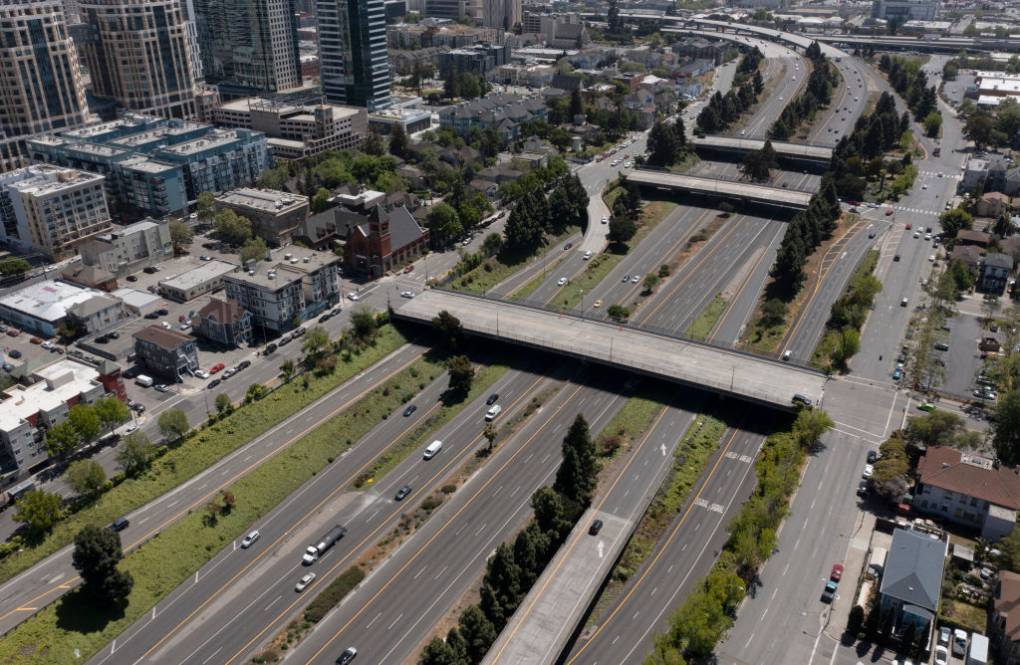
"content": "\u003cp>Tremé is widely considered the oldest Black neighborhood in America.\u003c/p>\n\u003cp>In the 18th and 19th centuries, according to historians, free Black people were steered to Tremé, a neighborhood in New Orleans that abuts the French Quarter, because they could purchase property on land that was once a plantation. A thriving, racially diverse community steeped in Creole culture emerged. Often, Tremé is referred to as the oldest-surviving Black neighborhood in America, a distinction that drives home the ruinous legacy of racism in this country.\u003c/p>\n\u003cp>[aside label=\"Reparations in California\" link1=\"https://www.kqed.org/reparations,Explore why California launched the first-in-the-nation task force to study reparations for Black people\" hero=\"https://ww2.kqed.org/app/uploads/2022/02/RiCLandingPageGraphic-1020x574.png\"]Claiborne Avenue in Tremé was once the economic and cultural center of Black New Orleans, a bustling road lined by oak trees, theaters, bars, restaurants, other businesses and homes. Back when the city’s annual parade and carnival before the Christian fasting of Lent was segregated, Black Mardi Gras was celebrated on the Claiborne Avenue corridor. The revelry crashed to a halt in the mid-1960s when the oak trees were felled to make room for an elevated portion of Interstate 10.\u003c/p>\n\u003cp>“Right \u003cem>through\u003c/em> Tremé,” New Orleans resident Lloyd Kelly told me. “The interstate goes right through the thriving business district of the Black community, the heart of the Black community. They put the I-10 right through it.”\u003c/p>\n\u003cp>I met Kelly, who is Black, at the California Reparations Task Force meeting earlier this month in Sacramento. The task force is \u003ca href=\"https://www.kqed.org/reparations\">examining the historic harms of enslavement and anti-Black racism in the state\u003c/a>. In July, the task force will present its recommendations for dismantling the roadblocks to progress. Kelly was there to talk about reparations eligibility, an issue that has vexed the task force.\u003c/p>\n\u003cp>Before I continue, here’s a brief lesson in American history: In 1956, the Federal-Aid Highway Act paved the way for the nation’s interstate system. But ribbon-cutting politicians weren’t interested in making drivers take the scenic route. The projects plowed through areas where Black people flourished, accelerating America’s hostility toward the descendants of the enslaved.\u003c/p>\n\u003cfigure id=\"attachment_11943270\" class=\"wp-caption alignnone\" style=\"max-width: 800px\">\u003cimg loading=\"lazy\" decoding=\"async\" class=\"size-medium wp-image-11943270\" src=\"https://ww2.kqed.org/app/uploads/sites/10/2023/03/051_KQED_CAReparationsTaskForceSac_03032023-800x533.jpg\" alt=\"A middle-aged African American man with a cap and white and blue plaid long-sleeve shirt seen from the waist up looks out a window with buildings outside the window.\" width=\"800\" height=\"533\" srcset=\"https://cdn.kqed.org/wp-content/uploads/sites/10/2023/03/051_KQED_CAReparationsTaskForceSac_03032023-800x533.jpg 800w, https://cdn.kqed.org/wp-content/uploads/sites/10/2023/03/051_KQED_CAReparationsTaskForceSac_03032023-1020x680.jpg 1020w, https://cdn.kqed.org/wp-content/uploads/sites/10/2023/03/051_KQED_CAReparationsTaskForceSac_03032023-160x107.jpg 160w, https://cdn.kqed.org/wp-content/uploads/sites/10/2023/03/051_KQED_CAReparationsTaskForceSac_03032023-1536x1024.jpg 1536w, https://cdn.kqed.org/wp-content/uploads/sites/10/2023/03/051_KQED_CAReparationsTaskForceSac_03032023.jpg 1920w\" sizes=\"(max-width: 800px) 100vw, 800px\">\u003cfigcaption class=\"wp-caption-text\">Lloyd Kelly, from New Orleans, sits outside the room where the California Reparations Task Force met in Sacramento on March 3, 2023. \u003ccite>(Beth LaBerge/KQED)\u003c/cite>\u003c/figcaption>\u003c/figure>\n\u003cp>As the country marched toward abolishing racial segregation, the targeted destruction of Black communities wasn’t an accident. Private property was seized by eminent domain. Hundreds of neighborhoods across the country were demolished. More than 1 million people were displaced, according to U.S. Department of Transportation estimates.\u003c/p>\n\u003cp>Six decades ago, the open road was a symbol of American ingenuity. Now, America’s aging highway system serves as a monument to environmental racism.\u003c/p>\n\u003cp>The interstates were built around Black and brown neighborhoods, cementing racial divides and isolating people of color. Some interstates bisected neighborhoods. The expressways connected predominantly white commuters, who sought homogeneity in the suburbs, to offices in the cities they had fled. The massive migration is colloquially known as “white flight.”\u003c/p>\n\u003cp>Today, gas-guzzling cars and trucks clogging freeways pollute the air in neighborhoods, leading to asthma and other respiratory issues — and a shorter life expectancy. But cities are considering a remedy: highway removal.\u003c/p>\n\u003cp>My colleagues at \u003ca href=\"https://www.kqed.org/education/collection/above-the-noise\">Above the Noise\u003c/a>, KQED’s YouTube series that investigates controversial subjects, broke down the history of this country’s obsession with highways — and how cities are attempting to repair decades of environmental racism — in a recent video.\u003c/p>\n\u003cp>https://youtu.be/ow5NMC5Cqck\u003c/p>\n\u003cp>\u003c/p>\n\u003cp>“In the case of freeways, they didn’t really care about the people that they were affecting on the ground in these communities, largely for racist reasons, to put it bluntly,” Chris Sensenig, an urban designer and founder of \u003ca href=\"http://www.connectoakland.org/\">ConnectOakland\u003c/a>, told Myles Bess, host of Above the Noise.\u003c/p>\n\u003cp>ConnectOakland has been working to reimagine Interstate 980, the 2-mile stretch that connects Interstate 580 and State Route 24 to Interstate 880.\u003c/p>\n\u003cp>Interstate 980 disconnected West Oakland’s Black residents from downtown.\u003c/p>\n\u003cp>In March 2021, \u003ca href=\"https://www.whitehouse.gov/briefing-room/statements-releases/2021/03/31/fact-sheet-the-american-jobs-plan/\">President Joe Biden released The American Jobs Plan\u003c/a>, which included $20 billion to “redress historic inequities and build the future of transportation infrastructure.” As Bess says in the video, it’s “a PC way of saying ‘reparations.’” The plan, which uses the expressway that runs through the heart of Tremé in New Orleans as an example of a historic inequity, passed in November, narrowly avoiding legislative gridlock caused by the tunnel vision of a Republican-controlled Congress.\u003c/p>\n\u003cp>Last summer, the state reparations task force published an exhaustive interim report. To repair the racial discrimination in past policy decisions, the task force \u003ca href=\"https://oag.ca.gov/system/files/media/ab3121-interim-report-preliminary-recommendations-2022.pdf\">preliminarily recommended the state \u003c/a>“identify and address the impact of environmental racism on predominantly Black communities including, but not limited to, unequal exposure to pollutants associated with roadway and heavy truck traffic,” among other proposals.\u003c/p>\n\u003cp>“The harm to Black people has been multilayered, comprehensive and constant for centuries, so the repair has to be multilayered, comprehensive and constant,” Lisa Holder, a racial justice scholar and a task force member, told me.\u003c/p>\n\u003cfigure id=\"attachment_11943272\" class=\"wp-caption alignnone\" style=\"max-width: 800px\">\u003cimg loading=\"lazy\" decoding=\"async\" class=\"size-medium wp-image-11943272\" src=\"https://ww2.kqed.org/app/uploads/sites/10/2023/03/RS55316_026_KQED_CAReparationsTaskForce_04142022-qut-800x533.jpg\" alt=\"An African American woman smiles during a conversation with an African American man in a suit with empty seats in a conference hall in the background.\" width=\"800\" height=\"533\" srcset=\"https://cdn.kqed.org/wp-content/uploads/sites/10/2023/03/RS55316_026_KQED_CAReparationsTaskForce_04142022-qut-800x533.jpg 800w, https://cdn.kqed.org/wp-content/uploads/sites/10/2023/03/RS55316_026_KQED_CAReparationsTaskForce_04142022-qut-1020x680.jpg 1020w, https://cdn.kqed.org/wp-content/uploads/sites/10/2023/03/RS55316_026_KQED_CAReparationsTaskForce_04142022-qut-160x107.jpg 160w, https://cdn.kqed.org/wp-content/uploads/sites/10/2023/03/RS55316_026_KQED_CAReparationsTaskForce_04142022-qut-1536x1024.jpg 1536w, https://cdn.kqed.org/wp-content/uploads/sites/10/2023/03/RS55316_026_KQED_CAReparationsTaskForce_04142022-qut.jpg 1920w\" sizes=\"(max-width: 800px) 100vw, 800px\">\u003cfigcaption class=\"wp-caption-text\">Sen. Steven Bradford, D-Gardena, and Lisa Holder speak during the second day of an in-person meeting of the California Reparations Task Force at the Third Baptist Church in San Francisco on April 14, 2022. \u003ccite>(Beth LaBerge/KQED)\u003c/cite>\u003c/figcaption>\u003c/figure>\n\u003cp>“We need to analyze the data and quantify it and come up with a comprehensive way to pay people back for what they lost because of these highway building projects,” Holder continued. “All the equity that they lost in the property that they built and also the cultural genocide — we need to come up with a qualitative response and to quantify that.”\u003c/p>\n\u003cp>There were supposed to be two highway projects in New Orleans, but local officials were able to stop the one that would’ve rolled through the French Quarter. The people who protested the project in Tremé were ignored like backseat drivers. Kelly supports California’s effort, but he believes reparations won’t have a generational impact without being considered on the federal level. He’s right. According to \u003ca href=\"https://www.ncbi.nlm.nih.gov/pmc/articles/PMC7716878/#:~:text=The%20results%20highlight%20the%20importance,410%20billion%20hours%20of%20labor.\">research and data published in 2020 by the U.S. National Institutes of Health\u003c/a>, approximately 10 million enslaved people across the country “contributed 410 billion hours of labor” — free labor — to build wealth for others.\u003c/p>\n\u003cp>“I will never ask for one penny for the atrocities of slavery,” Kelly said. “I’m not going to ask you to pay me for the lashes you put on my back. I’m not going to ask you to repay me for the women who were raped. The second I do that, I have put a price on myself.\u003c/p>\n\u003cp>“I will ask you for the payment that is owed to me.”\u003c/p>\n\u003cp>[ad fullwidth]\u003c/p>\n\u003cp>[ad floatright]\u003c/p>\n",
"blocks": [],
"excerpt": "Highways like the I-980 in Oakland have divided and sickened Black neighborhoods across the U.S. Reparations need to take that into account.",
"status": "publish",
"parent": 0,
"modified": 1725920326,
"stats": {
"hasAudio": false,
"hasVideo": false,
"hasChartOrMap": false,
"iframeSrcs": [],
"hasGoogleForm": false,
"hasGallery": false,
"hasHearkenModule": false,
"hasPolis": false,
"paragraphCount": 24,
"wordCount": 1190
},
"headData": {
"title": "America's Highway System Is a Monument to Environmental Racism and a History of Inequity | KQED",
"description": "Highways like the I-980 in Oakland have divided and sickened Black neighborhoods across the U.S. Reparations need to take that into account.",
"ogTitle": "",
"ogDescription": "",
"ogImgId": "",
"twTitle": "",
"twDescription": "",
"twImgId": "",
"schema": {
"@context": "https://schema.org",
"@type": "NewsArticle",
"headline": "America's Highway System Is a Monument to Environmental Racism and a History of Inequity",
"datePublished": "2023-03-13T06:00:54-07:00",
"dateModified": "2024-09-09T15:18:46-07:00",
"image": "https://cdn.kqed.org/wp-content/uploads/2020/02/KQED-OG-Image@1x.png",
"isAccessibleForFree": "True",
"publisher": {
"@type": "NewsMediaOrganization",
"@id": "https://www.kqed.org/#organization",
"name": "KQED",
"logo": "https://cdn.kqed.org/wp-content/uploads/2020/02/KQED-OG-Image@1x.png",
"url": "https://www.kqed.org",
"sameAs": [
"https://www.facebook.com/KQED",
"https://twitter.com/KQED",
"https://www.instagram.com/kqed/",
"https://www.tiktok.com/@kqedofficial",
"https://www.linkedin.com/company/kqed",
"https://www.youtube.com/channel/UCeC0IOo7i1P_61zVUWbJ4nw"
]
}
}
},
"source": "Commentary",
"sticky": false,
"excludeFromSiteSearch": "Include",
"articleAge": "0",
"path": "/news/11943263/americas-highway-system-is-a-monument-to-environmental-racism-and-a-history-of-inequity",
"audioTrackLength": null,
"parsedContent": [
{
"type": "contentString",
"content": "\u003cdiv class=\"post-body\">\u003cp>\u003cp>Tremé is widely considered the oldest Black neighborhood in America.\u003c/p>\n\u003cp>In the 18th and 19th centuries, according to historians, free Black people were steered to Tremé, a neighborhood in New Orleans that abuts the French Quarter, because they could purchase property on land that was once a plantation. A thriving, racially diverse community steeped in Creole culture emerged. Often, Tremé is referred to as the oldest-surviving Black neighborhood in America, a distinction that drives home the ruinous legacy of racism in this country.\u003c/p>\n\u003cp>\u003c/p>\u003c/div>",
"attributes": {
"named": {},
"numeric": []
}
},
{
"type": "component",
"content": "",
"name": "aside",
"attributes": {
"named": {
"label": "Reparations in California ",
"link1": "https://www.kqed.org/reparations,Explore why California launched the first-in-the-nation task force to study reparations for Black people",
"hero": "https://ww2.kqed.org/app/uploads/2022/02/RiCLandingPageGraphic-1020x574.png"
},
"numeric": []
}
},
{
"type": "contentString",
"content": "\u003cdiv class=\"post-body\">\u003cp>Claiborne Avenue in Tremé was once the economic and cultural center of Black New Orleans, a bustling road lined by oak trees, theaters, bars, restaurants, other businesses and homes. Back when the city’s annual parade and carnival before the Christian fasting of Lent was segregated, Black Mardi Gras was celebrated on the Claiborne Avenue corridor. The revelry crashed to a halt in the mid-1960s when the oak trees were felled to make room for an elevated portion of Interstate 10.\u003c/p>\n\u003cp>“Right \u003cem>through\u003c/em> Tremé,” New Orleans resident Lloyd Kelly told me. “The interstate goes right through the thriving business district of the Black community, the heart of the Black community. They put the I-10 right through it.”\u003c/p>\n\u003cp>I met Kelly, who is Black, at the California Reparations Task Force meeting earlier this month in Sacramento. The task force is \u003ca href=\"https://www.kqed.org/reparations\">examining the historic harms of enslavement and anti-Black racism in the state\u003c/a>. In July, the task force will present its recommendations for dismantling the roadblocks to progress. Kelly was there to talk about reparations eligibility, an issue that has vexed the task force.\u003c/p>\n\u003cp>Before I continue, here’s a brief lesson in American history: In 1956, the Federal-Aid Highway Act paved the way for the nation’s interstate system. But ribbon-cutting politicians weren’t interested in making drivers take the scenic route. The projects plowed through areas where Black people flourished, accelerating America’s hostility toward the descendants of the enslaved.\u003c/p>\n\u003cfigure id=\"attachment_11943270\" class=\"wp-caption alignnone\" style=\"max-width: 800px\">\u003cimg loading=\"lazy\" decoding=\"async\" class=\"size-medium wp-image-11943270\" src=\"https://ww2.kqed.org/app/uploads/sites/10/2023/03/051_KQED_CAReparationsTaskForceSac_03032023-800x533.jpg\" alt=\"A middle-aged African American man with a cap and white and blue plaid long-sleeve shirt seen from the waist up looks out a window with buildings outside the window.\" width=\"800\" height=\"533\" srcset=\"https://cdn.kqed.org/wp-content/uploads/sites/10/2023/03/051_KQED_CAReparationsTaskForceSac_03032023-800x533.jpg 800w, https://cdn.kqed.org/wp-content/uploads/sites/10/2023/03/051_KQED_CAReparationsTaskForceSac_03032023-1020x680.jpg 1020w, https://cdn.kqed.org/wp-content/uploads/sites/10/2023/03/051_KQED_CAReparationsTaskForceSac_03032023-160x107.jpg 160w, https://cdn.kqed.org/wp-content/uploads/sites/10/2023/03/051_KQED_CAReparationsTaskForceSac_03032023-1536x1024.jpg 1536w, https://cdn.kqed.org/wp-content/uploads/sites/10/2023/03/051_KQED_CAReparationsTaskForceSac_03032023.jpg 1920w\" sizes=\"(max-width: 800px) 100vw, 800px\">\u003cfigcaption class=\"wp-caption-text\">Lloyd Kelly, from New Orleans, sits outside the room where the California Reparations Task Force met in Sacramento on March 3, 2023. \u003ccite>(Beth LaBerge/KQED)\u003c/cite>\u003c/figcaption>\u003c/figure>\n\u003cp>As the country marched toward abolishing racial segregation, the targeted destruction of Black communities wasn’t an accident. Private property was seized by eminent domain. Hundreds of neighborhoods across the country were demolished. More than 1 million people were displaced, according to U.S. Department of Transportation estimates.\u003c/p>\n\u003cp>Six decades ago, the open road was a symbol of American ingenuity. Now, America’s aging highway system serves as a monument to environmental racism.\u003c/p>\n\u003cp>The interstates were built around Black and brown neighborhoods, cementing racial divides and isolating people of color. Some interstates bisected neighborhoods. The expressways connected predominantly white commuters, who sought homogeneity in the suburbs, to offices in the cities they had fled. The massive migration is colloquially known as “white flight.”\u003c/p>\n\u003cp>Today, gas-guzzling cars and trucks clogging freeways pollute the air in neighborhoods, leading to asthma and other respiratory issues — and a shorter life expectancy. But cities are considering a remedy: highway removal.\u003c/p>\n\u003cp>My colleagues at \u003ca href=\"https://www.kqed.org/education/collection/above-the-noise\">Above the Noise\u003c/a>, KQED’s YouTube series that investigates controversial subjects, broke down the history of this country’s obsession with highways — and how cities are attempting to repair decades of environmental racism — in a recent video.\u003c/p>\u003c/p>\u003cp>\u003cspan class='utils-parseShortcode-shortcodes-__youtubeShortcode__embedYoutube'>\n \u003cspan class='utils-parseShortcode-shortcodes-__youtubeShortcode__embedYoutubeInside'>\n \u003ciframe\n loading='lazy'\n class='utils-parseShortcode-shortcodes-__youtubeShortcode__youtubePlayer'\n type='text/html'\n src='//www.youtube.com/embed/ow5NMC5Cqck'\n title='//www.youtube.com/embed/ow5NMC5Cqck'\n allowfullscreen='true'\n style='border:0;'>\u003c/iframe>\n \u003c/span>\n \u003c/span>\u003c/p>\u003cp>\u003cp>\u003c/p>\n\u003cp>“In the case of freeways, they didn’t really care about the people that they were affecting on the ground in these communities, largely for racist reasons, to put it bluntly,” Chris Sensenig, an urban designer and founder of \u003ca href=\"http://www.connectoakland.org/\">ConnectOakland\u003c/a>, told Myles Bess, host of Above the Noise.\u003c/p>\n\u003cp>ConnectOakland has been working to reimagine Interstate 980, the 2-mile stretch that connects Interstate 580 and State Route 24 to Interstate 880.\u003c/p>\n\u003cp>Interstate 980 disconnected West Oakland’s Black residents from downtown.\u003c/p>\n\u003cp>In March 2021, \u003ca href=\"https://www.whitehouse.gov/briefing-room/statements-releases/2021/03/31/fact-sheet-the-american-jobs-plan/\">President Joe Biden released The American Jobs Plan\u003c/a>, which included $20 billion to “redress historic inequities and build the future of transportation infrastructure.” As Bess says in the video, it’s “a PC way of saying ‘reparations.’” The plan, which uses the expressway that runs through the heart of Tremé in New Orleans as an example of a historic inequity, passed in November, narrowly avoiding legislative gridlock caused by the tunnel vision of a Republican-controlled Congress.\u003c/p>\n\u003cp>Last summer, the state reparations task force published an exhaustive interim report. To repair the racial discrimination in past policy decisions, the task force \u003ca href=\"https://oag.ca.gov/system/files/media/ab3121-interim-report-preliminary-recommendations-2022.pdf\">preliminarily recommended the state \u003c/a>“identify and address the impact of environmental racism on predominantly Black communities including, but not limited to, unequal exposure to pollutants associated with roadway and heavy truck traffic,” among other proposals.\u003c/p>\n\u003cp>“The harm to Black people has been multilayered, comprehensive and constant for centuries, so the repair has to be multilayered, comprehensive and constant,” Lisa Holder, a racial justice scholar and a task force member, told me.\u003c/p>\n\u003cfigure id=\"attachment_11943272\" class=\"wp-caption alignnone\" style=\"max-width: 800px\">\u003cimg loading=\"lazy\" decoding=\"async\" class=\"size-medium wp-image-11943272\" src=\"https://ww2.kqed.org/app/uploads/sites/10/2023/03/RS55316_026_KQED_CAReparationsTaskForce_04142022-qut-800x533.jpg\" alt=\"An African American woman smiles during a conversation with an African American man in a suit with empty seats in a conference hall in the background.\" width=\"800\" height=\"533\" srcset=\"https://cdn.kqed.org/wp-content/uploads/sites/10/2023/03/RS55316_026_KQED_CAReparationsTaskForce_04142022-qut-800x533.jpg 800w, https://cdn.kqed.org/wp-content/uploads/sites/10/2023/03/RS55316_026_KQED_CAReparationsTaskForce_04142022-qut-1020x680.jpg 1020w, https://cdn.kqed.org/wp-content/uploads/sites/10/2023/03/RS55316_026_KQED_CAReparationsTaskForce_04142022-qut-160x107.jpg 160w, https://cdn.kqed.org/wp-content/uploads/sites/10/2023/03/RS55316_026_KQED_CAReparationsTaskForce_04142022-qut-1536x1024.jpg 1536w, https://cdn.kqed.org/wp-content/uploads/sites/10/2023/03/RS55316_026_KQED_CAReparationsTaskForce_04142022-qut.jpg 1920w\" sizes=\"(max-width: 800px) 100vw, 800px\">\u003cfigcaption class=\"wp-caption-text\">Sen. Steven Bradford, D-Gardena, and Lisa Holder speak during the second day of an in-person meeting of the California Reparations Task Force at the Third Baptist Church in San Francisco on April 14, 2022. \u003ccite>(Beth LaBerge/KQED)\u003c/cite>\u003c/figcaption>\u003c/figure>\n\u003cp>“We need to analyze the data and quantify it and come up with a comprehensive way to pay people back for what they lost because of these highway building projects,” Holder continued. “All the equity that they lost in the property that they built and also the cultural genocide — we need to come up with a qualitative response and to quantify that.”\u003c/p>\n\u003cp>There were supposed to be two highway projects in New Orleans, but local officials were able to stop the one that would’ve rolled through the French Quarter. The people who protested the project in Tremé were ignored like backseat drivers. Kelly supports California’s effort, but he believes reparations won’t have a generational impact without being considered on the federal level. He’s right. According to \u003ca href=\"https://www.ncbi.nlm.nih.gov/pmc/articles/PMC7716878/#:~:text=The%20results%20highlight%20the%20importance,410%20billion%20hours%20of%20labor.\">research and data published in 2020 by the U.S. National Institutes of Health\u003c/a>, approximately 10 million enslaved people across the country “contributed 410 billion hours of labor” — free labor — to build wealth for others.\u003c/p>\n\u003cp>“I will never ask for one penny for the atrocities of slavery,” Kelly said. “I’m not going to ask you to pay me for the lashes you put on my back. I’m not going to ask you to repay me for the women who were raped. The second I do that, I have put a price on myself.\u003c/p>\n\u003cp>“I will ask you for the payment that is owed to me.”\u003c/p>\n\u003cp>\u003c/p>\u003c/div>",
"attributes": {
"named": {},
"numeric": []
}
},
{
"type": "component",
"content": "",
"name": "ad",
"attributes": {
"named": {
"label": "fullwidth"
},
"numeric": [
"fullwidth"
]
}
},
{
"type": "contentString",
"content": "\u003cdiv class=\"post-body\">\u003cp>\u003c/p>\n\u003cp>\u003c/p>\u003c/div>",
"attributes": {
"named": {},
"numeric": []
}
},
{
"type": "component",
"content": "",
"name": "ad",
"attributes": {
"named": {
"label": "floatright"
},
"numeric": [
"floatright"
]
}
},
{
"type": "contentString",
"content": "\u003cdiv class=\"post-body\">\u003cp>\u003c/p>\n\u003c/div>\u003c/p>",
"attributes": {
"named": {},
"numeric": []
}
}
],
"link": "/news/11943263/americas-highway-system-is-a-monument-to-environmental-racism-and-a-history-of-inequity",
"authors": [
"11770"
],
"series": [
"news_34369"
],
"categories": [
"news_457",
"news_6188",
"news_8",
"news_1397"
],
"tags": [
"news_30345",
"news_30652"
],
"featImg": "news_11943308",
"label": "source_news_11943263"
},
"news_11942492": {
"type": "posts",
"id": "news_11942492",
"meta": {
"index": "posts_1716263798",
"site": "news",
"id": "11942492",
"score": null,
"sort": [
1677886282000
]
},
"guestAuthors": [],
"slug": "u-s-rep-barbara-lee-lateefah-simon",
"title": "U.S. Rep. Barbara Lee | Lateefah Simon",
"publishDate": 1677886282,
"format": "video",
"headTitle": "U.S. Rep. Barbara Lee | Lateefah Simon | KQED",
"labelTerm": {
"term": 7052,
"site": "news"
},
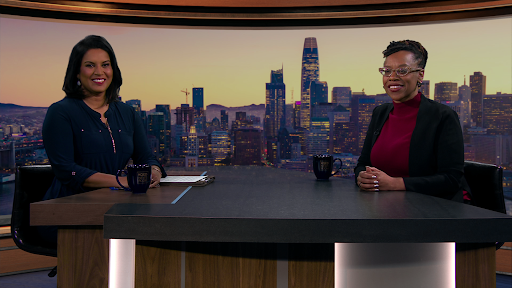
"content": "\u003cp>\u003cb>U.S. Rep. Barbara Lee\u003c/b>\u003c/p>\n\u003cp>\u003cspan style=\"font-weight: 400\">Last month, Senator Dianne Feinstein announced she would step down. Even before she declared her intent to leave office, two California members of Congress announced they would run for her seat: Adam Schiff from Los Angeles and Katie Porter from Orange County. Recently, another contender announced she would vie for the position: Congressmember Barbara Lee joins us to discuss yet another threat to women’s health, her campaign and more.\u003c/span>\u003c/p>\n\u003cp> \u003c/p>\n\u003cp>\u003cb>Lateefah Simon\u003c/b>\u003c/p>\n\u003cp>\u003cspan style=\"font-weight: 400\">BART director Lateefah Simon announced her bid to fill U.S. Rep. Lee’s seat this week. Simon has been politically active in the Bay Area for two decades and is recognized nationally as a civil rights leader. She joins us in the studio to discuss the transit agency and her run for Congress.\u003c/span>\u003c/p>\n\u003cp>[ad fullwidth]\u003c/p>\n\u003cp> \u003c/p>\n\u003cp>\u003cb>Something Beautiful\u003c/b>\u003c/p>\n\u003cp>\u003cspan style=\"font-weight: 400\">A home for emerging women-led projects since 1979, the San Francisco Women’s Building is covered in a vibrant mural celebrating the accomplishments of female role models. Completed in 1994, the mural depicts the likes of Georgia O’Keefe and Rigoberta Mench\u003c/span>\u003cspan style=\"font-weight: 400\">ú\u003c/span>\u003cspan style=\"font-weight: 400\">a Tum alongside Aztec and Chinese goddesses. More than 170 organizations trace their roots to the building, one of the first women-owned-and-operated community centers in the country — and it’s this week’s Something Beautiful.\u003c/span>\u003c/p>\n\u003cp>\u003c/p>\n\u003cp> \u003c/p>\n\n",
"blocks": [],
"excerpt": null,
"status": "publish",
"parent": 0,
"modified": 1728425508,
"stats": {
"hasAudio": false,
"hasVideo": false,
"hasChartOrMap": false,
"iframeSrcs": [],
"hasGoogleForm": false,
"hasGallery": false,
"hasHearkenModule": false,
"hasPolis": false,
"paragraphCount": 8,
"wordCount": 227
},
"headData": {
"title": "U.S. Rep. Barbara Lee | Lateefah Simon | KQED",
"description": "U.S. Rep. Barbara Lee Last month, Senator Dianne Feinstein announced she would step down. Even before she declared her intent to leave office, two California members of Congress announced they would run for her seat: Adam Schiff from Los Angeles and Katie Porter from Orange County. Recently, another contender announced she would vie for the position: Congressmember Barbara Lee joins us to discuss yet another threat to women's health, her campaign and more. Lateefah Simon BART director Lateefah Simon announced her bid to fill U.S. Rep. Lee's seat this week. Simon has been politically active in the Bay Area",
"ogTitle": "",
"ogDescription": "",
"ogImgId": "",
"twTitle": "",
"twDescription": "",
"twImgId": "",
"schema": {
"@context": "https://schema.org",
"@type": "NewsArticle",
"headline": "U.S. Rep. Barbara Lee | Lateefah Simon",
"datePublished": "2023-03-03T15:31:22-08:00",
"dateModified": "2024-10-08T15:11:48-07:00",
"image": "https://cdn.kqed.org/wp-content/uploads/2020/02/KQED-OG-Image@1x.png",
"isAccessibleForFree": "True",
"publisher": {
"@type": "NewsMediaOrganization",
"@id": "https://www.kqed.org/#organization",
"name": "KQED",
"logo": "https://cdn.kqed.org/wp-content/uploads/2020/02/KQED-OG-Image@1x.png",
"url": "https://www.kqed.org",
"sameAs": [
"https://www.facebook.com/KQED",
"https://twitter.com/KQED",
"https://www.instagram.com/kqed/",
"https://www.tiktok.com/@kqedofficial",
"https://www.linkedin.com/company/kqed",
"https://www.youtube.com/channel/UCeC0IOo7i1P_61zVUWbJ4nw"
]
}
}
},
"videoEmbed": "https://youtu.be/nZujeG633z8",
"sticky": false,
"excludeFromSiteSearch": "Include",
"articleAge": "0",
"path": "/news/11942492/u-s-rep-barbara-lee-lateefah-simon",
"audioTrackLength": null,
"parsedContent": [
{
"type": "contentString",
"content": "\u003cdiv class=\"post-body\">\u003cp>\u003cp>\u003cb>U.S. Rep. Barbara Lee\u003c/b>\u003c/p>\n\u003cp>\u003cspan style=\"font-weight: 400\">Last month, Senator Dianne Feinstein announced she would step down. Even before she declared her intent to leave office, two California members of Congress announced they would run for her seat: Adam Schiff from Los Angeles and Katie Porter from Orange County. Recently, another contender announced she would vie for the position: Congressmember Barbara Lee joins us to discuss yet another threat to women’s health, her campaign and more.\u003c/span>\u003c/p>\n\u003cp> \u003c/p>\n\u003cp>\u003cb>Lateefah Simon\u003c/b>\u003c/p>\n\u003cp>\u003cspan style=\"font-weight: 400\">BART director Lateefah Simon announced her bid to fill U.S. Rep. Lee’s seat this week. Simon has been politically active in the Bay Area for two decades and is recognized nationally as a civil rights leader. She joins us in the studio to discuss the transit agency and her run for Congress.\u003c/span>\u003c/p>\n\u003cp>\u003c/p>\u003c/div>",
"attributes": {
"named": {},
"numeric": []
}
},
{
"type": "component",
"content": "",
"name": "ad",
"attributes": {
"named": {
"label": "fullwidth"
},
"numeric": [
"fullwidth"
]
}
},
{
"type": "contentString",
"content": "\u003cdiv class=\"post-body\">\u003cp>\u003c/p>\n\u003cp> \u003c/p>\n\u003cp>\u003cb>Something Beautiful\u003c/b>\u003c/p>\n\u003cp>\u003cspan style=\"font-weight: 400\">A home for emerging women-led projects since 1979, the San Francisco Women’s Building is covered in a vibrant mural celebrating the accomplishments of female role models. Completed in 1994, the mural depicts the likes of Georgia O’Keefe and Rigoberta Mench\u003c/span>\u003cspan style=\"font-weight: 400\">ú\u003c/span>\u003cspan style=\"font-weight: 400\">a Tum alongside Aztec and Chinese goddesses. More than 170 organizations trace their roots to the building, one of the first women-owned-and-operated community centers in the country — and it’s this week’s Something Beautiful.\u003c/span>\u003c/p>\n\u003cp>\u003c/p>\n\u003cp> \u003c/p>\n\n\u003c/div>\u003c/p>",
"attributes": {
"named": {},
"numeric": []
}
}
],
"link": "/news/11942492/u-s-rep-barbara-lee-lateefah-simon",
"authors": [
"236"
],
"programs": [
"news_7052"
],
"categories": [
"news_31795",
"news_8",
"news_13",
"news_1397"
],
"tags": [
"news_30678",
"news_20149",
"news_2582",
"news_17968",
"news_24023"
],
"featImg": "news_11942495",
"label": "news_7052"
},
"news_11942379": {
"type": "posts",
"id": "news_11942379",
"meta": {
"index": "posts_1716263798",
"site": "news",
"id": "11942379",
"score": null,
"sort": [
1677807424000
]
},
"parent": 0,
"labelTerm": {
"site": "news"
},
"blocks": [],
"publishDate": 1677807424,
"format": "standard",
"title": "San Francisco Unified Faces $5.4 Million Legal Battle Over Bus Bills During School Closures",
"headTitle": "KQED News",
"content": "\u003cp>The San Francisco Unified School District’s former school bus provider is suing the district for $5.4 million for payments it claims the district failed to make during the 2020–21 school year when students were participating in distance learning.\u003c/p>\n\u003cp>The latest dispute, which is not the first between the private transportation company First Student Inc. and SFUSD, comes as both businesses and school districts across the country are scrambling to recover from losses during the pandemic.\u003c/p>\n\u003cp>“This case is a corporate shakedown of our public school district by the largest bus company in the United States,” said Nancy Harris, attorney representing SFUSD, during opening statements for the jury trial. “The terms of the contract provide that the school district agreed to pay First Student only when drivers employed by First Student drove students in buses owned by First Student to and from schools and other points.”\u003c/p>\n\u003cp>Ohio-based First Student is the country’s largest school bus transportation service provider and worked with San Francisco Unified for 40 years before the two organizations cut ties during the pandemic.\u003c/p>\n\u003cp>While there’s no disagreement that buses weren’t running their usual routes during the 2020–21 school year, representatives for First Student allege that the district owes them money for non-transportation services, such as bus maintenance and vehicle insurance. The company invoiced SFUSD for $5.4 million for those additional costs in the fall of 2021.[pullquote align=\"right\" size=\"medium\" citation=\"Nancy Harris, attorney representing SFUSD\"]'This case is a corporate shakedown of our public school district by the largest bus company in the United States.'[/pullquote]In response to First Student's lawsuit, SFUSD filed a cross-complaint for breach of contract, bad faith and violations of the California False Claims Act.\u003c/p>\n\u003cp>The school district maintains that under the 2020–21 school year contract, they were not obligated to pay for services because buses were not transporting students during the city’s shelter-in-place order.\u003c/p>\n\u003cp>In an email sent to KQED, the district also alleged that the company “submitted false invoices claiming that hundreds of buses and drivers were deployed on the road in August and September 2020, at a time when students were learning remotely,” according to Laura Dudnick, spokesperson for SFUSD.\u003c/p>\n\u003cp>“When that did not work, [First Student] demanded that the school district cover its overhead costs. This strategy was part of its nationwide pressure campaign against school districts to increase its revenue, when school districts like SFUSD struggled with budget deficits and were focused on students,” Dudnick wrote.\u003c/p>\n\u003cp>[ad fullwidth]\u003c/p>\n\u003cp>In court testimony Thursday, Paul Osland, who was president of First Student during the pandemic, denied pressuring any district into payments during the pandemic, and suggested his company was simply upholding its end of a contract that started in 2015.\u003c/p>\n\u003cp>Osland asserts that First Student charges for a full program, meaning not only transportation services, but also the operating expenses such as vehicle insurance, bus technology and regular maintenance that is required by California Highway Patrol to keep the buses in operation.\u003c/p>\n\u003cp>COVID “impacted all of us, but it sure as heck impacted our business,” said Osland in court on Thursday. Osland, who is now retired, previously ran transportation services for Chicago Public Schools. “Of course this is not a shakedown. It was an initiative in everyone’s interest.”\u003c/p>\n\u003cp>[pullquote align=\"right\" size=\"medium\" citation=\"Paul Osland, former president, First Student\"]'Of course this is not a shakedown. It was an initiative in everyone's interest.'[/pullquote]\u003c/p>\n\u003cp>Harris, the attorney for SFUSD, underscored a section of the contract that anticipated school closures.\u003c/p>\n\u003cp>“The district shall not be obligated to accept or pay for services, herein to be furnished by the contractor, on those days when by the direction of the Superintendent, the district schools are closed to ensure the health and safety of the pupils or for any other lawful reason. The district agrees to notify the contractor, not later than 5:30 a.m., on days of such school closures,” the contract reads.\u003c/p>\n\u003cp>Osland, however, said he thinks that portion of the contract would only apply to short-term closures like snow days or fire days, not months-long disruptions. No such distinction is made either way in the contract.\u003c/p>\n\u003cp>First Student works with around 1,000 districts across the U.S. and Canada. The company provides yellow school bus transportation to and from schools for general education, students with disabilities and individualized education plans, field trip services and charter bus services.\u003c/p>\n\u003cp>In a statement to KQED, the company said it filed the lawsuit “because of bad faith and broken promises by SFUSD.”\u003c/p>\n\u003cp>“SFUSD made a choice to stop paying for the many services that SFUSD required under the bus contract, including the more than 230 yellow school buses dedicated to SFUSD that First Student kept in position throughout the pandemic,” the statement read.\u003c/p>\n\u003cp>“First Student stood by its business partner, fulfilling its obligations to maintain operational readiness to ensure it was ready to transport students as soon as schools reopened. And when they did, First Student was ready when SFUSD called. Over an eight-month period, First Student submitted discounted invoices, but SFUSD paid nothing. SFUSD had encumbered funds available, and even issued a purchase order, but it made a choice not to pay. That is not just or fair, and for that reason, we expect to prevail in court.”\u003c/p>\n\u003cp>After 40 years of service, SFUSD cut ties with First Student during the pandemic, and the district in July 2021 awarded school transportation to app-based start-up Zūm in a $150 million five-year contract.\u003c/p>\n\u003cp>At the time of the deal, the district estimated the new provider would save the district about $3 million annually, according to \u003ca href=\"https://techcrunch.com/2021/07/29/zum-wins-150m-from-san-francisco-schools-to-modernize-and-electrify-student-transport/\">a report from TechCrunch\u003c/a>.\u003c/p>\n\u003cp>In 2021, First Student sued Zūm, whose consultant had recently left a high position with First Student. First Student alleged the employee downloaded the competing bid from its company while joining Zūm. That case is set to begin trial August 14.\u003c/p>\n\u003cp>First Student also filed an appeal against SFUSD’s process and decision to contract with Zūm. The court denied that appeal from First Student in 2022.\u003c/p>\n\u003cp>\u003cem>Editor's note: This story has been updated to include a statement from First Student. This story also has been corrected, to accurately reflect the status of First Student's lawsuit against Zūm, which is scheduled to begin trial Aug. 14. \u003c/em>\u003c/p>\n\u003cp>[ad floatright]\u003c/p>\n",
"stats": {
"hasVideo": false,
"hasChartOrMap": false,
"hasAudio": false,
"hasPolis": false,
"wordCount": 1112,
"hasGoogleForm": false,
"hasGallery": false,
"hasHearkenModule": false,
"iframeSrcs": [],
"paragraphCount": 26
},
"modified": 1678482360,
"excerpt": "First Student, the country's largest school bus transportation service provider, is looking to recoup $5.4 million from SFUSD, but district officials say the charges are unwarranted.",
"headData": {
"twImgId": "",
"twTitle": "",
"ogTitle": "",
"ogImgId": "",
"twDescription": "",
"description": "First Student, the country's largest school bus transportation service provider, is looking to recoup $5.4 million from SFUSD, but district officials say the charges are unwarranted.",
"title": "San Francisco Unified Faces $5.4 Million Legal Battle Over Bus Bills During School Closures | KQED",
"ogDescription": "",
"schema": {
"@context": "https://schema.org",
"@type": "NewsArticle",
"headline": "San Francisco Unified Faces $5.4 Million Legal Battle Over Bus Bills During School Closures",
"datePublished": "2023-03-02T17:37:04-08:00",
"dateModified": "2023-03-10T13:06:00-08:00",
"image": "https://cdn.kqed.org/wp-content/uploads/2020/02/KQED-OG-Image@1x.png",
"isAccessibleForFree": "True",
"publisher": {
"@type": "NewsMediaOrganization",
"@id": "https://www.kqed.org/#organization",
"name": "KQED",
"logo": "https://cdn.kqed.org/wp-content/uploads/2020/02/KQED-OG-Image@1x.png",
"url": "https://www.kqed.org",
"sameAs": [
"https://www.facebook.com/KQED",
"https://twitter.com/KQED",
"https://www.instagram.com/kqed/",
"https://www.tiktok.com/@kqedofficial",
"https://www.linkedin.com/company/kqed",
"https://www.youtube.com/channel/UCeC0IOo7i1P_61zVUWbJ4nw"
]
}
}
},
"guestAuthors": [],
"slug": "san-francisco-unified-faces-5-4-million-legal-battle-over-bus-bills-during-school-closures",
"status": "publish",
"excludeFromSiteSearch": "Include",
"articleAge": "0",
"path": "/news/11942379/san-francisco-unified-faces-5-4-million-legal-battle-over-bus-bills-during-school-closures",
"audioTrackLength": null,
"parsedContent": [
{
"type": "contentString",
"content": "\u003cdiv class=\"post-body\">\u003cp>\u003cp>The San Francisco Unified School District’s former school bus provider is suing the district for $5.4 million for payments it claims the district failed to make during the 2020–21 school year when students were participating in distance learning.\u003c/p>\n\u003cp>The latest dispute, which is not the first between the private transportation company First Student Inc. and SFUSD, comes as both businesses and school districts across the country are scrambling to recover from losses during the pandemic.\u003c/p>\n\u003cp>“This case is a corporate shakedown of our public school district by the largest bus company in the United States,” said Nancy Harris, attorney representing SFUSD, during opening statements for the jury trial. “The terms of the contract provide that the school district agreed to pay First Student only when drivers employed by First Student drove students in buses owned by First Student to and from schools and other points.”\u003c/p>\n\u003cp>Ohio-based First Student is the country’s largest school bus transportation service provider and worked with San Francisco Unified for 40 years before the two organizations cut ties during the pandemic.\u003c/p>\n\u003cp>While there’s no disagreement that buses weren’t running their usual routes during the 2020–21 school year, representatives for First Student allege that the district owes them money for non-transportation services, such as bus maintenance and vehicle insurance. The company invoiced SFUSD for $5.4 million for those additional costs in the fall of 2021.\u003c/p>\u003c/div>",
"attributes": {
"named": {},
"numeric": []
}
},
{
"type": "component",
"content": "'This case is a corporate shakedown of our public school district by the largest bus company in the United States.'",
"name": "pullquote",
"attributes": {
"named": {
"align": "right",
"size": "medium",
"citation": "Nancy Harris, attorney representing SFUSD",
"label": ""
},
"numeric": []
}
},
{
"type": "contentString",
"content": "\u003cdiv class=\"post-body\">\u003cp>In response to First Student's lawsuit, SFUSD filed a cross-complaint for breach of contract, bad faith and violations of the California False Claims Act.\u003c/p>\n\u003cp>The school district maintains that under the 2020–21 school year contract, they were not obligated to pay for services because buses were not transporting students during the city’s shelter-in-place order.\u003c/p>\n\u003cp>In an email sent to KQED, the district also alleged that the company “submitted false invoices claiming that hundreds of buses and drivers were deployed on the road in August and September 2020, at a time when students were learning remotely,” according to Laura Dudnick, spokesperson for SFUSD.\u003c/p>\n\u003cp>“When that did not work, [First Student] demanded that the school district cover its overhead costs. This strategy was part of its nationwide pressure campaign against school districts to increase its revenue, when school districts like SFUSD struggled with budget deficits and were focused on students,” Dudnick wrote.\u003c/p>\n\u003cp>\u003c/p>\u003c/div>",
"attributes": {
"named": {},
"numeric": []
}
},
{
"type": "component",
"content": "",
"name": "ad",
"attributes": {
"named": {
"label": "fullwidth"
},
"numeric": [
"fullwidth"
]
}
},
{
"type": "contentString",
"content": "\u003cdiv class=\"post-body\">\u003cp>\u003c/p>\n\u003cp>In court testimony Thursday, Paul Osland, who was president of First Student during the pandemic, denied pressuring any district into payments during the pandemic, and suggested his company was simply upholding its end of a contract that started in 2015.\u003c/p>\n\u003cp>Osland asserts that First Student charges for a full program, meaning not only transportation services, but also the operating expenses such as vehicle insurance, bus technology and regular maintenance that is required by California Highway Patrol to keep the buses in operation.\u003c/p>\n\u003cp>COVID “impacted all of us, but it sure as heck impacted our business,” said Osland in court on Thursday. Osland, who is now retired, previously ran transportation services for Chicago Public Schools. “Of course this is not a shakedown. It was an initiative in everyone’s interest.”\u003c/p>\n\u003cp>\u003c/p>\u003c/div>",
"attributes": {
"named": {},
"numeric": []
}
},
{
"type": "component",
"content": "'Of course this is not a shakedown. It was an initiative in everyone's interest.'",
"name": "pullquote",
"attributes": {
"named": {
"align": "right",
"size": "medium",
"citation": "Paul Osland, former president, First Student",
"label": ""
},
"numeric": []
}
},
{
"type": "contentString",
"content": "\u003cdiv class=\"post-body\">\u003cp>\u003c/p>\n\u003cp>Harris, the attorney for SFUSD, underscored a section of the contract that anticipated school closures.\u003c/p>\n\u003cp>“The district shall not be obligated to accept or pay for services, herein to be furnished by the contractor, on those days when by the direction of the Superintendent, the district schools are closed to ensure the health and safety of the pupils or for any other lawful reason. The district agrees to notify the contractor, not later than 5:30 a.m., on days of such school closures,” the contract reads.\u003c/p>\n\u003cp>Osland, however, said he thinks that portion of the contract would only apply to short-term closures like snow days or fire days, not months-long disruptions. No such distinction is made either way in the contract.\u003c/p>\n\u003cp>First Student works with around 1,000 districts across the U.S. and Canada. The company provides yellow school bus transportation to and from schools for general education, students with disabilities and individualized education plans, field trip services and charter bus services.\u003c/p>\n\u003cp>In a statement to KQED, the company said it filed the lawsuit “because of bad faith and broken promises by SFUSD.”\u003c/p>\n\u003cp>“SFUSD made a choice to stop paying for the many services that SFUSD required under the bus contract, including the more than 230 yellow school buses dedicated to SFUSD that First Student kept in position throughout the pandemic,” the statement read.\u003c/p>\n\u003cp>“First Student stood by its business partner, fulfilling its obligations to maintain operational readiness to ensure it was ready to transport students as soon as schools reopened. And when they did, First Student was ready when SFUSD called. Over an eight-month period, First Student submitted discounted invoices, but SFUSD paid nothing. SFUSD had encumbered funds available, and even issued a purchase order, but it made a choice not to pay. That is not just or fair, and for that reason, we expect to prevail in court.”\u003c/p>\n\u003cp>After 40 years of service, SFUSD cut ties with First Student during the pandemic, and the district in July 2021 awarded school transportation to app-based start-up Zūm in a $150 million five-year contract.\u003c/p>\n\u003cp>At the time of the deal, the district estimated the new provider would save the district about $3 million annually, according to \u003ca href=\"https://techcrunch.com/2021/07/29/zum-wins-150m-from-san-francisco-schools-to-modernize-and-electrify-student-transport/\">a report from TechCrunch\u003c/a>.\u003c/p>\n\u003cp>In 2021, First Student sued Zūm, whose consultant had recently left a high position with First Student. First Student alleged the employee downloaded the competing bid from its company while joining Zūm. That case is set to begin trial August 14.\u003c/p>\n\u003cp>First Student also filed an appeal against SFUSD’s process and decision to contract with Zūm. The court denied that appeal from First Student in 2022.\u003c/p>\n\u003cp>\u003cem>Editor's note: This story has been updated to include a statement from First Student. This story also has been corrected, to accurately reflect the status of First Student's lawsuit against Zūm, which is scheduled to begin trial Aug. 14. \u003c/em>\u003c/p>\n\u003cp>\u003c/p>\u003c/div>",
"attributes": {
"named": {},
"numeric": []
}
},
{
"type": "component",
"content": "",
"name": "ad",
"attributes": {
"named": {
"label": "floatright"
},
"numeric": [
"floatright"
]
}
},
{
"type": "contentString",
"content": "\u003cdiv class=\"post-body\">\u003cp>\u003c/p>\n\u003c/div>\u003c/p>",
"attributes": {
"named": {},
"numeric": []
}
}
],
"link": "/news/11942379/san-francisco-unified-faces-5-4-million-legal-battle-over-bus-bills-during-school-closures",
"authors": [
"11840"
],
"categories": [
"news_18540",
"news_8",
"news_1397"
],
"tags": [
"news_20013",
"news_32473",
"news_38",
"news_3946",
"news_32475",
"news_1290",
"news_32474"
],
"featImg": "news_11942385",
"label": "news"
},
"news_11941191": {
"type": "posts",
"id": "news_11941191",
"meta": {
"index": "posts_1716263798",
"site": "news",
"id": "11941191",
"score": null,
"sort": [
1676576099000
]
},
"parent": 0,
"labelTerm": {
"site": "news"
},
"blocks": [],
"publishDate": 1676576099,
"format": "standard",
"title": "BART to Pay $9.15 Million to Settle Case of Man Dragged by Train",
"headTitle": "KQED News",
"content": "\u003cp>BART has agreed to the costliest legal settlement in its half-century history in a case involving a passenger who was severely injured when he was shut in a train door and dragged along a platform in downtown San Francisco.\u003c/p>\n\u003cp>The agreement, negotiated late last year and made public Wednesday, means the transit agency will pay $9.15 million to David Nelson, 61, a San Francisco resident critically injured in the incident at the Powell Street station on Feb. 11, 2021.\u003c/p>\n\u003cp>\u003ca href=\"https://s3.documentcloud.org/documents/23684741/07880856.pdf\">Nelson's lawsuit (PDF)\u003c/a> said he was getting off a train at the station, and struggling with his belongings, when the incident occurred.\u003c/p>\n\u003cp>Nelson's attorney, John Sweeney of Beverly Hills, said his client had removed his bike from the car first, then gone back to get a bag and other items that remained aboard.\u003c/p>\n\u003cp>Eventually, Nelson found himself standing in the door as it began to close, Sweeney said.\u003c/p>\n\u003cp>\"His trench coat got caught in the closing door,\" Sweeney said. Nelson was dragged along the platform, with his leg caught between the platform and the car as the rapidly accelerating train departed the station.[pullquote align=\"right\" size=\"medium\" citation=\"John Sweeney, attorney for David Nelson\"]'There are several fail-safe mechanisms in place so that this kind of thing would not happen ... Only after [the train operator's] done his look-back can he push the button to close the door.'[/pullquote]Nelson's leg injuries were so extreme that doctors needed to amputate the limb above the knee.\u003c/p>\n\u003cp>The most egregious part of the incident, Sweeney said, was that the BART operator had received an automated notification that there was an obstruction in the door before he started the train.\u003c/p>\n\u003cp>\"There are several fail-safe mechanisms in place so that this kind of thing would not happen,\" he said, including an audible alarm if something is preventing a door from closing.\u003c/p>\n\u003cp>\"The trains cannot start without the operator sticking their heads out the window and doing a look-back and making sure that there's no door obstruction and no one standing on the safety strip\" along the platform, Sweeney said. \"Only after he's done his look-back can he push the button to close the door.\"\u003c/p>\n\u003cp>In the February 2021 incident, Sweeney said, the operator \"pushed the button before Mr. Nelson had fully gotten off the train. His excuse in the deposition was that he just didn't see him, even though there was an audible alarm.\"\u003c/p>\n\u003cp>Sweeney said that in agreeing to the settlement, BART did not admit liability in the case. In response to questions, BART confirmed the amount of the settlement but offered no further statement.\u003c/p>\n\u003cp>The $9.15 million settlement is BART's largest-ever payout in a legal case.\u003c/p>\n\u003cp>In 2020, a federal jury ordered the agency to pay $7.2 million in \u003ca href=\"https://www.sfchronicle.com/crime/article/BART-officer-cleared-in-West-Oakland-shooting-of-13330146.php\">the death of Sahleem Tindle\u003c/a>, the victim of a 2018 BART police shooting in West Oakland.\u003c/p>\n\u003cp>BART settled a pair of lawsuits brought by the family of Oscar Grant, whom a BART officer \u003ca href=\"https://www.npr.org/2021/06/23/1009486885/on-our-watch-litigation-reveals-new-details-in-police-shooting-of-oscar-grant\">shot to death at Oakland's Fruitvale station\u003c/a> on New Year's Day 2009, for a total of nearly $3 million.\u003c/p>\n\u003cp>In 2016, the district agreed to pay $3.1 million \u003ca href=\"https://www.eastbaytimes.com/2016/11/18/bart-to-pay-family-of-officer-shot-killed-in-friendly-fire-3-1-million-settlement/\">to settle a wrongful death lawsuit\u003c/a> involving BART Police Sgt. Thomas Smith, who was fatally wounded by a fellow officer while executing a search warrant in 2014.\u003c/p>\n\u003cp>The agency paid $1.35 million in a lawsuit brought by Megan Sheehan, who was seriously injured when \u003ca href=\"https://www.kqed.org/news/11734848/bart-officer-was-reprimanded-for-account-of-takedown-in-which-woman-was-severely-injured\">a BART police officer slammed her face-first\u003c/a> into a floor at Santa Rita Jail in March 2014.\u003c/p>\n\u003cp>[ad fullwidth]\u003c/p>\n\u003cp>\u003c/p>\n",
"stats": {
"hasVideo": false,
"hasChartOrMap": false,
"hasAudio": false,
"hasPolis": false,
"wordCount": 603,
"hasGoogleForm": false,
"hasGallery": false,
"hasHearkenModule": false,
"iframeSrcs": [],
"paragraphCount": 18
},
"modified": 1677009702,
"excerpt": "The transit agency did not admit liability in the case involving a train operator who shut doors on a passenger who suffered life-threatening injuries when he was dragged along the platform at the Powell Street station.",
"headData": {
"twImgId": "",
"twTitle": "",
"ogTitle": "",
"ogImgId": "",
"twDescription": "",
"description": "The transit agency did not admit liability in the case involving a train operator who shut doors on a passenger who suffered life-threatening injuries when he was dragged along the platform at the Powell Street station.",
"title": "BART to Pay $9.15 Million to Settle Case of Man Dragged by Train | KQED",
"ogDescription": "",
"schema": {
"@context": "https://schema.org",
"@type": "NewsArticle",
"headline": "BART to Pay $9.15 Million to Settle Case of Man Dragged by Train",
"datePublished": "2023-02-16T11:34:59-08:00",
"dateModified": "2023-02-21T12:01:42-08:00",
"image": "https://cdn.kqed.org/wp-content/uploads/2020/02/KQED-OG-Image@1x.png",
"isAccessibleForFree": "True",
"publisher": {
"@type": "NewsMediaOrganization",
"@id": "https://www.kqed.org/#organization",
"name": "KQED",
"logo": "https://cdn.kqed.org/wp-content/uploads/2020/02/KQED-OG-Image@1x.png",
"url": "https://www.kqed.org",
"sameAs": [
"https://www.facebook.com/KQED",
"https://twitter.com/KQED",
"https://www.instagram.com/kqed/",
"https://www.tiktok.com/@kqedofficial",
"https://www.linkedin.com/company/kqed",
"https://www.youtube.com/channel/UCeC0IOo7i1P_61zVUWbJ4nw"
]
}
}
},
"guestAuthors": [],
"slug": "bart-to-pay-9-15-million-to-settle-case-of-man-dragged-by-train",
"status": "publish",
"excludeFromSiteSearch": "Include",
"articleAge": "0",
"path": "/news/11941191/bart-to-pay-9-15-million-to-settle-case-of-man-dragged-by-train",
"audioTrackLength": null,
"parsedContent": [
{
"type": "contentString",
"content": "\u003cdiv class=\"post-body\">\u003cp>\u003cp>BART has agreed to the costliest legal settlement in its half-century history in a case involving a passenger who was severely injured when he was shut in a train door and dragged along a platform in downtown San Francisco.\u003c/p>\n\u003cp>The agreement, negotiated late last year and made public Wednesday, means the transit agency will pay $9.15 million to David Nelson, 61, a San Francisco resident critically injured in the incident at the Powell Street station on Feb. 11, 2021.\u003c/p>\n\u003cp>\u003ca href=\"https://s3.documentcloud.org/documents/23684741/07880856.pdf\">Nelson's lawsuit (PDF)\u003c/a> said he was getting off a train at the station, and struggling with his belongings, when the incident occurred.\u003c/p>\n\u003cp>Nelson's attorney, John Sweeney of Beverly Hills, said his client had removed his bike from the car first, then gone back to get a bag and other items that remained aboard.\u003c/p>\n\u003cp>Eventually, Nelson found himself standing in the door as it began to close, Sweeney said.\u003c/p>\n\u003cp>\"His trench coat got caught in the closing door,\" Sweeney said. Nelson was dragged along the platform, with his leg caught between the platform and the car as the rapidly accelerating train departed the station.\u003c/p>\u003c/div>",
"attributes": {
"named": {},
"numeric": []
}
},
{
"type": "component",
"content": "'There are several fail-safe mechanisms in place so that this kind of thing would not happen ... Only after [the train operator's] done his look-back can he push the button to close the door.'",
"name": "pullquote",
"attributes": {
"named": {
"align": "right",
"size": "medium",
"citation": "John Sweeney, attorney for David Nelson",
"label": ""
},
"numeric": []
}
},
{
"type": "contentString",
"content": "\u003cdiv class=\"post-body\">\u003cp>Nelson's leg injuries were so extreme that doctors needed to amputate the limb above the knee.\u003c/p>\n\u003cp>The most egregious part of the incident, Sweeney said, was that the BART operator had received an automated notification that there was an obstruction in the door before he started the train.\u003c/p>\n\u003cp>\"There are several fail-safe mechanisms in place so that this kind of thing would not happen,\" he said, including an audible alarm if something is preventing a door from closing.\u003c/p>\n\u003cp>\"The trains cannot start without the operator sticking their heads out the window and doing a look-back and making sure that there's no door obstruction and no one standing on the safety strip\" along the platform, Sweeney said. \"Only after he's done his look-back can he push the button to close the door.\"\u003c/p>\n\u003cp>In the February 2021 incident, Sweeney said, the operator \"pushed the button before Mr. Nelson had fully gotten off the train. His excuse in the deposition was that he just didn't see him, even though there was an audible alarm.\"\u003c/p>\n\u003cp>Sweeney said that in agreeing to the settlement, BART did not admit liability in the case. In response to questions, BART confirmed the amount of the settlement but offered no further statement.\u003c/p>\n\u003cp>The $9.15 million settlement is BART's largest-ever payout in a legal case.\u003c/p>\n\u003cp>In 2020, a federal jury ordered the agency to pay $7.2 million in \u003ca href=\"https://www.sfchronicle.com/crime/article/BART-officer-cleared-in-West-Oakland-shooting-of-13330146.php\">the death of Sahleem Tindle\u003c/a>, the victim of a 2018 BART police shooting in West Oakland.\u003c/p>\n\u003cp>BART settled a pair of lawsuits brought by the family of Oscar Grant, whom a BART officer \u003ca href=\"https://www.npr.org/2021/06/23/1009486885/on-our-watch-litigation-reveals-new-details-in-police-shooting-of-oscar-grant\">shot to death at Oakland's Fruitvale station\u003c/a> on New Year's Day 2009, for a total of nearly $3 million.\u003c/p>\n\u003cp>In 2016, the district agreed to pay $3.1 million \u003ca href=\"https://www.eastbaytimes.com/2016/11/18/bart-to-pay-family-of-officer-shot-killed-in-friendly-fire-3-1-million-settlement/\">to settle a wrongful death lawsuit\u003c/a> involving BART Police Sgt. Thomas Smith, who was fatally wounded by a fellow officer while executing a search warrant in 2014.\u003c/p>\n\u003cp>The agency paid $1.35 million in a lawsuit brought by Megan Sheehan, who was seriously injured when \u003ca href=\"https://www.kqed.org/news/11734848/bart-officer-was-reprimanded-for-account-of-takedown-in-which-woman-was-severely-injured\">a BART police officer slammed her face-first\u003c/a> into a floor at Santa Rita Jail in March 2014.\u003c/p>\n\u003cp>\u003c/p>\u003c/div>",
"attributes": {
"named": {},
"numeric": []
}
},
{
"type": "component",
"content": "",
"name": "ad",
"attributes": {
"named": {
"label": "fullwidth"
},
"numeric": [
"fullwidth"
]
}
},
{
"type": "contentString",
"content": "\u003cdiv class=\"post-body\">\u003cp>\u003c/p>\n\u003cp>\u003c/p>\n\u003c/div>\u003c/p>",
"attributes": {
"named": {},
"numeric": []
}
}
],
"link": "/news/11941191/bart-to-pay-9-15-million-to-settle-case-of-man-dragged-by-train",
"authors": [
"222"
],
"categories": [
"news_8",
"news_1397"
],
"tags": [
"news_269",
"news_21891",
"news_2684"
],
"featImg": "news_11941203",
"label": "news"
},
"news_11940185": {
"type": "posts",
"id": "news_11940185",
"meta": {
"index": "posts_1716263798",
"site": "news",
"id": "11940185",
"score": null,
"sort": [
1675636636000
]
},
"parent": 0,
"labelTerm": {
"site": "news"
},
"blocks": [],
"publishDate": 1675636636,
"format": "standard",
"title": "Work Begins Monday on Multimillion-Dollar Market Street Renovation Project",
"headTitle": "KQED News",
"content": "\u003cp>After more than a decade of planning, work crews will break ground Monday on the first phase of the \u003ca href=\"http://bettermarketstreetsf.org/about-urban-design.html\">Better Market Street\u003c/a> project to redesign San Francisco's busiest thoroughfare with a variety of safety and aesthetic upgrades. [pullquote align=\"right\" size=\"medium\" citation=\"Cristina Olea, project manager, Better Market Street, SF Public Works\"]'The last time we really improved Market Street was when BART was built in the '70s.'[/pullquote]Phase one will focus on the area between 5th and 8th streets on the corridor, and include traffic signal upgrades, wider sidewalks at intersections to reduce crossing times for pedestrians, repaving to reduce tripping hazards, wider ADA-compliant curb ramps and streetscape improvements.\u003c/p>\n\u003cp>“The last time we really improved Market Street was when BART was built in the '70s,” said Cristina Olea, Better Market Street project manager for San Francisco Public Works, in an interview with KQED. “It's the spine of our transit network, but … there's \u003ca href=\"https://www.sfmta.com/sites/default/files/projects/2015/Safer%20Market%20Street_Public%20Hearing%20Presentation.pdf\">a lot of crashes that happen on Market Street (PDF)\u003c/a> involving people walking and biking, and we want to make sure that we're improving safety and mobility along the corridor.”\u003c/p>\n\u003cp>The \u003ca href=\"https://www.kqed.org/news/11798594/market-street-is-now-car-free-your-questions-answered\">implementation of the Better Market Street project\u003c/a> started back in January 2020, when a large stretch of Market Street was closed to private vehicles. The pandemic put things on hold, but now the project is back on. The construction for phase one carries a $60 million price tag, with completion scheduled for April of 2024.\u003c/p>\n\u003cp>The total project, when complete, will span 2.2 miles of Market Street between Octavia Boulevard and Steuart Street, with an estimated cost of $600 million. A turnaround loop for Muni’s F line along McAllister Street and Charles J. Brenham Place was originally planned as part of the first phase, but has since been postponed, pending new funding.\u003c/p>\n\u003cp>“It's been almost 13 years that we've been working together on the project, the planning and the design and implementation,” explained Olea. “But we're really glad that this project in mid-Market is moving forward and we've been wanting to start construction for a while now.”\u003c/p>\n\u003cp>Any future phases of the project will be funding dependent.\u003c/p>\n\u003cp>“We're working with our project partners on determining the next phase of the project and applying for grants — federal grants — and looking for other funding opportunities to help us roll out the project,” said Olea.[aside postID=news_11798594 hero='https://ww2.kqed.org/app/uploads/sites/10/2020/01/No-Turn-On-Market-1020x691.jpg']The project is being led by San Francisco Public Works in collaboration with various other city and county departments including the San Francisco Municipal Transportation Agency, the Public Utilities Commission, the Transportation Authority and the San Francisco Planning Department.\u003c/p>\n\u003cp>Some aesthetic changes also are included in the plan, such as new trees and benches. New bike racks also are being added to accommodate the surge in cyclists on Market Street since cars were banned.\u003c/p>\n\u003cp>The plan currently being put into action is a scaled-back version of what city officials approved in 2019. After the onset of the pandemic, as tourism and other industries ground to a halt, the city was facing a significant budget shortfall and elected to redesign the plan’s first phase.\u003c/p>\n\u003cp>The most significant change for cyclists was the removal of the planned sidewalk-level bike lane. Instead, the current plan keeps bikes on the road, sharing the lane with taxis, paratransit and commercial vehicles.\u003c/p>\n\u003cp>When \u003ca href=\"https://sanfrancisco.granicus.com/player/clip/36955?view_id=24&redirect=true&h=41fc7f25a1dd3b980620cddf8c7903da\">Olea presented these changes to the Transportation Authority Board\u003c/a> in October of 2020, she cited a significant increase in the number of bikes on Market Street as one of the reasons for the change, saying the planned 8-foot-wide bike lane would be too narrow to accommodate the amount of expected traffic.\u003c/p>\n\u003cp>“Yes, it gives people more space for people on bikes, but it also gives more space for them to potentially be hit by cars,” countered Assemblymember Matt Haney, then a city supervisor.\u003c/p>\n\u003cp>The original plan also called for replacing the sidewalk’s aging red bricks with concrete, rather than only repairing damaged sections. That change was meant as a cost-saving measure but was also influenced by a motivation to avoid lengthy street closures and the negative impact that could have on nearby businesses. The \u003ca href=\"https://www.kqed.org/news/11931311/what-do-mass-layoffs-in-the-tech-industry-mean-for-the-future-of-mid-market\">mid-Market corridor has struggled to recover\u003c/a> from the economic impacts of the COVID-19 pandemic and a surge in layoffs in the tech industry this year.\u003c/p>\n\u003cp>Olea says they want to minimize impacts to the community as much as possible, but that there will be at least four two-week closures of the section of Market Street under construction in the second half of 2023, affecting all surface traffic and transit, although not BART or Muni Metro.\u003c/p>\n\u003cp>“It's one street for the city where all of our parades are, all of our important events and marches, [but] the street is looking worn and it's on our high-injury network,” said Olea. “Now is the perfect time to make these critical improvements. It really is like a once-in-a-generation project to make Market Street the beautiful corridor that it deserves to be.”\u003c/p>\n\u003cp>[ad fullwidth]\u003c/p>\n\u003cp>\u003c/p>\n",
"stats": {
"hasVideo": false,
"hasChartOrMap": false,
"hasAudio": false,
"hasPolis": false,
"wordCount": 889,
"hasGoogleForm": false,
"hasGallery": false,
"hasHearkenModule": false,
"iframeSrcs": [],
"paragraphCount": 17
},
"modified": 1675712896,
"excerpt": "Phase one of the Better Market Street Project is expected to take 15 months and cost $60 million to complete.",
"headData": {
"twImgId": "",
"twTitle": "",
"ogTitle": "",
"ogImgId": "",
"twDescription": "",
"description": "Phase one of the Better Market Street Project is expected to take 15 months and cost $60 million to complete.",
"title": "Work Begins Monday on Multimillion-Dollar Market Street Renovation Project | KQED",
"ogDescription": "",
"schema": {
"@context": "https://schema.org",
"@type": "NewsArticle",
"headline": "Work Begins Monday on Multimillion-Dollar Market Street Renovation Project",
"datePublished": "2023-02-05T14:37:16-08:00",
"dateModified": "2023-02-06T11:48:16-08:00",
"image": "https://cdn.kqed.org/wp-content/uploads/2020/02/KQED-OG-Image@1x.png",
"isAccessibleForFree": "True",
"publisher": {
"@type": "NewsMediaOrganization",
"@id": "https://www.kqed.org/#organization",
"name": "KQED",
"logo": "https://cdn.kqed.org/wp-content/uploads/2020/02/KQED-OG-Image@1x.png",
"url": "https://www.kqed.org",
"sameAs": [
"https://www.facebook.com/KQED",
"https://twitter.com/KQED",
"https://www.instagram.com/kqed/",
"https://www.tiktok.com/@kqedofficial",
"https://www.linkedin.com/company/kqed",
"https://www.youtube.com/channel/UCeC0IOo7i1P_61zVUWbJ4nw"
]
}
}
},
"guestAuthors": [],
"slug": "work-begins-monday-on-multi-million-dollar-market-street-renovation-project",
"status": "publish",
"excludeFromSiteSearch": "Include",
"showOnAuthorArchivePages": "No",
"articleAge": "0",
"path": "/news/11940185/work-begins-monday-on-multi-million-dollar-market-street-renovation-project",
"audioTrackLength": null,
"parsedContent": [
{
"type": "contentString",
"content": "\u003cdiv class=\"post-body\">\u003cp>\u003cp>After more than a decade of planning, work crews will break ground Monday on the first phase of the \u003ca href=\"http://bettermarketstreetsf.org/about-urban-design.html\">Better Market Street\u003c/a> project to redesign San Francisco's busiest thoroughfare with a variety of safety and aesthetic upgrades. \u003c/p>\u003c/div>",
"attributes": {
"named": {},
"numeric": []
}
},
{
"type": "component",
"content": "'The last time we really improved Market Street was when BART was built in the '70s.'",
"name": "pullquote",
"attributes": {
"named": {
"align": "right",
"size": "medium",
"citation": "Cristina Olea, project manager, Better Market Street, SF Public Works",
"label": ""
},
"numeric": []
}
},
{
"type": "contentString",
"content": "\u003cdiv class=\"post-body\">\u003cp>Phase one will focus on the area between 5th and 8th streets on the corridor, and include traffic signal upgrades, wider sidewalks at intersections to reduce crossing times for pedestrians, repaving to reduce tripping hazards, wider ADA-compliant curb ramps and streetscape improvements.\u003c/p>\n\u003cp>“The last time we really improved Market Street was when BART was built in the '70s,” said Cristina Olea, Better Market Street project manager for San Francisco Public Works, in an interview with KQED. “It's the spine of our transit network, but … there's \u003ca href=\"https://www.sfmta.com/sites/default/files/projects/2015/Safer%20Market%20Street_Public%20Hearing%20Presentation.pdf\">a lot of crashes that happen on Market Street (PDF)\u003c/a> involving people walking and biking, and we want to make sure that we're improving safety and mobility along the corridor.”\u003c/p>\n\u003cp>The \u003ca href=\"https://www.kqed.org/news/11798594/market-street-is-now-car-free-your-questions-answered\">implementation of the Better Market Street project\u003c/a> started back in January 2020, when a large stretch of Market Street was closed to private vehicles. The pandemic put things on hold, but now the project is back on. The construction for phase one carries a $60 million price tag, with completion scheduled for April of 2024.\u003c/p>\n\u003cp>The total project, when complete, will span 2.2 miles of Market Street between Octavia Boulevard and Steuart Street, with an estimated cost of $600 million. A turnaround loop for Muni’s F line along McAllister Street and Charles J. Brenham Place was originally planned as part of the first phase, but has since been postponed, pending new funding.\u003c/p>\n\u003cp>“It's been almost 13 years that we've been working together on the project, the planning and the design and implementation,” explained Olea. “But we're really glad that this project in mid-Market is moving forward and we've been wanting to start construction for a while now.”\u003c/p>\n\u003cp>Any future phases of the project will be funding dependent.\u003c/p>\n\u003cp>“We're working with our project partners on determining the next phase of the project and applying for grants — federal grants — and looking for other funding opportunities to help us roll out the project,” said Olea.\u003c/p>\u003c/div>",
"attributes": {
"named": {},
"numeric": []
}
},
{
"type": "component",
"content": "",
"name": "aside",
"attributes": {
"named": {
"postid": "news_11798594",
"hero": "https://ww2.kqed.org/app/uploads/sites/10/2020/01/No-Turn-On-Market-1020x691.jpg",
"label": ""
},
"numeric": []
}
},
{
"type": "contentString",
"content": "\u003cdiv class=\"post-body\">\u003cp>The project is being led by San Francisco Public Works in collaboration with various other city and county departments including the San Francisco Municipal Transportation Agency, the Public Utilities Commission, the Transportation Authority and the San Francisco Planning Department.\u003c/p>\n\u003cp>Some aesthetic changes also are included in the plan, such as new trees and benches. New bike racks also are being added to accommodate the surge in cyclists on Market Street since cars were banned.\u003c/p>\n\u003cp>The plan currently being put into action is a scaled-back version of what city officials approved in 2019. After the onset of the pandemic, as tourism and other industries ground to a halt, the city was facing a significant budget shortfall and elected to redesign the plan’s first phase.\u003c/p>\n\u003cp>The most significant change for cyclists was the removal of the planned sidewalk-level bike lane. Instead, the current plan keeps bikes on the road, sharing the lane with taxis, paratransit and commercial vehicles.\u003c/p>\n\u003cp>When \u003ca href=\"https://sanfrancisco.granicus.com/player/clip/36955?view_id=24&redirect=true&h=41fc7f25a1dd3b980620cddf8c7903da\">Olea presented these changes to the Transportation Authority Board\u003c/a> in October of 2020, she cited a significant increase in the number of bikes on Market Street as one of the reasons for the change, saying the planned 8-foot-wide bike lane would be too narrow to accommodate the amount of expected traffic.\u003c/p>\n\u003cp>“Yes, it gives people more space for people on bikes, but it also gives more space for them to potentially be hit by cars,” countered Assemblymember Matt Haney, then a city supervisor.\u003c/p>\n\u003cp>The original plan also called for replacing the sidewalk’s aging red bricks with concrete, rather than only repairing damaged sections. That change was meant as a cost-saving measure but was also influenced by a motivation to avoid lengthy street closures and the negative impact that could have on nearby businesses. The \u003ca href=\"https://www.kqed.org/news/11931311/what-do-mass-layoffs-in-the-tech-industry-mean-for-the-future-of-mid-market\">mid-Market corridor has struggled to recover\u003c/a> from the economic impacts of the COVID-19 pandemic and a surge in layoffs in the tech industry this year.\u003c/p>\n\u003cp>Olea says they want to minimize impacts to the community as much as possible, but that there will be at least four two-week closures of the section of Market Street under construction in the second half of 2023, affecting all surface traffic and transit, although not BART or Muni Metro.\u003c/p>\n\u003cp>“It's one street for the city where all of our parades are, all of our important events and marches, [but] the street is looking worn and it's on our high-injury network,” said Olea. “Now is the perfect time to make these critical improvements. It really is like a once-in-a-generation project to make Market Street the beautiful corridor that it deserves to be.”\u003c/p>\n\u003cp>\u003c/p>\u003c/div>",
"attributes": {
"named": {},
"numeric": []
}
},
{
"type": "component",
"content": "",
"name": "ad",
"attributes": {
"named": {
"label": "fullwidth"
},
"numeric": [
"fullwidth"
]
}
},
{
"type": "contentString",
"content": "\u003cdiv class=\"post-body\">\u003cp>\u003c/p>\n\u003cp>\u003c/p>\n\u003c/div>\u003c/p>",
"attributes": {
"named": {},
"numeric": []
}
}
],
"link": "/news/11940185/work-begins-monday-on-multi-million-dollar-market-street-renovation-project",
"authors": [
"11812",
"11785",
"11761"
],
"categories": [
"news_8",
"news_1397"
],
"tags": [
"news_32368",
"news_17660",
"news_32370",
"news_32369"
],
"featImg": "news_11940186",
"label": "news"
},
"news_11939501": {
"type": "posts",
"id": "news_11939501",
"meta": {
"index": "posts_1716263798",
"site": "news",
"id": "11939501",
"score": null,
"sort": [
1674865394000
]
},
"guestAuthors": [],
"slug": "sfmtas-jeffrey-tumlin-ca-gun-violence",
"title": "SFMTA's Jeffrey Tumlin | CA Gun Violence",
"publishDate": 1674865394,
"format": "video",
"headTitle": "SFMTA’s Jeffrey Tumlin | CA Gun Violence | KQED",
"labelTerm": {
"term": 7052,
"site": "news"
},
"content": "\u003cp>\u003cb>California Gun Violence\u003c/b>\u003c/p>\n\u003cp>\u003cspan style=\"font-weight: 400\">Multiple waves of gun violence have left at least \u003c/span>\u003cspan style=\"font-weight: 400\">25 people dead in four mass shootings over two weeks, \u003c/span>\u003cspan style=\"font-weight: 400\">from Southern California to the Bay Area. While the motives behind the shootings are varied and murky, the trail of devastation left behind in the wake of these tragedies is clear. We focus on the violence and rise in gun ownership in the AAPI community. \u003c/span>\u003c/p>\n\u003cp> \u003c/p>\n\u003cp>\u003cspan style=\"font-weight: 400\">Guests:\u003c/span>\u003c/p>\n\u003cul>\n\u003cli style=\"font-weight: 400\">\u003cspan style=\"font-weight: 400\">Madi Bolaños, KQED co-host of The California Report\u003c/span>\u003c/li>\n\u003cli style=\"font-weight: 400\">\u003cspan style=\"font-weight: 400\">Guy Marzorati, KQED politics and government reporter\u003c/span>\u003c/li>\n\u003cli style=\"font-weight: 400\">\u003cspan style=\"font-weight: 400\">Varun Nikore, AAPI Victory Alliance executive director \u003c/span>\u003c/li>\n\u003c/ul>\n\u003cp> \u003c/p>\n\u003cp>[ad fullwidth]\u003c/p>\n\u003cp>\u003cb>SFMTA Director of Transportation\u003c/b>\u003c/p>\n\u003cp>\u003cspan style=\"font-weight: 400\">The San Francisco \u003c/span>\u003cspan style=\"font-weight: 400\">Municipal Transportation\u003c/span>\u003cspan style=\"font-weight: 400\"> Agency, commonly known as Muni, is already dealing with lower revenues caused by the pandemic. With the agency still in recovery mode, will San Francisco’s looming budget shortfall threaten them further? We discuss this time of change with SFMTA Director of Transportation Jeffrey Tumlin.\u003c/span>\u003c/p>\n\u003cp> \u003c/p>\n\u003cp>\u003cb>Something Beautiful: Ramses the Great and the Gold of the Pharaohs\u003c/b>\u003c/p>\n\u003cp>\u003c/p>\n\u003cp>\u003cspan style=\"font-weight: 400\">The de Young Museum is currently showcasing an exhibit 3,000 years in the making. As it comes to a close on Feb.12, we take one last peek at the ancient artifacts and glittering splendor of this week’s Something Beautiful: Ramses the Great and the Gold of the Pharaohs.\u003c/span>\u003c/p>\n\n",
"blocks": [],
"excerpt": null,
"status": "publish",
"parent": 0,
"modified": 1721145798,
"stats": {
"hasAudio": false,
"hasVideo": false,
"hasChartOrMap": false,
"iframeSrcs": [],
"hasGoogleForm": false,
"hasGallery": false,
"hasHearkenModule": false,
"hasPolis": false,
"paragraphCount": 9,
"wordCount": 218
},
"headData": {
"title": "SFMTA's Jeffrey Tumlin | CA Gun Violence | KQED",
"description": "California Gun Violence Multiple waves of gun violence have left at least 25 people dead in four mass shootings over two weeks, from Southern California to the Bay Area. While the motives behind the shootings are varied and murky, the trail of devastation left behind in the wake of these tragedies is clear. We focus",
"ogTitle": "",
"ogDescription": "",
"ogImgId": "",
"twTitle": "",
"twDescription": "",
"twImgId": "",
"schema": {
"@context": "https://schema.org",
"@type": "NewsArticle",
"headline": "SFMTA's Jeffrey Tumlin | CA Gun Violence",
"datePublished": "2023-01-27T16:23:14-08:00",
"dateModified": "2024-07-16T09:03:18-07:00",
"image": "https://cdn.kqed.org/wp-content/uploads/2020/02/KQED-OG-Image@1x.png",
"isAccessibleForFree": "True",
"publisher": {
"@type": "NewsMediaOrganization",
"@id": "https://www.kqed.org/#organization",
"name": "KQED",
"logo": "https://cdn.kqed.org/wp-content/uploads/2020/02/KQED-OG-Image@1x.png",
"url": "https://www.kqed.org",
"sameAs": [
"https://www.facebook.com/KQED",
"https://twitter.com/KQED",
"https://www.instagram.com/kqed/",
"https://www.tiktok.com/@kqedofficial",
"https://www.linkedin.com/company/kqed",
"https://www.youtube.com/channel/UCeC0IOo7i1P_61zVUWbJ4nw"
]
}
}
},
"videoEmbed": "https://youtu.be/Cp2RVhepuRU",
"sticky": false,
"excludeFromSiteSearch": "Include",
"articleAge": "0",
"path": "/news/11939501/sfmtas-jeffrey-tumlin-ca-gun-violence",
"audioTrackLength": null,
"parsedContent": [
{
"type": "contentString",
"content": "\u003cdiv class=\"post-body\">\u003cp>\u003cp>\u003cb>California Gun Violence\u003c/b>\u003c/p>\n\u003cp>\u003cspan style=\"font-weight: 400\">Multiple waves of gun violence have left at least \u003c/span>\u003cspan style=\"font-weight: 400\">25 people dead in four mass shootings over two weeks, \u003c/span>\u003cspan style=\"font-weight: 400\">from Southern California to the Bay Area. While the motives behind the shootings are varied and murky, the trail of devastation left behind in the wake of these tragedies is clear. We focus on the violence and rise in gun ownership in the AAPI community. \u003c/span>\u003c/p>\n\u003cp> \u003c/p>\n\u003cp>\u003cspan style=\"font-weight: 400\">Guests:\u003c/span>\u003c/p>\n\u003cul>\n\u003cli style=\"font-weight: 400\">\u003cspan style=\"font-weight: 400\">Madi Bolaños, KQED co-host of The California Report\u003c/span>\u003c/li>\n\u003cli style=\"font-weight: 400\">\u003cspan style=\"font-weight: 400\">Guy Marzorati, KQED politics and government reporter\u003c/span>\u003c/li>\n\u003cli style=\"font-weight: 400\">\u003cspan style=\"font-weight: 400\">Varun Nikore, AAPI Victory Alliance executive director \u003c/span>\u003c/li>\n\u003c/ul>\n\u003cp> \u003c/p>\n\u003cp>\u003c/p>\u003c/div>",
"attributes": {
"named": {},
"numeric": []
}
},
{
"type": "component",
"content": "",
"name": "ad",
"attributes": {
"named": {
"label": "fullwidth"
},
"numeric": [
"fullwidth"
]
}
},
{
"type": "contentString",
"content": "\u003cdiv class=\"post-body\">\u003cp>\u003c/p>\n\u003cp>\u003cb>SFMTA Director of Transportation\u003c/b>\u003c/p>\n\u003cp>\u003cspan style=\"font-weight: 400\">The San Francisco \u003c/span>\u003cspan style=\"font-weight: 400\">Municipal Transportation\u003c/span>\u003cspan style=\"font-weight: 400\"> Agency, commonly known as Muni, is already dealing with lower revenues caused by the pandemic. With the agency still in recovery mode, will San Francisco’s looming budget shortfall threaten them further? We discuss this time of change with SFMTA Director of Transportation Jeffrey Tumlin.\u003c/span>\u003c/p>\n\u003cp> \u003c/p>\n\u003cp>\u003cb>Something Beautiful: Ramses the Great and the Gold of the Pharaohs\u003c/b>\u003c/p>\n\u003cp>\u003c/p>\n\u003cp>\u003cspan style=\"font-weight: 400\">The de Young Museum is currently showcasing an exhibit 3,000 years in the making. As it comes to a close on Feb.12, we take one last peek at the ancient artifacts and glittering splendor of this week’s Something Beautiful: Ramses the Great and the Gold of the Pharaohs.\u003c/span>\u003c/p>\n\n\u003c/div>\u003c/p>",
"attributes": {
"named": {},
"numeric": []
}
}
],
"link": "/news/11939501/sfmtas-jeffrey-tumlin-ca-gun-violence",
"authors": [
"236"
],
"programs": [
"news_7052"
],
"categories": [
"news_31795",
"news_1169",
"news_6188",
"news_28250",
"news_8",
"news_13",
"news_1397"
],
"tags": [
"news_29182",
"news_19133",
"news_16",
"news_2795",
"news_1103",
"news_32332",
"news_32324",
"news_1334",
"news_20517"
],
"featImg": "news_11939509",
"label": "news_7052"
},
"news_11939071": {
"type": "posts",
"id": "news_11939071",
"meta": {
"index": "posts_1716263798",
"site": "news",
"id": "11939071",
"score": null,
"sort": [
1674688700000
]
},
"guestAuthors": [],
"slug": "bart-board-member-faces-censure-for-racially-offensive-comment",
"title": "BART Board Censures Member for Racist Comment",
"publishDate": 1674688700,
"format": "standard",
"headTitle": "BART Board Censures Member for Racist Comment | KQED",
"labelTerm": {
"site": "news"
},
"content": "\u003cp>\u003cstrong>Updated 1:45 p.m. Thursday, Jan. 26:\u003c/strong> The BART Board of Directors voted to censure member John McPartland for using a racist expression during a meeting earlier this month.\u003c/p>\n\u003cp>McPartland told three Black staff members at a meeting Jan. 12 that their work on BART’s ongoing racial equity initiative was “cotton-pickin’ inspirational.”\u003c/p>\n\u003cp>McPartland, who is white, apologized to the board and staff members Thursday and acknowledged that his “clumsy and inappropriate” words were “offensive and racially insensitive.”\u003c/p>\n\u003cp>Javier Pruitt Hill, one of the three BART employees whose work McPartland commented about on Jan. 12, said during public comment, “Director McPartland, your apology is acknowledged, now it’s time for action.”\u003c/p>\n\u003cp>Pruitt Hill, who works in BART’s Office of Civil Rights, said McPartland’s comment “embarrassed me, disrespected me and emasculated me in public.”\u003c/p>\n\u003cp>He challenged the board of directors to amend its code of conduct to include provisions on racial equity, social justice and anti-racism and to provide for recalls of board members who violate those provisions.\u003c/p>\n\u003cp>Lateefah Simon, the board’s only Black member, acknowledged McPartland’s apology but said public servants must live up to a higher standard in addressing racism.\u003c/p>\n\u003cp>“If we are going to stand up and run for office or be an appointee of any public office, it is not only our duty to understand the matters in front of us, it is our deep duty to understand, love, research and honor the communities we serve,” Simon said. “And, as the apology was read today, begin to make amends.”\u003c/p>\n\u003cp>The board voted six to two to approve Board President Janet Li’s motion to formally censure McPartland and remove him from all committee assignments.\u003c/p>\n\u003cp>\u003cstrong>Original post:\u003c/strong> The BART Board of Directors will consider a measure Thursday to censure a member who used a racist expression during a meeting earlier this month.\u003c/p>\n\u003cp>The measure, introduced by board President Janice Li of San Francisco, is in response to Alameda County member John McPartland’s use of the term “cotton-pickin'” while addressing several staff members at the board’s Jan. 12 meeting.\u003c/p>\n\u003cp>McPartland, who is white, was speaking approvingly of a presentation three Black staff members had just made on BART’s ongoing \u003ca href=\"https://s3.documentcloud.org/documents/23586198/update-on-racial-equity-initiatives-presentation.pdf\">racial equity initiative (PDF)\u003c/a>. One of those presenting was Maceo Wiggins, chief of the agency’s Office of Civil Rights. [pullquote size=\"medium\" align=\"right\" citation=\"Janice Li, president, BART Board of Directors\"]‘We are public officials, we are elected leaders, and we run a district. The bar is set higher for folks like us.’[/pullquote]\u003c/p>\n\u003cp>“I have been looking at these kinds of reports forever and a blue moon,” McPartland said from his Castro Valley home via Zoom. “And despite my relationship with Maceo that goes back — oh my goodness, two decades — I’ve got to tell you that, as opposed to trying to figure out which way to go and based on the data we’re looking at, I find the work that Maceo is doing right now to be so cotton-pickin’ inspirational.”\u003c/p>\n\u003cp>McPartland ended by congratulating Wiggins on “magnificent work” and added, “I look forward to being part of it in any way I can.”\u003c/p>\n\u003cp>\u003ci data-stringify-type=\"italic\">The following video contains offensive content.\u003c/i>\u003c/p>\n\u003cp>https://youtu.be/Yooc2KDD6Hs?t=308\u003c/p>\n\u003cp>Seven of the other eight board members were in the meeting room at BART’s downtown Oakland headquarters; board member Debora Allen of Contra Costa County was also attending remotely. None of the directors responded immediately to McPartland’s comment, though a brief exclamation was audible immediately after he uttered the phrase “cotton-pickin’.”\u003c/p>\n\u003cp>“You’re not going to be able to air the words I said, but it was along the lines of, ‘I can’t believe this,'” San Francisco board member Bevan Dufty said last week.\u003c/p>\n\u003cp>The expression McPartland used is \u003ca href=\"https://www.reddit.com/r/AskHistorians/comments/rapry3/comment/hnn0i96/?utm_source=reddit&utm_medium=web2x&context=3\">considered racist\u003c/a> and one that denigrates Black Americans, who endured forced labor in Southern cotton fields as enslaved workers and later as part of the coercive sharecropping system.\u003c/p>\n\u003cp>The Jan. 12 comment prompted Li to put forward a “\u003ca href=\"https://s3.documentcloud.org/documents/23586052/consideration-of-action-memo.pdf\">consideration of action (PDF)\u003c/a>” against McPartland. The motion says McPartland violated provisions in the BART board \u003ca href=\"https://www.bart.gov/sites/default/files/docs/08-08-13%20Board%20of%20Directors%20CofC.pdf\">code of conduct (PDF)\u003c/a> that require members to treat the public, staff and each other with respect and to refrain from publicly attacking or disparaging staff or members of the public.\u003c/p>\n\u003cp>Li said she feels McPartland, first elected to the BART board in 2008, had no ill intent. But, she added, this was not the first time he had made racially offensive comments during board meetings.\u003c/p>\n\u003cp>“We are public officials, we are elected leaders, and we run a district,” Li said. “The bar is set higher for folks like us. And when this is a pattern of behavior, I think that we can’t just say, ‘Oh, but he doesn’t mean any ill will, it’s fine, we’ll just pull him aside and let him know.'”\u003c/p>\n\u003cp>In 2019, McPartland drew criticism for a patronizing comment made to Abre’ Conner, a Black attorney for the ACLU of Northern California, who had addressed the board during a discussion of whether BART could ban panhandling.\u003c/p>\n\u003cp>“I didn’t catch the name of the young African American lady,” McPartland said. “Very articulate. … If you’re a law student, you’re doing great. If not, you should consider it.”\u003c/p>\n\u003cp>Informed that Conner was an attorney, he chuckled and said, “Already a lawyer? OK. … Doing great.”\u003c/p>\n\u003cp>During a June 2020 board discussion, \u003ca href=\"https://www.kqed.org/news/11826287/bart-director-says-hes-distressed-by-villainization-of-police-and-of-robert-e-lee\">McPartland complained about the removal of monuments commemorating leaders of the Confederacy\u003c/a>. He focused on one in Richmond, Virginia, celebrating Gen. Robert E. Lee, a slaveholder who betrayed his oath to defend the U.S. Constitution by resigning from the Army to lead Confederate forces in the Civil War.\u003c/p>\n\u003cp>“Robert E. Lee was an exemplary general who was a West Point graduate,” McPartland said. “The United States military tried to make him the commander in chief of the Army, and he turned them down, not because of racism, but because of family — the priorities that we have are God, family and country — and he ended up becoming a general that ended up simply doing his job, and he’s being villainized.”\u003c/p>\n\u003cp>During that 2020 meeting, Dufty persuaded McPartland to “walk back” his comments about Lee and the Confederate memorials. In an interview after the Jan. 12 comment, Dufty said he considers McPartland a friend but that his words “would not pass muster in any way, shape or form.”\u003c/p>\n\u003cp>Dufty said he regretted not addressing McPartland’s remark in the moment, saying he realized the words were traumatizing for BART staff members. “I have my own apology to make,” he said. “I’m not going to dance around it.”\u003c/p>\n\u003cp>Li said one factor that made McPartland’s recent comment different from earlier episodes was the fact that it was directed toward BART staff members.\u003c/p>\n\u003cp>[ad fullwidth]\u003c/p>\n\u003cp>“He used those words during a staff presentation and was giving his comments in response to work that staff has done,” Li said. She said that after McPartland’s comment, staff members “were clearly very traumatized and impacted by his use of racist words.” She said that it’s important for BART to “wholly and fully and directly” address what happened.\u003c/p>\n\u003cp>Doing that will “give the district and the general public the confidence that we saw it, we acknowledged it, we’re taking action, and we’re moving on, because BART is here to run trains,” she said.\u003c/p>\n\u003cp>McPartland did not respond to a request for comment for this story. He said in a report published by The San Francisco Standard last week that \u003ca href=\"https://sfstandard.com/transportation/bart-director-apologizes-for-using-racist-language/\">he was mortified and intends to offer a public apology\u003c/a> for his Jan. 12 statement.\u003c/p>\n\u003cp>[ad fullwidth]\u003c/p>\n\u003cp>[ad floatright]\u003c/p>\n",
"blocks": [],
"excerpt": "The board took action against longtime member John McPartland for what one called 'a pattern' of offensive remarks.",
"status": "publish",
"parent": 0,
"modified": 1721155805,
"stats": {
"hasAudio": false,
"hasVideo": false,
"hasChartOrMap": false,
"iframeSrcs": [],
"hasGoogleForm": false,
"hasGallery": false,
"hasHearkenModule": false,
"hasPolis": false,
"paragraphCount": 35,
"wordCount": 1391
},
"headData": {
"title": "BART Board Censures Member for Racist Comment | KQED",
"description": "The board took action against longtime member John McPartland for what one called 'a pattern' of offensive remarks.",
"ogTitle": "",
"ogDescription": "",
"ogImgId": "",
"twTitle": "",
"twDescription": "",
"twImgId": "",
"schema": {
"@context": "https://schema.org",
"@type": "NewsArticle",
"headline": "BART Board Censures Member for Racist Comment",
"datePublished": "2023-01-25T15:18:20-08:00",
"dateModified": "2024-07-16T11:50:05-07:00",
"image": "https://cdn.kqed.org/wp-content/uploads/2020/02/KQED-OG-Image@1x.png",
"isAccessibleForFree": "True",
"publisher": {
"@type": "NewsMediaOrganization",
"@id": "https://www.kqed.org/#organization",
"name": "KQED",
"logo": "https://cdn.kqed.org/wp-content/uploads/2020/02/KQED-OG-Image@1x.png",
"url": "https://www.kqed.org",
"sameAs": [
"https://www.facebook.com/KQED",
"https://twitter.com/KQED",
"https://www.instagram.com/kqed/",
"https://www.tiktok.com/@kqedofficial",
"https://www.linkedin.com/company/kqed",
"https://www.youtube.com/channel/UCeC0IOo7i1P_61zVUWbJ4nw"
]
}
}
},
"sticky": false,
"excludeFromSiteSearch": "Include",
"articleAge": "0",
"path": "/news/11939071/bart-board-member-faces-censure-for-racially-offensive-comment",
"audioTrackLength": null,
"parsedContent": [
{
"type": "contentString",
"content": "\u003cdiv class=\"post-body\">\u003cp>\u003cp>\u003cstrong>Updated 1:45 p.m. Thursday, Jan. 26:\u003c/strong> The BART Board of Directors voted to censure member John McPartland for using a racist expression during a meeting earlier this month.\u003c/p>\n\u003cp>McPartland told three Black staff members at a meeting Jan. 12 that their work on BART’s ongoing racial equity initiative was “cotton-pickin’ inspirational.”\u003c/p>\n\u003cp>McPartland, who is white, apologized to the board and staff members Thursday and acknowledged that his “clumsy and inappropriate” words were “offensive and racially insensitive.”\u003c/p>\n\u003cp>Javier Pruitt Hill, one of the three BART employees whose work McPartland commented about on Jan. 12, said during public comment, “Director McPartland, your apology is acknowledged, now it’s time for action.”\u003c/p>\n\u003cp>Pruitt Hill, who works in BART’s Office of Civil Rights, said McPartland’s comment “embarrassed me, disrespected me and emasculated me in public.”\u003c/p>\n\u003cp>He challenged the board of directors to amend its code of conduct to include provisions on racial equity, social justice and anti-racism and to provide for recalls of board members who violate those provisions.\u003c/p>\n\u003cp>Lateefah Simon, the board’s only Black member, acknowledged McPartland’s apology but said public servants must live up to a higher standard in addressing racism.\u003c/p>\n\u003cp>“If we are going to stand up and run for office or be an appointee of any public office, it is not only our duty to understand the matters in front of us, it is our deep duty to understand, love, research and honor the communities we serve,” Simon said. “And, as the apology was read today, begin to make amends.”\u003c/p>\n\u003cp>The board voted six to two to approve Board President Janet Li’s motion to formally censure McPartland and remove him from all committee assignments.\u003c/p>\n\u003cp>\u003cstrong>Original post:\u003c/strong> The BART Board of Directors will consider a measure Thursday to censure a member who used a racist expression during a meeting earlier this month.\u003c/p>\n\u003cp>The measure, introduced by board President Janice Li of San Francisco, is in response to Alameda County member John McPartland’s use of the term “cotton-pickin'” while addressing several staff members at the board’s Jan. 12 meeting.\u003c/p>\n\u003cp>McPartland, who is white, was speaking approvingly of a presentation three Black staff members had just made on BART’s ongoing \u003ca href=\"https://s3.documentcloud.org/documents/23586198/update-on-racial-equity-initiatives-presentation.pdf\">racial equity initiative (PDF)\u003c/a>. One of those presenting was Maceo Wiggins, chief of the agency’s Office of Civil Rights. \u003c/p>\u003c/div>",
"attributes": {
"named": {},
"numeric": []
}
},
{
"type": "component",
"content": "‘We are public officials, we are elected leaders, and we run a district. The bar is set higher for folks like us.’",
"name": "pullquote",
"attributes": {
"named": {
"size": "medium",
"align": "right",
"citation": "Janice Li, president, BART Board of Directors",
"label": ""
},
"numeric": []
}
},
{
"type": "contentString",
"content": "\u003cdiv class=\"post-body\">\u003cp>\u003c/p>\n\u003cp>“I have been looking at these kinds of reports forever and a blue moon,” McPartland said from his Castro Valley home via Zoom. “And despite my relationship with Maceo that goes back — oh my goodness, two decades — I’ve got to tell you that, as opposed to trying to figure out which way to go and based on the data we’re looking at, I find the work that Maceo is doing right now to be so cotton-pickin’ inspirational.”\u003c/p>\n\u003cp>McPartland ended by congratulating Wiggins on “magnificent work” and added, “I look forward to being part of it in any way I can.”\u003c/p>\n\u003cp>\u003ci data-stringify-type=\"italic\">The following video contains offensive content.\u003c/i>\u003c/p>\u003c/p>\u003cp>\u003cspan class='utils-parseShortcode-shortcodes-__youtubeShortcode__embedYoutube'>\n \u003cspan class='utils-parseShortcode-shortcodes-__youtubeShortcode__embedYoutubeInside'>\n \u003ciframe\n loading='lazy'\n class='utils-parseShortcode-shortcodes-__youtubeShortcode__youtubePlayer'\n type='text/html'\n src='//www.youtube.com/embed/Yooc2KDD6Hs'\n title='//www.youtube.com/embed/Yooc2KDD6Hs'\n allowfullscreen='true'\n style='border:0;'>\u003c/iframe>\n \u003c/span>\n \u003c/span>\u003c/p>\u003cp>\u003cp>Seven of the other eight board members were in the meeting room at BART’s downtown Oakland headquarters; board member Debora Allen of Contra Costa County was also attending remotely. None of the directors responded immediately to McPartland’s comment, though a brief exclamation was audible immediately after he uttered the phrase “cotton-pickin’.”\u003c/p>\n\u003cp>“You’re not going to be able to air the words I said, but it was along the lines of, ‘I can’t believe this,'” San Francisco board member Bevan Dufty said last week.\u003c/p>\n\u003cp>The expression McPartland used is \u003ca href=\"https://www.reddit.com/r/AskHistorians/comments/rapry3/comment/hnn0i96/?utm_source=reddit&utm_medium=web2x&context=3\">considered racist\u003c/a> and one that denigrates Black Americans, who endured forced labor in Southern cotton fields as enslaved workers and later as part of the coercive sharecropping system.\u003c/p>\n\u003cp>The Jan. 12 comment prompted Li to put forward a “\u003ca href=\"https://s3.documentcloud.org/documents/23586052/consideration-of-action-memo.pdf\">consideration of action (PDF)\u003c/a>” against McPartland. The motion says McPartland violated provisions in the BART board \u003ca href=\"https://www.bart.gov/sites/default/files/docs/08-08-13%20Board%20of%20Directors%20CofC.pdf\">code of conduct (PDF)\u003c/a> that require members to treat the public, staff and each other with respect and to refrain from publicly attacking or disparaging staff or members of the public.\u003c/p>\n\u003cp>Li said she feels McPartland, first elected to the BART board in 2008, had no ill intent. But, she added, this was not the first time he had made racially offensive comments during board meetings.\u003c/p>\n\u003cp>“We are public officials, we are elected leaders, and we run a district,” Li said. “The bar is set higher for folks like us. And when this is a pattern of behavior, I think that we can’t just say, ‘Oh, but he doesn’t mean any ill will, it’s fine, we’ll just pull him aside and let him know.'”\u003c/p>\n\u003cp>In 2019, McPartland drew criticism for a patronizing comment made to Abre’ Conner, a Black attorney for the ACLU of Northern California, who had addressed the board during a discussion of whether BART could ban panhandling.\u003c/p>\n\u003cp>“I didn’t catch the name of the young African American lady,” McPartland said. “Very articulate. … If you’re a law student, you’re doing great. If not, you should consider it.”\u003c/p>\n\u003cp>Informed that Conner was an attorney, he chuckled and said, “Already a lawyer? OK. … Doing great.”\u003c/p>\n\u003cp>During a June 2020 board discussion, \u003ca href=\"https://www.kqed.org/news/11826287/bart-director-says-hes-distressed-by-villainization-of-police-and-of-robert-e-lee\">McPartland complained about the removal of monuments commemorating leaders of the Confederacy\u003c/a>. He focused on one in Richmond, Virginia, celebrating Gen. Robert E. Lee, a slaveholder who betrayed his oath to defend the U.S. Constitution by resigning from the Army to lead Confederate forces in the Civil War.\u003c/p>\n\u003cp>“Robert E. Lee was an exemplary general who was a West Point graduate,” McPartland said. “The United States military tried to make him the commander in chief of the Army, and he turned them down, not because of racism, but because of family — the priorities that we have are God, family and country — and he ended up becoming a general that ended up simply doing his job, and he’s being villainized.”\u003c/p>\n\u003cp>During that 2020 meeting, Dufty persuaded McPartland to “walk back” his comments about Lee and the Confederate memorials. In an interview after the Jan. 12 comment, Dufty said he considers McPartland a friend but that his words “would not pass muster in any way, shape or form.”\u003c/p>\n\u003cp>Dufty said he regretted not addressing McPartland’s remark in the moment, saying he realized the words were traumatizing for BART staff members. “I have my own apology to make,” he said. “I’m not going to dance around it.”\u003c/p>\n\u003cp>Li said one factor that made McPartland’s recent comment different from earlier episodes was the fact that it was directed toward BART staff members.\u003c/p>\n\u003cp>\u003c/p>\u003c/div>",
"attributes": {
"named": {},
"numeric": []
}
},
{
"type": "component",
"content": "",
"name": "ad",
"attributes": {
"named": {
"label": "fullwidth"
},
"numeric": [
"fullwidth"
]
}
},
{
"type": "contentString",
"content": "\u003cdiv class=\"post-body\">\u003cp>\u003c/p>\n\u003cp>“He used those words during a staff presentation and was giving his comments in response to work that staff has done,” Li said. She said that after McPartland’s comment, staff members “were clearly very traumatized and impacted by his use of racist words.” She said that it’s important for BART to “wholly and fully and directly” address what happened.\u003c/p>\n\u003cp>Doing that will “give the district and the general public the confidence that we saw it, we acknowledged it, we’re taking action, and we’re moving on, because BART is here to run trains,” she said.\u003c/p>\n\u003cp>McPartland did not respond to a request for comment for this story. He said in a report published by The San Francisco Standard last week that \u003ca href=\"https://sfstandard.com/transportation/bart-director-apologizes-for-using-racist-language/\">he was mortified and intends to offer a public apology\u003c/a> for his Jan. 12 statement.\u003c/p>\n\u003cp>\u003c/p>\u003c/div>",
"attributes": {
"named": {},
"numeric": []
}
},
{
"type": "component",
"content": "",
"name": "ad",
"attributes": {
"named": {
"label": "fullwidth"
},
"numeric": [
"fullwidth"
]
}
},
{
"type": "contentString",
"content": "\u003cdiv class=\"post-body\">\u003cp>\u003c/p>\n\u003cp>\u003c/p>\u003c/div>",
"attributes": {
"named": {},
"numeric": []
}
},
{
"type": "component",
"content": "",
"name": "ad",
"attributes": {
"named": {
"label": "floatright"
},
"numeric": [
"floatright"
]
}
},
{
"type": "contentString",
"content": "\u003cdiv class=\"post-body\">\u003cp>\u003c/p>\n\u003c/div>\u003c/p>",
"attributes": {
"named": {},
"numeric": []
}
}
],
"link": "/news/11939071/bart-board-member-faces-censure-for-racially-offensive-comment",
"authors": [
"222"
],
"categories": [
"news_8",
"news_1397"
],
"tags": [
"news_269"
],
"featImg": "news_11939072",
"label": "news"
},
"news_11932690": {
"type": "posts",
"id": "news_11932690",
"meta": {
"index": "posts_1716263798",
"site": "news",
"id": "11932690",
"score": null,
"sort": [
1669035719000
]
},
"parent": 0,
"labelTerm": {},
"blocks": [],
"publishDate": 1669035719,
"format": "standard",
"title": "Why Doesn't BART Go More Places?",
"headTitle": "Why Doesn’t BART Go More Places? | KQED",
"content": "\u003cp>\u003ca href=\"https://bit.ly/3AlGTIB\">\u003cem>Read a transcript of this episode here.\u003c/em>\u003c/a>\u003c/p>\n\u003cp>UC Berkeley doctoral candidate Ziad Shafi has lived in several parts of the U.S. and in Europe. In Washington, D.C., he was impressed with the metro system, which took him most places he wanted to go. Same thing in many European cities. So, when he moved to the Bay Area and started riding BART, he was a little confused. Look at any BART map and you’ll see lines converging from Contra Costa and Alameda counties on a single corridor through the Transbay Tube across San Francisco and down the Peninsula to San Francisco International Airport and Millbrae.\u003c/p>\n\u003cp>“Metros and subways in European cities tend to be spread out, hitting every city corner,” Ziad said. “Why do four of the five BART lines (red, yellow, green, blue) go all the way from West Oakland to Daly City? It seems like a mistake.”\u003c/p>\n\u003cp>Ziad submitted his question to Bay Curious and it won \u003ca href=\"https://www.kqed.org/podcasts/baycurious/\">a voting round\u003c/a>, so a lot of people have been wondering why BART was designed this way.\u003c/p>\n\u003cp>[baycuriouspodcastinfo]\u003c/p>\n\u003cp>Of course, what one person sees as a mistake can be another’s very deliberate strategy. And in this case, BART’s route is the product of what public officials, business interests and planners in the 1950s thought a rapid transit system should be. They planned BART as a system with a single main line on its route down to the Peninsula. (Yes, BART was originally envisioned as a system that would also run west through northern and parts of western San Francisco to the Golden Gate Bridge and beyond, but that plan died in 1962 when Marin County officials opted out of the system.)\u003c/p>\n\u003cp>[ad fullwidth]\u003c/p>\n\u003cp>The growing dominance of the automobile — and the massive highway construction that went along with it — lay behind the choice of a main line system whose central mission was to get commuters and shoppers from outlying areas to and from downtown San Francisco and Oakland.\u003c/p>\n\u003cp>A \u003ca href=\"https://s3.documentcloud.org/documents/23314106/redundancy-in-public-transit-1980-adler-chapter-ix.pdf\">1955 status report (PDF)\u003c/a> prepared for the commission overseeing BART planning argued that the only way a regional rapid transit system would persuade drivers to get out of their cars was if service was fast, frequent and comfortable. Patronage would depend on having widely spaced stations, each with a huge parking lot or easy bus access.\u003c/p>\n\u003cp>[aside label=\"More Bay Curious BART Episodes\" link1=\"https://podcasts.apple.com/us/podcast/why-are-bart-trains-so-loud/id1172473406?i=1000392016987&ign-itscg=30200S&ign-itsct=podcast_box,Why Are BART Trains So Loud?\" link2=\"https://podcasts.apple.com/us/podcast/youre-really-really-curious-about-bart/id1172473406?i=1000464113096&ign-itscg=30200S&ign-itsct=podcast_box,You're Really Really Curious About BART\"]Planners contrasted that with what they termed a “neighborhood system,” one that would be within walking distance of most Bay Area homes, and which would require lots of train lines and lots of stops. While that kind of service might be accessible, the frequency of stops and longer waits between trains would mean it was slower — and thus unlikely to woo drivers who were believed to value speed and personal convenience above all.\u003c/p>\n\u003cp>“The foregoing considerations compel in our minds a recommendation for a main line, trunk system, even without taking into account its much lower capital and operating costs as compared to a neighborhood system,” the 1955 memo said.\u003c/p>\n\u003cfigure id=\"attachment_11932714\" class=\"wp-caption alignnone\" style=\"max-width: 800px\">\u003ca href=\"https://ww2.kqed.org/app/uploads/sites/10/2022/11/GettyImages-1318535223-scaled.jpg\">\u003cimg decoding=\"async\" loading=\"lazy\" class=\"size-medium wp-image-11932714\" src=\"https://ww2.kqed.org/app/uploads/sites/10/2022/11/GettyImages-1318535223-800x997.jpg\" alt=\"A 1970 aerial view of freeway and rapid transit construction in Oakland, California.\" width=\"800\" height=\"997\" srcset=\"https://ww2.kqed.org/app/uploads/sites/10/2022/11/GettyImages-1318535223-800x997.jpg 800w, https://ww2.kqed.org/app/uploads/sites/10/2022/11/GettyImages-1318535223-1020x1271.jpg 1020w, https://ww2.kqed.org/app/uploads/sites/10/2022/11/GettyImages-1318535223-160x199.jpg 160w, https://ww2.kqed.org/app/uploads/sites/10/2022/11/GettyImages-1318535223-1233x1536.jpg 1233w, https://ww2.kqed.org/app/uploads/sites/10/2022/11/GettyImages-1318535223-1644x2048.jpg 1644w, https://ww2.kqed.org/app/uploads/sites/10/2022/11/GettyImages-1318535223-1920x2392.jpg 1920w\" sizes=\"(max-width: 800px) 100vw, 800px\">\u003c/a>\u003cfigcaption class=\"wp-caption-text\">Aerial view of the Grove-Shafter Freeway and Bay Area Rapid Transit MacArthur Station construction on Aug. 29, 1970, in Oakland. \u003ccite>(Russ Reed, from plane flown by Warren Boggess/MediaNews Group-Oakland Tribune via Getty Images)\u003c/cite>\u003c/figcaption>\u003c/figure>\n\u003cp>Now, one shouldn’t forget that there was — and is — transit that ties into BART on both sides of the bay. In San Francisco, we’re talking about Muni, mostly. And in the East Bay, we’re talking about AC Transit. If you add those network maps to the rather skeletal BART system, transit looks much more robust — though yes, you’re required to jump from one operator to another to get to your destination.\u003c/p>\n\u003cp>There are a couple of important historical notes to touch upon regarding Muni and the possibility of more rapid transit in San Francisco.\u003c/p>\n\u003ch2>San Francisco rejects new subway lines\u003c/h2>\n\u003cp>City officials had started touting the possibility of citywide subway service as far back as the first decade of the 20th century. Those initiatives were moved to the back burner several times — by “no” votes from the electorate, World War II and, later, by the belief that with BART on the way, such a system might be redundant. The last serious attempt to turn that idea into reality came in 1966.\u003c/p>\n\u003cp>Proposition B on the city’s November ballot that year included a $96.5 million bond issue that would help pay for construction of three new rapid transit subways across the city. The new routes — one to the Richmond District, one to the Sunset, one to the San Francisco State neighborhood by way of Twin Peaks — would take advantage of BART’s two-level subway tunnel under Market Street and make it possible to reach downtown in 20 minutes from anywhere along the line.\u003c/p>\n\u003cp>The measure, which would require tax increases, needed a two-thirds vote to pass. It garnered only a 57% “yes” vote. The plan was never revived.\u003c/p>\n\u003cfigure id=\"attachment_11932710\" class=\"wp-caption alignnone\" style=\"max-width: 800px\">\u003ca href=\"https://ww2.kqed.org/app/uploads/sites/10/2022/11/Screen-Shot-2022-11-17-at-3.35.12-PM.png\">\u003cimg decoding=\"async\" loading=\"lazy\" class=\"size-medium wp-image-11932710\" src=\"https://ww2.kqed.org/app/uploads/sites/10/2022/11/Screen-Shot-2022-11-17-at-3.35.12-PM-800x613.png\" alt=\"A 1966 newspaper map showing proposed routes for San Francisco rapid transit.\" width=\"800\" height=\"613\" srcset=\"https://ww2.kqed.org/app/uploads/sites/10/2022/11/Screen-Shot-2022-11-17-at-3.35.12-PM-800x613.png 800w, https://ww2.kqed.org/app/uploads/sites/10/2022/11/Screen-Shot-2022-11-17-at-3.35.12-PM-1020x782.png 1020w, https://ww2.kqed.org/app/uploads/sites/10/2022/11/Screen-Shot-2022-11-17-at-3.35.12-PM-160x123.png 160w, https://ww2.kqed.org/app/uploads/sites/10/2022/11/Screen-Shot-2022-11-17-at-3.35.12-PM-1536x1177.png 1536w, https://ww2.kqed.org/app/uploads/sites/10/2022/11/Screen-Shot-2022-11-17-at-3.35.12-PM.png 1730w\" sizes=\"(max-width: 800px) 100vw, 800px\">\u003c/a>\u003cfigcaption class=\"wp-caption-text\">A map the San Francisco Examiner printed just before the November 1966 vote on a bond issue to fund a Muni rapid transit network in San Francisco. The caption read: “Here’s a look at the overall transit plan showing the six major high-speed subways and bus lines. Routes 1, 4 and 6 would be financed by Proposition B. Passage of Proposition B at the Nov. 8 elections qualify the Muni for federal aid to build No. 2 and No. 2. BART is building No. 5.” \u003ccite>(San Francisco Examiner via Newspapers.com)\u003c/cite>\u003c/figcaption>\u003c/figure>\n\u003cp>Jason Henderson, a San Francisco State University professor of geography who has written extensively on the city’s transportation politics, said in his 2013 book “\u003ca href=\"https://geog.sfsu.edu/publication/street-fight-politics-mobility-san-francisco\">Street Fight\u003c/a>” that the measure failed for a variety of reasons: a distaste for higher taxes and fear that the new subways would spur unwanted dense development. Voters were unconvinced the new transit plan, which would scrap the existing J, K, L, M and N streetcar lines, would be an improvement on Muni’s existing network. Henderson wrote:\u003c/p>\n\u003cblockquote>\u003cp>“Some neighborhood groups were opposed to the proposal because the plan included restructuring of the bus routes so that the buses fed into the rapid transit trunk lines. … Passengers’ actual travel times would be higher with the transfer and restructuring of routes. The transit plan of 1966 discontinued almost all electric trolley bus service, replacing it with a diesel bus fleet. Some neighborhood groups opposed the proposal on these grounds because in San Francisco, with its many hills, diesel buses performed especially poorly and were extremely noisy compared to electric buses.”\u003c/p>\u003c/blockquote>\n\u003cp>But that’s the past. Is a denser, more efficient transit system — the kind our question-asker Ziad talked about — in our future?\u003c/p>\n\u003cp>In an interview with Bay Curious, Henderson said that in order to “decarbonize” rapidly enough to head off the worst effects of climate change, staggering levels of new investment will be necessary to build a regional rail system and interim systems like busways where it might be too expensive or time-consuming to build train lines.\u003c/p>\n\u003cp>“In Northern California, we’re a region that should be tied together by a train system that rivals or exceeds the freeway system we have,” Henderson said. “I think we could spend the next generation building that. And yes, it would cost hundreds of billions of dollars, but that’s what we’ve got to spend to address the climate issue.”\u003c/p>\n\u003ch2>Making current system more efficient\u003c/h2>\n\u003cp>A regional rail system is coming — eventually. BART and other agencies are working on \u003ca href=\"https://link21program.org/en\">Link21\u003c/a>, an effort to refine a plan for a second transbay rail crossing, and building out improved train service for the “megaregion” stretching to Sacramento and the northern San Joaquin Valley.\u003c/p>\n\u003cfigure id=\"attachment_11932707\" class=\"wp-caption alignnone\" style=\"max-width: 800px\">\u003ca href=\"https://ww2.kqed.org/app/uploads/sites/10/2022/11/Capitol-Corridor-Alviso.jpeg\">\u003cimg decoding=\"async\" loading=\"lazy\" class=\"size-medium wp-image-11932707\" src=\"https://ww2.kqed.org/app/uploads/sites/10/2022/11/Capitol-Corridor-Alviso-800x533.jpeg\" alt=\"A passenger train reflected in a trackside puddle at sunset.\" width=\"800\" height=\"533\" srcset=\"https://ww2.kqed.org/app/uploads/sites/10/2022/11/Capitol-Corridor-Alviso-800x533.jpeg 800w, https://ww2.kqed.org/app/uploads/sites/10/2022/11/Capitol-Corridor-Alviso-1020x680.jpeg 1020w, https://ww2.kqed.org/app/uploads/sites/10/2022/11/Capitol-Corridor-Alviso-160x107.jpeg 160w, https://ww2.kqed.org/app/uploads/sites/10/2022/11/Capitol-Corridor-Alviso-1536x1024.jpeg 1536w, https://ww2.kqed.org/app/uploads/sites/10/2022/11/Capitol-Corridor-Alviso-1920x1280.jpeg 1920w, https://ww2.kqed.org/app/uploads/sites/10/2022/11/Capitol-Corridor-Alviso.jpeg 2000w\" sizes=\"(max-width: 800px) 100vw, 800px\">\u003c/a>\u003cfigcaption class=\"wp-caption-text\">Amtrak California’s Capitol Corridor — seen here at Alviso on the south end of San Francisco Bay — is among the partners in the Link21 program to create improved regional rail service. \u003ccite>(Max Camden/Link21-BART)\u003c/cite>\u003c/figcaption>\u003c/figure>\n\u003cp>But like other big transportation projects in our region — \u003ca href=\"https://omny.fm/shows/kqed-segmented-audio/san-franciscos-central-subway-opens-for-limited-se\" target=\"_blank\" rel=\"noreferrer noopener\">San Francisco’s Central Subway\u003c/a>, BART’s planned extension through downtown San José to Santa Clara, the planned extension of Caltrain to the Salesforce Transit Center, among others — a second transbay crossing promises to be not only expensive, but very slow in moving from plan to reality. Link21’s estimated date for completion is 2039.\u003c/p>\n\u003cp>Given the urgency of climate change and the role that clean transportation can play in providing a solution, Henderson is one of many people impatient to see progress.\u003c/p>\n\u003cp>“We gotta move fast,” he said. “We’ve got to be scaling up and rolling this stuff out this decade and in the early part of the ’30s if we’re gonna really seriously take on this climate issue. And we need to be inspiring the rest of the country.”\u003c/p>\n\u003cp>[ad floatright]\u003c/p>\n\u003cp>[baycuriousquestion]\u003c/p>\n\n",
"stats": {
"hasVideo": false,
"hasChartOrMap": false,
"hasAudio": false,
"hasPolis": false,
"wordCount": 1596,
"hasGoogleForm": false,
"hasGallery": false,
"hasHearkenModule": true,
"iframeSrcs": [],
"paragraphCount": 27
},
"modified": 1700531939,
"excerpt": "The Bay Area Rapid Transit System (BART) was designed from the beginning to be a 'trunk line' that would bring commuters and shoppers into Oakland and San Francisco from the suburbs.",
"headData": {
"twImgId": "",
"twTitle": "",
"ogTitle": "",
"ogImgId": "",
"twDescription": "",
"description": "The Bay Area Rapid Transit System (BART) was designed from the beginning to be a 'trunk line' that would bring commuters and shoppers into Oakland and San Francisco from the suburbs.",
"title": "Why Doesn't BART Go More Places? | KQED",
"ogDescription": "",
"schema": {
"@context": "https://schema.org",
"@type": "NewsArticle",
"headline": "Why Doesn't BART Go More Places?",
"datePublished": "2022-11-21T05:01:59-08:00",
"dateModified": "2023-11-20T17:58:59-08:00",
"image": "https://cdn.kqed.org/wp-content/uploads/2020/02/KQED-OG-Image@1x.png",
"isAccessibleForFree": "True",
"publisher": {
"@type": "NewsMediaOrganization",
"@id": "https://www.kqed.org/#organization",
"name": "KQED",
"logo": "https://cdn.kqed.org/wp-content/uploads/2020/02/KQED-OG-Image@1x.png",
"url": "https://www.kqed.org",
"sameAs": [
"https://www.facebook.com/KQED",
"https://twitter.com/KQED",
"https://www.instagram.com/kqed/",
"https://www.tiktok.com/@kqedofficial",
"https://www.linkedin.com/company/kqed",
"https://www.youtube.com/channel/UCeC0IOo7i1P_61zVUWbJ4nw"
]
}
}
},
"guestAuthors": [],
"slug": "why-doesnt-bart-go-more-places",
"status": "publish",
"sourceUrl": "https://www.kqed.org/podcasts/baycurious",
"audioUrl": "https://www.podtrac.com/pts/redirect.mp3/traffic.megaphone.fm/KQINC6753928462.mp3?updated=1668636444",
"excludeFromSiteSearch": "Include",
"source": "Bay Curious",
"path": "/news/11932690/why-doesnt-bart-go-more-places",
"audioTrackLength": null,
"parsedContent": [
{
"type": "contentString",
"content": "\u003cdiv class=\"post-body\">\u003cp>\u003cp>\u003ca href=\"https://bit.ly/3AlGTIB\">\u003cem>Read a transcript of this episode here.\u003c/em>\u003c/a>\u003c/p>\n\u003cp>UC Berkeley doctoral candidate Ziad Shafi has lived in several parts of the U.S. and in Europe. In Washington, D.C., he was impressed with the metro system, which took him most places he wanted to go. Same thing in many European cities. So, when he moved to the Bay Area and started riding BART, he was a little confused. Look at any BART map and you’ll see lines converging from Contra Costa and Alameda counties on a single corridor through the Transbay Tube across San Francisco and down the Peninsula to San Francisco International Airport and Millbrae.\u003c/p>\n\u003cp>“Metros and subways in European cities tend to be spread out, hitting every city corner,” Ziad said. “Why do four of the five BART lines (red, yellow, green, blue) go all the way from West Oakland to Daly City? It seems like a mistake.”\u003c/p>\n\u003cp>Ziad submitted his question to Bay Curious and it won \u003ca href=\"https://www.kqed.org/podcasts/baycurious/\">a voting round\u003c/a>, so a lot of people have been wondering why BART was designed this way.\u003c/p>\n\u003cp>\u003c/p>\u003cp>\u003caside class=\"alignleft utils-parseShortcode-shortcodes-__bayCuriousPodcastShortcode__bayCurious\">\u003cimg src=https://cdn.kqed.org/wp-content/uploads/2023/02/bayCuriousLogo.png alt=\"Bay Curious Podcast\" loading=\"lazy\" />\n \u003ca href=\"/news/series/baycurious\">Bay Curious\u003c/a> is a podcast that answers your questions about the Bay Area.\n Subscribe on \u003ca href=\"https://itunes.apple.com/us/podcast/bay-curious/id1172473406\" target=\"_blank\" rel=\"noopener noreferrer\">Apple Podcasts\u003c/a>,\n \u003ca href=\"http://www.npr.org/podcasts/500557090/bay-curious\" target=\"_blank\" rel=\"noopener noreferrer\">NPR One\u003c/a> or your favorite podcast platform.\u003c/aside>\u003c/p>\u003cp>\u003c/p>\n\u003cp>Of course, what one person sees as a mistake can be another’s very deliberate strategy. And in this case, BART’s route is the product of what public officials, business interests and planners in the 1950s thought a rapid transit system should be. They planned BART as a system with a single main line on its route down to the Peninsula. (Yes, BART was originally envisioned as a system that would also run west through northern and parts of western San Francisco to the Golden Gate Bridge and beyond, but that plan died in 1962 when Marin County officials opted out of the system.)\u003c/p>\n\u003cp>\u003c/p>\u003c/div>",
"attributes": {
"named": {},
"numeric": []
}
},
{
"type": "component",
"content": "",
"name": "ad",
"attributes": {
"named": {
"label": "fullwidth"
},
"numeric": [
"fullwidth"
]
}
},
{
"type": "contentString",
"content": "\u003cdiv class=\"post-body\">\u003cp>\u003c/p>\n\u003cp>The growing dominance of the automobile — and the massive highway construction that went along with it — lay behind the choice of a main line system whose central mission was to get commuters and shoppers from outlying areas to and from downtown San Francisco and Oakland.\u003c/p>\n\u003cp>A \u003ca href=\"https://s3.documentcloud.org/documents/23314106/redundancy-in-public-transit-1980-adler-chapter-ix.pdf\">1955 status report (PDF)\u003c/a> prepared for the commission overseeing BART planning argued that the only way a regional rapid transit system would persuade drivers to get out of their cars was if service was fast, frequent and comfortable. Patronage would depend on having widely spaced stations, each with a huge parking lot or easy bus access.\u003c/p>\n\u003cp>\u003c/p>\u003c/div>",
"attributes": {
"named": {},
"numeric": []
}
},
{
"type": "component",
"content": "",
"name": "aside",
"attributes": {
"named": {
"label": "More Bay Curious BART Episodes ",
"link1": "https://podcasts.apple.com/us/podcast/why-are-bart-trains-so-loud/id1172473406?i=1000392016987&ign-itscg=30200S&ign-itsct=podcast_box,Why Are BART Trains So Loud?",
"link2": "https://podcasts.apple.com/us/podcast/youre-really-really-curious-about-bart/id1172473406?i=1000464113096&ign-itscg=30200S&ign-itsct=podcast_box,You're Really Really Curious About BART"
},
"numeric": []
}
},
{
"type": "contentString",
"content": "\u003cdiv class=\"post-body\">\u003cp>Planners contrasted that with what they termed a “neighborhood system,” one that would be within walking distance of most Bay Area homes, and which would require lots of train lines and lots of stops. While that kind of service might be accessible, the frequency of stops and longer waits between trains would mean it was slower — and thus unlikely to woo drivers who were believed to value speed and personal convenience above all.\u003c/p>\n\u003cp>“The foregoing considerations compel in our minds a recommendation for a main line, trunk system, even without taking into account its much lower capital and operating costs as compared to a neighborhood system,” the 1955 memo said.\u003c/p>\n\u003cfigure id=\"attachment_11932714\" class=\"wp-caption alignnone\" style=\"max-width: 800px\">\u003ca href=\"https://ww2.kqed.org/app/uploads/sites/10/2022/11/GettyImages-1318535223-scaled.jpg\">\u003cimg decoding=\"async\" loading=\"lazy\" class=\"size-medium wp-image-11932714\" src=\"https://ww2.kqed.org/app/uploads/sites/10/2022/11/GettyImages-1318535223-800x997.jpg\" alt=\"A 1970 aerial view of freeway and rapid transit construction in Oakland, California.\" width=\"800\" height=\"997\" srcset=\"https://ww2.kqed.org/app/uploads/sites/10/2022/11/GettyImages-1318535223-800x997.jpg 800w, https://ww2.kqed.org/app/uploads/sites/10/2022/11/GettyImages-1318535223-1020x1271.jpg 1020w, https://ww2.kqed.org/app/uploads/sites/10/2022/11/GettyImages-1318535223-160x199.jpg 160w, https://ww2.kqed.org/app/uploads/sites/10/2022/11/GettyImages-1318535223-1233x1536.jpg 1233w, https://ww2.kqed.org/app/uploads/sites/10/2022/11/GettyImages-1318535223-1644x2048.jpg 1644w, https://ww2.kqed.org/app/uploads/sites/10/2022/11/GettyImages-1318535223-1920x2392.jpg 1920w\" sizes=\"(max-width: 800px) 100vw, 800px\">\u003c/a>\u003cfigcaption class=\"wp-caption-text\">Aerial view of the Grove-Shafter Freeway and Bay Area Rapid Transit MacArthur Station construction on Aug. 29, 1970, in Oakland. \u003ccite>(Russ Reed, from plane flown by Warren Boggess/MediaNews Group-Oakland Tribune via Getty Images)\u003c/cite>\u003c/figcaption>\u003c/figure>\n\u003cp>Now, one shouldn’t forget that there was — and is — transit that ties into BART on both sides of the bay. In San Francisco, we’re talking about Muni, mostly. And in the East Bay, we’re talking about AC Transit. If you add those network maps to the rather skeletal BART system, transit looks much more robust — though yes, you’re required to jump from one operator to another to get to your destination.\u003c/p>\n\u003cp>There are a couple of important historical notes to touch upon regarding Muni and the possibility of more rapid transit in San Francisco.\u003c/p>\n\u003ch2>San Francisco rejects new subway lines\u003c/h2>\n\u003cp>City officials had started touting the possibility of citywide subway service as far back as the first decade of the 20th century. Those initiatives were moved to the back burner several times — by “no” votes from the electorate, World War II and, later, by the belief that with BART on the way, such a system might be redundant. The last serious attempt to turn that idea into reality came in 1966.\u003c/p>\n\u003cp>Proposition B on the city’s November ballot that year included a $96.5 million bond issue that would help pay for construction of three new rapid transit subways across the city. The new routes — one to the Richmond District, one to the Sunset, one to the San Francisco State neighborhood by way of Twin Peaks — would take advantage of BART’s two-level subway tunnel under Market Street and make it possible to reach downtown in 20 minutes from anywhere along the line.\u003c/p>\n\u003cp>The measure, which would require tax increases, needed a two-thirds vote to pass. It garnered only a 57% “yes” vote. The plan was never revived.\u003c/p>\n\u003cfigure id=\"attachment_11932710\" class=\"wp-caption alignnone\" style=\"max-width: 800px\">\u003ca href=\"https://ww2.kqed.org/app/uploads/sites/10/2022/11/Screen-Shot-2022-11-17-at-3.35.12-PM.png\">\u003cimg decoding=\"async\" loading=\"lazy\" class=\"size-medium wp-image-11932710\" src=\"https://ww2.kqed.org/app/uploads/sites/10/2022/11/Screen-Shot-2022-11-17-at-3.35.12-PM-800x613.png\" alt=\"A 1966 newspaper map showing proposed routes for San Francisco rapid transit.\" width=\"800\" height=\"613\" srcset=\"https://ww2.kqed.org/app/uploads/sites/10/2022/11/Screen-Shot-2022-11-17-at-3.35.12-PM-800x613.png 800w, https://ww2.kqed.org/app/uploads/sites/10/2022/11/Screen-Shot-2022-11-17-at-3.35.12-PM-1020x782.png 1020w, https://ww2.kqed.org/app/uploads/sites/10/2022/11/Screen-Shot-2022-11-17-at-3.35.12-PM-160x123.png 160w, https://ww2.kqed.org/app/uploads/sites/10/2022/11/Screen-Shot-2022-11-17-at-3.35.12-PM-1536x1177.png 1536w, https://ww2.kqed.org/app/uploads/sites/10/2022/11/Screen-Shot-2022-11-17-at-3.35.12-PM.png 1730w\" sizes=\"(max-width: 800px) 100vw, 800px\">\u003c/a>\u003cfigcaption class=\"wp-caption-text\">A map the San Francisco Examiner printed just before the November 1966 vote on a bond issue to fund a Muni rapid transit network in San Francisco. The caption read: “Here’s a look at the overall transit plan showing the six major high-speed subways and bus lines. Routes 1, 4 and 6 would be financed by Proposition B. Passage of Proposition B at the Nov. 8 elections qualify the Muni for federal aid to build No. 2 and No. 2. BART is building No. 5.” \u003ccite>(San Francisco Examiner via Newspapers.com)\u003c/cite>\u003c/figcaption>\u003c/figure>\n\u003cp>Jason Henderson, a San Francisco State University professor of geography who has written extensively on the city’s transportation politics, said in his 2013 book “\u003ca href=\"https://geog.sfsu.edu/publication/street-fight-politics-mobility-san-francisco\">Street Fight\u003c/a>” that the measure failed for a variety of reasons: a distaste for higher taxes and fear that the new subways would spur unwanted dense development. Voters were unconvinced the new transit plan, which would scrap the existing J, K, L, M and N streetcar lines, would be an improvement on Muni’s existing network. Henderson wrote:\u003c/p>\n\u003cblockquote>\u003cp>“Some neighborhood groups were opposed to the proposal because the plan included restructuring of the bus routes so that the buses fed into the rapid transit trunk lines. … Passengers’ actual travel times would be higher with the transfer and restructuring of routes. The transit plan of 1966 discontinued almost all electric trolley bus service, replacing it with a diesel bus fleet. Some neighborhood groups opposed the proposal on these grounds because in San Francisco, with its many hills, diesel buses performed especially poorly and were extremely noisy compared to electric buses.”\u003c/p>\u003c/blockquote>\n\u003cp>But that’s the past. Is a denser, more efficient transit system — the kind our question-asker Ziad talked about — in our future?\u003c/p>\n\u003cp>In an interview with Bay Curious, Henderson said that in order to “decarbonize” rapidly enough to head off the worst effects of climate change, staggering levels of new investment will be necessary to build a regional rail system and interim systems like busways where it might be too expensive or time-consuming to build train lines.\u003c/p>\n\u003cp>“In Northern California, we’re a region that should be tied together by a train system that rivals or exceeds the freeway system we have,” Henderson said. “I think we could spend the next generation building that. And yes, it would cost hundreds of billions of dollars, but that’s what we’ve got to spend to address the climate issue.”\u003c/p>\n\u003ch2>Making current system more efficient\u003c/h2>\n\u003cp>A regional rail system is coming — eventually. BART and other agencies are working on \u003ca href=\"https://link21program.org/en\">Link21\u003c/a>, an effort to refine a plan for a second transbay rail crossing, and building out improved train service for the “megaregion” stretching to Sacramento and the northern San Joaquin Valley.\u003c/p>\n\u003cfigure id=\"attachment_11932707\" class=\"wp-caption alignnone\" style=\"max-width: 800px\">\u003ca href=\"https://ww2.kqed.org/app/uploads/sites/10/2022/11/Capitol-Corridor-Alviso.jpeg\">\u003cimg decoding=\"async\" loading=\"lazy\" class=\"size-medium wp-image-11932707\" src=\"https://ww2.kqed.org/app/uploads/sites/10/2022/11/Capitol-Corridor-Alviso-800x533.jpeg\" alt=\"A passenger train reflected in a trackside puddle at sunset.\" width=\"800\" height=\"533\" srcset=\"https://ww2.kqed.org/app/uploads/sites/10/2022/11/Capitol-Corridor-Alviso-800x533.jpeg 800w, https://ww2.kqed.org/app/uploads/sites/10/2022/11/Capitol-Corridor-Alviso-1020x680.jpeg 1020w, https://ww2.kqed.org/app/uploads/sites/10/2022/11/Capitol-Corridor-Alviso-160x107.jpeg 160w, https://ww2.kqed.org/app/uploads/sites/10/2022/11/Capitol-Corridor-Alviso-1536x1024.jpeg 1536w, https://ww2.kqed.org/app/uploads/sites/10/2022/11/Capitol-Corridor-Alviso-1920x1280.jpeg 1920w, https://ww2.kqed.org/app/uploads/sites/10/2022/11/Capitol-Corridor-Alviso.jpeg 2000w\" sizes=\"(max-width: 800px) 100vw, 800px\">\u003c/a>\u003cfigcaption class=\"wp-caption-text\">Amtrak California’s Capitol Corridor — seen here at Alviso on the south end of San Francisco Bay — is among the partners in the Link21 program to create improved regional rail service. \u003ccite>(Max Camden/Link21-BART)\u003c/cite>\u003c/figcaption>\u003c/figure>\n\u003cp>But like other big transportation projects in our region — \u003ca href=\"https://omny.fm/shows/kqed-segmented-audio/san-franciscos-central-subway-opens-for-limited-se\" target=\"_blank\" rel=\"noreferrer noopener\">San Francisco’s Central Subway\u003c/a>, BART’s planned extension through downtown San José to Santa Clara, the planned extension of Caltrain to the Salesforce Transit Center, among others — a second transbay crossing promises to be not only expensive, but very slow in moving from plan to reality. Link21’s estimated date for completion is 2039.\u003c/p>\n\u003cp>Given the urgency of climate change and the role that clean transportation can play in providing a solution, Henderson is one of many people impatient to see progress.\u003c/p>\n\u003cp>“We gotta move fast,” he said. “We’ve got to be scaling up and rolling this stuff out this decade and in the early part of the ’30s if we’re gonna really seriously take on this climate issue. And we need to be inspiring the rest of the country.”\u003c/p>\n\u003cp>\u003c/p>\u003c/div>",
"attributes": {
"named": {},
"numeric": []
}
},
{
"type": "component",
"content": "",
"name": "ad",
"attributes": {
"named": {
"label": "floatright"
},
"numeric": [
"floatright"
]
}
},
{
"type": "contentString",
"content": "\u003cdiv class=\"post-body\">\u003cp>\u003c/p>\n\u003cp>\u003c/p>\u003c/div>",
"attributes": {
"named": {},
"numeric": []
}
},
{
"type": "component",
"content": "",
"name": "baycuriousquestion",
"attributes": {
"named": {
"label": ""
},
"numeric": []
}
},
{
"type": "contentString",
"content": "\u003cdiv class=\"post-body\">\u003cp>\u003c/p>\n\n\u003c/div>\u003c/p>",
"attributes": {
"named": {},
"numeric": []
}
}
],
"link": "/news/11932690/why-doesnt-bart-go-more-places",
"authors": [
"222"
],
"programs": [
"news_33523"
],
"series": [
"news_17986"
],
"categories": [
"news_28250",
"news_8",
"news_33520",
"news_1397"
],
"tags": [
"news_269",
"news_3631",
"news_1764"
],
"featImg": "news_11932694",
"label": "source_news_11932690"
},
"news_11923790": {
"type": "posts",
"id": "news_11923790",
"meta": {
"index": "posts_1716263798",
"site": "news",
"id": "11923790",
"score": null,
"sort": [
1661619522000
]
},
"guestAuthors": [],
"slug": "the-fences-didnt-help-24th-street-mission-bart-vendors-brace-for-new-permit-system-amid-crackdown-on-sale-of-stolen-goods",
"title": "'The Fences Didn't Help': 24th Street Mission BART Vendors Brace for New Permit System Amid Crackdown on Sale of Stolen Goods",
"publishDate": 1661619522,
"format": "standard",
"headTitle": "‘The Fences Didn’t Help’: 24th Street Mission BART Vendors Brace for New Permit System Amid Crackdown on Sale of Stolen Goods | KQED",
"labelTerm": {
"site": "news"
},
"content": "\u003cp>The 24th Street BART plaza, in San Francisco’s Mission, is the beating heart of the city’s Latino Cultural District. Commuters riding the escalators up from the underground station are immediately immersed in the unmistakable aroma of carne asada sizzling in the nearby taquerias, the sounds of street ministers preaching in Spanish and the sight of people from all walks of life moving through this Bay Area crossroads.\u003c/p>\n\u003cp>The plaza has traditionally served as a public space to congregate or rest, as well as an unofficial marketplace for street vendors. But in recent months, it’s become a point of contention among community members, amid the city’s ongoing efforts to combat the sale of stolen goods on its streets. In response to public safety concerns from San Francisco Supervisor Hillary Ronen, who represents the district, BART erected fences around the plaza in late July, keeping only a narrow corridor open for passengers to access the station.\u003c/p>\n\u003cfigure id=\"attachment_11923861\" class=\"wp-caption alignnone\" style=\"max-width: 800px\">\u003cimg loading=\"lazy\" decoding=\"async\" class=\"size-medium wp-image-11923861\" src=\"https://ww2.kqed.org/app/uploads/sites/10/2022/08/RS57805_021_24thMissionVendors_08112022-qut-1-800x533.jpg\" alt=\"24th Street and Mission BART in the background and a man pushing an ice cream cart in the foreground\" width=\"800\" height=\"533\" srcset=\"https://cdn.kqed.org/wp-content/uploads/sites/10/2022/08/RS57805_021_24thMissionVendors_08112022-qut-1-800x533.jpg 800w, https://cdn.kqed.org/wp-content/uploads/sites/10/2022/08/RS57805_021_24thMissionVendors_08112022-qut-1-1020x680.jpg 1020w, https://cdn.kqed.org/wp-content/uploads/sites/10/2022/08/RS57805_021_24thMissionVendors_08112022-qut-1-160x107.jpg 160w, https://cdn.kqed.org/wp-content/uploads/sites/10/2022/08/RS57805_021_24thMissionVendors_08112022-qut-1-1536x1024.jpg 1536w, https://cdn.kqed.org/wp-content/uploads/sites/10/2022/08/RS57805_021_24thMissionVendors_08112022-qut-1.jpg 1920w\" sizes=\"(max-width: 800px) 100vw, 800px\">\u003cfigcaption class=\"wp-caption-text\">Vendors sell goods on 24th and Mission streets in San Francisco on Aug. 11, 2022. \u003ccite>(Beth LaBerge/KQED)\u003c/cite>\u003c/figcaption>\u003c/figure>\n\u003cp>But on August 20, a group of self-described community members and vendors dismantled the fences in protest, lambasting the blockade strategy as an attack on lower-income people already struggling to survive. The fences have remained dismantled since then.\u003c/p>\n\u003cp>Ronen this week told KQED she has no intention of asking BART to reinstall them and said she regrets not having first held a town hall to gather community input before the original decision was made.\u003c/p>\n\u003cp>“You live and you learn and in the future we will do that,” said Ronen.\u003c/p>\n\u003cp>[ad fullwidth]\u003c/p>\n\u003cp>Instead, Calle 24, a local community group, convened its own town hall this past Tuesday, an event that drew some 200 people.\u003c/p>\n\u003cfigure id=\"attachment_11923853\" class=\"wp-caption alignnone\" style=\"max-width: 800px\">\u003cimg loading=\"lazy\" decoding=\"async\" class=\"size-medium wp-image-11923853\" src=\"https://ww2.kqed.org/app/uploads/sites/10/2022/08/RS58094_021_KQED_24thMissionTownHall_08232022-qut-800x533.jpg\" alt=\"A woman stands speaking with one arm raised, as several other people sit listening in the background\" width=\"800\" height=\"533\" srcset=\"https://cdn.kqed.org/wp-content/uploads/sites/10/2022/08/RS58094_021_KQED_24thMissionTownHall_08232022-qut-800x533.jpg 800w, https://cdn.kqed.org/wp-content/uploads/sites/10/2022/08/RS58094_021_KQED_24thMissionTownHall_08232022-qut-1020x680.jpg 1020w, https://cdn.kqed.org/wp-content/uploads/sites/10/2022/08/RS58094_021_KQED_24thMissionTownHall_08232022-qut-160x107.jpg 160w, https://cdn.kqed.org/wp-content/uploads/sites/10/2022/08/RS58094_021_KQED_24thMissionTownHall_08232022-qut-1536x1024.jpg 1536w, https://cdn.kqed.org/wp-content/uploads/sites/10/2022/08/RS58094_021_KQED_24thMissionTownHall_08232022-qut.jpg 1920w\" sizes=\"(max-width: 800px) 100vw, 800px\">\u003cfigcaption class=\"wp-caption-text\">Maria Cristina Gutiérrez speaks during a town hall meeting filled with Mission residents, local vendors and members of community organizations about the fence that was put up at 24th and Mission BART, at the Latino Task Force health site in San Francisco on Tuesday, Aug. 23, 2022. \u003ccite>(Beth LaBerge/KQED)\u003c/cite>\u003c/figcaption>\u003c/figure>\n\u003cp>“What can we do to better protect the women who go out to work for their children?” asked Yolanda Dorado, a Mission resident who said she walks through the plaza before sunrise in order to get to work, and has been harassed there.\u003c/p>\n\u003cp>“The community needs more police to prevent people from selling drugs outside BART,” added Silvia Ferrusquía, who runs a nearby bridal and quinceañera dress shop.\u003c/p>\n\u003cp>But some in attendance, particularly younger people, voiced concerns that more law enforcement presence in the neighborhood would likely lead to an uptick in police violence against people of color.\u003c/p>\n\u003cp>“You and your history have shown us how a community can protect itself,” said Rut Hernandez, who grew up in the Mission. “If the older generation thinks the police can be of help, it’s worth considering it. Even if we’re not in agreement about that, we can reach some sort of compromise.”\u003c/p>\n\u003cp>On August 20, within hours of the fences being dismantled, the plaza was once again packed with vendors as pedestrians gathered to watch a low-rider parade.[pullquote size=\"medium\" align=\"right\" citation=\"Joshua Baltodano, Mission resident\"]‘The fences didn’t help. If anything, they just created more of a problem.’[/pullquote]\u003c/p>\n\u003cp>“The fences didn’t help. If anything, they just created more of a problem,” said Joshua Baltodano, a nearby resident who helped create the “\u003ca href=\"https://www.instagram.com/missiondefence_sf/\" target=\"_blank\" rel=\"noopener noreferrer\">Mission DeFence\u003c/a>” Instagram page to organize resistance against the fences. “When the fences were here, there was no room for anybody. Now we have room to actually have some legitimate vendors out here selling their goods and services and trying to make a living.”\u003c/p>\n\u003cp>Baltodano said BART tried to reinstall the fences later on Saturday morning but gave up when community members refused to leave the plaza.\u003c/p>\n\u003cp>Vendor Demetra Block, who has been selling used clothes on the streets for the past two years, said she came back and set up shop at the plaza shortly after the fences came down. She said she relies on the plaza not only to sell her wares, but also to buy basic necessities.\u003c/p>\n\u003cp>“I sell my stuff for $1, $2 or $5. Which is very affordable. I also have to come here to get my laundry detergent,” she said. “I can’t afford no $20 laundry detergent at the stores. But I can come here and get it for 10 or 15 bucks.”\u003c/p>\n\u003cp>She also pushed back against the assertion that open-air markets, like this one, are dangerous, and said in the time she has been coming here, she has never seen a fight.\u003c/p>\n\u003cp>“These people are trying to feed their families. They’re staying out of trouble. They’re not selling drugs,” Block said. “Why would they take this place from us?”\u003c/p>\n\u003cp>But Ronen said in the months leading up to the fences being erected, her office received numerous complaints from constituents that the plaza had become overcrowded and unruly, with an increasing number of people selling stolen goods and making it hard for seniors and people with disabilities to navigate the sidewalks. Meanwhile, nearby brick-and-mortar businesses complained that the street vendors created unfair competition.\u003c/p>\n\u003cp>Ronen also said some longtime vendors who had sold in the neighborhood for decades reported being assaulted.\u003c/p>\n\u003cp>“People would come and rip their tablecloth off the table and have all of their wares flying away,” she said.\u003c/p>\n\u003cfigure id=\"attachment_11923854\" class=\"wp-caption alignnone\" style=\"max-width: 800px\">\u003cimg loading=\"lazy\" decoding=\"async\" class=\"size-medium wp-image-11923854\" src=\"https://ww2.kqed.org/app/uploads/sites/10/2022/08/RS57817_005_24thMissionVendors_08102022-qut-800x533.jpg\" alt=\"A man in a hat stands next to a variety of wares with houses in the mission in the background\" width=\"800\" height=\"533\" srcset=\"https://cdn.kqed.org/wp-content/uploads/sites/10/2022/08/RS57817_005_24thMissionVendors_08102022-qut-800x533.jpg 800w, https://cdn.kqed.org/wp-content/uploads/sites/10/2022/08/RS57817_005_24thMissionVendors_08102022-qut-1020x680.jpg 1020w, https://cdn.kqed.org/wp-content/uploads/sites/10/2022/08/RS57817_005_24thMissionVendors_08102022-qut-160x107.jpg 160w, https://cdn.kqed.org/wp-content/uploads/sites/10/2022/08/RS57817_005_24thMissionVendors_08102022-qut-1536x1024.jpg 1536w, https://cdn.kqed.org/wp-content/uploads/sites/10/2022/08/RS57817_005_24thMissionVendors_08102022-qut.jpg 1920w\" sizes=\"(max-width: 800px) 100vw, 800px\">\u003cfigcaption class=\"wp-caption-text\">Jerome Allen sells items a block away from 24th and Mission streets to have more space, in San Francisco on Aug. 10, 2022. \u003ccite>(Beth LaBerge/KQED)\u003c/cite>\u003c/figcaption>\u003c/figure>\n\u003ch2>‘Stop and Shop’\u003c/h2>\n\u003cp>Another vendor, Jerome Allen, used to sell goods at the plaza but was forced to move down Mission Street when the fences went up. His sidewalk spread, which he calls “Stop and Shop,” is among the larger ones in the vicinity. It stretches the entire length of a typical retail storefront, and is organized by wares, including shoes, clothes, tools, electronics and games.\u003c/p>\n\u003cp>“If you can name something I don’t have, I’ll give you something for free,” he said.\u003c/p>\n\u003cp>He says he tries to maintain a legitimate business.\u003c/p>\n\u003cp>“A lot of the stuff, people donate to me,” he said. “They’ll just pull up in their car and give me a bag of stuff.”\u003c/p>\n\u003cp>But Allen acknowledges that inevitably, some of what he and others sell may have originally been stolen before it reaches them — what he calls “boosting.”\u003c/p>\n\u003cp>“I think the boosting has gotten a little out of hand, you know, they’re doing too much,” he said.\u003c/p>\n\u003cp>Last year, viral videos of organized retail theft operations — including a \u003ca href=\"https://www.youtube.com/watch?v=O1G8cA_s9BI\">brazen robbery of a Louis Vuitton store\u003c/a> in the city’s upscale Union Square shopping district, and \u003ca href=\"https://www.youtube.com/watch?v=R09QamyK1YM\">a man in a Walgreens casually throwing items off a shelf\u003c/a> into a garbage bag and riding his bicycle out of the store — thrust San Francisco into the national spotlight, particularly galvanizing the attention of conservative media outlets, which pumped out headlines describing the city as “\u003ca href=\"https://www.foxnews.com/politics/pelosi-san-francisco-crime-attitude-of-lawlessness\" target=\"_blank\" rel=\"noopener noreferrer\">lawless\u003c/a>.”\u003c/p>\n\u003cp>State and local politicians took notice.\u003c/p>\n\u003cp>“Illegal street vending has posed a significant challenge to our city and our small businesses for quite some time now, and it has only gotten worse since the beginning of the pandemic,” said San Francisco Mayor London Breed in a March press release.\u003c/p>\n\u003cp>The unwanted publicity from retail theft spurred action from politicians and law enforcement agencies, who began to focus on cracking down not only on theft, but also the resale of the stolen goods. The BART plaza fence was another of these reactions.\u003c/p>\n\u003cp>Yet some of the vendors who spoke with KQED said they were in favor of the fences. Garcia is one of the vendors who continued selling alongside the fences while they were still up (he asked that his full name not be used because he fears for his safety). He said he actually welcomed the fences, because it prevented people from harassing him while he worked.[pullquote size=\"medium\" align=\"right\" citation=\"Hillary Ronen, San Francisco supervisor\"]‘I believe this law is essential to making change in the neighborhood, because once people realize that their goods are going to be confiscated, then it’s no longer going to be profitable to sell these stolen goods in the streets.’[/pullquote]Garcia said someone even recently stole the dolly he had used to transport his stuff. But he still returns to the plaza to sell his wares, and uses what he earns to pay his rent and send money home to his family in Guatemala.\u003c/p>\n\u003cp>Another vendor, Lourdes Villegas, who sells tamales and champurrado, a warm beverage, at the plaza, said that she supports the fences because they prevented people from hanging around her table at the plaza. She said the crowds made her food appear unhygienic and drove customers away.\u003c/p>\n\u003cp>“We’re protecting our area so that we can continue to maintain our livelihood. If we let it one person come, everyone will come,” said Villegas.\u003c/p>\n\u003cfigure id=\"attachment_11923855\" class=\"wp-caption alignnone\" style=\"max-width: 800px\">\u003cimg loading=\"lazy\" decoding=\"async\" class=\"size-medium wp-image-11923855\" src=\"https://ww2.kqed.org/app/uploads/sites/10/2022/08/RS57792_009_24thMissionVendors_08112022-qut-800x533.jpg\" alt=\"Vendors on 24th and Mission BART plaza stand under red tends speaking to people\" width=\"800\" height=\"533\" srcset=\"https://cdn.kqed.org/wp-content/uploads/sites/10/2022/08/RS57792_009_24thMissionVendors_08112022-qut-800x533.jpg 800w, https://cdn.kqed.org/wp-content/uploads/sites/10/2022/08/RS57792_009_24thMissionVendors_08112022-qut-1020x680.jpg 1020w, https://cdn.kqed.org/wp-content/uploads/sites/10/2022/08/RS57792_009_24thMissionVendors_08112022-qut-160x107.jpg 160w, https://cdn.kqed.org/wp-content/uploads/sites/10/2022/08/RS57792_009_24thMissionVendors_08112022-qut-1536x1024.jpg 1536w, https://cdn.kqed.org/wp-content/uploads/sites/10/2022/08/RS57792_009_24thMissionVendors_08112022-qut.jpg 1920w\" sizes=\"(max-width: 800px) 100vw, 800px\">\u003cfigcaption class=\"wp-caption-text\">Susana Rojas (right), executive director of Calle 24, speaks with a vendor on 24th and Mission streets in San Francisco on Aug. 11, 2022. \u003ccite>(Beth LaBerge/KQED)\u003c/cite>\u003c/figcaption>\u003c/figure>\n\u003ch2>The new rules\u003c/h2>\n\u003cp>The fences were a last resort, and were never intended to be the permanent solution to address the complaints about deteriorating conditions at the plaza. That was intended to be addressed by a controversial \u003ca href=\"https://sf.gov/apply-street-vending-permit\" target=\"_blank\" rel=\"noopener noreferrer\">new street vendor permit\u003c/a> ordinance the city’s Board of Supervisors unanimously passed in March.\u003c/p>\n\u003cp>The wording of the\u003ca href=\"https://sfgov.legistar.com/View.ashx?M=F&ID=10676767&GUID=38123A26-8DC6-42A9-89C5-9C18D4CE8AE7\"> measure\u003c/a> makes a clear connection between unregulated street vending and an increase in disturbances that require police intervention. It specifically cites an informal market of vendors at United Nations Plaza in the city’s Tenderloin neighborhood that “fuels unlawful activity [and] leads to a high volume of 911 calls, incident reports, and arrests.”\u003c/p>\n\u003cp>But the new law had been slow to implement on the ground — the city’s Department of Public Works now plans to begin enforcing it on September 12, roughly six months after its passage. Ronen, who has tried to fast-track its implementation, said the department needed time to create the entire permitting process, and that the ordinance includes a mandatory outreach period to inform street vendors of the changes and allow them enough time to comply with the new rules.\u003c/p>\n\u003cp>Susana Rojas, executive director of Calle 24 in the Mission, is one of the community organizers putting the word out about the new law.\u003c/p>\n\u003cp>But after spending several months trying to inform vendors about the imminent rule changes, she said many people are still confused about it.\u003c/p>\n\u003cp>“It’s fear. This is the way that they make their money. Anytime that they think, ‘Oh my God, I’m not gonna be able to vend there,’ they kind of shut off. So we have to come back multiple times until they understand what it is,” she said. “For us, what is important is that they do understand and they are ready so that they don’t end up getting moved and lose income with something that’s preventable if we all work together.”\u003c/p>\n\u003cp>Under the new rules, vendors will be required to register for a business license, and pay a $430 fee to get a permit. They’ll also need to show proof of original purchase if they’re selling products that appear to be new. Without that proof, their goods can be confiscated by city enforcement officers; if they continue selling without permits, they could face fines of up to $1,000.\u003c/p>\n\u003cfigure id=\"attachment_11923857\" class=\"wp-caption alignnone\" style=\"max-width: 800px\">\u003cimg loading=\"lazy\" decoding=\"async\" class=\"size-medium wp-image-11923857\" src=\"https://ww2.kqed.org/app/uploads/sites/10/2022/08/RS57809_027_24thMissionVendors_08112022-qut-800x533.jpg\" alt=\"A variety of different items seen through a fence\" width=\"800\" height=\"533\" srcset=\"https://cdn.kqed.org/wp-content/uploads/sites/10/2022/08/RS57809_027_24thMissionVendors_08112022-qut-800x533.jpg 800w, https://cdn.kqed.org/wp-content/uploads/sites/10/2022/08/RS57809_027_24thMissionVendors_08112022-qut-1020x680.jpg 1020w, https://cdn.kqed.org/wp-content/uploads/sites/10/2022/08/RS57809_027_24thMissionVendors_08112022-qut-160x107.jpg 160w, https://cdn.kqed.org/wp-content/uploads/sites/10/2022/08/RS57809_027_24thMissionVendors_08112022-qut-1536x1024.jpg 1536w, https://cdn.kqed.org/wp-content/uploads/sites/10/2022/08/RS57809_027_24thMissionVendors_08112022-qut.jpg 1920w\" sizes=\"(max-width: 800px) 100vw, 800px\">\u003cfigcaption class=\"wp-caption-text\">Goods for sale on 24th and Mission streets in San Francisco on Aug. 11, 2022. \u003ccite>(Bath LaBerge/KQED)\u003c/cite>\u003c/figcaption>\u003c/figure>\n\u003cp>Ronen said she sees this new law as the “ultimate solution” to ending the sale of stolen goods on city streets, and the allegedly unsafe conditions that accompany them.\u003c/p>\n\u003cp>“I believe this law is essential to making change in the neighborhood, because once people realize that their goods are going to be confiscated, then it’s no longer going to be profitable to sell these stolen goods in the streets,” she said.\u003c/p>\n\u003cp>She also acknowledges that many people who take to selling goods on the street are simply trying to earn a basic income, and notes that the new rules do not carry any criminal penalties for vending without a license.\u003c/p>\n\u003cp>“We do believe that the vendors themselves, even the vast majority of the vendors selling the stolen goods, are not criminals themselves. They’re trying to survive,” she said. “This is the result of living in an expensive city with minimum-wage jobs, rising inequality and all these deep-rooted social problems that we have in San Francisco not allowing people to make ends meet.”[aside tag=\"mission, BART\" label=\"More Related Stories\"]Susana Rojas, with Calle 24, said that the nonprofit reluctantly supported the fences being erected. She said they did so because the number of complaints from community members made them feel that they had run out of options.\u003c/p>\n\u003cp>“We never said that the fence was perfect. The fence was a little barrier to protect the vendors and to provide some kind of relief. That’s what the fences are, and to also give us an opportunity to create the process so that our vendors can have the BART plaza back,” said Rojas.\u003c/p>\n\u003cp>Going forward, she hopes that the future of the plaza will be community led.\u003c/p>\n\u003cp>“We’re hoping that we can come up with a community solution to make it better and to really have the steps that are going to support people … and addressing the root issues,” said Rojas, adding that her organization is now working to help some vendors fill out their paperwork and pay the new fees.\u003c/p>\n\u003cp>But opponents of the new vendor law say it will just make life harder for people already struggling to make ends meet, and will ultimately further displace longtime residents of the Mission by removing a crucial source of income.\u003c/p>\n\u003cp>Asked whether she plans on getting a permit to sell her goods, vendor Demetra Block scoffed.\u003c/p>\n\u003cp>“I couldn’t afford $430. They know that we can’t pay that,” she said.\u003c/p>\n\u003cp>[ad floatright]\u003c/p>\n\u003cp>\u003cem>KQED’s Dan Brekke and Carlos Cabrera-Lomelí contributed to this report.\u003c/em>\u003c/p>\n\n",
"blocks": [],
"excerpt": "Almost immediately after activists tore down fencing that had been erected around the 24th Street Mission BART plaza, street vendors returned to to sell their wares. But many are bracing for new city enforcement measures that go into effect next month.",
"status": "publish",
"parent": 0,
"modified": 1721157521,
"stats": {
"hasAudio": false,
"hasVideo": false,
"hasChartOrMap": false,
"iframeSrcs": [],
"hasGoogleForm": false,
"hasGallery": false,
"hasHearkenModule": false,
"hasPolis": false,
"paragraphCount": 53,
"wordCount": 2477
},
"headData": {
"title": "'The Fences Didn't Help': 24th Street Mission BART Vendors Brace for New Permit System Amid Crackdown on Sale of Stolen Goods | KQED",
"description": "Almost immediately after activists tore down fencing that had been erected around the 24th Street Mission BART plaza, street vendors returned to to sell their wares. But many are bracing for new city enforcement measures that go into effect next month.",
"ogTitle": "",
"ogDescription": "",
"ogImgId": "",
"twTitle": "",
"twDescription": "",
"twImgId": "",
"schema": {
"@context": "https://schema.org",
"@type": "NewsArticle",
"headline": "'The Fences Didn't Help': 24th Street Mission BART Vendors Brace for New Permit System Amid Crackdown on Sale of Stolen Goods",
"datePublished": "2022-08-27T09:58:42-07:00",
"dateModified": "2024-07-16T12:18:41-07:00",
"image": "https://cdn.kqed.org/wp-content/uploads/2020/02/KQED-OG-Image@1x.png",
"isAccessibleForFree": "True",
"publisher": {
"@type": "NewsMediaOrganization",
"@id": "https://www.kqed.org/#organization",
"name": "KQED",
"logo": "https://cdn.kqed.org/wp-content/uploads/2020/02/KQED-OG-Image@1x.png",
"url": "https://www.kqed.org",
"sameAs": [
"https://www.facebook.com/KQED",
"https://twitter.com/KQED",
"https://www.instagram.com/kqed/",
"https://www.tiktok.com/@kqedofficial",
"https://www.linkedin.com/company/kqed",
"https://www.youtube.com/channel/UCeC0IOo7i1P_61zVUWbJ4nw"
]
}
}
},
"audioUrl": "https://traffic.omny.fm/d/clips/0af137ef-751e-4b19-a055-aaef00d2d578/ffca7e9f-6831-41c5-bcaf-aaef00f5a073/4b8a9eb4-1b61-4737-b38d-aef90132356b/audio.mp3",
"sticky": false,
"excludeFromSiteSearch": "Include",
"path": "/news/11923790/the-fences-didnt-help-24th-street-mission-bart-vendors-brace-for-new-permit-system-amid-crackdown-on-sale-of-stolen-goods",
"audioTrackLength": null,
"parsedContent": [
{
"type": "contentString",
"content": "\u003cdiv class=\"post-body\">\u003cp>\u003cp>The 24th Street BART plaza, in San Francisco’s Mission, is the beating heart of the city’s Latino Cultural District. Commuters riding the escalators up from the underground station are immediately immersed in the unmistakable aroma of carne asada sizzling in the nearby taquerias, the sounds of street ministers preaching in Spanish and the sight of people from all walks of life moving through this Bay Area crossroads.\u003c/p>\n\u003cp>The plaza has traditionally served as a public space to congregate or rest, as well as an unofficial marketplace for street vendors. But in recent months, it’s become a point of contention among community members, amid the city’s ongoing efforts to combat the sale of stolen goods on its streets. In response to public safety concerns from San Francisco Supervisor Hillary Ronen, who represents the district, BART erected fences around the plaza in late July, keeping only a narrow corridor open for passengers to access the station.\u003c/p>\n\u003cfigure id=\"attachment_11923861\" class=\"wp-caption alignnone\" style=\"max-width: 800px\">\u003cimg loading=\"lazy\" decoding=\"async\" class=\"size-medium wp-image-11923861\" src=\"https://ww2.kqed.org/app/uploads/sites/10/2022/08/RS57805_021_24thMissionVendors_08112022-qut-1-800x533.jpg\" alt=\"24th Street and Mission BART in the background and a man pushing an ice cream cart in the foreground\" width=\"800\" height=\"533\" srcset=\"https://cdn.kqed.org/wp-content/uploads/sites/10/2022/08/RS57805_021_24thMissionVendors_08112022-qut-1-800x533.jpg 800w, https://cdn.kqed.org/wp-content/uploads/sites/10/2022/08/RS57805_021_24thMissionVendors_08112022-qut-1-1020x680.jpg 1020w, https://cdn.kqed.org/wp-content/uploads/sites/10/2022/08/RS57805_021_24thMissionVendors_08112022-qut-1-160x107.jpg 160w, https://cdn.kqed.org/wp-content/uploads/sites/10/2022/08/RS57805_021_24thMissionVendors_08112022-qut-1-1536x1024.jpg 1536w, https://cdn.kqed.org/wp-content/uploads/sites/10/2022/08/RS57805_021_24thMissionVendors_08112022-qut-1.jpg 1920w\" sizes=\"(max-width: 800px) 100vw, 800px\">\u003cfigcaption class=\"wp-caption-text\">Vendors sell goods on 24th and Mission streets in San Francisco on Aug. 11, 2022. \u003ccite>(Beth LaBerge/KQED)\u003c/cite>\u003c/figcaption>\u003c/figure>\n\u003cp>But on August 20, a group of self-described community members and vendors dismantled the fences in protest, lambasting the blockade strategy as an attack on lower-income people already struggling to survive. The fences have remained dismantled since then.\u003c/p>\n\u003cp>Ronen this week told KQED she has no intention of asking BART to reinstall them and said she regrets not having first held a town hall to gather community input before the original decision was made.\u003c/p>\n\u003cp>“You live and you learn and in the future we will do that,” said Ronen.\u003c/p>\n\u003cp>\u003c/p>\u003c/div>",
"attributes": {
"named": {},
"numeric": []
}
},
{
"type": "component",
"content": "",
"name": "ad",
"attributes": {
"named": {
"label": "fullwidth"
},
"numeric": [
"fullwidth"
]
}
},
{
"type": "contentString",
"content": "\u003cdiv class=\"post-body\">\u003cp>\u003c/p>\n\u003cp>Instead, Calle 24, a local community group, convened its own town hall this past Tuesday, an event that drew some 200 people.\u003c/p>\n\u003cfigure id=\"attachment_11923853\" class=\"wp-caption alignnone\" style=\"max-width: 800px\">\u003cimg loading=\"lazy\" decoding=\"async\" class=\"size-medium wp-image-11923853\" src=\"https://ww2.kqed.org/app/uploads/sites/10/2022/08/RS58094_021_KQED_24thMissionTownHall_08232022-qut-800x533.jpg\" alt=\"A woman stands speaking with one arm raised, as several other people sit listening in the background\" width=\"800\" height=\"533\" srcset=\"https://cdn.kqed.org/wp-content/uploads/sites/10/2022/08/RS58094_021_KQED_24thMissionTownHall_08232022-qut-800x533.jpg 800w, https://cdn.kqed.org/wp-content/uploads/sites/10/2022/08/RS58094_021_KQED_24thMissionTownHall_08232022-qut-1020x680.jpg 1020w, https://cdn.kqed.org/wp-content/uploads/sites/10/2022/08/RS58094_021_KQED_24thMissionTownHall_08232022-qut-160x107.jpg 160w, https://cdn.kqed.org/wp-content/uploads/sites/10/2022/08/RS58094_021_KQED_24thMissionTownHall_08232022-qut-1536x1024.jpg 1536w, https://cdn.kqed.org/wp-content/uploads/sites/10/2022/08/RS58094_021_KQED_24thMissionTownHall_08232022-qut.jpg 1920w\" sizes=\"(max-width: 800px) 100vw, 800px\">\u003cfigcaption class=\"wp-caption-text\">Maria Cristina Gutiérrez speaks during a town hall meeting filled with Mission residents, local vendors and members of community organizations about the fence that was put up at 24th and Mission BART, at the Latino Task Force health site in San Francisco on Tuesday, Aug. 23, 2022. \u003ccite>(Beth LaBerge/KQED)\u003c/cite>\u003c/figcaption>\u003c/figure>\n\u003cp>“What can we do to better protect the women who go out to work for their children?” asked Yolanda Dorado, a Mission resident who said she walks through the plaza before sunrise in order to get to work, and has been harassed there.\u003c/p>\n\u003cp>“The community needs more police to prevent people from selling drugs outside BART,” added Silvia Ferrusquía, who runs a nearby bridal and quinceañera dress shop.\u003c/p>\n\u003cp>But some in attendance, particularly younger people, voiced concerns that more law enforcement presence in the neighborhood would likely lead to an uptick in police violence against people of color.\u003c/p>\n\u003cp>“You and your history have shown us how a community can protect itself,” said Rut Hernandez, who grew up in the Mission. “If the older generation thinks the police can be of help, it’s worth considering it. Even if we’re not in agreement about that, we can reach some sort of compromise.”\u003c/p>\n\u003cp>On August 20, within hours of the fences being dismantled, the plaza was once again packed with vendors as pedestrians gathered to watch a low-rider parade.\u003c/p>\u003c/div>",
"attributes": {
"named": {},
"numeric": []
}
},
{
"type": "component",
"content": "‘The fences didn’t help. If anything, they just created more of a problem.’",
"name": "pullquote",
"attributes": {
"named": {
"size": "medium",
"align": "right",
"citation": "Joshua Baltodano, Mission resident",
"label": ""
},
"numeric": []
}
},
{
"type": "contentString",
"content": "\u003cdiv class=\"post-body\">\u003cp>\u003c/p>\n\u003cp>“The fences didn’t help. If anything, they just created more of a problem,” said Joshua Baltodano, a nearby resident who helped create the “\u003ca href=\"https://www.instagram.com/missiondefence_sf/\" target=\"_blank\" rel=\"noopener noreferrer\">Mission DeFence\u003c/a>” Instagram page to organize resistance against the fences. “When the fences were here, there was no room for anybody. Now we have room to actually have some legitimate vendors out here selling their goods and services and trying to make a living.”\u003c/p>\n\u003cp>Baltodano said BART tried to reinstall the fences later on Saturday morning but gave up when community members refused to leave the plaza.\u003c/p>\n\u003cp>Vendor Demetra Block, who has been selling used clothes on the streets for the past two years, said she came back and set up shop at the plaza shortly after the fences came down. She said she relies on the plaza not only to sell her wares, but also to buy basic necessities.\u003c/p>\n\u003cp>“I sell my stuff for $1, $2 or $5. Which is very affordable. I also have to come here to get my laundry detergent,” she said. “I can’t afford no $20 laundry detergent at the stores. But I can come here and get it for 10 or 15 bucks.”\u003c/p>\n\u003cp>She also pushed back against the assertion that open-air markets, like this one, are dangerous, and said in the time she has been coming here, she has never seen a fight.\u003c/p>\n\u003cp>“These people are trying to feed their families. They’re staying out of trouble. They’re not selling drugs,” Block said. “Why would they take this place from us?”\u003c/p>\n\u003cp>But Ronen said in the months leading up to the fences being erected, her office received numerous complaints from constituents that the plaza had become overcrowded and unruly, with an increasing number of people selling stolen goods and making it hard for seniors and people with disabilities to navigate the sidewalks. Meanwhile, nearby brick-and-mortar businesses complained that the street vendors created unfair competition.\u003c/p>\n\u003cp>Ronen also said some longtime vendors who had sold in the neighborhood for decades reported being assaulted.\u003c/p>\n\u003cp>“People would come and rip their tablecloth off the table and have all of their wares flying away,” she said.\u003c/p>\n\u003cfigure id=\"attachment_11923854\" class=\"wp-caption alignnone\" style=\"max-width: 800px\">\u003cimg loading=\"lazy\" decoding=\"async\" class=\"size-medium wp-image-11923854\" src=\"https://ww2.kqed.org/app/uploads/sites/10/2022/08/RS57817_005_24thMissionVendors_08102022-qut-800x533.jpg\" alt=\"A man in a hat stands next to a variety of wares with houses in the mission in the background\" width=\"800\" height=\"533\" srcset=\"https://cdn.kqed.org/wp-content/uploads/sites/10/2022/08/RS57817_005_24thMissionVendors_08102022-qut-800x533.jpg 800w, https://cdn.kqed.org/wp-content/uploads/sites/10/2022/08/RS57817_005_24thMissionVendors_08102022-qut-1020x680.jpg 1020w, https://cdn.kqed.org/wp-content/uploads/sites/10/2022/08/RS57817_005_24thMissionVendors_08102022-qut-160x107.jpg 160w, https://cdn.kqed.org/wp-content/uploads/sites/10/2022/08/RS57817_005_24thMissionVendors_08102022-qut-1536x1024.jpg 1536w, https://cdn.kqed.org/wp-content/uploads/sites/10/2022/08/RS57817_005_24thMissionVendors_08102022-qut.jpg 1920w\" sizes=\"(max-width: 800px) 100vw, 800px\">\u003cfigcaption class=\"wp-caption-text\">Jerome Allen sells items a block away from 24th and Mission streets to have more space, in San Francisco on Aug. 10, 2022. \u003ccite>(Beth LaBerge/KQED)\u003c/cite>\u003c/figcaption>\u003c/figure>\n\u003ch2>‘Stop and Shop’\u003c/h2>\n\u003cp>Another vendor, Jerome Allen, used to sell goods at the plaza but was forced to move down Mission Street when the fences went up. His sidewalk spread, which he calls “Stop and Shop,” is among the larger ones in the vicinity. It stretches the entire length of a typical retail storefront, and is organized by wares, including shoes, clothes, tools, electronics and games.\u003c/p>\n\u003cp>“If you can name something I don’t have, I’ll give you something for free,” he said.\u003c/p>\n\u003cp>He says he tries to maintain a legitimate business.\u003c/p>\n\u003cp>“A lot of the stuff, people donate to me,” he said. “They’ll just pull up in their car and give me a bag of stuff.”\u003c/p>\n\u003cp>But Allen acknowledges that inevitably, some of what he and others sell may have originally been stolen before it reaches them — what he calls “boosting.”\u003c/p>\n\u003cp>“I think the boosting has gotten a little out of hand, you know, they’re doing too much,” he said.\u003c/p>\n\u003cp>Last year, viral videos of organized retail theft operations — including a \u003ca href=\"https://www.youtube.com/watch?v=O1G8cA_s9BI\">brazen robbery of a Louis Vuitton store\u003c/a> in the city’s upscale Union Square shopping district, and \u003ca href=\"https://www.youtube.com/watch?v=R09QamyK1YM\">a man in a Walgreens casually throwing items off a shelf\u003c/a> into a garbage bag and riding his bicycle out of the store — thrust San Francisco into the national spotlight, particularly galvanizing the attention of conservative media outlets, which pumped out headlines describing the city as “\u003ca href=\"https://www.foxnews.com/politics/pelosi-san-francisco-crime-attitude-of-lawlessness\" target=\"_blank\" rel=\"noopener noreferrer\">lawless\u003c/a>.”\u003c/p>\n\u003cp>State and local politicians took notice.\u003c/p>\n\u003cp>“Illegal street vending has posed a significant challenge to our city and our small businesses for quite some time now, and it has only gotten worse since the beginning of the pandemic,” said San Francisco Mayor London Breed in a March press release.\u003c/p>\n\u003cp>The unwanted publicity from retail theft spurred action from politicians and law enforcement agencies, who began to focus on cracking down not only on theft, but also the resale of the stolen goods. The BART plaza fence was another of these reactions.\u003c/p>\n\u003cp>Yet some of the vendors who spoke with KQED said they were in favor of the fences. Garcia is one of the vendors who continued selling alongside the fences while they were still up (he asked that his full name not be used because he fears for his safety). He said he actually welcomed the fences, because it prevented people from harassing him while he worked.\u003c/p>\u003c/div>",
"attributes": {
"named": {},
"numeric": []
}
},
{
"type": "component",
"content": "‘I believe this law is essential to making change in the neighborhood, because once people realize that their goods are going to be confiscated, then it’s no longer going to be profitable to sell these stolen goods in the streets.’",
"name": "pullquote",
"attributes": {
"named": {
"size": "medium",
"align": "right",
"citation": "Hillary Ronen, San Francisco supervisor",
"label": ""
},
"numeric": []
}
},
{
"type": "contentString",
"content": "\u003cdiv class=\"post-body\">\u003cp>Garcia said someone even recently stole the dolly he had used to transport his stuff. But he still returns to the plaza to sell his wares, and uses what he earns to pay his rent and send money home to his family in Guatemala.\u003c/p>\n\u003cp>Another vendor, Lourdes Villegas, who sells tamales and champurrado, a warm beverage, at the plaza, said that she supports the fences because they prevented people from hanging around her table at the plaza. She said the crowds made her food appear unhygienic and drove customers away.\u003c/p>\n\u003cp>“We’re protecting our area so that we can continue to maintain our livelihood. If we let it one person come, everyone will come,” said Villegas.\u003c/p>\n\u003cfigure id=\"attachment_11923855\" class=\"wp-caption alignnone\" style=\"max-width: 800px\">\u003cimg loading=\"lazy\" decoding=\"async\" class=\"size-medium wp-image-11923855\" src=\"https://ww2.kqed.org/app/uploads/sites/10/2022/08/RS57792_009_24thMissionVendors_08112022-qut-800x533.jpg\" alt=\"Vendors on 24th and Mission BART plaza stand under red tends speaking to people\" width=\"800\" height=\"533\" srcset=\"https://cdn.kqed.org/wp-content/uploads/sites/10/2022/08/RS57792_009_24thMissionVendors_08112022-qut-800x533.jpg 800w, https://cdn.kqed.org/wp-content/uploads/sites/10/2022/08/RS57792_009_24thMissionVendors_08112022-qut-1020x680.jpg 1020w, https://cdn.kqed.org/wp-content/uploads/sites/10/2022/08/RS57792_009_24thMissionVendors_08112022-qut-160x107.jpg 160w, https://cdn.kqed.org/wp-content/uploads/sites/10/2022/08/RS57792_009_24thMissionVendors_08112022-qut-1536x1024.jpg 1536w, https://cdn.kqed.org/wp-content/uploads/sites/10/2022/08/RS57792_009_24thMissionVendors_08112022-qut.jpg 1920w\" sizes=\"(max-width: 800px) 100vw, 800px\">\u003cfigcaption class=\"wp-caption-text\">Susana Rojas (right), executive director of Calle 24, speaks with a vendor on 24th and Mission streets in San Francisco on Aug. 11, 2022. \u003ccite>(Beth LaBerge/KQED)\u003c/cite>\u003c/figcaption>\u003c/figure>\n\u003ch2>The new rules\u003c/h2>\n\u003cp>The fences were a last resort, and were never intended to be the permanent solution to address the complaints about deteriorating conditions at the plaza. That was intended to be addressed by a controversial \u003ca href=\"https://sf.gov/apply-street-vending-permit\" target=\"_blank\" rel=\"noopener noreferrer\">new street vendor permit\u003c/a> ordinance the city’s Board of Supervisors unanimously passed in March.\u003c/p>\n\u003cp>The wording of the\u003ca href=\"https://sfgov.legistar.com/View.ashx?M=F&ID=10676767&GUID=38123A26-8DC6-42A9-89C5-9C18D4CE8AE7\"> measure\u003c/a> makes a clear connection between unregulated street vending and an increase in disturbances that require police intervention. It specifically cites an informal market of vendors at United Nations Plaza in the city’s Tenderloin neighborhood that “fuels unlawful activity [and] leads to a high volume of 911 calls, incident reports, and arrests.”\u003c/p>\n\u003cp>But the new law had been slow to implement on the ground — the city’s Department of Public Works now plans to begin enforcing it on September 12, roughly six months after its passage. Ronen, who has tried to fast-track its implementation, said the department needed time to create the entire permitting process, and that the ordinance includes a mandatory outreach period to inform street vendors of the changes and allow them enough time to comply with the new rules.\u003c/p>\n\u003cp>Susana Rojas, executive director of Calle 24 in the Mission, is one of the community organizers putting the word out about the new law.\u003c/p>\n\u003cp>But after spending several months trying to inform vendors about the imminent rule changes, she said many people are still confused about it.\u003c/p>\n\u003cp>“It’s fear. This is the way that they make their money. Anytime that they think, ‘Oh my God, I’m not gonna be able to vend there,’ they kind of shut off. So we have to come back multiple times until they understand what it is,” she said. “For us, what is important is that they do understand and they are ready so that they don’t end up getting moved and lose income with something that’s preventable if we all work together.”\u003c/p>\n\u003cp>Under the new rules, vendors will be required to register for a business license, and pay a $430 fee to get a permit. They’ll also need to show proof of original purchase if they’re selling products that appear to be new. Without that proof, their goods can be confiscated by city enforcement officers; if they continue selling without permits, they could face fines of up to $1,000.\u003c/p>\n\u003cfigure id=\"attachment_11923857\" class=\"wp-caption alignnone\" style=\"max-width: 800px\">\u003cimg loading=\"lazy\" decoding=\"async\" class=\"size-medium wp-image-11923857\" src=\"https://ww2.kqed.org/app/uploads/sites/10/2022/08/RS57809_027_24thMissionVendors_08112022-qut-800x533.jpg\" alt=\"A variety of different items seen through a fence\" width=\"800\" height=\"533\" srcset=\"https://cdn.kqed.org/wp-content/uploads/sites/10/2022/08/RS57809_027_24thMissionVendors_08112022-qut-800x533.jpg 800w, https://cdn.kqed.org/wp-content/uploads/sites/10/2022/08/RS57809_027_24thMissionVendors_08112022-qut-1020x680.jpg 1020w, https://cdn.kqed.org/wp-content/uploads/sites/10/2022/08/RS57809_027_24thMissionVendors_08112022-qut-160x107.jpg 160w, https://cdn.kqed.org/wp-content/uploads/sites/10/2022/08/RS57809_027_24thMissionVendors_08112022-qut-1536x1024.jpg 1536w, https://cdn.kqed.org/wp-content/uploads/sites/10/2022/08/RS57809_027_24thMissionVendors_08112022-qut.jpg 1920w\" sizes=\"(max-width: 800px) 100vw, 800px\">\u003cfigcaption class=\"wp-caption-text\">Goods for sale on 24th and Mission streets in San Francisco on Aug. 11, 2022. \u003ccite>(Bath LaBerge/KQED)\u003c/cite>\u003c/figcaption>\u003c/figure>\n\u003cp>Ronen said she sees this new law as the “ultimate solution” to ending the sale of stolen goods on city streets, and the allegedly unsafe conditions that accompany them.\u003c/p>\n\u003cp>“I believe this law is essential to making change in the neighborhood, because once people realize that their goods are going to be confiscated, then it’s no longer going to be profitable to sell these stolen goods in the streets,” she said.\u003c/p>\n\u003cp>She also acknowledges that many people who take to selling goods on the street are simply trying to earn a basic income, and notes that the new rules do not carry any criminal penalties for vending without a license.\u003c/p>\n\u003cp>“We do believe that the vendors themselves, even the vast majority of the vendors selling the stolen goods, are not criminals themselves. They’re trying to survive,” she said. “This is the result of living in an expensive city with minimum-wage jobs, rising inequality and all these deep-rooted social problems that we have in San Francisco not allowing people to make ends meet.”\u003c/p>\u003c/div>",
"attributes": {
"named": {},
"numeric": []
}
},
{
"type": "component",
"content": "",
"name": "aside",
"attributes": {
"named": {
"tag": "mission, BART",
"label": "More Related Stories "
},
"numeric": []
}
},
{
"type": "contentString",
"content": "\u003cdiv class=\"post-body\">\u003cp>Susana Rojas, with Calle 24, said that the nonprofit reluctantly supported the fences being erected. She said they did so because the number of complaints from community members made them feel that they had run out of options.\u003c/p>\n\u003cp>“We never said that the fence was perfect. The fence was a little barrier to protect the vendors and to provide some kind of relief. That’s what the fences are, and to also give us an opportunity to create the process so that our vendors can have the BART plaza back,” said Rojas.\u003c/p>\n\u003cp>Going forward, she hopes that the future of the plaza will be community led.\u003c/p>\n\u003cp>“We’re hoping that we can come up with a community solution to make it better and to really have the steps that are going to support people … and addressing the root issues,” said Rojas, adding that her organization is now working to help some vendors fill out their paperwork and pay the new fees.\u003c/p>\n\u003cp>But opponents of the new vendor law say it will just make life harder for people already struggling to make ends meet, and will ultimately further displace longtime residents of the Mission by removing a crucial source of income.\u003c/p>\n\u003cp>Asked whether she plans on getting a permit to sell her goods, vendor Demetra Block scoffed.\u003c/p>\n\u003cp>“I couldn’t afford $430. They know that we can’t pay that,” she said.\u003c/p>\n\u003cp>\u003c/p>\u003c/div>",
"attributes": {
"named": {},
"numeric": []
}
},
{
"type": "component",
"content": "",
"name": "ad",
"attributes": {
"named": {
"label": "floatright"
},
"numeric": [
"floatright"
]
}
},
{
"type": "contentString",
"content": "\u003cdiv class=\"post-body\">\u003cp>\u003c/p>\n\u003cp>\u003cem>KQED’s Dan Brekke and Carlos Cabrera-Lomelí contributed to this report.\u003c/em>\u003c/p>\n\n\u003c/div>\u003c/p>",
"attributes": {
"named": {},
"numeric": []
}
}
],
"link": "/news/11923790/the-fences-didnt-help-24th-street-mission-bart-vendors-brace-for-new-permit-system-amid-crackdown-on-sale-of-stolen-goods",
"authors": [
"11785"
],
"categories": [
"news_8",
"news_13",
"news_1397"
],
"tags": [
"news_24298",
"news_19904",
"news_196",
"news_20331"
],
"featImg": "news_11923852",
"label": "news"
},
"news_11911549": {
"type": "posts",
"id": "news_11911549",
"meta": {
"index": "posts_1716263798",
"site": "news",
"id": "11911549",
"score": null,
"sort": [
1659126658000
]
},
"guestAuthors": [],
"slug": "mask-mandate-bart-bay-area-transit",
"title": "BART's Mask Mandate Reinstated — Which Other Bay Area Transit Agencies Still Require Masks?",
"publishDate": 1659126658,
"format": "image",
"headTitle": "BART’s Mask Mandate Reinstated — Which Other Bay Area Transit Agencies Still Require Masks? | KQED",
"labelTerm": {
"site": "news"
},
"content": "\u003cp>\u003cem>Stay up to date on the latest developments on mask mandates in the Bay Area with our daily newsletter. \u003ca href=\"https://www.kqed.org/newsletters\">Sign up for the News Daily here.\u003c/a>\u003c/em>\u003c/p>\n\u003cp>\u003cem>Updated 2:45 p.m. Friday, July 29\u003c/em>\u003c/p>\n\u003cp>The BART board of directors approved a resolution Thursday night reinstating a mask requirement on the transit system effective immediately.\u003c/p>\n\u003cp>After a federal judge in Florida struck down an order from the Centers for Disease Control and Prevention requiring masks on public transit nationwide, BART broke ranks with most other operators in late April and adopted its own mask mandate. The agency allowed that requirement, which was incorporated into its customer code of conduct, to lapse on July 18.\u003c/p>\n\u003cul>\n\u003cli>\u003cstrong>Skip to: \u003ca href=\"#maskmandate\">What your local Bay Area transit agency says about masks\u003c/a>\u003c/strong>\u003c/li>\n\u003c/ul>\n\u003cp>Board member Bevan Dufty proposed renewing the mandate because of the highly contagious nature of the currently dominant coronavirus variant.\u003c/p>\n\u003cp>“I think COVID is at its most transmissible right now, and I think our responsibility is to stay the course and to ensure our riders, many of whom are immunocompromised, are safe and feel welcome in our system,” Dufty said.\u003c/p>\n\u003cp>Pushback came from board members Robert Raburn of Oakland and Debora Allen of Clayton. Raburn argued that mask mandates are not supported by current guidance from health authorities. Allen questioned the wisdom and effectiveness of having BART police enforce a mandate.\u003c/p>\n\u003cp>After hearing public comment, the board agreed to reinstate the mask requirement through Oct. 1 by a vote of 7-2. The board will consider extending the mandate further at its Sept. 22 meeting.\u003c/p>\n\u003cp>AC Transit is the only other major Bay Area transit agency currently requiring riders to wear masks.\u003c/p>\n\u003cp>https://twitter.com/SFBART/status/1552835835069755393\u003c/p>\n\u003ch2>\u003cstrong>Masks on transit: How we got here\u003c/strong>\u003c/h2>\n\u003cp>Federal agencies imposed a mask mandate for passengers on most modes of transportation at the outset of the pandemic. And following guidance from the U.S. Centers for Disease Control and Prevention (CDC), the Transportation Security Administration (TSA) extended nationwide mask requirements on planes, buses, trains and ferries through May 3, 2022.\u003c/p>\n\u003cp>But on April 18, a federal judge in Florida \u003ca href=\"https://www.kqed.org/news/11911526/tsa-will-no-longer-enforce-travel-mask-mandate-after-federal-judge-strikes-it-down\">struck down the CDC mask mandate\u003c/a>. A few hours later, the TSA announced it would no longer enforce mask rules inside airports and airplanes and on public transportation.\u003c/p>\n\u003cp>This ruling meant private and public transportation agencies could drop their own mask mandates.\u003c/p>\n\u003cp>Most major airlines, along with the San Francisco, Oakland and San Jose international airports, now have made masks optional. Rideshare giants \u003ca href=\"https://www.uber.com/us/en/safety/\">Uber\u003c/a> and \u003ca href=\"https://www.lyft.com/blog/posts/update-to-lyfts-health-safety-guidelines\">Lyft\u003c/a> also have dropped their masking requirements for passengers and drivers. And private bus companies, like \u003ca href=\"https://twitter.com/FlixBus_USA/status/1516446461671714820\">FlixBus\u003c/a> and \u003ca href=\"https://twitter.com/megabus/status/1516415898168532992\">Megabus\u003c/a>, have followed suit.\u003c/p>\n\u003ch2>BART and AC Transit are the only Bay Area public transit agencies that currently require face masks\u003c/h2>\n\u003cp>Several Bay Area transit agencies — including Caltrain and Muni — initially retained their mask rules after the TSA announcement.\u003c/p>\n\u003cp>But on April 20, the California Department of Public Health (CDPH) announced that \u003ca href=\"https://www.cdph.ca.gov/Programs/CID/DCDC/Pages/COVID-19/guidance-for-face-coverings.aspx\">the state’s mask requirements for public transit — and transportation hubs, like stations — also \u003c/a>\u003ca href=\"https://www.cdph.ca.gov/Programs/CID/DCDC/Pages/COVID-19/guidance-for-face-coverings.aspx\">were \u003c/a>\u003ca href=\"https://www.cdph.ca.gov/Programs/CID/DCDC/Pages/COVID-19/guidance-for-face-coverings.aspx\"> terminated\u003c/a> “effective immediately.” The statement nonetheless still “strongly” recommended that California residents keep wearing their masks in these settings.\u003c/p>\n\u003cp>\u003ca href=\"#maskmandate\">Every Bay Area public transit agency subsequently dropped their mask requirements\u003c/a> for riders following the state’s announcement. However, AC Transit, which operates in both Alameda and Contra Costa counties, announced June 2 that its passengers would once again be required to wear face masks.\u003c/p>\n\u003cp>Could we see more agencies or regions reintroducing their own mask rules for public transit — regardless of \u003ca href=\"https://www.npr.org/2022/04/20/1093927926/mask-mandate-appeal-doj\">the Justice Department’s own appeal against the original decision by the Florida judge\u003c/a>? Right now, it’s unclear. CDC officials declined to comment on the status of that appeal, and \u003ca href=\"https://apnews.com/article/covid-science-travel-health-business-3b819aa097b4e642a97d39f606924203\">The Associated Press reports that DOJ officials did not immediately respond\u003c/a> to a request for information.\u003c/p>\n\u003cp>On April 22, \u003ca href=\"https://abc7.com/los-angeles-county-masks-mandate-bring-back-face-public-transit/11779646/\">Los Angeles County independently introduced a new health order that once again requires masks\u003c/a> on all public transit within the county. LA County Public Health Director Dr. Barbara Ferrer cited the CDC’s continued guidance that masking on public transit remains a key way of preventing the spread of COVID.\u003c/p>\n\u003cp>In the meantime, remember: Regardless of whether a transit agency has dropped its mask requirement, you can always choose to keep wearing your mask in whichever setting you please. NPR has \u003ca href=\"https://www.npr.org/sections/goatsandsoda/2022/02/25/1083046757/coronavirus-faq-im-a-one-way-masker-what-strategy-will-give-me-optimal-protectio\">tips on figuring out whether wearing a mask when others around you are not (aka “one-way masking”) is the right call\u003c/a>.\u003c/p>\n\u003ch2>\u003ca id=\"maskmandate\">\u003c/a>Face mask requirements of all Bay Area transit agencies\u003c/h2>\n\u003ch2>\u003cstrong>BART\u003c/strong>\u003c/h2>\n\u003cp>\u003cstrong>Are masks required on BART?\u003c/strong> \u003cem>Yes.\u003c/em>\u003c/p>\n\u003cp>The rapid transit system, which serves five Bay Area counties, now requires riders to wear masks in all its facilities beyond the fare gates. This includes any waiting areas, platforms and trains.\u003c/p>\n\u003cp>https://twitter.com/SFBART/status/1552835835069755393\u003c/p>\n\u003cp>BART riders are required to wear face masks when waiting at a station and when riding a train. The rule is set to expire Oct. 1. The BART board of directors will review the mask requirement at a meeting on Sept. 22.\u003c/p>\n\u003ch2>\u003cstrong>Caltrain\u003c/strong>\u003c/h2>\n\u003cp>\u003cstrong>Are masks required on Caltrain?\u003c/strong> \u003cem>No.\u003c/em>\u003c/p>\n\u003cp>Caltrain updated riders Wednesday afternoon that it will no longer require face masks on trains. The agency \u003ca href=\"https://twitter.com/Caltrain/status/1516926371573866496\">stated on Twitter that while its mandate has ended\u003c/a>, “guests can and are strongly encouraged to continue wearing them.”\u003c/p>\n\u003ch2>\u003cstrong>AC Transit\u003c/strong>\u003c/h2>\n\u003cp>\u003cstrong>Are masks required on AC Transit?\u003c/strong> \u003cem>Yes.\u003c/em>\u003c/p>\n\u003cp>AC Transit, which serves both Alameda and Contra Costa counties, brought back its mandate in June. \u003ca href=\"https://www.actransit.org/mask-mandate-policy-restored-june-2022\">Wearing a face mask is required whenever riding an AC Transit bus.\u003c/a>\u003c/p>\n\u003cp>Agency officials stressed that the return of the mandate is due to the recent spike in new COVID-19 cases in Alameda County.\u003c/p>\n\u003cfigure id=\"attachment_11911715\" class=\"wp-caption alignnone\" style=\"max-width: 1920px\">\u003cimg loading=\"lazy\" decoding=\"async\" class=\"size-full wp-image-11911715\" src=\"https://ww2.kqed.org/app/uploads/sites/10/2022/04/RS41958_008_KQED_PublicTransit_03102020_6529-qut.jpg\" alt=\"\" width=\"1920\" height=\"1280\" srcset=\"https://cdn.kqed.org/wp-content/uploads/sites/10/2022/04/RS41958_008_KQED_PublicTransit_03102020_6529-qut.jpg 1920w, https://cdn.kqed.org/wp-content/uploads/sites/10/2022/04/RS41958_008_KQED_PublicTransit_03102020_6529-qut-800x533.jpg 800w, https://cdn.kqed.org/wp-content/uploads/sites/10/2022/04/RS41958_008_KQED_PublicTransit_03102020_6529-qut-1020x680.jpg 1020w, https://cdn.kqed.org/wp-content/uploads/sites/10/2022/04/RS41958_008_KQED_PublicTransit_03102020_6529-qut-160x107.jpg 160w, https://cdn.kqed.org/wp-content/uploads/sites/10/2022/04/RS41958_008_KQED_PublicTransit_03102020_6529-qut-1536x1024.jpg 1536w\" sizes=\"(max-width: 1920px) 100vw, 1920px\">\u003cfigcaption class=\"wp-caption-text\">Passengers on the F Muni car in San Francisco. \u003ccite>(Beth LaBerge/KQED)\u003c/cite>\u003c/figcaption>\u003c/figure>\n\u003ch2>\u003cstrong>Muni\u003c/strong>\u003c/h2>\n\u003cp>\u003cstrong>Are masks required on Muni?\u003c/strong> \u003cem>No.\u003c/em>\u003c/p>\n\u003cp>The San Francisco Municipal Transportation Agency, which operates Muni, is still “strongly recommending” that people who ride Muni continue to wear a mask. The agency emphasizes what it called “excellent air flow” on its vehicles, noting that “the Muni fleet HVAC systems turn the air over once every minute.”\u003c/p>\n\u003ch2>\u003cstrong>VTA (Santa Clara Valley Transportation Authority)\u003c/strong>\u003c/h2>\n\u003cp>\u003cstrong>Are masks required on VTA?\u003c/strong> \u003cem>No.\u003c/em>\u003c/p>\n\u003cp>Santa Clara County’s public transit agency is still “strongly recommending” passengers wear masks.\u003c/p>\n\u003ch2>\u003cstrong>SamTrans\u003c/strong>\u003c/h2>\n\u003cp>\u003cstrong>Are masks required on SamTrans?\u003c/strong> \u003cem>No.\u003c/em>\u003c/p>\n\u003cp>San Mateo County’s public transit system says masks are not required but are still “strongly encouraged.”\u003c/p>\n\u003ch2>\u003cstrong>Golden Gate Transit\u003c/strong>\u003c/h2>\n\u003cp>\u003cstrong>Are masks required on Golden Gate Transit?\u003c/strong> \u003cem>No.\u003c/em>\u003c/p>\n\u003cp>\u003cimg loading=\"lazy\" decoding=\"async\" class=\"size-full wp-image-11911716\" style=\"font-weight: bold;background-color: transparent;color: #767676\" src=\"https://ww2.kqed.org/app/uploads/sites/10/2022/04/RS42256_030_KQED_SanFrancisco_Mission_03202020_9678-qut.jpg\" alt=\"\" width=\"1920\" height=\"1280\" srcset=\"https://cdn.kqed.org/wp-content/uploads/sites/10/2022/04/RS42256_030_KQED_SanFrancisco_Mission_03202020_9678-qut.jpg 1920w, https://cdn.kqed.org/wp-content/uploads/sites/10/2022/04/RS42256_030_KQED_SanFrancisco_Mission_03202020_9678-qut-800x533.jpg 800w, https://cdn.kqed.org/wp-content/uploads/sites/10/2022/04/RS42256_030_KQED_SanFrancisco_Mission_03202020_9678-qut-1020x680.jpg 1020w, https://cdn.kqed.org/wp-content/uploads/sites/10/2022/04/RS42256_030_KQED_SanFrancisco_Mission_03202020_9678-qut-160x107.jpg 160w, https://cdn.kqed.org/wp-content/uploads/sites/10/2022/04/RS42256_030_KQED_SanFrancisco_Mission_03202020_9678-qut-1536x1024.jpg 1536w\" sizes=\"(max-width: 1920px) 100vw, 1920px\">\u003c/p>\n\u003cp>A bank of BART turnstiles at 24th Street Station.\u003c/p>\n\u003ch2>\u003cstrong>SMART\u003c/strong>\u003c/h2>\n\u003cp>\u003cstrong>Are masks required on SMART?\u003c/strong> \u003cem>No.\u003c/em>\u003c/p>\n\u003ch2>\u003cstrong>Santa Cruz METRO\u003c/strong>\u003c/h2>\n\u003cp>\u003cstrong>Are masks required on Santa Cruz METRO?\u003c/strong> \u003cem>No — but this only applies to vaccinated people.\u003c/em>\u003c/p>\n\u003cp>Santa Cruz METRO — which serves both Santa Cruz and Santa Clara counties — announced on Tuesday it will no longer require individuals fully vaccinated for COVID-19 to wear face masks in agency vehicles and transit centers.\u003c/p>\n\u003cp>Unvaccinated passengers are still required to wear face masks on Santa Cruz METRO.\u003c/p>\n\u003cp>[ad fullwidth]\u003c/p>\n\u003ch2>\u003cstrong>San Francisco Bay Ferry\u003c/strong>\u003c/h2>\n\u003cp>\u003cstrong>Are masks required on the San Francisco Bay Ferry?\u003c/strong> \u003cem>No.\u003c/em>\u003c/p>\n\u003cp>The Bay Area Water Emergency Transportation Authority, which oversees the Bay Ferry network, says masks are still “strongly recommended,” though not required. The agency also urges patrons: “Be kind to fellow ferry passengers whether they choose to wear a mask or not.”\u003c/p>\n\u003cp>\u003cem>This story contains reporting by KQED’s Carly Severn and the Associated Press.\u003c/em>\u003c/p>\n\u003cp>[ad floatright]\u003c/p>\n",
"blocks": [],
"excerpt": "Now that the federal travel mask mandate has been removed, what's your local Bay Area transit agency enforcing? From BART to Muni and Caltrain, check our list.",
"status": "publish",
"parent": 0,
"modified": 1721110515,
"stats": {
"hasAudio": false,
"hasVideo": false,
"hasChartOrMap": false,
"iframeSrcs": [],
"hasGoogleForm": false,
"hasGallery": false,
"hasHearkenModule": false,
"hasPolis": false,
"paragraphCount": 45,
"wordCount": 1260
},
"headData": {
"title": "BART's Mask Mandate Reinstated — Which Other Bay Area Transit Agencies Still Require Masks? | KQED",
"description": "Now that the federal travel mask mandate has been removed, what's your local Bay Area transit agency enforcing? From BART to Muni and Caltrain, check our list.",
"ogTitle": "BART's Mask Mandate Reinstated — What Other Bay Area Transit Agencies Still Require Masks?",
"ogDescription": "",
"ogImgId": "",
"twTitle": "BART's Mask Mandate Reinstated — What Other Bay Area Transit Agencies Still Require Masks?",
"twDescription": "",
"twImgId": "",
"schema": {
"@context": "https://schema.org",
"@type": "NewsArticle",
"headline": "BART's Mask Mandate Reinstated — Which Other Bay Area Transit Agencies Still Require Masks?",
"datePublished": "2022-07-29T13:30:58-07:00",
"dateModified": "2024-07-15T23:15:15-07:00",
"image": "https://cdn.kqed.org/wp-content/uploads/2020/02/KQED-OG-Image@1x.png",
"isAccessibleForFree": "True",
"publisher": {
"@type": "NewsMediaOrganization",
"@id": "https://www.kqed.org/#organization",
"name": "KQED",
"logo": "https://cdn.kqed.org/wp-content/uploads/2020/02/KQED-OG-Image@1x.png",
"url": "https://www.kqed.org",
"sameAs": [
"https://www.facebook.com/KQED",
"https://twitter.com/KQED",
"https://www.instagram.com/kqed/",
"https://www.tiktok.com/@kqedofficial",
"https://www.linkedin.com/company/kqed",
"https://www.youtube.com/channel/UCeC0IOo7i1P_61zVUWbJ4nw"
]
}
}
},
"sticky": false,
"excludeFromSiteSearch": "Include",
"path": "/news/11911549/mask-mandate-bart-bay-area-transit",
"audioTrackLength": null,
"parsedContent": [
{
"type": "contentString",
"content": "\u003cdiv class=\"post-body\">\u003cp>\u003cp>\u003cem>Stay up to date on the latest developments on mask mandates in the Bay Area with our daily newsletter. \u003ca href=\"https://www.kqed.org/newsletters\">Sign up for the News Daily here.\u003c/a>\u003c/em>\u003c/p>\n\u003cp>\u003cem>Updated 2:45 p.m. Friday, July 29\u003c/em>\u003c/p>\n\u003cp>The BART board of directors approved a resolution Thursday night reinstating a mask requirement on the transit system effective immediately.\u003c/p>\n\u003cp>After a federal judge in Florida struck down an order from the Centers for Disease Control and Prevention requiring masks on public transit nationwide, BART broke ranks with most other operators in late April and adopted its own mask mandate. The agency allowed that requirement, which was incorporated into its customer code of conduct, to lapse on July 18.\u003c/p>\n\u003cul>\n\u003cli>\u003cstrong>Skip to: \u003ca href=\"#maskmandate\">What your local Bay Area transit agency says about masks\u003c/a>\u003c/strong>\u003c/li>\n\u003c/ul>\n\u003cp>Board member Bevan Dufty proposed renewing the mandate because of the highly contagious nature of the currently dominant coronavirus variant.\u003c/p>\n\u003cp>“I think COVID is at its most transmissible right now, and I think our responsibility is to stay the course and to ensure our riders, many of whom are immunocompromised, are safe and feel welcome in our system,” Dufty said.\u003c/p>\n\u003cp>Pushback came from board members Robert Raburn of Oakland and Debora Allen of Clayton. Raburn argued that mask mandates are not supported by current guidance from health authorities. Allen questioned the wisdom and effectiveness of having BART police enforce a mandate.\u003c/p>\n\u003cp>After hearing public comment, the board agreed to reinstate the mask requirement through Oct. 1 by a vote of 7-2. The board will consider extending the mandate further at its Sept. 22 meeting.\u003c/p>\n\u003cp>AC Transit is the only other major Bay Area transit agency currently requiring riders to wear masks.\u003c/p>\u003c/p>\u003c/div>",
"attributes": {
"named": {},
"numeric": []
}
},
{
"type": "component",
"content": "",
"name": "singleTwitterStatus",
"attributes": {
"named": {
"id": "1552835835069755393"
},
"numeric": []
}
},
{
"type": "contentString",
"content": "\u003cdiv class=\"post-body\">\u003cp>\n\u003ch2>\u003cstrong>Masks on transit: How we got here\u003c/strong>\u003c/h2>\n\u003cp>Federal agencies imposed a mask mandate for passengers on most modes of transportation at the outset of the pandemic. And following guidance from the U.S. Centers for Disease Control and Prevention (CDC), the Transportation Security Administration (TSA) extended nationwide mask requirements on planes, buses, trains and ferries through May 3, 2022.\u003c/p>\n\u003cp>But on April 18, a federal judge in Florida \u003ca href=\"https://www.kqed.org/news/11911526/tsa-will-no-longer-enforce-travel-mask-mandate-after-federal-judge-strikes-it-down\">struck down the CDC mask mandate\u003c/a>. A few hours later, the TSA announced it would no longer enforce mask rules inside airports and airplanes and on public transportation.\u003c/p>\n\u003cp>This ruling meant private and public transportation agencies could drop their own mask mandates.\u003c/p>\n\u003cp>Most major airlines, along with the San Francisco, Oakland and San Jose international airports, now have made masks optional. Rideshare giants \u003ca href=\"https://www.uber.com/us/en/safety/\">Uber\u003c/a> and \u003ca href=\"https://www.lyft.com/blog/posts/update-to-lyfts-health-safety-guidelines\">Lyft\u003c/a> also have dropped their masking requirements for passengers and drivers. And private bus companies, like \u003ca href=\"https://twitter.com/FlixBus_USA/status/1516446461671714820\">FlixBus\u003c/a> and \u003ca href=\"https://twitter.com/megabus/status/1516415898168532992\">Megabus\u003c/a>, have followed suit.\u003c/p>\n\u003ch2>BART and AC Transit are the only Bay Area public transit agencies that currently require face masks\u003c/h2>\n\u003cp>Several Bay Area transit agencies — including Caltrain and Muni — initially retained their mask rules after the TSA announcement.\u003c/p>\n\u003cp>But on April 20, the California Department of Public Health (CDPH) announced that \u003ca href=\"https://www.cdph.ca.gov/Programs/CID/DCDC/Pages/COVID-19/guidance-for-face-coverings.aspx\">the state’s mask requirements for public transit — and transportation hubs, like stations — also \u003c/a>\u003ca href=\"https://www.cdph.ca.gov/Programs/CID/DCDC/Pages/COVID-19/guidance-for-face-coverings.aspx\">were \u003c/a>\u003ca href=\"https://www.cdph.ca.gov/Programs/CID/DCDC/Pages/COVID-19/guidance-for-face-coverings.aspx\"> terminated\u003c/a> “effective immediately.” The statement nonetheless still “strongly” recommended that California residents keep wearing their masks in these settings.\u003c/p>\n\u003cp>\u003ca href=\"#maskmandate\">Every Bay Area public transit agency subsequently dropped their mask requirements\u003c/a> for riders following the state’s announcement. However, AC Transit, which operates in both Alameda and Contra Costa counties, announced June 2 that its passengers would once again be required to wear face masks.\u003c/p>\n\u003cp>Could we see more agencies or regions reintroducing their own mask rules for public transit — regardless of \u003ca href=\"https://www.npr.org/2022/04/20/1093927926/mask-mandate-appeal-doj\">the Justice Department’s own appeal against the original decision by the Florida judge\u003c/a>? Right now, it’s unclear. CDC officials declined to comment on the status of that appeal, and \u003ca href=\"https://apnews.com/article/covid-science-travel-health-business-3b819aa097b4e642a97d39f606924203\">The Associated Press reports that DOJ officials did not immediately respond\u003c/a> to a request for information.\u003c/p>\n\u003cp>On April 22, \u003ca href=\"https://abc7.com/los-angeles-county-masks-mandate-bring-back-face-public-transit/11779646/\">Los Angeles County independently introduced a new health order that once again requires masks\u003c/a> on all public transit within the county. LA County Public Health Director Dr. Barbara Ferrer cited the CDC’s continued guidance that masking on public transit remains a key way of preventing the spread of COVID.\u003c/p>\n\u003cp>In the meantime, remember: Regardless of whether a transit agency has dropped its mask requirement, you can always choose to keep wearing your mask in whichever setting you please. NPR has \u003ca href=\"https://www.npr.org/sections/goatsandsoda/2022/02/25/1083046757/coronavirus-faq-im-a-one-way-masker-what-strategy-will-give-me-optimal-protectio\">tips on figuring out whether wearing a mask when others around you are not (aka “one-way masking”) is the right call\u003c/a>.\u003c/p>\n\u003ch2>\u003ca id=\"maskmandate\">\u003c/a>Face mask requirements of all Bay Area transit agencies\u003c/h2>\n\u003ch2>\u003cstrong>BART\u003c/strong>\u003c/h2>\n\u003cp>\u003cstrong>Are masks required on BART?\u003c/strong> \u003cem>Yes.\u003c/em>\u003c/p>\n\u003cp>The rapid transit system, which serves five Bay Area counties, now requires riders to wear masks in all its facilities beyond the fare gates. This includes any waiting areas, platforms and trains.\u003c/p>\u003c/p>\u003c/div>",
"attributes": {
"named": {},
"numeric": []
}
},
{
"type": "component",
"content": "",
"name": "singleTwitterStatus",
"attributes": {
"named": {
"id": "1552835835069755393"
},
"numeric": []
}
},
{
"type": "contentString",
"content": "\u003cdiv class=\"post-body\">\u003cp>\n\u003cp>BART riders are required to wear face masks when waiting at a station and when riding a train. The rule is set to expire Oct. 1. The BART board of directors will review the mask requirement at a meeting on Sept. 22.\u003c/p>\n\u003ch2>\u003cstrong>Caltrain\u003c/strong>\u003c/h2>\n\u003cp>\u003cstrong>Are masks required on Caltrain?\u003c/strong> \u003cem>No.\u003c/em>\u003c/p>\n\u003cp>Caltrain updated riders Wednesday afternoon that it will no longer require face masks on trains. The agency \u003ca href=\"https://twitter.com/Caltrain/status/1516926371573866496\">stated on Twitter that while its mandate has ended\u003c/a>, “guests can and are strongly encouraged to continue wearing them.”\u003c/p>\n\u003ch2>\u003cstrong>AC Transit\u003c/strong>\u003c/h2>\n\u003cp>\u003cstrong>Are masks required on AC Transit?\u003c/strong> \u003cem>Yes.\u003c/em>\u003c/p>\n\u003cp>AC Transit, which serves both Alameda and Contra Costa counties, brought back its mandate in June. \u003ca href=\"https://www.actransit.org/mask-mandate-policy-restored-june-2022\">Wearing a face mask is required whenever riding an AC Transit bus.\u003c/a>\u003c/p>\n\u003cp>Agency officials stressed that the return of the mandate is due to the recent spike in new COVID-19 cases in Alameda County.\u003c/p>\n\u003cfigure id=\"attachment_11911715\" class=\"wp-caption alignnone\" style=\"max-width: 1920px\">\u003cimg loading=\"lazy\" decoding=\"async\" class=\"size-full wp-image-11911715\" src=\"https://ww2.kqed.org/app/uploads/sites/10/2022/04/RS41958_008_KQED_PublicTransit_03102020_6529-qut.jpg\" alt=\"\" width=\"1920\" height=\"1280\" srcset=\"https://cdn.kqed.org/wp-content/uploads/sites/10/2022/04/RS41958_008_KQED_PublicTransit_03102020_6529-qut.jpg 1920w, https://cdn.kqed.org/wp-content/uploads/sites/10/2022/04/RS41958_008_KQED_PublicTransit_03102020_6529-qut-800x533.jpg 800w, https://cdn.kqed.org/wp-content/uploads/sites/10/2022/04/RS41958_008_KQED_PublicTransit_03102020_6529-qut-1020x680.jpg 1020w, https://cdn.kqed.org/wp-content/uploads/sites/10/2022/04/RS41958_008_KQED_PublicTransit_03102020_6529-qut-160x107.jpg 160w, https://cdn.kqed.org/wp-content/uploads/sites/10/2022/04/RS41958_008_KQED_PublicTransit_03102020_6529-qut-1536x1024.jpg 1536w\" sizes=\"(max-width: 1920px) 100vw, 1920px\">\u003cfigcaption class=\"wp-caption-text\">Passengers on the F Muni car in San Francisco. \u003ccite>(Beth LaBerge/KQED)\u003c/cite>\u003c/figcaption>\u003c/figure>\n\u003ch2>\u003cstrong>Muni\u003c/strong>\u003c/h2>\n\u003cp>\u003cstrong>Are masks required on Muni?\u003c/strong> \u003cem>No.\u003c/em>\u003c/p>\n\u003cp>The San Francisco Municipal Transportation Agency, which operates Muni, is still “strongly recommending” that people who ride Muni continue to wear a mask. The agency emphasizes what it called “excellent air flow” on its vehicles, noting that “the Muni fleet HVAC systems turn the air over once every minute.”\u003c/p>\n\u003ch2>\u003cstrong>VTA (Santa Clara Valley Transportation Authority)\u003c/strong>\u003c/h2>\n\u003cp>\u003cstrong>Are masks required on VTA?\u003c/strong> \u003cem>No.\u003c/em>\u003c/p>\n\u003cp>Santa Clara County’s public transit agency is still “strongly recommending” passengers wear masks.\u003c/p>\n\u003ch2>\u003cstrong>SamTrans\u003c/strong>\u003c/h2>\n\u003cp>\u003cstrong>Are masks required on SamTrans?\u003c/strong> \u003cem>No.\u003c/em>\u003c/p>\n\u003cp>San Mateo County’s public transit system says masks are not required but are still “strongly encouraged.”\u003c/p>\n\u003ch2>\u003cstrong>Golden Gate Transit\u003c/strong>\u003c/h2>\n\u003cp>\u003cstrong>Are masks required on Golden Gate Transit?\u003c/strong> \u003cem>No.\u003c/em>\u003c/p>\n\u003cp>\u003cimg loading=\"lazy\" decoding=\"async\" class=\"size-full wp-image-11911716\" style=\"font-weight: bold;background-color: transparent;color: #767676\" src=\"https://ww2.kqed.org/app/uploads/sites/10/2022/04/RS42256_030_KQED_SanFrancisco_Mission_03202020_9678-qut.jpg\" alt=\"\" width=\"1920\" height=\"1280\" srcset=\"https://cdn.kqed.org/wp-content/uploads/sites/10/2022/04/RS42256_030_KQED_SanFrancisco_Mission_03202020_9678-qut.jpg 1920w, https://cdn.kqed.org/wp-content/uploads/sites/10/2022/04/RS42256_030_KQED_SanFrancisco_Mission_03202020_9678-qut-800x533.jpg 800w, https://cdn.kqed.org/wp-content/uploads/sites/10/2022/04/RS42256_030_KQED_SanFrancisco_Mission_03202020_9678-qut-1020x680.jpg 1020w, https://cdn.kqed.org/wp-content/uploads/sites/10/2022/04/RS42256_030_KQED_SanFrancisco_Mission_03202020_9678-qut-160x107.jpg 160w, https://cdn.kqed.org/wp-content/uploads/sites/10/2022/04/RS42256_030_KQED_SanFrancisco_Mission_03202020_9678-qut-1536x1024.jpg 1536w\" sizes=\"(max-width: 1920px) 100vw, 1920px\">\u003c/p>\n\u003cp>A bank of BART turnstiles at 24th Street Station.\u003c/p>\n\u003ch2>\u003cstrong>SMART\u003c/strong>\u003c/h2>\n\u003cp>\u003cstrong>Are masks required on SMART?\u003c/strong> \u003cem>No.\u003c/em>\u003c/p>\n\u003ch2>\u003cstrong>Santa Cruz METRO\u003c/strong>\u003c/h2>\n\u003cp>\u003cstrong>Are masks required on Santa Cruz METRO?\u003c/strong> \u003cem>No — but this only applies to vaccinated people.\u003c/em>\u003c/p>\n\u003cp>Santa Cruz METRO — which serves both Santa Cruz and Santa Clara counties — announced on Tuesday it will no longer require individuals fully vaccinated for COVID-19 to wear face masks in agency vehicles and transit centers.\u003c/p>\n\u003cp>Unvaccinated passengers are still required to wear face masks on Santa Cruz METRO.\u003c/p>\n\u003cp>\u003c/p>\u003c/div>",
"attributes": {
"named": {},
"numeric": []
}
},
{
"type": "component",
"content": "",
"name": "ad",
"attributes": {
"named": {
"label": "fullwidth"
},
"numeric": [
"fullwidth"
]
}
},
{
"type": "contentString",
"content": "\u003cdiv class=\"post-body\">\u003cp>\u003c/p>\n\u003ch2>\u003cstrong>San Francisco Bay Ferry\u003c/strong>\u003c/h2>\n\u003cp>\u003cstrong>Are masks required on the San Francisco Bay Ferry?\u003c/strong> \u003cem>No.\u003c/em>\u003c/p>\n\u003cp>The Bay Area Water Emergency Transportation Authority, which oversees the Bay Ferry network, says masks are still “strongly recommended,” though not required. The agency also urges patrons: “Be kind to fellow ferry passengers whether they choose to wear a mask or not.”\u003c/p>\n\u003cp>\u003cem>This story contains reporting by KQED’s Carly Severn and the Associated Press.\u003c/em>\u003c/p>\n\u003cp>\u003c/p>\u003c/div>",
"attributes": {
"named": {},
"numeric": []
}
},
{
"type": "component",
"content": "",
"name": "ad",
"attributes": {
"named": {
"label": "floatright"
},
"numeric": [
"floatright"
]
}
},
{
"type": "contentString",
"content": "\u003cdiv class=\"post-body\">\u003cp>\u003c/p>\n\u003c/div>\u003c/p>",
"attributes": {
"named": {},
"numeric": []
}
}
],
"link": "/news/11911549/mask-mandate-bart-bay-area-transit",
"authors": [
"11708",
"222"
],
"categories": [
"news_457",
"news_28250",
"news_8",
"news_1397"
],
"tags": [
"news_2505",
"news_269",
"news_510",
"news_2493",
"news_21010",
"news_320",
"news_1764",
"news_1533",
"news_3636",
"news_20887",
"news_20517",
"news_20675"
],
"featImg": "news_11911714",
"label": "news"
},
"news_11918825": {
"type": "posts",
"id": "news_11918825",
"meta": {
"index": "posts_1716263798",
"site": "news",
"id": "11918825",
"score": null,
"sort": [
1657140013000
]
},
"guestAuthors": [],
"slug": "beleaguered-high-speed-rail-project-to-get-inspector-general",
"title": "Beleaguered High-Speed Rail Project to Get Inspector General",
"publishDate": 1657140013,
"format": "standard",
"headTitle": "Beleaguered High-Speed Rail Project to Get Inspector General | KQED",
"labelTerm": {},
"content": "\u003cp>After a decade of cost, schedule, technical, regulatory, personnel and legal problems, the California high-speed rail project soon will be getting an inspector general as part of a deal between Gov. Gavin Newsom and the Legislature.\u003c/p>\n\u003cp>The new investigative position is intended to intensify oversight and improve performance of the $105 billion railroad project. Enthusiasm for the change is high, but whether it will fix everything is uncertain, even among state leaders.\u003c/p>\n\u003cp>“There is nothing but problems on the project,” said Speaker Anthony Rendon, a Lakewood Democrat. “The inspector general provides oversight and some sense of what is going on with management. That has been missing for a long time.”\u003c/p>\n\u003cp>But will it work?\u003c/p>\n\u003cp>“We don’t know,” Rendon said. “We need to be vigilant. The IG will provide what we need to carry that out.”\u003c/p>\n\u003cp>[ad fullwidth]\u003c/p>\n\u003cp>Until now, a variety of outside agencies have advised the Legislature and the governor on the project, resulting in recommendations that often were not carried out. In some cases, they required changes that nobody had the power to make and in other cases carried too high a political price with outside interest groups.\u003c/p>\n\u003cp>[aside label=\"More Stories\" tag=\"high-speed-rail\"]\u003c/p>\n\u003cp>In 2012, the Legislative Analyst’s Office recommended against an appropriation to start construction, arguing that the California High-Speed Rail Authority wasn’t prepared. Then-Gov. Jerry Brown lobbied the Legislature for it and won. Now, many agree the LAO was right. The Peer Review Group has long warned that the state needs a secure financing plan. But the project proceeds without one.\u003c/p>\n\u003cp>Such outside advisers have lacked the resources and the mission to intensively delve into the day-to-day work of the rail project, its army of consultants and its stable of international contractors.\u003c/p>\n\u003cp>“The IG will bring a level of oversight that we have not had before,” said Helen Kerstein, the lone bullet train expert at the Legislative Analyst’s Office. “This is very powerful.”\u003c/p>\n\u003cp>The law creating the inspector general lists a wide range of authorities the new office will have: full access to all the project’s records; authority to review contracts and change orders; and the power to issue subpoenas for witnesses and records, among much else.\u003c/p>\n\u003cp>“It is not some person sitting in a basement,” said Laura Friedman, chair of the Assembly Transportation Committee, who is widely credited with pushing through the inspector general idea. “It is going to be staffed. It is going to be real.”\u003c/p>\n\u003cp>That would include investigating waste, fraud and abuse, as well as working with law enforcement and prosecutors, she said.\u003c/p>\n\u003ch2>What the position might look like\u003c/h2>\n\u003cp>How big an organization will it require? So far, there is no budget. But the IG would be paid the same as the IG for the California Department of Corrections and Rehabilitation, who makes $192,382 and will have a staff of 212 in the coming fiscal year.\u003c/p>\n\u003cp>Fred Weiderhold, a West Point civil engineer who served for 20 years as Amtrak’s inspector general, said if he were taking the California job, he would want to start with a staff of at least 50 people: half auditors, 30% investigators and 20% inspectors and evaluators.[pullquote size='medium' align='left' citation=\"Fred Weiderhold, civil engineer who served as Amtrak's inspector general\"]‘It is a daunting job. You have to follow the money. I guarantee you that on any project this large you will have fraud, product substitution and waste.’[/pullquote]“It is a daunting job,” Weiderhold said about the California project. “You have to follow the money. I guarantee you that on any project this large you will have fraud, product substitution and waste.”\u003c/p>\n\u003cp>By the time Weiderhold left as Amtrak’s inspector general, he had helped put several hundred people in jail and caused 2,000 people to be fired.\u003c/p>\n\u003cp>The high-speed rail inspector general will not have authority to control actual spending, a decision that was considered and rejected by Newsom.\u003c/p>\n\u003cp>A more aggressive plan was followed by the Massachusetts Bay Transportation Authority in 2015, when it faced a breakdown in Boston area service and spiraling capital cost overruns. State lawmakers fired the authority’s existing board and installed a new Fiscal and Management Control Board.\u003c/p>\n\u003cp>Estimated construction costs on a 4.3-mile extension of a light rail line had grown from $1 billion to $2 billion, said Joe Aiello, the board’s chair. The board stopped work, threw out existing contractors and put in an independent team to evaluate what was going wrong, he said.\u003c/p>\n\u003cp>“There was outrageous scope creep,” Aiello said.\u003c/p>\n\u003cp>By the time the board was dissolved last year, the construction cost had been hammered back down to $1 billion, he said.\u003c/p>\n\u003ch2>State still needs actual train\u003c/h2>\n\u003cp>Even while increasing oversight, the deal doubles down on the bullet train mission. \u003ca href=\"https://calmatters.org/politics/2022/05/california-high-speed-rail-standoff/\">An appropriation will release $4.2 billion\u003c/a> from a 2008 bond fund, but only for completing a 171-mile Central Valley segment from Bakersfield to Merced.[pullquote size='medium' align='right' citation=\"Laura Friedman, chair, Assembly Transportation Committee\"]‘They need to deliver something soon that the public understands is a train.’[/pullquote]“They need to deliver something soon that the public understands is a train,” said Friedman of the Assembly Transportation Committee.\u003c/p>\n\u003cp>Newsom met another Assembly demand by adding $3.5 billion for transit projects in the Bay Area and Southern California, as well as $300 million to fix an Orange County Amtrak rail that is ready to fall into the Pacific.\u003c/p>\n\u003cp>\u003c/p>\n\u003cp>“You can’t have enough oversight on a project like this,” Friedman said. “This is not a minor change. It will be a very big change for the project.”\u003c/p>\n\n",
"blocks": [],
"excerpt": "Gov. Gavin Newsom and the Legislature agreed to create an inspector general job for high-speed rail as part of a compromise they hope will get the project moving and end with an actual train.",
"status": "publish",
"parent": 0,
"modified": 1722644319,
"stats": {
"hasAudio": false,
"hasVideo": false,
"hasChartOrMap": false,
"iframeSrcs": [],
"hasGoogleForm": false,
"hasGallery": false,
"hasHearkenModule": false,
"hasPolis": false,
"paragraphCount": 26,
"wordCount": 991
},
"headData": {
"title": "Beleaguered High-Speed Rail Project to Get Inspector General | KQED",
"description": "Gov. Gavin Newsom and the Legislature agreed to create an inspector general job for high-speed rail as part of a compromise they hope will get the project moving and end with an actual train.",
"ogTitle": "",
"ogDescription": "",
"ogImgId": "",
"twTitle": "",
"twDescription": "",
"twImgId": "",
"schema": {
"@context": "https://schema.org",
"@type": "NewsArticle",
"headline": "Beleaguered High-Speed Rail Project to Get Inspector General",
"datePublished": "2022-07-06T13:40:13-07:00",
"dateModified": "2024-08-02T17:18:39-07:00",
"image": "https://cdn.kqed.org/wp-content/uploads/2020/02/KQED-OG-Image@1x.png",
"isAccessibleForFree": "True",
"publisher": {
"@type": "NewsMediaOrganization",
"@id": "https://www.kqed.org/#organization",
"name": "KQED",
"logo": "https://cdn.kqed.org/wp-content/uploads/2020/02/KQED-OG-Image@1x.png",
"url": "https://www.kqed.org",
"sameAs": [
"https://www.facebook.com/KQED",
"https://twitter.com/KQED",
"https://www.instagram.com/kqed/",
"https://www.tiktok.com/@kqedofficial",
"https://www.linkedin.com/company/kqed",
"https://www.youtube.com/channel/UCeC0IOo7i1P_61zVUWbJ4nw"
]
}
}
},
"source": "CalMatters",
"sourceUrl": "https://calmatters.org/transportation/2022/07/high-speed-rail-california/",
"sticky": false,
"nprByline": "Ralph Vartabedian",
"excludeFromSiteSearch": "Include",
"showOnAuthorArchivePages": "No",
"path": "/news/11918825/beleaguered-high-speed-rail-project-to-get-inspector-general",
"audioTrackLength": null,
"parsedContent": [
{
"type": "contentString",
"content": "\u003cdiv class=\"post-body\">\u003cp>\u003cp>After a decade of cost, schedule, technical, regulatory, personnel and legal problems, the California high-speed rail project soon will be getting an inspector general as part of a deal between Gov. Gavin Newsom and the Legislature.\u003c/p>\n\u003cp>The new investigative position is intended to intensify oversight and improve performance of the $105 billion railroad project. Enthusiasm for the change is high, but whether it will fix everything is uncertain, even among state leaders.\u003c/p>\n\u003cp>“There is nothing but problems on the project,” said Speaker Anthony Rendon, a Lakewood Democrat. “The inspector general provides oversight and some sense of what is going on with management. That has been missing for a long time.”\u003c/p>\n\u003cp>But will it work?\u003c/p>\n\u003cp>“We don’t know,” Rendon said. “We need to be vigilant. The IG will provide what we need to carry that out.”\u003c/p>\n\u003cp>\u003c/p>\u003c/div>",
"attributes": {
"named": {},
"numeric": []
}
},
{
"type": "component",
"content": "",
"name": "ad",
"attributes": {
"named": {
"label": "fullwidth"
},
"numeric": [
"fullwidth"
]
}
},
{
"type": "contentString",
"content": "\u003cdiv class=\"post-body\">\u003cp>\u003c/p>\n\u003cp>Until now, a variety of outside agencies have advised the Legislature and the governor on the project, resulting in recommendations that often were not carried out. In some cases, they required changes that nobody had the power to make and in other cases carried too high a political price with outside interest groups.\u003c/p>\n\u003cp>\u003c/p>\u003c/div>",
"attributes": {
"named": {},
"numeric": []
}
},
{
"type": "component",
"content": "",
"name": "aside",
"attributes": {
"named": {
"label": "More Stories ",
"tag": "high-speed-rail"
},
"numeric": []
}
},
{
"type": "contentString",
"content": "\u003cdiv class=\"post-body\">\u003cp>\u003c/p>\n\u003cp>In 2012, the Legislative Analyst’s Office recommended against an appropriation to start construction, arguing that the California High-Speed Rail Authority wasn’t prepared. Then-Gov. Jerry Brown lobbied the Legislature for it and won. Now, many agree the LAO was right. The Peer Review Group has long warned that the state needs a secure financing plan. But the project proceeds without one.\u003c/p>\n\u003cp>Such outside advisers have lacked the resources and the mission to intensively delve into the day-to-day work of the rail project, its army of consultants and its stable of international contractors.\u003c/p>\n\u003cp>“The IG will bring a level of oversight that we have not had before,” said Helen Kerstein, the lone bullet train expert at the Legislative Analyst’s Office. “This is very powerful.”\u003c/p>\n\u003cp>The law creating the inspector general lists a wide range of authorities the new office will have: full access to all the project’s records; authority to review contracts and change orders; and the power to issue subpoenas for witnesses and records, among much else.\u003c/p>\n\u003cp>“It is not some person sitting in a basement,” said Laura Friedman, chair of the Assembly Transportation Committee, who is widely credited with pushing through the inspector general idea. “It is going to be staffed. It is going to be real.”\u003c/p>\n\u003cp>That would include investigating waste, fraud and abuse, as well as working with law enforcement and prosecutors, she said.\u003c/p>\n\u003ch2>What the position might look like\u003c/h2>\n\u003cp>How big an organization will it require? So far, there is no budget. But the IG would be paid the same as the IG for the California Department of Corrections and Rehabilitation, who makes $192,382 and will have a staff of 212 in the coming fiscal year.\u003c/p>\n\u003cp>Fred Weiderhold, a West Point civil engineer who served for 20 years as Amtrak’s inspector general, said if he were taking the California job, he would want to start with a staff of at least 50 people: half auditors, 30% investigators and 20% inspectors and evaluators.\u003c/p>\u003c/div>",
"attributes": {
"named": {},
"numeric": []
}
},
{
"type": "component",
"content": "‘It is a daunting job. You have to follow the money. I guarantee you that on any project this large you will have fraud, product substitution and waste.’",
"name": "pullquote",
"attributes": {
"named": {
"size": "medium",
"align": "left",
"citation": "Fred Weiderhold, civil engineer who served as Amtrak's inspector general",
"label": ""
},
"numeric": []
}
},
{
"type": "contentString",
"content": "\u003cdiv class=\"post-body\">\u003cp>“It is a daunting job,” Weiderhold said about the California project. “You have to follow the money. I guarantee you that on any project this large you will have fraud, product substitution and waste.”\u003c/p>\n\u003cp>By the time Weiderhold left as Amtrak’s inspector general, he had helped put several hundred people in jail and caused 2,000 people to be fired.\u003c/p>\n\u003cp>The high-speed rail inspector general will not have authority to control actual spending, a decision that was considered and rejected by Newsom.\u003c/p>\n\u003cp>A more aggressive plan was followed by the Massachusetts Bay Transportation Authority in 2015, when it faced a breakdown in Boston area service and spiraling capital cost overruns. State lawmakers fired the authority’s existing board and installed a new Fiscal and Management Control Board.\u003c/p>\n\u003cp>Estimated construction costs on a 4.3-mile extension of a light rail line had grown from $1 billion to $2 billion, said Joe Aiello, the board’s chair. The board stopped work, threw out existing contractors and put in an independent team to evaluate what was going wrong, he said.\u003c/p>\n\u003cp>“There was outrageous scope creep,” Aiello said.\u003c/p>\n\u003cp>By the time the board was dissolved last year, the construction cost had been hammered back down to $1 billion, he said.\u003c/p>\n\u003ch2>State still needs actual train\u003c/h2>\n\u003cp>Even while increasing oversight, the deal doubles down on the bullet train mission. \u003ca href=\"https://calmatters.org/politics/2022/05/california-high-speed-rail-standoff/\">An appropriation will release $4.2 billion\u003c/a> from a 2008 bond fund, but only for completing a 171-mile Central Valley segment from Bakersfield to Merced.\u003c/p>\u003c/div>",
"attributes": {
"named": {},
"numeric": []
}
},
{
"type": "component",
"content": "‘They need to deliver something soon that the public understands is a train.’",
"name": "pullquote",
"attributes": {
"named": {
"size": "medium",
"align": "right",
"citation": "Laura Friedman, chair, Assembly Transportation Committee",
"label": ""
},
"numeric": []
}
},
{
"type": "contentString",
"content": "\u003cdiv class=\"post-body\">\u003cp>“They need to deliver something soon that the public understands is a train,” said Friedman of the Assembly Transportation Committee.\u003c/p>\n\u003cp>Newsom met another Assembly demand by adding $3.5 billion for transit projects in the Bay Area and Southern California, as well as $300 million to fix an Orange County Amtrak rail that is ready to fall into the Pacific.\u003c/p>\n\u003cp>\u003c/p>\n\u003cp>“You can’t have enough oversight on a project like this,” Friedman said. “This is not a minor change. It will be a very big change for the project.”\u003c/p>\n\n\u003c/div>\u003c/p>",
"attributes": {
"named": {},
"numeric": []
}
}
],
"link": "/news/11918825/beleaguered-high-speed-rail-project-to-get-inspector-general",
"authors": [
"byline_news_11918825"
],
"categories": [
"news_8",
"news_1397"
],
"tags": [
"news_307",
"news_20290",
"news_16",
"news_309"
],
"featImg": "news_11918840",
"label": "source_news_11918825"
},
"news_11914941": {
"type": "posts",
"id": "news_11914941",
"meta": {
"index": "posts_1716263798",
"site": "news",
"id": "11914941",
"score": null,
"sort": [
1653426615000
]
},
"parent": 0,
"labelTerm": {},
"blocks": [],
"publishDate": 1653426615,
"format": "standard",
"disqusTitle": "Auto Mechanics Could Be Hardest Hit by California Car Mandate",
"title": "Auto Mechanics Could Be Hardest Hit by California Car Mandate",
"headTitle": "KQED News",
"content": "\u003cp>The pungent odor of motor oil and grease wafts through the air at JR Automotive in San Francisco as Jesus Rojas lifts the hood of a 2014 Honda Civic to inspect its engine.\u003c/p>\n\u003cp>Gasoline-powered vehicles like this one have hundreds of moving parts and other components that keep mechanics like Rojas busy. Rojas, 42, has spent much of his life refining the specialized skills needed to inspect and repair them.\u003c/p>\n\u003cp>But as California switches to electric vehicles in its battle against climate change and air pollution, these skills will be needed less and less over the next decade. By 2040, the state projects that nearly 32,000 auto mechanic jobs will be lost in California, since electric vehicles need far less maintenance and repair than conventional combustion engines.\u003c/p>\n\u003cp>\"I'm not against electric vehicles,\" said Rojas, who immigrated to the Bay Area from Mexico as a teenager and opened his own shop 11 years ago. “I’ve always loved cars and I’ll work on them until I can’t anymore. So we have to adjust. We have to get out of our comfort zones.”\u003c/p>\n\u003cp>In an effort to transform to a carbon-neutral, climate-friendly state, California’s proposal to \u003ca href=\"https://calmatters.org/environment/2022/04/california-electric-cars-rule-zero-emissions/\" target=\"_blank\" rel=\"noopener noreferrer\">phase out all new gas-powered cars by 2035\u003c/a> will drive a wide-ranging transition of the workforce.\u003c/p>\n\u003cp>Throughout the economy, an estimated 64,700 jobs will be lost because of the mandate, according to the California Air Resources Board’s calculations. On the other hand, an estimated 24,900 jobs would be gained in other sectors, so the estimated net loss is 39,800 jobs, a minimal amount across the state’s entire economy, by 2040.\u003c/p>\n\u003cp>But no single workforce in the state would be hurt more than auto mechanics: California has about \u003ca href=\"https://www.bls.gov/oes/current/oes493023.htm#st\" target=\"_blank\" rel=\"noopener noreferrer\">60,910 auto service technicians and mechanics\u003c/a>, and more than half of those jobs would be lost over the next two decades if the mandate goes into effect, the air board calculates.\u003c/p>\n\u003cp>The transition would be phased in over a decade: Beginning with 2026 models, 35% of new cars and light-duty trucks sold in California would be zero-emission, reaching 51% in 2028, 68% in 2030 and 100% in 2035. The board will hold a hearing on June 9 before voting on the proposal in August.\u003c/p>\n\u003cp>Alex Dirige, 67, an immigrant from Guam who has worked as a mechanic in San Francisco for more than 30 years, worries that the transition to electric cars will threaten the livelihoods of marginalized groups like undocumented immigrants and cause many auto repair workers to leave the industry altogether.\u003c/p>\n\u003cp>The trade provides a steady and reliable income in California for many workers with no college degree. On average, \u003ca href=\"https://www.bls.gov/oes/current/oes493023.htm#st\">mechanics across the state earn about $26 an hour\u003c/a> or $54,190 a year, according to the U.S. Bureau of Labor Statistics.\u003c/p>\n\u003cp>“Many mechanics who have started working see that there’s not a long-term future in the auto repair business, with hybrids and electric cars coming out,” Dirige said. “The electric vehicle repair market is just about nonexistent. A lot of them would love to be in the field but they might choose to go into other types of employment.”\u003c/p>\n\u003ch2>Who loses and who gains jobs\u003c/h2>\n\u003cp>California is already suffering the ill effects of climate change — which damages its economy, not just its public health and its environment. About 40% of the state's greenhouse gas emissions come from transportation, the largest of any sector, so state leaders say reducing reliance on gasoline and moving toward electric cars is crucial to averting even more disastrous effects.\u003c/p>\n\u003cp>Some industries gain jobs while others lose them as the state shifts to zero-emission vehicles.\u003c/p>\n\u003cp>The retail trade sector, which includes gas station workers and automobile and parts dealers, would lose 38,669 jobs by 2040 or about 2% of the retail workforce. Most of the losses would be at gasoline stations. As the electric vehicle fleet grows, air board officials project gas stations could provide charging to offset the losses.\u003c/p>\n\u003cp>[pullquote size=\"medium\" align=\"right\" citation=\"Alex Dirige, auto mechanic, San Francisco\"]'The electric vehicle repair market is just about nonexistent.'[/pullquote]\u003c/p>\n\u003cp>Some of the loss in the retail sector is due to less expendable income. Electric cars now cost more to purchase, although prices will drop and maintenance will cost far less, saving about $3,200 for the life of a 2026 car and $7,500 for a 2035 car, according to the air board.\u003c/p>\n\u003cp>Another 20,831 jobs in state and local government would be eliminated because of the decrease in gas tax revenue.\u003c/p>\n\u003cp>But the transition to electric cars also will create thousands of jobs. Southern California Edison, Pacific Gas & Electric and other power industry companies would benefit most, with the creation of about 5,600 jobs by 2040 as car owners spend more on electricity to power their vehicles. Insurance carriers will benefit from about 1,700 new jobs, while the construction industry is expected to gain about 3,600.\u003c/p>\n\u003cp>Since few vehicles are manufactured in California, the state is unlikely to see a surge in manufacturing in response to the mandate. Of the 44 major auto assembly plants in the U.S., \u003ca href=\"https://theicct.org/publication/power-play-evaluating-the-u-s-position-in-the-global-electric-vehicle-transition/#:~:text=Seven%20of%20the%2044%20major,companies%20Rivian%20and%20Lucid%20Motors.\">most are located in the Midwest and the South\u003c/a>, according to a 2021 report from the International Council on Clean Transportation, a nonprofit research organization.\u003c/p>\n\u003ch2>A 'slow-moving' change\u003c/h2>\n\u003cp>Mechanics who work on internal combustion engines would still have plenty of work: The rule would not ban sales of used cars, and it wouldn’t force the state’s residents to stop driving the roughly 29 million gas-powered cars that are already on the road. Californians also could keep importing new or used vehicles from out of state.\u003c/p>\n\u003cp>That means Californians will still own a lot of gas-powered cars past 2035, softening the blow for car mechanics and industries dependent on fossil fuels, said \u003ca href=\"https://haas.berkeley.edu/energy-institute/about/people/james-sallee/\" target=\"_blank\" rel=\"noopener noreferrer\">James Sallee\u003c/a>, an economist and research associate at the Energy Institute at University of California, Berkeley’s Haas School of Business.\u003c/p>\n\u003cp>Sallee said the changes wouldn’t occur fast enough to trigger a sharp economic slowdown within the auto repair industry.\u003c/p>\n\u003cp>“It’s when there’s quick and rapid changes that we think the most harm is done to workers because they can’t relocate freely and quickly,” Sallee said. “So it’s important people have in perspective that it is a slow-moving process, not a dramatic and super-fast shift away from demand for gasoline stations or oil changes. It’s going to be something that takes place over a longer time period.”\u003c/p>\n\u003cp>Electric cars have fewer fluids, such as engine oil, and fewer moving parts than a conventional car. Brake systems also last longer because of regenerative braking, which converts energy from the brake pads into electricity to recharge the battery, according to the \u003ca href=\"https://afdc.energy.gov/vehicles/electric_maintenance.html\" target=\"_blank\" rel=\"noopener noreferrer\">U.S. Department of Energy\u003c/a>. They also don’t have mufflers, radiators and exhaust systems.\u003c/p>\n\u003cp>[pullquote size=\"medium\" align=\"right\" citation=\"James Sallee, economist, UC Berkeley Energy Institute\"]'It is a slow-moving process, not a dramatic and super-fast shift away from demand for gasoline stations or oil changes.’[/pullquote]But auto mechanics warned that while most operating and maintenance costs are lower for electric vehicles, some parts can be more expensive to replace. Rojas also said electric car owners could experience problems down the line they haven’t yet thought about.\u003c/p>\n\u003cp>Electric vehicles tend to weigh more than conventional cars, which means they need special tires that can support a heavier load. Those can cost between $200 and $300 per tire, compared to the $50 to $150 average for a gas-powered car, Rojas said.\u003c/p>\n\u003cp>In addition, other services like replacing a windshield on a car like a Tesla, which has sensors and computerized features, could cost anywhere from $1,100 to $2,000, he said, compared to $200 to $500 for the windshield of a conventional car.\u003c/p>\n\u003cp>“Because the car is still under warranty from the dealership, nothing right now comes out of pocket,” said Rojas. “But as soon as the vehicle becomes older, they’re going to become more expensive.”\u003c/p>\n\u003cp>While zero-emission vehicle sales have been steadily increasing in recent years, Californians continue to primarily drive gas-powered cars. Electric cars in 2021 \u003ca href=\"https://tableau.cnra.ca.gov/t/CNRA_CEC/views/DMVDataPortal_15986380698710/STOCK_Dashboard?%3AshowAppBanner=false&%3Adisplay_count=n&%3AshowVizHome=n&%3Aorigin=viz_share_link&%3AisGuestRedirectFromVizportal=y&%3Aembed=y\" target=\"_blank\" rel=\"noopener noreferrer\">made up about 3% of all cars\u003c/a> on the road but \u003ca href=\"https://www.veloz.org/california-first-u-s-state-to-hit-1-million-evs-sold/\" target=\"_blank\" rel=\"noopener noreferrer\">12.4% of auto sales\u003c/a>.\u003c/p>\n\u003cp>Some mechanics doubt that consumer behavior can change as quickly as the air board thinks it will. The proposal would require a massive overhaul of new charging stations and building codes.\u003c/p>\n\u003cp>“It’s nearly impossible to make all these changes by 2035,” Dirige said. “We don’t have the infrastructure to go to all electric vehicles. We barely have it now. And if you ask people, they’re afraid they’re going to end up with a car that is going to run out of electricity and they’ll be stuck somewhere.”\u003c/p>\n\u003ch2>Mechanics will need new skills or new jobs\u003c/h2>\n\u003cp>Rojas and his business partner, Raul Perez, employ two other mechanics, also Latino immigrants, who perform routine services such as oil changes and tune-ups.\u003c/p>\n\u003cp>Rojas said mechanics have to invest thousands of dollars of their own money to buy special equipment and tools. Some could use their existing tools and skills to service electric cars, since the cars would still require cosmetic repairs, tire rotations and battery inspections.\u003c/p>\n\u003cp>But many won’t be able to afford retraining for a new career or learning new skills in complex areas like electrical engineering needed to repair hybrid and electric models.\u003c/p>\n\u003cp>“If the government is interested in helping us economically to get retrained, it could really help the people who might be struggling but want to learn,” he said.\u003c/p>\n\u003cfigure id=\"attachment_11914955\" class=\"wp-caption alignnone\" style=\"max-width: 800px\">\u003cimg class=\"size-medium wp-image-11914955\" src=\"https://ww2.kqed.org/app/uploads/sites/10/2022/05/Nina-Riggio-for-CalMatters01-800x537.png\" alt=\"A man stands underneath a car fixing something. An orange-colored bucket can be seen in the foreground and the wheels of a car suspended in the air in the background.\" width=\"800\" height=\"537\" srcset=\"https://ww2.kqed.org/app/uploads/sites/10/2022/05/Nina-Riggio-for-CalMatters01-800x537.png 800w, https://ww2.kqed.org/app/uploads/sites/10/2022/05/Nina-Riggio-for-CalMatters01-1020x685.png 1020w, https://ww2.kqed.org/app/uploads/sites/10/2022/05/Nina-Riggio-for-CalMatters01-160x107.png 160w, https://ww2.kqed.org/app/uploads/sites/10/2022/05/Nina-Riggio-for-CalMatters01.png 1199w\" sizes=\"(max-width: 800px) 100vw, 800px\">\u003cfigcaption class=\"wp-caption-text\">Walter Preza works on a car at JR Automotive in San Francisco. \u003ccite>(Nina Riggio/CalMatters)\u003c/cite>\u003c/figcaption>\u003c/figure>\n\u003cp>Shane Gusman, a lobbyist for the International Brotherhood of Teamsters, said state leaders should help fund the retraining of workers who lose their jobs due to the state’s efforts to battle climate change.\u003c/p>\n\u003cp>“Unions are not standing in the way of responsible policies to protect the climate and try to slow down climate change,” he said. “But all of us need to think about the impact on workers. We need to try to come up with policies that protect the workforce, which ultimately protects our economy.”\u003c/p>\n\u003cp>To reduce job losses from its zero-emission vehicle mandate, the air board in its report says “policy options could be considered for job retraining and transfer support, particularly for lower income individuals.”\u003c/p>\n\u003cp>State Sen. Josh Becker, a Democrat from San Mateo, agreed. He said the “path of getting to zero needs to foster new well-paying, secure, middle-class jobs, and work to transition those from fossil fuel industries.”\u003c/p>\n\u003cp>“It is true that it is easier to talk about the energy transition when it is not our own jobs that are threatened by it,” he said.\u003c/p>\n\u003cp>Assemblymember Al Muratsuchi, who chairs the Joint Legislative Committee on Climate Change Policies, introduced \u003ca href=\"https://leginfo.legislature.ca.gov/faces/billNavClient.xhtml?bill_id=202120220AB1966\" target=\"_blank\" rel=\"noopener noreferrer\">AB 1966\u003c/a>, which would create a state fund to help retrain and transition workers from the fossil fuel industry to other nonpolluting sectors. He said the funds would also offer wage replacement and insurance, pension guarantees, health care options and peer counseling.\u003c/p>\n\u003cp>The bill, however, would not help auto mechanics.\u003c/p>\n\u003cp>“We all know that change can be difficult for anyone,” he said. “We need to make the transition to a clean-energy economy in a way that doesn’t leave anyone behind.” [aside tag=\"electric-cars\" label=\"More Related Stories\"]The Governor’s Office of Planning and Research is also developing a \u003ca href=\"https://opr.ca.gov/economic-development/just-transition/\" target=\"_blank\" rel=\"noopener noreferrer\">“just transition” road map\u003c/a> to guide state policies.\u003c/p>\n\u003cp>For now, Rojas said he’s focused on the day-to-day operations of his business. The shop is busy, servicing about 40 to 50 cars a week, and Rojas and his team are seeing more hybrid vehicles. He said he supports the state’s plan, and hopes other workers in his industry will also get on board.\u003c/p>\n\u003cp>“This industry, it’s always changing,” Rojas said. “But a lot of mechanics, they don’t want to change, they just want to do what they’re good at, and that’s a problem. We need people that are willing to learn because we have to adapt.”\u003c/p>\n\u003cp>[ad fullwidth]\u003c/p>\n\u003cp>[ad floatright]\u003c/p>\n",
"disqusIdentifier": "11914941 https://ww2.kqed.org/news/?p=11914941",
"disqusUrl": "https://ww2.kqed.org/news/2022/05/24/auto-mechanics-could-be-hardest-hit-by-california-car-mandate/",
"stats": {
"hasVideo": false,
"hasChartOrMap": false,
"hasAudio": false,
"hasPolis": false,
"wordCount": 2132,
"hasGoogleForm": false,
"hasGallery": false,
"hasHearkenModule": false,
"iframeSrcs": [],
"paragraphCount": 47
},
"modified": 1653597856,
"excerpt": "Who loses and who gains as California cleans up its cars? Nearly 32,000 mechanics would lose jobs by 2040 under the proposed phaseout of new gas-powered cars. Electric companies would be the big winners.",
"headData": {
"twImgId": "",
"twTitle": "",
"ogTitle": "",
"ogImgId": "",
"twDescription": "",
"description": "Who loses and who gains as California cleans up its cars? Nearly 32,000 mechanics would lose jobs by 2040 under the proposed phaseout of new gas-powered cars. Electric companies would be the big winners.",
"title": "Auto Mechanics Could Be Hardest Hit by California Car Mandate | KQED",
"ogDescription": "",
"schema": {
"@context": "https://schema.org",
"@type": "NewsArticle",
"headline": "Auto Mechanics Could Be Hardest Hit by California Car Mandate",
"datePublished": "2022-05-24T14:10:15-07:00",
"dateModified": "2022-05-26T13:44:16-07:00",
"image": "https://cdn.kqed.org/wp-content/uploads/2020/02/KQED-OG-Image@1x.png",
"isAccessibleForFree": "True",
"publisher": {
"@type": "NewsMediaOrganization",
"@id": "https://www.kqed.org/#organization",
"name": "KQED",
"logo": "https://cdn.kqed.org/wp-content/uploads/2020/02/KQED-OG-Image@1x.png",
"url": "https://www.kqed.org",
"sameAs": [
"https://www.facebook.com/KQED",
"https://twitter.com/KQED",
"https://www.instagram.com/kqed/",
"https://www.tiktok.com/@kqedofficial",
"https://www.linkedin.com/company/kqed",
"https://www.youtube.com/channel/UCeC0IOo7i1P_61zVUWbJ4nw"
]
}
}
},
"guestAuthors": [],
"slug": "auto-mechanics-could-be-hardest-hit-by-california-car-mandate",
"status": "publish",
"sourceUrl": "https://calmatters.org/",
"nprByline": "Nadia Lopez",
"excludeFromSiteSearch": "Include",
"source": "Calmatters",
"showOnAuthorArchivePages": "No",
"path": "/news/11914941/auto-mechanics-could-be-hardest-hit-by-california-car-mandate",
"audioTrackLength": null,
"parsedContent": [
{
"type": "contentString",
"content": "\u003cdiv class=\"post-body\">\u003cp>\u003cp>The pungent odor of motor oil and grease wafts through the air at JR Automotive in San Francisco as Jesus Rojas lifts the hood of a 2014 Honda Civic to inspect its engine.\u003c/p>\n\u003cp>Gasoline-powered vehicles like this one have hundreds of moving parts and other components that keep mechanics like Rojas busy. Rojas, 42, has spent much of his life refining the specialized skills needed to inspect and repair them.\u003c/p>\n\u003cp>But as California switches to electric vehicles in its battle against climate change and air pollution, these skills will be needed less and less over the next decade. By 2040, the state projects that nearly 32,000 auto mechanic jobs will be lost in California, since electric vehicles need far less maintenance and repair than conventional combustion engines.\u003c/p>\n\u003cp>\"I'm not against electric vehicles,\" said Rojas, who immigrated to the Bay Area from Mexico as a teenager and opened his own shop 11 years ago. “I’ve always loved cars and I’ll work on them until I can’t anymore. So we have to adjust. We have to get out of our comfort zones.”\u003c/p>\n\u003cp>In an effort to transform to a carbon-neutral, climate-friendly state, California’s proposal to \u003ca href=\"https://calmatters.org/environment/2022/04/california-electric-cars-rule-zero-emissions/\" target=\"_blank\" rel=\"noopener noreferrer\">phase out all new gas-powered cars by 2035\u003c/a> will drive a wide-ranging transition of the workforce.\u003c/p>\n\u003cp>Throughout the economy, an estimated 64,700 jobs will be lost because of the mandate, according to the California Air Resources Board’s calculations. On the other hand, an estimated 24,900 jobs would be gained in other sectors, so the estimated net loss is 39,800 jobs, a minimal amount across the state’s entire economy, by 2040.\u003c/p>\n\u003cp>But no single workforce in the state would be hurt more than auto mechanics: California has about \u003ca href=\"https://www.bls.gov/oes/current/oes493023.htm#st\" target=\"_blank\" rel=\"noopener noreferrer\">60,910 auto service technicians and mechanics\u003c/a>, and more than half of those jobs would be lost over the next two decades if the mandate goes into effect, the air board calculates.\u003c/p>\n\u003cp>The transition would be phased in over a decade: Beginning with 2026 models, 35% of new cars and light-duty trucks sold in California would be zero-emission, reaching 51% in 2028, 68% in 2030 and 100% in 2035. The board will hold a hearing on June 9 before voting on the proposal in August.\u003c/p>\n\u003cp>Alex Dirige, 67, an immigrant from Guam who has worked as a mechanic in San Francisco for more than 30 years, worries that the transition to electric cars will threaten the livelihoods of marginalized groups like undocumented immigrants and cause many auto repair workers to leave the industry altogether.\u003c/p>\n\u003cp>The trade provides a steady and reliable income in California for many workers with no college degree. On average, \u003ca href=\"https://www.bls.gov/oes/current/oes493023.htm#st\">mechanics across the state earn about $26 an hour\u003c/a> or $54,190 a year, according to the U.S. Bureau of Labor Statistics.\u003c/p>\n\u003cp>“Many mechanics who have started working see that there’s not a long-term future in the auto repair business, with hybrids and electric cars coming out,” Dirige said. “The electric vehicle repair market is just about nonexistent. A lot of them would love to be in the field but they might choose to go into other types of employment.”\u003c/p>\n\u003ch2>Who loses and who gains jobs\u003c/h2>\n\u003cp>California is already suffering the ill effects of climate change — which damages its economy, not just its public health and its environment. About 40% of the state's greenhouse gas emissions come from transportation, the largest of any sector, so state leaders say reducing reliance on gasoline and moving toward electric cars is crucial to averting even more disastrous effects.\u003c/p>\n\u003cp>Some industries gain jobs while others lose them as the state shifts to zero-emission vehicles.\u003c/p>\n\u003cp>The retail trade sector, which includes gas station workers and automobile and parts dealers, would lose 38,669 jobs by 2040 or about 2% of the retail workforce. Most of the losses would be at gasoline stations. As the electric vehicle fleet grows, air board officials project gas stations could provide charging to offset the losses.\u003c/p>\n\u003cp>\u003c/p>\u003c/div>",
"attributes": {
"named": {},
"numeric": []
}
},
{
"type": "component",
"content": "'The electric vehicle repair market is just about nonexistent.'",
"name": "pullquote",
"attributes": {
"named": {
"size": "medium",
"align": "right",
"citation": "Alex Dirige, auto mechanic, San Francisco",
"label": ""
},
"numeric": []
}
},
{
"type": "contentString",
"content": "\u003cdiv class=\"post-body\">\u003cp>\u003c/p>\n\u003cp>Some of the loss in the retail sector is due to less expendable income. Electric cars now cost more to purchase, although prices will drop and maintenance will cost far less, saving about $3,200 for the life of a 2026 car and $7,500 for a 2035 car, according to the air board.\u003c/p>\n\u003cp>Another 20,831 jobs in state and local government would be eliminated because of the decrease in gas tax revenue.\u003c/p>\n\u003cp>But the transition to electric cars also will create thousands of jobs. Southern California Edison, Pacific Gas & Electric and other power industry companies would benefit most, with the creation of about 5,600 jobs by 2040 as car owners spend more on electricity to power their vehicles. Insurance carriers will benefit from about 1,700 new jobs, while the construction industry is expected to gain about 3,600.\u003c/p>\n\u003cp>Since few vehicles are manufactured in California, the state is unlikely to see a surge in manufacturing in response to the mandate. Of the 44 major auto assembly plants in the U.S., \u003ca href=\"https://theicct.org/publication/power-play-evaluating-the-u-s-position-in-the-global-electric-vehicle-transition/#:~:text=Seven%20of%20the%2044%20major,companies%20Rivian%20and%20Lucid%20Motors.\">most are located in the Midwest and the South\u003c/a>, according to a 2021 report from the International Council on Clean Transportation, a nonprofit research organization.\u003c/p>\n\u003ch2>A 'slow-moving' change\u003c/h2>\n\u003cp>Mechanics who work on internal combustion engines would still have plenty of work: The rule would not ban sales of used cars, and it wouldn’t force the state’s residents to stop driving the roughly 29 million gas-powered cars that are already on the road. Californians also could keep importing new or used vehicles from out of state.\u003c/p>\n\u003cp>That means Californians will still own a lot of gas-powered cars past 2035, softening the blow for car mechanics and industries dependent on fossil fuels, said \u003ca href=\"https://haas.berkeley.edu/energy-institute/about/people/james-sallee/\" target=\"_blank\" rel=\"noopener noreferrer\">James Sallee\u003c/a>, an economist and research associate at the Energy Institute at University of California, Berkeley’s Haas School of Business.\u003c/p>\n\u003cp>Sallee said the changes wouldn’t occur fast enough to trigger a sharp economic slowdown within the auto repair industry.\u003c/p>\n\u003cp>“It’s when there’s quick and rapid changes that we think the most harm is done to workers because they can’t relocate freely and quickly,” Sallee said. “So it’s important people have in perspective that it is a slow-moving process, not a dramatic and super-fast shift away from demand for gasoline stations or oil changes. It’s going to be something that takes place over a longer time period.”\u003c/p>\n\u003cp>Electric cars have fewer fluids, such as engine oil, and fewer moving parts than a conventional car. Brake systems also last longer because of regenerative braking, which converts energy from the brake pads into electricity to recharge the battery, according to the \u003ca href=\"https://afdc.energy.gov/vehicles/electric_maintenance.html\" target=\"_blank\" rel=\"noopener noreferrer\">U.S. Department of Energy\u003c/a>. They also don’t have mufflers, radiators and exhaust systems.\u003c/p>\n\u003cp>\u003c/p>\u003c/div>",
"attributes": {
"named": {},
"numeric": []
}
},
{
"type": "component",
"content": "'It is a slow-moving process, not a dramatic and super-fast shift away from demand for gasoline stations or oil changes.’",
"name": "pullquote",
"attributes": {
"named": {
"size": "medium",
"align": "right",
"citation": "James Sallee, economist, UC Berkeley Energy Institute",
"label": ""
},
"numeric": []
}
},
{
"type": "contentString",
"content": "\u003cdiv class=\"post-body\">\u003cp>But auto mechanics warned that while most operating and maintenance costs are lower for electric vehicles, some parts can be more expensive to replace. Rojas also said electric car owners could experience problems down the line they haven’t yet thought about.\u003c/p>\n\u003cp>Electric vehicles tend to weigh more than conventional cars, which means they need special tires that can support a heavier load. Those can cost between $200 and $300 per tire, compared to the $50 to $150 average for a gas-powered car, Rojas said.\u003c/p>\n\u003cp>In addition, other services like replacing a windshield on a car like a Tesla, which has sensors and computerized features, could cost anywhere from $1,100 to $2,000, he said, compared to $200 to $500 for the windshield of a conventional car.\u003c/p>\n\u003cp>“Because the car is still under warranty from the dealership, nothing right now comes out of pocket,” said Rojas. “But as soon as the vehicle becomes older, they’re going to become more expensive.”\u003c/p>\n\u003cp>While zero-emission vehicle sales have been steadily increasing in recent years, Californians continue to primarily drive gas-powered cars. Electric cars in 2021 \u003ca href=\"https://tableau.cnra.ca.gov/t/CNRA_CEC/views/DMVDataPortal_15986380698710/STOCK_Dashboard?%3AshowAppBanner=false&%3Adisplay_count=n&%3AshowVizHome=n&%3Aorigin=viz_share_link&%3AisGuestRedirectFromVizportal=y&%3Aembed=y\" target=\"_blank\" rel=\"noopener noreferrer\">made up about 3% of all cars\u003c/a> on the road but \u003ca href=\"https://www.veloz.org/california-first-u-s-state-to-hit-1-million-evs-sold/\" target=\"_blank\" rel=\"noopener noreferrer\">12.4% of auto sales\u003c/a>.\u003c/p>\n\u003cp>Some mechanics doubt that consumer behavior can change as quickly as the air board thinks it will. The proposal would require a massive overhaul of new charging stations and building codes.\u003c/p>\n\u003cp>“It’s nearly impossible to make all these changes by 2035,” Dirige said. “We don’t have the infrastructure to go to all electric vehicles. We barely have it now. And if you ask people, they’re afraid they’re going to end up with a car that is going to run out of electricity and they’ll be stuck somewhere.”\u003c/p>\n\u003ch2>Mechanics will need new skills or new jobs\u003c/h2>\n\u003cp>Rojas and his business partner, Raul Perez, employ two other mechanics, also Latino immigrants, who perform routine services such as oil changes and tune-ups.\u003c/p>\n\u003cp>Rojas said mechanics have to invest thousands of dollars of their own money to buy special equipment and tools. Some could use their existing tools and skills to service electric cars, since the cars would still require cosmetic repairs, tire rotations and battery inspections.\u003c/p>\n\u003cp>But many won’t be able to afford retraining for a new career or learning new skills in complex areas like electrical engineering needed to repair hybrid and electric models.\u003c/p>\n\u003cp>“If the government is interested in helping us economically to get retrained, it could really help the people who might be struggling but want to learn,” he said.\u003c/p>\n\u003cfigure id=\"attachment_11914955\" class=\"wp-caption alignnone\" style=\"max-width: 800px\">\u003cimg class=\"size-medium wp-image-11914955\" src=\"https://ww2.kqed.org/app/uploads/sites/10/2022/05/Nina-Riggio-for-CalMatters01-800x537.png\" alt=\"A man stands underneath a car fixing something. An orange-colored bucket can be seen in the foreground and the wheels of a car suspended in the air in the background.\" width=\"800\" height=\"537\" srcset=\"https://ww2.kqed.org/app/uploads/sites/10/2022/05/Nina-Riggio-for-CalMatters01-800x537.png 800w, https://ww2.kqed.org/app/uploads/sites/10/2022/05/Nina-Riggio-for-CalMatters01-1020x685.png 1020w, https://ww2.kqed.org/app/uploads/sites/10/2022/05/Nina-Riggio-for-CalMatters01-160x107.png 160w, https://ww2.kqed.org/app/uploads/sites/10/2022/05/Nina-Riggio-for-CalMatters01.png 1199w\" sizes=\"(max-width: 800px) 100vw, 800px\">\u003cfigcaption class=\"wp-caption-text\">Walter Preza works on a car at JR Automotive in San Francisco. \u003ccite>(Nina Riggio/CalMatters)\u003c/cite>\u003c/figcaption>\u003c/figure>\n\u003cp>Shane Gusman, a lobbyist for the International Brotherhood of Teamsters, said state leaders should help fund the retraining of workers who lose their jobs due to the state’s efforts to battle climate change.\u003c/p>\n\u003cp>“Unions are not standing in the way of responsible policies to protect the climate and try to slow down climate change,” he said. “But all of us need to think about the impact on workers. We need to try to come up with policies that protect the workforce, which ultimately protects our economy.”\u003c/p>\n\u003cp>To reduce job losses from its zero-emission vehicle mandate, the air board in its report says “policy options could be considered for job retraining and transfer support, particularly for lower income individuals.”\u003c/p>\n\u003cp>State Sen. Josh Becker, a Democrat from San Mateo, agreed. He said the “path of getting to zero needs to foster new well-paying, secure, middle-class jobs, and work to transition those from fossil fuel industries.”\u003c/p>\n\u003cp>“It is true that it is easier to talk about the energy transition when it is not our own jobs that are threatened by it,” he said.\u003c/p>\n\u003cp>Assemblymember Al Muratsuchi, who chairs the Joint Legislative Committee on Climate Change Policies, introduced \u003ca href=\"https://leginfo.legislature.ca.gov/faces/billNavClient.xhtml?bill_id=202120220AB1966\" target=\"_blank\" rel=\"noopener noreferrer\">AB 1966\u003c/a>, which would create a state fund to help retrain and transition workers from the fossil fuel industry to other nonpolluting sectors. He said the funds would also offer wage replacement and insurance, pension guarantees, health care options and peer counseling.\u003c/p>\n\u003cp>The bill, however, would not help auto mechanics.\u003c/p>\n\u003cp>“We all know that change can be difficult for anyone,” he said. “We need to make the transition to a clean-energy economy in a way that doesn’t leave anyone behind.” \u003c/p>\u003c/div>",
"attributes": {
"named": {},
"numeric": []
}
},
{
"type": "component",
"content": "",
"name": "aside",
"attributes": {
"named": {
"tag": "electric-cars",
"label": "More Related Stories "
},
"numeric": []
}
},
{
"type": "contentString",
"content": "\u003cdiv class=\"post-body\">\u003cp>The Governor’s Office of Planning and Research is also developing a \u003ca href=\"https://opr.ca.gov/economic-development/just-transition/\" target=\"_blank\" rel=\"noopener noreferrer\">“just transition” road map\u003c/a> to guide state policies.\u003c/p>\n\u003cp>For now, Rojas said he’s focused on the day-to-day operations of his business. The shop is busy, servicing about 40 to 50 cars a week, and Rojas and his team are seeing more hybrid vehicles. He said he supports the state’s plan, and hopes other workers in his industry will also get on board.\u003c/p>\n\u003cp>“This industry, it’s always changing,” Rojas said. “But a lot of mechanics, they don’t want to change, they just want to do what they’re good at, and that’s a problem. We need people that are willing to learn because we have to adapt.”\u003c/p>\n\u003cp>\u003c/p>\u003c/div>",
"attributes": {
"named": {},
"numeric": []
}
},
{
"type": "component",
"content": "",
"name": "ad",
"attributes": {
"named": {
"label": "fullwidth"
},
"numeric": [
"fullwidth"
]
}
},
{
"type": "contentString",
"content": "\u003cdiv class=\"post-body\">\u003cp>\u003c/p>\n\u003cp>\u003c/p>\u003c/div>",
"attributes": {
"named": {},
"numeric": []
}
},
{
"type": "component",
"content": "",
"name": "ad",
"attributes": {
"named": {
"label": "floatright"
},
"numeric": [
"floatright"
]
}
},
{
"type": "contentString",
"content": "\u003cdiv class=\"post-body\">\u003cp>\u003c/p>\n\u003c/div>\u003c/p>",
"attributes": {
"named": {},
"numeric": []
}
}
],
"link": "/news/11914941/auto-mechanics-could-be-hardest-hit-by-california-car-mandate",
"authors": [
"byline_news_11914941"
],
"categories": [
"news_1758",
"news_19906",
"news_8",
"news_1397"
],
"tags": [
"news_18538",
"news_1202",
"news_22457"
],
"featImg": "news_11914951",
"label": "source_news_11914941"
}
},
"podcastsReducer": {
"isFetching": false,
"fetchFailed": false,
"hasFetched": false,
"podcasts": {}
},
"radioProgramsReducer": {
"isFetching": false,
"fetchFailed": false,
"hasFetched": false,
"radioPrograms": {}
},
"radioSearchSegmentsReducer": {},
"programsReducer": {
"all-things-considered": {
"id": "all-things-considered",
"title": "All Things Considered",
"info": "Every weekday, \u003cem>All Things Considered\u003c/em> hosts Robert Siegel, Audie Cornish, Ari Shapiro, and Kelly McEvers present the program's trademark mix of news, interviews, commentaries, reviews, and offbeat features. Michel Martin hosts on the weekends.",
"airtime": "MON-FRI 1pm-2pm, 4:30pm-6:30pm\u003cbr />SAT-SUN 5pm-6pm",
"imageSrc": "https://cdn.kqed.org/wp-content/uploads/2024/04/All-Things-Considered-Podcast-Tile-360x360-1.jpg",
"officialWebsiteLink": "https://www.npr.org/programs/all-things-considered/",
"meta": {
"site": "news",
"source": "npr"
},
"link": "/radio/program/all-things-considered"
},
"american-suburb-podcast": {
"id": "american-suburb-podcast",
"title": "American Suburb: The Podcast",
"tagline": "The flip side of gentrification, told through one town",
"info": "Gentrification is changing cities across America, forcing people from neighborhoods they have long called home. Call them the displaced. Now those priced out of the Bay Area are looking for a better life in an unlikely place. American Suburb follows this migration to one California town along the Delta, 45 miles from San Francisco. But is this once sleepy suburb ready for them?",
"imageSrc": "https://cdn.kqed.org/wp-content/uploads/2024/04/American-Suburb-Podcast-Tile-703x703-1.jpg",
"officialWebsiteLink": "/news/series/american-suburb-podcast",
"meta": {
"site": "news",
"source": "kqed",
"order": 19
},
"link": "/news/series/american-suburb-podcast/",
"subscribe": {
"npr": "https://rpb3r.app.goo.gl/RBrW",
"apple": "https://itunes.apple.com/WebObjects/MZStore.woa/wa/viewPodcast?mt=2&id=1287748328",
"tuneIn": "https://tunein.com/radio/American-Suburb-p1086805/",
"rss": "https://ww2.kqed.org/news/series/american-suburb-podcast/feed/podcast",
"google": "https://podcasts.google.com/feed/aHR0cHM6Ly9mZWVkcy5tZWdhcGhvbmUuZm0vS1FJTkMzMDExODgxNjA5"
}
},
"baycurious": {
"id": "baycurious",
"title": "Bay Curious",
"tagline": "Exploring the Bay Area, one question at a time",
"info": "KQED’s new podcast, Bay Curious, gets to the bottom of the mysteries — both profound and peculiar — that give the Bay Area its unique identity. And we’ll do it with your help! You ask the questions. You decide what Bay Curious investigates. And you join us on the journey to find the answers.",
"imageSrc": "https://cdn.kqed.org/wp-content/uploads/2024/04/Bay-Curious-Podcast-Tile-703x703-1.jpg",
"imageAlt": "KQED Bay Curious",
"officialWebsiteLink": "/news/series/baycurious",
"meta": {
"site": "news",
"source": "kqed",
"order": 3
},
"link": "/podcasts/baycurious",
"subscribe": {
"apple": "https://podcasts.apple.com/us/podcast/bay-curious/id1172473406",
"npr": "https://www.npr.org/podcasts/500557090/bay-curious",
"rss": "https://ww2.kqed.org/news/category/bay-curious-podcast/feed/podcast",
"amazon": "https://music.amazon.com/podcasts/9a90d476-aa04-455d-9a4c-0871ed6216d4/bay-curious",
"stitcher": "https://www.stitcher.com/podcast/kqed/bay-curious",
"spotify": "https://open.spotify.com/show/6O76IdmhixfijmhTZLIJ8k"
}
},
"bbc-world-service": {
"id": "bbc-world-service",
"title": "BBC World Service",
"info": "The day's top stories from BBC News compiled twice daily in the week, once at weekends.",
"airtime": "MON-FRI 9pm-10pm, TUE-FRI 1am-2am",
"imageSrc": "https://cdn.kqed.org/wp-content/uploads/2024/04/BBC-World-Service-Podcast-Tile-360x360-1.jpg",
"officialWebsiteLink": "https://www.bbc.co.uk/sounds/play/live:bbc_world_service",
"meta": {
"site": "news",
"source": "BBC World Service"
},
"link": "/radio/program/bbc-world-service",
"subscribe": {
"apple": "https://itunes.apple.com/us/podcast/global-news-podcast/id135067274?mt=2",
"tuneIn": "https://tunein.com/radio/BBC-World-Service-p455581/",
"rss": "https://podcasts.files.bbci.co.uk/p02nq0gn.rss"
}
},
"californiareport": {
"id": "californiareport",
"title": "The California Report",
"tagline": "California, day by day",
"info": "KQED’s statewide radio news program providing daily coverage of issues, trends and public policy decisions.",
"imageSrc": "https://cdn.kqed.org/wp-content/uploads/2024/04/The-California-Report-Podcast-Tile-703x703-1.jpg",
"imageAlt": "KQED The California Report",
"officialWebsiteLink": "/californiareport",
"meta": {
"site": "news",
"source": "kqed",
"order": 8
},
"link": "/californiareport",
"subscribe": {
"apple": "https://podcasts.apple.com/us/podcast/kqeds-the-california-report/id79681292",
"amazon": "https://music.amazon.com/podcasts/26099305-72af-4542-9dde-ac1807fe36d5/kqed-s-the-california-report",
"npr": "https://www.npr.org/podcasts/432285393/the-california-report",
"stitcher": "https://www.stitcher.com/podcast/kqedfm-kqeds-the-california-report-podcast-8838",
"rss": "https://ww2.kqed.org/news/tag/tcram/feed/podcast"
}
},
"californiareportmagazine": {
"id": "californiareportmagazine",
"title": "The California Report Magazine",
"tagline": "Your state, your stories",
"info": "Every week, The California Report Magazine takes you on a road trip for the ears: to visit the places and meet the people who make California unique. The in-depth storytelling podcast from the California Report.",
"airtime": "FRI 4:30pm-5pm, 6:30pm-7pm, 11pm-11:30pm",
"imageSrc": "https://cdn.kqed.org/wp-content/uploads/2024/04/The-California-Report-Magazine-Podcast-Tile-703x703-1.jpg",
"imageAlt": "KQED The California Report Magazine",
"officialWebsiteLink": "/californiareportmagazine",
"meta": {
"site": "news",
"source": "kqed",
"order": 10
},
"link": "/californiareportmagazine",
"subscribe": {
"apple": "https://podcasts.apple.com/us/podcast/the-california-report-magazine/id1314750545",
"google": "https://podcasts.google.com/feed/aHR0cHM6Ly9mZWVkcy5tZWdhcGhvbmUuZm0vS1FJTkM3NjkwNjk1OTAz",
"npr": "https://www.npr.org/podcasts/564733126/the-california-report-magazine",
"stitcher": "https://www.stitcher.com/podcast/kqed/the-california-report-magazine",
"rss": "https://ww2.kqed.org/news/tag/tcrmag/feed/podcast"
}
},
"city-arts": {
"id": "city-arts",
"title": "City Arts & Lectures",
"info": "A one-hour radio program to hear celebrated writers, artists and thinkers address contemporary ideas and values, often discussing the creative process. Please note: tapes or transcripts are not available",
"imageSrc": "https://ww2.kqed.org/radio/wp-content/uploads/sites/50/2018/05/cityartsandlecture-300x300.jpg",
"officialWebsiteLink": "https://www.cityarts.net/",
"airtime": "SUN 1pm-2pm, TUE 10pm, WED 1am",
"meta": {
"site": "news",
"source": "City Arts & Lectures"
},
"link": "https://www.cityarts.net",
"subscribe": {
"tuneIn": "https://tunein.com/radio/City-Arts-and-Lectures-p692/",
"rss": "https://www.cityarts.net/feed/"
}
},
"closealltabs": {
"id": "closealltabs",
"title": "Close All Tabs",
"tagline": "Your irreverent guide to the trends redefining our world",
"info": "Close All Tabs breaks down how digital culture shapes our world through thoughtful insights and irreverent humor.",
"imageSrc": "https://cdn.kqed.org/wp-content/uploads/2025/02/CAT_2_Tile-scaled.jpg",
"imageAlt": "KQED Close All Tabs",
"officialWebsiteLink": "/podcasts/closealltabs",
"meta": {
"site": "news",
"source": "kqed",
"order": 1
},
"link": "/podcasts/closealltabs",
"subscribe": {
"apple": "https://podcasts.apple.com/us/podcast/close-all-tabs/id214663465",
"rss": "https://feeds.megaphone.fm/KQINC6993880386",
"amazon": "https://music.amazon.com/podcasts/92d9d4ac-67a3-4eed-b10a-fb45d45b1ef2/close-all-tabs",
"spotify": "https://open.spotify.com/show/6LAJFHnGK1pYXYzv6SIol6?si=deb0cae19813417c"
}
},
"code-switch-life-kit": {
"id": "code-switch-life-kit",
"title": "Code Switch / Life Kit",
"info": "\u003cem>Code Switch\u003c/em>, which listeners will hear in the first part of the hour, has fearless and much-needed conversations about race. Hosted by journalists of color, the show tackles the subject of race head-on, exploring how it impacts every part of society — from politics and pop culture to history, sports and more.\u003cbr />\u003cbr />\u003cem>Life Kit\u003c/em>, which will be in the second part of the hour, guides you through spaces and feelings no one prepares you for — from finances to mental health, from workplace microaggressions to imposter syndrome, from relationships to parenting. The show features experts with real world experience and shares their knowledge. Because everyone needs a little help being human.\u003cbr />\u003cbr />\u003ca href=\"https://www.npr.org/podcasts/510312/codeswitch\">\u003cem>Code Switch\u003c/em> offical site and podcast\u003c/a>\u003cbr />\u003ca href=\"https://www.npr.org/lifekit\">\u003cem>Life Kit\u003c/em> offical site and podcast\u003c/a>\u003cbr />",
"airtime": "SUN 9pm-10pm",
"imageSrc": "https://cdn.kqed.org/wp-content/uploads/2024/04/Code-Switch-Life-Kit-Podcast-Tile-360x360-1.jpg",
"meta": {
"site": "radio",
"source": "npr"
},
"link": "/radio/program/code-switch-life-kit",
"subscribe": {
"apple": "https://podcasts.apple.com/podcast/1112190608?mt=2&at=11l79Y&ct=nprdirectory",
"google": "https://podcasts.google.com/feed/aHR0cHM6Ly93d3cubnByLm9yZy9yc3MvcG9kY2FzdC5waHA_aWQ9NTEwMzEy",
"spotify": "https://open.spotify.com/show/3bExJ9JQpkwNhoHvaIIuyV",
"rss": "https://feeds.npr.org/510312/podcast.xml"
}
},
"commonwealth-club": {
"id": "commonwealth-club",
"title": "Commonwealth Club of California Podcast",
"info": "The Commonwealth Club of California is the nation's oldest and largest public affairs forum. As a non-partisan forum, The Club brings to the public airwaves diverse viewpoints on important topics. The Club's weekly radio broadcast - the oldest in the U.S., dating back to 1924 - is carried across the nation on public radio stations and is now podcasting. Our website archive features audio of our recent programs, as well as selected speeches from our long and distinguished history. This podcast feed is usually updated twice a week and is always un-edited.",
"airtime": "THU 10pm, FRI 1am",
"imageSrc": "https://cdn.kqed.org/wp-content/uploads/2024/04/Commonwealth-Club-Podcast-Tile-360x360-1.jpg",
"officialWebsiteLink": "https://www.commonwealthclub.org/podcasts",
"meta": {
"site": "news",
"source": "Commonwealth Club of California"
},
"link": "/radio/program/commonwealth-club",
"subscribe": {
"apple": "https://itunes.apple.com/us/podcast/commonwealth-club-of-california-podcast/id976334034?mt=2",
"google": "https://podcasts.google.com/feed/aHR0cDovL3d3dy5jb21tb253ZWFsdGhjbHViLm9yZy9hdWRpby9wb2RjYXN0L3dlZWtseS54bWw",
"tuneIn": "https://tunein.com/radio/Commonwealth-Club-of-California-p1060/"
}
},
"forum": {
"id": "forum",
"title": "Forum",
"tagline": "The conversation starts here",
"info": "KQED’s live call-in program discussing local, state, national and international issues, as well as in-depth interviews.",
"airtime": "MON-FRI 9am-11am, 10pm-11pm",
"imageSrc": "https://cdn.kqed.org/wp-content/uploads/2024/04/Forum-Podcast-Tile-703x703-1.jpg",
"imageAlt": "KQED Forum with Mina Kim and Alexis Madrigal",
"officialWebsiteLink": "/forum",
"meta": {
"site": "news",
"source": "kqed",
"order": 9
},
"link": "/forum",
"subscribe": {
"apple": "https://podcasts.apple.com/us/podcast/kqeds-forum/id73329719",
"google": "https://podcasts.google.com/feed/aHR0cHM6Ly9mZWVkcy5tZWdhcGhvbmUuZm0vS1FJTkM5NTU3MzgxNjMz",
"npr": "https://www.npr.org/podcasts/432307980/forum",
"stitcher": "https://www.stitcher.com/podcast/kqedfm-kqeds-forum-podcast",
"rss": "https://feeds.megaphone.fm/KQINC9557381633"
}
},
"freakonomics-radio": {
"id": "freakonomics-radio",
"title": "Freakonomics Radio",
"info": "Freakonomics Radio is a one-hour award-winning podcast and public-radio project hosted by Stephen Dubner, with co-author Steve Levitt as a regular guest. It is produced in partnership with WNYC.",
"imageSrc": "https://ww2.kqed.org/news/wp-content/uploads/sites/10/2018/05/freakonomicsRadio.png",
"officialWebsiteLink": "http://freakonomics.com/",
"airtime": "SUN 1am-2am, SAT 3pm-4pm",
"meta": {
"site": "radio",
"source": "WNYC"
},
"link": "/radio/program/freakonomics-radio",
"subscribe": {
"npr": "https://rpb3r.app.goo.gl/4s8b",
"apple": "https://itunes.apple.com/us/podcast/freakonomics-radio/id354668519",
"tuneIn": "https://tunein.com/podcasts/WNYC-Podcasts/Freakonomics-Radio-p272293/",
"rss": "https://feeds.feedburner.com/freakonomicsradio"
}
},
"fresh-air": {
"id": "fresh-air",
"title": "Fresh Air",
"info": "Hosted by Terry Gross, \u003cem>Fresh Air from WHYY\u003c/em> is the Peabody Award-winning weekday magazine of contemporary arts and issues. One of public radio's most popular programs, Fresh Air features intimate conversations with today's biggest luminaries.",
"airtime": "MON-FRI 7pm-8pm",
"imageSrc": "https://cdn.kqed.org/wp-content/uploads/2024/04/Fresh-Air-Podcast-Tile-360x360-1.jpg",
"officialWebsiteLink": "https://www.npr.org/programs/fresh-air/",
"meta": {
"site": "radio",
"source": "npr"
},
"link": "/radio/program/fresh-air",
"subscribe": {
"npr": "https://rpb3r.app.goo.gl/4s8b",
"apple": "https://itunes.apple.com/WebObjects/MZStore.woa/wa/viewPodcast?s=143441&mt=2&id=214089682&at=11l79Y&ct=nprdirectory",
"tuneIn": "https://tunein.com/radio/Fresh-Air-p17/",
"rss": "https://feeds.npr.org/381444908/podcast.xml"
}
},
"here-and-now": {
"id": "here-and-now",
"title": "Here & Now",
"info": "A live production of NPR and WBUR Boston, in collaboration with stations across the country, Here & Now reflects the fluid world of news as it's happening in the middle of the day, with timely, in-depth news, interviews and conversation. Hosted by Robin Young, Jeremy Hobson and Tonya Mosley.",
"airtime": "MON-THU 11am-12pm",
"imageSrc": "https://cdn.kqed.org/wp-content/uploads/2024/04/Here-And-Now-Podcast-Tile-360x360-1.jpg",
"officialWebsiteLink": "http://www.wbur.org/hereandnow",
"meta": {
"site": "news",
"source": "npr"
},
"link": "/radio/program/here-and-now",
"subsdcribe": {
"apple": "https://itunes.apple.com/WebObjects/MZStore.woa/wa/viewPodcast?mt=2&id=426698661",
"tuneIn": "https://tunein.com/radio/Here--Now-p211/",
"rss": "https://feeds.npr.org/510051/podcast.xml"
}
},
"hidden-brain": {
"id": "hidden-brain",
"title": "Hidden Brain",
"info": "Shankar Vedantam uses science and storytelling to reveal the unconscious patterns that drive human behavior, shape our choices and direct our relationships.",
"imageSrc": "https://ww2.kqed.org/radio/wp-content/uploads/sites/50/2018/05/hiddenbrain.jpg",
"officialWebsiteLink": "https://www.npr.org/series/423302056/hidden-brain",
"airtime": "SUN 7pm-8pm",
"meta": {
"site": "news",
"source": "NPR"
},
"link": "/radio/program/hidden-brain",
"subscribe": {
"apple": "https://itunes.apple.com/us/podcast/hidden-brain/id1028908750?mt=2",
"tuneIn": "https://tunein.com/podcasts/Science-Podcasts/Hidden-Brain-p787503/",
"rss": "https://feeds.npr.org/510308/podcast.xml"
}
},
"how-i-built-this": {
"id": "how-i-built-this",
"title": "How I Built This with Guy Raz",
"info": "Guy Raz dives into the stories behind some of the world's best known companies. How I Built This weaves a narrative journey about innovators, entrepreneurs and idealists—and the movements they built.",
"imageSrc": "https://ww2.kqed.org/news/wp-content/uploads/sites/10/2018/05/howIBuiltThis.png",
"officialWebsiteLink": "https://www.npr.org/podcasts/510313/how-i-built-this",
"airtime": "SUN 7:30pm-8pm",
"meta": {
"site": "news",
"source": "npr"
},
"link": "/radio/program/how-i-built-this",
"subscribe": {
"npr": "https://rpb3r.app.goo.gl/3zxy",
"apple": "https://itunes.apple.com/us/podcast/how-i-built-this-with-guy-raz/id1150510297?mt=2",
"tuneIn": "https://tunein.com/podcasts/Arts--Culture-Podcasts/How-I-Built-This-p910896/",
"rss": "https://feeds.npr.org/510313/podcast.xml"
}
},
"hyphenacion": {
"id": "hyphenacion",
"title": "Hyphenación",
"tagline": "Where conversation and cultura meet",
"info": "What kind of no sabo word is Hyphenación? For us, it’s about living within a hyphenation. Like being a third-gen Mexican-American from the Texas border now living that Bay Area Chicano life. Like Xorje! Each week we bring together a couple of hyphenated Latinos to talk all about personal life choices: family, careers, relationships, belonging … everything is on the table. ",
"imageSrc": "https://cdn.kqed.org/wp-content/uploads/2025/03/Hyphenacion_FinalAssets_PodcastTile.png",
"imageAlt": "KQED Hyphenación",
"officialWebsiteLink": "/podcasts/hyphenacion",
"meta": {
"site": "news",
"source": "kqed",
"order": 15
},
"link": "/podcasts/hyphenacion",
"subscribe": {
"apple": "https://podcasts.apple.com/us/podcast/hyphenaci%C3%B3n/id1191591838",
"spotify": "https://open.spotify.com/show/2p3Fifq96nw9BPcmFdIq0o?si=39209f7b25774f38",
"youtube": "https://www.youtube.com/c/kqedarts",
"amazon": "https://music.amazon.com/podcasts/6c3dd23c-93fb-4aab-97ba-1725fa6315f1/hyphenaci%C3%B3n",
"rss": "https://feeds.megaphone.fm/KQINC2275451163"
}
},
"jerrybrown": {
"id": "jerrybrown",
"title": "The Political Mind of Jerry Brown",
"tagline": "Lessons from a lifetime in politics",
"info": "The Political Mind of Jerry Brown brings listeners the wisdom of the former Governor, Mayor, and presidential candidate. Scott Shafer interviewed Brown for more than 40 hours, covering the former governor's life and half-century in the political game – and Brown has some lessons he'd like to share. ",
"imageSrc": "https://cdn.kqed.org/wp-content/uploads/2024/04/The-Political-Mind-of-Jerry-Brown-Podcast-Tile-703x703-1.jpg",
"imageAlt": "KQED The Political Mind of Jerry Brown",
"officialWebsiteLink": "/podcasts/jerrybrown",
"meta": {
"site": "news",
"source": "kqed",
"order": 18
},
"link": "/podcasts/jerrybrown",
"subscribe": {
"npr": "https://www.npr.org/podcasts/790253322/the-political-mind-of-jerry-brown",
"apple": "https://itunes.apple.com/us/podcast/id1492194549",
"rss": "https://ww2.kqed.org/news/series/jerrybrown/feed/podcast/",
"tuneIn": "http://tun.in/pjGcK",
"stitcher": "https://www.stitcher.com/podcast/kqed/the-political-mind-of-jerry-brown",
"spotify": "https://open.spotify.com/show/54C1dmuyFyKMFttY6X2j6r?si=K8SgRCoISNK6ZbjpXrX5-w",
"amazon": "https://music.amazon.com/podcasts/44420f75-3b0e-4301-ab3b-16da6b09e543/the-political-mind-of-jerry-brown"
}
},
"latino-usa": {
"id": "latino-usa",
"title": "Latino USA",
"airtime": "MON 1am-2am, SUN 6pm-7pm",
"info": "Latino USA, the radio journal of news and culture, is the only national, English-language radio program produced from a Latino perspective.",
"imageSrc": "https://ww2.kqed.org/radio/wp-content/uploads/sites/50/2018/04/latinoUsa.jpg",
"officialWebsiteLink": "http://latinousa.org/",
"meta": {
"site": "news",
"source": "npr"
},
"link": "/radio/program/latino-usa",
"subscribe": {
"npr": "https://rpb3r.app.goo.gl/xtTd",
"apple": "https://itunes.apple.com/WebObjects/MZStore.woa/wa/viewPodcast?s=143441&mt=2&id=79681317&at=11l79Y&ct=nprdirectory",
"tuneIn": "https://tunein.com/radio/Latino-USA-p621/",
"rss": "https://feeds.npr.org/510016/podcast.xml"
}
},
"marketplace": {
"id": "marketplace",
"title": "Marketplace",
"info": "Our flagship program, helmed by Kai Ryssdal, examines what the day in money delivered, through stories, conversations, newsworthy numbers and more. Updated Monday through Friday at about 3:30 p.m. PT.",
"airtime": "MON-FRI 4pm-4:30pm, MON-WED 6:30pm-7pm",
"imageSrc": "https://cdn.kqed.org/wp-content/uploads/2024/04/Marketplace-Podcast-Tile-360x360-1.jpg",
"officialWebsiteLink": "https://www.marketplace.org/",
"meta": {
"site": "news",
"source": "American Public Media"
},
"link": "/radio/program/marketplace",
"subscribe": {
"apple": "https://itunes.apple.com/WebObjects/MZStore.woa/wa/viewPodcast?s=143441&mt=2&id=201853034&at=11l79Y&ct=nprdirectory",
"tuneIn": "https://tunein.com/radio/APM-Marketplace-p88/",
"rss": "https://feeds.publicradio.org/public_feeds/marketplace-pm/rss/rss"
}
},
"masters-of-scale": {
"id": "masters-of-scale",
"title": "Masters of Scale",
"info": "Masters of Scale is an original podcast in which LinkedIn co-founder and Greylock Partner Reid Hoffman sets out to describe and prove theories that explain how great entrepreneurs take their companies from zero to a gazillion in ingenious fashion.",
"airtime": "Every other Wednesday June 12 through October 16 at 8pm (repeats Thursdays at 2am)",
"imageSrc": "https://cdn.kqed.org/wp-content/uploads/2024/04/Masters-of-Scale-Podcast-Tile-360x360-1.jpg",
"officialWebsiteLink": "https://mastersofscale.com/",
"meta": {
"site": "radio",
"source": "WaitWhat"
},
"link": "/radio/program/masters-of-scale",
"subscribe": {
"apple": "http://mastersofscale.app.link/",
"rss": "https://rss.art19.com/masters-of-scale"
}
},
"mindshift": {
"id": "mindshift",
"title": "MindShift",
"tagline": "A podcast about the future of learning and how we raise our kids",
"info": "The MindShift podcast explores the innovations in education that are shaping how kids learn. Hosts Ki Sung and Katrina Schwartz introduce listeners to educators, researchers, parents and students who are developing effective ways to improve how kids learn. We cover topics like how fed-up administrators are developing surprising tactics to deal with classroom disruptions; how listening to podcasts are helping kids develop reading skills; the consequences of overparenting; and why interdisciplinary learning can engage students on all ends of the traditional achievement spectrum. This podcast is part of the MindShift education site, a division of KQED News. KQED is an NPR/PBS member station based in San Francisco. You can also visit the MindShift website for episodes and supplemental blog posts or tweet us \u003ca href=\"https://twitter.com/MindShiftKQED\">@MindShiftKQED\u003c/a> or visit us at \u003ca href=\"/mindshift\">MindShift.KQED.org\u003c/a>",
"imageSrc": "https://cdn.kqed.org/wp-content/uploads/2024/04/Mindshift-Podcast-Tile-703x703-1.jpg",
"imageAlt": "KQED MindShift: How We Will Learn",
"officialWebsiteLink": "/mindshift/",
"meta": {
"site": "news",
"source": "kqed",
"order": 12
},
"link": "/podcasts/mindshift",
"subscribe": {
"apple": "https://podcasts.apple.com/us/podcast/mindshift-podcast/id1078765985",
"google": "https://podcasts.google.com/feed/aHR0cHM6Ly9mZWVkcy5tZWdhcGhvbmUuZm0vS1FJTkM1NzY0NjAwNDI5",
"npr": "https://www.npr.org/podcasts/464615685/mind-shift-podcast",
"stitcher": "https://www.stitcher.com/podcast/kqed/stories-teachers-share",
"spotify": "https://open.spotify.com/show/0MxSpNYZKNprFLCl7eEtyx"
}
},
"morning-edition": {
"id": "morning-edition",
"title": "Morning Edition",
"info": "\u003cem>Morning Edition\u003c/em> takes listeners around the country and the world with multi-faceted stories and commentaries every weekday. Hosts Steve Inskeep, David Greene and Rachel Martin bring you the latest breaking news and features to prepare you for the day.",
"airtime": "MON-FRI 3am-9am",
"imageSrc": "https://cdn.kqed.org/wp-content/uploads/2024/04/Morning-Edition-Podcast-Tile-360x360-1.jpg",
"officialWebsiteLink": "https://www.npr.org/programs/morning-edition/",
"meta": {
"site": "news",
"source": "npr"
},
"link": "/radio/program/morning-edition"
},
"onourwatch": {
"id": "onourwatch",
"title": "On Our Watch",
"tagline": "Deeply-reported investigative journalism",
"info": "For decades, the process for how police police themselves has been inconsistent – if not opaque. In some states, like California, these proceedings were completely hidden. After a new police transparency law unsealed scores of internal affairs files, our reporters set out to examine these cases and the shadow world of police discipline. On Our Watch brings listeners into the rooms where officers are questioned and witnesses are interrogated to find out who this system is really protecting. Is it the officers, or the public they've sworn to serve?",
"imageSrc": "https://cdn.kqed.org/wp-content/uploads/2024/04/On-Our-Watch-Podcast-Tile-703x703-1.jpg",
"imageAlt": "On Our Watch from NPR and KQED",
"officialWebsiteLink": "/podcasts/onourwatch",
"meta": {
"site": "news",
"source": "kqed",
"order": 11
},
"link": "/podcasts/onourwatch",
"subscribe": {
"apple": "https://podcasts.apple.com/podcast/id1567098962",
"google": "https://podcasts.google.com/feed/aHR0cHM6Ly9mZWVkcy5ucHIub3JnLzUxMDM2MC9wb2RjYXN0LnhtbD9zYz1nb29nbGVwb2RjYXN0cw",
"npr": "https://rpb3r.app.goo.gl/onourwatch",
"spotify": "https://open.spotify.com/show/0OLWoyizopu6tY1XiuX70x",
"tuneIn": "https://tunein.com/radio/On-Our-Watch-p1436229/",
"stitcher": "https://www.stitcher.com/show/on-our-watch",
"rss": "https://feeds.npr.org/510360/podcast.xml"
}
},
"on-the-media": {
"id": "on-the-media",
"title": "On The Media",
"info": "Our weekly podcast explores how the media 'sausage' is made, casts an incisive eye on fluctuations in the marketplace of ideas, and examines threats to the freedom of information and expression in America and abroad. For one hour a week, the show tries to lift the veil from the process of \"making media,\" especially news media, because it's through that lens that we see the world and the world sees us",
"airtime": "SUN 2pm-3pm, MON 12am-1am",
"imageSrc": "https://ww2.kqed.org/radio/wp-content/uploads/sites/50/2018/04/onTheMedia.png",
"officialWebsiteLink": "https://www.wnycstudios.org/shows/otm",
"meta": {
"site": "news",
"source": "wnyc"
},
"link": "/radio/program/on-the-media",
"subscribe": {
"apple": "https://itunes.apple.com/us/podcast/on-the-media/id73330715?mt=2",
"tuneIn": "https://tunein.com/radio/On-the-Media-p69/",
"rss": "http://feeds.wnyc.org/onthemedia"
}
},
"pbs-newshour": {
"id": "pbs-newshour",
"title": "PBS NewsHour",
"info": "Analysis, background reports and updates from the PBS NewsHour putting today's news in context.",
"airtime": "MON-FRI 3pm-4pm",
"imageSrc": "https://cdn.kqed.org/wp-content/uploads/2024/04/PBS-News-Hour-Podcast-Tile-360x360-1.jpg",
"officialWebsiteLink": "https://www.pbs.org/newshour/",
"meta": {
"site": "news",
"source": "pbs"
},
"link": "/radio/program/pbs-newshour",
"subscribe": {
"apple": "https://itunes.apple.com/us/podcast/pbs-newshour-full-show/id394432287?mt=2",
"tuneIn": "https://tunein.com/radio/PBS-NewsHour---Full-Show-p425698/",
"rss": "https://www.pbs.org/newshour/feeds/rss/podcasts/show"
}
},
"perspectives": {
"id": "perspectives",
"title": "Perspectives",
"tagline": "KQED's series of daily listener commentaries since 1991",
"info": "KQED's series of daily listener commentaries since 1991.",
"imageSrc": "https://cdn.kqed.org/wp-content/uploads/2025/01/Perspectives_Tile_Final.jpg",
"imageAlt": "KQED Perspectives",
"officialWebsiteLink": "/perspectives/",
"meta": {
"site": "radio",
"source": "kqed",
"order": 14
},
"link": "/perspectives",
"subscribe": {
"apple": "https://podcasts.apple.com/us/podcast/id73801135",
"npr": "https://www.npr.org/podcasts/432309616/perspectives",
"rss": "https://ww2.kqed.org/perspectives/category/perspectives/feed/",
"google": "https://podcasts.google.com/feed/aHR0cHM6Ly93dzIua3FlZC5vcmcvcGVyc3BlY3RpdmVzL2NhdGVnb3J5L3BlcnNwZWN0aXZlcy9mZWVkLw"
}
},
"planet-money": {
"id": "planet-money",
"title": "Planet Money",
"info": "The economy explained. Imagine you could call up a friend and say, Meet me at the bar and tell me what's going on with the economy. Now imagine that's actually a fun evening.",
"airtime": "SUN 3pm-4pm",
"imageSrc": "https://ww2.kqed.org/radio/wp-content/uploads/sites/50/2018/04/planetmoney.jpg",
"officialWebsiteLink": "https://www.npr.org/sections/money/",
"meta": {
"site": "news",
"source": "npr"
},
"link": "/radio/program/planet-money",
"subscribe": {
"npr": "https://rpb3r.app.goo.gl/M4f5",
"apple": "https://itunes.apple.com/us/podcast/planet-money/id290783428?mt=2",
"tuneIn": "https://tunein.com/podcasts/Business--Economics-Podcasts/Planet-Money-p164680/",
"rss": "https://feeds.npr.org/510289/podcast.xml"
}
},
"politicalbreakdown": {
"id": "politicalbreakdown",
"title": "Political Breakdown",
"tagline": "Politics from a personal perspective",
"info": "Political Breakdown is a new series that explores the political intersection of California and the nation. Each week hosts Scott Shafer and Marisa Lagos are joined with a new special guest to unpack politics -- with personality — and offer an insider’s glimpse at how politics happens.",
"airtime": "THU 6:30pm-7pm",
"imageSrc": "https://cdn.kqed.org/wp-content/uploads/2024/04/Political-Breakdown-2024-Podcast-Tile-703x703-1.jpg",
"imageAlt": "KQED Political Breakdown",
"officialWebsiteLink": "/podcasts/politicalbreakdown",
"meta": {
"site": "radio",
"source": "kqed",
"order": 5
},
"link": "/podcasts/politicalbreakdown",
"subscribe": {
"apple": "https://podcasts.apple.com/us/podcast/political-breakdown/id1327641087",
"amazon": "https://music.amazon.com/podcasts/e0c2d153-ad36-4c8d-901d-f1da6a724824/political-breakdown",
"npr": "https://www.npr.org/podcasts/572155894/political-breakdown",
"stitcher": "https://www.stitcher.com/podcast/kqed/political-breakdown",
"spotify": "https://open.spotify.com/show/07RVyIjIdk2WDuVehvBMoN",
"rss": "https://ww2.kqed.org/news/tag/political-breakdown/feed/podcast"
}
},
"possible": {
"id": "possible",
"title": "Possible",
"info": "Possible is hosted by entrepreneur Reid Hoffman and writer Aria Finger. Together in Possible, Hoffman and Finger lead enlightening discussions about building a brighter collective future. The show features interviews with visionary guests like Trevor Noah, Sam Altman and Janette Sadik-Khan. Possible paints an optimistic portrait of the world we can create through science, policy, business, art and our shared humanity. It asks: What if everything goes right for once? How can we get there? Each episode also includes a short fiction story generated by advanced AI GPT-4, serving as a thought-provoking springboard to speculate how humanity could leverage technology for good.",
"airtime": "SUN 2pm",
"imageSrc": "https://cdn.kqed.org/wp-content/uploads/2024/04/Possible-Podcast-Tile-360x360-1.jpg",
"officialWebsiteLink": "https://www.possible.fm/",
"meta": {
"site": "news",
"source": "Possible"
},
"link": "/radio/program/possible",
"subscribe": {
"apple": "https://podcasts.apple.com/us/podcast/possible/id1677184070",
"spotify": "https://open.spotify.com/show/730YpdUSNlMyPQwNnyjp4k"
}
},
"pri-the-world": {
"id": "pri-the-world",
"title": "PRI's The World: Latest Edition",
"info": "Each weekday, host Marco Werman and his team of producers bring you the world's most interesting stories in an hour of radio that reminds us just how small our planet really is.",
"airtime": "MON-FRI 2pm-3pm",
"imageSrc": "https://cdn.kqed.org/wp-content/uploads/2024/04/The-World-Podcast-Tile-360x360-1.jpg",
"officialWebsiteLink": "https://www.pri.org/programs/the-world",
"meta": {
"site": "news",
"source": "PRI"
},
"link": "/radio/program/pri-the-world",
"subscribe": {
"apple": "https://itunes.apple.com/us/podcast/pris-the-world-latest-edition/id278196007?mt=2",
"tuneIn": "https://tunein.com/podcasts/News--Politics-Podcasts/PRIs-The-World-p24/",
"rss": "http://feeds.feedburner.com/pri/theworld"
}
},
"radiolab": {
"id": "radiolab",
"title": "Radiolab",
"info": "A two-time Peabody Award-winner, Radiolab is an investigation told through sounds and stories, and centered around one big idea. In the Radiolab world, information sounds like music and science and culture collide. Hosted by Jad Abumrad and Robert Krulwich, the show is designed for listeners who demand skepticism, but appreciate wonder. WNYC Studios is the producer of other leading podcasts including Freakonomics Radio, Death, Sex & Money, On the Media and many more.",
"airtime": "SUN 12am-1am, SAT 2pm-3pm",
"imageSrc": "https://ww2.kqed.org/radio/wp-content/uploads/sites/50/2018/04/radiolab1400.png",
"officialWebsiteLink": "https://www.wnycstudios.org/shows/radiolab/",
"meta": {
"site": "science",
"source": "WNYC"
},
"link": "/radio/program/radiolab",
"subscribe": {
"apple": "https://itunes.apple.com/us/podcast/radiolab/id152249110?mt=2",
"tuneIn": "https://tunein.com/radio/RadioLab-p68032/",
"rss": "https://feeds.wnyc.org/radiolab"
}
},
"reveal": {
"id": "reveal",
"title": "Reveal",
"info": "Created by The Center for Investigative Reporting and PRX, Reveal is public radios first one-hour weekly radio show and podcast dedicated to investigative reporting. Credible, fact based and without a partisan agenda, Reveal combines the power and artistry of driveway moment storytelling with data-rich reporting on critically important issues. The result is stories that inform and inspire, arming our listeners with information to right injustices, hold the powerful accountable and improve lives.Reveal is hosted by Al Letson and showcases the award-winning work of CIR and newsrooms large and small across the nation. In a radio and podcast market crowded with choices, Reveal focuses on important and often surprising stories that illuminate the world for our listeners.",
"airtime": "SAT 4pm-5pm",
"imageSrc": "https://ww2.kqed.org/radio/wp-content/uploads/sites/50/2018/04/reveal300px.png",
"officialWebsiteLink": "https://www.revealnews.org/episodes/",
"meta": {
"site": "news",
"source": "npr"
},
"link": "/radio/program/reveal",
"subscribe": {
"apple": "https://itunes.apple.com/us/podcast/reveal/id886009669",
"tuneIn": "https://tunein.com/radio/Reveal-p679597/",
"rss": "http://feeds.revealradio.org/revealpodcast"
}
},
"rightnowish": {
"id": "rightnowish",
"title": "Rightnowish",
"tagline": "Art is where you find it",
"info": "Rightnowish digs into life in the Bay Area right now… ish. Journalist Pendarvis Harshaw takes us to galleries painted on the sides of liquor stores in West Oakland. We'll dance in warehouses in the Bayview, make smoothies with kids in South Berkeley, and listen to classical music in a 1984 Cutlass Supreme in Richmond. Every week, Pen talks to movers and shakers about how the Bay Area shapes what they create, and how they shape the place we call home.",
"imageSrc": "https://cdn.kqed.org/wp-content/uploads/2024/04/Rightnowish-Podcast-Tile-500x500-1.jpg",
"imageAlt": "KQED Rightnowish with Pendarvis Harshaw",
"officialWebsiteLink": "/podcasts/rightnowish",
"meta": {
"site": "arts",
"source": "kqed",
"order": 16
},
"link": "/podcasts/rightnowish",
"subscribe": {
"npr": "https://www.npr.org/podcasts/721590300/rightnowish",
"rss": "https://ww2.kqed.org/arts/programs/rightnowish/feed/podcast",
"apple": "https://podcasts.apple.com/us/podcast/rightnowish/id1482187648",
"stitcher": "https://www.stitcher.com/podcast/kqed/rightnowish",
"google": "https://podcasts.google.com/feed/aHR0cHM6Ly9mZWVkcy5tZWdhcGhvbmUuZm0vS1FJTkMxMjU5MTY3NDc4",
"spotify": "https://open.spotify.com/show/7kEJuafTzTVan7B78ttz1I"
}
},
"science-friday": {
"id": "science-friday",
"title": "Science Friday",
"info": "Science Friday is a weekly science talk show, broadcast live over public radio stations nationwide. Each week, the show focuses on science topics that are in the news and tries to bring an educated, balanced discussion to bear on the scientific issues at hand. Panels of expert guests join host Ira Flatow, a veteran science journalist, to discuss science and to take questions from listeners during the call-in portion of the program.",
"airtime": "FRI 11am-1pm",
"imageSrc": "https://cdn.kqed.org/wp-content/uploads/2024/04/Science-Friday-Podcast-Tile-360x360-1.jpg",
"officialWebsiteLink": "https://www.wnycstudios.org/shows/science-friday",
"meta": {
"site": "news",
"source": "npr"
},
"link": "/radio/program/science-friday",
"subscribe": {
"apple": "https://itunes.apple.com/WebObjects/MZStore.woa/wa/viewPodcast?s=143441&mt=2&id=73329284&at=11l79Y&ct=nprdirectory",
"tuneIn": "https://tunein.com/radio/Science-Friday-p394/",
"rss": "http://feeds.wnyc.org/science-friday"
}
},
"snap-judgment": {
"id": "snap-judgment",
"title": "Snap Judgment",
"tagline": "Real stories with killer beats",
"info": "The Snap Judgment radio show and podcast mixes real stories with killer beats to produce cinematic, dramatic radio. Snap's musical brand of storytelling dares listeners to see the world through the eyes of another. This is storytelling... with a BEAT!! Snap first aired on public radio stations nationwide in July 2010. Today, Snap Judgment airs on over 450 public radio stations and is brought to the airwaves by KQED & PRX.",
"airtime": "SAT 1pm-2pm, 9pm-10pm",
"imageSrc": "https://cdn.kqed.org/wp-content/uploads/2024/05/Snap-Judgment-Podcast-Tile-703x703-1.jpg",
"imageAlt": "KQED Snap Judgment",
"officialWebsiteLink": "https://snapjudgment.org",
"meta": {
"site": "arts",
"source": "kqed",
"order": 4
},
"link": "https://snapjudgment.org",
"subscribe": {
"apple": "https://podcasts.apple.com/us/podcast/snap-judgment/id283657561",
"npr": "https://www.npr.org/podcasts/449018144/snap-judgment",
"stitcher": "https://www.pandora.com/podcast/snap-judgment/PC:241?source=stitcher-sunset",
"spotify": "https://open.spotify.com/show/3Cct7ZWmxHNAtLgBTqjC5v",
"rss": "https://snap.feed.snapjudgment.org/"
}
},
"soldout": {
"id": "soldout",
"title": "SOLD OUT: Rethinking Housing in America",
"tagline": "A new future for housing",
"info": "Sold Out: Rethinking Housing in America",
"imageSrc": "https://cdn.kqed.org/wp-content/uploads/2024/04/Sold-Out-Podcast-Tile-703x703-1.jpg",
"imageAlt": "KQED Sold Out: Rethinking Housing in America",
"officialWebsiteLink": "/podcasts/soldout",
"meta": {
"site": "news",
"source": "kqed",
"order": 13
},
"link": "/podcasts/soldout",
"subscribe": {
"npr": "https://www.npr.org/podcasts/911586047/s-o-l-d-o-u-t-a-new-future-for-housing",
"apple": "https://podcasts.apple.com/us/podcast/introducing-sold-out-rethinking-housing-in-america/id1531354937",
"rss": "https://feeds.megaphone.fm/soldout",
"spotify": "https://open.spotify.com/show/38dTBSk2ISFoPiyYNoKn1X",
"stitcher": "https://www.stitcher.com/podcast/kqed/sold-out-rethinking-housing-in-america",
"tunein": "https://tunein.com/radio/SOLD-OUT-Rethinking-Housing-in-America-p1365871/"
}
},
"spooked": {
"id": "spooked",
"title": "Spooked",
"tagline": "True-life supernatural stories",
"info": "",
"imageSrc": "https://cdn.kqed.org/wp-content/uploads/2024/10/Spooked-Podcast-Tile-703x703-1.jpg",
"imageAlt": "KQED Spooked",
"officialWebsiteLink": "https://spookedpodcast.org/",
"meta": {
"site": "news",
"source": "kqed",
"order": 7
},
"link": "https://spookedpodcast.org/",
"subscribe": {
"apple": "https://podcasts.apple.com/us/podcast/spooked/id1279361017",
"npr": "https://www.npr.org/podcasts/549547848/snap-judgment-presents-spooked",
"spotify": "https://open.spotify.com/show/76571Rfl3m7PLJQZKQIGCT",
"rss": "https://feeds.simplecast.com/TBotaapn"
}
},
"tech-nation": {
"id": "tech-nation",
"title": "Tech Nation Radio Podcast",
"info": "Tech Nation is a weekly public radio program, hosted by Dr. Moira Gunn. Founded in 1993, it has grown from a simple interview show to a multi-faceted production, featuring conversations with noted technology and science leaders, and a weekly science and technology-related commentary.",
"airtime": "FRI 10pm",
"imageSrc": "https://cdn.kqed.org/wp-content/uploads/2024/04/Tech-Nation-Radio-Podcast-Tile-360x360-1.jpg",
"officialWebsiteLink": "http://technation.podomatic.com/",
"meta": {
"site": "science",
"source": "Tech Nation Media"
},
"link": "/radio/program/tech-nation",
"subscribe": {
"rss": "https://technation.podomatic.com/rss2.xml"
}
},
"ted-radio-hour": {
"id": "ted-radio-hour",
"title": "TED Radio Hour",
"info": "The TED Radio Hour is a journey through fascinating ideas, astonishing inventions, fresh approaches to old problems, and new ways to think and create.",
"airtime": "SUN 3pm-4pm, SAT 10pm-11pm",
"imageSrc": "https://ww2.kqed.org/radio/wp-content/uploads/sites/50/2018/04/tedRadioHour.jpg",
"officialWebsiteLink": "https://www.npr.org/programs/ted-radio-hour/?showDate=2018-06-22",
"meta": {
"site": "news",
"source": "npr"
},
"link": "/radio/program/ted-radio-hour",
"subscribe": {
"npr": "https://rpb3r.app.goo.gl/8vsS",
"apple": "https://itunes.apple.com/WebObjects/MZStore.woa/wa/viewPodcast?s=143441&mt=2&id=523121474&at=11l79Y&ct=nprdirectory",
"tuneIn": "https://tunein.com/radio/TED-Radio-Hour-p418021/",
"rss": "https://feeds.npr.org/510298/podcast.xml"
}
},
"thebay": {
"id": "thebay",
"title": "The Bay",
"tagline": "Local news to keep you rooted",
"info": "Host Devin Katayama walks you through the biggest story of the day with reporters and newsmakers.",
"imageSrc": "https://cdn.kqed.org/wp-content/uploads/2024/04/The-Bay-Podcast-Tile-703x703-1.jpg",
"imageAlt": "KQED The Bay",
"officialWebsiteLink": "/podcasts/thebay",
"meta": {
"site": "radio",
"source": "kqed",
"order": 2
},
"link": "/podcasts/thebay",
"subscribe": {
"apple": "https://podcasts.apple.com/us/podcast/the-bay/id1350043452",
"amazon": "https://music.amazon.com/podcasts/d800ea4c-7a2c-42f2-b861-edaf78a5db0b/the-bay",
"npr": "https://www.npr.org/podcasts/586725995/the-bay",
"stitcher": "https://www.stitcher.com/podcast/kqed/the-bay",
"spotify": "https://open.spotify.com/show/4BIKBKIujizLHlIlBNaAqQ",
"rss": "https://feeds.megaphone.fm/KQINC8259786327"
}
},
"thelatest": {
"id": "thelatest",
"title": "The Latest",
"tagline": "Trusted local news in real time",
"info": "",
"imageSrc": "https://cdn.kqed.org/wp-content/uploads/2025/05/The-Latest-2025-Podcast-Tile-703x703-1.jpg",
"imageAlt": "KQED The Latest",
"officialWebsiteLink": "/thelatest",
"meta": {
"site": "news",
"source": "kqed",
"order": 6
},
"link": "/thelatest",
"subscribe": {
"apple": "https://podcasts.apple.com/us/podcast/the-latest-from-kqed/id1197721799",
"npr": "https://www.npr.org/podcasts/1257949365/the-latest-from-k-q-e-d",
"spotify": "https://open.spotify.com/show/5KIIXMgM9GTi5AepwOYvIZ?si=bd3053fec7244dba",
"rss": "https://feeds.megaphone.fm/KQINC9137121918"
}
},
"theleap": {
"id": "theleap",
"title": "The Leap",
"tagline": "What if you closed your eyes, and jumped?",
"info": "Stories about people making dramatic, risky changes, told by award-winning public radio reporter Judy Campbell.",
"imageSrc": "https://cdn.kqed.org/wp-content/uploads/2024/04/The-Leap-Podcast-Tile-703x703-1.jpg",
"imageAlt": "KQED The Leap",
"officialWebsiteLink": "/podcasts/theleap",
"meta": {
"site": "news",
"source": "kqed",
"order": 17
},
"link": "/podcasts/theleap",
"subscribe": {
"apple": "https://podcasts.apple.com/us/podcast/the-leap/id1046668171",
"npr": "https://www.npr.org/podcasts/447248267/the-leap",
"stitcher": "https://www.stitcher.com/podcast/kqed/the-leap",
"spotify": "https://open.spotify.com/show/3sSlVHHzU0ytLwuGs1SD1U",
"rss": "https://ww2.kqed.org/news/programs/the-leap/feed/podcast"
}
},
"the-moth-radio-hour": {
"id": "the-moth-radio-hour",
"title": "The Moth Radio Hour",
"info": "Since its launch in 1997, The Moth has presented thousands of true stories, told live and without notes, to standing-room-only crowds worldwide. Moth storytellers stand alone, under a spotlight, with only a microphone and a roomful of strangers. The storyteller and the audience embark on a high-wire act of shared experience which is both terrifying and exhilarating. Since 2008, The Moth podcast has featured many of our favorite stories told live on Moth stages around the country. For information on all of our programs and live events, visit themoth.org.",
"airtime": "SAT 8pm-9pm and SUN 11am-12pm",
"imageSrc": "https://ww2.kqed.org/radio/wp-content/uploads/sites/50/2018/04/theMoth.jpg",
"officialWebsiteLink": "https://themoth.org/",
"meta": {
"site": "arts",
"source": "prx"
},
"link": "/radio/program/the-moth-radio-hour",
"subscribe": {
"apple": "https://itunes.apple.com/us/podcast/the-moth-podcast/id275699983?mt=2",
"tuneIn": "https://tunein.com/radio/The-Moth-p273888/",
"rss": "http://feeds.themoth.org/themothpodcast"
}
},
"the-new-yorker-radio-hour": {
"id": "the-new-yorker-radio-hour",
"title": "The New Yorker Radio Hour",
"info": "The New Yorker Radio Hour is a weekly program presented by the magazine's editor, David Remnick, and produced by WNYC Studios and The New Yorker. Each episode features a diverse mix of interviews, profiles, storytelling, and an occasional burst of humor inspired by the magazine, and shaped by its writers, artists, and editors. This isn't a radio version of a magazine, but something all its own, reflecting the rich possibilities of audio storytelling and conversation. Theme music for the show was composed and performed by Merrill Garbus of tUnE-YArDs.",
"airtime": "SAT 10am-11am",
"imageSrc": "https://cdn.kqed.org/wp-content/uploads/2024/04/The-New-Yorker-Podcast-Tile-360x360-1.jpg",
"officialWebsiteLink": "https://www.wnycstudios.org/shows/tnyradiohour",
"meta": {
"site": "arts",
"source": "WNYC"
},
"link": "/radio/program/the-new-yorker-radio-hour",
"subscribe": {
"apple": "https://itunes.apple.com/us/podcast/id1050430296",
"tuneIn": "https://tunein.com/podcasts/WNYC-Podcasts/New-Yorker-Radio-Hour-p803804/",
"rss": "https://feeds.feedburner.com/newyorkerradiohour"
}
},
"the-sam-sanders-show": {
"id": "the-sam-sanders-show",
"title": "The Sam Sanders Show",
"info": "One of public radio's most dynamic voices, Sam Sanders helped launch The NPR Politics Podcast and hosted NPR's hit show It's Been A Minute. Now, the award-winning host returns with something brand new, The Sam Sanders Show. Every week, Sam Sanders and friends dig into the culture that shapes our lives: what's driving the biggest trends, how artists really think, and even the memes you can't stop scrolling past. Sam is beloved for his way of unpacking the world and bringing you up close to fresh currents and engaging conversations. The Sam Sanders Show is smart, funny and always a good time.",
"airtime": "FRI 12-1pm AND SAT 11am-12pm",
"imageSrc": "https://cdn.kqed.org/wp-content/uploads/2025/11/The-Sam-Sanders-Show-Podcast-Tile-400x400-1.jpg",
"officialWebsiteLink": "https://www.kcrw.com/shows/the-sam-sanders-show/latest",
"meta": {
"site": "arts",
"source": "KCRW"
},
"link": "https://www.kcrw.com/shows/the-sam-sanders-show/latest",
"subscribe": {
"rss": "https://feed.cdnstream1.com/zjb/feed/download/ac/28/59/ac28594c-e1d0-4231-8728-61865cdc80e8.xml"
}
},
"the-splendid-table": {
"id": "the-splendid-table",
"title": "The Splendid Table",
"info": "\u003cem>The Splendid Table\u003c/em> hosts our nation's conversations about cooking, sustainability and food culture.",
"imageSrc": "https://cdn.kqed.org/wp-content/uploads/2024/04/The-Splendid-Table-Podcast-Tile-360x360-1.jpg",
"officialWebsiteLink": "https://www.splendidtable.org/",
"airtime": "SUN 10-11 pm",
"meta": {
"site": "radio",
"source": "npr"
},
"link": "/radio/program/the-splendid-table"
},
"this-american-life": {
"id": "this-american-life",
"title": "This American Life",
"info": "This American Life is a weekly public radio show, heard by 2.2 million people on more than 500 stations. Another 2.5 million people download the weekly podcast. It is hosted by Ira Glass, produced in collaboration with Chicago Public Media, delivered to stations by PRX The Public Radio Exchange, and has won all of the major broadcasting awards.",
"airtime": "SAT 12pm-1pm, 7pm-8pm",
"imageSrc": "https://ww2.kqed.org/radio/wp-content/uploads/sites/50/2018/04/thisAmericanLife.png",
"officialWebsiteLink": "https://www.thisamericanlife.org/",
"meta": {
"site": "news",
"source": "wbez"
},
"link": "/radio/program/this-american-life",
"subscribe": {
"apple": "https://itunes.apple.com/WebObjects/MZStore.woa/wa/viewPodcast?s=143441&mt=2&id=201671138&at=11l79Y&ct=nprdirectory",
"rss": "https://www.thisamericanlife.org/podcast/rss.xml"
}
},
"tinydeskradio": {
"id": "tinydeskradio",
"title": "Tiny Desk Radio",
"info": "We're bringing the best of Tiny Desk to the airwaves, only on public radio.",
"airtime": "SUN 8pm and SAT 9pm",
"imageSrc": "https://cdn.kqed.org/wp-content/uploads/2025/04/300x300-For-Member-Station-Logo-Tiny-Desk-Radio-@2x.png",
"officialWebsiteLink": "https://www.npr.org/series/g-s1-52030/tiny-desk-radio",
"meta": {
"site": "news",
"source": "npr"
},
"link": "/radio/program/tinydeskradio",
"subscribe": {
"rss": "https://feeds.npr.org/g-s1-52030/rss.xml"
}
},
"wait-wait-dont-tell-me": {
"id": "wait-wait-dont-tell-me",
"title": "Wait Wait... Don't Tell Me!",
"info": "Peter Sagal and Bill Kurtis host the weekly NPR News quiz show alongside some of the best and brightest news and entertainment personalities.",
"airtime": "SUN 10am-11am, SAT 11am-12pm, SAT 6pm-7pm",
"imageSrc": "https://cdn.kqed.org/wp-content/uploads/2024/04/Wait-Wait-Podcast-Tile-300x300-1.jpg",
"officialWebsiteLink": "https://www.npr.org/programs/wait-wait-dont-tell-me/",
"meta": {
"site": "news",
"source": "npr"
},
"link": "/radio/program/wait-wait-dont-tell-me",
"subscribe": {
"npr": "https://rpb3r.app.goo.gl/Xogv",
"apple": "https://itunes.apple.com/WebObjects/MZStore.woa/wa/viewPodcast?s=143441&mt=2&id=121493804&at=11l79Y&ct=nprdirectory",
"tuneIn": "https://tunein.com/radio/Wait-Wait-Dont-Tell-Me-p46/",
"rss": "https://feeds.npr.org/344098539/podcast.xml"
}
},
"weekend-edition-saturday": {
"id": "weekend-edition-saturday",
"title": "Weekend Edition Saturday",
"info": "Weekend Edition Saturday wraps up the week's news and offers a mix of analysis and features on a wide range of topics, including arts, sports, entertainment, and human interest stories. The two-hour program is hosted by NPR's Peabody Award-winning Scott Simon.",
"airtime": "SAT 5am-10am",
"imageSrc": "https://cdn.kqed.org/wp-content/uploads/2024/04/Weekend-Edition-Podcast-Tile-360x360-1.jpg",
"officialWebsiteLink": "https://www.npr.org/programs/weekend-edition-saturday/",
"meta": {
"site": "news",
"source": "npr"
},
"link": "/radio/program/weekend-edition-saturday"
},
"weekend-edition-sunday": {
"id": "weekend-edition-sunday",
"title": "Weekend Edition Sunday",
"info": "Weekend Edition Sunday features interviews with newsmakers, artists, scientists, politicians, musicians, writers, theologians and historians. The program has covered news events from Nelson Mandela's 1990 release from a South African prison to the capture of Saddam Hussein.",
"airtime": "SUN 5am-10am",
"imageSrc": "https://cdn.kqed.org/wp-content/uploads/2024/04/Weekend-Edition-Podcast-Tile-360x360-1.jpg",
"officialWebsiteLink": "https://www.npr.org/programs/weekend-edition-sunday/",
"meta": {
"site": "news",
"source": "npr"
},
"link": "/radio/program/weekend-edition-sunday"
}
},
"racesReducer": {},
"racesGenElectionReducer": {},
"racesGenElection2026Reducer": {},
"racesGenElection2026PresidentialReducer": {},
"radioSchedulesReducer": {},
"listsReducer": {
"posts/news?category=transportation": {
"isFetching": false,
"latestQuery": {
"from": 348,
"size": 12
},
"vitalsOnly": false,
"totalRequested": 12,
"isLoading": false,
"isLoadingMore": true,
"total": {
"value": 1950,
"relation": "eq"
},
"items": [
"news_11943263",
"news_11942492",
"news_11942379",
"news_11941191",
"news_11940185",
"news_11939501",
"news_11939071",
"news_11932690",
"news_11923790",
"news_11911549",
"news_11918825",
"news_11914941"
],
"complete": true
}
},
"recallGuideReducer": {
"intros": {},
"policy": {},
"candidates": {}
},
"savedArticleReducer": {
"articles": [],
"status": {}
},
"newslettersReducer": {
"isFetching": false,
"fetchFailed": false,
"hasFetched": false,
"newsletters": {},
"isSubscribing": false,
"isUnsubscribing": false,
"subscribedNewsletters": {}
},
"termsReducer": {
"about": {
"name": "About",
"type": "terms",
"id": "about",
"slug": "about",
"link": "/about",
"taxonomy": "site"
},
"arts": {
"name": "Arts & Culture",
"grouping": [
"arts",
"pop",
"trulyca"
],
"description": "KQED Arts provides daily in-depth coverage of the Bay Area's music, art, film, performing arts, literature and arts news, as well as cultural commentary and criticism.",
"type": "terms",
"id": "arts",
"slug": "arts",
"link": "/arts",
"taxonomy": "site"
},
"artschool": {
"name": "Art School",
"parent": "arts",
"type": "terms",
"id": "artschool",
"slug": "artschool",
"link": "/artschool",
"taxonomy": "site"
},
"bayareabites": {
"name": "KQED food",
"grouping": [
"food",
"bayareabites",
"checkplease"
],
"parent": "food",
"type": "terms",
"id": "bayareabites",
"slug": "bayareabites",
"link": "/food",
"taxonomy": "site"
},
"bayareahiphop": {
"name": "Bay Area Hiphop",
"type": "terms",
"id": "bayareahiphop",
"slug": "bayareahiphop",
"link": "/bayareahiphop",
"taxonomy": "site"
},
"campaign21": {
"name": "Campaign 21",
"type": "terms",
"id": "campaign21",
"slug": "campaign21",
"link": "/campaign21",
"taxonomy": "site"
},
"careers": {
"name": "Careers",
"type": "terms",
"id": "careers",
"slug": "careers",
"link": "/careers",
"taxonomy": "site"
},
"checkplease": {
"name": "KQED food",
"grouping": [
"food",
"bayareabites",
"checkplease"
],
"parent": "food",
"type": "terms",
"id": "checkplease",
"slug": "checkplease",
"link": "/food",
"taxonomy": "site"
},
"education": {
"name": "Education",
"grouping": [
"education"
],
"type": "terms",
"id": "education",
"slug": "education",
"link": "/education",
"taxonomy": "site"
},
"elections": {
"name": "Elections",
"type": "terms",
"id": "elections",
"slug": "elections",
"link": "/elections",
"taxonomy": "site"
},
"events": {
"name": "Events",
"type": "terms",
"id": "events",
"slug": "events",
"link": "/events",
"taxonomy": "site"
},
"event": {
"name": "Event",
"alias": "events",
"type": "terms",
"id": "event",
"slug": "event",
"link": "/event",
"taxonomy": "site"
},
"filmschoolshorts": {
"name": "Film School Shorts",
"type": "terms",
"id": "filmschoolshorts",
"slug": "filmschoolshorts",
"link": "/filmschoolshorts",
"taxonomy": "site"
},
"food": {
"name": "KQED food",
"grouping": [
"food",
"bayareabites",
"checkplease"
],
"type": "terms",
"id": "food",
"slug": "food",
"link": "/food",
"taxonomy": "site"
},
"forum": {
"name": "Forum",
"relatedContentQuery": "posts/forum?",
"parent": "news",
"type": "terms",
"id": "forum",
"slug": "forum",
"link": "/forum",
"taxonomy": "site"
},
"futureofyou": {
"name": "Future of You",
"grouping": [
"science",
"futureofyou"
],
"parent": "science",
"type": "terms",
"id": "futureofyou",
"slug": "futureofyou",
"link": "/futureofyou",
"taxonomy": "site"
},
"jpepinheart": {
"name": "KQED food",
"relatedContentQuery": "posts/food,bayareabites,checkplease",
"parent": "food",
"type": "terms",
"id": "jpepinheart",
"slug": "jpepinheart",
"link": "/food",
"taxonomy": "site"
},
"liveblog": {
"name": "Live Blog",
"type": "terms",
"id": "liveblog",
"slug": "liveblog",
"link": "/liveblog",
"taxonomy": "site"
},
"livetv": {
"name": "Live TV",
"parent": "tv",
"type": "terms",
"id": "livetv",
"slug": "livetv",
"link": "/livetv",
"taxonomy": "site"
},
"lowdown": {
"name": "The Lowdown",
"relatedContentQuery": "posts/lowdown?",
"parent": "news",
"type": "terms",
"id": "lowdown",
"slug": "lowdown",
"link": "/lowdown",
"taxonomy": "site"
},
"mindshift": {
"name": "Mindshift",
"parent": "news",
"description": "MindShift explores the future of education by highlighting the innovative – and sometimes counterintuitive – ways educators and parents are helping all children succeed.",
"type": "terms",
"id": "mindshift",
"slug": "mindshift",
"link": "/mindshift",
"taxonomy": "site"
},
"news": {
"name": "News",
"grouping": [
"news",
"forum"
],
"type": "terms",
"id": "news",
"slug": "news",
"link": "/news",
"taxonomy": "site"
},
"newsletters": {
"name": "newsletters",
"type": "terms",
"id": "newsletters",
"slug": "newsletters",
"link": "/newsletters",
"taxonomy": "site"
},
"perspectives": {
"name": "Perspectives",
"parent": "radio",
"type": "terms",
"id": "perspectives",
"slug": "perspectives",
"link": "/perspectives",
"taxonomy": "site"
},
"podcasts": {
"name": "Podcasts",
"type": "terms",
"id": "podcasts",
"slug": "podcasts",
"link": "/podcasts",
"taxonomy": "site"
},
"pop": {
"name": "Pop",
"parent": "arts",
"type": "terms",
"id": "pop",
"slug": "pop",
"link": "/pop",
"taxonomy": "site"
},
"pressroom": {
"name": "Pressroom",
"type": "terms",
"id": "pressroom",
"slug": "pressroom",
"link": "/pressroom",
"taxonomy": "site"
},
"quest": {
"name": "Quest",
"parent": "science",
"type": "terms",
"id": "quest",
"slug": "quest",
"link": "/quest",
"taxonomy": "site"
},
"radio": {
"name": "Radio",
"grouping": [
"forum",
"perspectives"
],
"description": "Listen to KQED Public Radio – home of Forum and The California Report – on 88.5 FM in San Francisco, 89.3 FM in Sacramento, 88.3 FM in Santa Rosa and 88.1 FM in Martinez.",
"type": "terms",
"id": "radio",
"slug": "radio",
"link": "/radio",
"taxonomy": "site"
},
"root": {
"name": "KQED",
"image": "https://ww2.kqed.org/app/uploads/2020/02/KQED-OG-Image@1x.png",
"imageWidth": 1200,
"imageHeight": 630,
"headData": {
"title": "KQED | News, Radio, Podcasts, TV | Public Media for Northern California",
"description": "KQED provides public radio, television, and independent reporting on issues that matter to the Bay Area. We’re the NPR and PBS member station for Northern California."
},
"type": "terms",
"id": "root",
"slug": "root",
"link": "/root",
"taxonomy": "site"
},
"science": {
"name": "Science",
"grouping": [
"science",
"futureofyou"
],
"description": "KQED Science brings you award-winning science and environment coverage from the Bay Area and beyond.",
"type": "terms",
"id": "science",
"slug": "science",
"link": "/science",
"taxonomy": "site"
},
"stateofhealth": {
"name": "State of Health",
"parent": "science",
"type": "terms",
"id": "stateofhealth",
"slug": "stateofhealth",
"link": "/stateofhealth",
"taxonomy": "site"
},
"support": {
"name": "Support",
"type": "terms",
"id": "support",
"slug": "support",
"link": "/support",
"taxonomy": "site"
},
"thedolist": {
"name": "The Do List",
"parent": "arts",
"type": "terms",
"id": "thedolist",
"slug": "thedolist",
"link": "/thedolist",
"taxonomy": "site"
},
"trulyca": {
"name": "Truly CA",
"grouping": [
"arts",
"pop",
"trulyca"
],
"parent": "arts",
"type": "terms",
"id": "trulyca",
"slug": "trulyca",
"link": "/trulyca",
"taxonomy": "site"
},
"tv": {
"name": "TV",
"type": "terms",
"id": "tv",
"slug": "tv",
"link": "/tv",
"taxonomy": "site"
},
"voterguide": {
"name": "Voter Guide",
"parent": "elections",
"alias": "elections",
"type": "terms",
"id": "voterguide",
"slug": "voterguide",
"link": "/voterguide",
"taxonomy": "site"
},
"guiaelectoral": {
"name": "Guia Electoral",
"parent": "elections",
"alias": "elections",
"type": "terms",
"id": "guiaelectoral",
"slug": "guiaelectoral",
"link": "/guiaelectoral",
"taxonomy": "site"
},
"news_category_transportation": {
"isLoading": true
},
"news_1397": {
"type": "terms",
"id": "news_1397",
"meta": {
"index": "terms_1716263798",
"site": "news",
"id": "1397",
"found": true
},
"relationships": {},
"featImg": null,
"name": "Transportation",
"description": null,
"taxonomy": "category",
"headData": {
"twImgId": null,
"twTitle": null,
"ogTitle": null,
"ogImgId": null,
"twDescription": null,
"description": null,
"title": "Transportation Archives | KQED News",
"ogDescription": null
},
"ttid": 1409,
"slug": "transportation",
"isLoading": false,
"link": "/news/category/transportation"
},
"source_news_11943263": {
"type": "terms",
"id": "source_news_11943263",
"meta": {
"override": true
},
"name": "Commentary",
"isLoading": false
},
"source_news_11932690": {
"type": "terms",
"id": "source_news_11932690",
"meta": {
"override": true
},
"name": "Bay Curious",
"link": "https://www.kqed.org/podcasts/baycurious",
"isLoading": false
},
"source_news_11918825": {
"type": "terms",
"id": "source_news_11918825",
"meta": {
"override": true
},
"name": "CalMatters",
"link": "https://calmatters.org/transportation/2022/07/high-speed-rail-california/",
"isLoading": false
},
"source_news_11914941": {
"type": "terms",
"id": "source_news_11914941",
"meta": {
"override": true
},
"name": "Calmatters",
"link": "https://calmatters.org/",
"isLoading": false
},
"news_34369": {
"type": "terms",
"id": "news_34369",
"meta": {
"index": "terms_1716263798",
"site": "news",
"id": "34369",
"found": true
},
"relationships": {},
"name": "Reparations",
"slug": "reparations",
"taxonomy": "series",
"description": null,
"featImg": null,
"headData": {
"title": "Reparations Archives | KQED News",
"description": null,
"ogTitle": null,
"ogDescription": null,
"ogImgId": null,
"twTitle": null,
"twDescription": null,
"twImgId": null
},
"ttid": 34386,
"isLoading": false,
"link": "/news/series/reparations"
},
"news_457": {
"type": "terms",
"id": "news_457",
"meta": {
"index": "terms_1716263798",
"site": "news",
"id": "457",
"found": true
},
"relationships": {},
"featImg": null,
"name": "Health",
"description": null,
"taxonomy": "category",
"headData": {
"twImgId": null,
"twTitle": null,
"ogTitle": null,
"ogImgId": null,
"twDescription": null,
"description": null,
"title": "Health Archives | KQED News",
"ogDescription": null
},
"ttid": 16998,
"slug": "health",
"isLoading": false,
"link": "/news/category/health"
},
"news_6188": {
"type": "terms",
"id": "news_6188",
"meta": {
"index": "terms_1716263798",
"site": "news",
"id": "6188",
"found": true
},
"relationships": {},
"featImg": null,
"name": "Law and Justice",
"description": null,
"taxonomy": "category",
"headData": {
"twImgId": null,
"twTitle": null,
"ogTitle": null,
"ogImgId": null,
"twDescription": null,
"description": null,
"title": "Law and Justice Archives | KQED News",
"ogDescription": null
},
"ttid": 6212,
"slug": "law-and-justice",
"isLoading": false,
"link": "/news/category/law-and-justice"
},
"news_8": {
"type": "terms",
"id": "news_8",
"meta": {
"index": "terms_1716263798",
"site": "news",
"id": "8",
"found": true
},
"relationships": {},
"featImg": null,
"name": "News",
"description": null,
"taxonomy": "category",
"headData": {
"twImgId": null,
"twTitle": null,
"ogTitle": null,
"ogImgId": null,
"twDescription": null,
"description": null,
"title": "News Archives | KQED News",
"ogDescription": null
},
"ttid": 8,
"slug": "news",
"isLoading": false,
"link": "/news/category/news"
},
"news_30345": {
"type": "terms",
"id": "news_30345",
"meta": {
"index": "terms_1716263798",
"site": "news",
"id": "30345",
"found": true
},
"relationships": {},
"featImg": null,
"name": "California reparations task force",
"description": null,
"taxonomy": "tag",
"headData": {
"twImgId": null,
"twTitle": null,
"ogTitle": null,
"ogImgId": null,
"twDescription": null,
"description": null,
"title": "California reparations task force Archives | KQED News",
"ogDescription": null
},
"ttid": 30362,
"slug": "california-reparations-task-force",
"isLoading": false,
"link": "/news/tag/california-reparations-task-force"
},
"news_30652": {
"type": "terms",
"id": "news_30652",
"meta": {
"index": "terms_1716263798",
"site": "news",
"id": "30652",
"found": true
},
"relationships": {},
"featImg": null,
"name": "california-reparations",
"description": null,
"taxonomy": "tag",
"headData": {
"twImgId": null,
"twTitle": null,
"ogTitle": null,
"ogImgId": null,
"twDescription": null,
"description": null,
"title": "california-reparations Archives | KQED News",
"ogDescription": null
},
"ttid": 30669,
"slug": "california-reparations",
"isLoading": false,
"link": "/news/tag/california-reparations"
},
"news_7052": {
"type": "terms",
"id": "news_7052",
"meta": {
"index": "terms_1716263798",
"site": "news",
"id": "7052",
"found": true
},
"relationships": {
"ogImgId": {
"data": {
"type": "attachments",
"id": "news_117396"
}
}
},
"featImg": "https://ww2.kqed.org/app/uploads/sites/10/2014/10/KQED-Newsroom-Logo-Web-Banners-051.png",
"name": "KQED Newsroom",
"description": null,
"taxonomy": "program",
"headData": {
"twImgId": null,
"twTitle": null,
"ogTitle": "KQED Newsroom",
"ogImgId": "news_117396",
"twDescription": null,
"description": "KQED Newsroom airs every Friday on KQED-9",
"title": "KQED Newsroom | KQED Arts",
"ogDescription": "KQED Newsroom is our weekly show highlighting the issues that matter most to the people of Northern California."
},
"ttid": 7078,
"slug": "kqed-newsroom",
"isLoading": false,
"link": "/news/program/kqed-newsroom"
},
"news_31795": {
"type": "terms",
"id": "news_31795",
"meta": {
"index": "terms_1716263798",
"site": "news",
"id": "31795",
"found": true
},
"relationships": {},
"featImg": null,
"name": "California",
"description": null,
"taxonomy": "category",
"headData": {
"twImgId": null,
"twTitle": null,
"ogTitle": null,
"ogImgId": null,
"twDescription": null,
"description": null,
"title": "California Archives | KQED News",
"ogDescription": null
},
"ttid": 31812,
"slug": "california",
"isLoading": false,
"link": "/news/category/california"
},
"news_13": {
"type": "terms",
"id": "news_13",
"meta": {
"index": "terms_1716263798",
"site": "news",
"id": "13",
"found": true
},
"relationships": {},
"name": "Politics",
"slug": "politics",
"taxonomy": "category",
"description": null,
"featImg": null,
"headData": {
"title": "Politics | KQED News",
"description": null,
"ogTitle": null,
"ogDescription": null,
"ogImgId": null,
"twTitle": null,
"twDescription": null,
"twImgId": null
},
"ttid": 13,
"isLoading": false,
"link": "/news/category/politics"
},
"news_30678": {
"type": "terms",
"id": "news_30678",
"meta": {
"index": "terms_1716263798",
"site": "news",
"id": "30678",
"found": true
},
"relationships": {},
"featImg": null,
"name": "Black women",
"description": null,
"taxonomy": "tag",
"headData": {
"twImgId": null,
"twTitle": null,
"ogTitle": null,
"ogImgId": null,
"twDescription": null,
"description": null,
"title": "Black women Archives | KQED News",
"ogDescription": null
},
"ttid": 30695,
"slug": "black-women",
"isLoading": false,
"link": "/news/tag/black-women"
},
"news_20149": {
"type": "terms",
"id": "news_20149",
"meta": {
"index": "terms_1716263798",
"site": "news",
"id": "20149",
"found": true
},
"relationships": {},
"featImg": null,
"name": "Congress",
"description": null,
"taxonomy": "tag",
"headData": {
"twImgId": null,
"twTitle": null,
"ogTitle": null,
"ogImgId": null,
"twDescription": null,
"description": null,
"title": "Congress Archives | KQED News",
"ogDescription": null
},
"ttid": 20166,
"slug": "congress",
"isLoading": false,
"link": "/news/tag/congress"
},
"news_2582": {
"type": "terms",
"id": "news_2582",
"meta": {
"index": "terms_1716263798",
"site": "news",
"id": "2582",
"found": true
},
"relationships": {},
"featImg": null,
"name": "government",
"description": null,
"taxonomy": "tag",
"headData": {
"twImgId": null,
"twTitle": null,
"ogTitle": null,
"ogImgId": null,
"twDescription": null,
"description": null,
"title": "government Archives | KQED News",
"ogDescription": null
},
"ttid": 2598,
"slug": "government-2",
"isLoading": false,
"link": "/news/tag/government-2"
},
"news_17968": {
"type": "terms",
"id": "news_17968",
"meta": {
"index": "terms_1716263798",
"site": "news",
"id": "17968",
"found": true
},
"relationships": {},
"name": "Politics",
"slug": "politics",
"taxonomy": "tag",
"description": null,
"featImg": null,
"headData": {
"title": "Politics | KQED News",
"description": null,
"ogTitle": null,
"ogDescription": null,
"ogImgId": null,
"twTitle": null,
"twDescription": null,
"twImgId": null
},
"ttid": 18002,
"isLoading": false,
"link": "/news/tag/politics"
},
"news_24023": {
"type": "terms",
"id": "news_24023",
"meta": {
"index": "terms_1716263798",
"site": "news",
"id": "24023",
"found": true
},
"relationships": {},
"featImg": null,
"name": "Senate",
"description": null,
"taxonomy": "tag",
"headData": {
"twImgId": null,
"twTitle": null,
"ogTitle": null,
"ogImgId": null,
"twDescription": null,
"description": null,
"title": "Senate Archives | KQED News",
"ogDescription": null
},
"ttid": 24040,
"slug": "senate",
"isLoading": false,
"link": "/news/tag/senate"
},
"news_18540": {
"type": "terms",
"id": "news_18540",
"meta": {
"index": "terms_1716263798",
"site": "news",
"id": "18540",
"found": true
},
"relationships": {},
"featImg": null,
"name": "Education",
"description": null,
"taxonomy": "category",
"headData": {
"twImgId": null,
"twTitle": null,
"ogTitle": null,
"ogImgId": null,
"twDescription": null,
"description": null,
"title": "Education Archives | KQED News",
"ogDescription": null
},
"ttid": 2595,
"slug": "education",
"isLoading": false,
"link": "/news/category/education"
},
"news_20013": {
"type": "terms",
"id": "news_20013",
"meta": {
"index": "terms_1716263798",
"site": "news",
"id": "20013",
"found": true
},
"relationships": {},
"featImg": null,
"name": "education",
"description": null,
"taxonomy": "tag",
"headData": {
"twImgId": null,
"twTitle": null,
"ogTitle": null,
"ogImgId": null,
"twDescription": null,
"description": null,
"title": "education Archives | KQED News",
"ogDescription": null
},
"ttid": 20030,
"slug": "education",
"isLoading": false,
"link": "/news/tag/education"
},
"news_32473": {
"type": "terms",
"id": "news_32473",
"meta": {
"index": "terms_1716263798",
"site": "news",
"id": "32473",
"found": true
},
"relationships": {},
"name": "First Student",
"slug": "first-student",
"taxonomy": "tag",
"description": null,
"featImg": null,
"headData": {
"title": "First Student | KQED News",
"description": null,
"ogTitle": null,
"ogDescription": null,
"ogImgId": null,
"twTitle": null,
"twDescription": null,
"twImgId": null,
"metaRobotsNoIndex": "noindex"
},
"ttid": 32490,
"isLoading": false,
"link": "/news/tag/first-student"
},
"news_38": {
"type": "terms",
"id": "news_38",
"meta": {
"index": "terms_1716263798",
"site": "news",
"id": "38",
"found": true
},
"relationships": {},
"featImg": null,
"name": "San Francisco",
"description": null,
"taxonomy": "tag",
"headData": {
"twImgId": null,
"twTitle": null,
"ogTitle": null,
"ogImgId": null,
"twDescription": null,
"description": null,
"title": "San Francisco Archives | KQED News",
"ogDescription": null
},
"ttid": 58,
"slug": "san-francisco",
"isLoading": false,
"link": "/news/tag/san-francisco"
},
"news_3946": {
"type": "terms",
"id": "news_3946",
"meta": {
"index": "terms_1716263798",
"site": "news",
"id": "3946",
"found": true
},
"relationships": {},
"featImg": null,
"name": "San Francisco Unified School District",
"description": null,
"taxonomy": "tag",
"headData": {
"twImgId": null,
"twTitle": null,
"ogTitle": null,
"ogImgId": null,
"twDescription": null,
"description": null,
"title": "San Francisco Unified School District Archives | KQED News",
"ogDescription": null
},
"ttid": 3965,
"slug": "san-francisco-unified-school-district",
"isLoading": false,
"link": "/news/tag/san-francisco-unified-school-district"
},
"news_1290": {
"type": "terms",
"id": "news_1290",
"meta": {
"index": "terms_1716263798",
"site": "news",
"id": "1290",
"found": true
},
"relationships": {},
"featImg": null,
"name": "SFUSD",
"description": null,
"taxonomy": "tag",
"headData": {
"twImgId": null,
"twTitle": null,
"ogTitle": null,
"ogImgId": null,
"twDescription": null,
"description": null,
"title": "SFUSD Archives | KQED News",
"ogDescription": null
},
"ttid": 1302,
"slug": "sfusd",
"isLoading": false,
"link": "/news/tag/sfusd"
},
"news_269": {
"type": "terms",
"id": "news_269",
"meta": {
"index": "terms_1716263798",
"site": "news",
"id": "269",
"found": true
},
"relationships": {},
"featImg": null,
"name": "BART",
"description": null,
"taxonomy": "tag",
"headData": {
"twImgId": null,
"twTitle": null,
"ogTitle": null,
"ogImgId": null,
"twDescription": null,
"description": null,
"title": "BART Archives | KQED News",
"ogDescription": null
},
"ttid": 277,
"slug": "bart",
"isLoading": false,
"link": "/news/tag/bart"
},
"news_21891": {
"type": "terms",
"id": "news_21891",
"meta": {
"index": "terms_1716263798",
"site": "news",
"id": "21891",
"found": true
},
"relationships": {},
"featImg": null,
"name": "lawsuits",
"description": null,
"taxonomy": "tag",
"headData": {
"twImgId": null,
"twTitle": null,
"ogTitle": null,
"ogImgId": null,
"twDescription": null,
"description": null,
"title": "lawsuits Archives | KQED News",
"ogDescription": null
},
"ttid": 21908,
"slug": "lawsuits",
"isLoading": false,
"link": "/news/tag/lawsuits"
},
"news_2684": {
"type": "terms",
"id": "news_2684",
"meta": {
"index": "terms_1716263798",
"site": "news",
"id": "2684",
"found": true
},
"relationships": {},
"featImg": null,
"name": "transit",
"description": null,
"taxonomy": "tag",
"headData": {
"twImgId": null,
"twTitle": null,
"ogTitle": null,
"ogImgId": null,
"twDescription": null,
"description": null,
"title": "transit Archives | KQED News",
"ogDescription": null
},
"ttid": 2701,
"slug": "transit",
"isLoading": false,
"link": "/news/tag/transit"
},
"news_17660": {
"type": "terms",
"id": "news_17660",
"meta": {
"index": "terms_1716263798",
"site": "news",
"id": "17660",
"found": true
},
"relationships": {},
"featImg": null,
"name": "Market Street",
"description": null,
"taxonomy": "tag",
"headData": {
"twImgId": null,
"twTitle": null,
"ogTitle": null,
"ogImgId": null,
"twDescription": null,
"description": null,
"title": "Market Street Archives | KQED News",
"ogDescription": null
},
"ttid": 17694,
"slug": "market-street",
"isLoading": false,
"link": "/news/tag/market-street"
},
"news_1169": {
"type": "terms",
"id": "news_1169",
"meta": {
"index": "terms_1716263798",
"site": "news",
"id": "1169",
"found": true
},
"relationships": {},
"featImg": null,
"name": "Immigration",
"description": null,
"taxonomy": "category",
"headData": {
"twImgId": null,
"twTitle": null,
"ogTitle": null,
"ogImgId": null,
"twDescription": null,
"description": null,
"title": "Immigration Archives | KQED News",
"ogDescription": null
},
"ttid": 1180,
"slug": "immigration",
"isLoading": false,
"link": "/news/category/immigration"
},
"news_28250": {
"type": "terms",
"id": "news_28250",
"meta": {
"index": "terms_1716263798",
"site": "news",
"id": "28250",
"found": true
},
"relationships": {},
"featImg": null,
"name": "Local",
"description": null,
"taxonomy": "category",
"headData": {
"twImgId": null,
"twTitle": null,
"ogTitle": null,
"ogImgId": null,
"twDescription": null,
"description": null,
"title": "Local Archives | KQED News",
"ogDescription": null
},
"ttid": 28267,
"slug": "local",
"isLoading": false,
"link": "/news/category/local"
},
"news_29182": {
"type": "terms",
"id": "news_29182",
"meta": {
"index": "terms_1716263798",
"site": "news",
"id": "29182",
"found": true
},
"relationships": {},
"featImg": null,
"name": "AAPI",
"description": null,
"taxonomy": "tag",
"headData": {
"twImgId": null,
"twTitle": null,
"ogTitle": null,
"ogImgId": null,
"twDescription": null,
"description": null,
"title": "AAPI Archives | KQED News",
"ogDescription": null
},
"ttid": 29199,
"slug": "aapi",
"isLoading": false,
"link": "/news/tag/aapi"
},
"news_19133": {
"type": "terms",
"id": "news_19133",
"meta": {
"index": "terms_1716263798",
"site": "news",
"id": "19133",
"found": true
},
"relationships": {},
"featImg": null,
"name": "Arts",
"description": null,
"taxonomy": "tag",
"headData": {
"twImgId": null,
"twTitle": null,
"ogTitle": null,
"ogImgId": null,
"twDescription": null,
"description": null,
"title": "Arts Archives | KQED News",
"ogDescription": null
},
"ttid": 19150,
"slug": "arts",
"isLoading": false,
"link": "/news/tag/arts"
},
"news_16": {
"type": "terms",
"id": "news_16",
"meta": {
"index": "terms_1716263798",
"site": "news",
"id": "16",
"found": true
},
"relationships": {},
"featImg": null,
"name": "Gavin Newsom",
"description": null,
"taxonomy": "tag",
"headData": {
"twImgId": null,
"twTitle": null,
"ogTitle": null,
"ogImgId": null,
"twDescription": null,
"description": null,
"title": "Gavin Newsom Archives | KQED News",
"ogDescription": null
},
"ttid": 16,
"slug": "gavin-newsom",
"isLoading": false,
"link": "/news/tag/gavin-newsom"
},
"news_2795": {
"type": "terms",
"id": "news_2795",
"meta": {
"index": "terms_1716263798",
"site": "news",
"id": "2795",
"found": true
},
"relationships": {},
"featImg": null,
"name": "gun control",
"description": null,
"taxonomy": "tag",
"headData": {
"twImgId": null,
"twTitle": null,
"ogTitle": null,
"ogImgId": null,
"twDescription": null,
"description": null,
"title": "gun control Archives | KQED News",
"ogDescription": null
},
"ttid": 2813,
"slug": "gun-control",
"isLoading": false,
"link": "/news/tag/gun-control"
},
"news_1103": {
"type": "terms",
"id": "news_1103",
"meta": {
"index": "terms_1716263798",
"site": "news",
"id": "1103",
"found": true
},
"relationships": {},
"featImg": null,
"name": "guns",
"description": null,
"taxonomy": "tag",
"headData": {
"twImgId": null,
"twTitle": null,
"ogTitle": null,
"ogImgId": null,
"twDescription": null,
"description": null,
"title": "guns Archives | KQED News",
"ogDescription": null
},
"ttid": 1114,
"slug": "guns",
"isLoading": false,
"link": "/news/tag/guns"
},
"news_32332": {
"type": "terms",
"id": "news_32332",
"meta": {
"index": "terms_1716263798",
"site": "news",
"id": "32332",
"found": true
},
"relationships": {},
"featImg": null,
"name": "half moon bay shooting",
"description": null,
"taxonomy": "tag",
"headData": {
"twImgId": null,
"twTitle": null,
"ogTitle": null,
"ogImgId": null,
"twDescription": null,
"description": null,
"title": "half moon bay shooting Archives | KQED News",
"ogDescription": null
},
"ttid": 32349,
"slug": "half-moon-bay-shooting",
"isLoading": false,
"link": "/news/tag/half-moon-bay-shooting"
},
"news_32324": {
"type": "terms",
"id": "news_32324",
"meta": {
"index": "terms_1716263798",
"site": "news",
"id": "32324",
"found": true
},
"relationships": {},
"featImg": null,
"name": "monterey park",
"description": null,
"taxonomy": "tag",
"headData": {
"twImgId": null,
"twTitle": null,
"ogTitle": null,
"ogImgId": null,
"twDescription": null,
"description": null,
"title": "monterey park Archives | KQED News",
"ogDescription": null
},
"ttid": 32341,
"slug": "monterey-park",
"isLoading": false,
"link": "/news/tag/monterey-park"
},
"news_1334": {
"type": "terms",
"id": "news_1334",
"meta": {
"index": "terms_1716263798",
"site": "news",
"id": "1334",
"found": true
},
"relationships": {},
"featImg": null,
"name": "SFMTA",
"description": null,
"taxonomy": "tag",
"headData": {
"twImgId": null,
"twTitle": null,
"ogTitle": null,
"ogImgId": null,
"twDescription": null,
"description": null,
"title": "SFMTA Archives | KQED News",
"ogDescription": null
},
"ttid": 1346,
"slug": "sfmta",
"isLoading": false,
"link": "/news/tag/sfmta"
},
"news_20517": {
"type": "terms",
"id": "news_20517",
"meta": {
"index": "terms_1716263798",
"site": "news",
"id": "20517",
"found": true
},
"relationships": {},
"featImg": null,
"name": "transportation",
"description": null,
"taxonomy": "tag",
"headData": {
"twImgId": null,
"twTitle": null,
"ogTitle": null,
"ogImgId": null,
"twDescription": null,
"description": null,
"title": "transportation Archives | KQED News",
"ogDescription": null
},
"ttid": 20534,
"slug": "transportation",
"isLoading": false,
"link": "/news/tag/transportation"
},
"news_33523": {
"type": "terms",
"id": "news_33523",
"meta": {
"index": "terms_1716263798",
"site": "news",
"id": "33523",
"found": true
},
"relationships": {},
"featImg": null,
"name": "Bay Curious",
"description": null,
"taxonomy": "program",
"headData": {
"twImgId": null,
"twTitle": null,
"ogTitle": null,
"ogImgId": null,
"twDescription": null,
"description": null,
"title": "Bay Curious Archives | KQED News",
"ogDescription": null
},
"ttid": 33540,
"slug": "bay-curious",
"isLoading": false,
"link": "/news/program/bay-curious"
},
"news_17986": {
"type": "terms",
"id": "news_17986",
"meta": {
"index": "terms_1716263798",
"site": "news",
"id": "17986",
"found": true
},
"relationships": {},
"featImg": "https://ww2.kqed.org/app/uploads/sites/10/2016/11/BayCuriousLogoFinal01-e1493662037229.png",
"name": "Bay Curious",
"description": "\u003ch2>A podcast exploring the Bay Area one question at a time\u003c/h2>\r\n\r\n\u003caside>\r\n\u003cdiv style=\"width: 100%; padding-right: 20px;\">\r\n\r\nKQED’s \u003cstrong>Bay Curious\u003c/strong> gets to the bottom of the mysteries — both profound and peculiar — that give the Bay Area its unique identity. And we’ll do it with your help! You ask the questions. You decide what Bay Curious investigates. And you join us on the journey to find the answers.\r\n\u003cbr />\r\n\u003cspan class=\"alignleft\">\u003ca href=\"https://itunes.apple.com/us/podcast/id1172473406\">\u003cimg width=\"75px\" src=\"https://ww2.kqed.org/news/wp-content/uploads/sites/10/2016/11/DownloadOniTunes_100x100.png\">\u003c/a> \u003ca href=\"https://goo.gl/app/playmusic?ibi=com.google.PlayMusic&isi=691797987&ius=googleplaymusic&link=https://play.google.com/music/m/Ipi2mc5aqfen4nr2daayiziiyuy?t%3DBay_Curious\">\u003cimg width=\"75px\" src=\"https://ww2.kqed.org/news/wp-content/uploads/sites/10/2016/11/Google_Play_100x100.png\">\u003c/a>\u003c/span>\u003c/div>\r\n\u003c/aside> \r\n\u003ch2>What's your question?\u003c/h2>\r\n\u003cdiv id=\"huxq6\" class=\"curiosity-module\" data-pym-src=\"//modules.wearehearken.com/kqed/curiosity_modules/133\">\u003c/div>\r\n\u003cscript src=\"//assets.wearehearken.com/production/thirdparty/p.m.js\">\u003c/script>\r\n\u003ch2>Bay Curious monthly newsletter\u003c/h2>\r\nWe're launching it soon! \u003ca href=\"https://docs.google.com/forms/d/e/1FAIpQLSdEtzbyNbSQkRHCCAkKhoGiAl3Bd0zWxhk0ZseJ1KH_o_ZDjQ/viewform\" target=\"_blank\">Sign up\u003c/a> so you don't miss it when it drops.\r\n",
"taxonomy": "series",
"headData": {
"twImgId": null,
"twTitle": null,
"ogTitle": null,
"ogImgId": null,
"twDescription": null,
"description": "A podcast exploring the Bay Area one question at a time KQED’s Bay Curious gets to the bottom of the mysteries — both profound and peculiar — that give the Bay Area its unique identity. And we’ll do it with your help! You ask the questions. You decide what Bay Curious investigates. And you join us on the journey to find the answers. What's your question? Bay Curious monthly newsletter We're launching it soon! Sign up so you don't miss it when it drops.",
"title": "Bay Curious Archives | KQED News",
"ogDescription": null
},
"ttid": 18020,
"slug": "baycurious",
"isLoading": false,
"link": "/news/series/baycurious"
},
"news_33520": {
"type": "terms",
"id": "news_33520",
"meta": {
"index": "terms_1716263798",
"site": "news",
"id": "33520",
"found": true
},
"relationships": {},
"featImg": null,
"name": "Podcast",
"description": null,
"taxonomy": "category",
"headData": {
"twImgId": null,
"twTitle": null,
"ogTitle": null,
"ogImgId": null,
"twDescription": null,
"description": null,
"title": "Podcast Archives | KQED News",
"ogDescription": null
},
"ttid": 33537,
"slug": "podcast",
"isLoading": false,
"link": "/news/category/podcast"
},
"news_3631": {
"type": "terms",
"id": "news_3631",
"meta": {
"index": "terms_1716263798",
"site": "news",
"id": "3631",
"found": true
},
"relationships": {},
"featImg": null,
"name": "Bay Area History",
"description": null,
"taxonomy": "tag",
"headData": {
"twImgId": null,
"twTitle": null,
"ogTitle": null,
"ogImgId": null,
"twDescription": null,
"description": null,
"title": "Bay Area History Archives | KQED News",
"ogDescription": null
},
"ttid": 3649,
"slug": "bay-area-history",
"isLoading": false,
"link": "/news/tag/bay-area-history"
},
"news_1764": {
"type": "terms",
"id": "news_1764",
"meta": {
"index": "terms_1716263798",
"site": "news",
"id": "1764",
"found": true
},
"relationships": {},
"featImg": null,
"name": "public transit",
"description": null,
"taxonomy": "tag",
"headData": {
"twImgId": null,
"twTitle": null,
"ogTitle": null,
"ogImgId": null,
"twDescription": null,
"description": null,
"title": "public transit Archives | KQED News",
"ogDescription": null
},
"ttid": 1777,
"slug": "public-transit",
"isLoading": false,
"link": "/news/tag/public-transit"
},
"news_24298": {
"type": "terms",
"id": "news_24298",
"meta": {
"index": "terms_1716263798",
"site": "news",
"id": "24298",
"found": true
},
"relationships": {},
"featImg": null,
"name": "hillary ronen",
"description": null,
"taxonomy": "tag",
"headData": {
"twImgId": null,
"twTitle": null,
"ogTitle": null,
"ogImgId": null,
"twDescription": null,
"description": null,
"title": "hillary ronen Archives | KQED News",
"ogDescription": null
},
"ttid": 24315,
"slug": "hillary-ronen",
"isLoading": false,
"link": "/news/tag/hillary-ronen"
},
"news_19904": {
"type": "terms",
"id": "news_19904",
"meta": {
"index": "terms_1716263798",
"site": "news",
"id": "19904",
"found": true
},
"relationships": {},
"name": "Labor",
"slug": "labor",
"taxonomy": "tag",
"description": null,
"featImg": null,
"headData": {
"title": "Labor | KQED News",
"description": null,
"ogTitle": null,
"ogDescription": null,
"ogImgId": null,
"twTitle": null,
"twDescription": null,
"twImgId": null
},
"ttid": 19921,
"isLoading": false,
"link": "/news/tag/labor"
},
"news_196": {
"type": "terms",
"id": "news_196",
"meta": {
"index": "terms_1716263798",
"site": "news",
"id": "196",
"found": true
},
"relationships": {},
"featImg": null,
"name": "San Francisco Board of Supervisors",
"description": null,
"taxonomy": "tag",
"headData": {
"twImgId": null,
"twTitle": null,
"ogTitle": null,
"ogImgId": null,
"twDescription": null,
"description": null,
"title": "San Francisco Board of Supervisors Archives | KQED News",
"ogDescription": null
},
"ttid": 204,
"slug": "san-francisco-board-of-supervisors",
"isLoading": false,
"link": "/news/tag/san-francisco-board-of-supervisors"
},
"news_20331": {
"type": "terms",
"id": "news_20331",
"meta": {
"index": "terms_1716263798",
"site": "news",
"id": "20331",
"found": true
},
"relationships": {},
"featImg": null,
"name": "SFPD",
"description": null,
"taxonomy": "tag",
"headData": {
"twImgId": null,
"twTitle": null,
"ogTitle": null,
"ogImgId": null,
"twDescription": null,
"description": null,
"title": "SFPD Archives | KQED News",
"ogDescription": null
},
"ttid": 20348,
"slug": "sfpd",
"isLoading": false,
"link": "/news/tag/sfpd"
},
"news_2505": {
"type": "terms",
"id": "news_2505",
"meta": {
"index": "terms_1716263798",
"site": "news",
"id": "2505",
"found": true
},
"relationships": {},
"featImg": null,
"name": "AC Transit",
"description": null,
"taxonomy": "tag",
"headData": {
"twImgId": null,
"twTitle": null,
"ogTitle": null,
"ogImgId": null,
"twDescription": null,
"description": null,
"title": "AC Transit Archives | KQED News",
"ogDescription": null
},
"ttid": 2520,
"slug": "ac-transit",
"isLoading": false,
"link": "/news/tag/ac-transit"
},
"news_510": {
"type": "terms",
"id": "news_510",
"meta": {
"index": "terms_1716263798",
"site": "news",
"id": "510",
"found": true
},
"relationships": {},
"featImg": null,
"name": "Caltrain",
"description": null,
"taxonomy": "tag",
"headData": {
"twImgId": null,
"twTitle": null,
"ogTitle": null,
"ogImgId": null,
"twDescription": null,
"description": null,
"title": "Caltrain Archives | KQED News",
"ogDescription": null
},
"ttid": 519,
"slug": "caltrain",
"isLoading": false,
"link": "/news/tag/caltrain"
},
"news_2493": {
"type": "terms",
"id": "news_2493",
"meta": {
"index": "terms_1716263798",
"site": "news",
"id": "2493",
"found": true
},
"relationships": {},
"name": "Golden Gate Ferry",
"slug": "golden-gate-ferry",
"taxonomy": "tag",
"description": null,
"featImg": null,
"headData": {
"title": "Golden Gate Ferry | KQED News",
"description": null,
"ogTitle": null,
"ogDescription": null,
"ogImgId": null,
"twTitle": null,
"twDescription": null,
"twImgId": null,
"metaRobotsNoIndex": "noindex"
},
"ttid": 2508,
"isLoading": false,
"link": "/news/tag/golden-gate-ferry"
},
"news_21010": {
"type": "terms",
"id": "news_21010",
"meta": {
"index": "terms_1716263798",
"site": "news",
"id": "21010",
"found": true
},
"relationships": {},
"name": "Golden Gate Transit",
"slug": "golden-gate-transit",
"taxonomy": "tag",
"description": null,
"featImg": null,
"headData": {
"title": "Golden Gate Transit | KQED News",
"description": null,
"ogTitle": null,
"ogDescription": null,
"ogImgId": null,
"twTitle": null,
"twDescription": null,
"twImgId": null,
"metaRobotsNoIndex": "noindex"
},
"ttid": 21027,
"isLoading": false,
"link": "/news/tag/golden-gate-transit"
},
"news_320": {
"type": "terms",
"id": "news_320",
"meta": {
"index": "terms_1716263798",
"site": "news",
"id": "320",
"found": true
},
"relationships": {},
"featImg": null,
"name": "Muni",
"description": null,
"taxonomy": "tag",
"headData": {
"twImgId": null,
"twTitle": null,
"ogTitle": null,
"ogImgId": null,
"twDescription": null,
"description": null,
"title": "Muni Archives | KQED News",
"ogDescription": null
},
"ttid": 328,
"slug": "muni",
"isLoading": false,
"link": "/news/tag/muni"
},
"news_1533": {
"type": "terms",
"id": "news_1533",
"meta": {
"index": "terms_1716263798",
"site": "news",
"id": "1533",
"found": true
},
"relationships": {},
"featImg": null,
"name": "public transportation",
"description": null,
"taxonomy": "tag",
"headData": {
"twImgId": null,
"twTitle": null,
"ogTitle": null,
"ogImgId": null,
"twDescription": null,
"description": null,
"title": "public transportation Archives | KQED News",
"ogDescription": null
},
"ttid": 1545,
"slug": "public-transportation",
"isLoading": false,
"link": "/news/tag/public-transportation"
},
"news_3636": {
"type": "terms",
"id": "news_3636",
"meta": {
"index": "terms_1716263798",
"site": "news",
"id": "3636",
"found": true
},
"relationships": {},
"featImg": null,
"name": "samtrans",
"description": null,
"taxonomy": "tag",
"headData": {
"twImgId": null,
"twTitle": null,
"ogTitle": null,
"ogImgId": null,
"twDescription": null,
"description": null,
"title": "samtrans Archives | KQED News",
"ogDescription": null
},
"ttid": 3654,
"slug": "samtrans",
"isLoading": false,
"link": "/news/tag/samtrans"
},
"news_20887": {
"type": "terms",
"id": "news_20887",
"meta": {
"index": "terms_1716263798",
"site": "news",
"id": "20887",
"found": true
},
"relationships": {},
"featImg": null,
"name": "San Francisco Bay Ferry",
"description": null,
"taxonomy": "tag",
"headData": {
"twImgId": null,
"twTitle": null,
"ogTitle": null,
"ogImgId": null,
"twDescription": null,
"description": null,
"title": "San Francisco Bay Ferry Archives | KQED News",
"ogDescription": null
},
"ttid": 20904,
"slug": "san-francisco-bay-ferry",
"isLoading": false,
"link": "/news/tag/san-francisco-bay-ferry"
},
"news_20675": {
"type": "terms",
"id": "news_20675",
"meta": {
"index": "terms_1716263798",
"site": "news",
"id": "20675",
"found": true
},
"relationships": {},
"featImg": null,
"name": "VTA",
"description": null,
"taxonomy": "tag",
"headData": {
"twImgId": null,
"twTitle": null,
"ogTitle": null,
"ogImgId": null,
"twDescription": null,
"description": null,
"title": "VTA Archives | KQED News",
"ogDescription": null
},
"ttid": 20692,
"slug": "vta",
"isLoading": false,
"link": "/news/tag/vta"
},
"news_307": {
"type": "terms",
"id": "news_307",
"meta": {
"index": "terms_1716263798",
"site": "news",
"id": "307",
"found": true
},
"relationships": {},
"featImg": null,
"name": "California High Speed Rail Authority",
"description": null,
"taxonomy": "tag",
"headData": {
"twImgId": null,
"twTitle": null,
"ogTitle": null,
"ogImgId": null,
"twDescription": null,
"description": null,
"title": "California High Speed Rail Authority Archives | KQED News",
"ogDescription": null
},
"ttid": 315,
"slug": "california-high-speed-rail-authority",
"isLoading": false,
"link": "/news/tag/california-high-speed-rail-authority"
},
"news_20290": {
"type": "terms",
"id": "news_20290",
"meta": {
"index": "terms_1716263798",
"site": "news",
"id": "20290",
"found": true
},
"relationships": {},
"featImg": null,
"name": "California High-Speed Rail",
"description": null,
"taxonomy": "tag",
"headData": {
"twImgId": null,
"twTitle": null,
"ogTitle": null,
"ogImgId": null,
"twDescription": null,
"description": null,
"title": "California High-Speed Rail Archives | KQED News",
"ogDescription": null
},
"ttid": 20307,
"slug": "california-high-speed-rail",
"isLoading": false,
"link": "/news/tag/california-high-speed-rail"
},
"news_309": {
"type": "terms",
"id": "news_309",
"meta": {
"index": "terms_1716263798",
"site": "news",
"id": "309",
"found": true
},
"relationships": {},
"featImg": null,
"name": "high-speed rail",
"description": null,
"taxonomy": "tag",
"headData": {
"twImgId": null,
"twTitle": null,
"ogTitle": null,
"ogImgId": null,
"twDescription": null,
"description": null,
"title": "high-speed rail Archives | KQED News",
"ogDescription": null
},
"ttid": 317,
"slug": "high-speed-rail",
"isLoading": false,
"link": "/news/tag/high-speed-rail"
},
"news_1758": {
"type": "terms",
"id": "news_1758",
"meta": {
"index": "terms_1716263798",
"site": "news",
"id": "1758",
"found": true
},
"relationships": {},
"featImg": null,
"name": "Economy",
"description": null,
"taxonomy": "category",
"headData": {
"twImgId": null,
"twTitle": null,
"ogTitle": null,
"ogImgId": null,
"twDescription": null,
"description": "Full coverage of the economy",
"title": "Economy Archives | KQED News",
"ogDescription": null
},
"ttid": 2648,
"slug": "economy",
"isLoading": false,
"link": "/news/category/economy"
},
"news_19906": {
"type": "terms",
"id": "news_19906",
"meta": {
"index": "terms_1716263798",
"site": "news",
"id": "19906",
"found": true
},
"relationships": {},
"featImg": null,
"name": "Environment",
"description": null,
"taxonomy": "category",
"headData": {
"twImgId": null,
"twTitle": null,
"ogTitle": null,
"ogImgId": null,
"twDescription": null,
"description": null,
"title": "Environment Archives | KQED News",
"ogDescription": null
},
"ttid": 19923,
"slug": "environment",
"isLoading": false,
"link": "/news/category/environment"
},
"news_18538": {
"type": "terms",
"id": "news_18538",
"meta": {
"index": "terms_1716263798",
"site": "news",
"id": "18538",
"found": true
},
"relationships": {},
"featImg": null,
"name": "California",
"description": null,
"taxonomy": "tag",
"headData": {
"twImgId": null,
"twTitle": null,
"ogTitle": null,
"ogImgId": null,
"twDescription": null,
"description": null,
"title": "California Archives | KQED News",
"ogDescription": null
},
"ttid": 31,
"slug": "california",
"isLoading": false,
"link": "/news/tag/california"
},
"news_1202": {
"type": "terms",
"id": "news_1202",
"meta": {
"index": "terms_1716263798",
"site": "news",
"id": "1202",
"found": true
},
"relationships": {},
"featImg": null,
"name": "cars",
"description": null,
"taxonomy": "tag",
"headData": {
"twImgId": null,
"twTitle": null,
"ogTitle": null,
"ogImgId": null,
"twDescription": null,
"description": null,
"title": "cars Archives | KQED News",
"ogDescription": null
},
"ttid": 1214,
"slug": "cars",
"isLoading": false,
"link": "/news/tag/cars"
},
"news_22457": {
"type": "terms",
"id": "news_22457",
"meta": {
"index": "terms_1716263798",
"site": "news",
"id": "22457",
"found": true
},
"relationships": {},
"featImg": null,
"name": "electric cars",
"description": null,
"taxonomy": "tag",
"headData": {
"twImgId": null,
"twTitle": null,
"ogTitle": null,
"ogImgId": null,
"twDescription": null,
"description": null,
"title": "electric cars Archives | KQED News",
"ogDescription": null
},
"ttid": 22474,
"slug": "electric-cars",
"isLoading": false,
"link": "/news/tag/electric-cars"
}
},
"userPermissionsReducer": {
"wpLoggedIn": false
},
"eventsReducer": {},
"fssReducer": {},
"tvDailyScheduleReducer": {},
"tvWeeklyScheduleReducer": {},
"tvPrimetimeScheduleReducer": {},
"tvMonthlyScheduleReducer": {},
"userAccountReducer": {
"user": {
"email": null,
"emailStatus": "EMAIL_UNVALIDATED",
"loggedStatus": "LOGGED_OUT",
"loggingChecked": false,
"articles": [],
"firstName": null,
"lastName": null,
"phoneNumber": null,
"fetchingMembership": false,
"membershipError": false,
"memberships": [
{
"id": null,
"startDate": null,
"firstName": null,
"lastName": null,
"familyNumber": null,
"memberNumber": null,
"memberSince": null,
"expirationDate": null,
"pfsEligible": false,
"isSustaining": false,
"membershipLevel": "Prospect",
"membershipStatus": "Non Member",
"lastGiftDate": null,
"renewalDate": null,
"lastDonationAmount": null
}
]
},
"authModal": {
"isOpen": false,
"view": "LANDING_VIEW"
},
"error": null
},
"youthMediaReducer": {},
"checkPleaseReducer": {
"filterData": {
"region": {
"key": "Restaurant Region",
"filters": [
"Any Region"
]
},
"cuisine": {
"key": "Restaurant Cuisine",
"filters": [
"Any Cuisine"
]
}
},
"restaurantDataById": {},
"restaurantIdsSorted": [],
"error": null
},
"userAgentReducer": {
"userAgent": "Mozilla/5.0 AppleWebKit/537.36 (KHTML, like Gecko; compatible; ClaudeBot/1.0; +claudebot@anthropic.com)",
"isBot": true
},
"requestOutcomesReducer": {
"notFound": []
}
}