window.__IS_SSR__=true
window.__INITIAL_STATE__={
"attachmentsReducer": {
"audio_0": {
"type": "attachments",
"id": "audio_0",
"imgSizes": {
"kqedFullSize": {
"file": "https://ww2.kqed.org/news/wp-content/themes/KQED-unified/img/audio_bgs/background0.jpg"
}
}
},
"audio_1": {
"type": "attachments",
"id": "audio_1",
"imgSizes": {
"kqedFullSize": {
"file": "https://ww2.kqed.org/news/wp-content/themes/KQED-unified/img/audio_bgs/background1.jpg"
}
}
},
"audio_2": {
"type": "attachments",
"id": "audio_2",
"imgSizes": {
"kqedFullSize": {
"file": "https://ww2.kqed.org/news/wp-content/themes/KQED-unified/img/audio_bgs/background2.jpg"
}
}
},
"audio_3": {
"type": "attachments",
"id": "audio_3",
"imgSizes": {
"kqedFullSize": {
"file": "https://ww2.kqed.org/news/wp-content/themes/KQED-unified/img/audio_bgs/background3.jpg"
}
}
},
"audio_4": {
"type": "attachments",
"id": "audio_4",
"imgSizes": {
"kqedFullSize": {
"file": "https://ww2.kqed.org/news/wp-content/themes/KQED-unified/img/audio_bgs/background4.jpg"
}
}
},
"placeholder": {
"type": "attachments",
"id": "placeholder",
"imgSizes": {
"thumbnail": {
"file": "https://cdn.kqed.org/wp-content/uploads/2024/12/KQED-Default-Image-816638274-2000x1333-1-160x107.jpg",
"width": 160,
"height": 107,
"mimeType": "image/jpeg"
},
"medium": {
"file": "https://cdn.kqed.org/wp-content/uploads/2024/12/KQED-Default-Image-816638274-2000x1333-1-800x533.jpg",
"width": 800,
"height": 533,
"mimeType": "image/jpeg"
},
"medium_large": {
"file": "https://cdn.kqed.org/wp-content/uploads/2024/12/KQED-Default-Image-816638274-2000x1333-1-768x512.jpg",
"width": 768,
"height": 512,
"mimeType": "image/jpeg"
},
"large": {
"file": "https://cdn.kqed.org/wp-content/uploads/2024/12/KQED-Default-Image-816638274-2000x1333-1-1020x680.jpg",
"width": 1020,
"height": 680,
"mimeType": "image/jpeg"
},
"1536x1536": {
"file": "https://cdn.kqed.org/wp-content/uploads/2024/12/KQED-Default-Image-816638274-2000x1333-1-1536x1024.jpg",
"width": 1536,
"height": 1024,
"mimeType": "image/jpeg"
},
"fd-lrg": {
"file": "https://cdn.kqed.org/wp-content/uploads/2024/12/KQED-Default-Image-816638274-2000x1333-1-1536x1024.jpg",
"width": 1536,
"height": 1024,
"mimeType": "image/jpeg"
},
"fd-med": {
"file": "https://cdn.kqed.org/wp-content/uploads/2024/12/KQED-Default-Image-816638274-2000x1333-1-1020x680.jpg",
"width": 1020,
"height": 680,
"mimeType": "image/jpeg"
},
"fd-sm": {
"file": "https://cdn.kqed.org/wp-content/uploads/2024/12/KQED-Default-Image-816638274-2000x1333-1-800x533.jpg",
"width": 800,
"height": 533,
"mimeType": "image/jpeg"
},
"post-thumbnail": {
"file": "https://cdn.kqed.org/wp-content/uploads/2024/12/KQED-Default-Image-816638274-2000x1333-1-672x372.jpg",
"width": 672,
"height": 372,
"mimeType": "image/jpeg"
},
"twentyfourteen-full-width": {
"file": "https://cdn.kqed.org/wp-content/uploads/2024/12/KQED-Default-Image-816638274-2000x1333-1-1038x576.jpg",
"width": 1038,
"height": 576,
"mimeType": "image/jpeg"
},
"xxsmall": {
"file": "https://cdn.kqed.org/wp-content/uploads/2024/12/KQED-Default-Image-816638274-2000x1333-1-160x107.jpg",
"width": 160,
"height": 107,
"mimeType": "image/jpeg"
},
"xsmall": {
"file": "https://cdn.kqed.org/wp-content/uploads/2024/12/KQED-Default-Image-816638274-2000x1333-1-672x372.jpg",
"width": 672,
"height": 372,
"mimeType": "image/jpeg"
},
"small": {
"file": "https://cdn.kqed.org/wp-content/uploads/2024/12/KQED-Default-Image-816638274-2000x1333-1-672x372.jpg",
"width": 672,
"height": 372,
"mimeType": "image/jpeg"
},
"xlarge": {
"file": "https://cdn.kqed.org/wp-content/uploads/2024/12/KQED-Default-Image-816638274-2000x1333-1-1020x680.jpg",
"width": 1020,
"height": 680,
"mimeType": "image/jpeg"
},
"full-width": {
"file": "https://cdn.kqed.org/wp-content/uploads/2024/12/KQED-Default-Image-816638274-2000x1333-1-1920x1280.jpg",
"width": 1920,
"height": 1280,
"mimeType": "image/jpeg"
},
"guest-author-32": {
"file": "https://cdn.kqed.org/wp-content/uploads/2025/01/KQED-Default-Image-816638274-1333x1333-1-160x160.jpg",
"width": 32,
"height": 32,
"mimeType": "image/jpeg"
},
"guest-author-50": {
"file": "https://cdn.kqed.org/wp-content/uploads/2025/01/KQED-Default-Image-816638274-1333x1333-1-160x160.jpg",
"width": 50,
"height": 50,
"mimeType": "image/jpeg"
},
"guest-author-64": {
"file": "https://cdn.kqed.org/wp-content/uploads/2025/01/KQED-Default-Image-816638274-1333x1333-1-160x160.jpg",
"width": 64,
"height": 64,
"mimeType": "image/jpeg"
},
"guest-author-96": {
"file": "https://cdn.kqed.org/wp-content/uploads/2025/01/KQED-Default-Image-816638274-1333x1333-1-160x160.jpg",
"width": 96,
"height": 96,
"mimeType": "image/jpeg"
},
"guest-author-128": {
"file": "https://cdn.kqed.org/wp-content/uploads/2025/01/KQED-Default-Image-816638274-1333x1333-1-160x160.jpg",
"width": 128,
"height": 128,
"mimeType": "image/jpeg"
},
"detail": {
"file": "https://cdn.kqed.org/wp-content/uploads/2025/01/KQED-Default-Image-816638274-1333x1333-1-160x160.jpg",
"width": 160,
"height": 160,
"mimeType": "image/jpeg"
},
"kqedFullSize": {
"file": "https://cdn.kqed.org/wp-content/uploads/2024/12/KQED-Default-Image-816638274-2000x1333-1.jpg",
"width": 2000,
"height": 1333
}
}
},
"news_11799374": {
"type": "attachments",
"id": "news_11799374",
"meta": {
"index": "attachments_1716263798",
"site": "news",
"id": "11799374",
"found": true
},
"parent": 11799364,
"imgSizes": {
"apple_news_ca_landscape_5_5": {
"file": "https://ww2.kqed.org/app/uploads/sites/10/2020/01/keepcalm_013120_final_featured-1044x783.jpg",
"width": 1044,
"mimeType": "image/jpeg",
"height": 783
},
"apple_news_ca_square_4_0": {
"file": "https://ww2.kqed.org/app/uploads/sites/10/2020/01/keepcalm_013120_final_featured-470x470.jpg",
"width": 470,
"mimeType": "image/jpeg",
"height": 470
},
"twentyfourteen-full-width": {
"file": "https://ww2.kqed.org/app/uploads/sites/10/2020/01/keepcalm_013120_final_featured-1038x576.jpg",
"width": 1038,
"mimeType": "image/jpeg",
"height": 576
},
"thumbnail": {
"file": "https://ww2.kqed.org/app/uploads/sites/10/2020/01/keepcalm_013120_final_featured-160x103.jpg",
"width": 160,
"mimeType": "image/jpeg",
"height": 103
},
"post-thumbnail": {
"file": "https://ww2.kqed.org/app/uploads/sites/10/2020/01/keepcalm_013120_final_featured-672x372.jpg",
"width": 672,
"mimeType": "image/jpeg",
"height": 372
},
"kqedFullSize": {
"file": "https://ww2.kqed.org/app/uploads/sites/10/2020/01/keepcalm_013120_final_featured.jpg",
"width": 1920,
"height": 1238
},
"apple_news_ca_landscape_4_7": {
"file": "https://ww2.kqed.org/app/uploads/sites/10/2020/01/keepcalm_013120_final_featured-632x474.jpg",
"width": 632,
"mimeType": "image/jpeg",
"height": 474
},
"large": {
"file": "https://ww2.kqed.org/app/uploads/sites/10/2020/01/keepcalm_013120_final_featured-1020x658.jpg",
"width": 1020,
"mimeType": "image/jpeg",
"height": 658
},
"apple_news_ca_landscape_4_0": {
"file": "https://ww2.kqed.org/app/uploads/sites/10/2020/01/keepcalm_013120_final_featured-536x402.jpg",
"width": 536,
"mimeType": "image/jpeg",
"height": 402
},
"apple_news_ca_portrait_12_9": {
"file": "https://ww2.kqed.org/app/uploads/sites/10/2020/01/keepcalm_013120_final_featured-1122x1238.jpg",
"width": 1122,
"mimeType": "image/jpeg",
"height": 1238
},
"medium": {
"file": "https://ww2.kqed.org/app/uploads/sites/10/2020/01/keepcalm_013120_final_featured-800x516.jpg",
"width": 800,
"mimeType": "image/jpeg",
"height": 516
},
"apple_news_ca_portrait_4_0": {
"file": "https://ww2.kqed.org/app/uploads/sites/10/2020/01/keepcalm_013120_final_featured-354x472.jpg",
"width": 354,
"mimeType": "image/jpeg",
"height": 472
},
"apple_news_ca_portrait_9_7": {
"file": "https://ww2.kqed.org/app/uploads/sites/10/2020/01/keepcalm_013120_final_featured-840x1120.jpg",
"width": 840,
"mimeType": "image/jpeg",
"height": 1120
},
"apple_news_ca_landscape_12_9": {
"file": "https://ww2.kqed.org/app/uploads/sites/10/2020/01/keepcalm_013120_final_featured-1832x1238.jpg",
"width": 1832,
"mimeType": "image/jpeg",
"height": 1238
},
"apple_news_ca_square_9_7": {
"file": "https://ww2.kqed.org/app/uploads/sites/10/2020/01/keepcalm_013120_final_featured-1104x1104.jpg",
"width": 1104,
"mimeType": "image/jpeg",
"height": 1104
},
"apple_news_ca_portrait_4_7": {
"file": "https://ww2.kqed.org/app/uploads/sites/10/2020/01/keepcalm_013120_final_featured-414x552.jpg",
"width": 414,
"mimeType": "image/jpeg",
"height": 552
},
"apple_news_ca_square_12_9": {
"file": "https://ww2.kqed.org/app/uploads/sites/10/2020/01/keepcalm_013120_final_featured-1472x1238.jpg",
"width": 1472,
"mimeType": "image/jpeg",
"height": 1238
},
"apple_news_ca_portrait_5_5": {
"file": "https://ww2.kqed.org/app/uploads/sites/10/2020/01/keepcalm_013120_final_featured-687x916.jpg",
"width": 687,
"mimeType": "image/jpeg",
"height": 916
},
"full-width": {
"file": "https://ww2.kqed.org/app/uploads/sites/10/2020/01/keepcalm_013120_final_featured-1920x1238.jpg",
"width": 1920,
"mimeType": "image/jpeg",
"height": 1238
},
"apple_news_ca_square_4_7": {
"file": "https://ww2.kqed.org/app/uploads/sites/10/2020/01/keepcalm_013120_final_featured-550x550.jpg",
"width": 550,
"mimeType": "image/jpeg",
"height": 550
},
"apple_news_ca_landscape_9_7": {
"file": "https://ww2.kqed.org/app/uploads/sites/10/2020/01/keepcalm_013120_final_featured-1376x1032.jpg",
"width": 1376,
"mimeType": "image/jpeg",
"height": 1032
},
"apple_news_ca_square_5_5": {
"file": "https://ww2.kqed.org/app/uploads/sites/10/2020/01/keepcalm_013120_final_featured-912x912.jpg",
"width": 912,
"mimeType": "image/jpeg",
"height": 912
}
},
"publishDate": 1580503416,
"modified": 1580503450,
"caption": null,
"description": null,
"title": "keepcalm_013120_final_featured",
"credit": null,
"status": "inherit",
"isLoading": false,
"fetchFailed": false
},
"news_11772069": {
"type": "attachments",
"id": "news_11772069",
"meta": {
"index": "attachments_1716263798",
"site": "news",
"id": "11772069",
"found": true
},
"parent": 11772008,
"imgSizes": {
"apple_news_ca_landscape_5_5": {
"file": "https://ww2.kqed.org/app/uploads/sites/10/2019/09/bueso-1044x783.jpg",
"width": 1044,
"mimeType": "image/jpeg",
"height": 783
},
"apple_news_ca_square_4_0": {
"file": "https://ww2.kqed.org/app/uploads/sites/10/2019/09/bueso-470x470.jpg",
"width": 470,
"mimeType": "image/jpeg",
"height": 470
},
"twentyfourteen-full-width": {
"file": "https://ww2.kqed.org/app/uploads/sites/10/2019/09/bueso-1038x576.jpg",
"width": 1038,
"mimeType": "image/jpeg",
"height": 576
},
"thumbnail": {
"file": "https://ww2.kqed.org/app/uploads/sites/10/2019/09/bueso-160x120.jpg",
"width": 160,
"mimeType": "image/jpeg",
"height": 120
},
"post-thumbnail": {
"file": "https://ww2.kqed.org/app/uploads/sites/10/2019/09/bueso-672x372.jpg",
"width": 672,
"mimeType": "image/jpeg",
"height": 372
},
"kqedFullSize": {
"file": "https://ww2.kqed.org/app/uploads/sites/10/2019/09/bueso.jpg",
"width": 1920,
"height": 1440
},
"apple_news_ca_landscape_4_7": {
"file": "https://ww2.kqed.org/app/uploads/sites/10/2019/09/bueso-632x474.jpg",
"width": 632,
"mimeType": "image/jpeg",
"height": 474
},
"large": {
"file": "https://ww2.kqed.org/app/uploads/sites/10/2019/09/bueso-1020x765.jpg",
"width": 1020,
"mimeType": "image/jpeg",
"height": 765
},
"complete_open_graph": {
"file": "https://ww2.kqed.org/app/uploads/sites/10/2019/09/bueso-1200x900.jpg",
"width": 1200,
"mimeType": "image/jpeg",
"height": 900
},
"apple_news_ca_landscape_4_0": {
"file": "https://ww2.kqed.org/app/uploads/sites/10/2019/09/bueso-536x402.jpg",
"width": 536,
"mimeType": "image/jpeg",
"height": 402
},
"apple_news_ca_portrait_12_9": {
"file": "https://ww2.kqed.org/app/uploads/sites/10/2019/09/bueso-1122x1440.jpg",
"width": 1122,
"mimeType": "image/jpeg",
"height": 1440
},
"medium": {
"file": "https://ww2.kqed.org/app/uploads/sites/10/2019/09/bueso-800x600.jpg",
"width": 800,
"mimeType": "image/jpeg",
"height": 600
},
"apple_news_ca_portrait_4_0": {
"file": "https://ww2.kqed.org/app/uploads/sites/10/2019/09/bueso-354x472.jpg",
"width": 354,
"mimeType": "image/jpeg",
"height": 472
},
"apple_news_ca_portrait_9_7": {
"file": "https://ww2.kqed.org/app/uploads/sites/10/2019/09/bueso-840x1120.jpg",
"width": 840,
"mimeType": "image/jpeg",
"height": 1120
},
"apple_news_ca_landscape_12_9": {
"file": "https://ww2.kqed.org/app/uploads/sites/10/2019/09/bueso-1832x1374.jpg",
"width": 1832,
"mimeType": "image/jpeg",
"height": 1374
},
"apple_news_ca_square_9_7": {
"file": "https://ww2.kqed.org/app/uploads/sites/10/2019/09/bueso-1104x1104.jpg",
"width": 1104,
"mimeType": "image/jpeg",
"height": 1104
},
"apple_news_ca_portrait_4_7": {
"file": "https://ww2.kqed.org/app/uploads/sites/10/2019/09/bueso-414x552.jpg",
"width": 414,
"mimeType": "image/jpeg",
"height": 552
},
"apple_news_ca_square_12_9": {
"file": "https://ww2.kqed.org/app/uploads/sites/10/2019/09/bueso-1472x1440.jpg",
"width": 1472,
"mimeType": "image/jpeg",
"height": 1440
},
"apple_news_ca_portrait_5_5": {
"file": "https://ww2.kqed.org/app/uploads/sites/10/2019/09/bueso-687x916.jpg",
"width": 687,
"mimeType": "image/jpeg",
"height": 916
},
"full-width": {
"file": "https://ww2.kqed.org/app/uploads/sites/10/2019/09/bueso-1920x1440.jpg",
"width": 1920,
"mimeType": "image/jpeg",
"height": 1440
},
"apple_news_ca_square_4_7": {
"file": "https://ww2.kqed.org/app/uploads/sites/10/2019/09/bueso-550x550.jpg",
"width": 550,
"mimeType": "image/jpeg",
"height": 550
},
"apple_news_ca_landscape_9_7": {
"file": "https://ww2.kqed.org/app/uploads/sites/10/2019/09/bueso-1376x1032.jpg",
"width": 1376,
"mimeType": "image/jpeg",
"height": 1032
},
"apple_news_ca_square_5_5": {
"file": "https://ww2.kqed.org/app/uploads/sites/10/2019/09/bueso-912x912.jpg",
"width": 912,
"mimeType": "image/jpeg",
"height": 912
}
},
"publishDate": 1567607956,
"modified": 1567816634,
"caption": "Karla Bueso (left) and her daughter Maria Isabel, 24, at their attorney's offices in San Francisco on Aug. 29, 2019.",
"description": "Karla Bueso (left) and her daughter Maria Isabel, 24, at their attorney's offices in San Francisco on Aug. 29, 2019.",
"title": "bueso",
"credit": "Courtesy of the Bueso family",
"status": "inherit",
"isLoading": false,
"fetchFailed": false
},
"news_11799087": {
"type": "attachments",
"id": "news_11799087",
"meta": {
"index": "attachments_1716263798",
"site": "news",
"id": "11799087",
"found": true
},
"parent": 11799060,
"imgSizes": {
"apple_news_ca_landscape_5_5": {
"file": "https://ww2.kqed.org/app/uploads/sites/10/2020/01/familysep_013020_final-1044x783.jpg",
"width": 1044,
"mimeType": "image/jpeg",
"height": 783
},
"apple_news_ca_square_4_0": {
"file": "https://ww2.kqed.org/app/uploads/sites/10/2020/01/familysep_013020_final-470x470.jpg",
"width": 470,
"mimeType": "image/jpeg",
"height": 470
},
"twentyfourteen-full-width": {
"file": "https://ww2.kqed.org/app/uploads/sites/10/2020/01/familysep_013020_final-1038x576.jpg",
"width": 1038,
"mimeType": "image/jpeg",
"height": 576
},
"thumbnail": {
"file": "https://ww2.kqed.org/app/uploads/sites/10/2020/01/familysep_013020_final-160x94.jpg",
"width": 160,
"mimeType": "image/jpeg",
"height": 94
},
"post-thumbnail": {
"file": "https://ww2.kqed.org/app/uploads/sites/10/2020/01/familysep_013020_final-672x372.jpg",
"width": 672,
"mimeType": "image/jpeg",
"height": 372
},
"kqedFullSize": {
"file": "https://ww2.kqed.org/app/uploads/sites/10/2020/01/familysep_013020_final.jpg",
"width": 1920,
"height": 1133
},
"apple_news_ca_landscape_4_7": {
"file": "https://ww2.kqed.org/app/uploads/sites/10/2020/01/familysep_013020_final-632x474.jpg",
"width": 632,
"mimeType": "image/jpeg",
"height": 474
},
"large": {
"file": "https://ww2.kqed.org/app/uploads/sites/10/2020/01/familysep_013020_final-1020x602.jpg",
"width": 1020,
"mimeType": "image/jpeg",
"height": 602
},
"apple_news_ca_landscape_4_0": {
"file": "https://ww2.kqed.org/app/uploads/sites/10/2020/01/familysep_013020_final-536x402.jpg",
"width": 536,
"mimeType": "image/jpeg",
"height": 402
},
"apple_news_ca_portrait_12_9": {
"file": "https://ww2.kqed.org/app/uploads/sites/10/2020/01/familysep_013020_final-1122x1133.jpg",
"width": 1122,
"mimeType": "image/jpeg",
"height": 1133
},
"medium": {
"file": "https://ww2.kqed.org/app/uploads/sites/10/2020/01/familysep_013020_final-800x472.jpg",
"width": 800,
"mimeType": "image/jpeg",
"height": 472
},
"apple_news_ca_portrait_4_0": {
"file": "https://ww2.kqed.org/app/uploads/sites/10/2020/01/familysep_013020_final-354x472.jpg",
"width": 354,
"mimeType": "image/jpeg",
"height": 472
},
"apple_news_ca_portrait_9_7": {
"file": "https://ww2.kqed.org/app/uploads/sites/10/2020/01/familysep_013020_final-840x1120.jpg",
"width": 840,
"mimeType": "image/jpeg",
"height": 1120
},
"apple_news_ca_landscape_12_9": {
"file": "https://ww2.kqed.org/app/uploads/sites/10/2020/01/familysep_013020_final-1832x1133.jpg",
"width": 1832,
"mimeType": "image/jpeg",
"height": 1133
},
"apple_news_ca_square_9_7": {
"file": "https://ww2.kqed.org/app/uploads/sites/10/2020/01/familysep_013020_final-1104x1104.jpg",
"width": 1104,
"mimeType": "image/jpeg",
"height": 1104
},
"apple_news_ca_portrait_4_7": {
"file": "https://ww2.kqed.org/app/uploads/sites/10/2020/01/familysep_013020_final-414x552.jpg",
"width": 414,
"mimeType": "image/jpeg",
"height": 552
},
"apple_news_ca_square_12_9": {
"file": "https://ww2.kqed.org/app/uploads/sites/10/2020/01/familysep_013020_final-1472x1133.jpg",
"width": 1472,
"mimeType": "image/jpeg",
"height": 1133
},
"apple_news_ca_portrait_5_5": {
"file": "https://ww2.kqed.org/app/uploads/sites/10/2020/01/familysep_013020_final-687x916.jpg",
"width": 687,
"mimeType": "image/jpeg",
"height": 916
},
"full-width": {
"file": "https://ww2.kqed.org/app/uploads/sites/10/2020/01/familysep_013020_final-1920x1133.jpg",
"width": 1920,
"mimeType": "image/jpeg",
"height": 1133
},
"apple_news_ca_square_4_7": {
"file": "https://ww2.kqed.org/app/uploads/sites/10/2020/01/familysep_013020_final-550x550.jpg",
"width": 550,
"mimeType": "image/jpeg",
"height": 550
},
"apple_news_ca_landscape_9_7": {
"file": "https://ww2.kqed.org/app/uploads/sites/10/2020/01/familysep_013020_final-1376x1032.jpg",
"width": 1376,
"mimeType": "image/jpeg",
"height": 1032
},
"apple_news_ca_square_5_5": {
"file": "https://ww2.kqed.org/app/uploads/sites/10/2020/01/familysep_013020_final-912x912.jpg",
"width": 912,
"mimeType": "image/jpeg",
"height": 912
}
},
"publishDate": 1580416398,
"modified": 1580416440,
"caption": null,
"description": null,
"title": "familysep_013020_final",
"credit": null,
"status": "inherit",
"isLoading": false,
"fetchFailed": false
},
"news_11799080": {
"type": "attachments",
"id": "news_11799080",
"meta": {
"index": "attachments_1716263798",
"site": "news",
"id": "11799080",
"found": true
},
"parent": 11799076,
"imgSizes": {
"apple_news_ca_landscape_5_5": {
"file": "https://ww2.kqed.org/app/uploads/sites/10/2020/01/RS40981_GettyImages-1197464536-1-qut-1044x783.jpg",
"width": 1044,
"mimeType": "image/jpeg",
"height": 783
},
"apple_news_ca_square_4_0": {
"file": "https://ww2.kqed.org/app/uploads/sites/10/2020/01/RS40981_GettyImages-1197464536-1-qut-470x470.jpg",
"width": 470,
"mimeType": "image/jpeg",
"height": 470
},
"twentyfourteen-full-width": {
"file": "https://ww2.kqed.org/app/uploads/sites/10/2020/01/RS40981_GettyImages-1197464536-1-qut-1038x576.jpg",
"width": 1038,
"mimeType": "image/jpeg",
"height": 576
},
"thumbnail": {
"file": "https://ww2.kqed.org/app/uploads/sites/10/2020/01/RS40981_GettyImages-1197464536-1-qut-160x107.jpg",
"width": 160,
"mimeType": "image/jpeg",
"height": 107
},
"post-thumbnail": {
"file": "https://ww2.kqed.org/app/uploads/sites/10/2020/01/RS40981_GettyImages-1197464536-1-qut-672x372.jpg",
"width": 672,
"mimeType": "image/jpeg",
"height": 372
},
"kqedFullSize": {
"file": "https://ww2.kqed.org/app/uploads/sites/10/2020/01/RS40981_GettyImages-1197464536-1-qut.jpg",
"width": 1920,
"height": 1280
},
"apple_news_ca_landscape_4_7": {
"file": "https://ww2.kqed.org/app/uploads/sites/10/2020/01/RS40981_GettyImages-1197464536-1-qut-632x474.jpg",
"width": 632,
"mimeType": "image/jpeg",
"height": 474
},
"large": {
"file": "https://ww2.kqed.org/app/uploads/sites/10/2020/01/RS40981_GettyImages-1197464536-1-qut-1020x680.jpg",
"width": 1020,
"mimeType": "image/jpeg",
"height": 680
},
"apple_news_ca_landscape_4_0": {
"file": "https://ww2.kqed.org/app/uploads/sites/10/2020/01/RS40981_GettyImages-1197464536-1-qut-536x402.jpg",
"width": 536,
"mimeType": "image/jpeg",
"height": 402
},
"apple_news_ca_portrait_12_9": {
"file": "https://ww2.kqed.org/app/uploads/sites/10/2020/01/RS40981_GettyImages-1197464536-1-qut-1122x1280.jpg",
"width": 1122,
"mimeType": "image/jpeg",
"height": 1280
},
"medium": {
"file": "https://ww2.kqed.org/app/uploads/sites/10/2020/01/RS40981_GettyImages-1197464536-1-qut-800x533.jpg",
"width": 800,
"mimeType": "image/jpeg",
"height": 533
},
"apple_news_ca_portrait_4_0": {
"file": "https://ww2.kqed.org/app/uploads/sites/10/2020/01/RS40981_GettyImages-1197464536-1-qut-354x472.jpg",
"width": 354,
"mimeType": "image/jpeg",
"height": 472
},
"apple_news_ca_portrait_9_7": {
"file": "https://ww2.kqed.org/app/uploads/sites/10/2020/01/RS40981_GettyImages-1197464536-1-qut-840x1120.jpg",
"width": 840,
"mimeType": "image/jpeg",
"height": 1120
},
"apple_news_ca_landscape_12_9": {
"file": "https://ww2.kqed.org/app/uploads/sites/10/2020/01/RS40981_GettyImages-1197464536-1-qut-1832x1280.jpg",
"width": 1832,
"mimeType": "image/jpeg",
"height": 1280
},
"apple_news_ca_square_9_7": {
"file": "https://ww2.kqed.org/app/uploads/sites/10/2020/01/RS40981_GettyImages-1197464536-1-qut-1104x1104.jpg",
"width": 1104,
"mimeType": "image/jpeg",
"height": 1104
},
"apple_news_ca_portrait_4_7": {
"file": "https://ww2.kqed.org/app/uploads/sites/10/2020/01/RS40981_GettyImages-1197464536-1-qut-414x552.jpg",
"width": 414,
"mimeType": "image/jpeg",
"height": 552
},
"apple_news_ca_square_12_9": {
"file": "https://ww2.kqed.org/app/uploads/sites/10/2020/01/RS40981_GettyImages-1197464536-1-qut-1472x1280.jpg",
"width": 1472,
"mimeType": "image/jpeg",
"height": 1280
},
"apple_news_ca_portrait_5_5": {
"file": "https://ww2.kqed.org/app/uploads/sites/10/2020/01/RS40981_GettyImages-1197464536-1-qut-687x916.jpg",
"width": 687,
"mimeType": "image/jpeg",
"height": 916
},
"full-width": {
"file": "https://ww2.kqed.org/app/uploads/sites/10/2020/01/RS40981_GettyImages-1197464536-1-qut-1920x1280.jpg",
"width": 1920,
"mimeType": "image/jpeg",
"height": 1280
},
"apple_news_ca_square_4_7": {
"file": "https://ww2.kqed.org/app/uploads/sites/10/2020/01/RS40981_GettyImages-1197464536-1-qut-550x550.jpg",
"width": 550,
"mimeType": "image/jpeg",
"height": 550
},
"apple_news_ca_landscape_9_7": {
"file": "https://ww2.kqed.org/app/uploads/sites/10/2020/01/RS40981_GettyImages-1197464536-1-qut-1376x1032.jpg",
"width": 1376,
"mimeType": "image/jpeg",
"height": 1032
},
"apple_news_ca_square_5_5": {
"file": "https://ww2.kqed.org/app/uploads/sites/10/2020/01/RS40981_GettyImages-1197464536-1-qut-912x912.jpg",
"width": 912,
"mimeType": "image/jpeg",
"height": 912
}
},
"publishDate": 1580414627,
"modified": 1580414969,
"caption": "A construction crew works on a fallen section of the US-Mexico border wall as seen from Mexicali, Baja California state, Mexico, on January 29, 2020.",
"description": null,
"title": "MEXICO-US-BORDER-WALL",
"credit": "Photo by STR/AFP via Getty Images",
"status": "inherit",
"isLoading": false,
"fetchFailed": false
},
"news_11798867": {
"type": "attachments",
"id": "news_11798867",
"meta": {
"index": "attachments_1716263798",
"site": "news",
"id": "11798867",
"found": true
},
"parent": 11797878,
"imgSizes": {
"apple_news_ca_landscape_5_5": {
"file": "https://ww2.kqed.org/app/uploads/sites/10/2020/01/GettyImages-973077552-1044x783.jpg",
"width": 1044,
"mimeType": "image/jpeg",
"height": 783
},
"apple_news_ca_square_4_0": {
"file": "https://ww2.kqed.org/app/uploads/sites/10/2020/01/GettyImages-973077552-470x470.jpg",
"width": 470,
"mimeType": "image/jpeg",
"height": 470
},
"twentyfourteen-full-width": {
"file": "https://ww2.kqed.org/app/uploads/sites/10/2020/01/GettyImages-973077552-1038x576.jpg",
"width": 1038,
"mimeType": "image/jpeg",
"height": 576
},
"thumbnail": {
"file": "https://ww2.kqed.org/app/uploads/sites/10/2020/01/GettyImages-973077552-160x110.jpg",
"width": 160,
"mimeType": "image/jpeg",
"height": 110
},
"post-thumbnail": {
"file": "https://ww2.kqed.org/app/uploads/sites/10/2020/01/GettyImages-973077552-672x372.jpg",
"width": 672,
"mimeType": "image/jpeg",
"height": 372
},
"kqedFullSize": {
"file": "https://ww2.kqed.org/app/uploads/sites/10/2020/01/GettyImages-973077552.jpg",
"width": 1920,
"height": 1315
},
"apple_news_ca_landscape_4_7": {
"file": "https://ww2.kqed.org/app/uploads/sites/10/2020/01/GettyImages-973077552-632x474.jpg",
"width": 632,
"mimeType": "image/jpeg",
"height": 474
},
"large": {
"file": "https://ww2.kqed.org/app/uploads/sites/10/2020/01/GettyImages-973077552-1020x699.jpg",
"width": 1020,
"mimeType": "image/jpeg",
"height": 699
},
"apple_news_ca_landscape_4_0": {
"file": "https://ww2.kqed.org/app/uploads/sites/10/2020/01/GettyImages-973077552-536x402.jpg",
"width": 536,
"mimeType": "image/jpeg",
"height": 402
},
"apple_news_ca_portrait_12_9": {
"file": "https://ww2.kqed.org/app/uploads/sites/10/2020/01/GettyImages-973077552-1122x1315.jpg",
"width": 1122,
"mimeType": "image/jpeg",
"height": 1315
},
"medium": {
"file": "https://ww2.kqed.org/app/uploads/sites/10/2020/01/GettyImages-973077552-800x548.jpg",
"width": 800,
"mimeType": "image/jpeg",
"height": 548
},
"apple_news_ca_portrait_4_0": {
"file": "https://ww2.kqed.org/app/uploads/sites/10/2020/01/GettyImages-973077552-354x472.jpg",
"width": 354,
"mimeType": "image/jpeg",
"height": 472
},
"apple_news_ca_portrait_9_7": {
"file": "https://ww2.kqed.org/app/uploads/sites/10/2020/01/GettyImages-973077552-840x1120.jpg",
"width": 840,
"mimeType": "image/jpeg",
"height": 1120
},
"apple_news_ca_landscape_12_9": {
"file": "https://ww2.kqed.org/app/uploads/sites/10/2020/01/GettyImages-973077552-1832x1315.jpg",
"width": 1832,
"mimeType": "image/jpeg",
"height": 1315
},
"apple_news_ca_square_9_7": {
"file": "https://ww2.kqed.org/app/uploads/sites/10/2020/01/GettyImages-973077552-1104x1104.jpg",
"width": 1104,
"mimeType": "image/jpeg",
"height": 1104
},
"apple_news_ca_portrait_4_7": {
"file": "https://ww2.kqed.org/app/uploads/sites/10/2020/01/GettyImages-973077552-414x552.jpg",
"width": 414,
"mimeType": "image/jpeg",
"height": 552
},
"apple_news_ca_square_12_9": {
"file": "https://ww2.kqed.org/app/uploads/sites/10/2020/01/GettyImages-973077552-1472x1315.jpg",
"width": 1472,
"mimeType": "image/jpeg",
"height": 1315
},
"apple_news_ca_portrait_5_5": {
"file": "https://ww2.kqed.org/app/uploads/sites/10/2020/01/GettyImages-973077552-687x916.jpg",
"width": 687,
"mimeType": "image/jpeg",
"height": 916
},
"full-width": {
"file": "https://ww2.kqed.org/app/uploads/sites/10/2020/01/GettyImages-973077552-1920x1315.jpg",
"width": 1920,
"mimeType": "image/jpeg",
"height": 1315
},
"apple_news_ca_square_4_7": {
"file": "https://ww2.kqed.org/app/uploads/sites/10/2020/01/GettyImages-973077552-550x550.jpg",
"width": 550,
"mimeType": "image/jpeg",
"height": 550
},
"apple_news_ca_landscape_9_7": {
"file": "https://ww2.kqed.org/app/uploads/sites/10/2020/01/GettyImages-973077552-1376x1032.jpg",
"width": 1376,
"mimeType": "image/jpeg",
"height": 1032
},
"apple_news_ca_square_5_5": {
"file": "https://ww2.kqed.org/app/uploads/sites/10/2020/01/GettyImages-973077552-912x912.jpg",
"width": 912,
"mimeType": "image/jpeg",
"height": 912
}
},
"publishDate": 1580342501,
"modified": 1580425058,
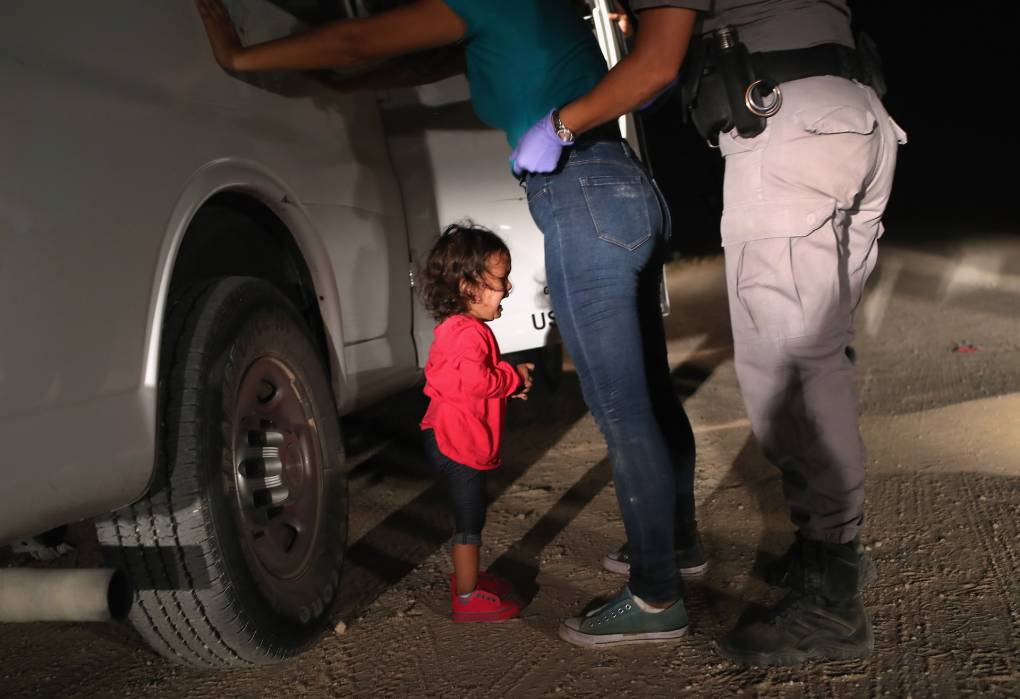
"caption": "A 2-year-old Honduran asylum-seeker cries as her mother is searched and detained near the U.S.-Mexico border on June 12, 2018, in McAllen, Texas. The asylum-seekers had rafted across the Rio Grande from Mexico and were detained by U.S. Border Patrol agents before being sent to a processing center for possible separation.",
"description": null,
"title": "Border Patrol Agents Detain Migrants Near US-Mexico Border",
"credit": "John Moore/Getty Images",
"status": "inherit",
"isLoading": false,
"fetchFailed": false
},
"news_11798041": {
"type": "attachments",
"id": "news_11798041",
"meta": {
"index": "attachments_1716263798",
"site": "news",
"id": "11798041",
"found": true
},
"parent": 11798037,
"imgSizes": {
"apple_news_ca_landscape_5_5": {
"file": "https://ww2.kqed.org/app/uploads/sites/10/2020/01/RS40905_GettyImages-527188674-qut-1044x783.jpg",
"width": 1044,
"mimeType": "image/jpeg",
"height": 783
},
"apple_news_ca_square_4_0": {
"file": "https://ww2.kqed.org/app/uploads/sites/10/2020/01/RS40905_GettyImages-527188674-qut-470x470.jpg",
"width": 470,
"mimeType": "image/jpeg",
"height": 470
},
"twentyfourteen-full-width": {
"file": "https://ww2.kqed.org/app/uploads/sites/10/2020/01/RS40905_GettyImages-527188674-qut-1038x576.jpg",
"width": 1038,
"mimeType": "image/jpeg",
"height": 576
},
"thumbnail": {
"file": "https://ww2.kqed.org/app/uploads/sites/10/2020/01/RS40905_GettyImages-527188674-qut-160x107.jpg",
"width": 160,
"mimeType": "image/jpeg",
"height": 107
},
"post-thumbnail": {
"file": "https://ww2.kqed.org/app/uploads/sites/10/2020/01/RS40905_GettyImages-527188674-qut-672x372.jpg",
"width": 672,
"mimeType": "image/jpeg",
"height": 372
},
"kqedFullSize": {
"file": "https://ww2.kqed.org/app/uploads/sites/10/2020/01/RS40905_GettyImages-527188674-qut.jpg",
"width": 1920,
"height": 1280
},
"apple_news_ca_landscape_4_7": {
"file": "https://ww2.kqed.org/app/uploads/sites/10/2020/01/RS40905_GettyImages-527188674-qut-632x474.jpg",
"width": 632,
"mimeType": "image/jpeg",
"height": 474
},
"large": {
"file": "https://ww2.kqed.org/app/uploads/sites/10/2020/01/RS40905_GettyImages-527188674-qut-1020x680.jpg",
"width": 1020,
"mimeType": "image/jpeg",
"height": 680
},
"apple_news_ca_landscape_4_0": {
"file": "https://ww2.kqed.org/app/uploads/sites/10/2020/01/RS40905_GettyImages-527188674-qut-536x402.jpg",
"width": 536,
"mimeType": "image/jpeg",
"height": 402
},
"apple_news_ca_portrait_12_9": {
"file": "https://ww2.kqed.org/app/uploads/sites/10/2020/01/RS40905_GettyImages-527188674-qut-1122x1280.jpg",
"width": 1122,
"mimeType": "image/jpeg",
"height": 1280
},
"medium": {
"file": "https://ww2.kqed.org/app/uploads/sites/10/2020/01/RS40905_GettyImages-527188674-qut-800x533.jpg",
"width": 800,
"mimeType": "image/jpeg",
"height": 533
},
"apple_news_ca_portrait_4_0": {
"file": "https://ww2.kqed.org/app/uploads/sites/10/2020/01/RS40905_GettyImages-527188674-qut-354x472.jpg",
"width": 354,
"mimeType": "image/jpeg",
"height": 472
},
"apple_news_ca_portrait_9_7": {
"file": "https://ww2.kqed.org/app/uploads/sites/10/2020/01/RS40905_GettyImages-527188674-qut-840x1120.jpg",
"width": 840,
"mimeType": "image/jpeg",
"height": 1120
},
"apple_news_ca_landscape_12_9": {
"file": "https://ww2.kqed.org/app/uploads/sites/10/2020/01/RS40905_GettyImages-527188674-qut-1832x1280.jpg",
"width": 1832,
"mimeType": "image/jpeg",
"height": 1280
},
"apple_news_ca_square_9_7": {
"file": "https://ww2.kqed.org/app/uploads/sites/10/2020/01/RS40905_GettyImages-527188674-qut-1104x1104.jpg",
"width": 1104,
"mimeType": "image/jpeg",
"height": 1104
},
"apple_news_ca_portrait_4_7": {
"file": "https://ww2.kqed.org/app/uploads/sites/10/2020/01/RS40905_GettyImages-527188674-qut-414x552.jpg",
"width": 414,
"mimeType": "image/jpeg",
"height": 552
},
"apple_news_ca_square_12_9": {
"file": "https://ww2.kqed.org/app/uploads/sites/10/2020/01/RS40905_GettyImages-527188674-qut-1472x1280.jpg",
"width": 1472,
"mimeType": "image/jpeg",
"height": 1280
},
"apple_news_ca_portrait_5_5": {
"file": "https://ww2.kqed.org/app/uploads/sites/10/2020/01/RS40905_GettyImages-527188674-qut-687x916.jpg",
"width": 687,
"mimeType": "image/jpeg",
"height": 916
},
"full-width": {
"file": "https://ww2.kqed.org/app/uploads/sites/10/2020/01/RS40905_GettyImages-527188674-qut-1920x1280.jpg",
"width": 1920,
"mimeType": "image/jpeg",
"height": 1280
},
"apple_news_ca_square_4_7": {
"file": "https://ww2.kqed.org/app/uploads/sites/10/2020/01/RS40905_GettyImages-527188674-qut-550x550.jpg",
"width": 550,
"mimeType": "image/jpeg",
"height": 550
},
"apple_news_ca_landscape_9_7": {
"file": "https://ww2.kqed.org/app/uploads/sites/10/2020/01/RS40905_GettyImages-527188674-qut-1376x1032.jpg",
"width": 1376,
"mimeType": "image/jpeg",
"height": 1032
},
"apple_news_ca_square_5_5": {
"file": "https://ww2.kqed.org/app/uploads/sites/10/2020/01/RS40905_GettyImages-527188674-qut-912x912.jpg",
"width": 912,
"mimeType": "image/jpeg",
"height": 912
}
},
"publishDate": 1579997064,
"modified": 1579997184,
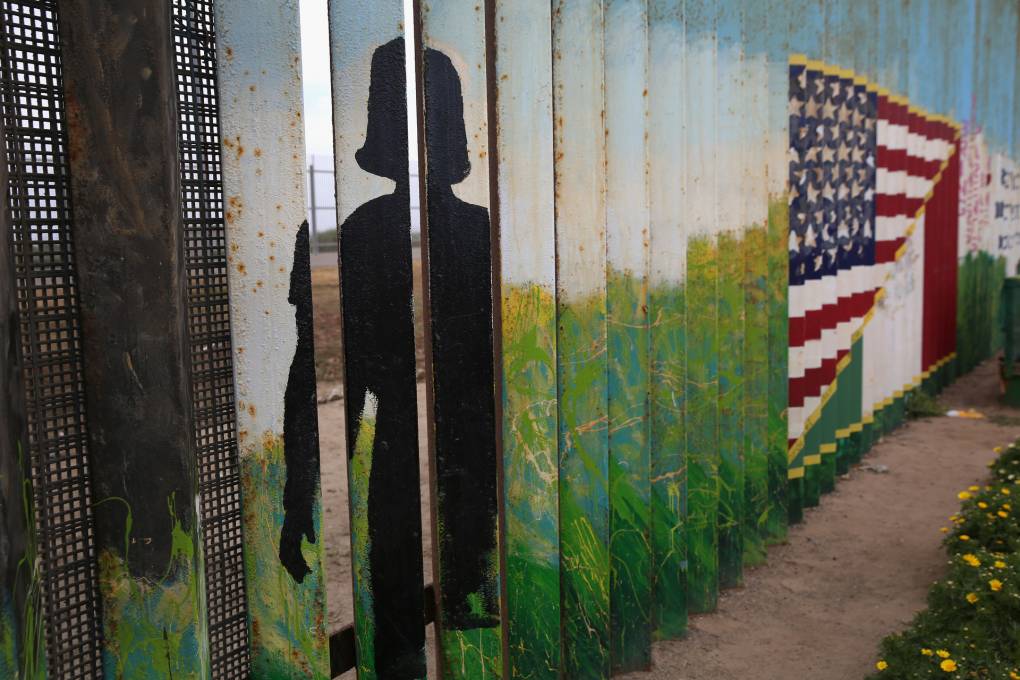
"caption": "Friendship Park was inaugurated by first lady Pat Nixon in 1971 as a symbol of bilateral bonds. The half-acre plaza separating San Diego and Tijuana has hosted cross-border yoga classes, festivals and religious services.",
"description": "Friendship Park was inaugurated by first lady Pat Nixon in 1971 as a symbol of bilateral bonds. The half-acre plaza separating San Diego and Tijuana has hosted cross-border yoga classes, festivals and religious services.",
"title": "Friendship Park was inaugurated by first lady Pat Nixon in 1971 as a symbol of bilateral bonds. The half-acre plaza separating San Diego and Tijuana has hosted cross-border yoga classes, festivals and religious services.",
"credit": "John Moore/Getty Images",
"status": "inherit",
"isLoading": false,
"fetchFailed": false
},
"news_11797588": {
"type": "attachments",
"id": "news_11797588",
"meta": {
"index": "attachments_1716263798",
"site": "news",
"id": "11797588",
"found": true
},
"parent": 11797579,
"imgSizes": {
"apple_news_ca_landscape_5_5": {
"file": "https://ww2.kqed.org/app/uploads/sites/10/2020/01/RS40888_IMG_1720-1-qut-1044x783.jpg",
"width": 1044,
"mimeType": "image/jpeg",
"height": 783
},
"apple_news_ca_square_4_0": {
"file": "https://ww2.kqed.org/app/uploads/sites/10/2020/01/RS40888_IMG_1720-1-qut-470x470.jpg",
"width": 470,
"mimeType": "image/jpeg",
"height": 470
},
"twentyfourteen-full-width": {
"file": "https://ww2.kqed.org/app/uploads/sites/10/2020/01/RS40888_IMG_1720-1-qut-1038x576.jpg",
"width": 1038,
"mimeType": "image/jpeg",
"height": 576
},
"thumbnail": {
"file": "https://ww2.kqed.org/app/uploads/sites/10/2020/01/RS40888_IMG_1720-1-qut-160x122.jpg",
"width": 160,
"mimeType": "image/jpeg",
"height": 122
},
"post-thumbnail": {
"file": "https://ww2.kqed.org/app/uploads/sites/10/2020/01/RS40888_IMG_1720-1-qut-672x372.jpg",
"width": 672,
"mimeType": "image/jpeg",
"height": 372
},
"kqedFullSize": {
"file": "https://ww2.kqed.org/app/uploads/sites/10/2020/01/RS40888_IMG_1720-1-qut.jpg",
"width": 1920,
"height": 1464
},
"apple_news_ca_landscape_4_7": {
"file": "https://ww2.kqed.org/app/uploads/sites/10/2020/01/RS40888_IMG_1720-1-qut-632x474.jpg",
"width": 632,
"mimeType": "image/jpeg",
"height": 474
},
"large": {
"file": "https://ww2.kqed.org/app/uploads/sites/10/2020/01/RS40888_IMG_1720-1-qut-1020x778.jpg",
"width": 1020,
"mimeType": "image/jpeg",
"height": 778
},
"apple_news_ca_landscape_4_0": {
"file": "https://ww2.kqed.org/app/uploads/sites/10/2020/01/RS40888_IMG_1720-1-qut-536x402.jpg",
"width": 536,
"mimeType": "image/jpeg",
"height": 402
},
"apple_news_ca_portrait_12_9": {
"file": "https://ww2.kqed.org/app/uploads/sites/10/2020/01/RS40888_IMG_1720-1-qut-1122x1464.jpg",
"width": 1122,
"mimeType": "image/jpeg",
"height": 1464
},
"medium": {
"file": "https://ww2.kqed.org/app/uploads/sites/10/2020/01/RS40888_IMG_1720-1-qut-800x610.jpg",
"width": 800,
"mimeType": "image/jpeg",
"height": 610
},
"apple_news_ca_portrait_4_0": {
"file": "https://ww2.kqed.org/app/uploads/sites/10/2020/01/RS40888_IMG_1720-1-qut-354x472.jpg",
"width": 354,
"mimeType": "image/jpeg",
"height": 472
},
"apple_news_ca_portrait_9_7": {
"file": "https://ww2.kqed.org/app/uploads/sites/10/2020/01/RS40888_IMG_1720-1-qut-840x1120.jpg",
"width": 840,
"mimeType": "image/jpeg",
"height": 1120
},
"apple_news_ca_landscape_12_9": {
"file": "https://ww2.kqed.org/app/uploads/sites/10/2020/01/RS40888_IMG_1720-1-qut-1832x1374.jpg",
"width": 1832,
"mimeType": "image/jpeg",
"height": 1374
},
"apple_news_ca_square_9_7": {
"file": "https://ww2.kqed.org/app/uploads/sites/10/2020/01/RS40888_IMG_1720-1-qut-1104x1104.jpg",
"width": 1104,
"mimeType": "image/jpeg",
"height": 1104
},
"apple_news_ca_portrait_4_7": {
"file": "https://ww2.kqed.org/app/uploads/sites/10/2020/01/RS40888_IMG_1720-1-qut-414x552.jpg",
"width": 414,
"mimeType": "image/jpeg",
"height": 552
},
"apple_news_ca_square_12_9": {
"file": "https://ww2.kqed.org/app/uploads/sites/10/2020/01/RS40888_IMG_1720-1-qut-1472x1464.jpg",
"width": 1472,
"mimeType": "image/jpeg",
"height": 1464
},
"apple_news_ca_portrait_5_5": {
"file": "https://ww2.kqed.org/app/uploads/sites/10/2020/01/RS40888_IMG_1720-1-qut-687x916.jpg",
"width": 687,
"mimeType": "image/jpeg",
"height": 916
},
"full-width": {
"file": "https://ww2.kqed.org/app/uploads/sites/10/2020/01/RS40888_IMG_1720-1-qut-1920x1464.jpg",
"width": 1920,
"mimeType": "image/jpeg",
"height": 1464
},
"apple_news_ca_square_4_7": {
"file": "https://ww2.kqed.org/app/uploads/sites/10/2020/01/RS40888_IMG_1720-1-qut-550x550.jpg",
"width": 550,
"mimeType": "image/jpeg",
"height": 550
},
"apple_news_ca_landscape_9_7": {
"file": "https://ww2.kqed.org/app/uploads/sites/10/2020/01/RS40888_IMG_1720-1-qut-1376x1032.jpg",
"width": 1376,
"mimeType": "image/jpeg",
"height": 1032
},
"apple_news_ca_square_5_5": {
"file": "https://ww2.kqed.org/app/uploads/sites/10/2020/01/RS40888_IMG_1720-1-qut-912x912.jpg",
"width": 912,
"mimeType": "image/jpeg",
"height": 912
}
},
"publishDate": 1579818373,
"modified": 1579831157,
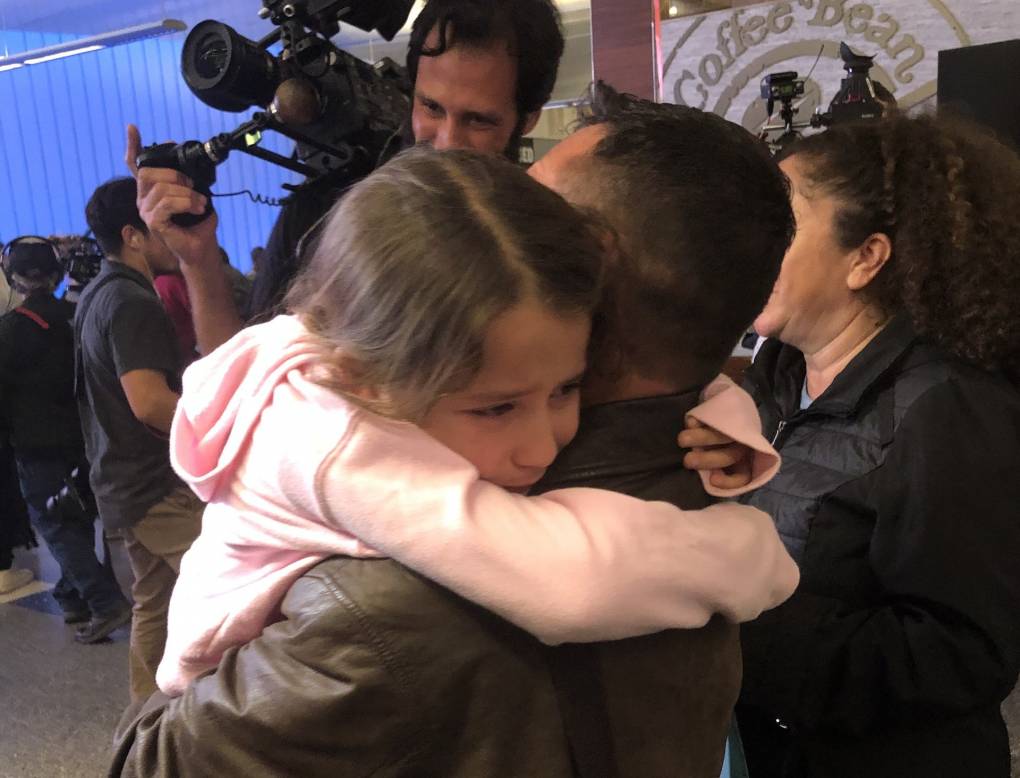
"caption": "Esvin Fernando Arredondo hugs his youngest daughter Alison, 7, at Los Angeles International Airport as his wife Cleivi Jerez stands next to him on Jan. 22, 2020. Arredondo, an asylum-seeker from Guatemala, had not seen his three daughters or wife in nearly two years.",
"description": "Esvin Fernando Arredondo hugs his youngest daughter Alison, 7, at Los Angeles International Airport as his wife Cleivi Jerez stands next to him on Jan. 22, 2020. Arredondo, an asylum seeker from Guatemala, had not seen his three daughters or wife in nearly two years.",
"title": "RS40888_IMG_1720 (1)-qut",
"credit": "Xavier Rosas/Kids in Need of Defense",
"status": "inherit",
"isLoading": false,
"fetchFailed": false
},
"news_11796924": {
"type": "attachments",
"id": "news_11796924",
"meta": {
"index": "attachments_1716263798",
"site": "news",
"id": "11796924",
"found": true
},
"parent": 11796825,
"imgSizes": {
"apple_news_ca_landscape_5_5": {
"file": "https://ww2.kqed.org/app/uploads/sites/10/2020/01/01172020_asylum-seeker_mexico-qut-1044x783.jpg",
"width": 1044,
"mimeType": "image/jpeg",
"height": 783
},
"apple_news_ca_square_4_0": {
"file": "https://ww2.kqed.org/app/uploads/sites/10/2020/01/01172020_asylum-seeker_mexico-qut-470x470.jpg",
"width": 470,
"mimeType": "image/jpeg",
"height": 470
},
"twentyfourteen-full-width": {
"file": "https://ww2.kqed.org/app/uploads/sites/10/2020/01/01172020_asylum-seeker_mexico-qut-1038x576.jpg",
"width": 1038,
"mimeType": "image/jpeg",
"height": 576
},
"thumbnail": {
"file": "https://ww2.kqed.org/app/uploads/sites/10/2020/01/01172020_asylum-seeker_mexico-qut-160x106.jpg",
"width": 160,
"mimeType": "image/jpeg",
"height": 106
},
"post-thumbnail": {
"file": "https://ww2.kqed.org/app/uploads/sites/10/2020/01/01172020_asylum-seeker_mexico-qut-672x372.jpg",
"width": 672,
"mimeType": "image/jpeg",
"height": 372
},
"kqedFullSize": {
"file": "https://ww2.kqed.org/app/uploads/sites/10/2020/01/01172020_asylum-seeker_mexico-qut.jpg",
"width": 1800,
"height": 1198
},
"apple_news_ca_landscape_4_7": {
"file": "https://ww2.kqed.org/app/uploads/sites/10/2020/01/01172020_asylum-seeker_mexico-qut-632x474.jpg",
"width": 632,
"mimeType": "image/jpeg",
"height": 474
},
"large": {
"file": "https://ww2.kqed.org/app/uploads/sites/10/2020/01/01172020_asylum-seeker_mexico-qut-1020x679.jpg",
"width": 1020,
"mimeType": "image/jpeg",
"height": 679
},
"apple_news_ca_landscape_4_0": {
"file": "https://ww2.kqed.org/app/uploads/sites/10/2020/01/01172020_asylum-seeker_mexico-qut-536x402.jpg",
"width": 536,
"mimeType": "image/jpeg",
"height": 402
},
"apple_news_ca_portrait_12_9": {
"file": "https://ww2.kqed.org/app/uploads/sites/10/2020/01/01172020_asylum-seeker_mexico-qut-1122x1198.jpg",
"width": 1122,
"mimeType": "image/jpeg",
"height": 1198
},
"medium": {
"file": "https://ww2.kqed.org/app/uploads/sites/10/2020/01/01172020_asylum-seeker_mexico-qut-800x532.jpg",
"width": 800,
"mimeType": "image/jpeg",
"height": 532
},
"apple_news_ca_portrait_4_0": {
"file": "https://ww2.kqed.org/app/uploads/sites/10/2020/01/01172020_asylum-seeker_mexico-qut-354x472.jpg",
"width": 354,
"mimeType": "image/jpeg",
"height": 472
},
"apple_news_ca_portrait_9_7": {
"file": "https://ww2.kqed.org/app/uploads/sites/10/2020/01/01172020_asylum-seeker_mexico-qut-840x1120.jpg",
"width": 840,
"mimeType": "image/jpeg",
"height": 1120
},
"apple_news_ca_square_9_7": {
"file": "https://ww2.kqed.org/app/uploads/sites/10/2020/01/01172020_asylum-seeker_mexico-qut-1104x1104.jpg",
"width": 1104,
"mimeType": "image/jpeg",
"height": 1104
},
"apple_news_ca_portrait_4_7": {
"file": "https://ww2.kqed.org/app/uploads/sites/10/2020/01/01172020_asylum-seeker_mexico-qut-414x552.jpg",
"width": 414,
"mimeType": "image/jpeg",
"height": 552
},
"apple_news_ca_square_12_9": {
"file": "https://ww2.kqed.org/app/uploads/sites/10/2020/01/01172020_asylum-seeker_mexico-qut-1472x1198.jpg",
"width": 1472,
"mimeType": "image/jpeg",
"height": 1198
},
"apple_news_ca_portrait_5_5": {
"file": "https://ww2.kqed.org/app/uploads/sites/10/2020/01/01172020_asylum-seeker_mexico-qut-687x916.jpg",
"width": 687,
"mimeType": "image/jpeg",
"height": 916
},
"apple_news_ca_square_4_7": {
"file": "https://ww2.kqed.org/app/uploads/sites/10/2020/01/01172020_asylum-seeker_mexico-qut-550x550.jpg",
"width": 550,
"mimeType": "image/jpeg",
"height": 550
},
"apple_news_ca_landscape_9_7": {
"file": "https://ww2.kqed.org/app/uploads/sites/10/2020/01/01172020_asylum-seeker_mexico-qut-1376x1032.jpg",
"width": 1376,
"mimeType": "image/jpeg",
"height": 1032
},
"apple_news_ca_square_5_5": {
"file": "https://ww2.kqed.org/app/uploads/sites/10/2020/01/01172020_asylum-seeker_mexico-qut-912x912.jpg",
"width": 912,
"mimeType": "image/jpeg",
"height": 912
}
},
"publishDate": 1579314792,
"modified": 1579314973,
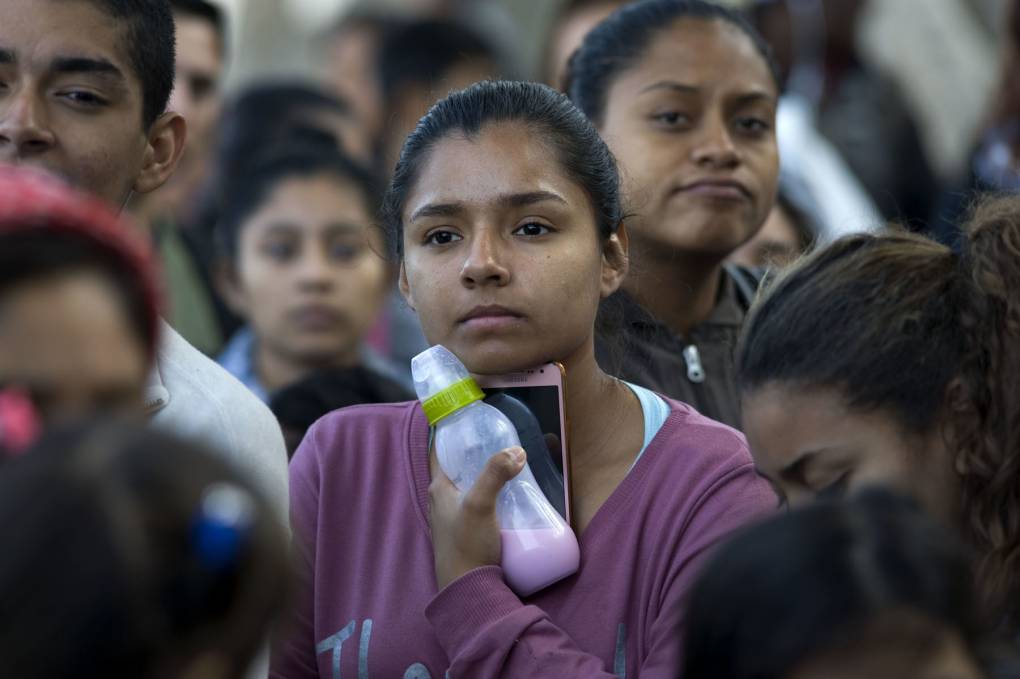
"caption": "A woman waits to hear her place on a list of people waiting in Tijuana, Mexico, on Nov. 18, 2018, to seek asylum in the U.S.",
"description": "A woman waits to hear her place on a list of people waiting in Tijuana, Mexico, on Nov. 18, 2018, to seek asylum in the U.S.",
"title": "01172020_asylum-seeker_mexico-qut",
"credit": "David Maung/KQED",
"status": "inherit",
"isLoading": false,
"fetchFailed": false
},
"news_11796521": {
"type": "attachments",
"id": "news_11796521",
"meta": {
"index": "attachments_1716263798",
"site": "news",
"id": "11796521",
"found": true
},
"parent": 11796517,
"imgSizes": {
"apple_news_ca_landscape_5_5": {
"file": "https://ww2.kqed.org/app/uploads/sites/10/2020/01/incompetent_011620_final-1044x783.jpg",
"width": 1044,
"mimeType": "image/jpeg",
"height": 783
},
"apple_news_ca_square_4_0": {
"file": "https://ww2.kqed.org/app/uploads/sites/10/2020/01/incompetent_011620_final-470x470.jpg",
"width": 470,
"mimeType": "image/jpeg",
"height": 470
},
"twentyfourteen-full-width": {
"file": "https://ww2.kqed.org/app/uploads/sites/10/2020/01/incompetent_011620_final-1038x576.jpg",
"width": 1038,
"mimeType": "image/jpeg",
"height": 576
},
"thumbnail": {
"file": "https://ww2.kqed.org/app/uploads/sites/10/2020/01/incompetent_011620_final-160x110.jpg",
"width": 160,
"mimeType": "image/jpeg",
"height": 110
},
"post-thumbnail": {
"file": "https://ww2.kqed.org/app/uploads/sites/10/2020/01/incompetent_011620_final-672x372.jpg",
"width": 672,
"mimeType": "image/jpeg",
"height": 372
},
"kqedFullSize": {
"file": "https://ww2.kqed.org/app/uploads/sites/10/2020/01/incompetent_011620_final.jpg",
"width": 1920,
"height": 1314
},
"apple_news_ca_landscape_4_7": {
"file": "https://ww2.kqed.org/app/uploads/sites/10/2020/01/incompetent_011620_final-632x474.jpg",
"width": 632,
"mimeType": "image/jpeg",
"height": 474
},
"large": {
"file": "https://ww2.kqed.org/app/uploads/sites/10/2020/01/incompetent_011620_final-1020x698.jpg",
"width": 1020,
"mimeType": "image/jpeg",
"height": 698
},
"apple_news_ca_landscape_4_0": {
"file": "https://ww2.kqed.org/app/uploads/sites/10/2020/01/incompetent_011620_final-536x402.jpg",
"width": 536,
"mimeType": "image/jpeg",
"height": 402
},
"apple_news_ca_portrait_12_9": {
"file": "https://ww2.kqed.org/app/uploads/sites/10/2020/01/incompetent_011620_final-1122x1314.jpg",
"width": 1122,
"mimeType": "image/jpeg",
"height": 1314
},
"medium": {
"file": "https://ww2.kqed.org/app/uploads/sites/10/2020/01/incompetent_011620_final-800x548.jpg",
"width": 800,
"mimeType": "image/jpeg",
"height": 548
},
"apple_news_ca_portrait_4_0": {
"file": "https://ww2.kqed.org/app/uploads/sites/10/2020/01/incompetent_011620_final-354x472.jpg",
"width": 354,
"mimeType": "image/jpeg",
"height": 472
},
"apple_news_ca_portrait_9_7": {
"file": "https://ww2.kqed.org/app/uploads/sites/10/2020/01/incompetent_011620_final-840x1120.jpg",
"width": 840,
"mimeType": "image/jpeg",
"height": 1120
},
"apple_news_ca_landscape_12_9": {
"file": "https://ww2.kqed.org/app/uploads/sites/10/2020/01/incompetent_011620_final-1832x1314.jpg",
"width": 1832,
"mimeType": "image/jpeg",
"height": 1314
},
"apple_news_ca_square_9_7": {
"file": "https://ww2.kqed.org/app/uploads/sites/10/2020/01/incompetent_011620_final-1104x1104.jpg",
"width": 1104,
"mimeType": "image/jpeg",
"height": 1104
},
"apple_news_ca_portrait_4_7": {
"file": "https://ww2.kqed.org/app/uploads/sites/10/2020/01/incompetent_011620_final-414x552.jpg",
"width": 414,
"mimeType": "image/jpeg",
"height": 552
},
"apple_news_ca_square_12_9": {
"file": "https://ww2.kqed.org/app/uploads/sites/10/2020/01/incompetent_011620_final-1472x1314.jpg",
"width": 1472,
"mimeType": "image/jpeg",
"height": 1314
},
"apple_news_ca_portrait_5_5": {
"file": "https://ww2.kqed.org/app/uploads/sites/10/2020/01/incompetent_011620_final-687x916.jpg",
"width": 687,
"mimeType": "image/jpeg",
"height": 916
},
"full-width": {
"file": "https://ww2.kqed.org/app/uploads/sites/10/2020/01/incompetent_011620_final-1920x1314.jpg",
"width": 1920,
"mimeType": "image/jpeg",
"height": 1314
},
"apple_news_ca_square_4_7": {
"file": "https://ww2.kqed.org/app/uploads/sites/10/2020/01/incompetent_011620_final-550x550.jpg",
"width": 550,
"mimeType": "image/jpeg",
"height": 550
},
"apple_news_ca_landscape_9_7": {
"file": "https://ww2.kqed.org/app/uploads/sites/10/2020/01/incompetent_011620_final-1376x1032.jpg",
"width": 1376,
"mimeType": "image/jpeg",
"height": 1032
},
"apple_news_ca_square_5_5": {
"file": "https://ww2.kqed.org/app/uploads/sites/10/2020/01/incompetent_011620_final-912x912.jpg",
"width": 912,
"mimeType": "image/jpeg",
"height": 912
}
},
"publishDate": 1579220306,
"modified": 1579220340,
"caption": null,
"description": null,
"title": "incompetent_011620_final",
"credit": null,
"status": "inherit",
"isLoading": false,
"fetchFailed": false
},
"news_11796239": {
"type": "attachments",
"id": "news_11796239",
"meta": {
"index": "attachments_1716263798",
"site": "news",
"id": "11796239",
"found": true
},
"parent": 11796238,
"imgSizes": {
"apple_news_ca_landscape_5_5": {
"file": "https://ww2.kqed.org/app/uploads/sites/10/2020/01/ap_19243610882993_wide-6f61c725415bd8bfdb12b1369e909c5a79087e7c-1044x783.jpg",
"width": 1044,
"mimeType": "image/jpeg",
"height": 783
},
"apple_news_ca_square_4_0": {
"file": "https://ww2.kqed.org/app/uploads/sites/10/2020/01/ap_19243610882993_wide-6f61c725415bd8bfdb12b1369e909c5a79087e7c-470x470.jpg",
"width": 470,
"mimeType": "image/jpeg",
"height": 470
},
"twentyfourteen-full-width": {
"file": "https://ww2.kqed.org/app/uploads/sites/10/2020/01/ap_19243610882993_wide-6f61c725415bd8bfdb12b1369e909c5a79087e7c-1038x576.jpg",
"width": 1038,
"mimeType": "image/jpeg",
"height": 576
},
"thumbnail": {
"file": "https://ww2.kqed.org/app/uploads/sites/10/2020/01/ap_19243610882993_wide-6f61c725415bd8bfdb12b1369e909c5a79087e7c-160x90.jpg",
"width": 160,
"mimeType": "image/jpeg",
"height": 90
},
"post-thumbnail": {
"file": "https://ww2.kqed.org/app/uploads/sites/10/2020/01/ap_19243610882993_wide-6f61c725415bd8bfdb12b1369e909c5a79087e7c-672x372.jpg",
"width": 672,
"mimeType": "image/jpeg",
"height": 372
},
"kqedFullSize": {
"file": "https://ww2.kqed.org/app/uploads/sites/10/2020/01/ap_19243610882993_wide-6f61c725415bd8bfdb12b1369e909c5a79087e7c-e1579129489373.jpg",
"width": 1920,
"height": 1080
},
"apple_news_ca_landscape_4_7": {
"file": "https://ww2.kqed.org/app/uploads/sites/10/2020/01/ap_19243610882993_wide-6f61c725415bd8bfdb12b1369e909c5a79087e7c-632x474.jpg",
"width": 632,
"mimeType": "image/jpeg",
"height": 474
},
"large": {
"file": "https://ww2.kqed.org/app/uploads/sites/10/2020/01/ap_19243610882993_wide-6f61c725415bd8bfdb12b1369e909c5a79087e7c-1020x574.jpg",
"width": 1020,
"mimeType": "image/jpeg",
"height": 574
},
"complete_open_graph": {
"file": "https://ww2.kqed.org/app/uploads/sites/10/2020/01/ap_19243610882993_wide-6f61c725415bd8bfdb12b1369e909c5a79087e7c-1200x675.jpg",
"width": 1200,
"mimeType": "image/jpeg",
"height": 675
},
"apple_news_ca_landscape_4_0": {
"file": "https://ww2.kqed.org/app/uploads/sites/10/2020/01/ap_19243610882993_wide-6f61c725415bd8bfdb12b1369e909c5a79087e7c-536x402.jpg",
"width": 536,
"mimeType": "image/jpeg",
"height": 402
},
"apple_news_ca_portrait_12_9": {
"file": "https://ww2.kqed.org/app/uploads/sites/10/2020/01/ap_19243610882993_wide-6f61c725415bd8bfdb12b1369e909c5a79087e7c-1122x1496.jpg",
"width": 1122,
"mimeType": "image/jpeg",
"height": 1496
},
"medium": {
"file": "https://ww2.kqed.org/app/uploads/sites/10/2020/01/ap_19243610882993_wide-6f61c725415bd8bfdb12b1369e909c5a79087e7c-800x450.jpg",
"width": 800,
"mimeType": "image/jpeg",
"height": 450
},
"apple_news_ca_portrait_4_0": {
"file": "https://ww2.kqed.org/app/uploads/sites/10/2020/01/ap_19243610882993_wide-6f61c725415bd8bfdb12b1369e909c5a79087e7c-354x472.jpg",
"width": 354,
"mimeType": "image/jpeg",
"height": 472
},
"apple_news_ca_portrait_9_7": {
"file": "https://ww2.kqed.org/app/uploads/sites/10/2020/01/ap_19243610882993_wide-6f61c725415bd8bfdb12b1369e909c5a79087e7c-840x1120.jpg",
"width": 840,
"mimeType": "image/jpeg",
"height": 1120
},
"apple_news_ca_landscape_12_9": {
"file": "https://ww2.kqed.org/app/uploads/sites/10/2020/01/ap_19243610882993_wide-6f61c725415bd8bfdb12b1369e909c5a79087e7c-1832x1374.jpg",
"width": 1832,
"mimeType": "image/jpeg",
"height": 1374
},
"apple_news_ca_square_9_7": {
"file": "https://ww2.kqed.org/app/uploads/sites/10/2020/01/ap_19243610882993_wide-6f61c725415bd8bfdb12b1369e909c5a79087e7c-1104x1104.jpg",
"width": 1104,
"mimeType": "image/jpeg",
"height": 1104
},
"apple_news_ca_portrait_4_7": {
"file": "https://ww2.kqed.org/app/uploads/sites/10/2020/01/ap_19243610882993_wide-6f61c725415bd8bfdb12b1369e909c5a79087e7c-414x552.jpg",
"width": 414,
"mimeType": "image/jpeg",
"height": 552
},
"apple_news_ca_square_12_9": {
"file": "https://ww2.kqed.org/app/uploads/sites/10/2020/01/ap_19243610882993_wide-6f61c725415bd8bfdb12b1369e909c5a79087e7c-1472x1472.jpg",
"width": 1472,
"mimeType": "image/jpeg",
"height": 1472
},
"apple_news_ca_portrait_5_5": {
"file": "https://ww2.kqed.org/app/uploads/sites/10/2020/01/ap_19243610882993_wide-6f61c725415bd8bfdb12b1369e909c5a79087e7c-687x916.jpg",
"width": 687,
"mimeType": "image/jpeg",
"height": 916
},
"full-width": {
"file": "https://ww2.kqed.org/app/uploads/sites/10/2020/01/ap_19243610882993_wide-6f61c725415bd8bfdb12b1369e909c5a79087e7c-1920x1080.jpg",
"width": 1920,
"mimeType": "image/jpeg",
"height": 1080
},
"apple_news_ca_square_4_7": {
"file": "https://ww2.kqed.org/app/uploads/sites/10/2020/01/ap_19243610882993_wide-6f61c725415bd8bfdb12b1369e909c5a79087e7c-550x550.jpg",
"width": 550,
"mimeType": "image/jpeg",
"height": 550
},
"apple_news_ca_landscape_9_7": {
"file": "https://ww2.kqed.org/app/uploads/sites/10/2020/01/ap_19243610882993_wide-6f61c725415bd8bfdb12b1369e909c5a79087e7c-1376x1032.jpg",
"width": 1376,
"mimeType": "image/jpeg",
"height": 1032
},
"apple_news_ca_square_5_5": {
"file": "https://ww2.kqed.org/app/uploads/sites/10/2020/01/ap_19243610882993_wide-6f61c725415bd8bfdb12b1369e909c5a79087e7c-912x912.jpg",
"width": 912,
"mimeType": "image/jpeg",
"height": 912
}
},
"publishDate": 1579129212,
"modified": 1579129480,
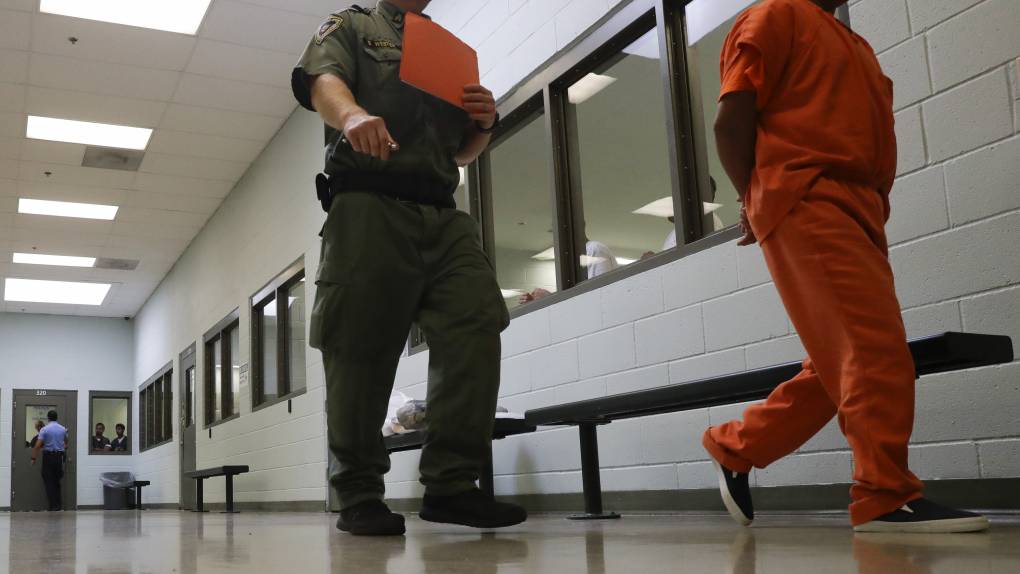
"caption": "A guard walks with a detainee in the intake area at the Adelanto ICE Processing Center in 2019. A previously confidential report obtained by NPR found \"negligent\" medical care and other problems at the facility.",
"description": "A guard walks with a detainee in the intake area at the Adelanto ICE Processing Center in 2019. A previously confidential report obtained by NPR found \"negligent\" medical care and other problems at the facility.",
"title": "A guard walks with a detainee in the intake area at the Adelanto ICE Processing Center in 2019. A previously confidential report obtained by NPR found \"negligent\" medical care and other problems at the facility.",
"credit": "Chris Carlson/AP",
"status": "inherit",
"isLoading": false,
"fetchFailed": false
},
"news_11781912": {
"type": "attachments",
"id": "news_11781912",
"meta": {
"index": "attachments_1716263798",
"site": "news",
"id": "11781912",
"found": true
},
"parent": 11781894,
"imgSizes": {
"apple_news_ca_landscape_5_5": {
"file": "https://ww2.kqed.org/app/uploads/sites/10/2019/10/Asylum-Seekers-1044x783.jpg",
"width": 1044,
"mimeType": "image/jpeg",
"height": 783
},
"apple_news_ca_square_4_0": {
"file": "https://ww2.kqed.org/app/uploads/sites/10/2019/10/Asylum-Seekers-470x470.jpg",
"width": 470,
"mimeType": "image/jpeg",
"height": 470
},
"twentyfourteen-full-width": {
"file": "https://ww2.kqed.org/app/uploads/sites/10/2019/10/Asylum-Seekers-1038x576.jpg",
"width": 1038,
"mimeType": "image/jpeg",
"height": 576
},
"thumbnail": {
"file": "https://ww2.kqed.org/app/uploads/sites/10/2019/10/Asylum-Seekers-160x106.jpg",
"width": 160,
"mimeType": "image/jpeg",
"height": 106
},
"post-thumbnail": {
"file": "https://ww2.kqed.org/app/uploads/sites/10/2019/10/Asylum-Seekers-672x372.jpg",
"width": 672,
"mimeType": "image/jpeg",
"height": 372
},
"kqedFullSize": {
"file": "https://ww2.kqed.org/app/uploads/sites/10/2019/10/Asylum-Seekers.jpg",
"width": 1800,
"height": 1198
},
"apple_news_ca_landscape_4_7": {
"file": "https://ww2.kqed.org/app/uploads/sites/10/2019/10/Asylum-Seekers-632x474.jpg",
"width": 632,
"mimeType": "image/jpeg",
"height": 474
},
"large": {
"file": "https://ww2.kqed.org/app/uploads/sites/10/2019/10/Asylum-Seekers-1020x679.jpg",
"width": 1020,
"mimeType": "image/jpeg",
"height": 679
},
"complete_open_graph": {
"file": "https://ww2.kqed.org/app/uploads/sites/10/2019/10/Asylum-Seekers-1200x799.jpg",
"width": 1200,
"mimeType": "image/jpeg",
"height": 799
},
"apple_news_ca_landscape_4_0": {
"file": "https://ww2.kqed.org/app/uploads/sites/10/2019/10/Asylum-Seekers-536x402.jpg",
"width": 536,
"mimeType": "image/jpeg",
"height": 402
},
"apple_news_ca_portrait_12_9": {
"file": "https://ww2.kqed.org/app/uploads/sites/10/2019/10/Asylum-Seekers-1122x1198.jpg",
"width": 1122,
"mimeType": "image/jpeg",
"height": 1198
},
"medium": {
"file": "https://ww2.kqed.org/app/uploads/sites/10/2019/10/Asylum-Seekers-800x532.jpg",
"width": 800,
"mimeType": "image/jpeg",
"height": 532
},
"apple_news_ca_portrait_4_0": {
"file": "https://ww2.kqed.org/app/uploads/sites/10/2019/10/Asylum-Seekers-354x472.jpg",
"width": 354,
"mimeType": "image/jpeg",
"height": 472
},
"apple_news_ca_portrait_9_7": {
"file": "https://ww2.kqed.org/app/uploads/sites/10/2019/10/Asylum-Seekers-840x1120.jpg",
"width": 840,
"mimeType": "image/jpeg",
"height": 1120
},
"apple_news_ca_square_9_7": {
"file": "https://ww2.kqed.org/app/uploads/sites/10/2019/10/Asylum-Seekers-1104x1104.jpg",
"width": 1104,
"mimeType": "image/jpeg",
"height": 1104
},
"apple_news_ca_portrait_4_7": {
"file": "https://ww2.kqed.org/app/uploads/sites/10/2019/10/Asylum-Seekers-414x552.jpg",
"width": 414,
"mimeType": "image/jpeg",
"height": 552
},
"apple_news_ca_square_12_9": {
"file": "https://ww2.kqed.org/app/uploads/sites/10/2019/10/Asylum-Seekers-1472x1198.jpg",
"width": 1472,
"mimeType": "image/jpeg",
"height": 1198
},
"apple_news_ca_portrait_5_5": {
"file": "https://ww2.kqed.org/app/uploads/sites/10/2019/10/Asylum-Seekers-687x916.jpg",
"width": 687,
"mimeType": "image/jpeg",
"height": 916
},
"apple_news_ca_square_4_7": {
"file": "https://ww2.kqed.org/app/uploads/sites/10/2019/10/Asylum-Seekers-550x550.jpg",
"width": 550,
"mimeType": "image/jpeg",
"height": 550
},
"apple_news_ca_landscape_9_7": {
"file": "https://ww2.kqed.org/app/uploads/sites/10/2019/10/Asylum-Seekers-1376x1032.jpg",
"width": 1376,
"mimeType": "image/jpeg",
"height": 1032
},
"apple_news_ca_square_5_5": {
"file": "https://ww2.kqed.org/app/uploads/sites/10/2019/10/Asylum-Seekers-912x912.jpg",
"width": 912,
"mimeType": "image/jpeg",
"height": 912
}
},
"publishDate": 1571789661,
"modified": 1579025908,
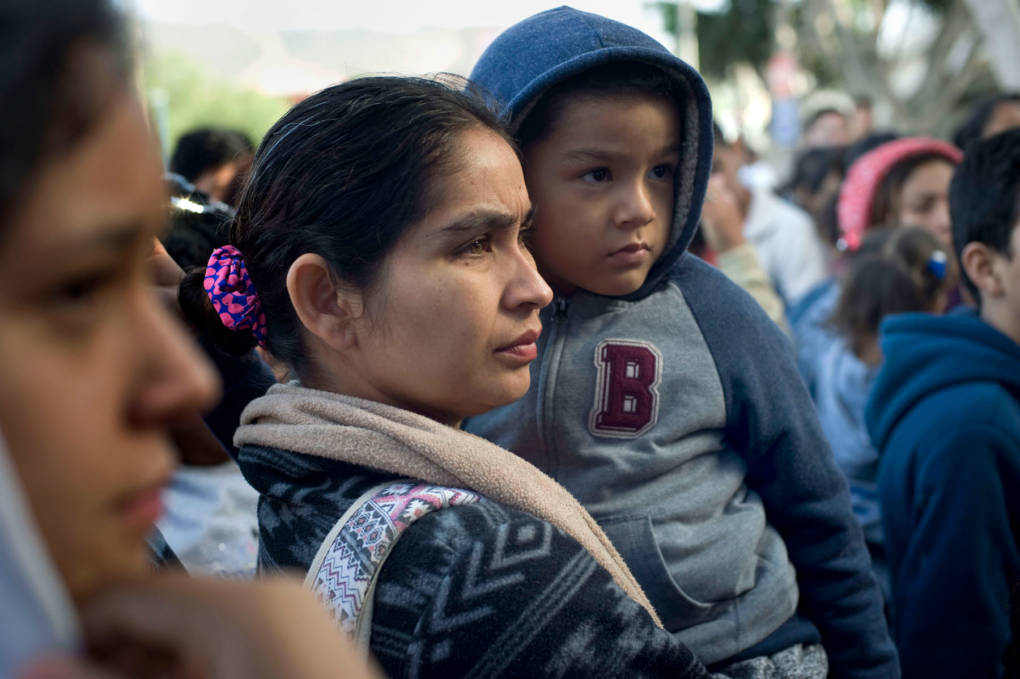
"caption": "A woman and child wait to hear their position in a list of people waiting at the U.S.-Mexico border to seek asylum in the U.S. in November 2018.",
"description": "A woman and child wait to hear their position on a list of people waiting at the U.S.-Mexico border to seek asylum in the U.S. in Nov. 2018.",
"title": "Asylum-Seekers",
"credit": "David Maung/Getty Images",
"status": "inherit",
"isLoading": false,
"fetchFailed": false
},
"news_11795594": {
"type": "attachments",
"id": "news_11795594",
"meta": {
"index": "attachments_1716263798",
"site": "news",
"id": "11795594",
"found": true
},
"parent": 11795477,
"imgSizes": {
"apple_news_ca_landscape_5_5": {
"file": "https://ww2.kqed.org/app/uploads/sites/10/2020/01/GettyImages-675216212-1044x783.jpg",
"width": 1044,
"mimeType": "image/jpeg",
"height": 783
},
"apple_news_ca_square_4_0": {
"file": "https://ww2.kqed.org/app/uploads/sites/10/2020/01/GettyImages-675216212-470x470.jpg",
"width": 470,
"mimeType": "image/jpeg",
"height": 470
},
"twentyfourteen-full-width": {
"file": "https://ww2.kqed.org/app/uploads/sites/10/2020/01/GettyImages-675216212-1038x576.jpg",
"width": 1038,
"mimeType": "image/jpeg",
"height": 576
},
"thumbnail": {
"file": "https://ww2.kqed.org/app/uploads/sites/10/2020/01/GettyImages-675216212-160x107.jpg",
"width": 160,
"mimeType": "image/jpeg",
"height": 107
},
"post-thumbnail": {
"file": "https://ww2.kqed.org/app/uploads/sites/10/2020/01/GettyImages-675216212-672x372.jpg",
"width": 672,
"mimeType": "image/jpeg",
"height": 372
},
"kqedFullSize": {
"file": "https://ww2.kqed.org/app/uploads/sites/10/2020/01/GettyImages-675216212-e1578704482384.jpg",
"width": 1920,
"height": 1280
},
"apple_news_ca_landscape_4_7": {
"file": "https://ww2.kqed.org/app/uploads/sites/10/2020/01/GettyImages-675216212-632x474.jpg",
"width": 632,
"mimeType": "image/jpeg",
"height": 474
},
"large": {
"file": "https://ww2.kqed.org/app/uploads/sites/10/2020/01/GettyImages-675216212-1020x680.jpg",
"width": 1020,
"mimeType": "image/jpeg",
"height": 680
},
"complete_open_graph": {
"file": "https://ww2.kqed.org/app/uploads/sites/10/2020/01/GettyImages-675216212-1200x800.jpg",
"width": 1200,
"mimeType": "image/jpeg",
"height": 800
},
"apple_news_ca_landscape_4_0": {
"file": "https://ww2.kqed.org/app/uploads/sites/10/2020/01/GettyImages-675216212-536x402.jpg",
"width": 536,
"mimeType": "image/jpeg",
"height": 402
},
"apple_news_ca_portrait_12_9": {
"file": "https://ww2.kqed.org/app/uploads/sites/10/2020/01/GettyImages-675216212-1122x1496.jpg",
"width": 1122,
"mimeType": "image/jpeg",
"height": 1496
},
"medium": {
"file": "https://ww2.kqed.org/app/uploads/sites/10/2020/01/GettyImages-675216212-800x533.jpg",
"width": 800,
"mimeType": "image/jpeg",
"height": 533
},
"apple_news_ca_portrait_4_0": {
"file": "https://ww2.kqed.org/app/uploads/sites/10/2020/01/GettyImages-675216212-354x472.jpg",
"width": 354,
"mimeType": "image/jpeg",
"height": 472
},
"apple_news_ca_portrait_9_7": {
"file": "https://ww2.kqed.org/app/uploads/sites/10/2020/01/GettyImages-675216212-840x1120.jpg",
"width": 840,
"mimeType": "image/jpeg",
"height": 1120
},
"apple_news_ca_landscape_12_9": {
"file": "https://ww2.kqed.org/app/uploads/sites/10/2020/01/GettyImages-675216212-1832x1374.jpg",
"width": 1832,
"mimeType": "image/jpeg",
"height": 1374
},
"apple_news_ca_square_9_7": {
"file": "https://ww2.kqed.org/app/uploads/sites/10/2020/01/GettyImages-675216212-1104x1104.jpg",
"width": 1104,
"mimeType": "image/jpeg",
"height": 1104
},
"apple_news_ca_portrait_4_7": {
"file": "https://ww2.kqed.org/app/uploads/sites/10/2020/01/GettyImages-675216212-414x552.jpg",
"width": 414,
"mimeType": "image/jpeg",
"height": 552
},
"apple_news_ca_square_12_9": {
"file": "https://ww2.kqed.org/app/uploads/sites/10/2020/01/GettyImages-675216212-1472x1472.jpg",
"width": 1472,
"mimeType": "image/jpeg",
"height": 1472
},
"apple_news_ca_portrait_5_5": {
"file": "https://ww2.kqed.org/app/uploads/sites/10/2020/01/GettyImages-675216212-687x916.jpg",
"width": 687,
"mimeType": "image/jpeg",
"height": 916
},
"full-width": {
"file": "https://ww2.kqed.org/app/uploads/sites/10/2020/01/GettyImages-675216212-1920x1280.jpg",
"width": 1920,
"mimeType": "image/jpeg",
"height": 1280
},
"apple_news_ca_square_4_7": {
"file": "https://ww2.kqed.org/app/uploads/sites/10/2020/01/GettyImages-675216212-550x550.jpg",
"width": 550,
"mimeType": "image/jpeg",
"height": 550
},
"apple_news_ca_landscape_9_7": {
"file": "https://ww2.kqed.org/app/uploads/sites/10/2020/01/GettyImages-675216212-1376x1032.jpg",
"width": 1376,
"mimeType": "image/jpeg",
"height": 1032
},
"apple_news_ca_square_5_5": {
"file": "https://ww2.kqed.org/app/uploads/sites/10/2020/01/GettyImages-675216212-912x912.jpg",
"width": 912,
"mimeType": "image/jpeg",
"height": 912
}
},
"publishDate": 1578704427,
"modified": 1578759914,
"caption": "The California Court of Appeal ruled that a state law limiting police collaboration with federal immigration authorities does not interfere with a charter city's rights.",
"description": "The California Court of Appeal ruled that a state law limiting police collaboration with federal immigration authorities does not interfere with a charter city's rights.",
"title": "The California Court of Appeal ruled that a state law limiting police collaboration with federal immigration authorities does not interfere with a charter city's rights.",
"credit": "Photo by Earl Gibson III/Getty Images for MoveOn.org",
"status": "inherit",
"isLoading": false,
"fetchFailed": false
}
},
"audioPlayerReducer": {
"postId": "stream_live",
"isPaused": true,
"isPlaying": false,
"pfsActive": false,
"pledgeModalIsOpen": true,
"playerDrawerIsOpen": false,
"liveAudioPlayStartedAt": 0,
"liveAudioPlayContext": ""
},
"authorsReducer": {
"byline_news_11799076": {
"type": "authors",
"id": "byline_news_11799076",
"meta": {
"override": true
},
"slug": "byline_news_11799076",
"name": "Associated Press",
"isLoading": false
},
"byline_news_11798037": {
"type": "authors",
"id": "byline_news_11798037",
"meta": {
"override": true
},
"slug": "byline_news_11798037",
"name": "\u003cstrong>Elliot Spagat\u003cbr />Associated Press\u003c/strong>",
"isLoading": false
},
"byline_news_11796238": {
"type": "authors",
"id": "byline_news_11796238",
"meta": {
"override": true
},
"slug": "byline_news_11796238",
"name": "Tom Dreisbach\u003cbr>NPR",
"isLoading": false
},
"tychehendricks": {
"type": "authors",
"id": "259",
"meta": {
"index": "authors_1716337520",
"id": "259",
"found": true
},
"name": "Tyche Hendricks",
"firstName": "Tyche",
"lastName": "Hendricks",
"slug": "tychehendricks",
"email": "thendricks@kqed.org",
"display_author_email": true,
"staff_mastheads": [
"news"
],
"title": "KQED Senior Editor, Immigration",
"bio": "\u003cspan style=\"font-weight: 400;\">Tyche Hendricks is KQED’s senior editor for immigration, leading coverage of the policy and politics that affect California’s immigrant communities. Her work for KQED’s radio and online audiences is also carried on NPR and other national outlets. She has been recognized with awards from the Radio and Television News Directors Association, the Society for Professional Journalists; the Education Writers Association; the Best of the West and the National Federation of Community Broadcasters. Before joining KQED in 2010, Tyche spent more than a dozen years as a newspaper reporter, notably at the \u003c/span>\u003ci>\u003cspan style=\"font-weight: 400;\">San Francisco Chronicle\u003c/span>\u003c/i>\u003cspan style=\"font-weight: 400;\">. At different times she has covered criminal justice, government and politics and urban planning. Tyche has taught in the MFA Creative Writing program at the University of San Francisco and at UC Berkeley’s Graduate School of Journalism, where she was co-director of a national immigration symposium for professional journalists. She is the author of \u003c/span>\u003ci>\u003cspan style=\"font-weight: 400;\">The Wind Doesn't Need a Passport: Stories from the U.S.-Mexico Borderlands\u003c/span>\u003c/i>\u003cspan style=\"font-weight: 400;\"> (University of California Press). \u003c/span>",
"avatar": "https://secure.gravatar.com/avatar/b8ee458e2731c2d43df86882ce17267e?s=600&d=blank&r=g",
"twitter": "tychehendricks",
"facebook": null,
"instagram": null,
"linkedin": null,
"sites": [
{
"site": "news",
"roles": [
"editor"
]
},
{
"site": "stateofhealth",
"roles": [
"editor"
]
}
],
"headData": {
"title": "Tyche Hendricks | KQED",
"description": "KQED Senior Editor, Immigration",
"ogImgSrc": "https://secure.gravatar.com/avatar/b8ee458e2731c2d43df86882ce17267e?s=600&d=blank&r=g",
"twImgSrc": "https://secure.gravatar.com/avatar/b8ee458e2731c2d43df86882ce17267e?s=600&d=blank&r=g"
},
"isLoading": false,
"link": "/author/tychehendricks"
},
"markfiore": {
"type": "authors",
"id": "3236",
"meta": {
"index": "authors_1716337520",
"id": "3236",
"found": true
},
"name": "Mark Fiore",
"firstName": "Mark",
"lastName": "Fiore",
"slug": "markfiore",
"email": "mark@markfiore.com",
"display_author_email": false,
"staff_mastheads": [
"news"
],
"title": "KQED News Cartoonist",
"bio": "\u003ca href=\"http://www.MarkFiore.com\">MarkFiore.com\u003c/a> | \u003ca href=\"https://twitter.com/markfiore\">Follow on Twitter\u003c/a> | \u003ca href=\"https://www.facebook.com/pages/Mark-Fiore-Animated-Political-Cartoons/94451707396?ref=bookmarks\">Facebook\u003c/a> | \u003ca href=\"mailto:mark@markfiore.com\">email\u003c/a>\r\n\r\nPulitzer Prize-winner, Mark Fiore, who the Wall Street Journal has called “the undisputed guru of the form,” creates animated political cartoons in San Francisco, where his work has been featured regularly on the San Francisco Chronicle’s web site, SFGate.com. His work has appeared on Newsweek.com, Slate.com, CBSNews.com, MotherJones.com, DailyKos.com and NPR’s web site. Fiore’s political animation has appeared on CNN, Frontline, Bill Moyers Journal, Salon.com and cable and broadcast outlets across the globe.\r\n\r\nBeginning his professional life by drawing traditional political cartoons for newspapers, Fiore’s work appeared in publications ranging from the Washington Post to the Los Angeles Times. In the late 1990s, he began to experiment with animating political cartoons and, after a short stint at the San Jose Mercury News as their staff cartoonist, Fiore devoted all his energies to animation.\r\nGrowing up in California, Fiore also spent a good portion of his life in the backwoods of Idaho. It was this combination that shaped him politically. Mark majored in political science at Colorado College, where, in a perfect send-off for a cartoonist, he received his diploma in 1991 as commencement speaker Dick Cheney smiled approvingly.\r\nMark Fiore was awarded the Pulitzer Prize for political cartooning in 2010, a Robert F. Kennedy Journalism Award in 2004 and has twice received an Online Journalism Award for commentary from the Online News Association (2002, 2008). Fiore has received two awards for his work in new media from the National Cartoonists Society (2001, 2002), and in 2006 received The James Madison Freedom of Information Award from The Society of Professional Journalists.",
"avatar": "https://secure.gravatar.com/avatar/fc4e2a612b15b67bad0c6f0e1db4ca9b?s=600&d=blank&r=g",
"twitter": "MarkFiore",
"facebook": null,
"instagram": "https://www.instagram.com/markfiore/?hl=en",
"linkedin": null,
"sites": [
{
"site": "arts",
"roles": [
"contributor"
]
},
{
"site": "news",
"roles": [
"editor"
]
},
{
"site": "futureofyou",
"roles": [
"editor"
]
},
{
"site": "science",
"roles": [
"editor"
]
}
],
"headData": {
"title": "Mark Fiore | KQED",
"description": "KQED News Cartoonist",
"ogImgSrc": "https://secure.gravatar.com/avatar/fc4e2a612b15b67bad0c6f0e1db4ca9b?s=600&d=blank&r=g",
"twImgSrc": "https://secure.gravatar.com/avatar/fc4e2a612b15b67bad0c6f0e1db4ca9b?s=600&d=blank&r=g"
},
"isLoading": false,
"link": "/author/markfiore"
},
"fjhabvala": {
"type": "authors",
"id": "8659",
"meta": {
"index": "authors_1716337520",
"id": "8659",
"found": true
},
"name": "Farida Jhabvala Romero",
"firstName": "Farida",
"lastName": "Jhabvala Romero",
"slug": "fjhabvala",
"email": "fjhabvala@kqed.org",
"display_author_email": true,
"staff_mastheads": [
"news"
],
"title": "KQED Contributor",
"bio": "Farida Jhabvala Romero is a Labor Correspondent for KQED. She previously covered immigration. Farida was \u003ca href=\"https://www.ccnma.org/2022-most-influential-latina-journalists\">named\u003c/a> one of the 10 Most Influential Latina Journalists in California in 2022 by the California Chicano News Media Association. Her work has won awards from the Society of Professional Journalists (Northern California), as well as a national and regional Edward M. Murrow Award for the collaborative reporting projects “Dangerous Air” and “Graying California.” Before joining KQED, Farida worked as a producer at Radio Bilingüe, a national public radio network. Farida earned her master’s degree in journalism from Stanford University.",
"avatar": "https://secure.gravatar.com/avatar/f9f022d4e2609741874222a1e9d41f48fea74011aa7c615eef91d9a50c944ebe?s=600&d=blank&r=g",
"twitter": "FaridaJhabvala",
"bluesky": null,
"facebook": null,
"instagram": null,
"linkedin": "https://www.linkedin.com/in/faridajhabvala/",
"sites": [
{
"site": "news",
"roles": [
"editor"
]
},
{
"site": "stateofhealth",
"roles": [
"author"
]
},
{
"site": "liveblog",
"roles": [
"author"
]
}
],
"headData": {
"title": "Farida Jhabvala Romero | KQED",
"description": "KQED Contributor",
"ogImgSrc": "https://secure.gravatar.com/avatar/f9f022d4e2609741874222a1e9d41f48fea74011aa7c615eef91d9a50c944ebe?s=600&d=blank&r=g",
"twImgSrc": "https://secure.gravatar.com/avatar/f9f022d4e2609741874222a1e9d41f48fea74011aa7c615eef91d9a50c944ebe?s=600&d=blank&r=g"
},
"isLoading": false,
"link": "/author/fjhabvala"
},
"mwiley": {
"type": "authors",
"id": "11526",
"meta": {
"index": "authors_1716337520",
"id": "11526",
"found": true
},
"name": "Michelle Wiley",
"firstName": "Michelle",
"lastName": "Wiley",
"slug": "mwiley",
"email": "mwiley@KQED.org",
"display_author_email": true,
"staff_mastheads": [],
"title": null,
"bio": "Michelle Wiley was the senior editor of weekends.",
"avatar": "https://secure.gravatar.com/avatar/3b897d82a09e8587e8e73fa69fbcc635?s=600&d=blank&r=g",
"twitter": "michelleewiley",
"facebook": null,
"instagram": null,
"linkedin": null,
"sites": [
{
"site": "",
"roles": [
"editor"
]
},
{
"site": "arts",
"roles": [
"editor"
]
},
{
"site": "news",
"roles": [
"subscriber"
]
},
{
"site": "lowdown",
"roles": [
"editor"
]
},
{
"site": "science",
"roles": [
"editor"
]
},
{
"site": "podcasts",
"roles": [
"editor"
]
}
],
"headData": {
"title": "Michelle Wiley | KQED",
"description": null,
"ogImgSrc": "https://secure.gravatar.com/avatar/3b897d82a09e8587e8e73fa69fbcc635?s=600&d=blank&r=g",
"twImgSrc": "https://secure.gravatar.com/avatar/3b897d82a09e8587e8e73fa69fbcc635?s=600&d=blank&r=g"
},
"isLoading": false,
"link": "/author/mwiley"
}
},
"pagesReducer": {
"news_category_immigration": {
"type": "terms",
"id": "news_1169",
"meta": {
"index": "terms_1716263798",
"site": "news",
"id": "1169",
"score": 10.910406
},
"featImg": null,
"name": "Immigration",
"description": null,
"taxonomy": "category",
"headData": {
"twImgId": null,
"twTitle": null,
"ogTitle": null,
"ogImgId": null,
"twDescription": null,
"description": null,
"title": "Immigration Archives | KQED News",
"ogDescription": null
},
"ttid": 1180,
"slug": "immigration",
"isLoading": false,
"title": "Immigration",
"pageMeta": {
"site": "news",
"WpPageTemplate": "page-topic-editorial",
"currentPage": 71
},
"blocks": [
{
"blockName": "kqed/post-list",
"attrs": {
"layout": "cardArticle2",
"query": "posts/news?category=immigration",
"seeMore": false,
"paginated": true,
"page": 71
}
},
{
"blockName": "kqed/ad"
}
]
}
},
"pfsSessionReducer": {},
"postsReducer": {
"stream_live": {
"type": "live",
"id": "stream_live",
"audioUrl": "https://streams.kqed.org/kqedradio",
"title": "Live Stream",
"excerpt": "Live Stream information currently unavailable.",
"link": "/radio",
"featImg": "",
"label": {
"name": "KQED Live",
"link": "/"
}
},
"stream_kqedNewscast": {
"type": "posts",
"id": "stream_kqedNewscast",
"audioUrl": "https://www.kqed.org/.stream/anon/radio/RDnews/newscast.mp3?_=1",
"title": "KQED Newscast",
"featImg": "",
"label": {
"name": "88.5 FM",
"link": "/"
}
},
"news_11799364": {
"type": "posts",
"id": "news_11799364",
"meta": {
"index": "posts_1716263798",
"site": "news",
"id": "11799364",
"score": null,
"sort": [
1580508441000
]
},
"guestAuthors": [],
"slug": "separating-fact-from-crazed-conspiracy-fiction",
"title": "Separating Fact From Crazed Conspiracy Fiction",
"publishDate": 1580508441,
"format": "standard",
"headTitle": "Separating Fact From Crazed Conspiracy Fiction | KQED",
"labelTerm": {
"term": 18515,
"site": "news"
},
"content": "\u003cp>No, bleach is not a good elixir, and coronavirus is \u003ca href=\"http://bit.ly/fiorecoronavirus\" target=\"_blank\" rel=\"noopener noreferrer\">not related to beer\u003c/a>.\u003c/p>\n\u003cp>Let’s all take a deep breath (with a face mask on if you prefer), and calm down.\u003c/p>\n\u003cp>Social media is of course magnifying conspiracy theories — but the danger of becoming infected in the United States is extremely low.\u003c/p>\n\u003cp>It’s time to \u003ca href=\"https://twitter.com/adrienneshih/status/1222986183778689024?s=20\" target=\"_blank\" rel=\"noopener noreferrer\">skip the xenophobia\u003c/a>, get that flu shot if you haven’t already and wash your hands regularly.\u003c/p>\n\u003cp>I know I’m a cartoonist and not a doctor, but even I know drinking bleach is not a good idea.\u003c/p>\n\u003cp>[ad fullwidth]\u003c/p>\n\u003cp>\u003c/p>\n",
"blocks": [],
"excerpt": "No, bleach is not a good elixir and coronavirus is not related to beer. Let's all take a deep breath (with a face mask on if you prefer), and calm down.",
"status": "publish",
"parent": 0,
"modified": 1726007377,
"stats": {
"hasAudio": false,
"hasVideo": false,
"hasChartOrMap": false,
"iframeSrcs": [],
"hasGoogleForm": false,
"hasGallery": false,
"hasHearkenModule": false,
"hasPolis": false,
"paragraphCount": 7,
"wordCount": 102
},
"headData": {
"title": "Separating Fact From Crazed Conspiracy Fiction | KQED",
"description": "No, bleach is not a good elixir and coronavirus is not related to beer. Let's all take a deep breath (with a face mask on if you prefer), and calm down.",
"ogTitle": "",
"ogDescription": "",
"ogImgId": "",
"twTitle": "",
"twDescription": "",
"twImgId": "",
"schema": {
"@context": "https://schema.org",
"@type": "NewsArticle",
"headline": "Separating Fact From Crazed Conspiracy Fiction",
"datePublished": "2020-01-31T14:07:21-08:00",
"dateModified": "2024-09-10T15:29:37-07:00",
"image": "https://cdn.kqed.org/wp-content/uploads/2020/02/KQED-OG-Image@1x.png",
"isAccessibleForFree": "True",
"publisher": {
"@type": "NewsMediaOrganization",
"@id": "https://www.kqed.org/#organization",
"name": "KQED",
"logo": "https://cdn.kqed.org/wp-content/uploads/2020/02/KQED-OG-Image@1x.png",
"url": "https://www.kqed.org",
"sameAs": [
"https://www.facebook.com/KQED",
"https://twitter.com/KQED",
"https://www.instagram.com/kqed/",
"https://www.tiktok.com/@kqedofficial",
"https://www.linkedin.com/company/kqed",
"https://www.youtube.com/channel/UCeC0IOo7i1P_61zVUWbJ4nw"
]
}
}
},
"sticky": false,
"path": "/news/11799364/separating-fact-from-crazed-conspiracy-fiction",
"audioTrackLength": null,
"parsedContent": [
{
"type": "contentString",
"content": "\u003cdiv class=\"post-body\">\u003cp>\u003cp>No, bleach is not a good elixir, and coronavirus is \u003ca href=\"http://bit.ly/fiorecoronavirus\" target=\"_blank\" rel=\"noopener noreferrer\">not related to beer\u003c/a>.\u003c/p>\n\u003cp>Let’s all take a deep breath (with a face mask on if you prefer), and calm down.\u003c/p>\n\u003cp>Social media is of course magnifying conspiracy theories — but the danger of becoming infected in the United States is extremely low.\u003c/p>\n\u003cp>It’s time to \u003ca href=\"https://twitter.com/adrienneshih/status/1222986183778689024?s=20\" target=\"_blank\" rel=\"noopener noreferrer\">skip the xenophobia\u003c/a>, get that flu shot if you haven’t already and wash your hands regularly.\u003c/p>\n\u003cp>I know I’m a cartoonist and not a doctor, but even I know drinking bleach is not a good idea.\u003c/p>\n\u003cp>\u003c/p>\u003c/div>",
"attributes": {
"named": {},
"numeric": []
}
},
{
"type": "component",
"content": "",
"name": "ad",
"attributes": {
"named": {
"label": "fullwidth"
},
"numeric": [
"fullwidth"
]
}
},
{
"type": "contentString",
"content": "\u003cdiv class=\"post-body\">\u003cp>\u003c/p>\n\u003cp>\u003c/p>\n\u003c/div>\u003c/p>",
"attributes": {
"named": {},
"numeric": []
}
}
],
"link": "/news/11799364/separating-fact-from-crazed-conspiracy-fiction",
"authors": [
"3236"
],
"series": [
"news_18515"
],
"categories": [
"news_457",
"news_1169",
"news_8"
],
"tags": [
"news_18378",
"news_27350",
"news_18543",
"news_20949",
"news_27369",
"news_24517"
],
"featImg": "news_11799374",
"label": "news_18515"
},
"news_11799181": {
"type": "posts",
"id": "news_11799181",
"meta": {
"index": "posts_1716263798",
"site": "news",
"id": "11799181",
"score": null,
"sort": [
1580434240000
]
},
"guestAuthors": [],
"slug": "concord-woman-who-fought-for-humanitarian-relief-for-immigrants-will-attend-state-of-the-union",
"title": "Concord Woman Who Fought for Humanitarian Relief for Immigrants Will Attend State of the Union",
"publishDate": 1580434240,
"format": "audio",
"headTitle": "Concord Woman Who Fought for Humanitarian Relief for Immigrants Will Attend State of the Union | KQED",
"labelTerm": {
"term": 72,
"site": "news"
},
"content": "\u003cp style=\"text-align: left\">A Concord woman with a life threatening condition who fought successfully to regain humanitarian protections for sick immigrants will attend President Trump’s State of the Union address next week.\u003c/p>\n\u003cp>[pullquote size='medium' align='right' citation=\"Karla Bueso, Maria Isabel's mother\"]‘It’s such an honor for Maria Isabel. That girl has gone through some very difficult times, but she’s also getting to live some pretty exceptional moments.’[/pullquote]\u003c/p>\n\u003cp>Maria Isabel Bueso, 24, became a public face of the plight of hundreds of immigrants who faced deportation last year after the Trump administration abruptly stopped issuing the temporary relief waivers they had relied on to stay in the United States and continue receiving medical treatment.\u003c/p>\n\u003cp>Bueso, who was born in Guatemala with a rare genetic disease, \u003ca href=\"https://www.kqed.org/news/11798764/bernie-sanders-pulls-away-from-pack-in-california\" target=\"_blank\" rel=\"noopener noreferrer\">testified at a congressional hearing\u003c/a> in September, insisting she would die if she were deported. National media outlets covered her story, and public outcry intensified.\u003c/p>\n\u003cp>Shortly after, U.S. Citizenship and Immigration Services reversed its position and resumed considering requests for so-called medical deferred action. In December, the agency \u003ca href=\"https://www.kqed.org/news/11790433/concord-woman-with-rare-disease-granted-reprieve-from-deportation\" target=\"_blank\" rel=\"noopener noreferrer\">approved\u003c/a> Bueso’s request to remain in the U.S. for another two years.\u003c/p>\n\u003cp>At the State of the Union on Feb. 4, Bueso will be the guest of Rep. Mark DeSaulnier, D-Concord, who called for the congressional hearing she testified at and later \u003ca href=\"https://desaulnier.house.gov/media-center/press-releases/congressman-desaulnier-announces-private-bill-protect-maria-isabel-bueso\" target=\"_blank\" rel=\"noopener noreferrer\">introduced a House bill\u003c/a> that would grant legal permanent resident status to Bueso and her immediate family.\u003c/p>\n\u003cp>Bueso moved to the U.S. with her family when she was 7 after doctors in the Bay Area invited her to participate in a clinical trial for a new drug to treat her condition — Mucopolysaccharidosis type VI.\u003c/p>\n\u003cp>The trial led to the U.S. Food and Drug Administration’s approval of the drug, which Bueso needs to survive. She receives it through intravenous infusions at UCSF Benioff Children’s Hospital in Oakland.\u003c/p>\n\u003cp>[aside label=\"related coverage\" tag=\"maria-isabel-bueso\"]“Isabel is one of my personal heroes and she deserves to stay in this country,” DeSaulnier said in a statement. “I am proud to help lead her fight in Congress and am so pleased she is joining me for the State of the Union.”\u003c/p>\n\u003cp>The medicine is not available in Guatemala, said her doctor, Paul Harmatz, a pediatrician at the hospital who led the clinical trial.\u003c/p>\n\u003cp>The disease has left Bueso confined to a wheelchair and dependent on a device implanted in her throat to breathe. But she still excelled in school, graduating summa cum laude from Cal State University, East Bay in 2018. Bueso also became a nationally recognized advocate for people with rare genetic conditions.\u003c/p>\n\u003cp>Bueso’s mom, Karla, said she was grateful her daughter would be present at the State of the Union.\u003c/p>\n\u003cp>“It’s such an honor for Maria Isabel,” said Karla, from the family’s home in Concord. “That girl has gone through some very difficult times, but she’s also getting to live some pretty exceptional moments.”\u003cbr>\n[ad fullwidth]\u003c/p>\n\u003cp>\u003c/p>\n",
"blocks": [],
"excerpt": "Maria Isabel Bueso, 24, became the public face of the plight of hundreds of sick immigrants who faced deportation last year after the Trump administration abruptly stopped granting temporary relief for them to receive medical treatment in the U.S. After public outcry, the administration reversed its position.",
"status": "publish",
"parent": 0,
"modified": 1721122935,
"stats": {
"hasAudio": false,
"hasVideo": false,
"hasChartOrMap": false,
"iframeSrcs": [],
"hasGoogleForm": false,
"hasGallery": false,
"hasHearkenModule": false,
"hasPolis": false,
"paragraphCount": 13,
"wordCount": 517
},
"headData": {
"title": "Concord Woman Who Fought for Humanitarian Relief for Immigrants Will Attend State of the Union | KQED",
"description": "Maria Isabel Bueso became the public face of the plight of hundreds of sick immigrants who faced deportation by the Trump administration last year.",
"ogTitle": "",
"ogDescription": "",
"ogImgId": "",
"twTitle": "",
"twDescription": "",
"twImgId": "",
"socialDescription": "Maria Isabel Bueso became the public face of the plight of hundreds of sick immigrants who faced deportation by the Trump administration last year.",
"schema": {
"@context": "https://schema.org",
"@type": "NewsArticle",
"headline": "Concord Woman Who Fought for Humanitarian Relief for Immigrants Will Attend State of the Union",
"datePublished": "2020-01-30T17:30:40-08:00",
"dateModified": "2024-07-16T02:42:15-07:00",
"image": "https://cdn.kqed.org/wp-content/uploads/2020/02/KQED-OG-Image@1x.png",
"isAccessibleForFree": "True",
"publisher": {
"@type": "NewsMediaOrganization",
"@id": "https://www.kqed.org/#organization",
"name": "KQED",
"logo": "https://cdn.kqed.org/wp-content/uploads/2020/02/KQED-OG-Image@1x.png",
"url": "https://www.kqed.org",
"sameAs": [
"https://www.facebook.com/KQED",
"https://twitter.com/KQED",
"https://www.instagram.com/kqed/",
"https://www.tiktok.com/@kqedofficial",
"https://www.linkedin.com/company/kqed",
"https://www.youtube.com/channel/UCeC0IOo7i1P_61zVUWbJ4nw"
]
}
}
},
"audioUrl": "https://traffic.omny.fm/d/clips/0af137ef-751e-4b19-a055-aaef00d2d578/ffca7e9f-6831-41c5-bcaf-aaef00f5a073/0499ffd3-1cc3-414b-8f49-ab57013262f2/audio.mp3",
"sticky": false,
"audioTrackLength": 50,
"path": "/news/11799181/concord-woman-who-fought-for-humanitarian-relief-for-immigrants-will-attend-state-of-the-union",
"audioDuration": 50000,
"parsedContent": [
{
"type": "contentString",
"content": "\u003cdiv class=\"post-body\">\u003cp>\u003cp style=\"text-align: left\">A Concord woman with a life threatening condition who fought successfully to regain humanitarian protections for sick immigrants will attend President Trump’s State of the Union address next week.\u003c/p>\n\u003cp>\u003c/p>\u003c/div>",
"attributes": {
"named": {},
"numeric": []
}
},
{
"type": "component",
"content": "‘It’s such an honor for Maria Isabel. That girl has gone through some very difficult times, but she’s also getting to live some pretty exceptional moments.’",
"name": "pullquote",
"attributes": {
"named": {
"size": "medium",
"align": "right",
"citation": "Karla Bueso, Maria Isabel's mother",
"label": ""
},
"numeric": []
}
},
{
"type": "contentString",
"content": "\u003cdiv class=\"post-body\">\u003cp>\u003c/p>\n\u003cp>Maria Isabel Bueso, 24, became a public face of the plight of hundreds of immigrants who faced deportation last year after the Trump administration abruptly stopped issuing the temporary relief waivers they had relied on to stay in the United States and continue receiving medical treatment.\u003c/p>\n\u003cp>Bueso, who was born in Guatemala with a rare genetic disease, \u003ca href=\"https://www.kqed.org/news/11798764/bernie-sanders-pulls-away-from-pack-in-california\" target=\"_blank\" rel=\"noopener noreferrer\">testified at a congressional hearing\u003c/a> in September, insisting she would die if she were deported. National media outlets covered her story, and public outcry intensified.\u003c/p>\n\u003cp>Shortly after, U.S. Citizenship and Immigration Services reversed its position and resumed considering requests for so-called medical deferred action. In December, the agency \u003ca href=\"https://www.kqed.org/news/11790433/concord-woman-with-rare-disease-granted-reprieve-from-deportation\" target=\"_blank\" rel=\"noopener noreferrer\">approved\u003c/a> Bueso’s request to remain in the U.S. for another two years.\u003c/p>\n\u003cp>At the State of the Union on Feb. 4, Bueso will be the guest of Rep. Mark DeSaulnier, D-Concord, who called for the congressional hearing she testified at and later \u003ca href=\"https://desaulnier.house.gov/media-center/press-releases/congressman-desaulnier-announces-private-bill-protect-maria-isabel-bueso\" target=\"_blank\" rel=\"noopener noreferrer\">introduced a House bill\u003c/a> that would grant legal permanent resident status to Bueso and her immediate family.\u003c/p>\n\u003cp>Bueso moved to the U.S. with her family when she was 7 after doctors in the Bay Area invited her to participate in a clinical trial for a new drug to treat her condition — Mucopolysaccharidosis type VI.\u003c/p>\n\u003cp>The trial led to the U.S. Food and Drug Administration’s approval of the drug, which Bueso needs to survive. She receives it through intravenous infusions at UCSF Benioff Children’s Hospital in Oakland.\u003c/p>\n\u003cp>\u003c/p>\u003c/div>",
"attributes": {
"named": {},
"numeric": []
}
},
{
"type": "component",
"content": "",
"name": "aside",
"attributes": {
"named": {
"label": "related coverage ",
"tag": "maria-isabel-bueso"
},
"numeric": []
}
},
{
"type": "contentString",
"content": "\u003cdiv class=\"post-body\">\u003cp>“Isabel is one of my personal heroes and she deserves to stay in this country,” DeSaulnier said in a statement. “I am proud to help lead her fight in Congress and am so pleased she is joining me for the State of the Union.”\u003c/p>\n\u003cp>The medicine is not available in Guatemala, said her doctor, Paul Harmatz, a pediatrician at the hospital who led the clinical trial.\u003c/p>\n\u003cp>The disease has left Bueso confined to a wheelchair and dependent on a device implanted in her throat to breathe. But she still excelled in school, graduating summa cum laude from Cal State University, East Bay in 2018. Bueso also became a nationally recognized advocate for people with rare genetic conditions.\u003c/p>\n\u003cp>Bueso’s mom, Karla, said she was grateful her daughter would be present at the State of the Union.\u003c/p>\n\u003cp>“It’s such an honor for Maria Isabel,” said Karla, from the family’s home in Concord. “That girl has gone through some very difficult times, but she’s also getting to live some pretty exceptional moments.”\u003cbr>\n\u003c/p>\u003c/div>",
"attributes": {
"named": {},
"numeric": []
}
},
{
"type": "component",
"content": "",
"name": "ad",
"attributes": {
"named": {
"label": "fullwidth"
},
"numeric": [
"fullwidth"
]
}
},
{
"type": "contentString",
"content": "\u003cdiv class=\"post-body\">\u003cp>\u003c/p>\n\u003cp>\u003c/p>\n\u003c/div>\u003c/p>",
"attributes": {
"named": {},
"numeric": []
}
}
],
"link": "/news/11799181/concord-woman-who-fought-for-humanitarian-relief-for-immigrants-will-attend-state-of-the-union",
"authors": [
"8659"
],
"programs": [
"news_72"
],
"categories": [
"news_1169",
"news_8"
],
"tags": [
"news_20202",
"news_26596",
"news_716"
],
"featImg": "news_11772069",
"label": "news_72"
},
"news_11799060": {
"type": "posts",
"id": "news_11799060",
"meta": {
"index": "posts_1716263798",
"site": "news",
"id": "11799060",
"score": null,
"sort": [
1580426834000
]
},
"guestAuthors": [],
"slug": "a-collection-of-family-separation-cartoons-on-fred-korematsu-day",
"title": "A Collection of Family Separation Cartoons on Fred Korematsu Day",
"publishDate": 1580426834,
"format": "standard",
"headTitle": "A Collection of Family Separation Cartoons on Fred Korematsu Day | KQED",
"labelTerm": {
"term": 18515,
"site": "news"
},
"content": "\u003cp>Thursday is “\u003ca href=\"https://twitter.com/kqed/status/1222916181910282241?s=21\" target=\"_blank\" rel=\"noopener noreferrer\">Fred Korematsu Day\u003c/a>,” a day set aside to commemorate Oakland-born Fred Korematsu, who resisted the internment of Japanese Americans all the way to the U.S. Supreme Court.\u003c/p>\n\u003cp>It is also the day KQED’s Michelle Wiley and Tyche Hendricks published an \u003ca href=\"http://bit.ly/fiorefamilyseparationongoing\" target=\"_blank\" rel=\"noopener noreferrer\">extensive account\u003c/a> of the Trump administration’s family separation policy.\u003c/p>\n\u003cp>I wish I could say this is a cartoon wrap-up of the cruel policy that tore migrant families apart, but the ripple effects are far from wrapped-up.\u003c/p>\n\u003cp>There will be more cartoons.\u003c/p>\n\u003cp>Like the internment of Japanese Americans during World War II, recent family separations at the U.S.-Mexico border are a stain on the ongoing history of the United States.\u003c/p>\n\u003cp>\u003cstrong>\u003ca href=\"https://www.kqed.org/news/11785848/still-searching-for-missing-family-pieces\">Still Searching for Missing Family Pieces\u003c/a>\u003c/strong>\u003cbr>\n\u003cimg loading=\"lazy\" decoding=\"async\" class=\"aligncenter size-medium wp-image-11799091\" src=\"https://ww2.kqed.org/app/uploads/sites/10/2020/01/reunification_110819_final-800x569.jpg\" alt=\"Reunification by Mark Fiore\" width=\"800\" height=\"569\" srcset=\"https://cdn.kqed.org/wp-content/uploads/sites/10/2020/01/reunification_110819_final-800x569.jpg 800w, https://cdn.kqed.org/wp-content/uploads/sites/10/2020/01/reunification_110819_final-160x114.jpg 160w, https://cdn.kqed.org/wp-content/uploads/sites/10/2020/01/reunification_110819_final-1020x725.jpg 1020w, https://cdn.kqed.org/wp-content/uploads/sites/10/2020/01/reunification_110819_final.jpg 1920w\" sizes=\"auto, (max-width: 800px) 100vw, 800px\">\u003c/p>\n\u003cp> \u003c/p>\n\u003cp>\u003cstrong>\u003ca href=\"https://www.kqed.org/news/11769046/new-policy-would-allow-u-s-to-lock-up-kids-indefinitely-no-really\">New Policy Would Allow U.S. to Lock Up Kids Indefinitely. No, Really\u003c/a>\u003c/strong>\u003cbr>\n\u003cimg loading=\"lazy\" decoding=\"async\" class=\"aligncenter size-medium wp-image-11769054\" src=\"https://ww2.kqed.org/app/uploads/sites/10/2019/08/preventing_082119_final-800x581.jpg\" alt=\"Preventing Abuse by Mark Fiore\" width=\"800\" height=\"581\" srcset=\"https://cdn.kqed.org/wp-content/uploads/sites/10/2019/08/preventing_082119_final-800x581.jpg 800w, https://cdn.kqed.org/wp-content/uploads/sites/10/2019/08/preventing_082119_final-160x116.jpg 160w, https://cdn.kqed.org/wp-content/uploads/sites/10/2019/08/preventing_082119_final-1020x741.jpg 1020w, https://cdn.kqed.org/wp-content/uploads/sites/10/2019/08/preventing_082119_final-1200x872.jpg 1200w, https://cdn.kqed.org/wp-content/uploads/sites/10/2019/08/preventing_082119_final.jpg 1920w\" sizes=\"auto, (max-width: 800px) 100vw, 800px\">\u003c/p>\n\u003cp> \u003c/p>\n\u003cp>\u003cstrong>\u003ca href=\"https://www.kqed.org/news/11738609/sec-kirstjen-nielsens-inescapable-legacy\">Sec. Kirstjen Nielsen’s Inescapable Legacy\u003c/a>\u003c/strong>\u003cbr>\n\u003cimg loading=\"lazy\" decoding=\"async\" class=\"aligncenter size-medium wp-image-11738639\" src=\"https://ww2.kqed.org/app/uploads/sites/10/2019/04/legacy_040819_final-800x527.jpg\" alt=\"Proud Legacy by Mark Fiore\" width=\"800\" height=\"527\" srcset=\"https://cdn.kqed.org/wp-content/uploads/sites/10/2019/04/legacy_040819_final-800x527.jpg 800w, https://cdn.kqed.org/wp-content/uploads/sites/10/2019/04/legacy_040819_final-160x105.jpg 160w, https://cdn.kqed.org/wp-content/uploads/sites/10/2019/04/legacy_040819_final-1020x672.jpg 1020w, https://cdn.kqed.org/wp-content/uploads/sites/10/2019/04/legacy_040819_final-1200x791.jpg 1200w, https://cdn.kqed.org/wp-content/uploads/sites/10/2019/04/legacy_040819_final.jpg 1920w\" sizes=\"auto, (max-width: 800px) 100vw, 800px\">\u003c/p>\n\u003cp> \u003c/p>\n\u003cp>\u003cstrong>\u003ca href=\"https://www.kqed.org/news/11776071/migrant-children-still-being-separated-from-their-parents\">Migrant Children Still Being Separated From Their Parents\u003c/a>\u003c/strong>\u003cbr>\n\u003cimg loading=\"lazy\" decoding=\"async\" class=\"aligncenter size-medium wp-image-11776079\" src=\"https://ww2.kqed.org/app/uploads/sites/10/2019/09/still_092319_final-800x555.jpg\" alt=\"Still Separating by Mark Fiore\" width=\"800\" height=\"555\" srcset=\"https://cdn.kqed.org/wp-content/uploads/sites/10/2019/09/still_092319_final-800x555.jpg 800w, https://cdn.kqed.org/wp-content/uploads/sites/10/2019/09/still_092319_final-160x111.jpg 160w, https://cdn.kqed.org/wp-content/uploads/sites/10/2019/09/still_092319_final-1020x708.jpg 1020w, https://cdn.kqed.org/wp-content/uploads/sites/10/2019/09/still_092319_final-1200x833.jpg 1200w, https://cdn.kqed.org/wp-content/uploads/sites/10/2019/09/still_092319_final.jpg 1920w\" sizes=\"auto, (max-width: 800px) 100vw, 800px\">\u003c/p>\n\u003cp> \u003c/p>\n\u003cp>\u003cstrong>\u003ca href=\"https://www.kqed.org/news/11714145/migrant-children-across-the-u-s\">Migrant Children Across the U.S.\u003c/a>\u003c/strong>\u003cbr>\n\u003cimg loading=\"lazy\" decoding=\"async\" class=\"aligncenter size-medium wp-image-11714162\" src=\"https://ww2.kqed.org/app/uploads/sites/10/2018/12/trauma_122018_final-800x518.jpg\" alt=\"Childhood Trauma by Mark Fiore\" width=\"800\" height=\"518\" srcset=\"https://cdn.kqed.org/wp-content/uploads/sites/10/2018/12/trauma_122018_final-800x518.jpg 800w, https://cdn.kqed.org/wp-content/uploads/sites/10/2018/12/trauma_122018_final-160x104.jpg 160w, https://cdn.kqed.org/wp-content/uploads/sites/10/2018/12/trauma_122018_final-1020x660.jpg 1020w, https://cdn.kqed.org/wp-content/uploads/sites/10/2018/12/trauma_122018_final-1200x777.jpg 1200w, https://cdn.kqed.org/wp-content/uploads/sites/10/2018/12/trauma_122018_final.jpg 1920w, https://cdn.kqed.org/wp-content/uploads/sites/10/2018/12/trauma_122018_final-1180x764.jpg 1180w, https://cdn.kqed.org/wp-content/uploads/sites/10/2018/12/trauma_122018_final-960x622.jpg 960w, https://cdn.kqed.org/wp-content/uploads/sites/10/2018/12/trauma_122018_final-240x155.jpg 240w, https://cdn.kqed.org/wp-content/uploads/sites/10/2018/12/trauma_122018_final-375x243.jpg 375w, https://cdn.kqed.org/wp-content/uploads/sites/10/2018/12/trauma_122018_final-520x337.jpg 520w\" sizes=\"auto, (max-width: 800px) 100vw, 800px\">\u003c/p>\n\u003cp> \u003c/p>\n\u003cp>\u003cstrong>\u003ca href=\"https://www.kqed.org/news/11710928/still-separating-families\">Still Separating Families\u003c/a>\u003c/strong>\u003cbr>\n\u003cimg loading=\"lazy\" decoding=\"async\" class=\"aligncenter size-medium wp-image-11710936\" src=\"https://ww2.kqed.org/app/uploads/sites/10/2018/12/maintain_120718_final-800x509.jpg\" alt=\"Still Separating by Mark Fiore\" width=\"800\" height=\"509\" srcset=\"https://cdn.kqed.org/wp-content/uploads/sites/10/2018/12/maintain_120718_final-800x509.jpg 800w, https://cdn.kqed.org/wp-content/uploads/sites/10/2018/12/maintain_120718_final-160x102.jpg 160w, https://cdn.kqed.org/wp-content/uploads/sites/10/2018/12/maintain_120718_final-1020x649.jpg 1020w, https://cdn.kqed.org/wp-content/uploads/sites/10/2018/12/maintain_120718_final-1200x763.jpg 1200w, https://cdn.kqed.org/wp-content/uploads/sites/10/2018/12/maintain_120718_final.jpg 1920w\" sizes=\"auto, (max-width: 800px) 100vw, 800px\">\u003c/p>\n\u003cp> \u003c/p>\n\u003cp>\u003cstrong>\u003ca href=\"https://www.kqed.org/news/11667159/zero-tolerance-at-the-border\">‘Zero-tolerance’ at the Border\u003c/a>\u003c/strong>\u003cbr>\n\u003cimg loading=\"lazy\" decoding=\"async\" class=\"aligncenter size-medium wp-image-11667168\" src=\"https://ww2.kqed.org/app/uploads/sites/10/2018/05/sessionsborder_050818_final-800x521.jpg\" alt=\"Child-smugglers by Mark Fiore\" width=\"800\" height=\"521\" srcset=\"https://cdn.kqed.org/wp-content/uploads/sites/10/2018/05/sessionsborder_050818_final-800x521.jpg 800w, https://cdn.kqed.org/wp-content/uploads/sites/10/2018/05/sessionsborder_050818_final-160x104.jpg 160w, https://cdn.kqed.org/wp-content/uploads/sites/10/2018/05/sessionsborder_050818_final-1020x664.jpg 1020w, https://cdn.kqed.org/wp-content/uploads/sites/10/2018/05/sessionsborder_050818_final-1200x781.jpg 1200w, https://cdn.kqed.org/wp-content/uploads/sites/10/2018/05/sessionsborder_050818_final.jpg 1920w, https://cdn.kqed.org/wp-content/uploads/sites/10/2018/05/sessionsborder_050818_final-1180x768.jpg 1180w, https://cdn.kqed.org/wp-content/uploads/sites/10/2018/05/sessionsborder_050818_final-960x625.jpg 960w, https://cdn.kqed.org/wp-content/uploads/sites/10/2018/05/sessionsborder_050818_final-240x156.jpg 240w, https://cdn.kqed.org/wp-content/uploads/sites/10/2018/05/sessionsborder_050818_final-375x244.jpg 375w, https://cdn.kqed.org/wp-content/uploads/sites/10/2018/05/sessionsborder_050818_final-520x339.jpg 520w\" sizes=\"auto, (max-width: 800px) 100vw, 800px\">\u003c/p>\n\u003cp>[ad fullwidth]\u003c/p>\n\u003cp>\u003c/p>\n",
"blocks": [],
"excerpt": "Thursday is Fred Korematsu Day, a day set aside to commemorate Oakland-born Fred Korematsu, who resisted the internment of Japanese Americans all the way to the U.S. Supreme Court.",
"status": "publish",
"parent": 0,
"modified": 1738180037,
"stats": {
"hasAudio": false,
"hasVideo": false,
"hasChartOrMap": false,
"iframeSrcs": [],
"hasGoogleForm": false,
"hasGallery": false,
"hasHearkenModule": false,
"hasPolis": false,
"paragraphCount": 14,
"wordCount": 181
},
"headData": {
"title": "A Collection of Family Separation Cartoons on Fred Korematsu Day | KQED",
"description": "Thursday is Fred Korematsu Day, a day set aside to commemorate Oakland-born Fred Korematsu, who resisted the internment of Japanese Americans all the way to the U.S. Supreme Court.",
"ogTitle": "",
"ogDescription": "",
"ogImgId": "",
"twTitle": "",
"twDescription": "",
"twImgId": "",
"socialDescription": "Thursday is Fred Korematsu Day, a day set aside to commemorate Oakland-born Fred Korematsu, who resisted the internment of Japanese Americans all the way to the U.S. Supreme Court.",
"schema": {
"@context": "https://schema.org",
"@type": "NewsArticle",
"headline": "A Collection of Family Separation Cartoons on Fred Korematsu Day",
"datePublished": "2020-01-30T15:27:14-08:00",
"dateModified": "2025-01-29T11:47:17-08:00",
"image": "https://cdn.kqed.org/wp-content/uploads/2020/02/KQED-OG-Image@1x.png",
"isAccessibleForFree": "True",
"publisher": {
"@type": "NewsMediaOrganization",
"@id": "https://www.kqed.org/#organization",
"name": "KQED",
"logo": "https://cdn.kqed.org/wp-content/uploads/2020/02/KQED-OG-Image@1x.png",
"url": "https://www.kqed.org",
"sameAs": [
"https://www.facebook.com/KQED",
"https://twitter.com/KQED",
"https://www.instagram.com/kqed/",
"https://www.tiktok.com/@kqedofficial",
"https://www.linkedin.com/company/kqed",
"https://www.youtube.com/channel/UCeC0IOo7i1P_61zVUWbJ4nw"
]
}
}
},
"sticky": false,
"path": "/news/11799060/a-collection-of-family-separation-cartoons-on-fred-korematsu-day",
"audioTrackLength": null,
"parsedContent": [
{
"type": "contentString",
"content": "\u003cdiv class=\"post-body\">\u003cp>\u003cp>Thursday is “\u003ca href=\"https://twitter.com/kqed/status/1222916181910282241?s=21\" target=\"_blank\" rel=\"noopener noreferrer\">Fred Korematsu Day\u003c/a>,” a day set aside to commemorate Oakland-born Fred Korematsu, who resisted the internment of Japanese Americans all the way to the U.S. Supreme Court.\u003c/p>\n\u003cp>It is also the day KQED’s Michelle Wiley and Tyche Hendricks published an \u003ca href=\"http://bit.ly/fiorefamilyseparationongoing\" target=\"_blank\" rel=\"noopener noreferrer\">extensive account\u003c/a> of the Trump administration’s family separation policy.\u003c/p>\n\u003cp>I wish I could say this is a cartoon wrap-up of the cruel policy that tore migrant families apart, but the ripple effects are far from wrapped-up.\u003c/p>\n\u003cp>There will be more cartoons.\u003c/p>\n\u003cp>Like the internment of Japanese Americans during World War II, recent family separations at the U.S.-Mexico border are a stain on the ongoing history of the United States.\u003c/p>\n\u003cp>\u003cstrong>\u003ca href=\"https://www.kqed.org/news/11785848/still-searching-for-missing-family-pieces\">Still Searching for Missing Family Pieces\u003c/a>\u003c/strong>\u003cbr>\n\u003cimg loading=\"lazy\" decoding=\"async\" class=\"aligncenter size-medium wp-image-11799091\" src=\"https://ww2.kqed.org/app/uploads/sites/10/2020/01/reunification_110819_final-800x569.jpg\" alt=\"Reunification by Mark Fiore\" width=\"800\" height=\"569\" srcset=\"https://cdn.kqed.org/wp-content/uploads/sites/10/2020/01/reunification_110819_final-800x569.jpg 800w, https://cdn.kqed.org/wp-content/uploads/sites/10/2020/01/reunification_110819_final-160x114.jpg 160w, https://cdn.kqed.org/wp-content/uploads/sites/10/2020/01/reunification_110819_final-1020x725.jpg 1020w, https://cdn.kqed.org/wp-content/uploads/sites/10/2020/01/reunification_110819_final.jpg 1920w\" sizes=\"auto, (max-width: 800px) 100vw, 800px\">\u003c/p>\n\u003cp> \u003c/p>\n\u003cp>\u003cstrong>\u003ca href=\"https://www.kqed.org/news/11769046/new-policy-would-allow-u-s-to-lock-up-kids-indefinitely-no-really\">New Policy Would Allow U.S. to Lock Up Kids Indefinitely. No, Really\u003c/a>\u003c/strong>\u003cbr>\n\u003cimg loading=\"lazy\" decoding=\"async\" class=\"aligncenter size-medium wp-image-11769054\" src=\"https://ww2.kqed.org/app/uploads/sites/10/2019/08/preventing_082119_final-800x581.jpg\" alt=\"Preventing Abuse by Mark Fiore\" width=\"800\" height=\"581\" srcset=\"https://cdn.kqed.org/wp-content/uploads/sites/10/2019/08/preventing_082119_final-800x581.jpg 800w, https://cdn.kqed.org/wp-content/uploads/sites/10/2019/08/preventing_082119_final-160x116.jpg 160w, https://cdn.kqed.org/wp-content/uploads/sites/10/2019/08/preventing_082119_final-1020x741.jpg 1020w, https://cdn.kqed.org/wp-content/uploads/sites/10/2019/08/preventing_082119_final-1200x872.jpg 1200w, https://cdn.kqed.org/wp-content/uploads/sites/10/2019/08/preventing_082119_final.jpg 1920w\" sizes=\"auto, (max-width: 800px) 100vw, 800px\">\u003c/p>\n\u003cp> \u003c/p>\n\u003cp>\u003cstrong>\u003ca href=\"https://www.kqed.org/news/11738609/sec-kirstjen-nielsens-inescapable-legacy\">Sec. Kirstjen Nielsen’s Inescapable Legacy\u003c/a>\u003c/strong>\u003cbr>\n\u003cimg loading=\"lazy\" decoding=\"async\" class=\"aligncenter size-medium wp-image-11738639\" src=\"https://ww2.kqed.org/app/uploads/sites/10/2019/04/legacy_040819_final-800x527.jpg\" alt=\"Proud Legacy by Mark Fiore\" width=\"800\" height=\"527\" srcset=\"https://cdn.kqed.org/wp-content/uploads/sites/10/2019/04/legacy_040819_final-800x527.jpg 800w, https://cdn.kqed.org/wp-content/uploads/sites/10/2019/04/legacy_040819_final-160x105.jpg 160w, https://cdn.kqed.org/wp-content/uploads/sites/10/2019/04/legacy_040819_final-1020x672.jpg 1020w, https://cdn.kqed.org/wp-content/uploads/sites/10/2019/04/legacy_040819_final-1200x791.jpg 1200w, https://cdn.kqed.org/wp-content/uploads/sites/10/2019/04/legacy_040819_final.jpg 1920w\" sizes=\"auto, (max-width: 800px) 100vw, 800px\">\u003c/p>\n\u003cp> \u003c/p>\n\u003cp>\u003cstrong>\u003ca href=\"https://www.kqed.org/news/11776071/migrant-children-still-being-separated-from-their-parents\">Migrant Children Still Being Separated From Their Parents\u003c/a>\u003c/strong>\u003cbr>\n\u003cimg loading=\"lazy\" decoding=\"async\" class=\"aligncenter size-medium wp-image-11776079\" src=\"https://ww2.kqed.org/app/uploads/sites/10/2019/09/still_092319_final-800x555.jpg\" alt=\"Still Separating by Mark Fiore\" width=\"800\" height=\"555\" srcset=\"https://cdn.kqed.org/wp-content/uploads/sites/10/2019/09/still_092319_final-800x555.jpg 800w, https://cdn.kqed.org/wp-content/uploads/sites/10/2019/09/still_092319_final-160x111.jpg 160w, https://cdn.kqed.org/wp-content/uploads/sites/10/2019/09/still_092319_final-1020x708.jpg 1020w, https://cdn.kqed.org/wp-content/uploads/sites/10/2019/09/still_092319_final-1200x833.jpg 1200w, https://cdn.kqed.org/wp-content/uploads/sites/10/2019/09/still_092319_final.jpg 1920w\" sizes=\"auto, (max-width: 800px) 100vw, 800px\">\u003c/p>\n\u003cp> \u003c/p>\n\u003cp>\u003cstrong>\u003ca href=\"https://www.kqed.org/news/11714145/migrant-children-across-the-u-s\">Migrant Children Across the U.S.\u003c/a>\u003c/strong>\u003cbr>\n\u003cimg loading=\"lazy\" decoding=\"async\" class=\"aligncenter size-medium wp-image-11714162\" src=\"https://ww2.kqed.org/app/uploads/sites/10/2018/12/trauma_122018_final-800x518.jpg\" alt=\"Childhood Trauma by Mark Fiore\" width=\"800\" height=\"518\" srcset=\"https://cdn.kqed.org/wp-content/uploads/sites/10/2018/12/trauma_122018_final-800x518.jpg 800w, https://cdn.kqed.org/wp-content/uploads/sites/10/2018/12/trauma_122018_final-160x104.jpg 160w, https://cdn.kqed.org/wp-content/uploads/sites/10/2018/12/trauma_122018_final-1020x660.jpg 1020w, https://cdn.kqed.org/wp-content/uploads/sites/10/2018/12/trauma_122018_final-1200x777.jpg 1200w, https://cdn.kqed.org/wp-content/uploads/sites/10/2018/12/trauma_122018_final.jpg 1920w, https://cdn.kqed.org/wp-content/uploads/sites/10/2018/12/trauma_122018_final-1180x764.jpg 1180w, https://cdn.kqed.org/wp-content/uploads/sites/10/2018/12/trauma_122018_final-960x622.jpg 960w, https://cdn.kqed.org/wp-content/uploads/sites/10/2018/12/trauma_122018_final-240x155.jpg 240w, https://cdn.kqed.org/wp-content/uploads/sites/10/2018/12/trauma_122018_final-375x243.jpg 375w, https://cdn.kqed.org/wp-content/uploads/sites/10/2018/12/trauma_122018_final-520x337.jpg 520w\" sizes=\"auto, (max-width: 800px) 100vw, 800px\">\u003c/p>\n\u003cp> \u003c/p>\n\u003cp>\u003cstrong>\u003ca href=\"https://www.kqed.org/news/11710928/still-separating-families\">Still Separating Families\u003c/a>\u003c/strong>\u003cbr>\n\u003cimg loading=\"lazy\" decoding=\"async\" class=\"aligncenter size-medium wp-image-11710936\" src=\"https://ww2.kqed.org/app/uploads/sites/10/2018/12/maintain_120718_final-800x509.jpg\" alt=\"Still Separating by Mark Fiore\" width=\"800\" height=\"509\" srcset=\"https://cdn.kqed.org/wp-content/uploads/sites/10/2018/12/maintain_120718_final-800x509.jpg 800w, https://cdn.kqed.org/wp-content/uploads/sites/10/2018/12/maintain_120718_final-160x102.jpg 160w, https://cdn.kqed.org/wp-content/uploads/sites/10/2018/12/maintain_120718_final-1020x649.jpg 1020w, https://cdn.kqed.org/wp-content/uploads/sites/10/2018/12/maintain_120718_final-1200x763.jpg 1200w, https://cdn.kqed.org/wp-content/uploads/sites/10/2018/12/maintain_120718_final.jpg 1920w\" sizes=\"auto, (max-width: 800px) 100vw, 800px\">\u003c/p>\n\u003cp> \u003c/p>\n\u003cp>\u003cstrong>\u003ca href=\"https://www.kqed.org/news/11667159/zero-tolerance-at-the-border\">‘Zero-tolerance’ at the Border\u003c/a>\u003c/strong>\u003cbr>\n\u003cimg loading=\"lazy\" decoding=\"async\" class=\"aligncenter size-medium wp-image-11667168\" src=\"https://ww2.kqed.org/app/uploads/sites/10/2018/05/sessionsborder_050818_final-800x521.jpg\" alt=\"Child-smugglers by Mark Fiore\" width=\"800\" height=\"521\" srcset=\"https://cdn.kqed.org/wp-content/uploads/sites/10/2018/05/sessionsborder_050818_final-800x521.jpg 800w, https://cdn.kqed.org/wp-content/uploads/sites/10/2018/05/sessionsborder_050818_final-160x104.jpg 160w, https://cdn.kqed.org/wp-content/uploads/sites/10/2018/05/sessionsborder_050818_final-1020x664.jpg 1020w, https://cdn.kqed.org/wp-content/uploads/sites/10/2018/05/sessionsborder_050818_final-1200x781.jpg 1200w, https://cdn.kqed.org/wp-content/uploads/sites/10/2018/05/sessionsborder_050818_final.jpg 1920w, https://cdn.kqed.org/wp-content/uploads/sites/10/2018/05/sessionsborder_050818_final-1180x768.jpg 1180w, https://cdn.kqed.org/wp-content/uploads/sites/10/2018/05/sessionsborder_050818_final-960x625.jpg 960w, https://cdn.kqed.org/wp-content/uploads/sites/10/2018/05/sessionsborder_050818_final-240x156.jpg 240w, https://cdn.kqed.org/wp-content/uploads/sites/10/2018/05/sessionsborder_050818_final-375x244.jpg 375w, https://cdn.kqed.org/wp-content/uploads/sites/10/2018/05/sessionsborder_050818_final-520x339.jpg 520w\" sizes=\"auto, (max-width: 800px) 100vw, 800px\">\u003c/p>\n\u003cp>\u003c/p>\u003c/div>",
"attributes": {
"named": {},
"numeric": []
}
},
{
"type": "component",
"content": "",
"name": "ad",
"attributes": {
"named": {
"label": "fullwidth"
},
"numeric": [
"fullwidth"
]
}
},
{
"type": "contentString",
"content": "\u003cdiv class=\"post-body\">\u003cp>\u003c/p>\n\u003cp>\u003c/p>\n\u003c/div>\u003c/p>",
"attributes": {
"named": {},
"numeric": []
}
}
],
"link": "/news/11799060/a-collection-of-family-separation-cartoons-on-fred-korematsu-day",
"authors": [
"3236"
],
"series": [
"news_18515"
],
"categories": [
"news_1169",
"news_6188",
"news_8",
"news_13"
],
"tags": [
"news_1323",
"news_23456",
"news_2264",
"news_20377",
"news_20949",
"news_23792",
"news_17968",
"news_23457"
],
"featImg": "news_11799087",
"label": "news_18515"
},
"news_11799076": {
"type": "posts",
"id": "news_11799076",
"meta": {
"index": "posts_1716263798",
"site": "news",
"id": "11799076",
"score": null,
"sort": [
1580420913000
]
},
"parent": 0,
"labelTerm": {
"site": "news",
"term": 72
},
"blocks": [],
"publishDate": 1580420913,
"format": "standard",
"disqusTitle": "Winds Topple Section of New Border Wall on California-Mexico Border",
"title": "Winds Topple Section of New Border Wall on California-Mexico Border",
"headTitle": "The California Report | KQED News",
"content": "\u003cp>A portion of border wall being built along California's border with Mexico toppled in strong winds, falling on a busy street on the Mexican side, authorities said Thursday. No one was injured.\u003c/p>\n\u003cp>Concrete had not yet dried on several panels of steel poles topped with metal plates, which fell Wednesday about 2.5 miles east of a border crossing that connects the downtown areas of Calexico, California, and Mexicali, Mexico, Border Patrol spokesman Carlos Pitones said.\u003c/p>\n\u003cp>https://www.youtube.com/watch?v=ZvT6WiTy08E\u003c/p>\n\u003cp>[ad fullwidth]\u003c/p>\n\u003cp>The 30-foot-high barriers are being installed across the border as the Trump administration speeds up construction to erect about 450 miles of wall by the end of next year. The border wall has been a signature priority for President Trump.\u003c/p>\n\u003cp>[aside tag=\"border-wall\" label=\"related coverage\"]Trees prevented some panels from falling on the Mexicali street, which runs parallel to the wall. Other panels hit the road.\u003c/p>\n\u003cp>Mexicali journalist Heriberto Reyes said he saw six toppled panels. The Border Patrol declined to say exactly how many fell.\u003c/p>\n\u003cp>Reyes said vehicles may have been crushed if they were in the path at the time.\u003c/p>\n\u003cp>“They averted a tragedy, in my opinion,” he said.\u003c/p>\n\u003cp>The Border Patrol is discussing the incident with the contractor, Pitones said.\u003c/p>\n\u003cp>The contractor, SLSCO Ltd., referred questions to the Border Patrol. \u003c/p>\n\u003cp>The company, based in Galveston, Texas, was awarded the 11-mile project in December 2018 as part of a $156 million contract to replace existing barriers in California, using Department of Homeland Security funds from the 2018 fiscal year.\u003c/p>\n\u003cp>\u003c/p>\n",
"disqusIdentifier": "11799076 https://ww2.kqed.org/news/?p=11799076",
"disqusUrl": "https://ww2.kqed.org/news/2020/01/30/winds-topple-section-of-new-border-wall-on-california-mexico-border/",
"stats": {
"hasVideo": true,
"hasChartOrMap": false,
"hasAudio": false,
"hasPolis": false,
"wordCount": 264,
"hasGoogleForm": false,
"hasGallery": false,
"hasHearkenModule": false,
"iframeSrcs": [],
"paragraphCount": 12
},
"modified": 1580759894,
"excerpt": "Authorities say a portion of border wall being built in California toppled in strong winds and fell on a busy street on the Mexican side. ",
"headData": {
"twImgId": "",
"twTitle": "",
"ogTitle": "Winds Topple Section of New Border Wall on Mexico-California Border",
"ogImgId": "",
"twDescription": "",
"description": "Authorities say a portion of border wall being built in California toppled in strong winds and fell on a busy street on the Mexican side of the border.",
"title": "Winds Topple Section of New Border Wall on California-Mexico Border | KQED",
"ogDescription": "Authorities say a portion of border wall being built in California toppled in strong winds and fell on a busy street on the Mexican side of the wall.",
"schema": {
"@context": "https://schema.org",
"@type": "NewsArticle",
"headline": "Winds Topple Section of New Border Wall on California-Mexico Border",
"datePublished": "2020-01-30T13:48:33-08:00",
"dateModified": "2020-02-03T11:58:14-08:00",
"image": "https://cdn.kqed.org/wp-content/uploads/2020/02/KQED-OG-Image@1x.png",
"isAccessibleForFree": "True",
"publisher": {
"@type": "NewsMediaOrganization",
"@id": "https://www.kqed.org/#organization",
"name": "KQED",
"logo": "https://cdn.kqed.org/wp-content/uploads/2020/02/KQED-OG-Image@1x.png",
"url": "https://www.kqed.org",
"sameAs": [
"https://www.facebook.com/KQED",
"https://twitter.com/KQED",
"https://www.instagram.com/kqed/",
"https://www.tiktok.com/@kqedofficial",
"https://www.linkedin.com/company/kqed",
"https://www.youtube.com/channel/UCeC0IOo7i1P_61zVUWbJ4nw"
]
}
}
},
"guestAuthors": [],
"slug": "winds-topple-section-of-new-border-wall-on-california-mexico-border",
"status": "publish",
"templateType": "standard",
"nprByline": "Associated Press",
"featuredImageType": "standard",
"path": "/news/11799076/winds-topple-section-of-new-border-wall-on-california-mexico-border",
"audioTrackLength": null,
"parsedContent": [
{
"type": "contentString",
"content": "\u003cdiv class=\"post-body\">\u003cp>\u003cp>A portion of border wall being built along California's border with Mexico toppled in strong winds, falling on a busy street on the Mexican side, authorities said Thursday. No one was injured.\u003c/p>\n\u003cp>Concrete had not yet dried on several panels of steel poles topped with metal plates, which fell Wednesday about 2.5 miles east of a border crossing that connects the downtown areas of Calexico, California, and Mexicali, Mexico, Border Patrol spokesman Carlos Pitones said.\u003c/p>\u003c/p>\u003cp>\u003cspan class='utils-parseShortcode-shortcodes-__youtubeShortcode__embedYoutube'>\n \u003cspan class='utils-parseShortcode-shortcodes-__youtubeShortcode__embedYoutubeInside'>\n \u003ciframe\n loading='lazy'\n class='utils-parseShortcode-shortcodes-__youtubeShortcode__youtubePlayer'\n type='text/html'\n src='//www.youtube.com/embed/ZvT6WiTy08E'\n title='//www.youtube.com/embed/ZvT6WiTy08E'\n allowfullscreen='true'\n style='border:0;'>\u003c/iframe>\n \u003c/span>\n \u003c/span>\u003c/p>\u003cp>\u003cp>\u003c/p>\u003c/div>",
"attributes": {
"named": {},
"numeric": []
}
},
{
"type": "component",
"content": "",
"name": "ad",
"attributes": {
"named": {
"label": "fullwidth"
},
"numeric": [
"fullwidth"
]
}
},
{
"type": "contentString",
"content": "\u003cdiv class=\"post-body\">\u003cp>\u003c/p>\n\u003cp>The 30-foot-high barriers are being installed across the border as the Trump administration speeds up construction to erect about 450 miles of wall by the end of next year. The border wall has been a signature priority for President Trump.\u003c/p>\n\u003cp>\u003c/p>\u003c/div>",
"attributes": {
"named": {},
"numeric": []
}
},
{
"type": "component",
"content": "",
"name": "aside",
"attributes": {
"named": {
"tag": "border-wall",
"label": "related coverage "
},
"numeric": []
}
},
{
"type": "contentString",
"content": "\u003cdiv class=\"post-body\">\u003cp>Trees prevented some panels from falling on the Mexicali street, which runs parallel to the wall. Other panels hit the road.\u003c/p>\n\u003cp>Mexicali journalist Heriberto Reyes said he saw six toppled panels. The Border Patrol declined to say exactly how many fell.\u003c/p>\n\u003cp>Reyes said vehicles may have been crushed if they were in the path at the time.\u003c/p>\n\u003cp>“They averted a tragedy, in my opinion,” he said.\u003c/p>\n\u003cp>The Border Patrol is discussing the incident with the contractor, Pitones said.\u003c/p>\n\u003cp>The contractor, SLSCO Ltd., referred questions to the Border Patrol. \u003c/p>\n\u003cp>The company, based in Galveston, Texas, was awarded the 11-mile project in December 2018 as part of a $156 million contract to replace existing barriers in California, using Department of Homeland Security funds from the 2018 fiscal year.\u003c/p>\n\u003cp>\u003c/p>\n\u003c/div>\u003c/p>",
"attributes": {
"named": {},
"numeric": []
}
}
],
"link": "/news/11799076/winds-topple-section-of-new-border-wall-on-california-mexico-border",
"authors": [
"byline_news_11799076"
],
"programs": [
"news_72"
],
"categories": [
"news_1169",
"news_8"
],
"tags": [
"news_20446",
"news_1323",
"news_21038"
],
"featImg": "news_11799080",
"label": "news_72"
},
"news_11797878": {
"type": "posts",
"id": "news_11797878",
"meta": {
"index": "posts_1716263798",
"site": "news",
"id": "11797878",
"score": null,
"sort": [
1580392857000
]
},
"guestAuthors": [],
"slug": "zero-tolerance-an-ongoing-history-of-family-separations-at-the-u-s-mexico-border",
"title": "Zero Tolerance: An Ongoing History of Family Separations at the US-Mexico Border",
"publishDate": 1580392857,
"format": "standard",
"headTitle": "Zero Tolerance: An Ongoing History of Family Separations at the US-Mexico Border | KQED",
"labelTerm": {
"term": 72,
"site": "news"
},
"content": "\u003cp>Immigration enforcement has been one of President Trump’s central issues. Immediately after taking office three years ago, his administration announced a series of policies designed to limit both legal and illegal immigration, and restrict access to asylum in the United States. Among the most controversial is the practice of migrant family separation, in which border agents have forcibly taken thousands of children away from their parents at the U.S.-Mexico border, ostensibly to facilitate the prosecution of adults for crossing the border without authorization.\u003c/p>\n\u003cp>[pullquote size='medium' align='right' citation=\"2018 statement from U.N. human rights experts\"]‘We are deeply concerned at the long-term impact and trauma, including irreparable harm that these forcible separations will have on the children.’[/pullquote]\u003c/p>\n\u003cp>The practice was widely condemned by human rights activists and community leaders in the U.S. and abroad. “Detention of children is punitive, severely hampers their development, and in some cases may amount to torture,” \u003ca href=\"https://www.ohchr.org/EN/NewsEvents/Pages/DisplayNews.aspx?NewsID=23245&LangID=E\" target=\"_blank\" rel=\"noopener noreferrer\">United Nations human rights experts\u003c/a> said in a 2018 statement. “We are deeply concerned at the long-term impact and trauma, including irreparable harm that these forcible separations will have on the children.”\u003c/p>\n\u003cp>In June 2018, a federal judge in San Diego ordered a stop to the practice and mandated that the government reunite the separated families.\u003c/p>\n\u003cp>Since then, under the judge’s orders, federal officials have been working to identify all of the separated parents and children. And the advocates who sued to halt the family separations have used that information to locate parents, many of whom were deported to Central America, and to make arrangements to reconnect them with their children.\u003c/p>\n\u003cp>The family separation story is now seldom in the headlines, but many children still have not been reunited with their parents, and new families continue to be separated at the border, albeit in smaller numbers. A recent inspector general’s \u003ca href=\"https://www.oig.dhs.gov/sites/default/files/assets/2019-11/OIG-20-06-Nov19.pdf\">report\u003c/a> from the U.S. Department of Health and Human Services (HHS), the agency responsible for unaccompanied migrant children, suggests that it may be impossible to ever know the complete number of families who have been affected.\u003c/p>\n\u003cp>As the president enters his fourth year in office, KQED looks back at some key moments in the saga of this contentious government initiative and the many legal challenges to stop it.\u003c/p>\n\u003ch3>April 11, 2017: The First Enforcement Memo\u003c/h3>\n\u003cfigure id=\"attachment_11798889\" class=\"wp-caption alignnone\" style=\"max-width: 1024px\">\u003ca href=\"https://ww2.kqed.org/app/uploads/sites/10/2020/01/GettyImages-1126810041.jpg\">\u003cimg loading=\"lazy\" decoding=\"async\" class=\"size-full wp-image-11798889\" src=\"https://ww2.kqed.org/app/uploads/sites/10/2020/01/GettyImages-1126810041.jpg\" alt=\"\" width=\"1024\" height=\"683\" srcset=\"https://cdn.kqed.org/wp-content/uploads/sites/10/2020/01/GettyImages-1126810041.jpg 1024w, https://cdn.kqed.org/wp-content/uploads/sites/10/2020/01/GettyImages-1126810041-160x107.jpg 160w, https://cdn.kqed.org/wp-content/uploads/sites/10/2020/01/GettyImages-1126810041-800x534.jpg 800w, https://cdn.kqed.org/wp-content/uploads/sites/10/2020/01/GettyImages-1126810041-1020x680.jpg 1020w\" sizes=\"auto, (max-width: 1024px) 100vw, 1024px\">\u003c/a>\u003cfigcaption class=\"wp-caption-text\">A U.S. Border Patrol agent speaks with Central American migrants at the U.S.-Mexico border fence on Feb. 1, 2019, in El Paso, Texas. The migrants were taken into custody, seeking political asylum in the United States. \u003ccite>(John Moore/Getty Images)\u003c/cite>\u003c/figcaption>\u003c/figure>\n\u003cp>When Trump took office in 2017, the rate of illegal immigration into the U.S. was at one of its lowest points in the past three decades. However, the number of families with children arriving at the U.S. —Mexico border in search of asylum was rapidly increasing — particularly Central Americans fleeing violent conditions back home.\u003c/p>\n\u003cp>In an effort to halt the flow of those families, then-Attorney General Jeff Sessions in April 2017 issued a \u003ca href=\"https://www.justice.gov/opa/press-release/file/956841/download\">memorandum\u003c/a> asking federal prosecutors to prioritize the prosecution of certain immigration offenses, including “improper entry by an alien” to the United States.\u003c/p>\n\u003cp>A \u003ca href=\"https://www.gao.gov/reports/GAO-19-163/#TOC_Letter_Findings\" target=\"_blank\" rel=\"noopener noreferrer\">federal report\u003c/a> later identified that memo, along with a separate enforcement initiative, as the directive that led the U.S. Department of Homeland Security to separate an increasing number of children from their parents along the El Paso, Texas, section of the border starting in July.\u003c/p>\n\u003cp>Some government officials \u003ca href=\"https://www.nbcnews.com/storyline/immigration-border-crisis/trump-admin-ran-pilot-program-separating-migrant-families-2017-n887616\">have characterized\u003c/a> what happened in \u003ca href=\"https://oig.hhs.gov/oei/reports/oei-BL-18-00511.pdf\">El Paso\u003c/a> as a kind of “pilot program” for the vast increase in family separations that would soon follow.\u003c/p>\n\u003ch3>Feb. 26, 2018: The Family Separation Lawsuit\u003c/h3>\n\u003cfigure id=\"attachment_11798862\" class=\"wp-caption alignnone\" style=\"max-width: 1160px\">\u003ca href=\"https://ww2.kqed.org/app/uploads/sites/10/2020/01/aclu-1.jpg\">\u003cimg loading=\"lazy\" decoding=\"async\" class=\"wp-image-11798862 size-full\" src=\"https://ww2.kqed.org/app/uploads/sites/10/2020/01/aclu-1.jpg\" alt=\"\" width=\"1160\" height=\"864\" srcset=\"https://cdn.kqed.org/wp-content/uploads/sites/10/2020/01/aclu-1.jpg 1160w, https://cdn.kqed.org/wp-content/uploads/sites/10/2020/01/aclu-1-160x119.jpg 160w, https://cdn.kqed.org/wp-content/uploads/sites/10/2020/01/aclu-1-800x596.jpg 800w, https://cdn.kqed.org/wp-content/uploads/sites/10/2020/01/aclu-1-1020x760.jpg 1020w\" sizes=\"auto, (max-width: 1160px) 100vw, 1160px\">\u003c/a>\u003cfigcaption class=\"wp-caption-text\">Ms. L., a Congolese mother escaping persecution in her homeland, was separated from her daughter after trying to seek refuge in the United States. \u003ccite>(Hope Hall/Courtesy of ACLU)\u003c/cite>\u003c/figcaption>\u003c/figure>\n\u003cp>The American Civil Liberties Union filed a lawsuit against the federal government — \u003cem>\u003ca href=\"https://www.aclu.org/legal-document/ms-l-v-ice-complaint\" target=\"_blank\" rel=\"noopener noreferrer\">Ms. L. v. ICE\u003c/a> —\u003c/em> on behalf of a Congolese mother who said she and her daughter had fled their home, “fearing certain death,” and were separated at the San Ysidro Port of Entry in San Diego. One month later, Ms. L.’s case became a class-action lawsuit representing all parents whose children were taken away from them at the border.\u003c/p>\n\u003ch3>April 6, 2018: ‘Zero Tolerance’ Policy\u003c/h3>\n\u003cfigure id=\"attachment_11798864\" class=\"wp-caption alignnone\" style=\"max-width: 1024px\">\u003ca href=\"https://ww2.kqed.org/app/uploads/sites/10/2020/01/GettyImages-955742134-1.jpg\">\u003cimg loading=\"lazy\" decoding=\"async\" class=\"size-full wp-image-11798864\" src=\"https://ww2.kqed.org/app/uploads/sites/10/2020/01/GettyImages-955742134-1.jpg\" alt=\"\" width=\"1024\" height=\"683\" srcset=\"https://cdn.kqed.org/wp-content/uploads/sites/10/2020/01/GettyImages-955742134-1.jpg 1024w, https://cdn.kqed.org/wp-content/uploads/sites/10/2020/01/GettyImages-955742134-1-160x107.jpg 160w, https://cdn.kqed.org/wp-content/uploads/sites/10/2020/01/GettyImages-955742134-1-800x534.jpg 800w, https://cdn.kqed.org/wp-content/uploads/sites/10/2020/01/GettyImages-955742134-1-1020x680.jpg 1020w\" sizes=\"auto, (max-width: 1024px) 100vw, 1024px\">\u003c/a>\u003cfigcaption class=\"wp-caption-text\">Then-Attorney General Jeff Sessions addresses the media during a press conference at Border Field State Park on May 7, 2018 in San Ysidro, California. Sessions was on a visit to the border along with ICE Deputy Director Thomas D. Homan to discuss the immigration enforcement actions of the Trump administration. \u003ccite>(Sandy Huffaker/Getty Images)\u003c/cite>\u003c/figcaption>\u003c/figure>\n\u003cp>Attorney General Sessions released another \u003ca href=\"https://www.justice.gov/opa/press-release/file/1049751/download\" target=\"_blank\" rel=\"noopener noreferrer\">memo \u003c/a>establishing the Trump administration’s so-called “zero tolerance” policy, with the goal of criminally prosecuting all adults entering the country without authorization.\u003c/p>\n\u003cp>“If you’re smuggling a child, then we’re going to prosecute you, and that child will be separated from you, probably,” Sessions said at a May 2018 \u003ca href=\"https://www.youtube.com/watch?v=o0OvFlS9rQ0\">law enforcement conference\u003c/a> in Arizona. “If you don’t want your child to be separated, then don’t bring them across the border illegally.”[pullquote size='medium' align='right' citation=\"Then-U.S. Attorney General Jeff Sessions in May 2018\"]‘If you’re smuggling a child, then we’re going to prosecute you, and that child will be separated from you, probably’[/pullquote]\u003c/p>\n\u003cp>That hard-line policy gave immigration enforcement officials the green light to place thousands of undocumented parents in federal jails. And because minors aren’t allowed to be jailed with adults, their children were treated as “unaccompanied minors.” Children and infants were turned over to the Office of Refugee Resettlement, part of the HHS, which housed most of them in shelters or with foster families.\u003c/p>\n\u003cp>The outcry against the policy was swift. Lawmakers, \u003ca href=\"https://www.kqed.org/news/11680446/faith-leaders-weigh-how-to-address-immigration-with-their-congregations\" target=\"_blank\" rel=\"noopener noreferrer\">religious leaders\u003c/a> and medical professionals condemned it, while \u003ca href=\"https://www.kqed.org/news/11678957/from-texas-to-california-older-women-take-to-streets-to-protest-u-s-immigration-policies\" target=\"_blank\" rel=\"noopener noreferrer\">citizen activists\u003c/a> took to the \u003ca href=\"https://www.kqed.org/news/11678414/photos-bay-area-cities-join-nationwide-families-belong-together-marches\" target=\"_blank\" rel=\"noopener noreferrer\">streets\u003c/a> in protest. And at least 10 states, including California, \u003ca href=\"https://www.kqed.org/news/11676317/california-nine-other-states-say-theyll-sue-trump-over-family-separations\" target=\"_blank\" rel=\"noopener noreferrer\">threatened legal action\u003c/a>.\u003c/p>\n\u003cp>In May 2018, the American Academy of Pediatrics \u003ca href=\"https://www.aap.org/en-us/about-the-aap/aap-press-room/Pages/StatementOpposingSeparationofChildrenandParents.aspx\" target=\"_blank\" rel=\"noopener noreferrer\">issued a statement\u003c/a> forcefully opposing the practice. “Separating children from their parents contradicts everything we stand for as pediatricians — protecting and promoting children’s health,” wrote Colleen Kraft, the academy’s president at the time. “In fact, highly stressful experiences, like family separation, can cause irreparable harm, disrupting a child’s brain architecture and affecting his or her short- and long-term health.”\u003c/p>\n\u003ch3>June 20, 2018: Trump’s Executive Order\u003c/h3>\n\u003cfigure id=\"attachment_11798877\" class=\"wp-caption alignnone\" style=\"max-width: 1920px\">\u003ca href=\"https://ww2.kqed.org/app/uploads/sites/10/2020/01/GettyImages-982247184-1.jpg\">\u003cimg loading=\"lazy\" decoding=\"async\" class=\"size-full wp-image-11798877\" src=\"https://ww2.kqed.org/app/uploads/sites/10/2020/01/GettyImages-982247184-1.jpg\" alt=\"\" width=\"1920\" height=\"1280\" srcset=\"https://cdn.kqed.org/wp-content/uploads/sites/10/2020/01/GettyImages-982247184-1.jpg 1920w, https://cdn.kqed.org/wp-content/uploads/sites/10/2020/01/GettyImages-982247184-1-160x107.jpg 160w, https://cdn.kqed.org/wp-content/uploads/sites/10/2020/01/GettyImages-982247184-1-800x533.jpg 800w, https://cdn.kqed.org/wp-content/uploads/sites/10/2020/01/GettyImages-982247184-1-1020x680.jpg 1020w\" sizes=\"auto, (max-width: 1920px) 100vw, 1920px\">\u003c/a>\u003cfigcaption class=\"wp-caption-text\">Protesters rally near a federal building in San Diego on June 23, 2018, demanding the reunification of thousands of children who were separated from their immigrant parents by border officials under the Trump administration’s controversial zero tolerance policy. \u003ccite>(David McNew/AFP via Getty Images)\u003c/cite>\u003c/figcaption>\u003c/figure>\n\u003cp>In response to the overwhelming backlash, President Trump \u003ca href=\"https://www.whitehouse.gov/presidential-actions/affording-congress-opportunity-address-family-separation/\">signed an executive order\u003c/a> on June 20, 2018, affirming that the government planned to continue prosecuting people for “improper entry,” but added that, “It is also the policy of this Administration to maintain family unity, including by detaining alien families together where appropriate and consistent with law and available resources. It is unfortunate that Congress’s failure to act and court orders have put the Administration in the position of separating alien families to effectively enforce the law.”\u003c/p>\n\u003ch3>June 26, 2018: Judge Orders Stop to Separations\u003c/h3>\n\u003cfigure id=\"attachment_11798871\" class=\"wp-caption alignnone\" style=\"max-width: 1920px\">\u003ca href=\"https://ww2.kqed.org/app/uploads/sites/10/2020/01/GettyImages-975078458.jpg\">\u003cimg loading=\"lazy\" decoding=\"async\" class=\"size-full wp-image-11798871\" src=\"https://ww2.kqed.org/app/uploads/sites/10/2020/01/GettyImages-975078458.jpg\" alt=\"\" width=\"1920\" height=\"1280\" srcset=\"https://cdn.kqed.org/wp-content/uploads/sites/10/2020/01/GettyImages-975078458.jpg 1920w, https://cdn.kqed.org/wp-content/uploads/sites/10/2020/01/GettyImages-975078458-160x107.jpg 160w, https://cdn.kqed.org/wp-content/uploads/sites/10/2020/01/GettyImages-975078458-800x533.jpg 800w, https://cdn.kqed.org/wp-content/uploads/sites/10/2020/01/GettyImages-975078458-1020x680.jpg 1020w\" sizes=\"auto, (max-width: 1920px) 100vw, 1920px\">\u003c/a>\u003cfigcaption class=\"wp-caption-text\">A boy and father from Honduras are taken into custody by U.S. Border Patrol agents near the U.S.-Mexico Border near Mission, Texas, on June 12, 2018. \u003ccite>(John Moore/Getty Images)\u003c/cite>\u003c/figcaption>\u003c/figure>\n\u003cp>Less than a week later, U.S. District Court Judge Dana Sabraw, based in San Diego and presiding over the \u003cem>Ms. L. v. ICE\u003c/em> case, ordered the government to stop the separations and swiftly reunify families.\u003c/p>\n\u003cp>[aside postID=\"news_11677196\" label=\"Filomena's Story\"]“The facts set forth before the Court portray reactive governance — responses to address a chaotic circumstance of the Government’s own making,” Sabraw wrote in his decision.\u003c/p>\n\u003cp>Under Sabraw’s supervision, federal officials began working to identify all the separated children in government custody at the time of the judge’s order. It took months, but eventually they tallied 2,815 children.\u003c/p>\n\u003cp>\u003ca href=\"https://ww2.kqed.org/app/uploads/sites/10/2020/01/copy-copy-family-separations-e1580370383776.png\">\u003cimg loading=\"lazy\" decoding=\"async\" class=\"alignnone size-full wp-image-11798996\" src=\"https://ww2.kqed.org/app/uploads/sites/10/2020/01/copy-copy-family-separations-e1580370383776.png\" alt=\"\" width=\"800\" height=\"420\" srcset=\"https://cdn.kqed.org/wp-content/uploads/sites/10/2020/01/copy-copy-family-separations-e1580370383776.png 800w, https://cdn.kqed.org/wp-content/uploads/sites/10/2020/01/copy-copy-family-separations-e1580370383776-160x84.png 160w\" sizes=\"auto, (max-width: 800px) 100vw, 800px\">\u003c/a>\u003c/p>\n\u003cp>With the judge’s blessing, the ACLU formed a committee to track down the parents and find out how they wanted to proceed. Hundreds of parents had given up their asylum claims with the promise of having their children returned, only to be deported without them. Some of these parents decided their kids should stay in the U.S. with a relative to continue seeking asylum on their own. Others asked for their children to be returned to them in their home country. And a smaller number sought permission to return to the U.S. and resume their own petitions for protection.\u003c/p>\n\u003ch3>March 8, 2019: Judge Orders Search for More Separated Families\u003c/h3>\n\u003cfigure id=\"attachment_11798988\" class=\"wp-caption alignnone\" style=\"max-width: 1024px\">\u003ca href=\"https://ww2.kqed.org/app/uploads/sites/10/2020/01/GettyImages-1153241615.jpg\">\u003cimg loading=\"lazy\" decoding=\"async\" class=\"size-full wp-image-11798988\" src=\"https://ww2.kqed.org/app/uploads/sites/10/2020/01/GettyImages-1153241615.jpg\" alt=\"\" width=\"1024\" height=\"668\" srcset=\"https://cdn.kqed.org/wp-content/uploads/sites/10/2020/01/GettyImages-1153241615.jpg 1024w, https://cdn.kqed.org/wp-content/uploads/sites/10/2020/01/GettyImages-1153241615-160x104.jpg 160w, https://cdn.kqed.org/wp-content/uploads/sites/10/2020/01/GettyImages-1153241615-800x522.jpg 800w, https://cdn.kqed.org/wp-content/uploads/sites/10/2020/01/GettyImages-1153241615-1020x665.jpg 1020w\" sizes=\"auto, (max-width: 1024px) 100vw, 1024px\">\u003c/a>\u003cfigcaption class=\"wp-caption-text\">A young child is processed by border patrol agents after crossing into the United States from Mexico on June 02, 2019, in Sunland Park, New Mexico. \u003ccite>(Joe Raedle/Getty Images)\u003c/cite>\u003c/figcaption>\u003c/figure>\n\u003cp>In early 2019, the inspector general for HHS released a \u003ca href=\"https://oig.hhs.gov/oei/reports/oei-BL-18-00511.pdf\" target=\"_blank\" rel=\"noopener noreferrer\">review\u003c/a> of the agency’s internal data on separated children. The report found that staff members had identified many more children who had been taken from their parents but were no longer in the agency’s custody and so were not covered by “the accounting required by the court.” The report concluded that thousands of additional families had potentially been separated without an order to reunite them.\u003c/p>\n\u003cp>[pullquote size='medium' align='right' citation=\"U.S. District Court Judge Dana Sabraw\"]‘They were not reunited with their children despite the absence of any finding they were unfit parents or presented a danger to their children.’[/pullquote]\u003c/p>\n\u003cp>As a result, Sabraw \u003ca href=\"https://www.kqed.org/news/11731845/judge-immigration-must-identify-thousands-more-migrant-kids-separated-from-parents\" target=\"_blank\" rel=\"noopener noreferrer\">in March 2019 expanded the class\u003c/a> of parents covered by the \u003cem>Ms. L.\u003c/em> lawsuit to include those who were separated between July 1, 2017 — when separations reportedly began in El Paso — and June 25, 2018, the day before his original injunction.\u003c/p>\n\u003cp>“Like the current class members, they too were separated from their children,” Sabraw wrote in the decision. “They were not reunited with their children despite the absence of any finding they were unfit parents or presented a danger to their children.”\u003c/p>\n\u003cp>This group of families was particularly difficult to identify because the children were no longer in the custody of the Refugee Resettlement Office, and Homeland Security officials had not told the agency that those children had been taken from their parents.\u003c/p>\n\u003cp>After months of investigating, government officials delivered their findings to the court on Oct. 25, 2019 — 1,556 additional children had been separated.\u003c/p>\n\u003cp>\u003ca href=\"https://ww2.kqed.org/app/uploads/sites/10/2020/01/copy-family-separations-e1580370503471.png\">\u003cimg loading=\"lazy\" decoding=\"async\" class=\"alignnone size-full wp-image-11798997\" src=\"https://ww2.kqed.org/app/uploads/sites/10/2020/01/copy-family-separations-e1580370503471.png\" alt=\"\" width=\"800\" height=\"470\" srcset=\"https://cdn.kqed.org/wp-content/uploads/sites/10/2020/01/copy-family-separations-e1580370503471.png 800w, https://cdn.kqed.org/wp-content/uploads/sites/10/2020/01/copy-family-separations-e1580370503471-160x94.png 160w\" sizes=\"auto, (max-width: 800px) 100vw, 800px\">\u003c/a>\u003c/p>\n\u003cp>The ACLU’s steering committee set out to locate those parents and has since \u003ca href=\"https://www.kqed.org/news/11785409/new-search-begins-for-deported-parents-of-separated-migrant-children\" target=\"_blank\" rel=\"noopener noreferrer\">engaged community groups in Central America\u003c/a> to assist. Some participants in the effort have described spending 12 hours walking around remote villages in search of a single parent. The effort is still being conducted.\u003c/p>\n\u003ch3>July 30, 2019: ACLU Condemns Ongoing Separations\u003c/h3>\n\u003cfigure id=\"attachment_11798875\" class=\"wp-caption alignnone\" style=\"max-width: 1920px\">\u003ca href=\"https://ww2.kqed.org/app/uploads/sites/10/2020/01/GettyImages-980530210.jpg\">\u003cimg loading=\"lazy\" decoding=\"async\" class=\"size-full wp-image-11798875\" src=\"https://ww2.kqed.org/app/uploads/sites/10/2020/01/GettyImages-980530210.jpg\" alt=\"\" width=\"1920\" height=\"1280\" srcset=\"https://cdn.kqed.org/wp-content/uploads/sites/10/2020/01/GettyImages-980530210.jpg 1920w, https://cdn.kqed.org/wp-content/uploads/sites/10/2020/01/GettyImages-980530210-160x107.jpg 160w, https://cdn.kqed.org/wp-content/uploads/sites/10/2020/01/GettyImages-980530210-800x533.jpg 800w, https://cdn.kqed.org/wp-content/uploads/sites/10/2020/01/GettyImages-980530210-1020x680.jpg 1020w\" sizes=\"auto, (max-width: 1920px) 100vw, 1920px\">\u003c/a>\u003cfigcaption class=\"wp-caption-text\">A Honduran child plays at the Catholic Charities Humanitarian Respite Center in McAllen, Texas, on June 21, 2018, after recently crossing the U.S.-Mexico border with his father. \u003ccite>(Spencer Platt/Getty Images)\u003c/cite>\u003c/figcaption>\u003c/figure>\n\u003cp>In Sabraw’s original injunction barring the separation of families at the border, he included an exemption for cases where authorities had deemed the parent unfit or a danger to the child.[pullquote size='medium' align='right' citation=\"ACLU lawyer Lee Gelernt\"]‘It is beyond shocking that the Trump administration continues to take babies from their parents. The administration cannot simply ignore the nationwide injunction over minor infractions.’[/pullquote]\u003c/p>\n\u003cp>Homeland Security officials have said they only rarely take such a step and only for the safety of children. But ACLU lawyers said the government had reported hundreds of ongoing separations after Sabraw halted the practice, including for minor criminal infractions, like petty theft or traffic violations.\u003c/p>\n\u003cp>In July, the ACLU asked the judge to \u003ca href=\"https://www.courtlistener.com/recap/gov.uscourts.casd.564097/gov.uscourts.casd.564097.439.0_3.pdf\" target=\"_blank\" rel=\"noopener noreferrer\">clarify the standard\u003c/a> for when the government is allowed to separate families in order “to ensure that children are not taken away from their parents absent an objective reason to believe that the parent is unfit or a danger to their child.”\u003c/p>\n\u003cp>According to the ACLU, government numbers show that, as of Dec. 21, 2019, 1,142 children had been separated due to this exception, bringing the total of all separated families to at least 5,513, with the government reporting a handful of additional separations each month.\u003c/p>\n\u003cp>“It is beyond shocking that the Trump administration continues to take babies from their parents,” ACLU lawyer Lee Gelernt said. “The administration cannot simply ignore the nationwide injunction over minor infractions.”\u003c/p>\n\u003cp>\u003ca href=\"https://ww2.kqed.org/app/uploads/sites/10/2020/01/family-separations-2-e1580371295398.png\">\u003cimg loading=\"lazy\" decoding=\"async\" class=\"alignnone size-full wp-image-11799002\" src=\"https://ww2.kqed.org/app/uploads/sites/10/2020/01/family-separations-2-e1580371295398.png\" alt=\"\" width=\"800\" height=\"470\" srcset=\"https://cdn.kqed.org/wp-content/uploads/sites/10/2020/01/family-separations-2-e1580371295398.png 800w, https://cdn.kqed.org/wp-content/uploads/sites/10/2020/01/family-separations-2-e1580371295398-160x94.png 160w\" sizes=\"auto, (max-width: 800px) 100vw, 800px\">\u003c/a>\u003c/p>\n\u003ch3>\u003cstrong>Jan. 13, 2020: Judge Approves Most Ongoing Family Separations\u003c/strong>\u003c/h3>\n\u003cfigure id=\"attachment_11798873\" class=\"wp-caption alignnone\" style=\"max-width: 1920px\">\u003ca href=\"https://ww2.kqed.org/app/uploads/sites/10/2020/01/GettyImages-977061392.jpg\">\u003cimg loading=\"lazy\" decoding=\"async\" class=\"size-full wp-image-11798873\" src=\"https://ww2.kqed.org/app/uploads/sites/10/2020/01/GettyImages-977061392.jpg\" alt=\"\" width=\"1920\" height=\"1280\" srcset=\"https://cdn.kqed.org/wp-content/uploads/sites/10/2020/01/GettyImages-977061392.jpg 1920w, https://cdn.kqed.org/wp-content/uploads/sites/10/2020/01/GettyImages-977061392-160x107.jpg 160w, https://cdn.kqed.org/wp-content/uploads/sites/10/2020/01/GettyImages-977061392-800x533.jpg 800w, https://cdn.kqed.org/wp-content/uploads/sites/10/2020/01/GettyImages-977061392-1020x680.jpg 1020w\" sizes=\"auto, (max-width: 1920px) 100vw, 1920px\">\u003c/a>\u003cfigcaption class=\"wp-caption-text\">A Honduran mother holds her 2-year-old daughter while being detained by U.S. Border Patrol agents in McAllen, Texas, near the U.S.-Mexico border. \u003ccite>(John Moore/Getty Images)\u003c/cite>\u003c/figcaption>\u003c/figure>\n\u003cp>In January, Sabraw responded to the ACLU’s request for clarification as to when family separations at the border are acceptable.\u003c/p>\n\u003cp>In the \u003ca href=\"https://ecf.casd.uscourts.gov/doc1/037115434524\" target=\"_blank\" rel=\"noopener noreferrer\">ruling\u003c/a>, he largely sided with the federal government, writing that child welfare standards are not the only consideration (as the ACLU had argued) — national security concerns are also a factor. “In this context, the government interests go well beyond just the fitness and danger that a parent may present to his or her own child,” Sabraw wrote. “Rather, the government interests extend to securing the Nation’s borders and enforcing the Nation’s criminal and immigration laws.”\u003c/p>\n\u003cp>[aside postID=\"news_11711704\" label=\"Yvette's Story\"]He added that the government is entitled to separate children from their parents “based on any criminal history, not just criminal history that bears on a parent’s fitness or danger.”\u003c/p>\n\u003cp>Sabraw also asserted that the court should not “engage in prospective oversight” of family separation decisions, because the executive branch of government has the right to control security at the border. He also pointed out that separations at the border have declined dramatically.\u003c/p>\n\u003ch3>\u003cstrong>Looking Ahead\u003c/strong>\u003c/h3>\n\u003cfigure id=\"attachment_11798987\" class=\"wp-caption alignnone\" style=\"max-width: 1024px\">\u003ca href=\"https://ww2.kqed.org/app/uploads/sites/10/2020/01/GettyImages-1004299906.jpg\">\u003cimg loading=\"lazy\" decoding=\"async\" class=\"size-full wp-image-11798987\" src=\"https://ww2.kqed.org/app/uploads/sites/10/2020/01/GettyImages-1004299906.jpg\" alt=\"\" width=\"1024\" height=\"691\" srcset=\"https://cdn.kqed.org/wp-content/uploads/sites/10/2020/01/GettyImages-1004299906.jpg 1024w, https://cdn.kqed.org/wp-content/uploads/sites/10/2020/01/GettyImages-1004299906-160x108.jpg 160w, https://cdn.kqed.org/wp-content/uploads/sites/10/2020/01/GettyImages-1004299906-800x540.jpg 800w, https://cdn.kqed.org/wp-content/uploads/sites/10/2020/01/GettyImages-1004299906-1020x688.jpg 1020w\" sizes=\"auto, (max-width: 1024px) 100vw, 1024px\">\u003c/a>\u003cfigcaption class=\"wp-caption-text\">Seven-year-old Andy is reunited with his mother, Arely, at Baltimore-Washington International Airport on July 23, 2018. Originally from El Salvador, the mother and son were separated upon entering the United States on June 13. Arely was detained at the Port Isabel Detention Center in Texas while Andy was detained in New York. \u003ccite>(Win McNamee/Getty Images)\u003c/cite>\u003c/figcaption>\u003c/figure>\n\u003cp>In late 2019, HHS’ inspector general issued a \u003ca href=\"https://www.oig.dhs.gov/sites/default/files/assets/2019-11/OIG-20-06-Nov19.pdf\" target=\"_blank\" rel=\"noopener noreferrer\">new report\u003c/a> about family separations that was made public in January. It stated that when the government began its zero tolerance policy of prosecuting all adult border crossers, including parents, Homeland Security officials lacked the technology to keep track of the thousands of parents and children they separated.\u003c/p>\n\u003cp>As of January 2020, hundreds — and possibly thousands — of families are still not reunited.\u003c/p>\n\u003cp>Out of the first group of 2,815 children identified, 18 separated children are still in the custody of the Office of Refugee Resettlement — more than a year and a half after Sabraw ordered them returned to their parents.\u003c/p>\n\u003cp>[pullquote size='medium' align='right' citation=\"U.S. District Court Judge Dana Sabraw\"]‘The unfortunate reality will be that we will never be able to accurately identify the number of children’[/pullquote]\u003c/p>\n\u003cp>And the the 1,556 additional families who the government determined had been separated under the zero tolerance policy as far back as July 2017, are still in the early stages. The ACLU’s steering committee has so far made contact with just 364 of those parents — by phone or by tracking them down in person on the ground in Central America. But advocates say those parents are so traumatized from losing their children that it’s hard to build enough trust to begin reuniting them.\u003c/p>\n\u003cp>“It can be a real struggle to ensure that the families believe that there can still be a path forward where reunification is even an option,” said Nan Schivone, legal director for the advocacy group Justice in Motion, and a member of the steering committee. “Our defenders are reporting that many deported parents are stuck in an emotional limbo, and it’s kind of hard for them to even process that they’ve been contacted and found.”\u003c/p>\n\u003cp>Then there are the 1,142 or more children taken from their parents after the judge halted family separations. So far, neither the government nor the ACLU has estimated how many of them have been returned to their parents.\u003c/p>\n\u003cp>In a recent legal filing, government officials expressed confidence that they’ve identified “substantially all the possible children” separated at the border. But during a December settlement conference, Sabraw voiced concern. “The unfortunate reality,” he said, “will be that we will never be able to accurately identify the number of children.”\u003cbr>\n[ad fullwidth]\u003c/p>\n\u003cp>[ad floatright]\u003c/p>\n",
"blocks": [],
"excerpt": "In 2017, the Trump administration introduced its 'zero tolerance' policy to separate migrant parents seeking asylum from their children, part of an effort to deter the number of immigrants trying to enter the United States. ",
"status": "publish",
"parent": 0,
"modified": 1738715849,
"stats": {
"hasAudio": false,
"hasVideo": false,
"hasChartOrMap": false,
"iframeSrcs": [],
"hasGoogleForm": false,
"hasGallery": false,
"hasHearkenModule": false,
"hasPolis": false,
"paragraphCount": 50,
"wordCount": 2885
},
"headData": {
"title": "Zero Tolerance: An Ongoing History of Family Separations at the US-Mexico Border | KQED",
"description": "In 2017, the Trump administration introduced its 'zero tolerance' policy to separate migrant parents seeking asylum from their children, part of an effort to deter the number of immigrants trying to enter the United States. ",
"ogTitle": "",
"ogDescription": "",
"ogImgId": "",
"twTitle": "",
"twDescription": "",
"twImgId": "",
"schema": {
"@context": "https://schema.org",
"@type": "NewsArticle",
"headline": "Zero Tolerance: An Ongoing History of Family Separations at the US-Mexico Border",
"datePublished": "2020-01-30T06:00:57-08:00",
"dateModified": "2025-02-04T16:37:29-08:00",
"image": "https://cdn.kqed.org/wp-content/uploads/2020/02/KQED-OG-Image@1x.png",
"isAccessibleForFree": "True",
"publisher": {
"@type": "NewsMediaOrganization",
"@id": "https://www.kqed.org/#organization",
"name": "KQED",
"logo": "https://cdn.kqed.org/wp-content/uploads/2020/02/KQED-OG-Image@1x.png",
"url": "https://www.kqed.org",
"sameAs": [
"https://www.facebook.com/KQED",
"https://twitter.com/KQED",
"https://www.instagram.com/kqed/",
"https://www.tiktok.com/@kqedofficial",
"https://www.linkedin.com/company/kqed",
"https://www.youtube.com/channel/UCeC0IOo7i1P_61zVUWbJ4nw"
]
}
}
},
"sticky": false,
"path": "/news/11797878/zero-tolerance-an-ongoing-history-of-family-separations-at-the-u-s-mexico-border",
"audioTrackLength": null,
"parsedContent": [
{
"type": "contentString",
"content": "\u003cdiv class=\"post-body\">\u003cp>\u003cp>Immigration enforcement has been one of President Trump’s central issues. Immediately after taking office three years ago, his administration announced a series of policies designed to limit both legal and illegal immigration, and restrict access to asylum in the United States. Among the most controversial is the practice of migrant family separation, in which border agents have forcibly taken thousands of children away from their parents at the U.S.-Mexico border, ostensibly to facilitate the prosecution of adults for crossing the border without authorization.\u003c/p>\n\u003cp>\u003c/p>\u003c/div>",
"attributes": {
"named": {},
"numeric": []
}
},
{
"type": "component",
"content": "‘We are deeply concerned at the long-term impact and trauma, including irreparable harm that these forcible separations will have on the children.’",
"name": "pullquote",
"attributes": {
"named": {
"size": "medium",
"align": "right",
"citation": "2018 statement from U.N. human rights experts",
"label": ""
},
"numeric": []
}
},
{
"type": "contentString",
"content": "\u003cdiv class=\"post-body\">\u003cp>\u003c/p>\n\u003cp>The practice was widely condemned by human rights activists and community leaders in the U.S. and abroad. “Detention of children is punitive, severely hampers their development, and in some cases may amount to torture,” \u003ca href=\"https://www.ohchr.org/EN/NewsEvents/Pages/DisplayNews.aspx?NewsID=23245&LangID=E\" target=\"_blank\" rel=\"noopener noreferrer\">United Nations human rights experts\u003c/a> said in a 2018 statement. “We are deeply concerned at the long-term impact and trauma, including irreparable harm that these forcible separations will have on the children.”\u003c/p>\n\u003cp>In June 2018, a federal judge in San Diego ordered a stop to the practice and mandated that the government reunite the separated families.\u003c/p>\n\u003cp>Since then, under the judge’s orders, federal officials have been working to identify all of the separated parents and children. And the advocates who sued to halt the family separations have used that information to locate parents, many of whom were deported to Central America, and to make arrangements to reconnect them with their children.\u003c/p>\n\u003cp>The family separation story is now seldom in the headlines, but many children still have not been reunited with their parents, and new families continue to be separated at the border, albeit in smaller numbers. A recent inspector general’s \u003ca href=\"https://www.oig.dhs.gov/sites/default/files/assets/2019-11/OIG-20-06-Nov19.pdf\">report\u003c/a> from the U.S. Department of Health and Human Services (HHS), the agency responsible for unaccompanied migrant children, suggests that it may be impossible to ever know the complete number of families who have been affected.\u003c/p>\n\u003cp>As the president enters his fourth year in office, KQED looks back at some key moments in the saga of this contentious government initiative and the many legal challenges to stop it.\u003c/p>\n\u003ch3>April 11, 2017: The First Enforcement Memo\u003c/h3>\n\u003cfigure id=\"attachment_11798889\" class=\"wp-caption alignnone\" style=\"max-width: 1024px\">\u003ca href=\"https://ww2.kqed.org/app/uploads/sites/10/2020/01/GettyImages-1126810041.jpg\">\u003cimg loading=\"lazy\" decoding=\"async\" class=\"size-full wp-image-11798889\" src=\"https://ww2.kqed.org/app/uploads/sites/10/2020/01/GettyImages-1126810041.jpg\" alt=\"\" width=\"1024\" height=\"683\" srcset=\"https://cdn.kqed.org/wp-content/uploads/sites/10/2020/01/GettyImages-1126810041.jpg 1024w, https://cdn.kqed.org/wp-content/uploads/sites/10/2020/01/GettyImages-1126810041-160x107.jpg 160w, https://cdn.kqed.org/wp-content/uploads/sites/10/2020/01/GettyImages-1126810041-800x534.jpg 800w, https://cdn.kqed.org/wp-content/uploads/sites/10/2020/01/GettyImages-1126810041-1020x680.jpg 1020w\" sizes=\"auto, (max-width: 1024px) 100vw, 1024px\">\u003c/a>\u003cfigcaption class=\"wp-caption-text\">A U.S. Border Patrol agent speaks with Central American migrants at the U.S.-Mexico border fence on Feb. 1, 2019, in El Paso, Texas. The migrants were taken into custody, seeking political asylum in the United States. \u003ccite>(John Moore/Getty Images)\u003c/cite>\u003c/figcaption>\u003c/figure>\n\u003cp>When Trump took office in 2017, the rate of illegal immigration into the U.S. was at one of its lowest points in the past three decades. However, the number of families with children arriving at the U.S. —Mexico border in search of asylum was rapidly increasing — particularly Central Americans fleeing violent conditions back home.\u003c/p>\n\u003cp>In an effort to halt the flow of those families, then-Attorney General Jeff Sessions in April 2017 issued a \u003ca href=\"https://www.justice.gov/opa/press-release/file/956841/download\">memorandum\u003c/a> asking federal prosecutors to prioritize the prosecution of certain immigration offenses, including “improper entry by an alien” to the United States.\u003c/p>\n\u003cp>A \u003ca href=\"https://www.gao.gov/reports/GAO-19-163/#TOC_Letter_Findings\" target=\"_blank\" rel=\"noopener noreferrer\">federal report\u003c/a> later identified that memo, along with a separate enforcement initiative, as the directive that led the U.S. Department of Homeland Security to separate an increasing number of children from their parents along the El Paso, Texas, section of the border starting in July.\u003c/p>\n\u003cp>Some government officials \u003ca href=\"https://www.nbcnews.com/storyline/immigration-border-crisis/trump-admin-ran-pilot-program-separating-migrant-families-2017-n887616\">have characterized\u003c/a> what happened in \u003ca href=\"https://oig.hhs.gov/oei/reports/oei-BL-18-00511.pdf\">El Paso\u003c/a> as a kind of “pilot program” for the vast increase in family separations that would soon follow.\u003c/p>\n\u003ch3>Feb. 26, 2018: The Family Separation Lawsuit\u003c/h3>\n\u003cfigure id=\"attachment_11798862\" class=\"wp-caption alignnone\" style=\"max-width: 1160px\">\u003ca href=\"https://ww2.kqed.org/app/uploads/sites/10/2020/01/aclu-1.jpg\">\u003cimg loading=\"lazy\" decoding=\"async\" class=\"wp-image-11798862 size-full\" src=\"https://ww2.kqed.org/app/uploads/sites/10/2020/01/aclu-1.jpg\" alt=\"\" width=\"1160\" height=\"864\" srcset=\"https://cdn.kqed.org/wp-content/uploads/sites/10/2020/01/aclu-1.jpg 1160w, https://cdn.kqed.org/wp-content/uploads/sites/10/2020/01/aclu-1-160x119.jpg 160w, https://cdn.kqed.org/wp-content/uploads/sites/10/2020/01/aclu-1-800x596.jpg 800w, https://cdn.kqed.org/wp-content/uploads/sites/10/2020/01/aclu-1-1020x760.jpg 1020w\" sizes=\"auto, (max-width: 1160px) 100vw, 1160px\">\u003c/a>\u003cfigcaption class=\"wp-caption-text\">Ms. L., a Congolese mother escaping persecution in her homeland, was separated from her daughter after trying to seek refuge in the United States. \u003ccite>(Hope Hall/Courtesy of ACLU)\u003c/cite>\u003c/figcaption>\u003c/figure>\n\u003cp>The American Civil Liberties Union filed a lawsuit against the federal government — \u003cem>\u003ca href=\"https://www.aclu.org/legal-document/ms-l-v-ice-complaint\" target=\"_blank\" rel=\"noopener noreferrer\">Ms. L. v. ICE\u003c/a> —\u003c/em> on behalf of a Congolese mother who said she and her daughter had fled their home, “fearing certain death,” and were separated at the San Ysidro Port of Entry in San Diego. One month later, Ms. L.’s case became a class-action lawsuit representing all parents whose children were taken away from them at the border.\u003c/p>\n\u003ch3>April 6, 2018: ‘Zero Tolerance’ Policy\u003c/h3>\n\u003cfigure id=\"attachment_11798864\" class=\"wp-caption alignnone\" style=\"max-width: 1024px\">\u003ca href=\"https://ww2.kqed.org/app/uploads/sites/10/2020/01/GettyImages-955742134-1.jpg\">\u003cimg loading=\"lazy\" decoding=\"async\" class=\"size-full wp-image-11798864\" src=\"https://ww2.kqed.org/app/uploads/sites/10/2020/01/GettyImages-955742134-1.jpg\" alt=\"\" width=\"1024\" height=\"683\" srcset=\"https://cdn.kqed.org/wp-content/uploads/sites/10/2020/01/GettyImages-955742134-1.jpg 1024w, https://cdn.kqed.org/wp-content/uploads/sites/10/2020/01/GettyImages-955742134-1-160x107.jpg 160w, https://cdn.kqed.org/wp-content/uploads/sites/10/2020/01/GettyImages-955742134-1-800x534.jpg 800w, https://cdn.kqed.org/wp-content/uploads/sites/10/2020/01/GettyImages-955742134-1-1020x680.jpg 1020w\" sizes=\"auto, (max-width: 1024px) 100vw, 1024px\">\u003c/a>\u003cfigcaption class=\"wp-caption-text\">Then-Attorney General Jeff Sessions addresses the media during a press conference at Border Field State Park on May 7, 2018 in San Ysidro, California. Sessions was on a visit to the border along with ICE Deputy Director Thomas D. Homan to discuss the immigration enforcement actions of the Trump administration. \u003ccite>(Sandy Huffaker/Getty Images)\u003c/cite>\u003c/figcaption>\u003c/figure>\n\u003cp>Attorney General Sessions released another \u003ca href=\"https://www.justice.gov/opa/press-release/file/1049751/download\" target=\"_blank\" rel=\"noopener noreferrer\">memo \u003c/a>establishing the Trump administration’s so-called “zero tolerance” policy, with the goal of criminally prosecuting all adults entering the country without authorization.\u003c/p>\n\u003cp>“If you’re smuggling a child, then we’re going to prosecute you, and that child will be separated from you, probably,” Sessions said at a May 2018 \u003ca href=\"https://www.youtube.com/watch?v=o0OvFlS9rQ0\">law enforcement conference\u003c/a> in Arizona. “If you don’t want your child to be separated, then don’t bring them across the border illegally.”\u003c/p>\u003c/div>",
"attributes": {
"named": {},
"numeric": []
}
},
{
"type": "component",
"content": "‘If you’re smuggling a child, then we’re going to prosecute you, and that child will be separated from you, probably’",
"name": "pullquote",
"attributes": {
"named": {
"size": "medium",
"align": "right",
"citation": "Then-U.S. Attorney General Jeff Sessions in May 2018",
"label": ""
},
"numeric": []
}
},
{
"type": "contentString",
"content": "\u003cdiv class=\"post-body\">\u003cp>\u003c/p>\n\u003cp>That hard-line policy gave immigration enforcement officials the green light to place thousands of undocumented parents in federal jails. And because minors aren’t allowed to be jailed with adults, their children were treated as “unaccompanied minors.” Children and infants were turned over to the Office of Refugee Resettlement, part of the HHS, which housed most of them in shelters or with foster families.\u003c/p>\n\u003cp>The outcry against the policy was swift. Lawmakers, \u003ca href=\"https://www.kqed.org/news/11680446/faith-leaders-weigh-how-to-address-immigration-with-their-congregations\" target=\"_blank\" rel=\"noopener noreferrer\">religious leaders\u003c/a> and medical professionals condemned it, while \u003ca href=\"https://www.kqed.org/news/11678957/from-texas-to-california-older-women-take-to-streets-to-protest-u-s-immigration-policies\" target=\"_blank\" rel=\"noopener noreferrer\">citizen activists\u003c/a> took to the \u003ca href=\"https://www.kqed.org/news/11678414/photos-bay-area-cities-join-nationwide-families-belong-together-marches\" target=\"_blank\" rel=\"noopener noreferrer\">streets\u003c/a> in protest. And at least 10 states, including California, \u003ca href=\"https://www.kqed.org/news/11676317/california-nine-other-states-say-theyll-sue-trump-over-family-separations\" target=\"_blank\" rel=\"noopener noreferrer\">threatened legal action\u003c/a>.\u003c/p>\n\u003cp>In May 2018, the American Academy of Pediatrics \u003ca href=\"https://www.aap.org/en-us/about-the-aap/aap-press-room/Pages/StatementOpposingSeparationofChildrenandParents.aspx\" target=\"_blank\" rel=\"noopener noreferrer\">issued a statement\u003c/a> forcefully opposing the practice. “Separating children from their parents contradicts everything we stand for as pediatricians — protecting and promoting children’s health,” wrote Colleen Kraft, the academy’s president at the time. “In fact, highly stressful experiences, like family separation, can cause irreparable harm, disrupting a child’s brain architecture and affecting his or her short- and long-term health.”\u003c/p>\n\u003ch3>June 20, 2018: Trump’s Executive Order\u003c/h3>\n\u003cfigure id=\"attachment_11798877\" class=\"wp-caption alignnone\" style=\"max-width: 1920px\">\u003ca href=\"https://ww2.kqed.org/app/uploads/sites/10/2020/01/GettyImages-982247184-1.jpg\">\u003cimg loading=\"lazy\" decoding=\"async\" class=\"size-full wp-image-11798877\" src=\"https://ww2.kqed.org/app/uploads/sites/10/2020/01/GettyImages-982247184-1.jpg\" alt=\"\" width=\"1920\" height=\"1280\" srcset=\"https://cdn.kqed.org/wp-content/uploads/sites/10/2020/01/GettyImages-982247184-1.jpg 1920w, https://cdn.kqed.org/wp-content/uploads/sites/10/2020/01/GettyImages-982247184-1-160x107.jpg 160w, https://cdn.kqed.org/wp-content/uploads/sites/10/2020/01/GettyImages-982247184-1-800x533.jpg 800w, https://cdn.kqed.org/wp-content/uploads/sites/10/2020/01/GettyImages-982247184-1-1020x680.jpg 1020w\" sizes=\"auto, (max-width: 1920px) 100vw, 1920px\">\u003c/a>\u003cfigcaption class=\"wp-caption-text\">Protesters rally near a federal building in San Diego on June 23, 2018, demanding the reunification of thousands of children who were separated from their immigrant parents by border officials under the Trump administration’s controversial zero tolerance policy. \u003ccite>(David McNew/AFP via Getty Images)\u003c/cite>\u003c/figcaption>\u003c/figure>\n\u003cp>In response to the overwhelming backlash, President Trump \u003ca href=\"https://www.whitehouse.gov/presidential-actions/affording-congress-opportunity-address-family-separation/\">signed an executive order\u003c/a> on June 20, 2018, affirming that the government planned to continue prosecuting people for “improper entry,” but added that, “It is also the policy of this Administration to maintain family unity, including by detaining alien families together where appropriate and consistent with law and available resources. It is unfortunate that Congress’s failure to act and court orders have put the Administration in the position of separating alien families to effectively enforce the law.”\u003c/p>\n\u003ch3>June 26, 2018: Judge Orders Stop to Separations\u003c/h3>\n\u003cfigure id=\"attachment_11798871\" class=\"wp-caption alignnone\" style=\"max-width: 1920px\">\u003ca href=\"https://ww2.kqed.org/app/uploads/sites/10/2020/01/GettyImages-975078458.jpg\">\u003cimg loading=\"lazy\" decoding=\"async\" class=\"size-full wp-image-11798871\" src=\"https://ww2.kqed.org/app/uploads/sites/10/2020/01/GettyImages-975078458.jpg\" alt=\"\" width=\"1920\" height=\"1280\" srcset=\"https://cdn.kqed.org/wp-content/uploads/sites/10/2020/01/GettyImages-975078458.jpg 1920w, https://cdn.kqed.org/wp-content/uploads/sites/10/2020/01/GettyImages-975078458-160x107.jpg 160w, https://cdn.kqed.org/wp-content/uploads/sites/10/2020/01/GettyImages-975078458-800x533.jpg 800w, https://cdn.kqed.org/wp-content/uploads/sites/10/2020/01/GettyImages-975078458-1020x680.jpg 1020w\" sizes=\"auto, (max-width: 1920px) 100vw, 1920px\">\u003c/a>\u003cfigcaption class=\"wp-caption-text\">A boy and father from Honduras are taken into custody by U.S. Border Patrol agents near the U.S.-Mexico Border near Mission, Texas, on June 12, 2018. \u003ccite>(John Moore/Getty Images)\u003c/cite>\u003c/figcaption>\u003c/figure>\n\u003cp>Less than a week later, U.S. District Court Judge Dana Sabraw, based in San Diego and presiding over the \u003cem>Ms. L. v. ICE\u003c/em> case, ordered the government to stop the separations and swiftly reunify families.\u003c/p>\n\u003cp>\u003c/p>\u003c/div>",
"attributes": {
"named": {},
"numeric": []
}
},
{
"type": "component",
"content": "",
"name": "aside",
"attributes": {
"named": {
"postid": "news_11677196",
"label": "Filomena's Story "
},
"numeric": []
}
},
{
"type": "contentString",
"content": "\u003cdiv class=\"post-body\">\u003cp>“The facts set forth before the Court portray reactive governance — responses to address a chaotic circumstance of the Government’s own making,” Sabraw wrote in his decision.\u003c/p>\n\u003cp>Under Sabraw’s supervision, federal officials began working to identify all the separated children in government custody at the time of the judge’s order. It took months, but eventually they tallied 2,815 children.\u003c/p>\n\u003cp>\u003ca href=\"https://ww2.kqed.org/app/uploads/sites/10/2020/01/copy-copy-family-separations-e1580370383776.png\">\u003cimg loading=\"lazy\" decoding=\"async\" class=\"alignnone size-full wp-image-11798996\" src=\"https://ww2.kqed.org/app/uploads/sites/10/2020/01/copy-copy-family-separations-e1580370383776.png\" alt=\"\" width=\"800\" height=\"420\" srcset=\"https://cdn.kqed.org/wp-content/uploads/sites/10/2020/01/copy-copy-family-separations-e1580370383776.png 800w, https://cdn.kqed.org/wp-content/uploads/sites/10/2020/01/copy-copy-family-separations-e1580370383776-160x84.png 160w\" sizes=\"auto, (max-width: 800px) 100vw, 800px\">\u003c/a>\u003c/p>\n\u003cp>With the judge’s blessing, the ACLU formed a committee to track down the parents and find out how they wanted to proceed. Hundreds of parents had given up their asylum claims with the promise of having their children returned, only to be deported without them. Some of these parents decided their kids should stay in the U.S. with a relative to continue seeking asylum on their own. Others asked for their children to be returned to them in their home country. And a smaller number sought permission to return to the U.S. and resume their own petitions for protection.\u003c/p>\n\u003ch3>March 8, 2019: Judge Orders Search for More Separated Families\u003c/h3>\n\u003cfigure id=\"attachment_11798988\" class=\"wp-caption alignnone\" style=\"max-width: 1024px\">\u003ca href=\"https://ww2.kqed.org/app/uploads/sites/10/2020/01/GettyImages-1153241615.jpg\">\u003cimg loading=\"lazy\" decoding=\"async\" class=\"size-full wp-image-11798988\" src=\"https://ww2.kqed.org/app/uploads/sites/10/2020/01/GettyImages-1153241615.jpg\" alt=\"\" width=\"1024\" height=\"668\" srcset=\"https://cdn.kqed.org/wp-content/uploads/sites/10/2020/01/GettyImages-1153241615.jpg 1024w, https://cdn.kqed.org/wp-content/uploads/sites/10/2020/01/GettyImages-1153241615-160x104.jpg 160w, https://cdn.kqed.org/wp-content/uploads/sites/10/2020/01/GettyImages-1153241615-800x522.jpg 800w, https://cdn.kqed.org/wp-content/uploads/sites/10/2020/01/GettyImages-1153241615-1020x665.jpg 1020w\" sizes=\"auto, (max-width: 1024px) 100vw, 1024px\">\u003c/a>\u003cfigcaption class=\"wp-caption-text\">A young child is processed by border patrol agents after crossing into the United States from Mexico on June 02, 2019, in Sunland Park, New Mexico. \u003ccite>(Joe Raedle/Getty Images)\u003c/cite>\u003c/figcaption>\u003c/figure>\n\u003cp>In early 2019, the inspector general for HHS released a \u003ca href=\"https://oig.hhs.gov/oei/reports/oei-BL-18-00511.pdf\" target=\"_blank\" rel=\"noopener noreferrer\">review\u003c/a> of the agency’s internal data on separated children. The report found that staff members had identified many more children who had been taken from their parents but were no longer in the agency’s custody and so were not covered by “the accounting required by the court.” The report concluded that thousands of additional families had potentially been separated without an order to reunite them.\u003c/p>\n\u003cp>\u003c/p>\u003c/div>",
"attributes": {
"named": {},
"numeric": []
}
},
{
"type": "component",
"content": "‘They were not reunited with their children despite the absence of any finding they were unfit parents or presented a danger to their children.’",
"name": "pullquote",
"attributes": {
"named": {
"size": "medium",
"align": "right",
"citation": "U.S. District Court Judge Dana Sabraw",
"label": ""
},
"numeric": []
}
},
{
"type": "contentString",
"content": "\u003cdiv class=\"post-body\">\u003cp>\u003c/p>\n\u003cp>As a result, Sabraw \u003ca href=\"https://www.kqed.org/news/11731845/judge-immigration-must-identify-thousands-more-migrant-kids-separated-from-parents\" target=\"_blank\" rel=\"noopener noreferrer\">in March 2019 expanded the class\u003c/a> of parents covered by the \u003cem>Ms. L.\u003c/em> lawsuit to include those who were separated between July 1, 2017 — when separations reportedly began in El Paso — and June 25, 2018, the day before his original injunction.\u003c/p>\n\u003cp>“Like the current class members, they too were separated from their children,” Sabraw wrote in the decision. “They were not reunited with their children despite the absence of any finding they were unfit parents or presented a danger to their children.”\u003c/p>\n\u003cp>This group of families was particularly difficult to identify because the children were no longer in the custody of the Refugee Resettlement Office, and Homeland Security officials had not told the agency that those children had been taken from their parents.\u003c/p>\n\u003cp>After months of investigating, government officials delivered their findings to the court on Oct. 25, 2019 — 1,556 additional children had been separated.\u003c/p>\n\u003cp>\u003ca href=\"https://ww2.kqed.org/app/uploads/sites/10/2020/01/copy-family-separations-e1580370503471.png\">\u003cimg loading=\"lazy\" decoding=\"async\" class=\"alignnone size-full wp-image-11798997\" src=\"https://ww2.kqed.org/app/uploads/sites/10/2020/01/copy-family-separations-e1580370503471.png\" alt=\"\" width=\"800\" height=\"470\" srcset=\"https://cdn.kqed.org/wp-content/uploads/sites/10/2020/01/copy-family-separations-e1580370503471.png 800w, https://cdn.kqed.org/wp-content/uploads/sites/10/2020/01/copy-family-separations-e1580370503471-160x94.png 160w\" sizes=\"auto, (max-width: 800px) 100vw, 800px\">\u003c/a>\u003c/p>\n\u003cp>The ACLU’s steering committee set out to locate those parents and has since \u003ca href=\"https://www.kqed.org/news/11785409/new-search-begins-for-deported-parents-of-separated-migrant-children\" target=\"_blank\" rel=\"noopener noreferrer\">engaged community groups in Central America\u003c/a> to assist. Some participants in the effort have described spending 12 hours walking around remote villages in search of a single parent. The effort is still being conducted.\u003c/p>\n\u003ch3>July 30, 2019: ACLU Condemns Ongoing Separations\u003c/h3>\n\u003cfigure id=\"attachment_11798875\" class=\"wp-caption alignnone\" style=\"max-width: 1920px\">\u003ca href=\"https://ww2.kqed.org/app/uploads/sites/10/2020/01/GettyImages-980530210.jpg\">\u003cimg loading=\"lazy\" decoding=\"async\" class=\"size-full wp-image-11798875\" src=\"https://ww2.kqed.org/app/uploads/sites/10/2020/01/GettyImages-980530210.jpg\" alt=\"\" width=\"1920\" height=\"1280\" srcset=\"https://cdn.kqed.org/wp-content/uploads/sites/10/2020/01/GettyImages-980530210.jpg 1920w, https://cdn.kqed.org/wp-content/uploads/sites/10/2020/01/GettyImages-980530210-160x107.jpg 160w, https://cdn.kqed.org/wp-content/uploads/sites/10/2020/01/GettyImages-980530210-800x533.jpg 800w, https://cdn.kqed.org/wp-content/uploads/sites/10/2020/01/GettyImages-980530210-1020x680.jpg 1020w\" sizes=\"auto, (max-width: 1920px) 100vw, 1920px\">\u003c/a>\u003cfigcaption class=\"wp-caption-text\">A Honduran child plays at the Catholic Charities Humanitarian Respite Center in McAllen, Texas, on June 21, 2018, after recently crossing the U.S.-Mexico border with his father. \u003ccite>(Spencer Platt/Getty Images)\u003c/cite>\u003c/figcaption>\u003c/figure>\n\u003cp>In Sabraw’s original injunction barring the separation of families at the border, he included an exemption for cases where authorities had deemed the parent unfit or a danger to the child.\u003c/p>\u003c/div>",
"attributes": {
"named": {},
"numeric": []
}
},
{
"type": "component",
"content": "‘It is beyond shocking that the Trump administration continues to take babies from their parents. The administration cannot simply ignore the nationwide injunction over minor infractions.’",
"name": "pullquote",
"attributes": {
"named": {
"size": "medium",
"align": "right",
"citation": "ACLU lawyer Lee Gelernt",
"label": ""
},
"numeric": []
}
},
{
"type": "contentString",
"content": "\u003cdiv class=\"post-body\">\u003cp>\u003c/p>\n\u003cp>Homeland Security officials have said they only rarely take such a step and only for the safety of children. But ACLU lawyers said the government had reported hundreds of ongoing separations after Sabraw halted the practice, including for minor criminal infractions, like petty theft or traffic violations.\u003c/p>\n\u003cp>In July, the ACLU asked the judge to \u003ca href=\"https://www.courtlistener.com/recap/gov.uscourts.casd.564097/gov.uscourts.casd.564097.439.0_3.pdf\" target=\"_blank\" rel=\"noopener noreferrer\">clarify the standard\u003c/a> for when the government is allowed to separate families in order “to ensure that children are not taken away from their parents absent an objective reason to believe that the parent is unfit or a danger to their child.”\u003c/p>\n\u003cp>According to the ACLU, government numbers show that, as of Dec. 21, 2019, 1,142 children had been separated due to this exception, bringing the total of all separated families to at least 5,513, with the government reporting a handful of additional separations each month.\u003c/p>\n\u003cp>“It is beyond shocking that the Trump administration continues to take babies from their parents,” ACLU lawyer Lee Gelernt said. “The administration cannot simply ignore the nationwide injunction over minor infractions.”\u003c/p>\n\u003cp>\u003ca href=\"https://ww2.kqed.org/app/uploads/sites/10/2020/01/family-separations-2-e1580371295398.png\">\u003cimg loading=\"lazy\" decoding=\"async\" class=\"alignnone size-full wp-image-11799002\" src=\"https://ww2.kqed.org/app/uploads/sites/10/2020/01/family-separations-2-e1580371295398.png\" alt=\"\" width=\"800\" height=\"470\" srcset=\"https://cdn.kqed.org/wp-content/uploads/sites/10/2020/01/family-separations-2-e1580371295398.png 800w, https://cdn.kqed.org/wp-content/uploads/sites/10/2020/01/family-separations-2-e1580371295398-160x94.png 160w\" sizes=\"auto, (max-width: 800px) 100vw, 800px\">\u003c/a>\u003c/p>\n\u003ch3>\u003cstrong>Jan. 13, 2020: Judge Approves Most Ongoing Family Separations\u003c/strong>\u003c/h3>\n\u003cfigure id=\"attachment_11798873\" class=\"wp-caption alignnone\" style=\"max-width: 1920px\">\u003ca href=\"https://ww2.kqed.org/app/uploads/sites/10/2020/01/GettyImages-977061392.jpg\">\u003cimg loading=\"lazy\" decoding=\"async\" class=\"size-full wp-image-11798873\" src=\"https://ww2.kqed.org/app/uploads/sites/10/2020/01/GettyImages-977061392.jpg\" alt=\"\" width=\"1920\" height=\"1280\" srcset=\"https://cdn.kqed.org/wp-content/uploads/sites/10/2020/01/GettyImages-977061392.jpg 1920w, https://cdn.kqed.org/wp-content/uploads/sites/10/2020/01/GettyImages-977061392-160x107.jpg 160w, https://cdn.kqed.org/wp-content/uploads/sites/10/2020/01/GettyImages-977061392-800x533.jpg 800w, https://cdn.kqed.org/wp-content/uploads/sites/10/2020/01/GettyImages-977061392-1020x680.jpg 1020w\" sizes=\"auto, (max-width: 1920px) 100vw, 1920px\">\u003c/a>\u003cfigcaption class=\"wp-caption-text\">A Honduran mother holds her 2-year-old daughter while being detained by U.S. Border Patrol agents in McAllen, Texas, near the U.S.-Mexico border. \u003ccite>(John Moore/Getty Images)\u003c/cite>\u003c/figcaption>\u003c/figure>\n\u003cp>In January, Sabraw responded to the ACLU’s request for clarification as to when family separations at the border are acceptable.\u003c/p>\n\u003cp>In the \u003ca href=\"https://ecf.casd.uscourts.gov/doc1/037115434524\" target=\"_blank\" rel=\"noopener noreferrer\">ruling\u003c/a>, he largely sided with the federal government, writing that child welfare standards are not the only consideration (as the ACLU had argued) — national security concerns are also a factor. “In this context, the government interests go well beyond just the fitness and danger that a parent may present to his or her own child,” Sabraw wrote. “Rather, the government interests extend to securing the Nation’s borders and enforcing the Nation’s criminal and immigration laws.”\u003c/p>\n\u003cp>\u003c/p>\u003c/div>",
"attributes": {
"named": {},
"numeric": []
}
},
{
"type": "component",
"content": "",
"name": "aside",
"attributes": {
"named": {
"postid": "news_11711704",
"label": "Yvette's Story "
},
"numeric": []
}
},
{
"type": "contentString",
"content": "\u003cdiv class=\"post-body\">\u003cp>He added that the government is entitled to separate children from their parents “based on any criminal history, not just criminal history that bears on a parent’s fitness or danger.”\u003c/p>\n\u003cp>Sabraw also asserted that the court should not “engage in prospective oversight” of family separation decisions, because the executive branch of government has the right to control security at the border. He also pointed out that separations at the border have declined dramatically.\u003c/p>\n\u003ch3>\u003cstrong>Looking Ahead\u003c/strong>\u003c/h3>\n\u003cfigure id=\"attachment_11798987\" class=\"wp-caption alignnone\" style=\"max-width: 1024px\">\u003ca href=\"https://ww2.kqed.org/app/uploads/sites/10/2020/01/GettyImages-1004299906.jpg\">\u003cimg loading=\"lazy\" decoding=\"async\" class=\"size-full wp-image-11798987\" src=\"https://ww2.kqed.org/app/uploads/sites/10/2020/01/GettyImages-1004299906.jpg\" alt=\"\" width=\"1024\" height=\"691\" srcset=\"https://cdn.kqed.org/wp-content/uploads/sites/10/2020/01/GettyImages-1004299906.jpg 1024w, https://cdn.kqed.org/wp-content/uploads/sites/10/2020/01/GettyImages-1004299906-160x108.jpg 160w, https://cdn.kqed.org/wp-content/uploads/sites/10/2020/01/GettyImages-1004299906-800x540.jpg 800w, https://cdn.kqed.org/wp-content/uploads/sites/10/2020/01/GettyImages-1004299906-1020x688.jpg 1020w\" sizes=\"auto, (max-width: 1024px) 100vw, 1024px\">\u003c/a>\u003cfigcaption class=\"wp-caption-text\">Seven-year-old Andy is reunited with his mother, Arely, at Baltimore-Washington International Airport on July 23, 2018. Originally from El Salvador, the mother and son were separated upon entering the United States on June 13. Arely was detained at the Port Isabel Detention Center in Texas while Andy was detained in New York. \u003ccite>(Win McNamee/Getty Images)\u003c/cite>\u003c/figcaption>\u003c/figure>\n\u003cp>In late 2019, HHS’ inspector general issued a \u003ca href=\"https://www.oig.dhs.gov/sites/default/files/assets/2019-11/OIG-20-06-Nov19.pdf\" target=\"_blank\" rel=\"noopener noreferrer\">new report\u003c/a> about family separations that was made public in January. It stated that when the government began its zero tolerance policy of prosecuting all adult border crossers, including parents, Homeland Security officials lacked the technology to keep track of the thousands of parents and children they separated.\u003c/p>\n\u003cp>As of January 2020, hundreds — and possibly thousands — of families are still not reunited.\u003c/p>\n\u003cp>Out of the first group of 2,815 children identified, 18 separated children are still in the custody of the Office of Refugee Resettlement — more than a year and a half after Sabraw ordered them returned to their parents.\u003c/p>\n\u003cp>\u003c/p>\u003c/div>",
"attributes": {
"named": {},
"numeric": []
}
},
{
"type": "component",
"content": "‘The unfortunate reality will be that we will never be able to accurately identify the number of children’",
"name": "pullquote",
"attributes": {
"named": {
"size": "medium",
"align": "right",
"citation": "U.S. District Court Judge Dana Sabraw",
"label": ""
},
"numeric": []
}
},
{
"type": "contentString",
"content": "\u003cdiv class=\"post-body\">\u003cp>\u003c/p>\n\u003cp>And the the 1,556 additional families who the government determined had been separated under the zero tolerance policy as far back as July 2017, are still in the early stages. The ACLU’s steering committee has so far made contact with just 364 of those parents — by phone or by tracking them down in person on the ground in Central America. But advocates say those parents are so traumatized from losing their children that it’s hard to build enough trust to begin reuniting them.\u003c/p>\n\u003cp>“It can be a real struggle to ensure that the families believe that there can still be a path forward where reunification is even an option,” said Nan Schivone, legal director for the advocacy group Justice in Motion, and a member of the steering committee. “Our defenders are reporting that many deported parents are stuck in an emotional limbo, and it’s kind of hard for them to even process that they’ve been contacted and found.”\u003c/p>\n\u003cp>Then there are the 1,142 or more children taken from their parents after the judge halted family separations. So far, neither the government nor the ACLU has estimated how many of them have been returned to their parents.\u003c/p>\n\u003cp>In a recent legal filing, government officials expressed confidence that they’ve identified “substantially all the possible children” separated at the border. But during a December settlement conference, Sabraw voiced concern. “The unfortunate reality,” he said, “will be that we will never be able to accurately identify the number of children.”\u003cbr>\n\u003c/p>\u003c/div>",
"attributes": {
"named": {},
"numeric": []
}
},
{
"type": "component",
"content": "",
"name": "ad",
"attributes": {
"named": {
"label": "fullwidth"
},
"numeric": [
"fullwidth"
]
}
},
{
"type": "contentString",
"content": "\u003cdiv class=\"post-body\">\u003cp>\u003c/p>\n\u003cp>\u003c/p>\u003c/div>",
"attributes": {
"named": {},
"numeric": []
}
},
{
"type": "component",
"content": "",
"name": "ad",
"attributes": {
"named": {
"label": "floatright"
},
"numeric": [
"floatright"
]
}
},
{
"type": "contentString",
"content": "\u003cdiv class=\"post-body\">\u003cp>\u003c/p>\n\u003c/div>\u003c/p>",
"attributes": {
"named": {},
"numeric": []
}
}
],
"link": "/news/11797878/zero-tolerance-an-ongoing-history-of-family-separations-at-the-u-s-mexico-border",
"authors": [
"11526",
"259"
],
"programs": [
"news_72"
],
"categories": [
"news_1169",
"news_6188",
"news_8",
"news_33520"
],
"tags": [
"news_350",
"news_1323",
"news_23456",
"news_21027",
"news_20202",
"news_20377",
"news_17041",
"news_21038",
"news_23457"
],
"featImg": "news_11798867",
"label": "news_72"
},
"news_11798037": {
"type": "posts",
"id": "news_11798037",
"meta": {
"index": "posts_1716263798",
"site": "news",
"id": "11798037",
"score": null,
"sort": [
1579999749000
]
},
"guestAuthors": [],
"slug": "border-patrol-allows-replanting-after-bulldozing-garden",
"title": "Border Patrol Allows Replanting After Bulldozing Garden",
"publishDate": 1579999749,
"format": "standard",
"headTitle": "Border Patrol Allows Replanting After Bulldozing Garden | KQED",
"labelTerm": {},
"content": "\u003cp>The Border Patrol, reacting to a breach it discovered in a steel-pole border wall believed to be used by smugglers, gave activists no warning this month when it bulldozed the U.S. side of a cross-border garden on an iconic bluff overlooking the Pacific Ocean.\u003c/p>\n\u003cp>On Saturday, after a public apology for “the unintentional destruction,” the agency allowed the activists in a highly restricted area to plant sticky monkey-flowers, seaside daisies and other native species in Friendship Park, which was inaugurated by first lady Pat Nixon in 1971 as a symbol of bilateral bonds. The half-acre plaza separating San Diego and Tijuana has hosted cross-border yoga classes, festivals and religious services.\u003c/p>\n\u003cp>The garden’s rebirth is the latest twist in a sometimes-adversarial, sometimes-conciliatory, relationship between security-minded border agents and activists who consider the park a special place to exercise rights to free expression. [aside tag='immigration' label='Related Coverage']\u003c/p>\n\u003cp>“It’s hard to reconcile because we have two different agendas, but we’re both in the same place, so we’re trying our best,” said Daniel Watman, a Spanish teacher who spearheads the garden for the volunteer group, \u003ca href=\"https://www.friendshippark.org/\" target=\"_blank\" rel=\"noopener noreferrer\">Friends of Friendship Park\u003c/a>.\u003c/p>\n\u003cp>During an art festival in 2005, David Smith Jr., known as “The Human Cannonball,” flashed his passport, lowered himself into a barrel and was shot over the wall on the nearby beach, landing on a net with U.S. Border Patrol agents nearby. In 2017, professional swimmers crossed the border from the U.S. in the Pacific Ocean and landed on the same beach, where a Mexican official greeted them with stamped passports and schoolchildren cheered. \u003c/p>\n\u003cp>The Border Patrol has been less receptive to events that carry an overtly political message or that, in its view, take things too far. In 2017, it rejected the Dresdner Symphony Orchestra’s plans for a cross-border concert named, “Tear Down This Wall.” It also nixed a “Let Them Hug” signature campaign to allow “touch time” across the border on weekends.\u003c/p>\n\u003cp>Agents briefly opened a heavy steel gate several times a year but ended the practice after an American man and Mexican woman wed in a cross-border ceremony in 2017. They were furious to learn later that the groom was a convicted drug smuggler whose criminal record prohibited him from entering Mexico.\u003c/p>\n\u003cp>Friends of Friendship Park, which advocates for “unrestricted access to this historic meeting place,” said the garden was created in 2007, shortly before a second barrier created a buffer enforcement zone that the Border Patrol opens to the public on weekends only. People can barely touch fingertips through a steel mesh screen during those weekend encounters.\u003c/p>\n\u003cp>The Border Patrol said in a statement after the garden was bulldozed that it was being used “as cover to hide smuggling activities.” It released photos that showed a padlock on the Mexican side, which smugglers apparently used to keep the roughly 18-inch (46-centimeter) opening to themselves. [pullquote size='medium' align='right' citation='Daniel Watman']‘It’s hard to reconcile because we have two different agendas, but we’re both in the same place, so we’re trying our best.’[/pullquote]\u003c/p>\n\u003cp>Walls are often breached. Manny Bayon, president of the National Border Patrol Council union local that represents San Diego-area agents, said some have cut through President Donald Trump’s new wall of high, concrete-filled steel bollards. Smugglers use cordless grinders that cost about $100.\u003c/p>\n\u003cp>Friends of Friendship Park met Jan. 15 with Douglas Harrison, the Border Patrol’s interim San Diego chief, and settled on a plan to resurrect the garden. Harrison said the intent was to trim, not destroy, it.\u003c/p>\n\u003cp>“We take full responsibility, are investigating the event, & look forward to working with (Friends of Friendship Park) on the path forward,” Harrison said on Twitter.\u003c/p>\n\u003cp>A compromise called for the garden to be set back 4 feet (1.2 meters) from the wall to give agents better visibility with minimal planting on the next 4 feet to better facilitate temporarily removal when construction crews replace the existing barrier with Trump’s wall.\u003c/p>\n\u003cp>There was last-minute misunderstanding Saturday when Watman said the group’s willingness to set the garden back came with permission to plant over a larger space, which the agents on duty wouldn’t allow. Watman agreed to shrink his blueprint and take it up later.\u003c/p>\n\u003cp>“Things are always up in the air somewhat,” he said. “There’s a little bit of playing it by ear.”\u003c/p>\n\u003cp>The Border Patrol released a statement Saturday that said it values “the friendships we have built over the years with the community.”\u003c/p>\n\u003cp>“We are confident that this relationship will continue as we move into a new era of the bi-national garden,” it said.\u003c/p>\n\u003cp>[ad fullwidth]\u003c/p>\n\u003cp>\u003c/p>\n",
"blocks": [],
"excerpt": "After a public apology for \"the unintentional destruction,\" the agency allowed activists in a highly restricted area to plant in Friendship Park.",
"status": "publish",
"parent": 0,
"modified": 1721116261,
"stats": {
"hasAudio": false,
"hasVideo": false,
"hasChartOrMap": false,
"iframeSrcs": [],
"hasGoogleForm": false,
"hasGallery": false,
"hasHearkenModule": false,
"hasPolis": false,
"paragraphCount": 19,
"wordCount": 839
},
"headData": {
"title": "Border Patrol Allows Replanting After Bulldozing Garden | KQED",
"description": "After a public apology for "the unintentional destruction," the agency allowed activists in a highly restricted area to plant in Friendship Park.",
"ogTitle": "",
"ogDescription": "",
"ogImgId": "",
"twTitle": "",
"twDescription": "",
"twImgId": "",
"schema": {
"@context": "https://schema.org",
"@type": "NewsArticle",
"headline": "Border Patrol Allows Replanting After Bulldozing Garden",
"datePublished": "2020-01-25T16:49:09-08:00",
"dateModified": "2024-07-16T00:51:01-07:00",
"image": "https://cdn.kqed.org/wp-content/uploads/2020/02/KQED-OG-Image@1x.png",
"isAccessibleForFree": "True",
"publisher": {
"@type": "NewsMediaOrganization",
"@id": "https://www.kqed.org/#organization",
"name": "KQED",
"logo": "https://cdn.kqed.org/wp-content/uploads/2020/02/KQED-OG-Image@1x.png",
"url": "https://www.kqed.org",
"sameAs": [
"https://www.facebook.com/KQED",
"https://twitter.com/KQED",
"https://www.instagram.com/kqed/",
"https://www.tiktok.com/@kqedofficial",
"https://www.linkedin.com/company/kqed",
"https://www.youtube.com/channel/UCeC0IOo7i1P_61zVUWbJ4nw"
]
}
}
},
"source": "Associated press",
"sourceUrl": "https://apnews.com/",
"sticky": false,
"nprByline": "\u003cstrong>Elliot Spagat\u003cbr />Associated Press\u003c/strong>",
"path": "/news/11798037/border-patrol-allows-replanting-after-bulldozing-garden",
"audioTrackLength": null,
"parsedContent": [
{
"type": "contentString",
"content": "\u003cdiv class=\"post-body\">\u003cp>\u003cp>The Border Patrol, reacting to a breach it discovered in a steel-pole border wall believed to be used by smugglers, gave activists no warning this month when it bulldozed the U.S. side of a cross-border garden on an iconic bluff overlooking the Pacific Ocean.\u003c/p>\n\u003cp>On Saturday, after a public apology for “the unintentional destruction,” the agency allowed the activists in a highly restricted area to plant sticky monkey-flowers, seaside daisies and other native species in Friendship Park, which was inaugurated by first lady Pat Nixon in 1971 as a symbol of bilateral bonds. The half-acre plaza separating San Diego and Tijuana has hosted cross-border yoga classes, festivals and religious services.\u003c/p>\n\u003cp>The garden’s rebirth is the latest twist in a sometimes-adversarial, sometimes-conciliatory, relationship between security-minded border agents and activists who consider the park a special place to exercise rights to free expression. \u003c/p>\u003c/div>",
"attributes": {
"named": {},
"numeric": []
}
},
{
"type": "component",
"content": "",
"name": "aside",
"attributes": {
"named": {
"tag": "immigration",
"label": "Related Coverage "
},
"numeric": []
}
},
{
"type": "contentString",
"content": "\u003cdiv class=\"post-body\">\u003cp>\u003c/p>\n\u003cp>“It’s hard to reconcile because we have two different agendas, but we’re both in the same place, so we’re trying our best,” said Daniel Watman, a Spanish teacher who spearheads the garden for the volunteer group, \u003ca href=\"https://www.friendshippark.org/\" target=\"_blank\" rel=\"noopener noreferrer\">Friends of Friendship Park\u003c/a>.\u003c/p>\n\u003cp>During an art festival in 2005, David Smith Jr., known as “The Human Cannonball,” flashed his passport, lowered himself into a barrel and was shot over the wall on the nearby beach, landing on a net with U.S. Border Patrol agents nearby. In 2017, professional swimmers crossed the border from the U.S. in the Pacific Ocean and landed on the same beach, where a Mexican official greeted them with stamped passports and schoolchildren cheered. \u003c/p>\n\u003cp>The Border Patrol has been less receptive to events that carry an overtly political message or that, in its view, take things too far. In 2017, it rejected the Dresdner Symphony Orchestra’s plans for a cross-border concert named, “Tear Down This Wall.” It also nixed a “Let Them Hug” signature campaign to allow “touch time” across the border on weekends.\u003c/p>\n\u003cp>Agents briefly opened a heavy steel gate several times a year but ended the practice after an American man and Mexican woman wed in a cross-border ceremony in 2017. They were furious to learn later that the groom was a convicted drug smuggler whose criminal record prohibited him from entering Mexico.\u003c/p>\n\u003cp>Friends of Friendship Park, which advocates for “unrestricted access to this historic meeting place,” said the garden was created in 2007, shortly before a second barrier created a buffer enforcement zone that the Border Patrol opens to the public on weekends only. People can barely touch fingertips through a steel mesh screen during those weekend encounters.\u003c/p>\n\u003cp>The Border Patrol said in a statement after the garden was bulldozed that it was being used “as cover to hide smuggling activities.” It released photos that showed a padlock on the Mexican side, which smugglers apparently used to keep the roughly 18-inch (46-centimeter) opening to themselves. \u003c/p>\u003c/div>",
"attributes": {
"named": {},
"numeric": []
}
},
{
"type": "component",
"content": "‘It’s hard to reconcile because we have two different agendas, but we’re both in the same place, so we’re trying our best.’",
"name": "pullquote",
"attributes": {
"named": {
"size": "medium",
"align": "right",
"citation": "Daniel Watman",
"label": ""
},
"numeric": []
}
},
{
"type": "contentString",
"content": "\u003cdiv class=\"post-body\">\u003cp>\u003c/p>\n\u003cp>Walls are often breached. Manny Bayon, president of the National Border Patrol Council union local that represents San Diego-area agents, said some have cut through President Donald Trump’s new wall of high, concrete-filled steel bollards. Smugglers use cordless grinders that cost about $100.\u003c/p>\n\u003cp>Friends of Friendship Park met Jan. 15 with Douglas Harrison, the Border Patrol’s interim San Diego chief, and settled on a plan to resurrect the garden. Harrison said the intent was to trim, not destroy, it.\u003c/p>\n\u003cp>“We take full responsibility, are investigating the event, & look forward to working with (Friends of Friendship Park) on the path forward,” Harrison said on Twitter.\u003c/p>\n\u003cp>A compromise called for the garden to be set back 4 feet (1.2 meters) from the wall to give agents better visibility with minimal planting on the next 4 feet to better facilitate temporarily removal when construction crews replace the existing barrier with Trump’s wall.\u003c/p>\n\u003cp>There was last-minute misunderstanding Saturday when Watman said the group’s willingness to set the garden back came with permission to plant over a larger space, which the agents on duty wouldn’t allow. Watman agreed to shrink his blueprint and take it up later.\u003c/p>\n\u003cp>“Things are always up in the air somewhat,” he said. “There’s a little bit of playing it by ear.”\u003c/p>\n\u003cp>The Border Patrol released a statement Saturday that said it values “the friendships we have built over the years with the community.”\u003c/p>\n\u003cp>“We are confident that this relationship will continue as we move into a new era of the bi-national garden,” it said.\u003c/p>\n\u003cp>\u003c/p>\u003c/div>",
"attributes": {
"named": {},
"numeric": []
}
},
{
"type": "component",
"content": "",
"name": "ad",
"attributes": {
"named": {
"label": "fullwidth"
},
"numeric": [
"fullwidth"
]
}
},
{
"type": "contentString",
"content": "\u003cdiv class=\"post-body\">\u003cp>\u003c/p>\n\u003cp>\u003c/p>\n\u003c/div>\u003c/p>",
"attributes": {
"named": {},
"numeric": []
}
}
],
"link": "/news/11798037/border-patrol-allows-replanting-after-bulldozing-garden",
"authors": [
"byline_news_11798037"
],
"programs": [
"news_72"
],
"categories": [
"news_1169",
"news_8",
"news_13"
],
"tags": [
"news_20595",
"news_20202",
"news_2905",
"news_4486",
"news_24942",
"news_23796"
],
"featImg": "news_11798041",
"label": "source_news_11798037"
},
"news_11797579": {
"type": "posts",
"id": "news_11797579",
"meta": {
"index": "posts_1716263798",
"site": "news",
"id": "11797579",
"score": null,
"sort": [
1579830028000
]
},
"guestAuthors": [],
"slug": "9-separated-migrant-parents-return-to-reunite-with-kids",
"title": "9 Separated Migrant Parents Return to Reunite With Kids",
"publishDate": 1579830028,
"format": "audio",
"headTitle": "9 Separated Migrant Parents Return to Reunite With Kids | KQED",
"labelTerm": {
"term": 72,
"site": "news"
},
"content": "\u003cp>Nine Central American parents who were forcibly separated from their children at the southern border under the Trump administration’s “zero tolerance” policy, and then deported without their kids, landed Wednesday night at Los Angeles International Airport to reunite with them.\u003c/p>\n\u003cp>The asylum-seekers had permission to be admitted to the United States as a result of a federal court order. While some in the group continued their journey to different U.S. cities, others, like Esvin Fernando Arredondo, passed through the arrival gate at LAX to find their families waiting for them with open arms.\u003c/p>\n\u003cp>Arredondo, all smiles, embraced his three daughters and wife, who he hadn’t seen for nearly two years. It was a moment he said he had prayed for during many sleepless nights after U.S. authorities sent him back to Guatemala in August 2018.\u003c/p>\n\u003cp>On Wednesday afternoon, as he waited to board his U.S.-bound flight at the airport in Guatemala City, he said the prospect of reuniting with his daughters felt “like a miracle.”\u003c/p>\n\u003cp>[ad fullwidth]\u003c/p>\n\u003cp>“I feel completely happy,” said Arredondo, 44. “I want to recover some of the time I lost with my daughters, with my family. All I want to do is be with them, hug them and kiss them.”\u003c/p>\n\u003cp>Arredondo is one of 11 parents who will also have a chance to pursue their asylum claims in the U.S. after a federal judge in San Diego ordered the government to allow them to return. Two of those parents were not part of the group that arrived together from Guatemala.\u003c/p>\n\u003cp>https://twitter.com/supportKIND/status/1220367702667251713?s=20\u003c/p>\n\u003cp>In September, U.S. District Judge Dana Sabraw ruled that U.S. authorities had unlawfully removed these parents. He cited evidence that immigration officers had misled or coerced them into signing deportation orders, and that some parents had agreed to abandon their asylum claims believing it would allow them to get their kids back.\u003c/p>\n\u003cp>More than \u003ca href=\"https://www.kqed.org/news/11782685/new-tally-totals-over-5500-kids-taken-from-parents-at-the-border\">5,500 children were forcibly separated from their parents\u003c/a> at the U.S.-Mexico border before and after the official start of “zero tolerance” in the spring of 2018. At least 471 parents were then deported to Central America without their kids.\u003c/p>\n\u003cp>In a lawsuit seeking to reunite the families, ACLU attorneys for the separated parents said it was unlikely that many more of the deported parents would be allowed by Sabraw to return to the U.S. But Linda Dakin-Grimm, Arredondo’s attorney, said the arriving parents were still making history.\u003c/p>\n\u003cp>“There’s only nine of them, but they are, I hope, a beacon of hope for many, many other people who haven’t had any kind of remedy for what happened to them,” said Dakin-Grimm, a pro bono lawyer with the nonprofit Kids in Need of Defense, who is also representing Arredondo’s wife and children in their asylum claims.\u003c/p>\n\u003cp>[aside label=\"Family Separations at the Border\" tag=\"family-separation\"]\u003c/p>\n\u003cp>According to his declaration to the court, Arredondo’s family fled Guatemala in February 2018 after his 17-year-old son, Marco, was murdered by alleged gang members. Arredondo and his wife feared they or their daughters would be next. Police would not protect them, he said.\u003c/p>\n\u003cp>The family sold their home and began the trek to the U.S., Arredondo said, but in Mexico, he and his 11-year-old daughter Andrea were stopped and questioned by authorities, and got separated from the rest of the family.\u003c/p>\n\u003cp>Arredondo’s wife, Cleivi Jerez, and daughters Keyli and Alison made it to the Texas border and passed an initial asylum screening, known as a “credible fear” interview. They were then allowed to join relatives in Los Angeles.\u003c/p>\n\u003cp>But when Arredondo and Andrea presented themselves to U.S. border officials in May 2018, he said, a crying Andrea was taken away while he protested. Arredondo was detained for three months, and did not pass his interview to establish a fear of returning to Guatemala, although his reasons were the same as his family’s. He was then deported.\u003c/p>\n\u003cp>Andrea spent about a month in a government-contracted shelter before she was released to her mother, according to Dakin-Grimm.\u003c/p>\n\u003cp>Back in Guatemala City, Arredondo said he was afraid the gang, known as Mara 18, would kill him. He said he couldn’t return to his old part of town, where he had worked as a taxi driver and participated in a neighborhood watch group of friends trying to protect their families. He said he believes that joining the group had made his family a target of the gang. On his return, Arredondo said, he survived on odd jobs, painting homes or doing construction work, while worrying about his family.\u003c/p>\n\u003cp>“It was very, very difficult,” he said. “After the deportation, I arrived in Guatemala with no money, no extra clothes, no home, and worst of all — no family. I spent entire nights unable to sleep, just thinking about them, hoping they were alright.”\u003c/p>\n\u003cp>While the Trump administration has stopped large-scale separations of migrant parents from their children, Department of Homeland Security officials are implementing new policies that have drastically reduced access to asylum for Central American migrants at the southern border.\u003c/p>\n\u003cp>One such policy, the Migrant Protection Protocols, has allowed authorities to return more than \u003ca href=\"https://www.kqed.org/news/11796825/one-year-into-trump-remain-in-mexico-policy-congress-increases-scrutiny\">57,000 non-Mexican asylum-seekers\u003c/a> to Mexico to wait while their claims are processed in the U.S. \u003c/p>\n\u003cp>Only about 0.2% of the people in the program have won asylum since it began a year ago, compared to 29% of all asylum-seekers last year.\u003c/p>\n\u003cp>\u003c/p>\n",
"blocks": [],
"excerpt": "Nine parents who'd been sent home to Central America without their children flew back to the U.S. to reclaim their kids and renew their asylum claims, after a judge said they'd been wrongly deported.",
"status": "publish",
"parent": 0,
"modified": 1721116994,
"stats": {
"hasAudio": false,
"hasVideo": false,
"hasChartOrMap": false,
"iframeSrcs": [],
"hasGoogleForm": false,
"hasGallery": false,
"hasHearkenModule": false,
"hasPolis": false,
"paragraphCount": 23,
"wordCount": 958
},
"headData": {
"title": "9 Separated Migrant Parents Return to Reunite With Kids | KQED",
"description": "Nine parents who'd been sent home to Central America without their children flew back to the U.S. to reclaim their kids and renew their asylum claims, after a judge said they'd been wrongly deported.",
"ogTitle": "",
"ogDescription": "",
"ogImgId": "",
"twTitle": "",
"twDescription": "",
"twImgId": "",
"schema": {
"@context": "https://schema.org",
"@type": "NewsArticle",
"headline": "9 Separated Migrant Parents Return to Reunite With Kids",
"datePublished": "2020-01-23T17:40:28-08:00",
"dateModified": "2024-07-16T01:03:14-07:00",
"image": "https://cdn.kqed.org/wp-content/uploads/2020/02/KQED-OG-Image@1x.png",
"isAccessibleForFree": "True",
"publisher": {
"@type": "NewsMediaOrganization",
"@id": "https://www.kqed.org/#organization",
"name": "KQED",
"logo": "https://cdn.kqed.org/wp-content/uploads/2020/02/KQED-OG-Image@1x.png",
"url": "https://www.kqed.org",
"sameAs": [
"https://www.facebook.com/KQED",
"https://twitter.com/KQED",
"https://www.instagram.com/kqed/",
"https://www.tiktok.com/@kqedofficial",
"https://www.linkedin.com/company/kqed",
"https://www.youtube.com/channel/UCeC0IOo7i1P_61zVUWbJ4nw"
]
}
}
},
"audioUrl": "https://www.kqed.org/.stream/anon/radio/tcr/2020/01/RomeroFamilySeparation.mp3",
"sticky": false,
"audioTrackLength": 106,
"path": "/news/11797579/9-separated-migrant-parents-return-to-reunite-with-kids",
"audioDuration": 102000,
"parsedContent": [
{
"type": "contentString",
"content": "\u003cdiv class=\"post-body\">\u003cp>\u003cp>Nine Central American parents who were forcibly separated from their children at the southern border under the Trump administration’s “zero tolerance” policy, and then deported without their kids, landed Wednesday night at Los Angeles International Airport to reunite with them.\u003c/p>\n\u003cp>The asylum-seekers had permission to be admitted to the United States as a result of a federal court order. While some in the group continued their journey to different U.S. cities, others, like Esvin Fernando Arredondo, passed through the arrival gate at LAX to find their families waiting for them with open arms.\u003c/p>\n\u003cp>Arredondo, all smiles, embraced his three daughters and wife, who he hadn’t seen for nearly two years. It was a moment he said he had prayed for during many sleepless nights after U.S. authorities sent him back to Guatemala in August 2018.\u003c/p>\n\u003cp>On Wednesday afternoon, as he waited to board his U.S.-bound flight at the airport in Guatemala City, he said the prospect of reuniting with his daughters felt “like a miracle.”\u003c/p>\n\u003cp>\u003c/p>\u003c/div>",
"attributes": {
"named": {},
"numeric": []
}
},
{
"type": "component",
"content": "",
"name": "ad",
"attributes": {
"named": {
"label": "fullwidth"
},
"numeric": [
"fullwidth"
]
}
},
{
"type": "contentString",
"content": "\u003cdiv class=\"post-body\">\u003cp>\u003c/p>\n\u003cp>“I feel completely happy,” said Arredondo, 44. “I want to recover some of the time I lost with my daughters, with my family. All I want to do is be with them, hug them and kiss them.”\u003c/p>\n\u003cp>Arredondo is one of 11 parents who will also have a chance to pursue their asylum claims in the U.S. after a federal judge in San Diego ordered the government to allow them to return. Two of those parents were not part of the group that arrived together from Guatemala.\u003c/p>\u003c/p>\u003c/div>",
"attributes": {
"named": {},
"numeric": []
}
},
{
"type": "component",
"content": "",
"name": "singleTwitterStatus",
"attributes": {
"named": {
"id": "1220367702667251713"
},
"numeric": []
}
},
{
"type": "contentString",
"content": "\u003cdiv class=\"post-body\">\u003cp>\n\u003cp>In September, U.S. District Judge Dana Sabraw ruled that U.S. authorities had unlawfully removed these parents. He cited evidence that immigration officers had misled or coerced them into signing deportation orders, and that some parents had agreed to abandon their asylum claims believing it would allow them to get their kids back.\u003c/p>\n\u003cp>More than \u003ca href=\"https://www.kqed.org/news/11782685/new-tally-totals-over-5500-kids-taken-from-parents-at-the-border\">5,500 children were forcibly separated from their parents\u003c/a> at the U.S.-Mexico border before and after the official start of “zero tolerance” in the spring of 2018. At least 471 parents were then deported to Central America without their kids.\u003c/p>\n\u003cp>In a lawsuit seeking to reunite the families, ACLU attorneys for the separated parents said it was unlikely that many more of the deported parents would be allowed by Sabraw to return to the U.S. But Linda Dakin-Grimm, Arredondo’s attorney, said the arriving parents were still making history.\u003c/p>\n\u003cp>“There’s only nine of them, but they are, I hope, a beacon of hope for many, many other people who haven’t had any kind of remedy for what happened to them,” said Dakin-Grimm, a pro bono lawyer with the nonprofit Kids in Need of Defense, who is also representing Arredondo’s wife and children in their asylum claims.\u003c/p>\n\u003cp>\u003c/p>\u003c/div>",
"attributes": {
"named": {},
"numeric": []
}
},
{
"type": "component",
"content": "",
"name": "aside",
"attributes": {
"named": {
"label": "Family Separations at the Border ",
"tag": "family-separation"
},
"numeric": []
}
},
{
"type": "contentString",
"content": "\u003cdiv class=\"post-body\">\u003cp>\u003c/p>\n\u003cp>According to his declaration to the court, Arredondo’s family fled Guatemala in February 2018 after his 17-year-old son, Marco, was murdered by alleged gang members. Arredondo and his wife feared they or their daughters would be next. Police would not protect them, he said.\u003c/p>\n\u003cp>The family sold their home and began the trek to the U.S., Arredondo said, but in Mexico, he and his 11-year-old daughter Andrea were stopped and questioned by authorities, and got separated from the rest of the family.\u003c/p>\n\u003cp>Arredondo’s wife, Cleivi Jerez, and daughters Keyli and Alison made it to the Texas border and passed an initial asylum screening, known as a “credible fear” interview. They were then allowed to join relatives in Los Angeles.\u003c/p>\n\u003cp>But when Arredondo and Andrea presented themselves to U.S. border officials in May 2018, he said, a crying Andrea was taken away while he protested. Arredondo was detained for three months, and did not pass his interview to establish a fear of returning to Guatemala, although his reasons were the same as his family’s. He was then deported.\u003c/p>\n\u003cp>Andrea spent about a month in a government-contracted shelter before she was released to her mother, according to Dakin-Grimm.\u003c/p>\n\u003cp>Back in Guatemala City, Arredondo said he was afraid the gang, known as Mara 18, would kill him. He said he couldn’t return to his old part of town, where he had worked as a taxi driver and participated in a neighborhood watch group of friends trying to protect their families. He said he believes that joining the group had made his family a target of the gang. On his return, Arredondo said, he survived on odd jobs, painting homes or doing construction work, while worrying about his family.\u003c/p>\n\u003cp>“It was very, very difficult,” he said. “After the deportation, I arrived in Guatemala with no money, no extra clothes, no home, and worst of all — no family. I spent entire nights unable to sleep, just thinking about them, hoping they were alright.”\u003c/p>\n\u003cp>While the Trump administration has stopped large-scale separations of migrant parents from their children, Department of Homeland Security officials are implementing new policies that have drastically reduced access to asylum for Central American migrants at the southern border.\u003c/p>\n\u003cp>One such policy, the Migrant Protection Protocols, has allowed authorities to return more than \u003ca href=\"https://www.kqed.org/news/11796825/one-year-into-trump-remain-in-mexico-policy-congress-increases-scrutiny\">57,000 non-Mexican asylum-seekers\u003c/a> to Mexico to wait while their claims are processed in the U.S. \u003c/p>\n\u003cp>Only about 0.2% of the people in the program have won asylum since it began a year ago, compared to 29% of all asylum-seekers last year.\u003c/p>\n\u003cp>\u003c/p>\n\u003c/div>\u003c/p>",
"attributes": {
"named": {},
"numeric": []
}
}
],
"link": "/news/11797579/9-separated-migrant-parents-return-to-reunite-with-kids",
"authors": [
"8659"
],
"programs": [
"news_72"
],
"categories": [
"news_1169",
"news_6188",
"news_8"
],
"tags": [
"news_23087",
"news_26233",
"news_23653",
"news_1323",
"news_23456",
"news_21691",
"news_20202",
"news_23524",
"news_17041"
],
"featImg": "news_11797588",
"label": "news_72"
},
"news_11796825": {
"type": "posts",
"id": "news_11796825",
"meta": {
"index": "posts_1716263798",
"site": "news",
"id": "11796825",
"score": null,
"sort": [
1579356050000
]
},
"parent": 0,
"labelTerm": {
"site": "news",
"term": 72
},
"blocks": [],
"publishDate": 1579356050,
"format": "standard",
"disqusTitle": "One Year Into Trump 'Remain in Mexico' Policy, Congress Increases Scrutiny",
"title": "One Year Into Trump 'Remain in Mexico' Policy, Congress Increases Scrutiny",
"headTitle": "The California Report | KQED News",
"content": "\u003cp>The House Judiciary Committee has stepped up an investigation into a Trump administration policy that has forced more than 57,000 asylum-seekers to wait in Mexico potentially for months — often in extremely dangerous regions — while their claims are processed in the United States.\u003c/p>\n\u003cp>The year-old policy, officially called \u003ca href=\"https://www.dhs.gov/news/2019/01/24/migrant-protection-protocols\" target=\"_blank\" rel=\"noopener noreferrer\">Migrant Protection Protocols\u003c/a>, or MPP, is one of a series of moves by administration officials to fundamentally restructure this country’s asylum system and drastically restrict access to it.\u003c/p>\n\u003cp>On Tuesday, the Judiciary Committee \u003ca href=\"https://judiciary.house.gov/uploadedfiles/judiciary_objections_to_mpp.pdf\" target=\"_blank\" rel=\"noopener noreferrer\">asked \u003c/a>the Department of Homeland Security to turn over documents about how the program, known informally as the “Remain in Mexico” policy, is being implemented.\u003c/p>\n\u003cp>San Jose Rep. Zoe Lofgren, who chairs the Judiciary’s immigration subcommittee, said the administration is trampling the rights of asylum-seekers and making the protections unattainable for people with legitimate claims. Meanwhile, women, children and other vulnerable migrants are being “preyed upon by gangs and criminals” as they wait in Mexico, she said.\u003c/p>\n\u003cp>“The current situation is really appalling,” said Lofgren. “The administration is acting without regard to what the law requires ... it's important to note that seeking asylum is provided for under law.”\u003c/p>\n\u003cp>[ad fullwidth]\u003c/p>\n\u003cp>By law, anyone who reaches the U.S. and can make a case that they face persecution at home has a right to claim protection, regardless of whether they come to an official port of entry or enter the country without authorization.\u003c/p>\n\u003cp>[pullquote size='medium' align='right' citation=\"Ian Philabaum, director of border programs at Innovation Law Lab\"]'Thousands and thousands of people in Mexico, along the U.S.-Mexico border, are living on the streets, switching shelter to shelter every couple of days … struggling to feed their children.'[/pullquote]Among other things, Lofgren and her colleagues are requesting information on cases where border authorities \u003ca href=\"https://www.npr.org/2020/01/09/794587498/this-migrant-won-in-immigration-court-and-the-u-s-sent-him-to-mexico-anyway\" target=\"_blank\" rel=\"noopener noreferrer\">returned people to Mexico\u003c/a> even after they were granted asylum by a U.S. immigration judge.\u003c/p>\n\u003cp>The congressional inquiry comes nearly a year after \u003ca href=\"https://www.npr.org/2019/01/29/689819928/trump-administration-begins-remain-in-mexico-policy-sending-asylum-seekers-back\" target=\"_blank\" rel=\"noopener noreferrer\">the first person\u003c/a> was returned to Mexico under MPP. On Jan. 29, 2019, a Honduran man, Carlos Catarlo Gomez, was sent to Tijuana to wait for an assigned court date in San Diego.\u003c/p>\n\u003cp>Trump administration officials say MPP is preventing migrants from “gaming” the asylum system for economic opportunity in the U.S. Officials \u003ca href=\"https://www.dhs.gov/sites/default/files/publications/assessment_of_the_migrant_protection_protocols_mpp.pdf\" target=\"_blank\" rel=\"noopener noreferrer\">argue \u003c/a>the policy has helped \u003ca href=\"https://www.cbp.gov/newsroom/stats/sw-border-migration\" target=\"_blank\" rel=\"noopener noreferrer\">reduce \u003c/a>unauthorized immigration in recent months.\u003c/p>\n\u003cp>“MPP has been and will continue to be an effective tool to address the ongoing crisis at the southwest border,” a DHS spokesperson said in a statement.\u003c/p>\n\u003cp>The policy has transformed how U.S. authorities process asylum-seekers who are not Mexican nationals at the southern border. If they pass an initial screening, adults requesting asylum are now given a notice for a hearing in a U.S. immigration court, with instructions to appear at the port of entry to be transported to the courthouse. Then they are turned back to the Mexican side of the border.\u003c/p>\n\u003cp>[pullquote size='medium' align='right' citation=\"Department of Homeland Security\"]'MPP has been and will continue to be an effective tool to address the ongoing crisis at the southwest border.'[/pullquote]As many as 20,000 people are currently sheltered in northern Mexico awaiting entry into the U.S., according to U.S. Customs and Border Protection. The U.S. State Department has issued safety advisories for five of the six Mexican states along the border, warning people to reconsider travel or not to travel at all, due to violent crime and gang activity.\u003c/p>\n\u003cp>Many asylum-seekers coming through Mexico are Central Americans with children, and they often lack resources and become victims of extortion, kidnapping and other crimes, legal advocates say.\u003c/p>\n\u003cp>“Thousands and thousands of people in Mexico, along the U.S.-Mexico border, are living on the streets, switching shelter to shelter every couple of days … struggling to feed their children,” said Ian Philabaum, director of border programs at Innovation Law Lab. “More often than not, people are forced to discontinue their court proceedings because of the violence they are subjected to or because their children are sick.”\u003c/p>\n\u003cp>Innovation Law Lab is one of several legal aid groups in California that \u003ca href=\"https://www.kqed.org/news/11726721/bay-area-legal-groups-challenge-trumps-remain-in-mexico-asylum-policy\" target=\"_blank\" rel=\"noopener noreferrer\">sued \u003c/a>the Trump administration last year to block the Remain in Mexico program, and a federal judge in San Francisco initially halted it. But last May, the 9th Circuit Court of Appeals allowed the program to continue while the case is litigated.\u003c/p>\n\u003cp>Previously, asylum-seekers who passed “credible fear” screenings waited in the U.S. while their cases were decided, often released into the community. That gave people a chance to get legal support and prepare their cases, as well as reconnect with relatives in this country, said Lindsay Toczylowski, executive director of the Immigrant Defenders Law Center in Los Angeles.\u003c/p>\n\u003cp>But for migrants in Mexico, who typically live in shelters or on the street, it’s “nearly impossible” to find U.S. immigration attorneys, she said.\u003c/p>\n\u003cp>[pullquote size='medium' align='right' citation=\"Lindsay Toczylowski executive director of the Immigrant Defenders Law Center\"]'They've created a system that's not designed to adjudicate claims but is designed just to deny people the right to asylum.'[/pullquote]Toczylowski said those in the MPP program with cases pending in the San Diego immigration court are typically summoned at 4 a.m. to the U.S. port of entry in Tijuana to be processed by CBP and then bused to the court. Some of her clients must travel hours from surrounding Mexican cities in the middle of the night to make those appointments, often with small children in tow, she said.\u003c/p>\n\u003cp>“They've created a system that's not designed to adjudicate claims but is designed just to deny people the right to asylum,” Toczylowski said. “It's designed to make sure that people are in no condition and have no ability to actually defend themselves in court.”\u003c/p>\n\u003cp>Legal representation is key to winning asylum, data shows, but the vast majority of asylum-seekers returned to Mexico don’t have an attorney. So far, 117 people in the program — or about 0.2% — have been granted relief, \u003ca href=\"https://trac.syr.edu/phptools/immigration/mpp/\" target=\"_blank\" rel=\"noopener noreferrer\">according to\u003c/a> researchers at Syracuse University. Last year, asylum was granted in roughly \u003ca href=\"https://trac.syr.edu/phptools/immigration/asylum/\" target=\"_blank\" rel=\"noopener noreferrer\">30%\u003c/a> of all cases.\u003c/p>\n\u003cp>Under U.S. law, non-citizens are eligible for asylum if they have a well-founded fear of persecution in their home country because of their race, religion, nationality, membership in a particular social group or political opinion.\u003c/p>\n\u003cp>[pullquote size='medium' align='right' citation=\"Jessica Vaughan, Center for Immigration Studies\"]'(Remain in Mexico) removes the incentives that people had to leave their homes and pay a smuggler to come on this dangerous journey … hoping that they would be released into the United States.'[/pullquote]Most of the people arrested last year by Border Patrol agents are Central American families. Many say they are fleeing violence in their home countries and that their governments can’t protect them. The so-called “Northern Triangle” of Central America — Guatemala, Honduras and El Salvador — is one of the world’s most dangerous regions outside a war zone.\u003c/p>\n\u003cp>Advocates who favor reducing immigration have applauded the MPP program. Jessica Vaughan, who directs policy studies at the Center for Immigration Studies, said the adoption of Remain in Mexico has been a “major improvement” in the U.S. asylum system. Her group had recommended such a change for years.\u003c/p>\n\u003cp>“It removes the incentives that people had to leave their homes and pay a smuggler to come on this dangerous journey … hoping that they would be released into the United States,” said Vaughan.\u003c/p>\n\u003cp>She pointed out that people in the program have a shorter wait for their claims to be decided, compared to the \u003ca href=\"https://trac.syr.edu/immigration/reports/588/\" target=\"_blank\" rel=\"noopener noreferrer\">three years\u003c/a> on average it takes for an immigration judge to rule on other asylum claims.\u003c/p>\n\u003cp>The Justice Department, which oversees U.S. immigration courts, \u003ca href=\"https://www.kqed.org/news/11770865/san-diego-judges-told-to-speed-up-cases-under-controversial-immigration-policy\" target=\"_blank\" rel=\"noopener noreferrer\">told \u003c/a>judges in San Diego, El Paso and other border cities to prioritize “Remain in Mexico” cases. Hearings are scheduled within two to four months, \u003ca href=\"https://www.dhs.gov/sites/default/files/publications/assessment_of_the_migrant_protection_protocols_mpp.pdf\" target=\"_blank\" rel=\"noopener noreferrer\">according to\u003c/a> a DHS report.\u003c/p>\n\u003cp>[aside label=\"related coverage\" tag=\"asylum\"]International law prohibits the U.S. from returning people to countries where they fear persecution or torture. Under the MPP, asylum-seekers who express such a fear about Mexico are entitled to an interview to make a case to stay in the U.S. while their cases are decided. But immigration attorneys have said the government was barring them from attending those interviews with their clients. This week, a federal judge in San Diego \u003ca href=\"https://www.aclusandiego.org/judge-grants-preliminary-injunction-in-mpp-suit-rules-asylum-seekers-forced-into-mpp-must-have-access-to-lawyers-for-fear-of-return-to-mexico-interviews/\" target=\"_blank\" rel=\"noopener noreferrer\">ruled \u003c/a>that all asylum-seekers in the program must have access to legal representation before and during those interviews.\u003c/p>\n\u003cp>The Remain in Mexico program is one of several steps the Trump administration has taken to restrict asylum. Others include:\u003c/p>\n\u003cp>— On Nov. 9, 2018, a \u003ca href=\"https://www.whitehouse.gov/presidential-actions/presidential-proclamation-addressing-mass-migration-southern-border-united-states/?utm_source=CLINIC+Mail&utm_campaign=92bfd1c04c-press_release_11_9_2018&utm_medium=email&utm_term=0_a33179621a-92bfd1c04c-284025717\" target=\"_blank\" rel=\"noopener noreferrer\">presidential proclamation\u003c/a> and \u003ca href=\"https://www.federalregister.gov/documents/2018/11/09/2018-24594/aliens-subject-to-a-bar-on-entry-under-certain-presidential-proclamations-procedures-for-protection?utm_source=CLINIC+Mail&utm_campaign=92bfd1c04c-press_release_11_9_2018&utm_medium=email&utm_term=0_a33179621a-92bfd1c04c-284025717\" target=\"_blank\" rel=\"noopener noreferrer\">federal rule\u003c/a> barred people from applying for asylum if they did not come to the U.S. through an official port of entry. Federal courts blocked implementation of this rule. The 9th Circuit Court of Appeals is considering the case.\u003c/p>\n\u003cp>— On July 16, 2019, a \u003ca href=\"https://www.federalregister.gov/documents/2019/07/16/2019-15246/asylum-eligibility-and-procedural-modifications\" target=\"_blank\" rel=\"noopener noreferrer\">federal rule\u003c/a> made people ineligible for asylum if they crossed another country on the way to the U.S. but failed to apply for protection there. The U.S. Supreme Court \u003ca href=\"https://www.npr.org/2019/09/11/759981451/supreme-court-allows-government-to-curtail-asylum-requests-during-legal-fight\" target=\"_blank\" rel=\"noopener noreferrer\">allowed \u003c/a>the administration to implement that policy while lower courts weigh a legal challenge.\u003c/p>\n\u003cp>— On Nov. 14, 2019, the Trump administration issued a \u003ca href=\"https://www.kqed.org/news/11795925/california-ag-slams-trump-plan-restricting-work-permits-for-asylum-seekers\" target=\"_blank\" rel=\"noopener noreferrer\">proposed federal rule\u003c/a> that would deny work permits to asylum-seekers who didn’t come to the U.S. through an official port of entry, and would make asylum-seekers wait a year for a work permit — rather than the usual five months.\u003c/p>\n\u003cp>[ad floatright]\u003c/p>\n\u003cp>— In 2019, the Trump administration \u003ca href=\"https://www.dhs.gov/sites/default/files/publications/19_1028_opa_factsheet-northern-central-america-agreements_v2.pdf\" target=\"_blank\" rel=\"noopener noreferrer\">signed agreements\u003c/a> with Guatemala, Honduras and El Salvador that allow the U.S. to send asylum-seekers to those countries to seek protections in those countries instead. Since then, the U.S. has sent dozens of Honduran and Salvadorans to Guatemala under the agreement, according to media reports.\u003c/p>\n\n",
"disqusIdentifier": "11796825 https://ww2.kqed.org/news/?p=11796825",
"disqusUrl": "https://ww2.kqed.org/news/2020/01/18/one-year-into-trump-remain-in-mexico-policy-congress-increases-scrutiny/",
"stats": {
"hasVideo": false,
"hasChartOrMap": false,
"hasAudio": false,
"hasPolis": false,
"wordCount": 1711,
"hasGoogleForm": false,
"hasGallery": false,
"hasHearkenModule": false,
"iframeSrcs": [],
"paragraphCount": 34
},
"modified": 1579649543,
"excerpt": "The program is one of several administration moves to drastically restrict access to asylum. House Democrats call it \"appalling.\" ",
"headData": {
"twImgId": "",
"twTitle": "",
"ogTitle": "",
"ogImgId": "",
"twDescription": "",
"description": "The program is one of several administration moves to drastically restrict access to asylum. House Democrats call it "appalling." ",
"title": "One Year Into Trump 'Remain in Mexico' Policy, Congress Increases Scrutiny | KQED",
"ogDescription": "",
"schema": {
"@context": "https://schema.org",
"@type": "NewsArticle",
"headline": "One Year Into Trump 'Remain in Mexico' Policy, Congress Increases Scrutiny",
"datePublished": "2020-01-18T06:00:50-08:00",
"dateModified": "2020-01-21T15:32:23-08:00",
"image": "https://cdn.kqed.org/wp-content/uploads/2020/02/KQED-OG-Image@1x.png",
"isAccessibleForFree": "True",
"publisher": {
"@type": "NewsMediaOrganization",
"@id": "https://www.kqed.org/#organization",
"name": "KQED",
"logo": "https://cdn.kqed.org/wp-content/uploads/2020/02/KQED-OG-Image@1x.png",
"url": "https://www.kqed.org",
"sameAs": [
"https://www.facebook.com/KQED",
"https://twitter.com/KQED",
"https://www.instagram.com/kqed/",
"https://www.tiktok.com/@kqedofficial",
"https://www.linkedin.com/company/kqed",
"https://www.youtube.com/channel/UCeC0IOo7i1P_61zVUWbJ4nw"
]
}
}
},
"guestAuthors": [],
"slug": "one-year-into-trump-remain-in-mexico-policy-congress-increases-scrutiny",
"status": "publish",
"path": "/news/11796825/one-year-into-trump-remain-in-mexico-policy-congress-increases-scrutiny",
"audioUrl": "https://www.kqed.org/.stream/anon/radio/RDnews/2020/01/Romero2wayRemainMexicoUpdate.mp3",
"audioDuration": 190000,
"audioTrackLength": null,
"parsedContent": [
{
"type": "contentString",
"content": "\u003cdiv class=\"post-body\">\u003cp>\u003cp>The House Judiciary Committee has stepped up an investigation into a Trump administration policy that has forced more than 57,000 asylum-seekers to wait in Mexico potentially for months — often in extremely dangerous regions — while their claims are processed in the United States.\u003c/p>\n\u003cp>The year-old policy, officially called \u003ca href=\"https://www.dhs.gov/news/2019/01/24/migrant-protection-protocols\" target=\"_blank\" rel=\"noopener noreferrer\">Migrant Protection Protocols\u003c/a>, or MPP, is one of a series of moves by administration officials to fundamentally restructure this country’s asylum system and drastically restrict access to it.\u003c/p>\n\u003cp>On Tuesday, the Judiciary Committee \u003ca href=\"https://judiciary.house.gov/uploadedfiles/judiciary_objections_to_mpp.pdf\" target=\"_blank\" rel=\"noopener noreferrer\">asked \u003c/a>the Department of Homeland Security to turn over documents about how the program, known informally as the “Remain in Mexico” policy, is being implemented.\u003c/p>\n\u003cp>San Jose Rep. Zoe Lofgren, who chairs the Judiciary’s immigration subcommittee, said the administration is trampling the rights of asylum-seekers and making the protections unattainable for people with legitimate claims. Meanwhile, women, children and other vulnerable migrants are being “preyed upon by gangs and criminals” as they wait in Mexico, she said.\u003c/p>\n\u003cp>“The current situation is really appalling,” said Lofgren. “The administration is acting without regard to what the law requires ... it's important to note that seeking asylum is provided for under law.”\u003c/p>\n\u003cp>\u003c/p>\u003c/div>",
"attributes": {
"named": {},
"numeric": []
}
},
{
"type": "component",
"content": "",
"name": "ad",
"attributes": {
"named": {
"label": "fullwidth"
},
"numeric": [
"fullwidth"
]
}
},
{
"type": "contentString",
"content": "\u003cdiv class=\"post-body\">\u003cp>\u003c/p>\n\u003cp>By law, anyone who reaches the U.S. and can make a case that they face persecution at home has a right to claim protection, regardless of whether they come to an official port of entry or enter the country without authorization.\u003c/p>\n\u003cp>\u003c/p>\u003c/div>",
"attributes": {
"named": {},
"numeric": []
}
},
{
"type": "component",
"content": "'Thousands and thousands of people in Mexico, along the U.S.-Mexico border, are living on the streets, switching shelter to shelter every couple of days … struggling to feed their children.'",
"name": "pullquote",
"attributes": {
"named": {
"size": "medium",
"align": "right",
"citation": "Ian Philabaum, director of border programs at Innovation Law Lab",
"label": ""
},
"numeric": []
}
},
{
"type": "contentString",
"content": "\u003cdiv class=\"post-body\">\u003cp>Among other things, Lofgren and her colleagues are requesting information on cases where border authorities \u003ca href=\"https://www.npr.org/2020/01/09/794587498/this-migrant-won-in-immigration-court-and-the-u-s-sent-him-to-mexico-anyway\" target=\"_blank\" rel=\"noopener noreferrer\">returned people to Mexico\u003c/a> even after they were granted asylum by a U.S. immigration judge.\u003c/p>\n\u003cp>The congressional inquiry comes nearly a year after \u003ca href=\"https://www.npr.org/2019/01/29/689819928/trump-administration-begins-remain-in-mexico-policy-sending-asylum-seekers-back\" target=\"_blank\" rel=\"noopener noreferrer\">the first person\u003c/a> was returned to Mexico under MPP. On Jan. 29, 2019, a Honduran man, Carlos Catarlo Gomez, was sent to Tijuana to wait for an assigned court date in San Diego.\u003c/p>\n\u003cp>Trump administration officials say MPP is preventing migrants from “gaming” the asylum system for economic opportunity in the U.S. Officials \u003ca href=\"https://www.dhs.gov/sites/default/files/publications/assessment_of_the_migrant_protection_protocols_mpp.pdf\" target=\"_blank\" rel=\"noopener noreferrer\">argue \u003c/a>the policy has helped \u003ca href=\"https://www.cbp.gov/newsroom/stats/sw-border-migration\" target=\"_blank\" rel=\"noopener noreferrer\">reduce \u003c/a>unauthorized immigration in recent months.\u003c/p>\n\u003cp>“MPP has been and will continue to be an effective tool to address the ongoing crisis at the southwest border,” a DHS spokesperson said in a statement.\u003c/p>\n\u003cp>The policy has transformed how U.S. authorities process asylum-seekers who are not Mexican nationals at the southern border. If they pass an initial screening, adults requesting asylum are now given a notice for a hearing in a U.S. immigration court, with instructions to appear at the port of entry to be transported to the courthouse. Then they are turned back to the Mexican side of the border.\u003c/p>\n\u003cp>\u003c/p>\u003c/div>",
"attributes": {
"named": {},
"numeric": []
}
},
{
"type": "component",
"content": "'MPP has been and will continue to be an effective tool to address the ongoing crisis at the southwest border.'",
"name": "pullquote",
"attributes": {
"named": {
"size": "medium",
"align": "right",
"citation": "Department of Homeland Security",
"label": ""
},
"numeric": []
}
},
{
"type": "contentString",
"content": "\u003cdiv class=\"post-body\">\u003cp>As many as 20,000 people are currently sheltered in northern Mexico awaiting entry into the U.S., according to U.S. Customs and Border Protection. The U.S. State Department has issued safety advisories for five of the six Mexican states along the border, warning people to reconsider travel or not to travel at all, due to violent crime and gang activity.\u003c/p>\n\u003cp>Many asylum-seekers coming through Mexico are Central Americans with children, and they often lack resources and become victims of extortion, kidnapping and other crimes, legal advocates say.\u003c/p>\n\u003cp>“Thousands and thousands of people in Mexico, along the U.S.-Mexico border, are living on the streets, switching shelter to shelter every couple of days … struggling to feed their children,” said Ian Philabaum, director of border programs at Innovation Law Lab. “More often than not, people are forced to discontinue their court proceedings because of the violence they are subjected to or because their children are sick.”\u003c/p>\n\u003cp>Innovation Law Lab is one of several legal aid groups in California that \u003ca href=\"https://www.kqed.org/news/11726721/bay-area-legal-groups-challenge-trumps-remain-in-mexico-asylum-policy\" target=\"_blank\" rel=\"noopener noreferrer\">sued \u003c/a>the Trump administration last year to block the Remain in Mexico program, and a federal judge in San Francisco initially halted it. But last May, the 9th Circuit Court of Appeals allowed the program to continue while the case is litigated.\u003c/p>\n\u003cp>Previously, asylum-seekers who passed “credible fear” screenings waited in the U.S. while their cases were decided, often released into the community. That gave people a chance to get legal support and prepare their cases, as well as reconnect with relatives in this country, said Lindsay Toczylowski, executive director of the Immigrant Defenders Law Center in Los Angeles.\u003c/p>\n\u003cp>But for migrants in Mexico, who typically live in shelters or on the street, it’s “nearly impossible” to find U.S. immigration attorneys, she said.\u003c/p>\n\u003cp>\u003c/p>\u003c/div>",
"attributes": {
"named": {},
"numeric": []
}
},
{
"type": "component",
"content": "'They've created a system that's not designed to adjudicate claims but is designed just to deny people the right to asylum.'",
"name": "pullquote",
"attributes": {
"named": {
"size": "medium",
"align": "right",
"citation": "Lindsay Toczylowski executive director of the Immigrant Defenders Law Center",
"label": ""
},
"numeric": []
}
},
{
"type": "contentString",
"content": "\u003cdiv class=\"post-body\">\u003cp>Toczylowski said those in the MPP program with cases pending in the San Diego immigration court are typically summoned at 4 a.m. to the U.S. port of entry in Tijuana to be processed by CBP and then bused to the court. Some of her clients must travel hours from surrounding Mexican cities in the middle of the night to make those appointments, often with small children in tow, she said.\u003c/p>\n\u003cp>“They've created a system that's not designed to adjudicate claims but is designed just to deny people the right to asylum,” Toczylowski said. “It's designed to make sure that people are in no condition and have no ability to actually defend themselves in court.”\u003c/p>\n\u003cp>Legal representation is key to winning asylum, data shows, but the vast majority of asylum-seekers returned to Mexico don’t have an attorney. So far, 117 people in the program — or about 0.2% — have been granted relief, \u003ca href=\"https://trac.syr.edu/phptools/immigration/mpp/\" target=\"_blank\" rel=\"noopener noreferrer\">according to\u003c/a> researchers at Syracuse University. Last year, asylum was granted in roughly \u003ca href=\"https://trac.syr.edu/phptools/immigration/asylum/\" target=\"_blank\" rel=\"noopener noreferrer\">30%\u003c/a> of all cases.\u003c/p>\n\u003cp>Under U.S. law, non-citizens are eligible for asylum if they have a well-founded fear of persecution in their home country because of their race, religion, nationality, membership in a particular social group or political opinion.\u003c/p>\n\u003cp>\u003c/p>\u003c/div>",
"attributes": {
"named": {},
"numeric": []
}
},
{
"type": "component",
"content": "'(Remain in Mexico) removes the incentives that people had to leave their homes and pay a smuggler to come on this dangerous journey … hoping that they would be released into the United States.'",
"name": "pullquote",
"attributes": {
"named": {
"size": "medium",
"align": "right",
"citation": "Jessica Vaughan, Center for Immigration Studies",
"label": ""
},
"numeric": []
}
},
{
"type": "contentString",
"content": "\u003cdiv class=\"post-body\">\u003cp>Most of the people arrested last year by Border Patrol agents are Central American families. Many say they are fleeing violence in their home countries and that their governments can’t protect them. The so-called “Northern Triangle” of Central America — Guatemala, Honduras and El Salvador — is one of the world’s most dangerous regions outside a war zone.\u003c/p>\n\u003cp>Advocates who favor reducing immigration have applauded the MPP program. Jessica Vaughan, who directs policy studies at the Center for Immigration Studies, said the adoption of Remain in Mexico has been a “major improvement” in the U.S. asylum system. Her group had recommended such a change for years.\u003c/p>\n\u003cp>“It removes the incentives that people had to leave their homes and pay a smuggler to come on this dangerous journey … hoping that they would be released into the United States,” said Vaughan.\u003c/p>\n\u003cp>She pointed out that people in the program have a shorter wait for their claims to be decided, compared to the \u003ca href=\"https://trac.syr.edu/immigration/reports/588/\" target=\"_blank\" rel=\"noopener noreferrer\">three years\u003c/a> on average it takes for an immigration judge to rule on other asylum claims.\u003c/p>\n\u003cp>The Justice Department, which oversees U.S. immigration courts, \u003ca href=\"https://www.kqed.org/news/11770865/san-diego-judges-told-to-speed-up-cases-under-controversial-immigration-policy\" target=\"_blank\" rel=\"noopener noreferrer\">told \u003c/a>judges in San Diego, El Paso and other border cities to prioritize “Remain in Mexico” cases. Hearings are scheduled within two to four months, \u003ca href=\"https://www.dhs.gov/sites/default/files/publications/assessment_of_the_migrant_protection_protocols_mpp.pdf\" target=\"_blank\" rel=\"noopener noreferrer\">according to\u003c/a> a DHS report.\u003c/p>\n\u003cp>\u003c/p>\u003c/div>",
"attributes": {
"named": {},
"numeric": []
}
},
{
"type": "component",
"content": "",
"name": "aside",
"attributes": {
"named": {
"label": "related coverage ",
"tag": "asylum"
},
"numeric": []
}
},
{
"type": "contentString",
"content": "\u003cdiv class=\"post-body\">\u003cp>International law prohibits the U.S. from returning people to countries where they fear persecution or torture. Under the MPP, asylum-seekers who express such a fear about Mexico are entitled to an interview to make a case to stay in the U.S. while their cases are decided. But immigration attorneys have said the government was barring them from attending those interviews with their clients. This week, a federal judge in San Diego \u003ca href=\"https://www.aclusandiego.org/judge-grants-preliminary-injunction-in-mpp-suit-rules-asylum-seekers-forced-into-mpp-must-have-access-to-lawyers-for-fear-of-return-to-mexico-interviews/\" target=\"_blank\" rel=\"noopener noreferrer\">ruled \u003c/a>that all asylum-seekers in the program must have access to legal representation before and during those interviews.\u003c/p>\n\u003cp>The Remain in Mexico program is one of several steps the Trump administration has taken to restrict asylum. Others include:\u003c/p>\n\u003cp>— On Nov. 9, 2018, a \u003ca href=\"https://www.whitehouse.gov/presidential-actions/presidential-proclamation-addressing-mass-migration-southern-border-united-states/?utm_source=CLINIC+Mail&utm_campaign=92bfd1c04c-press_release_11_9_2018&utm_medium=email&utm_term=0_a33179621a-92bfd1c04c-284025717\" target=\"_blank\" rel=\"noopener noreferrer\">presidential proclamation\u003c/a> and \u003ca href=\"https://www.federalregister.gov/documents/2018/11/09/2018-24594/aliens-subject-to-a-bar-on-entry-under-certain-presidential-proclamations-procedures-for-protection?utm_source=CLINIC+Mail&utm_campaign=92bfd1c04c-press_release_11_9_2018&utm_medium=email&utm_term=0_a33179621a-92bfd1c04c-284025717\" target=\"_blank\" rel=\"noopener noreferrer\">federal rule\u003c/a> barred people from applying for asylum if they did not come to the U.S. through an official port of entry. Federal courts blocked implementation of this rule. The 9th Circuit Court of Appeals is considering the case.\u003c/p>\n\u003cp>— On July 16, 2019, a \u003ca href=\"https://www.federalregister.gov/documents/2019/07/16/2019-15246/asylum-eligibility-and-procedural-modifications\" target=\"_blank\" rel=\"noopener noreferrer\">federal rule\u003c/a> made people ineligible for asylum if they crossed another country on the way to the U.S. but failed to apply for protection there. The U.S. Supreme Court \u003ca href=\"https://www.npr.org/2019/09/11/759981451/supreme-court-allows-government-to-curtail-asylum-requests-during-legal-fight\" target=\"_blank\" rel=\"noopener noreferrer\">allowed \u003c/a>the administration to implement that policy while lower courts weigh a legal challenge.\u003c/p>\n\u003cp>— On Nov. 14, 2019, the Trump administration issued a \u003ca href=\"https://www.kqed.org/news/11795925/california-ag-slams-trump-plan-restricting-work-permits-for-asylum-seekers\" target=\"_blank\" rel=\"noopener noreferrer\">proposed federal rule\u003c/a> that would deny work permits to asylum-seekers who didn’t come to the U.S. through an official port of entry, and would make asylum-seekers wait a year for a work permit — rather than the usual five months.\u003c/p>\n\u003cp>\u003c/p>\u003c/div>",
"attributes": {
"named": {},
"numeric": []
}
},
{
"type": "component",
"content": "",
"name": "ad",
"attributes": {
"named": {
"label": "floatright"
},
"numeric": [
"floatright"
]
}
},
{
"type": "contentString",
"content": "\u003cdiv class=\"post-body\">\u003cp>\u003c/p>\n\u003cp>— In 2019, the Trump administration \u003ca href=\"https://www.dhs.gov/sites/default/files/publications/19_1028_opa_factsheet-northern-central-america-agreements_v2.pdf\" target=\"_blank\" rel=\"noopener noreferrer\">signed agreements\u003c/a> with Guatemala, Honduras and El Salvador that allow the U.S. to send asylum-seekers to those countries to seek protections in those countries instead. Since then, the U.S. has sent dozens of Honduran and Salvadorans to Guatemala under the agreement, according to media reports.\u003c/p>\n\n\u003c/div>\u003c/p>",
"attributes": {
"named": {},
"numeric": []
}
}
],
"link": "/news/11796825/one-year-into-trump-remain-in-mexico-policy-congress-increases-scrutiny",
"authors": [
"8659"
],
"programs": [
"news_72"
],
"categories": [
"news_1169",
"news_6188",
"news_8",
"news_13"
],
"tags": [
"news_23087",
"news_23653",
"news_20202",
"news_24941",
"news_17827",
"news_26112",
"news_2013"
],
"featImg": "news_11796924",
"label": "news_72"
},
"news_11796517": {
"type": "posts",
"id": "news_11796517",
"meta": {
"index": "posts_1716263798",
"site": "news",
"id": "11796517",
"score": null,
"sort": [
1579220777000
]
},
"parent": 0,
"labelTerm": {
"site": "news",
"term": 18515
},
"blocks": [],
"publishDate": 1579220777,
"format": "standard",
"disqusTitle": "GEO Group Fails Up",
"title": "GEO Group Fails Up",
"headTitle": "Mark Fiore: Drawn to the Bay | KQED News",
"content": "\u003cp>Even though a Department of Homeland Security watchdog found numerous problems at GEO Group's Adelanto facility in California, U.S. Immigration and Customs Enforcement recently signed a \u003ca href=\"http://bit.ly/fioregeoadelanto\" target=\"_blank\" rel=\"noopener noreferrer\">new 15-year contract\u003c/a> with the for-profit prison company.\u003c/p>\n\u003cp>Not only did ICE lock in a new 15-year contract with GEO Group, the troubled Adelanto immigration facility will expand by 700 detention beds.\u003c/p>\n\u003cp>GEO reportedly made over $1 billion over the past year in federal contracts.\u003c/p>\n\u003cp>Talk about failing up ...\u003c/p>\n\u003cp>[ad fullwidth]\u003c/p>\n\u003cp>\u003c/p>\n",
"disqusIdentifier": "11796517 https://ww2.kqed.org/news/?p=11796517",
"disqusUrl": "https://ww2.kqed.org/news/2020/01/16/geo-group-fails-up/",
"stats": {
"hasVideo": false,
"hasChartOrMap": false,
"hasAudio": false,
"hasPolis": false,
"wordCount": 82,
"hasGoogleForm": false,
"hasGallery": false,
"hasHearkenModule": false,
"iframeSrcs": [],
"paragraphCount": 6
},
"modified": 1579223404,
"excerpt": "Even though a DHS watchdog found numerous problems at GEO Group's Adelanto facility, ICE recently signed a new 15-year contract with the for-profit prison company. ",
"headData": {
"twImgId": "",
"twTitle": "",
"ogTitle": "",
"ogImgId": "",
"twDescription": "",
"description": "Even though a DHS watchdog found numerous problems at GEO Group's Adelanto facility, ICE recently signed a new 15-year contract with the for-profit prison company. ",
"title": "GEO Group Fails Up | KQED",
"ogDescription": "",
"schema": {
"@context": "https://schema.org",
"@type": "NewsArticle",
"headline": "GEO Group Fails Up",
"datePublished": "2020-01-16T16:26:17-08:00",
"dateModified": "2020-01-16T17:10:04-08:00",
"image": "https://cdn.kqed.org/wp-content/uploads/2020/02/KQED-OG-Image@1x.png",
"isAccessibleForFree": "True",
"publisher": {
"@type": "NewsMediaOrganization",
"@id": "https://www.kqed.org/#organization",
"name": "KQED",
"logo": "https://cdn.kqed.org/wp-content/uploads/2020/02/KQED-OG-Image@1x.png",
"url": "https://www.kqed.org",
"sameAs": [
"https://www.facebook.com/KQED",
"https://twitter.com/KQED",
"https://www.instagram.com/kqed/",
"https://www.tiktok.com/@kqedofficial",
"https://www.linkedin.com/company/kqed",
"https://www.youtube.com/channel/UCeC0IOo7i1P_61zVUWbJ4nw"
]
}
}
},
"guestAuthors": [],
"slug": "geo-group-fails-up",
"status": "publish",
"path": "/news/11796517/geo-group-fails-up",
"audioTrackLength": null,
"parsedContent": [
{
"type": "contentString",
"content": "\u003cdiv class=\"post-body\">\u003cp>\u003cp>Even though a Department of Homeland Security watchdog found numerous problems at GEO Group's Adelanto facility in California, U.S. Immigration and Customs Enforcement recently signed a \u003ca href=\"http://bit.ly/fioregeoadelanto\" target=\"_blank\" rel=\"noopener noreferrer\">new 15-year contract\u003c/a> with the for-profit prison company.\u003c/p>\n\u003cp>Not only did ICE lock in a new 15-year contract with GEO Group, the troubled Adelanto immigration facility will expand by 700 detention beds.\u003c/p>\n\u003cp>GEO reportedly made over $1 billion over the past year in federal contracts.\u003c/p>\n\u003cp>Talk about failing up ...\u003c/p>\n\u003cp>\u003c/p>\u003c/div>",
"attributes": {
"named": {},
"numeric": []
}
},
{
"type": "component",
"content": "",
"name": "ad",
"attributes": {
"named": {
"label": "fullwidth"
},
"numeric": [
"fullwidth"
]
}
},
{
"type": "contentString",
"content": "\u003cdiv class=\"post-body\">\u003cp>\u003c/p>\n\u003cp>\u003c/p>\n\u003c/div>\u003c/p>",
"attributes": {
"named": {},
"numeric": []
}
}
],
"link": "/news/11796517/geo-group-fails-up",
"authors": [
"3236"
],
"series": [
"news_18515"
],
"categories": [
"news_1169",
"news_6188",
"news_8",
"news_13"
],
"tags": [
"news_26724",
"news_24238",
"news_21027",
"news_20949",
"news_2728",
"news_20529"
],
"featImg": "news_11796521",
"label": "news_18515"
},
"news_11796238": {
"type": "posts",
"id": "news_11796238",
"meta": {
"index": "posts_1716263798",
"site": "news",
"id": "11796238",
"score": null,
"sort": [
1579132348000
]
},
"parent": 0,
"labelTerm": {},
"blocks": [],
"publishDate": 1579132348,
"format": "standard",
"disqusTitle": "Despite Findings of 'Negligent' Care, ICE to Expand Troubled California Detention Center",
"title": "Despite Findings of 'Negligent' Care, ICE to Expand Troubled California Detention Center",
"headTitle": "The California Report | KQED News",
"content": "\u003cp>When a government expert in mental health visited one of the largest immigration detention centers in the U.S. in 2017, she knew the conditions that detainees there sometimes face. A past inspection had found that staff often failed to obtain adequate mental health histories, leading to faulty diagnoses and, in some cases, treatment plans that were incorrect.\u003c/p>\n\u003cp>[pullquote size='medium' align='right' citation=\"Report from Department of Homeland Security's Office for Civil Rights and Civil Liberties\"]'Detainees suffer retaliation, verbal harassment and [are] treated with disrespect.'[/pullquote]\u003c/p>\n\u003cp>Upon arrival at the U.S. Immigration and Customs Enforcement processing center in Adelanto, California, a similar pattern emerged. One detainee she observed had a diagnosis of schizophrenia. When she asked an officer about him, she was told that the man \"floods his cell, bangs his head.\"\u003c/p>\n\u003cp>She searched the man's medical chart for records from his recent stay at an inpatient psychiatric unit, but they appeared to be missing. He had been placed in what the government refers to as \"segregation,\" a term known more commonly as solitary confinement.\u003c/p>\n\u003cp>Inside, the expert found, he was suffering from \"active auditory hallucinations.\" Moreover, they appeared to worsening.\u003c/p>\n\u003cp>[ad fullwidth]\u003c/p>\n\u003cp>\"I hate to be alone,\" he told the expert.\u003c/p>\n\u003cp>The detainee's case is detailed in a \u003ca href=\"https://www.documentcloud.org/documents/6278922-HQ-Part2-Copy.html\" target=\"_blank\" rel=\"noopener noreferrer\">previously confidential report\u003c/a> on the Adelanto facility obtained by NPR. Despite the report's findings — and repeated, \u003ca href=\"https://www.npr.org/2018/10/02/653802676/dhs-watchdog-trump-administration-wasnt-ready-for-family-separation\" target=\"_blank\" rel=\"noopener noreferrer\">scathing criticism\u003c/a> of the facility from the federal government's own internal watchdogs — ICE decided at the end of 2019 to \u003ca href=\"https://www.businesswire.com/news/home/20191223005099/en/\" target=\"_blank\" rel=\"noopener noreferrer\">renew \u003c/a>and expand a contract to keep the Adelanto facility open.\u003c/p>\n\u003cp>The report dates to late 2017, but attorneys and advocates say the problems identified in the report have persisted. ICE declined to respond to specific findings in the report.\u003c/p>\n\u003cp>Like many other detention centers, the Adelanto facility is operated by a for-profit company — in this case, \u003ca href=\"https://www.geogroup.com/FacilityDetail/FacilityID/24\" target=\"_blank\" rel=\"noopener noreferrer\">the GEO Group\u003c/a>. The U.S. government is GEO's single biggest customer, and the company has made nearly $1 billion in federal contracts over the past 12 months, according to \u003ca href=\"https://www.usaspending.gov/#/recipient/b5424b33-e5dd-0b6e-cce2-fc25f764206d-P\" target=\"_blank\" rel=\"noopener noreferrer\">government data\u003c/a>.\u003c/p>\n\u003cp>The company's business has been threatened by a new California law that \u003ca href=\"https://leginfo.legislature.ca.gov/faces/billTextClient.xhtml?bill_id=201920200AB32\" target=\"_blank\" rel=\"noopener noreferrer\">largely bans\u003c/a> for-profit companies from operating prisons and immigration detention facilities in the state. Findings of inadequate care and treatment of detainees at the Adelanto facility and others were a driving force behind that law.\u003c/p>\n\u003cp>But by signing the new 15-year contract before the law could take effect, GEO and the Trump administration effectively circumvented the state of California until 2034. (GEO has also \u003ca href=\"https://www.documentcloud.org/documents/6594495-GEO-Goup-v-Newsom.html\" target=\"_blank\" rel=\"noopener noreferrer\">sued \u003c/a>the state in federal court, arguing that the California law is unconstitutional.)\u003c/p>\n\u003cp>Advocates and attorneys for immigrants say the new contract — which also \u003ca href=\"https://www.documentcloud.org/documents/6594495-GEO-Goup-v-Newsom.html#document/p18/a541728\" target=\"_blank\" rel=\"noopener noreferrer\">expands \u003c/a>the Adelanto facility by more than 700 detention beds — demonstrates how ICE \u003ca href=\"https://www.npr.org/2019/02/01/690690056/ice-failed-to-hold-detention-center-contractors-accountable-report-finds\" target=\"_blank\" rel=\"noopener noreferrer\">fails to hold contractors accountable \u003c/a>for major problems in immigration detention centers.\u003c/p>\n\u003cp>Their concerns are echoed in the report obtained by NPR from the Department of Homeland Security's \u003ca href=\"https://www.dhs.gov/office-civil-rights-and-civil-liberties\" target=\"_blank\" rel=\"noopener noreferrer\">Office for Civil Rights and Civil Liberties\u003c/a>, an internal oversight office.\u003c/p>\n\u003cp>Among the report's findings:\u003c/p>\n\u003cul>\n\u003cli>The facility failed to meet ICE's own standards for using solitary confinement. One detainee, for instance, cumulatively spent nearly 2 1/2 years in solitary.\u003c/li>\n\u003c/ul>\n\u003cul>\n\u003cli>Staff used pepper spray on immigrants held in detention but did not follow best practices when it came time to remove the spray from detainees — in some cases their efforts intensified the painful \"burning effect.\"\u003c/li>\n\u003c/ul>\n\u003cul>\n\u003cli>It was \"more likely than not\" that problems with medical care \"contributed to medical injuries, including bone deformities and detainee deaths.\"\u003c/li>\n\u003c/ul>\n\u003cul>\n\u003cli>And government experts were so alarmed that they recommended \"immediately\" transferring \"at-risk\" detainees to another facility to protect their health and safety.\u003c/li>\n\u003c/ul>\n\u003cp>The expert DHS inspectors found that, in several cases, ICE and GEO had been either unwilling or unable to fix problems despite repeated warnings over the years.\u003c/p>\n\u003cp>The report's findings provide a window into the types of challenges presented by the Trump administration's push to detain more immigrants who are awaiting asylum hearings or deportation proceedings. Under the president's hard-line immigration policies, the number of immigrants in detention has grown to all-time highs, with private companies like GEO playing a central role in that system. While defenders say the crackdown is needed to help stem what they call a crisis on the southern border, immigration advocates say the growing reliance on detention has stretched an already troubled system to the breaking point.\u003c/p>\n\u003ch3>'These Reports Never See the Light of Day'\u003c/h3>\n\u003cp>NPR has sought records regarding the facility for more than a year and obtained this report under the Freedom of Information Act. Sources familiar with the Office for Civil Rights and Civil Liberties say such reports almost always remain confidential.\u003c/p>\n\u003cp>\"Normally, these reports never see the light of day,\" says \u003ca href=\"https://www.pogo.org/about/people/nick-schwellenbach/\" target=\"_blank\" rel=\"noopener noreferrer\">Nick Schwellenbach\u003c/a>, a senior investigator with the nonprofit watchdog group Project on Government Oversight, or POGO.\u003c/p>\n\u003cp>In September 2019, POGO \u003ca href=\"https://www.pogo.org/investigation/2019/09/confidential-report-warned-ice-of-inhumane-use-of-solitary-confinement/\" target=\"_blank\" rel=\"noopener noreferrer\">released a version\u003c/a> of the report after filing a public records lawsuit. But the government had more heavily redacted critical findings and recommendations.\u003c/p>\n\u003cp>\"It's kind of confounding why they withheld some of this information [from us],\" says Schwellenbach.\u003c/p>\n\u003cp>A representative for GEO said the company would \"defer to ICE\" on any response to the report.\u003c/p>\n\u003cp>Lori K. Haley, a spokesperson for ICE, also declined to comment on specific findings in the report.\u003c/p>\n\u003cp>In an email, Haley wrote, \"The safety, rights and health of detainees in ICE's care are of paramount concern.\"\u003c/p>\n\u003cp>But, she noted, the agency \"either did not concur or only partially concurred with roughly half their recommendations.\"\u003c/p>\n\u003cp>Haley declined to say which recommendations ICE agreed with and why, or what actions the agency took in response.\u003c/p>\n\u003cp>Lawyers, who regularly visit the facility and represent detainees there, say they have seen little evidence that ICE or GEO has followed through on the recommendations.\u003c/p>\n\u003cp>\"I don't have reason to believe that many of these reports are being taken as seriously as they should by the facility or by ICE,\" says Pilar Gonzalez of the nonprofit Disability Rights California, which advocates for detainees at the facility.\u003c/p>\n\u003cp>Liz Jordan, an attorney with the Civil Rights Education and Enforcement Center, says the issues identified in the report have persisted.\u003c/p>\n\u003cp>\"ICE does not demand any sort of accountability from the contractors or force any changes or improvements,\" says Jordan, who is representing current and former Adelanto detainees in a \u003ca href=\"https://creeclaw.org/fraihat-v-immigration-and-customs-enforcement/\" target=\"_blank\" rel=\"noopener noreferrer\">lawsuit\u003c/a>.\u003c/p>\n\u003cp>\"Instead, they get rewarded to keep on keeping on.\"\u003c/p>\n\u003ch3>'No Correction Was Made'\u003c/h3>\n\u003cp>The Adelanto ICE Processing Center holds nearly 2,000 adult detainees, most of whom have \u003ca href=\"https://trac.syr.edu/immigration/reports/583/\" target=\"_blank\" rel=\"noopener noreferrer\">no criminal record\u003c/a>.\u003c/p>\n\u003cp>Unlike prison, immigration detention is \u003ca href=\"https://www.documentcloud.org/documents/6609612-Adelanto-Detainee-Handbook.html#document/p36/a543360\" target=\"_blank\" rel=\"noopener noreferrer\">not meant as punishment\u003c/a>. The government holds people in detention while deciding their immigration status.\u003c/p>\n\u003cp>In November 2017, the authors of the report — three DHS experts in health care, corrections and mental health — traveled to Adelanto, California, to inspect the ICE detention facility after a series of complaints. The names of the experts are redacted in the report.\u003c/p>\n\u003cp>All three experts found major problems, but the most serious findings in the documents obtained by NPR come from the report on health care.\u003c/p>\n\u003cp>\"Overall, the medical care at the Adelanto facility is inadequate\" and does not meet federal standards, the report found, citing \"incompetent clinical medical leadership.\"\u003c/p>\n\u003cp>[aside label=\"related coverage\" tag=\"adelanto\"]The Office for Civil Rights and Civil Liberties had previously visited the facility in 2015 under the Obama administration and detailed \"negligent\" medical care at that time. But rather than seeing improvements in 2017, the experts found that medical care had gotten worse.\u003c/p>\n\u003cp>\"No correction was made,\" the report states, noting that the number of complaints around detainee medical care had actually increased.\u003c/p>\n\u003cp>The medical expert cites multiple examples of poor medical care, including long delays in appointments for broken bones and a failure to provide needed antibiotics and other medications.\u003c/p>\n\u003cp>In at least one case, a detainee's death was \"likely related\" to failures by the facility's medical staff.\u003c/p>\n\u003cp>As a result, the expert recommended a drastic measure:\u003c/p>\n\u003cp>\"At-risk detainees must be immediately removed from the facility (transferred to another facility with a well-functioning medical program).\"\u003c/p>\n\u003cp>Given the problems at the facility, the expert defined \"at-risk\" as any detainee with a chronic medical problem like diabetes, as well as any detainee over 55 years old.\u003c/p>\n\u003cp>Attorneys for detainees told NPR that there's no indication that ICE or GEO actually followed this recommendation.\u003c/p>\n\u003cp>ICE declined to say whether it made changes to its medical staff in the wake of the report or transferred detainees.\u003c/p>\n\u003ch3>Allegations of 'Verbal Harassment' and 'Retaliation'\u003c/h3>\n\u003cp>The allegations against the Adelanto facility went beyond medical care.\u003c/p>\n\u003cp>\"Detainees suffer retaliation, verbal harassment and [are] treated with disrespect,\" the report found. Leadership \"must hold facility staff accountable for substantiated abusive and disrespectful treatment of the detainees,\" the report went on, noting that this problem had not been addressed after previous inspections.\u003c/p>\n\u003cp>In another instance, detainees alleged even harsher measures.\u003c/p>\n\u003cp>In June 2017, a group of asylum-seekers from Central America went on hunger strike to protest conditions at the facility. When the group locked arms and refused to move, staff used pepper spray and physically removed them.\u003c/p>\n\u003cp>The corrections expert found that the use of pepper spray was \"appropriate given the circumstances.\" But the expert saw a significant problem with the staff's subsequent actions.\u003c/p>\n\u003cp>\u003ca href=\"https://www.mace.com/blogs/pepper-spray-tips/how-to-get-pepper-spray-out-of-your-eyes\" target=\"_blank\" rel=\"noopener noreferrer\">Cold water\u003c/a> is recommended to safely decontaminate pepper spray. But, the corrections expert found, \"The facility does not have any access to cold water. The facility only provides a mix of cold and hot water through a shower head.\" The expert warned that \"warm water will exacerbate the burning effect of the OC pepper spray.\"\u003c/p>\n\u003cp>When the group of hunger strikers was placed in showers, they described \"writhing\" in pain as the water reactivated the spray. One detainee, Marvin Josue Grande Rodriguez, \u003ca href=\"https://www.documentcloud.org/documents/6584113-Rivera-Martinez-v-GEO-Group-111-3.html#document/p315/a543317\">said\u003c/a> that he fainted in the shower, because \"the gas and the heat of the water ... It was far too much for me.\"\u003c/p>\n\u003cp>The report says the use of a hot shower was a \"significant issue\" and concluded that the facility \"must provide access to a cold-water shower\" in the future.\u003c/p>\n\u003cp>In response to a lawsuit filed by the group of hunger strikers, lawyers for GEO \u003ca href=\"https://www.documentcloud.org/documents/6584122-Rivera-Martinez-v-GEO-Group-111-1.html#document/p32/a541096\">said \u003c/a>that water \"does reactivate the tingling sensation\" from pepper spray but that it was \"necessary to remove the spray\" and was not intended to cause pain.\u003c/p>\n\u003cp>Because ICE and GEO declined to answer specific questions, it's unclear if they followed the recommendation on cold-water showers.\u003c/p>\n\u003cp>Attorneys for detainees told NPR that they were unsure whether any changes had been made.\u003c/p>\n\u003cp>But it is clear that the facility staff continue to use pepper spray. ICE statistics show that pepper spray has been used more than 25 times since the 2017 inspection.\u003c/p>\n\u003ch3>An 'Inhumane' Use of Solitary Confinement\u003c/h3>\n\u003cp>Additionally, the government's experts found that the Adelanto facility was failing to meet federal standards for solitary confinement — known in ICE's bureaucratic language as \"segregation.\"\u003c/p>\n\u003cp>Overall, the report found that GEO Group staff had \"no current strategy\" when it came to long-term use of solitary confinement and that people were suffering as a result.\u003c/p>\n\u003cp>In one case, inspectors found, a detainee was held in a \"Special Management Unit,\" or SMU, for 426 days.\u003c/p>\n\u003cp>\"No detainee should be held in the SMU for this amount of time,\" the report states. \"Isolation alone can create physical safety concerns and can result in mental decompensation.\"\u003c/p>\n\u003cp>The expert inspectors were especially critical of the use of solitary confinement for immigrants with serious mental disorders. They found that about a third of the detainees held in solitary had a \"serious mental illness.\"\u003c/p>\n\u003cp>Over the course of multiple stays, one detainee logged 904 days — or nearly 2 1/2 years — in solitary confinement, which the report calls \"shockingly high.\"\u003c/p>\n\u003cp>The experts found that some detainees with serious mental illness were put in solitary confinement simply because it was the only available space where they could be closely watched. The report called that practice \"\u003ca href=\"https://www.documentcloud.org/documents/6278922-HQ-Part2-Copy.html#document/p32/a542928\" target=\"_blank\" rel=\"noopener noreferrer\">inhumane\u003c/a>.\"\u003c/p>\n\u003cp>\"If strategies are not developed,\" the report warned, \"the mental health and other long-term detainee cases will continue to decompensate, and the population of the SMU will continue to grow.\"\u003c/p>\n\u003cp>In response to NPR, an ICE spokesperson wrote that the agency \"is compliant\" with agency standards on the use of solitary confinement, citing a \u003ca href=\"https://www.ice.gov/doclib/detention-reform/pdf/segregation_directive.pdf\" target=\"_blank\" rel=\"noopener noreferrer\">directive \u003c/a>from 2013.\u003c/p>\n\u003cp>But again, critics of ICE say that is not true.\u003c/p>\n\u003cp>\"You have these experts ... essentially screaming from the rooftops, 'You need to fix this problem!' \" says Schwellenbach of POGO, which has also \u003ca href=\"https://www.pogo.org/investigation/2019/08/isolated-ice-confines-some-detainees-with-mental-illness-in-solitary-for-months/\" target=\"_blank\" rel=\"noopener noreferrer\">investigated \u003c/a>the use of solitary confinement in ICE detention. \"There's solutions that they're actually putting forward, but they're being ignored.\"\u003c/p>\n\u003ch3>Ongoing Oversight of Immigration Detention\u003c/h3>\n\u003cp>The state of California has repeatedly clashed with the Trump administration over immigration policy.\u003c/p>\n\u003cp>The office of California Sen. Kamala Harris, a former Democratic presidential candidate and former state attorney general, reviewed the documents obtained by NPR.\u003c/p>\n\u003cp>\"It is unconscionable to subject detained persons to inhumane conditions,\" Harris's office said in a statement, \"including issues arising from insufficient medical care as well as prolonged isolation and detention at immigrant detention facilities.\"\u003c/p>\n\u003cp>Criticism of conditions at the Adelanto ICE Processing Center by Harris and others was one factor that led to the recent California \u003ca href=\"https://www.reuters.com/article/us-california-prisons/california-bans-private-prisons-and-immigration-detention-centers-idUSKBN1WQ2Q9\" target=\"_blank\" rel=\"noopener noreferrer\">law\u003c/a>, largely banning the use of private contractors in prison and immigration detention.\u003c/p>\n\u003cp>\"State laws aimed at obstructing federal law enforcement are inappropriate and harmful,\" ICE's Haley wrote to NPR. \"Policy makers who strive to make it more difficult to remove dangerous criminal aliens and aim to stop the cooperation of local officials and business partners, harm the very communities whose welfare they have sworn to protect.\"\u003c/p>\n\u003cp>In their lawsuit against the state, GEO argues that the law is a \"transparent attempt by the State to shut down the Federal Government's detention efforts within California's borders\" and \"a direct assault on the supremacy of federal law.\"\u003c/p>\n\u003cp>East Bay Democratic Assemblyman Rob Bonta, who championed the law, \u003ca href=\"https://twitter.com/RobBontaCA/status/1212030778525138945\" target=\"_blank\" rel=\"noopener noreferrer\">tweeted \u003c/a>that the lawsuit was, \"Exactly what you'd expect fr[om] a collapsing industry in its final death throes.\"\u003c/p>\n\u003cp>[ad floatright]\u003c/p>\n\u003cp>\u003cem>Read the full internal report \u003ca href=\"https://www.documentcloud.org/documents/6278922-HQ-Part2-Copy.html\" target=\"_blank\" rel=\"noopener noreferrer\">here\u003c/a>.\u003c/em>\u003c/p>\n\u003cdiv class=\"fullattribution\">Copyright 2020 NPR. To see more, visit https://www.npr.org.\u003cimg src=\"https://www.google-analytics.com/__utm.gif?utmac=UA-5828686-4&utmdt=Despite+Findings+Of+%27Negligent%27+Care%2C+ICE+To+Expand+Troubled+Calif.+Detention+Center&utme=8(APIKey)9(MDAxOTAwOTE4MDEyMTkxMDAzNjczZDljZA004)\">\u003c/div>\n\n",
"disqusIdentifier": "11796238 https://ww2.kqed.org/news/?p=11796238",
"disqusUrl": "https://ww2.kqed.org/news/2020/01/15/despite-findings-of-negligent-care-ice-to-expand-troubled-california-detention-center/",
"stats": {
"hasVideo": false,
"hasChartOrMap": false,
"hasAudio": false,
"hasPolis": false,
"wordCount": 2384,
"hasGoogleForm": false,
"hasGallery": false,
"hasHearkenModule": false,
"iframeSrcs": [],
"paragraphCount": 77
},
"modified": 1579133972,
"excerpt": "A previously confidential report obtained by NPR found major failings at the Adelanto ICE Processing Center, one of the nation's largest immigration detention centers.",
"headData": {
"twImgId": "",
"twTitle": "",
"ogTitle": "",
"ogImgId": "",
"twDescription": "",
"description": "A previously confidential report obtained by NPR found major failings at the Adelanto ICE Processing Center, one of the nation's largest immigration detention centers.",
"title": "Despite Findings of 'Negligent' Care, ICE to Expand Troubled California Detention Center | KQED",
"ogDescription": "",
"schema": {
"@context": "https://schema.org",
"@type": "NewsArticle",
"headline": "Despite Findings of 'Negligent' Care, ICE to Expand Troubled California Detention Center",
"datePublished": "2020-01-15T15:52:28-08:00",
"dateModified": "2020-01-15T16:19:32-08:00",
"image": "https://cdn.kqed.org/wp-content/uploads/2020/02/KQED-OG-Image@1x.png",
"isAccessibleForFree": "True",
"publisher": {
"@type": "NewsMediaOrganization",
"@id": "https://www.kqed.org/#organization",
"name": "KQED",
"logo": "https://cdn.kqed.org/wp-content/uploads/2020/02/KQED-OG-Image@1x.png",
"url": "https://www.kqed.org",
"sameAs": [
"https://www.facebook.com/KQED",
"https://twitter.com/KQED",
"https://www.instagram.com/kqed/",
"https://www.tiktok.com/@kqedofficial",
"https://www.linkedin.com/company/kqed",
"https://www.youtube.com/channel/UCeC0IOo7i1P_61zVUWbJ4nw"
]
}
}
},
"guestAuthors": [],
"slug": "despite-findings-of-negligent-care-ice-to-expand-troubled-california-detention-center",
"status": "publish",
"nprApiLink": "http://api.npr.org/query?id=794660949&apiKey=MDAxOTAwOTE4MDEyMTkxMDAzNjczZDljZA004",
"nprStoryDate": "Wed, 15 Jan 2020 16:10:00 -0500",
"nprLastModifiedDate": "Wed, 15 Jan 2020 17:59:11 -0500",
"nprHtmlLink": "https://www.npr.org/2020/01/15/794660949/despite-findings-of-negligent-care-ice-to-expand-troubled-calif-detention-center?ft=nprml&f=794660949",
"nprAudio": "https://ondemand.npr.org/anon.npr-mp3/npr/atc/2020/01/20200115_atc_despite_findings_of_negligent_care_trump_admin_to_expand_troubled_ice_facility_.mp3?orgId=1&topicId=1003&d=255&p=2&story=794660949&ft=nprml&f=794660949",
"nprImageAgency": "AP",
"source": "NPR",
"nprAudioM3u": "http://api.npr.org/m3u/1796774888-ec17ac.m3u?orgId=1&topicId=1003&d=255&p=2&story=794660949&ft=nprml&f=794660949",
"nprStoryId": "794660949",
"sourceUrl": "https://www.npr.org",
"nprByline": "Tom Dreisbach\u003cbr>NPR",
"audioTrackLength": 255,
"nprImageCredit": "Chris Carlson",
"nprRetrievedStory": "1",
"nprPubDate": "Wed, 15 Jan 2020 17:59:00 -0500",
"path": "/news/11796238/despite-findings-of-negligent-care-ice-to-expand-troubled-california-detention-center",
"audioUrl": "https://ondemand.npr.org/anon.npr-mp3/npr/atc/2020/01/20200115_atc_despite_findings_of_negligent_care_trump_admin_to_expand_troubled_ice_facility_.mp3?orgId=1&topicId=1003&d=255&p=2&story=794660949&ft=nprml&f=794660949",
"parsedContent": [
{
"type": "contentString",
"content": "\u003cdiv class=\"post-body\">\u003cp>\u003cp>When a government expert in mental health visited one of the largest immigration detention centers in the U.S. in 2017, she knew the conditions that detainees there sometimes face. A past inspection had found that staff often failed to obtain adequate mental health histories, leading to faulty diagnoses and, in some cases, treatment plans that were incorrect.\u003c/p>\n\u003cp>\u003c/p>\u003c/div>",
"attributes": {
"named": {},
"numeric": []
}
},
{
"type": "component",
"content": "'Detainees suffer retaliation, verbal harassment and [are] treated with disrespect.'",
"name": "pullquote",
"attributes": {
"named": {
"size": "medium",
"align": "right",
"citation": "Report from Department of Homeland Security's Office for Civil Rights and Civil Liberties",
"label": ""
},
"numeric": []
}
},
{
"type": "contentString",
"content": "\u003cdiv class=\"post-body\">\u003cp>\u003c/p>\n\u003cp>Upon arrival at the U.S. Immigration and Customs Enforcement processing center in Adelanto, California, a similar pattern emerged. One detainee she observed had a diagnosis of schizophrenia. When she asked an officer about him, she was told that the man \"floods his cell, bangs his head.\"\u003c/p>\n\u003cp>She searched the man's medical chart for records from his recent stay at an inpatient psychiatric unit, but they appeared to be missing. He had been placed in what the government refers to as \"segregation,\" a term known more commonly as solitary confinement.\u003c/p>\n\u003cp>Inside, the expert found, he was suffering from \"active auditory hallucinations.\" Moreover, they appeared to worsening.\u003c/p>\n\u003cp>\u003c/p>\u003c/div>",
"attributes": {
"named": {},
"numeric": []
}
},
{
"type": "component",
"content": "",
"name": "ad",
"attributes": {
"named": {
"label": "fullwidth"
},
"numeric": [
"fullwidth"
]
}
},
{
"type": "contentString",
"content": "\u003cdiv class=\"post-body\">\u003cp>\u003c/p>\n\u003cp>\"I hate to be alone,\" he told the expert.\u003c/p>\n\u003cp>The detainee's case is detailed in a \u003ca href=\"https://www.documentcloud.org/documents/6278922-HQ-Part2-Copy.html\" target=\"_blank\" rel=\"noopener noreferrer\">previously confidential report\u003c/a> on the Adelanto facility obtained by NPR. Despite the report's findings — and repeated, \u003ca href=\"https://www.npr.org/2018/10/02/653802676/dhs-watchdog-trump-administration-wasnt-ready-for-family-separation\" target=\"_blank\" rel=\"noopener noreferrer\">scathing criticism\u003c/a> of the facility from the federal government's own internal watchdogs — ICE decided at the end of 2019 to \u003ca href=\"https://www.businesswire.com/news/home/20191223005099/en/\" target=\"_blank\" rel=\"noopener noreferrer\">renew \u003c/a>and expand a contract to keep the Adelanto facility open.\u003c/p>\n\u003cp>The report dates to late 2017, but attorneys and advocates say the problems identified in the report have persisted. ICE declined to respond to specific findings in the report.\u003c/p>\n\u003cp>Like many other detention centers, the Adelanto facility is operated by a for-profit company — in this case, \u003ca href=\"https://www.geogroup.com/FacilityDetail/FacilityID/24\" target=\"_blank\" rel=\"noopener noreferrer\">the GEO Group\u003c/a>. The U.S. government is GEO's single biggest customer, and the company has made nearly $1 billion in federal contracts over the past 12 months, according to \u003ca href=\"https://www.usaspending.gov/#/recipient/b5424b33-e5dd-0b6e-cce2-fc25f764206d-P\" target=\"_blank\" rel=\"noopener noreferrer\">government data\u003c/a>.\u003c/p>\n\u003cp>The company's business has been threatened by a new California law that \u003ca href=\"https://leginfo.legislature.ca.gov/faces/billTextClient.xhtml?bill_id=201920200AB32\" target=\"_blank\" rel=\"noopener noreferrer\">largely bans\u003c/a> for-profit companies from operating prisons and immigration detention facilities in the state. Findings of inadequate care and treatment of detainees at the Adelanto facility and others were a driving force behind that law.\u003c/p>\n\u003cp>But by signing the new 15-year contract before the law could take effect, GEO and the Trump administration effectively circumvented the state of California until 2034. (GEO has also \u003ca href=\"https://www.documentcloud.org/documents/6594495-GEO-Goup-v-Newsom.html\" target=\"_blank\" rel=\"noopener noreferrer\">sued \u003c/a>the state in federal court, arguing that the California law is unconstitutional.)\u003c/p>\n\u003cp>Advocates and attorneys for immigrants say the new contract — which also \u003ca href=\"https://www.documentcloud.org/documents/6594495-GEO-Goup-v-Newsom.html#document/p18/a541728\" target=\"_blank\" rel=\"noopener noreferrer\">expands \u003c/a>the Adelanto facility by more than 700 detention beds — demonstrates how ICE \u003ca href=\"https://www.npr.org/2019/02/01/690690056/ice-failed-to-hold-detention-center-contractors-accountable-report-finds\" target=\"_blank\" rel=\"noopener noreferrer\">fails to hold contractors accountable \u003c/a>for major problems in immigration detention centers.\u003c/p>\n\u003cp>Their concerns are echoed in the report obtained by NPR from the Department of Homeland Security's \u003ca href=\"https://www.dhs.gov/office-civil-rights-and-civil-liberties\" target=\"_blank\" rel=\"noopener noreferrer\">Office for Civil Rights and Civil Liberties\u003c/a>, an internal oversight office.\u003c/p>\n\u003cp>Among the report's findings:\u003c/p>\n\u003cul>\n\u003cli>The facility failed to meet ICE's own standards for using solitary confinement. One detainee, for instance, cumulatively spent nearly 2 1/2 years in solitary.\u003c/li>\n\u003c/ul>\n\u003cul>\n\u003cli>Staff used pepper spray on immigrants held in detention but did not follow best practices when it came time to remove the spray from detainees — in some cases their efforts intensified the painful \"burning effect.\"\u003c/li>\n\u003c/ul>\n\u003cul>\n\u003cli>It was \"more likely than not\" that problems with medical care \"contributed to medical injuries, including bone deformities and detainee deaths.\"\u003c/li>\n\u003c/ul>\n\u003cul>\n\u003cli>And government experts were so alarmed that they recommended \"immediately\" transferring \"at-risk\" detainees to another facility to protect their health and safety.\u003c/li>\n\u003c/ul>\n\u003cp>The expert DHS inspectors found that, in several cases, ICE and GEO had been either unwilling or unable to fix problems despite repeated warnings over the years.\u003c/p>\n\u003cp>The report's findings provide a window into the types of challenges presented by the Trump administration's push to detain more immigrants who are awaiting asylum hearings or deportation proceedings. Under the president's hard-line immigration policies, the number of immigrants in detention has grown to all-time highs, with private companies like GEO playing a central role in that system. While defenders say the crackdown is needed to help stem what they call a crisis on the southern border, immigration advocates say the growing reliance on detention has stretched an already troubled system to the breaking point.\u003c/p>\n\u003ch3>'These Reports Never See the Light of Day'\u003c/h3>\n\u003cp>NPR has sought records regarding the facility for more than a year and obtained this report under the Freedom of Information Act. Sources familiar with the Office for Civil Rights and Civil Liberties say such reports almost always remain confidential.\u003c/p>\n\u003cp>\"Normally, these reports never see the light of day,\" says \u003ca href=\"https://www.pogo.org/about/people/nick-schwellenbach/\" target=\"_blank\" rel=\"noopener noreferrer\">Nick Schwellenbach\u003c/a>, a senior investigator with the nonprofit watchdog group Project on Government Oversight, or POGO.\u003c/p>\n\u003cp>In September 2019, POGO \u003ca href=\"https://www.pogo.org/investigation/2019/09/confidential-report-warned-ice-of-inhumane-use-of-solitary-confinement/\" target=\"_blank\" rel=\"noopener noreferrer\">released a version\u003c/a> of the report after filing a public records lawsuit. But the government had more heavily redacted critical findings and recommendations.\u003c/p>\n\u003cp>\"It's kind of confounding why they withheld some of this information [from us],\" says Schwellenbach.\u003c/p>\n\u003cp>A representative for GEO said the company would \"defer to ICE\" on any response to the report.\u003c/p>\n\u003cp>Lori K. Haley, a spokesperson for ICE, also declined to comment on specific findings in the report.\u003c/p>\n\u003cp>In an email, Haley wrote, \"The safety, rights and health of detainees in ICE's care are of paramount concern.\"\u003c/p>\n\u003cp>But, she noted, the agency \"either did not concur or only partially concurred with roughly half their recommendations.\"\u003c/p>\n\u003cp>Haley declined to say which recommendations ICE agreed with and why, or what actions the agency took in response.\u003c/p>\n\u003cp>Lawyers, who regularly visit the facility and represent detainees there, say they have seen little evidence that ICE or GEO has followed through on the recommendations.\u003c/p>\n\u003cp>\"I don't have reason to believe that many of these reports are being taken as seriously as they should by the facility or by ICE,\" says Pilar Gonzalez of the nonprofit Disability Rights California, which advocates for detainees at the facility.\u003c/p>\n\u003cp>Liz Jordan, an attorney with the Civil Rights Education and Enforcement Center, says the issues identified in the report have persisted.\u003c/p>\n\u003cp>\"ICE does not demand any sort of accountability from the contractors or force any changes or improvements,\" says Jordan, who is representing current and former Adelanto detainees in a \u003ca href=\"https://creeclaw.org/fraihat-v-immigration-and-customs-enforcement/\" target=\"_blank\" rel=\"noopener noreferrer\">lawsuit\u003c/a>.\u003c/p>\n\u003cp>\"Instead, they get rewarded to keep on keeping on.\"\u003c/p>\n\u003ch3>'No Correction Was Made'\u003c/h3>\n\u003cp>The Adelanto ICE Processing Center holds nearly 2,000 adult detainees, most of whom have \u003ca href=\"https://trac.syr.edu/immigration/reports/583/\" target=\"_blank\" rel=\"noopener noreferrer\">no criminal record\u003c/a>.\u003c/p>\n\u003cp>Unlike prison, immigration detention is \u003ca href=\"https://www.documentcloud.org/documents/6609612-Adelanto-Detainee-Handbook.html#document/p36/a543360\" target=\"_blank\" rel=\"noopener noreferrer\">not meant as punishment\u003c/a>. The government holds people in detention while deciding their immigration status.\u003c/p>\n\u003cp>In November 2017, the authors of the report — three DHS experts in health care, corrections and mental health — traveled to Adelanto, California, to inspect the ICE detention facility after a series of complaints. The names of the experts are redacted in the report.\u003c/p>\n\u003cp>All three experts found major problems, but the most serious findings in the documents obtained by NPR come from the report on health care.\u003c/p>\n\u003cp>\"Overall, the medical care at the Adelanto facility is inadequate\" and does not meet federal standards, the report found, citing \"incompetent clinical medical leadership.\"\u003c/p>\n\u003cp>\u003c/p>\u003c/div>",
"attributes": {
"named": {},
"numeric": []
}
},
{
"type": "component",
"content": "",
"name": "aside",
"attributes": {
"named": {
"label": "related coverage ",
"tag": "adelanto"
},
"numeric": []
}
},
{
"type": "contentString",
"content": "\u003cdiv class=\"post-body\">\u003cp>The Office for Civil Rights and Civil Liberties had previously visited the facility in 2015 under the Obama administration and detailed \"negligent\" medical care at that time. But rather than seeing improvements in 2017, the experts found that medical care had gotten worse.\u003c/p>\n\u003cp>\"No correction was made,\" the report states, noting that the number of complaints around detainee medical care had actually increased.\u003c/p>\n\u003cp>The medical expert cites multiple examples of poor medical care, including long delays in appointments for broken bones and a failure to provide needed antibiotics and other medications.\u003c/p>\n\u003cp>In at least one case, a detainee's death was \"likely related\" to failures by the facility's medical staff.\u003c/p>\n\u003cp>As a result, the expert recommended a drastic measure:\u003c/p>\n\u003cp>\"At-risk detainees must be immediately removed from the facility (transferred to another facility with a well-functioning medical program).\"\u003c/p>\n\u003cp>Given the problems at the facility, the expert defined \"at-risk\" as any detainee with a chronic medical problem like diabetes, as well as any detainee over 55 years old.\u003c/p>\n\u003cp>Attorneys for detainees told NPR that there's no indication that ICE or GEO actually followed this recommendation.\u003c/p>\n\u003cp>ICE declined to say whether it made changes to its medical staff in the wake of the report or transferred detainees.\u003c/p>\n\u003ch3>Allegations of 'Verbal Harassment' and 'Retaliation'\u003c/h3>\n\u003cp>The allegations against the Adelanto facility went beyond medical care.\u003c/p>\n\u003cp>\"Detainees suffer retaliation, verbal harassment and [are] treated with disrespect,\" the report found. Leadership \"must hold facility staff accountable for substantiated abusive and disrespectful treatment of the detainees,\" the report went on, noting that this problem had not been addressed after previous inspections.\u003c/p>\n\u003cp>In another instance, detainees alleged even harsher measures.\u003c/p>\n\u003cp>In June 2017, a group of asylum-seekers from Central America went on hunger strike to protest conditions at the facility. When the group locked arms and refused to move, staff used pepper spray and physically removed them.\u003c/p>\n\u003cp>The corrections expert found that the use of pepper spray was \"appropriate given the circumstances.\" But the expert saw a significant problem with the staff's subsequent actions.\u003c/p>\n\u003cp>\u003ca href=\"https://www.mace.com/blogs/pepper-spray-tips/how-to-get-pepper-spray-out-of-your-eyes\" target=\"_blank\" rel=\"noopener noreferrer\">Cold water\u003c/a> is recommended to safely decontaminate pepper spray. But, the corrections expert found, \"The facility does not have any access to cold water. The facility only provides a mix of cold and hot water through a shower head.\" The expert warned that \"warm water will exacerbate the burning effect of the OC pepper spray.\"\u003c/p>\n\u003cp>When the group of hunger strikers was placed in showers, they described \"writhing\" in pain as the water reactivated the spray. One detainee, Marvin Josue Grande Rodriguez, \u003ca href=\"https://www.documentcloud.org/documents/6584113-Rivera-Martinez-v-GEO-Group-111-3.html#document/p315/a543317\">said\u003c/a> that he fainted in the shower, because \"the gas and the heat of the water ... It was far too much for me.\"\u003c/p>\n\u003cp>The report says the use of a hot shower was a \"significant issue\" and concluded that the facility \"must provide access to a cold-water shower\" in the future.\u003c/p>\n\u003cp>In response to a lawsuit filed by the group of hunger strikers, lawyers for GEO \u003ca href=\"https://www.documentcloud.org/documents/6584122-Rivera-Martinez-v-GEO-Group-111-1.html#document/p32/a541096\">said \u003c/a>that water \"does reactivate the tingling sensation\" from pepper spray but that it was \"necessary to remove the spray\" and was not intended to cause pain.\u003c/p>\n\u003cp>Because ICE and GEO declined to answer specific questions, it's unclear if they followed the recommendation on cold-water showers.\u003c/p>\n\u003cp>Attorneys for detainees told NPR that they were unsure whether any changes had been made.\u003c/p>\n\u003cp>But it is clear that the facility staff continue to use pepper spray. ICE statistics show that pepper spray has been used more than 25 times since the 2017 inspection.\u003c/p>\n\u003ch3>An 'Inhumane' Use of Solitary Confinement\u003c/h3>\n\u003cp>Additionally, the government's experts found that the Adelanto facility was failing to meet federal standards for solitary confinement — known in ICE's bureaucratic language as \"segregation.\"\u003c/p>\n\u003cp>Overall, the report found that GEO Group staff had \"no current strategy\" when it came to long-term use of solitary confinement and that people were suffering as a result.\u003c/p>\n\u003cp>In one case, inspectors found, a detainee was held in a \"Special Management Unit,\" or SMU, for 426 days.\u003c/p>\n\u003cp>\"No detainee should be held in the SMU for this amount of time,\" the report states. \"Isolation alone can create physical safety concerns and can result in mental decompensation.\"\u003c/p>\n\u003cp>The expert inspectors were especially critical of the use of solitary confinement for immigrants with serious mental disorders. They found that about a third of the detainees held in solitary had a \"serious mental illness.\"\u003c/p>\n\u003cp>Over the course of multiple stays, one detainee logged 904 days — or nearly 2 1/2 years — in solitary confinement, which the report calls \"shockingly high.\"\u003c/p>\n\u003cp>The experts found that some detainees with serious mental illness were put in solitary confinement simply because it was the only available space where they could be closely watched. The report called that practice \"\u003ca href=\"https://www.documentcloud.org/documents/6278922-HQ-Part2-Copy.html#document/p32/a542928\" target=\"_blank\" rel=\"noopener noreferrer\">inhumane\u003c/a>.\"\u003c/p>\n\u003cp>\"If strategies are not developed,\" the report warned, \"the mental health and other long-term detainee cases will continue to decompensate, and the population of the SMU will continue to grow.\"\u003c/p>\n\u003cp>In response to NPR, an ICE spokesperson wrote that the agency \"is compliant\" with agency standards on the use of solitary confinement, citing a \u003ca href=\"https://www.ice.gov/doclib/detention-reform/pdf/segregation_directive.pdf\" target=\"_blank\" rel=\"noopener noreferrer\">directive \u003c/a>from 2013.\u003c/p>\n\u003cp>But again, critics of ICE say that is not true.\u003c/p>\n\u003cp>\"You have these experts ... essentially screaming from the rooftops, 'You need to fix this problem!' \" says Schwellenbach of POGO, which has also \u003ca href=\"https://www.pogo.org/investigation/2019/08/isolated-ice-confines-some-detainees-with-mental-illness-in-solitary-for-months/\" target=\"_blank\" rel=\"noopener noreferrer\">investigated \u003c/a>the use of solitary confinement in ICE detention. \"There's solutions that they're actually putting forward, but they're being ignored.\"\u003c/p>\n\u003ch3>Ongoing Oversight of Immigration Detention\u003c/h3>\n\u003cp>The state of California has repeatedly clashed with the Trump administration over immigration policy.\u003c/p>\n\u003cp>The office of California Sen. Kamala Harris, a former Democratic presidential candidate and former state attorney general, reviewed the documents obtained by NPR.\u003c/p>\n\u003cp>\"It is unconscionable to subject detained persons to inhumane conditions,\" Harris's office said in a statement, \"including issues arising from insufficient medical care as well as prolonged isolation and detention at immigrant detention facilities.\"\u003c/p>\n\u003cp>Criticism of conditions at the Adelanto ICE Processing Center by Harris and others was one factor that led to the recent California \u003ca href=\"https://www.reuters.com/article/us-california-prisons/california-bans-private-prisons-and-immigration-detention-centers-idUSKBN1WQ2Q9\" target=\"_blank\" rel=\"noopener noreferrer\">law\u003c/a>, largely banning the use of private contractors in prison and immigration detention.\u003c/p>\n\u003cp>\"State laws aimed at obstructing federal law enforcement are inappropriate and harmful,\" ICE's Haley wrote to NPR. \"Policy makers who strive to make it more difficult to remove dangerous criminal aliens and aim to stop the cooperation of local officials and business partners, harm the very communities whose welfare they have sworn to protect.\"\u003c/p>\n\u003cp>In their lawsuit against the state, GEO argues that the law is a \"transparent attempt by the State to shut down the Federal Government's detention efforts within California's borders\" and \"a direct assault on the supremacy of federal law.\"\u003c/p>\n\u003cp>East Bay Democratic Assemblyman Rob Bonta, who championed the law, \u003ca href=\"https://twitter.com/RobBontaCA/status/1212030778525138945\" target=\"_blank\" rel=\"noopener noreferrer\">tweeted \u003c/a>that the lawsuit was, \"Exactly what you'd expect fr[om] a collapsing industry in its final death throes.\"\u003c/p>\n\u003cp>\u003c/p>\u003c/div>",
"attributes": {
"named": {},
"numeric": []
}
},
{
"type": "component",
"content": "",
"name": "ad",
"attributes": {
"named": {
"label": "floatright"
},
"numeric": [
"floatright"
]
}
},
{
"type": "contentString",
"content": "\u003cdiv class=\"post-body\">\u003cp>\u003c/p>\n\u003cp>\u003cem>Read the full internal report \u003ca href=\"https://www.documentcloud.org/documents/6278922-HQ-Part2-Copy.html\" target=\"_blank\" rel=\"noopener noreferrer\">here\u003c/a>.\u003c/em>\u003c/p>\n\u003cdiv class=\"fullattribution\">Copyright 2020 NPR. To see more, visit https://www.npr.org.\u003cimg src=\"https://www.google-analytics.com/__utm.gif?utmac=UA-5828686-4&utmdt=Despite+Findings+Of+%27Negligent%27+Care%2C+ICE+To+Expand+Troubled+Calif.+Detention+Center&utme=8(APIKey)9(MDAxOTAwOTE4MDEyMTkxMDAzNjczZDljZA004)\">\u003c/div>\n\n\u003c/div>\u003c/p>",
"attributes": {
"named": {},
"numeric": []
}
}
],
"link": "/news/11796238/despite-findings-of-negligent-care-ice-to-expand-troubled-california-detention-center",
"authors": [
"byline_news_11796238"
],
"programs": [
"news_72"
],
"categories": [
"news_1169",
"news_6188",
"news_8",
"news_13"
],
"tags": [
"news_20901",
"news_24238",
"news_21027",
"news_20202",
"news_20584",
"news_20529"
],
"affiliates": [
"news_253"
],
"featImg": "news_11796239",
"label": "source_news_11796238"
},
"news_11795925": {
"type": "posts",
"id": "news_11795925",
"meta": {
"index": "posts_1716263798",
"site": "news",
"id": "11795925",
"score": null,
"sort": [
1579026011000
]
},
"guestAuthors": [],
"slug": "california-ag-slams-trump-plan-restricting-work-permits-for-asylum-seekers",
"title": "California AG Slams Trump Plan Restricting Work Permits for Asylum-Seekers",
"publishDate": 1579026011,
"format": "standard",
"headTitle": "California AG Slams Trump Plan Restricting Work Permits for Asylum-Seekers | KQED",
"labelTerm": {
"term": 72,
"site": "news"
},
"content": "\u003cp>California’s attorney general is calling for the Trump administration to withdraw a proposal that would make it more difficult for asylum-seekers to legally work in the U.S. while their claims are decided.\u003c/p>\n\u003cp>Under the \u003ca href=\"https://www.federalregister.gov/documents/2019/11/14/2019-24293/asylum-application-interview-and-employment-authorization-for-applicants\" target=\"_blank\" rel=\"noopener noreferrer\">proposed federal rule\u003c/a>, asylum applicants would have to wait a year before requesting a work permit, rather than the current waiting period of five months. The proposal would also prevent most people who didn’t come to the U.S. through an official port of entry from obtaining employment authorization while they pursue an asylum claim.\u003c/p>\n\u003cp>[pullquote size='medium' align='right' citation=\"Michael Smith, Refugee Rights Program Director, East Bay Sanctuary Covenant\"]‘The impact would be they’ll have a harder time surviving, buying groceries, paying rent. It’ll make life more difficult for them.’[/pullquote]\u003c/p>\n\u003cp>Work permits would also be denied to asylum-seekers who have been convicted in the U.S. of any felonies or certain types of other public safety offenses, such as driving under the influence and domestic violence.\u003c/p>\n\u003cp>The move would harm at least 15,000 asylum-seekers in California each year and drive many of them to look for work in the underground economy, according to Attorney General Xavier Becerra.\u003c/p>\n\u003cp>“Today, we’re calling on the federal government to rescind this latest proposed attack on the asylum process,” Becerra said in a \u003ca href=\"https://oag.ca.gov/news/press-releases/attorney-general-becerra-leads-coalition-blasting-latest-federal-proposal\" target=\"_blank\" rel=\"noopener noreferrer\">statement\u003c/a> Monday announcing that he and 23 other state attorneys general had filed a \u003ca href=\"https://oag.ca.gov/system/files/attachments/press-docs/Asylum-Employment-Authorization-Letter.pdf\" target=\"_blank\" rel=\"noopener noreferrer\">letter of opposition\u003c/a>. “The Trump administration … continues to introduce arbitrary hoops and hurdles that prevent people fleeing violence and persecution from being able to provide for themselves or their families.”\u003c/p>\n\u003cp>Asylum applicants waited an average of nearly three years for immigration courts to decide their cases, according to a recent \u003ca href=\"https://trac.syr.edu/immigration/reports/588/\" target=\"_blank\" rel=\"noopener noreferrer\">report\u003c/a> by researchers at Syracuse University.\u003c/p>\n\u003cp>Department of Homeland Security officials say the plan aims to deter migrants from entering the country unlawfully. In a November statement \u003ca href=\"https://www.uscis.gov/news/news-releases/uscis-deter-frivolous-or-fraudulent-asylum-seekers-obtaining-work-authorizations\" target=\"_blank\" rel=\"noopener noreferrer\">announcing\u003c/a> the proposal, officials with U.S. Citizenship and Immigration Services said the rule would discourage people from filing “frivolous, fraudulent or otherwise non-meritorious asylum applications in order to obtain employment authorization.”\u003c/p>\n\u003cp>“Illegal aliens are gaming our asylum system for economic opportunity, which undermines the integrity of our immigration system and delays relief for legitimate asylum seekers in need of humanitarian protection,” said USCIS acting Director Ken Cuccinelli in the statement.\u003c/p>\n\u003cp>[ad fullwidth]\u003c/p>\n\u003cp>The proposed rule is the latest in a series of policies introduced by the Trump administration to restrict eligibility for asylum and make it more difficult for asylum-seekers to obtain refuge, such as by forcing them to remain in Mexico — often in dangerous conditions and without access to legal counsel — while their applications are decided by U.S. immigration courts.\u003c/p>\n\u003cp>A \u003ca href=\"https://www.kqed.org/news/11793365/california-officials-reject-proposal-to-hike-u-s-citizenship-fees\" target=\"_blank\" rel=\"noopener noreferrer\">separate proposal\u003c/a> by USCIS would take the unprecedented step of charging some people $50 to request asylum, and $490 to apply for a first-time work permit. Only three other countries charge asylum-seekers a fee to consider their applications: Iran, Fiji and Australia.\u003c/p>\n\u003cp>[aside label=\"related coverage\" tag=\"asylum\"]The cumulative impact of these initiatives is to prevent people of color from gaining legal protections in the U.S. — particularly Central Americans and Mexicans, who constitute most of the people apprehended at the southern border, said Michael Smith, Refugee Rights Program Director at East Bay Sanctuary Covenant in Berkeley.\u003c/p>\n\u003cp>He said the latest proposal restricting work permits would be “very punitive” to clients at his organization, which represents about 300 asylum cases each year.\u003c/p>\n\u003cp>“The impact would be they’ll have a harder time surviving, buying groceries, paying rent,” Smith said. “It’ll make life more difficult for them.”\u003c/p>\n\u003cp>The public comment period on the proposal ended Jan. 13. Government officials must now take those comments into consideration before issuing a final rule.\u003c/p>\n\u003cp>\u003c/p>\n",
"blocks": [],
"excerpt": "Attorney General Xavier Becerra is calling for the Trump administration to withdraw a proposal that would make it more difficult for asylum-seekers to legally work in the U.S. while their claims are decided.",
"status": "publish",
"parent": 0,
"modified": 1738180054,
"stats": {
"hasAudio": false,
"hasVideo": false,
"hasChartOrMap": false,
"iframeSrcs": [],
"hasGoogleForm": false,
"hasGallery": false,
"hasHearkenModule": false,
"hasPolis": false,
"paragraphCount": 17,
"wordCount": 653
},
"headData": {
"title": "California AG Slams Trump Plan Restricting Work Permits for Asylum-Seekers | KQED",
"description": "Attorney General Xavier Becerra is calling for the Trump administration to withdraw a proposal that would make it more difficult for asylum-seekers to legally work in the U.S. while their claims are decided.",
"ogTitle": "",
"ogDescription": "",
"ogImgId": "",
"twTitle": "",
"twDescription": "",
"twImgId": "",
"schema": {
"@context": "https://schema.org",
"@type": "NewsArticle",
"headline": "California AG Slams Trump Plan Restricting Work Permits for Asylum-Seekers",
"datePublished": "2020-01-14T10:20:11-08:00",
"dateModified": "2025-01-29T11:47:34-08:00",
"image": "https://cdn.kqed.org/wp-content/uploads/2020/02/KQED-OG-Image@1x.png",
"isAccessibleForFree": "True",
"publisher": {
"@type": "NewsMediaOrganization",
"@id": "https://www.kqed.org/#organization",
"name": "KQED",
"logo": "https://cdn.kqed.org/wp-content/uploads/2020/02/KQED-OG-Image@1x.png",
"url": "https://www.kqed.org",
"sameAs": [
"https://www.facebook.com/KQED",
"https://twitter.com/KQED",
"https://www.instagram.com/kqed/",
"https://www.tiktok.com/@kqedofficial",
"https://www.linkedin.com/company/kqed",
"https://www.youtube.com/channel/UCeC0IOo7i1P_61zVUWbJ4nw"
]
}
}
},
"sticky": false,
"path": "/news/11795925/california-ag-slams-trump-plan-restricting-work-permits-for-asylum-seekers",
"audioTrackLength": null,
"parsedContent": [
{
"type": "contentString",
"content": "\u003cdiv class=\"post-body\">\u003cp>\u003cp>California’s attorney general is calling for the Trump administration to withdraw a proposal that would make it more difficult for asylum-seekers to legally work in the U.S. while their claims are decided.\u003c/p>\n\u003cp>Under the \u003ca href=\"https://www.federalregister.gov/documents/2019/11/14/2019-24293/asylum-application-interview-and-employment-authorization-for-applicants\" target=\"_blank\" rel=\"noopener noreferrer\">proposed federal rule\u003c/a>, asylum applicants would have to wait a year before requesting a work permit, rather than the current waiting period of five months. The proposal would also prevent most people who didn’t come to the U.S. through an official port of entry from obtaining employment authorization while they pursue an asylum claim.\u003c/p>\n\u003cp>\u003c/p>\u003c/div>",
"attributes": {
"named": {},
"numeric": []
}
},
{
"type": "component",
"content": "‘The impact would be they’ll have a harder time surviving, buying groceries, paying rent. It’ll make life more difficult for them.’",
"name": "pullquote",
"attributes": {
"named": {
"size": "medium",
"align": "right",
"citation": "Michael Smith, Refugee Rights Program Director, East Bay Sanctuary Covenant",
"label": ""
},
"numeric": []
}
},
{
"type": "contentString",
"content": "\u003cdiv class=\"post-body\">\u003cp>\u003c/p>\n\u003cp>Work permits would also be denied to asylum-seekers who have been convicted in the U.S. of any felonies or certain types of other public safety offenses, such as driving under the influence and domestic violence.\u003c/p>\n\u003cp>The move would harm at least 15,000 asylum-seekers in California each year and drive many of them to look for work in the underground economy, according to Attorney General Xavier Becerra.\u003c/p>\n\u003cp>“Today, we’re calling on the federal government to rescind this latest proposed attack on the asylum process,” Becerra said in a \u003ca href=\"https://oag.ca.gov/news/press-releases/attorney-general-becerra-leads-coalition-blasting-latest-federal-proposal\" target=\"_blank\" rel=\"noopener noreferrer\">statement\u003c/a> Monday announcing that he and 23 other state attorneys general had filed a \u003ca href=\"https://oag.ca.gov/system/files/attachments/press-docs/Asylum-Employment-Authorization-Letter.pdf\" target=\"_blank\" rel=\"noopener noreferrer\">letter of opposition\u003c/a>. “The Trump administration … continues to introduce arbitrary hoops and hurdles that prevent people fleeing violence and persecution from being able to provide for themselves or their families.”\u003c/p>\n\u003cp>Asylum applicants waited an average of nearly three years for immigration courts to decide their cases, according to a recent \u003ca href=\"https://trac.syr.edu/immigration/reports/588/\" target=\"_blank\" rel=\"noopener noreferrer\">report\u003c/a> by researchers at Syracuse University.\u003c/p>\n\u003cp>Department of Homeland Security officials say the plan aims to deter migrants from entering the country unlawfully. In a November statement \u003ca href=\"https://www.uscis.gov/news/news-releases/uscis-deter-frivolous-or-fraudulent-asylum-seekers-obtaining-work-authorizations\" target=\"_blank\" rel=\"noopener noreferrer\">announcing\u003c/a> the proposal, officials with U.S. Citizenship and Immigration Services said the rule would discourage people from filing “frivolous, fraudulent or otherwise non-meritorious asylum applications in order to obtain employment authorization.”\u003c/p>\n\u003cp>“Illegal aliens are gaming our asylum system for economic opportunity, which undermines the integrity of our immigration system and delays relief for legitimate asylum seekers in need of humanitarian protection,” said USCIS acting Director Ken Cuccinelli in the statement.\u003c/p>\n\u003cp>\u003c/p>\u003c/div>",
"attributes": {
"named": {},
"numeric": []
}
},
{
"type": "component",
"content": "",
"name": "ad",
"attributes": {
"named": {
"label": "fullwidth"
},
"numeric": [
"fullwidth"
]
}
},
{
"type": "contentString",
"content": "\u003cdiv class=\"post-body\">\u003cp>\u003c/p>\n\u003cp>The proposed rule is the latest in a series of policies introduced by the Trump administration to restrict eligibility for asylum and make it more difficult for asylum-seekers to obtain refuge, such as by forcing them to remain in Mexico — often in dangerous conditions and without access to legal counsel — while their applications are decided by U.S. immigration courts.\u003c/p>\n\u003cp>A \u003ca href=\"https://www.kqed.org/news/11793365/california-officials-reject-proposal-to-hike-u-s-citizenship-fees\" target=\"_blank\" rel=\"noopener noreferrer\">separate proposal\u003c/a> by USCIS would take the unprecedented step of charging some people $50 to request asylum, and $490 to apply for a first-time work permit. Only three other countries charge asylum-seekers a fee to consider their applications: Iran, Fiji and Australia.\u003c/p>\n\u003cp>\u003c/p>\u003c/div>",
"attributes": {
"named": {},
"numeric": []
}
},
{
"type": "component",
"content": "",
"name": "aside",
"attributes": {
"named": {
"label": "related coverage ",
"tag": "asylum"
},
"numeric": []
}
},
{
"type": "contentString",
"content": "\u003cdiv class=\"post-body\">\u003cp>The cumulative impact of these initiatives is to prevent people of color from gaining legal protections in the U.S. — particularly Central Americans and Mexicans, who constitute most of the people apprehended at the southern border, said Michael Smith, Refugee Rights Program Director at East Bay Sanctuary Covenant in Berkeley.\u003c/p>\n\u003cp>He said the latest proposal restricting work permits would be “very punitive” to clients at his organization, which represents about 300 asylum cases each year.\u003c/p>\n\u003cp>“The impact would be they’ll have a harder time surviving, buying groceries, paying rent,” Smith said. “It’ll make life more difficult for them.”\u003c/p>\n\u003cp>The public comment period on the proposal ended Jan. 13. Government officials must now take those comments into consideration before issuing a final rule.\u003c/p>\n\u003cp>\u003c/p>\n\u003c/div>\u003c/p>",
"attributes": {
"named": {},
"numeric": []
}
}
],
"link": "/news/11795925/california-ag-slams-trump-plan-restricting-work-permits-for-asylum-seekers",
"authors": [
"8659"
],
"programs": [
"news_72"
],
"categories": [
"news_1169",
"news_6188",
"news_8",
"news_33520"
],
"tags": [
"news_23087",
"news_23653",
"news_1323",
"news_17968",
"news_26537",
"news_20378"
],
"featImg": "news_11781912",
"label": "news_72"
},
"news_11795477": {
"type": "posts",
"id": "news_11795477",
"meta": {
"index": "posts_1716263798",
"site": "news",
"id": "11795477",
"score": null,
"sort": [
1578759979000
]
},
"parent": 0,
"labelTerm": {
"site": "news",
"term": 72
},
"blocks": [],
"publishDate": 1578759979,
"format": "standard",
"disqusTitle": "'Charter Cities' Like Huntington Beach Aren’t Exempt From Sanctuary State Law, Court Says",
"title": "'Charter Cities' Like Huntington Beach Aren’t Exempt From Sanctuary State Law, Court Says",
"headTitle": "The California Report | KQED News",
"content": "\u003cp>A California appeals court ruled Friday that California's so-called \"sanctuary state\" law does not violate a charter city's rights, a reversal of a lower court's decision.\u003c/p>\n\u003cp>\u003ca href=\"https://leginfo.legislature.ca.gov/faces/billNavClient.xhtml?bill_id=201720180SB54\" target=\"_blank\" rel=\"noopener noreferrer\">Senate Bill 54\u003c/a>, the California Values Act, was signed into law in 2017 and limits the ability of state and local law enforcement agencies to work with federal immigration authorities, except in cases where immigrants have been convicted of serious or violent crimes.\u003c/p>\n\u003cp>[aside tag='immigration' label='Related Coverage']The law argues that \"[e]ntangling state and local agencies with federal immigration enforcement programs diverts already limited resources and blurs the lines of accountability between local, state, and federal governments.\"\u003c/p>\n\u003cp>After the law was enacted, the city of Huntington Beach in southeast Los Angeles sued the state, arguing that SB 54 would interfere with the effectiveness of its police force.\u003c/p>\n\u003cp>The city also made the case that because it is governed by a voter-approved \u003ca href=\"https://www.cacities.org/Resources/Charter-Cities\" target=\"_blank\" rel=\"noopener noreferrer\">charter\u003c/a> — rather than by the general law of California — it is afforded more autonomy.\u003c/p>\n\u003cp>That \u003ca href=\"https://www.latimes.com/local/lanow/la-me-oc-sanctuary-state-20180928-story.html\" target=\"_blank\" rel=\"noopener noreferrer\">position was supported\u003c/a> by an Orange County judge in 2018.\u003c/p>\n\u003cp>In Friday's decision overturning that earlier ruling, a panel of judges on the California Court of Appeal said that the sanctuary law does not violate the constitution as applied to charter cities because \"it addresses matters of statewide concern\" and \"is narrowly tailored to avoid unnecessary interference in local government.\"\u003c/p>\n\u003cp>[documentcloud url=\"https://www.documentcloud.org/documents/6616439-H-B-Opinion.html\" responsive=true height=800]\u003c/p>\n\u003cp>\"We are disappointed by the Court of Appeal decision,\" said Huntington Beach City Attorney Michael Gates. \"If this fight for Constitutional Rights does not continue here and in other cities, then the State will eventually literally be able to dictate every aspect of local governance, which would render local governance pointless.\"\u003c/p>\n\u003cp>California Attorney General Xavier Becerra said in a statement that he is pleased with the decision, adding that SB 54 \"furthers the state’s interests in addressing matters of statewide concern—including public safety and health, effective policing, and protection of constitutional rights.\"\u003c/p>\n\u003cp>Gates, the Huntington Beach City Attorney, said he plans to discuss next steps with the City Council, including potentially appealing the decision to the California Supreme Court.\u003c/p>\n\u003cp>[ad fullwidth]\u003c/p>\n\u003cp>\u003c/p>\n",
"disqusIdentifier": "11795477 https://ww2.kqed.org/news/?p=11795477",
"disqusUrl": "https://ww2.kqed.org/news/2020/01/11/charter-cities-like-huntington-beach-arent-exempt-from-sanctuary-state-law-court-says/",
"stats": {
"hasVideo": false,
"hasChartOrMap": false,
"hasAudio": false,
"hasPolis": false,
"wordCount": 374,
"hasGoogleForm": false,
"hasGallery": false,
"hasHearkenModule": false,
"iframeSrcs": [],
"paragraphCount": 13
},
"modified": 1578948487,
"excerpt": "Officials in Huntington Beach said they're considering appealing the decision to the California Supreme Court.",
"headData": {
"twImgId": "",
"twTitle": "",
"ogTitle": "",
"ogImgId": "",
"twDescription": "",
"description": "Officials in Huntington Beach said they're considering appealing the decision to the California Supreme Court.",
"title": "'Charter Cities' Like Huntington Beach Aren’t Exempt From Sanctuary State Law, Court Says | KQED",
"ogDescription": "",
"schema": {
"@context": "https://schema.org",
"@type": "NewsArticle",
"headline": "'Charter Cities' Like Huntington Beach Aren’t Exempt From Sanctuary State Law, Court Says",
"datePublished": "2020-01-11T08:26:19-08:00",
"dateModified": "2020-01-13T12:48:07-08:00",
"image": "https://cdn.kqed.org/wp-content/uploads/2020/02/KQED-OG-Image@1x.png",
"isAccessibleForFree": "True",
"publisher": {
"@type": "NewsMediaOrganization",
"@id": "https://www.kqed.org/#organization",
"name": "KQED",
"logo": "https://cdn.kqed.org/wp-content/uploads/2020/02/KQED-OG-Image@1x.png",
"url": "https://www.kqed.org",
"sameAs": [
"https://www.facebook.com/KQED",
"https://twitter.com/KQED",
"https://www.instagram.com/kqed/",
"https://www.tiktok.com/@kqedofficial",
"https://www.linkedin.com/company/kqed",
"https://www.youtube.com/channel/UCeC0IOo7i1P_61zVUWbJ4nw"
]
}
}
},
"guestAuthors": [],
"slug": "charter-cities-like-huntington-beach-arent-exempt-from-sanctuary-state-law-court-says",
"status": "publish",
"audioTrackLength": 57,
"path": "/news/11795477/charter-cities-like-huntington-beach-arent-exempt-from-sanctuary-state-law-court-says",
"audioUrl": "https://www.kqed.org/.stream/anon/radio/tcr/2020/01/WileyAppealsCourt.mp3",
"audioDuration": 54000,
"parsedContent": [
{
"type": "contentString",
"content": "\u003cdiv class=\"post-body\">\u003cp>\u003cp>A California appeals court ruled Friday that California's so-called \"sanctuary state\" law does not violate a charter city's rights, a reversal of a lower court's decision.\u003c/p>\n\u003cp>\u003ca href=\"https://leginfo.legislature.ca.gov/faces/billNavClient.xhtml?bill_id=201720180SB54\" target=\"_blank\" rel=\"noopener noreferrer\">Senate Bill 54\u003c/a>, the California Values Act, was signed into law in 2017 and limits the ability of state and local law enforcement agencies to work with federal immigration authorities, except in cases where immigrants have been convicted of serious or violent crimes.\u003c/p>\n\u003cp>\u003c/p>\u003c/div>",
"attributes": {
"named": {},
"numeric": []
}
},
{
"type": "component",
"content": "",
"name": "aside",
"attributes": {
"named": {
"tag": "immigration",
"label": "Related Coverage "
},
"numeric": []
}
},
{
"type": "contentString",
"content": "\u003cdiv class=\"post-body\">\u003cp>The law argues that \"[e]ntangling state and local agencies with federal immigration enforcement programs diverts already limited resources and blurs the lines of accountability between local, state, and federal governments.\"\u003c/p>\n\u003cp>After the law was enacted, the city of Huntington Beach in southeast Los Angeles sued the state, arguing that SB 54 would interfere with the effectiveness of its police force.\u003c/p>\n\u003cp>The city also made the case that because it is governed by a voter-approved \u003ca href=\"https://www.cacities.org/Resources/Charter-Cities\" target=\"_blank\" rel=\"noopener noreferrer\">charter\u003c/a> — rather than by the general law of California — it is afforded more autonomy.\u003c/p>\n\u003cp>That \u003ca href=\"https://www.latimes.com/local/lanow/la-me-oc-sanctuary-state-20180928-story.html\" target=\"_blank\" rel=\"noopener noreferrer\">position was supported\u003c/a> by an Orange County judge in 2018.\u003c/p>\n\u003cp>In Friday's decision overturning that earlier ruling, a panel of judges on the California Court of Appeal said that the sanctuary law does not violate the constitution as applied to charter cities because \"it addresses matters of statewide concern\" and \"is narrowly tailored to avoid unnecessary interference in local government.\"\u003c/p>\n\u003cp>\u003c/p>\u003c/div>",
"attributes": {
"named": {},
"numeric": []
}
},
{
"type": "component",
"content": "",
"name": "documentcloud",
"attributes": {
"named": {
"url": "https://www.documentcloud.org/documents/6616439-H-B-Opinion.html",
"responsive": "true",
"height": "800",
"label": ""
},
"numeric": []
}
},
{
"type": "contentString",
"content": "\u003cdiv class=\"post-body\">\u003cp>\u003c/p>\n\u003cp>\"We are disappointed by the Court of Appeal decision,\" said Huntington Beach City Attorney Michael Gates. \"If this fight for Constitutional Rights does not continue here and in other cities, then the State will eventually literally be able to dictate every aspect of local governance, which would render local governance pointless.\"\u003c/p>\n\u003cp>California Attorney General Xavier Becerra said in a statement that he is pleased with the decision, adding that SB 54 \"furthers the state’s interests in addressing matters of statewide concern—including public safety and health, effective policing, and protection of constitutional rights.\"\u003c/p>\n\u003cp>Gates, the Huntington Beach City Attorney, said he plans to discuss next steps with the City Council, including potentially appealing the decision to the California Supreme Court.\u003c/p>\n\u003cp>\u003c/p>\u003c/div>",
"attributes": {
"named": {},
"numeric": []
}
},
{
"type": "component",
"content": "",
"name": "ad",
"attributes": {
"named": {
"label": "fullwidth"
},
"numeric": [
"fullwidth"
]
}
},
{
"type": "contentString",
"content": "\u003cdiv class=\"post-body\">\u003cp>\u003c/p>\n\u003cp>\u003c/p>\n\u003c/div>\u003c/p>",
"attributes": {
"named": {},
"numeric": []
}
}
],
"link": "/news/11795477/charter-cities-like-huntington-beach-arent-exempt-from-sanctuary-state-law-court-says",
"authors": [
"11526"
],
"programs": [
"news_72"
],
"categories": [
"news_1169",
"news_6188",
"news_8",
"news_13"
],
"tags": [
"news_24221",
"news_18371",
"news_20445",
"news_23272",
"news_20750"
],
"featImg": "news_11795594",
"label": "news_72"
}
},
"podcastsReducer": {
"isFetching": false,
"fetchFailed": false,
"hasFetched": false,
"podcasts": {}
},
"radioProgramsReducer": {
"isFetching": false,
"fetchFailed": false,
"hasFetched": false,
"radioPrograms": {}
},
"radioSearchSegmentsReducer": {},
"programsReducer": {
"all-things-considered": {
"id": "all-things-considered",
"title": "All Things Considered",
"info": "Every weekday, \u003cem>All Things Considered\u003c/em> hosts Robert Siegel, Audie Cornish, Ari Shapiro, and Kelly McEvers present the program's trademark mix of news, interviews, commentaries, reviews, and offbeat features. Michel Martin hosts on the weekends.",
"airtime": "MON-FRI 1pm-2pm, 4:30pm-6:30pm\u003cbr />SAT-SUN 5pm-6pm",
"imageSrc": "https://cdn.kqed.org/wp-content/uploads/2024/04/All-Things-Considered-Podcast-Tile-360x360-1.jpg",
"officialWebsiteLink": "https://www.npr.org/programs/all-things-considered/",
"meta": {
"site": "news",
"source": "npr"
},
"link": "/radio/program/all-things-considered"
},
"american-suburb-podcast": {
"id": "american-suburb-podcast",
"title": "American Suburb: The Podcast",
"tagline": "The flip side of gentrification, told through one town",
"info": "Gentrification is changing cities across America, forcing people from neighborhoods they have long called home. Call them the displaced. Now those priced out of the Bay Area are looking for a better life in an unlikely place. American Suburb follows this migration to one California town along the Delta, 45 miles from San Francisco. But is this once sleepy suburb ready for them?",
"imageSrc": "https://cdn.kqed.org/wp-content/uploads/2024/04/American-Suburb-Podcast-Tile-703x703-1.jpg",
"officialWebsiteLink": "/news/series/american-suburb-podcast",
"meta": {
"site": "news",
"source": "kqed",
"order": 19
},
"link": "/news/series/american-suburb-podcast/",
"subscribe": {
"npr": "https://rpb3r.app.goo.gl/RBrW",
"apple": "https://itunes.apple.com/WebObjects/MZStore.woa/wa/viewPodcast?mt=2&id=1287748328",
"tuneIn": "https://tunein.com/radio/American-Suburb-p1086805/",
"rss": "https://ww2.kqed.org/news/series/american-suburb-podcast/feed/podcast",
"google": "https://podcasts.google.com/feed/aHR0cHM6Ly9mZWVkcy5tZWdhcGhvbmUuZm0vS1FJTkMzMDExODgxNjA5"
}
},
"baycurious": {
"id": "baycurious",
"title": "Bay Curious",
"tagline": "Exploring the Bay Area, one question at a time",
"info": "KQED’s new podcast, Bay Curious, gets to the bottom of the mysteries — both profound and peculiar — that give the Bay Area its unique identity. And we’ll do it with your help! You ask the questions. You decide what Bay Curious investigates. And you join us on the journey to find the answers.",
"imageSrc": "https://cdn.kqed.org/wp-content/uploads/2024/04/Bay-Curious-Podcast-Tile-703x703-1.jpg",
"imageAlt": "KQED Bay Curious",
"officialWebsiteLink": "/news/series/baycurious",
"meta": {
"site": "news",
"source": "kqed",
"order": 3
},
"link": "/podcasts/baycurious",
"subscribe": {
"apple": "https://podcasts.apple.com/us/podcast/bay-curious/id1172473406",
"npr": "https://www.npr.org/podcasts/500557090/bay-curious",
"rss": "https://ww2.kqed.org/news/category/bay-curious-podcast/feed/podcast",
"amazon": "https://music.amazon.com/podcasts/9a90d476-aa04-455d-9a4c-0871ed6216d4/bay-curious",
"stitcher": "https://www.stitcher.com/podcast/kqed/bay-curious",
"spotify": "https://open.spotify.com/show/6O76IdmhixfijmhTZLIJ8k"
}
},
"bbc-world-service": {
"id": "bbc-world-service",
"title": "BBC World Service",
"info": "The day's top stories from BBC News compiled twice daily in the week, once at weekends.",
"airtime": "MON-FRI 9pm-10pm, TUE-FRI 1am-2am",
"imageSrc": "https://cdn.kqed.org/wp-content/uploads/2024/04/BBC-World-Service-Podcast-Tile-360x360-1.jpg",
"officialWebsiteLink": "https://www.bbc.co.uk/sounds/play/live:bbc_world_service",
"meta": {
"site": "news",
"source": "BBC World Service"
},
"link": "/radio/program/bbc-world-service",
"subscribe": {
"apple": "https://itunes.apple.com/us/podcast/global-news-podcast/id135067274?mt=2",
"tuneIn": "https://tunein.com/radio/BBC-World-Service-p455581/",
"rss": "https://podcasts.files.bbci.co.uk/p02nq0gn.rss"
}
},
"californiareport": {
"id": "californiareport",
"title": "The California Report",
"tagline": "California, day by day",
"info": "KQED’s statewide radio news program providing daily coverage of issues, trends and public policy decisions.",
"imageSrc": "https://cdn.kqed.org/wp-content/uploads/2024/04/The-California-Report-Podcast-Tile-703x703-1.jpg",
"imageAlt": "KQED The California Report",
"officialWebsiteLink": "/californiareport",
"meta": {
"site": "news",
"source": "kqed",
"order": 8
},
"link": "/californiareport",
"subscribe": {
"apple": "https://podcasts.apple.com/us/podcast/kqeds-the-california-report/id79681292",
"amazon": "https://music.amazon.com/podcasts/26099305-72af-4542-9dde-ac1807fe36d5/kqed-s-the-california-report",
"npr": "https://www.npr.org/podcasts/432285393/the-california-report",
"stitcher": "https://www.stitcher.com/podcast/kqedfm-kqeds-the-california-report-podcast-8838",
"rss": "https://ww2.kqed.org/news/tag/tcram/feed/podcast"
}
},
"californiareportmagazine": {
"id": "californiareportmagazine",
"title": "The California Report Magazine",
"tagline": "Your state, your stories",
"info": "Every week, The California Report Magazine takes you on a road trip for the ears: to visit the places and meet the people who make California unique. The in-depth storytelling podcast from the California Report.",
"airtime": "FRI 4:30pm-5pm, 6:30pm-7pm, 11pm-11:30pm",
"imageSrc": "https://cdn.kqed.org/wp-content/uploads/2024/04/The-California-Report-Magazine-Podcast-Tile-703x703-1.jpg",
"imageAlt": "KQED The California Report Magazine",
"officialWebsiteLink": "/californiareportmagazine",
"meta": {
"site": "news",
"source": "kqed",
"order": 10
},
"link": "/californiareportmagazine",
"subscribe": {
"apple": "https://podcasts.apple.com/us/podcast/the-california-report-magazine/id1314750545",
"google": "https://podcasts.google.com/feed/aHR0cHM6Ly9mZWVkcy5tZWdhcGhvbmUuZm0vS1FJTkM3NjkwNjk1OTAz",
"npr": "https://www.npr.org/podcasts/564733126/the-california-report-magazine",
"stitcher": "https://www.stitcher.com/podcast/kqed/the-california-report-magazine",
"rss": "https://ww2.kqed.org/news/tag/tcrmag/feed/podcast"
}
},
"city-arts": {
"id": "city-arts",
"title": "City Arts & Lectures",
"info": "A one-hour radio program to hear celebrated writers, artists and thinkers address contemporary ideas and values, often discussing the creative process. Please note: tapes or transcripts are not available",
"imageSrc": "https://ww2.kqed.org/radio/wp-content/uploads/sites/50/2018/05/cityartsandlecture-300x300.jpg",
"officialWebsiteLink": "https://www.cityarts.net/",
"airtime": "SUN 1pm-2pm, TUE 10pm, WED 1am",
"meta": {
"site": "news",
"source": "City Arts & Lectures"
},
"link": "https://www.cityarts.net",
"subscribe": {
"tuneIn": "https://tunein.com/radio/City-Arts-and-Lectures-p692/",
"rss": "https://www.cityarts.net/feed/"
}
},
"closealltabs": {
"id": "closealltabs",
"title": "Close All Tabs",
"tagline": "Your irreverent guide to the trends redefining our world",
"info": "Close All Tabs breaks down how digital culture shapes our world through thoughtful insights and irreverent humor.",
"imageSrc": "https://cdn.kqed.org/wp-content/uploads/2025/02/CAT_2_Tile-scaled.jpg",
"imageAlt": "KQED Close All Tabs",
"officialWebsiteLink": "/podcasts/closealltabs",
"meta": {
"site": "news",
"source": "kqed",
"order": 1
},
"link": "/podcasts/closealltabs",
"subscribe": {
"apple": "https://podcasts.apple.com/us/podcast/close-all-tabs/id214663465",
"rss": "https://feeds.megaphone.fm/KQINC6993880386",
"amazon": "https://music.amazon.com/podcasts/92d9d4ac-67a3-4eed-b10a-fb45d45b1ef2/close-all-tabs",
"spotify": "https://open.spotify.com/show/6LAJFHnGK1pYXYzv6SIol6?si=deb0cae19813417c"
}
},
"code-switch-life-kit": {
"id": "code-switch-life-kit",
"title": "Code Switch / Life Kit",
"info": "\u003cem>Code Switch\u003c/em>, which listeners will hear in the first part of the hour, has fearless and much-needed conversations about race. Hosted by journalists of color, the show tackles the subject of race head-on, exploring how it impacts every part of society — from politics and pop culture to history, sports and more.\u003cbr />\u003cbr />\u003cem>Life Kit\u003c/em>, which will be in the second part of the hour, guides you through spaces and feelings no one prepares you for — from finances to mental health, from workplace microaggressions to imposter syndrome, from relationships to parenting. The show features experts with real world experience and shares their knowledge. Because everyone needs a little help being human.\u003cbr />\u003cbr />\u003ca href=\"https://www.npr.org/podcasts/510312/codeswitch\">\u003cem>Code Switch\u003c/em> offical site and podcast\u003c/a>\u003cbr />\u003ca href=\"https://www.npr.org/lifekit\">\u003cem>Life Kit\u003c/em> offical site and podcast\u003c/a>\u003cbr />",
"airtime": "SUN 9pm-10pm",
"imageSrc": "https://cdn.kqed.org/wp-content/uploads/2024/04/Code-Switch-Life-Kit-Podcast-Tile-360x360-1.jpg",
"meta": {
"site": "radio",
"source": "npr"
},
"link": "/radio/program/code-switch-life-kit",
"subscribe": {
"apple": "https://podcasts.apple.com/podcast/1112190608?mt=2&at=11l79Y&ct=nprdirectory",
"google": "https://podcasts.google.com/feed/aHR0cHM6Ly93d3cubnByLm9yZy9yc3MvcG9kY2FzdC5waHA_aWQ9NTEwMzEy",
"spotify": "https://open.spotify.com/show/3bExJ9JQpkwNhoHvaIIuyV",
"rss": "https://feeds.npr.org/510312/podcast.xml"
}
},
"commonwealth-club": {
"id": "commonwealth-club",
"title": "Commonwealth Club of California Podcast",
"info": "The Commonwealth Club of California is the nation's oldest and largest public affairs forum. As a non-partisan forum, The Club brings to the public airwaves diverse viewpoints on important topics. The Club's weekly radio broadcast - the oldest in the U.S., dating back to 1924 - is carried across the nation on public radio stations and is now podcasting. Our website archive features audio of our recent programs, as well as selected speeches from our long and distinguished history. This podcast feed is usually updated twice a week and is always un-edited.",
"airtime": "THU 10pm, FRI 1am",
"imageSrc": "https://cdn.kqed.org/wp-content/uploads/2024/04/Commonwealth-Club-Podcast-Tile-360x360-1.jpg",
"officialWebsiteLink": "https://www.commonwealthclub.org/podcasts",
"meta": {
"site": "news",
"source": "Commonwealth Club of California"
},
"link": "/radio/program/commonwealth-club",
"subscribe": {
"apple": "https://itunes.apple.com/us/podcast/commonwealth-club-of-california-podcast/id976334034?mt=2",
"google": "https://podcasts.google.com/feed/aHR0cDovL3d3dy5jb21tb253ZWFsdGhjbHViLm9yZy9hdWRpby9wb2RjYXN0L3dlZWtseS54bWw",
"tuneIn": "https://tunein.com/radio/Commonwealth-Club-of-California-p1060/"
}
},
"forum": {
"id": "forum",
"title": "Forum",
"tagline": "The conversation starts here",
"info": "KQED’s live call-in program discussing local, state, national and international issues, as well as in-depth interviews.",
"airtime": "MON-FRI 9am-11am, 10pm-11pm",
"imageSrc": "https://cdn.kqed.org/wp-content/uploads/2024/04/Forum-Podcast-Tile-703x703-1.jpg",
"imageAlt": "KQED Forum with Mina Kim and Alexis Madrigal",
"officialWebsiteLink": "/forum",
"meta": {
"site": "news",
"source": "kqed",
"order": 9
},
"link": "/forum",
"subscribe": {
"apple": "https://podcasts.apple.com/us/podcast/kqeds-forum/id73329719",
"google": "https://podcasts.google.com/feed/aHR0cHM6Ly9mZWVkcy5tZWdhcGhvbmUuZm0vS1FJTkM5NTU3MzgxNjMz",
"npr": "https://www.npr.org/podcasts/432307980/forum",
"stitcher": "https://www.stitcher.com/podcast/kqedfm-kqeds-forum-podcast",
"rss": "https://feeds.megaphone.fm/KQINC9557381633"
}
},
"freakonomics-radio": {
"id": "freakonomics-radio",
"title": "Freakonomics Radio",
"info": "Freakonomics Radio is a one-hour award-winning podcast and public-radio project hosted by Stephen Dubner, with co-author Steve Levitt as a regular guest. It is produced in partnership with WNYC.",
"imageSrc": "https://ww2.kqed.org/news/wp-content/uploads/sites/10/2018/05/freakonomicsRadio.png",
"officialWebsiteLink": "http://freakonomics.com/",
"airtime": "SUN 1am-2am, SAT 3pm-4pm",
"meta": {
"site": "radio",
"source": "WNYC"
},
"link": "/radio/program/freakonomics-radio",
"subscribe": {
"npr": "https://rpb3r.app.goo.gl/4s8b",
"apple": "https://itunes.apple.com/us/podcast/freakonomics-radio/id354668519",
"tuneIn": "https://tunein.com/podcasts/WNYC-Podcasts/Freakonomics-Radio-p272293/",
"rss": "https://feeds.feedburner.com/freakonomicsradio"
}
},
"fresh-air": {
"id": "fresh-air",
"title": "Fresh Air",
"info": "Hosted by Terry Gross, \u003cem>Fresh Air from WHYY\u003c/em> is the Peabody Award-winning weekday magazine of contemporary arts and issues. One of public radio's most popular programs, Fresh Air features intimate conversations with today's biggest luminaries.",
"airtime": "MON-FRI 7pm-8pm",
"imageSrc": "https://cdn.kqed.org/wp-content/uploads/2024/04/Fresh-Air-Podcast-Tile-360x360-1.jpg",
"officialWebsiteLink": "https://www.npr.org/programs/fresh-air/",
"meta": {
"site": "radio",
"source": "npr"
},
"link": "/radio/program/fresh-air",
"subscribe": {
"npr": "https://rpb3r.app.goo.gl/4s8b",
"apple": "https://itunes.apple.com/WebObjects/MZStore.woa/wa/viewPodcast?s=143441&mt=2&id=214089682&at=11l79Y&ct=nprdirectory",
"tuneIn": "https://tunein.com/radio/Fresh-Air-p17/",
"rss": "https://feeds.npr.org/381444908/podcast.xml"
}
},
"here-and-now": {
"id": "here-and-now",
"title": "Here & Now",
"info": "A live production of NPR and WBUR Boston, in collaboration with stations across the country, Here & Now reflects the fluid world of news as it's happening in the middle of the day, with timely, in-depth news, interviews and conversation. Hosted by Robin Young, Jeremy Hobson and Tonya Mosley.",
"airtime": "MON-THU 11am-12pm",
"imageSrc": "https://cdn.kqed.org/wp-content/uploads/2024/04/Here-And-Now-Podcast-Tile-360x360-1.jpg",
"officialWebsiteLink": "http://www.wbur.org/hereandnow",
"meta": {
"site": "news",
"source": "npr"
},
"link": "/radio/program/here-and-now",
"subsdcribe": {
"apple": "https://itunes.apple.com/WebObjects/MZStore.woa/wa/viewPodcast?mt=2&id=426698661",
"tuneIn": "https://tunein.com/radio/Here--Now-p211/",
"rss": "https://feeds.npr.org/510051/podcast.xml"
}
},
"hidden-brain": {
"id": "hidden-brain",
"title": "Hidden Brain",
"info": "Shankar Vedantam uses science and storytelling to reveal the unconscious patterns that drive human behavior, shape our choices and direct our relationships.",
"imageSrc": "https://ww2.kqed.org/radio/wp-content/uploads/sites/50/2018/05/hiddenbrain.jpg",
"officialWebsiteLink": "https://www.npr.org/series/423302056/hidden-brain",
"airtime": "SUN 7pm-8pm",
"meta": {
"site": "news",
"source": "NPR"
},
"link": "/radio/program/hidden-brain",
"subscribe": {
"apple": "https://itunes.apple.com/us/podcast/hidden-brain/id1028908750?mt=2",
"tuneIn": "https://tunein.com/podcasts/Science-Podcasts/Hidden-Brain-p787503/",
"rss": "https://feeds.npr.org/510308/podcast.xml"
}
},
"how-i-built-this": {
"id": "how-i-built-this",
"title": "How I Built This with Guy Raz",
"info": "Guy Raz dives into the stories behind some of the world's best known companies. How I Built This weaves a narrative journey about innovators, entrepreneurs and idealists—and the movements they built.",
"imageSrc": "https://ww2.kqed.org/news/wp-content/uploads/sites/10/2018/05/howIBuiltThis.png",
"officialWebsiteLink": "https://www.npr.org/podcasts/510313/how-i-built-this",
"airtime": "SUN 7:30pm-8pm",
"meta": {
"site": "news",
"source": "npr"
},
"link": "/radio/program/how-i-built-this",
"subscribe": {
"npr": "https://rpb3r.app.goo.gl/3zxy",
"apple": "https://itunes.apple.com/us/podcast/how-i-built-this-with-guy-raz/id1150510297?mt=2",
"tuneIn": "https://tunein.com/podcasts/Arts--Culture-Podcasts/How-I-Built-This-p910896/",
"rss": "https://feeds.npr.org/510313/podcast.xml"
}
},
"hyphenacion": {
"id": "hyphenacion",
"title": "Hyphenación",
"tagline": "Where conversation and cultura meet",
"info": "What kind of no sabo word is Hyphenación? For us, it’s about living within a hyphenation. Like being a third-gen Mexican-American from the Texas border now living that Bay Area Chicano life. Like Xorje! Each week we bring together a couple of hyphenated Latinos to talk all about personal life choices: family, careers, relationships, belonging … everything is on the table. ",
"imageSrc": "https://cdn.kqed.org/wp-content/uploads/2025/03/Hyphenacion_FinalAssets_PodcastTile.png",
"imageAlt": "KQED Hyphenación",
"officialWebsiteLink": "/podcasts/hyphenacion",
"meta": {
"site": "news",
"source": "kqed",
"order": 15
},
"link": "/podcasts/hyphenacion",
"subscribe": {
"apple": "https://podcasts.apple.com/us/podcast/hyphenaci%C3%B3n/id1191591838",
"spotify": "https://open.spotify.com/show/2p3Fifq96nw9BPcmFdIq0o?si=39209f7b25774f38",
"youtube": "https://www.youtube.com/c/kqedarts",
"amazon": "https://music.amazon.com/podcasts/6c3dd23c-93fb-4aab-97ba-1725fa6315f1/hyphenaci%C3%B3n",
"rss": "https://feeds.megaphone.fm/KQINC2275451163"
}
},
"jerrybrown": {
"id": "jerrybrown",
"title": "The Political Mind of Jerry Brown",
"tagline": "Lessons from a lifetime in politics",
"info": "The Political Mind of Jerry Brown brings listeners the wisdom of the former Governor, Mayor, and presidential candidate. Scott Shafer interviewed Brown for more than 40 hours, covering the former governor's life and half-century in the political game – and Brown has some lessons he'd like to share. ",
"imageSrc": "https://cdn.kqed.org/wp-content/uploads/2024/04/The-Political-Mind-of-Jerry-Brown-Podcast-Tile-703x703-1.jpg",
"imageAlt": "KQED The Political Mind of Jerry Brown",
"officialWebsiteLink": "/podcasts/jerrybrown",
"meta": {
"site": "news",
"source": "kqed",
"order": 18
},
"link": "/podcasts/jerrybrown",
"subscribe": {
"npr": "https://www.npr.org/podcasts/790253322/the-political-mind-of-jerry-brown",
"apple": "https://itunes.apple.com/us/podcast/id1492194549",
"rss": "https://ww2.kqed.org/news/series/jerrybrown/feed/podcast/",
"tuneIn": "http://tun.in/pjGcK",
"stitcher": "https://www.stitcher.com/podcast/kqed/the-political-mind-of-jerry-brown",
"spotify": "https://open.spotify.com/show/54C1dmuyFyKMFttY6X2j6r?si=K8SgRCoISNK6ZbjpXrX5-w",
"amazon": "https://music.amazon.com/podcasts/44420f75-3b0e-4301-ab3b-16da6b09e543/the-political-mind-of-jerry-brown"
}
},
"latino-usa": {
"id": "latino-usa",
"title": "Latino USA",
"airtime": "MON 1am-2am, SUN 6pm-7pm",
"info": "Latino USA, the radio journal of news and culture, is the only national, English-language radio program produced from a Latino perspective.",
"imageSrc": "https://ww2.kqed.org/radio/wp-content/uploads/sites/50/2018/04/latinoUsa.jpg",
"officialWebsiteLink": "http://latinousa.org/",
"meta": {
"site": "news",
"source": "npr"
},
"link": "/radio/program/latino-usa",
"subscribe": {
"npr": "https://rpb3r.app.goo.gl/xtTd",
"apple": "https://itunes.apple.com/WebObjects/MZStore.woa/wa/viewPodcast?s=143441&mt=2&id=79681317&at=11l79Y&ct=nprdirectory",
"tuneIn": "https://tunein.com/radio/Latino-USA-p621/",
"rss": "https://feeds.npr.org/510016/podcast.xml"
}
},
"marketplace": {
"id": "marketplace",
"title": "Marketplace",
"info": "Our flagship program, helmed by Kai Ryssdal, examines what the day in money delivered, through stories, conversations, newsworthy numbers and more. Updated Monday through Friday at about 3:30 p.m. PT.",
"airtime": "MON-FRI 4pm-4:30pm, MON-WED 6:30pm-7pm",
"imageSrc": "https://cdn.kqed.org/wp-content/uploads/2024/04/Marketplace-Podcast-Tile-360x360-1.jpg",
"officialWebsiteLink": "https://www.marketplace.org/",
"meta": {
"site": "news",
"source": "American Public Media"
},
"link": "/radio/program/marketplace",
"subscribe": {
"apple": "https://itunes.apple.com/WebObjects/MZStore.woa/wa/viewPodcast?s=143441&mt=2&id=201853034&at=11l79Y&ct=nprdirectory",
"tuneIn": "https://tunein.com/radio/APM-Marketplace-p88/",
"rss": "https://feeds.publicradio.org/public_feeds/marketplace-pm/rss/rss"
}
},
"masters-of-scale": {
"id": "masters-of-scale",
"title": "Masters of Scale",
"info": "Masters of Scale is an original podcast in which LinkedIn co-founder and Greylock Partner Reid Hoffman sets out to describe and prove theories that explain how great entrepreneurs take their companies from zero to a gazillion in ingenious fashion.",
"airtime": "Every other Wednesday June 12 through October 16 at 8pm (repeats Thursdays at 2am)",
"imageSrc": "https://cdn.kqed.org/wp-content/uploads/2024/04/Masters-of-Scale-Podcast-Tile-360x360-1.jpg",
"officialWebsiteLink": "https://mastersofscale.com/",
"meta": {
"site": "radio",
"source": "WaitWhat"
},
"link": "/radio/program/masters-of-scale",
"subscribe": {
"apple": "http://mastersofscale.app.link/",
"rss": "https://rss.art19.com/masters-of-scale"
}
},
"mindshift": {
"id": "mindshift",
"title": "MindShift",
"tagline": "A podcast about the future of learning and how we raise our kids",
"info": "The MindShift podcast explores the innovations in education that are shaping how kids learn. Hosts Ki Sung and Katrina Schwartz introduce listeners to educators, researchers, parents and students who are developing effective ways to improve how kids learn. We cover topics like how fed-up administrators are developing surprising tactics to deal with classroom disruptions; how listening to podcasts are helping kids develop reading skills; the consequences of overparenting; and why interdisciplinary learning can engage students on all ends of the traditional achievement spectrum. This podcast is part of the MindShift education site, a division of KQED News. KQED is an NPR/PBS member station based in San Francisco. You can also visit the MindShift website for episodes and supplemental blog posts or tweet us \u003ca href=\"https://twitter.com/MindShiftKQED\">@MindShiftKQED\u003c/a> or visit us at \u003ca href=\"/mindshift\">MindShift.KQED.org\u003c/a>",
"imageSrc": "https://cdn.kqed.org/wp-content/uploads/2024/04/Mindshift-Podcast-Tile-703x703-1.jpg",
"imageAlt": "KQED MindShift: How We Will Learn",
"officialWebsiteLink": "/mindshift/",
"meta": {
"site": "news",
"source": "kqed",
"order": 12
},
"link": "/podcasts/mindshift",
"subscribe": {
"apple": "https://podcasts.apple.com/us/podcast/mindshift-podcast/id1078765985",
"google": "https://podcasts.google.com/feed/aHR0cHM6Ly9mZWVkcy5tZWdhcGhvbmUuZm0vS1FJTkM1NzY0NjAwNDI5",
"npr": "https://www.npr.org/podcasts/464615685/mind-shift-podcast",
"stitcher": "https://www.stitcher.com/podcast/kqed/stories-teachers-share",
"spotify": "https://open.spotify.com/show/0MxSpNYZKNprFLCl7eEtyx"
}
},
"morning-edition": {
"id": "morning-edition",
"title": "Morning Edition",
"info": "\u003cem>Morning Edition\u003c/em> takes listeners around the country and the world with multi-faceted stories and commentaries every weekday. Hosts Steve Inskeep, David Greene and Rachel Martin bring you the latest breaking news and features to prepare you for the day.",
"airtime": "MON-FRI 3am-9am",
"imageSrc": "https://cdn.kqed.org/wp-content/uploads/2024/04/Morning-Edition-Podcast-Tile-360x360-1.jpg",
"officialWebsiteLink": "https://www.npr.org/programs/morning-edition/",
"meta": {
"site": "news",
"source": "npr"
},
"link": "/radio/program/morning-edition"
},
"onourwatch": {
"id": "onourwatch",
"title": "On Our Watch",
"tagline": "Deeply-reported investigative journalism",
"info": "For decades, the process for how police police themselves has been inconsistent – if not opaque. In some states, like California, these proceedings were completely hidden. After a new police transparency law unsealed scores of internal affairs files, our reporters set out to examine these cases and the shadow world of police discipline. On Our Watch brings listeners into the rooms where officers are questioned and witnesses are interrogated to find out who this system is really protecting. Is it the officers, or the public they've sworn to serve?",
"imageSrc": "https://cdn.kqed.org/wp-content/uploads/2024/04/On-Our-Watch-Podcast-Tile-703x703-1.jpg",
"imageAlt": "On Our Watch from NPR and KQED",
"officialWebsiteLink": "/podcasts/onourwatch",
"meta": {
"site": "news",
"source": "kqed",
"order": 11
},
"link": "/podcasts/onourwatch",
"subscribe": {
"apple": "https://podcasts.apple.com/podcast/id1567098962",
"google": "https://podcasts.google.com/feed/aHR0cHM6Ly9mZWVkcy5ucHIub3JnLzUxMDM2MC9wb2RjYXN0LnhtbD9zYz1nb29nbGVwb2RjYXN0cw",
"npr": "https://rpb3r.app.goo.gl/onourwatch",
"spotify": "https://open.spotify.com/show/0OLWoyizopu6tY1XiuX70x",
"tuneIn": "https://tunein.com/radio/On-Our-Watch-p1436229/",
"stitcher": "https://www.stitcher.com/show/on-our-watch",
"rss": "https://feeds.npr.org/510360/podcast.xml"
}
},
"on-the-media": {
"id": "on-the-media",
"title": "On The Media",
"info": "Our weekly podcast explores how the media 'sausage' is made, casts an incisive eye on fluctuations in the marketplace of ideas, and examines threats to the freedom of information and expression in America and abroad. For one hour a week, the show tries to lift the veil from the process of \"making media,\" especially news media, because it's through that lens that we see the world and the world sees us",
"airtime": "SUN 2pm-3pm, MON 12am-1am",
"imageSrc": "https://ww2.kqed.org/radio/wp-content/uploads/sites/50/2018/04/onTheMedia.png",
"officialWebsiteLink": "https://www.wnycstudios.org/shows/otm",
"meta": {
"site": "news",
"source": "wnyc"
},
"link": "/radio/program/on-the-media",
"subscribe": {
"apple": "https://itunes.apple.com/us/podcast/on-the-media/id73330715?mt=2",
"tuneIn": "https://tunein.com/radio/On-the-Media-p69/",
"rss": "http://feeds.wnyc.org/onthemedia"
}
},
"pbs-newshour": {
"id": "pbs-newshour",
"title": "PBS NewsHour",
"info": "Analysis, background reports and updates from the PBS NewsHour putting today's news in context.",
"airtime": "MON-FRI 3pm-4pm",
"imageSrc": "https://cdn.kqed.org/wp-content/uploads/2024/04/PBS-News-Hour-Podcast-Tile-360x360-1.jpg",
"officialWebsiteLink": "https://www.pbs.org/newshour/",
"meta": {
"site": "news",
"source": "pbs"
},
"link": "/radio/program/pbs-newshour",
"subscribe": {
"apple": "https://itunes.apple.com/us/podcast/pbs-newshour-full-show/id394432287?mt=2",
"tuneIn": "https://tunein.com/radio/PBS-NewsHour---Full-Show-p425698/",
"rss": "https://www.pbs.org/newshour/feeds/rss/podcasts/show"
}
},
"perspectives": {
"id": "perspectives",
"title": "Perspectives",
"tagline": "KQED's series of daily listener commentaries since 1991",
"info": "KQED's series of daily listener commentaries since 1991.",
"imageSrc": "https://cdn.kqed.org/wp-content/uploads/2025/01/Perspectives_Tile_Final.jpg",
"imageAlt": "KQED Perspectives",
"officialWebsiteLink": "/perspectives/",
"meta": {
"site": "radio",
"source": "kqed",
"order": 14
},
"link": "/perspectives",
"subscribe": {
"apple": "https://podcasts.apple.com/us/podcast/id73801135",
"npr": "https://www.npr.org/podcasts/432309616/perspectives",
"rss": "https://ww2.kqed.org/perspectives/category/perspectives/feed/",
"google": "https://podcasts.google.com/feed/aHR0cHM6Ly93dzIua3FlZC5vcmcvcGVyc3BlY3RpdmVzL2NhdGVnb3J5L3BlcnNwZWN0aXZlcy9mZWVkLw"
}
},
"planet-money": {
"id": "planet-money",
"title": "Planet Money",
"info": "The economy explained. Imagine you could call up a friend and say, Meet me at the bar and tell me what's going on with the economy. Now imagine that's actually a fun evening.",
"airtime": "SUN 3pm-4pm",
"imageSrc": "https://ww2.kqed.org/radio/wp-content/uploads/sites/50/2018/04/planetmoney.jpg",
"officialWebsiteLink": "https://www.npr.org/sections/money/",
"meta": {
"site": "news",
"source": "npr"
},
"link": "/radio/program/planet-money",
"subscribe": {
"npr": "https://rpb3r.app.goo.gl/M4f5",
"apple": "https://itunes.apple.com/us/podcast/planet-money/id290783428?mt=2",
"tuneIn": "https://tunein.com/podcasts/Business--Economics-Podcasts/Planet-Money-p164680/",
"rss": "https://feeds.npr.org/510289/podcast.xml"
}
},
"politicalbreakdown": {
"id": "politicalbreakdown",
"title": "Political Breakdown",
"tagline": "Politics from a personal perspective",
"info": "Political Breakdown is a new series that explores the political intersection of California and the nation. Each week hosts Scott Shafer and Marisa Lagos are joined with a new special guest to unpack politics -- with personality — and offer an insider’s glimpse at how politics happens.",
"airtime": "THU 6:30pm-7pm",
"imageSrc": "https://cdn.kqed.org/wp-content/uploads/2024/04/Political-Breakdown-2024-Podcast-Tile-703x703-1.jpg",
"imageAlt": "KQED Political Breakdown",
"officialWebsiteLink": "/podcasts/politicalbreakdown",
"meta": {
"site": "radio",
"source": "kqed",
"order": 5
},
"link": "/podcasts/politicalbreakdown",
"subscribe": {
"apple": "https://podcasts.apple.com/us/podcast/political-breakdown/id1327641087",
"amazon": "https://music.amazon.com/podcasts/e0c2d153-ad36-4c8d-901d-f1da6a724824/political-breakdown",
"npr": "https://www.npr.org/podcasts/572155894/political-breakdown",
"stitcher": "https://www.stitcher.com/podcast/kqed/political-breakdown",
"spotify": "https://open.spotify.com/show/07RVyIjIdk2WDuVehvBMoN",
"rss": "https://ww2.kqed.org/news/tag/political-breakdown/feed/podcast"
}
},
"possible": {
"id": "possible",
"title": "Possible",
"info": "Possible is hosted by entrepreneur Reid Hoffman and writer Aria Finger. Together in Possible, Hoffman and Finger lead enlightening discussions about building a brighter collective future. The show features interviews with visionary guests like Trevor Noah, Sam Altman and Janette Sadik-Khan. Possible paints an optimistic portrait of the world we can create through science, policy, business, art and our shared humanity. It asks: What if everything goes right for once? How can we get there? Each episode also includes a short fiction story generated by advanced AI GPT-4, serving as a thought-provoking springboard to speculate how humanity could leverage technology for good.",
"airtime": "SUN 2pm",
"imageSrc": "https://cdn.kqed.org/wp-content/uploads/2024/04/Possible-Podcast-Tile-360x360-1.jpg",
"officialWebsiteLink": "https://www.possible.fm/",
"meta": {
"site": "news",
"source": "Possible"
},
"link": "/radio/program/possible",
"subscribe": {
"apple": "https://podcasts.apple.com/us/podcast/possible/id1677184070",
"spotify": "https://open.spotify.com/show/730YpdUSNlMyPQwNnyjp4k"
}
},
"pri-the-world": {
"id": "pri-the-world",
"title": "PRI's The World: Latest Edition",
"info": "Each weekday, host Marco Werman and his team of producers bring you the world's most interesting stories in an hour of radio that reminds us just how small our planet really is.",
"airtime": "MON-FRI 2pm-3pm",
"imageSrc": "https://cdn.kqed.org/wp-content/uploads/2024/04/The-World-Podcast-Tile-360x360-1.jpg",
"officialWebsiteLink": "https://www.pri.org/programs/the-world",
"meta": {
"site": "news",
"source": "PRI"
},
"link": "/radio/program/pri-the-world",
"subscribe": {
"apple": "https://itunes.apple.com/us/podcast/pris-the-world-latest-edition/id278196007?mt=2",
"tuneIn": "https://tunein.com/podcasts/News--Politics-Podcasts/PRIs-The-World-p24/",
"rss": "http://feeds.feedburner.com/pri/theworld"
}
},
"radiolab": {
"id": "radiolab",
"title": "Radiolab",
"info": "A two-time Peabody Award-winner, Radiolab is an investigation told through sounds and stories, and centered around one big idea. In the Radiolab world, information sounds like music and science and culture collide. Hosted by Jad Abumrad and Robert Krulwich, the show is designed for listeners who demand skepticism, but appreciate wonder. WNYC Studios is the producer of other leading podcasts including Freakonomics Radio, Death, Sex & Money, On the Media and many more.",
"airtime": "SUN 12am-1am, SAT 2pm-3pm",
"imageSrc": "https://ww2.kqed.org/radio/wp-content/uploads/sites/50/2018/04/radiolab1400.png",
"officialWebsiteLink": "https://www.wnycstudios.org/shows/radiolab/",
"meta": {
"site": "science",
"source": "WNYC"
},
"link": "/radio/program/radiolab",
"subscribe": {
"apple": "https://itunes.apple.com/us/podcast/radiolab/id152249110?mt=2",
"tuneIn": "https://tunein.com/radio/RadioLab-p68032/",
"rss": "https://feeds.wnyc.org/radiolab"
}
},
"reveal": {
"id": "reveal",
"title": "Reveal",
"info": "Created by The Center for Investigative Reporting and PRX, Reveal is public radios first one-hour weekly radio show and podcast dedicated to investigative reporting. Credible, fact based and without a partisan agenda, Reveal combines the power and artistry of driveway moment storytelling with data-rich reporting on critically important issues. The result is stories that inform and inspire, arming our listeners with information to right injustices, hold the powerful accountable and improve lives.Reveal is hosted by Al Letson and showcases the award-winning work of CIR and newsrooms large and small across the nation. In a radio and podcast market crowded with choices, Reveal focuses on important and often surprising stories that illuminate the world for our listeners.",
"airtime": "SAT 4pm-5pm",
"imageSrc": "https://ww2.kqed.org/radio/wp-content/uploads/sites/50/2018/04/reveal300px.png",
"officialWebsiteLink": "https://www.revealnews.org/episodes/",
"meta": {
"site": "news",
"source": "npr"
},
"link": "/radio/program/reveal",
"subscribe": {
"apple": "https://itunes.apple.com/us/podcast/reveal/id886009669",
"tuneIn": "https://tunein.com/radio/Reveal-p679597/",
"rss": "http://feeds.revealradio.org/revealpodcast"
}
},
"rightnowish": {
"id": "rightnowish",
"title": "Rightnowish",
"tagline": "Art is where you find it",
"info": "Rightnowish digs into life in the Bay Area right now… ish. Journalist Pendarvis Harshaw takes us to galleries painted on the sides of liquor stores in West Oakland. We'll dance in warehouses in the Bayview, make smoothies with kids in South Berkeley, and listen to classical music in a 1984 Cutlass Supreme in Richmond. Every week, Pen talks to movers and shakers about how the Bay Area shapes what they create, and how they shape the place we call home.",
"imageSrc": "https://cdn.kqed.org/wp-content/uploads/2024/04/Rightnowish-Podcast-Tile-500x500-1.jpg",
"imageAlt": "KQED Rightnowish with Pendarvis Harshaw",
"officialWebsiteLink": "/podcasts/rightnowish",
"meta": {
"site": "arts",
"source": "kqed",
"order": 16
},
"link": "/podcasts/rightnowish",
"subscribe": {
"npr": "https://www.npr.org/podcasts/721590300/rightnowish",
"rss": "https://ww2.kqed.org/arts/programs/rightnowish/feed/podcast",
"apple": "https://podcasts.apple.com/us/podcast/rightnowish/id1482187648",
"stitcher": "https://www.stitcher.com/podcast/kqed/rightnowish",
"google": "https://podcasts.google.com/feed/aHR0cHM6Ly9mZWVkcy5tZWdhcGhvbmUuZm0vS1FJTkMxMjU5MTY3NDc4",
"spotify": "https://open.spotify.com/show/7kEJuafTzTVan7B78ttz1I"
}
},
"science-friday": {
"id": "science-friday",
"title": "Science Friday",
"info": "Science Friday is a weekly science talk show, broadcast live over public radio stations nationwide. Each week, the show focuses on science topics that are in the news and tries to bring an educated, balanced discussion to bear on the scientific issues at hand. Panels of expert guests join host Ira Flatow, a veteran science journalist, to discuss science and to take questions from listeners during the call-in portion of the program.",
"airtime": "FRI 11am-1pm",
"imageSrc": "https://cdn.kqed.org/wp-content/uploads/2024/04/Science-Friday-Podcast-Tile-360x360-1.jpg",
"officialWebsiteLink": "https://www.wnycstudios.org/shows/science-friday",
"meta": {
"site": "news",
"source": "npr"
},
"link": "/radio/program/science-friday",
"subscribe": {
"apple": "https://itunes.apple.com/WebObjects/MZStore.woa/wa/viewPodcast?s=143441&mt=2&id=73329284&at=11l79Y&ct=nprdirectory",
"tuneIn": "https://tunein.com/radio/Science-Friday-p394/",
"rss": "http://feeds.wnyc.org/science-friday"
}
},
"snap-judgment": {
"id": "snap-judgment",
"title": "Snap Judgment",
"tagline": "Real stories with killer beats",
"info": "The Snap Judgment radio show and podcast mixes real stories with killer beats to produce cinematic, dramatic radio. Snap's musical brand of storytelling dares listeners to see the world through the eyes of another. This is storytelling... with a BEAT!! Snap first aired on public radio stations nationwide in July 2010. Today, Snap Judgment airs on over 450 public radio stations and is brought to the airwaves by KQED & PRX.",
"airtime": "SAT 1pm-2pm, 9pm-10pm",
"imageSrc": "https://cdn.kqed.org/wp-content/uploads/2024/05/Snap-Judgment-Podcast-Tile-703x703-1.jpg",
"imageAlt": "KQED Snap Judgment",
"officialWebsiteLink": "https://snapjudgment.org",
"meta": {
"site": "arts",
"source": "kqed",
"order": 4
},
"link": "https://snapjudgment.org",
"subscribe": {
"apple": "https://podcasts.apple.com/us/podcast/snap-judgment/id283657561",
"npr": "https://www.npr.org/podcasts/449018144/snap-judgment",
"stitcher": "https://www.pandora.com/podcast/snap-judgment/PC:241?source=stitcher-sunset",
"spotify": "https://open.spotify.com/show/3Cct7ZWmxHNAtLgBTqjC5v",
"rss": "https://snap.feed.snapjudgment.org/"
}
},
"soldout": {
"id": "soldout",
"title": "SOLD OUT: Rethinking Housing in America",
"tagline": "A new future for housing",
"info": "Sold Out: Rethinking Housing in America",
"imageSrc": "https://cdn.kqed.org/wp-content/uploads/2024/04/Sold-Out-Podcast-Tile-703x703-1.jpg",
"imageAlt": "KQED Sold Out: Rethinking Housing in America",
"officialWebsiteLink": "/podcasts/soldout",
"meta": {
"site": "news",
"source": "kqed",
"order": 13
},
"link": "/podcasts/soldout",
"subscribe": {
"npr": "https://www.npr.org/podcasts/911586047/s-o-l-d-o-u-t-a-new-future-for-housing",
"apple": "https://podcasts.apple.com/us/podcast/introducing-sold-out-rethinking-housing-in-america/id1531354937",
"rss": "https://feeds.megaphone.fm/soldout",
"spotify": "https://open.spotify.com/show/38dTBSk2ISFoPiyYNoKn1X",
"stitcher": "https://www.stitcher.com/podcast/kqed/sold-out-rethinking-housing-in-america",
"tunein": "https://tunein.com/radio/SOLD-OUT-Rethinking-Housing-in-America-p1365871/"
}
},
"spooked": {
"id": "spooked",
"title": "Spooked",
"tagline": "True-life supernatural stories",
"info": "",
"imageSrc": "https://cdn.kqed.org/wp-content/uploads/2024/10/Spooked-Podcast-Tile-703x703-1.jpg",
"imageAlt": "KQED Spooked",
"officialWebsiteLink": "https://spookedpodcast.org/",
"meta": {
"site": "news",
"source": "kqed",
"order": 7
},
"link": "https://spookedpodcast.org/",
"subscribe": {
"apple": "https://podcasts.apple.com/us/podcast/spooked/id1279361017",
"npr": "https://www.npr.org/podcasts/549547848/snap-judgment-presents-spooked",
"spotify": "https://open.spotify.com/show/76571Rfl3m7PLJQZKQIGCT",
"rss": "https://feeds.simplecast.com/TBotaapn"
}
},
"tech-nation": {
"id": "tech-nation",
"title": "Tech Nation Radio Podcast",
"info": "Tech Nation is a weekly public radio program, hosted by Dr. Moira Gunn. Founded in 1993, it has grown from a simple interview show to a multi-faceted production, featuring conversations with noted technology and science leaders, and a weekly science and technology-related commentary.",
"airtime": "FRI 10pm",
"imageSrc": "https://cdn.kqed.org/wp-content/uploads/2024/04/Tech-Nation-Radio-Podcast-Tile-360x360-1.jpg",
"officialWebsiteLink": "http://technation.podomatic.com/",
"meta": {
"site": "science",
"source": "Tech Nation Media"
},
"link": "/radio/program/tech-nation",
"subscribe": {
"rss": "https://technation.podomatic.com/rss2.xml"
}
},
"ted-radio-hour": {
"id": "ted-radio-hour",
"title": "TED Radio Hour",
"info": "The TED Radio Hour is a journey through fascinating ideas, astonishing inventions, fresh approaches to old problems, and new ways to think and create.",
"airtime": "SUN 3pm-4pm, SAT 10pm-11pm",
"imageSrc": "https://ww2.kqed.org/radio/wp-content/uploads/sites/50/2018/04/tedRadioHour.jpg",
"officialWebsiteLink": "https://www.npr.org/programs/ted-radio-hour/?showDate=2018-06-22",
"meta": {
"site": "news",
"source": "npr"
},
"link": "/radio/program/ted-radio-hour",
"subscribe": {
"npr": "https://rpb3r.app.goo.gl/8vsS",
"apple": "https://itunes.apple.com/WebObjects/MZStore.woa/wa/viewPodcast?s=143441&mt=2&id=523121474&at=11l79Y&ct=nprdirectory",
"tuneIn": "https://tunein.com/radio/TED-Radio-Hour-p418021/",
"rss": "https://feeds.npr.org/510298/podcast.xml"
}
},
"thebay": {
"id": "thebay",
"title": "The Bay",
"tagline": "Local news to keep you rooted",
"info": "Host Devin Katayama walks you through the biggest story of the day with reporters and newsmakers.",
"imageSrc": "https://cdn.kqed.org/wp-content/uploads/2024/04/The-Bay-Podcast-Tile-703x703-1.jpg",
"imageAlt": "KQED The Bay",
"officialWebsiteLink": "/podcasts/thebay",
"meta": {
"site": "radio",
"source": "kqed",
"order": 2
},
"link": "/podcasts/thebay",
"subscribe": {
"apple": "https://podcasts.apple.com/us/podcast/the-bay/id1350043452",
"amazon": "https://music.amazon.com/podcasts/d800ea4c-7a2c-42f2-b861-edaf78a5db0b/the-bay",
"npr": "https://www.npr.org/podcasts/586725995/the-bay",
"stitcher": "https://www.stitcher.com/podcast/kqed/the-bay",
"spotify": "https://open.spotify.com/show/4BIKBKIujizLHlIlBNaAqQ",
"rss": "https://feeds.megaphone.fm/KQINC8259786327"
}
},
"thelatest": {
"id": "thelatest",
"title": "The Latest",
"tagline": "Trusted local news in real time",
"info": "",
"imageSrc": "https://cdn.kqed.org/wp-content/uploads/2025/05/The-Latest-2025-Podcast-Tile-703x703-1.jpg",
"imageAlt": "KQED The Latest",
"officialWebsiteLink": "/thelatest",
"meta": {
"site": "news",
"source": "kqed",
"order": 6
},
"link": "/thelatest",
"subscribe": {
"apple": "https://podcasts.apple.com/us/podcast/the-latest-from-kqed/id1197721799",
"npr": "https://www.npr.org/podcasts/1257949365/the-latest-from-k-q-e-d",
"spotify": "https://open.spotify.com/show/5KIIXMgM9GTi5AepwOYvIZ?si=bd3053fec7244dba",
"rss": "https://feeds.megaphone.fm/KQINC9137121918"
}
},
"theleap": {
"id": "theleap",
"title": "The Leap",
"tagline": "What if you closed your eyes, and jumped?",
"info": "Stories about people making dramatic, risky changes, told by award-winning public radio reporter Judy Campbell.",
"imageSrc": "https://cdn.kqed.org/wp-content/uploads/2024/04/The-Leap-Podcast-Tile-703x703-1.jpg",
"imageAlt": "KQED The Leap",
"officialWebsiteLink": "/podcasts/theleap",
"meta": {
"site": "news",
"source": "kqed",
"order": 17
},
"link": "/podcasts/theleap",
"subscribe": {
"apple": "https://podcasts.apple.com/us/podcast/the-leap/id1046668171",
"npr": "https://www.npr.org/podcasts/447248267/the-leap",
"stitcher": "https://www.stitcher.com/podcast/kqed/the-leap",
"spotify": "https://open.spotify.com/show/3sSlVHHzU0ytLwuGs1SD1U",
"rss": "https://ww2.kqed.org/news/programs/the-leap/feed/podcast"
}
},
"the-moth-radio-hour": {
"id": "the-moth-radio-hour",
"title": "The Moth Radio Hour",
"info": "Since its launch in 1997, The Moth has presented thousands of true stories, told live and without notes, to standing-room-only crowds worldwide. Moth storytellers stand alone, under a spotlight, with only a microphone and a roomful of strangers. The storyteller and the audience embark on a high-wire act of shared experience which is both terrifying and exhilarating. Since 2008, The Moth podcast has featured many of our favorite stories told live on Moth stages around the country. For information on all of our programs and live events, visit themoth.org.",
"airtime": "SAT 8pm-9pm and SUN 11am-12pm",
"imageSrc": "https://ww2.kqed.org/radio/wp-content/uploads/sites/50/2018/04/theMoth.jpg",
"officialWebsiteLink": "https://themoth.org/",
"meta": {
"site": "arts",
"source": "prx"
},
"link": "/radio/program/the-moth-radio-hour",
"subscribe": {
"apple": "https://itunes.apple.com/us/podcast/the-moth-podcast/id275699983?mt=2",
"tuneIn": "https://tunein.com/radio/The-Moth-p273888/",
"rss": "http://feeds.themoth.org/themothpodcast"
}
},
"the-new-yorker-radio-hour": {
"id": "the-new-yorker-radio-hour",
"title": "The New Yorker Radio Hour",
"info": "The New Yorker Radio Hour is a weekly program presented by the magazine's editor, David Remnick, and produced by WNYC Studios and The New Yorker. Each episode features a diverse mix of interviews, profiles, storytelling, and an occasional burst of humor inspired by the magazine, and shaped by its writers, artists, and editors. This isn't a radio version of a magazine, but something all its own, reflecting the rich possibilities of audio storytelling and conversation. Theme music for the show was composed and performed by Merrill Garbus of tUnE-YArDs.",
"airtime": "SAT 10am-11am",
"imageSrc": "https://cdn.kqed.org/wp-content/uploads/2024/04/The-New-Yorker-Podcast-Tile-360x360-1.jpg",
"officialWebsiteLink": "https://www.wnycstudios.org/shows/tnyradiohour",
"meta": {
"site": "arts",
"source": "WNYC"
},
"link": "/radio/program/the-new-yorker-radio-hour",
"subscribe": {
"apple": "https://itunes.apple.com/us/podcast/id1050430296",
"tuneIn": "https://tunein.com/podcasts/WNYC-Podcasts/New-Yorker-Radio-Hour-p803804/",
"rss": "https://feeds.feedburner.com/newyorkerradiohour"
}
},
"the-sam-sanders-show": {
"id": "the-sam-sanders-show",
"title": "The Sam Sanders Show",
"info": "One of public radio's most dynamic voices, Sam Sanders helped launch The NPR Politics Podcast and hosted NPR's hit show It's Been A Minute. Now, the award-winning host returns with something brand new, The Sam Sanders Show. Every week, Sam Sanders and friends dig into the culture that shapes our lives: what's driving the biggest trends, how artists really think, and even the memes you can't stop scrolling past. Sam is beloved for his way of unpacking the world and bringing you up close to fresh currents and engaging conversations. The Sam Sanders Show is smart, funny and always a good time.",
"airtime": "FRI 12-1pm AND SAT 11am-12pm",
"imageSrc": "https://cdn.kqed.org/wp-content/uploads/2025/11/The-Sam-Sanders-Show-Podcast-Tile-400x400-1.jpg",
"officialWebsiteLink": "https://www.kcrw.com/shows/the-sam-sanders-show/latest",
"meta": {
"site": "arts",
"source": "KCRW"
},
"link": "https://www.kcrw.com/shows/the-sam-sanders-show/latest",
"subscribe": {
"rss": "https://feed.cdnstream1.com/zjb/feed/download/ac/28/59/ac28594c-e1d0-4231-8728-61865cdc80e8.xml"
}
},
"the-splendid-table": {
"id": "the-splendid-table",
"title": "The Splendid Table",
"info": "\u003cem>The Splendid Table\u003c/em> hosts our nation's conversations about cooking, sustainability and food culture.",
"imageSrc": "https://cdn.kqed.org/wp-content/uploads/2024/04/The-Splendid-Table-Podcast-Tile-360x360-1.jpg",
"officialWebsiteLink": "https://www.splendidtable.org/",
"airtime": "SUN 10-11 pm",
"meta": {
"site": "radio",
"source": "npr"
},
"link": "/radio/program/the-splendid-table"
},
"this-american-life": {
"id": "this-american-life",
"title": "This American Life",
"info": "This American Life is a weekly public radio show, heard by 2.2 million people on more than 500 stations. Another 2.5 million people download the weekly podcast. It is hosted by Ira Glass, produced in collaboration with Chicago Public Media, delivered to stations by PRX The Public Radio Exchange, and has won all of the major broadcasting awards.",
"airtime": "SAT 12pm-1pm, 7pm-8pm",
"imageSrc": "https://ww2.kqed.org/radio/wp-content/uploads/sites/50/2018/04/thisAmericanLife.png",
"officialWebsiteLink": "https://www.thisamericanlife.org/",
"meta": {
"site": "news",
"source": "wbez"
},
"link": "/radio/program/this-american-life",
"subscribe": {
"apple": "https://itunes.apple.com/WebObjects/MZStore.woa/wa/viewPodcast?s=143441&mt=2&id=201671138&at=11l79Y&ct=nprdirectory",
"rss": "https://www.thisamericanlife.org/podcast/rss.xml"
}
},
"tinydeskradio": {
"id": "tinydeskradio",
"title": "Tiny Desk Radio",
"info": "We're bringing the best of Tiny Desk to the airwaves, only on public radio.",
"airtime": "SUN 8pm and SAT 9pm",
"imageSrc": "https://cdn.kqed.org/wp-content/uploads/2025/04/300x300-For-Member-Station-Logo-Tiny-Desk-Radio-@2x.png",
"officialWebsiteLink": "https://www.npr.org/series/g-s1-52030/tiny-desk-radio",
"meta": {
"site": "news",
"source": "npr"
},
"link": "/radio/program/tinydeskradio",
"subscribe": {
"rss": "https://feeds.npr.org/g-s1-52030/rss.xml"
}
},
"wait-wait-dont-tell-me": {
"id": "wait-wait-dont-tell-me",
"title": "Wait Wait... Don't Tell Me!",
"info": "Peter Sagal and Bill Kurtis host the weekly NPR News quiz show alongside some of the best and brightest news and entertainment personalities.",
"airtime": "SUN 10am-11am, SAT 11am-12pm, SAT 6pm-7pm",
"imageSrc": "https://cdn.kqed.org/wp-content/uploads/2024/04/Wait-Wait-Podcast-Tile-300x300-1.jpg",
"officialWebsiteLink": "https://www.npr.org/programs/wait-wait-dont-tell-me/",
"meta": {
"site": "news",
"source": "npr"
},
"link": "/radio/program/wait-wait-dont-tell-me",
"subscribe": {
"npr": "https://rpb3r.app.goo.gl/Xogv",
"apple": "https://itunes.apple.com/WebObjects/MZStore.woa/wa/viewPodcast?s=143441&mt=2&id=121493804&at=11l79Y&ct=nprdirectory",
"tuneIn": "https://tunein.com/radio/Wait-Wait-Dont-Tell-Me-p46/",
"rss": "https://feeds.npr.org/344098539/podcast.xml"
}
},
"weekend-edition-saturday": {
"id": "weekend-edition-saturday",
"title": "Weekend Edition Saturday",
"info": "Weekend Edition Saturday wraps up the week's news and offers a mix of analysis and features on a wide range of topics, including arts, sports, entertainment, and human interest stories. The two-hour program is hosted by NPR's Peabody Award-winning Scott Simon.",
"airtime": "SAT 5am-10am",
"imageSrc": "https://cdn.kqed.org/wp-content/uploads/2024/04/Weekend-Edition-Podcast-Tile-360x360-1.jpg",
"officialWebsiteLink": "https://www.npr.org/programs/weekend-edition-saturday/",
"meta": {
"site": "news",
"source": "npr"
},
"link": "/radio/program/weekend-edition-saturday"
},
"weekend-edition-sunday": {
"id": "weekend-edition-sunday",
"title": "Weekend Edition Sunday",
"info": "Weekend Edition Sunday features interviews with newsmakers, artists, scientists, politicians, musicians, writers, theologians and historians. The program has covered news events from Nelson Mandela's 1990 release from a South African prison to the capture of Saddam Hussein.",
"airtime": "SUN 5am-10am",
"imageSrc": "https://cdn.kqed.org/wp-content/uploads/2024/04/Weekend-Edition-Podcast-Tile-360x360-1.jpg",
"officialWebsiteLink": "https://www.npr.org/programs/weekend-edition-sunday/",
"meta": {
"site": "news",
"source": "npr"
},
"link": "/radio/program/weekend-edition-sunday"
}
},
"racesReducer": {},
"racesGenElectionReducer": {},
"racesGenElection2026Reducer": {},
"racesGenElection2026PresidentialReducer": {},
"radioSchedulesReducer": {},
"listsReducer": {
"posts/news?category=immigration": {
"isFetching": false,
"latestQuery": {
"from": 840,
"size": 12
},
"vitalsOnly": false,
"totalRequested": 12,
"isLoading": false,
"isLoadingMore": true,
"total": {
"value": 2388,
"relation": "eq"
},
"items": [
"news_11799364",
"news_11799181",
"news_11799060",
"news_11799076",
"news_11797878",
"news_11798037",
"news_11797579",
"news_11796825",
"news_11796517",
"news_11796238",
"news_11795925",
"news_11795477"
],
"complete": true
}
},
"recallGuideReducer": {
"intros": {},
"policy": {},
"candidates": {}
},
"savedArticleReducer": {
"articles": [],
"status": {}
},
"newslettersReducer": {
"isFetching": false,
"fetchFailed": false,
"hasFetched": false,
"newsletters": {},
"isSubscribing": false,
"isUnsubscribing": false,
"subscribedNewsletters": {}
},
"termsReducer": {
"about": {
"name": "About",
"type": "terms",
"id": "about",
"slug": "about",
"link": "/about",
"taxonomy": "site"
},
"arts": {
"name": "Arts & Culture",
"grouping": [
"arts",
"pop",
"trulyca"
],
"description": "KQED Arts provides daily in-depth coverage of the Bay Area's music, art, film, performing arts, literature and arts news, as well as cultural commentary and criticism.",
"type": "terms",
"id": "arts",
"slug": "arts",
"link": "/arts",
"taxonomy": "site"
},
"artschool": {
"name": "Art School",
"parent": "arts",
"type": "terms",
"id": "artschool",
"slug": "artschool",
"link": "/artschool",
"taxonomy": "site"
},
"bayareabites": {
"name": "KQED food",
"grouping": [
"food",
"bayareabites",
"checkplease"
],
"parent": "food",
"type": "terms",
"id": "bayareabites",
"slug": "bayareabites",
"link": "/food",
"taxonomy": "site"
},
"bayareahiphop": {
"name": "Bay Area Hiphop",
"type": "terms",
"id": "bayareahiphop",
"slug": "bayareahiphop",
"link": "/bayareahiphop",
"taxonomy": "site"
},
"campaign21": {
"name": "Campaign 21",
"type": "terms",
"id": "campaign21",
"slug": "campaign21",
"link": "/campaign21",
"taxonomy": "site"
},
"careers": {
"name": "Careers",
"type": "terms",
"id": "careers",
"slug": "careers",
"link": "/careers",
"taxonomy": "site"
},
"checkplease": {
"name": "KQED food",
"grouping": [
"food",
"bayareabites",
"checkplease"
],
"parent": "food",
"type": "terms",
"id": "checkplease",
"slug": "checkplease",
"link": "/food",
"taxonomy": "site"
},
"education": {
"name": "Education",
"grouping": [
"education"
],
"type": "terms",
"id": "education",
"slug": "education",
"link": "/education",
"taxonomy": "site"
},
"elections": {
"name": "Elections",
"type": "terms",
"id": "elections",
"slug": "elections",
"link": "/elections",
"taxonomy": "site"
},
"events": {
"name": "Events",
"type": "terms",
"id": "events",
"slug": "events",
"link": "/events",
"taxonomy": "site"
},
"event": {
"name": "Event",
"alias": "events",
"type": "terms",
"id": "event",
"slug": "event",
"link": "/event",
"taxonomy": "site"
},
"filmschoolshorts": {
"name": "Film School Shorts",
"type": "terms",
"id": "filmschoolshorts",
"slug": "filmschoolshorts",
"link": "/filmschoolshorts",
"taxonomy": "site"
},
"food": {
"name": "KQED food",
"grouping": [
"food",
"bayareabites",
"checkplease"
],
"type": "terms",
"id": "food",
"slug": "food",
"link": "/food",
"taxonomy": "site"
},
"forum": {
"name": "Forum",
"relatedContentQuery": "posts/forum?",
"parent": "news",
"type": "terms",
"id": "forum",
"slug": "forum",
"link": "/forum",
"taxonomy": "site"
},
"futureofyou": {
"name": "Future of You",
"grouping": [
"science",
"futureofyou"
],
"parent": "science",
"type": "terms",
"id": "futureofyou",
"slug": "futureofyou",
"link": "/futureofyou",
"taxonomy": "site"
},
"jpepinheart": {
"name": "KQED food",
"relatedContentQuery": "posts/food,bayareabites,checkplease",
"parent": "food",
"type": "terms",
"id": "jpepinheart",
"slug": "jpepinheart",
"link": "/food",
"taxonomy": "site"
},
"liveblog": {
"name": "Live Blog",
"type": "terms",
"id": "liveblog",
"slug": "liveblog",
"link": "/liveblog",
"taxonomy": "site"
},
"livetv": {
"name": "Live TV",
"parent": "tv",
"type": "terms",
"id": "livetv",
"slug": "livetv",
"link": "/livetv",
"taxonomy": "site"
},
"lowdown": {
"name": "The Lowdown",
"relatedContentQuery": "posts/lowdown?",
"parent": "news",
"type": "terms",
"id": "lowdown",
"slug": "lowdown",
"link": "/lowdown",
"taxonomy": "site"
},
"mindshift": {
"name": "Mindshift",
"parent": "news",
"description": "MindShift explores the future of education by highlighting the innovative – and sometimes counterintuitive – ways educators and parents are helping all children succeed.",
"type": "terms",
"id": "mindshift",
"slug": "mindshift",
"link": "/mindshift",
"taxonomy": "site"
},
"news": {
"name": "News",
"grouping": [
"news",
"forum"
],
"type": "terms",
"id": "news",
"slug": "news",
"link": "/news",
"taxonomy": "site"
},
"newsletters": {
"name": "newsletters",
"type": "terms",
"id": "newsletters",
"slug": "newsletters",
"link": "/newsletters",
"taxonomy": "site"
},
"perspectives": {
"name": "Perspectives",
"parent": "radio",
"type": "terms",
"id": "perspectives",
"slug": "perspectives",
"link": "/perspectives",
"taxonomy": "site"
},
"podcasts": {
"name": "Podcasts",
"type": "terms",
"id": "podcasts",
"slug": "podcasts",
"link": "/podcasts",
"taxonomy": "site"
},
"pop": {
"name": "Pop",
"parent": "arts",
"type": "terms",
"id": "pop",
"slug": "pop",
"link": "/pop",
"taxonomy": "site"
},
"pressroom": {
"name": "Pressroom",
"type": "terms",
"id": "pressroom",
"slug": "pressroom",
"link": "/pressroom",
"taxonomy": "site"
},
"quest": {
"name": "Quest",
"parent": "science",
"type": "terms",
"id": "quest",
"slug": "quest",
"link": "/quest",
"taxonomy": "site"
},
"radio": {
"name": "Radio",
"grouping": [
"forum",
"perspectives"
],
"description": "Listen to KQED Public Radio – home of Forum and The California Report – on 88.5 FM in San Francisco, 89.3 FM in Sacramento, 88.3 FM in Santa Rosa and 88.1 FM in Martinez.",
"type": "terms",
"id": "radio",
"slug": "radio",
"link": "/radio",
"taxonomy": "site"
},
"root": {
"name": "KQED",
"image": "https://ww2.kqed.org/app/uploads/2020/02/KQED-OG-Image@1x.png",
"imageWidth": 1200,
"imageHeight": 630,
"headData": {
"title": "KQED | News, Radio, Podcasts, TV | Public Media for Northern California",
"description": "KQED provides public radio, television, and independent reporting on issues that matter to the Bay Area. We’re the NPR and PBS member station for Northern California."
},
"type": "terms",
"id": "root",
"slug": "root",
"link": "/root",
"taxonomy": "site"
},
"science": {
"name": "Science",
"grouping": [
"science",
"futureofyou"
],
"description": "KQED Science brings you award-winning science and environment coverage from the Bay Area and beyond.",
"type": "terms",
"id": "science",
"slug": "science",
"link": "/science",
"taxonomy": "site"
},
"stateofhealth": {
"name": "State of Health",
"parent": "science",
"type": "terms",
"id": "stateofhealth",
"slug": "stateofhealth",
"link": "/stateofhealth",
"taxonomy": "site"
},
"support": {
"name": "Support",
"type": "terms",
"id": "support",
"slug": "support",
"link": "/support",
"taxonomy": "site"
},
"thedolist": {
"name": "The Do List",
"parent": "arts",
"type": "terms",
"id": "thedolist",
"slug": "thedolist",
"link": "/thedolist",
"taxonomy": "site"
},
"trulyca": {
"name": "Truly CA",
"grouping": [
"arts",
"pop",
"trulyca"
],
"parent": "arts",
"type": "terms",
"id": "trulyca",
"slug": "trulyca",
"link": "/trulyca",
"taxonomy": "site"
},
"tv": {
"name": "TV",
"type": "terms",
"id": "tv",
"slug": "tv",
"link": "/tv",
"taxonomy": "site"
},
"voterguide": {
"name": "Voter Guide",
"parent": "elections",
"alias": "elections",
"type": "terms",
"id": "voterguide",
"slug": "voterguide",
"link": "/voterguide",
"taxonomy": "site"
},
"guiaelectoral": {
"name": "Guia Electoral",
"parent": "elections",
"alias": "elections",
"type": "terms",
"id": "guiaelectoral",
"slug": "guiaelectoral",
"link": "/guiaelectoral",
"taxonomy": "site"
},
"news_category_immigration": {
"isLoading": true
},
"news_1169": {
"type": "terms",
"id": "news_1169",
"meta": {
"index": "terms_1716263798",
"site": "news",
"id": "1169",
"found": true
},
"relationships": {},
"featImg": null,
"name": "Immigration",
"description": null,
"taxonomy": "category",
"headData": {
"twImgId": null,
"twTitle": null,
"ogTitle": null,
"ogImgId": null,
"twDescription": null,
"description": null,
"title": "Immigration Archives | KQED News",
"ogDescription": null
},
"ttid": 1180,
"slug": "immigration",
"isLoading": false,
"link": "/news/category/immigration"
},
"source_news_11798037": {
"type": "terms",
"id": "source_news_11798037",
"meta": {
"override": true
},
"name": "Associated press",
"link": "https://apnews.com/",
"isLoading": false
},
"source_news_11796238": {
"type": "terms",
"id": "source_news_11796238",
"meta": {
"override": true
},
"name": "NPR",
"link": "https://www.npr.org",
"isLoading": false
},
"news_18515": {
"type": "terms",
"id": "news_18515",
"meta": {
"index": "terms_1716263798",
"site": "news",
"id": "18515",
"found": true
},
"relationships": {},
"featImg": "https://ww2.kqed.org/app/uploads/sites/10/2015/09/DrawnBayHeader.jpg",
"name": "Mark Fiore: Drawn to the Bay",
"description": "\"Mark Fiore: Drawn to the Bay\" is a look at the Bay Area through the eyes of a longtime local cartoonist. Sometimes current, sometimes quirky, always interesting and engaging, you can find Drawn to the Bay here and on KQED’s Facebook, Twitter and Instagram feeds Monday through Friday. Mark Fiore is a Pulitzer Prize-winning political animator and cartoonist who hatched in California before the Intertubes were even invented.\r\n",
"taxonomy": "series",
"headData": {
"twImgId": null,
"twTitle": null,
"ogTitle": null,
"ogImgId": null,
"twDescription": null,
"description": "\"Mark Fiore: Drawn to the Bay\" is a look at the Bay Area through the eyes of a longtime local cartoonist. Sometimes current, sometimes quirky, always interesting and engaging, you can find Drawn to the Bay here and on KQED’s Facebook, Twitter and Instagram feeds Monday through Friday. Mark Fiore is a Pulitzer Prize-winning political animator and cartoonist who hatched in California before the Intertubes were even invented.",
"title": "Mark Fiore: Drawn to the Bay Archives | KQED News",
"ogDescription": null
},
"ttid": 18549,
"slug": "mark-fiore-drawn-to-the-bay",
"isLoading": false,
"link": "/news/series/mark-fiore-drawn-to-the-bay"
},
"news_457": {
"type": "terms",
"id": "news_457",
"meta": {
"index": "terms_1716263798",
"site": "news",
"id": "457",
"found": true
},
"relationships": {},
"featImg": null,
"name": "Health",
"description": null,
"taxonomy": "category",
"headData": {
"twImgId": null,
"twTitle": null,
"ogTitle": null,
"ogImgId": null,
"twDescription": null,
"description": null,
"title": "Health Archives | KQED News",
"ogDescription": null
},
"ttid": 16998,
"slug": "health",
"isLoading": false,
"link": "/news/category/health"
},
"news_8": {
"type": "terms",
"id": "news_8",
"meta": {
"index": "terms_1716263798",
"site": "news",
"id": "8",
"found": true
},
"relationships": {},
"featImg": null,
"name": "News",
"description": null,
"taxonomy": "category",
"headData": {
"twImgId": null,
"twTitle": null,
"ogTitle": null,
"ogImgId": null,
"twDescription": null,
"description": null,
"title": "News Archives | KQED News",
"ogDescription": null
},
"ttid": 8,
"slug": "news",
"isLoading": false,
"link": "/news/category/news"
},
"news_18378": {
"type": "terms",
"id": "news_18378",
"meta": {
"index": "terms_1716263798",
"site": "news",
"id": "18378",
"found": true
},
"relationships": {},
"featImg": null,
"name": "China",
"description": null,
"taxonomy": "tag",
"headData": {
"twImgId": null,
"twTitle": null,
"ogTitle": null,
"ogImgId": null,
"twDescription": null,
"description": null,
"title": "China Archives | KQED News",
"ogDescription": null
},
"ttid": 18412,
"slug": "china",
"isLoading": false,
"link": "/news/tag/china"
},
"news_27350": {
"type": "terms",
"id": "news_27350",
"meta": {
"index": "terms_1716263798",
"site": "news",
"id": "27350",
"found": true
},
"relationships": {},
"featImg": null,
"name": "coronavirus",
"description": null,
"taxonomy": "tag",
"headData": {
"twImgId": null,
"twTitle": null,
"ogTitle": null,
"ogImgId": null,
"twDescription": null,
"description": null,
"title": "coronavirus Archives | KQED News",
"ogDescription": null
},
"ttid": 27367,
"slug": "coronavirus",
"isLoading": false,
"link": "/news/tag/coronavirus"
},
"news_18543": {
"type": "terms",
"id": "news_18543",
"meta": {
"index": "terms_1716263798",
"site": "news",
"id": "18543",
"found": true
},
"relationships": {},
"featImg": null,
"name": "Health",
"description": null,
"taxonomy": "tag",
"headData": {
"twImgId": null,
"twTitle": null,
"ogTitle": null,
"ogImgId": null,
"twDescription": null,
"description": null,
"title": "Health Archives | KQED News",
"ogDescription": null
},
"ttid": 466,
"slug": "health",
"isLoading": false,
"link": "/news/tag/health"
},
"news_20949": {
"type": "terms",
"id": "news_20949",
"meta": {
"index": "terms_1716263798",
"site": "news",
"id": "20949",
"found": true
},
"relationships": {},
"featImg": null,
"name": "mark-fiore-drawn-to-the-bay-featured",
"description": null,
"taxonomy": "tag",
"headData": {
"twImgId": null,
"twTitle": null,
"ogTitle": null,
"ogImgId": null,
"twDescription": null,
"description": null,
"title": "mark-fiore-drawn-to-the-bay-featured Archives | KQED News",
"ogDescription": null
},
"ttid": 20966,
"slug": "mark-fiore-drawn-to-the-bay-featured",
"isLoading": false,
"link": "/news/tag/mark-fiore-drawn-to-the-bay-featured"
},
"news_27369": {
"type": "terms",
"id": "news_27369",
"meta": {
"index": "terms_1716263798",
"site": "news",
"id": "27369",
"found": true
},
"relationships": {},
"featImg": null,
"name": "wuhan",
"description": null,
"taxonomy": "tag",
"headData": {
"twImgId": null,
"twTitle": null,
"ogTitle": null,
"ogImgId": null,
"twDescription": null,
"description": null,
"title": "wuhan Archives | KQED News",
"ogDescription": null
},
"ttid": 27386,
"slug": "wuhan",
"isLoading": false,
"link": "/news/tag/wuhan"
},
"news_24517": {
"type": "terms",
"id": "news_24517",
"meta": {
"index": "terms_1716263798",
"site": "news",
"id": "24517",
"found": true
},
"relationships": {},
"featImg": null,
"name": "xenophobia",
"description": null,
"taxonomy": "tag",
"headData": {
"twImgId": null,
"twTitle": null,
"ogTitle": null,
"ogImgId": null,
"twDescription": null,
"description": null,
"title": "xenophobia Archives | KQED News",
"ogDescription": null
},
"ttid": 24534,
"slug": "xenophobia",
"isLoading": false,
"link": "/news/tag/xenophobia"
},
"news_72": {
"type": "terms",
"id": "news_72",
"meta": {
"index": "terms_1716263798",
"site": "news",
"id": "72",
"found": true
},
"relationships": {},
"featImg": "https://ww2.kqed.org/app/uploads/sites/10/2014/10/TCR-2-Logo-Web-Banners-03.png",
"name": "The California Report",
"description": null,
"taxonomy": "program",
"headData": {
"twImgId": null,
"twTitle": null,
"ogTitle": null,
"ogImgId": null,
"twDescription": null,
"description": null,
"title": "The California Report Archives | KQED News",
"ogDescription": null
},
"ttid": 6969,
"slug": "the-california-report",
"isLoading": false,
"link": "/news/program/the-california-report"
},
"news_20202": {
"type": "terms",
"id": "news_20202",
"meta": {
"index": "terms_1716263798",
"site": "news",
"id": "20202",
"found": true
},
"relationships": {},
"featImg": null,
"name": "immigration",
"description": null,
"taxonomy": "tag",
"headData": {
"twImgId": null,
"twTitle": null,
"ogTitle": null,
"ogImgId": null,
"twDescription": null,
"description": null,
"title": "immigration Archives | KQED News",
"ogDescription": null
},
"ttid": 20219,
"slug": "immigration",
"isLoading": false,
"link": "/news/tag/immigration"
},
"news_26596": {
"type": "terms",
"id": "news_26596",
"meta": {
"index": "terms_1716263798",
"site": "news",
"id": "26596",
"found": true
},
"relationships": {},
"name": "Maria Isabel Bueso",
"slug": "maria-isabel-bueso",
"taxonomy": "tag",
"description": null,
"featImg": null,
"headData": {
"title": "Maria Isabel Bueso | KQED News",
"description": null,
"ogTitle": null,
"ogDescription": null,
"ogImgId": null,
"twTitle": null,
"twDescription": null,
"twImgId": null,
"metaRobotsNoIndex": "noindex"
},
"ttid": 26613,
"isLoading": false,
"link": "/news/tag/maria-isabel-bueso"
},
"news_716": {
"type": "terms",
"id": "news_716",
"meta": {
"index": "terms_1716263798",
"site": "news",
"id": "716",
"found": true
},
"relationships": {},
"featImg": null,
"name": "State of the Union",
"description": null,
"taxonomy": "tag",
"headData": {
"twImgId": null,
"twTitle": null,
"ogTitle": null,
"ogImgId": null,
"twDescription": null,
"description": null,
"title": "State of the Union Archives | KQED News",
"ogDescription": null
},
"ttid": 725,
"slug": "state-of-the-union",
"isLoading": false,
"link": "/news/tag/state-of-the-union"
},
"news_6188": {
"type": "terms",
"id": "news_6188",
"meta": {
"index": "terms_1716263798",
"site": "news",
"id": "6188",
"found": true
},
"relationships": {},
"featImg": null,
"name": "Law and Justice",
"description": null,
"taxonomy": "category",
"headData": {
"twImgId": null,
"twTitle": null,
"ogTitle": null,
"ogImgId": null,
"twDescription": null,
"description": null,
"title": "Law and Justice Archives | KQED News",
"ogDescription": null
},
"ttid": 6212,
"slug": "law-and-justice",
"isLoading": false,
"link": "/news/category/law-and-justice"
},
"news_13": {
"type": "terms",
"id": "news_13",
"meta": {
"index": "terms_1716263798",
"site": "news",
"id": "13",
"found": true
},
"relationships": {},
"name": "Politics",
"slug": "politics",
"taxonomy": "category",
"description": null,
"featImg": null,
"headData": {
"title": "Politics | KQED News",
"description": null,
"ogTitle": null,
"ogDescription": null,
"ogImgId": null,
"twTitle": null,
"twDescription": null,
"twImgId": null
},
"ttid": 13,
"isLoading": false,
"link": "/news/category/politics"
},
"news_1323": {
"type": "terms",
"id": "news_1323",
"meta": {
"index": "terms_1716263798",
"site": "news",
"id": "1323",
"found": true
},
"relationships": {},
"featImg": null,
"name": "Donald Trump",
"description": null,
"taxonomy": "tag",
"headData": {
"twImgId": null,
"twTitle": null,
"ogTitle": null,
"ogImgId": null,
"twDescription": null,
"description": null,
"title": "Donald Trump Archives | KQED News",
"ogDescription": null
},
"ttid": 1335,
"slug": "donald-trump",
"isLoading": false,
"link": "/news/tag/donald-trump"
},
"news_23456": {
"type": "terms",
"id": "news_23456",
"meta": {
"index": "terms_1716263798",
"site": "news",
"id": "23456",
"found": true
},
"relationships": {},
"featImg": null,
"name": "family separation",
"description": null,
"taxonomy": "tag",
"headData": {
"twImgId": null,
"twTitle": null,
"ogTitle": null,
"ogImgId": null,
"twDescription": null,
"description": null,
"title": "family separation Archives | KQED News",
"ogDescription": null
},
"ttid": 23473,
"slug": "family-separation",
"isLoading": false,
"link": "/news/tag/family-separation"
},
"news_2264": {
"type": "terms",
"id": "news_2264",
"meta": {
"index": "terms_1716263798",
"site": "news",
"id": "2264",
"found": true
},
"relationships": {},
"name": "Fred Korematsu",
"slug": "fred-korematsu",
"taxonomy": "tag",
"description": null,
"featImg": null,
"headData": {
"title": "Fred Korematsu | KQED News",
"description": null,
"ogTitle": null,
"ogDescription": null,
"ogImgId": null,
"twTitle": null,
"twDescription": null,
"twImgId": null,
"metaRobotsNoIndex": "noindex"
},
"ttid": 2279,
"isLoading": false,
"link": "/news/tag/fred-korematsu"
},
"news_20377": {
"type": "terms",
"id": "news_20377",
"meta": {
"index": "terms_1716263798",
"site": "news",
"id": "20377",
"found": true
},
"relationships": {},
"featImg": null,
"name": "jeff sessions",
"description": null,
"taxonomy": "tag",
"headData": {
"twImgId": null,
"twTitle": null,
"ogTitle": null,
"ogImgId": null,
"twDescription": null,
"description": null,
"title": "jeff sessions Archives | KQED News",
"ogDescription": null
},
"ttid": 20394,
"slug": "jeff-sessions",
"isLoading": false,
"link": "/news/tag/jeff-sessions"
},
"news_23792": {
"type": "terms",
"id": "news_23792",
"meta": {
"index": "terms_1716263798",
"site": "news",
"id": "23792",
"found": true
},
"relationships": {},
"featImg": null,
"name": "migrant families",
"description": null,
"taxonomy": "tag",
"headData": {
"twImgId": null,
"twTitle": null,
"ogTitle": null,
"ogImgId": null,
"twDescription": null,
"description": null,
"title": "migrant families Archives | KQED News",
"ogDescription": null
},
"ttid": 23809,
"slug": "migrant-families",
"isLoading": false,
"link": "/news/tag/migrant-families"
},
"news_17968": {
"type": "terms",
"id": "news_17968",
"meta": {
"index": "terms_1716263798",
"site": "news",
"id": "17968",
"found": true
},
"relationships": {},
"name": "Politics",
"slug": "politics",
"taxonomy": "tag",
"description": null,
"featImg": null,
"headData": {
"title": "Politics | KQED News",
"description": null,
"ogTitle": null,
"ogDescription": null,
"ogImgId": null,
"twTitle": null,
"twDescription": null,
"twImgId": null
},
"ttid": 18002,
"isLoading": false,
"link": "/news/tag/politics"
},
"news_23457": {
"type": "terms",
"id": "news_23457",
"meta": {
"index": "terms_1716263798",
"site": "news",
"id": "23457",
"found": true
},
"relationships": {},
"featImg": null,
"name": "zero tolerance",
"description": null,
"taxonomy": "tag",
"headData": {
"twImgId": null,
"twTitle": null,
"ogTitle": null,
"ogImgId": null,
"twDescription": null,
"description": null,
"title": "zero tolerance Archives | KQED News",
"ogDescription": null
},
"ttid": 23474,
"slug": "zero-tolerance",
"isLoading": false,
"link": "/news/tag/zero-tolerance"
},
"news_20446": {
"type": "terms",
"id": "news_20446",
"meta": {
"index": "terms_1716263798",
"site": "news",
"id": "20446",
"found": true
},
"relationships": {},
"featImg": null,
"name": "Border Wall",
"description": null,
"taxonomy": "tag",
"headData": {
"twImgId": null,
"twTitle": null,
"ogTitle": null,
"ogImgId": null,
"twDescription": null,
"description": null,
"title": "Border Wall Archives | KQED News",
"ogDescription": null
},
"ttid": 20463,
"slug": "border-wall",
"isLoading": false,
"link": "/news/tag/border-wall"
},
"news_21038": {
"type": "terms",
"id": "news_21038",
"meta": {
"index": "terms_1716263798",
"site": "news",
"id": "21038",
"found": true
},
"relationships": {},
"featImg": null,
"name": "U.S. Mexico border",
"description": null,
"taxonomy": "tag",
"headData": {
"twImgId": null,
"twTitle": null,
"ogTitle": null,
"ogImgId": null,
"twDescription": null,
"description": null,
"title": "U.S. Mexico border Archives | KQED News",
"ogDescription": null
},
"ttid": 21055,
"slug": "u-s-mexico-border",
"isLoading": false,
"link": "/news/tag/u-s-mexico-border"
},
"news_33520": {
"type": "terms",
"id": "news_33520",
"meta": {
"index": "terms_1716263798",
"site": "news",
"id": "33520",
"found": true
},
"relationships": {},
"featImg": null,
"name": "Podcast",
"description": null,
"taxonomy": "category",
"headData": {
"twImgId": null,
"twTitle": null,
"ogTitle": null,
"ogImgId": null,
"twDescription": null,
"description": null,
"title": "Podcast Archives | KQED News",
"ogDescription": null
},
"ttid": 33537,
"slug": "podcast",
"isLoading": false,
"link": "/news/category/podcast"
},
"news_350": {
"type": "terms",
"id": "news_350",
"meta": {
"index": "terms_1716263798",
"site": "news",
"id": "350",
"found": true
},
"relationships": {},
"featImg": null,
"name": "ACLU",
"description": null,
"taxonomy": "tag",
"headData": {
"twImgId": null,
"twTitle": null,
"ogTitle": null,
"ogImgId": null,
"twDescription": null,
"description": null,
"title": "ACLU Archives | KQED News",
"ogDescription": null
},
"ttid": 358,
"slug": "aclu",
"isLoading": false,
"link": "/news/tag/aclu"
},
"news_21027": {
"type": "terms",
"id": "news_21027",
"meta": {
"index": "terms_1716263798",
"site": "news",
"id": "21027",
"found": true
},
"relationships": {},
"featImg": null,
"name": "ICE",
"description": null,
"taxonomy": "tag",
"headData": {
"twImgId": null,
"twTitle": null,
"ogTitle": null,
"ogImgId": null,
"twDescription": null,
"description": null,
"title": "ICE Archives | KQED News",
"ogDescription": null
},
"ttid": 21044,
"slug": "ice",
"isLoading": false,
"link": "/news/tag/ice"
},
"news_17041": {
"type": "terms",
"id": "news_17041",
"meta": {
"index": "terms_1716263798",
"site": "news",
"id": "17041",
"found": true
},
"relationships": {},
"featImg": null,
"name": "the-california-report-featured",
"description": null,
"taxonomy": "tag",
"headData": {
"twImgId": null,
"twTitle": null,
"ogTitle": null,
"ogImgId": null,
"twDescription": null,
"description": null,
"title": "the-california-report-featured Archives | KQED News",
"ogDescription": null
},
"ttid": 17067,
"slug": "the-california-report-featured",
"isLoading": false,
"link": "/news/tag/the-california-report-featured"
},
"news_20595": {
"type": "terms",
"id": "news_20595",
"meta": {
"index": "terms_1716263798",
"site": "news",
"id": "20595",
"found": true
},
"relationships": {},
"featImg": null,
"name": "border patrol",
"description": null,
"taxonomy": "tag",
"headData": {
"twImgId": null,
"twTitle": null,
"ogTitle": null,
"ogImgId": null,
"twDescription": null,
"description": null,
"title": "border patrol Archives | KQED News",
"ogDescription": null
},
"ttid": 20612,
"slug": "border-patrol",
"isLoading": false,
"link": "/news/tag/border-patrol"
},
"news_2905": {
"type": "terms",
"id": "news_2905",
"meta": {
"index": "terms_1716263798",
"site": "news",
"id": "2905",
"found": true
},
"relationships": {},
"featImg": null,
"name": "parks",
"description": null,
"taxonomy": "tag",
"headData": {
"twImgId": null,
"twTitle": null,
"ogTitle": null,
"ogImgId": null,
"twDescription": null,
"description": null,
"title": "parks Archives | KQED News",
"ogDescription": null
},
"ttid": 2923,
"slug": "parks",
"isLoading": false,
"link": "/news/tag/parks"
},
"news_4486": {
"type": "terms",
"id": "news_4486",
"meta": {
"index": "terms_1716263798",
"site": "news",
"id": "4486",
"found": true
},
"relationships": {},
"featImg": null,
"name": "San Diego",
"description": null,
"taxonomy": "tag",
"headData": {
"twImgId": null,
"twTitle": null,
"ogTitle": null,
"ogImgId": null,
"twDescription": null,
"description": null,
"title": "San Diego Archives | KQED News",
"ogDescription": null
},
"ttid": 4505,
"slug": "san-diego",
"isLoading": false,
"link": "/news/tag/san-diego"
},
"news_24942": {
"type": "terms",
"id": "news_24942",
"meta": {
"index": "terms_1716263798",
"site": "news",
"id": "24942",
"found": true
},
"relationships": {},
"featImg": null,
"name": "San Diego-Tijuana Border",
"description": null,
"taxonomy": "tag",
"headData": {
"twImgId": null,
"twTitle": null,
"ogTitle": null,
"ogImgId": null,
"twDescription": null,
"description": null,
"title": "San Diego-Tijuana Border Archives | KQED News",
"ogDescription": null
},
"ttid": 24959,
"slug": "san-diego-tijuana-border",
"isLoading": false,
"link": "/news/tag/san-diego-tijuana-border"
},
"news_23796": {
"type": "terms",
"id": "news_23796",
"meta": {
"index": "terms_1716263798",
"site": "news",
"id": "23796",
"found": true
},
"relationships": {},
"featImg": null,
"name": "U.S. Border Patrol",
"description": null,
"taxonomy": "tag",
"headData": {
"twImgId": null,
"twTitle": null,
"ogTitle": null,
"ogImgId": null,
"twDescription": null,
"description": null,
"title": "U.S. Border Patrol Archives | KQED News",
"ogDescription": null
},
"ttid": 23813,
"slug": "u-s-border-patrol",
"isLoading": false,
"link": "/news/tag/u-s-border-patrol"
},
"news_23087": {
"type": "terms",
"id": "news_23087",
"meta": {
"index": "terms_1716263798",
"site": "news",
"id": "23087",
"found": true
},
"relationships": {},
"featImg": null,
"name": "Asylum",
"description": null,
"taxonomy": "tag",
"headData": {
"twImgId": null,
"twTitle": null,
"ogTitle": null,
"ogImgId": null,
"twDescription": null,
"description": null,
"title": "Asylum Archives | KQED News",
"ogDescription": null
},
"ttid": 23104,
"slug": "asylum",
"isLoading": false,
"link": "/news/tag/asylum"
},
"news_26233": {
"type": "terms",
"id": "news_26233",
"meta": {
"index": "terms_1716263798",
"site": "news",
"id": "26233",
"found": true
},
"relationships": {},
"featImg": null,
"name": "asylum seeker",
"description": null,
"taxonomy": "tag",
"headData": {
"twImgId": null,
"twTitle": null,
"ogTitle": null,
"ogImgId": null,
"twDescription": null,
"description": null,
"title": "asylum seeker Archives | KQED News",
"ogDescription": null
},
"ttid": 26250,
"slug": "asylum-seeker",
"isLoading": false,
"link": "/news/tag/asylum-seeker"
},
"news_23653": {
"type": "terms",
"id": "news_23653",
"meta": {
"index": "terms_1716263798",
"site": "news",
"id": "23653",
"found": true
},
"relationships": {},
"featImg": null,
"name": "Asylum-seekers",
"description": null,
"taxonomy": "tag",
"headData": {
"twImgId": null,
"twTitle": null,
"ogTitle": null,
"ogImgId": null,
"twDescription": null,
"description": null,
"title": "Asylum-seekers Archives | KQED News",
"ogDescription": null
},
"ttid": 23670,
"slug": "asylum-seekers",
"isLoading": false,
"link": "/news/tag/asylum-seekers"
},
"news_21691": {
"type": "terms",
"id": "news_21691",
"meta": {
"index": "terms_1716263798",
"site": "news",
"id": "21691",
"found": true
},
"relationships": {},
"featImg": null,
"name": "Guatemala",
"description": null,
"taxonomy": "tag",
"headData": {
"twImgId": null,
"twTitle": null,
"ogTitle": null,
"ogImgId": null,
"twDescription": null,
"description": null,
"title": "Guatemala Archives | KQED News",
"ogDescription": null
},
"ttid": 21708,
"slug": "guatemala",
"isLoading": false,
"link": "/news/tag/guatemala"
},
"news_23524": {
"type": "terms",
"id": "news_23524",
"meta": {
"index": "terms_1716263798",
"site": "news",
"id": "23524",
"found": true
},
"relationships": {},
"featImg": null,
"name": "migrant children",
"description": null,
"taxonomy": "tag",
"headData": {
"twImgId": null,
"twTitle": null,
"ogTitle": null,
"ogImgId": null,
"twDescription": null,
"description": null,
"title": "migrant children Archives | KQED News",
"ogDescription": null
},
"ttid": 23541,
"slug": "migrant-children",
"isLoading": false,
"link": "/news/tag/migrant-children"
},
"news_24941": {
"type": "terms",
"id": "news_24941",
"meta": {
"index": "terms_1716263798",
"site": "news",
"id": "24941",
"found": true
},
"relationships": {},
"featImg": null,
"name": "Migrant Protection Protocols",
"description": null,
"taxonomy": "tag",
"headData": {
"twImgId": null,
"twTitle": null,
"ogTitle": null,
"ogImgId": null,
"twDescription": null,
"description": null,
"title": "Migrant Protection Protocols Archives | KQED News",
"ogDescription": null
},
"ttid": 24958,
"slug": "migrant-protection-protocols",
"isLoading": false,
"link": "/news/tag/migrant-protection-protocols"
},
"news_26112": {
"type": "terms",
"id": "news_26112",
"meta": {
"index": "terms_1716263798",
"site": "news",
"id": "26112",
"found": true
},
"relationships": {},
"featImg": null,
"name": "Remain in Mexico",
"description": null,
"taxonomy": "tag",
"headData": {
"twImgId": null,
"twTitle": null,
"ogTitle": null,
"ogImgId": null,
"twDescription": null,
"description": null,
"title": "Remain in Mexico Archives | KQED News",
"ogDescription": null
},
"ttid": 26129,
"slug": "remain-in-mexico",
"isLoading": false,
"link": "/news/tag/remain-in-mexico"
},
"news_2013": {
"type": "terms",
"id": "news_2013",
"meta": {
"index": "terms_1716263798",
"site": "news",
"id": "2013",
"found": true
},
"relationships": {},
"featImg": null,
"name": "Zoe Lofgren",
"description": null,
"taxonomy": "tag",
"headData": {
"twImgId": null,
"twTitle": null,
"ogTitle": null,
"ogImgId": null,
"twDescription": null,
"description": null,
"title": "Zoe Lofgren Archives | KQED News",
"ogDescription": null
},
"ttid": 2028,
"slug": "zoe-lofgren",
"isLoading": false,
"link": "/news/tag/zoe-lofgren"
},
"news_26724": {
"type": "terms",
"id": "news_26724",
"meta": {
"index": "terms_1716263798",
"site": "news",
"id": "26724",
"found": true
},
"relationships": {},
"featImg": null,
"name": "for-profit prisons",
"description": null,
"taxonomy": "tag",
"headData": {
"twImgId": null,
"twTitle": null,
"ogTitle": null,
"ogImgId": null,
"twDescription": null,
"description": null,
"title": "for-profit prisons Archives | KQED News",
"ogDescription": null
},
"ttid": 26741,
"slug": "for-profit-prisons",
"isLoading": false,
"link": "/news/tag/for-profit-prisons"
},
"news_24238": {
"type": "terms",
"id": "news_24238",
"meta": {
"index": "terms_1716263798",
"site": "news",
"id": "24238",
"found": true
},
"relationships": {},
"featImg": null,
"name": "GEO Group",
"description": null,
"taxonomy": "tag",
"headData": {
"twImgId": null,
"twTitle": null,
"ogTitle": null,
"ogImgId": null,
"twDescription": null,
"description": null,
"title": "GEO Group Archives | KQED News",
"ogDescription": null
},
"ttid": 24255,
"slug": "geo-group",
"isLoading": false,
"link": "/news/tag/geo-group"
},
"news_2728": {
"type": "terms",
"id": "news_2728",
"meta": {
"index": "terms_1716263798",
"site": "news",
"id": "2728",
"found": true
},
"relationships": {},
"featImg": null,
"name": "private prisons",
"description": null,
"taxonomy": "tag",
"headData": {
"twImgId": null,
"twTitle": null,
"ogTitle": null,
"ogImgId": null,
"twDescription": null,
"description": null,
"title": "private prisons Archives | KQED News",
"ogDescription": null
},
"ttid": 2746,
"slug": "private-prisons",
"isLoading": false,
"link": "/news/tag/private-prisons"
},
"news_20529": {
"type": "terms",
"id": "news_20529",
"meta": {
"index": "terms_1716263798",
"site": "news",
"id": "20529",
"found": true
},
"relationships": {},
"featImg": null,
"name": "U.S. Immigration and Customs Enforcement",
"description": null,
"taxonomy": "tag",
"headData": {
"twImgId": null,
"twTitle": null,
"ogTitle": null,
"ogImgId": null,
"twDescription": null,
"description": null,
"title": "U.S. Immigration and Customs Enforcement Archives | KQED News",
"ogDescription": null
},
"ttid": 20546,
"slug": "u-s-immigration-and-customs-enforcement",
"isLoading": false,
"link": "/news/tag/u-s-immigration-and-customs-enforcement"
},
"news_20901": {
"type": "terms",
"id": "news_20901",
"meta": {
"index": "terms_1716263798",
"site": "news",
"id": "20901",
"found": true
},
"relationships": {},
"name": "Adelanto",
"slug": "adelanto",
"taxonomy": "tag",
"description": null,
"featImg": null,
"headData": {
"title": "Adelanto | KQED News",
"description": null,
"ogTitle": null,
"ogDescription": null,
"ogImgId": null,
"twTitle": null,
"twDescription": null,
"twImgId": null,
"metaRobotsNoIndex": "noindex"
},
"ttid": 20918,
"isLoading": false,
"link": "/news/tag/adelanto"
},
"news_20584": {
"type": "terms",
"id": "news_20584",
"meta": {
"index": "terms_1716263798",
"site": "news",
"id": "20584",
"found": true
},
"relationships": {},
"featImg": null,
"name": "immigration detention",
"description": null,
"taxonomy": "tag",
"headData": {
"twImgId": null,
"twTitle": null,
"ogTitle": null,
"ogImgId": null,
"twDescription": null,
"description": null,
"title": "immigration detention Archives | KQED News",
"ogDescription": null
},
"ttid": 20601,
"slug": "immigration-detention",
"isLoading": false,
"link": "/news/tag/immigration-detention"
},
"news_253": {
"type": "terms",
"id": "news_253",
"meta": {
"index": "terms_1716263798",
"site": "news",
"id": "253",
"found": true
},
"relationships": {},
"featImg": null,
"name": "NPR",
"description": null,
"taxonomy": "affiliate",
"headData": {
"twImgId": null,
"twTitle": null,
"ogTitle": null,
"ogImgId": null,
"twDescription": null,
"description": "KQED is the NPR station for the Bay Area, providing award-winning news, programming, and community engagement.",
"title": "NPR Archives - Get the Latest News and Reports from California | KQED",
"ogDescription": null
},
"ttid": 7083,
"slug": "npr",
"isLoading": false,
"link": "/news/affiliate/npr"
},
"news_26537": {
"type": "terms",
"id": "news_26537",
"meta": {
"index": "terms_1716263798",
"site": "news",
"id": "26537",
"found": true
},
"relationships": {},
"featImg": null,
"name": "USCIS",
"description": null,
"taxonomy": "tag",
"headData": {
"twImgId": null,
"twTitle": null,
"ogTitle": null,
"ogImgId": null,
"twDescription": null,
"description": null,
"title": "USCIS Archives | KQED News",
"ogDescription": null
},
"ttid": 26554,
"slug": "uscis",
"isLoading": false,
"link": "/news/tag/uscis"
},
"news_20378": {
"type": "terms",
"id": "news_20378",
"meta": {
"index": "terms_1716263798",
"site": "news",
"id": "20378",
"found": true
},
"relationships": {},
"featImg": null,
"name": "Xavier Becerra",
"description": null,
"taxonomy": "tag",
"headData": {
"twImgId": null,
"twTitle": null,
"ogTitle": null,
"ogImgId": null,
"twDescription": null,
"description": null,
"title": "Xavier Becerra Archives | KQED News",
"ogDescription": null
},
"ttid": 20395,
"slug": "xavier-becerra",
"isLoading": false,
"link": "/news/tag/xavier-becerra"
},
"news_24221": {
"type": "terms",
"id": "news_24221",
"meta": {
"index": "terms_1716263798",
"site": "news",
"id": "24221",
"found": true
},
"relationships": {},
"featImg": null,
"name": "huntington beach",
"description": null,
"taxonomy": "tag",
"headData": {
"twImgId": null,
"twTitle": null,
"ogTitle": null,
"ogImgId": null,
"twDescription": null,
"description": null,
"title": "huntington beach Archives | KQED News",
"ogDescription": null
},
"ttid": 24238,
"slug": "huntington-beach",
"isLoading": false,
"link": "/news/tag/huntington-beach"
},
"news_18371": {
"type": "terms",
"id": "news_18371",
"meta": {
"index": "terms_1716263798",
"site": "news",
"id": "18371",
"found": true
},
"relationships": {},
"featImg": null,
"name": "orange county",
"description": null,
"taxonomy": "tag",
"headData": {
"twImgId": null,
"twTitle": null,
"ogTitle": null,
"ogImgId": null,
"twDescription": null,
"description": null,
"title": "orange county Archives | KQED News",
"ogDescription": null
},
"ttid": 18405,
"slug": "orange-county",
"isLoading": false,
"link": "/news/tag/orange-county"
},
"news_20445": {
"type": "terms",
"id": "news_20445",
"meta": {
"index": "terms_1716263798",
"site": "news",
"id": "20445",
"found": true
},
"relationships": {},
"featImg": null,
"name": "Sanctuary Cities",
"description": null,
"taxonomy": "tag",
"headData": {
"twImgId": null,
"twTitle": null,
"ogTitle": null,
"ogImgId": null,
"twDescription": null,
"description": null,
"title": "Sanctuary Cities Archives | KQED News",
"ogDescription": null
},
"ttid": 20462,
"slug": "sanctuary-cities",
"isLoading": false,
"link": "/news/tag/sanctuary-cities"
},
"news_23272": {
"type": "terms",
"id": "news_23272",
"meta": {
"index": "terms_1716263798",
"site": "news",
"id": "23272",
"found": true
},
"relationships": {},
"featImg": null,
"name": "Sanctuary State",
"description": null,
"taxonomy": "tag",
"headData": {
"twImgId": null,
"twTitle": null,
"ogTitle": null,
"ogImgId": null,
"twDescription": null,
"description": null,
"title": "Sanctuary State Archives | KQED News",
"ogDescription": null
},
"ttid": 23289,
"slug": "sanctuary-state",
"isLoading": false,
"link": "/news/tag/sanctuary-state"
},
"news_20750": {
"type": "terms",
"id": "news_20750",
"meta": {
"index": "terms_1716263798",
"site": "news",
"id": "20750",
"found": true
},
"relationships": {},
"featImg": null,
"name": "SB 54",
"description": null,
"taxonomy": "tag",
"headData": {
"twImgId": null,
"twTitle": null,
"ogTitle": null,
"ogImgId": null,
"twDescription": null,
"description": null,
"title": "SB 54 Archives | KQED News",
"ogDescription": null
},
"ttid": 20767,
"slug": "sb-54",
"isLoading": false,
"link": "/news/tag/sb-54"
}
},
"userPermissionsReducer": {
"wpLoggedIn": false
},
"eventsReducer": {},
"fssReducer": {},
"tvDailyScheduleReducer": {},
"tvWeeklyScheduleReducer": {},
"tvPrimetimeScheduleReducer": {},
"tvMonthlyScheduleReducer": {},
"userAccountReducer": {
"user": {
"email": null,
"emailStatus": "EMAIL_UNVALIDATED",
"loggedStatus": "LOGGED_OUT",
"loggingChecked": false,
"articles": [],
"firstName": null,
"lastName": null,
"phoneNumber": null,
"fetchingMembership": false,
"membershipError": false,
"memberships": [
{
"id": null,
"startDate": null,
"firstName": null,
"lastName": null,
"familyNumber": null,
"memberNumber": null,
"memberSince": null,
"expirationDate": null,
"pfsEligible": false,
"isSustaining": false,
"membershipLevel": "Prospect",
"membershipStatus": "Non Member",
"lastGiftDate": null,
"renewalDate": null,
"lastDonationAmount": null
}
]
},
"authModal": {
"isOpen": false,
"view": "LANDING_VIEW"
},
"error": null
},
"youthMediaReducer": {},
"checkPleaseReducer": {
"filterData": {
"region": {
"key": "Restaurant Region",
"filters": [
"Any Region"
]
},
"cuisine": {
"key": "Restaurant Cuisine",
"filters": [
"Any Cuisine"
]
}
},
"restaurantDataById": {},
"restaurantIdsSorted": [],
"error": null
},
"userAgentReducer": {
"userAgent": "Mozilla/5.0 AppleWebKit/537.36 (KHTML, like Gecko; compatible; ClaudeBot/1.0; +claudebot@anthropic.com)",
"isBot": true
},
"requestOutcomesReducer": {
"notFound": []
}
}