window.__IS_SSR__=true
window.__INITIAL_STATE__={
"attachmentsReducer": {
"audio_0": {
"type": "attachments",
"id": "audio_0",
"imgSizes": {
"kqedFullSize": {
"file": "https://ww2.kqed.org/news/wp-content/themes/KQED-unified/img/audio_bgs/background0.jpg"
}
}
},
"audio_1": {
"type": "attachments",
"id": "audio_1",
"imgSizes": {
"kqedFullSize": {
"file": "https://ww2.kqed.org/news/wp-content/themes/KQED-unified/img/audio_bgs/background1.jpg"
}
}
},
"audio_2": {
"type": "attachments",
"id": "audio_2",
"imgSizes": {
"kqedFullSize": {
"file": "https://ww2.kqed.org/news/wp-content/themes/KQED-unified/img/audio_bgs/background2.jpg"
}
}
},
"audio_3": {
"type": "attachments",
"id": "audio_3",
"imgSizes": {
"kqedFullSize": {
"file": "https://ww2.kqed.org/news/wp-content/themes/KQED-unified/img/audio_bgs/background3.jpg"
}
}
},
"audio_4": {
"type": "attachments",
"id": "audio_4",
"imgSizes": {
"kqedFullSize": {
"file": "https://ww2.kqed.org/news/wp-content/themes/KQED-unified/img/audio_bgs/background4.jpg"
}
}
},
"placeholder": {
"type": "attachments",
"id": "placeholder",
"imgSizes": {
"thumbnail": {
"file": "https://cdn.kqed.org/wp-content/uploads/2024/12/KQED-Default-Image-816638274-2000x1333-1-160x107.jpg",
"width": 160,
"height": 107,
"mimeType": "image/jpeg"
},
"medium": {
"file": "https://cdn.kqed.org/wp-content/uploads/2024/12/KQED-Default-Image-816638274-2000x1333-1-800x533.jpg",
"width": 800,
"height": 533,
"mimeType": "image/jpeg"
},
"medium_large": {
"file": "https://cdn.kqed.org/wp-content/uploads/2024/12/KQED-Default-Image-816638274-2000x1333-1-768x512.jpg",
"width": 768,
"height": 512,
"mimeType": "image/jpeg"
},
"large": {
"file": "https://cdn.kqed.org/wp-content/uploads/2024/12/KQED-Default-Image-816638274-2000x1333-1-1020x680.jpg",
"width": 1020,
"height": 680,
"mimeType": "image/jpeg"
},
"1536x1536": {
"file": "https://cdn.kqed.org/wp-content/uploads/2024/12/KQED-Default-Image-816638274-2000x1333-1-1536x1024.jpg",
"width": 1536,
"height": 1024,
"mimeType": "image/jpeg"
},
"fd-lrg": {
"file": "https://cdn.kqed.org/wp-content/uploads/2024/12/KQED-Default-Image-816638274-2000x1333-1-1536x1024.jpg",
"width": 1536,
"height": 1024,
"mimeType": "image/jpeg"
},
"fd-med": {
"file": "https://cdn.kqed.org/wp-content/uploads/2024/12/KQED-Default-Image-816638274-2000x1333-1-1020x680.jpg",
"width": 1020,
"height": 680,
"mimeType": "image/jpeg"
},
"fd-sm": {
"file": "https://cdn.kqed.org/wp-content/uploads/2024/12/KQED-Default-Image-816638274-2000x1333-1-800x533.jpg",
"width": 800,
"height": 533,
"mimeType": "image/jpeg"
},
"post-thumbnail": {
"file": "https://cdn.kqed.org/wp-content/uploads/2024/12/KQED-Default-Image-816638274-2000x1333-1-672x372.jpg",
"width": 672,
"height": 372,
"mimeType": "image/jpeg"
},
"twentyfourteen-full-width": {
"file": "https://cdn.kqed.org/wp-content/uploads/2024/12/KQED-Default-Image-816638274-2000x1333-1-1038x576.jpg",
"width": 1038,
"height": 576,
"mimeType": "image/jpeg"
},
"xxsmall": {
"file": "https://cdn.kqed.org/wp-content/uploads/2024/12/KQED-Default-Image-816638274-2000x1333-1-160x107.jpg",
"width": 160,
"height": 107,
"mimeType": "image/jpeg"
},
"xsmall": {
"file": "https://cdn.kqed.org/wp-content/uploads/2024/12/KQED-Default-Image-816638274-2000x1333-1-672x372.jpg",
"width": 672,
"height": 372,
"mimeType": "image/jpeg"
},
"small": {
"file": "https://cdn.kqed.org/wp-content/uploads/2024/12/KQED-Default-Image-816638274-2000x1333-1-672x372.jpg",
"width": 672,
"height": 372,
"mimeType": "image/jpeg"
},
"xlarge": {
"file": "https://cdn.kqed.org/wp-content/uploads/2024/12/KQED-Default-Image-816638274-2000x1333-1-1020x680.jpg",
"width": 1020,
"height": 680,
"mimeType": "image/jpeg"
},
"full-width": {
"file": "https://cdn.kqed.org/wp-content/uploads/2024/12/KQED-Default-Image-816638274-2000x1333-1-1920x1280.jpg",
"width": 1920,
"height": 1280,
"mimeType": "image/jpeg"
},
"guest-author-32": {
"file": "https://cdn.kqed.org/wp-content/uploads/2025/01/KQED-Default-Image-816638274-1333x1333-1-160x160.jpg",
"width": 32,
"height": 32,
"mimeType": "image/jpeg"
},
"guest-author-50": {
"file": "https://cdn.kqed.org/wp-content/uploads/2025/01/KQED-Default-Image-816638274-1333x1333-1-160x160.jpg",
"width": 50,
"height": 50,
"mimeType": "image/jpeg"
},
"guest-author-64": {
"file": "https://cdn.kqed.org/wp-content/uploads/2025/01/KQED-Default-Image-816638274-1333x1333-1-160x160.jpg",
"width": 64,
"height": 64,
"mimeType": "image/jpeg"
},
"guest-author-96": {
"file": "https://cdn.kqed.org/wp-content/uploads/2025/01/KQED-Default-Image-816638274-1333x1333-1-160x160.jpg",
"width": 96,
"height": 96,
"mimeType": "image/jpeg"
},
"guest-author-128": {
"file": "https://cdn.kqed.org/wp-content/uploads/2025/01/KQED-Default-Image-816638274-1333x1333-1-160x160.jpg",
"width": 128,
"height": 128,
"mimeType": "image/jpeg"
},
"detail": {
"file": "https://cdn.kqed.org/wp-content/uploads/2025/01/KQED-Default-Image-816638274-1333x1333-1-160x160.jpg",
"width": 160,
"height": 160,
"mimeType": "image/jpeg"
},
"kqedFullSize": {
"file": "https://cdn.kqed.org/wp-content/uploads/2024/12/KQED-Default-Image-816638274-2000x1333-1.jpg",
"width": 2000,
"height": 1333
}
}
},
"news_11943060": {
"type": "attachments",
"id": "news_11943060",
"meta": {
"index": "attachments_1716263798",
"site": "news",
"id": "11943060",
"found": true
},
"parent": 11943034,
"imgSizes": {
"twentyfourteen-full-width": {
"file": "https://ww2.kqed.org/app/uploads/sites/10/2023/03/02242023_agingundocumented-278-scaled-e1678391480346-1038x576.jpg",
"width": 1038,
"mimeType": "image/jpeg",
"height": 576
},
"thumbnail": {
"file": "https://ww2.kqed.org/app/uploads/sites/10/2023/03/02242023_agingundocumented-278-scaled-e1678391480346-160x106.jpg",
"width": 160,
"mimeType": "image/jpeg",
"height": 106
},
"post-thumbnail": {
"file": "https://ww2.kqed.org/app/uploads/sites/10/2023/03/02242023_agingundocumented-278-scaled-e1678391480346-672x372.jpg",
"width": 672,
"mimeType": "image/jpeg",
"height": 372
},
"kqedFullSize": {
"file": "https://ww2.kqed.org/app/uploads/sites/10/2023/03/02242023_agingundocumented-278-scaled-e1678391480346.jpg",
"width": 1900,
"height": 1264
},
"2048x2048": {
"file": "https://ww2.kqed.org/app/uploads/sites/10/2023/03/02242023_agingundocumented-278-2048x1363.jpg",
"width": 2048,
"mimeType": "image/jpeg",
"height": 1363
},
"large": {
"file": "https://ww2.kqed.org/app/uploads/sites/10/2023/03/02242023_agingundocumented-278-scaled-e1678391480346-1020x679.jpg",
"width": 1020,
"mimeType": "image/jpeg",
"height": 679
},
"1536x1536": {
"file": "https://ww2.kqed.org/app/uploads/sites/10/2023/03/02242023_agingundocumented-278-scaled-e1678391480346-1536x1022.jpg",
"width": 1536,
"mimeType": "image/jpeg",
"height": 1022
},
"full-width": {
"file": "https://ww2.kqed.org/app/uploads/sites/10/2023/03/02242023_agingundocumented-278-1920x1277.jpg",
"width": 1920,
"mimeType": "image/jpeg",
"height": 1277
},
"medium": {
"file": "https://ww2.kqed.org/app/uploads/sites/10/2023/03/02242023_agingundocumented-278-scaled-e1678391480346-800x532.jpg",
"width": 800,
"mimeType": "image/jpeg",
"height": 532
}
},
"publishDate": 1678391438,
"modified": 1678395293,
"caption": "Abraham Salazar stands for a portrait next to vineyards in Healdsburg on Feb. 24, 2023. Salazar, 62, is one of thousands of undocumented California farmworkers who are reaching or past retirement age but must continue working because they are ineligible for Social Security benefits.",
"description": null,
"title": "02242023_agingundocumented 278",
"credit": "Kori Suzuki/KQED",
"status": "inherit",
"altTag": "A man stands center frame facing right toward the sun with his eyes closed. The light illuminates most of his face. Behind him is a large field with rows of barren trees.",
"isLoading": false,
"fetchFailed": false
},
"news_11943050": {
"type": "attachments",
"id": "news_11943050",
"meta": {
"index": "attachments_1716263798",
"site": "news",
"id": "11943050",
"found": true
},
"parent": 11943030,
"imgSizes": {
"twentyfourteen-full-width": {
"file": "https://ww2.kqed.org/app/uploads/sites/10/2023/03/GettyImages-1210114326-1024x576.jpg",
"width": 1024,
"mimeType": "image/jpeg",
"height": 576
},
"thumbnail": {
"file": "https://ww2.kqed.org/app/uploads/sites/10/2023/03/GettyImages-1210114326-160x107.jpg",
"width": 160,
"mimeType": "image/jpeg",
"height": 107
},
"post-thumbnail": {
"file": "https://ww2.kqed.org/app/uploads/sites/10/2023/03/GettyImages-1210114326-672x372.jpg",
"width": 672,
"mimeType": "image/jpeg",
"height": 372
},
"kqedFullSize": {
"file": "https://ww2.kqed.org/app/uploads/sites/10/2023/03/GettyImages-1210114326.jpg",
"width": 1024,
"height": 683
},
"large": {
"file": "https://ww2.kqed.org/app/uploads/sites/10/2023/03/GettyImages-1210114326-1020x680.jpg",
"width": 1020,
"mimeType": "image/jpeg",
"height": 680
},
"medium": {
"file": "https://ww2.kqed.org/app/uploads/sites/10/2023/03/GettyImages-1210114326-800x534.jpg",
"width": 800,
"mimeType": "image/jpeg",
"height": 534
}
},
"publishDate": 1678389903,
"modified": 1678391631,
"caption": "Outside the US Immigration and Customs Enforcement El Paso Processing Center, where four detainees on hunger strike in a California immigration facility were forcibly transferred on March 7, 2023.",
"description": null,
"title": "US-HEALTH-VIRUS-IMMIGRATION-PROTEST",
"credit": "Paul Ratje/Agence France-Presse via Getty Images",
"status": "inherit",
"altTag": "The outside view of a large detention facility, surrounded by walls and tall fencing.",
"isLoading": false,
"fetchFailed": false
},
"news_11942419": {
"type": "attachments",
"id": "news_11942419",
"meta": {
"index": "attachments_1716263798",
"site": "news",
"id": "11942419",
"found": true
},
"parent": 11942414,
"imgSizes": {
"twentyfourteen-full-width": {
"file": "https://ww2.kqed.org/app/uploads/sites/10/2023/03/RS63136_02222023_detaineehungerstrike-348-qut-1038x576.jpg",
"width": 1038,
"mimeType": "image/jpeg",
"height": 576
},
"thumbnail": {
"file": "https://ww2.kqed.org/app/uploads/sites/10/2023/03/RS63136_02222023_detaineehungerstrike-348-qut-160x106.jpg",
"width": 160,
"mimeType": "image/jpeg",
"height": 106
},
"post-thumbnail": {
"file": "https://ww2.kqed.org/app/uploads/sites/10/2023/03/RS63136_02222023_detaineehungerstrike-348-qut-672x372.jpg",
"width": 672,
"mimeType": "image/jpeg",
"height": 372
},
"kqedFullSize": {
"file": "https://ww2.kqed.org/app/uploads/sites/10/2023/03/RS63136_02222023_detaineehungerstrike-348-qut.jpg",
"width": 1920,
"height": 1277
},
"large": {
"file": "https://ww2.kqed.org/app/uploads/sites/10/2023/03/RS63136_02222023_detaineehungerstrike-348-qut-1020x678.jpg",
"width": 1020,
"mimeType": "image/jpeg",
"height": 678
},
"1536x1536": {
"file": "https://ww2.kqed.org/app/uploads/sites/10/2023/03/RS63136_02222023_detaineehungerstrike-348-qut-1536x1022.jpg",
"width": 1536,
"mimeType": "image/jpeg",
"height": 1022
},
"medium": {
"file": "https://ww2.kqed.org/app/uploads/sites/10/2023/03/RS63136_02222023_detaineehungerstrike-348-qut-800x532.jpg",
"width": 800,
"mimeType": "image/jpeg",
"height": 532
}
},
"publishDate": 1677814023,
"modified": 1677883511,
"caption": "Pangea Legal Services organizer Esperanza Cuautle, 30, speaks during a protest in support of an ongoing hunger strike in US Immigration and Customs Enforcement detention facilities outside the ICE field office in downtown San Francisco on Feb. 22, 2023. Three weeks ago, 84 detainees launched the strike to protest unpaid labor and inhumane conditions inside ICE facilities.",
"description": null,
"title": "RS63136_02222023_detaineehungerstrike 348-qut",
"credit": "Kori Suzuki/KQED",
"status": "inherit",
"altTag": "A crowd of protestors outside a building on a downtown street.",
"isLoading": false,
"fetchFailed": false
},
"news_11941449": {
"type": "attachments",
"id": "news_11941449",
"meta": {
"index": "attachments_1716263798",
"site": "news",
"id": "11941449",
"found": true
},
"parent": 11941448,
"imgSizes": {
"twentyfourteen-full-width": {
"file": "https://ww2.kqed.org/app/uploads/sites/10/2023/02/FARMWORKETS-SHOVELING-DIRT-YELLOW-RAINGEAR-1020x576.jpg",
"width": 1020,
"mimeType": "image/jpeg",
"height": 576
},
"thumbnail": {
"file": "https://ww2.kqed.org/app/uploads/sites/10/2023/02/FARMWORKETS-SHOVELING-DIRT-YELLOW-RAINGEAR-160x103.jpg",
"width": 160,
"mimeType": "image/jpeg",
"height": 103
},
"post-thumbnail": {
"file": "https://ww2.kqed.org/app/uploads/sites/10/2023/02/FARMWORKETS-SHOVELING-DIRT-YELLOW-RAINGEAR-672x372.jpg",
"width": 672,
"mimeType": "image/jpeg",
"height": 372
},
"kqedFullSize": {
"file": "https://ww2.kqed.org/app/uploads/sites/10/2023/02/FARMWORKETS-SHOVELING-DIRT-YELLOW-RAINGEAR.jpg",
"width": 1020,
"height": 656
},
"medium": {
"file": "https://ww2.kqed.org/app/uploads/sites/10/2023/02/FARMWORKETS-SHOVELING-DIRT-YELLOW-RAINGEAR-800x515.jpg",
"width": 800,
"mimeType": "image/jpeg",
"height": 515
}
},
"publishDate": 1676951490,
"modified": 1676951523,
"caption": "Trabajadores agrícolas excavan un canal de riego alrededor de un campo de fresas mientras el río Salinas comienza a desbordarse el 13 de enero de 2023, en Salinas. ",
"description": null,
"title": "FARMWORKETS SHOVELING DIRT - YELLOW RAINGEAR",
"credit": "Justin Sullivan/Getty Images",
"status": "inherit",
"altTag": null,
"isLoading": false,
"fetchFailed": false
},
"news_11941742": {
"type": "attachments",
"id": "news_11941742",
"meta": {
"index": "attachments_1716263798",
"site": "news",
"id": "11941742",
"found": true
},
"parent": 11941716,
"imgSizes": {
"twentyfourteen-full-width": {
"file": "https://ww2.kqed.org/app/uploads/sites/10/2023/02/IMG_2540-1-1038x576.jpeg",
"width": 1038,
"mimeType": "image/jpeg",
"height": 576
},
"thumbnail": {
"file": "https://ww2.kqed.org/app/uploads/sites/10/2023/02/IMG_2540-1-160x120.jpeg",
"width": 160,
"mimeType": "image/jpeg",
"height": 120
},
"post-thumbnail": {
"file": "https://ww2.kqed.org/app/uploads/sites/10/2023/02/IMG_2540-1-672x372.jpeg",
"width": 672,
"mimeType": "image/jpeg",
"height": 372
},
"kqedFullSize": {
"file": "https://ww2.kqed.org/app/uploads/sites/10/2023/02/IMG_2540-1-scaled.jpeg",
"width": 2560,
"height": 1920
},
"2048x2048": {
"file": "https://ww2.kqed.org/app/uploads/sites/10/2023/02/IMG_2540-1-2048x1536.jpeg",
"width": 2048,
"mimeType": "image/jpeg",
"height": 1536
},
"large": {
"file": "https://ww2.kqed.org/app/uploads/sites/10/2023/02/IMG_2540-1-1020x765.jpeg",
"width": 1020,
"mimeType": "image/jpeg",
"height": 765
},
"1536x1536": {
"file": "https://ww2.kqed.org/app/uploads/sites/10/2023/02/IMG_2540-1-1536x1152.jpeg",
"width": 1536,
"mimeType": "image/jpeg",
"height": 1152
},
"full-width": {
"file": "https://ww2.kqed.org/app/uploads/sites/10/2023/02/IMG_2540-1-1920x1440.jpeg",
"width": 1920,
"mimeType": "image/jpeg",
"height": 1440
},
"medium": {
"file": "https://ww2.kqed.org/app/uploads/sites/10/2023/02/IMG_2540-1-800x600.jpeg",
"width": 800,
"mimeType": "image/jpeg",
"height": 600
}
},
"publishDate": 1677205605,
"modified": 1677284999,
"caption": "Joaquín Jiménez Ureña, 49, delivers donated food and supplies to farmworkers on two dozen Coastside San Mateo farms in his '92 Chevy pickup, 'Big Blue.' Jimenez Ureña runs the farmworker program for a local nonprofit group, Ayudando Latinos a Soñar, or ALAS, and he's also Half Moon Bay's vice mayor. In this dual role, he's focused on the critical need for affordable housing for workers in San Mateo's $100 million agricultural economy.",
"description": null,
"title": "IMG_2540 (1)",
"credit": "Reid Cramer/KQED",
"status": "inherit",
"altTag": "A Latino man with beard and glasses rests his hand on the back of a blue pickup truck as he smiles to the camera with trees and hills in the background.",
"isLoading": false,
"fetchFailed": false
},
"news_11941698": {
"type": "attachments",
"id": "news_11941698",
"meta": {
"index": "attachments_1716263798",
"site": "news",
"id": "11941698",
"found": true
},
"parent": 11941677,
"imgSizes": {
"twentyfourteen-full-width": {
"file": "https://ww2.kqed.org/app/uploads/sites/10/2023/02/02222023_detaineehungerstrike-113-1038x576.jpg",
"width": 1038,
"mimeType": "image/jpeg",
"height": 576
},
"thumbnail": {
"file": "https://ww2.kqed.org/app/uploads/sites/10/2023/02/02222023_detaineehungerstrike-113-160x106.jpg",
"width": 160,
"mimeType": "image/jpeg",
"height": 106
},
"post-thumbnail": {
"file": "https://ww2.kqed.org/app/uploads/sites/10/2023/02/02222023_detaineehungerstrike-113-672x372.jpg",
"width": 672,
"mimeType": "image/jpeg",
"height": 372
},
"kqedFullSize": {
"file": "https://ww2.kqed.org/app/uploads/sites/10/2023/02/02222023_detaineehungerstrike-113-scaled.jpg",
"width": 2560,
"height": 1703
},
"2048x2048": {
"file": "https://ww2.kqed.org/app/uploads/sites/10/2023/02/02222023_detaineehungerstrike-113-2048x1363.jpg",
"width": 2048,
"mimeType": "image/jpeg",
"height": 1363
},
"large": {
"file": "https://ww2.kqed.org/app/uploads/sites/10/2023/02/02222023_detaineehungerstrike-113-1020x679.jpg",
"width": 1020,
"mimeType": "image/jpeg",
"height": 679
},
"1536x1536": {
"file": "https://ww2.kqed.org/app/uploads/sites/10/2023/02/02222023_detaineehungerstrike-113-1536x1022.jpg",
"width": 1536,
"mimeType": "image/jpeg",
"height": 1022
},
"full-width": {
"file": "https://ww2.kqed.org/app/uploads/sites/10/2023/02/02222023_detaineehungerstrike-113-1920x1277.jpg",
"width": 1920,
"mimeType": "image/jpeg",
"height": 1277
},
"medium": {
"file": "https://ww2.kqed.org/app/uploads/sites/10/2023/02/02222023_detaineehungerstrike-113-800x532.jpg",
"width": 800,
"mimeType": "image/jpeg",
"height": 532
}
},
"publishDate": 1677197507,
"modified": 1677250479,
"caption": "Vincenta Mayoral, 61, (center left) holds a sign in support of an ongoing detainee hunger strike outside the ICE field office in downtown San Francisco on Feb. 22, 2023. Last week, dozens of detainees launched the strike to protest what they said were inhumane conditions inside two ICE facilities in Kern County.",
"description": null,
"title": "02222023_detaineehungerstrike 113",
"credit": "Kori Suzuki/KQED",
"status": "inherit",
"altTag": "People hold signs in support of ICE detainees and hunger strikers outside a building.",
"isLoading": false,
"fetchFailed": false
},
"news_11941180": {
"type": "attachments",
"id": "news_11941180",
"meta": {
"index": "attachments_1716263798",
"site": "news",
"id": "11941180",
"found": true
},
"parent": 11941173,
"imgSizes": {
"twentyfourteen-full-width": {
"file": "https://ww2.kqed.org/app/uploads/sites/10/2023/02/GettyImages-1342583014-1-1024x576.jpg",
"width": 1024,
"mimeType": "image/jpeg",
"height": 576
},
"thumbnail": {
"file": "https://ww2.kqed.org/app/uploads/sites/10/2023/02/GettyImages-1342583014-1-160x107.jpg",
"width": 160,
"mimeType": "image/jpeg",
"height": 107
},
"post-thumbnail": {
"file": "https://ww2.kqed.org/app/uploads/sites/10/2023/02/GettyImages-1342583014-1-672x372.jpg",
"width": 672,
"mimeType": "image/jpeg",
"height": 372
},
"kqedFullSize": {
"file": "https://ww2.kqed.org/app/uploads/sites/10/2023/02/GettyImages-1342583014-1.jpg",
"width": 1024,
"height": 683
},
"large": {
"file": "https://ww2.kqed.org/app/uploads/sites/10/2023/02/GettyImages-1342583014-1-1020x680.jpg",
"width": 1020,
"mimeType": "image/jpeg",
"height": 680
},
"medium": {
"file": "https://ww2.kqed.org/app/uploads/sites/10/2023/02/GettyImages-1342583014-1-800x534.jpg",
"width": 800,
"mimeType": "image/jpeg",
"height": 534
}
},
"publishDate": 1676512496,
"modified": 1676522386,
"caption": "Immigrant advocates protesting deportations of Haitian immigrants demonstrate outside the San Francisco offices of US Immigration and Customs Enforcement on Sept. 23, 2021.",
"description": null,
"title": "SFChronicleHAITI",
"credit": "Santiago Mejia/The San Francisco Chronicle via Getty Images",
"status": "inherit",
"altTag": "Protesters on the street hold up signs in support of immigrants and refugees.",
"isLoading": false,
"fetchFailed": false
},
"news_11939415": {
"type": "attachments",
"id": "news_11939415",
"meta": {
"index": "attachments_1716263798",
"site": "news",
"id": "11939415",
"found": true
},
"parent": 11939412,
"imgSizes": {
"twentyfourteen-full-width": {
"file": "https://cdn.kqed.org/wp-content/uploads/sites/10/2023/01/GettyImages-1246581187-1038x576.jpg",
"width": 1038,
"mimeType": "image/jpeg",
"height": 576
},
"thumbnail": {
"file": "https://cdn.kqed.org/wp-content/uploads/sites/10/2023/01/GettyImages-1246581187-160x120.jpg",
"width": 160,
"mimeType": "image/jpeg",
"height": 120
},
"post-thumbnail": {
"file": "https://cdn.kqed.org/wp-content/uploads/sites/10/2023/01/GettyImages-1246581187-672x372.jpg",
"width": 672,
"mimeType": "image/jpeg",
"height": 372
},
"kqedFullSize": {
"file": "https://cdn.kqed.org/wp-content/uploads/sites/10/2023/01/GettyImages-1246581187-scaled.jpg",
"width": 2560,
"height": 1920
},
"2048x2048": {
"file": "https://cdn.kqed.org/wp-content/uploads/sites/10/2023/01/GettyImages-1246581187-2048x1536.jpg",
"width": 2048,
"mimeType": "image/jpeg",
"height": 1536
},
"large": {
"file": "https://cdn.kqed.org/wp-content/uploads/sites/10/2023/01/GettyImages-1246581187-1020x765.jpg",
"width": 1020,
"mimeType": "image/jpeg",
"height": 765
},
"1536x1536": {
"file": "https://cdn.kqed.org/wp-content/uploads/sites/10/2023/01/GettyImages-1246581187-1536x1152.jpg",
"width": 1536,
"mimeType": "image/jpeg",
"height": 1152
},
"full-width": {
"file": "https://cdn.kqed.org/wp-content/uploads/sites/10/2023/01/GettyImages-1246581187-1920x1440.jpg",
"width": 1920,
"mimeType": "image/jpeg",
"height": 1440
},
"medium": {
"file": "https://cdn.kqed.org/wp-content/uploads/sites/10/2023/01/GettyImages-1246581187-800x600.jpg",
"width": 800,
"mimeType": "image/jpeg",
"height": 600
}
},
"publishDate": 1674829153,
"modified": 1705699777,
"caption": "An aerial view of some trailers that house farmworkers and their families at California Terra Garden in Half Moon Bay, as seen on Thursday, Jan. 26, 2023. The suspect in the mass killing is believed to have lived with his wife in one of the trailers. ",
"description": "Some of the housing provided to the farmworkers and their families at the mushroom farm on Thursday, Jan. 26, 2023 in Half Moon Bay, Calif. The suspect is said to live with his wife in the upper left house with blue tarp.",
"title": "CAHALFMOON",
"credit": "Paul Kuroda/Washington Post, via Getty Images",
"status": "inherit",
"altTag": "An aerial view of a number of trailers on a farm site.",
"isLoading": false,
"fetchFailed": false
},
"news_11939509": {
"type": "attachments",
"id": "news_11939509",
"meta": {
"index": "attachments_1716263798",
"site": "news",
"id": "11939509",
"found": true
},
"parent": 11939501,
"imgSizes": {
"twentyfourteen-full-width": {
"file": "https://ww2.kqed.org/app/uploads/sites/10/2023/01/RS60333_DSC09495-1-1038x576.jpg",
"width": 1038,
"mimeType": "image/jpeg",
"height": 576
},
"thumbnail": {
"file": "https://ww2.kqed.org/app/uploads/sites/10/2023/01/RS60333_DSC09495-1-160x107.jpg",
"width": 160,
"mimeType": "image/jpeg",
"height": 107
},
"post-thumbnail": {
"file": "https://ww2.kqed.org/app/uploads/sites/10/2023/01/RS60333_DSC09495-1-672x372.jpg",
"width": 672,
"mimeType": "image/jpeg",
"height": 372
},
"kqedFullSize": {
"file": "https://ww2.kqed.org/app/uploads/sites/10/2023/01/RS60333_DSC09495-1-scaled.jpg",
"width": 2560,
"height": 1707
},
"2048x2048": {
"file": "https://ww2.kqed.org/app/uploads/sites/10/2023/01/RS60333_DSC09495-1-2048x1365.jpg",
"width": 2048,
"mimeType": "image/jpeg",
"height": 1365
},
"large": {
"file": "https://ww2.kqed.org/app/uploads/sites/10/2023/01/RS60333_DSC09495-1-1020x680.jpg",
"width": 1020,
"mimeType": "image/jpeg",
"height": 680
},
"1536x1536": {
"file": "https://ww2.kqed.org/app/uploads/sites/10/2023/01/RS60333_DSC09495-1-1536x1024.jpg",
"width": 1536,
"mimeType": "image/jpeg",
"height": 1024
},
"full-width": {
"file": "https://ww2.kqed.org/app/uploads/sites/10/2023/01/RS60333_DSC09495-1-1920x1280.jpg",
"width": 1920,
"mimeType": "image/jpeg",
"height": 1280
},
"medium": {
"file": "https://ww2.kqed.org/app/uploads/sites/10/2023/01/RS60333_DSC09495-1-800x533.jpg",
"width": 800,
"mimeType": "image/jpeg",
"height": 533
}
},
"publishDate": 1674864242,
"modified": 1674864242,
"caption": null,
"description": null,
"title": "RS60333_DSC09495 (1)",
"credit": null,
"status": "inherit",
"altTag": null,
"isLoading": false,
"fetchFailed": false
},
"news_11939314": {
"type": "attachments",
"id": "news_11939314",
"meta": {
"index": "attachments_1716263798",
"site": "news",
"id": "11939314",
"found": true
},
"parent": 11938736,
"imgSizes": {
"twentyfourteen-full-width": {
"file": "https://ww2.kqed.org/app/uploads/sites/10/2023/01/RS57626_007_KQED_AnoopPrasad_08052022-qut-1038x576.jpg",
"width": 1038,
"mimeType": "image/jpeg",
"height": 576
},
"thumbnail": {
"file": "https://ww2.kqed.org/app/uploads/sites/10/2023/01/RS57626_007_KQED_AnoopPrasad_08052022-qut-160x107.jpg",
"width": 160,
"mimeType": "image/jpeg",
"height": 107
},
"post-thumbnail": {
"file": "https://ww2.kqed.org/app/uploads/sites/10/2023/01/RS57626_007_KQED_AnoopPrasad_08052022-qut-672x372.jpg",
"width": 672,
"mimeType": "image/jpeg",
"height": 372
},
"kqedFullSize": {
"file": "https://ww2.kqed.org/app/uploads/sites/10/2023/01/RS57626_007_KQED_AnoopPrasad_08052022-qut.jpg",
"width": 1920,
"height": 1280
},
"large": {
"file": "https://ww2.kqed.org/app/uploads/sites/10/2023/01/RS57626_007_KQED_AnoopPrasad_08052022-qut-1020x680.jpg",
"width": 1020,
"mimeType": "image/jpeg",
"height": 680
},
"1536x1536": {
"file": "https://ww2.kqed.org/app/uploads/sites/10/2023/01/RS57626_007_KQED_AnoopPrasad_08052022-qut-1536x1024.jpg",
"width": 1536,
"mimeType": "image/jpeg",
"height": 1024
},
"medium": {
"file": "https://ww2.kqed.org/app/uploads/sites/10/2023/01/RS57626_007_KQED_AnoopPrasad_08052022-qut-800x533.jpg",
"width": 800,
"mimeType": "image/jpeg",
"height": 533
}
},
"publishDate": 1674760618,
"modified": 1674845074,
"caption": "Sandra Castañeda talks with lawyer Anoop Prasad through a video call, in the Asian Law Caucus offices in San Francisco on Aug. 5, 2022.",
"description": null,
"title": "RS57626_007_KQED_AnoopPrasad_08052022-qut",
"credit": "Beth LaBerge/KQED",
"status": "inherit",
"altTag": "The image of a Latina woman on a phone being held by someone else.",
"isLoading": false,
"fetchFailed": false
},
"news_11936562": {
"type": "attachments",
"id": "news_11936562",
"meta": {
"index": "attachments_1716263798",
"site": "news",
"id": "11936562",
"found": true
},
"parent": 11936535,
"imgSizes": {
"twentyfourteen-full-width": {
"file": "https://ww2.kqed.org/app/uploads/sites/10/2022/12/5-1038x576.jpg",
"width": 1038,
"mimeType": "image/jpeg",
"height": 576
},
"thumbnail": {
"file": "https://ww2.kqed.org/app/uploads/sites/10/2022/12/5-160x107.jpg",
"width": 160,
"mimeType": "image/jpeg",
"height": 107
},
"post-thumbnail": {
"file": "https://ww2.kqed.org/app/uploads/sites/10/2022/12/5-672x372.jpg",
"width": 672,
"mimeType": "image/jpeg",
"height": 372
},
"kqedFullSize": {
"file": "https://ww2.kqed.org/app/uploads/sites/10/2022/12/5-scaled.jpg",
"width": 2560,
"height": 1707
},
"2048x2048": {
"file": "https://ww2.kqed.org/app/uploads/sites/10/2022/12/5-2048x1365.jpg",
"width": 2048,
"mimeType": "image/jpeg",
"height": 1365
},
"large": {
"file": "https://ww2.kqed.org/app/uploads/sites/10/2022/12/5-1020x680.jpg",
"width": 1020,
"mimeType": "image/jpeg",
"height": 680
},
"1536x1536": {
"file": "https://ww2.kqed.org/app/uploads/sites/10/2022/12/5-1536x1024.jpg",
"width": 1536,
"mimeType": "image/jpeg",
"height": 1024
},
"full-width": {
"file": "https://ww2.kqed.org/app/uploads/sites/10/2022/12/5-1920x1280.jpg",
"width": 1920,
"mimeType": "image/jpeg",
"height": 1280
},
"medium": {
"file": "https://ww2.kqed.org/app/uploads/sites/10/2022/12/5-800x533.jpg",
"width": 800,
"mimeType": "image/jpeg",
"height": 533
}
},
"publishDate": 1672519125,
"modified": 1672776856,
"caption": "Olema, 57, in a church-turned-shelter, has to make the difficult choice to turn down an apartment because her multiple sclerosis would prevent her from climbing the stairs.",
"description": null,
"title": "5",
"credit": "Aryk Copley/KQED",
"status": "inherit",
"altTag": "An elderly woman sits solemnly on her bed cot inside of a church office.",
"isLoading": false,
"fetchFailed": false
},
"news_11936471": {
"type": "attachments",
"id": "news_11936471",
"meta": {
"index": "attachments_1716263798",
"site": "news",
"id": "11936471",
"found": true
},
"parent": 11936453,
"imgSizes": {
"twentyfourteen-full-width": {
"file": "https://ww2.kqed.org/app/uploads/sites/10/2022/12/GettyImages-1245732182-1024x576.jpg",
"width": 1024,
"mimeType": "image/jpeg",
"height": 576
},
"thumbnail": {
"file": "https://ww2.kqed.org/app/uploads/sites/10/2022/12/GettyImages-1245732182-160x107.jpg",
"width": 160,
"mimeType": "image/jpeg",
"height": 107
},
"post-thumbnail": {
"file": "https://ww2.kqed.org/app/uploads/sites/10/2022/12/GettyImages-1245732182-672x372.jpg",
"width": 672,
"mimeType": "image/jpeg",
"height": 372
},
"kqedFullSize": {
"file": "https://ww2.kqed.org/app/uploads/sites/10/2022/12/GettyImages-1245732182.jpg",
"width": 1024,
"height": 683
},
"large": {
"file": "https://ww2.kqed.org/app/uploads/sites/10/2022/12/GettyImages-1245732182-1020x680.jpg",
"width": 1020,
"mimeType": "image/jpeg",
"height": 680
},
"medium": {
"file": "https://ww2.kqed.org/app/uploads/sites/10/2022/12/GettyImages-1245732182-800x534.jpg",
"width": 800,
"mimeType": "image/jpeg",
"height": 534
}
},
"publishDate": 1672344122,
"modified": 1672344273,
"caption": "View of a fence on the US-Mexico border at the San Ysidro crossing port seen from Tijuana, Baja California state, Mexico, on Dec. 19, 2022.",
"description": null,
"title": "MEXICO-US-MIGRATION-BORDER-TITLE 42",
"credit": "Guillermo Arias/AFP via Getty Images",
"status": "inherit",
"altTag": "A view of a border with a Mexican and US flag and high steel barriers.",
"isLoading": false,
"fetchFailed": false
}
},
"audioPlayerReducer": {
"postId": "stream_live",
"isPaused": true,
"isPlaying": false,
"pfsActive": false,
"pledgeModalIsOpen": true,
"playerDrawerIsOpen": false,
"liveAudioPlayStartedAt": 0,
"liveAudioPlayContext": ""
},
"authorsReducer": {
"byline_news_11936535": {
"type": "authors",
"id": "byline_news_11936535",
"meta": {
"override": true
},
"slug": "byline_news_11936535",
"name": "Aryk Copley",
"isLoading": false
},
"byline_news_11936453": {
"type": "authors",
"id": "byline_news_11936453",
"meta": {
"override": true
},
"slug": "byline_news_11936453",
"name": "\u003ca href=\"https://calmatters.org/author/wendy-fry/\">Wendy Fry\u003c/a>",
"isLoading": false
},
"kqed": {
"type": "authors",
"id": "236",
"meta": {
"index": "authors_1716337520",
"id": "236",
"found": true
},
"name": "KQED News Staff",
"firstName": "KQED News Staff",
"lastName": null,
"slug": "kqed",
"email": "faq@kqed.org",
"display_author_email": false,
"staff_mastheads": [],
"title": null,
"bio": null,
"avatar": "https://secure.gravatar.com/avatar/ef0e801a68c4c54afa9180db14084167?s=600&d=blank&r=g",
"twitter": null,
"facebook": null,
"instagram": null,
"linkedin": null,
"sites": [
{
"site": "arts",
"roles": [
"contributor"
]
},
{
"site": "news",
"roles": [
"editor"
]
},
{
"site": "futureofyou",
"roles": [
"author"
]
}
],
"headData": {
"title": "KQED News Staff | KQED",
"description": null,
"ogImgSrc": "https://secure.gravatar.com/avatar/ef0e801a68c4c54afa9180db14084167?s=600&d=blank&r=g",
"twImgSrc": "https://secure.gravatar.com/avatar/ef0e801a68c4c54afa9180db14084167?s=600&d=blank&r=g"
},
"isLoading": false,
"link": "/author/kqed"
},
"tychehendricks": {
"type": "authors",
"id": "259",
"meta": {
"index": "authors_1716337520",
"id": "259",
"found": true
},
"name": "Tyche Hendricks",
"firstName": "Tyche",
"lastName": "Hendricks",
"slug": "tychehendricks",
"email": "thendricks@kqed.org",
"display_author_email": true,
"staff_mastheads": [
"news"
],
"title": "KQED Senior Editor, Immigration",
"bio": "\u003cspan style=\"font-weight: 400;\">Tyche Hendricks is KQED’s senior editor for immigration, leading coverage of the policy and politics that affect California’s immigrant communities. Her work for KQED’s radio and online audiences is also carried on NPR and other national outlets. She has been recognized with awards from the Radio and Television News Directors Association, the Society for Professional Journalists; the Education Writers Association; the Best of the West and the National Federation of Community Broadcasters. Before joining KQED in 2010, Tyche spent more than a dozen years as a newspaper reporter, notably at the \u003c/span>\u003ci>\u003cspan style=\"font-weight: 400;\">San Francisco Chronicle\u003c/span>\u003c/i>\u003cspan style=\"font-weight: 400;\">. At different times she has covered criminal justice, government and politics and urban planning. Tyche has taught in the MFA Creative Writing program at the University of San Francisco and at UC Berkeley’s Graduate School of Journalism, where she was co-director of a national immigration symposium for professional journalists. She is the author of \u003c/span>\u003ci>\u003cspan style=\"font-weight: 400;\">The Wind Doesn't Need a Passport: Stories from the U.S.-Mexico Borderlands\u003c/span>\u003c/i>\u003cspan style=\"font-weight: 400;\"> (University of California Press). \u003c/span>",
"avatar": "https://secure.gravatar.com/avatar/b8ee458e2731c2d43df86882ce17267e?s=600&d=blank&r=g",
"twitter": "tychehendricks",
"facebook": null,
"instagram": null,
"linkedin": null,
"sites": [
{
"site": "news",
"roles": [
"editor"
]
},
{
"site": "stateofhealth",
"roles": [
"editor"
]
}
],
"headData": {
"title": "Tyche Hendricks | KQED",
"description": "KQED Senior Editor, Immigration",
"ogImgSrc": "https://secure.gravatar.com/avatar/b8ee458e2731c2d43df86882ce17267e?s=600&d=blank&r=g",
"twImgSrc": "https://secure.gravatar.com/avatar/b8ee458e2731c2d43df86882ce17267e?s=600&d=blank&r=g"
},
"isLoading": false,
"link": "/author/tychehendricks"
},
"fjhabvala": {
"type": "authors",
"id": "8659",
"meta": {
"index": "authors_1716337520",
"id": "8659",
"found": true
},
"name": "Farida Jhabvala Romero",
"firstName": "Farida",
"lastName": "Jhabvala Romero",
"slug": "fjhabvala",
"email": "fjhabvala@kqed.org",
"display_author_email": true,
"staff_mastheads": [
"news"
],
"title": "KQED Contributor",
"bio": "Farida Jhabvala Romero is a Labor Correspondent for KQED. She previously covered immigration. Farida was \u003ca href=\"https://www.ccnma.org/2022-most-influential-latina-journalists\">named\u003c/a> one of the 10 Most Influential Latina Journalists in California in 2022 by the California Chicano News Media Association. Her work has won awards from the Society of Professional Journalists (Northern California), as well as a national and regional Edward M. Murrow Award for the collaborative reporting projects “Dangerous Air” and “Graying California.” Before joining KQED, Farida worked as a producer at Radio Bilingüe, a national public radio network. Farida earned her master’s degree in journalism from Stanford University.",
"avatar": "https://secure.gravatar.com/avatar/f9f022d4e2609741874222a1e9d41f48fea74011aa7c615eef91d9a50c944ebe?s=600&d=blank&r=g",
"twitter": "FaridaJhabvala",
"bluesky": null,
"facebook": null,
"instagram": null,
"linkedin": "https://www.linkedin.com/in/faridajhabvala/",
"sites": [
{
"site": "news",
"roles": [
"editor"
]
},
{
"site": "stateofhealth",
"roles": [
"author"
]
},
{
"site": "liveblog",
"roles": [
"author"
]
}
],
"headData": {
"title": "Farida Jhabvala Romero | KQED",
"description": "KQED Contributor",
"ogImgSrc": "https://secure.gravatar.com/avatar/f9f022d4e2609741874222a1e9d41f48fea74011aa7c615eef91d9a50c944ebe?s=600&d=blank&r=g",
"twImgSrc": "https://secure.gravatar.com/avatar/f9f022d4e2609741874222a1e9d41f48fea74011aa7c615eef91d9a50c944ebe?s=600&d=blank&r=g"
},
"isLoading": false,
"link": "/author/fjhabvala"
},
"sjohnson": {
"type": "authors",
"id": "11840",
"meta": {
"index": "authors_1716337520",
"id": "11840",
"found": true
},
"name": "Sydney Johnson",
"firstName": "Sydney",
"lastName": "Johnson",
"slug": "sjohnson",
"email": "sjohnson@kqed.org",
"display_author_email": false,
"staff_mastheads": [
"news"
],
"title": "KQED Reporter",
"bio": "Sydney Johnson is a general assignment reporter at KQED. She previously reported on public health and city government at the San Francisco Examiner, and before that, she covered statewide education policy for EdSource. Her reporting has won multiple local, state and national awards. Sydney is a graduate of the University of California, Berkeley and lives in San Francisco.",
"avatar": "https://secure.gravatar.com/avatar/97855f2719b72ad6190b7c535fe642c8?s=600&d=blank&r=g",
"twitter": "sydneyfjohnson",
"facebook": null,
"instagram": null,
"linkedin": null,
"sites": [
{
"site": "news",
"roles": [
"editor"
]
}
],
"headData": {
"title": "Sydney Johnson | KQED",
"description": "KQED Reporter",
"ogImgSrc": "https://secure.gravatar.com/avatar/97855f2719b72ad6190b7c535fe642c8?s=600&d=blank&r=g",
"twImgSrc": "https://secure.gravatar.com/avatar/97855f2719b72ad6190b7c535fe642c8?s=600&d=blank&r=g"
},
"isLoading": false,
"link": "/author/sjohnson"
}
},
"pagesReducer": {
"news_category_immigration": {
"type": "terms",
"id": "news_1169",
"meta": {
"index": "terms_1716263798",
"site": "news",
"id": "1169",
"score": 10.910406
},
"featImg": null,
"name": "Immigration",
"description": null,
"taxonomy": "category",
"headData": {
"twImgId": null,
"twTitle": null,
"ogTitle": null,
"ogImgId": null,
"twDescription": null,
"description": null,
"title": "Immigration Archives | KQED News",
"ogDescription": null
},
"ttid": 1180,
"slug": "immigration",
"isLoading": false,
"title": "Immigration",
"pageMeta": {
"site": "news",
"WpPageTemplate": "page-topic-editorial",
"currentPage": 47
},
"blocks": [
{
"blockName": "kqed/post-list",
"attrs": {
"layout": "cardArticle2",
"query": "posts/news?category=immigration",
"seeMore": false,
"paginated": true,
"page": 47
}
},
{
"blockName": "kqed/ad"
}
]
}
},
"pfsSessionReducer": {},
"postsReducer": {
"stream_live": {
"type": "live",
"id": "stream_live",
"audioUrl": "https://streams.kqed.org/kqedradio",
"title": "Live Stream",
"excerpt": "Live Stream information currently unavailable.",
"link": "/radio",
"featImg": "",
"label": {
"name": "KQED Live",
"link": "/"
}
},
"stream_kqedNewscast": {
"type": "posts",
"id": "stream_kqedNewscast",
"audioUrl": "https://www.kqed.org/.stream/anon/radio/RDnews/newscast.mp3?_=1",
"title": "KQED Newscast",
"featImg": "",
"label": {
"name": "88.5 FM",
"link": "/"
}
},
"news_11943034": {
"type": "posts",
"id": "news_11943034",
"meta": {
"index": "posts_1716263798",
"site": "news",
"id": "11943034",
"score": null,
"sort": [
1678399321000
]
},
"guestAuthors": [],
"slug": "aging-undocumented-workers-cant-afford-to-retire-will-california-help-them",
"title": "Aging Undocumented Workers Can't Afford to Retire. Will California Help Them?",
"publishDate": 1678399321,
"format": "standard",
"headTitle": "Aging Undocumented Workers Can’t Afford to Retire. Will California Help Them? | KQED",
"labelTerm": {
"term": 72,
"site": "news"
},
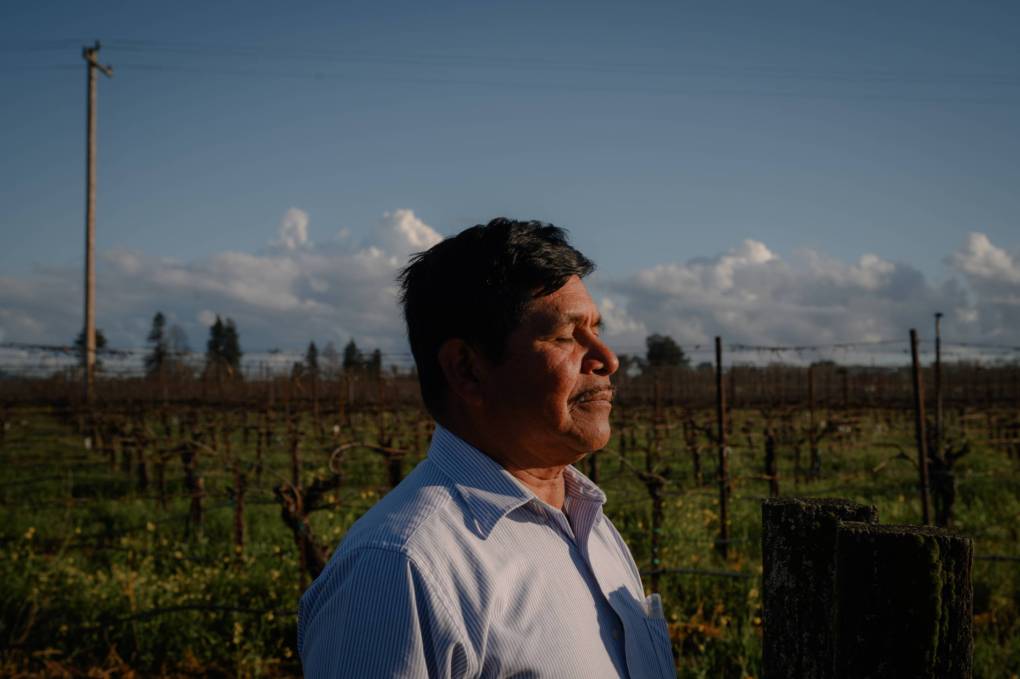
"content": "\u003cp>As an orphaned child in rural southern Mexico, Abraham Salazar said he began working when he was just 10 years old. He helped to plow fields and grow corn and beans in the municipality of Constancia del Rosario, in the state of Oaxaca.\u003c/p>\n\u003cp>After he settled in California’s wine country in 1990, Salazar kept toiling in agriculture. He tore roots and rocks out to prepare fields for planting. He pruned and harvested miles of vines, sometimes during grueling all-night shifts.\u003c/p>\n\u003cp>Now 62 years old, Salazar said his lower back hurts, sometimes intensely. His heavily calloused hands are becoming arthritic. But he can’t afford to stop working, he said.\u003c/p>\n\u003cp>“I may be 80 or 90, but I won’t get anything of what I paid into Social Security during all those years of work,” said Salazar, who is turning 63 next week, in Spanish. “Absolutely nothing.”\u003c/p>\n\u003cp>Salazar is part of a growing wave of hundreds of thousands of undocumented workers who are reaching or past retirement age in the U.S. but who are ineligible to receive Social Security benefits, even though many paid automatic payroll taxes into that system for years.[aside label=\"Related Stories\" postID=\"news_11940706,news_11941716,news_11939848\"]A new state bill in California proposes to offer undocumented older adults an economic safety net when they can no longer work. \u003ca href=\"https://leginfo.legislature.ca.gov/faces/billNavClient.xhtml?bill_id=202320240AB1536\">AB 1536\u003c/a> would expand a state-funded \u003ca href=\"https://www.cdss.ca.gov/capi\">cash assistance program\u003c/a>, which currently offers individuals about \u003ca href=\"https://www.cdss.ca.gov/Portals/9/Additional-Resources/Letters-and-Notices/ACINs/2022/I-71_22.pdf?ver=2022-11-08-131239-837\">$1,100 per month (PDF)\u003c/a>, to cover undocumented residents aged 65 and older as well.\u003c/p>\n\u003cp>“It would give them a monthly stipend, so that they can age with dignity and justice,” said Angelica Salas, who directs the Coalition for Humane Immigrant Rights in Los Angeles, after rallying for the bill with its author, Assemblymember Juan Carrillo (D-Palmdale), in Sacramento last week.\u003c/p>\n\u003cp>“If we do not create a [safety net] system for this population, we are going to have a severe crisis of individuals who have labored and contributed to California, but who will then live in severe poverty in the very same state where they left their youth,” Salas said.\u003c/p>\n\u003cp>Immigrants who are hired without valid work authorization in industries like construction and food services \u003ca href=\"https://bipartisanpolicy.org/blog/how-do-undocumented-immigrants-pay-federal-taxes-an-explainer/\">often provide a Social Security number that is fake, expired or not their own\u003c/a>. Most employers in California and other states, who are \u003ca href=\"https://www.e-verify.gov/sites/default/files/everify/presentations/EVerifyPresentation.pdf\">not required to check the validity of the nine-digit number (PDF)\u003c/a>, deduct Social Security, federal, state and other taxes from the workers’ paychecks, like with any other employee.\u003c/p>\n\u003cp>The result is that nationwide, \u003ca href=\"https://www.ssa.gov/oact/NOTES/pdf_notes/note151.pdf\">unauthorized immigrant workers contributed a whopping $13 billion in automatic payroll taxes to the Social Security system\u003c/a> in a single year, according to the most recent estimates by the Social Security Administration.\u003c/p>\n\u003cp>Most of that money was a “net positive” to the program’s cash flow, said the agency’s chief actuary, Stephen Goss. That means undocumented workers help fund the monthly retirement checks of U.S. citizens and legal residents, but likely won’t receive the payments when they themselves become seniors.[pullquote align=\"right\" size=\"medium\" citation=\"Angelica Salas, director, Coalition for Humane Immigrant Rights\"]‘If we do not create a system for this population, we are going to have a severe crisis of individuals who have labored and contributed to California, but who will then live in severe poverty in the very same state where they left their youth.’[/pullquote]“It’s tragic, it’s unjust,” said Salas. “They worked hard in some of the hardest and most backbreaking jobs in this country. They contributed. And now they’re completely locked out of benefits as they reach their golden years.”\u003c/p>\n\u003cp>Salazar, who worked in agriculture for about three decades, said it was impossible to save any money on the low wages he earned, while taking care of his family and bills. Getting access to a regular stipend as he ages would be a “huge help” to reach his dream of retiring one day.\u003c/p>\n\u003cp>“It would be magnificent because we work a lot but don’t get any help,” said Salazar, who recently launched a landscaping business. He hopes that, by working for himself, he’ll earn enough to start saving for retirement.\u003c/p>\n\u003cfigure id=\"attachment_11943071\" class=\"wp-caption alignnone\" style=\"max-width: 640px\">\u003cimg loading=\"lazy\" decoding=\"async\" class=\"size-large wp-image-11943071\" src=\"https://ww2.kqed.org/app/uploads/sites/10/2023/03/RS63167_02242023_agingundocumented-051-qut-1020x678.jpg\" alt=\"A man sits on a bet facing toward a window, smiling, with light on his face. He wears a button down collared shirt with a long sleeve underneath and dark pants. Next to him is a cluttered nightstand. \" width=\"640\" height=\"425\" srcset=\"https://cdn.kqed.org/wp-content/uploads/sites/10/2023/03/RS63167_02242023_agingundocumented-051-qut-1020x678.jpg 1020w, https://cdn.kqed.org/wp-content/uploads/sites/10/2023/03/RS63167_02242023_agingundocumented-051-qut-800x532.jpg 800w, https://cdn.kqed.org/wp-content/uploads/sites/10/2023/03/RS63167_02242023_agingundocumented-051-qut-160x106.jpg 160w, https://cdn.kqed.org/wp-content/uploads/sites/10/2023/03/RS63167_02242023_agingundocumented-051-qut-1536x1022.jpg 1536w, https://cdn.kqed.org/wp-content/uploads/sites/10/2023/03/RS63167_02242023_agingundocumented-051-qut.jpg 1920w\" sizes=\"auto, (max-width: 640px) 100vw, 640px\">\u003cfigcaption class=\"wp-caption-text\">Abraham Salazar sits for a portrait at his home in Healdsburg, on Feb. 24, 2023. Salazar, 62, is one of thousands of undocumented California farmworkers who are reaching or past retirement age but must continue working because they are ineligible for Social Security benefits. \u003ccite>(Kori Suzuki/KQED)\u003c/cite>\u003c/figcaption>\u003c/figure>\n\u003ch2>Growing number of undocumented workers reaching retirement age\u003c/h2>\n\u003cp>Roughly \u003ca href=\"https://clc.ucmerced.edu/sites/clc.ucmerced.edu/files/page/documents/a_golden_age.pdf\">165,000 undocumented workers in California were age 55 and older in 2019\u003c/a>, according to an analysis of census figures published Tuesday by the UC Merced Community and Labor Center. That figure is about 680,000 across the country, said the center’s co-director, Edward Flores.\u003c/p>\n\u003cp>Most of these workers were unable to legalize their status because they arrived in the U.S. in the years after eligibility for the \u003ca href=\"https://www.kqed.org/forum/2010101890914/out-of-the-shadows-explores-the-complicated-history-of-the-1986-amnesty-law-that-changed-the-lives-of-millions\">last federal amnesty for undocumented immigrants\u003c/a>, which passed during the Reagan administration in 1986.\u003c/p>\n\u003cp>Flores said the statistics point to a growing demographic wave, and that the country has not yet begun to reckon with the implications.\u003c/p>\n\u003cp>“What do you do with a significant proportion of our workforce who has been laboring for decades, without access to a social and economic safety net?” he asked. “Now that they are aging and can’t work, they will be in a much more vulnerable position.”\u003c/p>\n\u003cp>[pullquote align=\"right\" size=\"medium\" citation=\"Abraham Salazar\"]‘I may be 80 or 90, but I won’t get anything of what I paid into Social Security during all those years of work. Absolutely nothing.’[/pullquote] In California’s agricultural industry, the \u003ca href=\"https://www.fsa.usda.gov/Internet/FSA_File/10cafacts_v3.pdf\">most productive in the nation (PDF)\u003c/a> with about \u003ca href=\"https://www.cdfa.ca.gov/Statistics/\">$50 billion in annual revenue\u003c/a>, almost 85% of crop workers were born in Mexico. Roughly \u003ca href=\"https://migration.ucdavis.edu/rmn/blog/post/?id=2770\">half don’t have legal authorization to work\u003c/a>, according to estimates by the U.S. Department of Labor. As migration flows from Mexico slowed down in the mid-2000s, the age distribution of California agricultural workers shifted, with farmworkers age 55 to 64 increasing by 64% over the last decade, the UC Merced analysis found.\u003c/p>\n\u003cp>An aging workforce has left agricultural employers grappling with a shortage of labor for years, especially in areas like the state’s Central Coast, where strawberries, lettuce and other top crops are not harvested mechanically, said Norm Groot, executive director at the Monterey County Farm Bureau.\u003c/p>\n\u003cp>“We are not replacing those who are aging out of the workforce with new immigrant labor. Nor are we seeing that the children of the current farmworkers are interested in working in the fields,” said Groot. “So we are rapidly coming to a tipping point where we are not going to have enough labor supply on hand to harvest our crops.”\u003c/p>\n\u003ch2>‘I still feel like I have the strength to do this work’\u003c/h2>\n\u003cp>One older farmworker who continues to see demand for his services is Asuncion Ponce, who lives in Fresno. The 77-year-old said he still wakes up at 4:30 to calmly drink his coffee and get a ride to seasonal jobs pruning orchard trees or harvesting nectarines, peaches and pears in the San Joaquin Valley.\u003c/p>\n\u003cp>“I still feel like I have the strength to do this work,” said Ponce proudly, in Spanish. “In Mexico, I was a farmworker and here I’m still doing the same.”\u003c/p>\n\u003cp>The naturalized U.S. citizen said he worries that the Social Security benefits he’s eligible for won’t cover all of his expenses once he retires. But he acknowledges he’s less physically able to climb ladders up fruit trees or carry heavy crates all day. He’s considering quitting work in two or three years.\u003c/p>\n\u003cp>Ponce arrived undocumented from Mexico in the early 1980s, but was able to benefit from the Reagan-era amnesty and obtain a green card, allowing him to work legally in the U.S.\u003c/p>\n\u003cp>A long-time member of United Farm Workers, Ponce continues to attend marches and rallies supporting legislation that could aid workers who migrated to the U.S. in the years after him, such as the \u003ca href=\"https://www.farmworkerjustice.org/wp-content/uploads/2021/03/FarmWorkforceModernizationAct-FactSheet-FJ-2021.pdf\">Farm Workforce Modernization Act (PDF)\u003c/a>. That said, immigration policy experts say a new path to legalization for immigrants is unlikely to pass in the Republican-controlled U.S. House of Representatives.\u003c/p>\n\u003cp>“It’s just really unfortunate, because older farmworkers who are undocumented and at retirement age or very close, they can’t afford to wait,” said Antonio De Loera-Brust, communications director for the United Farm Workers. “The clock is really ticking.”\u003c/p>\n\u003cp>[ad fullwidth]\u003c/p>\n\u003cp>[ad floatright]\u003c/p>\n",
"blocks": [],
"excerpt": "Nationwide, unauthorized immigrant workers contributed a whopping $13 billion in automatic payroll taxes to the Social Security system in a single year, but likely won't receive the payments when they themselves get older.",
"status": "publish",
"parent": 0,
"modified": 1739493710,
"stats": {
"hasAudio": false,
"hasVideo": false,
"hasChartOrMap": false,
"iframeSrcs": [],
"hasGoogleForm": false,
"hasGallery": false,
"hasHearkenModule": false,
"hasPolis": false,
"paragraphCount": 27,
"wordCount": 1499
},
"headData": {
"title": "Aging Undocumented Workers Can't Afford to Retire. Will California Help Them? | KQED",
"description": "Nationwide, unauthorized immigrant workers contributed a whopping $13 billion in automatic payroll taxes to the Social Security system in a single year, but likely won't receive the payments when they themselves get older.",
"ogTitle": "",
"ogDescription": "",
"ogImgId": "",
"twTitle": "",
"twDescription": "",
"twImgId": "",
"schema": {
"@context": "https://schema.org",
"@type": "NewsArticle",
"headline": "Aging Undocumented Workers Can't Afford to Retire. Will California Help Them?",
"datePublished": "2023-03-09T14:02:01-08:00",
"dateModified": "2025-02-13T16:41:50-08:00",
"image": "https://cdn.kqed.org/wp-content/uploads/2020/02/KQED-OG-Image@1x.png",
"isAccessibleForFree": "True",
"publisher": {
"@type": "NewsMediaOrganization",
"@id": "https://www.kqed.org/#organization",
"name": "KQED",
"logo": "https://cdn.kqed.org/wp-content/uploads/2020/02/KQED-OG-Image@1x.png",
"url": "https://www.kqed.org",
"sameAs": [
"https://www.facebook.com/KQED",
"https://twitter.com/KQED",
"https://www.instagram.com/kqed/",
"https://www.tiktok.com/@kqedofficial",
"https://www.linkedin.com/company/kqed",
"https://www.youtube.com/channel/UCeC0IOo7i1P_61zVUWbJ4nw"
]
}
}
},
"audioUrl": "https://traffic.omny.fm/d/clips/0af137ef-751e-4b19-a055-aaef00d2d578/ffca7e9f-6831-41c5-bcaf-aaef00f5a073/6db1422d-501e-4b8d-976a-afbe011bac1a/audio.mp3",
"sticky": false,
"excludeFromSiteSearch": "Include",
"articleAge": "0",
"path": "/news/11943034/aging-undocumented-workers-cant-afford-to-retire-will-california-help-them",
"audioTrackLength": null,
"parsedContent": [
{
"type": "contentString",
"content": "\u003cdiv class=\"post-body\">\u003cp>\u003cp>As an orphaned child in rural southern Mexico, Abraham Salazar said he began working when he was just 10 years old. He helped to plow fields and grow corn and beans in the municipality of Constancia del Rosario, in the state of Oaxaca.\u003c/p>\n\u003cp>After he settled in California’s wine country in 1990, Salazar kept toiling in agriculture. He tore roots and rocks out to prepare fields for planting. He pruned and harvested miles of vines, sometimes during grueling all-night shifts.\u003c/p>\n\u003cp>Now 62 years old, Salazar said his lower back hurts, sometimes intensely. His heavily calloused hands are becoming arthritic. But he can’t afford to stop working, he said.\u003c/p>\n\u003cp>“I may be 80 or 90, but I won’t get anything of what I paid into Social Security during all those years of work,” said Salazar, who is turning 63 next week, in Spanish. “Absolutely nothing.”\u003c/p>\n\u003cp>Salazar is part of a growing wave of hundreds of thousands of undocumented workers who are reaching or past retirement age in the U.S. but who are ineligible to receive Social Security benefits, even though many paid automatic payroll taxes into that system for years.\u003c/p>\u003c/div>",
"attributes": {
"named": {},
"numeric": []
}
},
{
"type": "component",
"content": "",
"name": "aside",
"attributes": {
"named": {
"label": "Related Stories ",
"postid": "news_11940706,news_11941716,news_11939848"
},
"numeric": []
}
},
{
"type": "contentString",
"content": "\u003cdiv class=\"post-body\">\u003cp>A new state bill in California proposes to offer undocumented older adults an economic safety net when they can no longer work. \u003ca href=\"https://leginfo.legislature.ca.gov/faces/billNavClient.xhtml?bill_id=202320240AB1536\">AB 1536\u003c/a> would expand a state-funded \u003ca href=\"https://www.cdss.ca.gov/capi\">cash assistance program\u003c/a>, which currently offers individuals about \u003ca href=\"https://www.cdss.ca.gov/Portals/9/Additional-Resources/Letters-and-Notices/ACINs/2022/I-71_22.pdf?ver=2022-11-08-131239-837\">$1,100 per month (PDF)\u003c/a>, to cover undocumented residents aged 65 and older as well.\u003c/p>\n\u003cp>“It would give them a monthly stipend, so that they can age with dignity and justice,” said Angelica Salas, who directs the Coalition for Humane Immigrant Rights in Los Angeles, after rallying for the bill with its author, Assemblymember Juan Carrillo (D-Palmdale), in Sacramento last week.\u003c/p>\n\u003cp>“If we do not create a [safety net] system for this population, we are going to have a severe crisis of individuals who have labored and contributed to California, but who will then live in severe poverty in the very same state where they left their youth,” Salas said.\u003c/p>\n\u003cp>Immigrants who are hired without valid work authorization in industries like construction and food services \u003ca href=\"https://bipartisanpolicy.org/blog/how-do-undocumented-immigrants-pay-federal-taxes-an-explainer/\">often provide a Social Security number that is fake, expired or not their own\u003c/a>. Most employers in California and other states, who are \u003ca href=\"https://www.e-verify.gov/sites/default/files/everify/presentations/EVerifyPresentation.pdf\">not required to check the validity of the nine-digit number (PDF)\u003c/a>, deduct Social Security, federal, state and other taxes from the workers’ paychecks, like with any other employee.\u003c/p>\n\u003cp>The result is that nationwide, \u003ca href=\"https://www.ssa.gov/oact/NOTES/pdf_notes/note151.pdf\">unauthorized immigrant workers contributed a whopping $13 billion in automatic payroll taxes to the Social Security system\u003c/a> in a single year, according to the most recent estimates by the Social Security Administration.\u003c/p>\n\u003cp>Most of that money was a “net positive” to the program’s cash flow, said the agency’s chief actuary, Stephen Goss. That means undocumented workers help fund the monthly retirement checks of U.S. citizens and legal residents, but likely won’t receive the payments when they themselves become seniors.\u003c/p>\u003c/div>",
"attributes": {
"named": {},
"numeric": []
}
},
{
"type": "component",
"content": "‘If we do not create a system for this population, we are going to have a severe crisis of individuals who have labored and contributed to California, but who will then live in severe poverty in the very same state where they left their youth.’",
"name": "pullquote",
"attributes": {
"named": {
"align": "right",
"size": "medium",
"citation": "Angelica Salas, director, Coalition for Humane Immigrant Rights",
"label": ""
},
"numeric": []
}
},
{
"type": "contentString",
"content": "\u003cdiv class=\"post-body\">\u003cp>“It’s tragic, it’s unjust,” said Salas. “They worked hard in some of the hardest and most backbreaking jobs in this country. They contributed. And now they’re completely locked out of benefits as they reach their golden years.”\u003c/p>\n\u003cp>Salazar, who worked in agriculture for about three decades, said it was impossible to save any money on the low wages he earned, while taking care of his family and bills. Getting access to a regular stipend as he ages would be a “huge help” to reach his dream of retiring one day.\u003c/p>\n\u003cp>“It would be magnificent because we work a lot but don’t get any help,” said Salazar, who recently launched a landscaping business. He hopes that, by working for himself, he’ll earn enough to start saving for retirement.\u003c/p>\n\u003cfigure id=\"attachment_11943071\" class=\"wp-caption alignnone\" style=\"max-width: 640px\">\u003cimg loading=\"lazy\" decoding=\"async\" class=\"size-large wp-image-11943071\" src=\"https://ww2.kqed.org/app/uploads/sites/10/2023/03/RS63167_02242023_agingundocumented-051-qut-1020x678.jpg\" alt=\"A man sits on a bet facing toward a window, smiling, with light on his face. He wears a button down collared shirt with a long sleeve underneath and dark pants. Next to him is a cluttered nightstand. \" width=\"640\" height=\"425\" srcset=\"https://cdn.kqed.org/wp-content/uploads/sites/10/2023/03/RS63167_02242023_agingundocumented-051-qut-1020x678.jpg 1020w, https://cdn.kqed.org/wp-content/uploads/sites/10/2023/03/RS63167_02242023_agingundocumented-051-qut-800x532.jpg 800w, https://cdn.kqed.org/wp-content/uploads/sites/10/2023/03/RS63167_02242023_agingundocumented-051-qut-160x106.jpg 160w, https://cdn.kqed.org/wp-content/uploads/sites/10/2023/03/RS63167_02242023_agingundocumented-051-qut-1536x1022.jpg 1536w, https://cdn.kqed.org/wp-content/uploads/sites/10/2023/03/RS63167_02242023_agingundocumented-051-qut.jpg 1920w\" sizes=\"auto, (max-width: 640px) 100vw, 640px\">\u003cfigcaption class=\"wp-caption-text\">Abraham Salazar sits for a portrait at his home in Healdsburg, on Feb. 24, 2023. Salazar, 62, is one of thousands of undocumented California farmworkers who are reaching or past retirement age but must continue working because they are ineligible for Social Security benefits. \u003ccite>(Kori Suzuki/KQED)\u003c/cite>\u003c/figcaption>\u003c/figure>\n\u003ch2>Growing number of undocumented workers reaching retirement age\u003c/h2>\n\u003cp>Roughly \u003ca href=\"https://clc.ucmerced.edu/sites/clc.ucmerced.edu/files/page/documents/a_golden_age.pdf\">165,000 undocumented workers in California were age 55 and older in 2019\u003c/a>, according to an analysis of census figures published Tuesday by the UC Merced Community and Labor Center. That figure is about 680,000 across the country, said the center’s co-director, Edward Flores.\u003c/p>\n\u003cp>Most of these workers were unable to legalize their status because they arrived in the U.S. in the years after eligibility for the \u003ca href=\"https://www.kqed.org/forum/2010101890914/out-of-the-shadows-explores-the-complicated-history-of-the-1986-amnesty-law-that-changed-the-lives-of-millions\">last federal amnesty for undocumented immigrants\u003c/a>, which passed during the Reagan administration in 1986.\u003c/p>\n\u003cp>Flores said the statistics point to a growing demographic wave, and that the country has not yet begun to reckon with the implications.\u003c/p>\n\u003cp>“What do you do with a significant proportion of our workforce who has been laboring for decades, without access to a social and economic safety net?” he asked. “Now that they are aging and can’t work, they will be in a much more vulnerable position.”\u003c/p>\n\u003cp>\u003c/p>\u003c/div>",
"attributes": {
"named": {},
"numeric": []
}
},
{
"type": "component",
"content": "‘I may be 80 or 90, but I won’t get anything of what I paid into Social Security during all those years of work. Absolutely nothing.’",
"name": "pullquote",
"attributes": {
"named": {
"align": "right",
"size": "medium",
"citation": "Abraham Salazar",
"label": ""
},
"numeric": []
}
},
{
"type": "contentString",
"content": "\u003cdiv class=\"post-body\">\u003cp> In California’s agricultural industry, the \u003ca href=\"https://www.fsa.usda.gov/Internet/FSA_File/10cafacts_v3.pdf\">most productive in the nation (PDF)\u003c/a> with about \u003ca href=\"https://www.cdfa.ca.gov/Statistics/\">$50 billion in annual revenue\u003c/a>, almost 85% of crop workers were born in Mexico. Roughly \u003ca href=\"https://migration.ucdavis.edu/rmn/blog/post/?id=2770\">half don’t have legal authorization to work\u003c/a>, according to estimates by the U.S. Department of Labor. As migration flows from Mexico slowed down in the mid-2000s, the age distribution of California agricultural workers shifted, with farmworkers age 55 to 64 increasing by 64% over the last decade, the UC Merced analysis found.\u003c/p>\n\u003cp>An aging workforce has left agricultural employers grappling with a shortage of labor for years, especially in areas like the state’s Central Coast, where strawberries, lettuce and other top crops are not harvested mechanically, said Norm Groot, executive director at the Monterey County Farm Bureau.\u003c/p>\n\u003cp>“We are not replacing those who are aging out of the workforce with new immigrant labor. Nor are we seeing that the children of the current farmworkers are interested in working in the fields,” said Groot. “So we are rapidly coming to a tipping point where we are not going to have enough labor supply on hand to harvest our crops.”\u003c/p>\n\u003ch2>‘I still feel like I have the strength to do this work’\u003c/h2>\n\u003cp>One older farmworker who continues to see demand for his services is Asuncion Ponce, who lives in Fresno. The 77-year-old said he still wakes up at 4:30 to calmly drink his coffee and get a ride to seasonal jobs pruning orchard trees or harvesting nectarines, peaches and pears in the San Joaquin Valley.\u003c/p>\n\u003cp>“I still feel like I have the strength to do this work,” said Ponce proudly, in Spanish. “In Mexico, I was a farmworker and here I’m still doing the same.”\u003c/p>\n\u003cp>The naturalized U.S. citizen said he worries that the Social Security benefits he’s eligible for won’t cover all of his expenses once he retires. But he acknowledges he’s less physically able to climb ladders up fruit trees or carry heavy crates all day. He’s considering quitting work in two or three years.\u003c/p>\n\u003cp>Ponce arrived undocumented from Mexico in the early 1980s, but was able to benefit from the Reagan-era amnesty and obtain a green card, allowing him to work legally in the U.S.\u003c/p>\n\u003cp>A long-time member of United Farm Workers, Ponce continues to attend marches and rallies supporting legislation that could aid workers who migrated to the U.S. in the years after him, such as the \u003ca href=\"https://www.farmworkerjustice.org/wp-content/uploads/2021/03/FarmWorkforceModernizationAct-FactSheet-FJ-2021.pdf\">Farm Workforce Modernization Act (PDF)\u003c/a>. That said, immigration policy experts say a new path to legalization for immigrants is unlikely to pass in the Republican-controlled U.S. House of Representatives.\u003c/p>\n\u003cp>“It’s just really unfortunate, because older farmworkers who are undocumented and at retirement age or very close, they can’t afford to wait,” said Antonio De Loera-Brust, communications director for the United Farm Workers. “The clock is really ticking.”\u003c/p>\n\u003cp>\u003c/p>\u003c/div>",
"attributes": {
"named": {},
"numeric": []
}
},
{
"type": "component",
"content": "",
"name": "ad",
"attributes": {
"named": {
"label": "fullwidth"
},
"numeric": [
"fullwidth"
]
}
},
{
"type": "contentString",
"content": "\u003cdiv class=\"post-body\">\u003cp>\u003c/p>\n\u003cp>\u003c/p>\u003c/div>",
"attributes": {
"named": {},
"numeric": []
}
},
{
"type": "component",
"content": "",
"name": "ad",
"attributes": {
"named": {
"label": "floatright"
},
"numeric": [
"floatright"
]
}
},
{
"type": "contentString",
"content": "\u003cdiv class=\"post-body\">\u003cp>\u003c/p>\n\u003c/div>\u003c/p>",
"attributes": {
"named": {},
"numeric": []
}
}
],
"link": "/news/11943034/aging-undocumented-workers-cant-afford-to-retire-will-california-help-them",
"authors": [
"8659"
],
"programs": [
"news_72"
],
"categories": [
"news_31795",
"news_1758",
"news_1169",
"news_8",
"news_33520"
],
"tags": [
"news_4092",
"news_18538",
"news_27626",
"news_20579",
"news_20202",
"news_3735",
"news_244",
"news_32380",
"news_794"
],
"featImg": "news_11943060",
"label": "news_72"
},
"news_11943030": {
"type": "posts",
"id": "news_11943030",
"meta": {
"index": "posts_1716263798",
"site": "news",
"id": "11943030",
"score": null,
"sort": [
1678392001000
]
},
"guestAuthors": [],
"slug": "ice-aburptly-transfers-4-detainee-hunger-strikers-from-california-to-texas-sparking-fears-of-force-feeding",
"title": "ICE Abruptly Transfers 4 Detainee Hunger Strikers From California to Texas, Sparking Fears of Force-Feeding",
"publishDate": 1678392001,
"format": "standard",
"headTitle": "ICE Abruptly Transfers 4 Detainee Hunger Strikers From California to Texas, Sparking Fears of Force-Feeding | KQED",
"labelTerm": {
"site": "news"
},
"content": "\u003cp>\u003cb>Update, 2 p.m. Thursday: \u003c/b>The four hunger strikers, transferred this week from California to an El Paso detention facility, ate lunch on Thursday after reportedly being threatened with force-feeding, one of their attorneys said.\u003c/p>\n\u003cp>\u003cb>Original story, 12 p.m. Thursday: \u003c/b>Four California detainees participating in a hunger strike to protest conditions inside a Kern County immigration jail were forcibly transferred this week to a Texas detention center, ostensibly for medical care.\u003c/p>\n\u003cp>Advocates for the men, who had not eaten food for 20 days, say they believe the transfers are an attempt to break up the hunger strike, which involves dozens of detainees at two U.S. Immigration and Customs Enforcement facilities in the Central Valley. Lawyers for the hunger strikers have asked a judge to order ICE not to relocate the men or retaliate against them.[pullquote align=\"right\" size=\"medium\" citation=\"Edwin Carmona-Cruz, spokesperson, California Collaborative for Immigrant Justice\"]‘People are very afraid, very shaken up. In fact, one of the individuals said that it was literally like a terror scene out of a movie.’[/pullquote]“It’s evident that ICE operates as a rogue agency and does whatever they want,” said Edwin Carmona-Cruz, spokesperson for the California Collaborative for Immigrant Justice (CCIJ), which represents Pedro Figueroa, one of the four men who were transferred. “If they were really concerned about our client’s safety, they would have paid attention and listened to his grievances.”\u003c/p>\n\u003cp>The transfer of the men out of the Mesa Verde ICE Processing Center in Bakersfield began Tuesday morning and was partially captured on a video call between Figueroa and attorney, Eva Umejido, who in a legal declaration said she spotted several officers in military gear walking around the dorm. Then the screen shook and the video paused but the audio stream continued, Umejido said, and she could hear Figueroa screaming, “You’re hurting my wrist,” and “I am not resisting.”\u003c/p>\n\u003cp>Advocates say the attorney-client phone line was inoperable for several hours while the men were being seized, so other detainees were unable to reach their lawyers and tell them what was happening.\u003c/p>\n\u003cfigure id=\"attachment_11943110\" class=\"wp-caption alignright\" style=\"max-width: 309px\">\u003ca href=\"https://ww2.kqed.org/app/uploads/sites/10/2023/03/Captura-de-Pantalla-2023-03-07-a-las-12.32.38-p.-m..png\">\u003cimg loading=\"lazy\" decoding=\"async\" class=\"wp-image-11943110\" src=\"https://ww2.kqed.org/app/uploads/sites/10/2023/03/Captura-de-Pantalla-2023-03-07-a-las-12.32.38-p.-m..png\" alt=\"A screenshot of a video call, showing a blurred faced of a detained man, with a glimpse of a guard in military gear in the background.\" width=\"309\" height=\"392\" srcset=\"https://cdn.kqed.org/wp-content/uploads/sites/10/2023/03/Captura-de-Pantalla-2023-03-07-a-las-12.32.38-p.-m..png 472w, https://cdn.kqed.org/wp-content/uploads/sites/10/2023/03/Captura-de-Pantalla-2023-03-07-a-las-12.32.38-p.-m.-160x203.png 160w\" sizes=\"auto, (max-width: 309px) 100vw, 309px\">\u003c/a>\u003cfigcaption class=\"wp-caption-text\">A hunger striker in the Mesa Verde ICE Processing Center participates in a video call on March 7, 2023, just before he and three other men are handcuffed and removed from the dormitory and transferred to a facility in El Paso, Texas. An ICE agent in tactical gear can be seen in the background. The detained man’s face has been blurred to protect his identity because he fears retaliation by ICE officials. \u003ccite>(Photo obtained by KQED from a hunger-strike supporter)\u003c/cite>\u003c/figcaption>\u003c/figure>\n\u003cp>Hours later, lawyers for the four men received emails from ICE saying their clients were “being transferred based on the recommendation by the onsite medical authority to the IHSC facility located in El Paso, Texas, for a higher level of medical care.”\u003c/p>\n\u003cp>On Wednesday, one of the men transferred to El Paso told advocates he was shocked and profoundly demoralized by what he called inhumane treatment.\u003c/p>\n\u003cp>“They dragged [one of us] out of the cell. What are we? If we’re not human beings, then what are we to them?” said the man, who declined to be identified out of fear of further retaliation. “If there’s a law that protects us to do a peaceful protest, where is that law now? I’ve never experienced anything like that. I had never been touched like that, treated like that.”\u003c/p>\n\u003cp>California Sen. Alex Padilla and Rep. Zoe Lofgren (D-San José), who have called on ICE to investigate conditions at the Mesa Verde facility and the nearby Golden State Annex, asked the agency on Tuesday for information about the transfers but had not received a response as of midday Thursday, according to their offices.\u003c/p>\n\u003cp>Lofgren has also said she wants ICE to conduct a case-by-case review of each of the hunger strikers’ requests to be released while their cases proceed through immigration court.\u003c/p>\n\u003cp>“Honestly, if somebody goes on a hunger strike, it’s not for a frivolous reason,” she told KQED. “To refuse all food — people don’t do that for no reason. And so I take this very seriously, and I hope that the department will take it more seriously than they have so far.”\u003c/p>\n\u003cp>ICE did not respond to KQED’s questions about the transferred men or the other hunger strikers at the two facilities.\u003c/p>\n\u003cp>The hunger strike began on Feb. 17, among 84 immigrants held at the two detention centers, which are owned and operated by the private-prison company The GEO Group. The action marks an escalation of a 10-month-long labor strike in protest over $1-per-day pay for the janitorial work done by detainees. Strikers say they are also protesting poor conditions — including claims of black mold, spoiled food, sexually abusive pat-downs and the use of solitary confinement as retaliation — and are asking to be released.[aside label=\"Related Stories\" postID=\"news_11942414,news_11941677,news_11919161\"]On Tuesday, when the transfers happened, 33 men were still fasting in the two facilities. But on Wednesday, the Mesa Verde hunger strikers gave up their protest out of fear they would also be shipped away, advocates said. Those participating in the protest at Golden State Annex were reportedly still refusing food.\u003c/p>\n\u003cp>“People are very afraid, very shaken up,” Carmona-Cruz said. “In fact, one of the individuals said that it was literally like a terror scene out of a movie.”\u003c/p>\n\u003cp>Carmona-Cruz said he was able to speak Wednesday morning with Figueroa, a formerly incarcerated California firefighter, and another man who was also transferred to the El Paso Service Processing Center. He said both men were weak, and distressed by the experience. And both told him that ICE officials had let them know they planned to request a court order to force-feed them and draw their blood.\u003c/p>\n\u003cp>According to ICE detention policy, \u003ca href=\"https://www.ice.gov/doclib/detention-standards/2011/4-2.pdf\">the agency must obtain a court order to administer “involuntary sustenance” (PDF)\u003c/a>.\u003c/p>\n\u003cp>In 2019, in response to \u003ca href=\"https://www.kqed.org/news/11731457/indian-asylum-seekers-in-ice-detention-seek-release-as-hunger-strike-enters-third-month\">ICE’s force-feeding of several Indian men\u003c/a> at the El Paso facility, the \u003ca href=\"https://apnews.com/article/immigration-united-nations-north-america-tx-state-wire-united-states-e0941d7d1b0d413b9d9a0b792c34dd26\">United Nations human rights office\u003c/a> said that subjecting detained immigrants to such coercive procedures could be in breach of the U.N. Convention Against Torture.\u003c/p>\n\u003cp>If any of the California hunger strikers needed medical care, they should have been transferred to a local hospital, not flown to El Paso, Carmona-Cruz said. Instead, he said, the men told him they were transported by van and airplane to Texas, with no medical personnel involved.\u003c/p>\n\u003cp>“There was no medical attention in that process. So none of the reasoning why they were being transferred makes any sense,” he said. “It’s clear to us that the facility is retaliating against Pedro under the guise of medical care.”\u003cbr>\n[ad fullwidth]\u003c/p>\n\u003cp>[ad floatright]\u003c/p>\n",
"blocks": [],
"excerpt": "Immigration authorities say the transfer is intended to provide a 'higher level of medical care.' But advocates fear ICE will attempt to force-feed the hunger strikers, and call the move an effort to break up the weeks-long protest over detention conditions.",
"status": "publish",
"parent": 0,
"modified": 1738715718,
"stats": {
"hasAudio": false,
"hasVideo": false,
"hasChartOrMap": false,
"iframeSrcs": [],
"hasGoogleForm": false,
"hasGallery": false,
"hasHearkenModule": false,
"hasPolis": false,
"paragraphCount": 20,
"wordCount": 1180
},
"headData": {
"title": "ICE Abruptly Transfers 4 Detainee Hunger Strikers From California to Texas, Sparking Fears of Force-Feeding | KQED",
"description": "Immigration authorities say the transfer is intended to provide a 'higher level of medical care.' But advocates fear ICE will attempt to force-feed the hunger strikers, and call the move an effort to break up the weeks-long protest over detention conditions.",
"ogTitle": "",
"ogDescription": "",
"ogImgId": "",
"twTitle": "",
"twDescription": "",
"twImgId": "",
"schema": {
"@context": "https://schema.org",
"@type": "NewsArticle",
"headline": "ICE Abruptly Transfers 4 Detainee Hunger Strikers From California to Texas, Sparking Fears of Force-Feeding",
"datePublished": "2023-03-09T12:00:01-08:00",
"dateModified": "2025-02-04T16:35:18-08:00",
"image": "https://cdn.kqed.org/wp-content/uploads/2020/02/KQED-OG-Image@1x.png",
"isAccessibleForFree": "True",
"publisher": {
"@type": "NewsMediaOrganization",
"@id": "https://www.kqed.org/#organization",
"name": "KQED",
"logo": "https://cdn.kqed.org/wp-content/uploads/2020/02/KQED-OG-Image@1x.png",
"url": "https://www.kqed.org",
"sameAs": [
"https://www.facebook.com/KQED",
"https://twitter.com/KQED",
"https://www.instagram.com/kqed/",
"https://www.tiktok.com/@kqedofficial",
"https://www.linkedin.com/company/kqed",
"https://www.youtube.com/channel/UCeC0IOo7i1P_61zVUWbJ4nw"
]
}
}
},
"sticky": false,
"excludeFromSiteSearch": "Include",
"articleAge": "0",
"path": "/news/11943030/ice-aburptly-transfers-4-detainee-hunger-strikers-from-california-to-texas-sparking-fears-of-force-feeding",
"audioTrackLength": null,
"parsedContent": [
{
"type": "contentString",
"content": "\u003cdiv class=\"post-body\">\u003cp>\u003cp>\u003cb>Update, 2 p.m. Thursday: \u003c/b>The four hunger strikers, transferred this week from California to an El Paso detention facility, ate lunch on Thursday after reportedly being threatened with force-feeding, one of their attorneys said.\u003c/p>\n\u003cp>\u003cb>Original story, 12 p.m. Thursday: \u003c/b>Four California detainees participating in a hunger strike to protest conditions inside a Kern County immigration jail were forcibly transferred this week to a Texas detention center, ostensibly for medical care.\u003c/p>\n\u003cp>Advocates for the men, who had not eaten food for 20 days, say they believe the transfers are an attempt to break up the hunger strike, which involves dozens of detainees at two U.S. Immigration and Customs Enforcement facilities in the Central Valley. Lawyers for the hunger strikers have asked a judge to order ICE not to relocate the men or retaliate against them.\u003c/p>\u003c/div>",
"attributes": {
"named": {},
"numeric": []
}
},
{
"type": "component",
"content": "‘People are very afraid, very shaken up. In fact, one of the individuals said that it was literally like a terror scene out of a movie.’",
"name": "pullquote",
"attributes": {
"named": {
"align": "right",
"size": "medium",
"citation": "Edwin Carmona-Cruz, spokesperson, California Collaborative for Immigrant Justice",
"label": ""
},
"numeric": []
}
},
{
"type": "contentString",
"content": "\u003cdiv class=\"post-body\">\u003cp>“It’s evident that ICE operates as a rogue agency and does whatever they want,” said Edwin Carmona-Cruz, spokesperson for the California Collaborative for Immigrant Justice (CCIJ), which represents Pedro Figueroa, one of the four men who were transferred. “If they were really concerned about our client’s safety, they would have paid attention and listened to his grievances.”\u003c/p>\n\u003cp>The transfer of the men out of the Mesa Verde ICE Processing Center in Bakersfield began Tuesday morning and was partially captured on a video call between Figueroa and attorney, Eva Umejido, who in a legal declaration said she spotted several officers in military gear walking around the dorm. Then the screen shook and the video paused but the audio stream continued, Umejido said, and she could hear Figueroa screaming, “You’re hurting my wrist,” and “I am not resisting.”\u003c/p>\n\u003cp>Advocates say the attorney-client phone line was inoperable for several hours while the men were being seized, so other detainees were unable to reach their lawyers and tell them what was happening.\u003c/p>\n\u003cfigure id=\"attachment_11943110\" class=\"wp-caption alignright\" style=\"max-width: 309px\">\u003ca href=\"https://ww2.kqed.org/app/uploads/sites/10/2023/03/Captura-de-Pantalla-2023-03-07-a-las-12.32.38-p.-m..png\">\u003cimg loading=\"lazy\" decoding=\"async\" class=\"wp-image-11943110\" src=\"https://ww2.kqed.org/app/uploads/sites/10/2023/03/Captura-de-Pantalla-2023-03-07-a-las-12.32.38-p.-m..png\" alt=\"A screenshot of a video call, showing a blurred faced of a detained man, with a glimpse of a guard in military gear in the background.\" width=\"309\" height=\"392\" srcset=\"https://cdn.kqed.org/wp-content/uploads/sites/10/2023/03/Captura-de-Pantalla-2023-03-07-a-las-12.32.38-p.-m..png 472w, https://cdn.kqed.org/wp-content/uploads/sites/10/2023/03/Captura-de-Pantalla-2023-03-07-a-las-12.32.38-p.-m.-160x203.png 160w\" sizes=\"auto, (max-width: 309px) 100vw, 309px\">\u003c/a>\u003cfigcaption class=\"wp-caption-text\">A hunger striker in the Mesa Verde ICE Processing Center participates in a video call on March 7, 2023, just before he and three other men are handcuffed and removed from the dormitory and transferred to a facility in El Paso, Texas. An ICE agent in tactical gear can be seen in the background. The detained man’s face has been blurred to protect his identity because he fears retaliation by ICE officials. \u003ccite>(Photo obtained by KQED from a hunger-strike supporter)\u003c/cite>\u003c/figcaption>\u003c/figure>\n\u003cp>Hours later, lawyers for the four men received emails from ICE saying their clients were “being transferred based on the recommendation by the onsite medical authority to the IHSC facility located in El Paso, Texas, for a higher level of medical care.”\u003c/p>\n\u003cp>On Wednesday, one of the men transferred to El Paso told advocates he was shocked and profoundly demoralized by what he called inhumane treatment.\u003c/p>\n\u003cp>“They dragged [one of us] out of the cell. What are we? If we’re not human beings, then what are we to them?” said the man, who declined to be identified out of fear of further retaliation. “If there’s a law that protects us to do a peaceful protest, where is that law now? I’ve never experienced anything like that. I had never been touched like that, treated like that.”\u003c/p>\n\u003cp>California Sen. Alex Padilla and Rep. Zoe Lofgren (D-San José), who have called on ICE to investigate conditions at the Mesa Verde facility and the nearby Golden State Annex, asked the agency on Tuesday for information about the transfers but had not received a response as of midday Thursday, according to their offices.\u003c/p>\n\u003cp>Lofgren has also said she wants ICE to conduct a case-by-case review of each of the hunger strikers’ requests to be released while their cases proceed through immigration court.\u003c/p>\n\u003cp>“Honestly, if somebody goes on a hunger strike, it’s not for a frivolous reason,” she told KQED. “To refuse all food — people don’t do that for no reason. And so I take this very seriously, and I hope that the department will take it more seriously than they have so far.”\u003c/p>\n\u003cp>ICE did not respond to KQED’s questions about the transferred men or the other hunger strikers at the two facilities.\u003c/p>\n\u003cp>The hunger strike began on Feb. 17, among 84 immigrants held at the two detention centers, which are owned and operated by the private-prison company The GEO Group. The action marks an escalation of a 10-month-long labor strike in protest over $1-per-day pay for the janitorial work done by detainees. Strikers say they are also protesting poor conditions — including claims of black mold, spoiled food, sexually abusive pat-downs and the use of solitary confinement as retaliation — and are asking to be released.\u003c/p>\u003c/div>",
"attributes": {
"named": {},
"numeric": []
}
},
{
"type": "component",
"content": "",
"name": "aside",
"attributes": {
"named": {
"label": "Related Stories ",
"postid": "news_11942414,news_11941677,news_11919161"
},
"numeric": []
}
},
{
"type": "contentString",
"content": "\u003cdiv class=\"post-body\">\u003cp>On Tuesday, when the transfers happened, 33 men were still fasting in the two facilities. But on Wednesday, the Mesa Verde hunger strikers gave up their protest out of fear they would also be shipped away, advocates said. Those participating in the protest at Golden State Annex were reportedly still refusing food.\u003c/p>\n\u003cp>“People are very afraid, very shaken up,” Carmona-Cruz said. “In fact, one of the individuals said that it was literally like a terror scene out of a movie.”\u003c/p>\n\u003cp>Carmona-Cruz said he was able to speak Wednesday morning with Figueroa, a formerly incarcerated California firefighter, and another man who was also transferred to the El Paso Service Processing Center. He said both men were weak, and distressed by the experience. And both told him that ICE officials had let them know they planned to request a court order to force-feed them and draw their blood.\u003c/p>\n\u003cp>According to ICE detention policy, \u003ca href=\"https://www.ice.gov/doclib/detention-standards/2011/4-2.pdf\">the agency must obtain a court order to administer “involuntary sustenance” (PDF)\u003c/a>.\u003c/p>\n\u003cp>In 2019, in response to \u003ca href=\"https://www.kqed.org/news/11731457/indian-asylum-seekers-in-ice-detention-seek-release-as-hunger-strike-enters-third-month\">ICE’s force-feeding of several Indian men\u003c/a> at the El Paso facility, the \u003ca href=\"https://apnews.com/article/immigration-united-nations-north-america-tx-state-wire-united-states-e0941d7d1b0d413b9d9a0b792c34dd26\">United Nations human rights office\u003c/a> said that subjecting detained immigrants to such coercive procedures could be in breach of the U.N. Convention Against Torture.\u003c/p>\n\u003cp>If any of the California hunger strikers needed medical care, they should have been transferred to a local hospital, not flown to El Paso, Carmona-Cruz said. Instead, he said, the men told him they were transported by van and airplane to Texas, with no medical personnel involved.\u003c/p>\n\u003cp>“There was no medical attention in that process. So none of the reasoning why they were being transferred makes any sense,” he said. “It’s clear to us that the facility is retaliating against Pedro under the guise of medical care.”\u003cbr>\n\u003c/p>\u003c/div>",
"attributes": {
"named": {},
"numeric": []
}
},
{
"type": "component",
"content": "",
"name": "ad",
"attributes": {
"named": {
"label": "fullwidth"
},
"numeric": [
"fullwidth"
]
}
},
{
"type": "contentString",
"content": "\u003cdiv class=\"post-body\">\u003cp>\u003c/p>\n\u003cp>\u003c/p>\u003c/div>",
"attributes": {
"named": {},
"numeric": []
}
},
{
"type": "component",
"content": "",
"name": "ad",
"attributes": {
"named": {
"label": "floatright"
},
"numeric": [
"floatright"
]
}
},
{
"type": "contentString",
"content": "\u003cdiv class=\"post-body\">\u003cp>\u003c/p>\n\u003c/div>\u003c/p>",
"attributes": {
"named": {},
"numeric": []
}
}
],
"link": "/news/11943030/ice-aburptly-transfers-4-detainee-hunger-strikers-from-california-to-texas-sparking-fears-of-force-feeding",
"authors": [
"259"
],
"categories": [
"news_1169",
"news_8"
],
"tags": [
"news_24238",
"news_21027",
"news_20606",
"news_20202"
],
"featImg": "news_11943050",
"label": "news"
},
"news_11942414": {
"type": "posts",
"id": "news_11942414",
"meta": {
"index": "posts_1716263798",
"site": "news",
"id": "11942414",
"score": null,
"sort": [
1677872414000
]
},
"parent": 0,
"labelTerm": {
"site": "news"
},
"blocks": [],
"publishDate": 1677872414,
"format": "standard",
"title": "With Detainee Hunger Strike in Third Week, ICE Is Failing to Review Requests for Freedom, Advocates Say",
"headTitle": "KQED News",
"content": "\u003cp>A hunger strike at two California immigration detention centers is entering its third week, and immigrant advocates say U.S. Immigration and Customs Enforcement is failing to properly consider the strikers’ requests to be released.\u003c/p>\n\u003cp>In \u003ca href=\"https://drive.google.com/file/d/1Qh8crond_WqElmsVd5K5WQAcXTRQ3El-/view\">a letter to ICE leadership\u003c/a> Wednesday, more than 100 faith-based groups, civil rights organizations and legal service providers charged that ICE is violating its own policies by not giving a thorough individual review to each detainee’s request to be released.\u003c/p>\n\u003cp>The \u003ca href=\"https://sites.google.com/ccijustice.org/mv-gsahungerstrike/home-eng?authuser=0#h.8gvmu8x9j0xs\">hunger strike began Feb. 17 with 84 men held at two for-profit detention centers\u003c/a> in Kern County, the Mesa Verde ICE Processing Center in Bakersfield and the nearby Golden State Annex in McFarland, according to advocates in close touch with the detainees.\u003c/p>\n\u003cp>The men are protesting what they call “soul-crushing” living and working conditions, and launched the hunger strike as an escalation of a 10-month-long labor strike, over $1-per-day pay for janitorial work. They also complain of black mold, spoiled food, sexually abusive pat-downs and the use of solitary confinement as retaliation.\u003c/p>\n\u003cp>An ICE spokesperson last week confirmed the hunger strike, saying it became official under agency policy as of the evening of Feb. 19, after detainees had missed nine consecutive meals. Under ICE standards, \u003ca href=\"https://www.ice.gov/doclib/detention-standards/2019/4_2.pdf\">medical staff are required to carefully monitor the health of hunger strikers in detention (PDF)\u003c/a>.\u003c/p>\n\u003cp>ICE officials declined to comment for this story or to say how many people it considers to be on hunger strike at the two facilities.[pullquote align=\"right\" size=\"medium\" citation=\"Aseem Mehta, attorney, Asian Law Caucus\"]'For almost one year now, the individuals in these facilities have been attempting to negotiate with ICE for better treatment ... And ICE and GEO have stonewalled them all along the way.'[/pullquote]On Thursday, roughly 40 of the men were continuing to refuse food and had only consumed liquids for 14 days, according to Aseem Mehta, attorney with the Asian Law Caucus in San Francisco who is representing the hunger strikers in \u003ca href=\"https://www.kqed.org/news/11941677/until-we-drop-hunger-strike-enters-second-week-as-immigrants-in-ice-detention-protest-conditions\">a lawsuit filed last week\u003c/a>.\u003c/p>\n\u003cp>The class-action suit alleges that ICE and The GEO Group, the company that owns and operates the prisons, have \u003ca href=\"https://www.aclunc.org/sites/default/files/Mendez_v._ICE_Complaint.pdf\">tried to punish the hunger strikers (PDF)\u003c/a> by placing them in solitary confinement and denying them family visits, yard time and access to church and the law library. The retaliation violates the detainees’ First Amendment right to protest their conditions, according to the complaint.\u003c/p>\n\u003cp>“It didn't have to get to this point,” said Mehta. “For almost one year now, the individuals in these facilities have been attempting to negotiate with ICE for better treatment, better conditions and better care at the facilities. And ICE and GEO have stonewalled them all along the way.”\u003c/p>\n\u003cp>The men ultimately decided that the only thing they would accept is release from detention and that they would stop eating until they are released, he said.\u003c/p>\n\u003cp>Accordingly, 38 of the men have filed petitions with the help of lawyers — and dozens of others submitted them on their own — asking to be released while their cases proceed through the immigration courts, said Mehta.\u003c/p>\n\u003cp>Under U.S. law, certain asylum seekers, and noncitizens convicted of certain crimes, are subject to \u003ca href=\"https://crsreports.congress.gov/product/pdf/IF/IF11343\">mandatory detention while they are in deportation proceedings (PDF)\u003c/a>. But immigration attorneys argue — and ICE's own guidance states — that \u003ca href=\"https://www.ice.gov/about-ice/opla/prosecutorial-discretion\">ICE has inherent “prosecutorial discretion” to release individuals on a case-by-case basis\u003c/a>.[aside label=\"Related Stories\" postID=\"news_11941677,news_11938736\"]“ICE has the discretion and the authority to release every single one of these individuals,” said Mehta.\u003c/p>\n\u003cp>In their letter to ICE, the advocates asserted that the agency “can and must use its professional judgment to evaluate enforcement decisions in every individual case.” But they say ICE has denied nearly all of the hunger strikers’ release requests, so quickly, in many cases, that ICE could not have reviewed the evidence submitted.\u003c/p>\n\u003cp>In one example given, an individual submitted more than 200 pages of evidence in favor of release, but the request was denied just 19 minutes after it was filed. In another, a request was denied after 77 minutes, despite the fact that it included more than 100 pages of documentation.\u003c/p>\n\u003cp>“ICE has summarily denied or ignored every one of those requests, and this letter is calling upon ICE to follow the law and follow their own guidance to take an individualized review of every single request that's made to them,” said Mehta. “At bottom [ICE detainees] have a constitutional right to fair treatment and due process, and that right overrides any other consideration under the immigration laws.”\u003c/p>\n\u003cp>Meanwhile, in Louisiana, an estimated 300 immigrants detained at the Central Louisiana ICE Processing Center launched a hunger strike Thursday, demanding improved conditions and calling for their own release, according to Detention Watch Network, a coalition that seeks to end ICE detention. The detainees allege the facility, which is operated by The GEO Group, is moldy and unsanitary, and that they are not provided sufficient hygiene supplies such as toilet paper and toothpaste, according to the coalition.\u003c/p>\n\u003cp>\u003cem>KQED's Farida Jhabvala Romero contributed to this report.\u003c/em>\u003c/p>\n\u003cp>[ad fullwidth]\u003c/p>\n\u003cp>\u003c/p>\n",
"stats": {
"hasVideo": false,
"hasChartOrMap": false,
"hasAudio": false,
"hasPolis": false,
"wordCount": 875,
"hasGoogleForm": false,
"hasGallery": false,
"hasHearkenModule": false,
"iframeSrcs": [],
"paragraphCount": 18
},
"modified": 1677883865,
"excerpt": "About 40 men at two California detention centers are on their 15th day without food, advocates say. In a letter to ICE this week, they accuse ICE of violating its own policies by not giving each release request a thorough, individual review.",
"headData": {
"twImgId": "",
"twTitle": "",
"ogTitle": "",
"ogImgId": "",
"twDescription": "",
"description": "About 40 men at two California detention centers are on their 15th day without food, advocates say. In a letter to ICE this week, they accuse ICE of violating its own policies by not giving each release request a thorough, individual review.",
"title": "With Detainee Hunger Strike in Third Week, ICE Is Failing to Review Requests for Freedom, Advocates Say | KQED",
"ogDescription": "",
"schema": {
"@context": "https://schema.org",
"@type": "NewsArticle",
"headline": "With Detainee Hunger Strike in Third Week, ICE Is Failing to Review Requests for Freedom, Advocates Say",
"datePublished": "2023-03-03T11:40:14-08:00",
"dateModified": "2023-03-03T14:51:05-08:00",
"image": "https://cdn.kqed.org/wp-content/uploads/2020/02/KQED-OG-Image@1x.png",
"isAccessibleForFree": "True",
"publisher": {
"@type": "NewsMediaOrganization",
"@id": "https://www.kqed.org/#organization",
"name": "KQED",
"logo": "https://cdn.kqed.org/wp-content/uploads/2020/02/KQED-OG-Image@1x.png",
"url": "https://www.kqed.org",
"sameAs": [
"https://www.facebook.com/KQED",
"https://twitter.com/KQED",
"https://www.instagram.com/kqed/",
"https://www.tiktok.com/@kqedofficial",
"https://www.linkedin.com/company/kqed",
"https://www.youtube.com/channel/UCeC0IOo7i1P_61zVUWbJ4nw"
]
}
}
},
"guestAuthors": [],
"slug": "with-detainee-hunger-strike-in-third-week-ice-is-failing-to-review-requests-for-freedom-advocates-say",
"status": "publish",
"audioUrl": "https://traffic.omny.fm/d/clips/0af137ef-751e-4b19-a055-aaef00d2d578/ffca7e9f-6831-4[…]f-aaef00f5a073/5e401b0d-a164-47a0-950c-afba01385075/audio.mp3",
"excludeFromSiteSearch": "Include",
"articleAge": "0",
"path": "/news/11942414/with-detainee-hunger-strike-in-third-week-ice-is-failing-to-review-requests-for-freedom-advocates-say",
"audioTrackLength": null,
"parsedContent": [
{
"type": "contentString",
"content": "\u003cdiv class=\"post-body\">\u003cp>\u003cp>A hunger strike at two California immigration detention centers is entering its third week, and immigrant advocates say U.S. Immigration and Customs Enforcement is failing to properly consider the strikers’ requests to be released.\u003c/p>\n\u003cp>In \u003ca href=\"https://drive.google.com/file/d/1Qh8crond_WqElmsVd5K5WQAcXTRQ3El-/view\">a letter to ICE leadership\u003c/a> Wednesday, more than 100 faith-based groups, civil rights organizations and legal service providers charged that ICE is violating its own policies by not giving a thorough individual review to each detainee’s request to be released.\u003c/p>\n\u003cp>The \u003ca href=\"https://sites.google.com/ccijustice.org/mv-gsahungerstrike/home-eng?authuser=0#h.8gvmu8x9j0xs\">hunger strike began Feb. 17 with 84 men held at two for-profit detention centers\u003c/a> in Kern County, the Mesa Verde ICE Processing Center in Bakersfield and the nearby Golden State Annex in McFarland, according to advocates in close touch with the detainees.\u003c/p>\n\u003cp>The men are protesting what they call “soul-crushing” living and working conditions, and launched the hunger strike as an escalation of a 10-month-long labor strike, over $1-per-day pay for janitorial work. They also complain of black mold, spoiled food, sexually abusive pat-downs and the use of solitary confinement as retaliation.\u003c/p>\n\u003cp>An ICE spokesperson last week confirmed the hunger strike, saying it became official under agency policy as of the evening of Feb. 19, after detainees had missed nine consecutive meals. Under ICE standards, \u003ca href=\"https://www.ice.gov/doclib/detention-standards/2019/4_2.pdf\">medical staff are required to carefully monitor the health of hunger strikers in detention (PDF)\u003c/a>.\u003c/p>\n\u003cp>ICE officials declined to comment for this story or to say how many people it considers to be on hunger strike at the two facilities.\u003c/p>\u003c/div>",
"attributes": {
"named": {},
"numeric": []
}
},
{
"type": "component",
"content": "'For almost one year now, the individuals in these facilities have been attempting to negotiate with ICE for better treatment ... And ICE and GEO have stonewalled them all along the way.'",
"name": "pullquote",
"attributes": {
"named": {
"align": "right",
"size": "medium",
"citation": "Aseem Mehta, attorney, Asian Law Caucus",
"label": ""
},
"numeric": []
}
},
{
"type": "contentString",
"content": "\u003cdiv class=\"post-body\">\u003cp>On Thursday, roughly 40 of the men were continuing to refuse food and had only consumed liquids for 14 days, according to Aseem Mehta, attorney with the Asian Law Caucus in San Francisco who is representing the hunger strikers in \u003ca href=\"https://www.kqed.org/news/11941677/until-we-drop-hunger-strike-enters-second-week-as-immigrants-in-ice-detention-protest-conditions\">a lawsuit filed last week\u003c/a>.\u003c/p>\n\u003cp>The class-action suit alleges that ICE and The GEO Group, the company that owns and operates the prisons, have \u003ca href=\"https://www.aclunc.org/sites/default/files/Mendez_v._ICE_Complaint.pdf\">tried to punish the hunger strikers (PDF)\u003c/a> by placing them in solitary confinement and denying them family visits, yard time and access to church and the law library. The retaliation violates the detainees’ First Amendment right to protest their conditions, according to the complaint.\u003c/p>\n\u003cp>“It didn't have to get to this point,” said Mehta. “For almost one year now, the individuals in these facilities have been attempting to negotiate with ICE for better treatment, better conditions and better care at the facilities. And ICE and GEO have stonewalled them all along the way.”\u003c/p>\n\u003cp>The men ultimately decided that the only thing they would accept is release from detention and that they would stop eating until they are released, he said.\u003c/p>\n\u003cp>Accordingly, 38 of the men have filed petitions with the help of lawyers — and dozens of others submitted them on their own — asking to be released while their cases proceed through the immigration courts, said Mehta.\u003c/p>\n\u003cp>Under U.S. law, certain asylum seekers, and noncitizens convicted of certain crimes, are subject to \u003ca href=\"https://crsreports.congress.gov/product/pdf/IF/IF11343\">mandatory detention while they are in deportation proceedings (PDF)\u003c/a>. But immigration attorneys argue — and ICE's own guidance states — that \u003ca href=\"https://www.ice.gov/about-ice/opla/prosecutorial-discretion\">ICE has inherent “prosecutorial discretion” to release individuals on a case-by-case basis\u003c/a>.\u003c/p>\u003c/div>",
"attributes": {
"named": {},
"numeric": []
}
},
{
"type": "component",
"content": "",
"name": "aside",
"attributes": {
"named": {
"label": "Related Stories ",
"postid": "news_11941677,news_11938736"
},
"numeric": []
}
},
{
"type": "contentString",
"content": "\u003cdiv class=\"post-body\">\u003cp>“ICE has the discretion and the authority to release every single one of these individuals,” said Mehta.\u003c/p>\n\u003cp>In their letter to ICE, the advocates asserted that the agency “can and must use its professional judgment to evaluate enforcement decisions in every individual case.” But they say ICE has denied nearly all of the hunger strikers’ release requests, so quickly, in many cases, that ICE could not have reviewed the evidence submitted.\u003c/p>\n\u003cp>In one example given, an individual submitted more than 200 pages of evidence in favor of release, but the request was denied just 19 minutes after it was filed. In another, a request was denied after 77 minutes, despite the fact that it included more than 100 pages of documentation.\u003c/p>\n\u003cp>“ICE has summarily denied or ignored every one of those requests, and this letter is calling upon ICE to follow the law and follow their own guidance to take an individualized review of every single request that's made to them,” said Mehta. “At bottom [ICE detainees] have a constitutional right to fair treatment and due process, and that right overrides any other consideration under the immigration laws.”\u003c/p>\n\u003cp>Meanwhile, in Louisiana, an estimated 300 immigrants detained at the Central Louisiana ICE Processing Center launched a hunger strike Thursday, demanding improved conditions and calling for their own release, according to Detention Watch Network, a coalition that seeks to end ICE detention. The detainees allege the facility, which is operated by The GEO Group, is moldy and unsanitary, and that they are not provided sufficient hygiene supplies such as toilet paper and toothpaste, according to the coalition.\u003c/p>\n\u003cp>\u003cem>KQED's Farida Jhabvala Romero contributed to this report.\u003c/em>\u003c/p>\n\u003cp>\u003c/p>\u003c/div>",
"attributes": {
"named": {},
"numeric": []
}
},
{
"type": "component",
"content": "",
"name": "ad",
"attributes": {
"named": {
"label": "fullwidth"
},
"numeric": [
"fullwidth"
]
}
},
{
"type": "contentString",
"content": "\u003cdiv class=\"post-body\">\u003cp>\u003c/p>\n\u003cp>\u003c/p>\n\u003c/div>\u003c/p>",
"attributes": {
"named": {},
"numeric": []
}
}
],
"link": "/news/11942414/with-detainee-hunger-strike-in-third-week-ice-is-failing-to-review-requests-for-freedom-advocates-say",
"authors": [
"259"
],
"categories": [
"news_1169",
"news_8"
],
"tags": [
"news_24238",
"news_1925",
"news_21027",
"news_32476"
],
"featImg": "news_11942419",
"label": "news"
},
"news_11941448": {
"type": "posts",
"id": "news_11941448",
"meta": {
"index": "posts_1716263798",
"site": "news",
"id": "11941448",
"score": null,
"sort": [
1677694503000
]
},
"parent": 0,
"labelTerm": {},
"blocks": [],
"publishDate": 1677694503,
"format": "standard",
"title": "¿Qué es el programa de acción diferida de la administración Biden para trabajadores indocumentados?",
"headTitle": "KQED News",
"content": "\u003cp>\u003cem>\u003ca href=\"https://www.kqed.org/news/11940316/fear-of-deportation-keeps-some-workers-from-reporting-labor-abuses-a-new-biden-program-aims-to-change-that\">Leer en inglés\u003c/a>\u003c/em>\u003c/p>\n\u003cul>\n\u003cli>\u003cstrong>Ir a:\u003c/strong> \u003ca href=\"#funciona\">\u003cstrong>Cómo funciona la solicitud de acción diferida\u003c/strong>\u003c/a>\u003c/li>\n\u003c/ul>\n\u003cp>A medida que progresan las investigaciones sobre posibles violaciones laborales en las dos granjas de hongos de Half Moon Bay donde se produjo un tiroteo masivo el mes pasado, los abogados laborales y de inmigración del Área de la Bahía dicen que están tratando de correr la voz sobre las nuevas protecciones federales anunciadas recientemente por la administración del presidente Biden que podrían proteger a los trabajadores indocumentados de la deportación si hablan sobre los abusos en su lugar de trabajo.\u003c/p>\n\u003cp>Cuando el gobernador Gavin Newsom visitó Half Moon Bay tras la matanza del 23 de enero, \u003ca href=\"https://www.kqed.org/news/11938972/7-killed-in-monday-shooting-massacre-in-half-moon-bay\">la cual cobró la vida de siete trabajadores agrícolas inmigrantes,\u003c/a> expresó su conmoción al enterarse que los empleados vivieran en contenedores de transporte y dijo que algunos le habían contado que ganaban sólo 9 dólares la hora.\u003c/p>\n\u003cp>[pullquote align=\"right\" size=\"medium\" citation=\"Patricia Ortiz, Directora jurídica del programa de inmigración, California Rural Legal Assistance\"]\"Los trabajadores agrícolas se encuentran en una situación muy vulnerable. Están en zonas rurales, donde tal vez están aislados de la información a la que tienen acceso las personas en otras partes del estado, en cuanto a sus derechos y qué recursos tienen para hacerlos valer\".[/pullquote]\u003c/p>\n\u003cp>\"¿Quieren saber el salario mínimo de California? No es de 9 dólares la hora\", dijo Newsom. \"Sin atención sanitaria, sin ayudas, sin servicios. Pero ellos cuidan de nuestra salud. Prestando un servicio a todos y cada uno de nosotros, todos los días\".\u003c/p>\n\u003cp>Las autoridades estatales comenzaron inmediatamente a recabar información sobre California Terra Garden y Concord Farms, las dos granjas atacadas, y consiguieron entrar dos horas después de que las fuerzas del orden abrieron de nuevo los sitios el 25 de enero, según Peter Melton, portavoz del Departamento de Relaciones Industriales del estado. Confirmó que su agencia está investigando a ambas empresas por posibles infracciones en el lugar de trabajo.\u003c/p>\n\u003cp>Melton subrayó que la agencia no solicita ni rastrea el estatus migratorio de los trabajadores, y añadió: \"En California, los trabajadores agrícolas y de la mayoría de las demás industrias están protegidos por las leyes laborales y las normas de seguridad y salud en el lugar de trabajo de California, independientemente de su estatus migratorio\".\u003c/p>\n\u003cp>Por una cuestión de política, el Departamento de Trabajo de EE.UU. no quiso confirmar si también está investigando las granjas. Pero el vicealcalde de Half Moon Bay, Joaquín Jiménez Ureña, dijo que la semana anterior investigadores federales estuvieron en la ciudad.\u003c/p>\n\u003cp>\"Tuve la oportunidad de reunirme con ellos\", dijo. \"Compartieron conmigo lo que están investigando. Quieren colaborar con nosotros para asegurarse de que los trabajadores agrícolas estén bien atendidos con salarios y vivienda, y que se les comunique cualquier incidente que ocurra en las granjas.\"\u003cbr>\n[ad fullwidth]\u003c/p>\n\u003ch2>Vulnerables a la explotación\u003c/h2>\n\u003cp>A pesar de las protecciones laborales de California, los trabajadores inmigrantes suelen tener miedo a denunciar por temor a las represalias de los empleadores y a la amenaza de la deportación, afirman los defensores.\u003c/p>\n\u003cp>Casi el 60% de los trabajadores agrícolas del estado \u003ca href=\"https://www.dol.gov/agencies/eta/national-agricultural-workers-survey/research/data-tables\">son inmigrantes indocumentados\u003c/a> (enlace sólo en inglés), según los últimos datos del Departamento de Trabajo de EE.UU.\u003c/p>\n\u003cp>Incluso los trabajadores agrícolas que trabajan legalmente, con \u003ca href=\"https://www.dol.gov/agencies/whd/espanol\">visados agrícolas temporales H-2A\u003c/a>, pueden ser reacios a quejarse \u003ca href=\"https://www.kqed.org/news/11919450/trabajar-con-una-visa-h-2a-en-estados-unidos-represalias-derechos\">porque dependen de sus empleadores para mantener sus visados de trabajo\u003c/a>. Y para los inmigrantes indocumentados, el temor es aún mayor, dice Patricia Ortiz, directora legal del programa de inmigración de la organización sin fines de lucro California Rural Legal Assistance (CRLA, por sus siglas en inglés).\u003c/p>\n\u003cp>[aside postID=\"news_11919450\" hero=\"https://ww2.kqed.org/app/uploads/sites/10/2022/07/FarmworkersIlloVignet-1020x659-1.jpg\"]\"Los trabajadores agrícolas se encuentran en una situación muy vulnerable\", dijo Ortiz. \"Están en zonas rurales, donde tal vez están aislados de la información a la que la gente en otras partes del estado tiene acceso, en cuanto a sus derechos y qué recursos tienen para hacerlos valer\".\u003c/p>\n\u003cp>Pero \u003ca href=\"https://www.dhs.gov/news/2023/01/13/dhs-anuncia-mejoras-en-los-procesos-para-apoyar-las-investigaciones-de-cumplimiento\">un nuevo programa simplificado y acelerado de solicitud de \"acción diferida\"\u003c/a>, destinado a ayudar al gobierno a acabar con los empleadores abusivos, podría animar a más trabajadores indocumentados a denunciar condiciones injustas o inseguras, dijo Ortiz.\u003c/p>\n\u003cp>Los trabajadores que demuestren que están cooperando con una investigación laboral pueden solicitar un permiso de trabajo y dos años de protección contra la deportación a través de un proceso acelerado anunciado en enero por el Secretario de Seguridad Nacional (DHS, por sus siglas en inglés), Alejandro Mayorkas. La protección, que se concederá caso por caso, se basa en \u003ca href=\"https://www.dhs.gov/sites/default/files/publications/memo_from_secretary_mayorkas_on_worksite_enforcement.pdf\">un memorando de octubre de 2021 en el que se describe la estrategia del DHS para hacer cumplir la ley en los lugares de trabajo (PDF)\u003c/a> (enlace sólo en inglés).\u003c/p>\n\u003cp>\"Los empresarios sin escrúpulos que se aprovechan de la vulnerabilidad de los trabajadores extranjeros perjudican a todos los trabajadores y ponen en desventaja a las empresas que respetan las normas\", declaró Mayorkas al anunciar el nuevo programa en enero. \"Responsabilizaremos a estos depredadores animando a todos los trabajadores a hacer valer sus derechos\".\u003c/p>\n\u003ch2>Difundir el mensaje\u003c/h2>\n\u003cp>Ortiz dice que grupos de defensa de los inmigrantes como el suyo han estado organizando apresuradamente cursos de formación y seminarios web para informar sobre el programa a otros proveedores de servicios jurídicos que trabajan con inmigrantes.\u003c/p>\n\u003cp>Pero Jiménez Ureña, vicealcalde de Half Moon Bay, que también ayuda dirigir la organización sin fines de lucro ALAS, o Ayudando Latinos a Soñar, que apoya a trabajadores agrícolas en el condado de San Mateo, dijo que desconocía la iniciativa federal.\u003c/p>\n\u003cp>Tras el tiroteo masivo y las posibles infracciones laborales en las granjas de hongos, la Agencia de Trabajo y Desarrollo Laboral de la administración del gobernador Newsom ha empezado a compartir información sobre el nuevo programa.\u003c/p>\n\u003cp>\"La administración ha estado en estrecho contacto con el condado de San Mateo y las organizaciones comunitarias en relación con asistencia migratoria y las nuevas orientaciones del DHS sobre posibles ayudas de inmigración para los trabajadores que hayan sufrido infracciones en el lugar de trabajo.\", dijo Erin Hickey, portavoz de la agencia, en un correo electrónico.\u003c/p>\n\u003cp>Los líderes sindicales de California llevaron a cabo un curso de formación sobre el nuevo programa en Los Ángeles. Y un grupo de abogados del Área de la Bahía programaron una videollamada para debatir cómo podrían beneficiar a sus clientes estas protecciones.\u003c/p>\n\u003ch2>Un giro de 180 grados\u003c/h2>\n\u003cp>Sergio Benavides, un abogado de inmigración de Hayward dijo que ya hace tiempo es que la administración Biden debería haberse enfocado en las protecciones laborales para los inmigrantes.\u003c/p>\n\u003cp>\"Para mí representa un giro completo de 180 grados con respecto a la era del expresidente Trump\", dijo. \"La administración Biden está diciendo, 'Oigan, trabajadores, queremos ayudarlos. Queremos protegerlos. Queremos investigar las violaciones de la ley. Por favor, salgan a la luz'\".\u003c/p>\n\u003cp>Pero Benavides advirtió que la acción diferida es sólo temporal, y dijo que los inmigrantes deberían consultar primero a un abogado para decidir si les beneficiaría solicitarla.\u003c/p>\n\u003cp>Hay otras formas de alivio de la inmigración que podrían ser más duraderas para los inmigrantes indocumentados, incluidos los de las granjas de setas de Half Moon Bay, dijo. Una de ellas, \u003ca href=\"https://www.uscis.gov/es/programas-humanitarios/victimas-de-la-trata-de-personas-y-de-otros-crimenes/victimas-de-actos-criminales-estatus-u-de-no-inmigrante\">el visado U\u003c/a>, puede conducir a una tarjeta verde y, en última instancia, a la ciudadanía para las víctimas de determinados delitos que cooperen con las fuerzas del orden o los investigadores gubernamentales.\u003c/p>\n\u003cp>Y la eficacia del nuevo programa federal dependerá de lo bien que se administre, dijo Benavides. Aunque el DHS dice que el proceso de solicitud será \"agilizado y acelerado\", otras solicitudes de inmigración suelen retrasarse, señaló.\u003c/p>\n\u003cp>\"La gente puede tener derecho a prestaciones y las solicita, pero tarda años y hay estos enormes retrasos\", dijo. \"Van a intentar acelerarlo. ¿Pero qué significa eso? No sé si el gobierno de Biden tiene el personal necesario para asegurarse de que estas solicitudes se tramitan más rápido.\"\u003c/p>\n\u003ch2>\u003ca id=\"funciona\">\u003c/a>Cómo funciona este programa\u003c/h2>\n\u003cp>Si está pensando en solicitar la acción diferida sobre la deportación, aquí tiene algunos detalles que debe conocer:\u003c/p>\n\u003cul>\n\u003cli>Un abogado de inmigración puede ayudarle a decidir si le conviene presentar la solicitud. También pueden decirle si hay otras formas de ayuda migratoria a las que pueda optar, incluidas protecciones más permanentes.\u003c/li>\n\u003cli>Para solicitarla, debe presentar, entre otros formularios:\n\u003cul>\n\u003cli>Una solicitud firmada en la que explique su reclamación y que está participando en una investigación de una agencia laboral.\u003c/li>\n\u003cli>Una carta de apoyo de la agencia laboral.\u003c/li>\n\u003cli>Documentos que prueben su empleo.\u003c/li>\n\u003cli>Prueba de su identidad y nacionalidad.\u003c/li>\n\u003cli>Información biográfica.\u003c/li>\n\u003cli>Una solicitud de permiso de trabajo.\u003c/li>\n\u003c/ul>\n\u003c/li>\n\u003c/ul>\n\u003cul>\n\u003cli>La protección contra la expulsión es temporal, hasta dos años. Puede renovarse si la investigación laboral está en curso. Tenga en cuenta que el DHS dice que puede poner fin a la acción diferida \"en cualquier momento, a su discreción\".\u003c/li>\n\u003cli>Si su solicitud es aprobada y puede demostrar \"necesidad económica\", también puede obtener un permiso de trabajo.\u003c/li>\n\u003cli>En algunos casos, el USCIS puede remitir las solicitudes al Servicio de Inmigración y Control de Aduanas de EE.UU. (ICE, por sus siglas en inglés), especialmente si está en proceso de deportación. Pueden pedir al ICE que les ayude a decidir si le conceden la acción diferida.\u003c/li>\n\u003cli>El Servicio de Ciudadanía e Información de EE.UU. ha creado una oficina para tramitar las solicitudes de forma acelerada.\u003c/li>\n\u003c/ul>\n\u003cp>\u003ca href=\"https://www.dhs.gov/apoyo-del-dhs-la-aplicacion-de-las-leyes-laborales-y-de-empleo\">La información completa sobre el proceso de solicitud está disponible aquí, en español e inglés.\u003c/a>\u003c/p>\n\u003chr>\n\u003cp>\u003cem>Este artículo fue traducido por la periodista \u003ca href=\"https://www.kqed.org/author/mpena/\">María Peña\u003c/a> y editado por el periodista \u003ca href=\"https://www.kqed.org/author/ccabreralomeli\">Carlos Cabrera-Lomelí\u003c/a>.\u003c/em>\u003c/p>\n\u003cp>[ad fullwidth]\u003c/p>\n\u003cp>[ad floatright]\u003c/p>\n",
"stats": {
"hasVideo": false,
"hasChartOrMap": false,
"hasAudio": false,
"hasPolis": false,
"wordCount": 1893,
"hasGoogleForm": false,
"hasGallery": false,
"hasHearkenModule": false,
"iframeSrcs": [],
"paragraphCount": 32
},
"modified": 1678222657,
"excerpt": "Bajo el nuevo programa de \"acción diferida\", los trabajadores que demuestren que están cooperando con una investigación laboral pueden solicitar un permiso de trabajo y dos años de protección contra la deportación.",
"headData": {
"twImgId": "",
"twTitle": "",
"ogTitle": "",
"ogImgId": "",
"twDescription": "",
"description": "Bajo el nuevo programa de "acción diferida", los trabajadores que demuestren que están cooperando con una investigación laboral pueden solicitar un permiso de trabajo y dos años de protección contra la deportación.",
"title": "¿Qué es el programa de acción diferida de la administración Biden para trabajadores indocumentados? | KQED",
"ogDescription": "",
"schema": {
"@context": "https://schema.org",
"@type": "NewsArticle",
"headline": "¿Qué es el programa de acción diferida de la administración Biden para trabajadores indocumentados?",
"datePublished": "2023-03-01T10:15:03-08:00",
"dateModified": "2023-03-07T12:57:37-08:00",
"image": "https://cdn.kqed.org/wp-content/uploads/2020/02/KQED-OG-Image@1x.png",
"isAccessibleForFree": "True",
"publisher": {
"@type": "NewsMediaOrganization",
"@id": "https://www.kqed.org/#organization",
"name": "KQED",
"logo": "https://cdn.kqed.org/wp-content/uploads/2020/02/KQED-OG-Image@1x.png",
"url": "https://www.kqed.org",
"sameAs": [
"https://www.facebook.com/KQED",
"https://twitter.com/KQED",
"https://www.instagram.com/kqed/",
"https://www.tiktok.com/@kqedofficial",
"https://www.linkedin.com/company/kqed",
"https://www.youtube.com/channel/UCeC0IOo7i1P_61zVUWbJ4nw"
]
}
}
},
"guestAuthors": [],
"slug": "que-es-el-programa-de-accion-diferida-de-la-administracion-biden-para-trabajadores-indocumentados",
"status": "publish",
"sourceUrl": "https://www.kqed.org/kqedenespanol",
"excludeFromSiteSearch": "Include",
"source": "KQED en Español",
"articleAge": "0",
"path": "/news/11941448/que-es-el-programa-de-accion-diferida-de-la-administracion-biden-para-trabajadores-indocumentados",
"audioTrackLength": null,
"parsedContent": [
{
"type": "contentString",
"content": "\u003cdiv class=\"post-body\">\u003cp>\u003cp>\u003cem>\u003ca href=\"https://www.kqed.org/news/11940316/fear-of-deportation-keeps-some-workers-from-reporting-labor-abuses-a-new-biden-program-aims-to-change-that\">Leer en inglés\u003c/a>\u003c/em>\u003c/p>\n\u003cul>\n\u003cli>\u003cstrong>Ir a:\u003c/strong> \u003ca href=\"#funciona\">\u003cstrong>Cómo funciona la solicitud de acción diferida\u003c/strong>\u003c/a>\u003c/li>\n\u003c/ul>\n\u003cp>A medida que progresan las investigaciones sobre posibles violaciones laborales en las dos granjas de hongos de Half Moon Bay donde se produjo un tiroteo masivo el mes pasado, los abogados laborales y de inmigración del Área de la Bahía dicen que están tratando de correr la voz sobre las nuevas protecciones federales anunciadas recientemente por la administración del presidente Biden que podrían proteger a los trabajadores indocumentados de la deportación si hablan sobre los abusos en su lugar de trabajo.\u003c/p>\n\u003cp>Cuando el gobernador Gavin Newsom visitó Half Moon Bay tras la matanza del 23 de enero, \u003ca href=\"https://www.kqed.org/news/11938972/7-killed-in-monday-shooting-massacre-in-half-moon-bay\">la cual cobró la vida de siete trabajadores agrícolas inmigrantes,\u003c/a> expresó su conmoción al enterarse que los empleados vivieran en contenedores de transporte y dijo que algunos le habían contado que ganaban sólo 9 dólares la hora.\u003c/p>\n\u003cp>\u003c/p>\u003c/div>",
"attributes": {
"named": {},
"numeric": []
}
},
{
"type": "component",
"content": "\"Los trabajadores agrícolas se encuentran en una situación muy vulnerable. Están en zonas rurales, donde tal vez están aislados de la información a la que tienen acceso las personas en otras partes del estado, en cuanto a sus derechos y qué recursos tienen para hacerlos valer\".",
"name": "pullquote",
"attributes": {
"named": {
"align": "right",
"size": "medium",
"citation": "Patricia Ortiz, Directora jurídica del programa de inmigración, California Rural Legal Assistance",
"label": ""
},
"numeric": []
}
},
{
"type": "contentString",
"content": "\u003cdiv class=\"post-body\">\u003cp>\u003c/p>\n\u003cp>\"¿Quieren saber el salario mínimo de California? No es de 9 dólares la hora\", dijo Newsom. \"Sin atención sanitaria, sin ayudas, sin servicios. Pero ellos cuidan de nuestra salud. Prestando un servicio a todos y cada uno de nosotros, todos los días\".\u003c/p>\n\u003cp>Las autoridades estatales comenzaron inmediatamente a recabar información sobre California Terra Garden y Concord Farms, las dos granjas atacadas, y consiguieron entrar dos horas después de que las fuerzas del orden abrieron de nuevo los sitios el 25 de enero, según Peter Melton, portavoz del Departamento de Relaciones Industriales del estado. Confirmó que su agencia está investigando a ambas empresas por posibles infracciones en el lugar de trabajo.\u003c/p>\n\u003cp>Melton subrayó que la agencia no solicita ni rastrea el estatus migratorio de los trabajadores, y añadió: \"En California, los trabajadores agrícolas y de la mayoría de las demás industrias están protegidos por las leyes laborales y las normas de seguridad y salud en el lugar de trabajo de California, independientemente de su estatus migratorio\".\u003c/p>\n\u003cp>Por una cuestión de política, el Departamento de Trabajo de EE.UU. no quiso confirmar si también está investigando las granjas. Pero el vicealcalde de Half Moon Bay, Joaquín Jiménez Ureña, dijo que la semana anterior investigadores federales estuvieron en la ciudad.\u003c/p>\n\u003cp>\"Tuve la oportunidad de reunirme con ellos\", dijo. \"Compartieron conmigo lo que están investigando. Quieren colaborar con nosotros para asegurarse de que los trabajadores agrícolas estén bien atendidos con salarios y vivienda, y que se les comunique cualquier incidente que ocurra en las granjas.\"\u003cbr>\n\u003c/p>\u003c/div>",
"attributes": {
"named": {},
"numeric": []
}
},
{
"type": "component",
"content": "",
"name": "ad",
"attributes": {
"named": {
"label": "fullwidth"
},
"numeric": [
"fullwidth"
]
}
},
{
"type": "contentString",
"content": "\u003cdiv class=\"post-body\">\u003cp>\u003c/p>\n\u003ch2>Vulnerables a la explotación\u003c/h2>\n\u003cp>A pesar de las protecciones laborales de California, los trabajadores inmigrantes suelen tener miedo a denunciar por temor a las represalias de los empleadores y a la amenaza de la deportación, afirman los defensores.\u003c/p>\n\u003cp>Casi el 60% de los trabajadores agrícolas del estado \u003ca href=\"https://www.dol.gov/agencies/eta/national-agricultural-workers-survey/research/data-tables\">son inmigrantes indocumentados\u003c/a> (enlace sólo en inglés), según los últimos datos del Departamento de Trabajo de EE.UU.\u003c/p>\n\u003cp>Incluso los trabajadores agrícolas que trabajan legalmente, con \u003ca href=\"https://www.dol.gov/agencies/whd/espanol\">visados agrícolas temporales H-2A\u003c/a>, pueden ser reacios a quejarse \u003ca href=\"https://www.kqed.org/news/11919450/trabajar-con-una-visa-h-2a-en-estados-unidos-represalias-derechos\">porque dependen de sus empleadores para mantener sus visados de trabajo\u003c/a>. Y para los inmigrantes indocumentados, el temor es aún mayor, dice Patricia Ortiz, directora legal del programa de inmigración de la organización sin fines de lucro California Rural Legal Assistance (CRLA, por sus siglas en inglés).\u003c/p>\n\u003cp>\u003c/p>\u003c/div>",
"attributes": {
"named": {},
"numeric": []
}
},
{
"type": "component",
"content": "",
"name": "aside",
"attributes": {
"named": {
"postid": "news_11919450",
"hero": "https://ww2.kqed.org/app/uploads/sites/10/2022/07/FarmworkersIlloVignet-1020x659-1.jpg",
"label": ""
},
"numeric": []
}
},
{
"type": "contentString",
"content": "\u003cdiv class=\"post-body\">\u003cp>\"Los trabajadores agrícolas se encuentran en una situación muy vulnerable\", dijo Ortiz. \"Están en zonas rurales, donde tal vez están aislados de la información a la que la gente en otras partes del estado tiene acceso, en cuanto a sus derechos y qué recursos tienen para hacerlos valer\".\u003c/p>\n\u003cp>Pero \u003ca href=\"https://www.dhs.gov/news/2023/01/13/dhs-anuncia-mejoras-en-los-procesos-para-apoyar-las-investigaciones-de-cumplimiento\">un nuevo programa simplificado y acelerado de solicitud de \"acción diferida\"\u003c/a>, destinado a ayudar al gobierno a acabar con los empleadores abusivos, podría animar a más trabajadores indocumentados a denunciar condiciones injustas o inseguras, dijo Ortiz.\u003c/p>\n\u003cp>Los trabajadores que demuestren que están cooperando con una investigación laboral pueden solicitar un permiso de trabajo y dos años de protección contra la deportación a través de un proceso acelerado anunciado en enero por el Secretario de Seguridad Nacional (DHS, por sus siglas en inglés), Alejandro Mayorkas. La protección, que se concederá caso por caso, se basa en \u003ca href=\"https://www.dhs.gov/sites/default/files/publications/memo_from_secretary_mayorkas_on_worksite_enforcement.pdf\">un memorando de octubre de 2021 en el que se describe la estrategia del DHS para hacer cumplir la ley en los lugares de trabajo (PDF)\u003c/a> (enlace sólo en inglés).\u003c/p>\n\u003cp>\"Los empresarios sin escrúpulos que se aprovechan de la vulnerabilidad de los trabajadores extranjeros perjudican a todos los trabajadores y ponen en desventaja a las empresas que respetan las normas\", declaró Mayorkas al anunciar el nuevo programa en enero. \"Responsabilizaremos a estos depredadores animando a todos los trabajadores a hacer valer sus derechos\".\u003c/p>\n\u003ch2>Difundir el mensaje\u003c/h2>\n\u003cp>Ortiz dice que grupos de defensa de los inmigrantes como el suyo han estado organizando apresuradamente cursos de formación y seminarios web para informar sobre el programa a otros proveedores de servicios jurídicos que trabajan con inmigrantes.\u003c/p>\n\u003cp>Pero Jiménez Ureña, vicealcalde de Half Moon Bay, que también ayuda dirigir la organización sin fines de lucro ALAS, o Ayudando Latinos a Soñar, que apoya a trabajadores agrícolas en el condado de San Mateo, dijo que desconocía la iniciativa federal.\u003c/p>\n\u003cp>Tras el tiroteo masivo y las posibles infracciones laborales en las granjas de hongos, la Agencia de Trabajo y Desarrollo Laboral de la administración del gobernador Newsom ha empezado a compartir información sobre el nuevo programa.\u003c/p>\n\u003cp>\"La administración ha estado en estrecho contacto con el condado de San Mateo y las organizaciones comunitarias en relación con asistencia migratoria y las nuevas orientaciones del DHS sobre posibles ayudas de inmigración para los trabajadores que hayan sufrido infracciones en el lugar de trabajo.\", dijo Erin Hickey, portavoz de la agencia, en un correo electrónico.\u003c/p>\n\u003cp>Los líderes sindicales de California llevaron a cabo un curso de formación sobre el nuevo programa en Los Ángeles. Y un grupo de abogados del Área de la Bahía programaron una videollamada para debatir cómo podrían beneficiar a sus clientes estas protecciones.\u003c/p>\n\u003ch2>Un giro de 180 grados\u003c/h2>\n\u003cp>Sergio Benavides, un abogado de inmigración de Hayward dijo que ya hace tiempo es que la administración Biden debería haberse enfocado en las protecciones laborales para los inmigrantes.\u003c/p>\n\u003cp>\"Para mí representa un giro completo de 180 grados con respecto a la era del expresidente Trump\", dijo. \"La administración Biden está diciendo, 'Oigan, trabajadores, queremos ayudarlos. Queremos protegerlos. Queremos investigar las violaciones de la ley. Por favor, salgan a la luz'\".\u003c/p>\n\u003cp>Pero Benavides advirtió que la acción diferida es sólo temporal, y dijo que los inmigrantes deberían consultar primero a un abogado para decidir si les beneficiaría solicitarla.\u003c/p>\n\u003cp>Hay otras formas de alivio de la inmigración que podrían ser más duraderas para los inmigrantes indocumentados, incluidos los de las granjas de setas de Half Moon Bay, dijo. Una de ellas, \u003ca href=\"https://www.uscis.gov/es/programas-humanitarios/victimas-de-la-trata-de-personas-y-de-otros-crimenes/victimas-de-actos-criminales-estatus-u-de-no-inmigrante\">el visado U\u003c/a>, puede conducir a una tarjeta verde y, en última instancia, a la ciudadanía para las víctimas de determinados delitos que cooperen con las fuerzas del orden o los investigadores gubernamentales.\u003c/p>\n\u003cp>Y la eficacia del nuevo programa federal dependerá de lo bien que se administre, dijo Benavides. Aunque el DHS dice que el proceso de solicitud será \"agilizado y acelerado\", otras solicitudes de inmigración suelen retrasarse, señaló.\u003c/p>\n\u003cp>\"La gente puede tener derecho a prestaciones y las solicita, pero tarda años y hay estos enormes retrasos\", dijo. \"Van a intentar acelerarlo. ¿Pero qué significa eso? No sé si el gobierno de Biden tiene el personal necesario para asegurarse de que estas solicitudes se tramitan más rápido.\"\u003c/p>\n\u003ch2>\u003ca id=\"funciona\">\u003c/a>Cómo funciona este programa\u003c/h2>\n\u003cp>Si está pensando en solicitar la acción diferida sobre la deportación, aquí tiene algunos detalles que debe conocer:\u003c/p>\n\u003cul>\n\u003cli>Un abogado de inmigración puede ayudarle a decidir si le conviene presentar la solicitud. También pueden decirle si hay otras formas de ayuda migratoria a las que pueda optar, incluidas protecciones más permanentes.\u003c/li>\n\u003cli>Para solicitarla, debe presentar, entre otros formularios:\n\u003cul>\n\u003cli>Una solicitud firmada en la que explique su reclamación y que está participando en una investigación de una agencia laboral.\u003c/li>\n\u003cli>Una carta de apoyo de la agencia laboral.\u003c/li>\n\u003cli>Documentos que prueben su empleo.\u003c/li>\n\u003cli>Prueba de su identidad y nacionalidad.\u003c/li>\n\u003cli>Información biográfica.\u003c/li>\n\u003cli>Una solicitud de permiso de trabajo.\u003c/li>\n\u003c/ul>\n\u003c/li>\n\u003c/ul>\n\u003cul>\n\u003cli>La protección contra la expulsión es temporal, hasta dos años. Puede renovarse si la investigación laboral está en curso. Tenga en cuenta que el DHS dice que puede poner fin a la acción diferida \"en cualquier momento, a su discreción\".\u003c/li>\n\u003cli>Si su solicitud es aprobada y puede demostrar \"necesidad económica\", también puede obtener un permiso de trabajo.\u003c/li>\n\u003cli>En algunos casos, el USCIS puede remitir las solicitudes al Servicio de Inmigración y Control de Aduanas de EE.UU. (ICE, por sus siglas en inglés), especialmente si está en proceso de deportación. Pueden pedir al ICE que les ayude a decidir si le conceden la acción diferida.\u003c/li>\n\u003cli>El Servicio de Ciudadanía e Información de EE.UU. ha creado una oficina para tramitar las solicitudes de forma acelerada.\u003c/li>\n\u003c/ul>\n\u003cp>\u003ca href=\"https://www.dhs.gov/apoyo-del-dhs-la-aplicacion-de-las-leyes-laborales-y-de-empleo\">La información completa sobre el proceso de solicitud está disponible aquí, en español e inglés.\u003c/a>\u003c/p>\n\u003chr>\n\u003cp>\u003cem>Este artículo fue traducido por la periodista \u003ca href=\"https://www.kqed.org/author/mpena/\">María Peña\u003c/a> y editado por el periodista \u003ca href=\"https://www.kqed.org/author/ccabreralomeli\">Carlos Cabrera-Lomelí\u003c/a>.\u003c/em>\u003c/p>\n\u003cp>\u003c/p>\u003c/div>",
"attributes": {
"named": {},
"numeric": []
}
},
{
"type": "component",
"content": "",
"name": "ad",
"attributes": {
"named": {
"label": "fullwidth"
},
"numeric": [
"fullwidth"
]
}
},
{
"type": "contentString",
"content": "\u003cdiv class=\"post-body\">\u003cp>\u003c/p>\n\u003cp>\u003c/p>\u003c/div>",
"attributes": {
"named": {},
"numeric": []
}
},
{
"type": "component",
"content": "",
"name": "ad",
"attributes": {
"named": {
"label": "floatright"
},
"numeric": [
"floatright"
]
}
},
{
"type": "contentString",
"content": "\u003cdiv class=\"post-body\">\u003cp>\u003c/p>\n\u003c/div>\u003c/p>",
"attributes": {
"named": {},
"numeric": []
}
}
],
"link": "/news/11941448/que-es-el-programa-de-accion-diferida-de-la-administracion-biden-para-trabajadores-indocumentados",
"authors": [
"259"
],
"categories": [
"news_31795",
"news_1169",
"news_28523",
"news_6188"
],
"tags": [
"news_32461",
"news_28586",
"news_1164",
"news_32332",
"news_21027",
"news_20202",
"news_28535",
"news_28790",
"news_28640",
"news_27775",
"news_28444",
"news_32460"
],
"featImg": "news_11941449",
"label": "source_news_11941448"
},
"news_11941716": {
"type": "posts",
"id": "news_11941716",
"meta": {
"index": "posts_1716263798",
"site": "news",
"id": "11941716",
"score": null,
"sort": [
1677272852000
]
},
"parent": 0,
"labelTerm": {
"site": "news"
},
"blocks": [],
"publishDate": 1677272852,
"format": "standard",
"title": "'We Have a Moment Here': An Urgent Push for Farmworker Housing in Wake of Half Moon Bay Tragedy",
"headTitle": "KQED News",
"content": "\u003cp>When Joaquín Jiménez Ureña climbs into the cab of his 1992 Chevrolet pickup truck, he’s often heading out to one of the farms along the San Mateo County coast — to talk with farmworkers and deliver donations of food, rain gear or blankets. But on a recent sunny morning, Jiménez Ureña was setting off for a meeting of local business leaders concerned with a growing sense of crisis over farmworker housing.[pullquote align=\"right\" size=\"medium\" citation=\"David Canepa, supervisor, San Mateo County\"]'This is a systemic, generational problem, not unique to San Mateo County, and one that can only be solved with state and federal help. We owe it to the victims of this tragedy to improve the conditions under which they live for the betterment of our farmworkers.'[/pullquote]In the month since the Jan. 23 mass shooting — in which seven workers at a pair of mushroom farms in Half Moon Bay were shot and killed, allegedly by a 66-year-old co-worker — farmworker housing has been a central concern here. And Jiménez Ureña and other community leaders — as well as farmworkers themselves — are aiming to transform the tragedy into urgently needed investments in decent, affordable housing.\u003c/p>\n\u003cp>When Gov. Gavin Newsom arrived after the shooting rampage to console survivors, only to discover that some were living in uninsulated shipping containers, he expressed outrage and vowed investigations. The next day, San Mateo County Supervisor Ray Mueller, who toured the shooting scenes, \u003ca href=\"https://twitter.com/Ray_Mueller_/status/1618694092506152960\">tweeted photos\u003c/a> of what he called “deplorable, heartbreaking living conditions.”\u003c/p>\n\u003cp>Jiménez Ureña knows how hard life can be for the estimated 2,000 farmworkers who power the county’s \u003ca href=\"https://www.smcgov.org/agwm/agricultural-crop-report\">$100 million agriculture industry\u003c/a>. He’s vice mayor of Half Moon Bay. But he also runs the farmworker outreach program for \u003ca href=\"https://www.alasdreams.com\">Ayudando Latinos a Soñar\u003c/a>, or ALAS, a local nonprofit serving the Latino community.\u003c/p>\n\u003cp>When Jiménez Ureña and his team make visits on a couple of dozen farms along this region known as the Coastside, he said they not only bring donations in the pickup truck, known as Big Blue, but they teach farmworkers about their rights and connect them with health services and other resources. In the process, they hear about the financial stresses workers face.\u003c/p>\n\u003cp>“We had a group of farmworkers that actually were sleeping in their cars,” he said. “They couldn’t find housing, so they moved on, migrated to other farming communities.”\u003c/p>\n\u003cfigure id=\"attachment_11941740\" class=\"wp-caption alignnone\" style=\"max-width: 800px\">\u003cimg decoding=\"async\" loading=\"lazy\" class=\"size-medium wp-image-11941740\" src=\"https://ww2.kqed.org/app/uploads/sites/10/2023/02/IMG_2498-800x600.jpeg\" alt=\"A yellow painted house with a porch, a man walking in.\" width=\"800\" height=\"600\" srcset=\"https://ww2.kqed.org/app/uploads/sites/10/2023/02/IMG_2498-800x600.jpeg 800w, https://ww2.kqed.org/app/uploads/sites/10/2023/02/IMG_2498-1020x765.jpeg 1020w, https://ww2.kqed.org/app/uploads/sites/10/2023/02/IMG_2498-160x120.jpeg 160w, https://ww2.kqed.org/app/uploads/sites/10/2023/02/IMG_2498-1536x1152.jpeg 1536w, https://ww2.kqed.org/app/uploads/sites/10/2023/02/IMG_2498-2048x1536.jpeg 2048w, https://ww2.kqed.org/app/uploads/sites/10/2023/02/IMG_2498-1920x1440.jpeg 1920w\" sizes=\"(max-width: 800px) 100vw, 800px\">\u003cfigcaption class=\"wp-caption-text\">Joaquín Jiménez Ureña walks into the offices of Ayudando Latinos a Sonar, or ALAS, a Half Moon Bay nonprofit group where he runs the farmworker program, on Feb. 8, 2023. \u003ccite>(Reid Cramer/KQED)\u003c/cite>\u003c/figcaption>\u003c/figure>\n\u003cp>Most farmworkers here in the Coastside earn little more than the minimum wage of $15.50/hour, said Jiménez Ureña. But in San Mateo County, a \u003ca href=\"https://livingwage.mit.edu\">living wage\u003c/a> that covers the basics can be well over twice that, depending on how many children a worker is supporting.\u003c/p>\n\u003cp>Unlike other agricultural regions of the state, which have housing challenges of their own, San Mateo’s farming communities are smack in the middle of the expensive Bay Area, just over the hill from Silicon Valley and tucked between beachfront homes and luxury resorts, making the affordability crisis especially acute.\u003c/p>\n\u003ch2>Growing up in crowded housing\u003c/h2>\n\u003cp>Jiménez Ureña, 49, has lived in Half Moon Bay for 34 years. His family left a small town in Jalisco, Mexico, when he was in middle school. And his parents settled the family here and found work in one of the local plant nurseries.\u003c/p>\n\u003cp>He says his family coped with high rents the way many families do, by sharing costs — and living space — with others.\u003c/p>\n\u003cp>“I remember one year during my high school years, we had a three-bedroom house, one bathroom, and there were 21 of us,” he said. “So I know what it feels like to be in a crowded home.”[aside postID=news_11940316 hero='https://ww2.kqed.org/app/uploads/sites/10/2023/02/GettyImages-1456240028-1020x656.jpg']As a teenager, Jiménez Ureña says, he managed by building a life for himself outside the house: playing sports, working an after-school job, studying at the library and even showering at the school gym.\u003c/p>\n\u003cp>“At home there was really not much space to do anything,” he recalled. “I had a place on the floor in the living room to sleep, and a closet where I could keep some of my clothes and my books.”\u003c/p>\n\u003cp>Jiménez Ureña went off to college, then came back home to work as a teacher, in juvenile probation, and eventually as director of the ALAS farmworker program. In 2020 he was elected as the first Latino on the Half Moon Bay City Council.\u003c/p>\n\u003ch2>'Our essential workers can't afford to live here'\u003c/h2>\n\u003cp>On this day, he strode into the Mezza Luna Italian Restaurant in ranch boots and jeans for a Coastside Chamber of Commerce lunch meeting, settling in the back as Half Moon Bay Mayor Deborah Penrose addressed the audience.\u003c/p>\n\u003cp>“It’s been a hell of a month,” she said. “Each and every one of you has suffered the loss of those seven lives … I get it. I’m in pain, too.”\u003c/p>\n\u003cp>And, Penrose said, the deplorable conditions the mushroom workers were living in served as a reminder of a much larger problem: “It has put back into the spotlight the lack of affordable housing — period — on the coast. The fact that our essential workers can't afford to live here and we are losing them.”\u003c/p>\n\u003cp>She said county officials have pledged to work with Half Moon Bay to try to purchase land to build housing for farmworkers and others. The local economy also depends on the labor of low-wage hospitality workers at the area’s many hotels and restaurants.\u003c/p>\n\u003cp>For now, the 38 workers who were displaced from the two mushroom farms recently moved into Airbnb lodging — donated for a month. And officials are scrambling to find a more permanent solution.\u003c/p>\n\u003cp>Last week the San Mateo County Board of Supervisors voted to spend $750,000 of federal pandemic relief funds from the American Rescue Plan toward housing the survivors of the shooting for the coming year. And county officials said they hope those dollars will be matched with philanthropic donations.[aside label=\"Related Stories\" postID=\"news_11939603,forum_2010101892120,news_11939470\"]During the meeting, Supervisor David Canepa said the county has also committed another $3.3 million over two years for farmworker housing. And he pointed to a county loan program for farm owners to build or repair homes for workers. But he said the county can’t do it alone.\u003c/p>\n\u003cp>“This is a systemic, generational problem, not unique to San Mateo County, and one that can only be solved with state and federal help,” said Canepa. “We owe it to the victims of this tragedy to improve the conditions under which they live for the betterment of our farmworkers.”\u003c/p>\n\u003cp>Last week the Newsom administration announced \u003ca href=\"https://www.smcgov.org/ceo/news/state-awards-428-million-spur-local-affordable-housing-including-farmworkers\">grants totaling $42.8 million to three housing developers\u003c/a> to build more than 200 affordable units across San Mateo County — though just 18 of them are reserved for farmworkers.\u003c/p>\n\u003cp>Supervisor Ray Mueller said he has been meeting with multiple state agencies, as well as state legislators and members of Congress, to discuss additional solutions for farmworker housing, though he didn’t share details.\u003c/p>\n\u003cp>“We have a moment here in San Mateo County to really do something that will strengthen our agricultural economy, that will treat farmworkers with the respect and dignity that they deserve and hopefully be a beacon to the rest of the state of what can be accomplished coming out of a tragedy like this,” he said.\u003c/p>\n\u003ch2>A stable year-round home\u003c/h2>\n\u003cp>Yesenia García has worked at Cabrillo Farms for over a decade, planting, harvesting and packing Brussels sprouts, artichokes, fava beans and peas.\u003c/p>\n\u003cp>She counts herself lucky, because her employer provides good housing. She and her husband and two kids share a four-bedroom home on the farm with her in-laws. They are 11 in all, she said, but comfortable enough, with two bathrooms and their own laundry.\u003c/p>\n\u003cp>And García — the daughter of migrant farmworkers, who grew up following the ripening crops up and down California — values the fact that she has a stable, year-round home. She said when work on the farm dries up for a couple of months each year, her boss encourages the crew to stay on and take temporary jobs nearby.\u003c/p>\n\u003cfigure id=\"attachment_11941741\" class=\"wp-caption alignnone\" style=\"max-width: 800px\">\u003cimg decoding=\"async\" loading=\"lazy\" class=\"size-medium wp-image-11941741\" src=\"https://ww2.kqed.org/app/uploads/sites/10/2023/02/IMG_2525-1-800x600.jpeg\" alt=\"A Latina woman with a pink hoodie smiles at the camera while working on a farm.\" width=\"800\" height=\"600\" srcset=\"https://ww2.kqed.org/app/uploads/sites/10/2023/02/IMG_2525-1-800x600.jpeg 800w, https://ww2.kqed.org/app/uploads/sites/10/2023/02/IMG_2525-1-1020x765.jpeg 1020w, https://ww2.kqed.org/app/uploads/sites/10/2023/02/IMG_2525-1-160x120.jpeg 160w, https://ww2.kqed.org/app/uploads/sites/10/2023/02/IMG_2525-1-1536x1152.jpeg 1536w, https://ww2.kqed.org/app/uploads/sites/10/2023/02/IMG_2525-1-2048x1536.jpeg 2048w, https://ww2.kqed.org/app/uploads/sites/10/2023/02/IMG_2525-1-1920x1440.jpeg 1920w\" sizes=\"(max-width: 800px) 100vw, 800px\">\u003cfigcaption class=\"wp-caption-text\">Yesenia García, 29, packs vegetables at Cabrillo Farms just north of Half Moon Bay. García counts herself lucky that her employer provides housing on the farm for her family and many others. As a member of San Mateo County's Farmworker Advisory Commission, she knows how tough it is for low-wage agricultural workers to afford housing in such an expensive Bay Area county. \u003ccite>(Reid Cramer/KQED)\u003c/cite>\u003c/figcaption>\u003c/figure>\n\u003cp>“We all come back … He's always there for us, and we are always there for him,” García said. “But I see other farms. They don't have good housing.”\u003c/p>\n\u003cp>Cabrillo Farms owner David Lea didn’t return KQED’s requests for comment. But Jiménez Ureña said Lea provides the kind of farmworker housing that could be a model for growers.\u003c/p>\n\u003cp>García sits on the county’s new \u003ca href=\"https://www.smcgov.org/ceo/farmworker-advisory-commission\">Farmworker Advisory Commission\u003c/a>, established last fall. She says housing on the San Mateo coast costs so much, it has forced people she knows to move away and take agricultural jobs in the Central Valley.\u003c/p>\n\u003cp>“Most of my friends have already left because they couldn't afford it,” she said.\u003c/p>\n\u003cp>And she says when workers find themselves in unsafe or unsanitary conditions, they’re often afraid to speak up.\u003c/p>\n\u003cp>“Some of them, they’re just scared, they don't want to say anything,” she said. “Probably the immigration status and all that. They don't want to get in trouble.”\u003c/p>\n\u003cp>\u003ca href=\"https://www.dol.gov/agencies/eta/national-agricultural-workers-survey/research/data-tables\">Nearly 60% of the state’s agricultural workers are undocumented immigrants\u003c/a>, according to the latest federal data.\u003c/p>\n\u003ch2>When housing is tied to employment\u003c/h2>\n\u003cp>Complaining about substandard housing can mean risking one’s job, says Lucia Lin, an organizer with the Chinese Progressive Association in San Francisco who has been helping the Mandarin-speaking farmworkers who survived the attack at the Half Moon Bay mushroom farms.\u003c/p>\n\u003cp>She says workers told her that when they saw the jobs listed in Bay Area Chinese newspapers, the fact that lodging was included made the positions appealing. But the shooting exposed how tricky it can be for workers when their housing is tied to their employment.[pullquote align=\"right\" size=\"medium\" citation=\"Joaquín Jiménez Ureña, vice mayor, Half Moon Bay\"]'The county can reach out to all the farms, all the places that offer housing and check them. But you also have to think about what can happen to the people that live there if that place gets red-tagged. Where are they going to go?'[/pullquote]“They're afraid to not go to work because that also means maybe they wouldn't have that job and then maybe they wouldn't have housing,” said Lin. “So there are all of these big things when you have all your eggs in one basket.”\u003c/p>\n\u003cp>Meanwhile, San Mateo County officials are \u003ca href=\"https://www.smcgov.org/ceo/news/county-launches-task-force-improve-living-conditions-farm-laborers\">launching an inspection task force\u003c/a>, to force farmers to upgrade housing that doesn’t meet building codes or health and safety regulations. County Executive Mike Callagy said the multiagency team will work with farm owners to bring housing into compliance, but they will get tough on bad actors.\u003c/p>\n\u003cp>“To the extent that we do find conditions that are not conducive to healthy, dignified living, we will take action,” he told county supervisors.\u003c/p>\n\u003cp>Jiménez Ureña applauded the effort but worries that a crackdown could leave workers homeless. He said he’s seen too many cases where landlords ignore problems until they get complaints, then force the tenants out, renovate the units and put them back on the market at double the rent.\u003c/p>\n\u003cp>“The county can reach out to all the farms, all the places that offer housing and check them,” he said. “But you also have to think about what can happen to the people that live there if that place gets red-tagged. Where are they going to go?”\u003c/p>\n\u003cp>But Jiménez Ureña believes that the attention the shooting has brought to the needs of farmworkers has the potential to unlock the resources and political will to create more decent housing that agricultural workers can afford, in Half Moon Bay and beyond.\u003c/p>\n\u003cp>Jiménez Ureña said he was proud that his boss, ALAS Executive Director Belinda Hernandez-Arriaga, was the guest of U.S. Rep. Anna Eshoo at President Joe Biden’s State of the Union address at the U.S. Capitol earlier this month.\u003c/p>\n\u003cp>“She doesn’t represent just Half Moon Bay. She represents the farmworkers across the United States because it is the same thing happening [everywhere],” he said. “And this is going to put a spotlight on the farmworkers.”\u003c/p>\n\u003cp>Better conditions are essential, Jiménez Ureña said, not just for farmworkers and their families, but for the larger economy. Over the years, he said, he’s seen at least 1,000 acres of Coastside farmland go out of production, as the workforce dwindles.\u003c/p>\n\u003cp>“I personally like corn chips. I don't like computer chips to eat,” he laughed. “Right now everybody's focused on healthy eating, you know? Fresh salads, organic eggs. Think about it: Who do you think is producing that? A farmer can only do so much. So the farmer needs working hands, the farmworkers.”\u003c/p>\n\u003cp>[ad fullwidth]\u003c/p>\n\u003cp>[ad floatright]\u003c/p>\n",
"stats": {
"hasVideo": false,
"hasChartOrMap": false,
"hasAudio": false,
"hasPolis": false,
"wordCount": 2418,
"hasGoogleForm": false,
"hasGallery": false,
"hasHearkenModule": false,
"iframeSrcs": [],
"paragraphCount": 45
},
"modified": 1677285576,
"excerpt": "A month after the mass shooting at two Half Moon Bay mushroom farms focused a spotlight on 'deplorable' living conditions, community leaders — and farmworkers themselves — aim to use the attention to spur funding and building long-needed affordable housing.",
"headData": {
"twImgId": "",
"twTitle": "",
"ogTitle": "",
"ogImgId": "",
"twDescription": "",
"description": "A month after the mass shooting at two Half Moon Bay mushroom farms focused a spotlight on 'deplorable' living conditions, community leaders — and farmworkers themselves — aim to use the attention to spur funding and building long-needed affordable housing.",
"title": "'We Have a Moment Here': An Urgent Push for Farmworker Housing in Wake of Half Moon Bay Tragedy | KQED",
"ogDescription": "",
"schema": {
"@context": "https://schema.org",
"@type": "NewsArticle",
"headline": "'We Have a Moment Here': An Urgent Push for Farmworker Housing in Wake of Half Moon Bay Tragedy",
"datePublished": "2023-02-24T13:07:32-08:00",
"dateModified": "2023-02-24T16:39:36-08:00",
"image": "https://cdn.kqed.org/wp-content/uploads/2020/02/KQED-OG-Image@1x.png",
"isAccessibleForFree": "True",
"publisher": {
"@type": "NewsMediaOrganization",
"@id": "https://www.kqed.org/#organization",
"name": "KQED",
"logo": "https://cdn.kqed.org/wp-content/uploads/2020/02/KQED-OG-Image@1x.png",
"url": "https://www.kqed.org",
"sameAs": [
"https://www.facebook.com/KQED",
"https://twitter.com/KQED",
"https://www.instagram.com/kqed/",
"https://www.tiktok.com/@kqedofficial",
"https://www.linkedin.com/company/kqed",
"https://www.youtube.com/channel/UCeC0IOo7i1P_61zVUWbJ4nw"
]
}
}
},
"guestAuthors": [],
"slug": "we-have-a-moment-here-an-urgent-push-for-farmworker-housing-in-wake-of-half-moon-bay-tragedy",
"status": "publish",
"audioUrl": "https://traffic.omny.fm/d/clips/0af137ef-751e-4b19-a055-aaef00d2d578/ffca7e9f-6831-4[…]f-aaef00f5a073/f0fa1f69-32c4-46c3-8e61-afb20133b17c/audio.mp3",
"excludeFromSiteSearch": "Include",
"articleAge": "0",
"path": "/news/11941716/we-have-a-moment-here-an-urgent-push-for-farmworker-housing-in-wake-of-half-moon-bay-tragedy",
"audioTrackLength": null,
"parsedContent": [
{
"type": "contentString",
"content": "\u003cdiv class=\"post-body\">\u003cp>\u003cp>When Joaquín Jiménez Ureña climbs into the cab of his 1992 Chevrolet pickup truck, he’s often heading out to one of the farms along the San Mateo County coast — to talk with farmworkers and deliver donations of food, rain gear or blankets. But on a recent sunny morning, Jiménez Ureña was setting off for a meeting of local business leaders concerned with a growing sense of crisis over farmworker housing.\u003c/p>\u003c/div>",
"attributes": {
"named": {},
"numeric": []
}
},
{
"type": "component",
"content": "'This is a systemic, generational problem, not unique to San Mateo County, and one that can only be solved with state and federal help. We owe it to the victims of this tragedy to improve the conditions under which they live for the betterment of our farmworkers.'",
"name": "pullquote",
"attributes": {
"named": {
"align": "right",
"size": "medium",
"citation": "David Canepa, supervisor, San Mateo County",
"label": ""
},
"numeric": []
}
},
{
"type": "contentString",
"content": "\u003cdiv class=\"post-body\">\u003cp>In the month since the Jan. 23 mass shooting — in which seven workers at a pair of mushroom farms in Half Moon Bay were shot and killed, allegedly by a 66-year-old co-worker — farmworker housing has been a central concern here. And Jiménez Ureña and other community leaders — as well as farmworkers themselves — are aiming to transform the tragedy into urgently needed investments in decent, affordable housing.\u003c/p>\n\u003cp>When Gov. Gavin Newsom arrived after the shooting rampage to console survivors, only to discover that some were living in uninsulated shipping containers, he expressed outrage and vowed investigations. The next day, San Mateo County Supervisor Ray Mueller, who toured the shooting scenes, \u003ca href=\"https://twitter.com/Ray_Mueller_/status/1618694092506152960\">tweeted photos\u003c/a> of what he called “deplorable, heartbreaking living conditions.”\u003c/p>\n\u003cp>Jiménez Ureña knows how hard life can be for the estimated 2,000 farmworkers who power the county’s \u003ca href=\"https://www.smcgov.org/agwm/agricultural-crop-report\">$100 million agriculture industry\u003c/a>. He’s vice mayor of Half Moon Bay. But he also runs the farmworker outreach program for \u003ca href=\"https://www.alasdreams.com\">Ayudando Latinos a Soñar\u003c/a>, or ALAS, a local nonprofit serving the Latino community.\u003c/p>\n\u003cp>When Jiménez Ureña and his team make visits on a couple of dozen farms along this region known as the Coastside, he said they not only bring donations in the pickup truck, known as Big Blue, but they teach farmworkers about their rights and connect them with health services and other resources. In the process, they hear about the financial stresses workers face.\u003c/p>\n\u003cp>“We had a group of farmworkers that actually were sleeping in their cars,” he said. “They couldn’t find housing, so they moved on, migrated to other farming communities.”\u003c/p>\n\u003cfigure id=\"attachment_11941740\" class=\"wp-caption alignnone\" style=\"max-width: 800px\">\u003cimg decoding=\"async\" loading=\"lazy\" class=\"size-medium wp-image-11941740\" src=\"https://ww2.kqed.org/app/uploads/sites/10/2023/02/IMG_2498-800x600.jpeg\" alt=\"A yellow painted house with a porch, a man walking in.\" width=\"800\" height=\"600\" srcset=\"https://ww2.kqed.org/app/uploads/sites/10/2023/02/IMG_2498-800x600.jpeg 800w, https://ww2.kqed.org/app/uploads/sites/10/2023/02/IMG_2498-1020x765.jpeg 1020w, https://ww2.kqed.org/app/uploads/sites/10/2023/02/IMG_2498-160x120.jpeg 160w, https://ww2.kqed.org/app/uploads/sites/10/2023/02/IMG_2498-1536x1152.jpeg 1536w, https://ww2.kqed.org/app/uploads/sites/10/2023/02/IMG_2498-2048x1536.jpeg 2048w, https://ww2.kqed.org/app/uploads/sites/10/2023/02/IMG_2498-1920x1440.jpeg 1920w\" sizes=\"(max-width: 800px) 100vw, 800px\">\u003cfigcaption class=\"wp-caption-text\">Joaquín Jiménez Ureña walks into the offices of Ayudando Latinos a Sonar, or ALAS, a Half Moon Bay nonprofit group where he runs the farmworker program, on Feb. 8, 2023. \u003ccite>(Reid Cramer/KQED)\u003c/cite>\u003c/figcaption>\u003c/figure>\n\u003cp>Most farmworkers here in the Coastside earn little more than the minimum wage of $15.50/hour, said Jiménez Ureña. But in San Mateo County, a \u003ca href=\"https://livingwage.mit.edu\">living wage\u003c/a> that covers the basics can be well over twice that, depending on how many children a worker is supporting.\u003c/p>\n\u003cp>Unlike other agricultural regions of the state, which have housing challenges of their own, San Mateo’s farming communities are smack in the middle of the expensive Bay Area, just over the hill from Silicon Valley and tucked between beachfront homes and luxury resorts, making the affordability crisis especially acute.\u003c/p>\n\u003ch2>Growing up in crowded housing\u003c/h2>\n\u003cp>Jiménez Ureña, 49, has lived in Half Moon Bay for 34 years. His family left a small town in Jalisco, Mexico, when he was in middle school. And his parents settled the family here and found work in one of the local plant nurseries.\u003c/p>\n\u003cp>He says his family coped with high rents the way many families do, by sharing costs — and living space — with others.\u003c/p>\n\u003cp>“I remember one year during my high school years, we had a three-bedroom house, one bathroom, and there were 21 of us,” he said. “So I know what it feels like to be in a crowded home.”\u003c/p>\u003c/div>",
"attributes": {
"named": {},
"numeric": []
}
},
{
"type": "component",
"content": "",
"name": "aside",
"attributes": {
"named": {
"postid": "news_11940316",
"hero": "https://ww2.kqed.org/app/uploads/sites/10/2023/02/GettyImages-1456240028-1020x656.jpg",
"label": ""
},
"numeric": []
}
},
{
"type": "contentString",
"content": "\u003cdiv class=\"post-body\">\u003cp>As a teenager, Jiménez Ureña says, he managed by building a life for himself outside the house: playing sports, working an after-school job, studying at the library and even showering at the school gym.\u003c/p>\n\u003cp>“At home there was really not much space to do anything,” he recalled. “I had a place on the floor in the living room to sleep, and a closet where I could keep some of my clothes and my books.”\u003c/p>\n\u003cp>Jiménez Ureña went off to college, then came back home to work as a teacher, in juvenile probation, and eventually as director of the ALAS farmworker program. In 2020 he was elected as the first Latino on the Half Moon Bay City Council.\u003c/p>\n\u003ch2>'Our essential workers can't afford to live here'\u003c/h2>\n\u003cp>On this day, he strode into the Mezza Luna Italian Restaurant in ranch boots and jeans for a Coastside Chamber of Commerce lunch meeting, settling in the back as Half Moon Bay Mayor Deborah Penrose addressed the audience.\u003c/p>\n\u003cp>“It’s been a hell of a month,” she said. “Each and every one of you has suffered the loss of those seven lives … I get it. I’m in pain, too.”\u003c/p>\n\u003cp>And, Penrose said, the deplorable conditions the mushroom workers were living in served as a reminder of a much larger problem: “It has put back into the spotlight the lack of affordable housing — period — on the coast. The fact that our essential workers can't afford to live here and we are losing them.”\u003c/p>\n\u003cp>She said county officials have pledged to work with Half Moon Bay to try to purchase land to build housing for farmworkers and others. The local economy also depends on the labor of low-wage hospitality workers at the area’s many hotels and restaurants.\u003c/p>\n\u003cp>For now, the 38 workers who were displaced from the two mushroom farms recently moved into Airbnb lodging — donated for a month. And officials are scrambling to find a more permanent solution.\u003c/p>\n\u003cp>Last week the San Mateo County Board of Supervisors voted to spend $750,000 of federal pandemic relief funds from the American Rescue Plan toward housing the survivors of the shooting for the coming year. And county officials said they hope those dollars will be matched with philanthropic donations.\u003c/p>\u003c/div>",
"attributes": {
"named": {},
"numeric": []
}
},
{
"type": "component",
"content": "",
"name": "aside",
"attributes": {
"named": {
"label": "Related Stories ",
"postid": "news_11939603,forum_2010101892120,news_11939470"
},
"numeric": []
}
},
{
"type": "contentString",
"content": "\u003cdiv class=\"post-body\">\u003cp>During the meeting, Supervisor David Canepa said the county has also committed another $3.3 million over two years for farmworker housing. And he pointed to a county loan program for farm owners to build or repair homes for workers. But he said the county can’t do it alone.\u003c/p>\n\u003cp>“This is a systemic, generational problem, not unique to San Mateo County, and one that can only be solved with state and federal help,” said Canepa. “We owe it to the victims of this tragedy to improve the conditions under which they live for the betterment of our farmworkers.”\u003c/p>\n\u003cp>Last week the Newsom administration announced \u003ca href=\"https://www.smcgov.org/ceo/news/state-awards-428-million-spur-local-affordable-housing-including-farmworkers\">grants totaling $42.8 million to three housing developers\u003c/a> to build more than 200 affordable units across San Mateo County — though just 18 of them are reserved for farmworkers.\u003c/p>\n\u003cp>Supervisor Ray Mueller said he has been meeting with multiple state agencies, as well as state legislators and members of Congress, to discuss additional solutions for farmworker housing, though he didn’t share details.\u003c/p>\n\u003cp>“We have a moment here in San Mateo County to really do something that will strengthen our agricultural economy, that will treat farmworkers with the respect and dignity that they deserve and hopefully be a beacon to the rest of the state of what can be accomplished coming out of a tragedy like this,” he said.\u003c/p>\n\u003ch2>A stable year-round home\u003c/h2>\n\u003cp>Yesenia García has worked at Cabrillo Farms for over a decade, planting, harvesting and packing Brussels sprouts, artichokes, fava beans and peas.\u003c/p>\n\u003cp>She counts herself lucky, because her employer provides good housing. She and her husband and two kids share a four-bedroom home on the farm with her in-laws. They are 11 in all, she said, but comfortable enough, with two bathrooms and their own laundry.\u003c/p>\n\u003cp>And García — the daughter of migrant farmworkers, who grew up following the ripening crops up and down California — values the fact that she has a stable, year-round home. She said when work on the farm dries up for a couple of months each year, her boss encourages the crew to stay on and take temporary jobs nearby.\u003c/p>\n\u003cfigure id=\"attachment_11941741\" class=\"wp-caption alignnone\" style=\"max-width: 800px\">\u003cimg decoding=\"async\" loading=\"lazy\" class=\"size-medium wp-image-11941741\" src=\"https://ww2.kqed.org/app/uploads/sites/10/2023/02/IMG_2525-1-800x600.jpeg\" alt=\"A Latina woman with a pink hoodie smiles at the camera while working on a farm.\" width=\"800\" height=\"600\" srcset=\"https://ww2.kqed.org/app/uploads/sites/10/2023/02/IMG_2525-1-800x600.jpeg 800w, https://ww2.kqed.org/app/uploads/sites/10/2023/02/IMG_2525-1-1020x765.jpeg 1020w, https://ww2.kqed.org/app/uploads/sites/10/2023/02/IMG_2525-1-160x120.jpeg 160w, https://ww2.kqed.org/app/uploads/sites/10/2023/02/IMG_2525-1-1536x1152.jpeg 1536w, https://ww2.kqed.org/app/uploads/sites/10/2023/02/IMG_2525-1-2048x1536.jpeg 2048w, https://ww2.kqed.org/app/uploads/sites/10/2023/02/IMG_2525-1-1920x1440.jpeg 1920w\" sizes=\"(max-width: 800px) 100vw, 800px\">\u003cfigcaption class=\"wp-caption-text\">Yesenia García, 29, packs vegetables at Cabrillo Farms just north of Half Moon Bay. García counts herself lucky that her employer provides housing on the farm for her family and many others. As a member of San Mateo County's Farmworker Advisory Commission, she knows how tough it is for low-wage agricultural workers to afford housing in such an expensive Bay Area county. \u003ccite>(Reid Cramer/KQED)\u003c/cite>\u003c/figcaption>\u003c/figure>\n\u003cp>“We all come back … He's always there for us, and we are always there for him,” García said. “But I see other farms. They don't have good housing.”\u003c/p>\n\u003cp>Cabrillo Farms owner David Lea didn’t return KQED’s requests for comment. But Jiménez Ureña said Lea provides the kind of farmworker housing that could be a model for growers.\u003c/p>\n\u003cp>García sits on the county’s new \u003ca href=\"https://www.smcgov.org/ceo/farmworker-advisory-commission\">Farmworker Advisory Commission\u003c/a>, established last fall. She says housing on the San Mateo coast costs so much, it has forced people she knows to move away and take agricultural jobs in the Central Valley.\u003c/p>\n\u003cp>“Most of my friends have already left because they couldn't afford it,” she said.\u003c/p>\n\u003cp>And she says when workers find themselves in unsafe or unsanitary conditions, they’re often afraid to speak up.\u003c/p>\n\u003cp>“Some of them, they’re just scared, they don't want to say anything,” she said. “Probably the immigration status and all that. They don't want to get in trouble.”\u003c/p>\n\u003cp>\u003ca href=\"https://www.dol.gov/agencies/eta/national-agricultural-workers-survey/research/data-tables\">Nearly 60% of the state’s agricultural workers are undocumented immigrants\u003c/a>, according to the latest federal data.\u003c/p>\n\u003ch2>When housing is tied to employment\u003c/h2>\n\u003cp>Complaining about substandard housing can mean risking one’s job, says Lucia Lin, an organizer with the Chinese Progressive Association in San Francisco who has been helping the Mandarin-speaking farmworkers who survived the attack at the Half Moon Bay mushroom farms.\u003c/p>\n\u003cp>She says workers told her that when they saw the jobs listed in Bay Area Chinese newspapers, the fact that lodging was included made the positions appealing. But the shooting exposed how tricky it can be for workers when their housing is tied to their employment.\u003c/p>\u003c/div>",
"attributes": {
"named": {},
"numeric": []
}
},
{
"type": "component",
"content": "'The county can reach out to all the farms, all the places that offer housing and check them. But you also have to think about what can happen to the people that live there if that place gets red-tagged. Where are they going to go?'",
"name": "pullquote",
"attributes": {
"named": {
"align": "right",
"size": "medium",
"citation": "Joaquín Jiménez Ureña, vice mayor, Half Moon Bay",
"label": ""
},
"numeric": []
}
},
{
"type": "contentString",
"content": "\u003cdiv class=\"post-body\">\u003cp>“They're afraid to not go to work because that also means maybe they wouldn't have that job and then maybe they wouldn't have housing,” said Lin. “So there are all of these big things when you have all your eggs in one basket.”\u003c/p>\n\u003cp>Meanwhile, San Mateo County officials are \u003ca href=\"https://www.smcgov.org/ceo/news/county-launches-task-force-improve-living-conditions-farm-laborers\">launching an inspection task force\u003c/a>, to force farmers to upgrade housing that doesn’t meet building codes or health and safety regulations. County Executive Mike Callagy said the multiagency team will work with farm owners to bring housing into compliance, but they will get tough on bad actors.\u003c/p>\n\u003cp>“To the extent that we do find conditions that are not conducive to healthy, dignified living, we will take action,” he told county supervisors.\u003c/p>\n\u003cp>Jiménez Ureña applauded the effort but worries that a crackdown could leave workers homeless. He said he’s seen too many cases where landlords ignore problems until they get complaints, then force the tenants out, renovate the units and put them back on the market at double the rent.\u003c/p>\n\u003cp>“The county can reach out to all the farms, all the places that offer housing and check them,” he said. “But you also have to think about what can happen to the people that live there if that place gets red-tagged. Where are they going to go?”\u003c/p>\n\u003cp>But Jiménez Ureña believes that the attention the shooting has brought to the needs of farmworkers has the potential to unlock the resources and political will to create more decent housing that agricultural workers can afford, in Half Moon Bay and beyond.\u003c/p>\n\u003cp>Jiménez Ureña said he was proud that his boss, ALAS Executive Director Belinda Hernandez-Arriaga, was the guest of U.S. Rep. Anna Eshoo at President Joe Biden’s State of the Union address at the U.S. Capitol earlier this month.\u003c/p>\n\u003cp>“She doesn’t represent just Half Moon Bay. She represents the farmworkers across the United States because it is the same thing happening [everywhere],” he said. “And this is going to put a spotlight on the farmworkers.”\u003c/p>\n\u003cp>Better conditions are essential, Jiménez Ureña said, not just for farmworkers and their families, but for the larger economy. Over the years, he said, he’s seen at least 1,000 acres of Coastside farmland go out of production, as the workforce dwindles.\u003c/p>\n\u003cp>“I personally like corn chips. I don't like computer chips to eat,” he laughed. “Right now everybody's focused on healthy eating, you know? Fresh salads, organic eggs. Think about it: Who do you think is producing that? A farmer can only do so much. So the farmer needs working hands, the farmworkers.”\u003c/p>\n\u003cp>\u003c/p>\u003c/div>",
"attributes": {
"named": {},
"numeric": []
}
},
{
"type": "component",
"content": "",
"name": "ad",
"attributes": {
"named": {
"label": "fullwidth"
},
"numeric": [
"fullwidth"
]
}
},
{
"type": "contentString",
"content": "\u003cdiv class=\"post-body\">\u003cp>\u003c/p>\n\u003cp>\u003c/p>\u003c/div>",
"attributes": {
"named": {},
"numeric": []
}
},
{
"type": "component",
"content": "",
"name": "ad",
"attributes": {
"named": {
"label": "floatright"
},
"numeric": [
"floatright"
]
}
},
{
"type": "contentString",
"content": "\u003cdiv class=\"post-body\">\u003cp>\u003c/p>\n\u003c/div>\u003c/p>",
"attributes": {
"named": {},
"numeric": []
}
}
],
"link": "/news/11941716/we-have-a-moment-here-an-urgent-push-for-farmworker-housing-in-wake-of-half-moon-bay-tragedy",
"authors": [
"259"
],
"categories": [
"news_1169",
"news_8"
],
"tags": [
"news_18269",
"news_1164",
"news_32436",
"news_20202"
],
"featImg": "news_11941742",
"label": "news"
},
"news_11941677": {
"type": "posts",
"id": "news_11941677",
"meta": {
"index": "posts_1716263798",
"site": "news",
"id": "11941677",
"score": null,
"sort": [
1677203580000
]
},
"parent": 0,
"labelTerm": {
"site": "news"
},
"blocks": [],
"publishDate": 1677203580,
"format": "standard",
"title": "'Until We Drop': Immigrant Detainees on Hunger Strike Sue ICE, Detention Contractor for Alleged Retaliation",
"headTitle": "KQED News",
"content": "\u003cp>\u003cstrong>Update, 1:45 p.m. Friday: \u003c/strong>Five detainees on an ongoing hunger strike \u003ca href=\"https://www.aclunc.org/news/hunger-strikers-central-valley-immigration-detention-facilities-file-class-action-lawsuit\">have sued\u003c/a> U.S. Immigration and Customs Enforcement and a private prison company for alleged retaliation.\u003c/p>\n\u003cp>Several dozen men have refused meals for more than a week, protesting what they call “inhumane” living and working conditions at the two for-profit detention centers in Kern County where they are held.\u003c/p>\n\u003cp>The \u003ca href=\"https://www.aclunc.org/sites/default/files/Mendez_v._ICE_Complaint.pdf\">lawsuit (PDF)\u003c/a> accuses ICE and its detention contractor The GEO Group of punishing hunger strikers by taking away their yard time, family visitation and other recreational activities, and by threatening them with solitary confinement.\u003c/p>\n\u003cp>GEO staffers have also made dormitory temperatures “uncomfortably cold” and tried to halt the detainees’ strike by leaving food on their beds for long periods of time, according to the complaint, which was filed in the U.S. District Court in San Francisco on Thursday.\u003c/p>\n\u003cp>“We filed this lawsuit to protect the First Amendment rights of a group of people who have put their bodies on the line to protest the injustice of their detention,” said Bree Bernwanger, senior attorney with the Lawyers’ Committee for Civil Rights of the San Francisco Bay Area.\u003c/p>\n\u003cp>“What they should draw is the attention of ICE and GEO to the horrendous conditions that they are detained under,” she added. “Instead, they were deprived for no reason except to punish them. That violates the Constitution.”\u003c/p>\n\u003cp>Spokespeople for ICE and GEO have denied the alleged retaliation, but declined to comment further on the lawsuit.\u003c/p>\n\u003cp>The five plaintiffs, who have been detained for lengths ranging from 10 months to more than two years, are asking the court to let them represent about 80 detainees who began the hunger strike on Feb. 17, in a class-action lawsuit.\u003c/p>\n\u003cp>\u003cstrong>Original story, 6 p.m. Thursday: \u003c/strong>More than 70 people locked up at two for-profit immigration detention centers in Kern County have refused to eat any meals for a week now, according to interviews with detainees and legal assistance organizations.\u003c/p>\n\u003cp>A U.S. Immigration and Customs Enforcement spokesperson confirmed that the hunger strike became official as of last Sunday evening, after detainees missed nine consecutive meals at the Mesa Verde ICE Processing Center in Bakersfield and the nearby Golden State Annex in McFarland.[pullquote align=\"right\" size=\"medium\" citation=\"Oscar Rodriguez Picazo, ICE detainee and hunger striker\"]'We are not being heard. Our basic needs are not being met. So we are asking ICE to release us.'[/pullquote]Hunger strikers said they will risk their lives as a last resort to pressure ICE officials to improve the “\u003ca href=\"https://lccrsf.org/pressroom_posts/breaking-seventy-seven-detained-immigrants-launch-hunger-strike-at-two-central-valley-facilities-protest-unpaid-labor-and-inhumane-conditions/\">soul-crushing\u003c/a>” working and living conditions at the facilities they’ve complained repeatedly about, to no avail. The detainees \u003ca href=\"https://www.ice.gov/about-ice/opla/prosecutorial-discretion\">argue officials should also use their prosecutorial discretion to release those who don’t pose a safety threat or flight risk\u003c/a>, but are jailed long-term while they fight deportation.\u003c/p>\n\u003cp>“We are not being heard. Our basic needs are not being met. So we are asking ICE to release us,” Oscar Rodriguez Picazo told KQED by phone from Mesa Verde, where he has been held for more than a year. The 36-year-old said he felt weak after skipping all meals since last Friday, but that he and others would continue the hunger strike “until we drop.”\u003c/p>\n\u003cp>Mesa Verde staffers have responded by taking away yard time and other recreational activities, as well as access to the law library, said Rodriguez Picazo and another hunger striker, Jose Hernandez. That has left protesters confined to their dorm 24/7, they said, except for trips to get medical checkups elsewhere in the facility.\u003c/p>\n\u003cp>“When we asked an officer, she told us, ‘You guys don’t get no visits, no rec, nothing of nothing, because you are on a hunger strike,’” said Rodriguez Picazo, who grew up in California’s Tulare County after emigrating from Mexico.[aside postID=news_11938736 hero='https://ww2.kqed.org/app/uploads/sites/10/2023/01/RS57626_007_KQED_AnoopPrasad_08052022-qut-1020x680.jpg']Medical personnel must carefully monitor the health, as well as food and water intake, of detainees on hunger strike, which ICE considers as such \u003ca href=\"https://www.ice.gov/doclib/detention-standards/2019/4_2.pdf\">only after detainees have not eaten for 72 hours (PDF)\u003c/a>, according to the agency’s standards.\u003c/p>\n\u003cp>“ICE fully respects the rights of all people to voice their opinion without interference. ICE does not retaliate in any way against hunger strikers,” said an agency spokesperson in a statement. “ICE is committed to ensuring the welfare of all those in the agency’s custody, including providing access to necessary and appropriate medical care.”\u003c/p>\n\u003cp>The agency did not confirm how many detainees it considers on hunger strike at the two facilities. But commissary food items remain available for purchase by detainees, the spokesperson added, saying “ICE explains the negative health effects of not eating to our detainees, and they are under close medical observation by ICE or contract medical providers.”\u003c/p>\n\u003cp>The hunger strike represents an escalation of an ongoing, months-long work stoppage that detainees say they are waging to protest expired food, substandard medical care and overpriced commissary items that have pushed Rodriguez Picazo and others to work at the facilities for well below minimum wage.\u003c/p>\n\u003cp>Both Mesa Verde and Golden State Annex are overseen by ICE Enforcement and Removal Operations officials stationed in San Francisco. The agency contracts with the multinational prison company The GEO Group to operate those detention centers.\u003c/p>\n\u003cp>On Wednesday afternoon, more than a dozen supporters of the hunger strikers sang chants on megaphones and rallied outside ICE headquarters in downtown San Francisco, as dozens of people looked on while they waited in line to enter the agency offices, clutching paper forms.\u003c/p>\n\u003cp>“Enough is enough,” Esperanza Cuautle, an organizer with the nonprofit Pangea Legal Services, told the crowd on the street. Hunger strikers “are tired of the mistreatment, tired of the violation of their human rights.”\u003c/p>\n\u003cfigure id=\"attachment_11941702\" class=\"wp-caption alignnone\" style=\"max-width: 800px\">\u003cimg decoding=\"async\" loading=\"lazy\" class=\"size-medium wp-image-11941702\" src=\"https://ww2.kqed.org/app/uploads/sites/10/2023/02/RS63125_02222023_detaineehungerstrike-014-qut-800x532.jpg\" alt=\"A Latina woman speaks into a megaphone with male and female protesters behind her.\" width=\"800\" height=\"532\" srcset=\"https://ww2.kqed.org/app/uploads/sites/10/2023/02/RS63125_02222023_detaineehungerstrike-014-qut-800x532.jpg 800w, https://ww2.kqed.org/app/uploads/sites/10/2023/02/RS63125_02222023_detaineehungerstrike-014-qut-1020x678.jpg 1020w, https://ww2.kqed.org/app/uploads/sites/10/2023/02/RS63125_02222023_detaineehungerstrike-014-qut-160x106.jpg 160w, https://ww2.kqed.org/app/uploads/sites/10/2023/02/RS63125_02222023_detaineehungerstrike-014-qut-1536x1022.jpg 1536w, https://ww2.kqed.org/app/uploads/sites/10/2023/02/RS63125_02222023_detaineehungerstrike-014-qut.jpg 1920w\" sizes=\"(max-width: 800px) 100vw, 800px\">\u003cfigcaption class=\"wp-caption-text\">Esperanza Cuautle, 30, an organizer with the Mesa Verde-Golden State Annex Hunger Strike Support Committee, speaks outside the US Immigration and Customs Enforcement field office in downtown San Francisco on Feb. 22, 2023. \u003ccite>(Kori Suzuki/KQED)\u003c/cite>\u003c/figcaption>\u003c/figure>\n\u003cp>The GEO Group pays detainees $1 per day for eight-hour shifts to scrub bathrooms, do laundry, work as barbers and do other tasks to maintain the facilities, per \u003ca href=\"https://www.ice.gov/doclib/detention-standards/2011/5-8.pdf\">ICE guidelines that require compensation of “at least” $1 per day (PDF)\u003c/a>. Yet the company has engaged in “unlawful wage theft, unjust enrichment and forced labor” by coercing detainees to work, according to a \u003ca class=\"c-link\" href=\"https://www.kqed.org/news/11919749/ice-detainees-making-1-a-day-sue-over-alleged-wage-theft#:~:text=GEO%20pays%20the%20paltry%20daily,facilities%2C%20according%20to%20the%20lawsuit.\" data-stringify-link=\"https://www.kqed.org/news/11919749/ice-detainees-making-1-a-day-sue-over-alleged-wage-theft#:~:text=GEO%20pays%20the%20paltry%20daily,facilities%2C%20according%20to%20the%20lawsuit.\" data-sk=\"tooltip_parent\">lawsuit\u003c/a> filed last summer.\u003c/p>\n\u003cp>Shortly after the suit was filed, \u003ca href=\"https://www.kqed.org/news/11925791/california-lawmakers-call-for-investigation-into-detainee-complaints-of-solitary-confinement\">more than a dozen California members of Congress urged top immigration authorities to investigate\u003c/a> alleged “disturbing conditions and abusive and retaliatory behavior” toward detainees — including the use of solitary confinement — for participating in the peaceful labor strike at the two detention centers.\u003c/p>\n\u003cp>\u003ca href=\"https://www.padilla.senate.gov/newsroom/press-releases/padilla-to-chair-senate-judiciary-subcommittee-on-immigration/\">Senator Alex Padilla of California\u003c/a>, who chairs the Senate Judiciary Subcommittee on Immigration, Citizenship and Border Safety, did not immediately return a request for comment.\u003c/p>\n\u003cp>Rep. Zoe Lofgren (D-San José) led the request six months ago for ICE and the Department of Homeland Security to investigate detention conditions at Mesa Verde and Golden State Annex.\u003c/p>\n\u003cp>\"I am hoping they can address the issues my colleagues and I highlighted in our September 2022 letter as soon as possible. I also hope the Administration has already begun the thorough investigation we requested,” said Lofgren, a senior member of the House Subcommittee on Immigration Integrity, Security and Enforcement and a former immigration lawyer, in a statement.\u003c/p>\n\u003cp>“As disturbing reports of inhumane conditions, retaliation, and abusive behavior continue at Mesa Verde and Golden State Annex, I am renewing my call for a national phase-out of all private detention facility and jail contracts and for ICE to ensure humane detention standards,” she added.[pullquote align=\"right\" size=\"medium\" citation=\"Rep. Zoe Lofgren (D-San José)\"]'As disturbing reports of inhumane conditions, retaliation, and abusive behavior continue at Mesa Verde and Golden State Annex, I am renewing my call for a national phase-out of all private detention facility and jail contracts and for ICE to ensure humane detention standards.'[/pullquote]KQED obtained a copy of ICE Acting Director Tae Johnson’s recent response to Lofgren, Padilla and the other California members of Congress.\u003c/p>\n\u003cp>“ICE was made aware of the allegations against the Geo Group,” said Johnson in his letter. “On July 7, 2022, ICE Enforcement and Removal Operations (ERO) submitted all documentation related to the allegations to the ICE Joint Intake Center for further review and investigation.”\u003c/p>\n\u003cp>DHS’ Office for Civil Rights and Civil Liberties, which also received a \u003ca href=\"https://www.ccijustice.org/laf-09-12-2022-mv-gsa\">complaint from nine detainees at the two facilities last September\u003c/a>, is investigating reports “related to conditions of detention” at Golden State Annex, said Johnson.\u003c/p>\n\u003cp>A GEO Group spokesperson rejected allegations of retaliation against detainees or substandard detention conditions at the facilities. Both detention centers provide round-the-clock medical care, nutritional meals approved by a registered dietician and enhanced recreational amenities, the spokesperson said.\u003c/p>\n\u003cp>“As it relates to allegations regarding retaliation, GEO has a grievance process in place for use by persons housed at our facilities that is grounded in accessibility, confidentiality, fairness, objectivity and integrity, without fear of retaliation,” the GEO spokesperson said. “GEO has a zero-tolerance policy with respect to staff misconduct. Any alleged misconduct by GEO staff is promptly investigated and addressed.”\u003c/p>\n\u003cp>The company is also contesting fines of more than $104,000 issued last December by California workplace health and safety regulators for \u003ca href=\"https://www.osha.gov/ords/imis/establishment.inspection_detail?id=1609228.015\">several violations\u003c/a>, after worker detainees filed a complaint and Cal/OSHA inspectors visited Golden State Annex.\u003c/p>\n\u003cp>The nonprofit Freedom for Immigrants documented that at least \u003ca href=\"https://www.freedomforimmigrants.org/hunger-strikes\">1,600 people went on hunger strike while held at 20 detention centers nationwide\u003c/a> between May 2015 and early 2020. The incidence of such actions surged early on in the pandemic, with nearly 2,500 detainees waging COVID-related hunger strikes between March and July 2020, according to Detention Watch Network.\u003c/p>\n\u003cp>ICE officials and facility staffers have commonly responded with abuse and retaliation against people protesting by \u003ca href=\"https://www.aclu.org/news/immigrants-rights/cruelty-and-coercion-how-ice-abuses-hunger-strikers\">refusing to eat — a First Amendment-protected right\u003c/a>, according to a report by the ACLU and Physicians for Human Rights. The groups analyzed hundreds of hunger strikes in immigration detention between 2013 and 2017. The authors of the report said those responses included use of force, solitary confinement and involuntary medical procedures.[aside label=\"Related Stories\" postID=\"news_11924388,news_11934879\"]“Since the issuance of our report in 2021, ICE has not changed its policies or practices with respect to its treatment of hunger strikes. ICE’s failure to do so is of obvious concern,” said Eunice Cho, a senior staff attorney at the ACLU National Prison Project.\u003c/p>\n\u003cp>\u003ca href=\"https://www.ice.gov/detain/detention-management\">Immigration detention\u003c/a> is legally classified as civil and should be nonpunitive, unlike in the criminal justice setting. ICE detains noncitizens to secure their presence for immigration proceedings.\u003c/p>\n\u003cp>While people convicted of aggravated felonies or other crimes are subject to “\u003ca href=\"https://www.ilrc.org/sites/default/files/resources/mandatory_detention_ice_hold_policy_handout.pdf\">mandatory detention (PDF)\u003c/a>,” ICE officials may still decide to free them from custody with conditions after a case-by-case review, according to immigration attorneys. Often, the agency arrests immigrants with a criminal record after they have served sentences and are released from state prison or county jails.\u003c/p>\n\u003cp>\u003ca href=\"https://trac.syr.edu/immigration/quickfacts/\">ICE held more than 24,000 people in detention as of the end of January 2023\u003c/a>, slightly more than a year ago, according to the Transactional Records Access Clearinghouse, a data monitoring project at Syracuse University.\u003c/p>\n\u003cp>Nearly \u003ca href=\"https://www.ice.gov/detain/detention-management\">190 men are held at Mesa Verde and Golden State Annex\u003c/a>, according to ICE’s most recent detention statistics.\u003c/p>\n\u003cp>[ad fullwidth]\u003c/p>\n\u003cp>[ad floatright]\u003c/p>\n",
"stats": {
"hasVideo": false,
"hasChartOrMap": false,
"hasAudio": false,
"hasPolis": false,
"wordCount": 1985,
"hasGoogleForm": false,
"hasGallery": false,
"hasHearkenModule": false,
"iframeSrcs": [],
"paragraphCount": 38
},
"modified": 1677283028,
"excerpt": "Hunger strikers said they will risk their lives as a last resort to pressure ICE officials to improve the 'soul-crushing' working and living conditions at the facilities they've complained repeatedly about, to no avail.",
"headData": {
"twImgId": "",
"twTitle": "",
"ogTitle": "",
"ogImgId": "",
"twDescription": "",
"description": "Hunger strikers said they will risk their lives as a last resort to pressure ICE officials to improve the 'soul-crushing' working and living conditions at the facilities they've complained repeatedly about, to no avail.",
"title": "'Until We Drop': Immigrant Detainees on Hunger Strike Sue ICE, Detention Contractor for Alleged Retaliation | KQED",
"ogDescription": "",
"schema": {
"@context": "https://schema.org",
"@type": "NewsArticle",
"headline": "'Until We Drop': Immigrant Detainees on Hunger Strike Sue ICE, Detention Contractor for Alleged Retaliation",
"datePublished": "2023-02-23T17:53:00-08:00",
"dateModified": "2023-02-24T15:57:08-08:00",
"image": "https://cdn.kqed.org/wp-content/uploads/2020/02/KQED-OG-Image@1x.png",
"isAccessibleForFree": "True",
"publisher": {
"@type": "NewsMediaOrganization",
"@id": "https://www.kqed.org/#organization",
"name": "KQED",
"logo": "https://cdn.kqed.org/wp-content/uploads/2020/02/KQED-OG-Image@1x.png",
"url": "https://www.kqed.org",
"sameAs": [
"https://www.facebook.com/KQED",
"https://twitter.com/KQED",
"https://www.instagram.com/kqed/",
"https://www.tiktok.com/@kqedofficial",
"https://www.linkedin.com/company/kqed",
"https://www.youtube.com/channel/UCeC0IOo7i1P_61zVUWbJ4nw"
]
}
}
},
"guestAuthors": [],
"slug": "until-we-drop-hunger-strike-enters-second-week-as-immigrants-in-ice-detention-protest-conditions",
"status": "publish",
"audioUrl": "https://traffic.omny.fm/d/clips/0af137ef-751e-4b19-a055-aaef00d2d578/ffca7e9f-6831-4[…]f-aaef00f5a073/0bf7969d-74b3-4597-9323-afb201200487/audio.mp3",
"excludeFromSiteSearch": "Include",
"articleAge": "0",
"path": "/news/11941677/until-we-drop-hunger-strike-enters-second-week-as-immigrants-in-ice-detention-protest-conditions",
"audioTrackLength": null,
"parsedContent": [
{
"type": "contentString",
"content": "\u003cdiv class=\"post-body\">\u003cp>\u003cp>\u003cstrong>Update, 1:45 p.m. Friday: \u003c/strong>Five detainees on an ongoing hunger strike \u003ca href=\"https://www.aclunc.org/news/hunger-strikers-central-valley-immigration-detention-facilities-file-class-action-lawsuit\">have sued\u003c/a> U.S. Immigration and Customs Enforcement and a private prison company for alleged retaliation.\u003c/p>\n\u003cp>Several dozen men have refused meals for more than a week, protesting what they call “inhumane” living and working conditions at the two for-profit detention centers in Kern County where they are held.\u003c/p>\n\u003cp>The \u003ca href=\"https://www.aclunc.org/sites/default/files/Mendez_v._ICE_Complaint.pdf\">lawsuit (PDF)\u003c/a> accuses ICE and its detention contractor The GEO Group of punishing hunger strikers by taking away their yard time, family visitation and other recreational activities, and by threatening them with solitary confinement.\u003c/p>\n\u003cp>GEO staffers have also made dormitory temperatures “uncomfortably cold” and tried to halt the detainees’ strike by leaving food on their beds for long periods of time, according to the complaint, which was filed in the U.S. District Court in San Francisco on Thursday.\u003c/p>\n\u003cp>“We filed this lawsuit to protect the First Amendment rights of a group of people who have put their bodies on the line to protest the injustice of their detention,” said Bree Bernwanger, senior attorney with the Lawyers’ Committee for Civil Rights of the San Francisco Bay Area.\u003c/p>\n\u003cp>“What they should draw is the attention of ICE and GEO to the horrendous conditions that they are detained under,” she added. “Instead, they were deprived for no reason except to punish them. That violates the Constitution.”\u003c/p>\n\u003cp>Spokespeople for ICE and GEO have denied the alleged retaliation, but declined to comment further on the lawsuit.\u003c/p>\n\u003cp>The five plaintiffs, who have been detained for lengths ranging from 10 months to more than two years, are asking the court to let them represent about 80 detainees who began the hunger strike on Feb. 17, in a class-action lawsuit.\u003c/p>\n\u003cp>\u003cstrong>Original story, 6 p.m. Thursday: \u003c/strong>More than 70 people locked up at two for-profit immigration detention centers in Kern County have refused to eat any meals for a week now, according to interviews with detainees and legal assistance organizations.\u003c/p>\n\u003cp>A U.S. Immigration and Customs Enforcement spokesperson confirmed that the hunger strike became official as of last Sunday evening, after detainees missed nine consecutive meals at the Mesa Verde ICE Processing Center in Bakersfield and the nearby Golden State Annex in McFarland.\u003c/p>\u003c/div>",
"attributes": {
"named": {},
"numeric": []
}
},
{
"type": "component",
"content": "'We are not being heard. Our basic needs are not being met. So we are asking ICE to release us.'",
"name": "pullquote",
"attributes": {
"named": {
"align": "right",
"size": "medium",
"citation": "Oscar Rodriguez Picazo, ICE detainee and hunger striker",
"label": ""
},
"numeric": []
}
},
{
"type": "contentString",
"content": "\u003cdiv class=\"post-body\">\u003cp>Hunger strikers said they will risk their lives as a last resort to pressure ICE officials to improve the “\u003ca href=\"https://lccrsf.org/pressroom_posts/breaking-seventy-seven-detained-immigrants-launch-hunger-strike-at-two-central-valley-facilities-protest-unpaid-labor-and-inhumane-conditions/\">soul-crushing\u003c/a>” working and living conditions at the facilities they’ve complained repeatedly about, to no avail. The detainees \u003ca href=\"https://www.ice.gov/about-ice/opla/prosecutorial-discretion\">argue officials should also use their prosecutorial discretion to release those who don’t pose a safety threat or flight risk\u003c/a>, but are jailed long-term while they fight deportation.\u003c/p>\n\u003cp>“We are not being heard. Our basic needs are not being met. So we are asking ICE to release us,” Oscar Rodriguez Picazo told KQED by phone from Mesa Verde, where he has been held for more than a year. The 36-year-old said he felt weak after skipping all meals since last Friday, but that he and others would continue the hunger strike “until we drop.”\u003c/p>\n\u003cp>Mesa Verde staffers have responded by taking away yard time and other recreational activities, as well as access to the law library, said Rodriguez Picazo and another hunger striker, Jose Hernandez. That has left protesters confined to their dorm 24/7, they said, except for trips to get medical checkups elsewhere in the facility.\u003c/p>\n\u003cp>“When we asked an officer, she told us, ‘You guys don’t get no visits, no rec, nothing of nothing, because you are on a hunger strike,’” said Rodriguez Picazo, who grew up in California’s Tulare County after emigrating from Mexico.\u003c/p>\u003c/div>",
"attributes": {
"named": {},
"numeric": []
}
},
{
"type": "component",
"content": "",
"name": "aside",
"attributes": {
"named": {
"postid": "news_11938736",
"hero": "https://ww2.kqed.org/app/uploads/sites/10/2023/01/RS57626_007_KQED_AnoopPrasad_08052022-qut-1020x680.jpg",
"label": ""
},
"numeric": []
}
},
{
"type": "contentString",
"content": "\u003cdiv class=\"post-body\">\u003cp>Medical personnel must carefully monitor the health, as well as food and water intake, of detainees on hunger strike, which ICE considers as such \u003ca href=\"https://www.ice.gov/doclib/detention-standards/2019/4_2.pdf\">only after detainees have not eaten for 72 hours (PDF)\u003c/a>, according to the agency’s standards.\u003c/p>\n\u003cp>“ICE fully respects the rights of all people to voice their opinion without interference. ICE does not retaliate in any way against hunger strikers,” said an agency spokesperson in a statement. “ICE is committed to ensuring the welfare of all those in the agency’s custody, including providing access to necessary and appropriate medical care.”\u003c/p>\n\u003cp>The agency did not confirm how many detainees it considers on hunger strike at the two facilities. But commissary food items remain available for purchase by detainees, the spokesperson added, saying “ICE explains the negative health effects of not eating to our detainees, and they are under close medical observation by ICE or contract medical providers.”\u003c/p>\n\u003cp>The hunger strike represents an escalation of an ongoing, months-long work stoppage that detainees say they are waging to protest expired food, substandard medical care and overpriced commissary items that have pushed Rodriguez Picazo and others to work at the facilities for well below minimum wage.\u003c/p>\n\u003cp>Both Mesa Verde and Golden State Annex are overseen by ICE Enforcement and Removal Operations officials stationed in San Francisco. The agency contracts with the multinational prison company The GEO Group to operate those detention centers.\u003c/p>\n\u003cp>On Wednesday afternoon, more than a dozen supporters of the hunger strikers sang chants on megaphones and rallied outside ICE headquarters in downtown San Francisco, as dozens of people looked on while they waited in line to enter the agency offices, clutching paper forms.\u003c/p>\n\u003cp>“Enough is enough,” Esperanza Cuautle, an organizer with the nonprofit Pangea Legal Services, told the crowd on the street. Hunger strikers “are tired of the mistreatment, tired of the violation of their human rights.”\u003c/p>\n\u003cfigure id=\"attachment_11941702\" class=\"wp-caption alignnone\" style=\"max-width: 800px\">\u003cimg decoding=\"async\" loading=\"lazy\" class=\"size-medium wp-image-11941702\" src=\"https://ww2.kqed.org/app/uploads/sites/10/2023/02/RS63125_02222023_detaineehungerstrike-014-qut-800x532.jpg\" alt=\"A Latina woman speaks into a megaphone with male and female protesters behind her.\" width=\"800\" height=\"532\" srcset=\"https://ww2.kqed.org/app/uploads/sites/10/2023/02/RS63125_02222023_detaineehungerstrike-014-qut-800x532.jpg 800w, https://ww2.kqed.org/app/uploads/sites/10/2023/02/RS63125_02222023_detaineehungerstrike-014-qut-1020x678.jpg 1020w, https://ww2.kqed.org/app/uploads/sites/10/2023/02/RS63125_02222023_detaineehungerstrike-014-qut-160x106.jpg 160w, https://ww2.kqed.org/app/uploads/sites/10/2023/02/RS63125_02222023_detaineehungerstrike-014-qut-1536x1022.jpg 1536w, https://ww2.kqed.org/app/uploads/sites/10/2023/02/RS63125_02222023_detaineehungerstrike-014-qut.jpg 1920w\" sizes=\"(max-width: 800px) 100vw, 800px\">\u003cfigcaption class=\"wp-caption-text\">Esperanza Cuautle, 30, an organizer with the Mesa Verde-Golden State Annex Hunger Strike Support Committee, speaks outside the US Immigration and Customs Enforcement field office in downtown San Francisco on Feb. 22, 2023. \u003ccite>(Kori Suzuki/KQED)\u003c/cite>\u003c/figcaption>\u003c/figure>\n\u003cp>The GEO Group pays detainees $1 per day for eight-hour shifts to scrub bathrooms, do laundry, work as barbers and do other tasks to maintain the facilities, per \u003ca href=\"https://www.ice.gov/doclib/detention-standards/2011/5-8.pdf\">ICE guidelines that require compensation of “at least” $1 per day (PDF)\u003c/a>. Yet the company has engaged in “unlawful wage theft, unjust enrichment and forced labor” by coercing detainees to work, according to a \u003ca class=\"c-link\" href=\"https://www.kqed.org/news/11919749/ice-detainees-making-1-a-day-sue-over-alleged-wage-theft#:~:text=GEO%20pays%20the%20paltry%20daily,facilities%2C%20according%20to%20the%20lawsuit.\" data-stringify-link=\"https://www.kqed.org/news/11919749/ice-detainees-making-1-a-day-sue-over-alleged-wage-theft#:~:text=GEO%20pays%20the%20paltry%20daily,facilities%2C%20according%20to%20the%20lawsuit.\" data-sk=\"tooltip_parent\">lawsuit\u003c/a> filed last summer.\u003c/p>\n\u003cp>Shortly after the suit was filed, \u003ca href=\"https://www.kqed.org/news/11925791/california-lawmakers-call-for-investigation-into-detainee-complaints-of-solitary-confinement\">more than a dozen California members of Congress urged top immigration authorities to investigate\u003c/a> alleged “disturbing conditions and abusive and retaliatory behavior” toward detainees — including the use of solitary confinement — for participating in the peaceful labor strike at the two detention centers.\u003c/p>\n\u003cp>\u003ca href=\"https://www.padilla.senate.gov/newsroom/press-releases/padilla-to-chair-senate-judiciary-subcommittee-on-immigration/\">Senator Alex Padilla of California\u003c/a>, who chairs the Senate Judiciary Subcommittee on Immigration, Citizenship and Border Safety, did not immediately return a request for comment.\u003c/p>\n\u003cp>Rep. Zoe Lofgren (D-San José) led the request six months ago for ICE and the Department of Homeland Security to investigate detention conditions at Mesa Verde and Golden State Annex.\u003c/p>\n\u003cp>\"I am hoping they can address the issues my colleagues and I highlighted in our September 2022 letter as soon as possible. I also hope the Administration has already begun the thorough investigation we requested,” said Lofgren, a senior member of the House Subcommittee on Immigration Integrity, Security and Enforcement and a former immigration lawyer, in a statement.\u003c/p>\n\u003cp>“As disturbing reports of inhumane conditions, retaliation, and abusive behavior continue at Mesa Verde and Golden State Annex, I am renewing my call for a national phase-out of all private detention facility and jail contracts and for ICE to ensure humane detention standards,” she added.\u003c/p>\u003c/div>",
"attributes": {
"named": {},
"numeric": []
}
},
{
"type": "component",
"content": "'As disturbing reports of inhumane conditions, retaliation, and abusive behavior continue at Mesa Verde and Golden State Annex, I am renewing my call for a national phase-out of all private detention facility and jail contracts and for ICE to ensure humane detention standards.'",
"name": "pullquote",
"attributes": {
"named": {
"align": "right",
"size": "medium",
"citation": "Rep. Zoe Lofgren (D-San José)",
"label": ""
},
"numeric": []
}
},
{
"type": "contentString",
"content": "\u003cdiv class=\"post-body\">\u003cp>KQED obtained a copy of ICE Acting Director Tae Johnson’s recent response to Lofgren, Padilla and the other California members of Congress.\u003c/p>\n\u003cp>“ICE was made aware of the allegations against the Geo Group,” said Johnson in his letter. “On July 7, 2022, ICE Enforcement and Removal Operations (ERO) submitted all documentation related to the allegations to the ICE Joint Intake Center for further review and investigation.”\u003c/p>\n\u003cp>DHS’ Office for Civil Rights and Civil Liberties, which also received a \u003ca href=\"https://www.ccijustice.org/laf-09-12-2022-mv-gsa\">complaint from nine detainees at the two facilities last September\u003c/a>, is investigating reports “related to conditions of detention” at Golden State Annex, said Johnson.\u003c/p>\n\u003cp>A GEO Group spokesperson rejected allegations of retaliation against detainees or substandard detention conditions at the facilities. Both detention centers provide round-the-clock medical care, nutritional meals approved by a registered dietician and enhanced recreational amenities, the spokesperson said.\u003c/p>\n\u003cp>“As it relates to allegations regarding retaliation, GEO has a grievance process in place for use by persons housed at our facilities that is grounded in accessibility, confidentiality, fairness, objectivity and integrity, without fear of retaliation,” the GEO spokesperson said. “GEO has a zero-tolerance policy with respect to staff misconduct. Any alleged misconduct by GEO staff is promptly investigated and addressed.”\u003c/p>\n\u003cp>The company is also contesting fines of more than $104,000 issued last December by California workplace health and safety regulators for \u003ca href=\"https://www.osha.gov/ords/imis/establishment.inspection_detail?id=1609228.015\">several violations\u003c/a>, after worker detainees filed a complaint and Cal/OSHA inspectors visited Golden State Annex.\u003c/p>\n\u003cp>The nonprofit Freedom for Immigrants documented that at least \u003ca href=\"https://www.freedomforimmigrants.org/hunger-strikes\">1,600 people went on hunger strike while held at 20 detention centers nationwide\u003c/a> between May 2015 and early 2020. The incidence of such actions surged early on in the pandemic, with nearly 2,500 detainees waging COVID-related hunger strikes between March and July 2020, according to Detention Watch Network.\u003c/p>\n\u003cp>ICE officials and facility staffers have commonly responded with abuse and retaliation against people protesting by \u003ca href=\"https://www.aclu.org/news/immigrants-rights/cruelty-and-coercion-how-ice-abuses-hunger-strikers\">refusing to eat — a First Amendment-protected right\u003c/a>, according to a report by the ACLU and Physicians for Human Rights. The groups analyzed hundreds of hunger strikes in immigration detention between 2013 and 2017. The authors of the report said those responses included use of force, solitary confinement and involuntary medical procedures.\u003c/p>\u003c/div>",
"attributes": {
"named": {},
"numeric": []
}
},
{
"type": "component",
"content": "",
"name": "aside",
"attributes": {
"named": {
"label": "Related Stories ",
"postid": "news_11924388,news_11934879"
},
"numeric": []
}
},
{
"type": "contentString",
"content": "\u003cdiv class=\"post-body\">\u003cp>“Since the issuance of our report in 2021, ICE has not changed its policies or practices with respect to its treatment of hunger strikes. ICE’s failure to do so is of obvious concern,” said Eunice Cho, a senior staff attorney at the ACLU National Prison Project.\u003c/p>\n\u003cp>\u003ca href=\"https://www.ice.gov/detain/detention-management\">Immigration detention\u003c/a> is legally classified as civil and should be nonpunitive, unlike in the criminal justice setting. ICE detains noncitizens to secure their presence for immigration proceedings.\u003c/p>\n\u003cp>While people convicted of aggravated felonies or other crimes are subject to “\u003ca href=\"https://www.ilrc.org/sites/default/files/resources/mandatory_detention_ice_hold_policy_handout.pdf\">mandatory detention (PDF)\u003c/a>,” ICE officials may still decide to free them from custody with conditions after a case-by-case review, according to immigration attorneys. Often, the agency arrests immigrants with a criminal record after they have served sentences and are released from state prison or county jails.\u003c/p>\n\u003cp>\u003ca href=\"https://trac.syr.edu/immigration/quickfacts/\">ICE held more than 24,000 people in detention as of the end of January 2023\u003c/a>, slightly more than a year ago, according to the Transactional Records Access Clearinghouse, a data monitoring project at Syracuse University.\u003c/p>\n\u003cp>Nearly \u003ca href=\"https://www.ice.gov/detain/detention-management\">190 men are held at Mesa Verde and Golden State Annex\u003c/a>, according to ICE’s most recent detention statistics.\u003c/p>\n\u003cp>\u003c/p>\u003c/div>",
"attributes": {
"named": {},
"numeric": []
}
},
{
"type": "component",
"content": "",
"name": "ad",
"attributes": {
"named": {
"label": "fullwidth"
},
"numeric": [
"fullwidth"
]
}
},
{
"type": "contentString",
"content": "\u003cdiv class=\"post-body\">\u003cp>\u003c/p>\n\u003cp>\u003c/p>\u003c/div>",
"attributes": {
"named": {},
"numeric": []
}
},
{
"type": "component",
"content": "",
"name": "ad",
"attributes": {
"named": {
"label": "floatright"
},
"numeric": [
"floatright"
]
}
},
{
"type": "contentString",
"content": "\u003cdiv class=\"post-body\">\u003cp>\u003c/p>\n\u003c/div>\u003c/p>",
"attributes": {
"named": {},
"numeric": []
}
}
],
"link": "/news/11941677/until-we-drop-hunger-strike-enters-second-week-as-immigrants-in-ice-detention-protest-conditions",
"authors": [
"8659"
],
"categories": [
"news_1169",
"news_6188",
"news_8"
],
"tags": [
"news_32435",
"news_27626",
"news_1925",
"news_21027",
"news_20202"
],
"featImg": "news_11941698",
"label": "news"
},
"news_11941173": {
"type": "posts",
"id": "news_11941173",
"meta": {
"index": "posts_1716263798",
"site": "news",
"id": "11941173",
"score": null,
"sort": [
1676556047000
]
},
"guestAuthors": [],
"slug": "sf-supervisors-split-on-details-of-citys-sanctuary-policy-shielding-immigrants-from-deportation",
"title": "SF Supervisors Split on Details of City's Sanctuary Policy Shielding Immigrants From Deportation",
"publishDate": 1676556047,
"format": "standard",
"headTitle": "SF Supervisors Split on Details of City’s Sanctuary Policy Shielding Immigrants From Deportation | KQED",
"labelTerm": {
"site": "news"
},
"content": "\u003cp>San Francisco Supervisor Hillary Ronen on Tuesday put forward a resolution rejecting a request from the District Attorney’s Office seeking an exception to the city’s strict sanctuary policy, which broadly prohibits city leaders and police from cooperating with federal immigration enforcement officials.\u003c/p>\n\u003cp>At issue is an effort by DA Brooke Jenkins to prosecute two suspects wanted for serious crimes in separate cases — one for murder, the other for sexually molesting young children — who fled the country but have since been located in Mexico.\u003c/p>\n\u003cp>Under Jenkins’ proposal, once the defendants are returned to San Francisco, city officials would commit to notifying Immigration and Customs Enforcement if either man were to be released from custody.\u003c/p>\n\u003cp>But Ronen said doing so would set a “dangerous precedent.”\u003c/p>\n\u003cp>“The feds don’t need us to make an exception to our sanctuary process. They spend billions of dollars a year on immigration enforcement, they can easily track these public cases,” she told KQED. “This is just playing politics with immigrants.”\u003c/p>\n\u003cp>It’s unlikely either suspect would be released from San Francisco jail unless charges were dropped or a defendant was acquitted. Judges issued an arrest warrant for the murder suspect in 2009 and for the sexual abuse suspect in 2021. Bail was set at $5 million dollars in each case.\u003c/p>\n\u003cp>In a separate move on Tuesday, Supervisor Matt Dorsey proposed a measure to make it easier to deport accused fentanyl dealers who are noncitizens.[aside label=\"related coverage\" tag=\"immigration-and-customs-enforcement\"]“I’m asking my colleagues to update our ‘Due Process for All’ ordinance to add fentanyl dealing felonies alongside violent felonies,” Dorsey told KQED. “The whole idea of sanctuary was to create a safe environment so that local governments could serve immigrant communities, including undocumented immigrant communities, and have their trust. To do otherwise would be to empower organized crime and elements that might exploit people who are in vulnerable situations.”\u003c/p>\n\u003cp>Under San Francisco’s current policy, local law enforcement can honor an ICE request to hold someone if that person is facing a violent felony charge and was previously convicted of a violent felony — including murder, rape and arson — in the previous seven years, or of a serious felony — including robbery and carjacking — in the previous five years.\u003c/p>\n\u003cp>Dorsey’s proposal would add people charged with dealing fentanyl to the list of exceptions for sanctuary protections. It would only apply to a person found guilty of selling fentanyl who had been previously convicted of fentanyl dealing or a violent felony in the prior seven years, or a serious felony in the prior five years.\u003c/p>\n\u003cp>Dorsey said he had not yet examined how deporting suspected dealers has affected the fentanyl crisis in other major cities with looser sanctuary laws. There is also little public data showing what portion of drug dealers in San Francisco are noncitizens.\u003c/p>\n\u003cp>Dorsey also did not say whether he would support Ronen’s separate resolution rejecting the DA’s request to notify ICE about the two suspects from Mexico.\u003c/p>\n\u003cp>For her part, Ronen said she opposes Dorsey’s proposal. And she and other immigration advocates say city officials do not need to compromise the city’s sanctuary law, which has been on the books since 1989, for federal immigration officials to arrest either of the suspects if and when they are released from San Francisco jail.\u003c/p>\n\u003cp>A similar challenge occurred in 2019, when the Department of Homeland Security demanded that San Francisco make an exception to its sanctuary policy to extradite a Tunisian national who had fled to Canada.\u003c/p>\n\u003cp>City officials ultimately decided they would not cooperate, saying it was unnecessary for DHS to do its work and could ultimately weaken the city’s sanctuary law. Nonetheless, \u003ca href=\"https://www.sfchronicle.com/bayarea/article/Assault-suspect-extradited-to-San-Francisco-13572023.php\">DHS successfully arranged for the suspect to be returned to San Francisco, where he was eventually prosecuted\u003c/a> for rape and sexual battery.\u003c/p>\n\u003cp>Much as they did in 2019, immigrant advocates are supporting Ronen’s call to stand up to federal immigration authorities in the current case.\u003c/p>\n\u003cp>“I’m urging the Board of Supervisors to remember that lesson from not very long ago that we don’t need to succumb to their distortions,” said Angela Chan, attorney with the San Francisco Public Defender’s Office, \u003ca href=\"https://sfpublicdefender.org/news/2022/02/san-francisco-public-defender-announces-the-hiring-of-angela-chan-long-time-immigrant-advocate-for-the-asian-law-caucus/\">who played a role in drafting California’s sanctuary law\u003c/a> and updating San Francisco’s policy. “It’s a threat, it’s empty, and we learned this only four years ago.”\u003c/p>\n\u003cp>“San Francisco should not fall for these tactics,” Chan added. “This is one of many things they do to try to attack our sanctuary ordinance.”\u003c/p>\n\u003cp>Weakening sanctuary protections would affect not only undocumented immigrants, but also documented immigrants with criminal histories. Any noncitizen is eligible for deportation if convicted of a wide range of crimes.\u003c/p>\n\u003cp>Jenkins says that while she supports San Francisco’s sanctuary city law, she is seeking an exemption in these particular cases to get the suspects extradited as soon as possible for what she described as “unspeakable crimes.”\u003c/p>\n\u003cp>“We cannot let two wanted fugitives hiding out internationally get away with murder and sexually abusing young children,” Jenkins said in a statement. “These men must be brought to the United States to face justice and be held accountable for their heinous crimes. We cannot let our well-intentioned policy be exploited in this way and must act now.”\u003c/p>\n\u003cp>Dorsey also expressed his support for the city’s sanctuary policy, but said fentanyl is so lethal that he thinks it should be treated differently from other drugs.\u003c/p>\n\u003cp>“I don’t think there is a precedent in drug policy for what we’re seeing with fentanyl. And what’s terrifying is that there are other synthetic opioids on the horizon that are cheaper and more profitable for dealers and drug cartels,” Dorsey said. “We’re in uncharted waters here.”\u003c/p>\n\u003cp>[ad fullwidth]\u003c/p>\n\u003cp>\u003c/p>\n",
"blocks": [],
"excerpt": "This week, Supervisor Matt Dorsey proposed making it easier to deport immigrants who deal fentanyl, while Supervisor Hillary Ronen urged the city to steer clear of cooperating with ICE officials.",
"status": "publish",
"parent": 0,
"modified": 1738715723,
"stats": {
"hasAudio": false,
"hasVideo": false,
"hasChartOrMap": false,
"iframeSrcs": [],
"hasGoogleForm": false,
"hasGallery": false,
"hasHearkenModule": false,
"hasPolis": false,
"paragraphCount": 24,
"wordCount": 1030
},
"headData": {
"title": "SF Supervisors Split on Details of City's Sanctuary Policy Shielding Immigrants From Deportation | KQED",
"description": "This week, Supervisor Matt Dorsey proposed making it easier to deport immigrants who deal fentanyl, while Supervisor Hillary Ronen urged the city to steer clear of cooperating with ICE officials.",
"ogTitle": "",
"ogDescription": "",
"ogImgId": "",
"twTitle": "",
"twDescription": "",
"twImgId": "",
"schema": {
"@context": "https://schema.org",
"@type": "NewsArticle",
"headline": "SF Supervisors Split on Details of City's Sanctuary Policy Shielding Immigrants From Deportation",
"datePublished": "2023-02-16T06:00:47-08:00",
"dateModified": "2025-02-04T16:35:23-08:00",
"image": "https://cdn.kqed.org/wp-content/uploads/2020/02/KQED-OG-Image@1x.png",
"isAccessibleForFree": "True",
"publisher": {
"@type": "NewsMediaOrganization",
"@id": "https://www.kqed.org/#organization",
"name": "KQED",
"logo": "https://cdn.kqed.org/wp-content/uploads/2020/02/KQED-OG-Image@1x.png",
"url": "https://www.kqed.org",
"sameAs": [
"https://www.facebook.com/KQED",
"https://twitter.com/KQED",
"https://www.instagram.com/kqed/",
"https://www.tiktok.com/@kqedofficial",
"https://www.linkedin.com/company/kqed",
"https://www.youtube.com/channel/UCeC0IOo7i1P_61zVUWbJ4nw"
]
}
}
},
"sticky": false,
"excludeFromSiteSearch": "Include",
"articleAge": "0",
"path": "/news/11941173/sf-supervisors-split-on-details-of-citys-sanctuary-policy-shielding-immigrants-from-deportation",
"audioTrackLength": null,
"parsedContent": [
{
"type": "contentString",
"content": "\u003cdiv class=\"post-body\">\u003cp>\u003cp>San Francisco Supervisor Hillary Ronen on Tuesday put forward a resolution rejecting a request from the District Attorney’s Office seeking an exception to the city’s strict sanctuary policy, which broadly prohibits city leaders and police from cooperating with federal immigration enforcement officials.\u003c/p>\n\u003cp>At issue is an effort by DA Brooke Jenkins to prosecute two suspects wanted for serious crimes in separate cases — one for murder, the other for sexually molesting young children — who fled the country but have since been located in Mexico.\u003c/p>\n\u003cp>Under Jenkins’ proposal, once the defendants are returned to San Francisco, city officials would commit to notifying Immigration and Customs Enforcement if either man were to be released from custody.\u003c/p>\n\u003cp>But Ronen said doing so would set a “dangerous precedent.”\u003c/p>\n\u003cp>“The feds don’t need us to make an exception to our sanctuary process. They spend billions of dollars a year on immigration enforcement, they can easily track these public cases,” she told KQED. “This is just playing politics with immigrants.”\u003c/p>\n\u003cp>It’s unlikely either suspect would be released from San Francisco jail unless charges were dropped or a defendant was acquitted. Judges issued an arrest warrant for the murder suspect in 2009 and for the sexual abuse suspect in 2021. Bail was set at $5 million dollars in each case.\u003c/p>\n\u003cp>In a separate move on Tuesday, Supervisor Matt Dorsey proposed a measure to make it easier to deport accused fentanyl dealers who are noncitizens.\u003c/p>\u003c/div>",
"attributes": {
"named": {},
"numeric": []
}
},
{
"type": "component",
"content": "",
"name": "aside",
"attributes": {
"named": {
"label": "related coverage ",
"tag": "immigration-and-customs-enforcement"
},
"numeric": []
}
},
{
"type": "contentString",
"content": "\u003cdiv class=\"post-body\">\u003cp>“I’m asking my colleagues to update our ‘Due Process for All’ ordinance to add fentanyl dealing felonies alongside violent felonies,” Dorsey told KQED. “The whole idea of sanctuary was to create a safe environment so that local governments could serve immigrant communities, including undocumented immigrant communities, and have their trust. To do otherwise would be to empower organized crime and elements that might exploit people who are in vulnerable situations.”\u003c/p>\n\u003cp>Under San Francisco’s current policy, local law enforcement can honor an ICE request to hold someone if that person is facing a violent felony charge and was previously convicted of a violent felony — including murder, rape and arson — in the previous seven years, or of a serious felony — including robbery and carjacking — in the previous five years.\u003c/p>\n\u003cp>Dorsey’s proposal would add people charged with dealing fentanyl to the list of exceptions for sanctuary protections. It would only apply to a person found guilty of selling fentanyl who had been previously convicted of fentanyl dealing or a violent felony in the prior seven years, or a serious felony in the prior five years.\u003c/p>\n\u003cp>Dorsey said he had not yet examined how deporting suspected dealers has affected the fentanyl crisis in other major cities with looser sanctuary laws. There is also little public data showing what portion of drug dealers in San Francisco are noncitizens.\u003c/p>\n\u003cp>Dorsey also did not say whether he would support Ronen’s separate resolution rejecting the DA’s request to notify ICE about the two suspects from Mexico.\u003c/p>\n\u003cp>For her part, Ronen said she opposes Dorsey’s proposal. And she and other immigration advocates say city officials do not need to compromise the city’s sanctuary law, which has been on the books since 1989, for federal immigration officials to arrest either of the suspects if and when they are released from San Francisco jail.\u003c/p>\n\u003cp>A similar challenge occurred in 2019, when the Department of Homeland Security demanded that San Francisco make an exception to its sanctuary policy to extradite a Tunisian national who had fled to Canada.\u003c/p>\n\u003cp>City officials ultimately decided they would not cooperate, saying it was unnecessary for DHS to do its work and could ultimately weaken the city’s sanctuary law. Nonetheless, \u003ca href=\"https://www.sfchronicle.com/bayarea/article/Assault-suspect-extradited-to-San-Francisco-13572023.php\">DHS successfully arranged for the suspect to be returned to San Francisco, where he was eventually prosecuted\u003c/a> for rape and sexual battery.\u003c/p>\n\u003cp>Much as they did in 2019, immigrant advocates are supporting Ronen’s call to stand up to federal immigration authorities in the current case.\u003c/p>\n\u003cp>“I’m urging the Board of Supervisors to remember that lesson from not very long ago that we don’t need to succumb to their distortions,” said Angela Chan, attorney with the San Francisco Public Defender’s Office, \u003ca href=\"https://sfpublicdefender.org/news/2022/02/san-francisco-public-defender-announces-the-hiring-of-angela-chan-long-time-immigrant-advocate-for-the-asian-law-caucus/\">who played a role in drafting California’s sanctuary law\u003c/a> and updating San Francisco’s policy. “It’s a threat, it’s empty, and we learned this only four years ago.”\u003c/p>\n\u003cp>“San Francisco should not fall for these tactics,” Chan added. “This is one of many things they do to try to attack our sanctuary ordinance.”\u003c/p>\n\u003cp>Weakening sanctuary protections would affect not only undocumented immigrants, but also documented immigrants with criminal histories. Any noncitizen is eligible for deportation if convicted of a wide range of crimes.\u003c/p>\n\u003cp>Jenkins says that while she supports San Francisco’s sanctuary city law, she is seeking an exemption in these particular cases to get the suspects extradited as soon as possible for what she described as “unspeakable crimes.”\u003c/p>\n\u003cp>“We cannot let two wanted fugitives hiding out internationally get away with murder and sexually abusing young children,” Jenkins said in a statement. “These men must be brought to the United States to face justice and be held accountable for their heinous crimes. We cannot let our well-intentioned policy be exploited in this way and must act now.”\u003c/p>\n\u003cp>Dorsey also expressed his support for the city’s sanctuary policy, but said fentanyl is so lethal that he thinks it should be treated differently from other drugs.\u003c/p>\n\u003cp>“I don’t think there is a precedent in drug policy for what we’re seeing with fentanyl. And what’s terrifying is that there are other synthetic opioids on the horizon that are cheaper and more profitable for dealers and drug cartels,” Dorsey said. “We’re in uncharted waters here.”\u003c/p>\n\u003cp>\u003c/p>\u003c/div>",
"attributes": {
"named": {},
"numeric": []
}
},
{
"type": "component",
"content": "",
"name": "ad",
"attributes": {
"named": {
"label": "fullwidth"
},
"numeric": [
"fullwidth"
]
}
},
{
"type": "contentString",
"content": "\u003cdiv class=\"post-body\">\u003cp>\u003c/p>\n\u003cp>\u003c/p>\n\u003c/div>\u003c/p>",
"attributes": {
"named": {},
"numeric": []
}
}
],
"link": "/news/11941173/sf-supervisors-split-on-details-of-citys-sanctuary-policy-shielding-immigrants-from-deportation",
"authors": [
"11840",
"259"
],
"categories": [
"news_1169",
"news_8"
],
"tags": [
"news_18123",
"news_27626",
"news_21027",
"news_20202",
"news_20445",
"news_244"
],
"featImg": "news_11941180",
"label": "news"
},
"news_11939470": {
"type": "posts",
"id": "news_11939470",
"meta": {
"index": "posts_1716263798",
"site": "news",
"id": "11939470",
"score": null,
"sort": [
1674914456000
]
},
"parent": 0,
"labelTerm": {
"site": "news"
},
"blocks": [],
"publishDate": 1674914456,
"format": "standard",
"title": "'Deplorable, Heartbreaking': Officials Pledge to Investigate Labor Conditions at Mushroom Farms Targeted in Half Moon Bay Shootings",
"headTitle": "‘Deplorable, Heartbreaking’: Officials Pledge to Investigate Labor Conditions at Mushroom Farms Targeted in Half Moon Bay Shootings | KQED",
"content": "\u003cp>California and local officials say they plan to investigate potential wage theft and safety violations at the two Half Moon Bay farms where a gunman murdered seven of his co-workers on Monday.\u003c/p>\n\u003cp>“The workers were living in very, very poor conditions. Some were in very old trailers and others were living in shacks without running water or electricity,” San Mateo District Attorney Steve Wagstaffe told KQED, after his staff this week toured workers’ living quarters at California Terra Garden, the site of the first shooting, and where the suspect lived. “Really a type of living circumstance that I don’t think any of us think should exist in this country.”\u003c/p>\n\u003cp>[pullquote align=\"right\" size=\"medium\" citation=\"Cynthia Rice, California Rural Legal Assistance\"]‘Once an employer provides a worker housing, the worker becomes dependent on them not only for their wages but for their housing security and the security of their families.’[/pullquote]Wagstaffe noted that he was familiar only with living conditions at that farm, and not at Concord Farms, the site of the second shooting.\u003c/p>\n\u003cp>But, he said, San Mateo County officials would look into potential labor violations at both farm sites.\u003c/p>\n\u003cp>Speaking to reporters on Tuesday, Gov. Gavin Newsom called out the appalling living conditions of the mostly Latino and Asian immigrant agricultural workers on the two farms, some of whom, he said, live in on-site shipping containers and make as little as $9 an hour.\u003c/p>\n\u003cp>“Some of you should see where these folks are living, the conditions they are living in, in shipping containers. Folks getting $9 an hour with no health care, no support, no services,” Newsom said. “But they’re taking care of our health and providing a service to us each and every day.”\u003c/p>\n\u003cp>Following his visit to California Terra Garden this week, San Mateo County Supervisor Ray Mueller tweeted photos of worker housing, describing the conditions as “deplorable” and “heartbreaking.”\u003c/p>\n\u003cp>https://twitter.com/Ray_Mueller_/status/1618694092506152960\u003c/p>\n\u003cp>Despite Half Moon Bay’s location less than 30 miles south of San Francisco, agriculture remains a major part of the local economy, where lush flower farms dot the rolling hills above the ocean, and Brussels sprouts, artichokes and pumpkins are among the area’s highest-yielding crops.\u003c/p>\n\u003cp>Some \u003ca href=\"https://www.dol.gov/agencies/eta/national-agricultural-workers-survey/research/data-tables\">60% of California’s agricultural workers are undocumented immigrants\u003c/a>, according to the latest available data from the U.S. Department of Labor. Fears of deportation or workplace retaliation, farmworker advocates say, often keep workers from speaking out about unfair and sometimes illegal labor practices.\u003c/p>\n\u003cp>In 2021, \u003ca href=\"https://www.bls.gov/oes/current/oes452092.htm\">the average agricultural worker in California was paid just $15.28 an hour, and earned a yearly wage of $31,770\u003c/a>, according to data from the U.S. Bureau of Labor Statistics.\u003c/p>\n\u003cp>Farmworkers earning such low wages often have few housing options, particularly in the Bay Area, one of the most expensive regions in the state, said Cynthia Rice, director of litigation, advocacy and training at California Rural Legal Assistance. And if they choose to live where they work to save money on housing, they are often more vulnerable to wage theft and other abuses, she said.\u003c/p>\n\u003cp>[aside label=\"related coverage\" tag=\"half-moon-bay\"]“Once an employer provides a worker housing, the worker becomes dependent on them not only for their wages but for their housing security and the security of their families,” Rice said.\u003c/p>\n\u003cp>A spokesperson for the California Division of Occupational Safety and Health — also known as Cal/OSHA — and the state Labor Commissioner’s office, which investigates wage theft complaints, said the state’s inspection will “ensure that employees are being afforded all the protections of California labor laws.”\u003c/p>\n\u003cp>The spokesperson also emphasized that most workers in California, including agricultural workers, are “protected by the state’s labor laws and workplace safety and health regulations, regardless of their immigration status.”\u003c/p>\n\u003cp>District Attorney Wagstaffe also said that his office could potentially prosecute the owners of the farms, if evidence of serious violations was uncovered.\u003c/p>\n\u003cp>It would be familiar territory for Wagstaffe, who in 2021 prosecuted a Texas-based owner of a hemp farm in Half Moon Bay for withholding workers’ wages for six weeks.\u003c/p>\n\u003cp>Local labor advocates and city officials are hopeful the current focus on working conditions at farm sites in the area will spur positive changes.\u003c/p>\n\u003cp>“We have exposed how our farmworker community is living, let’s not ignore that. The mental health support they need, let’s not ignore that,” Half Moon Bay Vice Mayor Joaquin Jiménez Ureña told reporters. “Many come to this community for the pumpkin [festival] and ignore the farmworkers. Not today.”\u003c/p>\n\u003cp>Rice, of California Rural Legal Assistance, stressed that it shouldn’t take a mass shooting to bring light to the inequality that many farmworkers endure on a regular basis.\u003c/p>\n\u003cp>“It’s horrifying to think that it takes the death of so many people who are grouped together by virtue of the fact that they work to put food on our tables,” Rice said. “It will be another tragedy if there is no follow-up by enforcement agencies or others who can help these workers out.”\u003cbr>\n[ad fullwidth]\u003c/p>\n\u003cp>\u003c/p>\n",
"stats": {
"hasVideo": false,
"hasChartOrMap": false,
"hasAudio": false,
"hasPolis": false,
"wordCount": 896,
"hasGoogleForm": false,
"hasGallery": false,
"hasHearkenModule": false,
"iframeSrcs": [],
"paragraphCount": 21
},
"modified": 1701974445,
"excerpt": "Fears of deportation or workplace retaliation often keep farmworkers, many of whom are undocumented, from speaking out about unfair and sometimes illegal labor practices, advocates say.",
"headData": {
"twImgId": "",
"twTitle": "",
"socialTitle": "%%title%% %%page%% %%sep%%",
"ogTitle": "",
"ogImgId": "",
"twDescription": "",
"description": "Governor Gavin Newsom called out the appalling living conditions for the mostly Latino and Asian immigrant agricultural workers.",
"socialDescription": "Governor Gavin Newsom called out the appalling living conditions for the mostly Latino and Asian immigrant agricultural workers.",
"title": "'Deplorable, Heartbreaking': Officials Pledge to Investigate Labor Conditions at Mushroom Farms Targeted in Half Moon Bay Shootings |",
"ogDescription": "",
"schema": {
"@context": "https://schema.org",
"@type": "NewsArticle",
"headline": "'Deplorable, Heartbreaking': Officials Pledge to Investigate Labor Conditions at Mushroom Farms Targeted in Half Moon Bay Shootings",
"datePublished": "2023-01-28T06:00:56-08:00",
"dateModified": "2023-12-07T10:40:45-08:00",
"image": "https://cdn.kqed.org/wp-content/uploads/2020/02/KQED-OG-Image@1x.png",
"isAccessibleForFree": "True",
"publisher": {
"@type": "NewsMediaOrganization",
"@id": "https://www.kqed.org/#organization",
"name": "KQED",
"logo": "https://cdn.kqed.org/wp-content/uploads/2020/02/KQED-OG-Image@1x.png",
"url": "https://www.kqed.org",
"sameAs": [
"https://www.facebook.com/KQED",
"https://twitter.com/KQED",
"https://www.instagram.com/kqed/",
"https://www.tiktok.com/@kqedofficial",
"https://www.linkedin.com/company/kqed",
"https://www.youtube.com/channel/UCeC0IOo7i1P_61zVUWbJ4nw"
]
}
}
},
"guestAuthors": [],
"slug": "deplorable-heartbreaking-officials-pledge-to-investigate-labor-conditions-at-mushroom-farms-targeted-in-half-moon-bay-shootings",
"status": "publish",
"audioUrl": "https://traffic.omny.fm/d/clips/0af137ef-751e-4b19-a055-aaef00d2d578/ffca7e9f-6831-4[…]f-aaef00f5a073/a857fdc7-9ff1-400b-9837-af9701096124/audio.mp3",
"excludeFromSiteSearch": "Include",
"sticky": false,
"articleAge": "0",
"path": "/news/11939470/deplorable-heartbreaking-officials-pledge-to-investigate-labor-conditions-at-mushroom-farms-targeted-in-half-moon-bay-shootings",
"audioTrackLength": null,
"parsedContent": [
{
"type": "contentString",
"content": "\u003cdiv class=\"post-body\">\u003cp>\u003cp>California and local officials say they plan to investigate potential wage theft and safety violations at the two Half Moon Bay farms where a gunman murdered seven of his co-workers on Monday.\u003c/p>\n\u003cp>“The workers were living in very, very poor conditions. Some were in very old trailers and others were living in shacks without running water or electricity,” San Mateo District Attorney Steve Wagstaffe told KQED, after his staff this week toured workers’ living quarters at California Terra Garden, the site of the first shooting, and where the suspect lived. “Really a type of living circumstance that I don’t think any of us think should exist in this country.”\u003c/p>\n\u003cp>\u003c/p>\u003c/div>",
"attributes": {
"named": {},
"numeric": []
}
},
{
"type": "component",
"content": "‘Once an employer provides a worker housing, the worker becomes dependent on them not only for their wages but for their housing security and the security of their families.’",
"name": "pullquote",
"attributes": {
"named": {
"align": "right",
"size": "medium",
"citation": "Cynthia Rice, California Rural Legal Assistance",
"label": ""
},
"numeric": []
}
},
{
"type": "contentString",
"content": "\u003cdiv class=\"post-body\">\u003cp>Wagstaffe noted that he was familiar only with living conditions at that farm, and not at Concord Farms, the site of the second shooting.\u003c/p>\n\u003cp>But, he said, San Mateo County officials would look into potential labor violations at both farm sites.\u003c/p>\n\u003cp>Speaking to reporters on Tuesday, Gov. Gavin Newsom called out the appalling living conditions of the mostly Latino and Asian immigrant agricultural workers on the two farms, some of whom, he said, live in on-site shipping containers and make as little as $9 an hour.\u003c/p>\n\u003cp>“Some of you should see where these folks are living, the conditions they are living in, in shipping containers. Folks getting $9 an hour with no health care, no support, no services,” Newsom said. “But they’re taking care of our health and providing a service to us each and every day.”\u003c/p>\n\u003cp>Following his visit to California Terra Garden this week, San Mateo County Supervisor Ray Mueller tweeted photos of worker housing, describing the conditions as “deplorable” and “heartbreaking.”\u003c/p>\u003c/p>\u003c/div>",
"attributes": {
"named": {},
"numeric": []
}
},
{
"type": "component",
"content": "",
"name": "singleTwitterStatus",
"attributes": {
"named": {
"id": "1618694092506152960"
},
"numeric": []
}
},
{
"type": "contentString",
"content": "\u003cdiv class=\"post-body\">\u003cp>\n\u003cp>Despite Half Moon Bay’s location less than 30 miles south of San Francisco, agriculture remains a major part of the local economy, where lush flower farms dot the rolling hills above the ocean, and Brussels sprouts, artichokes and pumpkins are among the area’s highest-yielding crops.\u003c/p>\n\u003cp>Some \u003ca href=\"https://www.dol.gov/agencies/eta/national-agricultural-workers-survey/research/data-tables\">60% of California’s agricultural workers are undocumented immigrants\u003c/a>, according to the latest available data from the U.S. Department of Labor. Fears of deportation or workplace retaliation, farmworker advocates say, often keep workers from speaking out about unfair and sometimes illegal labor practices.\u003c/p>\n\u003cp>In 2021, \u003ca href=\"https://www.bls.gov/oes/current/oes452092.htm\">the average agricultural worker in California was paid just $15.28 an hour, and earned a yearly wage of $31,770\u003c/a>, according to data from the U.S. Bureau of Labor Statistics.\u003c/p>\n\u003cp>Farmworkers earning such low wages often have few housing options, particularly in the Bay Area, one of the most expensive regions in the state, said Cynthia Rice, director of litigation, advocacy and training at California Rural Legal Assistance. And if they choose to live where they work to save money on housing, they are often more vulnerable to wage theft and other abuses, she said.\u003c/p>\n\u003cp>\u003c/p>\u003c/div>",
"attributes": {
"named": {},
"numeric": []
}
},
{
"type": "component",
"content": "",
"name": "aside",
"attributes": {
"named": {
"label": "related coverage ",
"tag": "half-moon-bay"
},
"numeric": []
}
},
{
"type": "contentString",
"content": "\u003cdiv class=\"post-body\">\u003cp>“Once an employer provides a worker housing, the worker becomes dependent on them not only for their wages but for their housing security and the security of their families,” Rice said.\u003c/p>\n\u003cp>A spokesperson for the California Division of Occupational Safety and Health — also known as Cal/OSHA — and the state Labor Commissioner’s office, which investigates wage theft complaints, said the state’s inspection will “ensure that employees are being afforded all the protections of California labor laws.”\u003c/p>\n\u003cp>The spokesperson also emphasized that most workers in California, including agricultural workers, are “protected by the state’s labor laws and workplace safety and health regulations, regardless of their immigration status.”\u003c/p>\n\u003cp>District Attorney Wagstaffe also said that his office could potentially prosecute the owners of the farms, if evidence of serious violations was uncovered.\u003c/p>\n\u003cp>It would be familiar territory for Wagstaffe, who in 2021 prosecuted a Texas-based owner of a hemp farm in Half Moon Bay for withholding workers’ wages for six weeks.\u003c/p>\n\u003cp>Local labor advocates and city officials are hopeful the current focus on working conditions at farm sites in the area will spur positive changes.\u003c/p>\n\u003cp>“We have exposed how our farmworker community is living, let’s not ignore that. The mental health support they need, let’s not ignore that,” Half Moon Bay Vice Mayor Joaquin Jiménez Ureña told reporters. “Many come to this community for the pumpkin [festival] and ignore the farmworkers. Not today.”\u003c/p>\n\u003cp>Rice, of California Rural Legal Assistance, stressed that it shouldn’t take a mass shooting to bring light to the inequality that many farmworkers endure on a regular basis.\u003c/p>\n\u003cp>“It’s horrifying to think that it takes the death of so many people who are grouped together by virtue of the fact that they work to put food on our tables,” Rice said. “It will be another tragedy if there is no follow-up by enforcement agencies or others who can help these workers out.”\u003cbr>\n\u003c/p>\u003c/div>",
"attributes": {
"named": {},
"numeric": []
}
},
{
"type": "component",
"content": "",
"name": "ad",
"attributes": {
"named": {
"label": "fullwidth"
},
"numeric": [
"fullwidth"
]
}
},
{
"type": "contentString",
"content": "\u003cdiv class=\"post-body\">\u003cp>\u003c/p>\n\u003cp>\u003c/p>\n\u003c/div>\u003c/p>",
"attributes": {
"named": {},
"numeric": []
}
}
],
"link": "/news/11939470/deplorable-heartbreaking-officials-pledge-to-investigate-labor-conditions-at-mushroom-farms-targeted-in-half-moon-bay-shootings",
"authors": [
"11840",
"8659"
],
"categories": [
"news_1169",
"news_6188",
"news_8"
],
"tags": [
"news_1164",
"news_32332",
"news_20202",
"news_19904",
"news_18208"
],
"featImg": "news_11939415",
"label": "news"
},
"news_11939501": {
"type": "posts",
"id": "news_11939501",
"meta": {
"index": "posts_1716263798",
"site": "news",
"id": "11939501",
"score": null,
"sort": [
1674865394000
]
},
"guestAuthors": [],
"slug": "sfmtas-jeffrey-tumlin-ca-gun-violence",
"title": "SFMTA's Jeffrey Tumlin | CA Gun Violence",
"publishDate": 1674865394,
"format": "video",
"headTitle": "SFMTA’s Jeffrey Tumlin | CA Gun Violence | KQED",
"labelTerm": {
"term": 7052,
"site": "news"
},
"content": "\u003cp>\u003cb>California Gun Violence\u003c/b>\u003c/p>\n\u003cp>\u003cspan style=\"font-weight: 400\">Multiple waves of gun violence have left at least \u003c/span>\u003cspan style=\"font-weight: 400\">25 people dead in four mass shootings over two weeks, \u003c/span>\u003cspan style=\"font-weight: 400\">from Southern California to the Bay Area. While the motives behind the shootings are varied and murky, the trail of devastation left behind in the wake of these tragedies is clear. We focus on the violence and rise in gun ownership in the AAPI community. \u003c/span>\u003c/p>\n\u003cp> \u003c/p>\n\u003cp>\u003cspan style=\"font-weight: 400\">Guests:\u003c/span>\u003c/p>\n\u003cul>\n\u003cli style=\"font-weight: 400\">\u003cspan style=\"font-weight: 400\">Madi Bolaños, KQED co-host of The California Report\u003c/span>\u003c/li>\n\u003cli style=\"font-weight: 400\">\u003cspan style=\"font-weight: 400\">Guy Marzorati, KQED politics and government reporter\u003c/span>\u003c/li>\n\u003cli style=\"font-weight: 400\">\u003cspan style=\"font-weight: 400\">Varun Nikore, AAPI Victory Alliance executive director \u003c/span>\u003c/li>\n\u003c/ul>\n\u003cp> \u003c/p>\n\u003cp>[ad fullwidth]\u003c/p>\n\u003cp>\u003cb>SFMTA Director of Transportation\u003c/b>\u003c/p>\n\u003cp>\u003cspan style=\"font-weight: 400\">The San Francisco \u003c/span>\u003cspan style=\"font-weight: 400\">Municipal Transportation\u003c/span>\u003cspan style=\"font-weight: 400\"> Agency, commonly known as Muni, is already dealing with lower revenues caused by the pandemic. With the agency still in recovery mode, will San Francisco’s looming budget shortfall threaten them further? We discuss this time of change with SFMTA Director of Transportation Jeffrey Tumlin.\u003c/span>\u003c/p>\n\u003cp> \u003c/p>\n\u003cp>\u003cb>Something Beautiful: Ramses the Great and the Gold of the Pharaohs\u003c/b>\u003c/p>\n\u003cp>\u003c/p>\n\u003cp>\u003cspan style=\"font-weight: 400\">The de Young Museum is currently showcasing an exhibit 3,000 years in the making. As it comes to a close on Feb.12, we take one last peek at the ancient artifacts and glittering splendor of this week’s Something Beautiful: Ramses the Great and the Gold of the Pharaohs.\u003c/span>\u003c/p>\n\n",
"blocks": [],
"excerpt": null,
"status": "publish",
"parent": 0,
"modified": 1721145798,
"stats": {
"hasAudio": false,
"hasVideo": false,
"hasChartOrMap": false,
"iframeSrcs": [],
"hasGoogleForm": false,
"hasGallery": false,
"hasHearkenModule": false,
"hasPolis": false,
"paragraphCount": 9,
"wordCount": 218
},
"headData": {
"title": "SFMTA's Jeffrey Tumlin | CA Gun Violence | KQED",
"description": "California Gun Violence Multiple waves of gun violence have left at least 25 people dead in four mass shootings over two weeks, from Southern California to the Bay Area. While the motives behind the shootings are varied and murky, the trail of devastation left behind in the wake of these tragedies is clear. We focus",
"ogTitle": "",
"ogDescription": "",
"ogImgId": "",
"twTitle": "",
"twDescription": "",
"twImgId": "",
"schema": {
"@context": "https://schema.org",
"@type": "NewsArticle",
"headline": "SFMTA's Jeffrey Tumlin | CA Gun Violence",
"datePublished": "2023-01-27T16:23:14-08:00",
"dateModified": "2024-07-16T09:03:18-07:00",
"image": "https://cdn.kqed.org/wp-content/uploads/2020/02/KQED-OG-Image@1x.png",
"isAccessibleForFree": "True",
"publisher": {
"@type": "NewsMediaOrganization",
"@id": "https://www.kqed.org/#organization",
"name": "KQED",
"logo": "https://cdn.kqed.org/wp-content/uploads/2020/02/KQED-OG-Image@1x.png",
"url": "https://www.kqed.org",
"sameAs": [
"https://www.facebook.com/KQED",
"https://twitter.com/KQED",
"https://www.instagram.com/kqed/",
"https://www.tiktok.com/@kqedofficial",
"https://www.linkedin.com/company/kqed",
"https://www.youtube.com/channel/UCeC0IOo7i1P_61zVUWbJ4nw"
]
}
}
},
"videoEmbed": "https://youtu.be/Cp2RVhepuRU",
"sticky": false,
"excludeFromSiteSearch": "Include",
"articleAge": "0",
"path": "/news/11939501/sfmtas-jeffrey-tumlin-ca-gun-violence",
"audioTrackLength": null,
"parsedContent": [
{
"type": "contentString",
"content": "\u003cdiv class=\"post-body\">\u003cp>\u003cp>\u003cb>California Gun Violence\u003c/b>\u003c/p>\n\u003cp>\u003cspan style=\"font-weight: 400\">Multiple waves of gun violence have left at least \u003c/span>\u003cspan style=\"font-weight: 400\">25 people dead in four mass shootings over two weeks, \u003c/span>\u003cspan style=\"font-weight: 400\">from Southern California to the Bay Area. While the motives behind the shootings are varied and murky, the trail of devastation left behind in the wake of these tragedies is clear. We focus on the violence and rise in gun ownership in the AAPI community. \u003c/span>\u003c/p>\n\u003cp> \u003c/p>\n\u003cp>\u003cspan style=\"font-weight: 400\">Guests:\u003c/span>\u003c/p>\n\u003cul>\n\u003cli style=\"font-weight: 400\">\u003cspan style=\"font-weight: 400\">Madi Bolaños, KQED co-host of The California Report\u003c/span>\u003c/li>\n\u003cli style=\"font-weight: 400\">\u003cspan style=\"font-weight: 400\">Guy Marzorati, KQED politics and government reporter\u003c/span>\u003c/li>\n\u003cli style=\"font-weight: 400\">\u003cspan style=\"font-weight: 400\">Varun Nikore, AAPI Victory Alliance executive director \u003c/span>\u003c/li>\n\u003c/ul>\n\u003cp> \u003c/p>\n\u003cp>\u003c/p>\u003c/div>",
"attributes": {
"named": {},
"numeric": []
}
},
{
"type": "component",
"content": "",
"name": "ad",
"attributes": {
"named": {
"label": "fullwidth"
},
"numeric": [
"fullwidth"
]
}
},
{
"type": "contentString",
"content": "\u003cdiv class=\"post-body\">\u003cp>\u003c/p>\n\u003cp>\u003cb>SFMTA Director of Transportation\u003c/b>\u003c/p>\n\u003cp>\u003cspan style=\"font-weight: 400\">The San Francisco \u003c/span>\u003cspan style=\"font-weight: 400\">Municipal Transportation\u003c/span>\u003cspan style=\"font-weight: 400\"> Agency, commonly known as Muni, is already dealing with lower revenues caused by the pandemic. With the agency still in recovery mode, will San Francisco’s looming budget shortfall threaten them further? We discuss this time of change with SFMTA Director of Transportation Jeffrey Tumlin.\u003c/span>\u003c/p>\n\u003cp> \u003c/p>\n\u003cp>\u003cb>Something Beautiful: Ramses the Great and the Gold of the Pharaohs\u003c/b>\u003c/p>\n\u003cp>\u003c/p>\n\u003cp>\u003cspan style=\"font-weight: 400\">The de Young Museum is currently showcasing an exhibit 3,000 years in the making. As it comes to a close on Feb.12, we take one last peek at the ancient artifacts and glittering splendor of this week’s Something Beautiful: Ramses the Great and the Gold of the Pharaohs.\u003c/span>\u003c/p>\n\n\u003c/div>\u003c/p>",
"attributes": {
"named": {},
"numeric": []
}
}
],
"link": "/news/11939501/sfmtas-jeffrey-tumlin-ca-gun-violence",
"authors": [
"236"
],
"programs": [
"news_7052"
],
"categories": [
"news_31795",
"news_1169",
"news_6188",
"news_28250",
"news_8",
"news_13",
"news_1397"
],
"tags": [
"news_29182",
"news_19133",
"news_16",
"news_2795",
"news_1103",
"news_32332",
"news_32324",
"news_1334",
"news_20517"
],
"featImg": "news_11939509",
"label": "news_7052"
},
"news_11938736": {
"type": "posts",
"id": "news_11938736",
"meta": {
"index": "posts_1716263798",
"site": "news",
"id": "11938736",
"score": null,
"sort": [
1674849009000
]
},
"guestAuthors": [],
"slug": "the-state-overturned-her-murder-conviction-but-ice-still-wants-to-deport-her-this-california-woman-is-caught-in-a-legal-tug-of-war",
"title": "California Overturned Her Murder Conviction. ICE Still Wants to Deport Her",
"publishDate": 1674849009,
"format": "standard",
"headTitle": "California Overturned Her Murder Conviction. ICE Still Wants to Deport Her | KQED",
"labelTerm": {
"term": 26731,
"site": "news"
},
"content": "\u003cp>On the morning of July 27, 2021, Sandra Castañeda woke with a mixture of elation and dread. She was about to be released from prison after 19 years. What she wanted more than anything was to walk out of the California Institution for Women in Chino and head home for a reunion with her family in Los Angeles. She had imagined this day for so long.\u003c/p>\n\u003cp>“As a lifer, you want to get out of prison so bad,” she said. “But when it’s there, you freak out,” wondering what freedom will be like, she said.\u003c/p>\n\u003cp>Castañeda, then 39, had spent nearly half of her life behind bars. She’d been sentenced to 40 years to life for murder, even though she didn’t actually kill anyone.[aside label=\"Related Stories\" postID=\"news_11924388,news_11923465,news_11909454\"]While Castañeda was in prison, California had enacted a series of criminal justice reforms, including one that allowed her to be resentenced. A Superior Court judge in Los Angeles had vacated Castañeda’s murder conviction and ordered her release.\u003c/p>\n\u003cp>But Castañeda didn’t walk free. Instead, she was loaded into a white van operated by U.S. Immigration and Customs Enforcement (ICE).\u003c/p>\n\u003cp>Castañeda’s story highlights how noncitizens, even longtime legal residents with green cards like Castañeda, are routinely funneled from state prison into the federal deportation system — even after the convictions that would make them deportable have been overturned. In a clash with state policy, legal records show, ICE and the federal immigration courts are disregarding state reforms that are letting people out of prison and dismissing old convictions.\u003c/p>\n\u003cp>[ad fullwidth]\u003c/p>\n\u003cp>With the help of others familiar with her case, Castañeda, a woman with a cascade of dark curls and an infectious laugh, explained how that July day unfolded and what it meant — for her, and potentially for thousands of other noncitizens who have had their convictions dismissed.\u003c/p>\n\u003ch2>From prison to ICE custody\u003c/h2>\n\u003cp>At 8 a.m., Colby Lenz, an advocate with the California Coalition for Women Prisoners, pulled into the parking lot of the prison in Chino, to await Castañeda’s release and give her a ride home.\u003c/p>\n\u003cp>But at 9 a.m. she watched as the guard in the tower opened the prison gate and the white ICE van rolled in. She saw guards walk Castañeda out and load her into the van. Lenz says Castañeda’s friends inside the facility were watching, too.\u003c/p>\n\u003cp>“Some of Sandra’s close friends had come as close as they could to this area and were calling out to her,” she said. “They were basically telling her that they loved her, and were certainly distressed at what they were seeing.”\u003c/p>\n\u003cp>The van drove Castañeda to the ICE field office in San Bernardino. Lenz followed in her car. By 10 a.m. Castañeda was in a holding cell and Lenz was making urgent calls to Anoop Prasad, an immigration lawyer with the Asian Law Caucus in San Francisco, who agreed to take on Castañeda’s immigration case pro bono.\u003c/p>\n\u003cfigure id=\"attachment_11939152\" class=\"wp-caption alignright\" style=\"max-width: 800px\">\u003cimg loading=\"lazy\" decoding=\"async\" class=\"size-medium wp-image-11939152\" src=\"https://ww2.kqed.org/app/uploads/sites/10/2023/01/RS57631_010_KQED_AnoopPrasad_08052022-qut-800x533.jpg\" alt='A south Asian man in a green sweater and jeans stands outside an office with \"Advancing Justice\" written on the window.' width=\"800\" height=\"533\" srcset=\"https://cdn.kqed.org/wp-content/uploads/sites/10/2023/01/RS57631_010_KQED_AnoopPrasad_08052022-qut-800x533.jpg 800w, https://cdn.kqed.org/wp-content/uploads/sites/10/2023/01/RS57631_010_KQED_AnoopPrasad_08052022-qut-1020x680.jpg 1020w, https://cdn.kqed.org/wp-content/uploads/sites/10/2023/01/RS57631_010_KQED_AnoopPrasad_08052022-qut-160x107.jpg 160w, https://cdn.kqed.org/wp-content/uploads/sites/10/2023/01/RS57631_010_KQED_AnoopPrasad_08052022-qut-1536x1024.jpg 1536w, https://cdn.kqed.org/wp-content/uploads/sites/10/2023/01/RS57631_010_KQED_AnoopPrasad_08052022-qut.jpg 1920w\" sizes=\"auto, (max-width: 800px) 100vw, 800px\">\u003cfigcaption class=\"wp-caption-text\">Anoop Prasad poses for a portrait outside the Asian Law Caucus offices in San Francisco on Aug. 5, 2022. \u003ccite>(Beth LaBerge/KQED)\u003c/cite>\u003c/figcaption>\u003c/figure>\n\u003cp>“Anoop and I were tag teaming, calling the ICE office,” said Lenz. “We both talked to some of the officers there, trying to convince them that this was not a legal detention.”\u003c/p>\n\u003cp>Prasad said he even convinced the LA County District Attorney’s Office, which had originally prosecuted Castañeda, to call ICE and explain that her murder conviction had been vacated. But ICE seemed determined to keep her in custody.\u003c/p>\n\u003ch2>Gang friendships and a shooting\u003c/h2>\n\u003cp>Castañeda’s original conviction was connected to a murder that took place in 2002, when a teenage girl was shot and killed — and Castañeda was there. But the events of that night are rooted in the early chapters of her story.\u003c/p>\n\u003cp>Long before Castañeda was born, her family straddled the border with Mexico. Her grandmother was born in the U.S. Her mother and father were from the Mexican border city of Mexicali. When Castañeda was a little girl, the family spent time in both countries. Eventually her parents settled in LA, leaving her and her older sister with relatives in Mexicali. By the time Castañeda was 9, her parents had separated and her mother had started a new family. But an aunt and uncle in LA brought Castañeda and her sister to the U.S. on green cards, raising them along with their own children.\u003c/p>\n\u003cfigure id=\"attachment_11939173\" class=\"wp-caption alignright\" style=\"max-width: 800px\">\u003cimg loading=\"lazy\" decoding=\"async\" class=\"size-medium wp-image-11939173\" src=\"https://ww2.kqed.org/app/uploads/sites/10/2023/01/69561163682__F0ED2441-191A-41FD-8226-B2197C68B292-scaled-e1674682242360-800x888.jpeg\" alt=\"The image of a young Latina girl of kindergarten age wearing a white dress.\" width=\"800\" height=\"888\" srcset=\"https://cdn.kqed.org/wp-content/uploads/sites/10/2023/01/69561163682__F0ED2441-191A-41FD-8226-B2197C68B292-scaled-e1674682242360-800x888.jpeg 800w, https://cdn.kqed.org/wp-content/uploads/sites/10/2023/01/69561163682__F0ED2441-191A-41FD-8226-B2197C68B292-scaled-e1674682242360-1020x1132.jpeg 1020w, https://cdn.kqed.org/wp-content/uploads/sites/10/2023/01/69561163682__F0ED2441-191A-41FD-8226-B2197C68B292-scaled-e1674682242360-160x178.jpeg 160w, https://cdn.kqed.org/wp-content/uploads/sites/10/2023/01/69561163682__F0ED2441-191A-41FD-8226-B2197C68B292-scaled-e1674682242360-1384x1536.jpeg 1384w, https://cdn.kqed.org/wp-content/uploads/sites/10/2023/01/69561163682__F0ED2441-191A-41FD-8226-B2197C68B292-scaled-e1674682242360-1845x2048.jpeg 1845w, https://cdn.kqed.org/wp-content/uploads/sites/10/2023/01/69561163682__F0ED2441-191A-41FD-8226-B2197C68B292-scaled-e1674682242360.jpeg 1920w\" sizes=\"auto, (max-width: 800px) 100vw, 800px\">\u003cfigcaption class=\"wp-caption-text\">Sandra Castañeda at her kindergarten graduation. \u003ccite>(Courtesy of Sandra Castañeda)\u003c/cite>\u003c/figcaption>\u003c/figure>\n\u003cp>That aunt, Virginia Reyes, remembers Castañeda as a quiet kid who didn’t cause trouble.\u003c/p>\n\u003cp>“Sandrita was totally calm,” said Reyes in Spanish. “She was not a difficult girl.”\u003c/p>\n\u003cp>Reyes and her husband ran a clothing factory in South Central LA, assembling garments for the fashion industry. They called it Sandra’s Fashions. They employed more than 20 workers, Reyes said.\u003c/p>\n\u003cp>Reyes and her husband put in really long hours, building the business to support the family. That left Castañeda to fend for herself a lot as a kid.\u003c/p>\n\u003cp>“They’d leave early, they’d come home real late,” she said. “They’d work seven days a week. So it was always work, work, work, work.”\u003c/p>\n\u003cp>Being involved with the family business taught her a strong work ethic, Castañeda said. But the uncertain bonds of her childhood also left her yearning for a sense of belonging.\u003c/p>\n\u003cp>In junior high school, Castañeda made friends with some tough kids who were part of a gang. Her aunt tried to protect her by putting her in a Catholic school. But it didn’t help.\u003c/p>\n\u003cfigure id=\"attachment_11939177\" class=\"wp-caption alignright\" style=\"max-width: 800px\">\u003cimg loading=\"lazy\" decoding=\"async\" class=\"size-medium wp-image-11939177\" src=\"https://ww2.kqed.org/app/uploads/sites/10/2023/01/69561927910__A5ADB0C5-532F-4949-9993-C02E67BB5D03-800x1067.jpeg\" alt=\"A Latina girl sips a soft drink with white dress on and long brown hair.\" width=\"800\" height=\"1067\" srcset=\"https://cdn.kqed.org/wp-content/uploads/sites/10/2023/01/69561927910__A5ADB0C5-532F-4949-9993-C02E67BB5D03-800x1067.jpeg 800w, https://cdn.kqed.org/wp-content/uploads/sites/10/2023/01/69561927910__A5ADB0C5-532F-4949-9993-C02E67BB5D03-1020x1360.jpeg 1020w, https://cdn.kqed.org/wp-content/uploads/sites/10/2023/01/69561927910__A5ADB0C5-532F-4949-9993-C02E67BB5D03-160x213.jpeg 160w, https://cdn.kqed.org/wp-content/uploads/sites/10/2023/01/69561927910__A5ADB0C5-532F-4949-9993-C02E67BB5D03-1152x1536.jpeg 1152w, https://cdn.kqed.org/wp-content/uploads/sites/10/2023/01/69561927910__A5ADB0C5-532F-4949-9993-C02E67BB5D03-1536x2048.jpeg 1536w, https://cdn.kqed.org/wp-content/uploads/sites/10/2023/01/69561927910__A5ADB0C5-532F-4949-9993-C02E67BB5D03-scaled.jpeg 1920w\" sizes=\"auto, (max-width: 800px) 100vw, 800px\">\u003cfigcaption class=\"wp-caption-text\">Sandra Castañeda, age 12, sips a soft drink. \u003ccite>(Courtesy of Sandra Castañeda)\u003c/cite>\u003c/figcaption>\u003c/figure>\n\u003cp>Castañeda never got in trouble with the law. But that changed on the night of May 10, 2002, when she was 20. Castañeda later testified that she was driving some friends to Taco Bell in her van around midnight, when a guy in the van told her to slow down. Then suddenly, he started firing out the window.\u003c/p>\n\u003cp>Castañeda is cautious when talking about the crime, because, even two decades later, she’s worried about gang retaliation. So KQED has agreed not to use the names of the victims or the names or gang monikers of those involved in the shooting. And Castañeda asked that Prasad, her immigration lawyer, be the one to describe what happened.\u003c/p>\n\u003cp>“One of the people in the van thought they saw someone in the neighborhood who was from a rival gang,” Prasad told me. “He asked her to slow down, and she — didn’t really know what was going on — slowed down. The person pulled out a gun and started shooting from the car.”\u003c/p>\n\u003cp>The bullets hit two teenagers who were sitting on the front steps of an apartment building in South Central. An 18-year-old was shot in the leg — and he recovered. But the 15-year-old girl beside him was killed. In a panic, Castañeda drove on.\u003c/p>\n\u003cp>“She stopped a couple of blocks later,” Prasad recounted. “Police were already there on the scene. And she was the only one who was arrested. Everyone else ran away.”\u003c/p>\n\u003cp>Castañeda was taken to jail. A California law at the time — known as the felony murder rule — said that if a person dies while a felony is being committed, anyone involved could be found guilty of murder, whether or not they intended or committed the killing. Under the law, prosecutors charged Castañeda with murder because she was driving the van, even though she herself didn’t kill anyone.\u003c/p>\n\u003cp>“It was a tough-on-crime era,” said Prasad. “Across the state, anyone who was remotely connected or even present at the scene would [often] get hit with a murder charge … So I think the DA just aggressively prosecuted and used this overly broad theory to charge her with murder.”\u003c/p>\n\u003cfigure id=\"attachment_11939247\" class=\"wp-caption alignright\" style=\"max-width: 720px\">\u003cimg loading=\"lazy\" decoding=\"async\" class=\"size-full wp-image-11939247\" src=\"https://ww2.kqed.org/app/uploads/sites/10/2023/01/DFA515F8-B9A7-4799-BA3E-AEFDFEDFD2D3signal-2022-04-22-221307_001.jpeg\" alt=\"A Latina family spanning three generations smile at the camera.\" width=\"720\" height=\"514\" srcset=\"https://cdn.kqed.org/wp-content/uploads/sites/10/2023/01/DFA515F8-B9A7-4799-BA3E-AEFDFEDFD2D3signal-2022-04-22-221307_001.jpeg 720w, https://cdn.kqed.org/wp-content/uploads/sites/10/2023/01/DFA515F8-B9A7-4799-BA3E-AEFDFEDFD2D3signal-2022-04-22-221307_001-160x114.jpeg 160w\" sizes=\"auto, (max-width: 720px) 100vw, 720px\">\u003cfigcaption class=\"wp-caption-text\">Castañeda with her mother, her sister and her sister’s children on a prison visit in 2016. \u003ccite>(Courtesy of Sandra Castañeda)\u003c/cite>\u003c/figcaption>\u003c/figure>\n\u003cp>Castañeda went on trial. But her aunt didn’t think the police detectives were doing enough to find the actual killer.\u003c/p>\n\u003cp>“I tried to be a detective myself,” recalled Reyes. “I went places I never imagined going, trying to track down the person who had done this. I even went to parties, dressing up to look younger. I put up fliers around town with his photo on them.”\u003c/p>\n\u003cp>Reyes had no luck — until one day, after the trial was over, she says she saw the man at a car wash. She was afraid he would recognize her, but she pulled over and got on the phone.\u003c/p>\n\u003cp>“I called the police and I called the lawyer. And they just replied, ‘Oh, the case is closed.’” she said. “I couldn’t believe it. I felt so powerless.”\u003c/p>\n\u003cp>The LA Police Department now says the case is still open. But no one else has ever been arrested or prosecuted for the shooting, according to officials at the LA County District Attorney’s Office.\u003c/p>\n\u003cp>Castañeda was convicted of second-degree murder and attempted murder. The sentence came with enhancements because a gun was used in the killing, and there was gang involvement: 40 years to life behind bars.\u003c/p>\n\u003cp>Reyes says when she heard the verdict, she was in shock. Castañeda had no criminal history and insisted she hadn’t planned to hurt anyone. Reyes expected her niece to face punishment, but not more than a couple of years.\u003c/p>\n\u003cp>“How was it possible that this person was still walking free and Sandra was going to be locked up for so many years?” Reyes wondered.\u003c/p>\n\u003ch2>Coming of age behind bars\u003c/h2>\n\u003cp>At first when Castañeda went to prison, back in 2003, she was angry. But over time she developed a new perspective on the crime.\u003c/p>\n\u003cp>“It was not a planned situation — it just kind of happened. But I still feel that I did have a part because I was the driver,” she said. “So today I know that back then I had choices. But as a young person, I didn’t know that I did … Today I do understand and I take full responsibility for my part.”\u003c/p>\n\u003cp>In prison, Castañeda sought out peer support groups. She took college courses. She worked in the carpentry, paint and auto shops, learning new skills and finding satisfaction in physical work. She also became a leader in the hospice program, caring for women who were dying in prison.\u003c/p>\n\u003cp>“I got to know who I was as a person, so I’m not bitter at all,” she said. “Prison made me the woman that I am today.”\u003c/p>\n\u003cp>Castañeda — once a shy child — learned she’s resilient and a go-getter. She learned not to be afraid to speak up for what she believes and to advocate for others.\u003c/p>\n\u003ch2>‘[T]here’s always that little hope … ‘\u003c/h2>\n\u003cp>Then, in 2018, something happened that Castañeda never expected.\u003c/p>\n\u003cp>The California Legislature \u003ca href=\"https://www.kqed.org/news/11685094/not-the-killer-but-charged-with-murder-lawmakers-weigh-changing-felony-murder-law\">dramatically restricted\u003c/a> the \u003ca href=\"https://leginfo.legislature.ca.gov/faces/billTextClient.xhtml?bill_id=201720180SB1437\">felony murder rule\u003c/a>, the law that led to her conviction. Lawmakers cited the injustice of a law that disproportionately affected women and people of color. State courts had even questioned whether the old law was constitutional. The reform was part of a \u003ca href=\"https://www.kqed.org/news/11714104/jerry-brown-will-leave-lasting-impact-on-criminal-justice-in-california\">broader movement in California\u003c/a> and elsewhere to reduce mass incarceration and over-punishment.\u003c/p>\n\u003cp>For Castañeda, it meant she could ask a judge to vacate her murder conviction and give her a new sentence. A Stanford University law clinic connected her with a pro bono lawyer who helped her petition for resentencing. The head of the state prison system even wrote a letter of support.[pullquote align=\"right\" size=\"medium\" citation=\"Virginia Reyes, aunt of Sandra Castañeda\"]‘How was it possible that this person was still walking free and Sandra was going to be locked up for so many years?’[/pullquote]Castañeda tried to manage her expectations. As a lifer, she knew she might die in prison.\u003c/p>\n\u003cp>“But I mean, there’s always that little hope in there, you know? I think as human beings, we want to believe that something good is going to come out,” she said.\u003c/p>\n\u003cp>Trying all her options, Castañeda also applied for clemency from Gov. Gavin Newsom. And in Nov. 2020, recognizing her rehabilitation, \u003ca href=\"https://drive.google.com/drive/u/0/folders/1xG8ED1L6wFFaizn1W5KwboN16e2bniOh\">Newsom commuted her sentence\u003c/a>, making her immediately eligible for parole.\u003c/p>\n\u003cp>Then, something even bigger happened. In July of 2021, a California judge approved her petition for resentencing and dismissed her murder conviction entirely, giving her a much lesser charge, accessory after the fact. Finally, Castañeda was ordered released. She couldn’t stop crying.\u003c/p>\n\u003cp>“I was worse than the Llorona,” she said. “I just couldn’t believe it.”\u003c/p>\n\u003ch2>A green card is a privilege\u003c/h2>\n\u003cp>California’s criminal justice system was saying Castañeda could go home and start to build a life as a free woman. But the federal system had a different goal. Under U.S. immigration law, having a green card is a privilege that can be taken away. So if an immigrant who’s not a citizen, even a lawful permanent resident like Castañeda, commits certain crimes, they can lose their legal status and be deported.\u003c/p>\n\u003cfigure id=\"attachment_11939179\" class=\"wp-caption alignright\" style=\"max-width: 800px\">\u003cimg loading=\"lazy\" decoding=\"async\" class=\"size-medium wp-image-11939179\" src=\"https://ww2.kqed.org/app/uploads/sites/10/2023/01/RS57621_003_KQED_AnoopPrasad_08052022-qut-800x533.jpg\" alt=\"A south Asian man seen from behind talking to a woman through his computer, the woman's face is visible on the screen.\" width=\"800\" height=\"533\" srcset=\"https://cdn.kqed.org/wp-content/uploads/sites/10/2023/01/RS57621_003_KQED_AnoopPrasad_08052022-qut-800x533.jpg 800w, https://cdn.kqed.org/wp-content/uploads/sites/10/2023/01/RS57621_003_KQED_AnoopPrasad_08052022-qut-1020x680.jpg 1020w, https://cdn.kqed.org/wp-content/uploads/sites/10/2023/01/RS57621_003_KQED_AnoopPrasad_08052022-qut-160x107.jpg 160w, https://cdn.kqed.org/wp-content/uploads/sites/10/2023/01/RS57621_003_KQED_AnoopPrasad_08052022-qut-1536x1024.jpg 1536w, https://cdn.kqed.org/wp-content/uploads/sites/10/2023/01/RS57621_003_KQED_AnoopPrasad_08052022-qut.jpg 1920w\" sizes=\"auto, (max-width: 800px) 100vw, 800px\">\u003cfigcaption class=\"wp-caption-text\">Lawyer Anoop Prasad speaks with Sandra Castañeda through a video call, in the Asian Law Caucus offices in San Francisco on Aug. 5, 2022. \u003ccite>(Beth LaBerge/KQED)\u003c/cite>\u003c/figcaption>\u003c/figure>\n\u003cp>The list of deportable crimes — known as \u003ca href=\"https://www.americanimmigrationcouncil.org/research/aggravated-felonies-overview\">aggravated felonies\u003c/a> — has grown longer over the years. Notably, in the 1990s President Bill Clinton signed two laws that \u003ca href=\"https://www.theatlantic.com/ideas/archive/2019/11/time-bill-clinton-apologize-immigrants/601579/\">vastly expanded the number\u003c/a>.\u003c/p>\n\u003cp>Today, advocates note, people can lose their green cards for a laundry list of reasons, like shoplifting, drug charges and failure to appear in court. Yet some of these have actually been decriminalized by states like California.\u003c/p>\n\u003cp>“California over the last decade or so has recognized that the lock-’em-up mentality … led to a ballooning of our prison and jail population, but didn’t actually result in safer communities,” said Rose Cahn, attorney with the Immigrant Legal Resource Center in San Francisco.\u003c/p>\n\u003cp>She says the way federal immigration law is enforced should recognize state criminal justice reforms.\u003c/p>\n\u003cp>“A conviction that’s been dismissed at the state level — where you have DAs of all political stripes saying, ‘Hey, this doesn’t need to be on someone’s record’ — should not be on someone’s record, plain and simple,” said Cahn.\u003c/p>\n\u003cp>But that’s not happening. ICE lawyers are still pushing to deport people like Castañeda, based on convictions that have been reduced or even dismissed. And they’re backed up by rulings in the federal immigration courts that say immigrants are still deportable if their conviction and sentence was reduced, unless the change was “based on a procedural or substantive defect in the underlying criminal proceeding.”[pullquote align=\"right\" size=\"medium\" citation=\"Sandra Castañeda\"]‘These people are still messing with my life, even though I already paid for my crime.’[/pullquote]The number of people caught in this situation isn’t tracked by any agency, but some immigration experts estimate it affects thousands nationally.\u003c/p>\n\u003cp>An ICE spokesperson, who declined to be named, said the agency’s officers make decisions about who to pursue “in a responsible manner, informed by their experience as law enforcement professionals and in a way that best protects against the greatest threats to the homeland.” And she noted that ICE prosecutors can and do exercise discretion in deciding whether to prosecute individual cases.\u003c/p>\n\u003cp>In California, a sanctuary law prevents police and sheriffs from cooperating in immigration enforcement in most cases. But there’s a broad loophole for prisons. So the California Department of Corrections and Rehabilitation, the state prison system, notifies ICE when they take in anyone who’s foreign born, then accommodates ICE requests to interview and take custody of immigrants at the time of their release, documents show. More than 1,600 people were turned over from California prisons to ICE in 2020, according to CDCR data obtained by the ACLU.\u003c/p>\n\u003cp>“Their policy is that they will report anyone who’s not born in the U.S. and they will actively work to turn over anyone that ICE says they want to come and arrest … even if the person has been exonerated,” said Prasad. “It’s really just an absurd policy.”\u003c/p>\n\u003cp>State prison officials say it’s not their job to decide whether someone’s deportable. They say they simply comply when ICE issues a \u003ca href=\"https://www.ice.gov/features/detainers\">detainer\u003c/a>, a request to hold an incarcerated person for transfer.[pullquote align=\"right\" size=\"medium\" citation=\"Anoop Prasad, immigration lawyer, Asian Law Caucus\"]‘ICE can just say we’re not going to choose to go after and deport these people. We don’t need Congress to even step in here and fix it. It’s just one of those things that the Biden administration can just fix tomorrow.’[/pullquote]“CDCR responds to detainers from all law enforcement agencies including local, state, and federal,” said CDCR spokesperson Vicky Waters.\u003c/p>\n\u003cp>As a result, immigrants who’ve served their prison sentences — and even those like Castañeda, who’ve been exonerated of crimes — get caught between the state, which aims to let them rejoin society, and the federal government, which wants to lock them up and deport them.\u003c/p>\n\u003ch2>Detained and shipped to Georgia\u003c/h2>\n\u003cp>For Castañeda, all this meant that on the day she was released from prison after serving 19 years — for a murder she herself didn’t commit — a new legal battle was just beginning.\u003c/p>\n\u003cp>As she sat in a holding cell at the ICE field office in San Bernardino that July morning in 2021, agents were trying to figure out where to send her.\u003c/p>\n\u003cp>“I was on the phone with the deportation officer, and he’s saying, ‘I don’t know if we’re going to find a bed. And if we don’t, I will release her on an ankle monitor,’” said Prasad.\u003c/p>\n\u003cp>Around 3 p.m. an officer did come and attach an electronic GPS monitor to her ankle, Castañeda said, to release her from detention but keep her under surveillance. She began to think she might be able to go home after all. But the hours ticked by.\u003c/p>\n\u003cp>“And then he came back and said, ‘Give me your leg. I’m going to cut that off of you.’ And I was like, ‘Why?’ And he said, ‘Because I found you a spot,’” Castañeda recounted.\u003c/p>\n\u003cp>Castañeda’s hopes of freedom were dashed. She would be shipped 3,000 miles away from her family, to a facility in Georgia.\u003c/p>\n\u003cp>At 9 p.m., Castañeda was transferred to an ICE office in LA. She said she spent much of the night sitting on a hard bench.\u003c/p>\n\u003cp>At 3 a.m., agents drove her to the airport and handed her off to two plainclothes officers who took her on an early morning flight to Atlanta. She still hadn’t been able to talk to her lawyer, Prasad.\u003c/p>\n\u003cp>“I got a call from her the next day that she was in Georgia,” he said. “I knew it was probably Stewart. And immediately my heart sank a little.”\u003c/p>\n\u003cp>Stewart Detention Center in Lumpkin, Georgia, is operated for ICE by a private prison company called CoreCivic. Detainees and their families have sued repeatedly over \u003ca href=\"https://www.business-humanrights.org/en/latest-news/immigration-detainees-cite-deplorable-conditions-inside-stewart-facility-in-lawsuit/\">filthy, overcrowded conditions\u003c/a>; in-custody \u003ca href=\"https://www.ajc.com/news/breaking-news/family-detainee-who-hanged-himself-georgia-lockup-suing-ice/QYZReZLtc2uQ930XO9ZfxJ/\">death\u003c/a>; \u003ca href=\"https://www.ajc.com/news/georgia-news/ice-detainees-say-they-were-forced-into-labor-in-ga-file-lawsuit/ECLTIVQNMVE6LKOFKXQBWCCVUA/\">forced labor\u003c/a> and \u003ca href=\"https://theintercept.com/2022/07/13/ice-stewart-detention-sexual-misconduct/\">sexual assaults\u003c/a> by medical staff.\u003c/p>\n\u003cp>“They put me on a plane and sent me to the worst one that they could send me to,” said Castañeda. “It was scary.”\u003c/p>\n\u003cp>Immigration detention is not punishment for a crime. It’s civil detention of people awaiting deportation hearings. But Castañeda found conditions at Stewart a lot worse than a California prison. She was stuck in one room with 23 other people. She didn’t have a job or classes or a routine.\u003c/p>\n\u003cp>“There’s a lot of mold in there. Sometimes it’ll be hot. Sometimes it’ll be freezing,” she said. “It’s a bad place to do time.”\u003c/p>\n\u003cp>An ICE spokesperson assured KQED the facility has passed inspections and meets ICE detention standards, adding, “ICE is committed to ensuring that all those in the agency’s custody reside in safe, secure and humane environments.”\u003c/p>\n\u003cp>In an emailed statement to KQED, CoreCivic spokesman Ryan Gustin said, “the safety, health and well-being of the individuals entrusted to our care is our top priority.” He added that the company does not “cut corners on care, staff or training” to meet federal standards. \u003c/p>\n\u003ch2>‘The system … is designed to wear people down’\u003c/h2>\n\u003cp>While Castañeda was adjusting at Stewart, Prasad went into overdrive. He filed briefs in immigration court to try to get her released. But ICE lawyers fought him at every turn.\u003c/p>\n\u003cp>“Rather than acknowledging that a state court had vacated the conviction, ICE aggressively pursued deportation,” he said.[pullquote align=\"right\" size=\"medium\" citation=\"Anoop Prasad, immigration lawyer, Asian Law Caucus\"]‘The biggest source of deportations in the state right now is our prison system. And these are folks who have been deemed that they should be coming home to their communities.’[/pullquote]And Prasad had a new worry. When Castañeda’s murder conviction was vacated, the judge had given her a lesser charge, accessory after the fact. In most of the country, that’s considered an aggravated felony. However, the 9th U.S. Circuit Court of Appeals has ruled it is not. As long as Castañeda was in California, where the 9th Circuit holds sway, her crime wasn’t grounds for deportation. But she had been sent off to Georgia.\u003c/p>\n\u003cp>And Prasad was afraid that, as the weeks turned into months, Castañeda would get so discouraged, so weary of living behind bars, that she’d give up and let ICE deport her. That’s what happens to a lot of immigrants in detention, he said.\u003c/p>\n\u003cp>“The system at every step is designed to wear people down,” he said.\u003c/p>\n\u003cp>But Castañeda was not giving up. In fact, she had found a new sense of purpose. During her years in California prisons, she learned advocacy skills. And in Georgia, she wasn’t afraid to speak up.\u003c/p>\n\u003cp>She says she challenged guards when they spoke disrespectfully to the detained women. She filed grievances over violations of the Prison Rape Elimination Act. She questioned the COVID protocols, pushed for testing and social-distancing measures when women got sick. And, being bilingual, Castañeda stepped in to advocate for the women who spoke only Spanish.\u003c/p>\n\u003cp>“One of the counselors told me to stop helping those people, that they needed to do things for themself. And I told her, ‘Well, they don’t speak English and … I’m only asking for toilet paper, shampoo,’” she said.\u003c/p>\n\u003cp>Lenz stayed in touch with Castañeda through video calls. She said Castañeda showed her surgical masks that other detained women had doctored up to read: #freesandra.\u003c/p>\n\u003cp>“She was kind of embarrassed that they were doing this,” Lenz said. “But it showed that she was part of building more of a collective culture there, a culture of standing up for each other.”\u003c/p>\n\u003cp>Castañeda had spent nearly a year in ICE detention when, finally, she got some welcome news. The California judge who had resentenced Castañeda had reviewed Prasad’s request to revisit her ruling and, “based on legal error,” reduced Castañeda’s sentence even further — to disturbing the peace, a misdemeanor that’s not considered a deportable crime anywhere in the country.\u003c/p>\n\u003cp>Then, at her hearing in July 2022, an immigration judge in Georgia ruled Castañeda was not deportable.\u003c/p>\n\u003cp>She was thrilled to think she could go free. But she had been on this roller coaster before.\u003c/p>\n\u003cp>“I was excited and I started feeling like, ‘Oh, my God, do I get happy?’” Castañeda said. “It was just, like, the mixed emotions again.”\u003c/p>\n\u003cp>Sure enough, ICE’s lawyers said they planned to appeal — and they wanted to keep Castañeda locked up while they did. Weeks went by before she could get a hearing where Prasad asked the judge to release her on bond.\u003c/p>\n\u003cp>“When the judge made the decision that he was going to give it to me, I just started crying,” she recalled.\u003c/p>\n\u003ch2>Finally free after 20 years\u003c/h2>\n\u003cp>Last August, the day that Castañeda had been awaiting for half her life finally arrived. She flew home to LA, where her family surrounded her with hugs at the airport.\u003c/p>\n\u003cp>“I didn’t know if it was reality or dream,” she said. “Even my cousin, he kept looking at me like, ‘It feels like I’m dreaming, Sandra.’”\u003c/p>\n\u003cfigure id=\"attachment_11939248\" class=\"wp-caption alignright\" style=\"max-width: 800px\">\u003cimg loading=\"lazy\" decoding=\"async\" class=\"size-medium wp-image-11939248\" src=\"https://ww2.kqed.org/app/uploads/sites/10/2023/01/69561156344__AF9A357A-03AB-499D-A66A-46599D37B04E-800x1067.jpeg\" alt=\"Four women hug at the airport.\" width=\"800\" height=\"1067\">\u003cfigcaption class=\"wp-caption-text\">Sandra Castañeda is greeted by her family at LA International Airport on Aug. 4, 2022, after being released from ICE detention. \u003ccite>(Courtesy of Sandra Castañeda)\u003c/cite>\u003c/figcaption>\u003c/figure>\n\u003cp>Castañeda was 40 and finally free after 20 years behind bars, and she had a lot of catching up to do.\u003c/p>\n\u003cp>The California Coalition for Women Prisoners set Castañeda up in a shared apartment in LA. She was eager to show off the bathroom, “with a door you can close,” and the bedroom that’s all her own.\u003c/p>\n\u003cp>Her aunt Virginia Reyes was thrilled to have Sandra home and plied her with homemade enchiladas. But after a few days, Castañeda had a craving for Chicken McNuggets.\u003c/p>\n\u003cp>At McDonald’s, Sandra used her new cellphone to take photos of her meal to send to her friends in state prison.\u003c/p>\n\u003cp>“They always want to know, ‘What do you eat? What are you doing?’” she said. “Everybody’s so happy for me.”\u003c/p>\n\u003cp>But Castañeda also had her mind on all the tasks she needed to tackle: getting a Social Security card, signing up for Medi-Cal and applying for a driver’s license, for starters.\u003c/p>\n\u003cp>There was something ironic in it. Driving is what got Castañeda into trouble all those years ago. But today regaining her license is one concrete step in reclaiming her life, even while other things remain out of her control, like ICE’s effort to deport her.\u003c/p>\n\u003cp>“These people are still messing with my life, even though I already paid for my crime,” she said. “I try not to think about it because it’s just bad energy, you know? So I’m just focused on what I need to do right now.”\u003c/p>\n\u003cp>She’s in a reentry program and imagining jobs where she can use her own life experience to counsel other immigrants caught between state criminal reforms and federal deportation policies.\u003c/p>\n\u003cp>Castañeda hopes eventually to apply for citizenship. “I was 20 years old when I got arrested, so … I didn’t know that it’s so important to be able to get that citizenship if you’re able to,” she said. “Today I know better.”\u003c/p>\n\u003ch2>Pushing the Biden administration to honor state reforms\u003c/h2>\n\u003cp>But gaining citizenship depends on remaining a legal U.S. resident. ICE lawyers are still trying to take her green card and get her deported. And they could succeed.\u003c/p>\n\u003cfigure id=\"attachment_11939185\" class=\"wp-caption alignright\" style=\"max-width: 800px\">\u003cimg loading=\"lazy\" decoding=\"async\" class=\"size-medium wp-image-11939185\" src=\"https://ww2.kqed.org/app/uploads/sites/10/2023/01/RS57962_IMG_7103-qut-800x571.jpg\" alt=\"A Latina woman with long curly dark hair and sunglasses on her head looks at the camera.\" width=\"800\" height=\"571\" srcset=\"https://cdn.kqed.org/wp-content/uploads/sites/10/2023/01/RS57962_IMG_7103-qut-800x571.jpg 800w, https://cdn.kqed.org/wp-content/uploads/sites/10/2023/01/RS57962_IMG_7103-qut-1020x728.jpg 1020w, https://cdn.kqed.org/wp-content/uploads/sites/10/2023/01/RS57962_IMG_7103-qut-160x114.jpg 160w, https://cdn.kqed.org/wp-content/uploads/sites/10/2023/01/RS57962_IMG_7103-qut-1536x1097.jpg 1536w, https://cdn.kqed.org/wp-content/uploads/sites/10/2023/01/RS57962_IMG_7103-qut.jpg 1920w\" sizes=\"auto, (max-width: 800px) 100vw, 800px\">\u003cfigcaption class=\"wp-caption-text\">Sandra Castañeda stands outside her home in Hawthorne, on Aug. 9, 2022. \u003ccite>(Tyche Hendricks/KQED)\u003c/cite>\u003c/figcaption>\u003c/figure>\n\u003cp>The Board of Immigration Appeals, the appellate level of the federal immigration courts, has ruled that, \u003ca href=\"https://www.justice.gov/sites/default/files/eoir/legacy/2014/07/25/3493.pdf\">most of the time (PDF)\u003c/a>, \u003ca href=\"https://www.justice.gov/sites/default/files/eoir/legacy/2014/07/25/3377.pdf\">it doesn’t matter (PDF)\u003c/a> whether a state court vacated someone’s criminal conviction. And under President Donald Trump, then-Attorney General William Barr went further, ruling that \u003ca href=\"https://www.justice.gov/eoir/page/file/1213201/download\">immigration courts can also ignore when a state reduces a person’s sentence\u003c/a>. The legal decisions say the fact that someone like Castañeda was convicted of a crime in the first place — even if the conviction was overturned — is enough reason to deport them, unless (as Prasad argued in Castañeda’s case) there was a flaw in the original conviction.\u003c/p>\n\u003cp>But legal experts, including the American Bar Association, say that \u003ca href=\"https://www.americanbar.org/content/dam/aba/administrative/immigration/achieving_americas_immigration_promise.pdf\">Attorney General Merrick Garland — who oversees the immigration court system — has the authority to overrule those decisions\u003c/a> and honor state criminal justice reforms. They argue Congress didn’t intend for immigrants to be deported for minor offenses, and they’ve called on Garland to return to that standard.\u003c/p>\n\u003cp>“We’ve met with top leadership within the Department of Justice,” said Cahn of the Immigrant Legal Resource Center. “We have carried out this advocacy in both informal and formal ways through these meetings with administration officials, as well as in the courtrooms themselves, where we’re making arguments in front of immigration judges.”\u003c/p>\n\u003cp>The Department of Justice did not respond to KQED’s repeated requests for comment.\u003c/p>\n\u003cfigure id=\"attachment_11939162\" class=\"wp-caption alignright\" style=\"max-width: 800px\">\u003cimg loading=\"lazy\" decoding=\"async\" class=\"size-medium wp-image-11939162\" src=\"https://ww2.kqed.org/app/uploads/sites/10/2023/01/RS57961_IMG_7170-qut-800x571.jpg\" alt=\"Two Latina women sit on a couch in a living room and chat.\" width=\"800\" height=\"571\" srcset=\"https://cdn.kqed.org/wp-content/uploads/sites/10/2023/01/RS57961_IMG_7170-qut-800x571.jpg 800w, https://cdn.kqed.org/wp-content/uploads/sites/10/2023/01/RS57961_IMG_7170-qut-1020x728.jpg 1020w, https://cdn.kqed.org/wp-content/uploads/sites/10/2023/01/RS57961_IMG_7170-qut-160x114.jpg 160w, https://cdn.kqed.org/wp-content/uploads/sites/10/2023/01/RS57961_IMG_7170-qut-1536x1097.jpg 1536w, https://cdn.kqed.org/wp-content/uploads/sites/10/2023/01/RS57961_IMG_7170-qut.jpg 1920w\" sizes=\"auto, (max-width: 800px) 100vw, 800px\">\u003cfigcaption class=\"wp-caption-text\">Sandra Castañeda (right) chats with her aunt, Virginia Reyes, in the living room of her new apartment in Hawthorne, on Aug. 9, 2022. \u003ccite>(Tyche Hendricks/KQED)\u003c/cite>\u003c/figcaption>\u003c/figure>\n\u003cp>In addition, immigrant advocates are calling on the Biden administration to move away from the harsh approach to immigration enforcement pursued by ICE in the Trump era.\u003c/p>\n\u003cp>“ICE can just say we’re not going to choose to go after and deport these people,” said Prasad. “We don’t need Congress to even step in here and fix it. It’s just one of those things that the Biden administration can just fix tomorrow.”\u003c/p>\n\u003cp>Advocates are also trying to close the loophole here in California and force the state prison system to stop transferring people to ICE in the first place. A bill to do that, called the \u003ca href=\"https://www.kqed.org/news/11924388/effort-to-block-prison-to-ice-transfers-in-california-fails-in-final-hours-of-legislative-session\">Vision Act\u003c/a>, failed in the Legislature last year. But Prasad says Newsom has the power to order the California Department of Corrections and Rehabilitation to make the change.\u003c/p>\n\u003cp>“The biggest source of deportations in the state right now is our prison system. And these are folks who have been deemed that they should be coming home to their communities,” he said. “California needs to make a choice about if it’s going to stand by these reforms, or if it’s going to continue to turn people who have been ordered released over to ICE.”\u003c/p>\n\u003cp>[ad floatright]\u003c/p>\n\u003cp>\u003cem>This story has been updated to include a statement from CoreCivic.\u003c/em>\u003c/p>\n\n",
"blocks": [],
"excerpt": "After serving 19 years in prison for a murder she didn't commit, then another year in immigration detention after prison officials transferred her to ICE, Sandra Castañeda saw her conviction vacated, and an immigration judge ruled there are no grounds to deport her — but ICE is appealing.",
"status": "publish",
"parent": 0,
"modified": 1738715729,
"stats": {
"hasAudio": false,
"hasVideo": false,
"hasChartOrMap": false,
"iframeSrcs": [],
"hasGoogleForm": false,
"hasGallery": false,
"hasHearkenModule": false,
"hasPolis": false,
"paragraphCount": 114,
"wordCount": 5432
},
"headData": {
"title": "California Overturned Her Murder Conviction. ICE Still Wants to Deport Her | KQED",
"description": "After serving 19 years in prison for a murder she didn't commit, then another year in immigration detention after prison officials transferred her to ICE, Sandra Castañeda saw her conviction vacated, and an immigration judge ruled there are no grounds to deport her — but ICE is appealing.",
"ogTitle": "",
"ogDescription": "",
"ogImgId": "",
"twTitle": "",
"twDescription": "",
"twImgId": "",
"schema": {
"@context": "https://schema.org",
"@type": "NewsArticle",
"headline": "California Overturned Her Murder Conviction. ICE Still Wants to Deport Her",
"datePublished": "2023-01-27T11:50:09-08:00",
"dateModified": "2025-02-04T16:35:29-08:00",
"image": "https://cdn.kqed.org/wp-content/uploads/2020/02/KQED-OG-Image@1x.png",
"isAccessibleForFree": "True",
"publisher": {
"@type": "NewsMediaOrganization",
"@id": "https://www.kqed.org/#organization",
"name": "KQED",
"logo": "https://cdn.kqed.org/wp-content/uploads/2020/02/KQED-OG-Image@1x.png",
"url": "https://www.kqed.org",
"sameAs": [
"https://www.facebook.com/KQED",
"https://twitter.com/KQED",
"https://www.instagram.com/kqed/",
"https://www.tiktok.com/@kqedofficial",
"https://www.linkedin.com/company/kqed",
"https://www.youtube.com/channel/UCeC0IOo7i1P_61zVUWbJ4nw"
]
}
}
},
"audioUrl": "https://www.podtrac.com/pts/redirect.mp3/traffic.megaphone.fm/KQINC6342854612.mp3?updated=1674771558",
"sticky": false,
"excludeFromSiteSearch": "Include",
"articleAge": "0",
"path": "/news/11938736/the-state-overturned-her-murder-conviction-but-ice-still-wants-to-deport-her-this-california-woman-is-caught-in-a-legal-tug-of-war",
"audioTrackLength": null,
"parsedContent": [
{
"type": "contentString",
"content": "\u003cdiv class=\"post-body\">\u003cp>\u003cp>On the morning of July 27, 2021, Sandra Castañeda woke with a mixture of elation and dread. She was about to be released from prison after 19 years. What she wanted more than anything was to walk out of the California Institution for Women in Chino and head home for a reunion with her family in Los Angeles. She had imagined this day for so long.\u003c/p>\n\u003cp>“As a lifer, you want to get out of prison so bad,” she said. “But when it’s there, you freak out,” wondering what freedom will be like, she said.\u003c/p>\n\u003cp>Castañeda, then 39, had spent nearly half of her life behind bars. She’d been sentenced to 40 years to life for murder, even though she didn’t actually kill anyone.\u003c/p>\u003c/div>",
"attributes": {
"named": {},
"numeric": []
}
},
{
"type": "component",
"content": "",
"name": "aside",
"attributes": {
"named": {
"label": "Related Stories ",
"postid": "news_11924388,news_11923465,news_11909454"
},
"numeric": []
}
},
{
"type": "contentString",
"content": "\u003cdiv class=\"post-body\">\u003cp>While Castañeda was in prison, California had enacted a series of criminal justice reforms, including one that allowed her to be resentenced. A Superior Court judge in Los Angeles had vacated Castañeda’s murder conviction and ordered her release.\u003c/p>\n\u003cp>But Castañeda didn’t walk free. Instead, she was loaded into a white van operated by U.S. Immigration and Customs Enforcement (ICE).\u003c/p>\n\u003cp>Castañeda’s story highlights how noncitizens, even longtime legal residents with green cards like Castañeda, are routinely funneled from state prison into the federal deportation system — even after the convictions that would make them deportable have been overturned. In a clash with state policy, legal records show, ICE and the federal immigration courts are disregarding state reforms that are letting people out of prison and dismissing old convictions.\u003c/p>\n\u003cp>\u003c/p>\u003c/div>",
"attributes": {
"named": {},
"numeric": []
}
},
{
"type": "component",
"content": "",
"name": "ad",
"attributes": {
"named": {
"label": "fullwidth"
},
"numeric": [
"fullwidth"
]
}
},
{
"type": "contentString",
"content": "\u003cdiv class=\"post-body\">\u003cp>\u003c/p>\n\u003cp>With the help of others familiar with her case, Castañeda, a woman with a cascade of dark curls and an infectious laugh, explained how that July day unfolded and what it meant — for her, and potentially for thousands of other noncitizens who have had their convictions dismissed.\u003c/p>\n\u003ch2>From prison to ICE custody\u003c/h2>\n\u003cp>At 8 a.m., Colby Lenz, an advocate with the California Coalition for Women Prisoners, pulled into the parking lot of the prison in Chino, to await Castañeda’s release and give her a ride home.\u003c/p>\n\u003cp>But at 9 a.m. she watched as the guard in the tower opened the prison gate and the white ICE van rolled in. She saw guards walk Castañeda out and load her into the van. Lenz says Castañeda’s friends inside the facility were watching, too.\u003c/p>\n\u003cp>“Some of Sandra’s close friends had come as close as they could to this area and were calling out to her,” she said. “They were basically telling her that they loved her, and were certainly distressed at what they were seeing.”\u003c/p>\n\u003cp>The van drove Castañeda to the ICE field office in San Bernardino. Lenz followed in her car. By 10 a.m. Castañeda was in a holding cell and Lenz was making urgent calls to Anoop Prasad, an immigration lawyer with the Asian Law Caucus in San Francisco, who agreed to take on Castañeda’s immigration case pro bono.\u003c/p>\n\u003cfigure id=\"attachment_11939152\" class=\"wp-caption alignright\" style=\"max-width: 800px\">\u003cimg loading=\"lazy\" decoding=\"async\" class=\"size-medium wp-image-11939152\" src=\"https://ww2.kqed.org/app/uploads/sites/10/2023/01/RS57631_010_KQED_AnoopPrasad_08052022-qut-800x533.jpg\" alt='A south Asian man in a green sweater and jeans stands outside an office with \"Advancing Justice\" written on the window.' width=\"800\" height=\"533\" srcset=\"https://cdn.kqed.org/wp-content/uploads/sites/10/2023/01/RS57631_010_KQED_AnoopPrasad_08052022-qut-800x533.jpg 800w, https://cdn.kqed.org/wp-content/uploads/sites/10/2023/01/RS57631_010_KQED_AnoopPrasad_08052022-qut-1020x680.jpg 1020w, https://cdn.kqed.org/wp-content/uploads/sites/10/2023/01/RS57631_010_KQED_AnoopPrasad_08052022-qut-160x107.jpg 160w, https://cdn.kqed.org/wp-content/uploads/sites/10/2023/01/RS57631_010_KQED_AnoopPrasad_08052022-qut-1536x1024.jpg 1536w, https://cdn.kqed.org/wp-content/uploads/sites/10/2023/01/RS57631_010_KQED_AnoopPrasad_08052022-qut.jpg 1920w\" sizes=\"auto, (max-width: 800px) 100vw, 800px\">\u003cfigcaption class=\"wp-caption-text\">Anoop Prasad poses for a portrait outside the Asian Law Caucus offices in San Francisco on Aug. 5, 2022. \u003ccite>(Beth LaBerge/KQED)\u003c/cite>\u003c/figcaption>\u003c/figure>\n\u003cp>“Anoop and I were tag teaming, calling the ICE office,” said Lenz. “We both talked to some of the officers there, trying to convince them that this was not a legal detention.”\u003c/p>\n\u003cp>Prasad said he even convinced the LA County District Attorney’s Office, which had originally prosecuted Castañeda, to call ICE and explain that her murder conviction had been vacated. But ICE seemed determined to keep her in custody.\u003c/p>\n\u003ch2>Gang friendships and a shooting\u003c/h2>\n\u003cp>Castañeda’s original conviction was connected to a murder that took place in 2002, when a teenage girl was shot and killed — and Castañeda was there. But the events of that night are rooted in the early chapters of her story.\u003c/p>\n\u003cp>Long before Castañeda was born, her family straddled the border with Mexico. Her grandmother was born in the U.S. Her mother and father were from the Mexican border city of Mexicali. When Castañeda was a little girl, the family spent time in both countries. Eventually her parents settled in LA, leaving her and her older sister with relatives in Mexicali. By the time Castañeda was 9, her parents had separated and her mother had started a new family. But an aunt and uncle in LA brought Castañeda and her sister to the U.S. on green cards, raising them along with their own children.\u003c/p>\n\u003cfigure id=\"attachment_11939173\" class=\"wp-caption alignright\" style=\"max-width: 800px\">\u003cimg loading=\"lazy\" decoding=\"async\" class=\"size-medium wp-image-11939173\" src=\"https://ww2.kqed.org/app/uploads/sites/10/2023/01/69561163682__F0ED2441-191A-41FD-8226-B2197C68B292-scaled-e1674682242360-800x888.jpeg\" alt=\"The image of a young Latina girl of kindergarten age wearing a white dress.\" width=\"800\" height=\"888\" srcset=\"https://cdn.kqed.org/wp-content/uploads/sites/10/2023/01/69561163682__F0ED2441-191A-41FD-8226-B2197C68B292-scaled-e1674682242360-800x888.jpeg 800w, https://cdn.kqed.org/wp-content/uploads/sites/10/2023/01/69561163682__F0ED2441-191A-41FD-8226-B2197C68B292-scaled-e1674682242360-1020x1132.jpeg 1020w, https://cdn.kqed.org/wp-content/uploads/sites/10/2023/01/69561163682__F0ED2441-191A-41FD-8226-B2197C68B292-scaled-e1674682242360-160x178.jpeg 160w, https://cdn.kqed.org/wp-content/uploads/sites/10/2023/01/69561163682__F0ED2441-191A-41FD-8226-B2197C68B292-scaled-e1674682242360-1384x1536.jpeg 1384w, https://cdn.kqed.org/wp-content/uploads/sites/10/2023/01/69561163682__F0ED2441-191A-41FD-8226-B2197C68B292-scaled-e1674682242360-1845x2048.jpeg 1845w, https://cdn.kqed.org/wp-content/uploads/sites/10/2023/01/69561163682__F0ED2441-191A-41FD-8226-B2197C68B292-scaled-e1674682242360.jpeg 1920w\" sizes=\"auto, (max-width: 800px) 100vw, 800px\">\u003cfigcaption class=\"wp-caption-text\">Sandra Castañeda at her kindergarten graduation. \u003ccite>(Courtesy of Sandra Castañeda)\u003c/cite>\u003c/figcaption>\u003c/figure>\n\u003cp>That aunt, Virginia Reyes, remembers Castañeda as a quiet kid who didn’t cause trouble.\u003c/p>\n\u003cp>“Sandrita was totally calm,” said Reyes in Spanish. “She was not a difficult girl.”\u003c/p>\n\u003cp>Reyes and her husband ran a clothing factory in South Central LA, assembling garments for the fashion industry. They called it Sandra’s Fashions. They employed more than 20 workers, Reyes said.\u003c/p>\n\u003cp>Reyes and her husband put in really long hours, building the business to support the family. That left Castañeda to fend for herself a lot as a kid.\u003c/p>\n\u003cp>“They’d leave early, they’d come home real late,” she said. “They’d work seven days a week. So it was always work, work, work, work.”\u003c/p>\n\u003cp>Being involved with the family business taught her a strong work ethic, Castañeda said. But the uncertain bonds of her childhood also left her yearning for a sense of belonging.\u003c/p>\n\u003cp>In junior high school, Castañeda made friends with some tough kids who were part of a gang. Her aunt tried to protect her by putting her in a Catholic school. But it didn’t help.\u003c/p>\n\u003cfigure id=\"attachment_11939177\" class=\"wp-caption alignright\" style=\"max-width: 800px\">\u003cimg loading=\"lazy\" decoding=\"async\" class=\"size-medium wp-image-11939177\" src=\"https://ww2.kqed.org/app/uploads/sites/10/2023/01/69561927910__A5ADB0C5-532F-4949-9993-C02E67BB5D03-800x1067.jpeg\" alt=\"A Latina girl sips a soft drink with white dress on and long brown hair.\" width=\"800\" height=\"1067\" srcset=\"https://cdn.kqed.org/wp-content/uploads/sites/10/2023/01/69561927910__A5ADB0C5-532F-4949-9993-C02E67BB5D03-800x1067.jpeg 800w, https://cdn.kqed.org/wp-content/uploads/sites/10/2023/01/69561927910__A5ADB0C5-532F-4949-9993-C02E67BB5D03-1020x1360.jpeg 1020w, https://cdn.kqed.org/wp-content/uploads/sites/10/2023/01/69561927910__A5ADB0C5-532F-4949-9993-C02E67BB5D03-160x213.jpeg 160w, https://cdn.kqed.org/wp-content/uploads/sites/10/2023/01/69561927910__A5ADB0C5-532F-4949-9993-C02E67BB5D03-1152x1536.jpeg 1152w, https://cdn.kqed.org/wp-content/uploads/sites/10/2023/01/69561927910__A5ADB0C5-532F-4949-9993-C02E67BB5D03-1536x2048.jpeg 1536w, https://cdn.kqed.org/wp-content/uploads/sites/10/2023/01/69561927910__A5ADB0C5-532F-4949-9993-C02E67BB5D03-scaled.jpeg 1920w\" sizes=\"auto, (max-width: 800px) 100vw, 800px\">\u003cfigcaption class=\"wp-caption-text\">Sandra Castañeda, age 12, sips a soft drink. \u003ccite>(Courtesy of Sandra Castañeda)\u003c/cite>\u003c/figcaption>\u003c/figure>\n\u003cp>Castañeda never got in trouble with the law. But that changed on the night of May 10, 2002, when she was 20. Castañeda later testified that she was driving some friends to Taco Bell in her van around midnight, when a guy in the van told her to slow down. Then suddenly, he started firing out the window.\u003c/p>\n\u003cp>Castañeda is cautious when talking about the crime, because, even two decades later, she’s worried about gang retaliation. So KQED has agreed not to use the names of the victims or the names or gang monikers of those involved in the shooting. And Castañeda asked that Prasad, her immigration lawyer, be the one to describe what happened.\u003c/p>\n\u003cp>“One of the people in the van thought they saw someone in the neighborhood who was from a rival gang,” Prasad told me. “He asked her to slow down, and she — didn’t really know what was going on — slowed down. The person pulled out a gun and started shooting from the car.”\u003c/p>\n\u003cp>The bullets hit two teenagers who were sitting on the front steps of an apartment building in South Central. An 18-year-old was shot in the leg — and he recovered. But the 15-year-old girl beside him was killed. In a panic, Castañeda drove on.\u003c/p>\n\u003cp>“She stopped a couple of blocks later,” Prasad recounted. “Police were already there on the scene. And she was the only one who was arrested. Everyone else ran away.”\u003c/p>\n\u003cp>Castañeda was taken to jail. A California law at the time — known as the felony murder rule — said that if a person dies while a felony is being committed, anyone involved could be found guilty of murder, whether or not they intended or committed the killing. Under the law, prosecutors charged Castañeda with murder because she was driving the van, even though she herself didn’t kill anyone.\u003c/p>\n\u003cp>“It was a tough-on-crime era,” said Prasad. “Across the state, anyone who was remotely connected or even present at the scene would [often] get hit with a murder charge … So I think the DA just aggressively prosecuted and used this overly broad theory to charge her with murder.”\u003c/p>\n\u003cfigure id=\"attachment_11939247\" class=\"wp-caption alignright\" style=\"max-width: 720px\">\u003cimg loading=\"lazy\" decoding=\"async\" class=\"size-full wp-image-11939247\" src=\"https://ww2.kqed.org/app/uploads/sites/10/2023/01/DFA515F8-B9A7-4799-BA3E-AEFDFEDFD2D3signal-2022-04-22-221307_001.jpeg\" alt=\"A Latina family spanning three generations smile at the camera.\" width=\"720\" height=\"514\" srcset=\"https://cdn.kqed.org/wp-content/uploads/sites/10/2023/01/DFA515F8-B9A7-4799-BA3E-AEFDFEDFD2D3signal-2022-04-22-221307_001.jpeg 720w, https://cdn.kqed.org/wp-content/uploads/sites/10/2023/01/DFA515F8-B9A7-4799-BA3E-AEFDFEDFD2D3signal-2022-04-22-221307_001-160x114.jpeg 160w\" sizes=\"auto, (max-width: 720px) 100vw, 720px\">\u003cfigcaption class=\"wp-caption-text\">Castañeda with her mother, her sister and her sister’s children on a prison visit in 2016. \u003ccite>(Courtesy of Sandra Castañeda)\u003c/cite>\u003c/figcaption>\u003c/figure>\n\u003cp>Castañeda went on trial. But her aunt didn’t think the police detectives were doing enough to find the actual killer.\u003c/p>\n\u003cp>“I tried to be a detective myself,” recalled Reyes. “I went places I never imagined going, trying to track down the person who had done this. I even went to parties, dressing up to look younger. I put up fliers around town with his photo on them.”\u003c/p>\n\u003cp>Reyes had no luck — until one day, after the trial was over, she says she saw the man at a car wash. She was afraid he would recognize her, but she pulled over and got on the phone.\u003c/p>\n\u003cp>“I called the police and I called the lawyer. And they just replied, ‘Oh, the case is closed.’” she said. “I couldn’t believe it. I felt so powerless.”\u003c/p>\n\u003cp>The LA Police Department now says the case is still open. But no one else has ever been arrested or prosecuted for the shooting, according to officials at the LA County District Attorney’s Office.\u003c/p>\n\u003cp>Castañeda was convicted of second-degree murder and attempted murder. The sentence came with enhancements because a gun was used in the killing, and there was gang involvement: 40 years to life behind bars.\u003c/p>\n\u003cp>Reyes says when she heard the verdict, she was in shock. Castañeda had no criminal history and insisted she hadn’t planned to hurt anyone. Reyes expected her niece to face punishment, but not more than a couple of years.\u003c/p>\n\u003cp>“How was it possible that this person was still walking free and Sandra was going to be locked up for so many years?” Reyes wondered.\u003c/p>\n\u003ch2>Coming of age behind bars\u003c/h2>\n\u003cp>At first when Castañeda went to prison, back in 2003, she was angry. But over time she developed a new perspective on the crime.\u003c/p>\n\u003cp>“It was not a planned situation — it just kind of happened. But I still feel that I did have a part because I was the driver,” she said. “So today I know that back then I had choices. But as a young person, I didn’t know that I did … Today I do understand and I take full responsibility for my part.”\u003c/p>\n\u003cp>In prison, Castañeda sought out peer support groups. She took college courses. She worked in the carpentry, paint and auto shops, learning new skills and finding satisfaction in physical work. She also became a leader in the hospice program, caring for women who were dying in prison.\u003c/p>\n\u003cp>“I got to know who I was as a person, so I’m not bitter at all,” she said. “Prison made me the woman that I am today.”\u003c/p>\n\u003cp>Castañeda — once a shy child — learned she’s resilient and a go-getter. She learned not to be afraid to speak up for what she believes and to advocate for others.\u003c/p>\n\u003ch2>‘[T]here’s always that little hope … ‘\u003c/h2>\n\u003cp>Then, in 2018, something happened that Castañeda never expected.\u003c/p>\n\u003cp>The California Legislature \u003ca href=\"https://www.kqed.org/news/11685094/not-the-killer-but-charged-with-murder-lawmakers-weigh-changing-felony-murder-law\">dramatically restricted\u003c/a> the \u003ca href=\"https://leginfo.legislature.ca.gov/faces/billTextClient.xhtml?bill_id=201720180SB1437\">felony murder rule\u003c/a>, the law that led to her conviction. Lawmakers cited the injustice of a law that disproportionately affected women and people of color. State courts had even questioned whether the old law was constitutional. The reform was part of a \u003ca href=\"https://www.kqed.org/news/11714104/jerry-brown-will-leave-lasting-impact-on-criminal-justice-in-california\">broader movement in California\u003c/a> and elsewhere to reduce mass incarceration and over-punishment.\u003c/p>\n\u003cp>For Castañeda, it meant she could ask a judge to vacate her murder conviction and give her a new sentence. A Stanford University law clinic connected her with a pro bono lawyer who helped her petition for resentencing. The head of the state prison system even wrote a letter of support.\u003c/p>\u003c/div>",
"attributes": {
"named": {},
"numeric": []
}
},
{
"type": "component",
"content": "‘How was it possible that this person was still walking free and Sandra was going to be locked up for so many years?’",
"name": "pullquote",
"attributes": {
"named": {
"align": "right",
"size": "medium",
"citation": "Virginia Reyes, aunt of Sandra Castañeda",
"label": ""
},
"numeric": []
}
},
{
"type": "contentString",
"content": "\u003cdiv class=\"post-body\">\u003cp>Castañeda tried to manage her expectations. As a lifer, she knew she might die in prison.\u003c/p>\n\u003cp>“But I mean, there’s always that little hope in there, you know? I think as human beings, we want to believe that something good is going to come out,” she said.\u003c/p>\n\u003cp>Trying all her options, Castañeda also applied for clemency from Gov. Gavin Newsom. And in Nov. 2020, recognizing her rehabilitation, \u003ca href=\"https://drive.google.com/drive/u/0/folders/1xG8ED1L6wFFaizn1W5KwboN16e2bniOh\">Newsom commuted her sentence\u003c/a>, making her immediately eligible for parole.\u003c/p>\n\u003cp>Then, something even bigger happened. In July of 2021, a California judge approved her petition for resentencing and dismissed her murder conviction entirely, giving her a much lesser charge, accessory after the fact. Finally, Castañeda was ordered released. She couldn’t stop crying.\u003c/p>\n\u003cp>“I was worse than the Llorona,” she said. “I just couldn’t believe it.”\u003c/p>\n\u003ch2>A green card is a privilege\u003c/h2>\n\u003cp>California’s criminal justice system was saying Castañeda could go home and start to build a life as a free woman. But the federal system had a different goal. Under U.S. immigration law, having a green card is a privilege that can be taken away. So if an immigrant who’s not a citizen, even a lawful permanent resident like Castañeda, commits certain crimes, they can lose their legal status and be deported.\u003c/p>\n\u003cfigure id=\"attachment_11939179\" class=\"wp-caption alignright\" style=\"max-width: 800px\">\u003cimg loading=\"lazy\" decoding=\"async\" class=\"size-medium wp-image-11939179\" src=\"https://ww2.kqed.org/app/uploads/sites/10/2023/01/RS57621_003_KQED_AnoopPrasad_08052022-qut-800x533.jpg\" alt=\"A south Asian man seen from behind talking to a woman through his computer, the woman's face is visible on the screen.\" width=\"800\" height=\"533\" srcset=\"https://cdn.kqed.org/wp-content/uploads/sites/10/2023/01/RS57621_003_KQED_AnoopPrasad_08052022-qut-800x533.jpg 800w, https://cdn.kqed.org/wp-content/uploads/sites/10/2023/01/RS57621_003_KQED_AnoopPrasad_08052022-qut-1020x680.jpg 1020w, https://cdn.kqed.org/wp-content/uploads/sites/10/2023/01/RS57621_003_KQED_AnoopPrasad_08052022-qut-160x107.jpg 160w, https://cdn.kqed.org/wp-content/uploads/sites/10/2023/01/RS57621_003_KQED_AnoopPrasad_08052022-qut-1536x1024.jpg 1536w, https://cdn.kqed.org/wp-content/uploads/sites/10/2023/01/RS57621_003_KQED_AnoopPrasad_08052022-qut.jpg 1920w\" sizes=\"auto, (max-width: 800px) 100vw, 800px\">\u003cfigcaption class=\"wp-caption-text\">Lawyer Anoop Prasad speaks with Sandra Castañeda through a video call, in the Asian Law Caucus offices in San Francisco on Aug. 5, 2022. \u003ccite>(Beth LaBerge/KQED)\u003c/cite>\u003c/figcaption>\u003c/figure>\n\u003cp>The list of deportable crimes — known as \u003ca href=\"https://www.americanimmigrationcouncil.org/research/aggravated-felonies-overview\">aggravated felonies\u003c/a> — has grown longer over the years. Notably, in the 1990s President Bill Clinton signed two laws that \u003ca href=\"https://www.theatlantic.com/ideas/archive/2019/11/time-bill-clinton-apologize-immigrants/601579/\">vastly expanded the number\u003c/a>.\u003c/p>\n\u003cp>Today, advocates note, people can lose their green cards for a laundry list of reasons, like shoplifting, drug charges and failure to appear in court. Yet some of these have actually been decriminalized by states like California.\u003c/p>\n\u003cp>“California over the last decade or so has recognized that the lock-’em-up mentality … led to a ballooning of our prison and jail population, but didn’t actually result in safer communities,” said Rose Cahn, attorney with the Immigrant Legal Resource Center in San Francisco.\u003c/p>\n\u003cp>She says the way federal immigration law is enforced should recognize state criminal justice reforms.\u003c/p>\n\u003cp>“A conviction that’s been dismissed at the state level — where you have DAs of all political stripes saying, ‘Hey, this doesn’t need to be on someone’s record’ — should not be on someone’s record, plain and simple,” said Cahn.\u003c/p>\n\u003cp>But that’s not happening. ICE lawyers are still pushing to deport people like Castañeda, based on convictions that have been reduced or even dismissed. And they’re backed up by rulings in the federal immigration courts that say immigrants are still deportable if their conviction and sentence was reduced, unless the change was “based on a procedural or substantive defect in the underlying criminal proceeding.”\u003c/p>\u003c/div>",
"attributes": {
"named": {},
"numeric": []
}
},
{
"type": "component",
"content": "‘These people are still messing with my life, even though I already paid for my crime.’",
"name": "pullquote",
"attributes": {
"named": {
"align": "right",
"size": "medium",
"citation": "Sandra Castañeda",
"label": ""
},
"numeric": []
}
},
{
"type": "contentString",
"content": "\u003cdiv class=\"post-body\">\u003cp>The number of people caught in this situation isn’t tracked by any agency, but some immigration experts estimate it affects thousands nationally.\u003c/p>\n\u003cp>An ICE spokesperson, who declined to be named, said the agency’s officers make decisions about who to pursue “in a responsible manner, informed by their experience as law enforcement professionals and in a way that best protects against the greatest threats to the homeland.” And she noted that ICE prosecutors can and do exercise discretion in deciding whether to prosecute individual cases.\u003c/p>\n\u003cp>In California, a sanctuary law prevents police and sheriffs from cooperating in immigration enforcement in most cases. But there’s a broad loophole for prisons. So the California Department of Corrections and Rehabilitation, the state prison system, notifies ICE when they take in anyone who’s foreign born, then accommodates ICE requests to interview and take custody of immigrants at the time of their release, documents show. More than 1,600 people were turned over from California prisons to ICE in 2020, according to CDCR data obtained by the ACLU.\u003c/p>\n\u003cp>“Their policy is that they will report anyone who’s not born in the U.S. and they will actively work to turn over anyone that ICE says they want to come and arrest … even if the person has been exonerated,” said Prasad. “It’s really just an absurd policy.”\u003c/p>\n\u003cp>State prison officials say it’s not their job to decide whether someone’s deportable. They say they simply comply when ICE issues a \u003ca href=\"https://www.ice.gov/features/detainers\">detainer\u003c/a>, a request to hold an incarcerated person for transfer.\u003c/p>\u003c/div>",
"attributes": {
"named": {},
"numeric": []
}
},
{
"type": "component",
"content": "‘ICE can just say we’re not going to choose to go after and deport these people. We don’t need Congress to even step in here and fix it. It’s just one of those things that the Biden administration can just fix tomorrow.’",
"name": "pullquote",
"attributes": {
"named": {
"align": "right",
"size": "medium",
"citation": "Anoop Prasad, immigration lawyer, Asian Law Caucus",
"label": ""
},
"numeric": []
}
},
{
"type": "contentString",
"content": "\u003cdiv class=\"post-body\">\u003cp>“CDCR responds to detainers from all law enforcement agencies including local, state, and federal,” said CDCR spokesperson Vicky Waters.\u003c/p>\n\u003cp>As a result, immigrants who’ve served their prison sentences — and even those like Castañeda, who’ve been exonerated of crimes — get caught between the state, which aims to let them rejoin society, and the federal government, which wants to lock them up and deport them.\u003c/p>\n\u003ch2>Detained and shipped to Georgia\u003c/h2>\n\u003cp>For Castañeda, all this meant that on the day she was released from prison after serving 19 years — for a murder she herself didn’t commit — a new legal battle was just beginning.\u003c/p>\n\u003cp>As she sat in a holding cell at the ICE field office in San Bernardino that July morning in 2021, agents were trying to figure out where to send her.\u003c/p>\n\u003cp>“I was on the phone with the deportation officer, and he’s saying, ‘I don’t know if we’re going to find a bed. And if we don’t, I will release her on an ankle monitor,’” said Prasad.\u003c/p>\n\u003cp>Around 3 p.m. an officer did come and attach an electronic GPS monitor to her ankle, Castañeda said, to release her from detention but keep her under surveillance. She began to think she might be able to go home after all. But the hours ticked by.\u003c/p>\n\u003cp>“And then he came back and said, ‘Give me your leg. I’m going to cut that off of you.’ And I was like, ‘Why?’ And he said, ‘Because I found you a spot,’” Castañeda recounted.\u003c/p>\n\u003cp>Castañeda’s hopes of freedom were dashed. She would be shipped 3,000 miles away from her family, to a facility in Georgia.\u003c/p>\n\u003cp>At 9 p.m., Castañeda was transferred to an ICE office in LA. She said she spent much of the night sitting on a hard bench.\u003c/p>\n\u003cp>At 3 a.m., agents drove her to the airport and handed her off to two plainclothes officers who took her on an early morning flight to Atlanta. She still hadn’t been able to talk to her lawyer, Prasad.\u003c/p>\n\u003cp>“I got a call from her the next day that she was in Georgia,” he said. “I knew it was probably Stewart. And immediately my heart sank a little.”\u003c/p>\n\u003cp>Stewart Detention Center in Lumpkin, Georgia, is operated for ICE by a private prison company called CoreCivic. Detainees and their families have sued repeatedly over \u003ca href=\"https://www.business-humanrights.org/en/latest-news/immigration-detainees-cite-deplorable-conditions-inside-stewart-facility-in-lawsuit/\">filthy, overcrowded conditions\u003c/a>; in-custody \u003ca href=\"https://www.ajc.com/news/breaking-news/family-detainee-who-hanged-himself-georgia-lockup-suing-ice/QYZReZLtc2uQ930XO9ZfxJ/\">death\u003c/a>; \u003ca href=\"https://www.ajc.com/news/georgia-news/ice-detainees-say-they-were-forced-into-labor-in-ga-file-lawsuit/ECLTIVQNMVE6LKOFKXQBWCCVUA/\">forced labor\u003c/a> and \u003ca href=\"https://theintercept.com/2022/07/13/ice-stewart-detention-sexual-misconduct/\">sexual assaults\u003c/a> by medical staff.\u003c/p>\n\u003cp>“They put me on a plane and sent me to the worst one that they could send me to,” said Castañeda. “It was scary.”\u003c/p>\n\u003cp>Immigration detention is not punishment for a crime. It’s civil detention of people awaiting deportation hearings. But Castañeda found conditions at Stewart a lot worse than a California prison. She was stuck in one room with 23 other people. She didn’t have a job or classes or a routine.\u003c/p>\n\u003cp>“There’s a lot of mold in there. Sometimes it’ll be hot. Sometimes it’ll be freezing,” she said. “It’s a bad place to do time.”\u003c/p>\n\u003cp>An ICE spokesperson assured KQED the facility has passed inspections and meets ICE detention standards, adding, “ICE is committed to ensuring that all those in the agency’s custody reside in safe, secure and humane environments.”\u003c/p>\n\u003cp>In an emailed statement to KQED, CoreCivic spokesman Ryan Gustin said, “the safety, health and well-being of the individuals entrusted to our care is our top priority.” He added that the company does not “cut corners on care, staff or training” to meet federal standards. \u003c/p>\n\u003ch2>‘The system … is designed to wear people down’\u003c/h2>\n\u003cp>While Castañeda was adjusting at Stewart, Prasad went into overdrive. He filed briefs in immigration court to try to get her released. But ICE lawyers fought him at every turn.\u003c/p>\n\u003cp>“Rather than acknowledging that a state court had vacated the conviction, ICE aggressively pursued deportation,” he said.\u003c/p>\u003c/div>",
"attributes": {
"named": {},
"numeric": []
}
},
{
"type": "component",
"content": "‘The biggest source of deportations in the state right now is our prison system. And these are folks who have been deemed that they should be coming home to their communities.’",
"name": "pullquote",
"attributes": {
"named": {
"align": "right",
"size": "medium",
"citation": "Anoop Prasad, immigration lawyer, Asian Law Caucus",
"label": ""
},
"numeric": []
}
},
{
"type": "contentString",
"content": "\u003cdiv class=\"post-body\">\u003cp>And Prasad had a new worry. When Castañeda’s murder conviction was vacated, the judge had given her a lesser charge, accessory after the fact. In most of the country, that’s considered an aggravated felony. However, the 9th U.S. Circuit Court of Appeals has ruled it is not. As long as Castañeda was in California, where the 9th Circuit holds sway, her crime wasn’t grounds for deportation. But she had been sent off to Georgia.\u003c/p>\n\u003cp>And Prasad was afraid that, as the weeks turned into months, Castañeda would get so discouraged, so weary of living behind bars, that she’d give up and let ICE deport her. That’s what happens to a lot of immigrants in detention, he said.\u003c/p>\n\u003cp>“The system at every step is designed to wear people down,” he said.\u003c/p>\n\u003cp>But Castañeda was not giving up. In fact, she had found a new sense of purpose. During her years in California prisons, she learned advocacy skills. And in Georgia, she wasn’t afraid to speak up.\u003c/p>\n\u003cp>She says she challenged guards when they spoke disrespectfully to the detained women. She filed grievances over violations of the Prison Rape Elimination Act. She questioned the COVID protocols, pushed for testing and social-distancing measures when women got sick. And, being bilingual, Castañeda stepped in to advocate for the women who spoke only Spanish.\u003c/p>\n\u003cp>“One of the counselors told me to stop helping those people, that they needed to do things for themself. And I told her, ‘Well, they don’t speak English and … I’m only asking for toilet paper, shampoo,’” she said.\u003c/p>\n\u003cp>Lenz stayed in touch with Castañeda through video calls. She said Castañeda showed her surgical masks that other detained women had doctored up to read: #freesandra.\u003c/p>\n\u003cp>“She was kind of embarrassed that they were doing this,” Lenz said. “But it showed that she was part of building more of a collective culture there, a culture of standing up for each other.”\u003c/p>\n\u003cp>Castañeda had spent nearly a year in ICE detention when, finally, she got some welcome news. The California judge who had resentenced Castañeda had reviewed Prasad’s request to revisit her ruling and, “based on legal error,” reduced Castañeda’s sentence even further — to disturbing the peace, a misdemeanor that’s not considered a deportable crime anywhere in the country.\u003c/p>\n\u003cp>Then, at her hearing in July 2022, an immigration judge in Georgia ruled Castañeda was not deportable.\u003c/p>\n\u003cp>She was thrilled to think she could go free. But she had been on this roller coaster before.\u003c/p>\n\u003cp>“I was excited and I started feeling like, ‘Oh, my God, do I get happy?’” Castañeda said. “It was just, like, the mixed emotions again.”\u003c/p>\n\u003cp>Sure enough, ICE’s lawyers said they planned to appeal — and they wanted to keep Castañeda locked up while they did. Weeks went by before she could get a hearing where Prasad asked the judge to release her on bond.\u003c/p>\n\u003cp>“When the judge made the decision that he was going to give it to me, I just started crying,” she recalled.\u003c/p>\n\u003ch2>Finally free after 20 years\u003c/h2>\n\u003cp>Last August, the day that Castañeda had been awaiting for half her life finally arrived. She flew home to LA, where her family surrounded her with hugs at the airport.\u003c/p>\n\u003cp>“I didn’t know if it was reality or dream,” she said. “Even my cousin, he kept looking at me like, ‘It feels like I’m dreaming, Sandra.’”\u003c/p>\n\u003cfigure id=\"attachment_11939248\" class=\"wp-caption alignright\" style=\"max-width: 800px\">\u003cimg loading=\"lazy\" decoding=\"async\" class=\"size-medium wp-image-11939248\" src=\"https://ww2.kqed.org/app/uploads/sites/10/2023/01/69561156344__AF9A357A-03AB-499D-A66A-46599D37B04E-800x1067.jpeg\" alt=\"Four women hug at the airport.\" width=\"800\" height=\"1067\">\u003cfigcaption class=\"wp-caption-text\">Sandra Castañeda is greeted by her family at LA International Airport on Aug. 4, 2022, after being released from ICE detention. \u003ccite>(Courtesy of Sandra Castañeda)\u003c/cite>\u003c/figcaption>\u003c/figure>\n\u003cp>Castañeda was 40 and finally free after 20 years behind bars, and she had a lot of catching up to do.\u003c/p>\n\u003cp>The California Coalition for Women Prisoners set Castañeda up in a shared apartment in LA. She was eager to show off the bathroom, “with a door you can close,” and the bedroom that’s all her own.\u003c/p>\n\u003cp>Her aunt Virginia Reyes was thrilled to have Sandra home and plied her with homemade enchiladas. But after a few days, Castañeda had a craving for Chicken McNuggets.\u003c/p>\n\u003cp>At McDonald’s, Sandra used her new cellphone to take photos of her meal to send to her friends in state prison.\u003c/p>\n\u003cp>“They always want to know, ‘What do you eat? What are you doing?’” she said. “Everybody’s so happy for me.”\u003c/p>\n\u003cp>But Castañeda also had her mind on all the tasks she needed to tackle: getting a Social Security card, signing up for Medi-Cal and applying for a driver’s license, for starters.\u003c/p>\n\u003cp>There was something ironic in it. Driving is what got Castañeda into trouble all those years ago. But today regaining her license is one concrete step in reclaiming her life, even while other things remain out of her control, like ICE’s effort to deport her.\u003c/p>\n\u003cp>“These people are still messing with my life, even though I already paid for my crime,” she said. “I try not to think about it because it’s just bad energy, you know? So I’m just focused on what I need to do right now.”\u003c/p>\n\u003cp>She’s in a reentry program and imagining jobs where she can use her own life experience to counsel other immigrants caught between state criminal reforms and federal deportation policies.\u003c/p>\n\u003cp>Castañeda hopes eventually to apply for citizenship. “I was 20 years old when I got arrested, so … I didn’t know that it’s so important to be able to get that citizenship if you’re able to,” she said. “Today I know better.”\u003c/p>\n\u003ch2>Pushing the Biden administration to honor state reforms\u003c/h2>\n\u003cp>But gaining citizenship depends on remaining a legal U.S. resident. ICE lawyers are still trying to take her green card and get her deported. And they could succeed.\u003c/p>\n\u003cfigure id=\"attachment_11939185\" class=\"wp-caption alignright\" style=\"max-width: 800px\">\u003cimg loading=\"lazy\" decoding=\"async\" class=\"size-medium wp-image-11939185\" src=\"https://ww2.kqed.org/app/uploads/sites/10/2023/01/RS57962_IMG_7103-qut-800x571.jpg\" alt=\"A Latina woman with long curly dark hair and sunglasses on her head looks at the camera.\" width=\"800\" height=\"571\" srcset=\"https://cdn.kqed.org/wp-content/uploads/sites/10/2023/01/RS57962_IMG_7103-qut-800x571.jpg 800w, https://cdn.kqed.org/wp-content/uploads/sites/10/2023/01/RS57962_IMG_7103-qut-1020x728.jpg 1020w, https://cdn.kqed.org/wp-content/uploads/sites/10/2023/01/RS57962_IMG_7103-qut-160x114.jpg 160w, https://cdn.kqed.org/wp-content/uploads/sites/10/2023/01/RS57962_IMG_7103-qut-1536x1097.jpg 1536w, https://cdn.kqed.org/wp-content/uploads/sites/10/2023/01/RS57962_IMG_7103-qut.jpg 1920w\" sizes=\"auto, (max-width: 800px) 100vw, 800px\">\u003cfigcaption class=\"wp-caption-text\">Sandra Castañeda stands outside her home in Hawthorne, on Aug. 9, 2022. \u003ccite>(Tyche Hendricks/KQED)\u003c/cite>\u003c/figcaption>\u003c/figure>\n\u003cp>The Board of Immigration Appeals, the appellate level of the federal immigration courts, has ruled that, \u003ca href=\"https://www.justice.gov/sites/default/files/eoir/legacy/2014/07/25/3493.pdf\">most of the time (PDF)\u003c/a>, \u003ca href=\"https://www.justice.gov/sites/default/files/eoir/legacy/2014/07/25/3377.pdf\">it doesn’t matter (PDF)\u003c/a> whether a state court vacated someone’s criminal conviction. And under President Donald Trump, then-Attorney General William Barr went further, ruling that \u003ca href=\"https://www.justice.gov/eoir/page/file/1213201/download\">immigration courts can also ignore when a state reduces a person’s sentence\u003c/a>. The legal decisions say the fact that someone like Castañeda was convicted of a crime in the first place — even if the conviction was overturned — is enough reason to deport them, unless (as Prasad argued in Castañeda’s case) there was a flaw in the original conviction.\u003c/p>\n\u003cp>But legal experts, including the American Bar Association, say that \u003ca href=\"https://www.americanbar.org/content/dam/aba/administrative/immigration/achieving_americas_immigration_promise.pdf\">Attorney General Merrick Garland — who oversees the immigration court system — has the authority to overrule those decisions\u003c/a> and honor state criminal justice reforms. They argue Congress didn’t intend for immigrants to be deported for minor offenses, and they’ve called on Garland to return to that standard.\u003c/p>\n\u003cp>“We’ve met with top leadership within the Department of Justice,” said Cahn of the Immigrant Legal Resource Center. “We have carried out this advocacy in both informal and formal ways through these meetings with administration officials, as well as in the courtrooms themselves, where we’re making arguments in front of immigration judges.”\u003c/p>\n\u003cp>The Department of Justice did not respond to KQED’s repeated requests for comment.\u003c/p>\n\u003cfigure id=\"attachment_11939162\" class=\"wp-caption alignright\" style=\"max-width: 800px\">\u003cimg loading=\"lazy\" decoding=\"async\" class=\"size-medium wp-image-11939162\" src=\"https://ww2.kqed.org/app/uploads/sites/10/2023/01/RS57961_IMG_7170-qut-800x571.jpg\" alt=\"Two Latina women sit on a couch in a living room and chat.\" width=\"800\" height=\"571\" srcset=\"https://cdn.kqed.org/wp-content/uploads/sites/10/2023/01/RS57961_IMG_7170-qut-800x571.jpg 800w, https://cdn.kqed.org/wp-content/uploads/sites/10/2023/01/RS57961_IMG_7170-qut-1020x728.jpg 1020w, https://cdn.kqed.org/wp-content/uploads/sites/10/2023/01/RS57961_IMG_7170-qut-160x114.jpg 160w, https://cdn.kqed.org/wp-content/uploads/sites/10/2023/01/RS57961_IMG_7170-qut-1536x1097.jpg 1536w, https://cdn.kqed.org/wp-content/uploads/sites/10/2023/01/RS57961_IMG_7170-qut.jpg 1920w\" sizes=\"auto, (max-width: 800px) 100vw, 800px\">\u003cfigcaption class=\"wp-caption-text\">Sandra Castañeda (right) chats with her aunt, Virginia Reyes, in the living room of her new apartment in Hawthorne, on Aug. 9, 2022. \u003ccite>(Tyche Hendricks/KQED)\u003c/cite>\u003c/figcaption>\u003c/figure>\n\u003cp>In addition, immigrant advocates are calling on the Biden administration to move away from the harsh approach to immigration enforcement pursued by ICE in the Trump era.\u003c/p>\n\u003cp>“ICE can just say we’re not going to choose to go after and deport these people,” said Prasad. “We don’t need Congress to even step in here and fix it. It’s just one of those things that the Biden administration can just fix tomorrow.”\u003c/p>\n\u003cp>Advocates are also trying to close the loophole here in California and force the state prison system to stop transferring people to ICE in the first place. A bill to do that, called the \u003ca href=\"https://www.kqed.org/news/11924388/effort-to-block-prison-to-ice-transfers-in-california-fails-in-final-hours-of-legislative-session\">Vision Act\u003c/a>, failed in the Legislature last year. But Prasad says Newsom has the power to order the California Department of Corrections and Rehabilitation to make the change.\u003c/p>\n\u003cp>“The biggest source of deportations in the state right now is our prison system. And these are folks who have been deemed that they should be coming home to their communities,” he said. “California needs to make a choice about if it’s going to stand by these reforms, or if it’s going to continue to turn people who have been ordered released over to ICE.”\u003c/p>\n\u003cp>\u003c/p>\u003c/div>",
"attributes": {
"named": {},
"numeric": []
}
},
{
"type": "component",
"content": "",
"name": "ad",
"attributes": {
"named": {
"label": "floatright"
},
"numeric": [
"floatright"
]
}
},
{
"type": "contentString",
"content": "\u003cdiv class=\"post-body\">\u003cp>\u003c/p>\n\u003cp>\u003cem>This story has been updated to include a statement from CoreCivic.\u003c/em>\u003c/p>\n\n\u003c/div>\u003c/p>",
"attributes": {
"named": {},
"numeric": []
}
}
],
"link": "/news/11938736/the-state-overturned-her-murder-conviction-but-ice-still-wants-to-deport-her-this-california-woman-is-caught-in-a-legal-tug-of-war",
"authors": [
"259"
],
"programs": [
"news_26731"
],
"categories": [
"news_1169",
"news_6188",
"news_8"
],
"tags": [
"news_1628",
"news_1629",
"news_18123",
"news_27626",
"news_21027",
"news_20202"
],
"featImg": "news_11939314",
"label": "news_26731"
},
"news_11936535": {
"type": "posts",
"id": "news_11936535",
"meta": {
"index": "posts_1716263798",
"site": "news",
"id": "11936535",
"score": null,
"sort": [
1672537861000
]
},
"guestAuthors": [],
"slug": "hope-for-elderly-refugees-of-war-a-bay-area-residents-mission-to-save-seniors-in-ukraine",
"title": "Hope for Older Refugees of War: A Bay Area Resident's Mission to Save Older Adults in Ukraine",
"publishDate": 1672537861,
"format": "standard",
"headTitle": "Hope for Older Refugees of War: A Bay Area Resident’s Mission to Save Older Adults in Ukraine | KQED",
"labelTerm": {
"site": "news"
},
"content": "\u003cp>Maria Galbo wandered amid the decaying walls of a Soviet-era apartment in Chernivtsi, Ukraine. She stepped into the living room and pulled open the door to the terrace. Warm, humid air poured in. The piercing call of an air raid siren invaded the room, reverberating through the entire aging structure. This was the second apartment she’d been to that morning.\u003c/p>\n\u003cfigure id=\"attachment_11936559\" class=\"wp-caption aligncenter\" style=\"max-width: 2560px\">\u003cimg loading=\"lazy\" decoding=\"async\" class=\"wp-image-11936559 size-full\" src=\"https://cdn.kqed.org/wp-content/uploads/sites/10/2022/12/1-scaled.jpg\" alt=\"A youngish white woman with short, unkempt, light pink hair sits in the backseat of a car, the knuckles of her left hand holding her chin, looking out the window with a serious look on her face.\" width=\"2560\" height=\"1707\" srcset=\"https://cdn.kqed.org/wp-content/uploads/sites/10/2022/12/1-scaled.jpg 2560w, https://cdn.kqed.org/wp-content/uploads/sites/10/2022/12/1-800x533.jpg 800w, https://cdn.kqed.org/wp-content/uploads/sites/10/2022/12/1-1020x680.jpg 1020w, https://cdn.kqed.org/wp-content/uploads/sites/10/2022/12/1-160x107.jpg 160w, https://cdn.kqed.org/wp-content/uploads/sites/10/2022/12/1-1536x1024.jpg 1536w, https://cdn.kqed.org/wp-content/uploads/sites/10/2022/12/1-2048x1365.jpg 2048w, https://cdn.kqed.org/wp-content/uploads/sites/10/2022/12/1-1920x1280.jpg 1920w\" sizes=\"(max-width: 2560px) 100vw, 2560px\">\u003cfigcaption class=\"wp-caption-text\">Maria Galbo, a resident of Albany, started an organization that works to re-home older refugees from Ukraine’s dangerous eastern regions. The organization, Under a Kind Roof, visits shelters in western Ukraine to create profiles of refugees in need of permanent shelter, and then finds, negotiates and leases homes for them. \u003ccite>(Aryk Copley/KQED)\u003c/cite>\u003c/figcaption>\u003c/figure>\n\u003cp>[pullquote size=\"medium\" align=\"right\" citation=\"Maria Galbo, founder, Under a Kind Roof\"]‘My friend’s mom died through this ordeal. She had dementia, and she was in Bucha when they had this horrible situation. The doctors and nurses only took people who could walk, and those who couldn’t move remained there. By the time transportation came, they were already hungry and neglected.’[/pullquote]\u003c/p>\n\u003cp>Later, she visited a shelter where refugees from the Russian invasion to the east were staying. Disabled older adults cried as they shared their stories with her, many having spent the last six months moving from shelter to shelter, living off donated groceries and crowded into churches, gymnasiums and schools.\u003c/p>\n\u003cp>Galbo listened to their stories and copied their information into a spreadsheet on her laptop. She spent the next week traveling all over the city to find permanent housing for them before the looming winter swept the country.\u003c/p>\n\u003cp>Galbo isn’t from Ukraine. She moved to the U.S. from Russia in 2001, and has been living in the Bay Area for nine years. She traveled to Ukraine from her home in Albany, temporarily leaving behind her family and her tech job to provide relief to refugees.\u003c/p>\n\u003cfigure id=\"attachment_11936560\" class=\"wp-caption aligncenter\" style=\"max-width: 2560px\">\u003cimg loading=\"lazy\" decoding=\"async\" class=\"wp-image-11936560 size-full\" src=\"https://cdn.kqed.org/wp-content/uploads/sites/10/2022/12/2-scaled.jpg\" alt=\"Two dogs stand on the hard-packed dirt in front of a blue-green, two-story building with a peaked roof and gable. Four cars and vans are parked around the building, under a gray sky.\" width=\"2560\" height=\"1707\" srcset=\"https://cdn.kqed.org/wp-content/uploads/sites/10/2022/12/2-scaled.jpg 2560w, https://cdn.kqed.org/wp-content/uploads/sites/10/2022/12/2-800x533.jpg 800w, https://cdn.kqed.org/wp-content/uploads/sites/10/2022/12/2-1020x680.jpg 1020w, https://cdn.kqed.org/wp-content/uploads/sites/10/2022/12/2-160x107.jpg 160w, https://cdn.kqed.org/wp-content/uploads/sites/10/2022/12/2-1536x1024.jpg 1536w, https://cdn.kqed.org/wp-content/uploads/sites/10/2022/12/2-2048x1365.jpg 2048w, https://cdn.kqed.org/wp-content/uploads/sites/10/2022/12/2-1920x1280.jpg 1920w\" sizes=\"(max-width: 2560px) 100vw, 2560px\">\u003cfigcaption class=\"wp-caption-text\">Two dogs roam a property for lease in Chernivtsi, Ukraine. The owner runs a car lot on the property, and the buildings are in poor condition. \u003ccite>(Aryk Copley/KQED)\u003c/cite>\u003c/figcaption>\u003c/figure>\n\u003cp>“My friend’s mom died through this ordeal. She had dementia, and she was in Bucha when they had this horrible situation,” Galbo recalled. “The doctors and nurses only took people who could walk, and those who couldn’t move remained there. By the time transportation came, they were already hungry and neglected.”\u003c/p>\n\u003cp>She tag-teams with her husband, Yevgeniy Sverdlik, so someone is always home to support their two children. As of December, Galbo and Sverdlik have made a combined seven trips to Ukraine to volunteer.\u003c/p>\n\u003cfigure id=\"attachment_11936561\" class=\"wp-caption aligncenter\" style=\"max-width: 2560px\">\u003cimg loading=\"lazy\" decoding=\"async\" class=\"wp-image-11936561 size-full\" src=\"https://cdn.kqed.org/wp-content/uploads/sites/10/2022/12/3-scaled.jpg\" alt=\"A group of four mostly young-looking adults stand along the wooden banister in the upstairs area of a home, with bright light coming through tall windows dressed in gauzy curtains.\" width=\"2560\" height=\"1707\" srcset=\"https://cdn.kqed.org/wp-content/uploads/sites/10/2022/12/3-scaled.jpg 2560w, https://cdn.kqed.org/wp-content/uploads/sites/10/2022/12/3-800x533.jpg 800w, https://cdn.kqed.org/wp-content/uploads/sites/10/2022/12/3-1020x680.jpg 1020w, https://cdn.kqed.org/wp-content/uploads/sites/10/2022/12/3-160x107.jpg 160w, https://cdn.kqed.org/wp-content/uploads/sites/10/2022/12/3-1536x1024.jpg 1536w, https://cdn.kqed.org/wp-content/uploads/sites/10/2022/12/3-2048x1365.jpg 2048w, https://cdn.kqed.org/wp-content/uploads/sites/10/2022/12/3-1920x1280.jpg 1920w\" sizes=\"(max-width: 2560px) 100vw, 2560px\">\u003cfigcaption class=\"wp-caption-text\">Stanislav Shoupletsov (left) and Maria Galbo (right) discuss rental terms for a potential property with Elena Akopova (center left) and Anna Gnatiuk (center right). The home has water damage and mold, and the owner is boisterous and rude. Galbo and her team decide not to lease the home. \u003ccite>(Aryk Copley/KQED)\u003c/cite>\u003c/figcaption>\u003c/figure>\n\u003cp>Galbo’s first trip was back in March of 2022, right after the start of the Russian invasion, and she worked with volunteer organizations to provide financial aid to refugees fleeing across the Polish border. However, after evacuations at the border died down, Galbo realized that those in direst need were the older refugees still in the country. [aside tag=\"ukraine\" label=\"More Related Stories\"]That summer, Galbo started her own organization, \u003ca href=\"https://www.underakindroof.com/\">Under a Kind Roof\u003c/a>. She began raising money in the Bay Area and abroad to provide financial help to neglected older adults in Ukraine.\u003c/p>\n\u003cp>“It was so painful for all of us to watch the elderly people suffer, those who don’t have relatives to help them,” Galbo said. “So we decided, let’s try to help.”\u003c/p>\n\u003cp>Galbo created a survey and distributed it among shelters in Chernivtsi and Ivano-Frankivsk. With the responses, she created a spreadsheet of refugees’ information. Then she created a priority list to match refugees with available housing. Every month or so, she travels to Ukraine and links up with a team of volunteers who work to find available housing in cities like Chernivtsi, which have high volumes of older refugees.\u003c/p>\n\u003cfigure id=\"attachment_11936563\" class=\"wp-caption aligncenter\" style=\"max-width: 2560px\">\u003cimg loading=\"lazy\" decoding=\"async\" class=\"wp-image-11936563 size-full\" src=\"https://cdn.kqed.org/wp-content/uploads/sites/10/2022/12/7-scaled.jpg\" alt=\"A woman with short, light pink hair, wearing a denim dress and holding a long, olive-colored backpack, walks toward a 10-story apartment building with a facade of white, peach, and brick.\" width=\"2560\" height=\"1707\" srcset=\"https://cdn.kqed.org/wp-content/uploads/sites/10/2022/12/7-scaled.jpg 2560w, https://cdn.kqed.org/wp-content/uploads/sites/10/2022/12/7-800x533.jpg 800w, https://cdn.kqed.org/wp-content/uploads/sites/10/2022/12/7-1020x680.jpg 1020w, https://cdn.kqed.org/wp-content/uploads/sites/10/2022/12/7-160x107.jpg 160w, https://cdn.kqed.org/wp-content/uploads/sites/10/2022/12/7-1536x1024.jpg 1536w, https://cdn.kqed.org/wp-content/uploads/sites/10/2022/12/7-2048x1365.jpg 2048w, https://cdn.kqed.org/wp-content/uploads/sites/10/2022/12/7-1920x1280.jpg 1920w\" sizes=\"(max-width: 2560px) 100vw, 2560px\">\u003cfigcaption class=\"wp-caption-text\">Galbo approaches a Soviet-era apartment complex, where a unit has become available for lease. Soviet-style apartments like this one can prove difficult for older refugees with mobility issues, and leasing these types of apartments can come down to them having a reliable elevator. \u003ccite>(Aryk Copley/KQED)\u003c/cite>\u003c/figcaption>\u003c/figure>\n\u003cp>But finding housing is challenging. Accommodation is already in short supply, and the infrastructure in many Ukrainian towns suffers from decay and neglect. To protect older adults from poor living conditions, Galbo and her team personally visit available apartments. Potential homes are often disqualified for water damage, mold and even landlords with apparent substance use issues.\u003c/p>\n\u003cp>Still, safe shelters do appear. Galbo’s team makes sure a potential candidate is a good fit, then shows them the space and leases it for three to six months on their behalf. This can be lifesaving for older adults: An insulated shelter and a warm bed can be the difference between life and death.\u003c/p>\n\u003cfigure id=\"attachment_11936564\" class=\"wp-caption aligncenter\" style=\"max-width: 2560px\">\u003cimg loading=\"lazy\" decoding=\"async\" class=\"wp-image-11936564 size-full\" src=\"https://cdn.kqed.org/wp-content/uploads/sites/10/2022/12/8-scaled.jpg\" alt=\"A woman stands framed in a doorway, which with adjacent windows frames and the wall are in shadow, to a terrace outside an apartment building.\" width=\"2560\" height=\"1707\" srcset=\"https://cdn.kqed.org/wp-content/uploads/sites/10/2022/12/8-scaled.jpg 2560w, https://cdn.kqed.org/wp-content/uploads/sites/10/2022/12/8-800x533.jpg 800w, https://cdn.kqed.org/wp-content/uploads/sites/10/2022/12/8-1020x680.jpg 1020w, https://cdn.kqed.org/wp-content/uploads/sites/10/2022/12/8-160x107.jpg 160w, https://cdn.kqed.org/wp-content/uploads/sites/10/2022/12/8-1536x1024.jpg 1536w, https://cdn.kqed.org/wp-content/uploads/sites/10/2022/12/8-2048x1365.jpg 2048w, https://cdn.kqed.org/wp-content/uploads/sites/10/2022/12/8-1920x1280.jpg 1920w\" sizes=\"(max-width: 2560px) 100vw, 2560px\">\u003cfigcaption class=\"wp-caption-text\">Galbo inspects the balcony of a Soviet-era apartment in Chernivtsi while air raid sirens cry outside. \u003ccite>(Aryk Copley/KQED)\u003c/cite>\u003c/figcaption>\u003c/figure>\n\u003cp>“Giving them a home is giving them hope,” Galbo said. “We see that they start building little homes and getting attached to the new places.”\u003c/p>\n\u003cp>Galbo completed her second trip under her new organization in October, and has been back in the Bay Area preparing for her next trip. The Russian and Ukrainian community in the Bay Area has been a keystone of the fundraising efforts, with volunteer bakers providing thousands of dollars worth of pastries for bake sales in San Francisco, raising over $10,000 for Under a Kind Roof.\u003c/p>\n\u003cfigure id=\"attachment_11936565\" class=\"wp-caption aligncenter\" style=\"max-width: 2560px\">\u003cimg loading=\"lazy\" decoding=\"async\" class=\"wp-image-11936565 size-full\" src=\"https://cdn.kqed.org/wp-content/uploads/sites/10/2022/12/12-scaled.jpg\" alt=\"A long room filled with makeshift beds and cots, with personal belongings scattered about.\" width=\"2560\" height=\"1707\" srcset=\"https://cdn.kqed.org/wp-content/uploads/sites/10/2022/12/12-scaled.jpg 2560w, https://cdn.kqed.org/wp-content/uploads/sites/10/2022/12/12-800x533.jpg 800w, https://cdn.kqed.org/wp-content/uploads/sites/10/2022/12/12-1020x680.jpg 1020w, https://cdn.kqed.org/wp-content/uploads/sites/10/2022/12/12-160x107.jpg 160w, https://cdn.kqed.org/wp-content/uploads/sites/10/2022/12/12-1536x1024.jpg 1536w, https://cdn.kqed.org/wp-content/uploads/sites/10/2022/12/12-2048x1365.jpg 2048w, https://cdn.kqed.org/wp-content/uploads/sites/10/2022/12/12-1920x1280.jpg 1920w\" sizes=\"(max-width: 2560px) 100vw, 2560px\">\u003cfigcaption class=\"wp-caption-text\">A school hall that has been turned into a shelter for older refugees. Summer break is about to end, and these residents are being asked to relocate. \u003ccite>(Aryk Copley/KQED)\u003c/cite>\u003c/figcaption>\u003c/figure>\n\u003cp>Galbo plans to continue growing \u003ca href=\"https://www.underakindroof.com/\">Under a Kind Roof\u003c/a> by expanding volunteer opportunities and financial aid. With the help of her husband and her team, she is working tirelessly to continue providing support to the nearly 40 people in her program while continuing to enroll new participants as the war continues.\u003c/p>\n\u003cp>“I want everybody to just constantly mind that the war is still on right now, more than ever. It’s wintertime. It’s blackouts,” she said. “People have no electricity, no heat, there’s bombings, and there’s no housing.”\u003c/p>\n\u003cfigure id=\"attachment_11936566\" class=\"wp-caption aligncenter\" style=\"max-width: 2560px\">\u003cimg loading=\"lazy\" decoding=\"async\" class=\"wp-image-11936566 size-full\" src=\"https://cdn.kqed.org/wp-content/uploads/sites/10/2022/12/13-scaled.jpg\" alt=\"A youngish white man with very short brown hair, wearing a white T-shirt and shorts with the strap of a black bag across his chest, sits on a cot next to an older white woman, with short, brown hair, who wears a short-sleeved navy blue blouse and jeans. He appears to be listening intently, leaning toward her, as she rests her near hand on the bed between them, her other hand between her knees, gazing beyond him to speak.\" width=\"2560\" height=\"1707\" srcset=\"https://cdn.kqed.org/wp-content/uploads/sites/10/2022/12/13-scaled.jpg 2560w, https://cdn.kqed.org/wp-content/uploads/sites/10/2022/12/13-800x533.jpg 800w, https://cdn.kqed.org/wp-content/uploads/sites/10/2022/12/13-1020x680.jpg 1020w, https://cdn.kqed.org/wp-content/uploads/sites/10/2022/12/13-160x107.jpg 160w, https://cdn.kqed.org/wp-content/uploads/sites/10/2022/12/13-1536x1024.jpg 1536w, https://cdn.kqed.org/wp-content/uploads/sites/10/2022/12/13-2048x1365.jpg 2048w, https://cdn.kqed.org/wp-content/uploads/sites/10/2022/12/13-1920x1280.jpg 1920w\" sizes=\"(max-width: 2560px) 100vw, 2560px\">\u003cfigcaption class=\"wp-caption-text\">Stanislav Shoupletsov (left) listens to Tatyana Gubchenko, 66, as she becomes emotional discussing how she came to be in a shelter. Stanislav joined Under a Kind Roof after losing his close friend, an older neighbor. \u003ccite>(Aryk Copley/KQED)\u003c/cite>\u003c/figcaption>\u003c/figure>\n\u003cfigure id=\"attachment_11936567\" class=\"wp-caption aligncenter\" style=\"max-width: 2560px\">\u003cimg loading=\"lazy\" decoding=\"async\" class=\"wp-image-11936567 size-full\" src=\"https://cdn.kqed.org/wp-content/uploads/sites/10/2022/12/14-scaled.jpg\" alt=\"An older woman wearing a white, scoop-neck T-shirt, jeans, and white shoes, sits atop a peach-colored coverlet, the top of a desk looming above two pillows, in front of a row of wooden lockers.\" width=\"2560\" height=\"1707\" srcset=\"https://cdn.kqed.org/wp-content/uploads/sites/10/2022/12/14-scaled.jpg 2560w, https://cdn.kqed.org/wp-content/uploads/sites/10/2022/12/14-800x533.jpg 800w, https://cdn.kqed.org/wp-content/uploads/sites/10/2022/12/14-1020x680.jpg 1020w, https://cdn.kqed.org/wp-content/uploads/sites/10/2022/12/14-160x107.jpg 160w, https://cdn.kqed.org/wp-content/uploads/sites/10/2022/12/14-1536x1024.jpg 1536w, https://cdn.kqed.org/wp-content/uploads/sites/10/2022/12/14-2048x1365.jpg 2048w, https://cdn.kqed.org/wp-content/uploads/sites/10/2022/12/14-1920x1280.jpg 1920w\" sizes=\"(max-width: 2560px) 100vw, 2560px\">\u003cfigcaption class=\"wp-caption-text\">Liudmyla Ivashchenko, 64, sits on her cot at a school-turned-shelter for refugees. \u003ccite>(Aryk Copley/KQED)\u003c/cite>\u003c/figcaption>\u003c/figure>\n\u003cfigure id=\"attachment_11936568\" class=\"wp-caption aligncenter\" style=\"max-width: 2560px\">\u003cimg loading=\"lazy\" decoding=\"async\" class=\"wp-image-11936568 size-full\" src=\"https://cdn.kqed.org/wp-content/uploads/sites/10/2022/12/15-scaled.jpg\" alt=\"A group of elderly people line up in front of a woman with a laptop.\" width=\"2560\" height=\"1707\" srcset=\"https://cdn.kqed.org/wp-content/uploads/sites/10/2022/12/15-scaled.jpg 2560w, https://cdn.kqed.org/wp-content/uploads/sites/10/2022/12/15-800x533.jpg 800w, https://cdn.kqed.org/wp-content/uploads/sites/10/2022/12/15-1020x680.jpg 1020w, https://cdn.kqed.org/wp-content/uploads/sites/10/2022/12/15-160x107.jpg 160w, https://cdn.kqed.org/wp-content/uploads/sites/10/2022/12/15-1536x1024.jpg 1536w, https://cdn.kqed.org/wp-content/uploads/sites/10/2022/12/15-2048x1365.jpg 2048w, https://cdn.kqed.org/wp-content/uploads/sites/10/2022/12/15-1920x1280.jpg 1920w\" sizes=\"(max-width: 2560px) 100vw, 2560px\">\u003cfigcaption class=\"wp-caption-text\">Older refugees line up to offer their stories and details to Galbo so she can create profiles and her organization can try to find them more permanent shelter. \u003ccite>(Aryk Copley/KQED)\u003c/cite>\u003c/figcaption>\u003c/figure>\n\u003cfigure id=\"attachment_11936569\" class=\"wp-caption aligncenter\" style=\"max-width: 2560px\">\u003cimg loading=\"lazy\" decoding=\"async\" class=\"wp-image-11936569 size-full\" src=\"https://cdn.kqed.org/wp-content/uploads/sites/10/2022/12/20-scaled.jpg\" alt=\"An elderly woman stands in the doorway of a pink room.\" width=\"2560\" height=\"1707\" srcset=\"https://cdn.kqed.org/wp-content/uploads/sites/10/2022/12/20-scaled.jpg 2560w, https://cdn.kqed.org/wp-content/uploads/sites/10/2022/12/20-800x533.jpg 800w, https://cdn.kqed.org/wp-content/uploads/sites/10/2022/12/20-1020x680.jpg 1020w, https://cdn.kqed.org/wp-content/uploads/sites/10/2022/12/20-160x107.jpg 160w, https://cdn.kqed.org/wp-content/uploads/sites/10/2022/12/20-1536x1024.jpg 1536w, https://cdn.kqed.org/wp-content/uploads/sites/10/2022/12/20-2048x1365.jpg 2048w, https://cdn.kqed.org/wp-content/uploads/sites/10/2022/12/20-1920x1280.jpg 1920w\" sizes=\"(max-width: 2560px) 100vw, 2560px\">\u003cfigcaption class=\"wp-caption-text\">Liudmyla Ivashchenko, 64, is the first candidate to view this newly leased apartment. She likes it, but insists she wants her own room after having no privacy for several months. \u003ccite>(Aryk Copley/KQED)\u003c/cite>\u003c/figcaption>\u003c/figure>\n\u003cfigure id=\"attachment_11936570\" class=\"wp-caption aligncenter\" style=\"max-width: 2560px\">\u003cimg loading=\"lazy\" decoding=\"async\" class=\"wp-image-11936570 size-full\" src=\"https://cdn.kqed.org/wp-content/uploads/sites/10/2022/12/22-scaled.jpg\" alt=\"A group of women behind a table of baked goods.\" width=\"2560\" height=\"1707\" srcset=\"https://cdn.kqed.org/wp-content/uploads/sites/10/2022/12/22-scaled.jpg 2560w, https://cdn.kqed.org/wp-content/uploads/sites/10/2022/12/22-800x533.jpg 800w, https://cdn.kqed.org/wp-content/uploads/sites/10/2022/12/22-1020x680.jpg 1020w, https://cdn.kqed.org/wp-content/uploads/sites/10/2022/12/22-160x107.jpg 160w, https://cdn.kqed.org/wp-content/uploads/sites/10/2022/12/22-1536x1024.jpg 1536w, https://cdn.kqed.org/wp-content/uploads/sites/10/2022/12/22-2048x1365.jpg 2048w, https://cdn.kqed.org/wp-content/uploads/sites/10/2022/12/22-1920x1280.jpg 1920w\" sizes=\"(max-width: 2560px) 100vw, 2560px\">\u003cfigcaption class=\"wp-caption-text\">From left, Yevgeniy Sverdlik, Yana Sikorskaya, Maria Galbo and Vera Boguslavskaya host a bake and crafts sale on Chestnut St. in San Francisco to raise money for Under a Kind Roof on Dec. 18, 2022. \u003ccite>(Aryk Copley/KQED)\u003c/cite>\u003c/figcaption>\u003c/figure>\n\u003cfigure id=\"attachment_11936571\" class=\"wp-caption aligncenter\" style=\"max-width: 2560px\">\u003cimg loading=\"lazy\" decoding=\"async\" class=\"wp-image-11936571 size-full\" src=\"https://cdn.kqed.org/wp-content/uploads/sites/10/2022/12/23-scaled.jpg\" alt=\"A woman hangs a Ukrainian flag out of an apartment window.\" width=\"2560\" height=\"1707\" srcset=\"https://cdn.kqed.org/wp-content/uploads/sites/10/2022/12/23-scaled.jpg 2560w, https://cdn.kqed.org/wp-content/uploads/sites/10/2022/12/23-800x533.jpg 800w, https://cdn.kqed.org/wp-content/uploads/sites/10/2022/12/23-1020x680.jpg 1020w, https://cdn.kqed.org/wp-content/uploads/sites/10/2022/12/23-160x107.jpg 160w, https://cdn.kqed.org/wp-content/uploads/sites/10/2022/12/23-1536x1024.jpg 1536w, https://cdn.kqed.org/wp-content/uploads/sites/10/2022/12/23-2048x1365.jpg 2048w, https://cdn.kqed.org/wp-content/uploads/sites/10/2022/12/23-1920x1280.jpg 1920w\" sizes=\"(max-width: 2560px) 100vw, 2560px\">\u003cfigcaption class=\"wp-caption-text\">Galbo hangs the Ukrainian flag from her apartment window in Albany. \u003ccite>(Aryk Copley/KQED)\u003c/cite>\u003c/figcaption>\u003c/figure>\n\u003cfigure id=\"attachment_11936572\" class=\"wp-caption aligncenter\" style=\"max-width: 2560px\">\u003cimg loading=\"lazy\" decoding=\"async\" class=\"wp-image-11936572 size-full\" src=\"https://cdn.kqed.org/wp-content/uploads/sites/10/2022/12/24-scaled.jpg\" alt=\"A husband and wife with their two children sit on a couch together.\" width=\"2560\" height=\"1707\" srcset=\"https://cdn.kqed.org/wp-content/uploads/sites/10/2022/12/24-scaled.jpg 2560w, https://cdn.kqed.org/wp-content/uploads/sites/10/2022/12/24-800x533.jpg 800w, https://cdn.kqed.org/wp-content/uploads/sites/10/2022/12/24-1020x680.jpg 1020w, https://cdn.kqed.org/wp-content/uploads/sites/10/2022/12/24-160x107.jpg 160w, https://cdn.kqed.org/wp-content/uploads/sites/10/2022/12/24-1536x1024.jpg 1536w, https://cdn.kqed.org/wp-content/uploads/sites/10/2022/12/24-2048x1365.jpg 2048w, https://cdn.kqed.org/wp-content/uploads/sites/10/2022/12/24-1920x1280.jpg 1920w\" sizes=\"(max-width: 2560px) 100vw, 2560px\">\u003cfigcaption class=\"wp-caption-text\">Galbo (center right) with her husband, Yevgeniy Sverdlik (left), and two children, Lev (center left) and Alex (right), at their family apartment in Albany. \u003ccite>(Aryk Copley/KQED)\u003c/cite>\u003c/figcaption>\u003c/figure>\n\u003cfigure id=\"attachment_11936573\" class=\"wp-caption aligncenter\" style=\"max-width: 2560px\">\u003cimg loading=\"lazy\" decoding=\"async\" class=\"wp-image-11936573 size-full\" src=\"https://cdn.kqed.org/wp-content/uploads/sites/10/2022/12/25-scaled.jpg\" alt=\"A woman with blue hair wearing a blue Ukraine shirt.\" width=\"2560\" height=\"1707\" srcset=\"https://cdn.kqed.org/wp-content/uploads/sites/10/2022/12/25-scaled.jpg 2560w, https://cdn.kqed.org/wp-content/uploads/sites/10/2022/12/25-800x533.jpg 800w, https://cdn.kqed.org/wp-content/uploads/sites/10/2022/12/25-1020x680.jpg 1020w, https://cdn.kqed.org/wp-content/uploads/sites/10/2022/12/25-160x107.jpg 160w, https://cdn.kqed.org/wp-content/uploads/sites/10/2022/12/25-1536x1024.jpg 1536w, https://cdn.kqed.org/wp-content/uploads/sites/10/2022/12/25-2048x1365.jpg 2048w, https://cdn.kqed.org/wp-content/uploads/sites/10/2022/12/25-1920x1280.jpg 1920w\" sizes=\"(max-width: 2560px) 100vw, 2560px\">\u003cfigcaption class=\"wp-caption-text\">Galbo in the courtyard outside her family apartment overlooking the Bay Area. \u003ccite>(Aryk Copley/KQED)\u003c/cite>\u003c/figcaption>\u003c/figure>\n\u003cp>[ad fullwidth]\u003c/p>\n\u003cp>[ad floatright]\u003c/p>\n",
"blocks": [],
"excerpt": "Maria Galbo started the organization Under a Kind Roof, which works to re-home older refugees from Ukraine, providing permanent shelter, homes and apartments for them.",
"status": "publish",
"parent": 0,
"modified": 1718402253,
"stats": {
"hasAudio": false,
"hasVideo": false,
"hasChartOrMap": false,
"iframeSrcs": [],
"hasGoogleForm": false,
"hasGallery": false,
"hasHearkenModule": false,
"hasPolis": false,
"paragraphCount": 18,
"wordCount": 1326
},
"headData": {
"title": "Hope for Older Refugees of War: A Bay Area Resident's Mission to Save Older Adults in Ukraine | KQED",
"description": "Maria Galbo started the organization Under a Kind Roof, which works to re-home older refugees from Ukraine, providing permanent shelter, homes and apartments for them.",
"ogTitle": "",
"ogDescription": "",
"ogImgId": "",
"twTitle": "",
"twDescription": "",
"twImgId": "",
"schema": {
"@context": "https://schema.org",
"@type": "NewsArticle",
"headline": "Hope for Older Refugees of War: A Bay Area Resident's Mission to Save Older Adults in Ukraine",
"datePublished": "2022-12-31T17:51:01-08:00",
"dateModified": "2024-06-14T14:57:33-07:00",
"image": "https://cdn.kqed.org/wp-content/uploads/2020/02/KQED-OG-Image@1x.png",
"isAccessibleForFree": "True",
"publisher": {
"@type": "NewsMediaOrganization",
"@id": "https://www.kqed.org/#organization",
"name": "KQED",
"logo": "https://cdn.kqed.org/wp-content/uploads/2020/02/KQED-OG-Image@1x.png",
"url": "https://www.kqed.org",
"sameAs": [
"https://www.facebook.com/KQED",
"https://twitter.com/KQED",
"https://www.instagram.com/kqed/",
"https://www.tiktok.com/@kqedofficial",
"https://www.linkedin.com/company/kqed",
"https://www.youtube.com/channel/UCeC0IOo7i1P_61zVUWbJ4nw"
]
}
}
},
"sticky": false,
"nprByline": "Aryk Copley",
"excludeFromSiteSearch": "Include",
"showOnAuthorArchivePages": "No",
"articleAge": "0",
"path": "/news/11936535/hope-for-elderly-refugees-of-war-a-bay-area-residents-mission-to-save-seniors-in-ukraine",
"audioTrackLength": null,
"parsedContent": [
{
"type": "contentString",
"content": "\u003cdiv class=\"post-body\">\u003cp>\u003cp>Maria Galbo wandered amid the decaying walls of a Soviet-era apartment in Chernivtsi, Ukraine. She stepped into the living room and pulled open the door to the terrace. Warm, humid air poured in. The piercing call of an air raid siren invaded the room, reverberating through the entire aging structure. This was the second apartment she’d been to that morning.\u003c/p>\n\u003cfigure id=\"attachment_11936559\" class=\"wp-caption aligncenter\" style=\"max-width: 2560px\">\u003cimg loading=\"lazy\" decoding=\"async\" class=\"wp-image-11936559 size-full\" src=\"https://cdn.kqed.org/wp-content/uploads/sites/10/2022/12/1-scaled.jpg\" alt=\"A youngish white woman with short, unkempt, light pink hair sits in the backseat of a car, the knuckles of her left hand holding her chin, looking out the window with a serious look on her face.\" width=\"2560\" height=\"1707\" srcset=\"https://cdn.kqed.org/wp-content/uploads/sites/10/2022/12/1-scaled.jpg 2560w, https://cdn.kqed.org/wp-content/uploads/sites/10/2022/12/1-800x533.jpg 800w, https://cdn.kqed.org/wp-content/uploads/sites/10/2022/12/1-1020x680.jpg 1020w, https://cdn.kqed.org/wp-content/uploads/sites/10/2022/12/1-160x107.jpg 160w, https://cdn.kqed.org/wp-content/uploads/sites/10/2022/12/1-1536x1024.jpg 1536w, https://cdn.kqed.org/wp-content/uploads/sites/10/2022/12/1-2048x1365.jpg 2048w, https://cdn.kqed.org/wp-content/uploads/sites/10/2022/12/1-1920x1280.jpg 1920w\" sizes=\"(max-width: 2560px) 100vw, 2560px\">\u003cfigcaption class=\"wp-caption-text\">Maria Galbo, a resident of Albany, started an organization that works to re-home older refugees from Ukraine’s dangerous eastern regions. The organization, Under a Kind Roof, visits shelters in western Ukraine to create profiles of refugees in need of permanent shelter, and then finds, negotiates and leases homes for them. \u003ccite>(Aryk Copley/KQED)\u003c/cite>\u003c/figcaption>\u003c/figure>\n\u003cp>\u003c/p>\u003c/div>",
"attributes": {
"named": {},
"numeric": []
}
},
{
"type": "component",
"content": "‘My friend’s mom died through this ordeal. She had dementia, and she was in Bucha when they had this horrible situation. The doctors and nurses only took people who could walk, and those who couldn’t move remained there. By the time transportation came, they were already hungry and neglected.’",
"name": "pullquote",
"attributes": {
"named": {
"size": "medium",
"align": "right",
"citation": "Maria Galbo, founder, Under a Kind Roof",
"label": ""
},
"numeric": []
}
},
{
"type": "contentString",
"content": "\u003cdiv class=\"post-body\">\u003cp>\u003c/p>\n\u003cp>Later, she visited a shelter where refugees from the Russian invasion to the east were staying. Disabled older adults cried as they shared their stories with her, many having spent the last six months moving from shelter to shelter, living off donated groceries and crowded into churches, gymnasiums and schools.\u003c/p>\n\u003cp>Galbo listened to their stories and copied their information into a spreadsheet on her laptop. She spent the next week traveling all over the city to find permanent housing for them before the looming winter swept the country.\u003c/p>\n\u003cp>Galbo isn’t from Ukraine. She moved to the U.S. from Russia in 2001, and has been living in the Bay Area for nine years. She traveled to Ukraine from her home in Albany, temporarily leaving behind her family and her tech job to provide relief to refugees.\u003c/p>\n\u003cfigure id=\"attachment_11936560\" class=\"wp-caption aligncenter\" style=\"max-width: 2560px\">\u003cimg loading=\"lazy\" decoding=\"async\" class=\"wp-image-11936560 size-full\" src=\"https://cdn.kqed.org/wp-content/uploads/sites/10/2022/12/2-scaled.jpg\" alt=\"Two dogs stand on the hard-packed dirt in front of a blue-green, two-story building with a peaked roof and gable. Four cars and vans are parked around the building, under a gray sky.\" width=\"2560\" height=\"1707\" srcset=\"https://cdn.kqed.org/wp-content/uploads/sites/10/2022/12/2-scaled.jpg 2560w, https://cdn.kqed.org/wp-content/uploads/sites/10/2022/12/2-800x533.jpg 800w, https://cdn.kqed.org/wp-content/uploads/sites/10/2022/12/2-1020x680.jpg 1020w, https://cdn.kqed.org/wp-content/uploads/sites/10/2022/12/2-160x107.jpg 160w, https://cdn.kqed.org/wp-content/uploads/sites/10/2022/12/2-1536x1024.jpg 1536w, https://cdn.kqed.org/wp-content/uploads/sites/10/2022/12/2-2048x1365.jpg 2048w, https://cdn.kqed.org/wp-content/uploads/sites/10/2022/12/2-1920x1280.jpg 1920w\" sizes=\"(max-width: 2560px) 100vw, 2560px\">\u003cfigcaption class=\"wp-caption-text\">Two dogs roam a property for lease in Chernivtsi, Ukraine. The owner runs a car lot on the property, and the buildings are in poor condition. \u003ccite>(Aryk Copley/KQED)\u003c/cite>\u003c/figcaption>\u003c/figure>\n\u003cp>“My friend’s mom died through this ordeal. She had dementia, and she was in Bucha when they had this horrible situation,” Galbo recalled. “The doctors and nurses only took people who could walk, and those who couldn’t move remained there. By the time transportation came, they were already hungry and neglected.”\u003c/p>\n\u003cp>She tag-teams with her husband, Yevgeniy Sverdlik, so someone is always home to support their two children. As of December, Galbo and Sverdlik have made a combined seven trips to Ukraine to volunteer.\u003c/p>\n\u003cfigure id=\"attachment_11936561\" class=\"wp-caption aligncenter\" style=\"max-width: 2560px\">\u003cimg loading=\"lazy\" decoding=\"async\" class=\"wp-image-11936561 size-full\" src=\"https://cdn.kqed.org/wp-content/uploads/sites/10/2022/12/3-scaled.jpg\" alt=\"A group of four mostly young-looking adults stand along the wooden banister in the upstairs area of a home, with bright light coming through tall windows dressed in gauzy curtains.\" width=\"2560\" height=\"1707\" srcset=\"https://cdn.kqed.org/wp-content/uploads/sites/10/2022/12/3-scaled.jpg 2560w, https://cdn.kqed.org/wp-content/uploads/sites/10/2022/12/3-800x533.jpg 800w, https://cdn.kqed.org/wp-content/uploads/sites/10/2022/12/3-1020x680.jpg 1020w, https://cdn.kqed.org/wp-content/uploads/sites/10/2022/12/3-160x107.jpg 160w, https://cdn.kqed.org/wp-content/uploads/sites/10/2022/12/3-1536x1024.jpg 1536w, https://cdn.kqed.org/wp-content/uploads/sites/10/2022/12/3-2048x1365.jpg 2048w, https://cdn.kqed.org/wp-content/uploads/sites/10/2022/12/3-1920x1280.jpg 1920w\" sizes=\"(max-width: 2560px) 100vw, 2560px\">\u003cfigcaption class=\"wp-caption-text\">Stanislav Shoupletsov (left) and Maria Galbo (right) discuss rental terms for a potential property with Elena Akopova (center left) and Anna Gnatiuk (center right). The home has water damage and mold, and the owner is boisterous and rude. Galbo and her team decide not to lease the home. \u003ccite>(Aryk Copley/KQED)\u003c/cite>\u003c/figcaption>\u003c/figure>\n\u003cp>Galbo’s first trip was back in March of 2022, right after the start of the Russian invasion, and she worked with volunteer organizations to provide financial aid to refugees fleeing across the Polish border. However, after evacuations at the border died down, Galbo realized that those in direst need were the older refugees still in the country. \u003c/p>\u003c/div>",
"attributes": {
"named": {},
"numeric": []
}
},
{
"type": "component",
"content": "",
"name": "aside",
"attributes": {
"named": {
"tag": "ukraine",
"label": "More Related Stories "
},
"numeric": []
}
},
{
"type": "contentString",
"content": "\u003cdiv class=\"post-body\">\u003cp>That summer, Galbo started her own organization, \u003ca href=\"https://www.underakindroof.com/\">Under a Kind Roof\u003c/a>. She began raising money in the Bay Area and abroad to provide financial help to neglected older adults in Ukraine.\u003c/p>\n\u003cp>“It was so painful for all of us to watch the elderly people suffer, those who don’t have relatives to help them,” Galbo said. “So we decided, let’s try to help.”\u003c/p>\n\u003cp>Galbo created a survey and distributed it among shelters in Chernivtsi and Ivano-Frankivsk. With the responses, she created a spreadsheet of refugees’ information. Then she created a priority list to match refugees with available housing. Every month or so, she travels to Ukraine and links up with a team of volunteers who work to find available housing in cities like Chernivtsi, which have high volumes of older refugees.\u003c/p>\n\u003cfigure id=\"attachment_11936563\" class=\"wp-caption aligncenter\" style=\"max-width: 2560px\">\u003cimg loading=\"lazy\" decoding=\"async\" class=\"wp-image-11936563 size-full\" src=\"https://cdn.kqed.org/wp-content/uploads/sites/10/2022/12/7-scaled.jpg\" alt=\"A woman with short, light pink hair, wearing a denim dress and holding a long, olive-colored backpack, walks toward a 10-story apartment building with a facade of white, peach, and brick.\" width=\"2560\" height=\"1707\" srcset=\"https://cdn.kqed.org/wp-content/uploads/sites/10/2022/12/7-scaled.jpg 2560w, https://cdn.kqed.org/wp-content/uploads/sites/10/2022/12/7-800x533.jpg 800w, https://cdn.kqed.org/wp-content/uploads/sites/10/2022/12/7-1020x680.jpg 1020w, https://cdn.kqed.org/wp-content/uploads/sites/10/2022/12/7-160x107.jpg 160w, https://cdn.kqed.org/wp-content/uploads/sites/10/2022/12/7-1536x1024.jpg 1536w, https://cdn.kqed.org/wp-content/uploads/sites/10/2022/12/7-2048x1365.jpg 2048w, https://cdn.kqed.org/wp-content/uploads/sites/10/2022/12/7-1920x1280.jpg 1920w\" sizes=\"(max-width: 2560px) 100vw, 2560px\">\u003cfigcaption class=\"wp-caption-text\">Galbo approaches a Soviet-era apartment complex, where a unit has become available for lease. Soviet-style apartments like this one can prove difficult for older refugees with mobility issues, and leasing these types of apartments can come down to them having a reliable elevator. \u003ccite>(Aryk Copley/KQED)\u003c/cite>\u003c/figcaption>\u003c/figure>\n\u003cp>But finding housing is challenging. Accommodation is already in short supply, and the infrastructure in many Ukrainian towns suffers from decay and neglect. To protect older adults from poor living conditions, Galbo and her team personally visit available apartments. Potential homes are often disqualified for water damage, mold and even landlords with apparent substance use issues.\u003c/p>\n\u003cp>Still, safe shelters do appear. Galbo’s team makes sure a potential candidate is a good fit, then shows them the space and leases it for three to six months on their behalf. This can be lifesaving for older adults: An insulated shelter and a warm bed can be the difference between life and death.\u003c/p>\n\u003cfigure id=\"attachment_11936564\" class=\"wp-caption aligncenter\" style=\"max-width: 2560px\">\u003cimg loading=\"lazy\" decoding=\"async\" class=\"wp-image-11936564 size-full\" src=\"https://cdn.kqed.org/wp-content/uploads/sites/10/2022/12/8-scaled.jpg\" alt=\"A woman stands framed in a doorway, which with adjacent windows frames and the wall are in shadow, to a terrace outside an apartment building.\" width=\"2560\" height=\"1707\" srcset=\"https://cdn.kqed.org/wp-content/uploads/sites/10/2022/12/8-scaled.jpg 2560w, https://cdn.kqed.org/wp-content/uploads/sites/10/2022/12/8-800x533.jpg 800w, https://cdn.kqed.org/wp-content/uploads/sites/10/2022/12/8-1020x680.jpg 1020w, https://cdn.kqed.org/wp-content/uploads/sites/10/2022/12/8-160x107.jpg 160w, https://cdn.kqed.org/wp-content/uploads/sites/10/2022/12/8-1536x1024.jpg 1536w, https://cdn.kqed.org/wp-content/uploads/sites/10/2022/12/8-2048x1365.jpg 2048w, https://cdn.kqed.org/wp-content/uploads/sites/10/2022/12/8-1920x1280.jpg 1920w\" sizes=\"(max-width: 2560px) 100vw, 2560px\">\u003cfigcaption class=\"wp-caption-text\">Galbo inspects the balcony of a Soviet-era apartment in Chernivtsi while air raid sirens cry outside. \u003ccite>(Aryk Copley/KQED)\u003c/cite>\u003c/figcaption>\u003c/figure>\n\u003cp>“Giving them a home is giving them hope,” Galbo said. “We see that they start building little homes and getting attached to the new places.”\u003c/p>\n\u003cp>Galbo completed her second trip under her new organization in October, and has been back in the Bay Area preparing for her next trip. The Russian and Ukrainian community in the Bay Area has been a keystone of the fundraising efforts, with volunteer bakers providing thousands of dollars worth of pastries for bake sales in San Francisco, raising over $10,000 for Under a Kind Roof.\u003c/p>\n\u003cfigure id=\"attachment_11936565\" class=\"wp-caption aligncenter\" style=\"max-width: 2560px\">\u003cimg loading=\"lazy\" decoding=\"async\" class=\"wp-image-11936565 size-full\" src=\"https://cdn.kqed.org/wp-content/uploads/sites/10/2022/12/12-scaled.jpg\" alt=\"A long room filled with makeshift beds and cots, with personal belongings scattered about.\" width=\"2560\" height=\"1707\" srcset=\"https://cdn.kqed.org/wp-content/uploads/sites/10/2022/12/12-scaled.jpg 2560w, https://cdn.kqed.org/wp-content/uploads/sites/10/2022/12/12-800x533.jpg 800w, https://cdn.kqed.org/wp-content/uploads/sites/10/2022/12/12-1020x680.jpg 1020w, https://cdn.kqed.org/wp-content/uploads/sites/10/2022/12/12-160x107.jpg 160w, https://cdn.kqed.org/wp-content/uploads/sites/10/2022/12/12-1536x1024.jpg 1536w, https://cdn.kqed.org/wp-content/uploads/sites/10/2022/12/12-2048x1365.jpg 2048w, https://cdn.kqed.org/wp-content/uploads/sites/10/2022/12/12-1920x1280.jpg 1920w\" sizes=\"(max-width: 2560px) 100vw, 2560px\">\u003cfigcaption class=\"wp-caption-text\">A school hall that has been turned into a shelter for older refugees. Summer break is about to end, and these residents are being asked to relocate. \u003ccite>(Aryk Copley/KQED)\u003c/cite>\u003c/figcaption>\u003c/figure>\n\u003cp>Galbo plans to continue growing \u003ca href=\"https://www.underakindroof.com/\">Under a Kind Roof\u003c/a> by expanding volunteer opportunities and financial aid. With the help of her husband and her team, she is working tirelessly to continue providing support to the nearly 40 people in her program while continuing to enroll new participants as the war continues.\u003c/p>\n\u003cp>“I want everybody to just constantly mind that the war is still on right now, more than ever. It’s wintertime. It’s blackouts,” she said. “People have no electricity, no heat, there’s bombings, and there’s no housing.”\u003c/p>\n\u003cfigure id=\"attachment_11936566\" class=\"wp-caption aligncenter\" style=\"max-width: 2560px\">\u003cimg loading=\"lazy\" decoding=\"async\" class=\"wp-image-11936566 size-full\" src=\"https://cdn.kqed.org/wp-content/uploads/sites/10/2022/12/13-scaled.jpg\" alt=\"A youngish white man with very short brown hair, wearing a white T-shirt and shorts with the strap of a black bag across his chest, sits on a cot next to an older white woman, with short, brown hair, who wears a short-sleeved navy blue blouse and jeans. He appears to be listening intently, leaning toward her, as she rests her near hand on the bed between them, her other hand between her knees, gazing beyond him to speak.\" width=\"2560\" height=\"1707\" srcset=\"https://cdn.kqed.org/wp-content/uploads/sites/10/2022/12/13-scaled.jpg 2560w, https://cdn.kqed.org/wp-content/uploads/sites/10/2022/12/13-800x533.jpg 800w, https://cdn.kqed.org/wp-content/uploads/sites/10/2022/12/13-1020x680.jpg 1020w, https://cdn.kqed.org/wp-content/uploads/sites/10/2022/12/13-160x107.jpg 160w, https://cdn.kqed.org/wp-content/uploads/sites/10/2022/12/13-1536x1024.jpg 1536w, https://cdn.kqed.org/wp-content/uploads/sites/10/2022/12/13-2048x1365.jpg 2048w, https://cdn.kqed.org/wp-content/uploads/sites/10/2022/12/13-1920x1280.jpg 1920w\" sizes=\"(max-width: 2560px) 100vw, 2560px\">\u003cfigcaption class=\"wp-caption-text\">Stanislav Shoupletsov (left) listens to Tatyana Gubchenko, 66, as she becomes emotional discussing how she came to be in a shelter. Stanislav joined Under a Kind Roof after losing his close friend, an older neighbor. \u003ccite>(Aryk Copley/KQED)\u003c/cite>\u003c/figcaption>\u003c/figure>\n\u003cfigure id=\"attachment_11936567\" class=\"wp-caption aligncenter\" style=\"max-width: 2560px\">\u003cimg loading=\"lazy\" decoding=\"async\" class=\"wp-image-11936567 size-full\" src=\"https://cdn.kqed.org/wp-content/uploads/sites/10/2022/12/14-scaled.jpg\" alt=\"An older woman wearing a white, scoop-neck T-shirt, jeans, and white shoes, sits atop a peach-colored coverlet, the top of a desk looming above two pillows, in front of a row of wooden lockers.\" width=\"2560\" height=\"1707\" srcset=\"https://cdn.kqed.org/wp-content/uploads/sites/10/2022/12/14-scaled.jpg 2560w, https://cdn.kqed.org/wp-content/uploads/sites/10/2022/12/14-800x533.jpg 800w, https://cdn.kqed.org/wp-content/uploads/sites/10/2022/12/14-1020x680.jpg 1020w, https://cdn.kqed.org/wp-content/uploads/sites/10/2022/12/14-160x107.jpg 160w, https://cdn.kqed.org/wp-content/uploads/sites/10/2022/12/14-1536x1024.jpg 1536w, https://cdn.kqed.org/wp-content/uploads/sites/10/2022/12/14-2048x1365.jpg 2048w, https://cdn.kqed.org/wp-content/uploads/sites/10/2022/12/14-1920x1280.jpg 1920w\" sizes=\"(max-width: 2560px) 100vw, 2560px\">\u003cfigcaption class=\"wp-caption-text\">Liudmyla Ivashchenko, 64, sits on her cot at a school-turned-shelter for refugees. \u003ccite>(Aryk Copley/KQED)\u003c/cite>\u003c/figcaption>\u003c/figure>\n\u003cfigure id=\"attachment_11936568\" class=\"wp-caption aligncenter\" style=\"max-width: 2560px\">\u003cimg loading=\"lazy\" decoding=\"async\" class=\"wp-image-11936568 size-full\" src=\"https://cdn.kqed.org/wp-content/uploads/sites/10/2022/12/15-scaled.jpg\" alt=\"A group of elderly people line up in front of a woman with a laptop.\" width=\"2560\" height=\"1707\" srcset=\"https://cdn.kqed.org/wp-content/uploads/sites/10/2022/12/15-scaled.jpg 2560w, https://cdn.kqed.org/wp-content/uploads/sites/10/2022/12/15-800x533.jpg 800w, https://cdn.kqed.org/wp-content/uploads/sites/10/2022/12/15-1020x680.jpg 1020w, https://cdn.kqed.org/wp-content/uploads/sites/10/2022/12/15-160x107.jpg 160w, https://cdn.kqed.org/wp-content/uploads/sites/10/2022/12/15-1536x1024.jpg 1536w, https://cdn.kqed.org/wp-content/uploads/sites/10/2022/12/15-2048x1365.jpg 2048w, https://cdn.kqed.org/wp-content/uploads/sites/10/2022/12/15-1920x1280.jpg 1920w\" sizes=\"(max-width: 2560px) 100vw, 2560px\">\u003cfigcaption class=\"wp-caption-text\">Older refugees line up to offer their stories and details to Galbo so she can create profiles and her organization can try to find them more permanent shelter. \u003ccite>(Aryk Copley/KQED)\u003c/cite>\u003c/figcaption>\u003c/figure>\n\u003cfigure id=\"attachment_11936569\" class=\"wp-caption aligncenter\" style=\"max-width: 2560px\">\u003cimg loading=\"lazy\" decoding=\"async\" class=\"wp-image-11936569 size-full\" src=\"https://cdn.kqed.org/wp-content/uploads/sites/10/2022/12/20-scaled.jpg\" alt=\"An elderly woman stands in the doorway of a pink room.\" width=\"2560\" height=\"1707\" srcset=\"https://cdn.kqed.org/wp-content/uploads/sites/10/2022/12/20-scaled.jpg 2560w, https://cdn.kqed.org/wp-content/uploads/sites/10/2022/12/20-800x533.jpg 800w, https://cdn.kqed.org/wp-content/uploads/sites/10/2022/12/20-1020x680.jpg 1020w, https://cdn.kqed.org/wp-content/uploads/sites/10/2022/12/20-160x107.jpg 160w, https://cdn.kqed.org/wp-content/uploads/sites/10/2022/12/20-1536x1024.jpg 1536w, https://cdn.kqed.org/wp-content/uploads/sites/10/2022/12/20-2048x1365.jpg 2048w, https://cdn.kqed.org/wp-content/uploads/sites/10/2022/12/20-1920x1280.jpg 1920w\" sizes=\"(max-width: 2560px) 100vw, 2560px\">\u003cfigcaption class=\"wp-caption-text\">Liudmyla Ivashchenko, 64, is the first candidate to view this newly leased apartment. She likes it, but insists she wants her own room after having no privacy for several months. \u003ccite>(Aryk Copley/KQED)\u003c/cite>\u003c/figcaption>\u003c/figure>\n\u003cfigure id=\"attachment_11936570\" class=\"wp-caption aligncenter\" style=\"max-width: 2560px\">\u003cimg loading=\"lazy\" decoding=\"async\" class=\"wp-image-11936570 size-full\" src=\"https://cdn.kqed.org/wp-content/uploads/sites/10/2022/12/22-scaled.jpg\" alt=\"A group of women behind a table of baked goods.\" width=\"2560\" height=\"1707\" srcset=\"https://cdn.kqed.org/wp-content/uploads/sites/10/2022/12/22-scaled.jpg 2560w, https://cdn.kqed.org/wp-content/uploads/sites/10/2022/12/22-800x533.jpg 800w, https://cdn.kqed.org/wp-content/uploads/sites/10/2022/12/22-1020x680.jpg 1020w, https://cdn.kqed.org/wp-content/uploads/sites/10/2022/12/22-160x107.jpg 160w, https://cdn.kqed.org/wp-content/uploads/sites/10/2022/12/22-1536x1024.jpg 1536w, https://cdn.kqed.org/wp-content/uploads/sites/10/2022/12/22-2048x1365.jpg 2048w, https://cdn.kqed.org/wp-content/uploads/sites/10/2022/12/22-1920x1280.jpg 1920w\" sizes=\"(max-width: 2560px) 100vw, 2560px\">\u003cfigcaption class=\"wp-caption-text\">From left, Yevgeniy Sverdlik, Yana Sikorskaya, Maria Galbo and Vera Boguslavskaya host a bake and crafts sale on Chestnut St. in San Francisco to raise money for Under a Kind Roof on Dec. 18, 2022. \u003ccite>(Aryk Copley/KQED)\u003c/cite>\u003c/figcaption>\u003c/figure>\n\u003cfigure id=\"attachment_11936571\" class=\"wp-caption aligncenter\" style=\"max-width: 2560px\">\u003cimg loading=\"lazy\" decoding=\"async\" class=\"wp-image-11936571 size-full\" src=\"https://cdn.kqed.org/wp-content/uploads/sites/10/2022/12/23-scaled.jpg\" alt=\"A woman hangs a Ukrainian flag out of an apartment window.\" width=\"2560\" height=\"1707\" srcset=\"https://cdn.kqed.org/wp-content/uploads/sites/10/2022/12/23-scaled.jpg 2560w, https://cdn.kqed.org/wp-content/uploads/sites/10/2022/12/23-800x533.jpg 800w, https://cdn.kqed.org/wp-content/uploads/sites/10/2022/12/23-1020x680.jpg 1020w, https://cdn.kqed.org/wp-content/uploads/sites/10/2022/12/23-160x107.jpg 160w, https://cdn.kqed.org/wp-content/uploads/sites/10/2022/12/23-1536x1024.jpg 1536w, https://cdn.kqed.org/wp-content/uploads/sites/10/2022/12/23-2048x1365.jpg 2048w, https://cdn.kqed.org/wp-content/uploads/sites/10/2022/12/23-1920x1280.jpg 1920w\" sizes=\"(max-width: 2560px) 100vw, 2560px\">\u003cfigcaption class=\"wp-caption-text\">Galbo hangs the Ukrainian flag from her apartment window in Albany. \u003ccite>(Aryk Copley/KQED)\u003c/cite>\u003c/figcaption>\u003c/figure>\n\u003cfigure id=\"attachment_11936572\" class=\"wp-caption aligncenter\" style=\"max-width: 2560px\">\u003cimg loading=\"lazy\" decoding=\"async\" class=\"wp-image-11936572 size-full\" src=\"https://cdn.kqed.org/wp-content/uploads/sites/10/2022/12/24-scaled.jpg\" alt=\"A husband and wife with their two children sit on a couch together.\" width=\"2560\" height=\"1707\" srcset=\"https://cdn.kqed.org/wp-content/uploads/sites/10/2022/12/24-scaled.jpg 2560w, https://cdn.kqed.org/wp-content/uploads/sites/10/2022/12/24-800x533.jpg 800w, https://cdn.kqed.org/wp-content/uploads/sites/10/2022/12/24-1020x680.jpg 1020w, https://cdn.kqed.org/wp-content/uploads/sites/10/2022/12/24-160x107.jpg 160w, https://cdn.kqed.org/wp-content/uploads/sites/10/2022/12/24-1536x1024.jpg 1536w, https://cdn.kqed.org/wp-content/uploads/sites/10/2022/12/24-2048x1365.jpg 2048w, https://cdn.kqed.org/wp-content/uploads/sites/10/2022/12/24-1920x1280.jpg 1920w\" sizes=\"(max-width: 2560px) 100vw, 2560px\">\u003cfigcaption class=\"wp-caption-text\">Galbo (center right) with her husband, Yevgeniy Sverdlik (left), and two children, Lev (center left) and Alex (right), at their family apartment in Albany. \u003ccite>(Aryk Copley/KQED)\u003c/cite>\u003c/figcaption>\u003c/figure>\n\u003cfigure id=\"attachment_11936573\" class=\"wp-caption aligncenter\" style=\"max-width: 2560px\">\u003cimg loading=\"lazy\" decoding=\"async\" class=\"wp-image-11936573 size-full\" src=\"https://cdn.kqed.org/wp-content/uploads/sites/10/2022/12/25-scaled.jpg\" alt=\"A woman with blue hair wearing a blue Ukraine shirt.\" width=\"2560\" height=\"1707\" srcset=\"https://cdn.kqed.org/wp-content/uploads/sites/10/2022/12/25-scaled.jpg 2560w, https://cdn.kqed.org/wp-content/uploads/sites/10/2022/12/25-800x533.jpg 800w, https://cdn.kqed.org/wp-content/uploads/sites/10/2022/12/25-1020x680.jpg 1020w, https://cdn.kqed.org/wp-content/uploads/sites/10/2022/12/25-160x107.jpg 160w, https://cdn.kqed.org/wp-content/uploads/sites/10/2022/12/25-1536x1024.jpg 1536w, https://cdn.kqed.org/wp-content/uploads/sites/10/2022/12/25-2048x1365.jpg 2048w, https://cdn.kqed.org/wp-content/uploads/sites/10/2022/12/25-1920x1280.jpg 1920w\" sizes=\"(max-width: 2560px) 100vw, 2560px\">\u003cfigcaption class=\"wp-caption-text\">Galbo in the courtyard outside her family apartment overlooking the Bay Area. \u003ccite>(Aryk Copley/KQED)\u003c/cite>\u003c/figcaption>\u003c/figure>\n\u003cp>\u003c/p>\u003c/div>",
"attributes": {
"named": {},
"numeric": []
}
},
{
"type": "component",
"content": "",
"name": "ad",
"attributes": {
"named": {
"label": "fullwidth"
},
"numeric": [
"fullwidth"
]
}
},
{
"type": "contentString",
"content": "\u003cdiv class=\"post-body\">\u003cp>\u003c/p>\n\u003cp>\u003c/p>\u003c/div>",
"attributes": {
"named": {},
"numeric": []
}
},
{
"type": "component",
"content": "",
"name": "ad",
"attributes": {
"named": {
"label": "floatright"
},
"numeric": [
"floatright"
]
}
},
{
"type": "contentString",
"content": "\u003cdiv class=\"post-body\">\u003cp>\u003c/p>\n\u003c/div>\u003c/p>",
"attributes": {
"named": {},
"numeric": []
}
}
],
"link": "/news/11936535/hope-for-elderly-refugees-of-war-a-bay-area-residents-mission-to-save-seniors-in-ukraine",
"authors": [
"byline_news_11936535"
],
"categories": [
"news_1169",
"news_28250",
"news_8"
],
"tags": [
"news_2672",
"news_26723",
"news_30818"
],
"featImg": "news_11936562",
"label": "news"
},
"news_11936453": {
"type": "posts",
"id": "news_11936453",
"meta": {
"index": "posts_1716263798",
"site": "news",
"id": "11936453",
"score": null,
"sort": [
1672344375000
]
},
"guestAuthors": [],
"slug": "border-confusion-and-financial-woes-loom-as-california-braces-for-lifting-of-title-42-in-new-year",
"title": "Border Confusion and Financial Woes Loom as California Braces for Lifting of Title 42 in New Year",
"publishDate": 1672344375,
"format": "standard",
"headTitle": "Border Confusion and Financial Woes Loom as California Braces for Lifting of Title 42 in New Year | KQED",
"labelTerm": {
"term": 18481,
"site": "news"
},
"content": "\u003cp>The Supreme Court’s latest move allows \u003ca href=\"https://www.nytimes.com/2022/12/27/us/politics/title-42-border-supreme-court.html\">a short-term reprieve to an anticipated increase in asylum seekers trying to cross from Mexico\u003c/a> into California and other states, but recent confusion at the border is a preview of what may soon come should a pandemic-era measure known as Title 42 be lifted in 2023.\u003c/p>\n\u003cp>The situation, and its use as a political backdrop, has prompted local officials to ask what state resources will be available next year with California facing a potential budget shortfall and the possibility that Title 42 will end.\u003c/p>\n\u003cp>Title 42 is a Trump-era immigration policy that has continued under President Joe Biden. It allows border agents to rapidly expel migrants at official ports of entry during public health emergencies. The policy has resulted in the expulsion of tens of thousands of people seeking asylum and has discouraged many others from crossing the border.[aside label=\"Related Stories\" postID=\"news_11936012,news_11910789,news_11936184\"]The policy states that if the U.S. surgeon general determines there is a communicable disease in another country, \u003ca href=\"https://www.law.cornell.edu/uscode/text/42/265\">health officials have the authority, with the approval of the president, to prohibit\u003c/a> “the introduction of persons and property from such countries or places” for as long as health officials determine that action is necessary.\u003c/p>\n\u003cp>The measure had been set to lift last week by order of a federal court, which would have allowed many asylum-seekers waiting in limbo at the border to go ahead and cross into the United States. Some experts say that because smugglers in Mexico use any shift in U.S. immigration policy to exploit migrants, mere conversation about the possibility of lifting Title 42 triggered even more people to try to cross into the U.S. in recent weeks.\u003c/p>\n\u003cp>The \u003ca href=\"https://www.supremecourt.gov/opinions/22pdf/22a544_n758.pdf\">Supreme Court’s brief order (PDF)\u003c/a> Tuesday stayed — meaning delayed — the trial judge’s ruling that would have lifted Title 42 until the high court hears arguments in the case in February. The political and legal ping-pong in the case is hard enough for U.S. audiences to follow, making it nearly impossible to explain south of the border.\u003c/p>\n\u003cp>The Supreme Court’s order is a response to a request filed by 19 Republican-led states that they be heard in the case. It does not overrule the lower court’s decision that Title 42 is illegal; it merely leaves the measure in place while the legal challenges play out in court.\u003c/p>\n\u003cp>The federal court order that was supposed to lift Title 42 came as a result of a lawsuit brought by the American Civil Liberties Union on behalf of asylum-seeking families. Asylum is a protection codified in international law for foreign nationals who meet the legal definition of “refugee.” The United Nations 1951 Convention and 1967 Protocol define refugees as people unable or unwilling to return to their home country, and who cannot obtain protection in that country, due to past persecution or a well-founded fear of being persecuted in the future “on account of race, religion, nationality, membership in a particular social group, or political opinion.” Congress incorporated this definition into U.S. immigration law in the Refugee Act of 1980.\u003c/p>\n\u003cp>For those stuck in Mexico because of Title 42, waiting can be perilous. Human Rights First has documented more than 13,000 attacks on asylum seekers waiting in Mexico during the Biden administration.\u003c/p>\n\u003cfigure id=\"attachment_11936462\" class=\"wp-caption alignnone\" style=\"max-width: 800px\">\u003cimg loading=\"lazy\" decoding=\"async\" class=\"size-medium wp-image-11936462\" src=\"https://ww2.kqed.org/app/uploads/sites/10/2022/12/122222-Title-42-Migrants-MC-CM-08-copy-800x533.jpg\" alt=\"Latinx migrants of various ages from adults to children look on with concerned expressions as they stand next to white steel barriers.\" width=\"800\" height=\"533\" srcset=\"https://cdn.kqed.org/wp-content/uploads/sites/10/2022/12/122222-Title-42-Migrants-MC-CM-08-copy-800x533.jpg 800w, https://cdn.kqed.org/wp-content/uploads/sites/10/2022/12/122222-Title-42-Migrants-MC-CM-08-copy-1020x680.jpg 1020w, https://cdn.kqed.org/wp-content/uploads/sites/10/2022/12/122222-Title-42-Migrants-MC-CM-08-copy-160x107.jpg 160w, https://cdn.kqed.org/wp-content/uploads/sites/10/2022/12/122222-Title-42-Migrants-MC-CM-08-copy-1536x1024.jpg 1536w, https://cdn.kqed.org/wp-content/uploads/sites/10/2022/12/122222-Title-42-Migrants-MC-CM-08-copy-1920x1280.jpg 1920w, https://cdn.kqed.org/wp-content/uploads/sites/10/2022/12/122222-Title-42-Migrants-MC-CM-08-copy.jpg 2000w\" sizes=\"(max-width: 800px) 100vw, 800px\">\u003cfigcaption class=\"wp-caption-text\">Migrants wait in line while California border activists organize the group to enter the U.S. and seek asylum through the Chaparral entryway in Tijuana, Mexico on Dec. 22, 2022. \u003ccite>(Carlos A. Moreno for CalMatters)\u003c/cite>\u003c/figcaption>\u003c/figure>\n\u003cp>Because it takes time for news of shifts in U.S. immigration policy to reach areas in rural Mexico and Central America, the numbers of migrants arriving in Tijuana and San Diego this week in anticipation of the end of Title 42 could be elevated right now — and it may take some time before those numbers drop-off as news travels, experts said. Migration numbers typically increase through the first half of the year before dropping off in the summer.\u003c/p>\n\u003cp>San Diego County Supervisor Joel Anderson, a former Republican state senator, was among a group of political leaders who recently complained that the state and federal governments have not provided the funds local leaders have requested to handle the expected influx of asylum seekers and other migrants.\u003c/p>\n\u003cp>“We’re not even talking about whether these are good policies or not,” he said. “But whatever the policy is, we become the targets of it. We’re willing to step up, but they have to step up, too, by giving us the resources we need to deal with it.”\u003c/p>\n\u003cp>He joined several local Republican and Democratic leaders in San Diego in urging in letters and news conferences that the state and the feds should provide more support ahead of the expected end of Title 42.\u003c/p>\n\u003cp>Local officials pointed to needing more funding for schools, hospitals, and police services, among other resources, if Title 42 eventually lifts. The near constant legal back-and-forth has also provided a convenient conversation starter for politicians wanting to debate larger immigration policy issues.\u003c/p>\n\u003cp>“With the state budget projecting a $25 billion deficit, I’d like to know what the plan is for our schools and to help lift all of our students,” said Andrew Hayes, board president of the Lakeside school district in rural eastern San Diego. Hayes said increases in immigration causes strains to the local educational systems because students fleeing persecution in other countries often have increased mental health needs and sometimes require special instruction.\u003c/p>\n\u003cp>San Diego County Supervisors Nathan Fletcher and Nora Vargas, both Democrats, wrote to Alejandro Mayorkas, the U.S. homeland security secretary, on December 19, also requesting federal resources and “a comprehensive plan to ensure humane entry into the United States for those seeking asylum into our country.”\u003c/p>\n\u003cp>“When Title 42 is lifted, we will need additional resources and personnel on the ground to process and arrange for the onward travel of asylum seekers to their final destination,” they wrote. ”We will also need the federal government to set up temporary shelters on federal property to ensure access to needed social and health services. Our hospitals, our public health department, our social services, and our homeless service providers are already at maximum capacity serving vulnerable residents in San Diego.”\u003c/p>\n\u003ch2>El Cajon not ‘the governor’s neighborhood’\u003c/h2>\n\u003cp>Title 42 policy’s end “will likely increase” migration flows, the Department of Homeland Security officially said last week.\u003c/p>\n\u003cp>The burden will unfairly fall on a few border cities, Anderson said.\u003c/p>\n\u003cp>“They’re not talking about releasing people into Sacramento or putting people in the governor’s neighborhood,” said Anderson. “No, they’re talking about releasing people right here in El Cajon, where the median household income is just over $58,000 per year.”\u003c/p>\n\u003cp>Gov. Gavin Newsom’s office responded that the state has done what it can to support local jurisdictions.[pullquote align=\"right\" size=\"medium\" citation=\"Joel Anderson, supervisor, San Diego County\"]‘It is irresponsible to ask the City of El Cajon to shoulder the burden and costs necessary to address the needs of these individuals without assistance from the [state] and federal government.’[/pullquote]“While the federal government is responsible for immigration, California has invested more than any other state to ensure the safety and dignity of asylum seekers. Roughly $1 billion has been invested to provide critical services to migrants, including medical screenings, vaccinations, temporary shelter, food, clothes, and other aid. However, with looming budget deficits, the state cannot continue to fund these efforts at scale without significant support from Congress,” said Daniel Lopez, the deputy communications director for Newsom.\u003c/p>\n\u003cp>“The state has advocated for additional resources to help communities like San Diego provide services to recently arrived migrants,” Lopez added.\u003c/p>\n\u003cp>Anderson wrote to Gov. Gavin Newsom on December 14 complaining that a plan that San Diego County officials proposed to the state was rejected. Though he declined to discuss the plan’s specifics, he said it included opening a temporary emergency shelter, providing food, clothing, healthcare and wrap-around services.\u003c/p>\n\u003cp>“It is irresponsible to ask the City of El Cajon to shoulder the burden and costs necessary to address the needs of these individuals without assistance from the State and federal government,” wrote Anderson in the letter.\u003c/p>\n\u003cp>For his part, Newsom has been complaining of a lack of federal support for asylum seekers and immigrants.\u003c/p>\n\u003cp>Newsom said earlier this month that, because of the federal government’s lackluster support, the state has had to spend nearly $1 billion in the last three years, working with nonprofits to provide immigrants released from federal detention with health screenings, temporary shelter and help connecting with sponsors. The immigrants had been held at nine facilities in Imperial, San Diego and Riverside counties.\u003c/p>\n\u003cp>“With the respect to the federal government, we’ve been doing their job for the last few years at scale,” Newsom said. “But we cannot continue to absorb that responsibility.”\u003c/p>\n\u003cp>The state Legislative Analyst’s Office recently said in its annual forecast that Newsom and the Democratic Party-controlled Legislature are facing a \u003ca href=\"https://calmatters.org/california-divide/2022/12/california-budget-deficit-safety-net/\">$24 billion projected budget deficit\u003c/a> for the next fiscal year.\u003c/p>\n\u003cp>If the state enters a recession the outlook is even worse, with revenues predicted to fall short by $30 billion to $50 billion. The governor signed a record-breaking \u003ca href=\"https://calmatters.org/politics/2022/06/california-budget-deal-2/\">$308 billion budget\u003c/a> in June.[pullquote align=\"right\" size=\"medium\" citation=\"Gov. Gavin Newsom\"]‘With the respect to the federal government, we’ve been doing their job for the last few years at scale. But we cannot continue to absorb that responsibility.’[/pullquote]Advocates say that while migrants sometimes require services when they first enter the country, research shows they ultimately contribute to the larger economy. In California undocumented immigrants collectively pay $3.1 billion a year in state and local taxes, according to the \u003ca href=\"https://itep.sfo2.digitaloceanspaces.com/ITEP-2017-Undocumented-Immigrants-State-and-Local-Contributions.pdf\">Institute on Taxation and Economic Policy (PDF)\u003c/a>.\u003c/p>\n\u003cp>Meanwhile, some migrants in Mexico last week expressed disappointment, concern and confusion about the delay in lifting Title 42.\u003c/p>\n\u003cp>Several people said they had left shelters with the expectation that the order would be released last week and now they had no place to go.\u003c/p>\n\u003cp>However, the scene outside El Chaparral, a pedestrian border crossing between San Ysidro and Tijuana that has been closed since the pandemic began, looked far different than images coming out of Texas. There, members of the National Guard, armed with rifles, have put up razor wire and are blocking migrants from entering the United States.\u003c/p>\n\u003ch2>Waiting patiently, but getting desperate\u003c/h2>\n\u003cp>Here in Baja California, just south of San Diego, migrants wearing masks stood patiently in lines last week waiting for services or to receive news about any policy changes that may impact their ability to cross the border. The flow of people in the area was orderly, mirroring any other normal mid-week day during the lunch hour.\u003c/p>\n\u003cp>A migrant from Michoacán said being out on the streets in Tijuana was extremely uncomfortable for his wife, who has been diagnosed with a brain tumor. He asked not to be named because people in Tijuana were looking for him, putting him in danger.\u003c/p>\n\u003cp>“We haven’t been able to receive any help from anywhere,” he said. “We’re getting desperate.”\u003c/p>\n\u003cp>Anderson said that the county was willing to welcome asylum seekers “with open arms,” but it needs more funds to do it.\u003c/p>\n\u003cp>“Even if it’s only 10 more people coming in, that’s 10 people too many without additional funding because we already have so many people living on our streets needing services,” he said.\u003c/p>\n\u003cfigure id=\"attachment_11936463\" class=\"wp-caption alignnone\" style=\"max-width: 800px\">\u003cimg loading=\"lazy\" decoding=\"async\" class=\"size-medium wp-image-11936463\" src=\"https://ww2.kqed.org/app/uploads/sites/10/2022/12/122222-Title-42-Migrants-MC-CM-05-copy-800x533.jpg\" alt=\"A migrant mother with her baby in her arms and her daughter by her side sit among other asylum seekers in a crowded room with iron bars on windows.\" width=\"800\" height=\"533\" srcset=\"https://cdn.kqed.org/wp-content/uploads/sites/10/2022/12/122222-Title-42-Migrants-MC-CM-05-copy-800x533.jpg 800w, https://cdn.kqed.org/wp-content/uploads/sites/10/2022/12/122222-Title-42-Migrants-MC-CM-05-copy-1020x680.jpg 1020w, https://cdn.kqed.org/wp-content/uploads/sites/10/2022/12/122222-Title-42-Migrants-MC-CM-05-copy-160x107.jpg 160w, https://cdn.kqed.org/wp-content/uploads/sites/10/2022/12/122222-Title-42-Migrants-MC-CM-05-copy-1536x1024.jpg 1536w, https://cdn.kqed.org/wp-content/uploads/sites/10/2022/12/122222-Title-42-Migrants-MC-CM-05-copy.jpg 1568w\" sizes=\"(max-width: 800px) 100vw, 800px\">\u003cfigcaption class=\"wp-caption-text\">Migrants line up to get health services near the free non-profit clinic in Tijuana, Mexico on Dec. 22, 2022. \u003ccite>(Carlos A. Moreno/CalMatters)\u003c/cite>\u003c/figcaption>\u003c/figure>\n\u003cp>Newsom toured a state-funded migrant center that provides services to asylum seekers near the Imperial County border with Mexico on December 12. There the governor criticized Republicans in Congress for politicizing immigration while failing to support comprehensive reforms.\u003c/p>\n\u003cp>The Department of Homeland Security said it plans to boost resources at the border, “increasing processing efficiency, imposing consequences for unlawful entry, bolstering nonprofit capacity, targeting smugglers and working with international partners,” a DHS spokesperson said Thursday.\u003c/p>\n\u003cp>If Title 42 is ultimately lifted, the process for processing migrants at the border would return to the way it was before the start of the pandemic.\u003c/p>\n\u003cp>Asylum seekers who don’t have prior permission to be in the country would have to pass what’s called a “credible fear” test. They would have to prove to a processing agent or asylum officer that they have a well-founded fear that if they are deported home, they would face persecution.\u003c/p>\n\u003cp>After that test, migrants would either be removed from the country, detained in immigration custody or released into the U.S. to wait while their asylum cases make their way through immigration court — a \u003ca href=\"https://trac.syr.edu/immigration/reports/672/\">process that can take years\u003c/a>.\u003c/p>\n\u003cp>[ad fullwidth]\u003c/p>\n\u003cp>[ad floatright]\u003c/p>\n",
"blocks": [],
"excerpt": "With a projected budget deficit of $24 billion for the next fiscal year and a possible recession, California has yet to figure out how to meet the needs of an influx of migrants when Title 42 ends.",
"status": "publish",
"parent": 0,
"modified": 1721136169,
"stats": {
"hasAudio": false,
"hasVideo": false,
"hasChartOrMap": false,
"iframeSrcs": [],
"hasGoogleForm": false,
"hasGallery": false,
"hasHearkenModule": false,
"hasPolis": false,
"paragraphCount": 43,
"wordCount": 2244
},
"headData": {
"title": "Border Confusion and Financial Woes Loom as California Braces for Lifting of Title 42 in New Year | KQED",
"description": "With a projected budget deficit of $24 billion for the next fiscal year and a possible recession, California has yet to figure out how to meet the needs of an influx of migrants when Title 42 ends.",
"ogTitle": "",
"ogDescription": "",
"ogImgId": "",
"twTitle": "",
"twDescription": "",
"twImgId": "",
"schema": {
"@context": "https://schema.org",
"@type": "NewsArticle",
"headline": "Border Confusion and Financial Woes Loom as California Braces for Lifting of Title 42 in New Year",
"datePublished": "2022-12-29T12:06:15-08:00",
"dateModified": "2024-07-16T06:22:49-07:00",
"image": "https://cdn.kqed.org/wp-content/uploads/2020/02/KQED-OG-Image@1x.png",
"isAccessibleForFree": "True",
"publisher": {
"@type": "NewsMediaOrganization",
"@id": "https://www.kqed.org/#organization",
"name": "KQED",
"logo": "https://cdn.kqed.org/wp-content/uploads/2020/02/KQED-OG-Image@1x.png",
"url": "https://www.kqed.org",
"sameAs": [
"https://www.facebook.com/KQED",
"https://twitter.com/KQED",
"https://www.instagram.com/kqed/",
"https://www.tiktok.com/@kqedofficial",
"https://www.linkedin.com/company/kqed",
"https://www.youtube.com/channel/UCeC0IOo7i1P_61zVUWbJ4nw"
]
}
}
},
"sticky": false,
"nprByline": "\u003ca href=\"https://calmatters.org/author/wendy-fry/\">Wendy Fry\u003c/a>",
"excludeFromSiteSearch": "Include",
"showOnAuthorArchivePages": "No",
"articleAge": "0",
"path": "/news/11936453/border-confusion-and-financial-woes-loom-as-california-braces-for-lifting-of-title-42-in-new-year",
"audioTrackLength": null,
"parsedContent": [
{
"type": "contentString",
"content": "\u003cdiv class=\"post-body\">\u003cp>\u003cp>The Supreme Court’s latest move allows \u003ca href=\"https://www.nytimes.com/2022/12/27/us/politics/title-42-border-supreme-court.html\">a short-term reprieve to an anticipated increase in asylum seekers trying to cross from Mexico\u003c/a> into California and other states, but recent confusion at the border is a preview of what may soon come should a pandemic-era measure known as Title 42 be lifted in 2023.\u003c/p>\n\u003cp>The situation, and its use as a political backdrop, has prompted local officials to ask what state resources will be available next year with California facing a potential budget shortfall and the possibility that Title 42 will end.\u003c/p>\n\u003cp>Title 42 is a Trump-era immigration policy that has continued under President Joe Biden. It allows border agents to rapidly expel migrants at official ports of entry during public health emergencies. The policy has resulted in the expulsion of tens of thousands of people seeking asylum and has discouraged many others from crossing the border.\u003c/p>\u003c/div>",
"attributes": {
"named": {},
"numeric": []
}
},
{
"type": "component",
"content": "",
"name": "aside",
"attributes": {
"named": {
"label": "Related Stories ",
"postid": "news_11936012,news_11910789,news_11936184"
},
"numeric": []
}
},
{
"type": "contentString",
"content": "\u003cdiv class=\"post-body\">\u003cp>The policy states that if the U.S. surgeon general determines there is a communicable disease in another country, \u003ca href=\"https://www.law.cornell.edu/uscode/text/42/265\">health officials have the authority, with the approval of the president, to prohibit\u003c/a> “the introduction of persons and property from such countries or places” for as long as health officials determine that action is necessary.\u003c/p>\n\u003cp>The measure had been set to lift last week by order of a federal court, which would have allowed many asylum-seekers waiting in limbo at the border to go ahead and cross into the United States. Some experts say that because smugglers in Mexico use any shift in U.S. immigration policy to exploit migrants, mere conversation about the possibility of lifting Title 42 triggered even more people to try to cross into the U.S. in recent weeks.\u003c/p>\n\u003cp>The \u003ca href=\"https://www.supremecourt.gov/opinions/22pdf/22a544_n758.pdf\">Supreme Court’s brief order (PDF)\u003c/a> Tuesday stayed — meaning delayed — the trial judge’s ruling that would have lifted Title 42 until the high court hears arguments in the case in February. The political and legal ping-pong in the case is hard enough for U.S. audiences to follow, making it nearly impossible to explain south of the border.\u003c/p>\n\u003cp>The Supreme Court’s order is a response to a request filed by 19 Republican-led states that they be heard in the case. It does not overrule the lower court’s decision that Title 42 is illegal; it merely leaves the measure in place while the legal challenges play out in court.\u003c/p>\n\u003cp>The federal court order that was supposed to lift Title 42 came as a result of a lawsuit brought by the American Civil Liberties Union on behalf of asylum-seeking families. Asylum is a protection codified in international law for foreign nationals who meet the legal definition of “refugee.” The United Nations 1951 Convention and 1967 Protocol define refugees as people unable or unwilling to return to their home country, and who cannot obtain protection in that country, due to past persecution or a well-founded fear of being persecuted in the future “on account of race, religion, nationality, membership in a particular social group, or political opinion.” Congress incorporated this definition into U.S. immigration law in the Refugee Act of 1980.\u003c/p>\n\u003cp>For those stuck in Mexico because of Title 42, waiting can be perilous. Human Rights First has documented more than 13,000 attacks on asylum seekers waiting in Mexico during the Biden administration.\u003c/p>\n\u003cfigure id=\"attachment_11936462\" class=\"wp-caption alignnone\" style=\"max-width: 800px\">\u003cimg loading=\"lazy\" decoding=\"async\" class=\"size-medium wp-image-11936462\" src=\"https://ww2.kqed.org/app/uploads/sites/10/2022/12/122222-Title-42-Migrants-MC-CM-08-copy-800x533.jpg\" alt=\"Latinx migrants of various ages from adults to children look on with concerned expressions as they stand next to white steel barriers.\" width=\"800\" height=\"533\" srcset=\"https://cdn.kqed.org/wp-content/uploads/sites/10/2022/12/122222-Title-42-Migrants-MC-CM-08-copy-800x533.jpg 800w, https://cdn.kqed.org/wp-content/uploads/sites/10/2022/12/122222-Title-42-Migrants-MC-CM-08-copy-1020x680.jpg 1020w, https://cdn.kqed.org/wp-content/uploads/sites/10/2022/12/122222-Title-42-Migrants-MC-CM-08-copy-160x107.jpg 160w, https://cdn.kqed.org/wp-content/uploads/sites/10/2022/12/122222-Title-42-Migrants-MC-CM-08-copy-1536x1024.jpg 1536w, https://cdn.kqed.org/wp-content/uploads/sites/10/2022/12/122222-Title-42-Migrants-MC-CM-08-copy-1920x1280.jpg 1920w, https://cdn.kqed.org/wp-content/uploads/sites/10/2022/12/122222-Title-42-Migrants-MC-CM-08-copy.jpg 2000w\" sizes=\"(max-width: 800px) 100vw, 800px\">\u003cfigcaption class=\"wp-caption-text\">Migrants wait in line while California border activists organize the group to enter the U.S. and seek asylum through the Chaparral entryway in Tijuana, Mexico on Dec. 22, 2022. \u003ccite>(Carlos A. Moreno for CalMatters)\u003c/cite>\u003c/figcaption>\u003c/figure>\n\u003cp>Because it takes time for news of shifts in U.S. immigration policy to reach areas in rural Mexico and Central America, the numbers of migrants arriving in Tijuana and San Diego this week in anticipation of the end of Title 42 could be elevated right now — and it may take some time before those numbers drop-off as news travels, experts said. Migration numbers typically increase through the first half of the year before dropping off in the summer.\u003c/p>\n\u003cp>San Diego County Supervisor Joel Anderson, a former Republican state senator, was among a group of political leaders who recently complained that the state and federal governments have not provided the funds local leaders have requested to handle the expected influx of asylum seekers and other migrants.\u003c/p>\n\u003cp>“We’re not even talking about whether these are good policies or not,” he said. “But whatever the policy is, we become the targets of it. We’re willing to step up, but they have to step up, too, by giving us the resources we need to deal with it.”\u003c/p>\n\u003cp>He joined several local Republican and Democratic leaders in San Diego in urging in letters and news conferences that the state and the feds should provide more support ahead of the expected end of Title 42.\u003c/p>\n\u003cp>Local officials pointed to needing more funding for schools, hospitals, and police services, among other resources, if Title 42 eventually lifts. The near constant legal back-and-forth has also provided a convenient conversation starter for politicians wanting to debate larger immigration policy issues.\u003c/p>\n\u003cp>“With the state budget projecting a $25 billion deficit, I’d like to know what the plan is for our schools and to help lift all of our students,” said Andrew Hayes, board president of the Lakeside school district in rural eastern San Diego. Hayes said increases in immigration causes strains to the local educational systems because students fleeing persecution in other countries often have increased mental health needs and sometimes require special instruction.\u003c/p>\n\u003cp>San Diego County Supervisors Nathan Fletcher and Nora Vargas, both Democrats, wrote to Alejandro Mayorkas, the U.S. homeland security secretary, on December 19, also requesting federal resources and “a comprehensive plan to ensure humane entry into the United States for those seeking asylum into our country.”\u003c/p>\n\u003cp>“When Title 42 is lifted, we will need additional resources and personnel on the ground to process and arrange for the onward travel of asylum seekers to their final destination,” they wrote. ”We will also need the federal government to set up temporary shelters on federal property to ensure access to needed social and health services. Our hospitals, our public health department, our social services, and our homeless service providers are already at maximum capacity serving vulnerable residents in San Diego.”\u003c/p>\n\u003ch2>El Cajon not ‘the governor’s neighborhood’\u003c/h2>\n\u003cp>Title 42 policy’s end “will likely increase” migration flows, the Department of Homeland Security officially said last week.\u003c/p>\n\u003cp>The burden will unfairly fall on a few border cities, Anderson said.\u003c/p>\n\u003cp>“They’re not talking about releasing people into Sacramento or putting people in the governor’s neighborhood,” said Anderson. “No, they’re talking about releasing people right here in El Cajon, where the median household income is just over $58,000 per year.”\u003c/p>\n\u003cp>Gov. Gavin Newsom’s office responded that the state has done what it can to support local jurisdictions.\u003c/p>\u003c/div>",
"attributes": {
"named": {},
"numeric": []
}
},
{
"type": "component",
"content": "‘It is irresponsible to ask the City of El Cajon to shoulder the burden and costs necessary to address the needs of these individuals without assistance from the [state] and federal government.’",
"name": "pullquote",
"attributes": {
"named": {
"align": "right",
"size": "medium",
"citation": "Joel Anderson, supervisor, San Diego County",
"label": ""
},
"numeric": []
}
},
{
"type": "contentString",
"content": "\u003cdiv class=\"post-body\">\u003cp>“While the federal government is responsible for immigration, California has invested more than any other state to ensure the safety and dignity of asylum seekers. Roughly $1 billion has been invested to provide critical services to migrants, including medical screenings, vaccinations, temporary shelter, food, clothes, and other aid. However, with looming budget deficits, the state cannot continue to fund these efforts at scale without significant support from Congress,” said Daniel Lopez, the deputy communications director for Newsom.\u003c/p>\n\u003cp>“The state has advocated for additional resources to help communities like San Diego provide services to recently arrived migrants,” Lopez added.\u003c/p>\n\u003cp>Anderson wrote to Gov. Gavin Newsom on December 14 complaining that a plan that San Diego County officials proposed to the state was rejected. Though he declined to discuss the plan’s specifics, he said it included opening a temporary emergency shelter, providing food, clothing, healthcare and wrap-around services.\u003c/p>\n\u003cp>“It is irresponsible to ask the City of El Cajon to shoulder the burden and costs necessary to address the needs of these individuals without assistance from the State and federal government,” wrote Anderson in the letter.\u003c/p>\n\u003cp>For his part, Newsom has been complaining of a lack of federal support for asylum seekers and immigrants.\u003c/p>\n\u003cp>Newsom said earlier this month that, because of the federal government’s lackluster support, the state has had to spend nearly $1 billion in the last three years, working with nonprofits to provide immigrants released from federal detention with health screenings, temporary shelter and help connecting with sponsors. The immigrants had been held at nine facilities in Imperial, San Diego and Riverside counties.\u003c/p>\n\u003cp>“With the respect to the federal government, we’ve been doing their job for the last few years at scale,” Newsom said. “But we cannot continue to absorb that responsibility.”\u003c/p>\n\u003cp>The state Legislative Analyst’s Office recently said in its annual forecast that Newsom and the Democratic Party-controlled Legislature are facing a \u003ca href=\"https://calmatters.org/california-divide/2022/12/california-budget-deficit-safety-net/\">$24 billion projected budget deficit\u003c/a> for the next fiscal year.\u003c/p>\n\u003cp>If the state enters a recession the outlook is even worse, with revenues predicted to fall short by $30 billion to $50 billion. The governor signed a record-breaking \u003ca href=\"https://calmatters.org/politics/2022/06/california-budget-deal-2/\">$308 billion budget\u003c/a> in June.\u003c/p>\u003c/div>",
"attributes": {
"named": {},
"numeric": []
}
},
{
"type": "component",
"content": "‘With the respect to the federal government, we’ve been doing their job for the last few years at scale. But we cannot continue to absorb that responsibility.’",
"name": "pullquote",
"attributes": {
"named": {
"align": "right",
"size": "medium",
"citation": "Gov. Gavin Newsom",
"label": ""
},
"numeric": []
}
},
{
"type": "contentString",
"content": "\u003cdiv class=\"post-body\">\u003cp>Advocates say that while migrants sometimes require services when they first enter the country, research shows they ultimately contribute to the larger economy. In California undocumented immigrants collectively pay $3.1 billion a year in state and local taxes, according to the \u003ca href=\"https://itep.sfo2.digitaloceanspaces.com/ITEP-2017-Undocumented-Immigrants-State-and-Local-Contributions.pdf\">Institute on Taxation and Economic Policy (PDF)\u003c/a>.\u003c/p>\n\u003cp>Meanwhile, some migrants in Mexico last week expressed disappointment, concern and confusion about the delay in lifting Title 42.\u003c/p>\n\u003cp>Several people said they had left shelters with the expectation that the order would be released last week and now they had no place to go.\u003c/p>\n\u003cp>However, the scene outside El Chaparral, a pedestrian border crossing between San Ysidro and Tijuana that has been closed since the pandemic began, looked far different than images coming out of Texas. There, members of the National Guard, armed with rifles, have put up razor wire and are blocking migrants from entering the United States.\u003c/p>\n\u003ch2>Waiting patiently, but getting desperate\u003c/h2>\n\u003cp>Here in Baja California, just south of San Diego, migrants wearing masks stood patiently in lines last week waiting for services or to receive news about any policy changes that may impact their ability to cross the border. The flow of people in the area was orderly, mirroring any other normal mid-week day during the lunch hour.\u003c/p>\n\u003cp>A migrant from Michoacán said being out on the streets in Tijuana was extremely uncomfortable for his wife, who has been diagnosed with a brain tumor. He asked not to be named because people in Tijuana were looking for him, putting him in danger.\u003c/p>\n\u003cp>“We haven’t been able to receive any help from anywhere,” he said. “We’re getting desperate.”\u003c/p>\n\u003cp>Anderson said that the county was willing to welcome asylum seekers “with open arms,” but it needs more funds to do it.\u003c/p>\n\u003cp>“Even if it’s only 10 more people coming in, that’s 10 people too many without additional funding because we already have so many people living on our streets needing services,” he said.\u003c/p>\n\u003cfigure id=\"attachment_11936463\" class=\"wp-caption alignnone\" style=\"max-width: 800px\">\u003cimg loading=\"lazy\" decoding=\"async\" class=\"size-medium wp-image-11936463\" src=\"https://ww2.kqed.org/app/uploads/sites/10/2022/12/122222-Title-42-Migrants-MC-CM-05-copy-800x533.jpg\" alt=\"A migrant mother with her baby in her arms and her daughter by her side sit among other asylum seekers in a crowded room with iron bars on windows.\" width=\"800\" height=\"533\" srcset=\"https://cdn.kqed.org/wp-content/uploads/sites/10/2022/12/122222-Title-42-Migrants-MC-CM-05-copy-800x533.jpg 800w, https://cdn.kqed.org/wp-content/uploads/sites/10/2022/12/122222-Title-42-Migrants-MC-CM-05-copy-1020x680.jpg 1020w, https://cdn.kqed.org/wp-content/uploads/sites/10/2022/12/122222-Title-42-Migrants-MC-CM-05-copy-160x107.jpg 160w, https://cdn.kqed.org/wp-content/uploads/sites/10/2022/12/122222-Title-42-Migrants-MC-CM-05-copy-1536x1024.jpg 1536w, https://cdn.kqed.org/wp-content/uploads/sites/10/2022/12/122222-Title-42-Migrants-MC-CM-05-copy.jpg 1568w\" sizes=\"(max-width: 800px) 100vw, 800px\">\u003cfigcaption class=\"wp-caption-text\">Migrants line up to get health services near the free non-profit clinic in Tijuana, Mexico on Dec. 22, 2022. \u003ccite>(Carlos A. Moreno/CalMatters)\u003c/cite>\u003c/figcaption>\u003c/figure>\n\u003cp>Newsom toured a state-funded migrant center that provides services to asylum seekers near the Imperial County border with Mexico on December 12. There the governor criticized Republicans in Congress for politicizing immigration while failing to support comprehensive reforms.\u003c/p>\n\u003cp>The Department of Homeland Security said it plans to boost resources at the border, “increasing processing efficiency, imposing consequences for unlawful entry, bolstering nonprofit capacity, targeting smugglers and working with international partners,” a DHS spokesperson said Thursday.\u003c/p>\n\u003cp>If Title 42 is ultimately lifted, the process for processing migrants at the border would return to the way it was before the start of the pandemic.\u003c/p>\n\u003cp>Asylum seekers who don’t have prior permission to be in the country would have to pass what’s called a “credible fear” test. They would have to prove to a processing agent or asylum officer that they have a well-founded fear that if they are deported home, they would face persecution.\u003c/p>\n\u003cp>After that test, migrants would either be removed from the country, detained in immigration custody or released into the U.S. to wait while their asylum cases make their way through immigration court — a \u003ca href=\"https://trac.syr.edu/immigration/reports/672/\">process that can take years\u003c/a>.\u003c/p>\n\u003cp>\u003c/p>\u003c/div>",
"attributes": {
"named": {},
"numeric": []
}
},
{
"type": "component",
"content": "",
"name": "ad",
"attributes": {
"named": {
"label": "fullwidth"
},
"numeric": [
"fullwidth"
]
}
},
{
"type": "contentString",
"content": "\u003cdiv class=\"post-body\">\u003cp>\u003c/p>\n\u003cp>\u003c/p>\u003c/div>",
"attributes": {
"named": {},
"numeric": []
}
},
{
"type": "component",
"content": "",
"name": "ad",
"attributes": {
"named": {
"label": "floatright"
},
"numeric": [
"floatright"
]
}
},
{
"type": "contentString",
"content": "\u003cdiv class=\"post-body\">\u003cp>\u003c/p>\n\u003c/div>\u003c/p>",
"attributes": {
"named": {},
"numeric": []
}
}
],
"link": "/news/11936453/border-confusion-and-financial-woes-loom-as-california-braces-for-lifting-of-title-42-in-new-year",
"authors": [
"byline_news_11936453"
],
"categories": [
"news_1758",
"news_1169",
"news_6188",
"news_8",
"news_13"
],
"tags": [
"news_26233",
"news_20202",
"news_17968",
"news_28844",
"news_19006",
"news_30868"
],
"affiliates": [
"news_18481"
],
"featImg": "news_11936471",
"label": "news_18481"
}
},
"podcastsReducer": {
"isFetching": false,
"fetchFailed": false,
"hasFetched": false,
"podcasts": {}
},
"radioProgramsReducer": {
"isFetching": false,
"fetchFailed": false,
"hasFetched": false,
"radioPrograms": {}
},
"radioSearchSegmentsReducer": {},
"programsReducer": {
"all-things-considered": {
"id": "all-things-considered",
"title": "All Things Considered",
"info": "Every weekday, \u003cem>All Things Considered\u003c/em> hosts Robert Siegel, Audie Cornish, Ari Shapiro, and Kelly McEvers present the program's trademark mix of news, interviews, commentaries, reviews, and offbeat features. Michel Martin hosts on the weekends.",
"airtime": "MON-FRI 1pm-2pm, 4:30pm-6:30pm\u003cbr />SAT-SUN 5pm-6pm",
"imageSrc": "https://cdn.kqed.org/wp-content/uploads/2024/04/All-Things-Considered-Podcast-Tile-360x360-1.jpg",
"officialWebsiteLink": "https://www.npr.org/programs/all-things-considered/",
"meta": {
"site": "news",
"source": "npr"
},
"link": "/radio/program/all-things-considered"
},
"american-suburb-podcast": {
"id": "american-suburb-podcast",
"title": "American Suburb: The Podcast",
"tagline": "The flip side of gentrification, told through one town",
"info": "Gentrification is changing cities across America, forcing people from neighborhoods they have long called home. Call them the displaced. Now those priced out of the Bay Area are looking for a better life in an unlikely place. American Suburb follows this migration to one California town along the Delta, 45 miles from San Francisco. But is this once sleepy suburb ready for them?",
"imageSrc": "https://cdn.kqed.org/wp-content/uploads/2024/04/American-Suburb-Podcast-Tile-703x703-1.jpg",
"officialWebsiteLink": "/news/series/american-suburb-podcast",
"meta": {
"site": "news",
"source": "kqed",
"order": 19
},
"link": "/news/series/american-suburb-podcast/",
"subscribe": {
"npr": "https://rpb3r.app.goo.gl/RBrW",
"apple": "https://itunes.apple.com/WebObjects/MZStore.woa/wa/viewPodcast?mt=2&id=1287748328",
"tuneIn": "https://tunein.com/radio/American-Suburb-p1086805/",
"rss": "https://ww2.kqed.org/news/series/american-suburb-podcast/feed/podcast",
"google": "https://podcasts.google.com/feed/aHR0cHM6Ly9mZWVkcy5tZWdhcGhvbmUuZm0vS1FJTkMzMDExODgxNjA5"
}
},
"baycurious": {
"id": "baycurious",
"title": "Bay Curious",
"tagline": "Exploring the Bay Area, one question at a time",
"info": "KQED’s new podcast, Bay Curious, gets to the bottom of the mysteries — both profound and peculiar — that give the Bay Area its unique identity. And we’ll do it with your help! You ask the questions. You decide what Bay Curious investigates. And you join us on the journey to find the answers.",
"imageSrc": "https://cdn.kqed.org/wp-content/uploads/2024/04/Bay-Curious-Podcast-Tile-703x703-1.jpg",
"imageAlt": "KQED Bay Curious",
"officialWebsiteLink": "/news/series/baycurious",
"meta": {
"site": "news",
"source": "kqed",
"order": 3
},
"link": "/podcasts/baycurious",
"subscribe": {
"apple": "https://podcasts.apple.com/us/podcast/bay-curious/id1172473406",
"npr": "https://www.npr.org/podcasts/500557090/bay-curious",
"rss": "https://ww2.kqed.org/news/category/bay-curious-podcast/feed/podcast",
"amazon": "https://music.amazon.com/podcasts/9a90d476-aa04-455d-9a4c-0871ed6216d4/bay-curious",
"stitcher": "https://www.stitcher.com/podcast/kqed/bay-curious",
"spotify": "https://open.spotify.com/show/6O76IdmhixfijmhTZLIJ8k"
}
},
"bbc-world-service": {
"id": "bbc-world-service",
"title": "BBC World Service",
"info": "The day's top stories from BBC News compiled twice daily in the week, once at weekends.",
"airtime": "MON-FRI 9pm-10pm, TUE-FRI 1am-2am",
"imageSrc": "https://cdn.kqed.org/wp-content/uploads/2024/04/BBC-World-Service-Podcast-Tile-360x360-1.jpg",
"officialWebsiteLink": "https://www.bbc.co.uk/sounds/play/live:bbc_world_service",
"meta": {
"site": "news",
"source": "BBC World Service"
},
"link": "/radio/program/bbc-world-service",
"subscribe": {
"apple": "https://itunes.apple.com/us/podcast/global-news-podcast/id135067274?mt=2",
"tuneIn": "https://tunein.com/radio/BBC-World-Service-p455581/",
"rss": "https://podcasts.files.bbci.co.uk/p02nq0gn.rss"
}
},
"californiareport": {
"id": "californiareport",
"title": "The California Report",
"tagline": "California, day by day",
"info": "KQED’s statewide radio news program providing daily coverage of issues, trends and public policy decisions.",
"imageSrc": "https://cdn.kqed.org/wp-content/uploads/2024/04/The-California-Report-Podcast-Tile-703x703-1.jpg",
"imageAlt": "KQED The California Report",
"officialWebsiteLink": "/californiareport",
"meta": {
"site": "news",
"source": "kqed",
"order": 8
},
"link": "/californiareport",
"subscribe": {
"apple": "https://podcasts.apple.com/us/podcast/kqeds-the-california-report/id79681292",
"amazon": "https://music.amazon.com/podcasts/26099305-72af-4542-9dde-ac1807fe36d5/kqed-s-the-california-report",
"npr": "https://www.npr.org/podcasts/432285393/the-california-report",
"stitcher": "https://www.stitcher.com/podcast/kqedfm-kqeds-the-california-report-podcast-8838",
"rss": "https://ww2.kqed.org/news/tag/tcram/feed/podcast"
}
},
"californiareportmagazine": {
"id": "californiareportmagazine",
"title": "The California Report Magazine",
"tagline": "Your state, your stories",
"info": "Every week, The California Report Magazine takes you on a road trip for the ears: to visit the places and meet the people who make California unique. The in-depth storytelling podcast from the California Report.",
"airtime": "FRI 4:30pm-5pm, 6:30pm-7pm, 11pm-11:30pm",
"imageSrc": "https://cdn.kqed.org/wp-content/uploads/2024/04/The-California-Report-Magazine-Podcast-Tile-703x703-1.jpg",
"imageAlt": "KQED The California Report Magazine",
"officialWebsiteLink": "/californiareportmagazine",
"meta": {
"site": "news",
"source": "kqed",
"order": 10
},
"link": "/californiareportmagazine",
"subscribe": {
"apple": "https://podcasts.apple.com/us/podcast/the-california-report-magazine/id1314750545",
"google": "https://podcasts.google.com/feed/aHR0cHM6Ly9mZWVkcy5tZWdhcGhvbmUuZm0vS1FJTkM3NjkwNjk1OTAz",
"npr": "https://www.npr.org/podcasts/564733126/the-california-report-magazine",
"stitcher": "https://www.stitcher.com/podcast/kqed/the-california-report-magazine",
"rss": "https://ww2.kqed.org/news/tag/tcrmag/feed/podcast"
}
},
"city-arts": {
"id": "city-arts",
"title": "City Arts & Lectures",
"info": "A one-hour radio program to hear celebrated writers, artists and thinkers address contemporary ideas and values, often discussing the creative process. Please note: tapes or transcripts are not available",
"imageSrc": "https://ww2.kqed.org/radio/wp-content/uploads/sites/50/2018/05/cityartsandlecture-300x300.jpg",
"officialWebsiteLink": "https://www.cityarts.net/",
"airtime": "SUN 1pm-2pm, TUE 10pm, WED 1am",
"meta": {
"site": "news",
"source": "City Arts & Lectures"
},
"link": "https://www.cityarts.net",
"subscribe": {
"tuneIn": "https://tunein.com/radio/City-Arts-and-Lectures-p692/",
"rss": "https://www.cityarts.net/feed/"
}
},
"closealltabs": {
"id": "closealltabs",
"title": "Close All Tabs",
"tagline": "Your irreverent guide to the trends redefining our world",
"info": "Close All Tabs breaks down how digital culture shapes our world through thoughtful insights and irreverent humor.",
"imageSrc": "https://cdn.kqed.org/wp-content/uploads/2025/02/CAT_2_Tile-scaled.jpg",
"imageAlt": "KQED Close All Tabs",
"officialWebsiteLink": "/podcasts/closealltabs",
"meta": {
"site": "news",
"source": "kqed",
"order": 1
},
"link": "/podcasts/closealltabs",
"subscribe": {
"apple": "https://podcasts.apple.com/us/podcast/close-all-tabs/id214663465",
"rss": "https://feeds.megaphone.fm/KQINC6993880386",
"amazon": "https://music.amazon.com/podcasts/92d9d4ac-67a3-4eed-b10a-fb45d45b1ef2/close-all-tabs",
"spotify": "https://open.spotify.com/show/6LAJFHnGK1pYXYzv6SIol6?si=deb0cae19813417c"
}
},
"code-switch-life-kit": {
"id": "code-switch-life-kit",
"title": "Code Switch / Life Kit",
"info": "\u003cem>Code Switch\u003c/em>, which listeners will hear in the first part of the hour, has fearless and much-needed conversations about race. Hosted by journalists of color, the show tackles the subject of race head-on, exploring how it impacts every part of society — from politics and pop culture to history, sports and more.\u003cbr />\u003cbr />\u003cem>Life Kit\u003c/em>, which will be in the second part of the hour, guides you through spaces and feelings no one prepares you for — from finances to mental health, from workplace microaggressions to imposter syndrome, from relationships to parenting. The show features experts with real world experience and shares their knowledge. Because everyone needs a little help being human.\u003cbr />\u003cbr />\u003ca href=\"https://www.npr.org/podcasts/510312/codeswitch\">\u003cem>Code Switch\u003c/em> offical site and podcast\u003c/a>\u003cbr />\u003ca href=\"https://www.npr.org/lifekit\">\u003cem>Life Kit\u003c/em> offical site and podcast\u003c/a>\u003cbr />",
"airtime": "SUN 9pm-10pm",
"imageSrc": "https://cdn.kqed.org/wp-content/uploads/2024/04/Code-Switch-Life-Kit-Podcast-Tile-360x360-1.jpg",
"meta": {
"site": "radio",
"source": "npr"
},
"link": "/radio/program/code-switch-life-kit",
"subscribe": {
"apple": "https://podcasts.apple.com/podcast/1112190608?mt=2&at=11l79Y&ct=nprdirectory",
"google": "https://podcasts.google.com/feed/aHR0cHM6Ly93d3cubnByLm9yZy9yc3MvcG9kY2FzdC5waHA_aWQ9NTEwMzEy",
"spotify": "https://open.spotify.com/show/3bExJ9JQpkwNhoHvaIIuyV",
"rss": "https://feeds.npr.org/510312/podcast.xml"
}
},
"commonwealth-club": {
"id": "commonwealth-club",
"title": "Commonwealth Club of California Podcast",
"info": "The Commonwealth Club of California is the nation's oldest and largest public affairs forum. As a non-partisan forum, The Club brings to the public airwaves diverse viewpoints on important topics. The Club's weekly radio broadcast - the oldest in the U.S., dating back to 1924 - is carried across the nation on public radio stations and is now podcasting. Our website archive features audio of our recent programs, as well as selected speeches from our long and distinguished history. This podcast feed is usually updated twice a week and is always un-edited.",
"airtime": "THU 10pm, FRI 1am",
"imageSrc": "https://cdn.kqed.org/wp-content/uploads/2024/04/Commonwealth-Club-Podcast-Tile-360x360-1.jpg",
"officialWebsiteLink": "https://www.commonwealthclub.org/podcasts",
"meta": {
"site": "news",
"source": "Commonwealth Club of California"
},
"link": "/radio/program/commonwealth-club",
"subscribe": {
"apple": "https://itunes.apple.com/us/podcast/commonwealth-club-of-california-podcast/id976334034?mt=2",
"google": "https://podcasts.google.com/feed/aHR0cDovL3d3dy5jb21tb253ZWFsdGhjbHViLm9yZy9hdWRpby9wb2RjYXN0L3dlZWtseS54bWw",
"tuneIn": "https://tunein.com/radio/Commonwealth-Club-of-California-p1060/"
}
},
"forum": {
"id": "forum",
"title": "Forum",
"tagline": "The conversation starts here",
"info": "KQED’s live call-in program discussing local, state, national and international issues, as well as in-depth interviews.",
"airtime": "MON-FRI 9am-11am, 10pm-11pm",
"imageSrc": "https://cdn.kqed.org/wp-content/uploads/2024/04/Forum-Podcast-Tile-703x703-1.jpg",
"imageAlt": "KQED Forum with Mina Kim and Alexis Madrigal",
"officialWebsiteLink": "/forum",
"meta": {
"site": "news",
"source": "kqed",
"order": 9
},
"link": "/forum",
"subscribe": {
"apple": "https://podcasts.apple.com/us/podcast/kqeds-forum/id73329719",
"google": "https://podcasts.google.com/feed/aHR0cHM6Ly9mZWVkcy5tZWdhcGhvbmUuZm0vS1FJTkM5NTU3MzgxNjMz",
"npr": "https://www.npr.org/podcasts/432307980/forum",
"stitcher": "https://www.stitcher.com/podcast/kqedfm-kqeds-forum-podcast",
"rss": "https://feeds.megaphone.fm/KQINC9557381633"
}
},
"freakonomics-radio": {
"id": "freakonomics-radio",
"title": "Freakonomics Radio",
"info": "Freakonomics Radio is a one-hour award-winning podcast and public-radio project hosted by Stephen Dubner, with co-author Steve Levitt as a regular guest. It is produced in partnership with WNYC.",
"imageSrc": "https://ww2.kqed.org/news/wp-content/uploads/sites/10/2018/05/freakonomicsRadio.png",
"officialWebsiteLink": "http://freakonomics.com/",
"airtime": "SUN 1am-2am, SAT 3pm-4pm",
"meta": {
"site": "radio",
"source": "WNYC"
},
"link": "/radio/program/freakonomics-radio",
"subscribe": {
"npr": "https://rpb3r.app.goo.gl/4s8b",
"apple": "https://itunes.apple.com/us/podcast/freakonomics-radio/id354668519",
"tuneIn": "https://tunein.com/podcasts/WNYC-Podcasts/Freakonomics-Radio-p272293/",
"rss": "https://feeds.feedburner.com/freakonomicsradio"
}
},
"fresh-air": {
"id": "fresh-air",
"title": "Fresh Air",
"info": "Hosted by Terry Gross, \u003cem>Fresh Air from WHYY\u003c/em> is the Peabody Award-winning weekday magazine of contemporary arts and issues. One of public radio's most popular programs, Fresh Air features intimate conversations with today's biggest luminaries.",
"airtime": "MON-FRI 7pm-8pm",
"imageSrc": "https://cdn.kqed.org/wp-content/uploads/2024/04/Fresh-Air-Podcast-Tile-360x360-1.jpg",
"officialWebsiteLink": "https://www.npr.org/programs/fresh-air/",
"meta": {
"site": "radio",
"source": "npr"
},
"link": "/radio/program/fresh-air",
"subscribe": {
"npr": "https://rpb3r.app.goo.gl/4s8b",
"apple": "https://itunes.apple.com/WebObjects/MZStore.woa/wa/viewPodcast?s=143441&mt=2&id=214089682&at=11l79Y&ct=nprdirectory",
"tuneIn": "https://tunein.com/radio/Fresh-Air-p17/",
"rss": "https://feeds.npr.org/381444908/podcast.xml"
}
},
"here-and-now": {
"id": "here-and-now",
"title": "Here & Now",
"info": "A live production of NPR and WBUR Boston, in collaboration with stations across the country, Here & Now reflects the fluid world of news as it's happening in the middle of the day, with timely, in-depth news, interviews and conversation. Hosted by Robin Young, Jeremy Hobson and Tonya Mosley.",
"airtime": "MON-THU 11am-12pm",
"imageSrc": "https://cdn.kqed.org/wp-content/uploads/2024/04/Here-And-Now-Podcast-Tile-360x360-1.jpg",
"officialWebsiteLink": "http://www.wbur.org/hereandnow",
"meta": {
"site": "news",
"source": "npr"
},
"link": "/radio/program/here-and-now",
"subsdcribe": {
"apple": "https://itunes.apple.com/WebObjects/MZStore.woa/wa/viewPodcast?mt=2&id=426698661",
"tuneIn": "https://tunein.com/radio/Here--Now-p211/",
"rss": "https://feeds.npr.org/510051/podcast.xml"
}
},
"hidden-brain": {
"id": "hidden-brain",
"title": "Hidden Brain",
"info": "Shankar Vedantam uses science and storytelling to reveal the unconscious patterns that drive human behavior, shape our choices and direct our relationships.",
"imageSrc": "https://ww2.kqed.org/radio/wp-content/uploads/sites/50/2018/05/hiddenbrain.jpg",
"officialWebsiteLink": "https://www.npr.org/series/423302056/hidden-brain",
"airtime": "SUN 7pm-8pm",
"meta": {
"site": "news",
"source": "NPR"
},
"link": "/radio/program/hidden-brain",
"subscribe": {
"apple": "https://itunes.apple.com/us/podcast/hidden-brain/id1028908750?mt=2",
"tuneIn": "https://tunein.com/podcasts/Science-Podcasts/Hidden-Brain-p787503/",
"rss": "https://feeds.npr.org/510308/podcast.xml"
}
},
"how-i-built-this": {
"id": "how-i-built-this",
"title": "How I Built This with Guy Raz",
"info": "Guy Raz dives into the stories behind some of the world's best known companies. How I Built This weaves a narrative journey about innovators, entrepreneurs and idealists—and the movements they built.",
"imageSrc": "https://ww2.kqed.org/news/wp-content/uploads/sites/10/2018/05/howIBuiltThis.png",
"officialWebsiteLink": "https://www.npr.org/podcasts/510313/how-i-built-this",
"airtime": "SUN 7:30pm-8pm",
"meta": {
"site": "news",
"source": "npr"
},
"link": "/radio/program/how-i-built-this",
"subscribe": {
"npr": "https://rpb3r.app.goo.gl/3zxy",
"apple": "https://itunes.apple.com/us/podcast/how-i-built-this-with-guy-raz/id1150510297?mt=2",
"tuneIn": "https://tunein.com/podcasts/Arts--Culture-Podcasts/How-I-Built-This-p910896/",
"rss": "https://feeds.npr.org/510313/podcast.xml"
}
},
"hyphenacion": {
"id": "hyphenacion",
"title": "Hyphenación",
"tagline": "Where conversation and cultura meet",
"info": "What kind of no sabo word is Hyphenación? For us, it’s about living within a hyphenation. Like being a third-gen Mexican-American from the Texas border now living that Bay Area Chicano life. Like Xorje! Each week we bring together a couple of hyphenated Latinos to talk all about personal life choices: family, careers, relationships, belonging … everything is on the table. ",
"imageSrc": "https://cdn.kqed.org/wp-content/uploads/2025/03/Hyphenacion_FinalAssets_PodcastTile.png",
"imageAlt": "KQED Hyphenación",
"officialWebsiteLink": "/podcasts/hyphenacion",
"meta": {
"site": "news",
"source": "kqed",
"order": 15
},
"link": "/podcasts/hyphenacion",
"subscribe": {
"apple": "https://podcasts.apple.com/us/podcast/hyphenaci%C3%B3n/id1191591838",
"spotify": "https://open.spotify.com/show/2p3Fifq96nw9BPcmFdIq0o?si=39209f7b25774f38",
"youtube": "https://www.youtube.com/c/kqedarts",
"amazon": "https://music.amazon.com/podcasts/6c3dd23c-93fb-4aab-97ba-1725fa6315f1/hyphenaci%C3%B3n",
"rss": "https://feeds.megaphone.fm/KQINC2275451163"
}
},
"jerrybrown": {
"id": "jerrybrown",
"title": "The Political Mind of Jerry Brown",
"tagline": "Lessons from a lifetime in politics",
"info": "The Political Mind of Jerry Brown brings listeners the wisdom of the former Governor, Mayor, and presidential candidate. Scott Shafer interviewed Brown for more than 40 hours, covering the former governor's life and half-century in the political game – and Brown has some lessons he'd like to share. ",
"imageSrc": "https://cdn.kqed.org/wp-content/uploads/2024/04/The-Political-Mind-of-Jerry-Brown-Podcast-Tile-703x703-1.jpg",
"imageAlt": "KQED The Political Mind of Jerry Brown",
"officialWebsiteLink": "/podcasts/jerrybrown",
"meta": {
"site": "news",
"source": "kqed",
"order": 18
},
"link": "/podcasts/jerrybrown",
"subscribe": {
"npr": "https://www.npr.org/podcasts/790253322/the-political-mind-of-jerry-brown",
"apple": "https://itunes.apple.com/us/podcast/id1492194549",
"rss": "https://ww2.kqed.org/news/series/jerrybrown/feed/podcast/",
"tuneIn": "http://tun.in/pjGcK",
"stitcher": "https://www.stitcher.com/podcast/kqed/the-political-mind-of-jerry-brown",
"spotify": "https://open.spotify.com/show/54C1dmuyFyKMFttY6X2j6r?si=K8SgRCoISNK6ZbjpXrX5-w",
"amazon": "https://music.amazon.com/podcasts/44420f75-3b0e-4301-ab3b-16da6b09e543/the-political-mind-of-jerry-brown"
}
},
"latino-usa": {
"id": "latino-usa",
"title": "Latino USA",
"airtime": "MON 1am-2am, SUN 6pm-7pm",
"info": "Latino USA, the radio journal of news and culture, is the only national, English-language radio program produced from a Latino perspective.",
"imageSrc": "https://ww2.kqed.org/radio/wp-content/uploads/sites/50/2018/04/latinoUsa.jpg",
"officialWebsiteLink": "http://latinousa.org/",
"meta": {
"site": "news",
"source": "npr"
},
"link": "/radio/program/latino-usa",
"subscribe": {
"npr": "https://rpb3r.app.goo.gl/xtTd",
"apple": "https://itunes.apple.com/WebObjects/MZStore.woa/wa/viewPodcast?s=143441&mt=2&id=79681317&at=11l79Y&ct=nprdirectory",
"tuneIn": "https://tunein.com/radio/Latino-USA-p621/",
"rss": "https://feeds.npr.org/510016/podcast.xml"
}
},
"marketplace": {
"id": "marketplace",
"title": "Marketplace",
"info": "Our flagship program, helmed by Kai Ryssdal, examines what the day in money delivered, through stories, conversations, newsworthy numbers and more. Updated Monday through Friday at about 3:30 p.m. PT.",
"airtime": "MON-FRI 4pm-4:30pm, MON-WED 6:30pm-7pm",
"imageSrc": "https://cdn.kqed.org/wp-content/uploads/2024/04/Marketplace-Podcast-Tile-360x360-1.jpg",
"officialWebsiteLink": "https://www.marketplace.org/",
"meta": {
"site": "news",
"source": "American Public Media"
},
"link": "/radio/program/marketplace",
"subscribe": {
"apple": "https://itunes.apple.com/WebObjects/MZStore.woa/wa/viewPodcast?s=143441&mt=2&id=201853034&at=11l79Y&ct=nprdirectory",
"tuneIn": "https://tunein.com/radio/APM-Marketplace-p88/",
"rss": "https://feeds.publicradio.org/public_feeds/marketplace-pm/rss/rss"
}
},
"masters-of-scale": {
"id": "masters-of-scale",
"title": "Masters of Scale",
"info": "Masters of Scale is an original podcast in which LinkedIn co-founder and Greylock Partner Reid Hoffman sets out to describe and prove theories that explain how great entrepreneurs take their companies from zero to a gazillion in ingenious fashion.",
"airtime": "Every other Wednesday June 12 through October 16 at 8pm (repeats Thursdays at 2am)",
"imageSrc": "https://cdn.kqed.org/wp-content/uploads/2024/04/Masters-of-Scale-Podcast-Tile-360x360-1.jpg",
"officialWebsiteLink": "https://mastersofscale.com/",
"meta": {
"site": "radio",
"source": "WaitWhat"
},
"link": "/radio/program/masters-of-scale",
"subscribe": {
"apple": "http://mastersofscale.app.link/",
"rss": "https://rss.art19.com/masters-of-scale"
}
},
"mindshift": {
"id": "mindshift",
"title": "MindShift",
"tagline": "A podcast about the future of learning and how we raise our kids",
"info": "The MindShift podcast explores the innovations in education that are shaping how kids learn. Hosts Ki Sung and Katrina Schwartz introduce listeners to educators, researchers, parents and students who are developing effective ways to improve how kids learn. We cover topics like how fed-up administrators are developing surprising tactics to deal with classroom disruptions; how listening to podcasts are helping kids develop reading skills; the consequences of overparenting; and why interdisciplinary learning can engage students on all ends of the traditional achievement spectrum. This podcast is part of the MindShift education site, a division of KQED News. KQED is an NPR/PBS member station based in San Francisco. You can also visit the MindShift website for episodes and supplemental blog posts or tweet us \u003ca href=\"https://twitter.com/MindShiftKQED\">@MindShiftKQED\u003c/a> or visit us at \u003ca href=\"/mindshift\">MindShift.KQED.org\u003c/a>",
"imageSrc": "https://cdn.kqed.org/wp-content/uploads/2024/04/Mindshift-Podcast-Tile-703x703-1.jpg",
"imageAlt": "KQED MindShift: How We Will Learn",
"officialWebsiteLink": "/mindshift/",
"meta": {
"site": "news",
"source": "kqed",
"order": 12
},
"link": "/podcasts/mindshift",
"subscribe": {
"apple": "https://podcasts.apple.com/us/podcast/mindshift-podcast/id1078765985",
"google": "https://podcasts.google.com/feed/aHR0cHM6Ly9mZWVkcy5tZWdhcGhvbmUuZm0vS1FJTkM1NzY0NjAwNDI5",
"npr": "https://www.npr.org/podcasts/464615685/mind-shift-podcast",
"stitcher": "https://www.stitcher.com/podcast/kqed/stories-teachers-share",
"spotify": "https://open.spotify.com/show/0MxSpNYZKNprFLCl7eEtyx"
}
},
"morning-edition": {
"id": "morning-edition",
"title": "Morning Edition",
"info": "\u003cem>Morning Edition\u003c/em> takes listeners around the country and the world with multi-faceted stories and commentaries every weekday. Hosts Steve Inskeep, David Greene and Rachel Martin bring you the latest breaking news and features to prepare you for the day.",
"airtime": "MON-FRI 3am-9am",
"imageSrc": "https://cdn.kqed.org/wp-content/uploads/2024/04/Morning-Edition-Podcast-Tile-360x360-1.jpg",
"officialWebsiteLink": "https://www.npr.org/programs/morning-edition/",
"meta": {
"site": "news",
"source": "npr"
},
"link": "/radio/program/morning-edition"
},
"onourwatch": {
"id": "onourwatch",
"title": "On Our Watch",
"tagline": "Deeply-reported investigative journalism",
"info": "For decades, the process for how police police themselves has been inconsistent – if not opaque. In some states, like California, these proceedings were completely hidden. After a new police transparency law unsealed scores of internal affairs files, our reporters set out to examine these cases and the shadow world of police discipline. On Our Watch brings listeners into the rooms where officers are questioned and witnesses are interrogated to find out who this system is really protecting. Is it the officers, or the public they've sworn to serve?",
"imageSrc": "https://cdn.kqed.org/wp-content/uploads/2024/04/On-Our-Watch-Podcast-Tile-703x703-1.jpg",
"imageAlt": "On Our Watch from NPR and KQED",
"officialWebsiteLink": "/podcasts/onourwatch",
"meta": {
"site": "news",
"source": "kqed",
"order": 11
},
"link": "/podcasts/onourwatch",
"subscribe": {
"apple": "https://podcasts.apple.com/podcast/id1567098962",
"google": "https://podcasts.google.com/feed/aHR0cHM6Ly9mZWVkcy5ucHIub3JnLzUxMDM2MC9wb2RjYXN0LnhtbD9zYz1nb29nbGVwb2RjYXN0cw",
"npr": "https://rpb3r.app.goo.gl/onourwatch",
"spotify": "https://open.spotify.com/show/0OLWoyizopu6tY1XiuX70x",
"tuneIn": "https://tunein.com/radio/On-Our-Watch-p1436229/",
"stitcher": "https://www.stitcher.com/show/on-our-watch",
"rss": "https://feeds.npr.org/510360/podcast.xml"
}
},
"on-the-media": {
"id": "on-the-media",
"title": "On The Media",
"info": "Our weekly podcast explores how the media 'sausage' is made, casts an incisive eye on fluctuations in the marketplace of ideas, and examines threats to the freedom of information and expression in America and abroad. For one hour a week, the show tries to lift the veil from the process of \"making media,\" especially news media, because it's through that lens that we see the world and the world sees us",
"airtime": "SUN 2pm-3pm, MON 12am-1am",
"imageSrc": "https://ww2.kqed.org/radio/wp-content/uploads/sites/50/2018/04/onTheMedia.png",
"officialWebsiteLink": "https://www.wnycstudios.org/shows/otm",
"meta": {
"site": "news",
"source": "wnyc"
},
"link": "/radio/program/on-the-media",
"subscribe": {
"apple": "https://itunes.apple.com/us/podcast/on-the-media/id73330715?mt=2",
"tuneIn": "https://tunein.com/radio/On-the-Media-p69/",
"rss": "http://feeds.wnyc.org/onthemedia"
}
},
"pbs-newshour": {
"id": "pbs-newshour",
"title": "PBS NewsHour",
"info": "Analysis, background reports and updates from the PBS NewsHour putting today's news in context.",
"airtime": "MON-FRI 3pm-4pm",
"imageSrc": "https://cdn.kqed.org/wp-content/uploads/2024/04/PBS-News-Hour-Podcast-Tile-360x360-1.jpg",
"officialWebsiteLink": "https://www.pbs.org/newshour/",
"meta": {
"site": "news",
"source": "pbs"
},
"link": "/radio/program/pbs-newshour",
"subscribe": {
"apple": "https://itunes.apple.com/us/podcast/pbs-newshour-full-show/id394432287?mt=2",
"tuneIn": "https://tunein.com/radio/PBS-NewsHour---Full-Show-p425698/",
"rss": "https://www.pbs.org/newshour/feeds/rss/podcasts/show"
}
},
"perspectives": {
"id": "perspectives",
"title": "Perspectives",
"tagline": "KQED's series of daily listener commentaries since 1991",
"info": "KQED's series of daily listener commentaries since 1991.",
"imageSrc": "https://cdn.kqed.org/wp-content/uploads/2025/01/Perspectives_Tile_Final.jpg",
"imageAlt": "KQED Perspectives",
"officialWebsiteLink": "/perspectives/",
"meta": {
"site": "radio",
"source": "kqed",
"order": 14
},
"link": "/perspectives",
"subscribe": {
"apple": "https://podcasts.apple.com/us/podcast/id73801135",
"npr": "https://www.npr.org/podcasts/432309616/perspectives",
"rss": "https://ww2.kqed.org/perspectives/category/perspectives/feed/",
"google": "https://podcasts.google.com/feed/aHR0cHM6Ly93dzIua3FlZC5vcmcvcGVyc3BlY3RpdmVzL2NhdGVnb3J5L3BlcnNwZWN0aXZlcy9mZWVkLw"
}
},
"planet-money": {
"id": "planet-money",
"title": "Planet Money",
"info": "The economy explained. Imagine you could call up a friend and say, Meet me at the bar and tell me what's going on with the economy. Now imagine that's actually a fun evening.",
"airtime": "SUN 3pm-4pm",
"imageSrc": "https://ww2.kqed.org/radio/wp-content/uploads/sites/50/2018/04/planetmoney.jpg",
"officialWebsiteLink": "https://www.npr.org/sections/money/",
"meta": {
"site": "news",
"source": "npr"
},
"link": "/radio/program/planet-money",
"subscribe": {
"npr": "https://rpb3r.app.goo.gl/M4f5",
"apple": "https://itunes.apple.com/us/podcast/planet-money/id290783428?mt=2",
"tuneIn": "https://tunein.com/podcasts/Business--Economics-Podcasts/Planet-Money-p164680/",
"rss": "https://feeds.npr.org/510289/podcast.xml"
}
},
"politicalbreakdown": {
"id": "politicalbreakdown",
"title": "Political Breakdown",
"tagline": "Politics from a personal perspective",
"info": "Political Breakdown is a new series that explores the political intersection of California and the nation. Each week hosts Scott Shafer and Marisa Lagos are joined with a new special guest to unpack politics -- with personality — and offer an insider’s glimpse at how politics happens.",
"airtime": "THU 6:30pm-7pm",
"imageSrc": "https://cdn.kqed.org/wp-content/uploads/2024/04/Political-Breakdown-2024-Podcast-Tile-703x703-1.jpg",
"imageAlt": "KQED Political Breakdown",
"officialWebsiteLink": "/podcasts/politicalbreakdown",
"meta": {
"site": "radio",
"source": "kqed",
"order": 5
},
"link": "/podcasts/politicalbreakdown",
"subscribe": {
"apple": "https://podcasts.apple.com/us/podcast/political-breakdown/id1327641087",
"amazon": "https://music.amazon.com/podcasts/e0c2d153-ad36-4c8d-901d-f1da6a724824/political-breakdown",
"npr": "https://www.npr.org/podcasts/572155894/political-breakdown",
"stitcher": "https://www.stitcher.com/podcast/kqed/political-breakdown",
"spotify": "https://open.spotify.com/show/07RVyIjIdk2WDuVehvBMoN",
"rss": "https://ww2.kqed.org/news/tag/political-breakdown/feed/podcast"
}
},
"possible": {
"id": "possible",
"title": "Possible",
"info": "Possible is hosted by entrepreneur Reid Hoffman and writer Aria Finger. Together in Possible, Hoffman and Finger lead enlightening discussions about building a brighter collective future. The show features interviews with visionary guests like Trevor Noah, Sam Altman and Janette Sadik-Khan. Possible paints an optimistic portrait of the world we can create through science, policy, business, art and our shared humanity. It asks: What if everything goes right for once? How can we get there? Each episode also includes a short fiction story generated by advanced AI GPT-4, serving as a thought-provoking springboard to speculate how humanity could leverage technology for good.",
"airtime": "SUN 2pm",
"imageSrc": "https://cdn.kqed.org/wp-content/uploads/2024/04/Possible-Podcast-Tile-360x360-1.jpg",
"officialWebsiteLink": "https://www.possible.fm/",
"meta": {
"site": "news",
"source": "Possible"
},
"link": "/radio/program/possible",
"subscribe": {
"apple": "https://podcasts.apple.com/us/podcast/possible/id1677184070",
"spotify": "https://open.spotify.com/show/730YpdUSNlMyPQwNnyjp4k"
}
},
"pri-the-world": {
"id": "pri-the-world",
"title": "PRI's The World: Latest Edition",
"info": "Each weekday, host Marco Werman and his team of producers bring you the world's most interesting stories in an hour of radio that reminds us just how small our planet really is.",
"airtime": "MON-FRI 2pm-3pm",
"imageSrc": "https://cdn.kqed.org/wp-content/uploads/2024/04/The-World-Podcast-Tile-360x360-1.jpg",
"officialWebsiteLink": "https://www.pri.org/programs/the-world",
"meta": {
"site": "news",
"source": "PRI"
},
"link": "/radio/program/pri-the-world",
"subscribe": {
"apple": "https://itunes.apple.com/us/podcast/pris-the-world-latest-edition/id278196007?mt=2",
"tuneIn": "https://tunein.com/podcasts/News--Politics-Podcasts/PRIs-The-World-p24/",
"rss": "http://feeds.feedburner.com/pri/theworld"
}
},
"radiolab": {
"id": "radiolab",
"title": "Radiolab",
"info": "A two-time Peabody Award-winner, Radiolab is an investigation told through sounds and stories, and centered around one big idea. In the Radiolab world, information sounds like music and science and culture collide. Hosted by Jad Abumrad and Robert Krulwich, the show is designed for listeners who demand skepticism, but appreciate wonder. WNYC Studios is the producer of other leading podcasts including Freakonomics Radio, Death, Sex & Money, On the Media and many more.",
"airtime": "SUN 12am-1am, SAT 2pm-3pm",
"imageSrc": "https://ww2.kqed.org/radio/wp-content/uploads/sites/50/2018/04/radiolab1400.png",
"officialWebsiteLink": "https://www.wnycstudios.org/shows/radiolab/",
"meta": {
"site": "science",
"source": "WNYC"
},
"link": "/radio/program/radiolab",
"subscribe": {
"apple": "https://itunes.apple.com/us/podcast/radiolab/id152249110?mt=2",
"tuneIn": "https://tunein.com/radio/RadioLab-p68032/",
"rss": "https://feeds.wnyc.org/radiolab"
}
},
"reveal": {
"id": "reveal",
"title": "Reveal",
"info": "Created by The Center for Investigative Reporting and PRX, Reveal is public radios first one-hour weekly radio show and podcast dedicated to investigative reporting. Credible, fact based and without a partisan agenda, Reveal combines the power and artistry of driveway moment storytelling with data-rich reporting on critically important issues. The result is stories that inform and inspire, arming our listeners with information to right injustices, hold the powerful accountable and improve lives.Reveal is hosted by Al Letson and showcases the award-winning work of CIR and newsrooms large and small across the nation. In a radio and podcast market crowded with choices, Reveal focuses on important and often surprising stories that illuminate the world for our listeners.",
"airtime": "SAT 4pm-5pm",
"imageSrc": "https://ww2.kqed.org/radio/wp-content/uploads/sites/50/2018/04/reveal300px.png",
"officialWebsiteLink": "https://www.revealnews.org/episodes/",
"meta": {
"site": "news",
"source": "npr"
},
"link": "/radio/program/reveal",
"subscribe": {
"apple": "https://itunes.apple.com/us/podcast/reveal/id886009669",
"tuneIn": "https://tunein.com/radio/Reveal-p679597/",
"rss": "http://feeds.revealradio.org/revealpodcast"
}
},
"rightnowish": {
"id": "rightnowish",
"title": "Rightnowish",
"tagline": "Art is where you find it",
"info": "Rightnowish digs into life in the Bay Area right now… ish. Journalist Pendarvis Harshaw takes us to galleries painted on the sides of liquor stores in West Oakland. We'll dance in warehouses in the Bayview, make smoothies with kids in South Berkeley, and listen to classical music in a 1984 Cutlass Supreme in Richmond. Every week, Pen talks to movers and shakers about how the Bay Area shapes what they create, and how they shape the place we call home.",
"imageSrc": "https://cdn.kqed.org/wp-content/uploads/2024/04/Rightnowish-Podcast-Tile-500x500-1.jpg",
"imageAlt": "KQED Rightnowish with Pendarvis Harshaw",
"officialWebsiteLink": "/podcasts/rightnowish",
"meta": {
"site": "arts",
"source": "kqed",
"order": 16
},
"link": "/podcasts/rightnowish",
"subscribe": {
"npr": "https://www.npr.org/podcasts/721590300/rightnowish",
"rss": "https://ww2.kqed.org/arts/programs/rightnowish/feed/podcast",
"apple": "https://podcasts.apple.com/us/podcast/rightnowish/id1482187648",
"stitcher": "https://www.stitcher.com/podcast/kqed/rightnowish",
"google": "https://podcasts.google.com/feed/aHR0cHM6Ly9mZWVkcy5tZWdhcGhvbmUuZm0vS1FJTkMxMjU5MTY3NDc4",
"spotify": "https://open.spotify.com/show/7kEJuafTzTVan7B78ttz1I"
}
},
"science-friday": {
"id": "science-friday",
"title": "Science Friday",
"info": "Science Friday is a weekly science talk show, broadcast live over public radio stations nationwide. Each week, the show focuses on science topics that are in the news and tries to bring an educated, balanced discussion to bear on the scientific issues at hand. Panels of expert guests join host Ira Flatow, a veteran science journalist, to discuss science and to take questions from listeners during the call-in portion of the program.",
"airtime": "FRI 11am-1pm",
"imageSrc": "https://cdn.kqed.org/wp-content/uploads/2024/04/Science-Friday-Podcast-Tile-360x360-1.jpg",
"officialWebsiteLink": "https://www.wnycstudios.org/shows/science-friday",
"meta": {
"site": "news",
"source": "npr"
},
"link": "/radio/program/science-friday",
"subscribe": {
"apple": "https://itunes.apple.com/WebObjects/MZStore.woa/wa/viewPodcast?s=143441&mt=2&id=73329284&at=11l79Y&ct=nprdirectory",
"tuneIn": "https://tunein.com/radio/Science-Friday-p394/",
"rss": "http://feeds.wnyc.org/science-friday"
}
},
"snap-judgment": {
"id": "snap-judgment",
"title": "Snap Judgment",
"tagline": "Real stories with killer beats",
"info": "The Snap Judgment radio show and podcast mixes real stories with killer beats to produce cinematic, dramatic radio. Snap's musical brand of storytelling dares listeners to see the world through the eyes of another. This is storytelling... with a BEAT!! Snap first aired on public radio stations nationwide in July 2010. Today, Snap Judgment airs on over 450 public radio stations and is brought to the airwaves by KQED & PRX.",
"airtime": "SAT 1pm-2pm, 9pm-10pm",
"imageSrc": "https://cdn.kqed.org/wp-content/uploads/2024/05/Snap-Judgment-Podcast-Tile-703x703-1.jpg",
"imageAlt": "KQED Snap Judgment",
"officialWebsiteLink": "https://snapjudgment.org",
"meta": {
"site": "arts",
"source": "kqed",
"order": 4
},
"link": "https://snapjudgment.org",
"subscribe": {
"apple": "https://podcasts.apple.com/us/podcast/snap-judgment/id283657561",
"npr": "https://www.npr.org/podcasts/449018144/snap-judgment",
"stitcher": "https://www.pandora.com/podcast/snap-judgment/PC:241?source=stitcher-sunset",
"spotify": "https://open.spotify.com/show/3Cct7ZWmxHNAtLgBTqjC5v",
"rss": "https://snap.feed.snapjudgment.org/"
}
},
"soldout": {
"id": "soldout",
"title": "SOLD OUT: Rethinking Housing in America",
"tagline": "A new future for housing",
"info": "Sold Out: Rethinking Housing in America",
"imageSrc": "https://cdn.kqed.org/wp-content/uploads/2024/04/Sold-Out-Podcast-Tile-703x703-1.jpg",
"imageAlt": "KQED Sold Out: Rethinking Housing in America",
"officialWebsiteLink": "/podcasts/soldout",
"meta": {
"site": "news",
"source": "kqed",
"order": 13
},
"link": "/podcasts/soldout",
"subscribe": {
"npr": "https://www.npr.org/podcasts/911586047/s-o-l-d-o-u-t-a-new-future-for-housing",
"apple": "https://podcasts.apple.com/us/podcast/introducing-sold-out-rethinking-housing-in-america/id1531354937",
"rss": "https://feeds.megaphone.fm/soldout",
"spotify": "https://open.spotify.com/show/38dTBSk2ISFoPiyYNoKn1X",
"stitcher": "https://www.stitcher.com/podcast/kqed/sold-out-rethinking-housing-in-america",
"tunein": "https://tunein.com/radio/SOLD-OUT-Rethinking-Housing-in-America-p1365871/"
}
},
"spooked": {
"id": "spooked",
"title": "Spooked",
"tagline": "True-life supernatural stories",
"info": "",
"imageSrc": "https://cdn.kqed.org/wp-content/uploads/2024/10/Spooked-Podcast-Tile-703x703-1.jpg",
"imageAlt": "KQED Spooked",
"officialWebsiteLink": "https://spookedpodcast.org/",
"meta": {
"site": "news",
"source": "kqed",
"order": 7
},
"link": "https://spookedpodcast.org/",
"subscribe": {
"apple": "https://podcasts.apple.com/us/podcast/spooked/id1279361017",
"npr": "https://www.npr.org/podcasts/549547848/snap-judgment-presents-spooked",
"spotify": "https://open.spotify.com/show/76571Rfl3m7PLJQZKQIGCT",
"rss": "https://feeds.simplecast.com/TBotaapn"
}
},
"tech-nation": {
"id": "tech-nation",
"title": "Tech Nation Radio Podcast",
"info": "Tech Nation is a weekly public radio program, hosted by Dr. Moira Gunn. Founded in 1993, it has grown from a simple interview show to a multi-faceted production, featuring conversations with noted technology and science leaders, and a weekly science and technology-related commentary.",
"airtime": "FRI 10pm",
"imageSrc": "https://cdn.kqed.org/wp-content/uploads/2024/04/Tech-Nation-Radio-Podcast-Tile-360x360-1.jpg",
"officialWebsiteLink": "http://technation.podomatic.com/",
"meta": {
"site": "science",
"source": "Tech Nation Media"
},
"link": "/radio/program/tech-nation",
"subscribe": {
"rss": "https://technation.podomatic.com/rss2.xml"
}
},
"ted-radio-hour": {
"id": "ted-radio-hour",
"title": "TED Radio Hour",
"info": "The TED Radio Hour is a journey through fascinating ideas, astonishing inventions, fresh approaches to old problems, and new ways to think and create.",
"airtime": "SUN 3pm-4pm, SAT 10pm-11pm",
"imageSrc": "https://ww2.kqed.org/radio/wp-content/uploads/sites/50/2018/04/tedRadioHour.jpg",
"officialWebsiteLink": "https://www.npr.org/programs/ted-radio-hour/?showDate=2018-06-22",
"meta": {
"site": "news",
"source": "npr"
},
"link": "/radio/program/ted-radio-hour",
"subscribe": {
"npr": "https://rpb3r.app.goo.gl/8vsS",
"apple": "https://itunes.apple.com/WebObjects/MZStore.woa/wa/viewPodcast?s=143441&mt=2&id=523121474&at=11l79Y&ct=nprdirectory",
"tuneIn": "https://tunein.com/radio/TED-Radio-Hour-p418021/",
"rss": "https://feeds.npr.org/510298/podcast.xml"
}
},
"thebay": {
"id": "thebay",
"title": "The Bay",
"tagline": "Local news to keep you rooted",
"info": "Host Devin Katayama walks you through the biggest story of the day with reporters and newsmakers.",
"imageSrc": "https://cdn.kqed.org/wp-content/uploads/2024/04/The-Bay-Podcast-Tile-703x703-1.jpg",
"imageAlt": "KQED The Bay",
"officialWebsiteLink": "/podcasts/thebay",
"meta": {
"site": "radio",
"source": "kqed",
"order": 2
},
"link": "/podcasts/thebay",
"subscribe": {
"apple": "https://podcasts.apple.com/us/podcast/the-bay/id1350043452",
"amazon": "https://music.amazon.com/podcasts/d800ea4c-7a2c-42f2-b861-edaf78a5db0b/the-bay",
"npr": "https://www.npr.org/podcasts/586725995/the-bay",
"stitcher": "https://www.stitcher.com/podcast/kqed/the-bay",
"spotify": "https://open.spotify.com/show/4BIKBKIujizLHlIlBNaAqQ",
"rss": "https://feeds.megaphone.fm/KQINC8259786327"
}
},
"thelatest": {
"id": "thelatest",
"title": "The Latest",
"tagline": "Trusted local news in real time",
"info": "",
"imageSrc": "https://cdn.kqed.org/wp-content/uploads/2025/05/The-Latest-2025-Podcast-Tile-703x703-1.jpg",
"imageAlt": "KQED The Latest",
"officialWebsiteLink": "/thelatest",
"meta": {
"site": "news",
"source": "kqed",
"order": 6
},
"link": "/thelatest",
"subscribe": {
"apple": "https://podcasts.apple.com/us/podcast/the-latest-from-kqed/id1197721799",
"npr": "https://www.npr.org/podcasts/1257949365/the-latest-from-k-q-e-d",
"spotify": "https://open.spotify.com/show/5KIIXMgM9GTi5AepwOYvIZ?si=bd3053fec7244dba",
"rss": "https://feeds.megaphone.fm/KQINC9137121918"
}
},
"theleap": {
"id": "theleap",
"title": "The Leap",
"tagline": "What if you closed your eyes, and jumped?",
"info": "Stories about people making dramatic, risky changes, told by award-winning public radio reporter Judy Campbell.",
"imageSrc": "https://cdn.kqed.org/wp-content/uploads/2024/04/The-Leap-Podcast-Tile-703x703-1.jpg",
"imageAlt": "KQED The Leap",
"officialWebsiteLink": "/podcasts/theleap",
"meta": {
"site": "news",
"source": "kqed",
"order": 17
},
"link": "/podcasts/theleap",
"subscribe": {
"apple": "https://podcasts.apple.com/us/podcast/the-leap/id1046668171",
"npr": "https://www.npr.org/podcasts/447248267/the-leap",
"stitcher": "https://www.stitcher.com/podcast/kqed/the-leap",
"spotify": "https://open.spotify.com/show/3sSlVHHzU0ytLwuGs1SD1U",
"rss": "https://ww2.kqed.org/news/programs/the-leap/feed/podcast"
}
},
"the-moth-radio-hour": {
"id": "the-moth-radio-hour",
"title": "The Moth Radio Hour",
"info": "Since its launch in 1997, The Moth has presented thousands of true stories, told live and without notes, to standing-room-only crowds worldwide. Moth storytellers stand alone, under a spotlight, with only a microphone and a roomful of strangers. The storyteller and the audience embark on a high-wire act of shared experience which is both terrifying and exhilarating. Since 2008, The Moth podcast has featured many of our favorite stories told live on Moth stages around the country. For information on all of our programs and live events, visit themoth.org.",
"airtime": "SAT 8pm-9pm and SUN 11am-12pm",
"imageSrc": "https://ww2.kqed.org/radio/wp-content/uploads/sites/50/2018/04/theMoth.jpg",
"officialWebsiteLink": "https://themoth.org/",
"meta": {
"site": "arts",
"source": "prx"
},
"link": "/radio/program/the-moth-radio-hour",
"subscribe": {
"apple": "https://itunes.apple.com/us/podcast/the-moth-podcast/id275699983?mt=2",
"tuneIn": "https://tunein.com/radio/The-Moth-p273888/",
"rss": "http://feeds.themoth.org/themothpodcast"
}
},
"the-new-yorker-radio-hour": {
"id": "the-new-yorker-radio-hour",
"title": "The New Yorker Radio Hour",
"info": "The New Yorker Radio Hour is a weekly program presented by the magazine's editor, David Remnick, and produced by WNYC Studios and The New Yorker. Each episode features a diverse mix of interviews, profiles, storytelling, and an occasional burst of humor inspired by the magazine, and shaped by its writers, artists, and editors. This isn't a radio version of a magazine, but something all its own, reflecting the rich possibilities of audio storytelling and conversation. Theme music for the show was composed and performed by Merrill Garbus of tUnE-YArDs.",
"airtime": "SAT 10am-11am",
"imageSrc": "https://cdn.kqed.org/wp-content/uploads/2024/04/The-New-Yorker-Podcast-Tile-360x360-1.jpg",
"officialWebsiteLink": "https://www.wnycstudios.org/shows/tnyradiohour",
"meta": {
"site": "arts",
"source": "WNYC"
},
"link": "/radio/program/the-new-yorker-radio-hour",
"subscribe": {
"apple": "https://itunes.apple.com/us/podcast/id1050430296",
"tuneIn": "https://tunein.com/podcasts/WNYC-Podcasts/New-Yorker-Radio-Hour-p803804/",
"rss": "https://feeds.feedburner.com/newyorkerradiohour"
}
},
"the-sam-sanders-show": {
"id": "the-sam-sanders-show",
"title": "The Sam Sanders Show",
"info": "One of public radio's most dynamic voices, Sam Sanders helped launch The NPR Politics Podcast and hosted NPR's hit show It's Been A Minute. Now, the award-winning host returns with something brand new, The Sam Sanders Show. Every week, Sam Sanders and friends dig into the culture that shapes our lives: what's driving the biggest trends, how artists really think, and even the memes you can't stop scrolling past. Sam is beloved for his way of unpacking the world and bringing you up close to fresh currents and engaging conversations. The Sam Sanders Show is smart, funny and always a good time.",
"airtime": "FRI 12-1pm AND SAT 11am-12pm",
"imageSrc": "https://cdn.kqed.org/wp-content/uploads/2025/11/The-Sam-Sanders-Show-Podcast-Tile-400x400-1.jpg",
"officialWebsiteLink": "https://www.kcrw.com/shows/the-sam-sanders-show/latest",
"meta": {
"site": "arts",
"source": "KCRW"
},
"link": "https://www.kcrw.com/shows/the-sam-sanders-show/latest",
"subscribe": {
"rss": "https://feed.cdnstream1.com/zjb/feed/download/ac/28/59/ac28594c-e1d0-4231-8728-61865cdc80e8.xml"
}
},
"the-splendid-table": {
"id": "the-splendid-table",
"title": "The Splendid Table",
"info": "\u003cem>The Splendid Table\u003c/em> hosts our nation's conversations about cooking, sustainability and food culture.",
"imageSrc": "https://cdn.kqed.org/wp-content/uploads/2024/04/The-Splendid-Table-Podcast-Tile-360x360-1.jpg",
"officialWebsiteLink": "https://www.splendidtable.org/",
"airtime": "SUN 10-11 pm",
"meta": {
"site": "radio",
"source": "npr"
},
"link": "/radio/program/the-splendid-table"
},
"this-american-life": {
"id": "this-american-life",
"title": "This American Life",
"info": "This American Life is a weekly public radio show, heard by 2.2 million people on more than 500 stations. Another 2.5 million people download the weekly podcast. It is hosted by Ira Glass, produced in collaboration with Chicago Public Media, delivered to stations by PRX The Public Radio Exchange, and has won all of the major broadcasting awards.",
"airtime": "SAT 12pm-1pm, 7pm-8pm",
"imageSrc": "https://ww2.kqed.org/radio/wp-content/uploads/sites/50/2018/04/thisAmericanLife.png",
"officialWebsiteLink": "https://www.thisamericanlife.org/",
"meta": {
"site": "news",
"source": "wbez"
},
"link": "/radio/program/this-american-life",
"subscribe": {
"apple": "https://itunes.apple.com/WebObjects/MZStore.woa/wa/viewPodcast?s=143441&mt=2&id=201671138&at=11l79Y&ct=nprdirectory",
"rss": "https://www.thisamericanlife.org/podcast/rss.xml"
}
},
"tinydeskradio": {
"id": "tinydeskradio",
"title": "Tiny Desk Radio",
"info": "We're bringing the best of Tiny Desk to the airwaves, only on public radio.",
"airtime": "SUN 8pm and SAT 9pm",
"imageSrc": "https://cdn.kqed.org/wp-content/uploads/2025/04/300x300-For-Member-Station-Logo-Tiny-Desk-Radio-@2x.png",
"officialWebsiteLink": "https://www.npr.org/series/g-s1-52030/tiny-desk-radio",
"meta": {
"site": "news",
"source": "npr"
},
"link": "/radio/program/tinydeskradio",
"subscribe": {
"rss": "https://feeds.npr.org/g-s1-52030/rss.xml"
}
},
"wait-wait-dont-tell-me": {
"id": "wait-wait-dont-tell-me",
"title": "Wait Wait... Don't Tell Me!",
"info": "Peter Sagal and Bill Kurtis host the weekly NPR News quiz show alongside some of the best and brightest news and entertainment personalities.",
"airtime": "SUN 10am-11am, SAT 11am-12pm, SAT 6pm-7pm",
"imageSrc": "https://cdn.kqed.org/wp-content/uploads/2024/04/Wait-Wait-Podcast-Tile-300x300-1.jpg",
"officialWebsiteLink": "https://www.npr.org/programs/wait-wait-dont-tell-me/",
"meta": {
"site": "news",
"source": "npr"
},
"link": "/radio/program/wait-wait-dont-tell-me",
"subscribe": {
"npr": "https://rpb3r.app.goo.gl/Xogv",
"apple": "https://itunes.apple.com/WebObjects/MZStore.woa/wa/viewPodcast?s=143441&mt=2&id=121493804&at=11l79Y&ct=nprdirectory",
"tuneIn": "https://tunein.com/radio/Wait-Wait-Dont-Tell-Me-p46/",
"rss": "https://feeds.npr.org/344098539/podcast.xml"
}
},
"weekend-edition-saturday": {
"id": "weekend-edition-saturday",
"title": "Weekend Edition Saturday",
"info": "Weekend Edition Saturday wraps up the week's news and offers a mix of analysis and features on a wide range of topics, including arts, sports, entertainment, and human interest stories. The two-hour program is hosted by NPR's Peabody Award-winning Scott Simon.",
"airtime": "SAT 5am-10am",
"imageSrc": "https://cdn.kqed.org/wp-content/uploads/2024/04/Weekend-Edition-Podcast-Tile-360x360-1.jpg",
"officialWebsiteLink": "https://www.npr.org/programs/weekend-edition-saturday/",
"meta": {
"site": "news",
"source": "npr"
},
"link": "/radio/program/weekend-edition-saturday"
},
"weekend-edition-sunday": {
"id": "weekend-edition-sunday",
"title": "Weekend Edition Sunday",
"info": "Weekend Edition Sunday features interviews with newsmakers, artists, scientists, politicians, musicians, writers, theologians and historians. The program has covered news events from Nelson Mandela's 1990 release from a South African prison to the capture of Saddam Hussein.",
"airtime": "SUN 5am-10am",
"imageSrc": "https://cdn.kqed.org/wp-content/uploads/2024/04/Weekend-Edition-Podcast-Tile-360x360-1.jpg",
"officialWebsiteLink": "https://www.npr.org/programs/weekend-edition-sunday/",
"meta": {
"site": "news",
"source": "npr"
},
"link": "/radio/program/weekend-edition-sunday"
}
},
"racesReducer": {},
"racesGenElectionReducer": {},
"racesGenElection2026Reducer": {},
"racesGenElection2026PresidentialReducer": {},
"radioSchedulesReducer": {},
"listsReducer": {
"posts/news?category=immigration": {
"isFetching": false,
"latestQuery": {
"from": 552,
"size": 12
},
"vitalsOnly": false,
"totalRequested": 12,
"isLoading": false,
"isLoadingMore": true,
"total": {
"value": 2388,
"relation": "eq"
},
"items": [
"news_11943034",
"news_11943030",
"news_11942414",
"news_11941448",
"news_11941716",
"news_11941677",
"news_11941173",
"news_11939470",
"news_11939501",
"news_11938736",
"news_11936535",
"news_11936453"
],
"complete": true
}
},
"recallGuideReducer": {
"intros": {},
"policy": {},
"candidates": {}
},
"savedArticleReducer": {
"articles": [],
"status": {}
},
"newslettersReducer": {
"isFetching": false,
"fetchFailed": false,
"hasFetched": false,
"newsletters": {},
"isSubscribing": false,
"isUnsubscribing": false,
"subscribedNewsletters": {}
},
"termsReducer": {
"about": {
"name": "About",
"type": "terms",
"id": "about",
"slug": "about",
"link": "/about",
"taxonomy": "site"
},
"arts": {
"name": "Arts & Culture",
"grouping": [
"arts",
"pop",
"trulyca"
],
"description": "KQED Arts provides daily in-depth coverage of the Bay Area's music, art, film, performing arts, literature and arts news, as well as cultural commentary and criticism.",
"type": "terms",
"id": "arts",
"slug": "arts",
"link": "/arts",
"taxonomy": "site"
},
"artschool": {
"name": "Art School",
"parent": "arts",
"type": "terms",
"id": "artschool",
"slug": "artschool",
"link": "/artschool",
"taxonomy": "site"
},
"bayareabites": {
"name": "KQED food",
"grouping": [
"food",
"bayareabites",
"checkplease"
],
"parent": "food",
"type": "terms",
"id": "bayareabites",
"slug": "bayareabites",
"link": "/food",
"taxonomy": "site"
},
"bayareahiphop": {
"name": "Bay Area Hiphop",
"type": "terms",
"id": "bayareahiphop",
"slug": "bayareahiphop",
"link": "/bayareahiphop",
"taxonomy": "site"
},
"campaign21": {
"name": "Campaign 21",
"type": "terms",
"id": "campaign21",
"slug": "campaign21",
"link": "/campaign21",
"taxonomy": "site"
},
"careers": {
"name": "Careers",
"type": "terms",
"id": "careers",
"slug": "careers",
"link": "/careers",
"taxonomy": "site"
},
"checkplease": {
"name": "KQED food",
"grouping": [
"food",
"bayareabites",
"checkplease"
],
"parent": "food",
"type": "terms",
"id": "checkplease",
"slug": "checkplease",
"link": "/food",
"taxonomy": "site"
},
"education": {
"name": "Education",
"grouping": [
"education"
],
"type": "terms",
"id": "education",
"slug": "education",
"link": "/education",
"taxonomy": "site"
},
"elections": {
"name": "Elections",
"type": "terms",
"id": "elections",
"slug": "elections",
"link": "/elections",
"taxonomy": "site"
},
"events": {
"name": "Events",
"type": "terms",
"id": "events",
"slug": "events",
"link": "/events",
"taxonomy": "site"
},
"event": {
"name": "Event",
"alias": "events",
"type": "terms",
"id": "event",
"slug": "event",
"link": "/event",
"taxonomy": "site"
},
"filmschoolshorts": {
"name": "Film School Shorts",
"type": "terms",
"id": "filmschoolshorts",
"slug": "filmschoolshorts",
"link": "/filmschoolshorts",
"taxonomy": "site"
},
"food": {
"name": "KQED food",
"grouping": [
"food",
"bayareabites",
"checkplease"
],
"type": "terms",
"id": "food",
"slug": "food",
"link": "/food",
"taxonomy": "site"
},
"forum": {
"name": "Forum",
"relatedContentQuery": "posts/forum?",
"parent": "news",
"type": "terms",
"id": "forum",
"slug": "forum",
"link": "/forum",
"taxonomy": "site"
},
"futureofyou": {
"name": "Future of You",
"grouping": [
"science",
"futureofyou"
],
"parent": "science",
"type": "terms",
"id": "futureofyou",
"slug": "futureofyou",
"link": "/futureofyou",
"taxonomy": "site"
},
"jpepinheart": {
"name": "KQED food",
"relatedContentQuery": "posts/food,bayareabites,checkplease",
"parent": "food",
"type": "terms",
"id": "jpepinheart",
"slug": "jpepinheart",
"link": "/food",
"taxonomy": "site"
},
"liveblog": {
"name": "Live Blog",
"type": "terms",
"id": "liveblog",
"slug": "liveblog",
"link": "/liveblog",
"taxonomy": "site"
},
"livetv": {
"name": "Live TV",
"parent": "tv",
"type": "terms",
"id": "livetv",
"slug": "livetv",
"link": "/livetv",
"taxonomy": "site"
},
"lowdown": {
"name": "The Lowdown",
"relatedContentQuery": "posts/lowdown?",
"parent": "news",
"type": "terms",
"id": "lowdown",
"slug": "lowdown",
"link": "/lowdown",
"taxonomy": "site"
},
"mindshift": {
"name": "Mindshift",
"parent": "news",
"description": "MindShift explores the future of education by highlighting the innovative – and sometimes counterintuitive – ways educators and parents are helping all children succeed.",
"type": "terms",
"id": "mindshift",
"slug": "mindshift",
"link": "/mindshift",
"taxonomy": "site"
},
"news": {
"name": "News",
"grouping": [
"news",
"forum"
],
"type": "terms",
"id": "news",
"slug": "news",
"link": "/news",
"taxonomy": "site"
},
"newsletters": {
"name": "newsletters",
"type": "terms",
"id": "newsletters",
"slug": "newsletters",
"link": "/newsletters",
"taxonomy": "site"
},
"perspectives": {
"name": "Perspectives",
"parent": "radio",
"type": "terms",
"id": "perspectives",
"slug": "perspectives",
"link": "/perspectives",
"taxonomy": "site"
},
"podcasts": {
"name": "Podcasts",
"type": "terms",
"id": "podcasts",
"slug": "podcasts",
"link": "/podcasts",
"taxonomy": "site"
},
"pop": {
"name": "Pop",
"parent": "arts",
"type": "terms",
"id": "pop",
"slug": "pop",
"link": "/pop",
"taxonomy": "site"
},
"pressroom": {
"name": "Pressroom",
"type": "terms",
"id": "pressroom",
"slug": "pressroom",
"link": "/pressroom",
"taxonomy": "site"
},
"quest": {
"name": "Quest",
"parent": "science",
"type": "terms",
"id": "quest",
"slug": "quest",
"link": "/quest",
"taxonomy": "site"
},
"radio": {
"name": "Radio",
"grouping": [
"forum",
"perspectives"
],
"description": "Listen to KQED Public Radio – home of Forum and The California Report – on 88.5 FM in San Francisco, 89.3 FM in Sacramento, 88.3 FM in Santa Rosa and 88.1 FM in Martinez.",
"type": "terms",
"id": "radio",
"slug": "radio",
"link": "/radio",
"taxonomy": "site"
},
"root": {
"name": "KQED",
"image": "https://ww2.kqed.org/app/uploads/2020/02/KQED-OG-Image@1x.png",
"imageWidth": 1200,
"imageHeight": 630,
"headData": {
"title": "KQED | News, Radio, Podcasts, TV | Public Media for Northern California",
"description": "KQED provides public radio, television, and independent reporting on issues that matter to the Bay Area. We’re the NPR and PBS member station for Northern California."
},
"type": "terms",
"id": "root",
"slug": "root",
"link": "/root",
"taxonomy": "site"
},
"science": {
"name": "Science",
"grouping": [
"science",
"futureofyou"
],
"description": "KQED Science brings you award-winning science and environment coverage from the Bay Area and beyond.",
"type": "terms",
"id": "science",
"slug": "science",
"link": "/science",
"taxonomy": "site"
},
"stateofhealth": {
"name": "State of Health",
"parent": "science",
"type": "terms",
"id": "stateofhealth",
"slug": "stateofhealth",
"link": "/stateofhealth",
"taxonomy": "site"
},
"support": {
"name": "Support",
"type": "terms",
"id": "support",
"slug": "support",
"link": "/support",
"taxonomy": "site"
},
"thedolist": {
"name": "The Do List",
"parent": "arts",
"type": "terms",
"id": "thedolist",
"slug": "thedolist",
"link": "/thedolist",
"taxonomy": "site"
},
"trulyca": {
"name": "Truly CA",
"grouping": [
"arts",
"pop",
"trulyca"
],
"parent": "arts",
"type": "terms",
"id": "trulyca",
"slug": "trulyca",
"link": "/trulyca",
"taxonomy": "site"
},
"tv": {
"name": "TV",
"type": "terms",
"id": "tv",
"slug": "tv",
"link": "/tv",
"taxonomy": "site"
},
"voterguide": {
"name": "Voter Guide",
"parent": "elections",
"alias": "elections",
"type": "terms",
"id": "voterguide",
"slug": "voterguide",
"link": "/voterguide",
"taxonomy": "site"
},
"guiaelectoral": {
"name": "Guia Electoral",
"parent": "elections",
"alias": "elections",
"type": "terms",
"id": "guiaelectoral",
"slug": "guiaelectoral",
"link": "/guiaelectoral",
"taxonomy": "site"
},
"news_category_immigration": {
"isLoading": true
},
"news_1169": {
"type": "terms",
"id": "news_1169",
"meta": {
"index": "terms_1716263798",
"site": "news",
"id": "1169",
"found": true
},
"relationships": {},
"featImg": null,
"name": "Immigration",
"description": null,
"taxonomy": "category",
"headData": {
"twImgId": null,
"twTitle": null,
"ogTitle": null,
"ogImgId": null,
"twDescription": null,
"description": null,
"title": "Immigration Archives | KQED News",
"ogDescription": null
},
"ttid": 1180,
"slug": "immigration",
"isLoading": false,
"link": "/news/category/immigration"
},
"source_news_11941448": {
"type": "terms",
"id": "source_news_11941448",
"meta": {
"override": true
},
"name": "KQED en Español",
"link": "https://www.kqed.org/kqedenespanol",
"isLoading": false
},
"news_72": {
"type": "terms",
"id": "news_72",
"meta": {
"index": "terms_1716263798",
"site": "news",
"id": "72",
"found": true
},
"relationships": {},
"featImg": "https://ww2.kqed.org/app/uploads/sites/10/2014/10/TCR-2-Logo-Web-Banners-03.png",
"name": "The California Report",
"description": null,
"taxonomy": "program",
"headData": {
"twImgId": null,
"twTitle": null,
"ogTitle": null,
"ogImgId": null,
"twDescription": null,
"description": null,
"title": "The California Report Archives | KQED News",
"ogDescription": null
},
"ttid": 6969,
"slug": "the-california-report",
"isLoading": false,
"link": "/news/program/the-california-report"
},
"news_31795": {
"type": "terms",
"id": "news_31795",
"meta": {
"index": "terms_1716263798",
"site": "news",
"id": "31795",
"found": true
},
"relationships": {},
"featImg": null,
"name": "California",
"description": null,
"taxonomy": "category",
"headData": {
"twImgId": null,
"twTitle": null,
"ogTitle": null,
"ogImgId": null,
"twDescription": null,
"description": null,
"title": "California Archives | KQED News",
"ogDescription": null
},
"ttid": 31812,
"slug": "california",
"isLoading": false,
"link": "/news/category/california"
},
"news_1758": {
"type": "terms",
"id": "news_1758",
"meta": {
"index": "terms_1716263798",
"site": "news",
"id": "1758",
"found": true
},
"relationships": {},
"featImg": null,
"name": "Economy",
"description": null,
"taxonomy": "category",
"headData": {
"twImgId": null,
"twTitle": null,
"ogTitle": null,
"ogImgId": null,
"twDescription": null,
"description": "Full coverage of the economy",
"title": "Economy Archives | KQED News",
"ogDescription": null
},
"ttid": 2648,
"slug": "economy",
"isLoading": false,
"link": "/news/category/economy"
},
"news_8": {
"type": "terms",
"id": "news_8",
"meta": {
"index": "terms_1716263798",
"site": "news",
"id": "8",
"found": true
},
"relationships": {},
"featImg": null,
"name": "News",
"description": null,
"taxonomy": "category",
"headData": {
"twImgId": null,
"twTitle": null,
"ogTitle": null,
"ogImgId": null,
"twDescription": null,
"description": null,
"title": "News Archives | KQED News",
"ogDescription": null
},
"ttid": 8,
"slug": "news",
"isLoading": false,
"link": "/news/category/news"
},
"news_33520": {
"type": "terms",
"id": "news_33520",
"meta": {
"index": "terms_1716263798",
"site": "news",
"id": "33520",
"found": true
},
"relationships": {},
"featImg": null,
"name": "Podcast",
"description": null,
"taxonomy": "category",
"headData": {
"twImgId": null,
"twTitle": null,
"ogTitle": null,
"ogImgId": null,
"twDescription": null,
"description": null,
"title": "Podcast Archives | KQED News",
"ogDescription": null
},
"ttid": 33537,
"slug": "podcast",
"isLoading": false,
"link": "/news/category/podcast"
},
"news_4092": {
"type": "terms",
"id": "news_4092",
"meta": {
"index": "terms_1716263798",
"site": "news",
"id": "4092",
"found": true
},
"relationships": {},
"featImg": null,
"name": "agriculture",
"description": null,
"taxonomy": "tag",
"headData": {
"twImgId": null,
"twTitle": null,
"ogTitle": null,
"ogImgId": null,
"twDescription": null,
"description": null,
"title": "agriculture Archives | KQED News",
"ogDescription": null
},
"ttid": 4111,
"slug": "agriculture-2",
"isLoading": false,
"link": "/news/tag/agriculture-2"
},
"news_18538": {
"type": "terms",
"id": "news_18538",
"meta": {
"index": "terms_1716263798",
"site": "news",
"id": "18538",
"found": true
},
"relationships": {},
"featImg": null,
"name": "California",
"description": null,
"taxonomy": "tag",
"headData": {
"twImgId": null,
"twTitle": null,
"ogTitle": null,
"ogImgId": null,
"twDescription": null,
"description": null,
"title": "California Archives | KQED News",
"ogDescription": null
},
"ttid": 31,
"slug": "california",
"isLoading": false,
"link": "/news/tag/california"
},
"news_27626": {
"type": "terms",
"id": "news_27626",
"meta": {
"index": "terms_1716263798",
"site": "news",
"id": "27626",
"found": true
},
"relationships": {},
"featImg": null,
"name": "featured-news",
"description": null,
"taxonomy": "tag",
"headData": {
"twImgId": null,
"twTitle": null,
"ogTitle": null,
"ogImgId": null,
"twDescription": null,
"description": null,
"title": "featured-news Archives | KQED News",
"ogDescription": null
},
"ttid": 27643,
"slug": "featured-news",
"isLoading": false,
"link": "/news/tag/featured-news"
},
"news_20579": {
"type": "terms",
"id": "news_20579",
"meta": {
"index": "terms_1716263798",
"site": "news",
"id": "20579",
"found": true
},
"relationships": {},
"featImg": null,
"name": "immigrant rights",
"description": null,
"taxonomy": "tag",
"headData": {
"twImgId": null,
"twTitle": null,
"ogTitle": null,
"ogImgId": null,
"twDescription": null,
"description": null,
"title": "immigrant rights Archives | KQED News",
"ogDescription": null
},
"ttid": 20596,
"slug": "immigrant-rights",
"isLoading": false,
"link": "/news/tag/immigrant-rights"
},
"news_20202": {
"type": "terms",
"id": "news_20202",
"meta": {
"index": "terms_1716263798",
"site": "news",
"id": "20202",
"found": true
},
"relationships": {},
"featImg": null,
"name": "immigration",
"description": null,
"taxonomy": "tag",
"headData": {
"twImgId": null,
"twTitle": null,
"ogTitle": null,
"ogImgId": null,
"twDescription": null,
"description": null,
"title": "immigration Archives | KQED News",
"ogDescription": null
},
"ttid": 20219,
"slug": "immigration",
"isLoading": false,
"link": "/news/tag/immigration"
},
"news_3735": {
"type": "terms",
"id": "news_3735",
"meta": {
"index": "terms_1716263798",
"site": "news",
"id": "3735",
"found": true
},
"relationships": {},
"featImg": null,
"name": "retirement",
"description": null,
"taxonomy": "tag",
"headData": {
"twImgId": null,
"twTitle": null,
"ogTitle": null,
"ogImgId": null,
"twDescription": null,
"description": null,
"title": "retirement Archives | KQED News",
"ogDescription": null
},
"ttid": 3753,
"slug": "retirement",
"isLoading": false,
"link": "/news/tag/retirement"
},
"news_244": {
"type": "terms",
"id": "news_244",
"meta": {
"index": "terms_1716263798",
"site": "news",
"id": "244",
"found": true
},
"relationships": {},
"featImg": null,
"name": "undocumented immigrants",
"description": null,
"taxonomy": "tag",
"headData": {
"twImgId": null,
"twTitle": null,
"ogTitle": null,
"ogImgId": null,
"twDescription": null,
"description": null,
"title": "undocumented immigrants Archives | KQED News",
"ogDescription": null
},
"ttid": 252,
"slug": "undocumented-immigrants",
"isLoading": false,
"link": "/news/tag/undocumented-immigrants"
},
"news_32380": {
"type": "terms",
"id": "news_32380",
"meta": {
"index": "terms_1716263798",
"site": "news",
"id": "32380",
"found": true
},
"relationships": {},
"featImg": null,
"name": "undocumented workers",
"description": null,
"taxonomy": "tag",
"headData": {
"twImgId": null,
"twTitle": null,
"ogTitle": null,
"ogImgId": null,
"twDescription": null,
"description": null,
"title": "undocumented workers Archives | KQED News",
"ogDescription": null
},
"ttid": 32397,
"slug": "undocumented-workers",
"isLoading": false,
"link": "/news/tag/undocumented-workers"
},
"news_794": {
"type": "terms",
"id": "news_794",
"meta": {
"index": "terms_1716263798",
"site": "news",
"id": "794",
"found": true
},
"relationships": {},
"name": "Unions",
"slug": "unions",
"taxonomy": "tag",
"description": null,
"featImg": null,
"headData": {
"title": "Unions | KQED News",
"description": null,
"ogTitle": null,
"ogDescription": null,
"ogImgId": null,
"twTitle": null,
"twDescription": null,
"twImgId": null
},
"ttid": 804,
"isLoading": false,
"link": "/news/tag/unions"
},
"news_24238": {
"type": "terms",
"id": "news_24238",
"meta": {
"index": "terms_1716263798",
"site": "news",
"id": "24238",
"found": true
},
"relationships": {},
"featImg": null,
"name": "GEO Group",
"description": null,
"taxonomy": "tag",
"headData": {
"twImgId": null,
"twTitle": null,
"ogTitle": null,
"ogImgId": null,
"twDescription": null,
"description": null,
"title": "GEO Group Archives | KQED News",
"ogDescription": null
},
"ttid": 24255,
"slug": "geo-group",
"isLoading": false,
"link": "/news/tag/geo-group"
},
"news_21027": {
"type": "terms",
"id": "news_21027",
"meta": {
"index": "terms_1716263798",
"site": "news",
"id": "21027",
"found": true
},
"relationships": {},
"featImg": null,
"name": "ICE",
"description": null,
"taxonomy": "tag",
"headData": {
"twImgId": null,
"twTitle": null,
"ogTitle": null,
"ogImgId": null,
"twDescription": null,
"description": null,
"title": "ICE Archives | KQED News",
"ogDescription": null
},
"ttid": 21044,
"slug": "ice",
"isLoading": false,
"link": "/news/tag/ice"
},
"news_20606": {
"type": "terms",
"id": "news_20606",
"meta": {
"index": "terms_1716263798",
"site": "news",
"id": "20606",
"found": true
},
"relationships": {},
"featImg": null,
"name": "immigrant detainees",
"description": null,
"taxonomy": "tag",
"headData": {
"twImgId": null,
"twTitle": null,
"ogTitle": null,
"ogImgId": null,
"twDescription": null,
"description": null,
"title": "immigrant detainees Archives | KQED News",
"ogDescription": null
},
"ttid": 20623,
"slug": "immigrant-detainees",
"isLoading": false,
"link": "/news/tag/immigrant-detainees"
},
"news_1925": {
"type": "terms",
"id": "news_1925",
"meta": {
"index": "terms_1716263798",
"site": "news",
"id": "1925",
"found": true
},
"relationships": {},
"featImg": null,
"name": "hunger strike",
"description": null,
"taxonomy": "tag",
"headData": {
"twImgId": null,
"twTitle": null,
"ogTitle": null,
"ogImgId": null,
"twDescription": null,
"description": null,
"title": "hunger strike Archives | KQED News",
"ogDescription": null
},
"ttid": 1940,
"slug": "hunger-strike",
"isLoading": false,
"link": "/news/tag/hunger-strike"
},
"news_28523": {
"type": "terms",
"id": "news_28523",
"meta": {
"index": "terms_1716263798",
"site": "news",
"id": "28523",
"found": true
},
"relationships": {},
"featImg": null,
"name": "KQED en Español",
"description": null,
"taxonomy": "category",
"headData": {
"twImgId": null,
"twTitle": null,
"ogTitle": null,
"ogImgId": null,
"twDescription": null,
"description": null,
"title": "KQED en Español Archives | KQED News",
"ogDescription": null
},
"ttid": 28540,
"slug": "kqed-en-espanol",
"isLoading": false,
"link": "/news/category/kqed-en-espanol"
},
"news_6188": {
"type": "terms",
"id": "news_6188",
"meta": {
"index": "terms_1716263798",
"site": "news",
"id": "6188",
"found": true
},
"relationships": {},
"featImg": null,
"name": "Law and Justice",
"description": null,
"taxonomy": "category",
"headData": {
"twImgId": null,
"twTitle": null,
"ogTitle": null,
"ogImgId": null,
"twDescription": null,
"description": null,
"title": "Law and Justice Archives | KQED News",
"ogDescription": null
},
"ttid": 6212,
"slug": "law-and-justice",
"isLoading": false,
"link": "/news/category/law-and-justice"
},
"news_28586": {
"type": "terms",
"id": "news_28586",
"meta": {
"index": "terms_1716263798",
"site": "news",
"id": "28586",
"found": true
},
"relationships": {},
"featImg": null,
"name": "en español",
"description": null,
"taxonomy": "tag",
"headData": {
"twImgId": null,
"twTitle": null,
"ogTitle": null,
"ogImgId": null,
"twDescription": null,
"description": null,
"title": "en español Archives | KQED News",
"ogDescription": null
},
"ttid": 28603,
"slug": "en-espanol",
"isLoading": false,
"link": "/news/tag/en-espanol"
},
"news_1164": {
"type": "terms",
"id": "news_1164",
"meta": {
"index": "terms_1716263798",
"site": "news",
"id": "1164",
"found": true
},
"relationships": {},
"featImg": null,
"name": "Half Moon Bay",
"description": null,
"taxonomy": "tag",
"headData": {
"twImgId": null,
"twTitle": null,
"ogTitle": null,
"ogImgId": null,
"twDescription": null,
"description": null,
"title": "Half Moon Bay Archives | KQED News",
"ogDescription": null
},
"ttid": 1175,
"slug": "half-moon-bay",
"isLoading": false,
"link": "/news/tag/half-moon-bay"
},
"news_32332": {
"type": "terms",
"id": "news_32332",
"meta": {
"index": "terms_1716263798",
"site": "news",
"id": "32332",
"found": true
},
"relationships": {},
"featImg": null,
"name": "half moon bay shooting",
"description": null,
"taxonomy": "tag",
"headData": {
"twImgId": null,
"twTitle": null,
"ogTitle": null,
"ogImgId": null,
"twDescription": null,
"description": null,
"title": "half moon bay shooting Archives | KQED News",
"ogDescription": null
},
"ttid": 32349,
"slug": "half-moon-bay-shooting",
"isLoading": false,
"link": "/news/tag/half-moon-bay-shooting"
},
"news_28535": {
"type": "terms",
"id": "news_28535",
"meta": {
"index": "terms_1716263798",
"site": "news",
"id": "28535",
"found": true
},
"relationships": {},
"featImg": null,
"name": "inmigración",
"description": null,
"taxonomy": "tag",
"headData": {
"twImgId": null,
"twTitle": null,
"ogTitle": null,
"ogImgId": null,
"twDescription": null,
"description": null,
"title": "inmigración Archives | KQED News",
"ogDescription": null
},
"ttid": 28552,
"slug": "inmigracion",
"isLoading": false,
"link": "/news/tag/inmigracion"
},
"news_28790": {
"type": "terms",
"id": "news_28790",
"meta": {
"index": "terms_1716263798",
"site": "news",
"id": "28790",
"found": true
},
"relationships": {},
"featImg": null,
"name": "inmigrantes",
"description": null,
"taxonomy": "tag",
"headData": {
"twImgId": null,
"twTitle": null,
"ogTitle": null,
"ogImgId": null,
"twDescription": null,
"description": null,
"title": "inmigrantes Archives | KQED News",
"ogDescription": null
},
"ttid": 28807,
"slug": "inmigrantes",
"isLoading": false,
"link": "/news/tag/inmigrantes"
},
"news_28640": {
"type": "terms",
"id": "news_28640",
"meta": {
"index": "terms_1716263798",
"site": "news",
"id": "28640",
"found": true
},
"relationships": {},
"featImg": null,
"name": "inmigrantes indocumentados",
"description": null,
"taxonomy": "tag",
"headData": {
"twImgId": null,
"twTitle": null,
"ogTitle": null,
"ogImgId": null,
"twDescription": null,
"description": null,
"title": "inmigrantes indocumentados Archives | KQED News",
"ogDescription": null
},
"ttid": 28657,
"slug": "inmigrantes-indocumentados",
"isLoading": false,
"link": "/news/tag/inmigrantes-indocumentados"
},
"news_27775": {
"type": "terms",
"id": "news_27775",
"meta": {
"index": "terms_1716263798",
"site": "news",
"id": "27775",
"found": true
},
"relationships": {},
"featImg": null,
"name": "kqed en español",
"description": null,
"taxonomy": "tag",
"headData": {
"twImgId": null,
"twTitle": null,
"ogTitle": null,
"ogImgId": null,
"twDescription": null,
"description": null,
"title": "kqed en español Archives | KQED News",
"ogDescription": null
},
"ttid": 27792,
"slug": "kqed-en-espanol",
"isLoading": false,
"link": "/news/tag/kqed-en-espanol"
},
"news_28444": {
"type": "terms",
"id": "news_28444",
"meta": {
"index": "terms_1716263798",
"site": "news",
"id": "28444",
"found": true
},
"relationships": {},
"featImg": null,
"name": "kqedenespanol",
"description": null,
"taxonomy": "tag",
"headData": {
"twImgId": null,
"twTitle": null,
"ogTitle": null,
"ogImgId": null,
"twDescription": null,
"description": null,
"title": "kqedenespanol Archives | KQED News",
"ogDescription": null
},
"ttid": 28461,
"slug": "kqedenespanol",
"isLoading": false,
"link": "/news/tag/kqedenespanol"
},
"news_18269": {
"type": "terms",
"id": "news_18269",
"meta": {
"index": "terms_1716263798",
"site": "news",
"id": "18269",
"found": true
},
"relationships": {},
"featImg": null,
"name": "farmworkers",
"description": null,
"taxonomy": "tag",
"headData": {
"twImgId": null,
"twTitle": null,
"ogTitle": null,
"ogImgId": null,
"twDescription": null,
"description": null,
"title": "farmworkers Archives | KQED News",
"ogDescription": null
},
"ttid": 18303,
"slug": "farmworkers",
"isLoading": false,
"link": "/news/tag/farmworkers"
},
"news_18123": {
"type": "terms",
"id": "news_18123",
"meta": {
"index": "terms_1716263798",
"site": "news",
"id": "18123",
"found": true
},
"relationships": {},
"featImg": null,
"name": "deportation",
"description": null,
"taxonomy": "tag",
"headData": {
"twImgId": null,
"twTitle": null,
"ogTitle": null,
"ogImgId": null,
"twDescription": null,
"description": null,
"title": "deportation Archives | KQED News",
"ogDescription": null
},
"ttid": 18157,
"slug": "deportation",
"isLoading": false,
"link": "/news/tag/deportation"
},
"news_20445": {
"type": "terms",
"id": "news_20445",
"meta": {
"index": "terms_1716263798",
"site": "news",
"id": "20445",
"found": true
},
"relationships": {},
"featImg": null,
"name": "Sanctuary Cities",
"description": null,
"taxonomy": "tag",
"headData": {
"twImgId": null,
"twTitle": null,
"ogTitle": null,
"ogImgId": null,
"twDescription": null,
"description": null,
"title": "Sanctuary Cities Archives | KQED News",
"ogDescription": null
},
"ttid": 20462,
"slug": "sanctuary-cities",
"isLoading": false,
"link": "/news/tag/sanctuary-cities"
},
"news_19904": {
"type": "terms",
"id": "news_19904",
"meta": {
"index": "terms_1716263798",
"site": "news",
"id": "19904",
"found": true
},
"relationships": {},
"name": "Labor",
"slug": "labor",
"taxonomy": "tag",
"description": null,
"featImg": null,
"headData": {
"title": "Labor | KQED News",
"description": null,
"ogTitle": null,
"ogDescription": null,
"ogImgId": null,
"twTitle": null,
"twDescription": null,
"twImgId": null
},
"ttid": 19921,
"isLoading": false,
"link": "/news/tag/labor"
},
"news_18208": {
"type": "terms",
"id": "news_18208",
"meta": {
"index": "terms_1716263798",
"site": "news",
"id": "18208",
"found": true
},
"relationships": {},
"featImg": null,
"name": "wage theft",
"description": null,
"taxonomy": "tag",
"headData": {
"twImgId": null,
"twTitle": null,
"ogTitle": null,
"ogImgId": null,
"twDescription": null,
"description": null,
"title": "wage theft Archives | KQED News",
"ogDescription": null
},
"ttid": 18242,
"slug": "wage-theft",
"isLoading": false,
"link": "/news/tag/wage-theft"
},
"news_7052": {
"type": "terms",
"id": "news_7052",
"meta": {
"index": "terms_1716263798",
"site": "news",
"id": "7052",
"found": true
},
"relationships": {
"ogImgId": {
"data": {
"type": "attachments",
"id": "news_117396"
}
}
},
"featImg": "https://ww2.kqed.org/app/uploads/sites/10/2014/10/KQED-Newsroom-Logo-Web-Banners-051.png",
"name": "KQED Newsroom",
"description": null,
"taxonomy": "program",
"headData": {
"twImgId": null,
"twTitle": null,
"ogTitle": "KQED Newsroom",
"ogImgId": "news_117396",
"twDescription": null,
"description": "KQED Newsroom airs every Friday on KQED-9",
"title": "KQED Newsroom | KQED Arts",
"ogDescription": "KQED Newsroom is our weekly show highlighting the issues that matter most to the people of Northern California."
},
"ttid": 7078,
"slug": "kqed-newsroom",
"isLoading": false,
"link": "/news/program/kqed-newsroom"
},
"news_28250": {
"type": "terms",
"id": "news_28250",
"meta": {
"index": "terms_1716263798",
"site": "news",
"id": "28250",
"found": true
},
"relationships": {},
"featImg": null,
"name": "Local",
"description": null,
"taxonomy": "category",
"headData": {
"twImgId": null,
"twTitle": null,
"ogTitle": null,
"ogImgId": null,
"twDescription": null,
"description": null,
"title": "Local Archives | KQED News",
"ogDescription": null
},
"ttid": 28267,
"slug": "local",
"isLoading": false,
"link": "/news/category/local"
},
"news_13": {
"type": "terms",
"id": "news_13",
"meta": {
"index": "terms_1716263798",
"site": "news",
"id": "13",
"found": true
},
"relationships": {},
"name": "Politics",
"slug": "politics",
"taxonomy": "category",
"description": null,
"featImg": null,
"headData": {
"title": "Politics | KQED News",
"description": null,
"ogTitle": null,
"ogDescription": null,
"ogImgId": null,
"twTitle": null,
"twDescription": null,
"twImgId": null
},
"ttid": 13,
"isLoading": false,
"link": "/news/category/politics"
},
"news_1397": {
"type": "terms",
"id": "news_1397",
"meta": {
"index": "terms_1716263798",
"site": "news",
"id": "1397",
"found": true
},
"relationships": {},
"featImg": null,
"name": "Transportation",
"description": null,
"taxonomy": "category",
"headData": {
"twImgId": null,
"twTitle": null,
"ogTitle": null,
"ogImgId": null,
"twDescription": null,
"description": null,
"title": "Transportation Archives | KQED News",
"ogDescription": null
},
"ttid": 1409,
"slug": "transportation",
"isLoading": false,
"link": "/news/category/transportation"
},
"news_29182": {
"type": "terms",
"id": "news_29182",
"meta": {
"index": "terms_1716263798",
"site": "news",
"id": "29182",
"found": true
},
"relationships": {},
"featImg": null,
"name": "AAPI",
"description": null,
"taxonomy": "tag",
"headData": {
"twImgId": null,
"twTitle": null,
"ogTitle": null,
"ogImgId": null,
"twDescription": null,
"description": null,
"title": "AAPI Archives | KQED News",
"ogDescription": null
},
"ttid": 29199,
"slug": "aapi",
"isLoading": false,
"link": "/news/tag/aapi"
},
"news_19133": {
"type": "terms",
"id": "news_19133",
"meta": {
"index": "terms_1716263798",
"site": "news",
"id": "19133",
"found": true
},
"relationships": {},
"featImg": null,
"name": "Arts",
"description": null,
"taxonomy": "tag",
"headData": {
"twImgId": null,
"twTitle": null,
"ogTitle": null,
"ogImgId": null,
"twDescription": null,
"description": null,
"title": "Arts Archives | KQED News",
"ogDescription": null
},
"ttid": 19150,
"slug": "arts",
"isLoading": false,
"link": "/news/tag/arts"
},
"news_16": {
"type": "terms",
"id": "news_16",
"meta": {
"index": "terms_1716263798",
"site": "news",
"id": "16",
"found": true
},
"relationships": {},
"featImg": null,
"name": "Gavin Newsom",
"description": null,
"taxonomy": "tag",
"headData": {
"twImgId": null,
"twTitle": null,
"ogTitle": null,
"ogImgId": null,
"twDescription": null,
"description": null,
"title": "Gavin Newsom Archives | KQED News",
"ogDescription": null
},
"ttid": 16,
"slug": "gavin-newsom",
"isLoading": false,
"link": "/news/tag/gavin-newsom"
},
"news_2795": {
"type": "terms",
"id": "news_2795",
"meta": {
"index": "terms_1716263798",
"site": "news",
"id": "2795",
"found": true
},
"relationships": {},
"featImg": null,
"name": "gun control",
"description": null,
"taxonomy": "tag",
"headData": {
"twImgId": null,
"twTitle": null,
"ogTitle": null,
"ogImgId": null,
"twDescription": null,
"description": null,
"title": "gun control Archives | KQED News",
"ogDescription": null
},
"ttid": 2813,
"slug": "gun-control",
"isLoading": false,
"link": "/news/tag/gun-control"
},
"news_1103": {
"type": "terms",
"id": "news_1103",
"meta": {
"index": "terms_1716263798",
"site": "news",
"id": "1103",
"found": true
},
"relationships": {},
"featImg": null,
"name": "guns",
"description": null,
"taxonomy": "tag",
"headData": {
"twImgId": null,
"twTitle": null,
"ogTitle": null,
"ogImgId": null,
"twDescription": null,
"description": null,
"title": "guns Archives | KQED News",
"ogDescription": null
},
"ttid": 1114,
"slug": "guns",
"isLoading": false,
"link": "/news/tag/guns"
},
"news_32324": {
"type": "terms",
"id": "news_32324",
"meta": {
"index": "terms_1716263798",
"site": "news",
"id": "32324",
"found": true
},
"relationships": {},
"featImg": null,
"name": "monterey park",
"description": null,
"taxonomy": "tag",
"headData": {
"twImgId": null,
"twTitle": null,
"ogTitle": null,
"ogImgId": null,
"twDescription": null,
"description": null,
"title": "monterey park Archives | KQED News",
"ogDescription": null
},
"ttid": 32341,
"slug": "monterey-park",
"isLoading": false,
"link": "/news/tag/monterey-park"
},
"news_1334": {
"type": "terms",
"id": "news_1334",
"meta": {
"index": "terms_1716263798",
"site": "news",
"id": "1334",
"found": true
},
"relationships": {},
"featImg": null,
"name": "SFMTA",
"description": null,
"taxonomy": "tag",
"headData": {
"twImgId": null,
"twTitle": null,
"ogTitle": null,
"ogImgId": null,
"twDescription": null,
"description": null,
"title": "SFMTA Archives | KQED News",
"ogDescription": null
},
"ttid": 1346,
"slug": "sfmta",
"isLoading": false,
"link": "/news/tag/sfmta"
},
"news_20517": {
"type": "terms",
"id": "news_20517",
"meta": {
"index": "terms_1716263798",
"site": "news",
"id": "20517",
"found": true
},
"relationships": {},
"featImg": null,
"name": "transportation",
"description": null,
"taxonomy": "tag",
"headData": {
"twImgId": null,
"twTitle": null,
"ogTitle": null,
"ogImgId": null,
"twDescription": null,
"description": null,
"title": "transportation Archives | KQED News",
"ogDescription": null
},
"ttid": 20534,
"slug": "transportation",
"isLoading": false,
"link": "/news/tag/transportation"
},
"news_26731": {
"type": "terms",
"id": "news_26731",
"meta": {
"index": "terms_1716263798",
"site": "news",
"id": "26731",
"found": true
},
"relationships": {},
"featImg": null,
"name": "The California Report Magazine",
"description": null,
"taxonomy": "program",
"headData": {
"twImgId": null,
"twTitle": null,
"ogTitle": null,
"ogImgId": null,
"twDescription": null,
"description": null,
"title": "The California Report Magazine Archives | KQED News",
"ogDescription": null
},
"ttid": 26748,
"slug": "the-california-report-magazine",
"isLoading": false,
"link": "/news/program/the-california-report-magazine"
},
"news_1628": {
"type": "terms",
"id": "news_1628",
"meta": {
"index": "terms_1716263798",
"site": "news",
"id": "1628",
"found": true
},
"relationships": {},
"featImg": null,
"name": "California Department of Corrections and Rehabilitation",
"description": null,
"taxonomy": "tag",
"headData": {
"twImgId": null,
"twTitle": null,
"ogTitle": null,
"ogImgId": null,
"twDescription": null,
"description": null,
"title": "California Department of Corrections and Rehabilitation Archives | KQED News",
"ogDescription": null
},
"ttid": 1640,
"slug": "california-department-of-corrections-and-rehabilitation",
"isLoading": false,
"link": "/news/tag/california-department-of-corrections-and-rehabilitation"
},
"news_1629": {
"type": "terms",
"id": "news_1629",
"meta": {
"index": "terms_1716263798",
"site": "news",
"id": "1629",
"found": true
},
"relationships": {},
"featImg": null,
"name": "CDCR",
"description": null,
"taxonomy": "tag",
"headData": {
"twImgId": null,
"twTitle": null,
"ogTitle": null,
"ogImgId": null,
"twDescription": null,
"description": null,
"title": "CDCR Archives | KQED News",
"ogDescription": null
},
"ttid": 1641,
"slug": "cdcr",
"isLoading": false,
"link": "/news/tag/cdcr"
},
"news_2672": {
"type": "terms",
"id": "news_2672",
"meta": {
"index": "terms_1716263798",
"site": "news",
"id": "2672",
"found": true
},
"relationships": {},
"featImg": null,
"name": "Photography",
"description": "Witness the Bay Area through captivating images and compelling narratives. Explore the latest visually-driven storytelling by KQED and immerse yourself in the heart of our community.",
"taxonomy": "tag",
"headData": {
"twImgId": null,
"twTitle": null,
"ogTitle": null,
"ogImgId": null,
"twDescription": null,
"description": "Witness the Bay Area through captivating images and compelling narratives. Explore the latest visually-driven storytelling by KQED and immerse yourself in the heart of our community.",
"title": "Photography Archives | KQED News",
"ogDescription": null
},
"ttid": 2689,
"slug": "photography",
"isLoading": false,
"link": "/news/tag/photography"
},
"news_26723": {
"type": "terms",
"id": "news_26723",
"meta": {
"index": "terms_1716263798",
"site": "news",
"id": "26723",
"found": true
},
"relationships": {},
"featImg": null,
"name": "ukraine",
"description": null,
"taxonomy": "tag",
"headData": {
"twImgId": null,
"twTitle": null,
"ogTitle": null,
"ogImgId": null,
"twDescription": null,
"description": null,
"title": "ukraine Archives | KQED News",
"ogDescription": null
},
"ttid": 26740,
"slug": "ukraine",
"isLoading": false,
"link": "/news/tag/ukraine"
},
"news_30818": {
"type": "terms",
"id": "news_30818",
"meta": {
"index": "terms_1716263798",
"site": "news",
"id": "30818",
"found": true
},
"relationships": {},
"featImg": null,
"name": "war in ukraine",
"description": null,
"taxonomy": "tag",
"headData": {
"twImgId": null,
"twTitle": null,
"ogTitle": null,
"ogImgId": null,
"twDescription": null,
"description": null,
"title": "war in ukraine Archives | KQED News",
"ogDescription": null
},
"ttid": 30835,
"slug": "war-in-ukraine",
"isLoading": false,
"link": "/news/tag/war-in-ukraine"
},
"news_26233": {
"type": "terms",
"id": "news_26233",
"meta": {
"index": "terms_1716263798",
"site": "news",
"id": "26233",
"found": true
},
"relationships": {},
"featImg": null,
"name": "asylum seeker",
"description": null,
"taxonomy": "tag",
"headData": {
"twImgId": null,
"twTitle": null,
"ogTitle": null,
"ogImgId": null,
"twDescription": null,
"description": null,
"title": "asylum seeker Archives | KQED News",
"ogDescription": null
},
"ttid": 26250,
"slug": "asylum-seeker",
"isLoading": false,
"link": "/news/tag/asylum-seeker"
},
"news_17968": {
"type": "terms",
"id": "news_17968",
"meta": {
"index": "terms_1716263798",
"site": "news",
"id": "17968",
"found": true
},
"relationships": {},
"name": "Politics",
"slug": "politics",
"taxonomy": "tag",
"description": null,
"featImg": null,
"headData": {
"title": "Politics | KQED News",
"description": null,
"ogTitle": null,
"ogDescription": null,
"ogImgId": null,
"twTitle": null,
"twDescription": null,
"twImgId": null
},
"ttid": 18002,
"isLoading": false,
"link": "/news/tag/politics"
},
"news_28844": {
"type": "terms",
"id": "news_28844",
"meta": {
"index": "terms_1716263798",
"site": "news",
"id": "28844",
"found": true
},
"relationships": {},
"featImg": null,
"name": "recession",
"description": null,
"taxonomy": "tag",
"headData": {
"twImgId": null,
"twTitle": null,
"ogTitle": null,
"ogImgId": null,
"twDescription": null,
"description": null,
"title": "recession Archives | KQED News",
"ogDescription": null
},
"ttid": 28861,
"slug": "recession",
"isLoading": false,
"link": "/news/tag/recession"
},
"news_19006": {
"type": "terms",
"id": "news_19006",
"meta": {
"index": "terms_1716263798",
"site": "news",
"id": "19006",
"found": true
},
"relationships": {},
"featImg": null,
"name": "refugees",
"description": null,
"taxonomy": "tag",
"headData": {
"twImgId": null,
"twTitle": null,
"ogTitle": null,
"ogImgId": null,
"twDescription": null,
"description": null,
"title": "refugees Archives | KQED News",
"ogDescription": null
},
"ttid": 19023,
"slug": "refugees",
"isLoading": false,
"link": "/news/tag/refugees"
},
"news_30868": {
"type": "terms",
"id": "news_30868",
"meta": {
"index": "terms_1716263798",
"site": "news",
"id": "30868",
"found": true
},
"relationships": {},
"featImg": null,
"name": "Title 42",
"description": null,
"taxonomy": "tag",
"headData": {
"twImgId": null,
"twTitle": null,
"ogTitle": null,
"ogImgId": null,
"twDescription": null,
"description": null,
"title": "Title 42 Archives | KQED News",
"ogDescription": null
},
"ttid": 30885,
"slug": "title-42",
"isLoading": false,
"link": "/news/tag/title-42"
},
"news_18481": {
"type": "terms",
"id": "news_18481",
"meta": {
"index": "terms_1716263798",
"site": "news",
"id": "18481",
"found": true
},
"relationships": {},
"featImg": null,
"name": "CALmatters",
"description": null,
"taxonomy": "affiliate",
"headData": {
"twImgId": null,
"twTitle": null,
"ogTitle": null,
"ogImgId": null,
"twDescription": null,
"description": null,
"title": "CALmatters Archives | KQED Arts",
"ogDescription": null
},
"ttid": 18515,
"slug": "calmatters",
"isLoading": false,
"link": "/news/affiliate/calmatters"
}
},
"userPermissionsReducer": {
"wpLoggedIn": false
},
"eventsReducer": {},
"fssReducer": {},
"tvDailyScheduleReducer": {},
"tvWeeklyScheduleReducer": {},
"tvPrimetimeScheduleReducer": {},
"tvMonthlyScheduleReducer": {},
"userAccountReducer": {
"user": {
"email": null,
"emailStatus": "EMAIL_UNVALIDATED",
"loggedStatus": "LOGGED_OUT",
"loggingChecked": false,
"articles": [],
"firstName": null,
"lastName": null,
"phoneNumber": null,
"fetchingMembership": false,
"membershipError": false,
"memberships": [
{
"id": null,
"startDate": null,
"firstName": null,
"lastName": null,
"familyNumber": null,
"memberNumber": null,
"memberSince": null,
"expirationDate": null,
"pfsEligible": false,
"isSustaining": false,
"membershipLevel": "Prospect",
"membershipStatus": "Non Member",
"lastGiftDate": null,
"renewalDate": null,
"lastDonationAmount": null
}
]
},
"authModal": {
"isOpen": false,
"view": "LANDING_VIEW"
},
"error": null
},
"youthMediaReducer": {},
"checkPleaseReducer": {
"filterData": {
"region": {
"key": "Restaurant Region",
"filters": [
"Any Region"
]
},
"cuisine": {
"key": "Restaurant Cuisine",
"filters": [
"Any Cuisine"
]
}
},
"restaurantDataById": {},
"restaurantIdsSorted": [],
"error": null
},
"userAgentReducer": {
"userAgent": "Mozilla/5.0 AppleWebKit/537.36 (KHTML, like Gecko; compatible; ClaudeBot/1.0; +claudebot@anthropic.com)",
"isBot": true
},
"requestOutcomesReducer": {
"notFound": []
}
}