window.__IS_SSR__=true
window.__INITIAL_STATE__={
"attachmentsReducer": {
"audio_0": {
"type": "attachments",
"id": "audio_0",
"imgSizes": {
"kqedFullSize": {
"file": "https://ww2.kqed.org/news/wp-content/themes/KQED-unified/img/audio_bgs/background0.jpg"
}
}
},
"audio_1": {
"type": "attachments",
"id": "audio_1",
"imgSizes": {
"kqedFullSize": {
"file": "https://ww2.kqed.org/news/wp-content/themes/KQED-unified/img/audio_bgs/background1.jpg"
}
}
},
"audio_2": {
"type": "attachments",
"id": "audio_2",
"imgSizes": {
"kqedFullSize": {
"file": "https://ww2.kqed.org/news/wp-content/themes/KQED-unified/img/audio_bgs/background2.jpg"
}
}
},
"audio_3": {
"type": "attachments",
"id": "audio_3",
"imgSizes": {
"kqedFullSize": {
"file": "https://ww2.kqed.org/news/wp-content/themes/KQED-unified/img/audio_bgs/background3.jpg"
}
}
},
"audio_4": {
"type": "attachments",
"id": "audio_4",
"imgSizes": {
"kqedFullSize": {
"file": "https://ww2.kqed.org/news/wp-content/themes/KQED-unified/img/audio_bgs/background4.jpg"
}
}
},
"placeholder": {
"type": "attachments",
"id": "placeholder",
"imgSizes": {
"thumbnail": {
"file": "https://cdn.kqed.org/wp-content/uploads/2024/12/KQED-Default-Image-816638274-2000x1333-1-160x107.jpg",
"width": 160,
"height": 107,
"mimeType": "image/jpeg"
},
"medium": {
"file": "https://cdn.kqed.org/wp-content/uploads/2024/12/KQED-Default-Image-816638274-2000x1333-1-800x533.jpg",
"width": 800,
"height": 533,
"mimeType": "image/jpeg"
},
"medium_large": {
"file": "https://cdn.kqed.org/wp-content/uploads/2024/12/KQED-Default-Image-816638274-2000x1333-1-768x512.jpg",
"width": 768,
"height": 512,
"mimeType": "image/jpeg"
},
"large": {
"file": "https://cdn.kqed.org/wp-content/uploads/2024/12/KQED-Default-Image-816638274-2000x1333-1-1020x680.jpg",
"width": 1020,
"height": 680,
"mimeType": "image/jpeg"
},
"1536x1536": {
"file": "https://cdn.kqed.org/wp-content/uploads/2024/12/KQED-Default-Image-816638274-2000x1333-1-1536x1024.jpg",
"width": 1536,
"height": 1024,
"mimeType": "image/jpeg"
},
"fd-lrg": {
"file": "https://cdn.kqed.org/wp-content/uploads/2024/12/KQED-Default-Image-816638274-2000x1333-1-1536x1024.jpg",
"width": 1536,
"height": 1024,
"mimeType": "image/jpeg"
},
"fd-med": {
"file": "https://cdn.kqed.org/wp-content/uploads/2024/12/KQED-Default-Image-816638274-2000x1333-1-1020x680.jpg",
"width": 1020,
"height": 680,
"mimeType": "image/jpeg"
},
"fd-sm": {
"file": "https://cdn.kqed.org/wp-content/uploads/2024/12/KQED-Default-Image-816638274-2000x1333-1-800x533.jpg",
"width": 800,
"height": 533,
"mimeType": "image/jpeg"
},
"post-thumbnail": {
"file": "https://cdn.kqed.org/wp-content/uploads/2024/12/KQED-Default-Image-816638274-2000x1333-1-672x372.jpg",
"width": 672,
"height": 372,
"mimeType": "image/jpeg"
},
"twentyfourteen-full-width": {
"file": "https://cdn.kqed.org/wp-content/uploads/2024/12/KQED-Default-Image-816638274-2000x1333-1-1038x576.jpg",
"width": 1038,
"height": 576,
"mimeType": "image/jpeg"
},
"xxsmall": {
"file": "https://cdn.kqed.org/wp-content/uploads/2024/12/KQED-Default-Image-816638274-2000x1333-1-160x107.jpg",
"width": 160,
"height": 107,
"mimeType": "image/jpeg"
},
"xsmall": {
"file": "https://cdn.kqed.org/wp-content/uploads/2024/12/KQED-Default-Image-816638274-2000x1333-1-672x372.jpg",
"width": 672,
"height": 372,
"mimeType": "image/jpeg"
},
"small": {
"file": "https://cdn.kqed.org/wp-content/uploads/2024/12/KQED-Default-Image-816638274-2000x1333-1-672x372.jpg",
"width": 672,
"height": 372,
"mimeType": "image/jpeg"
},
"xlarge": {
"file": "https://cdn.kqed.org/wp-content/uploads/2024/12/KQED-Default-Image-816638274-2000x1333-1-1020x680.jpg",
"width": 1020,
"height": 680,
"mimeType": "image/jpeg"
},
"full-width": {
"file": "https://cdn.kqed.org/wp-content/uploads/2024/12/KQED-Default-Image-816638274-2000x1333-1-1920x1280.jpg",
"width": 1920,
"height": 1280,
"mimeType": "image/jpeg"
},
"guest-author-32": {
"file": "https://cdn.kqed.org/wp-content/uploads/2025/01/KQED-Default-Image-816638274-1333x1333-1-160x160.jpg",
"width": 32,
"height": 32,
"mimeType": "image/jpeg"
},
"guest-author-50": {
"file": "https://cdn.kqed.org/wp-content/uploads/2025/01/KQED-Default-Image-816638274-1333x1333-1-160x160.jpg",
"width": 50,
"height": 50,
"mimeType": "image/jpeg"
},
"guest-author-64": {
"file": "https://cdn.kqed.org/wp-content/uploads/2025/01/KQED-Default-Image-816638274-1333x1333-1-160x160.jpg",
"width": 64,
"height": 64,
"mimeType": "image/jpeg"
},
"guest-author-96": {
"file": "https://cdn.kqed.org/wp-content/uploads/2025/01/KQED-Default-Image-816638274-1333x1333-1-160x160.jpg",
"width": 96,
"height": 96,
"mimeType": "image/jpeg"
},
"guest-author-128": {
"file": "https://cdn.kqed.org/wp-content/uploads/2025/01/KQED-Default-Image-816638274-1333x1333-1-160x160.jpg",
"width": 128,
"height": 128,
"mimeType": "image/jpeg"
},
"detail": {
"file": "https://cdn.kqed.org/wp-content/uploads/2025/01/KQED-Default-Image-816638274-1333x1333-1-160x160.jpg",
"width": 160,
"height": 160,
"mimeType": "image/jpeg"
},
"kqedFullSize": {
"file": "https://cdn.kqed.org/wp-content/uploads/2024/12/KQED-Default-Image-816638274-2000x1333-1.jpg",
"width": 2000,
"height": 1333
}
}
},
"news_11873406": {
"type": "attachments",
"id": "news_11873406",
"meta": {
"index": "attachments_1716263798",
"site": "news",
"id": "11873406",
"found": true
},
"parent": 11873396,
"imgSizes": {
"twentyfourteen-full-width": {
"file": "https://ww2.kqed.org/app/uploads/sites/10/2021/05/RS48514_023_BoulderCreek_FireVictims_04092021-qut-1038x576.jpeg",
"width": 1038,
"mimeType": "image/jpeg",
"height": 576
},
"thumbnail": {
"file": "https://ww2.kqed.org/app/uploads/sites/10/2021/05/RS48514_023_BoulderCreek_FireVictims_04092021-qut-160x107.jpeg",
"width": 160,
"mimeType": "image/jpeg",
"height": 107
},
"post-thumbnail": {
"file": "https://ww2.kqed.org/app/uploads/sites/10/2021/05/RS48514_023_BoulderCreek_FireVictims_04092021-qut-672x372.jpeg",
"width": 672,
"mimeType": "image/jpeg",
"height": 372
},
"kqedFullSize": {
"file": "https://ww2.kqed.org/app/uploads/sites/10/2021/05/RS48514_023_BoulderCreek_FireVictims_04092021-qut.jpeg",
"width": 1920,
"height": 1280
},
"large": {
"file": "https://ww2.kqed.org/app/uploads/sites/10/2021/05/RS48514_023_BoulderCreek_FireVictims_04092021-qut-1020x680.jpeg",
"width": 1020,
"mimeType": "image/jpeg",
"height": 680
},
"1536x1536": {
"file": "https://ww2.kqed.org/app/uploads/sites/10/2021/05/RS48514_023_BoulderCreek_FireVictims_04092021-qut-1536x1024.jpeg",
"width": 1536,
"mimeType": "image/jpeg",
"height": 1024
},
"medium": {
"file": "https://ww2.kqed.org/app/uploads/sites/10/2021/05/RS48514_023_BoulderCreek_FireVictims_04092021-qut-800x533.jpeg",
"width": 800,
"mimeType": "image/jpeg",
"height": 533
}
},
"publishDate": 1620853983,
"modified": 1625099664,
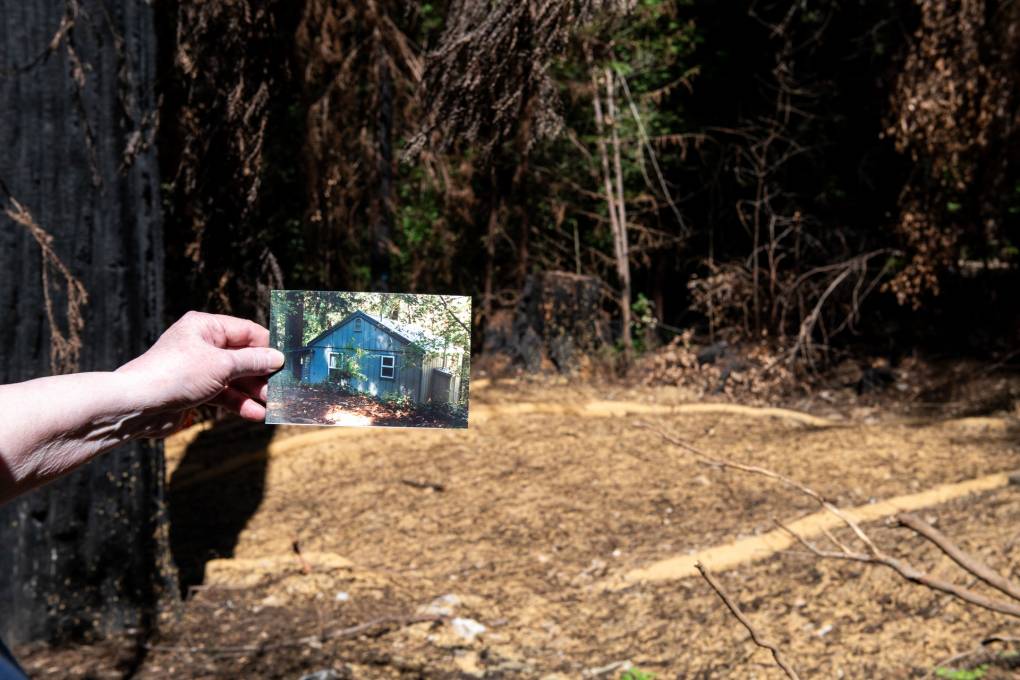
"caption": "Catherine Wilson holds a photo of her rental cabin in Boulder Creek at the the site where it stood before it was destroyed during the CZU Lightning Complex fires last August.",
"description": "Catherine Wilson holds a photo of her rental cabin in Boulder Creek at the the site where it stood before it was destroyed during the CZU Lightning Complex Fires last August.",
"title": "RS48514_023_BoulderCreek_FireVictims_04092021-qut",
"credit": "Beth LaBerge/KQED",
"status": "inherit",
"altTag": null,
"isLoading": false,
"fetchFailed": false
},
"news_11879041": {
"type": "attachments",
"id": "news_11879041",
"meta": {
"index": "attachments_1716263798",
"site": "news",
"id": "11879041",
"found": true
},
"parent": 11879040,
"imgSizes": {
"twentyfourteen-full-width": {
"file": "https://ww2.kqed.org/app/uploads/sites/10/2021/06/RS46906_010_SanJose_AntiEvictionProtest_01272021-qut-1038x576.jpg",
"width": 1038,
"mimeType": "image/jpeg",
"height": 576
},
"thumbnail": {
"file": "https://ww2.kqed.org/app/uploads/sites/10/2021/06/RS46906_010_SanJose_AntiEvictionProtest_01272021-qut-160x107.jpg",
"width": 160,
"mimeType": "image/jpeg",
"height": 107
},
"post-thumbnail": {
"file": "https://ww2.kqed.org/app/uploads/sites/10/2021/06/RS46906_010_SanJose_AntiEvictionProtest_01272021-qut-672x372.jpg",
"width": 672,
"mimeType": "image/jpeg",
"height": 372
},
"kqedFullSize": {
"file": "https://ww2.kqed.org/app/uploads/sites/10/2021/06/RS46906_010_SanJose_AntiEvictionProtest_01272021-qut.jpg",
"width": 1920,
"height": 1280
},
"large": {
"file": "https://ww2.kqed.org/app/uploads/sites/10/2021/06/RS46906_010_SanJose_AntiEvictionProtest_01272021-qut-1020x680.jpg",
"width": 1020,
"mimeType": "image/jpeg",
"height": 680
},
"1536x1536": {
"file": "https://ww2.kqed.org/app/uploads/sites/10/2021/06/RS46906_010_SanJose_AntiEvictionProtest_01272021-qut-1536x1024.jpg",
"width": 1536,
"mimeType": "image/jpeg",
"height": 1024
},
"medium": {
"file": "https://ww2.kqed.org/app/uploads/sites/10/2021/06/RS46906_010_SanJose_AntiEvictionProtest_01272021-qut-800x533.jpg",
"width": 800,
"mimeType": "image/jpeg",
"height": 533
}
},
"publishDate": 1624474397,
"modified": 1624474460,
"caption": "An anti-eviction protester stands in front of Santa Clara County Superior Court on Jan. 27, 2021, during a demonstration calling for stronger statewide eviction protections.",
"description": null,
"title": "RS46906_010_SanJose_AntiEvictionProtest_01272021-qut",
"credit": "Beth LaBerge/KQED",
"status": "inherit",
"altTag": null,
"isLoading": false,
"fetchFailed": false
},
"news_11879739": {
"type": "attachments",
"id": "news_11879739",
"meta": {
"index": "attachments_1716263798",
"site": "news",
"id": "11879739",
"found": true
},
"parent": 11879725,
"imgSizes": {
"twentyfourteen-full-width": {
"file": "https://ww2.kqed.org/app/uploads/sites/10/2021/06/RS46911_017_SanJose_AntiEvictionProtest_01272021-qut-1038x576.jpg",
"width": 1038,
"mimeType": "image/jpeg",
"height": 576
},
"thumbnail": {
"file": "https://ww2.kqed.org/app/uploads/sites/10/2021/06/RS46911_017_SanJose_AntiEvictionProtest_01272021-qut-160x107.jpg",
"width": 160,
"mimeType": "image/jpeg",
"height": 107
},
"post-thumbnail": {
"file": "https://ww2.kqed.org/app/uploads/sites/10/2021/06/RS46911_017_SanJose_AntiEvictionProtest_01272021-qut-672x372.jpg",
"width": 672,
"mimeType": "image/jpeg",
"height": 372
},
"kqedFullSize": {
"file": "https://ww2.kqed.org/app/uploads/sites/10/2021/06/RS46911_017_SanJose_AntiEvictionProtest_01272021-qut.jpg",
"width": 1920,
"height": 1280
},
"large": {
"file": "https://ww2.kqed.org/app/uploads/sites/10/2021/06/RS46911_017_SanJose_AntiEvictionProtest_01272021-qut-1020x680.jpg",
"width": 1020,
"mimeType": "image/jpeg",
"height": 680
},
"1536x1536": {
"file": "https://ww2.kqed.org/app/uploads/sites/10/2021/06/RS46911_017_SanJose_AntiEvictionProtest_01272021-qut-1536x1024.jpg",
"width": 1536,
"mimeType": "image/jpeg",
"height": 1024
},
"medium": {
"file": "https://ww2.kqed.org/app/uploads/sites/10/2021/06/RS46911_017_SanJose_AntiEvictionProtest_01272021-qut-800x533.jpg",
"width": 800,
"mimeType": "image/jpeg",
"height": 533
}
},
"publishDate": 1624994714,
"modified": 1624994770,
"caption": "An anti-eviction protester stands in front of Santa Clara County Superior Court on Jan. 27, 2021, during a demonstration calling for stronger statewide eviction protections.",
"description": null,
"title": "RS46911_017_SanJose_AntiEvictionProtest_01272021-qut",
"credit": "Beth LaBerge/KQED",
"status": "inherit",
"altTag": null,
"isLoading": false,
"fetchFailed": false
},
"news_11857696": {
"type": "attachments",
"id": "news_11857696",
"meta": {
"index": "attachments_1716263798",
"site": "news",
"id": "11857696",
"found": true
},
"parent": 11857659,
"imgSizes": {
"apple_news_ca_square_4_0": {
"file": "https://ww2.kqed.org/app/uploads/sites/10/2021/01/GettyImages-1211479742-470x470.jpg",
"width": 470,
"mimeType": "image/jpeg",
"height": 470
},
"twentyfourteen-full-width": {
"file": "https://ww2.kqed.org/app/uploads/sites/10/2021/01/GettyImages-1211479742-1024x576.jpg",
"width": 1024,
"mimeType": "image/jpeg",
"height": 576
},
"thumbnail": {
"file": "https://ww2.kqed.org/app/uploads/sites/10/2021/01/GettyImages-1211479742-160x106.jpg",
"width": 160,
"mimeType": "image/jpeg",
"height": 106
},
"post-thumbnail": {
"file": "https://ww2.kqed.org/app/uploads/sites/10/2021/01/GettyImages-1211479742-672x372.jpg",
"width": 672,
"mimeType": "image/jpeg",
"height": 372
},
"kqedFullSize": {
"file": "https://ww2.kqed.org/app/uploads/sites/10/2021/01/GettyImages-1211479742.jpg",
"width": 1024,
"height": 679
},
"apple_news_ca_landscape_4_7": {
"file": "https://ww2.kqed.org/app/uploads/sites/10/2021/01/GettyImages-1211479742-632x474.jpg",
"width": 632,
"mimeType": "image/jpeg",
"height": 474
},
"large": {
"file": "https://ww2.kqed.org/app/uploads/sites/10/2021/01/GettyImages-1211479742-1020x676.jpg",
"width": 1020,
"mimeType": "image/jpeg",
"height": 676
},
"apple_news_ca_landscape_4_0": {
"file": "https://ww2.kqed.org/app/uploads/sites/10/2021/01/GettyImages-1211479742-536x402.jpg",
"width": 536,
"mimeType": "image/jpeg",
"height": 402
},
"medium": {
"file": "https://ww2.kqed.org/app/uploads/sites/10/2021/01/GettyImages-1211479742-800x530.jpg",
"width": 800,
"mimeType": "image/jpeg",
"height": 530
},
"apple_news_ca_portrait_4_0": {
"file": "https://ww2.kqed.org/app/uploads/sites/10/2021/01/GettyImages-1211479742-354x472.jpg",
"width": 354,
"mimeType": "image/jpeg",
"height": 472
},
"apple_news_ca_portrait_9_7": {
"file": "https://ww2.kqed.org/app/uploads/sites/10/2021/01/GettyImages-1211479742-840x679.jpg",
"width": 840,
"mimeType": "image/jpeg",
"height": 679
},
"apple_news_ca_portrait_4_7": {
"file": "https://ww2.kqed.org/app/uploads/sites/10/2021/01/GettyImages-1211479742-414x552.jpg",
"width": 414,
"mimeType": "image/jpeg",
"height": 552
},
"apple_news_ca_portrait_5_5": {
"file": "https://ww2.kqed.org/app/uploads/sites/10/2021/01/GettyImages-1211479742-687x679.jpg",
"width": 687,
"mimeType": "image/jpeg",
"height": 679
},
"apple_news_ca_square_4_7": {
"file": "https://ww2.kqed.org/app/uploads/sites/10/2021/01/GettyImages-1211479742-550x550.jpg",
"width": 550,
"mimeType": "image/jpeg",
"height": 550
},
"apple_news_ca_square_5_5": {
"file": "https://ww2.kqed.org/app/uploads/sites/10/2021/01/GettyImages-1211479742-912x679.jpg",
"width": 912,
"mimeType": "image/jpeg",
"height": 679
}
},
"publishDate": 1611950877,
"modified": 1611951988,
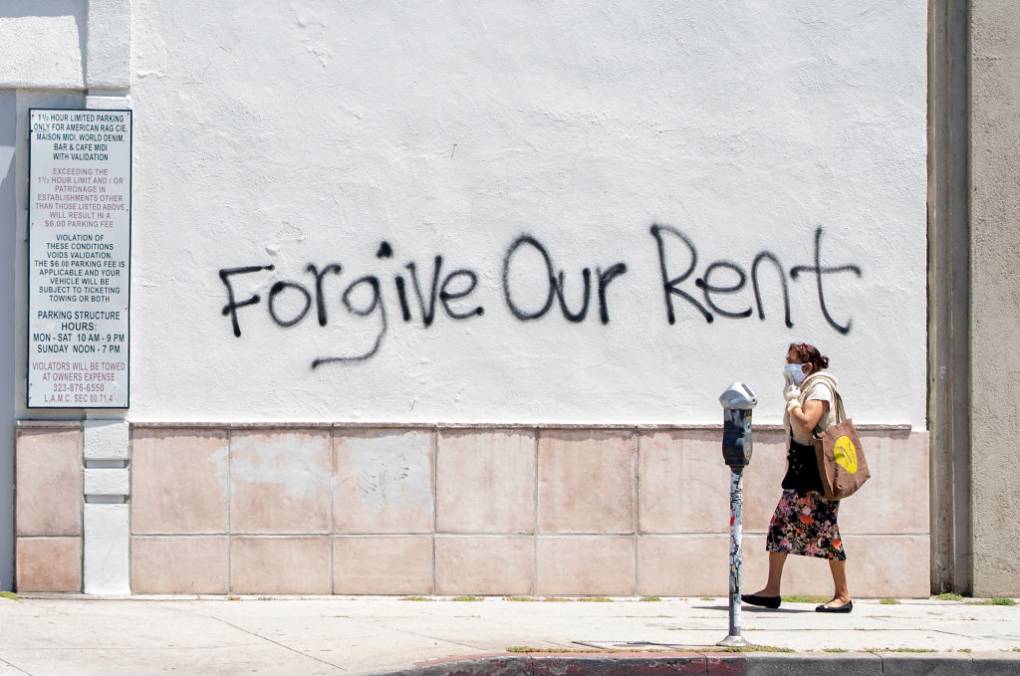
"caption": "A woman wearing a mask walks past a wall in Los Angeles on May 1, 2020 with a graffiti message demanding rent forgiveness.",
"description": null,
"title": "us-health-virus-epidemic-transport-diplomacy-politics-pandemic",
"credit": "Valerie Macon/AFP via Getty Images",
"status": "inherit",
"altTag": null,
"isLoading": false,
"fetchFailed": false
},
"news_11879743": {
"type": "attachments",
"id": "news_11879743",
"meta": {
"index": "attachments_1716263798",
"site": "news",
"id": "11879743",
"found": true
},
"parent": 11879638,
"imgSizes": {
"twentyfourteen-full-width": {
"file": "https://ww2.kqed.org/app/uploads/sites/10/2021/06/120520_HousingProtest_AW_sized_03-1024x576.jpg",
"width": 1024,
"mimeType": "image/jpeg",
"height": 576
},
"thumbnail": {
"file": "https://ww2.kqed.org/app/uploads/sites/10/2021/06/120520_HousingProtest_AW_sized_03-160x107.jpg",
"width": 160,
"mimeType": "image/jpeg",
"height": 107
},
"post-thumbnail": {
"file": "https://ww2.kqed.org/app/uploads/sites/10/2021/06/120520_HousingProtest_AW_sized_03-672x372.jpg",
"width": 672,
"mimeType": "image/jpeg",
"height": 372
},
"kqedFullSize": {
"file": "https://ww2.kqed.org/app/uploads/sites/10/2021/06/120520_HousingProtest_AW_sized_03.jpg",
"width": 1024,
"height": 682
},
"large": {
"file": "https://ww2.kqed.org/app/uploads/sites/10/2021/06/120520_HousingProtest_AW_sized_03-1020x679.jpg",
"width": 1020,
"mimeType": "image/jpeg",
"height": 679
},
"medium": {
"file": "https://ww2.kqed.org/app/uploads/sites/10/2021/06/120520_HousingProtest_AW_sized_03-800x533.jpg",
"width": 800,
"mimeType": "image/jpeg",
"height": 533
}
},
"publishDate": 1624996298,
"modified": 1624996657,
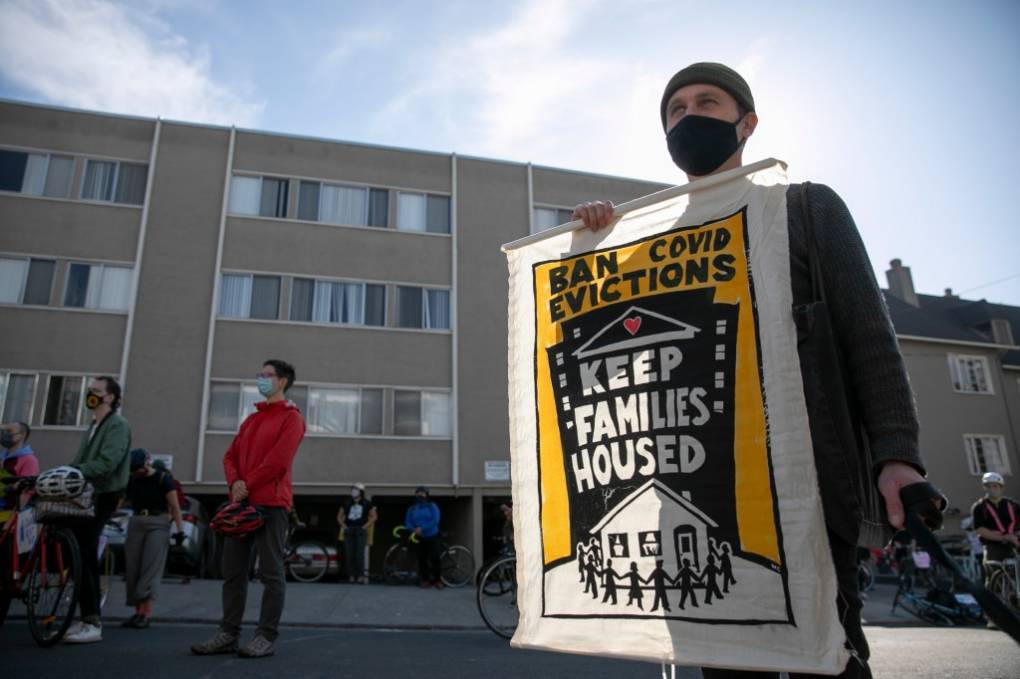
"caption": "Andrew Rosenburg, residente de Oakland, sostiene una pancarta mientras protesta en contra de los desalojos durante la pandemia, el 5 de diciembre de 2020 en Oakland.",
"description": "Andrew Rosenburg, residente de Oakland, sostiene una pancarta mientras protesta en contra de los desalojos durante la pandemia, el 5 de diciembre de 2020 en Oakland.",
"title": "120520_HousingProtest_AW_sized_03",
"credit": "Anne Wernikoff/CalMatters",
"status": "inherit",
"altTag": "Un hombre sostiene una pancarta en una calle. Hay otras personas a su alrededor.",
"isLoading": false,
"fetchFailed": false
},
"news_11879627": {
"type": "attachments",
"id": "news_11879627",
"meta": {
"index": "attachments_1716263798",
"site": "news",
"id": "11879627",
"found": true
},
"parent": 11879626,
"imgSizes": {
"twentyfourteen-full-width": {
"file": "https://ww2.kqed.org/app/uploads/sites/10/2021/06/GettyImages-1316309451-1024x576.jpg",
"width": 1024,
"mimeType": "image/jpeg",
"height": 576
},
"thumbnail": {
"file": "https://ww2.kqed.org/app/uploads/sites/10/2021/06/GettyImages-1316309451-160x111.jpg",
"width": 160,
"mimeType": "image/jpeg",
"height": 111
},
"post-thumbnail": {
"file": "https://ww2.kqed.org/app/uploads/sites/10/2021/06/GettyImages-1316309451-672x372.jpg",
"width": 672,
"mimeType": "image/jpeg",
"height": 372
},
"kqedFullSize": {
"file": "https://ww2.kqed.org/app/uploads/sites/10/2021/06/GettyImages-1316309451.jpg",
"width": 1024,
"height": 711
},
"large": {
"file": "https://ww2.kqed.org/app/uploads/sites/10/2021/06/GettyImages-1316309451-1020x708.jpg",
"width": 1020,
"mimeType": "image/jpeg",
"height": 708
},
"medium": {
"file": "https://ww2.kqed.org/app/uploads/sites/10/2021/06/GettyImages-1316309451-800x555.jpg",
"width": 800,
"mimeType": "image/jpeg",
"height": 555
}
},
"publishDate": 1624918094,
"modified": 1624918441,
"caption": "California Republican gubernatorial candidate John Cox stands in front of his campaign bus during a rally on May 4, 2021, at Miller Regional Park in Sacramento. Not pictured: the live 1,000-pound bear accompanying him.",
"description": null,
"title": "John Cox Announces Run For California Governor With 1,000-Pound Bear",
"credit": "Justin Sullivan/Getty Images",
"status": "inherit",
"altTag": null,
"isLoading": false,
"fetchFailed": false
},
"news_11879551": {
"type": "attachments",
"id": "news_11879551",
"meta": {
"index": "attachments_1716263798",
"site": "news",
"id": "11879551",
"found": true
},
"parent": 11879548,
"imgSizes": {
"twentyfourteen-full-width": {
"file": "https://ww2.kqed.org/app/uploads/sites/10/2021/06/012921_EvictionVigil_AW_sized_09-1038x576.jpeg",
"width": 1038,
"mimeType": "image/jpeg",
"height": 576
},
"thumbnail": {
"file": "https://ww2.kqed.org/app/uploads/sites/10/2021/06/012921_EvictionVigil_AW_sized_09-160x110.jpeg",
"width": 160,
"mimeType": "image/jpeg",
"height": 110
},
"post-thumbnail": {
"file": "https://ww2.kqed.org/app/uploads/sites/10/2021/06/012921_EvictionVigil_AW_sized_09-672x372.jpeg",
"width": 672,
"mimeType": "image/jpeg",
"height": 372
},
"kqedFullSize": {
"file": "https://ww2.kqed.org/app/uploads/sites/10/2021/06/012921_EvictionVigil_AW_sized_09.jpeg",
"width": 2000,
"height": 1380
},
"large": {
"file": "https://ww2.kqed.org/app/uploads/sites/10/2021/06/012921_EvictionVigil_AW_sized_09-1020x704.jpeg",
"width": 1020,
"mimeType": "image/jpeg",
"height": 704
},
"1536x1536": {
"file": "https://ww2.kqed.org/app/uploads/sites/10/2021/06/012921_EvictionVigil_AW_sized_09-1536x1060.jpeg",
"width": 1536,
"mimeType": "image/jpeg",
"height": 1060
},
"full-width": {
"file": "https://ww2.kqed.org/app/uploads/sites/10/2021/06/012921_EvictionVigil_AW_sized_09-1920x1325.jpeg",
"width": 1920,
"mimeType": "image/jpeg",
"height": 1325
},
"medium": {
"file": "https://ww2.kqed.org/app/uploads/sites/10/2021/06/012921_EvictionVigil_AW_sized_09-800x552.jpeg",
"width": 800,
"mimeType": "image/jpeg",
"height": 552
}
},
"publishDate": 1624904768,
"modified": 1624904804,
"caption": "Oakland resident and member of ACE Alex Acuña holds up a sign decrying SB 91, a rent relief plan signed into law earlier that day by Gov. Gavin Newsom, during a vigil at the Elihu M. Harris, State of California office building in Oakland on Jan. 29, 2021. ",
"description": null,
"title": "012921_EvictionVigil_AW_sized_09",
"credit": "Anne Wernikoff/CalMatters",
"status": "inherit",
"altTag": null,
"isLoading": false,
"fetchFailed": false
},
"news_11879339": {
"type": "attachments",
"id": "news_11879339",
"meta": {
"index": "attachments_1716263798",
"site": "news",
"id": "11879339",
"found": true
},
"parent": 11879337,
"imgSizes": {
"twentyfourteen-full-width": {
"file": "https://ww2.kqed.org/app/uploads/sites/10/2021/06/Image-from-iOS-3-1038x576.jpg",
"width": 1038,
"mimeType": "image/jpeg",
"height": 576
},
"thumbnail": {
"file": "https://ww2.kqed.org/app/uploads/sites/10/2021/06/Image-from-iOS-3-160x107.jpg",
"width": 160,
"mimeType": "image/jpeg",
"height": 107
},
"post-thumbnail": {
"file": "https://ww2.kqed.org/app/uploads/sites/10/2021/06/Image-from-iOS-3-672x372.jpg",
"width": 672,
"mimeType": "image/jpeg",
"height": 372
},
"kqedFullSize": {
"file": "https://ww2.kqed.org/app/uploads/sites/10/2021/06/Image-from-iOS-3.jpg",
"width": 1529,
"height": 1019
},
"large": {
"file": "https://ww2.kqed.org/app/uploads/sites/10/2021/06/Image-from-iOS-3-1020x680.jpg",
"width": 1020,
"mimeType": "image/jpeg",
"height": 680
},
"medium": {
"file": "https://ww2.kqed.org/app/uploads/sites/10/2021/06/Image-from-iOS-3-800x533.jpg",
"width": 800,
"mimeType": "image/jpeg",
"height": 533
}
},
"publishDate": 1624644509,
"modified": 1624644581,
"caption": "Anti-eviction protesters stand in front of Santa Clara County Superior Court on Jan. 27, 2021, during a demonstration calling for stronger statewide eviction protections.",
"description": "Anti-eviction protesters stand in front of Santa Clara County Superior Court on Jan. 27, 2021, during a demonstration calling for stronger statewide eviction protections.",
"title": "Image from iOS",
"credit": "Beth LaBerge/KQED",
"status": "inherit",
"altTag": null,
"isLoading": false,
"fetchFailed": false
},
"news_11879104": {
"type": "attachments",
"id": "news_11879104",
"meta": {
"index": "attachments_1716263798",
"site": "news",
"id": "11879104",
"found": true
},
"parent": 11878950,
"imgSizes": {
"twentyfourteen-full-width": {
"file": "https://ww2.kqed.org/app/uploads/sites/10/2021/06/RS50114_004_Oakland_MiaBonta_06232021-qut-1038x576.jpg",
"width": 1038,
"mimeType": "image/jpeg",
"height": 576
},
"thumbnail": {
"file": "https://ww2.kqed.org/app/uploads/sites/10/2021/06/RS50114_004_Oakland_MiaBonta_06232021-qut-160x90.jpg",
"width": 160,
"mimeType": "image/jpeg",
"height": 90
},
"post-thumbnail": {
"file": "https://ww2.kqed.org/app/uploads/sites/10/2021/06/RS50114_004_Oakland_MiaBonta_06232021-qut-672x372.jpg",
"width": 672,
"mimeType": "image/jpeg",
"height": 372
},
"kqedFullSize": {
"file": "https://ww2.kqed.org/app/uploads/sites/10/2021/06/RS50114_004_Oakland_MiaBonta_06232021-qut.jpg",
"width": 1920,
"height": 1080
},
"large": {
"file": "https://ww2.kqed.org/app/uploads/sites/10/2021/06/RS50114_004_Oakland_MiaBonta_06232021-qut-1020x574.jpg",
"width": 1020,
"mimeType": "image/jpeg",
"height": 574
},
"1536x1536": {
"file": "https://ww2.kqed.org/app/uploads/sites/10/2021/06/RS50114_004_Oakland_MiaBonta_06232021-qut-1536x864.jpg",
"width": 1536,
"mimeType": "image/jpeg",
"height": 864
},
"medium": {
"file": "https://ww2.kqed.org/app/uploads/sites/10/2021/06/RS50114_004_Oakland_MiaBonta_06232021-qut-800x450.jpg",
"width": 800,
"mimeType": "image/jpeg",
"height": 450
}
},
"publishDate": 1624489450,
"modified": 1624559018,
"caption": "Mia Bonta, candidate for state Assembly in District 18, which includes Oakland, Alameda and San Leandro, speaks with students at her campaign headquarters in Oakland on June 23, 2021.",
"description": null,
"title": "RS50114_004_Oakland_MiaBonta_06232021-qut",
"credit": "Beth LaBerge/KQED",
"status": "inherit",
"altTag": null,
"isLoading": false,
"fetchFailed": false
},
"news_11878862": {
"type": "attachments",
"id": "news_11878862",
"meta": {
"index": "attachments_1716263798",
"site": "news",
"id": "11878862",
"found": true
},
"parent": 11878403,
"imgSizes": {
"twentyfourteen-full-width": {
"file": "https://ww2.kqed.org/app/uploads/sites/10/2021/06/antioch-take-two-1180x664-1-1038x576.jpeg",
"width": 1038,
"mimeType": "image/jpeg",
"height": 576
},
"thumbnail": {
"file": "https://ww2.kqed.org/app/uploads/sites/10/2021/06/antioch-take-two-1180x664-1-160x90.jpeg",
"width": 160,
"mimeType": "image/jpeg",
"height": 90
},
"post-thumbnail": {
"file": "https://ww2.kqed.org/app/uploads/sites/10/2021/06/antioch-take-two-1180x664-1-672x372.jpeg",
"width": 672,
"mimeType": "image/jpeg",
"height": 372
},
"kqedFullSize": {
"file": "https://ww2.kqed.org/app/uploads/sites/10/2021/06/antioch-take-two-1180x664-1.jpeg",
"width": 1180,
"height": 664
},
"large": {
"file": "https://ww2.kqed.org/app/uploads/sites/10/2021/06/antioch-take-two-1180x664-1-1020x574.jpeg",
"width": 1020,
"mimeType": "image/jpeg",
"height": 574
},
"medium": {
"file": "https://ww2.kqed.org/app/uploads/sites/10/2021/06/antioch-take-two-1180x664-1-800x450.jpeg",
"width": 800,
"mimeType": "image/jpeg",
"height": 450
}
},
"publishDate": 1624323124,
"modified": 1650548798,
"caption": null,
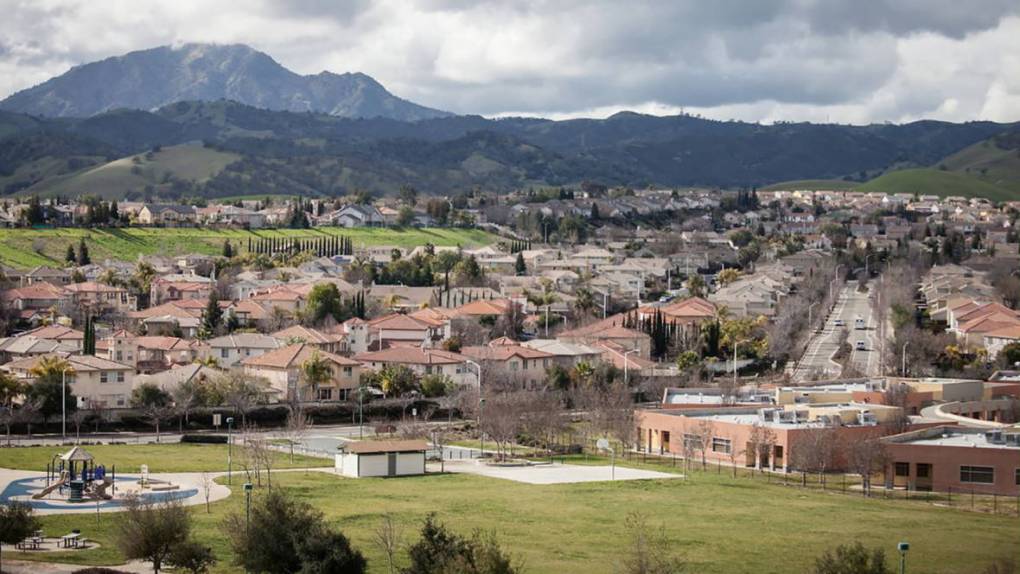
"description": "A housing subdivision in Antioch, an East Bay suburb that has experienced dramatic demographic and socioeconomic changes in recent decades. ",
"title": "antioch-take-two-1180x664",
"credit": "Deborah Svoboda/KQED",
"status": "inherit",
"altTag": null,
"isLoading": false,
"fetchFailed": false
},
"news_11878828": {
"type": "attachments",
"id": "news_11878828",
"meta": {
"index": "attachments_1716263798",
"site": "news",
"id": "11878828",
"found": true
},
"parent": 11878817,
"imgSizes": {
"twentyfourteen-full-width": {
"file": "https://ww2.kqed.org/app/uploads/sites/10/2021/06/AP_evictionprotest_012521_01-1038x576.jpeg",
"width": 1038,
"mimeType": "image/jpeg",
"height": 576
},
"thumbnail": {
"file": "https://ww2.kqed.org/app/uploads/sites/10/2021/06/AP_evictionprotest_012521_01-160x107.jpeg",
"width": 160,
"mimeType": "image/jpeg",
"height": 107
},
"post-thumbnail": {
"file": "https://ww2.kqed.org/app/uploads/sites/10/2021/06/AP_evictionprotest_012521_01-672x372.jpeg",
"width": 672,
"mimeType": "image/jpeg",
"height": 372
},
"kqedFullSize": {
"file": "https://ww2.kqed.org/app/uploads/sites/10/2021/06/AP_evictionprotest_012521_01.jpeg",
"width": 1200,
"height": 800
},
"large": {
"file": "https://ww2.kqed.org/app/uploads/sites/10/2021/06/AP_evictionprotest_012521_01-1020x680.jpeg",
"width": 1020,
"mimeType": "image/jpeg",
"height": 680
},
"medium": {
"file": "https://ww2.kqed.org/app/uploads/sites/10/2021/06/AP_evictionprotest_012521_01-800x533.jpeg",
"width": 800,
"mimeType": "image/jpeg",
"height": 533
}
},
"publishDate": 1624316681,
"modified": 1624316729,
"caption": "Demonstrators calling for lawmakers and Gov. Gavin Newsom to pass rent forgiveness and stronger eviction protections carry a mock casket past the state Capitol in Sacramento on Jan. 25, 2021.",
"description": null,
"title": "AP_evictionprotest_012521_01",
"credit": "Rich Pedroncelli/Associated Press via CalMatters",
"status": "inherit",
"altTag": null,
"isLoading": false,
"fetchFailed": false
},
"news_11878666": {
"type": "attachments",
"id": "news_11878666",
"meta": {
"index": "attachments_1716263798",
"site": "news",
"id": "11878666",
"found": true
},
"parent": 11878610,
"imgSizes": {
"twentyfourteen-full-width": {
"file": "https://ww2.kqed.org/app/uploads/sites/10/2021/06/RS50031_009_SanFrancisco_PostHotel_06172021-qut-1038x576.jpg",
"width": 1038,
"mimeType": "image/jpeg",
"height": 576
},
"thumbnail": {
"file": "https://ww2.kqed.org/app/uploads/sites/10/2021/06/RS50031_009_SanFrancisco_PostHotel_06172021-qut-160x107.jpg",
"width": 160,
"mimeType": "image/jpeg",
"height": 107
},
"post-thumbnail": {
"file": "https://ww2.kqed.org/app/uploads/sites/10/2021/06/RS50031_009_SanFrancisco_PostHotel_06172021-qut-672x372.jpg",
"width": 672,
"mimeType": "image/jpeg",
"height": 372
},
"kqedFullSize": {
"file": "https://ww2.kqed.org/app/uploads/sites/10/2021/06/RS50031_009_SanFrancisco_PostHotel_06172021-qut.jpg",
"width": 1920,
"height": 1280
},
"large": {
"file": "https://ww2.kqed.org/app/uploads/sites/10/2021/06/RS50031_009_SanFrancisco_PostHotel_06172021-qut-1020x680.jpg",
"width": 1020,
"mimeType": "image/jpeg",
"height": 680
},
"1536x1536": {
"file": "https://ww2.kqed.org/app/uploads/sites/10/2021/06/RS50031_009_SanFrancisco_PostHotel_06172021-qut-1536x1024.jpg",
"width": 1536,
"mimeType": "image/jpeg",
"height": 1024
},
"medium": {
"file": "https://ww2.kqed.org/app/uploads/sites/10/2021/06/RS50031_009_SanFrancisco_PostHotel_06172021-qut-800x533.jpg",
"width": 800,
"mimeType": "image/jpeg",
"height": 533
}
},
"publishDate": 1624050070,
"modified": 1624317693,
"caption": "Shireen McSpadden, director of the San Francisco Department of Homelessness and Supportive Housing, looks out of a window at the Post Hotel in San Francisco on June 17, 2021.",
"description": null,
"title": "RS50031_009_SanFrancisco_PostHotel_06172021-qut",
"credit": "Beth LaBerge/KQED",
"status": "inherit",
"altTag": null,
"isLoading": false,
"fetchFailed": false
}
},
"audioPlayerReducer": {
"postId": "stream_live",
"isPaused": true,
"isPlaying": false,
"pfsActive": false,
"pledgeModalIsOpen": true,
"playerDrawerIsOpen": false,
"liveAudioPlayStartedAt": 0,
"liveAudioPlayContext": ""
},
"authorsReducer": {
"byline_news_11879040": {
"type": "authors",
"id": "byline_news_11879040",
"meta": {
"override": true
},
"slug": "byline_news_11879040",
"name": "KQED and the Urban Displacement Project",
"isLoading": false
},
"byline_news_11879638": {
"type": "authors",
"id": "byline_news_11879638",
"meta": {
"override": true
},
"slug": "byline_news_11879638",
"name": "\u003ca href=\"https://calmatters.org/author/manuela-tobias/\">Manuela Tobias\u003c/a>",
"isLoading": false
},
"byline_news_11879626": {
"type": "authors",
"id": "byline_news_11879626",
"meta": {
"override": true
},
"slug": "byline_news_11879626",
"name": "Kathleen Ronayne\u003cbr>Associated Press",
"isLoading": false
},
"byline_news_11879548": {
"type": "authors",
"id": "byline_news_11879548",
"meta": {
"override": true
},
"slug": "byline_news_11879548",
"name": "Manuela Tobias",
"isLoading": false
},
"byline_news_11879337": {
"type": "authors",
"id": "byline_news_11879337",
"meta": {
"override": true
},
"slug": "byline_news_11879337",
"name": "Adam Beam \u003cbr> The Associated Press",
"isLoading": false
},
"byline_news_11878817": {
"type": "authors",
"id": "byline_news_11878817",
"meta": {
"override": true
},
"slug": "byline_news_11878817",
"name": "\u003ca href=\"https://calmatters.org/author/manuela-tobias/\">Manuela Tobias\u003c/a>",
"isLoading": false
},
"gmarzorati": {
"type": "authors",
"id": "227",
"meta": {
"index": "authors_1716337520",
"id": "227",
"found": true
},
"name": "Guy Marzorati",
"firstName": "Guy",
"lastName": "Marzorati",
"slug": "gmarzorati",
"email": "gmarzorati@KQED.org",
"display_author_email": true,
"staff_mastheads": [
"news"
],
"title": "Correspondent",
"bio": "Guy Marzorati is a correspondent on KQED's California Politics and Government Desk, based in San Jose. A graduate of Santa Clara University, Guy joined KQED in 2013. He reports on state and local politics and produces KQED's digital voter guide.",
"avatar": "https://secure.gravatar.com/avatar/e7038b8dbfd55b104369b76b1cd0b9de?s=600&d=blank&r=g",
"twitter": "guymarzorati",
"facebook": null,
"instagram": null,
"linkedin": null,
"sites": [
{
"site": "",
"roles": [
"editor"
]
},
{
"site": "news",
"roles": [
"editor"
]
},
{
"site": "science",
"roles": [
"editor"
]
},
{
"site": "forum",
"roles": [
"editor"
]
},
{
"site": "elections",
"roles": [
"editor"
]
},
{
"site": "liveblog",
"roles": [
"editor"
]
}
],
"headData": {
"title": "Guy Marzorati | KQED",
"description": "Correspondent",
"ogImgSrc": "https://secure.gravatar.com/avatar/e7038b8dbfd55b104369b76b1cd0b9de?s=600&d=blank&r=g",
"twImgSrc": "https://secure.gravatar.com/avatar/e7038b8dbfd55b104369b76b1cd0b9de?s=600&d=blank&r=g"
},
"isLoading": false,
"link": "/author/gmarzorati"
},
"matthewgreen": {
"type": "authors",
"id": "1263",
"meta": {
"index": "authors_1716337520",
"id": "1263",
"found": true
},
"name": "Matthew Green",
"firstName": "Matthew",
"lastName": "Green",
"slug": "matthewgreen",
"email": "mgreen@kqed.org",
"display_author_email": false,
"staff_mastheads": [],
"title": "KQED Editor/Reporter",
"bio": "Matthew Green is a digital media producer for KQED News. He previously produced \u003ca href=\"http://www.kqed.org/lowdown\">The Lowdown\u003c/a>, KQED’s multimedia news education blog. Matthew's written for numerous Bay Area publications, including the Oakland Tribune and San Francisco Chronicle. He also taught journalism classes at Fremont High School in East Oakland.\r\n\r\nEmail: mgreen@kqed.org; Twitter: @MGreenKQED",
"avatar": "https://secure.gravatar.com/avatar/3bf498d1267ca02c8494f33d8cfc575e?s=600&d=blank&r=g",
"twitter": "MGreenKQED",
"facebook": null,
"instagram": null,
"linkedin": null,
"sites": [
{
"site": "news",
"roles": []
},
{
"site": "lowdown",
"roles": []
},
{
"site": "science",
"roles": []
},
{
"site": "education",
"roles": []
},
{
"site": "quest",
"roles": []
},
{
"site": "liveblog",
"roles": []
}
],
"headData": {
"title": "Matthew Green | KQED",
"description": "KQED Editor/Reporter",
"ogImgSrc": "https://secure.gravatar.com/avatar/3bf498d1267ca02c8494f33d8cfc575e?s=600&d=blank&r=g",
"twImgSrc": "https://secure.gravatar.com/avatar/3bf498d1267ca02c8494f33d8cfc575e?s=600&d=blank&r=g"
},
"isLoading": false,
"link": "/author/matthewgreen"
},
"dkatayama": {
"type": "authors",
"id": "7240",
"meta": {
"index": "authors_1716337520",
"id": "7240",
"found": true
},
"name": "Devin Katayama",
"firstName": "Devin",
"lastName": "Katayama",
"slug": "dkatayama",
"email": "dkatayama@kqed.org",
"display_author_email": true,
"staff_mastheads": [
"news"
],
"title": "Editor of Talent and Development",
"bio": "Devin Katayama is former Editor of Talent and Development for KQED. He supported our internship program and on-call staff by looking for equitable opportunities to improve the newsroom.\r\n\r\nHe previously hosted The Bay and American Suburb podcasts from KQED News. Prior to returning to the Bay Area in 2015, Devin was the education reporter for WFPL in Louisville and worked as a producer with radio stations in Chicago and Portland, OR. His work has appeared on NPR’s \u003cem>Morning Edition, All Things Considered, The Takeaway\u003c/em> and \u003cem>Here and Now.\u003c/em>\r\n\r\nDevin earned his MA in Journalism from Columbia College Chicago, where he was a Follett Fellow and the recipient of the 2011 Studs Terkel Community Media Workshop Scholarship for his story on Chicago's homeless youth. He won WBUR's 2014 Daniel Schorr award and a regional RTNDA Edward R. Murrow Award for his documentary \"At Risk\" that looked at issues facing some of Louisville's students. Devin has also received numerous local awards from the Associated Press and the Society of Professional Journalists.",
"avatar": "https://secure.gravatar.com/avatar/d0d2978a31002fb2de107921a8e18405?s=600&d=blank&r=g",
"twitter": "RadioDevin",
"facebook": null,
"instagram": null,
"linkedin": null,
"sites": [
{
"site": "arts",
"roles": []
},
{
"site": "news",
"roles": [
"author"
]
},
{
"site": "stateofhealth",
"roles": [
"author"
]
},
{
"site": "forum",
"roles": [
"editor"
]
},
{
"site": "perspectives",
"roles": [
"editor"
]
}
],
"headData": {
"title": "Devin Katayama | KQED",
"description": "Editor of Talent and Development",
"ogImgSrc": "https://secure.gravatar.com/avatar/d0d2978a31002fb2de107921a8e18405?s=600&d=blank&r=g",
"twImgSrc": "https://secure.gravatar.com/avatar/d0d2978a31002fb2de107921a8e18405?s=600&d=blank&r=g"
},
"isLoading": false,
"link": "/author/dkatayama"
},
"ecruzguevarra": {
"type": "authors",
"id": "8654",
"meta": {
"index": "authors_1716337520",
"id": "8654",
"found": true
},
"name": "Ericka Cruz Guevarra",
"firstName": "Ericka",
"lastName": "Cruz Guevarra",
"slug": "ecruzguevarra",
"email": "ecruzguevarra@kqed.org",
"display_author_email": true,
"staff_mastheads": [
"news"
],
"title": "Producer, The Bay Podcast",
"bio": "Ericka Cruz Guevarra is host of \u003ca href=\"https://www.kqed.org/podcasts/thebay\">\u003cem>The Bay\u003c/em>\u003c/a> podcast at KQED. Before host, she was the show’s producer. Her work in that capacity includes a three-part reported series on policing in Vallejo, which won a 2020 excellence in journalism award from the Society of Professional Journalists. Ericka has worked as a breaking news reporter at Oregon Public Broadcasting, helped produce the Code Switch podcast, and was KQED’s inaugural Raul Ramirez Diversity Fund intern. She’s also an alumna of NPR’s Next Generation Radio program. Send her an email if you have strong feelings about whether Fairfield and Suisun City are the Bay. Ericka is represented by SAG-AFTRA.",
"avatar": "https://secure.gravatar.com/avatar/accefc1de4bafc7e234b69bcb9b6f6536c130fd84709bc3069ef11a78787e1bb?s=600&d=blank&r=g",
"twitter": "NotoriousECG",
"bluesky": null,
"facebook": null,
"instagram": null,
"linkedin": null,
"sites": [
{
"site": "arts",
"roles": [
"subscriber"
]
},
{
"site": "news",
"roles": [
"editor",
"manage_categories"
]
},
{
"site": "futureofyou",
"roles": [
"subscriber"
]
},
{
"site": "stateofhealth",
"roles": [
"subscriber"
]
},
{
"site": "science",
"roles": [
"editor"
]
},
{
"site": "forum",
"roles": [
"subscriber"
]
}
],
"headData": {
"title": "Ericka Cruz Guevarra | KQED",
"description": "Producer, The Bay Podcast",
"ogImgSrc": "https://secure.gravatar.com/avatar/accefc1de4bafc7e234b69bcb9b6f6536c130fd84709bc3069ef11a78787e1bb?s=600&d=blank&r=g",
"twImgSrc": "https://secure.gravatar.com/avatar/accefc1de4bafc7e234b69bcb9b6f6536c130fd84709bc3069ef11a78787e1bb?s=600&d=blank&r=g"
},
"isLoading": false,
"link": "/author/ecruzguevarra"
},
"lsarah": {
"type": "authors",
"id": "11626",
"meta": {
"index": "authors_1716337520",
"id": "11626",
"found": true
},
"name": "Lakshmi Sarah",
"firstName": "Lakshmi",
"lastName": "Sarah",
"slug": "lsarah",
"email": "lsarah@kqed.org",
"display_author_email": false,
"staff_mastheads": [],
"title": "Digital Producer",
"bio": "Lakshmi Sarah is an educator, author and journalist with a focus on innovative storytelling. She has worked with newspapers, radio and magazines from Ahmedabad, India to Los Angeles, California. She has written and produced for Die Zeit, Global Voices, AJ+, KQED, Fusion Media Group and the New York Times.",
"avatar": "https://secure.gravatar.com/avatar/652dcaecd8b28826fc17a8b2d6bb4e93?s=600&d=blank&r=g",
"twitter": "lakitalki",
"facebook": null,
"instagram": "https://www.instagram.com/laki.talki/",
"linkedin": "https://www.linkedin.com/in/lakisarah/",
"sites": [
{
"site": "arts",
"roles": []
},
{
"site": "news",
"roles": []
},
{
"site": "bayareabites",
"roles": []
},
{
"site": "science",
"roles": []
}
],
"headData": {
"title": "Lakshmi Sarah | KQED",
"description": "Digital Producer",
"ogImgSrc": "https://secure.gravatar.com/avatar/652dcaecd8b28826fc17a8b2d6bb4e93?s=600&d=blank&r=g",
"twImgSrc": "https://secure.gravatar.com/avatar/652dcaecd8b28826fc17a8b2d6bb4e93?s=600&d=blank&r=g"
},
"isLoading": false,
"link": "/author/lsarah"
},
"amontecillo": {
"type": "authors",
"id": "11649",
"meta": {
"index": "authors_1716337520",
"id": "11649",
"found": true
},
"name": "Alan Montecillo",
"firstName": "Alan",
"lastName": "Montecillo",
"slug": "amontecillo",
"email": "amontecillo@kqed.org",
"display_author_email": false,
"staff_mastheads": [
"news"
],
"title": "KQED Contributor",
"bio": "Alan Montecillo is the senior editor of \u003cem>\u003ca href=\"http://kqed.org/thebay\">The Bay\u003c/a>, \u003c/em> KQED's local news podcast. Before moving to the Bay Area, he worked as a senior talk show producer for WILL in Champaign-Urbana, Illinois and at Oregon Public Broadcasting in Portland, Oregon. He has won journalism awards from the Society of Professional Journalists Northern California, the Public Media Journalists Association, The Signal Awards, and has also received a regional Edward R. Murrow award. Alan is a Filipino American from Hong Kong and a graduate of Reed College.",
"avatar": "https://secure.gravatar.com/avatar/268f53a2066899ea9efdd8a5900218b17c822d9862cbc9326cccec53ef41d349?s=600&d=blank&r=g",
"twitter": "alanmontecillo",
"bluesky": null,
"facebook": null,
"instagram": null,
"linkedin": null,
"sites": [
{
"site": "",
"roles": [
"editor"
]
},
{
"site": "news",
"roles": [
"editor",
"manage_categories"
]
}
],
"headData": {
"title": "Alan Montecillo | KQED",
"description": "KQED Contributor",
"ogImgSrc": "https://secure.gravatar.com/avatar/268f53a2066899ea9efdd8a5900218b17c822d9862cbc9326cccec53ef41d349?s=600&d=blank&r=g",
"twImgSrc": "https://secure.gravatar.com/avatar/268f53a2066899ea9efdd8a5900218b17c822d9862cbc9326cccec53ef41d349?s=600&d=blank&r=g"
},
"isLoading": false,
"link": "/author/amontecillo"
},
"msolomon": {
"type": "authors",
"id": "11651",
"meta": {
"index": "authors_1716337520",
"id": "11651",
"found": true
},
"name": "Molly Solomon",
"firstName": "Molly",
"lastName": "Solomon",
"slug": "msolomon",
"email": "msolomon@KQED.org",
"display_author_email": false,
"staff_mastheads": [
"news"
],
"title": "Senior Editor",
"bio": "Molly Solomon is the senior editor of KQED's California Politics and Government Desk. Previously, she was the station's editor-at-large, with a focus on editing early childhood education, politics, and criminal justice. Before that, she managed and edited statewide election coverage for The California Newsroom, a collaboration of local public radio stations, CalMatters and NPR. Molly joined KQED in 2019 to launch the station’s housing affordability desk, where she reported on homelessness, evictions and is the co-host of KQED’s housing podcast, SOLD OUT: Rethinking Housing in America. Before that, she was the Southwest Washington Bureau Chief for Oregon Public Broadcasting and a reporter at Hawaii Public Radio. Her stories have aired on NPR’s \u003cem>Morning Edition\u003c/em>, \u003cem>All Things Considered\u003c/em>, \u003cem>Here & Now\u003c/em>, \u003cem>Science Friday\u003c/em> and \u003cem>Marketplace\u003c/em>. Molly's award-winning reporting has been honored by the Best of the West, Edward R. Murrow awards, Society of Professional Journalists, National Headliner Awards, and the Asian American Journalists Association. Born and raised in Berkeley, Molly is a big fan of burritos and her scruffy terrier, Ollie.",
"avatar": "https://secure.gravatar.com/avatar/9ad9794616923d81c9a79897161545bd?s=600&d=blank&r=g",
"twitter": "solomonout",
"facebook": null,
"instagram": null,
"linkedin": null,
"sites": [
{
"site": "news",
"roles": [
"editor"
]
},
{
"site": "science",
"roles": [
"editor"
]
}
],
"headData": {
"title": "Molly Solomon | KQED",
"description": "Senior Editor",
"ogImgSrc": "https://secure.gravatar.com/avatar/9ad9794616923d81c9a79897161545bd?s=600&d=blank&r=g",
"twImgSrc": "https://secure.gravatar.com/avatar/9ad9794616923d81c9a79897161545bd?s=600&d=blank&r=g"
},
"isLoading": false,
"link": "/author/msolomon"
},
"ebaldassari": {
"type": "authors",
"id": "11652",
"meta": {
"index": "authors_1716337520",
"id": "11652",
"found": true
},
"name": "Erin Baldassari",
"firstName": "Erin",
"lastName": "Baldassari",
"slug": "ebaldassari",
"email": "ebaldassari@KQED.org",
"display_author_email": true,
"staff_mastheads": [
"news"
],
"title": "Staff Writer",
"bio": "Erin Baldassari covers housing for KQED. She's a former print journalist and most recently worked as the transportation reporter for the \u003cem>Mercury News\u003c/em> and \u003cem>East Bay Times. \u003c/em>There, she focused on how the Bay Area’s housing shortage has changed the way people move around the region. She also served on the \u003cem>East Bay Times\u003c/em>’ 2017 Pulitzer Prize-winning team for coverage of the Ghost Ship Fire in Oakland. Prior to that, Erin worked as a breaking news and general assignment reporter for a variety of outlets in the Bay Area and the greater Boston area. A Tufts University alumna, Erin grew up in the foothills of the Sierra Nevada mountains and in Sonoma County. She is a life-long KQED listener.",
"avatar": "https://secure.gravatar.com/avatar/5e95cad64a8ca08288082212e199d2b0cbeb4fd8e8ef5339395f361032bbe005?s=600&d=blank&r=g",
"twitter": "e_baldi",
"bluesky": null,
"facebook": null,
"instagram": null,
"linkedin": null,
"sites": [
{
"site": "news",
"roles": [
"edit_others_posts",
"editor"
]
},
{
"site": "science",
"roles": [
"editor"
]
},
{
"site": "liveblog",
"roles": [
"editor"
]
}
],
"headData": {
"title": "Erin Baldassari | KQED",
"description": "Staff Writer",
"ogImgSrc": "https://secure.gravatar.com/avatar/5e95cad64a8ca08288082212e199d2b0cbeb4fd8e8ef5339395f361032bbe005?s=600&d=blank&r=g",
"twImgSrc": "https://secure.gravatar.com/avatar/5e95cad64a8ca08288082212e199d2b0cbeb4fd8e8ef5339395f361032bbe005?s=600&d=blank&r=g"
},
"isLoading": false,
"link": "/author/ebaldassari"
},
"smartos": {
"type": "authors",
"id": "11741",
"meta": {
"index": "authors_1716337520",
"id": "11741",
"found": true
},
"name": "Shaylyn Martos",
"firstName": "Shaylyn",
"lastName": "Martos",
"slug": "smartos",
"email": "smartos@kqed.org",
"display_author_email": false,
"staff_mastheads": [],
"title": "KQED Contributor",
"bio": null,
"avatar": "https://secure.gravatar.com/avatar/ca566efb61a864c9a7fff48e77d45f31?s=600&d=blank&r=g",
"twitter": "@shaylynmartos",
"facebook": null,
"instagram": null,
"linkedin": null,
"sites": [
{
"site": "news",
"roles": [
"author"
]
}
],
"headData": {
"title": "Shaylyn Martos | KQED",
"description": "KQED Contributor",
"ogImgSrc": "https://secure.gravatar.com/avatar/ca566efb61a864c9a7fff48e77d45f31?s=600&d=blank&r=g",
"twImgSrc": "https://secure.gravatar.com/avatar/ca566efb61a864c9a7fff48e77d45f31?s=600&d=blank&r=g"
},
"isLoading": false,
"link": "/author/smartos"
}
},
"pagesReducer": {
"news_category_housing": {
"type": "terms",
"id": "news_6266",
"meta": {
"index": "terms_1716263798",
"site": "news",
"id": "6266",
"score": 11.03987
},
"featImg": null,
"name": "Housing",
"description": null,
"taxonomy": "category",
"headData": {
"twImgId": null,
"twTitle": null,
"ogTitle": null,
"ogImgId": null,
"twDescription": null,
"description": null,
"title": "Housing Archives | KQED News",
"ogDescription": null
},
"ttid": 6290,
"slug": "housing",
"isLoading": false,
"title": "Housing",
"pageMeta": {
"site": "news",
"WpPageTemplate": "page-topic-editorial",
"currentPage": 69
},
"blocks": [
{
"blockName": "kqed/post-list",
"attrs": {
"layout": "cardArticle2",
"query": "posts/news?category=housing",
"seeMore": false,
"paginated": true,
"page": 69
}
},
{
"blockName": "kqed/ad"
}
]
}
},
"pfsSessionReducer": {},
"postsReducer": {
"stream_live": {
"type": "live",
"id": "stream_live",
"audioUrl": "https://streams.kqed.org/kqedradio",
"title": "Live Stream",
"excerpt": "Live Stream information currently unavailable.",
"link": "/radio",
"featImg": "",
"label": {
"name": "KQED Live",
"link": "/"
}
},
"stream_kqedNewscast": {
"type": "posts",
"id": "stream_kqedNewscast",
"audioUrl": "https://www.kqed.org/.stream/anon/radio/RDnews/newscast.mp3?_=1",
"title": "KQED Newscast",
"featImg": "",
"label": {
"name": "88.5 FM",
"link": "/"
}
},
"news_11873396": {
"type": "posts",
"id": "news_11873396",
"meta": {
"index": "posts_1716263798",
"site": "news",
"id": "11873396",
"score": null,
"sort": [
1625144483000
]
},
"guestAuthors": [],
"slug": "i-cant-abandon-this-community-months-after-czu-fires-survivors-struggle-to-rebuild",
"title": "'I Can't Abandon This Community': Months After CZU Fires, Survivors Struggle to Rebuild",
"publishDate": 1625144483,
"format": "standard",
"headTitle": "‘I Can’t Abandon This Community’: Months After CZU Fires, Survivors Struggle to Rebuild | KQED",
"labelTerm": {
"site": "news"
},
"content": "\u003cp>[dropcap]S[/dropcap]ylvie Fraley describes the home she lived in with her mother and younger sister in the Santa Cruz Mountains community of Bonny Doon as “incredibly unique.” Her mom, Leigh-Anne Lehrman said “it was built by hippies, for sure.” Not only was it a beautiful home, but it had become a community gathering space — the place every high school after-prom party was hosted, every graduation, and every birthday, even special occasions for those outside their family.\u003c/p>\n\u003cp>On the night of Aug. 15, 2020, the power went out at Fraley’s home as rare \u003ca href=\"https://www.kqed.org/news/11833586/photos-rare-august-thunderstorm-sees-lightning-streak-across-bay-area\" target=\"_blank\" rel=\"noopener noreferrer\">lightning storms\u003c/a> approached. Then 18 years old, she was home with her younger sister while her mom stayed in Woodside undergoing cancer treatment. Fraley, bored without electricity, busied herself by walking through the house collecting items, just in case they would need to leave — if the lightning storms ignited a fire.\u003c/p>\n\u003cp>“The only reason we took anything was because I was bored and had nothing else to do except to walk through the house and put stuff in a trash bag,” she said.\u003c/p>\n\u003cp>The family is familiar with fire — in 2017, Fraley’s grandfather lost his North Bay home in the deadly and massively destructive \u003ca href=\"https://www.kqed.org/news/tag/tubbs-fire/\">Tubbs Fire\u003c/a>. Still, when Fraley and her sister left in the early hours of Aug. 16, after her mom sent a neighbor to look for them, they fully expected to return.\u003c/p>\n\u003cp>By the time many people woke up on Aug. 16, the widespread lightning storms had ignited numerous fires in and around the Santa Cruz Mountains, blazes that would later become known as the CZU Lightning Complex fires. In a March 2021 community meeting, Cal Fire said the CZU fires were the largest in the recorded history of Santa Cruz County. They killed one person, forced the evacuation of over 77,000 people in Santa Cruz and San Mateo counties and destroyed 911 homes.\u003c/p>\n\u003cp>[ad fullwidth]\u003c/p>\n\u003cp>Not long after the CZU fires began, just a few miles away from Fraley’s home in the San Lorenzo Valley, Antoñia Bradford rushed around her house gathering her kids and dogs while frantically texting her husband who was in San Jose.\u003c/p>\n\u003cp>“I packed up my five kids and my two dogs and grabbed my father’s ashes and some paintings,” Bradford said, but, “the way that we were reading things, the fire was moving away from us.”\u003c/p>\n\u003cp>A couple of days later, Bradford’s home – and Fraley’s – had been transformed into rubble and ash.\u003c/p>\n\u003ch3>‘I Can’t Abandon This Community’\u003c/h3>\n\u003cp>Over 10 months after the CZU fires, many are still working to process and rebuild their lives — both physically and emotionally.\u003c/p>\n\u003cp>Bradford, who has lived in the Santa Cruz Mountains for 13 years and appreciates how down-to-earth people are, is still mourning the losses. But she is committed to staying and rebuilding.\u003c/p>\n\u003cp>“I can’t even express how challenging it is. The grief is so deep,” she said. “I can’t abandon this community.”\u003c/p>\n\u003cp>[pullquote size=\"medium\" align=\"right\" citation=\"Leigh-Anne Lehrman, CZU fires survivor\"]‘Of all the things we lost in 2020, and there were a lot of them, the thing that I miss the most — that I don’t think I’ll ever, ever replicate in my life — is our community up there.’[/pullquote]A few days before KQED spoke to her, Bradford said a neighbor had dropped off soup for her — someone she had never met before. “The people here are amazing, and I feel like I would be really hard pressed to find that anywhere else.”\u003c/p>\n\u003cp>Leigh-Anne Lehrman, Fraley’s mom, ranked the loss of community as the one she feels most keenly.\u003c/p>\n\u003cp>“Of all the things we lost in 2020, and there were a lot of them, the thing that I miss the most — that I don’t think I’ll ever, ever replicate in my life — is our community up there,” she said.\u003c/p>\n\u003ch3>Priced Out\u003c/h3>\n\u003cp>Fraley and Lehrman, who were renters, said they were priced out after losing their home to the CZU fires. Lehrman said they had a hard time finding a place, even though they had financial assistance in the form of insurance money.\u003c/p>\n\u003cp>“The rent’s just shot up,” she said, adding that they were lucky to have found the place they did.\u003c/p>\n\u003cp>Lehrman said it was the 40th place she contacted before someone responded. If they didn’t have the insurance money, she said there’s no way they would be able to afford it. Since the fire, she’s been renting a place in Aptos for $6,500 per month. The Bonny Doon home she rented before it burned cost $3,000 per month.\u003c/p>\n\u003cp>But it’s not just the cost of rent that’s kept her away from her close-knit community. Lehrman said she hasn’t been back to the neighborhood since the fires for personal reasons. “I’ve chosen not to ever go back up there,” she said. She doesn’t want to ruin the memories she has.\u003c/p>\n\u003ch3>‘Gone in an Instant’ – Loss of Home, and Income\u003c/h3>\n\u003cp>For others, the fires took away not only a home, but a source of income.\u003c/p>\n\u003cp>“I am 76 years old, disabled, a lung cancer survivor, and I will probably end up living in a trailer,” said CZU fires survivor Catherine Wilson. She has owned her home since she was 23. “I worked my whole life to have the property I had in Boulder Creek,” she said.\u003c/p>\n\u003cp>[pullquote size=\"medium\" align=\"right\" citation=\"Catherine Wilson, CZU fires survivor\"]‘I believe that people who can’t afford to rebuild will sell for what they can get, and this county will become a county of rich people.’[/pullquote]Wilson’s property consists of a third of an acre with an 800-square-foot one-bedroom house that she used as her own residence, and a smaller one-bedroom cabin she rented out. Both structures were completely destroyed by fire. She told KQED she had no mortgage payments and said the cabin rent basically served as her pension.\u003c/p>\n\u003cp>Wilson had insurance for both structures – but despite receiving policy limits for both homes, she said it may not be enough to rebuild even one structure. Even if she is able to rebuild one house, she said she’ll probably have to sell because she’s lost her income.\u003c/p>\n\u003cfigure id=\"attachment_11873799\" class=\"wp-caption aligncenter\" style=\"max-width: 1920px\">\u003cimg loading=\"lazy\" decoding=\"async\" class=\"size-full wp-image-11873799\" src=\"https://ww2.kqed.org/app/uploads/sites/10/2021/05/RS48509_018_BoulderCreek_FireVictims_04092021-qut.jpeg\" alt=\"\" width=\"1920\" height=\"1280\" srcset=\"https://cdn.kqed.org/wp-content/uploads/sites/10/2021/05/RS48509_018_BoulderCreek_FireVictims_04092021-qut.jpeg 1920w, https://cdn.kqed.org/wp-content/uploads/sites/10/2021/05/RS48509_018_BoulderCreek_FireVictims_04092021-qut-800x533.jpeg 800w, https://cdn.kqed.org/wp-content/uploads/sites/10/2021/05/RS48509_018_BoulderCreek_FireVictims_04092021-qut-1020x680.jpeg 1020w, https://cdn.kqed.org/wp-content/uploads/sites/10/2021/05/RS48509_018_BoulderCreek_FireVictims_04092021-qut-160x107.jpeg 160w, https://cdn.kqed.org/wp-content/uploads/sites/10/2021/05/RS48509_018_BoulderCreek_FireVictims_04092021-qut-1536x1024.jpeg 1536w\" sizes=\"(max-width: 1920px) 100vw, 1920px\">\u003cfigcaption class=\"wp-caption-text\">Catherine Wilson stands on the Boulder Creek property where her home and a smaller cabin once stood, on April 9, 2021. Both were destroyed by the CZU fires last August. \u003ccite>(Beth LaBerge/KQED)\u003c/cite>\u003c/figcaption>\u003c/figure>\n\u003cp>Wilson applied to the Federal Emergency Management Agency for assistance, but got sent to the Small Business Administration since FEMA said she was a business.\u003c/p>\n\u003cp>The SBA then bounced her back and forth between its homeowner and business sides.\u003c/p>\n\u003cp>“I qualified for $40,000 but it had to be spent only on personal property and only after I have used my insurance proceeds,” she said. “Here’s the thing: I need a house before I can buy any personal property to put into it.”\u003c/p>\n\u003cfigure id=\"attachment_11873445\" class=\"wp-caption aligncenter\" style=\"max-width: 1920px\">\u003cimg loading=\"lazy\" decoding=\"async\" class=\"size-full wp-image-11873445\" src=\"https://ww2.kqed.org/app/uploads/sites/10/2021/05/RS48498_007_BoulderCreek_FireVictims_04092021-qut.jpeg\" alt=\"\" width=\"1920\" height=\"1280\" srcset=\"https://cdn.kqed.org/wp-content/uploads/sites/10/2021/05/RS48498_007_BoulderCreek_FireVictims_04092021-qut.jpeg 1920w, https://cdn.kqed.org/wp-content/uploads/sites/10/2021/05/RS48498_007_BoulderCreek_FireVictims_04092021-qut-800x533.jpeg 800w, https://cdn.kqed.org/wp-content/uploads/sites/10/2021/05/RS48498_007_BoulderCreek_FireVictims_04092021-qut-1020x680.jpeg 1020w, https://cdn.kqed.org/wp-content/uploads/sites/10/2021/05/RS48498_007_BoulderCreek_FireVictims_04092021-qut-160x107.jpeg 160w, https://cdn.kqed.org/wp-content/uploads/sites/10/2021/05/RS48498_007_BoulderCreek_FireVictims_04092021-qut-1536x1024.jpeg 1536w\" sizes=\"(max-width: 1920px) 100vw, 1920px\">\u003cfigcaption class=\"wp-caption-text\">Catherine Wilson holds the only item she was able to recover from her home – a sword – after the CZU fires destroyed both her home and her rental cabin last August. \u003ccite>(Beth LaBerge/KQED)\u003c/cite>\u003c/figcaption>\u003c/figure>\n\u003cp>Wilson is continuing to work on the rebuilding process, but she’s not sure if she’ll ever be able to get back to the life she had before — a secure residence she could live in, and a small income from her rental property that provided enough to live on.\u003c/p>\n\u003cp>“It took me 50 years to get those things,” she said. “And they were gone in an instant.”\u003c/p>\n\u003ch3>Challenges to Rebuilding\u003c/h3>\n\u003cp>Wilson said there are many CZU fire survivors worse off than she is, and she worries that for many, the county approvals and regulations necessary to rebuild will prove insurmountable barriers.\u003c/p>\n\u003cp>“I believe that people who can’t afford to rebuild will sell for what they can get, and this county will become a county of rich people,” Wilson said.\u003c/p>\n\u003cp>Because of the challenging topography of the Santa Cruz Mountains, many fire survivors must undergo a geologic survey of their properties – conducted by the county – before they can rebuild.\u003c/p>\n\u003cp>“The fire-burned soil doesn’t hold together and doesn’t cling to the hillside,” said Kirsten Flynn, a fire survivor who has been working to rebuild a family home in Boulder Creek that was used as a rental for the last few years.\u003c/p>\n\u003cp>Jason Hoppin, communications manager for Santa Cruz County, echoed Flynn in describing how after a big fire, the ground is unable to absorb water and rainfall can create rivers of mud and debris flows, “which have the capability of taking out cars, houses and lives — anything in its path.” So these geologic surveys are essential to ensure the ground is ready to be rebuilt on.\u003c/p>\n\u003cp>Hoppin said the risk from debris flow can be greater than the fire itself. A more in-depth explanation of debris flow can be found on the \u003ca href=\"https://www.santacruzcounty.us/FireRecovery/DebrisFlow.aspx\" target=\"_blank\" rel=\"noopener noreferrer\">county website\u003c/a>.\u003c/p>\n\u003cp>For Flynn and many others hoping to rebuild, the geologic surveys have delayed them from moving to the next step in the process. Depending on the complexity of a property, survey fees can add up to thousands of dollars.\u003c/p>\n\u003cp>[pullquote size=\"medium\" align=\"right\" citation=\"Kirsten Flynn, CZU fire survivor on the complicated rebuilding process\"]‘It’s like the worst game of Chutes and Ladders you have ever played.’[/pullquote]In addition to the geologic survey, homeowners must also pass a county-conducted fire safety check to ensure the fire department would be able to safely access the building in a future emergency, in addition to an environmental health assessment.\u003c/p>\n\u003cp>Flynn said the fire safety, environmental and geologic pre-clearances cost her $1,254. But for final clearances it can cost much more. Bradford said costs can skyrocket to over $5,000 if the county requires advanced surveys by an outside geologist in addition to the county review fee.\u003c/p>\n\u003cp>“There’s issues beyond what we can control,” Flynn said. “It’s not like just getting a plan and building something.”\u003c/p>\n\u003cp>To make things slightly more complicated, the environmental health assessment is conducted by the same overburdened county department that has been handling the county’s response to COVID.\u003c/p>\n\u003cp>“A catastrophe [the fire] occurred, on top of a global pandemic,” said Flynn. “For different reasons. The county is struggling and the fire victims are struggling.”\u003c/p>\n\u003cp>In an effort to clearly track all of the labyrinthine steps she’s had to go through, Flynn created a graphic to share with others.\u003c/p>\n\u003cp>“It’s like the worst game of Chutes and Ladders you have ever played,” she said, describing the nightmare process of getting all the checks needed to rebuild.\u003c/p>\n\u003cfigure id=\"attachment_11876469\" class=\"wp-caption aligncenter\" style=\"max-width: 631px\">\u003cimg loading=\"lazy\" decoding=\"async\" class=\"size-full wp-image-11876469\" src=\"https://ww2.kqed.org/app/uploads/sites/10/2021/06/Flow-chart-to-rebuild7.jpeg\" alt=\"\" width=\"631\" height=\"481\" srcset=\"https://cdn.kqed.org/wp-content/uploads/sites/10/2021/06/Flow-chart-to-rebuild7.jpeg 631w, https://cdn.kqed.org/wp-content/uploads/sites/10/2021/06/Flow-chart-to-rebuild7-160x122.jpeg 160w\" sizes=\"(max-width: 631px) 100vw, 631px\">\u003cfigcaption class=\"wp-caption-text\">CZU fires survivor Kirsten Flynn created this flow chart to illustrate the complexity of the rebuilding process. \u003ccite>(Courtesy of Kirsten Flynn)\u003c/cite>\u003c/figcaption>\u003c/figure>\n\u003cp>For others, like Brian and Emma Dean, who lost their Boulder Creek home to the CZU fires, the cost of materials is proving another barrier to rebuilding.\u003c/p>\n\u003cp>The Deans got insurance money and are in the process of rebuilding – but because of the significant increase in the cost of lumber (\u003ca href=\"https://markets.businessinsider.com/news/stocks/lumber-price-outlook-futures-shortage-demand-commodity-inflation-2021-6-1030537230\" target=\"_blank\" rel=\"noopener noreferrer\">up 400% at some points over the past year\u003c/a>), the insurance doesn’t cover their current rebuilding cost estimate.\u003c/p>\n\u003cp>At the beginning of June, Brian Dean estimated they’re short up to $300,000 – almost double the original rebuilding estimate they received. They’re waiting for lumber prices to go down before they attempt to rebuild.\u003c/p>\n\u003cfigure id=\"attachment_11873449\" class=\"wp-caption alignnone\" style=\"max-width: 800px\">\u003cimg loading=\"lazy\" decoding=\"async\" class=\"size-medium wp-image-11873449\" src=\"https://ww2.kqed.org/app/uploads/sites/10/2021/05/RS48497_006_BoulderCreek_FireVictims_04092021-qut-800x533.jpeg\" alt=\"\" width=\"800\" height=\"533\" srcset=\"https://cdn.kqed.org/wp-content/uploads/sites/10/2021/05/RS48497_006_BoulderCreek_FireVictims_04092021-qut-800x533.jpeg 800w, https://cdn.kqed.org/wp-content/uploads/sites/10/2021/05/RS48497_006_BoulderCreek_FireVictims_04092021-qut-1020x680.jpeg 1020w, https://cdn.kqed.org/wp-content/uploads/sites/10/2021/05/RS48497_006_BoulderCreek_FireVictims_04092021-qut-160x107.jpeg 160w, https://cdn.kqed.org/wp-content/uploads/sites/10/2021/05/RS48497_006_BoulderCreek_FireVictims_04092021-qut-1536x1024.jpeg 1536w, https://cdn.kqed.org/wp-content/uploads/sites/10/2021/05/RS48497_006_BoulderCreek_FireVictims_04092021-qut.jpeg 1920w\" sizes=\"(max-width: 800px) 100vw, 800px\">\u003cfigcaption class=\"wp-caption-text\">Brian and Emma Dean hold a photo of their house at the property in Boulder Creek on April 9, 2021, where the home stood before it was destroyed by the CZU Lighting Complex fire. \u003ccite>(Beth LaBerge/KQED)\u003c/cite>\u003c/figcaption>\u003c/figure>\n\u003cp>On top of all of this are proposed \u003ca href=\"https://www.santacruzsentinel.com/2021/03/06/santa-cruz-community-pushes-for-answers-on-fire-regulations/\" target=\"_blank\" rel=\"noopener noreferrer\">draft fire safety rules from the state\u003c/a>.\u003c/p>\n\u003cp>When finalized, those regulations could significantly impact how fire survivors across the state can rebuild. In the Santa Cruz Mountains, the regulations could result in new guidelines on how wide the region’s notoriously narrow, winding residential roads need to be in order to safely accommodate emergency vehicles – and additional costs could wind up being the responsibility of homeowners. Public comment on the draft regulations \u003ca href=\"https://www.santacruzsentinel.com/2021/04/27/coast-line-comment-period-opened-on-fire-safe-regs/\">just closed on June 22\u003c/a>.\u003c/p>\n\u003cp>“My fear is that the longer you wait, the more politics there will be,” Brian Dean said.\u003c/p>\n\u003ch3>Preparing for the Future\u003c/h3>\n\u003cp>As California’s drought continues to worsen and temperatures increase over the summer, fuel moisture levels in many areas are far lower than usual for this time of year. Researchers who have been \u003ca href=\"https://www.kqed.org/science/1975505/bone-dry-bay-area-forests-portend-fierce-fire-season\" target=\"_blank\" rel=\"noopener noreferrer\">measuring moisture levels\u003c/a> in the forest and chaparral of the Santa Cruz Mountains said levels are lower than they’ve ever seen since they began measuring eight years ago.\u003c/p>\n\u003cp>[aside postID=science_1975505 hero='https://ww2.kqed.org/app/uploads/sites/35/2021/06/RS50133_GettyImages-610889522-qut-1020x627.jpg']In mid-April, Santa Cruz County launched a new \u003ca href=\"http://www.santacruzcounty.us/OR3.aspx\" target=\"_blank\" rel=\"noopener noreferrer\">disaster preparedness website\u003c/a>, which provides resources and information on ongoing recovery efforts, as well as how to prepare for a disaster. The site will also be a home for information on county efforts on climate change.\u003c/p>\n\u003cp>Cal Fire Deputy Chief Nate Armstrong said San Mateo and Santa Cruz counties have taken proactive steps regarding prevention efforts. And one of the biggest local efforts is through education, including \u003ca href=\"https://www.facebook.com/watch/live/?v=311054987312700&ref=watch_permalink\" target=\"_blank\" rel=\"noopener noreferrer\">online webinars\u003c/a> as well as an increase in defensible space inspectors.\u003c/p>\n\u003cp>For Bradford, who is still mourning the loss of her home while working to rebuild, she would like to see more community efforts for fire preparation. With this in mind, she started a \u003ca href=\"https://www.facebook.com/groups/735503167085946\" target=\"_blank\" rel=\"noopener noreferrer\">Facebook group\u003c/a> dedicated to fire prevention in the Santa Cruz Mountains.\u003c/p>\n\u003cp>“We’re choosing to live here,” she said. “We need to be proactive about what fire safety means and really engaging with nature.”\u003c/p>\n\u003cp>Bradford feels like the county and state have already forgotten the people that lost everything.\u003c/p>\n\u003cp>“Part of my anxiety around all of this — I’m not seeing a proactive stance taken by the state, taken by the county to protect us,” she said.\u003c/p>\n\u003cp>\u003cstrong>Resources:\u003c/strong>\u003c/p>\n\u003cul>\n\u003cli>Santa Cruz County \u003ca href=\"http://www.santacruzcounty.us/OR3.aspx\" target=\"_blank\" rel=\"noopener noreferrer\">disaster preparedness website\u003c/a>\u003c/li>\n\u003cli>How to Help: \u003ca href=\"http://www.santacruzcounty.us/OR3/About/HowYouCanHelp.aspx\" target=\"_blank\" rel=\"noopener noreferrer\">Information on donating and volunteering\u003c/a>\u003c/li>\n\u003cli>Facebook \u003ca href=\"https://www.facebook.com/groups/680978849295753\" target=\"_blank\" rel=\"noopener noreferrer\">SLV Support Group for Home Loss-CZU Lightning Complex fires\u003c/a>.\u003c/li>\n\u003c/ul>\n\u003cp>\u003cem>KQED’s David Marks contributed to this story.\u003c/em>\u003c/p>\n\u003cp>[ad floatright]\u003c/p>\n",
"blocks": [],
"excerpt": "Over 10 months since the CZU fires, many in the Santa Cruz Mountains are still working to process and rebuild their lives — both physically and emotionally.",
"status": "publish",
"parent": 0,
"modified": 1726001038,
"stats": {
"hasAudio": false,
"hasVideo": false,
"hasChartOrMap": false,
"iframeSrcs": [],
"hasGoogleForm": false,
"hasGallery": false,
"hasHearkenModule": false,
"hasPolis": false,
"paragraphCount": 58,
"wordCount": 2520
},
"headData": {
"title": "'I Can't Abandon This Community': Months After CZU Fires, Survivors Struggle to Rebuild | KQED",
"description": "Over 10 months since the CZU fires, many in the Santa Cruz Mountains are still working to process and rebuild their lives — both physically and emotionally.",
"ogTitle": "",
"ogDescription": "",
"ogImgId": "",
"twTitle": "",
"twDescription": "",
"twImgId": "",
"schema": {
"@context": "https://schema.org",
"@type": "NewsArticle",
"headline": "'I Can't Abandon This Community': Months After CZU Fires, Survivors Struggle to Rebuild",
"datePublished": "2021-07-01T06:01:23-07:00",
"dateModified": "2024-09-10T13:43:58-07:00",
"image": "https://cdn.kqed.org/wp-content/uploads/2020/02/KQED-OG-Image@1x.png",
"isAccessibleForFree": "True",
"publisher": {
"@type": "NewsMediaOrganization",
"@id": "https://www.kqed.org/#organization",
"name": "KQED",
"logo": "https://cdn.kqed.org/wp-content/uploads/2020/02/KQED-OG-Image@1x.png",
"url": "https://www.kqed.org",
"sameAs": [
"https://www.facebook.com/KQED",
"https://twitter.com/KQED",
"https://www.instagram.com/kqed/",
"https://www.tiktok.com/@kqedofficial",
"https://www.linkedin.com/company/kqed",
"https://www.youtube.com/channel/UCeC0IOo7i1P_61zVUWbJ4nw"
]
}
}
},
"sticky": false,
"path": "/news/11873396/i-cant-abandon-this-community-months-after-czu-fires-survivors-struggle-to-rebuild",
"audioTrackLength": null,
"parsedContent": [
{
"type": "contentString",
"content": "\u003cdiv class=\"post-body\">\u003cp>\u003cp>\u003c/p>\u003cp>\u003cspan class=\"utils-parseShortcode-shortcodes-__dropcapShortcode__dropcap\">S\u003c/span>\u003c/p>\u003cp>ylvie Fraley describes the home she lived in with her mother and younger sister in the Santa Cruz Mountains community of Bonny Doon as “incredibly unique.” Her mom, Leigh-Anne Lehrman said “it was built by hippies, for sure.” Not only was it a beautiful home, but it had become a community gathering space — the place every high school after-prom party was hosted, every graduation, and every birthday, even special occasions for those outside their family.\u003c/p>\n\u003cp>On the night of Aug. 15, 2020, the power went out at Fraley’s home as rare \u003ca href=\"https://www.kqed.org/news/11833586/photos-rare-august-thunderstorm-sees-lightning-streak-across-bay-area\" target=\"_blank\" rel=\"noopener noreferrer\">lightning storms\u003c/a> approached. Then 18 years old, she was home with her younger sister while her mom stayed in Woodside undergoing cancer treatment. Fraley, bored without electricity, busied herself by walking through the house collecting items, just in case they would need to leave — if the lightning storms ignited a fire.\u003c/p>\n\u003cp>“The only reason we took anything was because I was bored and had nothing else to do except to walk through the house and put stuff in a trash bag,” she said.\u003c/p>\n\u003cp>The family is familiar with fire — in 2017, Fraley’s grandfather lost his North Bay home in the deadly and massively destructive \u003ca href=\"https://www.kqed.org/news/tag/tubbs-fire/\">Tubbs Fire\u003c/a>. Still, when Fraley and her sister left in the early hours of Aug. 16, after her mom sent a neighbor to look for them, they fully expected to return.\u003c/p>\n\u003cp>By the time many people woke up on Aug. 16, the widespread lightning storms had ignited numerous fires in and around the Santa Cruz Mountains, blazes that would later become known as the CZU Lightning Complex fires. In a March 2021 community meeting, Cal Fire said the CZU fires were the largest in the recorded history of Santa Cruz County. They killed one person, forced the evacuation of over 77,000 people in Santa Cruz and San Mateo counties and destroyed 911 homes.\u003c/p>\n\u003cp>\u003c/p>\u003c/div>",
"attributes": {
"named": {},
"numeric": []
}
},
{
"type": "component",
"content": "",
"name": "ad",
"attributes": {
"named": {
"label": "fullwidth"
},
"numeric": [
"fullwidth"
]
}
},
{
"type": "contentString",
"content": "\u003cdiv class=\"post-body\">\u003cp>\u003c/p>\n\u003cp>Not long after the CZU fires began, just a few miles away from Fraley’s home in the San Lorenzo Valley, Antoñia Bradford rushed around her house gathering her kids and dogs while frantically texting her husband who was in San Jose.\u003c/p>\n\u003cp>“I packed up my five kids and my two dogs and grabbed my father’s ashes and some paintings,” Bradford said, but, “the way that we were reading things, the fire was moving away from us.”\u003c/p>\n\u003cp>A couple of days later, Bradford’s home – and Fraley’s – had been transformed into rubble and ash.\u003c/p>\n\u003ch3>‘I Can’t Abandon This Community’\u003c/h3>\n\u003cp>Over 10 months after the CZU fires, many are still working to process and rebuild their lives — both physically and emotionally.\u003c/p>\n\u003cp>Bradford, who has lived in the Santa Cruz Mountains for 13 years and appreciates how down-to-earth people are, is still mourning the losses. But she is committed to staying and rebuilding.\u003c/p>\n\u003cp>“I can’t even express how challenging it is. The grief is so deep,” she said. “I can’t abandon this community.”\u003c/p>\n\u003cp>\u003c/p>\u003c/div>",
"attributes": {
"named": {},
"numeric": []
}
},
{
"type": "component",
"content": "‘Of all the things we lost in 2020, and there were a lot of them, the thing that I miss the most — that I don’t think I’ll ever, ever replicate in my life — is our community up there.’",
"name": "pullquote",
"attributes": {
"named": {
"size": "medium",
"align": "right",
"citation": "Leigh-Anne Lehrman, CZU fires survivor",
"label": ""
},
"numeric": []
}
},
{
"type": "contentString",
"content": "\u003cdiv class=\"post-body\">\u003cp>A few days before KQED spoke to her, Bradford said a neighbor had dropped off soup for her — someone she had never met before. “The people here are amazing, and I feel like I would be really hard pressed to find that anywhere else.”\u003c/p>\n\u003cp>Leigh-Anne Lehrman, Fraley’s mom, ranked the loss of community as the one she feels most keenly.\u003c/p>\n\u003cp>“Of all the things we lost in 2020, and there were a lot of them, the thing that I miss the most — that I don’t think I’ll ever, ever replicate in my life — is our community up there,” she said.\u003c/p>\n\u003ch3>Priced Out\u003c/h3>\n\u003cp>Fraley and Lehrman, who were renters, said they were priced out after losing their home to the CZU fires. Lehrman said they had a hard time finding a place, even though they had financial assistance in the form of insurance money.\u003c/p>\n\u003cp>“The rent’s just shot up,” she said, adding that they were lucky to have found the place they did.\u003c/p>\n\u003cp>Lehrman said it was the 40th place she contacted before someone responded. If they didn’t have the insurance money, she said there’s no way they would be able to afford it. Since the fire, she’s been renting a place in Aptos for $6,500 per month. The Bonny Doon home she rented before it burned cost $3,000 per month.\u003c/p>\n\u003cp>But it’s not just the cost of rent that’s kept her away from her close-knit community. Lehrman said she hasn’t been back to the neighborhood since the fires for personal reasons. “I’ve chosen not to ever go back up there,” she said. She doesn’t want to ruin the memories she has.\u003c/p>\n\u003ch3>‘Gone in an Instant’ – Loss of Home, and Income\u003c/h3>\n\u003cp>For others, the fires took away not only a home, but a source of income.\u003c/p>\n\u003cp>“I am 76 years old, disabled, a lung cancer survivor, and I will probably end up living in a trailer,” said CZU fires survivor Catherine Wilson. She has owned her home since she was 23. “I worked my whole life to have the property I had in Boulder Creek,” she said.\u003c/p>\n\u003cp>\u003c/p>\u003c/div>",
"attributes": {
"named": {},
"numeric": []
}
},
{
"type": "component",
"content": "‘I believe that people who can’t afford to rebuild will sell for what they can get, and this county will become a county of rich people.’",
"name": "pullquote",
"attributes": {
"named": {
"size": "medium",
"align": "right",
"citation": "Catherine Wilson, CZU fires survivor",
"label": ""
},
"numeric": []
}
},
{
"type": "contentString",
"content": "\u003cdiv class=\"post-body\">\u003cp>Wilson’s property consists of a third of an acre with an 800-square-foot one-bedroom house that she used as her own residence, and a smaller one-bedroom cabin she rented out. Both structures were completely destroyed by fire. She told KQED she had no mortgage payments and said the cabin rent basically served as her pension.\u003c/p>\n\u003cp>Wilson had insurance for both structures – but despite receiving policy limits for both homes, she said it may not be enough to rebuild even one structure. Even if she is able to rebuild one house, she said she’ll probably have to sell because she’s lost her income.\u003c/p>\n\u003cfigure id=\"attachment_11873799\" class=\"wp-caption aligncenter\" style=\"max-width: 1920px\">\u003cimg loading=\"lazy\" decoding=\"async\" class=\"size-full wp-image-11873799\" src=\"https://ww2.kqed.org/app/uploads/sites/10/2021/05/RS48509_018_BoulderCreek_FireVictims_04092021-qut.jpeg\" alt=\"\" width=\"1920\" height=\"1280\" srcset=\"https://cdn.kqed.org/wp-content/uploads/sites/10/2021/05/RS48509_018_BoulderCreek_FireVictims_04092021-qut.jpeg 1920w, https://cdn.kqed.org/wp-content/uploads/sites/10/2021/05/RS48509_018_BoulderCreek_FireVictims_04092021-qut-800x533.jpeg 800w, https://cdn.kqed.org/wp-content/uploads/sites/10/2021/05/RS48509_018_BoulderCreek_FireVictims_04092021-qut-1020x680.jpeg 1020w, https://cdn.kqed.org/wp-content/uploads/sites/10/2021/05/RS48509_018_BoulderCreek_FireVictims_04092021-qut-160x107.jpeg 160w, https://cdn.kqed.org/wp-content/uploads/sites/10/2021/05/RS48509_018_BoulderCreek_FireVictims_04092021-qut-1536x1024.jpeg 1536w\" sizes=\"(max-width: 1920px) 100vw, 1920px\">\u003cfigcaption class=\"wp-caption-text\">Catherine Wilson stands on the Boulder Creek property where her home and a smaller cabin once stood, on April 9, 2021. Both were destroyed by the CZU fires last August. \u003ccite>(Beth LaBerge/KQED)\u003c/cite>\u003c/figcaption>\u003c/figure>\n\u003cp>Wilson applied to the Federal Emergency Management Agency for assistance, but got sent to the Small Business Administration since FEMA said she was a business.\u003c/p>\n\u003cp>The SBA then bounced her back and forth between its homeowner and business sides.\u003c/p>\n\u003cp>“I qualified for $40,000 but it had to be spent only on personal property and only after I have used my insurance proceeds,” she said. “Here’s the thing: I need a house before I can buy any personal property to put into it.”\u003c/p>\n\u003cfigure id=\"attachment_11873445\" class=\"wp-caption aligncenter\" style=\"max-width: 1920px\">\u003cimg loading=\"lazy\" decoding=\"async\" class=\"size-full wp-image-11873445\" src=\"https://ww2.kqed.org/app/uploads/sites/10/2021/05/RS48498_007_BoulderCreek_FireVictims_04092021-qut.jpeg\" alt=\"\" width=\"1920\" height=\"1280\" srcset=\"https://cdn.kqed.org/wp-content/uploads/sites/10/2021/05/RS48498_007_BoulderCreek_FireVictims_04092021-qut.jpeg 1920w, https://cdn.kqed.org/wp-content/uploads/sites/10/2021/05/RS48498_007_BoulderCreek_FireVictims_04092021-qut-800x533.jpeg 800w, https://cdn.kqed.org/wp-content/uploads/sites/10/2021/05/RS48498_007_BoulderCreek_FireVictims_04092021-qut-1020x680.jpeg 1020w, https://cdn.kqed.org/wp-content/uploads/sites/10/2021/05/RS48498_007_BoulderCreek_FireVictims_04092021-qut-160x107.jpeg 160w, https://cdn.kqed.org/wp-content/uploads/sites/10/2021/05/RS48498_007_BoulderCreek_FireVictims_04092021-qut-1536x1024.jpeg 1536w\" sizes=\"(max-width: 1920px) 100vw, 1920px\">\u003cfigcaption class=\"wp-caption-text\">Catherine Wilson holds the only item she was able to recover from her home – a sword – after the CZU fires destroyed both her home and her rental cabin last August. \u003ccite>(Beth LaBerge/KQED)\u003c/cite>\u003c/figcaption>\u003c/figure>\n\u003cp>Wilson is continuing to work on the rebuilding process, but she’s not sure if she’ll ever be able to get back to the life she had before — a secure residence she could live in, and a small income from her rental property that provided enough to live on.\u003c/p>\n\u003cp>“It took me 50 years to get those things,” she said. “And they were gone in an instant.”\u003c/p>\n\u003ch3>Challenges to Rebuilding\u003c/h3>\n\u003cp>Wilson said there are many CZU fire survivors worse off than she is, and she worries that for many, the county approvals and regulations necessary to rebuild will prove insurmountable barriers.\u003c/p>\n\u003cp>“I believe that people who can’t afford to rebuild will sell for what they can get, and this county will become a county of rich people,” Wilson said.\u003c/p>\n\u003cp>Because of the challenging topography of the Santa Cruz Mountains, many fire survivors must undergo a geologic survey of their properties – conducted by the county – before they can rebuild.\u003c/p>\n\u003cp>“The fire-burned soil doesn’t hold together and doesn’t cling to the hillside,” said Kirsten Flynn, a fire survivor who has been working to rebuild a family home in Boulder Creek that was used as a rental for the last few years.\u003c/p>\n\u003cp>Jason Hoppin, communications manager for Santa Cruz County, echoed Flynn in describing how after a big fire, the ground is unable to absorb water and rainfall can create rivers of mud and debris flows, “which have the capability of taking out cars, houses and lives — anything in its path.” So these geologic surveys are essential to ensure the ground is ready to be rebuilt on.\u003c/p>\n\u003cp>Hoppin said the risk from debris flow can be greater than the fire itself. A more in-depth explanation of debris flow can be found on the \u003ca href=\"https://www.santacruzcounty.us/FireRecovery/DebrisFlow.aspx\" target=\"_blank\" rel=\"noopener noreferrer\">county website\u003c/a>.\u003c/p>\n\u003cp>For Flynn and many others hoping to rebuild, the geologic surveys have delayed them from moving to the next step in the process. Depending on the complexity of a property, survey fees can add up to thousands of dollars.\u003c/p>\n\u003cp>\u003c/p>\u003c/div>",
"attributes": {
"named": {},
"numeric": []
}
},
{
"type": "component",
"content": "‘It’s like the worst game of Chutes and Ladders you have ever played.’",
"name": "pullquote",
"attributes": {
"named": {
"size": "medium",
"align": "right",
"citation": "Kirsten Flynn, CZU fire survivor on the complicated rebuilding process",
"label": ""
},
"numeric": []
}
},
{
"type": "contentString",
"content": "\u003cdiv class=\"post-body\">\u003cp>In addition to the geologic survey, homeowners must also pass a county-conducted fire safety check to ensure the fire department would be able to safely access the building in a future emergency, in addition to an environmental health assessment.\u003c/p>\n\u003cp>Flynn said the fire safety, environmental and geologic pre-clearances cost her $1,254. But for final clearances it can cost much more. Bradford said costs can skyrocket to over $5,000 if the county requires advanced surveys by an outside geologist in addition to the county review fee.\u003c/p>\n\u003cp>“There’s issues beyond what we can control,” Flynn said. “It’s not like just getting a plan and building something.”\u003c/p>\n\u003cp>To make things slightly more complicated, the environmental health assessment is conducted by the same overburdened county department that has been handling the county’s response to COVID.\u003c/p>\n\u003cp>“A catastrophe [the fire] occurred, on top of a global pandemic,” said Flynn. “For different reasons. The county is struggling and the fire victims are struggling.”\u003c/p>\n\u003cp>In an effort to clearly track all of the labyrinthine steps she’s had to go through, Flynn created a graphic to share with others.\u003c/p>\n\u003cp>“It’s like the worst game of Chutes and Ladders you have ever played,” she said, describing the nightmare process of getting all the checks needed to rebuild.\u003c/p>\n\u003cfigure id=\"attachment_11876469\" class=\"wp-caption aligncenter\" style=\"max-width: 631px\">\u003cimg loading=\"lazy\" decoding=\"async\" class=\"size-full wp-image-11876469\" src=\"https://ww2.kqed.org/app/uploads/sites/10/2021/06/Flow-chart-to-rebuild7.jpeg\" alt=\"\" width=\"631\" height=\"481\" srcset=\"https://cdn.kqed.org/wp-content/uploads/sites/10/2021/06/Flow-chart-to-rebuild7.jpeg 631w, https://cdn.kqed.org/wp-content/uploads/sites/10/2021/06/Flow-chart-to-rebuild7-160x122.jpeg 160w\" sizes=\"(max-width: 631px) 100vw, 631px\">\u003cfigcaption class=\"wp-caption-text\">CZU fires survivor Kirsten Flynn created this flow chart to illustrate the complexity of the rebuilding process. \u003ccite>(Courtesy of Kirsten Flynn)\u003c/cite>\u003c/figcaption>\u003c/figure>\n\u003cp>For others, like Brian and Emma Dean, who lost their Boulder Creek home to the CZU fires, the cost of materials is proving another barrier to rebuilding.\u003c/p>\n\u003cp>The Deans got insurance money and are in the process of rebuilding – but because of the significant increase in the cost of lumber (\u003ca href=\"https://markets.businessinsider.com/news/stocks/lumber-price-outlook-futures-shortage-demand-commodity-inflation-2021-6-1030537230\" target=\"_blank\" rel=\"noopener noreferrer\">up 400% at some points over the past year\u003c/a>), the insurance doesn’t cover their current rebuilding cost estimate.\u003c/p>\n\u003cp>At the beginning of June, Brian Dean estimated they’re short up to $300,000 – almost double the original rebuilding estimate they received. They’re waiting for lumber prices to go down before they attempt to rebuild.\u003c/p>\n\u003cfigure id=\"attachment_11873449\" class=\"wp-caption alignnone\" style=\"max-width: 800px\">\u003cimg loading=\"lazy\" decoding=\"async\" class=\"size-medium wp-image-11873449\" src=\"https://ww2.kqed.org/app/uploads/sites/10/2021/05/RS48497_006_BoulderCreek_FireVictims_04092021-qut-800x533.jpeg\" alt=\"\" width=\"800\" height=\"533\" srcset=\"https://cdn.kqed.org/wp-content/uploads/sites/10/2021/05/RS48497_006_BoulderCreek_FireVictims_04092021-qut-800x533.jpeg 800w, https://cdn.kqed.org/wp-content/uploads/sites/10/2021/05/RS48497_006_BoulderCreek_FireVictims_04092021-qut-1020x680.jpeg 1020w, https://cdn.kqed.org/wp-content/uploads/sites/10/2021/05/RS48497_006_BoulderCreek_FireVictims_04092021-qut-160x107.jpeg 160w, https://cdn.kqed.org/wp-content/uploads/sites/10/2021/05/RS48497_006_BoulderCreek_FireVictims_04092021-qut-1536x1024.jpeg 1536w, https://cdn.kqed.org/wp-content/uploads/sites/10/2021/05/RS48497_006_BoulderCreek_FireVictims_04092021-qut.jpeg 1920w\" sizes=\"(max-width: 800px) 100vw, 800px\">\u003cfigcaption class=\"wp-caption-text\">Brian and Emma Dean hold a photo of their house at the property in Boulder Creek on April 9, 2021, where the home stood before it was destroyed by the CZU Lighting Complex fire. \u003ccite>(Beth LaBerge/KQED)\u003c/cite>\u003c/figcaption>\u003c/figure>\n\u003cp>On top of all of this are proposed \u003ca href=\"https://www.santacruzsentinel.com/2021/03/06/santa-cruz-community-pushes-for-answers-on-fire-regulations/\" target=\"_blank\" rel=\"noopener noreferrer\">draft fire safety rules from the state\u003c/a>.\u003c/p>\n\u003cp>When finalized, those regulations could significantly impact how fire survivors across the state can rebuild. In the Santa Cruz Mountains, the regulations could result in new guidelines on how wide the region’s notoriously narrow, winding residential roads need to be in order to safely accommodate emergency vehicles – and additional costs could wind up being the responsibility of homeowners. Public comment on the draft regulations \u003ca href=\"https://www.santacruzsentinel.com/2021/04/27/coast-line-comment-period-opened-on-fire-safe-regs/\">just closed on June 22\u003c/a>.\u003c/p>\n\u003cp>“My fear is that the longer you wait, the more politics there will be,” Brian Dean said.\u003c/p>\n\u003ch3>Preparing for the Future\u003c/h3>\n\u003cp>As California’s drought continues to worsen and temperatures increase over the summer, fuel moisture levels in many areas are far lower than usual for this time of year. Researchers who have been \u003ca href=\"https://www.kqed.org/science/1975505/bone-dry-bay-area-forests-portend-fierce-fire-season\" target=\"_blank\" rel=\"noopener noreferrer\">measuring moisture levels\u003c/a> in the forest and chaparral of the Santa Cruz Mountains said levels are lower than they’ve ever seen since they began measuring eight years ago.\u003c/p>\n\u003cp>\u003c/p>\u003c/div>",
"attributes": {
"named": {},
"numeric": []
}
},
{
"type": "component",
"content": "",
"name": "aside",
"attributes": {
"named": {
"postid": "science_1975505",
"hero": "https://ww2.kqed.org/app/uploads/sites/35/2021/06/RS50133_GettyImages-610889522-qut-1020x627.jpg",
"label": ""
},
"numeric": []
}
},
{
"type": "contentString",
"content": "\u003cdiv class=\"post-body\">\u003cp>In mid-April, Santa Cruz County launched a new \u003ca href=\"http://www.santacruzcounty.us/OR3.aspx\" target=\"_blank\" rel=\"noopener noreferrer\">disaster preparedness website\u003c/a>, which provides resources and information on ongoing recovery efforts, as well as how to prepare for a disaster. The site will also be a home for information on county efforts on climate change.\u003c/p>\n\u003cp>Cal Fire Deputy Chief Nate Armstrong said San Mateo and Santa Cruz counties have taken proactive steps regarding prevention efforts. And one of the biggest local efforts is through education, including \u003ca href=\"https://www.facebook.com/watch/live/?v=311054987312700&ref=watch_permalink\" target=\"_blank\" rel=\"noopener noreferrer\">online webinars\u003c/a> as well as an increase in defensible space inspectors.\u003c/p>\n\u003cp>For Bradford, who is still mourning the loss of her home while working to rebuild, she would like to see more community efforts for fire preparation. With this in mind, she started a \u003ca href=\"https://www.facebook.com/groups/735503167085946\" target=\"_blank\" rel=\"noopener noreferrer\">Facebook group\u003c/a> dedicated to fire prevention in the Santa Cruz Mountains.\u003c/p>\n\u003cp>“We’re choosing to live here,” she said. “We need to be proactive about what fire safety means and really engaging with nature.”\u003c/p>\n\u003cp>Bradford feels like the county and state have already forgotten the people that lost everything.\u003c/p>\n\u003cp>“Part of my anxiety around all of this — I’m not seeing a proactive stance taken by the state, taken by the county to protect us,” she said.\u003c/p>\n\u003cp>\u003cstrong>Resources:\u003c/strong>\u003c/p>\n\u003cul>\n\u003cli>Santa Cruz County \u003ca href=\"http://www.santacruzcounty.us/OR3.aspx\" target=\"_blank\" rel=\"noopener noreferrer\">disaster preparedness website\u003c/a>\u003c/li>\n\u003cli>How to Help: \u003ca href=\"http://www.santacruzcounty.us/OR3/About/HowYouCanHelp.aspx\" target=\"_blank\" rel=\"noopener noreferrer\">Information on donating and volunteering\u003c/a>\u003c/li>\n\u003cli>Facebook \u003ca href=\"https://www.facebook.com/groups/680978849295753\" target=\"_blank\" rel=\"noopener noreferrer\">SLV Support Group for Home Loss-CZU Lightning Complex fires\u003c/a>.\u003c/li>\n\u003c/ul>\n\u003cp>\u003cem>KQED’s David Marks contributed to this story.\u003c/em>\u003c/p>\n\u003cp>\u003c/p>\u003c/div>",
"attributes": {
"named": {},
"numeric": []
}
},
{
"type": "component",
"content": "",
"name": "ad",
"attributes": {
"named": {
"label": "floatright"
},
"numeric": [
"floatright"
]
}
},
{
"type": "contentString",
"content": "\u003cdiv class=\"post-body\">\u003cp>\u003c/p>\n\u003c/div>\u003c/p>",
"attributes": {
"named": {},
"numeric": []
}
}
],
"link": "/news/11873396/i-cant-abandon-this-community-months-after-czu-fires-survivors-struggle-to-rebuild",
"authors": [
"11626"
],
"categories": [
"news_34165",
"news_1758",
"news_19906",
"news_6266",
"news_28250",
"news_8"
],
"tags": [
"news_3921",
"news_18538",
"news_255",
"news_28442",
"news_212",
"news_1775",
"news_19192",
"news_721",
"news_4463"
],
"featImg": "news_11873406",
"label": "news"
},
"news_11879040": {
"type": "posts",
"id": "news_11879040",
"meta": {
"index": "posts_1716263798",
"site": "news",
"id": "11879040",
"score": null,
"sort": [
1625058042000
]
},
"parent": 0,
"labelTerm": {
"site": "news"
},
"blocks": [],
"publishDate": 1625058042,
"format": "standard",
"disqusTitle": "Here’s Where People Were Evicted in the Bay Area",
"title": "Here’s Where People Were Evicted in the Bay Area",
"headTitle": "KQED News",
"content": null,
"disqusIdentifier": "11879040 https://ww2.kqed.org/news/?p=11879040",
"disqusUrl": "https://ww2.kqed.org/news/2021/06/30/heres-where-people-were-evicted-in-the-bay-area/",
"stats": {
"hasVideo": false,
"hasChartOrMap": false,
"hasAudio": false,
"hasPolis": false,
"wordCount": 0,
"hasGoogleForm": false,
"hasGallery": false,
"hasHearkenModule": false,
"iframeSrcs": [],
"paragraphCount": 0
},
"modified": 1625161991,
"excerpt": "Despite eviction moratoriums, hundreds of people have been evicted from their homes during the pandemic.",
"headData": {
"twImgId": "",
"twTitle": "",
"ogTitle": "",
"ogImgId": "",
"twDescription": "",
"description": "Despite eviction moratoriums, hundreds of people have been evicted from their homes during the pandemic.",
"title": "Here’s Where People Were Evicted in the Bay Area | KQED",
"ogDescription": "",
"schema": {
"@context": "https://schema.org",
"@type": "NewsArticle",
"headline": "Here’s Where People Were Evicted in the Bay Area",
"datePublished": "2021-06-30T06:00:42-07:00",
"dateModified": "2021-07-01T10:53:11-07:00",
"image": "https://cdn.kqed.org/wp-content/uploads/2020/02/KQED-OG-Image@1x.png",
"isAccessibleForFree": "True",
"publisher": {
"@type": "NewsMediaOrganization",
"@id": "https://www.kqed.org/#organization",
"name": "KQED",
"logo": "https://cdn.kqed.org/wp-content/uploads/2020/02/KQED-OG-Image@1x.png",
"url": "https://www.kqed.org",
"sameAs": [
"https://www.facebook.com/KQED",
"https://twitter.com/KQED",
"https://www.instagram.com/kqed/",
"https://www.tiktok.com/@kqedofficial",
"https://www.linkedin.com/company/kqed",
"https://www.youtube.com/channel/UCeC0IOo7i1P_61zVUWbJ4nw"
]
}
}
},
"guestAuthors": [],
"slug": "heres-where-people-were-evicted-in-the-bay-area",
"status": "publish",
"nprByline": "KQED and the Urban Displacement Project",
"path": "/news/11879040/heres-where-people-were-evicted-in-the-bay-area",
"audioTrackLength": null,
"link": "/news/11879040/heres-where-people-were-evicted-in-the-bay-area",
"authors": [
"byline_news_11879040"
],
"categories": [
"news_1758",
"news_6266",
"news_8",
"news_13"
],
"tags": [
"news_21883",
"news_27701",
"news_1775"
],
"featImg": "news_11879041",
"label": "news"
},
"news_11879725": {
"type": "posts",
"id": "news_11879725",
"meta": {
"index": "posts_1716263798",
"site": "news",
"id": "11879725",
"score": null,
"sort": [
1625058008000
]
},
"guestAuthors": [],
"slug": "california-passed-an-eviction-moratorium-more-than-1000-people-were-evicted-anyway-in-the-bay-area",
"title": "Santa Clara, Contra Costa Top Bay Area Counties With Most Evictions During Pandemic",
"publishDate": 1625058008,
"format": "standard",
"headTitle": "Santa Clara, Contra Costa Top Bay Area Counties With Most Evictions During Pandemic | KQED",
"labelTerm": {
"site": "news"
},
"content": "\u003cp>\u003cem>Corrections: We adjusted our overall number of evictions after removing 6 duplicate records and 5 evictions at commercial properties.\u003c/em>\u003c/p>\n\u003cp>As California’s eviction protections neared their expiration on June 30 and concern rose about a wave of evictions, the governor signed legislation this week to \u003ca href=\"https://www.kqed.org/news/11879337/california-to-extend-eviction-moratorium-with-rent-relief-and-back-rent-for-tenants\" target=\"_blank\" rel=\"noopener noreferrer\">extend the moratorium\u003c/a>, allowing more time to get relief into the hands of struggling renters and landlords.\u003c/p>\n\u003cp>But even as the state and local moratoriums have been in place during the pandemic, more than 1,000 Bay Area residents were evicted from their homes, according to an analysis of public records from sheriff’s offices in nine counties.\u003c/p>\n\u003cp>The data includes only instances when sheriff’s deputies were called to physically remove someone from their home, which experts say represents only a small fraction of total evictions.\u003c/p>\n\u003cp>But the data — compiled and analyzed by KQED and researchers at UC Berkeley’s Urban Displacement Project — provides insight into where those evictions are happening, who is most vulnerable and the effectiveness of tenant protections.\u003c/p>\n\u003ctable style=\"border-spacing: 10px;border: thin solid grey\">\n\u003ctbody>\n\u003ctr>\n\u003ctd>\n\u003ch2>\u003ca href=\"https://www.kqed.org/news/11879725\">See Where People Were Evicted in the Bay Area\u003c/a>\u003c/h2>\n\u003cp>Click on the map below to see how many people were evicted from March 19, 2020 to March 31, 2021 by county, city or census tract.\u003cbr>\n\u003ca href=\"https://shiny.demog.berkeley.edu/alexramiller/kqed-evictions/\">\u003cimg loading=\"lazy\" decoding=\"async\" class=\"aligncenter size-medium wp-image-11879745\" src=\"https://ww2.kqed.org/app/uploads/sites/10/2021/06/Screen-Shot-2021-06-29-at-12.57.34-PM-800x408.png\" alt=\"\" width=\"800\" height=\"408\" srcset=\"https://cdn.kqed.org/wp-content/uploads/sites/10/2021/06/Screen-Shot-2021-06-29-at-12.57.34-PM-800x408.png 800w, https://cdn.kqed.org/wp-content/uploads/sites/10/2021/06/Screen-Shot-2021-06-29-at-12.57.34-PM-160x82.png 160w, https://cdn.kqed.org/wp-content/uploads/sites/10/2021/06/Screen-Shot-2021-06-29-at-12.57.34-PM.png 981w\" sizes=\"(max-width: 800px) 100vw, 800px\">\u003c/a>\u003c/p>\u003c/td>\n\u003c/tr>\n\u003c/tbody>\n\u003c/table>\n\u003cp>Roughly half of the 1,012 lockouts occurred in two counties, with 270 in Santa Clara County and 227 in Contra Costa County. Comparatively, in Alameda County, which has half a million more residents than in Contra Costa, sheriff’s deputies performed 25 lockouts, the lowest of all nine counties.\u003c/p>\n\u003cp>The disparity is largely due to differences in protections for tenants that county and city officials enacted during the pandemic, said Anne Tamiko Omura, the executive director of the Eviction Defense Center. The legal services organization counsels tenants in Alameda County and parts of Contra Costa County.\u003c/p>\n\u003cp>“It quantifies what we experience day in and day out,” she said, “which is the huge disparity between tenants who live in Alameda and Contra Costa counties.”\u003c/p>\n\u003cp>Alameda County \u003ca href=\"http://www.acgov.org/cda/hcd/documents/Item27O-2020-41.pdf\" target=\"_blank\" rel=\"noopener noreferrer\">allows only evictions\u003c/a> for health and safety violations or if a landlord is taking their property off the rental market, Tamiko Omura said, making its moratorium one of the strongest in the state. By contrast, Contra Costa’s tenant protections are more narrowly focused on blocking evictions for nonpayment of rent. It allows other evictions, including, for instance, breaches of the lease or nuisance allegations.\u003c/p>\n\u003cp>The same is true in Santa Clara County, said Caryn Hreha, a staff attorney at the Law Foundation of Silicon Valley. Hreha said her office now mostly sees nuisance claims as the grounds cited for an eviction, in part because it’s one of the few ways landlords can evict tenants.\u003c/p>\n\u003cp>“We have cases where it’s the sound of running and jumping from children because it happens frequently, backyards that aren’t cleaned up, parking disputes over who is parking in what spots,” Hreha said. “Those are things landlords are calling nuisances, and those are the cases that are going forward.”\u003c/p>\n\u003cp>\u003c!-- iframe plugin v.4.3 wordpress.org/plugins/iframe/ -->\u003cbr>\n\u003ciframe loading=\"lazy\" title=\"Where Bay Area Sheriffs Evicted People in the Pandemic's First Year \" aria-label=\"Bar Chart\" id=\"datawrapper-chart-DRkC1\" src=\"https://datawrapper.dwcdn.net/DRkC1/7/\" scrolling=\"no\" frameborder=\"0\" style=\"width: 0; min-width: 100% !important; border: none;\" height=\"450\" width=\"100%\" class=\"iframe-class\">\u003c/iframe>\u003c/p>\n\u003cp>The data also points to racial disparities in evictions, said Tim Thomas, research director at UC Berkeley’s Urban Displacement Project. He estimates that Black renters were twice as likely to be evicted than white renters, a finding that is \u003ca href=\"https://journals.sagepub.com/doi/full/10.1177/23780231211009983\" target=\"_blank\" rel=\"noopener noreferrer\">in keeping with national studies\u003c/a>.\u003c/p>\n\u003cp>The data does not include racial demographic information for the people who were evicted. But Thomas and graduate student Alex Ramiller used an algorithm that combines last names with neighborhood demographic information and applied it to 658 eviction records to predict the race of an individual evicted.\u003c/p>\n\u003cp>Tenants who were evicted were also more likely to be living in neighborhoods that have higher poverty rates, lower median rents and have slightly higher levels of rent burden — meaning renters pay more than a third of their income toward rent.[aside postID='news_11879040' label='Bay Area Eviction Dashboard']\u003c/p>\n\u003cp>What is most startling about the data KQED collected, Thomas said, was that it pointed to the effectiveness of Alameda County’s tenant protections. The Urban Displacement Project on Monday released a \u003ca href=\"https://www.urbandisplacement.org/us-regions/housing-precarity-risk-model\">new map and modeling tool to predict where residents are most at risk of eviction\u003c/a>.\u003c/p>\n\u003cp>Tenants in parts of West and East Oakland, Hayward and elsewhere in Alameda County were at high risk of eviction because of the levels of poverty, unemployment and rent burden among residents, Thomas said. But sheriff lockouts remained low.\u003c/p>\n\u003cp>“If that doesn’t make you a believer that policy has an impact,” Thomas said, “I don’t know what will.”\u003c/p>\n\u003ch2>As Coronavirus Cases Surged, So Did Lockouts\u003c/h2>\n\u003cp>Across the Bay Area, sheriff’s lockouts began picking up in the fall, jumping from 39 in September to 104 in October. They peaked in December with 171, as a \u003ca href=\"https://www.sfchronicle.com/projects/coronavirus-map/\" target=\"_blank\" rel=\"noopener noreferrer\">deadly surge in coronavirus cases\u003c/a> was sweeping the region.\u003c/p>\n\u003cp>Suzanne Dershowitz, a housing policy attorney at Legal Aid of Sonoma County, said the uptick in lockouts might be attributed to the expiration of the Judicial Council of California’s eviction moratorium. It was in effect between \u003ca href=\"https://newsroom.courts.ca.gov/news/judicial-council-adopts-new-rules-lower-jail-population-suspend-evictions-and-foreclosures\" target=\"_blank\" rel=\"noopener noreferrer\">April 6\u003c/a> and \u003ca href=\"https://www.kqed.org/news/11833268/california-eviction-moratorium-to-end-on-sept-1-court-says\" target=\"_blank\" rel=\"noopener noreferrer\">Aug. 31\u003c/a> last year and prohibited eviction cases from moving forward, except for health and safety violations.\u003c/p>\n\u003cp>When the Judicial Council’s order expired, the California Legislature \u003ca href=\"https://www.kqed.org/news/11836164/statewide-eviction-protections-approved-by-state-lawmakers-but-tenant-groups-still-fear-eviction-wave\" target=\"_blank\" rel=\"noopener noreferrer\">enacted new statewide tenant protections\u003c/a>, which went into effect on Sept. 1. The law, Assembly Bill 3088, prohibited evictions for nonpayment of rent if the tenant could demonstrate they lost income due to the pandemic.\u003c/p>\n\u003cp>But it left other grounds for eviction in place, such as when an owner wants to remove a property from the rental market, or move themselves or a family member into the property. It also allows evictions for nuisance claims, breaches of the lease or health and safety allegations.\u003c/p>\n\u003cp>“That was a big turning point for us,” Dershowitz said. “As soon as (the Judicial Council’s order) was lifted and the state law went into effect, we saw evictions taking place that had previously been protected.”\u003c/p>\n\u003cp>\u003c!-- iframe plugin v.4.3 wordpress.org/plugins/iframe/ -->\u003cbr>\n\u003ciframe loading=\"lazy\" title=\"People Evicted by Bay Area Sheriffs Since the Start of the Pandemic\" aria-label=\"Interactive line chart\" id=\"datawrapper-chart-lXcNW\" src=\"https://datawrapper.dwcdn.net/lXcNW/7/\" scrolling=\"no\" frameborder=\"0\" style=\"width: 0; min-width: 100% !important; border: none;\" height=\"400\" width=\"100%\" class=\"iframe-class\">\u003c/iframe>\u003cbr>\n[datawrapper]\u003c/p>\n\u003cp>Cases that had been put on hold during the first months of the pandemic began to move forward, and new cases that were now permitted under the new state rules were added to the queue, said the Eviction Defense Center’s Anne Tamiko Omura.\u003c/p>\n\u003cp>“I don’t think it’s a coincidence that the peak happened a couple months after the courts reopened,” she said.\u003c/p>\n\u003cp>After KQED reported its first findings in January on sheriff’s lockouts, Dershowitz said her organization, along with others, were able to successfully lobby the Sonoma County Board of Supervisors to amend the county’s existing tenant protections. The legislation, \u003ca href=\"https://sonomacounty.ca.gov/CAO/Press-Releases/Supervisors-strengthen-protections-regarding-evictions-and-sick-leave-during-pandemic/\" target=\"_blank\" rel=\"noopener noreferrer\">adopted Feb. 9\u003c/a>, added protections for more tenants by only allowing evictions when a landlord wants to remove a property from the rental market and for health and safety violations.\u003c/p>\n\u003cp>“The argument we were making was a public health argument,” Dershowtiz said, “that evictions for nonpayment of rent spreads COVID just as much as an eviction for a lease violation.”\u003c/p>\n\u003cp>The new legislation appears to have had some impact. Sheriff’s lockouts in Sonoma County decreased nearly 60% between January and March of this year, dropping from 37 to 16, according to records from the Sonoma County Sheriff’s Office.\u003cbr>\n[ad fullwidth]\u003c/p>\n\u003ch2>Protections for Renters, Pressure on Landlords\u003c/h2>\n\u003cp>Despite the more than 1,000 sheriff lockouts across the Bay Area, evictions were significantly down from previous years, tenant attorneys said. Pre-pandemic eviction numbers are not widely available, but in Contra Costa County, for example, the \u003ca href=\"http://64.166.146.245/docs/2020/BOS/20200414_1601/41623_Sheriff%27s%20Department%20Eviction%20Report.pdf\" target=\"_blank\" rel=\"noopener noreferrer\">Sheriff’s Office reported\u003c/a> enforcing roughly 30 evictions per week in the 18 months prior to the pandemic, compared to an average 4.5 per week between March 19, 2020 and March 31, 2021.\u003c/p>\n\u003cp>“It’s historic, the levels of protections” for tenants, said Dershowitz. “All of our clients have been impacted by COVID in one way or another, and these protections have been absolutely critical to keeping clients housed.”\u003c/p>\n\u003cp>[pullquote align='right' citation='Jim Siegel']‘Everybody always thinks landlords are rich, but we have lots of expenses.’[/pullquote]But not having the option of evicting tenants has also put some landlords in a bind. Jim Siegel operates 10 rental units across six properties in San Francisco and Sonoma counties. He said he’s owed roughly $150,300 from tenants who haven’t paid rent and said he plans to evict some of them if they aren’t able to pay the back rent once the state and local moratoriums lift.\u003c/p>\n\u003cp>He owns a retail store in San Francisco that reduced its hours significantly, and he said he had to go on unemployment as a result.\u003c/p>\n\u003cp>“Everybody always thinks landlords are rich, but we have lots of expenses,” Siegel said. “We have mortgages, property taxes, insurance, utilities, we have upkeep on the buildings.”\u003c/p>\n\u003cp>Paying all those costs has bled his bank account, Siegel said. He had been using any profit from his buildings to fund his retirement. Now, he said he’ll have to keep working for another couple years.\u003c/p>\n\u003cp>“To keep continually extending the eviction moratorium, it’s just making the tenants’ debt worse,” Siegel said. “Eventually, there will be a reckoning day.”\u003c/p>\n\u003cfigure id=\"attachment_11879729\" class=\"wp-caption aligncenter\" style=\"max-width: 1920px\">\u003ca href=\"https://ww2.kqed.org/app/uploads/sites/10/2021/06/RS46914_020_SanJose_AntiEvictionProtest_01272021-qut.jpg\">\u003cimg loading=\"lazy\" decoding=\"async\" class=\"size-full wp-image-11879729\" src=\"https://ww2.kqed.org/app/uploads/sites/10/2021/06/RS46914_020_SanJose_AntiEvictionProtest_01272021-qut.jpg\" alt=\"\" width=\"1920\" height=\"1280\" srcset=\"https://cdn.kqed.org/wp-content/uploads/sites/10/2021/06/RS46914_020_SanJose_AntiEvictionProtest_01272021-qut.jpg 1920w, https://cdn.kqed.org/wp-content/uploads/sites/10/2021/06/RS46914_020_SanJose_AntiEvictionProtest_01272021-qut-800x533.jpg 800w, https://cdn.kqed.org/wp-content/uploads/sites/10/2021/06/RS46914_020_SanJose_AntiEvictionProtest_01272021-qut-1020x680.jpg 1020w, https://cdn.kqed.org/wp-content/uploads/sites/10/2021/06/RS46914_020_SanJose_AntiEvictionProtest_01272021-qut-160x107.jpg 160w, https://cdn.kqed.org/wp-content/uploads/sites/10/2021/06/RS46914_020_SanJose_AntiEvictionProtest_01272021-qut-1536x1024.jpg 1536w\" sizes=\"(max-width: 1920px) 100vw, 1920px\">\u003c/a>\u003cfigcaption class=\"wp-caption-text\">Protesters rally in front of Santa Clara County Superior Court in San Jose on Jan. 27, 2021, demanding stronger state eviction protections. \u003ccite>(Beth LaBerge/KQED)\u003c/cite>\u003c/figcaption>\u003c/figure>\n\u003cp>Siegel and his tenants in San Francisco and Sonoma counties have applied for rent relief but haven’t received any response.\u003c/p>\n\u003cp>Rent relief has been slow to go out across the state. Cities and counties are administering about half of the $5.2 billion in federal stimulus funds dedicated to rent relief in California, and the state’s Department of Housing and Community Development is administering the other half.\u003cbr>\n[aside label=\"Statewide Evictions\" link1=\"https://calmatters.org/housing/2021/07/california-eviction-moratorium-tenants/,CalMatters: Where Are Tenants Falling Through the Cracks of California Eviction Ban?\"]\u003cbr>\nBut according to the department, as of Tuesday, the state had received 92,749 completed applications for its portion of the rent relief program, requesting more than $722 million in rental assistance. The state had paid out a little more than $73 million — or about 10% of the requested amount — to 6,610 households.\u003c/p>\n\u003cp>With the passage of AB 832, the latest extension of the statewide eviction moratorium through Sept. 30, Tamiko Omura said she’s hopeful those extra months will allow enough time to get the money into the hands of renters and landlords.\u003c/p>\n\u003cp>“I just hope we can forestall all of these evictions long enough,” she said, “to get the bulk of this money pushed out.”\u003c/p>\n\u003chr>\n\u003ch2>How We Did It\u003c/h2>\n\u003cp>When the state enacted its first statewide tenant protections, AB 3088, in September 2020, the housing desk at KQED started wondering: What happens when the moratoriums end?\u003c/p>\n\u003cp>\u003ca href=\"https://calmatters.org/\">CalMatters\u003c/a> had \u003ca href=\"https://calmatters.org/housing/2020/08/californians-evicted-coronavirus-pandemic/?_gl=1*1fnj54d*_ga*NzM2MjI2MTgyLjE1NzM2MDYwNzk\">gathered eviction data from 44 county sheriff’s departments\u003c/a> across California and shared that with KQED and other newsrooms in August 2020. The data included sheriff lockouts from March through June of 2020.\u003c/p>\n\u003cp>KQED reporters began requesting monthly sheriff lockout data from Alameda, Contra Costa, Marin, Napa, San Francisco, San Mateo, Santa Clara, Solano and Sonoma counties for lockouts beginning in July 2020. We have continued submitting records requests every month since.\u003cbr>\n[aside tag='evictions' label='Evictions']\u003c/p>\n\u003cp>A sheriff lockout is a court order to physically remove tenants from a household after they have lost their eviction case. Tenant attorneys say it represents only a small fraction of total evictions since most tenants agree to leave the house or apartment before sheriff’s deputies are called. But it is one of the few ways to determine how many evictions are taking place and provides information about who was evicted and where those evictions have occurred. \u003c/p>\n\u003cp>In most cases, the data provided by the sheriff’s offices included the names of people being evicted and the landlord, the address, and the date of the lockout. The data does not include information about why someone was evicted (i.e., breach of lease, non-payment of rent, nuisance, owner move-in, etc.). We are not publishing people’s names or record level data.\u003c/p>\n\u003cp>KQED and researchers at the Urban Displacement Project converted the records into data and cleaned the results, omitting where possible any lockouts for commercial buildings, duplicate records, cancelled and stayed lockouts. In cases where sheriff’s offices included “post and mail” and “personal” service records, we only included “personal” records. This means that a sheriff’s deputies physically showed up at someone’s home to remove them, whereas “post and mail” indicates the sheriff’s deputies posted a notice for an upcoming eviction on someone’s door. \u003c/p>\n\u003cp>Then Urban Displacement researchers used an algorithm that combines last names with neighborhood demographic information to determine the likely race and ethnicity of evictees. This algorithm has been used to estimate eviction data without race by academics at \u003ca href=\"https://evictions.study/washington/\">UC Berkeley\u003c/a> and \u003ca href=\"https://evictionlab.org/demographics-of-eviction/\">Princeton\u003c/a>.\u003c/p>\n\u003cp>The Urban Displacement Project researchers also used data from the American Community Survey to analyze the characteristics of the neighborhoods where evictions occurred, including median rent, median household income and the racial demographics of residents in those neighborhoods.\u003c/p>\n\u003cp>\u003ca href=\"https://docs.google.com/spreadsheets/d/1osuqwVOt8GcqD_cKmpqS8Y1ZGHrADZgy-sFu1sq48EE/edit#gid=224868833\">You can download aggregated data here.\u003c/a>\u003c/p>\n\u003cp>[ad floatright]\u003c/p>\n",
"blocks": [],
"excerpt": "More than 1,000 people were evicted across the Bay Area during the pandemic’s first year, according to an analysis of public records from sheriff's offices in nine counties. ",
"status": "publish",
"parent": 0,
"modified": 1726006299,
"stats": {
"hasAudio": false,
"hasVideo": false,
"hasChartOrMap": true,
"iframeSrcs": [
"https://datawrapper.dwcdn.net/DRkC1/7/",
"https://datawrapper.dwcdn.net/lXcNW/7/"
],
"hasGoogleForm": false,
"hasGallery": false,
"hasHearkenModule": false,
"hasPolis": false,
"paragraphCount": 51,
"wordCount": 2267
},
"headData": {
"title": "Santa Clara, Contra Costa Top Bay Area Counties With Most Evictions During Pandemic | KQED",
"description": "More than 1,000 people were evicted across the Bay Area during the pandemic’s first year, according to an analysis of public records from sheriff's offices in nine counties. ",
"ogTitle": "",
"ogDescription": "",
"ogImgId": "",
"twTitle": "",
"twDescription": "",
"twImgId": "",
"schema": {
"@context": "https://schema.org",
"@type": "NewsArticle",
"headline": "Santa Clara, Contra Costa Top Bay Area Counties With Most Evictions During Pandemic",
"datePublished": "2021-06-30T06:00:08-07:00",
"dateModified": "2024-09-10T15:11:39-07:00",
"image": "https://cdn.kqed.org/wp-content/uploads/2020/02/KQED-OG-Image@1x.png",
"isAccessibleForFree": "True",
"publisher": {
"@type": "NewsMediaOrganization",
"@id": "https://www.kqed.org/#organization",
"name": "KQED",
"logo": "https://cdn.kqed.org/wp-content/uploads/2020/02/KQED-OG-Image@1x.png",
"url": "https://www.kqed.org",
"sameAs": [
"https://www.facebook.com/KQED",
"https://twitter.com/KQED",
"https://www.instagram.com/kqed/",
"https://www.tiktok.com/@kqedofficial",
"https://www.linkedin.com/company/kqed",
"https://www.youtube.com/channel/UCeC0IOo7i1P_61zVUWbJ4nw"
]
}
}
},
"sticky": false,
"excludeFromSiteSearch": "Include",
"path": "/news/11879725/california-passed-an-eviction-moratorium-more-than-1000-people-were-evicted-anyway-in-the-bay-area",
"audioTrackLength": null,
"parsedContent": [
{
"type": "contentString",
"content": "\u003cdiv class=\"post-body\">\u003cp>\u003cp>\u003cem>Corrections: We adjusted our overall number of evictions after removing 6 duplicate records and 5 evictions at commercial properties.\u003c/em>\u003c/p>\n\u003cp>As California’s eviction protections neared their expiration on June 30 and concern rose about a wave of evictions, the governor signed legislation this week to \u003ca href=\"https://www.kqed.org/news/11879337/california-to-extend-eviction-moratorium-with-rent-relief-and-back-rent-for-tenants\" target=\"_blank\" rel=\"noopener noreferrer\">extend the moratorium\u003c/a>, allowing more time to get relief into the hands of struggling renters and landlords.\u003c/p>\n\u003cp>But even as the state and local moratoriums have been in place during the pandemic, more than 1,000 Bay Area residents were evicted from their homes, according to an analysis of public records from sheriff’s offices in nine counties.\u003c/p>\n\u003cp>The data includes only instances when sheriff’s deputies were called to physically remove someone from their home, which experts say represents only a small fraction of total evictions.\u003c/p>\n\u003cp>But the data — compiled and analyzed by KQED and researchers at UC Berkeley’s Urban Displacement Project — provides insight into where those evictions are happening, who is most vulnerable and the effectiveness of tenant protections.\u003c/p>\n\u003ctable style=\"border-spacing: 10px;border: thin solid grey\">\n\u003ctbody>\n\u003ctr>\n\u003ctd>\n\u003ch2>\u003ca href=\"https://www.kqed.org/news/11879725\">See Where People Were Evicted in the Bay Area\u003c/a>\u003c/h2>\n\u003cp>Click on the map below to see how many people were evicted from March 19, 2020 to March 31, 2021 by county, city or census tract.\u003cbr>\n\u003ca href=\"https://shiny.demog.berkeley.edu/alexramiller/kqed-evictions/\">\u003cimg loading=\"lazy\" decoding=\"async\" class=\"aligncenter size-medium wp-image-11879745\" src=\"https://ww2.kqed.org/app/uploads/sites/10/2021/06/Screen-Shot-2021-06-29-at-12.57.34-PM-800x408.png\" alt=\"\" width=\"800\" height=\"408\" srcset=\"https://cdn.kqed.org/wp-content/uploads/sites/10/2021/06/Screen-Shot-2021-06-29-at-12.57.34-PM-800x408.png 800w, https://cdn.kqed.org/wp-content/uploads/sites/10/2021/06/Screen-Shot-2021-06-29-at-12.57.34-PM-160x82.png 160w, https://cdn.kqed.org/wp-content/uploads/sites/10/2021/06/Screen-Shot-2021-06-29-at-12.57.34-PM.png 981w\" sizes=\"(max-width: 800px) 100vw, 800px\">\u003c/a>\u003c/p>\u003c/td>\n\u003c/tr>\n\u003c/tbody>\n\u003c/table>\n\u003cp>Roughly half of the 1,012 lockouts occurred in two counties, with 270 in Santa Clara County and 227 in Contra Costa County. Comparatively, in Alameda County, which has half a million more residents than in Contra Costa, sheriff’s deputies performed 25 lockouts, the lowest of all nine counties.\u003c/p>\n\u003cp>The disparity is largely due to differences in protections for tenants that county and city officials enacted during the pandemic, said Anne Tamiko Omura, the executive director of the Eviction Defense Center. The legal services organization counsels tenants in Alameda County and parts of Contra Costa County.\u003c/p>\n\u003cp>“It quantifies what we experience day in and day out,” she said, “which is the huge disparity between tenants who live in Alameda and Contra Costa counties.”\u003c/p>\n\u003cp>Alameda County \u003ca href=\"http://www.acgov.org/cda/hcd/documents/Item27O-2020-41.pdf\" target=\"_blank\" rel=\"noopener noreferrer\">allows only evictions\u003c/a> for health and safety violations or if a landlord is taking their property off the rental market, Tamiko Omura said, making its moratorium one of the strongest in the state. By contrast, Contra Costa’s tenant protections are more narrowly focused on blocking evictions for nonpayment of rent. It allows other evictions, including, for instance, breaches of the lease or nuisance allegations.\u003c/p>\n\u003cp>The same is true in Santa Clara County, said Caryn Hreha, a staff attorney at the Law Foundation of Silicon Valley. Hreha said her office now mostly sees nuisance claims as the grounds cited for an eviction, in part because it’s one of the few ways landlords can evict tenants.\u003c/p>\n\u003cp>“We have cases where it’s the sound of running and jumping from children because it happens frequently, backyards that aren’t cleaned up, parking disputes over who is parking in what spots,” Hreha said. “Those are things landlords are calling nuisances, and those are the cases that are going forward.”\u003c/p>\n\u003cp>\u003c!-- iframe plugin v.4.3 wordpress.org/plugins/iframe/ -->\u003cbr>\n\u003ciframe loading=\"lazy\" title=\"Where Bay Area Sheriffs Evicted People in the Pandemic's First Year \" aria-label=\"Bar Chart\" id=\"datawrapper-chart-DRkC1\" src=\"https://datawrapper.dwcdn.net/DRkC1/7/\" scrolling=\"no\" frameborder=\"0\" style=\"width: 0; min-width: 100% !important; border: none;\" height=\"450\" width=\"100%\" class=\"iframe-class\">\u003c/iframe>\u003c/p>\n\u003cp>The data also points to racial disparities in evictions, said Tim Thomas, research director at UC Berkeley’s Urban Displacement Project. He estimates that Black renters were twice as likely to be evicted than white renters, a finding that is \u003ca href=\"https://journals.sagepub.com/doi/full/10.1177/23780231211009983\" target=\"_blank\" rel=\"noopener noreferrer\">in keeping with national studies\u003c/a>.\u003c/p>\n\u003cp>The data does not include racial demographic information for the people who were evicted. But Thomas and graduate student Alex Ramiller used an algorithm that combines last names with neighborhood demographic information and applied it to 658 eviction records to predict the race of an individual evicted.\u003c/p>\n\u003cp>Tenants who were evicted were also more likely to be living in neighborhoods that have higher poverty rates, lower median rents and have slightly higher levels of rent burden — meaning renters pay more than a third of their income toward rent.\u003c/p>\u003c/div>",
"attributes": {
"named": {},
"numeric": []
}
},
{
"type": "component",
"content": "",
"name": "aside",
"attributes": {
"named": {
"postid": "news_11879040",
"label": "Bay Area Eviction Dashboard "
},
"numeric": []
}
},
{
"type": "contentString",
"content": "\u003cdiv class=\"post-body\">\u003cp>\u003c/p>\n\u003cp>What is most startling about the data KQED collected, Thomas said, was that it pointed to the effectiveness of Alameda County’s tenant protections. The Urban Displacement Project on Monday released a \u003ca href=\"https://www.urbandisplacement.org/us-regions/housing-precarity-risk-model\">new map and modeling tool to predict where residents are most at risk of eviction\u003c/a>.\u003c/p>\n\u003cp>Tenants in parts of West and East Oakland, Hayward and elsewhere in Alameda County were at high risk of eviction because of the levels of poverty, unemployment and rent burden among residents, Thomas said. But sheriff lockouts remained low.\u003c/p>\n\u003cp>“If that doesn’t make you a believer that policy has an impact,” Thomas said, “I don’t know what will.”\u003c/p>\n\u003ch2>As Coronavirus Cases Surged, So Did Lockouts\u003c/h2>\n\u003cp>Across the Bay Area, sheriff’s lockouts began picking up in the fall, jumping from 39 in September to 104 in October. They peaked in December with 171, as a \u003ca href=\"https://www.sfchronicle.com/projects/coronavirus-map/\" target=\"_blank\" rel=\"noopener noreferrer\">deadly surge in coronavirus cases\u003c/a> was sweeping the region.\u003c/p>\n\u003cp>Suzanne Dershowitz, a housing policy attorney at Legal Aid of Sonoma County, said the uptick in lockouts might be attributed to the expiration of the Judicial Council of California’s eviction moratorium. It was in effect between \u003ca href=\"https://newsroom.courts.ca.gov/news/judicial-council-adopts-new-rules-lower-jail-population-suspend-evictions-and-foreclosures\" target=\"_blank\" rel=\"noopener noreferrer\">April 6\u003c/a> and \u003ca href=\"https://www.kqed.org/news/11833268/california-eviction-moratorium-to-end-on-sept-1-court-says\" target=\"_blank\" rel=\"noopener noreferrer\">Aug. 31\u003c/a> last year and prohibited eviction cases from moving forward, except for health and safety violations.\u003c/p>\n\u003cp>When the Judicial Council’s order expired, the California Legislature \u003ca href=\"https://www.kqed.org/news/11836164/statewide-eviction-protections-approved-by-state-lawmakers-but-tenant-groups-still-fear-eviction-wave\" target=\"_blank\" rel=\"noopener noreferrer\">enacted new statewide tenant protections\u003c/a>, which went into effect on Sept. 1. The law, Assembly Bill 3088, prohibited evictions for nonpayment of rent if the tenant could demonstrate they lost income due to the pandemic.\u003c/p>\n\u003cp>But it left other grounds for eviction in place, such as when an owner wants to remove a property from the rental market, or move themselves or a family member into the property. It also allows evictions for nuisance claims, breaches of the lease or health and safety allegations.\u003c/p>\n\u003cp>“That was a big turning point for us,” Dershowitz said. “As soon as (the Judicial Council’s order) was lifted and the state law went into effect, we saw evictions taking place that had previously been protected.”\u003c/p>\n\u003cp>\u003c!-- iframe plugin v.4.3 wordpress.org/plugins/iframe/ -->\u003cbr>\n\u003ciframe loading=\"lazy\" title=\"People Evicted by Bay Area Sheriffs Since the Start of the Pandemic\" aria-label=\"Interactive line chart\" id=\"datawrapper-chart-lXcNW\" src=\"https://datawrapper.dwcdn.net/lXcNW/7/\" scrolling=\"no\" frameborder=\"0\" style=\"width: 0; min-width: 100% !important; border: none;\" height=\"400\" width=\"100%\" class=\"iframe-class\">\u003c/iframe>\u003cbr>\n\u003c/p>\u003c/div>",
"attributes": {
"named": {},
"numeric": []
}
},
{
"type": "component",
"content": "",
"name": "datawrapper",
"attributes": {
"named": {
"label": ""
},
"numeric": []
}
},
{
"type": "contentString",
"content": "\u003cdiv class=\"post-body\">\u003cp>\u003c/p>\n\u003cp>Cases that had been put on hold during the first months of the pandemic began to move forward, and new cases that were now permitted under the new state rules were added to the queue, said the Eviction Defense Center’s Anne Tamiko Omura.\u003c/p>\n\u003cp>“I don’t think it’s a coincidence that the peak happened a couple months after the courts reopened,” she said.\u003c/p>\n\u003cp>After KQED reported its first findings in January on sheriff’s lockouts, Dershowitz said her organization, along with others, were able to successfully lobby the Sonoma County Board of Supervisors to amend the county’s existing tenant protections. The legislation, \u003ca href=\"https://sonomacounty.ca.gov/CAO/Press-Releases/Supervisors-strengthen-protections-regarding-evictions-and-sick-leave-during-pandemic/\" target=\"_blank\" rel=\"noopener noreferrer\">adopted Feb. 9\u003c/a>, added protections for more tenants by only allowing evictions when a landlord wants to remove a property from the rental market and for health and safety violations.\u003c/p>\n\u003cp>“The argument we were making was a public health argument,” Dershowtiz said, “that evictions for nonpayment of rent spreads COVID just as much as an eviction for a lease violation.”\u003c/p>\n\u003cp>The new legislation appears to have had some impact. Sheriff’s lockouts in Sonoma County decreased nearly 60% between January and March of this year, dropping from 37 to 16, according to records from the Sonoma County Sheriff’s Office.\u003cbr>\n\u003c/p>\u003c/div>",
"attributes": {
"named": {},
"numeric": []
}
},
{
"type": "component",
"content": "",
"name": "ad",
"attributes": {
"named": {
"label": "fullwidth"
},
"numeric": [
"fullwidth"
]
}
},
{
"type": "contentString",
"content": "\u003cdiv class=\"post-body\">\u003cp>\u003c/p>\n\u003ch2>Protections for Renters, Pressure on Landlords\u003c/h2>\n\u003cp>Despite the more than 1,000 sheriff lockouts across the Bay Area, evictions were significantly down from previous years, tenant attorneys said. Pre-pandemic eviction numbers are not widely available, but in Contra Costa County, for example, the \u003ca href=\"http://64.166.146.245/docs/2020/BOS/20200414_1601/41623_Sheriff%27s%20Department%20Eviction%20Report.pdf\" target=\"_blank\" rel=\"noopener noreferrer\">Sheriff’s Office reported\u003c/a> enforcing roughly 30 evictions per week in the 18 months prior to the pandemic, compared to an average 4.5 per week between March 19, 2020 and March 31, 2021.\u003c/p>\n\u003cp>“It’s historic, the levels of protections” for tenants, said Dershowitz. “All of our clients have been impacted by COVID in one way or another, and these protections have been absolutely critical to keeping clients housed.”\u003c/p>\n\u003cp>\u003c/p>\u003c/div>",
"attributes": {
"named": {},
"numeric": []
}
},
{
"type": "component",
"content": "‘Everybody always thinks landlords are rich, but we have lots of expenses.’",
"name": "pullquote",
"attributes": {
"named": {
"align": "right",
"citation": "Jim Siegel",
"label": ""
},
"numeric": []
}
},
{
"type": "contentString",
"content": "\u003cdiv class=\"post-body\">\u003cp>But not having the option of evicting tenants has also put some landlords in a bind. Jim Siegel operates 10 rental units across six properties in San Francisco and Sonoma counties. He said he’s owed roughly $150,300 from tenants who haven’t paid rent and said he plans to evict some of them if they aren’t able to pay the back rent once the state and local moratoriums lift.\u003c/p>\n\u003cp>He owns a retail store in San Francisco that reduced its hours significantly, and he said he had to go on unemployment as a result.\u003c/p>\n\u003cp>“Everybody always thinks landlords are rich, but we have lots of expenses,” Siegel said. “We have mortgages, property taxes, insurance, utilities, we have upkeep on the buildings.”\u003c/p>\n\u003cp>Paying all those costs has bled his bank account, Siegel said. He had been using any profit from his buildings to fund his retirement. Now, he said he’ll have to keep working for another couple years.\u003c/p>\n\u003cp>“To keep continually extending the eviction moratorium, it’s just making the tenants’ debt worse,” Siegel said. “Eventually, there will be a reckoning day.”\u003c/p>\n\u003cfigure id=\"attachment_11879729\" class=\"wp-caption aligncenter\" style=\"max-width: 1920px\">\u003ca href=\"https://ww2.kqed.org/app/uploads/sites/10/2021/06/RS46914_020_SanJose_AntiEvictionProtest_01272021-qut.jpg\">\u003cimg loading=\"lazy\" decoding=\"async\" class=\"size-full wp-image-11879729\" src=\"https://ww2.kqed.org/app/uploads/sites/10/2021/06/RS46914_020_SanJose_AntiEvictionProtest_01272021-qut.jpg\" alt=\"\" width=\"1920\" height=\"1280\" srcset=\"https://cdn.kqed.org/wp-content/uploads/sites/10/2021/06/RS46914_020_SanJose_AntiEvictionProtest_01272021-qut.jpg 1920w, https://cdn.kqed.org/wp-content/uploads/sites/10/2021/06/RS46914_020_SanJose_AntiEvictionProtest_01272021-qut-800x533.jpg 800w, https://cdn.kqed.org/wp-content/uploads/sites/10/2021/06/RS46914_020_SanJose_AntiEvictionProtest_01272021-qut-1020x680.jpg 1020w, https://cdn.kqed.org/wp-content/uploads/sites/10/2021/06/RS46914_020_SanJose_AntiEvictionProtest_01272021-qut-160x107.jpg 160w, https://cdn.kqed.org/wp-content/uploads/sites/10/2021/06/RS46914_020_SanJose_AntiEvictionProtest_01272021-qut-1536x1024.jpg 1536w\" sizes=\"(max-width: 1920px) 100vw, 1920px\">\u003c/a>\u003cfigcaption class=\"wp-caption-text\">Protesters rally in front of Santa Clara County Superior Court in San Jose on Jan. 27, 2021, demanding stronger state eviction protections. \u003ccite>(Beth LaBerge/KQED)\u003c/cite>\u003c/figcaption>\u003c/figure>\n\u003cp>Siegel and his tenants in San Francisco and Sonoma counties have applied for rent relief but haven’t received any response.\u003c/p>\n\u003cp>Rent relief has been slow to go out across the state. Cities and counties are administering about half of the $5.2 billion in federal stimulus funds dedicated to rent relief in California, and the state’s Department of Housing and Community Development is administering the other half.\u003cbr>\n\u003c/p>\u003c/div>",
"attributes": {
"named": {},
"numeric": []
}
},
{
"type": "component",
"content": "",
"name": "aside",
"attributes": {
"named": {
"label": "Statewide Evictions ",
"link1": "https://calmatters.org/housing/2021/07/california-eviction-moratorium-tenants/,CalMatters: Where Are Tenants Falling Through the Cracks of California Eviction Ban?"
},
"numeric": []
}
},
{
"type": "contentString",
"content": "\u003cdiv class=\"post-body\">\u003cp>\u003cbr>\nBut according to the department, as of Tuesday, the state had received 92,749 completed applications for its portion of the rent relief program, requesting more than $722 million in rental assistance. The state had paid out a little more than $73 million — or about 10% of the requested amount — to 6,610 households.\u003c/p>\n\u003cp>With the passage of AB 832, the latest extension of the statewide eviction moratorium through Sept. 30, Tamiko Omura said she’s hopeful those extra months will allow enough time to get the money into the hands of renters and landlords.\u003c/p>\n\u003cp>“I just hope we can forestall all of these evictions long enough,” she said, “to get the bulk of this money pushed out.”\u003c/p>\n\u003chr>\n\u003ch2>How We Did It\u003c/h2>\n\u003cp>When the state enacted its first statewide tenant protections, AB 3088, in September 2020, the housing desk at KQED started wondering: What happens when the moratoriums end?\u003c/p>\n\u003cp>\u003ca href=\"https://calmatters.org/\">CalMatters\u003c/a> had \u003ca href=\"https://calmatters.org/housing/2020/08/californians-evicted-coronavirus-pandemic/?_gl=1*1fnj54d*_ga*NzM2MjI2MTgyLjE1NzM2MDYwNzk\">gathered eviction data from 44 county sheriff’s departments\u003c/a> across California and shared that with KQED and other newsrooms in August 2020. The data included sheriff lockouts from March through June of 2020.\u003c/p>\n\u003cp>KQED reporters began requesting monthly sheriff lockout data from Alameda, Contra Costa, Marin, Napa, San Francisco, San Mateo, Santa Clara, Solano and Sonoma counties for lockouts beginning in July 2020. We have continued submitting records requests every month since.\u003cbr>\n\u003c/p>\u003c/div>",
"attributes": {
"named": {},
"numeric": []
}
},
{
"type": "component",
"content": "",
"name": "aside",
"attributes": {
"named": {
"tag": "evictions",
"label": "Evictions "
},
"numeric": []
}
},
{
"type": "contentString",
"content": "\u003cdiv class=\"post-body\">\u003cp>\u003c/p>\n\u003cp>A sheriff lockout is a court order to physically remove tenants from a household after they have lost their eviction case. Tenant attorneys say it represents only a small fraction of total evictions since most tenants agree to leave the house or apartment before sheriff’s deputies are called. But it is one of the few ways to determine how many evictions are taking place and provides information about who was evicted and where those evictions have occurred. \u003c/p>\n\u003cp>In most cases, the data provided by the sheriff’s offices included the names of people being evicted and the landlord, the address, and the date of the lockout. The data does not include information about why someone was evicted (i.e., breach of lease, non-payment of rent, nuisance, owner move-in, etc.). We are not publishing people’s names or record level data.\u003c/p>\n\u003cp>KQED and researchers at the Urban Displacement Project converted the records into data and cleaned the results, omitting where possible any lockouts for commercial buildings, duplicate records, cancelled and stayed lockouts. In cases where sheriff’s offices included “post and mail” and “personal” service records, we only included “personal” records. This means that a sheriff’s deputies physically showed up at someone’s home to remove them, whereas “post and mail” indicates the sheriff’s deputies posted a notice for an upcoming eviction on someone’s door. \u003c/p>\n\u003cp>Then Urban Displacement researchers used an algorithm that combines last names with neighborhood demographic information to determine the likely race and ethnicity of evictees. This algorithm has been used to estimate eviction data without race by academics at \u003ca href=\"https://evictions.study/washington/\">UC Berkeley\u003c/a> and \u003ca href=\"https://evictionlab.org/demographics-of-eviction/\">Princeton\u003c/a>.\u003c/p>\n\u003cp>The Urban Displacement Project researchers also used data from the American Community Survey to analyze the characteristics of the neighborhoods where evictions occurred, including median rent, median household income and the racial demographics of residents in those neighborhoods.\u003c/p>\n\u003cp>\u003ca href=\"https://docs.google.com/spreadsheets/d/1osuqwVOt8GcqD_cKmpqS8Y1ZGHrADZgy-sFu1sq48EE/edit#gid=224868833\">You can download aggregated data here.\u003c/a>\u003c/p>\n\u003cp>\u003c/p>\u003c/div>",
"attributes": {
"named": {},
"numeric": []
}
},
{
"type": "component",
"content": "",
"name": "ad",
"attributes": {
"named": {
"label": "floatright"
},
"numeric": [
"floatright"
]
}
},
{
"type": "contentString",
"content": "\u003cdiv class=\"post-body\">\u003cp>\u003c/p>\n\u003c/div>\u003c/p>",
"attributes": {
"named": {},
"numeric": []
}
}
],
"link": "/news/11879725/california-passed-an-eviction-moratorium-more-than-1000-people-were-evicted-anyway-in-the-bay-area",
"authors": [
"11652",
"11651"
],
"categories": [
"news_457",
"news_6266",
"news_8"
],
"tags": [
"news_3921",
"news_18538",
"news_18372",
"news_18543",
"news_1775"
],
"featImg": "news_11879739",
"label": "news"
},
"news_11879795": {
"type": "posts",
"id": "news_11879795",
"meta": {
"index": "posts_1716263798",
"site": "news",
"id": "11879795",
"score": null,
"sort": [
1625047208000
]
},
"guestAuthors": [],
"slug": "california-extended-its-eviction-moratorium-again-now-what",
"title": "California Extended Its Eviction Moratorium (Again). Now What?",
"publishDate": 1625047208,
"format": "audio",
"headTitle": "California Extended Its Eviction Moratorium (Again). Now What? | KQED",
"labelTerm": {},
"content": "\u003cp>\u003cspan style=\"font-weight: 400\">Gov. Gavin Newsom has signed a law that extends California’s eviction protections for people economically impacted by COVID-19 — and who have paid at least 25% of the rent they owe — until Sept. 30. The state also has a plan to use $5.2 billion in federal money to pay for 100% of rental debt owed by eligible tenants.\u003c/span>\u003c/p>\n\u003cp>\u003cspan style=\"font-weight: 400\">So for now, California has prevented thousands of landlords from evicting tenants who have been behind on rent due to the pandemic. But if we don’t want to be in the same situation in 3 months, the state needs to get relief money to the people who need it — and fast. \u003c/span>\u003c/p>\n\u003cp>\u003cb>Guest\u003c/b>\u003cspan style=\"font-weight: 400\">: \u003ca href=\"https://twitter.com/solomonout?ref_src=twsrc%5Egoogle%7Ctwcamp%5Eserp%7Ctwgr%5Eauthor\">Molly Solomon\u003c/a>, KQED housing affordability reporter and co-host of \u003ca href=\"https://www.kqed.org/podcasts/soldout\">Sold Out: Rethinking Housing in America\u003c/a>\u003c/span>\u003c/p>\n\u003cp>\u003ci>\u003cspan style=\"font-weight: 400\">Episode transcript \u003ca href=\"https://bit.ly/3jqZrja\">here\u003c/a>. Subscribe to our newsletter \u003c/span>\u003c/i>\u003ca href=\"https://docs.google.com/forms/d/e/1FAIpQLSfeiQTfCnzwvOkxyTf8kUNPHsaoishgMkbMpQ25W5UpHOn9bw/viewform\">\u003ci>\u003cspan style=\"font-weight: 400\">here\u003c/span>\u003c/i>\u003c/a>\u003ci>\u003cspan style=\"font-weight: 400\">.\u003c/span>\u003c/i>\u003c/p>\n\u003cp id=\"embed-code\" class=\"inconsolata\">\n\u003c!-- iframe plugin v.4.3 wordpress.org/plugins/iframe/ -->\u003cbr>\n\u003ciframe loading=\"lazy\" frameborder=\"0\" height=\"200\" scrolling=\"no\" src=\"https://playlist.megaphone.fm?e=KQINC4368201732\" width=\"100%\" class=\"iframe-class\">\u003c/iframe>\n\u003c/p>\n\u003cp>[ad fullwidth]\u003c/p>\n\u003cp>\u003c/p>\n\u003cp>\u003ci>\u003cspan style=\"font-weight: 400\">Follow \u003c/span>\u003c/i>\u003ca href=\"https://www.kqed.org/news/tag/the-bay\">\u003ci>\u003cspan style=\"font-weight: 400\">The Bay\u003c/span>\u003c/i>\u003c/a>\u003ci>\u003cspan style=\"font-weight: 400\"> to hear more local Bay Area stories like this one. New episodes are released Monday, Wednesday and Friday at 3 a.m. Find The Bay on \u003c/span>\u003c/i>\u003ca href=\"https://podcasts.apple.com/us/podcast/the-bay/id1350043452?mt=2\">\u003ci>\u003cspan style=\"font-weight: 400\">Apple Podcasts\u003c/span>\u003c/i>\u003c/a>\u003ci>\u003cspan style=\"font-weight: 400\">, \u003c/span>\u003c/i>\u003ca href=\"https://open.spotify.com/show/4BIKBKIujizLHlIlBNaAqQ\">\u003ci>\u003cspan style=\"font-weight: 400\">Spotify\u003c/span>\u003c/i>\u003c/a>\u003ci>\u003cspan style=\"font-weight: 400\">, \u003c/span>\u003c/i>\u003ca href=\"https://www.stitcher.com/podcast/kqed/the-bay\">\u003ci>\u003cspan style=\"font-weight: 400\">Stitcher\u003c/span>\u003c/i>\u003c/a>\u003ci>\u003cspan style=\"font-weight: 400\">, NPR One or via \u003c/span>\u003c/i>\u003ca href=\"https://www.amazon.com/KQED-The-Bay-Flash-Briefing/dp/B07H6YYV23\">\u003ci>\u003cspan style=\"font-weight: 400\">Alexa\u003c/span>\u003c/i>\u003c/a>\u003cspan style=\"font-weight: 400\">. \u003c/span>\u003c/p>\n\n",
"blocks": [],
"excerpt": null,
"status": "publish",
"parent": 0,
"modified": 1725922731,
"stats": {
"hasAudio": true,
"hasVideo": false,
"hasChartOrMap": false,
"iframeSrcs": [],
"hasGoogleForm": false,
"hasGallery": false,
"hasHearkenModule": false,
"hasPolis": false,
"paragraphCount": 7,
"wordCount": 183
},
"headData": {
"title": "California Extended Its Eviction Moratorium (Again). Now What? | KQED",
"description": "Gov. Gavin Newsom has signed a law that extends California’s eviction protections for people economically impacted by COVID-19 — and who have paid at least 25% of the rent they owe — until Sept. 30. The state also has a plan to use $5.2 billion in federal money to pay for 100% of rental debt owed by eligible tenants. So for now, California has prevented thousands of landlords from evicting tenants who have been behind on rent due to the pandemic. But if we don’t want to be in the same situation in 3 months, the state needs to get",
"ogTitle": "",
"ogDescription": "",
"ogImgId": "",
"twTitle": "",
"twDescription": "",
"twImgId": "",
"schema": {
"@context": "https://schema.org",
"@type": "NewsArticle",
"headline": "California Extended Its Eviction Moratorium (Again). Now What?",
"datePublished": "2021-06-30T03:00:08-07:00",
"dateModified": "2024-09-09T15:58:51-07:00",
"image": "https://cdn.kqed.org/wp-content/uploads/2020/02/KQED-OG-Image@1x.png",
"isAccessibleForFree": "True",
"publisher": {
"@type": "NewsMediaOrganization",
"@id": "https://www.kqed.org/#organization",
"name": "KQED",
"logo": "https://cdn.kqed.org/wp-content/uploads/2020/02/KQED-OG-Image@1x.png",
"url": "https://www.kqed.org",
"sameAs": [
"https://www.facebook.com/KQED",
"https://twitter.com/KQED",
"https://www.instagram.com/kqed/",
"https://www.tiktok.com/@kqedofficial",
"https://www.linkedin.com/company/kqed",
"https://www.youtube.com/channel/UCeC0IOo7i1P_61zVUWbJ4nw"
]
}
}
},
"source": "The Bay",
"sourceUrl": "https://www.kqed.org/podcasts/thebay",
"audioUrl": "https://www.podtrac.com/pts/redirect.mp3/traffic.megaphone.fm/KQINC4368201732.mp3?updated=1625015798",
"sticky": false,
"path": "/news/11879795/california-extended-its-eviction-moratorium-again-now-what",
"audioTrackLength": null,
"parsedContent": [
{
"type": "contentString",
"content": "\u003cdiv class=\"post-body\">\u003cp>\u003cp>\u003cspan style=\"font-weight: 400\">Gov. Gavin Newsom has signed a law that extends California’s eviction protections for people economically impacted by COVID-19 — and who have paid at least 25% of the rent they owe — until Sept. 30. The state also has a plan to use $5.2 billion in federal money to pay for 100% of rental debt owed by eligible tenants.\u003c/span>\u003c/p>\n\u003cp>\u003cspan style=\"font-weight: 400\">So for now, California has prevented thousands of landlords from evicting tenants who have been behind on rent due to the pandemic. But if we don’t want to be in the same situation in 3 months, the state needs to get relief money to the people who need it — and fast. \u003c/span>\u003c/p>\n\u003cp>\u003cb>Guest\u003c/b>\u003cspan style=\"font-weight: 400\">: \u003ca href=\"https://twitter.com/solomonout?ref_src=twsrc%5Egoogle%7Ctwcamp%5Eserp%7Ctwgr%5Eauthor\">Molly Solomon\u003c/a>, KQED housing affordability reporter and co-host of \u003ca href=\"https://www.kqed.org/podcasts/soldout\">Sold Out: Rethinking Housing in America\u003c/a>\u003c/span>\u003c/p>\n\u003cp>\u003ci>\u003cspan style=\"font-weight: 400\">Episode transcript \u003ca href=\"https://bit.ly/3jqZrja\">here\u003c/a>. Subscribe to our newsletter \u003c/span>\u003c/i>\u003ca href=\"https://docs.google.com/forms/d/e/1FAIpQLSfeiQTfCnzwvOkxyTf8kUNPHsaoishgMkbMpQ25W5UpHOn9bw/viewform\">\u003ci>\u003cspan style=\"font-weight: 400\">here\u003c/span>\u003c/i>\u003c/a>\u003ci>\u003cspan style=\"font-weight: 400\">.\u003c/span>\u003c/i>\u003c/p>\n\u003cp id=\"embed-code\" class=\"inconsolata\">\n\u003c!-- iframe plugin v.4.3 wordpress.org/plugins/iframe/ -->\u003cbr>\n\u003ciframe loading=\"lazy\" frameborder=\"0\" height=\"200\" scrolling=\"no\" src=\"https://playlist.megaphone.fm?e=KQINC4368201732\" width=\"100%\" class=\"iframe-class\">\u003c/iframe>\n\u003c/p>\n\u003cp>\u003c/p>\u003c/div>",
"attributes": {
"named": {},
"numeric": []
}
},
{
"type": "component",
"content": "",
"name": "ad",
"attributes": {
"named": {
"label": "fullwidth"
},
"numeric": [
"fullwidth"
]
}
},
{
"type": "contentString",
"content": "\u003cdiv class=\"post-body\">\u003cp>\u003c/p>\n\u003cp>\u003c/p>\n\u003cp>\u003ci>\u003cspan style=\"font-weight: 400\">Follow \u003c/span>\u003c/i>\u003ca href=\"https://www.kqed.org/news/tag/the-bay\">\u003ci>\u003cspan style=\"font-weight: 400\">The Bay\u003c/span>\u003c/i>\u003c/a>\u003ci>\u003cspan style=\"font-weight: 400\"> to hear more local Bay Area stories like this one. New episodes are released Monday, Wednesday and Friday at 3 a.m. Find The Bay on \u003c/span>\u003c/i>\u003ca href=\"https://podcasts.apple.com/us/podcast/the-bay/id1350043452?mt=2\">\u003ci>\u003cspan style=\"font-weight: 400\">Apple Podcasts\u003c/span>\u003c/i>\u003c/a>\u003ci>\u003cspan style=\"font-weight: 400\">, \u003c/span>\u003c/i>\u003ca href=\"https://open.spotify.com/show/4BIKBKIujizLHlIlBNaAqQ\">\u003ci>\u003cspan style=\"font-weight: 400\">Spotify\u003c/span>\u003c/i>\u003c/a>\u003ci>\u003cspan style=\"font-weight: 400\">, \u003c/span>\u003c/i>\u003ca href=\"https://www.stitcher.com/podcast/kqed/the-bay\">\u003ci>\u003cspan style=\"font-weight: 400\">Stitcher\u003c/span>\u003c/i>\u003c/a>\u003ci>\u003cspan style=\"font-weight: 400\">, NPR One or via \u003c/span>\u003c/i>\u003ca href=\"https://www.amazon.com/KQED-The-Bay-Flash-Briefing/dp/B07H6YYV23\">\u003ci>\u003cspan style=\"font-weight: 400\">Alexa\u003c/span>\u003c/i>\u003c/a>\u003cspan style=\"font-weight: 400\">. \u003c/span>\u003c/p>\n\n\u003c/div>\u003c/p>",
"attributes": {
"named": {},
"numeric": []
}
}
],
"link": "/news/11879795/california-extended-its-eviction-moratorium-again-now-what",
"authors": [
"7240",
"11651",
"8654",
"11741",
"11649"
],
"programs": [
"news_28779"
],
"categories": [
"news_6266",
"news_8",
"news_33520"
],
"tags": [
"news_27701",
"news_1775",
"news_22598"
],
"featImg": "news_11857696",
"label": "source_news_11879795"
},
"news_11879638": {
"type": "posts",
"id": "news_11879638",
"meta": {
"index": "posts_1716263798",
"site": "news",
"id": "11879638",
"score": null,
"sort": [
1625004097000
]
},
"guestAuthors": [],
"slug": "que-significa-la-extension-de-la-moratoria-contra-desalojos-en-california",
"title": "¿Qué significa la extensión de la moratoria contra desalojos en California?",
"publishDate": 1625004097,
"format": "standard",
"headTitle": "¿Qué significa la extensión de la moratoria contra desalojos en California? | KQED",
"labelTerm": {},
"content": "\u003cp>\u003ca href=\"https://www.kqed.org/news/11879548/californias-eviction-moratorium-extension-what-tenants-and-landlords-should-know\">\u003cem>Read in English\u003c/em>\u003c/a>\u003c/p>\n\u003cp>Los inquilinos de California que siguen luchando para poder pagar el alquiler a causa de la pandemia, estarán protegidos de desalojos hasta el 30 de septiembre, luego de que el gobernador Newsom firmara una extensión de la prohibición contra desalojos este lunes.\u003c/p>\n\u003cp>La medida además ofrece $5.2 mil millones para pagar todo alquiler atrasado y también algunos pagos de renta en el futuro. Newsom aprobó este plan dos días antes de que terminara la prohibición actual en contra de los desalojos el 30 de junio.\u003c/p>\n\u003cp>Newsom y funcionarios estatales dijeron que estas nuevas protecciones podrían evitar una crisis para las familias que rentan su hogar a medida que California reabre de COVID-19 y la economía se recupera.\u003c/p>\n\u003cp>“Esta propuesta evita un precipicio de desalojo masivo, lo que nos permite mantener a los inquilinos en sus casas y obtener a los propietarios el apoyo financiero que necesitan”, dijo el asambleísta David Chiu, un demócrata de San Francisco que organizó la moratoria inicial.\u003c/p>\n\u003cp>Sin embargo, algunos grupos de inquilinos habían exigido que la extensión fuera más larga, manteniendo que tres meses no será suficiente para distribuir ayuda estatal a todos los inquilinos que la necesiten.\u003c/p>\n\u003cp>“Este plan no empareja con la realidad en que vive nuestro estado y los inquilinos quedarán desprotegidos”, expresó Francisco Dueñas, director ejecutivo de la organización \u003cem>Housing Now!\u003c/em>, a través de un comunicado. Anthony Rendon, presidente de la Asamblea y un demócrata de Lakewood, dijo a CalMatters que los legisladores no pueden garantizar que los fondos de ayuda lleguen a todos antes del 30 de septiembre, “pero haremos todo lo posible”.\u003c/p>\n\u003cp>Rendon agregó que la legislatura examinará de nuevo el programa a medida que se acerca la nueva fecha límite. “Estamos tratando de implementar nuevos procesos y protecciones y nuestra esperanza es que todo esto sea efectivo”, dijo él. “Y obviamente esperamos que la economía esté a todo dar y que para entonces ya no sea necesaria una moratoria contra desalojos”.\u003c/p>\n\u003cp>Mientras los grupos de defensa que representan a inquilinos y propietarios dijeron que fueron excluidos de las negociaciones, \u003ca href=\"https://calmatters.org/california-divide/2021/04/capitol-mum-on-eviction-moratorium-extension-as-renters-seek-more-time/\">similar a las dos últimas rondas de negociaciones\u003c/a>, ambas partes lograron obtener algunas disposiciones clave que querían. Estos son algunos componentes clave de la nueva extensión:\u003c/p>\n\u003cfigure id=\"attachment_11879747\" class=\"wp-caption alignnone\" style=\"max-width: 1200px\">\u003cimg loading=\"lazy\" decoding=\"async\" class=\"size-full wp-image-11879747\" src=\"https://ww2.kqed.org/app/uploads/sites/10/2021/06/012921_EvictionVigil_AW_sized_09-Spanish-Article-Use-Only.jpeg\" alt='Una persona sostiene un letrero, el cual en inglés dice, \"Reformen la SB 91\"\"' width=\"1200\" height=\"828\" srcset=\"https://cdn.kqed.org/wp-content/uploads/sites/10/2021/06/012921_EvictionVigil_AW_sized_09-Spanish-Article-Use-Only.jpeg 1200w, https://cdn.kqed.org/wp-content/uploads/sites/10/2021/06/012921_EvictionVigil_AW_sized_09-Spanish-Article-Use-Only-800x552.jpeg 800w, https://cdn.kqed.org/wp-content/uploads/sites/10/2021/06/012921_EvictionVigil_AW_sized_09-Spanish-Article-Use-Only-1020x704.jpeg 1020w, https://cdn.kqed.org/wp-content/uploads/sites/10/2021/06/012921_EvictionVigil_AW_sized_09-Spanish-Article-Use-Only-160x110.jpeg 160w\" sizes=\"(max-width: 1200px) 100vw, 1200px\">\u003cfigcaption class=\"wp-caption-text\">Alex Acuña, residente de Oakland, sostiene un letrero que exige cambios a un plan de alivio de alquiler durante una vigilia en el edificio del estado de California en Oakland, el 29 de enero de 2021. \u003ccite>(Anne Wernikoff/CalMatters)\u003c/cite>\u003c/figcaption>\u003c/figure>\n\u003ch3>¿Qué significa esto para los inquilinos?\u003c/h3>\n\u003cp>Los inquilinos cuentan hasta el 30 de septiembre con una defensa en la corte si su propietario los desaloja por falta de pago del alquiler. Aún \u003ca href=\"https://housing.ca.gov/covid_rr/covid19_financial_distress_form.pdf\">tienen que presentar una declaración\u003c/a> diciendo que no pueden pagar el alquiler completo y deberán pagar al menos el 25% de su alquiler mensual entre 1 de septiembre de 2020 y junio de 2021, o en grandes cantidades, antes del 30 de septiembre, para evitar el desalojo.\u003c/p>\n\u003cp>“Si recibe un aviso de 15 días y no le proporciona el formulario de declaración al propietario antes de que expire el aviso de 15 días, \u003ca href=\"https://leginfo.legislature.ca.gov/faces/billNavClient.xhtml?bill_id=202120220AB832\">podría ser desalojado\u003c/a>”, dice el proyecto de ley.\u003c/p>\n\u003cp>[aside postID=\"news_11865309\" hero=\"https://ww2.kqed.org/app/uploads/sites/10/2021/03/pexels-karolina-grabowska-4386433-1020x638-1.jpg\"]Es posible que se requiera documentación adicional, como un estado de cuenta bancario que demuestre una disminución en los ingresos, en los casos en que el propietario tenga pruebas de que el inquilino genera ciertos ingresos.\u003c/p>\n\u003cp>Los inquilinos aún deberán cumplir con su contrato de arrendamiento para evitar el desalojo por razones distintas al impago del alquiler.\u003c/p>\n\u003cp>Los desalojos por falta de pago del alquiler podrían reanudarse el 1 de octubre, pero las personas que ganan menos del 80% del ingreso medio del área y se vieron afectadas financieramente por COVID tendrían otros seis meses para solicitar los fondos de asistencia para el alquiler.\u003c/p>\n\u003cp>Si se aprueba la solicitud de alivio de la renta, el proceso de desalojo se bloqueará y los propietarios podrán recibir una compensación por la renta atrasada. Sin embargo, si el inquilino no es elegible, el procedimiento continuará.\u003c/p>\n\u003cp>Lupe Arreola, directora ejecutiva de Tenants Together, dijo que mientras las protecciones legales adicionales suenan bien en teoría, es posible que no funcionen en la vida real. “Estamos diciendo que es una ilusión. Estamos diciendo que eso no va a suceder “.\u003c/p>\n\u003cp>Entonces, ¿qué pasa con el dinero? El proyecto de ley dice que los inquilinos, así como sus propietarios, podrán \u003ca href=\"https://leginfo.legislature.ca.gov/faces/billNavClient.xhtml?bill_id=202120220AB832\">solicitar el 100% del alquiler atrasado y hasta tres meses de alquiler a plazo\u003c/a>. Anteriormente, sin la aprobación del propietario, un inquilino era elegible para solo el 25% de los pagos de alquiler atrasados.\u003c/p>\n\u003cp>Esa fue una pregunta clave de los defensores de los inquilinos y una fuente de preocupación para los propietarios, quienes dijeron que se abusaría de la disposición. Los inquilinos que reciben asistencia para el alquiler reconocerán bajo pena de perjurio que usarán el dinero para pagar el alquiler atrasado.\u003c/p>\n\u003cp>Si el propietario aún intenta desalojar al inquilino por falta de pago del alquiler, el tribunal podrá verificar si el inquilino recibió dólares estatales. Si pagaron el monto total al propietario, se bloqueará el desalojo.\u003c/p>\n\u003cp>El proyecto de ley también protege los desalojos por falta de pago del alquiler para que no aparezcan en el registro de un inquilino, lo que dificulta la posibilidad de alquilar en el futuro.\u003c/p>\n\u003cfigure id=\"attachment_11879751\" class=\"wp-caption alignnone\" style=\"max-width: 1920px\">\u003cimg loading=\"lazy\" decoding=\"async\" class=\"size-full wp-image-11879751\" src=\"https://ww2.kqed.org/app/uploads/sites/10/2021/06/SF-For-Rent-Home.jpg\" alt=\"\" width=\"1920\" height=\"1280\" srcset=\"https://cdn.kqed.org/wp-content/uploads/sites/10/2021/06/SF-For-Rent-Home.jpg 1920w, https://cdn.kqed.org/wp-content/uploads/sites/10/2021/06/SF-For-Rent-Home-800x533.jpg 800w, https://cdn.kqed.org/wp-content/uploads/sites/10/2021/06/SF-For-Rent-Home-1020x680.jpg 1020w, https://cdn.kqed.org/wp-content/uploads/sites/10/2021/06/SF-For-Rent-Home-160x107.jpg 160w, https://cdn.kqed.org/wp-content/uploads/sites/10/2021/06/SF-For-Rent-Home-1536x1024.jpg 1536w\" sizes=\"(max-width: 1920px) 100vw, 1920px\">\u003cfigcaption class=\"wp-caption-text\">Un letrero que dice en inglés, “Se renta” cuelga en una ventana en el distrito de la Misión en San Francisco el martes, 31 de marzo de 2020.\u003c/figcaption>\u003c/figure>\n\u003ch3>¿Quién es elegible para recibir alivio?\u003c/h3>\n\u003cp>El ingreso familiar del inquilino debe ser igual o inferior al 80% del ingreso medio del área durante 2020 o 2021. Esos niveles de ingresos \u003ca href=\"https://www.hcd.ca.gov/grants-funding/income-limits/state-and-federal-income-limits/docs/income-limits-2020.pdf\">varían según la región\u003c/a> . Se dará prioridad a los inquilinos con ingresos inferiores al 50%. La asistencia está disponible para los inquilinos independientemente de su estatus migratorio.\u003c/p>\n\u003cp>Sin embargo, las jurisdicciones locales que distribuyen la compensación por alquiler pueden tener reglas diferentes; durante la última ronda de fondos en Los Ángeles, por ejemplo, \u003ca href=\"https://hcidla.lacity.org/\">un hogar de dos personas no podía ganar más de $ 45,050\u003c/a> .\u003c/p>\n\u003cp>El proyecto de ley amplía la elegibilidad a los inquilinos que pueden haberse mudado de su hogar durante la pandemia, \u003ca href=\"https://calmatters.org/housing/2021/04/california-rent-relief-tenants/\">que no estaban cubiertos anteriormente\u003c/a>. Ahora pueden solicitar el alquiler atrasado adeudado a un propietario anterior.\u003cbr>\n[ad fullwidth]\u003c/p>\n\u003ch3>¿Qué significa este trato para los propietarios?\u003c/h3>\n\u003cp>Los propietarios no podrán desalojar a los inquilinos por falta de pago de la renta hasta el 30 de septiembre. Para presentar una demanda de desalojo después de eso, el propietario debe presentar pruebas al tribunal de que solicitaron ayuda para la renta. El caso solo puede continuar si el inquilino no completa su solicitud o no reúne los requisitos para recibir ayuda.\u003c/p>\n\u003cp>Los grupos de propietarios, que esperaban que las protecciones no se extendieran aún más, se sienten frustrados por esta disposición.\u003c/p>\n\u003cp>“Mientras existe cierto reconocimiento de esta angustia en el trato al proporcionar el 100% de asistencia para el alquiler y los requisitos para que los inquilinos usen los fondos para pagar el alquiler, estamos muy preocupados sobre cuándo terminará realmente esta moratoria”, Christine LaMarca, presidenta de California Rental Housing Association, que representa a más de 20.000 propietarios, dijo en un comunicado.\u003c/p>\n\u003cp>Los propietarios aún podrán desalojar a los inquilinos para una remodelación sustancial solo si es necesario para cumplir con los estándares de salud y seguridad, y si el propietario de la propiedad la está vendiendo a un comprador que tiene la intención de ocupar la propiedad. No pueden, por ejemplo, vender a alguien que pretenda alquilar el lugar.\u003c/p>\n\u003cp>[aside label ='Más en español' tag='kqed-en-espanol']Esas restricciones podrían ser \u003ca href=\"https://www.latimes.com/california/story/2021-06-22/la-county-extends-covid19-eviction-moratorium-through-september\">más estrictas en ciertas localidades\u003c/a>, como Los Ángeles, que aprobó una moratoria local a principios de esta semana. Pero según la medida, otras ciudades no podrían promulgar reglas más estrictas hasta marzo de 2022, una disposición \u003ca href=\"https://caanet.org/lawmakers-introduce-short-term-extension-of-covid-19-eviction-moratorium/\">respaldada por la Asociación de Apartamentos de California\u003c/a>.\u003c/p>\n\u003cp>Los propietarios podrían solicitar el 100% del alquiler atrasado y adelantado. La ley anterior decía que un propietario podría solicitar el 80% de los pagos de alquiler atrasados y tendría que perdonar el 20% restante; Según la nueva extensión, incluso aquellos que solicitaron sólo un reembolso parcial recibirán los fondos faltantes.\u003c/p>\n\u003cp>Si tanto el propietario como el inquilino solicitaron fondos, el dinero irá directamente al propietario. Solo irá al inquilino si el propietario se niega a participar en el programa.\u003c/p>\n\u003cp>Pero la Asociación de Apartamentos de California dijo que la extensión de la moratoria del estado, y la extensión federal hasta julio anunciada el jueves, no serían necesarias si el dinero del alivio del alquiler llegaba a los propietarios e inquilinos.\u003c/p>\n\u003cp>“Es frustrante que el estado de California y numerosos gobiernos locales no hayan desembolsado fondos rápidamente a los necesitados, especialmente a los proveedores de viviendas de alquiler familiares que no han recibido ningún pago de alquiler y aún deben pagar la hipoteca, el seguro, los impuestos, mantenimiento y otros gastos ”, dijo el presidente de la asociación, Tom Bannon, en un comunicado.\u003c/p>\n\u003ch3>¿Qué pasa con el dinero?\u003c/h3>\n\u003cp>Las protecciones están ligadas a dólares; y muchos de ellos. El estado aprobó $2.6 mil millones adicionales de asistencia para el alquiler, más los $2.6 mil millones existentes, todos de fondos federales de ayuda. Eso es $5.2 mil millones disponibles para cubrir el alquiler atrasado y hasta tres meses de alquiler a plazo.\u003c/p>\n\u003cp>Un análisis de PolicyLink, un grupo de investigación con sede en Oakland, sugiere que alrededor de 758,000 hogares en California están atrasados en el alquiler y deben un total de $3.5 mil millones.\u003c/p>\n\u003cp>[pullquote align=\"right\" size=\"medium\" citation=\"Brian Augusta, Fundación de Asistencia Legal Rural de California\"]‘El eje de todo esto son los miles de millones de dólares que tenemos del gobierno federal. Tenemos que arreglar con urgencia todo lo que haya ralentizado el flujo de ese dinero a un goteo.’[/pullquote]Ese dinero se ha ido a paso de tortuga. Mientras miles de millones han estado disponibles desde enero, el estado ha distribuido solo $61.6 millones en alivio a un poco más de 5,000 hogares hasta ahora.\u003c/p>\n\u003cp>“El eje de todo esto son los miles de millones de dólares que tenemos del gobierno federal”, dijo a CalMatters Brian Augusta, defensor legislativo de la Fundación de Asistencia Legal Rural de California. “Tenemos que arreglar urgentemente todo lo que haya ralentizado el flujo de ese dinero a un goteo”.\u003c/p>\n\u003cp>Y para acelerar la implementación del alivio del alquiler, el acuerdo incluye plazos. Según los demócratas del Senado, la propuesta dice que las agencias estatales, las ciudades y los condados que recibieron la primera ronda de $2.6 mil millones en enero de 2021 deben gastarlo todo antes del 30 de septiembre de 2022. Tienen que gastar la segunda ronda completa de $ 2.6 mil millones antes de septiembre 30 de 2025.\u003c/p>\n\u003cp>Todo eso significa que mientras los inquilinos estarán protegidos contra el desalojo, el monto total del alivio del alquiler no tiene que llegar a los inquilinos ni a los propietarios durante varios años. Pero para protegerse de los desalojos, los inquilinos deben solicitar los fondos lo antes posible.\u003c/p>\n\u003cp>Varias ciudades, incluidas Los Ángeles y San Francisco, han informado que la demanda de asistencia para el alquiler supera con creces la disponibilidad. El proyecto de ley dice que los fondos no gastados serán redirigidos a aquellos lugares con mayor necesidad.\u003c/p>\n\u003cp>La medida también otorga a las ciudades y condados más grandes la capacidad de administrar sus propios fondos de alquiler, en lugar de tener que depender del estado para administrar una parte de ellos. Esa fue una solicitud importante de los gobiernos locales.\u003c/p>\n\u003cp>[ad floatright]\u003c/p>\n",
"blocks": [],
"excerpt": "California extendió la moratoria contra desalojos hasta el 30 de septiembre para los inquilinos que han sido afectados por el coronavirus. Aquí puede leer cómo recibir la ayuda para la renta del estado.",
"status": "publish",
"parent": 0,
"modified": 1721128028,
"stats": {
"hasAudio": false,
"hasVideo": false,
"hasChartOrMap": false,
"iframeSrcs": [],
"hasGoogleForm": false,
"hasGallery": false,
"hasHearkenModule": false,
"hasPolis": false,
"paragraphCount": 41,
"wordCount": 2251
},
"headData": {
"title": "¿Qué significa la extensión de la moratoria contra desalojos en California? | KQED",
"description": "California extendió la moratoria contra desalojos hasta el 30 de septiembre para los inquilinos que han sido afectados por el coronavirus. Aquí puede leer cómo recibir la ayuda para la renta del estado.",
"ogTitle": "",
"ogDescription": "",
"ogImgId": "",
"twTitle": "",
"twDescription": "",
"twImgId": "",
"schema": {
"@context": "https://schema.org",
"@type": "NewsArticle",
"headline": "¿Qué significa la extensión de la moratoria contra desalojos en California?",
"datePublished": "2021-06-29T15:01:37-07:00",
"dateModified": "2024-07-16T04:07:08-07:00",
"image": "https://cdn.kqed.org/wp-content/uploads/2020/02/KQED-OG-Image@1x.png",
"isAccessibleForFree": "True",
"publisher": {
"@type": "NewsMediaOrganization",
"@id": "https://www.kqed.org/#organization",
"name": "KQED",
"logo": "https://cdn.kqed.org/wp-content/uploads/2020/02/KQED-OG-Image@1x.png",
"url": "https://www.kqed.org",
"sameAs": [
"https://www.facebook.com/KQED",
"https://twitter.com/KQED",
"https://www.instagram.com/kqed/",
"https://www.tiktok.com/@kqedofficial",
"https://www.linkedin.com/company/kqed",
"https://www.youtube.com/channel/UCeC0IOo7i1P_61zVUWbJ4nw"
]
}
}
},
"source": "KQED en Español",
"sourceUrl": "https://www.kqed.org/kqedenespanol",
"sticky": false,
"nprByline": "\u003ca href=\"https://calmatters.org/author/manuela-tobias/\">Manuela Tobias\u003c/a>",
"path": "/news/11879638/que-significa-la-extension-de-la-moratoria-contra-desalojos-en-california",
"audioTrackLength": null,
"parsedContent": [
{
"type": "contentString",
"content": "\u003cdiv class=\"post-body\">\u003cp>\u003cp>\u003ca href=\"https://www.kqed.org/news/11879548/californias-eviction-moratorium-extension-what-tenants-and-landlords-should-know\">\u003cem>Read in English\u003c/em>\u003c/a>\u003c/p>\n\u003cp>Los inquilinos de California que siguen luchando para poder pagar el alquiler a causa de la pandemia, estarán protegidos de desalojos hasta el 30 de septiembre, luego de que el gobernador Newsom firmara una extensión de la prohibición contra desalojos este lunes.\u003c/p>\n\u003cp>La medida además ofrece $5.2 mil millones para pagar todo alquiler atrasado y también algunos pagos de renta en el futuro. Newsom aprobó este plan dos días antes de que terminara la prohibición actual en contra de los desalojos el 30 de junio.\u003c/p>\n\u003cp>Newsom y funcionarios estatales dijeron que estas nuevas protecciones podrían evitar una crisis para las familias que rentan su hogar a medida que California reabre de COVID-19 y la economía se recupera.\u003c/p>\n\u003cp>“Esta propuesta evita un precipicio de desalojo masivo, lo que nos permite mantener a los inquilinos en sus casas y obtener a los propietarios el apoyo financiero que necesitan”, dijo el asambleísta David Chiu, un demócrata de San Francisco que organizó la moratoria inicial.\u003c/p>\n\u003cp>Sin embargo, algunos grupos de inquilinos habían exigido que la extensión fuera más larga, manteniendo que tres meses no será suficiente para distribuir ayuda estatal a todos los inquilinos que la necesiten.\u003c/p>\n\u003cp>“Este plan no empareja con la realidad en que vive nuestro estado y los inquilinos quedarán desprotegidos”, expresó Francisco Dueñas, director ejecutivo de la organización \u003cem>Housing Now!\u003c/em>, a través de un comunicado. Anthony Rendon, presidente de la Asamblea y un demócrata de Lakewood, dijo a CalMatters que los legisladores no pueden garantizar que los fondos de ayuda lleguen a todos antes del 30 de septiembre, “pero haremos todo lo posible”.\u003c/p>\n\u003cp>Rendon agregó que la legislatura examinará de nuevo el programa a medida que se acerca la nueva fecha límite. “Estamos tratando de implementar nuevos procesos y protecciones y nuestra esperanza es que todo esto sea efectivo”, dijo él. “Y obviamente esperamos que la economía esté a todo dar y que para entonces ya no sea necesaria una moratoria contra desalojos”.\u003c/p>\n\u003cp>Mientras los grupos de defensa que representan a inquilinos y propietarios dijeron que fueron excluidos de las negociaciones, \u003ca href=\"https://calmatters.org/california-divide/2021/04/capitol-mum-on-eviction-moratorium-extension-as-renters-seek-more-time/\">similar a las dos últimas rondas de negociaciones\u003c/a>, ambas partes lograron obtener algunas disposiciones clave que querían. Estos son algunos componentes clave de la nueva extensión:\u003c/p>\n\u003cfigure id=\"attachment_11879747\" class=\"wp-caption alignnone\" style=\"max-width: 1200px\">\u003cimg loading=\"lazy\" decoding=\"async\" class=\"size-full wp-image-11879747\" src=\"https://ww2.kqed.org/app/uploads/sites/10/2021/06/012921_EvictionVigil_AW_sized_09-Spanish-Article-Use-Only.jpeg\" alt='Una persona sostiene un letrero, el cual en inglés dice, \"Reformen la SB 91\"\"' width=\"1200\" height=\"828\" srcset=\"https://cdn.kqed.org/wp-content/uploads/sites/10/2021/06/012921_EvictionVigil_AW_sized_09-Spanish-Article-Use-Only.jpeg 1200w, https://cdn.kqed.org/wp-content/uploads/sites/10/2021/06/012921_EvictionVigil_AW_sized_09-Spanish-Article-Use-Only-800x552.jpeg 800w, https://cdn.kqed.org/wp-content/uploads/sites/10/2021/06/012921_EvictionVigil_AW_sized_09-Spanish-Article-Use-Only-1020x704.jpeg 1020w, https://cdn.kqed.org/wp-content/uploads/sites/10/2021/06/012921_EvictionVigil_AW_sized_09-Spanish-Article-Use-Only-160x110.jpeg 160w\" sizes=\"(max-width: 1200px) 100vw, 1200px\">\u003cfigcaption class=\"wp-caption-text\">Alex Acuña, residente de Oakland, sostiene un letrero que exige cambios a un plan de alivio de alquiler durante una vigilia en el edificio del estado de California en Oakland, el 29 de enero de 2021. \u003ccite>(Anne Wernikoff/CalMatters)\u003c/cite>\u003c/figcaption>\u003c/figure>\n\u003ch3>¿Qué significa esto para los inquilinos?\u003c/h3>\n\u003cp>Los inquilinos cuentan hasta el 30 de septiembre con una defensa en la corte si su propietario los desaloja por falta de pago del alquiler. Aún \u003ca href=\"https://housing.ca.gov/covid_rr/covid19_financial_distress_form.pdf\">tienen que presentar una declaración\u003c/a> diciendo que no pueden pagar el alquiler completo y deberán pagar al menos el 25% de su alquiler mensual entre 1 de septiembre de 2020 y junio de 2021, o en grandes cantidades, antes del 30 de septiembre, para evitar el desalojo.\u003c/p>\n\u003cp>“Si recibe un aviso de 15 días y no le proporciona el formulario de declaración al propietario antes de que expire el aviso de 15 días, \u003ca href=\"https://leginfo.legislature.ca.gov/faces/billNavClient.xhtml?bill_id=202120220AB832\">podría ser desalojado\u003c/a>”, dice el proyecto de ley.\u003c/p>\n\u003cp>\u003c/p>\u003c/div>",
"attributes": {
"named": {},
"numeric": []
}
},
{
"type": "component",
"content": "",
"name": "aside",
"attributes": {
"named": {
"postid": "news_11865309",
"hero": "https://ww2.kqed.org/app/uploads/sites/10/2021/03/pexels-karolina-grabowska-4386433-1020x638-1.jpg",
"label": ""
},
"numeric": []
}
},
{
"type": "contentString",
"content": "\u003cdiv class=\"post-body\">\u003cp>Es posible que se requiera documentación adicional, como un estado de cuenta bancario que demuestre una disminución en los ingresos, en los casos en que el propietario tenga pruebas de que el inquilino genera ciertos ingresos.\u003c/p>\n\u003cp>Los inquilinos aún deberán cumplir con su contrato de arrendamiento para evitar el desalojo por razones distintas al impago del alquiler.\u003c/p>\n\u003cp>Los desalojos por falta de pago del alquiler podrían reanudarse el 1 de octubre, pero las personas que ganan menos del 80% del ingreso medio del área y se vieron afectadas financieramente por COVID tendrían otros seis meses para solicitar los fondos de asistencia para el alquiler.\u003c/p>\n\u003cp>Si se aprueba la solicitud de alivio de la renta, el proceso de desalojo se bloqueará y los propietarios podrán recibir una compensación por la renta atrasada. Sin embargo, si el inquilino no es elegible, el procedimiento continuará.\u003c/p>\n\u003cp>Lupe Arreola, directora ejecutiva de Tenants Together, dijo que mientras las protecciones legales adicionales suenan bien en teoría, es posible que no funcionen en la vida real. “Estamos diciendo que es una ilusión. Estamos diciendo que eso no va a suceder “.\u003c/p>\n\u003cp>Entonces, ¿qué pasa con el dinero? El proyecto de ley dice que los inquilinos, así como sus propietarios, podrán \u003ca href=\"https://leginfo.legislature.ca.gov/faces/billNavClient.xhtml?bill_id=202120220AB832\">solicitar el 100% del alquiler atrasado y hasta tres meses de alquiler a plazo\u003c/a>. Anteriormente, sin la aprobación del propietario, un inquilino era elegible para solo el 25% de los pagos de alquiler atrasados.\u003c/p>\n\u003cp>Esa fue una pregunta clave de los defensores de los inquilinos y una fuente de preocupación para los propietarios, quienes dijeron que se abusaría de la disposición. Los inquilinos que reciben asistencia para el alquiler reconocerán bajo pena de perjurio que usarán el dinero para pagar el alquiler atrasado.\u003c/p>\n\u003cp>Si el propietario aún intenta desalojar al inquilino por falta de pago del alquiler, el tribunal podrá verificar si el inquilino recibió dólares estatales. Si pagaron el monto total al propietario, se bloqueará el desalojo.\u003c/p>\n\u003cp>El proyecto de ley también protege los desalojos por falta de pago del alquiler para que no aparezcan en el registro de un inquilino, lo que dificulta la posibilidad de alquilar en el futuro.\u003c/p>\n\u003cfigure id=\"attachment_11879751\" class=\"wp-caption alignnone\" style=\"max-width: 1920px\">\u003cimg loading=\"lazy\" decoding=\"async\" class=\"size-full wp-image-11879751\" src=\"https://ww2.kqed.org/app/uploads/sites/10/2021/06/SF-For-Rent-Home.jpg\" alt=\"\" width=\"1920\" height=\"1280\" srcset=\"https://cdn.kqed.org/wp-content/uploads/sites/10/2021/06/SF-For-Rent-Home.jpg 1920w, https://cdn.kqed.org/wp-content/uploads/sites/10/2021/06/SF-For-Rent-Home-800x533.jpg 800w, https://cdn.kqed.org/wp-content/uploads/sites/10/2021/06/SF-For-Rent-Home-1020x680.jpg 1020w, https://cdn.kqed.org/wp-content/uploads/sites/10/2021/06/SF-For-Rent-Home-160x107.jpg 160w, https://cdn.kqed.org/wp-content/uploads/sites/10/2021/06/SF-For-Rent-Home-1536x1024.jpg 1536w\" sizes=\"(max-width: 1920px) 100vw, 1920px\">\u003cfigcaption class=\"wp-caption-text\">Un letrero que dice en inglés, “Se renta” cuelga en una ventana en el distrito de la Misión en San Francisco el martes, 31 de marzo de 2020.\u003c/figcaption>\u003c/figure>\n\u003ch3>¿Quién es elegible para recibir alivio?\u003c/h3>\n\u003cp>El ingreso familiar del inquilino debe ser igual o inferior al 80% del ingreso medio del área durante 2020 o 2021. Esos niveles de ingresos \u003ca href=\"https://www.hcd.ca.gov/grants-funding/income-limits/state-and-federal-income-limits/docs/income-limits-2020.pdf\">varían según la región\u003c/a> . Se dará prioridad a los inquilinos con ingresos inferiores al 50%. La asistencia está disponible para los inquilinos independientemente de su estatus migratorio.\u003c/p>\n\u003cp>Sin embargo, las jurisdicciones locales que distribuyen la compensación por alquiler pueden tener reglas diferentes; durante la última ronda de fondos en Los Ángeles, por ejemplo, \u003ca href=\"https://hcidla.lacity.org/\">un hogar de dos personas no podía ganar más de $ 45,050\u003c/a> .\u003c/p>\n\u003cp>El proyecto de ley amplía la elegibilidad a los inquilinos que pueden haberse mudado de su hogar durante la pandemia, \u003ca href=\"https://calmatters.org/housing/2021/04/california-rent-relief-tenants/\">que no estaban cubiertos anteriormente\u003c/a>. Ahora pueden solicitar el alquiler atrasado adeudado a un propietario anterior.\u003cbr>\n\u003c/p>\u003c/div>",
"attributes": {
"named": {},
"numeric": []
}
},
{
"type": "component",
"content": "",
"name": "ad",
"attributes": {
"named": {
"label": "fullwidth"
},
"numeric": [
"fullwidth"
]
}
},
{
"type": "contentString",
"content": "\u003cdiv class=\"post-body\">\u003cp>\u003c/p>\n\u003ch3>¿Qué significa este trato para los propietarios?\u003c/h3>\n\u003cp>Los propietarios no podrán desalojar a los inquilinos por falta de pago de la renta hasta el 30 de septiembre. Para presentar una demanda de desalojo después de eso, el propietario debe presentar pruebas al tribunal de que solicitaron ayuda para la renta. El caso solo puede continuar si el inquilino no completa su solicitud o no reúne los requisitos para recibir ayuda.\u003c/p>\n\u003cp>Los grupos de propietarios, que esperaban que las protecciones no se extendieran aún más, se sienten frustrados por esta disposición.\u003c/p>\n\u003cp>“Mientras existe cierto reconocimiento de esta angustia en el trato al proporcionar el 100% de asistencia para el alquiler y los requisitos para que los inquilinos usen los fondos para pagar el alquiler, estamos muy preocupados sobre cuándo terminará realmente esta moratoria”, Christine LaMarca, presidenta de California Rental Housing Association, que representa a más de 20.000 propietarios, dijo en un comunicado.\u003c/p>\n\u003cp>Los propietarios aún podrán desalojar a los inquilinos para una remodelación sustancial solo si es necesario para cumplir con los estándares de salud y seguridad, y si el propietario de la propiedad la está vendiendo a un comprador que tiene la intención de ocupar la propiedad. No pueden, por ejemplo, vender a alguien que pretenda alquilar el lugar.\u003c/p>\n\u003cp>\u003c/p>\u003c/div>",
"attributes": {
"named": {},
"numeric": []
}
},
{
"type": "component",
"content": "",
"name": "aside",
"attributes": {
"named": {
"label": "Más en español ",
"tag": "kqed-en-espanol"
},
"numeric": []
}
},
{
"type": "contentString",
"content": "\u003cdiv class=\"post-body\">\u003cp>Esas restricciones podrían ser \u003ca href=\"https://www.latimes.com/california/story/2021-06-22/la-county-extends-covid19-eviction-moratorium-through-september\">más estrictas en ciertas localidades\u003c/a>, como Los Ángeles, que aprobó una moratoria local a principios de esta semana. Pero según la medida, otras ciudades no podrían promulgar reglas más estrictas hasta marzo de 2022, una disposición \u003ca href=\"https://caanet.org/lawmakers-introduce-short-term-extension-of-covid-19-eviction-moratorium/\">respaldada por la Asociación de Apartamentos de California\u003c/a>.\u003c/p>\n\u003cp>Los propietarios podrían solicitar el 100% del alquiler atrasado y adelantado. La ley anterior decía que un propietario podría solicitar el 80% de los pagos de alquiler atrasados y tendría que perdonar el 20% restante; Según la nueva extensión, incluso aquellos que solicitaron sólo un reembolso parcial recibirán los fondos faltantes.\u003c/p>\n\u003cp>Si tanto el propietario como el inquilino solicitaron fondos, el dinero irá directamente al propietario. Solo irá al inquilino si el propietario se niega a participar en el programa.\u003c/p>\n\u003cp>Pero la Asociación de Apartamentos de California dijo que la extensión de la moratoria del estado, y la extensión federal hasta julio anunciada el jueves, no serían necesarias si el dinero del alivio del alquiler llegaba a los propietarios e inquilinos.\u003c/p>\n\u003cp>“Es frustrante que el estado de California y numerosos gobiernos locales no hayan desembolsado fondos rápidamente a los necesitados, especialmente a los proveedores de viviendas de alquiler familiares que no han recibido ningún pago de alquiler y aún deben pagar la hipoteca, el seguro, los impuestos, mantenimiento y otros gastos ”, dijo el presidente de la asociación, Tom Bannon, en un comunicado.\u003c/p>\n\u003ch3>¿Qué pasa con el dinero?\u003c/h3>\n\u003cp>Las protecciones están ligadas a dólares; y muchos de ellos. El estado aprobó $2.6 mil millones adicionales de asistencia para el alquiler, más los $2.6 mil millones existentes, todos de fondos federales de ayuda. Eso es $5.2 mil millones disponibles para cubrir el alquiler atrasado y hasta tres meses de alquiler a plazo.\u003c/p>\n\u003cp>Un análisis de PolicyLink, un grupo de investigación con sede en Oakland, sugiere que alrededor de 758,000 hogares en California están atrasados en el alquiler y deben un total de $3.5 mil millones.\u003c/p>\n\u003cp>\u003c/p>\u003c/div>",
"attributes": {
"named": {},
"numeric": []
}
},
{
"type": "component",
"content": "‘El eje de todo esto son los miles de millones de dólares que tenemos del gobierno federal. Tenemos que arreglar con urgencia todo lo que haya ralentizado el flujo de ese dinero a un goteo.’",
"name": "pullquote",
"attributes": {
"named": {
"align": "right",
"size": "medium",
"citation": "Brian Augusta, Fundación de Asistencia Legal Rural de California",
"label": ""
},
"numeric": []
}
},
{
"type": "contentString",
"content": "\u003cdiv class=\"post-body\">\u003cp>Ese dinero se ha ido a paso de tortuga. Mientras miles de millones han estado disponibles desde enero, el estado ha distribuido solo $61.6 millones en alivio a un poco más de 5,000 hogares hasta ahora.\u003c/p>\n\u003cp>“El eje de todo esto son los miles de millones de dólares que tenemos del gobierno federal”, dijo a CalMatters Brian Augusta, defensor legislativo de la Fundación de Asistencia Legal Rural de California. “Tenemos que arreglar urgentemente todo lo que haya ralentizado el flujo de ese dinero a un goteo”.\u003c/p>\n\u003cp>Y para acelerar la implementación del alivio del alquiler, el acuerdo incluye plazos. Según los demócratas del Senado, la propuesta dice que las agencias estatales, las ciudades y los condados que recibieron la primera ronda de $2.6 mil millones en enero de 2021 deben gastarlo todo antes del 30 de septiembre de 2022. Tienen que gastar la segunda ronda completa de $ 2.6 mil millones antes de septiembre 30 de 2025.\u003c/p>\n\u003cp>Todo eso significa que mientras los inquilinos estarán protegidos contra el desalojo, el monto total del alivio del alquiler no tiene que llegar a los inquilinos ni a los propietarios durante varios años. Pero para protegerse de los desalojos, los inquilinos deben solicitar los fondos lo antes posible.\u003c/p>\n\u003cp>Varias ciudades, incluidas Los Ángeles y San Francisco, han informado que la demanda de asistencia para el alquiler supera con creces la disponibilidad. El proyecto de ley dice que los fondos no gastados serán redirigidos a aquellos lugares con mayor necesidad.\u003c/p>\n\u003cp>La medida también otorga a las ciudades y condados más grandes la capacidad de administrar sus propios fondos de alquiler, en lugar de tener que depender del estado para administrar una parte de ellos. Esa fue una solicitud importante de los gobiernos locales.\u003c/p>\n\u003cp>\u003c/p>\u003c/div>",
"attributes": {
"named": {},
"numeric": []
}
},
{
"type": "component",
"content": "",
"name": "ad",
"attributes": {
"named": {
"label": "floatright"
},
"numeric": [
"floatright"
]
}
},
{
"type": "contentString",
"content": "\u003cdiv class=\"post-body\">\u003cp>\u003c/p>\n\u003c/div>\u003c/p>",
"attributes": {
"named": {},
"numeric": []
}
}
],
"link": "/news/11879638/que-significa-la-extension-de-la-moratoria-contra-desalojos-en-california",
"authors": [
"byline_news_11879638"
],
"categories": [
"news_6266",
"news_28523"
],
"tags": [
"news_27735",
"news_28586",
"news_27701",
"news_18372",
"news_27775",
"news_28444"
],
"featImg": "news_11879743",
"label": "source_news_11879638"
},
"news_11879626": {
"type": "posts",
"id": "news_11879626",
"meta": {
"index": "posts_1716263798",
"site": "news",
"id": "11879626",
"score": null,
"sort": [
1624919909000
]
},
"guestAuthors": [],
"slug": "homeless-should-be-forced-into-treatment-says-california-gop-gubernatorial-candidate-john-cox",
"title": "Homeless Should Be Forced Into Treatment, Says California GOP Gubernatorial Candidate John Cox",
"publishDate": 1624919909,
"format": "standard",
"headTitle": "Homeless Should Be Forced Into Treatment, Says California GOP Gubernatorial Candidate John Cox | KQED",
"labelTerm": {
"site": "news"
},
"content": "\u003cp>John Cox, a Republican candidate for California governor, said Monday that he would force homeless people into mental health or addiction treatment before providing them with housing as part of his effort to cut homelessness in half within five years.\u003c/p>\n\u003cp>In his second bid for governor, Cox also said he would step up enforcement against people living on the streets and work to speed housing construction. If elected, he would likely face fierce resistance to many of his proposals in the Democratic-controlled state Legislature.\u003c/p>\n\u003cp>“If someone is just insisting that they can live on the street, they either have to be arrested and put in jail or they have to be arrested and put into a place where they can get the treatment they need,” he said in an interview. “If they don’t want either of those, they can certainly leave California.”\u003c/p>\n\u003cp>Cox, who made a fortune in real estate, is running in the forthcoming recall election of Democratic Gov. Gavin Newsom. He ran against Newsom in 2018 and lost badly. He’s never won political office despite numerous attempts. This time, he’s one of several Republicans running, including former San Diego Mayor Kevin Faulconer, who is expected to release a homelessness plan Tuesday.\u003c/p>\n\u003cp>A date has not yet been set for the recall election.\u003c/p>\n\u003cp>[ad fullwidth]\u003c/p>\n\u003cp>California is home to about 12% of the nation’s population but more than a quarter of its homeless people, with roughly 161,500 people experiencing homelessness as of January 2020, according to the \u003ca href=\"https://files.hudexchange.info/reports/published/CoC_PopSub_State_CA_2020.pdf\">most recent federal data\u003c/a>. About a quarter of homeless people in the state were experiencing severe mental illness in 2019, according to a report by the nonpartisan Legislative Analyst’s Office.\u003c/p>\n\u003cp>Newsom has made tackling homelessness one of his top priorities, dedicating his 2020 State of the State address to the topic and pledging to appoint a homelessness czar, which he has not yet done. While the COVID-19 pandemic changed the state’s focus, Newsom last year launched a program to \u003ca href=\"https://apnews.com/article/california-health-coronavirus-pandemic-government-and-politics-5ce86f5447d5cf3505e59fdc22876788\">convert hotel and motel rooms\u003c/a> into permanent housing for homeless people.\u003c/p>\n\u003cp>Cox would take an opposite tack, requiring people who need it to get treatment for addiction or mental illness before they can get housing. He said if pop star \u003ca href=\"https://apnews.com/article/explaining-britney-spears-court-conservatorship-hearing-48451f0cb51d7c646a51f2e10e97fb61\">Britney Spears\u003c/a> can be placed under a conservatorship, it should be possible to place people living on the streets who need help into a similar arrangement — generally done when people are deemed unable to control their lives.\u003c/p>\n\u003cp>In 2018, former Gov. Jerry Brown signed legislation allowing San Diego, San Francisco and Los Angeles counties to place chronically homeless people into such arrangements if they have a serious mental health or substance use disorder. San Francisco moved ahead with a narrowly tailored pilot program in 2019, though it has barely been used.\u003c/p>\n\u003cp>[aside label=\"related coverage\" tag=\"recall\"]Cox, who is prone to campaigning with props — \u003ca href=\"https://www.washingtonpost.com/nation/2021/05/05/john-cox-bear-california-recall/\">including a 1,000-pound Kodiak bear\u003c/a> — is bringing an 8-foot ball of trash on his statewide bus tour to tout his homelessness plan. In a news release, he said it’s supposed to symbolize “the blight the homeless — and current homeless policies — have inflicted on California neighborhoods.” He said in an interview that he blames the problem on government failures, not people who are homeless.\u003c/p>\n\u003cp>Barbara DiPietro, senior director of policy for the National Health Care for the Homeless Council, called Cox’s plan “terrible” and said his use of a ball of trash “specifically conveys that he believes that these people are trash.”\u003c/p>\n\u003cp>Broadly, she said Cox’s plan “reflects a candidate for public office who does not understand the fundamental structural issues that produce homelessness faster than we can end it.”\u003c/p>\n\u003cp>Research shows putting people in treatment without housing does not work, and that counties do not have enough beds in the behavioral health system to treat everyone anyway, DiPietro said. The plan also has an over-reliance on law enforcement, she said. She does, however, support efforts to lower the cost of housing construction, which is also part of Cox’s plan.\u003c/p>\n\u003cp>\u003c/p>\n\u003cp>Cox on Monday also said he would challenge a court decision that blocks Los Angeles from enforcing a sidewalk camping ban until enough housing is available, and that he would seek to roll back parts of a voter-backed initiative that reduced some penalties for non-violent offenses.\u003c/p>\n\n",
"blocks": [],
"excerpt": "In his second run for governor, Cox says homeless people should be required to undergo mental health or addiction treatment before getting housing — part of his plan to cut homelessness in half within five years.",
"status": "publish",
"parent": 0,
"modified": 1721128558,
"stats": {
"hasAudio": false,
"hasVideo": false,
"hasChartOrMap": false,
"iframeSrcs": [],
"hasGoogleForm": false,
"hasGallery": false,
"hasHearkenModule": false,
"hasPolis": false,
"paragraphCount": 16,
"wordCount": 757
},
"headData": {
"title": "Homeless Should Be Forced Into Treatment, Says California GOP Gubernatorial Candidate John Cox | KQED",
"description": "In his second run for governor, Cox says homeless people should be required to undergo mental health or addiction treatment before getting housing — part of his plan to cut homelessness in half within five years.",
"ogTitle": "",
"ogDescription": "",
"ogImgId": "",
"twTitle": "",
"twDescription": "",
"twImgId": "",
"schema": {
"@context": "https://schema.org",
"@type": "NewsArticle",
"headline": "Homeless Should Be Forced Into Treatment, Says California GOP Gubernatorial Candidate John Cox",
"datePublished": "2021-06-28T15:38:29-07:00",
"dateModified": "2024-07-16T04:15:58-07:00",
"image": "https://cdn.kqed.org/wp-content/uploads/2020/02/KQED-OG-Image@1x.png",
"isAccessibleForFree": "True",
"publisher": {
"@type": "NewsMediaOrganization",
"@id": "https://www.kqed.org/#organization",
"name": "KQED",
"logo": "https://cdn.kqed.org/wp-content/uploads/2020/02/KQED-OG-Image@1x.png",
"url": "https://www.kqed.org",
"sameAs": [
"https://www.facebook.com/KQED",
"https://twitter.com/KQED",
"https://www.instagram.com/kqed/",
"https://www.tiktok.com/@kqedofficial",
"https://www.linkedin.com/company/kqed",
"https://www.youtube.com/channel/UCeC0IOo7i1P_61zVUWbJ4nw"
]
}
}
},
"sticky": false,
"nprByline": "Kathleen Ronayne\u003cbr>Associated Press",
"path": "/news/11879626/homeless-should-be-forced-into-treatment-says-california-gop-gubernatorial-candidate-john-cox",
"audioTrackLength": null,
"parsedContent": [
{
"type": "contentString",
"content": "\u003cdiv class=\"post-body\">\u003cp>\u003cp>John Cox, a Republican candidate for California governor, said Monday that he would force homeless people into mental health or addiction treatment before providing them with housing as part of his effort to cut homelessness in half within five years.\u003c/p>\n\u003cp>In his second bid for governor, Cox also said he would step up enforcement against people living on the streets and work to speed housing construction. If elected, he would likely face fierce resistance to many of his proposals in the Democratic-controlled state Legislature.\u003c/p>\n\u003cp>“If someone is just insisting that they can live on the street, they either have to be arrested and put in jail or they have to be arrested and put into a place where they can get the treatment they need,” he said in an interview. “If they don’t want either of those, they can certainly leave California.”\u003c/p>\n\u003cp>Cox, who made a fortune in real estate, is running in the forthcoming recall election of Democratic Gov. Gavin Newsom. He ran against Newsom in 2018 and lost badly. He’s never won political office despite numerous attempts. This time, he’s one of several Republicans running, including former San Diego Mayor Kevin Faulconer, who is expected to release a homelessness plan Tuesday.\u003c/p>\n\u003cp>A date has not yet been set for the recall election.\u003c/p>\n\u003cp>\u003c/p>\u003c/div>",
"attributes": {
"named": {},
"numeric": []
}
},
{
"type": "component",
"content": "",
"name": "ad",
"attributes": {
"named": {
"label": "fullwidth"
},
"numeric": [
"fullwidth"
]
}
},
{
"type": "contentString",
"content": "\u003cdiv class=\"post-body\">\u003cp>\u003c/p>\n\u003cp>California is home to about 12% of the nation’s population but more than a quarter of its homeless people, with roughly 161,500 people experiencing homelessness as of January 2020, according to the \u003ca href=\"https://files.hudexchange.info/reports/published/CoC_PopSub_State_CA_2020.pdf\">most recent federal data\u003c/a>. About a quarter of homeless people in the state were experiencing severe mental illness in 2019, according to a report by the nonpartisan Legislative Analyst’s Office.\u003c/p>\n\u003cp>Newsom has made tackling homelessness one of his top priorities, dedicating his 2020 State of the State address to the topic and pledging to appoint a homelessness czar, which he has not yet done. While the COVID-19 pandemic changed the state’s focus, Newsom last year launched a program to \u003ca href=\"https://apnews.com/article/california-health-coronavirus-pandemic-government-and-politics-5ce86f5447d5cf3505e59fdc22876788\">convert hotel and motel rooms\u003c/a> into permanent housing for homeless people.\u003c/p>\n\u003cp>Cox would take an opposite tack, requiring people who need it to get treatment for addiction or mental illness before they can get housing. He said if pop star \u003ca href=\"https://apnews.com/article/explaining-britney-spears-court-conservatorship-hearing-48451f0cb51d7c646a51f2e10e97fb61\">Britney Spears\u003c/a> can be placed under a conservatorship, it should be possible to place people living on the streets who need help into a similar arrangement — generally done when people are deemed unable to control their lives.\u003c/p>\n\u003cp>In 2018, former Gov. Jerry Brown signed legislation allowing San Diego, San Francisco and Los Angeles counties to place chronically homeless people into such arrangements if they have a serious mental health or substance use disorder. San Francisco moved ahead with a narrowly tailored pilot program in 2019, though it has barely been used.\u003c/p>\n\u003cp>\u003c/p>\u003c/div>",
"attributes": {
"named": {},
"numeric": []
}
},
{
"type": "component",
"content": "",
"name": "aside",
"attributes": {
"named": {
"label": "related coverage ",
"tag": "recall"
},
"numeric": []
}
},
{
"type": "contentString",
"content": "\u003cdiv class=\"post-body\">\u003cp>Cox, who is prone to campaigning with props — \u003ca href=\"https://www.washingtonpost.com/nation/2021/05/05/john-cox-bear-california-recall/\">including a 1,000-pound Kodiak bear\u003c/a> — is bringing an 8-foot ball of trash on his statewide bus tour to tout his homelessness plan. In a news release, he said it’s supposed to symbolize “the blight the homeless — and current homeless policies — have inflicted on California neighborhoods.” He said in an interview that he blames the problem on government failures, not people who are homeless.\u003c/p>\n\u003cp>Barbara DiPietro, senior director of policy for the National Health Care for the Homeless Council, called Cox’s plan “terrible” and said his use of a ball of trash “specifically conveys that he believes that these people are trash.”\u003c/p>\n\u003cp>Broadly, she said Cox’s plan “reflects a candidate for public office who does not understand the fundamental structural issues that produce homelessness faster than we can end it.”\u003c/p>\n\u003cp>Research shows putting people in treatment without housing does not work, and that counties do not have enough beds in the behavioral health system to treat everyone anyway, DiPietro said. The plan also has an over-reliance on law enforcement, she said. She does, however, support efforts to lower the cost of housing construction, which is also part of Cox’s plan.\u003c/p>\n\u003cp>\u003c/p>\n\u003cp>Cox on Monday also said he would challenge a court decision that blocks Los Angeles from enforcing a sidewalk camping ban until enough housing is available, and that he would seek to roll back parts of a voter-backed initiative that reduced some penalties for non-violent offenses.\u003c/p>\n\n\u003c/div>\u003c/p>",
"attributes": {
"named": {},
"numeric": []
}
}
],
"link": "/news/11879626/homeless-should-be-forced-into-treatment-says-california-gop-gubernatorial-candidate-john-cox",
"authors": [
"byline_news_11879626"
],
"categories": [
"news_6266",
"news_8",
"news_13"
],
"tags": [
"news_29465",
"news_4020",
"news_1775",
"news_20737",
"news_28988",
"news_17968"
],
"featImg": "news_11879627",
"label": "news"
},
"news_11879548": {
"type": "posts",
"id": "news_11879548",
"meta": {
"index": "posts_1716263798",
"site": "news",
"id": "11879548",
"score": null,
"sort": [
1624907430000
]
},
"guestAuthors": [],
"slug": "californias-eviction-moratorium-extension-what-tenants-and-landlords-should-know",
"title": "California’s Eviction Moratorium Extension: What Tenants and Landlords Should Know",
"publishDate": 1624907430,
"format": "standard",
"headTitle": "California’s Eviction Moratorium Extension: What Tenants and Landlords Should Know | KQED",
"labelTerm": {},
"content": "\u003cp>\u003cem>Updated June 29.\u003c/em> \u003cem>\u003ca href=\"https://www.kqed.org/news/11879638/que-significa-la-extension-de-la-moratoria-contra-desalojos-en-california\" target=\"_blank\" rel=\"noopener noreferrer\">Lea este artículo en español\u003c/a>.\u003c/em>\u003c/p>\n\u003cp>California renters, who are still struggling to pay the rent even as the pandemic wanes, will be shielded from eviction through Sept. 30 under a last-minute deal announced June 25 by Gov. Gavin Newsom and legislative leaders.\u003c/p>\n\u003cp>The agreement, which more fully opens up $5.2 billion to pay full back rent and rent going forward, was approved Monday by the Assembly and state Senate. Newsom, who faces a recall election later this year, \u003ca href=\"https://www.gov.ca.gov/2021/06/28/governor-newsom-signs-nation-leading-rent-relief-program-for-low-income-tenants-eviction-moratorium-extension-additional-legislation/\">signed the bill Monday night\u003c/a>, just before the existing protections expire after Wednesday, June 30.\u003c/p>\n\u003cp>In statements, Newsom and legislative leaders who negotiated the new protections said they would keep families from falling through the safety net as California reopens from COVID-19 and the economy recovers.\u003c/p>\n\u003cp>“This proposal avoids a massive eviction cliff, allowing us to keep tenants in their homes and get landlords the financial support they need,” said Assembly Housing and Community Development Committee Chair David Chiu, a San Francisco Democrat who put together the initial moratorium.\u003c/p>\n\u003cp>Some tenant groups, however, wanted a longer extension of the eviction ban, saying that three months isn’t long enough to get rent relief distributed.\u003c/p>\n\u003cp>“This timeline does not match the reality the state faces and tenants will be left out to dry,” Francisco Dueñas, executive director of Housing Now!, said in a statement.\u003c/p>\n\u003cp>[aside tag=\"rent, eviction\" label=\"More Related Stories\"]Assembly Speaker Anthony Rendon, a Lakewood Democrat, told CalMatters that lawmakers couldn’t guarantee they would get rental relief to everyone by Sept. 30, “but we do want to do everything we possibly can.”\u003c/p>\n\u003cp>He said the Legislature would reassess the program as the end date draws closer. “We’re trying to implement new processes and protections, and we’re hoping that those will be effective,” he said. “And we’re also obviously hoping that the economy is in full swing and hopefully an eviction moratorium will not be necessary moving forward.”\u003c/p>\n\u003cp>While advocacy groups representing tenants and landlords said they were shut out of the negotiations — \u003ca href=\"https://calmatters.org/california-divide/2021/04/capitol-mum-on-eviction-moratorium-extension-as-renters-seek-more-time/\" target=\"_blank\" rel=\"noopener noreferrer\">similar to the last two rounds of negotiations\u003c/a> — both sides managed to get some key provisions they wanted. Here are some key components of Assembly Bill 832:\u003c/p>\n\u003ch3>What would this mean for tenants?\u003c/h3>\n\u003cp>Tenants would have a defense in court should their landlord evict them over non-payment of rent through Sept. 30. They still have to \u003ca href=\"https://housing.ca.gov/covid_rr/covid19_financial_distress_form.pdf\" target=\"_blank\" rel=\"noopener noreferrer\">submit a declaration saying they are unable to make full rent\u003c/a>, and pay at least 25% of their monthly rent between Sept. 1, 2020 and June 2021, or in bulk, by Sept. 30, to avoid eviction.\u003c/p>\n\u003cp>“If you are served with a 15-day notice and do not provide the declaration form to your landlord before the 15-day notice expires, \u003ca href=\"https://leginfo.legislature.ca.gov/faces/billNavClient.xhtml?bill_id=202120220AB832\" target=\"_blank\" rel=\"noopener noreferrer\">you could be evicted\u003c/a>,” the bill says.\u003c/p>\n\u003cfigure id=\"attachment_11879553\" class=\"wp-caption alignnone\" style=\"max-width: 800px\">\u003cimg loading=\"lazy\" decoding=\"async\" class=\"size-medium wp-image-11879553\" src=\"https://ww2.kqed.org/app/uploads/sites/10/2021/06/120520_HousingProtest_AW_sized_03-800x533.jpeg\" alt=\"\" width=\"800\" height=\"533\" srcset=\"https://cdn.kqed.org/wp-content/uploads/sites/10/2021/06/120520_HousingProtest_AW_sized_03-800x533.jpeg 800w, https://cdn.kqed.org/wp-content/uploads/sites/10/2021/06/120520_HousingProtest_AW_sized_03-1020x680.jpeg 1020w, https://cdn.kqed.org/wp-content/uploads/sites/10/2021/06/120520_HousingProtest_AW_sized_03-160x107.jpeg 160w, https://cdn.kqed.org/wp-content/uploads/sites/10/2021/06/120520_HousingProtest_AW_sized_03-1536x1024.jpeg 1536w, https://cdn.kqed.org/wp-content/uploads/sites/10/2021/06/120520_HousingProtest_AW_sized_03.jpeg 1568w\" sizes=\"auto, (max-width: 800px) 100vw, 800px\">\u003cfigcaption class=\"wp-caption-text\">Oakland resident Andrew Rosenburg holds up a banner while protesting rent evictions during the pandemic on Dec. 5, 2020 in Oakland. \u003ccite>(Anne Wernikoff/CalMatters)\u003c/cite>\u003c/figcaption>\u003c/figure>\n\u003cp>Additional documentation, such as a bank statement proving a decrease in income, could be required in cases where a landlord has proof the tenant makes over a certain income.\u003c/p>\n\u003cp>Tenants will still need to abide by their lease in order to avoid eviction for reasons other than non-payment of rent.\u003c/p>\n\u003cp>Evictions over non-payment of rent could resume on Oct. 1, but people who make less than 80% of the area median income and were financially affected by COVID would have another six months to apply for rental assistance funds.\u003c/p>\n\u003cp>If the rent relief application goes through, the eviction process will be blocked, and landlords will be able to receive compensation for missed back rent. If the tenant is ineligible, however, the proceeding will continue.\u003c/p>\n\u003cp>Lupe Arreola, executive director of Tenants Together, said while the additional legal protections sound good in theory, they may not work in real life. “We’re saying that’s wishful thinking. We’re saying that’s not going to happen.”\u003cbr>\n[ad fullwidth]\u003c/p>\n\u003cp>So what about the money? The bill says tenants, as well as their landlords, will be able to \u003ca href=\"https://housing.ca.gov/covid_rr/program_overview.html#renter\" target=\"_blank\" rel=\"noopener noreferrer\">apply for 100% of back rent and up to three months of forward rent\u003c/a>. Previously, without landlord approval, a tenant was eligible for only 25% of missed rental payments.\u003c/p>\n\u003cp>That was a key ask from tenant advocates, and a source of worry for landlords, who said the provision would be abused. Tenants who receive rental assistance will acknowledge under penalty of perjury they will use the money to pay missed rent.\u003c/p>\n\u003cp>If the landlord still tries to evict the tenant over non-payment of rent, the court will be able to check whether the tenant received state dollars. If they paid the full amount to the landlord, the eviction will be blocked.\u003c/p>\n\u003cp>The bill also shields evictions over non-payment of rent from appearing on a tenant’s record, which hampers the ability to rent in the future.\u003c/p>\n\u003ch3>Who is eligible for relief?\u003c/h3>\n\u003cp>The tenant’s household income must be at or below 80% of the area median income during 2020 or 2021. Those income brackets \u003ca href=\"https://www.hcd.ca.gov/grants-funding/income-limits/state-and-federal-income-limits/docs/income-limits-2020.pdf\" target=\"_blank\" rel=\"noopener noreferrer\">vary by region\u003c/a>. Tenants with an income below 50% will be prioritized. Assistance is available to tenants regardless of their immigration status.\u003c/p>\n\u003cp>Local jurisdictions distributing rental relief might have different rules, however; during the last round of funds in Los Angeles, for example, \u003ca href=\"https://hcidla.lacity.org/\" target=\"_blank\" rel=\"noopener noreferrer\">a two-person household couldn’t make more than $45,050\u003c/a>.\u003c/p>\n\u003cp>The bill expands eligibility to tenants who may have moved out of their home during the pandemic, \u003ca href=\"https://calmatters.org/housing/2021/04/california-rent-relief-tenants/\" target=\"_blank\" rel=\"noopener noreferrer\">who were not covered previously\u003c/a>. They can now apply for back rent owed to a previous landlord.\u003c/p>\n\u003ch3>What does this deal mean for landlords?\u003c/h3>\n\u003cp>Landlords will be unable to evict tenants over non-payment of rent through Sept. 30. To file an eviction lawsuit after that, the landlord must provide evidence to the court they applied for rental assistance. The case can only proceed if the tenant does not complete their application or qualify for aid.\u003c/p>\n\u003cp>Landlord groups, which hoped the protections would not be further extended, are frustrated by this provision.\u003c/p>\n\u003cp>“While there is some recognition of this distress in the deal by providing 100% in rent assistance and requirements for the tenants to use the funds to pay rent, we are very concerned as to when this moratorium will actually end,” Christine LaMarca, president of the California Rental Housing Association, which represents more than 20,000 landlords, said in a statement.\u003c/p>\n\u003cp>Landlords will still be able to evict tenants for a substantial remodel only if that is necessary to comply with health and safety standards, and if the owner of the property is selling it to a buyer who intends to occupy the property. They cannot, for example, sell to someone who intends to rent out the place.\u003c/p>\n\u003cp>Those restrictions might be \u003ca href=\"https://www.latimes.com/california/story/2021-06-22/la-county-extends-covid19-eviction-moratorium-through-september\" target=\"_blank\" rel=\"noopener noreferrer\">tighter in certain localities\u003c/a>, like Los Angeles, which passed a local moratorium earlier this week. But under the bill, other cities would not be able to enact stricter rules through March 2022, a provision \u003ca href=\"https://caanet.org/lawmakers-introduce-short-term-extension-of-covid-19-eviction-moratorium/\" target=\"_blank\" rel=\"noopener noreferrer\">supported by the California Apartment Association\u003c/a>.\u003c/p>\n\u003cp>Landlords would be able to apply for 100% of back and forward rent. The previous law said a landlord could apply for 80% of missed rent payments and would have to forgive the remaining 20%; the new bill means that even those who applied for only partial refund will be receiving the missing funds.\u003c/p>\n\u003cp>If both a landlord and a tenant applied for funds, the money will go directly to the landlord. It will only go to the tenant if the landlord declines to participate in the program.\u003c/p>\n\u003cp>But the California Apartment Association said the state’s moratorium extension, and the final federal extension through July announced Thursday, would not be necessary if the rent relief money was getting out to landlords and tenants.\u003c/p>\n\u003cp>“It is frustrating that the state of California and numerous local governments have not quickly disbursed funds to those in need, especially to mom-and-pop rental housing providers who have not seen any rent payments yet must still pay the mortgage, insurance, taxes, maintenance and other expenses,” association President Tom Bannon said in a statement.\u003c/p>\n\u003ch3>What about the money?\u003c/h3>\n\u003cp>The protections are tied to dollars; and lots of them. The state approved an additional $2.6 billion of rental assistance, plus an existing $2.6 billion, all from federal relief funding. That’s $5.2 billion available to cover the missed back rent and up to three months of forward rent.\u003c/p>\n\u003cp>An analysis by PolicyLink, an Oakland-based research group, suggests that about \u003ca href=\"https://nationalequityatlas.org/rent-debt\" target=\"_blank\" rel=\"noopener noreferrer\">758,000 households in California are behind on rent\u003c/a> and owe a total of $3.5 billion. [pullquote size=\"medium\" align=\"right\" citation=\"Brian Augusta, California Rural Legal Assistance Foundation\"]‘The linchpin in all of this is the billions of dollars we have from the federal government. We have got to urgently fix whatever has slowed the flow of that money to a trickle.’[/pullquote]\u003c/p>\n\u003cp>That money has gone out at a snail’s pace. While billions have been available since January, the state has distributed from its pot only \u003ca href=\"https://www.sacbee.com/news/politics-government/capitol-alert/article252289103.html\" target=\"_blank\" rel=\"noopener noreferrer\">$61.6 million in relief\u003c/a> to a little more than 5,000 households so far.\u003c/p>\n\u003cp>“The linchpin in all of this is the billions of dollars we have from the federal government,” Brian Augusta, legislative advocate for the California Rural Legal Assistance Foundation, told CalMatters. “We have got to urgently fix whatever has slowed the flow of that money to a trickle.”\u003c/p>\n\u003cp>Several cities, including Los Angeles and San Francisco, have reported demand for rental assistance far outweighed availability. The bill says that unspent funds will be redirected to those places with the highest need.\u003c/p>\n\u003cp>The bill also grants larger cities and counties the ability to administer their own rental funds, instead of having to rely on the state to administer a portion of those. That was a major request from local governments.\u003c/p>\n\u003cp>[ad floatright]\u003c/p>\n",
"blocks": [],
"excerpt": "Gov. Gavin Newsom has signed an agreement with legislators to extend California's eviction ban through Sept. 30, to provide full back rent for tenants and landlords. The deal includes fixes to speed rent relief payments.",
"status": "publish",
"parent": 0,
"modified": 1738785435,
"stats": {
"hasAudio": false,
"hasVideo": false,
"hasChartOrMap": false,
"iframeSrcs": [],
"hasGoogleForm": false,
"hasGallery": false,
"hasHearkenModule": false,
"hasPolis": false,
"paragraphCount": 40,
"wordCount": 1688
},
"headData": {
"title": "California’s Eviction Moratorium Extension: What Tenants and Landlords Should Know | KQED",
"description": "Gov. Gavin Newsom has signed an agreement with legislators to extend California's eviction ban through Sept. 30, to provide full back rent for tenants and landlords. The deal includes fixes to speed rent relief payments.",
"ogTitle": "",
"ogDescription": "",
"ogImgId": "",
"twTitle": "",
"twDescription": "",
"twImgId": "",
"schema": {
"@context": "https://schema.org",
"@type": "NewsArticle",
"headline": "California’s Eviction Moratorium Extension: What Tenants and Landlords Should Know",
"datePublished": "2021-06-28T12:10:30-07:00",
"dateModified": "2025-02-05T11:57:15-08:00",
"image": "https://cdn.kqed.org/wp-content/uploads/2020/02/KQED-OG-Image@1x.png",
"isAccessibleForFree": "True",
"publisher": {
"@type": "NewsMediaOrganization",
"@id": "https://www.kqed.org/#organization",
"name": "KQED",
"logo": "https://cdn.kqed.org/wp-content/uploads/2020/02/KQED-OG-Image@1x.png",
"url": "https://www.kqed.org",
"sameAs": [
"https://www.facebook.com/KQED",
"https://twitter.com/KQED",
"https://www.instagram.com/kqed/",
"https://www.tiktok.com/@kqedofficial",
"https://www.linkedin.com/company/kqed",
"https://www.youtube.com/channel/UCeC0IOo7i1P_61zVUWbJ4nw"
]
}
}
},
"source": "CalMatters",
"sourceUrl": "https://calmatters.org/",
"sticky": false,
"nprByline": "Manuela Tobias",
"path": "/news/11879548/californias-eviction-moratorium-extension-what-tenants-and-landlords-should-know",
"audioTrackLength": null,
"parsedContent": [
{
"type": "contentString",
"content": "\u003cdiv class=\"post-body\">\u003cp>\u003cp>\u003cem>Updated June 29.\u003c/em> \u003cem>\u003ca href=\"https://www.kqed.org/news/11879638/que-significa-la-extension-de-la-moratoria-contra-desalojos-en-california\" target=\"_blank\" rel=\"noopener noreferrer\">Lea este artículo en español\u003c/a>.\u003c/em>\u003c/p>\n\u003cp>California renters, who are still struggling to pay the rent even as the pandemic wanes, will be shielded from eviction through Sept. 30 under a last-minute deal announced June 25 by Gov. Gavin Newsom and legislative leaders.\u003c/p>\n\u003cp>The agreement, which more fully opens up $5.2 billion to pay full back rent and rent going forward, was approved Monday by the Assembly and state Senate. Newsom, who faces a recall election later this year, \u003ca href=\"https://www.gov.ca.gov/2021/06/28/governor-newsom-signs-nation-leading-rent-relief-program-for-low-income-tenants-eviction-moratorium-extension-additional-legislation/\">signed the bill Monday night\u003c/a>, just before the existing protections expire after Wednesday, June 30.\u003c/p>\n\u003cp>In statements, Newsom and legislative leaders who negotiated the new protections said they would keep families from falling through the safety net as California reopens from COVID-19 and the economy recovers.\u003c/p>\n\u003cp>“This proposal avoids a massive eviction cliff, allowing us to keep tenants in their homes and get landlords the financial support they need,” said Assembly Housing and Community Development Committee Chair David Chiu, a San Francisco Democrat who put together the initial moratorium.\u003c/p>\n\u003cp>Some tenant groups, however, wanted a longer extension of the eviction ban, saying that three months isn’t long enough to get rent relief distributed.\u003c/p>\n\u003cp>“This timeline does not match the reality the state faces and tenants will be left out to dry,” Francisco Dueñas, executive director of Housing Now!, said in a statement.\u003c/p>\n\u003cp>\u003c/p>\u003c/div>",
"attributes": {
"named": {},
"numeric": []
}
},
{
"type": "component",
"content": "",
"name": "aside",
"attributes": {
"named": {
"tag": "rent, eviction",
"label": "More Related Stories "
},
"numeric": []
}
},
{
"type": "contentString",
"content": "\u003cdiv class=\"post-body\">\u003cp>Assembly Speaker Anthony Rendon, a Lakewood Democrat, told CalMatters that lawmakers couldn’t guarantee they would get rental relief to everyone by Sept. 30, “but we do want to do everything we possibly can.”\u003c/p>\n\u003cp>He said the Legislature would reassess the program as the end date draws closer. “We’re trying to implement new processes and protections, and we’re hoping that those will be effective,” he said. “And we’re also obviously hoping that the economy is in full swing and hopefully an eviction moratorium will not be necessary moving forward.”\u003c/p>\n\u003cp>While advocacy groups representing tenants and landlords said they were shut out of the negotiations — \u003ca href=\"https://calmatters.org/california-divide/2021/04/capitol-mum-on-eviction-moratorium-extension-as-renters-seek-more-time/\" target=\"_blank\" rel=\"noopener noreferrer\">similar to the last two rounds of negotiations\u003c/a> — both sides managed to get some key provisions they wanted. Here are some key components of Assembly Bill 832:\u003c/p>\n\u003ch3>What would this mean for tenants?\u003c/h3>\n\u003cp>Tenants would have a defense in court should their landlord evict them over non-payment of rent through Sept. 30. They still have to \u003ca href=\"https://housing.ca.gov/covid_rr/covid19_financial_distress_form.pdf\" target=\"_blank\" rel=\"noopener noreferrer\">submit a declaration saying they are unable to make full rent\u003c/a>, and pay at least 25% of their monthly rent between Sept. 1, 2020 and June 2021, or in bulk, by Sept. 30, to avoid eviction.\u003c/p>\n\u003cp>“If you are served with a 15-day notice and do not provide the declaration form to your landlord before the 15-day notice expires, \u003ca href=\"https://leginfo.legislature.ca.gov/faces/billNavClient.xhtml?bill_id=202120220AB832\" target=\"_blank\" rel=\"noopener noreferrer\">you could be evicted\u003c/a>,” the bill says.\u003c/p>\n\u003cfigure id=\"attachment_11879553\" class=\"wp-caption alignnone\" style=\"max-width: 800px\">\u003cimg loading=\"lazy\" decoding=\"async\" class=\"size-medium wp-image-11879553\" src=\"https://ww2.kqed.org/app/uploads/sites/10/2021/06/120520_HousingProtest_AW_sized_03-800x533.jpeg\" alt=\"\" width=\"800\" height=\"533\" srcset=\"https://cdn.kqed.org/wp-content/uploads/sites/10/2021/06/120520_HousingProtest_AW_sized_03-800x533.jpeg 800w, https://cdn.kqed.org/wp-content/uploads/sites/10/2021/06/120520_HousingProtest_AW_sized_03-1020x680.jpeg 1020w, https://cdn.kqed.org/wp-content/uploads/sites/10/2021/06/120520_HousingProtest_AW_sized_03-160x107.jpeg 160w, https://cdn.kqed.org/wp-content/uploads/sites/10/2021/06/120520_HousingProtest_AW_sized_03-1536x1024.jpeg 1536w, https://cdn.kqed.org/wp-content/uploads/sites/10/2021/06/120520_HousingProtest_AW_sized_03.jpeg 1568w\" sizes=\"auto, (max-width: 800px) 100vw, 800px\">\u003cfigcaption class=\"wp-caption-text\">Oakland resident Andrew Rosenburg holds up a banner while protesting rent evictions during the pandemic on Dec. 5, 2020 in Oakland. \u003ccite>(Anne Wernikoff/CalMatters)\u003c/cite>\u003c/figcaption>\u003c/figure>\n\u003cp>Additional documentation, such as a bank statement proving a decrease in income, could be required in cases where a landlord has proof the tenant makes over a certain income.\u003c/p>\n\u003cp>Tenants will still need to abide by their lease in order to avoid eviction for reasons other than non-payment of rent.\u003c/p>\n\u003cp>Evictions over non-payment of rent could resume on Oct. 1, but people who make less than 80% of the area median income and were financially affected by COVID would have another six months to apply for rental assistance funds.\u003c/p>\n\u003cp>If the rent relief application goes through, the eviction process will be blocked, and landlords will be able to receive compensation for missed back rent. If the tenant is ineligible, however, the proceeding will continue.\u003c/p>\n\u003cp>Lupe Arreola, executive director of Tenants Together, said while the additional legal protections sound good in theory, they may not work in real life. “We’re saying that’s wishful thinking. We’re saying that’s not going to happen.”\u003cbr>\n\u003c/p>\u003c/div>",
"attributes": {
"named": {},
"numeric": []
}
},
{
"type": "component",
"content": "",
"name": "ad",
"attributes": {
"named": {
"label": "fullwidth"
},
"numeric": [
"fullwidth"
]
}
},
{
"type": "contentString",
"content": "\u003cdiv class=\"post-body\">\u003cp>\u003c/p>\n\u003cp>So what about the money? The bill says tenants, as well as their landlords, will be able to \u003ca href=\"https://housing.ca.gov/covid_rr/program_overview.html#renter\" target=\"_blank\" rel=\"noopener noreferrer\">apply for 100% of back rent and up to three months of forward rent\u003c/a>. Previously, without landlord approval, a tenant was eligible for only 25% of missed rental payments.\u003c/p>\n\u003cp>That was a key ask from tenant advocates, and a source of worry for landlords, who said the provision would be abused. Tenants who receive rental assistance will acknowledge under penalty of perjury they will use the money to pay missed rent.\u003c/p>\n\u003cp>If the landlord still tries to evict the tenant over non-payment of rent, the court will be able to check whether the tenant received state dollars. If they paid the full amount to the landlord, the eviction will be blocked.\u003c/p>\n\u003cp>The bill also shields evictions over non-payment of rent from appearing on a tenant’s record, which hampers the ability to rent in the future.\u003c/p>\n\u003ch3>Who is eligible for relief?\u003c/h3>\n\u003cp>The tenant’s household income must be at or below 80% of the area median income during 2020 or 2021. Those income brackets \u003ca href=\"https://www.hcd.ca.gov/grants-funding/income-limits/state-and-federal-income-limits/docs/income-limits-2020.pdf\" target=\"_blank\" rel=\"noopener noreferrer\">vary by region\u003c/a>. Tenants with an income below 50% will be prioritized. Assistance is available to tenants regardless of their immigration status.\u003c/p>\n\u003cp>Local jurisdictions distributing rental relief might have different rules, however; during the last round of funds in Los Angeles, for example, \u003ca href=\"https://hcidla.lacity.org/\" target=\"_blank\" rel=\"noopener noreferrer\">a two-person household couldn’t make more than $45,050\u003c/a>.\u003c/p>\n\u003cp>The bill expands eligibility to tenants who may have moved out of their home during the pandemic, \u003ca href=\"https://calmatters.org/housing/2021/04/california-rent-relief-tenants/\" target=\"_blank\" rel=\"noopener noreferrer\">who were not covered previously\u003c/a>. They can now apply for back rent owed to a previous landlord.\u003c/p>\n\u003ch3>What does this deal mean for landlords?\u003c/h3>\n\u003cp>Landlords will be unable to evict tenants over non-payment of rent through Sept. 30. To file an eviction lawsuit after that, the landlord must provide evidence to the court they applied for rental assistance. The case can only proceed if the tenant does not complete their application or qualify for aid.\u003c/p>\n\u003cp>Landlord groups, which hoped the protections would not be further extended, are frustrated by this provision.\u003c/p>\n\u003cp>“While there is some recognition of this distress in the deal by providing 100% in rent assistance and requirements for the tenants to use the funds to pay rent, we are very concerned as to when this moratorium will actually end,” Christine LaMarca, president of the California Rental Housing Association, which represents more than 20,000 landlords, said in a statement.\u003c/p>\n\u003cp>Landlords will still be able to evict tenants for a substantial remodel only if that is necessary to comply with health and safety standards, and if the owner of the property is selling it to a buyer who intends to occupy the property. They cannot, for example, sell to someone who intends to rent out the place.\u003c/p>\n\u003cp>Those restrictions might be \u003ca href=\"https://www.latimes.com/california/story/2021-06-22/la-county-extends-covid19-eviction-moratorium-through-september\" target=\"_blank\" rel=\"noopener noreferrer\">tighter in certain localities\u003c/a>, like Los Angeles, which passed a local moratorium earlier this week. But under the bill, other cities would not be able to enact stricter rules through March 2022, a provision \u003ca href=\"https://caanet.org/lawmakers-introduce-short-term-extension-of-covid-19-eviction-moratorium/\" target=\"_blank\" rel=\"noopener noreferrer\">supported by the California Apartment Association\u003c/a>.\u003c/p>\n\u003cp>Landlords would be able to apply for 100% of back and forward rent. The previous law said a landlord could apply for 80% of missed rent payments and would have to forgive the remaining 20%; the new bill means that even those who applied for only partial refund will be receiving the missing funds.\u003c/p>\n\u003cp>If both a landlord and a tenant applied for funds, the money will go directly to the landlord. It will only go to the tenant if the landlord declines to participate in the program.\u003c/p>\n\u003cp>But the California Apartment Association said the state’s moratorium extension, and the final federal extension through July announced Thursday, would not be necessary if the rent relief money was getting out to landlords and tenants.\u003c/p>\n\u003cp>“It is frustrating that the state of California and numerous local governments have not quickly disbursed funds to those in need, especially to mom-and-pop rental housing providers who have not seen any rent payments yet must still pay the mortgage, insurance, taxes, maintenance and other expenses,” association President Tom Bannon said in a statement.\u003c/p>\n\u003ch3>What about the money?\u003c/h3>\n\u003cp>The protections are tied to dollars; and lots of them. The state approved an additional $2.6 billion of rental assistance, plus an existing $2.6 billion, all from federal relief funding. That’s $5.2 billion available to cover the missed back rent and up to three months of forward rent.\u003c/p>\n\u003cp>An analysis by PolicyLink, an Oakland-based research group, suggests that about \u003ca href=\"https://nationalequityatlas.org/rent-debt\" target=\"_blank\" rel=\"noopener noreferrer\">758,000 households in California are behind on rent\u003c/a> and owe a total of $3.5 billion. \u003c/p>\u003c/div>",
"attributes": {
"named": {},
"numeric": []
}
},
{
"type": "component",
"content": "‘The linchpin in all of this is the billions of dollars we have from the federal government. We have got to urgently fix whatever has slowed the flow of that money to a trickle.’",
"name": "pullquote",
"attributes": {
"named": {
"size": "medium",
"align": "right",
"citation": "Brian Augusta, California Rural Legal Assistance Foundation",
"label": ""
},
"numeric": []
}
},
{
"type": "contentString",
"content": "\u003cdiv class=\"post-body\">\u003cp>\u003c/p>\n\u003cp>That money has gone out at a snail’s pace. While billions have been available since January, the state has distributed from its pot only \u003ca href=\"https://www.sacbee.com/news/politics-government/capitol-alert/article252289103.html\" target=\"_blank\" rel=\"noopener noreferrer\">$61.6 million in relief\u003c/a> to a little more than 5,000 households so far.\u003c/p>\n\u003cp>“The linchpin in all of this is the billions of dollars we have from the federal government,” Brian Augusta, legislative advocate for the California Rural Legal Assistance Foundation, told CalMatters. “We have got to urgently fix whatever has slowed the flow of that money to a trickle.”\u003c/p>\n\u003cp>Several cities, including Los Angeles and San Francisco, have reported demand for rental assistance far outweighed availability. The bill says that unspent funds will be redirected to those places with the highest need.\u003c/p>\n\u003cp>The bill also grants larger cities and counties the ability to administer their own rental funds, instead of having to rely on the state to administer a portion of those. That was a major request from local governments.\u003c/p>\n\u003cp>\u003c/p>\u003c/div>",
"attributes": {
"named": {},
"numeric": []
}
},
{
"type": "component",
"content": "",
"name": "ad",
"attributes": {
"named": {
"label": "floatright"
},
"numeric": [
"floatright"
]
}
},
{
"type": "contentString",
"content": "\u003cdiv class=\"post-body\">\u003cp>\u003c/p>\n\u003c/div>\u003c/p>",
"attributes": {
"named": {},
"numeric": []
}
}
],
"link": "/news/11879548/californias-eviction-moratorium-extension-what-tenants-and-landlords-should-know",
"authors": [
"byline_news_11879548"
],
"categories": [
"news_1758",
"news_6266",
"news_6188",
"news_8"
],
"tags": [
"news_18538",
"news_21883",
"news_27701",
"news_27626",
"news_16",
"news_1775",
"news_28082",
"news_17968",
"news_20967"
],
"featImg": "news_11879551",
"label": "source_news_11879548"
},
"news_11879337": {
"type": "posts",
"id": "news_11879337",
"meta": {
"index": "posts_1716263798",
"site": "news",
"id": "11879337",
"score": null,
"sort": [
1624647313000
]
},
"guestAuthors": [],
"slug": "california-to-extend-eviction-moratorium-with-rent-relief-and-back-rent-for-tenants",
"title": "California to Extend Eviction Moratorium, With Rent Relief and Back Rent for Tenants",
"publishDate": 1624647313,
"format": "audio",
"headTitle": "California to Extend Eviction Moratorium, With Rent Relief and Back Rent for Tenants | KQED",
"labelTerm": {
"site": "news"
},
"content": "\u003cp>\u003cem>Updated 12 p.m. Saturday\u003c/em>\u003c/p>\n\u003cp>California will ban evictions for unpaid rent through the end of September and pay off 100% of all past due rent for eligible tenants under a deal announced Friday by Gov. Gavin Newsom and legislative leaders.\u003c/p>\n\u003cp>California banned evictions after Newsom imposed the nation’s first statewide shutdown in March 2020 and ordered most businesses to close and people to stay home to slow the spread of the coronavirus.\u003c/p>\n\u003cp>[pullquote size=\"medium\" align=\"right\" citation=\"Assemblymember David Chiu, D-San Francisco\"]‘We want to make sure we’re avoiding those evictions. And we also want to make sure that Californians are not saddled with this rental debt moving into the future.’[/pullquote]The \u003ca href=\"https://www.kqed.org/news/11878817/california-weighs-extending-eviction-protections-past-june\" target=\"_blank\" rel=\"noopener noreferrer\">eviction moratorium will be the third one in the state\u003c/a> so far. Current protections are scheduled to expire on Wednesday.\u003c/p>\n\u003cp>\u003ca href=\"https://leginfo.legislature.ca.gov/faces/billNavClient.xhtml?bill_id=202120220AB832\" target=\"_blank\" rel=\"noopener noreferrer\">The new agreement\u003c/a> will extend the eviction moratorium through the end of September and pledges to pay off all unpaid rent from April 2020 through Sept. 30 of this year for people who earn 80% or less of their area’s median income and have been affected by the pandemic.\u003c/p>\n\u003cp>No one knows exactly how many people will qualify and how much it will cost. But the state has $5.2 billion to spend on back rents, enough to provide $10,400 each to a half-million tenants, all of it coming from the federal government.\u003c/p>\n\u003cp>“I think that everyone is breathing a sigh of relief,” said Madeline Howard, senior attorney for the Western Center on Law and Poverty.\u003c/p>\n\u003cp>Newsom’s administration believes the pot of money is more than enough to pay off rental debts for everyone eligible. Another $2 billion in state money will cover people’s unpaid utility bills.\u003c/p>\n\u003cp>The proposal, which will be voted on in the Legislature next week, also gives tenants more time to apply for assistance after a landlord tries to evict them while also masking their credit and rental history so those debts won’t show up and prevent them from getting future housing.\u003c/p>\n\u003cp>People who are not eligible for the money can still qualify for the eviction ban if they pay at least 25% of what they owe by Sept 30. Since those tenants still will be behind on rent, landlords can take them to court to recover what’s left. But landlords can’t evict them for it.\u003c/p>\n\u003cp>“We want to make sure we’re avoiding those evictions. And we also want to make sure that Californians are not saddled with this rental debt moving into the future,” said Assemblymember David Chiu, D-San Francisco, who also chairs the Assembly’s housing committee.\u003c/p>\n\u003cp>[aside postID=news_11864513 hero='https://ww2.kqed.org/app/uploads/sites/10/2021/03/pexels-karolina-grabowska-4386433-1020x638.jpg']“Our housing situation in California was a crisis before COVID, and the pandemic has only made it worse — this extension is key to making sure that more people don’t lose the safety net helping them keep their home,” said Senate President Pro Tem Toni Atkins, D-San Diego. “While our state may be emerging from the pandemic, in many ways, the lingering financial impact still weighs heavily on California families.”\u003c/p>\n\u003cp>To qualify, people may only earn 80% or less of their area’s median income and must have been affected by the pandemic — a nondescript requirement everyone can meet.\u003c/p>\n\u003cp>Newsom, who will face a recall election later this year fueled by criticism of his handling of the pandemic, said in a news release he is thankful for the legislative proposal, “which I am eager to sign into law as soon as I receive it.”\u003c/p>\n\u003cp>The deal needs two-thirds support from the Legislature to pass. A vote is expected on Monday.\u003c/p>\n\u003cp>[ad fullwidth]\u003c/p>\n\u003cp>California has some of the most expensive rent in the country and has a housing shortage. About 25% of California’s renters pay at least half of their income on housing costs, a figure that includes rent and utilities, according to the California Department of Finance.\u003c/p>\n\u003cp>The announcement comes as \u003ca href=\"https://www.kqed.org/news/11877600/thousands-of-renters-and-landlords-await-state-aid-as-eviction-moratorium-set-to-expire\" target=\"_blank\" rel=\"noopener noreferrer\">the state has struggled to spend $5.2 billion in federal rent relief\u003c/a>. So far, the state has handed out less than 10% of the money applied for.\u003c/p>\n\u003cp>[aside tag=\"eviction-moratorium\" label=\"Related coverage\"]The extension gives state officials more time to disburse that money. A report from the California Department of Housing and Community Development showed the state had received $490 million in requests but had paid just $32 million covering 2,500 households as of May 31. That figure does not include some of the state’s larger cities, which run their own rental assistance programs.\u003c/p>\n\u003cp>California Apartment Association CEO Tom Bannon said California would not have to extend the eviction moratorium if it were able to spend the money faster.\u003c/p>\n\u003cp>“It’s unacceptable that state and local governments have distributed less than 15% of the billions of dollars earmarked for California rental assistance,” said Bannon, whose organization represents landlords. “California has got to distribute these dollars faster so that the eviction moratorium being introduced is the last.”\u003c/p>\n\u003cp>\u003cem>KQED’s Molly Solomon contributed to this report.\u003c/em>\u003c/p>\n\u003cp>___\u003c/p>\n\u003cp>\u003cem>This story has been updated to say that people who make less than 80% of the area median income do not have to pay any portion of what they owe to be eligible for the money.\u003c/em>\u003c/p>\n\u003cp>\u003c/p>\n",
"blocks": [],
"excerpt": "Renters who make less than 80% of the area median income do not have to pay any portion of back rent they owe to be eligible for the money.",
"status": "publish",
"parent": 0,
"modified": 1738785442,
"stats": {
"hasAudio": false,
"hasVideo": false,
"hasChartOrMap": false,
"iframeSrcs": [],
"hasGoogleForm": false,
"hasGallery": false,
"hasHearkenModule": false,
"hasPolis": false,
"paragraphCount": 25,
"wordCount": 925
},
"headData": {
"title": "California to Extend Eviction Moratorium, With Rent Relief and Back Rent for Tenants | KQED",
"description": "Renters who make less than 80% of the area median income do not have to pay any portion of back rent they owe to be eligible for the money.",
"ogTitle": "",
"ogDescription": "",
"ogImgId": "",
"twTitle": "",
"twDescription": "",
"twImgId": "",
"schema": {
"@context": "https://schema.org",
"@type": "NewsArticle",
"headline": "California to Extend Eviction Moratorium, With Rent Relief and Back Rent for Tenants",
"datePublished": "2021-06-25T11:55:13-07:00",
"dateModified": "2025-02-05T11:57:22-08:00",
"image": "https://cdn.kqed.org/wp-content/uploads/2020/02/KQED-OG-Image@1x.png",
"isAccessibleForFree": "True",
"publisher": {
"@type": "NewsMediaOrganization",
"@id": "https://www.kqed.org/#organization",
"name": "KQED",
"logo": "https://cdn.kqed.org/wp-content/uploads/2020/02/KQED-OG-Image@1x.png",
"url": "https://www.kqed.org",
"sameAs": [
"https://www.facebook.com/KQED",
"https://twitter.com/KQED",
"https://www.instagram.com/kqed/",
"https://www.tiktok.com/@kqedofficial",
"https://www.linkedin.com/company/kqed",
"https://www.youtube.com/channel/UCeC0IOo7i1P_61zVUWbJ4nw"
]
}
}
},
"audioUrl": "https://www.kqed.org/.stream/anon/radio/RDnews/2021/06/SolomonSilerCARentRelief2Way.mp3",
"sticky": false,
"nprByline": "Adam Beam \u003cbr> The Associated Press",
"path": "/news/11879337/california-to-extend-eviction-moratorium-with-rent-relief-and-back-rent-for-tenants",
"audioDuration": 232000,
"audioTrackLength": null,
"parsedContent": [
{
"type": "contentString",
"content": "\u003cdiv class=\"post-body\">\u003cp>\u003cp>\u003cem>Updated 12 p.m. Saturday\u003c/em>\u003c/p>\n\u003cp>California will ban evictions for unpaid rent through the end of September and pay off 100% of all past due rent for eligible tenants under a deal announced Friday by Gov. Gavin Newsom and legislative leaders.\u003c/p>\n\u003cp>California banned evictions after Newsom imposed the nation’s first statewide shutdown in March 2020 and ordered most businesses to close and people to stay home to slow the spread of the coronavirus.\u003c/p>\n\u003cp>\u003c/p>\u003c/div>",
"attributes": {
"named": {},
"numeric": []
}
},
{
"type": "component",
"content": "‘We want to make sure we’re avoiding those evictions. And we also want to make sure that Californians are not saddled with this rental debt moving into the future.’",
"name": "pullquote",
"attributes": {
"named": {
"size": "medium",
"align": "right",
"citation": "Assemblymember David Chiu, D-San Francisco",
"label": ""
},
"numeric": []
}
},
{
"type": "contentString",
"content": "\u003cdiv class=\"post-body\">\u003cp>The \u003ca href=\"https://www.kqed.org/news/11878817/california-weighs-extending-eviction-protections-past-june\" target=\"_blank\" rel=\"noopener noreferrer\">eviction moratorium will be the third one in the state\u003c/a> so far. Current protections are scheduled to expire on Wednesday.\u003c/p>\n\u003cp>\u003ca href=\"https://leginfo.legislature.ca.gov/faces/billNavClient.xhtml?bill_id=202120220AB832\" target=\"_blank\" rel=\"noopener noreferrer\">The new agreement\u003c/a> will extend the eviction moratorium through the end of September and pledges to pay off all unpaid rent from April 2020 through Sept. 30 of this year for people who earn 80% or less of their area’s median income and have been affected by the pandemic.\u003c/p>\n\u003cp>No one knows exactly how many people will qualify and how much it will cost. But the state has $5.2 billion to spend on back rents, enough to provide $10,400 each to a half-million tenants, all of it coming from the federal government.\u003c/p>\n\u003cp>“I think that everyone is breathing a sigh of relief,” said Madeline Howard, senior attorney for the Western Center on Law and Poverty.\u003c/p>\n\u003cp>Newsom’s administration believes the pot of money is more than enough to pay off rental debts for everyone eligible. Another $2 billion in state money will cover people’s unpaid utility bills.\u003c/p>\n\u003cp>The proposal, which will be voted on in the Legislature next week, also gives tenants more time to apply for assistance after a landlord tries to evict them while also masking their credit and rental history so those debts won’t show up and prevent them from getting future housing.\u003c/p>\n\u003cp>People who are not eligible for the money can still qualify for the eviction ban if they pay at least 25% of what they owe by Sept 30. Since those tenants still will be behind on rent, landlords can take them to court to recover what’s left. But landlords can’t evict them for it.\u003c/p>\n\u003cp>“We want to make sure we’re avoiding those evictions. And we also want to make sure that Californians are not saddled with this rental debt moving into the future,” said Assemblymember David Chiu, D-San Francisco, who also chairs the Assembly’s housing committee.\u003c/p>\n\u003cp>\u003c/p>\u003c/div>",
"attributes": {
"named": {},
"numeric": []
}
},
{
"type": "component",
"content": "",
"name": "aside",
"attributes": {
"named": {
"postid": "news_11864513",
"hero": "https://ww2.kqed.org/app/uploads/sites/10/2021/03/pexels-karolina-grabowska-4386433-1020x638.jpg",
"label": ""
},
"numeric": []
}
},
{
"type": "contentString",
"content": "\u003cdiv class=\"post-body\">\u003cp>“Our housing situation in California was a crisis before COVID, and the pandemic has only made it worse — this extension is key to making sure that more people don’t lose the safety net helping them keep their home,” said Senate President Pro Tem Toni Atkins, D-San Diego. “While our state may be emerging from the pandemic, in many ways, the lingering financial impact still weighs heavily on California families.”\u003c/p>\n\u003cp>To qualify, people may only earn 80% or less of their area’s median income and must have been affected by the pandemic — a nondescript requirement everyone can meet.\u003c/p>\n\u003cp>Newsom, who will face a recall election later this year fueled by criticism of his handling of the pandemic, said in a news release he is thankful for the legislative proposal, “which I am eager to sign into law as soon as I receive it.”\u003c/p>\n\u003cp>The deal needs two-thirds support from the Legislature to pass. A vote is expected on Monday.\u003c/p>\n\u003cp>\u003c/p>\u003c/div>",
"attributes": {
"named": {},
"numeric": []
}
},
{
"type": "component",
"content": "",
"name": "ad",
"attributes": {
"named": {
"label": "fullwidth"
},
"numeric": [
"fullwidth"
]
}
},
{
"type": "contentString",
"content": "\u003cdiv class=\"post-body\">\u003cp>\u003c/p>\n\u003cp>California has some of the most expensive rent in the country and has a housing shortage. About 25% of California’s renters pay at least half of their income on housing costs, a figure that includes rent and utilities, according to the California Department of Finance.\u003c/p>\n\u003cp>The announcement comes as \u003ca href=\"https://www.kqed.org/news/11877600/thousands-of-renters-and-landlords-await-state-aid-as-eviction-moratorium-set-to-expire\" target=\"_blank\" rel=\"noopener noreferrer\">the state has struggled to spend $5.2 billion in federal rent relief\u003c/a>. So far, the state has handed out less than 10% of the money applied for.\u003c/p>\n\u003cp>\u003c/p>\u003c/div>",
"attributes": {
"named": {},
"numeric": []
}
},
{
"type": "component",
"content": "",
"name": "aside",
"attributes": {
"named": {
"tag": "eviction-moratorium",
"label": "Related coverage "
},
"numeric": []
}
},
{
"type": "contentString",
"content": "\u003cdiv class=\"post-body\">\u003cp>The extension gives state officials more time to disburse that money. A report from the California Department of Housing and Community Development showed the state had received $490 million in requests but had paid just $32 million covering 2,500 households as of May 31. That figure does not include some of the state’s larger cities, which run their own rental assistance programs.\u003c/p>\n\u003cp>California Apartment Association CEO Tom Bannon said California would not have to extend the eviction moratorium if it were able to spend the money faster.\u003c/p>\n\u003cp>“It’s unacceptable that state and local governments have distributed less than 15% of the billions of dollars earmarked for California rental assistance,” said Bannon, whose organization represents landlords. “California has got to distribute these dollars faster so that the eviction moratorium being introduced is the last.”\u003c/p>\n\u003cp>\u003cem>KQED’s Molly Solomon contributed to this report.\u003c/em>\u003c/p>\n\u003cp>___\u003c/p>\n\u003cp>\u003cem>This story has been updated to say that people who make less than 80% of the area median income do not have to pay any portion of what they owe to be eligible for the money.\u003c/em>\u003c/p>\n\u003cp>\u003c/p>\n\u003c/div>\u003c/p>",
"attributes": {
"named": {},
"numeric": []
}
}
],
"link": "/news/11879337/california-to-extend-eviction-moratorium-with-rent-relief-and-back-rent-for-tenants",
"authors": [
"byline_news_11879337"
],
"categories": [
"news_6266",
"news_8"
],
"tags": [
"news_27504",
"news_27701",
"news_27626",
"news_1775",
"news_20967"
],
"featImg": "news_11879339",
"label": "news"
},
"news_11878950": {
"type": "posts",
"id": "news_11878950",
"meta": {
"index": "posts_1716263798",
"site": "news",
"id": "11878950",
"score": null,
"sort": [
1624539926000
]
},
"guestAuthors": [],
"slug": "east-bay-assembly-hopefuls-could-be-key-vote-on-contentious-housing-bills",
"title": "East Bay Assembly Hopefuls Could Be Key Vote on Contentious Housing Bills",
"publishDate": 1624539926,
"format": "audio",
"headTitle": "East Bay Assembly Hopefuls Could Be Key Vote on Contentious Housing Bills | KQED",
"labelTerm": {
"site": "news"
},
"content": "\u003cp>Candidates\u003ca href=\"https://www.kqed.org/news/11878253/organized-labor-flexes-power-in-east-bay-assembly-race\" target=\"_blank\" rel=\"noopener noreferrer\"> jousting in a special election\u003c/a> to represent Oakland, Alameda and San Leandro in the state Assembly could provide key votes later this year on contentious housing proposals currently moving through the California Legislature.\u003c/p>\n\u003cp>The leading contenders in the 18th District, Democrats \u003ca href=\"https://www.kqed.org/news/11869066/mia-bonta-enters-race-to-replace-husband-rob-in-the-state-assembly\" target=\"_blank\" rel=\"noopener noreferrer\">Mia Bonta\u003c/a>, \u003ca href=\"https://www.kqed.org/news/11866499/east-bay-state-assembly-candidates-launch-campaigns-to-fill-rob-bontas-seat\" target=\"_blank\" rel=\"noopener noreferrer\">Janani Ramachandran and Malia Vella\u003c/a>, have all vowed to prioritize solutions to the \u003ca href=\"https://www.kqed.org/news/11818184/bay-area-housing-post-pandemic-whats-in-store\" target=\"_blank\" rel=\"noopener noreferrer\">state and regional housing crisis\u003c/a> if they emerge victorious in a June 29 special election or a potential Aug. 31 runoff.\u003c/p>\n\u003cp>But their contrasting approaches on the issue of housing can be seen in their stances on Senate Bills 9 and 10, two proposals aimed at \u003ca href=\"https://www.kqed.org/news/11860308/why-just-allowing-fourplexes-wont-solve-californias-housing-affordability-crisis\" target=\"_blank\" rel=\"noopener noreferrer\">making it easier to build duplexes\u003c/a> and small apartment buildings across the state. The bills have reignited familiar debates over how or whether to maintain local decision-making and prioritize low-income housing in the quest to add units to \u003ca href=\"https://www.kqed.org/news/11666284/5-reasons-californias-housing-costs-are-so-high\" target=\"_blank\" rel=\"noopener noreferrer\">California’s lagging supply\u003c/a>.\u003c/p>\n\u003cp>“These bills have received quite a bit of pushback, especially from other regions in the state and I think it’s really important that the Bay Area continues to show leadership on working on these issues,” said Sidharth Kapur, a member of YIMBY Action East Bay, a group advocating for greater housing supply.\u003c/p>\n\u003cp>SB 9 would allow the development of up to two duplexes without local reviews or hearings, in neighborhoods in most cities that are currently zoned for single-family homes.\u003c/p>\n\u003cp>[ad fullwidth]\u003c/p>\n\u003cp>SB 10 offers cities the option to rezone certain land for the construction of as many as 10 units while bypassing an initial review under the California Environmental Quality Act.\u003c/p>\n\u003cp>The bills are far less sweeping than recent zoning reforms pushed in the Legislature — namely \u003ca href=\"https://www.kqed.org/news/11798945/__trashed-4\" target=\"_blank\" rel=\"noopener noreferrer\">Senate Bill 50\u003c/a>, a failed effort last session to force cities to allow more dense construction.\u003c/p>\n\u003cp>But with the fate of the two proposals now hinging on votes in the Assembly, opponents have ramped up their attacks.\u003c/p>\n\u003cp>The AIDS Healthcare Foundation, a longtime \u003ca href=\"https://www.kqed.org/news/11741896/racially-charged-ad-puts-l-a-aids-group-back-in-middle-of-housing-debates\" target=\"_blank\" rel=\"noopener noreferrer\">opponent of bills to increase housing density\u003c/a>, has launched a statewide mail campaign asking voters to contact their assemblymember and urge a no vote.\u003c/p>\n\u003cfigure id=\"attachment_11878986\" class=\"wp-caption alignnone\" style=\"max-width: 800px\">\u003cimg loading=\"lazy\" decoding=\"async\" class=\"size-medium wp-image-11878986\" src=\"https://ww2.kqed.org/app/uploads/sites/10/2021/06/RS50110_IMG_3119-qut-800x608.jpg\" alt=\"\" width=\"800\" height=\"608\" srcset=\"https://cdn.kqed.org/wp-content/uploads/sites/10/2021/06/RS50110_IMG_3119-qut-800x608.jpg 800w, https://cdn.kqed.org/wp-content/uploads/sites/10/2021/06/RS50110_IMG_3119-qut-1020x776.jpg 1020w, https://cdn.kqed.org/wp-content/uploads/sites/10/2021/06/RS50110_IMG_3119-qut-160x122.jpg 160w, https://cdn.kqed.org/wp-content/uploads/sites/10/2021/06/RS50110_IMG_3119-qut-1536x1168.jpg 1536w, https://cdn.kqed.org/wp-content/uploads/sites/10/2021/06/RS50110_IMG_3119-qut.jpg 1920w\" sizes=\"(max-width: 800px) 100vw, 800px\">\u003cfigcaption class=\"wp-caption-text\">A mailer from Housing is a Human Right, the advocacy arm of the AIDS Healthcare Foundation, urges assemblymembers to reject Senate Bills 9 and 10. \u003ccite>(Guy Marzorati/KQED)\u003c/cite>\u003c/figcaption>\u003c/figure>\n\u003cp>The hope for supporters of the bills, like Kapur, is that a candidate in favor of the legislation can win the District 18 seat before the bills come to the Assembly floor. The seat has been vacant since Rob Bonta, Mia Bonta’s husband, was \u003ca href=\"https://www.kqed.org/news/11870739/california-confirms-rob-bonta-as-first-filipino-american-attorney-general\" target=\"_blank\" rel=\"noopener noreferrer\">confirmed as the state attorney general\u003c/a> in April.\u003c/p>\n\u003cp>YIMBY Action has endorsed Vella, the current vice mayor of Alameda. Kapur cited her commitment to increasing multifamily housing in Alameda, and her unqualified support of Senate Bill 9 and Senate Bill 10.\u003c/p>\n\u003cp>“What we’ve seen sometimes is this tendency to get into situations where we’re trying to correct and deal with every single issue in one piece of legislation,” Vella said. “And I think with housing, we can’t let the perfect be the enemy of the good.”\u003c/p>\n\u003cfigure id=\"attachment_11879110\" class=\"wp-caption alignnone\" style=\"max-width: 800px\">\u003cimg loading=\"lazy\" decoding=\"async\" class=\"size-medium wp-image-11879110\" src=\"https://ww2.kqed.org/app/uploads/sites/10/2021/06/RS50122_002_Alameda_MaliaVella_06232021-qut-800x533.jpeg\" alt=\"\" width=\"800\" height=\"533\" srcset=\"https://cdn.kqed.org/wp-content/uploads/sites/10/2021/06/RS50122_002_Alameda_MaliaVella_06232021-qut-800x533.jpeg 800w, https://cdn.kqed.org/wp-content/uploads/sites/10/2021/06/RS50122_002_Alameda_MaliaVella_06232021-qut-1020x680.jpeg 1020w, https://cdn.kqed.org/wp-content/uploads/sites/10/2021/06/RS50122_002_Alameda_MaliaVella_06232021-qut-160x107.jpeg 160w, https://cdn.kqed.org/wp-content/uploads/sites/10/2021/06/RS50122_002_Alameda_MaliaVella_06232021-qut-1536x1024.jpeg 1536w, https://cdn.kqed.org/wp-content/uploads/sites/10/2021/06/RS50122_002_Alameda_MaliaVella_06232021-qut.jpeg 1920w\" sizes=\"(max-width: 800px) 100vw, 800px\">\u003cfigcaption class=\"wp-caption-text\">Malia Vella, the vice mayor of Alameda, poses for a portrait in Alameda on June 23, 2021. \u003ccite>(Beth LaBerge/KQED)\u003c/cite>\u003c/figcaption>\u003c/figure>\n\u003cp>All three contenders in the eight candidate field have cited the specter of evictions — either in their neighborhoods or own lives — as a motivation for entering the race. But Bonta and Ramachandran said that if elected, they’ll push to change the two key housing bills to add protections for renters and low-income residents.\u003c/p>\n\u003cp>As the only renter of the three, Ramachandran said her experience of providing legal assistance to tenants during the pandemic demonstrated the need for “true tenant warriors” in the state Capitol.\u003c/p>\n\u003cp>“Janani is the one candidate in the race right now, that if you are a tenant, you should feel confident that she will have your back,” said Mark Dias, co-chair of the Oakland Tenants Union, which endorsed Ramachandran.\u003c/p>\n\u003cp>Ramachandran said she wants changes to Senate Bill 10 requiring that any apartment complex built in newly upzoned land — land rezoned for more dense construction — have units dedicated to affordable housing. [pullquote]All three contenders in the eight candidate field have cited the specter of evictions — either in their neighborhoods or own lives — as a motivation for entering the race.[/pullquote]\u003c/p>\n\u003cp>“We need to upzone, but we can’t do it without a tenant rights lens,” Ramachandran said.\u003c/p>\n\u003cp>Supporters of the bills say the status quo does nothing to make housing more affordable: Neighborhoods currently zoned for single-family housing have no state requirement for affordability, and barriers to upzoning prevent cities from approving denser housing at any income level. They fear opposition to the legislation plays into the hands of the principle opponents of zoning reform: local governments and groups that don’t want any construction of dense housing.\u003c/p>\n\u003cp>It’s hard to build housing for middle-income residents, said Kapur, “if our strategy is that we only want to pass housing bills that are specifically geared towards affordable housing, like large, large projects.”\u003c/p>\n\u003cp>But Bonta said her childhood experience of constant moves and interactions with “some unkind and poorly acting landlords” have convinced her that requirements for affordability and tenant rights can’t be divorced from efforts to spur development. [aside tag=\"housing\" label=\"More Related Stories\"]\u003c/p>\n\u003cp>“The value statement is tenant protections, housing affordability have to drive any kind of housing production offerings that we put forward in the state Legislature,” Bonta said.\u003c/p>\n\u003cp>“On SB 9, I’m going to be looking for and wanting to see explicit indications and commitments to affordability,” added Bonta, who said SB 10 “undermines affordable housing requirements in small apartment complexes and also doesn’t have the kind of tenant protections that it needs to. I think SB 10 has some additional work that it needs to do in order to be able to get my vote.”\u003c/p>\n\u003cp>On Tuesday, both SB 9 and SB 10 passed the Assembly Committee on Housing and Community Development.\u003c/p>\n\u003cp>\u003c/p>\n\u003cp>Both bills face at least one more committee hearing before they can be debated by the full Assembly, which could take place in the weeks before the Sept. 10 deadline to pass legislation.\u003c/p>\n\n",
"blocks": [],
"excerpt": "Mia Bonta, Janani Ramachandran and Malia Vella share their views on Senate Bill 9 and Senate Bill 10. ",
"status": "publish",
"parent": 0,
"modified": 1721129872,
"stats": {
"hasAudio": false,
"hasVideo": false,
"hasChartOrMap": false,
"iframeSrcs": [],
"hasGoogleForm": false,
"hasGallery": false,
"hasHearkenModule": false,
"hasPolis": false,
"paragraphCount": 26,
"wordCount": 1071
},
"headData": {
"title": "East Bay Assembly Hopefuls Could Be Key Vote on Contentious Housing Bills | KQED",
"description": "Mia Bonta, Janani Ramachandran and Malia Vella share their views on Senate Bill 9 and Senate Bill 10. ",
"ogTitle": "",
"ogDescription": "",
"ogImgId": "",
"twTitle": "",
"twDescription": "",
"twImgId": "",
"schema": {
"@context": "https://schema.org",
"@type": "NewsArticle",
"headline": "East Bay Assembly Hopefuls Could Be Key Vote on Contentious Housing Bills",
"datePublished": "2021-06-24T06:05:26-07:00",
"dateModified": "2024-07-16T04:37:52-07:00",
"image": "https://cdn.kqed.org/wp-content/uploads/2020/02/KQED-OG-Image@1x.png",
"isAccessibleForFree": "True",
"publisher": {
"@type": "NewsMediaOrganization",
"@id": "https://www.kqed.org/#organization",
"name": "KQED",
"logo": "https://cdn.kqed.org/wp-content/uploads/2020/02/KQED-OG-Image@1x.png",
"url": "https://www.kqed.org",
"sameAs": [
"https://www.facebook.com/KQED",
"https://twitter.com/KQED",
"https://www.instagram.com/kqed/",
"https://www.tiktok.com/@kqedofficial",
"https://www.linkedin.com/company/kqed",
"https://www.youtube.com/channel/UCeC0IOo7i1P_61zVUWbJ4nw"
]
}
}
},
"audioUrl": "https://www.kqed.org/.stream/anon/radio/RDnews/2021/06/MarzoratiSilerEastBaySpecialElection2Way.mp3",
"sticky": false,
"path": "/news/11878950/east-bay-assembly-hopefuls-could-be-key-vote-on-contentious-housing-bills",
"audioDuration": 229000,
"audioTrackLength": null,
"parsedContent": [
{
"type": "contentString",
"content": "\u003cdiv class=\"post-body\">\u003cp>\u003cp>Candidates\u003ca href=\"https://www.kqed.org/news/11878253/organized-labor-flexes-power-in-east-bay-assembly-race\" target=\"_blank\" rel=\"noopener noreferrer\"> jousting in a special election\u003c/a> to represent Oakland, Alameda and San Leandro in the state Assembly could provide key votes later this year on contentious housing proposals currently moving through the California Legislature.\u003c/p>\n\u003cp>The leading contenders in the 18th District, Democrats \u003ca href=\"https://www.kqed.org/news/11869066/mia-bonta-enters-race-to-replace-husband-rob-in-the-state-assembly\" target=\"_blank\" rel=\"noopener noreferrer\">Mia Bonta\u003c/a>, \u003ca href=\"https://www.kqed.org/news/11866499/east-bay-state-assembly-candidates-launch-campaigns-to-fill-rob-bontas-seat\" target=\"_blank\" rel=\"noopener noreferrer\">Janani Ramachandran and Malia Vella\u003c/a>, have all vowed to prioritize solutions to the \u003ca href=\"https://www.kqed.org/news/11818184/bay-area-housing-post-pandemic-whats-in-store\" target=\"_blank\" rel=\"noopener noreferrer\">state and regional housing crisis\u003c/a> if they emerge victorious in a June 29 special election or a potential Aug. 31 runoff.\u003c/p>\n\u003cp>But their contrasting approaches on the issue of housing can be seen in their stances on Senate Bills 9 and 10, two proposals aimed at \u003ca href=\"https://www.kqed.org/news/11860308/why-just-allowing-fourplexes-wont-solve-californias-housing-affordability-crisis\" target=\"_blank\" rel=\"noopener noreferrer\">making it easier to build duplexes\u003c/a> and small apartment buildings across the state. The bills have reignited familiar debates over how or whether to maintain local decision-making and prioritize low-income housing in the quest to add units to \u003ca href=\"https://www.kqed.org/news/11666284/5-reasons-californias-housing-costs-are-so-high\" target=\"_blank\" rel=\"noopener noreferrer\">California’s lagging supply\u003c/a>.\u003c/p>\n\u003cp>“These bills have received quite a bit of pushback, especially from other regions in the state and I think it’s really important that the Bay Area continues to show leadership on working on these issues,” said Sidharth Kapur, a member of YIMBY Action East Bay, a group advocating for greater housing supply.\u003c/p>\n\u003cp>SB 9 would allow the development of up to two duplexes without local reviews or hearings, in neighborhoods in most cities that are currently zoned for single-family homes.\u003c/p>\n\u003cp>\u003c/p>\u003c/div>",
"attributes": {
"named": {},
"numeric": []
}
},
{
"type": "component",
"content": "",
"name": "ad",
"attributes": {
"named": {
"label": "fullwidth"
},
"numeric": [
"fullwidth"
]
}
},
{
"type": "contentString",
"content": "\u003cdiv class=\"post-body\">\u003cp>\u003c/p>\n\u003cp>SB 10 offers cities the option to rezone certain land for the construction of as many as 10 units while bypassing an initial review under the California Environmental Quality Act.\u003c/p>\n\u003cp>The bills are far less sweeping than recent zoning reforms pushed in the Legislature — namely \u003ca href=\"https://www.kqed.org/news/11798945/__trashed-4\" target=\"_blank\" rel=\"noopener noreferrer\">Senate Bill 50\u003c/a>, a failed effort last session to force cities to allow more dense construction.\u003c/p>\n\u003cp>But with the fate of the two proposals now hinging on votes in the Assembly, opponents have ramped up their attacks.\u003c/p>\n\u003cp>The AIDS Healthcare Foundation, a longtime \u003ca href=\"https://www.kqed.org/news/11741896/racially-charged-ad-puts-l-a-aids-group-back-in-middle-of-housing-debates\" target=\"_blank\" rel=\"noopener noreferrer\">opponent of bills to increase housing density\u003c/a>, has launched a statewide mail campaign asking voters to contact their assemblymember and urge a no vote.\u003c/p>\n\u003cfigure id=\"attachment_11878986\" class=\"wp-caption alignnone\" style=\"max-width: 800px\">\u003cimg loading=\"lazy\" decoding=\"async\" class=\"size-medium wp-image-11878986\" src=\"https://ww2.kqed.org/app/uploads/sites/10/2021/06/RS50110_IMG_3119-qut-800x608.jpg\" alt=\"\" width=\"800\" height=\"608\" srcset=\"https://cdn.kqed.org/wp-content/uploads/sites/10/2021/06/RS50110_IMG_3119-qut-800x608.jpg 800w, https://cdn.kqed.org/wp-content/uploads/sites/10/2021/06/RS50110_IMG_3119-qut-1020x776.jpg 1020w, https://cdn.kqed.org/wp-content/uploads/sites/10/2021/06/RS50110_IMG_3119-qut-160x122.jpg 160w, https://cdn.kqed.org/wp-content/uploads/sites/10/2021/06/RS50110_IMG_3119-qut-1536x1168.jpg 1536w, https://cdn.kqed.org/wp-content/uploads/sites/10/2021/06/RS50110_IMG_3119-qut.jpg 1920w\" sizes=\"(max-width: 800px) 100vw, 800px\">\u003cfigcaption class=\"wp-caption-text\">A mailer from Housing is a Human Right, the advocacy arm of the AIDS Healthcare Foundation, urges assemblymembers to reject Senate Bills 9 and 10. \u003ccite>(Guy Marzorati/KQED)\u003c/cite>\u003c/figcaption>\u003c/figure>\n\u003cp>The hope for supporters of the bills, like Kapur, is that a candidate in favor of the legislation can win the District 18 seat before the bills come to the Assembly floor. The seat has been vacant since Rob Bonta, Mia Bonta’s husband, was \u003ca href=\"https://www.kqed.org/news/11870739/california-confirms-rob-bonta-as-first-filipino-american-attorney-general\" target=\"_blank\" rel=\"noopener noreferrer\">confirmed as the state attorney general\u003c/a> in April.\u003c/p>\n\u003cp>YIMBY Action has endorsed Vella, the current vice mayor of Alameda. Kapur cited her commitment to increasing multifamily housing in Alameda, and her unqualified support of Senate Bill 9 and Senate Bill 10.\u003c/p>\n\u003cp>“What we’ve seen sometimes is this tendency to get into situations where we’re trying to correct and deal with every single issue in one piece of legislation,” Vella said. “And I think with housing, we can’t let the perfect be the enemy of the good.”\u003c/p>\n\u003cfigure id=\"attachment_11879110\" class=\"wp-caption alignnone\" style=\"max-width: 800px\">\u003cimg loading=\"lazy\" decoding=\"async\" class=\"size-medium wp-image-11879110\" src=\"https://ww2.kqed.org/app/uploads/sites/10/2021/06/RS50122_002_Alameda_MaliaVella_06232021-qut-800x533.jpeg\" alt=\"\" width=\"800\" height=\"533\" srcset=\"https://cdn.kqed.org/wp-content/uploads/sites/10/2021/06/RS50122_002_Alameda_MaliaVella_06232021-qut-800x533.jpeg 800w, https://cdn.kqed.org/wp-content/uploads/sites/10/2021/06/RS50122_002_Alameda_MaliaVella_06232021-qut-1020x680.jpeg 1020w, https://cdn.kqed.org/wp-content/uploads/sites/10/2021/06/RS50122_002_Alameda_MaliaVella_06232021-qut-160x107.jpeg 160w, https://cdn.kqed.org/wp-content/uploads/sites/10/2021/06/RS50122_002_Alameda_MaliaVella_06232021-qut-1536x1024.jpeg 1536w, https://cdn.kqed.org/wp-content/uploads/sites/10/2021/06/RS50122_002_Alameda_MaliaVella_06232021-qut.jpeg 1920w\" sizes=\"(max-width: 800px) 100vw, 800px\">\u003cfigcaption class=\"wp-caption-text\">Malia Vella, the vice mayor of Alameda, poses for a portrait in Alameda on June 23, 2021. \u003ccite>(Beth LaBerge/KQED)\u003c/cite>\u003c/figcaption>\u003c/figure>\n\u003cp>All three contenders in the eight candidate field have cited the specter of evictions — either in their neighborhoods or own lives — as a motivation for entering the race. But Bonta and Ramachandran said that if elected, they’ll push to change the two key housing bills to add protections for renters and low-income residents.\u003c/p>\n\u003cp>As the only renter of the three, Ramachandran said her experience of providing legal assistance to tenants during the pandemic demonstrated the need for “true tenant warriors” in the state Capitol.\u003c/p>\n\u003cp>“Janani is the one candidate in the race right now, that if you are a tenant, you should feel confident that she will have your back,” said Mark Dias, co-chair of the Oakland Tenants Union, which endorsed Ramachandran.\u003c/p>\n\u003cp>Ramachandran said she wants changes to Senate Bill 10 requiring that any apartment complex built in newly upzoned land — land rezoned for more dense construction — have units dedicated to affordable housing. \u003c/p>\u003c/div>",
"attributes": {
"named": {},
"numeric": []
}
},
{
"type": "component",
"content": "All three contenders in the eight candidate field have cited the specter of evictions — either in their neighborhoods or own lives — as a motivation for entering the race.",
"name": "pullquote",
"attributes": {
"named": {
"label": ""
},
"numeric": []
}
},
{
"type": "contentString",
"content": "\u003cdiv class=\"post-body\">\u003cp>\u003c/p>\n\u003cp>“We need to upzone, but we can’t do it without a tenant rights lens,” Ramachandran said.\u003c/p>\n\u003cp>Supporters of the bills say the status quo does nothing to make housing more affordable: Neighborhoods currently zoned for single-family housing have no state requirement for affordability, and barriers to upzoning prevent cities from approving denser housing at any income level. They fear opposition to the legislation plays into the hands of the principle opponents of zoning reform: local governments and groups that don’t want any construction of dense housing.\u003c/p>\n\u003cp>It’s hard to build housing for middle-income residents, said Kapur, “if our strategy is that we only want to pass housing bills that are specifically geared towards affordable housing, like large, large projects.”\u003c/p>\n\u003cp>But Bonta said her childhood experience of constant moves and interactions with “some unkind and poorly acting landlords” have convinced her that requirements for affordability and tenant rights can’t be divorced from efforts to spur development. \u003c/p>\u003c/div>",
"attributes": {
"named": {},
"numeric": []
}
},
{
"type": "component",
"content": "",
"name": "aside",
"attributes": {
"named": {
"tag": "housing",
"label": "More Related Stories "
},
"numeric": []
}
},
{
"type": "contentString",
"content": "\u003cdiv class=\"post-body\">\u003cp>\u003c/p>\n\u003cp>“The value statement is tenant protections, housing affordability have to drive any kind of housing production offerings that we put forward in the state Legislature,” Bonta said.\u003c/p>\n\u003cp>“On SB 9, I’m going to be looking for and wanting to see explicit indications and commitments to affordability,” added Bonta, who said SB 10 “undermines affordable housing requirements in small apartment complexes and also doesn’t have the kind of tenant protections that it needs to. I think SB 10 has some additional work that it needs to do in order to be able to get my vote.”\u003c/p>\n\u003cp>On Tuesday, both SB 9 and SB 10 passed the Assembly Committee on Housing and Community Development.\u003c/p>\n\u003cp>\u003c/p>\n\u003cp>Both bills face at least one more committee hearing before they can be debated by the full Assembly, which could take place in the weeks before the Sept. 10 deadline to pass legislation.\u003c/p>\n\n\u003c/div>\u003c/p>",
"attributes": {
"named": {},
"numeric": []
}
}
],
"link": "/news/11878950/east-bay-assembly-hopefuls-could-be-key-vote-on-contentious-housing-bills",
"authors": [
"227"
],
"categories": [
"news_6266",
"news_28250",
"news_8",
"news_13"
],
"tags": [
"news_29293",
"news_1775",
"news_29585",
"news_29584",
"news_29347",
"news_17968"
],
"featImg": "news_11879104",
"label": "news"
},
"news_11878403": {
"type": "posts",
"id": "news_11878403",
"meta": {
"index": "posts_1716263798",
"site": "news",
"id": "11878403",
"score": null,
"sort": [
1624390103000
]
},
"guestAuthors": [],
"slug": "segregation-is-getting-worse-in-the-us-the-bay-area-is-no-exception",
"title": "Segregation Is Getting Worse in the US. The Bay Area Is No Exception",
"publishDate": 1624390103,
"format": "standard",
"headTitle": "Segregation Is Getting Worse in the US. The Bay Area Is No Exception | KQED",
"labelTerm": {
"term": 34369,
"site": "news"
},
"content": "\u003cp>More than 80% of large metropolitan regions in the United States, including the Bay Area, have become more racially segregated in recent decades, with detrimental economic, health and educational outcomes for many communities of color.\u003c/p>\n\u003cp>That’s according to findings from a \u003ca href=\"https://belonging.berkeley.edu/roots-structural-racism\">UC Berkeley housing study and map\u003c/a> released Monday that uses a new methodology to determine the degree of racial segregation in local and regional areas throughout the country. The report goes on to identify vast disparities in income and poverty levels, home values, rent prices and life expectancy between highly segregated communities of color and white communities.[pullquote align=\"right\" size=\"medium\" citation=\"Stephen Menendian, assistant director of the Other and Belonging Institute\"]‘All of the visible forms of racial inequality that we now recognize, they all map to and function because of racial residential segregation.’[/pullquote]\u003c/p>\n\u003cp>Across the board, segregated white neighborhoods fared the best while segregated Black and Latino neighborhoods fared the worst.\u003c/p>\n\u003cp>In the Bay Area, for example, life expectancy in largely white neighborhoods (84 years) is more than five years greater than in highly segregated Black and Latino neighborhoods (79 years), the report notes, citing figures from a separate \u003ca href=\"https://belonging.berkeley.edu/racial-segregation-san-francisco-bay-area-part-4\">2019 study\u003c/a>, while household incomes and home values are more than double.\u003c/p>\n\u003cp>But the new report also emphasizes that when Black or Latino people grow up in largely segregated, wealthier white neighborhoods, their life outcomes often improve significantly, underscoring that environment, not race, is in most cases the key determinant of success.\u003c/p>\n\u003cp>“All of the visible forms of racial inequality that we now recognize — wealth disparities, health disparities, abusive policing, all the disparities in the criminal justice system — they all map to and function because of racial residential segregation,” said report lead author Stephen Menendian, assistant director of the UC Berkeley Othering & Belonging Institute.\u003c/p>\n\u003cfigure id=\"attachment_11878879\" class=\"wp-caption aligncenter\" style=\"max-width: 1920px\">\u003ca href=\"https://ww2.kqed.org/app/uploads/sites/10/2021/06/Screen-Shot-2021-06-21-at-8.36.32-PM-e1624333298534.png\">\u003cimg loading=\"lazy\" decoding=\"async\" class=\"wp-image-11878879 size-full\" src=\"https://ww2.kqed.org/app/uploads/sites/10/2021/06/Screen-Shot-2021-06-21-at-8.36.32-PM-e1624333298534.png\" alt=\"\" width=\"1920\" height=\"1440\">\u003c/a>\u003cfigcaption class=\"wp-caption-text\">A screenshot of the project’s interactive segregation map, showing segregation “scores” by census tract in the Bay Area, based on 2010 data. Scores can be viewed by metropolitan area, city or census tract. See the full map \u003ca href=\"https://belonging.gis-cdn.net/us_segregation_map/#2010\">here\u003c/a>. \u003ccite>(Courtesy of the Othering and Belonging Institute)\u003c/cite>\u003c/figcaption>\u003c/figure>\n\u003cp>COVID-19 brought that into stark relief, he noted. The pandemic disproportionately impacted people in highly segregated communities of color, who are more likely to be low-income front-line workers living in crowded housing conditions.\u003c/p>\n\u003cp>“If you didn’t have racial residential segregation, most of those forms of racial inequality could be pretty straightforwardly dealt with,” added Menendian, who is white. “It’s something that has persisted and really not gone away for 50 years.”\u003c/p>\n\u003cp>That finding flies in the face of the prevailing narrative that the United States has grown increasingly \u003cem>less\u003c/em> segregated since the civil rights era, when discrimination in housing was technically outlawed by the Fair Housing Act of 1968. And while the U.S. has grown significantly more racially diverse in the last half-century — largely due to the rapid growth of Latino and Asian populations — it has also become more racially segmented, Menendian said.\u003c/p>\n\u003cp>“And so, what we have basically in almost every metropolitan area is a sort of balkanization patchwork of enclaves,” he said, noting that political polarization also tends to increase in more segregated regions. “What’s different from the 1960s is that there are very few single-race neighborhoods anymore. There are almost no all-white or all-Black neighborhoods. But what has happened is that because of our increased diversity, it’s masked the persistence of segregation.”\u003c/p>\n\u003cp>[ad fullwidth]\u003c/p>\n\u003cp>The \u003ca href=\"https://test-othering-and-belonging-institute.pantheon.berkeley.edu/roots-structural-racism\">report\u003c/a> uses a new measurement called the “divergence index,” based on U.S. Census Bureau data, to compare the racial makeup of a small geographic area, like a census tract, with that of a larger surrounding region, like a county or metropolitan area. Applying that methodology, the study ranks \u003ca href=\"https://test-othering-and-belonging-institute.pantheon.berkeley.edu/most-least-segregated-cities-regions\">all major U.S. cities and metropolitan areas\u003c/a> by their levels of segregation.\u003c/p>\n\u003cp>That approach, Menendian argues, yields a much clearer illustration of racial segregation at the local level than more commonly used measurements that typically compare only a few racial groups within a single larger isolated geographic area.\u003c/p>\n\u003cp>“It’s more accurate because it captures more racial groups and gives you a better sense of the actual level of segregation in a region. And it’s more precise because it’s more granular. It can give you [segregation] scores in a much smaller level of geography,” Menendian said.\u003c/p>\n\u003cp>Oakland for instance, is among the most racially diverse cities in the country. But zoom in on the map to specific neighborhoods, and a much different picture emerges of racial isolation in many communities, making it the 14th most segregated city in the country based on the study’s metric.\u003c/p>\n\u003cp>With the accompanying \u003ca href=\"https://belonging.gis-cdn.net/us_segregation_map/#2010\">mapping tool\u003c/a>, users can view segregation rates throughout the country between 1980 and 2019 by state, metropolitan region, city, all the way down to census tract.\u003c/p>\n\u003cp>Contrary to common perceptions of the United States, the report finds the most segregated regions in the country are in the Midwest and mid-Atlantic, followed by the West Coast — most typically in Democratic strongholds like Detroit, New York, Los Angeles and Philadelphia. By contrast, segregation rates are more often lower in more conservative, less urban regions like the Plains, the Mountain West and parts of the South.\u003c/p>\n\u003cp>\u003ca href=\"https://ww2.kqed.org/app/uploads/sites/10/2021/06/segregation_map_preview_image_4x3-1.png\">\u003cimg loading=\"lazy\" decoding=\"async\" class=\"aligncenter size-full wp-image-11878864\" src=\"https://ww2.kqed.org/app/uploads/sites/10/2021/06/segregation_map_preview_image_4x3-1.png\" alt=\"\" width=\"610\" height=\"458\" srcset=\"https://cdn.kqed.org/wp-content/uploads/sites/10/2021/06/segregation_map_preview_image_4x3-1.png 610w, https://cdn.kqed.org/wp-content/uploads/sites/10/2021/06/segregation_map_preview_image_4x3-1-160x120.png 160w\" sizes=\"(max-width: 610px) 100vw, 610px\">\u003c/a>\u003c/p>\n\u003cp>“This is not a red state or red metro or red city problem exclusively,” said Craig Gurian, a long-time civil rights lawyer and executive director of the Anti-Discrimination Center. “In fact, blue areas of the country in terms of political affiliation come out quite vividly in terms of high segregation. It’s just about everywhere.”\u003c/p>\n\u003cp>Interestingly, cities with nearby military bases — like Colorado Springs and Killeen, Texas — tend to be the most racially integrated areas in the country.\u003c/p>\n\u003cp>“These are places where people are brought together in a sustained, deliberate way,” Menendian said. “Because the structures of segregation and racial inequality are so deeply rooted in our society that it takes a sort of deliberate effort.”\u003c/p>\n\u003cp>The report stops short of directly explaining the underlying causes of residential segregation or proposing specific solutions. It also does not mention certain unintended consequences that have resulted from some integration efforts, such as gentrification and displacement.\u003c/p>\n\u003cp>But in explaining his findings, Menendian repeatedly alludes to the more than a century of local and federal exclusionary housing policies that have made racial segregation such a deeply entrenched aspect of America’s landscape. In the first half of the 20th century, he said, racial covenants and government-promoted discriminatory bank lending practices, known as redlining, emerged largely in reaction to the rapidly growing Black population in many northern cities during the Great Migration.\u003c/p>\n\u003cp>And once those blatant forms of discrimination were ostensibly outlawed by the Fair Housing Act in 1968, scores of state and local governments adopted subtler but equally restrictive policies like land preservation ordinances and exclusionary zoning laws, Menendian said. The measures tamped down development, often barring the construction of affordable housing projects. In the Bay Area alone, he added, more than 80% of residential land is zoned exclusively for single-family homes.\u003c/p>\n\u003cp>[aside label=\"Related Stories\" postID=\"news_11840548,news_11839409,lowdown_18486\"]“After the enactment of the Fair Housing Act, municipalities had to find other ways to maintain their racial and economic exclusivity because they could no longer simply permit discrimination on the basis of race,” Menendian said. “So you have all of these alternative mechanisms that have been affirmed by the courts that screen people on the basis of socioeconomic status and perpetuate previous patterns of segregation.”\u003c/p>\n\u003cp>Unlike the initially successful (but ultimately fleeting) effort to integrate schools in the decades after the U.S. Supreme Court outlawed school segregation, “there was never really the same concerted effort to desegregate neighborhoods,” he added.\u003c/p>\n\u003cp>The report also notes that in recent decades many people of color have moved out of cities and into suburban communities that were previously largely off limits to them. But that transformation has taken place as the much of the white population of those places has also relocated, leaving many of those communities — places like Ferguson, Missouri, and Antioch in the East Bay — racially segregated and under-resourced.\u003c/p>\n\u003cp>“So there’s been a tremendous evolution in what racial residential segregation looks like,” Menendian said.\u003c/p>\n\u003cp>America’s sharp racial inequalities won’t be remedied by simply pouring resources into disadvantaged areas, he said, underscoring that the only real fix is more integration.\u003c/p>\n\u003cp>“You wouldn’t have these resource disparities in the first place,” he said. “And instead of concentrating people who have lots of needs, you would intersperse them and they would have more resources.”\u003c/p>\n\u003cp>Menendian said the report is intended to “arm” policymakers and advocates, in the hopes they push for more inclusive housing policies.\u003c/p>\n\u003cp>“What matters is whether the policies and politicians we support are making decisions that may even unintentionally perpetuate segregation,” he said. “The uprisings of the last few years are not going to die down as long as we have a deeply racially unjust and racially segregated society.”\u003c/p>\n\u003cp>[ad floatright]\u003c/p>\n",
"blocks": [],
"excerpt": "Using a new metric to determine the degree of racial segregation, the report identifies vast economic, health and educational disparities between highly-segregated communities of color and mostly white communities across the country.",
"status": "publish",
"parent": 0,
"modified": 1725920415,
"stats": {
"hasAudio": false,
"hasVideo": false,
"hasChartOrMap": false,
"iframeSrcs": [],
"hasGoogleForm": false,
"hasGallery": false,
"hasHearkenModule": false,
"hasPolis": false,
"paragraphCount": 33,
"wordCount": 1568
},
"headData": {
"title": "Segregation Is Getting Worse in the US. The Bay Area Is No Exception | KQED",
"description": "Using a new metric to determine the degree of racial segregation, the report identifies vast economic, health and educational disparities between highly-segregated communities of color and mostly white communities across the country.",
"ogTitle": "",
"ogDescription": "",
"ogImgId": "",
"twTitle": "",
"twDescription": "",
"twImgId": "",
"schema": {
"@context": "https://schema.org",
"@type": "NewsArticle",
"headline": "Segregation Is Getting Worse in the US. The Bay Area Is No Exception",
"datePublished": "2021-06-22T12:28:23-07:00",
"dateModified": "2024-09-09T15:20:15-07:00",
"image": "https://cdn.kqed.org/wp-content/uploads/2020/02/KQED-OG-Image@1x.png",
"isAccessibleForFree": "True",
"publisher": {
"@type": "NewsMediaOrganization",
"@id": "https://www.kqed.org/#organization",
"name": "KQED",
"logo": "https://cdn.kqed.org/wp-content/uploads/2020/02/KQED-OG-Image@1x.png",
"url": "https://www.kqed.org",
"sameAs": [
"https://www.facebook.com/KQED",
"https://twitter.com/KQED",
"https://www.instagram.com/kqed/",
"https://www.tiktok.com/@kqedofficial",
"https://www.linkedin.com/company/kqed",
"https://www.youtube.com/channel/UCeC0IOo7i1P_61zVUWbJ4nw"
]
}
}
},
"audioUrl": "https://traffic.omny.fm/d/clips/0af137ef-751e-4b19-a055-aaef00d2d578/ffca7e9f-6831-41c5-bcaf-aaef00f5a073/7e1add37-02b9-4aed-a245-ad4f011e391d/audio.mp3",
"sticky": false,
"excludeFromSiteSearch": "Include",
"path": "/news/11878403/segregation-is-getting-worse-in-the-us-the-bay-area-is-no-exception",
"audioTrackLength": null,
"parsedContent": [
{
"type": "contentString",
"content": "\u003cdiv class=\"post-body\">\u003cp>\u003cp>More than 80% of large metropolitan regions in the United States, including the Bay Area, have become more racially segregated in recent decades, with detrimental economic, health and educational outcomes for many communities of color.\u003c/p>\n\u003cp>That’s according to findings from a \u003ca href=\"https://belonging.berkeley.edu/roots-structural-racism\">UC Berkeley housing study and map\u003c/a> released Monday that uses a new methodology to determine the degree of racial segregation in local and regional areas throughout the country. The report goes on to identify vast disparities in income and poverty levels, home values, rent prices and life expectancy between highly segregated communities of color and white communities.\u003c/p>\u003c/div>",
"attributes": {
"named": {},
"numeric": []
}
},
{
"type": "component",
"content": "‘All of the visible forms of racial inequality that we now recognize, they all map to and function because of racial residential segregation.’",
"name": "pullquote",
"attributes": {
"named": {
"align": "right",
"size": "medium",
"citation": "Stephen Menendian, assistant director of the Other and Belonging Institute",
"label": ""
},
"numeric": []
}
},
{
"type": "contentString",
"content": "\u003cdiv class=\"post-body\">\u003cp>\u003c/p>\n\u003cp>Across the board, segregated white neighborhoods fared the best while segregated Black and Latino neighborhoods fared the worst.\u003c/p>\n\u003cp>In the Bay Area, for example, life expectancy in largely white neighborhoods (84 years) is more than five years greater than in highly segregated Black and Latino neighborhoods (79 years), the report notes, citing figures from a separate \u003ca href=\"https://belonging.berkeley.edu/racial-segregation-san-francisco-bay-area-part-4\">2019 study\u003c/a>, while household incomes and home values are more than double.\u003c/p>\n\u003cp>But the new report also emphasizes that when Black or Latino people grow up in largely segregated, wealthier white neighborhoods, their life outcomes often improve significantly, underscoring that environment, not race, is in most cases the key determinant of success.\u003c/p>\n\u003cp>“All of the visible forms of racial inequality that we now recognize — wealth disparities, health disparities, abusive policing, all the disparities in the criminal justice system — they all map to and function because of racial residential segregation,” said report lead author Stephen Menendian, assistant director of the UC Berkeley Othering & Belonging Institute.\u003c/p>\n\u003cfigure id=\"attachment_11878879\" class=\"wp-caption aligncenter\" style=\"max-width: 1920px\">\u003ca href=\"https://ww2.kqed.org/app/uploads/sites/10/2021/06/Screen-Shot-2021-06-21-at-8.36.32-PM-e1624333298534.png\">\u003cimg loading=\"lazy\" decoding=\"async\" class=\"wp-image-11878879 size-full\" src=\"https://ww2.kqed.org/app/uploads/sites/10/2021/06/Screen-Shot-2021-06-21-at-8.36.32-PM-e1624333298534.png\" alt=\"\" width=\"1920\" height=\"1440\">\u003c/a>\u003cfigcaption class=\"wp-caption-text\">A screenshot of the project’s interactive segregation map, showing segregation “scores” by census tract in the Bay Area, based on 2010 data. Scores can be viewed by metropolitan area, city or census tract. See the full map \u003ca href=\"https://belonging.gis-cdn.net/us_segregation_map/#2010\">here\u003c/a>. \u003ccite>(Courtesy of the Othering and Belonging Institute)\u003c/cite>\u003c/figcaption>\u003c/figure>\n\u003cp>COVID-19 brought that into stark relief, he noted. The pandemic disproportionately impacted people in highly segregated communities of color, who are more likely to be low-income front-line workers living in crowded housing conditions.\u003c/p>\n\u003cp>“If you didn’t have racial residential segregation, most of those forms of racial inequality could be pretty straightforwardly dealt with,” added Menendian, who is white. “It’s something that has persisted and really not gone away for 50 years.”\u003c/p>\n\u003cp>That finding flies in the face of the prevailing narrative that the United States has grown increasingly \u003cem>less\u003c/em> segregated since the civil rights era, when discrimination in housing was technically outlawed by the Fair Housing Act of 1968. And while the U.S. has grown significantly more racially diverse in the last half-century — largely due to the rapid growth of Latino and Asian populations — it has also become more racially segmented, Menendian said.\u003c/p>\n\u003cp>“And so, what we have basically in almost every metropolitan area is a sort of balkanization patchwork of enclaves,” he said, noting that political polarization also tends to increase in more segregated regions. “What’s different from the 1960s is that there are very few single-race neighborhoods anymore. There are almost no all-white or all-Black neighborhoods. But what has happened is that because of our increased diversity, it’s masked the persistence of segregation.”\u003c/p>\n\u003cp>\u003c/p>\u003c/div>",
"attributes": {
"named": {},
"numeric": []
}
},
{
"type": "component",
"content": "",
"name": "ad",
"attributes": {
"named": {
"label": "fullwidth"
},
"numeric": [
"fullwidth"
]
}
},
{
"type": "contentString",
"content": "\u003cdiv class=\"post-body\">\u003cp>\u003c/p>\n\u003cp>The \u003ca href=\"https://test-othering-and-belonging-institute.pantheon.berkeley.edu/roots-structural-racism\">report\u003c/a> uses a new measurement called the “divergence index,” based on U.S. Census Bureau data, to compare the racial makeup of a small geographic area, like a census tract, with that of a larger surrounding region, like a county or metropolitan area. Applying that methodology, the study ranks \u003ca href=\"https://test-othering-and-belonging-institute.pantheon.berkeley.edu/most-least-segregated-cities-regions\">all major U.S. cities and metropolitan areas\u003c/a> by their levels of segregation.\u003c/p>\n\u003cp>That approach, Menendian argues, yields a much clearer illustration of racial segregation at the local level than more commonly used measurements that typically compare only a few racial groups within a single larger isolated geographic area.\u003c/p>\n\u003cp>“It’s more accurate because it captures more racial groups and gives you a better sense of the actual level of segregation in a region. And it’s more precise because it’s more granular. It can give you [segregation] scores in a much smaller level of geography,” Menendian said.\u003c/p>\n\u003cp>Oakland for instance, is among the most racially diverse cities in the country. But zoom in on the map to specific neighborhoods, and a much different picture emerges of racial isolation in many communities, making it the 14th most segregated city in the country based on the study’s metric.\u003c/p>\n\u003cp>With the accompanying \u003ca href=\"https://belonging.gis-cdn.net/us_segregation_map/#2010\">mapping tool\u003c/a>, users can view segregation rates throughout the country between 1980 and 2019 by state, metropolitan region, city, all the way down to census tract.\u003c/p>\n\u003cp>Contrary to common perceptions of the United States, the report finds the most segregated regions in the country are in the Midwest and mid-Atlantic, followed by the West Coast — most typically in Democratic strongholds like Detroit, New York, Los Angeles and Philadelphia. By contrast, segregation rates are more often lower in more conservative, less urban regions like the Plains, the Mountain West and parts of the South.\u003c/p>\n\u003cp>\u003ca href=\"https://ww2.kqed.org/app/uploads/sites/10/2021/06/segregation_map_preview_image_4x3-1.png\">\u003cimg loading=\"lazy\" decoding=\"async\" class=\"aligncenter size-full wp-image-11878864\" src=\"https://ww2.kqed.org/app/uploads/sites/10/2021/06/segregation_map_preview_image_4x3-1.png\" alt=\"\" width=\"610\" height=\"458\" srcset=\"https://cdn.kqed.org/wp-content/uploads/sites/10/2021/06/segregation_map_preview_image_4x3-1.png 610w, https://cdn.kqed.org/wp-content/uploads/sites/10/2021/06/segregation_map_preview_image_4x3-1-160x120.png 160w\" sizes=\"(max-width: 610px) 100vw, 610px\">\u003c/a>\u003c/p>\n\u003cp>“This is not a red state or red metro or red city problem exclusively,” said Craig Gurian, a long-time civil rights lawyer and executive director of the Anti-Discrimination Center. “In fact, blue areas of the country in terms of political affiliation come out quite vividly in terms of high segregation. It’s just about everywhere.”\u003c/p>\n\u003cp>Interestingly, cities with nearby military bases — like Colorado Springs and Killeen, Texas — tend to be the most racially integrated areas in the country.\u003c/p>\n\u003cp>“These are places where people are brought together in a sustained, deliberate way,” Menendian said. “Because the structures of segregation and racial inequality are so deeply rooted in our society that it takes a sort of deliberate effort.”\u003c/p>\n\u003cp>The report stops short of directly explaining the underlying causes of residential segregation or proposing specific solutions. It also does not mention certain unintended consequences that have resulted from some integration efforts, such as gentrification and displacement.\u003c/p>\n\u003cp>But in explaining his findings, Menendian repeatedly alludes to the more than a century of local and federal exclusionary housing policies that have made racial segregation such a deeply entrenched aspect of America’s landscape. In the first half of the 20th century, he said, racial covenants and government-promoted discriminatory bank lending practices, known as redlining, emerged largely in reaction to the rapidly growing Black population in many northern cities during the Great Migration.\u003c/p>\n\u003cp>And once those blatant forms of discrimination were ostensibly outlawed by the Fair Housing Act in 1968, scores of state and local governments adopted subtler but equally restrictive policies like land preservation ordinances and exclusionary zoning laws, Menendian said. The measures tamped down development, often barring the construction of affordable housing projects. In the Bay Area alone, he added, more than 80% of residential land is zoned exclusively for single-family homes.\u003c/p>\n\u003cp>\u003c/p>\u003c/div>",
"attributes": {
"named": {},
"numeric": []
}
},
{
"type": "component",
"content": "",
"name": "aside",
"attributes": {
"named": {
"label": "Related Stories ",
"postid": "news_11840548,news_11839409,lowdown_18486"
},
"numeric": []
}
},
{
"type": "contentString",
"content": "\u003cdiv class=\"post-body\">\u003cp>“After the enactment of the Fair Housing Act, municipalities had to find other ways to maintain their racial and economic exclusivity because they could no longer simply permit discrimination on the basis of race,” Menendian said. “So you have all of these alternative mechanisms that have been affirmed by the courts that screen people on the basis of socioeconomic status and perpetuate previous patterns of segregation.”\u003c/p>\n\u003cp>Unlike the initially successful (but ultimately fleeting) effort to integrate schools in the decades after the U.S. Supreme Court outlawed school segregation, “there was never really the same concerted effort to desegregate neighborhoods,” he added.\u003c/p>\n\u003cp>The report also notes that in recent decades many people of color have moved out of cities and into suburban communities that were previously largely off limits to them. But that transformation has taken place as the much of the white population of those places has also relocated, leaving many of those communities — places like Ferguson, Missouri, and Antioch in the East Bay — racially segregated and under-resourced.\u003c/p>\n\u003cp>“So there’s been a tremendous evolution in what racial residential segregation looks like,” Menendian said.\u003c/p>\n\u003cp>America’s sharp racial inequalities won’t be remedied by simply pouring resources into disadvantaged areas, he said, underscoring that the only real fix is more integration.\u003c/p>\n\u003cp>“You wouldn’t have these resource disparities in the first place,” he said. “And instead of concentrating people who have lots of needs, you would intersperse them and they would have more resources.”\u003c/p>\n\u003cp>Menendian said the report is intended to “arm” policymakers and advocates, in the hopes they push for more inclusive housing policies.\u003c/p>\n\u003cp>“What matters is whether the policies and politicians we support are making decisions that may even unintentionally perpetuate segregation,” he said. “The uprisings of the last few years are not going to die down as long as we have a deeply racially unjust and racially segregated society.”\u003c/p>\n\u003cp>\u003c/p>\u003c/div>",
"attributes": {
"named": {},
"numeric": []
}
},
{
"type": "component",
"content": "",
"name": "ad",
"attributes": {
"named": {
"label": "floatright"
},
"numeric": [
"floatright"
]
}
},
{
"type": "contentString",
"content": "\u003cdiv class=\"post-body\">\u003cp>\u003c/p>\n\u003c/div>\u003c/p>",
"attributes": {
"named": {},
"numeric": []
}
}
],
"link": "/news/11878403/segregation-is-getting-worse-in-the-us-the-bay-area-is-no-exception",
"authors": [
"1263"
],
"series": [
"news_34369"
],
"categories": [
"news_6266",
"news_8"
],
"tags": [
"news_18538",
"news_30652",
"news_21405",
"news_1775",
"news_20219",
"news_19216",
"news_28497"
],
"featImg": "news_11878862",
"label": "news_34369"
},
"news_11878817": {
"type": "posts",
"id": "news_11878817",
"meta": {
"index": "posts_1716263798",
"site": "news",
"id": "11878817",
"score": null,
"sort": [
1624320683000
]
},
"guestAuthors": [],
"slug": "california-weighs-extending-eviction-protections-past-june",
"title": "California Weighs Extending Eviction Protections Past June",
"publishDate": 1624320683,
"format": "standard",
"headTitle": "California Weighs Extending Eviction Protections Past June | KQED",
"labelTerm": {},
"content": "\u003cp>\u003cem>Updated 4 p.m. Tuesday.\u003c/em> \u003cem>Lea este artículo en \u003ca href=\"https://calmatters.org/calmatters-en-espanol/2021/06/extension-moratoria-de-desalojo-de-california/\" target=\"_blank\" rel=\"noreferrer noopener\">Español\u003c/a>.\u003c/em>\u003c/p>\n\u003cp>For the third time during the pandemic, California legislators have pushed off a huge, looming question to the last minute: Will the state shield tenants from eviction?\u003c/p>\n\u003cp>The answer, most likely, is yes, but for how long and under what terms is still up in the air.\u003c/p>\n\u003cp>As of Tuesday morning, several stakeholders told CalMatters they hadn’t yet reached an agreement.\u003c/p>\n\u003cp>Without a planned floor session Friday, the vote would now most likely occur on Monday — two days before eviction protections are set to expire, after June 30. That would mean putting a plan to paper by Friday at the latest, as bills need to be in print for 72 hours before they can be voted on.\u003c/p>\n\u003cp>Rental assistance is the key here: The state has been doling out $2.6 billion it’s sitting on at a snail’s pace, while figuring out what to do with an additional $2.6 billion from the federal government. \u003c/p>\n\u003cp>Since Gov. Gavin Newsom and the Legislature passed the last round of eviction protections in late January, the state has distributed only about $50 million of its $1.4 billion pot, and received applications for only about half of that money. While centralized data is unavailable for the cities’ and counties’ $1.2 billion share, there are \u003ca href=\"https://www.pressdemocrat.com/article/news/sonoma-county-distributed-less-than-10-of-32-million-in-rental-aid-as-sta/\">similar reports\u003c/a> of a slow rollout.\u003c/p>\n\u003cp>[pullquote size=\"medium\" align=\"right\" citation=\"Brian Augusta, California Rural Legal Assistance Foundation\"]‘In my mind, it would be a travesty to end these eviction protections before we get every dollar out the door.’[/pullquote]Key legislators are concerned about ending eviction protections before the bulk of those dollars have entered the pockets of the Californians who need it most, so they’re mostly hammering out new rules on eligibility and applications to make sure more rent relief gets out quicker.\u003c/p>\n\u003cp>“It doesn’t make sense to allow evictions, when there are still billions of dollars available that could prevent those very evictions,” said Assemblymember David Chiu, a Democrat from San Francisco who leads the Assembly Housing Committee and helped craft the original eviction moratorium last year.\u003c/p>\n\u003cp>But the deal-making to extend the eviction moratorium has been slow and secretive. Tenant and landlord groups told CalMatters they have been shut out of negotiations, which are taking place between Assembly and Senate leaders and the governor’s office — similar to the last two rounds of negotiations.\u003c/p>\n\u003cp>“Policymakers have been pulled in many directions, but I’m hopeful that the right conversations are happening, and we’re going to make progress before June 30,” Chiu said.\u003c/p>\n\u003cp>Here are some key decision points that will determine the fate of thousands and thousands of California renters: \u003c/p>\n\u003ch3 id=\"h-how-long-will-new-protections-last\">\u003cstrong>How Long Would New Protections Last?\u003c/strong>\u003c/h3>\n\u003cp>That question is at the heart of the debate. Tenant advocates want to extend protections for as long as possible, while landlord groups want the opposite.\u003c/p>\n\u003cp>Brian Augusta, legislative advocate for the California Rural Legal Assistance Foundation, said the tenant side has asked the state to tie the end date to distribution of all available rental relief funds — which at the current pace would take several months, at least.\u003c/p>\n\u003cp>“In my mind, it would be a travesty to end these eviction protections before we get every dollar out the door,” Augusta said.\u003c/p>\n\u003cp>[aside label=\"more eviction-related coverage\" tag=\"evictions\"]Landlord advocates are concerned about the same issue, but want protections to end by September.\u003c/p>\n\u003cp>“We’d rather not have an extension at all, but we need to get the money out,” said Debra Carlton, executive vice president of the \u003ca href=\"https://caanet.org/\">California Apartment Association\u003c/a>. “That’s our number one focus. If that means a short, short-term extension, so be it. But the focus has to be on getting the money out.”\u003c/p>\n\u003cp>Another point of contention: The association wants the law to protect from eviction only those who have applied and are eligible for funds, while tenant advocates want blanket protections that also cover those who have struggled to learn about and apply for the program.\u003c/p>\n\u003cp>Augusta, on the tenants’ side, is fearful that sunsetting the protections while the Legislature is out of session — \u003ca href=\"https://www.assembly.ca.gov/sites/assembly.ca.gov/files/2021_legislative_calendar_revision_121820.pdf\">between Sept. 10 and Jan. 3\u003c/a> — would mean no one will be around to reassess and fix the rent relief program.\u003c/p>\n\u003cp>Tenant advocates are also pushing to link protections to an improved economy with lower unemployment.\u003c/p>\n\u003cp>“The concept is: Do people have their jobs back? Because if people don’t have their jobs back, they’re not going to be able to pay rent,” said Shanti Singh, communications and legislative director for Tenants Together, a statewide advocacy coalition. “It’s not rocket science.”\u003c/p>\n\u003cp>While the state has now reopened and life for many in California is returning to normal, many employees in lower-wage sectors are still out of work. Last month, CalMatters reported California still has \u003ca href=\"https://calmatters.org/commentary/2021/05/newsom-economy-unemployment-rate-recall-california/\">the nation’s second-highest unemployment rate\u003c/a> and has regained only 48% of jobs lost during the pandemic.\u003c/p>\n\u003cp>“While the economy is coming back, there are still millions of struggling families, and we need to make sure that they’re not going to be evicted while there’s still money available to help them,” Chiu said.\u003c/p>\n\u003ch3 id=\"h-how-much-will-rent-relief-cover\">\u003cstrong>How Much Rent Relief Would Be Covered?\u003c/strong>\u003c/h3>\n\u003cp>The most recent round of rent relief allowed landlords to collect aid totaling \u003ca href=\"https://leginfo.legislature.ca.gov/faces/billTextClient.xhtml?bill_id=202120220SB91\">80% of unpaid rent\u003c/a> through March 2021, as long as they forgave the rest. If a landlord turned down that deal, the tenant could receive 25% of the rent owed and have the rest of the debt relegated to small claims court.\u003c/p>\n\u003cp>Tenants have argued that the formula gave them the short end of the stick, should landlords choose to turn down the money. The 25% payment guaranteed only that a renter wouldn’t be evicted, but could still be saddled with debt.\u003c/p>\n\u003cp>\u003ca href=\"https://ww2.kqed.org/app/uploads/sites/10/2021/06/050621_rentstrike_AW_sized_01.jpeg\">\u003cimg loading=\"lazy\" decoding=\"async\" class=\"aligncenter size-full wp-image-11878830\" src=\"https://ww2.kqed.org/app/uploads/sites/10/2021/06/050621_rentstrike_AW_sized_01.jpeg\" alt=\"\" width=\"1568\" height=\"1066\" srcset=\"https://cdn.kqed.org/wp-content/uploads/sites/10/2021/06/050621_rentstrike_AW_sized_01.jpeg 1568w, https://cdn.kqed.org/wp-content/uploads/sites/10/2021/06/050621_rentstrike_AW_sized_01-800x544.jpeg 800w, https://cdn.kqed.org/wp-content/uploads/sites/10/2021/06/050621_rentstrike_AW_sized_01-1020x693.jpeg 1020w, https://cdn.kqed.org/wp-content/uploads/sites/10/2021/06/050621_rentstrike_AW_sized_01-160x109.jpeg 160w, https://cdn.kqed.org/wp-content/uploads/sites/10/2021/06/050621_rentstrike_AW_sized_01-1536x1044.jpeg 1536w\" sizes=\"auto, (max-width: 1568px) 100vw, 1568px\">\u003c/a>\u003c/p>\n\u003cp>In his May budget proposal, which legislators are now hashing out, Newsom called for state dollars to cover the full amount of missed rent — a proposal both tenant and landlord groups have welcomed.\u003c/p>\n\u003cp>Newsom also suggested that money could go directly to tenants — as opposed to waiting until landlords accept the aid. That’s something the landlord groups are less than thrilled about.\u003c/p>\n\u003cp>“We think there will be huge abuse,” said Carlton.\u003c/p>\n\u003cp>But Chiu said the money could only be used to pay rental debt: “The two implications from that are: The landlord would not have to forgive any of that debt, and the tenant would receive coverage for everything that they owe.”\u003c/p>\n\u003cp>Under the current protections, tenants who have moved out to save on rent are ineligible for relief, as it was designed only to keep current tenants housed. Advocates are hopeful that will change in the new bill.\u003c/p>\n\u003cp>Another gaping gray area is whether renters who \u003ca href=\"https://calmatters.org/housing/2021/04/california-rent-relief-tenants/\">took out loans from friends\u003c/a>, banks or payday lenders, and therefore don’t have a direct debt to their landlords, can still qualify for the money.\u003c/p>\n\u003ch3>\u003cstrong>Why Has it Taken So Long to Distribute Rental Assistance?\u003c/strong>\u003c/h3>\n\u003cp>The existing moratorium laid out several ways the money would reach residents: The state would distribute it; cities or counties could do it themselves using the state’s rules; or the jurisdiction could distribute its share of federal dollars with its own rules, and let the state distribute the rest.\u003c/p>\n\u003cp>\u003c!-- iframe plugin v.4.3 wordpress.org/plugins/iframe/ -->\u003cbr>\n\u003ciframe loading=\"lazy\" src=\"https://e.infogram.com/ccd2371c-cae3-49da-9f88-24bea2cec38d?src=embed\" title=\"Rent relief rollout\" width=\"800\" height=\"1556\" scrolling=\"no\" frameborder=\"0\" style=\"border:none;\" allowfullscreen=\"allowfullscreen\" class=\"iframe-class\">\u003c/iframe>\u003c/p>\n\u003cp>An analysis by PolicyLink, an Oakland-based research group, suggests that \u003ca href=\"https://nationalequityatlas.org/rent-debt\">about 758,000 households in California\u003c/a> are behind on rent and owe a total of $3.5 billion. A newly released survey by the Terner Center at UC Berkeley — of 8,605 families renting from one of the state’s biggest nonprofit affordable housing developers — found that the number of \u003ca href=\"https://ternercenter.berkeley.edu/research-and-policy/paying-the-rent-in-a-pandemic/?mc_cid=0560c9622e&mc_eid=cef0c46a71\">tenants who couldn’t pay rent more than doubled during the pandemic\u003c/a>, with Black and single-parent households hit hardest.\u003c/p>\n\u003cp>So why the disconnect between the need and the response? A recent survey \u003ca href=\"https://33ca17a8-78c9-4350-a719-06b2fad1b8ac.usrfiles.com/ugd/33ca17_aca4d7c49f4841c18ef9c97abe79d300.pdf\">of 177 tenant advocates \u003c/a>found several culprits: trouble applying in languages other than English and Spanish, a lack of digital proficiency and difficulty gathering documentation to prove eligibility for the relief.\u003c/p>\n\u003cp>The state \u003ca href=\"https://calmatters.org/california-divide/2021/05/california-simplify-rent-relief-application/\">pledged this month to address those issues\u003c/a>, with eased documentation requirements and expanded language availability for the relief application.\u003c/p>\n\u003cp>Russ Heimerich, spokesman for the state’s Business, Consumer Services and Housing Agency, said the daily average of people applying for rent relief skyrocketed by 70% the week of June 11, when his agency simplified the application.\u003c/p>\n\u003cp>“So it’s working,” he said.\u003c/p>\n\u003cp>But Singh identified another reason for the slow rollout: “A lot of the burden of the outreach basically is on structurally underfunded and understaffed community organizations, and so a lot of people just don’t know” that rent relief is available.\u003c/p>\n\u003cp>In cities that handled their own rent relief funds, including San Francisco, programs got underway \u003ca href=\"https://sf.gov/news/san-francisco-distribute-90-million-rent-relief\">less than a month ago\u003c/a>, most because many were working out who would be eligible for the limited funds.\u003c/p>\n\u003cp>[ad fullwidth]Riverside County also came up with its own rules, but earlier in the process, and decided tenants and landlords would get 100% of the rent owed — a move some lawmakers are hoping to replicate at the statewide level.\u003c/p>\n\u003cp>The county has sent more than $21 million to about 2,600 households, according to Mike Walsh, deputy director of the Riverside County Housing Authority, where applications exceed available dollars. He has a different ask for the Legislature: “Can you just please make this simple?”\u003c/p>\n\u003cp>Walsh said that he’s heard that landlords’ attorneys were not thrilled with the state’s 80% deal, so it took effort to get the word out that his county’s program was different. But as soon as the county runs out of funds, the state is supposed to step in with its own program. Walsh hopes for some streamlining to avoid the confusion of separate rent relief efforts with changing rules.\u003c/p>\n\u003ch3 id=\"h-why-are-evictions-still-happening\">\u003cstrong>Why Are Evictions Still Happening?\u003c/strong>\u003c/h3>\n\u003cp>Tenant advocates say the current eviction protections aren’t really a moratorium because evictions \u003ca href=\"https://calmatters.org/housing/2020/08/californians-evicted-coronavirus-pandemic/\">have been ongoing\u003c/a>. Singh, from Tenants Together, said her organization has been flooded with more calls this year than at any other time in the organization’s 13-year history. It brought on two more staff members just to handle them.\u003c/p>\n\u003cp>The group’s staffers, volunteers and lawyers say they have seen an uptick in informal evictions brought on by landlord harassment and legal cases over nuisances and renovations. That’s because the law only prevented landlords from kicking out tenants over missed rent.\u003c/p>\n\u003cp>“There should be additional protections to protect tenants from eviction, period, because we know that there’s lots and lots of other ways that people can be forced out,” Singh said.\u003c/p>\n\u003cp>For weeks, her organization has heard of pre-emptive threats of eviction: “Come July 1, you’re gone,” she said tenants have reported their landlords telling them.\u003c/p>\n\u003cp>She hopes the Legislature will change that.\u003c/p>\n\u003cp>\u003cem>This post includes additional reporting from the Associated Press.\u003c/em>\u003c/p>\n\u003cp>[ad floatright]\u003c/p>\n",
"blocks": [],
"excerpt": "Lawmakers could finish haggling over details this week to extend the state’s eviction freeze past June 30. The big issues at play include how long the extension will last and how much rent relief it will offer.\r\n\r\n",
"status": "publish",
"parent": 0,
"modified": 1738785448,
"stats": {
"hasAudio": false,
"hasVideo": false,
"hasChartOrMap": true,
"iframeSrcs": [
"https://e.infogram.com/ccd2371c-cae3-49da-9f88-24bea2cec38d"
],
"hasGoogleForm": false,
"hasGallery": false,
"hasHearkenModule": false,
"hasPolis": false,
"paragraphCount": 51,
"wordCount": 1905
},
"headData": {
"title": "California Weighs Extending Eviction Protections Past June | KQED",
"description": "Lawmakers could finish haggling over details this week to extend the state’s eviction freeze past June 30. The big issues at play include how long the extension will last and how much rent relief it will offer.\r\n\r\n",
"ogTitle": "",
"ogDescription": "",
"ogImgId": "",
"twTitle": "",
"twDescription": "",
"twImgId": "",
"schema": {
"@context": "https://schema.org",
"@type": "NewsArticle",
"headline": "California Weighs Extending Eviction Protections Past June",
"datePublished": "2021-06-21T17:11:23-07:00",
"dateModified": "2025-02-05T11:57:28-08:00",
"image": "https://cdn.kqed.org/wp-content/uploads/2020/02/KQED-OG-Image@1x.png",
"isAccessibleForFree": "True",
"publisher": {
"@type": "NewsMediaOrganization",
"@id": "https://www.kqed.org/#organization",
"name": "KQED",
"logo": "https://cdn.kqed.org/wp-content/uploads/2020/02/KQED-OG-Image@1x.png",
"url": "https://www.kqed.org",
"sameAs": [
"https://www.facebook.com/KQED",
"https://twitter.com/KQED",
"https://www.instagram.com/kqed/",
"https://www.tiktok.com/@kqedofficial",
"https://www.linkedin.com/company/kqed",
"https://www.youtube.com/channel/UCeC0IOo7i1P_61zVUWbJ4nw"
]
}
}
},
"source": "CalMatters",
"sourceUrl": "https://calmatters.org/",
"sticky": false,
"nprByline": "\u003ca href=\"https://calmatters.org/author/manuela-tobias/\">Manuela Tobias\u003c/a>",
"path": "/news/11878817/california-weighs-extending-eviction-protections-past-june",
"audioTrackLength": null,
"parsedContent": [
{
"type": "contentString",
"content": "\u003cdiv class=\"post-body\">\u003cp>\u003cp>\u003cem>Updated 4 p.m. Tuesday.\u003c/em> \u003cem>Lea este artículo en \u003ca href=\"https://calmatters.org/calmatters-en-espanol/2021/06/extension-moratoria-de-desalojo-de-california/\" target=\"_blank\" rel=\"noreferrer noopener\">Español\u003c/a>.\u003c/em>\u003c/p>\n\u003cp>For the third time during the pandemic, California legislators have pushed off a huge, looming question to the last minute: Will the state shield tenants from eviction?\u003c/p>\n\u003cp>The answer, most likely, is yes, but for how long and under what terms is still up in the air.\u003c/p>\n\u003cp>As of Tuesday morning, several stakeholders told CalMatters they hadn’t yet reached an agreement.\u003c/p>\n\u003cp>Without a planned floor session Friday, the vote would now most likely occur on Monday — two days before eviction protections are set to expire, after June 30. That would mean putting a plan to paper by Friday at the latest, as bills need to be in print for 72 hours before they can be voted on.\u003c/p>\n\u003cp>Rental assistance is the key here: The state has been doling out $2.6 billion it’s sitting on at a snail’s pace, while figuring out what to do with an additional $2.6 billion from the federal government. \u003c/p>\n\u003cp>Since Gov. Gavin Newsom and the Legislature passed the last round of eviction protections in late January, the state has distributed only about $50 million of its $1.4 billion pot, and received applications for only about half of that money. While centralized data is unavailable for the cities’ and counties’ $1.2 billion share, there are \u003ca href=\"https://www.pressdemocrat.com/article/news/sonoma-county-distributed-less-than-10-of-32-million-in-rental-aid-as-sta/\">similar reports\u003c/a> of a slow rollout.\u003c/p>\n\u003cp>\u003c/p>\u003c/div>",
"attributes": {
"named": {},
"numeric": []
}
},
{
"type": "component",
"content": "‘In my mind, it would be a travesty to end these eviction protections before we get every dollar out the door.’",
"name": "pullquote",
"attributes": {
"named": {
"size": "medium",
"align": "right",
"citation": "Brian Augusta, California Rural Legal Assistance Foundation",
"label": ""
},
"numeric": []
}
},
{
"type": "contentString",
"content": "\u003cdiv class=\"post-body\">\u003cp>Key legislators are concerned about ending eviction protections before the bulk of those dollars have entered the pockets of the Californians who need it most, so they’re mostly hammering out new rules on eligibility and applications to make sure more rent relief gets out quicker.\u003c/p>\n\u003cp>“It doesn’t make sense to allow evictions, when there are still billions of dollars available that could prevent those very evictions,” said Assemblymember David Chiu, a Democrat from San Francisco who leads the Assembly Housing Committee and helped craft the original eviction moratorium last year.\u003c/p>\n\u003cp>But the deal-making to extend the eviction moratorium has been slow and secretive. Tenant and landlord groups told CalMatters they have been shut out of negotiations, which are taking place between Assembly and Senate leaders and the governor’s office — similar to the last two rounds of negotiations.\u003c/p>\n\u003cp>“Policymakers have been pulled in many directions, but I’m hopeful that the right conversations are happening, and we’re going to make progress before June 30,” Chiu said.\u003c/p>\n\u003cp>Here are some key decision points that will determine the fate of thousands and thousands of California renters: \u003c/p>\n\u003ch3 id=\"h-how-long-will-new-protections-last\">\u003cstrong>How Long Would New Protections Last?\u003c/strong>\u003c/h3>\n\u003cp>That question is at the heart of the debate. Tenant advocates want to extend protections for as long as possible, while landlord groups want the opposite.\u003c/p>\n\u003cp>Brian Augusta, legislative advocate for the California Rural Legal Assistance Foundation, said the tenant side has asked the state to tie the end date to distribution of all available rental relief funds — which at the current pace would take several months, at least.\u003c/p>\n\u003cp>“In my mind, it would be a travesty to end these eviction protections before we get every dollar out the door,” Augusta said.\u003c/p>\n\u003cp>\u003c/p>\u003c/div>",
"attributes": {
"named": {},
"numeric": []
}
},
{
"type": "component",
"content": "",
"name": "aside",
"attributes": {
"named": {
"label": "more eviction-related coverage ",
"tag": "evictions"
},
"numeric": []
}
},
{
"type": "contentString",
"content": "\u003cdiv class=\"post-body\">\u003cp>Landlord advocates are concerned about the same issue, but want protections to end by September.\u003c/p>\n\u003cp>“We’d rather not have an extension at all, but we need to get the money out,” said Debra Carlton, executive vice president of the \u003ca href=\"https://caanet.org/\">California Apartment Association\u003c/a>. “That’s our number one focus. If that means a short, short-term extension, so be it. But the focus has to be on getting the money out.”\u003c/p>\n\u003cp>Another point of contention: The association wants the law to protect from eviction only those who have applied and are eligible for funds, while tenant advocates want blanket protections that also cover those who have struggled to learn about and apply for the program.\u003c/p>\n\u003cp>Augusta, on the tenants’ side, is fearful that sunsetting the protections while the Legislature is out of session — \u003ca href=\"https://www.assembly.ca.gov/sites/assembly.ca.gov/files/2021_legislative_calendar_revision_121820.pdf\">between Sept. 10 and Jan. 3\u003c/a> — would mean no one will be around to reassess and fix the rent relief program.\u003c/p>\n\u003cp>Tenant advocates are also pushing to link protections to an improved economy with lower unemployment.\u003c/p>\n\u003cp>“The concept is: Do people have their jobs back? Because if people don’t have their jobs back, they’re not going to be able to pay rent,” said Shanti Singh, communications and legislative director for Tenants Together, a statewide advocacy coalition. “It’s not rocket science.”\u003c/p>\n\u003cp>While the state has now reopened and life for many in California is returning to normal, many employees in lower-wage sectors are still out of work. Last month, CalMatters reported California still has \u003ca href=\"https://calmatters.org/commentary/2021/05/newsom-economy-unemployment-rate-recall-california/\">the nation’s second-highest unemployment rate\u003c/a> and has regained only 48% of jobs lost during the pandemic.\u003c/p>\n\u003cp>“While the economy is coming back, there are still millions of struggling families, and we need to make sure that they’re not going to be evicted while there’s still money available to help them,” Chiu said.\u003c/p>\n\u003ch3 id=\"h-how-much-will-rent-relief-cover\">\u003cstrong>How Much Rent Relief Would Be Covered?\u003c/strong>\u003c/h3>\n\u003cp>The most recent round of rent relief allowed landlords to collect aid totaling \u003ca href=\"https://leginfo.legislature.ca.gov/faces/billTextClient.xhtml?bill_id=202120220SB91\">80% of unpaid rent\u003c/a> through March 2021, as long as they forgave the rest. If a landlord turned down that deal, the tenant could receive 25% of the rent owed and have the rest of the debt relegated to small claims court.\u003c/p>\n\u003cp>Tenants have argued that the formula gave them the short end of the stick, should landlords choose to turn down the money. The 25% payment guaranteed only that a renter wouldn’t be evicted, but could still be saddled with debt.\u003c/p>\n\u003cp>\u003ca href=\"https://ww2.kqed.org/app/uploads/sites/10/2021/06/050621_rentstrike_AW_sized_01.jpeg\">\u003cimg loading=\"lazy\" decoding=\"async\" class=\"aligncenter size-full wp-image-11878830\" src=\"https://ww2.kqed.org/app/uploads/sites/10/2021/06/050621_rentstrike_AW_sized_01.jpeg\" alt=\"\" width=\"1568\" height=\"1066\" srcset=\"https://cdn.kqed.org/wp-content/uploads/sites/10/2021/06/050621_rentstrike_AW_sized_01.jpeg 1568w, https://cdn.kqed.org/wp-content/uploads/sites/10/2021/06/050621_rentstrike_AW_sized_01-800x544.jpeg 800w, https://cdn.kqed.org/wp-content/uploads/sites/10/2021/06/050621_rentstrike_AW_sized_01-1020x693.jpeg 1020w, https://cdn.kqed.org/wp-content/uploads/sites/10/2021/06/050621_rentstrike_AW_sized_01-160x109.jpeg 160w, https://cdn.kqed.org/wp-content/uploads/sites/10/2021/06/050621_rentstrike_AW_sized_01-1536x1044.jpeg 1536w\" sizes=\"auto, (max-width: 1568px) 100vw, 1568px\">\u003c/a>\u003c/p>\n\u003cp>In his May budget proposal, which legislators are now hashing out, Newsom called for state dollars to cover the full amount of missed rent — a proposal both tenant and landlord groups have welcomed.\u003c/p>\n\u003cp>Newsom also suggested that money could go directly to tenants — as opposed to waiting until landlords accept the aid. That’s something the landlord groups are less than thrilled about.\u003c/p>\n\u003cp>“We think there will be huge abuse,” said Carlton.\u003c/p>\n\u003cp>But Chiu said the money could only be used to pay rental debt: “The two implications from that are: The landlord would not have to forgive any of that debt, and the tenant would receive coverage for everything that they owe.”\u003c/p>\n\u003cp>Under the current protections, tenants who have moved out to save on rent are ineligible for relief, as it was designed only to keep current tenants housed. Advocates are hopeful that will change in the new bill.\u003c/p>\n\u003cp>Another gaping gray area is whether renters who \u003ca href=\"https://calmatters.org/housing/2021/04/california-rent-relief-tenants/\">took out loans from friends\u003c/a>, banks or payday lenders, and therefore don’t have a direct debt to their landlords, can still qualify for the money.\u003c/p>\n\u003ch3>\u003cstrong>Why Has it Taken So Long to Distribute Rental Assistance?\u003c/strong>\u003c/h3>\n\u003cp>The existing moratorium laid out several ways the money would reach residents: The state would distribute it; cities or counties could do it themselves using the state’s rules; or the jurisdiction could distribute its share of federal dollars with its own rules, and let the state distribute the rest.\u003c/p>\n\u003cp>\u003c!-- iframe plugin v.4.3 wordpress.org/plugins/iframe/ -->\u003cbr>\n\u003ciframe loading=\"lazy\" src=\"https://e.infogram.com/ccd2371c-cae3-49da-9f88-24bea2cec38d?src=embed\" title=\"Rent relief rollout\" width=\"800\" height=\"1556\" scrolling=\"no\" frameborder=\"0\" style=\"border:none;\" allowfullscreen=\"allowfullscreen\" class=\"iframe-class\">\u003c/iframe>\u003c/p>\n\u003cp>An analysis by PolicyLink, an Oakland-based research group, suggests that \u003ca href=\"https://nationalequityatlas.org/rent-debt\">about 758,000 households in California\u003c/a> are behind on rent and owe a total of $3.5 billion. A newly released survey by the Terner Center at UC Berkeley — of 8,605 families renting from one of the state’s biggest nonprofit affordable housing developers — found that the number of \u003ca href=\"https://ternercenter.berkeley.edu/research-and-policy/paying-the-rent-in-a-pandemic/?mc_cid=0560c9622e&mc_eid=cef0c46a71\">tenants who couldn’t pay rent more than doubled during the pandemic\u003c/a>, with Black and single-parent households hit hardest.\u003c/p>\n\u003cp>So why the disconnect between the need and the response? A recent survey \u003ca href=\"https://33ca17a8-78c9-4350-a719-06b2fad1b8ac.usrfiles.com/ugd/33ca17_aca4d7c49f4841c18ef9c97abe79d300.pdf\">of 177 tenant advocates \u003c/a>found several culprits: trouble applying in languages other than English and Spanish, a lack of digital proficiency and difficulty gathering documentation to prove eligibility for the relief.\u003c/p>\n\u003cp>The state \u003ca href=\"https://calmatters.org/california-divide/2021/05/california-simplify-rent-relief-application/\">pledged this month to address those issues\u003c/a>, with eased documentation requirements and expanded language availability for the relief application.\u003c/p>\n\u003cp>Russ Heimerich, spokesman for the state’s Business, Consumer Services and Housing Agency, said the daily average of people applying for rent relief skyrocketed by 70% the week of June 11, when his agency simplified the application.\u003c/p>\n\u003cp>“So it’s working,” he said.\u003c/p>\n\u003cp>But Singh identified another reason for the slow rollout: “A lot of the burden of the outreach basically is on structurally underfunded and understaffed community organizations, and so a lot of people just don’t know” that rent relief is available.\u003c/p>\n\u003cp>In cities that handled their own rent relief funds, including San Francisco, programs got underway \u003ca href=\"https://sf.gov/news/san-francisco-distribute-90-million-rent-relief\">less than a month ago\u003c/a>, most because many were working out who would be eligible for the limited funds.\u003c/p>\n\u003cp>\u003c/p>\u003c/div>",
"attributes": {
"named": {},
"numeric": []
}
},
{
"type": "component",
"content": "",
"name": "ad",
"attributes": {
"named": {
"label": "fullwidth"
},
"numeric": [
"fullwidth"
]
}
},
{
"type": "contentString",
"content": "\u003cdiv class=\"post-body\">\u003cp>Riverside County also came up with its own rules, but earlier in the process, and decided tenants and landlords would get 100% of the rent owed — a move some lawmakers are hoping to replicate at the statewide level.\u003c/p>\n\u003cp>The county has sent more than $21 million to about 2,600 households, according to Mike Walsh, deputy director of the Riverside County Housing Authority, where applications exceed available dollars. He has a different ask for the Legislature: “Can you just please make this simple?”\u003c/p>\n\u003cp>Walsh said that he’s heard that landlords’ attorneys were not thrilled with the state’s 80% deal, so it took effort to get the word out that his county’s program was different. But as soon as the county runs out of funds, the state is supposed to step in with its own program. Walsh hopes for some streamlining to avoid the confusion of separate rent relief efforts with changing rules.\u003c/p>\n\u003ch3 id=\"h-why-are-evictions-still-happening\">\u003cstrong>Why Are Evictions Still Happening?\u003c/strong>\u003c/h3>\n\u003cp>Tenant advocates say the current eviction protections aren’t really a moratorium because evictions \u003ca href=\"https://calmatters.org/housing/2020/08/californians-evicted-coronavirus-pandemic/\">have been ongoing\u003c/a>. Singh, from Tenants Together, said her organization has been flooded with more calls this year than at any other time in the organization’s 13-year history. It brought on two more staff members just to handle them.\u003c/p>\n\u003cp>The group’s staffers, volunteers and lawyers say they have seen an uptick in informal evictions brought on by landlord harassment and legal cases over nuisances and renovations. That’s because the law only prevented landlords from kicking out tenants over missed rent.\u003c/p>\n\u003cp>“There should be additional protections to protect tenants from eviction, period, because we know that there’s lots and lots of other ways that people can be forced out,” Singh said.\u003c/p>\n\u003cp>For weeks, her organization has heard of pre-emptive threats of eviction: “Come July 1, you’re gone,” she said tenants have reported their landlords telling them.\u003c/p>\n\u003cp>She hopes the Legislature will change that.\u003c/p>\n\u003cp>\u003cem>This post includes additional reporting from the Associated Press.\u003c/em>\u003c/p>\n\u003cp>\u003c/p>\u003c/div>",
"attributes": {
"named": {},
"numeric": []
}
},
{
"type": "component",
"content": "",
"name": "ad",
"attributes": {
"named": {
"label": "floatright"
},
"numeric": [
"floatright"
]
}
},
{
"type": "contentString",
"content": "\u003cdiv class=\"post-body\">\u003cp>\u003c/p>\n\u003c/div>\u003c/p>",
"attributes": {
"named": {},
"numeric": []
}
}
],
"link": "/news/11878817/california-weighs-extending-eviction-protections-past-june",
"authors": [
"byline_news_11878817"
],
"categories": [
"news_6266",
"news_8"
],
"tags": [
"news_27701",
"news_18372",
"news_1775",
"news_20967"
],
"featImg": "news_11878828",
"label": "source_news_11878817"
},
"news_11878610": {
"type": "posts",
"id": "news_11878610",
"meta": {
"index": "posts_1716263798",
"site": "news",
"id": "11878610",
"score": null,
"sort": [
1624315256000
]
},
"parent": 0,
"labelTerm": {
"site": "news"
},
"blocks": [],
"publishDate": 1624315256,
"format": "standard",
"disqusTitle": "San Francisco’s New Chief of Homelessness on How to Spend $1 Billion and Get People Housed Quickly",
"title": "San Francisco’s New Chief of Homelessness on How to Spend $1 Billion and Get People Housed Quickly",
"headTitle": "KQED News",
"content": "\u003cp>Shireen McSpadden took the helm last month as the director of San Francisco’s Department of Homelessness and Supportive Housing. McSpadden is coming to the department at a pivotal time. At last count, the city had more than \u003ca href=\"https://hsh.sfgov.org/wp-content/uploads/2020/01/2019HIRDReport_SanFrancisco_FinalDraft-1.pdf\" target=\"_blank\" rel=\"noopener noreferrer\">8,000 people\u003c/a> experiencing homelessness, and experts have predicted that number could grow as a result of pandemic-related job losses.\u003c/p>\n\u003cp>She’s overseeing a department with a budget that’s grown more than 60% to nearly \u003ca href=\"https://hsh.sfgov.org/wp-content/uploads/2021/06/HSH-FY21-23-Budget-Deck_LHCB_6.7.2021_corrected.pdf\" target=\"_blank\" rel=\"noopener noreferrer\">$672 million\u003c/a>. The dramatic increase is a result of newly released funding from Proposition C, a tax on corporate revenues that voters approved in 2018, to fund new housing and services for people experiencing homelessness.\u003c/p>\n\u003cp>The former executive director of the Department of Disability and Aging Services, McSpadden takes over from Abigail Stewart-Kahn, who served as interim director of the department during the pandemic after former Director Jeff Kositsky stepped down.\u003c/p>\n\u003cp>On Thursday, McSpadden toured one of San Francisco’s newest permanent supportive housing sites, the Post Hotel, operated by Episcopal Community Services and Caritas Management Corporation. The converted hotel will provide housing for 89 adults and couples, including 18 existing tenants. Residents will pay no more than 30% of their income toward rent.\u003c/p>\n\u003cp>McSpadden said the hotel represents “a great example” of Mayor London Breed’s \u003ca href=\"https://sfmayor.org/article/mayor-london-breed-announces-plan-fund-homelessness-recovery-plan-prioritizing-housing\" target=\"_blank\" rel=\"noopener noreferrer\">Homelessness Recovery Plan\u003c/a>, which includes placing 4,500 households in permanent housing with supportive services onsite over the next two years.\u003c/p>\n\u003cfigure id=\"attachment_11878669\" class=\"wp-caption aligncenter\" style=\"max-width: 800px\">\u003cimg src=\"https://ww2.kqed.org/app/uploads/sites/10/2021/06/RS50026_004_SanFrancisco_PostHotel_06172021-qut-800x533.jpg\" alt=\"\" width=\"800\" height=\"533\" class=\"size-medium wp-image-11878669\" srcset=\"https://ww2.kqed.org/app/uploads/sites/10/2021/06/RS50026_004_SanFrancisco_PostHotel_06172021-qut-800x533.jpg 800w, https://ww2.kqed.org/app/uploads/sites/10/2021/06/RS50026_004_SanFrancisco_PostHotel_06172021-qut-1020x680.jpg 1020w, https://ww2.kqed.org/app/uploads/sites/10/2021/06/RS50026_004_SanFrancisco_PostHotel_06172021-qut-160x107.jpg 160w, https://ww2.kqed.org/app/uploads/sites/10/2021/06/RS50026_004_SanFrancisco_PostHotel_06172021-qut-1536x1024.jpg 1536w, https://ww2.kqed.org/app/uploads/sites/10/2021/06/RS50026_004_SanFrancisco_PostHotel_06172021-qut.jpg 1920w\" sizes=\"(max-width: 800px) 100vw, 800px\">\u003cfigcaption class=\"wp-caption-text\">Shireen McSpadden, director of the San Francisco Department of Homelessness and Supportive Housing, visiting a room at the Post Hotel in San Francisco on June 17, 2021. \u003ccite>(Beth LaBerge/KQED)\u003c/cite>\u003c/figcaption>\u003c/figure>\n\u003cp>McSpadden spoke with KQED about her vision and priorities for the department.\u003c/p>\n\u003cp>[ad fullwidth]\u003c/p>\n\u003cp>\u003cem>This interview has been edited for clarity and length.\u003c/em>\u003c/p>\n\u003ch3>\u003cstrong>What Policy Implementation Might Look Like\u003c/strong>\u003c/h3>\n\u003cp>\u003cem>You mentioned the Post Hotel is a good example of what the mayor’s plan on homelessness will look like. Could you talk a little bit about what implementing this policy is going to look like?\u003c/em>\u003c/p>\n\u003cp>We're looking to [do] 4,500 placements in the next two years, which is huge. It’s really a huge commitment on the part of the city. We're able to do it because of Prop. C dollars, because of the mayor's budget and the emphasis she places on homelessness and making sure that people have the right supports. We can move people into housing, but without those supportive pieces of it, sometimes people don't stabilize in housing. And we've seen that with a lot of the populations on the street. [pullquote size=\"medium\" align=\"right\" citation=\"Shireen McSpadden\"]'There's such an equity piece to homelessness. We know that close to 40% of the people who are homeless are African American ... It's part of making sure that people who've been displaced in San Francisco actually have a home to go to.[/pullquote]\u003c/p>\n\u003cp>It's exciting for various reasons. One of them is there's such an equity piece to homelessness. We know that close to 40% of the people who are homeless are African American. And the city has a history of not doing well by the African American population, a horrible history. It's part of making sure that people who've been displaced in San Francisco actually have a home to go to.\u003c/p>\n\u003cp>It's a chance for us to think about ways that we serve our residents better across the city. So, we're not only thinking about having supportive housing in this area, we're thinking about how we do this across the city so that there's a geographical equity piece to that.\u003c/p>\n\u003cp>To me, it's just really exciting to come into the department at this time when we have an unprecedented amount of resources. We're also building up the department, so that we will really be able to respond to the needs of people, get our contracts out the door quicker and things like that.\u003c/p>\n\u003cp>There's just a lot happening at once. There's a confluence of federal, state and local resources that are finally coming together in a way that makes sense and that really will help us make a much larger dent in this issue than we've been able to do in the past.\u003c/p>\n\u003ch3>Department Priorities\u003c/h3>\n\u003cp>\u003cem>There’s a lot that needs to get done. What are your priorities for the department?\u003c/em>\u003c/p>\n\u003cp>We have a really good framework at this department. We have really good interventions, whether it's problem solving and prevention or it's housing people and all the other things that we do.\u003cbr>\nBut I think we still have a lot of gaps even within those buckets. Trying to tease out what those are and figuring out how do we create a better system for people to enter? Can we make things quicker?\u003c/p>\n\u003cp>We can look at certain populations and see if we can do a better job. Again, equity is a huge thing and it's a huge thing for us to tackle because we have such an inequity in the city.\u003c/p>\n\u003cp>One of the big things for this department is that it's new. It was formed in 2016 by bringing together staff from a couple of different departments. It's been under-resourced, and we're in the process now of really building up our capacity and building up our staffing.\u003c/p>\n\u003cp>That's important because with all this money, we have to be able to be the engine that gets it out the door, ultimately to get people housed. And we're challenged by that right now because we're in building mode. So doing that as quickly as possible is really important, and that's a high priority for us.\u003c/p>\n\u003ch3>\u003cstrong>Staffing Up to Distribute Proposition C Funds\u003c/strong>\u003c/h3>\n\u003cp>\u003cem>With all this new money — distributing around $1 billion in Prop. C funds over the next few years, new state and federal money — it’s all coming together. But without the capacity to get the money out the door, then it just sits in the bank. You brought on two new positions to your leadership team: Noelle Simmons, the former deputy director at the [San Francisco] Human Services Agency, and Cynthia Nagendra, the former executive director at the [UCSF] Benioff Homelessness and Housing Initiative. Can you tell me a little bit about what else is going on with the staffing and how the department is trying to build itself up so it is really positioned to get the money out the door quickly?\u003c/em>\u003c/p>\n\u003cp>Really, it's hiring right now. Our team is working fast and furiously to hire all of these positions that we have. We have new positions in our budget. Right now, I think we have about 130 staff and we've got something like 80 positions that we will be hiring for, which is a ton when you think about the size of the department. And so we're doing that as quickly as we can.\u003c/p>\n\u003cp>\u003cem>At this point, Emily Cohen, a spokesperson for the department, chimed in to add that the department’s budget is growing by 62%.\u003c/em>\u003c/p>\n\u003cp>\u003cstrong>Emily Cohen:\u003c/strong> In terms of operationalizing that, tracking it, accountability, ensuring we have due diligence and public process to get it out the door, we want to have the highest level of integrity in everything we do. It turns out that takes capacity.\u003c/p>\n\u003cp>\u003cstrong>Shireen McSpadden:\u003c/strong> The other thing is we want to be able to communicate our success. We want to be able to show that we're moving the needle. We hear a lot of frustration in the community about what's not being done. We want to be able to show what we are doing and how many people really have been housed. So we're going to be working on that. Certainly we track information, and we have data but we continuously want to improve that process. We also want to think about how we communicate to the public.\u003c/p>\n\u003ch3>\u003cstrong>Bridging the Equity Gap\u003c/strong>\u003c/h3>\n\u003cp>\u003cem>You talked a little bit earlier about gap in equity. I'm just wondering, could you give me an example of some things where there might be gaps, or disconnects, that you're looking to bridge?\u003c/em>\u003c/p>\n\u003cp>We are challenged a little bit by our process in being able to reach specific populations. And I'll give one example, and that's because I came from the Department of Disability and Aging. One example is older people. I have known older people who don't rise to the top in terms of priority, but they're clearly 80 and homeless. So that's just one example of how I think we need to tweak our system a little bit to figure out how we can change that. [aside tag=\"housing\" label=\"More Related Stories\"]\u003c/p>\n\u003ch3>\u003cstrong>Maintaining a Sense of Urgency\u003c/strong>\u003c/h3>\n\u003cp>\u003cem>So much happened during the pandemic — the city opened around 2,000 units of new, interim shelter in a very short period of time under the state’s Project Roomkey. And I’ve heard a lot of people talk about how the pandemic created a new sense of urgency to get people experiencing homelessness into housing, quickly. But, homelessness was a humanitarian crisis before the pandemic, and we weren’t seeing that same sense of urgency. How do you maintain that sense of urgency even as the economy reopens and people begin to return to a sense of normalcy?\u003c/em>\u003c/p>\n\u003cp>That's an interesting question. I've always thought of it as being urgent. What did happen during the pandemic is people came together better. But to me, it is a very urgent issue for people in this city, for homeless people, but also for people who are housed, who see homelessness and don't like it for various reasons, either for humanitarian reasons or because they see it as scary or dangerous.\u003c/p>\n\u003cp>[ad floatright]\u003c/p>\n\u003cp>I think there's a high level of urgency. I do think that COVID taught us a lot about what we can do and what we can fund and how that makes a difference. And so I think to that end, we'll keep the sense of urgency as well.\u003c/p>\n\n",
"disqusIdentifier": "11878610 https://ww2.kqed.org/news/?p=11878610",
"disqusUrl": "https://ww2.kqed.org/news/2021/06/21/san-franciscos-new-chief-of-homelessness-on-how-to-spend-1-billion-and-get-people-housed-quickly/",
"stats": {
"hasVideo": false,
"hasChartOrMap": false,
"hasAudio": false,
"hasPolis": false,
"wordCount": 1710,
"hasGoogleForm": false,
"hasGallery": false,
"hasHearkenModule": false,
"iframeSrcs": [],
"paragraphCount": 30
},
"modified": 1624377525,
"excerpt": "Shireen McSpadden began work in May as the head of the city’s Department of Homelessness and Supportive Housing. One of her priorities includes placing 4,500 households in permanent housing in the next two years.",
"headData": {
"twImgId": "",
"twTitle": "",
"ogTitle": "",
"ogImgId": "",
"twDescription": "",
"description": "Shireen McSpadden began work in May as the head of the city’s Department of Homelessness and Supportive Housing. One of her priorities includes placing 4,500 households in permanent housing in the next two years.",
"title": "San Francisco’s New Chief of Homelessness on How to Spend $1 Billion and Get People Housed Quickly | KQED",
"ogDescription": "",
"schema": {
"@context": "https://schema.org",
"@type": "NewsArticle",
"headline": "San Francisco’s New Chief of Homelessness on How to Spend $1 Billion and Get People Housed Quickly",
"datePublished": "2021-06-21T15:40:56-07:00",
"dateModified": "2021-06-22T08:58:45-07:00",
"image": "https://cdn.kqed.org/wp-content/uploads/2020/02/KQED-OG-Image@1x.png",
"isAccessibleForFree": "True",
"publisher": {
"@type": "NewsMediaOrganization",
"@id": "https://www.kqed.org/#organization",
"name": "KQED",
"logo": "https://cdn.kqed.org/wp-content/uploads/2020/02/KQED-OG-Image@1x.png",
"url": "https://www.kqed.org",
"sameAs": [
"https://www.facebook.com/KQED",
"https://twitter.com/KQED",
"https://www.instagram.com/kqed/",
"https://www.tiktok.com/@kqedofficial",
"https://www.linkedin.com/company/kqed",
"https://www.youtube.com/channel/UCeC0IOo7i1P_61zVUWbJ4nw"
]
}
}
},
"guestAuthors": [],
"slug": "san-franciscos-new-chief-of-homelessness-on-how-to-spend-1-billion-and-get-people-housed-quickly",
"status": "publish",
"path": "/news/11878610/san-franciscos-new-chief-of-homelessness-on-how-to-spend-1-billion-and-get-people-housed-quickly",
"audioTrackLength": null,
"parsedContent": [
{
"type": "contentString",
"content": "\u003cdiv class=\"post-body\">\u003cp>\u003cp>Shireen McSpadden took the helm last month as the director of San Francisco’s Department of Homelessness and Supportive Housing. McSpadden is coming to the department at a pivotal time. At last count, the city had more than \u003ca href=\"https://hsh.sfgov.org/wp-content/uploads/2020/01/2019HIRDReport_SanFrancisco_FinalDraft-1.pdf\" target=\"_blank\" rel=\"noopener noreferrer\">8,000 people\u003c/a> experiencing homelessness, and experts have predicted that number could grow as a result of pandemic-related job losses.\u003c/p>\n\u003cp>She’s overseeing a department with a budget that’s grown more than 60% to nearly \u003ca href=\"https://hsh.sfgov.org/wp-content/uploads/2021/06/HSH-FY21-23-Budget-Deck_LHCB_6.7.2021_corrected.pdf\" target=\"_blank\" rel=\"noopener noreferrer\">$672 million\u003c/a>. The dramatic increase is a result of newly released funding from Proposition C, a tax on corporate revenues that voters approved in 2018, to fund new housing and services for people experiencing homelessness.\u003c/p>\n\u003cp>The former executive director of the Department of Disability and Aging Services, McSpadden takes over from Abigail Stewart-Kahn, who served as interim director of the department during the pandemic after former Director Jeff Kositsky stepped down.\u003c/p>\n\u003cp>On Thursday, McSpadden toured one of San Francisco’s newest permanent supportive housing sites, the Post Hotel, operated by Episcopal Community Services and Caritas Management Corporation. The converted hotel will provide housing for 89 adults and couples, including 18 existing tenants. Residents will pay no more than 30% of their income toward rent.\u003c/p>\n\u003cp>McSpadden said the hotel represents “a great example” of Mayor London Breed’s \u003ca href=\"https://sfmayor.org/article/mayor-london-breed-announces-plan-fund-homelessness-recovery-plan-prioritizing-housing\" target=\"_blank\" rel=\"noopener noreferrer\">Homelessness Recovery Plan\u003c/a>, which includes placing 4,500 households in permanent housing with supportive services onsite over the next two years.\u003c/p>\n\u003cfigure id=\"attachment_11878669\" class=\"wp-caption aligncenter\" style=\"max-width: 800px\">\u003cimg src=\"https://ww2.kqed.org/app/uploads/sites/10/2021/06/RS50026_004_SanFrancisco_PostHotel_06172021-qut-800x533.jpg\" alt=\"\" width=\"800\" height=\"533\" class=\"size-medium wp-image-11878669\" srcset=\"https://ww2.kqed.org/app/uploads/sites/10/2021/06/RS50026_004_SanFrancisco_PostHotel_06172021-qut-800x533.jpg 800w, https://ww2.kqed.org/app/uploads/sites/10/2021/06/RS50026_004_SanFrancisco_PostHotel_06172021-qut-1020x680.jpg 1020w, https://ww2.kqed.org/app/uploads/sites/10/2021/06/RS50026_004_SanFrancisco_PostHotel_06172021-qut-160x107.jpg 160w, https://ww2.kqed.org/app/uploads/sites/10/2021/06/RS50026_004_SanFrancisco_PostHotel_06172021-qut-1536x1024.jpg 1536w, https://ww2.kqed.org/app/uploads/sites/10/2021/06/RS50026_004_SanFrancisco_PostHotel_06172021-qut.jpg 1920w\" sizes=\"(max-width: 800px) 100vw, 800px\">\u003cfigcaption class=\"wp-caption-text\">Shireen McSpadden, director of the San Francisco Department of Homelessness and Supportive Housing, visiting a room at the Post Hotel in San Francisco on June 17, 2021. \u003ccite>(Beth LaBerge/KQED)\u003c/cite>\u003c/figcaption>\u003c/figure>\n\u003cp>McSpadden spoke with KQED about her vision and priorities for the department.\u003c/p>\n\u003cp>\u003c/p>\u003c/div>",
"attributes": {
"named": {},
"numeric": []
}
},
{
"type": "component",
"content": "",
"name": "ad",
"attributes": {
"named": {
"label": "fullwidth"
},
"numeric": [
"fullwidth"
]
}
},
{
"type": "contentString",
"content": "\u003cdiv class=\"post-body\">\u003cp>\u003c/p>\n\u003cp>\u003cem>This interview has been edited for clarity and length.\u003c/em>\u003c/p>\n\u003ch3>\u003cstrong>What Policy Implementation Might Look Like\u003c/strong>\u003c/h3>\n\u003cp>\u003cem>You mentioned the Post Hotel is a good example of what the mayor’s plan on homelessness will look like. Could you talk a little bit about what implementing this policy is going to look like?\u003c/em>\u003c/p>\n\u003cp>We're looking to [do] 4,500 placements in the next two years, which is huge. It’s really a huge commitment on the part of the city. We're able to do it because of Prop. C dollars, because of the mayor's budget and the emphasis she places on homelessness and making sure that people have the right supports. We can move people into housing, but without those supportive pieces of it, sometimes people don't stabilize in housing. And we've seen that with a lot of the populations on the street. \u003c/p>\u003c/div>",
"attributes": {
"named": {},
"numeric": []
}
},
{
"type": "component",
"content": "'There's such an equity piece to homelessness. We know that close to 40% of the people who are homeless are African American ... It's part of making sure that people who've been displaced in San Francisco actually have a home to go to.",
"name": "pullquote",
"attributes": {
"named": {
"size": "medium",
"align": "right",
"citation": "Shireen McSpadden",
"label": ""
},
"numeric": []
}
},
{
"type": "contentString",
"content": "\u003cdiv class=\"post-body\">\u003cp>\u003c/p>\n\u003cp>It's exciting for various reasons. One of them is there's such an equity piece to homelessness. We know that close to 40% of the people who are homeless are African American. And the city has a history of not doing well by the African American population, a horrible history. It's part of making sure that people who've been displaced in San Francisco actually have a home to go to.\u003c/p>\n\u003cp>It's a chance for us to think about ways that we serve our residents better across the city. So, we're not only thinking about having supportive housing in this area, we're thinking about how we do this across the city so that there's a geographical equity piece to that.\u003c/p>\n\u003cp>To me, it's just really exciting to come into the department at this time when we have an unprecedented amount of resources. We're also building up the department, so that we will really be able to respond to the needs of people, get our contracts out the door quicker and things like that.\u003c/p>\n\u003cp>There's just a lot happening at once. There's a confluence of federal, state and local resources that are finally coming together in a way that makes sense and that really will help us make a much larger dent in this issue than we've been able to do in the past.\u003c/p>\n\u003ch3>Department Priorities\u003c/h3>\n\u003cp>\u003cem>There’s a lot that needs to get done. What are your priorities for the department?\u003c/em>\u003c/p>\n\u003cp>We have a really good framework at this department. We have really good interventions, whether it's problem solving and prevention or it's housing people and all the other things that we do.\u003cbr>\nBut I think we still have a lot of gaps even within those buckets. Trying to tease out what those are and figuring out how do we create a better system for people to enter? Can we make things quicker?\u003c/p>\n\u003cp>We can look at certain populations and see if we can do a better job. Again, equity is a huge thing and it's a huge thing for us to tackle because we have such an inequity in the city.\u003c/p>\n\u003cp>One of the big things for this department is that it's new. It was formed in 2016 by bringing together staff from a couple of different departments. It's been under-resourced, and we're in the process now of really building up our capacity and building up our staffing.\u003c/p>\n\u003cp>That's important because with all this money, we have to be able to be the engine that gets it out the door, ultimately to get people housed. And we're challenged by that right now because we're in building mode. So doing that as quickly as possible is really important, and that's a high priority for us.\u003c/p>\n\u003ch3>\u003cstrong>Staffing Up to Distribute Proposition C Funds\u003c/strong>\u003c/h3>\n\u003cp>\u003cem>With all this new money — distributing around $1 billion in Prop. C funds over the next few years, new state and federal money — it’s all coming together. But without the capacity to get the money out the door, then it just sits in the bank. You brought on two new positions to your leadership team: Noelle Simmons, the former deputy director at the [San Francisco] Human Services Agency, and Cynthia Nagendra, the former executive director at the [UCSF] Benioff Homelessness and Housing Initiative. Can you tell me a little bit about what else is going on with the staffing and how the department is trying to build itself up so it is really positioned to get the money out the door quickly?\u003c/em>\u003c/p>\n\u003cp>Really, it's hiring right now. Our team is working fast and furiously to hire all of these positions that we have. We have new positions in our budget. Right now, I think we have about 130 staff and we've got something like 80 positions that we will be hiring for, which is a ton when you think about the size of the department. And so we're doing that as quickly as we can.\u003c/p>\n\u003cp>\u003cem>At this point, Emily Cohen, a spokesperson for the department, chimed in to add that the department’s budget is growing by 62%.\u003c/em>\u003c/p>\n\u003cp>\u003cstrong>Emily Cohen:\u003c/strong> In terms of operationalizing that, tracking it, accountability, ensuring we have due diligence and public process to get it out the door, we want to have the highest level of integrity in everything we do. It turns out that takes capacity.\u003c/p>\n\u003cp>\u003cstrong>Shireen McSpadden:\u003c/strong> The other thing is we want to be able to communicate our success. We want to be able to show that we're moving the needle. We hear a lot of frustration in the community about what's not being done. We want to be able to show what we are doing and how many people really have been housed. So we're going to be working on that. Certainly we track information, and we have data but we continuously want to improve that process. We also want to think about how we communicate to the public.\u003c/p>\n\u003ch3>\u003cstrong>Bridging the Equity Gap\u003c/strong>\u003c/h3>\n\u003cp>\u003cem>You talked a little bit earlier about gap in equity. I'm just wondering, could you give me an example of some things where there might be gaps, or disconnects, that you're looking to bridge?\u003c/em>\u003c/p>\n\u003cp>We are challenged a little bit by our process in being able to reach specific populations. And I'll give one example, and that's because I came from the Department of Disability and Aging. One example is older people. I have known older people who don't rise to the top in terms of priority, but they're clearly 80 and homeless. So that's just one example of how I think we need to tweak our system a little bit to figure out how we can change that. \u003c/p>\u003c/div>",
"attributes": {
"named": {},
"numeric": []
}
},
{
"type": "component",
"content": "",
"name": "aside",
"attributes": {
"named": {
"tag": "housing",
"label": "More Related Stories "
},
"numeric": []
}
},
{
"type": "contentString",
"content": "\u003cdiv class=\"post-body\">\u003cp>\u003c/p>\n\u003ch3>\u003cstrong>Maintaining a Sense of Urgency\u003c/strong>\u003c/h3>\n\u003cp>\u003cem>So much happened during the pandemic — the city opened around 2,000 units of new, interim shelter in a very short period of time under the state’s Project Roomkey. And I’ve heard a lot of people talk about how the pandemic created a new sense of urgency to get people experiencing homelessness into housing, quickly. But, homelessness was a humanitarian crisis before the pandemic, and we weren’t seeing that same sense of urgency. How do you maintain that sense of urgency even as the economy reopens and people begin to return to a sense of normalcy?\u003c/em>\u003c/p>\n\u003cp>That's an interesting question. I've always thought of it as being urgent. What did happen during the pandemic is people came together better. But to me, it is a very urgent issue for people in this city, for homeless people, but also for people who are housed, who see homelessness and don't like it for various reasons, either for humanitarian reasons or because they see it as scary or dangerous.\u003c/p>\n\u003cp>\u003c/p>\u003c/div>",
"attributes": {
"named": {},
"numeric": []
}
},
{
"type": "component",
"content": "",
"name": "ad",
"attributes": {
"named": {
"label": "floatright"
},
"numeric": [
"floatright"
]
}
},
{
"type": "contentString",
"content": "\u003cdiv class=\"post-body\">\u003cp>\u003c/p>\n\u003cp>I think there's a high level of urgency. I do think that COVID taught us a lot about what we can do and what we can fund and how that makes a difference. And so I think to that end, we'll keep the sense of urgency as well.\u003c/p>\n\n\u003c/div>\u003c/p>",
"attributes": {
"named": {},
"numeric": []
}
}
],
"link": "/news/11878610/san-franciscos-new-chief-of-homelessness-on-how-to-spend-1-billion-and-get-people-housed-quickly",
"authors": [
"11652"
],
"categories": [
"news_6266",
"news_28250",
"news_8"
],
"tags": [
"news_3921",
"news_27626",
"news_4020",
"news_1775",
"news_38",
"news_29610",
"news_29607"
],
"featImg": "news_11878666",
"label": "news"
}
},
"podcastsReducer": {
"isFetching": false,
"fetchFailed": false,
"hasFetched": false,
"podcasts": {}
},
"radioProgramsReducer": {
"isFetching": false,
"fetchFailed": false,
"hasFetched": false,
"radioPrograms": {}
},
"radioSearchSegmentsReducer": {},
"programsReducer": {
"all-things-considered": {
"id": "all-things-considered",
"title": "All Things Considered",
"info": "Every weekday, \u003cem>All Things Considered\u003c/em> hosts Robert Siegel, Audie Cornish, Ari Shapiro, and Kelly McEvers present the program's trademark mix of news, interviews, commentaries, reviews, and offbeat features. Michel Martin hosts on the weekends.",
"airtime": "MON-FRI 1pm-2pm, 4:30pm-6:30pm\u003cbr />SAT-SUN 5pm-6pm",
"imageSrc": "https://cdn.kqed.org/wp-content/uploads/2024/04/All-Things-Considered-Podcast-Tile-360x360-1.jpg",
"officialWebsiteLink": "https://www.npr.org/programs/all-things-considered/",
"meta": {
"site": "news",
"source": "npr"
},
"link": "/radio/program/all-things-considered"
},
"american-suburb-podcast": {
"id": "american-suburb-podcast",
"title": "American Suburb: The Podcast",
"tagline": "The flip side of gentrification, told through one town",
"info": "Gentrification is changing cities across America, forcing people from neighborhoods they have long called home. Call them the displaced. Now those priced out of the Bay Area are looking for a better life in an unlikely place. American Suburb follows this migration to one California town along the Delta, 45 miles from San Francisco. But is this once sleepy suburb ready for them?",
"imageSrc": "https://cdn.kqed.org/wp-content/uploads/2024/04/American-Suburb-Podcast-Tile-703x703-1.jpg",
"officialWebsiteLink": "/news/series/american-suburb-podcast",
"meta": {
"site": "news",
"source": "kqed",
"order": 19
},
"link": "/news/series/american-suburb-podcast/",
"subscribe": {
"npr": "https://rpb3r.app.goo.gl/RBrW",
"apple": "https://itunes.apple.com/WebObjects/MZStore.woa/wa/viewPodcast?mt=2&id=1287748328",
"tuneIn": "https://tunein.com/radio/American-Suburb-p1086805/",
"rss": "https://ww2.kqed.org/news/series/american-suburb-podcast/feed/podcast",
"google": "https://podcasts.google.com/feed/aHR0cHM6Ly9mZWVkcy5tZWdhcGhvbmUuZm0vS1FJTkMzMDExODgxNjA5"
}
},
"baycurious": {
"id": "baycurious",
"title": "Bay Curious",
"tagline": "Exploring the Bay Area, one question at a time",
"info": "KQED’s new podcast, Bay Curious, gets to the bottom of the mysteries — both profound and peculiar — that give the Bay Area its unique identity. And we’ll do it with your help! You ask the questions. You decide what Bay Curious investigates. And you join us on the journey to find the answers.",
"imageSrc": "https://cdn.kqed.org/wp-content/uploads/2024/04/Bay-Curious-Podcast-Tile-703x703-1.jpg",
"imageAlt": "KQED Bay Curious",
"officialWebsiteLink": "/news/series/baycurious",
"meta": {
"site": "news",
"source": "kqed",
"order": 3
},
"link": "/podcasts/baycurious",
"subscribe": {
"apple": "https://podcasts.apple.com/us/podcast/bay-curious/id1172473406",
"npr": "https://www.npr.org/podcasts/500557090/bay-curious",
"rss": "https://ww2.kqed.org/news/category/bay-curious-podcast/feed/podcast",
"amazon": "https://music.amazon.com/podcasts/9a90d476-aa04-455d-9a4c-0871ed6216d4/bay-curious",
"stitcher": "https://www.stitcher.com/podcast/kqed/bay-curious",
"spotify": "https://open.spotify.com/show/6O76IdmhixfijmhTZLIJ8k"
}
},
"bbc-world-service": {
"id": "bbc-world-service",
"title": "BBC World Service",
"info": "The day's top stories from BBC News compiled twice daily in the week, once at weekends.",
"airtime": "MON-FRI 9pm-10pm, TUE-FRI 1am-2am",
"imageSrc": "https://cdn.kqed.org/wp-content/uploads/2024/04/BBC-World-Service-Podcast-Tile-360x360-1.jpg",
"officialWebsiteLink": "https://www.bbc.co.uk/sounds/play/live:bbc_world_service",
"meta": {
"site": "news",
"source": "BBC World Service"
},
"link": "/radio/program/bbc-world-service",
"subscribe": {
"apple": "https://itunes.apple.com/us/podcast/global-news-podcast/id135067274?mt=2",
"tuneIn": "https://tunein.com/radio/BBC-World-Service-p455581/",
"rss": "https://podcasts.files.bbci.co.uk/p02nq0gn.rss"
}
},
"californiareport": {
"id": "californiareport",
"title": "The California Report",
"tagline": "California, day by day",
"info": "KQED’s statewide radio news program providing daily coverage of issues, trends and public policy decisions.",
"imageSrc": "https://cdn.kqed.org/wp-content/uploads/2024/04/The-California-Report-Podcast-Tile-703x703-1.jpg",
"imageAlt": "KQED The California Report",
"officialWebsiteLink": "/californiareport",
"meta": {
"site": "news",
"source": "kqed",
"order": 8
},
"link": "/californiareport",
"subscribe": {
"apple": "https://podcasts.apple.com/us/podcast/kqeds-the-california-report/id79681292",
"amazon": "https://music.amazon.com/podcasts/26099305-72af-4542-9dde-ac1807fe36d5/kqed-s-the-california-report",
"npr": "https://www.npr.org/podcasts/432285393/the-california-report",
"stitcher": "https://www.stitcher.com/podcast/kqedfm-kqeds-the-california-report-podcast-8838",
"rss": "https://ww2.kqed.org/news/tag/tcram/feed/podcast"
}
},
"californiareportmagazine": {
"id": "californiareportmagazine",
"title": "The California Report Magazine",
"tagline": "Your state, your stories",
"info": "Every week, The California Report Magazine takes you on a road trip for the ears: to visit the places and meet the people who make California unique. The in-depth storytelling podcast from the California Report.",
"airtime": "FRI 4:30pm-5pm, 6:30pm-7pm, 11pm-11:30pm",
"imageSrc": "https://cdn.kqed.org/wp-content/uploads/2024/04/The-California-Report-Magazine-Podcast-Tile-703x703-1.jpg",
"imageAlt": "KQED The California Report Magazine",
"officialWebsiteLink": "/californiareportmagazine",
"meta": {
"site": "news",
"source": "kqed",
"order": 10
},
"link": "/californiareportmagazine",
"subscribe": {
"apple": "https://podcasts.apple.com/us/podcast/the-california-report-magazine/id1314750545",
"google": "https://podcasts.google.com/feed/aHR0cHM6Ly9mZWVkcy5tZWdhcGhvbmUuZm0vS1FJTkM3NjkwNjk1OTAz",
"npr": "https://www.npr.org/podcasts/564733126/the-california-report-magazine",
"stitcher": "https://www.stitcher.com/podcast/kqed/the-california-report-magazine",
"rss": "https://ww2.kqed.org/news/tag/tcrmag/feed/podcast"
}
},
"city-arts": {
"id": "city-arts",
"title": "City Arts & Lectures",
"info": "A one-hour radio program to hear celebrated writers, artists and thinkers address contemporary ideas and values, often discussing the creative process. Please note: tapes or transcripts are not available",
"imageSrc": "https://ww2.kqed.org/radio/wp-content/uploads/sites/50/2018/05/cityartsandlecture-300x300.jpg",
"officialWebsiteLink": "https://www.cityarts.net/",
"airtime": "SUN 1pm-2pm, TUE 10pm, WED 1am",
"meta": {
"site": "news",
"source": "City Arts & Lectures"
},
"link": "https://www.cityarts.net",
"subscribe": {
"tuneIn": "https://tunein.com/radio/City-Arts-and-Lectures-p692/",
"rss": "https://www.cityarts.net/feed/"
}
},
"closealltabs": {
"id": "closealltabs",
"title": "Close All Tabs",
"tagline": "Your irreverent guide to the trends redefining our world",
"info": "Close All Tabs breaks down how digital culture shapes our world through thoughtful insights and irreverent humor.",
"imageSrc": "https://cdn.kqed.org/wp-content/uploads/2025/02/CAT_2_Tile-scaled.jpg",
"imageAlt": "KQED Close All Tabs",
"officialWebsiteLink": "/podcasts/closealltabs",
"meta": {
"site": "news",
"source": "kqed",
"order": 1
},
"link": "/podcasts/closealltabs",
"subscribe": {
"apple": "https://podcasts.apple.com/us/podcast/close-all-tabs/id214663465",
"rss": "https://feeds.megaphone.fm/KQINC6993880386",
"amazon": "https://music.amazon.com/podcasts/92d9d4ac-67a3-4eed-b10a-fb45d45b1ef2/close-all-tabs",
"spotify": "https://open.spotify.com/show/6LAJFHnGK1pYXYzv6SIol6?si=deb0cae19813417c"
}
},
"code-switch-life-kit": {
"id": "code-switch-life-kit",
"title": "Code Switch / Life Kit",
"info": "\u003cem>Code Switch\u003c/em>, which listeners will hear in the first part of the hour, has fearless and much-needed conversations about race. Hosted by journalists of color, the show tackles the subject of race head-on, exploring how it impacts every part of society — from politics and pop culture to history, sports and more.\u003cbr />\u003cbr />\u003cem>Life Kit\u003c/em>, which will be in the second part of the hour, guides you through spaces and feelings no one prepares you for — from finances to mental health, from workplace microaggressions to imposter syndrome, from relationships to parenting. The show features experts with real world experience and shares their knowledge. Because everyone needs a little help being human.\u003cbr />\u003cbr />\u003ca href=\"https://www.npr.org/podcasts/510312/codeswitch\">\u003cem>Code Switch\u003c/em> offical site and podcast\u003c/a>\u003cbr />\u003ca href=\"https://www.npr.org/lifekit\">\u003cem>Life Kit\u003c/em> offical site and podcast\u003c/a>\u003cbr />",
"airtime": "SUN 9pm-10pm",
"imageSrc": "https://cdn.kqed.org/wp-content/uploads/2024/04/Code-Switch-Life-Kit-Podcast-Tile-360x360-1.jpg",
"meta": {
"site": "radio",
"source": "npr"
},
"link": "/radio/program/code-switch-life-kit",
"subscribe": {
"apple": "https://podcasts.apple.com/podcast/1112190608?mt=2&at=11l79Y&ct=nprdirectory",
"google": "https://podcasts.google.com/feed/aHR0cHM6Ly93d3cubnByLm9yZy9yc3MvcG9kY2FzdC5waHA_aWQ9NTEwMzEy",
"spotify": "https://open.spotify.com/show/3bExJ9JQpkwNhoHvaIIuyV",
"rss": "https://feeds.npr.org/510312/podcast.xml"
}
},
"commonwealth-club": {
"id": "commonwealth-club",
"title": "Commonwealth Club of California Podcast",
"info": "The Commonwealth Club of California is the nation's oldest and largest public affairs forum. As a non-partisan forum, The Club brings to the public airwaves diverse viewpoints on important topics. The Club's weekly radio broadcast - the oldest in the U.S., dating back to 1924 - is carried across the nation on public radio stations and is now podcasting. Our website archive features audio of our recent programs, as well as selected speeches from our long and distinguished history. This podcast feed is usually updated twice a week and is always un-edited.",
"airtime": "THU 10pm, FRI 1am",
"imageSrc": "https://cdn.kqed.org/wp-content/uploads/2024/04/Commonwealth-Club-Podcast-Tile-360x360-1.jpg",
"officialWebsiteLink": "https://www.commonwealthclub.org/podcasts",
"meta": {
"site": "news",
"source": "Commonwealth Club of California"
},
"link": "/radio/program/commonwealth-club",
"subscribe": {
"apple": "https://itunes.apple.com/us/podcast/commonwealth-club-of-california-podcast/id976334034?mt=2",
"google": "https://podcasts.google.com/feed/aHR0cDovL3d3dy5jb21tb253ZWFsdGhjbHViLm9yZy9hdWRpby9wb2RjYXN0L3dlZWtseS54bWw",
"tuneIn": "https://tunein.com/radio/Commonwealth-Club-of-California-p1060/"
}
},
"forum": {
"id": "forum",
"title": "Forum",
"tagline": "The conversation starts here",
"info": "KQED’s live call-in program discussing local, state, national and international issues, as well as in-depth interviews.",
"airtime": "MON-FRI 9am-11am, 10pm-11pm",
"imageSrc": "https://cdn.kqed.org/wp-content/uploads/2024/04/Forum-Podcast-Tile-703x703-1.jpg",
"imageAlt": "KQED Forum with Mina Kim and Alexis Madrigal",
"officialWebsiteLink": "/forum",
"meta": {
"site": "news",
"source": "kqed",
"order": 9
},
"link": "/forum",
"subscribe": {
"apple": "https://podcasts.apple.com/us/podcast/kqeds-forum/id73329719",
"google": "https://podcasts.google.com/feed/aHR0cHM6Ly9mZWVkcy5tZWdhcGhvbmUuZm0vS1FJTkM5NTU3MzgxNjMz",
"npr": "https://www.npr.org/podcasts/432307980/forum",
"stitcher": "https://www.stitcher.com/podcast/kqedfm-kqeds-forum-podcast",
"rss": "https://feeds.megaphone.fm/KQINC9557381633"
}
},
"freakonomics-radio": {
"id": "freakonomics-radio",
"title": "Freakonomics Radio",
"info": "Freakonomics Radio is a one-hour award-winning podcast and public-radio project hosted by Stephen Dubner, with co-author Steve Levitt as a regular guest. It is produced in partnership with WNYC.",
"imageSrc": "https://ww2.kqed.org/news/wp-content/uploads/sites/10/2018/05/freakonomicsRadio.png",
"officialWebsiteLink": "http://freakonomics.com/",
"airtime": "SUN 1am-2am, SAT 3pm-4pm",
"meta": {
"site": "radio",
"source": "WNYC"
},
"link": "/radio/program/freakonomics-radio",
"subscribe": {
"npr": "https://rpb3r.app.goo.gl/4s8b",
"apple": "https://itunes.apple.com/us/podcast/freakonomics-radio/id354668519",
"tuneIn": "https://tunein.com/podcasts/WNYC-Podcasts/Freakonomics-Radio-p272293/",
"rss": "https://feeds.feedburner.com/freakonomicsradio"
}
},
"fresh-air": {
"id": "fresh-air",
"title": "Fresh Air",
"info": "Hosted by Terry Gross, \u003cem>Fresh Air from WHYY\u003c/em> is the Peabody Award-winning weekday magazine of contemporary arts and issues. One of public radio's most popular programs, Fresh Air features intimate conversations with today's biggest luminaries.",
"airtime": "MON-FRI 7pm-8pm",
"imageSrc": "https://cdn.kqed.org/wp-content/uploads/2024/04/Fresh-Air-Podcast-Tile-360x360-1.jpg",
"officialWebsiteLink": "https://www.npr.org/programs/fresh-air/",
"meta": {
"site": "radio",
"source": "npr"
},
"link": "/radio/program/fresh-air",
"subscribe": {
"npr": "https://rpb3r.app.goo.gl/4s8b",
"apple": "https://itunes.apple.com/WebObjects/MZStore.woa/wa/viewPodcast?s=143441&mt=2&id=214089682&at=11l79Y&ct=nprdirectory",
"tuneIn": "https://tunein.com/radio/Fresh-Air-p17/",
"rss": "https://feeds.npr.org/381444908/podcast.xml"
}
},
"here-and-now": {
"id": "here-and-now",
"title": "Here & Now",
"info": "A live production of NPR and WBUR Boston, in collaboration with stations across the country, Here & Now reflects the fluid world of news as it's happening in the middle of the day, with timely, in-depth news, interviews and conversation. Hosted by Robin Young, Jeremy Hobson and Tonya Mosley.",
"airtime": "MON-THU 11am-12pm",
"imageSrc": "https://cdn.kqed.org/wp-content/uploads/2024/04/Here-And-Now-Podcast-Tile-360x360-1.jpg",
"officialWebsiteLink": "http://www.wbur.org/hereandnow",
"meta": {
"site": "news",
"source": "npr"
},
"link": "/radio/program/here-and-now",
"subsdcribe": {
"apple": "https://itunes.apple.com/WebObjects/MZStore.woa/wa/viewPodcast?mt=2&id=426698661",
"tuneIn": "https://tunein.com/radio/Here--Now-p211/",
"rss": "https://feeds.npr.org/510051/podcast.xml"
}
},
"hidden-brain": {
"id": "hidden-brain",
"title": "Hidden Brain",
"info": "Shankar Vedantam uses science and storytelling to reveal the unconscious patterns that drive human behavior, shape our choices and direct our relationships.",
"imageSrc": "https://ww2.kqed.org/radio/wp-content/uploads/sites/50/2018/05/hiddenbrain.jpg",
"officialWebsiteLink": "https://www.npr.org/series/423302056/hidden-brain",
"airtime": "SUN 7pm-8pm",
"meta": {
"site": "news",
"source": "NPR"
},
"link": "/radio/program/hidden-brain",
"subscribe": {
"apple": "https://itunes.apple.com/us/podcast/hidden-brain/id1028908750?mt=2",
"tuneIn": "https://tunein.com/podcasts/Science-Podcasts/Hidden-Brain-p787503/",
"rss": "https://feeds.npr.org/510308/podcast.xml"
}
},
"how-i-built-this": {
"id": "how-i-built-this",
"title": "How I Built This with Guy Raz",
"info": "Guy Raz dives into the stories behind some of the world's best known companies. How I Built This weaves a narrative journey about innovators, entrepreneurs and idealists—and the movements they built.",
"imageSrc": "https://ww2.kqed.org/news/wp-content/uploads/sites/10/2018/05/howIBuiltThis.png",
"officialWebsiteLink": "https://www.npr.org/podcasts/510313/how-i-built-this",
"airtime": "SUN 7:30pm-8pm",
"meta": {
"site": "news",
"source": "npr"
},
"link": "/radio/program/how-i-built-this",
"subscribe": {
"npr": "https://rpb3r.app.goo.gl/3zxy",
"apple": "https://itunes.apple.com/us/podcast/how-i-built-this-with-guy-raz/id1150510297?mt=2",
"tuneIn": "https://tunein.com/podcasts/Arts--Culture-Podcasts/How-I-Built-This-p910896/",
"rss": "https://feeds.npr.org/510313/podcast.xml"
}
},
"hyphenacion": {
"id": "hyphenacion",
"title": "Hyphenación",
"tagline": "Where conversation and cultura meet",
"info": "What kind of no sabo word is Hyphenación? For us, it’s about living within a hyphenation. Like being a third-gen Mexican-American from the Texas border now living that Bay Area Chicano life. Like Xorje! Each week we bring together a couple of hyphenated Latinos to talk all about personal life choices: family, careers, relationships, belonging … everything is on the table. ",
"imageSrc": "https://cdn.kqed.org/wp-content/uploads/2025/03/Hyphenacion_FinalAssets_PodcastTile.png",
"imageAlt": "KQED Hyphenación",
"officialWebsiteLink": "/podcasts/hyphenacion",
"meta": {
"site": "news",
"source": "kqed",
"order": 15
},
"link": "/podcasts/hyphenacion",
"subscribe": {
"apple": "https://podcasts.apple.com/us/podcast/hyphenaci%C3%B3n/id1191591838",
"spotify": "https://open.spotify.com/show/2p3Fifq96nw9BPcmFdIq0o?si=39209f7b25774f38",
"youtube": "https://www.youtube.com/c/kqedarts",
"amazon": "https://music.amazon.com/podcasts/6c3dd23c-93fb-4aab-97ba-1725fa6315f1/hyphenaci%C3%B3n",
"rss": "https://feeds.megaphone.fm/KQINC2275451163"
}
},
"jerrybrown": {
"id": "jerrybrown",
"title": "The Political Mind of Jerry Brown",
"tagline": "Lessons from a lifetime in politics",
"info": "The Political Mind of Jerry Brown brings listeners the wisdom of the former Governor, Mayor, and presidential candidate. Scott Shafer interviewed Brown for more than 40 hours, covering the former governor's life and half-century in the political game – and Brown has some lessons he'd like to share. ",
"imageSrc": "https://cdn.kqed.org/wp-content/uploads/2024/04/The-Political-Mind-of-Jerry-Brown-Podcast-Tile-703x703-1.jpg",
"imageAlt": "KQED The Political Mind of Jerry Brown",
"officialWebsiteLink": "/podcasts/jerrybrown",
"meta": {
"site": "news",
"source": "kqed",
"order": 18
},
"link": "/podcasts/jerrybrown",
"subscribe": {
"npr": "https://www.npr.org/podcasts/790253322/the-political-mind-of-jerry-brown",
"apple": "https://itunes.apple.com/us/podcast/id1492194549",
"rss": "https://ww2.kqed.org/news/series/jerrybrown/feed/podcast/",
"tuneIn": "http://tun.in/pjGcK",
"stitcher": "https://www.stitcher.com/podcast/kqed/the-political-mind-of-jerry-brown",
"spotify": "https://open.spotify.com/show/54C1dmuyFyKMFttY6X2j6r?si=K8SgRCoISNK6ZbjpXrX5-w",
"amazon": "https://music.amazon.com/podcasts/44420f75-3b0e-4301-ab3b-16da6b09e543/the-political-mind-of-jerry-brown"
}
},
"latino-usa": {
"id": "latino-usa",
"title": "Latino USA",
"airtime": "MON 1am-2am, SUN 6pm-7pm",
"info": "Latino USA, the radio journal of news and culture, is the only national, English-language radio program produced from a Latino perspective.",
"imageSrc": "https://ww2.kqed.org/radio/wp-content/uploads/sites/50/2018/04/latinoUsa.jpg",
"officialWebsiteLink": "http://latinousa.org/",
"meta": {
"site": "news",
"source": "npr"
},
"link": "/radio/program/latino-usa",
"subscribe": {
"npr": "https://rpb3r.app.goo.gl/xtTd",
"apple": "https://itunes.apple.com/WebObjects/MZStore.woa/wa/viewPodcast?s=143441&mt=2&id=79681317&at=11l79Y&ct=nprdirectory",
"tuneIn": "https://tunein.com/radio/Latino-USA-p621/",
"rss": "https://feeds.npr.org/510016/podcast.xml"
}
},
"marketplace": {
"id": "marketplace",
"title": "Marketplace",
"info": "Our flagship program, helmed by Kai Ryssdal, examines what the day in money delivered, through stories, conversations, newsworthy numbers and more. Updated Monday through Friday at about 3:30 p.m. PT.",
"airtime": "MON-FRI 4pm-4:30pm, MON-WED 6:30pm-7pm",
"imageSrc": "https://cdn.kqed.org/wp-content/uploads/2024/04/Marketplace-Podcast-Tile-360x360-1.jpg",
"officialWebsiteLink": "https://www.marketplace.org/",
"meta": {
"site": "news",
"source": "American Public Media"
},
"link": "/radio/program/marketplace",
"subscribe": {
"apple": "https://itunes.apple.com/WebObjects/MZStore.woa/wa/viewPodcast?s=143441&mt=2&id=201853034&at=11l79Y&ct=nprdirectory",
"tuneIn": "https://tunein.com/radio/APM-Marketplace-p88/",
"rss": "https://feeds.publicradio.org/public_feeds/marketplace-pm/rss/rss"
}
},
"masters-of-scale": {
"id": "masters-of-scale",
"title": "Masters of Scale",
"info": "Masters of Scale is an original podcast in which LinkedIn co-founder and Greylock Partner Reid Hoffman sets out to describe and prove theories that explain how great entrepreneurs take their companies from zero to a gazillion in ingenious fashion.",
"airtime": "Every other Wednesday June 12 through October 16 at 8pm (repeats Thursdays at 2am)",
"imageSrc": "https://cdn.kqed.org/wp-content/uploads/2024/04/Masters-of-Scale-Podcast-Tile-360x360-1.jpg",
"officialWebsiteLink": "https://mastersofscale.com/",
"meta": {
"site": "radio",
"source": "WaitWhat"
},
"link": "/radio/program/masters-of-scale",
"subscribe": {
"apple": "http://mastersofscale.app.link/",
"rss": "https://rss.art19.com/masters-of-scale"
}
},
"mindshift": {
"id": "mindshift",
"title": "MindShift",
"tagline": "A podcast about the future of learning and how we raise our kids",
"info": "The MindShift podcast explores the innovations in education that are shaping how kids learn. Hosts Ki Sung and Katrina Schwartz introduce listeners to educators, researchers, parents and students who are developing effective ways to improve how kids learn. We cover topics like how fed-up administrators are developing surprising tactics to deal with classroom disruptions; how listening to podcasts are helping kids develop reading skills; the consequences of overparenting; and why interdisciplinary learning can engage students on all ends of the traditional achievement spectrum. This podcast is part of the MindShift education site, a division of KQED News. KQED is an NPR/PBS member station based in San Francisco. You can also visit the MindShift website for episodes and supplemental blog posts or tweet us \u003ca href=\"https://twitter.com/MindShiftKQED\">@MindShiftKQED\u003c/a> or visit us at \u003ca href=\"/mindshift\">MindShift.KQED.org\u003c/a>",
"imageSrc": "https://cdn.kqed.org/wp-content/uploads/2024/04/Mindshift-Podcast-Tile-703x703-1.jpg",
"imageAlt": "KQED MindShift: How We Will Learn",
"officialWebsiteLink": "/mindshift/",
"meta": {
"site": "news",
"source": "kqed",
"order": 12
},
"link": "/podcasts/mindshift",
"subscribe": {
"apple": "https://podcasts.apple.com/us/podcast/mindshift-podcast/id1078765985",
"google": "https://podcasts.google.com/feed/aHR0cHM6Ly9mZWVkcy5tZWdhcGhvbmUuZm0vS1FJTkM1NzY0NjAwNDI5",
"npr": "https://www.npr.org/podcasts/464615685/mind-shift-podcast",
"stitcher": "https://www.stitcher.com/podcast/kqed/stories-teachers-share",
"spotify": "https://open.spotify.com/show/0MxSpNYZKNprFLCl7eEtyx"
}
},
"morning-edition": {
"id": "morning-edition",
"title": "Morning Edition",
"info": "\u003cem>Morning Edition\u003c/em> takes listeners around the country and the world with multi-faceted stories and commentaries every weekday. Hosts Steve Inskeep, David Greene and Rachel Martin bring you the latest breaking news and features to prepare you for the day.",
"airtime": "MON-FRI 3am-9am",
"imageSrc": "https://cdn.kqed.org/wp-content/uploads/2024/04/Morning-Edition-Podcast-Tile-360x360-1.jpg",
"officialWebsiteLink": "https://www.npr.org/programs/morning-edition/",
"meta": {
"site": "news",
"source": "npr"
},
"link": "/radio/program/morning-edition"
},
"onourwatch": {
"id": "onourwatch",
"title": "On Our Watch",
"tagline": "Deeply-reported investigative journalism",
"info": "For decades, the process for how police police themselves has been inconsistent – if not opaque. In some states, like California, these proceedings were completely hidden. After a new police transparency law unsealed scores of internal affairs files, our reporters set out to examine these cases and the shadow world of police discipline. On Our Watch brings listeners into the rooms where officers are questioned and witnesses are interrogated to find out who this system is really protecting. Is it the officers, or the public they've sworn to serve?",
"imageSrc": "https://cdn.kqed.org/wp-content/uploads/2024/04/On-Our-Watch-Podcast-Tile-703x703-1.jpg",
"imageAlt": "On Our Watch from NPR and KQED",
"officialWebsiteLink": "/podcasts/onourwatch",
"meta": {
"site": "news",
"source": "kqed",
"order": 11
},
"link": "/podcasts/onourwatch",
"subscribe": {
"apple": "https://podcasts.apple.com/podcast/id1567098962",
"google": "https://podcasts.google.com/feed/aHR0cHM6Ly9mZWVkcy5ucHIub3JnLzUxMDM2MC9wb2RjYXN0LnhtbD9zYz1nb29nbGVwb2RjYXN0cw",
"npr": "https://rpb3r.app.goo.gl/onourwatch",
"spotify": "https://open.spotify.com/show/0OLWoyizopu6tY1XiuX70x",
"tuneIn": "https://tunein.com/radio/On-Our-Watch-p1436229/",
"stitcher": "https://www.stitcher.com/show/on-our-watch",
"rss": "https://feeds.npr.org/510360/podcast.xml"
}
},
"on-the-media": {
"id": "on-the-media",
"title": "On The Media",
"info": "Our weekly podcast explores how the media 'sausage' is made, casts an incisive eye on fluctuations in the marketplace of ideas, and examines threats to the freedom of information and expression in America and abroad. For one hour a week, the show tries to lift the veil from the process of \"making media,\" especially news media, because it's through that lens that we see the world and the world sees us",
"airtime": "SUN 2pm-3pm, MON 12am-1am",
"imageSrc": "https://ww2.kqed.org/radio/wp-content/uploads/sites/50/2018/04/onTheMedia.png",
"officialWebsiteLink": "https://www.wnycstudios.org/shows/otm",
"meta": {
"site": "news",
"source": "wnyc"
},
"link": "/radio/program/on-the-media",
"subscribe": {
"apple": "https://itunes.apple.com/us/podcast/on-the-media/id73330715?mt=2",
"tuneIn": "https://tunein.com/radio/On-the-Media-p69/",
"rss": "http://feeds.wnyc.org/onthemedia"
}
},
"pbs-newshour": {
"id": "pbs-newshour",
"title": "PBS NewsHour",
"info": "Analysis, background reports and updates from the PBS NewsHour putting today's news in context.",
"airtime": "MON-FRI 3pm-4pm",
"imageSrc": "https://cdn.kqed.org/wp-content/uploads/2024/04/PBS-News-Hour-Podcast-Tile-360x360-1.jpg",
"officialWebsiteLink": "https://www.pbs.org/newshour/",
"meta": {
"site": "news",
"source": "pbs"
},
"link": "/radio/program/pbs-newshour",
"subscribe": {
"apple": "https://itunes.apple.com/us/podcast/pbs-newshour-full-show/id394432287?mt=2",
"tuneIn": "https://tunein.com/radio/PBS-NewsHour---Full-Show-p425698/",
"rss": "https://www.pbs.org/newshour/feeds/rss/podcasts/show"
}
},
"perspectives": {
"id": "perspectives",
"title": "Perspectives",
"tagline": "KQED's series of daily listener commentaries since 1991",
"info": "KQED's series of daily listener commentaries since 1991.",
"imageSrc": "https://cdn.kqed.org/wp-content/uploads/2025/01/Perspectives_Tile_Final.jpg",
"imageAlt": "KQED Perspectives",
"officialWebsiteLink": "/perspectives/",
"meta": {
"site": "radio",
"source": "kqed",
"order": 14
},
"link": "/perspectives",
"subscribe": {
"apple": "https://podcasts.apple.com/us/podcast/id73801135",
"npr": "https://www.npr.org/podcasts/432309616/perspectives",
"rss": "https://ww2.kqed.org/perspectives/category/perspectives/feed/",
"google": "https://podcasts.google.com/feed/aHR0cHM6Ly93dzIua3FlZC5vcmcvcGVyc3BlY3RpdmVzL2NhdGVnb3J5L3BlcnNwZWN0aXZlcy9mZWVkLw"
}
},
"planet-money": {
"id": "planet-money",
"title": "Planet Money",
"info": "The economy explained. Imagine you could call up a friend and say, Meet me at the bar and tell me what's going on with the economy. Now imagine that's actually a fun evening.",
"airtime": "SUN 3pm-4pm",
"imageSrc": "https://ww2.kqed.org/radio/wp-content/uploads/sites/50/2018/04/planetmoney.jpg",
"officialWebsiteLink": "https://www.npr.org/sections/money/",
"meta": {
"site": "news",
"source": "npr"
},
"link": "/radio/program/planet-money",
"subscribe": {
"npr": "https://rpb3r.app.goo.gl/M4f5",
"apple": "https://itunes.apple.com/us/podcast/planet-money/id290783428?mt=2",
"tuneIn": "https://tunein.com/podcasts/Business--Economics-Podcasts/Planet-Money-p164680/",
"rss": "https://feeds.npr.org/510289/podcast.xml"
}
},
"politicalbreakdown": {
"id": "politicalbreakdown",
"title": "Political Breakdown",
"tagline": "Politics from a personal perspective",
"info": "Political Breakdown is a new series that explores the political intersection of California and the nation. Each week hosts Scott Shafer and Marisa Lagos are joined with a new special guest to unpack politics -- with personality — and offer an insider’s glimpse at how politics happens.",
"airtime": "THU 6:30pm-7pm",
"imageSrc": "https://cdn.kqed.org/wp-content/uploads/2024/04/Political-Breakdown-2024-Podcast-Tile-703x703-1.jpg",
"imageAlt": "KQED Political Breakdown",
"officialWebsiteLink": "/podcasts/politicalbreakdown",
"meta": {
"site": "radio",
"source": "kqed",
"order": 5
},
"link": "/podcasts/politicalbreakdown",
"subscribe": {
"apple": "https://podcasts.apple.com/us/podcast/political-breakdown/id1327641087",
"amazon": "https://music.amazon.com/podcasts/e0c2d153-ad36-4c8d-901d-f1da6a724824/political-breakdown",
"npr": "https://www.npr.org/podcasts/572155894/political-breakdown",
"stitcher": "https://www.stitcher.com/podcast/kqed/political-breakdown",
"spotify": "https://open.spotify.com/show/07RVyIjIdk2WDuVehvBMoN",
"rss": "https://ww2.kqed.org/news/tag/political-breakdown/feed/podcast"
}
},
"possible": {
"id": "possible",
"title": "Possible",
"info": "Possible is hosted by entrepreneur Reid Hoffman and writer Aria Finger. Together in Possible, Hoffman and Finger lead enlightening discussions about building a brighter collective future. The show features interviews with visionary guests like Trevor Noah, Sam Altman and Janette Sadik-Khan. Possible paints an optimistic portrait of the world we can create through science, policy, business, art and our shared humanity. It asks: What if everything goes right for once? How can we get there? Each episode also includes a short fiction story generated by advanced AI GPT-4, serving as a thought-provoking springboard to speculate how humanity could leverage technology for good.",
"airtime": "SUN 2pm",
"imageSrc": "https://cdn.kqed.org/wp-content/uploads/2024/04/Possible-Podcast-Tile-360x360-1.jpg",
"officialWebsiteLink": "https://www.possible.fm/",
"meta": {
"site": "news",
"source": "Possible"
},
"link": "/radio/program/possible",
"subscribe": {
"apple": "https://podcasts.apple.com/us/podcast/possible/id1677184070",
"spotify": "https://open.spotify.com/show/730YpdUSNlMyPQwNnyjp4k"
}
},
"pri-the-world": {
"id": "pri-the-world",
"title": "PRI's The World: Latest Edition",
"info": "Each weekday, host Marco Werman and his team of producers bring you the world's most interesting stories in an hour of radio that reminds us just how small our planet really is.",
"airtime": "MON-FRI 2pm-3pm",
"imageSrc": "https://cdn.kqed.org/wp-content/uploads/2024/04/The-World-Podcast-Tile-360x360-1.jpg",
"officialWebsiteLink": "https://www.pri.org/programs/the-world",
"meta": {
"site": "news",
"source": "PRI"
},
"link": "/radio/program/pri-the-world",
"subscribe": {
"apple": "https://itunes.apple.com/us/podcast/pris-the-world-latest-edition/id278196007?mt=2",
"tuneIn": "https://tunein.com/podcasts/News--Politics-Podcasts/PRIs-The-World-p24/",
"rss": "http://feeds.feedburner.com/pri/theworld"
}
},
"radiolab": {
"id": "radiolab",
"title": "Radiolab",
"info": "A two-time Peabody Award-winner, Radiolab is an investigation told through sounds and stories, and centered around one big idea. In the Radiolab world, information sounds like music and science and culture collide. Hosted by Jad Abumrad and Robert Krulwich, the show is designed for listeners who demand skepticism, but appreciate wonder. WNYC Studios is the producer of other leading podcasts including Freakonomics Radio, Death, Sex & Money, On the Media and many more.",
"airtime": "SUN 12am-1am, SAT 2pm-3pm",
"imageSrc": "https://ww2.kqed.org/radio/wp-content/uploads/sites/50/2018/04/radiolab1400.png",
"officialWebsiteLink": "https://www.wnycstudios.org/shows/radiolab/",
"meta": {
"site": "science",
"source": "WNYC"
},
"link": "/radio/program/radiolab",
"subscribe": {
"apple": "https://itunes.apple.com/us/podcast/radiolab/id152249110?mt=2",
"tuneIn": "https://tunein.com/radio/RadioLab-p68032/",
"rss": "https://feeds.wnyc.org/radiolab"
}
},
"reveal": {
"id": "reveal",
"title": "Reveal",
"info": "Created by The Center for Investigative Reporting and PRX, Reveal is public radios first one-hour weekly radio show and podcast dedicated to investigative reporting. Credible, fact based and without a partisan agenda, Reveal combines the power and artistry of driveway moment storytelling with data-rich reporting on critically important issues. The result is stories that inform and inspire, arming our listeners with information to right injustices, hold the powerful accountable and improve lives.Reveal is hosted by Al Letson and showcases the award-winning work of CIR and newsrooms large and small across the nation. In a radio and podcast market crowded with choices, Reveal focuses on important and often surprising stories that illuminate the world for our listeners.",
"airtime": "SAT 4pm-5pm",
"imageSrc": "https://ww2.kqed.org/radio/wp-content/uploads/sites/50/2018/04/reveal300px.png",
"officialWebsiteLink": "https://www.revealnews.org/episodes/",
"meta": {
"site": "news",
"source": "npr"
},
"link": "/radio/program/reveal",
"subscribe": {
"apple": "https://itunes.apple.com/us/podcast/reveal/id886009669",
"tuneIn": "https://tunein.com/radio/Reveal-p679597/",
"rss": "http://feeds.revealradio.org/revealpodcast"
}
},
"rightnowish": {
"id": "rightnowish",
"title": "Rightnowish",
"tagline": "Art is where you find it",
"info": "Rightnowish digs into life in the Bay Area right now… ish. Journalist Pendarvis Harshaw takes us to galleries painted on the sides of liquor stores in West Oakland. We'll dance in warehouses in the Bayview, make smoothies with kids in South Berkeley, and listen to classical music in a 1984 Cutlass Supreme in Richmond. Every week, Pen talks to movers and shakers about how the Bay Area shapes what they create, and how they shape the place we call home.",
"imageSrc": "https://cdn.kqed.org/wp-content/uploads/2024/04/Rightnowish-Podcast-Tile-500x500-1.jpg",
"imageAlt": "KQED Rightnowish with Pendarvis Harshaw",
"officialWebsiteLink": "/podcasts/rightnowish",
"meta": {
"site": "arts",
"source": "kqed",
"order": 16
},
"link": "/podcasts/rightnowish",
"subscribe": {
"npr": "https://www.npr.org/podcasts/721590300/rightnowish",
"rss": "https://ww2.kqed.org/arts/programs/rightnowish/feed/podcast",
"apple": "https://podcasts.apple.com/us/podcast/rightnowish/id1482187648",
"stitcher": "https://www.stitcher.com/podcast/kqed/rightnowish",
"google": "https://podcasts.google.com/feed/aHR0cHM6Ly9mZWVkcy5tZWdhcGhvbmUuZm0vS1FJTkMxMjU5MTY3NDc4",
"spotify": "https://open.spotify.com/show/7kEJuafTzTVan7B78ttz1I"
}
},
"science-friday": {
"id": "science-friday",
"title": "Science Friday",
"info": "Science Friday is a weekly science talk show, broadcast live over public radio stations nationwide. Each week, the show focuses on science topics that are in the news and tries to bring an educated, balanced discussion to bear on the scientific issues at hand. Panels of expert guests join host Ira Flatow, a veteran science journalist, to discuss science and to take questions from listeners during the call-in portion of the program.",
"airtime": "FRI 11am-1pm",
"imageSrc": "https://cdn.kqed.org/wp-content/uploads/2024/04/Science-Friday-Podcast-Tile-360x360-1.jpg",
"officialWebsiteLink": "https://www.wnycstudios.org/shows/science-friday",
"meta": {
"site": "news",
"source": "npr"
},
"link": "/radio/program/science-friday",
"subscribe": {
"apple": "https://itunes.apple.com/WebObjects/MZStore.woa/wa/viewPodcast?s=143441&mt=2&id=73329284&at=11l79Y&ct=nprdirectory",
"tuneIn": "https://tunein.com/radio/Science-Friday-p394/",
"rss": "http://feeds.wnyc.org/science-friday"
}
},
"snap-judgment": {
"id": "snap-judgment",
"title": "Snap Judgment",
"tagline": "Real stories with killer beats",
"info": "The Snap Judgment radio show and podcast mixes real stories with killer beats to produce cinematic, dramatic radio. Snap's musical brand of storytelling dares listeners to see the world through the eyes of another. This is storytelling... with a BEAT!! Snap first aired on public radio stations nationwide in July 2010. Today, Snap Judgment airs on over 450 public radio stations and is brought to the airwaves by KQED & PRX.",
"airtime": "SAT 1pm-2pm, 9pm-10pm",
"imageSrc": "https://cdn.kqed.org/wp-content/uploads/2024/05/Snap-Judgment-Podcast-Tile-703x703-1.jpg",
"imageAlt": "KQED Snap Judgment",
"officialWebsiteLink": "https://snapjudgment.org",
"meta": {
"site": "arts",
"source": "kqed",
"order": 4
},
"link": "https://snapjudgment.org",
"subscribe": {
"apple": "https://podcasts.apple.com/us/podcast/snap-judgment/id283657561",
"npr": "https://www.npr.org/podcasts/449018144/snap-judgment",
"stitcher": "https://www.pandora.com/podcast/snap-judgment/PC:241?source=stitcher-sunset",
"spotify": "https://open.spotify.com/show/3Cct7ZWmxHNAtLgBTqjC5v",
"rss": "https://snap.feed.snapjudgment.org/"
}
},
"soldout": {
"id": "soldout",
"title": "SOLD OUT: Rethinking Housing in America",
"tagline": "A new future for housing",
"info": "Sold Out: Rethinking Housing in America",
"imageSrc": "https://cdn.kqed.org/wp-content/uploads/2024/04/Sold-Out-Podcast-Tile-703x703-1.jpg",
"imageAlt": "KQED Sold Out: Rethinking Housing in America",
"officialWebsiteLink": "/podcasts/soldout",
"meta": {
"site": "news",
"source": "kqed",
"order": 13
},
"link": "/podcasts/soldout",
"subscribe": {
"npr": "https://www.npr.org/podcasts/911586047/s-o-l-d-o-u-t-a-new-future-for-housing",
"apple": "https://podcasts.apple.com/us/podcast/introducing-sold-out-rethinking-housing-in-america/id1531354937",
"rss": "https://feeds.megaphone.fm/soldout",
"spotify": "https://open.spotify.com/show/38dTBSk2ISFoPiyYNoKn1X",
"stitcher": "https://www.stitcher.com/podcast/kqed/sold-out-rethinking-housing-in-america",
"tunein": "https://tunein.com/radio/SOLD-OUT-Rethinking-Housing-in-America-p1365871/"
}
},
"spooked": {
"id": "spooked",
"title": "Spooked",
"tagline": "True-life supernatural stories",
"info": "",
"imageSrc": "https://cdn.kqed.org/wp-content/uploads/2024/10/Spooked-Podcast-Tile-703x703-1.jpg",
"imageAlt": "KQED Spooked",
"officialWebsiteLink": "https://spookedpodcast.org/",
"meta": {
"site": "news",
"source": "kqed",
"order": 7
},
"link": "https://spookedpodcast.org/",
"subscribe": {
"apple": "https://podcasts.apple.com/us/podcast/spooked/id1279361017",
"npr": "https://www.npr.org/podcasts/549547848/snap-judgment-presents-spooked",
"spotify": "https://open.spotify.com/show/76571Rfl3m7PLJQZKQIGCT",
"rss": "https://feeds.simplecast.com/TBotaapn"
}
},
"tech-nation": {
"id": "tech-nation",
"title": "Tech Nation Radio Podcast",
"info": "Tech Nation is a weekly public radio program, hosted by Dr. Moira Gunn. Founded in 1993, it has grown from a simple interview show to a multi-faceted production, featuring conversations with noted technology and science leaders, and a weekly science and technology-related commentary.",
"airtime": "FRI 10pm",
"imageSrc": "https://cdn.kqed.org/wp-content/uploads/2024/04/Tech-Nation-Radio-Podcast-Tile-360x360-1.jpg",
"officialWebsiteLink": "http://technation.podomatic.com/",
"meta": {
"site": "science",
"source": "Tech Nation Media"
},
"link": "/radio/program/tech-nation",
"subscribe": {
"rss": "https://technation.podomatic.com/rss2.xml"
}
},
"ted-radio-hour": {
"id": "ted-radio-hour",
"title": "TED Radio Hour",
"info": "The TED Radio Hour is a journey through fascinating ideas, astonishing inventions, fresh approaches to old problems, and new ways to think and create.",
"airtime": "SUN 3pm-4pm, SAT 10pm-11pm",
"imageSrc": "https://ww2.kqed.org/radio/wp-content/uploads/sites/50/2018/04/tedRadioHour.jpg",
"officialWebsiteLink": "https://www.npr.org/programs/ted-radio-hour/?showDate=2018-06-22",
"meta": {
"site": "news",
"source": "npr"
},
"link": "/radio/program/ted-radio-hour",
"subscribe": {
"npr": "https://rpb3r.app.goo.gl/8vsS",
"apple": "https://itunes.apple.com/WebObjects/MZStore.woa/wa/viewPodcast?s=143441&mt=2&id=523121474&at=11l79Y&ct=nprdirectory",
"tuneIn": "https://tunein.com/radio/TED-Radio-Hour-p418021/",
"rss": "https://feeds.npr.org/510298/podcast.xml"
}
},
"thebay": {
"id": "thebay",
"title": "The Bay",
"tagline": "Local news to keep you rooted",
"info": "Host Devin Katayama walks you through the biggest story of the day with reporters and newsmakers.",
"imageSrc": "https://cdn.kqed.org/wp-content/uploads/2024/04/The-Bay-Podcast-Tile-703x703-1.jpg",
"imageAlt": "KQED The Bay",
"officialWebsiteLink": "/podcasts/thebay",
"meta": {
"site": "radio",
"source": "kqed",
"order": 2
},
"link": "/podcasts/thebay",
"subscribe": {
"apple": "https://podcasts.apple.com/us/podcast/the-bay/id1350043452",
"amazon": "https://music.amazon.com/podcasts/d800ea4c-7a2c-42f2-b861-edaf78a5db0b/the-bay",
"npr": "https://www.npr.org/podcasts/586725995/the-bay",
"stitcher": "https://www.stitcher.com/podcast/kqed/the-bay",
"spotify": "https://open.spotify.com/show/4BIKBKIujizLHlIlBNaAqQ",
"rss": "https://feeds.megaphone.fm/KQINC8259786327"
}
},
"thelatest": {
"id": "thelatest",
"title": "The Latest",
"tagline": "Trusted local news in real time",
"info": "",
"imageSrc": "https://cdn.kqed.org/wp-content/uploads/2025/05/The-Latest-2025-Podcast-Tile-703x703-1.jpg",
"imageAlt": "KQED The Latest",
"officialWebsiteLink": "/thelatest",
"meta": {
"site": "news",
"source": "kqed",
"order": 6
},
"link": "/thelatest",
"subscribe": {
"apple": "https://podcasts.apple.com/us/podcast/the-latest-from-kqed/id1197721799",
"npr": "https://www.npr.org/podcasts/1257949365/the-latest-from-k-q-e-d",
"spotify": "https://open.spotify.com/show/5KIIXMgM9GTi5AepwOYvIZ?si=bd3053fec7244dba",
"rss": "https://feeds.megaphone.fm/KQINC9137121918"
}
},
"theleap": {
"id": "theleap",
"title": "The Leap",
"tagline": "What if you closed your eyes, and jumped?",
"info": "Stories about people making dramatic, risky changes, told by award-winning public radio reporter Judy Campbell.",
"imageSrc": "https://cdn.kqed.org/wp-content/uploads/2024/04/The-Leap-Podcast-Tile-703x703-1.jpg",
"imageAlt": "KQED The Leap",
"officialWebsiteLink": "/podcasts/theleap",
"meta": {
"site": "news",
"source": "kqed",
"order": 17
},
"link": "/podcasts/theleap",
"subscribe": {
"apple": "https://podcasts.apple.com/us/podcast/the-leap/id1046668171",
"npr": "https://www.npr.org/podcasts/447248267/the-leap",
"stitcher": "https://www.stitcher.com/podcast/kqed/the-leap",
"spotify": "https://open.spotify.com/show/3sSlVHHzU0ytLwuGs1SD1U",
"rss": "https://ww2.kqed.org/news/programs/the-leap/feed/podcast"
}
},
"the-moth-radio-hour": {
"id": "the-moth-radio-hour",
"title": "The Moth Radio Hour",
"info": "Since its launch in 1997, The Moth has presented thousands of true stories, told live and without notes, to standing-room-only crowds worldwide. Moth storytellers stand alone, under a spotlight, with only a microphone and a roomful of strangers. The storyteller and the audience embark on a high-wire act of shared experience which is both terrifying and exhilarating. Since 2008, The Moth podcast has featured many of our favorite stories told live on Moth stages around the country. For information on all of our programs and live events, visit themoth.org.",
"airtime": "SAT 8pm-9pm and SUN 11am-12pm",
"imageSrc": "https://ww2.kqed.org/radio/wp-content/uploads/sites/50/2018/04/theMoth.jpg",
"officialWebsiteLink": "https://themoth.org/",
"meta": {
"site": "arts",
"source": "prx"
},
"link": "/radio/program/the-moth-radio-hour",
"subscribe": {
"apple": "https://itunes.apple.com/us/podcast/the-moth-podcast/id275699983?mt=2",
"tuneIn": "https://tunein.com/radio/The-Moth-p273888/",
"rss": "http://feeds.themoth.org/themothpodcast"
}
},
"the-new-yorker-radio-hour": {
"id": "the-new-yorker-radio-hour",
"title": "The New Yorker Radio Hour",
"info": "The New Yorker Radio Hour is a weekly program presented by the magazine's editor, David Remnick, and produced by WNYC Studios and The New Yorker. Each episode features a diverse mix of interviews, profiles, storytelling, and an occasional burst of humor inspired by the magazine, and shaped by its writers, artists, and editors. This isn't a radio version of a magazine, but something all its own, reflecting the rich possibilities of audio storytelling and conversation. Theme music for the show was composed and performed by Merrill Garbus of tUnE-YArDs.",
"airtime": "SAT 10am-11am",
"imageSrc": "https://cdn.kqed.org/wp-content/uploads/2024/04/The-New-Yorker-Podcast-Tile-360x360-1.jpg",
"officialWebsiteLink": "https://www.wnycstudios.org/shows/tnyradiohour",
"meta": {
"site": "arts",
"source": "WNYC"
},
"link": "/radio/program/the-new-yorker-radio-hour",
"subscribe": {
"apple": "https://itunes.apple.com/us/podcast/id1050430296",
"tuneIn": "https://tunein.com/podcasts/WNYC-Podcasts/New-Yorker-Radio-Hour-p803804/",
"rss": "https://feeds.feedburner.com/newyorkerradiohour"
}
},
"the-sam-sanders-show": {
"id": "the-sam-sanders-show",
"title": "The Sam Sanders Show",
"info": "One of public radio's most dynamic voices, Sam Sanders helped launch The NPR Politics Podcast and hosted NPR's hit show It's Been A Minute. Now, the award-winning host returns with something brand new, The Sam Sanders Show. Every week, Sam Sanders and friends dig into the culture that shapes our lives: what's driving the biggest trends, how artists really think, and even the memes you can't stop scrolling past. Sam is beloved for his way of unpacking the world and bringing you up close to fresh currents and engaging conversations. The Sam Sanders Show is smart, funny and always a good time.",
"airtime": "FRI 12-1pm AND SAT 11am-12pm",
"imageSrc": "https://cdn.kqed.org/wp-content/uploads/2025/11/The-Sam-Sanders-Show-Podcast-Tile-400x400-1.jpg",
"officialWebsiteLink": "https://www.kcrw.com/shows/the-sam-sanders-show/latest",
"meta": {
"site": "arts",
"source": "KCRW"
},
"link": "https://www.kcrw.com/shows/the-sam-sanders-show/latest",
"subscribe": {
"rss": "https://feed.cdnstream1.com/zjb/feed/download/ac/28/59/ac28594c-e1d0-4231-8728-61865cdc80e8.xml"
}
},
"the-splendid-table": {
"id": "the-splendid-table",
"title": "The Splendid Table",
"info": "\u003cem>The Splendid Table\u003c/em> hosts our nation's conversations about cooking, sustainability and food culture.",
"imageSrc": "https://cdn.kqed.org/wp-content/uploads/2024/04/The-Splendid-Table-Podcast-Tile-360x360-1.jpg",
"officialWebsiteLink": "https://www.splendidtable.org/",
"airtime": "SUN 10-11 pm",
"meta": {
"site": "radio",
"source": "npr"
},
"link": "/radio/program/the-splendid-table"
},
"this-american-life": {
"id": "this-american-life",
"title": "This American Life",
"info": "This American Life is a weekly public radio show, heard by 2.2 million people on more than 500 stations. Another 2.5 million people download the weekly podcast. It is hosted by Ira Glass, produced in collaboration with Chicago Public Media, delivered to stations by PRX The Public Radio Exchange, and has won all of the major broadcasting awards.",
"airtime": "SAT 12pm-1pm, 7pm-8pm",
"imageSrc": "https://ww2.kqed.org/radio/wp-content/uploads/sites/50/2018/04/thisAmericanLife.png",
"officialWebsiteLink": "https://www.thisamericanlife.org/",
"meta": {
"site": "news",
"source": "wbez"
},
"link": "/radio/program/this-american-life",
"subscribe": {
"apple": "https://itunes.apple.com/WebObjects/MZStore.woa/wa/viewPodcast?s=143441&mt=2&id=201671138&at=11l79Y&ct=nprdirectory",
"rss": "https://www.thisamericanlife.org/podcast/rss.xml"
}
},
"tinydeskradio": {
"id": "tinydeskradio",
"title": "Tiny Desk Radio",
"info": "We're bringing the best of Tiny Desk to the airwaves, only on public radio.",
"airtime": "SUN 8pm and SAT 9pm",
"imageSrc": "https://cdn.kqed.org/wp-content/uploads/2025/04/300x300-For-Member-Station-Logo-Tiny-Desk-Radio-@2x.png",
"officialWebsiteLink": "https://www.npr.org/series/g-s1-52030/tiny-desk-radio",
"meta": {
"site": "news",
"source": "npr"
},
"link": "/radio/program/tinydeskradio",
"subscribe": {
"rss": "https://feeds.npr.org/g-s1-52030/rss.xml"
}
},
"wait-wait-dont-tell-me": {
"id": "wait-wait-dont-tell-me",
"title": "Wait Wait... Don't Tell Me!",
"info": "Peter Sagal and Bill Kurtis host the weekly NPR News quiz show alongside some of the best and brightest news and entertainment personalities.",
"airtime": "SUN 10am-11am, SAT 11am-12pm, SAT 6pm-7pm",
"imageSrc": "https://cdn.kqed.org/wp-content/uploads/2024/04/Wait-Wait-Podcast-Tile-300x300-1.jpg",
"officialWebsiteLink": "https://www.npr.org/programs/wait-wait-dont-tell-me/",
"meta": {
"site": "news",
"source": "npr"
},
"link": "/radio/program/wait-wait-dont-tell-me",
"subscribe": {
"npr": "https://rpb3r.app.goo.gl/Xogv",
"apple": "https://itunes.apple.com/WebObjects/MZStore.woa/wa/viewPodcast?s=143441&mt=2&id=121493804&at=11l79Y&ct=nprdirectory",
"tuneIn": "https://tunein.com/radio/Wait-Wait-Dont-Tell-Me-p46/",
"rss": "https://feeds.npr.org/344098539/podcast.xml"
}
},
"weekend-edition-saturday": {
"id": "weekend-edition-saturday",
"title": "Weekend Edition Saturday",
"info": "Weekend Edition Saturday wraps up the week's news and offers a mix of analysis and features on a wide range of topics, including arts, sports, entertainment, and human interest stories. The two-hour program is hosted by NPR's Peabody Award-winning Scott Simon.",
"airtime": "SAT 5am-10am",
"imageSrc": "https://cdn.kqed.org/wp-content/uploads/2024/04/Weekend-Edition-Podcast-Tile-360x360-1.jpg",
"officialWebsiteLink": "https://www.npr.org/programs/weekend-edition-saturday/",
"meta": {
"site": "news",
"source": "npr"
},
"link": "/radio/program/weekend-edition-saturday"
},
"weekend-edition-sunday": {
"id": "weekend-edition-sunday",
"title": "Weekend Edition Sunday",
"info": "Weekend Edition Sunday features interviews with newsmakers, artists, scientists, politicians, musicians, writers, theologians and historians. The program has covered news events from Nelson Mandela's 1990 release from a South African prison to the capture of Saddam Hussein.",
"airtime": "SUN 5am-10am",
"imageSrc": "https://cdn.kqed.org/wp-content/uploads/2024/04/Weekend-Edition-Podcast-Tile-360x360-1.jpg",
"officialWebsiteLink": "https://www.npr.org/programs/weekend-edition-sunday/",
"meta": {
"site": "news",
"source": "npr"
},
"link": "/radio/program/weekend-edition-sunday"
}
},
"racesReducer": {},
"racesGenElectionReducer": {},
"racesGenElection2026Reducer": {},
"racesGenElection2026PresidentialReducer": {},
"radioSchedulesReducer": {},
"listsReducer": {
"posts/news?category=housing": {
"isFetching": false,
"latestQuery": {
"from": 816,
"size": 12
},
"vitalsOnly": false,
"totalRequested": 12,
"isLoading": false,
"isLoadingMore": true,
"total": {
"value": 2339,
"relation": "eq"
},
"items": [
"news_11873396",
"news_11879040",
"news_11879725",
"news_11879795",
"news_11879638",
"news_11879626",
"news_11879548",
"news_11879337",
"news_11878950",
"news_11878403",
"news_11878817",
"news_11878610"
],
"complete": true
}
},
"recallGuideReducer": {
"intros": {},
"policy": {},
"candidates": {}
},
"savedArticleReducer": {
"articles": [],
"status": {}
},
"newslettersReducer": {
"isFetching": false,
"fetchFailed": false,
"hasFetched": false,
"newsletters": {},
"isSubscribing": false,
"isUnsubscribing": false,
"subscribedNewsletters": {}
},
"termsReducer": {
"about": {
"name": "About",
"type": "terms",
"id": "about",
"slug": "about",
"link": "/about",
"taxonomy": "site"
},
"arts": {
"name": "Arts & Culture",
"grouping": [
"arts",
"pop",
"trulyca"
],
"description": "KQED Arts provides daily in-depth coverage of the Bay Area's music, art, film, performing arts, literature and arts news, as well as cultural commentary and criticism.",
"type": "terms",
"id": "arts",
"slug": "arts",
"link": "/arts",
"taxonomy": "site"
},
"artschool": {
"name": "Art School",
"parent": "arts",
"type": "terms",
"id": "artschool",
"slug": "artschool",
"link": "/artschool",
"taxonomy": "site"
},
"bayareabites": {
"name": "KQED food",
"grouping": [
"food",
"bayareabites",
"checkplease"
],
"parent": "food",
"type": "terms",
"id": "bayareabites",
"slug": "bayareabites",
"link": "/food",
"taxonomy": "site"
},
"bayareahiphop": {
"name": "Bay Area Hiphop",
"type": "terms",
"id": "bayareahiphop",
"slug": "bayareahiphop",
"link": "/bayareahiphop",
"taxonomy": "site"
},
"campaign21": {
"name": "Campaign 21",
"type": "terms",
"id": "campaign21",
"slug": "campaign21",
"link": "/campaign21",
"taxonomy": "site"
},
"careers": {
"name": "Careers",
"type": "terms",
"id": "careers",
"slug": "careers",
"link": "/careers",
"taxonomy": "site"
},
"checkplease": {
"name": "KQED food",
"grouping": [
"food",
"bayareabites",
"checkplease"
],
"parent": "food",
"type": "terms",
"id": "checkplease",
"slug": "checkplease",
"link": "/food",
"taxonomy": "site"
},
"education": {
"name": "Education",
"grouping": [
"education"
],
"type": "terms",
"id": "education",
"slug": "education",
"link": "/education",
"taxonomy": "site"
},
"elections": {
"name": "Elections",
"type": "terms",
"id": "elections",
"slug": "elections",
"link": "/elections",
"taxonomy": "site"
},
"events": {
"name": "Events",
"type": "terms",
"id": "events",
"slug": "events",
"link": "/events",
"taxonomy": "site"
},
"event": {
"name": "Event",
"alias": "events",
"type": "terms",
"id": "event",
"slug": "event",
"link": "/event",
"taxonomy": "site"
},
"filmschoolshorts": {
"name": "Film School Shorts",
"type": "terms",
"id": "filmschoolshorts",
"slug": "filmschoolshorts",
"link": "/filmschoolshorts",
"taxonomy": "site"
},
"food": {
"name": "KQED food",
"grouping": [
"food",
"bayareabites",
"checkplease"
],
"type": "terms",
"id": "food",
"slug": "food",
"link": "/food",
"taxonomy": "site"
},
"forum": {
"name": "Forum",
"relatedContentQuery": "posts/forum?",
"parent": "news",
"type": "terms",
"id": "forum",
"slug": "forum",
"link": "/forum",
"taxonomy": "site"
},
"futureofyou": {
"name": "Future of You",
"grouping": [
"science",
"futureofyou"
],
"parent": "science",
"type": "terms",
"id": "futureofyou",
"slug": "futureofyou",
"link": "/futureofyou",
"taxonomy": "site"
},
"jpepinheart": {
"name": "KQED food",
"relatedContentQuery": "posts/food,bayareabites,checkplease",
"parent": "food",
"type": "terms",
"id": "jpepinheart",
"slug": "jpepinheart",
"link": "/food",
"taxonomy": "site"
},
"liveblog": {
"name": "Live Blog",
"type": "terms",
"id": "liveblog",
"slug": "liveblog",
"link": "/liveblog",
"taxonomy": "site"
},
"livetv": {
"name": "Live TV",
"parent": "tv",
"type": "terms",
"id": "livetv",
"slug": "livetv",
"link": "/livetv",
"taxonomy": "site"
},
"lowdown": {
"name": "The Lowdown",
"relatedContentQuery": "posts/lowdown?",
"parent": "news",
"type": "terms",
"id": "lowdown",
"slug": "lowdown",
"link": "/lowdown",
"taxonomy": "site"
},
"mindshift": {
"name": "Mindshift",
"parent": "news",
"description": "MindShift explores the future of education by highlighting the innovative – and sometimes counterintuitive – ways educators and parents are helping all children succeed.",
"type": "terms",
"id": "mindshift",
"slug": "mindshift",
"link": "/mindshift",
"taxonomy": "site"
},
"news": {
"name": "News",
"grouping": [
"news",
"forum"
],
"type": "terms",
"id": "news",
"slug": "news",
"link": "/news",
"taxonomy": "site"
},
"newsletters": {
"name": "newsletters",
"type": "terms",
"id": "newsletters",
"slug": "newsletters",
"link": "/newsletters",
"taxonomy": "site"
},
"perspectives": {
"name": "Perspectives",
"parent": "radio",
"type": "terms",
"id": "perspectives",
"slug": "perspectives",
"link": "/perspectives",
"taxonomy": "site"
},
"podcasts": {
"name": "Podcasts",
"type": "terms",
"id": "podcasts",
"slug": "podcasts",
"link": "/podcasts",
"taxonomy": "site"
},
"pop": {
"name": "Pop",
"parent": "arts",
"type": "terms",
"id": "pop",
"slug": "pop",
"link": "/pop",
"taxonomy": "site"
},
"pressroom": {
"name": "Pressroom",
"type": "terms",
"id": "pressroom",
"slug": "pressroom",
"link": "/pressroom",
"taxonomy": "site"
},
"quest": {
"name": "Quest",
"parent": "science",
"type": "terms",
"id": "quest",
"slug": "quest",
"link": "/quest",
"taxonomy": "site"
},
"radio": {
"name": "Radio",
"grouping": [
"forum",
"perspectives"
],
"description": "Listen to KQED Public Radio – home of Forum and The California Report – on 88.5 FM in San Francisco, 89.3 FM in Sacramento, 88.3 FM in Santa Rosa and 88.1 FM in Martinez.",
"type": "terms",
"id": "radio",
"slug": "radio",
"link": "/radio",
"taxonomy": "site"
},
"root": {
"name": "KQED",
"image": "https://ww2.kqed.org/app/uploads/2020/02/KQED-OG-Image@1x.png",
"imageWidth": 1200,
"imageHeight": 630,
"headData": {
"title": "KQED | News, Radio, Podcasts, TV | Public Media for Northern California",
"description": "KQED provides public radio, television, and independent reporting on issues that matter to the Bay Area. We’re the NPR and PBS member station for Northern California."
},
"type": "terms",
"id": "root",
"slug": "root",
"link": "/root",
"taxonomy": "site"
},
"science": {
"name": "Science",
"grouping": [
"science",
"futureofyou"
],
"description": "KQED Science brings you award-winning science and environment coverage from the Bay Area and beyond.",
"type": "terms",
"id": "science",
"slug": "science",
"link": "/science",
"taxonomy": "site"
},
"stateofhealth": {
"name": "State of Health",
"parent": "science",
"type": "terms",
"id": "stateofhealth",
"slug": "stateofhealth",
"link": "/stateofhealth",
"taxonomy": "site"
},
"support": {
"name": "Support",
"type": "terms",
"id": "support",
"slug": "support",
"link": "/support",
"taxonomy": "site"
},
"thedolist": {
"name": "The Do List",
"parent": "arts",
"type": "terms",
"id": "thedolist",
"slug": "thedolist",
"link": "/thedolist",
"taxonomy": "site"
},
"trulyca": {
"name": "Truly CA",
"grouping": [
"arts",
"pop",
"trulyca"
],
"parent": "arts",
"type": "terms",
"id": "trulyca",
"slug": "trulyca",
"link": "/trulyca",
"taxonomy": "site"
},
"tv": {
"name": "TV",
"type": "terms",
"id": "tv",
"slug": "tv",
"link": "/tv",
"taxonomy": "site"
},
"voterguide": {
"name": "Voter Guide",
"parent": "elections",
"alias": "elections",
"type": "terms",
"id": "voterguide",
"slug": "voterguide",
"link": "/voterguide",
"taxonomy": "site"
},
"guiaelectoral": {
"name": "Guia Electoral",
"parent": "elections",
"alias": "elections",
"type": "terms",
"id": "guiaelectoral",
"slug": "guiaelectoral",
"link": "/guiaelectoral",
"taxonomy": "site"
},
"news_category_housing": {
"isLoading": true
},
"news_6266": {
"type": "terms",
"id": "news_6266",
"meta": {
"index": "terms_1716263798",
"site": "news",
"id": "6266",
"found": true
},
"relationships": {},
"featImg": null,
"name": "Housing",
"description": null,
"taxonomy": "category",
"headData": {
"twImgId": null,
"twTitle": null,
"ogTitle": null,
"ogImgId": null,
"twDescription": null,
"description": null,
"title": "Housing Archives | KQED News",
"ogDescription": null
},
"ttid": 6290,
"slug": "housing",
"isLoading": false,
"link": "/news/category/housing"
},
"source_news_11879795": {
"type": "terms",
"id": "source_news_11879795",
"meta": {
"override": true
},
"name": "The Bay",
"link": "https://www.kqed.org/podcasts/thebay",
"isLoading": false
},
"source_news_11879638": {
"type": "terms",
"id": "source_news_11879638",
"meta": {
"override": true
},
"name": "KQED en Español",
"link": "https://www.kqed.org/kqedenespanol",
"isLoading": false
},
"source_news_11879548": {
"type": "terms",
"id": "source_news_11879548",
"meta": {
"override": true
},
"name": "CalMatters",
"link": "https://calmatters.org/",
"isLoading": false
},
"source_news_11878817": {
"type": "terms",
"id": "source_news_11878817",
"meta": {
"override": true
},
"name": "CalMatters",
"link": "https://calmatters.org/",
"isLoading": false
},
"news_34165": {
"type": "terms",
"id": "news_34165",
"meta": {
"index": "terms_1716263798",
"site": "news",
"id": "34165",
"found": true
},
"relationships": {},
"name": "Climate",
"slug": "climate",
"taxonomy": "category",
"description": null,
"featImg": null,
"headData": {
"title": "Climate Archives | KQED News",
"description": null,
"ogTitle": null,
"ogDescription": null,
"ogImgId": null,
"twTitle": null,
"twDescription": null,
"twImgId": null
},
"ttid": 34182,
"isLoading": false,
"link": "/news/category/climate"
},
"news_1758": {
"type": "terms",
"id": "news_1758",
"meta": {
"index": "terms_1716263798",
"site": "news",
"id": "1758",
"found": true
},
"relationships": {},
"featImg": null,
"name": "Economy",
"description": null,
"taxonomy": "category",
"headData": {
"twImgId": null,
"twTitle": null,
"ogTitle": null,
"ogImgId": null,
"twDescription": null,
"description": "Full coverage of the economy",
"title": "Economy Archives | KQED News",
"ogDescription": null
},
"ttid": 2648,
"slug": "economy",
"isLoading": false,
"link": "/news/category/economy"
},
"news_19906": {
"type": "terms",
"id": "news_19906",
"meta": {
"index": "terms_1716263798",
"site": "news",
"id": "19906",
"found": true
},
"relationships": {},
"featImg": null,
"name": "Environment",
"description": null,
"taxonomy": "category",
"headData": {
"twImgId": null,
"twTitle": null,
"ogTitle": null,
"ogImgId": null,
"twDescription": null,
"description": null,
"title": "Environment Archives | KQED News",
"ogDescription": null
},
"ttid": 19923,
"slug": "environment",
"isLoading": false,
"link": "/news/category/environment"
},
"news_28250": {
"type": "terms",
"id": "news_28250",
"meta": {
"index": "terms_1716263798",
"site": "news",
"id": "28250",
"found": true
},
"relationships": {},
"featImg": null,
"name": "Local",
"description": null,
"taxonomy": "category",
"headData": {
"twImgId": null,
"twTitle": null,
"ogTitle": null,
"ogImgId": null,
"twDescription": null,
"description": null,
"title": "Local Archives | KQED News",
"ogDescription": null
},
"ttid": 28267,
"slug": "local",
"isLoading": false,
"link": "/news/category/local"
},
"news_8": {
"type": "terms",
"id": "news_8",
"meta": {
"index": "terms_1716263798",
"site": "news",
"id": "8",
"found": true
},
"relationships": {},
"featImg": null,
"name": "News",
"description": null,
"taxonomy": "category",
"headData": {
"twImgId": null,
"twTitle": null,
"ogTitle": null,
"ogImgId": null,
"twDescription": null,
"description": null,
"title": "News Archives | KQED News",
"ogDescription": null
},
"ttid": 8,
"slug": "news",
"isLoading": false,
"link": "/news/category/news"
},
"news_3921": {
"type": "terms",
"id": "news_3921",
"meta": {
"index": "terms_1716263798",
"site": "news",
"id": "3921",
"found": true
},
"relationships": {},
"featImg": null,
"name": "affordable housing",
"description": null,
"taxonomy": "tag",
"headData": {
"twImgId": null,
"twTitle": null,
"ogTitle": null,
"ogImgId": null,
"twDescription": null,
"description": null,
"title": "affordable housing Archives | KQED News",
"ogDescription": null
},
"ttid": 3940,
"slug": "affordable-housing",
"isLoading": false,
"link": "/news/tag/affordable-housing"
},
"news_18538": {
"type": "terms",
"id": "news_18538",
"meta": {
"index": "terms_1716263798",
"site": "news",
"id": "18538",
"found": true
},
"relationships": {},
"featImg": null,
"name": "California",
"description": null,
"taxonomy": "tag",
"headData": {
"twImgId": null,
"twTitle": null,
"ogTitle": null,
"ogImgId": null,
"twDescription": null,
"description": null,
"title": "California Archives | KQED News",
"ogDescription": null
},
"ttid": 31,
"slug": "california",
"isLoading": false,
"link": "/news/tag/california"
},
"news_255": {
"type": "terms",
"id": "news_255",
"meta": {
"index": "terms_1716263798",
"site": "news",
"id": "255",
"found": true
},
"relationships": {},
"featImg": null,
"name": "climate change",
"description": null,
"taxonomy": "tag",
"headData": {
"twImgId": null,
"twTitle": null,
"ogTitle": null,
"ogImgId": null,
"twDescription": null,
"description": null,
"title": "climate change Archives | KQED News",
"ogDescription": null
},
"ttid": 263,
"slug": "climate-change",
"isLoading": false,
"link": "/news/tag/climate-change"
},
"news_28442": {
"type": "terms",
"id": "news_28442",
"meta": {
"index": "terms_1716263798",
"site": "news",
"id": "28442",
"found": true
},
"relationships": {},
"featImg": null,
"name": "CZULightningcomplex",
"description": null,
"taxonomy": "tag",
"headData": {
"twImgId": null,
"twTitle": null,
"ogTitle": null,
"ogImgId": null,
"twDescription": null,
"description": null,
"title": "CZULightningcomplex Archives | KQED News",
"ogDescription": null
},
"ttid": 28459,
"slug": "czulightningcomplex",
"isLoading": false,
"link": "/news/tag/czulightningcomplex"
},
"news_212": {
"type": "terms",
"id": "news_212",
"meta": {
"index": "terms_1716263798",
"site": "news",
"id": "212",
"found": true
},
"relationships": {},
"featImg": null,
"name": "Fire",
"description": null,
"taxonomy": "tag",
"headData": {
"twImgId": null,
"twTitle": null,
"ogTitle": null,
"ogImgId": null,
"twDescription": null,
"description": null,
"title": "Fire Archives | KQED News",
"ogDescription": null
},
"ttid": 220,
"slug": "fire",
"isLoading": false,
"link": "/news/tag/fire"
},
"news_1775": {
"type": "terms",
"id": "news_1775",
"meta": {
"index": "terms_1716263798",
"site": "news",
"id": "1775",
"found": true
},
"relationships": {},
"featImg": null,
"name": "housing",
"description": null,
"taxonomy": "tag",
"headData": {
"twImgId": null,
"twTitle": null,
"ogTitle": null,
"ogImgId": null,
"twDescription": null,
"description": null,
"title": "housing Archives | KQED News",
"ogDescription": null
},
"ttid": 1790,
"slug": "housing",
"isLoading": false,
"link": "/news/tag/housing"
},
"news_19192": {
"type": "terms",
"id": "news_19192",
"meta": {
"index": "terms_1716263798",
"site": "news",
"id": "19192",
"found": true
},
"relationships": {},
"featImg": null,
"name": "San Mateo",
"description": null,
"taxonomy": "tag",
"headData": {
"twImgId": null,
"twTitle": null,
"ogTitle": null,
"ogImgId": null,
"twDescription": null,
"description": null,
"title": "San Mateo Archives | KQED News",
"ogDescription": null
},
"ttid": 19209,
"slug": "san-mateo",
"isLoading": false,
"link": "/news/tag/san-mateo"
},
"news_721": {
"type": "terms",
"id": "news_721",
"meta": {
"index": "terms_1716263798",
"site": "news",
"id": "721",
"found": true
},
"relationships": {},
"featImg": null,
"name": "Santa Cruz",
"description": null,
"taxonomy": "tag",
"headData": {
"twImgId": null,
"twTitle": null,
"ogTitle": null,
"ogImgId": null,
"twDescription": null,
"description": null,
"title": "Santa Cruz Archives | KQED News",
"ogDescription": null
},
"ttid": 730,
"slug": "santa-cruz",
"isLoading": false,
"link": "/news/tag/santa-cruz"
},
"news_4463": {
"type": "terms",
"id": "news_4463",
"meta": {
"index": "terms_1716263798",
"site": "news",
"id": "4463",
"found": true
},
"relationships": {},
"featImg": null,
"name": "wildfires",
"description": null,
"taxonomy": "tag",
"headData": {
"twImgId": null,
"twTitle": null,
"ogTitle": null,
"ogImgId": null,
"twDescription": null,
"description": null,
"title": "wildfires Archives | KQED News",
"ogDescription": null
},
"ttid": 4482,
"slug": "wildfires",
"isLoading": false,
"link": "/news/tag/wildfires"
},
"news_13": {
"type": "terms",
"id": "news_13",
"meta": {
"index": "terms_1716263798",
"site": "news",
"id": "13",
"found": true
},
"relationships": {},
"name": "Politics",
"slug": "politics",
"taxonomy": "category",
"description": null,
"featImg": null,
"headData": {
"title": "Politics | KQED News",
"description": null,
"ogTitle": null,
"ogDescription": null,
"ogImgId": null,
"twTitle": null,
"twDescription": null,
"twImgId": null
},
"ttid": 13,
"isLoading": false,
"link": "/news/category/politics"
},
"news_21883": {
"type": "terms",
"id": "news_21883",
"meta": {
"index": "terms_1716263798",
"site": "news",
"id": "21883",
"found": true
},
"relationships": {},
"featImg": null,
"name": "eviction",
"description": null,
"taxonomy": "tag",
"headData": {
"twImgId": null,
"twTitle": null,
"ogTitle": null,
"ogImgId": null,
"twDescription": null,
"description": null,
"title": "eviction Archives | KQED News",
"ogDescription": null
},
"ttid": 21900,
"slug": "eviction",
"isLoading": false,
"link": "/news/tag/eviction"
},
"news_27701": {
"type": "terms",
"id": "news_27701",
"meta": {
"index": "terms_1716263798",
"site": "news",
"id": "27701",
"found": true
},
"relationships": {},
"featImg": null,
"name": "eviction moratorium",
"description": null,
"taxonomy": "tag",
"headData": {
"twImgId": null,
"twTitle": null,
"ogTitle": null,
"ogImgId": null,
"twDescription": null,
"description": null,
"title": "eviction moratorium Archives | KQED News",
"ogDescription": null
},
"ttid": 27718,
"slug": "eviction-moratorium",
"isLoading": false,
"link": "/news/tag/eviction-moratorium"
},
"news_457": {
"type": "terms",
"id": "news_457",
"meta": {
"index": "terms_1716263798",
"site": "news",
"id": "457",
"found": true
},
"relationships": {},
"featImg": null,
"name": "Health",
"description": null,
"taxonomy": "category",
"headData": {
"twImgId": null,
"twTitle": null,
"ogTitle": null,
"ogImgId": null,
"twDescription": null,
"description": null,
"title": "Health Archives | KQED News",
"ogDescription": null
},
"ttid": 16998,
"slug": "health",
"isLoading": false,
"link": "/news/category/health"
},
"news_18372": {
"type": "terms",
"id": "news_18372",
"meta": {
"index": "terms_1716263798",
"site": "news",
"id": "18372",
"found": true
},
"relationships": {},
"featImg": null,
"name": "evictions",
"description": null,
"taxonomy": "tag",
"headData": {
"twImgId": null,
"twTitle": null,
"ogTitle": null,
"ogImgId": null,
"twDescription": null,
"description": null,
"title": "evictions Archives | KQED News",
"ogDescription": null
},
"ttid": 18406,
"slug": "evictions",
"isLoading": false,
"link": "/news/tag/evictions"
},
"news_18543": {
"type": "terms",
"id": "news_18543",
"meta": {
"index": "terms_1716263798",
"site": "news",
"id": "18543",
"found": true
},
"relationships": {},
"featImg": null,
"name": "Health",
"description": null,
"taxonomy": "tag",
"headData": {
"twImgId": null,
"twTitle": null,
"ogTitle": null,
"ogImgId": null,
"twDescription": null,
"description": null,
"title": "Health Archives | KQED News",
"ogDescription": null
},
"ttid": 466,
"slug": "health",
"isLoading": false,
"link": "/news/tag/health"
},
"news_28779": {
"type": "terms",
"id": "news_28779",
"meta": {
"index": "terms_1716263798",
"site": "news",
"id": "28779",
"found": true
},
"relationships": {},
"featImg": null,
"name": "The Bay",
"description": null,
"taxonomy": "program",
"headData": {
"twImgId": null,
"twTitle": null,
"ogTitle": null,
"ogImgId": null,
"twDescription": null,
"description": "The Bay is a daily news and culture program from KQED that covers the latest headlines, trends, and stories that matter to the Bay Area.",
"title": "The Bay Area Archives | KQED",
"ogDescription": null
},
"ttid": 28796,
"slug": "the-bay",
"isLoading": false,
"link": "/news/program/the-bay"
},
"news_33520": {
"type": "terms",
"id": "news_33520",
"meta": {
"index": "terms_1716263798",
"site": "news",
"id": "33520",
"found": true
},
"relationships": {},
"featImg": null,
"name": "Podcast",
"description": null,
"taxonomy": "category",
"headData": {
"twImgId": null,
"twTitle": null,
"ogTitle": null,
"ogImgId": null,
"twDescription": null,
"description": null,
"title": "Podcast Archives | KQED News",
"ogDescription": null
},
"ttid": 33537,
"slug": "podcast",
"isLoading": false,
"link": "/news/category/podcast"
},
"news_22598": {
"type": "terms",
"id": "news_22598",
"meta": {
"index": "terms_1716263798",
"site": "news",
"id": "22598",
"found": true
},
"relationships": {},
"featImg": null,
"name": "The Bay",
"description": "\u003cimg class=\"alignnone size-medium wp-image-11638190\" src=\"https://ww2.kqed.org/news/wp-content/uploads/sites/10/2018/02/TheBay_1200x6301.png\" alt=\"\" />\r\n\u003cbr/>\r\n\r\nEvery good story starts local. So that’s where we start. \u003ci>The Bay\u003c/i> is storytelling for daily news. KQED host Devin Katayama talks with reporters to help us make sense of what’s happening in the Bay Area. One story. One conversation. One idea.\r\n\r\n\u003cstrong>Subscribe to The Bay:\u003c/strong>\r\n\r\n\u003ca href=\"https://itunes.apple.com/us/podcast/the-bay/id1350043452?mt=2\">\u003cimg src=\"https://ww2.kqed.org/news/wp-content/uploads/sites/10/2018/01/Listen_on_Apple_Podcasts_sRGB_US-e1515635079510.png\" />\u003c/a>",
"taxonomy": "tag",
"headData": {
"twImgId": null,
"twTitle": null,
"ogTitle": null,
"ogImgId": null,
"twDescription": null,
"description": "Every good story starts local. So that’s where we start. The Bay is storytelling for daily news. KQED host Devin Katayama talks with reporters to help us make sense of what’s happening in the Bay Area. One story. One conversation. One idea. Subscribe to The Bay:",
"title": "The Bay Archives | KQED News",
"ogDescription": null
},
"ttid": 22615,
"slug": "the-bay",
"isLoading": false,
"link": "/news/tag/the-bay"
},
"news_28523": {
"type": "terms",
"id": "news_28523",
"meta": {
"index": "terms_1716263798",
"site": "news",
"id": "28523",
"found": true
},
"relationships": {},
"featImg": null,
"name": "KQED en Español",
"description": null,
"taxonomy": "category",
"headData": {
"twImgId": null,
"twTitle": null,
"ogTitle": null,
"ogImgId": null,
"twDescription": null,
"description": null,
"title": "KQED en Español Archives | KQED News",
"ogDescription": null
},
"ttid": 28540,
"slug": "kqed-en-espanol",
"isLoading": false,
"link": "/news/category/kqed-en-espanol"
},
"news_27735": {
"type": "terms",
"id": "news_27735",
"meta": {
"index": "terms_1716263798",
"site": "news",
"id": "27735",
"found": true
},
"relationships": {},
"featImg": null,
"name": "elcoronavirus",
"description": null,
"taxonomy": "tag",
"headData": {
"twImgId": null,
"twTitle": null,
"ogTitle": null,
"ogImgId": null,
"twDescription": null,
"description": null,
"title": "elcoronavirus Archives | KQED News",
"ogDescription": null
},
"ttid": 27752,
"slug": "elcoronavirus",
"isLoading": false,
"link": "/news/tag/elcoronavirus"
},
"news_28586": {
"type": "terms",
"id": "news_28586",
"meta": {
"index": "terms_1716263798",
"site": "news",
"id": "28586",
"found": true
},
"relationships": {},
"featImg": null,
"name": "en español",
"description": null,
"taxonomy": "tag",
"headData": {
"twImgId": null,
"twTitle": null,
"ogTitle": null,
"ogImgId": null,
"twDescription": null,
"description": null,
"title": "en español Archives | KQED News",
"ogDescription": null
},
"ttid": 28603,
"slug": "en-espanol",
"isLoading": false,
"link": "/news/tag/en-espanol"
},
"news_27775": {
"type": "terms",
"id": "news_27775",
"meta": {
"index": "terms_1716263798",
"site": "news",
"id": "27775",
"found": true
},
"relationships": {},
"featImg": null,
"name": "kqed en español",
"description": null,
"taxonomy": "tag",
"headData": {
"twImgId": null,
"twTitle": null,
"ogTitle": null,
"ogImgId": null,
"twDescription": null,
"description": null,
"title": "kqed en español Archives | KQED News",
"ogDescription": null
},
"ttid": 27792,
"slug": "kqed-en-espanol",
"isLoading": false,
"link": "/news/tag/kqed-en-espanol"
},
"news_28444": {
"type": "terms",
"id": "news_28444",
"meta": {
"index": "terms_1716263798",
"site": "news",
"id": "28444",
"found": true
},
"relationships": {},
"featImg": null,
"name": "kqedenespanol",
"description": null,
"taxonomy": "tag",
"headData": {
"twImgId": null,
"twTitle": null,
"ogTitle": null,
"ogImgId": null,
"twDescription": null,
"description": null,
"title": "kqedenespanol Archives | KQED News",
"ogDescription": null
},
"ttid": 28461,
"slug": "kqedenespanol",
"isLoading": false,
"link": "/news/tag/kqedenespanol"
},
"news_29465": {
"type": "terms",
"id": "news_29465",
"meta": {
"index": "terms_1716263798",
"site": "news",
"id": "29465",
"found": true
},
"relationships": {},
"featImg": null,
"name": "california recall",
"description": null,
"taxonomy": "tag",
"headData": {
"twImgId": null,
"twTitle": null,
"ogTitle": null,
"ogImgId": null,
"twDescription": null,
"description": null,
"title": "california recall Archives | KQED News",
"ogDescription": null
},
"ttid": 29482,
"slug": "california-recall",
"isLoading": false,
"link": "/news/tag/california-recall"
},
"news_4020": {
"type": "terms",
"id": "news_4020",
"meta": {
"index": "terms_1716263798",
"site": "news",
"id": "4020",
"found": true
},
"relationships": {},
"name": "Homelessness",
"slug": "homelessness",
"taxonomy": "tag",
"description": null,
"featImg": null,
"headData": {
"title": "Homelessness | KQED News",
"description": null,
"ogTitle": null,
"ogDescription": null,
"ogImgId": null,
"twTitle": null,
"twDescription": null,
"twImgId": null,
"metaRobotsNoIndex": "index"
},
"ttid": 4039,
"isLoading": false,
"link": "/news/tag/homelessness"
},
"news_20737": {
"type": "terms",
"id": "news_20737",
"meta": {
"index": "terms_1716263798",
"site": "news",
"id": "20737",
"found": true
},
"relationships": {},
"featImg": null,
"name": "john cox",
"description": null,
"taxonomy": "tag",
"headData": {
"twImgId": null,
"twTitle": null,
"ogTitle": null,
"ogImgId": null,
"twDescription": null,
"description": null,
"title": "john cox Archives | KQED News",
"ogDescription": null
},
"ttid": 20754,
"slug": "john-cox",
"isLoading": false,
"link": "/news/tag/john-cox"
},
"news_28988": {
"type": "terms",
"id": "news_28988",
"meta": {
"index": "terms_1716263798",
"site": "news",
"id": "28988",
"found": true
},
"relationships": {},
"featImg": null,
"name": "Newsom Recall",
"description": "KQED's coverage of the 2021 recall election.",
"taxonomy": "tag",
"headData": {
"twImgId": null,
"twTitle": null,
"ogTitle": null,
"ogImgId": null,
"twDescription": null,
"description": "KQED's coverage of the 2021 recall election.",
"title": "Newsom Recall Archives | KQED News",
"ogDescription": null
},
"ttid": 29005,
"slug": "newsom-recall",
"isLoading": false,
"link": "/news/tag/newsom-recall"
},
"news_17968": {
"type": "terms",
"id": "news_17968",
"meta": {
"index": "terms_1716263798",
"site": "news",
"id": "17968",
"found": true
},
"relationships": {},
"name": "Politics",
"slug": "politics",
"taxonomy": "tag",
"description": null,
"featImg": null,
"headData": {
"title": "Politics | KQED News",
"description": null,
"ogTitle": null,
"ogDescription": null,
"ogImgId": null,
"twTitle": null,
"twDescription": null,
"twImgId": null
},
"ttid": 18002,
"isLoading": false,
"link": "/news/tag/politics"
},
"news_6188": {
"type": "terms",
"id": "news_6188",
"meta": {
"index": "terms_1716263798",
"site": "news",
"id": "6188",
"found": true
},
"relationships": {},
"featImg": null,
"name": "Law and Justice",
"description": null,
"taxonomy": "category",
"headData": {
"twImgId": null,
"twTitle": null,
"ogTitle": null,
"ogImgId": null,
"twDescription": null,
"description": null,
"title": "Law and Justice Archives | KQED News",
"ogDescription": null
},
"ttid": 6212,
"slug": "law-and-justice",
"isLoading": false,
"link": "/news/category/law-and-justice"
},
"news_27626": {
"type": "terms",
"id": "news_27626",
"meta": {
"index": "terms_1716263798",
"site": "news",
"id": "27626",
"found": true
},
"relationships": {},
"featImg": null,
"name": "featured-news",
"description": null,
"taxonomy": "tag",
"headData": {
"twImgId": null,
"twTitle": null,
"ogTitle": null,
"ogImgId": null,
"twDescription": null,
"description": null,
"title": "featured-news Archives | KQED News",
"ogDescription": null
},
"ttid": 27643,
"slug": "featured-news",
"isLoading": false,
"link": "/news/tag/featured-news"
},
"news_16": {
"type": "terms",
"id": "news_16",
"meta": {
"index": "terms_1716263798",
"site": "news",
"id": "16",
"found": true
},
"relationships": {},
"featImg": null,
"name": "Gavin Newsom",
"description": null,
"taxonomy": "tag",
"headData": {
"twImgId": null,
"twTitle": null,
"ogTitle": null,
"ogImgId": null,
"twDescription": null,
"description": null,
"title": "Gavin Newsom Archives | KQED News",
"ogDescription": null
},
"ttid": 16,
"slug": "gavin-newsom",
"isLoading": false,
"link": "/news/tag/gavin-newsom"
},
"news_28082": {
"type": "terms",
"id": "news_28082",
"meta": {
"index": "terms_1716263798",
"site": "news",
"id": "28082",
"found": true
},
"relationships": {},
"featImg": null,
"name": "landlord",
"description": null,
"taxonomy": "tag",
"headData": {
"twImgId": null,
"twTitle": null,
"ogTitle": null,
"ogImgId": null,
"twDescription": null,
"description": null,
"title": "landlord Archives | KQED News",
"ogDescription": null
},
"ttid": 28099,
"slug": "landlord",
"isLoading": false,
"link": "/news/tag/landlord"
},
"news_20967": {
"type": "terms",
"id": "news_20967",
"meta": {
"index": "terms_1716263798",
"site": "news",
"id": "20967",
"found": true
},
"relationships": {},
"featImg": null,
"name": "Rent",
"description": null,
"taxonomy": "tag",
"headData": {
"twImgId": null,
"twTitle": null,
"ogTitle": null,
"ogImgId": null,
"twDescription": null,
"description": null,
"title": "Rent Archives | KQED News",
"ogDescription": null
},
"ttid": 20984,
"slug": "rent",
"isLoading": false,
"link": "/news/tag/rent"
},
"news_27504": {
"type": "terms",
"id": "news_27504",
"meta": {
"index": "terms_1716263798",
"site": "news",
"id": "27504",
"found": true
},
"relationships": {},
"featImg": null,
"name": "covid-19",
"description": null,
"taxonomy": "tag",
"headData": {
"twImgId": null,
"twTitle": null,
"ogTitle": null,
"ogImgId": null,
"twDescription": null,
"description": null,
"title": "covid-19 Archives | KQED News",
"ogDescription": null
},
"ttid": 27521,
"slug": "covid-19",
"isLoading": false,
"link": "/news/tag/covid-19"
},
"news_29293": {
"type": "terms",
"id": "news_29293",
"meta": {
"index": "terms_1716263798",
"site": "news",
"id": "29293",
"found": true
},
"relationships": {},
"featImg": null,
"name": "AD18",
"description": null,
"taxonomy": "tag",
"headData": {
"twImgId": null,
"twTitle": null,
"ogTitle": null,
"ogImgId": null,
"twDescription": null,
"description": null,
"title": "AD18 Archives | KQED News",
"ogDescription": null
},
"ttid": 29310,
"slug": "ad18",
"isLoading": false,
"link": "/news/tag/ad18"
},
"news_29585": {
"type": "terms",
"id": "news_29585",
"meta": {
"index": "terms_1716263798",
"site": "news",
"id": "29585",
"found": true
},
"relationships": {},
"featImg": null,
"name": "Janani Ramachandran",
"description": null,
"taxonomy": "tag",
"headData": {
"twImgId": null,
"twTitle": null,
"ogTitle": null,
"ogImgId": null,
"twDescription": null,
"description": null,
"title": "Janani Ramachandran Archives | KQED News",
"ogDescription": null
},
"ttid": 29602,
"slug": "janani-ramachandran",
"isLoading": false,
"link": "/news/tag/janani-ramachandran"
},
"news_29584": {
"type": "terms",
"id": "news_29584",
"meta": {
"index": "terms_1716263798",
"site": "news",
"id": "29584",
"found": true
},
"relationships": {},
"name": "Malia Vella",
"slug": "malia-vella",
"taxonomy": "tag",
"description": null,
"featImg": null,
"headData": {
"title": "Malia Vella | KQED News",
"description": null,
"ogTitle": null,
"ogDescription": null,
"ogImgId": null,
"twTitle": null,
"twDescription": null,
"twImgId": null,
"metaRobotsNoIndex": "noindex"
},
"ttid": 29601,
"isLoading": false,
"link": "/news/tag/malia-vella"
},
"news_29347": {
"type": "terms",
"id": "news_29347",
"meta": {
"index": "terms_1716263798",
"site": "news",
"id": "29347",
"found": true
},
"relationships": {},
"featImg": null,
"name": "Mia Bonta",
"description": null,
"taxonomy": "tag",
"headData": {
"twImgId": null,
"twTitle": null,
"ogTitle": null,
"ogImgId": null,
"twDescription": null,
"description": null,
"title": "Mia Bonta Archives | KQED News",
"ogDescription": null
},
"ttid": 29364,
"slug": "mia-bonta",
"isLoading": false,
"link": "/news/tag/mia-bonta"
},
"news_34369": {
"type": "terms",
"id": "news_34369",
"meta": {
"index": "terms_1716263798",
"site": "news",
"id": "34369",
"found": true
},
"relationships": {},
"name": "Reparations",
"slug": "reparations",
"taxonomy": "series",
"description": null,
"featImg": null,
"headData": {
"title": "Reparations Archives | KQED News",
"description": null,
"ogTitle": null,
"ogDescription": null,
"ogImgId": null,
"twTitle": null,
"twDescription": null,
"twImgId": null
},
"ttid": 34386,
"isLoading": false,
"link": "/news/series/reparations"
},
"news_30652": {
"type": "terms",
"id": "news_30652",
"meta": {
"index": "terms_1716263798",
"site": "news",
"id": "30652",
"found": true
},
"relationships": {},
"featImg": null,
"name": "california-reparations",
"description": null,
"taxonomy": "tag",
"headData": {
"twImgId": null,
"twTitle": null,
"ogTitle": null,
"ogImgId": null,
"twDescription": null,
"description": null,
"title": "california-reparations Archives | KQED News",
"ogDescription": null
},
"ttid": 30669,
"slug": "california-reparations",
"isLoading": false,
"link": "/news/tag/california-reparations"
},
"news_21405": {
"type": "terms",
"id": "news_21405",
"meta": {
"index": "terms_1716263798",
"site": "news",
"id": "21405",
"found": true
},
"relationships": {},
"featImg": null,
"name": "equity",
"description": null,
"taxonomy": "tag",
"headData": {
"twImgId": null,
"twTitle": null,
"ogTitle": null,
"ogImgId": null,
"twDescription": null,
"description": null,
"title": "equity Archives | KQED News",
"ogDescription": null
},
"ttid": 21422,
"slug": "equity",
"isLoading": false,
"link": "/news/tag/equity"
},
"news_20219": {
"type": "terms",
"id": "news_20219",
"meta": {
"index": "terms_1716263798",
"site": "news",
"id": "20219",
"found": true
},
"relationships": {},
"featImg": null,
"name": "race",
"description": null,
"taxonomy": "tag",
"headData": {
"twImgId": null,
"twTitle": null,
"ogTitle": null,
"ogImgId": null,
"twDescription": null,
"description": null,
"title": "race Archives | KQED News",
"ogDescription": null
},
"ttid": 20236,
"slug": "race",
"isLoading": false,
"link": "/news/tag/race"
},
"news_19216": {
"type": "terms",
"id": "news_19216",
"meta": {
"index": "terms_1716263798",
"site": "news",
"id": "19216",
"found": true
},
"relationships": {},
"featImg": null,
"name": "racism",
"description": null,
"taxonomy": "tag",
"headData": {
"twImgId": null,
"twTitle": null,
"ogTitle": null,
"ogImgId": null,
"twDescription": null,
"description": null,
"title": "racism Archives | KQED News",
"ogDescription": null
},
"ttid": 19233,
"slug": "racism",
"isLoading": false,
"link": "/news/tag/racism"
},
"news_28497": {
"type": "terms",
"id": "news_28497",
"meta": {
"index": "terms_1716263798",
"site": "news",
"id": "28497",
"found": true
},
"relationships": {},
"featImg": null,
"name": "systemic racism",
"description": null,
"taxonomy": "tag",
"headData": {
"twImgId": null,
"twTitle": null,
"ogTitle": null,
"ogImgId": null,
"twDescription": null,
"description": null,
"title": "systemic racism Archives | KQED News",
"ogDescription": null
},
"ttid": 28514,
"slug": "systemic-racism",
"isLoading": false,
"link": "/news/tag/systemic-racism"
},
"news_38": {
"type": "terms",
"id": "news_38",
"meta": {
"index": "terms_1716263798",
"site": "news",
"id": "38",
"found": true
},
"relationships": {},
"featImg": null,
"name": "San Francisco",
"description": null,
"taxonomy": "tag",
"headData": {
"twImgId": null,
"twTitle": null,
"ogTitle": null,
"ogImgId": null,
"twDescription": null,
"description": null,
"title": "San Francisco Archives | KQED News",
"ogDescription": null
},
"ttid": 58,
"slug": "san-francisco",
"isLoading": false,
"link": "/news/tag/san-francisco"
},
"news_29607": {
"type": "terms",
"id": "news_29607",
"meta": {
"index": "terms_1716263798",
"site": "news",
"id": "29607",
"found": true
},
"relationships": {},
"featImg": null,
"name": "unhoused",
"description": null,
"taxonomy": "tag",
"headData": {
"twImgId": null,
"twTitle": null,
"ogTitle": null,
"ogImgId": null,
"twDescription": null,
"description": null,
"title": "unhoused Archives | KQED News",
"ogDescription": null
},
"ttid": 29624,
"slug": "unhoused",
"isLoading": false,
"link": "/news/tag/unhoused"
}
},
"userPermissionsReducer": {
"wpLoggedIn": false
},
"eventsReducer": {},
"fssReducer": {},
"tvDailyScheduleReducer": {},
"tvWeeklyScheduleReducer": {},
"tvPrimetimeScheduleReducer": {},
"tvMonthlyScheduleReducer": {},
"userAccountReducer": {
"user": {
"email": null,
"emailStatus": "EMAIL_UNVALIDATED",
"loggedStatus": "LOGGED_OUT",
"loggingChecked": false,
"articles": [],
"firstName": null,
"lastName": null,
"phoneNumber": null,
"fetchingMembership": false,
"membershipError": false,
"memberships": [
{
"id": null,
"startDate": null,
"firstName": null,
"lastName": null,
"familyNumber": null,
"memberNumber": null,
"memberSince": null,
"expirationDate": null,
"pfsEligible": false,
"isSustaining": false,
"membershipLevel": "Prospect",
"membershipStatus": "Non Member",
"lastGiftDate": null,
"renewalDate": null,
"lastDonationAmount": null
}
]
},
"authModal": {
"isOpen": false,
"view": "LANDING_VIEW"
},
"error": null
},
"youthMediaReducer": {},
"checkPleaseReducer": {
"filterData": {
"region": {
"key": "Restaurant Region",
"filters": [
"Any Region"
]
},
"cuisine": {
"key": "Restaurant Cuisine",
"filters": [
"Any Cuisine"
]
}
},
"restaurantDataById": {},
"restaurantIdsSorted": [],
"error": null
},
"userAgentReducer": {
"userAgent": "Mozilla/5.0 AppleWebKit/537.36 (KHTML, like Gecko; compatible; ClaudeBot/1.0; +claudebot@anthropic.com)",
"isBot": true
},
"requestOutcomesReducer": {
"notFound": []
}
}