window.__IS_SSR__=true
window.__INITIAL_STATE__={
"attachmentsReducer": {
"audio_0": {
"type": "attachments",
"id": "audio_0",
"imgSizes": {
"kqedFullSize": {
"file": "https://ww2.kqed.org/news/wp-content/themes/KQED-unified/img/audio_bgs/background0.jpg"
}
}
},
"audio_1": {
"type": "attachments",
"id": "audio_1",
"imgSizes": {
"kqedFullSize": {
"file": "https://ww2.kqed.org/news/wp-content/themes/KQED-unified/img/audio_bgs/background1.jpg"
}
}
},
"audio_2": {
"type": "attachments",
"id": "audio_2",
"imgSizes": {
"kqedFullSize": {
"file": "https://ww2.kqed.org/news/wp-content/themes/KQED-unified/img/audio_bgs/background2.jpg"
}
}
},
"audio_3": {
"type": "attachments",
"id": "audio_3",
"imgSizes": {
"kqedFullSize": {
"file": "https://ww2.kqed.org/news/wp-content/themes/KQED-unified/img/audio_bgs/background3.jpg"
}
}
},
"audio_4": {
"type": "attachments",
"id": "audio_4",
"imgSizes": {
"kqedFullSize": {
"file": "https://ww2.kqed.org/news/wp-content/themes/KQED-unified/img/audio_bgs/background4.jpg"
}
}
},
"placeholder": {
"type": "attachments",
"id": "placeholder",
"imgSizes": {
"thumbnail": {
"file": "https://cdn.kqed.org/wp-content/uploads/2024/12/KQED-Default-Image-816638274-2000x1333-1-160x107.jpg",
"width": 160,
"height": 107,
"mimeType": "image/jpeg"
},
"medium": {
"file": "https://cdn.kqed.org/wp-content/uploads/2024/12/KQED-Default-Image-816638274-2000x1333-1-800x533.jpg",
"width": 800,
"height": 533,
"mimeType": "image/jpeg"
},
"medium_large": {
"file": "https://cdn.kqed.org/wp-content/uploads/2024/12/KQED-Default-Image-816638274-2000x1333-1-768x512.jpg",
"width": 768,
"height": 512,
"mimeType": "image/jpeg"
},
"large": {
"file": "https://cdn.kqed.org/wp-content/uploads/2024/12/KQED-Default-Image-816638274-2000x1333-1-1020x680.jpg",
"width": 1020,
"height": 680,
"mimeType": "image/jpeg"
},
"1536x1536": {
"file": "https://cdn.kqed.org/wp-content/uploads/2024/12/KQED-Default-Image-816638274-2000x1333-1-1536x1024.jpg",
"width": 1536,
"height": 1024,
"mimeType": "image/jpeg"
},
"fd-lrg": {
"file": "https://cdn.kqed.org/wp-content/uploads/2024/12/KQED-Default-Image-816638274-2000x1333-1-1536x1024.jpg",
"width": 1536,
"height": 1024,
"mimeType": "image/jpeg"
},
"fd-med": {
"file": "https://cdn.kqed.org/wp-content/uploads/2024/12/KQED-Default-Image-816638274-2000x1333-1-1020x680.jpg",
"width": 1020,
"height": 680,
"mimeType": "image/jpeg"
},
"fd-sm": {
"file": "https://cdn.kqed.org/wp-content/uploads/2024/12/KQED-Default-Image-816638274-2000x1333-1-800x533.jpg",
"width": 800,
"height": 533,
"mimeType": "image/jpeg"
},
"post-thumbnail": {
"file": "https://cdn.kqed.org/wp-content/uploads/2024/12/KQED-Default-Image-816638274-2000x1333-1-672x372.jpg",
"width": 672,
"height": 372,
"mimeType": "image/jpeg"
},
"twentyfourteen-full-width": {
"file": "https://cdn.kqed.org/wp-content/uploads/2024/12/KQED-Default-Image-816638274-2000x1333-1-1038x576.jpg",
"width": 1038,
"height": 576,
"mimeType": "image/jpeg"
},
"xxsmall": {
"file": "https://cdn.kqed.org/wp-content/uploads/2024/12/KQED-Default-Image-816638274-2000x1333-1-160x107.jpg",
"width": 160,
"height": 107,
"mimeType": "image/jpeg"
},
"xsmall": {
"file": "https://cdn.kqed.org/wp-content/uploads/2024/12/KQED-Default-Image-816638274-2000x1333-1-672x372.jpg",
"width": 672,
"height": 372,
"mimeType": "image/jpeg"
},
"small": {
"file": "https://cdn.kqed.org/wp-content/uploads/2024/12/KQED-Default-Image-816638274-2000x1333-1-672x372.jpg",
"width": 672,
"height": 372,
"mimeType": "image/jpeg"
},
"xlarge": {
"file": "https://cdn.kqed.org/wp-content/uploads/2024/12/KQED-Default-Image-816638274-2000x1333-1-1020x680.jpg",
"width": 1020,
"height": 680,
"mimeType": "image/jpeg"
},
"full-width": {
"file": "https://cdn.kqed.org/wp-content/uploads/2024/12/KQED-Default-Image-816638274-2000x1333-1-1920x1280.jpg",
"width": 1920,
"height": 1280,
"mimeType": "image/jpeg"
},
"guest-author-32": {
"file": "https://cdn.kqed.org/wp-content/uploads/2025/01/KQED-Default-Image-816638274-1333x1333-1-160x160.jpg",
"width": 32,
"height": 32,
"mimeType": "image/jpeg"
},
"guest-author-50": {
"file": "https://cdn.kqed.org/wp-content/uploads/2025/01/KQED-Default-Image-816638274-1333x1333-1-160x160.jpg",
"width": 50,
"height": 50,
"mimeType": "image/jpeg"
},
"guest-author-64": {
"file": "https://cdn.kqed.org/wp-content/uploads/2025/01/KQED-Default-Image-816638274-1333x1333-1-160x160.jpg",
"width": 64,
"height": 64,
"mimeType": "image/jpeg"
},
"guest-author-96": {
"file": "https://cdn.kqed.org/wp-content/uploads/2025/01/KQED-Default-Image-816638274-1333x1333-1-160x160.jpg",
"width": 96,
"height": 96,
"mimeType": "image/jpeg"
},
"guest-author-128": {
"file": "https://cdn.kqed.org/wp-content/uploads/2025/01/KQED-Default-Image-816638274-1333x1333-1-160x160.jpg",
"width": 128,
"height": 128,
"mimeType": "image/jpeg"
},
"detail": {
"file": "https://cdn.kqed.org/wp-content/uploads/2025/01/KQED-Default-Image-816638274-1333x1333-1-160x160.jpg",
"width": 160,
"height": 160,
"mimeType": "image/jpeg"
},
"kqedFullSize": {
"file": "https://cdn.kqed.org/wp-content/uploads/2024/12/KQED-Default-Image-816638274-2000x1333-1.jpg",
"width": 2000,
"height": 1333
}
}
},
"mindshift_66095": {
"type": "attachments",
"id": "mindshift_66095",
"meta": {
"index": "attachments_1716263798",
"site": "mindshift",
"id": "66095",
"found": true
},
"title": "proof-flu-1-scaled",
"publishDate": 1770011059,
"status": "inherit",
"parent": 66094,
"modified": 1770011149,
"caption": null,
"credit": "Courtesy University Archives, L. Tom Perry Special Collections, Harold B. Lee Library, Brigham Young University",
"altTag": "Archive photo of students wearing masks inside classroom.",
"description": null,
"imgSizes": {
"medium": {
"file": "https://cdn.kqed.org/wp-content/uploads/sites/23/2026/02/proof-flu-1-scaled-1-2000x1277.jpg",
"width": 2000,
"height": 1277,
"mimeType": "image/jpeg"
},
"large": {
"file": "https://cdn.kqed.org/wp-content/uploads/sites/23/2026/02/proof-flu-1-scaled-1-2000x1277.jpg",
"width": 2000,
"height": 1277,
"mimeType": "image/jpeg"
},
"thumbnail": {
"file": "https://cdn.kqed.org/wp-content/uploads/sites/23/2026/02/proof-flu-1-scaled-1-160x102.jpg",
"width": 160,
"height": 102,
"mimeType": "image/jpeg"
},
"medium_large": {
"file": "https://cdn.kqed.org/wp-content/uploads/sites/23/2026/02/proof-flu-1-scaled-1-768x490.jpg",
"width": 768,
"height": 490,
"mimeType": "image/jpeg"
},
"1536x1536": {
"file": "https://cdn.kqed.org/wp-content/uploads/sites/23/2026/02/proof-flu-1-scaled-1-1536x980.jpg",
"width": 1536,
"height": 980,
"mimeType": "image/jpeg"
},
"2048x2048": {
"file": "https://cdn.kqed.org/wp-content/uploads/sites/23/2026/02/proof-flu-1-scaled-1-2048x1307.jpg",
"width": 2048,
"height": 1307,
"mimeType": "image/jpeg"
},
"post-thumbnail": {
"file": "https://cdn.kqed.org/wp-content/uploads/sites/23/2026/02/proof-flu-1-scaled-1-672x372.jpg",
"width": 672,
"height": 372,
"mimeType": "image/jpeg"
},
"twentyfourteen-full-width": {
"file": "https://cdn.kqed.org/wp-content/uploads/sites/23/2026/02/proof-flu-1-scaled-1-1038x576.jpg",
"width": 1038,
"height": 576,
"mimeType": "image/jpeg"
},
"full-width": {
"file": "https://cdn.kqed.org/wp-content/uploads/sites/23/2026/02/proof-flu-1-scaled-1-2000x1277.jpg",
"width": 2000,
"height": 1277,
"mimeType": "image/jpeg"
},
"npr-cds-wide": {
"file": "https://cdn.kqed.org/wp-content/uploads/sites/23/2026/02/proof-flu-1-scaled-1-1200x675.jpg",
"width": 1200,
"height": 675,
"mimeType": "image/jpeg"
},
"kqedFullSize": {
"file": "https://cdn.kqed.org/wp-content/uploads/sites/23/2026/02/proof-flu-1-scaled-1.jpg",
"width": 2560,
"height": 1634
}
},
"fetchFailed": false,
"isLoading": false
},
"mindshift_65957": {
"type": "attachments",
"id": "mindshift_65957",
"meta": {
"index": "attachments_1716263798",
"site": "mindshift",
"id": "65957",
"found": true
},
"title": "proof-ed-100525-scaled (1)",
"publishDate": 1762710651,
"status": "inherit",
"parent": 65956,
"modified": 1762710699,
"caption": null,
"credit": "Salwan Georges/The Washington Post via Getty Images",
"altTag": "Woman walking past federal building",
"description": null,
"imgSizes": {
"medium": {
"file": "https://cdn.kqed.org/wp-content/uploads/sites/23/2025/11/proof-ed-100525-scaled-1-2000x1333.jpg",
"width": 2000,
"height": 1333,
"mimeType": "image/jpeg"
},
"large": {
"file": "https://cdn.kqed.org/wp-content/uploads/sites/23/2025/11/proof-ed-100525-scaled-1-2000x1333.jpg",
"width": 2000,
"height": 1333,
"mimeType": "image/jpeg"
},
"thumbnail": {
"file": "https://cdn.kqed.org/wp-content/uploads/sites/23/2025/11/proof-ed-100525-scaled-1-160x107.jpg",
"width": 160,
"height": 107,
"mimeType": "image/jpeg"
},
"medium_large": {
"file": "https://cdn.kqed.org/wp-content/uploads/sites/23/2025/11/proof-ed-100525-scaled-1-768x512.jpg",
"width": 768,
"height": 512,
"mimeType": "image/jpeg"
},
"1536x1536": {
"file": "https://cdn.kqed.org/wp-content/uploads/sites/23/2025/11/proof-ed-100525-scaled-1-1536x1024.jpg",
"width": 1536,
"height": 1024,
"mimeType": "image/jpeg"
},
"2048x2048": {
"file": "https://cdn.kqed.org/wp-content/uploads/sites/23/2025/11/proof-ed-100525-scaled-1-2048x1365.jpg",
"width": 2048,
"height": 1365,
"mimeType": "image/jpeg"
},
"post-thumbnail": {
"file": "https://cdn.kqed.org/wp-content/uploads/sites/23/2025/11/proof-ed-100525-scaled-1-672x372.jpg",
"width": 672,
"height": 372,
"mimeType": "image/jpeg"
},
"twentyfourteen-full-width": {
"file": "https://cdn.kqed.org/wp-content/uploads/sites/23/2025/11/proof-ed-100525-scaled-1-1038x576.jpg",
"width": 1038,
"height": 576,
"mimeType": "image/jpeg"
},
"full-width": {
"file": "https://cdn.kqed.org/wp-content/uploads/sites/23/2025/11/proof-ed-100525-scaled-1-2000x1333.jpg",
"width": 2000,
"height": 1333,
"mimeType": "image/jpeg"
},
"npr-cds-wide": {
"file": "https://cdn.kqed.org/wp-content/uploads/sites/23/2025/11/proof-ed-100525-scaled-1-1200x675.jpg",
"width": 1200,
"height": 675,
"mimeType": "image/jpeg"
},
"kqedFullSize": {
"file": "https://cdn.kqed.org/wp-content/uploads/sites/23/2025/11/proof-ed-100525-scaled-1.jpg",
"width": 2560,
"height": 1706
}
},
"fetchFailed": false,
"isLoading": false
},
"mindshift_65799": {
"type": "attachments",
"id": "mindshift_65799",
"meta": {
"index": "attachments_1716263798",
"site": "mindshift",
"id": "65799",
"found": true
},
"title": "A college graduate has two people pulling on tassels connected to her graduation cap.",
"publishDate": 1758301203,
"status": "inherit",
"parent": 65798,
"modified": 1758301210,
"caption": "A college graduate has two people pulling on tassels connected to her graduation cap.",
"credit": null,
"altTag": null,
"description": null,
"imgSizes": {
"medium": {
"file": "https://cdn.kqed.org/wp-content/uploads/sites/23/2025/09/npr_ceciliacastelli_illus2_slide-edit_custom-d3fdc932ec04203c575fc7384ada14590c2157d6-2000x1332.jpeg",
"width": 2000,
"height": 1332,
"mimeType": "image/jpeg"
},
"large": {
"file": "https://cdn.kqed.org/wp-content/uploads/sites/23/2025/09/npr_ceciliacastelli_illus2_slide-edit_custom-d3fdc932ec04203c575fc7384ada14590c2157d6-2000x1332.jpeg",
"width": 2000,
"height": 1332,
"mimeType": "image/jpeg"
},
"thumbnail": {
"file": "https://cdn.kqed.org/wp-content/uploads/sites/23/2025/09/npr_ceciliacastelli_illus2_slide-edit_custom-d3fdc932ec04203c575fc7384ada14590c2157d6-160x107.jpeg",
"width": 160,
"height": 107,
"mimeType": "image/jpeg"
},
"medium_large": {
"file": "https://cdn.kqed.org/wp-content/uploads/sites/23/2025/09/npr_ceciliacastelli_illus2_slide-edit_custom-d3fdc932ec04203c575fc7384ada14590c2157d6-768x511.jpeg",
"width": 768,
"height": 511,
"mimeType": "image/jpeg"
},
"1536x1536": {
"file": "https://cdn.kqed.org/wp-content/uploads/sites/23/2025/09/npr_ceciliacastelli_illus2_slide-edit_custom-d3fdc932ec04203c575fc7384ada14590c2157d6-1536x1023.jpeg",
"width": 1536,
"height": 1023,
"mimeType": "image/jpeg"
},
"2048x2048": {
"file": "https://cdn.kqed.org/wp-content/uploads/sites/23/2025/09/npr_ceciliacastelli_illus2_slide-edit_custom-d3fdc932ec04203c575fc7384ada14590c2157d6-2048x1364.jpeg",
"width": 2048,
"height": 1364,
"mimeType": "image/jpeg"
},
"post-thumbnail": {
"file": "https://cdn.kqed.org/wp-content/uploads/sites/23/2025/09/npr_ceciliacastelli_illus2_slide-edit_custom-d3fdc932ec04203c575fc7384ada14590c2157d6-672x372.jpeg",
"width": 672,
"height": 372,
"mimeType": "image/jpeg"
},
"twentyfourteen-full-width": {
"file": "https://cdn.kqed.org/wp-content/uploads/sites/23/2025/09/npr_ceciliacastelli_illus2_slide-edit_custom-d3fdc932ec04203c575fc7384ada14590c2157d6-1038x576.jpeg",
"width": 1038,
"height": 576,
"mimeType": "image/jpeg"
},
"full-width": {
"file": "https://cdn.kqed.org/wp-content/uploads/sites/23/2025/09/npr_ceciliacastelli_illus2_slide-edit_custom-d3fdc932ec04203c575fc7384ada14590c2157d6-2000x1332.jpeg",
"width": 2000,
"height": 1332,
"mimeType": "image/jpeg"
},
"kqedFullSize": {
"file": "https://cdn.kqed.org/wp-content/uploads/sites/23/2025/09/npr_ceciliacastelli_illus2_slide-edit_custom-d3fdc932ec04203c575fc7384ada14590c2157d6-scaled.jpeg",
"width": 2560,
"height": 1705
}
},
"fetchFailed": false,
"isLoading": false
},
"mindshift_65738": {
"type": "attachments",
"id": "mindshift_65738",
"meta": {
"index": "attachments_1716263798",
"site": "mindshift",
"id": "65738",
"found": true
},
"title": "Ilustración sin título",
"publishDate": 1755878429,
"status": "inherit",
"parent": 65737,
"modified": 1755880065,
"caption": null,
"credit": "Sol Cotti for NPR",
"altTag": "Illustration of a student walking on the tassel of a graduation cap. The tassel is about to be cut by a pair of scissors.",
"description": null,
"imgSizes": {
"medium": {
"file": "https://cdn.kqed.org/wp-content/uploads/sites/23/2025/08/scotti-npr-trio-2000x1500.jpeg",
"width": 2000,
"height": 1500,
"mimeType": "image/jpeg"
},
"large": {
"file": "https://cdn.kqed.org/wp-content/uploads/sites/23/2025/08/scotti-npr-trio-2000x1500.jpeg",
"width": 2000,
"height": 1500,
"mimeType": "image/jpeg"
},
"thumbnail": {
"file": "https://cdn.kqed.org/wp-content/uploads/sites/23/2025/08/scotti-npr-trio-160x120.jpeg",
"width": 160,
"height": 120,
"mimeType": "image/jpeg"
},
"medium_large": {
"file": "https://cdn.kqed.org/wp-content/uploads/sites/23/2025/08/scotti-npr-trio-768x576.jpeg",
"width": 768,
"height": 576,
"mimeType": "image/jpeg"
},
"1536x1536": {
"file": "https://cdn.kqed.org/wp-content/uploads/sites/23/2025/08/scotti-npr-trio-1536x1152.jpeg",
"width": 1536,
"height": 1152,
"mimeType": "image/jpeg"
},
"2048x2048": {
"file": "https://cdn.kqed.org/wp-content/uploads/sites/23/2025/08/scotti-npr-trio-2048x1536.jpeg",
"width": 2048,
"height": 1536,
"mimeType": "image/jpeg"
},
"post-thumbnail": {
"file": "https://cdn.kqed.org/wp-content/uploads/sites/23/2025/08/scotti-npr-trio-672x372.jpeg",
"width": 672,
"height": 372,
"mimeType": "image/jpeg"
},
"twentyfourteen-full-width": {
"file": "https://cdn.kqed.org/wp-content/uploads/sites/23/2025/08/scotti-npr-trio-1038x576.jpeg",
"width": 1038,
"height": 576,
"mimeType": "image/jpeg"
},
"full-width": {
"file": "https://cdn.kqed.org/wp-content/uploads/sites/23/2025/08/scotti-npr-trio-2000x1500.jpeg",
"width": 2000,
"height": 1500,
"mimeType": "image/jpeg"
},
"kqedFullSize": {
"file": "https://cdn.kqed.org/wp-content/uploads/sites/23/2025/08/scotti-npr-trio-scaled.jpeg",
"width": 2560,
"height": 1920
}
},
"fetchFailed": false,
"isLoading": false
},
"mindshift_65719": {
"type": "attachments",
"id": "mindshift_65719",
"meta": {
"index": "attachments_1716263798",
"site": "mindshift",
"id": "65719",
"found": true
},
"title": "Hechinger Harvard",
"publishDate": 1755494730,
"status": "inherit",
"parent": 65717,
"modified": 1755494795,
"caption": "Harvard University ",
"credit": null,
"altTag": "College campus building",
"description": null,
"imgSizes": {
"medium": {
"file": "https://cdn.kqed.org/wp-content/uploads/sites/23/2025/08/Hechinger-Harvard--2000x1288.jpg",
"width": 2000,
"height": 1288,
"mimeType": "image/jpeg"
},
"large": {
"file": "https://cdn.kqed.org/wp-content/uploads/sites/23/2025/08/Hechinger-Harvard--2000x1288.jpg",
"width": 2000,
"height": 1288,
"mimeType": "image/jpeg"
},
"thumbnail": {
"file": "https://cdn.kqed.org/wp-content/uploads/sites/23/2025/08/Hechinger-Harvard--160x103.jpg",
"width": 160,
"height": 103,
"mimeType": "image/jpeg"
},
"medium_large": {
"file": "https://cdn.kqed.org/wp-content/uploads/sites/23/2025/08/Hechinger-Harvard--768x494.jpg",
"width": 768,
"height": 494,
"mimeType": "image/jpeg"
},
"1536x1536": {
"file": "https://cdn.kqed.org/wp-content/uploads/sites/23/2025/08/Hechinger-Harvard--1536x989.jpg",
"width": 1536,
"height": 989,
"mimeType": "image/jpeg"
},
"2048x2048": {
"file": "https://cdn.kqed.org/wp-content/uploads/sites/23/2025/08/Hechinger-Harvard--2048x1318.jpg",
"width": 2048,
"height": 1318,
"mimeType": "image/jpeg"
},
"post-thumbnail": {
"file": "https://cdn.kqed.org/wp-content/uploads/sites/23/2025/08/Hechinger-Harvard--672x372.jpg",
"width": 672,
"height": 372,
"mimeType": "image/jpeg"
},
"twentyfourteen-full-width": {
"file": "https://cdn.kqed.org/wp-content/uploads/sites/23/2025/08/Hechinger-Harvard--1038x576.jpg",
"width": 1038,
"height": 576,
"mimeType": "image/jpeg"
},
"full-width": {
"file": "https://cdn.kqed.org/wp-content/uploads/sites/23/2025/08/Hechinger-Harvard--2000x1288.jpg",
"width": 2000,
"height": 1288,
"mimeType": "image/jpeg"
},
"kqedFullSize": {
"file": "https://cdn.kqed.org/wp-content/uploads/sites/23/2025/08/Hechinger-Harvard--e1755494791870.jpg",
"width": 1920,
"height": 1236
}
},
"fetchFailed": false,
"isLoading": false
},
"mindshift_65438": {
"type": "attachments",
"id": "mindshift_65438",
"meta": {
"index": "attachments_1716263798",
"site": "mindshift",
"id": "65438",
"found": true
},
"title": "Cabinet Meeting Highlights Tensions Over Musks Federal Demands",
"publishDate": 1745342767,
"status": "inherit",
"parent": 65437,
"modified": 1745342852,
"caption": "U.S. Secretary of Education Linda McMahon, during a cabinet meeting at the White House in Washington, D.C..",
"credit": "Al Drago/Pool/ABACAPRESS.COM",
"altTag": "Woman at desk",
"description": "Linda McMahon, former administrator of the US Small Business Administration and US education secretary nominee for US President Donald Trump, during a cabinet meeting at the White House in Washington, DC, US, on Wednesday, Feb. 26, 2025. Elon Musk's demand that more than two million federal employees defend their work is facing pushback from other powerful figures in the Trump administration, in a sign that the billionaire's brash approach to overhauling the government is creating division. Photo by Al Drago/Pool/ABACAPRESS.COM",
"imgSizes": {
"medium": {
"file": "https://cdn.kqed.org/wp-content/uploads/sites/23/2025/04/2025-02-26t000000z-1066384240-mt1abcpr937788032-rtrmadp-3-abaca-press-800x571.jpeg",
"width": 800,
"height": 571,
"mimeType": "image/jpeg"
},
"large": {
"file": "https://cdn.kqed.org/wp-content/uploads/sites/23/2025/04/2025-02-26t000000z-1066384240-mt1abcpr937788032-rtrmadp-3-abaca-press-1020x728.jpeg",
"width": 1020,
"height": 728,
"mimeType": "image/jpeg"
},
"thumbnail": {
"file": "https://cdn.kqed.org/wp-content/uploads/sites/23/2025/04/2025-02-26t000000z-1066384240-mt1abcpr937788032-rtrmadp-3-abaca-press-160x114.jpeg",
"width": 160,
"height": 114,
"mimeType": "image/jpeg"
},
"medium_large": {
"file": "https://cdn.kqed.org/wp-content/uploads/sites/23/2025/04/2025-02-26t000000z-1066384240-mt1abcpr937788032-rtrmadp-3-abaca-press-768x548.jpeg",
"width": 768,
"height": 548,
"mimeType": "image/jpeg"
},
"1536x1536": {
"file": "https://cdn.kqed.org/wp-content/uploads/sites/23/2025/04/2025-02-26t000000z-1066384240-mt1abcpr937788032-rtrmadp-3-abaca-press-1536x1096.jpeg",
"width": 1536,
"height": 1096,
"mimeType": "image/jpeg"
},
"2048x2048": {
"file": "https://cdn.kqed.org/wp-content/uploads/sites/23/2025/04/2025-02-26t000000z-1066384240-mt1abcpr937788032-rtrmadp-3-abaca-press-2048x1462.jpeg",
"width": 2048,
"height": 1462,
"mimeType": "image/jpeg"
},
"post-thumbnail": {
"file": "https://cdn.kqed.org/wp-content/uploads/sites/23/2025/04/2025-02-26t000000z-1066384240-mt1abcpr937788032-rtrmadp-3-abaca-press-672x372.jpeg",
"width": 672,
"height": 372,
"mimeType": "image/jpeg"
},
"twentyfourteen-full-width": {
"file": "https://cdn.kqed.org/wp-content/uploads/sites/23/2025/04/2025-02-26t000000z-1066384240-mt1abcpr937788032-rtrmadp-3-abaca-press-1038x576.jpeg",
"width": 1038,
"height": 576,
"mimeType": "image/jpeg"
},
"full-width": {
"file": "https://cdn.kqed.org/wp-content/uploads/sites/23/2025/04/2025-02-26t000000z-1066384240-mt1abcpr937788032-rtrmadp-3-abaca-press-1920x1370.jpeg",
"width": 1920,
"height": 1370,
"mimeType": "image/jpeg"
},
"kqedFullSize": {
"file": "https://cdn.kqed.org/wp-content/uploads/sites/23/2025/04/2025-02-26t000000z-1066384240-mt1abcpr937788032-rtrmadp-3-abaca-press-scaled.jpeg",
"width": 2560,
"height": 1827
}
},
"fetchFailed": false,
"isLoading": false
},
"mindshift_65407": {
"type": "attachments",
"id": "mindshift_65407",
"meta": {
"index": "attachments_1716263798",
"site": "mindshift",
"id": "65407",
"found": true
},
"title": "President Biden Cancels 1.2 Billion In Student Loan Debt",
"publishDate": 1744263947,
"status": "inherit",
"parent": 65406,
"modified": 1744264290,
"caption": "A new Lumina Foundation and Gallup poll surveyed nearly 14,000 people between the ages of 18 and 59 who don't have degrees. The majority of respondents said at least one degree, associate or bachelor's, is valuable.",
"credit": "Photo by Brandon Bell/Getty Images",
"altTag": "A student sits on the floor in a hallway and writes on a pad on his lap. His backpack is on the floor beside him.",
"description": "A student studies in a hall at the University of Texas at Austin. ",
"imgSizes": {
"medium": {
"file": "https://cdn.kqed.org/wp-content/uploads/sites/23/2025/04/gettyimages-2031242674-800x533.jpeg",
"width": 800,
"height": 533,
"mimeType": "image/jpeg"
},
"large": {
"file": "https://cdn.kqed.org/wp-content/uploads/sites/23/2025/04/gettyimages-2031242674-1020x680.jpeg",
"width": 1020,
"height": 680,
"mimeType": "image/jpeg"
},
"thumbnail": {
"file": "https://cdn.kqed.org/wp-content/uploads/sites/23/2025/04/gettyimages-2031242674-160x107.jpeg",
"width": 160,
"height": 107,
"mimeType": "image/jpeg"
},
"medium_large": {
"file": "https://cdn.kqed.org/wp-content/uploads/sites/23/2025/04/gettyimages-2031242674-768x512.jpeg",
"width": 768,
"height": 512,
"mimeType": "image/jpeg"
},
"1536x1536": {
"file": "https://cdn.kqed.org/wp-content/uploads/sites/23/2025/04/gettyimages-2031242674-1536x1024.jpeg",
"width": 1536,
"height": 1024,
"mimeType": "image/jpeg"
},
"2048x2048": {
"file": "https://cdn.kqed.org/wp-content/uploads/sites/23/2025/04/gettyimages-2031242674-2048x1365.jpeg",
"width": 2048,
"height": 1365,
"mimeType": "image/jpeg"
},
"post-thumbnail": {
"file": "https://cdn.kqed.org/wp-content/uploads/sites/23/2025/04/gettyimages-2031242674-672x372.jpeg",
"width": 672,
"height": 372,
"mimeType": "image/jpeg"
},
"twentyfourteen-full-width": {
"file": "https://cdn.kqed.org/wp-content/uploads/sites/23/2025/04/gettyimages-2031242674-1038x576.jpeg",
"width": 1038,
"height": 576,
"mimeType": "image/jpeg"
},
"full-width": {
"file": "https://cdn.kqed.org/wp-content/uploads/sites/23/2025/04/gettyimages-2031242674-1920x1280.jpeg",
"width": 1920,
"height": 1280,
"mimeType": "image/jpeg"
},
"kqedFullSize": {
"file": "https://cdn.kqed.org/wp-content/uploads/sites/23/2025/04/gettyimages-2031242674-scaled.jpeg",
"width": 2560,
"height": 1707
}
},
"fetchFailed": false,
"isLoading": false
},
"mindshift_65378": {
"type": "attachments",
"id": "mindshift_65378",
"meta": {
"index": "attachments_1716263798",
"site": "mindshift",
"id": "65378",
"found": true
},
"title": "capossela-npr-book-education-V2-FINAL.jpg",
"publishDate": 1743743132,
"status": "inherit",
"parent": 65377,
"modified": 1743743132,
"caption": null,
"credit": null,
"altTag": null,
"description": null,
"imgSizes": {
"medium": {
"file": "https://cdn.kqed.org/wp-content/uploads/sites/23/2025/03/capossela-npr-book-education-v2-final-800x533.jpeg",
"width": 800,
"height": 533,
"mimeType": "image/jpeg"
},
"large": {
"file": "https://cdn.kqed.org/wp-content/uploads/sites/23/2025/03/capossela-npr-book-education-v2-final-1020x680.jpeg",
"width": 1020,
"height": 680,
"mimeType": "image/jpeg"
},
"thumbnail": {
"file": "https://cdn.kqed.org/wp-content/uploads/sites/23/2025/03/capossela-npr-book-education-v2-final-160x107.jpeg",
"width": 160,
"height": 107,
"mimeType": "image/jpeg"
},
"medium_large": {
"file": "https://cdn.kqed.org/wp-content/uploads/sites/23/2025/03/capossela-npr-book-education-v2-final-768x512.jpeg",
"width": 768,
"height": 512,
"mimeType": "image/jpeg"
},
"1536x1536": {
"file": "https://cdn.kqed.org/wp-content/uploads/sites/23/2025/03/capossela-npr-book-education-v2-final-1536x1024.jpeg",
"width": 1536,
"height": 1024,
"mimeType": "image/jpeg"
},
"2048x2048": {
"file": "https://cdn.kqed.org/wp-content/uploads/sites/23/2025/03/capossela-npr-book-education-v2-final-2048x1365.jpeg",
"width": 2048,
"height": 1365,
"mimeType": "image/jpeg"
},
"post-thumbnail": {
"file": "https://cdn.kqed.org/wp-content/uploads/sites/23/2025/03/capossela-npr-book-education-v2-final-672x372.jpeg",
"width": 672,
"height": 372,
"mimeType": "image/jpeg"
},
"twentyfourteen-full-width": {
"file": "https://cdn.kqed.org/wp-content/uploads/sites/23/2025/03/capossela-npr-book-education-v2-final-1038x576.jpeg",
"width": 1038,
"height": 576,
"mimeType": "image/jpeg"
},
"full-width": {
"file": "https://cdn.kqed.org/wp-content/uploads/sites/23/2025/03/capossela-npr-book-education-v2-final-1920x1280.jpeg",
"width": 1920,
"height": 1280,
"mimeType": "image/jpeg"
},
"kqedFullSize": {
"file": "https://cdn.kqed.org/wp-content/uploads/sites/23/2025/03/capossela-npr-book-education-v2-final-scaled.jpeg",
"width": 2560,
"height": 1707
}
},
"fetchFailed": false,
"isLoading": false
},
"mindshift_65329": {
"type": "attachments",
"id": "mindshift_65329",
"meta": {
"index": "attachments_1716263798",
"site": "mindshift",
"id": "65329",
"found": true
},
"title": "Untitled design (5).png",
"publishDate": 1742244871,
"status": "inherit",
"parent": 65328,
"modified": 1742245147,
"caption": "According to an annual survey of college online-learning officers, 83% of online programs in higher education cost students as much as or more than in-person courses.",
"credit": "Getty Images; photo collage NPR",
"altTag": "Collage of hands typing on a computer",
"description": null,
"imgSizes": {
"medium": {
"file": "https://cdn.kqed.org/wp-content/uploads/sites/23/2025/03/untitled-design-5-800x533.jpeg",
"width": 800,
"height": 533,
"mimeType": "image/jpeg"
},
"large": {
"file": "https://cdn.kqed.org/wp-content/uploads/sites/23/2025/03/untitled-design-5-1020x680.jpeg",
"width": 1020,
"height": 680,
"mimeType": "image/jpeg"
},
"thumbnail": {
"file": "https://cdn.kqed.org/wp-content/uploads/sites/23/2025/03/untitled-design-5-160x107.jpeg",
"width": 160,
"height": 107,
"mimeType": "image/jpeg"
},
"medium_large": {
"file": "https://cdn.kqed.org/wp-content/uploads/sites/23/2025/03/untitled-design-5-768x512.jpeg",
"width": 768,
"height": 512,
"mimeType": "image/jpeg"
},
"1536x1536": {
"file": "https://cdn.kqed.org/wp-content/uploads/sites/23/2025/03/untitled-design-5-1536x1024.jpeg",
"width": 1536,
"height": 1024,
"mimeType": "image/jpeg"
},
"2048x2048": {
"file": "https://cdn.kqed.org/wp-content/uploads/sites/23/2025/03/untitled-design-5-2048x1365.jpeg",
"width": 2048,
"height": 1365,
"mimeType": "image/jpeg"
},
"post-thumbnail": {
"file": "https://cdn.kqed.org/wp-content/uploads/sites/23/2025/03/untitled-design-5-672x372.jpeg",
"width": 672,
"height": 372,
"mimeType": "image/jpeg"
},
"twentyfourteen-full-width": {
"file": "https://cdn.kqed.org/wp-content/uploads/sites/23/2025/03/untitled-design-5-1038x576.jpeg",
"width": 1038,
"height": 576,
"mimeType": "image/jpeg"
},
"full-width": {
"file": "https://cdn.kqed.org/wp-content/uploads/sites/23/2025/03/untitled-design-5-1920x1280.jpeg",
"width": 1920,
"height": 1280,
"mimeType": "image/jpeg"
},
"kqedFullSize": {
"file": "https://cdn.kqed.org/wp-content/uploads/sites/23/2025/03/untitled-design-5-scaled.jpeg",
"width": 2560,
"height": 1707
}
},
"fetchFailed": false,
"isLoading": false
}
},
"audioPlayerReducer": {
"postId": "stream_live",
"isPaused": true,
"isPlaying": false,
"pfsActive": false,
"pledgeModalIsOpen": true,
"playerDrawerIsOpen": false
},
"authorsReducer": {
"byline_mindshift_66094": {
"type": "authors",
"id": "byline_mindshift_66094",
"meta": {
"override": true
},
"slug": "byline_mindshift_66094",
"name": "Jill Barshay, \u003ca href=\"https://hechingerreport.org/\">The Hechinger Report\u003c/a>",
"isLoading": false
},
"byline_mindshift_65956": {
"type": "authors",
"id": "byline_mindshift_65956",
"meta": {
"override": true
},
"slug": "byline_mindshift_65956",
"name": "Jill Barshay, \u003ca href=\"https://hechingerreport.org/\">The Hechinger Report\u003c/a>",
"isLoading": false
},
"byline_mindshift_65798": {
"type": "authors",
"id": "byline_mindshift_65798",
"meta": {
"override": true
},
"slug": "byline_mindshift_65798",
"name": "Cory Turner",
"isLoading": false
},
"byline_mindshift_65737": {
"type": "authors",
"id": "byline_mindshift_65737",
"meta": {
"override": true
},
"slug": "byline_mindshift_65737",
"name": "Michael Vasquez, \u003ca href=\"https://hechingerreport.org/\" target=\"_blank\">The Hechinger Report\u003c/a>",
"isLoading": false
},
"byline_mindshift_65717": {
"type": "authors",
"id": "byline_mindshift_65717",
"meta": {
"override": true
},
"slug": "byline_mindshift_65717",
"name": "Jill Barshay, \u003ca href=\"https://hechingerreport.org/\" target=\"_blank\">The Hechinger Report\u003c/a>",
"isLoading": false
},
"byline_mindshift_65437": {
"type": "authors",
"id": "byline_mindshift_65437",
"meta": {
"override": true
},
"slug": "byline_mindshift_65437",
"name": "Jonaki Mehta and Steve Drummond",
"isLoading": false
},
"byline_mindshift_65406": {
"type": "authors",
"id": "byline_mindshift_65406",
"meta": {
"override": true
},
"slug": "byline_mindshift_65406",
"name": "Janet W. Lee",
"isLoading": false
},
"byline_mindshift_65377": {
"type": "authors",
"id": "byline_mindshift_65377",
"meta": {
"override": true
},
"slug": "byline_mindshift_65377",
"name": "Cory Turner",
"isLoading": false
},
"byline_mindshift_65328": {
"type": "authors",
"id": "byline_mindshift_65328",
"meta": {
"override": true
},
"slug": "byline_mindshift_65328",
"name": "Jon Marcus",
"isLoading": false
}
},
"breakingNewsReducer": {},
"pagesReducer": {},
"postsReducer": {
"stream_live": {
"type": "live",
"id": "stream_live",
"audioUrl": "https://streams.kqed.org/kqedradio",
"title": "Live Stream",
"excerpt": "Live Stream information currently unavailable.",
"link": "/radio",
"featImg": "",
"label": {
"name": "KQED Live",
"link": "/"
}
},
"stream_kqedNewscast": {
"type": "posts",
"id": "stream_kqedNewscast",
"audioUrl": "https://www.kqed.org/.stream/anon/radio/RDnews/newscast.mp3?_=1",
"title": "KQED Newscast",
"featImg": "",
"label": {
"name": "88.5 FM",
"link": "/"
}
},
"mindshift_66094": {
"type": "posts",
"id": "mindshift_66094",
"meta": {
"index": "posts_1716263798",
"site": "mindshift",
"id": "66094",
"score": null,
"sort": [
1770030018000
]
},
"guestAuthors": [],
"slug": "looking-back-when-the-spanish-flu-upended-universities-students-paid-the-price",
"title": "Looking Back: When the Spanish Flu Upended Universities, Students Paid the Price",
"publishDate": 1770030018,
"format": "standard",
"headTitle": "Looking Back: When the Spanish Flu Upended Universities, Students Paid the Price | KQED",
"labelTerm": {
"term": 21847,
"site": "mindshift"
},
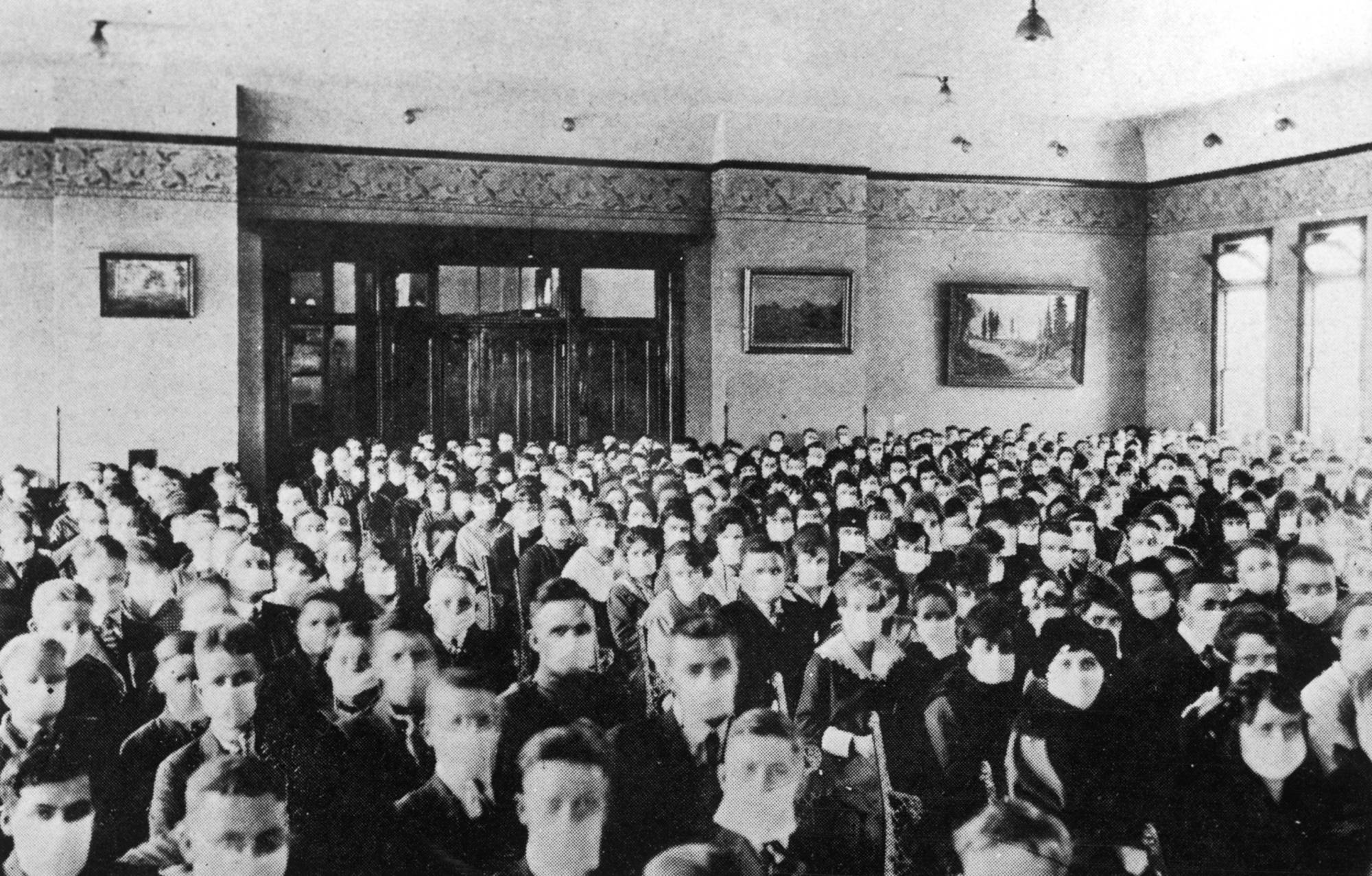
"content": "\u003cp>In the fall of 1918, Edward Kidder Graham, the president of the University of North Carolina, tried to reassure anxious parents. The Spanish flu was spreading rapidly, but Graham insisted the university was doing all it could to keep students safe. Weeks later, Graham himself contracted the virus and died. His successor, Marvin Hendrix Stacy, promptly succumbed to the epidemic two months later.\u003c/p>\n\u003cp>Many universities endured similar chaos during the Spanish flu, as I learned from reading a chapter in a forthcoming book on higher education, “\u003ca href=\"https://www.press.jhu.edu/books/title/53895/upheaval-action\">From Upheaval to Action: What Works in Changing Higher Ed\u003c/a>,” by sociologist and Brandeis University President Arthur Levine and University of Pennsylvania administrator Scott Van Pelt. (\u003cem>Disclosure: Levine was the president of Teachers College, Columbia University from 1994 to 2006, during which he launched The Hechinger Institute, the precursor to The Hechinger Report.\u003c/em>)\u003c/p>\n\u003cp>But what really struck me was how many colleges’ experiences resembled those of the Covid-19 era.\u003c/p>\n\u003cp>During the 1918 pandemic, Harvard canceled lectures with more than 50 students. Yale shut down its campus after partial measures failed to contain the spread. Many urban colleges closed temporarily. Orientations, commencements and large public gatherings were canceled or postponed. At Iowa State University, gymnasiums were converted into makeshift hospitals as cases surged. At the University of Michigan, dormitories transformed into quarantine facilities after infirmaries overflowed.\u003c/p>\n\u003cp>And then came a second wave — deadlier than the first.\u003c/p>\n\u003cdiv class=\"mceTemp\">\u003c/div>\n\u003cfigure id=\"attachment_66098\" class=\"wp-caption alignnone\" style=\"max-width: 780px\">\u003cimg loading=\"lazy\" decoding=\"async\" class=\"size-full wp-image-66098\" src=\"https://cdn.kqed.org/wp-content/uploads/sites/23/2026/02/Signatures-2.jpg\" alt=\"Signatures on a sheet of paper\" width=\"780\" height=\"1006\" srcset=\"https://cdn.kqed.org/wp-content/uploads/sites/23/2026/02/Signatures-2.jpg 780w, https://cdn.kqed.org/wp-content/uploads/sites/23/2026/02/Signatures-2-160x206.jpg 160w, https://cdn.kqed.org/wp-content/uploads/sites/23/2026/02/Signatures-2-768x991.jpg 768w\" sizes=\"auto, (max-width: 780px) 100vw, 780px\">\u003cfigcaption class=\"wp-caption-text\">The first page of a signed petition from the students of the University of Idaho requesting cancellation of studies, school functions, and other duties until after the Thanksgiving Holiday due to the pandemic quarantine, ca. 1918. Credit: University of Idaho Library Digital Collections\u003c/figcaption>\u003c/figure>\n\u003cp>The Spanish flu ultimately killed about 675,000 Americans at a time when the U.S. population was roughly 100 million — nearly twice the proportional death rate of Covid-19, which has claimed about 1.2 million lives in a country more than three times as large. Unlike Covid, the Spanish flu struck hardest at young adults in their 20s and 30s, the very ages colleges relied on to fill their classrooms and new faculty seats. Yet, Levine argues, higher education never managed to help that generation recover — academically, socially or psychologically.\u003c/p>\n\u003cp>[ad fullwidth]\u003c/p>\n\u003cp>Instead, institutions moved on.\u003c/p>\n\u003cp>“We essentially aged out of it,” said Levine, speaking at the American Enterprise Institute in January about \u003ca href=\"https://www.aei.org/events/tackling-higher-educations-challenges-a-conversation-with-frederick-m-hess-and-brandeis-university-president-arthur-levine/\">higher education’s challenges\u003c/a>. “Pretty soon the people who were home weren’t in college anymore. It’s a relatively short number of years.”\u003c/p>\n\u003cp>There were innovations. In what we would now call remote learning, colleges expanded correspondence courses. In 1922, Penn State became the first institution to use radio for instruction. Female enrollment grew, particularly in nursing.\u003c/p>\n\u003cp>But there was little evidence of repair or recovery. Students who had seen their education disrupted by both World War I and the pandemic were depleted in number and altered in outlook. They would come to be known as the lost generation: disillusioned, cynical, psychologically scarred and searching for meaning in a world that had failed to make sense.\u003c/p>\n\u003cp>What prevented this loss from registering as a lasting crisis was scale. In the late 1910s and early 1920s, only about 5 percent of young Americans attended college. There were far fewer colleges and universities. And higher education was not yet central to economic and social life in the way it is today. When one cohort faltered, institutions simply admitted the next. Replacement took the place of recovery.\u003c/p>\n\u003cp>Still, the cultural effects were visible. Writers like Ernest Hemingway, Gertrude Stein and F. Scott Fitzgerald chronicled the lingering disillusionment of a generation shaped by war and disease. The Roaring Twenties, Levine argues, were less a sign of healing than a counterreaction that would be followed, a decade later, by the Great Depression.\u003c/p>\n\u003cp>Levine doesn’t romanticize the past. “Everything I’ve read makes it sound like the Spanish flu combined with World War I may have been a harder slog,” he said in an interview. “So many lives were lost — not only students but faculty and staff. Mental health resources were primitive.”\u003c/p>\n\u003cp>The parallels to the present are unsettling, but the differences may matter even more. Today, well over 60 percent of young adults attend college immediately or shortly after high school. Higher education has become a mass institution, deeply intertwined with economic mobility and social identity. And Covid did not just disrupt schooling; it imposed prolonged social isolation at a formative stage of development for teens and young adults. Levine notes that it is impossible to disentangle the effects of the pandemic from the rise of smartphones and social media, which were already reshaping how young people relate to one another.\u003c/p>\n\u003cp>Enrollment declines following Covid echo those of the Spanish flu era. But replacement may no longer be a viable strategy. When higher education serves a small elite, institutions can absorb loss quietly. When it serves a majority, the consequences of disruption are broader, more visible, and harder to outrun.\u003c/p>\n\u003cp>The lesson of the Spanish flu is not that young people inevitably bounce back. It is that institutions endured by waiting. A century ago, that carried limited cost. Today, with a far larger and more psychologically vulnerable young adult population, the price may be far higher.\u003c/p>\n\u003cp>\u003c/p>\n\u003cp>\u003cem>This story about how the \u003c/em>\u003ca href=\"https://hechingerreport.org/proof-points-spanish-flu-universities/\">\u003cem>Spanish flu\u003c/em>\u003c/a>\u003cem> affected universities was produced by \u003c/em>\u003ca href=\"https://hechingerreport.org/special-reports/higher-education/\">The Hechinger Report\u003c/a>\u003cem>, a nonprofit, independent news organization focused on inequality and innovation in education. Sign up for \u003c/em>\u003ca href=\"https://hechingerreport.org/proofpoints/\">\u003cem>Proof Points\u003c/em>\u003c/a>\u003cem> and other \u003c/em>\u003ca href=\"https://hechingerreport.org/newsletters/\">\u003cem>Hechinger newsletters\u003c/em>\u003c/a>\u003cem>.\u003c/em>\u003c/p>\n\n",
"blocks": [],
"excerpt": "Higher education leader Arthur Levine analyzes the history of a lost generation.",
"status": "publish",
"parent": 0,
"modified": 1770012301,
"stats": {
"hasAudio": false,
"hasVideo": false,
"hasChartOrMap": false,
"iframeSrcs": [],
"hasGoogleForm": false,
"hasGallery": false,
"hasHearkenModule": false,
"hasPolis": false,
"paragraphCount": 19,
"wordCount": 929
},
"headData": {
"title": "Looking Back: When the Spanish Flu Upended Universities, Students Paid the Price | KQED",
"description": "Higher education leader Arthur Levine analyzes the history of a lost generation.",
"ogTitle": "",
"ogDescription": "",
"ogImgId": "",
"twTitle": "",
"twDescription": "",
"twImgId": "",
"schema": {
"@context": "https://schema.org",
"@type": "Article",
"headline": "Looking Back: When the Spanish Flu Upended Universities, Students Paid the Price",
"datePublished": "2026-02-02T03:00:18-08:00",
"dateModified": "2026-02-01T22:05:01-08:00",
"image": "https://cdn.kqed.org/wp-content/uploads/2020/02/KQED-OG-Image@1x.png"
}
},
"primaryCategory": {
"termId": 21694,
"slug": "higher-education",
"name": "Higher Education"
},
"sticky": false,
"nprByline": "Jill Barshay, \u003ca href=\"https://hechingerreport.org/\">The Hechinger Report\u003c/a>",
"templateType": "standard",
"featuredImageType": "standard",
"excludeFromSiteSearch": "Include",
"showOnAuthorArchivePages": "No",
"articleAge": "0",
"path": "/mindshift/66094/looking-back-when-the-spanish-flu-upended-universities-students-paid-the-price",
"audioTrackLength": null,
"parsedContent": [
{
"type": "contentString",
"content": "\u003cdiv class=\"post-body\">\u003cp>\u003cp>In the fall of 1918, Edward Kidder Graham, the president of the University of North Carolina, tried to reassure anxious parents. The Spanish flu was spreading rapidly, but Graham insisted the university was doing all it could to keep students safe. Weeks later, Graham himself contracted the virus and died. His successor, Marvin Hendrix Stacy, promptly succumbed to the epidemic two months later.\u003c/p>\n\u003cp>Many universities endured similar chaos during the Spanish flu, as I learned from reading a chapter in a forthcoming book on higher education, “\u003ca href=\"https://www.press.jhu.edu/books/title/53895/upheaval-action\">From Upheaval to Action: What Works in Changing Higher Ed\u003c/a>,” by sociologist and Brandeis University President Arthur Levine and University of Pennsylvania administrator Scott Van Pelt. (\u003cem>Disclosure: Levine was the president of Teachers College, Columbia University from 1994 to 2006, during which he launched The Hechinger Institute, the precursor to The Hechinger Report.\u003c/em>)\u003c/p>\n\u003cp>But what really struck me was how many colleges’ experiences resembled those of the Covid-19 era.\u003c/p>\n\u003cp>During the 1918 pandemic, Harvard canceled lectures with more than 50 students. Yale shut down its campus after partial measures failed to contain the spread. Many urban colleges closed temporarily. Orientations, commencements and large public gatherings were canceled or postponed. At Iowa State University, gymnasiums were converted into makeshift hospitals as cases surged. At the University of Michigan, dormitories transformed into quarantine facilities after infirmaries overflowed.\u003c/p>\n\u003cp>And then came a second wave — deadlier than the first.\u003c/p>\n\u003cdiv class=\"mceTemp\">\u003c/div>\n\u003cfigure id=\"attachment_66098\" class=\"wp-caption alignnone\" style=\"max-width: 780px\">\u003cimg loading=\"lazy\" decoding=\"async\" class=\"size-full wp-image-66098\" src=\"https://cdn.kqed.org/wp-content/uploads/sites/23/2026/02/Signatures-2.jpg\" alt=\"Signatures on a sheet of paper\" width=\"780\" height=\"1006\" srcset=\"https://cdn.kqed.org/wp-content/uploads/sites/23/2026/02/Signatures-2.jpg 780w, https://cdn.kqed.org/wp-content/uploads/sites/23/2026/02/Signatures-2-160x206.jpg 160w, https://cdn.kqed.org/wp-content/uploads/sites/23/2026/02/Signatures-2-768x991.jpg 768w\" sizes=\"auto, (max-width: 780px) 100vw, 780px\">\u003cfigcaption class=\"wp-caption-text\">The first page of a signed petition from the students of the University of Idaho requesting cancellation of studies, school functions, and other duties until after the Thanksgiving Holiday due to the pandemic quarantine, ca. 1918. Credit: University of Idaho Library Digital Collections\u003c/figcaption>\u003c/figure>\n\u003cp>The Spanish flu ultimately killed about 675,000 Americans at a time when the U.S. population was roughly 100 million — nearly twice the proportional death rate of Covid-19, which has claimed about 1.2 million lives in a country more than three times as large. Unlike Covid, the Spanish flu struck hardest at young adults in their 20s and 30s, the very ages colleges relied on to fill their classrooms and new faculty seats. Yet, Levine argues, higher education never managed to help that generation recover — academically, socially or psychologically.\u003c/p>\n\u003cp>\u003c/p>\u003c/div>",
"attributes": {
"named": {},
"numeric": []
}
},
{
"type": "component",
"content": "",
"name": "ad",
"attributes": {
"named": {
"label": "fullwidth"
},
"numeric": [
"fullwidth"
]
}
},
{
"type": "contentString",
"content": "\u003cdiv class=\"post-body\">\u003cp>\u003c/p>\n\u003cp>Instead, institutions moved on.\u003c/p>\n\u003cp>“We essentially aged out of it,” said Levine, speaking at the American Enterprise Institute in January about \u003ca href=\"https://www.aei.org/events/tackling-higher-educations-challenges-a-conversation-with-frederick-m-hess-and-brandeis-university-president-arthur-levine/\">higher education’s challenges\u003c/a>. “Pretty soon the people who were home weren’t in college anymore. It’s a relatively short number of years.”\u003c/p>\n\u003cp>There were innovations. In what we would now call remote learning, colleges expanded correspondence courses. In 1922, Penn State became the first institution to use radio for instruction. Female enrollment grew, particularly in nursing.\u003c/p>\n\u003cp>But there was little evidence of repair or recovery. Students who had seen their education disrupted by both World War I and the pandemic were depleted in number and altered in outlook. They would come to be known as the lost generation: disillusioned, cynical, psychologically scarred and searching for meaning in a world that had failed to make sense.\u003c/p>\n\u003cp>What prevented this loss from registering as a lasting crisis was scale. In the late 1910s and early 1920s, only about 5 percent of young Americans attended college. There were far fewer colleges and universities. And higher education was not yet central to economic and social life in the way it is today. When one cohort faltered, institutions simply admitted the next. Replacement took the place of recovery.\u003c/p>\n\u003cp>Still, the cultural effects were visible. Writers like Ernest Hemingway, Gertrude Stein and F. Scott Fitzgerald chronicled the lingering disillusionment of a generation shaped by war and disease. The Roaring Twenties, Levine argues, were less a sign of healing than a counterreaction that would be followed, a decade later, by the Great Depression.\u003c/p>\n\u003cp>Levine doesn’t romanticize the past. “Everything I’ve read makes it sound like the Spanish flu combined with World War I may have been a harder slog,” he said in an interview. “So many lives were lost — not only students but faculty and staff. Mental health resources were primitive.”\u003c/p>\n\u003cp>The parallels to the present are unsettling, but the differences may matter even more. Today, well over 60 percent of young adults attend college immediately or shortly after high school. Higher education has become a mass institution, deeply intertwined with economic mobility and social identity. And Covid did not just disrupt schooling; it imposed prolonged social isolation at a formative stage of development for teens and young adults. Levine notes that it is impossible to disentangle the effects of the pandemic from the rise of smartphones and social media, which were already reshaping how young people relate to one another.\u003c/p>\n\u003cp>Enrollment declines following Covid echo those of the Spanish flu era. But replacement may no longer be a viable strategy. When higher education serves a small elite, institutions can absorb loss quietly. When it serves a majority, the consequences of disruption are broader, more visible, and harder to outrun.\u003c/p>\n\u003cp>The lesson of the Spanish flu is not that young people inevitably bounce back. It is that institutions endured by waiting. A century ago, that carried limited cost. Today, with a far larger and more psychologically vulnerable young adult population, the price may be far higher.\u003c/p>\n\u003cp>\u003c/p>\n\u003cp>\u003cem>This story about how the \u003c/em>\u003ca href=\"https://hechingerreport.org/proof-points-spanish-flu-universities/\">\u003cem>Spanish flu\u003c/em>\u003c/a>\u003cem> affected universities was produced by \u003c/em>\u003ca href=\"https://hechingerreport.org/special-reports/higher-education/\">The Hechinger Report\u003c/a>\u003cem>, a nonprofit, independent news organization focused on inequality and innovation in education. Sign up for \u003c/em>\u003ca href=\"https://hechingerreport.org/proofpoints/\">\u003cem>Proof Points\u003c/em>\u003c/a>\u003cem> and other \u003c/em>\u003ca href=\"https://hechingerreport.org/newsletters/\">\u003cem>Hechinger newsletters\u003c/em>\u003c/a>\u003cem>.\u003c/em>\u003c/p>\n\n\u003c/div>\u003c/p>",
"attributes": {
"named": {},
"numeric": []
}
}
],
"link": "/mindshift/66094/looking-back-when-the-spanish-flu-upended-universities-students-paid-the-price",
"authors": [
"byline_mindshift_66094"
],
"programs": [
"mindshift_21847"
],
"categories": [
"mindshift_21694"
],
"tags": [
"mindshift_21343",
"mindshift_68",
"mindshift_21539"
],
"featImg": "mindshift_66095",
"label": "mindshift_21847"
},
"mindshift_65956": {
"type": "posts",
"id": "mindshift_65956",
"meta": {
"index": "posts_1716263798",
"site": "mindshift",
"id": "65956",
"score": null,
"sort": [
1762772413000
]
},
"guestAuthors": [],
"slug": "advocates-warn-of-risks-to-higher-ed-data-if-education-department-is-shuttered",
"title": "Advocates Warn of Risks to Higher Ed Data if Education Department is Shuttered",
"publishDate": 1762772413,
"format": "standard",
"headTitle": "Advocates Warn of Risks to Higher Ed Data if Education Department is Shuttered | KQED",
"labelTerm": {
"term": 21847,
"site": "mindshift"
},
"content": "\u003cp>Even with the government shut down, lots of people are thinking about how to reimagine federal education research. Public comments on how to reform the Institute of Education Sciences (IES), the Education Department’s research and statistics arm, were due on Oct. 15. A total of 434 suggestions were submitted, but no one can read them because the department isn’t allowed to post them publicly until the government reopens. (We know the number because the \u003ca href=\"https://www.regulations.gov/docket/ED-2025-IES-0844\">comment entry page\u003c/a> has an automatic counter.)\u003c/p>\n\u003ch2>\u003cstrong>A complex numbers game \u003c/strong>\u003c/h2>\n\u003cp>There’s broad agreement across the political spectrum that federal education statistics are essential. Even many critics of the Department of Education want its data collection efforts to survive — just somewhere else. Some have suggested moving the National Center for Education Statistics (NCES) to another agency, such as the Commerce Department, where the U.S. Census Bureau is housed.\u003c/p>\n\u003cp>But Diane Cheng, vice president of policy at the Institute for Higher Education Policy, a nonprofit organization that advocates for increasing college access and improving graduation rates, warns that shifting NCES risks the quality and usefulness of higher education data. Any move would have to be done carefully, planning for future interagency coordination, she said.\u003c/p>\n\u003cp>“Many of the federal data collections combine data from different sources within ED,” Cheng said, referring to the Education Department. “It has worked well to have everyone within the same agency.”\u003c/p>\n\u003cp>She points to the \u003ca href=\"https://collegescorecard.ed.gov/\">College Scorecard\u003c/a>, the website that lets families compare colleges by cost, student loan debt, graduation rates, and post-college earnings. It merges several data sources, including the Integrated Postsecondary Education Data System (IPEDS), run by NCES, and the National Student Loan Data System, housed in the Office of Federal Student Aid. Several other higher ed data collections on \u003ca href=\"https://nces.ed.gov/surveys/npsas/\">student aid\u003c/a> and \u003ca href=\"https://nces.ed.gov/surveys/bps/\">students’ pathways through college\u003c/a> also merge data collected at the statistical unit with student aid figures. Splitting those across different agencies could make such collaboration far more difficult.\u003c/p>\n\u003cp>[ad fullwidth]\u003c/p>\n\u003cp>“If those data are split across multiple federal agencies,” Cheng said, “there would likely be more bureaucratic hurdles required to combine the data.”\u003c/p>\n\u003cp>Information sharing across federal agencies is notoriously cumbersome, the very problem that led to the creation of the Department of Homeland Security after 9/11.\u003c/p>\n\u003ch2>\u003cstrong>Hiring and $4.5 million in fresh research grants\u003c/strong>\u003c/h2>\n\u003cp>Even as the Trump administration publicly insists it intends to shutter the Department of Education, it is quietly rebuilding small parts of it behind the scenes.\u003c/p>\n\u003cp>In September, the department \u003ca href=\"https://hechingerreport.org/proof-points-reforming-ies-education-research/\">posted eight new jobs\u003c/a> to replace fired staff who oversaw the National Assessment of Educational Progress (NAEP), the biennial test of American students’ achievement. In November, it advertised \u003ca href=\"https://www.usajobs.gov/job/849436800?fromemail=true\">four more openings for statisticians\u003c/a> inside the Federal Student Aid Office. Still, nothing is expected to be quick or smooth. The government shutdown stalled hiring for the NAEP jobs, and now a new Trump administration directive to form \u003ca href=\"https://www.semafor.com/article/11/05/2025/trump-administration-requires-federal-employee-hiring-committees-by-nov-17\">hiring committees by Nov. 17\u003c/a> to approve and fill open positions may further delay these hires.\u003c/p>\n\u003cp>At the same time, the demolition continues. Less than two weeks after the Oct. 1 government shutdown, 466 additional Education Department employees were terminated — on top of the roughly 2,000 lost since March 2025 through firings and voluntary departures. (The department employed about 4,000 at the start of the Trump administration.) A federal judge temporarily \u003ca href=\"https://www.nytimes.com/2025/10/15/us/politics/government-shutdown-trump-layoffs-unions.html\">blocked these latest layoffs\u003c/a> on Oct. 15.\u003c/p>\n\u003cp>There are also other small new signs of life. On Sept. 30 — just before the shutdown — the department quietly awarded \u003ca href=\"https://ies.ed.gov/search-results?searchTerms=From%20Seedlings%20to%20Scale%20Grants%20Program%20(ALN%2084.305J)\">nine new research and development grants\u003c/a> totaling $4.5 million. The grants, listed on the department’s website, are part of a new initiative called, “\u003ca href=\"https://ies.ed.gov/funding/research/programs/seedlings-scale-grants-program\">From Seedlings to Scale Grants Program\u003c/a>” (S2S), launched by the Biden administration in \u003ca href=\"https://ies.ed.gov/funding/grants/2025/seedlings-scale-84-305j\">August 2024\u003c/a> to test whether the Defense Department’s DARPA-style innovation model could work in education. DARPA, the Defense Advanced Research Projects Agency, invests in new technologies for national security. Its most celebrated project became the basis for the internet.\u003c/p>\n\u003cp>Each new project, mostly focused on AI-driven personalized learning, received $500,000 to produce early evidence of effectiveness. Recipients include universities, research organizations and ed tech firms. Projects that show promise could be eligible for future funding to scale up with more students.\u003c/p>\n\u003cp>According to a person familiar with the program who spoke on background, the nine projects had been selected before President Donald Trump took office, but the formal awards were delayed amid the department’s upheaval. The Institute of Education Sciences — which lost roughly 90 percent of its staff — was one of the hardest hit divisions.\u003c/p>\n\u003cp>Granted, $4.5 million is a rounding error compared with IES’s official annual budget of $800 million. Still, these are believed to be the first new federal education research grants of the Trump era and a faint signal that Washington may not be abandoning education innovation altogether.\u003c/p>\n\u003cp>\u003c/p>\n\u003cp>\u003cem>This story about \u003c/em>\u003ca href=\"https://hechingerreport.org/proof-points-risks-higher-ed-data/\">\u003cem>risks to federal education data\u003c/em>\u003c/a>\u003cem> was produced by \u003c/em>\u003ca href=\"https://hechingerreport.org/special-reports/higher-education/\">The Hechinger Report\u003c/a>\u003cem>, a nonprofit, independent news organization focused on inequality and innovation in education. Sign up for \u003c/em>\u003ca href=\"https://hechingerreport.org/proofpoints/\">\u003cem>Proof Points\u003c/em>\u003c/a>\u003cem> and other \u003c/em>\u003ca href=\"https://hechingerreport.org/newsletters/\">\u003cem>Hechinger newsletters\u003c/em>\u003c/a>\u003cem>.\u003c/em>\u003c/p>\n\n",
"blocks": [],
"excerpt": "Despite the cuts, new hires and fresh research grants hint at a quiet rebuilding effort.",
"status": "publish",
"parent": 0,
"modified": 1762711432,
"stats": {
"hasAudio": false,
"hasVideo": false,
"hasChartOrMap": false,
"iframeSrcs": [],
"hasGoogleForm": false,
"hasGallery": false,
"hasHearkenModule": false,
"hasPolis": false,
"paragraphCount": 17,
"wordCount": 867
},
"headData": {
"title": "Advocates Warn of Risks to Higher Ed Data if Education Department is Shuttered | KQED",
"description": "Despite the cuts, new hires and fresh research grants hint at a quiet rebuilding effort.",
"ogTitle": "",
"ogDescription": "",
"ogImgId": "",
"twTitle": "",
"twDescription": "",
"twImgId": "",
"schema": {
"@context": "https://schema.org",
"@type": "Article",
"headline": "Advocates Warn of Risks to Higher Ed Data if Education Department is Shuttered",
"datePublished": "2025-11-10T03:00:13-08:00",
"dateModified": "2025-11-09T10:03:52-08:00",
"image": "https://cdn.kqed.org/wp-content/uploads/2020/02/KQED-OG-Image@1x.png"
}
},
"primaryCategory": {
"termId": 21504,
"slug": "education-research",
"name": "Education research"
},
"sticky": false,
"nprByline": "Jill Barshay, \u003ca href=\"https://hechingerreport.org/\">The Hechinger Report\u003c/a>",
"templateType": "standard",
"featuredImageType": "standard",
"excludeFromSiteSearch": "Include",
"showOnAuthorArchivePages": "No",
"articleAge": "0",
"path": "/mindshift/65956/advocates-warn-of-risks-to-higher-ed-data-if-education-department-is-shuttered",
"audioTrackLength": null,
"parsedContent": [
{
"type": "contentString",
"content": "\u003cdiv class=\"post-body\">\u003cp>\u003cp>Even with the government shut down, lots of people are thinking about how to reimagine federal education research. Public comments on how to reform the Institute of Education Sciences (IES), the Education Department’s research and statistics arm, were due on Oct. 15. A total of 434 suggestions were submitted, but no one can read them because the department isn’t allowed to post them publicly until the government reopens. (We know the number because the \u003ca href=\"https://www.regulations.gov/docket/ED-2025-IES-0844\">comment entry page\u003c/a> has an automatic counter.)\u003c/p>\n\u003ch2>\u003cstrong>A complex numbers game \u003c/strong>\u003c/h2>\n\u003cp>There’s broad agreement across the political spectrum that federal education statistics are essential. Even many critics of the Department of Education want its data collection efforts to survive — just somewhere else. Some have suggested moving the National Center for Education Statistics (NCES) to another agency, such as the Commerce Department, where the U.S. Census Bureau is housed.\u003c/p>\n\u003cp>But Diane Cheng, vice president of policy at the Institute for Higher Education Policy, a nonprofit organization that advocates for increasing college access and improving graduation rates, warns that shifting NCES risks the quality and usefulness of higher education data. Any move would have to be done carefully, planning for future interagency coordination, she said.\u003c/p>\n\u003cp>“Many of the federal data collections combine data from different sources within ED,” Cheng said, referring to the Education Department. “It has worked well to have everyone within the same agency.”\u003c/p>\n\u003cp>She points to the \u003ca href=\"https://collegescorecard.ed.gov/\">College Scorecard\u003c/a>, the website that lets families compare colleges by cost, student loan debt, graduation rates, and post-college earnings. It merges several data sources, including the Integrated Postsecondary Education Data System (IPEDS), run by NCES, and the National Student Loan Data System, housed in the Office of Federal Student Aid. Several other higher ed data collections on \u003ca href=\"https://nces.ed.gov/surveys/npsas/\">student aid\u003c/a> and \u003ca href=\"https://nces.ed.gov/surveys/bps/\">students’ pathways through college\u003c/a> also merge data collected at the statistical unit with student aid figures. Splitting those across different agencies could make such collaboration far more difficult.\u003c/p>\n\u003cp>\u003c/p>\u003c/div>",
"attributes": {
"named": {},
"numeric": []
}
},
{
"type": "component",
"content": "",
"name": "ad",
"attributes": {
"named": {
"label": "fullwidth"
},
"numeric": [
"fullwidth"
]
}
},
{
"type": "contentString",
"content": "\u003cdiv class=\"post-body\">\u003cp>\u003c/p>\n\u003cp>“If those data are split across multiple federal agencies,” Cheng said, “there would likely be more bureaucratic hurdles required to combine the data.”\u003c/p>\n\u003cp>Information sharing across federal agencies is notoriously cumbersome, the very problem that led to the creation of the Department of Homeland Security after 9/11.\u003c/p>\n\u003ch2>\u003cstrong>Hiring and $4.5 million in fresh research grants\u003c/strong>\u003c/h2>\n\u003cp>Even as the Trump administration publicly insists it intends to shutter the Department of Education, it is quietly rebuilding small parts of it behind the scenes.\u003c/p>\n\u003cp>In September, the department \u003ca href=\"https://hechingerreport.org/proof-points-reforming-ies-education-research/\">posted eight new jobs\u003c/a> to replace fired staff who oversaw the National Assessment of Educational Progress (NAEP), the biennial test of American students’ achievement. In November, it advertised \u003ca href=\"https://www.usajobs.gov/job/849436800?fromemail=true\">four more openings for statisticians\u003c/a> inside the Federal Student Aid Office. Still, nothing is expected to be quick or smooth. The government shutdown stalled hiring for the NAEP jobs, and now a new Trump administration directive to form \u003ca href=\"https://www.semafor.com/article/11/05/2025/trump-administration-requires-federal-employee-hiring-committees-by-nov-17\">hiring committees by Nov. 17\u003c/a> to approve and fill open positions may further delay these hires.\u003c/p>\n\u003cp>At the same time, the demolition continues. Less than two weeks after the Oct. 1 government shutdown, 466 additional Education Department employees were terminated — on top of the roughly 2,000 lost since March 2025 through firings and voluntary departures. (The department employed about 4,000 at the start of the Trump administration.) A federal judge temporarily \u003ca href=\"https://www.nytimes.com/2025/10/15/us/politics/government-shutdown-trump-layoffs-unions.html\">blocked these latest layoffs\u003c/a> on Oct. 15.\u003c/p>\n\u003cp>There are also other small new signs of life. On Sept. 30 — just before the shutdown — the department quietly awarded \u003ca href=\"https://ies.ed.gov/search-results?searchTerms=From%20Seedlings%20to%20Scale%20Grants%20Program%20(ALN%2084.305J)\">nine new research and development grants\u003c/a> totaling $4.5 million. The grants, listed on the department’s website, are part of a new initiative called, “\u003ca href=\"https://ies.ed.gov/funding/research/programs/seedlings-scale-grants-program\">From Seedlings to Scale Grants Program\u003c/a>” (S2S), launched by the Biden administration in \u003ca href=\"https://ies.ed.gov/funding/grants/2025/seedlings-scale-84-305j\">August 2024\u003c/a> to test whether the Defense Department’s DARPA-style innovation model could work in education. DARPA, the Defense Advanced Research Projects Agency, invests in new technologies for national security. Its most celebrated project became the basis for the internet.\u003c/p>\n\u003cp>Each new project, mostly focused on AI-driven personalized learning, received $500,000 to produce early evidence of effectiveness. Recipients include universities, research organizations and ed tech firms. Projects that show promise could be eligible for future funding to scale up with more students.\u003c/p>\n\u003cp>According to a person familiar with the program who spoke on background, the nine projects had been selected before President Donald Trump took office, but the formal awards were delayed amid the department’s upheaval. The Institute of Education Sciences — which lost roughly 90 percent of its staff — was one of the hardest hit divisions.\u003c/p>\n\u003cp>Granted, $4.5 million is a rounding error compared with IES’s official annual budget of $800 million. Still, these are believed to be the first new federal education research grants of the Trump era and a faint signal that Washington may not be abandoning education innovation altogether.\u003c/p>\n\u003cp>\u003c/p>\n\u003cp>\u003cem>This story about \u003c/em>\u003ca href=\"https://hechingerreport.org/proof-points-risks-higher-ed-data/\">\u003cem>risks to federal education data\u003c/em>\u003c/a>\u003cem> was produced by \u003c/em>\u003ca href=\"https://hechingerreport.org/special-reports/higher-education/\">The Hechinger Report\u003c/a>\u003cem>, a nonprofit, independent news organization focused on inequality and innovation in education. Sign up for \u003c/em>\u003ca href=\"https://hechingerreport.org/proofpoints/\">\u003cem>Proof Points\u003c/em>\u003c/a>\u003cem> and other \u003c/em>\u003ca href=\"https://hechingerreport.org/newsletters/\">\u003cem>Hechinger newsletters\u003c/em>\u003c/a>\u003cem>.\u003c/em>\u003c/p>\n\n\u003c/div>\u003c/p>",
"attributes": {
"named": {},
"numeric": []
}
}
],
"link": "/mindshift/65956/advocates-warn-of-risks-to-higher-ed-data-if-education-department-is-shuttered",
"authors": [
"byline_mindshift_65956"
],
"programs": [
"mindshift_21847"
],
"categories": [
"mindshift_21504"
],
"tags": [
"mindshift_68",
"mindshift_21963",
"mindshift_21990"
],
"featImg": "mindshift_65957",
"label": "mindshift_21847"
},
"mindshift_65798": {
"type": "posts",
"id": "mindshift_65798",
"meta": {
"index": "posts_1716263798",
"site": "mindshift",
"id": "65798",
"score": null,
"sort": [
1758301353000
]
},
"guestAuthors": [],
"slug": "lawsuit-aims-to-force-trump-administration-to-stop-delaying-student-loan-forgiveness",
"title": "Lawsuit Aims to Force Trump Administration to Stop Delaying Student Loan Forgiveness",
"publishDate": 1758301353,
"format": "standard",
"headTitle": "Lawsuit Aims to Force Trump Administration to Stop Delaying Student Loan Forgiveness | KQED",
"labelTerm": {
"term": 21847,
"site": "mindshift"
},
"content": "\u003cp>In a new \u003ca href=\"https://www.courtlistener.com/docket/69753739/44/american-federation-of-teachers-v-us-department-of-education/\" target=\"_blank\" rel=\"noopener\">court filing\u003c/a>, the American Federation of Teachers (AFT) is asking a federal judge to force the U.S. Department of Education to follow the law and cancel the debts of borrowers who have met longstanding requirements for loan forgiveness.\u003c/p>\n\u003cp>The AFT argues the department is delaying cancellation for many borrowers in a way that is “unwarranted and unlawful” and will have “real and significant consequences.”\u003c/p>\n\u003cp>That’s because the clock is ticking. With the American Rescue Plan, Congress temporarily stopped treating loan cancellation as taxable income until Jan. 1, 2026. Soon, many borrowers will again be expected to pay taxes on those cancelled debts.\u003c/p>\n\u003cp>The AFT is seeking an injunction to force the department to do a few things, including:\u003c/p>\n\u003cul class=\"rte2-style-ul\" style=\"margin-top: 0; margin-bottom: 0; padding-inline-start: 48px;\">\n\u003cli>Cancel the debts of borrowers on income-dependent repayment plans \u003ca href=\"https://studentaid.gov/manage-loans/repayment/plans/income-driven\" target=\"_blank\" rel=\"noopener\">like IBR, ICR and PAYE\u003c/a> when those borrowers have met the requirement that they be in repayment for 20 or 25 years.\u003c/li>\n\u003cli>Process thousands of outstanding requests for Public Service Loan Forgiveness from borrowers who “buy back” time that did not previously count.\u003c/li>\n\u003c/ul>\n\u003ch2>The trouble started with the SAVE Plan\u003c/h2>\n\u003cp>The Education Department largely blames these delays in debt cancellation on the Biden administration and the federal courts.\u003c/p>\n\u003cp>[ad fullwidth]\u003c/p>\n\u003cp>“Congress designed these [plans] to ensure that borrowers repay their loans, yet the Biden Administration tried to illegally force taxpayers to foot the bill,” Education Secretary Linda McMahon \u003ca href=\"https://www.ed.gov/about/news/press-release/us-department-of-education-continues-improve-federal-student-loan-repayment-options-addresses-illegal-biden-administration-actions\" target=\"_blank\" rel=\"noopener\">said in a July statement\u003c/a>.\u003c/p>\n\u003cp>McMahon is referring to the income-driven SAVE repayment plan, which was created by the Biden administration and was so generous in its terms that the courts forced the department to put the plan on ice, throwing much of the loan program into confusion.\u003c/p>\n\u003cp>The Education Department has used the legal uncertainty around SAVE to justify halting cancellation under ICR, PAYE and IBR.\u003c/p>\n\u003cp>IBR was created by Congress and is not being challenged legally. But the department told NPR in July that questions about SAVE’s legality had made it difficult to determine eligibility for cancellation under IBR. As a result, many borrowers who are likely eligible for cancellation are still having to make payments.\u003c/p>\n\u003cp>“For any borrower that makes a payment after they became eligible for forgiveness, the Department will refund overpayments when the discharges resume,” the department told NPR in a statement this week. As for when that might be?\u003c/p>\n\u003cp>The department would not commit to a timetable: “IBR discharges will resume as soon as the Department is able to establish the correct payment count.”\u003c/p>\n\u003ch2>PSLF troubles\u003c/h2>\n\u003cp>Borrowers enrolled in Public Service Loan Forgiveness (PSLF) have also encountered delays. According to court records, by the end of last month, the department had a backlog of nearly 75,000 applications for cancellation under the PSLF “Buyback” program. That allows borrowers with 10 years of verified public service to make qualifying payments for months they spent in forbearance or deferment.\u003c/p>\n\u003cp>In its amended suit, the AFT says, from May to August, the department received far more buyback applications than it processed. Each month, “the Department received an average of 9,902 new applications, but only processed an average of 3,604.”\u003c/p>\n\u003cp>In a statement, Education Department Deputy Press Secretary Ellen Keast says, with the PSLF “Buyback” program, the Biden administration was guilty of “weaponizing a legal discharge plan for political purposes. The Department is working its way through this backlog while ensuring that borrowers have submitted the required 120 payments of qualifying employment.”\u003c/p>\n\u003cp>Processing these buyback applications can be time-consuming, and the Trump administration’s move to \u003ca href=\"https://www.npr.org/2025/03/12/nx-s1-5325854/trump-education-department-layoffs-civil-rights-student-loans\" target=\"_blank\" rel=\"noopener\">cut the Office of Federal Student Aid’s staff by half\u003c/a> may have slowed its efforts.\u003c/p>\n\u003cfigure class=\"wp-block-embed npr-promo-card insettwocolumn\">\n\u003cdiv class=\"wp-block-embed__wrapper\">\u003c/div>\n\u003c/figure>\n\u003cp>The Jan. 1, 2026, tax changes will not apply to Public Service Loan Forgiveness.\u003c/p>\n\u003ch2>Many borrowers are at risk of default\u003c/h2>\n\u003cp>More than 7 million borrowers are enrolled in SAVE and have not been required to make payments, but the Trump administration \u003ca href=\"https://www.npr.org/2025/07/24/nx-s1-5477646/student-loan-repayment-forgiveness-trump\" target=\"_blank\" rel=\"noopener\">recently resumed interest accrual\u003c/a> on these loans, looking to \u003ca href=\"https://www.ed.gov/about/news/press-release/us-department-of-education-continues-improve-federal-student-loan-repayment-options-addresses-illegal-biden-administration-actions\" target=\"_blank\" rel=\"noopener\">nudge borrowers\u003c/a> into alternative plans.\u003c/p>\n\u003cp>But \u003ca href=\"https://storage.courtlistener.com/recap/gov.uscourts.dcd.278527/gov.uscourts.dcd.278527.42.0.pdf\" target=\"_blank\" rel=\"noopener\">court records show\u003c/a> enrolling in an alternative has been slow-going for months. In February, the department temporarily stopped accepting applications for all income-dependent repayment plans, and though it has resumed, more than a million were still pending as of the end of August.\u003c/p>\n\u003cp>The Education Department’s Keast tells NPR this backlog began during the previous administration, and that the department “is actively working with federal student loan servicers and hopes to clear the Biden backlog over the next few months.”\u003c/p>\n\u003cp>Amidst all this confusion and uncertainty, data suggest many federal student loan borrowers \u003ca href=\"https://www.npr.org/2025/09/05/nx-s1-5521317/millions-of-student-loan-borrowers-are-at-risk-of-defaulting-data-shows\" target=\"_blank\" rel=\"noopener\">are failing to repay their loans\u003c/a>.\u003c/p>\n\u003cp>“One in three federal student loan borrowers that are in repayment right now are in some stage of delinquency,” says Daniel Mangrum, a research economist at the Federal Reserve Bank of New York.\u003c/p>\n\u003cp>\u003c/p>\n\u003cp>Meaning millions of borrowers are now at serious risk of default.\u003c/p>\n\n",
"blocks": [],
"excerpt": "The American Federation of Teachers is seeking a preliminary injunction that would force the department to resume student loan forgiveness.",
"status": "publish",
"parent": 0,
"modified": 1758301353,
"stats": {
"hasAudio": false,
"hasVideo": false,
"hasChartOrMap": false,
"iframeSrcs": [],
"hasGoogleForm": false,
"hasGallery": false,
"hasHearkenModule": false,
"hasPolis": false,
"paragraphCount": 24,
"wordCount": 832
},
"headData": {
"title": "Lawsuit Aims to Force Trump Administration to Stop Delaying Student Loan Forgiveness | KQED",
"description": "The American Federation of Teachers is seeking a preliminary injunction that would force the department to resume student loan forgiveness.",
"ogTitle": "",
"ogDescription": "",
"ogImgId": "",
"twTitle": "",
"twDescription": "",
"twImgId": "",
"schema": {
"@context": "https://schema.org",
"@type": "Article",
"headline": "Lawsuit Aims to Force Trump Administration to Stop Delaying Student Loan Forgiveness",
"datePublished": "2025-09-19T10:02:33-07:00",
"dateModified": "2025-09-19T10:02:33-07:00",
"image": "https://cdn.kqed.org/wp-content/uploads/2020/02/KQED-OG-Image@1x.png"
}
},
"primaryCategory": {
"termId": 21694,
"slug": "higher-education",
"name": "Higher Education"
},
"sticky": false,
"nprByline": "Cory Turner",
"nprStoryId": "nx-s1-5545727",
"nprHtmlLink": "https://www.npr.org/2025/09/19/nx-s1-5545727/student-loan-forgiveness-education-department",
"nprRetrievedStory": "1",
"nprPubDate": "2025-09-19T05:00:00-04:00",
"nprStoryDate": "2025-09-19T05:00:00-04:00",
"nprLastModifiedDate": "2025-09-19T05:01:58.797-04:00",
"templateType": "standard",
"featuredImageType": "standard",
"excludeFromSiteSearch": "Include",
"showOnAuthorArchivePages": "No",
"articleAge": "0",
"path": "/mindshift/65798/lawsuit-aims-to-force-trump-administration-to-stop-delaying-student-loan-forgiveness",
"audioTrackLength": null,
"parsedContent": [
{
"type": "contentString",
"content": "\u003cdiv class=\"post-body\">\u003cp>\u003cp>In a new \u003ca href=\"https://www.courtlistener.com/docket/69753739/44/american-federation-of-teachers-v-us-department-of-education/\" target=\"_blank\" rel=\"noopener\">court filing\u003c/a>, the American Federation of Teachers (AFT) is asking a federal judge to force the U.S. Department of Education to follow the law and cancel the debts of borrowers who have met longstanding requirements for loan forgiveness.\u003c/p>\n\u003cp>The AFT argues the department is delaying cancellation for many borrowers in a way that is “unwarranted and unlawful” and will have “real and significant consequences.”\u003c/p>\n\u003cp>That’s because the clock is ticking. With the American Rescue Plan, Congress temporarily stopped treating loan cancellation as taxable income until Jan. 1, 2026. Soon, many borrowers will again be expected to pay taxes on those cancelled debts.\u003c/p>\n\u003cp>The AFT is seeking an injunction to force the department to do a few things, including:\u003c/p>\n\u003cul class=\"rte2-style-ul\" style=\"margin-top: 0; margin-bottom: 0; padding-inline-start: 48px;\">\n\u003cli>Cancel the debts of borrowers on income-dependent repayment plans \u003ca href=\"https://studentaid.gov/manage-loans/repayment/plans/income-driven\" target=\"_blank\" rel=\"noopener\">like IBR, ICR and PAYE\u003c/a> when those borrowers have met the requirement that they be in repayment for 20 or 25 years.\u003c/li>\n\u003cli>Process thousands of outstanding requests for Public Service Loan Forgiveness from borrowers who “buy back” time that did not previously count.\u003c/li>\n\u003c/ul>\n\u003ch2>The trouble started with the SAVE Plan\u003c/h2>\n\u003cp>The Education Department largely blames these delays in debt cancellation on the Biden administration and the federal courts.\u003c/p>\n\u003cp>\u003c/p>\u003c/div>",
"attributes": {
"named": {},
"numeric": []
}
},
{
"type": "component",
"content": "",
"name": "ad",
"attributes": {
"named": {
"label": "fullwidth"
},
"numeric": [
"fullwidth"
]
}
},
{
"type": "contentString",
"content": "\u003cdiv class=\"post-body\">\u003cp>\u003c/p>\n\u003cp>“Congress designed these [plans] to ensure that borrowers repay their loans, yet the Biden Administration tried to illegally force taxpayers to foot the bill,” Education Secretary Linda McMahon \u003ca href=\"https://www.ed.gov/about/news/press-release/us-department-of-education-continues-improve-federal-student-loan-repayment-options-addresses-illegal-biden-administration-actions\" target=\"_blank\" rel=\"noopener\">said in a July statement\u003c/a>.\u003c/p>\n\u003cp>McMahon is referring to the income-driven SAVE repayment plan, which was created by the Biden administration and was so generous in its terms that the courts forced the department to put the plan on ice, throwing much of the loan program into confusion.\u003c/p>\n\u003cp>The Education Department has used the legal uncertainty around SAVE to justify halting cancellation under ICR, PAYE and IBR.\u003c/p>\n\u003cp>IBR was created by Congress and is not being challenged legally. But the department told NPR in July that questions about SAVE’s legality had made it difficult to determine eligibility for cancellation under IBR. As a result, many borrowers who are likely eligible for cancellation are still having to make payments.\u003c/p>\n\u003cp>“For any borrower that makes a payment after they became eligible for forgiveness, the Department will refund overpayments when the discharges resume,” the department told NPR in a statement this week. As for when that might be?\u003c/p>\n\u003cp>The department would not commit to a timetable: “IBR discharges will resume as soon as the Department is able to establish the correct payment count.”\u003c/p>\n\u003ch2>PSLF troubles\u003c/h2>\n\u003cp>Borrowers enrolled in Public Service Loan Forgiveness (PSLF) have also encountered delays. According to court records, by the end of last month, the department had a backlog of nearly 75,000 applications for cancellation under the PSLF “Buyback” program. That allows borrowers with 10 years of verified public service to make qualifying payments for months they spent in forbearance or deferment.\u003c/p>\n\u003cp>In its amended suit, the AFT says, from May to August, the department received far more buyback applications than it processed. Each month, “the Department received an average of 9,902 new applications, but only processed an average of 3,604.”\u003c/p>\n\u003cp>In a statement, Education Department Deputy Press Secretary Ellen Keast says, with the PSLF “Buyback” program, the Biden administration was guilty of “weaponizing a legal discharge plan for political purposes. The Department is working its way through this backlog while ensuring that borrowers have submitted the required 120 payments of qualifying employment.”\u003c/p>\n\u003cp>Processing these buyback applications can be time-consuming, and the Trump administration’s move to \u003ca href=\"https://www.npr.org/2025/03/12/nx-s1-5325854/trump-education-department-layoffs-civil-rights-student-loans\" target=\"_blank\" rel=\"noopener\">cut the Office of Federal Student Aid’s staff by half\u003c/a> may have slowed its efforts.\u003c/p>\n\u003cfigure class=\"wp-block-embed npr-promo-card insettwocolumn\">\n\u003cdiv class=\"wp-block-embed__wrapper\">\u003c/div>\n\u003c/figure>\n\u003cp>The Jan. 1, 2026, tax changes will not apply to Public Service Loan Forgiveness.\u003c/p>\n\u003ch2>Many borrowers are at risk of default\u003c/h2>\n\u003cp>More than 7 million borrowers are enrolled in SAVE and have not been required to make payments, but the Trump administration \u003ca href=\"https://www.npr.org/2025/07/24/nx-s1-5477646/student-loan-repayment-forgiveness-trump\" target=\"_blank\" rel=\"noopener\">recently resumed interest accrual\u003c/a> on these loans, looking to \u003ca href=\"https://www.ed.gov/about/news/press-release/us-department-of-education-continues-improve-federal-student-loan-repayment-options-addresses-illegal-biden-administration-actions\" target=\"_blank\" rel=\"noopener\">nudge borrowers\u003c/a> into alternative plans.\u003c/p>\n\u003cp>But \u003ca href=\"https://storage.courtlistener.com/recap/gov.uscourts.dcd.278527/gov.uscourts.dcd.278527.42.0.pdf\" target=\"_blank\" rel=\"noopener\">court records show\u003c/a> enrolling in an alternative has been slow-going for months. In February, the department temporarily stopped accepting applications for all income-dependent repayment plans, and though it has resumed, more than a million were still pending as of the end of August.\u003c/p>\n\u003cp>The Education Department’s Keast tells NPR this backlog began during the previous administration, and that the department “is actively working with federal student loan servicers and hopes to clear the Biden backlog over the next few months.”\u003c/p>\n\u003cp>Amidst all this confusion and uncertainty, data suggest many federal student loan borrowers \u003ca href=\"https://www.npr.org/2025/09/05/nx-s1-5521317/millions-of-student-loan-borrowers-are-at-risk-of-defaulting-data-shows\" target=\"_blank\" rel=\"noopener\">are failing to repay their loans\u003c/a>.\u003c/p>\n\u003cp>“One in three federal student loan borrowers that are in repayment right now are in some stage of delinquency,” says Daniel Mangrum, a research economist at the Federal Reserve Bank of New York.\u003c/p>\n\u003cp>\u003c/p>\n\u003cp>Meaning millions of borrowers are now at serious risk of default.\u003c/p>\n\n\u003c/div>\u003c/p>",
"attributes": {
"named": {},
"numeric": []
}
}
],
"link": "/mindshift/65798/lawsuit-aims-to-force-trump-administration-to-stop-delaying-student-loan-forgiveness",
"authors": [
"byline_mindshift_65798"
],
"programs": [
"mindshift_21847"
],
"categories": [
"mindshift_21694"
],
"tags": [
"mindshift_68",
"mindshift_21981",
"mindshift_21408"
],
"featImg": "mindshift_65799",
"label": "mindshift_21847"
},
"mindshift_65737": {
"type": "posts",
"id": "mindshift_65737",
"meta": {
"index": "posts_1716263798",
"site": "mindshift",
"id": "65737",
"score": null,
"sort": [
1755880070000
]
},
"guestAuthors": [],
"slug": "these-programs-help-poor-students-with-college-trump-wants-to-pull-the-funding",
"title": "These Programs Help Poor Students with College. Trump Wants to Pull the Funding",
"publishDate": 1755880070,
"format": "standard",
"headTitle": "These Programs Help Poor Students with College. Trump Wants to Pull the Funding | KQED",
"labelTerm": {
"term": 21847,
"site": "mindshift"
},
"content": "\u003cp>MOREHEAD, Ky. — The summer after ninth grade, Zoey Griffith found herself in an unfamiliar setting: a dorm on the Morehead State University campus.\u003c/p>\n\u003cp>There, she’d spend the months before her sophomore year taking classes in core subjects like math and biology, as well as electives like oil painting.\u003c/p>\n\u003cp>For Griffith, it was an opportunity, but a scary one. “It was a big deal for me to live on campus at the age of 14,” she said. Morehead State is about an hour from her hometown of Maysville. “I was nervous, and I remember that I cried the first time that my dad left me on move-in day.”\u003c/p>\n\u003cp>Her mother became a parent as a teenager and urged her daughter to avoid the same experience. Griffith’s father works as a mechanic, and he frowns upon the idea of higher education, she said.\u003c/p>\n\u003cp>And so college back then seemed a distant and unlikely dream.\u003c/p>\n\u003cp>[ad fullwidth]\u003c/p>\n\u003cp>But Griffith’s stepsister had introduced her to a federal program called Upward Bound. It places high school students in college dorms during the summer, where they can take classes and participate in workshops on preparing for the SAT and financial literacy. During the school year, students get tutoring and work on what are called “individual success plans.”\u003c/p>\n\u003cp>It’s part of a group of federal programs, known as TRIO, aimed at helping low-income and first-generation students earn a college degree, often becoming the first in their families to do so.\u003c/p>\n\u003cp>So thanks to that advice from her stepsister, Kirsty Beckett, who’s now 27 and pursuing a doctorate in psychology, Griffith signed up and found herself in that summer program at Morehead State. Now, Griffith is enrolled at Maysville Community and Technical College, with plans to become an ultrasound technician.\u003c/p>\n\u003cp>TRIO, once a group of three programs — giving it a name that stuck — is now the umbrella over eight, \u003ca href=\"https://www.ed.gov/sites/ed/files/about/offices/list/ope/trio/trio50anniv-factsheet.pdf\" target=\"_blank\" rel=\"noopener\">some dating back to 1965\u003c/a>. Together they serve roughly 870,000 students nationwide a year.\u003c/p>\n\u003cp>It has worked with millions of students and has \u003ca href=\"https://coenet.org/wp-content/uploads/2025/06/TRIO-Caucus-List_061825.pdf\" target=\"_blank\" rel=\"noopener\">bipartisan support\u003c/a> in Congress. Now, some in this part of the Appalachian region of Kentucky and across the country worry about students who won’t get the same assistance if President Trump ends federal spending on the program.\u003c/p>\n\u003cp>A White House \u003ca href=\"https://www.whitehouse.gov/wp-content/uploads/2025/05/Fiscal-Year-2026-Discretionary-Budget-Request.pdf\" target=\"_blank\" rel=\"noopener\">budget proposal\u003c/a> would eliminate spending on TRIO. The document says “access to college is not the obstacle it was for students of limited means,” and it puts the onus on colleges to recruit and support students.\u003c/p>\n\u003cp>Advocates note that the programs, which cost roughly $1.2 billion each year, have a proven track record. Students in Upward Bound, for example, are more than twice as likely to earn a bachelor’s degree by age 24 than other students from some of the United States’ poorest households, \u003ca href=\"https://coenet.org/wp-content/uploads/2025/05/COE_Overview-One-Pager_Advocacy_May-2025_v3.pdf\" target=\"_blank\" rel=\"noopener\">according to the Council for Opportunity in Education\u003c/a>. COE is a nonprofit that represents TRIO programs nationwide and advocates for expanded opportunities for first-generation, low-income students.\u003c/p>\n\u003cp>For the high school class of 2022, 74% of Upward Bound students enrolled immediately in college — compared with only 56% of high school graduates in the bottom income quartile.\u003c/p>\n\u003cfigure class=\"wp-block-image size-large\">\u003cimg decoding=\"async\" src=\"https://npr.brightspotcdn.com/dims3/default/strip/false/crop/2877x3821+0+0/resize/1200/quality/75/format/jpeg/?url=http%3A%2F%2Fnpr-brightspot.s3.amazonaws.com%2F65%2F2d%2F25daaf874cf0ba2bdcc32d0e292f%2Fhe-trio-6.jpg\" alt=\"Students Zoey Griffith (left) and Aniyah Caldwell say the Upward Bound program has been life-changing for them. Upward Bound is one of eight federal programs under the TRIO umbrella.\">\u003cfigcaption>Students Zoey Griffith (left) and Aniyah Caldwell say the Upward Bound program has been life-changing for them. Upward Bound is one of eight federal programs under the TRIO umbrella. \u003ccite> (Michael Vasquez | The Hechinger Report)\u003c/cite>\u003c/figcaption>\u003c/figure>\n\u003cp>Upward Bound is for high school students. Another TRIO program, Talent Search, helps middle and high school students, without the residential component. One program called Student Support Services (SSS) provides tutoring, advising and other assistance to at-risk college students. Another program prepares students for graduate school and doctoral degrees, and yet another trains TRIO staff.\u003c/p>\n\u003cp>A \u003ca href=\"https://www.ed.gov/sites/ed/files/about/offices/list/ope/trio/sssparticpantsinbpsls.pdf\" target=\"_blank\" rel=\"noopener\">2019 study\u003c/a> found that after four years of college, students in SSS were 48% more likely to complete an associate’s degree or certificate, or transfer to a four-year institution, than a comparable group of students with similar backgrounds and similar levels of high school achievement who were not in the program.\u003c/p>\n\u003cp>“TRIO has been around for 60 years,” said Kimberly Jones, the president of COE. “We’ve produced millions of college graduates. We know it works.”\u003c/p>\n\u003cp>Yet Education Secretary Linda McMahon and the White House refer to the programs as a “\u003ca href=\"https://www.whitehouse.gov/wp-content/uploads/2025/05/Fiscal-Year-2026-Discretionary-Budget-Request.pdf\" target=\"_blank\" rel=\"noopener\">relic of the past\u003c/a>.”\u003c/p>\n\u003cp>Jones countered that census data shows that “students from the poorest families still earn college degrees at rates far below that of students from the highest-income families,” demonstrating continued need for TRIO.\u003c/p>\n\u003cp>McMahon is challenging that and pushing for further study of those TRIO success rates. In 2020, the \u003ca href=\"https://www.gao.gov/products/gao-21-5\" target=\"_blank\" rel=\"noopener\">U.S. Government Accountability Office found\u003c/a> that even though the Education Department collects data on TRIO participants, the agency “has gaps in its evidence on program effectiveness.” The GAO criticized the Education Department for having “outdated” studies on some TRIO programs and no studies at all for others. Since then, the department has expanded its evaluations of TRIO.\u003c/p>\n\u003cp>During a Senate subcommittee hearing in June, McMahon acknowledged that “there is some effectiveness of the programs, in many circumstances.”\u003c/p>\n\u003cp>Still, she said there is not enough research to justify TRIO’s total cost. “That’s a real drawback in these programs,” McMahon said.\u003c/p>\n\u003cp>Now, she is asking lawmakers to eliminate TRIO spending after this year and has already canceled some previously approved TRIO grants.\u003c/p>\n\u003ch2>Opening a door into a broader world\u003c/h2>\n\u003cp>“What are we supposed to do, especially here in eastern Kentucky?” asks David Green, a former Upward Bound participant who is now marketing director for a pair of Kentucky hospitals.\u003c/p>\n\u003cfigure class=\"wp-block-image size-large\">\u003cimg decoding=\"async\" src=\"https://npr.brightspotcdn.com/dims3/default/strip/false/crop/1366x768+0+0/resize/1200/quality/75/format/jpeg/?url=http%3A%2F%2Fnpr-brightspot.s3.amazonaws.com%2Ff8%2F69%2F4771cf194e918cbc91c3f5a9e242%2Fhe-trio-4.jpg\" alt=\"East Main Street in Morehead, Ky., just outside Morehead State University's campus.\">\u003cfigcaption>East Main Street in Morehead, Ky., just outside Morehead State University’s campus. \u003ccite> (Michael Vasquez | The Hechinger Report)\u003c/cite>\u003c/figcaption>\u003c/figure>\n\u003cp>Green lives in a region that has some of the nation’s highest rates of unemployment, cancer and opioid addiction. “I mean, these people have big hearts — they want to grow,” he adds. Cutting these programs amounts to “stifling us even more than we’re already stifled.”\u003c/p>\n\u003cp>Green described his experience with TRIO at Morehead State in the mid-1980s as “one of the best things that ever happened to me.”\u003c/p>\n\u003cp>He grew up in a home without running water in Maysville, a city of about 8,000 people. It was on a TRIO trip to Washington, D.C., he recalled, that he stayed in a hotel for the first time. Green remembers bringing two suitcases so he could pack a pillow, sheets and a comforter — unaware the hotel room would have its own.\u003c/p>\n\u003cp>He met students from other towns and with different backgrounds. Some became lifelong friends. Green learned table manners, the kind of thing often required in business settings. After college, he was so grateful for TRIO that he became one of its tutors, working with the next generation of students.\u003c/p>\n\u003ch2>Uncertain future in Congress\u003c/h2>\n\u003cp>Jones, of the Council for Opportunity in Education, said she is cautiously optimistic that Congress will continue funding TRIO, despite the Trump administration’s request. The programs serve students in all 50 states. According to the COE, about 34% are white, 32% are Black, 23% are Hispanic, 5% are Asian and 3% are Native American.\u003c/p>\n\u003cp>In May, Rep. Mike Simpson, an Idaho Republican, called TRIO “one of the most effective programs in the federal government,” which, he said, is supported by “many, many members of Congress.”\u003c/p>\n\u003cp>In June, Sen. Shelley Moore Capito, a Republican from West Virginia and a former TRIO employee, spoke about its importance to her state. TRIO helps “a student that really needs the extra push, the camaraderie, the community,” she said. “I’ve gone to their graduations, and been their speaker, and it’s really quite delightful to see how far they’ve come in a short period of time.”\u003c/p>\n\u003cp>TRIO survived, with its funding intact, when the Senate Appropriations Committee approved its budget last month. The House is expected to take up its version of the annual appropriations bill for education in early September. Both chambers ultimately have to agree on federal spending, a process that could drag on until December, leaving TRIO’s fate in Congress uncertain.\u003c/p>\n\u003cp>While lawmakers debate its future, the Trump administration could also delay or halt TRIO funding on its own. This year, the administration took the unprecedented step of unilaterally \u003ca href=\"https://www.insidehighered.com/news/government/politics-elections/2025/06/11/trio-advocates-worry-after-upward-bound-grants\" target=\"_blank\" rel=\"noopener\">canceling about 20\u003c/a> previously approved new and continuing TRIO grants.\u003c/p>\n\u003ch2>A big impact on young lives\u003c/h2>\n\u003cp>At Morehead State, leaders there say the university and the region it serves need the boost received from TRIO: While roughly 38% of American adults have earned at least a bachelor’s degree, in Kentucky that figure is only 16%. And locally, it’s 7%, according to Summer Fawn Bryant, the director of TRIO’s Talent Search programs at the university.\u003c/p>\n\u003cp>TRIO works to counter the stigma of attending college that still exists in parts of eastern Kentucky, Bryant said, where a student from a humble background who is considering college might be scolded with the phrase: \u003cem>Don’t get above your raisin’\u003c/em>.\u003c/p>\n\u003cp>“A parent may say it,” Bryant said. “A teacher may say it.”\u003c/p>\n\u003cp>She added that she’s seen time and again how these programs can turn around the lives of young students from poor families.\u003c/p>\n\u003cfigure class=\"wp-block-embed npr-promo-card insettwocolumn\">\n\u003cdiv class=\"wp-block-embed__wrapper\">\u003c/div>\n\u003c/figure>\n\u003cp>Students like Beth Cockrell, an Upward Bound alum from Pineville, Ky., who said her mom struggled with parenting. “Upward Bound stepped in as that kind of co-parent and helped me decide what my major was going to be.”\u003c/p>\n\u003cp>Cockrell went on to earn three degrees at Morehead State and has worked as a teacher for the past 19 years. She now works with students at her alma mater and teaches third grade at Conkwright Elementary School, about an hour away.\u003c/p>\n\u003ch2>Long-term benefits\u003c/h2>\n\u003cp>Sherry Adkins, an eastern Kentucky native who attended TRIO more than 50 years ago and went on to become a registered nurse, said efforts to cut TRIO spending ignore the long-term benefits. “Do you want all of these people that are disadvantaged to continue like that? Where they’re taking money from society? Or do you want to help prepare us to become successful people who pay lots of taxes?”\u003c/p>\n\u003cp>As Washington considers TRIO’s future, program directors like Bryant, at Morehead State, press forward. She has saved a text message that a former student sent her two years ago to remind her of what’s at stake.\u003c/p>\n\u003cp>After finishing college, the student was attending a conference on child abuse when a presenter showed a slide that included the quote: “Every child who winds up doing well has had at least one stable and committed relationship with a supportive adult.”\u003c/p>\n\u003cp>“Forever thankful,” the student texted Bryant, “that you were that supportive adult for me.”\u003c/p>\n\u003cp>[ad floatright]\u003c/p>\n\u003cp>\u003cem>This story about TRIO was produced by \u003c/em>\u003ca href=\"https://hechingerreport.org/\" target=\"_blank\" rel=\"noopener\">\u003cem>The Hechinger Report\u003c/em>\u003c/a>\u003cem>, a nonprofit, independent news organization focused on inequality and innovation in education. \u003c/em>\u003c/p>\n\n",
"blocks": [],
"excerpt": "For 60 years, TRIO – which includes programs like Upward Bound – has helped millions of people attain a college degree, but the administration says it is no longer needed.",
"status": "publish",
"parent": 0,
"modified": 1755881910,
"stats": {
"hasAudio": false,
"hasVideo": false,
"hasChartOrMap": false,
"iframeSrcs": [],
"hasGoogleForm": false,
"hasGallery": false,
"hasHearkenModule": false,
"hasPolis": false,
"paragraphCount": 45,
"wordCount": 1889
},
"headData": {
"title": "These Programs Help Poor Students with College. Trump Wants to Pull the Funding | KQED",
"description": "For 60 years, TRIO – which includes programs like Upward Bound – has helped millions of people attain a college degree, but the administration says it is no longer needed.",
"ogTitle": "",
"ogDescription": "",
"ogImgId": "",
"twTitle": "",
"twDescription": "",
"twImgId": "",
"schema": {
"@context": "https://schema.org",
"@type": "Article",
"headline": "These Programs Help Poor Students with College. Trump Wants to Pull the Funding",
"datePublished": "2025-08-22T09:27:50-07:00",
"dateModified": "2025-08-22T09:58:30-07:00",
"image": "https://cdn.kqed.org/wp-content/uploads/2020/02/KQED-OG-Image@1x.png"
}
},
"primaryCategory": {
"termId": 21694,
"slug": "higher-education",
"name": "Higher Education"
},
"sticky": false,
"nprByline": "Michael Vasquez, \u003ca href=\"https://hechingerreport.org/\" target=\"_blank\">The Hechinger Report\u003c/a>",
"nprStoryId": "nx-s1-5501580",
"nprHtmlLink": "https://www.npr.org/2025/08/22/nx-s1-5501580/trump-proposes-cuts-programs-poor-students-colleges",
"nprRetrievedStory": "1",
"nprPubDate": "2025-08-22T05:05:00-04:00",
"nprStoryDate": "2025-08-22T05:05:00-04:00",
"nprLastModifiedDate": "2025-08-22T05:05:09.381-04:00",
"templateType": "standard",
"featuredImageType": "standard",
"excludeFromSiteSearch": "Include",
"showOnAuthorArchivePages": "No",
"articleAge": "0",
"path": "/mindshift/65737/these-programs-help-poor-students-with-college-trump-wants-to-pull-the-funding",
"audioTrackLength": null,
"parsedContent": [
{
"type": "contentString",
"content": "\u003cdiv class=\"post-body\">\u003cp>\u003cp>MOREHEAD, Ky. — The summer after ninth grade, Zoey Griffith found herself in an unfamiliar setting: a dorm on the Morehead State University campus.\u003c/p>\n\u003cp>There, she’d spend the months before her sophomore year taking classes in core subjects like math and biology, as well as electives like oil painting.\u003c/p>\n\u003cp>For Griffith, it was an opportunity, but a scary one. “It was a big deal for me to live on campus at the age of 14,” she said. Morehead State is about an hour from her hometown of Maysville. “I was nervous, and I remember that I cried the first time that my dad left me on move-in day.”\u003c/p>\n\u003cp>Her mother became a parent as a teenager and urged her daughter to avoid the same experience. Griffith’s father works as a mechanic, and he frowns upon the idea of higher education, she said.\u003c/p>\n\u003cp>And so college back then seemed a distant and unlikely dream.\u003c/p>\n\u003cp>\u003c/p>\u003c/div>",
"attributes": {
"named": {},
"numeric": []
}
},
{
"type": "component",
"content": "",
"name": "ad",
"attributes": {
"named": {
"label": "fullwidth"
},
"numeric": [
"fullwidth"
]
}
},
{
"type": "contentString",
"content": "\u003cdiv class=\"post-body\">\u003cp>\u003c/p>\n\u003cp>But Griffith’s stepsister had introduced her to a federal program called Upward Bound. It places high school students in college dorms during the summer, where they can take classes and participate in workshops on preparing for the SAT and financial literacy. During the school year, students get tutoring and work on what are called “individual success plans.”\u003c/p>\n\u003cp>It’s part of a group of federal programs, known as TRIO, aimed at helping low-income and first-generation students earn a college degree, often becoming the first in their families to do so.\u003c/p>\n\u003cp>So thanks to that advice from her stepsister, Kirsty Beckett, who’s now 27 and pursuing a doctorate in psychology, Griffith signed up and found herself in that summer program at Morehead State. Now, Griffith is enrolled at Maysville Community and Technical College, with plans to become an ultrasound technician.\u003c/p>\n\u003cp>TRIO, once a group of three programs — giving it a name that stuck — is now the umbrella over eight, \u003ca href=\"https://www.ed.gov/sites/ed/files/about/offices/list/ope/trio/trio50anniv-factsheet.pdf\" target=\"_blank\" rel=\"noopener\">some dating back to 1965\u003c/a>. Together they serve roughly 870,000 students nationwide a year.\u003c/p>\n\u003cp>It has worked with millions of students and has \u003ca href=\"https://coenet.org/wp-content/uploads/2025/06/TRIO-Caucus-List_061825.pdf\" target=\"_blank\" rel=\"noopener\">bipartisan support\u003c/a> in Congress. Now, some in this part of the Appalachian region of Kentucky and across the country worry about students who won’t get the same assistance if President Trump ends federal spending on the program.\u003c/p>\n\u003cp>A White House \u003ca href=\"https://www.whitehouse.gov/wp-content/uploads/2025/05/Fiscal-Year-2026-Discretionary-Budget-Request.pdf\" target=\"_blank\" rel=\"noopener\">budget proposal\u003c/a> would eliminate spending on TRIO. The document says “access to college is not the obstacle it was for students of limited means,” and it puts the onus on colleges to recruit and support students.\u003c/p>\n\u003cp>Advocates note that the programs, which cost roughly $1.2 billion each year, have a proven track record. Students in Upward Bound, for example, are more than twice as likely to earn a bachelor’s degree by age 24 than other students from some of the United States’ poorest households, \u003ca href=\"https://coenet.org/wp-content/uploads/2025/05/COE_Overview-One-Pager_Advocacy_May-2025_v3.pdf\" target=\"_blank\" rel=\"noopener\">according to the Council for Opportunity in Education\u003c/a>. COE is a nonprofit that represents TRIO programs nationwide and advocates for expanded opportunities for first-generation, low-income students.\u003c/p>\n\u003cp>For the high school class of 2022, 74% of Upward Bound students enrolled immediately in college — compared with only 56% of high school graduates in the bottom income quartile.\u003c/p>\n\u003cfigure class=\"wp-block-image size-large\">\u003cimg decoding=\"async\" src=\"https://npr.brightspotcdn.com/dims3/default/strip/false/crop/2877x3821+0+0/resize/1200/quality/75/format/jpeg/?url=http%3A%2F%2Fnpr-brightspot.s3.amazonaws.com%2F65%2F2d%2F25daaf874cf0ba2bdcc32d0e292f%2Fhe-trio-6.jpg\" alt=\"Students Zoey Griffith (left) and Aniyah Caldwell say the Upward Bound program has been life-changing for them. Upward Bound is one of eight federal programs under the TRIO umbrella.\">\u003cfigcaption>Students Zoey Griffith (left) and Aniyah Caldwell say the Upward Bound program has been life-changing for them. Upward Bound is one of eight federal programs under the TRIO umbrella. \u003ccite> (Michael Vasquez | The Hechinger Report)\u003c/cite>\u003c/figcaption>\u003c/figure>\n\u003cp>Upward Bound is for high school students. Another TRIO program, Talent Search, helps middle and high school students, without the residential component. One program called Student Support Services (SSS) provides tutoring, advising and other assistance to at-risk college students. Another program prepares students for graduate school and doctoral degrees, and yet another trains TRIO staff.\u003c/p>\n\u003cp>A \u003ca href=\"https://www.ed.gov/sites/ed/files/about/offices/list/ope/trio/sssparticpantsinbpsls.pdf\" target=\"_blank\" rel=\"noopener\">2019 study\u003c/a> found that after four years of college, students in SSS were 48% more likely to complete an associate’s degree or certificate, or transfer to a four-year institution, than a comparable group of students with similar backgrounds and similar levels of high school achievement who were not in the program.\u003c/p>\n\u003cp>“TRIO has been around for 60 years,” said Kimberly Jones, the president of COE. “We’ve produced millions of college graduates. We know it works.”\u003c/p>\n\u003cp>Yet Education Secretary Linda McMahon and the White House refer to the programs as a “\u003ca href=\"https://www.whitehouse.gov/wp-content/uploads/2025/05/Fiscal-Year-2026-Discretionary-Budget-Request.pdf\" target=\"_blank\" rel=\"noopener\">relic of the past\u003c/a>.”\u003c/p>\n\u003cp>Jones countered that census data shows that “students from the poorest families still earn college degrees at rates far below that of students from the highest-income families,” demonstrating continued need for TRIO.\u003c/p>\n\u003cp>McMahon is challenging that and pushing for further study of those TRIO success rates. In 2020, the \u003ca href=\"https://www.gao.gov/products/gao-21-5\" target=\"_blank\" rel=\"noopener\">U.S. Government Accountability Office found\u003c/a> that even though the Education Department collects data on TRIO participants, the agency “has gaps in its evidence on program effectiveness.” The GAO criticized the Education Department for having “outdated” studies on some TRIO programs and no studies at all for others. Since then, the department has expanded its evaluations of TRIO.\u003c/p>\n\u003cp>During a Senate subcommittee hearing in June, McMahon acknowledged that “there is some effectiveness of the programs, in many circumstances.”\u003c/p>\n\u003cp>Still, she said there is not enough research to justify TRIO’s total cost. “That’s a real drawback in these programs,” McMahon said.\u003c/p>\n\u003cp>Now, she is asking lawmakers to eliminate TRIO spending after this year and has already canceled some previously approved TRIO grants.\u003c/p>\n\u003ch2>Opening a door into a broader world\u003c/h2>\n\u003cp>“What are we supposed to do, especially here in eastern Kentucky?” asks David Green, a former Upward Bound participant who is now marketing director for a pair of Kentucky hospitals.\u003c/p>\n\u003cfigure class=\"wp-block-image size-large\">\u003cimg decoding=\"async\" src=\"https://npr.brightspotcdn.com/dims3/default/strip/false/crop/1366x768+0+0/resize/1200/quality/75/format/jpeg/?url=http%3A%2F%2Fnpr-brightspot.s3.amazonaws.com%2Ff8%2F69%2F4771cf194e918cbc91c3f5a9e242%2Fhe-trio-4.jpg\" alt=\"East Main Street in Morehead, Ky., just outside Morehead State University's campus.\">\u003cfigcaption>East Main Street in Morehead, Ky., just outside Morehead State University’s campus. \u003ccite> (Michael Vasquez | The Hechinger Report)\u003c/cite>\u003c/figcaption>\u003c/figure>\n\u003cp>Green lives in a region that has some of the nation’s highest rates of unemployment, cancer and opioid addiction. “I mean, these people have big hearts — they want to grow,” he adds. Cutting these programs amounts to “stifling us even more than we’re already stifled.”\u003c/p>\n\u003cp>Green described his experience with TRIO at Morehead State in the mid-1980s as “one of the best things that ever happened to me.”\u003c/p>\n\u003cp>He grew up in a home without running water in Maysville, a city of about 8,000 people. It was on a TRIO trip to Washington, D.C., he recalled, that he stayed in a hotel for the first time. Green remembers bringing two suitcases so he could pack a pillow, sheets and a comforter — unaware the hotel room would have its own.\u003c/p>\n\u003cp>He met students from other towns and with different backgrounds. Some became lifelong friends. Green learned table manners, the kind of thing often required in business settings. After college, he was so grateful for TRIO that he became one of its tutors, working with the next generation of students.\u003c/p>\n\u003ch2>Uncertain future in Congress\u003c/h2>\n\u003cp>Jones, of the Council for Opportunity in Education, said she is cautiously optimistic that Congress will continue funding TRIO, despite the Trump administration’s request. The programs serve students in all 50 states. According to the COE, about 34% are white, 32% are Black, 23% are Hispanic, 5% are Asian and 3% are Native American.\u003c/p>\n\u003cp>In May, Rep. Mike Simpson, an Idaho Republican, called TRIO “one of the most effective programs in the federal government,” which, he said, is supported by “many, many members of Congress.”\u003c/p>\n\u003cp>In June, Sen. Shelley Moore Capito, a Republican from West Virginia and a former TRIO employee, spoke about its importance to her state. TRIO helps “a student that really needs the extra push, the camaraderie, the community,” she said. “I’ve gone to their graduations, and been their speaker, and it’s really quite delightful to see how far they’ve come in a short period of time.”\u003c/p>\n\u003cp>TRIO survived, with its funding intact, when the Senate Appropriations Committee approved its budget last month. The House is expected to take up its version of the annual appropriations bill for education in early September. Both chambers ultimately have to agree on federal spending, a process that could drag on until December, leaving TRIO’s fate in Congress uncertain.\u003c/p>\n\u003cp>While lawmakers debate its future, the Trump administration could also delay or halt TRIO funding on its own. This year, the administration took the unprecedented step of unilaterally \u003ca href=\"https://www.insidehighered.com/news/government/politics-elections/2025/06/11/trio-advocates-worry-after-upward-bound-grants\" target=\"_blank\" rel=\"noopener\">canceling about 20\u003c/a> previously approved new and continuing TRIO grants.\u003c/p>\n\u003ch2>A big impact on young lives\u003c/h2>\n\u003cp>At Morehead State, leaders there say the university and the region it serves need the boost received from TRIO: While roughly 38% of American adults have earned at least a bachelor’s degree, in Kentucky that figure is only 16%. And locally, it’s 7%, according to Summer Fawn Bryant, the director of TRIO’s Talent Search programs at the university.\u003c/p>\n\u003cp>TRIO works to counter the stigma of attending college that still exists in parts of eastern Kentucky, Bryant said, where a student from a humble background who is considering college might be scolded with the phrase: \u003cem>Don’t get above your raisin’\u003c/em>.\u003c/p>\n\u003cp>“A parent may say it,” Bryant said. “A teacher may say it.”\u003c/p>\n\u003cp>She added that she’s seen time and again how these programs can turn around the lives of young students from poor families.\u003c/p>\n\u003cfigure class=\"wp-block-embed npr-promo-card insettwocolumn\">\n\u003cdiv class=\"wp-block-embed__wrapper\">\u003c/div>\n\u003c/figure>\n\u003cp>Students like Beth Cockrell, an Upward Bound alum from Pineville, Ky., who said her mom struggled with parenting. “Upward Bound stepped in as that kind of co-parent and helped me decide what my major was going to be.”\u003c/p>\n\u003cp>Cockrell went on to earn three degrees at Morehead State and has worked as a teacher for the past 19 years. She now works with students at her alma mater and teaches third grade at Conkwright Elementary School, about an hour away.\u003c/p>\n\u003ch2>Long-term benefits\u003c/h2>\n\u003cp>Sherry Adkins, an eastern Kentucky native who attended TRIO more than 50 years ago and went on to become a registered nurse, said efforts to cut TRIO spending ignore the long-term benefits. “Do you want all of these people that are disadvantaged to continue like that? Where they’re taking money from society? Or do you want to help prepare us to become successful people who pay lots of taxes?”\u003c/p>\n\u003cp>As Washington considers TRIO’s future, program directors like Bryant, at Morehead State, press forward. She has saved a text message that a former student sent her two years ago to remind her of what’s at stake.\u003c/p>\n\u003cp>After finishing college, the student was attending a conference on child abuse when a presenter showed a slide that included the quote: “Every child who winds up doing well has had at least one stable and committed relationship with a supportive adult.”\u003c/p>\n\u003cp>“Forever thankful,” the student texted Bryant, “that you were that supportive adult for me.”\u003c/p>\n\u003cp>\u003c/p>\u003c/div>",
"attributes": {
"named": {},
"numeric": []
}
},
{
"type": "component",
"content": "",
"name": "ad",
"attributes": {
"named": {
"label": "floatright"
},
"numeric": [
"floatright"
]
}
},
{
"type": "contentString",
"content": "\u003cdiv class=\"post-body\">\u003cp>\u003c/p>\n\u003cp>\u003cem>This story about TRIO was produced by \u003c/em>\u003ca href=\"https://hechingerreport.org/\" target=\"_blank\" rel=\"noopener\">\u003cem>The Hechinger Report\u003c/em>\u003c/a>\u003cem>, a nonprofit, independent news organization focused on inequality and innovation in education. \u003c/em>\u003c/p>\n\n\u003c/div>\u003c/p>",
"attributes": {
"named": {},
"numeric": []
}
}
],
"link": "/mindshift/65737/these-programs-help-poor-students-with-college-trump-wants-to-pull-the-funding",
"authors": [
"byline_mindshift_65737"
],
"programs": [
"mindshift_21847"
],
"categories": [
"mindshift_21694"
],
"tags": [
"mindshift_21954",
"mindshift_21974",
"mindshift_21109",
"mindshift_20701",
"mindshift_68"
],
"featImg": "mindshift_65738",
"label": "mindshift_21847"
},
"mindshift_65717": {
"type": "posts",
"id": "mindshift_65717",
"meta": {
"index": "posts_1716263798",
"site": "mindshift",
"id": "65717",
"score": null,
"sort": [
1755511209000
]
},
"guestAuthors": [],
"slug": "inaccurate-impossible-experts-knock-new-trump-plan-to-collect-college-admissions-data",
"title": "Inaccurate, Impossible: Experts Knock New Trump Plan to Collect College Admissions Data",
"publishDate": 1755511209,
"format": "standard",
"headTitle": "Inaccurate, Impossible: Experts Knock New Trump Plan to Collect College Admissions Data | KQED",
"labelTerm": {
"term": 21847,
"site": "mindshift"
},
"content": "\u003cp>President Donald Trump wants to collect more admissions data from colleges and universities to make sure they’re complying with a 2023 Supreme Court decision that ended race-conscious affirmative action. And he wants that data now.\u003c/p>\n\u003cp>But data experts and higher education scholars warn that any new admissions data is likely to be inaccurate, impossible to interpret and ultimately misused by policymakers. That’s because Trump’s own policies have left the statistics agency inside the Education Department with a skeleton staff and not enough money, expertise or time to create this new dataset.\u003c/p>\n\u003cp>The department already collects data on enrollment from every institution of higher education that participates in the federal student loan program. The results are reported through the Integrated Postsecondary Education Data System (IPEDS). But in an Aug. 7 \u003ca href=\"https://www.whitehouse.gov/presidential-actions/2025/08/ensuring-transparency-in-higher-education-admissions/\">memorandum\u003c/a>, Trump directed the Education Department, which \u003ca href=\"https://www.whitehouse.gov/presidential-actions/2025/03/improving-education-outcomes-by-empowering-parents-states-and-communities/\">he sought to close in March,\u003c/a> to expand that task and provide “transparency” into how some 1,700 colleges that do not admit everyone are making their admissions decisions. And he gave Education Secretary Linda McMahon just 120 days to get it done.\u003c/p>\n\u003cp>Expanding data collection on applicants is not a new idea. The Biden administration had already ordered colleges to start reporting \u003ca href=\"https://www.reginfo.gov/public/do/PRAViewDocument?ref_nbr=202402-1850-008\">race and ethnicity data to the department this fall\u003c/a> in order to track changes in diversity in postsecondary education. But in a separate \u003ca href=\"https://www.ed.gov/media/document/secretary-directive-ensuring-transparency-higher-education-admissions-august-7-2025-110497.pdf\">memorandum\u003c/a> to the head of the National Center for Education Statistics (NCES), McMahon asked for even more information, including high school grades and college entrance exam scores, all broken down by race and gender.\u003c/p>\n\u003cp>Bryan Cook, director of higher education policy at the Urban Institute, a think tank in Washington, D.C., called the 120-day timeline “preposterous” because of the enormous technical challenges. For example, IPEDS has never collected high school GPAs. Some schools use a weighted 5.0 scale, giving extra points for advanced classes, and others use an unweighted 4.0 scale, which makes comparisons messy. Other issues are equally thorny. Many schools no longer require applicants to report standardized test scores and some no longer ask them about race so the data that Trump wants doesn’t exist for those colleges.\u003c/p>\n\u003cp>[ad fullwidth]\u003c/p>\n\u003cp>“You’ve got this effort to add these elements without a mechanism with which to vet the new variables, as well as a system for ensuring their proper implementation,” said Cook. “You would almost think that whoever implemented this didn’t know what they were doing.”\u003c/p>\n\u003cp>Cook has helped advise the Education Department on the IPEDS data collection for 20 years and served on technical review panels, which are normally convened first to recommend changes to the data collection. Those panels were disbanded earlier this year, and there isn’t one set up to vet Trump’s new admissions data proposal.\u003c/p>\n\u003cp>Cook and other data experts can’t figure out how a decimated education statistics agency could take on this task. All six NCES employees who were involved in IPEDS data collection were fired in March, and there are only three employees left out of 100 at NCES, which is run by an acting commissioner who also has several other jobs.\u003c/p>\n\u003cp>An Education Department official, who did not want to be named, denied that no one left inside the Education Department has IPEDS experience. The official said that staff inside the office of the chief data officer, which is separate from the statistics agency, have a “deep familiarity with IPEDS data, its collection and use.” Former Education Department employees told me that some of these employees have experience in analyzing the data, but not in collecting it.\u003c/p>\n\u003cp>In the past, there were as many as a dozen employees who worked closely with RTI International, a scientific research institute, which handles most of the IPEDS data collection work.\u003c/p>\n\u003ch2>\u003cstrong>Technical review eliminated\u003c/strong>\u003c/h2>\n\u003cp>Of particular concern is that RTI’s \u003ca href=\"https://www.fpds.gov/ezsearch/search.do?q=Integrated+postsecondary+education+data+system++PIID%3A%2291990022F0021%22+PIID%3A%2291990022F0021%22&s=FPDS.GOV&templateName=1.5.3&indexName=awardfull\">$10 million annual contract\u003c/a> to conduct the data collection had been slashed approximately in half by the Department of Government Efficiency, also known as DOGE, according to two former employees, who asked to remain anonymous out of fear of retaliation. Those severe budget cuts eliminated the technical review panels that vet proposed changes to IPEDS, and ended training for colleges and universities to submit data properly, which helped with data quality. RTI did not respond to my request to confirm the cuts or answer questions about the challenges it will face in expanding its work on a reduced budget and staffing.\u003c/p>\n\u003cp>The Education Department did not deny that the IPEDS budget had been cut in half. “The RTI contract is focused on the most mission-critical IPEDS activities,” the Education Department official said. “The contract continues to include at least one task under which a technical review panel can be convened.”\u003c/p>\n\u003cp>Additional elements of the IPEDS data collection have also been reduced, including a contract to check data quality.\u003c/p>\n\u003cp>Last week, the scope of the new task became more apparent. On Aug. 13, the administration released more \u003ca href=\"https://public-inspection.federalregister.gov/2025-15536.pdf\">details about the new admissions data\u003c/a> it wants, describing how the Education Department is attempting to add a whole new survey to IPEDS, called the Admissions and Consumer Transparency Supplement (ACTS), which will disaggregate all admissions data and most student outcome and financial aid data by race and gender. College will have to report on both undergraduate and graduate school admissions. The public has 60 days to comment, and the administration wants colleges to start reporting this data this fall.\u003c/p>\n\u003ch2>\u003cstrong>Complex collection\u003c/strong>\u003c/h2>\n\u003cp>Christine Keller, executive director of the Association for Institutional Research, a trade group of higher education officials who collect and analyze data, called the new survey “one of the most complex IPEDS collections ever attempted.”\u003c/p>\n\u003cp>Traditionally, it has taken years to make much smaller changes to IPEDS, and universities are given a year to start collecting the new data before they are required to submit it. (Roughly 6,000 colleges, universities and vocational schools are required to submit data to IPEDS as a condition for their students to take out federal student loans or receive federal Pell Grants. Failure to comply results in fines and the threat of losing access to federal student aid.)\u003c/p>\n\u003cp>Normally, the Education Department would reveal screenshots of data fields, showing what colleges would need to enter into the IPEDS computer system. But the department has not done that, and several of the data descriptions are ambiguous. For example, colleges will have to report test scores and GPA by quintile, broken down by race and ethnicity and gender. One interpretation is that a college would have to say how many Black male applicants, for example, scored above the 80th percentile on the SAT or the ACT. Another interpretation is that colleges would need to report the average SAT or ACT score of the top 20 percent of Black male applicants.\u003c/p>\n\u003cp>The Association for Institutional Research used to train college administrators on how to collect and submit data correctly and sort through confusing details — until DOGE eliminated that training. “The absence of comprehensive, federally funded training will only increase institutional burden and risk to data quality,” Keller said. Keller’s organization is now dipping into its own budget to offer a small amount of free \u003ca href=\"https://www.airweb.org/academy/offerings/IPEDS\">IPEDS training to universities\u003c/a>.\u003c/p>\n\u003cp>The Education Department is also requiring colleges to report five years of historical admissions data, broken down into numerous subcategories. Institutions have never been asked to keep data on applicants who didn’t enroll.\u003c/p>\n\u003cp>“It’s incredible they’re asking for five years of prior data,” said Jordan Matsudaira, an economist at American University who worked on education policy in the Biden and Obama administrations. “That will be square in the pandemic years when no one was reporting test scores.”\u003c/p>\n\u003ch2>\u003cstrong>‘Misleading results’\u003c/strong>\u003c/h2>\n\u003cp>Matsudaira explained that IPEDS had considered asking colleges for more academic data by race and ethnicity in the past and the Education Department ultimately rejected the proposal. One concern is that slicing and dicing the data into smaller and smaller buckets would mean that there would be too few students and the data would have to be suppressed to protect student privacy. For example, if there were two Native American men in the top 20 percent of SAT scores at one college, many people might be able to guess who they were. And a large amount of suppressed data would make the whole collection less useful.\u003c/p>\n\u003cp>Also, small numbers can lead to wacky results. For example, a small college could have only two Hispanic male applicants with very high SAT scores. If both were accepted, that’s a 100 percent admittance rate. If only 200 white women out of 400 with the same test scores were accepted, that would be only a 50 percent admittance rate. On the surface, that can look like both racial and gender discrimination. But it could have been a fluke. Perhaps both of those Hispanic men were athletes and musicians. The following year, the school might reject two different Hispanic male applicants with high test scores but without such impressive extracurriculars. The admissions rate for Hispanic males with high test scores would drop to zero. “You end up with misleading results,” said Matsudaira.\u003c/p>\n\u003cp>Reporting average test scores by race is another big worry. “It feels like a trap to me,” said Matsudaira. “That is mechanically going to give the administration the pretense of claiming that there’s lower standards of admission for Black students relative to white students when you know that’s not at all a correct inference.”\u003c/p>\n\u003cp>The statistical issue is that there are more Asian and white students at the very high end of the SAT score distribution, and all those perfect 1600s will pull the average up for these racial groups. (Just like a very tall person will skew the average height of a group.) Even if a college has a high test score threshold that it applies to all racial groups and no one below a 1400 is admitted, the average SAT score for Black students will still be lower than that of white students. (See graphic below.) The only way to avoid this is to purely admit by test score and take only the students with the highest scores. At some highly selective universities, there are enough applicants with a 1600 SAT to fill the entire class. But no institution fills its student body by test scores alone. That could mean overlooking applicants with the potential to be concert pianists, star soccer players or great writers.\u003c/p>\n\u003ch2>\u003cstrong>The Average Score Trap\u003c/strong>\u003c/h2>\n\u003cfigure id=\"attachment_65718\" class=\"wp-caption alignnone\" style=\"max-width: 1000px\">\u003cimg loading=\"lazy\" decoding=\"async\" class=\"size-full wp-image-65718\" src=\"https://cdn.kqed.org/wp-content/uploads/sites/23/2025/08/Hechinger-SAT-Admission-.png\" alt=\"Two graphs side by side\" width=\"1000\" height=\"446\" srcset=\"https://cdn.kqed.org/wp-content/uploads/sites/23/2025/08/Hechinger-SAT-Admission-.png 1000w, https://cdn.kqed.org/wp-content/uploads/sites/23/2025/08/Hechinger-SAT-Admission--160x71.png 160w, https://cdn.kqed.org/wp-content/uploads/sites/23/2025/08/Hechinger-SAT-Admission--768x343.png 768w\" sizes=\"auto, (max-width: 1000px) 100vw, 1000px\">\u003cfigcaption class=\"wp-caption-text\">This graphic by Kirabo Jackson, an economist at Northwestern University, depicts the problem of measuring racial discrimination though average test scores. Even for a university that admits all students above a certain cut score, the average score of one racial group (red) will be higher than the average score of the other group (blue). Source: graphic posted on Bluesky Social by \u003ca href=\"https://bsky.app/profile/joshua-goodman.com/post/3lvtp7vjk722q\">Josh Goodman\u003c/a>\u003c/figcaption>\u003c/figure>\n\u003cp>Admissions data is a highly charged political issue. The Biden administration originally spearheaded the collection of college admissions data by race and ethnicity. Democrats wanted to collect this data to show how the nation’s colleges and universities were becoming less diverse with the end of affirmative action. This data is slated to start this fall, following a full technical and procedural review.\u003c/p>\n\u003cp>Now the Trump administration is demanding what was already in the works, and adding a host of new data requirements — without following normal processes. And instead of tracking the declining diversity in higher education, Trump wants to use admissions data to threaten colleges and universities. If the new directive produces bad data that is easy to misinterpret, he may get his wish.\u003c/p>\n\u003cp>[ad floatright]\u003c/p>\n\u003cp>\u003cem>This story about \u003c/em>\u003ca href=\"https://hechingerreport.org/proof-points-new-college-admissions-data-collection/\">\u003cem>college admissions data\u003c/em>\u003c/a>\u003cem> was written by Jill Barshay and produced by \u003c/em>\u003ca href=\"https://hechingerreport.org/special-reports/higher-education/\">The Hechinger Report\u003c/a>\u003cem>, a nonprofit, independent news organization focused on inequality and innovation in education. Sign up for \u003c/em>\u003ca href=\"https://hechingerreport.org/proofpoints/\">\u003cem>Proof Points\u003c/em>\u003c/a>\u003cem> and other \u003c/em>\u003ca href=\"https://hechingerreport.org/newsletters/\">\u003cem>Hechinger newsletters\u003c/em>\u003c/a>\u003cem>.\u003c/em>\u003c/p>\n\n",
"blocks": [],
"excerpt": "New data survey could produce statistics that indicate bias where none exists.",
"status": "publish",
"parent": 0,
"modified": 1755495973,
"stats": {
"hasAudio": false,
"hasVideo": false,
"hasChartOrMap": false,
"iframeSrcs": [],
"hasGoogleForm": false,
"hasGallery": false,
"hasHearkenModule": false,
"hasPolis": false,
"paragraphCount": 29,
"wordCount": 2020
},
"headData": {
"title": "Inaccurate, Impossible: Experts Knock New Trump Plan to Collect College Admissions Data | KQED",
"description": "New data survey could produce statistics that indicate bias where none exists.",
"ogTitle": "",
"ogDescription": "",
"ogImgId": "",
"twTitle": "",
"twDescription": "",
"twImgId": "",
"schema": {
"@context": "https://schema.org",
"@type": "Article",
"headline": "Inaccurate, Impossible: Experts Knock New Trump Plan to Collect College Admissions Data",
"datePublished": "2025-08-18T03:00:09-07:00",
"dateModified": "2025-08-17T22:46:13-07:00",
"image": "https://cdn.kqed.org/wp-content/uploads/2020/02/KQED-OG-Image@1x.png"
}
},
"primaryCategory": {
"termId": 21504,
"slug": "education-research",
"name": "Education research"
},
"sticky": false,
"nprByline": "Jill Barshay, \u003ca href=\"https://hechingerreport.org/\" target=\"_blank\">The Hechinger Report\u003c/a>",
"templateType": "standard",
"featuredImageType": "standard",
"excludeFromSiteSearch": "Include",
"showOnAuthorArchivePages": "No",
"articleAge": "0",
"path": "/mindshift/65717/inaccurate-impossible-experts-knock-new-trump-plan-to-collect-college-admissions-data",
"audioTrackLength": null,
"parsedContent": [
{
"type": "contentString",
"content": "\u003cdiv class=\"post-body\">\u003cp>\u003cp>President Donald Trump wants to collect more admissions data from colleges and universities to make sure they’re complying with a 2023 Supreme Court decision that ended race-conscious affirmative action. And he wants that data now.\u003c/p>\n\u003cp>But data experts and higher education scholars warn that any new admissions data is likely to be inaccurate, impossible to interpret and ultimately misused by policymakers. That’s because Trump’s own policies have left the statistics agency inside the Education Department with a skeleton staff and not enough money, expertise or time to create this new dataset.\u003c/p>\n\u003cp>The department already collects data on enrollment from every institution of higher education that participates in the federal student loan program. The results are reported through the Integrated Postsecondary Education Data System (IPEDS). But in an Aug. 7 \u003ca href=\"https://www.whitehouse.gov/presidential-actions/2025/08/ensuring-transparency-in-higher-education-admissions/\">memorandum\u003c/a>, Trump directed the Education Department, which \u003ca href=\"https://www.whitehouse.gov/presidential-actions/2025/03/improving-education-outcomes-by-empowering-parents-states-and-communities/\">he sought to close in March,\u003c/a> to expand that task and provide “transparency” into how some 1,700 colleges that do not admit everyone are making their admissions decisions. And he gave Education Secretary Linda McMahon just 120 days to get it done.\u003c/p>\n\u003cp>Expanding data collection on applicants is not a new idea. The Biden administration had already ordered colleges to start reporting \u003ca href=\"https://www.reginfo.gov/public/do/PRAViewDocument?ref_nbr=202402-1850-008\">race and ethnicity data to the department this fall\u003c/a> in order to track changes in diversity in postsecondary education. But in a separate \u003ca href=\"https://www.ed.gov/media/document/secretary-directive-ensuring-transparency-higher-education-admissions-august-7-2025-110497.pdf\">memorandum\u003c/a> to the head of the National Center for Education Statistics (NCES), McMahon asked for even more information, including high school grades and college entrance exam scores, all broken down by race and gender.\u003c/p>\n\u003cp>Bryan Cook, director of higher education policy at the Urban Institute, a think tank in Washington, D.C., called the 120-day timeline “preposterous” because of the enormous technical challenges. For example, IPEDS has never collected high school GPAs. Some schools use a weighted 5.0 scale, giving extra points for advanced classes, and others use an unweighted 4.0 scale, which makes comparisons messy. Other issues are equally thorny. Many schools no longer require applicants to report standardized test scores and some no longer ask them about race so the data that Trump wants doesn’t exist for those colleges.\u003c/p>\n\u003cp>\u003c/p>\u003c/div>",
"attributes": {
"named": {},
"numeric": []
}
},
{
"type": "component",
"content": "",
"name": "ad",
"attributes": {
"named": {
"label": "fullwidth"
},
"numeric": [
"fullwidth"
]
}
},
{
"type": "contentString",
"content": "\u003cdiv class=\"post-body\">\u003cp>\u003c/p>\n\u003cp>“You’ve got this effort to add these elements without a mechanism with which to vet the new variables, as well as a system for ensuring their proper implementation,” said Cook. “You would almost think that whoever implemented this didn’t know what they were doing.”\u003c/p>\n\u003cp>Cook has helped advise the Education Department on the IPEDS data collection for 20 years and served on technical review panels, which are normally convened first to recommend changes to the data collection. Those panels were disbanded earlier this year, and there isn’t one set up to vet Trump’s new admissions data proposal.\u003c/p>\n\u003cp>Cook and other data experts can’t figure out how a decimated education statistics agency could take on this task. All six NCES employees who were involved in IPEDS data collection were fired in March, and there are only three employees left out of 100 at NCES, which is run by an acting commissioner who also has several other jobs.\u003c/p>\n\u003cp>An Education Department official, who did not want to be named, denied that no one left inside the Education Department has IPEDS experience. The official said that staff inside the office of the chief data officer, which is separate from the statistics agency, have a “deep familiarity with IPEDS data, its collection and use.” Former Education Department employees told me that some of these employees have experience in analyzing the data, but not in collecting it.\u003c/p>\n\u003cp>In the past, there were as many as a dozen employees who worked closely with RTI International, a scientific research institute, which handles most of the IPEDS data collection work.\u003c/p>\n\u003ch2>\u003cstrong>Technical review eliminated\u003c/strong>\u003c/h2>\n\u003cp>Of particular concern is that RTI’s \u003ca href=\"https://www.fpds.gov/ezsearch/search.do?q=Integrated+postsecondary+education+data+system++PIID%3A%2291990022F0021%22+PIID%3A%2291990022F0021%22&s=FPDS.GOV&templateName=1.5.3&indexName=awardfull\">$10 million annual contract\u003c/a> to conduct the data collection had been slashed approximately in half by the Department of Government Efficiency, also known as DOGE, according to two former employees, who asked to remain anonymous out of fear of retaliation. Those severe budget cuts eliminated the technical review panels that vet proposed changes to IPEDS, and ended training for colleges and universities to submit data properly, which helped with data quality. RTI did not respond to my request to confirm the cuts or answer questions about the challenges it will face in expanding its work on a reduced budget and staffing.\u003c/p>\n\u003cp>The Education Department did not deny that the IPEDS budget had been cut in half. “The RTI contract is focused on the most mission-critical IPEDS activities,” the Education Department official said. “The contract continues to include at least one task under which a technical review panel can be convened.”\u003c/p>\n\u003cp>Additional elements of the IPEDS data collection have also been reduced, including a contract to check data quality.\u003c/p>\n\u003cp>Last week, the scope of the new task became more apparent. On Aug. 13, the administration released more \u003ca href=\"https://public-inspection.federalregister.gov/2025-15536.pdf\">details about the new admissions data\u003c/a> it wants, describing how the Education Department is attempting to add a whole new survey to IPEDS, called the Admissions and Consumer Transparency Supplement (ACTS), which will disaggregate all admissions data and most student outcome and financial aid data by race and gender. College will have to report on both undergraduate and graduate school admissions. The public has 60 days to comment, and the administration wants colleges to start reporting this data this fall.\u003c/p>\n\u003ch2>\u003cstrong>Complex collection\u003c/strong>\u003c/h2>\n\u003cp>Christine Keller, executive director of the Association for Institutional Research, a trade group of higher education officials who collect and analyze data, called the new survey “one of the most complex IPEDS collections ever attempted.”\u003c/p>\n\u003cp>Traditionally, it has taken years to make much smaller changes to IPEDS, and universities are given a year to start collecting the new data before they are required to submit it. (Roughly 6,000 colleges, universities and vocational schools are required to submit data to IPEDS as a condition for their students to take out federal student loans or receive federal Pell Grants. Failure to comply results in fines and the threat of losing access to federal student aid.)\u003c/p>\n\u003cp>Normally, the Education Department would reveal screenshots of data fields, showing what colleges would need to enter into the IPEDS computer system. But the department has not done that, and several of the data descriptions are ambiguous. For example, colleges will have to report test scores and GPA by quintile, broken down by race and ethnicity and gender. One interpretation is that a college would have to say how many Black male applicants, for example, scored above the 80th percentile on the SAT or the ACT. Another interpretation is that colleges would need to report the average SAT or ACT score of the top 20 percent of Black male applicants.\u003c/p>\n\u003cp>The Association for Institutional Research used to train college administrators on how to collect and submit data correctly and sort through confusing details — until DOGE eliminated that training. “The absence of comprehensive, federally funded training will only increase institutional burden and risk to data quality,” Keller said. Keller’s organization is now dipping into its own budget to offer a small amount of free \u003ca href=\"https://www.airweb.org/academy/offerings/IPEDS\">IPEDS training to universities\u003c/a>.\u003c/p>\n\u003cp>The Education Department is also requiring colleges to report five years of historical admissions data, broken down into numerous subcategories. Institutions have never been asked to keep data on applicants who didn’t enroll.\u003c/p>\n\u003cp>“It’s incredible they’re asking for five years of prior data,” said Jordan Matsudaira, an economist at American University who worked on education policy in the Biden and Obama administrations. “That will be square in the pandemic years when no one was reporting test scores.”\u003c/p>\n\u003ch2>\u003cstrong>‘Misleading results’\u003c/strong>\u003c/h2>\n\u003cp>Matsudaira explained that IPEDS had considered asking colleges for more academic data by race and ethnicity in the past and the Education Department ultimately rejected the proposal. One concern is that slicing and dicing the data into smaller and smaller buckets would mean that there would be too few students and the data would have to be suppressed to protect student privacy. For example, if there were two Native American men in the top 20 percent of SAT scores at one college, many people might be able to guess who they were. And a large amount of suppressed data would make the whole collection less useful.\u003c/p>\n\u003cp>Also, small numbers can lead to wacky results. For example, a small college could have only two Hispanic male applicants with very high SAT scores. If both were accepted, that’s a 100 percent admittance rate. If only 200 white women out of 400 with the same test scores were accepted, that would be only a 50 percent admittance rate. On the surface, that can look like both racial and gender discrimination. But it could have been a fluke. Perhaps both of those Hispanic men were athletes and musicians. The following year, the school might reject two different Hispanic male applicants with high test scores but without such impressive extracurriculars. The admissions rate for Hispanic males with high test scores would drop to zero. “You end up with misleading results,” said Matsudaira.\u003c/p>\n\u003cp>Reporting average test scores by race is another big worry. “It feels like a trap to me,” said Matsudaira. “That is mechanically going to give the administration the pretense of claiming that there’s lower standards of admission for Black students relative to white students when you know that’s not at all a correct inference.”\u003c/p>\n\u003cp>The statistical issue is that there are more Asian and white students at the very high end of the SAT score distribution, and all those perfect 1600s will pull the average up for these racial groups. (Just like a very tall person will skew the average height of a group.) Even if a college has a high test score threshold that it applies to all racial groups and no one below a 1400 is admitted, the average SAT score for Black students will still be lower than that of white students. (See graphic below.) The only way to avoid this is to purely admit by test score and take only the students with the highest scores. At some highly selective universities, there are enough applicants with a 1600 SAT to fill the entire class. But no institution fills its student body by test scores alone. That could mean overlooking applicants with the potential to be concert pianists, star soccer players or great writers.\u003c/p>\n\u003ch2>\u003cstrong>The Average Score Trap\u003c/strong>\u003c/h2>\n\u003cfigure id=\"attachment_65718\" class=\"wp-caption alignnone\" style=\"max-width: 1000px\">\u003cimg loading=\"lazy\" decoding=\"async\" class=\"size-full wp-image-65718\" src=\"https://cdn.kqed.org/wp-content/uploads/sites/23/2025/08/Hechinger-SAT-Admission-.png\" alt=\"Two graphs side by side\" width=\"1000\" height=\"446\" srcset=\"https://cdn.kqed.org/wp-content/uploads/sites/23/2025/08/Hechinger-SAT-Admission-.png 1000w, https://cdn.kqed.org/wp-content/uploads/sites/23/2025/08/Hechinger-SAT-Admission--160x71.png 160w, https://cdn.kqed.org/wp-content/uploads/sites/23/2025/08/Hechinger-SAT-Admission--768x343.png 768w\" sizes=\"auto, (max-width: 1000px) 100vw, 1000px\">\u003cfigcaption class=\"wp-caption-text\">This graphic by Kirabo Jackson, an economist at Northwestern University, depicts the problem of measuring racial discrimination though average test scores. Even for a university that admits all students above a certain cut score, the average score of one racial group (red) will be higher than the average score of the other group (blue). Source: graphic posted on Bluesky Social by \u003ca href=\"https://bsky.app/profile/joshua-goodman.com/post/3lvtp7vjk722q\">Josh Goodman\u003c/a>\u003c/figcaption>\u003c/figure>\n\u003cp>Admissions data is a highly charged political issue. The Biden administration originally spearheaded the collection of college admissions data by race and ethnicity. Democrats wanted to collect this data to show how the nation’s colleges and universities were becoming less diverse with the end of affirmative action. This data is slated to start this fall, following a full technical and procedural review.\u003c/p>\n\u003cp>Now the Trump administration is demanding what was already in the works, and adding a host of new data requirements — without following normal processes. And instead of tracking the declining diversity in higher education, Trump wants to use admissions data to threaten colleges and universities. If the new directive produces bad data that is easy to misinterpret, he may get his wish.\u003c/p>\n\u003cp>\u003c/p>\u003c/div>",
"attributes": {
"named": {},
"numeric": []
}
},
{
"type": "component",
"content": "",
"name": "ad",
"attributes": {
"named": {
"label": "floatright"
},
"numeric": [
"floatright"
]
}
},
{
"type": "contentString",
"content": "\u003cdiv class=\"post-body\">\u003cp>\u003c/p>\n\u003cp>\u003cem>This story about \u003c/em>\u003ca href=\"https://hechingerreport.org/proof-points-new-college-admissions-data-collection/\">\u003cem>college admissions data\u003c/em>\u003c/a>\u003cem> was written by Jill Barshay and produced by \u003c/em>\u003ca href=\"https://hechingerreport.org/special-reports/higher-education/\">The Hechinger Report\u003c/a>\u003cem>, a nonprofit, independent news organization focused on inequality and innovation in education. Sign up for \u003c/em>\u003ca href=\"https://hechingerreport.org/proofpoints/\">\u003cem>Proof Points\u003c/em>\u003c/a>\u003cem> and other \u003c/em>\u003ca href=\"https://hechingerreport.org/newsletters/\">\u003cem>Hechinger newsletters\u003c/em>\u003c/a>\u003cem>.\u003c/em>\u003c/p>\n\n\u003c/div>\u003c/p>",
"attributes": {
"named": {},
"numeric": []
}
}
],
"link": "/mindshift/65717/inaccurate-impossible-experts-knock-new-trump-plan-to-collect-college-admissions-data",
"authors": [
"byline_mindshift_65717"
],
"programs": [
"mindshift_21847"
],
"categories": [
"mindshift_21504"
],
"tags": [
"mindshift_108",
"mindshift_21189",
"mindshift_29",
"mindshift_68"
],
"featImg": "mindshift_65719",
"label": "mindshift_21847"
},
"mindshift_65437": {
"type": "posts",
"id": "mindshift_65437",
"meta": {
"index": "posts_1716263798",
"site": "mindshift",
"id": "65437",
"score": null,
"sort": [
1745342942000
]
},
"guestAuthors": [],
"slug": "trump-administration-to-resume-collections-on-student-loan-borrowers-in-default",
"title": "Trump Administration to Resume Collections on Student Loan Borrowers in Default",
"publishDate": 1745342942,
"format": "standard",
"headTitle": "Trump Administration to Resume Collections on Student Loan Borrowers in Default | KQED",
"labelTerm": {
"term": 21847,
"site": "mindshift"
},
"content": "\u003cp>After a five-year hiatus, the U.S. Department of Education says it will begin resuming collections of defaulted student loans on May 5.\u003c/p>\n\u003cfigure class=\"wp-block-embed npr-promo-card insettwocolumn\">\n\u003cdiv class=\"wp-block-embed__wrapper\">\u003c/div>\n\u003c/figure>\n\u003cp>Of the more than 42.7 million student loan borrowers in the U.S., who owe a collective $1.6 trillion, the department says that more than 5 million have not made a payment in the past year. That number is expected to grow as an additional 4 million borrowers are approaching default status.\u003c/p>\n\u003cp>“American taxpayers will no longer be forced to serve as collateral for irresponsible student loan policies,” U.S. Secretary of Education Linda McMahon said in a statement.\u003c/p>\n\u003cp>The department said it will begin notifying borrowers who are in default via email over the next two weeks, urging them to make a payment or to enroll in a repayment plan, and referring them to a \u003ca href=\"https://myeddebt.ed.gov/\" target=\"_blank\" rel=\"noopener\">government website\u003c/a> providing information on how to do so.\u003c/p>\n\u003cp>Then, on May 5, the department will begin referring borrowers who remain in default to a collections program run by the Treasury Department.\u003c/p>\n\u003cp>[ad fullwidth]\u003c/p>\n\u003cp>“This could not have come at a worst time for millions of Americans,” said Aissa Canchola Bañez, Policy Director for the Student Borrower Protection Center, a nonprofit group that aims to reduce student debt. Those borrowers, she added, “are already finding themselves having to navigate such incredible economic uncertainty over the last few months.”\u003c/p>\n\u003cp>She also points to the fact that older borrowers tend to face the greatest struggles in repaying their loans: nearly 40 percent of federal borrowers over the age of 65 were in default on their student loans, according to \u003ca href=\"https://article.images.consumerreports.org/prod/content/dam/consumerist/2017/01/201701_cfpb_oa-student-loan-snapshot.pdf\" target=\"_blank\" rel=\"noopener\">a 2017 report from the Consumer Financial Protection Bureau\u003c/a>. “These are older folks who are on fixed incomes,” she says.\u003c/p>\n\u003cp>When borrowers fall behind, Bañez added, their credit scores can take a hit, making it harder to qualify for more credit and other loans for things like housing and other basic needs.\u003c/p>\n\u003cp>\u003c/p>\n\u003cp>The Education Department said in its notice that, later this summer, it will begin the process of garnishing wages—meaning payments would be automatically deducted from borrowers’ paychecks.\u003c/p>\n\n",
"blocks": [],
"excerpt": "The Education Department says millions of borrowers in default will have a chance to make a payment or sign up for a repayment plan. But on May 5, those who don't will be referred for collection.",
"status": "publish",
"parent": 0,
"modified": 1745342942,
"stats": {
"hasAudio": false,
"hasVideo": false,
"hasChartOrMap": false,
"iframeSrcs": [],
"hasGoogleForm": false,
"hasGallery": false,
"hasHearkenModule": false,
"hasPolis": false,
"paragraphCount": 11,
"wordCount": 363
},
"headData": {
"title": "Trump Administration to Resume Collections on Student Loan Borrowers in Default | KQED",
"description": "The Education Department says millions of borrowers in default will have a chance to make a payment or sign up for a repayment plan. But on May 5, those who don't will be referred for collection.",
"ogTitle": "",
"ogDescription": "",
"ogImgId": "",
"twTitle": "",
"twDescription": "",
"twImgId": "",
"schema": {
"@context": "https://schema.org",
"@type": "Article",
"headline": "Trump Administration to Resume Collections on Student Loan Borrowers in Default",
"datePublished": "2025-04-22T10:29:02-07:00",
"dateModified": "2025-04-22T10:29:02-07:00",
"image": "https://cdn.kqed.org/wp-content/uploads/2020/02/KQED-OG-Image@1x.png"
}
},
"sticky": false,
"nprByline": "Jonaki Mehta and Steve Drummond",
"nprStoryId": "nx-s1-5371723",
"nprHtmlLink": "https://www.npr.org/2025/04/21/nx-s1-5371723/trump-administration-collections-on-defaulted-student-loans",
"nprRetrievedStory": "1",
"nprPubDate": "2025-04-21T19:10:36.004-04:00",
"nprStoryDate": "2025-04-21T19:10:36.004-04:00",
"nprLastModifiedDate": "2025-04-22T07:24:05.912-04:00",
"nprAudio": "https://ondemand.npr.org/anon.npr-mp3/npr/me/2025/04/20250422_me_trump_administration_to_resume_collections_on_student_loan_borrowers_in_default.mp3?size=1881279&d=117532&e=nx-s1-5371723",
"templateType": "standard",
"featuredImageType": "standard",
"excludeFromSiteSearch": "Include",
"showOnAuthorArchivePages": "No",
"articleAge": "0",
"path": "/mindshift/65437/trump-administration-to-resume-collections-on-student-loan-borrowers-in-default",
"audioUrl": "https://ondemand.npr.org/anon.npr-mp3/npr/me/2025/04/20250422_me_trump_administration_to_resume_collections_on_student_loan_borrowers_in_default.mp3?size=1881279&d=117532&e=nx-s1-5371723",
"audioTrackLength": null,
"parsedContent": [
{
"type": "contentString",
"content": "\u003cdiv class=\"post-body\">\u003cp>\u003cp>After a five-year hiatus, the U.S. Department of Education says it will begin resuming collections of defaulted student loans on May 5.\u003c/p>\n\u003cfigure class=\"wp-block-embed npr-promo-card insettwocolumn\">\n\u003cdiv class=\"wp-block-embed__wrapper\">\u003c/div>\n\u003c/figure>\n\u003cp>Of the more than 42.7 million student loan borrowers in the U.S., who owe a collective $1.6 trillion, the department says that more than 5 million have not made a payment in the past year. That number is expected to grow as an additional 4 million borrowers are approaching default status.\u003c/p>\n\u003cp>“American taxpayers will no longer be forced to serve as collateral for irresponsible student loan policies,” U.S. Secretary of Education Linda McMahon said in a statement.\u003c/p>\n\u003cp>The department said it will begin notifying borrowers who are in default via email over the next two weeks, urging them to make a payment or to enroll in a repayment plan, and referring them to a \u003ca href=\"https://myeddebt.ed.gov/\" target=\"_blank\" rel=\"noopener\">government website\u003c/a> providing information on how to do so.\u003c/p>\n\u003cp>Then, on May 5, the department will begin referring borrowers who remain in default to a collections program run by the Treasury Department.\u003c/p>\n\u003cp>\u003c/p>\u003c/div>",
"attributes": {
"named": {},
"numeric": []
}
},
{
"type": "component",
"content": "",
"name": "ad",
"attributes": {
"named": {
"label": "fullwidth"
},
"numeric": [
"fullwidth"
]
}
},
{
"type": "contentString",
"content": "\u003cdiv class=\"post-body\">\u003cp>\u003c/p>\n\u003cp>“This could not have come at a worst time for millions of Americans,” said Aissa Canchola Bañez, Policy Director for the Student Borrower Protection Center, a nonprofit group that aims to reduce student debt. Those borrowers, she added, “are already finding themselves having to navigate such incredible economic uncertainty over the last few months.”\u003c/p>\n\u003cp>She also points to the fact that older borrowers tend to face the greatest struggles in repaying their loans: nearly 40 percent of federal borrowers over the age of 65 were in default on their student loans, according to \u003ca href=\"https://article.images.consumerreports.org/prod/content/dam/consumerist/2017/01/201701_cfpb_oa-student-loan-snapshot.pdf\" target=\"_blank\" rel=\"noopener\">a 2017 report from the Consumer Financial Protection Bureau\u003c/a>. “These are older folks who are on fixed incomes,” she says.\u003c/p>\n\u003cp>When borrowers fall behind, Bañez added, their credit scores can take a hit, making it harder to qualify for more credit and other loans for things like housing and other basic needs.\u003c/p>\n\u003cp>\u003c/p>\n\u003cp>The Education Department said in its notice that, later this summer, it will begin the process of garnishing wages—meaning payments would be automatically deducted from borrowers’ paychecks.\u003c/p>\n\n\u003c/div>\u003c/p>",
"attributes": {
"named": {},
"numeric": []
}
}
],
"link": "/mindshift/65437/trump-administration-to-resume-collections-on-student-loan-borrowers-in-default",
"authors": [
"byline_mindshift_65437"
],
"programs": [
"mindshift_21847"
],
"categories": [
"mindshift_1"
],
"tags": [
"mindshift_68",
"mindshift_21981",
"mindshift_21408"
],
"featImg": "mindshift_65438",
"label": "mindshift_21847"
},
"mindshift_65406": {
"type": "posts",
"id": "mindshift_65406",
"meta": {
"index": "posts_1716263798",
"site": "mindshift",
"id": "65406",
"score": null,
"sort": [
1744264369000
]
},
"guestAuthors": [],
"slug": "americans-without-a-degree-still-believe-in-the-value-of-college-a-new-poll-finds",
"title": "Americans Without a Degree Still Believe in the Value of College, a New Poll Finds",
"publishDate": 1744264369,
"format": "standard",
"headTitle": "Americans Without a Degree Still Believe in the Value of College, a New Poll Finds | KQED",
"labelTerm": {
"term": 21847,
"site": "mindshift"
},
"content": "\u003cp>Just 18% of American adults without a college degree believe four-year colleges charge a “fair” price — but they still find value in getting a college degree.\u003c/p>\n\u003cp>Those are the findings of a \u003ca href=\"https://news.gallup.com/poll/657686/college-prices-seen-unfair-worth-investment.aspx\" target=\"_blank\" rel=\"noopener\">new Lumina Foundation and Gallup poll\u003c/a> of nearly 14,000 people between the ages of 18 and 59, surveyed last October. Respondents included current students and people who started but never finished their degrees, among others.\u003c/p>\n\u003cp>While overall perceptions of the value of college degrees have dropped roughly 5% over the last year, the majority of the respondents, across all ages, races and political affiliations, said at least one degree — associate or bachelor’s — is valuable.\u003c/p>\n\u003cp>“They know that a degree is gonna open doors for them. They know that a degree is the opportunity to a better job and a better life,” says Courtney Brown, a Lumina Foundation executive who oversees this annual report. “We’re dealing with this paradox of sorts where people want it, they value it, but it’s becoming harder to actually get it.”\u003c/p>\n\u003cp>And according to survey respondents, not all degrees are created equal: While 70% of adults without a college degree said a bachelor’s degree is “extremely” or “very” valuable, only 55% said the same about an associate degree.\u003c/p>\n\u003cp>[ad fullwidth]\u003c/p>\n\u003cp>That was the case for 22-year-old respondent Sophia Ladios, who is studying forensic science and criminal justice at her local community college in Palatine, Ill. Ladios says after she finishes her associate degree, she’s planning to transfer to the University of Illinois Chicago to pursue a bachelor’s degree in biological sciences.\u003c/p>\n\u003cp>“It just takes you to another level, and in my career path for criminal justice, it doesn’t limit me to a certain position,” she says. “What I could get if I had a four-year bachelor’s degree is I could test to become a sergeant, potentially a lieutenant or a commander for a certain sector of the police department.”\u003c/p>\n\u003cp>Part of that dream of getting a bachelor’s degree, she says, comes from her family.\u003c/p>\n\u003cp>“Growing up, I’ve always been taught the value of pursuing a four-year degree, because both my parents never finished college,” she says. “I still value getting that bachelor’s degree more highly than just sticking with an associate’s.”\u003c/p>\n\u003ch2>A majority of participants believe college will pay off within five years\u003c/h2>\n\u003cp>When asked about the financial payoff of pursuing higher education, 58% of all respondents said college will pay off within five years post graduation and nearly 90% said it will pay off in 10 years or fewer. For respondents who spent time in college, that’s regardless of whether they took out student loans.\u003c/p>\n\u003cp>“People do believe they’re going to get a return on investment,” Brown says. “That to me is surprising in a good way.”\u003c/p>\n\u003cp>Part of this confidence seems to be coming from what’s happening inside college classrooms: 72% of respondents who were currently in bachelor’s programs said the quality of education was “excellent” or “very good,” and 65% of those in associate programs said the same.\u003c/p>\n\u003cp>And just under half of respondents who were currently in college said they’re “very confident” that college would teach them job-related skills and help them get a job they love doing.\u003c/p>\n\u003ch2>Associate degrees feel more accessible\u003c/h2>\n\u003cp>Americans without a college degree seem to feel much more comfortable with the cost of community colleges. Forty percent said two-year colleges charge a “fair price,” while 18% said the same about four-year colleges.\u003c/p>\n\u003cp>Two-year programs, on average, cost significantly less than four-year degrees, and community college campuses are often located near where students live.\u003c/p>\n\u003cp>“That’s a really practical choice that people make” especially when aligned with the local job market, says Bridgett Strickler at the Council for Adult and Experiential Learning.\u003c/p>\n\u003cp>Strickler works with adults who are looking to pursue college for the first time, or return to finish their degree.\u003c/p>\n\u003cp>“I think those programs are great, and people are making smart choices when they choose that two-year program,” she says.\u003c/p>\n\u003cp>\u003c/p>\n\u003cp>“That saves them time and money, and that’s really the name of the game.”\u003c/p>\n\n",
"blocks": [],
"excerpt": "The majority of Americans without degrees still believe in the value of higher education, according to the poll. But not all college degrees are created equal.",
"status": "publish",
"parent": 0,
"modified": 1744264369,
"stats": {
"hasAudio": false,
"hasVideo": false,
"hasChartOrMap": false,
"iframeSrcs": [],
"hasGoogleForm": false,
"hasGallery": false,
"hasHearkenModule": false,
"hasPolis": false,
"paragraphCount": 21,
"wordCount": 758
},
"headData": {
"title": "Americans Without a Degree Still Believe in the Value of College, a New Poll Finds | KQED",
"description": "The majority of Americans without degrees still believe in the value of higher education, according to the poll. But not all college degrees are created equal.",
"ogTitle": "",
"ogDescription": "",
"ogImgId": "",
"twTitle": "",
"twDescription": "",
"twImgId": "",
"schema": {
"@context": "https://schema.org",
"@type": "Article",
"headline": "Americans Without a Degree Still Believe in the Value of College, a New Poll Finds",
"datePublished": "2025-04-09T22:52:49-07:00",
"dateModified": "2025-04-09T22:52:49-07:00",
"image": "https://cdn.kqed.org/wp-content/uploads/2020/02/KQED-OG-Image@1x.png"
}
},
"sticky": false,
"nprByline": "Janet W. Lee",
"nprStoryId": "nx-s1-5342479",
"nprHtmlLink": "https://www.npr.org/2025/04/09/nx-s1-5342479/survey-college-degree-associate-bachelors",
"nprRetrievedStory": "1",
"nprPubDate": "2025-04-09T05:00:00-04:00",
"nprStoryDate": "2025-04-09T05:00:00-04:00",
"nprLastModifiedDate": "2025-04-09T05:00:23.832-04:00",
"templateType": "standard",
"featuredImageType": "standard",
"excludeFromSiteSearch": "Include",
"showOnAuthorArchivePages": "No",
"articleAge": "0",
"path": "/mindshift/65406/americans-without-a-degree-still-believe-in-the-value-of-college-a-new-poll-finds",
"audioTrackLength": null,
"parsedContent": [
{
"type": "contentString",
"content": "\u003cdiv class=\"post-body\">\u003cp>\u003cp>Just 18% of American adults without a college degree believe four-year colleges charge a “fair” price — but they still find value in getting a college degree.\u003c/p>\n\u003cp>Those are the findings of a \u003ca href=\"https://news.gallup.com/poll/657686/college-prices-seen-unfair-worth-investment.aspx\" target=\"_blank\" rel=\"noopener\">new Lumina Foundation and Gallup poll\u003c/a> of nearly 14,000 people between the ages of 18 and 59, surveyed last October. Respondents included current students and people who started but never finished their degrees, among others.\u003c/p>\n\u003cp>While overall perceptions of the value of college degrees have dropped roughly 5% over the last year, the majority of the respondents, across all ages, races and political affiliations, said at least one degree — associate or bachelor’s — is valuable.\u003c/p>\n\u003cp>“They know that a degree is gonna open doors for them. They know that a degree is the opportunity to a better job and a better life,” says Courtney Brown, a Lumina Foundation executive who oversees this annual report. “We’re dealing with this paradox of sorts where people want it, they value it, but it’s becoming harder to actually get it.”\u003c/p>\n\u003cp>And according to survey respondents, not all degrees are created equal: While 70% of adults without a college degree said a bachelor’s degree is “extremely” or “very” valuable, only 55% said the same about an associate degree.\u003c/p>\n\u003cp>\u003c/p>\u003c/div>",
"attributes": {
"named": {},
"numeric": []
}
},
{
"type": "component",
"content": "",
"name": "ad",
"attributes": {
"named": {
"label": "fullwidth"
},
"numeric": [
"fullwidth"
]
}
},
{
"type": "contentString",
"content": "\u003cdiv class=\"post-body\">\u003cp>\u003c/p>\n\u003cp>That was the case for 22-year-old respondent Sophia Ladios, who is studying forensic science and criminal justice at her local community college in Palatine, Ill. Ladios says after she finishes her associate degree, she’s planning to transfer to the University of Illinois Chicago to pursue a bachelor’s degree in biological sciences.\u003c/p>\n\u003cp>“It just takes you to another level, and in my career path for criminal justice, it doesn’t limit me to a certain position,” she says. “What I could get if I had a four-year bachelor’s degree is I could test to become a sergeant, potentially a lieutenant or a commander for a certain sector of the police department.”\u003c/p>\n\u003cp>Part of that dream of getting a bachelor’s degree, she says, comes from her family.\u003c/p>\n\u003cp>“Growing up, I’ve always been taught the value of pursuing a four-year degree, because both my parents never finished college,” she says. “I still value getting that bachelor’s degree more highly than just sticking with an associate’s.”\u003c/p>\n\u003ch2>A majority of participants believe college will pay off within five years\u003c/h2>\n\u003cp>When asked about the financial payoff of pursuing higher education, 58% of all respondents said college will pay off within five years post graduation and nearly 90% said it will pay off in 10 years or fewer. For respondents who spent time in college, that’s regardless of whether they took out student loans.\u003c/p>\n\u003cp>“People do believe they’re going to get a return on investment,” Brown says. “That to me is surprising in a good way.”\u003c/p>\n\u003cp>Part of this confidence seems to be coming from what’s happening inside college classrooms: 72% of respondents who were currently in bachelor’s programs said the quality of education was “excellent” or “very good,” and 65% of those in associate programs said the same.\u003c/p>\n\u003cp>And just under half of respondents who were currently in college said they’re “very confident” that college would teach them job-related skills and help them get a job they love doing.\u003c/p>\n\u003ch2>Associate degrees feel more accessible\u003c/h2>\n\u003cp>Americans without a college degree seem to feel much more comfortable with the cost of community colleges. Forty percent said two-year colleges charge a “fair price,” while 18% said the same about four-year colleges.\u003c/p>\n\u003cp>Two-year programs, on average, cost significantly less than four-year degrees, and community college campuses are often located near where students live.\u003c/p>\n\u003cp>“That’s a really practical choice that people make” especially when aligned with the local job market, says Bridgett Strickler at the Council for Adult and Experiential Learning.\u003c/p>\n\u003cp>Strickler works with adults who are looking to pursue college for the first time, or return to finish their degree.\u003c/p>\n\u003cp>“I think those programs are great, and people are making smart choices when they choose that two-year program,” she says.\u003c/p>\n\u003cp>\u003c/p>\n\u003cp>“That saves them time and money, and that’s really the name of the game.”\u003c/p>\n\n\u003c/div>\u003c/p>",
"attributes": {
"named": {},
"numeric": []
}
}
],
"link": "/mindshift/65406/americans-without-a-degree-still-believe-in-the-value-of-college-a-new-poll-finds",
"authors": [
"byline_mindshift_65406"
],
"programs": [
"mindshift_21847"
],
"categories": [
"mindshift_21694"
],
"tags": [
"mindshift_21933",
"mindshift_21972",
"mindshift_68"
],
"featImg": "mindshift_65407",
"label": "mindshift_21847"
},
"mindshift_65377": {
"type": "posts",
"id": "mindshift_65377",
"meta": {
"index": "posts_1716263798",
"site": "mindshift",
"id": "65377",
"score": null,
"sort": [
1743483943000
]
},
"guestAuthors": [],
"slug": "6-important-things-borrowers-should-know-about-federal-student-loans-right-now",
"title": "6 Important Things Borrowers Should Know About Federal Student Loans Right Now",
"publishDate": 1743483943,
"format": "standard",
"headTitle": "6 Important Things Borrowers Should Know About Federal Student Loans Right Now | KQED",
"labelTerm": {
"term": 21847,
"site": "mindshift"
},
"content": "\u003cp>The federal student loan system is a mess right now.\u003c/p>\n\u003cp>“Unprecedented uncertainty,” says Beth Akers, a higher education researcher at the conservative-leaning American Enterprise Institute (AEI).\u003c/p>\n\u003cp>“Total disarray,” says Michele Zampini with the left-leaning Institute for College Access and Success.\u003c/p>\n\u003cp>They’re talking about the fact that 8 million federal student loan borrowers are waiting for the courts to decide if their repayment plan is legal at the same time another 9 million are late on their payments and may be plunging toward default. All while the federal office that oversees student loans has been \u003ca href=\"https://www.npr.org/2025/03/12/nx-s1-5325854/trump-education-department-layoffs-civil-rights-student-loans\" target=\"_blank\" rel=\"noopener\">cut in half\u003c/a> and \u003ca href=\"https://www.npr.org/2025/03/21/nx-s1-5336330/trump-education-department-student-loans-special-education-fsa\" target=\"_blank\" rel=\"noopener\">may be moving\u003c/a> to a different federal agency.\u003c/p>\n\u003cp>NPR has spent the past few weeks catching up with student loan experts and asking the Trump administration for clarity on some of borrowers’ biggest questions.\u003c/p>\n\u003cp>[ad fullwidth]\u003c/p>\n\u003cp>Here are six takeaways from our effort to clear up some of their confusion.\u003c/p>\n\u003ch2>1. About 9 million borrowers may be heading for default\u003c/h2>\n\u003cp>When the U.S. Department of Education paused federal student loan payments at the beginning of the COVID-19 pandemic, it paused the threat of default too. And the era of leniency that followed lasted so long — nearly the entire Biden administration — that many borrowers are now being caught off-guard by the loan system’s slow return to business-as-usual.\u003c/p>\n\u003cp>On Oct. 1, 2024, the system’s master clock resumed its telltale ticking toward default for millions of borrowers who fail to make their required payments.\u003c/p>\n\u003cp>When a borrower goes more than 90 days without a payment, a \u003ca href=\"https://studentaid.gov/manage-loans/default\" target=\"_blank\" rel=\"noopener\">cascade of consequences\u003c/a> kicks in, beginning with reporting that delinquency to the national credit bureaus. Weakened credit can make it harder to do all sorts of things, including buy a car or rent a place to live.\u003c/p>\n\u003cp>It gets worse. After 270 days without making a payment, a borrower is considered in default, which means wages and tax refunds can be seized by the U.S. government.\u003c/p>\n\u003cp>Translation: Borrowers who don’t pay up front still end up paying.\u003c/p>\n\u003cp>According to internal department data obtained by NPR, as of March 7, 4.2 million borrowers were more than 90 days late on their payments. And nearly 5 million borrowers were between one and 90 days late.\u003c/p>\n\u003cp>That’s more than 1 in 5 of the country’s roughly 43 million borrowers potentially on their way to default.\u003c/p>\n\u003cp>“I think we’re absolutely going to see an explosion of delinquency and defaults,” says Wil Del Pilar of the left-leaning EdTrust.\u003c/p>\n\u003cp>[aside postID=news_12033573 hero=’https://cdn.kqed.org/wp-content/uploads/sites/10/2024/12/GettyImages-2102856667-1020×680.jpg’]\u003c/p>\n\u003cp>Scott Buchanan is the executive director of the Student Loan Servicing Alliance, which represents the companies that manage student loans for the federal government. He says many borrowers would have gone into default over the past four years but were saved by the pandemic safety net. Now, “that wave is hitting the shores all at once.”\u003c/p>\n\u003cp>Buchanan points out that the law requires servicers to warn borrowers — repeatedly — before they plunge into default. He has a simple message: Do not ignore these warnings.\u003c/p>\n\u003cp>If your phone rings and the Caller ID says it’s your loan servicer, Buchanan says, “We’re not trying to upsell you on anything. We have no product to offer. When you see us calling, it’s probably because there’s a problem. You need to answer.”\u003c/p>\n\u003cp>You might be on the verge of default and not even know it.\u003c/p>\n\u003cp>NPR sent the department a list of more than 10 questions related to this article, including asking it to confirm its delinquency numbers. The department responded to one question — about why borrowers haven’t been able to enroll in income-driven repayment plans (see takeaway No. 3).\u003c/p>\n\u003ch2>2. The SAVE repayment plan is as good as dead\u003c/h2>\n\u003cp>Former President Joe Biden’s Saving on a Valuable Education (SAVE) repayment plan \u003ca href=\"https://www.npr.org/2023/07/14/1187545921/student-loan-forgiveness-save-repayment\" target=\"_blank\" rel=\"noopener\">was so generous\u003c/a> with its payment terms and promise of forgiveness that federal courts are currently debating whether it’s even legal. Before the courts put SAVE on hold, 8 million people had enrolled.\u003c/p>\n\u003cp>Now, these SAVE borrowers who are in legal limbo don’t have to make monthly payments. But if you’re a borrower hoping for someone to save SAVE, it’s time for your Plan B.\u003c/p>\n\u003cp>“There isn’t going to be a SAVE plan,” says Jason Delisle, a nonpartisan higher education researcher with the Urban Institute. “It’s either going down under legislation or it’s going down by the judge’s ruling.”\u003c/p>\n\u003cp>Delisle and other experts tell NPR that congressional Republicans would benefit from the courts \u003cem>not\u003c/em> killing SAVE because they want to kill it themselves, as part of their \u003ca href=\"https://www.npr.org/2025/02/25/g-s1-50474/reconciliation-trump-republicans-congress\" target=\"_blank\" rel=\"noopener\">budget reconciliation bill\u003c/a>. If they can use that bill to end SAVE, AEI’s Akers says they can use the savings to help pay for an extension of the Trump tax cuts. If the courts end SAVE first, Republicans’ legislative savings evaporate.\u003c/p>\n\u003ch2>3. Income-driven repayment plans are finally back open\u003c/h2>\n\u003cp>The judge’s order freezing the SAVE plan has raised legal questions about the department’s other income-driven repayment plans: Pay As You Earn (PAYE) and Income-Contingent Repayment (ICR).\u003c/p>\n\u003cp>The online form to enroll in these plans was removed from the Education Department’s website more than a month ago, which means borrowers haven’t been able to enroll in them.\u003c/p>\n\u003cp>Without access to any of the department’s income-driven plans, “essentially, the system has frozen in time,” says Zampini with the Institute for College Access and Success.\u003c/p>\n\u003cp>In a Wednesday statement, the department told NPR: “The Department is working to ensure these [IDR] programs conform with the 8th Circuit’s ruling.”\u003c/p>\n\u003cp>The online form was restored soon after on Wednesday.\u003c/p>\n\u003cp>The monthlong lapse caused headaches for borrowers who were already in an income-driven plan and had been asked to recertify their income, which they couldn’t do while the enrollment form was down. This led to \u003ca href=\"https://fortune.com/2025/03/17/millennials-student-loan-payments-skyrocket-donald-trump-administration-changes-department-of-education/\" target=\"_blank\" rel=\"noopener\">horror stories of rising monthly payments\u003c/a>.\u003c/p>\n\u003cp>One borrower in Austin, Texas, \u003ca href=\"https://www.kut.org/education/2025-03-25/austin-tx-student-loans-borrower-department-of-education-federal-lawsuit\" target=\"_blank\" rel=\"noopener\">told member station KUT\u003c/a> that she saw her monthly payments more than quadruple because she couldn’t recertify her income.\u003c/p>\n\u003cp>Scott Buchanan, with the Student Loan Servicing Alliance, says there’s nothing nefarious behind the Trump administration’s freeze.\u003c/p>\n\u003cp>“Biden took [the enrollment form] down [too]. And again, not because of some malintent on the policy. It’s just a practical issue.” The form needed to be changed because of the court ruling and that takes time, Buchanan says.\u003c/p>\n\u003ch2>4. Public Service Loan Forgiveness remains unchanged for now\u003c/h2>\n\u003cp>The Public Service Loan Forgiveness Program (PSLF), which promises student loan forgiveness for any borrower who works 10 years in public service, was created by an act of Congress and only an act of Congress can shut it down.\u003c/p>\n\u003cp>The Trump administration recently \u003ca href=\"https://www.whitehouse.gov/presidential-actions/2025/03/restoring-public-service-loan-forgiveness/\" target=\"_blank\" rel=\"noopener\">issued an executive action\u003c/a> calling for restrictions on who qualifies for PSLF. The plan is to exclude borrowers who work for organizations “that engage in activities that have a substantial illegal purpose,” including:\u003c/p>\n\u003cp>Violating federal immigration law; “supporting terrorism”; “the trafficking of children to so-called transgender sanctuary States for purposes of emancipation from their lawful parents”; “engaging in a pattern of aiding and abetting illegal discrimination”; or violating state laws against “trespassing, disorderly conduct, public nuisance, vandalism, and obstruction of highways.”\u003c/p>\n\u003cp>Many Republicans argue that the Biden administration went too far in \u003ca href=\"https://www.npr.org/2021/10/01/1041872045/education-dept-plans-to-overhaul-the-troubled-public-service-loan-forgiveness-pr\" target=\"_blank\" rel=\"noopener\">expanding who qualifies for PSLF\u003c/a> and that the Trump administration is justified in imposing limits. These changes cannot be implemented immediately, though, and will need to go through a rulemaking process.\u003c/p>\n\u003cp>In the meantime, the Federal Student Aid website \u003ca href=\"https://studentaid.gov/manage-loans/forgiveness-cancellation/public-service\" target=\"_blank\" rel=\"noopener\">makes clear\u003c/a>, “There are no changes to PSLF currently, and borrowers do not need to take any action.”\u003c/p>\n\u003cp>Borrowers in the SAVE legal limbo should know that the months they’re spending in an administrative forbearance, not making payments, will not count toward PSLF.\u003c/p>\n\u003ch2>5. There’s likely more confusion ahead\u003c/h2>\n\u003cp>The amount of complexity in the loan program right now, given the legal battles and change in administrations, has made the program even harder for borrowers to understand, says Urban Institute’s Delisle. \u003cem>“\u003c/em>I mean, it’s hard for \u003cem>me\u003c/em> to understand what’s happening.”\u003c/p>\n\u003cp>And AEI’s Akers says \u003cem>“\u003c/em>there’s just this sort of overload of information that these changes are happening and maybe no specific sense of how it’s going to affect [borrowers].”\u003c/p>\n\u003cp>Soon, it may be even harder for borrowers to get their questions answered.\u003c/p>\n\u003cp>The office of Federal Student Aid, or FSA, which oversees the entire federal student loan portfolio, has been cut in half by recent Trump administration efforts to shrink the government. The experts NPR spoke with generally agreed those cuts will eventually complicate borrowers’ lives.\u003c/p>\n\u003cp>According to recent internal FSA data obtained by NPR — data that was also shared with select members of Congress — the five major loan servicers have been doing a pretty good job over the past year of answering their phones when borrowers have questions — with one exception.\u003c/p>\n\u003cp>MOHELA took an average of 2 hours and 24 minutes to answer borrowers’ calls. The other four servicers all averaged answer times under 6 minutes. Not surprisingly, just over half of borrowers who called MOHELA with questions gave up before getting through.\u003c/p>\n\u003cp>In a statement, a MOHELA spokesperson explained that the servicer’s complex portfolio “has disproportionately more borrowers working toward Public Service Loan Forgiveness, more borrowers are on the SAVE repayment plan, as well as other income-driven repayment plans, and more borrowers are in repayment.” And that, MOHELA says, means more \u003cem>questions\u003c/em>.\u003c/p>\n\u003cp>“Further, [this data] represents a small snapshot in time, and MOHELA has a long track record of providing excellent customer service,” the statement says.\u003c/p>\n\u003cp>Buchanan, of the Student Loan Servicing Alliance, points out that FSA was also flat-funded in the recent short-term funding bill and says Congress will need to send FSA more money if it doesn’t want service to get worse across the board.\u003c/p>\n\u003cp>Zampini, of the Institute for College Access and Success, is more direct: “The system cannot hold. The system will not function properly and borrowers will pay the price.\u003cem>“\u003c/em>\u003c/p>\n\u003ch2>6. With student loans potentially moving agencies, borrowers need to be their own advocates\u003c/h2>\n\u003cp>Trump recently made the \u003ca href=\"https://www.npr.org/2025/03/21/nx-s1-5336330/trump-education-department-student-loans-special-education-fsa\" target=\"_blank\" rel=\"noopener\">surprise announcement\u003c/a> that the student loan program would move “immediately” to the U.S. Small Business Administration (SBA) — one day after the White House press secretary assured reporters the loan program would stay at the Education Department.\u003c/p>\n\u003cp>The SBA has also said it plans to cut its workforce \u003ca href=\"https://www.sba.gov/article/2025/03/21/small-business-administration-announces-agency-wide-reorganization\" target=\"_blank\" rel=\"noopener\">by more than 40%\u003c/a>.\u003c/p>\n\u003cp>When asked for clarity, the SBA press office told NPR:\u003c/p>\n\u003cp>“The SBA is working closely with the White House, Department of Education, and Congress to finalize a plan for the strategic transfer of responsibilities related to the student loan program.”\u003c/p>\n\u003cp>The “and Congress” there is key because the Education Department’s role in administering the student loan program is baked into law, and only Congress can unbake it.\u003c/p>\n\u003cp>The point here is, the office responsible for managing the $1.6 trillion student loan portfolio on behalf of roughly 43 million borrowers has lost half its staff, been flat-funded and is being told they may need to pull up stakes and, at no additional cost, move the program to the SBA.\u003c/p>\n\u003cp>Our experts say every borrower needs to be their own expert and advocate. Get reacquainted with your loans. Spend time at \u003ca href=\"https://studentaid.gov/idr/\" target=\"_blank\" rel=\"noopener\">FSA’s website\u003c/a> or elsewhere, researching your options.\u003c/p>\n\u003cp>Clarity from the department and its servicers may soon be at a premium. But know this:\u003c/p>\n\u003cp>[ad floatright]\u003c/p>\n\u003cp>The age of leniency is over. The default clock is ticking.\u003c/p>\n\n",
"blocks": [],
"excerpt": "With so much in flux, student loan experts try to offer clarity on some of borrowers' biggest questions.",
"status": "publish",
"parent": 0,
"modified": 1743743711,
"stats": {
"hasAudio": false,
"hasVideo": false,
"hasChartOrMap": false,
"iframeSrcs": [],
"hasGoogleForm": false,
"hasGallery": false,
"hasHearkenModule": false,
"hasPolis": false,
"paragraphCount": 60,
"wordCount": 2055
},
"headData": {
"title": "6 Important Things Borrowers Should Know About Federal Student Loans Right Now | KQED",
"description": "With so much in flux, student loan experts try to offer clarity on some of borrowers' biggest questions.",
"ogTitle": "",
"ogDescription": "",
"ogImgId": "",
"twTitle": "",
"twDescription": "",
"twImgId": "",
"schema": {
"@context": "https://schema.org",
"@type": "Article",
"headline": "6 Important Things Borrowers Should Know About Federal Student Loans Right Now",
"datePublished": "2025-03-31T22:05:43-07:00",
"dateModified": "2025-04-03T22:15:11-07:00",
"image": "https://cdn.kqed.org/wp-content/uploads/2020/02/KQED-OG-Image@1x.png"
}
},
"sticky": false,
"nprByline": "Cory Turner",
"nprStoryId": "nx-s1-5343770",
"nprHtmlLink": "https://www.npr.org/2025/03/31/nx-s1-5343770/trump-student-loan-forgiveness",
"nprRetrievedStory": "1",
"nprPubDate": "2025-03-31T05:00:00-04:00",
"nprStoryDate": "2025-03-31T05:00:00-04:00",
"nprLastModifiedDate": "2025-03-31T12:47:52.221-04:00",
"templateType": "standard",
"featuredImageType": "standard",
"excludeFromSiteSearch": "Include",
"showOnAuthorArchivePages": "No",
"articleAge": "0",
"path": "/mindshift/65377/6-important-things-borrowers-should-know-about-federal-student-loans-right-now",
"audioTrackLength": null,
"parsedContent": [
{
"type": "contentString",
"content": "\u003cdiv class=\"post-body\">\u003cp>\u003cp>The federal student loan system is a mess right now.\u003c/p>\n\u003cp>“Unprecedented uncertainty,” says Beth Akers, a higher education researcher at the conservative-leaning American Enterprise Institute (AEI).\u003c/p>\n\u003cp>“Total disarray,” says Michele Zampini with the left-leaning Institute for College Access and Success.\u003c/p>\n\u003cp>They’re talking about the fact that 8 million federal student loan borrowers are waiting for the courts to decide if their repayment plan is legal at the same time another 9 million are late on their payments and may be plunging toward default. All while the federal office that oversees student loans has been \u003ca href=\"https://www.npr.org/2025/03/12/nx-s1-5325854/trump-education-department-layoffs-civil-rights-student-loans\" target=\"_blank\" rel=\"noopener\">cut in half\u003c/a> and \u003ca href=\"https://www.npr.org/2025/03/21/nx-s1-5336330/trump-education-department-student-loans-special-education-fsa\" target=\"_blank\" rel=\"noopener\">may be moving\u003c/a> to a different federal agency.\u003c/p>\n\u003cp>NPR has spent the past few weeks catching up with student loan experts and asking the Trump administration for clarity on some of borrowers’ biggest questions.\u003c/p>\n\u003cp>\u003c/p>\u003c/div>",
"attributes": {
"named": {},
"numeric": []
}
},
{
"type": "component",
"content": "",
"name": "ad",
"attributes": {
"named": {
"label": "fullwidth"
},
"numeric": [
"fullwidth"
]
}
},
{
"type": "contentString",
"content": "\u003cdiv class=\"post-body\">\u003cp>\u003c/p>\n\u003cp>Here are six takeaways from our effort to clear up some of their confusion.\u003c/p>\n\u003ch2>1. About 9 million borrowers may be heading for default\u003c/h2>\n\u003cp>When the U.S. Department of Education paused federal student loan payments at the beginning of the COVID-19 pandemic, it paused the threat of default too. And the era of leniency that followed lasted so long — nearly the entire Biden administration — that many borrowers are now being caught off-guard by the loan system’s slow return to business-as-usual.\u003c/p>\n\u003cp>On Oct. 1, 2024, the system’s master clock resumed its telltale ticking toward default for millions of borrowers who fail to make their required payments.\u003c/p>\n\u003cp>When a borrower goes more than 90 days without a payment, a \u003ca href=\"https://studentaid.gov/manage-loans/default\" target=\"_blank\" rel=\"noopener\">cascade of consequences\u003c/a> kicks in, beginning with reporting that delinquency to the national credit bureaus. Weakened credit can make it harder to do all sorts of things, including buy a car or rent a place to live.\u003c/p>\n\u003cp>It gets worse. After 270 days without making a payment, a borrower is considered in default, which means wages and tax refunds can be seized by the U.S. government.\u003c/p>\n\u003cp>Translation: Borrowers who don’t pay up front still end up paying.\u003c/p>\n\u003cp>According to internal department data obtained by NPR, as of March 7, 4.2 million borrowers were more than 90 days late on their payments. And nearly 5 million borrowers were between one and 90 days late.\u003c/p>\n\u003cp>That’s more than 1 in 5 of the country’s roughly 43 million borrowers potentially on their way to default.\u003c/p>\n\u003cp>“I think we’re absolutely going to see an explosion of delinquency and defaults,” says Wil Del Pilar of the left-leaning EdTrust.\u003c/p>\n\u003cp>\u003c/p>\u003c/div>",
"attributes": {
"named": {},
"numeric": []
}
},
{
"type": "component",
"content": "",
"name": "aside",
"attributes": {
"named": {
"postid": "news_12033573",
"hero": "’https://cdn.kqed.org/wp-content/uploads/sites/10/2024/12/GettyImages-2102856667-1020×680.jpg’",
"label": ""
},
"numeric": []
}
},
{
"type": "contentString",
"content": "\u003cdiv class=\"post-body\">\u003cp>\u003c/p>\n\u003cp>Scott Buchanan is the executive director of the Student Loan Servicing Alliance, which represents the companies that manage student loans for the federal government. He says many borrowers would have gone into default over the past four years but were saved by the pandemic safety net. Now, “that wave is hitting the shores all at once.”\u003c/p>\n\u003cp>Buchanan points out that the law requires servicers to warn borrowers — repeatedly — before they plunge into default. He has a simple message: Do not ignore these warnings.\u003c/p>\n\u003cp>If your phone rings and the Caller ID says it’s your loan servicer, Buchanan says, “We’re not trying to upsell you on anything. We have no product to offer. When you see us calling, it’s probably because there’s a problem. You need to answer.”\u003c/p>\n\u003cp>You might be on the verge of default and not even know it.\u003c/p>\n\u003cp>NPR sent the department a list of more than 10 questions related to this article, including asking it to confirm its delinquency numbers. The department responded to one question — about why borrowers haven’t been able to enroll in income-driven repayment plans (see takeaway No. 3).\u003c/p>\n\u003ch2>2. The SAVE repayment plan is as good as dead\u003c/h2>\n\u003cp>Former President Joe Biden’s Saving on a Valuable Education (SAVE) repayment plan \u003ca href=\"https://www.npr.org/2023/07/14/1187545921/student-loan-forgiveness-save-repayment\" target=\"_blank\" rel=\"noopener\">was so generous\u003c/a> with its payment terms and promise of forgiveness that federal courts are currently debating whether it’s even legal. Before the courts put SAVE on hold, 8 million people had enrolled.\u003c/p>\n\u003cp>Now, these SAVE borrowers who are in legal limbo don’t have to make monthly payments. But if you’re a borrower hoping for someone to save SAVE, it’s time for your Plan B.\u003c/p>\n\u003cp>“There isn’t going to be a SAVE plan,” says Jason Delisle, a nonpartisan higher education researcher with the Urban Institute. “It’s either going down under legislation or it’s going down by the judge’s ruling.”\u003c/p>\n\u003cp>Delisle and other experts tell NPR that congressional Republicans would benefit from the courts \u003cem>not\u003c/em> killing SAVE because they want to kill it themselves, as part of their \u003ca href=\"https://www.npr.org/2025/02/25/g-s1-50474/reconciliation-trump-republicans-congress\" target=\"_blank\" rel=\"noopener\">budget reconciliation bill\u003c/a>. If they can use that bill to end SAVE, AEI’s Akers says they can use the savings to help pay for an extension of the Trump tax cuts. If the courts end SAVE first, Republicans’ legislative savings evaporate.\u003c/p>\n\u003ch2>3. Income-driven repayment plans are finally back open\u003c/h2>\n\u003cp>The judge’s order freezing the SAVE plan has raised legal questions about the department’s other income-driven repayment plans: Pay As You Earn (PAYE) and Income-Contingent Repayment (ICR).\u003c/p>\n\u003cp>The online form to enroll in these plans was removed from the Education Department’s website more than a month ago, which means borrowers haven’t been able to enroll in them.\u003c/p>\n\u003cp>Without access to any of the department’s income-driven plans, “essentially, the system has frozen in time,” says Zampini with the Institute for College Access and Success.\u003c/p>\n\u003cp>In a Wednesday statement, the department told NPR: “The Department is working to ensure these [IDR] programs conform with the 8th Circuit’s ruling.”\u003c/p>\n\u003cp>The online form was restored soon after on Wednesday.\u003c/p>\n\u003cp>The monthlong lapse caused headaches for borrowers who were already in an income-driven plan and had been asked to recertify their income, which they couldn’t do while the enrollment form was down. This led to \u003ca href=\"https://fortune.com/2025/03/17/millennials-student-loan-payments-skyrocket-donald-trump-administration-changes-department-of-education/\" target=\"_blank\" rel=\"noopener\">horror stories of rising monthly payments\u003c/a>.\u003c/p>\n\u003cp>One borrower in Austin, Texas, \u003ca href=\"https://www.kut.org/education/2025-03-25/austin-tx-student-loans-borrower-department-of-education-federal-lawsuit\" target=\"_blank\" rel=\"noopener\">told member station KUT\u003c/a> that she saw her monthly payments more than quadruple because she couldn’t recertify her income.\u003c/p>\n\u003cp>Scott Buchanan, with the Student Loan Servicing Alliance, says there’s nothing nefarious behind the Trump administration’s freeze.\u003c/p>\n\u003cp>“Biden took [the enrollment form] down [too]. And again, not because of some malintent on the policy. It’s just a practical issue.” The form needed to be changed because of the court ruling and that takes time, Buchanan says.\u003c/p>\n\u003ch2>4. Public Service Loan Forgiveness remains unchanged for now\u003c/h2>\n\u003cp>The Public Service Loan Forgiveness Program (PSLF), which promises student loan forgiveness for any borrower who works 10 years in public service, was created by an act of Congress and only an act of Congress can shut it down.\u003c/p>\n\u003cp>The Trump administration recently \u003ca href=\"https://www.whitehouse.gov/presidential-actions/2025/03/restoring-public-service-loan-forgiveness/\" target=\"_blank\" rel=\"noopener\">issued an executive action\u003c/a> calling for restrictions on who qualifies for PSLF. The plan is to exclude borrowers who work for organizations “that engage in activities that have a substantial illegal purpose,” including:\u003c/p>\n\u003cp>Violating federal immigration law; “supporting terrorism”; “the trafficking of children to so-called transgender sanctuary States for purposes of emancipation from their lawful parents”; “engaging in a pattern of aiding and abetting illegal discrimination”; or violating state laws against “trespassing, disorderly conduct, public nuisance, vandalism, and obstruction of highways.”\u003c/p>\n\u003cp>Many Republicans argue that the Biden administration went too far in \u003ca href=\"https://www.npr.org/2021/10/01/1041872045/education-dept-plans-to-overhaul-the-troubled-public-service-loan-forgiveness-pr\" target=\"_blank\" rel=\"noopener\">expanding who qualifies for PSLF\u003c/a> and that the Trump administration is justified in imposing limits. These changes cannot be implemented immediately, though, and will need to go through a rulemaking process.\u003c/p>\n\u003cp>In the meantime, the Federal Student Aid website \u003ca href=\"https://studentaid.gov/manage-loans/forgiveness-cancellation/public-service\" target=\"_blank\" rel=\"noopener\">makes clear\u003c/a>, “There are no changes to PSLF currently, and borrowers do not need to take any action.”\u003c/p>\n\u003cp>Borrowers in the SAVE legal limbo should know that the months they’re spending in an administrative forbearance, not making payments, will not count toward PSLF.\u003c/p>\n\u003ch2>5. There’s likely more confusion ahead\u003c/h2>\n\u003cp>The amount of complexity in the loan program right now, given the legal battles and change in administrations, has made the program even harder for borrowers to understand, says Urban Institute’s Delisle. \u003cem>“\u003c/em>I mean, it’s hard for \u003cem>me\u003c/em> to understand what’s happening.”\u003c/p>\n\u003cp>And AEI’s Akers says \u003cem>“\u003c/em>there’s just this sort of overload of information that these changes are happening and maybe no specific sense of how it’s going to affect [borrowers].”\u003c/p>\n\u003cp>Soon, it may be even harder for borrowers to get their questions answered.\u003c/p>\n\u003cp>The office of Federal Student Aid, or FSA, which oversees the entire federal student loan portfolio, has been cut in half by recent Trump administration efforts to shrink the government. The experts NPR spoke with generally agreed those cuts will eventually complicate borrowers’ lives.\u003c/p>\n\u003cp>According to recent internal FSA data obtained by NPR — data that was also shared with select members of Congress — the five major loan servicers have been doing a pretty good job over the past year of answering their phones when borrowers have questions — with one exception.\u003c/p>\n\u003cp>MOHELA took an average of 2 hours and 24 minutes to answer borrowers’ calls. The other four servicers all averaged answer times under 6 minutes. Not surprisingly, just over half of borrowers who called MOHELA with questions gave up before getting through.\u003c/p>\n\u003cp>In a statement, a MOHELA spokesperson explained that the servicer’s complex portfolio “has disproportionately more borrowers working toward Public Service Loan Forgiveness, more borrowers are on the SAVE repayment plan, as well as other income-driven repayment plans, and more borrowers are in repayment.” And that, MOHELA says, means more \u003cem>questions\u003c/em>.\u003c/p>\n\u003cp>“Further, [this data] represents a small snapshot in time, and MOHELA has a long track record of providing excellent customer service,” the statement says.\u003c/p>\n\u003cp>Buchanan, of the Student Loan Servicing Alliance, points out that FSA was also flat-funded in the recent short-term funding bill and says Congress will need to send FSA more money if it doesn’t want service to get worse across the board.\u003c/p>\n\u003cp>Zampini, of the Institute for College Access and Success, is more direct: “The system cannot hold. The system will not function properly and borrowers will pay the price.\u003cem>“\u003c/em>\u003c/p>\n\u003ch2>6. With student loans potentially moving agencies, borrowers need to be their own advocates\u003c/h2>\n\u003cp>Trump recently made the \u003ca href=\"https://www.npr.org/2025/03/21/nx-s1-5336330/trump-education-department-student-loans-special-education-fsa\" target=\"_blank\" rel=\"noopener\">surprise announcement\u003c/a> that the student loan program would move “immediately” to the U.S. Small Business Administration (SBA) — one day after the White House press secretary assured reporters the loan program would stay at the Education Department.\u003c/p>\n\u003cp>The SBA has also said it plans to cut its workforce \u003ca href=\"https://www.sba.gov/article/2025/03/21/small-business-administration-announces-agency-wide-reorganization\" target=\"_blank\" rel=\"noopener\">by more than 40%\u003c/a>.\u003c/p>\n\u003cp>When asked for clarity, the SBA press office told NPR:\u003c/p>\n\u003cp>“The SBA is working closely with the White House, Department of Education, and Congress to finalize a plan for the strategic transfer of responsibilities related to the student loan program.”\u003c/p>\n\u003cp>The “and Congress” there is key because the Education Department’s role in administering the student loan program is baked into law, and only Congress can unbake it.\u003c/p>\n\u003cp>The point here is, the office responsible for managing the $1.6 trillion student loan portfolio on behalf of roughly 43 million borrowers has lost half its staff, been flat-funded and is being told they may need to pull up stakes and, at no additional cost, move the program to the SBA.\u003c/p>\n\u003cp>Our experts say every borrower needs to be their own expert and advocate. Get reacquainted with your loans. Spend time at \u003ca href=\"https://studentaid.gov/idr/\" target=\"_blank\" rel=\"noopener\">FSA’s website\u003c/a> or elsewhere, researching your options.\u003c/p>\n\u003cp>Clarity from the department and its servicers may soon be at a premium. But know this:\u003c/p>\n\u003cp>\u003c/p>\u003c/div>",
"attributes": {
"named": {},
"numeric": []
}
},
{
"type": "component",
"content": "",
"name": "ad",
"attributes": {
"named": {
"label": "floatright"
},
"numeric": [
"floatright"
]
}
},
{
"type": "contentString",
"content": "\u003cdiv class=\"post-body\">\u003cp>\u003c/p>\n\u003cp>The age of leniency is over. The default clock is ticking.\u003c/p>\n\n\u003c/div>\u003c/p>",
"attributes": {
"named": {},
"numeric": []
}
}
],
"link": "/mindshift/65377/6-important-things-borrowers-should-know-about-federal-student-loans-right-now",
"authors": [
"byline_mindshift_65377"
],
"programs": [
"mindshift_21847"
],
"categories": [
"mindshift_21694"
],
"tags": [
"mindshift_68",
"mindshift_21484",
"mindshift_21408",
"mindshift_21956"
],
"featImg": "mindshift_65378",
"label": "mindshift_21847"
},
"mindshift_65328": {
"type": "posts",
"id": "mindshift_65328",
"meta": {
"index": "posts_1716263798",
"site": "mindshift",
"id": "65328",
"score": null,
"sort": [
1742245482000
]
},
"guestAuthors": [],
"slug": "as-enrollment-in-online-college-grows-students-wonder-why-does-it-cost-so-much",
"title": "As Enrollment in Online College Grows, Students Wonder: Why Does it Cost So Much?",
"publishDate": 1742245482,
"format": "standard",
"headTitle": "As Enrollment in Online College Grows, Students Wonder: Why Does it Cost So Much? | KQED",
"labelTerm": {
"term": 21847,
"site": "mindshift"
},
"content": "\u003cp>Emma Bittner considered getting a master’s degree in public health at a university near her home in Austin, Texas. But the in-person program cost tens of thousands of dollars more than she had hoped to spend.\u003c/p>\n\u003cp>So she checked out master’s degrees she could pursue remotely, on her laptop, which she was sure would be much cheaper.\u003c/p>\n\u003cp>The price for the same degree online was … just as much. Or more.\u003c/p>\n\u003cp>“I’m, like, what makes this worth it?” said Bittner, 25. “Why does it cost that much if I don’t get meetings face-to-face with the professor or have the experience in person?”\u003c/p>\n\u003cp>Among the surprising answers is that colleges and universities are using online higher education to subsidize everything else they do, a survey of the people who manage these programs finds. And some schools are spending significant amounts on marketing and advertising for it.\u003c/p>\n\u003cp>[ad fullwidth]\u003c/p>\n\u003cp>The result is that 83% of online programs in higher education \u003ca href=\"https://www.qualitymatters.org/sites/default/files/research-docs-pdfs/QM-Eduventures-EDUCAUSE-CHLOE%209-Report-2024.pdf#page=20\" target=\"_blank\" rel=\"noopener\">cost students as much as or more than\u003c/a> the in-person versions, according to an annual survey of college online-learning officers. The survey was conducted by Eduventures, an arm of the higher education consulting company Encoura, for the nonprofits Quality Matters and Educause.\u003c/p>\n\u003cp>About a quarter of universities and colleges even tack on an additional “distance learning” fee, the survey found.\u003c/p>\n\u003cp>Universities and colleges “see online higher education as an opportunity to make money and use it for whatever they want to make money for,” said Kevin Carey, vice president of education and work at the left-leaning think tank New America.\u003c/p>\n\u003ch2>Widespread confusion about costs\u003c/h2>\n\u003cp>Bittner’s confusion about the price is widespread. Eighty percent of Americans think online learning after high school \u003ca href=\"https://www.newamerica.org/education-policy/reports/varying-degrees-2024/explore-the-data\" target=\"_blank\" rel=\"noopener\">should cost less\u003c/a> than in-person programs, according to a 2024 survey of 1,705 adults by New America.\u003c/p>\n\u003cp>After all, technology has reduced prices in many other industries. And online courses don’t require classrooms or other physical facilities and can theoretically be taught to a much larger number of students, creating economies of scale.\u003c/p>\n\u003cp>But, in addition to using online revenue to help pay for other things, universities say they have had to spend more than they anticipated on advising and support for online students, whose academic performance, on average, lags behind their in-person counterparts.\u003c/p>\n\u003cp>The concerns about cost come as online higher education is projected to pass an impressive if little-noticed milestone this year: For the first time, \u003ca href=\"https://www.encoura.org/resources/wake-up-call/higher-ed-predictions-for-2025-part-1-an-online-milestone-and-trouble-ahead-for-the-us-department-of-education/\" target=\"_blank\" rel=\"noopener\">more American college students will be learning entirely online\u003c/a> than will be learning 100% in person.\u003c/p>\n\u003cp>That’s according to an estimate made in January by Richard Garrett, Eduventures’ chief research officer.\u003c/p>\n\u003cp>Among the reasons: Learning online offers scheduling flexibility for people also juggling jobs and families. It’s being particularly pushed for professional certificates and graduate degrees. And the online sector got a boost from the COVID-19 pandemic, when just about everyone was forced to learn remotely.\u003c/p>\n\u003cp>Meanwhile, more institutions seeing the revenue potential are scrambling to get in on it.\u003c/p>\n\u003ch2>How much an online degree can cost\u003c/h2>\n\u003cp>Bringing down the price of a degree “was certainly a key part of the appeal” when online higher education began, Garrett said.\u003c/p>\n\u003cp>“Online was going to be disruptive,” he added. “It was supposed to widen access. And it would reduce the price. But it hasn’t played out that way.”\u003c/p>\n\u003cp>Today, online instruction for in-state students at four-year public universities \u003ca href=\"https://educationdata.org/cost-of-online-education-vs-traditional-education\" target=\"_blank\" rel=\"noopener\">costs, on average, $341 a credit\u003c/a>, the independent Education Data Initiative finds. That’s higher than the average $325 a credit for face-to-face tuition.\u003c/p>\n\u003cp>This adds up to about $41,000 for a degree online, compared with about $39,000 in tuition for a degree obtained in person.\u003c/p>\n\u003cp>Two-thirds of private four-year universities and colleges with online programs \u003ca href=\"https://www.qualitymatters.org/sites/default/files/research-docs-pdfs/QM-Eduventures-EDUCAUSE-CHLOE%209-Report-2024.pdf\" target=\"_blank\" rel=\"noopener\">charge more for them\u003c/a> than for their face-to-face classes, according to the survey of online managers. For private universities and colleges, the average tuition for online learning comes to \u003ca href=\"https://educationdata.org/cost-of-online-education-vs-traditional-education\" target=\"_blank\" rel=\"noopener\">$516 per credit\u003c/a>.\u003c/p>\n\u003cp>Community colleges collectively \u003ca href=\"https://www.encoura.org/resources/wake-up-call/community-colleges-gaining-ground-in-online-education-what-it-means-for-universities/?mcparam=00Q0z00001TfeTCEAZ&utm_source=marketing-cloud&utm_medium=email&utm_campaign=WUC+2024-10-08+Community+Colleges+Gaining+Ground+in+Online+Education+What+It+Means+for+Universities&utm_id=749338\" target=\"_blank\" rel=\"noopener\">enroll the largest number\u003c/a> of students who learn entirely online. The Eduventures survey found that all the community colleges surveyed charge those students the same as or more than their in-person counterparts. That’s likely because community college tuition overall is already comparatively low, Garrett explains.\u003c/p>\n\u003ch2>Startup costs and technological hurdles\u003c/h2>\n\u003cp>Social media is riddled with angry comments about this, with many students echoing Bittner’s questions about how learning online could possibly cost more.\u003c/p>\n\u003cp>Online education officers respond that their programs face steep startup costs and need expensive technology specialists and infrastructure.\u003c/p>\n\u003cp>In a separate survey of faculty members by the consulting firm Ithaka S+R, 80% said it took them \u003ca href=\"https://sr.ithaka.org/publications/faculty-collaboration-and-technology-in-the-liberal-arts/\" target=\"_blank\" rel=\"noopener\">as much time, or more\u003c/a>, to plan and develop online courses as it did in-person ones because of the need to incorporate new technology.\u003c/p>\n\u003cp>Online programs also need to provide faculty members who are available for office hours, plus online advisers and other resources, exclusively to support online students. For the same reasons, many online providers have put caps on enrollment, limiting those expected economies of scale.\u003c/p>\n\u003cp>“You still need advisers, you still need a writing center, a tutoring center, and now you have to provide those services for students who are at a distance,” said Dylan Barth, vice president of innovation and programs at the Online Learning Consortium, which represents online education providers.\u003c/p>\n\u003ch2>Part of the higher education playbook\u003c/h2>\n\u003cp>Still, \u003ca href=\"https://www.qualitymatters.org/sites/default/files/research-docs-pdfs/QM-Eduventures-EDUCAUSE-CHLOE%209-Report-2024.pdf#page=17\" target=\"_blank\" rel=\"noopener\">60%\u003c/a> of public universities and more than half of private universities are taking in more money from online education than they spend on it, the online managers’ survey found. About half said they put the money back into their institutions’ general operating budgets.\u003c/p>\n\u003cp>Such cross subsidies have long been a part of higher education’s financial strategy, under which students in classes or fields that cost less to teach generally subsidize their counterparts in courses or disciplines that cost more. English majors subsidize their engineering classmates, for example. Big first-year lecture classes subsidize small senior seminars. Graduate students often subsidize undergrads.\u003c/p>\n\u003cp>“Online education is another revenue stream from a different market,” said Duha Altindag, an associate professor of economics at Auburn University who has studied online programs.\u003c/p>\n\u003cp>Universities “are not trying to use technology to become more efficient. They’re just layering it on top of the existing model,” said New America’s Carey, who has been critical of some online education approaches.\u003c/p>\n\u003cp>Another page that online managers have borrowed from higher education’s traditional pricing playbook is that consumers often equate high prices with high quality, especially at brand-name colleges and universities.\u003c/p>\n\u003cp>“Market success and reputation can support higher prices,” Eduventures’ Garrett said. It’s not what online courses cost to provide that determines the price, in other words, but how much consumers are willing to pay.\u003c/p>\n\u003cp>With online programs competing for customers across the U.S., rather than for those within commuting distance of campus or willing to relocate, at least some universities and colleges are spending large amounts on marketing and advertising.\u003c/p>\n\u003ch2>Lower grades and reduced chances of graduating\u003c/h2>\n\u003cp>Meanwhile, online students — while they’re paying the same as or more than their in-person counterparts — have generally poorer success rates.\u003c/p>\n\u003cp>Online students get \u003ca href=\"https://journals.sagepub.com/doi/full/10.3102/01623737241274802\" target=\"_blank\" rel=\"noopener\">lower grades\u003c/a> than those in face-to-face education, according to research by Altindag and colleagues at American University and the University of Southern Mississippi — though the gap is narrowing.\u003c/p>\n\u003cp>Students online are more likely to have to withdraw from or repeat courses and are less likely to graduate on time, these researchers found, which further increases the cost.\u003c/p>\n\u003cp>And students who learn entirely online at any level are less likely to have graduated within eight years than students in general.\u003c/p>\n\u003cp>Lower-income students fare especially poorly. Researchers say this is in part because many come from low-resourced public high schools or are balancing their classes with work or family responsibilities.\u003c/p>\n\u003cp>If they do receive degrees, \u003ca href=\"https://www.encoura.org/resources/wake-up-call/the-big-reveal-new-financial-value-transparency-rules-and-online-programs/?mcparam=00Q0z00001TfeTCEAZ&utm_source=marketing-cloud&utm_medium=email&utm_campaign=WUC+2024-10-01+The+Big+Reveal+-+New+Financial+Value+Transparency+Rules+%26+Online+Programs&utm_id=737400\" target=\"_blank\" rel=\"noopener\">online-only students earn more\u003c/a> than their entirely in-person counterparts for the first year after college, Eduventures finds — perhaps because they tend to be older than traditional-age students, researchers speculated. But that advantage disappears within four years, when in-person graduates overtake them.\u003c/p>\n\u003ch2>For online graduates, challenges in the job market\u003c/h2>\n\u003cp>For all the growth in online higher education, some employers appear reluctant to hire graduates of it, according to still other research from the University of Louisville. Employment applicants who listed an online, as opposed to in-person, degree were \u003ca href=\"https://journals.sagepub.com/doi/abs/10.1177/0019793919899943?journalCode=ilra\" target=\"_blank\" rel=\"noopener\">about half as likely\u003c/a> to get a callback for the job.\u003c/p>\n\u003cp>How strongly consumers feel that online higher education should cost less than the in-person kind was evident in lawsuits brought against schools that continued to charge full tuition even after going remote during the COVID-19 pandemic.\u003c/p>\n\u003cp>Students had part of their payments refunded under multimillion-dollar settlements with the University of Chicago, Pennsylvania State University, Rensselaer Polytechnic Institute, the University of Maine System and others.\u003c/p>\n\u003cp>Yet consumers keep signing on. For all the complaints about remote learning at the time, its momentum \u003ca href=\"https://onedtech.philhillaa.com/p/fall-2023-ipeds-data-profile-of-us-higher-ed-online-education\" target=\"_blank\" rel=\"noopener\">seems to have accelerated\u003c/a> since the pandemic, according to an analysis of federal data by Phil Hill, an education technology consultant.\u003c/p>\n\u003cp>Sixty percent of campus online officers say that online sections of classes tend to fill first, and nearly half say online student numbers are outpacing in-person enrollment.\u003c/p>\n\u003ch3>Signs of improvement\u003c/h3>\n\u003cp>There have been some widely cited examples of online programs with dramatically lower tuition, such as a \u003ca href=\"https://omscs.gatech.edu/\" target=\"_blank\" rel=\"noopener\">$7,000 online master’s degree\u003c/a> in computer science at the Georgia Institute of Technology (compared with the estimated nearly $43,000 for the two-year in-person version). That program has attracted thousands of students and a few copycats.\u003c/p>\n\u003cp>There are also signs that prices could fall. Competition is intensifying from national nonprofit providers such as Western Governors University, which charges a comparatively low average of \u003ca href=\"https://www.wgu.edu/financial-aid-tuition.html\" target=\"_blank\" rel=\"noopener\">$8,300 per year\u003c/a>, and Southern New Hampshire University, whose undergraduate price per credit hour is a slightly lower-than-average (for online courses) \u003ca href=\"https://www.snhu.edu/tuition-and-financial-aid/online\" target=\"_blank\" rel=\"noopener\">$330\u003c/a>.\u003c/p>\n\u003cp>Also, universities have started cutting their ties with for-profit middlemen, called online program managers, which take big cuts of \u003ca href=\"https://files.eric.ed.gov/fulltext/ED609143.pdf\" target=\"_blank\" rel=\"noopener\">up to 80%\u003c/a> of revenues. Nearly 150 such deals \u003ca href=\"https://www.validatedinsights.com/wp-content/uploads/2024/10/OPM-Market-Insights-September-2024-v1.0.pdf\" target=\"_blank\" rel=\"noopener\">were canceled or ended and not renewed\u003c/a> in 2023, the most recent year for which the information is available, the market research firm Validated Insights reported.\u003c/p>\n\u003cp>Another thing that could lower prices: As more online programs go live, they no longer require high up-front investment — just periodic updating.\u003c/p>\n\u003cp>“It is possible to save money on downstream costs if you offer the same course over a number of years,” said Justin Ortagus, director of the University of Florida’s Institute of Higher Education.\u003c/p>\n\u003cp>While that survey of online officers found a \u003ca href=\"https://www.encoura.org/resources/wake-up-call/online-program-pricing-new-data-from-the-chloe-9-survey/\" target=\"_blank\" rel=\"noopener\">tiny decline\u003c/a> in the proportion of universities charging more for online than in-person classes, the drop was statistically insignificant, however. And as their enrollments are \u003ca href=\"https://hechingerreport.org/the-impact-of-this-is-economic-decline/\" target=\"_blank\" rel=\"noopener\">projected to plummet\u003c/a>, institutions increasingly need the revenue from online programs.\u003c/p>\n\u003cp>Emma Bittner, in Texas, ended up in a new online master’s program in public health from a private university that was cheaper than the others she’d found.\u003c/p>\n\u003cp>Her day job is at the national nonprofit Young Invincibles, which pushes for reforms in higher education, health care and economic security for young Americans. And she still doesn’t understand the online pricing model.\u003c/p>\n\u003cp>“I’m so confused about it. Even in the program I’m in now, you don’t get the same access to stuff as an in-person student,” she said. “What are you putting into it that costs so much?”\u003c/p>\n\u003cp>[ad floatright]\u003c/p>\n\u003cp>\u003cem>This story about the \u003c/em>\u003ca href=\"https://hechingerreport.org/as-online-higher-education-hits-a-milestone-why-does-it-still-cost-so-much/\" target=\"_blank\" rel=\"noopener\">\u003cem>cost of online higher education\u003c/em>\u003c/a>\u003cem> was produced by \u003c/em>\u003ca href=\"https://hechingerreport.org/special-reports/higher-education/\" target=\"_blank\" rel=\"noopener\">\u003cem>The Hechinger Report\u003c/em>\u003c/a>\u003cem>, a nonprofit, independent news organization focused on inequality and innovation in education.\u003c/em>\u003c/p>\n\n",
"blocks": [],
"excerpt": "Rather than lowering the price, some universities use online courses to subsidize everything else.",
"status": "publish",
"parent": 0,
"modified": 1742245482,
"stats": {
"hasAudio": false,
"hasVideo": false,
"hasChartOrMap": false,
"iframeSrcs": [],
"hasGoogleForm": false,
"hasGallery": false,
"hasHearkenModule": false,
"hasPolis": false,
"paragraphCount": 56,
"wordCount": 2027
},
"headData": {
"title": "As Enrollment in Online College Grows, Students Wonder: Why Does it Cost So Much? | KQED",
"description": "Rather than lowering the price, some universities use online courses to subsidize everything else.",
"ogTitle": "",
"ogDescription": "",
"ogImgId": "",
"twTitle": "",
"twDescription": "",
"twImgId": "",
"schema": {
"@context": "https://schema.org",
"@type": "Article",
"headline": "As Enrollment in Online College Grows, Students Wonder: Why Does it Cost So Much?",
"datePublished": "2025-03-17T14:04:42-07:00",
"dateModified": "2025-03-17T14:04:42-07:00",
"image": "https://cdn.kqed.org/wp-content/uploads/2020/02/KQED-OG-Image@1x.png"
}
},
"sticky": false,
"nprByline": "Jon Marcus",
"nprStoryId": "nx-s1-5311603",
"nprHtmlLink": "https://www.npr.org/2025/03/15/nx-s1-5311603/why-does-online-college-cost-more",
"nprRetrievedStory": "1",
"nprPubDate": "2025-03-15T05:00:00-04:00",
"nprStoryDate": "2025-03-15T05:00:00-04:00",
"nprLastModifiedDate": "2025-03-15T05:00:32.992-04:00",
"templateType": "standard",
"featuredImageType": "standard",
"excludeFromSiteSearch": "Include",
"showOnAuthorArchivePages": "No",
"articleAge": "0",
"path": "/mindshift/65328/as-enrollment-in-online-college-grows-students-wonder-why-does-it-cost-so-much",
"audioTrackLength": null,
"parsedContent": [
{
"type": "contentString",
"content": "\u003cdiv class=\"post-body\">\u003cp>\u003cp>Emma Bittner considered getting a master’s degree in public health at a university near her home in Austin, Texas. But the in-person program cost tens of thousands of dollars more than she had hoped to spend.\u003c/p>\n\u003cp>So she checked out master’s degrees she could pursue remotely, on her laptop, which she was sure would be much cheaper.\u003c/p>\n\u003cp>The price for the same degree online was … just as much. Or more.\u003c/p>\n\u003cp>“I’m, like, what makes this worth it?” said Bittner, 25. “Why does it cost that much if I don’t get meetings face-to-face with the professor or have the experience in person?”\u003c/p>\n\u003cp>Among the surprising answers is that colleges and universities are using online higher education to subsidize everything else they do, a survey of the people who manage these programs finds. And some schools are spending significant amounts on marketing and advertising for it.\u003c/p>\n\u003cp>\u003c/p>\u003c/div>",
"attributes": {
"named": {},
"numeric": []
}
},
{
"type": "component",
"content": "",
"name": "ad",
"attributes": {
"named": {
"label": "fullwidth"
},
"numeric": [
"fullwidth"
]
}
},
{
"type": "contentString",
"content": "\u003cdiv class=\"post-body\">\u003cp>\u003c/p>\n\u003cp>The result is that 83% of online programs in higher education \u003ca href=\"https://www.qualitymatters.org/sites/default/files/research-docs-pdfs/QM-Eduventures-EDUCAUSE-CHLOE%209-Report-2024.pdf#page=20\" target=\"_blank\" rel=\"noopener\">cost students as much as or more than\u003c/a> the in-person versions, according to an annual survey of college online-learning officers. The survey was conducted by Eduventures, an arm of the higher education consulting company Encoura, for the nonprofits Quality Matters and Educause.\u003c/p>\n\u003cp>About a quarter of universities and colleges even tack on an additional “distance learning” fee, the survey found.\u003c/p>\n\u003cp>Universities and colleges “see online higher education as an opportunity to make money and use it for whatever they want to make money for,” said Kevin Carey, vice president of education and work at the left-leaning think tank New America.\u003c/p>\n\u003ch2>Widespread confusion about costs\u003c/h2>\n\u003cp>Bittner’s confusion about the price is widespread. Eighty percent of Americans think online learning after high school \u003ca href=\"https://www.newamerica.org/education-policy/reports/varying-degrees-2024/explore-the-data\" target=\"_blank\" rel=\"noopener\">should cost less\u003c/a> than in-person programs, according to a 2024 survey of 1,705 adults by New America.\u003c/p>\n\u003cp>After all, technology has reduced prices in many other industries. And online courses don’t require classrooms or other physical facilities and can theoretically be taught to a much larger number of students, creating economies of scale.\u003c/p>\n\u003cp>But, in addition to using online revenue to help pay for other things, universities say they have had to spend more than they anticipated on advising and support for online students, whose academic performance, on average, lags behind their in-person counterparts.\u003c/p>\n\u003cp>The concerns about cost come as online higher education is projected to pass an impressive if little-noticed milestone this year: For the first time, \u003ca href=\"https://www.encoura.org/resources/wake-up-call/higher-ed-predictions-for-2025-part-1-an-online-milestone-and-trouble-ahead-for-the-us-department-of-education/\" target=\"_blank\" rel=\"noopener\">more American college students will be learning entirely online\u003c/a> than will be learning 100% in person.\u003c/p>\n\u003cp>That’s according to an estimate made in January by Richard Garrett, Eduventures’ chief research officer.\u003c/p>\n\u003cp>Among the reasons: Learning online offers scheduling flexibility for people also juggling jobs and families. It’s being particularly pushed for professional certificates and graduate degrees. And the online sector got a boost from the COVID-19 pandemic, when just about everyone was forced to learn remotely.\u003c/p>\n\u003cp>Meanwhile, more institutions seeing the revenue potential are scrambling to get in on it.\u003c/p>\n\u003ch2>How much an online degree can cost\u003c/h2>\n\u003cp>Bringing down the price of a degree “was certainly a key part of the appeal” when online higher education began, Garrett said.\u003c/p>\n\u003cp>“Online was going to be disruptive,” he added. “It was supposed to widen access. And it would reduce the price. But it hasn’t played out that way.”\u003c/p>\n\u003cp>Today, online instruction for in-state students at four-year public universities \u003ca href=\"https://educationdata.org/cost-of-online-education-vs-traditional-education\" target=\"_blank\" rel=\"noopener\">costs, on average, $341 a credit\u003c/a>, the independent Education Data Initiative finds. That’s higher than the average $325 a credit for face-to-face tuition.\u003c/p>\n\u003cp>This adds up to about $41,000 for a degree online, compared with about $39,000 in tuition for a degree obtained in person.\u003c/p>\n\u003cp>Two-thirds of private four-year universities and colleges with online programs \u003ca href=\"https://www.qualitymatters.org/sites/default/files/research-docs-pdfs/QM-Eduventures-EDUCAUSE-CHLOE%209-Report-2024.pdf\" target=\"_blank\" rel=\"noopener\">charge more for them\u003c/a> than for their face-to-face classes, according to the survey of online managers. For private universities and colleges, the average tuition for online learning comes to \u003ca href=\"https://educationdata.org/cost-of-online-education-vs-traditional-education\" target=\"_blank\" rel=\"noopener\">$516 per credit\u003c/a>.\u003c/p>\n\u003cp>Community colleges collectively \u003ca href=\"https://www.encoura.org/resources/wake-up-call/community-colleges-gaining-ground-in-online-education-what-it-means-for-universities/?mcparam=00Q0z00001TfeTCEAZ&utm_source=marketing-cloud&utm_medium=email&utm_campaign=WUC+2024-10-08+Community+Colleges+Gaining+Ground+in+Online+Education+What+It+Means+for+Universities&utm_id=749338\" target=\"_blank\" rel=\"noopener\">enroll the largest number\u003c/a> of students who learn entirely online. The Eduventures survey found that all the community colleges surveyed charge those students the same as or more than their in-person counterparts. That’s likely because community college tuition overall is already comparatively low, Garrett explains.\u003c/p>\n\u003ch2>Startup costs and technological hurdles\u003c/h2>\n\u003cp>Social media is riddled with angry comments about this, with many students echoing Bittner’s questions about how learning online could possibly cost more.\u003c/p>\n\u003cp>Online education officers respond that their programs face steep startup costs and need expensive technology specialists and infrastructure.\u003c/p>\n\u003cp>In a separate survey of faculty members by the consulting firm Ithaka S+R, 80% said it took them \u003ca href=\"https://sr.ithaka.org/publications/faculty-collaboration-and-technology-in-the-liberal-arts/\" target=\"_blank\" rel=\"noopener\">as much time, or more\u003c/a>, to plan and develop online courses as it did in-person ones because of the need to incorporate new technology.\u003c/p>\n\u003cp>Online programs also need to provide faculty members who are available for office hours, plus online advisers and other resources, exclusively to support online students. For the same reasons, many online providers have put caps on enrollment, limiting those expected economies of scale.\u003c/p>\n\u003cp>“You still need advisers, you still need a writing center, a tutoring center, and now you have to provide those services for students who are at a distance,” said Dylan Barth, vice president of innovation and programs at the Online Learning Consortium, which represents online education providers.\u003c/p>\n\u003ch2>Part of the higher education playbook\u003c/h2>\n\u003cp>Still, \u003ca href=\"https://www.qualitymatters.org/sites/default/files/research-docs-pdfs/QM-Eduventures-EDUCAUSE-CHLOE%209-Report-2024.pdf#page=17\" target=\"_blank\" rel=\"noopener\">60%\u003c/a> of public universities and more than half of private universities are taking in more money from online education than they spend on it, the online managers’ survey found. About half said they put the money back into their institutions’ general operating budgets.\u003c/p>\n\u003cp>Such cross subsidies have long been a part of higher education’s financial strategy, under which students in classes or fields that cost less to teach generally subsidize their counterparts in courses or disciplines that cost more. English majors subsidize their engineering classmates, for example. Big first-year lecture classes subsidize small senior seminars. Graduate students often subsidize undergrads.\u003c/p>\n\u003cp>“Online education is another revenue stream from a different market,” said Duha Altindag, an associate professor of economics at Auburn University who has studied online programs.\u003c/p>\n\u003cp>Universities “are not trying to use technology to become more efficient. They’re just layering it on top of the existing model,” said New America’s Carey, who has been critical of some online education approaches.\u003c/p>\n\u003cp>Another page that online managers have borrowed from higher education’s traditional pricing playbook is that consumers often equate high prices with high quality, especially at brand-name colleges and universities.\u003c/p>\n\u003cp>“Market success and reputation can support higher prices,” Eduventures’ Garrett said. It’s not what online courses cost to provide that determines the price, in other words, but how much consumers are willing to pay.\u003c/p>\n\u003cp>With online programs competing for customers across the U.S., rather than for those within commuting distance of campus or willing to relocate, at least some universities and colleges are spending large amounts on marketing and advertising.\u003c/p>\n\u003ch2>Lower grades and reduced chances of graduating\u003c/h2>\n\u003cp>Meanwhile, online students — while they’re paying the same as or more than their in-person counterparts — have generally poorer success rates.\u003c/p>\n\u003cp>Online students get \u003ca href=\"https://journals.sagepub.com/doi/full/10.3102/01623737241274802\" target=\"_blank\" rel=\"noopener\">lower grades\u003c/a> than those in face-to-face education, according to research by Altindag and colleagues at American University and the University of Southern Mississippi — though the gap is narrowing.\u003c/p>\n\u003cp>Students online are more likely to have to withdraw from or repeat courses and are less likely to graduate on time, these researchers found, which further increases the cost.\u003c/p>\n\u003cp>And students who learn entirely online at any level are less likely to have graduated within eight years than students in general.\u003c/p>\n\u003cp>Lower-income students fare especially poorly. Researchers say this is in part because many come from low-resourced public high schools or are balancing their classes with work or family responsibilities.\u003c/p>\n\u003cp>If they do receive degrees, \u003ca href=\"https://www.encoura.org/resources/wake-up-call/the-big-reveal-new-financial-value-transparency-rules-and-online-programs/?mcparam=00Q0z00001TfeTCEAZ&utm_source=marketing-cloud&utm_medium=email&utm_campaign=WUC+2024-10-01+The+Big+Reveal+-+New+Financial+Value+Transparency+Rules+%26+Online+Programs&utm_id=737400\" target=\"_blank\" rel=\"noopener\">online-only students earn more\u003c/a> than their entirely in-person counterparts for the first year after college, Eduventures finds — perhaps because they tend to be older than traditional-age students, researchers speculated. But that advantage disappears within four years, when in-person graduates overtake them.\u003c/p>\n\u003ch2>For online graduates, challenges in the job market\u003c/h2>\n\u003cp>For all the growth in online higher education, some employers appear reluctant to hire graduates of it, according to still other research from the University of Louisville. Employment applicants who listed an online, as opposed to in-person, degree were \u003ca href=\"https://journals.sagepub.com/doi/abs/10.1177/0019793919899943?journalCode=ilra\" target=\"_blank\" rel=\"noopener\">about half as likely\u003c/a> to get a callback for the job.\u003c/p>\n\u003cp>How strongly consumers feel that online higher education should cost less than the in-person kind was evident in lawsuits brought against schools that continued to charge full tuition even after going remote during the COVID-19 pandemic.\u003c/p>\n\u003cp>Students had part of their payments refunded under multimillion-dollar settlements with the University of Chicago, Pennsylvania State University, Rensselaer Polytechnic Institute, the University of Maine System and others.\u003c/p>\n\u003cp>Yet consumers keep signing on. For all the complaints about remote learning at the time, its momentum \u003ca href=\"https://onedtech.philhillaa.com/p/fall-2023-ipeds-data-profile-of-us-higher-ed-online-education\" target=\"_blank\" rel=\"noopener\">seems to have accelerated\u003c/a> since the pandemic, according to an analysis of federal data by Phil Hill, an education technology consultant.\u003c/p>\n\u003cp>Sixty percent of campus online officers say that online sections of classes tend to fill first, and nearly half say online student numbers are outpacing in-person enrollment.\u003c/p>\n\u003ch3>Signs of improvement\u003c/h3>\n\u003cp>There have been some widely cited examples of online programs with dramatically lower tuition, such as a \u003ca href=\"https://omscs.gatech.edu/\" target=\"_blank\" rel=\"noopener\">$7,000 online master’s degree\u003c/a> in computer science at the Georgia Institute of Technology (compared with the estimated nearly $43,000 for the two-year in-person version). That program has attracted thousands of students and a few copycats.\u003c/p>\n\u003cp>There are also signs that prices could fall. Competition is intensifying from national nonprofit providers such as Western Governors University, which charges a comparatively low average of \u003ca href=\"https://www.wgu.edu/financial-aid-tuition.html\" target=\"_blank\" rel=\"noopener\">$8,300 per year\u003c/a>, and Southern New Hampshire University, whose undergraduate price per credit hour is a slightly lower-than-average (for online courses) \u003ca href=\"https://www.snhu.edu/tuition-and-financial-aid/online\" target=\"_blank\" rel=\"noopener\">$330\u003c/a>.\u003c/p>\n\u003cp>Also, universities have started cutting their ties with for-profit middlemen, called online program managers, which take big cuts of \u003ca href=\"https://files.eric.ed.gov/fulltext/ED609143.pdf\" target=\"_blank\" rel=\"noopener\">up to 80%\u003c/a> of revenues. Nearly 150 such deals \u003ca href=\"https://www.validatedinsights.com/wp-content/uploads/2024/10/OPM-Market-Insights-September-2024-v1.0.pdf\" target=\"_blank\" rel=\"noopener\">were canceled or ended and not renewed\u003c/a> in 2023, the most recent year for which the information is available, the market research firm Validated Insights reported.\u003c/p>\n\u003cp>Another thing that could lower prices: As more online programs go live, they no longer require high up-front investment — just periodic updating.\u003c/p>\n\u003cp>“It is possible to save money on downstream costs if you offer the same course over a number of years,” said Justin Ortagus, director of the University of Florida’s Institute of Higher Education.\u003c/p>\n\u003cp>While that survey of online officers found a \u003ca href=\"https://www.encoura.org/resources/wake-up-call/online-program-pricing-new-data-from-the-chloe-9-survey/\" target=\"_blank\" rel=\"noopener\">tiny decline\u003c/a> in the proportion of universities charging more for online than in-person classes, the drop was statistically insignificant, however. And as their enrollments are \u003ca href=\"https://hechingerreport.org/the-impact-of-this-is-economic-decline/\" target=\"_blank\" rel=\"noopener\">projected to plummet\u003c/a>, institutions increasingly need the revenue from online programs.\u003c/p>\n\u003cp>Emma Bittner, in Texas, ended up in a new online master’s program in public health from a private university that was cheaper than the others she’d found.\u003c/p>\n\u003cp>Her day job is at the national nonprofit Young Invincibles, which pushes for reforms in higher education, health care and economic security for young Americans. And she still doesn’t understand the online pricing model.\u003c/p>\n\u003cp>“I’m so confused about it. Even in the program I’m in now, you don’t get the same access to stuff as an in-person student,” she said. “What are you putting into it that costs so much?”\u003c/p>\n\u003cp>\u003c/p>\u003c/div>",
"attributes": {
"named": {},
"numeric": []
}
},
{
"type": "component",
"content": "",
"name": "ad",
"attributes": {
"named": {
"label": "floatright"
},
"numeric": [
"floatright"
]
}
},
{
"type": "contentString",
"content": "\u003cdiv class=\"post-body\">\u003cp>\u003c/p>\n\u003cp>\u003cem>This story about the \u003c/em>\u003ca href=\"https://hechingerreport.org/as-online-higher-education-hits-a-milestone-why-does-it-still-cost-so-much/\" target=\"_blank\" rel=\"noopener\">\u003cem>cost of online higher education\u003c/em>\u003c/a>\u003cem> was produced by \u003c/em>\u003ca href=\"https://hechingerreport.org/special-reports/higher-education/\" target=\"_blank\" rel=\"noopener\">\u003cem>The Hechinger Report\u003c/em>\u003c/a>\u003cem>, a nonprofit, independent news organization focused on inequality and innovation in education.\u003c/em>\u003c/p>\n\n\u003c/div>\u003c/p>",
"attributes": {
"named": {},
"numeric": []
}
}
],
"link": "/mindshift/65328/as-enrollment-in-online-college-grows-students-wonder-why-does-it-cost-so-much",
"authors": [
"byline_mindshift_65328"
],
"programs": [
"mindshift_21847"
],
"categories": [
"mindshift_1"
],
"tags": [
"mindshift_21261",
"mindshift_21970",
"mindshift_21972",
"mindshift_68",
"mindshift_384",
"mindshift_312"
],
"featImg": "mindshift_65329",
"label": "mindshift_21847"
}
},
"programsReducer": {
"all-things-considered": {
"id": "all-things-considered",
"title": "All Things Considered",
"info": "Every weekday, \u003cem>All Things Considered\u003c/em> hosts Robert Siegel, Audie Cornish, Ari Shapiro, and Kelly McEvers present the program's trademark mix of news, interviews, commentaries, reviews, and offbeat features. Michel Martin hosts on the weekends.",
"airtime": "MON-FRI 1pm-2pm, 4:30pm-6:30pm\u003cbr />SAT-SUN 5pm-6pm",
"imageSrc": "https://cdn.kqed.org/wp-content/uploads/2024/04/All-Things-Considered-Podcast-Tile-360x360-1.jpg",
"officialWebsiteLink": "https://www.npr.org/programs/all-things-considered/",
"meta": {
"site": "news",
"source": "npr"
},
"link": "/radio/program/all-things-considered"
},
"american-suburb-podcast": {
"id": "american-suburb-podcast",
"title": "American Suburb: The Podcast",
"tagline": "The flip side of gentrification, told through one town",
"info": "Gentrification is changing cities across America, forcing people from neighborhoods they have long called home. Call them the displaced. Now those priced out of the Bay Area are looking for a better life in an unlikely place. American Suburb follows this migration to one California town along the Delta, 45 miles from San Francisco. But is this once sleepy suburb ready for them?",
"imageSrc": "https://cdn.kqed.org/wp-content/uploads/2024/04/American-Suburb-Podcast-Tile-703x703-1.jpg",
"officialWebsiteLink": "/news/series/american-suburb-podcast",
"meta": {
"site": "news",
"source": "kqed",
"order": 19
},
"link": "/news/series/american-suburb-podcast/",
"subscribe": {
"npr": "https://rpb3r.app.goo.gl/RBrW",
"apple": "https://itunes.apple.com/WebObjects/MZStore.woa/wa/viewPodcast?mt=2&id=1287748328",
"tuneIn": "https://tunein.com/radio/American-Suburb-p1086805/",
"rss": "https://ww2.kqed.org/news/series/american-suburb-podcast/feed/podcast",
"google": "https://podcasts.google.com/feed/aHR0cHM6Ly9mZWVkcy5tZWdhcGhvbmUuZm0vS1FJTkMzMDExODgxNjA5"
}
},
"baycurious": {
"id": "baycurious",
"title": "Bay Curious",
"tagline": "Exploring the Bay Area, one question at a time",
"info": "KQED’s new podcast, Bay Curious, gets to the bottom of the mysteries — both profound and peculiar — that give the Bay Area its unique identity. And we’ll do it with your help! You ask the questions. You decide what Bay Curious investigates. And you join us on the journey to find the answers.",
"imageSrc": "https://cdn.kqed.org/wp-content/uploads/2024/04/Bay-Curious-Podcast-Tile-703x703-1.jpg",
"imageAlt": "\"KQED Bay Curious",
"officialWebsiteLink": "/news/series/baycurious",
"meta": {
"site": "news",
"source": "kqed",
"order": 3
},
"link": "/podcasts/baycurious",
"subscribe": {
"apple": "https://podcasts.apple.com/us/podcast/bay-curious/id1172473406",
"npr": "https://www.npr.org/podcasts/500557090/bay-curious",
"rss": "https://ww2.kqed.org/news/category/bay-curious-podcast/feed/podcast",
"google": "https://podcasts.google.com/feed/aHR0cHM6Ly93dzIua3FlZC5vcmcvbmV3cy9jYXRlZ29yeS9iYXktY3VyaW91cy1wb2RjYXN0L2ZlZWQvcG9kY2FzdA",
"stitcher": "https://www.stitcher.com/podcast/kqed/bay-curious",
"spotify": "https://open.spotify.com/show/6O76IdmhixfijmhTZLIJ8k"
}
},
"bbc-world-service": {
"id": "bbc-world-service",
"title": "BBC World Service",
"info": "The day's top stories from BBC News compiled twice daily in the week, once at weekends.",
"airtime": "MON-FRI 9pm-10pm, TUE-FRI 1am-2am",
"imageSrc": "https://cdn.kqed.org/wp-content/uploads/2024/04/BBC-World-Service-Podcast-Tile-360x360-1.jpg",
"officialWebsiteLink": "https://www.bbc.co.uk/sounds/play/live:bbc_world_service",
"meta": {
"site": "news",
"source": "BBC World Service"
},
"link": "/radio/program/bbc-world-service",
"subscribe": {
"apple": "https://itunes.apple.com/us/podcast/global-news-podcast/id135067274?mt=2",
"tuneIn": "https://tunein.com/radio/BBC-World-Service-p455581/",
"rss": "https://podcasts.files.bbci.co.uk/p02nq0gn.rss"
}
},
"californiareport": {
"id": "californiareport",
"title": "The California Report",
"tagline": "California, day by day",
"info": "KQED’s statewide radio news program providing daily coverage of issues, trends and public policy decisions.",
"imageSrc": "https://cdn.kqed.org/wp-content/uploads/2024/04/The-California-Report-Podcast-Tile-703x703-1.jpg",
"imageAlt": "KQED The California Report",
"officialWebsiteLink": "/californiareport",
"meta": {
"site": "news",
"source": "kqed",
"order": 8
},
"link": "/californiareport",
"subscribe": {
"apple": "https://podcasts.apple.com/us/podcast/kqeds-the-california-report/id79681292",
"google": "https://podcasts.google.com/feed/aHR0cHM6Ly9mZWVkcy5tZWdhcGhvbmUuZm0vS1FJTkM1MDAyODE4NTgz",
"npr": "https://www.npr.org/podcasts/432285393/the-california-report",
"stitcher": "https://www.stitcher.com/podcast/kqedfm-kqeds-the-california-report-podcast-8838",
"rss": "https://ww2.kqed.org/news/tag/tcram/feed/podcast"
}
},
"californiareportmagazine": {
"id": "californiareportmagazine",
"title": "The California Report Magazine",
"tagline": "Your state, your stories",
"info": "Every week, The California Report Magazine takes you on a road trip for the ears: to visit the places and meet the people who make California unique. The in-depth storytelling podcast from the California Report.",
"airtime": "FRI 4:30pm-5pm, 6:30pm-7pm, 11pm-11:30pm",
"imageSrc": "https://cdn.kqed.org/wp-content/uploads/2024/04/The-California-Report-Magazine-Podcast-Tile-703x703-1.jpg",
"imageAlt": "KQED The California Report Magazine",
"officialWebsiteLink": "/californiareportmagazine",
"meta": {
"site": "news",
"source": "kqed",
"order": 10
},
"link": "/californiareportmagazine",
"subscribe": {
"apple": "https://podcasts.apple.com/us/podcast/the-california-report-magazine/id1314750545",
"google": "https://podcasts.google.com/feed/aHR0cHM6Ly9mZWVkcy5tZWdhcGhvbmUuZm0vS1FJTkM3NjkwNjk1OTAz",
"npr": "https://www.npr.org/podcasts/564733126/the-california-report-magazine",
"stitcher": "https://www.stitcher.com/podcast/kqed/the-california-report-magazine",
"rss": "https://ww2.kqed.org/news/tag/tcrmag/feed/podcast"
}
},
"city-arts": {
"id": "city-arts",
"title": "City Arts & Lectures",
"info": "A one-hour radio program to hear celebrated writers, artists and thinkers address contemporary ideas and values, often discussing the creative process. Please note: tapes or transcripts are not available",
"imageSrc": "https://ww2.kqed.org/radio/wp-content/uploads/sites/50/2018/05/cityartsandlecture-300x300.jpg",
"officialWebsiteLink": "https://www.cityarts.net/",
"airtime": "SUN 1pm-2pm, TUE 10pm, WED 1am",
"meta": {
"site": "news",
"source": "City Arts & Lectures"
},
"link": "https://www.cityarts.net",
"subscribe": {
"tuneIn": "https://tunein.com/radio/City-Arts-and-Lectures-p692/",
"rss": "https://www.cityarts.net/feed/"
}
},
"closealltabs": {
"id": "closealltabs",
"title": "Close All Tabs",
"tagline": "Your irreverent guide to the trends redefining our world",
"info": "Close All Tabs breaks down how digital culture shapes our world through thoughtful insights and irreverent humor.",
"imageSrc": "https://cdn.kqed.org/wp-content/uploads/2025/02/CAT_2_Tile-scaled.jpg",
"imageAlt": "\"KQED Close All Tabs",
"officialWebsiteLink": "/podcasts/closealltabs",
"meta": {
"site": "news",
"source": "kqed",
"order": 1
},
"link": "/podcasts/closealltabs",
"subscribe": {
"apple": "https://podcasts.apple.com/us/podcast/close-all-tabs/id214663465",
"rss": "https://feeds.megaphone.fm/KQINC6993880386",
"amazon": "https://music.amazon.com/podcasts/92d9d4ac-67a3-4eed-b10a-fb45d45b1ef2/close-all-tabs",
"spotify": "https://open.spotify.com/show/6LAJFHnGK1pYXYzv6SIol6?si=deb0cae19813417c"
}
},
"code-switch-life-kit": {
"id": "code-switch-life-kit",
"title": "Code Switch / Life Kit",
"info": "\u003cem>Code Switch\u003c/em>, which listeners will hear in the first part of the hour, has fearless and much-needed conversations about race. Hosted by journalists of color, the show tackles the subject of race head-on, exploring how it impacts every part of society — from politics and pop culture to history, sports and more.\u003cbr />\u003cbr />\u003cem>Life Kit\u003c/em>, which will be in the second part of the hour, guides you through spaces and feelings no one prepares you for — from finances to mental health, from workplace microaggressions to imposter syndrome, from relationships to parenting. The show features experts with real world experience and shares their knowledge. Because everyone needs a little help being human.\u003cbr />\u003cbr />\u003ca href=\"https://www.npr.org/podcasts/510312/codeswitch\">\u003cem>Code Switch\u003c/em> offical site and podcast\u003c/a>\u003cbr />\u003ca href=\"https://www.npr.org/lifekit\">\u003cem>Life Kit\u003c/em> offical site and podcast\u003c/a>\u003cbr />",
"airtime": "SUN 9pm-10pm",
"imageSrc": "https://cdn.kqed.org/wp-content/uploads/2024/04/Code-Switch-Life-Kit-Podcast-Tile-360x360-1.jpg",
"meta": {
"site": "radio",
"source": "npr"
},
"link": "/radio/program/code-switch-life-kit",
"subscribe": {
"apple": "https://podcasts.apple.com/podcast/1112190608?mt=2&at=11l79Y&ct=nprdirectory",
"google": "https://podcasts.google.com/feed/aHR0cHM6Ly93d3cubnByLm9yZy9yc3MvcG9kY2FzdC5waHA_aWQ9NTEwMzEy",
"spotify": "https://open.spotify.com/show/3bExJ9JQpkwNhoHvaIIuyV",
"rss": "https://feeds.npr.org/510312/podcast.xml"
}
},
"commonwealth-club": {
"id": "commonwealth-club",
"title": "Commonwealth Club of California Podcast",
"info": "The Commonwealth Club of California is the nation's oldest and largest public affairs forum. As a non-partisan forum, The Club brings to the public airwaves diverse viewpoints on important topics. The Club's weekly radio broadcast - the oldest in the U.S., dating back to 1924 - is carried across the nation on public radio stations and is now podcasting. Our website archive features audio of our recent programs, as well as selected speeches from our long and distinguished history. This podcast feed is usually updated twice a week and is always un-edited.",
"airtime": "THU 10pm, FRI 1am",
"imageSrc": "https://cdn.kqed.org/wp-content/uploads/2024/04/Commonwealth-Club-Podcast-Tile-360x360-1.jpg",
"officialWebsiteLink": "https://www.commonwealthclub.org/podcasts",
"meta": {
"site": "news",
"source": "Commonwealth Club of California"
},
"link": "/radio/program/commonwealth-club",
"subscribe": {
"apple": "https://itunes.apple.com/us/podcast/commonwealth-club-of-california-podcast/id976334034?mt=2",
"google": "https://podcasts.google.com/feed/aHR0cDovL3d3dy5jb21tb253ZWFsdGhjbHViLm9yZy9hdWRpby9wb2RjYXN0L3dlZWtseS54bWw",
"tuneIn": "https://tunein.com/radio/Commonwealth-Club-of-California-p1060/"
}
},
"forum": {
"id": "forum",
"title": "Forum",
"tagline": "The conversation starts here",
"info": "KQED’s live call-in program discussing local, state, national and international issues, as well as in-depth interviews.",
"airtime": "MON-FRI 9am-11am, 10pm-11pm",
"imageSrc": "https://cdn.kqed.org/wp-content/uploads/2024/04/Forum-Podcast-Tile-703x703-1.jpg",
"imageAlt": "KQED Forum with Mina Kim and Alexis Madrigal",
"officialWebsiteLink": "/forum",
"meta": {
"site": "news",
"source": "kqed",
"order": 9
},
"link": "/forum",
"subscribe": {
"apple": "https://podcasts.apple.com/us/podcast/kqeds-forum/id73329719",
"google": "https://podcasts.google.com/feed/aHR0cHM6Ly9mZWVkcy5tZWdhcGhvbmUuZm0vS1FJTkM5NTU3MzgxNjMz",
"npr": "https://www.npr.org/podcasts/432307980/forum",
"stitcher": "https://www.stitcher.com/podcast/kqedfm-kqeds-forum-podcast",
"rss": "https://feeds.megaphone.fm/KQINC9557381633"
}
},
"freakonomics-radio": {
"id": "freakonomics-radio",
"title": "Freakonomics Radio",
"info": "Freakonomics Radio is a one-hour award-winning podcast and public-radio project hosted by Stephen Dubner, with co-author Steve Levitt as a regular guest. It is produced in partnership with WNYC.",
"imageSrc": "https://ww2.kqed.org/news/wp-content/uploads/sites/10/2018/05/freakonomicsRadio.png",
"officialWebsiteLink": "http://freakonomics.com/",
"airtime": "SUN 1am-2am, SAT 3pm-4pm",
"meta": {
"site": "radio",
"source": "WNYC"
},
"link": "/radio/program/freakonomics-radio",
"subscribe": {
"npr": "https://rpb3r.app.goo.gl/4s8b",
"apple": "https://itunes.apple.com/us/podcast/freakonomics-radio/id354668519",
"tuneIn": "https://tunein.com/podcasts/WNYC-Podcasts/Freakonomics-Radio-p272293/",
"rss": "https://feeds.feedburner.com/freakonomicsradio"
}
},
"fresh-air": {
"id": "fresh-air",
"title": "Fresh Air",
"info": "Hosted by Terry Gross, \u003cem>Fresh Air from WHYY\u003c/em> is the Peabody Award-winning weekday magazine of contemporary arts and issues. One of public radio's most popular programs, Fresh Air features intimate conversations with today's biggest luminaries.",
"airtime": "MON-FRI 7pm-8pm",
"imageSrc": "https://cdn.kqed.org/wp-content/uploads/2024/04/Fresh-Air-Podcast-Tile-360x360-1.jpg",
"officialWebsiteLink": "https://www.npr.org/programs/fresh-air/",
"meta": {
"site": "radio",
"source": "npr"
},
"link": "/radio/program/fresh-air",
"subscribe": {
"npr": "https://rpb3r.app.goo.gl/4s8b",
"apple": "https://itunes.apple.com/WebObjects/MZStore.woa/wa/viewPodcast?s=143441&mt=2&id=214089682&at=11l79Y&ct=nprdirectory",
"tuneIn": "https://tunein.com/radio/Fresh-Air-p17/",
"rss": "https://feeds.npr.org/381444908/podcast.xml"
}
},
"here-and-now": {
"id": "here-and-now",
"title": "Here & Now",
"info": "A live production of NPR and WBUR Boston, in collaboration with stations across the country, Here & Now reflects the fluid world of news as it's happening in the middle of the day, with timely, in-depth news, interviews and conversation. Hosted by Robin Young, Jeremy Hobson and Tonya Mosley.",
"airtime": "MON-THU 11am-12pm",
"imageSrc": "https://cdn.kqed.org/wp-content/uploads/2024/04/Here-And-Now-Podcast-Tile-360x360-1.jpg",
"officialWebsiteLink": "http://www.wbur.org/hereandnow",
"meta": {
"site": "news",
"source": "npr"
},
"link": "/radio/program/here-and-now",
"subsdcribe": {
"apple": "https://itunes.apple.com/WebObjects/MZStore.woa/wa/viewPodcast?mt=2&id=426698661",
"tuneIn": "https://tunein.com/radio/Here--Now-p211/",
"rss": "https://feeds.npr.org/510051/podcast.xml"
}
},
"hidden-brain": {
"id": "hidden-brain",
"title": "Hidden Brain",
"info": "Shankar Vedantam uses science and storytelling to reveal the unconscious patterns that drive human behavior, shape our choices and direct our relationships.",
"imageSrc": "https://ww2.kqed.org/radio/wp-content/uploads/sites/50/2018/05/hiddenbrain.jpg",
"officialWebsiteLink": "https://www.npr.org/series/423302056/hidden-brain",
"airtime": "SUN 7pm-8pm",
"meta": {
"site": "news",
"source": "NPR"
},
"link": "/radio/program/hidden-brain",
"subscribe": {
"apple": "https://itunes.apple.com/us/podcast/hidden-brain/id1028908750?mt=2",
"tuneIn": "https://tunein.com/podcasts/Science-Podcasts/Hidden-Brain-p787503/",
"rss": "https://feeds.npr.org/510308/podcast.xml"
}
},
"how-i-built-this": {
"id": "how-i-built-this",
"title": "How I Built This with Guy Raz",
"info": "Guy Raz dives into the stories behind some of the world's best known companies. How I Built This weaves a narrative journey about innovators, entrepreneurs and idealists—and the movements they built.",
"imageSrc": "https://ww2.kqed.org/news/wp-content/uploads/sites/10/2018/05/howIBuiltThis.png",
"officialWebsiteLink": "https://www.npr.org/podcasts/510313/how-i-built-this",
"airtime": "SUN 7:30pm-8pm",
"meta": {
"site": "news",
"source": "npr"
},
"link": "/radio/program/how-i-built-this",
"subscribe": {
"npr": "https://rpb3r.app.goo.gl/3zxy",
"apple": "https://itunes.apple.com/us/podcast/how-i-built-this-with-guy-raz/id1150510297?mt=2",
"tuneIn": "https://tunein.com/podcasts/Arts--Culture-Podcasts/How-I-Built-This-p910896/",
"rss": "https://feeds.npr.org/510313/podcast.xml"
}
},
"hyphenacion": {
"id": "hyphenacion",
"title": "Hyphenación",
"tagline": "Where conversation and cultura meet",
"info": "What kind of no sabo word is Hyphenación? For us, it’s about living within a hyphenation. Like being a third-gen Mexican-American from the Texas border now living that Bay Area Chicano life. Like Xorje! Each week we bring together a couple of hyphenated Latinos to talk all about personal life choices: family, careers, relationships, belonging … everything is on the table. ",
"imageSrc": "https://cdn.kqed.org/wp-content/uploads/2025/03/Hyphenacion_FinalAssets_PodcastTile.png",
"imageAlt": "KQED Hyphenación",
"officialWebsiteLink": "/podcasts/hyphenacion",
"meta": {
"site": "news",
"source": "kqed",
"order": 15
},
"link": "/podcasts/hyphenacion",
"subscribe": {
"apple": "https://podcasts.apple.com/us/podcast/hyphenaci%C3%B3n/id1191591838",
"spotify": "https://open.spotify.com/show/2p3Fifq96nw9BPcmFdIq0o?si=39209f7b25774f38",
"youtube": "https://www.youtube.com/c/kqedarts",
"amazon": "https://music.amazon.com/podcasts/6c3dd23c-93fb-4aab-97ba-1725fa6315f1/hyphenaci%C3%B3n",
"rss": "https://feeds.megaphone.fm/KQINC2275451163"
}
},
"jerrybrown": {
"id": "jerrybrown",
"title": "The Political Mind of Jerry Brown",
"tagline": "Lessons from a lifetime in politics",
"info": "The Political Mind of Jerry Brown brings listeners the wisdom of the former Governor, Mayor, and presidential candidate. Scott Shafer interviewed Brown for more than 40 hours, covering the former governor's life and half-century in the political game – and Brown has some lessons he'd like to share. ",
"imageSrc": "https://cdn.kqed.org/wp-content/uploads/2024/04/The-Political-Mind-of-Jerry-Brown-Podcast-Tile-703x703-1.jpg",
"imageAlt": "KQED The Political Mind of Jerry Brown",
"officialWebsiteLink": "/podcasts/jerrybrown",
"meta": {
"site": "news",
"source": "kqed",
"order": 18
},
"link": "/podcasts/jerrybrown",
"subscribe": {
"npr": "https://www.npr.org/podcasts/790253322/the-political-mind-of-jerry-brown",
"apple": "https://itunes.apple.com/us/podcast/id1492194549",
"rss": "https://ww2.kqed.org/news/series/jerrybrown/feed/podcast/",
"tuneIn": "http://tun.in/pjGcK",
"stitcher": "https://www.stitcher.com/podcast/kqed/the-political-mind-of-jerry-brown",
"spotify": "https://open.spotify.com/show/54C1dmuyFyKMFttY6X2j6r?si=K8SgRCoISNK6ZbjpXrX5-w",
"google": "https://podcasts.google.com/feed/aHR0cHM6Ly93dzIua3FlZC5vcmcvbmV3cy9zZXJpZXMvamVycnlicm93bi9mZWVkL3BvZGNhc3Qv"
}
},
"latino-usa": {
"id": "latino-usa",
"title": "Latino USA",
"airtime": "MON 1am-2am, SUN 6pm-7pm",
"info": "Latino USA, the radio journal of news and culture, is the only national, English-language radio program produced from a Latino perspective.",
"imageSrc": "https://ww2.kqed.org/radio/wp-content/uploads/sites/50/2018/04/latinoUsa.jpg",
"officialWebsiteLink": "http://latinousa.org/",
"meta": {
"site": "news",
"source": "npr"
},
"link": "/radio/program/latino-usa",
"subscribe": {
"npr": "https://rpb3r.app.goo.gl/xtTd",
"apple": "https://itunes.apple.com/WebObjects/MZStore.woa/wa/viewPodcast?s=143441&mt=2&id=79681317&at=11l79Y&ct=nprdirectory",
"tuneIn": "https://tunein.com/radio/Latino-USA-p621/",
"rss": "https://feeds.npr.org/510016/podcast.xml"
}
},
"marketplace": {
"id": "marketplace",
"title": "Marketplace",
"info": "Our flagship program, helmed by Kai Ryssdal, examines what the day in money delivered, through stories, conversations, newsworthy numbers and more. Updated Monday through Friday at about 3:30 p.m. PT.",
"airtime": "MON-FRI 4pm-4:30pm, MON-WED 6:30pm-7pm",
"imageSrc": "https://cdn.kqed.org/wp-content/uploads/2024/04/Marketplace-Podcast-Tile-360x360-1.jpg",
"officialWebsiteLink": "https://www.marketplace.org/",
"meta": {
"site": "news",
"source": "American Public Media"
},
"link": "/radio/program/marketplace",
"subscribe": {
"apple": "https://itunes.apple.com/WebObjects/MZStore.woa/wa/viewPodcast?s=143441&mt=2&id=201853034&at=11l79Y&ct=nprdirectory",
"tuneIn": "https://tunein.com/radio/APM-Marketplace-p88/",
"rss": "https://feeds.publicradio.org/public_feeds/marketplace-pm/rss/rss"
}
},
"masters-of-scale": {
"id": "masters-of-scale",
"title": "Masters of Scale",
"info": "Masters of Scale is an original podcast in which LinkedIn co-founder and Greylock Partner Reid Hoffman sets out to describe and prove theories that explain how great entrepreneurs take their companies from zero to a gazillion in ingenious fashion.",
"airtime": "Every other Wednesday June 12 through October 16 at 8pm (repeats Thursdays at 2am)",
"imageSrc": "https://cdn.kqed.org/wp-content/uploads/2024/04/Masters-of-Scale-Podcast-Tile-360x360-1.jpg",
"officialWebsiteLink": "https://mastersofscale.com/",
"meta": {
"site": "radio",
"source": "WaitWhat"
},
"link": "/radio/program/masters-of-scale",
"subscribe": {
"apple": "http://mastersofscale.app.link/",
"rss": "https://rss.art19.com/masters-of-scale"
}
},
"mindshift": {
"id": "mindshift",
"title": "MindShift",
"tagline": "A podcast about the future of learning and how we raise our kids",
"info": "The MindShift podcast explores the innovations in education that are shaping how kids learn. Hosts Ki Sung and Katrina Schwartz introduce listeners to educators, researchers, parents and students who are developing effective ways to improve how kids learn. We cover topics like how fed-up administrators are developing surprising tactics to deal with classroom disruptions; how listening to podcasts are helping kids develop reading skills; the consequences of overparenting; and why interdisciplinary learning can engage students on all ends of the traditional achievement spectrum. This podcast is part of the MindShift education site, a division of KQED News. KQED is an NPR/PBS member station based in San Francisco. You can also visit the MindShift website for episodes and supplemental blog posts or tweet us \u003ca href=\"https://twitter.com/MindShiftKQED\">@MindShiftKQED\u003c/a> or visit us at \u003ca href=\"/mindshift\">MindShift.KQED.org\u003c/a>",
"imageSrc": "https://cdn.kqed.org/wp-content/uploads/2024/04/Mindshift-Podcast-Tile-703x703-1.jpg",
"imageAlt": "KQED MindShift: How We Will Learn",
"officialWebsiteLink": "/mindshift/",
"meta": {
"site": "news",
"source": "kqed",
"order": 12
},
"link": "/podcasts/mindshift",
"subscribe": {
"apple": "https://podcasts.apple.com/us/podcast/mindshift-podcast/id1078765985",
"google": "https://podcasts.google.com/feed/aHR0cHM6Ly9mZWVkcy5tZWdhcGhvbmUuZm0vS1FJTkM1NzY0NjAwNDI5",
"npr": "https://www.npr.org/podcasts/464615685/mind-shift-podcast",
"stitcher": "https://www.stitcher.com/podcast/kqed/stories-teachers-share",
"spotify": "https://open.spotify.com/show/0MxSpNYZKNprFLCl7eEtyx"
}
},
"morning-edition": {
"id": "morning-edition",
"title": "Morning Edition",
"info": "\u003cem>Morning Edition\u003c/em> takes listeners around the country and the world with multi-faceted stories and commentaries every weekday. Hosts Steve Inskeep, David Greene and Rachel Martin bring you the latest breaking news and features to prepare you for the day.",
"airtime": "MON-FRI 3am-9am",
"imageSrc": "https://cdn.kqed.org/wp-content/uploads/2024/04/Morning-Edition-Podcast-Tile-360x360-1.jpg",
"officialWebsiteLink": "https://www.npr.org/programs/morning-edition/",
"meta": {
"site": "news",
"source": "npr"
},
"link": "/radio/program/morning-edition"
},
"onourwatch": {
"id": "onourwatch",
"title": "On Our Watch",
"tagline": "Deeply-reported investigative journalism",
"info": "For decades, the process for how police police themselves has been inconsistent – if not opaque. In some states, like California, these proceedings were completely hidden. After a new police transparency law unsealed scores of internal affairs files, our reporters set out to examine these cases and the shadow world of police discipline. On Our Watch brings listeners into the rooms where officers are questioned and witnesses are interrogated to find out who this system is really protecting. Is it the officers, or the public they've sworn to serve?",
"imageSrc": "https://cdn.kqed.org/wp-content/uploads/2024/04/On-Our-Watch-Podcast-Tile-703x703-1.jpg",
"imageAlt": "On Our Watch from NPR and KQED",
"officialWebsiteLink": "/podcasts/onourwatch",
"meta": {
"site": "news",
"source": "kqed",
"order": 11
},
"link": "/podcasts/onourwatch",
"subscribe": {
"apple": "https://podcasts.apple.com/podcast/id1567098962",
"google": "https://podcasts.google.com/feed/aHR0cHM6Ly9mZWVkcy5ucHIub3JnLzUxMDM2MC9wb2RjYXN0LnhtbD9zYz1nb29nbGVwb2RjYXN0cw",
"npr": "https://rpb3r.app.goo.gl/onourwatch",
"spotify": "https://open.spotify.com/show/0OLWoyizopu6tY1XiuX70x",
"tuneIn": "https://tunein.com/radio/On-Our-Watch-p1436229/",
"stitcher": "https://www.stitcher.com/show/on-our-watch",
"rss": "https://feeds.npr.org/510360/podcast.xml"
}
},
"on-the-media": {
"id": "on-the-media",
"title": "On The Media",
"info": "Our weekly podcast explores how the media 'sausage' is made, casts an incisive eye on fluctuations in the marketplace of ideas, and examines threats to the freedom of information and expression in America and abroad. For one hour a week, the show tries to lift the veil from the process of \"making media,\" especially news media, because it's through that lens that we see the world and the world sees us",
"airtime": "SUN 2pm-3pm, MON 12am-1am",
"imageSrc": "https://ww2.kqed.org/radio/wp-content/uploads/sites/50/2018/04/onTheMedia.png",
"officialWebsiteLink": "https://www.wnycstudios.org/shows/otm",
"meta": {
"site": "news",
"source": "wnyc"
},
"link": "/radio/program/on-the-media",
"subscribe": {
"apple": "https://itunes.apple.com/us/podcast/on-the-media/id73330715?mt=2",
"tuneIn": "https://tunein.com/radio/On-the-Media-p69/",
"rss": "http://feeds.wnyc.org/onthemedia"
}
},
"pbs-newshour": {
"id": "pbs-newshour",
"title": "PBS NewsHour",
"info": "Analysis, background reports and updates from the PBS NewsHour putting today's news in context.",
"airtime": "MON-FRI 3pm-4pm",
"imageSrc": "https://cdn.kqed.org/wp-content/uploads/2024/04/PBS-News-Hour-Podcast-Tile-360x360-1.jpg",
"officialWebsiteLink": "https://www.pbs.org/newshour/",
"meta": {
"site": "news",
"source": "pbs"
},
"link": "/radio/program/pbs-newshour",
"subscribe": {
"apple": "https://itunes.apple.com/us/podcast/pbs-newshour-full-show/id394432287?mt=2",
"tuneIn": "https://tunein.com/radio/PBS-NewsHour---Full-Show-p425698/",
"rss": "https://www.pbs.org/newshour/feeds/rss/podcasts/show"
}
},
"perspectives": {
"id": "perspectives",
"title": "Perspectives",
"tagline": "KQED's series of daily listener commentaries since 1991",
"info": "KQED's series of daily listener commentaries since 1991.",
"imageSrc": "https://cdn.kqed.org/wp-content/uploads/2025/01/Perspectives_Tile_Final.jpg",
"officialWebsiteLink": "/perspectives/",
"meta": {
"site": "radio",
"source": "kqed",
"order": 14
},
"link": "/perspectives",
"subscribe": {
"apple": "https://podcasts.apple.com/us/podcast/id73801135",
"npr": "https://www.npr.org/podcasts/432309616/perspectives",
"rss": "https://ww2.kqed.org/perspectives/category/perspectives/feed/",
"google": "https://podcasts.google.com/feed/aHR0cHM6Ly93dzIua3FlZC5vcmcvcGVyc3BlY3RpdmVzL2NhdGVnb3J5L3BlcnNwZWN0aXZlcy9mZWVkLw"
}
},
"planet-money": {
"id": "planet-money",
"title": "Planet Money",
"info": "The economy explained. Imagine you could call up a friend and say, Meet me at the bar and tell me what's going on with the economy. Now imagine that's actually a fun evening.",
"airtime": "SUN 3pm-4pm",
"imageSrc": "https://ww2.kqed.org/radio/wp-content/uploads/sites/50/2018/04/planetmoney.jpg",
"officialWebsiteLink": "https://www.npr.org/sections/money/",
"meta": {
"site": "news",
"source": "npr"
},
"link": "/radio/program/planet-money",
"subscribe": {
"npr": "https://rpb3r.app.goo.gl/M4f5",
"apple": "https://itunes.apple.com/us/podcast/planet-money/id290783428?mt=2",
"tuneIn": "https://tunein.com/podcasts/Business--Economics-Podcasts/Planet-Money-p164680/",
"rss": "https://feeds.npr.org/510289/podcast.xml"
}
},
"politicalbreakdown": {
"id": "politicalbreakdown",
"title": "Political Breakdown",
"tagline": "Politics from a personal perspective",
"info": "Political Breakdown is a new series that explores the political intersection of California and the nation. Each week hosts Scott Shafer and Marisa Lagos are joined with a new special guest to unpack politics -- with personality — and offer an insider’s glimpse at how politics happens.",
"airtime": "THU 6:30pm-7pm",
"imageSrc": "https://cdn.kqed.org/wp-content/uploads/2024/04/Political-Breakdown-2024-Podcast-Tile-703x703-1.jpg",
"imageAlt": "KQED Political Breakdown",
"officialWebsiteLink": "/podcasts/politicalbreakdown",
"meta": {
"site": "radio",
"source": "kqed",
"order": 5
},
"link": "/podcasts/politicalbreakdown",
"subscribe": {
"apple": "https://podcasts.apple.com/us/podcast/political-breakdown/id1327641087",
"google": "https://podcasts.google.com/feed/aHR0cHM6Ly9mZWVkcy5tZWdhcGhvbmUuZm0vS1FJTkM5Nzk2MzI2MTEx",
"npr": "https://www.npr.org/podcasts/572155894/political-breakdown",
"stitcher": "https://www.stitcher.com/podcast/kqed/political-breakdown",
"spotify": "https://open.spotify.com/show/07RVyIjIdk2WDuVehvBMoN",
"rss": "https://ww2.kqed.org/news/tag/political-breakdown/feed/podcast"
}
},
"possible": {
"id": "possible",
"title": "Possible",
"info": "Possible is hosted by entrepreneur Reid Hoffman and writer Aria Finger. Together in Possible, Hoffman and Finger lead enlightening discussions about building a brighter collective future. The show features interviews with visionary guests like Trevor Noah, Sam Altman and Janette Sadik-Khan. Possible paints an optimistic portrait of the world we can create through science, policy, business, art and our shared humanity. It asks: What if everything goes right for once? How can we get there? Each episode also includes a short fiction story generated by advanced AI GPT-4, serving as a thought-provoking springboard to speculate how humanity could leverage technology for good.",
"airtime": "SUN 2pm",
"imageSrc": "https://cdn.kqed.org/wp-content/uploads/2024/04/Possible-Podcast-Tile-360x360-1.jpg",
"officialWebsiteLink": "https://www.possible.fm/",
"meta": {
"site": "news",
"source": "Possible"
},
"link": "/radio/program/possible",
"subscribe": {
"apple": "https://podcasts.apple.com/us/podcast/possible/id1677184070",
"spotify": "https://open.spotify.com/show/730YpdUSNlMyPQwNnyjp4k"
}
},
"pri-the-world": {
"id": "pri-the-world",
"title": "PRI's The World: Latest Edition",
"info": "Each weekday, host Marco Werman and his team of producers bring you the world's most interesting stories in an hour of radio that reminds us just how small our planet really is.",
"airtime": "MON-FRI 2pm-3pm",
"imageSrc": "https://cdn.kqed.org/wp-content/uploads/2024/04/The-World-Podcast-Tile-360x360-1.jpg",
"officialWebsiteLink": "https://www.pri.org/programs/the-world",
"meta": {
"site": "news",
"source": "PRI"
},
"link": "/radio/program/pri-the-world",
"subscribe": {
"apple": "https://itunes.apple.com/us/podcast/pris-the-world-latest-edition/id278196007?mt=2",
"tuneIn": "https://tunein.com/podcasts/News--Politics-Podcasts/PRIs-The-World-p24/",
"rss": "http://feeds.feedburner.com/pri/theworld"
}
},
"radiolab": {
"id": "radiolab",
"title": "Radiolab",
"info": "A two-time Peabody Award-winner, Radiolab is an investigation told through sounds and stories, and centered around one big idea. In the Radiolab world, information sounds like music and science and culture collide. Hosted by Jad Abumrad and Robert Krulwich, the show is designed for listeners who demand skepticism, but appreciate wonder. WNYC Studios is the producer of other leading podcasts including Freakonomics Radio, Death, Sex & Money, On the Media and many more.",
"airtime": "SUN 12am-1am, SAT 2pm-3pm",
"imageSrc": "https://ww2.kqed.org/radio/wp-content/uploads/sites/50/2018/04/radiolab1400.png",
"officialWebsiteLink": "https://www.wnycstudios.org/shows/radiolab/",
"meta": {
"site": "science",
"source": "WNYC"
},
"link": "/radio/program/radiolab",
"subscribe": {
"apple": "https://itunes.apple.com/us/podcast/radiolab/id152249110?mt=2",
"tuneIn": "https://tunein.com/radio/RadioLab-p68032/",
"rss": "https://feeds.wnyc.org/radiolab"
}
},
"reveal": {
"id": "reveal",
"title": "Reveal",
"info": "Created by The Center for Investigative Reporting and PRX, Reveal is public radios first one-hour weekly radio show and podcast dedicated to investigative reporting. Credible, fact based and without a partisan agenda, Reveal combines the power and artistry of driveway moment storytelling with data-rich reporting on critically important issues. The result is stories that inform and inspire, arming our listeners with information to right injustices, hold the powerful accountable and improve lives.Reveal is hosted by Al Letson and showcases the award-winning work of CIR and newsrooms large and small across the nation. In a radio and podcast market crowded with choices, Reveal focuses on important and often surprising stories that illuminate the world for our listeners.",
"airtime": "SAT 4pm-5pm",
"imageSrc": "https://ww2.kqed.org/radio/wp-content/uploads/sites/50/2018/04/reveal300px.png",
"officialWebsiteLink": "https://www.revealnews.org/episodes/",
"meta": {
"site": "news",
"source": "npr"
},
"link": "/radio/program/reveal",
"subscribe": {
"apple": "https://itunes.apple.com/us/podcast/reveal/id886009669",
"tuneIn": "https://tunein.com/radio/Reveal-p679597/",
"rss": "http://feeds.revealradio.org/revealpodcast"
}
},
"rightnowish": {
"id": "rightnowish",
"title": "Rightnowish",
"tagline": "Art is where you find it",
"info": "Rightnowish digs into life in the Bay Area right now… ish. Journalist Pendarvis Harshaw takes us to galleries painted on the sides of liquor stores in West Oakland. We'll dance in warehouses in the Bayview, make smoothies with kids in South Berkeley, and listen to classical music in a 1984 Cutlass Supreme in Richmond. Every week, Pen talks to movers and shakers about how the Bay Area shapes what they create, and how they shape the place we call home.",
"imageSrc": "https://cdn.kqed.org/wp-content/uploads/2024/04/Rightnowish-Podcast-Tile-500x500-1.jpg",
"imageAlt": "KQED Rightnowish with Pendarvis Harshaw",
"officialWebsiteLink": "/podcasts/rightnowish",
"meta": {
"site": "arts",
"source": "kqed",
"order": 16
},
"link": "/podcasts/rightnowish",
"subscribe": {
"npr": "https://www.npr.org/podcasts/721590300/rightnowish",
"rss": "https://ww2.kqed.org/arts/programs/rightnowish/feed/podcast",
"apple": "https://podcasts.apple.com/us/podcast/rightnowish/id1482187648",
"stitcher": "https://www.stitcher.com/podcast/kqed/rightnowish",
"google": "https://podcasts.google.com/feed/aHR0cHM6Ly9mZWVkcy5tZWdhcGhvbmUuZm0vS1FJTkMxMjU5MTY3NDc4",
"spotify": "https://open.spotify.com/show/7kEJuafTzTVan7B78ttz1I"
}
},
"science-friday": {
"id": "science-friday",
"title": "Science Friday",
"info": "Science Friday is a weekly science talk show, broadcast live over public radio stations nationwide. Each week, the show focuses on science topics that are in the news and tries to bring an educated, balanced discussion to bear on the scientific issues at hand. Panels of expert guests join host Ira Flatow, a veteran science journalist, to discuss science and to take questions from listeners during the call-in portion of the program.",
"airtime": "FRI 11am-1pm",
"imageSrc": "https://cdn.kqed.org/wp-content/uploads/2024/04/Science-Friday-Podcast-Tile-360x360-1.jpg",
"officialWebsiteLink": "https://www.wnycstudios.org/shows/science-friday",
"meta": {
"site": "news",
"source": "npr"
},
"link": "/radio/program/science-friday",
"subscribe": {
"apple": "https://itunes.apple.com/WebObjects/MZStore.woa/wa/viewPodcast?s=143441&mt=2&id=73329284&at=11l79Y&ct=nprdirectory",
"tuneIn": "https://tunein.com/radio/Science-Friday-p394/",
"rss": "http://feeds.wnyc.org/science-friday"
}
},
"snap-judgment": {
"id": "snap-judgment",
"title": "Snap Judgment",
"tagline": "Real stories with killer beats",
"info": "The Snap Judgment radio show and podcast mixes real stories with killer beats to produce cinematic, dramatic radio. Snap's musical brand of storytelling dares listeners to see the world through the eyes of another. This is storytelling... with a BEAT!! Snap first aired on public radio stations nationwide in July 2010. Today, Snap Judgment airs on over 450 public radio stations and is brought to the airwaves by KQED & PRX.",
"airtime": "SAT 1pm-2pm, 9pm-10pm",
"imageSrc": "https://cdn.kqed.org/wp-content/uploads/2024/05/Snap-Judgment-Podcast-Tile-703x703-1.jpg",
"officialWebsiteLink": "https://snapjudgment.org",
"meta": {
"site": "arts",
"source": "kqed",
"order": 4
},
"link": "https://snapjudgment.org",
"subscribe": {
"apple": "https://podcasts.apple.com/us/podcast/snap-judgment/id283657561",
"npr": "https://www.npr.org/podcasts/449018144/snap-judgment",
"stitcher": "https://www.pandora.com/podcast/snap-judgment/PC:241?source=stitcher-sunset",
"spotify": "https://open.spotify.com/show/3Cct7ZWmxHNAtLgBTqjC5v",
"rss": "https://snap.feed.snapjudgment.org/"
}
},
"soldout": {
"id": "soldout",
"title": "SOLD OUT: Rethinking Housing in America",
"tagline": "A new future for housing",
"info": "Sold Out: Rethinking Housing in America",
"imageSrc": "https://cdn.kqed.org/wp-content/uploads/2024/04/Sold-Out-Podcast-Tile-703x703-1.jpg",
"imageAlt": "KQED Sold Out: Rethinking Housing in America",
"officialWebsiteLink": "/podcasts/soldout",
"meta": {
"site": "news",
"source": "kqed",
"order": 13
},
"link": "/podcasts/soldout",
"subscribe": {
"npr": "https://www.npr.org/podcasts/911586047/s-o-l-d-o-u-t-a-new-future-for-housing",
"apple": "https://podcasts.apple.com/us/podcast/introducing-sold-out-rethinking-housing-in-america/id1531354937",
"rss": "https://feeds.megaphone.fm/soldout",
"spotify": "https://open.spotify.com/show/38dTBSk2ISFoPiyYNoKn1X",
"stitcher": "https://www.stitcher.com/podcast/kqed/sold-out-rethinking-housing-in-america",
"tunein": "https://tunein.com/radio/SOLD-OUT-Rethinking-Housing-in-America-p1365871/",
"google": "https://podcasts.google.com/feed/aHR0cHM6Ly9mZWVkcy5tZWdhcGhvbmUuZm0vc29sZG91dA"
}
},
"spooked": {
"id": "spooked",
"title": "Spooked",
"tagline": "True-life supernatural stories",
"info": "",
"imageSrc": "https://cdn.kqed.org/wp-content/uploads/2024/10/Spooked-Podcast-Tile-703x703-1.jpg",
"imageAlt": "",
"officialWebsiteLink": "https://spookedpodcast.org/",
"meta": {
"site": "news",
"source": "kqed",
"order": 7
},
"link": "https://spookedpodcast.org/",
"subscribe": {
"apple": "https://podcasts.apple.com/us/podcast/spooked/id1279361017",
"npr": "https://www.npr.org/podcasts/549547848/snap-judgment-presents-spooked",
"spotify": "https://open.spotify.com/show/76571Rfl3m7PLJQZKQIGCT",
"rss": "https://feeds.simplecast.com/TBotaapn"
}
},
"tech-nation": {
"id": "tech-nation",
"title": "Tech Nation Radio Podcast",
"info": "Tech Nation is a weekly public radio program, hosted by Dr. Moira Gunn. Founded in 1993, it has grown from a simple interview show to a multi-faceted production, featuring conversations with noted technology and science leaders, and a weekly science and technology-related commentary.",
"airtime": "FRI 10pm",
"imageSrc": "https://cdn.kqed.org/wp-content/uploads/2024/04/Tech-Nation-Radio-Podcast-Tile-360x360-1.jpg",
"officialWebsiteLink": "http://technation.podomatic.com/",
"meta": {
"site": "science",
"source": "Tech Nation Media"
},
"link": "/radio/program/tech-nation",
"subscribe": {
"rss": "https://technation.podomatic.com/rss2.xml"
}
},
"ted-radio-hour": {
"id": "ted-radio-hour",
"title": "TED Radio Hour",
"info": "The TED Radio Hour is a journey through fascinating ideas, astonishing inventions, fresh approaches to old problems, and new ways to think and create.",
"airtime": "SUN 3pm-4pm, SAT 10pm-11pm",
"imageSrc": "https://ww2.kqed.org/radio/wp-content/uploads/sites/50/2018/04/tedRadioHour.jpg",
"officialWebsiteLink": "https://www.npr.org/programs/ted-radio-hour/?showDate=2018-06-22",
"meta": {
"site": "news",
"source": "npr"
},
"link": "/radio/program/ted-radio-hour",
"subscribe": {
"npr": "https://rpb3r.app.goo.gl/8vsS",
"apple": "https://itunes.apple.com/WebObjects/MZStore.woa/wa/viewPodcast?s=143441&mt=2&id=523121474&at=11l79Y&ct=nprdirectory",
"tuneIn": "https://tunein.com/radio/TED-Radio-Hour-p418021/",
"rss": "https://feeds.npr.org/510298/podcast.xml"
}
},
"thebay": {
"id": "thebay",
"title": "The Bay",
"tagline": "Local news to keep you rooted",
"info": "Host Devin Katayama walks you through the biggest story of the day with reporters and newsmakers.",
"imageSrc": "https://cdn.kqed.org/wp-content/uploads/2024/04/The-Bay-Podcast-Tile-703x703-1.jpg",
"imageAlt": "KQED The Bay",
"officialWebsiteLink": "/podcasts/thebay",
"meta": {
"site": "radio",
"source": "kqed",
"order": 2
},
"link": "/podcasts/thebay",
"subscribe": {
"apple": "https://podcasts.apple.com/us/podcast/the-bay/id1350043452",
"google": "https://podcasts.google.com/feed/aHR0cHM6Ly9mZWVkcy5tZWdhcGhvbmUuZm0vS1FJTkM4MjU5Nzg2MzI3",
"npr": "https://www.npr.org/podcasts/586725995/the-bay",
"stitcher": "https://www.stitcher.com/podcast/kqed/the-bay",
"spotify": "https://open.spotify.com/show/4BIKBKIujizLHlIlBNaAqQ",
"rss": "https://feeds.megaphone.fm/KQINC8259786327"
}
},
"thelatest": {
"id": "thelatest",
"title": "The Latest",
"tagline": "Trusted local news in real time",
"info": "",
"imageSrc": "https://cdn.kqed.org/wp-content/uploads/2025/05/The-Latest-2025-Podcast-Tile-703x703-1.jpg",
"imageAlt": "KQED The Latest",
"officialWebsiteLink": "/thelatest",
"meta": {
"site": "news",
"source": "kqed",
"order": 6
},
"link": "/thelatest",
"subscribe": {
"apple": "https://podcasts.apple.com/us/podcast/the-latest-from-kqed/id1197721799",
"npr": "https://www.npr.org/podcasts/1257949365/the-latest-from-k-q-e-d",
"spotify": "https://open.spotify.com/show/5KIIXMgM9GTi5AepwOYvIZ?si=bd3053fec7244dba",
"rss": "https://feeds.megaphone.fm/KQINC9137121918"
}
},
"theleap": {
"id": "theleap",
"title": "The Leap",
"tagline": "What if you closed your eyes, and jumped?",
"info": "Stories about people making dramatic, risky changes, told by award-winning public radio reporter Judy Campbell.",
"imageSrc": "https://cdn.kqed.org/wp-content/uploads/2024/04/The-Leap-Podcast-Tile-703x703-1.jpg",
"imageAlt": "KQED The Leap",
"officialWebsiteLink": "/podcasts/theleap",
"meta": {
"site": "news",
"source": "kqed",
"order": 17
},
"link": "/podcasts/theleap",
"subscribe": {
"apple": "https://podcasts.apple.com/us/podcast/the-leap/id1046668171",
"google": "https://podcasts.google.com/feed/aHR0cHM6Ly9mZWVkcy5tZWdhcGhvbmUuZm0vS1FJTkM0NTcwODQ2MjY2",
"npr": "https://www.npr.org/podcasts/447248267/the-leap",
"stitcher": "https://www.stitcher.com/podcast/kqed/the-leap",
"spotify": "https://open.spotify.com/show/3sSlVHHzU0ytLwuGs1SD1U",
"rss": "https://ww2.kqed.org/news/programs/the-leap/feed/podcast"
}
},
"the-moth-radio-hour": {
"id": "the-moth-radio-hour",
"title": "The Moth Radio Hour",
"info": "Since its launch in 1997, The Moth has presented thousands of true stories, told live and without notes, to standing-room-only crowds worldwide. Moth storytellers stand alone, under a spotlight, with only a microphone and a roomful of strangers. The storyteller and the audience embark on a high-wire act of shared experience which is both terrifying and exhilarating. Since 2008, The Moth podcast has featured many of our favorite stories told live on Moth stages around the country. For information on all of our programs and live events, visit themoth.org.",
"airtime": "SAT 8pm-9pm and SUN 11am-12pm",
"imageSrc": "https://ww2.kqed.org/radio/wp-content/uploads/sites/50/2018/04/theMoth.jpg",
"officialWebsiteLink": "https://themoth.org/",
"meta": {
"site": "arts",
"source": "prx"
},
"link": "/radio/program/the-moth-radio-hour",
"subscribe": {
"apple": "https://itunes.apple.com/us/podcast/the-moth-podcast/id275699983?mt=2",
"tuneIn": "https://tunein.com/radio/The-Moth-p273888/",
"rss": "http://feeds.themoth.org/themothpodcast"
}
},
"the-new-yorker-radio-hour": {
"id": "the-new-yorker-radio-hour",
"title": "The New Yorker Radio Hour",
"info": "The New Yorker Radio Hour is a weekly program presented by the magazine's editor, David Remnick, and produced by WNYC Studios and The New Yorker. Each episode features a diverse mix of interviews, profiles, storytelling, and an occasional burst of humor inspired by the magazine, and shaped by its writers, artists, and editors. This isn't a radio version of a magazine, but something all its own, reflecting the rich possibilities of audio storytelling and conversation. Theme music for the show was composed and performed by Merrill Garbus of tUnE-YArDs.",
"airtime": "SAT 10am-11am",
"imageSrc": "https://cdn.kqed.org/wp-content/uploads/2024/04/The-New-Yorker-Podcast-Tile-360x360-1.jpg",
"officialWebsiteLink": "https://www.wnycstudios.org/shows/tnyradiohour",
"meta": {
"site": "arts",
"source": "WNYC"
},
"link": "/radio/program/the-new-yorker-radio-hour",
"subscribe": {
"apple": "https://itunes.apple.com/us/podcast/id1050430296",
"tuneIn": "https://tunein.com/podcasts/WNYC-Podcasts/New-Yorker-Radio-Hour-p803804/",
"rss": "https://feeds.feedburner.com/newyorkerradiohour"
}
},
"the-sam-sanders-show": {
"id": "the-sam-sanders-show",
"title": "The Sam Sanders Show",
"info": "One of public radio's most dynamic voices, Sam Sanders helped launch The NPR Politics Podcast and hosted NPR's hit show It's Been A Minute. Now, the award-winning host returns with something brand new, The Sam Sanders Show. Every week, Sam Sanders and friends dig into the culture that shapes our lives: what's driving the biggest trends, how artists really think, and even the memes you can't stop scrolling past. Sam is beloved for his way of unpacking the world and bringing you up close to fresh currents and engaging conversations. The Sam Sanders Show is smart, funny and always a good time.",
"airtime": "FRI 12-1pm AND SAT 11am-12pm",
"imageSrc": "https://cdn.kqed.org/wp-content/uploads/2025/11/The-Sam-Sanders-Show-Podcast-Tile-400x400-1.jpg",
"officialWebsiteLink": "https://www.kcrw.com/shows/the-sam-sanders-show/latest",
"meta": {
"site": "arts",
"source": "KCRW"
},
"link": "https://www.kcrw.com/shows/the-sam-sanders-show/latest",
"subscribe": {
"rss": "https://feed.cdnstream1.com/zjb/feed/download/ac/28/59/ac28594c-e1d0-4231-8728-61865cdc80e8.xml"
}
},
"the-splendid-table": {
"id": "the-splendid-table",
"title": "The Splendid Table",
"info": "\u003cem>The Splendid Table\u003c/em> hosts our nation's conversations about cooking, sustainability and food culture.",
"imageSrc": "https://cdn.kqed.org/wp-content/uploads/2024/04/The-Splendid-Table-Podcast-Tile-360x360-1.jpg",
"officialWebsiteLink": "https://www.splendidtable.org/",
"airtime": "SUN 10-11 pm",
"meta": {
"site": "radio",
"source": "npr"
},
"link": "/radio/program/the-splendid-table"
},
"this-american-life": {
"id": "this-american-life",
"title": "This American Life",
"info": "This American Life is a weekly public radio show, heard by 2.2 million people on more than 500 stations. Another 2.5 million people download the weekly podcast. It is hosted by Ira Glass, produced in collaboration with Chicago Public Media, delivered to stations by PRX The Public Radio Exchange, and has won all of the major broadcasting awards.",
"airtime": "SAT 12pm-1pm, 7pm-8pm",
"imageSrc": "https://ww2.kqed.org/radio/wp-content/uploads/sites/50/2018/04/thisAmericanLife.png",
"officialWebsiteLink": "https://www.thisamericanlife.org/",
"meta": {
"site": "news",
"source": "wbez"
},
"link": "/radio/program/this-american-life",
"subscribe": {
"apple": "https://itunes.apple.com/WebObjects/MZStore.woa/wa/viewPodcast?s=143441&mt=2&id=201671138&at=11l79Y&ct=nprdirectory",
"rss": "https://www.thisamericanlife.org/podcast/rss.xml"
}
},
"tinydeskradio": {
"id": "tinydeskradio",
"title": "Tiny Desk Radio",
"info": "We're bringing the best of Tiny Desk to the airwaves, only on public radio.",
"airtime": "SUN 8pm and SAT 9pm",
"imageSrc": "https://cdn.kqed.org/wp-content/uploads/2025/04/300x300-For-Member-Station-Logo-Tiny-Desk-Radio-@2x.png",
"officialWebsiteLink": "https://www.npr.org/series/g-s1-52030/tiny-desk-radio",
"meta": {
"site": "news",
"source": "npr"
},
"link": "/radio/program/tinydeskradio",
"subscribe": {
"rss": "https://feeds.npr.org/g-s1-52030/rss.xml"
}
},
"wait-wait-dont-tell-me": {
"id": "wait-wait-dont-tell-me",
"title": "Wait Wait... Don't Tell Me!",
"info": "Peter Sagal and Bill Kurtis host the weekly NPR News quiz show alongside some of the best and brightest news and entertainment personalities.",
"airtime": "SUN 10am-11am, SAT 11am-12pm, SAT 6pm-7pm",
"imageSrc": "https://cdn.kqed.org/wp-content/uploads/2024/04/Wait-Wait-Podcast-Tile-300x300-1.jpg",
"officialWebsiteLink": "https://www.npr.org/programs/wait-wait-dont-tell-me/",
"meta": {
"site": "news",
"source": "npr"
},
"link": "/radio/program/wait-wait-dont-tell-me",
"subscribe": {
"npr": "https://rpb3r.app.goo.gl/Xogv",
"apple": "https://itunes.apple.com/WebObjects/MZStore.woa/wa/viewPodcast?s=143441&mt=2&id=121493804&at=11l79Y&ct=nprdirectory",
"tuneIn": "https://tunein.com/radio/Wait-Wait-Dont-Tell-Me-p46/",
"rss": "https://feeds.npr.org/344098539/podcast.xml"
}
},
"weekend-edition-saturday": {
"id": "weekend-edition-saturday",
"title": "Weekend Edition Saturday",
"info": "Weekend Edition Saturday wraps up the week's news and offers a mix of analysis and features on a wide range of topics, including arts, sports, entertainment, and human interest stories. The two-hour program is hosted by NPR's Peabody Award-winning Scott Simon.",
"airtime": "SAT 5am-10am",
"imageSrc": "https://cdn.kqed.org/wp-content/uploads/2024/04/Weekend-Edition-Podcast-Tile-360x360-1.jpg",
"officialWebsiteLink": "https://www.npr.org/programs/weekend-edition-saturday/",
"meta": {
"site": "news",
"source": "npr"
},
"link": "/radio/program/weekend-edition-saturday"
},
"weekend-edition-sunday": {
"id": "weekend-edition-sunday",
"title": "Weekend Edition Sunday",
"info": "Weekend Edition Sunday features interviews with newsmakers, artists, scientists, politicians, musicians, writers, theologians and historians. The program has covered news events from Nelson Mandela's 1990 release from a South African prison to the capture of Saddam Hussein.",
"airtime": "SUN 5am-10am",
"imageSrc": "https://cdn.kqed.org/wp-content/uploads/2024/04/Weekend-Edition-Podcast-Tile-360x360-1.jpg",
"officialWebsiteLink": "https://www.npr.org/programs/weekend-edition-sunday/",
"meta": {
"site": "news",
"source": "npr"
},
"link": "/radio/program/weekend-edition-sunday"
}
},
"racesReducer": {},
"racesGenElectionReducer": {},
"radioSchedulesReducer": {},
"listsReducer": {
"posts/mindshift?tag=higher-education": {
"isFetching": false,
"latestQuery": {
"from": 0,
"postsToRender": 9
},
"tag": null,
"vitalsOnly": true,
"totalRequested": 9,
"isLoading": false,
"isLoadingMore": true,
"total": {
"value": 141,
"relation": "eq"
},
"items": [
"mindshift_66094",
"mindshift_65956",
"mindshift_65798",
"mindshift_65737",
"mindshift_65717",
"mindshift_65437",
"mindshift_65406",
"mindshift_65377",
"mindshift_65328"
]
}
},
"recallGuideReducer": {
"intros": {},
"policy": {},
"candidates": {}
},
"savedArticleReducer": {
"articles": [],
"status": {}
},
"pfsSessionReducer": {},
"subscriptionsReducer": {},
"termsReducer": {
"about": {
"name": "About",
"type": "terms",
"id": "about",
"slug": "about",
"link": "/about",
"taxonomy": "site"
},
"arts": {
"name": "Arts & Culture",
"grouping": [
"arts",
"pop",
"trulyca"
],
"description": "KQED Arts provides daily in-depth coverage of the Bay Area's music, art, film, performing arts, literature and arts news, as well as cultural commentary and criticism.",
"type": "terms",
"id": "arts",
"slug": "arts",
"link": "/arts",
"taxonomy": "site"
},
"artschool": {
"name": "Art School",
"parent": "arts",
"type": "terms",
"id": "artschool",
"slug": "artschool",
"link": "/artschool",
"taxonomy": "site"
},
"bayareabites": {
"name": "KQED food",
"grouping": [
"food",
"bayareabites",
"checkplease"
],
"parent": "food",
"type": "terms",
"id": "bayareabites",
"slug": "bayareabites",
"link": "/food",
"taxonomy": "site"
},
"bayareahiphop": {
"name": "Bay Area Hiphop",
"type": "terms",
"id": "bayareahiphop",
"slug": "bayareahiphop",
"link": "/bayareahiphop",
"taxonomy": "site"
},
"campaign21": {
"name": "Campaign 21",
"type": "terms",
"id": "campaign21",
"slug": "campaign21",
"link": "/campaign21",
"taxonomy": "site"
},
"checkplease": {
"name": "KQED food",
"grouping": [
"food",
"bayareabites",
"checkplease"
],
"parent": "food",
"type": "terms",
"id": "checkplease",
"slug": "checkplease",
"link": "/food",
"taxonomy": "site"
},
"education": {
"name": "Education",
"grouping": [
"education"
],
"type": "terms",
"id": "education",
"slug": "education",
"link": "/education",
"taxonomy": "site"
},
"elections": {
"name": "Elections",
"type": "terms",
"id": "elections",
"slug": "elections",
"link": "/elections",
"taxonomy": "site"
},
"events": {
"name": "Events",
"type": "terms",
"id": "events",
"slug": "events",
"link": "/events",
"taxonomy": "site"
},
"event": {
"name": "Event",
"alias": "events",
"type": "terms",
"id": "event",
"slug": "event",
"link": "/event",
"taxonomy": "site"
},
"filmschoolshorts": {
"name": "Film School Shorts",
"type": "terms",
"id": "filmschoolshorts",
"slug": "filmschoolshorts",
"link": "/filmschoolshorts",
"taxonomy": "site"
},
"food": {
"name": "KQED food",
"grouping": [
"food",
"bayareabites",
"checkplease"
],
"type": "terms",
"id": "food",
"slug": "food",
"link": "/food",
"taxonomy": "site"
},
"forum": {
"name": "Forum",
"relatedContentQuery": "posts/forum?",
"parent": "news",
"type": "terms",
"id": "forum",
"slug": "forum",
"link": "/forum",
"taxonomy": "site"
},
"futureofyou": {
"name": "Future of You",
"grouping": [
"science",
"futureofyou"
],
"parent": "science",
"type": "terms",
"id": "futureofyou",
"slug": "futureofyou",
"link": "/futureofyou",
"taxonomy": "site"
},
"jpepinheart": {
"name": "KQED food",
"relatedContentQuery": "posts/food,bayareabites,checkplease",
"parent": "food",
"type": "terms",
"id": "jpepinheart",
"slug": "jpepinheart",
"link": "/food",
"taxonomy": "site"
},
"liveblog": {
"name": "Live Blog",
"type": "terms",
"id": "liveblog",
"slug": "liveblog",
"link": "/liveblog",
"taxonomy": "site"
},
"livetv": {
"name": "Live TV",
"parent": "tv",
"type": "terms",
"id": "livetv",
"slug": "livetv",
"link": "/livetv",
"taxonomy": "site"
},
"lowdown": {
"name": "The Lowdown",
"relatedContentQuery": "posts/lowdown?",
"parent": "news",
"type": "terms",
"id": "lowdown",
"slug": "lowdown",
"link": "/lowdown",
"taxonomy": "site"
},
"mindshift": {
"name": "Mindshift",
"parent": "news",
"description": "MindShift explores the future of education by highlighting the innovative – and sometimes counterintuitive – ways educators and parents are helping all children succeed.",
"type": "terms",
"id": "mindshift",
"slug": "mindshift",
"link": "/mindshift",
"taxonomy": "site"
},
"news": {
"name": "News",
"grouping": [
"news",
"forum"
],
"type": "terms",
"id": "news",
"slug": "news",
"link": "/news",
"taxonomy": "site"
},
"perspectives": {
"name": "Perspectives",
"parent": "radio",
"type": "terms",
"id": "perspectives",
"slug": "perspectives",
"link": "/perspectives",
"taxonomy": "site"
},
"podcasts": {
"name": "Podcasts",
"type": "terms",
"id": "podcasts",
"slug": "podcasts",
"link": "/podcasts",
"taxonomy": "site"
},
"pop": {
"name": "Pop",
"parent": "arts",
"type": "terms",
"id": "pop",
"slug": "pop",
"link": "/pop",
"taxonomy": "site"
},
"pressroom": {
"name": "Pressroom",
"type": "terms",
"id": "pressroom",
"slug": "pressroom",
"link": "/pressroom",
"taxonomy": "site"
},
"quest": {
"name": "Quest",
"parent": "science",
"type": "terms",
"id": "quest",
"slug": "quest",
"link": "/quest",
"taxonomy": "site"
},
"radio": {
"name": "Radio",
"grouping": [
"forum",
"perspectives"
],
"description": "Listen to KQED Public Radio – home of Forum and The California Report – on 88.5 FM in San Francisco, 89.3 FM in Sacramento, 88.3 FM in Santa Rosa and 88.1 FM in Martinez.",
"type": "terms",
"id": "radio",
"slug": "radio",
"link": "/radio",
"taxonomy": "site"
},
"root": {
"name": "KQED",
"image": "https://ww2.kqed.org/app/uploads/2020/02/KQED-OG-Image@1x.png",
"imageWidth": 1200,
"imageHeight": 630,
"headData": {
"title": "KQED | News, Radio, Podcasts, TV | Public Media for Northern California",
"description": "KQED provides public radio, television, and independent reporting on issues that matter to the Bay Area. We’re the NPR and PBS member station for Northern California."
},
"type": "terms",
"id": "root",
"slug": "root",
"link": "/root",
"taxonomy": "site"
},
"science": {
"name": "Science",
"grouping": [
"science",
"futureofyou"
],
"description": "KQED Science brings you award-winning science and environment coverage from the Bay Area and beyond.",
"type": "terms",
"id": "science",
"slug": "science",
"link": "/science",
"taxonomy": "site"
},
"stateofhealth": {
"name": "State of Health",
"parent": "science",
"type": "terms",
"id": "stateofhealth",
"slug": "stateofhealth",
"link": "/stateofhealth",
"taxonomy": "site"
},
"support": {
"name": "Support",
"type": "terms",
"id": "support",
"slug": "support",
"link": "/support",
"taxonomy": "site"
},
"thedolist": {
"name": "The Do List",
"parent": "arts",
"type": "terms",
"id": "thedolist",
"slug": "thedolist",
"link": "/thedolist",
"taxonomy": "site"
},
"trulyca": {
"name": "Truly CA",
"grouping": [
"arts",
"pop",
"trulyca"
],
"parent": "arts",
"type": "terms",
"id": "trulyca",
"slug": "trulyca",
"link": "/trulyca",
"taxonomy": "site"
},
"tv": {
"name": "TV",
"type": "terms",
"id": "tv",
"slug": "tv",
"link": "/tv",
"taxonomy": "site"
},
"voterguide": {
"name": "Voter Guide",
"parent": "elections",
"alias": "elections",
"type": "terms",
"id": "voterguide",
"slug": "voterguide",
"link": "/voterguide",
"taxonomy": "site"
},
"guiaelectoral": {
"name": "Guia Electoral",
"parent": "elections",
"alias": "elections",
"type": "terms",
"id": "guiaelectoral",
"slug": "guiaelectoral",
"link": "/guiaelectoral",
"taxonomy": "site"
},
"mindshift_68": {
"type": "terms",
"id": "mindshift_68",
"meta": {
"index": "terms_1716263798",
"site": "mindshift",
"id": "68",
"found": true
},
"relationships": {},
"featImg": null,
"name": "Higher Education",
"description": null,
"taxonomy": "tag",
"headData": {
"twImgId": null,
"twTitle": null,
"ogTitle": null,
"ogImgId": null,
"twDescription": null,
"description": null,
"title": "Higher Education Archives - KQED Mindshift",
"ogDescription": null,
"imageData": {
"ogImageSize": {
"file": "https://cdn.kqed.org/wp-content/uploads/2020/02/KQED-OG-Image@1x.png",
"width": 1200,
"height": 630
},
"twImageSize": {
"file": "https://cdn.kqed.org/wp-content/uploads/2020/02/KQED-OG-Image@1x.png"
},
"twitterCard": "summary_large_image"
}
},
"ttid": 68,
"slug": "higher-education",
"isLoading": false,
"link": "/mindshift/tag/higher-education"
},
"mindshift_21847": {
"type": "terms",
"id": "mindshift_21847",
"meta": {
"index": "terms_1716263798",
"site": "mindshift",
"id": "21847",
"found": true
},
"relationships": {},
"featImg": null,
"name": "MindShift",
"description": null,
"taxonomy": "program",
"headData": {
"twImgId": null,
"twTitle": null,
"ogTitle": null,
"ogImgId": null,
"twDescription": null,
"description": null,
"title": "MindShift Archives - KQED Mindshift",
"ogDescription": null
},
"ttid": 21119,
"slug": "mindshift",
"isLoading": false,
"link": "/mindshift/program/mindshift"
},
"mindshift_21694": {
"type": "terms",
"id": "mindshift_21694",
"meta": {
"index": "terms_1716263798",
"site": "mindshift",
"id": "21694",
"found": true
},
"relationships": {},
"featImg": null,
"name": "Higher Education",
"description": null,
"taxonomy": "category",
"headData": {
"twImgId": null,
"twTitle": null,
"ogTitle": null,
"ogImgId": null,
"twDescription": null,
"description": null,
"title": "Higher Education Archives - KQED Mindshift",
"ogDescription": null
},
"ttid": 20966,
"slug": "higher-education",
"isLoading": false,
"link": "/mindshift/category/higher-education"
},
"mindshift_21343": {
"type": "terms",
"id": "mindshift_21343",
"meta": {
"index": "terms_1716263798",
"site": "mindshift",
"id": "21343",
"found": true
},
"relationships": {},
"featImg": null,
"name": "COVID-19",
"description": null,
"taxonomy": "tag",
"headData": {
"twImgId": null,
"twTitle": null,
"ogTitle": null,
"ogImgId": null,
"twDescription": null,
"description": null,
"title": "COVID-19 Archives - KQED Mindshift",
"ogDescription": null
},
"ttid": 20615,
"slug": "covid-19",
"isLoading": false,
"link": "/mindshift/tag/covid-19"
},
"mindshift_21539": {
"type": "terms",
"id": "mindshift_21539",
"meta": {
"index": "terms_1716263798",
"site": "mindshift",
"id": "21539",
"found": true
},
"relationships": {},
"featImg": null,
"name": "learning loss",
"description": null,
"taxonomy": "tag",
"headData": {
"twImgId": null,
"twTitle": null,
"ogTitle": null,
"ogImgId": null,
"twDescription": null,
"description": null,
"title": "learning loss Archives - KQED Mindshift",
"ogDescription": null
},
"ttid": 20811,
"slug": "learning-loss",
"isLoading": false,
"link": "/mindshift/tag/learning-loss"
},
"mindshift_21892": {
"type": "terms",
"id": "mindshift_21892",
"meta": {
"index": "terms_1716263798",
"site": "mindshift",
"id": "21892",
"found": true
},
"relationships": {},
"featImg": null,
"name": "Education",
"description": null,
"taxonomy": "interest",
"headData": {
"twImgId": null,
"twTitle": null,
"ogTitle": null,
"ogImgId": null,
"twDescription": null,
"description": null,
"title": "Education Archives - MindShift",
"ogDescription": null
},
"ttid": 21164,
"slug": "education",
"isLoading": false,
"link": "/mindshift/interest/education"
},
"mindshift_21504": {
"type": "terms",
"id": "mindshift_21504",
"meta": {
"index": "terms_1716263798",
"site": "mindshift",
"id": "21504",
"found": true
},
"relationships": {},
"featImg": null,
"name": "Education research",
"description": null,
"taxonomy": "category",
"headData": {
"twImgId": null,
"twTitle": null,
"ogTitle": null,
"ogImgId": null,
"twDescription": null,
"description": null,
"title": "Education research Archives | KQED Mindshift",
"ogDescription": null
},
"ttid": 20776,
"slug": "education-research",
"isLoading": false,
"link": "/mindshift/category/education-research"
},
"mindshift_21963": {
"type": "terms",
"id": "mindshift_21963",
"meta": {
"index": "terms_1716263798",
"site": "mindshift",
"id": "21963",
"found": true
},
"relationships": {},
"name": "Institute of Education Sciences",
"slug": "institute-of-education-sciences",
"taxonomy": "tag",
"description": null,
"featImg": null,
"headData": {
"title": "Institute of Education Sciences - KQED Mindshift",
"description": null,
"ogTitle": null,
"ogDescription": null,
"ogImgId": null,
"twTitle": null,
"twDescription": null,
"twImgId": null
},
"ttid": 21235,
"isLoading": false,
"link": "/mindshift/tag/institute-of-education-sciences"
},
"mindshift_21990": {
"type": "terms",
"id": "mindshift_21990",
"meta": {
"index": "terms_1716263798",
"site": "mindshift",
"id": "21990",
"found": true
},
"relationships": {},
"name": "U.S. Department of Education",
"slug": "u-s-department-of-education",
"taxonomy": "tag",
"description": null,
"featImg": null,
"headData": {
"title": "U.S. Department of Education - KQED Mindshift",
"description": null,
"ogTitle": null,
"ogDescription": null,
"ogImgId": null,
"twTitle": null,
"twDescription": null,
"twImgId": null
},
"ttid": 21262,
"isLoading": false,
"link": "/mindshift/tag/u-s-department-of-education"
},
"mindshift_21981": {
"type": "terms",
"id": "mindshift_21981",
"meta": {
"index": "terms_1716263798",
"site": "mindshift",
"id": "21981",
"found": true
},
"relationships": {},
"name": "student loan debt",
"slug": "student-loan-debt",
"taxonomy": "tag",
"description": null,
"featImg": null,
"headData": {
"title": "student loan debt - KQED Mindshift",
"description": null,
"ogTitle": null,
"ogDescription": null,
"ogImgId": null,
"twTitle": null,
"twDescription": null,
"twImgId": null
},
"ttid": 21253,
"isLoading": false,
"link": "/mindshift/tag/student-loan-debt"
},
"mindshift_21408": {
"type": "terms",
"id": "mindshift_21408",
"meta": {
"index": "terms_1716263798",
"site": "mindshift",
"id": "21408",
"found": true
},
"relationships": {},
"featImg": null,
"name": "student loans",
"description": null,
"taxonomy": "tag",
"headData": {
"twImgId": null,
"twTitle": null,
"ogTitle": null,
"ogImgId": null,
"twDescription": null,
"description": null,
"title": "student loans Archives | KQED Mindshift",
"ogDescription": null
},
"ttid": 20680,
"slug": "student-loans",
"isLoading": false,
"link": "/mindshift/tag/student-loans"
},
"mindshift_21954": {
"type": "terms",
"id": "mindshift_21954",
"meta": {
"index": "terms_1716263798",
"site": "mindshift",
"id": "21954",
"found": true
},
"relationships": {},
"name": "college attendance",
"slug": "college-attendance",
"taxonomy": "tag",
"description": null,
"featImg": null,
"headData": {
"title": "college attendance - KQED Mindshift",
"description": null,
"ogTitle": null,
"ogDescription": null,
"ogImgId": null,
"twTitle": null,
"twDescription": null,
"twImgId": null
},
"ttid": 21226,
"isLoading": false,
"link": "/mindshift/tag/college-attendance"
},
"mindshift_21974": {
"type": "terms",
"id": "mindshift_21974",
"meta": {
"index": "terms_1716263798",
"site": "mindshift",
"id": "21974",
"found": true
},
"relationships": {},
"name": "college completion",
"slug": "college-completion",
"taxonomy": "tag",
"description": null,
"featImg": null,
"headData": {
"title": "college completion - KQED Mindshift",
"description": null,
"ogTitle": null,
"ogDescription": null,
"ogImgId": null,
"twTitle": null,
"twDescription": null,
"twImgId": null
},
"ttid": 21246,
"isLoading": false,
"link": "/mindshift/tag/college-completion"
},
"mindshift_21109": {
"type": "terms",
"id": "mindshift_21109",
"meta": {
"index": "terms_1716263798",
"site": "mindshift",
"id": "21109",
"found": true
},
"relationships": {},
"featImg": null,
"name": "college persistence",
"description": null,
"taxonomy": "tag",
"headData": {
"twImgId": null,
"twTitle": null,
"ogTitle": null,
"ogImgId": null,
"twDescription": null,
"description": null,
"title": "college persistence Archives | KQED Mindshift",
"ogDescription": null
},
"ttid": 20381,
"slug": "college-persistence",
"isLoading": false,
"link": "/mindshift/tag/college-persistence"
},
"mindshift_20701": {
"type": "terms",
"id": "mindshift_20701",
"meta": {
"index": "terms_1716263798",
"site": "mindshift",
"id": "20701",
"found": true
},
"relationships": {},
"featImg": null,
"name": "equity",
"description": null,
"taxonomy": "tag",
"headData": {
"twImgId": null,
"twTitle": null,
"ogTitle": null,
"ogImgId": null,
"twDescription": null,
"description": null,
"title": "equity Archives - KQED Mindshift",
"ogDescription": null
},
"ttid": 19978,
"slug": "equity",
"isLoading": false,
"link": "/mindshift/tag/equity"
},
"mindshift_108": {
"type": "terms",
"id": "mindshift_108",
"meta": {
"index": "terms_1716263798",
"site": "mindshift",
"id": "108",
"found": true
},
"relationships": {},
"featImg": null,
"name": "assessment",
"description": null,
"taxonomy": "tag",
"headData": {
"twImgId": null,
"twTitle": null,
"ogTitle": null,
"ogImgId": null,
"twDescription": null,
"description": null,
"title": "assessment Archives | KQED Mindshift",
"ogDescription": null
},
"ttid": 108,
"slug": "assessments",
"isLoading": false,
"link": "/mindshift/tag/assessments"
},
"mindshift_21189": {
"type": "terms",
"id": "mindshift_21189",
"meta": {
"index": "terms_1716263798",
"site": "mindshift",
"id": "21189",
"found": true
},
"relationships": {},
"featImg": null,
"name": "college admissions",
"description": null,
"taxonomy": "tag",
"headData": {
"twImgId": null,
"twTitle": null,
"ogTitle": null,
"ogImgId": null,
"twDescription": null,
"description": null,
"title": "college admissions Archives | KQED Mindshift",
"ogDescription": null
},
"ttid": 20461,
"slug": "college-admissions",
"isLoading": false,
"link": "/mindshift/tag/college-admissions"
},
"mindshift_29": {
"type": "terms",
"id": "mindshift_29",
"meta": {
"index": "terms_1716263798",
"site": "mindshift",
"id": "29",
"found": true
},
"relationships": {},
"featImg": null,
"name": "Department of Education",
"description": null,
"taxonomy": "tag",
"headData": {
"twImgId": null,
"twTitle": null,
"ogTitle": null,
"ogImgId": null,
"twDescription": null,
"description": null,
"title": "Department of Education Archives | KQED Mindshift",
"ogDescription": null
},
"ttid": 29,
"slug": "department-of-education",
"isLoading": false,
"link": "/mindshift/tag/department-of-education"
},
"mindshift_1": {
"type": "terms",
"id": "mindshift_1",
"meta": {
"index": "terms_1716263798",
"site": "mindshift",
"id": "1",
"found": true
},
"relationships": {},
"featImg": null,
"name": "Uncategorized",
"description": null,
"taxonomy": "category",
"headData": {
"twImgId": null,
"twTitle": null,
"ogTitle": null,
"ogImgId": null,
"twDescription": null,
"description": null,
"title": "Uncategorized Archives | KQED Mindshift",
"ogDescription": null
},
"ttid": 1,
"slug": "uncategorized",
"isLoading": false,
"link": "/mindshift/category/uncategorized"
},
"mindshift_21933": {
"type": "terms",
"id": "mindshift_21933",
"meta": {
"index": "terms_1716263798",
"site": "mindshift",
"id": "21933",
"found": true
},
"relationships": {},
"name": "college education",
"slug": "college-education",
"taxonomy": "tag",
"description": null,
"featImg": null,
"headData": {
"title": "college education Archives - KQED Mindshift",
"description": null,
"ogTitle": null,
"ogDescription": null,
"ogImgId": null,
"twTitle": null,
"twDescription": null,
"twImgId": null
},
"ttid": 21205,
"isLoading": false,
"link": "/mindshift/tag/college-education"
},
"mindshift_21972": {
"type": "terms",
"id": "mindshift_21972",
"meta": {
"index": "terms_1716263798",
"site": "mindshift",
"id": "21972",
"found": true
},
"relationships": {},
"name": "college tuition",
"slug": "college-tuition",
"taxonomy": "tag",
"description": null,
"featImg": null,
"headData": {
"title": "college tuition - KQED Mindshift",
"description": null,
"ogTitle": null,
"ogDescription": null,
"ogImgId": null,
"twTitle": null,
"twDescription": null,
"twImgId": null
},
"ttid": 21244,
"isLoading": false,
"link": "/mindshift/tag/college-tuition"
},
"mindshift_21484": {
"type": "terms",
"id": "mindshift_21484",
"meta": {
"index": "terms_1716263798",
"site": "mindshift",
"id": "21484",
"found": true
},
"relationships": {},
"featImg": null,
"name": "Public Service Loan Forgiveness",
"description": null,
"taxonomy": "tag",
"headData": {
"twImgId": null,
"twTitle": null,
"ogTitle": null,
"ogImgId": null,
"twDescription": null,
"description": null,
"title": "Public Service Loan Forgiveness Archives | KQED Mindshift",
"ogDescription": null
},
"ttid": 20756,
"slug": "public-service-loan-forgiveness",
"isLoading": false,
"link": "/mindshift/tag/public-service-loan-forgiveness"
},
"mindshift_21956": {
"type": "terms",
"id": "mindshift_21956",
"meta": {
"index": "terms_1716263798",
"site": "mindshift",
"id": "21956",
"found": true
},
"relationships": {},
"name": "U.S. Education Department",
"slug": "u-s-education-department",
"taxonomy": "tag",
"description": null,
"featImg": null,
"headData": {
"title": "U.S. Education Department - KQED Mindshift",
"description": null,
"ogTitle": null,
"ogDescription": null,
"ogImgId": null,
"twTitle": null,
"twDescription": null,
"twImgId": null
},
"ttid": 21228,
"isLoading": false,
"link": "/mindshift/tag/u-s-education-department"
},
"mindshift_21261": {
"type": "terms",
"id": "mindshift_21261",
"meta": {
"index": "terms_1716263798",
"site": "mindshift",
"id": "21261",
"found": true
},
"relationships": {},
"featImg": null,
"name": "college",
"description": null,
"taxonomy": "tag",
"headData": {
"twImgId": null,
"twTitle": null,
"ogTitle": null,
"ogImgId": null,
"twDescription": null,
"description": null,
"title": "college Archives | KQED Mindshift",
"ogDescription": null
},
"ttid": 20533,
"slug": "college",
"isLoading": false,
"link": "/mindshift/tag/college"
},
"mindshift_21970": {
"type": "terms",
"id": "mindshift_21970",
"meta": {
"index": "terms_1716263798",
"site": "mindshift",
"id": "21970",
"found": true
},
"relationships": {},
"name": "college costs",
"slug": "college-costs",
"taxonomy": "tag",
"description": null,
"featImg": null,
"headData": {
"title": "college costs - KQED Mindshift",
"description": null,
"ogTitle": null,
"ogDescription": null,
"ogImgId": null,
"twTitle": null,
"twDescription": null,
"twImgId": null
},
"ttid": 21242,
"isLoading": false,
"link": "/mindshift/tag/college-costs"
},
"mindshift_384": {
"type": "terms",
"id": "mindshift_384",
"meta": {
"index": "terms_1716263798",
"site": "mindshift",
"id": "384",
"found": true
},
"relationships": {},
"featImg": null,
"name": "online education",
"description": null,
"taxonomy": "tag",
"headData": {
"twImgId": null,
"twTitle": null,
"ogTitle": null,
"ogImgId": null,
"twDescription": null,
"description": null,
"title": "online education Archives | KQED Mindshift",
"ogDescription": null
},
"ttid": 385,
"slug": "online-education",
"isLoading": false,
"link": "/mindshift/tag/online-education"
},
"mindshift_312": {
"type": "terms",
"id": "mindshift_312",
"meta": {
"index": "terms_1716263798",
"site": "mindshift",
"id": "312",
"found": true
},
"relationships": {},
"featImg": null,
"name": "online schools",
"description": null,
"taxonomy": "tag",
"headData": {
"twImgId": null,
"twTitle": null,
"ogTitle": null,
"ogImgId": null,
"twDescription": null,
"description": null,
"title": "online schools Archives | KQED Mindshift",
"ogDescription": null
},
"ttid": 313,
"slug": "online-schools",
"isLoading": false,
"link": "/mindshift/tag/online-schools"
}
},
"userAgentReducer": {
"userAgent": "Mozilla/5.0 AppleWebKit/537.36 (KHTML, like Gecko; compatible; ClaudeBot/1.0; +claudebot@anthropic.com)",
"isBot": true
},
"userPermissionsReducer": {
"wpLoggedIn": false
},
"localStorageReducer": {},
"browserHistoryReducer": [],
"eventsReducer": {},
"fssReducer": {},
"tvDailyScheduleReducer": {},
"tvWeeklyScheduleReducer": {},
"tvPrimetimeScheduleReducer": {},
"tvMonthlyScheduleReducer": {},
"userAccountReducer": {
"user": {
"email": null,
"emailStatus": "EMAIL_UNVALIDATED",
"loggedStatus": "LOGGED_OUT",
"loggingChecked": false,
"articles": [],
"firstName": null,
"lastName": null,
"phoneNumber": null,
"fetchingMembership": false,
"membershipError": false,
"memberships": [
{
"id": null,
"startDate": null,
"firstName": null,
"lastName": null,
"familyNumber": null,
"memberNumber": null,
"memberSince": null,
"expirationDate": null,
"pfsEligible": false,
"isSustaining": false,
"membershipLevel": "Prospect",
"membershipStatus": "Non Member",
"lastGiftDate": null,
"renewalDate": null,
"lastDonationAmount": null
}
]
},
"authModal": {
"isOpen": false,
"view": "LANDING_VIEW"
},
"error": null
},
"youthMediaReducer": {},
"checkPleaseReducer": {
"filterData": {
"region": {
"key": "Restaurant Region",
"filters": [
"Any Region"
]
},
"cuisine": {
"key": "Restaurant Cuisine",
"filters": [
"Any Cuisine"
]
}
},
"restaurantDataById": {},
"restaurantIdsSorted": [],
"error": null
},
"location": {
"pathname": "/mindshift/tag/higher-education",
"previousPathname": "/"
}
}