window.__IS_SSR__=true
window.__INITIAL_STATE__={
"attachmentsReducer": {
"audio_0": {
"type": "attachments",
"id": "audio_0",
"imgSizes": {
"kqedFullSize": {
"file": "https://ww2.kqed.org/news/wp-content/themes/KQED-unified/img/audio_bgs/background0.jpg"
}
}
},
"audio_1": {
"type": "attachments",
"id": "audio_1",
"imgSizes": {
"kqedFullSize": {
"file": "https://ww2.kqed.org/news/wp-content/themes/KQED-unified/img/audio_bgs/background1.jpg"
}
}
},
"audio_2": {
"type": "attachments",
"id": "audio_2",
"imgSizes": {
"kqedFullSize": {
"file": "https://ww2.kqed.org/news/wp-content/themes/KQED-unified/img/audio_bgs/background2.jpg"
}
}
},
"audio_3": {
"type": "attachments",
"id": "audio_3",
"imgSizes": {
"kqedFullSize": {
"file": "https://ww2.kqed.org/news/wp-content/themes/KQED-unified/img/audio_bgs/background3.jpg"
}
}
},
"audio_4": {
"type": "attachments",
"id": "audio_4",
"imgSizes": {
"kqedFullSize": {
"file": "https://ww2.kqed.org/news/wp-content/themes/KQED-unified/img/audio_bgs/background4.jpg"
}
}
},
"placeholder": {
"type": "attachments",
"id": "placeholder",
"imgSizes": {
"thumbnail": {
"file": "https://cdn.kqed.org/wp-content/uploads/2024/12/KQED-Default-Image-816638274-2000x1333-1-160x107.jpg",
"width": 160,
"height": 107,
"mimeType": "image/jpeg"
},
"medium": {
"file": "https://cdn.kqed.org/wp-content/uploads/2024/12/KQED-Default-Image-816638274-2000x1333-1-800x533.jpg",
"width": 800,
"height": 533,
"mimeType": "image/jpeg"
},
"medium_large": {
"file": "https://cdn.kqed.org/wp-content/uploads/2024/12/KQED-Default-Image-816638274-2000x1333-1-768x512.jpg",
"width": 768,
"height": 512,
"mimeType": "image/jpeg"
},
"large": {
"file": "https://cdn.kqed.org/wp-content/uploads/2024/12/KQED-Default-Image-816638274-2000x1333-1-1020x680.jpg",
"width": 1020,
"height": 680,
"mimeType": "image/jpeg"
},
"1536x1536": {
"file": "https://cdn.kqed.org/wp-content/uploads/2024/12/KQED-Default-Image-816638274-2000x1333-1-1536x1024.jpg",
"width": 1536,
"height": 1024,
"mimeType": "image/jpeg"
},
"fd-lrg": {
"file": "https://cdn.kqed.org/wp-content/uploads/2024/12/KQED-Default-Image-816638274-2000x1333-1-1536x1024.jpg",
"width": 1536,
"height": 1024,
"mimeType": "image/jpeg"
},
"fd-med": {
"file": "https://cdn.kqed.org/wp-content/uploads/2024/12/KQED-Default-Image-816638274-2000x1333-1-1020x680.jpg",
"width": 1020,
"height": 680,
"mimeType": "image/jpeg"
},
"fd-sm": {
"file": "https://cdn.kqed.org/wp-content/uploads/2024/12/KQED-Default-Image-816638274-2000x1333-1-800x533.jpg",
"width": 800,
"height": 533,
"mimeType": "image/jpeg"
},
"post-thumbnail": {
"file": "https://cdn.kqed.org/wp-content/uploads/2024/12/KQED-Default-Image-816638274-2000x1333-1-672x372.jpg",
"width": 672,
"height": 372,
"mimeType": "image/jpeg"
},
"twentyfourteen-full-width": {
"file": "https://cdn.kqed.org/wp-content/uploads/2024/12/KQED-Default-Image-816638274-2000x1333-1-1038x576.jpg",
"width": 1038,
"height": 576,
"mimeType": "image/jpeg"
},
"xxsmall": {
"file": "https://cdn.kqed.org/wp-content/uploads/2024/12/KQED-Default-Image-816638274-2000x1333-1-160x107.jpg",
"width": 160,
"height": 107,
"mimeType": "image/jpeg"
},
"xsmall": {
"file": "https://cdn.kqed.org/wp-content/uploads/2024/12/KQED-Default-Image-816638274-2000x1333-1-672x372.jpg",
"width": 672,
"height": 372,
"mimeType": "image/jpeg"
},
"small": {
"file": "https://cdn.kqed.org/wp-content/uploads/2024/12/KQED-Default-Image-816638274-2000x1333-1-672x372.jpg",
"width": 672,
"height": 372,
"mimeType": "image/jpeg"
},
"xlarge": {
"file": "https://cdn.kqed.org/wp-content/uploads/2024/12/KQED-Default-Image-816638274-2000x1333-1-1020x680.jpg",
"width": 1020,
"height": 680,
"mimeType": "image/jpeg"
},
"full-width": {
"file": "https://cdn.kqed.org/wp-content/uploads/2024/12/KQED-Default-Image-816638274-2000x1333-1-1920x1280.jpg",
"width": 1920,
"height": 1280,
"mimeType": "image/jpeg"
},
"guest-author-32": {
"file": "https://cdn.kqed.org/wp-content/uploads/2025/01/KQED-Default-Image-816638274-1333x1333-1-160x160.jpg",
"width": 32,
"height": 32,
"mimeType": "image/jpeg"
},
"guest-author-50": {
"file": "https://cdn.kqed.org/wp-content/uploads/2025/01/KQED-Default-Image-816638274-1333x1333-1-160x160.jpg",
"width": 50,
"height": 50,
"mimeType": "image/jpeg"
},
"guest-author-64": {
"file": "https://cdn.kqed.org/wp-content/uploads/2025/01/KQED-Default-Image-816638274-1333x1333-1-160x160.jpg",
"width": 64,
"height": 64,
"mimeType": "image/jpeg"
},
"guest-author-96": {
"file": "https://cdn.kqed.org/wp-content/uploads/2025/01/KQED-Default-Image-816638274-1333x1333-1-160x160.jpg",
"width": 96,
"height": 96,
"mimeType": "image/jpeg"
},
"guest-author-128": {
"file": "https://cdn.kqed.org/wp-content/uploads/2025/01/KQED-Default-Image-816638274-1333x1333-1-160x160.jpg",
"width": 128,
"height": 128,
"mimeType": "image/jpeg"
},
"detail": {
"file": "https://cdn.kqed.org/wp-content/uploads/2025/01/KQED-Default-Image-816638274-1333x1333-1-160x160.jpg",
"width": 160,
"height": 160,
"mimeType": "image/jpeg"
},
"kqedFullSize": {
"file": "https://cdn.kqed.org/wp-content/uploads/2024/12/KQED-Default-Image-816638274-2000x1333-1.jpg",
"width": 2000,
"height": 1333
}
}
},
"news_11957857": {
"type": "attachments",
"id": "news_11957857",
"meta": {
"index": "attachments_1716263798",
"site": "news",
"id": "11957857",
"found": true
},
"title": "230809-altenberg-port-fire-3-KQED",
"publishDate": 1691686158,
"status": "inherit",
"parent": 11996994,
"modified": 1721776822,
"caption": "Smoke rises from a fire burning at Schnitzer Steel in Oakland on Aug. 10, 2023.",
"credit": "Nik Altenberg/KQED",
"altTag": "Large clouds of smoke rise from an industrial-looking space where many truck cabs are parked.",
"description": null,
"imgSizes": {
"medium": {
"file": "https://cdn.kqed.org/wp-content/uploads/sites/10/2023/08/230809-altenberg-port-fire-3-KQED-800x534.jpg",
"width": 800,
"height": 534,
"mimeType": "image/jpeg"
},
"large": {
"file": "https://cdn.kqed.org/wp-content/uploads/sites/10/2023/08/230809-altenberg-port-fire-3-KQED-1020x681.jpg",
"width": 1020,
"height": 681,
"mimeType": "image/jpeg"
},
"thumbnail": {
"file": "https://cdn.kqed.org/wp-content/uploads/sites/10/2023/08/230809-altenberg-port-fire-3-KQED-160x107.jpg",
"width": 160,
"height": 107,
"mimeType": "image/jpeg"
},
"1536x1536": {
"file": "https://cdn.kqed.org/wp-content/uploads/sites/10/2023/08/230809-altenberg-port-fire-3-KQED-1536x1026.jpg",
"width": 1536,
"height": 1026,
"mimeType": "image/jpeg"
},
"post-thumbnail": {
"file": "https://cdn.kqed.org/wp-content/uploads/sites/10/2023/08/230809-altenberg-port-fire-3-KQED-672x372.jpg",
"width": 672,
"height": 372,
"mimeType": "image/jpeg"
},
"twentyfourteen-full-width": {
"file": "https://cdn.kqed.org/wp-content/uploads/sites/10/2023/08/230809-altenberg-port-fire-3-KQED-1038x576.jpg",
"width": 1038,
"height": 576,
"mimeType": "image/jpeg"
},
"full-width": {
"file": "https://cdn.kqed.org/wp-content/uploads/sites/10/2023/08/230809-altenberg-port-fire-3-KQED-1920x1283.jpg",
"width": 1920,
"height": 1283,
"mimeType": "image/jpeg"
},
"kqedFullSize": {
"file": "https://cdn.kqed.org/wp-content/uploads/sites/10/2023/08/230809-altenberg-port-fire-3-KQED.jpg",
"width": 2000,
"height": 1336
}
},
"isLoading": false,
"fetchFailed": false
},
"news_11957185": {
"type": "attachments",
"id": "news_11957185",
"meta": {
"index": "attachments_1716263798",
"site": "news",
"id": "11957185",
"found": true
},
"parent": 0,
"imgSizes": {
"twentyfourteen-full-width": {
"file": "https://ww2.kqed.org/app/uploads/sites/10/2023/08/RS64826_009_KQED_AnnetteNicholsonDaycare_04272023-qut-1-1038x576.jpg",
"width": 1038,
"mimeType": "image/jpeg",
"height": 576
},
"thumbnail": {
"file": "https://ww2.kqed.org/app/uploads/sites/10/2023/08/RS64826_009_KQED_AnnetteNicholsonDaycare_04272023-qut-1-160x107.jpg",
"width": 160,
"mimeType": "image/jpeg",
"height": 107
},
"post-thumbnail": {
"file": "https://ww2.kqed.org/app/uploads/sites/10/2023/08/RS64826_009_KQED_AnnetteNicholsonDaycare_04272023-qut-1-672x372.jpg",
"width": 672,
"mimeType": "image/jpeg",
"height": 372
},
"kqedFullSize": {
"file": "https://ww2.kqed.org/app/uploads/sites/10/2023/08/RS64826_009_KQED_AnnetteNicholsonDaycare_04272023-qut-1.jpg",
"width": 1920,
"height": 1280
},
"large": {
"file": "https://ww2.kqed.org/app/uploads/sites/10/2023/08/RS64826_009_KQED_AnnetteNicholsonDaycare_04272023-qut-1-1020x680.jpg",
"width": 1020,
"mimeType": "image/jpeg",
"height": 680
},
"1536x1536": {
"file": "https://ww2.kqed.org/app/uploads/sites/10/2023/08/RS64826_009_KQED_AnnetteNicholsonDaycare_04272023-qut-1-1536x1024.jpg",
"width": 1536,
"mimeType": "image/jpeg",
"height": 1024
},
"medium": {
"file": "https://ww2.kqed.org/app/uploads/sites/10/2023/08/RS64826_009_KQED_AnnetteNicholsonDaycare_04272023-qut-1-800x533.jpg",
"width": 800,
"mimeType": "image/jpeg",
"height": 533
}
},
"publishDate": 1691000739,
"modified": 1691001837,
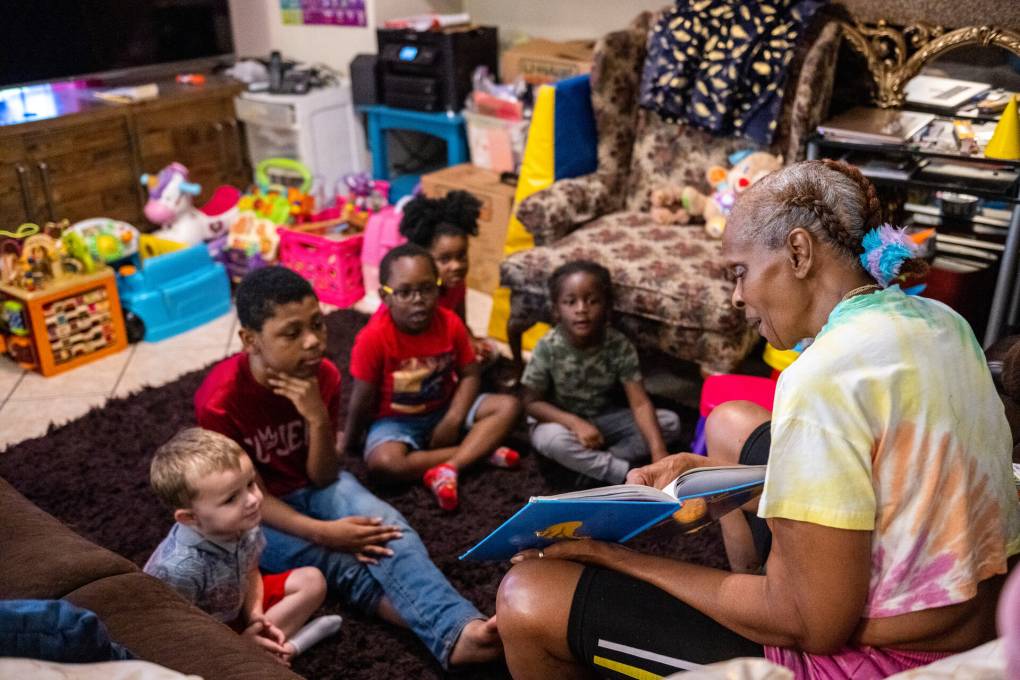
"caption": "If the plan is approved by the Legislature and signed by Gov. Gavin Newsom later this summer, it would provide an $80 million retirement fund for an underpaid workforce that is dominated by women of color. ",
"description": null,
"title": "RS64826_009_KQED_AnnetteNicholsonDaycare_04272023-qut (1)",
"credit": "Beth LaBerge/KQED",
"status": "inherit",
"altTag": "An older woman with gray and brown braids and a rainbow, tie-dye T-shirt reads to a group of children in her living room. Many colorful bins are in the background filled to the brim with toys.",
"isLoading": false,
"fetchFailed": false
},
"news_11946233": {
"type": "attachments",
"id": "news_11946233",
"meta": {
"index": "attachments_1716263798",
"site": "news",
"id": "11946233",
"found": true
},
"parent": 11970292,
"imgSizes": {
"twentyfourteen-full-width": {
"file": "https://cdn.kqed.org/wp-content/uploads/sites/10/2023/04/029_KQED_WoodStreetCommonsEviction_04102023-1038x576.jpg",
"width": 1038,
"mimeType": "image/jpeg",
"height": 576
},
"thumbnail": {
"file": "https://cdn.kqed.org/wp-content/uploads/sites/10/2023/04/029_KQED_WoodStreetCommonsEviction_04102023-160x107.jpg",
"width": 160,
"mimeType": "image/jpeg",
"height": 107
},
"post-thumbnail": {
"file": "https://cdn.kqed.org/wp-content/uploads/sites/10/2023/04/029_KQED_WoodStreetCommonsEviction_04102023-672x372.jpg",
"width": 672,
"mimeType": "image/jpeg",
"height": 372
},
"kqedFullSize": {
"file": "https://cdn.kqed.org/wp-content/uploads/sites/10/2023/04/029_KQED_WoodStreetCommonsEviction_04102023.jpg",
"width": 1920,
"height": 1280
},
"large": {
"file": "https://cdn.kqed.org/wp-content/uploads/sites/10/2023/04/029_KQED_WoodStreetCommonsEviction_04102023-1020x680.jpg",
"width": 1020,
"mimeType": "image/jpeg",
"height": 680
},
"1536x1536": {
"file": "https://cdn.kqed.org/wp-content/uploads/sites/10/2023/04/029_KQED_WoodStreetCommonsEviction_04102023-1536x1024.jpg",
"width": 1536,
"mimeType": "image/jpeg",
"height": 1024
},
"medium": {
"file": "https://cdn.kqed.org/wp-content/uploads/sites/10/2023/04/029_KQED_WoodStreetCommonsEviction_04102023-800x533.jpg",
"width": 800,
"mimeType": "image/jpeg",
"height": 533
}
},
"publishDate": 1681156545,
"modified": 1702927311,
"caption": "Wood Street resident Mayana Sparks cries while watching the city of Oakland begin to evict the encampment in West Oakland on April 10, 2023.",
"description": null,
"title": "029_KQED_WoodStreetCommonsEviction_04102023",
"credit": "Beth LaBerge/KQED",
"status": "inherit",
"altTag": "A woman with short, black hair and a purple bandana tied around her forehead looks distraught as tears stream down her cheeks. A crowd of blurred faces are in the background.",
"isLoading": false,
"fetchFailed": false
},
"news_11944729": {
"type": "attachments",
"id": "news_11944729",
"meta": {
"index": "attachments_1716263798",
"site": "news",
"id": "11944729",
"found": true
},
"parent": 11944699,
"imgSizes": {
"twentyfourteen-full-width": {
"file": "https://ww2.kqed.org/app/uploads/sites/10/2023/03/IMG_5241-1-1038x576.jpg",
"width": 1038,
"mimeType": "image/jpeg",
"height": 576
},
"thumbnail": {
"file": "https://ww2.kqed.org/app/uploads/sites/10/2023/03/IMG_5241-1-160x120.jpg",
"width": 160,
"mimeType": "image/jpeg",
"height": 120
},
"post-thumbnail": {
"file": "https://ww2.kqed.org/app/uploads/sites/10/2023/03/IMG_5241-1-672x372.jpg",
"width": 672,
"mimeType": "image/jpeg",
"height": 372
},
"kqedFullSize": {
"file": "https://ww2.kqed.org/app/uploads/sites/10/2023/03/IMG_5241-1.jpg",
"width": 1920,
"height": 1440
},
"large": {
"file": "https://ww2.kqed.org/app/uploads/sites/10/2023/03/IMG_5241-1-1020x765.jpg",
"width": 1020,
"mimeType": "image/jpeg",
"height": 765
},
"1536x1536": {
"file": "https://ww2.kqed.org/app/uploads/sites/10/2023/03/IMG_5241-1-1536x1152.jpg",
"width": 1536,
"mimeType": "image/jpeg",
"height": 1152
},
"medium": {
"file": "https://ww2.kqed.org/app/uploads/sites/10/2023/03/IMG_5241-1-800x600.jpg",
"width": 800,
"mimeType": "image/jpeg",
"height": 600
}
},
"publishDate": 1679686525,
"modified": 1679690688,
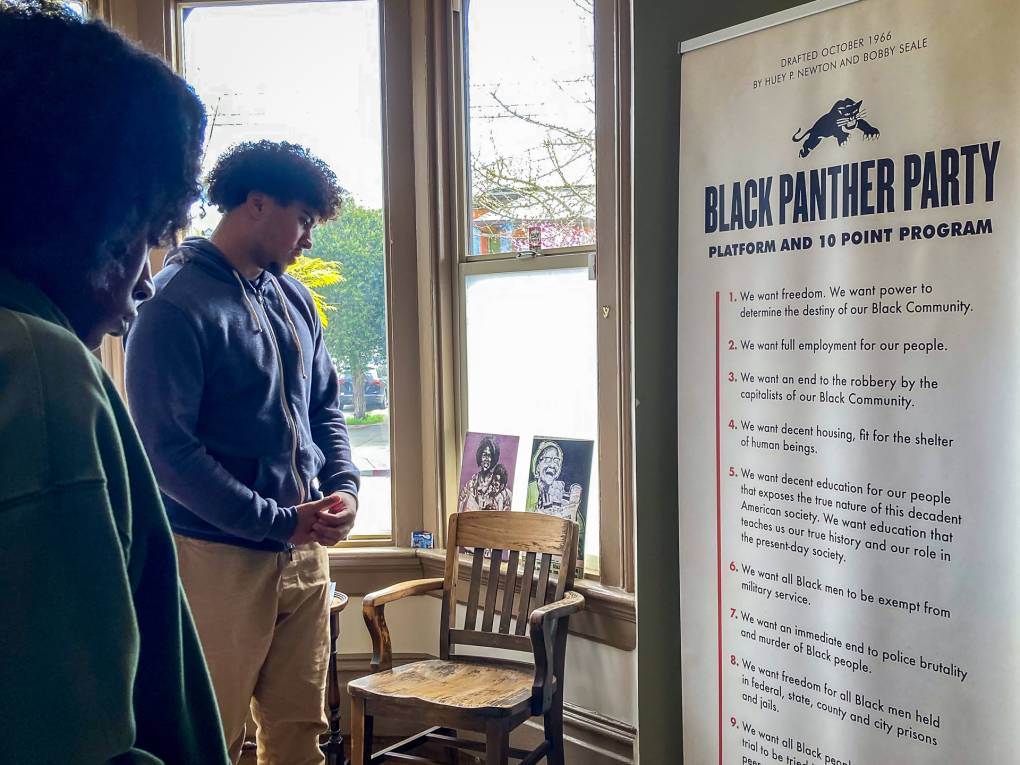
"caption": "On their field trip, students Olamide Ajike (left) and Zach Lee read the Black Panther Party's platform and 10-point program at a museum dedicated to the Party at the West Oakland Mural Project.",
"description": null,
"title": "IMG_5241-1",
"credit": "Sara Hossaini/KQED",
"status": "inherit",
"altTag": "Two high school students stand next to each other inside the West Oakland Mural Project, while reading text on a wall that outlines the Black Panther Party's platform and 10-point program.",
"isLoading": false,
"fetchFailed": false
},
"news_11943517": {
"type": "attachments",
"id": "news_11943517",
"meta": {
"index": "attachments_1716263798",
"site": "news",
"id": "11943517",
"found": true
},
"parent": 0,
"imgSizes": {
"twentyfourteen-full-width": {
"file": "https://ww2.kqed.org/app/uploads/sites/10/2023/03/Guap_horizontal-1038x576.png",
"width": 1038,
"mimeType": "image/png",
"height": 576
},
"thumbnail": {
"file": "https://ww2.kqed.org/app/uploads/sites/10/2023/03/Guap_horizontal-160x105.png",
"width": 160,
"mimeType": "image/png",
"height": 105
},
"post-thumbnail": {
"file": "https://ww2.kqed.org/app/uploads/sites/10/2023/03/Guap_horizontal-672x372.png",
"width": 672,
"mimeType": "image/png",
"height": 372
},
"kqedFullSize": {
"file": "https://ww2.kqed.org/app/uploads/sites/10/2023/03/Guap_horizontal.png",
"width": 2299,
"height": 1503
},
"2048x2048": {
"file": "https://ww2.kqed.org/app/uploads/sites/10/2023/03/Guap_horizontal-2048x1339.png",
"width": 2048,
"mimeType": "image/png",
"height": 1339
},
"large": {
"file": "https://ww2.kqed.org/app/uploads/sites/10/2023/03/Guap_horizontal-1020x667.png",
"width": 1020,
"mimeType": "image/png",
"height": 667
},
"1536x1536": {
"file": "https://ww2.kqed.org/app/uploads/sites/10/2023/03/Guap_horizontal-1536x1004.png",
"width": 1536,
"mimeType": "image/png",
"height": 1004
},
"full-width": {
"file": "https://ww2.kqed.org/app/uploads/sites/10/2023/03/Guap_horizontal-1920x1255.png",
"width": 1920,
"mimeType": "image/png",
"height": 1255
},
"medium": {
"file": "https://ww2.kqed.org/app/uploads/sites/10/2023/03/Guap_horizontal-800x523.png",
"width": 800,
"mimeType": "image/png",
"height": 523
}
},
"publishDate": 1678835693,
"modified": 1678903348,
"caption": "Rapper Guap (formerly Guapdad 4000) was raised by his Filipina grandmother in West Oakland. He's fiercely proud of his Black and Filipino roots, and has been embraced by audiences from Manila to California.",
"description": null,
"title": "Guap_horizontal",
"credit": "Photos by Paul Middleton/Illustration by Kelly Ma of KQED",
"status": "inherit",
"altTag": "A photo collage of a musician holding a microphone in one hand in the foreground, while the same musician is seen hugging his grandmother with earrings and tinted glasses in the background.",
"isLoading": false,
"fetchFailed": false
},
"news_11859115": {
"type": "attachments",
"id": "news_11859115",
"meta": {
"index": "attachments_1716263798",
"site": "news",
"id": "11859115",
"found": true
},
"parent": 11858928,
"imgSizes": {
"apple_news_ca_square_4_0": {
"file": "https://ww2.kqed.org/app/uploads/sites/10/2021/02/MuralDraftOne-470x470.jpg",
"width": 470,
"mimeType": "image/jpeg",
"height": 470
},
"thumbnail": {
"file": "https://ww2.kqed.org/app/uploads/sites/10/2021/02/MuralDraftOne-160x78.jpg",
"width": 160,
"mimeType": "image/jpeg",
"height": 78
},
"post-thumbnail": {
"file": "https://ww2.kqed.org/app/uploads/sites/10/2021/02/MuralDraftOne-672x372.jpg",
"width": 672,
"mimeType": "image/jpeg",
"height": 372
},
"kqedFullSize": {
"file": "https://ww2.kqed.org/app/uploads/sites/10/2021/02/MuralDraftOne.jpg",
"width": 1000,
"height": 486
},
"apple_news_ca_landscape_4_7": {
"file": "https://ww2.kqed.org/app/uploads/sites/10/2021/02/MuralDraftOne-632x474.jpg",
"width": 632,
"mimeType": "image/jpeg",
"height": 474
},
"apple_news_ca_landscape_4_0": {
"file": "https://ww2.kqed.org/app/uploads/sites/10/2021/02/MuralDraftOne-536x402.jpg",
"width": 536,
"mimeType": "image/jpeg",
"height": 402
},
"medium": {
"file": "https://ww2.kqed.org/app/uploads/sites/10/2021/02/MuralDraftOne-800x389.jpg",
"width": 800,
"mimeType": "image/jpeg",
"height": 389
},
"apple_news_ca_portrait_4_0": {
"file": "https://ww2.kqed.org/app/uploads/sites/10/2021/02/MuralDraftOne-354x472.jpg",
"width": 354,
"mimeType": "image/jpeg",
"height": 472
},
"apple_news_ca_portrait_9_7": {
"file": "https://ww2.kqed.org/app/uploads/sites/10/2021/02/MuralDraftOne-840x486.jpg",
"width": 840,
"mimeType": "image/jpeg",
"height": 486
},
"apple_news_ca_portrait_4_7": {
"file": "https://ww2.kqed.org/app/uploads/sites/10/2021/02/MuralDraftOne-414x486.jpg",
"width": 414,
"mimeType": "image/jpeg",
"height": 486
},
"apple_news_ca_portrait_5_5": {
"file": "https://ww2.kqed.org/app/uploads/sites/10/2021/02/MuralDraftOne-687x486.jpg",
"width": 687,
"mimeType": "image/jpeg",
"height": 486
},
"apple_news_ca_square_4_7": {
"file": "https://ww2.kqed.org/app/uploads/sites/10/2021/02/MuralDraftOne-550x486.jpg",
"width": 550,
"mimeType": "image/jpeg",
"height": 486
},
"apple_news_ca_square_5_5": {
"file": "https://ww2.kqed.org/app/uploads/sites/10/2021/02/MuralDraftOne-912x486.jpg",
"width": 912,
"mimeType": "image/jpeg",
"height": 486
}
},
"publishDate": 1612648930,
"modified": 1612649013,
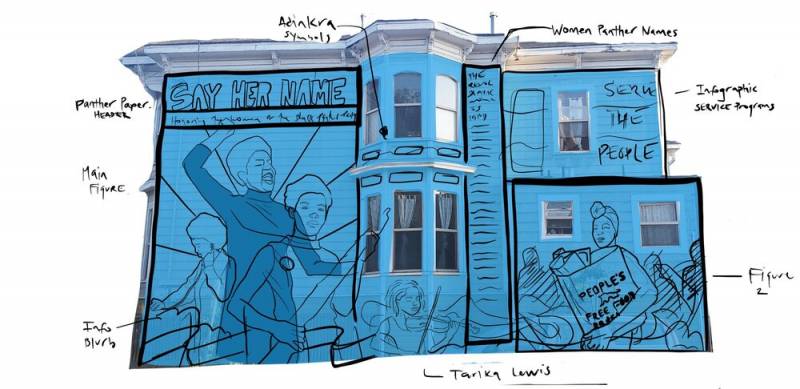
"caption": "The Women of the Black Panther Party Mural Project will be unveiled Feb. 14.",
"description": null,
"title": "Mural+Draft+One",
"credit": "Courtesy of The Women of the Black Panther Party Mural Project",
"status": "inherit",
"altTag": null,
"isLoading": false,
"fetchFailed": false
},
"news_11832080": {
"type": "attachments",
"id": "news_11832080",
"meta": {
"index": "attachments_1716263798",
"site": "news",
"id": "11832080",
"found": true
},
"parent": 11832073,
"imgSizes": {
"apple_news_ca_landscape_5_5": {
"file": "https://ww2.kqed.org/app/uploads/sites/10/2020/08/Schnitzer_Steel-1044x783.jpg",
"width": 1044,
"mimeType": "image/jpeg",
"height": 783
},
"apple_news_ca_square_4_0": {
"file": "https://ww2.kqed.org/app/uploads/sites/10/2020/08/Schnitzer_Steel-470x470.jpg",
"width": 470,
"mimeType": "image/jpeg",
"height": 470
},
"twentyfourteen-full-width": {
"file": "https://ww2.kqed.org/app/uploads/sites/10/2020/08/Schnitzer_Steel-1038x576.jpg",
"width": 1038,
"mimeType": "image/jpeg",
"height": 576
},
"thumbnail": {
"file": "https://ww2.kqed.org/app/uploads/sites/10/2020/08/Schnitzer_Steel-160x117.jpg",
"width": 160,
"mimeType": "image/jpeg",
"height": 117
},
"post-thumbnail": {
"file": "https://ww2.kqed.org/app/uploads/sites/10/2020/08/Schnitzer_Steel-672x372.jpg",
"width": 672,
"mimeType": "image/jpeg",
"height": 372
},
"kqedFullSize": {
"file": "https://ww2.kqed.org/app/uploads/sites/10/2020/08/Schnitzer_Steel.jpg",
"width": 1920,
"height": 1401
},
"apple_news_ca_landscape_4_7": {
"file": "https://ww2.kqed.org/app/uploads/sites/10/2020/08/Schnitzer_Steel-632x474.jpg",
"width": 632,
"mimeType": "image/jpeg",
"height": 474
},
"large": {
"file": "https://ww2.kqed.org/app/uploads/sites/10/2020/08/Schnitzer_Steel-1020x744.jpg",
"width": 1020,
"mimeType": "image/jpeg",
"height": 744
},
"apple_news_ca_landscape_4_0": {
"file": "https://ww2.kqed.org/app/uploads/sites/10/2020/08/Schnitzer_Steel-536x402.jpg",
"width": 536,
"mimeType": "image/jpeg",
"height": 402
},
"apple_news_ca_portrait_12_9": {
"file": "https://ww2.kqed.org/app/uploads/sites/10/2020/08/Schnitzer_Steel-1122x1401.jpg",
"width": 1122,
"mimeType": "image/jpeg",
"height": 1401
},
"medium": {
"file": "https://ww2.kqed.org/app/uploads/sites/10/2020/08/Schnitzer_Steel-800x584.jpg",
"width": 800,
"mimeType": "image/jpeg",
"height": 584
},
"apple_news_ca_portrait_4_0": {
"file": "https://ww2.kqed.org/app/uploads/sites/10/2020/08/Schnitzer_Steel-354x472.jpg",
"width": 354,
"mimeType": "image/jpeg",
"height": 472
},
"apple_news_ca_portrait_9_7": {
"file": "https://ww2.kqed.org/app/uploads/sites/10/2020/08/Schnitzer_Steel-840x1120.jpg",
"width": 840,
"mimeType": "image/jpeg",
"height": 1120
},
"apple_news_ca_landscape_12_9": {
"file": "https://ww2.kqed.org/app/uploads/sites/10/2020/08/Schnitzer_Steel-1832x1374.jpg",
"width": 1832,
"mimeType": "image/jpeg",
"height": 1374
},
"apple_news_ca_square_9_7": {
"file": "https://ww2.kqed.org/app/uploads/sites/10/2020/08/Schnitzer_Steel-1104x1104.jpg",
"width": 1104,
"mimeType": "image/jpeg",
"height": 1104
},
"1536x1536": {
"file": "https://ww2.kqed.org/app/uploads/sites/10/2020/08/Schnitzer_Steel-1536x1121.jpg",
"width": 1536,
"mimeType": "image/jpeg",
"height": 1121
},
"apple_news_ca_portrait_4_7": {
"file": "https://ww2.kqed.org/app/uploads/sites/10/2020/08/Schnitzer_Steel-414x552.jpg",
"width": 414,
"mimeType": "image/jpeg",
"height": 552
},
"apple_news_ca_square_12_9": {
"file": "https://ww2.kqed.org/app/uploads/sites/10/2020/08/Schnitzer_Steel-1472x1401.jpg",
"width": 1472,
"mimeType": "image/jpeg",
"height": 1401
},
"apple_news_ca_portrait_5_5": {
"file": "https://ww2.kqed.org/app/uploads/sites/10/2020/08/Schnitzer_Steel-687x916.jpg",
"width": 687,
"mimeType": "image/jpeg",
"height": 916
},
"apple_news_ca_square_4_7": {
"file": "https://ww2.kqed.org/app/uploads/sites/10/2020/08/Schnitzer_Steel-550x550.jpg",
"width": 550,
"mimeType": "image/jpeg",
"height": 550
},
"apple_news_ca_landscape_9_7": {
"file": "https://ww2.kqed.org/app/uploads/sites/10/2020/08/Schnitzer_Steel-1376x1032.jpg",
"width": 1376,
"mimeType": "image/jpeg",
"height": 1032
},
"apple_news_ca_square_5_5": {
"file": "https://ww2.kqed.org/app/uploads/sites/10/2020/08/Schnitzer_Steel-912x912.jpg",
"width": 912,
"mimeType": "image/jpeg",
"height": 912
}
},
"publishDate": 1596679701,
"modified": 1596750032,
"caption": "Schnitzer Steel is the largest metal shredding plant in California, and the A’s say that state regulators have given the company a pass on its hazardous emissions for decades. Schnitzer Steel, in West Oakland, on Aug. 5, 2020.",
"description": null,
"title": "Schnitzer_Steel",
"credit": "David Marks/KQED",
"status": "inherit",
"isLoading": false,
"fetchFailed": false
},
"arts_13876184": {
"type": "attachments",
"id": "arts_13876184",
"meta": {
"index": "attachments_1716263798",
"site": "arts",
"id": "13876184",
"found": true
},
"parent": 13876171,
"imgSizes": {
"twentyfourteen-full-width": {
"file": "https://ww2.kqed.org/app/uploads/sites/2/2020/03/DSC8543-1038x576.jpg",
"width": 1038,
"mimeType": "image/jpeg",
"height": 576
},
"thumbnail": {
"file": "https://ww2.kqed.org/app/uploads/sites/2/2020/03/DSC8543-160x107.jpg",
"width": 160,
"mimeType": "image/jpeg",
"height": 107
},
"post-thumbnail": {
"file": "https://ww2.kqed.org/app/uploads/sites/2/2020/03/DSC8543-672x372.jpg",
"width": 672,
"mimeType": "image/jpeg",
"height": 372
},
"kqedFullSize": {
"file": "https://ww2.kqed.org/app/uploads/sites/2/2020/03/DSC8543.jpg",
"width": 1616,
"height": 1080
},
"large": {
"file": "https://ww2.kqed.org/app/uploads/sites/2/2020/03/DSC8543-1020x682.jpg",
"width": 1020,
"mimeType": "image/jpeg",
"height": 682
},
"medium": {
"file": "https://ww2.kqed.org/app/uploads/sites/2/2020/03/DSC8543-800x535.jpg",
"width": 800,
"mimeType": "image/jpeg",
"height": 535
},
"medium_large": {
"file": "https://ww2.kqed.org/app/uploads/sites/2/2020/03/DSC8543-768x513.jpg",
"width": 768,
"mimeType": "image/jpeg",
"height": 513
}
},
"publishDate": 1583774763,
"modified": 1583868168,
"caption": "Students and Administrators from McClymonds participate in a Restorative Justice circle in West Oakland",
"description": "Students and Administrators from McClymonds participate in a Restorative Justice circle in West Oakland",
"title": "Students and Administrators from McClymonds participate in a Restorative Justice circle in West Oakland",
"credit": "Pendarvis Harshaw",
"status": "inherit",
"isLoading": false,
"fetchFailed": false
},
"news_11804020": {
"type": "attachments",
"id": "news_11804020",
"meta": {
"index": "attachments_1716263798",
"site": "news",
"id": "11804020",
"found": true
},
"parent": 11804007,
"imgSizes": {
"apple_news_ca_landscape_5_5": {
"file": "https://ww2.kqed.org/app/uploads/sites/10/2020/02/ERv9LIGUUAA7CSb-1044x783.jpg",
"width": 1044,
"mimeType": "image/jpeg",
"height": 783
},
"apple_news_ca_square_4_0": {
"file": "https://ww2.kqed.org/app/uploads/sites/10/2020/02/ERv9LIGUUAA7CSb-470x470.jpg",
"width": 470,
"mimeType": "image/jpeg",
"height": 470
},
"twentyfourteen-full-width": {
"file": "https://ww2.kqed.org/app/uploads/sites/10/2020/02/ERv9LIGUUAA7CSb-1038x576.jpg",
"width": 1038,
"mimeType": "image/jpeg",
"height": 576
},
"thumbnail": {
"file": "https://ww2.kqed.org/app/uploads/sites/10/2020/02/ERv9LIGUUAA7CSb-160x120.jpg",
"width": 160,
"mimeType": "image/jpeg",
"height": 120
},
"post-thumbnail": {
"file": "https://ww2.kqed.org/app/uploads/sites/10/2020/02/ERv9LIGUUAA7CSb-672x372.jpg",
"width": 672,
"mimeType": "image/jpeg",
"height": 372
},
"kqedFullSize": {
"file": "https://ww2.kqed.org/app/uploads/sites/10/2020/02/ERv9LIGUUAA7CSb.jpg",
"width": 2048,
"height": 1536
},
"apple_news_ca_landscape_4_7": {
"file": "https://ww2.kqed.org/app/uploads/sites/10/2020/02/ERv9LIGUUAA7CSb-632x474.jpg",
"width": 632,
"mimeType": "image/jpeg",
"height": 474
},
"large": {
"file": "https://ww2.kqed.org/app/uploads/sites/10/2020/02/ERv9LIGUUAA7CSb-1020x765.jpg",
"width": 1020,
"mimeType": "image/jpeg",
"height": 765
},
"apple_news_ca_landscape_4_0": {
"file": "https://ww2.kqed.org/app/uploads/sites/10/2020/02/ERv9LIGUUAA7CSb-536x402.jpg",
"width": 536,
"mimeType": "image/jpeg",
"height": 402
},
"apple_news_ca_portrait_12_9": {
"file": "https://ww2.kqed.org/app/uploads/sites/10/2020/02/ERv9LIGUUAA7CSb-1122x1496.jpg",
"width": 1122,
"mimeType": "image/jpeg",
"height": 1496
},
"medium": {
"file": "https://ww2.kqed.org/app/uploads/sites/10/2020/02/ERv9LIGUUAA7CSb-800x600.jpg",
"width": 800,
"mimeType": "image/jpeg",
"height": 600
},
"apple_news_ca_portrait_4_0": {
"file": "https://ww2.kqed.org/app/uploads/sites/10/2020/02/ERv9LIGUUAA7CSb-354x472.jpg",
"width": 354,
"mimeType": "image/jpeg",
"height": 472
},
"apple_news_ca_portrait_9_7": {
"file": "https://ww2.kqed.org/app/uploads/sites/10/2020/02/ERv9LIGUUAA7CSb-840x1120.jpg",
"width": 840,
"mimeType": "image/jpeg",
"height": 1120
},
"apple_news_ca_landscape_12_9": {
"file": "https://ww2.kqed.org/app/uploads/sites/10/2020/02/ERv9LIGUUAA7CSb-1832x1374.jpg",
"width": 1832,
"mimeType": "image/jpeg",
"height": 1374
},
"apple_news_ca_square_9_7": {
"file": "https://ww2.kqed.org/app/uploads/sites/10/2020/02/ERv9LIGUUAA7CSb-1104x1104.jpg",
"width": 1104,
"mimeType": "image/jpeg",
"height": 1104
},
"apple_news_ca_portrait_4_7": {
"file": "https://ww2.kqed.org/app/uploads/sites/10/2020/02/ERv9LIGUUAA7CSb-414x552.jpg",
"width": 414,
"mimeType": "image/jpeg",
"height": 552
},
"apple_news_ca_square_12_9": {
"file": "https://ww2.kqed.org/app/uploads/sites/10/2020/02/ERv9LIGUUAA7CSb-1472x1472.jpg",
"width": 1472,
"mimeType": "image/jpeg",
"height": 1472
},
"apple_news_ca_portrait_5_5": {
"file": "https://ww2.kqed.org/app/uploads/sites/10/2020/02/ERv9LIGUUAA7CSb-687x916.jpg",
"width": 687,
"mimeType": "image/jpeg",
"height": 916
},
"full-width": {
"file": "https://ww2.kqed.org/app/uploads/sites/10/2020/02/ERv9LIGUUAA7CSb-1920x1440.jpg",
"width": 1920,
"mimeType": "image/jpeg",
"height": 1440
},
"apple_news_ca_square_4_7": {
"file": "https://ww2.kqed.org/app/uploads/sites/10/2020/02/ERv9LIGUUAA7CSb-550x550.jpg",
"width": 550,
"mimeType": "image/jpeg",
"height": 550
},
"apple_news_ca_landscape_9_7": {
"file": "https://ww2.kqed.org/app/uploads/sites/10/2020/02/ERv9LIGUUAA7CSb-1376x1032.jpg",
"width": 1376,
"mimeType": "image/jpeg",
"height": 1032
},
"apple_news_ca_square_5_5": {
"file": "https://ww2.kqed.org/app/uploads/sites/10/2020/02/ERv9LIGUUAA7CSb-912x912.jpg",
"width": 912,
"mimeType": "image/jpeg",
"height": 912
}
},
"publishDate": 1582848181,
"modified": 1582848245,
"caption": null,
"description": null,
"title": "McClymonds meeting",
"credit": "Laura Klivans/KQED",
"status": "inherit",
"isLoading": false,
"fetchFailed": false
},
"arts_13874095": {
"type": "attachments",
"id": "arts_13874095",
"meta": {
"index": "attachments_1716263798",
"site": "arts",
"id": "13874095",
"found": true
},
"parent": 13874090,
"imgSizes": {
"twentyfourteen-full-width": {
"file": "https://ww2.kqed.org/app/uploads/sites/2/2020/01/4-1038x576.jpg",
"width": 1038,
"mimeType": "image/jpeg",
"height": 576
},
"thumbnail": {
"file": "https://ww2.kqed.org/app/uploads/sites/2/2020/01/4-160x90.jpg",
"width": 160,
"mimeType": "image/jpeg",
"height": 90
},
"post-thumbnail": {
"file": "https://ww2.kqed.org/app/uploads/sites/2/2020/01/4-672x372.jpg",
"width": 672,
"mimeType": "image/jpeg",
"height": 372
},
"kqedFullSize": {
"file": "https://ww2.kqed.org/app/uploads/sites/2/2020/01/4.jpg",
"width": 1920,
"height": 1080
},
"large": {
"file": "https://ww2.kqed.org/app/uploads/sites/2/2020/01/4-1020x574.jpg",
"width": 1020,
"mimeType": "image/jpeg",
"height": 574
},
"complete_open_graph": {
"file": "https://ww2.kqed.org/app/uploads/sites/2/2020/01/4-1200x675.jpg",
"width": 1200,
"mimeType": "image/jpeg",
"height": 675
},
"full-width": {
"file": "https://ww2.kqed.org/app/uploads/sites/2/2020/01/4-1920x1080.jpg",
"width": 1920,
"mimeType": "image/jpeg",
"height": 1080
},
"medium": {
"file": "https://ww2.kqed.org/app/uploads/sites/2/2020/01/4-800x450.jpg",
"width": 800,
"mimeType": "image/jpeg",
"height": 450
},
"medium_large": {
"file": "https://ww2.kqed.org/app/uploads/sites/2/2020/01/4-768x432.jpg",
"width": 768,
"mimeType": "image/jpeg",
"height": 432
}
},
"publishDate": 1580347183,
"modified": 1580427736,
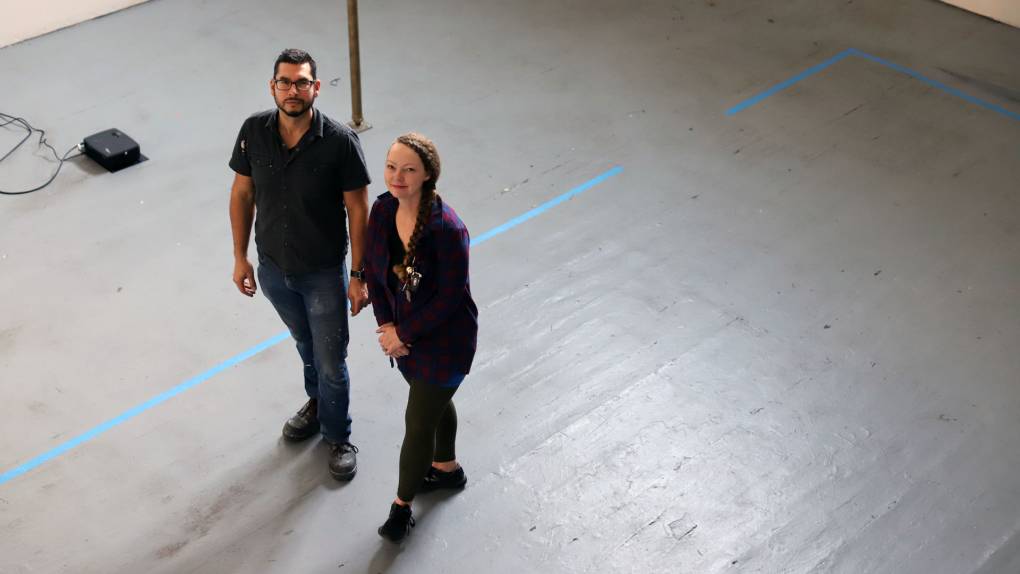
"caption": "The new West Oakland location of Aggregate Space Gallery, an artist-run space founded by Conrad and Willis Meyers, more than doubles it exhibition space.",
"description": "The new West Oakland location of Aggregate Space Gallery, an artist-run space founded by Conrad and Willis Meyers, more than doubles it exhibition space.",
"title": "The new West Oakland location of Aggregate Space Gallery, an artist-run space founded by Conrad and Willis Meyer, more than doubles it exhibition space.",
"credit": "Sam Lefebvre/KQED",
"status": "inherit",
"isLoading": false,
"fetchFailed": false
},
"news_11797083": {
"type": "attachments",
"id": "news_11797083",
"meta": {
"index": "attachments_1716263798",
"site": "news",
"id": "11797083",
"found": true
},
"parent": 11797081,
"imgSizes": {
"apple_news_ca_landscape_5_5": {
"file": "https://ww2.kqed.org/app/uploads/sites/10/2020/01/RS40818_20200120GaylaNewsomeMS_5-qut-1044x783.jpg",
"width": 1044,
"mimeType": "image/jpeg",
"height": 783
},
"apple_news_ca_square_4_0": {
"file": "https://ww2.kqed.org/app/uploads/sites/10/2020/01/RS40818_20200120GaylaNewsomeMS_5-qut-470x470.jpg",
"width": 470,
"mimeType": "image/jpeg",
"height": 470
},
"twentyfourteen-full-width": {
"file": "https://ww2.kqed.org/app/uploads/sites/10/2020/01/RS40818_20200120GaylaNewsomeMS_5-qut-1038x576.jpg",
"width": 1038,
"mimeType": "image/jpeg",
"height": 576
},
"thumbnail": {
"file": "https://ww2.kqed.org/app/uploads/sites/10/2020/01/RS40818_20200120GaylaNewsomeMS_5-qut-160x120.jpg",
"width": 160,
"mimeType": "image/jpeg",
"height": 120
},
"post-thumbnail": {
"file": "https://ww2.kqed.org/app/uploads/sites/10/2020/01/RS40818_20200120GaylaNewsomeMS_5-qut-672x372.jpg",
"width": 672,
"mimeType": "image/jpeg",
"height": 372
},
"kqedFullSize": {
"file": "https://ww2.kqed.org/app/uploads/sites/10/2020/01/RS40818_20200120GaylaNewsomeMS_5-qut.jpg",
"width": 1920,
"height": 1440
},
"apple_news_ca_landscape_4_7": {
"file": "https://ww2.kqed.org/app/uploads/sites/10/2020/01/RS40818_20200120GaylaNewsomeMS_5-qut-632x474.jpg",
"width": 632,
"mimeType": "image/jpeg",
"height": 474
},
"large": {
"file": "https://ww2.kqed.org/app/uploads/sites/10/2020/01/RS40818_20200120GaylaNewsomeMS_5-qut-1020x765.jpg",
"width": 1020,
"mimeType": "image/jpeg",
"height": 765
},
"apple_news_ca_landscape_4_0": {
"file": "https://ww2.kqed.org/app/uploads/sites/10/2020/01/RS40818_20200120GaylaNewsomeMS_5-qut-536x402.jpg",
"width": 536,
"mimeType": "image/jpeg",
"height": 402
},
"apple_news_ca_portrait_12_9": {
"file": "https://ww2.kqed.org/app/uploads/sites/10/2020/01/RS40818_20200120GaylaNewsomeMS_5-qut-1122x1440.jpg",
"width": 1122,
"mimeType": "image/jpeg",
"height": 1440
},
"medium": {
"file": "https://ww2.kqed.org/app/uploads/sites/10/2020/01/RS40818_20200120GaylaNewsomeMS_5-qut-800x600.jpg",
"width": 800,
"mimeType": "image/jpeg",
"height": 600
},
"apple_news_ca_portrait_4_0": {
"file": "https://ww2.kqed.org/app/uploads/sites/10/2020/01/RS40818_20200120GaylaNewsomeMS_5-qut-354x472.jpg",
"width": 354,
"mimeType": "image/jpeg",
"height": 472
},
"apple_news_ca_portrait_9_7": {
"file": "https://ww2.kqed.org/app/uploads/sites/10/2020/01/RS40818_20200120GaylaNewsomeMS_5-qut-840x1120.jpg",
"width": 840,
"mimeType": "image/jpeg",
"height": 1120
},
"apple_news_ca_landscape_12_9": {
"file": "https://ww2.kqed.org/app/uploads/sites/10/2020/01/RS40818_20200120GaylaNewsomeMS_5-qut-1832x1374.jpg",
"width": 1832,
"mimeType": "image/jpeg",
"height": 1374
},
"apple_news_ca_square_9_7": {
"file": "https://ww2.kqed.org/app/uploads/sites/10/2020/01/RS40818_20200120GaylaNewsomeMS_5-qut-1104x1104.jpg",
"width": 1104,
"mimeType": "image/jpeg",
"height": 1104
},
"apple_news_ca_portrait_4_7": {
"file": "https://ww2.kqed.org/app/uploads/sites/10/2020/01/RS40818_20200120GaylaNewsomeMS_5-qut-414x552.jpg",
"width": 414,
"mimeType": "image/jpeg",
"height": 552
},
"apple_news_ca_square_12_9": {
"file": "https://ww2.kqed.org/app/uploads/sites/10/2020/01/RS40818_20200120GaylaNewsomeMS_5-qut-1472x1440.jpg",
"width": 1472,
"mimeType": "image/jpeg",
"height": 1440
},
"apple_news_ca_portrait_5_5": {
"file": "https://ww2.kqed.org/app/uploads/sites/10/2020/01/RS40818_20200120GaylaNewsomeMS_5-qut-687x916.jpg",
"width": 687,
"mimeType": "image/jpeg",
"height": 916
},
"full-width": {
"file": "https://ww2.kqed.org/app/uploads/sites/10/2020/01/RS40818_20200120GaylaNewsomeMS_5-qut-1920x1440.jpg",
"width": 1920,
"mimeType": "image/jpeg",
"height": 1440
},
"apple_news_ca_square_4_7": {
"file": "https://ww2.kqed.org/app/uploads/sites/10/2020/01/RS40818_20200120GaylaNewsomeMS_5-qut-550x550.jpg",
"width": 550,
"mimeType": "image/jpeg",
"height": 550
},
"apple_news_ca_landscape_9_7": {
"file": "https://ww2.kqed.org/app/uploads/sites/10/2020/01/RS40818_20200120GaylaNewsomeMS_5-qut-1376x1032.jpg",
"width": 1376,
"mimeType": "image/jpeg",
"height": 1032
},
"apple_news_ca_square_5_5": {
"file": "https://ww2.kqed.org/app/uploads/sites/10/2020/01/RS40818_20200120GaylaNewsomeMS_5-qut-912x912.jpg",
"width": 912,
"mimeType": "image/jpeg",
"height": 912
}
},
"publishDate": 1579633107,
"modified": 1579639977,
"caption": "Gayla Newsome was evicted from her West Oakland home in 2011 after it was foreclosed on, but she eventually won it back after occupying it.",
"description": "Gayla Newsome was evicted from her West Oakland home in 2011 after it was foreclosed on, but she eventually won it back after occupying it.",
"title": "RS40818_20200120GaylaNewsomeMS_5-qut",
"credit": "Molly Solomon/KQED",
"status": "inherit",
"isLoading": false,
"fetchFailed": false
},
"news_11797008": {
"type": "attachments",
"id": "news_11797008",
"meta": {
"index": "attachments_1716263798",
"site": "news",
"id": "11797008",
"found": true
},
"parent": 11797001,
"imgSizes": {
"apple_news_ca_landscape_5_5": {
"file": "https://ww2.kqed.org/app/uploads/sites/10/2020/01/Moms4Housing112019-1044x783.jpg",
"width": 1044,
"mimeType": "image/jpeg",
"height": 783
},
"apple_news_ca_square_4_0": {
"file": "https://ww2.kqed.org/app/uploads/sites/10/2020/01/Moms4Housing112019-470x470.jpg",
"width": 470,
"mimeType": "image/jpeg",
"height": 470
},
"twentyfourteen-full-width": {
"file": "https://ww2.kqed.org/app/uploads/sites/10/2020/01/Moms4Housing112019-1038x576.jpg",
"width": 1038,
"mimeType": "image/jpeg",
"height": 576
},
"thumbnail": {
"file": "https://ww2.kqed.org/app/uploads/sites/10/2020/01/Moms4Housing112019-160x120.jpg",
"width": 160,
"mimeType": "image/jpeg",
"height": 120
},
"post-thumbnail": {
"file": "https://ww2.kqed.org/app/uploads/sites/10/2020/01/Moms4Housing112019-672x372.jpg",
"width": 672,
"mimeType": "image/jpeg",
"height": 372
},
"kqedFullSize": {
"file": "https://ww2.kqed.org/app/uploads/sites/10/2020/01/Moms4Housing112019.jpg",
"width": 1920,
"height": 1440
},
"apple_news_ca_landscape_4_7": {
"file": "https://ww2.kqed.org/app/uploads/sites/10/2020/01/Moms4Housing112019-632x474.jpg",
"width": 632,
"mimeType": "image/jpeg",
"height": 474
},
"large": {
"file": "https://ww2.kqed.org/app/uploads/sites/10/2020/01/Moms4Housing112019-1020x765.jpg",
"width": 1020,
"mimeType": "image/jpeg",
"height": 765
},
"apple_news_ca_landscape_4_0": {
"file": "https://ww2.kqed.org/app/uploads/sites/10/2020/01/Moms4Housing112019-536x402.jpg",
"width": 536,
"mimeType": "image/jpeg",
"height": 402
},
"apple_news_ca_portrait_12_9": {
"file": "https://ww2.kqed.org/app/uploads/sites/10/2020/01/Moms4Housing112019-1122x1440.jpg",
"width": 1122,
"mimeType": "image/jpeg",
"height": 1440
},
"medium": {
"file": "https://ww2.kqed.org/app/uploads/sites/10/2020/01/Moms4Housing112019-800x600.jpg",
"width": 800,
"mimeType": "image/jpeg",
"height": 600
},
"apple_news_ca_portrait_4_0": {
"file": "https://ww2.kqed.org/app/uploads/sites/10/2020/01/Moms4Housing112019-354x472.jpg",
"width": 354,
"mimeType": "image/jpeg",
"height": 472
},
"apple_news_ca_portrait_9_7": {
"file": "https://ww2.kqed.org/app/uploads/sites/10/2020/01/Moms4Housing112019-840x1120.jpg",
"width": 840,
"mimeType": "image/jpeg",
"height": 1120
},
"apple_news_ca_landscape_12_9": {
"file": "https://ww2.kqed.org/app/uploads/sites/10/2020/01/Moms4Housing112019-1832x1374.jpg",
"width": 1832,
"mimeType": "image/jpeg",
"height": 1374
},
"apple_news_ca_square_9_7": {
"file": "https://ww2.kqed.org/app/uploads/sites/10/2020/01/Moms4Housing112019-1104x1104.jpg",
"width": 1104,
"mimeType": "image/jpeg",
"height": 1104
},
"apple_news_ca_portrait_4_7": {
"file": "https://ww2.kqed.org/app/uploads/sites/10/2020/01/Moms4Housing112019-414x552.jpg",
"width": 414,
"mimeType": "image/jpeg",
"height": 552
},
"apple_news_ca_square_12_9": {
"file": "https://ww2.kqed.org/app/uploads/sites/10/2020/01/Moms4Housing112019-1472x1440.jpg",
"width": 1472,
"mimeType": "image/jpeg",
"height": 1440
},
"apple_news_ca_portrait_5_5": {
"file": "https://ww2.kqed.org/app/uploads/sites/10/2020/01/Moms4Housing112019-687x916.jpg",
"width": 687,
"mimeType": "image/jpeg",
"height": 916
},
"full-width": {
"file": "https://ww2.kqed.org/app/uploads/sites/10/2020/01/Moms4Housing112019-1920x1440.jpg",
"width": 1920,
"mimeType": "image/jpeg",
"height": 1440
},
"apple_news_ca_square_4_7": {
"file": "https://ww2.kqed.org/app/uploads/sites/10/2020/01/Moms4Housing112019-550x550.jpg",
"width": 550,
"mimeType": "image/jpeg",
"height": 550
},
"apple_news_ca_landscape_9_7": {
"file": "https://ww2.kqed.org/app/uploads/sites/10/2020/01/Moms4Housing112019-1376x1032.jpg",
"width": 1376,
"mimeType": "image/jpeg",
"height": 1032
},
"apple_news_ca_square_5_5": {
"file": "https://ww2.kqed.org/app/uploads/sites/10/2020/01/Moms4Housing112019-912x912.jpg",
"width": 912,
"mimeType": "image/jpeg",
"height": 912
}
},
"publishDate": 1579550831,
"modified": 1579556228,
"caption": "Members of Moms 4 Housing address an agreement they've reached with Wedgewood LLC to buy the West Oakland home they've been occupying since November through the Oakland Community Land Trust.",
"description": null,
"title": "Moms4Housing112019",
"credit": "Sara Hossaini/KQED",
"status": "inherit",
"isLoading": false,
"fetchFailed": false
}
},
"audioPlayerReducer": {
"postId": "stream_live",
"isPaused": true,
"isPlaying": false,
"pfsActive": false,
"pledgeModalIsOpen": true,
"playerDrawerIsOpen": false,
"liveAudioPlayStartedAt": 0,
"liveAudioPlayContext": ""
},
"authorsReducer": {
"byline_news_11943512": {
"type": "authors",
"id": "byline_news_11943512",
"meta": {
"override": true
},
"slug": "byline_news_11943512",
"name": "\u003ca href=\"https://www.kqed.org/author/jessicakariisa\">Jessica Kariisa\u003c/a> ",
"isLoading": false
},
"ninathorsen": {
"type": "authors",
"id": "246",
"meta": {
"index": "authors_1716337520",
"id": "246",
"found": true
},
"name": "Nina Thorsen",
"firstName": "Nina",
"lastName": "Thorsen",
"slug": "ninathorsen",
"email": "nthorsen@kqed.org",
"display_author_email": false,
"staff_mastheads": [
"news"
],
"title": "Producer, Radio",
"bio": "\u003cspan style=\"color: #000000;\">Nina Thorsen is a KQED radio producer, and frequently reports on sports and culture. \u003c/span>\u003cspan style=\"color: #000000;\">She co-created and produced KQED's \u003cem>Pacific Time, \u003c/em> a weekly radio program on Asian and Asian American issues that aired from 2000 to 2007. Before coming to KQED, Thorsen was the deputy foreign editor for \u003cem>Marketplace, \u003c/em>and in her home state of Minnesota, worked for \u003cem>A Prairie Home Companion\u003c/em> and for Public Radio International. \u003c/span>",
"avatar": "https://secure.gravatar.com/avatar/e13dc7282cec33c15d973ebb56d57ead?s=600&d=blank&r=g",
"twitter": "NinaKQED",
"facebook": null,
"instagram": null,
"linkedin": null,
"sites": [
{
"site": "news",
"roles": [
"editor"
]
},
{
"site": "podcasts",
"roles": [
"editor"
]
}
],
"headData": {
"title": "Nina Thorsen | KQED",
"description": "Producer, Radio",
"ogImgSrc": "https://secure.gravatar.com/avatar/e13dc7282cec33c15d973ebb56d57ead?s=600&d=blank&r=g",
"twImgSrc": "https://secure.gravatar.com/avatar/e13dc7282cec33c15d973ebb56d57ead?s=600&d=blank&r=g"
},
"isLoading": false,
"link": "/author/ninathorsen"
},
"kdomara": {
"type": "authors",
"id": "1459",
"meta": {
"index": "authors_1716337520",
"id": "1459",
"found": true
},
"name": "Kelly O'Mara",
"firstName": "Kelly",
"lastName": "O'Mara",
"slug": "kdomara",
"email": "komara@kqed.org",
"display_author_email": false,
"staff_mastheads": [
"news"
],
"title": "KQED Contributor",
"bio": "Kelly O'Mara is a writer and reporter in the San Francisco Bay Area. She writes about food, health, sports, travel, business and California news. Her work has appeared on KQED, online for Outside Magazine, epsnW, VICE and in Competitor Magazine, among others. Follow Kelly on Twitter \u003ca href=\"https://twitter.com/kellydomara\">@kellydomara\u003c/a>.",
"avatar": "https://secure.gravatar.com/avatar/768fec7412028b72f13bdd0f5f9d8186?s=600&d=blank&r=g",
"twitter": null,
"facebook": null,
"instagram": null,
"linkedin": null,
"sites": [
{
"site": "arts",
"roles": []
},
{
"site": "news",
"roles": []
},
{
"site": "bayareabites",
"roles": []
},
{
"site": "stateofhealth",
"roles": []
},
{
"site": "science",
"roles": []
},
{
"site": "checkplease",
"roles": [
"editor"
]
},
{
"site": "food",
"roles": []
},
{
"site": "forum",
"roles": [
"editor"
]
},
{
"site": "liveblog",
"roles": [
"editor"
]
}
],
"headData": {
"title": "Kelly O'Mara | KQED",
"description": "KQED Contributor",
"ogImgSrc": "https://secure.gravatar.com/avatar/768fec7412028b72f13bdd0f5f9d8186?s=600&d=blank&r=g",
"twImgSrc": "https://secure.gravatar.com/avatar/768fec7412028b72f13bdd0f5f9d8186?s=600&d=blank&r=g"
},
"isLoading": false,
"link": "/author/kdomara"
},
"shossaini": {
"type": "authors",
"id": "3214",
"meta": {
"index": "authors_1716337520",
"id": "3214",
"found": true
},
"name": "Sara Hossaini",
"firstName": "Sara",
"lastName": "Hossaini",
"slug": "shossaini",
"email": "shossaini@kqed.org",
"display_author_email": true,
"staff_mastheads": [
"news"
],
"title": "KQED Reporter",
"bio": "Sara Hossaini came to general assignment reporting at KQED in 2013 after two winters reporting at Wyoming Public Radio. She holds a bachelor's degree in broadcast journalism from the University of Nebraska-Lincoln. Her radio romance began after a bitter breakup with documentary film (Ok, maybe it's still complicated). Her first simultaneous jobs in San Francisco were as Associate Producer on a PBS film series through the Center for Asian American Media and as a butler. She likes to trot, plot and make things with her hands.",
"avatar": "https://secure.gravatar.com/avatar/060e9f56b9554e17942e89f413242774?s=600&d=blank&r=g",
"twitter": "mshossaini",
"facebook": null,
"instagram": null,
"linkedin": null,
"sites": [
{
"site": "news",
"roles": [
"author"
]
},
{
"site": "stateofhealth",
"roles": [
"author"
]
}
],
"headData": {
"title": "Sara Hossaini | KQED",
"description": "KQED Reporter",
"ogImgSrc": "https://secure.gravatar.com/avatar/060e9f56b9554e17942e89f413242774?s=600&d=blank&r=g",
"twImgSrc": "https://secure.gravatar.com/avatar/060e9f56b9554e17942e89f413242774?s=600&d=blank&r=g"
},
"isLoading": false,
"link": "/author/shossaini"
},
"dkatayama": {
"type": "authors",
"id": "7240",
"meta": {
"index": "authors_1716337520",
"id": "7240",
"found": true
},
"name": "Devin Katayama",
"firstName": "Devin",
"lastName": "Katayama",
"slug": "dkatayama",
"email": "dkatayama@kqed.org",
"display_author_email": true,
"staff_mastheads": [
"news"
],
"title": "Editor of Talent and Development",
"bio": "Devin Katayama is former Editor of Talent and Development for KQED. He supported our internship program and on-call staff by looking for equitable opportunities to improve the newsroom.\r\n\r\nHe previously hosted The Bay and American Suburb podcasts from KQED News. Prior to returning to the Bay Area in 2015, Devin was the education reporter for WFPL in Louisville and worked as a producer with radio stations in Chicago and Portland, OR. His work has appeared on NPR’s \u003cem>Morning Edition, All Things Considered, The Takeaway\u003c/em> and \u003cem>Here and Now.\u003c/em>\r\n\r\nDevin earned his MA in Journalism from Columbia College Chicago, where he was a Follett Fellow and the recipient of the 2011 Studs Terkel Community Media Workshop Scholarship for his story on Chicago's homeless youth. He won WBUR's 2014 Daniel Schorr award and a regional RTNDA Edward R. Murrow Award for his documentary \"At Risk\" that looked at issues facing some of Louisville's students. Devin has also received numerous local awards from the Associated Press and the Society of Professional Journalists.",
"avatar": "https://secure.gravatar.com/avatar/d0d2978a31002fb2de107921a8e18405?s=600&d=blank&r=g",
"twitter": "RadioDevin",
"facebook": null,
"instagram": null,
"linkedin": null,
"sites": [
{
"site": "arts",
"roles": []
},
{
"site": "news",
"roles": [
"author"
]
},
{
"site": "stateofhealth",
"roles": [
"author"
]
},
{
"site": "forum",
"roles": [
"editor"
]
},
{
"site": "perspectives",
"roles": [
"editor"
]
}
],
"headData": {
"title": "Devin Katayama | KQED",
"description": "Editor of Talent and Development",
"ogImgSrc": "https://secure.gravatar.com/avatar/d0d2978a31002fb2de107921a8e18405?s=600&d=blank&r=g",
"twImgSrc": "https://secure.gravatar.com/avatar/d0d2978a31002fb2de107921a8e18405?s=600&d=blank&r=g"
},
"isLoading": false,
"link": "/author/dkatayama"
},
"lklivans": {
"type": "authors",
"id": "8648",
"meta": {
"index": "authors_1716337520",
"id": "8648",
"found": true
},
"name": "Laura Klivans",
"firstName": "Laura",
"lastName": "Klivans",
"slug": "lklivans",
"email": "lklivans@kqed.org",
"display_author_email": true,
"staff_mastheads": [
"news",
"science"
],
"title": "Reporter",
"bio": "Laura Klivans is an award-winning science reporter for KQED News, where she covers climate change with an eye on both groundbreaking progress and gaps in action. She is the former host of KQED's blockbuster video series about tiny, amazing animals, \u003cem>Deep Look\u003c/em>. Her work reaches national audiences through NPR, \u003cem>Here & Now, \u003c/em>PRI, and other major outlets. \r\n\r\nLaura’s won five Northern California Area Emmy Awards for Deep Look and First Place in the Greater Bay Area Journalism Awards for a podcast exploring how one Oakland neighborhood teamed up to reduce planet-heating pollution.\r\n\r\nBeyond her reporting, she hosts and moderates events. In the past, she taught audio storytelling at the UC Berkeley Graduate School of Journalism, led international education programs, worked with immigrants and refugees along the Thai-Burmese border, taught high schoolers sex ed, and was an actress. \r\n\r\nShe's a former UC Berkeley Human Rights Fellow, USC Center for Health Journalism's California Fellow and Coro Fellow in Public Affairs. Laura has a master’s in journalism from UC Berkeley, a master’s in education from Harvard, and an undergraduate degree from Northwestern University.\r\n\r\nShe loves trying to riddle the meaning out of vanity license plates.",
"avatar": "https://secure.gravatar.com/avatar/2d2ecd1550a494cc10ad4a503406965585902124739e775a9b3817eebf1d88be?s=600&d=blank&r=g",
"twitter": "lauraklivans",
"bluesky": null,
"facebook": null,
"instagram": null,
"linkedin": null,
"sites": [
{
"site": "news",
"roles": [
"editor"
]
},
{
"site": "stateofhealth",
"roles": [
"contributor",
"editor"
]
},
{
"site": "science",
"roles": [
"editor"
]
},
{
"site": "forum",
"roles": [
"editor"
]
}
],
"headData": {
"title": "Laura Klivans | KQED",
"description": "Reporter",
"ogImgSrc": "https://secure.gravatar.com/avatar/2d2ecd1550a494cc10ad4a503406965585902124739e775a9b3817eebf1d88be?s=600&d=blank&r=g",
"twImgSrc": "https://secure.gravatar.com/avatar/2d2ecd1550a494cc10ad4a503406965585902124739e775a9b3817eebf1d88be?s=600&d=blank&r=g"
},
"isLoading": false,
"link": "/author/lklivans"
},
"ecruzguevarra": {
"type": "authors",
"id": "8654",
"meta": {
"index": "authors_1716337520",
"id": "8654",
"found": true
},
"name": "Ericka Cruz Guevarra",
"firstName": "Ericka",
"lastName": "Cruz Guevarra",
"slug": "ecruzguevarra",
"email": "ecruzguevarra@kqed.org",
"display_author_email": true,
"staff_mastheads": [
"news"
],
"title": "Producer, The Bay Podcast",
"bio": "Ericka Cruz Guevarra is host of \u003ca href=\"https://www.kqed.org/podcasts/thebay\">\u003cem>The Bay\u003c/em>\u003c/a> podcast at KQED. Before host, she was the show’s producer. Her work in that capacity includes a three-part reported series on policing in Vallejo, which won a 2020 excellence in journalism award from the Society of Professional Journalists. Ericka has worked as a breaking news reporter at Oregon Public Broadcasting, helped produce the Code Switch podcast, and was KQED’s inaugural Raul Ramirez Diversity Fund intern. She’s also an alumna of NPR’s Next Generation Radio program. Send her an email if you have strong feelings about whether Fairfield and Suisun City are the Bay. Ericka is represented by SAG-AFTRA.",
"avatar": "https://secure.gravatar.com/avatar/accefc1de4bafc7e234b69bcb9b6f6536c130fd84709bc3069ef11a78787e1bb?s=600&d=blank&r=g",
"twitter": "NotoriousECG",
"bluesky": null,
"facebook": null,
"instagram": null,
"linkedin": null,
"sites": [
{
"site": "arts",
"roles": [
"subscriber"
]
},
{
"site": "news",
"roles": [
"editor",
"manage_categories"
]
},
{
"site": "futureofyou",
"roles": [
"subscriber"
]
},
{
"site": "stateofhealth",
"roles": [
"subscriber"
]
},
{
"site": "science",
"roles": [
"editor"
]
},
{
"site": "forum",
"roles": [
"subscriber"
]
}
],
"headData": {
"title": "Ericka Cruz Guevarra | KQED",
"description": "Producer, The Bay Podcast",
"ogImgSrc": "https://secure.gravatar.com/avatar/accefc1de4bafc7e234b69bcb9b6f6536c130fd84709bc3069ef11a78787e1bb?s=600&d=blank&r=g",
"twImgSrc": "https://secure.gravatar.com/avatar/accefc1de4bafc7e234b69bcb9b6f6536c130fd84709bc3069ef11a78787e1bb?s=600&d=blank&r=g"
},
"isLoading": false,
"link": "/author/ecruzguevarra"
},
"slefebvre": {
"type": "authors",
"id": "11091",
"meta": {
"index": "authors_1716337520",
"id": "11091",
"found": true
},
"name": "Sam Lefebvre",
"firstName": "Sam",
"lastName": "Lefebvre",
"slug": "slefebvre",
"email": "sdlefebvre@gmail.com",
"display_author_email": false,
"staff_mastheads": [],
"title": "KQED Contributor",
"bio": "Sam Lefebvre is an award-winning reporter at KQED Arts. He has worked as an editor and columnist at the \u003cem>East Bay Express\u003c/em>, \u003cem>SF Weekly \u003c/em>and Impose Magazine, and his journalism and criticism has appeared in \u003cem>The New York Times\u003c/em>, the Guardian and Pitchfork.",
"avatar": "https://secure.gravatar.com/avatar/49d39b42930b77fb13784ddd9fa63fe780666b71bf289368509dba576b64e69b?s=600&d=blank&r=g",
"twitter": "Lefebvre_Sam",
"bluesky": null,
"facebook": null,
"instagram": null,
"linkedin": null,
"sites": [
{
"site": "arts",
"roles": [
"subscriber"
]
},
{
"site": "news",
"roles": [
"author"
]
}
],
"headData": {
"title": "Sam Lefebvre | KQED",
"description": "KQED Contributor",
"ogImgSrc": "https://secure.gravatar.com/avatar/49d39b42930b77fb13784ddd9fa63fe780666b71bf289368509dba576b64e69b?s=600&d=blank&r=g",
"twImgSrc": "https://secure.gravatar.com/avatar/49d39b42930b77fb13784ddd9fa63fe780666b71bf289368509dba576b64e69b?s=600&d=blank&r=g"
},
"isLoading": false,
"link": "/author/slefebvre"
},
"ogpenn": {
"type": "authors",
"id": "11491",
"meta": {
"index": "authors_1716337520",
"id": "11491",
"found": true
},
"name": "Pendarvis Harshaw",
"firstName": "Pendarvis",
"lastName": "Harshaw",
"slug": "ogpenn",
"email": "ogpenn@gmail.com",
"display_author_email": false,
"staff_mastheads": [
"arts"
],
"title": "Community Engagement Reporter",
"bio": "Pendarvis Harshaw is an educator, host and writer with KQED Arts.",
"avatar": "https://secure.gravatar.com/avatar/972b77ee8e3f346ae2b00622661187fbfabd059b5693bbdc1475ea7a722fd4cd?s=600&d=blank&r=g",
"twitter": null,
"bluesky": null,
"facebook": null,
"instagram": "ogpenn",
"linkedin": null,
"sites": [
{
"site": "arts",
"roles": [
"administrator"
]
},
{
"site": "news",
"roles": [
"editor"
]
},
{
"site": "bayareabites",
"roles": [
"author"
]
},
{
"site": "hiphop",
"roles": [
"editor"
]
}
],
"headData": {
"title": "Pendarvis Harshaw | KQED",
"description": "Community Engagement Reporter",
"ogImgSrc": "https://secure.gravatar.com/avatar/972b77ee8e3f346ae2b00622661187fbfabd059b5693bbdc1475ea7a722fd4cd?s=600&d=blank&r=g",
"twImgSrc": "https://secure.gravatar.com/avatar/972b77ee8e3f346ae2b00622661187fbfabd059b5693bbdc1475ea7a722fd4cd?s=600&d=blank&r=g"
},
"isLoading": false,
"link": "/author/ogpenn"
},
"katewolffe": {
"type": "authors",
"id": "11523",
"meta": {
"index": "authors_1716337520",
"id": "11523",
"found": true
},
"name": "Kate Wolffe",
"firstName": "Kate",
"lastName": "Wolffe",
"slug": "katewolffe",
"email": "kwolffe@kqed.org",
"display_author_email": true,
"staff_mastheads": [
"news"
],
"title": "KQED Reporter + Weekend Host",
"bio": "Kate Wolffe reports on local Bay Area happenings for KQED, and hosts the news on weekend afternoons. She joined KQED in 2018 as an intern on the Forum team, before moving to cover topics ranging from politics to criminal justice to homelessness. A Bay Area native and UC Berkeley graduate, Kate loves to discover new corners of the region.",
"avatar": "https://secure.gravatar.com/avatar/22455f14db824a03ee252f73052fe939?s=600&d=blank&r=g",
"twitter": "katewolffe",
"facebook": null,
"instagram": null,
"linkedin": null,
"sites": [
{
"site": "arts",
"roles": [
"editor"
]
},
{
"site": "news",
"roles": [
"author",
"edit_others_posts"
]
},
{
"site": "forum",
"roles": [
"editor"
]
}
],
"headData": {
"title": "Kate Wolffe | KQED",
"description": "KQED Reporter + Weekend Host",
"ogImgSrc": "https://secure.gravatar.com/avatar/22455f14db824a03ee252f73052fe939?s=600&d=blank&r=g",
"twImgSrc": "https://secure.gravatar.com/avatar/22455f14db824a03ee252f73052fe939?s=600&d=blank&r=g"
},
"isLoading": false,
"link": "/author/katewolffe"
},
"aehsanipour": {
"type": "authors",
"id": "11580",
"meta": {
"index": "authors_1716337520",
"id": "11580",
"found": true
},
"name": "Asal Ehsanipour",
"firstName": "Asal",
"lastName": "Ehsanipour",
"slug": "aehsanipour",
"email": "aehsanipour@kqed.org",
"display_author_email": false,
"staff_mastheads": [],
"title": "Reporter and Producer",
"bio": "Asal Ehsanipour is a producer and reporter for Rightnowish, Bay Curious and The California Report Magazine. She is also a producer for \u003ca href=\"https://www.thedoubleshift.com/\">The Double Shift\u003c/a>, a podcast about a new generation of working mothers. In 2018, Asal was named an Emerging Journalist Fellow by the Journalism and Women’s Symposium. Her work has appeared on KQED, KALW, PRI’s The World, and in several food and travel publications.",
"avatar": "https://secure.gravatar.com/avatar/c0e210438f5dca1b76921ff9f0eada52?s=600&d=blank&r=g",
"twitter": null,
"facebook": null,
"instagram": null,
"linkedin": null,
"sites": [
{
"site": "arts",
"roles": []
},
{
"site": "news",
"roles": [
"author",
"edit_others_posts"
]
}
],
"headData": {
"title": "Asal Ehsanipour | KQED",
"description": "Reporter and Producer",
"ogImgSrc": "https://secure.gravatar.com/avatar/c0e210438f5dca1b76921ff9f0eada52?s=600&d=blank&r=g",
"twImgSrc": "https://secure.gravatar.com/avatar/c0e210438f5dca1b76921ff9f0eada52?s=600&d=blank&r=g"
},
"isLoading": false,
"link": "/author/aehsanipour"
},
"amontecillo": {
"type": "authors",
"id": "11649",
"meta": {
"index": "authors_1716337520",
"id": "11649",
"found": true
},
"name": "Alan Montecillo",
"firstName": "Alan",
"lastName": "Montecillo",
"slug": "amontecillo",
"email": "amontecillo@kqed.org",
"display_author_email": false,
"staff_mastheads": [
"news"
],
"title": "KQED Contributor",
"bio": "Alan Montecillo is the senior editor of \u003cem>\u003ca href=\"http://kqed.org/thebay\">The Bay\u003c/a>, \u003c/em> KQED's local news podcast. Before moving to the Bay Area, he worked as a senior talk show producer for WILL in Champaign-Urbana, Illinois and at Oregon Public Broadcasting in Portland, Oregon. He has won journalism awards from the Society of Professional Journalists Northern California, the Public Media Journalists Association, The Signal Awards, and has also received a regional Edward R. Murrow award. Alan is a Filipino American from Hong Kong and a graduate of Reed College.",
"avatar": "https://secure.gravatar.com/avatar/268f53a2066899ea9efdd8a5900218b17c822d9862cbc9326cccec53ef41d349?s=600&d=blank&r=g",
"twitter": "alanmontecillo",
"bluesky": null,
"facebook": null,
"instagram": null,
"linkedin": null,
"sites": [
{
"site": "",
"roles": [
"editor"
]
},
{
"site": "news",
"roles": [
"editor",
"manage_categories"
]
}
],
"headData": {
"title": "Alan Montecillo | KQED",
"description": "KQED Contributor",
"ogImgSrc": "https://secure.gravatar.com/avatar/268f53a2066899ea9efdd8a5900218b17c822d9862cbc9326cccec53ef41d349?s=600&d=blank&r=g",
"twImgSrc": "https://secure.gravatar.com/avatar/268f53a2066899ea9efdd8a5900218b17c822d9862cbc9326cccec53ef41d349?s=600&d=blank&r=g"
},
"isLoading": false,
"link": "/author/amontecillo"
},
"msolomon": {
"type": "authors",
"id": "11651",
"meta": {
"index": "authors_1716337520",
"id": "11651",
"found": true
},
"name": "Molly Solomon",
"firstName": "Molly",
"lastName": "Solomon",
"slug": "msolomon",
"email": "msolomon@KQED.org",
"display_author_email": false,
"staff_mastheads": [
"news"
],
"title": "Senior Editor",
"bio": "Molly Solomon is the senior editor of KQED's California Politics and Government Desk. Previously, she was the station's editor-at-large, with a focus on editing early childhood education, politics, and criminal justice. Before that, she managed and edited statewide election coverage for The California Newsroom, a collaboration of local public radio stations, CalMatters and NPR. Molly joined KQED in 2019 to launch the station’s housing affordability desk, where she reported on homelessness, evictions and is the co-host of KQED’s housing podcast, SOLD OUT: Rethinking Housing in America. Before that, she was the Southwest Washington Bureau Chief for Oregon Public Broadcasting and a reporter at Hawaii Public Radio. Her stories have aired on NPR’s \u003cem>Morning Edition\u003c/em>, \u003cem>All Things Considered\u003c/em>, \u003cem>Here & Now\u003c/em>, \u003cem>Science Friday\u003c/em> and \u003cem>Marketplace\u003c/em>. Molly's award-winning reporting has been honored by the Best of the West, Edward R. Murrow awards, Society of Professional Journalists, National Headliner Awards, and the Asian American Journalists Association. Born and raised in Berkeley, Molly is a big fan of burritos and her scruffy terrier, Ollie.",
"avatar": "https://secure.gravatar.com/avatar/9ad9794616923d81c9a79897161545bd?s=600&d=blank&r=g",
"twitter": "solomonout",
"facebook": null,
"instagram": null,
"linkedin": null,
"sites": [
{
"site": "news",
"roles": [
"editor"
]
},
{
"site": "science",
"roles": [
"editor"
]
}
],
"headData": {
"title": "Molly Solomon | KQED",
"description": "Senior Editor",
"ogImgSrc": "https://secure.gravatar.com/avatar/9ad9794616923d81c9a79897161545bd?s=600&d=blank&r=g",
"twImgSrc": "https://secure.gravatar.com/avatar/9ad9794616923d81c9a79897161545bd?s=600&d=blank&r=g"
},
"isLoading": false,
"link": "/author/msolomon"
},
"ebaldassari": {
"type": "authors",
"id": "11652",
"meta": {
"index": "authors_1716337520",
"id": "11652",
"found": true
},
"name": "Erin Baldassari",
"firstName": "Erin",
"lastName": "Baldassari",
"slug": "ebaldassari",
"email": "ebaldassari@KQED.org",
"display_author_email": true,
"staff_mastheads": [
"news"
],
"title": "Staff Writer",
"bio": "Erin Baldassari covers housing for KQED. She's a former print journalist and most recently worked as the transportation reporter for the \u003cem>Mercury News\u003c/em> and \u003cem>East Bay Times. \u003c/em>There, she focused on how the Bay Area’s housing shortage has changed the way people move around the region. She also served on the \u003cem>East Bay Times\u003c/em>’ 2017 Pulitzer Prize-winning team for coverage of the Ghost Ship Fire in Oakland. Prior to that, Erin worked as a breaking news and general assignment reporter for a variety of outlets in the Bay Area and the greater Boston area. A Tufts University alumna, Erin grew up in the foothills of the Sierra Nevada mountains and in Sonoma County. She is a life-long KQED listener.",
"avatar": "https://secure.gravatar.com/avatar/5e95cad64a8ca08288082212e199d2b0cbeb4fd8e8ef5339395f361032bbe005?s=600&d=blank&r=g",
"twitter": "e_baldi",
"bluesky": null,
"facebook": null,
"instagram": null,
"linkedin": null,
"sites": [
{
"site": "news",
"roles": [
"edit_others_posts",
"editor"
]
},
{
"site": "science",
"roles": [
"editor"
]
},
{
"site": "liveblog",
"roles": [
"editor"
]
}
],
"headData": {
"title": "Erin Baldassari | KQED",
"description": "Staff Writer",
"ogImgSrc": "https://secure.gravatar.com/avatar/5e95cad64a8ca08288082212e199d2b0cbeb4fd8e8ef5339395f361032bbe005?s=600&d=blank&r=g",
"twImgSrc": "https://secure.gravatar.com/avatar/5e95cad64a8ca08288082212e199d2b0cbeb4fd8e8ef5339395f361032bbe005?s=600&d=blank&r=g"
},
"isLoading": false,
"link": "/author/ebaldassari"
},
"agonzalez": {
"type": "authors",
"id": "11724",
"meta": {
"index": "authors_1716337520",
"id": "11724",
"found": true
},
"name": "Alexander Gonzalez",
"firstName": "Alexander",
"lastName": "Gonzalez",
"slug": "agonzalez",
"email": "AlexanderGonzalez@KQED.org",
"display_author_email": false,
"staff_mastheads": [
"news"
],
"title": "KQED Contributor",
"bio": null,
"avatar": "https://secure.gravatar.com/avatar/9e291ed34e154df4c662edf858b641d70b4859939bfe40be478408f9dfd057d2?s=600&d=blank&r=g",
"twitter": null,
"bluesky": null,
"facebook": null,
"instagram": null,
"linkedin": null,
"sites": [
{
"site": "arts",
"roles": [
"editor"
]
},
{
"site": "news",
"roles": [
"editor"
]
},
{
"site": "science",
"roles": [
"editor"
]
}
],
"headData": {
"title": "Alexander Gonzalez | KQED",
"description": "KQED Contributor",
"ogImgSrc": "https://secure.gravatar.com/avatar/9e291ed34e154df4c662edf858b641d70b4859939bfe40be478408f9dfd057d2?s=600&d=blank&r=g",
"twImgSrc": "https://secure.gravatar.com/avatar/9e291ed34e154df4c662edf858b641d70b4859939bfe40be478408f9dfd057d2?s=600&d=blank&r=g"
},
"isLoading": false,
"link": "/author/agonzalez"
},
"daisynguyen": {
"type": "authors",
"id": "11829",
"meta": {
"index": "authors_1716337520",
"id": "11829",
"found": true
},
"name": "Daisy Nguyen",
"firstName": "Daisy",
"lastName": "Nguyen",
"slug": "daisynguyen",
"email": "daisynguyen@kqed.org",
"display_author_email": true,
"staff_mastheads": [
"news"
],
"title": "KQED Contributor",
"bio": "I have covered early childhood education and child care for KQED since 2022. I focus on policies aimed at increasing access to early care and education and how they shape individual lives. I've been a journalist for more than two decades, with most of that time devoted to covering breaking news throughout California for The Associated Press. I grew up in San Francisco and studied at UC Davis and Columbia University's Graduate School of Journalism. I live in Oakland with my husband and two kids.",
"avatar": "https://secure.gravatar.com/avatar/2da2127c27f7143b53ebd419800fd55f?s=600&d=blank&r=g",
"twitter": null,
"facebook": null,
"instagram": null,
"linkedin": "https://www.linkedin.com/in/daisynguyen/",
"sites": [
{
"site": "news",
"roles": [
"author"
]
},
{
"site": "liveblog",
"roles": [
"author"
]
}
],
"headData": {
"title": "Daisy Nguyen | KQED",
"description": "KQED Contributor",
"ogImgSrc": "https://secure.gravatar.com/avatar/2da2127c27f7143b53ebd419800fd55f?s=600&d=blank&r=g",
"twImgSrc": "https://secure.gravatar.com/avatar/2da2127c27f7143b53ebd419800fd55f?s=600&d=blank&r=g"
},
"isLoading": false,
"link": "/author/daisynguyen"
}
},
"pagesReducer": {
"news_tag_west-oakland": {
"type": "terms",
"id": "news_2318",
"meta": {
"index": "terms_1716263798",
"site": "news",
"id": "2318",
"score": 8.793955
},
"featImg": null,
"name": "West Oakland",
"description": null,
"taxonomy": "tag",
"headData": {
"twImgId": null,
"twTitle": null,
"ogTitle": null,
"ogImgId": null,
"twDescription": null,
"description": null,
"title": "West Oakland Archives | KQED News",
"ogDescription": null
},
"ttid": 2333,
"slug": "west-oakland",
"isLoading": false,
"title": "West Oakland",
"pageMeta": {
"site": "news",
"WpPageTemplate": "page-topic-editorial",
"currentPage": 3
},
"blocks": [
{
"blockName": "kqed/post-list",
"attrs": {
"layout": "cardArticle2",
"query": "posts/news?tag=west-oakland",
"seeMore": false,
"paginated": true,
"page": 3
}
},
{
"blockName": "kqed/ad"
}
]
}
},
"pfsSessionReducer": {},
"postsReducer": {
"stream_live": {
"type": "live",
"id": "stream_live",
"audioUrl": "https://streams.kqed.org/kqedradio",
"title": "Live Stream",
"excerpt": "Live Stream information currently unavailable.",
"link": "/radio",
"featImg": "",
"label": {
"name": "KQED Live",
"link": "/"
}
},
"stream_kqedNewscast": {
"type": "posts",
"id": "stream_kqedNewscast",
"audioUrl": "https://www.kqed.org/.stream/anon/radio/RDnews/newscast.mp3?_=1",
"title": "KQED Newscast",
"featImg": "",
"label": {
"name": "88.5 FM",
"link": "/"
}
},
"news_11957894": {
"type": "posts",
"id": "news_11957894",
"meta": {
"index": "posts_1716263798",
"site": "news",
"id": "11957894",
"score": null,
"sort": [
1691703941000
]
},
"guestAuthors": [],
"slug": "smelly-smoke-from-oakland-metal-recycler-fire-prompts-health-concerns",
"title": "Smelly Smoke From Oakland Metal Recycler Fire Prompts Health Concerns",
"publishDate": 1691703941,
"format": "standard",
"headTitle": "Smelly Smoke From Oakland Metal Recycler Fire Prompts Health Concerns | KQED",
"labelTerm": {
"site": "news"
},
"content": "\u003cp>A large fire that broke out at the Schnitzer Steel recycling yard in West Oakland around 5:30 p.m. on Wednesday sent huge plumes of stinky smoke across the East Bay and has prompted ongoing concerns about potential air quality risks from the burning aluminum, tin, steel and iron that were present in the large scrap metal pile where officials said the fire began.\u003c/p>\n\u003cp>“With fires like this, the material that’s burning, the smoke contains more things in the particulate matter. It also likely has other toxic air contaminants, including metals and volatile organic compounds,” said Michael Flagg, principal air quality specialist, Bay Area Air Quality Management District. “So it is really important to pay attention to what’s going on, if you see smoke or smell smoke, take efforts to reduce your exposure.”[aside postID=science_1930023,science_1976747,science_1969271 label='Understanding Air Quality']Thursday morning the BAAQMD released \u003ca href=\"https://www.baaqmd.gov/~/media/files/compliance-and-enforcement/incident-reports/2023/incidentreport_schnitzersteel_081023-pdf.pdf?la=en&rev=a8df9411b6b44703a050860dd7ac5678\">an incident report (PDF)\u003c/a> stating that the “large dense gray smoke plume” traveled south and east during the night, reaching as far as Milpitas, but had then shifted and pushed north.\u003c/p>\n\u003cp>Oakland Fire Department officials reported that it took nearly four hours to get the fire fully under control Wednesday night. But as of Thursday morning, it still had not been completely extinguished.\u003c/p>\n\u003cp>“The most impacted areas were immediately downwind of the fire. So that was East Oakland, West Oakland and other areas along the I-80 corridor, which are historically overburdened communities that kind of experience a disproportionate impact and exposure to poor air pollution already,” said Flagg. He said smoke reached Moraga, Dublin and San Ramon, but then with a shift in wind it moved north all the way up to Martinez.\u003c/p>\n\u003cp>Residents near the Port of Oakland were originally advised on Wednesday to avoid the area around Jack London Square and to keep windows closed. By Thursday, impacts were expected to lessen but continue in parts of Alameda and Contra Costa counties.\u003c/p>\n\u003cp>“If you smell smoke, or you know that there’s high concentrations, our recommendation is to reduce your exposure, to stay inside, close your windows, air filtration, things like that, but mostly just to monitor the situation closely and pay attention to \u003ca href=\"https://twitter.com/AirDistrict\">district advisories\u003c/a>,” said Flagg.\u003c/p>\n\u003cp>[ad fullwidth]\u003c/p>\n\u003cp>But, while the air district issued an advisory, it is not forecasting an exceedance of the national air quality health standards and is not issuing a more severe Spare the Air Alert. You can see the most recent air quality data at \u003ca href=\"https://fire.airnow.gov/\">fire.airnow.gov\u003c/a>.\u003c/p>\n\u003cp>“Air District staff will continue to investigate this incident to determine if there were any violations of air quality regulations,” the advisory statement said. The Oakland Fire Department also \u003ca href=\"https://www.oaklandca.gov/news/2023/update-on-fire-incident-at-schnitzer-steel-radius-recycling\">said\u003c/a> their hazardous materials team and EPA representatives were on the site Wednesday night to administer tests and evaluate the situation.\u003c/p>\n\u003cp>Schnitzer Steel — \u003ca href=\"https://www.radiusrecycling.com/company/investors/news-release-details/22391\">which recently rebranded itself as Radius Recycling\u003c/a> — is a large scrap metal processing plant near the Port of Oakland that shreds cars and other large appliances. The fire started in a scrap metal pile. The cause is currently under investigation.\u003c/p>\n\u003cp>An initial response from fire crews contained the fire to a single debris pile, but it continued to grow rapidly, \u003ca href=\"https://twitter.com/OaklandFireCA/status/1689500888061382656\">according to Oakland Fire Chief Damon Covington\u003c/a>. Ultimately it required three engines, two fireboats from San Francisco and Alameda, and over 20 firefighters to get the fire under control. There were no injuries reported. However, because of the size of the debris pile, firefighters were unable to reach the origin of the fire and relied on Schnitzer cranes to pull apart the large debris pile.\u003c/p>\n\u003cp>“Until we can get all the way into the pile and put the fire out, we’re going to be out here for awhile,” Covington said late Wednesday night.\u003c/p>\n\u003cp>https://twitter.com/OaklandFireCA/status/1689500888061382656\u003c/p>\n\u003cp>An \u003ca href=\"https://www.oaklandca.gov/news/2023/update-on-fire-incident-at-schnitzer-steel-radius-recycling\">update\u003c/a> from Oakland Fire Department on Thursday said there was still a large amount of debris to untangle and crews continue to spray water on the pile to prevent any small fires that ignite from spreading. It is not uncommon for these kinds of large debris fires to smolder for some time, said officials.\u003c/p>\n\u003cp>“The company is grateful for the first responders who brought this situation to a safe conclusion,” said Tasion Kwamilele, public affairs manager for Schnitzer Steel/Radius Recycling.[aside postID=news_11832073 hero='https://cdn.kqed.org/wp-content/uploads/sites/10/2020/08/Schnitzer_Steel-1020x744.jpg']This \u003ca href=\"https://www.cbsnews.com/sanfrancisco/news/schnitzer-steel-environmental-violations-oakland-scrap-yard-fire/\">isn’t the first time\u003c/a> the Schnitzer Steel recycling yard has caught fire. There were previous large fires in 2018, 2010 and 2009. In 2020, \u003ca href=\"https://www.kqed.org/news/11832073/as-file-suit-against-state-agency-to-regulate-steel-recycler\">the Oakland A’s also sued\u003c/a> to have the waste materials created by the plant reclassified as hazardous. At the time, the A’s suit said there had been five smaller fires since 2018. (The A’s \u003ca href=\"https://www.sfchronicle.com/bayarea/article/State-Supreme-Court-rejects-Oakland-A-s-legal-17726660.php\">lost the suit\u003c/a> earlier this year on appeal to the California Supreme Court.)\u003c/p>\n\u003cp>In 2021, Schnitzer also \u003ca href=\"https://oag.ca.gov/news/press-releases/attorney-general-becerra-announces-41-million-settlement-schnitzer-steel\">paid $4.1 million\u003c/a> as part of a settlement over “the release of toxic air contaminants and hazardous particulates” in West Oakland and across the Oakland estuary. The settlement with the state Department of Justice, at the time, reported that investigations by the Alameda County District Attorney’s Office and the California Department of Toxic Substances Control found that Schnitzer was releasing particulate matter contaminated with hazardous metals — such as lead, cadmium and zinc.\u003c/p>\n\u003cp>\u003cem>Bay City News and KQED’s Giuliana Salomone contributed to this report. \u003c/em>\u003c/p>\n\u003cp>\u003c/p>\n",
"blocks": [],
"excerpt": "'With fires like this ... the smoke contains more things in the particulate matter. It also likely has other toxic air contaminants,' said an air district official.",
"status": "publish",
"parent": 0,
"modified": 1726004894,
"stats": {
"hasAudio": false,
"hasVideo": false,
"hasChartOrMap": false,
"iframeSrcs": [],
"hasGoogleForm": false,
"hasGallery": false,
"hasHearkenModule": false,
"hasPolis": false,
"paragraphCount": 17,
"wordCount": 927
},
"headData": {
"title": "Smelly Smoke From Oakland Metal Recycler Fire Prompts Health Concerns | KQED",
"description": "'With fires like this ... the smoke contains more things in the particulate matter. It also likely has other toxic air contaminants,' said an air district official.",
"ogTitle": "",
"ogDescription": "",
"ogImgId": "",
"twTitle": "",
"twDescription": "",
"twImgId": "",
"schema": {
"@context": "https://schema.org",
"@type": "NewsArticle",
"headline": "Smelly Smoke From Oakland Metal Recycler Fire Prompts Health Concerns",
"datePublished": "2023-08-10T14:45:41-07:00",
"dateModified": "2024-09-10T14:48:14-07:00",
"image": "https://cdn.kqed.org/wp-content/uploads/2020/02/KQED-OG-Image@1x.png",
"isAccessibleForFree": "True",
"publisher": {
"@type": "NewsMediaOrganization",
"@id": "https://www.kqed.org/#organization",
"name": "KQED",
"logo": "https://cdn.kqed.org/wp-content/uploads/2020/02/KQED-OG-Image@1x.png",
"url": "https://www.kqed.org",
"sameAs": [
"https://www.facebook.com/KQED",
"https://twitter.com/KQED",
"https://www.instagram.com/kqed/",
"https://www.tiktok.com/@kqedofficial",
"https://www.linkedin.com/company/kqed",
"https://www.youtube.com/channel/UCeC0IOo7i1P_61zVUWbJ4nw"
]
}
}
},
"sticky": false,
"excludeFromSiteSearch": "Include",
"articleAge": "0",
"path": "/news/11957894/smelly-smoke-from-oakland-metal-recycler-fire-prompts-health-concerns",
"audioTrackLength": null,
"parsedContent": [
{
"type": "contentString",
"content": "\u003cdiv class=\"post-body\">\u003cp>\u003cp>A large fire that broke out at the Schnitzer Steel recycling yard in West Oakland around 5:30 p.m. on Wednesday sent huge plumes of stinky smoke across the East Bay and has prompted ongoing concerns about potential air quality risks from the burning aluminum, tin, steel and iron that were present in the large scrap metal pile where officials said the fire began.\u003c/p>\n\u003cp>“With fires like this, the material that’s burning, the smoke contains more things in the particulate matter. It also likely has other toxic air contaminants, including metals and volatile organic compounds,” said Michael Flagg, principal air quality specialist, Bay Area Air Quality Management District. “So it is really important to pay attention to what’s going on, if you see smoke or smell smoke, take efforts to reduce your exposure.”\u003c/p>\u003c/div>",
"attributes": {
"named": {},
"numeric": []
}
},
{
"type": "component",
"content": "",
"name": "aside",
"attributes": {
"named": {
"postid": "science_1930023,science_1976747,science_1969271",
"label": "Understanding Air Quality "
},
"numeric": []
}
},
{
"type": "contentString",
"content": "\u003cdiv class=\"post-body\">\u003cp>Thursday morning the BAAQMD released \u003ca href=\"https://www.baaqmd.gov/~/media/files/compliance-and-enforcement/incident-reports/2023/incidentreport_schnitzersteel_081023-pdf.pdf?la=en&rev=a8df9411b6b44703a050860dd7ac5678\">an incident report (PDF)\u003c/a> stating that the “large dense gray smoke plume” traveled south and east during the night, reaching as far as Milpitas, but had then shifted and pushed north.\u003c/p>\n\u003cp>Oakland Fire Department officials reported that it took nearly four hours to get the fire fully under control Wednesday night. But as of Thursday morning, it still had not been completely extinguished.\u003c/p>\n\u003cp>“The most impacted areas were immediately downwind of the fire. So that was East Oakland, West Oakland and other areas along the I-80 corridor, which are historically overburdened communities that kind of experience a disproportionate impact and exposure to poor air pollution already,” said Flagg. He said smoke reached Moraga, Dublin and San Ramon, but then with a shift in wind it moved north all the way up to Martinez.\u003c/p>\n\u003cp>Residents near the Port of Oakland were originally advised on Wednesday to avoid the area around Jack London Square and to keep windows closed. By Thursday, impacts were expected to lessen but continue in parts of Alameda and Contra Costa counties.\u003c/p>\n\u003cp>“If you smell smoke, or you know that there’s high concentrations, our recommendation is to reduce your exposure, to stay inside, close your windows, air filtration, things like that, but mostly just to monitor the situation closely and pay attention to \u003ca href=\"https://twitter.com/AirDistrict\">district advisories\u003c/a>,” said Flagg.\u003c/p>\n\u003cp>\u003c/p>\u003c/div>",
"attributes": {
"named": {},
"numeric": []
}
},
{
"type": "component",
"content": "",
"name": "ad",
"attributes": {
"named": {
"label": "fullwidth"
},
"numeric": [
"fullwidth"
]
}
},
{
"type": "contentString",
"content": "\u003cdiv class=\"post-body\">\u003cp>\u003c/p>\n\u003cp>But, while the air district issued an advisory, it is not forecasting an exceedance of the national air quality health standards and is not issuing a more severe Spare the Air Alert. You can see the most recent air quality data at \u003ca href=\"https://fire.airnow.gov/\">fire.airnow.gov\u003c/a>.\u003c/p>\n\u003cp>“Air District staff will continue to investigate this incident to determine if there were any violations of air quality regulations,” the advisory statement said. The Oakland Fire Department also \u003ca href=\"https://www.oaklandca.gov/news/2023/update-on-fire-incident-at-schnitzer-steel-radius-recycling\">said\u003c/a> their hazardous materials team and EPA representatives were on the site Wednesday night to administer tests and evaluate the situation.\u003c/p>\n\u003cp>Schnitzer Steel — \u003ca href=\"https://www.radiusrecycling.com/company/investors/news-release-details/22391\">which recently rebranded itself as Radius Recycling\u003c/a> — is a large scrap metal processing plant near the Port of Oakland that shreds cars and other large appliances. The fire started in a scrap metal pile. The cause is currently under investigation.\u003c/p>\n\u003cp>An initial response from fire crews contained the fire to a single debris pile, but it continued to grow rapidly, \u003ca href=\"https://twitter.com/OaklandFireCA/status/1689500888061382656\">according to Oakland Fire Chief Damon Covington\u003c/a>. Ultimately it required three engines, two fireboats from San Francisco and Alameda, and over 20 firefighters to get the fire under control. There were no injuries reported. However, because of the size of the debris pile, firefighters were unable to reach the origin of the fire and relied on Schnitzer cranes to pull apart the large debris pile.\u003c/p>\n\u003cp>“Until we can get all the way into the pile and put the fire out, we’re going to be out here for awhile,” Covington said late Wednesday night.\u003c/p>\u003c/p>\u003c/div>",
"attributes": {
"named": {},
"numeric": []
}
},
{
"type": "component",
"content": "",
"name": "singleTwitterStatus",
"attributes": {
"named": {
"id": "1689500888061382656"
},
"numeric": []
}
},
{
"type": "contentString",
"content": "\u003cdiv class=\"post-body\">\u003cp>\n\u003cp>An \u003ca href=\"https://www.oaklandca.gov/news/2023/update-on-fire-incident-at-schnitzer-steel-radius-recycling\">update\u003c/a> from Oakland Fire Department on Thursday said there was still a large amount of debris to untangle and crews continue to spray water on the pile to prevent any small fires that ignite from spreading. It is not uncommon for these kinds of large debris fires to smolder for some time, said officials.\u003c/p>\n\u003cp>“The company is grateful for the first responders who brought this situation to a safe conclusion,” said Tasion Kwamilele, public affairs manager for Schnitzer Steel/Radius Recycling.\u003c/p>\u003c/div>",
"attributes": {
"named": {},
"numeric": []
}
},
{
"type": "component",
"content": "",
"name": "aside",
"attributes": {
"named": {
"postid": "news_11832073",
"hero": "https://cdn.kqed.org/wp-content/uploads/sites/10/2020/08/Schnitzer_Steel-1020x744.jpg",
"label": ""
},
"numeric": []
}
},
{
"type": "contentString",
"content": "\u003cdiv class=\"post-body\">\u003cp>This \u003ca href=\"https://www.cbsnews.com/sanfrancisco/news/schnitzer-steel-environmental-violations-oakland-scrap-yard-fire/\">isn’t the first time\u003c/a> the Schnitzer Steel recycling yard has caught fire. There were previous large fires in 2018, 2010 and 2009. In 2020, \u003ca href=\"https://www.kqed.org/news/11832073/as-file-suit-against-state-agency-to-regulate-steel-recycler\">the Oakland A’s also sued\u003c/a> to have the waste materials created by the plant reclassified as hazardous. At the time, the A’s suit said there had been five smaller fires since 2018. (The A’s \u003ca href=\"https://www.sfchronicle.com/bayarea/article/State-Supreme-Court-rejects-Oakland-A-s-legal-17726660.php\">lost the suit\u003c/a> earlier this year on appeal to the California Supreme Court.)\u003c/p>\n\u003cp>In 2021, Schnitzer also \u003ca href=\"https://oag.ca.gov/news/press-releases/attorney-general-becerra-announces-41-million-settlement-schnitzer-steel\">paid $4.1 million\u003c/a> as part of a settlement over “the release of toxic air contaminants and hazardous particulates” in West Oakland and across the Oakland estuary. The settlement with the state Department of Justice, at the time, reported that investigations by the Alameda County District Attorney’s Office and the California Department of Toxic Substances Control found that Schnitzer was releasing particulate matter contaminated with hazardous metals — such as lead, cadmium and zinc.\u003c/p>\n\u003cp>\u003cem>Bay City News and KQED’s Giuliana Salomone contributed to this report. \u003c/em>\u003c/p>\n\u003cp>\u003c/p>\n\u003c/div>\u003c/p>",
"attributes": {
"named": {},
"numeric": []
}
}
],
"link": "/news/11957894/smelly-smoke-from-oakland-metal-recycler-fire-prompts-health-concerns",
"authors": [
"1459"
],
"categories": [
"news_19906",
"news_457",
"news_8"
],
"tags": [
"news_2928",
"news_20628",
"news_20013",
"news_18543",
"news_20260",
"news_28361",
"news_2318"
],
"featImg": "news_11957857",
"label": "news"
},
"news_11957166": {
"type": "posts",
"id": "news_11957166",
"meta": {
"index": "posts_1716263798",
"site": "news",
"id": "11957166",
"score": null,
"sort": [
1691005092000
]
},
"parent": 0,
"labelTerm": {},
"blocks": [],
"publishDate": 1691005092,
"format": "standard",
"title": "California Close to Launching $80 Million Child Care Worker Retirement Fund",
"headTitle": "California Close to Launching $80 Million Child Care Worker Retirement Fund | KQED",
"content": "\u003cp>California is one step closer to creating the nation’s first retirement fund for family child care providers after they overwhelmingly approved a new contract with the state, Child Care Providers United, \u003ca href=\"https://childcareprovidersunited.org/\">the union representing 40,000 of these workers\u003c/a>, announced late Monday.\u003c/p>\n\u003cp>The deal, which still needs to be approved by the Legislature and signed by Gov. Gavin Newsom this summer, would provide an $80 million retirement fund for an underpaid workforce that is dominated by women of color. This would make California the first of 11 states with family child care unions to offer such a plan.\u003c/p>\n\u003cp>“We’re exceedingly happy,” said Nancy Harvey, a 61-year-old family child care provider in West Oakland who helped negotiate the deal. “This is a historic moment for child care providers, not only here in California, but throughout the nation.”\u003c/p>\n\u003cp>[ad fullwidth]\u003c/p>\n\u003cp>A little over 50% of family child care providers in California are 50 years old or older, yet less than a quarter of them have any retirement savings, \u003ca href=\"https://cscce.berkeley.edu/publications/report/early-educator-compensation/\">according to research\u003c/a> from the Center for the Study of Child Care Employment at UC Berkeley.[pullquote size=\"medium\" align=\"right\" citation=\"Nancy Harvey, family child care provider\"]‘We’re exceedingly happy. This is a historic moment for child care providers, not only here in California, but throughout the nation.’[/pullquote]“It’s really a huge step forward in terms of equity when you think about who the workforce is,” said Brandy Jones Lawrence, a senior analyst at the UC Berkeley center.\u003c/p>\n\u003cp>She said improving work conditions will raise the quality of care for California’s youngest residents.\u003c/p>\n\u003cp>\u003cstrong>“\u003c/strong>If an educator is worrying about whether or not they’re going to be able to put food on the table or if they’re going to get their lights turned back on, they’re not going to be able to bring their whole self and all that they know and need to be for children at this age. … when [they’re] feeling much more professionally supported I think that they can show up the way they need to be.”\u003c/p>\n\u003cp>Family child care providers are small-business owners who care for children out of their homes. There are \u003ca href=\"https://cscce.berkeley.edu/wp-content/uploads/2022/10/CSCCE-California-ECE-Profiles-FCCs.pdf\">more than 24,700 (PDF)\u003c/a> licensed family child care providers in the state. When license-exempt carers are added (family members, friends or neighbors who care for children), that number rises to about 40,000, according to the union.\u003c/p>\n\u003cfigure id=\"attachment_11957186\" class=\"wp-caption aligncenter\" style=\"max-width: 1920px\">\u003cimg loading=\"lazy\" decoding=\"async\" class=\"size-full wp-image-11957186\" src=\"https://ww2.kqed.org/app/uploads/sites/10/2023/08/RS64819_015_KQED_EachOneTeachOneChildCare_04262023-qut.jpg\" alt=\"A woman with long, black braids and a brown hoodie plays with a baby in a sunhat in the backyard on a sunny day.\" width=\"1920\" height=\"1280\" srcset=\"https://cdn.kqed.org/wp-content/uploads/sites/10/2023/08/RS64819_015_KQED_EachOneTeachOneChildCare_04262023-qut.jpg 1920w, https://cdn.kqed.org/wp-content/uploads/sites/10/2023/08/RS64819_015_KQED_EachOneTeachOneChildCare_04262023-qut-800x533.jpg 800w, https://cdn.kqed.org/wp-content/uploads/sites/10/2023/08/RS64819_015_KQED_EachOneTeachOneChildCare_04262023-qut-1020x680.jpg 1020w, https://cdn.kqed.org/wp-content/uploads/sites/10/2023/08/RS64819_015_KQED_EachOneTeachOneChildCare_04262023-qut-160x107.jpg 160w, https://cdn.kqed.org/wp-content/uploads/sites/10/2023/08/RS64819_015_KQED_EachOneTeachOneChildCare_04262023-qut-1536x1024.jpg 1536w\" sizes=\"(max-width: 1920px) 100vw, 1920px\">\u003cfigcaption class=\"wp-caption-text\">A little over 50% of family child care providers in California are 50 years old or older, yet less than a quarter of them have any retirement savings, according to research from the Center for the Study of Child Care Employment at UC Berkeley. \u003ccite>(Beth LaBerge/KQED)\u003c/cite>\u003c/figcaption>\u003c/figure>\n\u003cp>For 16 years, family child care workers sought to form a union to improve their pay and obtain benefits such as health care, a retirement plan and access to professional development training.\u003c/p>\n\u003cp>In 2019, they won the right to collectively bargain by successfully arguing that they’re employees of the state because they receive public funding for serving lower-income families who qualify for subsidized care.[pullquote size=\"medium\" align=\"right\" citation=\"Shannon Benjamin, family child care provider\"]‘To finally set a plan to reimburse us for the entirety of our costs each month, means I can keep my doors open with the confidence that I can make ends meet and feel the dignity of my work.’[/pullquote]The contract deal addresses one of their biggest demands: a promise and a timeline from the state to overhaul the way providers get paid for subsidized child care.\u003c/p>\n\u003cp>\u003ca href=\"https://www.kqed.org/news/11948419/care-cant-wait-californias-child-care-workers-demand-better-funding-for-essential-services\">Family child care workers have long complained\u003c/a> that the state calculates reimbursement rates for subsidized child care based on outdated market prices. They’re currently paid based on rates from at least five years ago. The rates neither reflect the true cost of care nor keep pace with current costs of living, making it hard for these workers to stay financially afloat, according to an \u003ca href=\"https://calbudgetcenter.org/resources/californias-child-care-providers-need-a-substantial-pay-raise/\">analysis by the California Budget and Policy Center\u003c/a>.\u003c/p>\n\u003cp>Providers frequently set their prices below their true costs to fill the gap between what parents can afford — and what the government pays for subsidized care.\u003c/p>\n\u003cp>Under the new contract, the state will provide $600 million in temporary rate increases over two years until a new payment system takes effect. The increases represent a 20% average rate increase, but vary slightly by region. A family child care provider in the Bay Area, for example, will receive an additional $211 a month per child, while a license-exempt provider will get an extra $148.[aside label='More on Child Care' tag='child-care']“This rate increase, and most importantly, the state’s commitment to finally set a plan to reimburse us for the entirety of our costs each month, means I can keep my doors open with the confidence that I can make ends meet and feel the dignity of my work,” said Shannon Benjamin, a provider from Carson in Southern California and a member of the union’s bargaining committee, said in a statement.\u003c/p>\n\u003cp>While the new contract represents major progress, more sweeping changes are needed to ensure that all early childhood educators are making a living wage and can afford to stay in the profession, industry observers like Lawrence said.\u003c/p>\n\u003cp>She estimates that less than a quarter of the family child care workforce is represented by the union, while the larger majority of workers are not because they don’t receive public funding.\u003c/p>\n\u003cp>Once union-represented providers are paid for the true cost of care, she asked, “How then are we going to reproduce or recreate a system that actually gets to all of the educators … and treat [early childhood education] like the public good that it is, like elementary education, where everyone has access and it’s based on the costs of the care?”\u003c/p>\n\u003cp>\u003c/p>\n",
"stats": {
"hasVideo": false,
"hasChartOrMap": false,
"hasAudio": false,
"hasPolis": false,
"wordCount": 1011,
"hasGoogleForm": false,
"hasGallery": false,
"hasHearkenModule": false,
"iframeSrcs": [],
"paragraphCount": 17
},
"modified": 1706899911,
"excerpt": "If approved by the Legislature and Newsom, California could be the first of 11 states with family child care unions to offer a retirement fund for child care providers.",
"headData": {
"twImgId": "",
"twTitle": "",
"ogTitle": "",
"ogImgId": "",
"twDescription": "",
"description": "If approved by the Legislature and Newsom, California could be the first of 11 states with family child care unions to offer a retirement fund for child care providers.",
"title": "California Close to Launching $80 Million Child Care Worker Retirement Fund | KQED",
"ogDescription": "",
"schema": {
"@context": "https://schema.org",
"@type": "NewsArticle",
"headline": "California Close to Launching $80 Million Child Care Worker Retirement Fund",
"datePublished": "2023-08-02T12:38:12-07:00",
"dateModified": "2024-02-02T10:51:51-08:00",
"image": "https://cdn.kqed.org/wp-content/uploads/2020/02/KQED-OG-Image@1x.png",
"isAccessibleForFree": "True",
"publisher": {
"@type": "NewsMediaOrganization",
"@id": "https://www.kqed.org/#organization",
"name": "KQED",
"logo": "https://cdn.kqed.org/wp-content/uploads/2020/02/KQED-OG-Image@1x.png",
"url": "https://www.kqed.org",
"sameAs": [
"https://www.facebook.com/KQED",
"https://twitter.com/KQED",
"https://www.instagram.com/kqed/",
"https://www.tiktok.com/@kqedofficial",
"https://www.linkedin.com/company/kqed",
"https://www.youtube.com/channel/UCeC0IOo7i1P_61zVUWbJ4nw"
]
}
}
},
"guestAuthors": [],
"slug": "california-close-to-launch-80-billion-dollar-child-care-worker-retirement-plan",
"status": "publish",
"sourceUrl": "https://www.kqed.org/early-childhood-education-and-care",
"audioUrl": "https://traffic.omny.fm/d/clips/0af137ef-751e-4b19-a055-aaef00d2d578/ffca7e9f-6831-41c5-bcaf-aaef00f5a073/4f4ae689-ace7-4d2f-93fa-b05100fd8643/audio.mp3",
"excludeFromSiteSearch": "Include",
"sticky": false,
"source": "Early Childhood Education and Care",
"WpOldSlug": "californias-family-child-care-workers-closer-to-monumental-retirement-plan",
"articleAge": "0",
"path": "/news/11957166/california-close-to-launch-80-billion-dollar-child-care-worker-retirement-plan",
"audioTrackLength": null,
"parsedContent": [
{
"type": "contentString",
"content": "\u003cdiv class=\"post-body\">\u003cp>\u003cp>California is one step closer to creating the nation’s first retirement fund for family child care providers after they overwhelmingly approved a new contract with the state, Child Care Providers United, \u003ca href=\"https://childcareprovidersunited.org/\">the union representing 40,000 of these workers\u003c/a>, announced late Monday.\u003c/p>\n\u003cp>The deal, which still needs to be approved by the Legislature and signed by Gov. Gavin Newsom this summer, would provide an $80 million retirement fund for an underpaid workforce that is dominated by women of color. This would make California the first of 11 states with family child care unions to offer such a plan.\u003c/p>\n\u003cp>“We’re exceedingly happy,” said Nancy Harvey, a 61-year-old family child care provider in West Oakland who helped negotiate the deal. “This is a historic moment for child care providers, not only here in California, but throughout the nation.”\u003c/p>\n\u003cp>\u003c/p>\u003c/div>",
"attributes": {
"named": {},
"numeric": []
}
},
{
"type": "component",
"content": "",
"name": "ad",
"attributes": {
"named": {
"label": "fullwidth"
},
"numeric": [
"fullwidth"
]
}
},
{
"type": "contentString",
"content": "\u003cdiv class=\"post-body\">\u003cp>\u003c/p>\n\u003cp>A little over 50% of family child care providers in California are 50 years old or older, yet less than a quarter of them have any retirement savings, \u003ca href=\"https://cscce.berkeley.edu/publications/report/early-educator-compensation/\">according to research\u003c/a> from the Center for the Study of Child Care Employment at UC Berkeley.\u003c/p>\u003c/div>",
"attributes": {
"named": {},
"numeric": []
}
},
{
"type": "component",
"content": "‘We’re exceedingly happy. This is a historic moment for child care providers, not only here in California, but throughout the nation.’",
"name": "pullquote",
"attributes": {
"named": {
"size": "medium",
"align": "right",
"citation": "Nancy Harvey, family child care provider",
"label": ""
},
"numeric": []
}
},
{
"type": "contentString",
"content": "\u003cdiv class=\"post-body\">\u003cp>“It’s really a huge step forward in terms of equity when you think about who the workforce is,” said Brandy Jones Lawrence, a senior analyst at the UC Berkeley center.\u003c/p>\n\u003cp>She said improving work conditions will raise the quality of care for California’s youngest residents.\u003c/p>\n\u003cp>\u003cstrong>“\u003c/strong>If an educator is worrying about whether or not they’re going to be able to put food on the table or if they’re going to get their lights turned back on, they’re not going to be able to bring their whole self and all that they know and need to be for children at this age. … when [they’re] feeling much more professionally supported I think that they can show up the way they need to be.”\u003c/p>\n\u003cp>Family child care providers are small-business owners who care for children out of their homes. There are \u003ca href=\"https://cscce.berkeley.edu/wp-content/uploads/2022/10/CSCCE-California-ECE-Profiles-FCCs.pdf\">more than 24,700 (PDF)\u003c/a> licensed family child care providers in the state. When license-exempt carers are added (family members, friends or neighbors who care for children), that number rises to about 40,000, according to the union.\u003c/p>\n\u003cfigure id=\"attachment_11957186\" class=\"wp-caption aligncenter\" style=\"max-width: 1920px\">\u003cimg loading=\"lazy\" decoding=\"async\" class=\"size-full wp-image-11957186\" src=\"https://ww2.kqed.org/app/uploads/sites/10/2023/08/RS64819_015_KQED_EachOneTeachOneChildCare_04262023-qut.jpg\" alt=\"A woman with long, black braids and a brown hoodie plays with a baby in a sunhat in the backyard on a sunny day.\" width=\"1920\" height=\"1280\" srcset=\"https://cdn.kqed.org/wp-content/uploads/sites/10/2023/08/RS64819_015_KQED_EachOneTeachOneChildCare_04262023-qut.jpg 1920w, https://cdn.kqed.org/wp-content/uploads/sites/10/2023/08/RS64819_015_KQED_EachOneTeachOneChildCare_04262023-qut-800x533.jpg 800w, https://cdn.kqed.org/wp-content/uploads/sites/10/2023/08/RS64819_015_KQED_EachOneTeachOneChildCare_04262023-qut-1020x680.jpg 1020w, https://cdn.kqed.org/wp-content/uploads/sites/10/2023/08/RS64819_015_KQED_EachOneTeachOneChildCare_04262023-qut-160x107.jpg 160w, https://cdn.kqed.org/wp-content/uploads/sites/10/2023/08/RS64819_015_KQED_EachOneTeachOneChildCare_04262023-qut-1536x1024.jpg 1536w\" sizes=\"(max-width: 1920px) 100vw, 1920px\">\u003cfigcaption class=\"wp-caption-text\">A little over 50% of family child care providers in California are 50 years old or older, yet less than a quarter of them have any retirement savings, according to research from the Center for the Study of Child Care Employment at UC Berkeley. \u003ccite>(Beth LaBerge/KQED)\u003c/cite>\u003c/figcaption>\u003c/figure>\n\u003cp>For 16 years, family child care workers sought to form a union to improve their pay and obtain benefits such as health care, a retirement plan and access to professional development training.\u003c/p>\n\u003cp>In 2019, they won the right to collectively bargain by successfully arguing that they’re employees of the state because they receive public funding for serving lower-income families who qualify for subsidized care.\u003c/p>\u003c/div>",
"attributes": {
"named": {},
"numeric": []
}
},
{
"type": "component",
"content": "‘To finally set a plan to reimburse us for the entirety of our costs each month, means I can keep my doors open with the confidence that I can make ends meet and feel the dignity of my work.’",
"name": "pullquote",
"attributes": {
"named": {
"size": "medium",
"align": "right",
"citation": "Shannon Benjamin, family child care provider",
"label": ""
},
"numeric": []
}
},
{
"type": "contentString",
"content": "\u003cdiv class=\"post-body\">\u003cp>The contract deal addresses one of their biggest demands: a promise and a timeline from the state to overhaul the way providers get paid for subsidized child care.\u003c/p>\n\u003cp>\u003ca href=\"https://www.kqed.org/news/11948419/care-cant-wait-californias-child-care-workers-demand-better-funding-for-essential-services\">Family child care workers have long complained\u003c/a> that the state calculates reimbursement rates for subsidized child care based on outdated market prices. They’re currently paid based on rates from at least five years ago. The rates neither reflect the true cost of care nor keep pace with current costs of living, making it hard for these workers to stay financially afloat, according to an \u003ca href=\"https://calbudgetcenter.org/resources/californias-child-care-providers-need-a-substantial-pay-raise/\">analysis by the California Budget and Policy Center\u003c/a>.\u003c/p>\n\u003cp>Providers frequently set their prices below their true costs to fill the gap between what parents can afford — and what the government pays for subsidized care.\u003c/p>\n\u003cp>Under the new contract, the state will provide $600 million in temporary rate increases over two years until a new payment system takes effect. The increases represent a 20% average rate increase, but vary slightly by region. A family child care provider in the Bay Area, for example, will receive an additional $211 a month per child, while a license-exempt provider will get an extra $148.\u003c/p>\u003c/div>",
"attributes": {
"named": {},
"numeric": []
}
},
{
"type": "component",
"content": "",
"name": "aside",
"attributes": {
"named": {
"label": "More on Child Care ",
"tag": "child-care"
},
"numeric": []
}
},
{
"type": "contentString",
"content": "\u003cdiv class=\"post-body\">\u003cp>“This rate increase, and most importantly, the state’s commitment to finally set a plan to reimburse us for the entirety of our costs each month, means I can keep my doors open with the confidence that I can make ends meet and feel the dignity of my work,” said Shannon Benjamin, a provider from Carson in Southern California and a member of the union’s bargaining committee, said in a statement.\u003c/p>\n\u003cp>While the new contract represents major progress, more sweeping changes are needed to ensure that all early childhood educators are making a living wage and can afford to stay in the profession, industry observers like Lawrence said.\u003c/p>\n\u003cp>She estimates that less than a quarter of the family child care workforce is represented by the union, while the larger majority of workers are not because they don’t receive public funding.\u003c/p>\n\u003cp>Once union-represented providers are paid for the true cost of care, she asked, “How then are we going to reproduce or recreate a system that actually gets to all of the educators … and treat [early childhood education] like the public good that it is, like elementary education, where everyone has access and it’s based on the costs of the care?”\u003c/p>\n\u003cp>\u003c/p>\n\u003c/div>\u003c/p>",
"attributes": {
"named": {},
"numeric": []
}
}
],
"link": "/news/11957166/california-close-to-launch-80-billion-dollar-child-care-worker-retirement-plan",
"authors": [
"11829"
],
"categories": [
"news_31795",
"news_8"
],
"tags": [
"news_18538",
"news_20754",
"news_25966",
"news_32884",
"news_32102",
"news_16",
"news_2318"
],
"featImg": "news_11957185",
"label": "source_news_11957166"
},
"news_11945984": {
"type": "posts",
"id": "news_11945984",
"meta": {
"index": "posts_1716263798",
"site": "news",
"id": "11945984",
"score": null,
"sort": [
1681161300000
]
},
"guestAuthors": [],
"slug": "oakland-begins-evicting-unhoused-residents-at-wood-street-commons",
"title": "Oakland Begins Evicting Unhoused Residents at Wood Street Commons",
"publishDate": 1681161300,
"format": "standard",
"headTitle": "Oakland Begins Evicting Unhoused Residents at Wood Street Commons | KQED",
"labelTerm": {
"site": "news"
},
"content": "\u003cp>With police officers standing by, city workers began on Monday what will be a two-week process of clearing residents and their belongings from the \u003ca href=\"http://www.woodstreetcommons.com/\">Wood Street Commons\u003c/a>, a longstanding community of unhoused people that, until September, was the city’s largest.\u003c/p>\n\u003cp>During a press conference held on-site the same morning, Wood Street residents and activists took turns speaking about the evictions taking place.\u003c/p>\n\u003cp>[pullquote size=\"medium\" align=\"right\" citation=\"LaMonte Ford, Wood Street Commons resident\"]‘We’re just like you. We’re normal people. I have two jobs. I cannot afford the rent. I’ve been here 10 years. You think I can pack it up in two bags?’[/pullquote]\u003c/p>\n\u003cp>“We’re trying. We’re doing the best we can. If we had resources, we’d be a whole lot better,” said LaMonte Ford, 48, a longtime resident and lead organizer at Wood Street. “We’re just like you. We’re normal people. I have two jobs. I cannot afford the rent. I’ve been here 10 years. You think I can pack it up in two bags?”\u003c/p>\n\u003cp>Around 60 people live in RVs and trailers at the site, located at \u003ca href=\"https://www.kqed.org/news/11945682/the-last-residents-of-oaklands-wood-street-encampment\">1707 Wood Street in West Oakland\u003c/a>. Residents have built the space into a resource hub, complete with a communal kitchen, outdoor meeting areas, a free store, space for food and clothing donations, storage facilities and other amenities.\u003c/p>\n\u003cfigure id=\"attachment_11946234\" class=\"wp-caption aligncenter\" style=\"max-width: 1920px\">\u003cimg loading=\"lazy\" decoding=\"async\" class=\"wp-image-11946234 size-full\" src=\"https://ww2.kqed.org/app/uploads/sites/10/2023/04/023_KQED_WoodStreetCommonsEviction_04102023.jpg\" alt=\"A Black man looks through a chain link fence at police officers on the other side of it. The man has a crowd of people behind him as his fingers rest in between the fence coils.\" width=\"1920\" height=\"1280\" srcset=\"https://cdn.kqed.org/wp-content/uploads/sites/10/2023/04/023_KQED_WoodStreetCommonsEviction_04102023.jpg 1920w, https://cdn.kqed.org/wp-content/uploads/sites/10/2023/04/023_KQED_WoodStreetCommonsEviction_04102023-800x533.jpg 800w, https://cdn.kqed.org/wp-content/uploads/sites/10/2023/04/023_KQED_WoodStreetCommonsEviction_04102023-1020x680.jpg 1020w, https://cdn.kqed.org/wp-content/uploads/sites/10/2023/04/023_KQED_WoodStreetCommonsEviction_04102023-160x107.jpg 160w, https://cdn.kqed.org/wp-content/uploads/sites/10/2023/04/023_KQED_WoodStreetCommonsEviction_04102023-1536x1024.jpg 1536w\" sizes=\"auto, (max-width: 1920px) 100vw, 1920px\">\u003cfigcaption class=\"wp-caption-text\">Wood Street resident LaMonte Ford speaks to the police as the city of Oakland begins to evict the Wood Street encampment in Oakland on April 10, 2023. \u003ccite>(Beth LaBerge/KQED)\u003c/cite>\u003c/figcaption>\u003c/figure>\n\u003cp>Jean Walsh, spokesperson for the city, said the city is offering residents beds at a new “cabin community” site a few blocks away, as well as parking spaces at a recently opened RV lot in East Oakland and at shelters throughout the city.\u003c/p>\n\u003cp>As of Monday, Walsh said four residents had agreed to relocate to the new cabin site.\u003c/p>\n\u003cp>“We’re being cattle-rustled from one camp to another camp, and around and around we go,” Wood Street resident Mavin Carter-Griffin said at the press conference.\u003c/p>\n\u003cp>[ad fullwidth]\u003c/p>\n\u003cp>“It’s like, ‘Move over, homeless. We’re going to stomp right through this and we’re going to stick you in some sheds,’” Carter-Griffin continued. “Sheds are so six years ago. There are many different types of unhoused people. We’re not the shed type. That wasn’t good for us. … That’s a prison cell.”\u003c/p>\n\u003cfigure id=\"attachment_11946232\" class=\"wp-caption aligncenter\" style=\"max-width: 1920px\">\u003cimg loading=\"lazy\" decoding=\"async\" class=\"wp-image-11946232 size-full\" src=\"https://ww2.kqed.org/app/uploads/sites/10/2023/04/031_KQED_WoodStreetCommonsEviction_04102023.jpg\" alt=\"A Black police officer is shown standing behind a chain link fence as city workers behind him haul wood and other materials into large garbage trucks.\" width=\"1920\" height=\"1280\" srcset=\"https://cdn.kqed.org/wp-content/uploads/sites/10/2023/04/031_KQED_WoodStreetCommonsEviction_04102023.jpg 1920w, https://cdn.kqed.org/wp-content/uploads/sites/10/2023/04/031_KQED_WoodStreetCommonsEviction_04102023-800x533.jpg 800w, https://cdn.kqed.org/wp-content/uploads/sites/10/2023/04/031_KQED_WoodStreetCommonsEviction_04102023-1020x680.jpg 1020w, https://cdn.kqed.org/wp-content/uploads/sites/10/2023/04/031_KQED_WoodStreetCommonsEviction_04102023-160x107.jpg 160w, https://cdn.kqed.org/wp-content/uploads/sites/10/2023/04/031_KQED_WoodStreetCommonsEviction_04102023-1536x1024.jpg 1536w\" sizes=\"auto, (max-width: 1920px) 100vw, 1920px\">\u003cfigcaption class=\"wp-caption-text\">The city of Oakland works to clear items from the Wood Street encampment in Oakland on April 10, 2023. \u003ccite>(Beth LaBerge/KQED)\u003c/cite>\u003c/figcaption>\u003c/figure>\n\u003cp>[aside label='More Stories on Wood Street Commons' tag='wood-street-commons']\u003c/p>\n\u003cp>The city has long planned to redevelop the formerly vacant lot into affordable housing. It \u003ca href=\"https://oakland.legistar.com/LegislationDetail.aspx?ID=745898&GUID=9A69A99B-2EA1-4B3E-BA84-C0DE1D47F9E0&Options=&Search=\">purchased the property, which is across from Raimondi Park, in 2007 for $8 million\u003c/a> as part of a larger redevelopment of the area that authorized around \u003ca href=\"https://oakland.legistar.com/LegislationDetail.aspx?ID=742328&GUID=6BB49C5D-30C9-4253-85B8-6E66E8499C3A&Options=&Search=\">1,500 new homes and apartments\u003c/a>.\u003c/p>\n\u003cp>But \u003ca href=\"https://oakland.legistar.com/LegislationDetail.aspx?ID=3759867&GUID=ECC644E3-BC09-4E5E-A98E-A04FCE3B7F11&Options=&Search=\">progress at the lot was delayed for more than a decade\u003c/a>, due in part to the 2008 foreclosure crisis and subsequent Great Recession, according to a city report. In 2018, the city selected a developer to build 170 affordable, for-sale and rental apartments at the site.\u003c/p>\n\u003cp>One housed neighbor, Mo, who declined to give his last name, said he’s lived in the area for 16 years and watched the community at the Commons grow from a few trailers into dozens.\u003c/p>\n\u003cp>“Everything has become more and more expensive out here. And, that’s why homeless people cannot afford to live in Oakland and that’s why they are here on the street,” Mo said. “They’ve been here for over ten years, and now they’ve been kicked out so people can build more high rises.”\u003c/p>\n\u003cp>Officials initially scheduled evictions for Jan. 9, so the developer could start assessing the kind of environmental remediation it needs to build housing there. But \u003ca href=\"https://www.kqed.org/news/11940107/judge-to-allow-evictions-at-long-running-oakland-homeless-encampment-residents-vow-to-fight\">residents successfully filed for a temporary restraining order\u003c/a> — citing the onslaught of historic storms and lack of adequate alternative housing as grounds to delay.\u003c/p>\n\u003cp>The city received two state grants last year, totaling \u003ca href=\"https://oakland.legistar.com/LegislationDetail.aspx?ID=5962116&GUID=B467C58E-50EB-4A4C-BE99-496372BE92B6&Options=ID%7CText%7C&Search=%22Wood+Street%22\">$8.3 million, to relocate residents to a new cabin community site\u003c/a> at 2601 Wood Street in Oakland, consisting of 70 “tuff shed” structures with space for 100 beds. But the site hadn’t yet opened when the city issued its eviction orders, and Federal District Judge William Orrick ordered the city to delay evictions until it had.\u003c/p>\n\u003cfigure id=\"attachment_11946238\" class=\"wp-caption aligncenter\" style=\"max-width: 1920px\">\u003cimg loading=\"lazy\" decoding=\"async\" class=\"wp-image-11946238 size-full\" src=\"https://ww2.kqed.org/app/uploads/sites/10/2023/04/002_KQED_WoodStreetCommonsEviction_04102023.jpg\" alt=\"A Black woman with a black headdress and T-shirt looks heartbroken as she stares downward. Two men, one Black and one white-presenting, are pictured behind her.\" width=\"1920\" height=\"1280\" srcset=\"https://cdn.kqed.org/wp-content/uploads/sites/10/2023/04/002_KQED_WoodStreetCommonsEviction_04102023.jpg 1920w, https://cdn.kqed.org/wp-content/uploads/sites/10/2023/04/002_KQED_WoodStreetCommonsEviction_04102023-800x533.jpg 800w, https://cdn.kqed.org/wp-content/uploads/sites/10/2023/04/002_KQED_WoodStreetCommonsEviction_04102023-1020x680.jpg 1020w, https://cdn.kqed.org/wp-content/uploads/sites/10/2023/04/002_KQED_WoodStreetCommonsEviction_04102023-160x107.jpg 160w, https://cdn.kqed.org/wp-content/uploads/sites/10/2023/04/002_KQED_WoodStreetCommonsEviction_04102023-1536x1024.jpg 1536w\" sizes=\"auto, (max-width: 1920px) 100vw, 1920px\">\u003cfigcaption class=\"wp-caption-text\">Wood Street residents John Janosko and Mona Choyce listen to an outreach worker talk about the tuff sheds in Oakland on April 10, 2023, while the city of Oakland begins to evict the encampment. \u003ccite>(Beth LaBerge/KQED)\u003c/cite>\u003c/figcaption>\u003c/figure>\n\u003cp>“Give us some real options. Instead of putting us in the cycle of being housed — get us housed,” said Jessica “Freeway” Blalock, a Wood Street resident, who had a bad experience at a different “community cabin” site in Oakland. “With all of the vacant lots and all the vacant houses that are here, there’s no reason all of us couldn’t be housed — and then some.”\u003c/p>\n\u003cp>In a \u003ca href=\"https://drive.google.com/file/d/14G98PfutiSU4vCEEummva59RGH6XWeNK/view?usp=sharing\">Feb. 24 court filing\u003c/a>, Supervising Deputy City Attorney Jamilah Jefferson wrote that the city had opened the community cabin site and had RV parking spaces available. Orrick lifted the restraining order three days later.\u003c/p>\n\u003cp>On Monday, volunteers and advocates were on site to assist residents with moving. Kelly Thompson, 75, who is himself homeless in Oakland, sat in his truck.\u003c/p>\n\u003cp>“I’m waiting on somebody to say, ‘I need a tow,'” he said. “But where are they supposed to go? Where do they want to go? There’s no place to go.”\u003c/p>\n\u003cp>The Commons is the last remaining portion of the much larger Wood Street settlement, which, until last year, was home to around 300 people. It stretched for more than a mile under Interstate 880 on land owned by Caltrans, BNSF railway, private individuals and the city of Oakland. In September, \u003ca href=\"https://www.kqed.org/news/11925169/residents-activists-decry-evictions-at-oaklands-largest-homeless-encampment\">Caltrans evicted residents\u003c/a> from the land it owns, citing safety concerns, after a fire on July 11 sent plumes of black smoke onto the freeway above, stopping traffic.[pullquote size=\"medium\" align=\"right\" citation=\"Freeway, resident, Wood Street\"]‘The people that are here. The community that’s here. The family that’s here. … That’s not going anywhere.’[/pullquote]Considered one of the \u003ca href=\"https://www.sfchronicle.com/eastbay/article/homeless-wood-street-oakland-17717303.php\">largest encampments in Northern California\u003c/a>, Wood Street grew over the course of a decade. Many residents said that, by at least 2019, city workers and police officers were directing them to Wood Street after they had been evicted from other encampments in the city.\u003c/p>\n\u003cp>“When we asked the cops who were telling us to move where we should go, they said, ‘On the other side of that fence,’ and pointed to the fence that separated where we were from the BNSF lands,” said Matthew Schatzinger, 45, who moved to the settlement in 2019.\u003c/p>\n\u003cp>In an interview that year with KPIX News, \u003ca href=\"https://www.youtube.com/watch?v=Kp_yDu2nqSA\">former Oakland Mayor Libby Schaaf defended the city’s actions\u003c/a>, saying, “We don’t have a permanent place for that encampment yet, so you will see us use interim measures because we don’t have enough beds.”\u003c/p>\n\u003cp>Although Wood Street residents such as Blalock were not removed from the site on Monday, the process will be ongoing during the next two weeks.\u003c/p>\n\u003cp>“Destroying this community, taking down the buildings in this community, is only going to change the scenery,” she said. “The people that are here. The community that’s here. The family that’s here. … That’s not going anywhere.”\u003c/p>\n\u003cp>[ad floatright]\u003c/p>\n",
"blocks": [],
"excerpt": "Workers for the city of Oakland were expected on Monday to begin evicting residents at the Wood Street Commons — the last remaining portion of what was recently the city’s largest settlement of unhoused people.",
"status": "publish",
"parent": 0,
"modified": 1740528363,
"stats": {
"hasAudio": false,
"hasVideo": false,
"hasChartOrMap": false,
"iframeSrcs": [],
"hasGoogleForm": false,
"hasGallery": false,
"hasHearkenModule": false,
"hasPolis": false,
"paragraphCount": 27,
"wordCount": 1347
},
"headData": {
"title": "Oakland Begins Evicting Unhoused Residents at Wood Street Commons | KQED",
"description": "Workers for the city of Oakland were expected on Monday to begin evicting residents at the Wood Street Commons — the last remaining portion of what was recently the city’s largest settlement of unhoused people.",
"ogTitle": "",
"ogDescription": "",
"ogImgId": "",
"twTitle": "",
"twDescription": "",
"twImgId": "",
"schema": {
"@context": "https://schema.org",
"@type": "NewsArticle",
"headline": "Oakland Begins Evicting Unhoused Residents at Wood Street Commons",
"datePublished": "2023-04-10T14:15:00-07:00",
"dateModified": "2025-02-25T16:06:03-08:00",
"image": "https://cdn.kqed.org/wp-content/uploads/2020/02/KQED-OG-Image@1x.png",
"isAccessibleForFree": "True",
"publisher": {
"@type": "NewsMediaOrganization",
"@id": "https://www.kqed.org/#organization",
"name": "KQED",
"logo": "https://cdn.kqed.org/wp-content/uploads/2020/02/KQED-OG-Image@1x.png",
"url": "https://www.kqed.org",
"sameAs": [
"https://www.facebook.com/KQED",
"https://twitter.com/KQED",
"https://www.instagram.com/kqed/",
"https://www.tiktok.com/@kqedofficial",
"https://www.linkedin.com/company/kqed",
"https://www.youtube.com/channel/UCeC0IOo7i1P_61zVUWbJ4nw"
]
}
}
},
"sticky": false,
"excludeFromSiteSearch": "Include",
"articleAge": "0",
"path": "/news/11945984/oakland-begins-evicting-unhoused-residents-at-wood-street-commons",
"audioTrackLength": null,
"parsedContent": [
{
"type": "contentString",
"content": "\u003cdiv class=\"post-body\">\u003cp>\u003cp>With police officers standing by, city workers began on Monday what will be a two-week process of clearing residents and their belongings from the \u003ca href=\"http://www.woodstreetcommons.com/\">Wood Street Commons\u003c/a>, a longstanding community of unhoused people that, until September, was the city’s largest.\u003c/p>\n\u003cp>During a press conference held on-site the same morning, Wood Street residents and activists took turns speaking about the evictions taking place.\u003c/p>\n\u003cp>\u003c/p>\u003c/div>",
"attributes": {
"named": {},
"numeric": []
}
},
{
"type": "component",
"content": "‘We’re just like you. We’re normal people. I have two jobs. I cannot afford the rent. I’ve been here 10 years. You think I can pack it up in two bags?’",
"name": "pullquote",
"attributes": {
"named": {
"size": "medium",
"align": "right",
"citation": "LaMonte Ford, Wood Street Commons resident",
"label": ""
},
"numeric": []
}
},
{
"type": "contentString",
"content": "\u003cdiv class=\"post-body\">\u003cp>\u003c/p>\n\u003cp>“We’re trying. We’re doing the best we can. If we had resources, we’d be a whole lot better,” said LaMonte Ford, 48, a longtime resident and lead organizer at Wood Street. “We’re just like you. We’re normal people. I have two jobs. I cannot afford the rent. I’ve been here 10 years. You think I can pack it up in two bags?”\u003c/p>\n\u003cp>Around 60 people live in RVs and trailers at the site, located at \u003ca href=\"https://www.kqed.org/news/11945682/the-last-residents-of-oaklands-wood-street-encampment\">1707 Wood Street in West Oakland\u003c/a>. Residents have built the space into a resource hub, complete with a communal kitchen, outdoor meeting areas, a free store, space for food and clothing donations, storage facilities and other amenities.\u003c/p>\n\u003cfigure id=\"attachment_11946234\" class=\"wp-caption aligncenter\" style=\"max-width: 1920px\">\u003cimg loading=\"lazy\" decoding=\"async\" class=\"wp-image-11946234 size-full\" src=\"https://ww2.kqed.org/app/uploads/sites/10/2023/04/023_KQED_WoodStreetCommonsEviction_04102023.jpg\" alt=\"A Black man looks through a chain link fence at police officers on the other side of it. The man has a crowd of people behind him as his fingers rest in between the fence coils.\" width=\"1920\" height=\"1280\" srcset=\"https://cdn.kqed.org/wp-content/uploads/sites/10/2023/04/023_KQED_WoodStreetCommonsEviction_04102023.jpg 1920w, https://cdn.kqed.org/wp-content/uploads/sites/10/2023/04/023_KQED_WoodStreetCommonsEviction_04102023-800x533.jpg 800w, https://cdn.kqed.org/wp-content/uploads/sites/10/2023/04/023_KQED_WoodStreetCommonsEviction_04102023-1020x680.jpg 1020w, https://cdn.kqed.org/wp-content/uploads/sites/10/2023/04/023_KQED_WoodStreetCommonsEviction_04102023-160x107.jpg 160w, https://cdn.kqed.org/wp-content/uploads/sites/10/2023/04/023_KQED_WoodStreetCommonsEviction_04102023-1536x1024.jpg 1536w\" sizes=\"auto, (max-width: 1920px) 100vw, 1920px\">\u003cfigcaption class=\"wp-caption-text\">Wood Street resident LaMonte Ford speaks to the police as the city of Oakland begins to evict the Wood Street encampment in Oakland on April 10, 2023. \u003ccite>(Beth LaBerge/KQED)\u003c/cite>\u003c/figcaption>\u003c/figure>\n\u003cp>Jean Walsh, spokesperson for the city, said the city is offering residents beds at a new “cabin community” site a few blocks away, as well as parking spaces at a recently opened RV lot in East Oakland and at shelters throughout the city.\u003c/p>\n\u003cp>As of Monday, Walsh said four residents had agreed to relocate to the new cabin site.\u003c/p>\n\u003cp>“We’re being cattle-rustled from one camp to another camp, and around and around we go,” Wood Street resident Mavin Carter-Griffin said at the press conference.\u003c/p>\n\u003cp>\u003c/p>\u003c/div>",
"attributes": {
"named": {},
"numeric": []
}
},
{
"type": "component",
"content": "",
"name": "ad",
"attributes": {
"named": {
"label": "fullwidth"
},
"numeric": [
"fullwidth"
]
}
},
{
"type": "contentString",
"content": "\u003cdiv class=\"post-body\">\u003cp>\u003c/p>\n\u003cp>“It’s like, ‘Move over, homeless. We’re going to stomp right through this and we’re going to stick you in some sheds,’” Carter-Griffin continued. “Sheds are so six years ago. There are many different types of unhoused people. We’re not the shed type. That wasn’t good for us. … That’s a prison cell.”\u003c/p>\n\u003cfigure id=\"attachment_11946232\" class=\"wp-caption aligncenter\" style=\"max-width: 1920px\">\u003cimg loading=\"lazy\" decoding=\"async\" class=\"wp-image-11946232 size-full\" src=\"https://ww2.kqed.org/app/uploads/sites/10/2023/04/031_KQED_WoodStreetCommonsEviction_04102023.jpg\" alt=\"A Black police officer is shown standing behind a chain link fence as city workers behind him haul wood and other materials into large garbage trucks.\" width=\"1920\" height=\"1280\" srcset=\"https://cdn.kqed.org/wp-content/uploads/sites/10/2023/04/031_KQED_WoodStreetCommonsEviction_04102023.jpg 1920w, https://cdn.kqed.org/wp-content/uploads/sites/10/2023/04/031_KQED_WoodStreetCommonsEviction_04102023-800x533.jpg 800w, https://cdn.kqed.org/wp-content/uploads/sites/10/2023/04/031_KQED_WoodStreetCommonsEviction_04102023-1020x680.jpg 1020w, https://cdn.kqed.org/wp-content/uploads/sites/10/2023/04/031_KQED_WoodStreetCommonsEviction_04102023-160x107.jpg 160w, https://cdn.kqed.org/wp-content/uploads/sites/10/2023/04/031_KQED_WoodStreetCommonsEviction_04102023-1536x1024.jpg 1536w\" sizes=\"auto, (max-width: 1920px) 100vw, 1920px\">\u003cfigcaption class=\"wp-caption-text\">The city of Oakland works to clear items from the Wood Street encampment in Oakland on April 10, 2023. \u003ccite>(Beth LaBerge/KQED)\u003c/cite>\u003c/figcaption>\u003c/figure>\n\u003cp>\u003c/p>\u003c/div>",
"attributes": {
"named": {},
"numeric": []
}
},
{
"type": "component",
"content": "",
"name": "aside",
"attributes": {
"named": {
"label": "More Stories on Wood Street Commons ",
"tag": "wood-street-commons"
},
"numeric": []
}
},
{
"type": "contentString",
"content": "\u003cdiv class=\"post-body\">\u003cp>\u003c/p>\n\u003cp>The city has long planned to redevelop the formerly vacant lot into affordable housing. It \u003ca href=\"https://oakland.legistar.com/LegislationDetail.aspx?ID=745898&GUID=9A69A99B-2EA1-4B3E-BA84-C0DE1D47F9E0&Options=&Search=\">purchased the property, which is across from Raimondi Park, in 2007 for $8 million\u003c/a> as part of a larger redevelopment of the area that authorized around \u003ca href=\"https://oakland.legistar.com/LegislationDetail.aspx?ID=742328&GUID=6BB49C5D-30C9-4253-85B8-6E66E8499C3A&Options=&Search=\">1,500 new homes and apartments\u003c/a>.\u003c/p>\n\u003cp>But \u003ca href=\"https://oakland.legistar.com/LegislationDetail.aspx?ID=3759867&GUID=ECC644E3-BC09-4E5E-A98E-A04FCE3B7F11&Options=&Search=\">progress at the lot was delayed for more than a decade\u003c/a>, due in part to the 2008 foreclosure crisis and subsequent Great Recession, according to a city report. In 2018, the city selected a developer to build 170 affordable, for-sale and rental apartments at the site.\u003c/p>\n\u003cp>One housed neighbor, Mo, who declined to give his last name, said he’s lived in the area for 16 years and watched the community at the Commons grow from a few trailers into dozens.\u003c/p>\n\u003cp>“Everything has become more and more expensive out here. And, that’s why homeless people cannot afford to live in Oakland and that’s why they are here on the street,” Mo said. “They’ve been here for over ten years, and now they’ve been kicked out so people can build more high rises.”\u003c/p>\n\u003cp>Officials initially scheduled evictions for Jan. 9, so the developer could start assessing the kind of environmental remediation it needs to build housing there. But \u003ca href=\"https://www.kqed.org/news/11940107/judge-to-allow-evictions-at-long-running-oakland-homeless-encampment-residents-vow-to-fight\">residents successfully filed for a temporary restraining order\u003c/a> — citing the onslaught of historic storms and lack of adequate alternative housing as grounds to delay.\u003c/p>\n\u003cp>The city received two state grants last year, totaling \u003ca href=\"https://oakland.legistar.com/LegislationDetail.aspx?ID=5962116&GUID=B467C58E-50EB-4A4C-BE99-496372BE92B6&Options=ID%7CText%7C&Search=%22Wood+Street%22\">$8.3 million, to relocate residents to a new cabin community site\u003c/a> at 2601 Wood Street in Oakland, consisting of 70 “tuff shed” structures with space for 100 beds. But the site hadn’t yet opened when the city issued its eviction orders, and Federal District Judge William Orrick ordered the city to delay evictions until it had.\u003c/p>\n\u003cfigure id=\"attachment_11946238\" class=\"wp-caption aligncenter\" style=\"max-width: 1920px\">\u003cimg loading=\"lazy\" decoding=\"async\" class=\"wp-image-11946238 size-full\" src=\"https://ww2.kqed.org/app/uploads/sites/10/2023/04/002_KQED_WoodStreetCommonsEviction_04102023.jpg\" alt=\"A Black woman with a black headdress and T-shirt looks heartbroken as she stares downward. Two men, one Black and one white-presenting, are pictured behind her.\" width=\"1920\" height=\"1280\" srcset=\"https://cdn.kqed.org/wp-content/uploads/sites/10/2023/04/002_KQED_WoodStreetCommonsEviction_04102023.jpg 1920w, https://cdn.kqed.org/wp-content/uploads/sites/10/2023/04/002_KQED_WoodStreetCommonsEviction_04102023-800x533.jpg 800w, https://cdn.kqed.org/wp-content/uploads/sites/10/2023/04/002_KQED_WoodStreetCommonsEviction_04102023-1020x680.jpg 1020w, https://cdn.kqed.org/wp-content/uploads/sites/10/2023/04/002_KQED_WoodStreetCommonsEviction_04102023-160x107.jpg 160w, https://cdn.kqed.org/wp-content/uploads/sites/10/2023/04/002_KQED_WoodStreetCommonsEviction_04102023-1536x1024.jpg 1536w\" sizes=\"auto, (max-width: 1920px) 100vw, 1920px\">\u003cfigcaption class=\"wp-caption-text\">Wood Street residents John Janosko and Mona Choyce listen to an outreach worker talk about the tuff sheds in Oakland on April 10, 2023, while the city of Oakland begins to evict the encampment. \u003ccite>(Beth LaBerge/KQED)\u003c/cite>\u003c/figcaption>\u003c/figure>\n\u003cp>“Give us some real options. Instead of putting us in the cycle of being housed — get us housed,” said Jessica “Freeway” Blalock, a Wood Street resident, who had a bad experience at a different “community cabin” site in Oakland. “With all of the vacant lots and all the vacant houses that are here, there’s no reason all of us couldn’t be housed — and then some.”\u003c/p>\n\u003cp>In a \u003ca href=\"https://drive.google.com/file/d/14G98PfutiSU4vCEEummva59RGH6XWeNK/view?usp=sharing\">Feb. 24 court filing\u003c/a>, Supervising Deputy City Attorney Jamilah Jefferson wrote that the city had opened the community cabin site and had RV parking spaces available. Orrick lifted the restraining order three days later.\u003c/p>\n\u003cp>On Monday, volunteers and advocates were on site to assist residents with moving. Kelly Thompson, 75, who is himself homeless in Oakland, sat in his truck.\u003c/p>\n\u003cp>“I’m waiting on somebody to say, ‘I need a tow,'” he said. “But where are they supposed to go? Where do they want to go? There’s no place to go.”\u003c/p>\n\u003cp>The Commons is the last remaining portion of the much larger Wood Street settlement, which, until last year, was home to around 300 people. It stretched for more than a mile under Interstate 880 on land owned by Caltrans, BNSF railway, private individuals and the city of Oakland. In September, \u003ca href=\"https://www.kqed.org/news/11925169/residents-activists-decry-evictions-at-oaklands-largest-homeless-encampment\">Caltrans evicted residents\u003c/a> from the land it owns, citing safety concerns, after a fire on July 11 sent plumes of black smoke onto the freeway above, stopping traffic.\u003c/p>\u003c/div>",
"attributes": {
"named": {},
"numeric": []
}
},
{
"type": "component",
"content": "‘The people that are here. The community that’s here. The family that’s here. … That’s not going anywhere.’",
"name": "pullquote",
"attributes": {
"named": {
"size": "medium",
"align": "right",
"citation": "Freeway, resident, Wood Street",
"label": ""
},
"numeric": []
}
},
{
"type": "contentString",
"content": "\u003cdiv class=\"post-body\">\u003cp>Considered one of the \u003ca href=\"https://www.sfchronicle.com/eastbay/article/homeless-wood-street-oakland-17717303.php\">largest encampments in Northern California\u003c/a>, Wood Street grew over the course of a decade. Many residents said that, by at least 2019, city workers and police officers were directing them to Wood Street after they had been evicted from other encampments in the city.\u003c/p>\n\u003cp>“When we asked the cops who were telling us to move where we should go, they said, ‘On the other side of that fence,’ and pointed to the fence that separated where we were from the BNSF lands,” said Matthew Schatzinger, 45, who moved to the settlement in 2019.\u003c/p>\n\u003cp>In an interview that year with KPIX News, \u003ca href=\"https://www.youtube.com/watch?v=Kp_yDu2nqSA\">former Oakland Mayor Libby Schaaf defended the city’s actions\u003c/a>, saying, “We don’t have a permanent place for that encampment yet, so you will see us use interim measures because we don’t have enough beds.”\u003c/p>\n\u003cp>Although Wood Street residents such as Blalock were not removed from the site on Monday, the process will be ongoing during the next two weeks.\u003c/p>\n\u003cp>“Destroying this community, taking down the buildings in this community, is only going to change the scenery,” she said. “The people that are here. The community that’s here. The family that’s here. … That’s not going anywhere.”\u003c/p>\n\u003cp>\u003c/p>\u003c/div>",
"attributes": {
"named": {},
"numeric": []
}
},
{
"type": "component",
"content": "",
"name": "ad",
"attributes": {
"named": {
"label": "floatright"
},
"numeric": [
"floatright"
]
}
},
{
"type": "contentString",
"content": "\u003cdiv class=\"post-body\">\u003cp>\u003c/p>\n\u003c/div>\u003c/p>",
"attributes": {
"named": {},
"numeric": []
}
}
],
"link": "/news/11945984/oakland-begins-evicting-unhoused-residents-at-wood-street-commons",
"authors": [
"11652"
],
"categories": [
"news_18540",
"news_457",
"news_6266",
"news_8"
],
"tags": [
"news_18538",
"news_20013",
"news_27626",
"news_18543",
"news_21214",
"news_4020",
"news_1775",
"news_29607",
"news_2318",
"news_31342"
],
"featImg": "news_11946233",
"label": "news"
},
"news_11944699": {
"type": "posts",
"id": "news_11944699",
"meta": {
"index": "posts_1716263798",
"site": "news",
"id": "11944699",
"score": null,
"sort": [
1679752854000
]
},
"guestAuthors": [],
"slug": "its-uplifting-all-of-us-oakland-high-school-students-experience-lessons-in-black-history-beyond-the-classroom",
"title": "'It's Uplifting All of Us': Oakland High School Students Experience Lessons in Black History Beyond the Classroom",
"publishDate": 1679752854,
"format": "standard",
"headTitle": "‘It’s Uplifting All of Us’: Oakland High School Students Experience Lessons in Black History Beyond the Classroom | KQED",
"labelTerm": {
"site": "news"
},
"content": "\u003cp>Lois the Pie Queen, considered one of the oldest \u003ca href=\"https://www.kqed.org/bayareabites/132331/your-guide-to-black-owned-eateries-around-the-bay\">Black-owned restaurants\u003c/a> in Northern California, recently served up a history lesson to Oakland high school students alongside its menu of soul food favorites.\u003c/p>\n\u003cp>“Buildings have been torn down. New buildings been built. But in terms of here, it’s always been the same. Everybody wants to find Lois the Pie Queen and see what it’s all about,” said restaurant owner Corey Jackson.\u003c/p>\n\u003cfigure id=\"attachment_11944744\" class=\"wp-caption aligncenter\" style=\"max-width: 1920px\">\u003cimg loading=\"lazy\" decoding=\"async\" class=\"size-full wp-image-11944744\" src=\"https://ww2.kqed.org/app/uploads/sites/10/2023/03/RS63804_007_KQED_LoisthePieQueenOakland_03222023-qut.jpg\" alt=\"\" width=\"1920\" height=\"1280\" srcset=\"https://cdn.kqed.org/wp-content/uploads/sites/10/2023/03/RS63804_007_KQED_LoisthePieQueenOakland_03222023-qut.jpg 1920w, https://cdn.kqed.org/wp-content/uploads/sites/10/2023/03/RS63804_007_KQED_LoisthePieQueenOakland_03222023-qut-800x533.jpg 800w, https://cdn.kqed.org/wp-content/uploads/sites/10/2023/03/RS63804_007_KQED_LoisthePieQueenOakland_03222023-qut-1020x680.jpg 1020w, https://cdn.kqed.org/wp-content/uploads/sites/10/2023/03/RS63804_007_KQED_LoisthePieQueenOakland_03222023-qut-160x107.jpg 160w, https://cdn.kqed.org/wp-content/uploads/sites/10/2023/03/RS63804_007_KQED_LoisthePieQueenOakland_03222023-qut-1536x1024.jpg 1536w\" sizes=\"auto, (max-width: 1920px) 100vw, 1920px\">\u003cfigcaption class=\"wp-caption-text\">Lois the Pie Queen restaurant in Oakland on March 22, 2023. \u003ccite>(Beth LaBerge/KQED)\u003c/cite>\u003c/figcaption>\u003c/figure>\n\u003cp>Lois the Pie Queen’s decades-long staying power in the community made it the ideal first stop during a high school field trip tour of historic Black sites in Oakland.\u003c/p>\n\u003cp>On Monday, Tony Green, a teacher at Bishop O’Dowd High School, led the field trip for a group of juniors and seniors enrolled in his Advanced Placement African American Studies class.\u003c/p>\n\u003cfigure id=\"attachment_11944785\" class=\"wp-caption aligncenter\" style=\"max-width: 1920px\">\u003cimg loading=\"lazy\" decoding=\"async\" class=\"size-full wp-image-11944785\" src=\"https://ww2.kqed.org/app/uploads/sites/10/2023/03/RS63800_001_KQED_LoisthePieQueenOakland_03222023-qut-1.jpg\" alt=\"A close up of a diner counter with hot sauce bottles, glass sugar containers, salt and pepper shakers, packets of jelly and plastic bottles of ketchup neatly arranged. In the background, a large collage of individually framed photos decorate the wall leaving no room between each frame. In the center, coffee pots warm on the coffee station.\" width=\"1920\" height=\"1280\" srcset=\"https://cdn.kqed.org/wp-content/uploads/sites/10/2023/03/RS63800_001_KQED_LoisthePieQueenOakland_03222023-qut-1.jpg 1920w, https://cdn.kqed.org/wp-content/uploads/sites/10/2023/03/RS63800_001_KQED_LoisthePieQueenOakland_03222023-qut-1-800x533.jpg 800w, https://cdn.kqed.org/wp-content/uploads/sites/10/2023/03/RS63800_001_KQED_LoisthePieQueenOakland_03222023-qut-1-1020x680.jpg 1020w, https://cdn.kqed.org/wp-content/uploads/sites/10/2023/03/RS63800_001_KQED_LoisthePieQueenOakland_03222023-qut-1-160x107.jpg 160w, https://cdn.kqed.org/wp-content/uploads/sites/10/2023/03/RS63800_001_KQED_LoisthePieQueenOakland_03222023-qut-1-1536x1024.jpg 1536w\" sizes=\"auto, (max-width: 1920px) 100vw, 1920px\">\u003cfigcaption class=\"wp-caption-text\">Photos fill the wall behind the lunch counter at Lois the Pie Queen restaurant in Oakland on March 22, 2023. \u003ccite>(Beth LaBerge/KQED)\u003c/cite>\u003c/figcaption>\u003c/figure>\n\u003cp>Throughout the year, Green said he’s taught his students about the wealth gap, redlining and gentrification.\u003c/p>\n\u003cp>“It’s meaningful because it’s an attempt at telling the actual truth about African Americans and their relationship with the rest of the world,” said Green, who’s been teaching a version of the class for 32 years.\u003c/p>\n\u003cfigure id=\"attachment_11944745\" class=\"wp-caption aligncenter\" style=\"max-width: 1920px\">\u003cimg loading=\"lazy\" decoding=\"async\" class=\"size-full wp-image-11944745\" src=\"https://ww2.kqed.org/app/uploads/sites/10/2023/03/RS63818_001_KQED_TonyGreenClassBishopODowd_03222023-qut.jpg\" alt=\"\" width=\"1920\" height=\"1280\" srcset=\"https://cdn.kqed.org/wp-content/uploads/sites/10/2023/03/RS63818_001_KQED_TonyGreenClassBishopODowd_03222023-qut.jpg 1920w, https://cdn.kqed.org/wp-content/uploads/sites/10/2023/03/RS63818_001_KQED_TonyGreenClassBishopODowd_03222023-qut-800x533.jpg 800w, https://cdn.kqed.org/wp-content/uploads/sites/10/2023/03/RS63818_001_KQED_TonyGreenClassBishopODowd_03222023-qut-1020x680.jpg 1020w, https://cdn.kqed.org/wp-content/uploads/sites/10/2023/03/RS63818_001_KQED_TonyGreenClassBishopODowd_03222023-qut-160x107.jpg 160w, https://cdn.kqed.org/wp-content/uploads/sites/10/2023/03/RS63818_001_KQED_TonyGreenClassBishopODowd_03222023-qut-1536x1024.jpg 1536w\" sizes=\"auto, (max-width: 1920px) 100vw, 1920px\">\u003cfigcaption class=\"wp-caption-text\">Teacher Tony Green speaks to his African American studies class at Bishop O’Dowd High School in Oakland on March 22, 2023, following a field trip to historic Black sites in Oakland. \u003ccite>(Beth LaBerge/KQED)\u003c/cite>\u003c/figcaption>\u003c/figure>\n\u003cp>Christian Colbert, a junior, said Green’s teaching style — which aims not only to explain historical facts, but to also show how they’re interconnected across time — resonated with him.\u003c/p>\n\u003cp>“I just feel like a lot of history classes are just like bits and pieces of history,” he said. “Classes like these, kind of give you the whole thing, from like, ancient in Mali, to like, all the way to the Black Panthers.”\u003c/p>\n\u003cfigure id=\"attachment_11944737\" class=\"wp-caption aligncenter\" style=\"max-width: 1920px\">\u003cimg loading=\"lazy\" decoding=\"async\" class=\"size-full wp-image-11944737\" src=\"https://ww2.kqed.org/app/uploads/sites/10/2023/03/RS63824_008_KQED_TonyGreenClassBishopODowd_03222023-qut.jpg\" alt=\"Students sit at desks inside a classroom. A projector displays a presentation. Three high school boys stand at the podium in front of the classroom ready to speak.\" width=\"1920\" height=\"1280\" srcset=\"https://cdn.kqed.org/wp-content/uploads/sites/10/2023/03/RS63824_008_KQED_TonyGreenClassBishopODowd_03222023-qut.jpg 1920w, https://cdn.kqed.org/wp-content/uploads/sites/10/2023/03/RS63824_008_KQED_TonyGreenClassBishopODowd_03222023-qut-800x533.jpg 800w, https://cdn.kqed.org/wp-content/uploads/sites/10/2023/03/RS63824_008_KQED_TonyGreenClassBishopODowd_03222023-qut-1020x680.jpg 1020w, https://cdn.kqed.org/wp-content/uploads/sites/10/2023/03/RS63824_008_KQED_TonyGreenClassBishopODowd_03222023-qut-160x107.jpg 160w, https://cdn.kqed.org/wp-content/uploads/sites/10/2023/03/RS63824_008_KQED_TonyGreenClassBishopODowd_03222023-qut-1536x1024.jpg 1536w\" sizes=\"auto, (max-width: 1920px) 100vw, 1920px\">\u003cfigcaption class=\"wp-caption-text\">Christian Colbert (right), a junior, speaks about urban development and redlining during a presentation in Tony Green’s African American studies class at Bishop O’Dowd High School in Oakland on March 22, 2023, following a field trip to historic Black sites in Oakland. \u003ccite>(Beth LaBerge/KQED)\u003c/cite>\u003c/figcaption>\u003c/figure>\n\u003cp>Bishop O’Dowd, a Catholic school, is among 60 schools in the U.S. currently piloting the \u003ca href=\"https://apcentral.collegeboard.org/media/pdf/ap-african-american-studies-course-framework.pdf\">College Board AP African American Studies curriculum (PDF)\u003c/a> — which covers early African societies, the slave trade and the history of resistance and resilience in the U.S.[pullquote size=\"medium\" align=\"right\" citation=\"Catherine Gholamipour, student\"]‘History is mainly white history. You don’t get a ton of exposure to stuff like this in other classes.’[/pullquote]Recently, the curriculum became part of a national political debate around teaching history in schools. The focus on topics such as Black feminism, among others, is one of the reasons why \u003ca href=\"https://www.npr.org/2023/02/01/1153434464/college-boards-revised-ap-african-american-studies-course-draws-new-criticism\">Florida Gov. Ron DeSantis\u003c/a> initially refused to offer the course in schools in that state.\u003c/p>\n\u003cp>California has also had its share of discussions around social studies requirements. Starting with the class of 2030, \u003ca href=\"https://www.kqed.org/news/11891396/new-california-law-will-require-ethnic-studies-class-for-high-schoolers\">a new law\u003c/a> mandates all high school students in the Golden State complete a semester of ethnic studies — in part to help students of color see themselves reflected.\u003c/p>\n\u003cp>[ad fullwidth]\u003c/p>\n\u003cp>“History is mainly white history,” said Catherine Gholamipour, a student in Green’s class. “You don’t get a ton of exposure to stuff like this in other classes.”\u003c/p>\n\u003cp>Her peer Nartan Farucht, a senior, echoed the importance of a class that fills in the gaps of other social studies classes.\u003c/p>\n\u003cfigure id=\"attachment_11944740\" class=\"wp-caption aligncenter\" style=\"max-width: 1920px\">\u003cimg loading=\"lazy\" decoding=\"async\" class=\"size-full wp-image-11944740\" src=\"https://ww2.kqed.org/app/uploads/sites/10/2023/03/RS63815_009_KQED_MarcusBooksOakland_03222023-qut.jpg\" alt='A sign hangs outside of a brick building reads \"Marcus Books.\"' width=\"1920\" height=\"1280\" srcset=\"https://cdn.kqed.org/wp-content/uploads/sites/10/2023/03/RS63815_009_KQED_MarcusBooksOakland_03222023-qut.jpg 1920w, https://cdn.kqed.org/wp-content/uploads/sites/10/2023/03/RS63815_009_KQED_MarcusBooksOakland_03222023-qut-800x533.jpg 800w, https://cdn.kqed.org/wp-content/uploads/sites/10/2023/03/RS63815_009_KQED_MarcusBooksOakland_03222023-qut-1020x680.jpg 1020w, https://cdn.kqed.org/wp-content/uploads/sites/10/2023/03/RS63815_009_KQED_MarcusBooksOakland_03222023-qut-160x107.jpg 160w, https://cdn.kqed.org/wp-content/uploads/sites/10/2023/03/RS63815_009_KQED_MarcusBooksOakland_03222023-qut-1536x1024.jpg 1536w\" sizes=\"auto, (max-width: 1920px) 100vw, 1920px\">\u003cfigcaption class=\"wp-caption-text\">A sign for Marcus Book Store hangs above the business in Oakland on March 22, 2023. \u003ccite>(Beth LaBerge/KQED)\u003c/cite>\u003c/figcaption>\u003c/figure>\n\u003cp>“You can’t actually talk about the way we built our government, where we built our cities, we built our schools, without talking about the slave trade and the people who actually built these locations on their backs,” Farucht said.[aside postID=news_11942006 hero='https://ww2.kqed.org/app/uploads/sites/10/2023/03/Mother-and-Son-1020x765.jpeg']Green and his students all live in Oakland, a city lush with history and the birthplace of the revolutionary Black Panther Party. During the field trip, the class made additional stops at Marcus Books, the oldest Black-owned bookstore in the country, and the West Oakland Mural Project, whose blue facade recognizes the women of the Black Panther Party and houses the only museum in the U.S. dedicated to the organization’s legacy.\u003c/p>\n\u003cp>Jilchristina Vest, the museum’s founder and curator, explained to Green’s class how the party was instrumental in community service efforts, offering free breakfast programs, health care and food co-ops.\u003c/p>\n\u003cp>“It’s uplifting all of us, and if I’m not allowed to learn my history as an American, then why do we have schools at all,” she said.\u003c/p>\n\u003cp>Tobias Aisien, a junior at Bishop O’Dowd, said the museum visit helped him make connections to the history he’s been studying.\u003c/p>\n\u003cfigure id=\"attachment_11944750\" class=\"wp-caption aligncenter\" style=\"max-width: 1920px\">\u003cimg loading=\"lazy\" decoding=\"async\" class=\"size-full wp-image-11944750\" src=\"https://ww2.kqed.org/app/uploads/sites/10/2023/03/RS63826_011_KQED_TonyGreenClassBishopODowd_03222023-qut.jpg\" alt=\"\" width=\"1920\" height=\"1280\" srcset=\"https://cdn.kqed.org/wp-content/uploads/sites/10/2023/03/RS63826_011_KQED_TonyGreenClassBishopODowd_03222023-qut.jpg 1920w, https://cdn.kqed.org/wp-content/uploads/sites/10/2023/03/RS63826_011_KQED_TonyGreenClassBishopODowd_03222023-qut-800x533.jpg 800w, https://cdn.kqed.org/wp-content/uploads/sites/10/2023/03/RS63826_011_KQED_TonyGreenClassBishopODowd_03222023-qut-1020x680.jpg 1020w, https://cdn.kqed.org/wp-content/uploads/sites/10/2023/03/RS63826_011_KQED_TonyGreenClassBishopODowd_03222023-qut-160x107.jpg 160w, https://cdn.kqed.org/wp-content/uploads/sites/10/2023/03/RS63826_011_KQED_TonyGreenClassBishopODowd_03222023-qut-1536x1024.jpg 1536w\" sizes=\"auto, (max-width: 1920px) 100vw, 1920px\">\u003cfigcaption class=\"wp-caption-text\">Tobias Aisien, a Bishop O’Dowd High School junior, listens to speakers during Tony Green’s African American studies class in Oakland on March 22, 2023, following a field trip to historic Black sites in Oakland. \u003ccite>(Beth LaBerge/KQED)\u003c/cite>\u003c/figcaption>\u003c/figure>\n\u003cp>“Women’s involvement in the Black Panthers, you don’t really learn about that in the history books. So it’s just really cool to see,” Aisien said.\u003c/p>\n\u003cp>Oakland’s contributions to Black history are highlighted in the AP course’s national curriculum, which includes a unit about the origins and contributions of the Black Panther Party.\u003c/p>\n\u003cfigure id=\"attachment_11944792\" class=\"wp-caption aligncenter\" style=\"max-width: 1920px\">\u003cimg loading=\"lazy\" decoding=\"async\" class=\"size-full wp-image-11944792\" src=\"https://ww2.kqed.org/app/uploads/sites/10/2023/03/RS63808_003_KQED_MarcusBooksOakland_03222023-qut.jpg\" alt=\"Inside a bookstore, a wall is covered in colorful imagery and black and white posters of historic figures such as James Baldwin, Paul Robeson, Malcolm X and Martin Luther King Jr.\" width=\"1920\" height=\"1280\" srcset=\"https://cdn.kqed.org/wp-content/uploads/sites/10/2023/03/RS63808_003_KQED_MarcusBooksOakland_03222023-qut.jpg 1920w, https://cdn.kqed.org/wp-content/uploads/sites/10/2023/03/RS63808_003_KQED_MarcusBooksOakland_03222023-qut-800x533.jpg 800w, https://cdn.kqed.org/wp-content/uploads/sites/10/2023/03/RS63808_003_KQED_MarcusBooksOakland_03222023-qut-1020x680.jpg 1020w, https://cdn.kqed.org/wp-content/uploads/sites/10/2023/03/RS63808_003_KQED_MarcusBooksOakland_03222023-qut-160x107.jpg 160w, https://cdn.kqed.org/wp-content/uploads/sites/10/2023/03/RS63808_003_KQED_MarcusBooksOakland_03222023-qut-1536x1024.jpg 1536w\" sizes=\"auto, (max-width: 1920px) 100vw, 1920px\">\u003cfigcaption class=\"wp-caption-text\">Black history posters line a wall at Marcus Book Store in Oakland on March 22, 2023. \u003ccite>(Beth LaBerge/KQED)\u003c/cite>\u003c/figcaption>\u003c/figure>\n\u003cp>Green said AP African American Studies is expected to expand to hundreds of schools nationwide next year.\u003c/p>\n\u003cp>“We are a very diverse country and everybody here has made contributions,” he said. “So that’s what history is supposed to be, right? It gives us, the citizens of society, a sense of who they are and what their values should be.”\u003c/p>\n\u003cp>\u003c/p>\n",
"blocks": [],
"excerpt": "Bishop O'Dowd, a Catholic high school in Oakland, is among 60 schools in the U.S. currently piloting the College Board AP African American Studies curriculum. Students recently took a field trip to learn more about important Black historical sites in their hometown.",
"status": "publish",
"parent": 0,
"modified": 1740613348,
"stats": {
"hasAudio": false,
"hasVideo": false,
"hasChartOrMap": false,
"iframeSrcs": [],
"hasGoogleForm": false,
"hasGallery": false,
"hasHearkenModule": false,
"hasPolis": false,
"paragraphCount": 22,
"wordCount": 1075
},
"headData": {
"title": "'It's Uplifting All of Us': Oakland High School Students Experience Lessons in Black History Beyond the Classroom | KQED",
"description": "Bishop O'Dowd, a Catholic high school in Oakland, is among 60 schools in the U.S. currently piloting the College Board AP African American Studies curriculum. Students recently took a field trip to learn more about important Black historical sites in their hometown.",
"ogTitle": "",
"ogDescription": "",
"ogImgId": "",
"twTitle": "",
"twDescription": "",
"twImgId": "",
"schema": {
"@context": "https://schema.org",
"@type": "NewsArticle",
"headline": "'It's Uplifting All of Us': Oakland High School Students Experience Lessons in Black History Beyond the Classroom",
"datePublished": "2023-03-25T07:00:54-07:00",
"dateModified": "2025-02-26T15:42:28-08:00",
"image": "https://cdn.kqed.org/wp-content/uploads/2020/02/KQED-OG-Image@1x.png",
"isAccessibleForFree": "True",
"publisher": {
"@type": "NewsMediaOrganization",
"@id": "https://www.kqed.org/#organization",
"name": "KQED",
"logo": "https://cdn.kqed.org/wp-content/uploads/2020/02/KQED-OG-Image@1x.png",
"url": "https://www.kqed.org",
"sameAs": [
"https://www.facebook.com/KQED",
"https://twitter.com/KQED",
"https://www.instagram.com/kqed/",
"https://www.tiktok.com/@kqedofficial",
"https://www.linkedin.com/company/kqed",
"https://www.youtube.com/channel/UCeC0IOo7i1P_61zVUWbJ4nw"
]
}
}
},
"audioUrl": "https://traffic.omny.fm/d/clips/0af137ef-751e-4b19-a055-aaef00d2d578/ffca7e9f-6831-4[…]f-aaef00f5a073/81907a4e-0a75-40e4-b7e9-afce0118fe7e/audio.mp3",
"sticky": false,
"excludeFromSiteSearch": "Include",
"showOnAuthorArchivePages": "No",
"articleAge": "0",
"path": "/news/11944699/its-uplifting-all-of-us-oakland-high-school-students-experience-lessons-in-black-history-beyond-the-classroom",
"audioTrackLength": null,
"parsedContent": [
{
"type": "contentString",
"content": "\u003cdiv class=\"post-body\">\u003cp>\u003cp>Lois the Pie Queen, considered one of the oldest \u003ca href=\"https://www.kqed.org/bayareabites/132331/your-guide-to-black-owned-eateries-around-the-bay\">Black-owned restaurants\u003c/a> in Northern California, recently served up a history lesson to Oakland high school students alongside its menu of soul food favorites.\u003c/p>\n\u003cp>“Buildings have been torn down. New buildings been built. But in terms of here, it’s always been the same. Everybody wants to find Lois the Pie Queen and see what it’s all about,” said restaurant owner Corey Jackson.\u003c/p>\n\u003cfigure id=\"attachment_11944744\" class=\"wp-caption aligncenter\" style=\"max-width: 1920px\">\u003cimg loading=\"lazy\" decoding=\"async\" class=\"size-full wp-image-11944744\" src=\"https://ww2.kqed.org/app/uploads/sites/10/2023/03/RS63804_007_KQED_LoisthePieQueenOakland_03222023-qut.jpg\" alt=\"\" width=\"1920\" height=\"1280\" srcset=\"https://cdn.kqed.org/wp-content/uploads/sites/10/2023/03/RS63804_007_KQED_LoisthePieQueenOakland_03222023-qut.jpg 1920w, https://cdn.kqed.org/wp-content/uploads/sites/10/2023/03/RS63804_007_KQED_LoisthePieQueenOakland_03222023-qut-800x533.jpg 800w, https://cdn.kqed.org/wp-content/uploads/sites/10/2023/03/RS63804_007_KQED_LoisthePieQueenOakland_03222023-qut-1020x680.jpg 1020w, https://cdn.kqed.org/wp-content/uploads/sites/10/2023/03/RS63804_007_KQED_LoisthePieQueenOakland_03222023-qut-160x107.jpg 160w, https://cdn.kqed.org/wp-content/uploads/sites/10/2023/03/RS63804_007_KQED_LoisthePieQueenOakland_03222023-qut-1536x1024.jpg 1536w\" sizes=\"auto, (max-width: 1920px) 100vw, 1920px\">\u003cfigcaption class=\"wp-caption-text\">Lois the Pie Queen restaurant in Oakland on March 22, 2023. \u003ccite>(Beth LaBerge/KQED)\u003c/cite>\u003c/figcaption>\u003c/figure>\n\u003cp>Lois the Pie Queen’s decades-long staying power in the community made it the ideal first stop during a high school field trip tour of historic Black sites in Oakland.\u003c/p>\n\u003cp>On Monday, Tony Green, a teacher at Bishop O’Dowd High School, led the field trip for a group of juniors and seniors enrolled in his Advanced Placement African American Studies class.\u003c/p>\n\u003cfigure id=\"attachment_11944785\" class=\"wp-caption aligncenter\" style=\"max-width: 1920px\">\u003cimg loading=\"lazy\" decoding=\"async\" class=\"size-full wp-image-11944785\" src=\"https://ww2.kqed.org/app/uploads/sites/10/2023/03/RS63800_001_KQED_LoisthePieQueenOakland_03222023-qut-1.jpg\" alt=\"A close up of a diner counter with hot sauce bottles, glass sugar containers, salt and pepper shakers, packets of jelly and plastic bottles of ketchup neatly arranged. In the background, a large collage of individually framed photos decorate the wall leaving no room between each frame. In the center, coffee pots warm on the coffee station.\" width=\"1920\" height=\"1280\" srcset=\"https://cdn.kqed.org/wp-content/uploads/sites/10/2023/03/RS63800_001_KQED_LoisthePieQueenOakland_03222023-qut-1.jpg 1920w, https://cdn.kqed.org/wp-content/uploads/sites/10/2023/03/RS63800_001_KQED_LoisthePieQueenOakland_03222023-qut-1-800x533.jpg 800w, https://cdn.kqed.org/wp-content/uploads/sites/10/2023/03/RS63800_001_KQED_LoisthePieQueenOakland_03222023-qut-1-1020x680.jpg 1020w, https://cdn.kqed.org/wp-content/uploads/sites/10/2023/03/RS63800_001_KQED_LoisthePieQueenOakland_03222023-qut-1-160x107.jpg 160w, https://cdn.kqed.org/wp-content/uploads/sites/10/2023/03/RS63800_001_KQED_LoisthePieQueenOakland_03222023-qut-1-1536x1024.jpg 1536w\" sizes=\"auto, (max-width: 1920px) 100vw, 1920px\">\u003cfigcaption class=\"wp-caption-text\">Photos fill the wall behind the lunch counter at Lois the Pie Queen restaurant in Oakland on March 22, 2023. \u003ccite>(Beth LaBerge/KQED)\u003c/cite>\u003c/figcaption>\u003c/figure>\n\u003cp>Throughout the year, Green said he’s taught his students about the wealth gap, redlining and gentrification.\u003c/p>\n\u003cp>“It’s meaningful because it’s an attempt at telling the actual truth about African Americans and their relationship with the rest of the world,” said Green, who’s been teaching a version of the class for 32 years.\u003c/p>\n\u003cfigure id=\"attachment_11944745\" class=\"wp-caption aligncenter\" style=\"max-width: 1920px\">\u003cimg loading=\"lazy\" decoding=\"async\" class=\"size-full wp-image-11944745\" src=\"https://ww2.kqed.org/app/uploads/sites/10/2023/03/RS63818_001_KQED_TonyGreenClassBishopODowd_03222023-qut.jpg\" alt=\"\" width=\"1920\" height=\"1280\" srcset=\"https://cdn.kqed.org/wp-content/uploads/sites/10/2023/03/RS63818_001_KQED_TonyGreenClassBishopODowd_03222023-qut.jpg 1920w, https://cdn.kqed.org/wp-content/uploads/sites/10/2023/03/RS63818_001_KQED_TonyGreenClassBishopODowd_03222023-qut-800x533.jpg 800w, https://cdn.kqed.org/wp-content/uploads/sites/10/2023/03/RS63818_001_KQED_TonyGreenClassBishopODowd_03222023-qut-1020x680.jpg 1020w, https://cdn.kqed.org/wp-content/uploads/sites/10/2023/03/RS63818_001_KQED_TonyGreenClassBishopODowd_03222023-qut-160x107.jpg 160w, https://cdn.kqed.org/wp-content/uploads/sites/10/2023/03/RS63818_001_KQED_TonyGreenClassBishopODowd_03222023-qut-1536x1024.jpg 1536w\" sizes=\"auto, (max-width: 1920px) 100vw, 1920px\">\u003cfigcaption class=\"wp-caption-text\">Teacher Tony Green speaks to his African American studies class at Bishop O’Dowd High School in Oakland on March 22, 2023, following a field trip to historic Black sites in Oakland. \u003ccite>(Beth LaBerge/KQED)\u003c/cite>\u003c/figcaption>\u003c/figure>\n\u003cp>Christian Colbert, a junior, said Green’s teaching style — which aims not only to explain historical facts, but to also show how they’re interconnected across time — resonated with him.\u003c/p>\n\u003cp>“I just feel like a lot of history classes are just like bits and pieces of history,” he said. “Classes like these, kind of give you the whole thing, from like, ancient in Mali, to like, all the way to the Black Panthers.”\u003c/p>\n\u003cfigure id=\"attachment_11944737\" class=\"wp-caption aligncenter\" style=\"max-width: 1920px\">\u003cimg loading=\"lazy\" decoding=\"async\" class=\"size-full wp-image-11944737\" src=\"https://ww2.kqed.org/app/uploads/sites/10/2023/03/RS63824_008_KQED_TonyGreenClassBishopODowd_03222023-qut.jpg\" alt=\"Students sit at desks inside a classroom. A projector displays a presentation. Three high school boys stand at the podium in front of the classroom ready to speak.\" width=\"1920\" height=\"1280\" srcset=\"https://cdn.kqed.org/wp-content/uploads/sites/10/2023/03/RS63824_008_KQED_TonyGreenClassBishopODowd_03222023-qut.jpg 1920w, https://cdn.kqed.org/wp-content/uploads/sites/10/2023/03/RS63824_008_KQED_TonyGreenClassBishopODowd_03222023-qut-800x533.jpg 800w, https://cdn.kqed.org/wp-content/uploads/sites/10/2023/03/RS63824_008_KQED_TonyGreenClassBishopODowd_03222023-qut-1020x680.jpg 1020w, https://cdn.kqed.org/wp-content/uploads/sites/10/2023/03/RS63824_008_KQED_TonyGreenClassBishopODowd_03222023-qut-160x107.jpg 160w, https://cdn.kqed.org/wp-content/uploads/sites/10/2023/03/RS63824_008_KQED_TonyGreenClassBishopODowd_03222023-qut-1536x1024.jpg 1536w\" sizes=\"auto, (max-width: 1920px) 100vw, 1920px\">\u003cfigcaption class=\"wp-caption-text\">Christian Colbert (right), a junior, speaks about urban development and redlining during a presentation in Tony Green’s African American studies class at Bishop O’Dowd High School in Oakland on March 22, 2023, following a field trip to historic Black sites in Oakland. \u003ccite>(Beth LaBerge/KQED)\u003c/cite>\u003c/figcaption>\u003c/figure>\n\u003cp>Bishop O’Dowd, a Catholic school, is among 60 schools in the U.S. currently piloting the \u003ca href=\"https://apcentral.collegeboard.org/media/pdf/ap-african-american-studies-course-framework.pdf\">College Board AP African American Studies curriculum (PDF)\u003c/a> — which covers early African societies, the slave trade and the history of resistance and resilience in the U.S.\u003c/p>\u003c/div>",
"attributes": {
"named": {},
"numeric": []
}
},
{
"type": "component",
"content": "‘History is mainly white history. You don’t get a ton of exposure to stuff like this in other classes.’",
"name": "pullquote",
"attributes": {
"named": {
"size": "medium",
"align": "right",
"citation": "Catherine Gholamipour, student",
"label": ""
},
"numeric": []
}
},
{
"type": "contentString",
"content": "\u003cdiv class=\"post-body\">\u003cp>Recently, the curriculum became part of a national political debate around teaching history in schools. The focus on topics such as Black feminism, among others, is one of the reasons why \u003ca href=\"https://www.npr.org/2023/02/01/1153434464/college-boards-revised-ap-african-american-studies-course-draws-new-criticism\">Florida Gov. Ron DeSantis\u003c/a> initially refused to offer the course in schools in that state.\u003c/p>\n\u003cp>California has also had its share of discussions around social studies requirements. Starting with the class of 2030, \u003ca href=\"https://www.kqed.org/news/11891396/new-california-law-will-require-ethnic-studies-class-for-high-schoolers\">a new law\u003c/a> mandates all high school students in the Golden State complete a semester of ethnic studies — in part to help students of color see themselves reflected.\u003c/p>\n\u003cp>\u003c/p>\u003c/div>",
"attributes": {
"named": {},
"numeric": []
}
},
{
"type": "component",
"content": "",
"name": "ad",
"attributes": {
"named": {
"label": "fullwidth"
},
"numeric": [
"fullwidth"
]
}
},
{
"type": "contentString",
"content": "\u003cdiv class=\"post-body\">\u003cp>\u003c/p>\n\u003cp>“History is mainly white history,” said Catherine Gholamipour, a student in Green’s class. “You don’t get a ton of exposure to stuff like this in other classes.”\u003c/p>\n\u003cp>Her peer Nartan Farucht, a senior, echoed the importance of a class that fills in the gaps of other social studies classes.\u003c/p>\n\u003cfigure id=\"attachment_11944740\" class=\"wp-caption aligncenter\" style=\"max-width: 1920px\">\u003cimg loading=\"lazy\" decoding=\"async\" class=\"size-full wp-image-11944740\" src=\"https://ww2.kqed.org/app/uploads/sites/10/2023/03/RS63815_009_KQED_MarcusBooksOakland_03222023-qut.jpg\" alt='A sign hangs outside of a brick building reads \"Marcus Books.\"' width=\"1920\" height=\"1280\" srcset=\"https://cdn.kqed.org/wp-content/uploads/sites/10/2023/03/RS63815_009_KQED_MarcusBooksOakland_03222023-qut.jpg 1920w, https://cdn.kqed.org/wp-content/uploads/sites/10/2023/03/RS63815_009_KQED_MarcusBooksOakland_03222023-qut-800x533.jpg 800w, https://cdn.kqed.org/wp-content/uploads/sites/10/2023/03/RS63815_009_KQED_MarcusBooksOakland_03222023-qut-1020x680.jpg 1020w, https://cdn.kqed.org/wp-content/uploads/sites/10/2023/03/RS63815_009_KQED_MarcusBooksOakland_03222023-qut-160x107.jpg 160w, https://cdn.kqed.org/wp-content/uploads/sites/10/2023/03/RS63815_009_KQED_MarcusBooksOakland_03222023-qut-1536x1024.jpg 1536w\" sizes=\"auto, (max-width: 1920px) 100vw, 1920px\">\u003cfigcaption class=\"wp-caption-text\">A sign for Marcus Book Store hangs above the business in Oakland on March 22, 2023. \u003ccite>(Beth LaBerge/KQED)\u003c/cite>\u003c/figcaption>\u003c/figure>\n\u003cp>“You can’t actually talk about the way we built our government, where we built our cities, we built our schools, without talking about the slave trade and the people who actually built these locations on their backs,” Farucht said.\u003c/p>\u003c/div>",
"attributes": {
"named": {},
"numeric": []
}
},
{
"type": "component",
"content": "",
"name": "aside",
"attributes": {
"named": {
"postid": "news_11942006",
"hero": "https://ww2.kqed.org/app/uploads/sites/10/2023/03/Mother-and-Son-1020x765.jpeg",
"label": ""
},
"numeric": []
}
},
{
"type": "contentString",
"content": "\u003cdiv class=\"post-body\">\u003cp>Green and his students all live in Oakland, a city lush with history and the birthplace of the revolutionary Black Panther Party. During the field trip, the class made additional stops at Marcus Books, the oldest Black-owned bookstore in the country, and the West Oakland Mural Project, whose blue facade recognizes the women of the Black Panther Party and houses the only museum in the U.S. dedicated to the organization’s legacy.\u003c/p>\n\u003cp>Jilchristina Vest, the museum’s founder and curator, explained to Green’s class how the party was instrumental in community service efforts, offering free breakfast programs, health care and food co-ops.\u003c/p>\n\u003cp>“It’s uplifting all of us, and if I’m not allowed to learn my history as an American, then why do we have schools at all,” she said.\u003c/p>\n\u003cp>Tobias Aisien, a junior at Bishop O’Dowd, said the museum visit helped him make connections to the history he’s been studying.\u003c/p>\n\u003cfigure id=\"attachment_11944750\" class=\"wp-caption aligncenter\" style=\"max-width: 1920px\">\u003cimg loading=\"lazy\" decoding=\"async\" class=\"size-full wp-image-11944750\" src=\"https://ww2.kqed.org/app/uploads/sites/10/2023/03/RS63826_011_KQED_TonyGreenClassBishopODowd_03222023-qut.jpg\" alt=\"\" width=\"1920\" height=\"1280\" srcset=\"https://cdn.kqed.org/wp-content/uploads/sites/10/2023/03/RS63826_011_KQED_TonyGreenClassBishopODowd_03222023-qut.jpg 1920w, https://cdn.kqed.org/wp-content/uploads/sites/10/2023/03/RS63826_011_KQED_TonyGreenClassBishopODowd_03222023-qut-800x533.jpg 800w, https://cdn.kqed.org/wp-content/uploads/sites/10/2023/03/RS63826_011_KQED_TonyGreenClassBishopODowd_03222023-qut-1020x680.jpg 1020w, https://cdn.kqed.org/wp-content/uploads/sites/10/2023/03/RS63826_011_KQED_TonyGreenClassBishopODowd_03222023-qut-160x107.jpg 160w, https://cdn.kqed.org/wp-content/uploads/sites/10/2023/03/RS63826_011_KQED_TonyGreenClassBishopODowd_03222023-qut-1536x1024.jpg 1536w\" sizes=\"auto, (max-width: 1920px) 100vw, 1920px\">\u003cfigcaption class=\"wp-caption-text\">Tobias Aisien, a Bishop O’Dowd High School junior, listens to speakers during Tony Green’s African American studies class in Oakland on March 22, 2023, following a field trip to historic Black sites in Oakland. \u003ccite>(Beth LaBerge/KQED)\u003c/cite>\u003c/figcaption>\u003c/figure>\n\u003cp>“Women’s involvement in the Black Panthers, you don’t really learn about that in the history books. So it’s just really cool to see,” Aisien said.\u003c/p>\n\u003cp>Oakland’s contributions to Black history are highlighted in the AP course’s national curriculum, which includes a unit about the origins and contributions of the Black Panther Party.\u003c/p>\n\u003cfigure id=\"attachment_11944792\" class=\"wp-caption aligncenter\" style=\"max-width: 1920px\">\u003cimg loading=\"lazy\" decoding=\"async\" class=\"size-full wp-image-11944792\" src=\"https://ww2.kqed.org/app/uploads/sites/10/2023/03/RS63808_003_KQED_MarcusBooksOakland_03222023-qut.jpg\" alt=\"Inside a bookstore, a wall is covered in colorful imagery and black and white posters of historic figures such as James Baldwin, Paul Robeson, Malcolm X and Martin Luther King Jr.\" width=\"1920\" height=\"1280\" srcset=\"https://cdn.kqed.org/wp-content/uploads/sites/10/2023/03/RS63808_003_KQED_MarcusBooksOakland_03222023-qut.jpg 1920w, https://cdn.kqed.org/wp-content/uploads/sites/10/2023/03/RS63808_003_KQED_MarcusBooksOakland_03222023-qut-800x533.jpg 800w, https://cdn.kqed.org/wp-content/uploads/sites/10/2023/03/RS63808_003_KQED_MarcusBooksOakland_03222023-qut-1020x680.jpg 1020w, https://cdn.kqed.org/wp-content/uploads/sites/10/2023/03/RS63808_003_KQED_MarcusBooksOakland_03222023-qut-160x107.jpg 160w, https://cdn.kqed.org/wp-content/uploads/sites/10/2023/03/RS63808_003_KQED_MarcusBooksOakland_03222023-qut-1536x1024.jpg 1536w\" sizes=\"auto, (max-width: 1920px) 100vw, 1920px\">\u003cfigcaption class=\"wp-caption-text\">Black history posters line a wall at Marcus Book Store in Oakland on March 22, 2023. \u003ccite>(Beth LaBerge/KQED)\u003c/cite>\u003c/figcaption>\u003c/figure>\n\u003cp>Green said AP African American Studies is expected to expand to hundreds of schools nationwide next year.\u003c/p>\n\u003cp>“We are a very diverse country and everybody here has made contributions,” he said. “So that’s what history is supposed to be, right? It gives us, the citizens of society, a sense of who they are and what their values should be.”\u003c/p>\n\u003cp>\u003c/p>\n\u003c/div>\u003c/p>",
"attributes": {
"named": {},
"numeric": []
}
}
],
"link": "/news/11944699/its-uplifting-all-of-us-oakland-high-school-students-experience-lessons-in-black-history-beyond-the-classroom",
"authors": [
"11724",
"3214"
],
"categories": [
"news_31795",
"news_18540",
"news_8"
],
"tags": [
"news_30074",
"news_29600",
"news_22590",
"news_18538",
"news_31933",
"news_4750",
"news_18066",
"news_20013",
"news_30211",
"news_5240",
"news_34054",
"news_3457",
"news_2318"
],
"featImg": "news_11944729",
"label": "news"
},
"news_11943512": {
"type": "posts",
"id": "news_11943512",
"meta": {
"index": "posts_1716263798",
"site": "news",
"id": "11943512",
"score": null,
"sort": [
1678975300000
]
},
"guestAuthors": [],
"slug": "oakland-rapper-guap-on-his-black-and-filipino-roots-and-what-inspired-the-song-chicken-adobo",
"title": "Oakland Rapper Guap on His Black and Filipino Roots and What Inspired the Song 'Chicken Adobo'",
"publishDate": 1678975300,
"format": "standard",
"headTitle": "Oakland Rapper Guap on His Black and Filipino Roots and What Inspired the Song ‘Chicken Adobo’ | KQED",
"labelTerm": {
"term": 26731,
"site": "news"
},
"content": "\u003cp>\u003ca href=\"https://www.kqed.org/news/tag/mixed-race\">\u003ci data-stringify-type=\"italic\">This post is part of a series of stories on The California Report Magazine about the experience of being mixed race.\u003c/i>\u003c/a>\u003c/p>\n\u003cp>Even if he’s not always recognized as part of the Asian American community, Oakland-born rapper Guap is fiercely proud of his Filipino roots. On the last track of his 2021 album, \u003cem>1176\u003c/em>, he tells an origin story spanning decades and continents. His grandfather, a Black merchant marine stationed in Subic Bay in the Philippines, found himself with a rip in the pocket of his uniform. He found a young Filipina seamstress to repair the pocket — and fell in love. When his time in Subic Bay came to an end, the two married and moved to a one-story house in West Oakland, where they would eventually raise their grandchild Guap, the first-born child of their youngest daughter.\u003c/p>\n\u003cp>\u003cem>1176\u003c/em>, created in collaboration with Filipino American producer !llmind, is Guap’s most personal work to date. It’s the culmination of a circuitous path into the music industry, from first getting recognition as a \u003ca href=\"https://www.youtube.com/watch?v=eGRgVCLfRHw&skip_registered_account_check=true\">scam rapper\u003c/a> to being featured on \u003ca href=\"https://open.spotify.com/album/2n3quCZ0anEa46j2IveacI\">a Grammy-nominated album\u003c/a> and a \u003ca href=\"https://www.youtube.com/watch?v=xC-0vapGE0A\">Marvel movie soundtrack\u003c/a>. For the KQED series “Mixed: Stories of Mixed-Race Californians,” hosts Sasha Khokha and Marisa Lagos spoke to Guap about growing up Black and Filipino, the cultural impact his lola had on him, and how his mixed identity shows up in his music.\u003c/p>\n\u003cp>\u003cem>This interview has been edited for length and clarity — for the full version, listen to the audio at the top of this story.\u003c/em>\u003c/p>\n\u003cfigure id=\"attachment_11943567\" class=\"wp-caption aligncenter\" style=\"max-width: 2250px\">\u003cimg loading=\"lazy\" decoding=\"async\" class=\"size-full wp-image-11943567\" src=\"https://ww2.kqed.org/app/uploads/sites/10/2023/03/1176-no-edit.png\" alt=\"A weathered white and light blue house sits in the middle as a young man in a light pink track suit points toward it with one hand, while holding his grandmother with the other. To the left, three teenagers are gathered as two kneel on the sidewalk playing dice.\" width=\"2250\" height=\"2250\" srcset=\"https://cdn.kqed.org/wp-content/uploads/sites/10/2023/03/1176-no-edit.png 2250w, https://cdn.kqed.org/wp-content/uploads/sites/10/2023/03/1176-no-edit-800x800.png 800w, https://cdn.kqed.org/wp-content/uploads/sites/10/2023/03/1176-no-edit-1020x1020.png 1020w, https://cdn.kqed.org/wp-content/uploads/sites/10/2023/03/1176-no-edit-160x160.png 160w, https://cdn.kqed.org/wp-content/uploads/sites/10/2023/03/1176-no-edit-1536x1536.png 1536w, https://cdn.kqed.org/wp-content/uploads/sites/10/2023/03/1176-no-edit-2048x2048.png 2048w, https://cdn.kqed.org/wp-content/uploads/sites/10/2023/03/1176-no-edit-1920x1920.png 1920w\" sizes=\"(max-width: 2250px) 100vw, 2250px\">\u003cfigcaption class=\"wp-caption-text\">Guap and his grandmother looking at the West Oakland house he grew up in. \u003ccite>(Courtesy of Paul Middleton)\u003c/cite>\u003c/figcaption>\u003c/figure>\n\u003ch2>On growing up with his grandparents\u003c/h2>\n\u003cp>A lot of my creativity and explorative intent just came from [my grandfather, Douglas]. He was super handy in carpentry and home improvement. I probably get everything else in my life from my grandma. She is the most hard-working, sacrificial person ever. She doesn’t have a selfish bone in her body. I actually want her to be more selfish. I watched her work so many under-the-table jobs, fight to get legalized, even dealing with breast cancer and she’s still here.\u003c/p>\n\u003cp>[pullquote size=\"medium\" align=\"right\" citation=\"Guap, rapper and musician\"]‘[My home] was really like a cultural hub for the neighborhood because my grandma would cook so much Filipino food.’[/pullquote]\u003c/p>\n\u003cp>We had a lot of fruit trees — a calamansi tree, which is a Filipino citrus fruit, a cherry tree, and an apple tree. And [my home] was really like a cultural hub for the neighborhood because my grandma would cook so much Filipino food, and we had an open-door policy. We had a lot of food and we shared it a lot so that my house was a home, not only to me growing up, but to a lot of my friends and people around us. My circle got so used to eating it that they kind of expected certain dishes: pancit, adobo, lumpia especially. I think that’s from the nature of my relationship with my grandma.\u003c/p>\n\u003cfigure id=\"attachment_11943568\" class=\"wp-caption aligncenter\" style=\"max-width: 1707px\">\u003cimg loading=\"lazy\" decoding=\"async\" class=\"wp-image-11943568 size-full\" src=\"https://ww2.kqed.org/app/uploads/sites/10/2023/03/fnf-14-scaled.jpg\" alt=\"A Filipina grandmother in a fuzzy, brown coat and wearing sunglasses smiles as she poses for a photo with her grandson, who towers above her and lays his cheek on top of his head, wears a pink, knitted sweater and silver durag.\" width=\"1707\" height=\"2560\" srcset=\"https://cdn.kqed.org/wp-content/uploads/sites/10/2023/03/fnf-14-scaled.jpg 1707w, https://cdn.kqed.org/wp-content/uploads/sites/10/2023/03/fnf-14-800x1200.jpg 800w, https://cdn.kqed.org/wp-content/uploads/sites/10/2023/03/fnf-14-1020x1530.jpg 1020w, https://cdn.kqed.org/wp-content/uploads/sites/10/2023/03/fnf-14-160x240.jpg 160w, https://cdn.kqed.org/wp-content/uploads/sites/10/2023/03/fnf-14-1024x1536.jpg 1024w, https://cdn.kqed.org/wp-content/uploads/sites/10/2023/03/fnf-14-1365x2048.jpg 1365w, https://cdn.kqed.org/wp-content/uploads/sites/10/2023/03/fnf-14-1920x2880.jpg 1920w\" sizes=\"(max-width: 1707px) 100vw, 1707px\">\u003cfigcaption class=\"wp-caption-text\">Guap and his grandmother, Corazon Mckinzy, in Oakland. \u003ccite>(Courtesy of Paul Middleton)\u003c/cite>\u003c/figcaption>\u003c/figure>\n\u003ch2>On navigating Blackness in the Filipino community\u003c/h2>\n\u003cp>There was a lot of love inherently and a lot of acceptance, but there was also a lot of subtle racism. Even the Filipino elders, who I was receiving it from, didn’t really understand that it was racist. I never played sports, but I got compared to almost every athlete, mostly basketball players. And I used to be so irritated by that. I don’t want to be compared to them. There was even light pressure to get me to try to play basketball, and it got weird.\u003c/p>\n\u003cp>[ad fullwidth]\u003c/p>\n\u003cp>[aside label=\"More from The California Report’s ‘Mixed’ series\" tag=\"mixed\"]\u003c/p>\n\u003cp>So it was little things that built up over time. Comments and assumptions. Now, I know that a lot of my mischievousness as a child was because of ADHD. [Back then] I’d fiddle around with something and get in trouble and that was because I was the Black kid, not because something else was troubling me. Normal mental health issues got waved off as Black problems.\u003c/p>\n\u003cp>\u003cspan style=\"font-weight: 400\">[When I visited the Philippines] it was weird to see people almost as dark as me, but they still [were] kind of confused. The wildest thing was people coming up to me and touching my hair. My grandma warned me about that. But it was always cool when people just walked up speaking Tagalog assuming that I completely understood it because, you know, they’ll try to talk slower if they feel like you’re foreign. So I thought that was cool.\u003c/span>\u003c/p>\n\u003cfigure id=\"attachment_11943560\" class=\"wp-caption aligncenter\" style=\"max-width: 2560px\">\u003cimg loading=\"lazy\" decoding=\"async\" class=\"wp-image-11943560 size-full\" src=\"https://ww2.kqed.org/app/uploads/sites/10/2023/03/PABATCHV2-117-scaled.jpg\" alt=\"A Filipina family of about a dozen men, women and children sit smiling at a dinner table; one woman hugs a baby on her lap. Oakland rapper and musician, Guap, sits at the table on the right side smiling wearing a white tank top next to a woman in a green T-shirt. A stack of blue, plastic chairs are off to the side.\" width=\"2560\" height=\"1708\" srcset=\"https://cdn.kqed.org/wp-content/uploads/sites/10/2023/03/PABATCHV2-117-scaled.jpg 2560w, https://cdn.kqed.org/wp-content/uploads/sites/10/2023/03/PABATCHV2-117-800x534.jpg 800w, https://cdn.kqed.org/wp-content/uploads/sites/10/2023/03/PABATCHV2-117-1020x680.jpg 1020w, https://cdn.kqed.org/wp-content/uploads/sites/10/2023/03/PABATCHV2-117-160x107.jpg 160w, https://cdn.kqed.org/wp-content/uploads/sites/10/2023/03/PABATCHV2-117-1536x1025.jpg 1536w, https://cdn.kqed.org/wp-content/uploads/sites/10/2023/03/PABATCHV2-117-2048x1366.jpg 2048w, https://cdn.kqed.org/wp-content/uploads/sites/10/2023/03/PABATCHV2-117-1920x1281.jpg 1920w\" sizes=\"(max-width: 2560px) 100vw, 2560px\">\u003cfigcaption class=\"wp-caption-text\">Guap with his extended family in the Philippines. \u003ccite>(Courtesy of Paul Middleton)\u003c/cite>\u003c/figcaption>\u003c/figure>\n\u003ch2>On performing at an LA Clippers game for Filipino Heritage Night\u003c/h2>\n\u003cp>Shout out to the homie Roslynn and her company, 1587. She’s a connector for a lot of Filipino American artists, and because of her, I was able to perform at halftime at the Crypto Arena. I couldn’t believe it. I was looking up at 15,000 people or something like that. It was a great vibe and I was just super humbled by it. When things like that happen, it doesn’t even hit me until I get home and I just smile about it.\u003c/p>\n\u003cp>https://www.youtube.com/watch?v=XB7siF0VKjY\u003c/p>\n\u003ch2>On tapping into his roots when creating the song ‘Chicken Adobo’\u003c/h2>\n\u003cp>I was making this album with !llmind, who’s Filipino as well, and we were just kind of going over Filipino goals. [Like] what do I want out of this project? And I was like, you know, I always wanted a song that the Filipino kids or the islander kids with the ukulele can sing at the talent show, because we all know they’re going to do it. He was going through some beats and he was like, “You know, I have the perfect one.”\u003c/p>\n\u003cp>https://www.youtube.com/watch?v=1DaovaJgytE\u003c/p>\n\u003cp>And I was like, man, this makes me feel so warm. I want to make a love song. But if it’s for Filipino kids, I’ll talk about chicken adobo. That’s my favorite food. And eating food reminds me of love [and] love for family. It’s always food when I think about the old house, you know? So I was trying to channel that energy into the song, which is why I’m comparing the love of food to my love for this girl.\u003c/p>\n\u003cfigure id=\"attachment_11943561\" class=\"wp-caption aligncenter\" style=\"max-width: 1708px\">\u003cimg loading=\"lazy\" decoding=\"async\" class=\"wp-image-11943561 size-full\" src=\"https://ww2.kqed.org/app/uploads/sites/10/2023/03/PABATCHV2-78-scaled.jpg\" alt=\"Rapper, musician Guap performs live on stage at a concert. He holds a mic in his hand as he wears a white tank top and red and orange-patterned pants.\" width=\"1708\" height=\"2560\" srcset=\"https://cdn.kqed.org/wp-content/uploads/sites/10/2023/03/PABATCHV2-78-scaled.jpg 1708w, https://cdn.kqed.org/wp-content/uploads/sites/10/2023/03/PABATCHV2-78-800x1199.jpg 800w, https://cdn.kqed.org/wp-content/uploads/sites/10/2023/03/PABATCHV2-78-1020x1529.jpg 1020w, https://cdn.kqed.org/wp-content/uploads/sites/10/2023/03/PABATCHV2-78-160x240.jpg 160w, https://cdn.kqed.org/wp-content/uploads/sites/10/2023/03/PABATCHV2-78-1025x1536.jpg 1025w, https://cdn.kqed.org/wp-content/uploads/sites/10/2023/03/PABATCHV2-78-1366x2048.jpg 1366w, https://cdn.kqed.org/wp-content/uploads/sites/10/2023/03/PABATCHV2-78-1920x2879.jpg 1920w\" sizes=\"(max-width: 1708px) 100vw, 1708px\">\u003cfigcaption class=\"wp-caption-text\">Guap performing at a live concert in Manila, Philippines. \u003ccite>(Courtesy of Paul Middleton)\u003c/cite>\u003c/figcaption>\u003c/figure>\n\u003ch2>On advice for fellow mixed-race artists\u003c/h2>\n\u003cp>I need all my mixed people to talk about it. Express yourself. Express your vantage point, your perspective and put that in your art, especially to the artists. Let it become a part of your identity. I promise [that] the more you are self-aware, the less writer’s block you have. You don’t have to make anything up or fabricate anything when you can fully tap in with yourself. So don’t deny your art that.\u003c/p>\n\u003cp>\u003ca id=\"anchor\">\u003c/a>\u003cbr>\n[hearken id=\"7528\" src=\"https://modules.wearehearken.com/kqed/embed/7528.js\"]\u003c/p>\n\u003cp>[ad floatright]\u003c/p>\n",
"blocks": [],
"excerpt": "The rap star talks about his Black and Filipino roots and how being raised by his grandparents influenced his creative process. He was featured on the Marvel soundtrack for 'Shang-Chi and the Legend of the Ten Rings.'",
"status": "publish",
"parent": 0,
"modified": 1721131937,
"stats": {
"hasAudio": false,
"hasVideo": true,
"hasChartOrMap": false,
"iframeSrcs": [],
"hasGoogleForm": false,
"hasGallery": false,
"hasHearkenModule": true,
"hasPolis": false,
"paragraphCount": 18,
"wordCount": 1245
},
"headData": {
"title": "Oakland Rapper Guap on His Black and Filipino Roots and What Inspired the Song 'Chicken Adobo' | KQED",
"description": "The rap star talks about his Black and Filipino roots and how being raised by his grandparents influenced his creative process. He was featured on the Marvel soundtrack for 'Shang-Chi and the Legend of the Ten Rings.'",
"ogTitle": "",
"ogDescription": "",
"ogImgId": "",
"twTitle": "",
"twDescription": "",
"twImgId": "",
"schema": {
"@context": "https://schema.org",
"@type": "NewsArticle",
"headline": "Oakland Rapper Guap on His Black and Filipino Roots and What Inspired the Song 'Chicken Adobo'",
"datePublished": "2023-03-16T07:01:40-07:00",
"dateModified": "2024-07-16T05:12:17-07:00",
"image": "https://cdn.kqed.org/wp-content/uploads/2020/02/KQED-OG-Image@1x.png",
"isAccessibleForFree": "True",
"publisher": {
"@type": "NewsMediaOrganization",
"@id": "https://www.kqed.org/#organization",
"name": "KQED",
"logo": "https://cdn.kqed.org/wp-content/uploads/2020/02/KQED-OG-Image@1x.png",
"url": "https://www.kqed.org",
"sameAs": [
"https://www.facebook.com/KQED",
"https://twitter.com/KQED",
"https://www.instagram.com/kqed/",
"https://www.tiktok.com/@kqedofficial",
"https://www.linkedin.com/company/kqed",
"https://www.youtube.com/channel/UCeC0IOo7i1P_61zVUWbJ4nw"
]
}
}
},
"audioUrl": "https://www.podtrac.com/pts/redirect.mp3/traffic.megaphone.fm/KQINC1054402465.mp3?updated=1678903586",
"sticky": false,
"nprByline": "\u003ca href=\"https://www.kqed.org/author/jessicakariisa\">Jessica Kariisa\u003c/a> ",
"excludeFromSiteSearch": "Include",
"showOnAuthorArchivePages": "No",
"articleAge": "0",
"path": "/news/11943512/oakland-rapper-guap-on-his-black-and-filipino-roots-and-what-inspired-the-song-chicken-adobo",
"audioTrackLength": null,
"parsedContent": [
{
"type": "contentString",
"content": "\u003cdiv class=\"post-body\">\u003cp>\u003cp>\u003ca href=\"https://www.kqed.org/news/tag/mixed-race\">\u003ci data-stringify-type=\"italic\">This post is part of a series of stories on The California Report Magazine about the experience of being mixed race.\u003c/i>\u003c/a>\u003c/p>\n\u003cp>Even if he’s not always recognized as part of the Asian American community, Oakland-born rapper Guap is fiercely proud of his Filipino roots. On the last track of his 2021 album, \u003cem>1176\u003c/em>, he tells an origin story spanning decades and continents. His grandfather, a Black merchant marine stationed in Subic Bay in the Philippines, found himself with a rip in the pocket of his uniform. He found a young Filipina seamstress to repair the pocket — and fell in love. When his time in Subic Bay came to an end, the two married and moved to a one-story house in West Oakland, where they would eventually raise their grandchild Guap, the first-born child of their youngest daughter.\u003c/p>\n\u003cp>\u003cem>1176\u003c/em>, created in collaboration with Filipino American producer !llmind, is Guap’s most personal work to date. It’s the culmination of a circuitous path into the music industry, from first getting recognition as a \u003ca href=\"https://www.youtube.com/watch?v=eGRgVCLfRHw&skip_registered_account_check=true\">scam rapper\u003c/a> to being featured on \u003ca href=\"https://open.spotify.com/album/2n3quCZ0anEa46j2IveacI\">a Grammy-nominated album\u003c/a> and a \u003ca href=\"https://www.youtube.com/watch?v=xC-0vapGE0A\">Marvel movie soundtrack\u003c/a>. For the KQED series “Mixed: Stories of Mixed-Race Californians,” hosts Sasha Khokha and Marisa Lagos spoke to Guap about growing up Black and Filipino, the cultural impact his lola had on him, and how his mixed identity shows up in his music.\u003c/p>\n\u003cp>\u003cem>This interview has been edited for length and clarity — for the full version, listen to the audio at the top of this story.\u003c/em>\u003c/p>\n\u003cfigure id=\"attachment_11943567\" class=\"wp-caption aligncenter\" style=\"max-width: 2250px\">\u003cimg loading=\"lazy\" decoding=\"async\" class=\"size-full wp-image-11943567\" src=\"https://ww2.kqed.org/app/uploads/sites/10/2023/03/1176-no-edit.png\" alt=\"A weathered white and light blue house sits in the middle as a young man in a light pink track suit points toward it with one hand, while holding his grandmother with the other. To the left, three teenagers are gathered as two kneel on the sidewalk playing dice.\" width=\"2250\" height=\"2250\" srcset=\"https://cdn.kqed.org/wp-content/uploads/sites/10/2023/03/1176-no-edit.png 2250w, https://cdn.kqed.org/wp-content/uploads/sites/10/2023/03/1176-no-edit-800x800.png 800w, https://cdn.kqed.org/wp-content/uploads/sites/10/2023/03/1176-no-edit-1020x1020.png 1020w, https://cdn.kqed.org/wp-content/uploads/sites/10/2023/03/1176-no-edit-160x160.png 160w, https://cdn.kqed.org/wp-content/uploads/sites/10/2023/03/1176-no-edit-1536x1536.png 1536w, https://cdn.kqed.org/wp-content/uploads/sites/10/2023/03/1176-no-edit-2048x2048.png 2048w, https://cdn.kqed.org/wp-content/uploads/sites/10/2023/03/1176-no-edit-1920x1920.png 1920w\" sizes=\"(max-width: 2250px) 100vw, 2250px\">\u003cfigcaption class=\"wp-caption-text\">Guap and his grandmother looking at the West Oakland house he grew up in. \u003ccite>(Courtesy of Paul Middleton)\u003c/cite>\u003c/figcaption>\u003c/figure>\n\u003ch2>On growing up with his grandparents\u003c/h2>\n\u003cp>A lot of my creativity and explorative intent just came from [my grandfather, Douglas]. He was super handy in carpentry and home improvement. I probably get everything else in my life from my grandma. She is the most hard-working, sacrificial person ever. She doesn’t have a selfish bone in her body. I actually want her to be more selfish. I watched her work so many under-the-table jobs, fight to get legalized, even dealing with breast cancer and she’s still here.\u003c/p>\n\u003cp>\u003c/p>\u003c/div>",
"attributes": {
"named": {},
"numeric": []
}
},
{
"type": "component",
"content": "‘[My home] was really like a cultural hub for the neighborhood because my grandma would cook so much Filipino food.’",
"name": "pullquote",
"attributes": {
"named": {
"size": "medium",
"align": "right",
"citation": "Guap, rapper and musician",
"label": ""
},
"numeric": []
}
},
{
"type": "contentString",
"content": "\u003cdiv class=\"post-body\">\u003cp>\u003c/p>\n\u003cp>We had a lot of fruit trees — a calamansi tree, which is a Filipino citrus fruit, a cherry tree, and an apple tree. And [my home] was really like a cultural hub for the neighborhood because my grandma would cook so much Filipino food, and we had an open-door policy. We had a lot of food and we shared it a lot so that my house was a home, not only to me growing up, but to a lot of my friends and people around us. My circle got so used to eating it that they kind of expected certain dishes: pancit, adobo, lumpia especially. I think that’s from the nature of my relationship with my grandma.\u003c/p>\n\u003cfigure id=\"attachment_11943568\" class=\"wp-caption aligncenter\" style=\"max-width: 1707px\">\u003cimg loading=\"lazy\" decoding=\"async\" class=\"wp-image-11943568 size-full\" src=\"https://ww2.kqed.org/app/uploads/sites/10/2023/03/fnf-14-scaled.jpg\" alt=\"A Filipina grandmother in a fuzzy, brown coat and wearing sunglasses smiles as she poses for a photo with her grandson, who towers above her and lays his cheek on top of his head, wears a pink, knitted sweater and silver durag.\" width=\"1707\" height=\"2560\" srcset=\"https://cdn.kqed.org/wp-content/uploads/sites/10/2023/03/fnf-14-scaled.jpg 1707w, https://cdn.kqed.org/wp-content/uploads/sites/10/2023/03/fnf-14-800x1200.jpg 800w, https://cdn.kqed.org/wp-content/uploads/sites/10/2023/03/fnf-14-1020x1530.jpg 1020w, https://cdn.kqed.org/wp-content/uploads/sites/10/2023/03/fnf-14-160x240.jpg 160w, https://cdn.kqed.org/wp-content/uploads/sites/10/2023/03/fnf-14-1024x1536.jpg 1024w, https://cdn.kqed.org/wp-content/uploads/sites/10/2023/03/fnf-14-1365x2048.jpg 1365w, https://cdn.kqed.org/wp-content/uploads/sites/10/2023/03/fnf-14-1920x2880.jpg 1920w\" sizes=\"(max-width: 1707px) 100vw, 1707px\">\u003cfigcaption class=\"wp-caption-text\">Guap and his grandmother, Corazon Mckinzy, in Oakland. \u003ccite>(Courtesy of Paul Middleton)\u003c/cite>\u003c/figcaption>\u003c/figure>\n\u003ch2>On navigating Blackness in the Filipino community\u003c/h2>\n\u003cp>There was a lot of love inherently and a lot of acceptance, but there was also a lot of subtle racism. Even the Filipino elders, who I was receiving it from, didn’t really understand that it was racist. I never played sports, but I got compared to almost every athlete, mostly basketball players. And I used to be so irritated by that. I don’t want to be compared to them. There was even light pressure to get me to try to play basketball, and it got weird.\u003c/p>\n\u003cp>\u003c/p>\u003c/div>",
"attributes": {
"named": {},
"numeric": []
}
},
{
"type": "component",
"content": "",
"name": "ad",
"attributes": {
"named": {
"label": "fullwidth"
},
"numeric": [
"fullwidth"
]
}
},
{
"type": "contentString",
"content": "\u003cdiv class=\"post-body\">\u003cp>\u003c/p>\n\u003cp>\u003c/p>\u003c/div>",
"attributes": {
"named": {},
"numeric": []
}
},
{
"type": "component",
"content": "",
"name": "aside",
"attributes": {
"named": {
"label": "More from The California Reports ‘Mixed series ",
"tag": "mixed"
},
"numeric": []
}
},
{
"type": "contentString",
"content": "\u003cdiv class=\"post-body\">\u003cp>\u003c/p>\n\u003cp>So it was little things that built up over time. Comments and assumptions. Now, I know that a lot of my mischievousness as a child was because of ADHD. [Back then] I’d fiddle around with something and get in trouble and that was because I was the Black kid, not because something else was troubling me. Normal mental health issues got waved off as Black problems.\u003c/p>\n\u003cp>\u003cspan style=\"font-weight: 400\">[When I visited the Philippines] it was weird to see people almost as dark as me, but they still [were] kind of confused. The wildest thing was people coming up to me and touching my hair. My grandma warned me about that. But it was always cool when people just walked up speaking Tagalog assuming that I completely understood it because, you know, they’ll try to talk slower if they feel like you’re foreign. So I thought that was cool.\u003c/span>\u003c/p>\n\u003cfigure id=\"attachment_11943560\" class=\"wp-caption aligncenter\" style=\"max-width: 2560px\">\u003cimg loading=\"lazy\" decoding=\"async\" class=\"wp-image-11943560 size-full\" src=\"https://ww2.kqed.org/app/uploads/sites/10/2023/03/PABATCHV2-117-scaled.jpg\" alt=\"A Filipina family of about a dozen men, women and children sit smiling at a dinner table; one woman hugs a baby on her lap. Oakland rapper and musician, Guap, sits at the table on the right side smiling wearing a white tank top next to a woman in a green T-shirt. A stack of blue, plastic chairs are off to the side.\" width=\"2560\" height=\"1708\" srcset=\"https://cdn.kqed.org/wp-content/uploads/sites/10/2023/03/PABATCHV2-117-scaled.jpg 2560w, https://cdn.kqed.org/wp-content/uploads/sites/10/2023/03/PABATCHV2-117-800x534.jpg 800w, https://cdn.kqed.org/wp-content/uploads/sites/10/2023/03/PABATCHV2-117-1020x680.jpg 1020w, https://cdn.kqed.org/wp-content/uploads/sites/10/2023/03/PABATCHV2-117-160x107.jpg 160w, https://cdn.kqed.org/wp-content/uploads/sites/10/2023/03/PABATCHV2-117-1536x1025.jpg 1536w, https://cdn.kqed.org/wp-content/uploads/sites/10/2023/03/PABATCHV2-117-2048x1366.jpg 2048w, https://cdn.kqed.org/wp-content/uploads/sites/10/2023/03/PABATCHV2-117-1920x1281.jpg 1920w\" sizes=\"(max-width: 2560px) 100vw, 2560px\">\u003cfigcaption class=\"wp-caption-text\">Guap with his extended family in the Philippines. \u003ccite>(Courtesy of Paul Middleton)\u003c/cite>\u003c/figcaption>\u003c/figure>\n\u003ch2>On performing at an LA Clippers game for Filipino Heritage Night\u003c/h2>\n\u003cp>Shout out to the homie Roslynn and her company, 1587. She’s a connector for a lot of Filipino American artists, and because of her, I was able to perform at halftime at the Crypto Arena. I couldn’t believe it. I was looking up at 15,000 people or something like that. It was a great vibe and I was just super humbled by it. When things like that happen, it doesn’t even hit me until I get home and I just smile about it.\u003c/p>\u003c/p>\u003cp>\u003cspan class='utils-parseShortcode-shortcodes-__youtubeShortcode__embedYoutube'>\n \u003cspan class='utils-parseShortcode-shortcodes-__youtubeShortcode__embedYoutubeInside'>\n \u003ciframe\n loading='lazy'\n class='utils-parseShortcode-shortcodes-__youtubeShortcode__youtubePlayer'\n type='text/html'\n src='//www.youtube.com/embed/XB7siF0VKjY'\n title='//www.youtube.com/embed/XB7siF0VKjY'\n allowfullscreen='true'\n style='border:0;'>\u003c/iframe>\n \u003c/span>\n \u003c/span>\u003c/p>\u003cp>\u003ch2>On tapping into his roots when creating the song ‘Chicken Adobo’\u003c/h2>\n\u003cp>I was making this album with !llmind, who’s Filipino as well, and we were just kind of going over Filipino goals. [Like] what do I want out of this project? And I was like, you know, I always wanted a song that the Filipino kids or the islander kids with the ukulele can sing at the talent show, because we all know they’re going to do it. He was going through some beats and he was like, “You know, I have the perfect one.”\u003c/p>\u003c/p>\u003cp>\u003cspan class='utils-parseShortcode-shortcodes-__youtubeShortcode__embedYoutube'>\n \u003cspan class='utils-parseShortcode-shortcodes-__youtubeShortcode__embedYoutubeInside'>\n \u003ciframe\n loading='lazy'\n class='utils-parseShortcode-shortcodes-__youtubeShortcode__youtubePlayer'\n type='text/html'\n src='//www.youtube.com/embed/1DaovaJgytE'\n title='//www.youtube.com/embed/1DaovaJgytE'\n allowfullscreen='true'\n style='border:0;'>\u003c/iframe>\n \u003c/span>\n \u003c/span>\u003c/p>\u003cp>\u003cp>And I was like, man, this makes me feel so warm. I want to make a love song. But if it’s for Filipino kids, I’ll talk about chicken adobo. That’s my favorite food. And eating food reminds me of love [and] love for family. It’s always food when I think about the old house, you know? So I was trying to channel that energy into the song, which is why I’m comparing the love of food to my love for this girl.\u003c/p>\n\u003cfigure id=\"attachment_11943561\" class=\"wp-caption aligncenter\" style=\"max-width: 1708px\">\u003cimg loading=\"lazy\" decoding=\"async\" class=\"wp-image-11943561 size-full\" src=\"https://ww2.kqed.org/app/uploads/sites/10/2023/03/PABATCHV2-78-scaled.jpg\" alt=\"Rapper, musician Guap performs live on stage at a concert. He holds a mic in his hand as he wears a white tank top and red and orange-patterned pants.\" width=\"1708\" height=\"2560\" srcset=\"https://cdn.kqed.org/wp-content/uploads/sites/10/2023/03/PABATCHV2-78-scaled.jpg 1708w, https://cdn.kqed.org/wp-content/uploads/sites/10/2023/03/PABATCHV2-78-800x1199.jpg 800w, https://cdn.kqed.org/wp-content/uploads/sites/10/2023/03/PABATCHV2-78-1020x1529.jpg 1020w, https://cdn.kqed.org/wp-content/uploads/sites/10/2023/03/PABATCHV2-78-160x240.jpg 160w, https://cdn.kqed.org/wp-content/uploads/sites/10/2023/03/PABATCHV2-78-1025x1536.jpg 1025w, https://cdn.kqed.org/wp-content/uploads/sites/10/2023/03/PABATCHV2-78-1366x2048.jpg 1366w, https://cdn.kqed.org/wp-content/uploads/sites/10/2023/03/PABATCHV2-78-1920x2879.jpg 1920w\" sizes=\"(max-width: 1708px) 100vw, 1708px\">\u003cfigcaption class=\"wp-caption-text\">Guap performing at a live concert in Manila, Philippines. \u003ccite>(Courtesy of Paul Middleton)\u003c/cite>\u003c/figcaption>\u003c/figure>\n\u003ch2>On advice for fellow mixed-race artists\u003c/h2>\n\u003cp>I need all my mixed people to talk about it. Express yourself. Express your vantage point, your perspective and put that in your art, especially to the artists. Let it become a part of your identity. I promise [that] the more you are self-aware, the less writer’s block you have. You don’t have to make anything up or fabricate anything when you can fully tap in with yourself. So don’t deny your art that.\u003c/p>\n\u003cp>\u003ca id=\"anchor\">\u003c/a>\u003cbr>\n\u003c/p>\u003c/div>",
"attributes": {
"named": {},
"numeric": []
}
},
{
"type": "component",
"content": "",
"name": "hearken",
"attributes": {
"named": {
"id": "7528",
"src": "https://modules.wearehearken.com/kqed/embed/7528.js",
"label": ""
},
"numeric": []
}
},
{
"type": "contentString",
"content": "\u003cdiv class=\"post-body\">\u003cp>\u003c/p>\n\u003cp>\u003c/p>\u003c/div>",
"attributes": {
"named": {},
"numeric": []
}
},
{
"type": "component",
"content": "",
"name": "ad",
"attributes": {
"named": {
"label": "floatright"
},
"numeric": [
"floatright"
]
}
},
{
"type": "contentString",
"content": "\u003cdiv class=\"post-body\">\u003cp>\u003c/p>\n\u003c/div>\u003c/p>",
"attributes": {
"named": {},
"numeric": []
}
}
],
"link": "/news/11943512/oakland-rapper-guap-on-his-black-and-filipino-roots-and-what-inspired-the-song-chicken-adobo",
"authors": [
"byline_news_11943512"
],
"programs": [
"news_72",
"news_26731"
],
"categories": [
"news_223",
"news_8"
],
"tags": [
"news_21334",
"news_19133",
"news_22973",
"news_20013",
"news_27626",
"news_18477",
"news_32533",
"news_28093",
"news_1425",
"news_4142",
"news_2318"
],
"featImg": "news_11943517",
"label": "news_26731"
},
"news_11858928": {
"type": "posts",
"id": "news_11858928",
"meta": {
"index": "posts_1716263798",
"site": "news",
"id": "11858928",
"score": null,
"sort": [
1612782007000
]
},
"parent": 0,
"labelTerm": {},
"blocks": [],
"publishDate": 1612782007,
"format": "audio",
"title": "‘There Would Be No Black Panther Party Without the Women’",
"headTitle": "‘There Would Be No Black Panther Party Without the Women’ | KQED",
"content": "\u003cp>There’s a long history of Black women in the Bay Area leading social justice work — including the hundreds of women who led the Black Panther Party. One West Oakland resident believes a celebration of these women and their contributions is long overdue. That’s why, after last summer’s protests against police violence, she decided to memorialize their legacy with a permanent mural the home she’s owned for more than 20 years.\u003c/p>\n\u003cp>\u003cstrong>Guests: \u003c/strong>Jilchristina Vest, curator and West Oakland homeowner\u003c/p>\n\u003cp>Ericka Huggins, human rights activist, poet, educator, Black Panther Party leader and former political prisoner\u003c/p>\n\u003cp>Rev. Cheryl Dawson, Black Panther Party member, Berkeley Chapter\u003c/p>\n\u003cp>\u003cem>Learn more about the Women of the Black Panther Party Mural \u003c/em>\u003ca href=\"https://www.wbppmural.com/the-mural-project/the-unveiling\" target=\"_blank\" rel=\"noopener noreferrer\">\u003cem>unveiling on Feb. 14 here.\u003c/em>\u003c/a>\u003c/p>\n\u003cp>[ad fullwidth]\u003c/p>\n\u003cp>\u003c/p>\n\u003cp>Episode transcript \u003ca href=\"http://bit.ly/3jtkHCZ\">\u003cstrong>here\u003c/strong>\u003c/a>.\u003c/p>\n\n",
"stats": {
"hasVideo": false,
"hasChartOrMap": false,
"hasAudio": false,
"hasPolis": false,
"wordCount": 132,
"hasGoogleForm": false,
"hasGallery": false,
"hasHearkenModule": false,
"iframeSrcs": [],
"paragraphCount": 8
},
"modified": 1700693554,
"excerpt": null,
"headData": {
"twImgId": "",
"twTitle": "",
"ogTitle": "",
"ogImgId": "",
"twDescription": "",
"description": "There’s a long history of Black women in the Bay Area leading social justice work — including the hundreds of women who led the Black Panther Party. One West Oakland resident believes a celebration of these women and their contributions is long overdue. That’s why, after last summer’s protests against police violence, she decided to",
"title": "‘There Would Be No Black Panther Party Without the Women’ | KQED",
"ogDescription": "",
"schema": {
"@context": "https://schema.org",
"@type": "NewsArticle",
"headline": "‘There Would Be No Black Panther Party Without the Women’",
"datePublished": "2021-02-08T03:00:07-08:00",
"dateModified": "2023-11-22T14:52:34-08:00",
"image": "https://cdn.kqed.org/wp-content/uploads/2020/02/KQED-OG-Image@1x.png",
"isAccessibleForFree": "True",
"publisher": {
"@type": "NewsMediaOrganization",
"@id": "https://www.kqed.org/#organization",
"name": "KQED",
"logo": "https://cdn.kqed.org/wp-content/uploads/2020/02/KQED-OG-Image@1x.png",
"url": "https://www.kqed.org",
"sameAs": [
"https://www.facebook.com/KQED",
"https://twitter.com/KQED",
"https://www.instagram.com/kqed/",
"https://www.tiktok.com/@kqedofficial",
"https://www.linkedin.com/company/kqed",
"https://www.youtube.com/channel/UCeC0IOo7i1P_61zVUWbJ4nw"
]
}
}
},
"guestAuthors": [],
"slug": "west-oakland-mural-honors-women-of-black-panther-party",
"status": "publish",
"sourceUrl": "https://www.kqed.org/podcasts/thebay",
"audioUrl": "https://www.podtrac.com/pts/redirect.mp3/traffic.megaphone.fm/KQINC3453242429.mp3?updated=1612737750",
"source": "The Bay",
"path": "/news/11858928/west-oakland-mural-honors-women-of-black-panther-party",
"audioTrackLength": null,
"parsedContent": [
{
"type": "contentString",
"content": "\u003cdiv class=\"post-body\">\u003cp>\u003cp>There’s a long history of Black women in the Bay Area leading social justice work — including the hundreds of women who led the Black Panther Party. One West Oakland resident believes a celebration of these women and their contributions is long overdue. That’s why, after last summer’s protests against police violence, she decided to memorialize their legacy with a permanent mural the home she’s owned for more than 20 years.\u003c/p>\n\u003cp>\u003cstrong>Guests: \u003c/strong>Jilchristina Vest, curator and West Oakland homeowner\u003c/p>\n\u003cp>Ericka Huggins, human rights activist, poet, educator, Black Panther Party leader and former political prisoner\u003c/p>\n\u003cp>Rev. Cheryl Dawson, Black Panther Party member, Berkeley Chapter\u003c/p>\n\u003cp>\u003cem>Learn more about the Women of the Black Panther Party Mural \u003c/em>\u003ca href=\"https://www.wbppmural.com/the-mural-project/the-unveiling\" target=\"_blank\" rel=\"noopener noreferrer\">\u003cem>unveiling on Feb. 14 here.\u003c/em>\u003c/a>\u003c/p>\n\u003cp>\u003c/p>\u003c/div>",
"attributes": {
"named": {},
"numeric": []
}
},
{
"type": "component",
"content": "",
"name": "ad",
"attributes": {
"named": {
"label": "fullwidth"
},
"numeric": [
"fullwidth"
]
}
},
{
"type": "contentString",
"content": "\u003cdiv class=\"post-body\">\u003cp>\u003c/p>\n\u003cp>\u003c/p>\n\u003cp>Episode transcript \u003ca href=\"http://bit.ly/3jtkHCZ\">\u003cstrong>here\u003c/strong>\u003c/a>.\u003c/p>\n\n\u003c/div>\u003c/p>",
"attributes": {
"named": {},
"numeric": []
}
}
],
"link": "/news/11858928/west-oakland-mural-honors-women-of-black-panther-party",
"authors": [
"7240",
"8654",
"11649",
"11580"
],
"programs": [
"news_28779"
],
"categories": [
"news_8",
"news_33520"
],
"tags": [
"news_22591",
"news_22598",
"news_2318"
],
"featImg": "news_11859115",
"label": "source_news_11858928"
},
"news_11832073": {
"type": "posts",
"id": "news_11832073",
"meta": {
"index": "posts_1716263798",
"site": "news",
"id": "11832073",
"score": null,
"sort": [
1596681079000
]
},
"guestAuthors": [],
"slug": "as-file-suit-against-state-agency-to-regulate-steel-recycler",
"title": "A's File Suit Against State Agency to Regulate Oakland Steel Recycler",
"publishDate": 1596681079,
"format": "standard",
"headTitle": "A’s File Suit Against State Agency to Regulate Oakland Steel Recycler | KQED",
"labelTerm": {},
"content": "\u003cp>The Oakland A’s are suing the California Department of Toxic Substances Control for failing to regulate an industrial recycling plant located next to Howard Terminal, the waterfront where \u003ca href=\"https://www.mlb.com/athletics/oakland-ballpark\" target=\"_blank\" rel=\"noopener noreferrer\">the team plans to build a new ballpark\u003c/a>. Schnitzer Steel is the largest metal shredding plant in California, and the A’s say that state regulators have given the company a pass on its hazardous emissions for decades.\u003c/p>\n\u003cp>Athletics President Dave Kaval said the team met with community groups like the West Oakland Environmental Indicators Project and kept hearing complaints about the plant. “23,000 West Oakland residents live within a mile of the location,” Kaval said. “This steel recycler generates materials that are constantly exceeding the toxicity thresholds of hazardous waste. It leaches into the soil and groundwater. It blows off site and it catches fire.” Kaval said there have been five fires since 2018.\u003c/p>\n\u003cp>\u003ca href=\"https://www.change.org/p/california-department-of-toxic-substances-control-stop-schnitzer-steels-unlawful-pollution-in-west-oakland?recruiter=877667520&utm_campaign=signature_receipt&utm_medium=twitter&utm_source=share_petition\" target=\"_blank\" rel=\"noopener noreferrer\">A Change.org petition posted by the A’s\u003c/a> gained more than 1,000 signatures within eight hours of going live. [aside tag=\"pollution\" label=\"More Related Stories\"]\u003c/p>\n\u003cp>In a statement, a spokesperson for DTSC said that while the agency wouldn’t comment on pending litigation, “it is deeply committed to protecting Californians and the environment from toxic harm — particularly those who suffer from a disparate level of pollution.”\u003c/p>\n\u003cp>Oregon-based \u003ca href=\"https://www.schnitzersteel.com/\">Schnitzer Steel\u003c/a> said they’ve invested more than $30 million in emission control projects at the facility. Colin Kelly, the company’s director of public affairs, wrote, “Suing the state agency that regulates industrial businesses is an attempt by the A’s to distract from the lack of information and accountability they have demonstrated in their planning for a commercial real estate development at the working waterfront.” Additionally, the facility has been serving the Oakland community for over 50 years and is “committed to reducing emissions, saving water, conserving energy, and reducing landfill usage,” the statement said.\u003c/p>\n\u003cp>[ad fullwidth]\u003c/p>\n\u003cp>Schnitzer has allied itself with a \u003ca href=\"https://www.eastoaklandstadiumalliance.com/partners\" target=\"_blank\" rel=\"noopener noreferrer\">group that includes maritime businesses and the International Longshore and Warehouse Union\u003c/a> in opposing the Port of Oakland’s willingness to lease the Howard Terminal site near Jack London Square to the A’s. Former ILWU official Clarence Thomas said as a third-generation longshore worker, he feared the attempt to regulate Schnitzer was the beginning of a process to move the Port away from the industries that have historically supported a Black working class in Oakland.\u003c/p>\n\u003cp>“We who work at the Port realize that Schnitzer is just the first domino to fall,” Thomas said. “If this deal goes through, there’s no way that Schnitzer Steel can stay there. Who’s going to be paying millions of dollars for a condominium right next door to a metal recycling plant?”\u003c/p>\n\u003cp>\u003c/p>\n\u003cp>But Kaval, in an email to A’s season ticket holders, described the suit as an attempt to support current residents of the neighborhoods bordering the Port. “West Oakland has long dealt with unacceptably high levels of pollution, as well as elevated risks of health problems like asthma, heart disease and most recently, COVID-19. A better future is possible, and we want to be part of the solution,” Kaval said.\u003c/p>\n\n",
"blocks": [],
"excerpt": "Schnitzer Steel is the largest metal shredding plant in California, and the A’s say that state regulators have given the company a pass on its hazardous emissions for decades.",
"status": "publish",
"parent": 0,
"modified": 1727383471,
"stats": {
"hasAudio": false,
"hasVideo": false,
"hasChartOrMap": false,
"iframeSrcs": [],
"hasGoogleForm": false,
"hasGallery": false,
"hasHearkenModule": false,
"hasPolis": false,
"paragraphCount": 10,
"wordCount": 552
},
"headData": {
"title": "A's File Suit Against State Agency to Regulate Oakland Steel Recycler | KQED",
"description": "Schnitzer Steel is the largest metal shredding plant in California, and the A’s say that state regulators have given the company a pass on its hazardous emissions for decades.",
"ogTitle": "",
"ogDescription": "",
"ogImgId": "",
"twTitle": "",
"twDescription": "",
"twImgId": "",
"schema": {
"@context": "https://schema.org",
"@type": "NewsArticle",
"headline": "A's File Suit Against State Agency to Regulate Oakland Steel Recycler",
"datePublished": "2020-08-05T19:31:19-07:00",
"dateModified": "2024-09-26T13:44:31-07:00",
"image": "https://cdn.kqed.org/wp-content/uploads/2020/02/KQED-OG-Image@1x.png",
"isAccessibleForFree": "True",
"publisher": {
"@type": "NewsMediaOrganization",
"@id": "https://www.kqed.org/#organization",
"name": "KQED",
"logo": "https://cdn.kqed.org/wp-content/uploads/2020/02/KQED-OG-Image@1x.png",
"url": "https://www.kqed.org",
"sameAs": [
"https://www.facebook.com/KQED",
"https://twitter.com/KQED",
"https://www.instagram.com/kqed/",
"https://www.tiktok.com/@kqedofficial",
"https://www.linkedin.com/company/kqed",
"https://www.youtube.com/channel/UCeC0IOo7i1P_61zVUWbJ4nw"
]
}
}
},
"source": "News",
"sourceUrl": "http://kqed.org/",
"sticky": false,
"path": "/news/11832073/as-file-suit-against-state-agency-to-regulate-steel-recycler",
"audioTrackLength": null,
"parsedContent": [
{
"type": "contentString",
"content": "\u003cdiv class=\"post-body\">\u003cp>\u003cp>The Oakland A’s are suing the California Department of Toxic Substances Control for failing to regulate an industrial recycling plant located next to Howard Terminal, the waterfront where \u003ca href=\"https://www.mlb.com/athletics/oakland-ballpark\" target=\"_blank\" rel=\"noopener noreferrer\">the team plans to build a new ballpark\u003c/a>. Schnitzer Steel is the largest metal shredding plant in California, and the A’s say that state regulators have given the company a pass on its hazardous emissions for decades.\u003c/p>\n\u003cp>Athletics President Dave Kaval said the team met with community groups like the West Oakland Environmental Indicators Project and kept hearing complaints about the plant. “23,000 West Oakland residents live within a mile of the location,” Kaval said. “This steel recycler generates materials that are constantly exceeding the toxicity thresholds of hazardous waste. It leaches into the soil and groundwater. It blows off site and it catches fire.” Kaval said there have been five fires since 2018.\u003c/p>\n\u003cp>\u003ca href=\"https://www.change.org/p/california-department-of-toxic-substances-control-stop-schnitzer-steels-unlawful-pollution-in-west-oakland?recruiter=877667520&utm_campaign=signature_receipt&utm_medium=twitter&utm_source=share_petition\" target=\"_blank\" rel=\"noopener noreferrer\">A Change.org petition posted by the A’s\u003c/a> gained more than 1,000 signatures within eight hours of going live. \u003c/p>\u003c/div>",
"attributes": {
"named": {},
"numeric": []
}
},
{
"type": "component",
"content": "",
"name": "aside",
"attributes": {
"named": {
"tag": "pollution",
"label": "More Related Stories "
},
"numeric": []
}
},
{
"type": "contentString",
"content": "\u003cdiv class=\"post-body\">\u003cp>\u003c/p>\n\u003cp>In a statement, a spokesperson for DTSC said that while the agency wouldn’t comment on pending litigation, “it is deeply committed to protecting Californians and the environment from toxic harm — particularly those who suffer from a disparate level of pollution.”\u003c/p>\n\u003cp>Oregon-based \u003ca href=\"https://www.schnitzersteel.com/\">Schnitzer Steel\u003c/a> said they’ve invested more than $30 million in emission control projects at the facility. Colin Kelly, the company’s director of public affairs, wrote, “Suing the state agency that regulates industrial businesses is an attempt by the A’s to distract from the lack of information and accountability they have demonstrated in their planning for a commercial real estate development at the working waterfront.” Additionally, the facility has been serving the Oakland community for over 50 years and is “committed to reducing emissions, saving water, conserving energy, and reducing landfill usage,” the statement said.\u003c/p>\n\u003cp>\u003c/p>\u003c/div>",
"attributes": {
"named": {},
"numeric": []
}
},
{
"type": "component",
"content": "",
"name": "ad",
"attributes": {
"named": {
"label": "fullwidth"
},
"numeric": [
"fullwidth"
]
}
},
{
"type": "contentString",
"content": "\u003cdiv class=\"post-body\">\u003cp>\u003c/p>\n\u003cp>Schnitzer has allied itself with a \u003ca href=\"https://www.eastoaklandstadiumalliance.com/partners\" target=\"_blank\" rel=\"noopener noreferrer\">group that includes maritime businesses and the International Longshore and Warehouse Union\u003c/a> in opposing the Port of Oakland’s willingness to lease the Howard Terminal site near Jack London Square to the A’s. Former ILWU official Clarence Thomas said as a third-generation longshore worker, he feared the attempt to regulate Schnitzer was the beginning of a process to move the Port away from the industries that have historically supported a Black working class in Oakland.\u003c/p>\n\u003cp>“We who work at the Port realize that Schnitzer is just the first domino to fall,” Thomas said. “If this deal goes through, there’s no way that Schnitzer Steel can stay there. Who’s going to be paying millions of dollars for a condominium right next door to a metal recycling plant?”\u003c/p>\n\u003cp>\u003c/p>\n\u003cp>But Kaval, in an email to A’s season ticket holders, described the suit as an attempt to support current residents of the neighborhoods bordering the Port. “West Oakland has long dealt with unacceptably high levels of pollution, as well as elevated risks of health problems like asthma, heart disease and most recently, COVID-19. A better future is possible, and we want to be part of the solution,” Kaval said.\u003c/p>\n\n\u003c/div>\u003c/p>",
"attributes": {
"named": {},
"numeric": []
}
}
],
"link": "/news/11832073/as-file-suit-against-state-agency-to-regulate-steel-recycler",
"authors": [
"246"
],
"categories": [
"news_18540",
"news_19906",
"news_8",
"news_10"
],
"tags": [
"news_20013",
"news_161",
"news_2045",
"news_28361",
"news_2318"
],
"featImg": "news_11832080",
"label": "source_news_11832073"
},
"arts_13876171": {
"type": "posts",
"id": "arts_13876171",
"meta": {
"index": "posts_1716263798",
"site": "arts",
"id": "13876171",
"score": null,
"sort": [
1583866807000
]
},
"guestAuthors": [],
"slug": "what-students-are-saying-about-mcclymonds-closure",
"title": "What Students are Saying About McClymonds' Closure",
"publishDate": 1583866807,
"format": "standard",
"headTitle": "What Students are Saying About McClymonds’ Closure | KQED",
"labelTerm": {
"site": "arts"
},
"content": "\u003cp>\u003cspan style=\"font-size: 4.6875em;float: left;line-height: 0.733em;padding: 0.05em 0.1em 0 0;font-family: times, serif, georgia\">I\u003c/span>n a news cycle like ours, the closure of McClymonds High School in West Oakland might seem overshadowed by national headlines about the Grand Princess cruise ship, which on Monday carried people with coronavirus to the Port of Oakland.\u003c/p>\n\u003cp>But the McClymonds story is important. It’s a site where trichloroethylene (TCE), a cancer-causing chemical, was found in the groundwater late last month. And after two and a half weeks away from campus, it’s where students are scheduled to return to next week.\u003c/p>\n\u003cp>\u003cimg loading=\"lazy\" decoding=\"async\" class=\"alignright size-thumbnail wp-image-13833985\" src=\"https://ww2.kqed.org/arts/wp-content/uploads/sites/2/2018/05/OGPenn.Cap_-160x184.jpg\" alt=\"\" width=\"160\" height=\"184\" srcset=\"https://cdn.kqed.org/wp-content/uploads/sites/2/2018/05/OGPenn.Cap_-160x184.jpg 160w, https://cdn.kqed.org/wp-content/uploads/sites/2/2018/05/OGPenn.Cap_.jpg 180w\" sizes=\"(max-width: 160px) 100vw, 160px\">\u003c/p>\n\u003cp>In addition to TCE, the school is surrounded by a horseshoe-shaped freeway structure, thousands of shipping trucks and underground storage tanks– a number of them have resulted in documented leaks. That’s because West Oakland was an industrial bastion for the greater part of the 20th century. Numerous factories, plants and warehouses have sullied its soil. (The city’s only known EPA Superfund Site—a cleanup priority for the EPA— is \u003ca href=\"https://cumulis.epa.gov/supercpad/cursites/csitinfo.cfm?id=0905334\" target=\"_blank\" rel=\"noopener noreferrer\">AMCO Chemical\u003c/a> in West Oakland.) \u003ca href=\"http://acphd.org/media/496252/air-pollution-health-impacts-west-oakland-acphd-2018.pdf\" target=\"_blank\" rel=\"noopener noreferrer\">It’s home\u003c/a> to Alameda County’s highest levels of asthma and lowest life expectancy.\u003c/p>\n\u003cp>And who lives in West Oakland? During the decades of rampant redlining, it was one of the few places in the Bay Area African Americans could freely move into. That’s why McClymonds, historically, is a predominantly African American school. It’s also known for its legendary alums (Bill Russell and Frank Robinson, to name a few) and honored for its football team recently winning the state championship \u003ca href=\"https://www.sfgate.com/sports/article/McClymonds-is-a-state-football-champion-for-3rd-13469769.php\" target=\"_blank\" rel=\"noopener noreferrer\">three times in a row\u003c/a>. It’s a pillar of the community, and even with the changing demographics in the neighborhood due to gentrification, the school’s \u003ca href=\"https://www.publicschoolreview.com/mcclymonds-high-school-profile\" target=\"_blank\" rel=\"noopener noreferrer\">reported population\u003c/a> of 372 students is still 80% African American.\u003c/p>\n\u003cp>Much of the coverage of McClymonds’ closure has centered on input from adults: elected officials, parents and school administrators. But what’s it like to be a student, in a literally toxic environment? I wanted to find out.\u003c/p>\n\u003cfigure id=\"attachment_13876186\" class=\"wp-caption alignnone\" style=\"max-width: 800px\">\u003cimg loading=\"lazy\" decoding=\"async\" class=\"size-medium wp-image-13876186\" src=\"https://ww2.kqed.org/app/uploads/sites/2/2020/03/DSC8532-800x535.jpg\" alt=\"Shoes and Shakur. Some of the items inside of the Restorative Justice Circle. \" width=\"800\" height=\"535\" srcset=\"https://cdn.kqed.org/wp-content/uploads/sites/2/2020/03/DSC8532-800x535.jpg 800w, https://cdn.kqed.org/wp-content/uploads/sites/2/2020/03/DSC8532-160x107.jpg 160w, https://cdn.kqed.org/wp-content/uploads/sites/2/2020/03/DSC8532-768x513.jpg 768w, https://cdn.kqed.org/wp-content/uploads/sites/2/2020/03/DSC8532-1020x682.jpg 1020w, https://cdn.kqed.org/wp-content/uploads/sites/2/2020/03/DSC8532.jpg 1616w\" sizes=\"(max-width: 800px) 100vw, 800px\">\u003cfigcaption class=\"wp-caption-text\">Shoes and Shakur. Some of the items inside of the Restorative Justice Circle. \u003ccite>(Pendarvis Harshaw)\u003c/cite>\u003c/figcaption>\u003c/figure>\n\u003cp>\u003cspan style=\"font-size: 4.6875em;float: left;line-height: 0.733em;padding: 0.05em 0.1em 0 0;font-family: times, serif, georgia\">I\u003c/span>nside the staff room at Ralph J. Bunche Academy in West Oakland, Saba Ghebreyesus (or Ms. Saba as the students call her), director of the youth-led multimedia platform \u003ca href=\"https://www.instagram.com/direct/t/340282366841710300949128149233437389874\" target=\"_blank\" rel=\"noopener noreferrer\">IceeHouse\u003c/a>, stood at the dry-erase board writing the agreements for a restorative justice circle. A few minutes later, a handful of students from McClymonds trickled in, followed by a teacher, Mr. Taylor (not to be confused with the McClymonds principal, Jeffrey Taylor, who was also present, as well as Oakland Unified School District Administrator Vanessa Sifuentes-Dimaano).\u003c/p>\n\u003cp>The goal of the circle at Bunche, where McClymonds students were temporarily relocated, was to give young folks an opportunity to discuss how they’re processing the news that a potentially harmful chemical was discovered under their school just weeks ago.\u003c/p>\n\u003cp>The door closed and the students sat in a circle around a few items: an old sidekick two-way, a brick cellphone, the \u003cem>Tupac Shakur Legacy\u003c/em> book by Jamal Joseph, and the talking piece: a miniature statue of people in a rowboat. After some warm-up questions, Ms. Saba asked, “What was running through your mind and what were you feeling when you first heard a hazardous chemical was found at McClymonds?”\u003c/p>\n\u003cp>“To be honest, I just kinda seen it as no school for us last week,” said a ninth grader named Christopher as he let out a slight laugh.\u003c/p>\n\u003cp>Miles, a 10th grader, brought up Ramone Sanders, a McClymonds alumnus who was diagnosed with cancer at 19 years old in 2019. “It was kind of like, wow, that could have really been responsible for his death,” he said. “And they could shut down the whole school because of that.”\u003c/p>\n\u003cfigure id=\"attachment_13876187\" class=\"wp-caption aligncenter\" style=\"max-width: 800px\">\u003cimg loading=\"lazy\" decoding=\"async\" class=\"size-medium wp-image-13876187\" src=\"https://ww2.kqed.org/app/uploads/sites/2/2020/03/DSC8548-800x535.jpg\" alt=\"Dwayne, a senior at McClymonds stands in the hallway at Ralph J. Bunche Academy in West Oakland\" width=\"800\" height=\"535\" srcset=\"https://cdn.kqed.org/wp-content/uploads/sites/2/2020/03/DSC8548-800x535.jpg 800w, https://cdn.kqed.org/wp-content/uploads/sites/2/2020/03/DSC8548-160x107.jpg 160w, https://cdn.kqed.org/wp-content/uploads/sites/2/2020/03/DSC8548-768x513.jpg 768w, https://cdn.kqed.org/wp-content/uploads/sites/2/2020/03/DSC8548-1020x682.jpg 1020w, https://cdn.kqed.org/wp-content/uploads/sites/2/2020/03/DSC8548.jpg 1616w\" sizes=\"(max-width: 800px) 100vw, 800px\">\u003cfigcaption class=\"wp-caption-text\">Dwayne, a senior at McClymonds stands in the hallway at Ralph J. Bunche Academy in West Oakland \u003ccite>(Pendarvis Harshaw/KQED)\u003c/cite>\u003c/figcaption>\u003c/figure>\n\u003cp>Other students brought up concerns about how missing class could impact their academic success. “Was that going to affect my credits? Was that going to affect my graduation?” asked a 12th grader named Neyionna. “The TCE, how long has it really been there?… I’m just saying, Mack just needs to be rebuilt, I think, because where Mack is, is an industrial area: the factories, the gas stations… And it’s all black [people], so yeah, I think that’s kinda racist,” she concluded.\u003c/p>\n\u003cp>A senior named Dwayne pointed out that news of contamination affected his and other students’ mental health. “I have something called generalized anxiety disorder. It gets triggered by events like this,” he said. “I’m a hypochondriac as well. So, I was like, ‘I definitely have cancer.'”\u003c/p>\n\u003cp>He shared that he’s angry and confused, and that his trust in the adults in charge has been shaken. “If McClymonds were to burn down that day, what would be the plan OUSD would implement for all of this?” he asked. “Is there a plan in place for a natural disaster? It just seems like it took a little too long for us to have a plan.”\u003c/p>\n\u003cp>Ashely, another senior, said, “It’s really stressful … It’s like: Oh, my god, again? We have ANOTHER issue at McClymonds? It’s just irritating, I don’t want to go through it.” She said moving campuses, dealing with this and ‘senior-itis’ is a lot. “I just want to give up.”\u003c/p>\n\u003cp>“My initial reaction was to do my research so I don’t make any wrong assumptions about what’s going on,” said Themba, a senior who wants to go to college to become a chemical engineer. “Let me figure out what’s going on, what’s TCE; I don’t want to just hear ‘it’s cancer.’ Let me figure out what it does, what’s the chemical?”\u003c/p>\n\u003cp>Despite his knack for information gathering, Themba said he didn’t attend any of the community meetings held after the discovery of the chemical “because I knew it was going to be hectic, I knew it was going loud,” he said, adding that he questioned people’s intentions: “Who are you really fighting for? Where do you stand? … Are you really here for the kids who want to learn?”\u003c/p>\n\u003cp>Ms. Saba received the talking piece from Themba and said, “This is not just about McClymonds, this is about something bigger than McClymonds. This is about years of environmental waste that’s impacting a specific community, when I say years, I’m talking about 30 to 40 years of history.”\u003c/p>\n\u003cp>(\u003cem>Longer even\u003c/em>, I thought to myself.)\u003c/p>\n\u003cfigure id=\"attachment_13876189\" class=\"wp-caption aligncenter\" style=\"max-width: 800px\">\u003cimg loading=\"lazy\" decoding=\"async\" class=\"size-medium wp-image-13876189\" src=\"https://ww2.kqed.org/app/uploads/sites/2/2020/03/DSC8531-800x535.jpg\" alt=\"Christopher and the talking piece, Seraiah sitting behind him\" width=\"800\" height=\"535\" srcset=\"https://cdn.kqed.org/wp-content/uploads/sites/2/2020/03/DSC8531-800x535.jpg 800w, https://cdn.kqed.org/wp-content/uploads/sites/2/2020/03/DSC8531-160x107.jpg 160w, https://cdn.kqed.org/wp-content/uploads/sites/2/2020/03/DSC8531-768x513.jpg 768w, https://cdn.kqed.org/wp-content/uploads/sites/2/2020/03/DSC8531-1020x682.jpg 1020w, https://cdn.kqed.org/wp-content/uploads/sites/2/2020/03/DSC8531.jpg 1616w\" sizes=\"(max-width: 800px) 100vw, 800px\">\u003cfigcaption class=\"wp-caption-text\">Christopher and the talking piece, Seraiah sitting behind him \u003ccite>(Pendarvis Harshaw)\u003c/cite>\u003c/figcaption>\u003c/figure>\n\u003cp>Suddenly, a noise outside the door interrupted the discussion. \u003cem>I’m about to slap these little girls in the face, so somebody better go get them right now\u003c/em>, said an adult’s voice from the hallway. \u003cem>Where is the principal? … I’m not dealing with this anymore. I done had every emotion this week, and they want to come in here being disrespectful…\u003c/em>\u003c/p>\n\u003cp>Clearly, tensions were high, and even the adults were on edge. Our circle sat quietly as the voice outside passed by.\u003c/p>\n\u003cp>Principal Taylor briefly stepped out to address the noise, while Ms. Saba broke the silence. “I don’t want ya’ll to get distracted, I want ya’ll to focus on what ya’ll want to share and what’s important to ya’ll. We have one more question before we close out.”\u003c/p>\n\u003cp>She instructed everyone to take a deep breath. “What do you think needs to be done to make things as right as possible? And what do you need? What do you personally need from your principal and from yourself and from your peers?” asked Ms. Saba.\u003c/p>\n\u003cp>[ad fullwidth]\u003c/p>\n\u003cp>Principal Taylor held the talking piece and said, “From everybody, we need a little compassion and a little understanding. Everybody’s anxiety levels are already past ten… The students, I need them to understand that, it’s not their fault, and it’s not our fault.”\u003c/p>\n\u003cp>Principal Taylor then somberly brought up \u003ca href=\"https://www.eastbaytimes.com/2017/07/06/funeral-services-set-for-mcclymonds-football-standout-darryl-aikens/\" target=\"_blank\" rel=\"noopener noreferrer\">Darryl Aikens\u003c/a>, who was one of his students and who died of leukemia in 2017. “Everybody keeps using him as an excuse, you know, ‘He caught cancer from the school,’” Principal Taylor said in air-quotes.\u003c/p>\n\u003cp>“They don’t even know his mom. Don’t know his family. And they keep putting him out there, and it’s making his mother sick. His grandmother sick… I just want it to stop.”\u003c/p>\n\u003cp>Vanessa from OUSD’s central office took the talking piece, and noted that “compassion and empathy” are required on all fronts; she concluded by asking that the students, “Continue to be that voice.”\u003c/p>\n\u003cfigure id=\"attachment_13876192\" class=\"wp-caption alignnone\" style=\"max-width: 800px\">\u003cimg loading=\"lazy\" decoding=\"async\" class=\"size-medium wp-image-13876192\" src=\"https://ww2.kqed.org/app/uploads/sites/2/2020/03/DSC8541-800x535.jpg\" alt=\"Miles talks while Principal Taylor sits in the background\" width=\"800\" height=\"535\" srcset=\"https://cdn.kqed.org/wp-content/uploads/sites/2/2020/03/DSC8541-800x535.jpg 800w, https://cdn.kqed.org/wp-content/uploads/sites/2/2020/03/DSC8541-160x107.jpg 160w, https://cdn.kqed.org/wp-content/uploads/sites/2/2020/03/DSC8541-768x513.jpg 768w, https://cdn.kqed.org/wp-content/uploads/sites/2/2020/03/DSC8541-1020x682.jpg 1020w, https://cdn.kqed.org/wp-content/uploads/sites/2/2020/03/DSC8541.jpg 1616w\" sizes=\"(max-width: 800px) 100vw, 800px\">\u003cfigcaption class=\"wp-caption-text\">Miles talks while Principal Taylor sits in the background. \u003ccite>(Pendarvis Harshaw)\u003c/cite>\u003c/figcaption>\u003c/figure>\n\u003cp>\u003cspan style=\"font-size: 4.6875em;float: left;line-height: 0.733em;padding: 0.05em 0.1em 0 0;font-family: times, serif, georgia\">M\u003c/span>iles, designer scarf around his forehead and a big jacket, took the talking piece and brought the discussion to another form of toxicity that exists at many schools, not just McClymonds. “What I need from the staff is for them to show that they actually care,” he said.\u003c/p>\n\u003cp>He noted that some faculty members bring their own issues with them to the classroom, and leave it to the students to educate themselves.\u003c/p>\n\u003cp>“You’re supposed to be teaching us, we’re not adults yet. I’m only in the 10th grade,” said Miles. “They’re looking at us like we’re 35. Like we’re supposed to be teaching them. They’ve gotta teach us.” He was met with at least one person’s supportive applause when he made that point.\u003c/p>\n\u003cp>The talking piece landed back in Ms. Saba’s hands. She closed the circle by thanking all the participants and ended by sharing a quote from Margaret Mead.\u003c/p>\n\u003cp>“Never doubt that a small group of thoughtful, committed citizens can change the world,” she recited. “Indeed, it is the only thing that ever has.”\u003c/p>\n\u003cp>[ad floatright]\u003c/p>\n",
"blocks": [],
"excerpt": "What's it like to be a student at McClymonds High, in a literally toxic environment? ",
"status": "publish",
"parent": 0,
"modified": 1726764183,
"stats": {
"hasAudio": false,
"hasVideo": false,
"hasChartOrMap": false,
"iframeSrcs": [],
"hasGoogleForm": false,
"hasGallery": false,
"hasHearkenModule": false,
"hasPolis": false,
"paragraphCount": 34,
"wordCount": 1762
},
"headData": {
"title": "What Students are Saying About McClymonds' Closure | KQED",
"description": "What's it like to be a student at McClymonds High, in a literally toxic environment? ",
"ogTitle": "",
"ogDescription": "",
"ogImgId": "",
"twTitle": "",
"twDescription": "",
"twImgId": "",
"schema": {
"@context": "https://schema.org",
"@type": "Article",
"headline": "What Students are Saying About McClymonds' Closure",
"datePublished": "2020-03-10T12:00:07-07:00",
"dateModified": "2024-09-19T09:43:03-07:00",
"image": "https://cdn.kqed.org/wp-content/uploads/2020/02/KQED-OG-Image@1x.png"
}
},
"sticky": false,
"templateType": "standard",
"featuredImageType": "standard",
"path": "/arts/13876171/what-students-are-saying-about-mcclymonds-closure",
"audioTrackLength": null,
"parsedContent": [
{
"type": "contentString",
"content": "\u003cdiv class=\"post-body\">\u003cp>\u003cp>\u003cspan style=\"font-size: 4.6875em;float: left;line-height: 0.733em;padding: 0.05em 0.1em 0 0;font-family: times, serif, georgia\">I\u003c/span>n a news cycle like ours, the closure of McClymonds High School in West Oakland might seem overshadowed by national headlines about the Grand Princess cruise ship, which on Monday carried people with coronavirus to the Port of Oakland.\u003c/p>\n\u003cp>But the McClymonds story is important. It’s a site where trichloroethylene (TCE), a cancer-causing chemical, was found in the groundwater late last month. And after two and a half weeks away from campus, it’s where students are scheduled to return to next week.\u003c/p>\n\u003cp>\u003cimg loading=\"lazy\" decoding=\"async\" class=\"alignright size-thumbnail wp-image-13833985\" src=\"https://ww2.kqed.org/arts/wp-content/uploads/sites/2/2018/05/OGPenn.Cap_-160x184.jpg\" alt=\"\" width=\"160\" height=\"184\" srcset=\"https://cdn.kqed.org/wp-content/uploads/sites/2/2018/05/OGPenn.Cap_-160x184.jpg 160w, https://cdn.kqed.org/wp-content/uploads/sites/2/2018/05/OGPenn.Cap_.jpg 180w\" sizes=\"(max-width: 160px) 100vw, 160px\">\u003c/p>\n\u003cp>In addition to TCE, the school is surrounded by a horseshoe-shaped freeway structure, thousands of shipping trucks and underground storage tanks– a number of them have resulted in documented leaks. That’s because West Oakland was an industrial bastion for the greater part of the 20th century. Numerous factories, plants and warehouses have sullied its soil. (The city’s only known EPA Superfund Site—a cleanup priority for the EPA— is \u003ca href=\"https://cumulis.epa.gov/supercpad/cursites/csitinfo.cfm?id=0905334\" target=\"_blank\" rel=\"noopener noreferrer\">AMCO Chemical\u003c/a> in West Oakland.) \u003ca href=\"http://acphd.org/media/496252/air-pollution-health-impacts-west-oakland-acphd-2018.pdf\" target=\"_blank\" rel=\"noopener noreferrer\">It’s home\u003c/a> to Alameda County’s highest levels of asthma and lowest life expectancy.\u003c/p>\n\u003cp>And who lives in West Oakland? During the decades of rampant redlining, it was one of the few places in the Bay Area African Americans could freely move into. That’s why McClymonds, historically, is a predominantly African American school. It’s also known for its legendary alums (Bill Russell and Frank Robinson, to name a few) and honored for its football team recently winning the state championship \u003ca href=\"https://www.sfgate.com/sports/article/McClymonds-is-a-state-football-champion-for-3rd-13469769.php\" target=\"_blank\" rel=\"noopener noreferrer\">three times in a row\u003c/a>. It’s a pillar of the community, and even with the changing demographics in the neighborhood due to gentrification, the school’s \u003ca href=\"https://www.publicschoolreview.com/mcclymonds-high-school-profile\" target=\"_blank\" rel=\"noopener noreferrer\">reported population\u003c/a> of 372 students is still 80% African American.\u003c/p>\n\u003cp>Much of the coverage of McClymonds’ closure has centered on input from adults: elected officials, parents and school administrators. But what’s it like to be a student, in a literally toxic environment? I wanted to find out.\u003c/p>\n\u003cfigure id=\"attachment_13876186\" class=\"wp-caption alignnone\" style=\"max-width: 800px\">\u003cimg loading=\"lazy\" decoding=\"async\" class=\"size-medium wp-image-13876186\" src=\"https://ww2.kqed.org/app/uploads/sites/2/2020/03/DSC8532-800x535.jpg\" alt=\"Shoes and Shakur. Some of the items inside of the Restorative Justice Circle. \" width=\"800\" height=\"535\" srcset=\"https://cdn.kqed.org/wp-content/uploads/sites/2/2020/03/DSC8532-800x535.jpg 800w, https://cdn.kqed.org/wp-content/uploads/sites/2/2020/03/DSC8532-160x107.jpg 160w, https://cdn.kqed.org/wp-content/uploads/sites/2/2020/03/DSC8532-768x513.jpg 768w, https://cdn.kqed.org/wp-content/uploads/sites/2/2020/03/DSC8532-1020x682.jpg 1020w, https://cdn.kqed.org/wp-content/uploads/sites/2/2020/03/DSC8532.jpg 1616w\" sizes=\"(max-width: 800px) 100vw, 800px\">\u003cfigcaption class=\"wp-caption-text\">Shoes and Shakur. Some of the items inside of the Restorative Justice Circle. \u003ccite>(Pendarvis Harshaw)\u003c/cite>\u003c/figcaption>\u003c/figure>\n\u003cp>\u003cspan style=\"font-size: 4.6875em;float: left;line-height: 0.733em;padding: 0.05em 0.1em 0 0;font-family: times, serif, georgia\">I\u003c/span>nside the staff room at Ralph J. Bunche Academy in West Oakland, Saba Ghebreyesus (or Ms. Saba as the students call her), director of the youth-led multimedia platform \u003ca href=\"https://www.instagram.com/direct/t/340282366841710300949128149233437389874\" target=\"_blank\" rel=\"noopener noreferrer\">IceeHouse\u003c/a>, stood at the dry-erase board writing the agreements for a restorative justice circle. A few minutes later, a handful of students from McClymonds trickled in, followed by a teacher, Mr. Taylor (not to be confused with the McClymonds principal, Jeffrey Taylor, who was also present, as well as Oakland Unified School District Administrator Vanessa Sifuentes-Dimaano).\u003c/p>\n\u003cp>The goal of the circle at Bunche, where McClymonds students were temporarily relocated, was to give young folks an opportunity to discuss how they’re processing the news that a potentially harmful chemical was discovered under their school just weeks ago.\u003c/p>\n\u003cp>The door closed and the students sat in a circle around a few items: an old sidekick two-way, a brick cellphone, the \u003cem>Tupac Shakur Legacy\u003c/em> book by Jamal Joseph, and the talking piece: a miniature statue of people in a rowboat. After some warm-up questions, Ms. Saba asked, “What was running through your mind and what were you feeling when you first heard a hazardous chemical was found at McClymonds?”\u003c/p>\n\u003cp>“To be honest, I just kinda seen it as no school for us last week,” said a ninth grader named Christopher as he let out a slight laugh.\u003c/p>\n\u003cp>Miles, a 10th grader, brought up Ramone Sanders, a McClymonds alumnus who was diagnosed with cancer at 19 years old in 2019. “It was kind of like, wow, that could have really been responsible for his death,” he said. “And they could shut down the whole school because of that.”\u003c/p>\n\u003cfigure id=\"attachment_13876187\" class=\"wp-caption aligncenter\" style=\"max-width: 800px\">\u003cimg loading=\"lazy\" decoding=\"async\" class=\"size-medium wp-image-13876187\" src=\"https://ww2.kqed.org/app/uploads/sites/2/2020/03/DSC8548-800x535.jpg\" alt=\"Dwayne, a senior at McClymonds stands in the hallway at Ralph J. Bunche Academy in West Oakland\" width=\"800\" height=\"535\" srcset=\"https://cdn.kqed.org/wp-content/uploads/sites/2/2020/03/DSC8548-800x535.jpg 800w, https://cdn.kqed.org/wp-content/uploads/sites/2/2020/03/DSC8548-160x107.jpg 160w, https://cdn.kqed.org/wp-content/uploads/sites/2/2020/03/DSC8548-768x513.jpg 768w, https://cdn.kqed.org/wp-content/uploads/sites/2/2020/03/DSC8548-1020x682.jpg 1020w, https://cdn.kqed.org/wp-content/uploads/sites/2/2020/03/DSC8548.jpg 1616w\" sizes=\"(max-width: 800px) 100vw, 800px\">\u003cfigcaption class=\"wp-caption-text\">Dwayne, a senior at McClymonds stands in the hallway at Ralph J. Bunche Academy in West Oakland \u003ccite>(Pendarvis Harshaw/KQED)\u003c/cite>\u003c/figcaption>\u003c/figure>\n\u003cp>Other students brought up concerns about how missing class could impact their academic success. “Was that going to affect my credits? Was that going to affect my graduation?” asked a 12th grader named Neyionna. “The TCE, how long has it really been there?… I’m just saying, Mack just needs to be rebuilt, I think, because where Mack is, is an industrial area: the factories, the gas stations… And it’s all black [people], so yeah, I think that’s kinda racist,” she concluded.\u003c/p>\n\u003cp>A senior named Dwayne pointed out that news of contamination affected his and other students’ mental health. “I have something called generalized anxiety disorder. It gets triggered by events like this,” he said. “I’m a hypochondriac as well. So, I was like, ‘I definitely have cancer.'”\u003c/p>\n\u003cp>He shared that he’s angry and confused, and that his trust in the adults in charge has been shaken. “If McClymonds were to burn down that day, what would be the plan OUSD would implement for all of this?” he asked. “Is there a plan in place for a natural disaster? It just seems like it took a little too long for us to have a plan.”\u003c/p>\n\u003cp>Ashely, another senior, said, “It’s really stressful … It’s like: Oh, my god, again? We have ANOTHER issue at McClymonds? It’s just irritating, I don’t want to go through it.” She said moving campuses, dealing with this and ‘senior-itis’ is a lot. “I just want to give up.”\u003c/p>\n\u003cp>“My initial reaction was to do my research so I don’t make any wrong assumptions about what’s going on,” said Themba, a senior who wants to go to college to become a chemical engineer. “Let me figure out what’s going on, what’s TCE; I don’t want to just hear ‘it’s cancer.’ Let me figure out what it does, what’s the chemical?”\u003c/p>\n\u003cp>Despite his knack for information gathering, Themba said he didn’t attend any of the community meetings held after the discovery of the chemical “because I knew it was going to be hectic, I knew it was going loud,” he said, adding that he questioned people’s intentions: “Who are you really fighting for? Where do you stand? … Are you really here for the kids who want to learn?”\u003c/p>\n\u003cp>Ms. Saba received the talking piece from Themba and said, “This is not just about McClymonds, this is about something bigger than McClymonds. This is about years of environmental waste that’s impacting a specific community, when I say years, I’m talking about 30 to 40 years of history.”\u003c/p>\n\u003cp>(\u003cem>Longer even\u003c/em>, I thought to myself.)\u003c/p>\n\u003cfigure id=\"attachment_13876189\" class=\"wp-caption aligncenter\" style=\"max-width: 800px\">\u003cimg loading=\"lazy\" decoding=\"async\" class=\"size-medium wp-image-13876189\" src=\"https://ww2.kqed.org/app/uploads/sites/2/2020/03/DSC8531-800x535.jpg\" alt=\"Christopher and the talking piece, Seraiah sitting behind him\" width=\"800\" height=\"535\" srcset=\"https://cdn.kqed.org/wp-content/uploads/sites/2/2020/03/DSC8531-800x535.jpg 800w, https://cdn.kqed.org/wp-content/uploads/sites/2/2020/03/DSC8531-160x107.jpg 160w, https://cdn.kqed.org/wp-content/uploads/sites/2/2020/03/DSC8531-768x513.jpg 768w, https://cdn.kqed.org/wp-content/uploads/sites/2/2020/03/DSC8531-1020x682.jpg 1020w, https://cdn.kqed.org/wp-content/uploads/sites/2/2020/03/DSC8531.jpg 1616w\" sizes=\"(max-width: 800px) 100vw, 800px\">\u003cfigcaption class=\"wp-caption-text\">Christopher and the talking piece, Seraiah sitting behind him \u003ccite>(Pendarvis Harshaw)\u003c/cite>\u003c/figcaption>\u003c/figure>\n\u003cp>Suddenly, a noise outside the door interrupted the discussion. \u003cem>I’m about to slap these little girls in the face, so somebody better go get them right now\u003c/em>, said an adult’s voice from the hallway. \u003cem>Where is the principal? … I’m not dealing with this anymore. I done had every emotion this week, and they want to come in here being disrespectful…\u003c/em>\u003c/p>\n\u003cp>Clearly, tensions were high, and even the adults were on edge. Our circle sat quietly as the voice outside passed by.\u003c/p>\n\u003cp>Principal Taylor briefly stepped out to address the noise, while Ms. Saba broke the silence. “I don’t want ya’ll to get distracted, I want ya’ll to focus on what ya’ll want to share and what’s important to ya’ll. We have one more question before we close out.”\u003c/p>\n\u003cp>She instructed everyone to take a deep breath. “What do you think needs to be done to make things as right as possible? And what do you need? What do you personally need from your principal and from yourself and from your peers?” asked Ms. Saba.\u003c/p>\n\u003cp>\u003c/p>\u003c/div>",
"attributes": {
"named": {},
"numeric": []
}
},
{
"type": "component",
"content": "",
"name": "ad",
"attributes": {
"named": {
"label": "fullwidth"
},
"numeric": [
"fullwidth"
]
}
},
{
"type": "contentString",
"content": "\u003cdiv class=\"post-body\">\u003cp>\u003c/p>\n\u003cp>Principal Taylor held the talking piece and said, “From everybody, we need a little compassion and a little understanding. Everybody’s anxiety levels are already past ten… The students, I need them to understand that, it’s not their fault, and it’s not our fault.”\u003c/p>\n\u003cp>Principal Taylor then somberly brought up \u003ca href=\"https://www.eastbaytimes.com/2017/07/06/funeral-services-set-for-mcclymonds-football-standout-darryl-aikens/\" target=\"_blank\" rel=\"noopener noreferrer\">Darryl Aikens\u003c/a>, who was one of his students and who died of leukemia in 2017. “Everybody keeps using him as an excuse, you know, ‘He caught cancer from the school,’” Principal Taylor said in air-quotes.\u003c/p>\n\u003cp>“They don’t even know his mom. Don’t know his family. And they keep putting him out there, and it’s making his mother sick. His grandmother sick… I just want it to stop.”\u003c/p>\n\u003cp>Vanessa from OUSD’s central office took the talking piece, and noted that “compassion and empathy” are required on all fronts; she concluded by asking that the students, “Continue to be that voice.”\u003c/p>\n\u003cfigure id=\"attachment_13876192\" class=\"wp-caption alignnone\" style=\"max-width: 800px\">\u003cimg loading=\"lazy\" decoding=\"async\" class=\"size-medium wp-image-13876192\" src=\"https://ww2.kqed.org/app/uploads/sites/2/2020/03/DSC8541-800x535.jpg\" alt=\"Miles talks while Principal Taylor sits in the background\" width=\"800\" height=\"535\" srcset=\"https://cdn.kqed.org/wp-content/uploads/sites/2/2020/03/DSC8541-800x535.jpg 800w, https://cdn.kqed.org/wp-content/uploads/sites/2/2020/03/DSC8541-160x107.jpg 160w, https://cdn.kqed.org/wp-content/uploads/sites/2/2020/03/DSC8541-768x513.jpg 768w, https://cdn.kqed.org/wp-content/uploads/sites/2/2020/03/DSC8541-1020x682.jpg 1020w, https://cdn.kqed.org/wp-content/uploads/sites/2/2020/03/DSC8541.jpg 1616w\" sizes=\"(max-width: 800px) 100vw, 800px\">\u003cfigcaption class=\"wp-caption-text\">Miles talks while Principal Taylor sits in the background. \u003ccite>(Pendarvis Harshaw)\u003c/cite>\u003c/figcaption>\u003c/figure>\n\u003cp>\u003cspan style=\"font-size: 4.6875em;float: left;line-height: 0.733em;padding: 0.05em 0.1em 0 0;font-family: times, serif, georgia\">M\u003c/span>iles, designer scarf around his forehead and a big jacket, took the talking piece and brought the discussion to another form of toxicity that exists at many schools, not just McClymonds. “What I need from the staff is for them to show that they actually care,” he said.\u003c/p>\n\u003cp>He noted that some faculty members bring their own issues with them to the classroom, and leave it to the students to educate themselves.\u003c/p>\n\u003cp>“You’re supposed to be teaching us, we’re not adults yet. I’m only in the 10th grade,” said Miles. “They’re looking at us like we’re 35. Like we’re supposed to be teaching them. They’ve gotta teach us.” He was met with at least one person’s supportive applause when he made that point.\u003c/p>\n\u003cp>The talking piece landed back in Ms. Saba’s hands. She closed the circle by thanking all the participants and ended by sharing a quote from Margaret Mead.\u003c/p>\n\u003cp>“Never doubt that a small group of thoughtful, committed citizens can change the world,” she recited. “Indeed, it is the only thing that ever has.”\u003c/p>\n\u003cp>\u003c/p>\u003c/div>",
"attributes": {
"named": {},
"numeric": []
}
},
{
"type": "component",
"content": "",
"name": "ad",
"attributes": {
"named": {
"label": "floatright"
},
"numeric": [
"floatright"
]
}
},
{
"type": "contentString",
"content": "\u003cdiv class=\"post-body\">\u003cp>\u003c/p>\n\u003c/div>\u003c/p>",
"attributes": {
"named": {},
"numeric": []
}
}
],
"link": "/arts/13876171/what-students-are-saying-about-mcclymonds-closure",
"authors": [
"11491"
],
"categories": [
"arts_2303",
"arts_235"
],
"tags": [
"arts_2767",
"arts_4725",
"arts_1118",
"arts_1143",
"arts_7292",
"arts_5718",
"arts_9159",
"arts_2533"
],
"featImg": "arts_13876184",
"label": "arts"
},
"news_11804007": {
"type": "posts",
"id": "news_11804007",
"meta": {
"index": "posts_1716263798",
"site": "news",
"id": "11804007",
"score": null,
"sort": [
1582887644000
]
},
"guestAuthors": [],
"slug": "theres-a-familiar-distrust-in-west-oakland-after-contaminated-water-closes-mcclymonds-high",
"title": "There's a Familiar Distrust in West Oakland After Contaminated Water Closes McClymonds High",
"publishDate": 1582887644,
"format": "audio",
"headTitle": "There’s a Familiar Distrust in West Oakland After Contaminated Water Closes McClymonds High | KQED",
"labelTerm": {},
"content": "\u003cp>McClymonds High School in West Oakland temporarily closed last week after a cancer-causing chemical was found in the groundwater. The school district now is testing to see whether it’s safe for students to return to class.\u003c/p>\n\u003cp>Local officials say there’s no evidence that the contamination has caused health problems in the neighborhood. But some residents are worried, because West Oakland is no stranger to industrial waste affecting the health of the community.\u003c/p>\n\u003cp>\u003cstrong>Guest: \u003c/strong>\u003ca href=\"https://twitter.com/lauraklivans\">Laura Klivans\u003c/a>, KQED community health reporter\u003c/p>\n\u003cp>[ad fullwidth]\u003c/p>\u003cp>\u003c/p>\n",
"blocks": [],
"excerpt": "Groundwater contamination has forced McClymonds High School in West Oakland to temporarily close.",
"status": "publish",
"parent": 0,
"modified": 1726007263,
"stats": {
"hasAudio": false,
"hasVideo": false,
"hasChartOrMap": false,
"iframeSrcs": [],
"hasGoogleForm": false,
"hasGallery": false,
"hasHearkenModule": false,
"hasPolis": false,
"paragraphCount": 5,
"wordCount": 86
},
"headData": {
"title": "There's a Familiar Distrust in West Oakland After Contaminated Water Closes McClymonds High | KQED",
"description": "Groundwater contamination has forced McClymonds High School in West Oakland to temporarily close.",
"ogTitle": "",
"ogDescription": "",
"ogImgId": "",
"twTitle": "",
"twDescription": "",
"twImgId": "",
"schema": {
"@context": "https://schema.org",
"@type": "NewsArticle",
"headline": "There's a Familiar Distrust in West Oakland After Contaminated Water Closes McClymonds High",
"datePublished": "2020-02-28T03:00:44-08:00",
"dateModified": "2024-09-10T15:27:43-07:00",
"image": "https://cdn.kqed.org/wp-content/uploads/2020/02/KQED-OG-Image@1x.png",
"isAccessibleForFree": "True",
"publisher": {
"@type": "NewsMediaOrganization",
"@id": "https://www.kqed.org/#organization",
"name": "KQED",
"logo": "https://cdn.kqed.org/wp-content/uploads/2020/02/KQED-OG-Image@1x.png",
"url": "https://www.kqed.org",
"sameAs": [
"https://www.facebook.com/KQED",
"https://twitter.com/KQED",
"https://www.instagram.com/kqed/",
"https://www.tiktok.com/@kqedofficial",
"https://www.linkedin.com/company/kqed",
"https://www.youtube.com/channel/UCeC0IOo7i1P_61zVUWbJ4nw"
]
}
}
},
"source": "The Bay",
"sourceUrl": "https://www.kqed.org/.stream/anon/radio/thebay/2020/02/McClymondsfinalmixdown.mp3",
"sticky": false,
"path": "/news/11804007/theres-a-familiar-distrust-in-west-oakland-after-contaminated-water-closes-mcclymonds-high",
"audioUrl": "https://www.kqed.org/.stream/anon/radio/thebay/2020/02/McClymondsfinalmixdown.mp3",
"audioDuration": 1019000,
"audioTrackLength": null,
"parsedContent": [
{
"type": "contentString",
"content": "\u003cdiv class=\"post-body\">\u003cp>\u003cp>McClymonds High School in West Oakland temporarily closed last week after a cancer-causing chemical was found in the groundwater. The school district now is testing to see whether it’s safe for students to return to class.\u003c/p>\n\u003cp>Local officials say there’s no evidence that the contamination has caused health problems in the neighborhood. But some residents are worried, because West Oakland is no stranger to industrial waste affecting the health of the community.\u003c/p>\n\u003cp>\u003cstrong>Guest: \u003c/strong>\u003ca href=\"https://twitter.com/lauraklivans\">Laura Klivans\u003c/a>, KQED community health reporter\u003c/p>\n\u003cp>\u003c/p>\u003c/div>",
"attributes": {
"named": {},
"numeric": []
}
},
{
"type": "component",
"content": "",
"name": "ad",
"attributes": {
"named": {
"label": "fullwidth"
},
"numeric": [
"fullwidth"
]
}
},
{
"type": "contentString",
"content": "\u003cdiv class=\"post-body\">\u003cp>\u003c/p>\u003cp>\u003c/p>\n\u003c/div>\u003c/p>",
"attributes": {
"named": {},
"numeric": []
}
}
],
"link": "/news/11804007/theres-a-familiar-distrust-in-west-oakland-after-contaminated-water-closes-mcclymonds-high",
"authors": [
"7240",
"8648",
"8654",
"11649"
],
"programs": [
"news_28779"
],
"categories": [
"news_457",
"news_8",
"news_33520"
],
"tags": [
"news_31711",
"news_20013",
"news_20023",
"news_18543",
"news_22598",
"news_2318"
],
"featImg": "news_11804020",
"label": "source_news_11804007"
},
"arts_13874090": {
"type": "posts",
"id": "arts_13874090",
"meta": {
"index": "posts_1716263798",
"site": "arts",
"id": "13874090",
"score": null,
"sort": [
1580425207000
]
},
"guestAuthors": [],
"slug": "aggregate-space-gallery-displaced-last-year-to-reopen-blocks-away-in-west-oakland",
"title": "Aggregate Space Gallery, Displaced Last Year, to Reopen Blocks Away in West Oakland",
"publishDate": 1580425207,
"format": "standard",
"headTitle": "Aggregate Space Gallery, Displaced Last Year, to Reopen Blocks Away in West Oakland | KQED",
"labelTerm": {
"site": "arts"
},
"content": "\u003cp>\u003ca href=\"https://aggregatespacegallery.org/\">Aggregate Space Gallery\u003c/a>, the artist-run gallery displaced from its Oakland warehouse location of seven years last July, will reopen blocks away in a two-story unit previously occupied by a circus company in a move that promises stability and more than doubles its exhibition space. [aside postID=arts_13851268,arts_13847646,arts_13851209]\u003c/p>\n\u003cp>Aggregate founders Conrad and Willis Meyers, whose video and installation curating and museum-quality exhibitions made ASG a standout Oakland gallery, called the 3,500 square-foot commercial space at 1255 26th Street a lifeline in a forbidding rental market. “We can do everything we used to, plus the things we’ve dreamed of—and not be so cold,” Conrad said.\u003c/p>\n\u003cp>During a tour, the Meyers described the possibilities of an anticipated $150,000 buildout: A screening room upstairs in what was originally a performance venue with 20-foot high ceilings, and workspace for a residency program in one of the rooms along the mezzanine. Conrad, who’s also a contractor, was relieved to point out fire sprinklers and a wheelchair-accessible elevator.\u003c/p>\n\u003cfigure id=\"attachment_13874092\" class=\"wp-caption aligncenter\" style=\"max-width: 1920px\">\u003cimg loading=\"lazy\" decoding=\"async\" class=\"size-full wp-image-13874092\" src=\"https://ww2.kqed.org/app/uploads/sites/2/2020/01/1.jpg\" alt=\"Aggregate Space Gallery was displaced from its West Oakland location of nine years in 2018.\" width=\"1920\" height=\"1169\" srcset=\"https://cdn.kqed.org/wp-content/uploads/sites/2/2020/01/1.jpg 1920w, https://cdn.kqed.org/wp-content/uploads/sites/2/2020/01/1-160x97.jpg 160w, https://cdn.kqed.org/wp-content/uploads/sites/2/2020/01/1-800x487.jpg 800w, https://cdn.kqed.org/wp-content/uploads/sites/2/2020/01/1-768x468.jpg 768w, https://cdn.kqed.org/wp-content/uploads/sites/2/2020/01/1-1020x621.jpg 1020w, https://cdn.kqed.org/wp-content/uploads/sites/2/2020/01/1-1200x731.jpg 1200w\" sizes=\"(max-width: 1920px) 100vw, 1920px\">\u003cfigcaption class=\"wp-caption-text\">Aggregate Space Gallery was displaced from its West Oakland location of nine years in 2018. \u003ccite>(Sam Lefebvre/KQED)\u003c/cite>\u003c/figcaption>\u003c/figure>\n\u003cp>Downstairs is a large storefront with additional rooms for office or studio space. There the Meyers see an opportunity for both earned income and community engagement: Before opening, they plan to host neighbors to learn what kind of subtenant could fill the needs of the immediate area. “We want to involve neighbors in this process from the beginning,” Willis said.\u003c/p>\n\u003cp>New works by Nasim Moghadam, a Bay Area photographer and multimedia artist, will mark Aggregate’s first solo show in the new space, and 68th exhibition overall, come Friday, Apr. 3.\u003c/p>\n\u003cp>[ad fullwidth]\u003c/p>\n\u003cp>The downstairs portion opens Friday, Feb. 7 to show \u003cem>Invulnerable Routes\u003c/em>, a month-long exhibition derived from the gallery’s annual open call for video. The selections, curated by Conrad and Shaghayegh Cyrous, address relationships to society outside patriarchal structures.\u003c/p>\n\u003cp>The landlords, Jacqueline Jackson and her daughter Shannon, a scholar of art and social change at UC Berkeley, will provide the Meyers a decreasing rent subsidy over five years. The deal allows Aggregate, a nonprofit organization, to recover the fundraising momentum lost with its former home. The Jacksons “get Aggregate,” Willis said. “They’re officially our biggest donors.”\u003c/p>\n\u003cfigure id=\"attachment_13874094\" class=\"wp-caption aligncenter\" style=\"max-width: 1920px\">\u003cimg loading=\"lazy\" decoding=\"async\" class=\"size-full wp-image-13874094\" src=\"https://ww2.kqed.org/app/uploads/sites/2/2020/01/3.jpg\" alt=\"The mezzanine-lined upstairs portion of Aggregate Space Gallery's new 1255 26th Street location was originally build as a performance venue.\" width=\"1920\" height=\"1080\" srcset=\"https://cdn.kqed.org/wp-content/uploads/sites/2/2020/01/3.jpg 1920w, https://cdn.kqed.org/wp-content/uploads/sites/2/2020/01/3-160x90.jpg 160w, https://cdn.kqed.org/wp-content/uploads/sites/2/2020/01/3-800x450.jpg 800w, https://cdn.kqed.org/wp-content/uploads/sites/2/2020/01/3-768x432.jpg 768w, https://cdn.kqed.org/wp-content/uploads/sites/2/2020/01/3-1020x574.jpg 1020w, https://cdn.kqed.org/wp-content/uploads/sites/2/2020/01/3-1200x675.jpg 1200w\" sizes=\"(max-width: 1920px) 100vw, 1920px\">\u003cfigcaption class=\"wp-caption-text\">The mezzanine-lined upstairs portion of Aggregate Space Gallery’s new 1255 26th Street location was originally build as a performance venue. \u003ccite>(Sam Lefebvre/KQED)\u003c/cite>\u003c/figcaption>\u003c/figure>\n\u003cp>\u003cstrong>A Storied Location\u003c/strong>\u003c/p>\n\u003cp>Still, the Meyers hesitated. As KQED\u003ca href=\"https://www.kqed.org/arts/13847646/uc-berkeley-art-professor-displaces-dance-studio-to-create-new-art-space\"> previously reported\u003c/a>, the Jacksons displaced Skyhigh Odditorium, a circus arts studio in the space since 2012, after buying the property in 2017, a move seen as hypocritical given their mission to buoy the arts. “We’ve also struggled with a landlord, so we related,” Conrad said. “Whatever happens in our old place, I’ll probably be pissed.”\u003c/p>\n\u003cp>Shannon Jackson, a prominent figure in the local arts funding establishment, earlier declined to address displacing Skyhigh Odditorium in 2017. In a recent interview, she said she declined to renew the lease for Skyhigh and another tenant, an unpermitted cannabis cultivator, due to “all kinds of health and safety violations,” and that she restored the units to code compliance at “significant expense.”\u003c/p>\n\u003cp>Skyhigh Odditorium founder Madamn Burnz, a circus performer and teacher, said that she’s pleased to learn another arts organization is taking over the space. But she bristled at Jackson’s assertion of safety shortcomings. “That’s bullshit—the place was a dump and we remodeled it,” she said. “If that was her concern why didn’t she say so? … I never even met her before she evicted us.” (Jackson disputes this.)\u003c/p>\n\u003cfigure id=\"attachment_13847696\" class=\"wp-caption aligncenter\" style=\"max-width: 2048px\">\u003cimg loading=\"lazy\" decoding=\"async\" class=\"size-full wp-image-13847696\" src=\"https://ww2.kqed.org/app/uploads/sites/2/2018/12/Madamn-Burnz-1.jpg\" alt=\"Madamn Burnz founded dance studio and events space Skyhigh Odditorium in 2012.\" width=\"2048\" height=\"1152\" srcset=\"https://cdn.kqed.org/wp-content/uploads/sites/2/2018/12/Madamn-Burnz-1.jpg 2048w, https://cdn.kqed.org/wp-content/uploads/sites/2/2018/12/Madamn-Burnz-1-160x90.jpg 160w, https://cdn.kqed.org/wp-content/uploads/sites/2/2018/12/Madamn-Burnz-1-800x450.jpg 800w, https://cdn.kqed.org/wp-content/uploads/sites/2/2018/12/Madamn-Burnz-1-768x432.jpg 768w, https://cdn.kqed.org/wp-content/uploads/sites/2/2018/12/Madamn-Burnz-1-1020x574.jpg 1020w, https://cdn.kqed.org/wp-content/uploads/sites/2/2018/12/Madamn-Burnz-1-1200x675.jpg 1200w, https://cdn.kqed.org/wp-content/uploads/sites/2/2018/12/Madamn-Burnz-1-1920x1080.jpg 1920w, https://cdn.kqed.org/wp-content/uploads/sites/2/2018/12/Madamn-Burnz-1-1180x664.jpg 1180w, https://cdn.kqed.org/wp-content/uploads/sites/2/2018/12/Madamn-Burnz-1-960x540.jpg 960w, https://cdn.kqed.org/wp-content/uploads/sites/2/2018/12/Madamn-Burnz-1-240x135.jpg 240w, https://cdn.kqed.org/wp-content/uploads/sites/2/2018/12/Madamn-Burnz-1-375x211.jpg 375w, https://cdn.kqed.org/wp-content/uploads/sites/2/2018/12/Madamn-Burnz-1-520x293.jpg 520w\" sizes=\"(max-width: 2048px) 100vw, 2048px\">\u003cfigcaption class=\"wp-caption-text\">Madamn Burnz founded dance studio and events space Skyhigh Odditorium in 2012. \u003ccite>(Sam Lefebvre/KQED)\u003c/cite>\u003c/figcaption>\u003c/figure>\n\u003cp>Although she has a sideline in Oakland real estate investment, Jackson said she acquired the $3.7 million property, which has 11 live-work units in addition to the commercial space, to create the conditions for an “adventurous aesthetic experiment while also adhering to codes for health and safety.” She continued, “We needed a partner who would be transparent and work with us.”\u003c/p>\n\u003cp>\u003cstrong>Keeping up Momentum\u003c/strong>\u003c/p>\n\u003cp>Aggregate was displaced from its Grand Avenue location last year after the owner insisted on a $1,500 monthly rent hike and for the Meyers to absorb the cost of an estimated $50,000 in code compliance work. The gallery had doubled its annual operating budget every year for the four years prior, in 2018 reaching $142,000, and was beginning to win grants from national funders such as the Andy Warhol Foundation for the Arts and the National Endowment for the Arts.\u003c/p>\n\u003cp>The closure, like \u003ca href=\"https://www.kqed.org/arts/13870004/flight-deck-oaklands-only-black-box-theater-to-close-in-march\" rel=\"noopener noreferrer\" target=\"_blank\">Flight Deck theater’s displacement\u003c/a>, showed the difficulties for Oakland’s growing and creatively rich but not yet institutional arts organizations. In the interim, Aggregate relocated \u003cem>Flash Point\u003c/em>, a video exhibition by Chicago artist Jefferson Pinder, to the San Francisco Art Institute. Oakland artist Leila Weefur sold an edition of \u003cem>Between Beauty & Horror\u003c/em>, which debuted at one of ASG’s \u003ca href=\"https://www.kqed.org/arts/13851209/leila-weefur-positions-black-experience-between-beauty-horror\">final shows\u003c/a> in the old gallery, to Kadist gallery in San Francisco.\u003c/p>\n\u003cfigure id=\"attachment_13851534\" class=\"wp-caption aligncenter\" style=\"max-width: 1920px\">\u003cimg loading=\"lazy\" decoding=\"async\" class=\"size-full wp-image-13851534\" src=\"https://ww2.kqed.org/app/uploads/sites/2/2019/02/seated-5-e1580347958946.jpg\" alt=\"Conrad and Willis Meyers sit in the workshop at Aggregate Space Gallerys original location on Grand Avenue.\" width=\"1920\" height=\"1080\" srcset=\"https://cdn.kqed.org/wp-content/uploads/sites/2/2019/02/seated-5-e1580347958946.jpg 1920w, https://cdn.kqed.org/wp-content/uploads/sites/2/2019/02/seated-5-e1580347958946-160x90.jpg 160w, https://cdn.kqed.org/wp-content/uploads/sites/2/2019/02/seated-5-e1580347958946-800x450.jpg 800w, https://cdn.kqed.org/wp-content/uploads/sites/2/2019/02/seated-5-e1580347958946-768x432.jpg 768w, https://cdn.kqed.org/wp-content/uploads/sites/2/2019/02/seated-5-e1580347958946-1020x574.jpg 1020w, https://cdn.kqed.org/wp-content/uploads/sites/2/2019/02/seated-5-e1580347958946-1200x675.jpg 1200w\" sizes=\"(max-width: 1920px) 100vw, 1920px\">\u003cfigcaption class=\"wp-caption-text\">Conrad and Willis Meyers sit in the workshop at Aggregate Space Gallery’s original location on Grand Avenue. \u003ccite>(Sam Lefebvre/KQED)\u003c/cite>\u003c/figcaption>\u003c/figure>\n\u003cp>Before settling on the 26th St. location, the Meyers toured the Henry J. Kaiser Convention Center, which Orton Development is marketing \u003ca href=\"https://www.kqed.org/arts/13861121/kaiser-auditorium-redevelopment-proceeds-with-permanent-affordability-for-arts-groups\" rel=\"noopener noreferrer\" target=\"_blank\">partly to nonprofits\u003c/a>, and met with other real estate developers seeking commercial tenants below new housing. At the previous location in early 2019, Conrad \u003ca href=\"https://www.kqed.org/arts/13851268/despite-doubling-budget-aggregate-space-gallery-faces-displacement\">said\u003c/a> Aggregate wouldn’t move into “the all-windows bottom-floor of condos that’ll be a Gap by 2024.” As it turned out, Aggregate couldn’t afford the opportunity.\u003c/p>\n\u003cp>“Our pitch was a five-year partnership where we meet fundraising benchmarks and then accept rent increases,” Conrad said. “No one was receptive until the Jacksons.”\u003c/p>\n\u003cp>Aggregate struck Shannon Jackson as an organization with proven fundraising and curatorial abilities that needed a runway to fiscal stability, and developed the unique lease terms as an experiment. The rent subsidy is also intended to nudge other property owners “to figure out what we can do to sustain the Bay Area cultural life that we all say we adore,” Jackson said.\u003c/p>\n\u003cp>\u003cstrong>‘Reimagining’ the Space\u003c/strong>\u003c/p>\n\u003cp>The property is the site of earlier experiments: In the 2000s, the Northern California Land Trust spent millions creating the solar-powered live-work units and performance space on what was previously an underground venue called the “Noodle Factory,” keeping the name. The plan excited the local performing arts community, but the land trust’s project floundered amid the 2008 financial crisis, and an investment firm bought the property out of foreclosure in 2011.\u003c/p>\n\u003cp>When Burnz leased the space in 2012, it’d been neglected for years. She redid the floors and walls, and treated the place for bedbugs. The landlord at the time, Urban Green Investments, installed a since-removed kitchen and shower. Skyhigh offered classes in pole and aerial dancing, and subleased workspace to other artists. “We brought it back to life,” Burnz said. Since being displaced, Skyhigh has operated out of a nearby studio and a Richmond fitness facility.\u003c/p>\n\u003cfigure id=\"attachment_13847686\" class=\"wp-caption aligncenter\" style=\"max-width: 1920px\">\u003cimg loading=\"lazy\" decoding=\"async\" class=\"size-full wp-image-13847686\" src=\"https://ww2.kqed.org/app/uploads/sites/2/2018/12/Noodle-Factory-e1580348117675.jpg\" alt=\"The Northern California Land Trust spent millions creating 11 live-work units and the performance and rehearsal space at what was known as the Noodle Factory.\" width=\"1920\" height=\"1080\" srcset=\"https://cdn.kqed.org/wp-content/uploads/sites/2/2018/12/Noodle-Factory-e1580348117675.jpg 1920w, https://cdn.kqed.org/wp-content/uploads/sites/2/2018/12/Noodle-Factory-e1580348117675-160x90.jpg 160w, https://cdn.kqed.org/wp-content/uploads/sites/2/2018/12/Noodle-Factory-e1580348117675-800x450.jpg 800w, https://cdn.kqed.org/wp-content/uploads/sites/2/2018/12/Noodle-Factory-e1580348117675-768x432.jpg 768w, https://cdn.kqed.org/wp-content/uploads/sites/2/2018/12/Noodle-Factory-e1580348117675-1020x574.jpg 1020w, https://cdn.kqed.org/wp-content/uploads/sites/2/2018/12/Noodle-Factory-e1580348117675-1200x675.jpg 1200w\" sizes=\"(max-width: 1920px) 100vw, 1920px\">\u003cfigcaption class=\"wp-caption-text\">The Northern California Land Trust spent millions creating 11 live-work units and the performance and rehearsal space at what was known as the Noodle Factory. \u003ccite>(Sam Lefebvre/KQED)\u003c/cite>\u003c/figcaption>\u003c/figure>\n\u003cp>The land trust planned affordable live-work condominiums occupied by working artists who could also use the performance and rehearsal space. Jackson revived the Noodle Factory moniker in a nod to the vision, and said she’s interested in integrating the various tenants. In November, 2018 Jackson and the San Francisco nonprofit Community Arts Stabilization Trust hosted an event attended by local artists and gallerists billed “Reimagining the Noodle Factory.”\u003c/p>\n\u003cp>Jackson, who last fall joined Oakland city officials in an “empowering artists” delegation to France, said that when the Noodle Factory came on the market, she sensed an opportunity. “My mother and I wanted to use our connection to the field of real estate to support a space that could be the embodiment of our values,” she said. Other bidders, she said, wanted to redevelop the whole site. “So we saw it was about to become another story in the gentrification chronicle.”\u003c/p>\n\u003cp>When the Meyers poured their personal resources into the Grand Avenue warehouse in 2011 without a long-term plan for sustainability they were “overconfident and naive,” Conrad said. Now, though, he feels the gallery is fortunate to have a financial partner in the Jacksons who also appreciate Aggregate’s mission. “I want people to have the feeling here that nothing like this will ever happen again,” Conrad said. “And come back in four weeks to feel like that again.”\u003c/p>\n\u003cp> \u003c/p>\n\u003cp>[ad floatright]\u003c/p>\n\u003cp>\u003cem>Update: This article has been updated to clarify that Skyhigh Odditorium was not legally evicted, but that its lease was not renewed.\u003c/em>\u003c/p>\n\n",
"blocks": [],
"excerpt": "The artist-run Oakland gallery known for video and installation work will more than double its exhibition space. ",
"status": "publish",
"parent": 0,
"modified": 1726764350,
"stats": {
"hasAudio": false,
"hasVideo": false,
"hasChartOrMap": false,
"iframeSrcs": [],
"hasGoogleForm": false,
"hasGallery": false,
"hasHearkenModule": false,
"hasPolis": false,
"paragraphCount": 27,
"wordCount": 1550
},
"headData": {
"title": "Aggregate Space Gallery, Displaced Last Year, to Reopen Blocks Away in West Oakland | KQED",
"description": "The artist-run Oakland gallery known for video and installation work will more than double its exhibition space. ",
"ogTitle": "",
"ogDescription": "",
"ogImgId": "",
"twTitle": "",
"twDescription": "",
"twImgId": "",
"schema": {
"@context": "https://schema.org",
"@type": "Article",
"headline": "Aggregate Space Gallery, Displaced Last Year, to Reopen Blocks Away in West Oakland",
"datePublished": "2020-01-30T15:00:07-08:00",
"dateModified": "2024-09-19T09:45:50-07:00",
"image": "https://cdn.kqed.org/wp-content/uploads/2020/02/KQED-OG-Image@1x.png"
}
},
"sticky": false,
"templateType": "standard",
"featuredImageType": "standard",
"path": "/arts/13874090/aggregate-space-gallery-displaced-last-year-to-reopen-blocks-away-in-west-oakland",
"audioTrackLength": null,
"parsedContent": [
{
"type": "contentString",
"content": "\u003cdiv class=\"post-body\">\u003cp>\u003cp>\u003ca href=\"https://aggregatespacegallery.org/\">Aggregate Space Gallery\u003c/a>, the artist-run gallery displaced from its Oakland warehouse location of seven years last July, will reopen blocks away in a two-story unit previously occupied by a circus company in a move that promises stability and more than doubles its exhibition space. \u003c/p>\u003c/div>",
"attributes": {
"named": {},
"numeric": []
}
},
{
"type": "component",
"content": "",
"name": "aside",
"attributes": {
"named": {
"postid": "arts_13851268,arts_13847646,arts_13851209",
"label": ""
},
"numeric": []
}
},
{
"type": "contentString",
"content": "\u003cdiv class=\"post-body\">\u003cp>\u003c/p>\n\u003cp>Aggregate founders Conrad and Willis Meyers, whose video and installation curating and museum-quality exhibitions made ASG a standout Oakland gallery, called the 3,500 square-foot commercial space at 1255 26th Street a lifeline in a forbidding rental market. “We can do everything we used to, plus the things we’ve dreamed of—and not be so cold,” Conrad said.\u003c/p>\n\u003cp>During a tour, the Meyers described the possibilities of an anticipated $150,000 buildout: A screening room upstairs in what was originally a performance venue with 20-foot high ceilings, and workspace for a residency program in one of the rooms along the mezzanine. Conrad, who’s also a contractor, was relieved to point out fire sprinklers and a wheelchair-accessible elevator.\u003c/p>\n\u003cfigure id=\"attachment_13874092\" class=\"wp-caption aligncenter\" style=\"max-width: 1920px\">\u003cimg loading=\"lazy\" decoding=\"async\" class=\"size-full wp-image-13874092\" src=\"https://ww2.kqed.org/app/uploads/sites/2/2020/01/1.jpg\" alt=\"Aggregate Space Gallery was displaced from its West Oakland location of nine years in 2018.\" width=\"1920\" height=\"1169\" srcset=\"https://cdn.kqed.org/wp-content/uploads/sites/2/2020/01/1.jpg 1920w, https://cdn.kqed.org/wp-content/uploads/sites/2/2020/01/1-160x97.jpg 160w, https://cdn.kqed.org/wp-content/uploads/sites/2/2020/01/1-800x487.jpg 800w, https://cdn.kqed.org/wp-content/uploads/sites/2/2020/01/1-768x468.jpg 768w, https://cdn.kqed.org/wp-content/uploads/sites/2/2020/01/1-1020x621.jpg 1020w, https://cdn.kqed.org/wp-content/uploads/sites/2/2020/01/1-1200x731.jpg 1200w\" sizes=\"(max-width: 1920px) 100vw, 1920px\">\u003cfigcaption class=\"wp-caption-text\">Aggregate Space Gallery was displaced from its West Oakland location of nine years in 2018. \u003ccite>(Sam Lefebvre/KQED)\u003c/cite>\u003c/figcaption>\u003c/figure>\n\u003cp>Downstairs is a large storefront with additional rooms for office or studio space. There the Meyers see an opportunity for both earned income and community engagement: Before opening, they plan to host neighbors to learn what kind of subtenant could fill the needs of the immediate area. “We want to involve neighbors in this process from the beginning,” Willis said.\u003c/p>\n\u003cp>New works by Nasim Moghadam, a Bay Area photographer and multimedia artist, will mark Aggregate’s first solo show in the new space, and 68th exhibition overall, come Friday, Apr. 3.\u003c/p>\n\u003cp>\u003c/p>\u003c/div>",
"attributes": {
"named": {},
"numeric": []
}
},
{
"type": "component",
"content": "",
"name": "ad",
"attributes": {
"named": {
"label": "fullwidth"
},
"numeric": [
"fullwidth"
]
}
},
{
"type": "contentString",
"content": "\u003cdiv class=\"post-body\">\u003cp>\u003c/p>\n\u003cp>The downstairs portion opens Friday, Feb. 7 to show \u003cem>Invulnerable Routes\u003c/em>, a month-long exhibition derived from the gallery’s annual open call for video. The selections, curated by Conrad and Shaghayegh Cyrous, address relationships to society outside patriarchal structures.\u003c/p>\n\u003cp>The landlords, Jacqueline Jackson and her daughter Shannon, a scholar of art and social change at UC Berkeley, will provide the Meyers a decreasing rent subsidy over five years. The deal allows Aggregate, a nonprofit organization, to recover the fundraising momentum lost with its former home. The Jacksons “get Aggregate,” Willis said. “They’re officially our biggest donors.”\u003c/p>\n\u003cfigure id=\"attachment_13874094\" class=\"wp-caption aligncenter\" style=\"max-width: 1920px\">\u003cimg loading=\"lazy\" decoding=\"async\" class=\"size-full wp-image-13874094\" src=\"https://ww2.kqed.org/app/uploads/sites/2/2020/01/3.jpg\" alt=\"The mezzanine-lined upstairs portion of Aggregate Space Gallery's new 1255 26th Street location was originally build as a performance venue.\" width=\"1920\" height=\"1080\" srcset=\"https://cdn.kqed.org/wp-content/uploads/sites/2/2020/01/3.jpg 1920w, https://cdn.kqed.org/wp-content/uploads/sites/2/2020/01/3-160x90.jpg 160w, https://cdn.kqed.org/wp-content/uploads/sites/2/2020/01/3-800x450.jpg 800w, https://cdn.kqed.org/wp-content/uploads/sites/2/2020/01/3-768x432.jpg 768w, https://cdn.kqed.org/wp-content/uploads/sites/2/2020/01/3-1020x574.jpg 1020w, https://cdn.kqed.org/wp-content/uploads/sites/2/2020/01/3-1200x675.jpg 1200w\" sizes=\"(max-width: 1920px) 100vw, 1920px\">\u003cfigcaption class=\"wp-caption-text\">The mezzanine-lined upstairs portion of Aggregate Space Gallery’s new 1255 26th Street location was originally build as a performance venue. \u003ccite>(Sam Lefebvre/KQED)\u003c/cite>\u003c/figcaption>\u003c/figure>\n\u003cp>\u003cstrong>A Storied Location\u003c/strong>\u003c/p>\n\u003cp>Still, the Meyers hesitated. As KQED\u003ca href=\"https://www.kqed.org/arts/13847646/uc-berkeley-art-professor-displaces-dance-studio-to-create-new-art-space\"> previously reported\u003c/a>, the Jacksons displaced Skyhigh Odditorium, a circus arts studio in the space since 2012, after buying the property in 2017, a move seen as hypocritical given their mission to buoy the arts. “We’ve also struggled with a landlord, so we related,” Conrad said. “Whatever happens in our old place, I’ll probably be pissed.”\u003c/p>\n\u003cp>Shannon Jackson, a prominent figure in the local arts funding establishment, earlier declined to address displacing Skyhigh Odditorium in 2017. In a recent interview, she said she declined to renew the lease for Skyhigh and another tenant, an unpermitted cannabis cultivator, due to “all kinds of health and safety violations,” and that she restored the units to code compliance at “significant expense.”\u003c/p>\n\u003cp>Skyhigh Odditorium founder Madamn Burnz, a circus performer and teacher, said that she’s pleased to learn another arts organization is taking over the space. But she bristled at Jackson’s assertion of safety shortcomings. “That’s bullshit—the place was a dump and we remodeled it,” she said. “If that was her concern why didn’t she say so? … I never even met her before she evicted us.” (Jackson disputes this.)\u003c/p>\n\u003cfigure id=\"attachment_13847696\" class=\"wp-caption aligncenter\" style=\"max-width: 2048px\">\u003cimg loading=\"lazy\" decoding=\"async\" class=\"size-full wp-image-13847696\" src=\"https://ww2.kqed.org/app/uploads/sites/2/2018/12/Madamn-Burnz-1.jpg\" alt=\"Madamn Burnz founded dance studio and events space Skyhigh Odditorium in 2012.\" width=\"2048\" height=\"1152\" srcset=\"https://cdn.kqed.org/wp-content/uploads/sites/2/2018/12/Madamn-Burnz-1.jpg 2048w, https://cdn.kqed.org/wp-content/uploads/sites/2/2018/12/Madamn-Burnz-1-160x90.jpg 160w, https://cdn.kqed.org/wp-content/uploads/sites/2/2018/12/Madamn-Burnz-1-800x450.jpg 800w, https://cdn.kqed.org/wp-content/uploads/sites/2/2018/12/Madamn-Burnz-1-768x432.jpg 768w, https://cdn.kqed.org/wp-content/uploads/sites/2/2018/12/Madamn-Burnz-1-1020x574.jpg 1020w, https://cdn.kqed.org/wp-content/uploads/sites/2/2018/12/Madamn-Burnz-1-1200x675.jpg 1200w, https://cdn.kqed.org/wp-content/uploads/sites/2/2018/12/Madamn-Burnz-1-1920x1080.jpg 1920w, https://cdn.kqed.org/wp-content/uploads/sites/2/2018/12/Madamn-Burnz-1-1180x664.jpg 1180w, https://cdn.kqed.org/wp-content/uploads/sites/2/2018/12/Madamn-Burnz-1-960x540.jpg 960w, https://cdn.kqed.org/wp-content/uploads/sites/2/2018/12/Madamn-Burnz-1-240x135.jpg 240w, https://cdn.kqed.org/wp-content/uploads/sites/2/2018/12/Madamn-Burnz-1-375x211.jpg 375w, https://cdn.kqed.org/wp-content/uploads/sites/2/2018/12/Madamn-Burnz-1-520x293.jpg 520w\" sizes=\"(max-width: 2048px) 100vw, 2048px\">\u003cfigcaption class=\"wp-caption-text\">Madamn Burnz founded dance studio and events space Skyhigh Odditorium in 2012. \u003ccite>(Sam Lefebvre/KQED)\u003c/cite>\u003c/figcaption>\u003c/figure>\n\u003cp>Although she has a sideline in Oakland real estate investment, Jackson said she acquired the $3.7 million property, which has 11 live-work units in addition to the commercial space, to create the conditions for an “adventurous aesthetic experiment while also adhering to codes for health and safety.” She continued, “We needed a partner who would be transparent and work with us.”\u003c/p>\n\u003cp>\u003cstrong>Keeping up Momentum\u003c/strong>\u003c/p>\n\u003cp>Aggregate was displaced from its Grand Avenue location last year after the owner insisted on a $1,500 monthly rent hike and for the Meyers to absorb the cost of an estimated $50,000 in code compliance work. The gallery had doubled its annual operating budget every year for the four years prior, in 2018 reaching $142,000, and was beginning to win grants from national funders such as the Andy Warhol Foundation for the Arts and the National Endowment for the Arts.\u003c/p>\n\u003cp>The closure, like \u003ca href=\"https://www.kqed.org/arts/13870004/flight-deck-oaklands-only-black-box-theater-to-close-in-march\" rel=\"noopener noreferrer\" target=\"_blank\">Flight Deck theater’s displacement\u003c/a>, showed the difficulties for Oakland’s growing and creatively rich but not yet institutional arts organizations. In the interim, Aggregate relocated \u003cem>Flash Point\u003c/em>, a video exhibition by Chicago artist Jefferson Pinder, to the San Francisco Art Institute. Oakland artist Leila Weefur sold an edition of \u003cem>Between Beauty & Horror\u003c/em>, which debuted at one of ASG’s \u003ca href=\"https://www.kqed.org/arts/13851209/leila-weefur-positions-black-experience-between-beauty-horror\">final shows\u003c/a> in the old gallery, to Kadist gallery in San Francisco.\u003c/p>\n\u003cfigure id=\"attachment_13851534\" class=\"wp-caption aligncenter\" style=\"max-width: 1920px\">\u003cimg loading=\"lazy\" decoding=\"async\" class=\"size-full wp-image-13851534\" src=\"https://ww2.kqed.org/app/uploads/sites/2/2019/02/seated-5-e1580347958946.jpg\" alt=\"Conrad and Willis Meyers sit in the workshop at Aggregate Space Gallerys original location on Grand Avenue.\" width=\"1920\" height=\"1080\" srcset=\"https://cdn.kqed.org/wp-content/uploads/sites/2/2019/02/seated-5-e1580347958946.jpg 1920w, https://cdn.kqed.org/wp-content/uploads/sites/2/2019/02/seated-5-e1580347958946-160x90.jpg 160w, https://cdn.kqed.org/wp-content/uploads/sites/2/2019/02/seated-5-e1580347958946-800x450.jpg 800w, https://cdn.kqed.org/wp-content/uploads/sites/2/2019/02/seated-5-e1580347958946-768x432.jpg 768w, https://cdn.kqed.org/wp-content/uploads/sites/2/2019/02/seated-5-e1580347958946-1020x574.jpg 1020w, https://cdn.kqed.org/wp-content/uploads/sites/2/2019/02/seated-5-e1580347958946-1200x675.jpg 1200w\" sizes=\"(max-width: 1920px) 100vw, 1920px\">\u003cfigcaption class=\"wp-caption-text\">Conrad and Willis Meyers sit in the workshop at Aggregate Space Gallery’s original location on Grand Avenue. \u003ccite>(Sam Lefebvre/KQED)\u003c/cite>\u003c/figcaption>\u003c/figure>\n\u003cp>Before settling on the 26th St. location, the Meyers toured the Henry J. Kaiser Convention Center, which Orton Development is marketing \u003ca href=\"https://www.kqed.org/arts/13861121/kaiser-auditorium-redevelopment-proceeds-with-permanent-affordability-for-arts-groups\" rel=\"noopener noreferrer\" target=\"_blank\">partly to nonprofits\u003c/a>, and met with other real estate developers seeking commercial tenants below new housing. At the previous location in early 2019, Conrad \u003ca href=\"https://www.kqed.org/arts/13851268/despite-doubling-budget-aggregate-space-gallery-faces-displacement\">said\u003c/a> Aggregate wouldn’t move into “the all-windows bottom-floor of condos that’ll be a Gap by 2024.” As it turned out, Aggregate couldn’t afford the opportunity.\u003c/p>\n\u003cp>“Our pitch was a five-year partnership where we meet fundraising benchmarks and then accept rent increases,” Conrad said. “No one was receptive until the Jacksons.”\u003c/p>\n\u003cp>Aggregate struck Shannon Jackson as an organization with proven fundraising and curatorial abilities that needed a runway to fiscal stability, and developed the unique lease terms as an experiment. The rent subsidy is also intended to nudge other property owners “to figure out what we can do to sustain the Bay Area cultural life that we all say we adore,” Jackson said.\u003c/p>\n\u003cp>\u003cstrong>‘Reimagining’ the Space\u003c/strong>\u003c/p>\n\u003cp>The property is the site of earlier experiments: In the 2000s, the Northern California Land Trust spent millions creating the solar-powered live-work units and performance space on what was previously an underground venue called the “Noodle Factory,” keeping the name. The plan excited the local performing arts community, but the land trust’s project floundered amid the 2008 financial crisis, and an investment firm bought the property out of foreclosure in 2011.\u003c/p>\n\u003cp>When Burnz leased the space in 2012, it’d been neglected for years. She redid the floors and walls, and treated the place for bedbugs. The landlord at the time, Urban Green Investments, installed a since-removed kitchen and shower. Skyhigh offered classes in pole and aerial dancing, and subleased workspace to other artists. “We brought it back to life,” Burnz said. Since being displaced, Skyhigh has operated out of a nearby studio and a Richmond fitness facility.\u003c/p>\n\u003cfigure id=\"attachment_13847686\" class=\"wp-caption aligncenter\" style=\"max-width: 1920px\">\u003cimg loading=\"lazy\" decoding=\"async\" class=\"size-full wp-image-13847686\" src=\"https://ww2.kqed.org/app/uploads/sites/2/2018/12/Noodle-Factory-e1580348117675.jpg\" alt=\"The Northern California Land Trust spent millions creating 11 live-work units and the performance and rehearsal space at what was known as the Noodle Factory.\" width=\"1920\" height=\"1080\" srcset=\"https://cdn.kqed.org/wp-content/uploads/sites/2/2018/12/Noodle-Factory-e1580348117675.jpg 1920w, https://cdn.kqed.org/wp-content/uploads/sites/2/2018/12/Noodle-Factory-e1580348117675-160x90.jpg 160w, https://cdn.kqed.org/wp-content/uploads/sites/2/2018/12/Noodle-Factory-e1580348117675-800x450.jpg 800w, https://cdn.kqed.org/wp-content/uploads/sites/2/2018/12/Noodle-Factory-e1580348117675-768x432.jpg 768w, https://cdn.kqed.org/wp-content/uploads/sites/2/2018/12/Noodle-Factory-e1580348117675-1020x574.jpg 1020w, https://cdn.kqed.org/wp-content/uploads/sites/2/2018/12/Noodle-Factory-e1580348117675-1200x675.jpg 1200w\" sizes=\"(max-width: 1920px) 100vw, 1920px\">\u003cfigcaption class=\"wp-caption-text\">The Northern California Land Trust spent millions creating 11 live-work units and the performance and rehearsal space at what was known as the Noodle Factory. \u003ccite>(Sam Lefebvre/KQED)\u003c/cite>\u003c/figcaption>\u003c/figure>\n\u003cp>The land trust planned affordable live-work condominiums occupied by working artists who could also use the performance and rehearsal space. Jackson revived the Noodle Factory moniker in a nod to the vision, and said she’s interested in integrating the various tenants. In November, 2018 Jackson and the San Francisco nonprofit Community Arts Stabilization Trust hosted an event attended by local artists and gallerists billed “Reimagining the Noodle Factory.”\u003c/p>\n\u003cp>Jackson, who last fall joined Oakland city officials in an “empowering artists” delegation to France, said that when the Noodle Factory came on the market, she sensed an opportunity. “My mother and I wanted to use our connection to the field of real estate to support a space that could be the embodiment of our values,” she said. Other bidders, she said, wanted to redevelop the whole site. “So we saw it was about to become another story in the gentrification chronicle.”\u003c/p>\n\u003cp>When the Meyers poured their personal resources into the Grand Avenue warehouse in 2011 without a long-term plan for sustainability they were “overconfident and naive,” Conrad said. Now, though, he feels the gallery is fortunate to have a financial partner in the Jacksons who also appreciate Aggregate’s mission. “I want people to have the feeling here that nothing like this will ever happen again,” Conrad said. “And come back in four weeks to feel like that again.”\u003c/p>\n\u003cp> \u003c/p>\n\u003cp>\u003c/p>\u003c/div>",
"attributes": {
"named": {},
"numeric": []
}
},
{
"type": "component",
"content": "",
"name": "ad",
"attributes": {
"named": {
"label": "floatright"
},
"numeric": [
"floatright"
]
}
},
{
"type": "contentString",
"content": "\u003cdiv class=\"post-body\">\u003cp>\u003c/p>\n\u003cp>\u003cem>Update: This article has been updated to clarify that Skyhigh Odditorium was not legally evicted, but that its lease was not renewed.\u003c/em>\u003c/p>\n\n\u003c/div>\u003c/p>",
"attributes": {
"named": {},
"numeric": []
}
}
],
"link": "/arts/13874090/aggregate-space-gallery-displaced-last-year-to-reopen-blocks-away-in-west-oakland",
"authors": [
"11091"
],
"categories": [
"arts_1",
"arts_235",
"arts_70"
],
"tags": [
"arts_2402",
"arts_1118",
"arts_746",
"arts_596",
"arts_1143"
],
"featImg": "arts_13874095",
"label": "arts"
},
"news_11797081": {
"type": "posts",
"id": "news_11797081",
"meta": {
"index": "posts_1716263798",
"site": "news",
"id": "11797081",
"score": null,
"sort": [
1579701716000
]
},
"parent": 0,
"labelTerm": {
"site": "news"
},
"blocks": [],
"publishDate": 1579701716,
"format": "audio",
"disqusTitle": "Nearly a Decade Ago, This Oakland Mom Protested and Won Her House Back",
"title": "Nearly a Decade Ago, This Oakland Mom Protested and Won Her House Back",
"headTitle": "KQED News",
"content": "\u003cp>Less than a mile from a West Oakland house that a group of mothers, widely known as Moms 4 Housing, occupied in protest against real estate speculation sits another house, another mom with a similar story.\u003c/p>\n\u003cp>Gayla Newsome was among the first East Bay residents to begin fighting foreclosures during the financial mortgage crisis with the help of community activist groups which put pressure on banks. They also used some of the same protest tactics that unfolded over the last two months with the Moms 4 Housing group.\u003c/p>\n\u003cp>That coalition of homeless and marginally housed mothers \u003ca href=\"https://www.kqed.org/news/11797001/moms-4-housing-group-reaches-agreement-to-buy-vacant-house\" target=\"_blank\" rel=\"noopener noreferrer\">announced a major victory on Monday\u003c/a> following their high-profile, months-long occupation of a vacant West Oakland home. Activists and moms Dominique Walker and Sameerah Karim started living at 2928 Magnolia St. without permission in November to bring attention to Oakland's housing and homelessness crisis, and to protest real estate speculation.\u003c/p>\n\u003cp>After a legal battle that culminated in Walker's \u003ca href=\"https://www.kqed.org/news/11795944/moms-4-housing-members-evicted-from-oakland-home-4-arrested\" target=\"_blank\" rel=\"noopener noreferrer\">eviction\u003c/a>, Moms 4 Housing said a deal had been reached for them to buy the home. Wedgewood Inc., the investment company that owns the home — along with dozens of others in Oakland — agreed to sell it to the Oakland Community Land Trust, through which the moms could then purchase it. The moms plan to make it a headquarters for their movement.\u003c/p>\n\u003cp>But it’s not the first time people have prevailed after taking over a home in Oakland to protest displacement.\u003c/p>\n\u003cp>[ad fullwidth]\u003c/p>\n\u003cp>In December of 2011, Gayla Newsome broke the kitchen window of a house on Adeline Street — the same house she had raised her kids in — after she was evicted following a foreclosure. It’s where she pasted notes with legal language she scribbled down on loose paper at the advice of her attorney.\u003c/p>\n\u003cp>\"Everybody knows this as the 'occupy house,' \" said Newsome as she walked through the downstairs of her two-story townhouse in the Victoria Court complex in West Oakland.\u003c/p>\n\u003cp>Above the sink sits a white ceramic angel, a gift from a supporter during the months-long occupation to keep the house safe. More than eight years later, Newsome said it’s still doing its job.\u003c/p>\n\u003cp>[pullquote size=\"medium\" align=\"right\" citation=\" Gayla Newsome\"]'This is for my entire West Oakland community.'[/pullquote]\u003c/p>\n\u003cp>Newsome originally bought the cream-colored townhouse in 1997 for about $150,000.\u003c/p>\n\u003cp>“I was the first person to buy one of the homes in this development,” she said.\u003c/p>\n\u003cp>But things started to unravel around the economic downturn. Newsome lost her job running a local nonprofit. She got divorced, and her two daughters were both in college out of state.\u003c/p>\n\u003cp>So Newsome decided she needed to take out a second loan. “And I got behind on that second loan,” she said. “So the second lender placed a foreclosure.”\u003c/p>\n\u003cp>Newsome remembers clearly what happened next.\u003c/p>\n\u003cp>“So I was at work one day and my daughter called me and she said, ‘Mom, the sheriff is here. And we are outside with two emergency suitcases and they've already changed the locks,’ ” Newsome remembered.\u003c/p>\n\u003cfigure id=\"attachment_11797085\" class=\"wp-caption aligncenter\" style=\"max-width: 1920px\">\u003cimg class=\"size-full wp-image-11797085\" src=\"https://ww2.kqed.org/app/uploads/sites/10/2020/01/RS40814_20200120GaylaNewsomeMS_1-qut.jpg\" alt=\"\" width=\"1920\" height=\"1440\" srcset=\"https://ww2.kqed.org/app/uploads/sites/10/2020/01/RS40814_20200120GaylaNewsomeMS_1-qut.jpg 1920w, https://ww2.kqed.org/app/uploads/sites/10/2020/01/RS40814_20200120GaylaNewsomeMS_1-qut-160x120.jpg 160w, https://ww2.kqed.org/app/uploads/sites/10/2020/01/RS40814_20200120GaylaNewsomeMS_1-qut-800x600.jpg 800w, https://ww2.kqed.org/app/uploads/sites/10/2020/01/RS40814_20200120GaylaNewsomeMS_1-qut-1020x765.jpg 1020w, https://ww2.kqed.org/app/uploads/sites/10/2020/01/RS40814_20200120GaylaNewsomeMS_1-qut-1832x1374.jpg 1832w, https://ww2.kqed.org/app/uploads/sites/10/2020/01/RS40814_20200120GaylaNewsomeMS_1-qut-1376x1032.jpg 1376w, https://ww2.kqed.org/app/uploads/sites/10/2020/01/RS40814_20200120GaylaNewsomeMS_1-qut-1044x783.jpg 1044w, https://ww2.kqed.org/app/uploads/sites/10/2020/01/RS40814_20200120GaylaNewsomeMS_1-qut-632x474.jpg 632w, https://ww2.kqed.org/app/uploads/sites/10/2020/01/RS40814_20200120GaylaNewsomeMS_1-qut-536x402.jpg 536w\" sizes=\"(max-width: 1920px) 100vw, 1920px\">\u003cfigcaption class=\"wp-caption-text\">Gayla Newsome was evicted from her West Oakland home in 2011 after it was foreclosed on, but she eventually won it back by occupying it. \u003ccite>(Molly Solomon/KQED)\u003c/cite>\u003c/figcaption>\u003c/figure>\n\u003cp>The home was auctioned off to an investor and she was evicted. Newsome was given four hours to collect all her belongings that were locked inside. Most of her things ended up left behind.\u003c/p>\n\u003cp>She moved into a motel with her daughters in Silicon Valley, where she worked as a technology salesperson. Eventually, she moved back in with her parents.\u003c/p>\n\u003cp>Around the same time, the Occupy movement was beginning to expand beyond Wall Street, and a new movement was taking place to reclaim vacant property and homes lost to the foreclosure crisis.\u003c/p>\n\u003cp>Newsome heard about it and got in touch with local organizers, which included \u003ca href=\"https://occupyoakland.org/\" target=\"_blank\" rel=\"noopener noreferrer\">Occupy Oakland\u003c/a> and \u003ca href=\"https://www.acceaction.org/oakland\" target=\"_blank\" rel=\"noopener noreferrer\">Oakland ACCE\u003c/a>, the group that has been working recently with Moms 4 Housing.\u003c/p>\n\u003cp>And she made a decision: She was going to do whatever it took to move back in.\u003c/p>\n\u003cp>“And I said I've got to take that risk because I've gotta get my house back,” she said.\u003c/p>\n\u003cp>The occupation took months. Most nights Newsome slept on the floor in a sleeping bag alongside her two older daughters. The constant battle with law enforcement took its toll. Newsome ended up having to take time off work because of stress.\u003c/p>\n\u003cp>Similar to Moms 4 Housing, the movement around Newsome’s home swelled with supporters, eager to act as eviction defense when the sheriff showed up.\u003c/p>\n\u003cp>“Whenever anybody — a mayor, law enforcement, homeowner's association — if anybody like that showed up, somebody hit the phone tree,” she said. “And there was like a human barrier.”\u003c/p>\n\u003cp>And organizers began to take on the banks. For two hours, they shut down the branch of Chase Bank in downtown Oakland where Newsome had her mortgage. Activists flew to San Diego to protest outside the office of Residential Capital Mortgage Income Fund, the second lender.\u003c/p>\n\u003cp>Newsome made her own personal plea to the CEO of that lender.\u003c/p>\n\u003cp>“I put it all in a letter to him to explain my total situation,” Newsome said. “And when I wrote him the personal letter, they took the second loan off basically.\"\u003c/p>\n\u003cp>She eventually got the deed back and is once again the rightful owner of her house. But she said the fight was bigger than just her.\u003c/p>\n\u003cp>“This is for my entire West Oakland community,” she said.\u003c/p>\n\u003cp>[aside tag=\"moms-4-housing\" label=\"Moms 4 housing\"]Newsome pointed out other homes on her block that neighbors have lost to foreclosure, many of them in the same complex she lives in. Sometimes she doesn’t even realize it's happened until they're gone.\u003c/p>\n\u003cp>\"People who used to live in Oakland, they can't afford to even rent on this block,” let alone be a homeowner, Newsome said.\u003c/p>\n\u003cp>As gentrification has crossed the bay, Newsome has seen her black and brown neighbors priced out of a changing Oakland. Her own house increased in value by more than four times its original sale price. It’s now estimated on Zillow to be worth just under $700,000. Most of the other homes on her block are going for even more.\u003c/p>\n\u003cp>\"This is a million-dollar block now,\" Newsome said. \"And that's what's going on in this community. That's what's going on.\"\u003c/p>\n\u003cp>Newsome has been following the Moms 4 Housing story closely. Earlier this month, she met the moms shortly before they were evicted.\u003c/p>\n\u003cp>She said while their stories aren't identical, they strike a similar chord. They’re stories of the trauma and pain of eviction, of seeing your hometown change and witnessing how close you can be to living on the streets.\u003c/p>\n\u003cp>\"So people like myself, people like Moms 4 Housing, that's that voice,\" she said. \"Those people finally have a voice.\"\u003c/p>\n\u003cp>A voice, Newsome said, for people who are still fighting every day to stay in Oakland.\u003c/p>\n\u003cp>[ad floatright]\u003c/p>\n",
"disqusIdentifier": "11797081 https://ww2.kqed.org/news/?p=11797081",
"disqusUrl": "https://ww2.kqed.org/news/2020/01/22/nearly-a-decade-ago-this-oakland-mom-protested-and-won-her-house-back/",
"stats": {
"hasVideo": false,
"hasChartOrMap": false,
"hasAudio": false,
"hasPolis": false,
"wordCount": 1207,
"hasGoogleForm": false,
"hasGallery": false,
"hasHearkenModule": false,
"iframeSrcs": [],
"paragraphCount": 39
},
"modified": 1581368234,
"excerpt": "Years before Moms 4 Housing, Gayla Newsome was among the first East Bay residents to begin fighting foreclosures with the help of community activist groups which put pressure on banks.",
"headData": {
"twImgId": "",
"twTitle": "",
"ogTitle": "",
"ogImgId": "",
"twDescription": "",
"description": "Years before Moms 4 Housing, Gayla Newsome was among the first East Bay residents to begin fighting foreclosures with the help of community activist groups which put pressure on banks.",
"title": "Nearly a Decade Ago, This Oakland Mom Protested and Won Her House Back | KQED",
"ogDescription": "",
"schema": {
"@context": "https://schema.org",
"@type": "NewsArticle",
"headline": "Nearly a Decade Ago, This Oakland Mom Protested and Won Her House Back",
"datePublished": "2020-01-22T06:01:56-08:00",
"dateModified": "2020-02-10T12:57:14-08:00",
"image": "https://cdn.kqed.org/wp-content/uploads/2020/02/KQED-OG-Image@1x.png",
"isAccessibleForFree": "True",
"publisher": {
"@type": "NewsMediaOrganization",
"@id": "https://www.kqed.org/#organization",
"name": "KQED",
"logo": "https://cdn.kqed.org/wp-content/uploads/2020/02/KQED-OG-Image@1x.png",
"url": "https://www.kqed.org",
"sameAs": [
"https://www.facebook.com/KQED",
"https://twitter.com/KQED",
"https://www.instagram.com/kqed/",
"https://www.tiktok.com/@kqedofficial",
"https://www.linkedin.com/company/kqed",
"https://www.youtube.com/channel/UCeC0IOo7i1P_61zVUWbJ4nw"
]
}
}
},
"guestAuthors": [],
"slug": "nearly-a-decade-ago-this-oakland-mom-protested-and-won-her-house-back",
"status": "publish",
"audioUrl": "https://www.kqed.org/.stream/anon/radio/RDnews/2020/01/SolomonGaylaNewsome.mp3",
"audioTrackLength": 228,
"path": "/news/11797081/nearly-a-decade-ago-this-oakland-mom-protested-and-won-her-house-back",
"audioDuration": 231000,
"parsedContent": [
{
"type": "contentString",
"content": "\u003cdiv class=\"post-body\">\u003cp>\u003cp>Less than a mile from a West Oakland house that a group of mothers, widely known as Moms 4 Housing, occupied in protest against real estate speculation sits another house, another mom with a similar story.\u003c/p>\n\u003cp>Gayla Newsome was among the first East Bay residents to begin fighting foreclosures during the financial mortgage crisis with the help of community activist groups which put pressure on banks. They also used some of the same protest tactics that unfolded over the last two months with the Moms 4 Housing group.\u003c/p>\n\u003cp>That coalition of homeless and marginally housed mothers \u003ca href=\"https://www.kqed.org/news/11797001/moms-4-housing-group-reaches-agreement-to-buy-vacant-house\" target=\"_blank\" rel=\"noopener noreferrer\">announced a major victory on Monday\u003c/a> following their high-profile, months-long occupation of a vacant West Oakland home. Activists and moms Dominique Walker and Sameerah Karim started living at 2928 Magnolia St. without permission in November to bring attention to Oakland's housing and homelessness crisis, and to protest real estate speculation.\u003c/p>\n\u003cp>After a legal battle that culminated in Walker's \u003ca href=\"https://www.kqed.org/news/11795944/moms-4-housing-members-evicted-from-oakland-home-4-arrested\" target=\"_blank\" rel=\"noopener noreferrer\">eviction\u003c/a>, Moms 4 Housing said a deal had been reached for them to buy the home. Wedgewood Inc., the investment company that owns the home — along with dozens of others in Oakland — agreed to sell it to the Oakland Community Land Trust, through which the moms could then purchase it. The moms plan to make it a headquarters for their movement.\u003c/p>\n\u003cp>But it’s not the first time people have prevailed after taking over a home in Oakland to protest displacement.\u003c/p>\n\u003cp>\u003c/p>\u003c/div>",
"attributes": {
"named": {},
"numeric": []
}
},
{
"type": "component",
"content": "",
"name": "ad",
"attributes": {
"named": {
"label": "fullwidth"
},
"numeric": [
"fullwidth"
]
}
},
{
"type": "contentString",
"content": "\u003cdiv class=\"post-body\">\u003cp>\u003c/p>\n\u003cp>In December of 2011, Gayla Newsome broke the kitchen window of a house on Adeline Street — the same house she had raised her kids in — after she was evicted following a foreclosure. It’s where she pasted notes with legal language she scribbled down on loose paper at the advice of her attorney.\u003c/p>\n\u003cp>\"Everybody knows this as the 'occupy house,' \" said Newsome as she walked through the downstairs of her two-story townhouse in the Victoria Court complex in West Oakland.\u003c/p>\n\u003cp>Above the sink sits a white ceramic angel, a gift from a supporter during the months-long occupation to keep the house safe. More than eight years later, Newsome said it’s still doing its job.\u003c/p>\n\u003cp>\u003c/p>\u003c/div>",
"attributes": {
"named": {},
"numeric": []
}
},
{
"type": "component",
"content": "'This is for my entire West Oakland community.'",
"name": "pullquote",
"attributes": {
"named": {
"size": "medium",
"align": "right",
"citation": " Gayla Newsome",
"label": ""
},
"numeric": []
}
},
{
"type": "contentString",
"content": "\u003cdiv class=\"post-body\">\u003cp>\u003c/p>\n\u003cp>Newsome originally bought the cream-colored townhouse in 1997 for about $150,000.\u003c/p>\n\u003cp>“I was the first person to buy one of the homes in this development,” she said.\u003c/p>\n\u003cp>But things started to unravel around the economic downturn. Newsome lost her job running a local nonprofit. She got divorced, and her two daughters were both in college out of state.\u003c/p>\n\u003cp>So Newsome decided she needed to take out a second loan. “And I got behind on that second loan,” she said. “So the second lender placed a foreclosure.”\u003c/p>\n\u003cp>Newsome remembers clearly what happened next.\u003c/p>\n\u003cp>“So I was at work one day and my daughter called me and she said, ‘Mom, the sheriff is here. And we are outside with two emergency suitcases and they've already changed the locks,’ ” Newsome remembered.\u003c/p>\n\u003cfigure id=\"attachment_11797085\" class=\"wp-caption aligncenter\" style=\"max-width: 1920px\">\u003cimg class=\"size-full wp-image-11797085\" src=\"https://ww2.kqed.org/app/uploads/sites/10/2020/01/RS40814_20200120GaylaNewsomeMS_1-qut.jpg\" alt=\"\" width=\"1920\" height=\"1440\" srcset=\"https://ww2.kqed.org/app/uploads/sites/10/2020/01/RS40814_20200120GaylaNewsomeMS_1-qut.jpg 1920w, https://ww2.kqed.org/app/uploads/sites/10/2020/01/RS40814_20200120GaylaNewsomeMS_1-qut-160x120.jpg 160w, https://ww2.kqed.org/app/uploads/sites/10/2020/01/RS40814_20200120GaylaNewsomeMS_1-qut-800x600.jpg 800w, https://ww2.kqed.org/app/uploads/sites/10/2020/01/RS40814_20200120GaylaNewsomeMS_1-qut-1020x765.jpg 1020w, https://ww2.kqed.org/app/uploads/sites/10/2020/01/RS40814_20200120GaylaNewsomeMS_1-qut-1832x1374.jpg 1832w, https://ww2.kqed.org/app/uploads/sites/10/2020/01/RS40814_20200120GaylaNewsomeMS_1-qut-1376x1032.jpg 1376w, https://ww2.kqed.org/app/uploads/sites/10/2020/01/RS40814_20200120GaylaNewsomeMS_1-qut-1044x783.jpg 1044w, https://ww2.kqed.org/app/uploads/sites/10/2020/01/RS40814_20200120GaylaNewsomeMS_1-qut-632x474.jpg 632w, https://ww2.kqed.org/app/uploads/sites/10/2020/01/RS40814_20200120GaylaNewsomeMS_1-qut-536x402.jpg 536w\" sizes=\"(max-width: 1920px) 100vw, 1920px\">\u003cfigcaption class=\"wp-caption-text\">Gayla Newsome was evicted from her West Oakland home in 2011 after it was foreclosed on, but she eventually won it back by occupying it. \u003ccite>(Molly Solomon/KQED)\u003c/cite>\u003c/figcaption>\u003c/figure>\n\u003cp>The home was auctioned off to an investor and she was evicted. Newsome was given four hours to collect all her belongings that were locked inside. Most of her things ended up left behind.\u003c/p>\n\u003cp>She moved into a motel with her daughters in Silicon Valley, where she worked as a technology salesperson. Eventually, she moved back in with her parents.\u003c/p>\n\u003cp>Around the same time, the Occupy movement was beginning to expand beyond Wall Street, and a new movement was taking place to reclaim vacant property and homes lost to the foreclosure crisis.\u003c/p>\n\u003cp>Newsome heard about it and got in touch with local organizers, which included \u003ca href=\"https://occupyoakland.org/\" target=\"_blank\" rel=\"noopener noreferrer\">Occupy Oakland\u003c/a> and \u003ca href=\"https://www.acceaction.org/oakland\" target=\"_blank\" rel=\"noopener noreferrer\">Oakland ACCE\u003c/a>, the group that has been working recently with Moms 4 Housing.\u003c/p>\n\u003cp>And she made a decision: She was going to do whatever it took to move back in.\u003c/p>\n\u003cp>“And I said I've got to take that risk because I've gotta get my house back,” she said.\u003c/p>\n\u003cp>The occupation took months. Most nights Newsome slept on the floor in a sleeping bag alongside her two older daughters. The constant battle with law enforcement took its toll. Newsome ended up having to take time off work because of stress.\u003c/p>\n\u003cp>Similar to Moms 4 Housing, the movement around Newsome’s home swelled with supporters, eager to act as eviction defense when the sheriff showed up.\u003c/p>\n\u003cp>“Whenever anybody — a mayor, law enforcement, homeowner's association — if anybody like that showed up, somebody hit the phone tree,” she said. “And there was like a human barrier.”\u003c/p>\n\u003cp>And organizers began to take on the banks. For two hours, they shut down the branch of Chase Bank in downtown Oakland where Newsome had her mortgage. Activists flew to San Diego to protest outside the office of Residential Capital Mortgage Income Fund, the second lender.\u003c/p>\n\u003cp>Newsome made her own personal plea to the CEO of that lender.\u003c/p>\n\u003cp>“I put it all in a letter to him to explain my total situation,” Newsome said. “And when I wrote him the personal letter, they took the second loan off basically.\"\u003c/p>\n\u003cp>She eventually got the deed back and is once again the rightful owner of her house. But she said the fight was bigger than just her.\u003c/p>\n\u003cp>“This is for my entire West Oakland community,” she said.\u003c/p>\n\u003cp>\u003c/p>\u003c/div>",
"attributes": {
"named": {},
"numeric": []
}
},
{
"type": "component",
"content": "",
"name": "aside",
"attributes": {
"named": {
"tag": "moms-4-housing",
"label": "Moms 4 housing "
},
"numeric": []
}
},
{
"type": "contentString",
"content": "\u003cdiv class=\"post-body\">\u003cp>Newsome pointed out other homes on her block that neighbors have lost to foreclosure, many of them in the same complex she lives in. Sometimes she doesn’t even realize it's happened until they're gone.\u003c/p>\n\u003cp>\"People who used to live in Oakland, they can't afford to even rent on this block,” let alone be a homeowner, Newsome said.\u003c/p>\n\u003cp>As gentrification has crossed the bay, Newsome has seen her black and brown neighbors priced out of a changing Oakland. Her own house increased in value by more than four times its original sale price. It’s now estimated on Zillow to be worth just under $700,000. Most of the other homes on her block are going for even more.\u003c/p>\n\u003cp>\"This is a million-dollar block now,\" Newsome said. \"And that's what's going on in this community. That's what's going on.\"\u003c/p>\n\u003cp>Newsome has been following the Moms 4 Housing story closely. Earlier this month, she met the moms shortly before they were evicted.\u003c/p>\n\u003cp>She said while their stories aren't identical, they strike a similar chord. They’re stories of the trauma and pain of eviction, of seeing your hometown change and witnessing how close you can be to living on the streets.\u003c/p>\n\u003cp>\"So people like myself, people like Moms 4 Housing, that's that voice,\" she said. \"Those people finally have a voice.\"\u003c/p>\n\u003cp>A voice, Newsome said, for people who are still fighting every day to stay in Oakland.\u003c/p>\n\u003cp>\u003c/p>\u003c/div>",
"attributes": {
"named": {},
"numeric": []
}
},
{
"type": "component",
"content": "",
"name": "ad",
"attributes": {
"named": {
"label": "floatright"
},
"numeric": [
"floatright"
]
}
},
{
"type": "contentString",
"content": "\u003cdiv class=\"post-body\">\u003cp>\u003c/p>\n\u003c/div>\u003c/p>",
"attributes": {
"named": {},
"numeric": []
}
}
],
"link": "/news/11797081/nearly-a-decade-ago-this-oakland-mom-protested-and-won-her-house-back",
"authors": [
"11651"
],
"categories": [
"news_6266",
"news_6188",
"news_8"
],
"tags": [
"news_24805",
"news_19542",
"news_1775",
"news_27233",
"news_18",
"news_17041",
"news_2318"
],
"featImg": "news_11797083",
"label": "news"
},
"news_11797001": {
"type": "posts",
"id": "news_11797001",
"meta": {
"index": "posts_1716263798",
"site": "news",
"id": "11797001",
"score": null,
"sort": [
1579562109000
]
},
"parent": 0,
"labelTerm": {
"site": "news"
},
"blocks": [],
"publishDate": 1579562109,
"format": "audio",
"disqusTitle": "Moms 4 Housing Group Reaches Agreement for Vacant House to Be Purchased by Land Trust",
"title": "Moms 4 Housing Group Reaches Agreement for Vacant House to Be Purchased by Land Trust",
"headTitle": "KQED News",
"content": "\u003cp>Moms 4 Housing, the group that gained national attention by occupying a West Oakland house, says the home is being purchased by the Oakland Community Land Trust.\u003c/p>\n\u003cp>[aside postID=\"news_11795944,news_11795419,news_11792889,news_11787750\" label=\"More Related Coverage\"]\u003c/p>\n\u003cp>The agreement, announced Monday, comes after a months-long battle between housing activists and Wedgewood, an investment company that owns the contested home.\u003c/p>\n\u003cp>In November, activists and moms Dominique Walker and Sameerah Karim started living at the home located on 2928 Magnolia St. without permission as a way to bring attention to Oakland's housing and homelessness issues. Attorneys for the activists argued in court that housing is a human right and the occupants' constitutional rights would be severely impacted if they were evicted.\u003c/p>\n\u003cp>Last week, a judge ruled against the occupants, and they were evicted by deputies from the Alameda County Sheriff's Office.\u003c/p>\n\u003cp>Members of Moms 4 Housing spoke about the deal at Monday's sixth annual March and Rally to Reclaim MLK's Radical Legacy. Members of the group say once the sale goes through, they plan to move into the house and make it a headquarters for their movement.\u003c/p>\n\u003cp>\"We will not stop organizing and fighting until all unhoused folks who want shelter, have shelter,\" Walker said.\u003c/p>\n\u003cp>https://twitter.com/LauraAnthony7/status/1219346188291334145\u003c/p>\n\u003cp>https://twitter.com/MsHossaini/status/1219349328050806784\u003c/p>\n\u003cp>Initially, the company refused to negotiate with the group while the mothers were still inside the house. Now, Wedgewood says it will negotiate the sale of the home with the Oakland Community Land Trust.\u003c/p>\n\u003cp>In addition, Wedgewood spokesman Sam Singer has confirmed that the company will give the right of first refusal to Oakland's Housing and Community Development Department and the Oakland Community Land Trust for any properties it plans to sell in the city. According to Singer, the company owns approximately 50 properties in the city.\u003c/p>\n\u003cp>https://twitter.com/solomonout/status/1219315589673406464\u003c/p>\n\u003cp>Carroll Fife, director of Oakland Alliance of Californians for Community Empowerment, a nonprofit that supported Moms 4 Housing, called the agreement \"a huge step.\"\u003c/p>\n\u003cp>\"What they're doing is conceding to the pressure that's been put on them by this movement,\" Fife said about Wedgewood.\u003c/p>\n\u003cp>[ad fullwidth]\u003c/p>\n\u003cp>\u003c/p>\n",
"disqusIdentifier": "11797001 https://ww2.kqed.org/news/?p=11797001",
"disqusUrl": "https://ww2.kqed.org/news/2020/01/20/moms-4-housing-group-reaches-agreement-to-buy-vacant-house/",
"stats": {
"hasVideo": false,
"hasChartOrMap": false,
"hasAudio": false,
"hasPolis": false,
"wordCount": 362,
"hasGoogleForm": false,
"hasGallery": false,
"hasHearkenModule": false,
"iframeSrcs": [],
"paragraphCount": 13
},
"modified": 1639024775,
"excerpt": "With the assistance of the Oakland Community Land Trust, the Moms 4 Housing group plans to move into house, and make it the headquarters of their movement.",
"headData": {
"twImgId": "",
"twTitle": "",
"ogTitle": "",
"ogImgId": "",
"twDescription": "",
"description": "With the assistance of the Oakland Community Land Trust, the Moms 4 Housing group plans to move into house, and make it the headquarters of their movement.",
"title": "Moms 4 Housing Group Reaches Agreement for Vacant House to Be Purchased by Land Trust | KQED",
"ogDescription": "",
"schema": {
"@context": "https://schema.org",
"@type": "NewsArticle",
"headline": "Moms 4 Housing Group Reaches Agreement for Vacant House to Be Purchased by Land Trust",
"datePublished": "2020-01-20T15:15:09-08:00",
"dateModified": "2021-12-08T20:39:35-08:00",
"image": "https://cdn.kqed.org/wp-content/uploads/2020/02/KQED-OG-Image@1x.png",
"isAccessibleForFree": "True",
"publisher": {
"@type": "NewsMediaOrganization",
"@id": "https://www.kqed.org/#organization",
"name": "KQED",
"logo": "https://cdn.kqed.org/wp-content/uploads/2020/02/KQED-OG-Image@1x.png",
"url": "https://www.kqed.org",
"sameAs": [
"https://www.facebook.com/KQED",
"https://twitter.com/KQED",
"https://www.instagram.com/kqed/",
"https://www.tiktok.com/@kqedofficial",
"https://www.linkedin.com/company/kqed",
"https://www.youtube.com/channel/UCeC0IOo7i1P_61zVUWbJ4nw"
]
}
}
},
"guestAuthors": [],
"slug": "moms-4-housing-group-reaches-agreement-to-buy-vacant-house",
"status": "publish",
"audioUrl": "https://www.kqed.org/.stream/anon/radio/tcr/2020/01/WolffeMoms4Housing.mp3",
"excludeFromSiteSearch": "Include",
"audioTrackLength": 95,
"path": "/news/11797001/moms-4-housing-group-reaches-agreement-to-buy-vacant-house",
"audioDuration": 95000,
"parsedContent": [
{
"type": "contentString",
"content": "\u003cdiv class=\"post-body\">\u003cp>\u003cp>Moms 4 Housing, the group that gained national attention by occupying a West Oakland house, says the home is being purchased by the Oakland Community Land Trust.\u003c/p>\n\u003cp>\u003c/p>\u003c/div>",
"attributes": {
"named": {},
"numeric": []
}
},
{
"type": "component",
"content": "",
"name": "aside",
"attributes": {
"named": {
"postid": "news_11795944,news_11795419,news_11792889,news_11787750",
"label": "More Related Coverage "
},
"numeric": []
}
},
{
"type": "contentString",
"content": "\u003cdiv class=\"post-body\">\u003cp>\u003c/p>\n\u003cp>The agreement, announced Monday, comes after a months-long battle between housing activists and Wedgewood, an investment company that owns the contested home.\u003c/p>\n\u003cp>In November, activists and moms Dominique Walker and Sameerah Karim started living at the home located on 2928 Magnolia St. without permission as a way to bring attention to Oakland's housing and homelessness issues. Attorneys for the activists argued in court that housing is a human right and the occupants' constitutional rights would be severely impacted if they were evicted.\u003c/p>\n\u003cp>Last week, a judge ruled against the occupants, and they were evicted by deputies from the Alameda County Sheriff's Office.\u003c/p>\n\u003cp>Members of Moms 4 Housing spoke about the deal at Monday's sixth annual March and Rally to Reclaim MLK's Radical Legacy. Members of the group say once the sale goes through, they plan to move into the house and make it a headquarters for their movement.\u003c/p>\n\u003cp>\"We will not stop organizing and fighting until all unhoused folks who want shelter, have shelter,\" Walker said.\u003c/p>\u003c/p>\u003c/div>",
"attributes": {
"named": {},
"numeric": []
}
},
{
"type": "component",
"content": "",
"name": "singleTwitterStatus",
"attributes": {
"named": {
"id": "1219346188291334145"
},
"numeric": []
}
},
{
"type": "contentString",
"content": "\u003cdiv class=\"post-body\">\u003cp>\u003c/p>\u003c/div>",
"attributes": {
"named": {},
"numeric": []
}
},
{
"type": "component",
"content": "",
"name": "singleTwitterStatus",
"attributes": {
"named": {
"id": "1219349328050806784"
},
"numeric": []
}
},
{
"type": "contentString",
"content": "\u003cdiv class=\"post-body\">\u003cp>\n\u003cp>Initially, the company refused to negotiate with the group while the mothers were still inside the house. Now, Wedgewood says it will negotiate the sale of the home with the Oakland Community Land Trust.\u003c/p>\n\u003cp>In addition, Wedgewood spokesman Sam Singer has confirmed that the company will give the right of first refusal to Oakland's Housing and Community Development Department and the Oakland Community Land Trust for any properties it plans to sell in the city. According to Singer, the company owns approximately 50 properties in the city.\u003c/p>\u003c/p>\u003c/div>",
"attributes": {
"named": {},
"numeric": []
}
},
{
"type": "component",
"content": "",
"name": "singleTwitterStatus",
"attributes": {
"named": {
"id": "1219315589673406464"
},
"numeric": []
}
},
{
"type": "contentString",
"content": "\u003cdiv class=\"post-body\">\u003cp>\n\u003cp>Carroll Fife, director of Oakland Alliance of Californians for Community Empowerment, a nonprofit that supported Moms 4 Housing, called the agreement \"a huge step.\"\u003c/p>\n\u003cp>\"What they're doing is conceding to the pressure that's been put on them by this movement,\" Fife said about Wedgewood.\u003c/p>\n\u003cp>\u003c/p>\u003c/div>",
"attributes": {
"named": {},
"numeric": []
}
},
{
"type": "component",
"content": "",
"name": "ad",
"attributes": {
"named": {
"label": "fullwidth"
},
"numeric": [
"fullwidth"
]
}
},
{
"type": "contentString",
"content": "\u003cdiv class=\"post-body\">\u003cp>\u003c/p>\n\u003cp>\u003c/p>\n\u003c/div>\u003c/p>",
"attributes": {
"named": {},
"numeric": []
}
}
],
"link": "/news/11797001/moms-4-housing-group-reaches-agreement-to-buy-vacant-house",
"authors": [
"11523"
],
"categories": [
"news_6266",
"news_8",
"news_13"
],
"tags": [
"news_19542",
"news_4020",
"news_1775",
"news_27233",
"news_18",
"news_2318"
],
"featImg": "news_11797008",
"label": "news"
}
},
"podcastsReducer": {
"isFetching": false,
"fetchFailed": false,
"hasFetched": false,
"podcasts": {}
},
"radioProgramsReducer": {
"isFetching": false,
"fetchFailed": false,
"hasFetched": false,
"radioPrograms": {}
},
"radioSearchSegmentsReducer": {},
"programsReducer": {
"all-things-considered": {
"id": "all-things-considered",
"title": "All Things Considered",
"info": "Every weekday, \u003cem>All Things Considered\u003c/em> hosts Robert Siegel, Audie Cornish, Ari Shapiro, and Kelly McEvers present the program's trademark mix of news, interviews, commentaries, reviews, and offbeat features. Michel Martin hosts on the weekends.",
"airtime": "MON-FRI 1pm-2pm, 4:30pm-6:30pm\u003cbr />SAT-SUN 5pm-6pm",
"imageSrc": "https://cdn.kqed.org/wp-content/uploads/2024/04/All-Things-Considered-Podcast-Tile-360x360-1.jpg",
"officialWebsiteLink": "https://www.npr.org/programs/all-things-considered/",
"meta": {
"site": "news",
"source": "npr"
},
"link": "/radio/program/all-things-considered"
},
"american-suburb-podcast": {
"id": "american-suburb-podcast",
"title": "American Suburb: The Podcast",
"tagline": "The flip side of gentrification, told through one town",
"info": "Gentrification is changing cities across America, forcing people from neighborhoods they have long called home. Call them the displaced. Now those priced out of the Bay Area are looking for a better life in an unlikely place. American Suburb follows this migration to one California town along the Delta, 45 miles from San Francisco. But is this once sleepy suburb ready for them?",
"imageSrc": "https://cdn.kqed.org/wp-content/uploads/2024/04/American-Suburb-Podcast-Tile-703x703-1.jpg",
"officialWebsiteLink": "/news/series/american-suburb-podcast",
"meta": {
"site": "news",
"source": "kqed",
"order": 19
},
"link": "/news/series/american-suburb-podcast/",
"subscribe": {
"npr": "https://rpb3r.app.goo.gl/RBrW",
"apple": "https://itunes.apple.com/WebObjects/MZStore.woa/wa/viewPodcast?mt=2&id=1287748328",
"tuneIn": "https://tunein.com/radio/American-Suburb-p1086805/",
"rss": "https://ww2.kqed.org/news/series/american-suburb-podcast/feed/podcast",
"google": "https://podcasts.google.com/feed/aHR0cHM6Ly9mZWVkcy5tZWdhcGhvbmUuZm0vS1FJTkMzMDExODgxNjA5"
}
},
"baycurious": {
"id": "baycurious",
"title": "Bay Curious",
"tagline": "Exploring the Bay Area, one question at a time",
"info": "KQED’s new podcast, Bay Curious, gets to the bottom of the mysteries — both profound and peculiar — that give the Bay Area its unique identity. And we’ll do it with your help! You ask the questions. You decide what Bay Curious investigates. And you join us on the journey to find the answers.",
"imageSrc": "https://cdn.kqed.org/wp-content/uploads/2024/04/Bay-Curious-Podcast-Tile-703x703-1.jpg",
"imageAlt": "KQED Bay Curious",
"officialWebsiteLink": "/news/series/baycurious",
"meta": {
"site": "news",
"source": "kqed",
"order": 3
},
"link": "/podcasts/baycurious",
"subscribe": {
"apple": "https://podcasts.apple.com/us/podcast/bay-curious/id1172473406",
"npr": "https://www.npr.org/podcasts/500557090/bay-curious",
"rss": "https://ww2.kqed.org/news/category/bay-curious-podcast/feed/podcast",
"amazon": "https://music.amazon.com/podcasts/9a90d476-aa04-455d-9a4c-0871ed6216d4/bay-curious",
"stitcher": "https://www.stitcher.com/podcast/kqed/bay-curious",
"spotify": "https://open.spotify.com/show/6O76IdmhixfijmhTZLIJ8k"
}
},
"bbc-world-service": {
"id": "bbc-world-service",
"title": "BBC World Service",
"info": "The day's top stories from BBC News compiled twice daily in the week, once at weekends.",
"airtime": "MON-FRI 9pm-10pm, TUE-FRI 1am-2am",
"imageSrc": "https://cdn.kqed.org/wp-content/uploads/2024/04/BBC-World-Service-Podcast-Tile-360x360-1.jpg",
"officialWebsiteLink": "https://www.bbc.co.uk/sounds/play/live:bbc_world_service",
"meta": {
"site": "news",
"source": "BBC World Service"
},
"link": "/radio/program/bbc-world-service",
"subscribe": {
"apple": "https://itunes.apple.com/us/podcast/global-news-podcast/id135067274?mt=2",
"tuneIn": "https://tunein.com/radio/BBC-World-Service-p455581/",
"rss": "https://podcasts.files.bbci.co.uk/p02nq0gn.rss"
}
},
"californiareport": {
"id": "californiareport",
"title": "The California Report",
"tagline": "California, day by day",
"info": "KQED’s statewide radio news program providing daily coverage of issues, trends and public policy decisions.",
"imageSrc": "https://cdn.kqed.org/wp-content/uploads/2024/04/The-California-Report-Podcast-Tile-703x703-1.jpg",
"imageAlt": "KQED The California Report",
"officialWebsiteLink": "/californiareport",
"meta": {
"site": "news",
"source": "kqed",
"order": 8
},
"link": "/californiareport",
"subscribe": {
"apple": "https://podcasts.apple.com/us/podcast/kqeds-the-california-report/id79681292",
"amazon": "https://music.amazon.com/podcasts/26099305-72af-4542-9dde-ac1807fe36d5/kqed-s-the-california-report",
"npr": "https://www.npr.org/podcasts/432285393/the-california-report",
"stitcher": "https://www.stitcher.com/podcast/kqedfm-kqeds-the-california-report-podcast-8838",
"rss": "https://ww2.kqed.org/news/tag/tcram/feed/podcast"
}
},
"californiareportmagazine": {
"id": "californiareportmagazine",
"title": "The California Report Magazine",
"tagline": "Your state, your stories",
"info": "Every week, The California Report Magazine takes you on a road trip for the ears: to visit the places and meet the people who make California unique. The in-depth storytelling podcast from the California Report.",
"airtime": "FRI 4:30pm-5pm, 6:30pm-7pm, 11pm-11:30pm",
"imageSrc": "https://cdn.kqed.org/wp-content/uploads/2024/04/The-California-Report-Magazine-Podcast-Tile-703x703-1.jpg",
"imageAlt": "KQED The California Report Magazine",
"officialWebsiteLink": "/californiareportmagazine",
"meta": {
"site": "news",
"source": "kqed",
"order": 10
},
"link": "/californiareportmagazine",
"subscribe": {
"apple": "https://podcasts.apple.com/us/podcast/the-california-report-magazine/id1314750545",
"google": "https://podcasts.google.com/feed/aHR0cHM6Ly9mZWVkcy5tZWdhcGhvbmUuZm0vS1FJTkM3NjkwNjk1OTAz",
"npr": "https://www.npr.org/podcasts/564733126/the-california-report-magazine",
"stitcher": "https://www.stitcher.com/podcast/kqed/the-california-report-magazine",
"rss": "https://ww2.kqed.org/news/tag/tcrmag/feed/podcast"
}
},
"city-arts": {
"id": "city-arts",
"title": "City Arts & Lectures",
"info": "A one-hour radio program to hear celebrated writers, artists and thinkers address contemporary ideas and values, often discussing the creative process. Please note: tapes or transcripts are not available",
"imageSrc": "https://ww2.kqed.org/radio/wp-content/uploads/sites/50/2018/05/cityartsandlecture-300x300.jpg",
"officialWebsiteLink": "https://www.cityarts.net/",
"airtime": "SUN 1pm-2pm, TUE 10pm, WED 1am",
"meta": {
"site": "news",
"source": "City Arts & Lectures"
},
"link": "https://www.cityarts.net",
"subscribe": {
"tuneIn": "https://tunein.com/radio/City-Arts-and-Lectures-p692/",
"rss": "https://www.cityarts.net/feed/"
}
},
"closealltabs": {
"id": "closealltabs",
"title": "Close All Tabs",
"tagline": "Your irreverent guide to the trends redefining our world",
"info": "Close All Tabs breaks down how digital culture shapes our world through thoughtful insights and irreverent humor.",
"imageSrc": "https://cdn.kqed.org/wp-content/uploads/2025/02/CAT_2_Tile-scaled.jpg",
"imageAlt": "KQED Close All Tabs",
"officialWebsiteLink": "/podcasts/closealltabs",
"meta": {
"site": "news",
"source": "kqed",
"order": 1
},
"link": "/podcasts/closealltabs",
"subscribe": {
"apple": "https://podcasts.apple.com/us/podcast/close-all-tabs/id214663465",
"rss": "https://feeds.megaphone.fm/KQINC6993880386",
"amazon": "https://music.amazon.com/podcasts/92d9d4ac-67a3-4eed-b10a-fb45d45b1ef2/close-all-tabs",
"spotify": "https://open.spotify.com/show/6LAJFHnGK1pYXYzv6SIol6?si=deb0cae19813417c"
}
},
"code-switch-life-kit": {
"id": "code-switch-life-kit",
"title": "Code Switch / Life Kit",
"info": "\u003cem>Code Switch\u003c/em>, which listeners will hear in the first part of the hour, has fearless and much-needed conversations about race. Hosted by journalists of color, the show tackles the subject of race head-on, exploring how it impacts every part of society — from politics and pop culture to history, sports and more.\u003cbr />\u003cbr />\u003cem>Life Kit\u003c/em>, which will be in the second part of the hour, guides you through spaces and feelings no one prepares you for — from finances to mental health, from workplace microaggressions to imposter syndrome, from relationships to parenting. The show features experts with real world experience and shares their knowledge. Because everyone needs a little help being human.\u003cbr />\u003cbr />\u003ca href=\"https://www.npr.org/podcasts/510312/codeswitch\">\u003cem>Code Switch\u003c/em> offical site and podcast\u003c/a>\u003cbr />\u003ca href=\"https://www.npr.org/lifekit\">\u003cem>Life Kit\u003c/em> offical site and podcast\u003c/a>\u003cbr />",
"airtime": "SUN 9pm-10pm",
"imageSrc": "https://cdn.kqed.org/wp-content/uploads/2024/04/Code-Switch-Life-Kit-Podcast-Tile-360x360-1.jpg",
"meta": {
"site": "radio",
"source": "npr"
},
"link": "/radio/program/code-switch-life-kit",
"subscribe": {
"apple": "https://podcasts.apple.com/podcast/1112190608?mt=2&at=11l79Y&ct=nprdirectory",
"google": "https://podcasts.google.com/feed/aHR0cHM6Ly93d3cubnByLm9yZy9yc3MvcG9kY2FzdC5waHA_aWQ9NTEwMzEy",
"spotify": "https://open.spotify.com/show/3bExJ9JQpkwNhoHvaIIuyV",
"rss": "https://feeds.npr.org/510312/podcast.xml"
}
},
"commonwealth-club": {
"id": "commonwealth-club",
"title": "Commonwealth Club of California Podcast",
"info": "The Commonwealth Club of California is the nation's oldest and largest public affairs forum. As a non-partisan forum, The Club brings to the public airwaves diverse viewpoints on important topics. The Club's weekly radio broadcast - the oldest in the U.S., dating back to 1924 - is carried across the nation on public radio stations and is now podcasting. Our website archive features audio of our recent programs, as well as selected speeches from our long and distinguished history. This podcast feed is usually updated twice a week and is always un-edited.",
"airtime": "THU 10pm, FRI 1am",
"imageSrc": "https://cdn.kqed.org/wp-content/uploads/2024/04/Commonwealth-Club-Podcast-Tile-360x360-1.jpg",
"officialWebsiteLink": "https://www.commonwealthclub.org/podcasts",
"meta": {
"site": "news",
"source": "Commonwealth Club of California"
},
"link": "/radio/program/commonwealth-club",
"subscribe": {
"apple": "https://itunes.apple.com/us/podcast/commonwealth-club-of-california-podcast/id976334034?mt=2",
"google": "https://podcasts.google.com/feed/aHR0cDovL3d3dy5jb21tb253ZWFsdGhjbHViLm9yZy9hdWRpby9wb2RjYXN0L3dlZWtseS54bWw",
"tuneIn": "https://tunein.com/radio/Commonwealth-Club-of-California-p1060/"
}
},
"forum": {
"id": "forum",
"title": "Forum",
"tagline": "The conversation starts here",
"info": "KQED’s live call-in program discussing local, state, national and international issues, as well as in-depth interviews.",
"airtime": "MON-FRI 9am-11am, 10pm-11pm",
"imageSrc": "https://cdn.kqed.org/wp-content/uploads/2024/04/Forum-Podcast-Tile-703x703-1.jpg",
"imageAlt": "KQED Forum with Mina Kim and Alexis Madrigal",
"officialWebsiteLink": "/forum",
"meta": {
"site": "news",
"source": "kqed",
"order": 9
},
"link": "/forum",
"subscribe": {
"apple": "https://podcasts.apple.com/us/podcast/kqeds-forum/id73329719",
"google": "https://podcasts.google.com/feed/aHR0cHM6Ly9mZWVkcy5tZWdhcGhvbmUuZm0vS1FJTkM5NTU3MzgxNjMz",
"npr": "https://www.npr.org/podcasts/432307980/forum",
"stitcher": "https://www.stitcher.com/podcast/kqedfm-kqeds-forum-podcast",
"rss": "https://feeds.megaphone.fm/KQINC9557381633"
}
},
"freakonomics-radio": {
"id": "freakonomics-radio",
"title": "Freakonomics Radio",
"info": "Freakonomics Radio is a one-hour award-winning podcast and public-radio project hosted by Stephen Dubner, with co-author Steve Levitt as a regular guest. It is produced in partnership with WNYC.",
"imageSrc": "https://ww2.kqed.org/news/wp-content/uploads/sites/10/2018/05/freakonomicsRadio.png",
"officialWebsiteLink": "http://freakonomics.com/",
"airtime": "SUN 1am-2am, SAT 3pm-4pm",
"meta": {
"site": "radio",
"source": "WNYC"
},
"link": "/radio/program/freakonomics-radio",
"subscribe": {
"npr": "https://rpb3r.app.goo.gl/4s8b",
"apple": "https://itunes.apple.com/us/podcast/freakonomics-radio/id354668519",
"tuneIn": "https://tunein.com/podcasts/WNYC-Podcasts/Freakonomics-Radio-p272293/",
"rss": "https://feeds.feedburner.com/freakonomicsradio"
}
},
"fresh-air": {
"id": "fresh-air",
"title": "Fresh Air",
"info": "Hosted by Terry Gross, \u003cem>Fresh Air from WHYY\u003c/em> is the Peabody Award-winning weekday magazine of contemporary arts and issues. One of public radio's most popular programs, Fresh Air features intimate conversations with today's biggest luminaries.",
"airtime": "MON-FRI 7pm-8pm",
"imageSrc": "https://cdn.kqed.org/wp-content/uploads/2024/04/Fresh-Air-Podcast-Tile-360x360-1.jpg",
"officialWebsiteLink": "https://www.npr.org/programs/fresh-air/",
"meta": {
"site": "radio",
"source": "npr"
},
"link": "/radio/program/fresh-air",
"subscribe": {
"npr": "https://rpb3r.app.goo.gl/4s8b",
"apple": "https://itunes.apple.com/WebObjects/MZStore.woa/wa/viewPodcast?s=143441&mt=2&id=214089682&at=11l79Y&ct=nprdirectory",
"tuneIn": "https://tunein.com/radio/Fresh-Air-p17/",
"rss": "https://feeds.npr.org/381444908/podcast.xml"
}
},
"here-and-now": {
"id": "here-and-now",
"title": "Here & Now",
"info": "A live production of NPR and WBUR Boston, in collaboration with stations across the country, Here & Now reflects the fluid world of news as it's happening in the middle of the day, with timely, in-depth news, interviews and conversation. Hosted by Robin Young, Jeremy Hobson and Tonya Mosley.",
"airtime": "MON-THU 11am-12pm",
"imageSrc": "https://cdn.kqed.org/wp-content/uploads/2024/04/Here-And-Now-Podcast-Tile-360x360-1.jpg",
"officialWebsiteLink": "http://www.wbur.org/hereandnow",
"meta": {
"site": "news",
"source": "npr"
},
"link": "/radio/program/here-and-now",
"subsdcribe": {
"apple": "https://itunes.apple.com/WebObjects/MZStore.woa/wa/viewPodcast?mt=2&id=426698661",
"tuneIn": "https://tunein.com/radio/Here--Now-p211/",
"rss": "https://feeds.npr.org/510051/podcast.xml"
}
},
"hidden-brain": {
"id": "hidden-brain",
"title": "Hidden Brain",
"info": "Shankar Vedantam uses science and storytelling to reveal the unconscious patterns that drive human behavior, shape our choices and direct our relationships.",
"imageSrc": "https://ww2.kqed.org/radio/wp-content/uploads/sites/50/2018/05/hiddenbrain.jpg",
"officialWebsiteLink": "https://www.npr.org/series/423302056/hidden-brain",
"airtime": "SUN 7pm-8pm",
"meta": {
"site": "news",
"source": "NPR"
},
"link": "/radio/program/hidden-brain",
"subscribe": {
"apple": "https://itunes.apple.com/us/podcast/hidden-brain/id1028908750?mt=2",
"tuneIn": "https://tunein.com/podcasts/Science-Podcasts/Hidden-Brain-p787503/",
"rss": "https://feeds.npr.org/510308/podcast.xml"
}
},
"how-i-built-this": {
"id": "how-i-built-this",
"title": "How I Built This with Guy Raz",
"info": "Guy Raz dives into the stories behind some of the world's best known companies. How I Built This weaves a narrative journey about innovators, entrepreneurs and idealists—and the movements they built.",
"imageSrc": "https://ww2.kqed.org/news/wp-content/uploads/sites/10/2018/05/howIBuiltThis.png",
"officialWebsiteLink": "https://www.npr.org/podcasts/510313/how-i-built-this",
"airtime": "SUN 7:30pm-8pm",
"meta": {
"site": "news",
"source": "npr"
},
"link": "/radio/program/how-i-built-this",
"subscribe": {
"npr": "https://rpb3r.app.goo.gl/3zxy",
"apple": "https://itunes.apple.com/us/podcast/how-i-built-this-with-guy-raz/id1150510297?mt=2",
"tuneIn": "https://tunein.com/podcasts/Arts--Culture-Podcasts/How-I-Built-This-p910896/",
"rss": "https://feeds.npr.org/510313/podcast.xml"
}
},
"hyphenacion": {
"id": "hyphenacion",
"title": "Hyphenación",
"tagline": "Where conversation and cultura meet",
"info": "What kind of no sabo word is Hyphenación? For us, it’s about living within a hyphenation. Like being a third-gen Mexican-American from the Texas border now living that Bay Area Chicano life. Like Xorje! Each week we bring together a couple of hyphenated Latinos to talk all about personal life choices: family, careers, relationships, belonging … everything is on the table. ",
"imageSrc": "https://cdn.kqed.org/wp-content/uploads/2025/03/Hyphenacion_FinalAssets_PodcastTile.png",
"imageAlt": "KQED Hyphenación",
"officialWebsiteLink": "/podcasts/hyphenacion",
"meta": {
"site": "news",
"source": "kqed",
"order": 15
},
"link": "/podcasts/hyphenacion",
"subscribe": {
"apple": "https://podcasts.apple.com/us/podcast/hyphenaci%C3%B3n/id1191591838",
"spotify": "https://open.spotify.com/show/2p3Fifq96nw9BPcmFdIq0o?si=39209f7b25774f38",
"youtube": "https://www.youtube.com/c/kqedarts",
"amazon": "https://music.amazon.com/podcasts/6c3dd23c-93fb-4aab-97ba-1725fa6315f1/hyphenaci%C3%B3n",
"rss": "https://feeds.megaphone.fm/KQINC2275451163"
}
},
"jerrybrown": {
"id": "jerrybrown",
"title": "The Political Mind of Jerry Brown",
"tagline": "Lessons from a lifetime in politics",
"info": "The Political Mind of Jerry Brown brings listeners the wisdom of the former Governor, Mayor, and presidential candidate. Scott Shafer interviewed Brown for more than 40 hours, covering the former governor's life and half-century in the political game – and Brown has some lessons he'd like to share. ",
"imageSrc": "https://cdn.kqed.org/wp-content/uploads/2024/04/The-Political-Mind-of-Jerry-Brown-Podcast-Tile-703x703-1.jpg",
"imageAlt": "KQED The Political Mind of Jerry Brown",
"officialWebsiteLink": "/podcasts/jerrybrown",
"meta": {
"site": "news",
"source": "kqed",
"order": 18
},
"link": "/podcasts/jerrybrown",
"subscribe": {
"npr": "https://www.npr.org/podcasts/790253322/the-political-mind-of-jerry-brown",
"apple": "https://itunes.apple.com/us/podcast/id1492194549",
"rss": "https://ww2.kqed.org/news/series/jerrybrown/feed/podcast/",
"tuneIn": "http://tun.in/pjGcK",
"stitcher": "https://www.stitcher.com/podcast/kqed/the-political-mind-of-jerry-brown",
"spotify": "https://open.spotify.com/show/54C1dmuyFyKMFttY6X2j6r?si=K8SgRCoISNK6ZbjpXrX5-w",
"amazon": "https://music.amazon.com/podcasts/44420f75-3b0e-4301-ab3b-16da6b09e543/the-political-mind-of-jerry-brown"
}
},
"latino-usa": {
"id": "latino-usa",
"title": "Latino USA",
"airtime": "MON 1am-2am, SUN 6pm-7pm",
"info": "Latino USA, the radio journal of news and culture, is the only national, English-language radio program produced from a Latino perspective.",
"imageSrc": "https://ww2.kqed.org/radio/wp-content/uploads/sites/50/2018/04/latinoUsa.jpg",
"officialWebsiteLink": "http://latinousa.org/",
"meta": {
"site": "news",
"source": "npr"
},
"link": "/radio/program/latino-usa",
"subscribe": {
"npr": "https://rpb3r.app.goo.gl/xtTd",
"apple": "https://itunes.apple.com/WebObjects/MZStore.woa/wa/viewPodcast?s=143441&mt=2&id=79681317&at=11l79Y&ct=nprdirectory",
"tuneIn": "https://tunein.com/radio/Latino-USA-p621/",
"rss": "https://feeds.npr.org/510016/podcast.xml"
}
},
"marketplace": {
"id": "marketplace",
"title": "Marketplace",
"info": "Our flagship program, helmed by Kai Ryssdal, examines what the day in money delivered, through stories, conversations, newsworthy numbers and more. Updated Monday through Friday at about 3:30 p.m. PT.",
"airtime": "MON-FRI 4pm-4:30pm, MON-WED 6:30pm-7pm",
"imageSrc": "https://cdn.kqed.org/wp-content/uploads/2024/04/Marketplace-Podcast-Tile-360x360-1.jpg",
"officialWebsiteLink": "https://www.marketplace.org/",
"meta": {
"site": "news",
"source": "American Public Media"
},
"link": "/radio/program/marketplace",
"subscribe": {
"apple": "https://itunes.apple.com/WebObjects/MZStore.woa/wa/viewPodcast?s=143441&mt=2&id=201853034&at=11l79Y&ct=nprdirectory",
"tuneIn": "https://tunein.com/radio/APM-Marketplace-p88/",
"rss": "https://feeds.publicradio.org/public_feeds/marketplace-pm/rss/rss"
}
},
"masters-of-scale": {
"id": "masters-of-scale",
"title": "Masters of Scale",
"info": "Masters of Scale is an original podcast in which LinkedIn co-founder and Greylock Partner Reid Hoffman sets out to describe and prove theories that explain how great entrepreneurs take their companies from zero to a gazillion in ingenious fashion.",
"airtime": "Every other Wednesday June 12 through October 16 at 8pm (repeats Thursdays at 2am)",
"imageSrc": "https://cdn.kqed.org/wp-content/uploads/2024/04/Masters-of-Scale-Podcast-Tile-360x360-1.jpg",
"officialWebsiteLink": "https://mastersofscale.com/",
"meta": {
"site": "radio",
"source": "WaitWhat"
},
"link": "/radio/program/masters-of-scale",
"subscribe": {
"apple": "http://mastersofscale.app.link/",
"rss": "https://rss.art19.com/masters-of-scale"
}
},
"mindshift": {
"id": "mindshift",
"title": "MindShift",
"tagline": "A podcast about the future of learning and how we raise our kids",
"info": "The MindShift podcast explores the innovations in education that are shaping how kids learn. Hosts Ki Sung and Katrina Schwartz introduce listeners to educators, researchers, parents and students who are developing effective ways to improve how kids learn. We cover topics like how fed-up administrators are developing surprising tactics to deal with classroom disruptions; how listening to podcasts are helping kids develop reading skills; the consequences of overparenting; and why interdisciplinary learning can engage students on all ends of the traditional achievement spectrum. This podcast is part of the MindShift education site, a division of KQED News. KQED is an NPR/PBS member station based in San Francisco. You can also visit the MindShift website for episodes and supplemental blog posts or tweet us \u003ca href=\"https://twitter.com/MindShiftKQED\">@MindShiftKQED\u003c/a> or visit us at \u003ca href=\"/mindshift\">MindShift.KQED.org\u003c/a>",
"imageSrc": "https://cdn.kqed.org/wp-content/uploads/2024/04/Mindshift-Podcast-Tile-703x703-1.jpg",
"imageAlt": "KQED MindShift: How We Will Learn",
"officialWebsiteLink": "/mindshift/",
"meta": {
"site": "news",
"source": "kqed",
"order": 12
},
"link": "/podcasts/mindshift",
"subscribe": {
"apple": "https://podcasts.apple.com/us/podcast/mindshift-podcast/id1078765985",
"google": "https://podcasts.google.com/feed/aHR0cHM6Ly9mZWVkcy5tZWdhcGhvbmUuZm0vS1FJTkM1NzY0NjAwNDI5",
"npr": "https://www.npr.org/podcasts/464615685/mind-shift-podcast",
"stitcher": "https://www.stitcher.com/podcast/kqed/stories-teachers-share",
"spotify": "https://open.spotify.com/show/0MxSpNYZKNprFLCl7eEtyx"
}
},
"morning-edition": {
"id": "morning-edition",
"title": "Morning Edition",
"info": "\u003cem>Morning Edition\u003c/em> takes listeners around the country and the world with multi-faceted stories and commentaries every weekday. Hosts Steve Inskeep, David Greene and Rachel Martin bring you the latest breaking news and features to prepare you for the day.",
"airtime": "MON-FRI 3am-9am",
"imageSrc": "https://cdn.kqed.org/wp-content/uploads/2024/04/Morning-Edition-Podcast-Tile-360x360-1.jpg",
"officialWebsiteLink": "https://www.npr.org/programs/morning-edition/",
"meta": {
"site": "news",
"source": "npr"
},
"link": "/radio/program/morning-edition"
},
"onourwatch": {
"id": "onourwatch",
"title": "On Our Watch",
"tagline": "Deeply-reported investigative journalism",
"info": "For decades, the process for how police police themselves has been inconsistent – if not opaque. In some states, like California, these proceedings were completely hidden. After a new police transparency law unsealed scores of internal affairs files, our reporters set out to examine these cases and the shadow world of police discipline. On Our Watch brings listeners into the rooms where officers are questioned and witnesses are interrogated to find out who this system is really protecting. Is it the officers, or the public they've sworn to serve?",
"imageSrc": "https://cdn.kqed.org/wp-content/uploads/2024/04/On-Our-Watch-Podcast-Tile-703x703-1.jpg",
"imageAlt": "On Our Watch from NPR and KQED",
"officialWebsiteLink": "/podcasts/onourwatch",
"meta": {
"site": "news",
"source": "kqed",
"order": 11
},
"link": "/podcasts/onourwatch",
"subscribe": {
"apple": "https://podcasts.apple.com/podcast/id1567098962",
"google": "https://podcasts.google.com/feed/aHR0cHM6Ly9mZWVkcy5ucHIub3JnLzUxMDM2MC9wb2RjYXN0LnhtbD9zYz1nb29nbGVwb2RjYXN0cw",
"npr": "https://rpb3r.app.goo.gl/onourwatch",
"spotify": "https://open.spotify.com/show/0OLWoyizopu6tY1XiuX70x",
"tuneIn": "https://tunein.com/radio/On-Our-Watch-p1436229/",
"stitcher": "https://www.stitcher.com/show/on-our-watch",
"rss": "https://feeds.npr.org/510360/podcast.xml"
}
},
"on-the-media": {
"id": "on-the-media",
"title": "On The Media",
"info": "Our weekly podcast explores how the media 'sausage' is made, casts an incisive eye on fluctuations in the marketplace of ideas, and examines threats to the freedom of information and expression in America and abroad. For one hour a week, the show tries to lift the veil from the process of \"making media,\" especially news media, because it's through that lens that we see the world and the world sees us",
"airtime": "SUN 2pm-3pm, MON 12am-1am",
"imageSrc": "https://ww2.kqed.org/radio/wp-content/uploads/sites/50/2018/04/onTheMedia.png",
"officialWebsiteLink": "https://www.wnycstudios.org/shows/otm",
"meta": {
"site": "news",
"source": "wnyc"
},
"link": "/radio/program/on-the-media",
"subscribe": {
"apple": "https://itunes.apple.com/us/podcast/on-the-media/id73330715?mt=2",
"tuneIn": "https://tunein.com/radio/On-the-Media-p69/",
"rss": "http://feeds.wnyc.org/onthemedia"
}
},
"pbs-newshour": {
"id": "pbs-newshour",
"title": "PBS NewsHour",
"info": "Analysis, background reports and updates from the PBS NewsHour putting today's news in context.",
"airtime": "MON-FRI 3pm-4pm",
"imageSrc": "https://cdn.kqed.org/wp-content/uploads/2024/04/PBS-News-Hour-Podcast-Tile-360x360-1.jpg",
"officialWebsiteLink": "https://www.pbs.org/newshour/",
"meta": {
"site": "news",
"source": "pbs"
},
"link": "/radio/program/pbs-newshour",
"subscribe": {
"apple": "https://itunes.apple.com/us/podcast/pbs-newshour-full-show/id394432287?mt=2",
"tuneIn": "https://tunein.com/radio/PBS-NewsHour---Full-Show-p425698/",
"rss": "https://www.pbs.org/newshour/feeds/rss/podcasts/show"
}
},
"perspectives": {
"id": "perspectives",
"title": "Perspectives",
"tagline": "KQED's series of daily listener commentaries since 1991",
"info": "KQED's series of daily listener commentaries since 1991.",
"imageSrc": "https://cdn.kqed.org/wp-content/uploads/2025/01/Perspectives_Tile_Final.jpg",
"imageAlt": "KQED Perspectives",
"officialWebsiteLink": "/perspectives/",
"meta": {
"site": "radio",
"source": "kqed",
"order": 14
},
"link": "/perspectives",
"subscribe": {
"apple": "https://podcasts.apple.com/us/podcast/id73801135",
"npr": "https://www.npr.org/podcasts/432309616/perspectives",
"rss": "https://ww2.kqed.org/perspectives/category/perspectives/feed/",
"google": "https://podcasts.google.com/feed/aHR0cHM6Ly93dzIua3FlZC5vcmcvcGVyc3BlY3RpdmVzL2NhdGVnb3J5L3BlcnNwZWN0aXZlcy9mZWVkLw"
}
},
"planet-money": {
"id": "planet-money",
"title": "Planet Money",
"info": "The economy explained. Imagine you could call up a friend and say, Meet me at the bar and tell me what's going on with the economy. Now imagine that's actually a fun evening.",
"airtime": "SUN 3pm-4pm",
"imageSrc": "https://ww2.kqed.org/radio/wp-content/uploads/sites/50/2018/04/planetmoney.jpg",
"officialWebsiteLink": "https://www.npr.org/sections/money/",
"meta": {
"site": "news",
"source": "npr"
},
"link": "/radio/program/planet-money",
"subscribe": {
"npr": "https://rpb3r.app.goo.gl/M4f5",
"apple": "https://itunes.apple.com/us/podcast/planet-money/id290783428?mt=2",
"tuneIn": "https://tunein.com/podcasts/Business--Economics-Podcasts/Planet-Money-p164680/",
"rss": "https://feeds.npr.org/510289/podcast.xml"
}
},
"politicalbreakdown": {
"id": "politicalbreakdown",
"title": "Political Breakdown",
"tagline": "Politics from a personal perspective",
"info": "Political Breakdown is a new series that explores the political intersection of California and the nation. Each week hosts Scott Shafer and Marisa Lagos are joined with a new special guest to unpack politics -- with personality — and offer an insider’s glimpse at how politics happens.",
"airtime": "THU 6:30pm-7pm",
"imageSrc": "https://cdn.kqed.org/wp-content/uploads/2024/04/Political-Breakdown-2024-Podcast-Tile-703x703-1.jpg",
"imageAlt": "KQED Political Breakdown",
"officialWebsiteLink": "/podcasts/politicalbreakdown",
"meta": {
"site": "radio",
"source": "kqed",
"order": 5
},
"link": "/podcasts/politicalbreakdown",
"subscribe": {
"apple": "https://podcasts.apple.com/us/podcast/political-breakdown/id1327641087",
"amazon": "https://music.amazon.com/podcasts/e0c2d153-ad36-4c8d-901d-f1da6a724824/political-breakdown",
"npr": "https://www.npr.org/podcasts/572155894/political-breakdown",
"stitcher": "https://www.stitcher.com/podcast/kqed/political-breakdown",
"spotify": "https://open.spotify.com/show/07RVyIjIdk2WDuVehvBMoN",
"rss": "https://ww2.kqed.org/news/tag/political-breakdown/feed/podcast"
}
},
"possible": {
"id": "possible",
"title": "Possible",
"info": "Possible is hosted by entrepreneur Reid Hoffman and writer Aria Finger. Together in Possible, Hoffman and Finger lead enlightening discussions about building a brighter collective future. The show features interviews with visionary guests like Trevor Noah, Sam Altman and Janette Sadik-Khan. Possible paints an optimistic portrait of the world we can create through science, policy, business, art and our shared humanity. It asks: What if everything goes right for once? How can we get there? Each episode also includes a short fiction story generated by advanced AI GPT-4, serving as a thought-provoking springboard to speculate how humanity could leverage technology for good.",
"airtime": "SUN 2pm",
"imageSrc": "https://cdn.kqed.org/wp-content/uploads/2024/04/Possible-Podcast-Tile-360x360-1.jpg",
"officialWebsiteLink": "https://www.possible.fm/",
"meta": {
"site": "news",
"source": "Possible"
},
"link": "/radio/program/possible",
"subscribe": {
"apple": "https://podcasts.apple.com/us/podcast/possible/id1677184070",
"spotify": "https://open.spotify.com/show/730YpdUSNlMyPQwNnyjp4k"
}
},
"pri-the-world": {
"id": "pri-the-world",
"title": "PRI's The World: Latest Edition",
"info": "Each weekday, host Marco Werman and his team of producers bring you the world's most interesting stories in an hour of radio that reminds us just how small our planet really is.",
"airtime": "MON-FRI 2pm-3pm",
"imageSrc": "https://cdn.kqed.org/wp-content/uploads/2024/04/The-World-Podcast-Tile-360x360-1.jpg",
"officialWebsiteLink": "https://www.pri.org/programs/the-world",
"meta": {
"site": "news",
"source": "PRI"
},
"link": "/radio/program/pri-the-world",
"subscribe": {
"apple": "https://itunes.apple.com/us/podcast/pris-the-world-latest-edition/id278196007?mt=2",
"tuneIn": "https://tunein.com/podcasts/News--Politics-Podcasts/PRIs-The-World-p24/",
"rss": "http://feeds.feedburner.com/pri/theworld"
}
},
"radiolab": {
"id": "radiolab",
"title": "Radiolab",
"info": "A two-time Peabody Award-winner, Radiolab is an investigation told through sounds and stories, and centered around one big idea. In the Radiolab world, information sounds like music and science and culture collide. Hosted by Jad Abumrad and Robert Krulwich, the show is designed for listeners who demand skepticism, but appreciate wonder. WNYC Studios is the producer of other leading podcasts including Freakonomics Radio, Death, Sex & Money, On the Media and many more.",
"airtime": "SUN 12am-1am, SAT 2pm-3pm",
"imageSrc": "https://ww2.kqed.org/radio/wp-content/uploads/sites/50/2018/04/radiolab1400.png",
"officialWebsiteLink": "https://www.wnycstudios.org/shows/radiolab/",
"meta": {
"site": "science",
"source": "WNYC"
},
"link": "/radio/program/radiolab",
"subscribe": {
"apple": "https://itunes.apple.com/us/podcast/radiolab/id152249110?mt=2",
"tuneIn": "https://tunein.com/radio/RadioLab-p68032/",
"rss": "https://feeds.wnyc.org/radiolab"
}
},
"reveal": {
"id": "reveal",
"title": "Reveal",
"info": "Created by The Center for Investigative Reporting and PRX, Reveal is public radios first one-hour weekly radio show and podcast dedicated to investigative reporting. Credible, fact based and without a partisan agenda, Reveal combines the power and artistry of driveway moment storytelling with data-rich reporting on critically important issues. The result is stories that inform and inspire, arming our listeners with information to right injustices, hold the powerful accountable and improve lives.Reveal is hosted by Al Letson and showcases the award-winning work of CIR and newsrooms large and small across the nation. In a radio and podcast market crowded with choices, Reveal focuses on important and often surprising stories that illuminate the world for our listeners.",
"airtime": "SAT 4pm-5pm",
"imageSrc": "https://ww2.kqed.org/radio/wp-content/uploads/sites/50/2018/04/reveal300px.png",
"officialWebsiteLink": "https://www.revealnews.org/episodes/",
"meta": {
"site": "news",
"source": "npr"
},
"link": "/radio/program/reveal",
"subscribe": {
"apple": "https://itunes.apple.com/us/podcast/reveal/id886009669",
"tuneIn": "https://tunein.com/radio/Reveal-p679597/",
"rss": "http://feeds.revealradio.org/revealpodcast"
}
},
"rightnowish": {
"id": "rightnowish",
"title": "Rightnowish",
"tagline": "Art is where you find it",
"info": "Rightnowish digs into life in the Bay Area right now… ish. Journalist Pendarvis Harshaw takes us to galleries painted on the sides of liquor stores in West Oakland. We'll dance in warehouses in the Bayview, make smoothies with kids in South Berkeley, and listen to classical music in a 1984 Cutlass Supreme in Richmond. Every week, Pen talks to movers and shakers about how the Bay Area shapes what they create, and how they shape the place we call home.",
"imageSrc": "https://cdn.kqed.org/wp-content/uploads/2024/04/Rightnowish-Podcast-Tile-500x500-1.jpg",
"imageAlt": "KQED Rightnowish with Pendarvis Harshaw",
"officialWebsiteLink": "/podcasts/rightnowish",
"meta": {
"site": "arts",
"source": "kqed",
"order": 16
},
"link": "/podcasts/rightnowish",
"subscribe": {
"npr": "https://www.npr.org/podcasts/721590300/rightnowish",
"rss": "https://ww2.kqed.org/arts/programs/rightnowish/feed/podcast",
"apple": "https://podcasts.apple.com/us/podcast/rightnowish/id1482187648",
"stitcher": "https://www.stitcher.com/podcast/kqed/rightnowish",
"google": "https://podcasts.google.com/feed/aHR0cHM6Ly9mZWVkcy5tZWdhcGhvbmUuZm0vS1FJTkMxMjU5MTY3NDc4",
"spotify": "https://open.spotify.com/show/7kEJuafTzTVan7B78ttz1I"
}
},
"science-friday": {
"id": "science-friday",
"title": "Science Friday",
"info": "Science Friday is a weekly science talk show, broadcast live over public radio stations nationwide. Each week, the show focuses on science topics that are in the news and tries to bring an educated, balanced discussion to bear on the scientific issues at hand. Panels of expert guests join host Ira Flatow, a veteran science journalist, to discuss science and to take questions from listeners during the call-in portion of the program.",
"airtime": "FRI 11am-1pm",
"imageSrc": "https://cdn.kqed.org/wp-content/uploads/2024/04/Science-Friday-Podcast-Tile-360x360-1.jpg",
"officialWebsiteLink": "https://www.wnycstudios.org/shows/science-friday",
"meta": {
"site": "news",
"source": "npr"
},
"link": "/radio/program/science-friday",
"subscribe": {
"apple": "https://itunes.apple.com/WebObjects/MZStore.woa/wa/viewPodcast?s=143441&mt=2&id=73329284&at=11l79Y&ct=nprdirectory",
"tuneIn": "https://tunein.com/radio/Science-Friday-p394/",
"rss": "http://feeds.wnyc.org/science-friday"
}
},
"snap-judgment": {
"id": "snap-judgment",
"title": "Snap Judgment",
"tagline": "Real stories with killer beats",
"info": "The Snap Judgment radio show and podcast mixes real stories with killer beats to produce cinematic, dramatic radio. Snap's musical brand of storytelling dares listeners to see the world through the eyes of another. This is storytelling... with a BEAT!! Snap first aired on public radio stations nationwide in July 2010. Today, Snap Judgment airs on over 450 public radio stations and is brought to the airwaves by KQED & PRX.",
"airtime": "SAT 1pm-2pm, 9pm-10pm",
"imageSrc": "https://cdn.kqed.org/wp-content/uploads/2024/05/Snap-Judgment-Podcast-Tile-703x703-1.jpg",
"imageAlt": "KQED Snap Judgment",
"officialWebsiteLink": "https://snapjudgment.org",
"meta": {
"site": "arts",
"source": "kqed",
"order": 4
},
"link": "https://snapjudgment.org",
"subscribe": {
"apple": "https://podcasts.apple.com/us/podcast/snap-judgment/id283657561",
"npr": "https://www.npr.org/podcasts/449018144/snap-judgment",
"stitcher": "https://www.pandora.com/podcast/snap-judgment/PC:241?source=stitcher-sunset",
"spotify": "https://open.spotify.com/show/3Cct7ZWmxHNAtLgBTqjC5v",
"rss": "https://snap.feed.snapjudgment.org/"
}
},
"soldout": {
"id": "soldout",
"title": "SOLD OUT: Rethinking Housing in America",
"tagline": "A new future for housing",
"info": "Sold Out: Rethinking Housing in America",
"imageSrc": "https://cdn.kqed.org/wp-content/uploads/2024/04/Sold-Out-Podcast-Tile-703x703-1.jpg",
"imageAlt": "KQED Sold Out: Rethinking Housing in America",
"officialWebsiteLink": "/podcasts/soldout",
"meta": {
"site": "news",
"source": "kqed",
"order": 13
},
"link": "/podcasts/soldout",
"subscribe": {
"npr": "https://www.npr.org/podcasts/911586047/s-o-l-d-o-u-t-a-new-future-for-housing",
"apple": "https://podcasts.apple.com/us/podcast/introducing-sold-out-rethinking-housing-in-america/id1531354937",
"rss": "https://feeds.megaphone.fm/soldout",
"spotify": "https://open.spotify.com/show/38dTBSk2ISFoPiyYNoKn1X",
"stitcher": "https://www.stitcher.com/podcast/kqed/sold-out-rethinking-housing-in-america",
"tunein": "https://tunein.com/radio/SOLD-OUT-Rethinking-Housing-in-America-p1365871/"
}
},
"spooked": {
"id": "spooked",
"title": "Spooked",
"tagline": "True-life supernatural stories",
"info": "",
"imageSrc": "https://cdn.kqed.org/wp-content/uploads/2024/10/Spooked-Podcast-Tile-703x703-1.jpg",
"imageAlt": "KQED Spooked",
"officialWebsiteLink": "https://spookedpodcast.org/",
"meta": {
"site": "news",
"source": "kqed",
"order": 7
},
"link": "https://spookedpodcast.org/",
"subscribe": {
"apple": "https://podcasts.apple.com/us/podcast/spooked/id1279361017",
"npr": "https://www.npr.org/podcasts/549547848/snap-judgment-presents-spooked",
"spotify": "https://open.spotify.com/show/76571Rfl3m7PLJQZKQIGCT",
"rss": "https://feeds.simplecast.com/TBotaapn"
}
},
"tech-nation": {
"id": "tech-nation",
"title": "Tech Nation Radio Podcast",
"info": "Tech Nation is a weekly public radio program, hosted by Dr. Moira Gunn. Founded in 1993, it has grown from a simple interview show to a multi-faceted production, featuring conversations with noted technology and science leaders, and a weekly science and technology-related commentary.",
"airtime": "FRI 10pm",
"imageSrc": "https://cdn.kqed.org/wp-content/uploads/2024/04/Tech-Nation-Radio-Podcast-Tile-360x360-1.jpg",
"officialWebsiteLink": "http://technation.podomatic.com/",
"meta": {
"site": "science",
"source": "Tech Nation Media"
},
"link": "/radio/program/tech-nation",
"subscribe": {
"rss": "https://technation.podomatic.com/rss2.xml"
}
},
"ted-radio-hour": {
"id": "ted-radio-hour",
"title": "TED Radio Hour",
"info": "The TED Radio Hour is a journey through fascinating ideas, astonishing inventions, fresh approaches to old problems, and new ways to think and create.",
"airtime": "SUN 3pm-4pm, SAT 10pm-11pm",
"imageSrc": "https://ww2.kqed.org/radio/wp-content/uploads/sites/50/2018/04/tedRadioHour.jpg",
"officialWebsiteLink": "https://www.npr.org/programs/ted-radio-hour/?showDate=2018-06-22",
"meta": {
"site": "news",
"source": "npr"
},
"link": "/radio/program/ted-radio-hour",
"subscribe": {
"npr": "https://rpb3r.app.goo.gl/8vsS",
"apple": "https://itunes.apple.com/WebObjects/MZStore.woa/wa/viewPodcast?s=143441&mt=2&id=523121474&at=11l79Y&ct=nprdirectory",
"tuneIn": "https://tunein.com/radio/TED-Radio-Hour-p418021/",
"rss": "https://feeds.npr.org/510298/podcast.xml"
}
},
"thebay": {
"id": "thebay",
"title": "The Bay",
"tagline": "Local news to keep you rooted",
"info": "Host Devin Katayama walks you through the biggest story of the day with reporters and newsmakers.",
"imageSrc": "https://cdn.kqed.org/wp-content/uploads/2024/04/The-Bay-Podcast-Tile-703x703-1.jpg",
"imageAlt": "KQED The Bay",
"officialWebsiteLink": "/podcasts/thebay",
"meta": {
"site": "radio",
"source": "kqed",
"order": 2
},
"link": "/podcasts/thebay",
"subscribe": {
"apple": "https://podcasts.apple.com/us/podcast/the-bay/id1350043452",
"amazon": "https://music.amazon.com/podcasts/d800ea4c-7a2c-42f2-b861-edaf78a5db0b/the-bay",
"npr": "https://www.npr.org/podcasts/586725995/the-bay",
"stitcher": "https://www.stitcher.com/podcast/kqed/the-bay",
"spotify": "https://open.spotify.com/show/4BIKBKIujizLHlIlBNaAqQ",
"rss": "https://feeds.megaphone.fm/KQINC8259786327"
}
},
"thelatest": {
"id": "thelatest",
"title": "The Latest",
"tagline": "Trusted local news in real time",
"info": "",
"imageSrc": "https://cdn.kqed.org/wp-content/uploads/2025/05/The-Latest-2025-Podcast-Tile-703x703-1.jpg",
"imageAlt": "KQED The Latest",
"officialWebsiteLink": "/thelatest",
"meta": {
"site": "news",
"source": "kqed",
"order": 6
},
"link": "/thelatest",
"subscribe": {
"apple": "https://podcasts.apple.com/us/podcast/the-latest-from-kqed/id1197721799",
"npr": "https://www.npr.org/podcasts/1257949365/the-latest-from-k-q-e-d",
"spotify": "https://open.spotify.com/show/5KIIXMgM9GTi5AepwOYvIZ?si=bd3053fec7244dba",
"rss": "https://feeds.megaphone.fm/KQINC9137121918"
}
},
"theleap": {
"id": "theleap",
"title": "The Leap",
"tagline": "What if you closed your eyes, and jumped?",
"info": "Stories about people making dramatic, risky changes, told by award-winning public radio reporter Judy Campbell.",
"imageSrc": "https://cdn.kqed.org/wp-content/uploads/2024/04/The-Leap-Podcast-Tile-703x703-1.jpg",
"imageAlt": "KQED The Leap",
"officialWebsiteLink": "/podcasts/theleap",
"meta": {
"site": "news",
"source": "kqed",
"order": 17
},
"link": "/podcasts/theleap",
"subscribe": {
"apple": "https://podcasts.apple.com/us/podcast/the-leap/id1046668171",
"npr": "https://www.npr.org/podcasts/447248267/the-leap",
"stitcher": "https://www.stitcher.com/podcast/kqed/the-leap",
"spotify": "https://open.spotify.com/show/3sSlVHHzU0ytLwuGs1SD1U",
"rss": "https://ww2.kqed.org/news/programs/the-leap/feed/podcast"
}
},
"the-moth-radio-hour": {
"id": "the-moth-radio-hour",
"title": "The Moth Radio Hour",
"info": "Since its launch in 1997, The Moth has presented thousands of true stories, told live and without notes, to standing-room-only crowds worldwide. Moth storytellers stand alone, under a spotlight, with only a microphone and a roomful of strangers. The storyteller and the audience embark on a high-wire act of shared experience which is both terrifying and exhilarating. Since 2008, The Moth podcast has featured many of our favorite stories told live on Moth stages around the country. For information on all of our programs and live events, visit themoth.org.",
"airtime": "SAT 8pm-9pm and SUN 11am-12pm",
"imageSrc": "https://ww2.kqed.org/radio/wp-content/uploads/sites/50/2018/04/theMoth.jpg",
"officialWebsiteLink": "https://themoth.org/",
"meta": {
"site": "arts",
"source": "prx"
},
"link": "/radio/program/the-moth-radio-hour",
"subscribe": {
"apple": "https://itunes.apple.com/us/podcast/the-moth-podcast/id275699983?mt=2",
"tuneIn": "https://tunein.com/radio/The-Moth-p273888/",
"rss": "http://feeds.themoth.org/themothpodcast"
}
},
"the-new-yorker-radio-hour": {
"id": "the-new-yorker-radio-hour",
"title": "The New Yorker Radio Hour",
"info": "The New Yorker Radio Hour is a weekly program presented by the magazine's editor, David Remnick, and produced by WNYC Studios and The New Yorker. Each episode features a diverse mix of interviews, profiles, storytelling, and an occasional burst of humor inspired by the magazine, and shaped by its writers, artists, and editors. This isn't a radio version of a magazine, but something all its own, reflecting the rich possibilities of audio storytelling and conversation. Theme music for the show was composed and performed by Merrill Garbus of tUnE-YArDs.",
"airtime": "SAT 10am-11am",
"imageSrc": "https://cdn.kqed.org/wp-content/uploads/2024/04/The-New-Yorker-Podcast-Tile-360x360-1.jpg",
"officialWebsiteLink": "https://www.wnycstudios.org/shows/tnyradiohour",
"meta": {
"site": "arts",
"source": "WNYC"
},
"link": "/radio/program/the-new-yorker-radio-hour",
"subscribe": {
"apple": "https://itunes.apple.com/us/podcast/id1050430296",
"tuneIn": "https://tunein.com/podcasts/WNYC-Podcasts/New-Yorker-Radio-Hour-p803804/",
"rss": "https://feeds.feedburner.com/newyorkerradiohour"
}
},
"the-sam-sanders-show": {
"id": "the-sam-sanders-show",
"title": "The Sam Sanders Show",
"info": "One of public radio's most dynamic voices, Sam Sanders helped launch The NPR Politics Podcast and hosted NPR's hit show It's Been A Minute. Now, the award-winning host returns with something brand new, The Sam Sanders Show. Every week, Sam Sanders and friends dig into the culture that shapes our lives: what's driving the biggest trends, how artists really think, and even the memes you can't stop scrolling past. Sam is beloved for his way of unpacking the world and bringing you up close to fresh currents and engaging conversations. The Sam Sanders Show is smart, funny and always a good time.",
"airtime": "FRI 12-1pm AND SAT 11am-12pm",
"imageSrc": "https://cdn.kqed.org/wp-content/uploads/2025/11/The-Sam-Sanders-Show-Podcast-Tile-400x400-1.jpg",
"officialWebsiteLink": "https://www.kcrw.com/shows/the-sam-sanders-show/latest",
"meta": {
"site": "arts",
"source": "KCRW"
},
"link": "https://www.kcrw.com/shows/the-sam-sanders-show/latest",
"subscribe": {
"rss": "https://feed.cdnstream1.com/zjb/feed/download/ac/28/59/ac28594c-e1d0-4231-8728-61865cdc80e8.xml"
}
},
"the-splendid-table": {
"id": "the-splendid-table",
"title": "The Splendid Table",
"info": "\u003cem>The Splendid Table\u003c/em> hosts our nation's conversations about cooking, sustainability and food culture.",
"imageSrc": "https://cdn.kqed.org/wp-content/uploads/2024/04/The-Splendid-Table-Podcast-Tile-360x360-1.jpg",
"officialWebsiteLink": "https://www.splendidtable.org/",
"airtime": "SUN 10-11 pm",
"meta": {
"site": "radio",
"source": "npr"
},
"link": "/radio/program/the-splendid-table"
},
"this-american-life": {
"id": "this-american-life",
"title": "This American Life",
"info": "This American Life is a weekly public radio show, heard by 2.2 million people on more than 500 stations. Another 2.5 million people download the weekly podcast. It is hosted by Ira Glass, produced in collaboration with Chicago Public Media, delivered to stations by PRX The Public Radio Exchange, and has won all of the major broadcasting awards.",
"airtime": "SAT 12pm-1pm, 7pm-8pm",
"imageSrc": "https://ww2.kqed.org/radio/wp-content/uploads/sites/50/2018/04/thisAmericanLife.png",
"officialWebsiteLink": "https://www.thisamericanlife.org/",
"meta": {
"site": "news",
"source": "wbez"
},
"link": "/radio/program/this-american-life",
"subscribe": {
"apple": "https://itunes.apple.com/WebObjects/MZStore.woa/wa/viewPodcast?s=143441&mt=2&id=201671138&at=11l79Y&ct=nprdirectory",
"rss": "https://www.thisamericanlife.org/podcast/rss.xml"
}
},
"tinydeskradio": {
"id": "tinydeskradio",
"title": "Tiny Desk Radio",
"info": "We're bringing the best of Tiny Desk to the airwaves, only on public radio.",
"airtime": "SUN 8pm and SAT 9pm",
"imageSrc": "https://cdn.kqed.org/wp-content/uploads/2025/04/300x300-For-Member-Station-Logo-Tiny-Desk-Radio-@2x.png",
"officialWebsiteLink": "https://www.npr.org/series/g-s1-52030/tiny-desk-radio",
"meta": {
"site": "news",
"source": "npr"
},
"link": "/radio/program/tinydeskradio",
"subscribe": {
"rss": "https://feeds.npr.org/g-s1-52030/rss.xml"
}
},
"wait-wait-dont-tell-me": {
"id": "wait-wait-dont-tell-me",
"title": "Wait Wait... Don't Tell Me!",
"info": "Peter Sagal and Bill Kurtis host the weekly NPR News quiz show alongside some of the best and brightest news and entertainment personalities.",
"airtime": "SUN 10am-11am, SAT 11am-12pm, SAT 6pm-7pm",
"imageSrc": "https://cdn.kqed.org/wp-content/uploads/2024/04/Wait-Wait-Podcast-Tile-300x300-1.jpg",
"officialWebsiteLink": "https://www.npr.org/programs/wait-wait-dont-tell-me/",
"meta": {
"site": "news",
"source": "npr"
},
"link": "/radio/program/wait-wait-dont-tell-me",
"subscribe": {
"npr": "https://rpb3r.app.goo.gl/Xogv",
"apple": "https://itunes.apple.com/WebObjects/MZStore.woa/wa/viewPodcast?s=143441&mt=2&id=121493804&at=11l79Y&ct=nprdirectory",
"tuneIn": "https://tunein.com/radio/Wait-Wait-Dont-Tell-Me-p46/",
"rss": "https://feeds.npr.org/344098539/podcast.xml"
}
},
"weekend-edition-saturday": {
"id": "weekend-edition-saturday",
"title": "Weekend Edition Saturday",
"info": "Weekend Edition Saturday wraps up the week's news and offers a mix of analysis and features on a wide range of topics, including arts, sports, entertainment, and human interest stories. The two-hour program is hosted by NPR's Peabody Award-winning Scott Simon.",
"airtime": "SAT 5am-10am",
"imageSrc": "https://cdn.kqed.org/wp-content/uploads/2024/04/Weekend-Edition-Podcast-Tile-360x360-1.jpg",
"officialWebsiteLink": "https://www.npr.org/programs/weekend-edition-saturday/",
"meta": {
"site": "news",
"source": "npr"
},
"link": "/radio/program/weekend-edition-saturday"
},
"weekend-edition-sunday": {
"id": "weekend-edition-sunday",
"title": "Weekend Edition Sunday",
"info": "Weekend Edition Sunday features interviews with newsmakers, artists, scientists, politicians, musicians, writers, theologians and historians. The program has covered news events from Nelson Mandela's 1990 release from a South African prison to the capture of Saddam Hussein.",
"airtime": "SUN 5am-10am",
"imageSrc": "https://cdn.kqed.org/wp-content/uploads/2024/04/Weekend-Edition-Podcast-Tile-360x360-1.jpg",
"officialWebsiteLink": "https://www.npr.org/programs/weekend-edition-sunday/",
"meta": {
"site": "news",
"source": "npr"
},
"link": "/radio/program/weekend-edition-sunday"
}
},
"racesReducer": {},
"racesGenElectionReducer": {},
"racesGenElection2026Reducer": {},
"radioSchedulesReducer": {},
"listsReducer": {
"posts/news?tag=west-oakland": {
"isFetching": false,
"latestQuery": {
"from": 24,
"size": 12
},
"vitalsOnly": false,
"totalRequested": 12,
"isLoading": false,
"isLoadingMore": true,
"total": {
"value": 66,
"relation": "eq"
},
"items": [
"news_11957894",
"news_11957166",
"news_11945984",
"news_11944699",
"news_11943512",
"news_11858928",
"news_11832073",
"arts_13876171",
"news_11804007",
"arts_13874090",
"news_11797081",
"news_11797001"
],
"complete": true
}
},
"recallGuideReducer": {
"intros": {},
"policy": {},
"candidates": {}
},
"savedArticleReducer": {
"articles": [],
"status": {}
},
"newslettersReducer": {
"isFetching": false,
"fetchFailed": false,
"hasFetched": false,
"newsletters": {},
"isSubscribing": false,
"isUnsubscribing": false,
"subscribedNewsletters": {}
},
"termsReducer": {
"about": {
"name": "About",
"type": "terms",
"id": "about",
"slug": "about",
"link": "/about",
"taxonomy": "site"
},
"arts": {
"name": "Arts & Culture",
"grouping": [
"arts",
"pop",
"trulyca"
],
"description": "KQED Arts provides daily in-depth coverage of the Bay Area's music, art, film, performing arts, literature and arts news, as well as cultural commentary and criticism.",
"type": "terms",
"id": "arts",
"slug": "arts",
"link": "/arts",
"taxonomy": "site"
},
"artschool": {
"name": "Art School",
"parent": "arts",
"type": "terms",
"id": "artschool",
"slug": "artschool",
"link": "/artschool",
"taxonomy": "site"
},
"bayareabites": {
"name": "KQED food",
"grouping": [
"food",
"bayareabites",
"checkplease"
],
"parent": "food",
"type": "terms",
"id": "bayareabites",
"slug": "bayareabites",
"link": "/food",
"taxonomy": "site"
},
"bayareahiphop": {
"name": "Bay Area Hiphop",
"type": "terms",
"id": "bayareahiphop",
"slug": "bayareahiphop",
"link": "/bayareahiphop",
"taxonomy": "site"
},
"campaign21": {
"name": "Campaign 21",
"type": "terms",
"id": "campaign21",
"slug": "campaign21",
"link": "/campaign21",
"taxonomy": "site"
},
"careers": {
"name": "Careers",
"type": "terms",
"id": "careers",
"slug": "careers",
"link": "/careers",
"taxonomy": "site"
},
"checkplease": {
"name": "KQED food",
"grouping": [
"food",
"bayareabites",
"checkplease"
],
"parent": "food",
"type": "terms",
"id": "checkplease",
"slug": "checkplease",
"link": "/food",
"taxonomy": "site"
},
"education": {
"name": "Education",
"grouping": [
"education"
],
"type": "terms",
"id": "education",
"slug": "education",
"link": "/education",
"taxonomy": "site"
},
"elections": {
"name": "Elections",
"type": "terms",
"id": "elections",
"slug": "elections",
"link": "/elections",
"taxonomy": "site"
},
"events": {
"name": "Events",
"type": "terms",
"id": "events",
"slug": "events",
"link": "/events",
"taxonomy": "site"
},
"event": {
"name": "Event",
"alias": "events",
"type": "terms",
"id": "event",
"slug": "event",
"link": "/event",
"taxonomy": "site"
},
"filmschoolshorts": {
"name": "Film School Shorts",
"type": "terms",
"id": "filmschoolshorts",
"slug": "filmschoolshorts",
"link": "/filmschoolshorts",
"taxonomy": "site"
},
"food": {
"name": "KQED food",
"grouping": [
"food",
"bayareabites",
"checkplease"
],
"type": "terms",
"id": "food",
"slug": "food",
"link": "/food",
"taxonomy": "site"
},
"forum": {
"name": "Forum",
"relatedContentQuery": "posts/forum?",
"parent": "news",
"type": "terms",
"id": "forum",
"slug": "forum",
"link": "/forum",
"taxonomy": "site"
},
"futureofyou": {
"name": "Future of You",
"grouping": [
"science",
"futureofyou"
],
"parent": "science",
"type": "terms",
"id": "futureofyou",
"slug": "futureofyou",
"link": "/futureofyou",
"taxonomy": "site"
},
"jpepinheart": {
"name": "KQED food",
"relatedContentQuery": "posts/food,bayareabites,checkplease",
"parent": "food",
"type": "terms",
"id": "jpepinheart",
"slug": "jpepinheart",
"link": "/food",
"taxonomy": "site"
},
"liveblog": {
"name": "Live Blog",
"type": "terms",
"id": "liveblog",
"slug": "liveblog",
"link": "/liveblog",
"taxonomy": "site"
},
"livetv": {
"name": "Live TV",
"parent": "tv",
"type": "terms",
"id": "livetv",
"slug": "livetv",
"link": "/livetv",
"taxonomy": "site"
},
"lowdown": {
"name": "The Lowdown",
"relatedContentQuery": "posts/lowdown?",
"parent": "news",
"type": "terms",
"id": "lowdown",
"slug": "lowdown",
"link": "/lowdown",
"taxonomy": "site"
},
"mindshift": {
"name": "Mindshift",
"parent": "news",
"description": "MindShift explores the future of education by highlighting the innovative – and sometimes counterintuitive – ways educators and parents are helping all children succeed.",
"type": "terms",
"id": "mindshift",
"slug": "mindshift",
"link": "/mindshift",
"taxonomy": "site"
},
"news": {
"name": "News",
"grouping": [
"news",
"forum"
],
"type": "terms",
"id": "news",
"slug": "news",
"link": "/news",
"taxonomy": "site"
},
"newsletters": {
"name": "newsletters",
"type": "terms",
"id": "newsletters",
"slug": "newsletters",
"link": "/newsletters",
"taxonomy": "site"
},
"perspectives": {
"name": "Perspectives",
"parent": "radio",
"type": "terms",
"id": "perspectives",
"slug": "perspectives",
"link": "/perspectives",
"taxonomy": "site"
},
"podcasts": {
"name": "Podcasts",
"type": "terms",
"id": "podcasts",
"slug": "podcasts",
"link": "/podcasts",
"taxonomy": "site"
},
"pop": {
"name": "Pop",
"parent": "arts",
"type": "terms",
"id": "pop",
"slug": "pop",
"link": "/pop",
"taxonomy": "site"
},
"pressroom": {
"name": "Pressroom",
"type": "terms",
"id": "pressroom",
"slug": "pressroom",
"link": "/pressroom",
"taxonomy": "site"
},
"quest": {
"name": "Quest",
"parent": "science",
"type": "terms",
"id": "quest",
"slug": "quest",
"link": "/quest",
"taxonomy": "site"
},
"radio": {
"name": "Radio",
"grouping": [
"forum",
"perspectives"
],
"description": "Listen to KQED Public Radio – home of Forum and The California Report – on 88.5 FM in San Francisco, 89.3 FM in Sacramento, 88.3 FM in Santa Rosa and 88.1 FM in Martinez.",
"type": "terms",
"id": "radio",
"slug": "radio",
"link": "/radio",
"taxonomy": "site"
},
"root": {
"name": "KQED",
"image": "https://ww2.kqed.org/app/uploads/2020/02/KQED-OG-Image@1x.png",
"imageWidth": 1200,
"imageHeight": 630,
"headData": {
"title": "KQED | News, Radio, Podcasts, TV | Public Media for Northern California",
"description": "KQED provides public radio, television, and independent reporting on issues that matter to the Bay Area. We’re the NPR and PBS member station for Northern California."
},
"type": "terms",
"id": "root",
"slug": "root",
"link": "/root",
"taxonomy": "site"
},
"science": {
"name": "Science",
"grouping": [
"science",
"futureofyou"
],
"description": "KQED Science brings you award-winning science and environment coverage from the Bay Area and beyond.",
"type": "terms",
"id": "science",
"slug": "science",
"link": "/science",
"taxonomy": "site"
},
"stateofhealth": {
"name": "State of Health",
"parent": "science",
"type": "terms",
"id": "stateofhealth",
"slug": "stateofhealth",
"link": "/stateofhealth",
"taxonomy": "site"
},
"support": {
"name": "Support",
"type": "terms",
"id": "support",
"slug": "support",
"link": "/support",
"taxonomy": "site"
},
"thedolist": {
"name": "The Do List",
"parent": "arts",
"type": "terms",
"id": "thedolist",
"slug": "thedolist",
"link": "/thedolist",
"taxonomy": "site"
},
"trulyca": {
"name": "Truly CA",
"grouping": [
"arts",
"pop",
"trulyca"
],
"parent": "arts",
"type": "terms",
"id": "trulyca",
"slug": "trulyca",
"link": "/trulyca",
"taxonomy": "site"
},
"tv": {
"name": "TV",
"type": "terms",
"id": "tv",
"slug": "tv",
"link": "/tv",
"taxonomy": "site"
},
"voterguide": {
"name": "Voter Guide",
"parent": "elections",
"alias": "elections",
"type": "terms",
"id": "voterguide",
"slug": "voterguide",
"link": "/voterguide",
"taxonomy": "site"
},
"guiaelectoral": {
"name": "Guia Electoral",
"parent": "elections",
"alias": "elections",
"type": "terms",
"id": "guiaelectoral",
"slug": "guiaelectoral",
"link": "/guiaelectoral",
"taxonomy": "site"
},
"news_tag_west-oakland": {
"isLoading": true
},
"news_2318": {
"type": "terms",
"id": "news_2318",
"meta": {
"index": "terms_1716263798",
"site": "news",
"id": "2318",
"found": true
},
"relationships": {},
"featImg": null,
"name": "West Oakland",
"description": null,
"taxonomy": "tag",
"headData": {
"twImgId": null,
"twTitle": null,
"ogTitle": null,
"ogImgId": null,
"twDescription": null,
"description": null,
"title": "West Oakland Archives | KQED News",
"ogDescription": null
},
"ttid": 2333,
"slug": "west-oakland",
"isLoading": false,
"link": "/news/tag/west-oakland"
},
"source_news_11957166": {
"type": "terms",
"id": "source_news_11957166",
"meta": {
"override": true
},
"name": "Early Childhood Education and Care",
"link": "https://www.kqed.org/early-childhood-education-and-care",
"isLoading": false
},
"source_news_11858928": {
"type": "terms",
"id": "source_news_11858928",
"meta": {
"override": true
},
"name": "The Bay",
"link": "https://www.kqed.org/podcasts/thebay",
"isLoading": false
},
"source_news_11832073": {
"type": "terms",
"id": "source_news_11832073",
"meta": {
"override": true
},
"name": "News",
"link": "http://kqed.org/",
"isLoading": false
},
"source_news_11804007": {
"type": "terms",
"id": "source_news_11804007",
"meta": {
"override": true
},
"name": "The Bay",
"link": "https://www.kqed.org/.stream/anon/radio/thebay/2020/02/McClymondsfinalmixdown.mp3",
"isLoading": false
},
"news_19906": {
"type": "terms",
"id": "news_19906",
"meta": {
"index": "terms_1716263798",
"site": "news",
"id": "19906",
"found": true
},
"relationships": {},
"featImg": null,
"name": "Environment",
"description": null,
"taxonomy": "category",
"headData": {
"twImgId": null,
"twTitle": null,
"ogTitle": null,
"ogImgId": null,
"twDescription": null,
"description": null,
"title": "Environment Archives | KQED News",
"ogDescription": null
},
"ttid": 19923,
"slug": "environment",
"isLoading": false,
"link": "/news/category/environment"
},
"news_457": {
"type": "terms",
"id": "news_457",
"meta": {
"index": "terms_1716263798",
"site": "news",
"id": "457",
"found": true
},
"relationships": {},
"featImg": null,
"name": "Health",
"description": null,
"taxonomy": "category",
"headData": {
"twImgId": null,
"twTitle": null,
"ogTitle": null,
"ogImgId": null,
"twDescription": null,
"description": null,
"title": "Health Archives | KQED News",
"ogDescription": null
},
"ttid": 16998,
"slug": "health",
"isLoading": false,
"link": "/news/category/health"
},
"news_8": {
"type": "terms",
"id": "news_8",
"meta": {
"index": "terms_1716263798",
"site": "news",
"id": "8",
"found": true
},
"relationships": {},
"featImg": null,
"name": "News",
"description": null,
"taxonomy": "category",
"headData": {
"twImgId": null,
"twTitle": null,
"ogTitle": null,
"ogImgId": null,
"twDescription": null,
"description": null,
"title": "News Archives | KQED News",
"ogDescription": null
},
"ttid": 8,
"slug": "news",
"isLoading": false,
"link": "/news/category/news"
},
"news_2928": {
"type": "terms",
"id": "news_2928",
"meta": {
"index": "terms_1716263798",
"site": "news",
"id": "2928",
"found": true
},
"relationships": {},
"featImg": null,
"name": "air quality",
"description": null,
"taxonomy": "tag",
"headData": {
"twImgId": null,
"twTitle": null,
"ogTitle": null,
"ogImgId": null,
"twDescription": null,
"description": null,
"title": "air quality Archives | KQED News",
"ogDescription": null
},
"ttid": 2946,
"slug": "air-quality",
"isLoading": false,
"link": "/news/tag/air-quality"
},
"news_20628": {
"type": "terms",
"id": "news_20628",
"meta": {
"index": "terms_1716263798",
"site": "news",
"id": "20628",
"found": true
},
"relationships": {},
"featImg": null,
"name": "Bay Area Air Quality Management District",
"description": null,
"taxonomy": "tag",
"headData": {
"twImgId": null,
"twTitle": null,
"ogTitle": null,
"ogImgId": null,
"twDescription": null,
"description": null,
"title": "Bay Area Air Quality Management District Archives | KQED News",
"ogDescription": null
},
"ttid": 20645,
"slug": "bay-area-air-quality-management-district",
"isLoading": false,
"link": "/news/tag/bay-area-air-quality-management-district"
},
"news_20013": {
"type": "terms",
"id": "news_20013",
"meta": {
"index": "terms_1716263798",
"site": "news",
"id": "20013",
"found": true
},
"relationships": {},
"featImg": null,
"name": "education",
"description": null,
"taxonomy": "tag",
"headData": {
"twImgId": null,
"twTitle": null,
"ogTitle": null,
"ogImgId": null,
"twDescription": null,
"description": null,
"title": "education Archives | KQED News",
"ogDescription": null
},
"ttid": 20030,
"slug": "education",
"isLoading": false,
"link": "/news/tag/education"
},
"news_18543": {
"type": "terms",
"id": "news_18543",
"meta": {
"index": "terms_1716263798",
"site": "news",
"id": "18543",
"found": true
},
"relationships": {},
"featImg": null,
"name": "Health",
"description": null,
"taxonomy": "tag",
"headData": {
"twImgId": null,
"twTitle": null,
"ogTitle": null,
"ogImgId": null,
"twDescription": null,
"description": null,
"title": "Health Archives | KQED News",
"ogDescription": null
},
"ttid": 466,
"slug": "health",
"isLoading": false,
"link": "/news/tag/health"
},
"news_20260": {
"type": "terms",
"id": "news_20260",
"meta": {
"index": "terms_1716263798",
"site": "news",
"id": "20260",
"found": true
},
"relationships": {},
"featImg": null,
"name": "oakland fire",
"description": null,
"taxonomy": "tag",
"headData": {
"twImgId": null,
"twTitle": null,
"ogTitle": null,
"ogImgId": null,
"twDescription": null,
"description": null,
"title": "oakland fire Archives | KQED News",
"ogDescription": null
},
"ttid": 20277,
"slug": "oakland-fire",
"isLoading": false,
"link": "/news/tag/oakland-fire"
},
"news_28361": {
"type": "terms",
"id": "news_28361",
"meta": {
"index": "terms_1716263798",
"site": "news",
"id": "28361",
"found": true
},
"relationships": {},
"featImg": null,
"name": "schnitzer steel",
"description": null,
"taxonomy": "tag",
"headData": {
"twImgId": null,
"twTitle": null,
"ogTitle": null,
"ogImgId": null,
"twDescription": null,
"description": null,
"title": "schnitzer steel Archives | KQED News",
"ogDescription": null
},
"ttid": 28378,
"slug": "schnitzer-steel",
"isLoading": false,
"link": "/news/tag/schnitzer-steel"
},
"news_31795": {
"type": "terms",
"id": "news_31795",
"meta": {
"index": "terms_1716263798",
"site": "news",
"id": "31795",
"found": true
},
"relationships": {},
"featImg": null,
"name": "California",
"description": null,
"taxonomy": "category",
"headData": {
"twImgId": null,
"twTitle": null,
"ogTitle": null,
"ogImgId": null,
"twDescription": null,
"description": null,
"title": "California Archives | KQED News",
"ogDescription": null
},
"ttid": 31812,
"slug": "california",
"isLoading": false,
"link": "/news/category/california"
},
"news_18538": {
"type": "terms",
"id": "news_18538",
"meta": {
"index": "terms_1716263798",
"site": "news",
"id": "18538",
"found": true
},
"relationships": {},
"featImg": null,
"name": "California",
"description": null,
"taxonomy": "tag",
"headData": {
"twImgId": null,
"twTitle": null,
"ogTitle": null,
"ogImgId": null,
"twDescription": null,
"description": null,
"title": "California Archives | KQED News",
"ogDescription": null
},
"ttid": 31,
"slug": "california",
"isLoading": false,
"link": "/news/tag/california"
},
"news_20754": {
"type": "terms",
"id": "news_20754",
"meta": {
"index": "terms_1716263798",
"site": "news",
"id": "20754",
"found": true
},
"relationships": {},
"featImg": null,
"name": "child care",
"description": null,
"taxonomy": "tag",
"headData": {
"twImgId": null,
"twTitle": null,
"ogTitle": null,
"ogImgId": null,
"twDescription": null,
"description": null,
"title": "child care Archives | KQED News",
"ogDescription": null
},
"ttid": 20771,
"slug": "child-care",
"isLoading": false,
"link": "/news/tag/child-care"
},
"news_25966": {
"type": "terms",
"id": "news_25966",
"meta": {
"index": "terms_1716263798",
"site": "news",
"id": "25966",
"found": true
},
"relationships": {},
"featImg": null,
"name": "child care providers",
"description": null,
"taxonomy": "tag",
"headData": {
"twImgId": null,
"twTitle": null,
"ogTitle": null,
"ogImgId": null,
"twDescription": null,
"description": null,
"title": "child care providers Archives | KQED News",
"ogDescription": null
},
"ttid": 25983,
"slug": "child-care-providers",
"isLoading": false,
"link": "/news/tag/child-care-providers"
},
"news_32884": {
"type": "terms",
"id": "news_32884",
"meta": {
"index": "terms_1716263798",
"site": "news",
"id": "32884",
"found": true
},
"relationships": {},
"name": "Child Care Providers United",
"slug": "child-care-providers-united",
"taxonomy": "tag",
"description": null,
"featImg": null,
"headData": {
"title": "Child Care Providers United | KQED News",
"description": null,
"ogTitle": null,
"ogDescription": null,
"ogImgId": null,
"twTitle": null,
"twDescription": null,
"twImgId": null,
"metaRobotsNoIndex": "noindex"
},
"ttid": 32901,
"isLoading": false,
"link": "/news/tag/child-care-providers-united"
},
"news_32102": {
"type": "terms",
"id": "news_32102",
"meta": {
"index": "terms_1716263798",
"site": "news",
"id": "32102",
"found": true
},
"relationships": {},
"featImg": null,
"name": "early childhood education and care",
"description": null,
"taxonomy": "tag",
"headData": {
"twImgId": null,
"twTitle": null,
"ogTitle": null,
"ogImgId": null,
"twDescription": null,
"description": null,
"title": "early childhood education and care Archives | KQED News",
"ogDescription": null
},
"ttid": 32119,
"slug": "early-childhood-education-and-care",
"isLoading": false,
"link": "/news/tag/early-childhood-education-and-care"
},
"news_16": {
"type": "terms",
"id": "news_16",
"meta": {
"index": "terms_1716263798",
"site": "news",
"id": "16",
"found": true
},
"relationships": {},
"featImg": null,
"name": "Gavin Newsom",
"description": null,
"taxonomy": "tag",
"headData": {
"twImgId": null,
"twTitle": null,
"ogTitle": null,
"ogImgId": null,
"twDescription": null,
"description": null,
"title": "Gavin Newsom Archives | KQED News",
"ogDescription": null
},
"ttid": 16,
"slug": "gavin-newsom",
"isLoading": false,
"link": "/news/tag/gavin-newsom"
},
"news_18540": {
"type": "terms",
"id": "news_18540",
"meta": {
"index": "terms_1716263798",
"site": "news",
"id": "18540",
"found": true
},
"relationships": {},
"featImg": null,
"name": "Education",
"description": null,
"taxonomy": "category",
"headData": {
"twImgId": null,
"twTitle": null,
"ogTitle": null,
"ogImgId": null,
"twDescription": null,
"description": null,
"title": "Education Archives | KQED News",
"ogDescription": null
},
"ttid": 2595,
"slug": "education",
"isLoading": false,
"link": "/news/category/education"
},
"news_6266": {
"type": "terms",
"id": "news_6266",
"meta": {
"index": "terms_1716263798",
"site": "news",
"id": "6266",
"found": true
},
"relationships": {},
"featImg": null,
"name": "Housing",
"description": null,
"taxonomy": "category",
"headData": {
"twImgId": null,
"twTitle": null,
"ogTitle": null,
"ogImgId": null,
"twDescription": null,
"description": null,
"title": "Housing Archives | KQED News",
"ogDescription": null
},
"ttid": 6290,
"slug": "housing",
"isLoading": false,
"link": "/news/category/housing"
},
"news_27626": {
"type": "terms",
"id": "news_27626",
"meta": {
"index": "terms_1716263798",
"site": "news",
"id": "27626",
"found": true
},
"relationships": {},
"featImg": null,
"name": "featured-news",
"description": null,
"taxonomy": "tag",
"headData": {
"twImgId": null,
"twTitle": null,
"ogTitle": null,
"ogImgId": null,
"twDescription": null,
"description": null,
"title": "featured-news Archives | KQED News",
"ogDescription": null
},
"ttid": 27643,
"slug": "featured-news",
"isLoading": false,
"link": "/news/tag/featured-news"
},
"news_21214": {
"type": "terms",
"id": "news_21214",
"meta": {
"index": "terms_1716263798",
"site": "news",
"id": "21214",
"found": true
},
"relationships": {},
"featImg": null,
"name": "homeless encampments",
"description": null,
"taxonomy": "tag",
"headData": {
"twImgId": null,
"twTitle": null,
"ogTitle": null,
"ogImgId": null,
"twDescription": null,
"description": null,
"title": "homeless encampments Archives | KQED News",
"ogDescription": null
},
"ttid": 21231,
"slug": "homeless-encampments",
"isLoading": false,
"link": "/news/tag/homeless-encampments"
},
"news_4020": {
"type": "terms",
"id": "news_4020",
"meta": {
"index": "terms_1716263798",
"site": "news",
"id": "4020",
"found": true
},
"relationships": {},
"name": "Homelessness",
"slug": "homelessness",
"taxonomy": "tag",
"description": null,
"featImg": null,
"headData": {
"title": "Homelessness | KQED News",
"description": null,
"ogTitle": null,
"ogDescription": null,
"ogImgId": null,
"twTitle": null,
"twDescription": null,
"twImgId": null,
"metaRobotsNoIndex": "index"
},
"ttid": 4039,
"isLoading": false,
"link": "/news/tag/homelessness"
},
"news_1775": {
"type": "terms",
"id": "news_1775",
"meta": {
"index": "terms_1716263798",
"site": "news",
"id": "1775",
"found": true
},
"relationships": {},
"featImg": null,
"name": "housing",
"description": null,
"taxonomy": "tag",
"headData": {
"twImgId": null,
"twTitle": null,
"ogTitle": null,
"ogImgId": null,
"twDescription": null,
"description": null,
"title": "housing Archives | KQED News",
"ogDescription": null
},
"ttid": 1790,
"slug": "housing",
"isLoading": false,
"link": "/news/tag/housing"
},
"news_29607": {
"type": "terms",
"id": "news_29607",
"meta": {
"index": "terms_1716263798",
"site": "news",
"id": "29607",
"found": true
},
"relationships": {},
"featImg": null,
"name": "unhoused",
"description": null,
"taxonomy": "tag",
"headData": {
"twImgId": null,
"twTitle": null,
"ogTitle": null,
"ogImgId": null,
"twDescription": null,
"description": null,
"title": "unhoused Archives | KQED News",
"ogDescription": null
},
"ttid": 29624,
"slug": "unhoused",
"isLoading": false,
"link": "/news/tag/unhoused"
},
"news_31342": {
"type": "terms",
"id": "news_31342",
"meta": {
"index": "terms_1716263798",
"site": "news",
"id": "31342",
"found": true
},
"relationships": {},
"featImg": null,
"name": "wood street",
"description": null,
"taxonomy": "tag",
"headData": {
"twImgId": null,
"twTitle": null,
"ogTitle": null,
"ogImgId": null,
"twDescription": null,
"description": null,
"title": "wood street Archives | KQED News",
"ogDescription": null
},
"ttid": 31359,
"slug": "wood-street",
"isLoading": false,
"link": "/news/tag/wood-street"
},
"news_30074": {
"type": "terms",
"id": "news_30074",
"meta": {
"index": "terms_1716263798",
"site": "news",
"id": "30074",
"found": true
},
"relationships": {},
"name": "Bishop O'Dowd High School",
"slug": "bishop-odowd-high-school",
"taxonomy": "tag",
"description": null,
"featImg": null,
"headData": {
"title": "Bishop O'Dowd High School | KQED News",
"description": null,
"ogTitle": null,
"ogDescription": null,
"ogImgId": null,
"twTitle": null,
"twDescription": null,
"twImgId": null,
"metaRobotsNoIndex": "noindex"
},
"ttid": 30091,
"isLoading": false,
"link": "/news/tag/bishop-odowd-high-school"
},
"news_29600": {
"type": "terms",
"id": "news_29600",
"meta": {
"index": "terms_1716263798",
"site": "news",
"id": "29600",
"found": true
},
"relationships": {},
"featImg": null,
"name": "black history",
"description": null,
"taxonomy": "tag",
"headData": {
"twImgId": null,
"twTitle": null,
"ogTitle": null,
"ogImgId": null,
"twDescription": null,
"description": null,
"title": "black history Archives | KQED News",
"ogDescription": null
},
"ttid": 29617,
"slug": "black-history",
"isLoading": false,
"link": "/news/tag/black-history"
},
"news_22590": {
"type": "terms",
"id": "news_22590",
"meta": {
"index": "terms_1716263798",
"site": "news",
"id": "22590",
"found": true
},
"relationships": {},
"featImg": null,
"name": "Black Panther Party",
"description": null,
"taxonomy": "tag",
"headData": {
"twImgId": null,
"twTitle": null,
"ogTitle": null,
"ogImgId": null,
"twDescription": null,
"description": null,
"title": "Black Panther Party Archives | KQED News",
"ogDescription": null
},
"ttid": 22607,
"slug": "black-panther-party",
"isLoading": false,
"link": "/news/tag/black-panther-party"
},
"news_31933": {
"type": "terms",
"id": "news_31933",
"meta": {
"index": "terms_1716263798",
"site": "news",
"id": "31933",
"found": true
},
"relationships": {},
"featImg": null,
"name": "California education",
"description": null,
"taxonomy": "tag",
"headData": {
"twImgId": null,
"twTitle": null,
"ogTitle": null,
"ogImgId": null,
"twDescription": null,
"description": null,
"title": "California education Archives | KQED News",
"ogDescription": null
},
"ttid": 31950,
"slug": "california-education",
"isLoading": false,
"link": "/news/tag/california-education"
},
"news_4750": {
"type": "terms",
"id": "news_4750",
"meta": {
"index": "terms_1716263798",
"site": "news",
"id": "4750",
"found": true
},
"relationships": {},
"featImg": null,
"name": "civil rights",
"description": null,
"taxonomy": "tag",
"headData": {
"twImgId": null,
"twTitle": null,
"ogTitle": null,
"ogImgId": null,
"twDescription": null,
"description": null,
"title": "civil rights Archives | KQED News",
"ogDescription": null
},
"ttid": 4769,
"slug": "civil-rights",
"isLoading": false,
"link": "/news/tag/civil-rights"
},
"news_18066": {
"type": "terms",
"id": "news_18066",
"meta": {
"index": "terms_1716263798",
"site": "news",
"id": "18066",
"found": true
},
"relationships": {},
"featImg": null,
"name": "east oakland",
"description": null,
"taxonomy": "tag",
"headData": {
"twImgId": null,
"twTitle": null,
"ogTitle": null,
"ogImgId": null,
"twDescription": null,
"description": null,
"title": "east oakland Archives | KQED News",
"ogDescription": null
},
"ttid": 18100,
"slug": "east-oakland",
"isLoading": false,
"link": "/news/tag/east-oakland"
},
"news_30211": {
"type": "terms",
"id": "news_30211",
"meta": {
"index": "terms_1716263798",
"site": "news",
"id": "30211",
"found": true
},
"relationships": {},
"featImg": null,
"name": "education equity",
"description": null,
"taxonomy": "tag",
"headData": {
"twImgId": null,
"twTitle": null,
"ogTitle": null,
"ogImgId": null,
"twDescription": null,
"description": null,
"title": "education equity Archives | KQED News",
"ogDescription": null
},
"ttid": 30228,
"slug": "education-equity",
"isLoading": false,
"link": "/news/tag/education-equity"
},
"news_5240": {
"type": "terms",
"id": "news_5240",
"meta": {
"index": "terms_1716263798",
"site": "news",
"id": "5240",
"found": true
},
"relationships": {},
"name": "Marcus Books",
"slug": "marcus-books",
"taxonomy": "tag",
"description": null,
"featImg": null,
"headData": {
"title": "Marcus Books | KQED News",
"description": null,
"ogTitle": null,
"ogDescription": null,
"ogImgId": null,
"twTitle": null,
"twDescription": null,
"twImgId": null,
"metaRobotsNoIndex": "noindex"
},
"ttid": 5262,
"isLoading": false,
"link": "/news/tag/marcus-books"
},
"news_34054": {
"type": "terms",
"id": "news_34054",
"meta": {
"index": "terms_1716263798",
"site": "news",
"id": "34054",
"found": true
},
"relationships": {},
"featImg": null,
"name": "oakland",
"description": null,
"taxonomy": "tag",
"headData": {
"twImgId": null,
"twTitle": null,
"ogTitle": null,
"ogImgId": null,
"twDescription": null,
"description": null,
"title": "oakland Archives | KQED News",
"ogDescription": null
},
"ttid": 34071,
"slug": "oakland",
"isLoading": false,
"link": "/news/tag/oakland"
},
"news_3457": {
"type": "terms",
"id": "news_3457",
"meta": {
"index": "terms_1716263798",
"site": "news",
"id": "3457",
"found": true
},
"relationships": {},
"name": "Students",
"slug": "students",
"taxonomy": "tag",
"description": null,
"featImg": null,
"headData": {
"title": "Students | KQED News",
"description": null,
"ogTitle": null,
"ogDescription": null,
"ogImgId": null,
"twTitle": null,
"twDescription": null,
"twImgId": null
},
"ttid": 3475,
"isLoading": false,
"link": "/news/tag/students"
},
"news_72": {
"type": "terms",
"id": "news_72",
"meta": {
"index": "terms_1716263798",
"site": "news",
"id": "72",
"found": true
},
"relationships": {},
"featImg": "https://ww2.kqed.org/app/uploads/sites/10/2014/10/TCR-2-Logo-Web-Banners-03.png",
"name": "The California Report",
"description": null,
"taxonomy": "program",
"headData": {
"twImgId": null,
"twTitle": null,
"ogTitle": null,
"ogImgId": null,
"twDescription": null,
"description": null,
"title": "The California Report Archives | KQED News",
"ogDescription": null
},
"ttid": 6969,
"slug": "the-california-report",
"isLoading": false,
"link": "/news/program/the-california-report"
},
"news_26731": {
"type": "terms",
"id": "news_26731",
"meta": {
"index": "terms_1716263798",
"site": "news",
"id": "26731",
"found": true
},
"relationships": {},
"featImg": null,
"name": "The California Report Magazine",
"description": null,
"taxonomy": "program",
"headData": {
"twImgId": null,
"twTitle": null,
"ogTitle": null,
"ogImgId": null,
"twDescription": null,
"description": null,
"title": "The California Report Magazine Archives | KQED News",
"ogDescription": null
},
"ttid": 26748,
"slug": "the-california-report-magazine",
"isLoading": false,
"link": "/news/program/the-california-report-magazine"
},
"news_223": {
"type": "terms",
"id": "news_223",
"meta": {
"index": "terms_1716263798",
"site": "news",
"id": "223",
"found": true
},
"relationships": {},
"featImg": null,
"name": "Arts and Culture",
"description": null,
"taxonomy": "category",
"headData": {
"twImgId": null,
"twTitle": null,
"ogTitle": null,
"ogImgId": null,
"twDescription": null,
"description": null,
"title": "Arts and Culture Archives | KQED News",
"ogDescription": null
},
"ttid": 231,
"slug": "arts-and-culture",
"isLoading": false,
"link": "/news/category/arts-and-culture"
},
"news_21334": {
"type": "terms",
"id": "news_21334",
"meta": {
"index": "terms_1716263798",
"site": "news",
"id": "21334",
"found": true
},
"relationships": {},
"featImg": null,
"name": "artists",
"description": null,
"taxonomy": "tag",
"headData": {
"twImgId": null,
"twTitle": null,
"ogTitle": null,
"ogImgId": null,
"twDescription": null,
"description": null,
"title": "artists Archives | KQED News",
"ogDescription": null
},
"ttid": 21351,
"slug": "artists",
"isLoading": false,
"link": "/news/tag/artists"
},
"news_19133": {
"type": "terms",
"id": "news_19133",
"meta": {
"index": "terms_1716263798",
"site": "news",
"id": "19133",
"found": true
},
"relationships": {},
"featImg": null,
"name": "Arts",
"description": null,
"taxonomy": "tag",
"headData": {
"twImgId": null,
"twTitle": null,
"ogTitle": null,
"ogImgId": null,
"twDescription": null,
"description": null,
"title": "Arts Archives | KQED News",
"ogDescription": null
},
"ttid": 19150,
"slug": "arts",
"isLoading": false,
"link": "/news/tag/arts"
},
"news_22973": {
"type": "terms",
"id": "news_22973",
"meta": {
"index": "terms_1716263798",
"site": "news",
"id": "22973",
"found": true
},
"relationships": {},
"featImg": null,
"name": "culture",
"description": null,
"taxonomy": "tag",
"headData": {
"twImgId": null,
"twTitle": null,
"ogTitle": null,
"ogImgId": null,
"twDescription": null,
"description": null,
"title": "culture Archives | KQED News",
"ogDescription": null
},
"ttid": 22990,
"slug": "culture",
"isLoading": false,
"link": "/news/tag/culture"
},
"news_18477": {
"type": "terms",
"id": "news_18477",
"meta": {
"index": "terms_1716263798",
"site": "news",
"id": "18477",
"found": true
},
"relationships": {},
"featImg": null,
"name": "hip-hop",
"description": null,
"taxonomy": "tag",
"headData": {
"twImgId": null,
"twTitle": null,
"ogTitle": null,
"ogImgId": null,
"twDescription": null,
"description": null,
"title": "hip-hop Archives | KQED News",
"ogDescription": null
},
"ttid": 18511,
"slug": "hip-hop",
"isLoading": false,
"link": "/news/tag/hip-hop"
},
"news_32533": {
"type": "terms",
"id": "news_32533",
"meta": {
"index": "terms_1716263798",
"site": "news",
"id": "32533",
"found": true
},
"relationships": {},
"featImg": null,
"name": "Mixed",
"description": null,
"taxonomy": "tag",
"headData": {
"twImgId": null,
"twTitle": null,
"ogTitle": null,
"ogImgId": null,
"twDescription": null,
"description": null,
"title": "Mixed Archives | KQED News",
"ogDescription": null
},
"ttid": 32550,
"slug": "mixed",
"isLoading": false,
"link": "/news/tag/mixed"
},
"news_28093": {
"type": "terms",
"id": "news_28093",
"meta": {
"index": "terms_1716263798",
"site": "news",
"id": "28093",
"found": true
},
"relationships": {},
"featImg": null,
"name": "mixed race",
"description": null,
"taxonomy": "tag",
"headData": {
"twImgId": null,
"twTitle": null,
"ogTitle": null,
"ogImgId": null,
"twDescription": null,
"description": null,
"title": "mixed race Archives | KQED News",
"ogDescription": null
},
"ttid": 28110,
"slug": "mixed-race",
"isLoading": false,
"link": "/news/tag/mixed-race"
},
"news_1425": {
"type": "terms",
"id": "news_1425",
"meta": {
"index": "terms_1716263798",
"site": "news",
"id": "1425",
"found": true
},
"relationships": {},
"featImg": null,
"name": "music",
"description": null,
"taxonomy": "tag",
"headData": {
"twImgId": null,
"twTitle": null,
"ogTitle": null,
"ogImgId": null,
"twDescription": null,
"description": null,
"title": "music Archives | KQED News",
"ogDescription": null
},
"ttid": 1437,
"slug": "music",
"isLoading": false,
"link": "/news/tag/music"
},
"news_4142": {
"type": "terms",
"id": "news_4142",
"meta": {
"index": "terms_1716263798",
"site": "news",
"id": "4142",
"found": true
},
"relationships": {},
"featImg": null,
"name": "musicians",
"description": null,
"taxonomy": "tag",
"headData": {
"twImgId": null,
"twTitle": null,
"ogTitle": null,
"ogImgId": null,
"twDescription": null,
"description": null,
"title": "musicians Archives | KQED News",
"ogDescription": null
},
"ttid": 4161,
"slug": "musicians",
"isLoading": false,
"link": "/news/tag/musicians"
},
"news_28779": {
"type": "terms",
"id": "news_28779",
"meta": {
"index": "terms_1716263798",
"site": "news",
"id": "28779",
"found": true
},
"relationships": {},
"featImg": null,
"name": "The Bay",
"description": null,
"taxonomy": "program",
"headData": {
"twImgId": null,
"twTitle": null,
"ogTitle": null,
"ogImgId": null,
"twDescription": null,
"description": "The Bay is a daily news and culture program from KQED that covers the latest headlines, trends, and stories that matter to the Bay Area.",
"title": "The Bay Area Archives | KQED",
"ogDescription": null
},
"ttid": 28796,
"slug": "the-bay",
"isLoading": false,
"link": "/news/program/the-bay"
},
"news_33520": {
"type": "terms",
"id": "news_33520",
"meta": {
"index": "terms_1716263798",
"site": "news",
"id": "33520",
"found": true
},
"relationships": {},
"featImg": null,
"name": "Podcast",
"description": null,
"taxonomy": "category",
"headData": {
"twImgId": null,
"twTitle": null,
"ogTitle": null,
"ogImgId": null,
"twDescription": null,
"description": null,
"title": "Podcast Archives | KQED News",
"ogDescription": null
},
"ttid": 33537,
"slug": "podcast",
"isLoading": false,
"link": "/news/category/podcast"
},
"news_22591": {
"type": "terms",
"id": "news_22591",
"meta": {
"index": "terms_1716263798",
"site": "news",
"id": "22591",
"found": true
},
"relationships": {},
"featImg": null,
"name": "Black Panther",
"description": null,
"taxonomy": "tag",
"headData": {
"twImgId": null,
"twTitle": null,
"ogTitle": null,
"ogImgId": null,
"twDescription": null,
"description": null,
"title": "Black Panther Archives | KQED News",
"ogDescription": null
},
"ttid": 22608,
"slug": "black-panther",
"isLoading": false,
"link": "/news/tag/black-panther"
},
"news_22598": {
"type": "terms",
"id": "news_22598",
"meta": {
"index": "terms_1716263798",
"site": "news",
"id": "22598",
"found": true
},
"relationships": {},
"featImg": null,
"name": "The Bay",
"description": "\u003cimg class=\"alignnone size-medium wp-image-11638190\" src=\"https://ww2.kqed.org/news/wp-content/uploads/sites/10/2018/02/TheBay_1200x6301.png\" alt=\"\" />\r\n\u003cbr/>\r\n\r\nEvery good story starts local. So that’s where we start. \u003ci>The Bay\u003c/i> is storytelling for daily news. KQED host Devin Katayama talks with reporters to help us make sense of what’s happening in the Bay Area. One story. One conversation. One idea.\r\n\r\n\u003cstrong>Subscribe to The Bay:\u003c/strong>\r\n\r\n\u003ca href=\"https://itunes.apple.com/us/podcast/the-bay/id1350043452?mt=2\">\u003cimg src=\"https://ww2.kqed.org/news/wp-content/uploads/sites/10/2018/01/Listen_on_Apple_Podcasts_sRGB_US-e1515635079510.png\" />\u003c/a>",
"taxonomy": "tag",
"headData": {
"twImgId": null,
"twTitle": null,
"ogTitle": null,
"ogImgId": null,
"twDescription": null,
"description": "Every good story starts local. So that’s where we start. The Bay is storytelling for daily news. KQED host Devin Katayama talks with reporters to help us make sense of what’s happening in the Bay Area. One story. One conversation. One idea. Subscribe to The Bay:",
"title": "The Bay Archives | KQED News",
"ogDescription": null
},
"ttid": 22615,
"slug": "the-bay",
"isLoading": false,
"link": "/news/tag/the-bay"
},
"news_10": {
"type": "terms",
"id": "news_10",
"meta": {
"index": "terms_1716263798",
"site": "news",
"id": "10",
"found": true
},
"relationships": {},
"featImg": null,
"name": "Sports",
"description": null,
"taxonomy": "category",
"headData": {
"twImgId": null,
"twTitle": null,
"ogTitle": null,
"ogImgId": null,
"twDescription": null,
"description": null,
"title": "Sports Archives | KQED News",
"ogDescription": null
},
"ttid": 10,
"slug": "sports",
"isLoading": false,
"link": "/news/category/sports"
},
"news_161": {
"type": "terms",
"id": "news_161",
"meta": {
"index": "terms_1716263798",
"site": "news",
"id": "161",
"found": true
},
"relationships": {},
"name": "Oakland As",
"slug": "oakland-as",
"taxonomy": "tag",
"description": null,
"featImg": null,
"headData": {
"title": "Oakland As | KQED News",
"description": null,
"ogTitle": null,
"ogDescription": null,
"ogImgId": null,
"twTitle": null,
"twDescription": null,
"twImgId": null
},
"ttid": 168,
"isLoading": false,
"link": "/news/tag/oakland-as"
},
"news_2045": {
"type": "terms",
"id": "news_2045",
"meta": {
"index": "terms_1716263798",
"site": "news",
"id": "2045",
"found": true
},
"relationships": {},
"featImg": null,
"name": "Port of Oakland",
"description": null,
"taxonomy": "tag",
"headData": {
"twImgId": null,
"twTitle": null,
"ogTitle": null,
"ogImgId": null,
"twDescription": null,
"description": null,
"title": "Port of Oakland Archives | KQED News",
"ogDescription": null
},
"ttid": 2060,
"slug": "port-of-oakland",
"isLoading": false,
"link": "/news/tag/port-of-oakland"
},
"arts_2303": {
"type": "terms",
"id": "arts_2303",
"meta": {
"index": "terms_1716263798",
"site": "arts",
"id": "2303",
"found": true
},
"relationships": {},
"featImg": null,
"name": "Commentary",
"description": null,
"taxonomy": "category",
"headData": {
"twImgId": null,
"twTitle": null,
"ogTitle": null,
"ogImgId": null,
"twDescription": null,
"description": null,
"title": "Commentary Archives | KQED Arts",
"ogDescription": null
},
"ttid": 2315,
"slug": "commentary",
"isLoading": false,
"link": "/arts/category/commentary"
},
"arts_235": {
"type": "terms",
"id": "arts_235",
"meta": {
"index": "terms_1716263798",
"site": "arts",
"id": "235",
"found": true
},
"relationships": {},
"featImg": null,
"name": "News",
"description": null,
"taxonomy": "category",
"headData": {
"twImgId": null,
"twTitle": null,
"ogTitle": null,
"ogImgId": null,
"twDescription": null,
"description": null,
"title": "News Archives | KQED Arts",
"ogDescription": null
},
"ttid": 236,
"slug": "news",
"isLoading": false,
"link": "/arts/category/news"
},
"arts_2767": {
"type": "terms",
"id": "arts_2767",
"meta": {
"index": "terms_1716263798",
"site": "arts",
"id": "2767",
"found": true
},
"relationships": {},
"featImg": null,
"name": "commentary",
"description": null,
"taxonomy": "tag",
"headData": {
"twImgId": null,
"twTitle": null,
"ogTitle": null,
"ogImgId": null,
"twDescription": null,
"description": null,
"title": "commentary Archives | KQED Arts",
"ogDescription": null
},
"ttid": 2779,
"slug": "commentary",
"isLoading": false,
"link": "/arts/tag/commentary"
},
"arts_4725": {
"type": "terms",
"id": "arts_4725",
"meta": {
"index": "terms_1716263798",
"site": "arts",
"id": "4725",
"found": true
},
"relationships": {},
"featImg": null,
"name": "education",
"description": null,
"taxonomy": "tag",
"headData": {
"twImgId": null,
"twTitle": null,
"ogTitle": null,
"ogImgId": null,
"twDescription": null,
"description": null,
"title": "education Archives | KQED Arts",
"ogDescription": null
},
"ttid": 4737,
"slug": "education",
"isLoading": false,
"link": "/arts/tag/education"
},
"arts_1118": {
"type": "terms",
"id": "arts_1118",
"meta": {
"index": "terms_1716263798",
"site": "arts",
"id": "1118",
"found": true
},
"relationships": {},
"featImg": null,
"name": "featured",
"description": null,
"taxonomy": "tag",
"headData": {
"twImgId": null,
"twTitle": null,
"ogTitle": null,
"ogImgId": null,
"twDescription": null,
"description": null,
"title": "featured Archives | KQED Arts",
"ogDescription": null
},
"ttid": 1135,
"slug": "featured",
"isLoading": false,
"link": "/arts/tag/featured"
},
"arts_1143": {
"type": "terms",
"id": "arts_1143",
"meta": {
"index": "terms_1716263798",
"site": "arts",
"id": "1143",
"found": true
},
"relationships": {},
"featImg": null,
"name": "Oakland",
"description": null,
"taxonomy": "tag",
"headData": {
"twImgId": null,
"twTitle": null,
"ogTitle": null,
"ogImgId": null,
"twDescription": null,
"description": null,
"title": "Oakland Archives | KQED Arts",
"ogDescription": null
},
"ttid": 692,
"slug": "oakland",
"isLoading": false,
"link": "/arts/tag/oakland"
},
"arts_7292": {
"type": "terms",
"id": "arts_7292",
"meta": {
"index": "terms_1716263798",
"site": "arts",
"id": "7292",
"found": true
},
"relationships": {},
"featImg": null,
"name": "OUSD",
"description": null,
"taxonomy": "tag",
"headData": {
"twImgId": null,
"twTitle": null,
"ogTitle": null,
"ogImgId": null,
"twDescription": null,
"description": null,
"title": "OUSD Archives | KQED Arts",
"ogDescription": null
},
"ttid": 7304,
"slug": "ousd",
"isLoading": false,
"link": "/arts/tag/ousd"
},
"arts_5718": {
"type": "terms",
"id": "arts_5718",
"meta": {
"index": "terms_1716263798",
"site": "arts",
"id": "5718",
"found": true
},
"relationships": {},
"featImg": null,
"name": "restorative justice",
"description": null,
"taxonomy": "tag",
"headData": {
"twImgId": null,
"twTitle": null,
"ogTitle": null,
"ogImgId": null,
"twDescription": null,
"description": null,
"title": "restorative justice Archives | KQED Arts",
"ogDescription": null
},
"ttid": 5730,
"slug": "restorative-justice",
"isLoading": false,
"link": "/arts/tag/restorative-justice"
},
"arts_9159": {
"type": "terms",
"id": "arts_9159",
"meta": {
"index": "terms_1716263798",
"site": "arts",
"id": "9159",
"found": true
},
"relationships": {},
"featImg": null,
"name": "schools",
"description": null,
"taxonomy": "tag",
"headData": {
"twImgId": null,
"twTitle": null,
"ogTitle": null,
"ogImgId": null,
"twDescription": null,
"description": null,
"title": "schools Archives | KQED Arts",
"ogDescription": null
},
"ttid": 9171,
"slug": "schools",
"isLoading": false,
"link": "/arts/tag/schools"
},
"arts_2533": {
"type": "terms",
"id": "arts_2533",
"meta": {
"index": "terms_1716263798",
"site": "arts",
"id": "2533",
"found": true
},
"relationships": {},
"featImg": null,
"name": "West Oakland",
"description": null,
"taxonomy": "tag",
"headData": {
"twImgId": null,
"twTitle": null,
"ogTitle": null,
"ogImgId": null,
"twDescription": null,
"description": null,
"title": "West Oakland Archives | KQED Arts",
"ogDescription": null
},
"ttid": 2545,
"slug": "west-oakland",
"isLoading": false,
"link": "/arts/tag/west-oakland"
},
"news_31711": {
"type": "terms",
"id": "news_31711",
"meta": {
"index": "terms_1716263798",
"site": "news",
"id": "31711",
"found": true
},
"relationships": {},
"name": "#water",
"slug": "water",
"taxonomy": "tag",
"description": null,
"featImg": null,
"headData": {
"title": "#water | KQED News",
"description": null,
"ogTitle": null,
"ogDescription": null,
"ogImgId": null,
"twTitle": null,
"twDescription": null,
"twImgId": null
},
"ttid": 31728,
"isLoading": false,
"link": "/news/tag/water"
},
"news_20023": {
"type": "terms",
"id": "news_20023",
"meta": {
"index": "terms_1716263798",
"site": "news",
"id": "20023",
"found": true
},
"relationships": {},
"featImg": null,
"name": "environment",
"description": null,
"taxonomy": "tag",
"headData": {
"twImgId": null,
"twTitle": null,
"ogTitle": null,
"ogImgId": null,
"twDescription": null,
"description": null,
"title": "environment Archives | KQED News",
"ogDescription": null
},
"ttid": 20040,
"slug": "environment",
"isLoading": false,
"link": "/news/tag/environment"
},
"arts_1": {
"type": "terms",
"id": "arts_1",
"meta": {
"index": "terms_1716263798",
"site": "arts",
"id": "1",
"found": true
},
"relationships": {},
"featImg": null,
"name": "Arts",
"description": null,
"taxonomy": "category",
"headData": {
"twImgId": null,
"twTitle": null,
"ogTitle": null,
"ogImgId": null,
"twDescription": null,
"description": null,
"title": "Arts Archives | KQED Arts",
"ogDescription": null
},
"ttid": 1,
"slug": "arts",
"isLoading": false,
"link": "/arts/category/arts"
},
"arts_70": {
"type": "terms",
"id": "arts_70",
"meta": {
"index": "terms_1716263798",
"site": "arts",
"id": "70",
"found": true
},
"relationships": {},
"featImg": null,
"name": "Visual Arts",
"description": null,
"taxonomy": "category",
"headData": {
"twImgId": null,
"twTitle": null,
"ogTitle": null,
"ogImgId": null,
"twDescription": null,
"description": null,
"title": "Visual Arts Archives | KQED Arts",
"ogDescription": null
},
"ttid": 71,
"slug": "visualarts",
"isLoading": false,
"link": "/arts/category/visualarts"
},
"arts_2402": {
"type": "terms",
"id": "arts_2402",
"meta": {
"index": "terms_1716263798",
"site": "arts",
"id": "2402",
"found": true
},
"relationships": {},
"featImg": null,
"name": "aggregate space gallery",
"description": null,
"taxonomy": "tag",
"headData": {
"twImgId": null,
"twTitle": null,
"ogTitle": null,
"ogImgId": null,
"twDescription": null,
"description": null,
"title": "aggregate space gallery Archives | KQED Arts",
"ogDescription": null
},
"ttid": 2414,
"slug": "aggregate-space-gallery",
"isLoading": false,
"link": "/arts/tag/aggregate-space-gallery"
},
"arts_746": {
"type": "terms",
"id": "arts_746",
"meta": {
"index": "terms_1716263798",
"site": "arts",
"id": "746",
"found": true
},
"relationships": {},
"featImg": null,
"name": "news",
"description": null,
"taxonomy": "tag",
"headData": {
"twImgId": null,
"twTitle": null,
"ogTitle": null,
"ogImgId": null,
"twDescription": null,
"description": null,
"title": "news Archives | KQED Arts",
"ogDescription": null
},
"ttid": 764,
"slug": "news-2",
"isLoading": false,
"link": "/arts/tag/news-2"
},
"arts_596": {
"type": "terms",
"id": "arts_596",
"meta": {
"index": "terms_1716263798",
"site": "arts",
"id": "596",
"found": true
},
"relationships": {},
"featImg": null,
"name": "ntv",
"description": null,
"taxonomy": "tag",
"headData": {
"twImgId": null,
"twTitle": null,
"ogTitle": null,
"ogImgId": null,
"twDescription": null,
"description": null,
"title": "ntv Archives | KQED Arts",
"ogDescription": null
},
"ttid": 602,
"slug": "ntv",
"isLoading": false,
"link": "/arts/tag/ntv"
},
"news_6188": {
"type": "terms",
"id": "news_6188",
"meta": {
"index": "terms_1716263798",
"site": "news",
"id": "6188",
"found": true
},
"relationships": {},
"featImg": null,
"name": "Law and Justice",
"description": null,
"taxonomy": "category",
"headData": {
"twImgId": null,
"twTitle": null,
"ogTitle": null,
"ogImgId": null,
"twDescription": null,
"description": null,
"title": "Law and Justice Archives | KQED News",
"ogDescription": null
},
"ttid": 6212,
"slug": "law-and-justice",
"isLoading": false,
"link": "/news/category/law-and-justice"
},
"news_24805": {
"type": "terms",
"id": "news_24805",
"meta": {
"index": "terms_1716263798",
"site": "news",
"id": "24805",
"found": true
},
"relationships": {},
"featImg": null,
"name": "affordable housing crisis",
"description": null,
"taxonomy": "tag",
"headData": {
"twImgId": null,
"twTitle": null,
"ogTitle": null,
"ogImgId": null,
"twDescription": null,
"description": null,
"title": "affordable housing crisis Archives | KQED News",
"ogDescription": null
},
"ttid": 24822,
"slug": "affordable-housing-crisis",
"isLoading": false,
"link": "/news/tag/affordable-housing-crisis"
},
"news_19542": {
"type": "terms",
"id": "news_19542",
"meta": {
"index": "terms_1716263798",
"site": "news",
"id": "19542",
"found": true
},
"relationships": {},
"featImg": null,
"name": "featured",
"description": null,
"taxonomy": "tag",
"headData": {
"twImgId": null,
"twTitle": null,
"ogTitle": null,
"ogImgId": null,
"twDescription": null,
"description": null,
"title": "featured Archives | KQED News",
"ogDescription": null
},
"ttid": 19559,
"slug": "featured",
"isLoading": false,
"link": "/news/tag/featured"
},
"news_27233": {
"type": "terms",
"id": "news_27233",
"meta": {
"index": "terms_1716263798",
"site": "news",
"id": "27233",
"found": true
},
"relationships": {},
"featImg": null,
"name": "moms 4 housing",
"description": null,
"taxonomy": "tag",
"headData": {
"twImgId": null,
"twTitle": null,
"ogTitle": null,
"ogImgId": null,
"twDescription": null,
"description": null,
"title": "moms 4 housing Archives | KQED News",
"ogDescription": null
},
"ttid": 27250,
"slug": "moms-4-housing",
"isLoading": false,
"link": "/news/tag/moms-4-housing"
},
"news_17041": {
"type": "terms",
"id": "news_17041",
"meta": {
"index": "terms_1716263798",
"site": "news",
"id": "17041",
"found": true
},
"relationships": {},
"featImg": null,
"name": "the-california-report-featured",
"description": null,
"taxonomy": "tag",
"headData": {
"twImgId": null,
"twTitle": null,
"ogTitle": null,
"ogImgId": null,
"twDescription": null,
"description": null,
"title": "the-california-report-featured Archives | KQED News",
"ogDescription": null
},
"ttid": 17067,
"slug": "the-california-report-featured",
"isLoading": false,
"link": "/news/tag/the-california-report-featured"
},
"news_13": {
"type": "terms",
"id": "news_13",
"meta": {
"index": "terms_1716263798",
"site": "news",
"id": "13",
"found": true
},
"relationships": {},
"name": "Politics",
"slug": "politics",
"taxonomy": "category",
"description": null,
"featImg": null,
"headData": {
"title": "Politics | KQED News",
"description": null,
"ogTitle": null,
"ogDescription": null,
"ogImgId": null,
"twTitle": null,
"twDescription": null,
"twImgId": null
},
"ttid": 13,
"isLoading": false,
"link": "/news/category/politics"
}
},
"userPermissionsReducer": {
"wpLoggedIn": false
},
"eventsReducer": {},
"fssReducer": {},
"tvDailyScheduleReducer": {},
"tvWeeklyScheduleReducer": {},
"tvPrimetimeScheduleReducer": {},
"tvMonthlyScheduleReducer": {},
"userAccountReducer": {
"user": {
"email": null,
"emailStatus": "EMAIL_UNVALIDATED",
"loggedStatus": "LOGGED_OUT",
"loggingChecked": false,
"articles": [],
"firstName": null,
"lastName": null,
"phoneNumber": null,
"fetchingMembership": false,
"membershipError": false,
"memberships": [
{
"id": null,
"startDate": null,
"firstName": null,
"lastName": null,
"familyNumber": null,
"memberNumber": null,
"memberSince": null,
"expirationDate": null,
"pfsEligible": false,
"isSustaining": false,
"membershipLevel": "Prospect",
"membershipStatus": "Non Member",
"lastGiftDate": null,
"renewalDate": null,
"lastDonationAmount": null
}
]
},
"authModal": {
"isOpen": false,
"view": "LANDING_VIEW"
},
"error": null
},
"youthMediaReducer": {},
"checkPleaseReducer": {
"filterData": {
"region": {
"key": "Restaurant Region",
"filters": [
"Any Region"
]
},
"cuisine": {
"key": "Restaurant Cuisine",
"filters": [
"Any Cuisine"
]
}
},
"restaurantDataById": {},
"restaurantIdsSorted": [],
"error": null
},
"userAgentReducer": {
"userAgent": "Mozilla/5.0 AppleWebKit/537.36 (KHTML, like Gecko; compatible; ClaudeBot/1.0; +claudebot@anthropic.com)",
"isBot": true
},
"requestOutcomesReducer": {
"notFound": []
}
}